brain waves
Center for Traumatic Brain Injury Research at Kessler Foundation
Northern New Jersey Traumatic Brain Injury System
Center for Traumatic Brain Injury Research at Kessler Foundation
Northern New Jersey Traumatic Brain Injury System
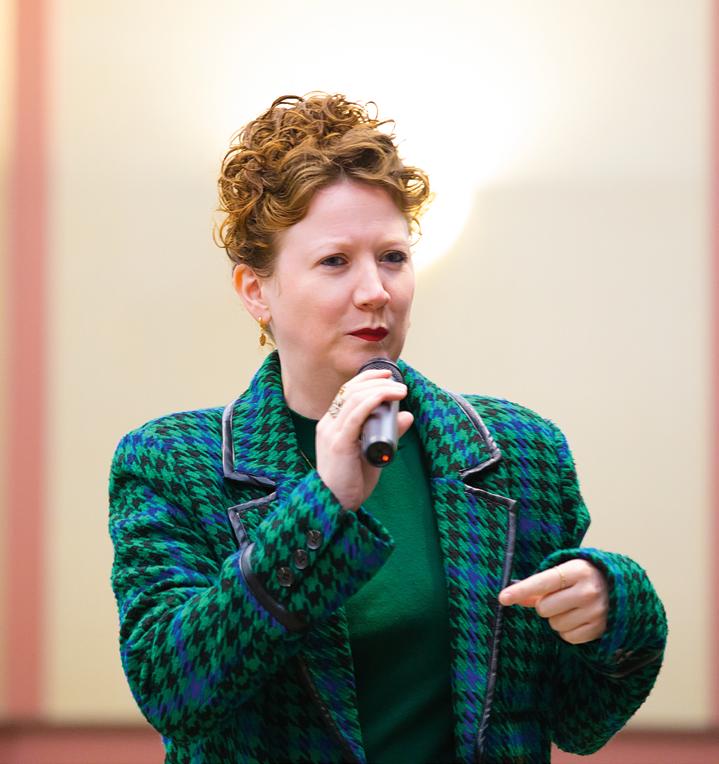
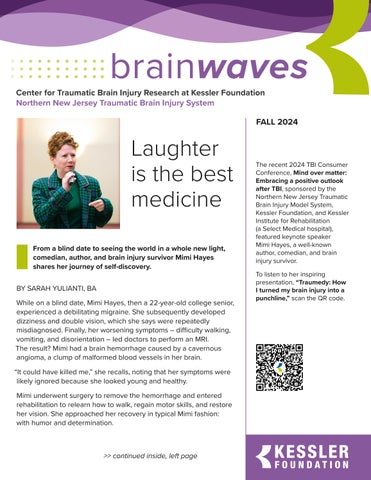
From a blind date to seeing the world in a whole new light, comedian, author, and brain injury survivor Mimi Hayes shares her journey of self-discovery.
BY SARAH YULIANTI, BA
While on a blind date, Mimi Hayes, then a 22-year-old college senior, experienced a debilitating migraine. She subsequently developed dizziness and double vision, which she says were repeatedly misdiagnosed. Finally, her worsening symptoms – difficulty walking, vomiting, and disorientation – led doctors to perform an MRI. The result? Mimi had a brain hemorrhage caused by a cavernous angioma, a clump of malformed blood vessels in her brain.
“It could have killed me,” she recalls, noting that her symptoms were likely ignored because she looked young and healthy.
Mimi underwent surgery to remove the hemorrhage and entered rehabilitation to relearn how to walk, regain motor skills, and restore her vision. She approached her recovery in typical Mimi fashion: with humor and determination.
The recent 2024 TBI Consumer Conference, Mind over matter: Embracing a positive outlook after TBI, sponsored by the Northern New Jersey Traumatic Brain Injury Model System, Kessler Foundation, and Kessler Institute for Rehabilitation (a Select Medical hospital), featured keynote speaker Mimi Hayes, a well-known author, comedian, and brain injury survivor.
To listen to her inspiring presentation, “Traumedy: How I turned my brain injury into a punchline,” scan the QR code.

>> continued inside, left page
<< continued from front cover
Finding humor in adversity
“Humor – or what I call ‘Traumedy’— became my coping mechanism, a way for me to process the intense emotions that came with facing mortality at such a young age. The whole thing was just this giant deflection... of the pain that I was in and all the confusion,” she says.
As she healed, Mimi still faced the psychological impact of her experience. The fear of a second bleed lingered, and in 2022, that fear became reality when another hemorrhage
“Find your people because they’re looking for you. We’re all looking for each other. We just want to feel heard. We want to feel understood.”
– Mimi Hayes
occurred. This time, however, Mimi was better prepared mentally and emotionally. She had already confronted her mortality and realized that her life, while forever changed, was far from over.
In fact, a new chapter was just beginning.
Mimi, a former improv performer, had a natural gift for comedy. She started doing stand-up routines, sharing her experiences of being a brain injury survivor. Her comedy was raw, real, and deeply personal, touching on everything from hospital mishaps to her frustrations with recovery. “I just started getting on stage and doing open mics. There was all this content that hadn’t happened to anybody that I knew,” she notes.
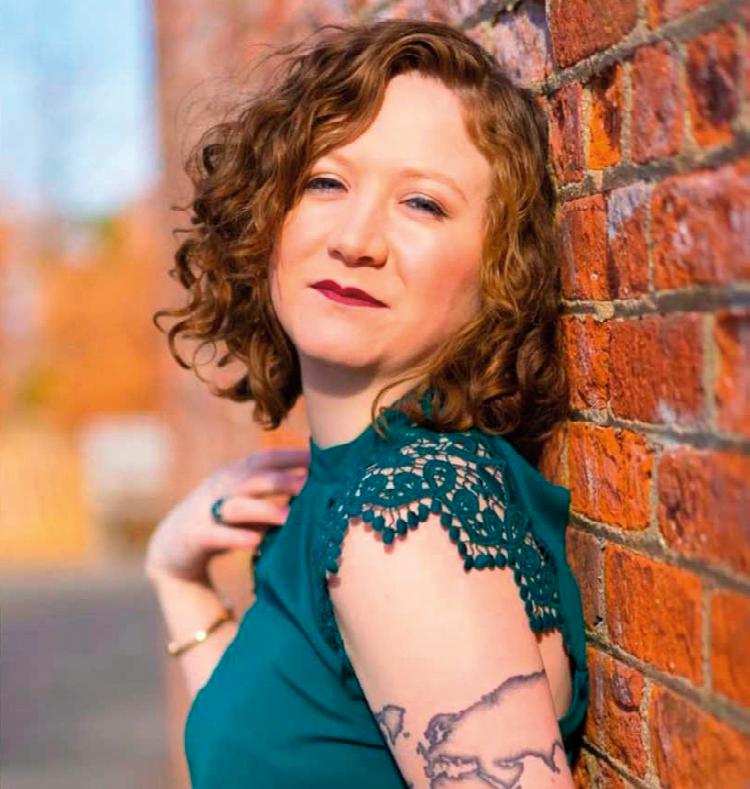
She also wrote a book, It’s Just a Hole in My Head, that emphasizes the importance of embracing vulnerability and finding strength in community. Mimi says, “Find your people because they’re looking for you. We’re all looking for each other. We just want to feel heard. We want to feel understood.”
While acknowledging the challenges that come with living with an invisible disability, Mimi also stresses self-compassion. She admits she still struggles with wanting to push herself beyond her limits, but she’s learned to balance her ambitions with the realities of her health, understanding that rest and self-care are crucial to her well-being.
Today, Mimi Hayes is juggling her comedy career, speaking engagements, and advocacy work on behalf of brain injury survivors. She’s also working on a second book that promises to deliver insight, encouragement, and humor.
Despite life’s setbacks and uncertainties, Mimi has turned her darkest moments into comedic gold, a testament not only to her talent but also her courage. She knows that with a sense of humor, community, and self-acceptance, it’s possible for us all to overcome the challenges we face.
Sarah Yulianti is a research assistant at the Center for Traumatic Brain Injury Research
A unique program helps individuals save for qualified disability-related expenses without the risk of losing key benefits.
Managing finances after a brain injury can be overwhelming. However, the Achieving a Better Life Experience (ABLE) Act, enacted in 2014, allows eligible individuals with disabilities and their families to save money for disability-related expenses in a special tax-exempt account –and still maintain means-based assistance programs such as Supplemental Security Income (SSI) and Medicaid.
This important financial tool offers individuals with disabilities greater financial independence, flexibility, and security. Monies contributed to the account can be used to help cover expenses related to a wide range of personal needs. Note that the funds are intended to supplement, not replace, government benefits.
To be eligible, individuals must meet certain age and other requirements.
How the program works
Individuals with disabilities or their authorized representatives can open an NJ ABLE account at no cost with a minimum deposit of only $25. Under this program, individuals can save up to $18,000 annually, with a savings capacity of up to $305,000.
Interest income earned by the account is not taxed. Balances of $100,000 or less are excluded from the SSI resource limit. If the account holder’s balance exceeds $100,000, their SSI cash benefit will be suspended. However, they will continue to be eligible for Medicaid. Once the balance falls below $100,000, the SSI
cash benefit is automatically reinstated.
Getting started
“There are, of course, a number of rules, regulations, and tax considerations to the program,” notes Cristine Chickadel, a representative with the New Jersey Division of Disability Services’ NJ ABLE Program. “However, for persons with disabilities and their families, an ABLE account is a powerful financial tool… an important resource that can help provide for the future.”
To learn more about the ABLE program, how it works, and determine your eligibility, visit NJ.savewithable.com or call NJ ABLE at 888.609.8869.
Changing the lives of people with disabilities
120 Eagle Rock Avenue, Suite 100 East Hanover, NJ 07936-3147
973.324.8362 | KesslerFoundation.org
BrainWaves is published tri-annually by the Northern New Jersey Traumatic Brain Injury Model System (NNJTBIS), a collaborative research and treatment network led by Kessler Foundation and funded by the National Institute on Disability, Independent Living and Rehabilitation Research. (NIDILRR Grant #90DPTB0032)
Help us help you! Join one of Kessler Foundation’s research studies that are expanding the understanding and treatment of TBI. For more information, scan the code at left, or go to Bit.ly/48Mpx6h.
Kirk Lercher, MD, director of outpatient traumatic brain injury services at Kessler Institute for Rehabilitation, a Select Medical hospital, offers five tips to optimize medical appointments.
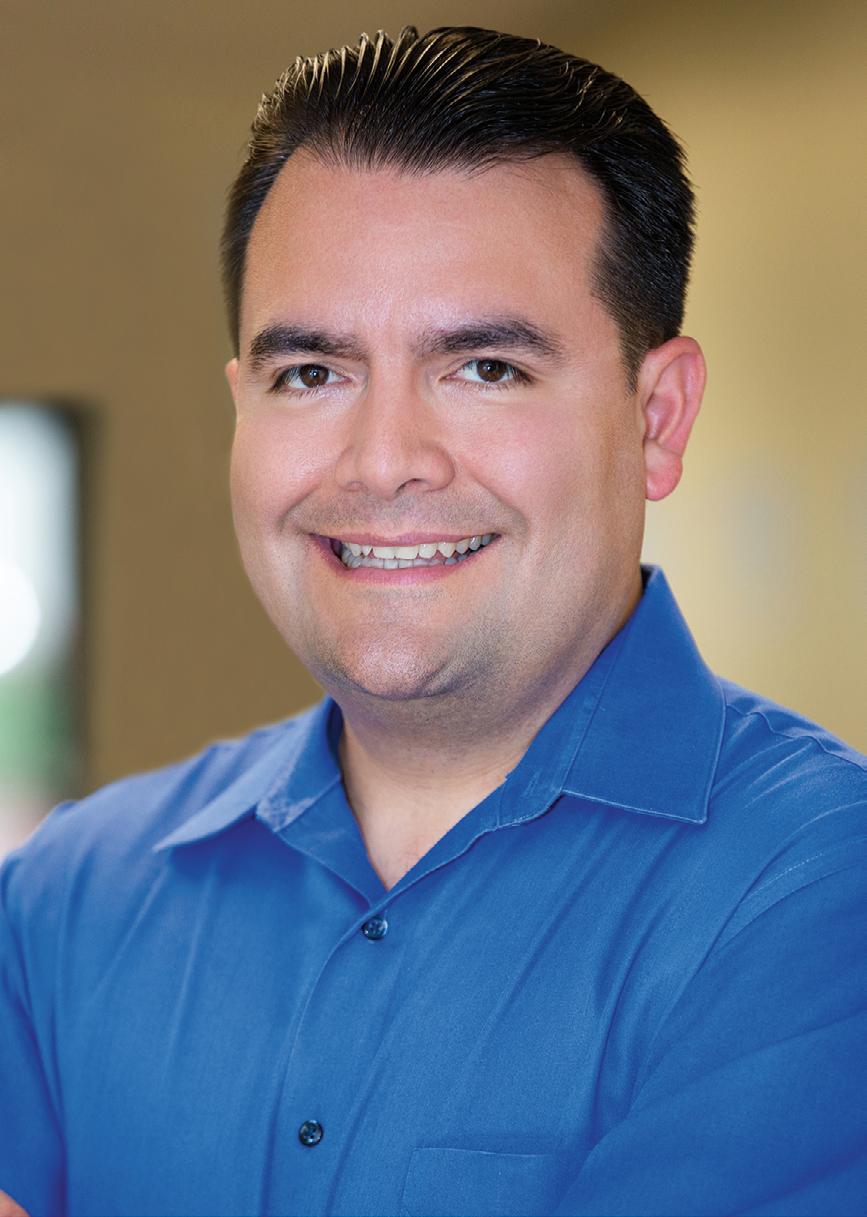
“Having your concerns addressed, questions answered, and treatments explained is the goal of every visit,” says Dr. Lercher. “Here’s how to make the most of it.”
1. Write down your top issues so you don’t forget or overlook anything.
2. Bring a list of all your prescription and over-the-counter medications for your doctor to review. Be sure to include dosages and the reason you’re taking each.
3. Consider having a family member, friend, or caregiver accompany you for support, corroboration, and to be a second set of ears.
4. Take notes! Bring a pad and pen to jot down any information or instructions.
5. Arrive early. Give yourself extra time in case of traffic and to get settled. Being late may result in having to reschedule.