
























































Center for Autism Research at Kessler Foundation
Center for Autism Research at Kessler Foundation
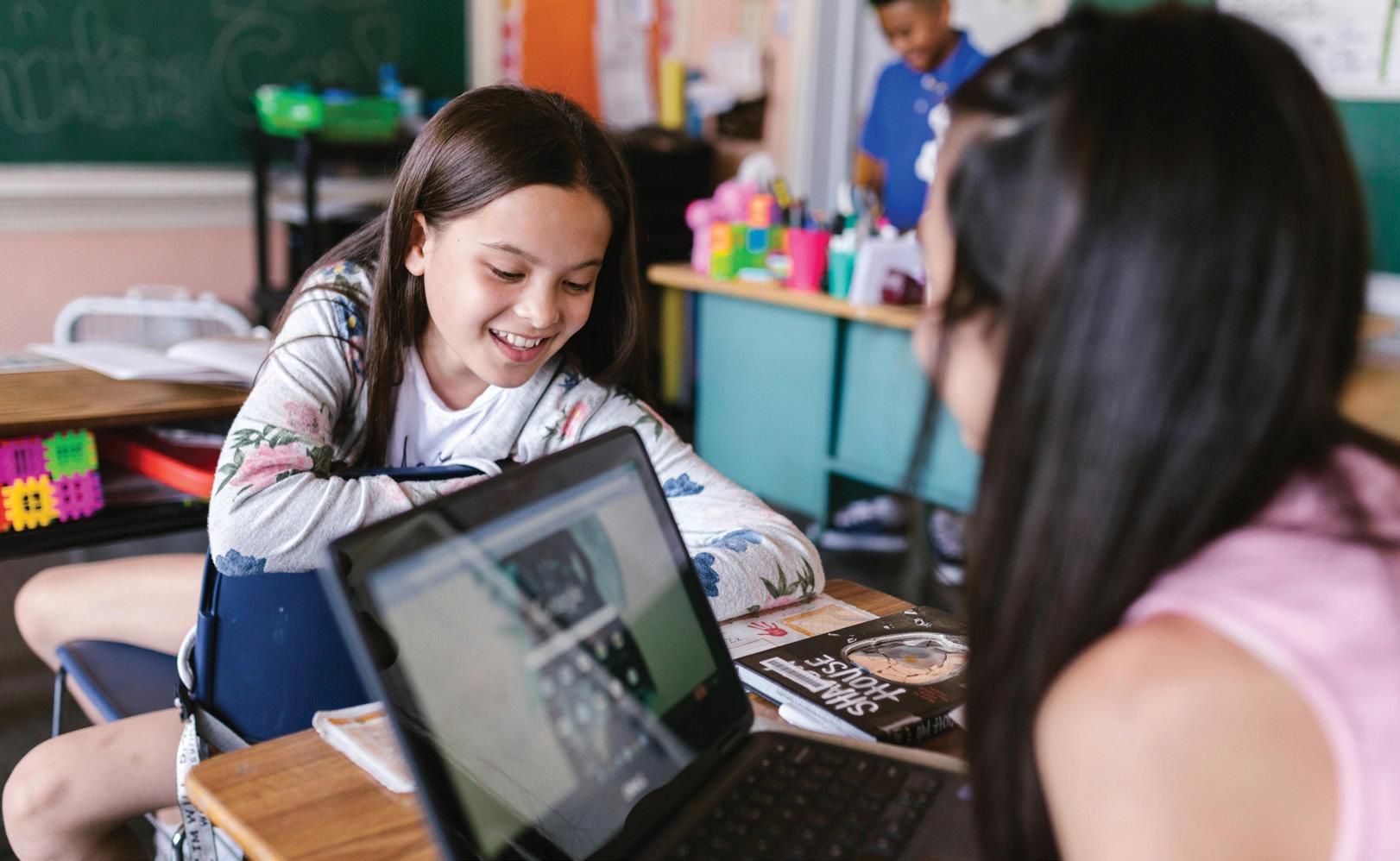
Classroom success requires understanding, planning, communication, and support for students on the spectrum, their parents and educators.
School is more than a place to learn the proverbial ABC’s. It is— or should be—a supportive and inclusive environment, one that recognizes individual strengths, encourages personal growth, and provides a sense of belonging. This allows neurodivergent students to engage with and learn alongside their neurotypical peers in both classroom and extracurricular activities.
On your mark...
Heading back to school can be exciting yet daunting. Many students find change difficult, whether in daily routines, academic demands, or new teacher expectations. These challenges are heightened for students on the spectrum. Communication is key in easing these concerns.
>>continued inside, left page
The words “back to school” bring excitement to some, dread to others. As the mother of three, I scramble to buy new backpacks, push to finish summer reading, and try to meet my children’s new teachers. I also understand the unique challenges autistic students and their parents face, and the anxiety it can produce. In this issue, we offer tips and resources to help your child have a successful school year. As always, your feedback and suggestions are welcomed!

Helen Genova, PhD Associate Director HGenova@KesslerFoundation.org
A “social story” can help children improve how they interact with others and navigate new activities.
<< continued from front cover
In advance of opening day, parents should arrange for their child to meet new teachers in person. This helps students feel more comfortable, and gives teachers the opportunity to better understand the child’s needs, interests, and Individual Education Plan. If your child takes the bus to school, try to have them meet the driver, too.
Get set...
A school visit also allows students to see their classroom and locate entrances and exits, bathrooms, the cafeteria, playgrounds, and other essential areas. Consider how your child might react to lights, bells, and smells. While touring, take some photos to help reinforce their recall and confidence navigating the halls.
Consider incorporating these photos into a “social story.”
A social story is a learning tool that provides information and social cues to help children respond appropriately in everyday situations. Stories can help your child improve how they relate to and interact with others, and successfully navigate new and/or different activities, such as returning to school. (See example above.) Many online resources are available, but families are encouraged to create personalized stories that address their child’s specific needs.
Talking with your child and taking steps to ease the transition back to school can put them on track for a successful and rewarding academic year.
☐ Talk to your child about the new school year and what to expect.
☐ Arrange for your child to meet their new teachers (and bus driver) prior to Day One.
☐ Tour the school and walk through your child’s daily schedule.
☐ Use social stories to reinforce appropriate behaviors at home and in school.
☐ Establish and practice a “school morning” routine.
☐ Create a picture calendar, daily planner or other tools to help your child stay organized.
☐ Get backpacks, sensory-friendly supplies, sneakers, and other gear.
☐ Be calm, patient, and supportive. Children pick up on your cues.
Our studies investigate changes after MS diagnosis, and ways to minimize deficits prior to or following their onset. Scan code to learn about our pioneering research >>
Our research develops interventions focusing on the critical adolescence-to-adult transition. Go to KesslerFoundation.org/autism-research or scan to learn more >>
Sports promote physical well-being and build confidence, relationships, and a sense of community. For youth on the spectrum, participation can be a game-changer.
Only 14 percent of autistic youth participate in the recommended 60 minutes of daily physical activity—far less than their neurotypical peers.1 Yet involvement in sports activities offers unique opportunities and significant benefits to these young athletes. To learn more, Maya Schwarzman, a research assistant at our Center for Autism Research, spoke with Patrick Ryan, a recent Chatham (NJ) High School graduate, who knows first-hand how important sports are to the autism community.


Maya (MS): What attracted you to sports, Patrick?
Patrick (PR): As a person with autism, I struggled making conversation and finding things I have in common with others. Developing relationships was difficult … but I found that sports are a great way to make meaningful connections.
MS: You’ve played Pop Warner flag football, Buddy Baseball, TOPSoccer, and a number of other sports through Play Unified, a local organization that focuses on inclusivity in recreational sports. Why were these programs successful for you?
PR: These programs are great because they acknowledge that each of us is different, have different challenges and strengths … and they focus on our strengths.
MS: Why is that important?
PR: I’ve been through [programs] that did not recognize my skills… just my challenges and played to my weaknesses. But here, the coaches and one-on-one mentors focus on what we can do, not on what we can’t. That’s huge!
MS: Do you see any similarity between your involvement in sports and the strength-based studies you’ve participated in at the Center for Autism Research?
PR: Yes! It’s all about positivity. People need to focus on the positives … on capabilities not disabilities.
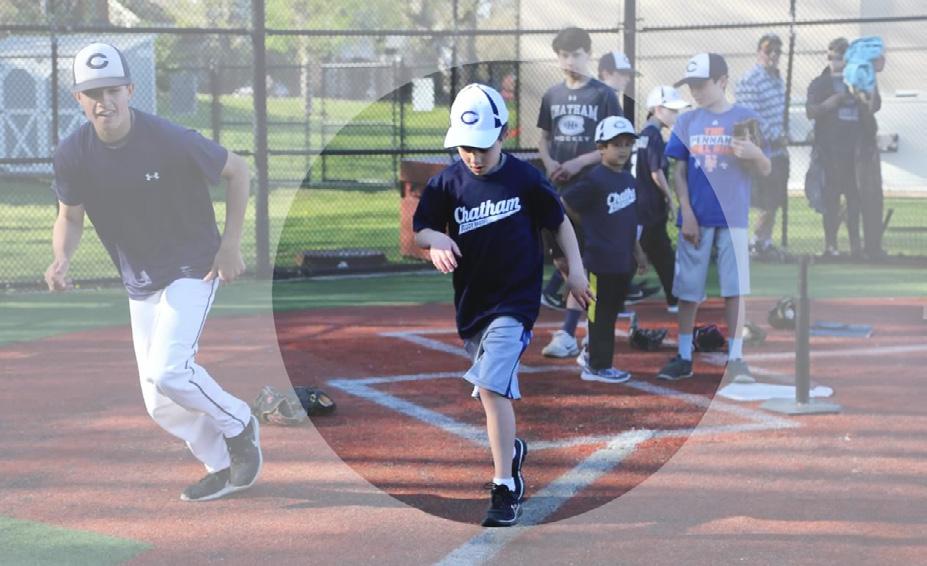
Patrick believes in focusing “on what we can do, not what we can’t.” See his TEDx talk at bit.ly/3XXGDw5
MS: Speaking of positive, you recently gave an outstanding TEDx talk about your experience growing up on the spectrum and the impact of playing sports. Tell me about that.
PR: I talked about my personal journey and how sports impact people’s character, physical and mental health, and even schoolwork. Also, how sports unite people and inspire communities.
MS: What advice would you share with others on the spectrum and their families?
PR: Get out there and participate! Sports have helped me connect with others and really helped change my life for the better.
1 Stanish HI, Curtin C, Must A, et al. Physical activity levels, frequency, and type among adolescents with and without autism spectrum disorder. Journal of Autism and Developmental Disorders, 2017; 47(3), 785–794
Many schools across New Jersey have implemented programs to help individuals on the spectrum become more involved in their academic communities. One such program is Madison (NJ) High School’s Ridgedale Roast.

Spearheaded by Theresa Fernandes, the school’s transition coordinator, Ridgedale Roast is a student-run, pop-up coffee shop that operates once a week. School staff can preorder coffee, tea, or hot chocolate online, which is then made and distributed by the transition-aged students in the program.
“Students gain important experience working with others and practicing their communication and organizational skills,” says Fernandes. “And everyone is always telling them they can’t wait for coffee day!”
While many adolescents go on to college or certificate programs, others are eager to get a jumpstart on employment. Finding the “right” job, securing an interview, and developing the skills, strategies, and behaviors to succeed in the workplace can be difficult.

The Center for Autism Research at Kessler Foundation offers several studies that help autistic youths identify their strengths and learn to present them in an interview, gain experience in emotion regulation at work, and acquire strategies to adapt to workplace challenges.
To learn more and participate in these studies— Kessler Foundation Strength Identification and Expression (KF-STRIDE®) and STRIDE into Work— email AutismResearch@KesslerFoundation.org, or scan the QR code.
Pro teams across the country are raising autism awareness, offering sensoryfriendly environments, and hosting events for their neurodiverse fans, such as:
BASEBALL / New York Mets opened a “Sensory Nook” at Citi Field Stadium.
FOOTBALL / Philadelphia Eagles established a foundation to support autism research.
BASKETBALL / Utah Jazz initiated a league-wide autism acceptance campaign.
SOCCER / NY/NJ Red Bulls became the first Major League Soccer team to offer fans a sensory room.
These initiatives are helping to make live sporting events accessible and enjoyable for all. Check out your favorite team’s website for more information.