RESULTS ARE IN Annual Readers Recipe Contest BOONE TAVERN EVOLVES
Caviar in the Bluegrass State Kentucky Festivals, Concerts & Summer Fun
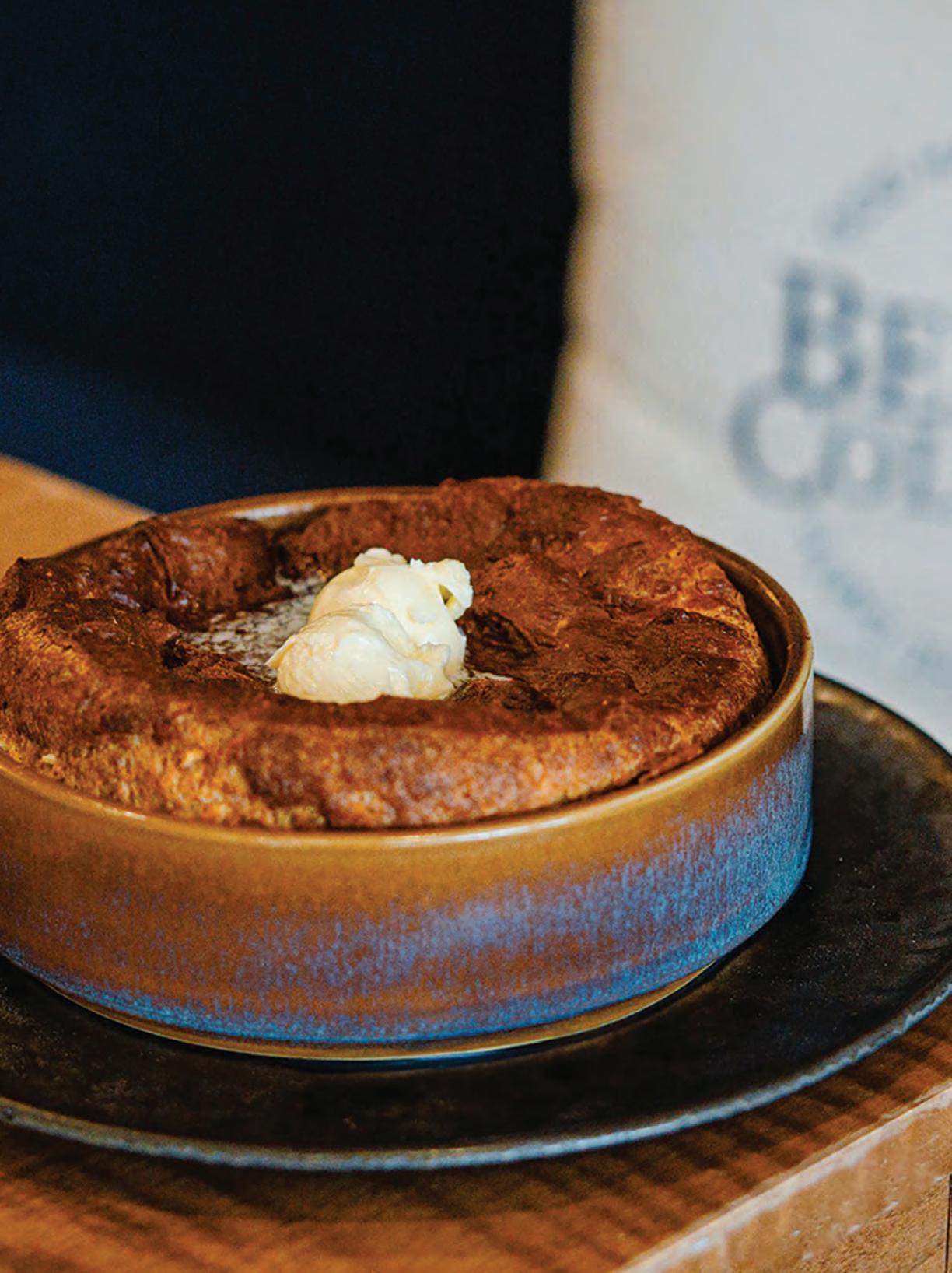
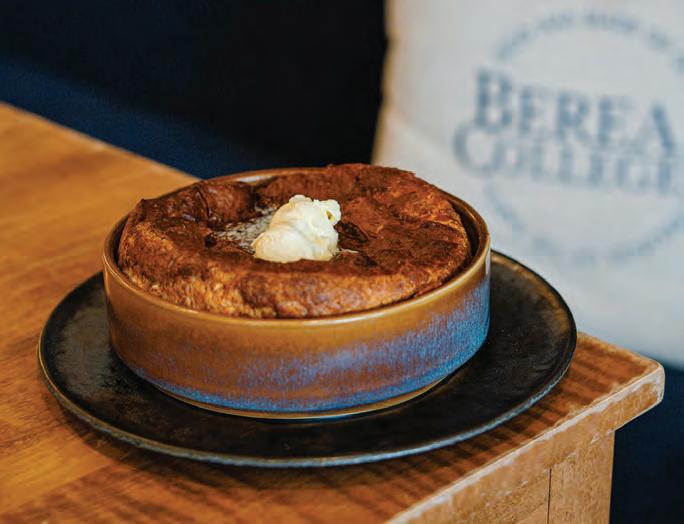
Boone Tavern’s famous spoonbread.
The Frazier History Museum, The Kentucky Historical Society and the Louisville-based Sons of the American Revolution are among the many groups with events this year honoring the 250th anniversary of the Declaration of Independence on July 4. Look for references to these events in Kentucky Monthly. This is the fourth installment of early Kentucky 250 trivia.
1. Which man led the first documented exploration of Kentucky by English colonists?
A. Daniel Boone
B. Richard Henderson
C. Dr. Thomas Walker
2. Which indigenous group was not known to have lived and hunted in the region we know as Kentucky?
A. Pawnee
B. Shawnee
C. Chickasaw
3. The attention showed to the burial of dogs at Indian Knoll in Ohio County indicates the animals were considered to be what?
A. Beloved pets
B. Tremendous pests
C. Dangerous enemies
4. What is it about the “Bluegrass Region” that is key to raising horses?
A. The blue grass
B. The limestone in the water and soil
C. The brightly shining sun
5. Bryan’s Station, about 5 miles northeast of Lexington, was established by Morgan, James, William and Joseph Bryan, in-laws of which other Kentucky pioneer?
A. Daniel Boone
B. Simon Kenton
C. James Harrod
For answers, see page 5.
6. Helm’s Station, founded by Capt. Thomas Helm in 1780, is now known as what city?
A. Helmsburg
B. Elizabethtown
C. Hardinsburg
7. Paris previously was known by three other names—Houston’s Station, Hopewell and what?
A. Gaines Village
B. Clayburg
C. Bourbonton
8. To join the First Families of Kentucky, prospective members must prove their family was in Kentucky before which year?
A. 1770
B. 1776
C. 1792
9. What was the first county to reach Western Kentucky?
A. Madison
B. Lincoln
C. Woodford
10. Who is credited with purchasing the “hunting grounds” from the Chickasaw?
Ted Sloan Contributing Editor Cait A. Smith Copy Editor
SENIOR KENTRIBUTORS
Jackie Hollenkamp Bentley, Jack Brammer, Bill Ellis, Steve Flairty, Gary Garth, Kim Kobersmith, Brigitte Prather, Walt Reichert, Tracey Teo, Jarrett Van Meter, Janine Washle and Gary P. West
Account Executives: Kelley Burchell Laura Ray • Teresa Revlett
Kentucky Monthly (ISSN 1542-0507) is published 10 times per year (monthly with combined December/January and June/July issues) for $25 per year by Vested Interest Publications, Inc., 102 Consumer Lane, Frankfort, KY 40601. Periodicals Postage Paid at Frankfort, KY and at additional mailing offices.
POSTMASTER: Send address changes to Kentucky Monthly, P.O. Box 559, Frankfort, KY 40602-0559.
Vested Interest Publications: Stephen M. Vest, president; Patricia Ranft, vice president; Barbara Kay Vest, secretary/ treasurer. Board of directors: James W. Adams Jr., Dr. Gene Burch, Gregory N. Carnes, Barbara and Pete Chiericozzi, Kellee Dicks, Maj. Jack E. Dixon, Mary and Michael Embry, Judy M. Harris, Jan and John Higginbotham, Frank Martin, Bill Noel, Kasia Pater, Dr. Mary Jo Ratliff, Randy and Rebecca Sandell, Kendall Carr Shelton and Ted M. Sloan.
Kentucky Monthly invites queries but accepts no responsibility for unsolicited material; submissions will not be returned.
Readers Write
Squirrel vs. Bird Feeder
Regarding Steve Vest’s mention of the squirrel getting on his bird feeder (March issue, page 64): We had a similar problem with a squirrel jumping on our bird feeder from a nearby branch.
I decided to trim the branch back to eliminate the problem. The bird feeder had a metal roof, so before I did any trimming, I sprayed the roof with a lithium lubricant to see if I could have some fun with the squirrel.
The squirrel ran down the branch, leaped off, landed on the feeder and slid right off the other side, causing me to laugh hysterically. I waited several minutes for it to happen again, but the squirrel didn’t go for it. I finally trimmed the branch back, and it stopped all squirrel activity on the feeder.
Bob Tubesing, Erlanger
Inevitable Crash
I enjoy Bill Ellis’ “Past Tense/Present Tense” articles in Kentucky Monthly, and suspect that he, like me, is now an octogenarian.
I write to respond to his question in the April issue asking (so politely) if I think my family could survive a crash and Depression (page 62).
Of course, some of my grandkids might survive such an event, but it will be difficult for my children (all now in their mid to late 50s) to enjoy the many pleasant years of retirement that folks like I have, thanks to the Teachers Retirement System.
I see a crash or major recession as inevitable, especially with all that our current adminstration is doing to cause it to happen sooner rather than later. Indeed, you are right to ask, “Could it happen here?” in your essay.
Of course, our poisoning of the planet (euphemistically called “climate change”) may make it even more difficult to survive a major economic crisis.
Sorry to sound so gloomy, but it is hard to be optimistic when life as we know it in the country we used to think we understood seems to be ending.
For the past few years, I have been writing a weekly “leftist” political column in our local paper, the Murray Ledger and Times.
I hope Mr. Ellis keeps writing his essays in Kentucky Monthly. If I read nothing else, I always read what he and Gary Garth have to say.
Thanks.
Ken Wolf, Murray
We Love to Hear from You! Kentucky Monthly welcomes letters from all readers. Email us your comments at editor@kentuckymonthly.com, send a letter through our website at kentuckymonthly.com, or message us on Facebook. Letters may be edited for clarification and brevity.
MAG ON THE MOVE
Even when you’re far away, you can take the spirit of your Kentucky home with you. And when you do, we want to see it!
northern ireland
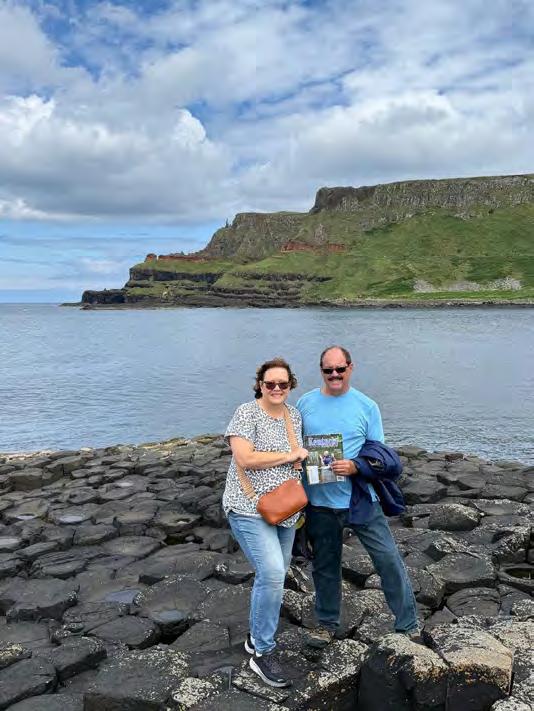
Beaver Dam residents Paul and Tracy Sandefur visited their son, who lives on one of the Aran Islands in Ireland. While there, they traveled to see the Giant’s Causeway in County Antrim on the Northern Ireland coast.
new zealand
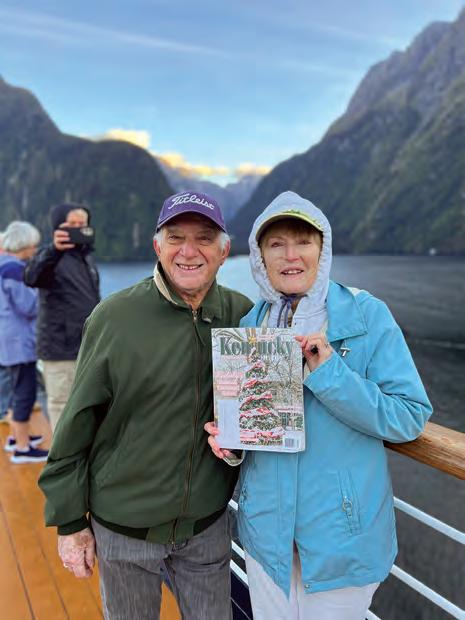
Pete and Barbara Chiericozzi of Tega Cay, South Carolina—formerly of Mercer County—are pictured at Fiordland National Park on the South Island of New Zealand while on a cruise.
submit your photo
Take a copy of the magazine with you and get snapping! Send your high-resolution photos (usually 1 MB or higher) to editor@kentuckymonthly.com or visit kentuckymonthly.com to submit your photo.
norway
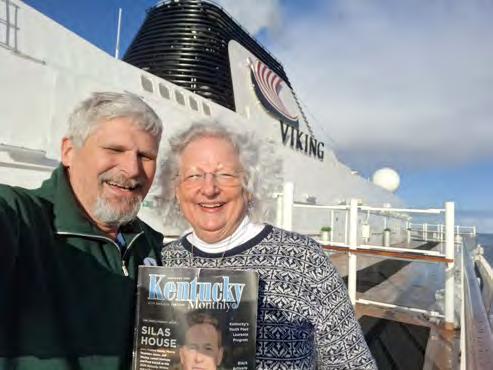
Shelbyville couple Jim and Sarah Nieman cruised to Norway in search of the Northern Lights, which they were able to see several times while above the Arctic Circle. This shot was taken just north of Bergen, Norway.
bermuda
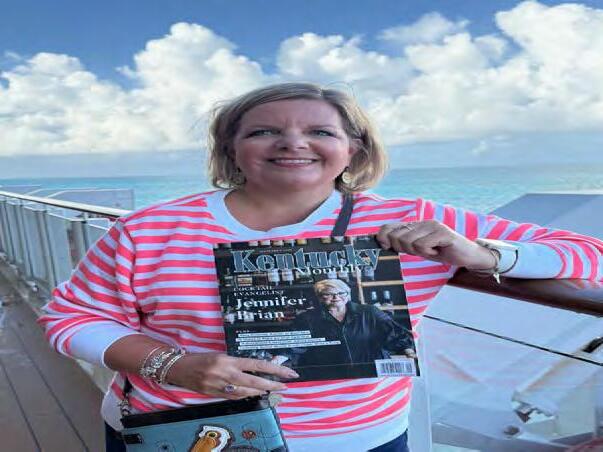
Patti George of Louisville, a staff member from the early days of Kentucky Monthly, is pictured aboard the Norwegian Escape while on a cruise to Bermuda.
arizona
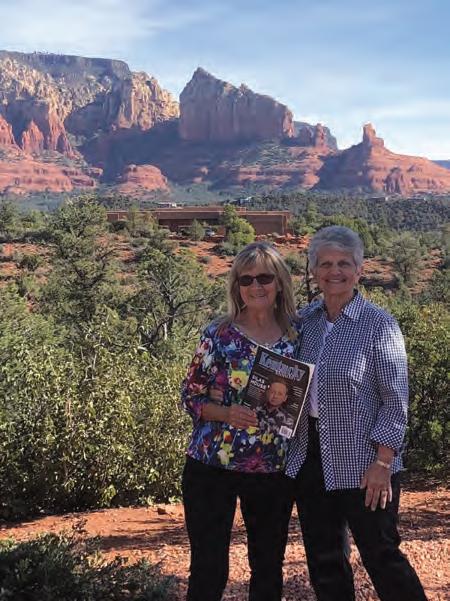
Sisters Donna Wright and Marge Borders, both of Louisville, enjoyed seeing the red rocks in Sedona, Arizona.
KWIZ ANSWERS:
1. C. Walker’s expedition was in 1750; 2. A. The Pawnee were located primarily on the Great Plains, south of Nebraska’s Platte River; 3. A. Dog graves were given the same attention as human ones, indicating they held symbolic significance; 4. B. Limestone contains calcium and other minerals that help horses grow strong bones; 5. A. Rebecca Bryan Boone was the sister of the four Bryan brothers; 6. B. The town was name after Elizabeth Hynes, the wife of Revolutionary War veteran Andrew Hynes, who had given a 30-acre tract of land to Hardin County, which was the beginning of Elizabethtown; 7. C. Bourbonton lives on in the county’s name; 8. C. The state’s founding in 1792; 9. B. Lincoln stretched across most of Southern Kentucky to the Chickasaw Hunting Ground (today known as the Purchase); 10. B. The Jackson Purchase was completed
Women and Entrepreneurship
BY JANET STEELE HOLLOWAY
It’s with pleasure and appreciation that I begin this column for women starting or expanding their businesses. I’ve invested decades working with hundreds of businesses and programs, and I hope my experience will make a difference for you.
Starting any business takes grit— requiring vision and research, deep knowledge of the product or service you will offer, and an understanding of the market. Knowing what the market wants and values requires a constitution willing and able to take calculated risks. Is that you? Are you someone just starting out or struggling to get through the years of presenting your ideas, your passion?
“I’m not sure I’ve always chosen the right door, but they have all provided lessons and directed me to the pathway I am on today,” she said. “I started a company with a friend whose plan was to stay five years before retiring. Six months later, he told me I had two weeks to buy him out or shut the doors. I had just bought a new house. But I did the only thing I knew to do at the time: I took out a second mortgage on my home and bought him out. It was the only door I saw open at the time, so I stepped through it. My mother taught me to never quit, and that resilience and faith will carry you through almost anything. I have needed both.”
In this first column, I’ll focus on the big picture and will follow up with responses to your specific questions and challenges via email or future columns.
As much as women have achieved in past decades, there are still biases against females in business. We have moved years beyond the time when we couldn’t have our own credit cards. Today, you may encounter these questions: How can you create or run a business while caring for your family? Can you travel? Does your husband/partner support your efforts? And other questions that have little to do with your business expertise.
Be prepared to answer with confidence. Do not let someone else set your guardrails. Don’t let perfect get in the way of a good beginning. Start small with the components of your idea/product or service, and let the market guide you as you evolve. If you are unsure how to handle these issues, it’s never too late to build your support group— people who know the world of business. Ask women (and men) in business if and how they respond to these challenges. Gather reliable feedback on your business idea and the marketplace, not just what feels comfortable. Certainty can give us comfort—an illusion of control—but you need to know the risks both personal/internal and external. Expand your network beyond your comfort level. Find advisors outside the business world. Look for various age groups, different perspectives and needs. Expect doors to close and doors to open.
Beverly Clemons of Richmond—CEO of her human resources firm CMI Consulting—has experienced a series of doors closing during her 25 years of business ownership.
Two years after buying the business, Beverly faced 9/11. “Nationwide, businesses froze spending overnight, and we had to rethink everything we were doing and who we were serving. Then came the recession of 2008 … Within a few months, every project we had vanished. I have been on the verge of bankruptcy more than once. But those moments forced me to get creative. I began calling HR consulting firms across the country to see what they were doing.”
Beverly found an open door with online HR subscription services. She licensed the platform and secured exclusive rights for Kentucky and surrounding states. That carried her through a difficult time. She faced other closing doors, including COVID-19. She counts her support groups—the National Association of Women Business Owners (NAWBO), Professional Women’s Forum, Women Leading Kentucky and Commerce Lexington—as critical to her survival. At 60, Beverly said she has learned that closed doors gave her direction, not rejection. “They have kept me from wandering down roads that were never meant for me in the first place,” she said.
Some failure is always part of success. Move forward. Educate yourself . Don’t give up your idea, but do research through workshops, learning and listening. Examine current data and collect as much information as you can.
I look forward to responding to your thoughts and questions in the next column. Best wishes in your venture.
Janet Steele Holloway is the founder of Women Leading Kentucky and the former state director of the Kentucky Small Business Development Centers (SBDC). Readers can contact her at janet@womenleadingkentucky.com.
For Mom
Mother’s Day is a touching holiday for many people, but it can be difficult for others. For someone whose mother has died, it can be particularly hard. Dorothy Kelty of Louisville knows the pain of losing her mother, but she turned her sorrow into art.
Kelty performs under the name Dorothy Claire. She wrote a song called “Waiting” in honor of her mother, Ruthie Sales. “I called it ‘Waiting’ because I wanted to play on the irony of time, like waiting for someone who’s not going to show up,” Kelty explained. Sales died of a form of brain cancer in 2021. As her mom was dying of cancer, Kelty sat in her mom’s lap, and “I asked her to come back and see me.”
David Becker went to Hidden Room Studios in Louisville to re-record “Waiting.” She said Becker listened to the demo and figured out how to do all the instrumentals.
Kelty still feels her mother’s loss keenly.“She was awesome,” Kelty said. “She was a storyteller and librarian. She worked at Brooks Elementary School [in Bullitt County]. She’d dress up and tell stories to the kids. She was so funny, and she was so witty. She was the sweetest lady; she’d do anything you asked.”
Kelty is proud of the life her mother made for herself: “She did it all by herself. She raised me all by herself. She was able to overcome every circumstance—until cancer.”
While attending Jefferson County Technical College (JCTC), Kelty took a music production class that required a recorded element. “I decided to do a whole song,” she said.
That song was written in 2023. Kelty married Shane Kelty in 2024. She kept thinking about the song and decided to give it another shot in early 2025. She, Shane and family friend
After deciding to re-record the song, Kelty saved money from every paycheck to make the record and the video. “It took me a long time to release it because I wanted everything to be the best that it could,” she said. The music video was released on her mother’s birthday, Jan. 18.
Kelty taught herself about production and promotion and learned as she went along. She promoted the song with business cards and posters she had printed and then posted all over town. “I was crazy and bought a billboard on Market Street,” she said. “How else do you promote a song? I’ve never done it before.”
Kelty said the billboard had two slides that ran for 8 seconds each. The billboard was up for two days, Jan. 16 and 17. “If I’m going to do it, I decided to do it big,” she said.
Making the video for the song was also a new process for Kelty, so she leaned heavily on her experiences with her wedding. Her wedding videographer, Victoria Stiles, shot her music video. Makeup artist Kelsey
Fell did Kelty’s makeup for her wedding and her music video.
Kelty is a coordinator for Norton Hospitals and helps people set up medical appointments. She enjoys making music on the side. “I take voice lessons, and I have another song coming out sometime this year—late May or early June,” she said.
“My new song is about my father, and it’s not as sweet,” she said.
While Kelty enjoys her job, she said music makes her life richer. “I think life can be so mundane. You can do the same things all the time. Have some art in there.”
When asked what her mother would think of the project, Kelty replied, “I think she’d be very impressed. She was like my best friend … I think she would have loved it.”
Kelty understands how hard Mother’s Day can be for someone without a mother. “Your life isn’t over, though it may feel like it,” she said. “Think of all the things you can do in a positive way.”
Losing her mother meant writing a song about their abiding love and beginning her musical journey. “I decided to go to work. I decided to save money. If you want to do something, go ahead and do it,” she said.
“My friends ask all the time how I do it. It’s hard, but I have to live for her and me, too. I have a really great husband, too,” Kelty said.
She also had a reminder for those lucky enough to still have their mothers: “I think the world runs on the backs of tired women. Mothers do a lot. Just appreciate them.”
VICTORIA STILES PHOTO
2026 READER RECIPE CONTEST
Stirring Up Success
Kentucky Monthly’s annual Reader Recipe Contest brings out the best creative home chefs have to offer. Each year, our entries delight and surprise us with their delectable dishes, and this year was no exception.
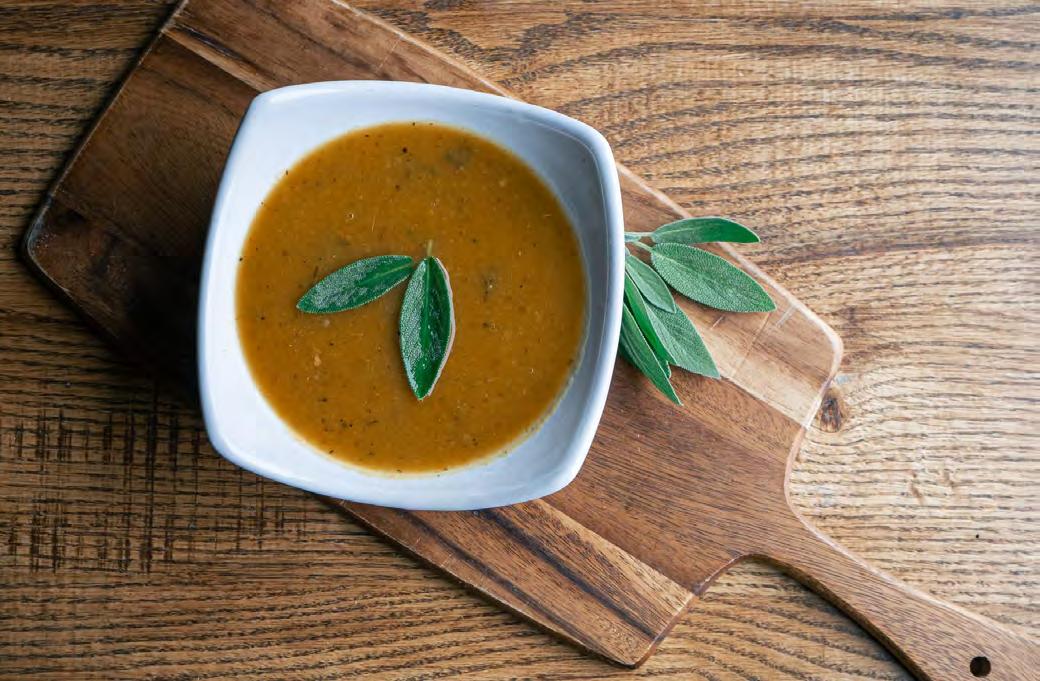
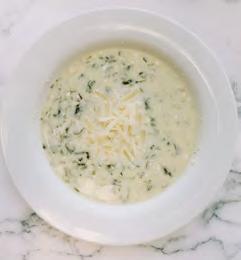
Recipe Contest grand prize winner Joberta Wells of Liberty drew inspiration for her champion recipe from a Lexington eatery. “This was an attempt to duplicate the soup at the Brontë Bistro café at Joseph-Beth Booksellers in Lexington,” she wrote.
Chef John Foster, chair of the Culinary Arts Program at Sullivan University’s Lexington campus and owner of The Sage Rabbit restaurant in Lexington, prepared the dishes, which were judged on appearance, creativity, ease of preparation and—weighted double the other criteria—flavor.
Thank you to all who entered, and congratulations to the winner and finalists!
special thanks to :
Chef John Foster for his competence and professionalism in preparing the recipes; photographer Rebecca Redding for her scrumptious images; Sullivan University – Lexington for the use of one of its Culinary Arts Program kitchens and always being an awesome collaborator; The Delegate Hotel in Frankfort, sponsors of the grand prize; and judges Sue-Sue and Steve Hartstern, Deborah Kohl Kremer, Kay Vest and Janine “The Flavor Queen” Washle.
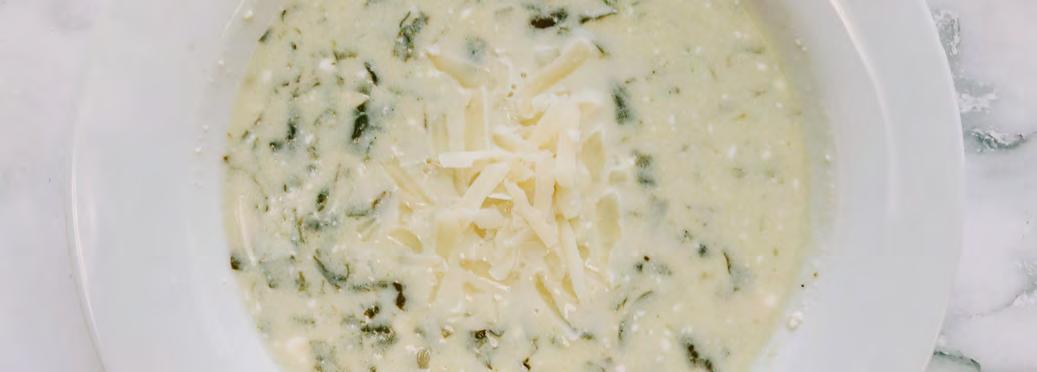
Creamy Spinach and Artichoke Soup
SERVES 6
2-3 tablespoons olive oil
½ medium onion, chopped
1 tablespoon minced garlic
Salt and black pepper, to taste
6 cups chicken broth
1 can (13-14 ounces) artichoke hearts (drain and squeeze most of the juice out of the artichokes; cut into fourths)
10 ounces frozen, chopped spinach (defrost, cook and squeeze dry) or fresh spinach, chopped and cooked cup fresh lemon juice
8-ounce block cream cheese, cut in cubes
1 pint whole milk
½ cup grated Parmesan cheese
1. In a 6-quart heavy pot, sauté the chopped onion in olive oil. Add garlic, salt and pepper.
2. Add chicken broth, artichoke hearts and spinach. Stir together and simmer for 5 minutes.
3. Stir in lemon juice, then add cream cheese cubes a few at a time, stirring until cubes have melted.
4. Add milk and simmer for 5 minutes.
5. Top with Parmesan cheese before serving.
Note: This soup freezes well.
GRAND PRIZE WINNER
Joberta Wells Liberty
As the grand prize winner, Joberta and a guest will receive a onenight stay at The Delegate Hotel boutique accommodations located in an elegantly renovated historical Frankfort warehouse—plus a $50 gift card to the hotel's restaurant, Cypress and Oak.
FINALIST
Elaine Fowler Palencia Champaign, Illinois
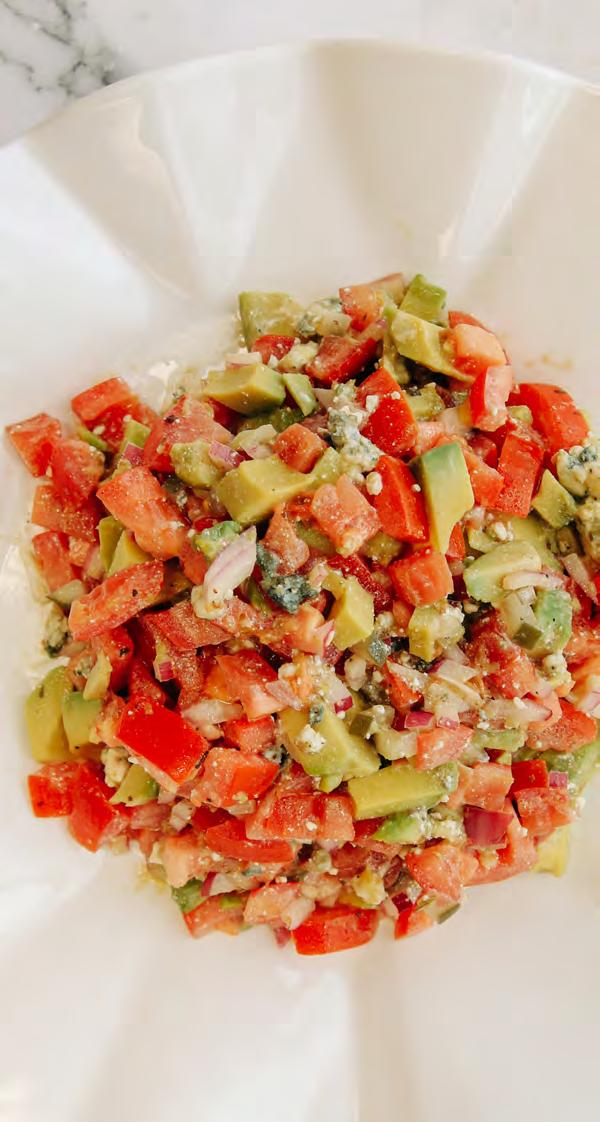
TomatoAvocado Salad
SERVES 4
2 avocados, peeled, seed removed and cubed 4 Roma tomatoes, cubed cup chopped red onion cup pimento-stuffed green olives, sliced 1/3 cup crumbled blue cheese
DRESSING
3 tablespoons virgin, cold-pressed olive oil
1 tablespoon wine vinegar teaspoon salt teaspoon black pepper teaspoon garlic powder teaspoon Italian seasoning teaspoon ground mustard
1. Combine chopped and sliced vegetables and cheese in a bowl.
2. In a separate bowl, whisk together dressing ingredients. Gently fold dressing into the salad. Serve.
Note: Any kind of tomato can be used. I use Romas because they’re firm, available all year, and hold up better as leftovers (but there are seldom leftovers). This recipe is easily doubled—or tripled!
“This is a go-to, all-year-round recipe, though of course homegrown tomatoes in the summer are best. ”
“I was born in Lexington and grew up in Morehead. All these years later, Kentucky is often the location of my fiction, nonfiction and poetry writing. I serve as the book review editor of Pegasus, the official journal of the Kentucky State Poetry Society, and am on the advisory board of Hindman Settlement School."
Contest Success: Prior to being selected as a finalist in this year’s Reader Recipe Contest, Elaine was one of the winners for Poetry in the 2022 Kentucky Monthly Annual Writers’ Showcase!
FINALIST
Margie Kinslow Glasgow “This is a recipe from the 1970s that a friend brought to a Christmas cookie swap. I have been making the cookies year-round since then!”
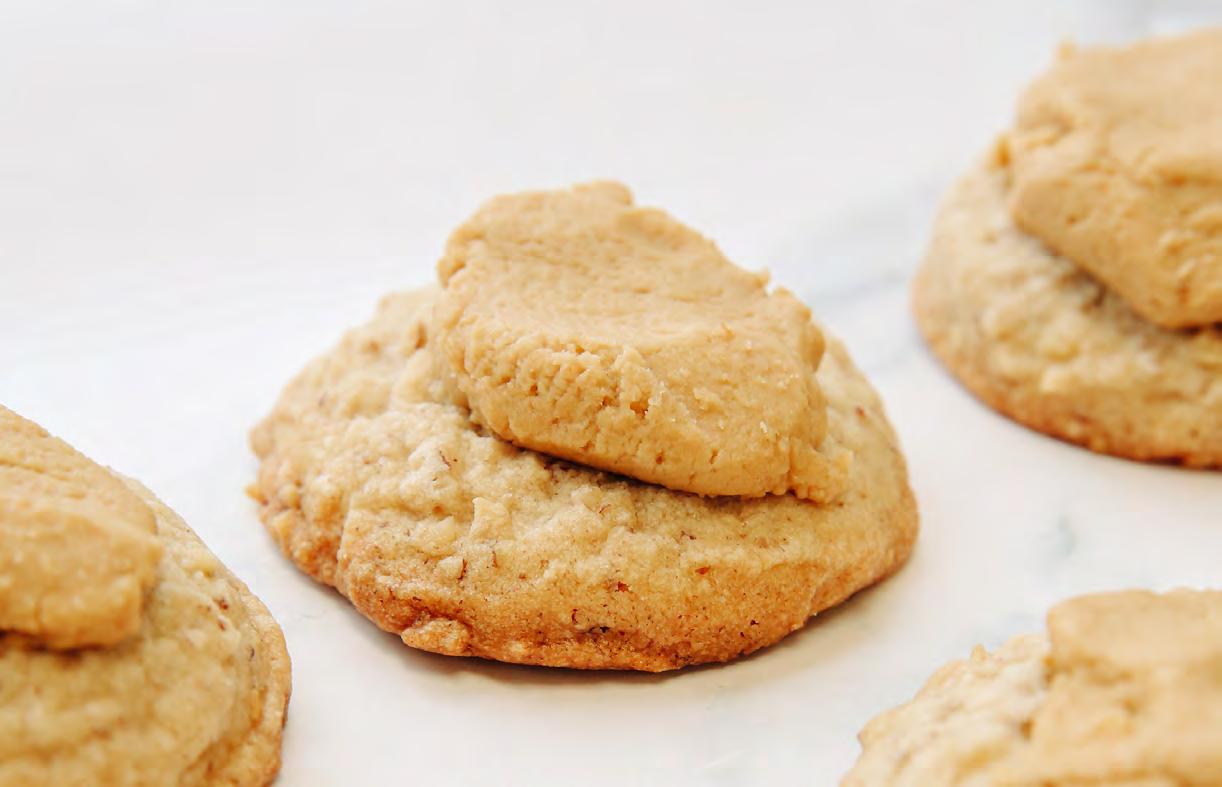
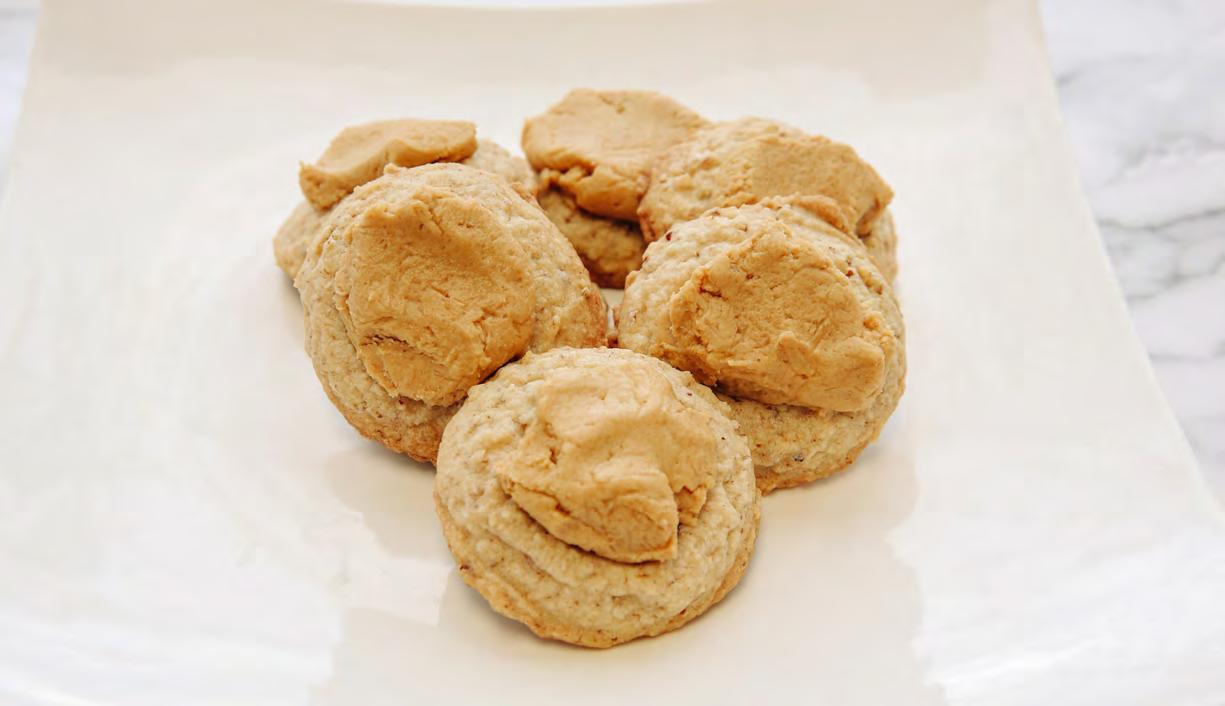
Praline Thumbprint Cookies
1 cup softened butter
1 cup sifted powdered sugar
2 cups all-purpose flour
1 cup chopped pecans
1 tablespoon vanilla
1. Preheat oven to 375 degrees.
2. Cream the butter. Gradually add the powdered sugar, beating well with a mixer at medium speed.
3. Add the flour and mix well. Stir in the pecans and vanilla. This is a stiff batter/dough.
4. Shape the dough into 1-inch balls and place on an ungreased cookie sheet.
5. Press your thumb into the center of each cookie.
6. Bake for 15-17 minutes. Do not overbrown. Cool on brown paper.
Icing
½ cup butter
1 cup firmly packed brown sugar
Dash of salt
½ cup evaporated milk
2 cups sifted powdered sugar
½ teaspoon vanilla
1. Melt the butter in a saucepan. Add the brown sugar and salt. Bring to a boil and boil for 2 minutes, stirring constantly. Remove from heat.
2. Stir in evaporated milk. Bring mixture to a boil and boil for 2 minutes. Remove mixture from heat. Cool to lukewarm.
3. Stir in the powdered sugar and vanilla and combine well with a mixer.
4. Spoon ½ teaspoon of praline icing into the thumbprint of each cookie.
FINALIST
Raymond Hunt
St. Charles, Illinois
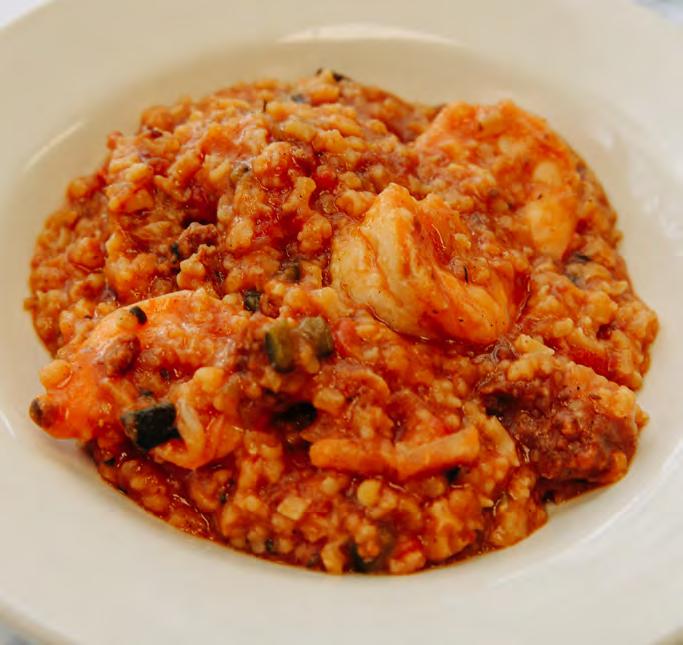
Jamboree Jambalaya
“This recipe has been a favorite of our Scout troop for many years. It works well on campouts, especially when made in Dutch ovens.”
SERVES 6-8
3 tablespoons olive oil
1 large yellow onion, diced
2 green bell peppers, seeded and diced
3 cloves garlic, minced
1 pound andouille sausage, sliced
1 pound kielbasa or Polish sausage, sliced
2 tablespoons chili powder
2 teaspoons dried thyme
1 teaspoon ground cayenne pepper
1 teaspoon salt
1 14-ounce can fire-roasted diced tomatoes, drained of excess liquid
1 32-ounce container chicken stock (not broth)
1 32-ounce container vegetable stock (not broth)
2 cups uncooked white rice
2 pounds shrimp, large (31-40 per pound), peeled (shelled) completely
1. Heat the oil in a large pot or Dutch oven over medium-high.
2. Add onion and bell peppers and cook, stirring often, until the onion is soft and translucent. Add small amounts of water occasionally, if needed, to keep the onions and peppers from scorching while softening.
3. When onions and peppers have softened, add the garlic and cook for another minute or so until fragrant.
4. Add sausages, chili powder, thyme, cayenne pepper and salt. Stir to combine until well mixed.
5. Add tomatoes, chicken and vegetable stock, and rice. Stir thoroughly and bring the mixture to a simmer. Reduce heat to low, cover and cook, stirring occasionally for about 30 minutes until rice is tender.
6. Add shrimp and cook, stirring often, about 3-5 minutes, until cooked through. (Shrimp should be pink and firm. Do not overcook.) Serve hot.
Note: Do not overcook the shrimp. They should be added at the very end, monitored closely for doneness, and served immediately.
Kentucky’s garden cafés serve fresh, local dishes in lush, green settings
Food & Flora
BY KIM KOBERSMITH
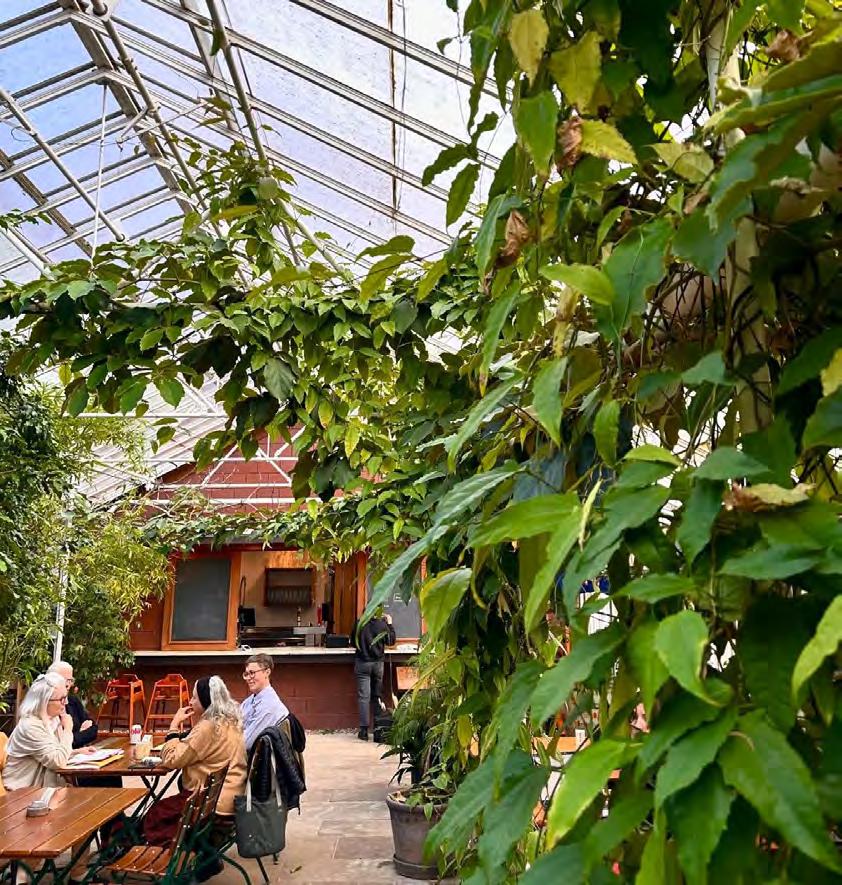
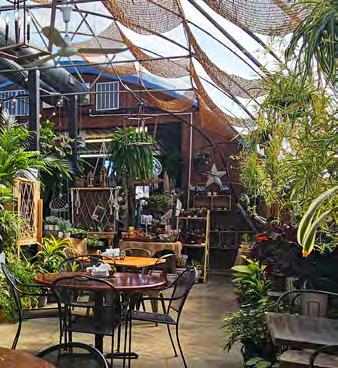
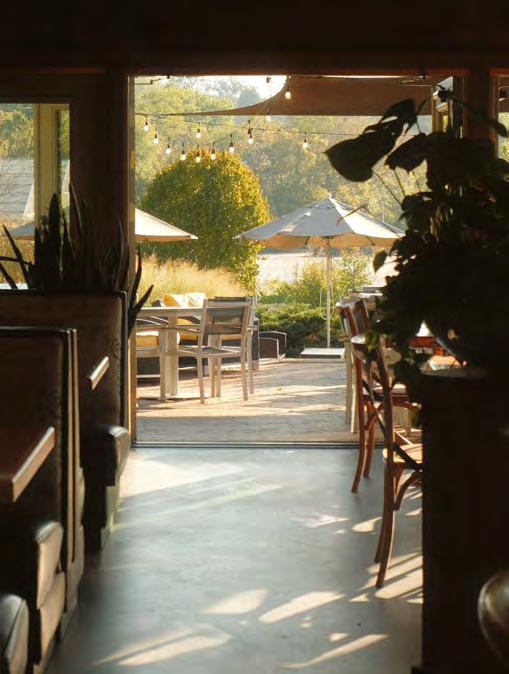
When I walked into Lexington’s Kentucky Native Café, the heat and humidity immediately assailed me and fogged up my glasses. The early spring day was cold and blustery outside, and the warmth of the greenhouse was just as delicious as the café’s food. That and the verdant surroundings—the fig tree arching overhead, vines creeping across the support beams, and potted trees adorned with flowers and citrus fruit—created a welcome respite.
The café is one of the interwoven
enterprises of Michler’s. The 125-yearold family-owned business began as a florist, then added the plant nursery. When Robin Michler, the fifthgeneration family member currently stewarding the business, rejoined the operation in the 2010s, one of the first moves was to open the café.
The lush property already drew neighbors, friends and customers to this oasis of green near downtown. Serving food seemed the perfect way to invite people to extend their visit. While the series of greenhouses fills the property that fronts Maxwell Street, an expansive outdoor garden
behind proved the perfect location for the café from April to November. Seating moves into the greenhouse in the chillier months, after the garden and landscape plants have emptied out for the season.
“There’s a collection of things people can do, and food is one piece of the experience,” Michler said. “Café guests take time to walk through the greenhouses and see what orchids are in bloom, purchase native perennials grown in-house, or stop in the bakery for a loaf of bread to take home.”
After ordering at the walk-up kitchen, diners choose a table.
Hanging vines and vertical plantings between tables provide a sense of privacy, even seclusion. The winter garden retains the same surroundedby-plants feeling and invitation to linger, complete with a koi pond.
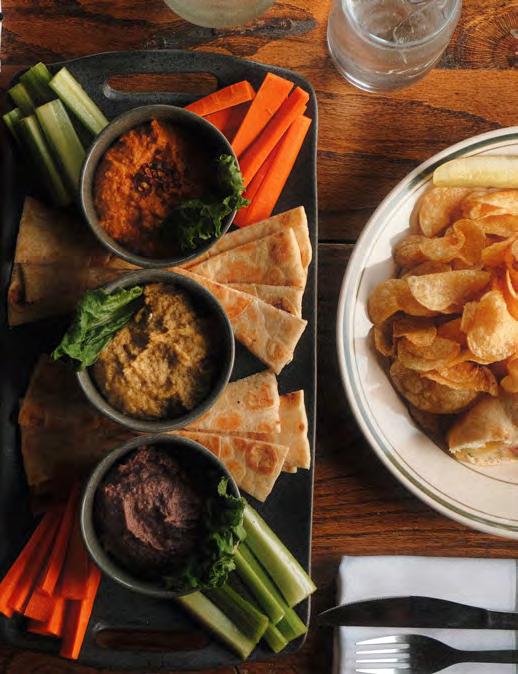
The menu changes constantly, to the point that the only place it is “published” is on the chalkboard by the ordering window. The flexibility allows the chef to create dishes from what is locally available and in season. Guests are welcome to call ahead to inquire what the café is serving that day. Shareables for the table, such as pretzels and hummus bowls, are always available.
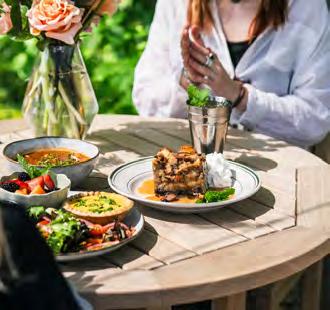
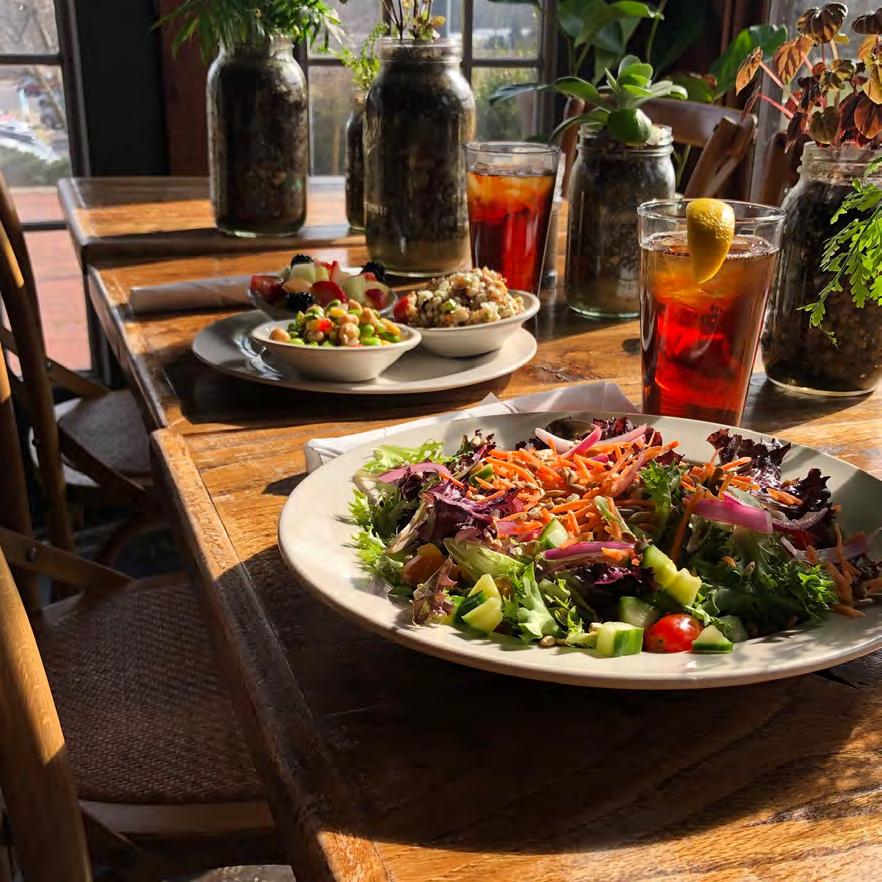
A meal costs between $12$16 and includes two to three small plates. The day I visited, the dishes included sweet potatoes and onion with lemon-tahini dressing, mushroom-barley soup, trout spread and asparagus sandwich, and an almond croissant. For dinner and weekend brunch, the eatery serves sweet and savory crepes in addition to the small bites.
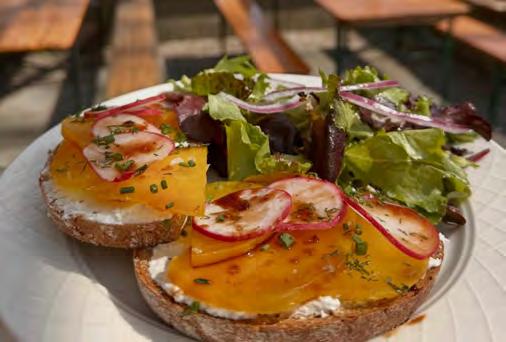
and a light, tender center. My companion had the roasted sweet potatoes and raved about the bright, tangy, sweet flavor mix.
Beverages include wine, housemade sodas and bellinis with freshsqueezed seasonal fruits. A house beer—Michler Weisse, the summer house beer, or Glasshouse Helles, the winter house beer—is always on tap, Kentucky Native Café MICHLERS.COM
I especially recommend the carrot dip: a complexly seasoned, vibrantly colored savory spread with a dollop of creamy goodness. The accompanying focaccia had a delightfully crisp crust
along with other local brews.
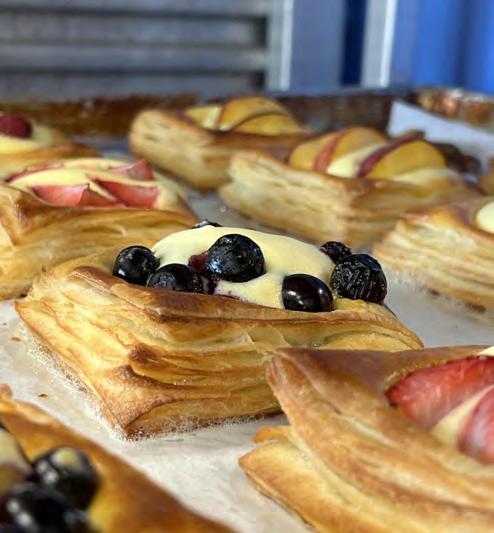
The bread and pastries—focaccia, chocolate croissants and Danish—all come from the adjoining full-scale bakery, Bread and Roses. Those looking for groceries can check out the small retail counter with cheese, local eggs and olives.
As tasty as the food is, the café is first and foremost in service to the garden and the community. It’s best known as a welcoming third space, where lingering is encouraged. Often, people come alone to read and write, and some have told Michler they wrote entire books sitting in the nurturing environment.
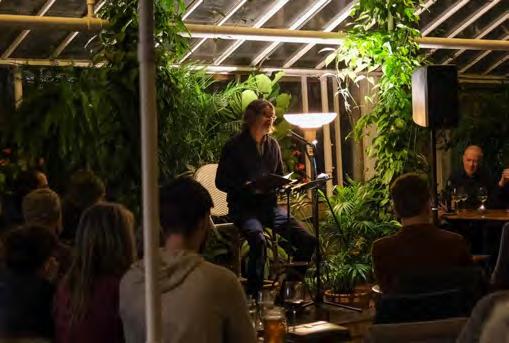
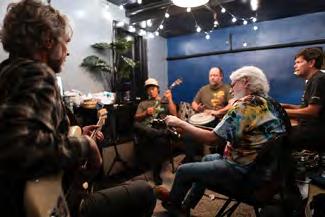
Kentucky Native Café also is a place for gathering. Local musicians play every Sunday afternoon, and a reading series takes place the last Monday evening of the month. These events are popular, but Michler loves seeing the smaller gatherings that take place: birthday celebrations, retirement parties and visits with outof-town relatives. Then there’s the book club that meets once a week, and the nightly gathering of guys who drink beer and talk politics.
“The focus is on being open and available, and we never close for private events,” Michler said. “I enjoy seeing people bring their own lives into the space.”
417 Maxwell Street, Lexington
Tuesday-Sunday, 10AM-10PM
The Country Barn’s Country Boy Café in Elkton (Todd County) offers another opportunity to soak in al fresco summer dining or escape winter in a greenhouse. A family-owned garden center and market that opened in 1999, the barn is known for selling fresh, seasonal and locally grown produce. Neighboring Fairview is recognized as a Dedicated Produce Community. Country Boy Café, which was added to the business in 2018, features its own bounty and that of other local farms in an accessible farm-to-table menu.
The dough and sauce for the café’s pizza are made in-house from scratch with a “country twist.” The cheeseburger pizza has beef, bacon and cheese sauce, plus condiments ketchup and mustard. The breakfast pizza has eggs, sausage, bacon, peppers and onions topped with cheese. Seasonal combos capitalize on what is fresh—such as the summertime jalapeno and peach special.
When fruits ripen, they show up throughout the menu. There’s a big push for peaches, plus blackberries and apples, in turn. They are baked into goodies, incorporated into main dishes, and churned into ice cream.
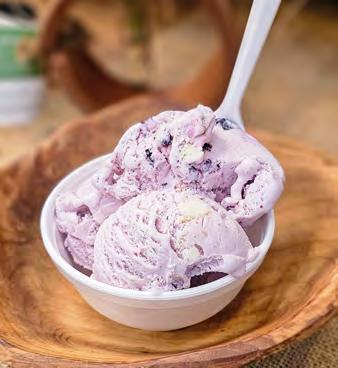
Speaking of ice cream … the café offers 12 flavors, made in-house and served in waffle bowls, milk shakes and banana splits. Flavors include vanilla and chocolate, plus seasonal strawberry and black raspberry chip, and more exotic choices such as Kahlua Chip and Caramel Brickle.
“We have a strong focus on garden-to-table dining,” owner David Weaver said. “People say our pizza is the best they have ever had, and our subs put Subway to shame.”
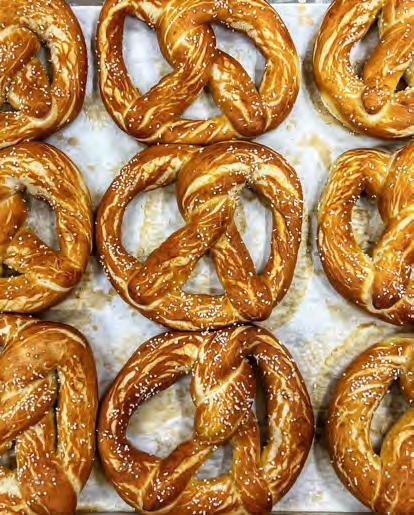
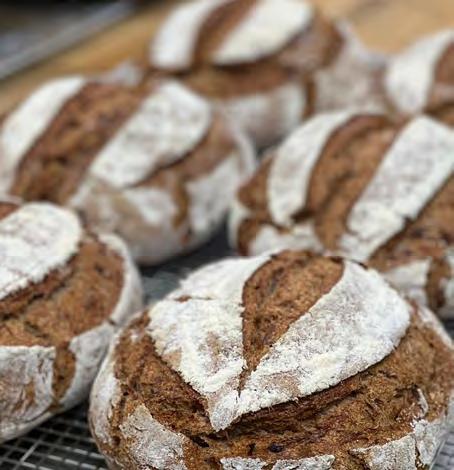
The café is just part of the experience at The Country Barn. A full espresso bar serves frappes and specialty lattes. An onsite bakery makes pretzels, sourdough loaves and pies that are sold in a small grocery section alongside a full line of seasonal produce from neighboring farms. Diners can also pick up local honey, jams, jellies, soup mixes and grab-and-go items such as jerky and local cheese.
Beyond food, the garden center has one of the largest selection of annuals and perennials in Western Kentucky. Staff create custom container gardens and grow holiday plants, and the barn offers outdoor seating and garden décor for sale.
112 Britmart Road, Elkton
Monday-Friday 8:30AM-6PM, Saturday 8:30AM-4PM
The Country Barn’s Country Boy Café
Sage Garden Café at Wilson Nurseries SAGEGARDENCAFE.COM
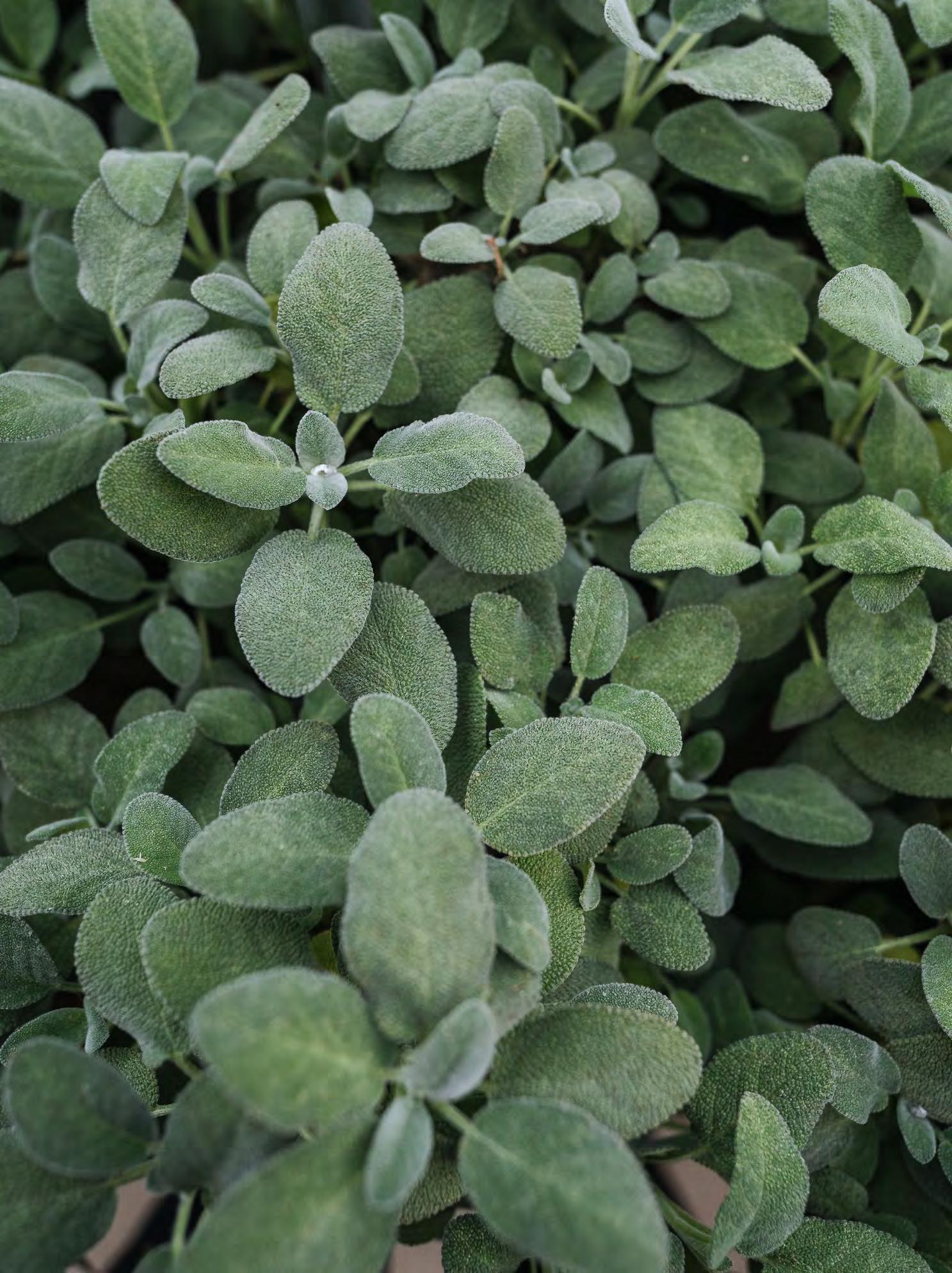
The Sage Garden Café in Frankfort specializes in garden-to-table dining, with meals featuring herbs and vegetables grown just outside its door. Plants and flowers brought over from the adjacent Wilson Nurseries greenhouse create a tranquil, natural environment.
One nod to the garden setting is the flower-pot bread—house-made sourdough baked in a terra cotta pot. The lunch menu features artisan sandwiches with seasonal salads and soups. There are the hearty Bourbon Smokehouse Burger and Mary Cat’s Monte Cristo: ham and mozzarella
grilled on house-made sourdough bread, dusted with powdered sugar, and served with cranberry dipping sauce. Sage’s house side is slaw fraîche, a fresh take on coleslaw with cabbage, veggies and sunflower seeds lightly dressed with herbs, white wine vinegar and olive oil.
The oatmeal walnut bread is a favorite choice. At brunch, it is the basis for the cranberry chicken salad sandwich with sprouts and leaf lettuce. Another option is a bacon, Brie, lettuce and tomato sandwich. The Croque Madam is rich: ham and mozzarella toasted on sourdough with
3690 East-West Connector, Frankfort
Weekdays 8AM-4PM;
over-easy eggs and mornay sauce.
A daily seasonal quiche, served with a garden salad and fruit with mint-infused local honey, highlights seasonal flavors. Regional favorite Midway Bakery crafts the pastries and cakes, and wine, beer, tea and espresso complement the meals.
The café offers a catering service either onsite or off, including for the nursery’s all-inclusive event venue. The botanical landscape presents a unique and picturesque setting for weddings and other special events.
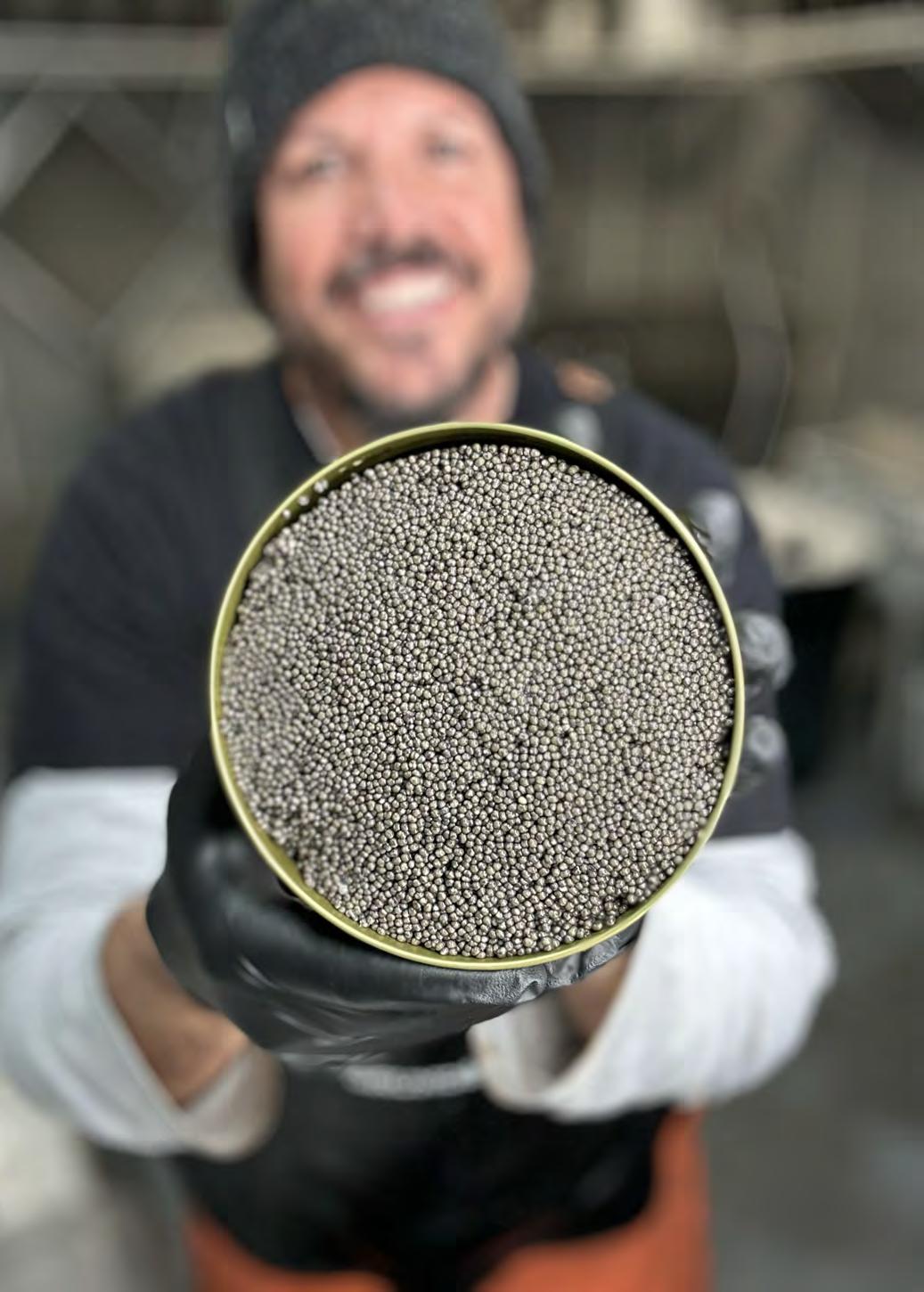
Courtesy America’s Best Caviar
Entrepreneurs put Kentucky on the domestic caviar map
Southern Pearls
BY JARRETT VAN METER
In the fourth section of his mega-bestselling memoir Kitchen Confidential, the late author and celebrity chef Anthony Bourdain describes a day in his life as a chef at Brasserie Les Halles in New York City. Just after noon, during the thick of the lunch rush, Bourdain receives a call on the kitchen phone. On the other end of the line, an unnamed salesman wants to sell him some caviar.
Bourdain begins the conversation with a pleasant tone, “lulling him into the bear trap,” as the vendor lists off the “other chefs who buy his fine smoked salmon, sturgeon, trout and fish eggs.” When Bourdain has had enough, he cuts the man off, ripping him in a profanity-laden admonishment for calling at peak hours before slamming the phone back onto its cradle.
• • •
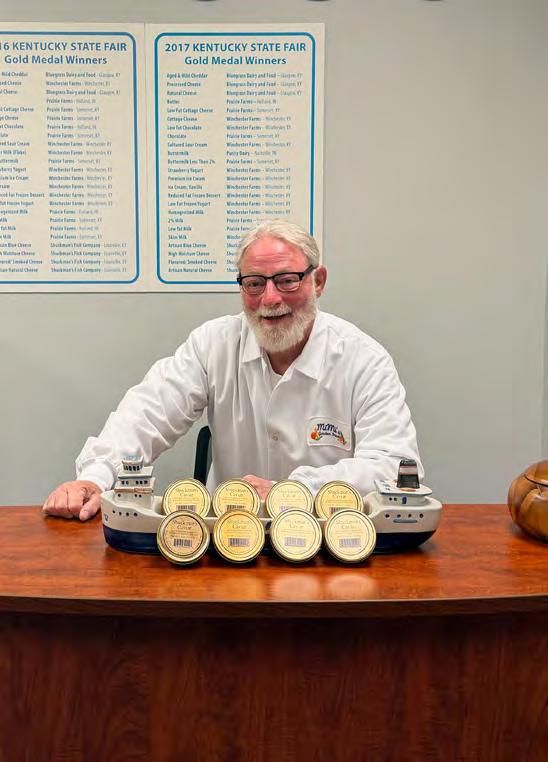
When he first read the book, Lewis Shuckman knew who the mystery caller was. “He didn’t mention me by name, but he was talking about me,” said Shuckman with a chuckle.
Shuckman was in the early days of trying to sell
restaurants on his newest product: paddlefish caviar. Despite being the third-generation proprietor of Shuckman’s Fish Co. & Smokery in Louisville, he was the first one in his family to market the product. It required hustle to get people to even try his Kentucky caviar. His cold calls went unanswered. When he marched into restaurants to pitch chefs face-to-face, he was shown the door. Good caviar came from overseas, they insisted.
“When I first got into this thing many years ago, they laughed at me,” he remembered. “They thought Kentucky caviar was bean soup in a jar.”
Shuckman caught a break in the early aughts when he was invited to contribute some of his product to a caviar tasting put on at the Seelbach Hotel by Chefs Jim Gerhardt and Mike Cunha. Served alongside high-dollar, imported Belugas, Osetres, and Sevrugas, Shuckman’s freshwater paddlefish roe stole the show.
“It proved to me and everybody in the food business that, ‘Hey, this guy is playing with a full deck,’ ” he said. “That was a big break. It made it a whole lot easier to go to chefs and restaurants and demonstrations.”
A reporter present at the tasting heard that Shuckman
GRAND RIVERS, KY Photos
America’s Best Caviar
owner David Fields
was struggling to get his product into kitchens and gave him a scrap of paper on which Bourdain’s phone number was scrawled. This guy might buy your caviar, the journalist told him. Shuckman tried the number soon after. No answer. He tried again. Nothing. Finally, he decided to call when he knew the chef would be in the kitchen: lunch. Bourdain answered. Bourdain, in his way, declined.
The Seelbach event earned Shuckman entrée in several local restaurants. A 2003 writeup in The New York Times and subsequent feature on Good Morning America at the behest of Kentuckian Diane Sawyer solidified Shuckman’s Caviar as a mainstay in the marketplace.
“Just the fact that Diane Sawyer picked up on it, the love for her state … that right there gave me cold chills,” Shuckman said.
• • •
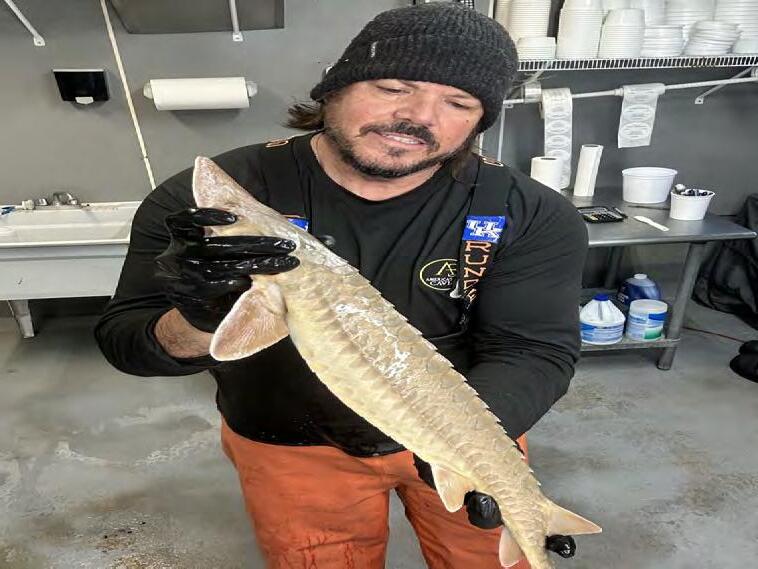
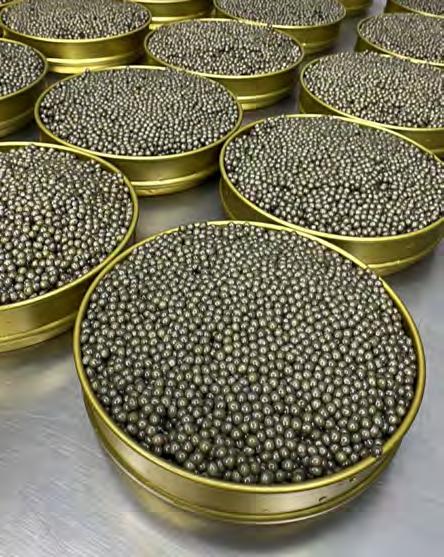
Kentucky’s location gives it an advantage in the production of domestic caviar. Paddlefish—toothless and prehistoric—are native to the Mississippi River watershed and commonly found in surrounding lakes. American caviar has a lower salt content than its
imported counterparts, giving the flavor room to shine.
John T. Edge, an author and host of TrueSouth on the SEC Network, first met Shuckman more than two decades ago at the recommendation of mutual acquaintances.
“There’s Lewis in this shop doing things like marinating trout in Julian Van Winkle’s whiskey, back when you could use his whiskey for that sort of thing, and selling caviar before other people realized the splendors of American caviar,” Edge said.
Edge tried the caviar, fell in love with its “clarity,” and has been purchasing it for his annual New Year’s Eve celebrations ever since. He noted that it’s the source and the story, as much as the actual taste, that keep him coming back.
“We have this notion of caviar being something elitist and something foreign, but we have these T-Rex creatures of the depths that are Southern and course Southern waters,” he said. “I was interested in eating caviar that I could get from my backyard.”
Shuckman said he works with a single family that fishes Lakes Barkley and Cumberland for paddlefish. They process the stock for him, extracting the eggs before
Photos courtesy Shuckman’s Fish Co.
Lewis Shuckman, the third-generation proprietor of Shuckman’s Fish Co. & Smokery
Following stints as a P.E. teacher, high school basketball coach and public-school administrator, David Fields “was looking for something just a little bit more” when he purchased Lake City Fish Market in Grand Rivers.
screening, rinsing, salting, drying and refrigerating them. It’s a comparatively small operation.
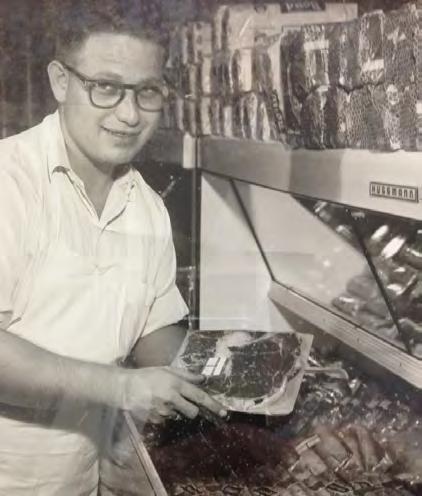
Isaac Shuckman established a butcher shop and grocery in Louisville’s West End in 1918. Becoming a foundation of the community, the store provided items on credit during the devastating flood of 1937. Over the years, each generation of the Shuckman family brought innovation—from A.J. Shuckman’s introduction of precut, prepackaged meats in the 1950s (above) to Lewis Shuckman offering smoked fish in the 1980s.
Murray. He enjoyed working with kids but felt called to pursue a new challenge.
“I loved what I did and everything, but I was looking for something just a little bit more … this was right up my alley,” he said.
Nearly three hours west of Louisville in Livingston County, David Fields relies on a network of fishermen from the surrounding area for his America’s Best Caviar.
“These fish are native to the Mississippi and its tributary, so anything that Mississippi touches, there’s a high chance that these fish are going to be in there,” Fields said. “These fish travel. They’re a federal fish. Kind of like a duck is a federal bird because they migrate— well, these fish do the same thing. They can tag them in Missouri and then [they] get caught here. They go all the way to North Dakota via the Mississippi River. We’ve actually taken in some fish that have been tagged in South Dakota.”
Fields, a Mayfield native, took a more circuitous route into the caviar business than Shuckman. After years of teaching physical education and coaching high school basketball, he became a public-school administrator in
In 2012, he purchased Lake City Fish Market in Grand Rivers. That the market happened to have its own small caviar business was, initially, an afterthought.
“I really didn’t know that this was out there,” he said of Kentucky caviar. “Had I known, I probably would have started much earlier.”
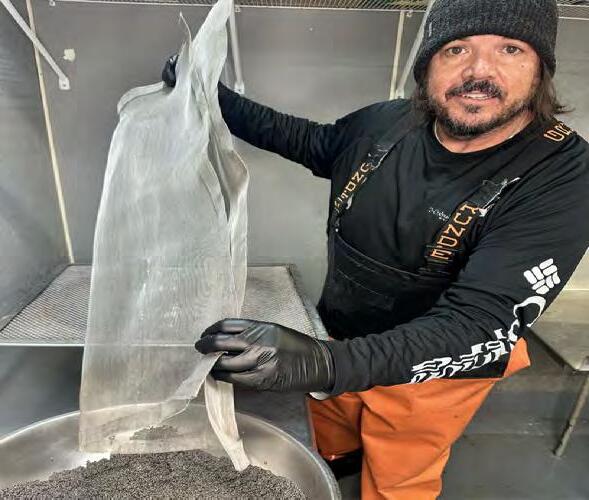
The caviar arm of the operation turned out to be a perfect fit for Fields. He enjoyed getting to work with the commercial fishermen on the front side, his hands in the middle (Fields processes the roe himself), and restaurants on the back end.
“I like the fact that I’m sitting here making something that chefs use,” Fields said. “It’s something that they use to make their dishes better or more extravagant.”
Among them is James Beard Award nominee Sara Bradley, who uses America’s Best in myriad ways at her popular Paducah restaurant, freight house. A diner might
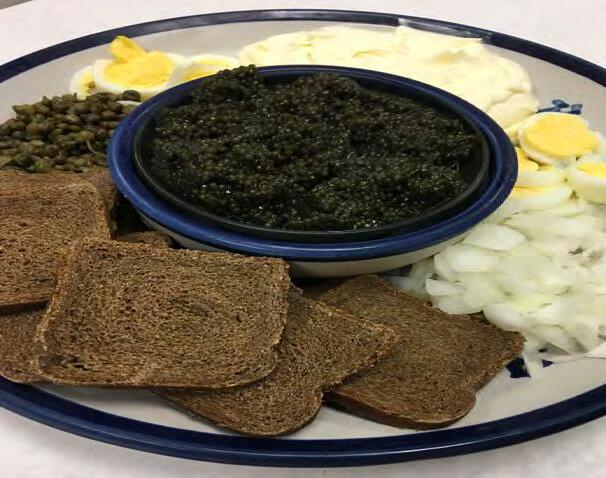
find Fields’ caviar folded into a butter sauce, atop deviled eggs, alongside French onion crème fraiche, or served on its own. Its unique flavor and freshness are unmatched, Bradley said.
“It is the most natural, the most unprocessed process that I’ve seen,” she said. “The fish comes off the boat, [Fields] guts it, takes the eggs inside. He processes them; he packs them away; and that’s it. From the minute the fisherman pulls up with live fish to the time that it goes in the tin, it’s nothing. It’s so quick.”
Like Shuckman, Fields got a boost not only from chefs like Bradley and word of mouth, but from media. NBC Nightly News visited Grand Rivers in 2019, and the retail side of business boomed. In 2022, Fields sold his fish market to focus solely on the caviar business, and while annual production and sales are weather dependent, he estimates that between wholesale and retail orders, he sells more than 10,000 combined pounds of his paddlefish and hackleback sturgeon caviar per year.
All industries face challenges, and at present, Fields worries that the number of young people entering commercial fishing won’t keep pace with the demand. While he was sourcing stock from about 20 fishermen per day at one point, that number has been more than halved (“I’m 52 years old, and, man, I don’t know if there’s anybody younger than me that brings me fish, to be honest,” he said). But for now, there are enough local suppliers to maintain a tight, local focus. Specialization has yielded ardent followings for Shuckman and Fields while vaulting their home state into the domestic caviar vanguard.
“We’re trying to focus on Kentucky and what we have to offer,” Shuckman said. “We’re not trying to be everything to everybody.” Q
A complete list of Student Craft items currently on display at Boone Tavern—including detailed information about the item and the student and/or staff member who created it—can be found at bcstudentcraft.com/crafted-at-boone-tavern/#gallery.
The longtime destination dining spot spiffs up its interior while retaining most of its beloved Southern menu
Boone Tavern’s New Look
BY JACK BRAMMER
Warning: This is not your father’s restaurant. Yes, the food—with several menu additions—remains delectable.
The service is top-notch. And the spoonbread (more about that later) is still a constant delight. But longtime diners at Historic Boone Tavern Hotel, located in the heart of downtown Berea since 1909, will quickly notice a dramatic change in its interior.
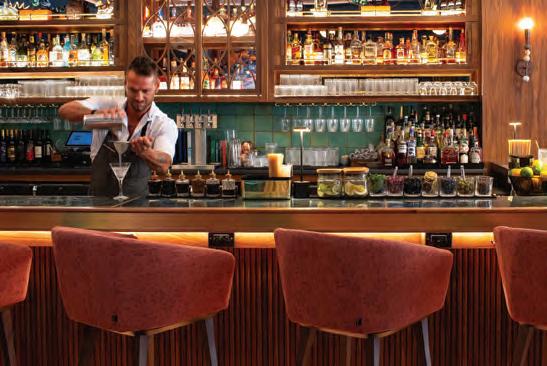
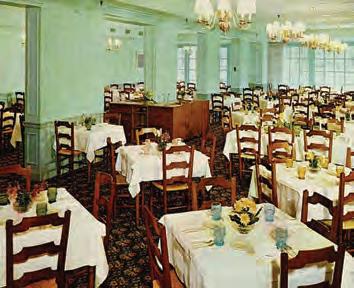
The once-formally decorated walls are now showcased by student crafts. A bar has been added, and a private dining room is located where the coffee shop used to be, for those seeking privacy.
“The food is good, and you get plenty of it,” said local diner Jim Davis, a former funeral director in Berea. “And thank goodness, they kept the spoonbread.”
Davis said first-time diners probably will have no problem with the changes, but “old-fashioned folks like me miss tablecloths on the table, the homey feel to the
restaurant. I really don’t think it’s as elegant, which I preferred, but you still get good food.”
Melissa McGuire, general manager of Boone Tavern for six years, acknowledged that changes “are always a little hard.
“We’ve heard a few times that people were not sure about the changes, but most are excited about them,” she said. “With students’ crafts on the walls and the tables and items on them made by Berea students, the restaurant now has more history and details to it than ever before.”
Boone Tavern’s new image was unveiled last July.
Business has been “very good,” said Nick Tuttle, food and beverage director for the restaurant for the last 1½ years. “Our budgets have been met and more.”
The tavern seats about 82, said Tuttle. There is a little less seating in the dining area, but seats in the bar area make up for that. The private dining space can be reserved for intimate gatherings of 15-20 people.
• • •
Berea College, a private liberal arts work college with about 1,500 students, owns Boone Tavern, but it is managed by Olympia Hospitality, a hotel management company headquartered in Portland, Maine. The restaurant was built to accommodate visitors to the college.
Its guests have included automaker Henry Ford, poet Robert Frost, poet and author Maya Angelou, the Dalai Lama and President Calvin Coolidge and his wife, Grace. Singer and songwriter Alice Cooper held a wedding party there. Colonel Harland Sanders of Kentucky Fried Chicken fame was served a meal in the dining room.
And now it has been made new.
• • •
The goal of the renovated space at Boone Tavern, named after Kentucky frontier explorer Daniel Boone, is to fuse its storied, historic charm to its new furnishings and decor.
Berea College students help to achieve the goal in a big way. About 15 students work in the restaurant, and four work in the kitchen. A few others help with other jobs.
The restaurant’s new furnishings and decorations were handmade by students in Berea College Student Craft, giving the dining area a more contemporary ambience.
Aaron Beale has been associate vice president of Berea College Student Craft since 2018. Beginning in 1983, it became part of Berea College’s Work-Learning-Service program. About 100 students a year are in the program to design and make objects by hand while developing skills in collaboration, problem-solving and creative thinking.
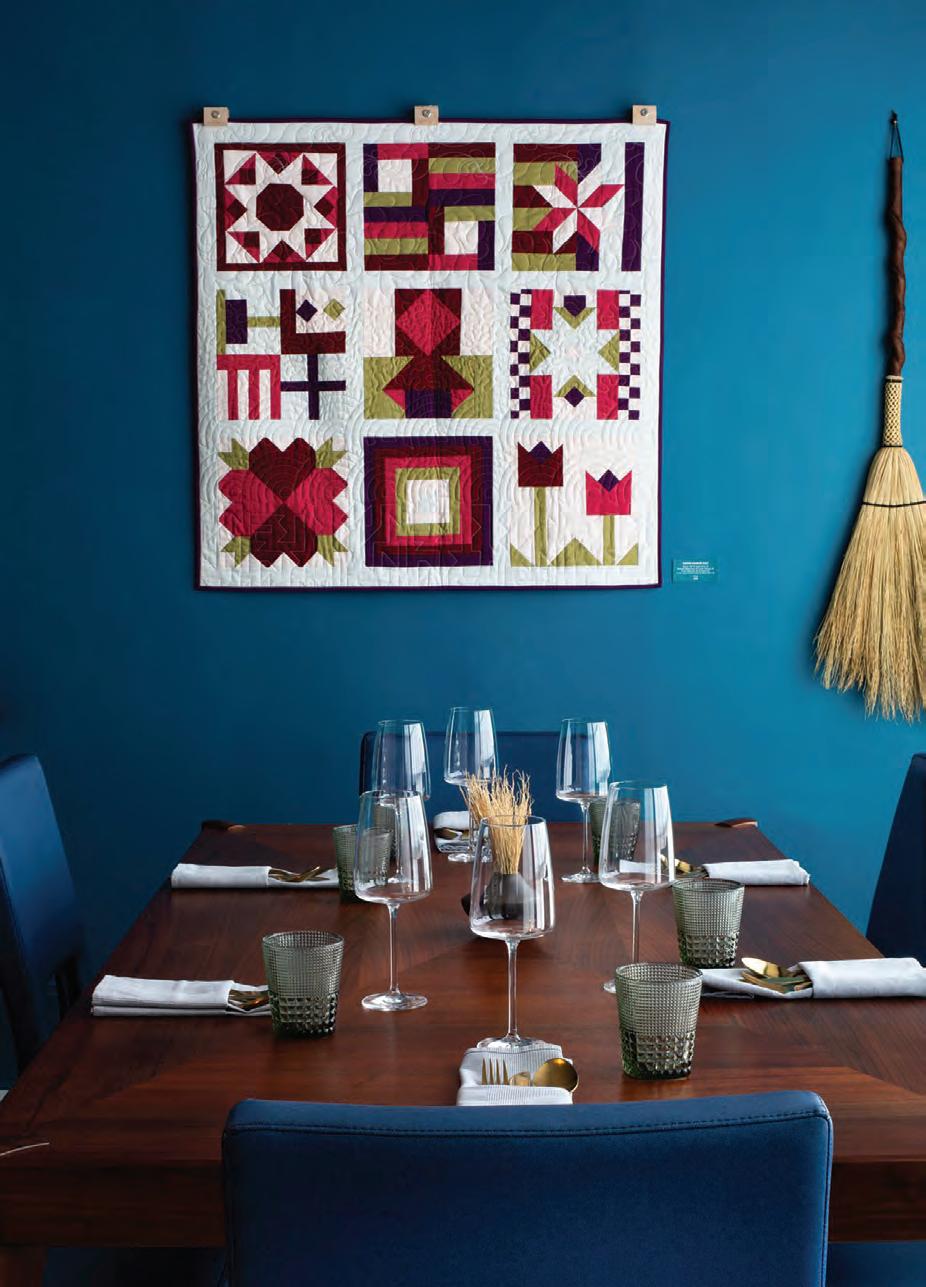
The student pieces for the renovated Boone Tavern
include ceramic floral wall hangings, a “broom quilt,” handcrafted instruments, quilts, tables and butter cups.
In late 2024, Student Craft was asked to create a series of items for the restaurant. The curriculum for Student Craft shifted to focus on the project, with students pitching ideas for each available display space in the restaurant.
“Most of us at Student Craft have long believed that Boone Tavern could tell a story that was more authentic to what Berea College is today and who its students are,” Beale said. “So, when we were given just the slightest bit of daylight, we ran with it.”
Each of the five areas of Student Craft was considered—outreach, weaving, woodworking, ceramics and broom craft—and students pitched their ideas to the size of each available space.
The ideas were gathered, and students and staff collaboratively chose what they thought would best tell the Berea College story. Once designs were chosen, students and staff worked to craft the 81 unique items that were installed by staff and students. Another 132 objects have been added this year.
Visitors often ask if they can purchase the new items.
“That’s my hope for someday,” Beale said. “We can make replicas of the tables for sale. We just want to make sure we don’t disrupt the restaurant.”
Beale said some of the decorations may be replaced over time with new works by students.
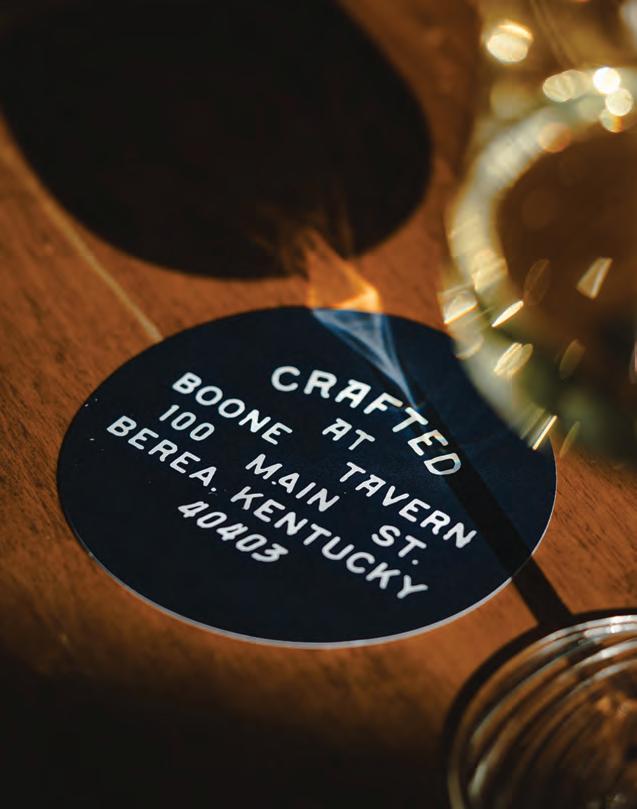
Nearly everything is different in the dining room except the historic herringbone floor. The dining room has been rebranded “Crafted at Boone Tavern.”
Guests and locals can stop at the bar for a casual meal or quick bite, said Tuttle.
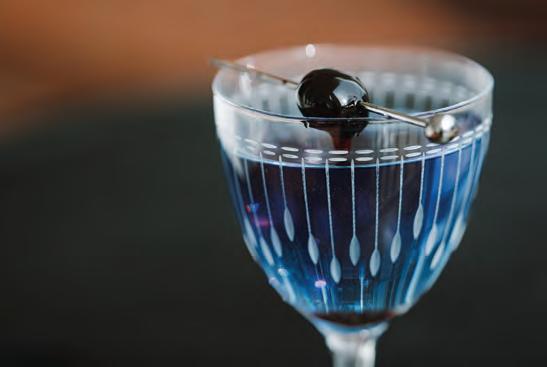
A curated selection of Kentucky bourbons, craft cocktails, craft mocktails (non-alcoholic drinks) and specialty wines are served in a stylish lounge atmosphere, he said, adding that it even serves the classic Shirley Temple, a mixed drink named after the famous child actress. It is made with grenadine and ginger ale or lemonlime soda, and garnished with a maraschino cherry and sometimes with a citrus wedge.
• • •
Kyle Klatka, Crafted’s chef, is committed to using produce and meats sourced from the Berea College Farm and other surrounding farms. He wants the food to be a
Photos courtesy Boone Tavern
true farm-to-table experience.
“Boone Tavern has a legacy of being a premier location for cuisine,” he said. “My intention with the new menu is to showcase dishes in a modern way. People come to Kentucky for Kentucky food, so we want them to see Appalachia meets Southern comfort food.
“I want people to walk away from the restaurant thinking, ‘That’s how Kentucky food is done.’ ”
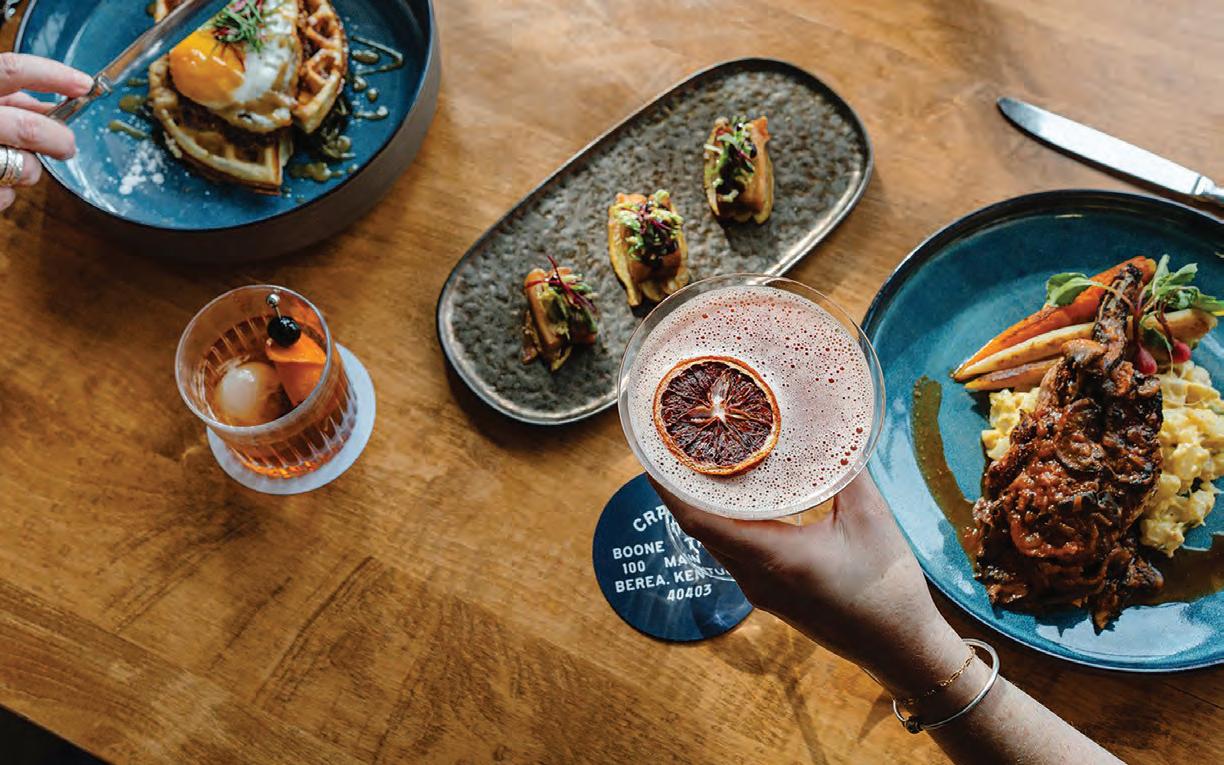
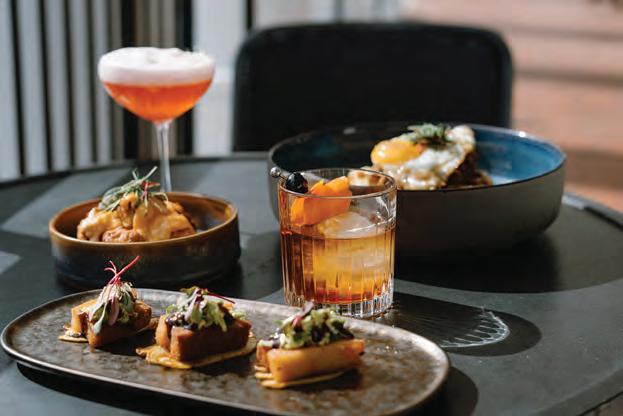
New menu items at Crafted include Berea College Farm-raised ribs, pretzelcrusted Kentucky trout and, for vegetarians, a dish featuring locally grown mushrooms and grits.
One major food item on the menu has not changed—spoonbread. But it is now served individually and not in a single batch.
Spoonbread is a light, fluffy and moist Southern side dish with a soufflé-like texture. It is made with a cornmeal base, eggs and milk, often with other ingredients such as butter, cheese or creamed corn. The dish is baked until puffy and golden, and its name comes from its soft consistency, which allows it to be easily scooped with a spoon, unlike its denser cousin, cornbread.
The food is rooted in Native American cornmeal dishes, especially those in South Carolina. Enslaved cooks refined the dish by using beaten egg whites to create the soufflé consistency.
Boone Hotel staff invite everyone to visit the new Boone Tavern, even if they are not eating.
“People should see the changes. Most I have heard from are appreciative and are very glad we did not change the spoonbread,” McGuire said. Q
100 South Main Street North Berea
The restaurant generally serves breakfast from 7-10 a.m. daily, lunch from 11 a.m.-2 p.m. Monday-Saturday, and dinner from 5-8 p.m. Sunday-Thursday and 5-9 p.m. Friday and Saturday. Sunday brunch is available from 11 a.m.-2 p.m.
The bar is open SundayThursday from 11 a.m.-10 p.m. (late food ends at 9 p.m.) and on Friday and Saturday from 11 a.m.-11 p.m. (late food ends at 10 p.m.) There is a limited bar menu available from 2-5 p.m. daily, and the bar also is available for late-night bites.
Social hour at the bar is Monday-Friday from 3:30-5 p.m. with food and drink.
Hours can vary, so it is recommended to go online or call ahead before visiting.
Above, Boone Tavern’s legendary spoonbread remains a staple at the restaurant; left, an image of the dining room from 1950s.
Crafted at Boone Tavern
SCALABLE SOLUTIONS TO MEET YOUR SUPPLY CHAIN NEEDS
Verst is a third-party logistics provider that specializes in:
Omnichannel fulfillment
Warehousing
Shrink sleeve labeling
Transportation management
A family-owned company for 60 years, we combine industry and technical expertise with a commitment to seamless customer relationships to help achieve our client's supply chain and logistics goals.
The Kentucky Millstone serves up scratch-made food and Southern hospitality
A Hidden Gem
BY PATTI NICKELL
You wouldn’t think that Butler, a town with a population of just under 600 people in Pendleton County, would boast a culinary gem. But then you haven’t tried Lori Himmelsbach’s award-winning, madefrom-scratch focaccia bread or sampled her husband Tom’s signature super-spicy chili, the best you’re likely to taste north of the Brazos River in Texas.
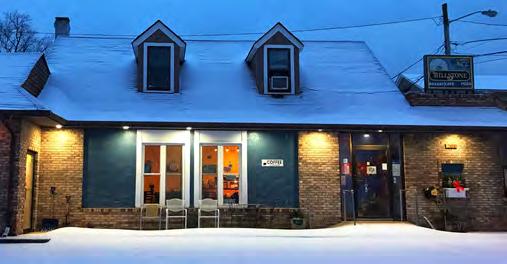
You can find the Himmelsbachs’ focaccia bread and chili at The Kentucky Millstone, an 18-seat restaurant in this small town 27 miles south of Cincinnati, along the northern end of the Licking River.
This incarnation of the Millstone, which the couple purchased in December 2019, is an homage to the original Millstone, a restaurant Lori’s mother and father owned in Falmouth. It has the same comfort food as its namesake and the same cozy vibe of a small-town kitchen, where neighbors drop in to exchange gossip over a cup of freshly brewed coffee.
It even has Lori’s 84-year-old mother, Carolyn, who works there part time. Her duties, Lori said, range from
“measuring the cheese and folding the laundry to working the room and charming everyone she meets.”
This husband-and-wife team has lovingly turned a family legacy into a modern gathering place built on scratch-made food, community pride and true Kentucky hospitality.
It hasn’t been a totally smooth ride for the couple. Lori said their goal was “to bring high-quality food to what is essentially a food desert.”
When they found a building for sale about a mile from their home, the Himmelsbachs had one day to make a decision that was to prove life changing. But before their lives changed, they had to deal with the COVID-19 pandemic.
“We spent that first year rehabbing the building, creating our brands and developing relationships with area farmers and farmers markets before welcoming a single customer,” Lori said.
Nearly a year to the day after they purchased the building, the first customer walked through the door in
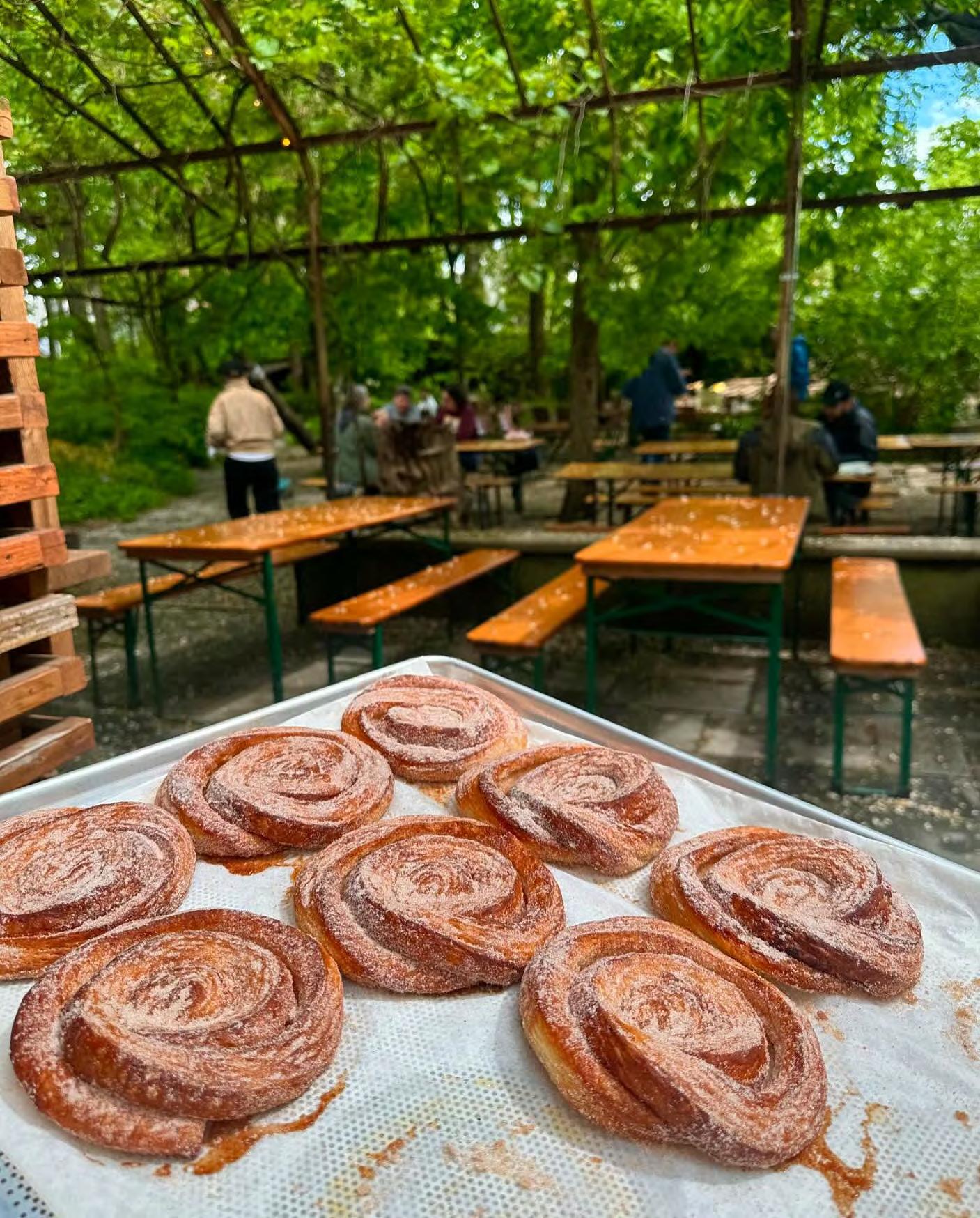
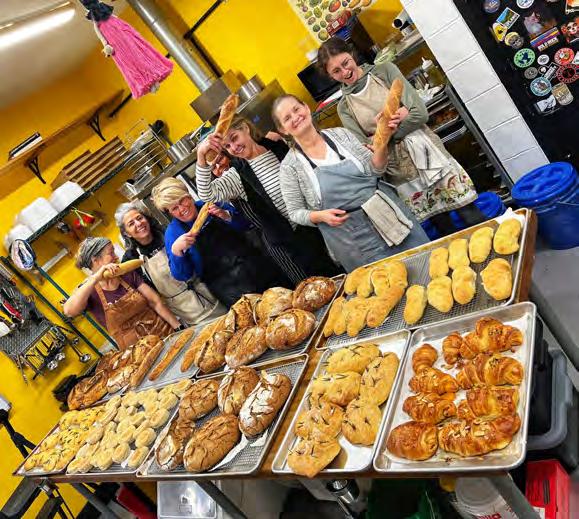
Left, cinnamon rolls are a Kentucky Millstone specialty; below, behind the scenes, where the tasty magic happens.
December 2020. Lori said she can’t remember the customer’s name or face, but she distinctly remembers the purchase.
“It was a cinnamon roll,” she said.
Lori and Tom, who have different skill sets but bring the same passion and work ethic to their endeavor, have been on their own roll ever since.
Lori’s background is in the culinary arts—she’s a selftaught baker and classically trained chef who matriculated at the Cincinnati Culinary Academy before going to work for her brother at his popular artisan pizza restaurant MozzaPi in Anchorage, an affluent community outside of Louisville.
Tom may not have a traditional culinary background—having worked in the fitness industry installing equipment and training instructors on its use—but he came to the business with a passion that equaled that of his wife, learning as he went. Today, in addition to running the front of the house, Tom works behind the scenes to mill much of the flour used in Lori’s baking. If you ask politely, he might even take you behind the scenes to see where the magic happens.
Tom explained that once they had purchased a mill, anything that didn’t require yeast could be made in house. Customer favorites such as pancakes, muffins, scones, cookies, cakes and brownies are made with Tom’s freshly
milled soft-wheat flour. Similarly, his freshly milled hard wheat and rye are used in making whole-grain breads the couple sells at area markets.
To take full advantage of his equipment, Tom mills Blue Clarage corn for grits and cornmeal to make cornbread.
But you can’t keep a good man entirely out of the kitchen. There are times when Tom deserts the mill for the stove. Remember that famous chili? If Lori is known for her award-winning focaccia bread (for which The Kentucky Millstone earned the 2024 Cincinnati Bake Off champion title), Tom is the master of the pungent stew.
While he won’t divulge his secret recipe, he does admit to making his own chili powder, using five varieties of dried peppers. “We make a yearly trip to Mexico in search of just the right ones,” he said.
When complimented on the excellence of his chili, Tom replied with a cheeky smile, “You should taste my gumbo.”
The focaccia bread and chili aren’t the only standouts on the menu. According to Lori, the biscuits and gravy and the pancakes made with freshly milled wheat are breakfast favorites, while tomato soup and grilled cheese with country ham and mustard top the lunch offerings.
The meatball sub and thin-crust pizza with a variety of toppings also have fans.
The Kentucky Millstone is open for breakfast and lunch Thursday through Sunday from 7 a.m.-2 p.m., and for dinner on Friday nights from 5-7 p.m.
This schedule leaves the Himmelsbachs time for the other side of their business—supplying area markets with an array of specialty items, from bread and pastries to hot sauces and soups.
“We sell our products at the Fort Thomas Market [Wednesdays] and at the Covington Market [Saturdays],” said Lori, adding that their limited restaurant hours allow them the time to supply both markets. Their artisan breads, pastries and seasonal specialties routinely draw long lines and loyal customers, resulting in consistent sellouts.
While spending most of their time turning out pizzas with crusts as thin as crackers and croissants so flaky you’ll need a crumb scraper (and, oh yes, roasting their own coffee), and bringing their entrepreneurial spirit to area markets, Lori and Tom also can add “Professor” to their names.
They are co-instructors of courses that provide a broad culinary education, ranging from artisan breads, pastas and pretzels to cookies, doughnuts and brownies (a Kentucky Millstone specialty).
Lori and Tom welcome both novice cooks—offering a 1½-hour class on making biscuits and gravy—and those with more experience seeking to expand their skills, with an intensive three-day sourdough boot camp.
While their classroom repertoire also features Danish, pretzels, beer cheese, pizza, yeasted and rye breads, Lori said their favorite class to teach is the pasta class. “First, we teach them how to make the pasta dough and three sauces—red, Alfredo and pesto,” she said. “Next, we roll the dough out to make angel-hair pasta and fettuccine, ravioli and tortellini.”
But the best part, Lori said, is what comes next: “After that, we cook it and have it for dinner.”
For those enthusiasts who are up to the rigors of the sourdough experience and want to enroll in the boot camp, the Himmelsbachs suggest they first take the Introduction to Sourdough class. “We teach the basics of sourdough from start to finish,” Lori said, “from feeding and managing your starter, to making and shaping the bread and then baking it.”
In the nearly six years since they welcomed that cinnamon roll-loving first customer, the Himmelsbachs have welcomed many more in search of a good farm-totable meal, a warm atmosphere, new friends and a feeling of home.
Conveniently located near Lexington’s Bluegrass Region, Northern Kentucky, and Greater Cincinnati.
One of those regulars is Tami Vater, economic and Visit pendletoncountytourism.com
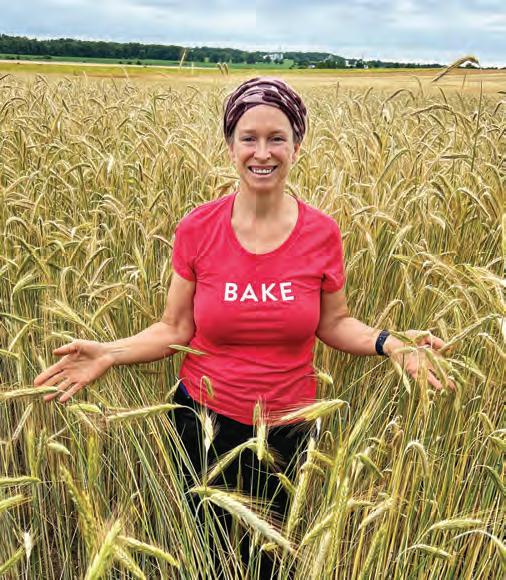
Outstanding in her field: Lori Himmelsbach is a self-taught baker and classically trained chef.
RECIPES FOR HOME
MOTHER DOUGH
2 tablespoons yeast cup warm water (80-95 degrees)
¾ cup (1 sticks) unsalted butter
1 cup milk cup sugar
2 teaspoons kosher salt
1 cup mashed potatoes, room temperature
2 eggs
5 cups bread flour
1. Proof yeast in warm water.
2. Warm butter and milk. The desired dough temperature is around 85 degrees.
3. Mix sugar and salt into milk mixture. Add mashed potatoes to milk mixture, then beat in eggs.
4. Add yeast mixture and stir well. Add the flour and mix until combined. It isn’t necessary to knead this dough.
5. Place in a greased container, cover with greased plastic wrap, then cover and refrigerate overnight or up to three days.
tourism director for Pendleton County. Vater is partial to the eatery’s homemade tomato soup and grilled cheese for lunch and the homemade biscuits and gravy for breakfast. “Those are the flavors that take me back to growing up on the farm, when food was fresh, made with love, and full of comfort,” Vater said.
“The Kentucky Millstone has an authenticity and a feeling of nostalgia that makes every meal here a real experience.” Q
The Kentucky Millstone 201 Mill Street, Butler • 859.955.9099 kymillstone.com
CINNAMON ROLLS
Mother dough
¾ cup granulated sugar
6 tablespoons ground cinnamon Melted butter
1 tablespoon heavy cream Icing of your choice
1. Preheat oven to 375 degrees.
2. For large cinnamon rolls, remove dough from fridge and roll to one-half inch thick and 12 inches wide. Slather dough with melted butter.
3. In a bowl, combine sugar with cinnamon. Set aside 8 tablespoons of this mixture and use the remaining cinnamon sugar to top the dough. Roll up tightly. Cut into eight large individual rolls and proof until dough slightly springs back when poked, around 30 minutes.
4. Brush with cream and top with the set aside cinnamon sugar.
5. Bake for 15-17 minutes. Top with icing.
The full recipe makes eight large cinnamon rolls. Or you can cut the recipe in half to make other treats.
Kentucky Festivals, Concerts + Summer Fun
There’s no reason to stay home this summer, with festivals and concerts in all corners of the Commonwealth. Music lovers have so many options—whether you want to bring your own lawn chair and listen to local musicians at a city park or catch a national act at a major venue, we’ve got you covered.
BY DEBORAH KOHL KREMER
CITY MUSIC SERIES
EDGEWOOD SUMMER MUSIC SERIES
Tuesdays in June and July
President’s Park, Edgewood EDGEWOODKY.GOV
FRIDAY AFTER 5
Fridays in May, June and July
Smothers Park, Owensboro FRIDAYAFTER5.COM
5/16 THE BAND FEEL WITH MOJO THUNDER
The Grove, Glasgow
THEGROVEGLASGOW.COM
THURSDAY NIGHT LIVE
Thursdays, May-October
Fifth Third Bank Pavilion at Tandy Centennial Park, Lexington DOWNTOWNLEX.COM
LIBERTY SUMMER MUSIC SERIES
Second Friday, May 8-Sept. 11 City Green Stage, Liberty EXPLORELIBERTYKY.COM
FREE CONCERTS ACROSS THE STATE WFPK WATERFRONT WEDNESDAY
Fourth Wednesday, April 22-Sept. 23
Big Four Lawn at Waterfront Park, Louisville OURWATERFRONT.ORG
DOWNTOWN FRANKFORT SUMMER CONCERT SERIES
Every other Friday, May 29-Aug. 7
Downtown Frankfort DOWNTOWNFRANKFORT.COM
CONCERTS +
5 / 23 GEORGE THOROGOOD + THE DESTROYERS: THE BADDEST SHOW ON EARTH TOUR + THE MARSHALL TUCKER BAND Beaver Dam Amphitheater
As a UNESCO Creative City, Paducah is humming with artistic vibes. This festival celebrates all that creative energy with two days of musical acts, children’s activities and artists selling their wares. Lower Town, Paducah
PADUCAH.TRAVEL
MAY 8-9
BBQ & BARRELS
Western Kentucky’s most iconic food, barbecue, is paired with bourbon, the spirit of the Bluegrass State, at this two-day festival.
Downtown Owensboro BBQANDBARRELS.COM
FESTIVALS
MAY 9-10
MAYFEST ARTS FAIR
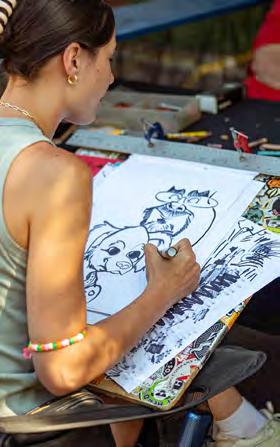
Browse the wares of 100 artists while enjoying live performances and family-friendly activities in the beautiful, historic Gratz Park.
Gratz Park, Lexington DOWNTOWNLEX.COM
BLOOMFEST AT BERNHEIM
MAY 16
Celebrate spring with familyfriendly arts and crafts activities and live music amid Bernheim’s glorious 16,000-acre forest.
Bernheim Forest and Arboretum, Clermont
BERNHEIM.ORG
MAY 15-17
COVINGTON MAIFEST
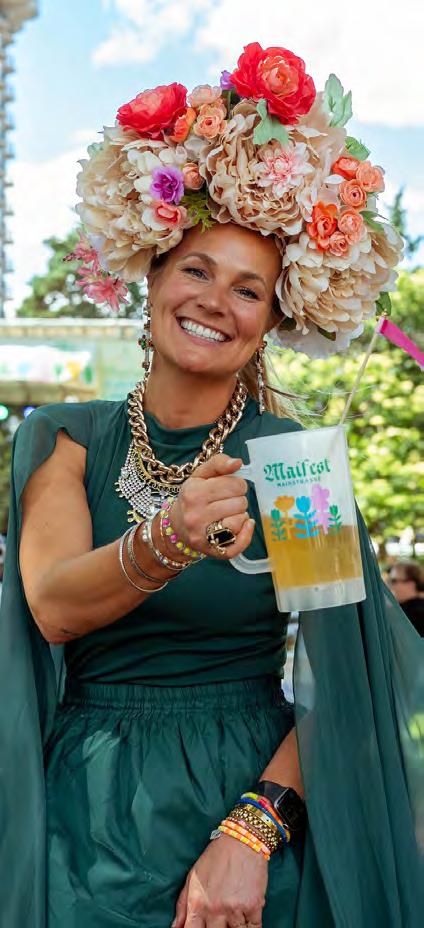
Celebrate Northern Kentucky’s German heritage with maypole dancing, artisan markets, all kinds of food and, of course, beer.
Goebel Park, Covington BRAXTONBREWING.COM
MAY 21-24
KENTUCKY MOUNTAIN LAUREL FESTIVAL
Since 1931, this annual rite of spring has included arts and crafts vendors, concerts, a 5K run, a parade through Pine Mountain and a crowning of the Mountain Laurel Queen, which is held at Laurel Cove in Pine Mountain State Resort Park.
Pineville
KMLF.ORG
MAY 27-AUG 9
SHAKESPEARE FESTIVAL
Celebrating its 66th year, the festival is the longest-running free, non-ticketed Shakespeare festival in the United States. The plays change every few weeks, so check the website for shows and times.
Central Park, Historic Old Louisville
KYSHAKESPEARE.COM
MAY 30-JULY 19
SAT + SUN
KENTUCKY HIGHLAND RENAISSANCE FESTIVAL
A rural farm in Henry County is transformed into an early 14th-century Scottish village. Festival goers enjoy the works of artisans selling handcrafted items and actors portraying jousting and re-enacting fairy tales.
Festival Grounds, 955 Elm Street, Eminence KYRENFAIRE.COM
JUNE 17-20
THE W.C. HANDY BLUES & BARBECUE FESTIVAL
This festival, which draws about 50,000 people each year, honors William Christopher Handy, a Henderson resident who was known as the “Father of the Blues.” The multi-day free celebration features continuous live music and multiple vendors serving up their versions of Western Kentucky barbecue.
Audubon Mill Park, Henderson HANDYBLUES.ORG
COVINGTON MAIFEST
JUNE 19-20
HEART OF KENTUCKY JUNETEENTH CELEBRATION
A day of restoration, recognition and celebration, the festival includes guest speakers, kids’ activities, food and games of chance.
West Lane Park, Harrodsburg JUNETEENTHKY.COM
JUNE 20
DAZZLING DAYLILIES FESTIVAL
In addition to its phenomenal display of more than 800 varieties of daylilies, the festival features artists painting in the gardens, live music, and a petting zoo.
Western Kentucky Botanical Garden, Owensboro
WKBG.ORG
JUNE 25-27
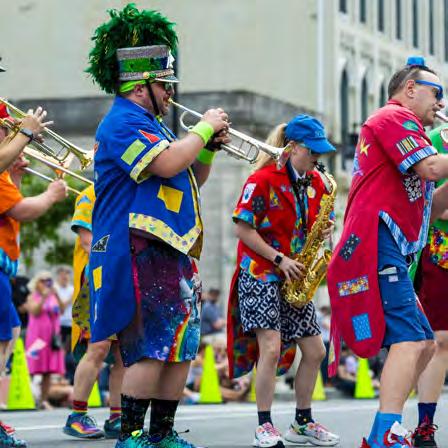
GREAT AMERICAN BRASS BAND FESTIVAL
Danville pulls out all the stops to celebrate amazing brass band tunes. The weekend includes free performances throughout the community and on the campus of Centre College.
Don’t miss the parade that travels down Main Street, band after band strutting their stuff and filling the town with sound.
Downtown Danville
GABBF.ORG
JUNE 30-JULY 4
BLACKBERRY FESTIVAL
Celebrating its 80th year, this festival will commemorate America’s 250th anniversary with carnival rides, live music, countless blackberry treats and, of course, fireworks on the Fourth.
Downtown Carlisle
CARLISLE-NICHOLASCOUNTY.ORG
JULY 10-12
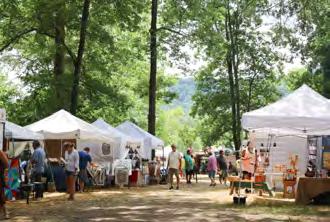
BEREA CRAFT FESTIVAL
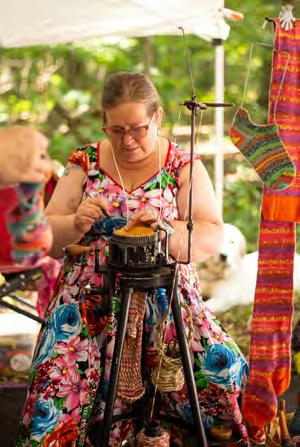
Festival goers will enjoy the Appalachian craftsmanship of 100 artisans and wander through booths set up in this historic, wooded location. Along with live music and food vendors, many artists conduct workshops and demonstrations.
Indian Fort Theater, Berea VISITBEREA.COM
JULY 11
BG WINE FEST
Sample vino from Kentucky wineries while enjoying live music, silent auctions and shopping.
Historic RailPark & Train Museum, Bowling Green
HISTORICRAILPARK.COM
Williamstown
VISITGRANTKY.COM
JULY 23-26
JULY 30-AUG 2
GOETTAFEST
Covering two weekends, this festival celebrates the GermanAmerican staple goetta. Although typically served as a breakfast dish, the sausage is offered by creative vendors in about 50 oneof-a-kind dishes, such as goetta pizza, goetta tacos and even desserts made of goetta. Two stages will feature more than 40 bands, and there will be a kids’ fun area, all along the banks of the Ohio River in Newport.
Newport Festival Park
GOETTA.COM
JULY 31-AUG. 2
JULY 11
SKEETERFEST
Enjoy this all-day outdoor music festival, with local food vendors and kids’ activities.
Grant County Fairgrounds,
STANTON CORN FESTIVAL
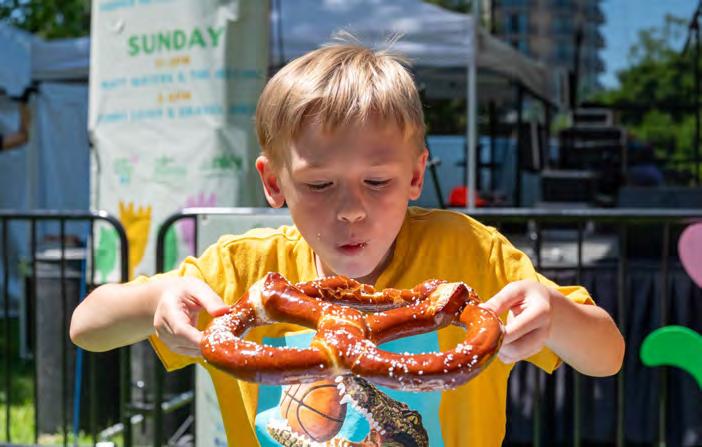
A weekend full of beauty pageants, a 5K run, live music and, of course, a corn-eating contest.
Stanton Community Park CORNFESTIVALKY.COM
GREAT AMERICAN BRASS BAND FESTIVAL
BEREA CRAFT FESTIVAL
AUG. 1
ST. JEROME FANCY FARM PICNIC
Known for its popular—sometimes rowdy—political speeches, the picnic serves attendees plenty of Western Kentucky barbecue alongside those partisan jabs. The day includes kids’ games, bingo and a raffle for a brand new car.
Fancy Farm STJEROMEFANCYFARM.COM
AUG. 1
APPALACHIAN ARTIST FESTIVAL
A full day of live music along with demonstrations in woodworking, fiber arts and quilting will entertain festival goers in downtown Inez.
Downtown Inez
VISIT ON FACEBOOK: APPALACHIAN ARTIST FESTIVAL
AUG. 5-8
NIBROC FESTIVAL
Along with live music, carnival rides, and arts and crafts vendors, the NIBROC Festival hosts volleyball, cornhole, basketball and tennis tournaments.
Downtown Corbin
SOUTHERNKYCHAMBER.COM
AUG. 7-8
BLUEGRASS IN THE PARK FOLKLIFE & MUSIC FESTIVAL
This annual event in downtown Henderson claims to be the largest ongoing, free bluegrass festival in the country. Visitors will enjoy two days of nonstop music, located about 60 miles from the
The 1901 Kentucky Derby was the 27th running of the Kentucky Derby. The race took place on April 29, 1901.
Volume 41, Number 4 – May 2026
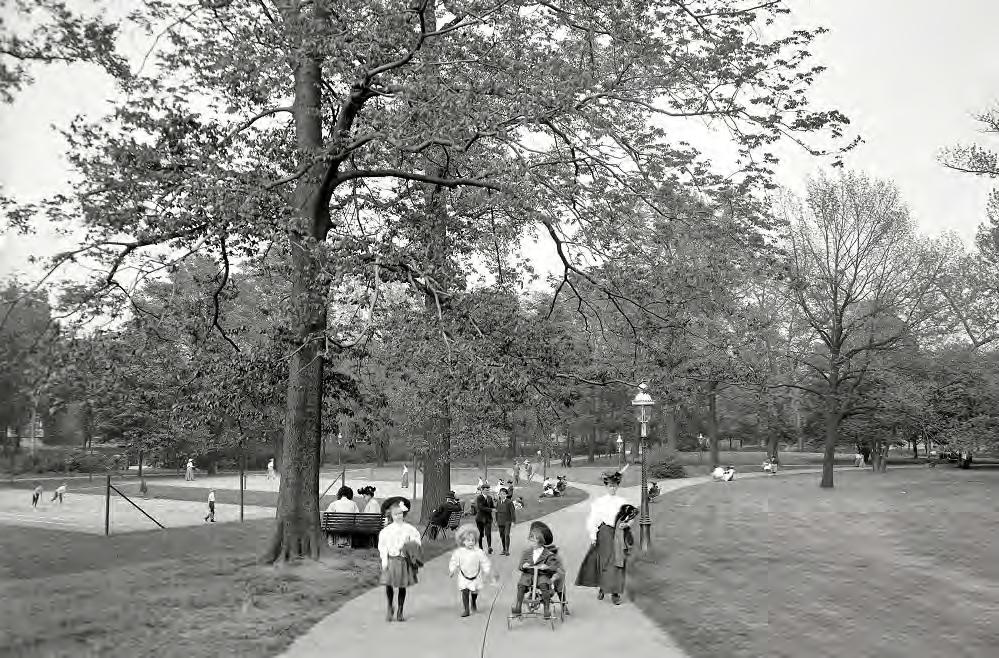
‘While strolling through the park one day, in the merry merry month of May …’ Louisville’s Central Park, pictured here in 1907, began as part of the private estate of the DuPont family. The family opened their front lawn to the public for strolling and picnicking on June 15, 1872. In 1901, famed landscape architect Frederick Law Olmsted was hired to design the grounds and established the basic layout of Central Park that remains today. Louisville officially purchased the property in 1904.
Kentucky Explorer
One-Year Subscription to Kentucky Monthly: $25
Letters to the Kentucky Explorer
Letters may be edited for clarification and brevity.
Up in Smoke
When I read the “Petite Tobacco Salesperson” story (February issue, page 51), it brought back memories of visiting my aunt and uncle, Era and Sibert Young, in Bowling Green. They lived right across the street from the tobacco auction warehouse, and you could hear the auction inside.
On one visit, we saw the remains of a fire that totally destroyed the warehouse, leaving only the scale standing. Uncle Sibert was a retired Bowling Green police captain and later worked in security at Beech Bend Park, while Aunt Era ran the mini golf at Beech Bend.
Michael Young, Midlothian, Virginia, via Louisville
Memories of the Brewery
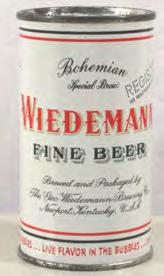
I enjoyed the article on Wiedemann Brewery (February issue, page 54). In 1963, I was attending Villa Madonna College, now Thomas More University. At the end of my sophomore year, I got a job working the line at Wiedemann’s Brewery. The pay was $1.75 per hour.
I worked second shift, 3-11 p.m. My job for 30 minutes was to position a carboard case for long-neck bottles in a machine, push a button that put 24 bottles full of beer in the case, and then shove the loaded beer case down the line. The next 30 minutes were spent on the bottling line making sure each bottle was properly labeled and had a cap after being filled. Then, it was 30 minutes watching bottles come out of the bottle washer as they passed in front of a light board. This was in the day of returnable long-neck bottles that were refilled by the brewery.
About every 100th bottle had to be pulled off the line because someone had put motor oil or some other substance in it. Then, it was back to putting 24 bottles in a cardboard case.
Employees got a free beer upon arrival for work, a free
beer for our first 15-minute break, a free beer for our supper break, and a free beer for our second 15-minute break. Then, one or more free beers at the end of the shift. Employees just could not be visibly intoxicated when on the floor. Where was OSHA?!
The Wiedemann Brewery also had a line for pull-tab cans. One time, after being filled with beer, a load of 10,000 cans began to show bubbles along the can’s side seam as they were being prepared to be shipped out. In those days, as soon as a bottle or can was filled, Wiedemann paid an alcohol beverage tax to the state it was to be sold in—in this case Indiana—and to the federal government. Since the filled beer cans could not be shipped to a wholesaler as they were, Wiedemann asked for a tax refund. Both the state and federal government agreed to this request, provided that all of the cans were destroyed. For the next few days, a fellow worker and I, under the supervision of an Indiana Alcoholic and Beverage Control agent, destroyed each of the 10,000 cans of beer by puncturing it with an ice pick. Once punctured, the can was thrown into an industrial sink to drain. When the beer cans were empty, they were inspected by the Indiana state agent to ensure they were truly empty. Then, we threw the cans on the scrap heap, where they were crushed into a 2- by 2-foot metal square. What a waste of beer!
My first paycheck at Wiedemann was for $0. When I asked why, I was told I had to pay union initiation and monthly dues to work on the line. My next paycheck was for $20, as I still owed some union dues. Thereafter, I got regular pay.
When I went to work at Wiedemann’s, I weighed 145 pounds. At the end of the summer, when I left, I weighed 185 pounds. Beer will put poundage on you. I had to get all new clothes for school.
Charles H. Bogart, Frankfort
The Elmwood Inn in Perryville was built in 1850 and was the Elmwood Academy from 1891-1925.
Kentucky history captured in documents and photos are available at the Kentucky State Digital Archives in Frankfort. Kentucky Explorer has partnered with the KSDA to share a piece of this history each month.
The Kentucky State Digital Archives
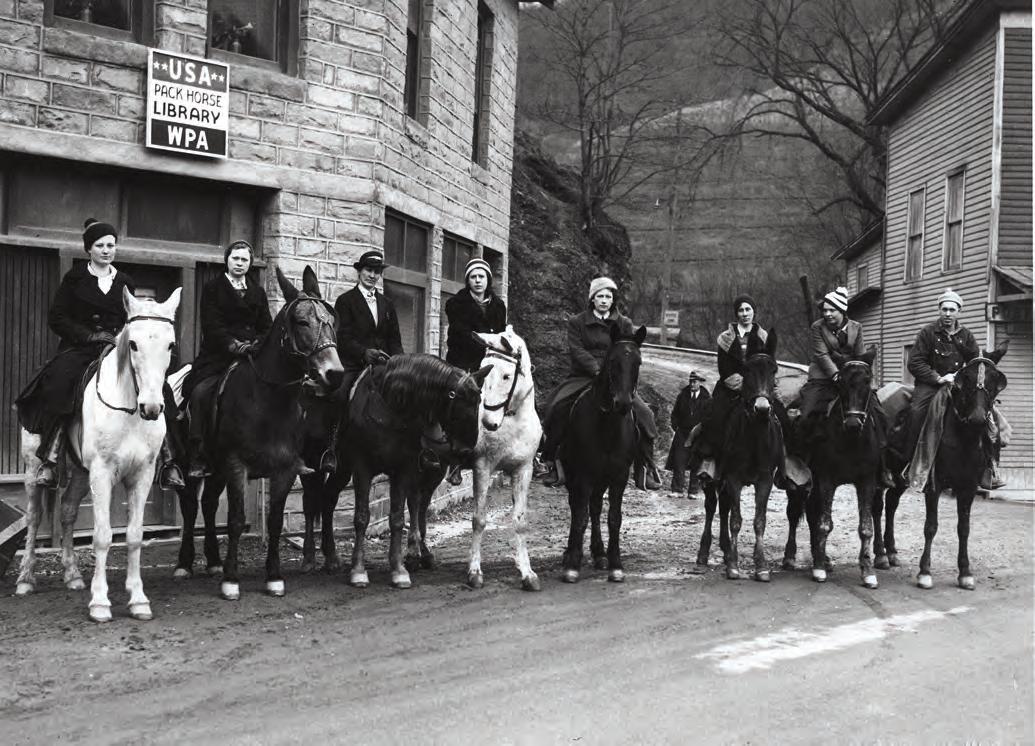
Packhorse Librarians
Taken in Hindman (Knott County) between 1936-1938, these “bookwomen” delivered books to locals who did not have access to a library system. Scanned from a scrapbook, the Packhorse Librarian Collection features photographs from the years the librarians served 48 Kentucky counties on horseback. The Packhorse Librarians operated in Kentucky from 1934-1943 as part of the Works Progress Administration. Visit the KSDA at kdla.access.preservica.com/portal/en-US.
The Kentucky State Digital Archives is a free online service operated by the Kentucky Department for Libraries and Archives and features more than 130,000 documents, photographs and A/V materials of government records. For questions, visit kdla.access.preservica.com/portal/en-US or email electronic.records@ky.gov.
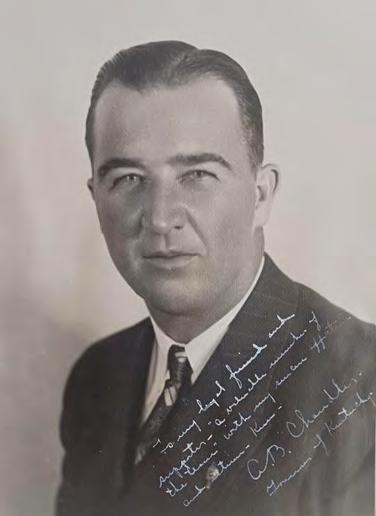
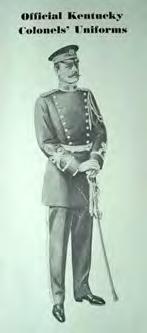
Harland David Sanders was commissioned as a Kentucky Colonel in 1935 by Gov. Ruby Laffoon.
Send memories to Deborah Kohl Kremer at deb@kentuckymonthly.com or mail to Kentucky Monthly, Attn: Deb Kremer, P.O. Box 559, Frankfort, KY 40602.
“I
Remember”
Send in your memory today! By
Our Readers
Watermelons and Cantaloupes Galore
By Al Tribble, Richmond
In January 1948, my father rented a farm from my greatgrandmother in a community known as Happy Hollow in Madison County beside the Kentucky River. Across the river is a small Clark County community known as Ford.
In the spring of that year, my father took my brother, who was 9, and me, age 7, to a huge bottom that sat right on the river.To the left of the bottomland was a large cane patch, where he cut two cane poles. He cut one 8 feet long and the other 6 feet long. He then took us to the corner of the bottom, approximately 12 feet from the river.
inches wide. The Dixie Queens were about the size of a basketball or bigger.
The cantaloupes were huge, I don’t do a lot of shopping, but I’ve never seen a cantaloupe in a store as big as those.
He got down on his knees and dug a hole with his hands in what was mostly sand. He dug down about 5-6 inches, and he made the bottom of the hole about 8 inches in diameter.
Our dad said that as soon as school was out, we were to harness the team of horses, hook up the slide, and dig manure out of a stock barn, then bring it back to what was to be a watermelon patch. He taught us to half fill each hole with manure, put four watermelon seeds in, and fill with sand, then pull sand up about 3-4 inches above the rest of the land. The top of each mound was probably 14 inches in diameter.
After each hole was completed, we laid the 8-foot cane pole and repeated the process untill there were 50 holes down the riverbank. After the last hole was completed, we laid the cane pole across and started back where we started. The complete watermelon patch was 50 holes long and 25 holes wide, with a total of 1,250 holes.
Our dad then told us to do the same with cantaloupes, starting where we ended the watermelon, using a 6-foot cane pole, with 625 cantaloupe holes.
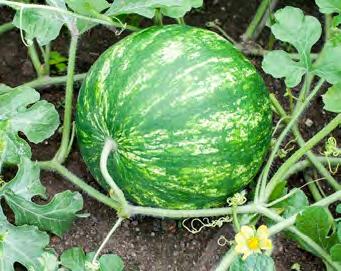
In 625 of the watermelon holes were the long, dark green varietal; the other 625 holes were Dixie Queens. The long green melons were about 20 inches long and 10-12
On our first day off school, my uncle, who lived with us at the time, showed us how to harness the horses and hook up the slide. These horses were giant Strawberry Roans. After that first day, the harness was hung on a wall in the stock barn, and I climbed in a small loft, where the hay was stored, to be able to get the harness on the horses. My brother stood on a milk crate and shoved the harness up to me to put on the horse next to the loft. I then threw the harness over the back, and my brother fastened it on. I jumped on the horse’s back to put the collar and bridle on to complete the process and begin on the next horse. Getting both horses ready to hook to the slide took about 45 minutes.
After this, we took a manure fork and dug manure out of the stock barn to put in the watermelon and cantaloupe holes.
I don’t know how many days it took us to complete the 1,875 holes, but as a 7-year-old, to me, it seemed like a lifetime.
When the watermelons and cantaloupes were fully grown, you could hardly see the ground, just a sea of watermelons and cantaloupes. Our dad had a pickup truck, and every Saturday, we loaded it down; he sold the watermelons for a quarter each and the cantaloupes for a dime. People came to the patch with trucks and loaded all they could take for five dollars.
I don’t know how many watermelons we had, but a good estimate would be 6,000 and half that many cantaloupes. I guess since the labor was free, you can’t count it, but if we had got all the money, our labor was worth about two cents an hour.
I spent a large part of my summer in that river bottom in Happy Hollow. Needless to say, I really don’t care for watermelon or cantaloupe now.
Ruth Hanly Booe, founder of Rebecca Ruth Candy in Frankfort, invented bourbon balls in 1938.
Persistence Pays Dividends
By Donald W. Pryor, Central City
I was born in Riverside, near Paradise, in Muhlenberg County in 1937, the year of the worst flood ever to hit the state. My earliest recollections paint vivid pictures of Provo, a small hamlet nestled in Butler County, when I was just 3 ½ years old.
Lord knows we were poor. My dad, Leland, worked the land for Miss Lawon, who owned the property with a ramshackle house, which had no amenities. We had a well nearby for drinking water and an open fireplace for heating.
One recurring event in Provo was the visit by a few neighbors who came each Saturday night and waited eagerly to hear George D. Hay, “The Solemn Old Judge,” announce the kickoff of the Grand Ole Opry from Nashville’s clear-channel radio station, WSM-AM. How could my parents, who had little income, afford a Sears & Roebuck Silvertone radio, which required one A battery and two B batteries to operate?
We moved on from Provo to a “wide spot in the road” in Muhlenberg County, near Ennis, which we now refer to as “the Fred Rock Place.” Three things stand out from our time near Ennis: My dad raised hemp; my mom traded a pig for a Singer sewing machine; and I started school.
For a time, we lived with our grandparents, my dad’s parents, Blaine and Alice Pryor. My grandmother, Alice, walked with a crutch, the result of an injury from falling off a horse when she was a little girl. She didn’t get proper medical treatment and used the crutch for the rest of her life. One curious practice of my grandmother’s was that she kept her cash in a Bull Durham tobacco sack, which was pinned to her “princess slip.”
Moving on a few years, skipping our time in Browder and heading northwest, we settled in Nonnell—also in Muhlenberg County. It was a coal town that first was called Elk Valley. From 1919-1931, it had a post office and was known as Tarma. The name was changed to Nonnell in honor of an L&N Railroad maintenance superintendent, John Lennon (not The Beatle). Lennon spelled backward is Nonnell but with an extra l, which they added just for the “L” of it!
I don’t know how my parents were able to pay the $600 to purchase the 84-acre parcel of land and a house, which by any measure was substandard. Perhaps my dad saved the money from his years at Browder, when he worked for the W.A. Wicliffe Coal Company. (Maybe he loaded 16 tons of No. 9 coal, as in the song by Tennessee Ernie Ford.) Most of the acreage was stripped land, but there was enough tillable land for some farming.
Life in Nonnell was challenging, for we had no
electricity, no running water, no telephone and no indoor facilities. Walking was our only means of getting around. Our drinking water came from a spring about 500 yards down a steep hill.
As is true in many small country towns, we had our fascinating cast of characters: Jim, who enjoyed catching turtles and insisted that they provided seven kinds of meat; Ophus, who did his part to promote birth control by selling condoms from a brown paper bag; Virgil, who was the local unlicensed barber; Daisy May, who upon seeing a jet trail in the sky hastily dropped to her knees in the potato patch to pray, fearing that the world was coming to an end; and Mary and Tom, who, hoping for a free meal, always paid a visit to the greiving family whose loved one had died.
When, as a result of a back injury, my dad couldn’t work and there was no compensation or unemployment insurance, things got so bad that my mom decided to open a grocery store in a rented building in Nonnell. My older sister, Geraldine, recalls that our mother secured a loan from the First National Bank in Central City and began a career as a businesswoman. Our mother was always willing to take a risk, and our father recovered from his injury, after which he secured a job with the Bell & Zoller Coal Company in Hopkins County. Together, they worked their way out of poverty and improved the family’s financial position.
In the summer of 1956, after purchasing an existing grocery store in Drakesboro from Mr. Lile, who was retiring, my parents closed the store in Nonnell. They focused their efforts on making the newly acquired store profitable. Later on, and after major upgrades to the interior of the building, the store was renamed Pryor’s Superette. My parents continued to run the store until the mid-1980s, when they sold it to a younger couple, who turned it into a dairy bar. As my siblings and I matured and moved from our teenage years into adulthood, we realized how hard our parents had worked and sacrificed to make a better life for us. They proved that hard work and persistence pay dividends.
Gracie: A Mother’s Day Tribute
By Bobbie Smith Bryant, Jefferson County
Ivividly recall my blind great-grandmother, Gracie (Wrather) Smith, babysitting me when I was a little girl. Mama Smith had glaucoma and had lost her sight in her early teen years. Like any bratty kid, I remember testing her blindness more than once. When I was about 4, she was rocking in her chair in the living room, and I was standing quietly close by. I pulled my dress off over my head to see if she’d fuss at me to put it back on.
She didn’t.
Another time, when she was baking biscuits, I moved the flour from where she had placed it. In feeling around the countertop to locate it, she knocked the can of vegetable oil over and made a huge mess on the counter and the floor. I didn’t move anything away from her ever again.
When I think about how limited she was in her ability to see, I am amazed at how well she coped. Mama Smith was married to Raymon Smith, and together, they raised two sons. She was an excellent cook and always had a beautiful garden. She planted, picked, prepared, canned, froze, and put up fruits and vegetables all by herself.
Every week, she packed water to fill up her wringer-type washer and tubs to do laundry in the washhouse, which was separate from their house. She did her own cooking and house cleaning and washed dishes in the sink. She baked a pound cake in a tube pan every Saturday to have for the Sunday family dinner.
Her family dinner table was permanently altered when their youngest son, James, was killed in World War II. My Uncle James was a young man of 24 who had started a family before leaving for France, never to meet the daughter he left behind.
shoulders and arms, feeling for our muscles and to find out how tall we’d grown. She’d brag to everyone she spoke to about how pretty or handsome we all were.
My favorite memory of Mama Smith is from Mother’s Day 1978. I was 19, and she was 82.
The sun sparkled against a cloudless sky as she made her way up the front steps of the Kirksey United Methodist Church, escorted by her eldest son, my Granddaddy Hal. Once inside, she touched each pew as she went along, finding her seat while listening for familiar voices.
Mama Smith visited his grave every week until she was bedridden and couldn’t. Even though she couldn’t see it, his military portrait remained the focal point of her living room, a lasting reminder to our entire family of his short but significant life.
Family was the most important thing to Mama Smith. She often had us stand before her so she could feel our heads and touch our faces. She ran her hands over our
Young children came clamoring into the sanctuary from Sunday school classrooms. Finally, she heard the familiar voice of her great-grandson, “Can we sit with you, Mama Smith?” he asked. “You’d better,” came her quick and happy reply.
As her son, grandchildren and greatgrandchildren squeezed into the pews around her, the service began. She joined the others, singing along with the small country choir. Afterward, she listened intently as the pastor gave an inspiring sermon on the virtues of womanhood.
When the service ended, the pastor noted that there were many mothers in the audience, but he wished to recognize the oldest mother in attendance, Gracie Smith. Placing her feeble hand on the pew in front of her, she slowly stood up, surprised by the cheers and applause that erupted, obviously pleased to be so honored.
We have a wonderful photograph from that day. Mama Smith has a huge smile. Holding a long-stemmed red rose, she was clearly proud of the family crowded around her.
In her attitude, she showed us how to be brave in the face of adversity. In her grief, she showed us how to persevere after suffering a soul-crushing loss. In her actions, she shared with us the ways to honor those we love. In her blindness, she saw each of us with her heart, a spirit filled with love.
Previously published in the Murray Ledger & Times
The Great Kentucky River Adventure
By Stewart Wade, Greenville
The Girl Scouts of Greenville (Muhlenberg County) took off on quite an adventure back in 1970. They paddled down a 75-mile section of the Kentucky River starting at High Bridge and ending at Monterey (Owen County). The 11 girls and two adult chaperones of Girl Scout Troop 2, part of the Pennyroyal Council, began planning their canoe trip in the spring of 1970.
All the Girl Scouts attended Greenville High School and prepared for the trip by taking the Girl Scout test and canoe training at Lake Malone. The trip took place from June 7-13, 1970, beginning near Shaker Village in Mercer County. High Bridge was built in 1877 and stands approximately 308 feet tall. It was the first major cantilever bridge built in the United States and the highest for many years.
The Kentucky River drains much of Eastern and Central Kentucky and is historically significant, since Fort Boonesborough was founded on its banks in 1775 by Daniel Boone. The river is 263 miles long, beginning in Beattyville in Lee County and emptying into the Ohio River at Carrollton in Carroll County. At Frankfort, it is joined by Benson Creek, and this confluence was the junction of Kentucky’s three original counties (Fayette, Lincoln and Jefferson). To improve river navigation, a system of 14 locks and dams was constructed from 1836-1917. These locks were operational until 1981, when Locks 5-14 were closed. The Troop passed through Locks 7, 6, 5 and 4 on their trip down the river. Locks 1-4 remain operational and are controlled by the Kentucky River Authority.
On Sunday, June 7, Greenville Girl Scouts with their six canoes arrived at High Bridge and camped under the railroad bridge that night. On Monday, the troop loaded their canoes and set off on their river adventure. Lock 7, which is located at River Mile Marker 117.9, was the troop’s first lock transit on Monday morning. Prior to entering the lock, the danger signs along the river quickly
persuaded the girls to put on their life preservers. When the canoes were all inside the lock and ropes tied to the sides, the water was released, and they dropped about 15 feet to the next part of the river.
From Lock 7, they canoed a little more than 21 miles to Lock 6 and camped on Monday night on the riverbank.
On Tuesday morning, June 9, the girls went through Lock 6, dropped another 9 feet in river elevation, and headed toward Lock and Dam 5, located 14 miles down the river. The troop took tents, but they never used them as the weather was nice and dry all week. The girls never paddled close to the shore after someone cautioned them that snakes could be in the trees and might drop into their canoes at any time.
During the trip, the girls stopped for lunch and breaks that including swimming from bank to bank where the river was narrowest. There are several campgrounds along the river, where the girls could get water and toilet breaks. The girls stayed overnight at Lock 5 and passed through the lock on Wednesday morning, heading into Frankfort, where they stayed two nights.
This break was a relief, since the tops of their legs were sunburned, and they looked forward to eating real food and to washing their hair under an outdoor spigot at the Lock.
On Thursday, June 11, the girls put on their Girl Scout uniforms (shorts, blouse and hat) and crossed the bridge to see the Old State Capitol on the north side of the river. After lunch, they crossed another bridge to visit the new State Capitol. After a full day, they returned to Lock 4 for a campfire dinner and another night on a concrete floor.
On Friday morning, the girls passed through Lock 4, dropping another 13 feet in river level, and headed to Lock and Dam 3 at Monterey for their final 23 miles—the longest stretch of their trip, ending at River Mile Marker 42.0. They camped at Monterey and were picked up on Saturday morning. June 13, by their parents.
The lengthy canoe trip was considered a wonderful experience.
Above, Linda Wade with her paddle from the 1970 adventure; right, Girl Scout Rose Ann Payton’s paddle.
Burley Tobacco: Kentucky’s Cash Crop
By Harold Brown, formerly of Lincoln County, currently of Leesburg, Florida, and Indianapolis, Indiana
As fewer Kentuckians have firsthand knowledge of tobacco growing, I want to share some of my memories and conclusions. Before some history and other considerations, I wonder whether anyone still has knowledge regarding many of the following words that I associate with tobacco stripping, spears, housing, topping, bed, setting (transplanting), hands, lava soap, tomato acid, coke, priming, sunburn, gum, sticks, spreading, curing, grades, priming, “easier at the top,” house burn, lugs, trash, tips, referendum, knives, froe, booking (bulking), bone tired, chaw, twist, small seeds, pressing, tier rails, pawpaw, suckers, color blindness, MH-30, patch, “Sold American,” baskets, “waspers,” maul, rive and “in case.”
production destroyed any potential of profits. I have heard an anecdote about a farmer back then selling his tobacco. When going to pick up the payment, the warehouse manager told him that the fees for selling were more than the value of the tobacco. However, the manager said, “Charlie, I am not going to ask you to pay me more than the tobacco sold for. When you come back to town, bring me a fat rooster, and we will call it even.”A few days later, Charlie brought two roosters to the surprised manager, who responded, “No, Charlie, you misunderstood. I told you to bring me one rooster.”
Several years ago, an old woman told me about how her freckles reminded her of tobacco. She said that as a child, she always sat behind her dad in their car. Her dad chewed tobacco and spit the juice out of his window. She said that about 70 years later, when she saw her freckles in a mirror, she still touched them to be sure they were not dried tobacco spittle. My dad often spit his tobacco juice out his pickup truck’s open window. My sister once saw him smash his face on the closed window. It had apparently been too clean for him to realize it was closed.
For many decades, tobacco was the financial backbone of many rural Kentucky communities. As the main—and often only—cash crop for many farmers, it helped feed, clothe and shelter thousands. Businesses that provided credit to rural families needed tobacco profits for debt repayments. Many honest, hardworking families depended on revenue from tobacco to buy necessities and repay debts. It is understandable why farmers appreciated the essential summer rains.
My mother, born in 1923, remembered when unlimited
Charlie clarified, saying, “No, you don’t understand. I have another load of tobacco to sell.” Knowing the huge amounts of expenses and labor involved in raising and processing tobacco makes the possibility of having to give “boot” to get rid of the tobacco unimaginable and demonstrated the need for the government to administer a supply control program for many years.
Burley is a light air-cured type of tobacco used in all or most tobacco products. Kentucky grew more burley than all the other states combined. Farmers in Kentucky grew other types of tobacco, but burley is/was the most important type for most of the state. It needs to cure rather than just dry. Thus, changing moisture conditions are needed. Also, it must be somewhat moist (in case) when stripping the leaves from the stalks to avoid shattering of the fragile leaves.
The United States Department of Agriculture administered a grower-approved program to support prices by limiting the supply and storing the excess as a pool for future use. The Agricultural Stabilization and Conservation Service (ASCS) had an office in each Kentucky county. Farms of all sizes were assigned tobacco acreage allotments based largely on past amounts grown. However, a half-acre base was the minimum, so small farmers were treated better per owned acre than others. The tobacco base was an important part of each farm’s value. ASCS employees
measured tobacco fields or patches and destroyed plants on any acreage exceeding the allowed allotments. Families worked hard on the labor-intensive crop to maximize poundage on their limited acreage. Every leaf was important.
Often, sellers visited the warehouses to see their baskets of burley tobacco sell, a financial highlight of their year. My dad was amazed by the ability of a man who followed the auctioneer and buyers and then mentally calculated the price per pound times the number of pounds, then wrote the total value of each basket on the tag. This was before calculators were available. The auction moved so quickly that fast mental computation was important.
Farmers improved their yields so that periodically, the ASCS reduced all the allotments by a determined percentage. Once, the bases were cut 25 percent. This was frustrating to my family because it happened just before we could grow one crop on a larger farm we had bought.
Periodically, all burley tobacco growers could vote in a referendum on whether to continue the program. I believe a 75 percent majority was required, but growers always voted overwhelmingly for continuation. My mother once told me of an embarrassing experience she had while voting. She accidently saw that her good friend and fellow church sister had marked “No” regarding continuation of the tobacco program. Mom said, “My mouth went into gear before my brain, and I blurted out ‘You marked the wrong spot.’”The woman responded angrily and accurately, “I guess it is a free country, and I can vote however I please.”
Eventually, a major change was made. The allotted acreages were changed to pounds sellable. The ASCS no longer needed to hire workers to measure all the tobacco fields but just regulate the pounds that could be sold. Thus, the farm work was easier because there was no need to save and sell every leaf. Also, there was built-in crop insurance because more could be sold the following year, after a barn burned or something else prevented selling the allotted poundage. This was an excellent improvement, but it came after I was no longer there to personally benefit from easier work.
As with almost everything, tobacco production and processing benefited from technological improvements but remained labor intensive. Foreign competition, health issues, politics and many other complications were involved. In any case, many Kentuckians benefited from tobacco, and many there and elsewhere experienced the negatives.
In the early 2000s, a buyout of producers discontinued the price-support program. The buyout was funded by settlements of lawsuits against tobacco companies. Huge amounts were paid to the burley-growing state governments to offset extra health-care costs caused by the
use of tobacco products. The other phase provided buyouts to producers no longer willing to longer produce tobacco. Nowadays, a relatively small number of producers contract directly with the tobacco companies.
Was tobacco good or bad? It was both, having huge pros and cons. Profits did much for rural communities, where industry was limited. Some of us wouldn’t have been able to attend college without the profits from growing tobacco. Many learned a work ethic sweating in the tobacco patches and standing on dangerous tier rails in hot barns with paper wasps dangerously close. Surely there was much benefit to society from the work ethic learned by those people.
Tobacco has had many benefits and risks. The “sin” taxes imposed on tobacco products provided much governmental funding, hopefully well spent. The use of tobacco had major health risks and resulted in numerous deaths directly and indirectly. After acquiring the habit or addiction, many got enjoyment. My mother always hated my dad’s smoking. She once shot a pistol after Dad put his pipe on a fence post daring her to destroy it. She tried. Late in his life, when smoking was obviously one of his few pleasures, my mom purchased cigarettes and helped light them for him.
As with many things, there are risks and benefits as well as dilemmas regarding tobacco growing and/or use. The University of Kentucky did research on tobacco growing and the medical risks of its use. I wrote a college paper titled, “The Morality of Tobacco.” Some believed it was sinful to use and/or grow tobacco. Some children practiced their first taste of independence by smoking tobacco or grapevines or rabbit tobacco. I think tobacco and many other topics are in the “eyes and minds” of the beholders.
I like to provide historical information and anecdotes. I try to avoid making value judgments and just present considerations, conclusions and definite maybes.
War of 1812 officer Jack Bibb grew “limestone lettuce” in Frankfort in the 1800s. It later was named Bibb lettuce.
Perhaps Kentucky has never had a governor quite as jovial and outgoing as A.B. “Happy” Chandler. During his career, he served as lieutenant governor, twice as governor, as a United States senator and as baseball commissioner. His smile and personality captivated the Commonwealth for decades, and the medical center at the University of Kentucky bears his name.
Albert Benjamin Chandler was born on July 14, 1898, in Corydon (Henderson County), the oldest son of Joseph Sweet and Callie Saunders Chandler. He was abandoned by his mother, and he and his brother, Robert, were raised by their father. In 1917, Chandler graduated from Corydon High School, where he served as captain of the baseball and football teams. He attended Transylvania University, where he played quarterback on the football team and was captain of the baseball and basketball teams. He attended Harvard Law School before returning home to earn a law degree from the University of Kentucky.
On Nov. 12, 1925, he married a teacher, Mildred Lucille Watkins, who affectionately became known as “Mama.” They had four children: Marcella, Mildred “Mimi,” Albert Benjamin “Ben” Jr. and Joseph Daniel “Dan ”
In 1927, the Centre College football coach announced he was leaving. Chandler’s dream job was to be chosen as head coach. He coached the freshman team, which had a good season but unfortunately fell victim to Kentucky Wesleyan in the last game. Chandler was not selected as head coach and soon entered politics.
In 1929, Chandler was elected to the state senate representing the 22nd district. After only two years, he was elected Kentucky’s lieutenant governor, becoming the state’s first full-time lieutenant governor. In 1935, he was elected governor, and in 1955, he returned to the state’s top job after serving in the U.S. Senate and as baseball commissioner. Chandler believed his biggest accomplishment was keeping a campaign promise to build a medical center at the University of Kentucky. The $5 million state allocaation was the beginning of a state-ofthe-art medical facility, which has served generations of Kentuckians for 64 years. Further, he signed an executive order that met with resistance, ensuring that Blacks and whites would have equal access to Kentucky’s state park system.
I met Chandler in 1971 during his final bid for public office. His van rolled into Prestonsburg playing music en route to the Floyd County courthouse for an old-fashioned
political rally. I was enthralled by the charismatic former governor, who ran for governor as an independent. He finished third in a race won by popular Lt. Gov. Wendell H. Ford
In 1979, I saw Chandler again at a political event in Corbin, where he was campaigning for Terry McBrayer Later that spring at the Governor’s Derby Breakfast, I saw Chandler, and he called me by name. I was shocked.
In 1985, I accompanied my friend and then-boss Greg Stumbo for a day at the Chandler home in Versailles, where the Chandlers talked about serving as baseball commissioner and the momentous Jackie Robinson decision. We had lunch with Mrs. Chandler and son Ben before spending the afternoon talking politics. I told Chandler about my late grandfather, a farmer and supporter from Muhlenberg County. He patted me on the hand and said, “Son, was Will McCauley your grandaddy?” My grandfather, John William McCauley, had been dead for 26 years. Chandler had a phenomenal memory.
In 1987, my wife, Becky, and I served as Inaugural VIP co-chairs for governor-elect Wallace G. Wilkinson. I especially enjoyed working with former Gov. Chandler regarding his participation in the inauguration. Following the swearing-in ceremony, I talked with Chandler and asked if he would attend the inaugural ball that evening, and he said, “John, the governor is tired, and I’m headed home,” and he thanked me. That would be the last time that I was with Chandler. He passed on June 15, 1991, just short of his 93rd birthday. He and Mama are buried at the Pisgah Presbyterian Cemetery in Woodford County.
Former U.S. Representative Ben Chandler is a longtime friend, and one of our favorite Happy Chandler stories is when Gov. Ruby Laffoon was out of state, and Lt. Gov. Chandler, as acting governor, called a special session of the legislature. Chandler’s mission was to end the Democratic Party’s nominating caucus and establish a primary election. Chandler was successful, allowing Democrats to vote in the primary. He defeated Tom Rhea, Gov. Laffoon’s candidate, and won the general election defeating Republican King Swope
Chandler had a distinguished career representing Kentucky, and I am honored to have known him.
The Kentucky Hot Brown sandwich was invented by in 1926 by Fred K. Schmidt, a chef at Louisville’s
Gov. A.B. “Happy” Chandler
Honorable Order of Kentucky Colonels Connection to the War of 1812
By Douglas T. Collins, Prospect
Kin the campaign, as an aide-de-camp on the governor’s staff. Todd’s official rank and grade was colonel.
While early Kentucky Colonels served military roles, the position took on a more ceremonial function in the late 1800s. Colonels in uniform attended functions at the Governor’s Mansion and stood as symbolic guards at state events.
entucky Colonel is the highest title of honor bestowed by the Commonwealth of Kentucky and is the best-known of several honorary colonelcies conferred by United States governors. A Kentucky Colonel Commission (the certificate) is awarded in the name of the Commonwealth by the governor of Kentucky to individuals with “Honorable” titular style recognition preceding the names of civilians aged 18 or over, for noteworthy accomplishments, contributions to civil society, remarkable deeds or outstanding service to the community, state or nation. The governor bestows the honorable title with a colonelcy commission by issuance of letters patent. A Kentucky Colonel is a goodwill ambassador of Kentucky’s culture, folklore, traditions and values.
The title Kentucky Colonel dates to around 1813. The Kentucky Militia had just returned from a highly successful campaign during the War of 1812. When the militia disbanded, Gov. Isaac Shelby commissioned Charles S. Todd, one of his officers
Today, Kentucky Colonels contribute dollars to the goal of benefiting Kentucky and Kentuckians. Since 1951, as an IRS recognized 501 (c)(3) charity, the order has distributed more than 7,000 grants to charitable and educational agencies statewide. In 2025, the Kentucky Colonels’ Board of Trustees distributed approximately $2.5 million, impacting the lives of some 4 million people in and around Kentucky.
UPCOMING HISTORY EVENTS ACROSS KENTUCKY
A Walk Down Memory Lane: Historic Buildings of Frankfort in downtown Frankfort. May 14. For more information, call 502.564.1792 or visit history.ky.gov/events
Waveland Tea Tuesday at Waveland State Historic Site in Lexington. Every Tuesday. For more information, call 859.272.3611.
The Smithsonian’s Museum on Main Street (MoMS) in cooperation with Kentucky Humanities at the Woodford County Library in Versailles. Through May 23. For more information, call 859.257.5932 or visit kyhumanities.org
American Veterans Traveling Tribute Vietnam Wall and Cost of Freedom Tribute, at Madisonville City Park, Madisonville. May 14-18. For more information, call 270.824.2100.
Reach 120,000 readers a classified ad in Kentucky Explorer! Classified ads are only $50 per issue (up to 25 words). Contact Deborah Kohl Kremer at deb@ kentuckymonthly.com or call 888.329.0053.
BOOK FOR SALE — Highlighting rural Kentucky events from 1865, this adventurous story by C.W. Shumate waited 160 years to be shared. Butler Books novel available at www cwshumate.com. (F)
BOOK FOR SALE — George Graham Vest: The Life and Times of Dog’s Best Friend chronicles the life and career of Frankfort native, jurist and legislator George Graham Vest. By Stephen M. Vest, a cousin, who is known for his command of the English language. To purchase, call 888.329.0053 or visit shopkentuckymonthly.com
PAYING CASH FOR YOUR scrap gold and silver; gold and silver coins; jewelry; sterling flatware; serving pieces; mint juleps; pocket and wrist watches; gun and knife collections; military items/ swords; musical instruments; stoneware crocks and jugs; advertising items; walking canes; cast iron skillets; antique toys; postcards and much more. Call Clarence, buyer for 35+ years. 606.531.0467 (F-D)
… Brown Hotel. It is made with layers of turkey, sliced tomatoes, a cheese sauce and bacon atop toasted bread.
Insight and Emotion
Authenticity and passion mark the work of Silas House, one of the most recognizable names in Kentucky’s literary landscape. From his 2001 debut novel, Clay’s Quilt, to his latest release, All These Ghosts, he has truly earned Kentucky Writers Hall of Fame membership and distinction as Kentucky’s Poet Laureate.
In Ghosts, his first poetry collection, House touches on a range of subjects, deftly showing his grasp of poetic form. The prologue brings a powerful nostalgia with “Lost Place,” where there are “all these ghosts, just beyond my reach. I would love them all more if I was able to go back in time and believe.”
Beginning with “Gloaming,” one can feel “a cool that often moves over the mountains in the evening,” and House adds all the other senses with aplomb. “When Times are Dark” offers simple, yet compelling advice, to “build a crackling fire and gather good people.”
Responding to the tragedy of Breonna Taylor’s death, in “Rivers” he shares his feelings for the state he loves: “Oh my Kentucky. You hurt me and you heal me.”
By Steve Flairty
Cultural Cracks
“There’s a poem in this place,” Charley Allen asserts in her first collection of original poetry, The Scar It Leaves. In this release, the Pottsville (Graves County) native evokes scenes of Kentucky ’s rural beauty while revealing cracks in its culture.
“There’s a poem in this place where we grew up in shadows, where the gospel bloomed like ragweed, where the secrets sprouted like dandelions, where the whispers always came after the smile,
where we learned loving wasn’t always right”
As a member of the LGBTQIA+ community, Allen offers readers an underrepresented perspective on growing up in Kentucky. Her work also draws attention to opioid addiction, a disease from which many Kentuckians suffer and that has impacted her family.
Allen studied poetry at Murray State University, where she now serves as the university’s director of web management and digital marketing. Both a love letter to Kentucky and a reckoning with it, The Scar It Leaves can be purchased online at finishinglinepress.com
By Laura Ray
All These Ghosts by Silas House, Blair, $22.95 (H)
The Scar It Leaves, by Charley Dunn, Finishing Line Press, $27.99 (H)
BY BILL ELLIS
My Most Embarrassing Moments
My life has been filled with many embarrassing moments. Some of you readers probably can’t think of even one moment when you were embarrassed, but I can think of many. I might as well tell you about some of them, and then you can sympathize with me.
First, I was born with red hair, which has now receded to almost complete baldness, and what is left is only slightly orange. From an early age, I had to live with taunts such as “I’d rather be dead than red on the head” or “Redheaded Peckerwood.” “Carrot Top” was the least offensive.
I was a daydreamer in elementary school. Teachers would call on me. “Billy, do you know the answer to number 12?” Of course, I knew the answer, except I was daydreaming about scoring a touchdown to beat Notre Dame or finishing off a Japanese Zero or German Me 109 with a burst of .50 caliber shells.
I usually replied with something like: “Uh, yes, I know the answer,” when I didn’t even know the question. Then I would say something stupid. Usually, the teacher went on to another student, who would answer the question and give me a big wide grin.
Most of the time, I just sat quietly with my ears burning enough to fry a potato. But one day after school, when I was in the fifth grade, I had had enough. Foolish me, I challenged two older boys. We wrestled as they taunted me: “Red-headed …” They kept on. They pinned me to the ground and cut off my windpipe. For a moment, I saw blackness. (Well, at least that is how I remember it.)
I revived. They must have given up and gone on to other business. They turned out to be OK guys. Years later, I coached the younger brother of one of the two at Shelby County High School. Both guys who taunted me are dead now.
• • •
I survived high school and went out for football in the fall of 1958 at Georgetown College. When I checked in for the beginning of fall practice, I was assigned a lower locker. The upper locker was assigned to the best football player I ever played with. He was a real muscle-builder who lifted weights and took pride in his physique.
He looked at me and—I swear—sort of snarled, thinking, I guess, “Well, punk, you won’t last long.” I did survive football and even received a small scholarship.
I was still a boy among men, but later that season, I helped block his way to scores as Georgetown defeated Centre College. “Bless his heart” (as my mother used to say). He died at a relatively young age. •
The last major embarrassment of my life occurred only a couple of years ago.
My wife, Charlotte, and I signed up for a trip to Iceland with a religious group to which we belong. The trip was to last more than a week with stops in Reykjavik, the capital city, and several nights at other resorts.
We stayed at a plush hotel in Reykjavik and then traveled into the beautiful countryside. The first night on the road, we stayed at a great motel with really nice rooms, wonderful meals and outstanding service.
I woke up outside our room about 3 a.m. I was walking in my sleep and had exited our room wearing only a T-shirt, underwear and a smile.
I wandered up to a place near the dining area, saw no one, went back to the room that I thought I belonged in and knocked on the door.
As a matter of fact, I pounded on the door. Finally, the occupant, a young man who was part of our group, pounded on his side of the door and told me to do something, which sounded like, “Go to some place.”
I wandered back up toward the dining room and was confronted by two strangers, who turned out to be security folks. By then fully alert, I explained my predicament, which they already guessed owing to my lack of clothing and shoes.
I told them my name, and they quickly looked up my room number. One of the men knocked on the door.
“Have you lost a husband?” he asked my wife in a slight Icelandic accent.
Nonplussed, Charlotte replied, “I must have. He’s not here.”
I returned to our room, sleepy but a bit cold. I placed a chair against the door, returned to bed and went to sleep.
No one among our group, including the young man who had received the pounding on his door, said anything about my wanderings.
Readers may contact Bill Ellis at editor@kentuckymonthly.com
BY WALT REICHERT
Those ‘Other’ Roses
The rose-growing gene in my family dates back at least to the late 1800s—maybe farther. I don’t know. My dad and his dad both loved their roses. My grandfather’s father-in-law, Ahart Bushmann (yes, seriously German!), was a rose grower. And all three were rose “snobs.”
By that I mean the only rose they would have in their gardens was the hybrid tea rose. The hybrid tea rose was developed sometime in the mid1800s in France by crossing perpetual roses with tea roses. The hybrid teas had single blooms with pointed buds on long stems, making them excellent for cut flowers. When most people think of a rose, it is the hybrid tea they are thinking of. It certainly was what my rose-growing ancestors considered “the” rose.
CHOICES
When it comes to good garden plants, hybrid teas are not the only game in town. In fact, they may not be
the best choice for beginning rose growers because they are quite demanding as to soil, light and site conditions. They require well-drained soil, at least six hours of sunlight, and a location with excellent air flow to keep disease in check.
Depending on your garden situation, some of the “other” roses available in garden centers and online may better fit your needs. Following is not an exhaustive list of rose types, but these are the most readily available to home gardeners. You might do well to give one a try.
GRANDIFLORA — The grandiflora rose is a cross between a floribunda rose and a hybrid tea. They are excellent for cutting, though their blooms often appear in clusters rather than on single stems. Grandifloras are taller than hybrid teas, so they work well in the back of the rose garden. Blooms come in a wide range of colors, but they tend to be less fragrant than hybrid teas. Grandifloras are not much more
disease resistant than hybrid teas, but they are bloom-producing machines. I’ve counted as many as 30 buds on ‘Love,’ an excellent grandiflora.
FLORIBUNDA — A cross between hybrid teas and polyantha roses, the floribunda is a good choice where a more compact rose bush fits the garden space. Floribundas tend to have several flushes of blooms during the summer. Blooms are typically smaller than those of hybrid tea or grandiflora flowers, but they are produced profusely. Floribundas come in a wide range of colors and tend to be more fragrant than grandifloras. They are also more disease resistant than grandifloras or hybrid teas. Floribundas make good container roses.
SHRUB ROSES — This is a large category of plants that encompass modern hybrids, old roses such as the rugosa, and English roses such as the David Austins. Shrub roses have an open and spreading shape with branches that can reach up to 10 feet or more in height. A few shrub roses will bloom all summer, but most produce flowers in a few flushes during the season. Shrub roses typically are hardy and disease resistant, requiring only occasional trimming and dead-heading of the blooms. Shrub roses make excellent specimen plants or can form the background of a large rose garden or other planting. ‘Belinda’s Dream’ is a popular pink shrub rose that grows up to 5 feet tall.
GROUND-COVER ROSES — The opposite of shrub roses, ground-cover roses grow horizontally along the
A climbing rose
ground, forming mats of blooms. Their dense foliage keeps weeds in check. They are perfect for the front of a border, or they look spectacular hanging over a wall. The small flowers come in flushes throughout the summer, and color choices are more limited than the types above. Ground-cover roses are hardy, the “Drift” series especially so. Groundcover roses are shy bloomers their first year, but the second season and after, they will produce heavily.
CLIMBING ROSES — Except for the groundcover roses and floribundas, many of the above types of roses also come in climbers. Climbing roses are simply those bred for long stems, up to 20 feet or more. Hybrid teas, grandifloras, shrub and many old roses come in climbing varieties. Climbing roses are spectacular in bloom, and many types are quite disease resistant. But they require a little studying before planting. Make sure they will have stout support. Brick and stone walls are great, but you will have to insert hooks or eyes to secure the stems. Trellises work well, but they need to be much stouter than those usually sold at garden centers. Also, climbing roses tend to be quite thorny, so plan to put them in a place where you won’t have to turn sideways to avoid getting speared. They will require some shaping—especially the first year—and annual pruning will keep them from producing blooms all at the top of the plant.
Those caveats aside, there is nothing more spectacular than a climbing rose covered in pink, red or yellow blooms in mid-summer. It advertises to the world that “A good gardener lives here.”
Readers may contact Walt Reichert at editor@kentuckymonthly.com
June 6-June 28 THE GAME’S AFOOT July 1-July 19 WALKING ACROSS EGYPT July 22-August 9 NOT FROM AROUND HERE
Saturday, June 14 | 7:00-11:00pm 76TH ANNIVERSARY BASH! August 14, 15, 16 GOOD ROCKIN’ TONIGHT! Elvis Presley & Wanda Jackson, King of Rockn’Roll & Queen of Rockabilly Home-cooked meal with all the fixin’s! Dinner: 7:00pm | Show: 8:30pm Go to pioneerplayhouse.com or call 859.236.2747 for more information Stay overnight in Historically Bold Danville! danvillekentucky.com
BY GARY GARTH
Fishing Secrets
There are no secrets in fishing. Fishermen like to talk. And they do talk. People who make and sell fishing gear, along with those who provide fishing services, like to talk. And they talk.
Even when fishing gurus and their like want to keep something secret, they can’t.
A couple of months ago, I was invited to Bardstown for a media gathering hosted by Pure Fishing. If you’re not familiar with the corporate entity, you may know many Pure Fishing products: Berkley Baits, Abu Garcia, Penn, Plano, Hardy Fishing, Stren, Pflueger … it’s a long list.
Why the meeting was held in Bardstown was something of a mystery. Bardstown is delightful, of course, and the Bardstown Bourbon Company hosted the event, which included a tour and tasting. But fishing product launches usually involve: 1) a meet and greet, 2) a product rollout, 3) bags or boxes of product samples and 4) hours (sometimes days) on the water putting the new stuff to the test.
Not this time. No product test. No samples. The invitees in attendance (about 25 writers, broadcasters, podcasters and influencer types) who gathered in Bardstown also had to agree that all product information would be embargoed until June 1. No exceptions.
The Pure Fishing folks then announced they would be rolling out a new line of Berkley Lab baits.
When they finally got around to showing us the new baits, the stuff
didn’t look like anything special. Three soft plastic baits: a minnow (available in two sizes and 10 colors), a flat worm (nine colors, one size) and a finesse worm (10 colors, one size). Plastic baits are hardly new, but the innovative stuff, it was excitedly explained, was on the inside. The fishing wizards at Berkley (smart folks, to be sure, when it comes to matching fishing and science) explained that the Lab Series line of baits combined a layer of Berkley’s MaxScent and PowerBait with a Max Scented Rapid-Release Slime (yep, “slime” is the word they used). Basically, they said, fish will be attracted by the new bait’s color, action, scent and taste. Bass won’t be able to resist. It a bait for the bass that’s seen everything.
“I think we’ve invented the most potent things in soft bait history,” a Pure Fishing researcher told the gathering.
•
Some of the attendees were skeptical. All, however, were willing to wait to see the stuff in action before passing judgment. Everyone departed the following morning, some headed home and others bound for Knoxville, Tennessee, which was hosting the Bassmaster Classic championship. All were sworn to the embargo deadline. The Berkley team promised that more information would follow.
Then something unexpected happened. At the Bassmaster Classic, generally considered to be the Super
Bowl of bass fishing and where a victory instantly propels the winner to the center of the professional bass fishing world, 22-year-old Dylan Nutt won. It would be fair to say that his victory was unexpected. The Classic is a three-day event spotlighting the best bass fishermen in the world. Nutt hauled in a fivefish limit each day, bagging 19 pounds, 5 ounces on Day 1; 26 pounds, 11 ounces on Day 2; and 20 pounds, 13 ounces on Day 3. His total of 66 pounds, 9 ounces bested second-place finisher Yui Aoki by nearly 9 pounds. In fishing competition, that’s a blowout.
One of the first things every Classic winner is asked is which bait was used to catch the fish. I did not attend this year’s Classic, but Nutt was apparently a little vague with specifics about the bait he used to haul in an average of more than 22 pounds of bass per day; he acknowledged that most of his fish were caught on a soft bait that was a Berkley prototype bait.
There are no secrets in fishing.
Nutt’s win undoubtedly resulted in a scramble at Pure Fishing’s Spirit Lake, Iowa, headquarters. Berkley’s iron-clad information embargo vanished overnight. Fishermen were clamoring to know more. And no one—especially the people selling bait—wants the Classic-winning bait kept a secret.
In a hastily delivered news release, Berkley described its seemingly magic bait this way:
“Built to meet the demands of
modern fishing pressure, Lab Series baits are engineered to trigger bites from fish that have seen it all. Through a small-batch layered pouring process, Berkley combines a MaxScent layer, a proven PowerBait taste layer, and a MaxScent RapidRelease Slime that provides an explosion of fish-attracting scent the moment it hits the water. This bait platform represents a breakthrough from the leader in scent and taste, as it is the first time MaxScent and PowerBait have been combined into a single bait, allowing for a myriad of translucent color options. The smallbatch pouring process allows for the delivery of technique-specific finesse actions. The result of this combination is a series of baits that is built to get more fish to commit, bite and hold onto the bait.”
Nathan Ragsdale, a senior product manager for Berkley who was part of the Bardstown presenters, added, “For the first time, we’re able to combine the scent dispersion of MaxScent, the proven taste of PowerBait, and new scent activation technology in the same bait while maintaining the exact profile, action and colors anglers demand. It allows us to approach bait designs and techniques that simply weren’t possible before.”
No secrets.
Berkley Lab baits (MSRP $14.99 per package) will be available at a sporting goods store near you May 1.
Readers may contact Gary Garth at editor@kentuckymonthly.com.
Mrs. Doubtfire
The Carson Center, Paducah, 270.450.4444 Mother’s
Rodney Hatfield & Lynn Sweet
Headley-Whitney Museum of Art, Lexington, through June 28, 859.255.6653
Smithsonian’s Museum on Main Street
Woodford County Library, Versailles, through June 23, 859.257.5932
The Book of Mormon Kentucky Center for the Arts, Louisville, through May 10, 502.584.7777
Chonda Palooza Mountain Arts Center, Prestonsburg, 606.886.2623
Actors Theatre, Louisville, through March 15, 502.584.1205
Whose Live Anyway? Lexington Opera House, 859.233.3535
Twenty Years of Tula Pink
National Quilt Museum, Paducah, through Sept. 15, 270.442.8856
Rodney Hatfield & Lynn Sweet Retrospective
The Temptations and The Four Tops
EKU Center for the Arts, Richmond, 859.622.7469
Earth, Wind & Fire Louisville Palace, 1.800.745.3000
1823 Stone Declaration of Independence
SAR Library, Louisville, through Sept. 5, 502.589.1776
Why Mozart Matters
McCracken County Public Library, Paducah, 270.442.2510
Kentucky Oaks
Churchill Downs, Louisville, 502.636.4400
Kentucky Derby
Churchill Downs, Louisville, 502.636.4400
Appalachian Wireless Arena, Pikeville, through May 16, 606.444.5500
Lower Town Arts & Music Festival throughout Lower Town, Paducah, through May 9, 1.800.723.8224
Juice Box Heroes
At Friday After 5, McConnell Plaza, Owensboro, fridayafter5.com
BBQ & Barrels
Owensboro Convention Center, through May 10, 270.297.9932
Spring Art Market Center for Rural Development, Somerset, 606.219.0759
Beatles vs. Stones –A Musical Showdown RiverPark Center, Owensboro, 270.687.2770
Hadestown SKyPAC, Bowling Green, 270.904.1880
Central Park, Louisville, through Aug. 9, 502.574.9900
Jimmy Church Band
At Friday After 5, McConnell Plaza, Owensboro, fridayafter5.com
George Thorogood & The Destroyers
With the Marshall Tucker Band, Beaver Dam Amphitheater, beaverdamamp. com
Sterling Elza and KG & The Bad Habits
At Friday After 5, McConnell Plaza, Owensboro, fridayafter5.com
Sawyer Brown Concert
Turfway Park, Florence, 859.371.0200
National Military Appreciation Month!
Save up to 45% when you join AARP
There is no greater sacrifice. At AARP, we never take for granted the freedom and rights that are protected every day. To honor our Veterans, Military and their families, AARP is pleased to offer a special discounted membership rate all year long. Visit www.aarp.org/veterans
To learn more, scan the QR code or visit aarp.org/veterans
@AARPKY /AARPKentucky
Beattyville
Campbellsville
Maysville
Murray
Perryville
Scottsville
Shelbyville
Spring
Tri-Cities
Benham, & Lynch)
Williamsburg
Setting the Record Straight: A Rebuttal
By Sydney Vest Sessler
My dad is what my friends and I like to call “governorlevel famous.” He’s no George Clooney or Brad Pitt, but he does have some Kentucky clout. He is known statewide, and here and there outside Kentucky. Everyone loves the “Magazine Man.” But I also think that to know Steve Vest is to be his friend. Even not knowing him and just being in the same elevator together, you’ll leave as his new friend. I think he posts “Happy Birthday” or “Vest Wishes” on his numerous friends’ Facebook pages daily.
Downtown Frankfort Inc. puts on summer concerts every other Friday. The adults sit in a huge semi-circle around the stage in their lawn chairs, and the kids play, running through the rows of chairs or on the side steps of the buildings. Some groups bring tents and food like a tailgate, and it lasts until after dark. When I was a kid and it was time to go, we’d pack up our lawn chairs and blanket and start walking to the car. My dad, knowing
almost everyone, would get stopped every few feet. We’d pack up, and someone would come up before we’d even moved, talk to Dad about this and that, then say their goodbyes. We’d walk a few feet, maybe make it to the [Gov. William Goebel] statue, and he’d see someone else he knew, and he’d ask them about their lives, and so on. Often, I’d get “This is your youngest one? I can’t believe it; I remember when Christopher was this size.”
Now, when I visit, it’s turned into, “Sydney, you’re working in Indy? I used to change your diapers. Gosh, that makes me feel old.” When I was a kid, it felt like hours to go the three blocks to our car. As an adult, I feel like that’s such a beautiful thing—to have so many friends you want to talk to.
When I was a teen, my friends and I would hang out downtown, just walking around, in and out of the shops, or sitting on the Old Capitol lawn for hours until the sun set. It always felt like my parents had spies. I’d get home, and they’d ask, “What were you doing on Main Street?”
I didn’t have to tell them where I went or what I did; the whole town knows my dad and, by default, me. We’re like the Bridgertons in that way. They’re all known for their “chestnut-brown hair and darkbrown eyes.” We Vests are known by our last name and Kentucky Monthly To clarify, it’s a safe feeling, not a burden. I love hearing, “Vest, like Steve Vest?” “Yeah, that’s my dad!” And it’s usually followed up by how they personally know him through school, SAR, writing, Kentucky
Monthly , Kappa Sigma or one of the other million things he does/ volunteers for/is a part of.
Except once. Usually, the name recognition is because they know my dad, right? In college, I took an English class, and at the end of the first day, my professor stopped me and asked the usual, “Vest? Are you related to Steve Vest by chance?”
I know Dad has professor friends at Western Kentucky University, so I’m like, “Yeah, do you know him?”
And for the first time in my life, I heard, “No,” followed up by, “but I’m a BIG fan!” Crazy cool experience, but that’s why we started saying he’s governor-level famous—which I must add he HATES hearing. But I think he’s just being modest.
All that to say, here’s my letter to the editor:
Dad,
You’re the best boss, editor, publisher, writer, pop-pop and dad. I am so proud of this amazing life you’ve built. I have such fond memories traveling around Kentucky with you for the magazine and other things. While I may not be a Vest anymore, I’ll forever love being one of Steve Vest’s kids.
XOXO, Sydney
P.S. Your column on my wedding (December 2025-January 2026 issue, page 64) had some details mixed up. I did have McDonald’s on the schedule, and we were 30-plus minutes behind, not three or whatever you said (no one person’s fault at all, but I did not throw a fit, and if I did it was not over just three minutes). However, sharing my McDonald’s with Zach made it better anyway. Thanks for that, Dad <3
Steve Vest can be contacted at steve@kentuckymonthly.com