JUNE/JULY 2026
with Kentucky Explorer
JUNE/JULY 2026
with Kentucky Explorer





The Kentucky Historical Society and the Louisville-based Sons of the American Revolution are among the many groups with events this year honoring the 250th anniversary of the Declaration of Independence on July 4. This fifth installment of early Kentucky 250 trivia also includes a look back at 300 issues of Kentucky Monthly
1. Most Kentucky immigrants began their trip at Redstone Fort, which was situated on which river in Southwestern Pennsylvania?
A. The Allegheny
B. The Monongahela
C. The Shenandoah
2. Called “The Little Fort” for its dimensions, the first fort in Kentucky was established in 1775, 5 miles south of present-day Richmond. Who was its namesake, a frontiersman wounded in both knees in an ambush by Native Americans and laid to rest within?
A. Simon Boone
B. Joel Boling
C. Capt. William Twitty
3. An 1870s haunt of Jesse James, which sit-down restaurant predates the founding of the Commonwealth?
A. Harrodsburg’s Beaumont Inn
B. Wagner’s Pharmacy in Louisville
C. Old Talbott Tavern in Bardstown
4. Jefferson County is named for Thomas Jefferson, and Washington County is named for George Washington, but the first name of the namesake was never part of the county’s moniker. Which was the last Kentucky county to include the first name?
A. Abe Lincoln County
B. Josh Bell County
C. Jeff Daviess County
For answers, see page 4.
5. Who has been on the cover of Kentucky Monthly most?
A. Heather French Henry
B. Montgomery-Gentry
C. George Clooney
6. Which county that borders Crittenden County was named after a man named Chittenden?
A. Lyon
B. Caldwell
C. Livingston
7. The Kentucky National Guard traces its beginnings to 1776, when the future Kentucky was part of which defunct Virginia county?
A. Orange
B. Fincastle
C. Waverly
8. Only a mile long, Kentucky’s first railroad stretched from downtown to the Green River in which Western Kentucky town?
A. Beaver Dam
B. Bowling Green
C. Rochester
9. Best known for his parts as Ernest P. Worrell and Jed Clampett, Lexington-born Jim Varney also is remembered for voicing which Toy Story character?
A. Slinky Dog
B. Mr. Potato Head
C. Squeaky
©2026, VESTED INTEREST
PUBLICATIONS VOLUME TWENTYNINE, ISSUE 5, JUNE/JULY 2026
Stephen M. Vest
Publisher + Editor-in-Chief
EDITORIAL
Patricia Ranft Associate Editor
Rebecca Redding Creative Director
Deborah Kohl Kremer Assistant Editor
Ted Sloan Contributing Editor
Cait A. Smith Copy Editor
SENIOR KENTRIBUTORS
Jackie Hollenkamp Bentley, Jack Brammer, Doug Collins, Bill Ellis, Steve Flairty, Gary Garth, Kim Kobersmith, Abby Laub, Brigitte Prather, Walt Reichert, Tracey Teo, Jarrett Van Meter, Janine Washle and Gary P. West
BUSINESS + CIRCULATION
Barbara Kay Vest Business Manager
Account Executives: Kelley Burchell
Laura Ray • Teresa Revlett
Kentucky Monthly (ISSN 1542-0507) is published 10 times per year (monthly with combined December/January and June/July issues) for $25 per year by Vested Interest Publications, Inc., 102 Consumer Lane, Frankfort, KY 40601. Periodicals Postage Paid at Frankfort, KY and at additional mailing offices.
POSTMASTER: Send address changes to Kentucky Monthly, P.O. Box 559, Frankfort, KY 40602-0559.
Vested Interest Publications: Stephen M. Vest, president; Patricia Ranft, vice president; Barbara Kay Vest, secretary/ treasurer. Board of directors: James W. Adams Jr., Dr. Gene Burch, Gregory N. Carnes, Barbara and Pete Chiericozzi, Kellee Dicks, Maj. Jack E. Dixon, Mary and Michael Embry, Judy M. Harris, Jan and John Higginbotham, Frank Martin, Bill Noel, Kasia Pater, Dr. Mary Jo Ratliff, Randy and Rebecca Sandell, Kendall Carr Shelton and Ted M. Sloan.
Kentucky Monthly invites queries but accepts no responsibility for unsolicited material; submissions will not be returned.


Regarding Bill Ellis’ article on the Great Depression (April issue, page 62), my parents lived in Texas in a sod house on a farm or dairy. They never mentioned going hungry and had enough money to buy a Singer sewing machine. My mother had the sewing machine in time to make baby clothes for my brother, who was born in 1937.
The experience of the Great Depression affected my mother throughout her life. She looked to her bank balance for security, keeping a running total of ins and outs. She would lend money when asked but expected interest at 1 percent less than a bank. She left a modest estate for her children to share. One brother paid bills, another made a down payment on a house, and two sisters spent all of their share.
Mine went into an annuity that has paid triple the investment. Perhaps I learned a lot from her.
Elaine Landry, Lexington
I wanted to thank Bill Ellis for his kind words about our Uncle Lowell Harrison at the Kentucky Writers Hall of Fame
Induction ceremony (March 30). All five of Uncle Lowell’s and Aunt Penny’s nieces and nephews were able to attend, and it was so interesting and moving.
We really appreciate Uncle Lowell being honored so well. We did get to meet Mr. Ellis briefly during intermission.
If I remember correctly, at intermission, Mr. Ellis stated that there had been concern that nobody knew how to contact Lowell’s family. Here’s how it happened: I grew up in LaRue County and had a fellow classmate and neighbor, Ron Sanders. He’s been a longtime subscriber to Kentucky Monthly, and he sent me a screenshot of your profile of Uncle Lowell (February issue, page 17). I immediately ordered a copy of the issue to share with my cousins, and I was added to the subscription list as a gift. So, when the later issue arrived with the induction ceremony details, I shared it with my brother and cousins. Their immediate responses were: “We have to go!” Thanks to the wonderful profile and Ron Sanders’ effort, we were able to enjoy the presentation.
Even though Lowell and Penny have been gone for a while, they remain in our thoughts often. Boy, could we tell you stories!
Allan Harvey, Simpsonville
We Love to Hear from You! Kentucky Monthly welcomes letters from all readers. Email us your comments at editor@kentuckymonthly.com, send a letter through our website at kentuckymonthly.com, or message us on Facebook. Letters may be edited for clarification and brevity.


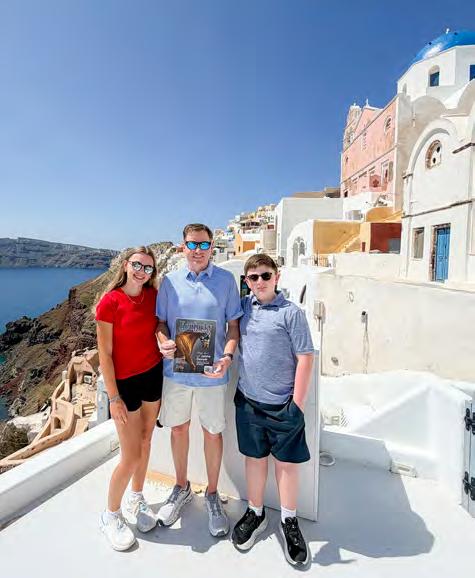
Even when you’re far away, you can take the spirit of your Kentucky home with you. And when you do, we want to see it!
submit your photo
Frankfort’s Rodgers family visited Santorini, Greece, and several other cities over Spring Break.
Take a copy of the magazine with you and get snapping! Send your high-resolution photos (usually 1 MB or higher) to editor@kentuckymonthly.com or visit kentuckymonthly.com to submit your photo.
KWIZ ANSWERS:
1. B. Even most Virginia and Maryland settlers traveled first to Pennsylvania; 2. C. Twitty and his ward, Felix Walker, were wounded by Native American warriors who ambushed their party (that included Daniel Boone). Twitty’s enslaved person, Sam, was killed instantly in the attack; 3. C. The Talbott Tavern opened in 1779; 4. B. Established in May 1867, Josh Bell County remained the official name until 1872, when it was changed to Bell County; 5. A. French Henry has been on the cover four times; 6. A. Col. Chittenden Lyon represented Caldwell County in the Kentucky legislature from 1822-24 and in Congress for eight years; 7. B. Fincastle stretched from the New River in present-day West Virginia to the Ohio and west to the Mississippi; 8. B. Kentucky’s first railroad was built in 1834 by James R. Skiles and Jacob Van Meter; 9. A. Varney was Slinky Dog, alongside fellow Kentuckian Annie Potts as Bo Peep.

We’ve been with you through every stage of life—and we’ll continue to be here for you as part of CommonSpirit.
Here’s an AI definition at the heart of every successful business owner: someone who continues to work toward a goal, maintains effort or remains determined despite facing obstacles, discouragement or long delays. These owners choose to keep going when faced with difficulties rather than giving up. I want to focus on this, on what I’d call perseverance— that is, maintaining determination in spite of obstacles.
The authors of Blue Ocean Strategy, published by Harvard Business Review Press, might call this planning risk, as opposed to what we usually call strategic planning. The emphasis is on long-term planning and execution, not making short-term improvements to grab a new customer—that is, focusing on a broader customer base, including those who may not be in your original plan, and considering how to bring them into your world. This requires thinking outside the box. Why do that? Because you will find that, while you are aiming only for those who may need or use your services/products right away, other potentials are out there who can be drawn in as you move forward. Think of it as gathering relevant, diverse information, even building supportive groups.
Julie Vargas, a horse veterinarian (DVM), has worked for many years for Spy Coast Farm, providing veterinary services for horses. She’s enjoyed her work, but deep down, she had a dream of owning her own business. “I wanted more autonomy and had this dream, this passion to be on my own,” she said.
As she gave the idea serious consideration, she began to write a business plan and quickly discovered she would need more money than expected; an X-ray machine and other technical equipment were costly. Vargas discussed it with her husband and three children, all of whom supported her dream, and then began her search for startup funds. After some time, she found a local pharmaceutical distributor who liked her plan and approved her application. Thus, Limestone Equine Performance Medicine was born in February.
Vargas’ vet friends and colleagues were supportive and offered good advice, but she wanted different points of view and went online. There, she discovered a great deal of transition among veterinary medical specialists and began to find those who had left major companies to
start their own enterprises. She contacted many of them, who were eager to offer advice and mentorship, providing ideas she’d never considered. She also found useful online platforms for billing, recordkeeping and more. Her perseverance has expanded her vision of her enterprise.
Today, Vargas is both nervous and excited about her new career, anticipating new practices and outreach opportunities. “I’ve learned so much by pursuing contacts and information across the country,” she reported.
Prior to moving to Kentucky, Julie Lynn Steele worked for many years at an advertising agency serving Fortune 500 companies in Michigan. She had the skill and knowledge to succeed in business, but as a newcomer to the Bluegrass State, she knew she needed to understand the community where she wanted to work. Her experience told her that networking was the way to make her dream of owning a successful agency a reality.
Steele was convinced that “a setback is the springboard for a comeback,” and she had to face what might have deterred many. Once in Kentucky, she had no job; was diagnosed with cancer and had no health insurance; and learned that her father had Lewy body dementia and needed care. And here she was in Kentucky on her own! With $5,000 in the bank, she purchased a computer, printer and camera, and hired a lawyer to set up her business.
She began by engaging and networking with several groups—the local Chamber of Commerce, the National Association of Women Business Owners, and Women Leading Kentucky. “I talked to everyone I met, telling them of my years of experience with top 500 clients, and I worked night and day following up with those contacts,” Steele said. This was her comeback; she had to succeed. She secured her first client at one of these networking events.
Today, Steele celebrates two decades of ownership of 100proof! Top Shelf Marketing, delivering a full suite of marketing services, branding and book publishing. Perseverance pays off!
Tell me your story.
Janet Steele Holloway is the founder of Women Leading Kentucky and the former state director of the Kentucky Small Business Development Centers (SBDC). Readers can contact her at janet@womenleadingkentucky.com.
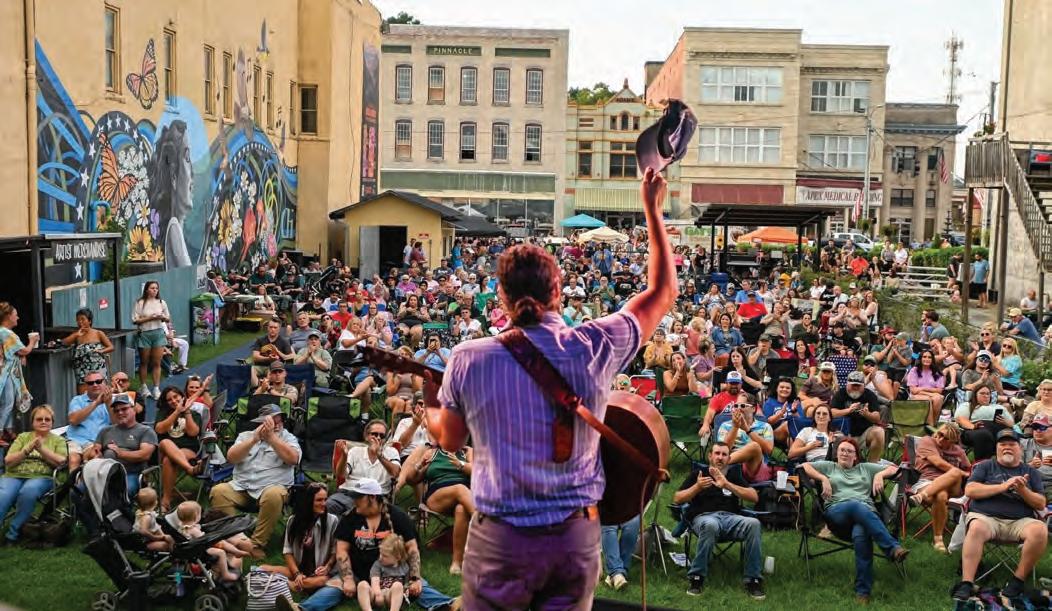








Gary Stewart isn’t exactly a household name anymore. The “King of Honky Tonk” during his 1970s heyday, Stewart died in 1991. But the Kentucky musician is gaining ground as a cult favorite.
Gary Stewart: I Am From the Honky Tonks by New York Times best-selling author Jimmy McDonough is a 544page biography of a musician who lived life large. Released in April by the publisher Wolf+Salmon, the book covers the life of Stewart, who was born in Dunham in Letcher County in 1944. His family moved to Jenkins, then Payne Gap.
McDonough spent years getting to know Stewart and believes Stewart’s Kentucky roots informed much of his music. McDonough said the book took 38 years to write, a timeline he does not recommend for authors.
“He was of Kentucky through and through and proud of it,” McDonough said. While McDonough does not believe a particular Kentucky musician shaped Stewart, Kentucky was essential to his sound. “I think it was more the spirit of Kentucky,” he said.
As an example, McDonough talked about leaving Stewart’s home after a visit. Stewart’s sister was driving, and his mother, Georgia, had come along for the ride. Stewart and his mother sang Brother Claude Ely’s “Ain’t No Grave Gonna Hold My Body Down.” “It just chilled my blood. That high, lonesome sound,” which McDonough attributes to Kentucky musical influences. “I like to go back there sometimes. It gives me peace of mind.”
Stewart is best known for his songwriting and his tenure as a country star. Perhaps his most familiar hit is “She’s Actin’ Single (I’m Drinkin’ Doubles).” The first four albums that Stewart put out—Out of Hand (1975),
You’re Not the Woman You Used to Be (1975, MCA), Steppin’ Out (1976) and Your Place or Mine (1977)—are the foundation of his honky-tonk rock sound. “He obviously belongs in the Country Music Hall of Fame,” McDonough said.
Stewart was on the fringes of the outlaw country movement in the ’70s, and McDonough feels Stewart was more outlaw than any of the more famous musicians in that genre. Stewart was not motivated by money or fame and just wanted to play music, preferably live. He did not care for Nashville, and he continued living in Fort Pierce, Florida, playing honky tonks rather than stadiums or arenas. McDonough said that, while Stewart did play a few live shows with Willie Nelson and Asleep at the Wheel, his heart was in the dive bars and honky tonks. “He liked the audience within arm’s length,” McDonough said.
McDonough lives in the Pacific Northwest and was on a promotional book tour for most of April. He spoke at Waterloo Records in Austin, Texas, and the Country Music Hall of Fame and Museum in Nashville as well as in Los Angeles and Brooklyn. But he found Kentucky particularly moving because it was the place that shaped so much of Stewart’s music and personality.
McDonough spoke at a large branch of the Louisville Free Public Library, filled the room and sold out of his book. “It was quite emotional,” McDonough said. He called being in Kentucky “the highlight of the tour for me.”
McDonough appreciates how the South influenced Stewart and his music. Stewart’s father, George, was a cock fighter. “He loved his fighting roosters,” McDonough said. “He’d
bring them in the living room” until Georgia put a stop to it.
By the time he was 15, Stewart was playing at clubs and honing his unique rock and country sound. It was also while still high-school-aged that he met and married Mary Lou, and they had a tumultuous 43-year marriage.
McDonough said that Stewart lived a hard life. “Gary was a lightbulb without the casing. Just bare filament.” He “felt everything deeply and immediately,” McDonough said. The highs were high, but the lows meant Stewart would disappear for days, sometimes up to a week or two. “A lot of ups and downs, intensified from all the drugs he was taking,” McDonough said.
McDonough said that, in addition to his sly sense of humor, Stewart was “a very caring individual. There wasn’t a phony bone in his body.” He would easily give his material possessions to friends who needed or wanted them. “Jewelry, hats, paintings—he gave away things.”
Stewart was complex and sadly took his own life not long after his wife died. No matter his personal demons, Stewart was a musician known for being fluent in a number of genres and nimble at mixing them and making his music, particularly live shows, electric.
McDonough remembers the day a friend first played a Stewart song for him. It was “I Had to Get Drunk Last Night.” The song changed McDonough’s life. “The singing! I was a mopey, unhappy kid, and I loved it!”
“Dr. Stewart had cured me of my ills. He gave all.”
Streaming info: Not all of Stewart’s music is available on streaming services, something McDonough hopes will change soon.

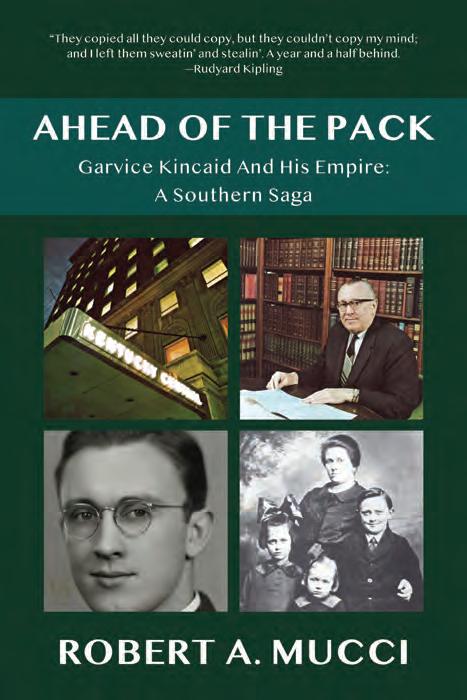
Garvice Delmar Kincaid was an iconic visionary, a man ahead of his time, indeed Ahead of the Pack. This is the story of a Lexington, Kentucky Businessman who turned $1,500 into a $500 million empire over a 40- year period.

About the Author
ROBERT A. MUCCI has a business degree from Transylvania University and is a Charter Financial Analyst who began his 40-year investment career at Kentucky Central Life in 1981, working there until it was sold in 1995. He has extensive knowledge of the company, including the important participants in the building of Mr. Kincaid’s empire and later its destruction. Robert and his wife live in Lexington, KY.
At his death, his five hundred-million-dollar empire was comprised of over one hundred and seventy-five organizations consisting of radio and television stations, banks, hotels, resorts, consumer finance companies, life insurance companies and real estate holdings. This is the true story of Kincaid’s historic rise and the catastrophic fall of his organization after his death. Now available for purchase at your independent bookstore, through national online booksellers, or directly via RabbitHousePress.com. Get your copy today!


Photos by Rebecca Redding
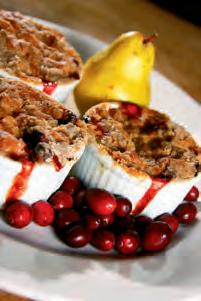
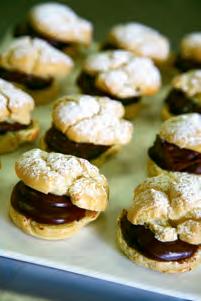
For this issue, we're reaching back a few years to bring around some old favorites that appeared first appeared in the August 2020 issue. They’re the staples that have long made appearances at church potlucks, picnics and family dinners— dishes for which you may not have had a taste when you were a kid but grew to appreciate when your palate matured and expanded. They are flavorful memories that are making a comeback or, possibly, never left the menu. These classic salads will have you reminiscing about something delicious or trying something new.
Family recipes provided and prepared by Kay Vest, Mona Redding and Patricia Ranft
Serves 8-10
1 12-ounce container whipped topping, thawed
1 cup small-curd cottage cheese
1 3-ounce package orange Jell-O
2 11-ounce cans mandarin oranges, drained (reserve a few wedges for garnish)
1 15.25-ounce can pineapple tidbits, drained
1. In a large bowl, combine whipped topping with cottage cheese. Sprinkle orange Jell-O powder a bit at a time over the mixture, stirring after each addition until powder has been absorbed.
2. Gently fold oranges and pineapple into the creamy mixture, stirring until well combined.
3. Refrigerate at least two hours before serving. Garnish with mandarin orange wedges.
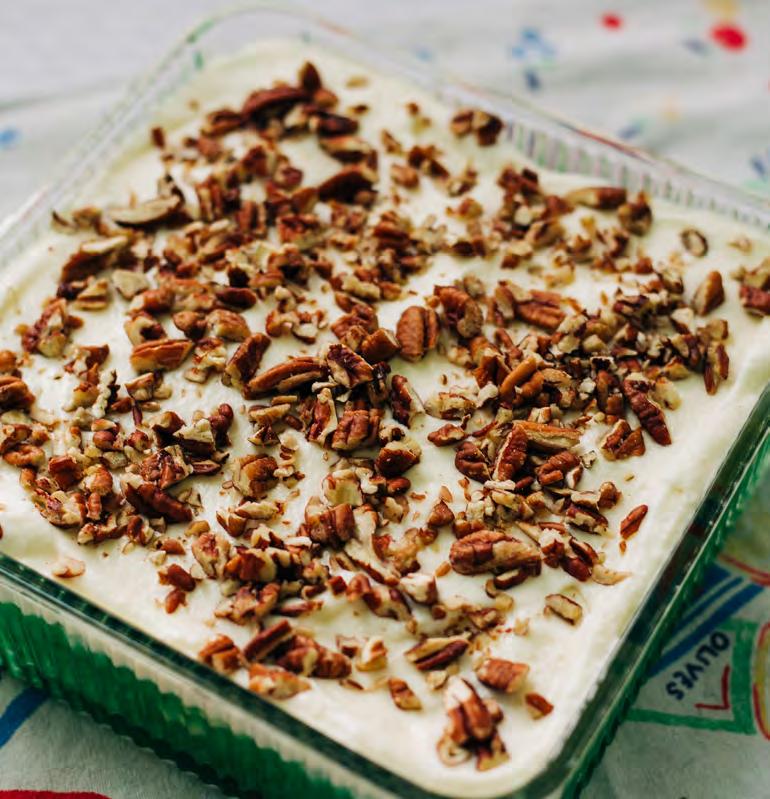
Serves 12-15
1 6-ounce package lime Jell-O
2 cups boiling water
2 cups 7 Up soda
1 15.25-ounce can crushed pineapple, drained (reserve juice)
1 cup small marshmallows
2-3 bananas, sliced
Creamy topping (recipe on right)
Chopped pecans for garnish
1. Combine Jell-O powder with boiling water. Add 7 Up and let cool slightly.
2. Stir in pineapple, marshmallows and bananas. Pour into a 9- by 13-inch dish and refrigerate to set.
3. Spread creamy topping over set Jell-O and top with chopped pecans.

Creamy Topping
2 tablespoons butter, softened
½ cup sugar
1 cup reserved pineapple juice
2 tablespoons flour
1 beaten egg
1 cup whipping cream
1. In a medium saucepan, whisk together butter, sugar, pineapple juice, flour and egg. Cook over low heat until thickened. Let cool completely.
2. Beat whipping cream until thick, then fold into cooled mixture.
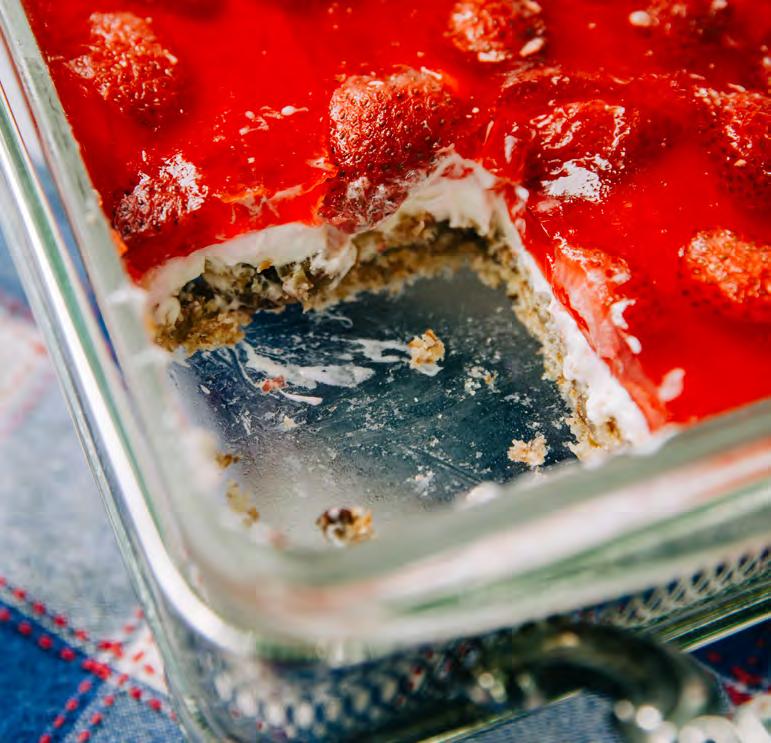

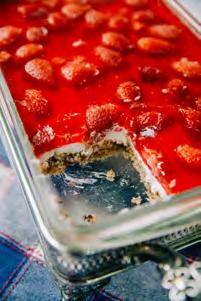
SERVES 12-15
1 cup pretzels, crushed
1 cup pecans, chopped
½ cup butter, melted
2 tablespoons sugar
Filling
8 ounces cream cheese, softened
1 cup powdered sugar
1 8-ounce container whipped topping, thawed; reserve some for serving
Topping
1 6-ounce package strawberry Jell-O
2 cups boiling water
1 16-ounce package frozen strawberries
Fresh strawberries for serving (optional)

½ cup mayonnaise
1 tablespoon lemon juice
2 teaspoons sugar
1. Preheat oven to 350 degrees. In a medium bowl, combine pretzels, pecans, butter and sugar. Press into bottom of a 9by 13-inch pan. Bake 10 minutes. Cool completely.
2. For filling, beat cream cheese and powdered sugar in a large bowl until smooth. Stir in whipped topping, combining well, and spread over crust. Cover and refrigerate until cold.
3. In a small bowl, dissolve Jell-O in boiling water. Let cool slightly. Add strawberries and stir until mixture starts to thicken. Pour over cream cheese layer. Cover and refrigerate until firm, 2-4 hours.
4. Cut into squares. If desired, serve with strawberries and additional whipped topping.
2 medium-sized unpeeled apples, cored and chopped (we used Fuji apples, but any sweet apple will work well)
1 cup seedless grapes, halved
¾ cup celery, sliced
½ cup toasted walnuts, chopped
Bibb lettuce leaves, for serving

1. In a large bowl, combine mayonnaise, lemon juice and sugar. Add apples, grapes, celery and walnuts, stirring well after each addition.
2. Serve salad on a bed of lettuce.
SERVES 6-8












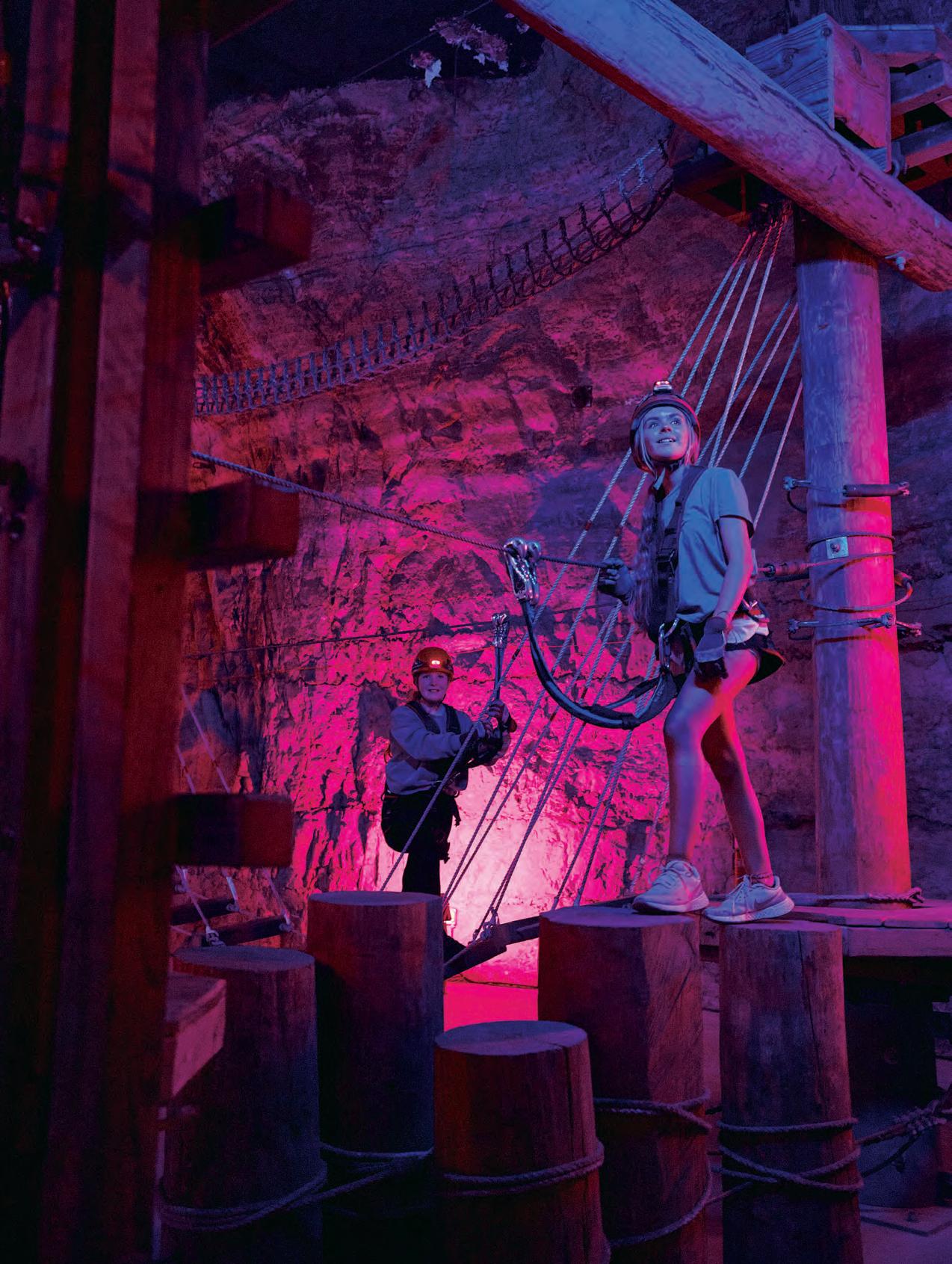
Live it up. Underground.
You may think you know Kentucky, but you’ll discover surprises at every turn. Explore exhilarating above- and below-ground experiences. Come and play where the future is bright and the adventures are never-ending. Y’all interested? Plan your trip to our new Kentucky home today.

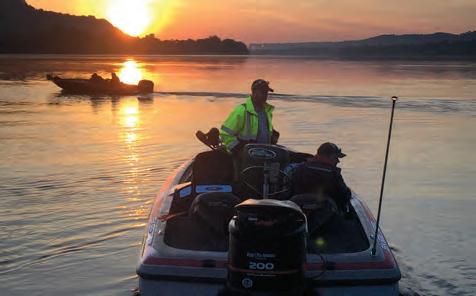
Carrollton is where people come together to experience the friendliness and authenticity of a town teeming with exploration, recreational activities, shopping, new ideas and opportunities for growth. At mile 545 on the Ohio River, it’s not just the confluence of two rivers but a confluence of history, river culture, nature and the scenic outdoors.
VisitCarrolltonKY.com
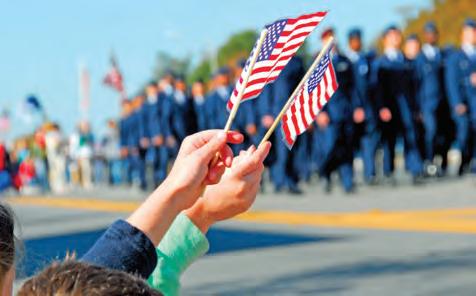
Celebrate America’s 250th anniversary in Danville, where Kentucky’s story began. Explore historic Constitution Square, enjoy familyfriendly celebrations and live music, and savor local cuisine. Discover small-town charm, rich history and unforgettable Bluegrass hospitality in Kentucky’s birthplace.
DanvilleKentucky.com/america-250

MADISONVILLE, KENTUCKY | JUNE 26–27


SEE KENTUCKY FROM TOP TO BOTTOM
From Kentucky’s highest peak to an underground coal mine, Harlan County offers experiences you won’t find anywhere else. Explore Black Mountain, tour Portal 31 and take in breathtaking views along the way. Whether you’re chasing adventure or small-town charm, your next unforgettable trip starts right here in Harlan County.
HarlanTourism.com
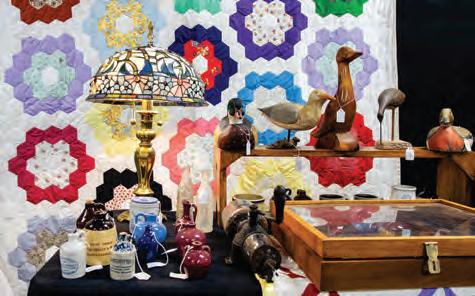
Add the West KY Antique & Vintage Market to your summer plans. Held on the fourth Friday and Saturday in June (June 26–27, 2026) in Madisonville, the market features dealers offering antiques, vintage décor and rare collectibles. It’s a fun Kentucky road trip for anyone who enjoys unique finds and timeless treasures.
VisitMadisonvilleKY.com


EXPLORE THE WINE, WHISKEY & ALE
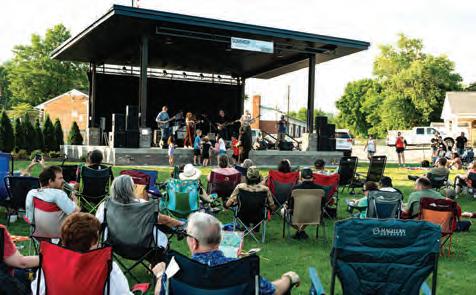
Plan a summer evening in downtown Liberty at the Summer Music Series on the City Green Stage. Running May through September on the second Friday of each month, these free concerts feature bluegrass, Americana, soul and Southern rock with artists including The Dirty Grass Players, Magnolia Boulevard, Cam Clark and His Orchestra, and Nicholas Jamerson and The Morning Jays.
ExploreLibertyKY.com
Just 20 minutes south of Louisville, explore the James B. Beam American Outpost & Distillery, the Four Roses Bourbon Warehouse & Bottling Experience, Coxs Creek Distilling, four awardwinning wineries and two craft breweries along the Bullitt County Wine, Whiskey & Ale Trail. Get a free souvenir glass when you complete the trail.
TravelBullitt.org


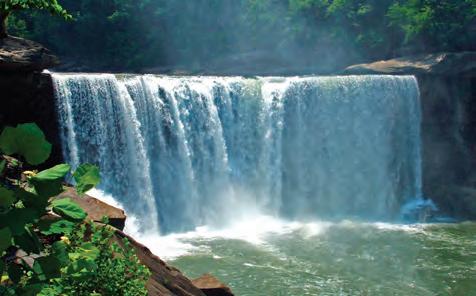
Discover the history and wonder of Williamsburg, nestled between the Cumberland River and Daniel Boone National Forest. Explore the rolling hills where pioneers Daniel Boone and Thomas Walker traveled. See the rare moonbow at Cumberland Falls. Hit the water at the state-ofthe-art Kentucky Splash Waterpark. Then, savor hometown flavors from our local culinary scene.
WilliamsburgKY.com
Winchester, Kentucky, turns up the flavor with its famous Beer Cheese Trail ® . Sample bold, tangy spreads, sip local brews and meet the makers who put this Always Original delicacy on the map. It’s a deliciously fun excuse to eat, explore and celebrate Kentucky creativity. Mark your calendar for the Beer Cheese Festival on June 13, 2026 — it’s the tastiest time to visit.
BeerCheeseFestival.com


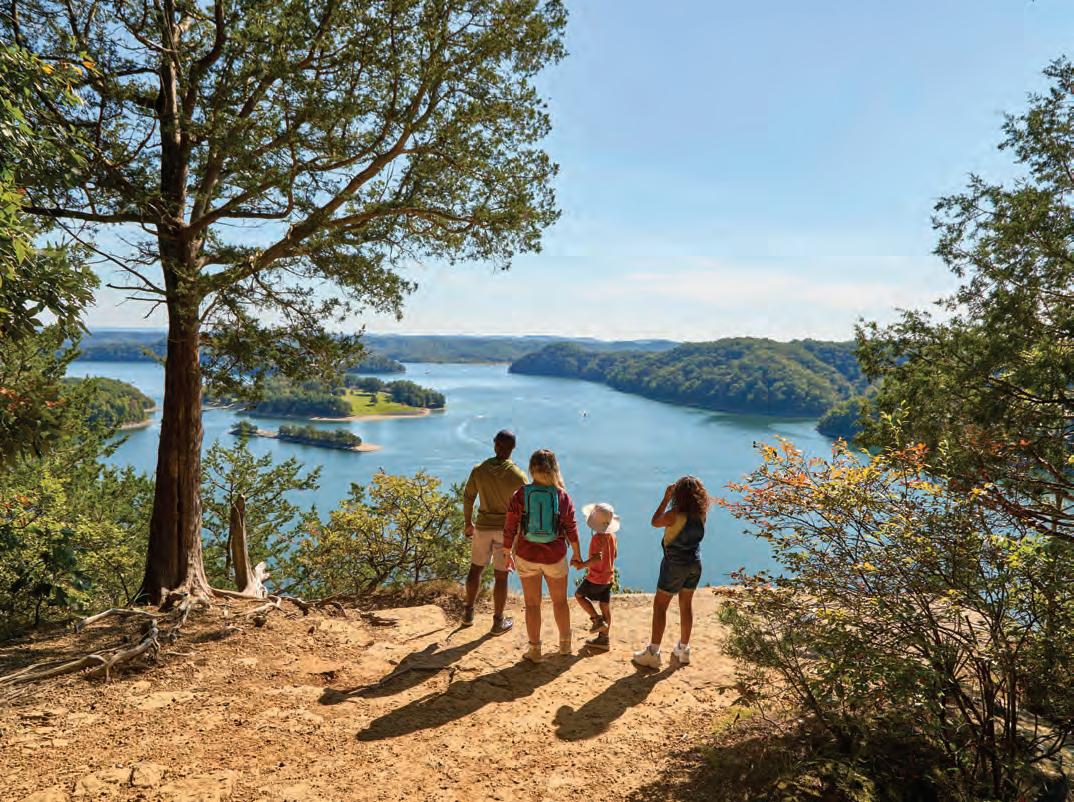
With temps rising and sunny days ahead, it’s the perfect time to escape the hustle and bustle of everyday life and get back to nature in Kentucky. Breathe easier at one of 44 Kentucky State Parks, including 17 resort parks where you can kick back and unwind. The parks are perfect for families to unplug, explore nature and spend quality time together without complicated travel planning. With free park entry, reasonably priced lodging and activities for all ages, Kentucky State Parks make outdoor travel affordable and easy to enjoy close to home.
From lodge stays, championship golf courses and marinas to local-favorite fishing holes, paddling excursions and seasonal events, our parks combine outdoor adventure with comfortable amenities. Discover memorable, hands-on family moments, like roasting marshmallows at a newly renovated campground, spotting wildlife, exploring caves and hiking scenic trails together.
Tee off at one of 13 golf courses, or find your path along more than 300 miles of mixed-use trails. Across the Bluegrass State, you’ll discover parks fit for all kinds of adventures. Plan a lake vacation in western Kentucky at Kentucky Dam Village State Resort Park. Anglers, boaters and water-sports enthusiasts flock here for summer fun on the lake. In central Kentucky, stroll through a re-creation of the state’s second settlement at Fort Boonesborough State Park. Living-history demonstrations give you a look at the pioneer days of Daniel Boone. How about cave exploring or golf in the mountains? You’ll find it in eastern Kentucky at Carter Cave State Resort Park — home to more than 20 caves — and Pine Mountain State Resort Park, which offers one of Kentucky State Parks’ most popular golf courses and spectacular dining views.
The adventure doesn’t end there. You’ll find mountain biking, paddling, horseback riding and camping — not to mention museums, nature centers and numerous natural wonders.
Choose a state park that fits your adventure style, then unplug and reconnect with the people who matter most. Visit parks.ky.gov or download the new app at parks.ky.gov/app to help plan your visit.

BY KIM KOBERSMITH
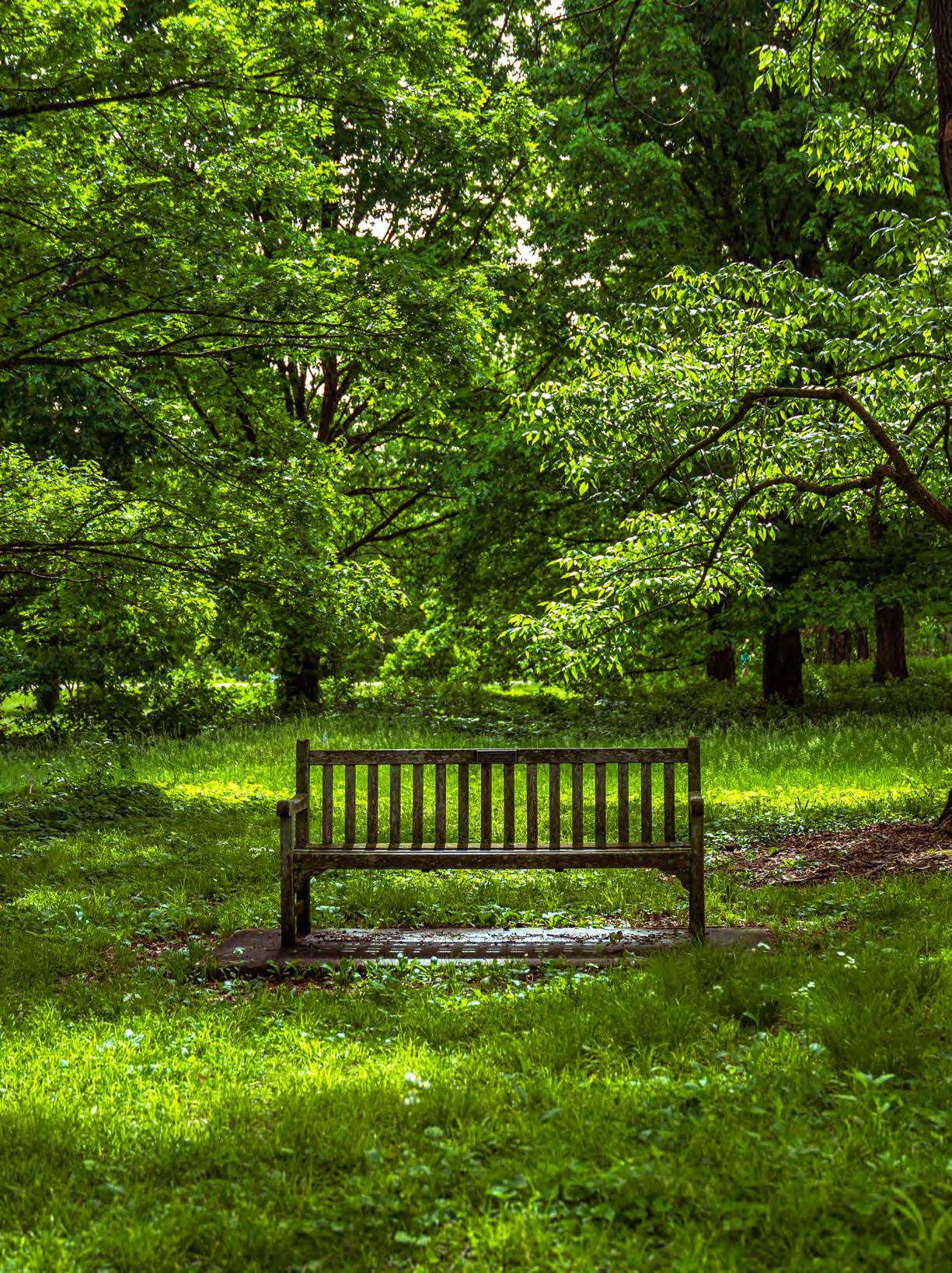
Ivisited The Arboretum, State Botanical Garden of Kentucky, on a warm, sunny spring day. Even on a weekday afternoon, the Lexington garden hosted women pushing jogging strollers, college students out for power walks, and kids playing on the natural playscape. A couple rested on a blanket; another couple talked quietly on a shady bench.
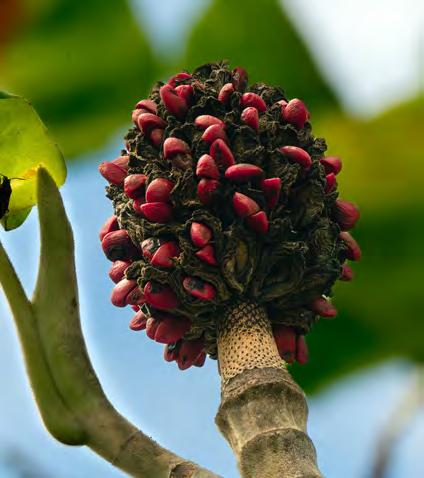
I headed for the arboretum, a 15-acre remnant of the Inner Bluegrass Woodland, after the visitor center host shared it had a nest of baby owls. I didn’t see the owls, but while passing through the 5-acre pollinator habitat, I heard the melodious song of a field sparrow. Looking up, I spied it just feet over my head in a small tree and watched it sing. I also found a brilliant red blooming trumpet honeysuckle and yellow wood poppies along my walk.
This oasis isn’t the only place to enjoy a cultivated green experience. The Kentucky Garden Trail, a collection of gardens and arboretums across the state, is in its second year and already has created a buzz beyond the bees that visit the blooms. According to organizer Kim Hydes, it is the only garden trail in the country with a passport
visitation and reward program.
“It’s bigger than I thought it would be and more popular for different reasons,” Hydes said. “We’ve placed three orders for T-shirts and four orders for the passport stickers.”
Hydes is the tourism director for Oldham County, home of two gardens on the trail. Conversations with managers at Yew Dell Botanical Garden and Creasey Mahan Nature Preserve revealed the need for assistance in promoting these green spaces across the Commonwealth. Most have minimal marketing and no website. To be included in the trail, the gardens must be the main attraction.
The 12 gardens on the trail include those at four universities and gardens old and new. Yew Dell has the largest variety of hellebores, or Lenten roses, in the country. The University of Louisville arboretum contains the only Johnny Appleseed tree left in existence. Most of the plants and shrubs at Liberty Hall in Frankfort are referenced in family papers from the early American period.
“It’s really brought to light public gardens that growers are passionate about, but even community members didn’t know were there,” said Hydes, a gardener herself. “We want to get people out who aren’t gardeners, and
The Kentucky Garden Trail invites visitors to explore vibrant landscapes and seasonal beauty
there are so many cool things about each stop that have nothing to do with gardening.”
Visitors can take their dogs for a walk, sit under a shady tree and read a book, or feed ducks. Some locations have historic homes, nature centers, outdoor sculptures, natural play areas and onsite cafés. The trail website has a two-day itinerary for each garden with places to stay and eat, plus nearby attractions such as distilleries— especially helpful when planning a trip with a non-gardening friend.
Summer is an excellent time to garden hop. Researchers at the various gardens share information about their studies. Other programs delve into the natural world, with full moon hikes, bird walks, and firefly events. Cooking classes, summer camps, music concert series, crafting workshops, and cocktail hours all take advantage of the serene settings.
The durable passport journal leaves room to jot down reflections on each visit. Visitors who collect six site stickers receive a packet of garden seeds, and those who visit all 12 are eligible for a trail T-shirt. Hydes said garden clubs, church van trips, and girlfriend outings are some of the groups that have completed the trail.
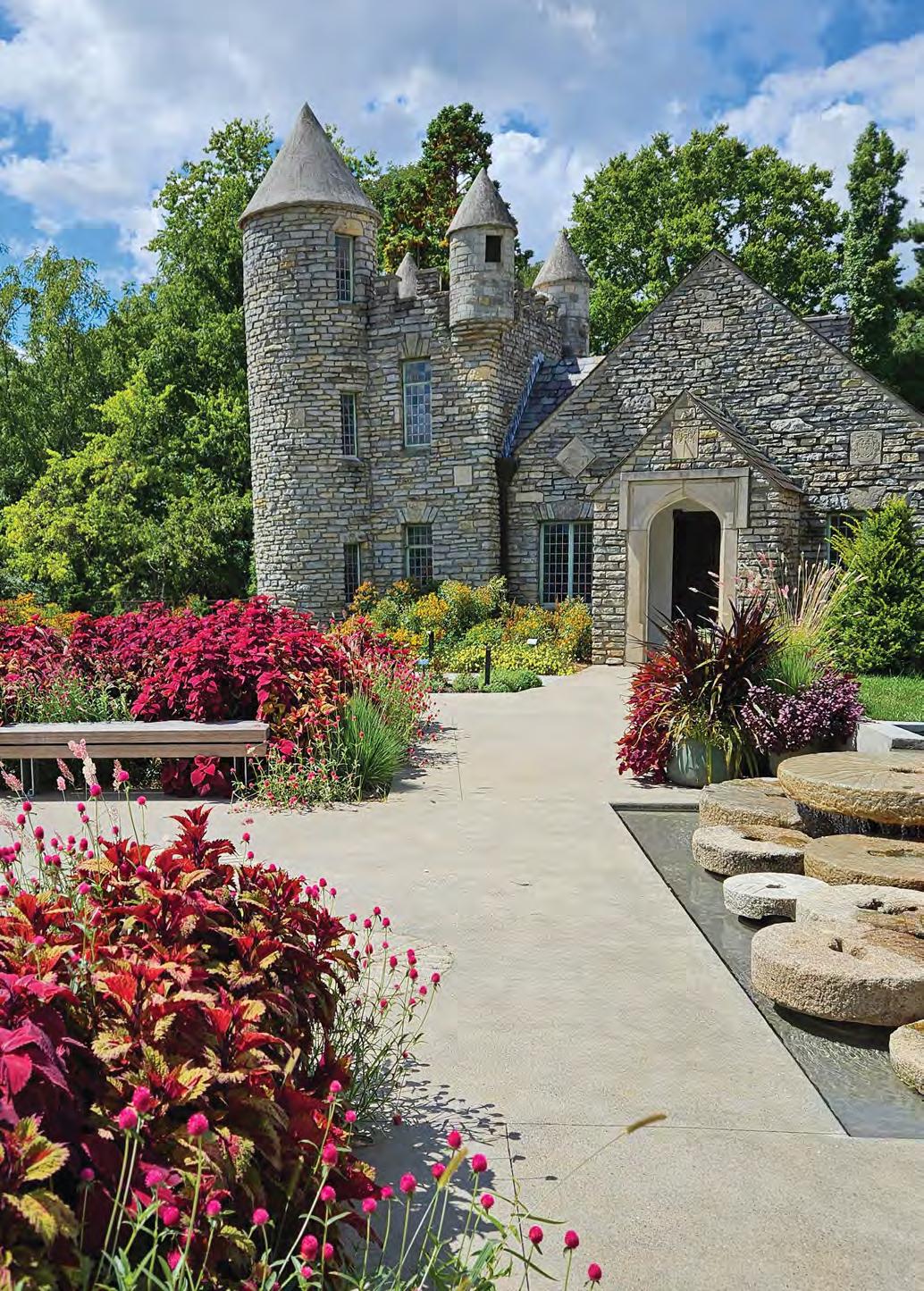
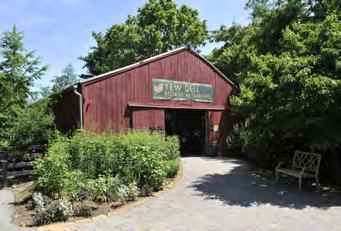
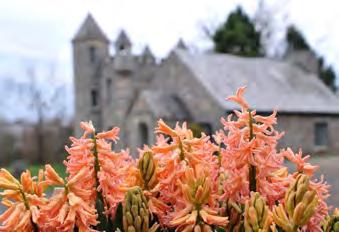
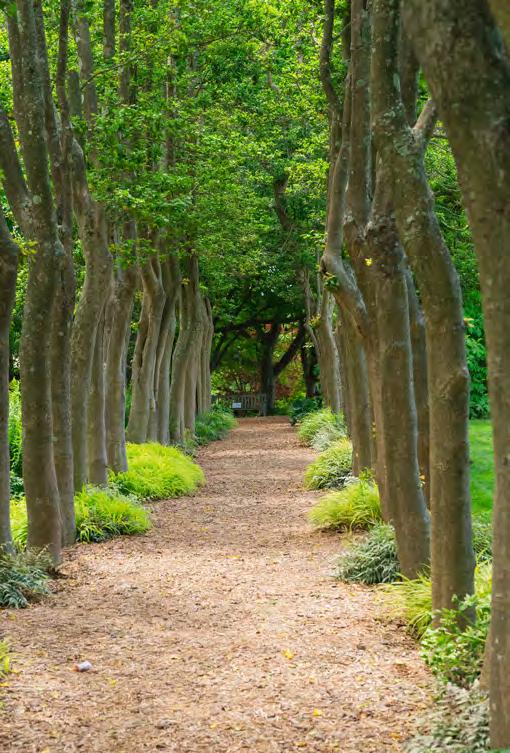

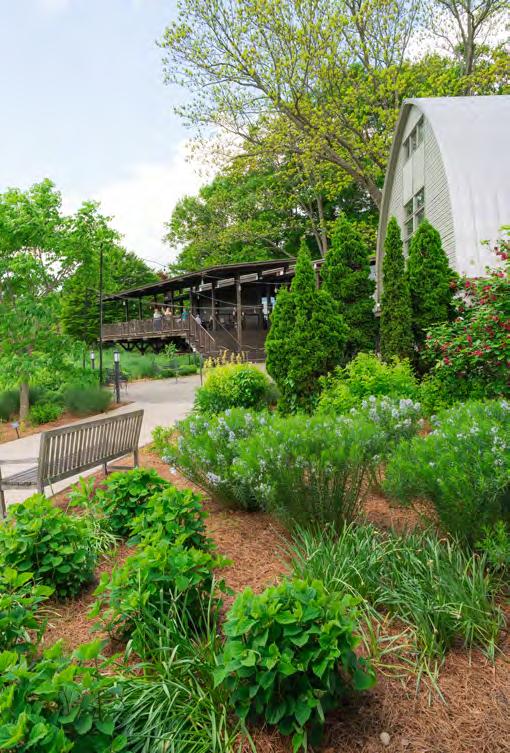
Yew Dell is the legacy of Theodore and Martha Lee Klein, who built a family homestead at the property beginning in 1941. The Kleins’ ornamental plant nursery specialized in yews and hollies, and the growers introduced more than 60 varieties to cultivation. Yew Dell continues to trial new plants in search of the best regional garden varieties that are available to purchase in person or online.
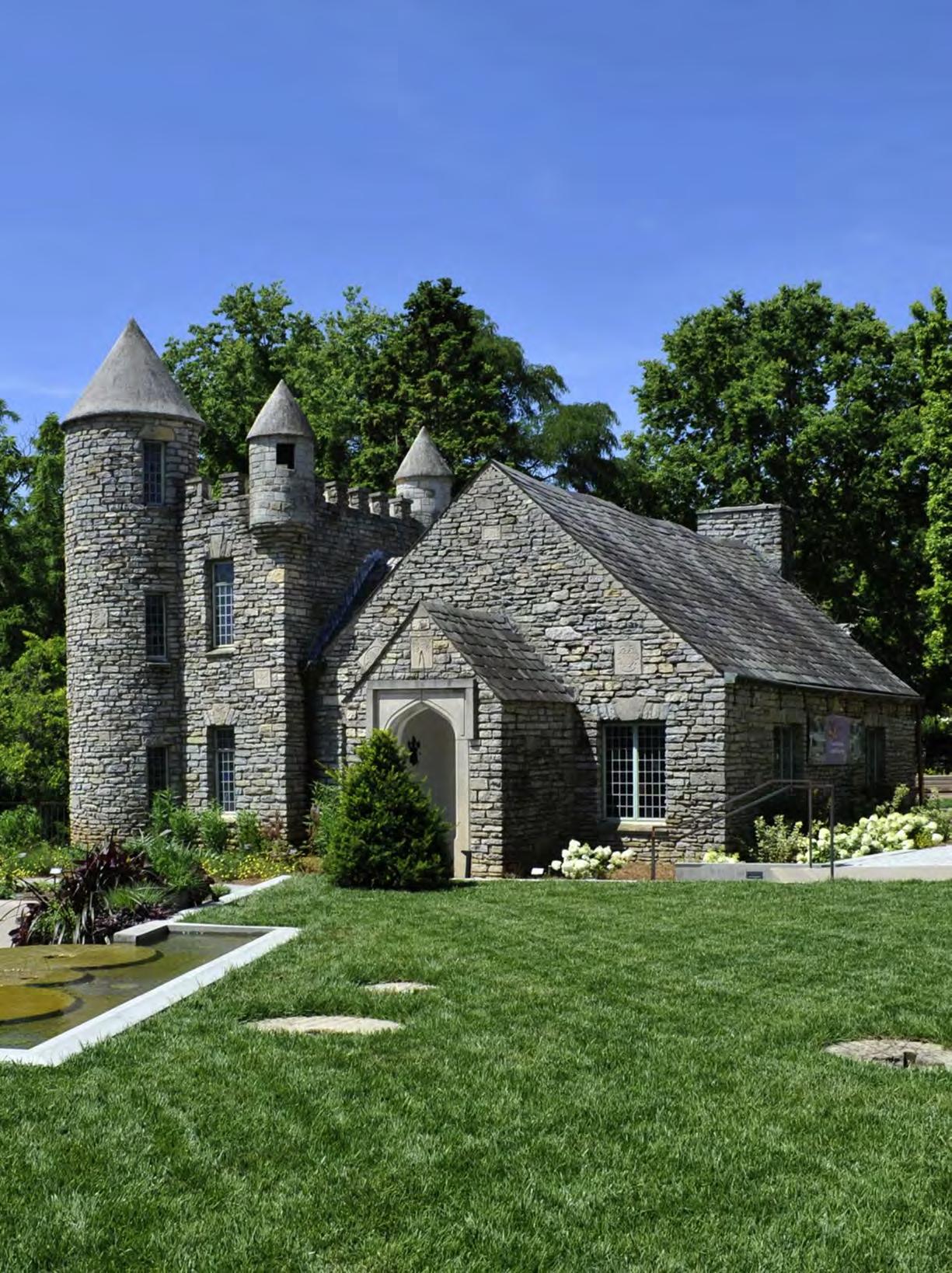
The Kleins built most of the structures onsite, including the iconic castle that served as the family pool house. Specialized gardens include a sunken rock garden, a rain garden, a cottage garden and a cut flower garden. The enchanted Fairy Forest Village is hidden in a group of conifers in the 8-acre arboretum. The site is listed on the National Register of Historic Places and was named by Horticulture Magazine as one of the Top
10 Destination Gardens in the United States in 2010.
Summer brings a profusion of hydrangeas in bloom. A special Fairy Day on June 7 will celebrate the opening of the Fairy Forest for the season. Educational programs include watercolor with botanical dyes, weekend plant walks, and a Children in the Dell program on Saturdays. The Bourbon and Botanicals music series runs July and August.
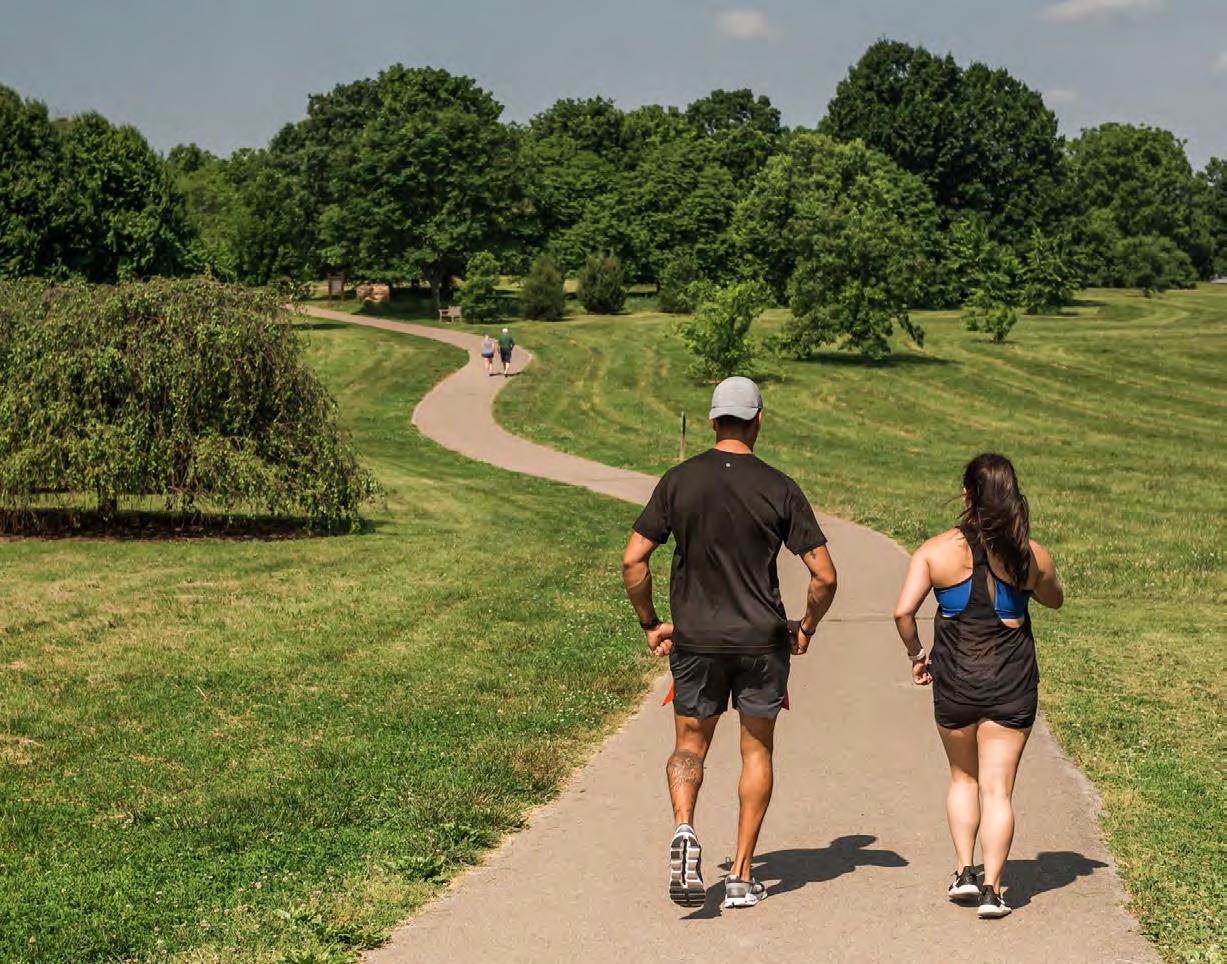
This 100-acre public garden has taken root on the University of Kentucky campus since 1991. The forested arboretum has 90 plant species—some rare—and is the setting for university research.
A 2-mile paved walking path curls through 80 acres of wild-collected native plants representing the state’s seven physiographic regions. Their
landscape and geologic features determine and influence the variety of plants in each. The Walk Across Kentucky “visits” the Mississippi Embayment, Shawnee Hills, Pennyrile, Knobs, Bluegrass, Appalachian Plateau and Cumberland Mountains.
A natural play area at the Kentucky Children’s Garden
welcomes kids ages 2-6. The themed gardens—such as butterflies and transportation—are surrounded by interactive spaces: a wading stream, a pioneer cabin, a sand pit, a music wall and a small cave. Children are invited to pick a flower at the cutting garden or watch the scheduled runs of the garden-scale model trains. Staff offer educational programming every day
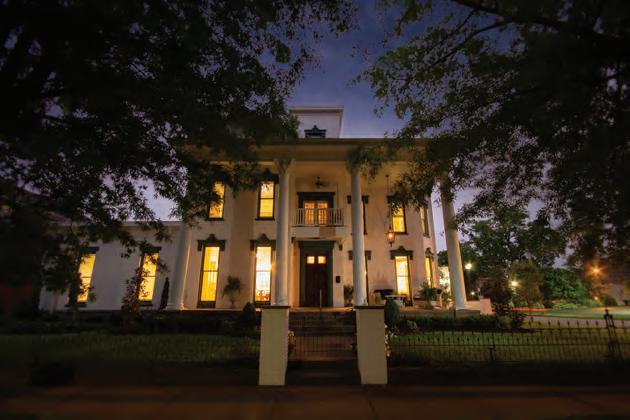
Belle Louise Historic Guest House
304 N. Sixth Street, Paducah (270) 210-2553 bellelouisepaducah.com
Grand Victorian Inn
Hill Manor B&B Perryville Road, Springfield 336-3075 • maplehillmanor.com
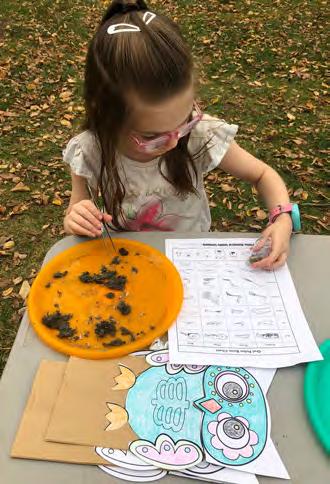
from 10 a.m.–2 p.m.
In the summer, the 5-acre pollinator habitat blooms with beebalm, milkweed, black-eyed Susans and Joe-Pye weed. Staff lead a monthly bird walk, and on June 13, grandparents can visit the children’s garden for free. An educational workshop on June 6 teaches the basics of assessing stream health.
5 Old Dixie Highway, Park City (270) 590-1935 grandvictorianinnky.com
Louisville Bourbon Inn 1332 South Fourth Street, Louisville (502) 813-1137 www.louisvillebourboninn.com
Rose Hill Inn
233 Rose Hill Avenue, Versailles (859) 214-2144 stayrosehillinn.com
River Trails Inn
301 Hill street, Livermore (270) 993-0766 river-trails-getaway.com
Thurman Landing & Guest Home 107 Broadway Street, Sonora (270) 949-1897 thurmanlanding.com
HomeGrown HideAways (GLAMPING)
500 Floyd Branch Road, Berea, KY (859) 986-3478 www.homegrownhideaways.org
Moon River B&B
320 Market Street, Maysville (513) 739-5770 moonriverbedandbreakfast.com
Pillow and Paddock B&B
3262 Old Sligo Road, LaGrange pillowandpaddock.com
Riverside Inn B&B UNDER NEW MANAGEMENT
85 U.S. Hwy 42 East, Warsaw (859) 567-1329 riversideinnbb.com
Burlington’s Willis Graves B&B Inn 5825 N. Jefferson Street, Burlington (859) 689-5096 willisgraves.com
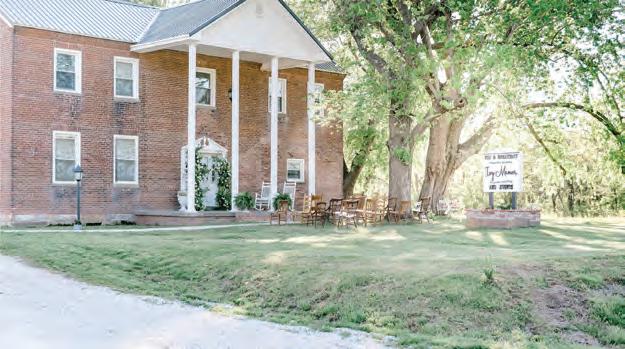
Ivy Manor, B&B 17720 Hopkinsville Road, Princeton (270) 832-7685
ivymanorbnb.com
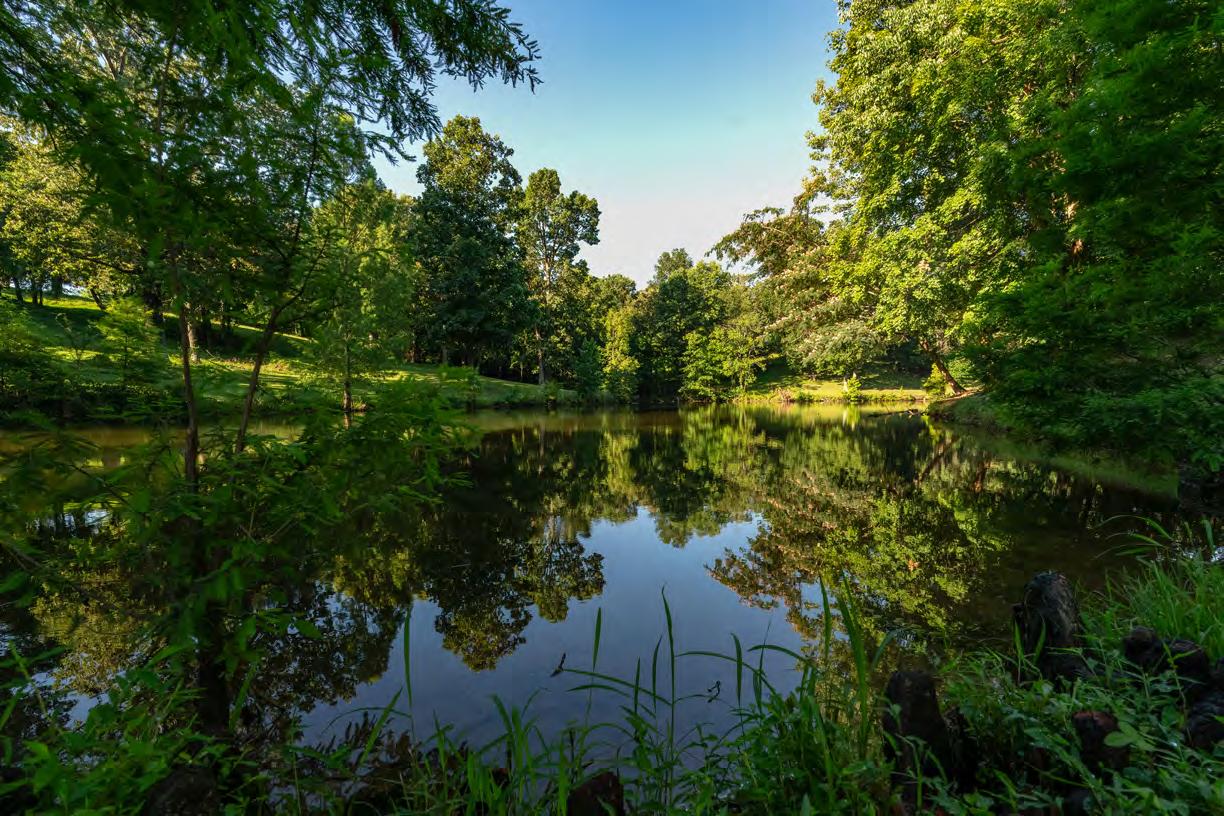
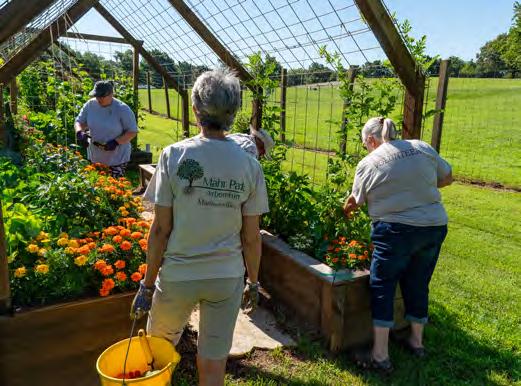

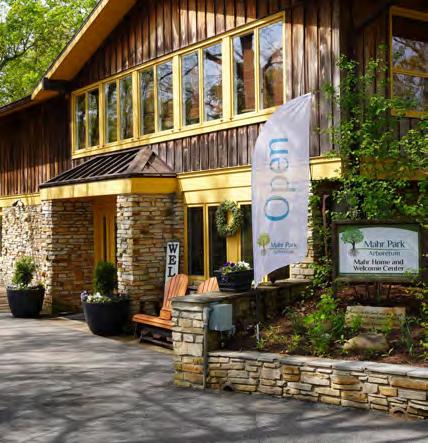
The historic home of Dr. Merle and Glema Mahr serves as the welcome center at Mahr Park.
The couple bequeathed the 265-acre site in 2009 to the city of Madisonville, which developed it into a park that opened in 2016. The community-focused space has recreational and educational
opportunities for all ages.
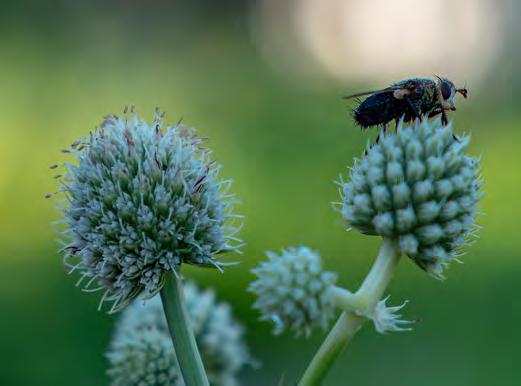
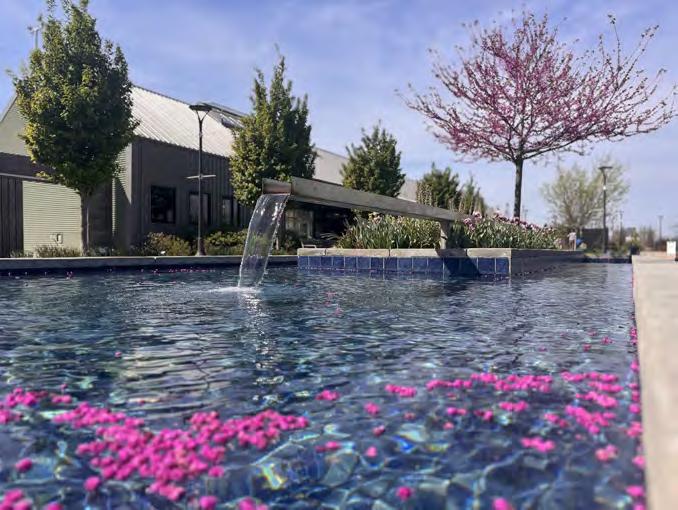
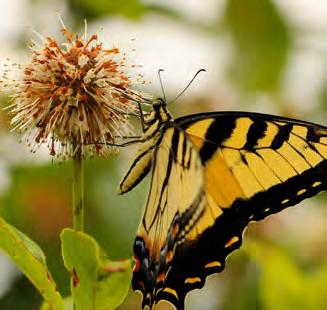
Mahr Park has a Level II Accreditation from the ArbNet Arboretum Accreditation Program for its arborteum, which boasts more than 100 identified and tagged trees. The 7-acre pollinator garden— designed to attract bees, butterflies and other pollinating insects—has 115
species of native plants. Local gardeners can reserve a plot in the community garden.
Visitors can seek out birds, catch fish in the pond, and try disc golf at both recreational and championships courses. Or they can rent a kayak or bike and explore the sculptures, nature play area and Lake Pee Wee.
Choose Your Choose Your Cycling Cycling Hiking Hiking Fishing Paddling Paddling Off-Roading Off-Roading Boating Boating
Camping Ca ing

Hunting H nting Kayaking Kayaking Fishing Adventure




In the Appalachian foothills, London is a gateway to natural wonder. Appalachian London is a gateway to natural wonder. Surrounded by pristine forests, lakes, and rivers, there are many trails Surrounded by pristine forests, lakes, and rivers, there are many trails that lead to endless adventures. For the more adventurous thrill that lead to endless adventures. For the more adventurous thrill seekers, Wildcat Off-Road Park delivers exciting challenges and thrilling Wildcat Off-Road Park delivers exciting challenges and thrilling rides through dense forests and rocky climbs, blending adrenaline with rides through dense forests and rocky climbs, blending adrenaline with stunning Kentucky wilderness views. stunning entucky wilderness ny
Adventure’s Beginning! Adventure’s



CLERMONT
Bernheim Forest & Arboretum
BERNHEIM.ORG
The sprawling 16,000-acre forest has 40 miles of hiking trails. There’s a long history of art in the landscape, including the popular Forest Giants installations.
FRANKFORT
Liberty Hall
LIBERTYHALL.ORG
History reigns at this historic house, where 5 acres of public gardens have flourished for more than two centuries. Original brick pathways wind through the formal gardens.
MURRAY
Doran Arboretum at Murray State University
MURRAYSTATE.EDU
At the Sensory Garden—with its vibrant colors, pungent scents, and lush textures—visitors can explore with their eyes, nose and fingers.
GOSHEN
Creasey Mahan
Nature Preserve
CREASEYMAHANNATUREPRESERVE.ORG
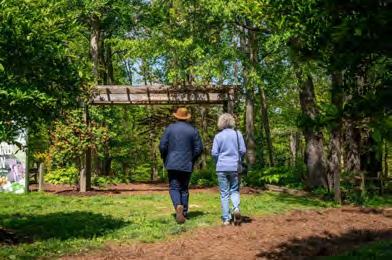
Nine miles of trails cross through meadows and a 2-acre woodland garden, verdant with 400 species of native wildflowers and ferns.
LOUISVILLE
Waterfront Botanical Gardens
WATERFRONTGARDENS.ORG
This recently transformed landfill in the heart of Louisville has a courtyard display of bonsai trees. The Bear Creek Pathway follows a stream leading to a waterfall.
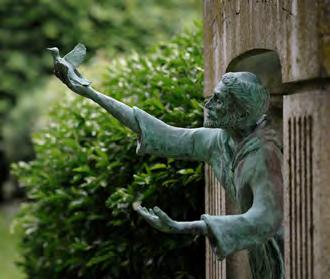
LOUISVILLE
Cave Hill Cemetery
CAVEHILLCEMETERY.COM
The landscape has about 600 tree and shrub species among historic graves such as those of Muhammad Ali and Colonel Harland Sanders, and the Cave Hill National Cemetery, a burial ground for 5,500 veterans from the Civil War and other conflicts.
BOWLING GREEN
Baker Arboretum
JERRYEBAKERFOUNDATION.ORG
The prestigious American Conifer Society Reference Garden is home to more than 80 species of conifers, including 21 that are threatened. Another section has a collection of more than 100 Asian maple trees.
OWENSBORO
Western Kentucky
Botanical Garden
WKBG.ORG
Something is always in bloom. June brings 800 varieties of daylilies, the region’s largest public display of this flower.



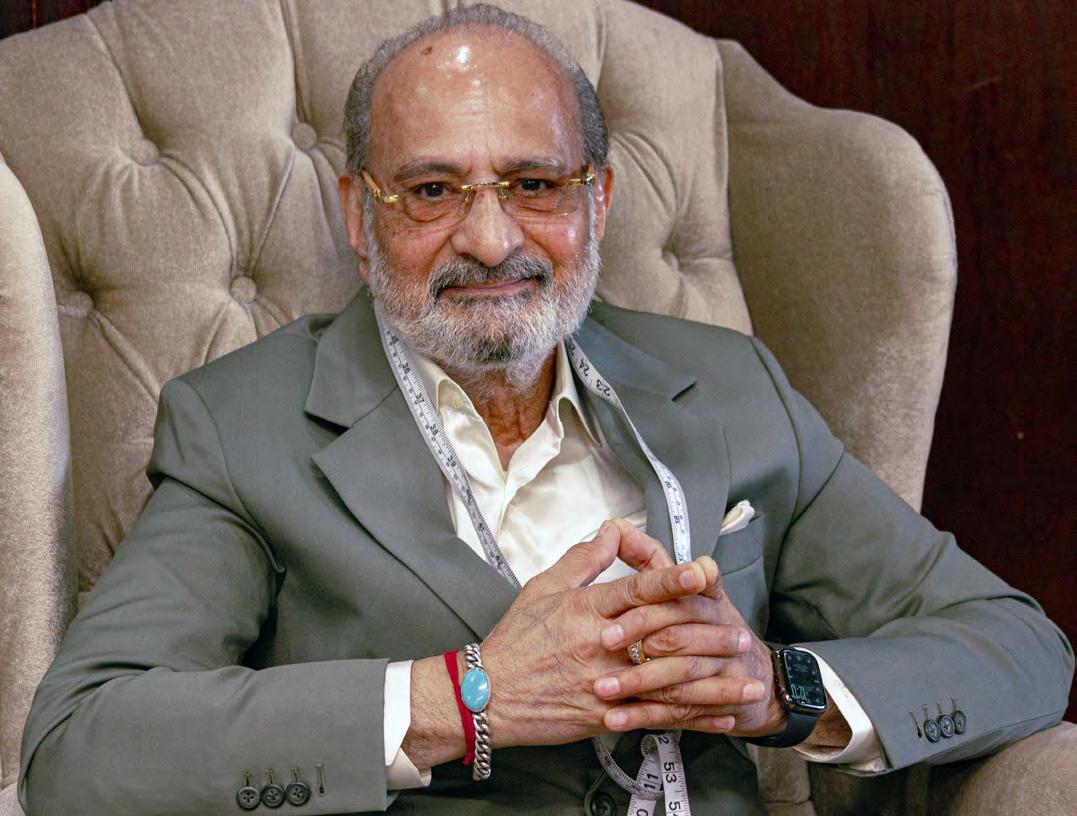
Louisville’s Steve Lulla has spent a lifetime crafting the right fit
BY JACK BRAMMER
“Make them look and feel good... ”
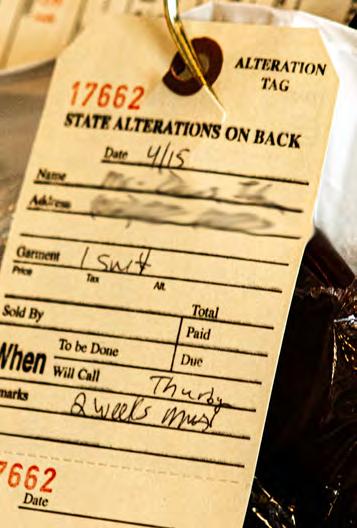
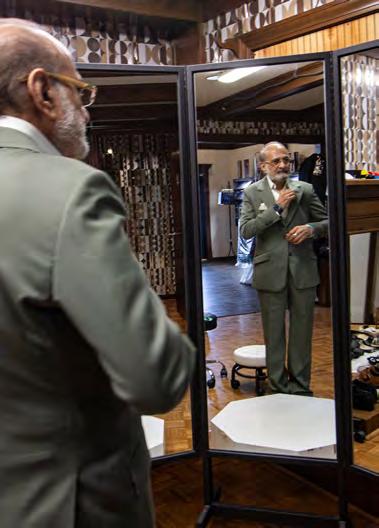
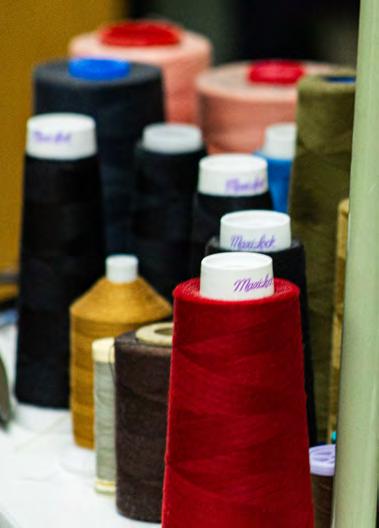
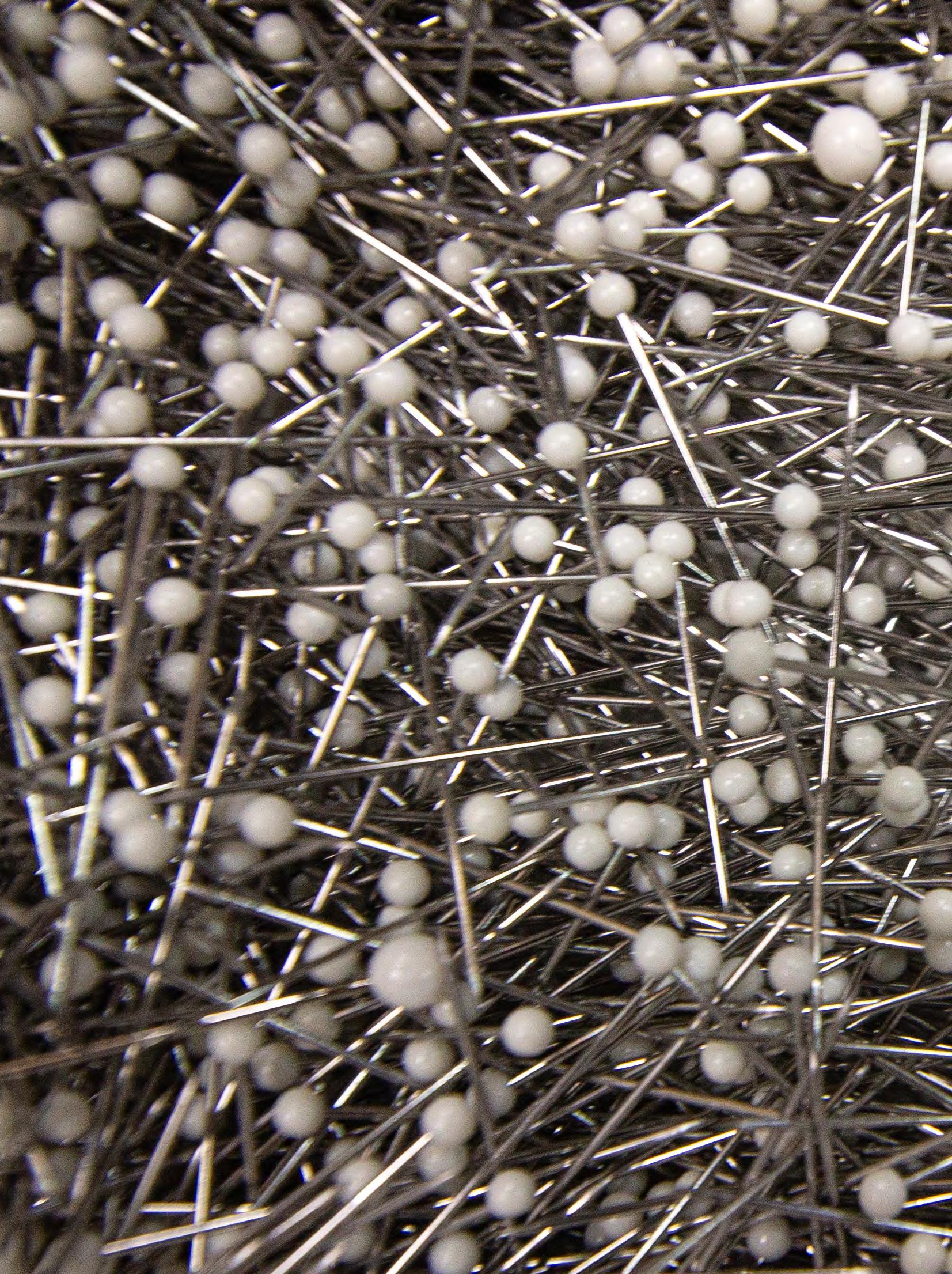
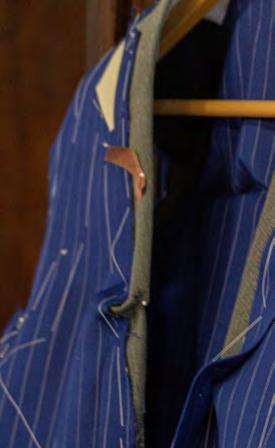
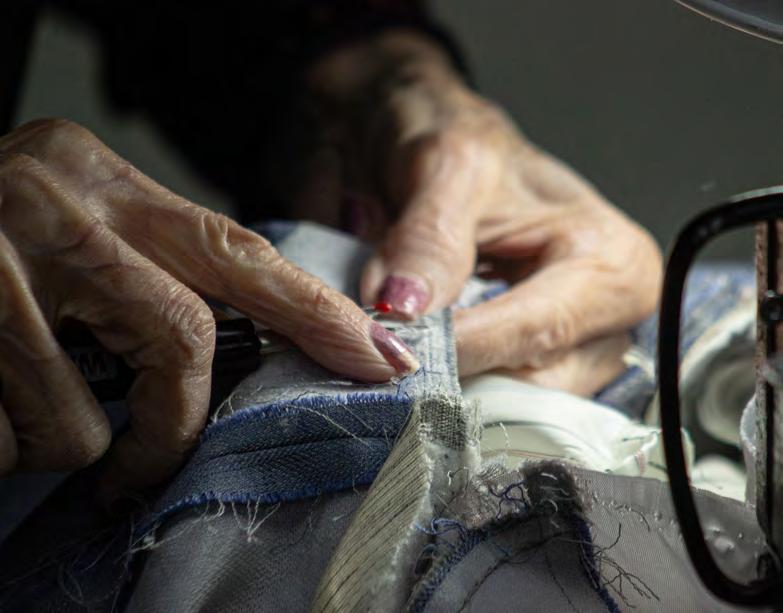
The right thumb of Steve Lulla, who will turn 75 in June, is nearly twice as large as his left thumb. It’s a physical marking of his lifetime stitching cloth as a master tailor.
His customers run the gamut from guys looking for alteration of a sports coat, to engaged couples finding the right fit for the wedding, to Kentucky Derby guests who want to dazzle, to the rich and famous.
The latter include the late heavyweight champion boxers Muhammad Ali and Greg Page, former pro basketball players Darrell Griffith and the late Felton Spencer, and Cathy Bailey, a former U.S. ambassador to Latvia and a major Republican Party fundraiser.
Another giveaway that Lulla, a native of India, is a prominent tailor is
his own wardrobe. He wears a suit every day except when he goes to the gym. A shirt alone, made of 100 percent silk, may be in the $750 range.
“I may wear blue jeans and a T-shirt two or three times a year,” said Lulla, who lives in Louisville. “But I usually wear a suit every day. It’s my uniform, what I feel comfortable in.”
The trim Lulla likes fine clothing. He once made a “diamond collection” suit for a customer who paid $14,000. Such suits feature premium fabrics and often intricate details, such as half-carat diamonds.
His expertise covers small repairs and alterations to custom-made suits and gowns. The cost depends on the complexity of the job.
For all his customers, Lulla said, his desire is simple: “Make them look and feel good.”
Master tailors like Lulla differ from standard tailors. They have advanced skills in creating custom patterns and superior garment construction. They often possess decades of experience in pattern-making and tailoring techniques and usually are taught by a master tailor. They can handle the entire process, including designing, sewing and final fittings.
When Lulla studies a piece of clothing, his look is one of a skilled surgeon. People with such talent are a dwindling breed.
According to the United States Bureau of Labor Statistics, data from 2024 suggest the number of professional, establishment-based tailors in the U.S. has dropped below 17,000. That is a 30 percent decline in the past decade.
Labor statistics do not provide the number of tailors in Kentucky, but
there appear to be dozens of tailor and alteration shops across the state, with a high concentration of more than 60 in the Louisville area. Only a few provide the custom-made work that Lulla offers.
Members of the profession are aging, with many retiring, leading to a shortage of skilled labor. The median age for tailors in the U.S. is 54. That is 12 years older than the median age of the general population.
Lulla wants to keep at his profession as long as he can. He has come a long way.
Lulla was born into a middle-class family in Pune in Western India on June 7, 1951. He was one of seven children. His father, Kishendas Lulla, was a homeopathic doctor, and his mother, Kamla, tended to the home. They had seven children.
Young Lulla was educated in Catholic schools. His father demanded that he learn English and never talk about religion to avoid arguments. Steve Lulla is Hindu.
Lulla was “an OK” student in school. He graduated from high school at 16 with the goal of going to America.
In Pune—a city about the size of Louisville—Lulla had started working at age 13 in a nephew’s store. He became fascinated with clothing. He attended a tailoring school, even though tailoring is a menial job in India.
He then worked for a tailoring shop in Pune for his cousin. “[The cousin] had a friend in England who knew much about tailoring, but I had no money to go,” Lulla said. “But they paid my way, and I studied hard in England for three months. I worked

14 to 16 hours every day.”
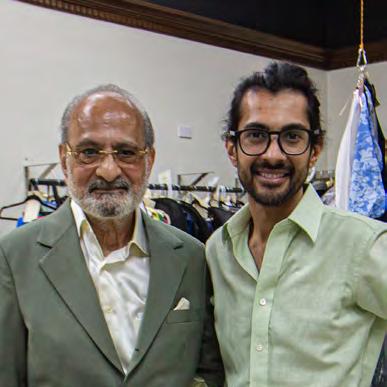
An airline snafu brought a young Steve Lulla to Louisville, where he eventually settled and applies his art and skills as a master tailor. Above, Lulla with his grandson, Dillon Lakhwani.
Lulla next studied leather in Italy for two weeks with money earned in England and then returned to Pune. He applied for a visa to America. His 1970 plane to the States was supposed to land in Oklahoma City, where a brother lived, but it took him to Louisville. He later got a tailoring job in Oklahoma City, but he had “fallen in love” with Louisville and returned in 1973.
His first job in Louisville was as a clothes salesman for the downtown Levy Brothers store, what many know today as the Old Spaghetti Factory building. He soon was transferred to the Levy Brothers Bashford Manor store and became its No. 1 salesman, selling 21 suits in a week.
In 1974, Lulla opened his own tailoring shop in the basement of a store in the Brownsboro shopping center. Called British Custom Tailors, it moved to its current location in the shopping center in 1980.
Lulla got a strong financial boost from custom work for the late Florence Kerman, wife of the late Edwin Kerman, an optometrist and founder of both Monfried Optical and Louisville Optical Co.
Others recognized Lulla’s expert quality and signed on as customers. He embarked on a journey that would lay the foundation for a legacy of craftsmanship and family tradition. His skills were passed down to his children and grandchildren. Lulla’s son, Avi, worked in the store and developed a strong relationship not only with customers but with high-quality fabric suppliers in Italy and London.
The business crafted custom-made clothing and made repairs and alterations for generations.
Tragedy struck in 2019, when Avi died. A large photo of him as a tailor hangs in the British Custom Tailors store today.
The first Brownsboro Road
location now is owned by Dillon Lakhwani, Steve Lulla’s grandson and the third generation to work in the family business.
In 2019, Lulla opened Oxford Tailors, located in Middletown on Shelbyville Road. He works mostly at Oxford, but sometimes, he can be found at British Custom Tailors.
“My grandfather is a legend in the tailoring business,” said Lakhwani while taking a pause from fitting a bridal gown. “He is so organized when he does a job. He is a master.”
Lulla’s attention to detail landed him the business of monogramming the boxing shorts of fighters Ali and Page and University of Louisville athletes such as Spencer.
“I never got to meet Ali, but I got a picture of him. Page I met. Very nice guy,” Lulla said. “I remember Felton Spencer [a 7-foot center for the University of Louisville and in the NBA] had to bend down when he came through the front door. He was so tall.
“And Cathy Bailey once needed an outfit for a meeting with President Bush, the younger one.”
Lulla’s business dips a bit, he said, in January and February and picks up in midMarch. Peak times occur for the Kentucky Derby, proms, graduations and weddings.
Julie Khackatori, an Iran native and seamstress at British Custom, has worked with Lulla for years. “He’s nice—very good person,” she said. “I love him.
He knows his business.”
Justin Crabtree has worked with Lulla at Oxford Tailors since October 2021. He is a tailor and fashion
compassionate toward everyone. He’s the perfect mentor. I hope he stays around here forever.”
That is Lulla’s plan.
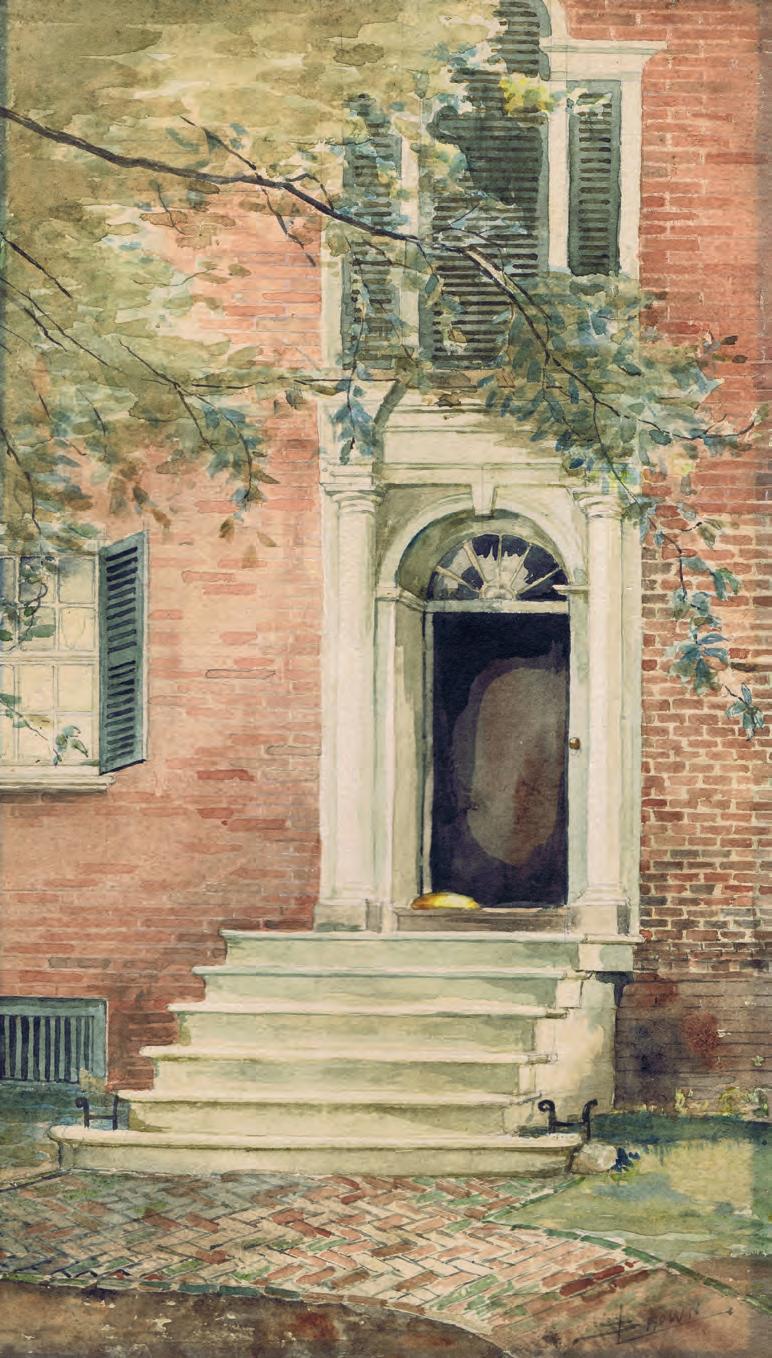
Saturday, August 8th 2026



Ryan Hall’s fascination with weather made him a YouTube sensation
TEXT BY JACKIE HOLLENKAMP BENTLEY
PHOTOS
BY
ERIC BENTLEY
Stella is a widow living in St. Louis, a city that sees its fair share of severe weather. She’s terrified of storms, so when she heard that a group from Pikeville was handing out 1,000 free Midland weather radios, she headed right over.
“I’m just scared to death of storms. I do appreciate it; you have no idea. I just don’t like storms,” she tearfully told a representative from The Y’all Squad, the foundation arm of Ryan Hall’s YouTube channel, Ryan Hall, Y’all
Stella and the 999 others who received free weather radios that day were helped because Hall decided to channel his love of weather into a hobby that eventually became a nationally known internet sensation and a philanthropic enterprise that has raised more than $1 million to help storm victims across the country.
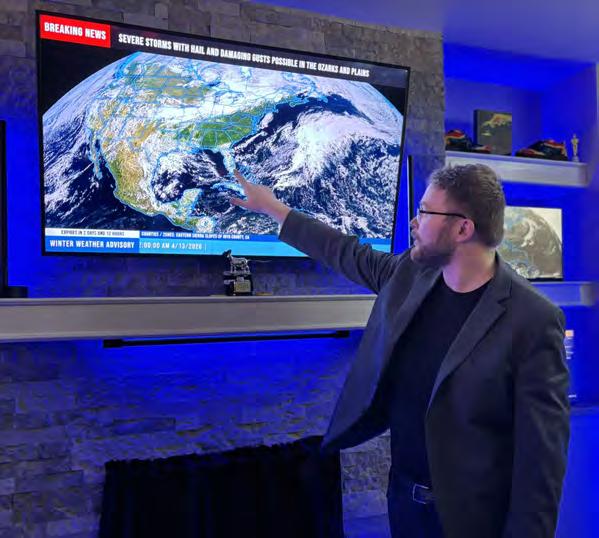
“I just got an incredible fascination with weather,” Hall said from his Pikeville “Weather House.” “I really like weather. I like being out there. But I also like the analytical side and what I do now—interpreting weather through digital data and then turning that into something that’s understandable for the public. So, I kind of lucked out that I’m just very interested in both of those things. That’s a big gap that needed to be filled in today’s infrastructure, with how media is done.”
Ryan enrolled in Big Sandy Community and Technical College and started working at WYMT-TV in Hazard doing janitorial work to get his foot in the door. He immediately befriended then-chief meteorologist Shane Smith, gained an internship, and eventually did the weekend weather segments.
“I had spent so much time in the
weather studio helping Shane with his forecast,” Hall said. “And every chance I got, I would get on the green screen and practice.”
While working at the station, he started online meteorology courses with Mississippi State University, but then he quickly realized television was not the career path meant for him.
“I worked in pretty much every sector: doing camera work, writing stories—even sports—and I just realized over time that I didn’t like that,” Hall said. “When I decided that I was done at WYMT and that wasn’t the future for me, I stopped going to school as well.”
Upon leaving WYMT, he and his childhood buddy, Dalton Stevens, launched a marketing company to help local businesses increase their digital footprint on social media, including YouTube.
“I’ve always had a knack for editing
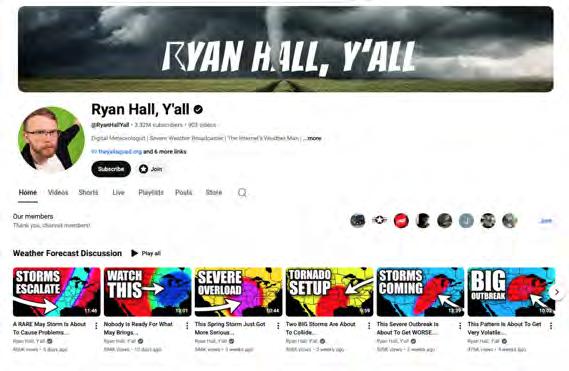
For more information on Hall’s YouTube channel, the Y’all Squad, and more, check out ryanhallyall.com and theyallsquad.org.
videos and doing stuff online,” he said. “So, we figured we would do that and then actually got really successful, and it did really well.”
But the weather kept calling his name.
Hall left the marketing business to his friend, a move that didn’t surprise Stevens.
“When we were kids, Ryan was always a fan of two things, which is YouTube and weather. I think we all naturally saw a progression of where his life was going to go,” Stevens said.
Hall converted an extra bedroom in his and wife Stephanie’s Pikeville home into a weather studio, complete with computers, monitors and microphones—equipment dedicated to bringing the latest weather happenings to fellow “weather nerds out there who will listen to me talk about weather.”
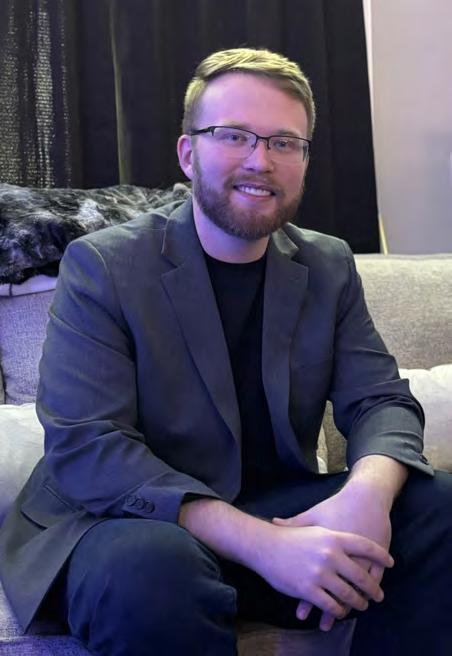
By late 2021, Hall was gaining viewers as he followed severe weather situations, warning folks when to seek shelter or how to prepare in case severe weather is heading their way.
On Dec. 10, 2021, a massive tornado outbreak hit Arkansas, Tennessee and Kentucky, causing catastrophic damage to numerous communities, one of the hardest hit being Mayfield, Kentucky.
“Everything changed. All of a sudden, instead of 500 people watching, there were 10,000, and I didn’t really understand why in the moment,” Hall said. “A lot of the national media wasn’t focusing on this, and then somebody in Mayfield—or one of these towns over there—shared my stream on Facebook, and it just kind of went viral in these local communities. We had 10,000 people in the line of fire who were watching me.”
Hall said the next day, his email inbox was full of testimonials from people thanking him for his updates and giving him credit for saving their lives.
“That’s when I was like, ‘Wow, this is not just me doing this as a hobby. This is something that people need and people could depend on,’ ” he said.
More rooms in the Halls’ house were converted, and more people were hired to help handle the channel’s rapid growth.
“There were just so many people coming in and out that my wife was like, ‘You got to get an office,’ ” he said. “It’s really hard to find office space here in little Pikeville … So, I kicked my family out of our house. But we moved just down the road.”
Hall now has 3.31 million YouTube subscribers, 10 full-time employees and 30 contractors. One of them is Brad Arnold, who joined Hall’s team right after the Mayfield tornado.
“I saw his coverage on Mayfield and thought, ‘I think this guy’s got something that could actually work,’ ” Arnold said.
That “something” is his on-air knowledge and his message of preparedness.
“The chance of seeing a really big tornado is very low, but when people hear ‘tornado,’ they immediately think of a big, scary, lifethreatening situation,” Arnold said. “I like the way [Hall encourages viewers] to be prepared. If you’re prepared for [tornadoes], if you have a plan in place, then your chance of survival is very, very high.”
somewhere north of $1 million in donations in 2025,” he said.
Hall said that after the Mayfield tornado, people started donating hundreds of dollars and buying the merchandise he was selling to pay the bills.
“At the end of the day, I actually made a lot of money from Mayfield, and that just didn’t feel right,” he said. “We need to take that attention that we have on us, and people’s willingness to contribute, and not let that go to waste.”
The Y’all Squad became a nonprofit 501(c)(3), and Stevens, Hall’s childhood buddy, joined him in a new entrepreneurial adventure.
“He called me in late 2024 and was like, ‘Hey, this thing is getting crazy big,’ ” Stevens said.
Stevens officially started as chief operating officer of Hall Enterprises and The Y’all Squad. “I believe we did
“We need to make sure that every single dollar that gets donated gets back out into the community in every way possible,” Stevens said. “And we’re making as much of a difference as we can.”
Hall said once a severe weather situation is over, Stevens and The Y’all Squad pack up the trucks, head right to the affected communities, and work with local emergency officials to see where help is needed the most.
“We’ve kind of figured out what people want and what people are already going to get from other organizations,” Hall said. “We’re small fries compared to FEMA and Red Cross, but there’s stuff that they won’t do, and there’s stuff that insurance sometimes fails on, and we have figured out what we can do to help fill that gap.”
In March, The Y’all Squad arrived in Lake Village, Indiana, where severe storms and tornadoes had wreaked havoc. Local emergency officials told Stevens their greatest needs were generators, chainsaws and heaters,
since temperatures were going to drop into the single digits overnight.
“We went to Home Depot an hour and a half later and spent $25,000 on generators and heaters,” Stevens said. “The next morning, we woke up and spent another $15,000 on chainsaws and all the equipment that comes along with that, along with shovels and rakes and brooms and all the things that these people needed to help start the clean-up process, because that’s just what they didn’t have.”
The Y’all Squad also has been known to replace a storm victim’s demolished car, put families up in apartments for a year, help pay for funeral expenses, cut checks to help with daily expenses—anything to help ease the burden from the results of Mother Nature’s destructive storms.
“I’m just glad that we’re taking a lot of that attention, a lot of that momentum, and we’re putting it back into the communities that didn’t ask to be the star of our show whenever we’re doing severe weather coverage,” Hall said.
‘WITH
Hall does have his detractors. A YouTube search for “Ryan Hall” will result in a page full of thumbnails with areas of the country brightly highlighted and full of warning. Critics—many longtime meteorologists—call Hall’s operation “clickbait” and sensationalism in order to gain more viewers and ad revenue, rather than disseminating vital
weather information to the public.
When asked how he responds to such criticism, Hall’s answer is simple. “With respect,” he said, “what I’m doing … it wouldn’t be possible without them. The current weather infrastructure in America is so good. We’ve got the Storm Prediction Center [of the National Weather Service]. We’ve got all this radar. We’ve got so much good stuff going for us, and it’s all based on that legacy.”
Hall stressed that he never runs ads during a severe weather livestream, and he collects ad revenue on his outlook videos, sponsorships and merchandise sales.
As for the “clickbait” accusation, Hall doesn’t see a problem with that.
“[I’m] displaying complex information in the simplest way to try to get somebody’s attention, in my opinion … We will make a YouTube thumbnail that’s maybe a little bit too hyperbolic because that’s what works,” he said. “Our goal is to try to get as many views as possible on YouTube. We’ve got a core message that we want to get in front of as many people as possible, because we know that message saves lives.”
Stevens said that message is at the heart of everything Hall does.
“You can just tell by talking to him that he genuinely has a passion for what he does, and he finds personal fulfillment in—I don’t want to sound cliché— but literally in saving lives,” Stevens said. “That is his overall goal—just to truly
make a difference in a space where he saw a gap.”
With millions of subscribers, national recognition (good and bad) and a thriving philanthropic foundation, such success would lead many to venture out of a small mountain city such as Pikeville to a larger metropolitan area. Hall said he
has considered it.
“But at the end of the day, I’ve got three boys. Our family is here, and growing up in this environment is so much more important than anything else for my kids,” he said. “My family’s been here in this county since it became a county. I’ve got deep roots here. I think I’ll always get pulled back.” Q

85.5%
First-to-second year retention rate
Back-to-back RECORD
ENROLLMENT
2023-2024 & 2024-2025
FREE Textbooks and course materials for all students
Sons and Daughters of American Revolution in Kentucky honor the past and inspire the future
BY JACK BRAMMER

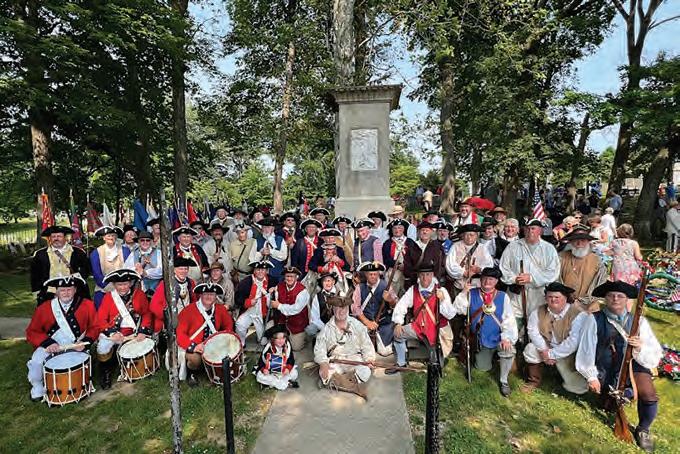
You’ve probably seen them. You likely will see more of them this summer as the country and Kentucky celebrate the 250th anniversary of American independence.
They stand out in crowds, especially when they don wardrobes from the period of the American Revolutionary War, which began on April 15, 1775, when the first shots were fired at Lexington and Concord in Massachusetts. The war officially ended with the signing of the Treaty of Paris in Paris, France, on Sept. 3, 1783.
Many of the costumed celebrants this year will participate in events across the state and nation to commemorate the adoption of the Declaration of Independence on July 4, 1776, in Philadelphia, two days after the Second Continental Congress voted to approve independence by passing a resolution. The action established the United States of America.
The clothing of many of the men at this year’s patriotic celebrations will span from coats and waistcoats to breeches and shirts, with accessories such as cravats, gloves, leather belts, and maybe even a sword or a musket.
The women may sport bonnets, linen gowns, petticoats, jackets and stockings.
Many of them will be proud members of the Kentucky
Sons of the American Revolution (SAR) and the Kentucky Society Daughters of the American Revolution (DAR).
They may be your next-door neighbor, a doctor, a lawyer, a teacher or a construction worker. They are at least 18 years of age and come from all backgrounds, but they all have a direct lineal descent from an ancestor who supported the American Revolutionary War. The SAR and DAR are nonprofit, non-political groups that emphasize patriotism, education and good will in their communities.
Who exactly are these people who called themselves Sons and Daughters of the American Revolution, and what do they do other than dress up for patriotic occasions?
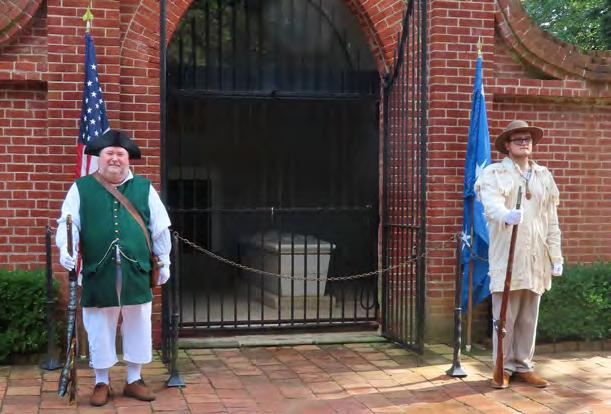
“We are people who want to preserve our history of independence and liberty for future generations. We want to do good for our communities,” said Lee Muncy, a retired state employee and former Boy Scout leader in Shelbyville. He stood with his son, Samuel, on Sept. 19, 2021, in uniform at guard at the Washington Family Tomb in Mount Vernon, Virginia.
“We are people who love our country, state and community and enjoy celebrating it and supporting it in any way we can,” said Sarahbeth Farabee of Shelbyville, a genealogist with the Shelby County Public Library and a member of the Kentucky Society DAR.
About 1,000 men are members of the Kentucky SAR in 19 chapters across the state. There are about 40,000 members nationally, said Drew Hight, marketing and public relations manager for the National Society SAR.
The national headquarters is on West Main Street in Louisville, directly across from the big bat outside the Louisville Slugger Museum. It is planning a $30 million expansion to create an education center and museum to house galleries and exhibits that highlight the ideals of the American patriots and tell the story of the American Revolution on the world stage. The education center/ museum will be fully operational next year.
American population at the time was approximately 2.1 million. Free Blacks comprised 2.4 percent of the overall population, and enslaved persons formed 21.5 percent.
Washington, commander of the Continental Army, initially opposed Blacks serving in the army in November 1775, but he reversed that position in 1776 when faced with low recruitment and the need for soldiers.
The SAR was incorporated on Jan. 17, 1890, in Connecticut after several state societies were formed in the 1880s to honor ancestors who fought in the Revolutionary War. Kentucky was added to the national organization in 1893.
The first Congress of the National Society was held in Louisville on April 30, 1890—the 101st anniversary of the day George Washington took the oath of office as president of the United States.
While open to all—regardless of race, religion or ethnicity—the organization is historically and overwhelmingly white. But it has tried over the years to attract minorities.
According to the American Battlefield Trust, African Americans played a significant, often overlooked role in the Revolutionary War, with roughly 5,000-8,000 serving on the colonists’ side and thousands more supporting the British, primarily because of the offer of freedom. They fought in every major battle, beginning with the opening shots at Lexington and Concord.
At the onset of the war, about 500,000 Blacks lived in the colonies. Around 450,000 (90 percent) were enslaved. While accurate numbers are hard to come by, the
To be a member of SAR today, the applicant must verify kinship to an American Patriot. The organization is more than willing to help applicants verify their lineage. Information about joining can be found at sar.org
Hight said that, to celebrate the 250th anniversary of the signing of the Declaration of Independence, the SAR is offering a limited-time $76 application fee for those who apply during July. This special rate is significantly reduced from the standard national application fee of $150, he said.
Once becoming a member, SAR compatriots should be prepared for a variety of activities in a local chapter, said Shelby County’s Muncy, who is the president of the Gov. Isaac Shelby Chapter.
“We are one of the busiest chapters in the United States,” Muncy said. “We set up educational booths and tables at schools, arrange small encampments, provide speakers, help with grave markings—a lot. I have visited the grave of my ancestral patriot, Joseph Rutherford, in West Virginia.”
He added that his chapter plans to plant a Liberty Tree in Shelby County in October.
The Liberty Tree project is an effort by the SAR and DAR to plant a tulip poplar, Kentucky’s official tree, this year in every county of the Commonwealth in honor of liberty. The Kentucky Division of Forestry donates the trees.
The Kentucky SAR hosts an annual memorial service and helps with re-enactments at Blue Licks Battlefield State Resort Park in Carlisle to commemorate the battle there. This year’s ceremony is scheduled for Aug. 15.
A new exhibit by the Shelby County Historical Society featuring clothing from the frontier period/Eastern Woodland Indians, to the current era of fashion. Includes hand-sewn reproductions, loaned items, and items from our collections. Exhibit runs through 2027.
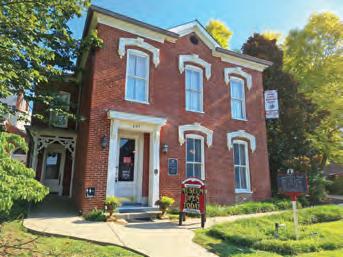
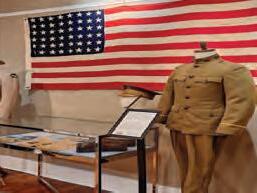
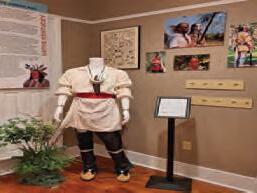
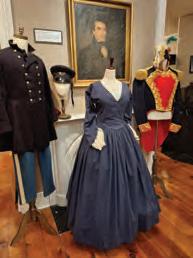



For those interested in history and honoring their heritage, there are several other lineage-based societies in Kentucky, which require proof of descent from specific ancestors.
First Families of Kentucky FIRSTFAMILIESOFKENTUCKY.COM
Open by application to those who can prove direct descent from an ancestor residing in Kentucky on or before Dec. 31, 1799.
Colonial Dames of America
NSCDAKY.ORG
Membership by invitation only from a current member and requires documented lineage to an ancestor who resided in an American colony and rendered service prior to July 5, 1776.
Society of Kentucky Pioneers WCKYHISTORY-GENEALOGY.ORG
Dedicated to honoring ancestors who settled in Kentucky, generally requiring documented evidence of early residency. Applicant must prove that he or she is descended from an ancestor who resided in Kentucky on or before Dec. 3, 1800.
Kentucky Spirits Lineage Program KYGS.ORG
Managed by the Kentucky Genealogical Society, it honors descendants of early settlers who resided in Kentucky on or before 1830.
African American Genealogy Group of Kentucky
AAGGKY.ORG
While focused on research, it supports tracing lineage specifically for African American families, often overcoming slaveryera challenges.
The Shelby Society THESHELBYSOCIETY.ORG
Founded by Steve Collins, son of the late Gov. Martha Layne Collins, and named after the first governor of Kentucky, Isaac Shelby, this group helps connect descendants of Kentucky governors and promotes the state’s historical, educational and charitable interests.
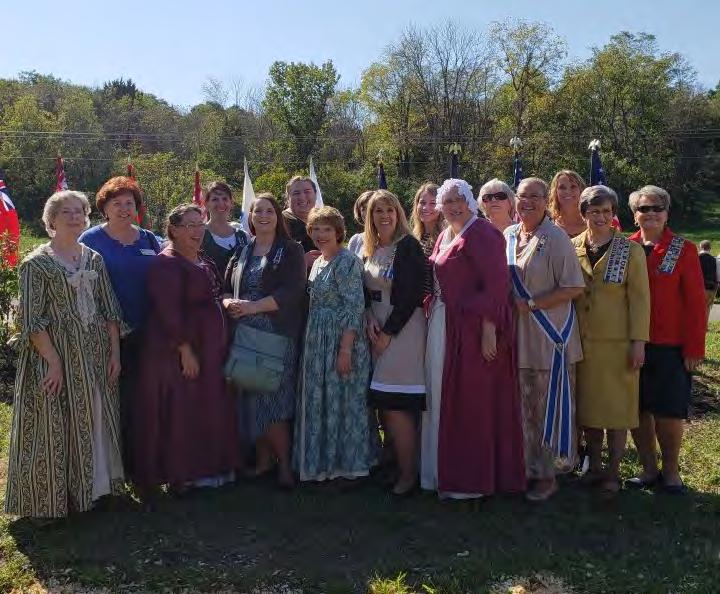
The Kentucky Society DAR is a member of the National DAR, which is headquartered in Washington. The state headquarters is the Duncan Tavern Historic Center in Paris, which was built in 1788-1792 by Maj. Joseph Duncan, a Revolutionary War civilian armorer.
The national organization was founded in 1890; Kentucky educator Mary Desha of Lexington was one of four founders. The Kentucky Society DAR was formally established in 1896.
Robin Bennett, regent of the DAR Boone County Chapter in Northern Kentucky, said Kentucky has more than 4,500 members in 82 chapters across the state. There are about 190,000 members globally.
To qualify to be a DAR member in a Kentucky chapter, the applicant must be a woman at least 18 years of age and must provide legal documentation (birth certificates, marriage licenses, death records, wills, etc.) proving direct lineage from a Revolutionary War ancestor. Membership is open to all, regardless of race, religion or ethnic background. It requires paying a combination of national, state and local chapter fees. Because chapter dues vary, the total cost for a new member usually ranges from $150-$170. For more information about joining, go to kentuckydar.org/ksdar-home/join
The Kentucky DAR promotes patriotism and education. Projects include essay contests, scholarships, the Hindman Settlement School, greeting Honor Flights for veterans, providing Christmas gifts to veterans in need, supporting Wreaths Across America (a nonprofit that holds annual wreath-laying ceremonies at veterans’ graves) and participating in naturalization ceremonies.
“We also do projects with the Sons of the American Revolution,” Bennett said. “Our goals are very similar.” Q

by Kentucky Monthly Magazine




Established 1792


Spend your summer where memories are made.
First Friday Market - June through August
Live music, car show, food trucks, local shopping & more
Judy Drive In - since 1952
Golf & Dine at Irish Hills
Historic Downtown with shopping, dining and a vibrant Arts Center




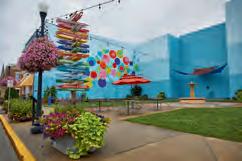
History is our thing. Whimsy and fun are too!

& learn more about summer in Mt. Sterling

FOUNDED 1986, VOLUME 41, NO. 5 a magazine published for Kentuckians everywhere
Charles Hayes Jr. • Founder
Stephen M. Vest • Publisher
Deborah Kohl Kremer • Editor
Rebecca Redding • Typographist
One-Year Subscription to Kentucky Monthly: $25
Letters may be edited for clarification and brevity.
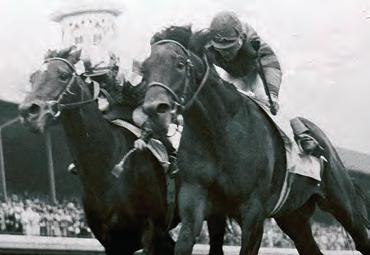
As a student at University of Kentucky and an inductee into the Phi Sigma Kappa fraternity, I found myself sharing a room in the frat house with the unconventional Carter Fields from Fern Creek, which is just a few miles down the road from the Twin Spires of Churchill Downs.
Carter invited me to spend the weekend in Fern Creek on the first Saturday in May 1957. It was a first venture for both of us. Like many Kentuckians, we had never attended the Kentucky Derby.
Kentucky Explorer appears inside each issue of Kentucky Monthly magazine. Subscriptions can be purchased online at shopkentuckymonthly.com or by calling 1.888.329.0053.
In memory of Donna Jean Hayes, 1948-2019
My family—including the Harrises, McGuires and Johnsons—lived, worked and farmed in and around Berea in the early 1900s. I know most of that area from the 1940s, going to Johnson family reunions and going to Eastern Kentucky University in 1955. I also visited relatives in Berea on the weekends. I was always glad to wash a bag of laundry and feed my 5-foot, 11-inch frame with farm-raised vegetables and chicken, beef and pork that was not from a grocery store.
Red Foley, a Renfro Valley/Grand Ole Opry country music legend, has a family connection. My sister is married to Oscar Skaggs, who is related to Ricky Skaggs and has a glossy black-and-white 8- by 10-inch photo of Foley. Foley had written on the photo “to my good friend.”
On the sunny but cool Saturday morning of the race, the two of us headed for Churchill Downs, where the adventures of the notorious and legendary infield beckoned two college boys who were much more interested in the girls we might meet than the horses we might see.
After helping pay for Carter’s gas and the price of infield admission (considerably less than that of grandstand seats), and then sharing the price of a Racing Form, I checked the contents in my billfold to find that I had only $14 to spend during that Derby Day!
So, after a few beers, one mint julep, a couple of hot dogs and a win, place or show bet on each race, I left the Downs with $14 in my wallet.
Donnie Dampier, Georgetown
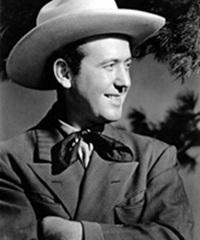
Red Foley (June 17, 1910–Sept.19, 1968) was born in Blue Lick and grew up nearby Berea.
We do not know who in our family it was written to. My guess is our great-uncle Bill Harris, who was terrific on the fiddle.
My aunt Stella Johnson told me that the Johnson and Harris family tree was like watching the History Channel on television.
A lot of my information on Foley was confirmed by a liquor store owner in 1955. I told him my name, James Harris, and he lit up with a big smile and said, “I used to watch Red Foley, Bill Harris and Gary Rowlands play down on the corner on Saturday evenings. People gathered around and dropped money in a bucket.”
J.R. Harris, Louisville
Kentucky history captured in documents and photos are available at the Kentucky State Digital Archives in Frankfort. Kentucky Explorer has partnered with the KSDA to share a piece of this history each month.
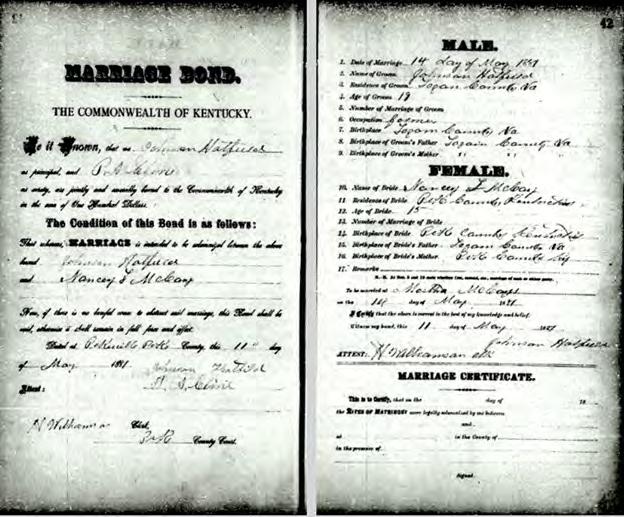
This is the marriage bond of Johnson Hatfield and Nancy L. McCoy dated May 11, 1881. Despite their infamous family feud, the couple was married on May 14. The document was scanned as part of a digital exhibit featuring government records on the Hatfield and McCoy feud. Other records in this exhibit include indictments, requisition orders and telegrams regarding the various events that occurred during the feud. Visit the KSDA at kdla.access.preservica.com/portal/en-US
The Kentucky State Digital Archives is a free online service operated by the Kentucky Department for Libraries and Archives and features more than 130,000 documents, photographs and A/V materials of government records. For questions, visit kdla.access.preservica.com/portal/en-US or email electronic.records@ky.gov.

Send memories to Deborah Kohl Kremer at deb@kentuckymonthly.com or mail to Kentucky Monthly, Attn: Deb Kremer, P.O. Box 559, Frankfort, KY 40602.
your memory today!
By Rebecca Solomon, Dawson Springs
Today’s gas stations don’t have the same folksy, take-your-time friendliness of the old Texaco, Gulf and Sinclair stations of yesteryear. You could trust your car to the man who wore the star—the big, bright Texaco star, and that was my dad!
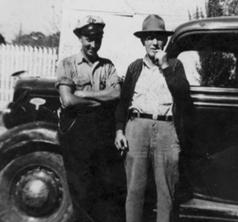
He worked at the Texaco station in Dawson Springs. He filled customers’ gas tanks, checked their oil, cleaned their windshields, aired up and repaired their tires, and even looked under the hood to see if he could figure out why a car made an odd noise going down the road. My dad was a first-class mechanic, known all over the area. If your car had a problem, Pete Dorris could fix it.
I was the boy he never had. He used to take me down to the station, where I listened to him talk to the men that hung around there—some customers, some just loafers. I’d get a Coke from the little red box with the cold water chilling the drinks and the opener on the side. I still remember lifting the bottle out, and how the freezing water
By Shelby Roy Hopkins, Stanford
What we now call convenience stores were little wooden buildings years ago that dotted the entire landscape of my youth. Most of them were within an easy bicycle ride from wherever we lived.
Some of these little places of business were poorly stocked and poorly run. Others seemed to “have about everything” its customers might desire. The proprietors of these businesses often dabbled in many other activities, such as farming, driving a school bus or even running a little post office from inside their country store.
dripped off my hand. I don’t think I’ve ever had a Coke that cold since then.
I learned a lot just listening. Even though I didn’t always understand exactly what carburetors, distributors or spark plugs were, I could reel off the firing order of a 1948 Ford or a ’52 Chevy. One he taught me was 15-48-62-73. I have no idea what car that was. To be honest, those might not be the correct numbers, but it sounds about right.
I used to hang on the side of our car at home, while he was busy underneath the hood. Sometimes, I’d hand him tools, learning what they were at the same time. But my favorite times were being at the service station, with its smell of oil and grease. The echo of clanging wrenches and the loud hiss of the air hose were like music.
Daddy knew almost everyone who stopped by and had something to say about them when they left. He’d light a Lucky Strike, click his lighter closed, stick it in his pocket, and lean against the counter when he didn’t have a customer out at the gas pumps. He looked so important in his Texaco cap and uniform. At least, I thought so.
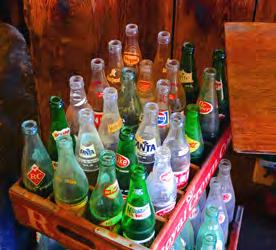
whatever other type of lunch meat the storekeeper might have on hand. Empty pop bottles rarely were returned to the store for payment of the deposit. Most of them simply were thrown into the ditches alongside the roadway. This habit that many people found abhorrent was not frowned upon nearly as much by us kids. These empty pop bottles could be returned to the store for a 3-cent deposit. Later, the deposit jumped to an extraordinary five cents a bottle. We young entrepreneurs had seemingly found our life’s calling.
Some of them had “ice-cold” pop, while others sold soft drinks that were lukewarm at best. If the place was clean enough, one might order a bologna-and-cheese sandwich or
Riding along on our bicycles as we scoured the ditches, we easily could pick up a dollar or more in real-time wages in just a couple of hours. Life could not have been any sweeter than the moment we exchanged our collected pop bottles for cold, hard cash.
By Susan Prater, Jefferson County
In the mid-1970s, I attended the University of Kentucky, where I fell in love with my future husband, an Air Force brat with deep roots in Breathitt County. When his dad retired, his parents settled in Southern Ohio, but they often visited their home places of Lost Creek and South Fork. Through them, I came to know and love the beauty of the mountains, the people, soup beans and cornbread, and the ways of Eastern Kentucky.
One of their favorite things to do was to take their truck, loaded with a cooler that held ice cold RC Colas, “vyenny” sausages, pickled eggs and other snacks and travel to Breathitt County. We dropped the tailgate and picnicked off the main road.
My future father-in-law loved foraging for everything
By Kathy Kampschaefer Namesnik, Matthews, North Carolina
I was the oldest child of six kids born within seven years and three months. We were the Brady Bunch before the Brady Bunch came along—three boys and three girls, with all six names starting with “K.” We lived in the Prairie Village subdivision in the Valley Station neighborhood of Louisville. The best part of our childhood was our adventurous parents.
My dad brought the water hose into our basement, added soap and wet it down, and then we slid across it. He built a playhouse and a seesaw and swing set that the whole neighborhood played on. We had a thick grapevine hanging between two trees until the neighborhood boys decided to see how many of them could swing on it. My brothers and their friends loved riding down the hilly street on a homemade go-kart. As we got older, we took turns sharing our parents’ skates on a nearby bog that froze over. My dad tested the spot to make sure it was frozen solid. One time, we kids screamed in horror as we watched our dad fall through the ice and land in waist-high water.
Once, when my youngest sister was just a baby, my parents hauled all six of us to a campground and set up a tent, only to have it fill with rainwater in the middle of the night. The next day, they threw the muddy tent into the back of the 1957 Chevy station wagon and headed home. You’d think after that experience there would be no more camping. Nope! It was on to bigger and better things.
We spent one week in a tent at Lake Cumberland. One night, Dad left to attend a business meeting, leaving Mom and us kids to fend for ourselves; with no boat on a secluded
edible—from mushrooms to berries.
Although I did not grow up in the area, I shared this same affinity for finding wild offerings to turn into pies and other delicious treats. As we sat enjoying our lunch, he noticed blackberries growing beyond the road in weeds almost as high as my waist. Without a moment’s thought, he and I headed to gather as many blackberries as we could.
If I thought that thorns were the worst hazard, I was soon to discover that there were other dangers hiding in the weeds among the berries. As I blissfully picked and added the juicy berries to my container, my future fatherin-law let out an alarming cry and began to run, without regard to me! Oblivious to the immediate danger, it took only a few seconds for me to realize his “scream” included the word “snake.” I am not sure who ran faster, he or l, but we definitely outran the snake!
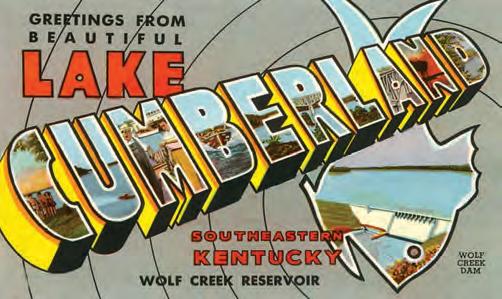
peninsula. I lay there for hours thinking that a bear was going to attack our tent, and my dad wasn’t there to save me! My parents bought an eight-person pop-up camper. In the spring and fall, we spent most weekends camping. Once, we spent two weeks camping at Kenlake Campground on Kentucky Lake. There, my dad joined some fellow campers for a friendly game of touch football. Unfortunately, he ended up at a Murray emergency room with an ankle sprain. Luckily, my brothers were old enough to help my mom fold up the camper, and we all pitched in to pack up. That was the only time I remember my mom driving and pulling the camper. She was always up to the task to make things happen.
When I was in fifth grade, Uncle Bill and Dad acquired some steel drums and used them to build a pontoon boat in our backyard. They added a small cabin that had a table, two bunk beds, a sink, a stove and a toilet room. All eight of us—plus our grandmother, Mom D—slept on the boat! We’d spend countless hours every summer weekend jumping off the side and top of the houseboat, swimming, skiing, fishing, playing Uno and singing silly camp songs.
When you think of Louisville Water, do you think of a swimming pool?
Probably not, but back in the early 1900s, many Louisvillians did.
Next to the Crescent Hill Reservoir and Gatehouse, where the coagulation basins are today, was Reservoir Park. Reservoir Park had become a dumping ground for the mud discarded when the reservoir was built.
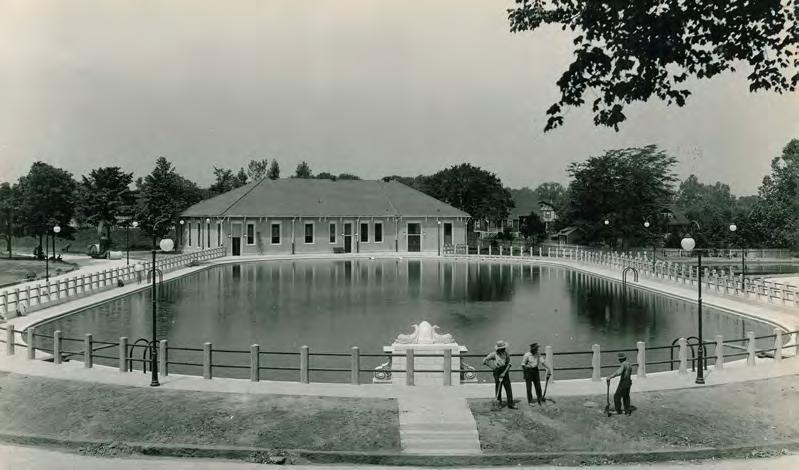
As Louisville Water invested more money in its pumping stations and filtration plant, the park became an afterthought.
That’s when Louisville Water President Sebastian Zorn decided to build a giant community swimming pool in the heart of its water treatment facility. In July 1919, Crescent
Hill Swimming Pool opened, becoming “one of the most attractive pleasure spots in Louisville.”
More than 500 people attended the opening ceremonies that included a concert and a speech by Lt. Gov. Edward J. McDermott, who remarked, “Life is not merely for work, business and wealth; it is also for health, refinement and innocent pleasure.”
The pool ranged in depth from 3 to 9 feet and held 1.2 million gallons of water. It was built to have a constant flow of water and cleaned twice a day to ensure the facility was sanitary. Guests were required to rent bathing suits at the facility to ensure swimmers wore clean swimwear before entering the pool.
The pool quickly became a popular summertime attraction for many.
One person who remembers spending much of his childhood at the Crescent Hill Pool is Albert “Buddy” Sattich, a Louisville native and former Crescent Hill resident.
“I had an awful lot of fond memories swimming at the original Crescent Hill pool,” Sattich said. “It was just fabulous.”
Sattich said he arrived early with a friend and helped clean the pool’s skimmer to get in free. Afterward, he’d
often stay until 9 a.m., enjoying the large pool and diving boards.
“Sometimes, in the middle of the summer, we got in around noon, and we swam until 9 o’clock at night,” Sattich said. “And then we walked home, and, of course, there were rings around all the streetlights because of the chlorine that was in your eyes. But we had a great time.”
Sattich remembers the snack bar selling “penny” candy, ice cream bars, and soft drinks for around 5 cents. The men’s changing rooms were open-air with wooden benches and metal wire baskets for storing clothes. He recalled the women’s changing rooms being a little more elaborate and enclosed. Women wore white swimming caps and full bathing suits.
“And there were no bikinis,” Sattich said.
After more than 30 summers of providing many happy memories to young people like Sattich, leaks formed in the pool’s bottom.
By the early 1950s, it was deemed too costly to repair, and Louisville Water needed the space to increase its production capabilities. The pool closed after the 1953 season but not without a public outcry to keep this gathering spot from closing. The city built three new openair pools: Crescent Hill, which is now known as Mary T. Meagher Aquatic Center; Algonquin Park; and Wyandotte Park.
The pool became etched in Sattich’s memory as a symbol of his youth in the neighborhood. So, when Louisville Water closed the pool, it was a huge disappointment. “The new pool wasn’t anywhere close to this pool,” Sattich said. “It was a good size pool, but it wasn’t anywhere close to [Crescent Hill Pool] whatsoever. It was a lot smaller.”
Sattich lived in the Crescent Hill neighborhood for most of his life, growing up going to the Water Works with his
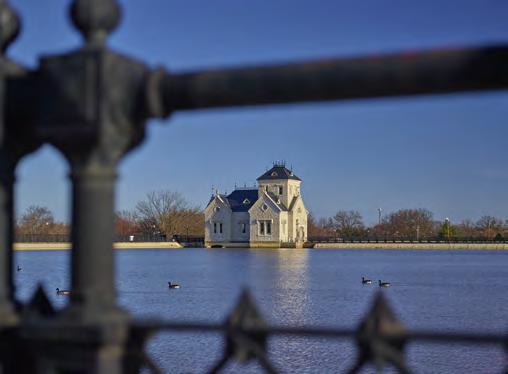
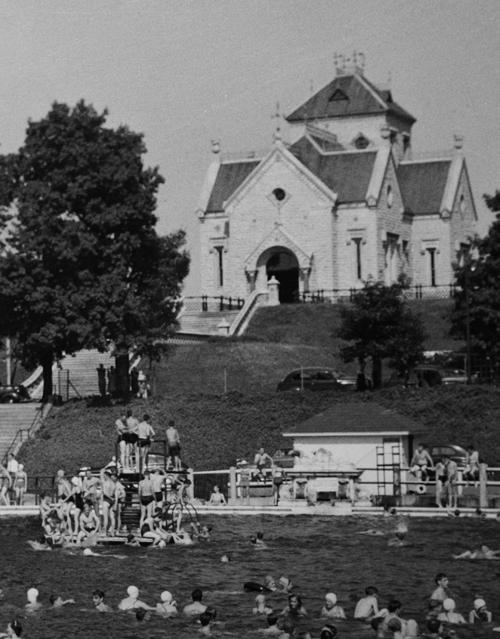
working at nearby local businesses such as Meisburg Drugstore, which is now Hillcrest Tavern, and playing in pipes owned by Louisville Water.
“We played just due north of the big settling tank,” Sattich said. “And the Louisville Water Company stored their excess pipes there. They had pipes about 5 feet in diameter. And we played hide and seek.”
Though not a pool anymore, the Crescent Hill Reservoir and Gatehouse has continued to serve as a gathering place for the community. Walkers and runners enjoy the scenic loop. Photographers love capturing its architectural beauty. And Louisville Water loves welcoming its customers for community events such as “Walking Wednesdays.”
Louisville Water is undergoing a multi-year project, the Reservoir Relining Project, to preserve the reservoir and continue serving the community for years to come.
Significant repairs were made in the late 1990s and early 2000s, including securing the grassy perimeter around the reservoir and installing a heavy-duty liner. Now, it’s time to replace that liner.
Readers can follow along with the progress and sign up for email updates at LouisvilleWater.com/ ReservoirReliningProject.
Article courtesy of the Louisville Water Company.
By Douglas T. Collins, Prospect
“
Hunters of Kentucky”—also called “The Battle of New Orleans” and “Half Horse and Half Alligator”—was a song written to commemorate Andrew Jackson’s victory over the British at the Battle of New Orleans (Jan. 18, 1815). Jackson used it as his campaign song during his 1824 and 1828 presidential campaigns.
A similar tune originally was published ca. 1815 in Boston to celebrate the courage of the Kentuckians who fought in the Battle of New Orleans, as one-fourth of Jackson’s men were Kentuckians. It was sung the way Irish singers told stories in narrative form and performed to the tune of “Ally Croker” and “The Unfortunate Miss Bailey.”
Written in 1821 by Samuel Woodworth, best known for “The Old Oaken Bucket,” “Hunters of Kentucky” was first sung in New Orleans in 1822 by Noah Miller Ludlow. When Ludlow first performed the song, the audience was filled with boatmen who had floated down the Mississippi River from Kentucky; they refused to let him leave the stage until he sang it two more times.
The “half horse and half alligator” description was a common expression for boatmen such as Mike Fink, the namesake of a longtime Covington riverboat restaurant, and other keelboat men of the period. It was said he could drink a gallon of whiskey and still shoot the tail off a pig at 90 paces.
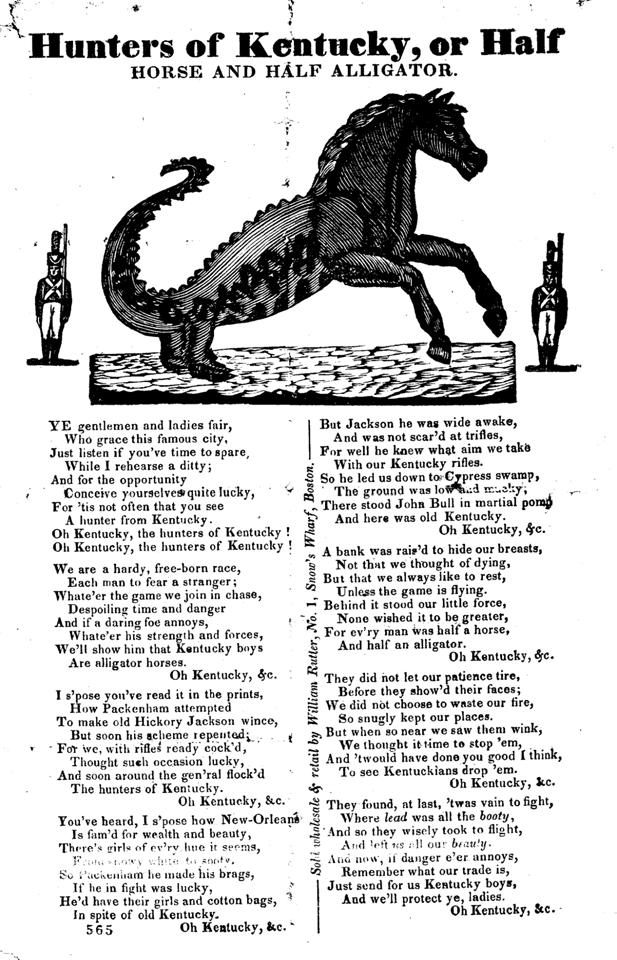
“Hunters of Kentucky” proved popular because of Jackson. This is ironic, as Jackson’s “fiercest rival,” Henry Clay, was from Lexington, and Jackson was from Tennessee, near Nashville.
Due to a copy of the song being depicted on the front cover of Davy Crockett’s Almanack of Wild Sports in the West, it is thought that “Hunters of Kentucky” might have been sung during the Texas War of Independence, but this is speculation, as there is no evidence supporting the song being sung during that conflict. However, Americans who entered Canada in 1837 and 1838 sang the song.
“Hunters of Kentucky” propagated various beliefs about
the War—first, calling the Pennsylvania Rifle the Kentucky Rifle. Another credited Kentucky’s riflemen with winning the Battle of New Orleans, when it could be said that Jackson’s artillery was responsible. Finally, one stanza said the British planned to ransack New Orleans, which was unlikely.
Descendants of the Kentuckians who rendered civil, military or naval service between 1784-1815 are eligible to join the General Society of the War of 1812 (gswar1812.org) or the National Society United States Daughters of 1812 (daughters1812.org).
By Carter Smith, Lawrenceburg
Rhoda Caldwell was born on Jan. 29, 1870, in Anderson County. She was the daughter of Capt. Benjamin Franklin Caldwell and his wife, Susan. Capt. Caldwell was a prosperous farmer, an officer in Union veterans’ organizations and active in Republican politics. Rhoda was educated at the Birdwhistell Academy in Lawrenceburg. From there, she went to the Science Hill Academy in Shelbyville. She received her college education at the State College, now known as the University of Kentucky.
After she received her state teachers’ license at 15, she taught in several country schools in Anderson County, including the Goodlett School and the Young School.
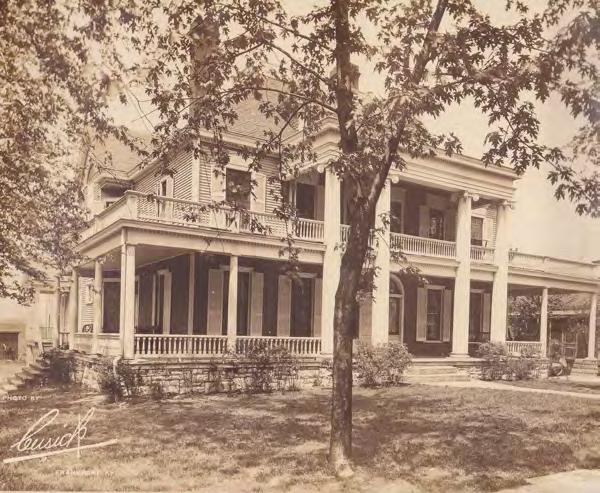
In 1894, there were 50 school buildings in Anderson County, and nine of them were log buildings. Female teachers made $34.73 a month, $4 less than their male counterparts. Teachers had to manage classrooms with students of all ages. School books were scarce and had to be shared. Most teachers had only a little more education than their pupils.
Ms. Caldwell remained in the rural schools of the county until her marriage to the widowed Dr. C.W. Kavanaugh of Lawrenceburg on Sept. 9, 1895. This marriage brought her to the home now known as the Kavanaugh School. The stately home had been built by Dr. Kavanaugh before their marriage.
While Mrs. Kavanaugh gave up teaching at the time of her marriage, education was never far from her mind. In 1897, more than 20 years before women could vote, she was the Republican candidate for Anderson County Superintendent. It was highly unusual for a married woman to seek public office. Mrs. Kavanaugh was defeated by Democratic incumbent Rev. W.D. Moore.
Mrs. Kavanaugh was an active member of the Anderson County Equal Rights Association and organized debates on suffrage in country schools around the county.
The Kavanaughs had two daughters, Aileen and Lucy In 1903, Mrs. Kavanaugh founded the Kavanaugh Academy in her home on Woodford Street. She offered a high-quality education and became known for her work preparing students for the Naval Academy and West Point.
In 1908, the state legislature passed a measure that
required each county to have a public high school for the first time in Kentucky’s history. In 1909, Mrs. Kavanaugh was contracted by the county school board to run the first public high school in Anderson County.
In addition to academics, Kavanaugh High School was known for athletics. In the earliest days, the only gymnasium in town was in the Christian Church. The Lawrenceburg High Bulldogs and the Kavanaugh Kavaliers were rivals, playing against each other at the church. In 1927, Kavanaugh alumni financed the construction of a gymnasium at the rear of the school.
Three Kavanaugh players—Paul McBrayer, Forest Sale and Ralph Carlisle—were inducted into the State of Kentucky Athletic Hall of Fame. University of Kentucky coach Adolph Rupp was a regular attendant at Kavanaugh basketball banquets. Mrs. Kavanaugh was an avid supporter of her school’s athletics. She was known to stand on the sidelines with a large umbrella, menacing any players who weren’t giving their all.
In August 1945, Mrs. Kavanaugh became ill and moved to Louisville to live with her daughter Aileen. In 1949, Kavanaugh High School and Lawrenceburg High School merged into Anderson County High School.
After nearly 14 years of illness, Mrs. Kavanaugh passed away on May 27, 1959, at age 89 and was laid to rest in the Lawrenceburg Cemetery.
Photo and information courtesy Anderson County Historical Society.
By Maury Searcy, Camby, Indiana
Dr. William Henry Fitzbutler (1842-1901) was born in Virginia to an enslaved coachman and a former indentured servant from England. The family escaped to Canada via the Underground Railroad sometime during the early 1840s. As a youth, Fitzbutler excelled in academics and read from the medical library of ex-slave Dr. Daniel Pearson. In 1869, Fitzbutler earned his M.D. from Detroit Medical College.
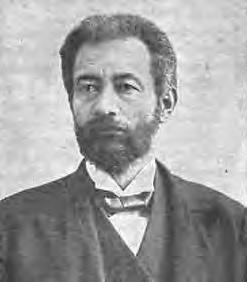
In 1866, he married Sarah Helen McCurdy, the daughter of a prominent Canadian farmer. The couple moved to Kentucky in 1872, where Fitzbutler became the first Black medical doctor to serve the 18,000 Black citizens of Louisville.
An incident in 1877 was mentioned in a 1952 article from the Journal of the National Medical Association illustrating the
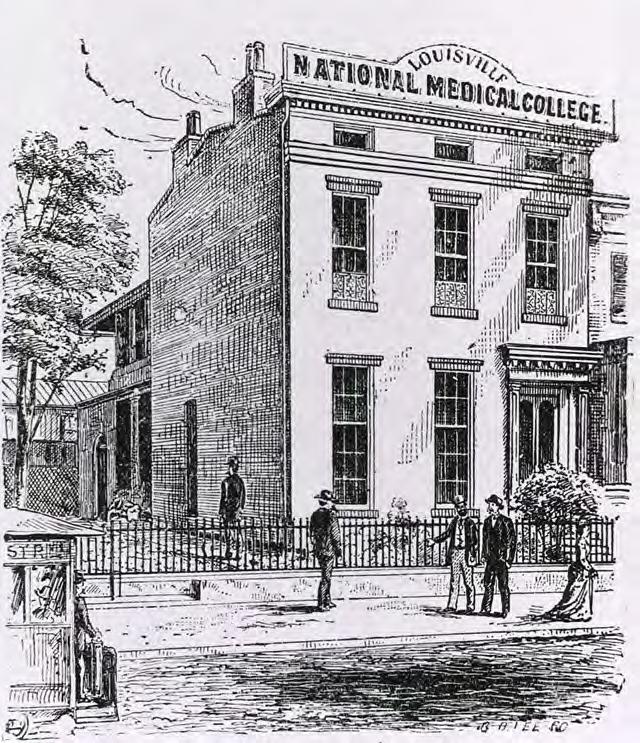
animosity toward Black doctors that was prevalent at the time. A young girl, who was the Fitzbutlers’ neighbor, sustained serious burns while cooking. Numerous physicians came to the scene, including Fitzbutler. While the other doctors discussed whether to take her to the hospital, this Black medical expert went to work. Having brought a large quantity of linseed, lime water and cotton rolls, he removed burned clothing and commenced debridement.
When Fitzbutler asked for assistance, the doctors refused to work with a person of color. The child survived and lived without any unsightly deformities despite having sustained burns over half her body with some bone exposed. When the other doctors demanded that the girl’s family dismiss Fitzbutler, the girl’s father told them that they had done nothing to help their daughter. Fitzbutler was their family physician for life.
In 1888, Fitzbutler, Rufus Conrad and W.A. Birney founded the Louisville National Medical College (LNMC). This was the first medical school in Kentucky owned and operated by African American doctors. They admitted patients of any race and did not turn away the destitute.
The school, which closed due to financial reasons in 1912, educated 175 physicians. Some of the students did not have adequate financial resources, so physicians donated their services as teachers. An advertisement appeared in the July 31, 1903, issue of the Louisville American Baptist newspaper that promoted LNMC and listed the cost of tuition, room and board at $45 per quarter.
In addition to his medical and health contributions, Fitzbutler became involved with improving the civic and literary life for African Americans. In 1879, he founded the Ohio Falls Express. The paper kept readers aware of current events and the stances of political candidates.
After raising their children, Sarah became a student at LNMC, and in 1892, she became the first African American female physician in Kentucky. After his death, she continued her husband’s work at the training hospital as well as her private practice, both of which provided care for the poor and indigent.
William and Sarah had six children, three of whom graduated from LNMC and became doctors.
The Cut in the Hill is the stretch of I-75 where the highway drops sharply from Fort Wright into downtown Covington and then Cincinnati. The route was carved directly through solid limestone, complete with a grassy median, as I-75 was constructed in the 1960s (top image).
In the late 1980s, it was revamped to remove the dangerous “S” curve. The bottom photo shows the expressway as it looks today.
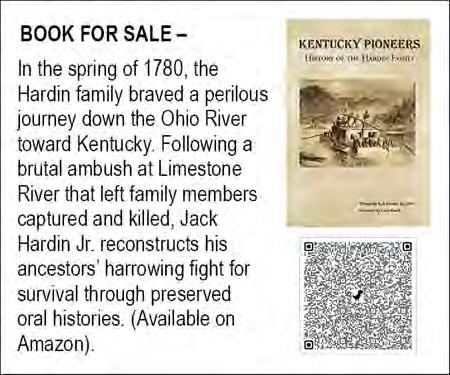
Kentucky History Day in downtown Frankfort. June 6. For more information, call 502.564.1792 or visit history.ky.gov/events/kentuckyhistory-day-2.
Stephen Foster Story at My Old Kentucky Home State Park in Bardstown. Select nights June 14- Aug. 8. For more information. call 502.348.5971 or visit stephenfoster.com.
Kentucky’s Veep: A ‘Back Row’ Perspective of the Life and Legacy of Alben W. Barkley at McCracken County Public Library in Paducah, July 30. Free. For more information, call 270.442.2510 or visit mclib.net.
Reach 120,000 readers a classified ad in Kentucky Explorer! Classified ads are only $50 per issue (up to 25 words). Contact Deborah Kohl Kremer at deb@kentuckymonthly.com or call 888.329.0053.
BOOK FOR SALE —

Reflections of a Scared Soldier Boy in Vietnam: God, Redlegs and Blueboys by Robert Adams. My combat tour with the First Air Cav Division 1967-68. 859.806.5199 (J-D)
BOOK FOR SALE —
George Graham Vest: The Life and Times of Dog’s Best Friend chronicles the life and career of Frankfort native, jurist and legislator George Graham Vest. By Stephen M. Vest, a cousin, who is known for his command of the English language. To purchase, call 888.329.0053 or visit shopkentuckymonthly.com
BOOK FOR SALE —
Genealogy Research: An Easy How To Guide For Beginners by David Hacker is a great book for those who have never researched a record before or for those who would like to join a lineage society. Available on Amazon. (J)
BOOK FOR SALE —
The Sacrifice of Lucinda Mills, by John Sparks, is a historical novel about an actual ritual human sacrifice in Kentucky. Available at barnesandnoble. com or Amazon.com. (J)
BOOK FOR SALE —
Set in Appalachian Kentucky. The author is a graduate of Cumberland. Her beginnings were in the poor region of Laurel County. She experienced a spare but pleasurable life in the country. Available on Amazon.
BOOK FOR SALE —
Highlighting rural Kentucky events from 1865, this adventurous story by C.W. Shumate waited 160 years to be shared. Butler Books novel available at cwshumate.com. (F-D)


Stephen L. Keller’s meteoric rise and dramatic fall is a cautionary tale of ambition and consequence. In his memoir—Pay to Play: Political Corruption, Corporate Greed, and the Cost of the American Dream—the West Liberty native and Georgetown College alumnus recounts founding Kelco in 1994 to offer viatical settlements—quick cash for terminally ill patients, many with HIV and AIDS, in exchange for their life insurance policies. Kelco quickly captured 65 percent of the global life settlement market, shaking up a lightly regulated industry.
Keller positioned himself as a crusader against insurance industry cruelty during the AIDS crisis, when companies routinely denied coverage to the terminally ill. By pioneering the viatical settlement market, he created a billion-dollar industry, offering hope—and controversy—by turning tragedy into opportunity.
While Keller co-authored regulations still in effect, courts found them guilty of buying policies under false pretenses and reselling them to investors.
“In a time when people feel the system is rigged, Pay to Play shows exactly how it happens,” Keller said, describing corporate influence over indictments and government machinery for hire. Calling his case a poster child of a broken system, Keller now lives in South Florida, working as a consultant.
The scheme was lucrative: Keller earned more than $1 million in the late 1990s, and authorities found Kelco bought 445 fraudulent policies worth more than $37 million.
Keller’s journey—from cubicle stockbroker to financial innovator— illustrates raw ambition and audacious strategy. As his empire grew, scrutiny mounted. When political and corporate interests collided, Keller fled abroad with his family, becoming a cautionary tale and a catalyst for a now $180-billion market.
A global manhunt followed. Keller was arrested by Interpol in Panama, extradited back to the United States, and served nine years of a 14-year sentence in federal prison.
Keller will host a June 18 book signing at Joseph-Beth Booksellers in Lexington, with another possible event in West Liberty and numerous Kentucky locations.
By Stephen M. Vest
BY BILL ELLIS
At the ripe old age of 86, I must choose what I read not only for the usual reasons but also based on the size of the print, the darkness of the print color, and the space between lines. I am now up to 4.25 magnification in my cheap reading glasses.
I buy most of my books at thrift stores. Yes, I am a cheapskate.
If I look hard enough, I can keep a few books on hand at all times. Plus, I don’t read as quickly as I did in my younger days. I sometimes have two or three books scattered around the house, and one or two in each car.
I don’t read history monographs often anymore or even biographies, but I can never pass up a book about Abraham Lincoln. Word is that only books about Jesus surpass those on the 16th President. If you get a chance, don’t miss Kentuckian John McKee Barr’s Loathing Lincoln
There are several good books about Lincoln’s humor. Yes, humor. Anyone who was married to Mary Todd for so long must have had a great sense of humor.
•
What do I read? For so many years of teaching and research, I was compelled to read books that would animate my teaching and enlarge my research (i.e., enlarge my salary—I had a wife and two kids to support).
Now, I mostly read for leisure. First, I enjoy short stories. I tried to write them some years ago. In our own time, no one surpasses Wendell Berry, whose short fiction often is reprinted in national editions. Carson McCullers, Nadine Gordimer, Arthur Conan Doyle, Edgar Allan Poe, Nathaniel Hawthorne and Jack London are all great writers. I did not discover Gordimer until a few years
ago and can understand why she won the Nobel Prize for Literature.
You probably have your own list of favorite writers—Kentuckians and others. My favorites among older Kentucky writers include James Still, John Fox Jr., Harriette Simpson Arnow, Janice Holt Giles, Jesse Stuart and James Lane Allen
Have you read Billy C. Clark, who wrote with such great humor?
Robert Penn Warren won Pulitzer Prizes for both fiction and poetry. However, his fictionizing of the “Kentucky Tragedy” in World Enough and Time is a poor fabrication (but that’s just my opinion).
Back many years ago when I was in high school (that’s right; I could read back then), I fell in love with the books of Aldous Huxley. I might go back and read Brave New World and his other novels again.
I might reread The Great Gatsby, since I know now about F. Scott Fitzgerald’s use of Louisville characters in that famous book (including himself when stationed at Camp Taylor), several of whom I wrote about in my biographies of Patrick Henry Callahan and Robert Worth Bingham.
I favor short or medium-length books, fiction and nonfiction. If you can’t get it done in 200-300 pages, you can’t expect me to keep reading.
I may even go back and read and reread some of the old standards of historiography by historians such as James C. Klotter, Thomas D. Clark, George Brown Tindall, Samuel Eliot Morrison and others.
What are you reading?
Now, where did I leave my reading glasses?
Readers may contact Bill Ellis at editor@ kentuckymonthly.com

BY WALT REICHERT
In this issue, I answer some of the questions I received over the past year. You can always email me here at the magazine, but feel free to contact your county Extension offce with your gardening questions and concerns. If your local agent doesn’t have the answer, he/she can contact the experts at the University of Kentucky for help and advice. Take advantage of that.
Here are a few of the questions I got this year.
Question: I have tall arborvitae that screen my backyard from the neighbor’s. Some of them are showing brown leaves—not the whole shrub, but just part of it. What can I do for it?
Answer: Arborvitae generally perform well in Kentucky, but they sometimes suffer from winter burn caused by cold, drying winds. It is especially a problem where the shrubs are exposed to sun during the day and strong winds. You can cut out the dead stuff, and the arborvitae will fill in over time. But it may look rough for a while.
If more than 50 percent of the shrub is damaged, I would go ahead and replace it. Be on the lookout for spider mites that can do a lot of damage to arborvitae in a short time. They are tiny but not microscopic; if you see lots of small webs, look closely. The little red devils are sucking the juices out of your plant. Permethrin-based insecticides usually will control them.
Question: I would like to plant a small tree beneath a power line that is about 15 feet above ground. Any recommendations?
Answer: Redbud is always a good choice. It is easy to grow, and there are lots of new cultivars on the market. You might like ‘Alley Cat,’ ‘Forest Pansy’ or ‘Rising Sun.’ Other options would be dogwood, fringetree, serviceberry or hornbeam.
Question: I have access to lots of horse manure and bedding. Can I safely use it in my vegetable garden as a fertilizer?
Answer: It depends. I wouldn’t put any manure directly on food plants while they are growing. The best bet would be to compost it first before using it as a fertilizer. That should reduce the likelihood of pathogens and will eliminate most of the weed seeds. Horse manure is notorious for harboring seeds of some pretty nasty weeds, including Johnsongrass, thistle and crabgrass.
Alternately, you can spread the horse manure in a thin layer over the garden during the winter when plants are not growing. That is called sheet composting, and it’s what I do with the chicken and rabbit manure I have available. Just remember, you don’t need tons of it; a thin layer will improve soil quality and help fertilize next year’s crops.
Question: I would like to have a perennial garden that attracts
pollinators all through the season. I would also like ones that would be easy to grow. What would you recommend?
Answer: You have lots of options. I’ll give you five perennials that should carry you through the year, and they hold up well in our hot, humid summers.
Lanceleaf coreopsis — This sports yellow daisy-like flowers that bloom May through June.
Butterfly weed — It has orange to yellow flowers that are critical to the larva stage of monarch butterflies, though other butterflies will flock to it as well. It blooms June through September.
Bee balm (wild bergamot) — This plant blooms June through August in white, pink and purple. Bee balm will seed itself and spread in the garden. Choose varieties resistant to powdery mildew.
Mountain mint — It has white flowers that are covered with pollinators starting in mid-summer through early September. It is an excellent plant for bees and wasps, and spreads in the garden.
Asters — These will bloom August through October. The flowers can be white, blue, pink or purple. They sustain migrating monarchs as they move south. Choose varieties not subject to powdery mildew.
Question: My tomatoes were eaten up by some kind of blight last summer. It looked like someone took
a blow torch to the plant. What can I do next summer to avoid this?
Answer: It’s probably early blight, the most common disease of tomatoes around here. It gets worse as the season progresses, and once you see it on the plants, there’s not much you can do, although some will keep growing and producing even after significant blight damage.
Try one or all of these next spring: Rotate where you plant the tomatoes; don’t put them in the same place year after year. After setting them out in the spring, spray them with copper or another fungicide right away and then again a week to 10 days later. Finally, mulching with black plastic or straw helps keep the fungal spores from splashing on the leaves, as does removing the leaves that touch the ground.






Question: I want to get started on a small home orchard. Is there anything I can plant in the fall, or should I wait until spring?
Answer: Apples and pears will actually do better if planted in the fall rather than spring. You can plant them up until Thanksgiving or a little later. The stone fruits—peaches, plums, cherries, etc.—generally do better when planted in the spring. Many nurseries won’t even ship those in fall.
Good luck!
Readers may contact Walt Reichert at editor@kentuckymonthly.com


BY GARY GARTH
Idon’t recall the specifics other than it was a late June or early July afternoon. It was the kind of Kentucky summer day that turns the woods into a lush, green sauna— silent and steamy, threatening and dangerous. I’d spent part of the afternoon following a narrow, rocky trail searching for a ribbon of a Wolfe County trout stream that I discovered eventually. The stream—little more than a trickle dotted with dark plunged pools—was stunning, cold and so welcoming that I laid my rod aside and plunged my arms in up to my elbows and then filled my hat and bathed my face.
The afternoon produced a few trout, absolute solitude and stunning silence. The gently flowing cool water temporarily negated any concerns I’d harbored about the sizzling heat. After a couple of hours, the tilting shafts of sunlight piercing the high, leafy canopy signed a setting sun. Time to leave.
•
The hike out was winding and uphill. A half-dozen steps from the creek, the heat returned with smothering effect. I drained my water bottle and started the trek toward the ridgeline and adjacent parking lot.
The trailhead emerged into a pool of late afternoon sunshine. My vehicle was the only one in the small, graveled parking lot. I stumbled twice before I reached the truck, lowered the tailgate, and retrieved a water bottle from the ice chest. I recall being lightheaded and fatigued. I had been
drenched in perspiration but now felt clammy, almost chilled. I had a pounding headache.
A second bottle of water and a several minutes of rest successfully fueled the long drive home. The next morning, still suffering from a heat headache hangover, I related the experience to my wife, a nurse. When I got to the clammy, almost chilled part of the story, her demeanor shifted.
“Did you check your heart rate?” she asked.
“My heart rate!? No. Why?”
“A weak or rapid shallow rate can be a sign of heat exhaustion.”
“Heat exhaustion!” My incredulous tone was not well received.
“You need to be more careful.”
That was more than three decades ago. I knew that heat could be dangerous, but probably like some of you, I foolishly failed to take it
seriously until my temperature soared into the danger zone.
Kentucky summers, of course, are hot and humid, but these regular June, July and August conditions are being sharpened by climate change. Many of us simply are not accustomed to the heat. Today, most of us work and live in air-conditioned cocoons. But if you’re out and about, especially in the woods and waters, be careful not to overheat. It can happen quickly.
•
Two things to watch for: heat exhaustion and heat stroke.
Heat exhaustion, I suspect, is fairly common, especially among those of us whose stamina may have waned a bit thanks to a variety of factors including, but not limited to, a slip in our overall physical conditioning.
Overexertion in hot weather coupled with high humidity is usually the culprit. If you’re outside in the summer, you are going to perspire. This is normal. One way the body cools itself is through perspiration. However, when the sweat begins to roll off in streams (or worse, if you stop sweating, and your skin feels cool and/or clammy) coupled with overt fatigue and/or dizziness, nausea and/or a headache, take a rest. Drink some water. Be attentive.
Heat stroke is a far more serious condition. This happens when the body’s core temperature rises to around 104 degrees (or higher). The victim can become confused and/or agitated or irritable. Speech may be slurred. This is serious business and requires medical attention. Until you can get help, loosen the victim’s clothing and cool them with whatever means are available—dampen a cloth (a sock will work) and wet their head, neck, armpits and groin.
Statistically, those most at risk are young children and folks 65 and older. I now fit the older demographic. Age alone doesn’t make heat stroke fatal, but it should be taken into account. Regardless of age or conditioning, don’t fear the heat. Prepare for it. Wear loose clothing. Know the symptoms of overheating and pay attention to them. Rest. Seek shady conditions. Drink plenty of water. Then drink some more water. Enjoy the summer.
Readers may contact Gary Garth at editor@kentuckymonthly.com.
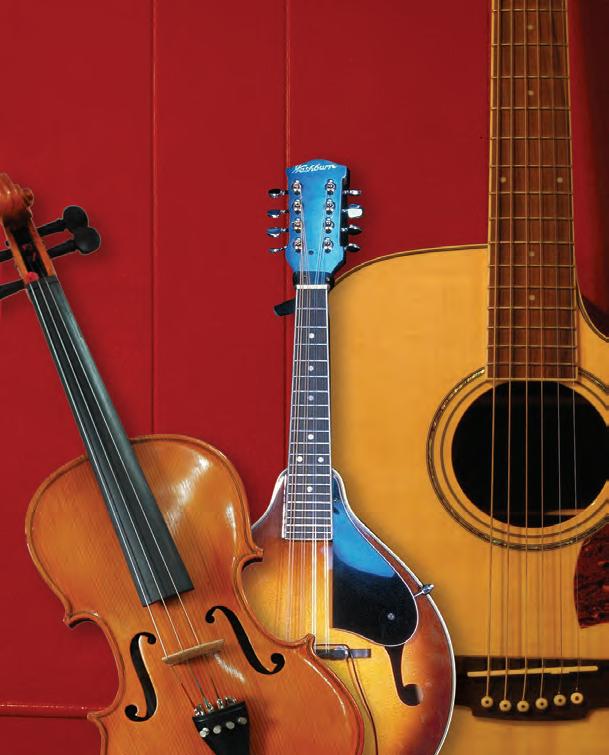
Wants to BUY YoUr gear
We buy, sell and
mUsical
iNsTrUmeNTs and equipment of all brands.
We buy, sell and Trade Used mUsical iNsTrUmeNTs and equipment of all brands.
mUsic go roUNd also oFFers aFFordaBle rePairs, seTUPs, resTriNgs aNd
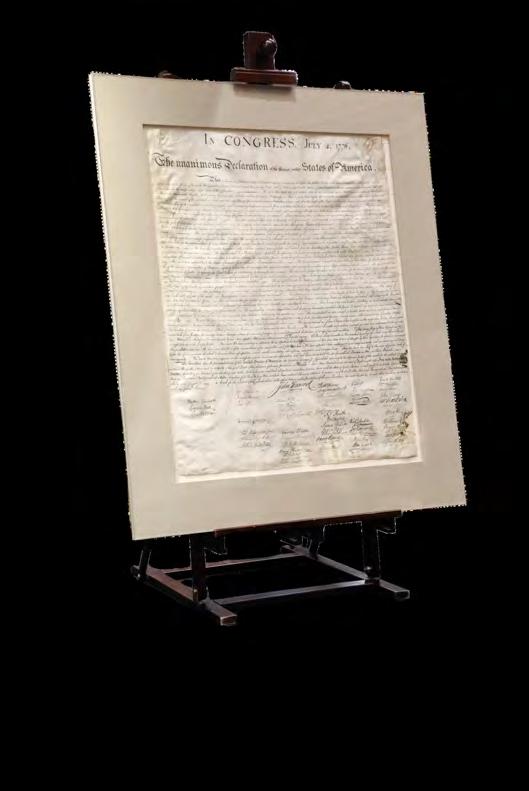
1823 STONE DECLARATION America’s Founding—Faithfully Preserved
mUsic go roUNd also oFFers aFFordaBle rePairs, seTUPs, resTriNgs aNd maiNTeNaNce See a rare 1823 William Stone engraving of the Declaration of Independence—the first exact facsimile of the original 1776 document—now on public display at the Sons of the American Revolution Genealogical Research Library in downtown Louisville. Commissioned by John Quincy Adams, this historic engraving became the definitive image of the Declaration for generations of Americans.
On view through September 5, 2026 Monday–Friday 9:30 a.m. - 4:30 p.m. Free to view 809 West Main Street | Louisville library.sar.org



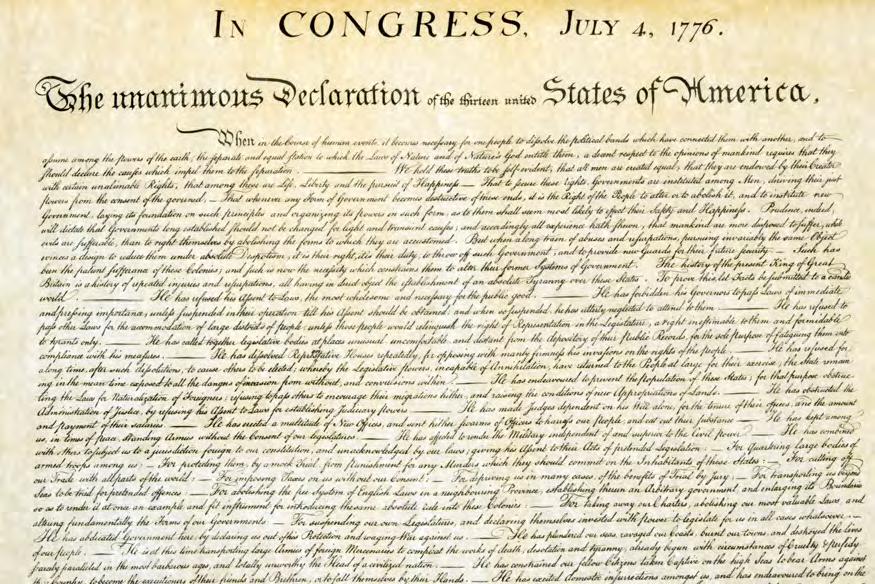
Artist Damon Farmer Artists Attic, Lexington, through July 10, 859.254.5501
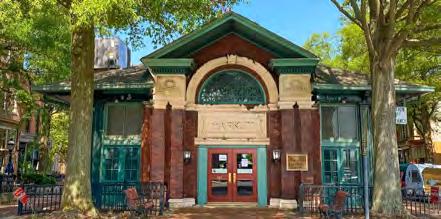

Jesus Christ Superstar Market House Theatre, Paducah, through June 20, 270.444.6828
Backcountry Discovery Hike & Tour
Bernheim Forest and Arboretum, Clermont, 502.215.7155
National Bourbon Week downtown Bardstown, through June 21 Weird Al Yankovic Appalachian Wireless Arena, Pikeville, 606.444.5500 Hayden Coffman and L’il Man J McConnell Plaza, Owensboro, fridayafter5.com The Last of the Mohicans Carnegie Library, Shelbyville, 502.513.5555
Italianfest Riverboat Row, Newport, through June 14, 859.292.3666
Beaver Dam Amphitheater, beaverdamamp. com
The Walnut Street Revue
Kentucky Center for the Performing Arts, Louisville, 502.584.7777
Comedian Aries Spears
Lexington Opera House, Lexington, 859.233.3535
Acoustic Series: Carly Pearce Lexington Opera House, 859.233.3535
Trivia Night –Wild World of Disney Louisville Zoo, 502.459.2181 Jamey Johnson Concert Renfro Valley Entertainment Center, Mount Vernon, 606.256.2664 Nigel Dupree & The Heat with Galactic Foghorn McConnell Plaza, Owensboro, fridayafter5.com
ROMP Fest 2026 Yellow Creek Park, Owensboro, through June 27, rompfest.com
Gathering of Descendants Fort Boonesborough State Park, Richmond, 859.527.3131 Tore All to Pieces
The Filson Historical Society, Louisville, 502.635.5083
Park, Louisville, kycraftbash.com

Iron Baby Angel Pioneer Playhouse, Danville, through July 30, 859.236.2747 Wild Lights at the Zoo
Louisville Zoo, through July 26, 502.459.2181

Janet Stone: And Now I Know My ABCs!
Central Park, Louisville, through Aug. 6, 502.574.9900
4th Fest Praise in the Park
755 Park Avenue, Madisonville, July 3-5, madisonvilleliving. com
Janet Stone And Now I Know My ABCs!, National Quilt Museum, Paducah, through Sept. 22, 270.442.8856
Treasures From the Attic BehringerCrawford Museum, Covington, through Sept. 22, 859.491.4003

Death Cab for Cutie
MegaCorp Pavilion, Newport, 859.900.2294
Boeing Boeing
Pioneer Playhouse, Danville, through Aug. 5, 859.236.2747
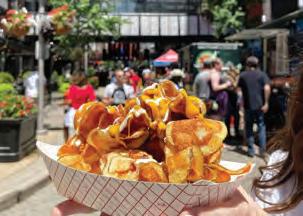
Brad Brown’s Comedy Magic Show
The Madison Venue, Williamstown, 859.428.8085
McCracken County Public Library, Paducah, 270.442.2510 Spoon & The Beths Iroquois Amphitheater, Louisville, 502.368.5865
Underground Pool Party
Carter Caves State Resort Park, Olive Hill, 606.286.7009
How to Make a Summer Charcuterie Tray
Whiskey Row and Cynthia & The End Times
McConnell Plaza, Owensboro, fridayafter5.com
Sparks In The Park with The Kentucky Headhunters
Beaver Dam Amphitheater, beaverdamamp. com
Murder for Two
The Carnegie, Covington, through July 26, 859.491.2030
Jason Isbell in Concert
EKU Center for the Arts, Richmond, 859.622.7469 Ella Langley in Concert
Wireless Arena, Pikeville, 606.444.5500 Street Food Festival Fourth Street Live, Louisville, through July 20, streetfoodfests. com/event/ louisville >>>
American Floyd: the Pink Floyd Tribute Badgett Playhouse, Grand Rivers, 270.362.4224
Kansas & 38 Special
Beaver Dam Amphitheater, beaverdamamp. com
Minnie Adkins Day
Little Sandy Lodge, Sandy Hook, 606.738.5515
fridayafter5.com Lucero in Concert
McConnell Plaza, Owensboro, fridayafter5.com
The Grove, Glasgow, 270.629.4263
Type “300” into the search bar on your browser, and you’ll find the tale of Leonidas I and his 300 Spartan soldiers at the Battle of Thermopylae (Greece) and how they held off the massive Persian Army, commanded by King Xerxes, for more than three days.
Dig a little deeper, and you’ll find Gideon’s 300— warriors handpicked by God to fight the Midianites.
That’s more issues than episodes of Blue Bloods (293), Hawaii Five-0 (282) and The Big Bang Theory (279).
It’s equal to the miles between Central Kentucky and St. Louis, Chicago, Cleveland and Atlanta.
While 300 is not as many issues as Kentucky has cities (418), it exceeds the number of counties (120), of which I’ve visited all at least twice.
For some reason, 300 is significant, enough so that it appears 62 times in the Bible— including the number of foxes used by Samson to gain revenge against the Philistines (Judges 15:1-2), the number of pieces of silver given to Benjamin by Joseph (Genesis 45:22), and Noah’s Ark being 300 cubits long.
Athletically, 300 is a perfect game in bowling and the length of an American football field from goal line to goal line (100 yards=300 feet).
If your credit score is less than 300, you neglected to put your name and address on the form. You probably got a 4 on your ACT.
In Numerology, 300 means creativity, which I hope Kentucky Monthly has and will continue to have. “Creativity is the most prominent
resonance of the energy, especially with self-expression.” (affinitynumerology.com).
The copy of Kentucky Monthly you currently hold in your hand is the 300th issue. Since 1998, we’ve featured the work of nearly 2,000 writers, including Robert Penn Warren, Richard Taylor, Sena Jeter Naslund and Silas House, and many others who had never before been published. We’ve played a small part in launching the writing careers of Steve Flairty and Georgia Green Stamper and extending the shelf life of “Old Teacher Bill” Ellis and dozens of others.
If all you’ve read in Kentucky Monthly over the years is “Vested Interest,” you’ve read more than 240,000 words. If you’ve read every issue cover to cover, you’ve enjoyed learning about 3,000 destinations, 1,500 recipes and the stories of 1,200 Kentuckians, both historical and contemporary.
Mathematically, 300 is the sum of two prime numbers (149 + 151), and the sum of 10 consecutive prime numbers (13 + 17 + 19 + 23 + 29 + 31 + 37 + 41 + 43 + 47).
Lesley Francis, a Georgia-based columnist who researched the mythological significance of 300, wrote that, according to various websites on tarot cards, astrology and numerology, 300 is an angel number, “… a cue from the divine forces that you must respect the people who were behind your success and be grateful. In other words, having good people will make your life better and great.”
George Clooney, Ashley Judd and Billy Ray Cyrus graced early covers, giving us some cred. From the early investors to the 100,000 monthly readers, to the advertisers, employees and Kentributors—each one (even Bob) is invaluable to any success we’ve enjoyed.
Vest can be contacted at steve@kentuckymonthly.com
WITH 16 COLLEGES ACROSS KENTUCKY, KCTCS OFFERS AFFORDABLE, ACCESSIBLE EDUCATION DESIGNED FOR THE REAL WORLD.
Whether you’re starting a career, advancing your skills, earning a short-term credential, or preparing to transfer to a four-year university, KCTCS is the place to get you REAL WORLD READY!
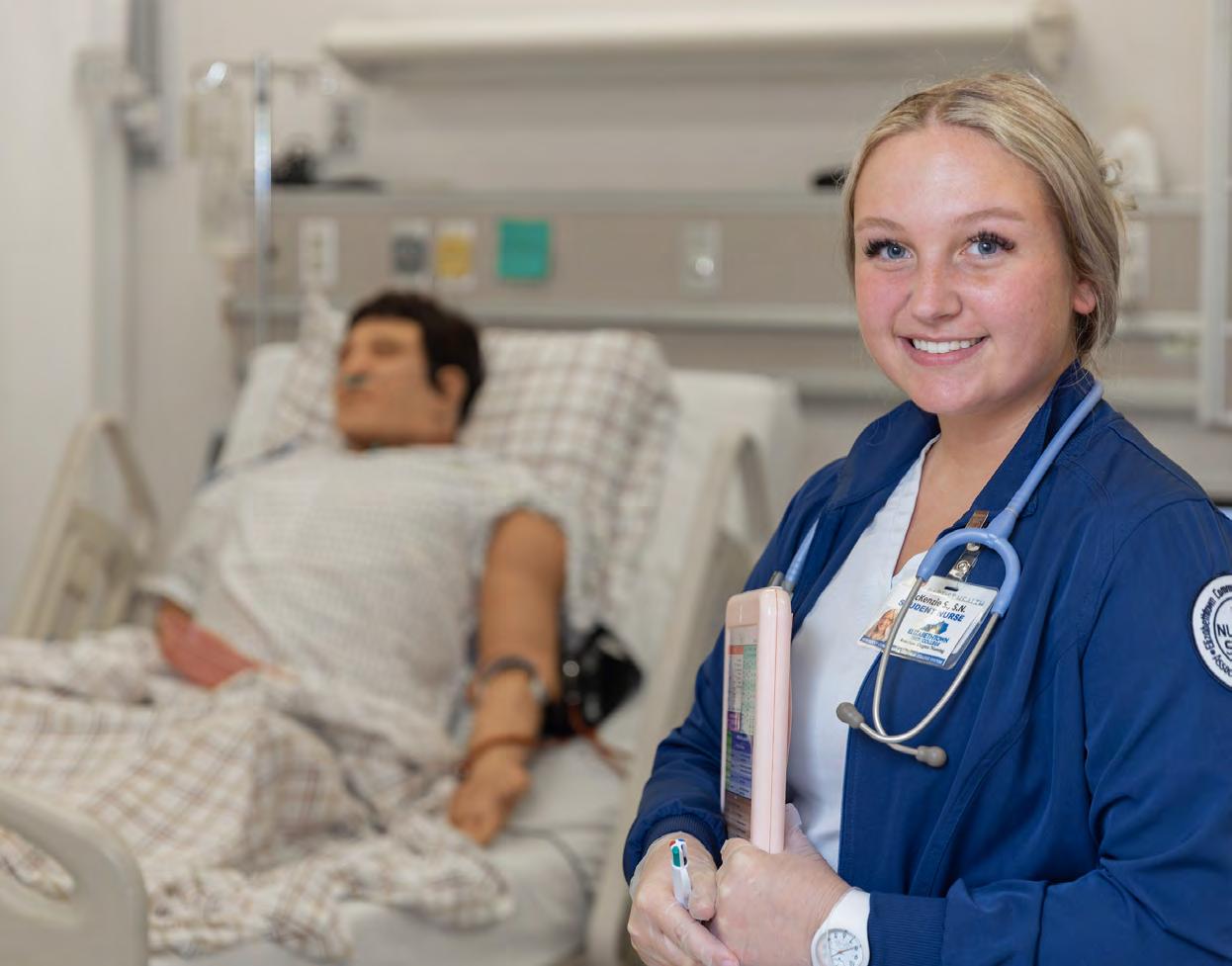


The rustle of sunflower fields under a wide open sky. The pop of a bourbon cork on a long summer evening. The easy creak of a front-porch rocking chair. The distant whinny of a Saddlebred horse. This is ShelbyKY—Your Bourbon Destination® and the Saddlebred Capital of the World™, where the pace is slower, the skies are wider, and every moment is worth savoring.
Plan your visit at visitshelbyky.com.