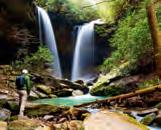
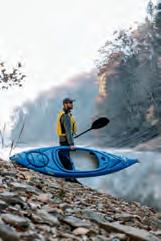
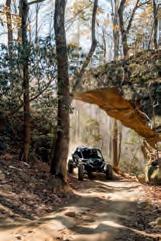
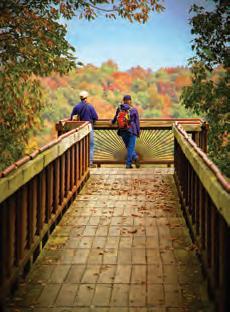
As we celebrate the 250th anniversary of the Declaration of Independence, we’ll continue our deep dive into history but begin to sprinkle in more current content going forward.
1. Eleven U.S. cities or towns (two in Michigan), nine counties and three military installations are named for which early Kentucky leader buried in Lincoln County?
A. Abraham Lincoln
B. Harding Brunswick
C. Isaac Shelby
2. Ephraim McDowell is best known for his groundbreaking surgery in Danville, but he also was a greatgrand-uncle of which future first lady of the United States?
A. Mary Todd Lincoln
B. Sarah Todd Taylor
C. Dolly Madison
3. A somewhat new idea contained in the 1792 Constitution of Kentucky was that rather than geography, the General Assembly would be determined by what statistic?
A. Gross sales of tobacco
B. Accessibility to water sources
C. Population
4. Captain Kentucky, a cartoon superhero created by Louisville’s Don Rosa, wore what on his chest?
A. A large K for Kentucky
B. A fleur-de-lis for Louisville
C. An “L” for Louisville
5. Louisville native Tracy Clayton is known as a Black “superstar” who writes “big, funny things.” She is a graduate of which Kentucky university?
A. University of Louisville
B. Kentucky State University
C. Transylvania University
For answers, see page 6.
6. Best known for his hit song “Yakety Sax,” the closing theme of the legendary Benny Hill Show, which Paducah native played with Chet Atkins, Brenda Lee, Elvis Presley and Al Hirt?
A. Boots Randolph
B. Lionel Hampton
C. Coleman Hawkins
7. A “Magoffin County Cadillac” actually is what other auto make and model?
A. Toyota Camry
B. Ford Crown Victoria P71
C. Chevrolet El Camino
8. “Practically unstoppable” George McAfee was called “the most dangerous man with the football in the game” by the legendary Red Grange, a star of an early Chicago Bears team. McAfee was one of many stars from which Southeastern Kentucky football magnet?
A. Corbin
B. London
C. Middlesboro
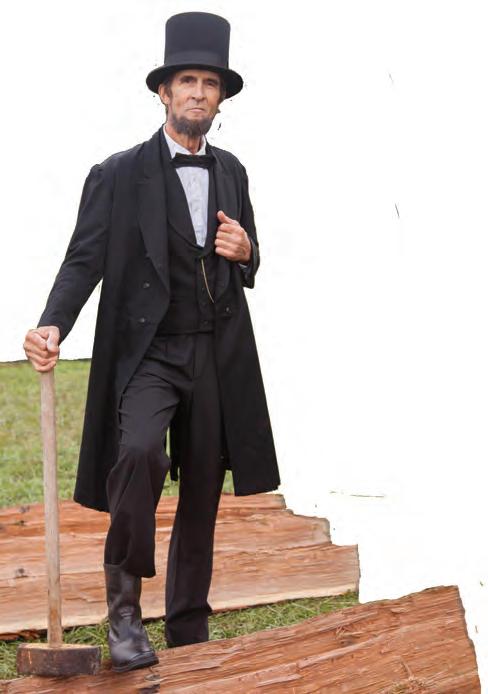
9. Fort Mitchell’s Una Merkle appeared in nearly 100 films alongside numerous major stars and was featured as Ann Rutledge, the love interest of which Kentucky-born politician in a film by Oldham County’s D.W. Griffith?
PUBLICATIONS VOLUME TWENTYNINE, ISSUE 6, AUGUST 2026
Stephen M. Vest Publisher + Editor-in-Chief
EDITORIAL
Patricia Ranft Associate Editor
Rebecca Redding Creative Director
Deborah Kohl Kremer Assistant Editor
Ted Sloan Contributing Editor
SENIOR KENTRIBUTORS
Jackie Hollenkamp Bentley, Jack Brammer, Bill Ellis, Steve Flairty, Gary Garth, Kristy Robinson Horine, Kim Kobersmith, Abby Laub, Brigitte Prather, Walt Reichert, Tracey Teo, Jarrett Van Meter, Janine Washle and Gary P. West BUSINESS + CIRCULATION
Barbara Kay Vest Business Manager ADVERTISING
Account Executives: Kelley Burchell
Laura Ray • Teresa Revlett
Kentucky Monthly (ISSN 1542-0507) is published 10 times per year (monthly with combined December/January and June/July issues) for $25 per year by Vested Interest Publications, Inc., 102 Consumer Lane, Frankfort, KY 40601. Periodicals Postage Paid at Frankfort, KY and at additional mailing offices.
POSTMASTER: Send address changes to Kentucky Monthly, P.O. Box 559, Frankfort, KY 40602-0559.
Vested Interest Publications: Stephen M. Vest, president; Patricia Ranft, vice president; Barbara Kay Vest, secretary/ treasurer. Board of directors: James W. Adams Jr., Dr. Gene Burch, Gregory N. Carnes, Barbara and Pete Chiericozzi, Kellee Dicks, Maj. Jack E. Dixon, Mary and Michael Embry, Judy M. Harris, Jan and John Higginbotham, Frank Martin, Bill Noel, Kasia Pater, Dr. Mary Jo Ratliff, Randy and Rebecca Sandell, Kendall Carr Shelton and Ted M. Sloan.
Kentucky Monthly invites queries but accepts no responsibility for unsolicited material; submissions will not be returned.
Readers Write
Happy 300th!
Congratulations on your 300th issue of Kentucky Monthly . I really enjoyed reading Steve Vest’s article (June/July issue, page 64).
May you have many more monthly issues in the years to come!
Arturo Alonzo Sandoval, Lexington •
I just read Steve Vest’s column about the number 300. So proud of him and his entire team.
That’s a wonderful milestone! I look forward to many more issues.
Bobbie S. Bryant, Louisville
Meeting Steve
I’m a lifelong Kentuckian residing in Burlington, the county seat of Boone County. I recently engaged in a Revolutionary War tour of our county that was sponsored by our library.
At the stop in Verona, Steve Vest graciously appeared
in colonial period attire with his presentation. I would like to thank him for his time providing me with information as well as introducing me to his publication. I received a complimentary issue (#300, June/July issue) and read it from cover to cover. Thank you, and please keep the magazine coming. I will gladly become a paid subscriber.
Roger Neltner, Burlington
Correction
Membership in First Families of Kentucky is by invitation only and limited to those individuals who are at least 18 years of age; have a documented lineal descent from a direct ancestor, either male or female, who explored for settlement or resided in what became Kentucky prior to its statehood on 1 June 1792; and receive positive recommendation of the Membership Committee and Registrar General (June/July issue, page 42).
We Love to Hear from You! Kentucky Monthly welcomes letters from all readers. Email us your comments at editor@kentuckymonthly.com, send a letter through our website at kentuckymonthly.com, or message us on Facebook. Letters may be edited for clarification and brevity.
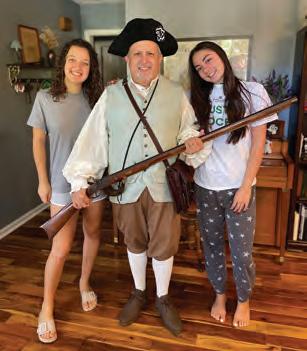
Steve Vest in colonial attire with Italian exchange students Sylvia, left, and Sophia.
MAG ON THE MOVE
Even when you’re far away, you can take the spirit of your Kentucky home with you. And when you do, we want to see it!
danville
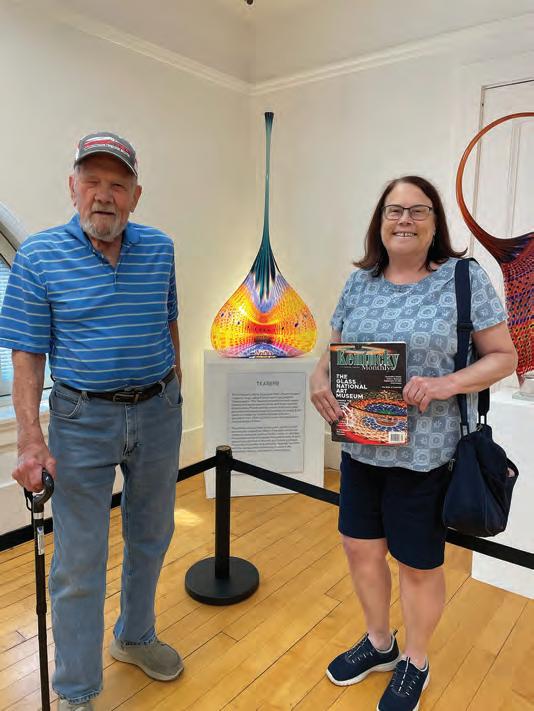
Louisville native Kathy Kampschaefer Namesnik, right, and her father, Chuck Kampschaefer, have traveled extensively throughout Kentucky. They are pictured at Danville’s GLASS National Art Museum. Kathy now resides in Matthews, North Carolina, and Chuck lives in Floyds Knobs, Indiana.
costa rica
A native of Louisville and student at the University of Kentucky, Brock Sinclair is pictured in La Fortuna in the Arenal Rain Forest of Costa Rica.
submit your photo
Take a copy of the magazine with you and get snapping! Send your high-resolution photos (usually 1 MB or higher) to editor@kentuckymonthly.com or visit kentuckymonthly.com to submit your photo.
kentucky monthly cruise
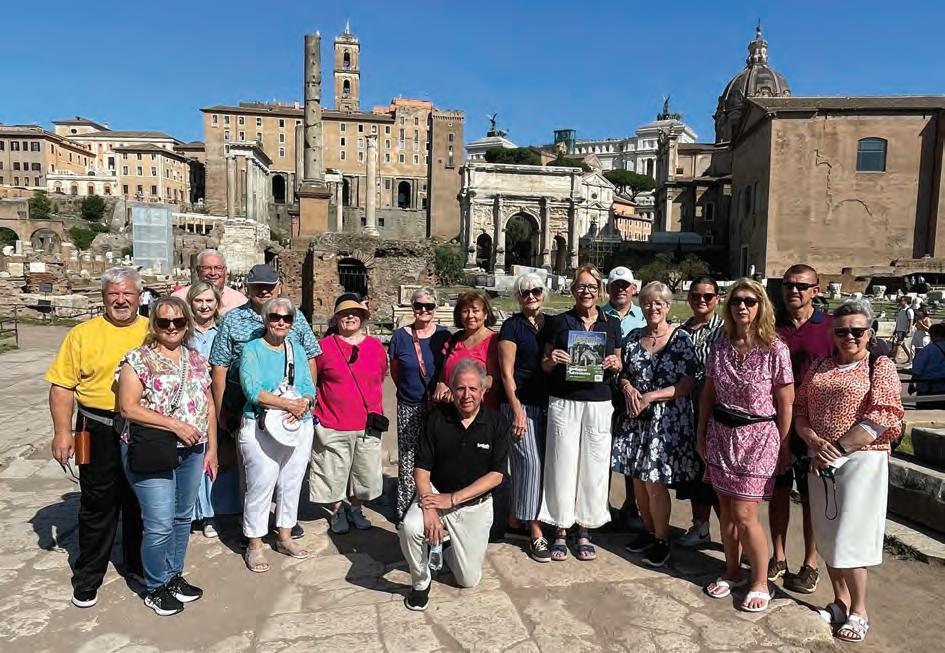
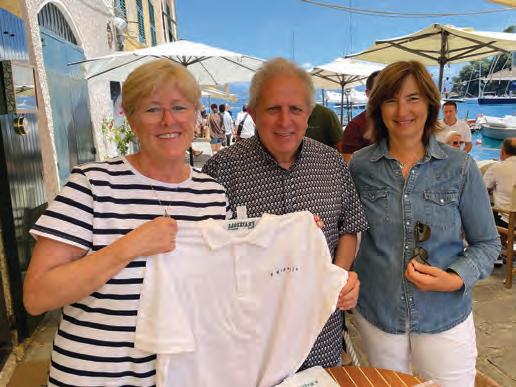
Publisher and Editor-in-Chief Steve Vest (kneeling) is pictured in Rome with half of the travelers on a Kentucky Monthly-hosted cruise that had ports of call in Italy, France and Spain.
bermuda
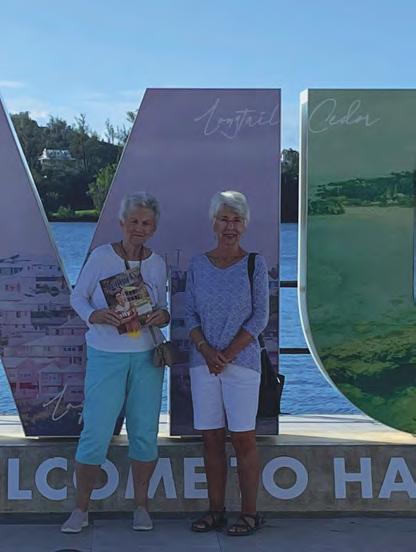
Frankfort residents Carrie Bemiss, left, and Jane Neal enjoyed a trip to Bermuda.
scotland
Pictured at Eilean Donan Castle near the Scottish village of Dornie, Louisvillians Todor Petkov, left, and Patrick Erdley toured Scotch distilleries, similar to traveling along Kentucky’s Bourbon Trail.
france
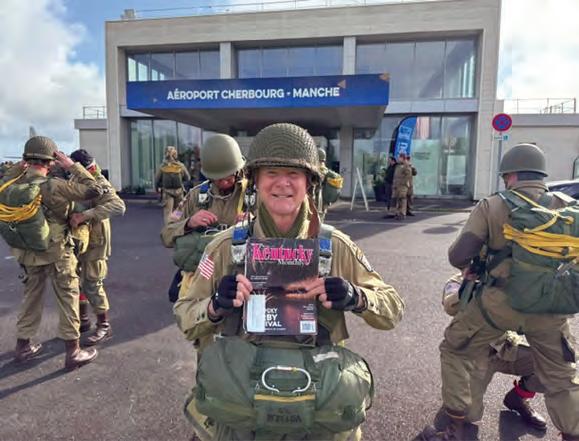
Ken Herrington of Louisville participated with fellow retired military veterans in parachute operations over Normandy, France, to commemorate those brave young men who knew no fear. He was outfitted as a 1944 101st Army Airborne paratrooper and parachuted from a vintage C-47 aircraft with a copy of Kentucky Monthly magazine. This photo was taken at the Cherbourg, France, airport
nepal
While traveling in Nepal, Angela and Corey Siddall of Newport visited the Pashupatinath Temple Crematorium in Kathmandu.
caribbean cruise
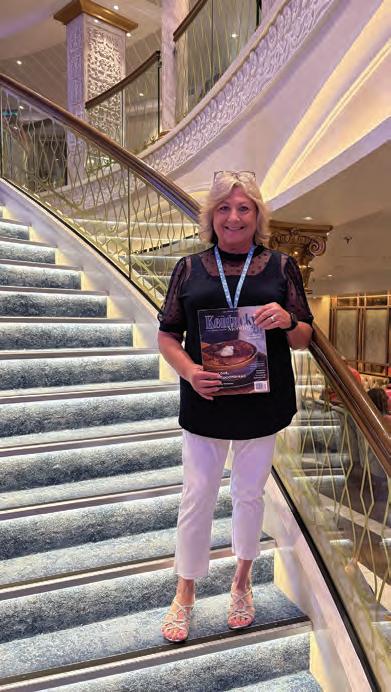
Monticello resident Joy McGinnis (pictured) and her sisters enjoyed their annual sister trip about the Venezia on a seven-day cruise. Ports of call included Amber Cove, Dominican Republic; Saint Thomas, U.S. Virgin Islands; and San Juan, Puerto Rico.
KWIZ ANSWERS:
1. C. Centre College’s Shelby Medallion, its highest honor, is also named in his memory; 2. A. Mary Todd Lincoln is also a descendant of Issac Shelby; 3. C. Representation in the state Senate and House was determined by the number of free white male inhabitants; 4. B. The fleur-delis is the primary symbol of Louisville, representing the city’s French heritage and its namesake, King Louis XVI; 5. C. The Transylvania grad has been recognized by Fast Company and Ebony magazines for her writing skills; 6. A. Nicknamed “Boots” by his brother, his real name was Homer Louis Randolph III; 7. B. “The Magoffin County Cadillac” is the invention of the Laid Back Country Picker (real name David Prince) and his lady, Honey (Teresa Prince); 8. A. McAfee once held the NFL record for highest career punt return average; 9. B. Griffith made the film Abraham Lincoln in 1930.
Starting a Business
Aviable business idea solves real problems and offers value to the consumer. You’ve probably heard that before. So, how do you get there? You may say to yourself: “I don’t have any special skills or abilities, so what do I do?” If you stay in that spot, you’re surely going nowhere fast. Stop it. You’ve got to get over your self-doubts and fears. Everyone confronts some level of fear when starting a big project, so you might as well start working on yourself first.
phase, let me tell you about a business owner who has been creative in developing her company.
In Bowling Green, yoga therapist Susan Polk has a business that offers yoga, massage, training, a salt-cave experience and more! It’s called Be Happy Yoga & Salt Cave and has just celebrated its 10th year in business. Susan has been recognized by the Bowling Green Area Chamber of Commerce for her extensive community involvement.
Sit down, get a notebook or iPad and ask yourself, “Why do I want to start a business? What makes me think I could do it and be successful? What are my strengths/ weaknesses?” Sit still and think and write it all down. It’s the only way to get past the beginning phase of starting a business. Who are you talking to about your idea and your abilities? Talk to other business owners. Start a support group. Dismiss the naysayers; they’re usually unhelpful. Next, focus on the problems you want your business to solve. How are these problems being solved currently? Write it all down. Are there other solutions your business idea will solve that are not being addressed now? Are there ways your idea can expand or strengthen current solutions? Look for what’s not obvious; be creative. Be willing to go beyond your current, linear thinking. This will instruct your business plan and marketing strategy.
A surprising number of great companies were born not from some massive vision but from frustration, side projects, failed ideas or founders who solved problems directly in front of them.
The internet has dozens of resources. If you don’t have a computer or internet access, visit your local public or university library and use theirs. Find live and online groups/blogs that can be helpful. Also, check out some of these other resources.
The Small Business Administration funds Small Business Development Centers (SBDCs), and Kentucky has several, usually associated with a university. They offer workshops and have staff who are knowledgeable about business development, and their consulting is free. They charge a minimal fee for workshops. The Women’s Business Development Center also is a good resource. As a way of supporting your creativity in this start-up
Susan has had hundreds of hours of training in yoga and meditation and initially considered locating her business in a medical facility. Her husband encouraged her to look into salt caves, along with other alternatives. She was impressed with what she found out about the caves and decided to add a Himalayan salt-cave room to her business. Locals told her, “It’ll never go over in this town,” but she trusted her instincts and persevered. In 2024, Be Happy Yoga & Salt Cave was honored as Woman Owned Business of the Year by the Chamber.
The salt cave is a special room with tons of Himalayan salt covering the floor and walls, colored lighting, and lounges to create a relaxing, meditative space. Researchers say the salt offers respiratory and skin benefits.
COVID-19 presented the biggest challenge for the business, and Be Happy had to close for 10 weeks. “It took a long time to come back from the COVID period, and we had to get bank loans to keep going during that time,” Susan said.
Susan markets the business through social media. It’s open seven days each week and offers a variety of special services that attract the media and the community.
For women starting a business, there are many online stories of creative business development for you. For example, bubble wrap was first invented as wallpaper, and WD-40 emerged from 40 attempts to treat metal. Developers didn’t stop with one idea. They kept exploring and created these two best-selling products.
There’s more to come. Stay tuned, and tell me your story.
Janet Steele Holloway is the founder of Women Leading Kentucky and the former state director of the Kentucky Small Business Development Centers (SBDC). Readers can contact her at janet@womenleadingkentucky.com.
Believing in Himself
Timothy Lamont, a Lexington musician who also goes by the name ibeli3ve, has a quiet positivity about him that is so strong, it makes sense that he made “believe” part of his stage name. His life story is full of hard knocks and tragic events, which makes his perspective even more impressive.
Lamont was born in Milwaukee. His father, a Campbellsville native, went north in his youth and met and married Lamont’s mother, who was from Milwaukee. “The years go by, I’m about 12 years old; we decide to move to Kentucky,” Lamont said.
Lamont looks back with humor about the move. The family packed a rental van and headed south, with Lamont and two of his brothers packed in the back along with the furniture and household goods. “Very questionable parenting,” he said. It was dark, no windows, and “I didn’t know if anything would fall off.”
school. It was there that Lamont’s life took a major turn.
It was Nov. 11, 2003, and Lamont was 15. He could feel something was wrong that day. “It felt like a storm was coming over us,” he recalled. His father usually stayed in his room and
a long time. When I was very young, I started writing rhymes,” he said.
Tupac Shakur’s poetry and style inspired him.
Lamont named his godmother, Toya Javonne, as a Kentuckian who influenced his music. “My godmother has a beautiful voice,” he said. “She’s a songbird … A lot of my inspiration comes from the people I’m around.” He also mentioned his godfather as an influence.
listened to music, but that night, he went to the garage instead.
Lamont and his brother opened the garage door and discovered their father had taken his own life.
Lamont was living in Lexington but went to Milwaukee and fell off a ladder while doing firedamper inspections on a job. He had surgery and went through physical therapy, but the injury didn’t heal the first time. He went back for surgery, then had a third surgery on the same knee.
The family made it safely to Louisville. “My parents, my mom, we went down there with no plan,” Lamont recalled. “We ended up staying with family. That didn’t go over too well. We were there for two months, then on the streets and then in a homeless shelter.”
Through all the instability and hard times, Lamont loved creating and being an artist, even as a child: “I was known for my art.”
After living in Louisville for two years, the family moved to Campbellsville, where Lamont completed middle school and high
“Losing my father like I did … I was a scared little boy,” he said. “I had a lot to learn. I needed my father. I needed guidance. I wasn’t ready for the real world. I didn’t understand a job application. I needed somebody to be there.”
Lamont struggled to cope with the loss. “I first found solace in a bottle for multiple years because I sheltered what I was feeling,” he said. “After realizing the harm that I was doing to my body, it was my faith and passion that gave me the power to move forward.”
Music was a thread throughout Lamont’s life. “I’d been doing music for
“That was a little adversity,” he said. “I’m funding my own music [at the time]. After the third [surgery], I fell into a bit of depression.” He said therapy helped. So did music.
Lamont was staying with his sister, and while he was healing, he decided to learn more about the music business. “About three or four years ago, I started to take it seriously. Just the true way of doing music, I had to learn it. Once I learned that, I decided to really put effort in it. Because I wasn’t truly an artist until I learned everything about it,” he said. He paid careful attention to the business part of the music world and how he could manage his own career.
Lamont’s desire to learn was sparked in part by a bad record deal in early 2023 with a record company run
Lamont performed the National Anthem at a July 3 Lexington Legends game.
DAVID REARIC PHOTO
by a famous rapper’s nephew. Lamont lost thousands of dollars. “He got over on me,” Lamont said. “That’s the shady part of the business.”
By day, Lamont is the general manager at Hibbett Sports in Lexington. While music is currently a side gig, he has a focused plan. “My goal is to see several of my songs get placed,” he said. “I recorded three songs with my vocals on it in Canada for Vapor Music. They do a lot of music for Netflix.”
Lamont was invited by Level Up and Ultimate Sync to share some of his songs. He said the owner of Level Up took three of his songs, intended for the NFL and SportsNet, a Canadian sports media brand. He doesn’t know if they will use them soon or at all, but he has hope.
Lamont performed the halftime show at the KHSAA 11th Region Boys and Girls Basketball Tournament in March. During this interview, the Lexington Legends baseball team contacted him to see if he could perform the National Anthem at a game.
Lamont loves football and played in high school, so music and football go together naturally for him. “I want to get a lot of placements for sports,” he said. “I released an EP in March, and they were all sports-related songs. I’m thinking of it as a business. How can I get my music on TV?” He emphasizes bold beats and general lyrics that don’t specify a particular sport.
He recently was signed to the Helen Wells Agency based in Louisville. He was signed as an actor and a lifestyle model for digitals.
“I’m a sneaky talent. I didn’t tell a lot of people that I was into acting and modeling,” Lamont said. “I’m young, and I’m fit, and I want to use it to
market myself. That will get people to think about my music. I’m trying to really get myself out there the best way possible.”
Lamont described his music as R&B and hip-hop with occasional rapping. From writing music, doing his own graphic design, editing videos and doing his own PR, Lamont is a
one-man operation. He’s even handling his own vocal training.
Lamont’s motivation is clear: “My son is 10 years old, and he looks up to me. I just want to be great. In his eyes, I want to be his hero. I want to show him you make something and end up making it beautiful.”
MERRITT BATES-THOMAS INSTAGRAM @thekitchentransition FACEBOOK The Kitchen Transition
SUMMER’S BOUNTY
The anticipation of summer produce goes back to childhood, when I looked forward to checking our family garden for the bounty of the day. Juicy tomatoes, crisp
cucumbers and sweet berries bring a taste of summer at its best. Fresh herbs and seasonal vegetables at their peak enhance the flavors of any dish. Whether the primary ingredients you use
in these recipes are fresh from the market, garden, farm stand or orchard, there is something about the taste of “in season” summer produce that keeps us coming back for more.
Recipes and photos by Henderson resident Merritt Bates-Thomas, a registered dietitian nutritionist (RDN) who has been sharing recipes with a healthier twist on WBKR-FM 92.5’s What’s Cooking since 2017. In May 2023, she joined ABC-25’s Local Lifestyles to share recipes and tips for flavorful cooking. She also appears on CW7’s Daybreak Extra’s Joe’s Kitchen
Lavender Lemon Limeade
SERVES 4
5 cups water, divided
1 cup sugar
1 tablespoon culinary lavender buds
1 cup fresh lemon and lime juice (I used a 2-pound bag of lemons and limes, juiced)
Ice cubes
Lemon or lime wheels and lavender bloom spikes for garnish
1. In a saucepan, combine 1 cup water and sugar. Bring to a simmer, then remove from heat. Add lavender buds and let steep for 20 minutes.
2. Juice lemons and limes. Strain lavender buds from syrup mixture.
3. In a large pitcher, combine lavender syrup, freshly squeezed lemon and lime juice, and the remaining 4 cups of water. Stir well and chill thoroughly.
4. Serve over ice, garnished with lemon and lime wheels along with lavender bloom spikes, if desired.
Peach Blueberry Galette
SERVES 8
5 small fresh peaches, sliced
1 cup fresh blueberries
¼ cup granulated sugar
1 tablespoon cornstarch or arrowroot
1 ready-made rollout piecrust
Egg wash, optional
Whipped topping or vanilla ice cream, optional
1. Preheat oven to 350 degrees. Roll out piecrust on a baking sheet lined with parchment paper.
2. Place peach slices in a mixing bowl. Wash and strain blueberries and add to sliced peaches.
3. In a small bowl, combine sugar and cornstarch or arrowroot. Pour over peach-blueberry mixture and gently toss to coat the fruit.
4. Spoon fruit mixture onto crust, leaving about a 2-inch border of crust to create the galette fold. Gently fold the edges of the crust up over the outer edge of the fruit to create a pleat pattern, overlapping the dough as necessary.
5. Pour the juices from the fruit into the galette. Brush the crust with egg wash, if desired. Bake until the filling is bubbly and the crust is golden brown, about 30 minutes.
6. Remove from the oven and allow to cool at least 15 minutes before serving. Add whipped topping or vanilla ice cream, if desired.
7. Cover and store leftover galette in the refrigerator for up three days.
cooking
Sweet Corn Salad
SERVES 12
FOR SALAD:
3 ears sweet corn
1 pint cherry or grape tomatoes
1 15-ounce can black beans, drained and rinsed
½ red pepper, seeded and diced
½ English cucumber, sliced
4 oz. crumbled feta cheese
¼-½ cup cilantro, chopped
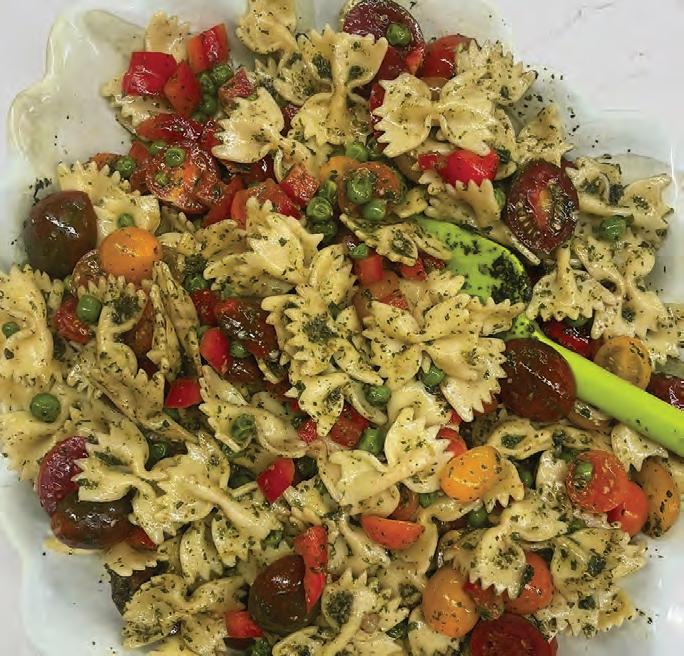
Pesto Pasta Salad
SERVES 6-8
1½ cups ditalini or bowtie pasta, uncooked
¼ cup pine nuts, toasted
½2/3 cup fresh basil pesto, store bought or homemade
½ cup frozen peas, defrosted (or fresh if you can get them)
1 fresh red or yellow bell pepper, chopped
Several fresh basil leaves, coarsely chopped
¼ cup Parmesan cheese, shredded
1 tablespoon extra-virgin olive oil
Freshly ground black pepper, to taste
1. Cook pasta according to instructions on the package. Remove from heat and strain when pasta is cooked but still firm (al dente).
2. While the pasta is cooking, toast the pine nuts in a small pan over medium heat. Keep an eye on them because pine nuts can burn quickly.When most of the nuts are golden brown, move them to a cool bowl or plate to rest. They will burn if you leave them in the hot pan.
3. Pour pasta into a large bowl. Mix in pesto. Gently toss in cherry tomatoes, peas, bell pepper, fresh basil leaves, Parmesan cheese and olive oil. Add pepper to taste.
4, Serve at room temperature. Refrigerate any leftover pasta salad in an airtight container for up to three days.
FOR VINAIGRETTE DRESSING:
½ cup avocado oil
1 lime, juiced
1 tablespoon hot honey
1 teaspoon onion powder
1 pinch chili flakes
1. Cook each ear of corn for 2 minutes in the husk in the microwave. This will yield a tender-crisp ear of corn, perfect for this salad and for cutting off the cob.
2. Cut corn off the cob and place in a large mixing or salad bowl. Add halved tomatoes, black beans, red pepper and cucumber.
3. Add feta cheese and cilantro.
4. In a small Mason jar using a whisk or in a dressing shaker, combine avocado oil, lime juice, hot honey, onion powder and chili flakes. Shake to combine.
5. Pour dressing over the salad mixture and toss gently with a spoon or spatula to blend all the ingredients.
Note: The flavor is best when served fresh or adding the dressing to individual servings.
Philosophy Biology Sociology Film Studies
Political Science Environmental Science
Computer Science Economics History
Psychology Anthropology Mathematics
Physics Chemistry Journalism Literature
Free to Dream. DRIVEN TO DO.
Art History Theater Music Theory
Linguistics Education Business Marketing
Accounting Architecture Graphic Design
Engineering Gender Studies African
American Studies Religious Studies
Communications Criminal Justice Geography
Public Health Marketing Creative
Writing Photography Astronomy Data
Science International Relations Social
Work Agriculture Nursing Statistics
Environmental
Planning Archeology
Photo by Brooklynn Kenney
Students of Red Oaks Forest School trade desks for trails
nature's classroom
BY JACKIE HOLLENKAMP BENTLEY
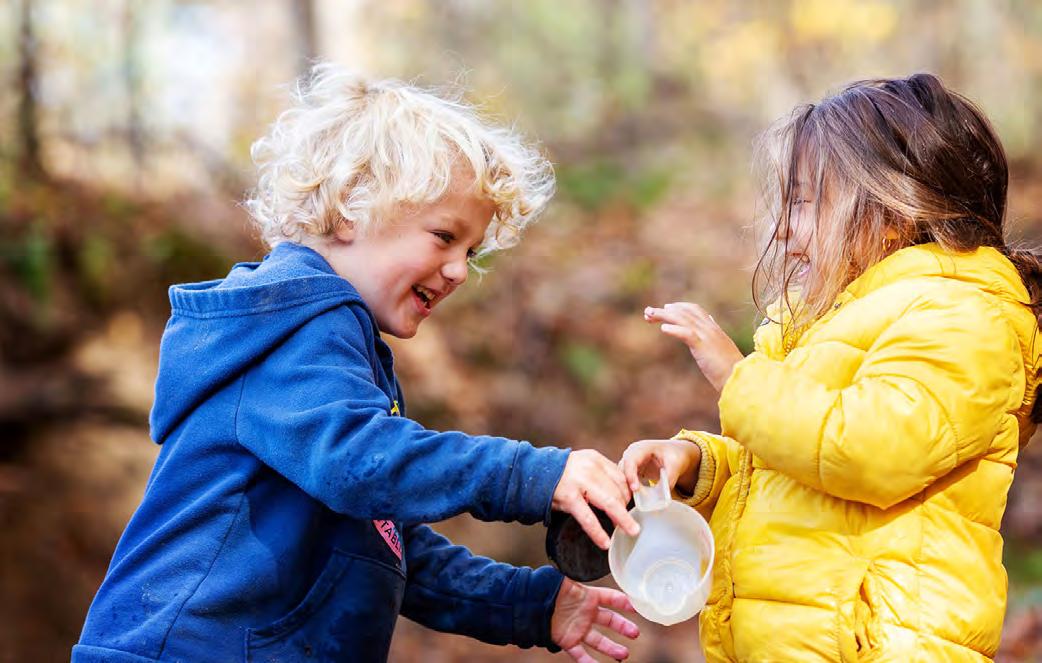
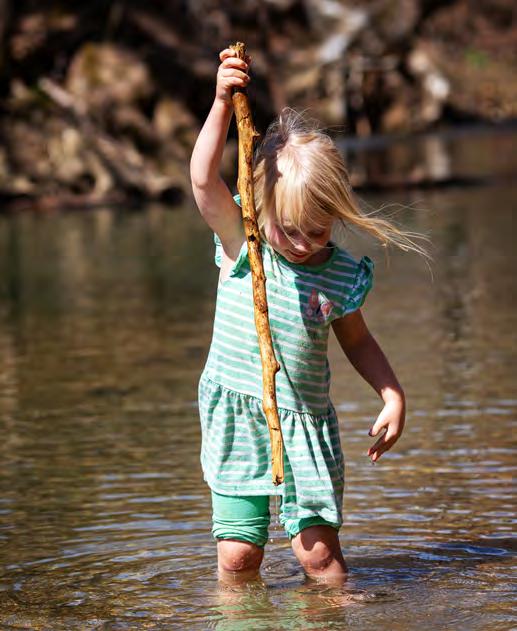
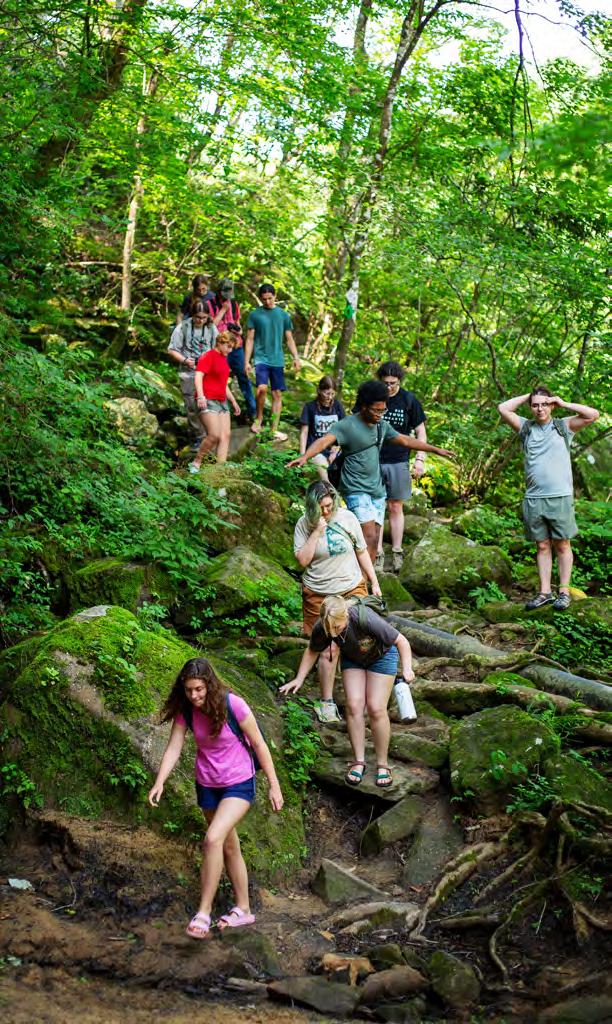
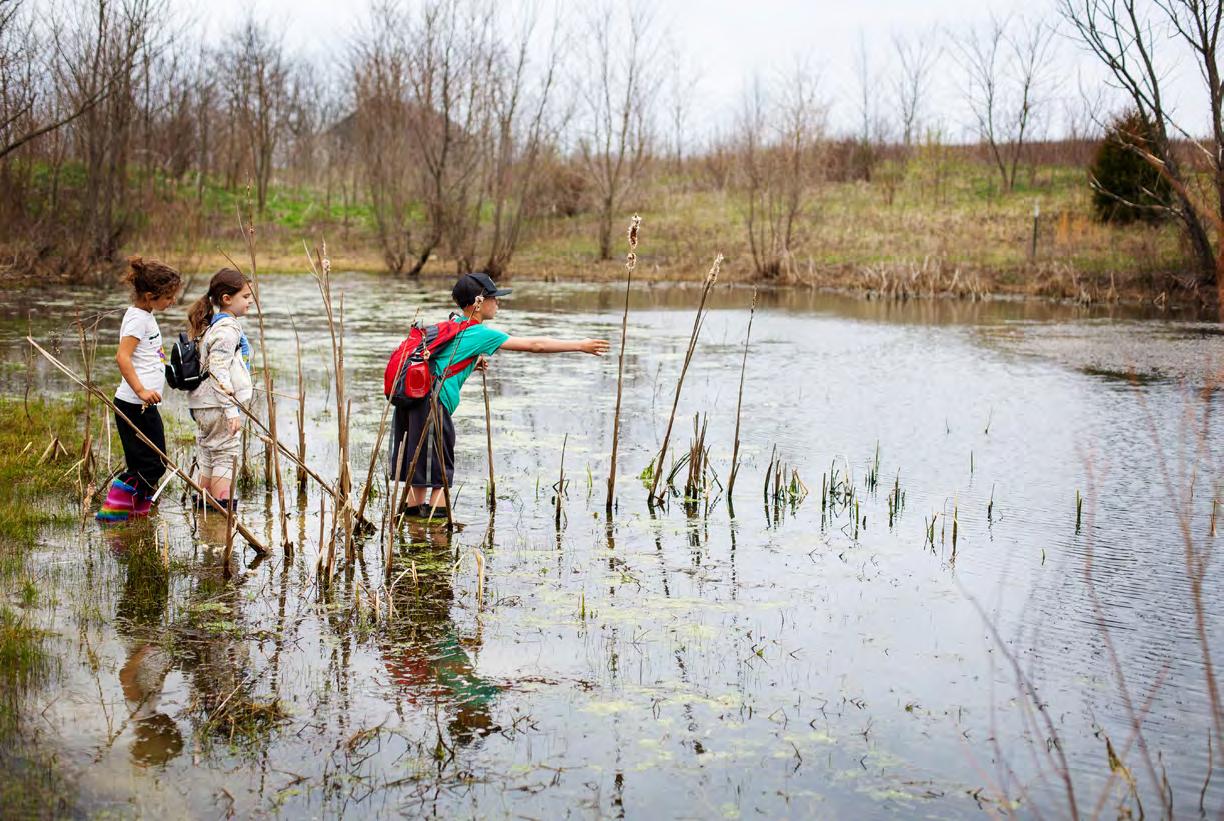
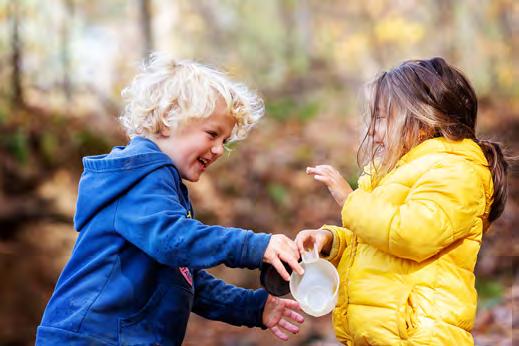
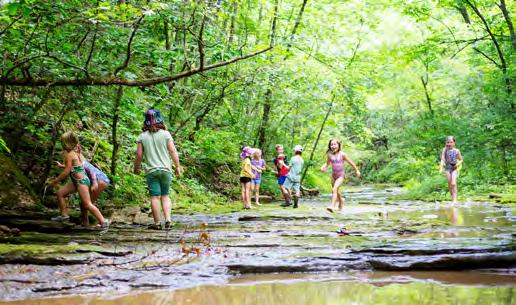
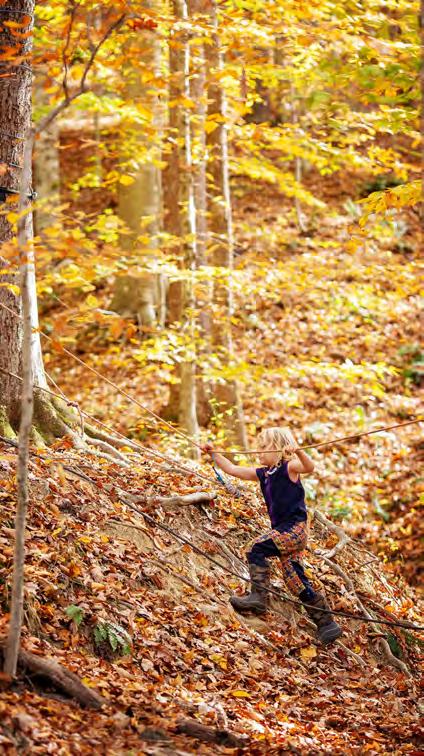
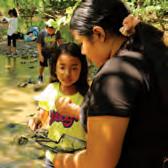
On a hot summer day in mid-June, you can hear children splashing, playing and shouting with glee, and maybe witness a few cranky tears along a creek bed on one of the trails at West Sixth Farm near Frankfort.
“Got one! Got one!”
“Splash me! Watch me jump!”
It’s probably a class of 5- to 12-year-olds led by Jenn Hazzard on an educational adventure as part of Red Oaks Forest School’s summer session. Today’s lesson includes an outside nature scavenger hunt with instructions to find specific leaves and fallen feathers, follow a bug for three minutes, and listen to bird songs.
“It’s beautiful, and you get to get your hands dirty at the same time,” said Solomon, one of the students, as
he showed off a bug crawling on a creek rock.
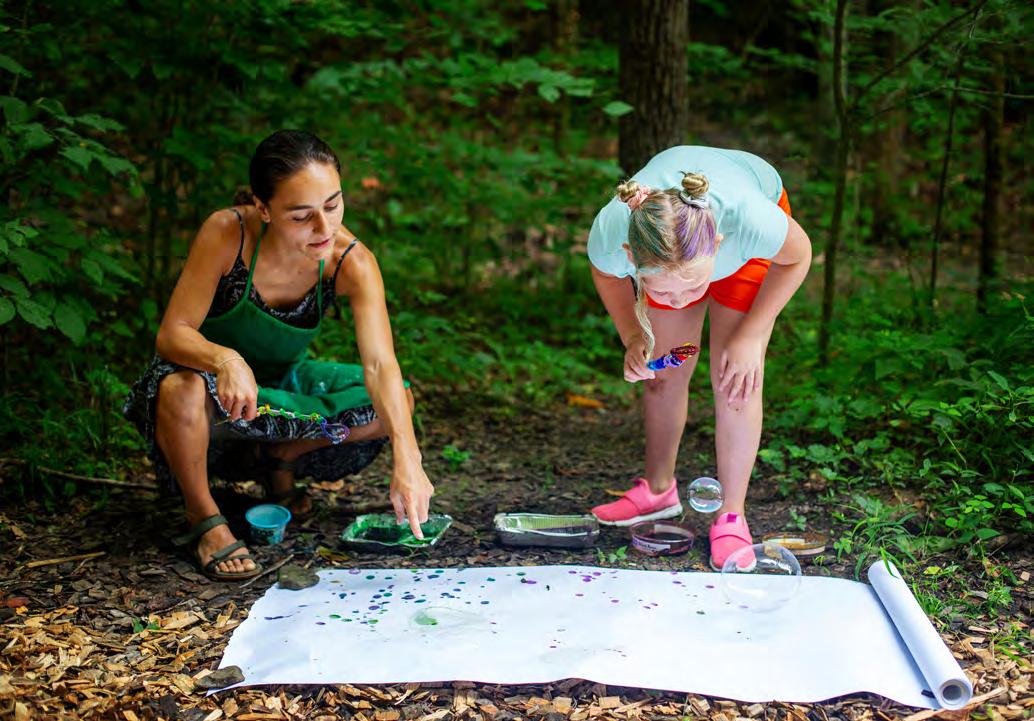
The day before, the children had been guided to find art in nature.
“We talked about the way you observe different colors, shapes and textures, introducing some low-key art terms and ideas,” Hazzard said. “Then, we collected some natural items around us, and they were able to use paint and dye not only on paper and cloth traditionally, but also the pinecones, wood chips and some of the leaves. We experimented to see if they would hold the color.”
This is just one of the learningwhile-playing classes Red Oaks Forest School offers throughout the year.
Tina Brouwer-Kraska, Red Oaks’ executive director and one of its
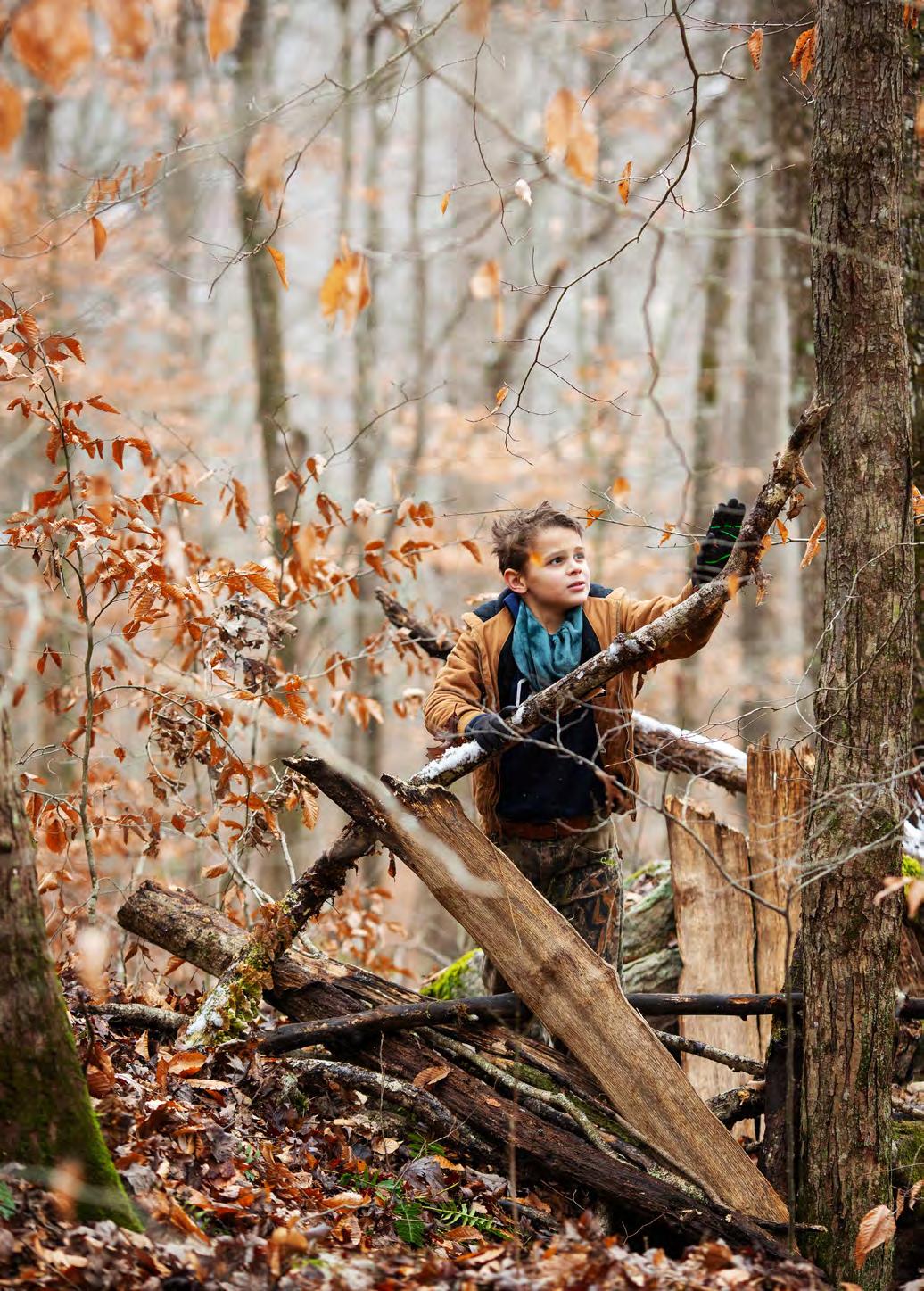
founders, said the school reaches roughly 200 children annually, getting them outside regardless of the weather to see how Mother Nature can help children learn and mature as they grow into adulthood.
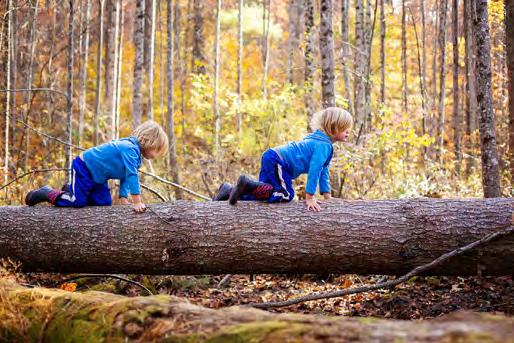
“We originally started [in the Red River Gorge region] as a small group of homeschooling parents who wanted to keep our kids and ourselves accountable to spending time in nature,” Brouwer-Kraska said. “We invited a few friends, and we were just going to commit—rain or shine, hot or cold—to this one day a month. We were going to show up and just let the kids basically have space and time to play in nature unrestricted.”
Then they noticed “cool things happening” in that unstructured playtime.
“We were seeing games develop,
seeing little worlds develop,” she said. “They started getting into different kinds of trade, like finding rocks and setting up jewelry shops, just all kinds of fun things, and just really seeing their imaginations come to life.”
That was 2014. Five years later, Brouwer-Kraska and fellow founders Hannah Harris and Melissa Rudick obtained 501(c)(3) designation and began hiring more educators, staff and volunteers. They branched out beyond
the homeschool community, offering after-school options and developing partnerships with local parks, universities and private landowners.
Among those partners are the University of Kentucky, Eastern Kentucky University’s Maywoods Environmental and Educational Laboratory, the Kentucky Waterways Alliance and Bernheim Forest and Arboretum.
“We could see that in every
educational experience—whether it’s traditional, private or homeschool— kids were lacking opportunities to connect with nature in this deeply engaging way,” Brouwer-Kraska said. “We really wanted to focus on increasing access to nature-based education … creating all kinds of different opportunities.”
Lindsay Robinson began homeschooling her children during the COVID-19 pandemic and
continues to this day. She said the day they go to forest school is their favorite day of the week.
“Red Oaks Forest School allows for curiosity and observation to blossom among nature and peers, for movement among nature to happen—that kind of safe play that is so good for kids’ development,” Robinson said. “Both of my kids— and I—have made some of their greatest friends at Forest School.”
•
Red Oaks Forest School now offers several programming options across the Red River Gorge region, plus in Lexington, Berea and Frankfort.
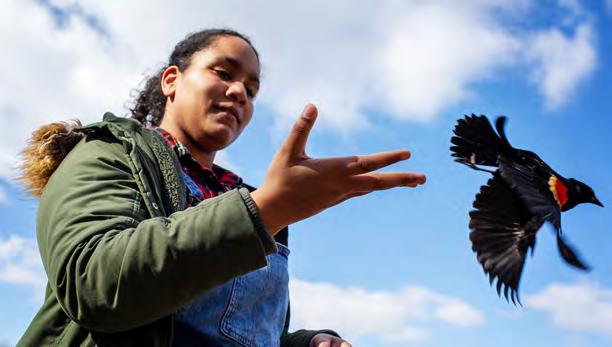
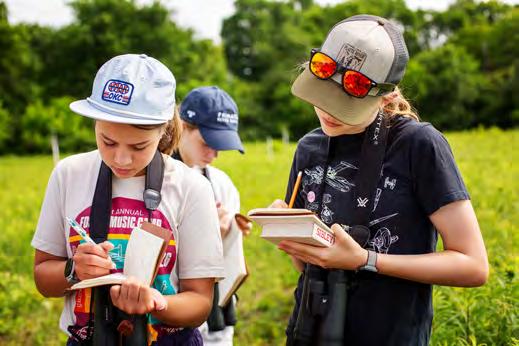
In addition to the original “forest school” concept of unstructured, hands-on learning in nature, Red Oaks has Community Connections, which features classes for all ages in hiking, birding, art, nature play and wellness practices.
The Adventures program caters to those who like more adventurous
activities, such as climbing, camping and extended hiking trips.
As part of its 2023-2028 strategic plan, Red Oaks Forest School is working to expand its reach to children in underserved and underrepresented communities. The Forest Friends after-school program works with Lexington Parks, Boys and Girls Club, Berea Kids Eat and Glade’s Community Garden to help children discover nature in their own neighborhoods and community parks.
Taking Flight – Next Level is a collaborative STEAM (science, technology, engineering, arts and mathematics) project of UK and Red Oaks, inviting 12- to 18-year-olds to learn in a field setting about Kentucky’s northern cardinals and their natural habitat and behavior.
Sorrel, 10, and her sister, Fields, 8, are regular students at the forest school and its summer programming, joining Hazzard’s class at West Sixth Farm. Fields describes her time at forest school as “great,” while Sorrel enjoys the science aspect, but that’s not all.
“Another good thing I like about this place is that it can regulate your nervous system,” she said.
John and Abby Clark, who have several children in forest school, wrote in an email that they see their children’s emotional maturity grow.
“Kids love being kids, and at Red Oaks, they actually get to do just that,” the Clarks wrote. “Their classroom interaction has a small age range, where the younger kids learn life lessons from the older ones, granting a sense of responsibility and pride. It’s a safe space where the teachers are united in their commitment to creating responsible people.
“It’s simple, unadulterated education that incorporates this massive ball of dirt we are riding into our children’s lives. They are always smiling and eager to tell us about their day, and that, to us, is a successful and impactful education.”
Brouwer-Kraska said that is what Red Oaks Forest School is all about: giving children the wonder of nature while building confidence and maturity.
“[These are] real, tangible experiences that don’t have to be in nature, but I think nature accelerates
them because you’re moving your body in ways that are so much more complicated than if you’re in a kind of structured, closed environment,” she said. “There’s just so many new sensory experiences that happen ... naturally out in nature because you’re encountering sounds and smells and tactile things that you just can’t mimic in an indoor setting. The brain needs to figure out how we’re going to deal with them in the
moment, instead of more structured experiences. It’s an opportunity to challenge those learning pathways in a really organic way.”
Part of the school’s mission is to foster children’s compassion for their fellow human, land and community.
“We are a secular organization, and we definitely want to bring people together across political, urban/rural, and religious divides,” Brouwer-Kraska said. Q
What exactly is a forest school? With roots dating back to 19th century Scandinavia, the education model provides outdoor spaces for school-age children to holistically learn via play, exploration and hands-on experiences.
The model is now widely used across Europe, Australia, Canada and the United Kingdom. Forest schools eventually made their way into the United States. Red Oaks Forest School began in the Commonwealth in 2014. Here is a partial listing of other forest schools in Kentucky.
Forest Schools IN KENTUCKY
LA GRANGE
The Woods Forest School
The Woods Forest School is located on 60 acres of private land owned by founder Jessica Rumsey. Its mission is to “provide a Christian outdoor learning environment that deepens compassion for others, strengthens creativity and develops a love of learning and care for nature, all through play and inquiry.”
THEWOODSFORESTSCHOOL.COM
LOUISVILLE
Swallowtail Forest School at the Louisville Nature Center
Swallowtail Forest School is open to children ages 3 to 5 years old. While following the Jefferson County Public School calendar, its play-based, student-led outdoor classroom gives students an unstructured, educational environment that is “safe, welcoming and fun.”
LOUISVILLENATURECENTER.ORG/FORESTSCHOOL
GOSHEN
Thrive Forest School at Creasey Mahan Nature Preserve
Located in the woodlands of Creasey Mahan Nature Preserve, Thrive Forest School offers nature-based education “without walls.” Programs include pre-school classes, after-school “adventures” and summer camps.
CREASEYMAHANNATUREPRESERVE.ORG/THRIVE-PROGRAMS
LEXINGTON
Evergreen Nature School
Evergreen Nature School is offered to children ages 3 and up and includes pre-school and homeschool programs in outdoor classrooms throughout Lexington’s parks, creeks and trails.
EVERGREENNATURESCHOOL.COM
The Academies of Louisville initiative sets students on a path to real-world careers
More Than a Diploma
BY PATTI NICKELL
One of the dilemmas of education is just how to define it. Is it all about becoming a wellrounded individual through a classical curriculum of Latin, Shakespearean drama, art appreciation and history? Or is it more about acquiring the skills to become employable in the ever-evolving workplace?
For centuries, the answer was clear: The more one knew about a variety of subjects, the better educated he/she was considered.
In today’s digital and technological age, things aren’t so simple. Most employers are looking for a specialist rather than a generalist.
A plumber must know more about leaky toilets than an iambic pentameter verse. A medical professional need not be able to translate Ovid’s Metamorphoses from the original Latin, just be familiar with basic Latin terms for anatomy.
As more cities rethink how public education can better prepare students for real-world success, the
Academies of Louisville is quietly emerging as a viable model.
•
•
•
But wait … Isn’t this just fancy terminology for vocational schools?
Not at all, insists Kim Morales, Jefferson County Public Schools’ regional assistant superintendent of high schools, who has been with the Academies since its 2017 launching.
“That is a perception we have been battling from the start,” she said.
Kim Morales
Reagan Young Kody Raymond Jaden Bowman
Explaining that the Academies is neither strictly college prep nor strictly vocational, Morales said it is a hybrid of both, preparing students for both college and a career.
“The Academies bring together traditional knowledge and career technical education through highly relevant learning experiences gained through meaningful community collaboration,” Morales said.
The Academies model works like this: Every student in JCPS, upon starting his/her freshman year, selects from 154 career pathways, with options including healthcare science, media arts, business, engineering and skilled trades.
Morales stressed that the student’s chosen pathway does not replace the subjects required to earn a diploma (yes, they will still study Shakespeare and American history).
What they will do differently is devote one hour a day to their careerpath elective, and they must do it in tandem with the Academies’ community partners, who provide mentoring and real-life work experiences.
“This program could not work without an invested community,” Morales said.
More than just another vocational track, it’s a comprehensive, districtwide redesign of what public education can look like when it’s directly aligned with a city’s professional workforce.
Morales said Louisville modeled its program after a similar one in Nashville.
“A group of educators and business leaders, unhappy with high school graduates’ work readiness, traveled to Nashville to see how they had made it work,” she said.
The group had the support of then-Mayor Greg Fisher and the
promise of combined monies from grants and the school district to fund their ambitious idea. Morales said the success of Nashville’s initiative emboldened them to forge ahead with their own plan.
“We now have a friendly banter with our Nashville counterparts,” she said with a laugh. “We tell them that while we were inspired by them, we think we have surpassed them in our implementation of the model.”
• • •
To date, more than 20,000 students in all 15 Jefferson County public high schools have taken advantage of the initiative, partnering with some 435 businesses and community organizations (a meteoric rise from 11 students who signed on when the program first started).
One of those students is Jaden Bowman, a 2021 graduate of Southern High School. During his freshman year, he was given the opportunity to choose a curriculum that, in addition to standard requirements for graduation, included a career pathway curriculum as an elective.
Bowman, who said he has always been good with numbers, chose the financial services pathway, and under the guidance of finance professionals at Class Act Federal Credit Union, he set about learning the ABCs of managing money and building wealth.
“Without the Academies and their community partners, I would have had to learn about money management the hard way—through trial and error, the way my parents and grandparents did,” Bowman said.
Not only did he become proficient in balancing his budget, he obtained the tools to graduate “career ready.”
After a brief stint at Subway, the only job he could find during the COVID19 pandemic, Bowman’s experience at
the Academies paid off.
His Class Act mentors sought him out and offered him a job as a teller. Over the next five years, he worked his way up to his current position as branch manager, where he supervises a staff of four.
Bowman credited the tangible skills he mastered at the Academies for his rapid rise.
“Before that, it seemed everyone had a vision for me except me,” he said.
Today, that vision is crystal clear.
While he sees himself in a future CEO position, Bowman also gives back to the community that helped him attain his goal. He is active in business development for the Credit Union, but he said his greatest satisfaction came from teaching financial literacy classes to public school students from elementary through high school.
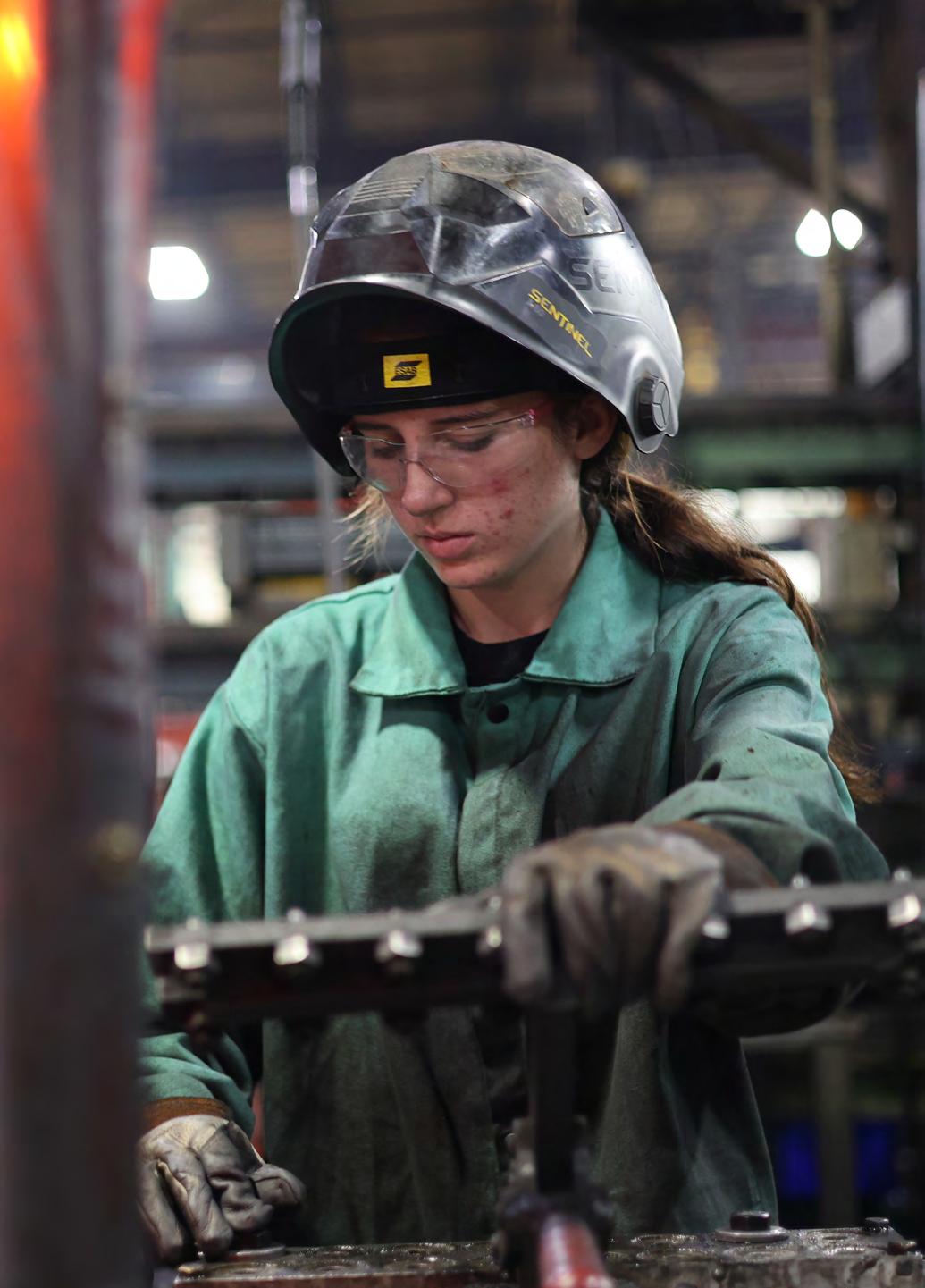
Kody Raymond, a 2020 graduate of Jeffersontown High School, took a different track. From his first machinetool class his junior year, he discovered
HOW DOES UPIKE
MOVE MOUNTAINS?
85.5% First-to-second year retention rate Back-to-back
RECORD
ENROLLMENT 2023-2024 & 2024-2025
FREE
Textbooks and course materials for all students
he had an affinity for working with such tools. Fast forward five years, and today, Raymond is a top-level machinist at Lantech, where he earns an excellent salary and a quarterly profit-sharing bonus check, which he said definitely comes in handy, since he is a new father.
“Starting in the Academies at J-Town at such an early age gave me the jumpstart I needed to find a career path and build a life,” Raymond said.
Reagan Young comes from a family of nurses, so it was no surprise that when it came time for the Valley High School student to choose her career pathway, it was in the health and medical field. During her senior year, Young saw her future begin to take shape.
“Some folks from Norton Healthcare came to the school and told us they had job opportunities for high school students to work with them,” Young said.
She began working 12 hours a week with Norton while taking her necessary classes to graduate. Three years later, Young is a patient care associate with responsibilities that include taking vital signs, stocking inventory and interacting with patients.
She currently balances her patientcare duties with studying nursing at Jefferson County Technical College.
“The best part is that as a Norton Scholar, I will graduate debt-free and with a guaranteed job waiting for me right here, and that is all because of Academies of Louisville,” Young said.
• • •
What happens if students discover they have chosen the wrong pathway? They have anticipated that and planned for it, Morales said.
“Everything we do is intentional, starting with the students’ freshman
year, when they are exposed to what’s available in the upper Academies (grades 10-12),” she said. “We encourage them to choose carefully, as we want the next three years to be a journey.”
But when you’re dealing with 14- and 15-year-olds, you can’t always expect adult decisions. If a freshman chooses a pathway and then discovers he/she doesn’t like it, can they change direction? Yes, assured Morales, emphasizing that the Academies are designed to reward students, not punish them.
them or that they aren’t suited for, they have a chance to select another one,” she said.
“We want them to succeed, so if they have realized that they chose a pathway that doesn’t really interest
Morales said they urge students to take their time deciding the second time around because everything about the Academies is intentional and designed to further
their career journey.
As an example, Morales cited a pre-law path student who is reading To Kill a Mockingbird in English class.
“The teacher may ask those pre-law students to evaluate Atticus Finch as an archetype through their lens,” she explained. “Then, a local law firm that is an Academies business partner may invite these students to present their perspectives to a panel of lawyers. This interaction helps them expand their understanding beyond their reading.”
That, after all, is their primary objective.
“The main thing we want the Academies do for students is allow them to leave with something more than a diploma,” Morales said. Q
Discover a Christ-centered community where you’ll learn, lead, and belong.
The Grand Canyon of the South
Breaks Interstate Park is a breathtaking outdoor recreation destination with a range of activities in all seasons
BY KIM KOBERSMITH
PHOTOS COURTESY OF BREAKS INTERSTATE PARK
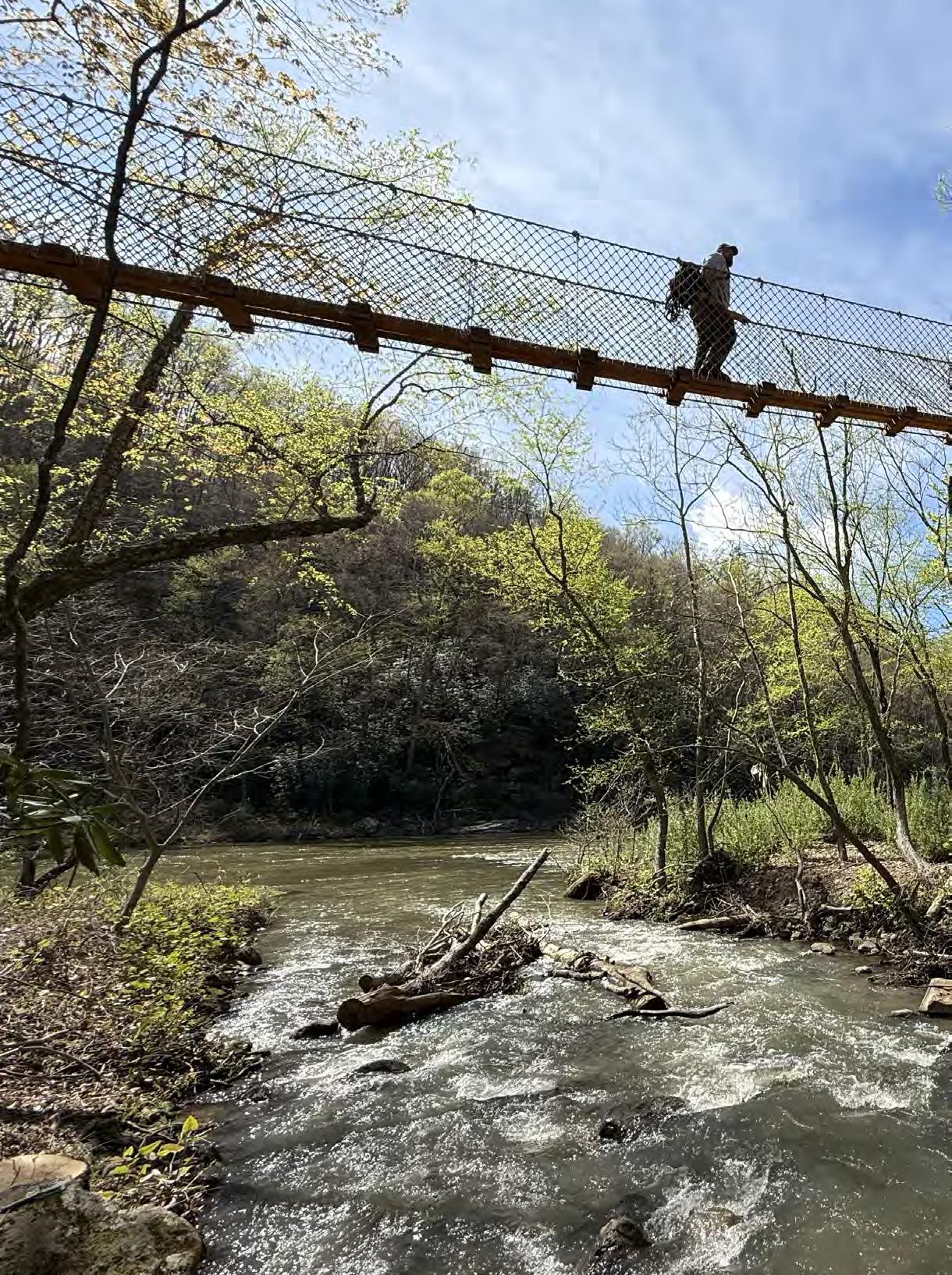
Opposite page: A hiker crosses the second swinging bridge where Grassy Creek meets the Russell Fork.
Stopping at the Towers Overlook on the Breaks Interstate Park drive is a great introduction to the geologic and human forces that have created this special place. Just a short walk from the parking lot, the overlook exposes an unusual rock formation—a craggy island encircled by the horseshoe bend of the river that carved it out. Standing there, I could hear the soft crash of the rapids almost 1,000 feet below. I saw a white flash of bird wing against a rock face, possibly a peregrine falcon, which were reintroduced into the park in 2007. The breeze tickled my skin. I felt my breath deepen and my pace slow down as I entered this world of interplayed rock and water.
The experience was one of the many highlights of my recent trip to the Eastern Kentucky park. Breaks Canyon is its centerpiece. Sometimes billed as “The Grand Canyon of the South,” its 1,000-foot depth makes it one of the deepest gorges east of the Mississippi. The north/south fissure cuts through Pine Mountain, a 125mile ridge running along the southeast border of Kentucky and Virginia. At Breaks, the Russell Fork of the Big Sandy River has carefully and slowly carved out one of the few passes along its entire span.
The gorge is impressive and wild, but the landscape bears the mark of humans—a railroad forged through the inhospitable terrain and a formerly impassable river channel
blasted open. What can’t be seen— only imagined—is the harvesting of an entire forest of massive yellow poplar trees. The landscape is forever altered, but it’s still exceptional.
A 1930 newspaper article in the park archives declared that the Breaks was destined to be a national park. World War II interrupted that plan. Grassroots protection efforts took over, with Pikeville resident and businessman Kelley Day leading the charge. The Breaks Interstate Park Commission, consisting of four members from each of the two states, formed in 1954. Kentucky’s representatives include the lieutenant governor, the commissioner of Kentucky State Parks, and two residents of Pike County.
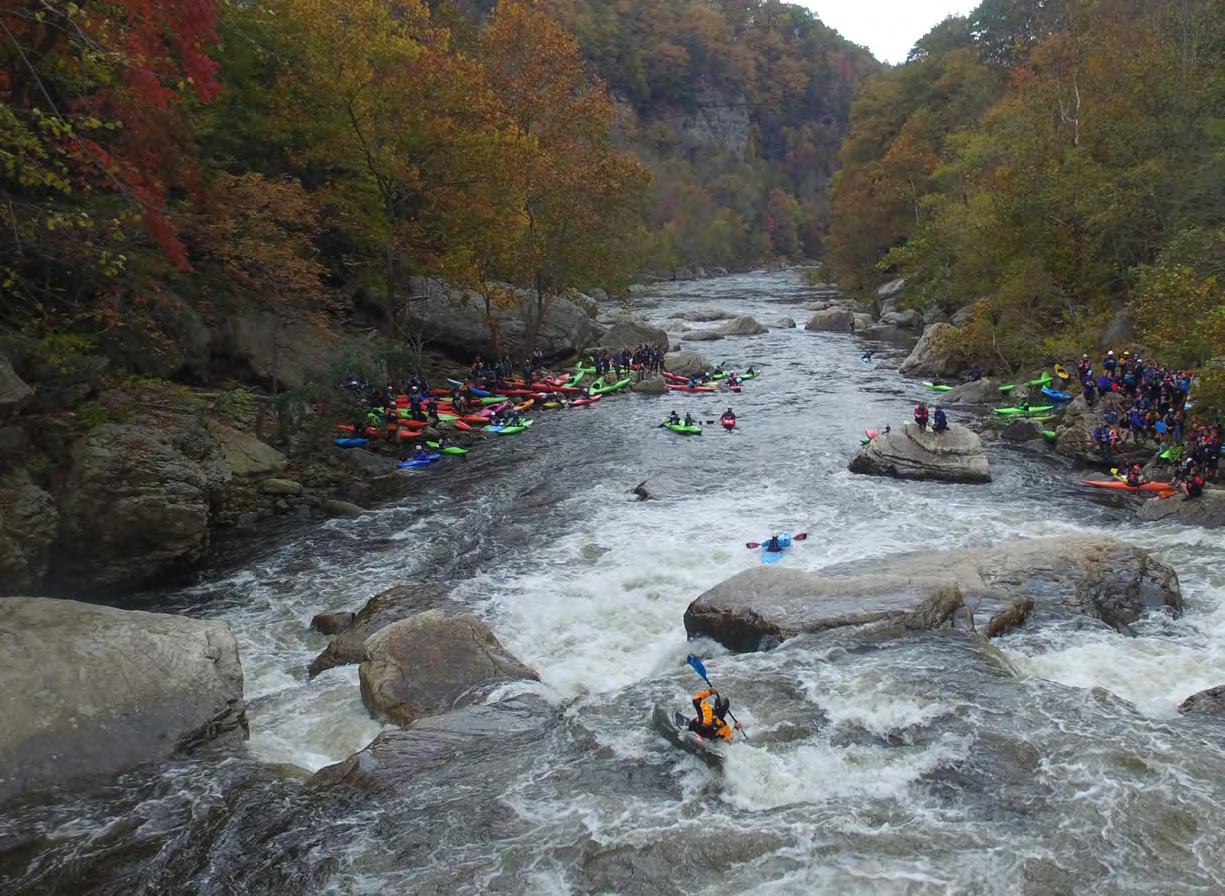
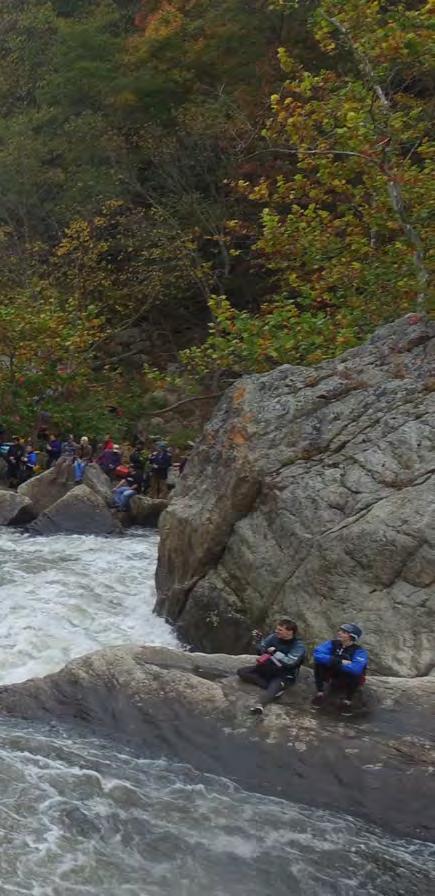
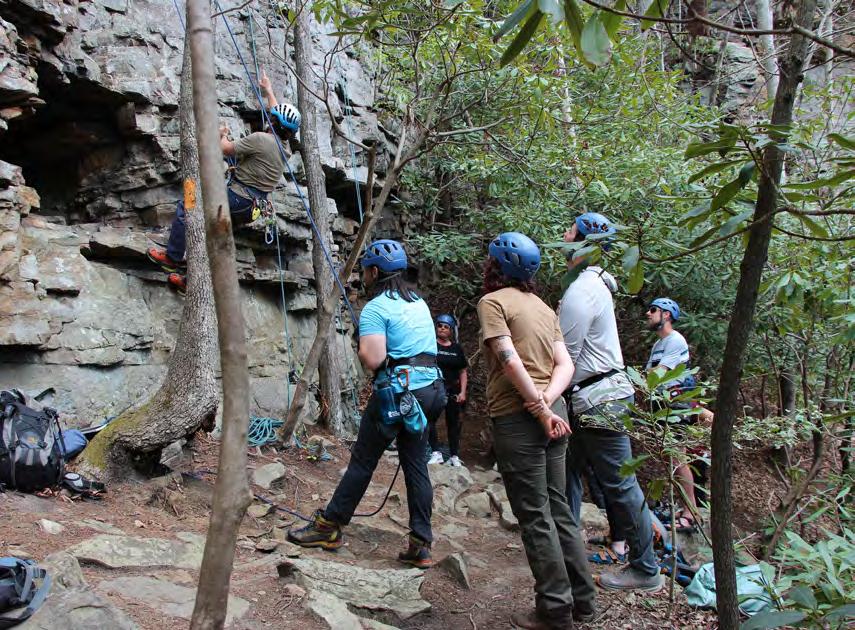
Left: Kayaking is one of a range of activities in the park; below: A rock climber starts up the cliff while others look on.
For further information on Breaks Interstate Park, visit breakspark.com
“It’s not uncommon for national parks to cover multiple states, but it’s really rare for a state-level park,” said park superintendent Austin Bradley. “Commission members from Kentucky and Virginia vote equally on matters pertaining to both sides.”
Bradley has been at the helm of the 5,000-acre park for 16 years. Under his leadership, Breaks has evolved into an outdoor recreation destination with a range of activities in all seasons. These outdoor pursuits highlight the geologic and biologic uniqueness of Breaks and draw groups that align with the park’s mission.
But there also is a financial component to the offerings. Because it is an interstate park, taxes provide
only 18 percent of the Breaks budget—about one-third the level of a typical state park. Guest fees generate the rest of the funding, partly through a day use fee of $5.
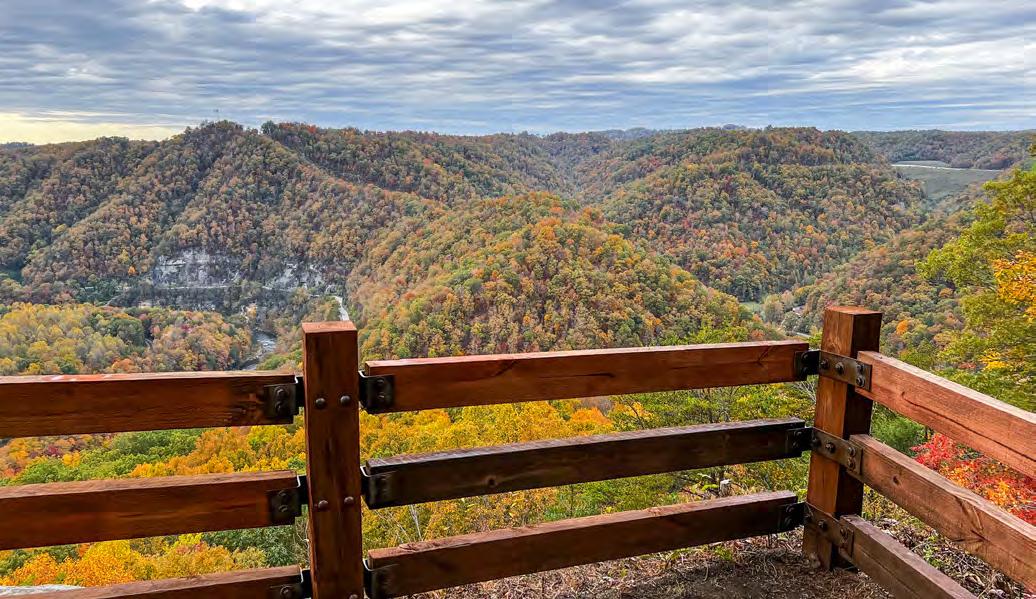
Adventure awaits visitors to Breaks Interstate Park. Colorful foliage makes upcoming autumn one of the best times to visit.
WILDLIFE AND WHITEWATER
After the eastern elk was declared extinct in 1880, eastern states started working with western states to repopulate the Appalachians. Kentucky’s efforts were the most successful. It now has the largest elk herd in the eastern United States. In 2012, Virginia began elk repopulating
efforts with animals from Kentucky. Breaks is in the middle of the elk restoration zones of both states.
Fall is high drama in elk herds as males bugle and compete for females during the rut. Viewing trips from the park begin in August. Guided trips benefit from local expertise and the ability to get up close, but it’s not the only option. On my visit, I managed to spy elk at one of four public viewing areas within a 15-minute drive.
Pine Mountain is one of the few relatively intact migratory corridors along the Appalachians and gets an influx of bird species in the fall, like Swainson’s warblers and scarlet tanagers. Pine Mountain also is critical black bear territory, and a healthy population thrives in the park.
The Russell Fork is a worldrenowned whitewater stream, dropping nearly 280 feet through the gorge. During the first four weekends in October, planned releases from the John W. Flannagan Reservoir upstream create prime rafting conditions. The gorge is technically challenging, for experienced whitewater boaters only, and rafters or kayakers must be self-reliant.
ON THE GROUND AND IN THE AIR
More than 20 miles of trails crisscross the park. An interpretive guide details trees and rock formations along the short Ridge/ Geological Trails Loop. The Camp Branch Trail enters the site of an old lumber camp, with artifacts like a steam power hoist system and Peavey hooks. An overlook view sits at the base of the Towers formation.
The trail system is expanding, and
during my visit, a companion and I hiked one of the newer trails. We drove out of the core of the park—and away from the cliffs—to the Mule Skid Cove trailhead. This is a moderate route to river level, beginning in an open understory cove with ferns and mossy rocks. As rhododendron thickets closed in, the trail dropped down to Grassy Creek, and we crossed the first of two swinging bridges. Here, the water dropped down small waterfalls, coursed down rock chutes, and streamed across bedrock. The second swinging bridge led to the creek’s confluence with Russell Fork and the end of the gorge.
For those who want a bird’s-eye view, a zipline experience soars 200 feet in the air along the rim of the gorge. Constructed with natural materials into rock outcroppings, it’s designed to blend in. Knowledgeable guides talk about the natural history of the area—its geology, hydrology,
botany and biology.
A decade ago, Bradley and area rock climbers developed an exceptional partnership to establish climbing in the park. The 350-plus routes cover all levels of experience. A gathering of park management, climbers, hikers, biologists and emergency personnel met early on to develop the climbing management plan, which is required reading for all participants. Its ethic is to preserve vegetation, respect the needs of wildlife, and have good trail etiquette. A couple of times a year, the park hosts introduction to climbing events with provided gear and guides. Southeast Mountain Guides (southeastmountainguides.com/ourlocations/breaks-interstate-park-kyva) offers outfitted trips to the Breaks.
FREEWHEELING
Breaks is the only state park in Virginia or Kentucky connected to an
A view of fall foliage from Stateline Overlook.
ATV trail system, according to Bradley. Virginia’s Spearhead Trails run more than 200 miles. There are access points at Breaks Interstate Park and its outpost location, Southern Gap. A reclaimed strip-mine site, Southern Gap also offers camping and a visitor center. It is the park’s prime location for elk viewing. It was added only recently to the Breaks system, and while it’s a separate site, the two are connected by road and the ATV trails.
Southern Gap’s trails are also open to mountain bikes, as are select locations in the main Breaks park. The Flatwoods multiuse trail isn’t long and isn’t a primary destination, but it offers a nice complement to other activities.
FOR ALL AGES
For those who like to drop a line in the water, Breaks has river and lake fishing. Russell Fork is for more serious anglers, playing host to trout and smallmouth bass. For more casual folks, the nonmotorized Laurel Lake has largemouth bass and catfish. A license is required, and while both Kentucky and Virginia licenses are valid on the lake, the states don’t yet have a reciprocal agreement for the river. Occasional interpretive programs offer the chance to give flyfishing a try.
Laurel Lake is in the core of the park and often is the visitation hub for families. Canoes, kayaks and paddleboats are available to rent seasonally, and the neighboring water park has slides and zeroentry pools. Performances at the bustling amphitheater include concerts, theater productions and storytelling.
The Breaks Interstate Park Visitor Center houses a small museum and a
wide range of information. On-site accommodations include the motelstyle lodge, cottages, cabins and camping—from primitive sites to RV hookups. The Rhododendron Restaurant serves home-style meals with floor-to-ceiling views of the gorge. Fall is the busiest season at the park. Weekends can fill up quickly, but camping often is available on weekdays.
A driving loop passes most of the main buildings and trailheads but also
short walks to some of the best views of the gorge. One of our tamest outdoor adventures was watching the sunset at the west-facing Stateline Overlook. There, we watched the sun sink below the horizon with a woman who had lived in Pikeville her whole life but had never before visited Breaks. She was afraid of heights and walked with a cane, but that didn’t stop her from appreciating the view of the setting sun, the craggy Breaks and the river below. Q
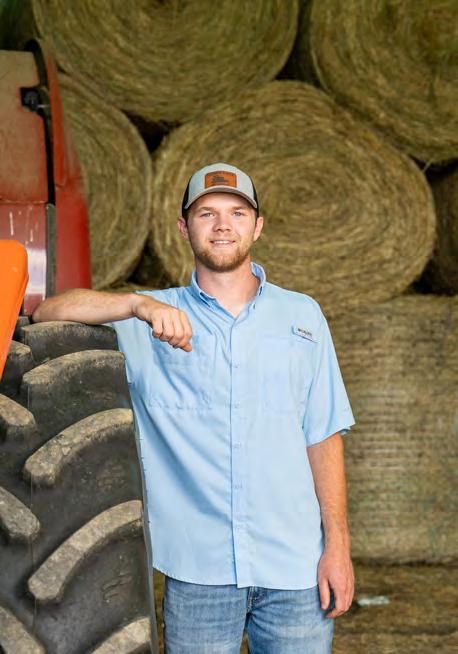
An award-winning full-time farmer, 22-year-old Nathan Clark raises cattle and hay on the land his father and grandfather farmed
LIVING THE FAMILY DREAM
TEXT + PHOTOS BY ABBY LAUB
FFA + STAR FARMER
When Nathan Clark was named a National FFA Organization American Star Farmer finalist in 2025, it was a reflection of years of work and ingenuity at a young age.
“When they told me I was a finalist, I was very excited. I never thought I’d make it that far,” he said. “We’ve only had a small handful from Kentucky as long as FFA has been a thing, so that was pretty cool that I was one of them. It was really awesome being recognized on a national stage.”
Clark praised FFA for helping him get as far as he has in farming at such a young age, get out of his comfort zone, and grow as a person.
The annual award is one of four American Star awards presented at the National FFA Convention & Expo—Star Farmer, Star in Agriscience, Star in Agricultural Placement and Star in Agribusiness.
An FFA required activity allows students to learn by doing—owning or operating an agricultural business, working or serving an internship at an agriculture-based business, or conducting an agriculturebased scientific experiment and reporting results.
In his selection video, Clark aid, “I hope to make an impact, so people see farming’s not about tearing the ground up and spending money, but it’s about maintaining the ground and taking care of animals.”
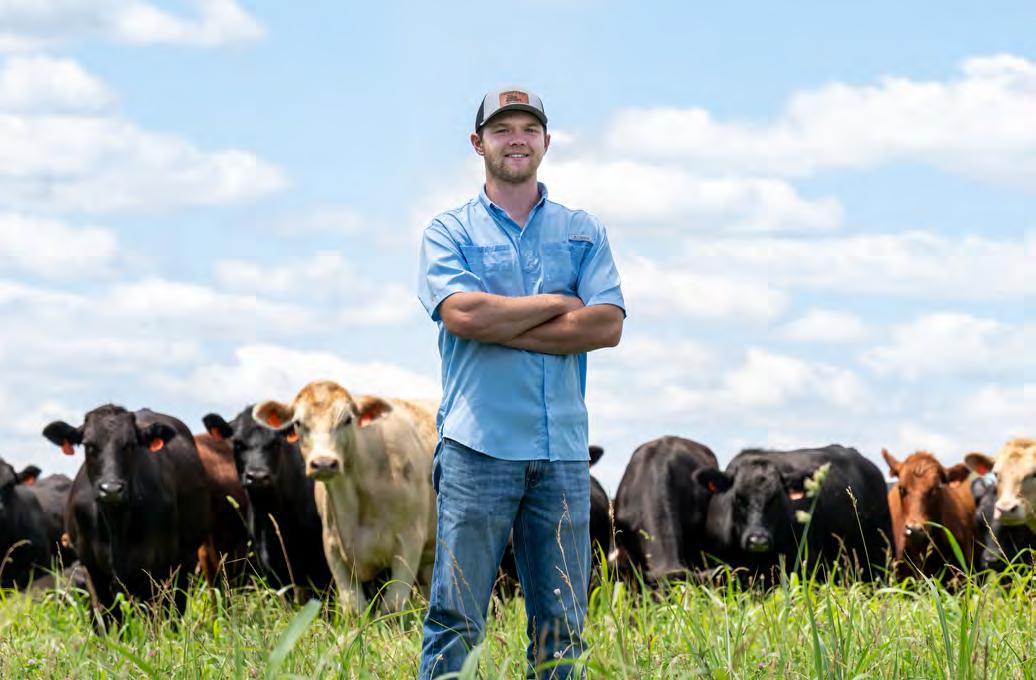
Nathan Clark paused, head hanging out the window of his big Chevy truck, peering with a grin at the cattle clustered under the trees in a pasture of his Marion County property, Green Gate Farms.
“I’ve never called them with anyone else watching me in the truck,” he said with a laugh, and then he hesitatingly called the cows over, so we could see them and take some photos. “OK, here they come. But they’re going to wonder what the camera is doing.”
We got the photos and bounced back down the rough road through the field to the breezy front porch of his farmhouse, once owned by Clark’s late grandparents.
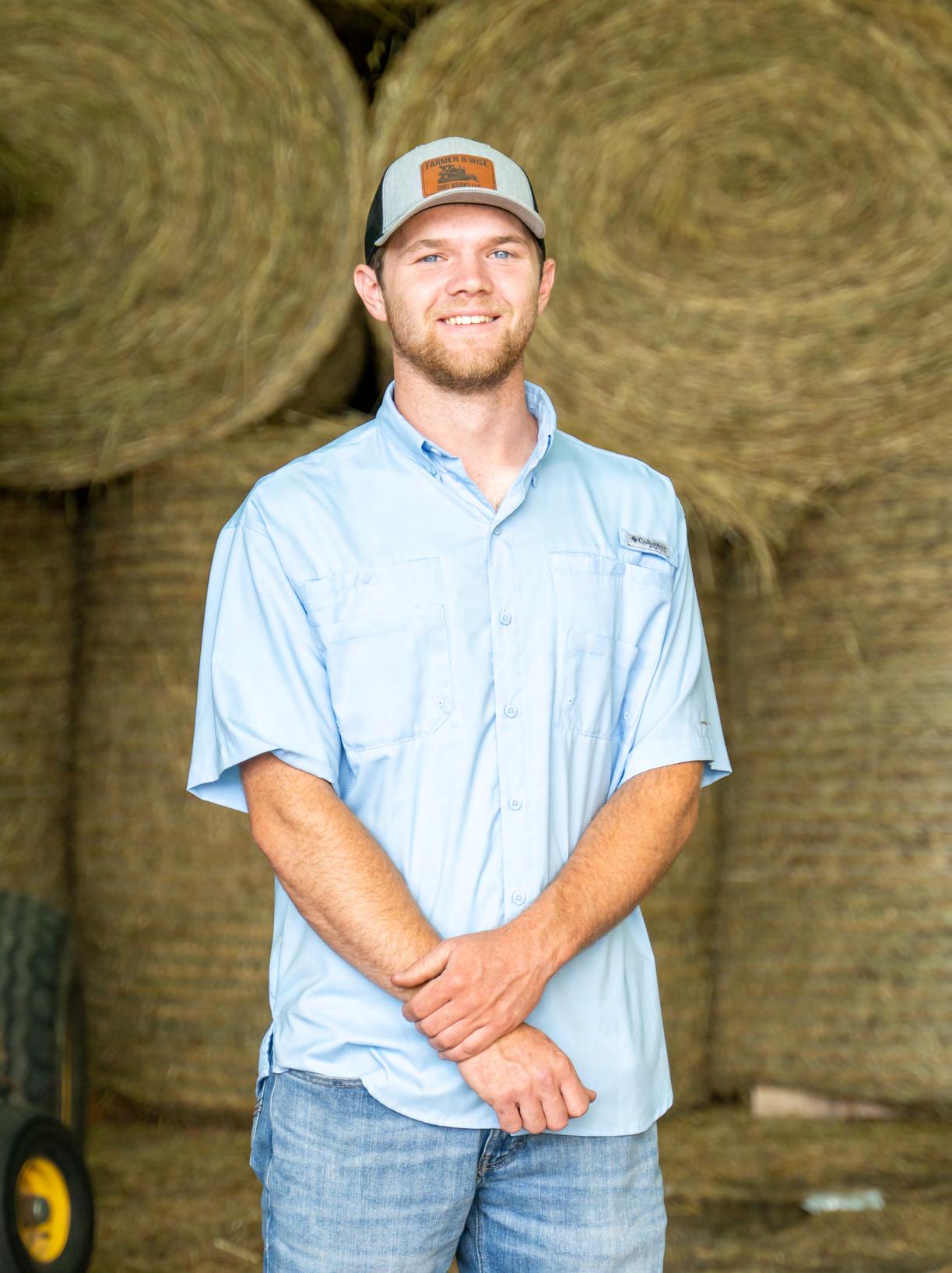
Clark, 22, a third-generation farmer, discussed the various trends and challenges of farming in 2026. It’s a topic with which he is familiar despite his young age. He worked the farm alongside his late grandpa and late father since he was just a tot, and in 2025, he was named a finalist for the National FFA Organization’s American Star Farmer.
Clark’s Green Gate Farms entails 180 acres that he runs, and, in total, he farms close to 600 acres, including rented land. He owns approximately 165 cows. And he runs family land with his two sisters. He hopes to expand his acreage before long.
“Most of the people who are still farming are in the big operations, and they’re taking up all the ground from the smaller guys like myself,” Clark said, noting that many children of farmers opt to sell the land they inherit for a steep profit. “Farming is hard work, and a lot of people now don’t want to do hard work … [These facts] do play tricks in your mind a little bit because most of the [people]
farming now don’t have kids, or their kids see the land is worth a million dollars and they will sell it. Huge farms will buy it, and it’ll cut us little guys out.”
He said the bourbon industry buys up land in the area, “so it’s made the ground market around here insane.”
The options for someone like Clark? Sell land and work for one of the massive corporate farmers, or farm on a small scale and have a day job somewhere else. His father was a schoolteacher, and his grandfather was a pastor.
•
•
While living and going to school in Lexington, Clark was busy learning and setting up the farm’s future alongside his father, who died unexpectedly when Clark was just 13 years old. His grandfather passed when he was 16, followed by his grandmother when he was 20, leaving Clark to run the family farm on his own before most of his peers had even declared a college major.
“I always grew up wanting to be a farmer,” he said. “And when my dad passed away, and then my grandpa passed away, the realization kind of came that I’ve got an actual shot at being a full-time farmer just because of the circumstances. It was probably late middle school or early high school when I realized it fully as a legitimate possibility.
“It wasn’t until my senior year that my mom finally came to the realization that I wasn’t going to college, and I was going to be a farmer. At that point, she had realized the work I had put into it and that I was taking it really seriously and was determined to turn a profit.”
Clark spent his youth learning from the best in the business in the
FFA system while attending Locust Trace AgriScience Center for high school—a foundation that prepared him well on the agriculture and business sides of farming.
Clark has implemented new practices on the family farm while dealing with the pressure that comes with the trade—such as making payments on a tractor, the unpredictability of weather and price structures that are out of his control—and worrying over his valuable “merchandise” that’s out “standing in the field.”
“On top of that, you’re working alone, and it’s not an 8-to-5 job,” Clark said. “Last night, I was out until almost midnight. You get paid for it, but you can’t keep track of your hours. But I really enjoy what I do. I think that is the biggest thing. There is a tight-knit network of farmers around here, and we’re all fairly close.”
There are a few young farmer peers
with whom he bounces ideas, and though he’s learned from the “older guys,” he’s also trying new things.
“Agriculture has really changed in the past 20 years, and there’re a lot of [people] who are still in the older phase of ‘Well, it’s always worked,’ so they don’t need to change it,” Clark said. He is interested in alternative practices that will generate higher yields because they are better for the land, such as rotational grazing.
“It’s really healthy for the soil; you have much better yield on the fields, and the cows are in a better body score and condition,” he said, noting that sustainable practices feel intimidating to longtime farmers because they are new to them and cost money. For him, it’s paid off. When spring brought drought conditions, his fields fared much better than others because of his rotational grazing practices.
Clark pays attention to things like the opposition to the herbicide glyphosate and other controversies. He said that farms are not going to overuse pesticides or herbicides because they are too expensive.
“Yes, there is some overspray, but we aren’t the issue, because the chemicals are expensive,” he said. “The people spraying their yards are the problem.”
If Clark were to go totally organic and non-GMO on his farm—which is not his plan—he said the prices of his meat would “go insane.”
Rotational grazing helps combat the overuse of some agriculturalrelated chemicals that consumers are trying to avoid.
“I haven’t put any fertilizer on cattle pastures in probably five years, because I don’t have to,” Clark said, noting the fields that his cows haven’t grazed need significantly more fertilizer to yield a strong crop.
BY THE NUMBERS
According to the Kentucky Department of Agriculture (KDA), the average farmer’s age in Kentucky was 57.1 in 2022, the year of the most recent U.S. Census of Agriculture. That’s an increase from 56.2 in 2017. The average age of a farmer in America in 1945, according to the United States Department of Agriculture (USDA), was 48.7 years.
As of 2022, there were only 296,480 farmers under 35 in the U.S., representing just 9 percent of all agricultural producers in the country. Mirroring national trends, the USDA reported a 20 percent decline in the number of Kentucky farms in the last 20 years—from 86,541 farms in 2002 to 69,425 in 2022. During that span, 1.4 million acres of Kentucky farmland were lost.
“My grandparents didn’t want to do rotational grazing. When my grandpa died, I started farming with my grandma and bought her out when I was in high school. I showed her new business plans and actual profits and losses on that and how doing this can benefit and create higher income.”
• •
Clark is disappointed he didn’t have more time to farm with his father.
“I think my grandpa would be proud of what I turned it into, and I don’t know that he realized what it could turn into,” Clark said. “And my dad—it was always our dream to farm together. We always said, ‘I’ll buy the truck, you buy the trailer,’ and I think he’d be really proud of what I’ve gotten to do.”
Clark hopes to grow the farm just a bit more—to buy more land and increase his herd. For now, Clark works with one part-time employee.
“Everything takes time, and I realize that, but I’m trying to go as
quick as I can,” he said, noting that prices can make it difficult. Beef prices are high right now.
Clark is carving out a market for his beef, working with local stockyards and selling in Whole Foods under the Lancaster-based Marksbury Farm label. He does other “finishing” work on his farm and some breeding. He has a mixture of Hereford, Black Angus, Red Angus and some crosses, ultimately aiming for the best overall cows for his land that will be healthy, cost efficient and desirable for the market.
His beef is all grass-fed and antibiotic free—“all the fancy labels,” he joked.
Back to the truck: Clark’s call worked, and I admired the lush green grass swirling around the curious cows’ legs in the breezy field.
“I love the freedom, flexibility, gratification and the overall lifestyle of farming,” he said. “There is nothing I enjoy more than checking cows in the morning or cutting a field of hay.” Q
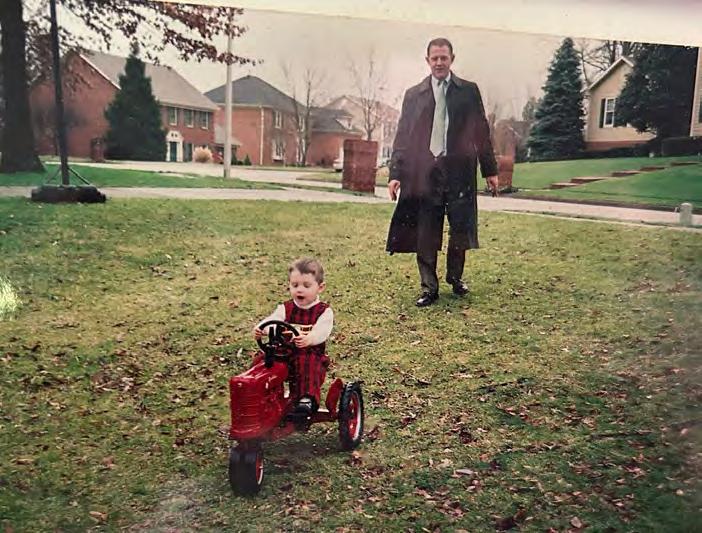
Farming in his DNA: A young tractor-driving Nathan Clark with his father.
Courtesy of Nathan Clark
Determination and perseverance help Reagan Earlywine turn her aspirations into reality
Dreams Realized
BY KRISTY ROBINSON HORINE
PHOTOS BY LAUREN NEAL PHOTOGRAPHY
When Reagan
Earlywine was a little girl, she had three distinct dreams: to dance across a stage with the Radio City Rockettes, to have a career in the medical field, and to win the title of Miss Kentucky.
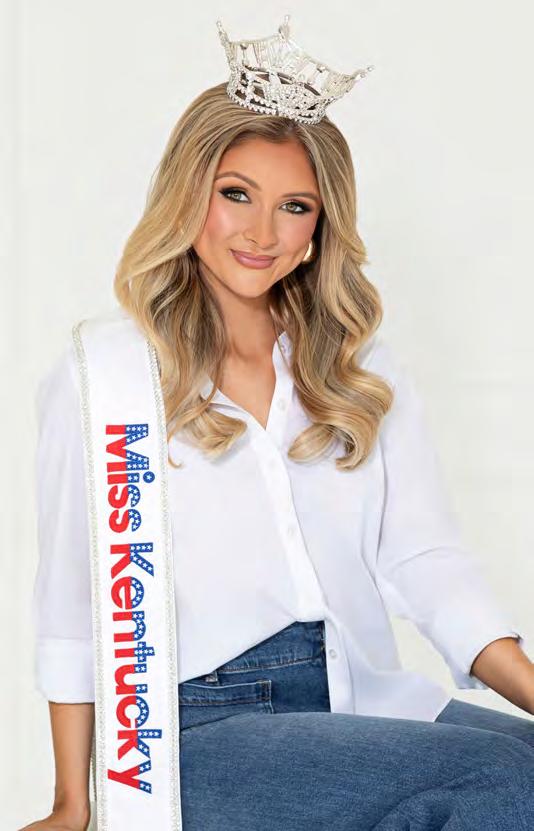
On June 13, Reagan walked across the stage of the Southern Kentucky Performing Arts Center in Bowling Green. She wore a glittering crown and sash and carried a lush bouquet of red roses. Reagan had just been conferred the title of Miss Kentucky 2026. Though the dreams that had danced in her heart for so long didn’t come true in exactly the way she had imagined, they were becoming a reality in many ways.
LITTLE DANCER
Reagan, 24, is the third-born daughter of Angela and Todd Earlywine. She’s a Bourbon County native who loves to sit on her back porch with her dog, drink a good cup of coffee, and listen to the rain. But it’s the way she approaches opportunity that sets her apart from most of her peers.
Reagan joined the Paris-based Town & Village School of Dance family when she was 3. During the school year, she’d be in class for 7 ½ hours a day, then head straight to Town & Village, where she took more classes, perfecting her skills in tap, ballet and jazz. When she got older, she moved into teaching younger students, passing on the joy that she found in movement.
Though Reagan was studying by day and dancing by afternoon, there
was still a part of her dream that had yet to come true. That changed in high school.
“I had always wanted to be a Radio City Rockette. I had seen them in the [Macy’s Thanksgiving Day] parade, and at my dance studio, we had always talked about the Rockettes. The studio owners brought in Broadway stars and people of that nature from New York, and that really inspired me,” Reagan said. “And my mom and dad have always been supportive of my craziest dreams. Obviously, I would not be here right now if it wasn’t for them.”
In high school, Reagan took a trip to see the Rockettes in person. She had a private session with one of the dancers, and the next summer, Reagan auditioned for and won a coveted place in the Rockettes’ weeklong summer intensive program.
While that experience was certainly an opportunity to remember, Reagan was too short to qualify for a long-term position with the elite dance company. Still, she’d found another dream to smile about.
WHITE-COAT DREAMING
“I had always wanted to go to medical school, but as I started getting older, I realized that medical school wasn’t the work-life balance that I wanted for myself,” Reagan said.
That’s when she zeroed in on oral health. She shadowed a few dentists and realized it was the perfect career path for her.
“You get to own your own business, and you get to educate your patients. You get to give back,” she explained. “It’s basically an art in itself because
you’re creating these masterpieces, but they’re in someone’s mouth.”
After graduating from Bourbon County High School in 2020, Reagan earned her Bachelor of Arts degree in Biology at the University of Louisville in 3 ½ years. She then applied for and was accepted to the University of Louisville’s School of Dentistry. Between undergrad and grad school, Reagan dove into work at Dale Family Dentistry in New Albany, Indiana. That experience solidified her drive to become the best oral health professional she could be.
A Presidential Scholar, Reagan ranks 16th out of 120 in her dental school class. She’s won awards such as Excellence in Neuroscience and Anatomy. She laughed when she talked about anatomy during her first year in dental school.
“I got a 72 percent on my very first anatomy test, and I had never gotten that low before. But instead of really dwelling on that defeat, I turned that into motivation. I studied even harder for the next test, and then, by the end of the semester, I was one of the top 10 students to score the highest for that subject,” she said. “I think a lot of people dwell on whenever they fail something in school, but you can really turn any failure into success.”
Concurrent with dance and dentistry was Reagan’s pageant dream. Once again, she turned failure into success.
DREAM ON
At the tender age of 9, Reagan competed in her first pageant, earning a second-place princess title in the Miss Bourbon County Preteen
pageant. When she was 12, she began competing for Miss Kentucky Teen. Shanna Robinson from Town & Village choreographed Reagan’s dance routines, and Reagan worked hard to overcome challenges.
“I was chronically shy. I would be petrified to stand in front of the judges and even try to speak in front of them,” Reagan admitted. “So Miss Kentucky really gave me a voice when I was still trying to find my own and gave me confidence when I needed it the most.”
Reagan persevered in her pursuit of the Miss Kentucky crown, receiving fourth runner-up in 2024 and first runner-up in 2025. After coming so close to winning, Reagan met with UofL academic affairs officials to make sure she could pause school to serve should she win the title. The school approved her leave of absence without penalty, and Reagan competed for what she knew would be her final attempt at the Miss Kentucky crown.
The quote that pushed her forward came from Miss Kentucky 2023, Mallory Hudson
“She told me a dream deferred is not a dream denied. I think that really encapsulates my journey to the Miss Kentucky crown, but anyone can relate to it,” Reagan said.
TO WIN A CROWN
The Miss Kentucky organization uses a scoring rubric that includes private interview, talent or HERstory (a 90-second personal narrative),
health and fitness, evening gown and on-stage conversation. Contestants win a preliminary competition to advance to the state stage. All contestants are aware that winning the state title automatically gives them a bid in the nation’s highest pageant— Miss America.
Each contestant chooses a Community Service Initiative, a cause about which the young
Above, Miss Kentucky 2026 Reagan Earlywine was crowned on June 13; right, Miss Kentucky with Laken Blanford, Miss Kentucky’s Teen 2026.
LAUREN NEAL PHOTOGRAPHY LAURENNEALPHOTOGRAPHY.COM
woman is passionate. For Reagan, her cause was easy—oral health.
After Reagan was crowned Miss Kentucky in June, she teamed up with the Kentucky Department of Agriculture, where she learned how she could expand her Community Service Initiative efforts across the Commonwealth—working with mobile health clinics and engaging students, teaching them about the importance of good oral hygiene.
In addition to fulfilling her duties as Miss Kentucky at home, Reagan will prepare for the Miss America pageant in West Palm Beach in September.
Reagan plans to gather as many remembrances of this amazing journey as she can and place them in a scrapbook.
“Just to have and look back on,” she said. “I think what’s really great is that I loved my life before Miss Kentucky, and I will be content with going back to that life because I get a great career. I get to go to dental school every day and do something that I love.”
For Reagan, dancing toward her dreams really is something to smile about. Q
MISS KENTUCKY OFFICIAL STATEMENT REGARDING REAGAN EARLYWINE
There are moments when a titleholder perfectly embodies everything an organization strives to represent, and Reagan Earlywine is one of those individuals.
Reagan’s journey to becoming Miss Kentucky is a testament to perseverance, growth and unwavering dedication. Since first entering our Teen program at just 13 years old, she has invested more than a decade in the Miss Kentucky Organization. Along the way, she experienced both victories and disappointments, coming remarkably close to earning both the Teen and Miss titles before ultimately achieving her dream this year.
For our board, watching Reagan grow has been one of the greatest privileges. We have seen her mature into a compassionate leader, an accomplished scholar and a young woman whose character reflects the very best of our organization. Her story is proof that the Miss Kentucky program is about far more than winning a crown—it’s
about developing women who are prepared to lead, serve and make a lasting impact on their communities.
Reagan’s decision to step away from dental school for a year to serve the Commonwealth speaks volumes about her commitment to Kentucky and to the mission of the Miss Kentucky Organization. Throughout her year of service, she will partner with the Kentucky Department of Agriculture while also championing dental health education, bringing awareness to the importance of oral hygiene in schools, and expanding access to dental health education in Kentucky’s rural communities.
Every Miss Kentucky leaves her own unique mark on this title, and we have no doubt Reagan will do the same. Her passion for service, resilience and genuine heart for others make her an exceptional ambassador for the Commonwealth, and we cannot wait to watch the impact she will have across Kentucky during the year ahead.
— Heath Green, Miss Kentucky Executive Director
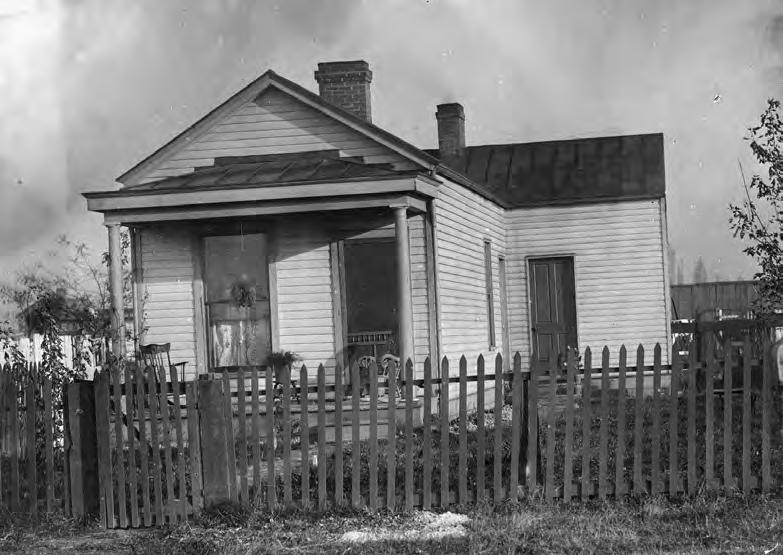
The Mulberry School
This undated photo is of the historical Mulberry School, located on Cropper Road in the town of Cropper (also known as Croppers Depot) in northeast Shelby County. The town was named for James Cropper, who was the first person to build a house in that location in the 1790s. Jim Cleveland Photo Collection, care of Shelby County Historical Society.
Kentucky Explorer
Charles Hayes Jr. • Founder
Stephen M. Vest • Publisher
Rebecca Redding • Typographist
One-Year Subscription to Kentucky Monthly: $25
Letters to the Kentucky Explorer
Letters may be edited for clarification and brevity.
Night of the Tornado
I’m 89, and I moved to Louisville in 1971. The article “The 1974 Super Outbreak” (April issue, page 49) took me back to my apartment in Shively, when the tornado roared through the city. It was sunny where I was, but I turned on the radio, and Dick Gilbert was on WHAS tracking the storm. He reported as if you were listening to a ball game, as if you were in the helicopter with him.
The night before, I had been walking with friends in Cherokee Park, and we saw occurrences of heat lightning—popping and cracking but no sign of rain.
A friend was at home in Crescent Hill that day, when he heard what sounded like a train and saw the roof ripped off his neighbor’s home. An odd twist is that the home had a table set with dishes, which was not damaged at all.
Crescent Hill was devastated. I remember that every telephone pole on one section of Bardstown Road was laying on cars and in the street.
Our friends remembered the previous night’s heat lightning, yet we had no idea what was coming our way.
J.R. Harris, Louisville
Two “Happy” Memories
I have a slightly different view of Happy Chandler (“Kentucky’s Legendary Governor,” May issue, page 54). I was a happy 13-year-old living in West Liberty in Morgan County in 1955. My dad was resident engineer in Morgan County. The Democratic primary was between Happy Chandler and Bert Combs from Prestonsburg. My father was a big Combs supporter.
After Chandler won the election, on Christmas Eve 1955, my father received a short letter from him indicating that he, as well as his staff of 19, were fired. My family then moved to Cincinnati, where my father found work with the Ohio Department of Highways. It was a tough year, but
Happy Chandler gave me a wonderful youth and future in the Cincinnati area.
That was politics in Kentucky at that time, as the poem goes: “politics the damndest in Kentucky.” But I love Kentucky and was a 35-year employee of Ashland Oil. No state is more beautiful than “My Old Kentucky Home!”
Dick Gose, St. James Plantation, North Carolina
John W. McCauley mentioned Happy Chandler’s great memory in his article, and I can definitely agree with him.
I was 12 when Chandler became governor of Kentucky the second time. My daddy, who was an FBI agent in Frankfort (he actually was appointed to open the Frankfort FBI office), became good friends with Gov. Chandler. In fact, he used to go sit on the end of Happy’s bed some mornings and share coffee with him before the governor got up. I met Chandler a few times.
Fast forward about 30 years: In the 1980s, I was at Pioneer Playhouse (my husband was the technical director there) when former Gov. Chandler was there. My daddy had died in 1970, and I don’t know if they stayed in touch after his term ended, but I knew he would remember Daddy. So I introduced myself by saying, “My daddy was Kyle Tackett.” He immediately said, “Oh, you are Marilyn.” I was shocked that he remembered my name. What a memory!
(I later legally changed my name to Amy, which is why this is written by Amy instead of Marilyn.)
Right across the page from that May article was one by Douglas T. Collins on the Kentucky Colonels. I was made a Colonel by Fontaine Banks, who was important behind the scenes in Kentucky government. Fontaine was a wonderful man and a relative by marriage. He wrote Memoirs of a Political Legend: Half a Century in Kentucky Politics, 1955-2008. He was an advisor to many governors.
Thank you for this magazine that brings so many wonderful memories back to me.
Amy T. Barkman, Danville
Kentucky history captured in documents and photos are available at the Kentucky State Digital Archives in Frankfort. Kentucky Explorer has partnered with the KSDA to share a piece of this history each month.
The Kentucky State Digital Archives
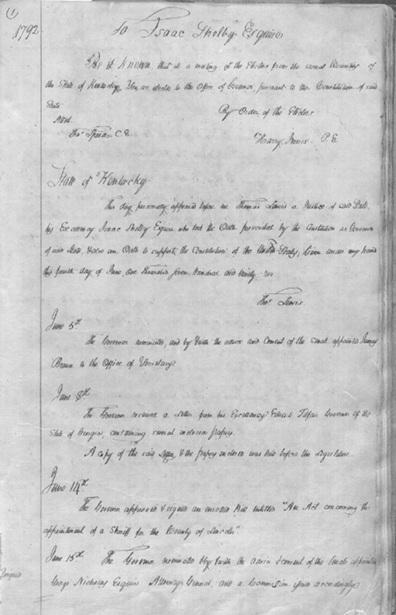
Note from the executive journal of Isaac Shelby, Kentucky’s first governor
The entry reads:
“1792. To Isaac Shelby Esquire. Be it known that at a meeting of the Electors from the several Counties of the State of Kentucky, you are elected to the Office of Governor, pursuant to the Constitution of said State. By Order of the Electors. Harry Innis. [P.] E. Attest. Thos Speed. C.E.”
This is the initial entry of Gov. Isaac Shelby’s executive journal from his first term in office, noting his election as the first governor of Kentucky. Dated from 1792-1796, Shelby’s journal notes the appointments, bill approvals and executive orders made during his term. Interested in more? The KSDA features governor’s records, such as executive journals, papers and photographs.
Visit the KSDA at kdla.access. preservica.com/portal/en-US
The Kentucky State Digital Archives is a free online service operated by the Kentucky Department for Libraries and Archives and features more than 130,000 documents, photographs and A/V materials of government records. For questions, visit kdla.access.preservica.com/portal/en-US or email electronic.records@ky.gov.
St. Jerome, the first Catholic church in the Jackson Purchase area, was built in Fancy Farm in 1836.
Send memories to Deborah Kohl Kremer at deb@kentuckymonthly.com or mail to Kentucky Monthly, Attn: Deb Kremer, P.O. Box 559, Frankfort, KY 40602.
“I
Remember”
Send in your memory today!
Coal Bucket, Candy Bucket
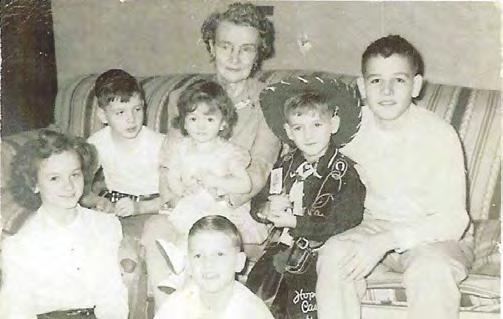
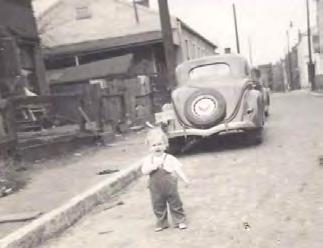
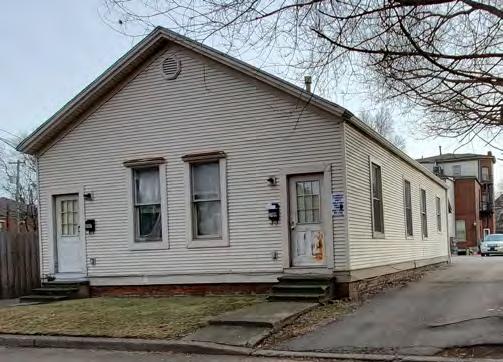
By Carolyn Coffey Pennington, Annville
Dressed in a two-pieced wool suit with perfectly manicured, unpolished nails, the teacher put a righthanded old glove on and opened the door to the roundbellied coal stove in the center of the firstgrade classroom. The open door to the stove threw out light from low-burning flames across the room as the students, all 35 first-graders, practiced their numbers and letters.
She reached down in the coal bucket, picked up two or three blocks of coal, and tossed them to the back of the stove. Then, she picked up the poker to “poke up a fire” to allow oxygen to gather inside the blocks and combust and give off heat. After two or three hard pokes inside the stove, the flames lit up in blues and reds. The teacher closed the door to the stove and set the blacktipped poker down beside the coal bucket. She pulled off the glove and hung it across the coal bucket handle to await the next fueling of the fire in her classroom at McKee Elementary School in Jackson County.
By Our Readers
There was another coal bucket, a new one in the classroom, but it never stored coal. It stored candy money collected early in the homeroom before classes began just after the morning announcements and the pledge. The bucket was filled with nickels, dimes and quarters and a list of the candy bars alongside the name of each child who had paid for the afternoon recess candy treat. The price of the candy: one nickel per bar in 1954. Students who chose not to buy candy were allowed to bring their own afternoon recess snacks. Two students were chosen by the teacher to carry the candy bucket from the classroom to the principal’s office in a building on the top of the hill where the candy was purchased and the order was filled. The students, each with one hand on the candy bucket, returned to the classroom. The coal bucket of candy sat by the teacher’s desk until afternoon break, when the candy and sometimes change were dispensed to whoever purchased each bar.
I am one of the students who carried the candy bucket often and learned to carry the buckets of life with confidence because of Mrs. Aileen Boggs and her model of teaching with a candy bucket and a coal bucket.
The First Day of First Grade
By Carol Ingle, Scott County
When I started first grade in 1957 at Wayne County Elementary, we did not have head start or preschool. When a child turned 6, he or she started school. I lived in what’s called The Hills.
I didn’t have electricity, running water, gas or plumbing. I rode a bus to school, and it stopped at other schools before stopping at mine. When I got to school, all the kids stood in the yard, and each teacher called out names. We got in line and went to our classrooms. During the first day, I needed to use the bathroom, but I didn’t know how to use an inside toilet and did not know anyone to ask. The teacher was not
friendly. I was afraid to ask. So I held it.
On my way home, I noticed that one of the schools, called Old Glory, had an outhouse. When we got close, I told the bus driver that I needed to go to the bathroom. She let me off the bus, and I ran to the outhouse. Then, I ran back to the bus and got in line with the other students to board the bus.
When I got home, I told my granny what had happened. She sent a note to my teacher the next day. After reading the note, the teacher called a girl to her desk and said, “Please take Carol to the bathroom and show her how to use the toilet.” My classmates laughed, and I was embarrassed. I’ll never forget my first day of school.
This isn’t the exact outhouse at Old Glory School, but Carol says it is similar.
Sharp Shooter?
By David E. Royalty, Boyle County
In the late 1950s, my cousin, Tom, and I were 11 and 10, respectively, and lived a couple of houses apart on Water Tower Hill in Junction City. My Aunt Francis and Uncle Vernon had arranged for us to spend a couple of days in Casey County with Bess and Eddie Coulter, Tom’s grandparents. (They were the wrong side of family to be my grandparents, although I adopted them as my third set of Granny and Granddad).
Devout Baptists and tobacco farmers, Bess and Eddie were loved by all. They lived in a modest farmhouse at the base of a steep knob. Their small farm was off Ky. 78, and driving to their house required fording the shallows of the Big South Fork, as opposed to walking over a swinging bridge. Although their house was small, the kitchen was well equipped and always had the sweet smell of a woodfired oven. Wild kittens ran around Bess’ feet and scooted in and out of a rip in the screen door.
Tom and I had many adventures in the barn and on the knob. Our favorite pastime was to go snake hunting in the creek. In the summer months, the water was low, and the flat rock bottom was exposed in several spots. A variety of snakes laid on the rocks and warmed themselves in the morning sun. We had a ball chasing them off the rock and frightening ourselves with their erratic movements.
After one such adventure, we headed back to the house and saw Eddie sitting on the steps staring across the road
My First Vacation Trip
By Paul David Combs, Franklin, Ohio
My father, Harold Paul Combs, began his teaching career at Little Red School in Jackson in 1957. The founder of the Kentucky Explorer, Charles Hayes Jr., was in his first fifth-grade class at Little Red. After two years of teaching, my father doubled his annual salary by moving his family to Waynesville, Ohio. He continued to teach fifth grade and even drove a school bus before and after school for the Waynesville School District in Southwestern Ohio. My mother, Rosalie, secured a job as a substitute teacher, which further increased our family’s income.
In the summer of 1962, my parents had enough extra money to take us on our first family vacation. It was a hot morning in August when my parents loaded one suitcase; my younger brother, Mark, and me into our two-door Chevrolet Bel Air, which had no air conditioning. Our final destination was Cumberland Falls, which possessed a special place in my parents’ hearts due to the fact that it was where they had spent their honeymoon.
My brother and I found relief from the sweltering heat
and up the holler. He ordered us to go fetch his gun and bring it to him promptly. We did. This was his old .22 single-shot, bolt-action rifle with a basic iron sight.
Eddie took the gun, loaded it with a single shell, and aimed across the creek and road. He fired the gun and quickly looked at Tom and me, then said, “Go get that groundhog.” We were startled but set out to meet Eddie’s request. We crossed the creek and the road and climbed the fence on other side of road. We were more than a football field away from the house. We looked back, and Eddie was giving us hand signals on where to look. We walked at least another football field distance, and he kept motioning. Finally, after walking in circles, we came upon a dead groundhog. It took both of us to carry the thing and, as is custom, draped it over the fence.
I was amazed. I was in the presence of the best shooter in the state—maybe the nation. I admired that thin old man and his understanding of the engines that drive young boys.
More than 50 years later, I worked as technical director of a large data center. One day, I was sitting in my office reflecting on that event in Casey County long ago. It then struck me that Eddie likely had previously shot the groundhog and placed it more than 250 yards away from the house for Tom and me to find later. He had gone to his grave without whispering a word about it, and I sat there with a smile on my face and a tear in my eye, feeling nothing but blessed that I had known that wonderful old tobacco farmer and his wife, Bess.
by sticking our closely sheared heads out the windows as we drove south on U.S 25. We finally reached London in the early afternoon after not eating all day. My father stopped at a restaurant at a roadside tourist attraction called Dog Patch Trading Post. This was one of the first times that my brother and I had eaten at a restaurant. I recall that when the waitress asked me for my order, I immediately selected my regular lunch fare: a “baloney” sandwich and a cold glass of red Kool-Aid. I don’t know who laughed the hardest—my parents or the waitress.
Once we had wolfed down our hamburgers and fries, my brother and I made a beeline to the free makeshift zoo. After petting all the animals, Mark and I persuaded our parents to pay the nominal fee to a farmer who had brought a pony to give children rides. We didn’t want to leave, but my parents insisted that we get back on the road so that we could complete our journey to Cumberland Falls by nightfall.
Since that day, I have traveled the globe to more than 70 countries, but no vacation trip has ever excited me as much as experiencing Dog Patch and seeing Cumberland Falls for the first time.
… and Tennessee. Long used by Native Americans, it became the path to Kentucky for early frontiersmen.
All the Livelong Day …
Do these photos look familiar? Josh Hughes of Alvaton (Warren County) recently came into possession of a suitcase full of old family photos. He believes these photos are of railroad workers in the Heidelberg Sturgeon Creek mining area between 1905-1912. His third-great uncle is in two of the photos William A. Roberts (1868-1937) Roberts lived near Beattyville in Lee County. If anyone can help Josh with more information, please email deb@kentuckymonthly.com.
Clark County was created in 1792 from Bourbon and Fayette counties and is named for George Rogers Clark.
The Evolution of the Paducah Railroad Hospital
The Illinois Central Railroad Hospital at 1501 Broadway in Paducah served railroad employees and the surrounding community for more than 70 years. It dates back to Jan. 15, 1884, when the Chesapeake, Ohio & Southwestern Railroad (not to be confused with the Chesapeake and Ohio Railroad) established a hospital in a house on Broadway between 14th and 16th streets. The hospital was located near the railroad’s shop complex along Kentucky Avenue. Collis P. Huntington, who controlled the CO&SW, supported the opening of the hospital as a way to improve employee health and maintain a reliable workforce.
By 1895, the original building had become overcrowded. Huntington provided funding for the construction of a larger hospital on the same site.
In 1896, the Illinois Central Railroad acquired the CO&SW, including the Paducah hospital, through a bankruptcy sale. Over time, the hospital was expanded and modernized. Management of the facility later passed to the Illinois Central Railroad Hospital Association, an organization legally separate from the railroad. The association was funded through deductions from employee paychecks. Paducah became the first of the Illinois Central’s three railroad hospitals. In 1911, the Illinois Central Railroad Hospital Department was established to oversee hospitals in Paducah, Chicago and New Orleans, and the Hospital Association was subsequently merged into the new department.
On July 10, 1917, the wooden hospital building in
Paducah was destroyed by fire. Hospital staff—including nurses and doctors, along with local volunteers—safely evacuated all 23 patients. Following several months of deliberation, the Illinois Central Railroad Hospital Department decided to rebuild the facility. Plans were prepared and bids solicited in 1918, but construction was delayed by labor and material shortages during World War I. The reconstructed hospital opened in December 1919.
The Illinois Central Hospital officially closed on May 31, 1957. Prior to closing, the Paducah facility was the largest hospital in the Illinois Central Railroad system between Chicago and New Orleans. Its closure marked the end of a significant chapter in Paducah’s railroad and medical history.
After its closure, the building was sold to local contractor George Katterjohn Jr., who converted it into an office building leased to a variety of tenants, including medical offices. Although the property changed ownership within a few years, it continued to be known locally as the Katterjohn Building.
Eventually, the building fell into disrepair and sat vacant for about 20 years. The Paducah Board of Commissioners approved its demolition in March 2024.
The Illinois Central Railroad had a daily run from Louisville to New Orleans, passing through Paducah. This photo from 1948 was taken at Fulton.
Lester and Earl
By John Mitchell Johnson, Lexington
My father was an Appalachian Renaissance man, if there was such a thing. He worked a blue-collar job, and my mother was employed as a schoolteacher, so our income was adequate. However, Dad lived as if he were a frontiersman scratching out an existence from Mother Earth. He had a garden, raised chickens, kept bees, tapped maple trees to make syrup, hunted all manner of wild game, and swapped bird dogs, foxhounds and Bowie knives with neighbor men. He killed hogs on cool November mornings, then rendered lard, made lye soap, ground sausage, and often got more intoxicated as the day went on. The latter was a hog-killing tradition.
My mother was quite the opposite. She read books, sang songs, quoted Shakespeare, wrote poems and shopped at the IGA. She bought her clothes from Young’s Department Store in Hindman and never owned a sewing machine. When Dad brought home a prized buck to turn into deer steaks and venison sausage, Mom gave him a perfunctory “that’s nice, dear,” but she never, ever participated in the hanging, skinning or butchering of said wildlife. So it was no surprise that, when my father died at the young age of 42, my mother divested herself of all things agrarian. She sold the beehives and the hogs, gave away the bird dogs, liberated the rabbit warrens, and hired Bessie, a neighbor, to kill what chickens were left.
Bessie lived down the holler a ways from us and was the antithesis of my mother. She was known for her canning and puttin’ up skills, and her sulfured apples and souse meat were legendary. It was rumored that she could put a .22 slug squarely between a hog’s eyes from 20 paces. So it only made sense that my mother enlisted Bessie’s expertise when it came to purging our flock of feathered friends.
“You kill the chickens,” Mom suggested, “and take some for yourself. Put the rest in my deep freeze, and let me know how much I owe you.”
“All right,” Bessie said. “How about I take the fatted hens, ’cause I doubt you know how to stew them anyway. I’ll leave you the fryers, and you pay me 12 dollars.”
“Done.” Mom was more than satisfied with the arrangement.
“But wait,” Bessie said. “Who’s going to help me? I counted nigh on 20 chickens in that lot. Mrs. Johnson, I don’t fancy you’re the neck-wringing kind.”
At the time, my sister was 7, hardly an apt enabler when it came to the massacre of chickens, and my brother was nearly 17, had just gotten his own car, and had a steady girlfriend. He would sooner be gored by a Brahman bull than take part in such a down-home ritual. So, me being 12 and the middle child—well, we know who ended up covered in hen poop, plumage and poultry guts.
On the appointed morning, I was up and dressed by 5 a.m. Of course, the rest of the house was still sleeping. Figuring I needed fortification for the day ahead, I ate a bowl of puffed wheat and a brown banana and drank a Yoo-hoo.
“Where you been? Did you oversleep?” Bessie asked when I arrived at the chicken lot.
“It’s 5:20, Bessie,” I protested.
“No need to apologize. I’ve already got us started. I’m going to learn you to be the best chicken killer in these parts, ’ceptin’ for me,” Bessie said with a big laugh, revealing a gold eyetooth that glistened in the morning’s first light. She reached in her jacket pocket for a pinch of Red Man.
“Chaw?” she offered.
“No, thank you,” I replied. When I was in fifth grade, Ronnie Napier had swiped a plug of Days Work from his grandfather, and we had chewed at recess down by the creek. We both got so ill that we couldn’t walk back into the classroom. Desperate for an alibi, I told the principal that we had gotten food poisoning from the lunchroom, which prompted a call to the county health officer and an ensuing investigation. Needless to say, the truth came out, and the resulting paddling made us soon forget about how nauseated we were. That was my one and only experience with chewing tobacco.
Bessie had set a roaring fire under a black iron cauldron, and white steam was rising from water that was seething and hissing, working itself up to a relentless boil.
“OK, boy, we’ll go into the henhouse,” she said. “I’ll get in the corner, and you shoo the birds toward me. We’ll do about a half a dozen at a time.”
Once Bessie had strategically taken her post in the far corner of the chicken coop, I obediently shooed the panicked pullets her way until they were all squawking and flapping about her ankles. With lightning speed, Bessie grabbed a chicken by the neck, gave it a yank and a twist, dropped its lifeless carcass to the ground, and then snatched another. Six birds had met their demise in less than a minute.
“Come on, boy. Grab a couple of ’em,” Bessie said.
We took the dead birds out to Bessie’s butchering table, where the shiny glint of her sharp steel blade decapitated all six in short order.
“Let’s tie ’em by their feet to the clothesline now,” she instructed.
Soon, all six headless chickens were hanging upside down, the ground underneath darkened with blood.
After our kill was sufficiently exsanguinated, Bessie took the first chicken down and, holding it by its feet, dunked it into the roiling cauldron.
“You just dunk it once,” Bessie said. “Any more and you’ll cook the meat. Now, get to pluckin’.”
With that, Bessie slung a wet, flaccid carcass to me and retrieved another bird.
Once my chicken was plucked and had passed Bessie’s inspection, she ran it over the flames to singe off any down that remained on the naked fowl. The stench of singed
feathers and the prickle of burnt fuzz filled my nostrils.
“Now, we gut it,” Bessie said, again drawing her razor-sharp knife. “You start right here below the parson’s nose.”
“The parson’s nose?”
“Yep, its butt button. And you slit right up to the breastbone.” Then with a bare hand, Bessie carefully scooped out the entrails and dropped them with a plop into a 10-pound lard bucket.
“I’ll take these innards and feed to my hogs, unless you think your mommy would like the liver and gizzard.”
“I don’t know. You can ask her,” I said. I couldn’t resist.
By early afternoon, all the chickens had been killed, plucked, cleaned and prepared for freezing, save for two little scrawny birds that Bessie had named Lester and Earl
“Lord, honey, them two’s shore enough the least of the pecking order. Not worth butchering. I’d be afraid to put ’em in the freezer. Your mommy would think I’d done killed a blue jay, and a little one at that,” Bessie said. “You need to keep them and fatten ’em up and kill ’em yourself, now that you see how it’s done.”
In the coming weeks, every evening I’d take a bucket of shelled corn out to Lester and Earl and scatter the kernels about their yard.
“Chick, chick, chick, chick,” I’d call out in a singsongy voice as they pecked around my feet, strutting and stretching their necks as they ate. With no competition from their fellow yardbirds, who were now frozen pieces of poultry parts in my mother’s deep freeze, Lester and Earl slowly started to mend. Red feathers began to fill in their previously bald spots, and their little scrawny bodies began to take on the bulk and posture of young cockerels. Their crimson combs waddled to and fro as they crowed their classic cocka-doodle-doos, oblivious to the fact that their good fortune was to be short-lived.
My father always told us that we should never name the farm animals, other than Old Bo, the mongrel who slept on the porch and lived in the barn. My young sister cried for weeks when Wilbur was made into hams and pork chops. So it was with more than a fair amount of trepidation that I set the date for Lester and Earl’s execution.
On the appointed morning, I arose early and did my best to emulate Bessie in preparation of the dreaded event. I wrested the big black pot from the barn, built a roaring fire, and set the water to heat. I tried not to make eye contact with Lester and Earl, as they curiously walked the fence line crowing accusations and staring at me from one beady yellow eye and then the other. Once the water was aboil, I had no reason to delay any further, so I entered the chicken yard and shooed the brothers into a corner. I was lucky enough to catch Earl on the first try—or maybe it was Lester. At any rate, I grabbed him by his neck and slung him mightily over my head. Bessie had only given one quick turn,
but considering my inexperience, I figured I should give it several swings for good measure. I laid Lester’s motionless body on the ground and started for Earl—or perhaps it was Lester. He attempted to fly over my head, but failed to gain sufficient altitude to escape my grasp. I snagged him by his orange talons and pulled him earthward, his wings flapping hysterically the entire time. I was finally able to get a purchase on his avian neck, and I slung him around heartily in the same fashion I had Earl—or maybe it was Lester.
With both birds lying lifeless on the ground, it occurred to me that, in my haste, I had neglected to bring the butcher knife, the implement needed to behead these two capons. By the time I got back to the house, Mom was having her morning coffee and reading yesterday’s Courier-Journal
“Son, you look a little pale,” she said. “Are you OK?”
“Yes, I just finished killing the chickens,” I said. “I guess I got up too early and didn’t eat any breakfast. I’ll be fine. I just need to get a knife.”
As much as I had dreaded wringing the chickens’ necks, I was even more apprehensive about the decapitation. By the time I had gotten back to the barn, my knees were knocking like maracas, and I held the butcher knife with a palsied waggle such that I was lucky I didn’t cut my own throat. I slowly opened the gate to the chicken lot and, with great anxiety, headed to the corner where I had left the dearly departed Lester and Earl—except they were not there. Perhaps I had left the gate open, I thought, and a predator had taken my prey. And then I heard the unmistakable clucks from high in the rafters of the barn.
I had obviously failed to pay close attention to Bessie’s tutelage on the finer points of neck wringing. As she later told me, one must grab the neck firmly and give it one good twist, jerking the head away from the body and thus snapping the spinal cord, a fatal event. In my failed attempt, I had swung Lester and Earl about in the air much as a gent would swing his lady at a square dance. What I had intended to be a lethal maneuver had merely stunned the roosters, and by the time I had returned with the knife, they had sufficiently recovered and taken refuge on the high roost.
I looked up at them, and they looked down at me. We concluded that we had endured enough trauma for one day.
At the end of that summer, I went away for a week to J.M. Feltner 4-H Camp. My mother assured me that she and my brother would tend to Lester and Earl in my absence. When I returned from camp, the chicken house was as empty as a pauper’s pocket, and the gate stood ominously open.
“What happened to Lester and Earl?” I demanded.
“One of us must have left the gate open,” Mom said. “They either flew off, or the dogs or the coyotes got to them. I’m sorry, son. How was camp? Are you hungry? Bessie brought over some delicious chicken and dumplings to welcome you home.”
Memories of Indiana Avenue
By Pat Zimmerman, Louisville
Iam 82, and I want to tell you of my childhood in Louisville during the 1940s.
My father was Edward Louis Horn, born in 1916 in Vine Grove (Hardin County) to Mack Horn and Edna A. Buckler. He had four younger sisters: Wilma, Thelma, Edna Lucille and Margie. By 1920, they lived in Louisville, and by 1940, Edna and Mack had split up, and the family lived at 1710 Indiana Avenue in what is now called Old Louisville. My mother was Wanda Maryland Lucas, born to Henry A. Lucas and Mittie Wilkerson (who didn’t know how to spell Marilyn). Henry and Mittie lived in Leitchfield but moved to Louisville by 1920 and lived at 1714 Indiana Avenue. Mom had four brothers: Edgar, Earl, Sherley and Randall, and one sister, Dorothy. Mom was the youngest, born in 1925. Mom’s dad and all her brothers worked nearby at American Standard, which made toilets and the coveted claw-foot bathtubs.
Indiana Avenue was not an avenue by a long shot. It was an alley that ran between 4th and 5th streets on the east and west and Lee and Bloom streets on the north and south. It had a brick street with a dirt sidewalk. There were 11 houses—one on the east side of the alley, with the others on the west side facing at the backs of the houses on 4th Street. I can still name all the people who lived in those houses. Indiana Avenue was a little community in itself.
By 1941, my parents were married and lived at 1710 Indiana Avenue. Dad’s two older sisters were married and gone. The two younger sisters still lived with us. Including them, my family consisted of Mom and Dad; Dad’s mother, Granny; my older brother, Kenneth (1941); me (1943); and younger brothers Mack (1947) and Jim (1948). My brother Mike (1950) and sister Becky (1954) were born later.
We lived at 1710 for a while. It had a hydrant outside the back door, where we got all our water. This house was a duplex. There were five houses all built alike and two duplexes—1708/10 and 1712/14. All the houses had outdoor plumbing, and there was a shed row running the length of the houses that contained a shed and outhouse.The back yards were separated by a low fence. Each house had four rooms. They were large rooms with high ceilings, except the kitchen, which was a step down from the other rooms and half as wide. They had fireplaces, and some families burned coal in them. We had space heaters because Dad was a pipefitter and put them in.
The family at 1724 had a tragedy. Their father killed himself in their kitchen, and the mother wanted to move out. My mother got the idea to trade houses with her, since her house had indoor plumbing. We moved to 1724 Indiana Avenue. It had only three rooms, but none of Dad’s sisters moved with us. At first, it had no bathtub, so we took baths in the kitchen in a round tub. Dad put in a tub, and we all loved it. Mike and Becky were born while we lived in this house. About 1955-1956, the name of our street was changed from Indiana Avenue to Riley Avenue. It was said there was already another Indiana Avenue. But to us kids, it didn’t make a difference. We were still home.
The last house standing in the alley. All the houses on the other side of the alley were demolished all the way to 5th Street, including those on Lee and Bloom. University of Louisville student housing now occupies that space.
Above, Christmas Day 1957: Grandma Horn with all six grandkids at 1724 Riley Avenue; right, a 1940s photo of Mack in the brick street in front of 1710 Indiana Avenue.
Talkin’ Appalachian
By P.K. Compton, Lexington
“Well I swan, if that don’t look plime blank like a filly,” my grandpa said in the early 1970s, paying me a compliment for my oil painting of a horse. Translated, it meant, “Well I swear, if that doesn’t look exactly like a filly.” The first three words are interchangeable with “Pon my honor.”
Grandpa and Grandma grew up in Pike County. Grandpa spoke Appalachian, and sometimes, I had to have Mom translate. He was good at giving directions, because everything was “up yonder.” He’d raised his arm about 50 degrees, point and say, “If you want to get there, you go up yonder.” Whenever we visited, he asked us to stay the night, with a “You-uns’ fixin’ to stay the night, ain’t cha?” If us grandkids got too rowdy around the house, he said, “You young-uns hold your horses. Ya’ll actin’ crazy as all get out.”
He was a soft-spoken man, because he said what he meant and didn’t
believe in wasting time. He had only one good eye but could shoot a rifle better than most, and sometimes, I wondered if he wore his hat to bed because he seemed to always have it on. I never saw him get angry for more than 10 seconds. He rarely cussed, but his most restrained curse words were: “Gawd debit.”
If he was trading with someone and they couldn’t agree on a price, he might say, “Well, gawd debit, here’s $40 and not a nary more,” and mentioned later that the guy was as “crooked as a dog’s hind leg.” If he was particularly surprised by something, he was known to get wide-eyed and exclaim, “Well, they laaaaaaaaah!”
Granny spoke Appalachian, too, though with a more subtle flair. You could hear a “What in tarnation?” occasionally, or maybe “Ain’t got a lick of sense” about someone she ran into. I once heard her tell Mom, “I almost rernt [ruined] my half-runner beans when I commenced to cooking them too hot.” After stringing a “mess” of green beans, she often announced,
CLASSIFIED ADS
Kohl Kremer at deb@kentuckymonthly.com or call 888.329.0053.
BOOK FOR SALE —
Reflections of a Scared Soldier Boy in Vietnam: God, Redlegs and Blueboys by Robert Adams. My combat tour with the First Air Cav Division 1967-68. 859.806.5199 (J-D)
BOOK FOR SALE — George Graham Vest: The Life and Times of Dog’s Best Friend chronicles the life and career of Frankfort native, jurist and legislator George Graham Vest. By Stephen M. Vest, a cousin well known for his writing. To purchase, call 888.329.0053 or visit shopkentuckymonthly.com
BOOK FOR SALE —
This lavishly illustrated book is a history of the coal wars in Harlan County, Kentucky. It includes color photographs of the scrip used and numerous maps. Large format, library-quality hardback. 286 pages. (A)
BOOK FOR SALE —
The Sacrifice of Lucinda Mills, by John Sparks, is a historical novel about an actual ritual human sacrifice in Kentucky. Available at barnesandnoble. com or Amazon.com. (J)
“I’m plumb tuckered out.” When she gave Mom beans from the garden to take home, she said, “Let me see if I have a big enough poke for ’em.” Grandma was a little lady who was reserved, but she could tighten the leash on Grandpa if she needed to.
My grandparents didn’t show enough of the love they had for their grandchildren, although we could see it in their eyes and actions. They never turned down a request within their means and never forgot a birthday, even though they had more than a dozen grandkids. Grandpa always hugged me and kissed my cheek when he greeted me, and that continued when I was well into my 20s.
The last few months before Grandma passed away, she became frail and weak. I couldn’t help but recall her past words that she felt “plumb wore out.” Grandpa passed a few years before her, but when I realized that I didn’t have grandparents anymore, there was one expression I couldn’t get out of my head—“gawd debit.”
BOOK FOR SALE —
Highlighting rural Kentucky events from 1865, this adventurous story by C.W. Shumate waited 160 years to be shared. Butler Books novel available at cwshumate.com. (F-D)
BOOK FOR SALE — A Time for Every Season by Paul David Combs is available on Amazon. My greatgrandfather, Rebel Shade Combs, tells his epic Appalachian Civil War-era story with passion and a bit of humor. (A, S)
BY BILL ELLIS
Hail to Thee, Alma Mater
At the right time and the right place, Eastern Kentucky University gave me opportunities of which I never dreamed.
How did all this happen? I graduated from Georgetown College in 1962, fully expecting to teach high school history and coach football for the remainder of my career. Then, an Eastern Kentucky State College professor appeared at Shelby County High School one day and told me that in the summer of 1964, his Department of History would hold a High School History Teachers Seminar. My only other prospect that summer was selling encyclopedias. The seminar paid a nice stipend. Long story short: I applied and had a great summer studying under several professors.
I spent one more year teaching and coaching football, finally realizing that the latter was affecting my health. In the fall of 1965, just as the college was about to become Eastern Kentucky University, I applied for a fellowship to study for a master of arts degree in history. That move changed my life forever.
I became involved in a more intense study of history than ever before. Under the direction of Dr. George Robinson, chair of the EKU Department of History, I wrote a thesis. “The Kentucky Evolution Controversy” centered on the efforts of Kentucky anti-evolutionists to pass a state law outlawing the teaching of evolution in public schools in 1922, three years before the State of Tennessee passed such a law, leading to the famous Scopes Trial of 1925. University of Kentucky President
Frank McVey and Southern Baptist Theological Seminary President E.Y. Mullins played key roles in defeating the first such bill presented before a state legislative body.
• • •
Jobs were scarce for an M.A.-trained historian, but I got a teaching position at Lees Junior College in Jackson. I taught there in the late 1960s and began to study at UK, working toward a doctorate part-time and in the summers. I also published my first article in a historical journal, “Frank LeRond McVey: His Defense of Academic Freedom,” in the Register of the Kentucky Historical Society in 1967. With the encouragement of Dr. Robinson, my appetite for publication was whetted.
I spent three years at Lees. In 1970, I applied for a teaching position in the EKU Department of Social Science, teaching undergraduate courses. I was hired and also kept up my studies at UK.
I had a wife and two kids, two gardens, a mortgage, a car payment and a supportive family behind me.
While I was still in the Department of Social Science, renowned historian Dr. Thomas D. Clark came to EKU for one year as a visiting professor. He encouraged me to begin writing for publication as soon as possible. I will never forget his exact words: “Do your research, then sit down and write.”
Life changed again when I replaced a member of the EKU Department of History who had passed away and moved there under the chairmanship of my first mentor, Dr. Robinson.
Dr. Richard Lowitt, the chairman
of my UK committee and a New York City-born professor, now guided my doctoral work. We got along famously, keeping a lifelong friendship and appearing on history panels together on occasion.
I usually taught a full load—four classes—and soon began to teach offcampus classes and grade correspondence courses for extra income. The off-campus classes included stints at an Ashland hospital, a state police post, the Lexington Police Department and Blackburn Correctional Complex. The latter was indeed an interesting experience.
I continued my publication efforts, including articles about E.Y. Mullins, Louisville Catholic lay leader and businessman Patrick Henry Callahan, and the continuing evolution/creation controversy, by administering surveys of teachers in Kentucky, Indiana and Tennessee, and also wrote a short study of novelist Walter Tevis
While I was teaching, my published books included “A Man of Books and a Man of the People”: E.Y. Mullins and the Crisis of Moderate Southern Baptist Leadership; Patrick Henry Callahan: A Kentucky Democrat in National Politics; The Kentucky River; and Robert Worth Bingham and the Southern Mystique
The latter book finally found a publisher following in the wake of continued controversy over the death of Bingham’s wealthy second wife and charges of his complicity in her death. My book contended that he had nothing to do with the death of Mary Lily Kenan Flagler. Bingham became the longtime owner and publisher of the Louisville Courier-
Journal and Louisville Times. A lifelong Democrat, he served as Ambassador to the Court of St. James in Great Britain in the early years of the Franklin Roosevelt administration.
A few years later in my career at EKU, I became director of the Oral History Center, developing projects that included a lengthy study about the Kentucky River. After my retirement, the University Press of Kentucky published The Kentucky River in 2003.
I recorded a total of nearly 600 interviews on various projects.
In all my projects and studies, EKU was always generous in providing
travel and maintenance funding.
A highlight of my career was a Fulbright grant in 1989 to New Zealand’s Massey University, where I taught classes and helped develop oral history projects. I was appointed a Foundation Professor of History in one of the first classes in the 1990s.
My retirement from EKU in 1999 coincided with a heart attack and five bypasses. I continued my connection with EKU, writing A History of Eastern Kentucky University: The School of Opportunity, published in 2005, and going on to publish a larger work, A History of Education in Kentucky, in 2011. Both books were published by the University Press of Kentucky.
I guess once you catch the writing
and publication bugs, it never ends. Well into my retirement years, I got interested in early 20th century Kentucky-born humorist and writer Irvin S. Cobb. UPK published Irvin S. Cobb: The Rise and Fall of an American Humorist in 2017.
Since 2001, I have written this column for Kentucky Monthly magazine.
I owe everything in my career as a teacher and historian to EKU. The school took a chance on a young fella from Shelby County. I hope that I have returned the appointment several fold.
Readers may contact Bill Ellis at editor@ kentuckymonthly.com.
BY GARY GARTH
Fish Tales and Other Stories
If you enjoy, as I do, well-tuned stories about fishing, hunting, trapping, camping, family and friends, blended with an assortment of quirky, outdoorsy characters, you’ll enjoy Skinning Catfish in Mary’s Kitchen (Lyons Press, 214 pages, hardcover, $29.95), a collection of “tales of hunting, fishing, trapping and life in the woods,” according to the subtitle.
Even if you’re not particularly focused on, or have any specific knowledge about, fishing, hunting, trapping, camping, family, friends or outdoorsy characters, you may very well enjoy this work.
That’s because Kentucky author Will Brantley manages to weave layers of personality into many of these tales, giving the hook-andbullet-themed yarns a general audience uplift.
To be sure, these stories are written about and for a sporting audience. But part of Brantley’s polish is making them relatable to the nonsportsman reader. For example: You’ve probably never met Joe, the title character in “Joe’s Pheasant,” one of four original stories in the collection. Joe, with his brother, ran a Western Kentucky farm and sawmill and owned a pet pheasant. You may not have known him, but you’ve known someone like him.
The 43-year-old Brantley is the hunting editor for Field & Stream magazine, where several of these stories first appeared. He is a native and lifelong Kentuckian, sans two years he spent in Memphis,
Tennessee, while in the employ of Ducks Unlimited.
Outdoor writing can be an odd editorial and journalist pursuit. A basic journalistic rule is: do not make the story about you. But if you’re telling a fishing or hunting (or hiking or camping) tale, you are often at or near the center of the story. Brantley manages this while keeping the spotlight tilted in the right direction. The result is a collection of entertaining, focused reads. An example from “King of the Swamp”: “But we were close, only 5 yards or so from the capybara, and the steel ball bearing hit the beast and sent it tumbling into the water in a thrashing heap. Cally whooped and yelled something in Spanish, and I whooped and yelled something similar in Kentuckian … although neither of us knew exactly what the other was saying, two hunters from opposite sides of the globe knew exactly what it all meant.”
The stories cover a wide geographic swath, from covert fishing at Kentucky’s Pennyrile Forest State Resort Park to hunting chamois in New Zealand to chasing capybara in Argentina.
Brantley said the core of the book grew from a collection of stories for various publications and, almost unexpectedly, followed his life’s curve.
“I actually grew up just outside Dawson [Springs] in a town called St. Charles, Kentucky,” he said. “I’ve been an outdoors writer for more than 20
years, and I was sitting on a large collection of work that I’ve written for various publications. I thought it’d be cool to see it all together in a book, and then, as I started building the collection, I realized many of the stories follow a loose arc from my life, from childhood up until right now. I didn’t really plan on the book having such a memoir feel to it, but as I started thinking up stories to fill in gaps within the timeline, that’s what it became.”
Brantley would encourage all in Kentucky and beyond, regardless of experience or lack thereof, to venture into the woods and onto the water.
“Hunting and fishing are just about the most natural things you can do,” he said. “We are hardwired as a species to enjoy it. If somebody wants to try it, regardless of where they live, there are many opportunities in our great state.
“The Kentucky Department of Fish and Wildlife Resources hosts numerous workshops for teaching people the basics. Find a mentor, and don’t be afraid to ask questions. But
also realize that success in hunting and fishing isn’t automatic, and it can take years to develop knowledge and skills. We live in an age of instant gratification, but you can’t expect that in hunting or fishing.”
Skinning Catfish in Mary’s Kitchen is a fine piece of work by a skilled Kentucky author.
•
Fall squirrel season in Kentucky opens Aug. 15. The season is open statewide through Feb. 28, except for the first two days of modern firearm deer season, which this year will be Nov. 14-15. Details are available at fw.ky.gov/Hunt/Pages/SquirrelHunting.aspx
Squirrels aren’t the only critters in season for hunters prowling the warm August woods. Hunting for bullfrogs, groundhogs and coyotes is open, along with a chase-only bear season. And tickling and noodling season for catfish and rough fish runs through Aug. 31. Find details at app.fw.ky.gov/ seasonviewer
If you’re unfamiliar with the tickling and noodling technique for catfish (I’ve not employed the technique on rough fish but have no doubt it can be successfully applied), go to page 79 of the aforementioned book, Skinning Catfish in Mary’s Kitchen, where the author presents a vivid account of the exercise.
Readers may contact Gary Garth at editor@kentuckymonthly.com.
BY WALT REICHERT
The Cruelest Month gardening
The poet T.S. Eliot called April the cruelest month. He probably wasn’t a gardener, and he certainly didn’t live in Kentucky.
The cruelest month is August.
It’s hot. It’s humid. It’s hot and humid. Flowers and vegetables are suffering in the heat, while insects and diseases are at their peak. Weeds threaten to take over. Spring-planted trees are begging for water. (You knew it wasn’t a good idea to plant them that far from the spigot, didn’t you?!) You planted too much zucchini, and now you realize there isn’t enough brown sugar on earth to make zucchini bread out of all of them. And the neighbors pretend they’re not at home when they see you on the porch.
And it’s hot.
and plant them in a new bed. Or give them to the neighbors who are tired of your zucchini.
Peonies are another perennial that do well when planted in August. Slice off pieces from a mother plant or order from a catalog, and plant in full sun in well-drained soil.
August certainly tests a gardener’s mettle. So, feel free to stay inside as much as you need to. But on those glorious, cloudy days when the temperature stays below 90 and you feel like venturing into the garden, let me suggest a few projects that are best done this month.
Plant Stuff
While many plants need to go in the ground in the spring or later in the fall, a few do well when planted in August. German bearded iris is a good example. If an old bed has gotten too crowded, dig them up, throw away any rhizomes showing signs of insect damage (holes) or disease (mushy),
Most folks plant hydrangeas in the spring, but they can be planted this time of year if kept well-watered. Hydrangeas tolerate some shade but will perform better if the soil is high in organic matter. In other words, avoid planting them in heavy clay. Coneflowers (echinacea) thrive in summer’s heat, and they are a good choice for planting this month. Coneflowers have been bred in many sizes and colors, but the old-fashioned purple is best for pollinators. You can start them from seed or plants.
Asiatic lilies make a bold statement in the garden with their trumpetshaped blooms in early summer. Get a head start on next year by planting summer lily bulbs this month. Put them in the back of the bed where their “trumpets” will show above
shorter plants, and their stems will get a little support from the plants in the front. In the vegetable garden, the cole crops that thrive in cooler weather are best started in late August/early September. Broccoli, cauliflower and cabbage can be started from seeds or transplants. Just make sure they stay well-watered. Turnips for greens or roots also can be sown in August.
Other Projects
Wish you had more garden space? Why not build a raised bed this month? You can spend hundreds of dollars on a prefabricated one or just a few dollars making your own. I’m no carpenter, but even I can build a perfectly functional raised bed in just an hour or so. You need three 2-by-6inch or 2-by-8-inch boards each 8 feet long. Cut one board in half, and those will be the ends of your bed. Nail or screw the longer boards to the shorter ones to make a 4-by-8-foot bed. I like to put an L-shaped bracket on each corner of the bed, because once filled with soil, there will be considerable pressure on the sides. Set the bed on newspaper or cardboard to keep down weeds. Fill it with one-third compost, one-third composted manure and one-third topsoil.
Fight weeds this month. In survey after survey, people who give up gardening say they do so because they’re tired of fighting weeds. That’s certainly understandable; weeds are at their full strength this time of year.
Hydrangeas can be planted in August if they are kept well-watered.
Hot and dry doesn’t seem to slow them down.
The key to getting control of weeds is to not let them go to seed. A single pigweed plant allowed to go to seed can put 20,000 seeds in your garden soil. And those seeds can lie dormant and still germinate 20 years later. If you do nothing else to control weeds this month, at least take out weeds going to seed. One or two years of denying weeds the ability to sow themselves and you will have gone a long way toward ridding yourself of gardening’s most obnoxious chore.
Keep mulching. If you put mulch down in April or May, you probably need to refresh it this month. Mulch is an effective weed barrier, but by late summer, some weeds, such as dandelions, have found their way through. They should pull up easily after a rain. Then, it’s a good idea to put down another inch or two of mulch.
It’s especially important to keep mulch around newly planted trees to keep down weeds and to prevent trimmers from damaging the trunk. I believe more trees are killed by “string trimmer” disease than all other causes put together.
g g g
Horticulture meets humor in Walt’s handy guide, Walt’s Wisdom, which can be purchased at kentuckmonthly.com
Readers may contact Walt Reichert at editor@kentuckymonthly.com
LINCOLN DAYS • OCT 3–4
A family-friendly festival for fifty years! Enjoy a unique mix of legacy, tradition, and hometown pride.
From the Same Cloth
Textiles of the Ohio Valley, Filson Historical Society, Louisville, through April 16, 2027, 502.635.5083
Balloons Over the Bluegrass
Danville-Boyle County Airport, Danville, 859.618.6433
Marty Stuart & Molly Tuttle
SKyPAC, Bowling Green, 270.904.1880
Tori Amos Louisville Palace, 800.745.3000
Janet Stone And Now I Know My ABCs!, National Quilt Museum, Paducah, through Sept. 22, 270.442.8856
1823 Stone
Declaration of Indepen–dence
SAR Library, Louisville, through Sept. 5, 502.589.1776
Hamlet & Ophelia
Presented by the Louisville Ballet, Central Park, Louisville, through Aug. 9, 502.574.9900
Brothers of the Heart Renfro Valley Entertainment Center, Mount Vernon, 606.256.2664
Raíces Exhibit
The Making of Latino Legacies in Racing, Keeneland Library, Lexington, through Dec. 20, 859.254.3412
Harvey: The Play
Barn Lot Theater, Edmonton, through Aug. 9, 270.432.2276
Twenty Years of Tula Pink
National Quilt Museum, Paducah, through Sept. 15, 270.442.8856
The Importance of Being Earnest Playhouse in the Park, Murray, through Aug. 16, 270.759.1752
Trivia Night –Mystery Theme
Louisville Zoo, 502.459.2181 Kings and Queens! Pioneer Playhouse, Danville, through Aug. 15, 859.236.2747
Front Porch Pickin’
Mountain Arts Center, Prestonsburg, 606.886.2623
Shaker Village Craft Fair
Shaker Village, Harrodsburg, through Aug. 2, 859.734.5411
Wynonna Judd & Melissa Etheridge
Beaver Dam Aphitheater, 270.298.0036
Woodland Art Fair
Woodland Park, Lexington, through Aug. 16, 859.246.7024
Travis Tritt
With special guest Dillon Carmichael, Corbin Arena, 606.258.2020
Peter Antoniou
The Virginia Theater, Somerset, 606.679.6366
Kentucky Untamed Hike
Cumberland Falls State Resort Park, Corbin, 606.528.4121
Twenty Years of Tula Pink
•
•
•
•
•
•
August
Lavori in Corso
Idon’t know know—or maybe I do—why the above phrase, which seemed to appear around every Italian corner, spoke to me. It means “Work in Progress,” and—to be honest—I took it as directed to me personally. But aren’t we all Lavori In Corso?
I’ve yet to meet anyone who isn’t.
• • •
For nearly two weeks, 35 Kentucky Monthly readers came together for a three-country tour of the Italian and French Riverias and Barcelona, Spain. We started in Rome, then made three stops in Italy and two in France.
As some of you may know, I collect stickers, and I tried to find at least one in each city we visited. In Portofino, Italy, Kay and I found ourselves enjoying lunch with our friends Tom and Judy at a portside restaurant named O Magazin.
STEPHEN M. VEST Publisher + Editor-in-Chief
We were seated at four-person table surrounded by opera ropes. A random traveler passed by and said, “Don’t y’all look special? You should be on the cover of a magazine.”
We all chuckled at the irony.
I asked the staff if they might have a sticker and explained that I was from America and worked for a magazine about Kentucky and Kentuckians. I don’t know if my broken Italian communicated my hobby or
occupation clearly, but the owner wouldn’t let me leave without giving me one of the restaurant’s embroidered shirts, which I cherish more than any silly sticker.
• • •
Another hobby of mine is looking for Kentucky in obscure places. I’ve always been successful, but this time, I was coming up empty.
With Pope Leo XIV in Barcelona on an apostolic visit to celebrate Mass and bless the newly completed Tower of Jesus Christ at the Basilica of the Sagrada Família (which we saw the next day), we were rerouted to the Spanish countryside, where our tour guide took us to the village of Figures, home to the Salvador Dali (1904-1989) Museum.
In the next-to-last exhibit, our exceptional tour guide asked us to focus our attention on a large painting, explaining that, when looking at Dali’s work, “nothing is as it appears.”
He asked, “What do you see?” We, in unison, answered, “A naked woman’s back and hips?”
“Yes,” he said. “That’s actually Gala, Dali’s wife. But now squint or look at it through your cellphone.”
What do ya know? It was not what we originally saw. It was, somehow, an abstract image of LaRue County native Abraham Lincoln, the 16th president of the United States. Once you saw Lincoln, you could no longer see Gala.
Vest can be contacted at steve@kentuckymonthly.com