Kennedy Krieger Behavioral Psychology Department News
Kennedy Krieger Behavioral Psychology Department News
Winter 2026 Issue
•An Online Platform Offers Parents Building Blocks to a Fast-Track Approach for Dealing With Their Children’s Behavioral Problems page 2
•Research and Program Highlights page 8
•Featured Events page 13
Letter From the Editor
The holiday season is a time for celebration, connection and gratitude, and it is with this spirit that I introduce the second issue of Cumulative Record
This edition is a testament to the incredible community we have built together and the meaningful work we do every day.
In this issue, we will be highlighting our department’s 50th anniversary celebration. This significant milestone allows us not only to reflect on our rich history and growth but also to look forward to the future. We also take time to recognize the incredible efforts and generosity of our staff members, who made the holidays extra special for some of our patients and families. The compassion shown by all of you is a perfect example of what makes this department so special.
I am so proud of this department because of the services we provide and the lives we change. But when staff come together to go above and beyond for families in need, I am reminded that the people who make up our department are more than just employees and co-workers, we are truly a family of people who care deeply for others and want to make a difference.
A core objective of this newsletter is to improve collaboration and communication throughout the department. We will continue to use this as a tool to update members of the department about current programs and achievements as well as our history of accomplishments and growth over the past 50 years.
In this specific issue, we focus on the future, highlighting exciting developments and recognizing change in our existing NBU program and the development and achievements of our Digital Outcomes Program.
Thank you for your continued dedication and for being a part of this remarkable family. Wishing you all a happy and healthy 2026.
Lindsay Melvin Editor-in-Chief
An online platform offers parents fasttrack approaches for dealing with their children’s behavioral problems
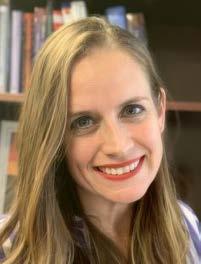
With a waiting list for outpatient services that stretches as long as two years, behavioral psychologist Dr. Jessica Becraft has found a way to help anxious parents tackle some of their children’s behavioral problems sooner.
As director of clinical outcomes in the Department of Behavioral Psychology, she helps design, implement and supervise the clinical accountability program. Her research emphasizes the role of parents throughout behavioral treatment, from accessing care to adhering to recommendations to reporting on outcomes.
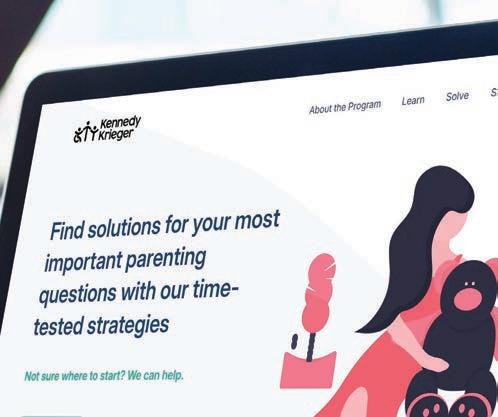
She says a new digital platform, introduced in 2023, offers fast-track approaches for a variety of disruptive behaviors.
“We thought if there are some methods that we tell everyone, there is a more efficient way to get that information to people.”
The online platform, known as immediate initial intervention, uses the same evidencebased protocols as the department’s outpatient programs in order to help parents
Guides: Digital Card
manage their child’s behavior.
GOAL:
To prevent tantrums from “working”
The site includes 54 tutorials with videos, demonstrations and step-by-step instructions in such topics as managing tantrums, resisting bedtime, picky eating and teaching your child to tolerate “no.”
GOAL:
To prevent tantrums from “working”
designed to be viewed on code (that needs to be is not advised and be included which most prompt option to click downloading this save to their phone exploring a designed to house cards. already in the market for cards so there may be offers a more robust together vs sorting phone.
1. Praise good behavior often.
2. Respond to tantrums with little to no emotion.
Department staff members, called navigators, contact families on the waiting list whose children are 3 to 10 years old and are displaying tantrums, aggression or noncompliance.
3. Understand why your child is acting out.
4. Ignore the tantrum and distract yourself.
After enrolling a family, the navigator helps the family locate the information they want as well as give feedback on their engagement.
5. Follow through on instructions.
6. Be consistent.
“Typically, we expect to see parents use the platform for a short period of time, like a month. They’ll get in, read through tutorials recommended by their navigator, learn some of the strategies, and then hopefully apply them to their child.”
Do your best to stay calm
SHORT LINK TO TUTORIAL
Navigators also meet on Zoom with family members who agree to give feedback – a feature Dr. Becraft says helps the department improve the program.
1. Praise good behavior often.
2. Respond to tantrums with little to no emotion.
3. Understand why your child is acting out.
4. Ignore the tantrum and distract yourself.
5. Follow through on instructions.
6. Be consistent
Do your best to stay calm Considerations: text, this layout is set up to ease of access from a comprehensive) works best it could be possible to format if desired.
Person
So far, metrics show more than 400 highengagement users (on the platform for at least 30 minutes), 250 low-engagement users and 130 users with zero engagement.
Data collected for 330 high-engagement users show they experienced a 32% reduction in behavioral issues compared to 38% for children and families seen in person by a clinician.
The program teaches parents how to manage their child’s behavior, especially milder problems. For instance, one tutorial includes simple strategies to use with one of the most common parent challenges: getting your child to listen.
“Part of it deals with how you’re giving instructions,” Dr. Becraft says. “Are you telling your child to do seven things at once? Are you saying, ‘Go get your backpack and then put on your shoes and then brush your teeth and come downstairs?’
“They’re not going to cooperate if you give too many instructions at the same time. Also, you have to make sure they’re paying attention before you
even give an instruction to make sure they hear it. “ She points to another strategy: “‘Catch them being good.’”
“Kids who are misbehaving a lot get so much attention for misbehaving, but the good things they’re doing are often overlooked.
“Parents might think, ‘Well, they just were sitting nicely waiting for something. Or they were just being quiet. But if you’re not giving lots of attention for those things, you’re tipping the scale towards misbehavior.
“’Catch them being good’ is all about loading up reinforcement for appropriate behavior, like throwing away trash after dinner. Or putting their plate in the sink. Or not throwing a temper tantrum when you say it’s time to leave the park. Make sure you give lots of praise for things you might consider expected behavior.”
Dr. Becraft received her doctorate in developmental psychology with a focus in applied
behavior analysis at the University of Maryland, Baltimore County, in 2017. Before that, she worked on the inpatient Neurobehavioral Unit, focusing on interventions and treatments for individual children whose disruptive behavior was severe.
She returned to KKI’s Neurobehavioral Unit outpatient program for her postdoctoral fellowship.
In June, 2018, she began working in clinical outcomes – focusing on collecting data about caregivers – eventually working full time with Dr. Michael Cataldo, director of the Department of Behavioral Psychology.
“Clinicians may look at patients one at a time, but we need to be able to look at everyone overall and say, ‘These people benefit from intervention, these people don’t. And here are the reasons.’”
Dr. Cataldo says Dr. Becraft’s work helps ensure the future of the department.
“As external financial concerns escalate, cost-benefit analyses by Medicaid and commercial insurance companies will correspondingly also increase,” Dr. Cataldo says.
“The Clinical Accountability Division that Jessica directs quantifies our patient outcomes, and the digital project demonstrates how Kennedy Krieger can provide more and better services for less cost. The latter allows parents immediate access to rapidly acquiring success with child management techniques at any time or place, greatly reduces cost by eliminating direct clinician involvement, and can be scaled.”
Becraft says a personalized dashboard, set to launch in February, will provide patients with tutorial recommendations based on their previously viewed content and responses to survey questions. They will also be able to view summaries of the data they’ve submitted in order to chart their progress. n
“We thought if there are some methods that we tell everyone, there is a more efficient way to get that information to people. Typically, we expect to see parents use the platform for a short period of time, like a month. They’ll get in, read through tutorials recommended by their navigator, learn some of the strategies, and then hopefully apply them to their child.”
– Dr. Jessica Becraft
(left) The percentage change in disruptive behavior across patients receiving services in person, via telehealth, and through the digital platform.
Passing the baton for Neurobehavioral Unit:
A
global model of research-based inpatient treatment for children and adolescents with severe behavioral disorders
Begun in 1978, the Department of Behavioral Psychology’s program to assess and treat severe behavior disorders has evolved and flourished with a succession of outstanding leaders, including Brian Iwata, Wayne Fisher, and Dr. Louis Hagopian. This now continues with Dr. Jonathan Schmidt, who recently assumed the reins of the NBU inpatient program.
When Dr. Schmidt, recalls some of the most inspiring moments of the Neurobehavioral Unit (NBU) inpatient program, the program director’s thoughts return to one of its darkest times.
During the early days of the COVID pandemic, patients required around-the-clock care in the intensive inpatient program. The daily patient census decreased to four patients, and staff members were struggling with their own fears about the pandemic, the challenges they faced
at home, and the need to keep pace with rapidly changing infection control standards.
Yet, they returned each day to help children and adolescents who had treatment-resistant challenging behavior.
“I’m still grateful for the level of resiliency of all those staff members,” Dr. Schmidt says. “They showed up with a positive attitude, were solution-focused, and were always ready to hit the ground running.”
By the fall of 2024, the NBU was back to a full census of 16. And Dr. Schmidt had assumed leadership of “a place where everyone is dedicated to trying to improve the lives of the patients, their families, and also of one another.”
Established in the 1980s, the NBU is recognized as one of the nation’s leading hospital-based programs offering intensive inpatient treatment for individuals with intellectual and developmental disabilities who exhibit severe self-injury, aggression, property
destruction, and other challenging behaviors that have proven highly resistant to prior treatment efforts.
“These patients [ages 4 to 21] haven’t found sustained success with prior efforts from outpatient and inpatient behavioral and psychiatric approaches,” Dr. Schmidt says.
He points out that the NBU’s interdisciplinary team includes specialists in behavioral psychology, psychiatry, pediatrics, nursing, social work, speechlanguage pathology and education. Because a patient’s progress ultimately depends on caregiver involvement, the family is also a vital part of the team.
Patients have a variety of diagnoses, including autism spectrum disorder, developmental delay, intellectual disability, sleep disorders, feeding disorders, stereotypic movement disorders with selfinjurious behavior, and various genetic, metabolic and chromosomal disorders.
During their stay – the average length of stay in FY’25 was 205 days – patients receive assessment and treatment for severe challenging behavior, with an emphasis on determining the function of their challenging behavior, identifying the right medication regimen, addressing their complex medical needs, and teaching them how to independently function within their environments.
“Our staff are paired, at a minimum, one to one with each patient. For many of these kids, it’s like having a new best friend,” Dr. Schmidt says. “These people are with you 24 hours a day. They are going wherever you go, helping support the patients in acquiring new forms of communication, and skills to be successful in academics and with activities of daily living.
“Staff members form really strong bonds with the patients – and also with their families.”
The most recent data underscore the importance of these relationships. In FY’25, 94% of the 33 patients treated in the NBU achieved the goals set upon their admission. And upon discharge, every patient had at least one caregiver prepared to follow and maintain the treatment plan.
Such successful outcomes are the result of Dr. Schmidt meeting daily with colleagues in many different departments. While around a dozen people
report directly to the director, he also oversees about 150 others working in the unit.
In addition to touching base with leaders of clinical operations, patient services and therapy, he meets with staff members from psychiatry, social work, nursing, speech-language pathology and education. Topics include ensuring adequate service delivery for the patients, supporting staff, training and improving the workforce, as well as recruitment.
“Within this field, there’s a decent level of attrition, so those efforts are at the forefront of everything we’re doing,” he says. “You’re constantly thinking, ‘How can I make a bigger impact?’ I think that’s through expanding the clinical work that’s done: Training more people to make a bigger difference in the lives of so many families.”
The NBU is also known for its research and advanced training in the field of applied behavior analysis (ABA). This evidence-based therapy uses behavioral science to improve skills and reduce
“You’re constantly thinking, ‘How can I make a bigger impact?’ I think that’s through expanding the clinical work that’s done: Training more people to make a bigger difference in the lives of so many families.”
– Dr. Jonathan Schmidt
severe behavioral challenges in individuals with developmental disabilities.
Dr. Schmidt is working with Dr. Hagopian on a clinical trial for treatment-resistant forms of selfinjury. Their efforts are focused on developing novel intervention approaches with advancements in systematically identifying protective procedures to ensure safety, targeting alternative sources of competing reinforcement and responses, and teaching adaptive and self-control behaviors.
Thus far, initial findings have led to several publications and presentations to disseminate the information to other professionals, to better serve individuals with treatment-resistant self-injury.
“Our priorities are the patients, families, and broader community of individuals with these sorts of concerns,” Dr. Hagopian says. “When we develop new procedures or have new findings, it is ultimately for the purpose of helping our patients and other providers working with children with these issues.”
Dr. Hagopian oversees all of KKI’s neurobehavioral programs. He says he recognized Dr. Schmidt’s clinical and management skills when supervising his earlier work as director of therapy services. “He interacts with people in a very positive, productive way, which makes him very effective in his current role.”
Discovering the Benefits of Applied Behavior Analysis
When he graduated from the University of South Carolina (Columbia) in 2005 with a degree in school psychology, Dr. Schmidt expected to work primarily with children and adolescents whose learning was impaired by attention-deficit/hyperactivity disorder (ADHD).
His vision expanded, however, when he was exposed to the benefits of using ABA and other behavioral techniques.
“I found out about some individuals with intellectual disabilities who exhibited severely challenging behavior and were housed in residential facilities,” he says. “These were individuals who weren’t able to communicate effectively and required intensive oversight at all times.
“When I went there for a practicum experience, what really stood out was the passion of the people working with them. Although it was a stressful, challenging job, they always wanted to try to make kids’ lives better by teaching them skills and how to function independently.”
Inspired, Dr. Schmidt began to learn more about ABA. After receiving his doctorate in psychology at the University of South Carolina and completing his internship at the May Institute, he went for a postdoctoral fellowship at Kennedy Krieger in 2010.
The next year, he began working as a senior behavior analyst in the NBU, gradually taking on responsibilities such as case management and directing training experiences for clinicians.
“After working individually with patients or staff, I began thinking, ‘How can I make a bigger impact?’ through training, through advocacy, through research, through expanding the clinical work that’s done.
“What I love about working on the NBU is that we have a team that never accepts the status quo. We’re always trying to make it better.”
Many patients provide unforgettable examples of the importance of this effort. Dr. Schmidt mentions “Ryan,” a 10-year-old patient who had “really severe” behavioral outbursts of aggression, self-injury, and
(continued on page 9)
(above) NBU staff members celebrating the department’s 50th anniversary
Research Highlight
The Department of Behavioral Psychology has expanded knowledge through its study and treatment of behavior problems across the developmental spectrum, focusing on genetic disorders and the problems of aggression and self-injury. It has produced more than 1,000 publications, with high-impact papers changing practice and stimulating further innovation. In each issue, Cumulative Record highlights published research that represents the department’s exceptional work.
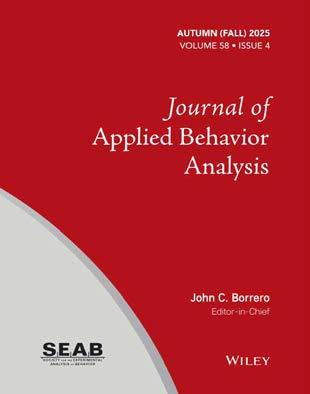
Assessment and treatment of pica: A consecutive controlled case series study
Dr. Michelle A. Frank-Crawford, Dr. Louis P. Hagopian, Dr. Mindy Scheithauer, Dr. Meara X.H. McMahon, Dr. Tracy Argueta, Dr. Nathan A. Call, Dr. Jonathan D. Schmidt
Pica includes the persistent ingestion of nonnutritive, nonfood items at a level that is inappropriate given the individual’s developmental level and cultural or religious practices. Behavioral treatments involve a variety of components to target the motivating operations that evoke pica, disrupt its occurrence, and reinforce adaptive alternatives; they have been characterized as well established and empirically supported. However, the literature consists of mostly small-n studies, limiting analysis of the general and comparative efficacy of different treatment components. The current study describes outcomes from two different sites for 33 consecutively encountered cases for whom a behavioral treatment for pica was evaluated. The final treatment reduced pica by at least 90% for 30 participants. Positive outcomes were maintained when treatment was extended to novel implementers, settings, and discard apparatuses for 26 of 29 participants. We examine the comparative efficacy of treatment components and discuss tactics used to safely assess and treat pica.
LINK TO FULL ARTICLE: onlinelibrary.wiley.com/doi/epdf/10.1002/jaba.70035
Staff Highlights
Russell Silguero
Russell Silguero has joined the Behavioral Psychology Department to help incorporate current and emerging technologies into the services provided by Kennedy Krieger. Russell is part of the team developing the Digital Parenting project, which is a web application that provides parents with evidence-based parenting strategies. Part of this project has also included researching and developing ethical and reliable AI-based delivery of parenting strategies, with the aim of personalizing educational content as well as increasing user engagement.
In 2015, Russell earned his master’s degree in behavior analysis from the University of North Texas, where he studied basic learning processes in both humans and animals. In graduate school, Russell had programmed his experimental procedures and wanted to continue to improve his software skills before pursuing his doctorate. He obtained work in the software industry developing inventory-tracking software. This provided an opportunity to develop skills in web application development databases and cloud services.
In 2018, Russell returned to the University of North Texas to pursue his doctorate in health services with a concentration in behavior analysis. During this time, Russell developed software for various behavior analytic research projects, including motion capture technologies that could be used to teach children how to be still while undergoing radiation therapy. Russell also developed software used in muscle rehabilitation research. This involved developing an android application that could connect to a Bluetooth surface electromyography device that was sensitive
(continued from page 7)
property destruction. At risk of not being able to stay at home because he would attack his siblings as well as his mother, he couldn’t be in school because of his behaviors.
“In the NBU, it often took four to six staff members
to muscle contractions. The android application allowed the behavior analyst to observe subtle changes in muscle contraction and “shape” stronger and stronger muscle contractions, thus providing a novel means of muscle rehabilitation. Russell eventually began studying the branch of machine learning called ‘reinforcement learning’ to understand how it relates to the concepts of behavior analysis. For his doctoral dissertation, Russell is working to show how the framework of machine-based reinforcement learning can be applied to the study of choice behavior. n
to safely manage Ryan and keep others safe in those situations,” Dr. Schmidt says. “Our interdisciplinary team members – in particular our direct care and our therapy staff – worked endlessly with him to collect data regarding the functions of his behavior,
Ashlae Portell
Dr. Ashlae Portell joined us this year as a psychologist in the Pediatric Feeding Disorders Program. Providing outpatient services to children and adolescents with a range of feeding concerns, she says that the favorite part of her work is empowering caregivers to lead mealtimes with confidence and ease so they can enjoy this time with their children again. Her research includes caregiver training and disseminating parenting information. At Central Michigan University, where she received her PhD in clinical psychology, Dr. Portell worked to improve mealtime interactions between children and their caregivers, along with increasing the children’s interest in less caloriedense food.
Her interests stem from the experience of growing up in an “extremely rural community” in northern Michigan, where limited access to food, nutrition information and other resources hurt families.
She says, “I love the fact that the feeding program team is committed to serving families statewide, nationwide, and even globally - and to incorporating cultural values into every mealtime plan.”
Dr. Portell lives in Baltimore County with her wife and miniature rabbit. She says you will often find her at the Patapsco River looking for sea glass, or in a coffee shop doing a crossword puzzle. n
and subsequently developing a comprehensive treatment plan that successfully reduced his challenging behavior. And, because we were also able to train the family, Ryan was able to go back home after nearly 10 months.”
Schmidt recalls several staff members were shedding tears as they said goodbye.
“When you see it all come together like that, it makes all the hard work that everybody puts into it worthwhile.” n
Behavioral Psychology Dept. Publications
2025
Edelstein, M. L., & Mellott, J. A. (2025). Preliminary investigation of the influence of treatment regimen on outcomes in behavioral parent training. Cognitive and Behavioral Practice, 32(2), 166–180. https://doi. org/10.1016/j.cbpra.2023.09.003
Edelstein, M. L., Taboas, A. M., Krantz, M. L., & Mellott, J. M. (2025). Treatment of challenging behavior maintained by caregiver accommodation using cumulative schedules of reinforcement.
Fatima, S., Prichett, L., Campbell, N., Snyder, M. C. N., Bifano, M., & Wolf, R. M. (2025). Suicide risk screening in a diverse cohort of youth with Type 1 and Type 2 diabetes. Pediatric Diabetes, 6662248. https://doi.org/10.1155/ pedi/6662248
Frank-Crawford, M. A., Hagopian, L. P., Scheithauer, M., McMahon, M. X. H., Argueta, T., Call, N. A., & Schmidt, J. D. (2025). Assessment and treatment of pica: A consecutive controlled case series study. Journal of Applied Behavior Analysis https://doi.org/10.1002/ jaba.70035
Frank-Crawford, M. A., Hagopian, L. P., Schmidt, J. D., Rooker, G. W., Piersma, D. E., & Benson, R. (2025). Application of the augmented competing stimulus assessment to identify and establish competing self-restraint items. Journal of Applied Behavior Analysis. https://doi.org/10.1002/ jaba.70040
Frank-Crawford, M. A., Hardesty, S. L., & Hagopian, L.P. (2025). Disruptive behaviors and selfinjury in NDD. In P. Accardo, B. Shapiro, & F. Ismail (Eds.), Capute & Accardo’s neurodevelopmental disabilities in infancy and childhood (4th ed., pp. 753–762). Elsevier.
Frank-Crawford, M. A., Piersma, D. E., Tate, S. A., Olivera, S. M., & Rong, Z. (2026). A comparison of latency- and rate-based CSAs in the treatment of automatically maintained self-injury. Behavioral Interventions, 41(1), Article e70063. https://doi.org/10.1002/bin.70063
Goldman, K. J., Martinez, C., Hack, G. O., Hernandez, R., Laureano, B., Argueta, T., Sams, R., & DeLeon, I. G. (2025). Correspondence between preference for and efficacy of behavioral interventions: A systematic review. Journal of Applied Behavior Analysis, 58(1), 118–133. https://doi. org/10.1002/jaba.2924
Goldman, K. J., Simpson Martin, H., & DeLeon, I. G. (2025). Comparing similar and dissimilar competing responses for tic management. Behavioral Interventions, 40(1), Article e2068. https://doi.org/10.1002/bin.2068
Hardesty, S. L., Workman, B. N., Quigley, S. L., & Bowman, L. G. (2025). Procedural recommendations for effective staff safety monitoring practices in ABA organizations serving individuals with challenging
Hinojosa, S., Agazzi, H., O’Donnell, L., Perkins-Parks, S., & Benson, J. L. (2025). Developing our children’s skills K-5: A pilot telehealth adaptation for parents of children with ADHD. Evidence-Based Practice in Child and Adolescent Mental Health, 1–15. https://doi.org /10.1080/23794925.2025.2602468
King, H. C., Kurtz, P. F., Chin, M. D., & Falligant, J. M. (2025). Characterizing automatically maintained self-injury with the aberrant behavior checklist. American Journal on Intellectual and Developmental Disabilities, 130(1), 13–23. https://doi. org/10.1352/1944-7558-130.1.13
Livingston, C. P., Tran, J. P., Charles, B. M., Jeglum, S. R., Luehring, M. C., & Kurtz, P. F. (2025). Comparison of mand acquisition and preference in children with autism who exhibit problem behavior. Journal of Developmental and Physical Disabilities, 37(3), 519–534. https:// doi.org/10.1007/s10882-02409988-y
Ng, R., Grados, M., O’Connor, J., & Kline, A. D. (2025). Clinical severity score as a prognostic indicator of communicative functioning in Cornelia de Lange syndrome. American Journal of Medical Genetics - Part A, 197(7), e64040. https://doi.org/10.1002/ ajmg.a.64040
Pichardo, D., Shawler, L. A., Masler, E. A., Kozlowski, A. M., & Becraft, J. L. (2025). Accuracy of caregiver report for evaluating treatment effects for pediatric feeding disorder: A replication. Behavioral Interventions, e70067. https://doi.org/10.1002/bin.70067
Pogue, E. D., & Edelstein, M. L. (2025). Use of an augmented exposure and response prevention procedure in the treatment of obsessive-compulsive disorder: A case report. Cognitive and Behavioral Practice, 32(3), 443–455. https://doi.org/10.1016/j. cbpra.2024.02.003
Saleh, A., Willing, L., Ryee, M. Y., Russo, K., Gestrich-Thompson, W., & Andrew, L. M. (2025). Treatment approaches and growth parameters in pediatric ADHD: Examining differences across race. Child Psychiatry and Human Development. https://doi. org/10.1007/s10578-025-01913-4
Strohmeier, C. W., Thuman, E., Falligant, J. M., Cengher, M., Chin, M. D., & Kurtz, P. F. (2025). Resurgence of severe challenging behavior and schedule thinning with the terminal schedule probe method. Behavioral Sciences, 15(3), 382. https://doi.org/10.3390/ bs15030382
Workman, B. N., & Hardesty, S. L. (2025). Factors impacting data reliability: Rate and total behaviors. Behavioral Interventions, 40(2) 1–14. https:// doi.org/10.1002/bin.70059
Cataldo’s Corner
“Some people see things as they are and ask, ‘Why?’
I dream of things that never were and ask, ‘Why not?’” — George Bernard Shaw
Kennedy Krieger depends on many forms of capital to operate, but our most essential resource is our people — you Your value comes not only from your dedication to our mission, but from your imagination, creativity and willingness to ask, “Why not?”
Much of our daily work is guided by established rules and procedures, and these structures are important. However, meaningful improvement often begins when we question whether current practices are truly the best approach and consider how we might innovate to better meet the needs of our patients and families. This is not an invitation to disregard rules; rather, it is a reminder that creativity and inquiry can help us identify better ways to serve.
Two recent examples, featured in our past and current issue of Cumulative Record, illustrate this:
• Dr. Matt Edelstein recognized that insurers expect appointments to be spaced out over time. Yet, he questioned whether this schedule best supports families. Because parents often need several sessions before seeing behavioral improvements, long gaps between visits can prolong challenges for months. He asked, “What if we held sessions in quicker succession?” By receiving the same total clinical time over a shorter period, families saw earlier progress, and the dropout rate — which was previously 52% — fell to 2%
• Dr. Jessica Becraft observed that requirements for licensed clinicians to conduct assessments and treatment contribute to long wait times, high costs, and limited access. She asked, “Could key parent training skills be taught in another way?” Drawing on common learning tools like apps and video tutorials, she created instructional modules for families awaiting evaluation. The results were strong: Highly engaged parents reported a 32% reduction in disruptive behavior, compared to the 37–38% improvement typically seen with in-person or telehealth treatment, while those with low engagement did not show similar gains.
These examples show how evidence-based innovation can lead to changes in rules and practices — because our rules exist to help families, not hinder progress. At Kennedy Krieger, we advance our mission by continually asking, “Why not?”
– Dr. Michael Cataldo
Celebration
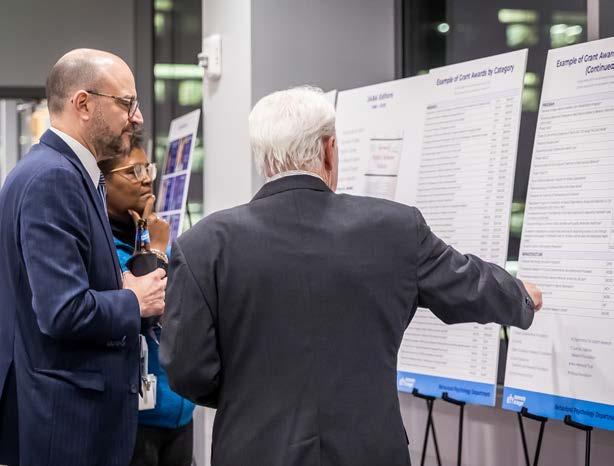
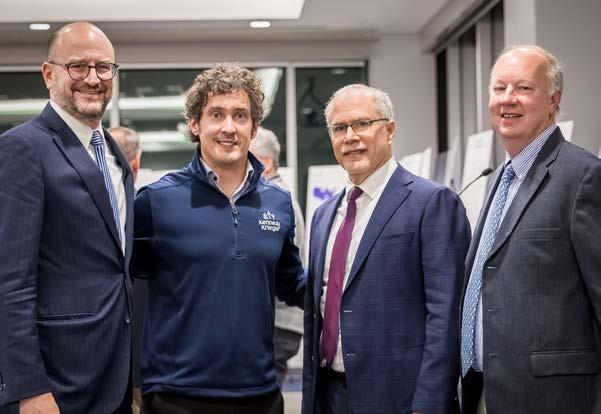
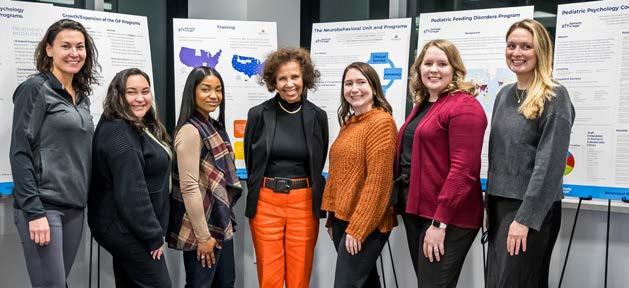
On Tuesday, December 2, Behavioral Psychology staff gathered to celebrate the department’s 50th anniversary, a meaningful milestone honoring five decades of dedication, growth and impact.
Holiday Activities
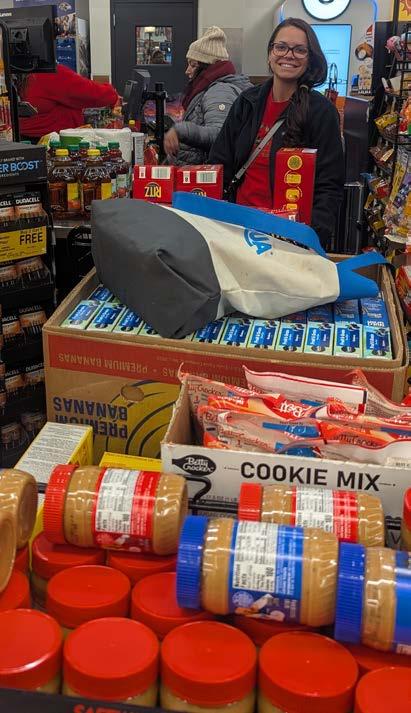
Behavior Management Clinic continued its annual tradition of volunteering over the holidays with the Baltimore Hunger Project. Clinic members donated food for weekend snack bags and spent time assembling weekend food bags. They were able to assemble over 600 bags!
A Note From Phyllis Ajayi
I wanted to take a moment to share the incredible results of our department’s recent holiday initiatives. Because of your overwhelming generosity, we’ve been able to provide much-needed joy and relief to a few of our patients and their families.
The Impact of Your Kindness
Through your efforts, we achieved some truly heartwarming milestones:
■ Families Supported: We served six families with holiday gifts (29 people in total).
■ Thanksgiving Baskets: We distributed eight complete baskets (including turkeys and all the sides)!
■ Donations: We collected $535 in monetary contributions, in addition to the many physical gifts donated by individuals.
A Community Effort
This was a massive team win. I want to give a special shout-out to our 38 individual contributors, as well as the Child and Family Therapy Clinic, which participated as a fantastic collective unit.
When the families came to pick up their items, the looks on their faces said it all. You didn’t just provide “stuff”… you made dreams come true this holiday season.
Thank You
Many parts of the world feel very heavy right now. Thank you for choosing to be a source of light and positivity for our community. Your compassion and generosity are what make this department so special.
– Phyllis Ajai, Department Administrator, People & Culture
L to R: Ruiwen Zheng, Rebecca Lovelace, Nicole Rodriguez, Komila Brennan, Lisette Munoz, Emily Hill, Susan Perkins-Parks and Arielle Flint
Using funds raised by our department through the 2025 ROAR race, Heather Liberto and Marguerite Wakeman (not pictured) shopped for food baskets and winter clothing to support our patients.
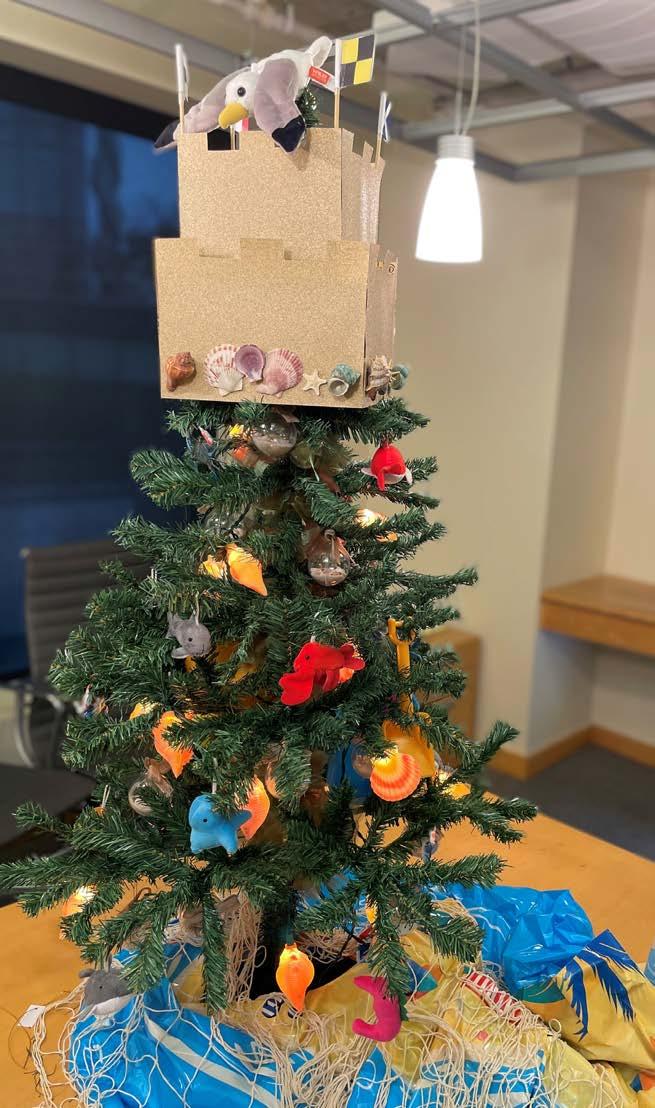
Festival of Trees is a three-day holiday celebration that benefits the patients, students and programs at Kennedy Krieger Institute and kicks off the most wonderful time of the year for families throughout the region. Each year, members of the Behavioral Psychology Department work together to design and decorate trees that are auctioned off at the event. This year, our department theme was “Maryland,” and we had three creative and collaborative submissions.
(above) Broadway Administrative Team“Crabby Christmas on the Bay”
(above) Outpatient Administrative Team - “Coastal Christmas”
(above) Brief Treatment Clinic - “Dr. Trashwheel”
WELCOME, NEW STAFF AND FACULTY MEMBERS!
Behavior Management Clinic
Emily Hill, PhD, Psychologist II
Rebecca Lovelace, Psychology Associate II
NBU IP
Kya Wilder, Clinical Asst I
Chima Okoro, Clinical Asst I
Amirah Pitts, Clinical Asst I
Tianqi Wu, Clinical Asst I
Tseday Armstrong, Clinical Asst I
Daniyah Eskridge, Clinical Asst I
Christopher Sulca, Clinical Asst I
Taniya Williams, Clinical Asst I
Nnamdi Amobi, Clinical Asst I
Tamyah Parker-Bey, Clinical Asst I
Tyrell Walker, Clinical Asst I
Nnamdi Amobi, Clinical Asst I
Hayley Bartholomew-Lowery, Clinical Asst I
Earl Gilliam, Clinical Asst I
Josiette Juddah, Clinical Asst I
Dakota Kirkendoll, Clinical Asst I
April Leeper, Clinical Asst I
Nicole Manuel, Clinical Asst I
Makayla Parker, Clinical Asst I
Makaila Wallace, Clinical Asst I
Te’Najah Williams, Clinical Asst I
Kameelah Abubakar, Clinical Asst I
Renee Cox, Clinical Asst I
Aden Dar, Clinical Asst I
Hanaa Elfernani, Clinical Asst I
Owen Gardner, Clinical Asst I
Gee Kenndra, Clinical Asst I
Kane Hanson, Clinical Asst I
Sanhya Henderson, Clinical Asst I
Kendra Jimenez, Clinical Asst I
Kayla MacArthur, Clinical Asst I
Juan Marrero Reyes, Clinical Asst I
Justice Millings, Clinical Asst I
Bruno Mourrain, Clinical Asst I
Bababode Ogunlaja, Clinical Asst I
Phierce Peoples, Clinical Asst I
Jared Regala, Clinical Asst I
Daniela Salguero Monge, Clinical Asst I
Thomas Sistek, Supervisor, Patient Services
Ericka Williams, Clinical Asst I
YangSerena, Clinical Asst I
Mallak Younis, Clinical Asst I
Andrea Adams, Clinical Asst I
Brittanie Banks, Clinical Asst I
Amber Barnes, Clinical Asst I
Darnell Barnes, Clinical Asst I
Autumn Cunningham, Clinical Asst I
Etny De Jesus, Clinical Asst I
Lynn-Josee Donastien, Clinical Asst I
Sheaquan Dupuy, Clinical Asst I
Faith Gasque, Clinical Asst I
Jaleel Gaymon, Clinical Asst I
Lakiera Leath, Clinical Asst I
Kevin Lin, Clinical Asst I
Dominique Logan, Clinical Asst I
Joy Nicholson, Clinical Asst I
Mariana Perez-Lozano, Clinical Asst I
Zeairya Vice, Clinical Asst I
Nautika Wilder, Clinical Asst I
Azure Crossley, Behav Data Spec I
NBU OP
Brooke Marvel, Clinical Spec I
Carolyn Gibson, Behav Data Spec I
Alliyah Matos, Behav Data Spec I
Feeding
Jenny Kim, Behav Data Spec I
Garrett Rivenburgh, Behav Data Spec I
Alaina Mason, Behav Rehab Asst I
Administration
Tishika Akins, Scheduling Coordinator I
Keisha Jamison-Mitchell, Scheduling Coordinator I
KUDOS
Congratulations to the Kennedy Krieger Institute Medical Staff Award Nominees
2025 Excellence in Clinical Care in Psychology Nominees
■ Jaime Benson, PhD
■ Matt Edelstein, PsyD
■ Ellen Henning, PhD
■ Brian Jobe, PhD
■ Chandni Patel, PhD
2025 Excellence in Research in Psychology Award Nominee
■ Matt Edelstein PsyD
Cumulative Record
Cumulative Record is produced by the Kennedy Krieger Behavioral Psychology Department.
Editor-in-Chief
Lindsay Melvin
Managing Editor Tori Blancke
Senior Editor & Writer
Linell Smith
Graphic Designer
Abby Jackson
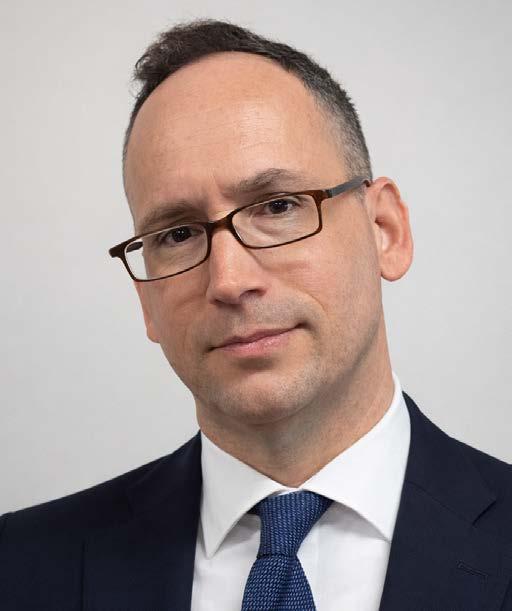
Dr. Jaime BensonDr. Matt Edelstein Dr. Ellen HenningDr. Brian Jobe