Kennedy

Spring 2026 Issue
•Serving Those Who Serve page 2
• Behavioral Psychology Group Therapy Opportunities page 8
•Community Events page 15
Krieger Behavioral Psychology Department News
Spring 2026

Kennedy
Spring 2026 Issue
•Serving Those Who Serve page 2
• Behavioral Psychology Group Therapy Opportunities page 8
•Community Events page 15
In April, we celebrated the Month of the Military Child, a time to recognize and honor the resilience, strength and sacrificesofmilitary-connected families.Itisafittingmoment for ourdepartment to reflectona mission that has long been close to our core: serving those who serve.


For nearly 20 years, the Behavioral Psychology Department has taken great pride in building and sustaining a program servingmilitary-connectedfamiliesthat reflectsourdeepcommitment to supporting service members and their families. What began as a focused effort has grown into a meaningful and impactful program, shaped by dedication, innovation and a shared sense of purpose. In this issue, we are proud to highlight that journey—celebrating its growth, recognizing its accomplishments, and looking ahead to the future we continue to build together.
This issue also gives us the opportunity to honor another cornerstone of our department: our people. We celebrate important milestone anniversaries for staff memberswhose years ofservicereflect not only professional excellence but also unwavering loyalty and dedication. Their experience strengthens our foundation; their commitment drives our success; and their presence fosters something truly special—a sense of family.
It is this combination of purpose and people thatdefineswho we are. As youread through this issue, I hope you feel the same pride in our work, our mission and one another that continues to inspire everything we do.
Thank you for being part of what makes this department exceptional.
Lindsay Melvin Editor-in-Chief
Along with the responsibility of serving our nation, military service families bear the stress of frequent moves, parental deployments and living in dangerous environments. They need healthcare providers who can offer them care tailored to the many challenging situations they face.
That’s the mission of Kennedy Krieger Institute’s Behavioral Health Services for Military Families, founded 15 years ago within the Institute’s Behavioral Psychology Department. Based in Odenton, Maryland, near the U.S. Army’s Fort Meade installation, the program offers behavioral healthcare at multiple locations, as well as telebehavioral healthcare.
The program has traveled a fast track to success. In 2006, clinicians in the department saw seven clients in seven sessions. By 2025, the number of military families treated per year had grown to 787 clients participating in 8,485 sessions.
Dr. Michael Cataldo, the department’s director, credits this remarkable increase to a combination of factors. Along with offering excellent behavioral health services that target the needs of children and families of service members, the program’s strengths include its strategic planning, understanding of how to

build a network of critical connections, innovative approaches and a healthy dose of serendipity.
Treatment includes using behavioral interventions and cognitive behavioral therapy as well as training parentsinproblem-solvingandeducatingthem about child development and childhood disorders. Telebehavioral health—offered in state, out of state and internationally—is particularly helpful in allowing families who must move frequently to continue seeing their trusted providers.
Another innovative tool developed within the department is the Military Families Digital Parenting Program. Available to families online, it contains accessible behavioral lessons also helping families overcome the stigma sometimes associated with seeking mental healthcare.
Dr. Cataldo says the program grew from Kennedy Krieger’s dream of improving behavioral healthcare for military families who deserve the best support the country has to offer.
The key to realizing this dream was convincing military leadership that such care could help create the best prepared military force.
“Readinessisthefirstpriorityofthe[U.S.] Department of Defense,” Dr. Cataldo says. “If people in rank aren’t advancing as planned because their familyishavingdifficulties,thatcausesdisruptions and breakdowns in the system.”
“The defense department needs to keep as many people moving up the ranks as possible without having compassionate reassignment or deferment from orders due to severe, irreconcilable family issues and hardship.”
In 2009, he began building a dedicated clinical service with the help of psychologist Dr. Jennifer Crockett, now director of Kennedy Krieger’s Telehealth Department and Behavioral Health Services for Military Families.
Like many of her colleagues, Dr. Crockett has firsthandknowledgeoftheneedsofmilitary families. For more than two decades, while her husbandservedinthe U.S. Army, sheandtheir children moved frequently. Because her husband was deployed multiple times to the Middle East, she also understands how a parent’s service in a combat zone can affect children.

“Children in military families face a set of challenges that their peers in civilian families don’t,” she says. “They move, on average, every two to four years. They’re often separated from a parent for a long time. A parent may experience an injury during deployment. All of that can lead to stress, anxiety,depressionandbehavioraldifficulties.
That’s where we can be of help.”
The Behavioral Health Services for Military Families program began near Fort George G. Meade, considered one of the biggest and most important militaryinstallationsinthe U.S.
Home to all six branches of military service—Army, Navy, Air Force, Marines, Coast Guard and Space Force, it is the largest employer in Maryland. It supports more than 54,000 employees and serves as the epicenter of national intelligence and cyber operations, including the National Security Agency and U.S. CyberCommand.
Much of its growth in the early 2000s was due to Base Realignment and Closure (BRAC), a federally mandatedprocess to increasetheefficiencyofthe Department of Defense.
Military veteran Anthony Brown, who became the state’s lieutenant governor in 2007, was involved with the economic growth and development of
the Fort Meade area while helping implement Maryland's BRAC plan. Dr. Cataldo says Brown’s efforts to guarantee the area was ready for more than 25,000 new households helped expedite launching Behavioral Health Services for Military Families.
Thefirststep was rentingspace,month by month, to see a handful of patients. Next, the program moved adjacent to a Johns Hopkins pediatric practicethat could use its services.
At that time, Dr. Cataldo says, more than half of the behavioral health patients seen at the department’sOdentonlocation were frommilitaryconnected families. Their service also expanded to serve both military and nonmilitary families at sites in Howard and Anne Arundel counties.
“For three years, we were increasing the number of patients we serve at a rate of 40% a year, which is phenomenal,” Dr. Cataldo says. “So, in wanting to help military families, we also found a way to expand our clinical services to nonmilitary families in several counties for families who never preferred to go to our Baltimore clinics.”
The next frontier was telebehavioral health. In 2015, the Behavioral Psychology Department
launchedKennedyKrieger’sfirsttelebehavioral healthprogram forits patientsfrommilitaryconnected families. It was a highly innovative approach at a time when few providers offered virtual care.
“We were amongthefirst to testtelebehavioral healthinthehomesofmilitaryfamilies—five years before the pandemic,” Dr. Crockett says. “Our small team paved the way, creating the infrastructure the Institute needed.”
Today, the telebehavioral health team has set a model for other providers. Team members work hard to connect families to care as quickly as possible.
“Military families move far more often than typical families do, and combined with waitlists, that creates major barriers to care,” explains psychologist Dr. Sara Hinojosa, who coordinates thetelebehavioralhealthout-of-stateprogram. Althoughthebenefitsoftelehealthseemobvious now, Dr. Cataldo says it was still necessary to persuade military leaders.
With the assistance of retired Maj. Gen. Jim Gilman and Maj. Gen. Richard Thomas Jr., the defense department established a trial telehealth program to provide military families everywhere with servicescomparable to hospital-basedbehavioral health services to preserve their readiness for duty.
Approval for a two-year telehealthpilot was soon made permanent.
“You can have all the ideas and preparation you want,butunless you findpeoplewho are aligned with your idea, it will never happen,” Dr. Cataldo says. “It’s a series of such individuals that make this possible.”
Dr. Crockett agrees. “I still get chills thinking about how it all came together. This amazing growth all started with Mike getting together with some real estateagentsandfindingsomespacethatwould work for us and for families.”
The latest advance in improving access to healthcare is the Digital Parenting Program run
by psychologist Dr. Jessica Becraft, director of clinical outcomes in the Behavioral Psychology Department.
She says the online platform, introduced in 2023,offersfast-trackapproaches for avarietyof disruptive behaviors.
“We thought if there are some methods that we tell all our patient families about, there must be amoreefficient way to getthatinformation to people.”
The Kennedy Krieger Parenting Platform uses thesameevidence-basedprotocolsasthe department’s outpatient programs in order to help parents manage their child’s behavior.
The site includes 54 tutorials with videos, demonstrationsandstep-by-stepinstructions on topics such as managing tantrums, resisting bedtime, picky eating and teaching your child to tolerate “no.”
Dr. Becraft says some of the tutorials address issues for military families such as how to talk to your child if a parent is going to be deployed, and how to ease the transition of having a permanent change of station.
Plans are underway to upgrade the Parenting Platform as well as one for military families. Both were created, in part, by the Department of Defense funding that Kennedy Krieger receives for its postdoctoral training and other programs designed to supportmilitary-connectedchildren and families.
The Behavioral Health Services for Military Families program is now nationally recognized as a key partner of the Military Child & Family Collaboratory to enhancehealthcareandsupport for militaryconnected youth with mental health, emotional, developmental and/or behavioral needs. The national recognition underscores the department’s dedication to findinginnovative ways to improve their healthcare, Dr. Crockett says.
“Thesacrificesmilitaryfamiliesmake to protectour country are significant,”sheadds. “We seewhat they go through—we know the children serve right alongside their parents. It is truly an honor to serve them.” n

While clinicians at the Behavioral Health Services for Military Families program help children and their parents overcome the daily challenges of their military world, they also recognize their strengths.
Psychologist Dr. Christi Culpepper sees hundreds of military families a year in the Child and Family Therapy Clinic in Odenton, which also has locations in Baltimore and Columbia. She says her experience in treating children for emotional and behavioral difficulties,manyrelated to adjusting to deployment and relocation, highlights the resilience of military families and their adaptability to new systems.
“Children from military families often fall into place, so to speak, a little bit easier than civilian children do. In civilian families, there's not as much rigidity around taking our recommendations and putting them into practice. Military service members are rule followers.
“They are doing their job, they are serving our country, and they also understand how important
family is. They understand that they create and hold the structure for their children.”
Psychologist Dr. Jaime Benson, associate director of the department’s outpatient Behavior Management Clinic, serves on the board of the Fort Meade Alliance,anindependentnonprofitorganizationthat focuses on initiatives in education and workforce development, business community growth, and military and family support to help drive the overall health and success of the region.
“We know that support networks are critical for resilience,” she says, adding that the member organizations of the Fort Meade Alliance offer various types of support, including mental healthcareandaccess to financialresources. Dr. Benson has also worked closely with Blue Star Families and the Anne Arundel County Public Library to implement a reading program that aims to strengthen social connections for military and civilian families.

Psychologist Dr. Michelle Bubnik-Harrison, program coordinator for Behavioral Health Services for MilitaryFamilies,treatsmanyout-of-statemilitary families through telebehavioral health. She also works with the Fort Meade Alliance on “Healthy Little Cooks,” a series of cooking classes that offers freetake-homegrocerybagsoffreshfoodand strives to connect families with each other while also teaching participants about healthy foods.
“Enhancingthewell-beingofmilitaryfamilies falls into my therapeutic realm as a great accompaniment to mindfulness,” Dr. BubnikHarrison says.
“While we're all primarily clinicians, a slice of our time is devoted to outreach,” Dr. Benson adds. “I think my role is to help build these relationships with the community and be a reliable, trusted source.”
Last year, shecreatedanevent for militaryconnected and civilian children at the Anne Arundel County Library to celebrate the Month of the Military Child. One activity invited children to create a painting with a local artist. Another featured an improv specialist who helped participants talk about their experiences—an activity Dr. Benson considered particularly helpful for kids 8 to 12 years old.
When providers understand military culture, they canmoreeasilyidentifyandaddressthedifficulties that military families face. Along with their clinical duties, Dr. Culpepper and Dr. Benson lead a training series focused on providing culturally informed services for military families.
Over the course of a year, trainees work alongside supervisors to provide culturally informed care to children and parents while also hearing from experts, including leaders of local community agencies, about military life and how it affects families. Some postdocs now practice full time on military installations—in the vanguard of the next generation of behavioral psychologists.
Like some other team members, Dr. Sara Hinojosa has relatives who are service members, including her husband, a veteran of the Marines.
As program coordinator for Behavioral Health Services for Military Families, Dr. Hinojosa primarily supportsout-of-statepatientswho are eligible for telebehavioral health with Kennedy Krieger in 23 states.
“We know that support networks are critical for resilience”
–
Dr. Jaime Benson
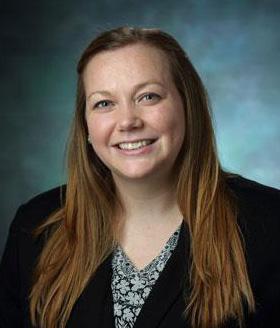

“Many families are worried because they have moves coming up. It makes me really proud that we can now stay with them and keep working together.”
She says roughly 80% of the military families who engage in telebehavioral health make “substantial progress” toward their goals.
“The work at their jobs is really hard,” Dr. Benson says, “and they work really hard in treatment, too.” n

TheconflictinIranhasintroduceduncertainty for manyAmericans.Military-connectedfamilies are particularly impacted by times of war. Regardless of whether a loved one is experiencing an active deployment, war can evoke complex emotional reactions. Throughout history, military families have consistentlyshownresilience,adaptabilityandstrengthacrossgenerations.Thesacrificesmade by service members are shared by those closest to them. Resources and strategies are available to help families strengthen coping mechanisms, resilience and connection during this time.
Below you willfindavarietyofresourcesthatsupportmilitary-connectedyouthandtheirfamiliesavailable at kennedykrieger.org/military:
Brief Tips Developed by Kennedy Krieger Institute:
• Telling your child about deployment/PCS
• Preparing children for a caregiver’s absence
• Telling your child upsetting news
• Supporting teens through PCS
•Usingavisualschedule
• Managing frustrating situations
• Supporting your child through reintegration
• Building connection through mealtimes
• Strengthen your bond through play
• Catch them being good
Services at Kennedy Krieger Institute:
If your family needs more support, Kennedy Krieger can offer additional services:
Our team hascreatedfull-lengthdigitalparenting resources on the topics above, as well as other strategies to manage common parenting
challenges. These resources are available to Kennedy Krieger patients at no extra cost. If you are military-connected(ActiveDuty,Guard,Reserves, Veterans) but NOT a Kennedy Krieger patient, you can get access by enrolling in a research study. Reach out to bptutorials@kennedykrieger.org for more information.
We also are able to provide behavioral health services for military families local to Maryland or via telehealth in a number of eligible states. Please call 667-205-4900 to betriaged to ourappointmentlist.
Various organizations also have resources that may help families navigate this challenging moment or address trauma that might occur as a result of military service.
Sesame Street for Military Families:
■ Routines | Sesame Street for Military Families sesamestreetformilitaryfamilies.org/topic/routines
■ Deployments | Sesame Street: How to Prepare sesamestreetformilitaryfamilies.org/topic/deployments
■ Injuries | Military: Helping Kids Cope Sesame Street sesamestreetformilitaryfamilies.org/topic/injuries
■ Grief |Sesame Street: Explaining Death to Children sesamestreetformilitaryfamilies.org/topic/grief
Military One Source:
■ Support for Deployed Military Parents militaryonesource.mil/resources/millife-guides/ deployed-military-parent-support
■ Military Deployment Support for Teens militaryonesource.mil/resources/millife-guides/militarydeployment-support-for-teens
■ When a Parent Deploys: Ages 2 to 5 militaryonesource.mil/resources/webinars/when-aparent-deploys-ages-2-to-5
■ Strengthen Military Family Bonds militaryonesource.mil/resources/millife-guides/ strengthen-family-bonds
■ Tips for Strengthening Family Resilience militaryonesource.mil/parenting/new-parents/familyresilience-protective-factors
■ About MWR: Morale, Welfare & Recreation militaryonesource.mil/military-basics/extended-familyfriend/about-mwr-morale-welfare-and-recreation
Other Resources:
■ Babies on the Homefront: App to help deployed parents stay connected to infants and toddlers babiesonthehomefront.org
■ Comfort Kits for Military Connected Children comfortcrew.org/kits
■ Effects of Deployment on Children & Families | American Academic of Pediatrics healthychildren.org/English/healthy-living/emotionalwellness/Building-Resilience/Pages/Deployment-andChildren.aspx
National Child Traumatic Stress Network:
■ Talking to Children about War nctsn.org/resources/talking-to-children-about-war
■ Talking to Youth When Scary Things Happen (En Español)
nctsn.org/resources/talking-to-youth-when-scarythings-happen
■ Talking to TeensWhenDifficultThingsHappen (En Español)
nctsn.org/resources/talking-to-teens-when-difficultthings-happen
■ Creating Supportive Environments When Scary Things Happen (En Español)
nctsn.org/resources/creating-supportive-environmentswhen-scary-things-happen
■ What to Do When the News Scares You apa.org/pubs/magination/what-to-do-when-the-newsscares-your-revised-edition
National Child Traumatic Stress Network:
■ Age-RelatedReactions to aTraumaticEvent (En Español; ASL; Dari; Pashto)
nctsn.org/resources/age-related-reactions-traumaticevent
■ Talking to Youth When Scary Things Happen (En Español)
nctsn.org/resources/talking-to-youth-when-scarythings-happen
■ Talking to TeensWhenDifficultThingsHappen (En Español)
nctsn.org/resources/talking-to-teens-when-difficultthings-happen
■ Creating Supportive Environments When Scary Things Happen (En Español)
nctsn.org/resources/creating-supportive-environmentswhen-scary-things-happen
■ USUCenter for StudyofTraumaticStress cstsonline.org
■ Tools for Stressand Worry -CohenVeterans Network cohenveteransnetwork.org/tools-for-stress-and-worry
■ NCTSN | The National Child Traumatic Stress Network: NCTSN.org is a resource for the public, professionals and others who care about children and are concerned about child traumatic stress. nctsn.org/what-is-child-trauma/populations-at-risk/ military-and-veteran-families/nctsn-resources
continued on page 17
Kendra Dixon is a human services professional with a strong background in child care and family support. She holds an associate of arts in human servicesfromRasmussenUniversityandhas additional training in early childhood education.
Dixon’spassion for thementalhealthfield was inspired by experiences working as a child care provider at a Children of America preschool, where she witnessed how emotional and behavioral challenges impacted children with specialized needs.
In her position as a child care director, she oversaw daily operations, supported staff members, partnered with families and ensured a safe and nurturing learning environment for children. She also worked as a behavior technician for children with behavioral needs, implementing behavior plans and helping improve their communication and social skills.
These experiences led Dixon to join the Behavioral Psychology Department, where she continues to grow professionally while supporting children and their families.
What she enjoys most about working in the Behavioral Psychology Department is assisting families in findingbehavioral therapy resources for their children and supporting them throughout the process. She is especially passionate about helping youth and families from diverse and underserved communities.

Building on her dedication to educating and inspiring young minds, Dixon has written a children’s book, “Tish’s Journey to Becoming a Boss,” which will be available this summer.
Outside of work, Dixon enjoys doing crafts, spending quality time with her husband and their three children, and caring for “Bruno, a happy goldendoodle, who brings joy and energy to our home.” n
Before coming to Kennedy Krieger Institute, Jasmine Diaz worked as an MRI tech aide at Northwest Hospital in Randallstown and as a receptionist at The Neurology Center in Silver Spring. “I’m passionate about supporting patients and improving access to care,” she says.
“I chose to major in science because I always wanted to have an understanding of how people’s brains and their overall health impact their daily living.”
Diaz holds a bachelor's degree in neuroscience fromGeorgeMasonUniversityandamaster’sin biologyfromChathamUniversityinPittsburgh.
Excited to be part of the Behavioral Psychology Department, Diaz particularly looks forward to assisting families as well as communicating with
Spanish-speaking families and helping them feel comfortable receiving services through the department.
Diaz grew up in Montgomery County, where she still lives.

Outside of work, she loves to spend time with her “beautiful,energetic9-month-oldgoldendoodle, Kookie.” She also enjoys drinking coffee, especially if it’s caramel-flavored,andeatingpupusasand authentic tacos. n
NBU IP
IkimahAbdullah-Waddy,ClinicalAssistantI
Miriam-EsterAkobe,ClinicalAssistantI
Arham Alam, Clinical Assistant I
Kailey Bawcombe, Clinical Assistant I
Shaniera Bishop, Clinical Assistant I
Croswell Black, Clinical Assistant I
Tiyone Bowie, Clinical Assistant I
Ronald Brooks, Clinical Assistant I
Ciera Canady, Clinical Assistant I
Carrington Colson, Clinical Assistant I
Jasmine Crawford, Clinical Assistant I
Maiya Dickey, Clinical Assistant I
Autumn Ford, Clinical Assistant I
Brianna Ford, Clinical Assistant I
Chelsey Gasque, Clinical Assistant I
Micheal Gordon, Clinical Assistant I
Areyanna Holloway, Clinical Assistant I
Janaiya Howard, Clinical Assistant I
Travon Jenkins, Clinical Assistant I
Mya Lehn, Clinical Assistant I
Gabrielle Maguire, Clinical Assistant I
Daisha McCall, Clinical Assistant I
Lorali Morris, Recreation Activities Staff I
Nia Nebanmor, Clinical Assistant I
Shakemma Nelson, Clinical Assistant I
Sarah Ngimbi, Clinical Assistant I
Immanuel Parham, Clinical Assistant I
Colby-Tanija Pryor, ClinicalAssistantI
Kaylen Randall, Clinical Assistant I
TaliyahRobertson,ClinicalAssistantI
Tyler Robinson, Clinical Assistant I
Michael Rowe, Clinical Assistant I
Hamalah-NajiSaleh,ClinicalAssistantI
Toni Smith, Clinical Assistant I
Destiny Smith, Clinical Assistant I
Clifton Smith, Clinical Assistant I
Clara Strines, Behavior Data Specialist I
Rhian Taylor, Clinical Assistant I
Jackson Vieth, Clinical Assistant I
Madison White, Clinical Assistant I
Mackenzie Wright, Clinical Assistant I
Lavender Young, Clinical Assistant I
Administration
Taylor Burrow, Patient Services Specialist
Jasmine Diaz, Intake Specialist II
Kendra Dixon, Intake Specialist II
Robin Locks, Executive Assistant I



Navigating the complexities of family life and treatment can often feel like a solitary endeavor, but growth thrives in connection. Group therapy offers a unique space where shared experiences transform into collective resilience, providing families with both professional guidance and peer support. Below you will find a list of the group therapy opportunities currently offered by our department.
Theseskill-basedgroupsprovidetreatment for patients(9th–12thgrades)whoexperiencedifficulty with anxiety in a number of areas (e.g., social, health, academic and generalized anxiety). Group goals include:
1. Improving skills to cope with physiological symptoms and anxious thoughts,
2. Reducing distress and avoidance of anxiety provoking situations, and
3. Practicing strategies to successfully engage in anxiety-provokingsituations.
This group, which include skills training, processing and support, is designed to help families and teens (9th–12th grades) deepen their understanding of how past experiences may affect emotional and physicalwell-being.Groupgoalsinclude:
1. Recognizing signs of stress and trauma,
2. Encouraging acquisition and utilization of effective coping strategies, and
3. Helping patients and families identify community resources and build stronger support systems. The group offers an opportunity for reflection,growthandempowermentthrough shared healing.

Theseskill-basedgroupsprovidetreatment for patients (6th–12th grades) who present concerns related to depression, social withdrawal, anxiety, irritability,self-injury(e.g.cutting),risk-taking, impulsivityandrelationshipdifficulties.Groupgoals include:
1. Improving coping skills to regulate emotions and behaviors,
2. Strengtheningtheparent-childrelationship,and
3. Increasing interpersonal effectiveness.
Theseskill-basedgroupsprovidetreatment for patients(3rd–12thgrades)whoexperiencedifficulty interacting with others. Group goals include:
1. Building basic behavioral and cognitive social skills,
2. Reinforcing prosocial attitudes and behaviors, and
3. Promoting adaptive coping strategies for social situations.
In the Mindful Parenting group, parents learn to applymindfulness-basedskills to themselvesand to their experience of parenting their children to help them to parent with fuller awareness and slow down their automatic reactions. When we become aware of these automatic reactions, we can choose to respond differently, in more effective ways. Parentswilllearnbothformalmindfulnessbased practices, such as meditations and yoga, as well as learn mindfulness of everyday activities, withafocuson day-to-day parentingandfamily activities.Mostfamilieswillfindthegrouphelpful with: reducing their parenting stress, improving
their relationship with their child, parenting more effectively or less impulsively, and/or helping their child be calmer or better regulated.
Theseskill-basedgroupsprovidetreatment for teen patients (8th–12th grades) who experience executivefunctioningdifficulties,andtheir parents. This group helps teens develop skills and consistency that promote success at school and home by incorporating organization skills and strategies from the Supporting Teens’ Autonomy Daily (STAND) manual. Group goals include:
1. Helping families build partnerships,
2. Developing independence in teens, and 3. Promotingproblem-solvingtechniquesthat address the challenge of technology use in schools.
This structured social support group provides support for teens as they navigate typical adolescent identity development (9th–12th grade). Thisgroupprovidesskills-basedlearningand discusses topics of interest including:
1. Managing identity related stressors,
2. Useofsocialmedia,
3. Impact of family relationships, and
4. Exploration of other life issues. These groups includeparent-onlysessions,psychoeducation on relevant topics, and also highlights community resources.
For more information on CFT group therapy, contact Dr. Chandni Patel (PatelC@kennedykrieger.org) or email cftgroups@kennedykrieger.org
BMC Elementary Friendship Group for Social Skill Development
Tuesdays4-5:30p.m.
March 10–May 5
BMCatOdentonisofferinganeight-weekinperson social skill group for elementary children in 1st–3rd grade (about 6–9 years old). These sessions will help children develop social skills in a group setting that will use the Social Skillstreaming curriculumandprovidetime for modeling,roleplay and practicing the skills with other children, feedback, and transferring the skills outside of session with home practice. A few of the key social skills that will be covered are listed below:
■ Introductions
■ Sharing
■ Dealing with anger
■ Dealing with losing/games
■ Starting conversations
■ Expressing feelings
■ Apologizing
■Problem-solving
■ Joining in
■ Recognizing other’s feelings
■Self-controlstrategies
■ Dealingwithaccusations(conflict)
AGES: Elementaryschool-agechildren1st–3rd grade (about 6–9 years old)
REQUIREMENTS: Childrenthatwouldbenefitfrom learning a variety of social skills in a group setting and applying them. Children should not engage in unsafe behaviors (aggression that leads to injury, self-injury,elopement,etc.)nor have significant developmental delays. Participants will need to commit to the eight weekly appointments. The caregiver will need to attend one session prior (60-minuteintake) to thestartofthegroup.
for the
This group aims to teach children how to make and keep friendships.
■ SKILLS TAUGHT: Tradinginformation, two-way conversations, electronic communication, findingappropriatefriends,appropriateuseof humor, entering and exiting a conversation, get-togethers,goodsportsmanship,teasingand embarrassing feedback, handling disagreements
■ AGES: Middle School (11–14 yo) and High School (14–17 yo)
continued on page 17

The Department of Behavioral Psychology has expanded knowledge through its study and treatment of behavior problems across the developmental spectrum, focusing on genetic disorders and the problems of aggression and self-injury. It has produced more than 1,000 publications, with high-impact papers changing practice and stimulating further innovation. In each issue, Cumulative Record highlights published research that represents the department’s exceptional work.

Crockett, J.L., Becraft, J.L., Phillips, S.T., Wakeman, M. & Cataldo, M.F. (2020). Rapid conversion from clinic to telehealth behavioral services during the COVID-19 pandemic.
BehaviorAnalysisinPractice,Volume13 /Pages725-735
Abstract

Survival often depends on behavior that can adapt to rapid changes in contingencies, which shouldbeparticularlywellsuited to acontingency-sensitiveanddata-baseddisciplinesuchas applied behavior analysis (ABA). The speed and scale with which contingencies shifted in early March 2020 due to theeffectsofCOVID-19representatextbookcase for rapidadaptationwitha direct impact on the survival of many types of enterprises. We describe here the impact, changes and outcomes achieved by a large, multifaceted ABA clinical program that has (a) ongoing data thatforecastedandtrackedchanges,(b)staffwellpracticedwithdata-basedshiftsinoperations (behavior),and (c) up-to-date information(data)onpolicyandregulations.Theresultsshowed rapidshiftsinclientandstaffbehavioronadailybasis,shiftsinservicesfromin-personservices to telehealth, and increases in volumes, revenue and margins. We detail regulations and provide actionable steps that clinical organizations can take pertinent to this shift now and in the future. ThechallengesoftheCOVID-19pandemicunderscoretheimportanceofmaintainingrobust coordinationandcommunicationacrossourfieldinorder to addresscrisesthataffectourfield.
The Central Maryland Chamber hosted its inaugural Women’sLeadershipBreakfast. Dr. MichelleBubnikHarrison, psychologist and chair of the Women’s Leadership Roundtable,moderatedthefiresidechatwithesteemed guestsCol.YolandaGoreandShennettaGriffin.It was an authentic and inspiring discussion that emphasized mentorship to pave the way for younger generations and community partnerships to best serve our communities.
From left, Dr. Michelle BubnikHarrison; Col. Yolanda Gore, garrison commander of Fort Meade; Shennetta Griffin, executive director of the Maryland Aviation Administration; and Johnetta Thurston, vice chair for the Central Maryland Chamber.


KaleidoHope is a healing art initiative of Kennedy Krieger. This program is an opportunity for artists to transform spaces at the Institute into uplifting environments for patients, students, families and staff members. Dr. Jaime Benson and her daughter’s 2nd grade class submitted artwork and it was chosen to be displayed.
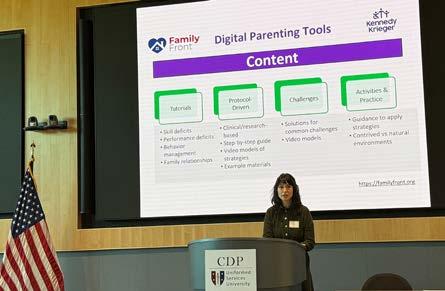

On Tuesday, April 21, in Bethesda, Jacqui Carrow presented at Pathways Maryland to Progress: Collaborative Action for MilitaryChild & FamilyWellBeing. The purpose of the event was to bring together subject matter experts, military families, researchers, clinicians, policymaker, and key stakeholders to align efforts and strengthen systems of care supporting the mental health, emotional, developmental and behavioralwell-beingofmilitaryconnected children and families. Carrow’s presentation focused on our journey in developing the parenting digital platform. She discussed the team effort among clinicians across the Behavioral Psychology Department and information regarding the content for general parentingconcernsandthosespecific to military-connectedfamilies.Shealso addressed barriers we've come across and what we have learned in terms of support families may need to increase their engagement with the content, and future directions of the program.
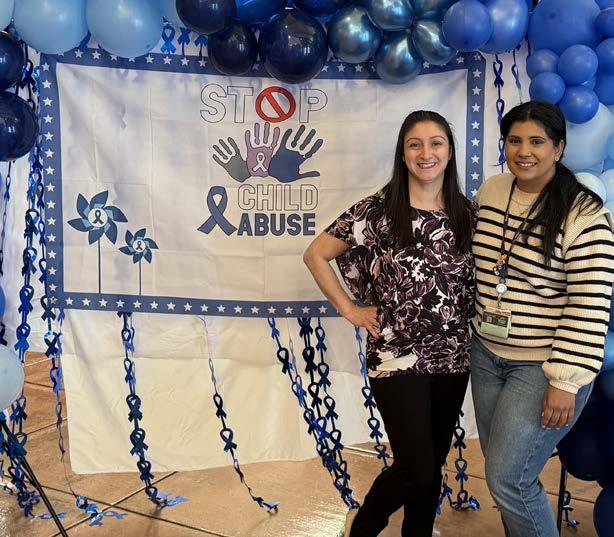

On April 12, our Behavioral Psychology ROAR team, made up of 19 staff members and their family and friends, participated in the 22nd annual ROAR for Kids 5K. Our team raised over $1,500. Many of our Behavioral Psychology families struggle with food insecurity. The funds raised through ROAR for Kids will be used to support our programs by funding food baskets for those families that need extra support during the holiday season, as well as coats and winter clothing for patients in need.
Our staff attended multiple events throughout April to celebrate the Month of the Military Child and to promote our military program and services. Angie Carrick & Parwinder Kaur attended the Soar and ExploreMilitaryFamily Fun eventsatUrban Air locations in Frederick and Glen Burnie. On April 7, Parwinder Kaur and Michelle Bubnik-Harrison were inattendanceatthe Family Advocacy Program Family Fun Fair at Fort Meade. Other events attended by Bubnik-Harrison,Gaur,and Carrick included the Maryland National Guard 5K and Resource Fair, the 4th Annual Meade Cluster Spring Event, and the Exceptional Family Member Program (EFMP) Family Kite Festival.

Resources for Military Families
continued from page 8
■ Support for Military Personnel & Families | Military OneSource: Counseling resources militaryonesource.mil
■ Military & Family Life Counseling Near Me | Military OneSource:Directory to findnearestmilitaryand family life counselors (MFLC) militaryonesource.mil/resources/tools/mflc-locator
■ Our Military Kids: Provides grants for extracurricular activities for military kids with deployed parents ourmilitarykids.org
■ UnitedThroughReadingApp–UnitedThrough Reading: Keeps military families reading ready, no matter the distance, by providing the opportunity for service members to video record story time for a child they love. unitedthroughreading.org/app
■ DoD Yellow Ribbon Reintegration Program –OfficialSite:Deploymentsupportandinformation for National Guard and Reserve members yellowribbon.mil
■ Bloom | Empowering the Military Teen: Platform to connect military teens through content creationandcommunity-building bloommilitaryteens.org
■ ZERO TO THREE: Provides information to support military families with infants and toddlers zerotothree.org/military
■ FOCUS:FamiliesOvercomingUnderStress: Provides resilience training to military children, families and couples focusproject.org
■ Blue Star Families: Blue Star Families is the largest nonprofitservingandrepresentingmilitaryand veteran families. Blue Star Families is committed to strengthening military families by connecting them with their neighbors–individuals and organizations–to create vibrant communities of mutual support. bluestarfam.org
■ Maryland Department of Veterans and Military Families:Providesresources for militaryconnected families living in Maryland veterans.maryland.gov
Compiled by: Sara Hinojosa, Ph.D.; Jaime Benson, Ph.D.; Michelle Bubnik-Harrison, Ph.D.; and Jennifer Crockett, Ph.D. n
Behavioral Psychology Group Therapy
Opportunities
continued from page 13
■ CRITERIA:
• Fairly high language abilities
• Childisself-motivated to participateingroup and learn skills
• No intellectual disability diagnosis
Superheroes: This program is to help children develop skills for appropriate interaction with peers and adults.
■ SKILLS TAUGHT: Following directions, anxiety reduction and participating, generalized imitation and body basics, recognizing and expressing wants and needs, turn taking/ sharing/playing cooperatively, responding to questions and requests, conversation and topic maintenance,perspectivetakingandproblemsolving
■ AGES: Younger group (6–8 yo) and Older group (9–11 yo)
■ CRITERIA:
• Language skills of at least 7 yo
Unstuck and On Target: This program is for those wanting to learn how to increase flexibility,problem-solvingandcopingskills and is appropriate for children with autism, ADHD, attention concerns or executive function challenges.
■ SKILLS TAUGHT: Flexibility, getting stuck, plan a plan b, consolidating and compromise, big deal little deal, choice no choice, handling the unexpected, why beflexible
■ AGES: Younger group (8–9 yo) and Older group (10–11 yo)
■ CRITERIA:
• Language skills of at least 7 yo
• Nosignificantintellectualdisability
Soccer Social Skills Program - Fairmount
Our soccer group focuses on teaching soccer skills (passing, goal kicking, dribbling, defending) in conjunction with more broad social/ conversation skills (back and forth conversation, good sportsmanship, entering or exiting groups. It is a TOPSoccer program. n
Congratulations to our Behavioral Psychology staff members who were honored at the Employee Service Celebration on May 14 for reaching their milestone anniversaries in 2025! We are grateful for this year's award recipients for their dedication, commitment and diligence to the department, the Institute and the families we serve.
5 YEARS
■ Nancy Hargrave Hawkins
10 YEARS
■ Jessica Allen
■ Dawn Bell
■ Alison Kozlowski, PhD
■ Katherine Nunez
■ SherikaGriffin
■ Parwinder Kaur
■ Daria Savage
■ Raquel Wells
20 YEARS
■ Kerry Drinkuth
■ Melissa Holliday
■ Tenieka Bland
■ Karen Janowiak
25 YEARS
■ Tresi Liimonti
■ Martha Valencia
35 YEARS
■ Paige Dobry
50 YEARS
■ Michael Cataldo, PhD
Each year, Kennedy Krieger honors exemplary staff through the Quality & Safety Champion Program. Staff are nominated because they initiate and participate in performance improvement activities and demonstrate practices that are safe, timely, effective,efficient,equitableandpatient-centered.ThefollowingBehavioralPsychology staff members were honored at the reception on May 15.
The following individuals are being recognized as Quality and Safety Champions
■ Devrron Coleman, Behavioral Psychology
■ Danielle Evans, Behavioral Psychology
■ MichelleFrank-Crawford,BehavioralPsychology, PhD
■ Oluwasegun Ogun, Behavioral Psychology
Cumulative Record is produced by the Kennedy Krieger Behavioral Psychology Department.
Editor-in-Chief
Lindsay Melvin