BATTERIES CHARGED
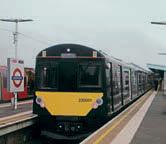
GWR ‘230’ enters passenger use
‘VOYAGER’ UPGRADE New look for CrossCountry fleet



BRITAIN’S BEST-SELLING RAIL TITLE


March 2026






BATTERIES CHARGED
GWR ‘230’ enters passenger use
‘VOYAGER’ UPGRADE New look for CrossCountry fleet
BRITAIN’S BEST-SELLING RAIL TITLE
March 2026
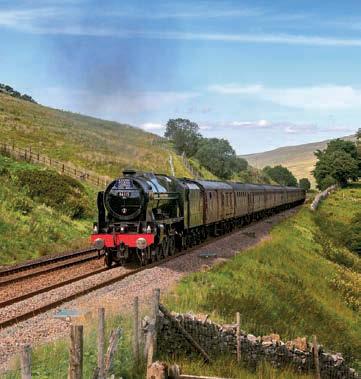
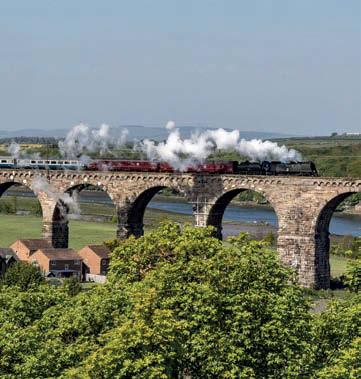
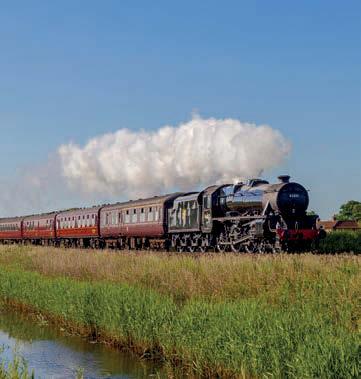
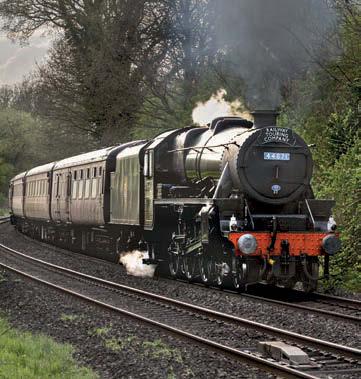
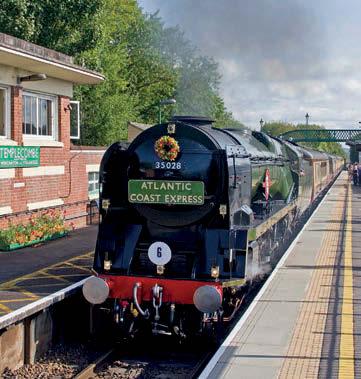
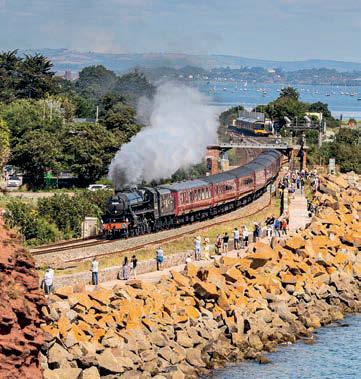
Step aboard asteam-hauled daytripand enjoya more leisurelyway to travel throughsomeof thecountry’s most breathtaking landscapes.
With destinations including Carlisle,Edinburgh andCornwall, each trip offers amemorable journey amid some of thefinestscenery theBritish countrysidehas to offer.
The Cumbrian Mountain Express
Saturday 9May
TheEdinburgh Flyer
Saturday 16May
TheBuxtonSpa Express
Saturday 16May
TheSwanage Belle
Wednesday 20 May
TheAtlanticCoast Express Saturday 23 May
TheRoyal Duchy Sunday 31 May






SAVE OVER 20% OFF THE COVER PRICE TURN TO PAGE 24 FOR DETAILS
March 2026. No. 1,500. Vol 172 . A journal of record since 1897.
9 Headline News
West Midlands Trains nationalised; GBRf puts locos up for sale; GWR’s battery Class 230 enters service.
51 Steam News ‘Manor’ and ‘Dukedog’ to trade museum places.
59 Industrial Steam Slough Estates No. 3 restoration in home straight.
60 Heritage Carriages & Wagons
NWPG to refurbish TEA bogie tank wagon.
62 Narrow Gauge
Final ‘Collection X’ loco moves to Vale of Rheidol.
64 Miniature Community rallies round Pugneys Light Railway.
65 Heritage Trams
Funding brings return of Heaton Park trams closer.
66 Classic Traction
Ex-SWR Class 455 preserved for main line use.
70 Railtours
BLS and 225 Group to run Mk.4 charity tour.
72 Freight Freightliner and Heavy Haul operations split.
75 Metro
DLR extension in TfL’s latest business plan.
76 Network Plans for Liverpool Street redevelopment approved.
78 Traction & Stock
CAF Class 897 tri-modes to be known as ‘Serenzas’.
81 Stock Update
All the latest changes to locos, units and coaches.
83 Operations News
Notable workings from around the country.
89 Irish
RPSI begins the overhaul of GNR(I) Q Class No. 131.
90 World
Steam power returns to the main line in Argentina.
24 Subscriptions Off er
A great deal... and have your magazine delivered, too.
40 Readers’ Platform & Where is it?
The scourge of artifi cial intelligence and more.
42 Meetings
This month’s talks and events taking place near you.
43 Years Ago
What was making the news in back issues of The RM
45 Panorama
A selection of the best in railway photography.
93 Reviews
Our thoughts on some recent new book releases.
98 Crossword & Next Month
Test your railway knowledge in our popular quiz.
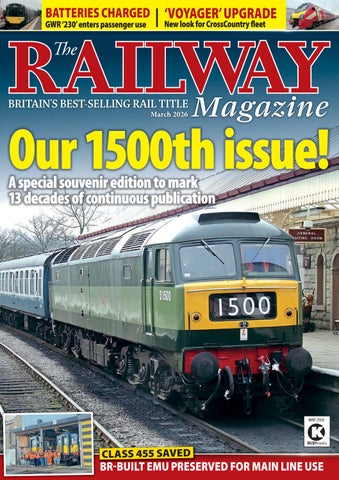
20 Locomotive No. 1500
Continuing a tradition going back to 1951, Philip Atkins marks our latest ‘Century issue’ with a survey of locomotives that have carried the number 1500.
26 Practice & Performance
John Heaton FCILT looks at some of the work put in by steam, diesel and electric No. 1500s.
33 1500 Volts
A fi rst attempt at standardising electrifi cation settled on 1500V DC supply, but widespread use was thwarted by the Second World War, after which 25kV AC took over.
34 Our ‘Century issues’
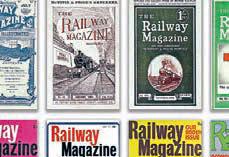
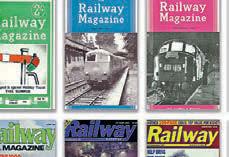
Refl ecting almost 130 years of railway history, our 1500 issues have covered much since the very fi rst in July 1897, writes Paul Bickerdyke.






Designer: Tim Pipes
Editorial assistant: Jane Skayman
Publisher: Tim Hartley
Sales and distribution manager: Carl Smith
Customer marketing director: Kevin McCormick
Head of marketing (subscriptions): Claire Aspinall
Managing director: Dan Savage
Published by: Kelsey Media Ltd, Media Centre, Morton Way, Horncastle, Lincs LN9 6JR Tel: 01507 529529 Fax: 01507 371066
Email: railway@kelsey.co.uk
ADVERTISING
Group advertising manager: Sue Keily
Advertising: Andy Bruce andy.bruce@kelsey.co.uk Tel: 01507 529455
By post: The Railway Magazine advertising, Kelsey Media, Media Centre, Morton Way, Horncastle, Lincs LN9 6JR
SUBSCRIPTIONS
Full subscription rates (but see page 24 for offer): (12 months, 12 issues, including post and packing) £66 for the UK. Export rates are also available, see page 24 for more details. UK subscriptions are zero-rated for the purposes of Value Added Tax.
Enquiries: subs@kelsey.co.uk
CUSTOMER SERVICES
General Queries & Back Issues 01507 529529
Monday-Friday: 8.30am-5pm help@classicmagazines.co.uk www.classicmagazines.co.uk
Archive enquiries
Jane Skayman 01507 529423 jane.skayman@kelsey.co.uk
PRINT AND DISTRIBUTION
Printed by: William Gibbons & Sons Ltd.
Magazine & Catalogue Printer, 26 Planetary Road, Willenhall, West Midlands, WV13 3XB
Distribution by: Frontline Distribution Solutions 2 East Poultry Avenue, London,EC1A 9PT Enquiries Line: 0207 429 4000
EDITORIAL CONTRIBUTIONS
Accepted photographs and articles will be paid for upon publication. Items we cannot use will be returned if accompanied by a stamped addressed envelope, and recorded delivery must clearly state so and enclose sufficient postage. In common with practice on other rail periodicals, all material is sent or returned at the contributor’s own risk and neither The Railway Magazine, the editor, the staff nor Kelsey Media Ltd can be held responsible for loss or damage, howsoever caused. The opinions expressed in The RM are not necessarily those of the editor or staff. This periodical must not, without the written consent of the publisher first being given, be lent, sold, hired out or otherwise disposed of in a mutilated condition or, in any unauthorised cover by way of trade or annexed to or as part of any publication or advertising, literary or pictorial matter whatsoever.
Please email high-resolution digital images in jpg/jpeg or tiff format to railway.pix@kelsey.co.uk. Send only unprocessed and ‘straight from the camera’ images, and include basic details of ‘what, where and when’ plus the photographer’s name in the image’s file name. If possible, embed a full description in the image’s ‘File Info’ section.
CDs or memory sticks can also be accepted by post.
This issue was published on March 4, 2026. The next issue will be on sale on April 1, 2026. © Kelsey Media ISSN 0033-8923
AS a monthly magazine, then roughly every eight years we notch up another 100 issues, every 42 years or so we pass 500, every 84 a 1000 and now – after almost 128 years – we have hit issue No. 1500. The figures are slightly skewed because for much of the 1940s we had to publish every other month due to paper rationing, but we have been reporting continuously since 1897 and there are not many other periodicals that can say that.
In compiling this issue, we have made much use of The Railway Magazine digital archive. If you are not familiar with it, can I urge you to find out more because it is a fantastic resource… if we can say so ourselves! All subscribers to the magazine get it for free as part of the deal, but it is almost worth the price of a subscription just for the archive.
Imagine having 1500 editions of The RM on your shelves at home. Now that would be a nice thing to have, all 172 volumes of it. But it would also be an expensive collection and take up a great deal of space. For those without the deep pockets or shelf space that a full collection would need, our digital archive offers the next best thing –indeed better in some respects.







We have the full collection of bound volumes here in the RM office, and I have to admit I like nothing better –given the time – to leaf through the back issues from the past 13 decades. I say ‘given the time’ because it is all too easy to get lost in nostalgia, or side-tracked by something completely different to what I was searching for. Such is the rich history of our railways.
However, the digital archive includes scans of every page of every edition from issue No. 1 to date. Not only that, it is searchable by keywords so you can go straight to what you are looking for. But there is still the option to pick an issue at random and leaf through to see what it contains. And all of this comes free with a subscription to the magazine.
If I have whetted your appetite, then please visit the website at www. railwaymagazine.co.uk/archive, while existing subscribers can gain immediate access by logging in using the email address linked to the subscription and with the subscriber ID number.











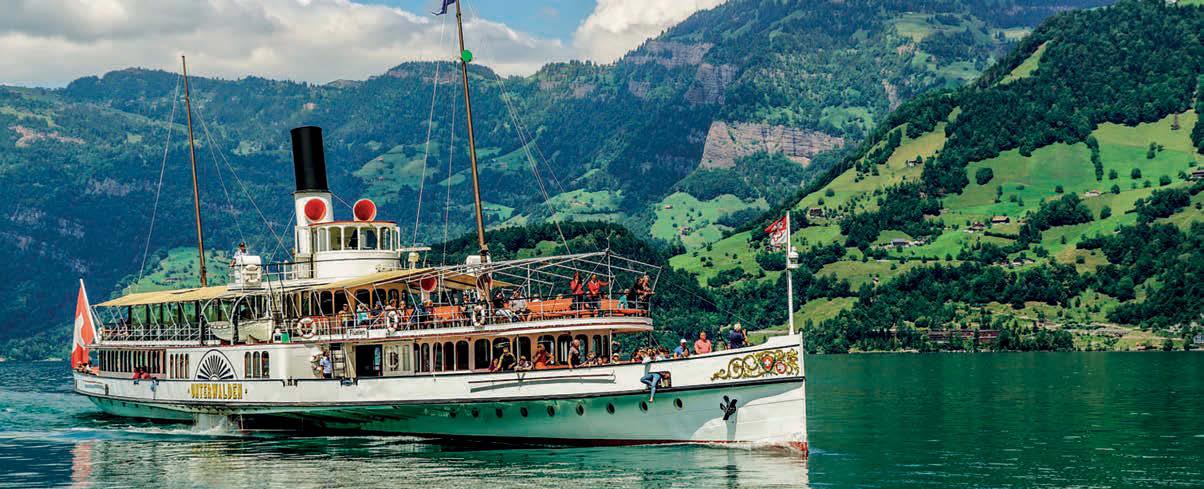


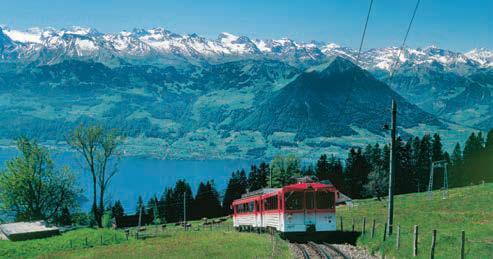
Switzerland’s Lake Lucerne~ Departs30May 2026 -8 days from £2,395pp
This tour showcasesSwitzerland’sremarkablescenicrailwaysand lakeside landscapes, taking in iconic routes such as theBrünigand Gotthard pass lines, withpanoramic viewsof snow-capped peaksand tranquil waters.Travellersenjoy leisurelycruises on threelakes plus classicmountainrailwayslikeRigiand Pilatus, allframedbypicturesque towns, serene alpine valleys andcharmingSwiss vistas.
Denmark& Northern Germany~ Departs6July2026- 12 days from £3,050pp
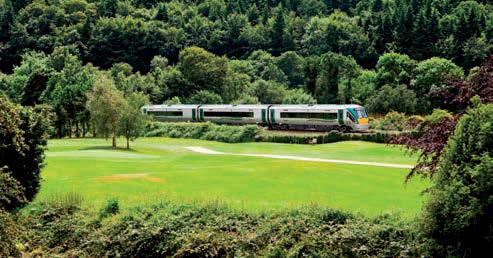
TheFar West of Ireland~ Departs19June2026- 11 days from £2,495pp
An Irishadventure that linksthe rail andrural landscapes of theWestofIreland with cultural andscenichighlights. Travellers experience aclassic circular trainjourney from Dublin to key westernhubsincluding Galway,Limerick, Cork andWaterford,exploring thewildbeauty around each destination. Thetourblendsrelaxed rail travel,cityculture andheritagesites withthe timeless charmand rugged scenerythatdefine Ireland’sfar west.
LinkingDenmark withNorthernGermany,thisitinerary blends elegantScandinaviancities withhistoricGermantowns viaefficientand scenic rail connections. Highlights includea paddlesteamer cruise on theSilkeborgLakes,Copenhagen’slivelyurban rail networks,the medievalcharm of Odense andhistoricRostock,and steamjourneysonthe Bryrup to Vrads Veteranbanen,the HedelandsVeteranbanenplusrides on thefamousMolli andRasender Roland steamtrains. Cultural stopsand rail travel betweenthese vibrantdestinations providea compelling contrast of heritage,architectureand northern European landscapes.
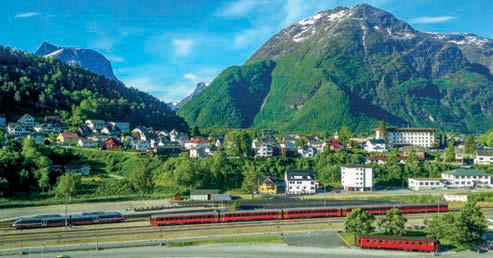

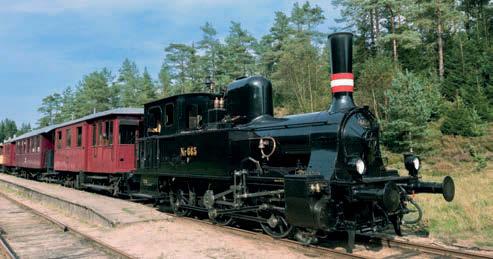
ScandinaviabyRail~ Departs4June2026- 15 days from £3,375pp
An immersivenorthernEuropeanrailexperience, this tour windsthrough Northern Germany, Denmark, Norway andSwedenbybothmainlineand scenic branch lines. Travellers enjoyhistoriccapitalsand cultural cities such as Hamburg, Copenhagen,Oslo, Trondheimand Stockholmcombinedwithpanoramic Scandinavian rail routes that traverse lakes, forestsand fjord-skirtedlandscapes. Theitinerary balances urbanexploration with peaceful journeys throughsomeofScandinavia’s most beautifulcountryside.





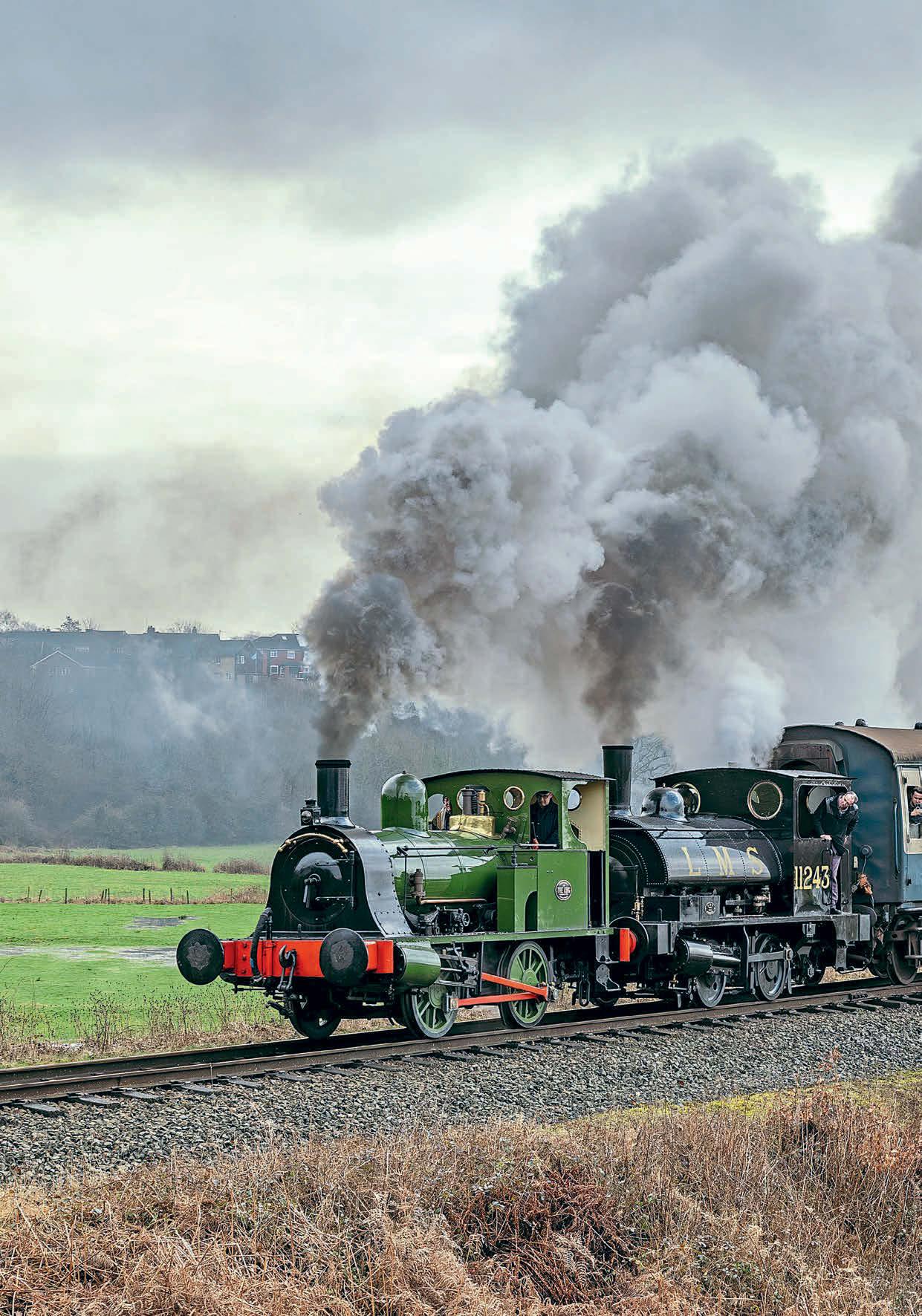
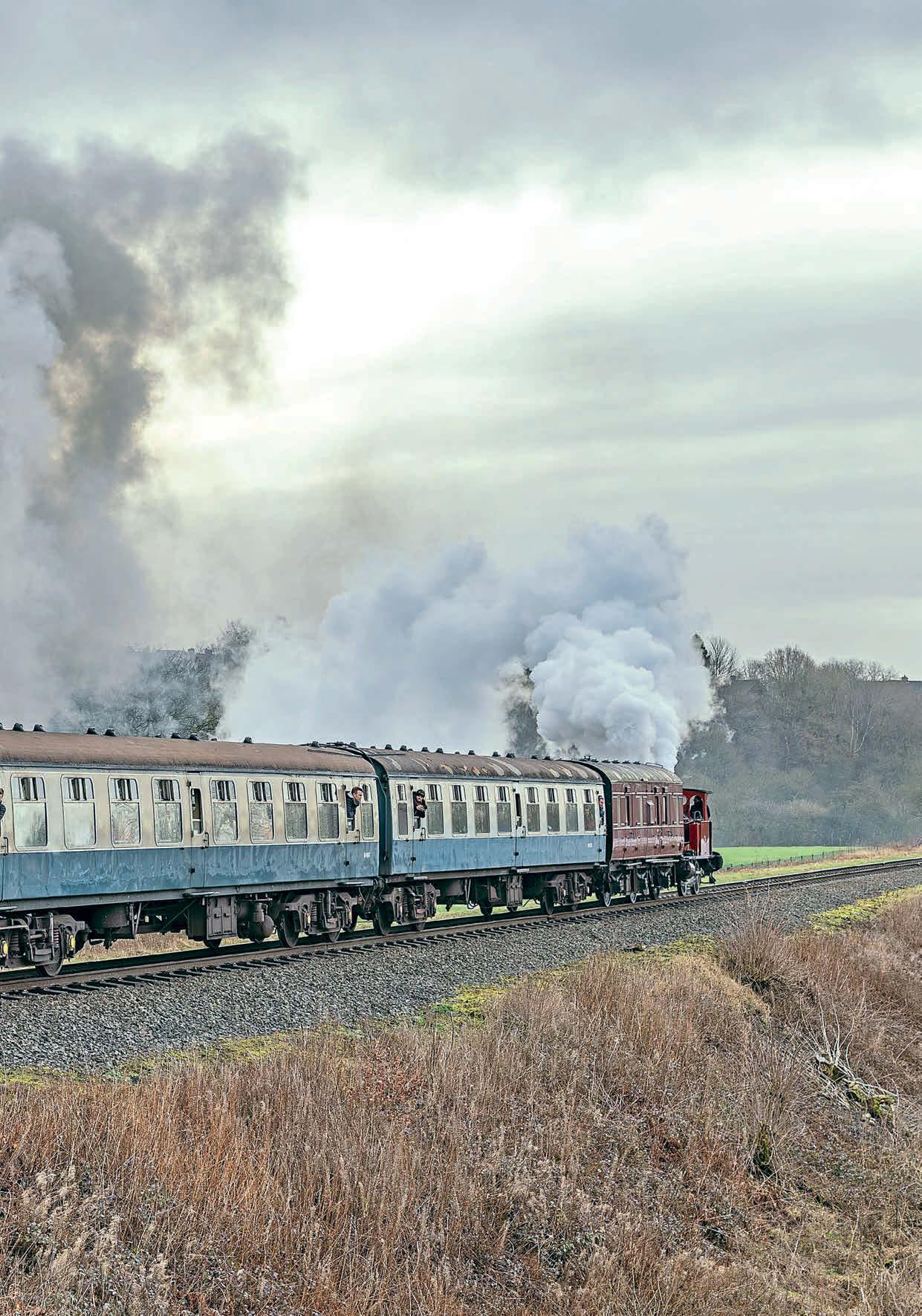





The East Lancashire Railway hosted a ‘Small Engines’ gala on February 21/22 featuring a dozen steam and diesel locos not often given a passenger turn. These included a pair of visiting 0-4-0 well tanks, green-liveried E Borrows & Sons No. 48 of 1906 (The King) from the Ribble Steam Railway and red-liveried Kerr Stuart No. 3036 of 1918 (nicknamed ‘Willy the Well Tank’) from The Flour Mill. These are pictured at Burrs Country Park on the first day of the gala, top-and-tailing the delayed 09.30 Bury to Ramsbottom with black-liveried ex-Lancashire & Yorkshire Railway ‘Pug’ No. 11243. KEVIN WHITEHURST
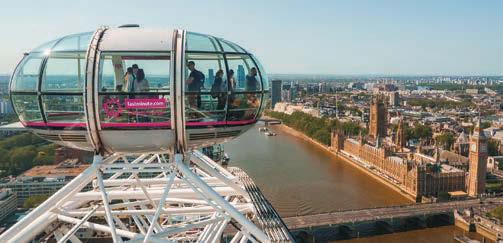
O Towering viewsfromthe London Eye
O Country steamattheChinnor &Princes Risborough Railway
O Buckinghamshireinminiature at Beckonscot
O Under thestreets withthePostOffice Tunnels Railway
O Asedatecruiseon theRiver Thames
O Lunchattheoldest inninEngland–TheRoyalStandard
O FirstClass on theEnterpriseExpress
O Aday acrosstheborder,for steamand heritage railways,inEire
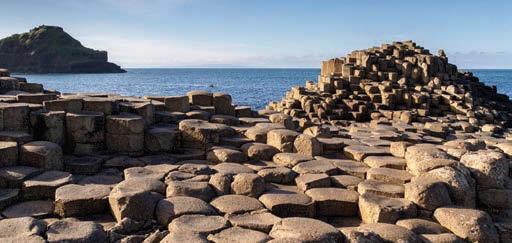
O AntrimCoast and theGiant’sCauseway
O Steamatthe Downpatrickand Co Down Railway
O ThesuperbUlsterFolk &Transport Museum
O Thenational railwaycollection at Whitehead
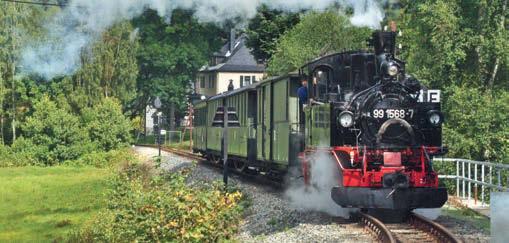
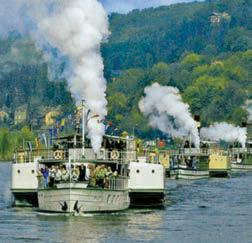
O Cruiseaboardoriginalpaddle steamersthrough stunningscenery
O Steamaboundsonseverallocal tourist railways
O Classicarchitecture to admiresuchas theworld renowned Frauenkirche
O ByEurostar, ICEand regional trains acrossEurope
O Modernandhistorictramsin townand country
areaccompanied by anexperiencedcourierwho works exclusivelyfor Inside Trackandfollowacomprehensive, inventiveitineraryforeachday.Expecttotravelon avarietyof differenttransporttypes,withanemphasisonheritagesteam trains. Mixedinwillbevisitstolocal relevantattractionslike museums,castlesorscenicdelights.Thepricesareinclusive ofeverythingintheitineraryandthereare nofreedays. Above are justfourofour2026offeringssopleasedomakecontact to receiveourfullbrochureifyoulikewhatyousee.
O DayoutinDublinincludingabrewery –guess which?
O Awhiffofhorsesatthe famous National Stud
O TheambitiousSuir ValleyRailway
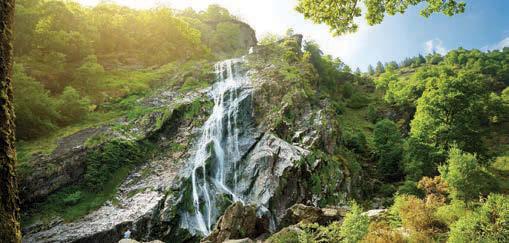
O NaturalwonderssuchasPowerscourt Waterfall
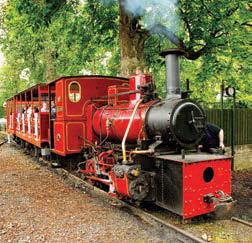
O SteamatStradbally, with Alfieand crew
O Dinnerincludedon threeevenings
WMT is the latest former franchise to be taken back under public control.
By ‘Industry Update’
WEST Midlands Trains became the latest train-operating company to be nationalised on February 1, moving to be under the control of DfT Operator Limited. This is one of the more complex former franchises, as it has two distinct divisions providing trains branded as London Northwestern Railway and West Midlands Railway. Operations were run as a franchise by a consortium of Abellio, JR East and Mitsui from December 10, 2017, but this was replaced by a direct award from September 10, 2021, as the effects of the Covid pandemic invalidated the original agreement. This contract has continued until the Government takeover, although Abellio sold its interest to Transport UK Group – a management buyout – on February 28, 2023. The franchise requirements were jointly specified by the Department for Transport, the West Midlands Metro Mayor and local authorities, which resulted in a commitment for £1 billion investment, of which £700 million was for new trains and £70 million for depots and station upgrades including digital customer information screens at 150 stations. New stations were also planned for the Camp Hill line.
If the franchising regime had continued, the planned expiry of the contract this year would have provided an opportunity for the Metro Mayor and local authorities to specify a new round of investment for anticipated growth. But the question now is how this will be funded, as there can be no certainty that the Treasury will replace the private sector funding that would have been available to a franchise.
The LNR part of the business provides semi-fast trains on the West Coast Main Line from London Euston to Birmingham via Northampton, Euston to Crewe, and Birmingham to Liverpool. It also operates the branch from Watford Junction to St Albans Abbey and the ‘Marston Vale’ line from Bletchley to Bedford that is to become part of East West Rail. The fleet is
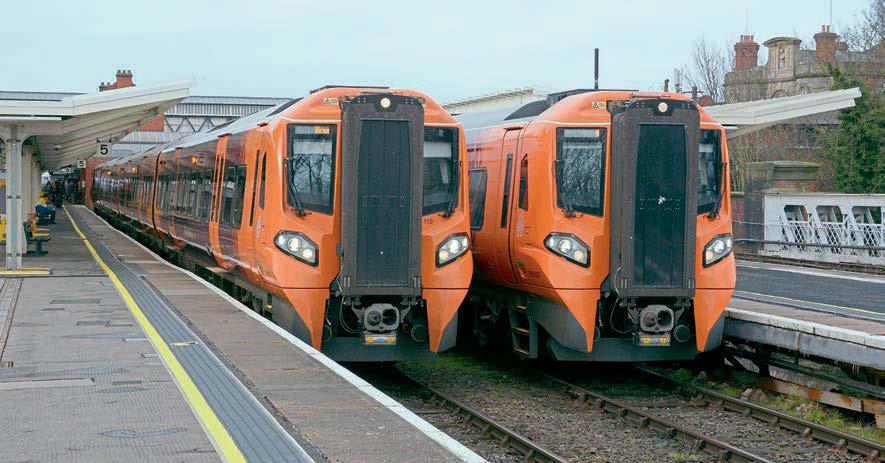
all-electric except for the Class 150 DMUs on the Marston Vale route. Recent deliveries have taken place of 48 three-car ‘Aventra’ Class 730/0 90mph EMUs mainly used by WMR plus 36 five-car ‘730/2’ 110mph units for the core LNR services.
Following the introduction of these new vehicles by the end of 2025, the fleet of 37 four-car Class 350/2 EMUs, which were built by Siemens and introduced as recently as 2008-9, have been moved into storage by owner Porterbrook Leasing.
The other class variants owned by Angel Trains have been retained as they have 2+2 rather than 2+3 seating, namely: 30 Class 350/1 dual-voltage sets that were upgraded to 110mph running in 2018; 10 further Class 350/3 AC units ordered in 2014 to cater for growth; and 10 Class 350/4 AC units transferred from TransPennine Express in 201920 after being replaced by new 125mph Class 397 sets.
WMR provides services that radiate from stations in central Birmingham and other population centres, and for non-electrified routes, two and four-car Class 196 units built by CAF have been introduced to supplement a substantial fleet of 22 two-car and 15 three-car Class 172s. Six of the two-car ‘196s’ are to be sub-leased to Chiltern Railways to operate the initial East West Rail service between Oxford and Milton Keynes.
Expansion is planned by enhancing infrastructure and opening new stations as part of a 30-year investment strategy that extends to 2050. This was
refreshed in 2022 to reflect changed planning assumption following the Covid pandemic. There is a shortage of capacity to meet expected levels of future demand, with acute congestion on the Stour Valley line between Birmingham New Street and Wolverhampton. This is a legacy of the withdrawal of passenger services on the parallel ex-Great Western Railway route between Snow Hill and Wolverhampton
“Demand for rail services will increase from 80 million per annum before Covid to 135 million by 2050”
Low Level in the early 1970s following electrification of the former LNWR/LMS route. Increased congestion saw Snow Hill reopened in stages from 1987 for heavy rail and West Midlands Metro trams.
The West Midlands Rail Executive has a 30-year plan to improve local services. To achieve net zero emissions by 2050, a rolling programme of electrification is proposed. The priorities are the lines serving Stratford-upon-Avon, Leamington Spa, Worcester and Great Malvern, and the route between Nuneaton and Birmingham.
Other proposed routes are in-fills to enhance the current electrified network, including Bromsgrove to Droitwich Spa,
King’s Norton to Barnt Green and the Camp Hill line.
There is an aspiration to see wiring extend from Wolverhampton to Shrewsbury and to reach London Marylebone. There is also an expectation that routes that serve the busiest container ports, such as Felixstowe, Thames Gateway and Southampton, will be included in a future national electrification programme.
The Midlands Rail Hub is a proposal to transform connections to population centres such as South Wales and the South West. It is a response to the arrival of HS2 at the future Curzon Street station, close to Moor Street, where there is to be a high frequency link. The cancellation of future phases of HS2 that were intended to reach Crewe, Manchester and Leeds is likely to cause continuing congestion on elements of the national network and alternative connectivity solutions from the Midlands will be a necessity.
The expectation is that demand for rail services in the West Midlands will increase from the 80 million per annum immediately prior to the Covid pandemic in 2019 to 135 million by 2050. This forecast has been reached by identifying seven key corridors where development proposals are planned.
The routes radiating from Coventry are seen as having the greatest potential, where a current demand of 20 million
annual users is forecast to reach 40 million by 2050. Substantial growth is also anticipated at Wolverhampton, where demand is expected to increase from 12.5 million to 20 million by 2050.
A freight objective is included, which can be summarised as taking measures to ensure paths are available to meet commercial requirements at terminals that provide both intermodal and bulk handling. This addresses concern among freight operators that any increase in the frequency of passenger services will not be at the expense of the paths required for freight operations. Within the next five years it is expected that up to 390,000 new houses will be built in the West Midlands, and there is the potential for up to 30 new stations to be provided as well as new rail corridors such as the Sutton Park line, which is a 12-mile freight-only route between Walsall and Water Orton that provides access to Nuneaton and beyond. The renewed open access application from the Wrexham Shropshire and Midlands Railway includes the use of this route.
Another significant proposal for reopening is from Stratfordupon-Avon to Honeybourne (on the Cotswold Line), which is partially still in situ to serve Long Marston. This has for a long period been seen as a key component of improving connectivity at Worcester and Oxford, and for providing more convenient journeys to Stratford-upon-Avon.
The new single-platform station, the fifth to open as part of the £336.4 million Northumberland Line project, provides an interchange with the Tyne & Wear Metro system.
By Graeme Pickering
MORE than 45 years after the final British Rail stations on North Tyneside were absorbed into the Tyne & Wear Metro system, the borough has regained a heavy rail service.
Opened on February 22, the single platform at Northumberland Park is the fifth of six stations to open as part of the £336.4 million Northumberland Line scheme, which restored passenger services between Newcastle and Ashington in December 2024.
Close to several housing developments that have been completed within the last decade, Northumberland Park station serves the communities of Backworth and West Allotment.
It is located alongside the Metro station of the same name, allowing interchange with Metro Yellow Line services, which run in a loop between South Shields and St James
via Gateshead, Newcastle and the North Tyneside coast. Since the launch of passenger trains almost 15 months ago, Northumberland Line passengers have been able to travel using the Nexus Pop card ‘pay as you go’ system, making it the first rail service other than the Metro to accept it.
This single method of payment is expected to benefit even more people now that changing between the national rail and Metro networks is possible at Northumberland Park. Nexus, which is both the passenger transport executive and Metro operator, and the North East Combined Authority hope to eventually introduce it as part of an integrated fare programme across the region.
“With a Pop card, customers can tap in and out on the Metro and the Northumberland Line,” said Nexus managing director Cathy Massarella. “I’d like to thank our partners at Northern and our colleagues in local authorities for working
closely with us to deliver these integrated fares and a customer experience that really puts people first.”
The extent of former mine workings as well as site space constraints which necessitated the use of a crane – itself affected by weather conditions – posed challenges for the completion of Northumberland Park, which lies east of the site of Backworth station, closed in 1977 as part of the phased handover of the North Tyneside Loop for Metro conversion. Bedlington, the final station included in the Northumberland Line project, is due to open on March 29.
By the end of January, more than one million journeys had been made on the route, far exceeding expectations. Northern says it is making efforts to increase capacity on services to meet demand.
Northern commercial and customer director Alex Hornby said: “We are focusing on four
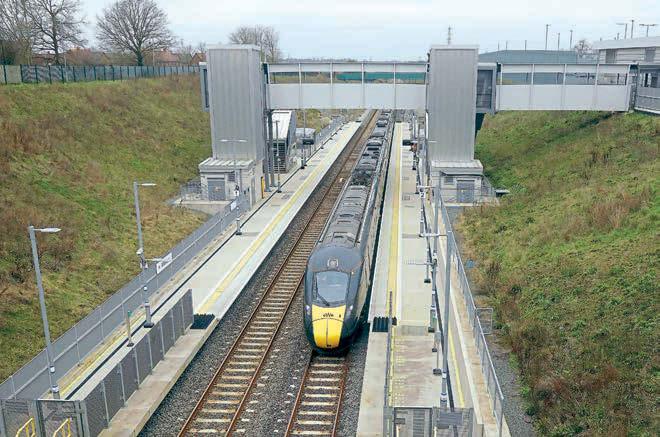
This month will mark 500 days since the first test train ran on October 21, 2024 between Oxford and Milton Keynes via the reopened East West Rail line, but still there is no announcement of when regular passenger services will commence. The initial operator is due to be Chiltern Railways, although there is a dispute with unions over the planned use of driver-only operation (DOO). With all former franchises gradually returning to public control, there is speculation that Great Western Railway – which does not use DOO – may become the operator instead after both Chiltern and GWR are nationalised later this year. Adding fuel to the fire was this GWR test run on February 18, when Nos. 800001+800021 ran from North Pole depot in west London to Euston via Oxford and Milton Keynes, making stops at EWR stations en route. The 5Q76 working is seen calling at Winslow. PHIL MARSH
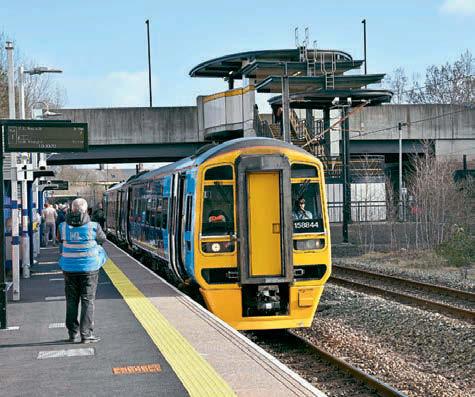
On February 23, Northern No. 158844 The Northumbrian arrives at Northumberland Park station on North Tyneside with the 2T18 Ashington–Newcastle service. The new single platform, which sits alongside the Tyne & Wear Metro station of the same name, had opened the previous day. The extent of former mine workings and the confined nature of the site, in a cutting between two road bridges, bordered by housing and the Metro route, made its construction particularly challenging. GRAEME PICKERING
cars, doubling the number of carriages into Newcastle at peak time. We’re guaranteeing four-car trains on a Sunday and on evenings when there’s match days as well. We’re looking within our own rolling stock plan to make sure we can increase capacity. We’re also
talking to other train operating companies to see how we can retrieve other stock from them. It will need to be funded. It’ll need to be costed. We’ll need to come with the business case to make that happen, but that’s hopefully something we can do in partnership with colleagues.”












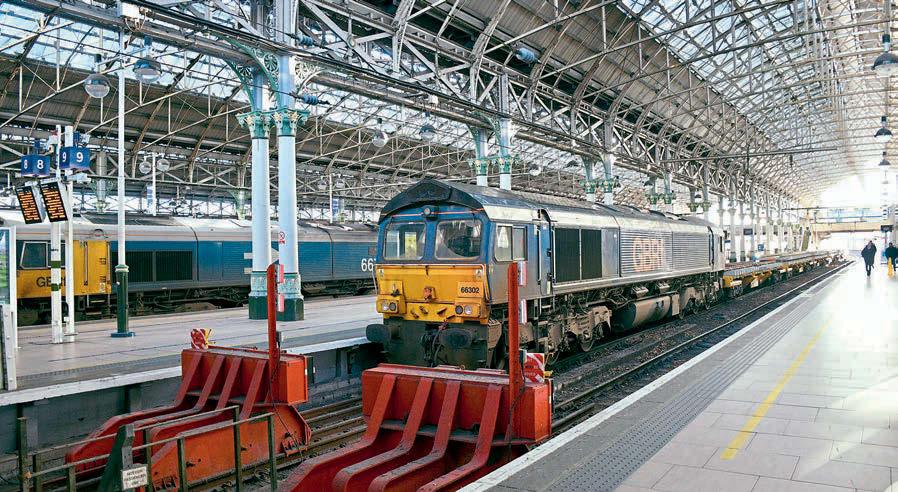
Manchester Piccadilly was closed for nine days from February 14 to 22 for a £7.9 million track upgrade scheme. The work included replacing 11 sets of points and 9km of signalling and telecoms cabling, swapping 4,000 timber sleepers for concrete equivalents, and laying 5,500 tonnes of new ballast. Work on this scale at the station was said to be last done in the late 1980s. As normally one of the busiest stations in the country outside of London, almost 9,000 replacement bus services were needed to keep passengers moving during the nine days. GBRf’s Nos. 66789 (left) and 66302 are pictured under the trainshed with engineering trains on February 17. HASSARD STACPOOLE
The operator’s planned motive power reshuffle will also mean lighter duties for its fleet of Class 69s.
By Graeme Pickering
GB RAILFREIGHT was preparing to advertise the sale of its entire fleet of Class 60s as this issue of The RM went to press.
Expected to be auctioned later this month, 10 of the 13 locomotives (Nos. 60002/ 021/026/047/056/076/085/
087/095/096) are in operational condition. GBRf stopped rostering them on specific diagrams in early January, although they have remained available for use as required. No. 60026 and more recently No. 60095 have both seen service on hire to DCRail since the fleet was placed
A DATE for reopening the heritage tram workshops that form part of Blackpool Tramtown was expected as this issue of The RM went to press.
Public tours of the facilities at the Blackpool Transport site on Rigby Road were suspended in late January due to an electrical fault. Following discussions involving Blackpool Council and Blackpool South MP Chris Webb, an agreement was reached to allocate £50,000 of funding from the Government’s Pride in Place Programme for urgent electrical and building repairs.
Site volunteer co-ordinator and Conservative councillor Paul Galley raised concerns earlier this year that the latest
proposals to demolish the workshops posed a serious threat to the future of Blackpool Tramtown as a whole. However, Lynn Williams (Labour), the leader of Blackpool Council, said that neither the trams nor the 1935-built tram shed in which they are housed were at risk.
The council says it is working with Tramtown on plans for the restoration of the main shed – to which access has been restricted since 2023 due to the condition of its roof – as part of a funding bid to make it a new visitor attraction. It plans to find a new permanent home for the workshops while aiming to keep them open in their current location in the meantime.
into warm storage. The three non-operational examples, Nos. 60004, 60014 and 60018, have each been stored for 16-17 years.
Also anticipated to be listed for sale are GBRf’s sole Class 59, No. 59003, Class 47 Nos. 47727, 47739 and 47747 (all stored since January), Class 08 Nos. 08925 and 08934 and Class 09 Nos. 09002 and 09009.
The decision to dispose of the locomotives follows a review of the company’s
traction needs, which will change as the new Class 99 locomotives come into service.
A total of 30 have been ordered. Nos. 99005 and 99006 arrived at Royal Portbury Dock on February 18 aboard the vehicle-carrying vessel Canadian Highway, bringing the total number of Class 99s delivered to the UK so far to six. Nos. 99003 and 90004 arrived in November and Nos. 99001 and 99002 in
May last year. The introduction of the Stadler-built bi-modes will also have implications for GBRf’s 16 Class 69s, created using Class 56 locos as donors. Nos. 69003/007/011/012 were reported to be stored during February, along with No. 69015, the last of the new class to enter traffic having only been delivered last summer.
GBRf told The RM that it was considering options which will mean lighter duties for the Class 69s at certain times of year.


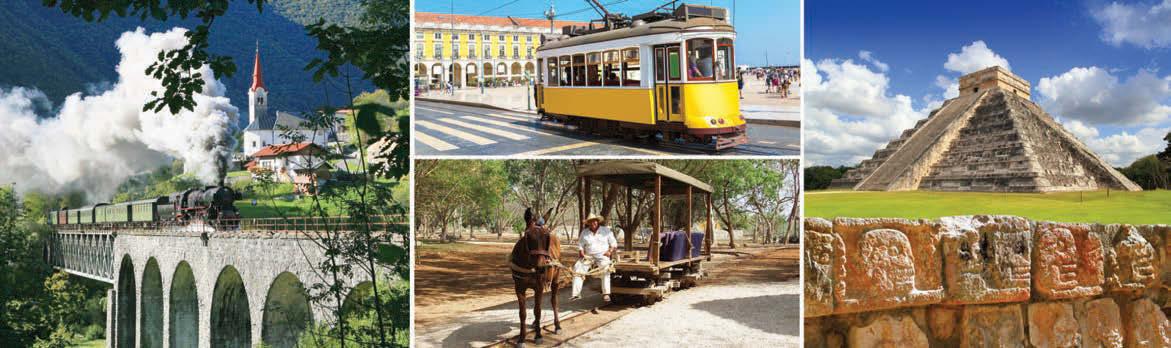

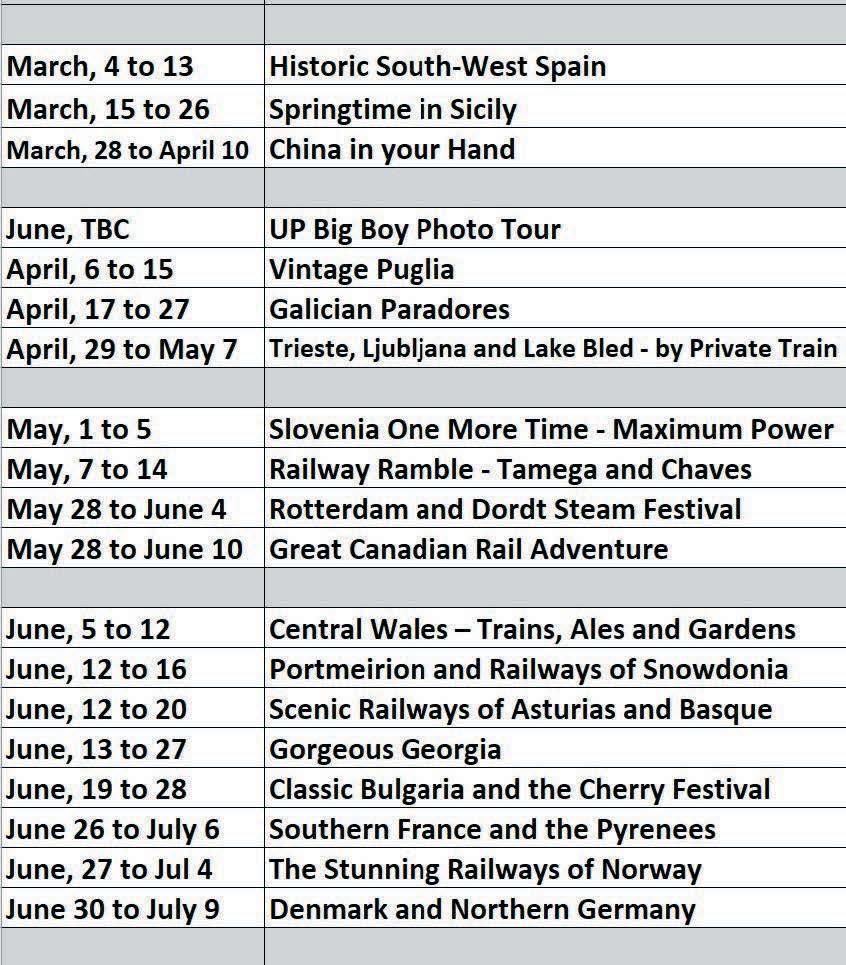
Establishedin1998, at PTGweoffergeneral interest rail, nature andculture holidaysfromthe UK usingrailtravelasa theme. Comfort, enjoyment, leisurelydaysand friendship arethe secretsofour success. Themajorityofour tripsare forpeoplewho want tosee theculture andscenery of thedestination country,travellingbytrain andstaying at greathotels. Destinations in 2026 include France,Italy,Portugal, Spain, Snowdonia, Germany, Slovenia,Bulgaria, Romania, theBalticStates, Scandinavia, Southern France, Sardinia,Corsica.Longhauldestinationsinclude Alaska,Canada, Mexico andUSA.Weare oneofthe only suchcompanies offeringboth ABTA and ATOL bonding to protectyourholiday.

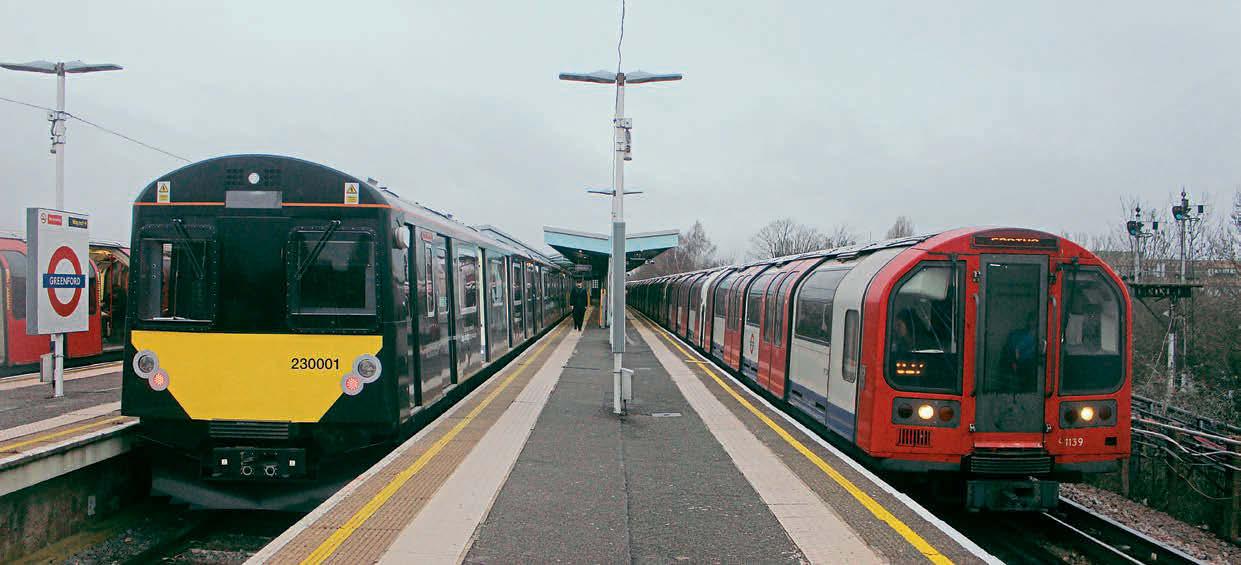
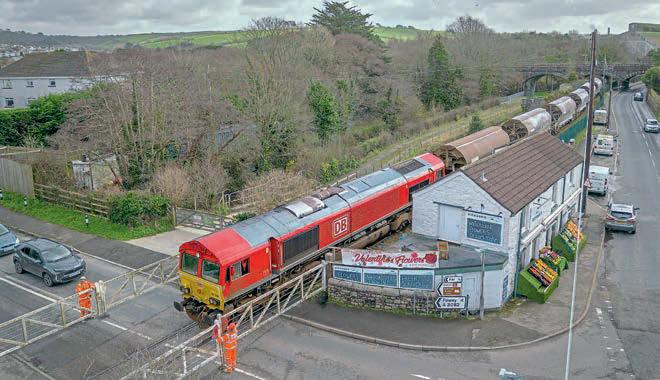
The three-car unit, which has been operating Saturday services on the Greenford branch since the end of January, will eventually be used on six days per week to gather further information about its performance.
By Graeme Pickering
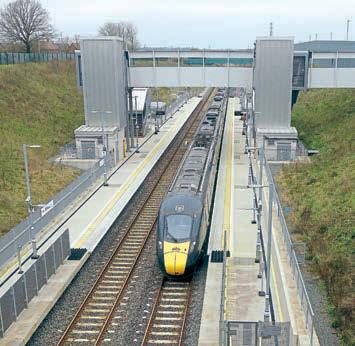
PIONEERING battery-operated train No. 230001 made its debut in revenue-earning service on the West Ealing–Greenford branch on January 31 and is now earmarked for an eventual six-days-per-week operation on the route to give more of an insight into its performance.
The three-car unit, equipped with ‘Fast Charge’ technology developed by the now defunct company Vivarail, underwent 22 months of testing on the twomile line prior to introduction. In August last year it claimed a world record for a batterypowered train by completing a journey of 200.5 miles on a single charge by travelling from Reading Train Care depot to Oxford and back via Paddington.
It is initially being used in place of a BREL-built Class 165 ‘Networker Turbo’ DMU on Saturday services.
The Great Western Railway project team, which includes former Vivarail staff, is focusing on gathering information about how the Class 230 handles this workload. Due to the level of interest from the public and consequent surge in demand to travel on the unit, early data is not expected to give a typical picture of Saturday running.
“The first day of passenger service was packed full of folks who were very, very excited to see it in service, so we’re
looking at the effect on other things like auxiliary loads,” Julian Fletcher, GWR’s technology development manager for the train, told The RM. “There were several moments when, for example, everybody was piling off the train at Greenford and taking photos and the drivers were very, very careful to make sure that day went safely and without a hitch.
“What we’re really looking out for now is subsequent passenger service days so that we can then compare the two and say that was average sectional running times, or better or worse and how the train was generally performing.”
Bringing the unit into passenger service has been planned ever since the project was first announced four years ago, but GWR has been cautious regarding timescales. In common with other Vivarail Class 230s (in service with Transport for Wales on the Wrexham to Bidston line) and Class 484s on the Island Line, No. 230001 is not equipped with an audible warning when doors are shut locally, and its exterior door control position and step height when in use on the Greenford branch (like that of the Class 165s) also required dispensations to be made against current accessibility requirements. Even when
these were being sought in autumn last year, however, GWR remained wary of confirming its exact intentions too soon.
“There was no commitment around a date until we got one inside the business that we were confident all parties could deliver,” said the company’s engineering director, Dr Simon Green.
“Ultimately, we want to run more days. What we’re really interested in is the long-term performance of the battery and the only way we can find out about that is to use the train in anger more. We do need to get some six-days-a-week running for an extended period, but there’s still work to do to get to that position and we’re not absolutely clear at this time when that will be completely finished.”
The ‘Fast Charge’ system allows No. 230001 to top-up its batteries in the bay platform at West Ealing via shoes which make contact with rails set within the ‘four foot’. These are only activated in the presence of the train. They, in turn, receive electricity from lineside energy storage equipment that tricklecharges from the National Grid.
The trials have already proved that such a train and system could provide a reliable and efficient alternative where electrification is not viable, particularly in the case of less intensive branch line operations
in areas where access to high voltage energy supplies is limited. Mr Fletcher says a threephase light industrial feed of electricity is sufficient to sustain the train’s present operations.
As configured at the moment, the train batteries and the lineside storage system could contain enough energy between them to continue running services for 10 hours in the event of grid power being lost. He adds that ‘Fast Charge’ can be installed relatively quickly and easily using off-theshelf components to connect to the railway equipment and could even be deployed on an interim basis.
“If you are talking about branch lines, I think it is likely you are going to need some lineside battery storage technology to interface with electricity supplies,” added Dr Green. “The ‘Fast Charge’ system that exists is likely to have a number of advantages. The cost of integrating it into a fleet of new trains is very low compared to the cost of those trains.
“You quite probably wouldn’t notice the cost of provisioning the trains to use both overhead lines and ‘Fast Charge’ through “We
the system that we’ve used compared to overhead lines only.”
GWR is working with the Department for Transport to examine options for procuring new trains to replace ageing diesel multiple units used on local and regional services. Trains with battery electric capabilities are seen as the optimal solution, although Dr Green explained that it was difficult to put a time frame on delivery, which will ultimately take place under Great British Railways.
As the ‘Fast Charge’ project is designed to give insights to the rail industry as a whole, there remains a possibility that No. 230001 could be used elsewhere once it has completed enough six-daysper-week running to satisfy the needs of the trial.
“There may well be a case in the future for doing something else with it,” said Dr Green. “While it could quite happily continue to operate up and down the Greenford branch for the foreseeable future, it doesn’t necessarily mean that in terms of developing the industry’s understanding of this technology it would be the right thing to do.”
do need to get some
six-days-a-week running for an extended period, but there’s still work
to do to get to that
position”
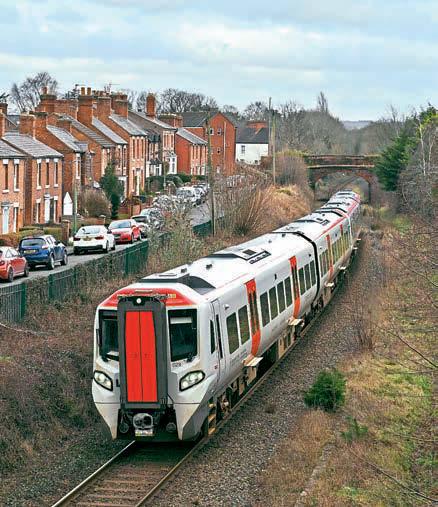
Alstom will refurbish all 70 CrossCountry Class 220 and 221 DMU sets.
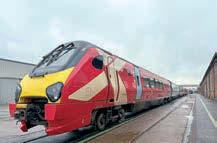
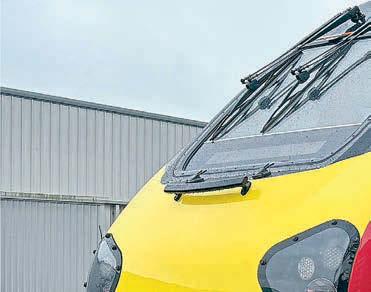
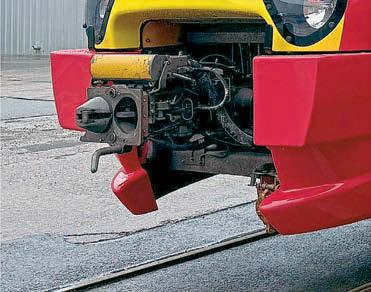
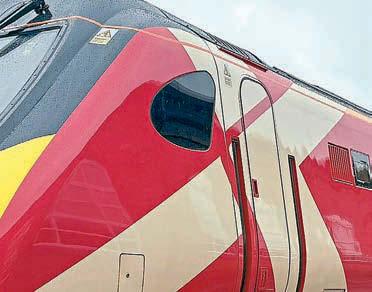
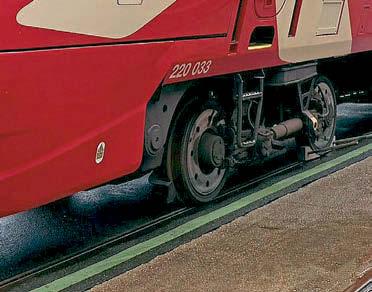
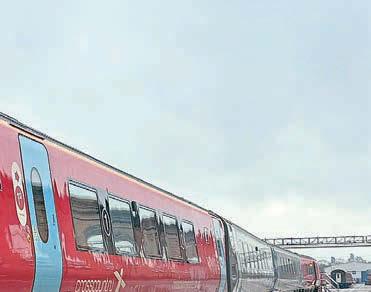
CROSSCOUNTRY unveiled the first of its refurbished ‘Voyager’ fleet at Alstom’s Derby Works on February 10. No. 220033 has received an interior refresh
and a new livery as part of the £75 million programme.
The Class 220 and 221 ‘Voyagers’ were built in 2000-2002 by Bombardier
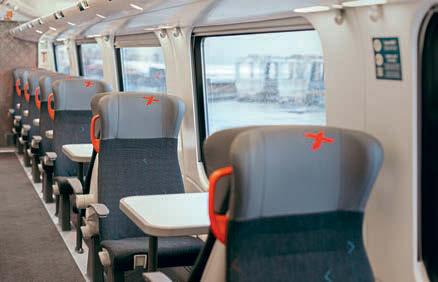
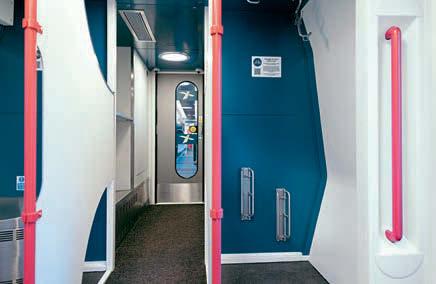
Transportation, which was acquired by Alstom in 2021. Since built, No. 220033 is said to have travelled 5,811,605 miles in traffic, equivalent to about 24 times the distance from the Earth to the Moon. The work done includes new seating with increased
legroom (through a less upright position), upgraded tables, integrated power sockets, new carpets and lighting, refurbished toilets, and automatic passenger counters. There is no change to seat numbering, which is constrained by the reservation
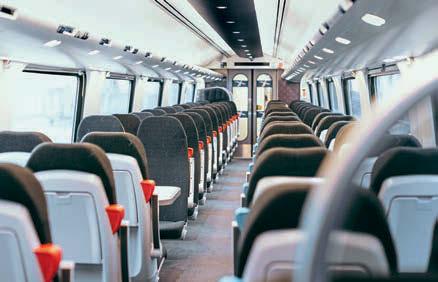
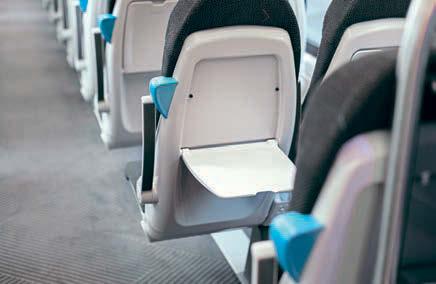
panels, and no change to the catering arrangements. The seat cloth is a black/ grey herringbone style, with leather headrests in First Class.
Externally, the driving vehicles are painted in cerise, with the intermediate cars in dark grey. The full CrossCountry ‘Voyager’ fleet of 34 Class 220 and 36 Class 221 units will go through the refurbishment programme over the next two years. The plan is for three ‘Voyagers’ to be on site at any one time, with one being released back into traffic each week.
CrossCountry’s managing director Shiona Rolfe said: “The ‘Voyager’ fleet has served passengers well for more than two decades, and these upgrades will ensure it continues to meet modern expectations for comfort, sustainability and security.
“We’re proud to be investing in the future of long-distance rail travel and look forward to welcoming passengers on board our refreshed trains.”
The fleet is owned by rolling stock firm Beacon Rail, and chief executive officer Adam Cunliffe added: “These trains have underpinned long-distance rail travel in Britain for more than two decades, and this investment ensures they remain reliable, comfortable, and fit for the future.”
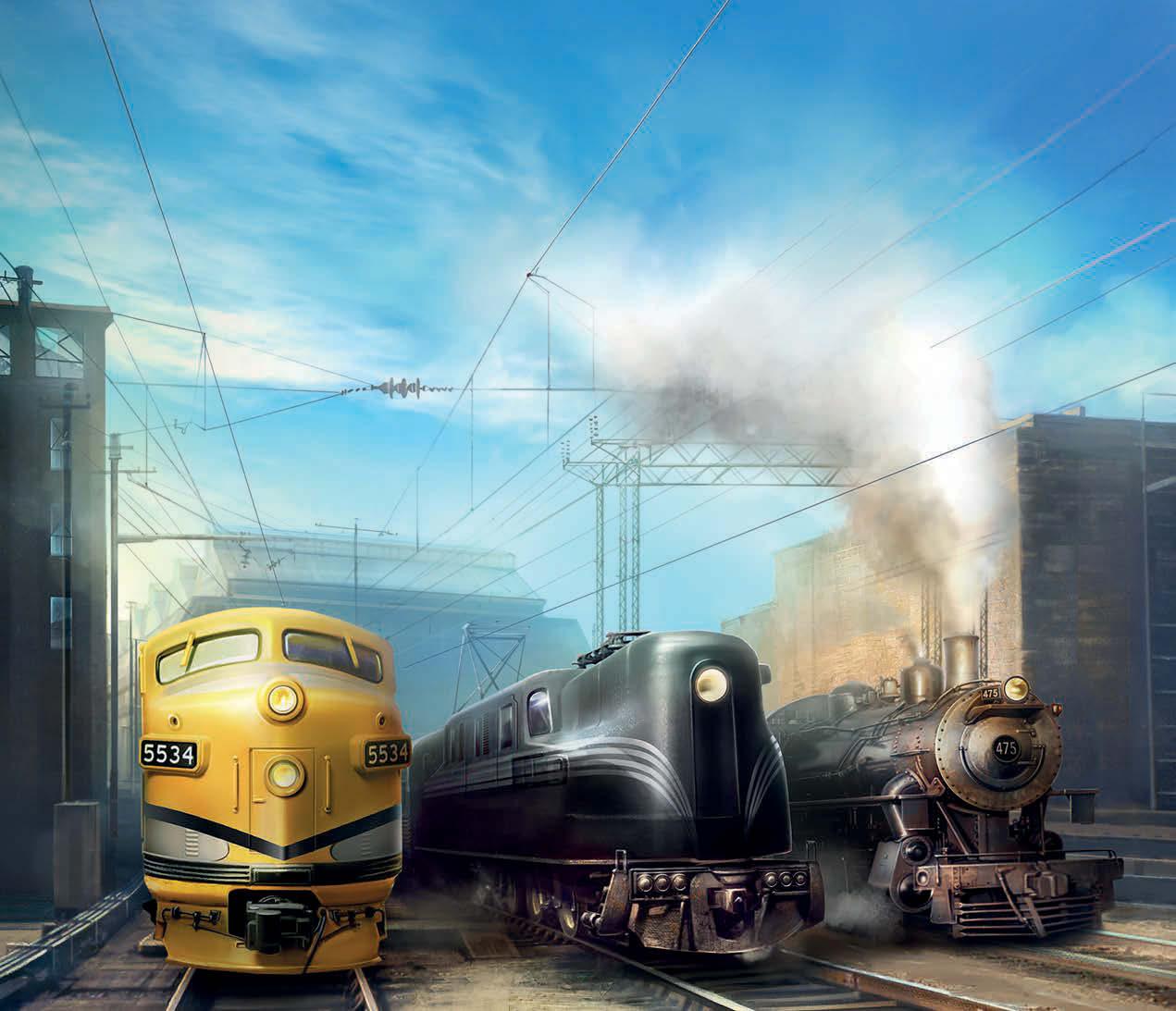




































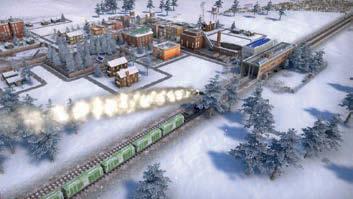
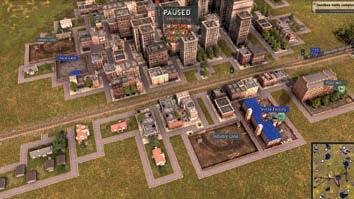
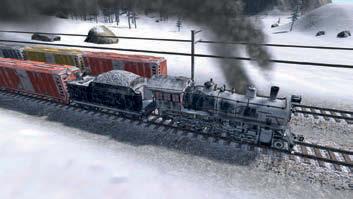

The 20th centuryheralds thenew ageofelectrification forthe railroad,anda new opportunitytomakeyourfortune.Build your corporationcarefully,as you deploy modern electric anddiesellocomotives,lay newtracks, transport goodsand passengers,and stay aheadofthe competition.





JOINTHE876CLUB TODAYANDHELPUS TO RAISETHE LAST £65,033 TO RETURNNERCLASSJ21 TO STEAM
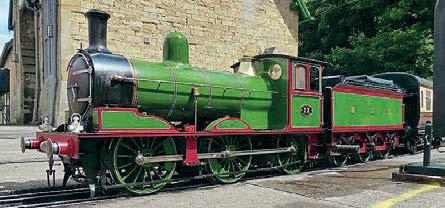

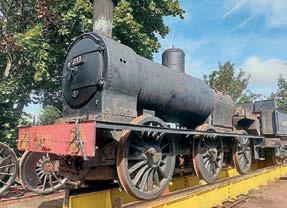

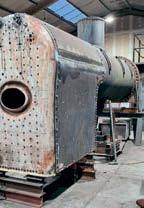

FollowingthesupportoftheNational LotteryHeritage Fundandourgeneroussupporters,the Locomotive Conservation& Learning Trustis nearingthe completionofthe restorationofclassJ21No.876(laterBRNo.65033).Builtin1889andpreservedin1962,the‘StainmoreSurvivor’ laststeamedin1984. Theextensive restorationNo.876hasbeenunderwaysince2014 at a totalestimated costof£650,000. The conditionofthelocomotivehasbeenfar worsethan we expectedwhichhasincreasedthetimeand costoftheprojectbut we arenow onthehomestretchandabout to finally reassembleit. To returnthisuniqueand wonderfullocomotive to steam we nowneed to raisethe remaining£65,033 to finishthejob. Pleasehelpus by joiningthe876Club.
REGULARPROJECTUPDATESONOURBLOG: https://ksetransport.blogspot.com
Benefitsofjoining The876Club:
• Asupporters’ pinbadge • Amonthlynewsletter • Aninvitation to ourannualSupporters’ Day
• Twotickets forthelaunchevent forNo.876’s return to steam • Aday’s footplate experience onNo.876, learning to driveandfireit Membershipof The876Clubis available foreitherasingledonationof£876,ora10monthly-instalmentsof£87.60. To joinplease:
• Useeitherthe PayPallinkordownloadthe form at www.lclt.org.uk
• Emailthe LCLT atlclt.chairman@gmail.com
• Orelse to findoutmorehow youcanhelp, contactthe LCLT at: LCLT Chairman, Stone Flagged Cottage,Newbiggin, Leyburn,North Yorkshire, DL83TD
GETON-BOARD TODAYANDHELPUS TO RETURNTHESTAINMORESURVIVOR TO STEAM!

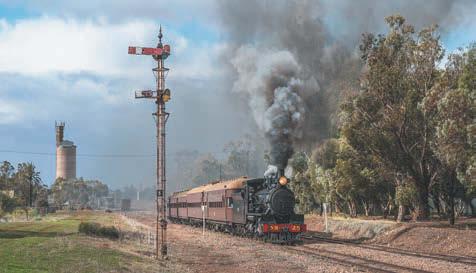
Onereason forchoosing thetraveldateisnotonlythe winterwith its photogenicweatherconditions.Itisalsothe TransportHeritage New SouthWales Steam Festival,becauseitisnot certainwhether itwill happenagain. Forseveral yearsnow,THNSWhas received enormous financialsupport, whichhas ledtotheestablishmentof a unique museum withanextensive operational rollingstock.
Australia:Steam onThree GaugesJun3rd –Jun 14th
NewZealand: Streamlinedon Cape Gauge! Jun13th –Jun22nd SouthAfrica: Behind Steam to Bethlehem Sep12th –Sep22nd Romania: Autumn Coloursinthe Carpathians:NG-Steam Oct17th –Oct 24th Bosnia: If notextinct: Kriegsloks in Mine &LineService Oct25th –Oct 30th
As theirhomelineisshortandonlysceniconavery limitedsection, theyoftenrunon thestate railwayand areorganising asteam festival in June2026,during whichfive trainsperday willrunover theTumulla Bankover twodays. This year,the recently overhauled 3801, a4-6-0 streamlinedexpresstrainlocomotive, isscheduled to run. Thedateof2026 is so important because also in June2026, adecisionwill be madeon thecontinuationoftheannual subsidiesofa staggering 15 millionAustraliandollars.Anyone familiarwithprices inAustraliawill know that,asanorganiserofcharter train tours, itis hardlyaffordabletotransportrolling stock to sceniclocationsoverlongdistances.That is why itis so important to goahead withthistripnow, rather than waitingfor it to becomecheaperat some point in thefuture(spoiler: itwon‘t).
Expected to be completed by late June 2027, it is the final stage of deep bore tunnelling on the high-speed route.
THE first of the two machines which will complete excavation of the 4.5-mile-long twin-bore tunnel between Old Oak Common and HS2’s London terminus at Euston was launched on January 27.
Rail Minister Lord Hendy and Darren Jones, chief secretary to the Prime Minister, were involved in setting Madeleine on its way towards central London. Named after former president of the Women’s Engineering Society Madeleine Nobbs, the tunnel boring machine is expected to advance at an average rate of 16 metres per day, removing earth and installing concrete lining segments. The adjacent bore will be created by TBM Karen
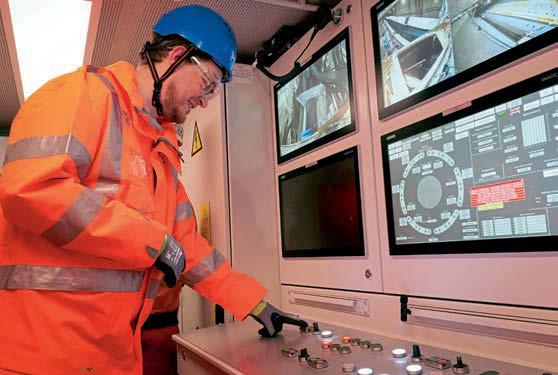
(named after pioneering female train driver, campaigner and trade unionist Karen Harrison).
Working at a depth below ground of between 35 and 40m (98-131 feet), both TBMs are expected to have completed their work by late June 2027.
Euston Tunnel is the final stage of deep-bore tunnelling to be
Community benefits
BASILDON and Billericay MP Richard Holden asked what the Department for Transport has made of the potential impact of Community Rail Partnerships (CRPs) on local rail services. Transport
Minister Keir Mather said: “Community Rail delivers projects which bring benefits to local rail through social, environmental and economic growth.
“Workcarried out by Community Rail Partnerships includes projects to establishcommunity hubs in underused station spaces,creationand maintenance ofgardens at stations, and supporting all members of the community to travel with confidence; for example, by improving station environments to accommodate all members of the community.
“These projects help improve the safety and inclusivity of the railway, as well as encouraging rail travel as a more sustainable mode of transport.
Left: Darren Jones MP, the chief secretary to the Prime Minister, switches on TBM Madeleine during January 27’s launch event at Old Oak Common. HS2
Viaduct decks completed DURING February, engineers completed construction of the decks on the parallel Coleshill East and West viaducts at HS2’s Delta Junction in Warwickshire.
The viaducts are part of the southern section of the junction and consist of two parallel spans which will support the four-track main line and two narrower structures which will carry trains to and from Birmingham.
AYESA Engineering and Egis have been appointed as a joint venture to provide specialist design and engineering services for the delivery of HS2 track infrastructure.
carried out on the high-speed route. All 48,294 concrete ring segments required for it (manufactured by STABAG UK in Hartlepool and delivered by train from the plant to HS2’s Logistics Hub at Willesden) will be transferred to the worksite via the Atlas Road Logistics Tunnel. More than 1.5 million tonnes of spoil excavated by the TBMs will also travel through
Compiled by Jon Longman
“The DfT has granted more than £800,000 to the Community Rail Network (CRN) via core and project funding in this financial year (FY 2025-2026).The CRN provides access to grants and resources for its members (a mix of CRPs and Station Adoption Groups). While the DfT does notdirectly fund CRPs,financialsupportis provideddirectlyvia the train operating companies.
“The DfT continues to support the community rail sector,and as we move towards establishingGreat British Railways (GBR), Community Rail will be integral to helping us deliver our priorities and will continue to deliver for passengers and communities. We will continue to work closely with the Community Rail Network to identify opportunities to support the community rail sector ahead of GBR.”
Challenging floods
NORTH Devon MP Ian Roone wanted to know what assessment the DfT has
made of the adequacy of the resilience of the passenger rail network in the South West.
Mr Mather said: “Network Rail is investing significantly in assets throughout the Western and Wales region, including in resilience to protect against storms and flooding in the South West. The storm events and particularly flooding that we have seen in the region recently have posed greater challenges than we have seen in the last few years.
“The rail industry continues to build plans to make our infrastructure more resilient, including focusing on known black spots so that flooding instances are reduced, and where flooding and storms do occur, recovery of rail services can happen more quickly.”
BARONESS Pidgeon asked what consideration the DfT has given to the future role of Great British Railways in supporting use of shared micromobility to travel to and from stations.
Atlas Road tunnel in the opposite direction, ultimately to be taken by rail for use in other construction projects.
HS2’s station at Euston is due to open after the rest of the route between Old Oak Common and Birmingham Curzon Street. The yet-to-beestablished Euston Delivery Company will be in charge of delivering the station.
The firms will support principal contractor Ferrovial BAM with three lots which, combined, account for the majority of the track along the route between Old Oak Common and Birmingham Curzon Street.
Lord Hendy said: “Once established, GBR will be required to have regard to the Secretary of State’s Long Term Rail strategy, including by improving the integration of rail with local and regional transport systems.
“We know that a wellconnected transport system will help more people make the journeys they need to and unlock access to opportunity, which is why we will shortly publish our integrated national transport strategy.
“The strategy will set out this government’s vision for people-focused transport in England, supporting the creation of unified and integrated transport systems.”
LORD Moylan asked what assessment the DfT has made of the availability of specialist rail plant used in the maintenance of the rail network.
Transport Minister Lord Hendy replied: “Network Rail is responsible for assessing the availability of specialist
rail plant used in maintaining the rail network. It is currently reviewing its long-term equipment requirements for track maintenance and renewals to ensure that it has the capacity, flexibility and technology it needs to meet future demand efficiently.”
Safer stations
ROMFORD MP Andrew Rosindell asked what steps the DfT has taken to ensure the fire safety of stations in England.
Mr Mather replied: “Infrastructure managers are under statutory duties to ensure the safety of those using stations in Great Britain and are overseen by the Office of Rail and Road as the independent rail safety regulator. They must ensure that stations meet all legal requirements, including those relating to fire safety.
“Network Rail is the infrastructure manager for most of the main line railway, but some stations in the capital are managed by Transport for London.”
BR
Continuing a tradition going back to 1951, Philip Atkins marks our latest ‘century’ issue with a survey of locomotives that have carried the number 1500.
ALMOST exactly 75 years ago, The Railway Magazine for April 1951 contained an article which established a tradition that has continued (almost) unbroken to this day. This particular issue was the 600th since the journal began in 1897. On this account, noted railway photographer Henry Casserley contributed a short article listing all the British and Irish locomotives that at one time or another had carried 600 as their running number. Over the next 33 years, Mr Casserley wrote corresponding articles for each of the four subsequent occasions when the next ‘hundredth’ issue came up, namely April 1959, December 1967, April 1976 and grandly concluded with the 1,000th in August 1984. Following Mr Casserley’s death in 1991, the then editor of The RM, John Slater,
contributed similar articles for the 1100th (December 1992) and 1,200th (April 2001) issues. For the 1,300th issue (August 2009), no author was credited, while for the 1,400th (November 2017), that landmark was not recognised in the established manner. However, we are reviving it in March 2026 for the 1,500th issue.
The LNWR
‘Double zero’ running numbers were usually conferred on newly-built locomotives, but they sometimes resulted from later renumbering too. Due to the size of its locomotive stock, the London & North Western Railway was particularly noted for its ‘promiscuous’ or seemingly random locomotive numbering – frequently using the same number twice, and sometimes even thrice, and therefore it has conspicuously
featured in all of The RM’s preceding ‘century’ articles. In September 1866, the first LNWR No. 1500 had been simply one of the 943 exceptionally prolific John Ramsbottom Class DX 0-6-0 goods engines that were built at Crewe between 1858 and 1874 (which latterly and somewhat controversially included 86 for the Lancashire & Yorkshire Railway). The engine was subsequently converted in 1888 to a ‘Special DX,’ with a new boiler and increased working pressure, plus a vacuum brake for passenger train working.
After this 0-6-0 was withdrawn in October 1904, its running number passed to one of Francis Webb’s new and unusually short-lived ‘Bill Bailey’ four-cylinder compound fast goods 4-6-0s (which probably also inherited the older locomotive’s coupled wheel centres – Crewe was nothing if not thrifty). Thirty of these rather rakish-looking engines
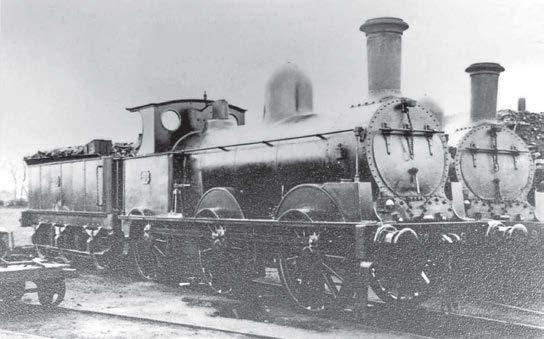
An unidentified LNWR ‘DX’ class loco, one of the later ones which – like No. 1500 – included Webb modifications such as a driving cab. Note the unusual smokebox door, which was later converted to a more standard design.
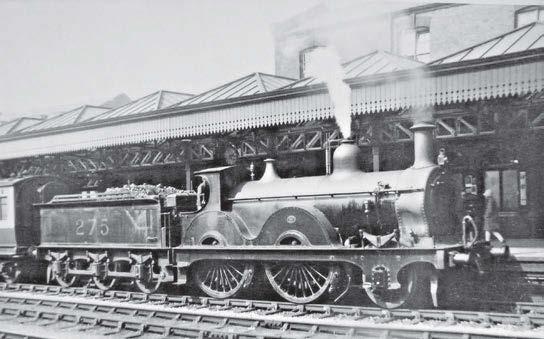
Midland Railway Class 1492 2-4-0 No. No. 275 was built as No. 1495 in 1881. Classmate No. 1500 became No. 280 in the 1907 renumbering and survived in service until the end of 1928.
were built at Crewe between 1903 and 1905, although this particular engine did not quite make even 10 years in service.
On being retired in April 1914, its number immediately passed to a new Bowen Cooke superheated Class G1 inside-cylinder 0-8-0. This became London Midland & Scottish No. 9232 in 1927, and later entered into British Railways stock in 1948 to become No. 49232, although fairly soon afterwards it was withdrawn from service in June 1950 after a working life of 36 years.
Railway
In the 1880s, the second largest locomotive stock in Britain was that of the Midland Railway, which built its penultimate 2-4-0 passenger engine No. 1500 of the 10-strong 1492 Class at Derby in 1881 – five years after the MR had taken delivery of its first 4-4-0s, which very soon thereafter became the order of the day and would remain so until 1922. Designed by Samuel Johnson, this No. 1500 was rebuilt in 1894 and 1910, and finally by the LMS with a Belpaire boiler in 1926, before being withdrawn from service in December 1928. Long before this, it had been renumbered No. 280 under the rational MR locomotive renumbering instituted by Johnson’s successor, Richard Deeley, in 1907. Under this scheme, the new bearer of MR’s No. 1500 was now one of 30 austere and diminutive inside-cylinder 0-4-0 saddle
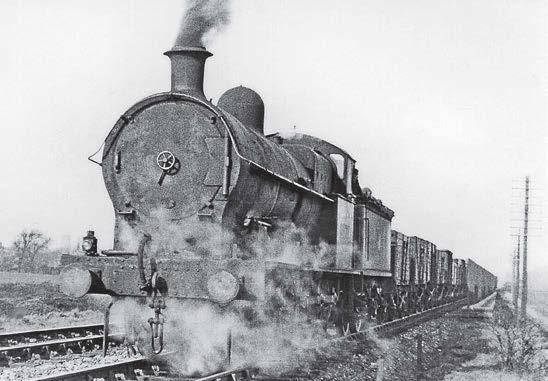
1912-built LNWR ‘G1’ No. 9171 (originally No. 1505, with classmate No. 1500 becoming No. 9232) is pictured towards the end of its career on March 24, 1951 hauling a freight south from
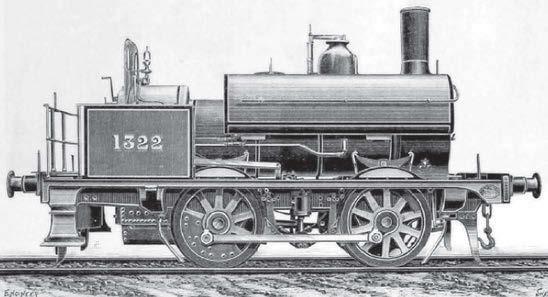
In the 1907 Midland Railway renumbering scheme, No. 1500 passed to an 0-4-0ST previously numbered No. 1322 – built in 1883 and lasting in service until 1926.
tanks. Sometimes known as ‘brewery tanks,’ these had stove pipe chimneys and, in some instances, merely open cabs, being built at Derby between 1883 and 1903. This particular one had originally been MR No. 1322 of 1883, which was later put on the duplicate list as 1322A in 1892. It was finally withdrawn from service by the LMS in January 1926 and, being ex-Midland, had remained as No. 1500.
In March 1885, the North Eastern Railway hit the No. 1500 mark with a new design of 4-4-0 passenger engine to that of Alexander
McDonnell, the number originally intended to have been the class designation. However, this particular engine was actually one of the last to enter service of the 28 that were built on opposite sides of the River Tyne, their construction being divided between the NER’s Gateshead Works in 1884 and followed by R & W Hawthorn in Newcastle. In practice, these rather puny 4-4-0s were known as the 38 Class, but McDonnell had resigned, for reasons that remain obscure, even before their delivery was completed, although it would seem that the new engines were unsatisfactory in various respects.
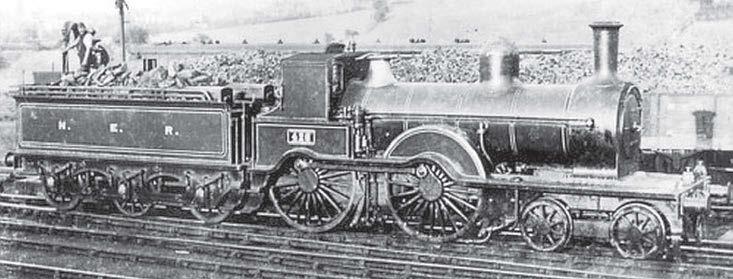
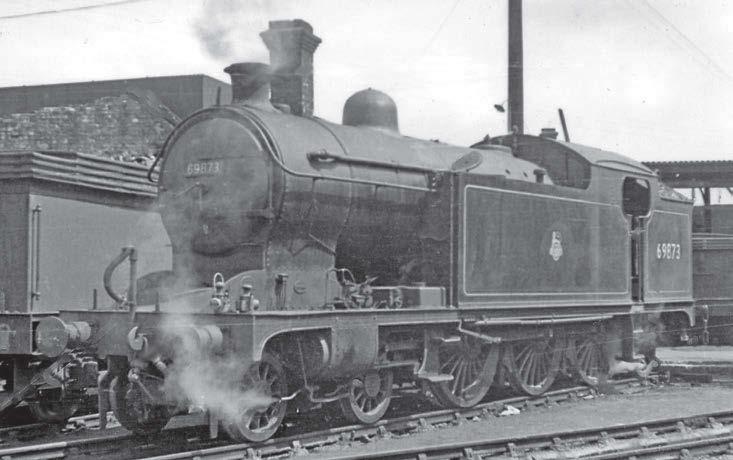
Nevertheless, No. 1500 was reboilered in 1896 and was not withdrawn until December 1921. The running number 1500 was thereafter quickly passed on to a new NER Class D three-cylinder 4-4-4 passenger tank engine, which was completed at Darlington Works in March 1922. The design dated back to 1913, with 20 being built up to April 1914, but additional orders were deferred by the ensuing wartime conditions until a further 25 were authorised and built in 1920-22.
This wheel arrangement was very rare, and these engines suffered from their inherently limited adhesive weight in relation to their total weight. One engine was experimentally rebuilt as a 4-6-2T in 1931, with its adhesive weight increasing from 40 to 52 tons but total weight remaining at about 87.5 tons. The remaining 44 were all similarly rebuilt from 1933 to 1936, with No. 1500 being converted in May 1934. Uniquely, following the formation of the LNER in 1923, former NER locomotives retained their original numbers until 1946,
when No. 1500 was renumbered No. 9879. It later became BR No. 69879 in November 1948 and was withdrawn from service exactly 10 years later, having been displaced by the rapid advance of DMUs on local passenger services. The engine had been sent to Starbeck shed (Harrogate) when new, where it remained until its conversion to a 4-6-2T, while its final shed allocation was at Hull Botanic Gardens from September 1955.
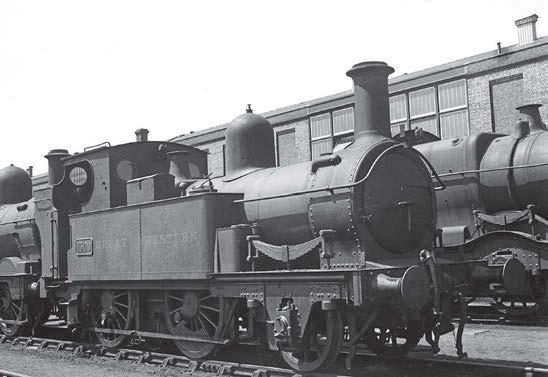
The only Great Western Railway locomotive to carry No. 1500 was a late-built example (in 1892) of the 140 inside-cylinder so-called ‘Metro’ 2-4-0Ts (455 Class), which were all built at Swindon between 1869 and 1899. No. 1500 was withdrawn after 45 years in September 1937, but several other class members lasted until as late as 1949, giving this class the remarkable overall operational span of no less than 80 years. The year 1949 also witnessed the ‘posthumous’ appearance
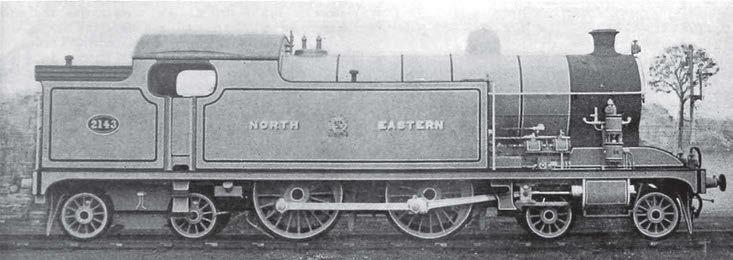
After the NER withdrew its 38 Class loco No. 1500 in 1921, the number was reused for a Class D 4-4-4 passenger tank engine. These became ‘H1’ under the LNER, then rebuilt as 4-6-2 tanks in the 1930s and reclassified as ‘A8’ (see photo on page 28). No. 2143 (above) was the first built of the class in 1913, with No. 1500 completed at Darlington Works in March 1922, converted in 1934 and withdrawn in 1958 as No. 69879.
Right: The only No. 1500 built by the GWR was this 2-4-0 from its 455 Class, the fleet of 140 locos being built at Swindon Works from 1869-1899. No. 1500 entered service in 1892 and was withdrawn in 1937, this picture being taken in September 1934.
W BOYDEN / COLOUR-RAIL
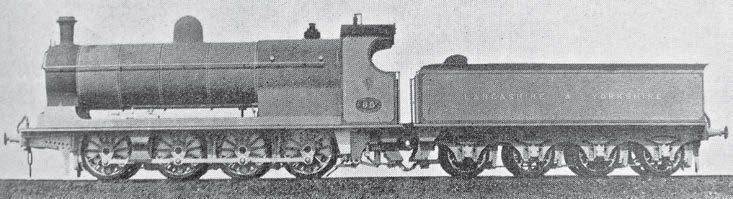
Lancashire & Yorkshire Railway Class 30 No. 86 (pictured) was built in 1906, with last of the class No. 1500 following in 1908. No. 1500 was given a superheated boiler in November 1921 before becoming LMS No. 12975 until withdrawn in 1929.
of the ultimate GWR locomotive design, Frederick Hawksworth’s outside-cylinder 1500 Class 0-6-0PT, of which only 10 were built at Swindon.
No. 1500 itself was actually the longest-lived of these in British Railways service, although it only lasted from June 1949 until December 1963. Throughout this fairly short period, it was stationed at Old Oak Common shed, together with three other class members, which consequently were a regular sight in Paddington station engaged on empty carriage stock workings.
Lancashire & Yorkshire Railway No. 1500, completed at Horwich Works in January 1908, was the last of 130 John Aspinall-designed Class 30 inside-cylinder 0-8-0s to be built since their introduction in 1900. This engine had a 4ft 10in diameter boiler but was later rebuilt with a much larger 5ft 9in diameter superheated boiler in November 1921 (to conform with the later George Hughes 0-8-0s), before becoming LMS No. 12975. Eric Mason recorded that in early LMS days – on March 26, 1925 – while this engine was working an 870-ton coal train from Manchester to Sowerby Bridge, it ran into buffer stops near Luddendenfoot with fatal consequences, presumably for the engine crew. The former LYR 0-8-0s in general did not fare too well under LMS auspices when compared with their ex-LNWR counterparts, which likewise employed Joy valve gear. Many of the L&Y type were retired in the late 1920s after enjoying relatively short lives, and such indeed was the fate of the former LYR No. 1500 in August 1929 after only 21 years.
Without any doubt, the most impressive British locomotive to bear the number 1500 was that of the Great Eastern Railway, on which design work for an express passenger 4-6-0 was initiated by James Holden in mid1908. It was originally to be non-superheated, but emerged as superheated in 1911 under Holden’s son, Stephen, his successor as locomotive superintendent. The prototype, No. 1500, left the erecting shop at Stratford Works on December 29, 1911, and two days later made its initial trial trip in shop grey livery, before soon being fully painted in dark blue and lined out in red. Like the preceding ‘Claud Hamilton’ 4-4-0s, it was further embellished with a brass-capped chimney and brass beading on the coupled wheel splashers. The Locomotive Magazine of February 1912, when No. 1501 was outshopped, calculated that the latter was the 1500th locomotive to have been built at Stratford, a process that had begun there in 1851. This particular design was somewhat unusual in that it employed the then still quite rare piston stroke of 28 inches, and furthermore in association with inside cylinders. Under the LNER, No. 1500 became No. 8500 and was classified ‘B12’ in 1924, but it remained remarkably little altered physically until almost the end of its life. Like many of its 80 classmates, however, it was for a while temporarily disfigured by a French ACFI feed water heater on the boiler top, in this case throughout the 1930s, which had possibly led to their nickname
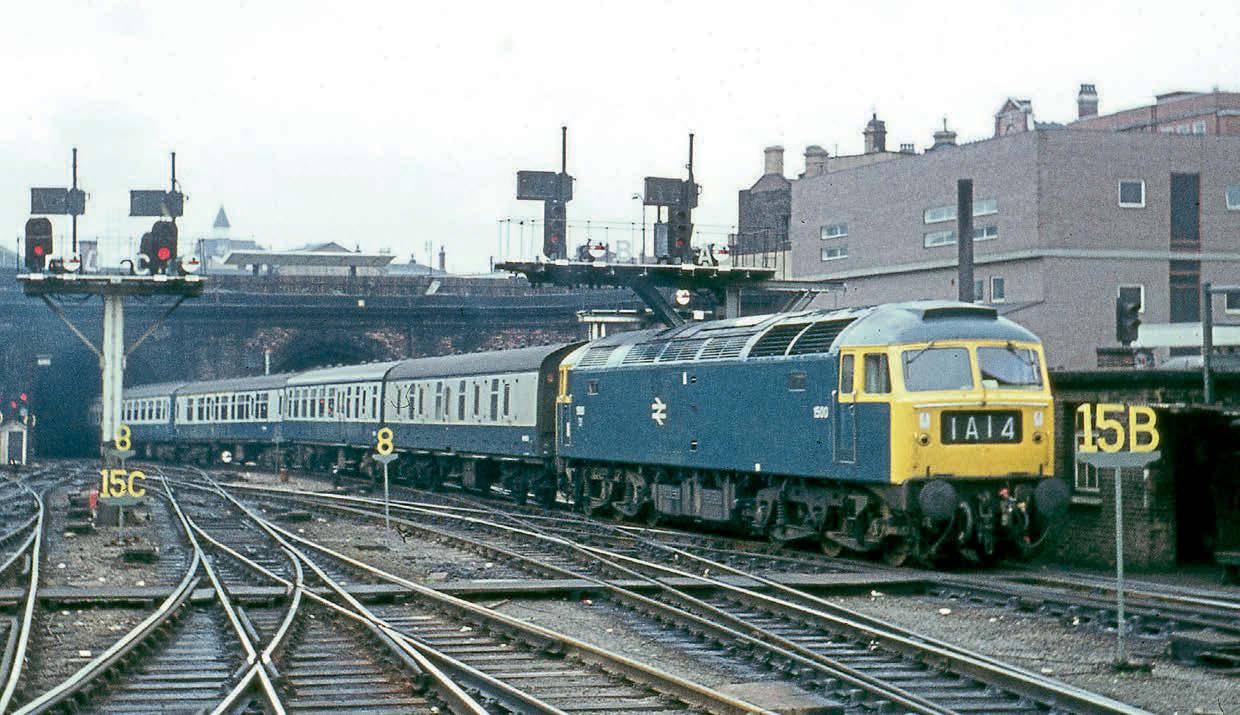
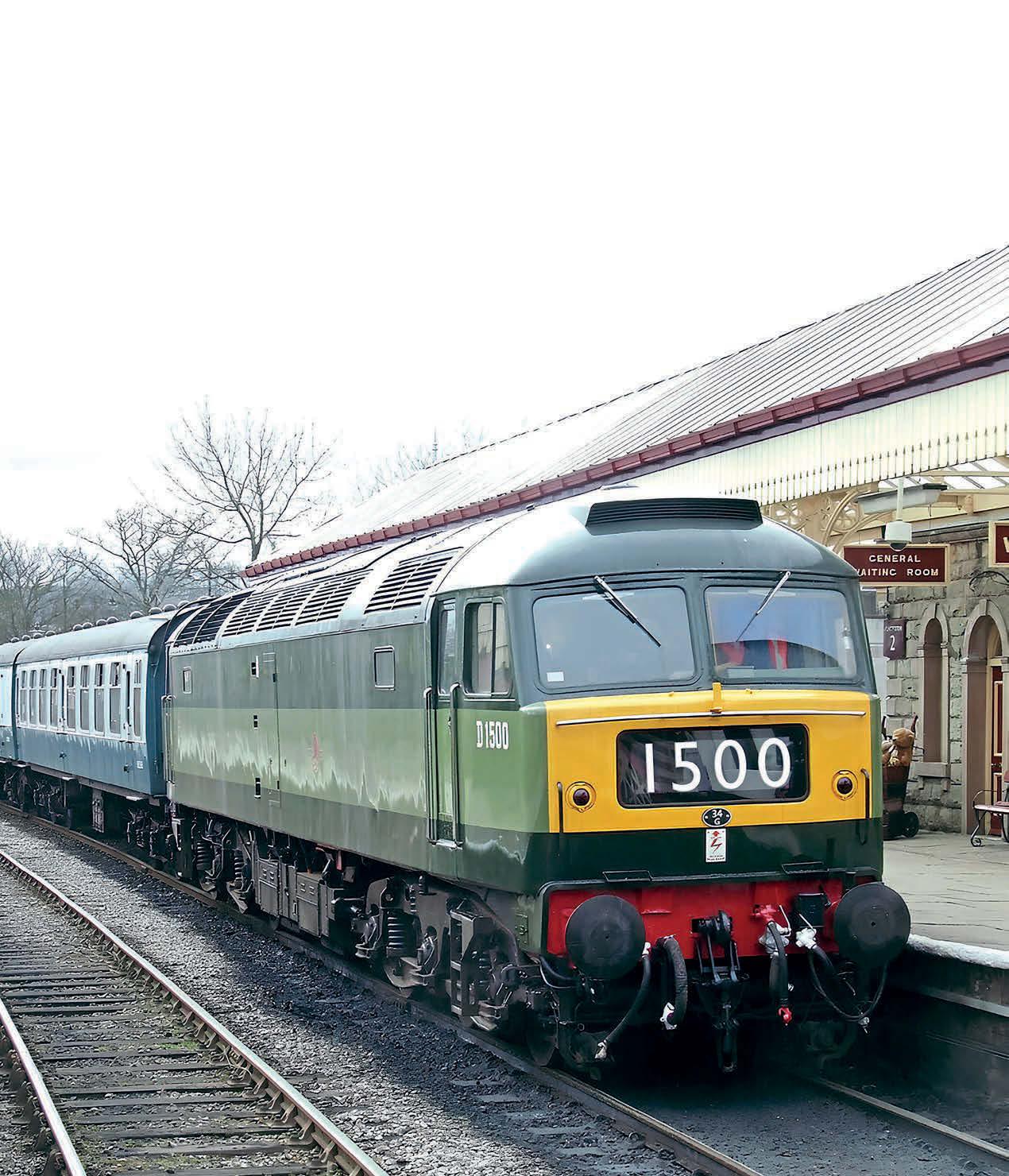
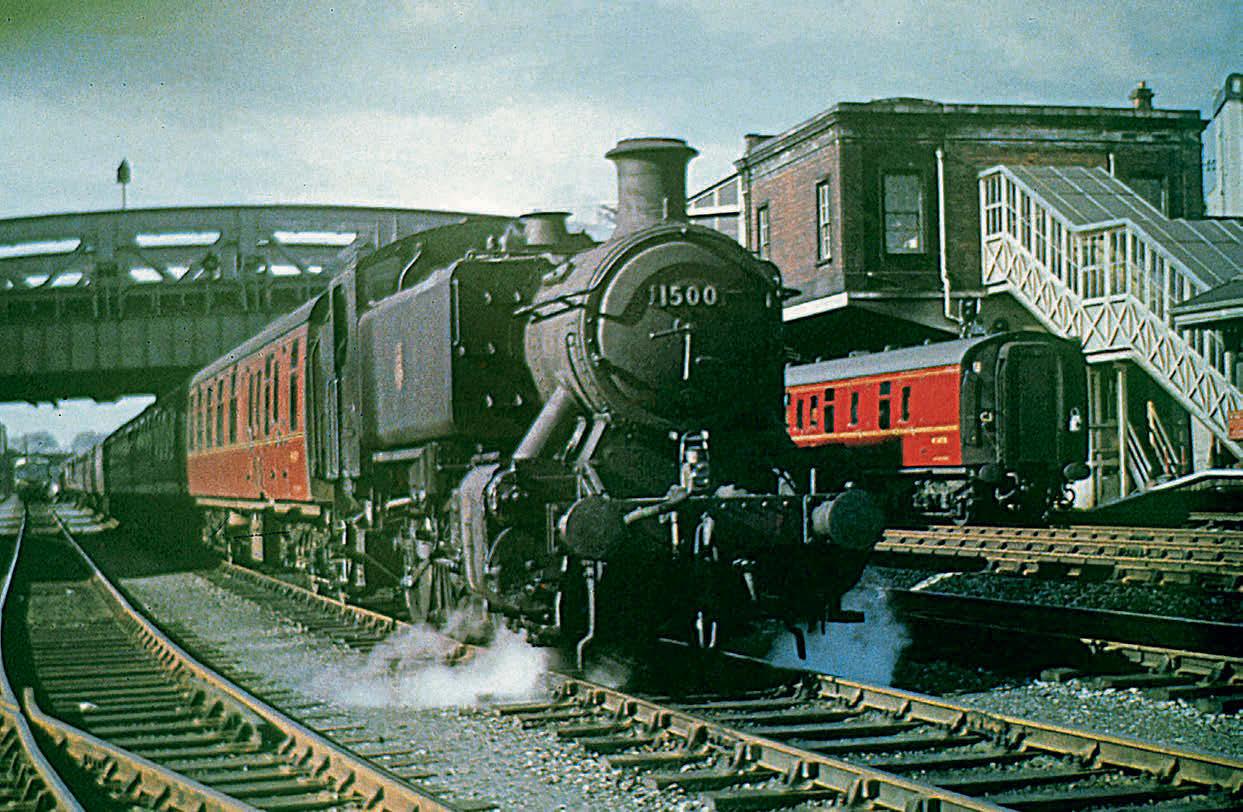
The only diesel in our ‘1500’ survey is first-built Class 47 No. D1500, later just No. 1500 after the end of steam and then No. 47401 under TOPS renumbering in the early 1970s. In its middle guise of No. 1500, and sporting BR corporate blue, the loco is seen arriving at King’s
of ‘Hikers.’ In January 1931, No. 8500 was the first of 25 class members to be transferred to Scotland at various dates to work mainly on the former Great North of Scotland section between Aberdeen and Elgin. This was on account of their low nominal 16-ton axle load, which was no greater than a typical ex-GNSR 4-4-0. However, for a period during the Second World War, in about 1943/44, No. 8500 was stationed in Edinburgh at both Haymarket and St Margaret’s sheds. By then it was painted plain black and its decorative valences had been removed from the coupled wheel splashers – a far cry from its original late Edwardian glory.
By a strange quirk of fate, under the rational LNER Edward Thompson locomotive renumbering scheme of 1946, the ‘B12’ engines remarkably and uniquely reverted to their original GER numbers. In October 1947, the ‘reborn’ No. 1500 was fitted at Inverurie Works with a new round-topped boiler (that was otherwise dimensionally very similar to the original Belpaire design), which had been built at and sent up from Doncaster. Surprisingly, the engine was withdrawn from service only eight months later in June 1948 without gaining its newly allocated British Railways number of No. 61500. Its new boiler, however, was sent back south to see further service in England on Alfred Hill’s final series of heavy goods 0-6-0s for the GER (LNER Class J20). These 25 engines, built at Stratford between 1920 and 1922, had an exceptionally long rigid-wheelbase for a six-coupled engine of 18ft 10in and so could be fitted with the same boiler (originally Belpaire), in addition to the same cylinders and motion as their rather more glamorous Holden passenger 4-6-0 counterparts.
The locomotive numbering practices of the larger pre-1923 British railway
companies varied quite considerably, and was sometimes distinctly misleading regarding the actual magnitude of their respective locomotive stocks. For example, as of December 31, 1922 (the final day before the ‘Big Four’ Grouping), the ultimate locomotive stocks of the Great Northern, Great Central and Great Eastern railways stood remarkably close together at 1,359, 1,358, and 1,338 respectively – despite which their corresponding highest locomotive running numbers of Nos. 1770, 1250, and 1900.
Of the three companies, only the GER boasted a locomotive numbered No. 1500, although strangely, the GNR built 50 4-4-2 tank engines in five distinct batches between 1899 and 1907 that were nonetheless consecutively numbered from Nos. 1501 to 1550, yet it never actually used the number 1500. GER numbering had only reached No. 1000 in 1893, but No. 1900 was adopted for its newly-built James Holden 4-4-0, which was named Claud Hamilton when it was sent to the Paris Exposition of 1900. Subsequent builds of these notable 4-4-0s were turned out in 11 batches of 10 that were unusually numbered in reverse, ending with Nos. 1790-9 in 1911 (while 12 years later, 10 so-called ‘Super Clauds’ were turned out ‘posthumously’ in 1923, initially numbered as LNER Nos. 1780-9E.) At the other extreme, the apparent ‘deficit’ on the part of the GCR between locomotive stock and numbering was explained by the coexistence of locomotives on its duplicate list that were identified by the suffix B. Only the North British Railway (with a total of 1,075) of the three largest Scottish railways, but none of the three pre-1923 major constituents of the Southern Railway, boasted locomotive stocks of 1,000 or more – and none of these were numbered in an exaggerated manner.
Initially on its formation, however, the SR retained the original locomotive numbers of
each constituent company but differentiated them by a capital letter prefix: A (Ashford) on ex-South Eastern & Chatham engines; B (Brighton) on ex-London Brighton & South Coast stock; and E (Eastleigh) on ex-London & South Western locomotives. In 1931, it was decided to replace these letter prefixes numerically with 1, 2 and 3 respectively. Thereby Harry Wainwright ex-SE&CR Class H 0-4-4T No. 500, which had been completed at Ashford in January 1905, became SR No. 1500 (and eventually BR No. 31500 after 1947). This engine was withdrawn from service in June 1961 after a very respectable working life of 56 years.
For a 15-month period in the early 1960s, British Railways actually operated two very different locomotives with the identity No. 1500. This was really rather symbolic of the rapid motive power transition that was then taking place on BR.
In addition to the previously mentioned 0-6-0PT No. 1500 at Old Oak Common, September 1962 saw Brush Traction of Loughborough deliver its first Type 4 2,750hp Co-Co diesel-electric locomotive to BR, which numbered as No. D1500 and was allocated to Immingham depot. After the elimination of (standard gauge) steam working on the main line in August 1968, in which No. D1500 and its 511 successors had played a highly significant part, the D prefix became superfluous, and then No. 1500 became 47401 in 1973 under the new TOPS classification.
After this locomotive was withdrawn in June 1992, it was deservedly privately purchased and is owned by the 47401 Project. Currently painted in BR standard blue livery and bearing the name North Eastern, it is located at The Midland Railway-Butterley in Derbyshire. ■






The Railway Magazine is the only publication to cover the entire railway scene with breadth and real depth – from steam to diesel and electric, standard and narrow gauges, ancient and modern, at home and abroad. Our team of experienced writers are all experts, providing the best possible insight and the most up-to-date news. With letters, reviews, the best photography and competitions – it all adds up to TRM being an essential read for every rail enthusiast, so we’d love you to join our community and enjoy the journey.













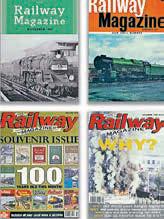
















PHILIP Atkins has listed the many locomotives that have carried the number 1500 on pages 20-24, and it is my job to show readers what these examples have achieved in practice.
This is not so easy, however, as only a small proportion of them appear in the Railway Performance Society (RPS) electronic archive, while some – such as the London and North Western ‘DX’ example from the mid-19th century – predated widespread train timing.
Others rarely made a passenger train appearance – for instance the Western Region 1500 pannier tanks on Paddington empty stock workings, while some did not make it into the inspirational scripts of C J Allen, perhaps through indifferent performance or lack of opportunity.
Then computerisation came along, abolishing nice, short four-digit, often apparently random, numbers and an
inclination to start numbering a class at 01 rather than 00.
As a result, the approach to this edition of Practice and Performance has at times been a little constructive, but it is hoped that readers will come along for the ride.
One of the earliest records of a number 1500 appearing in the RPS archive features Wainwright H Class 0-4-4T No. 1500, logged in November 1941 by the eminent recorder S A W Harvey. Initially, it looked as though the tank engine had worked through from Charing Cross to Tunbridge Wells with 293 tons gross, but closer examination shows the more likely ‘L1’ No. 1758 having taken over after reversal at Cannon Street.
Instead, I have chosen a 1960 run after it had been renumbered to No. 31500, timed by David Foale on a school trip that he still fondly appreciates had replaced ‘games’. It showed


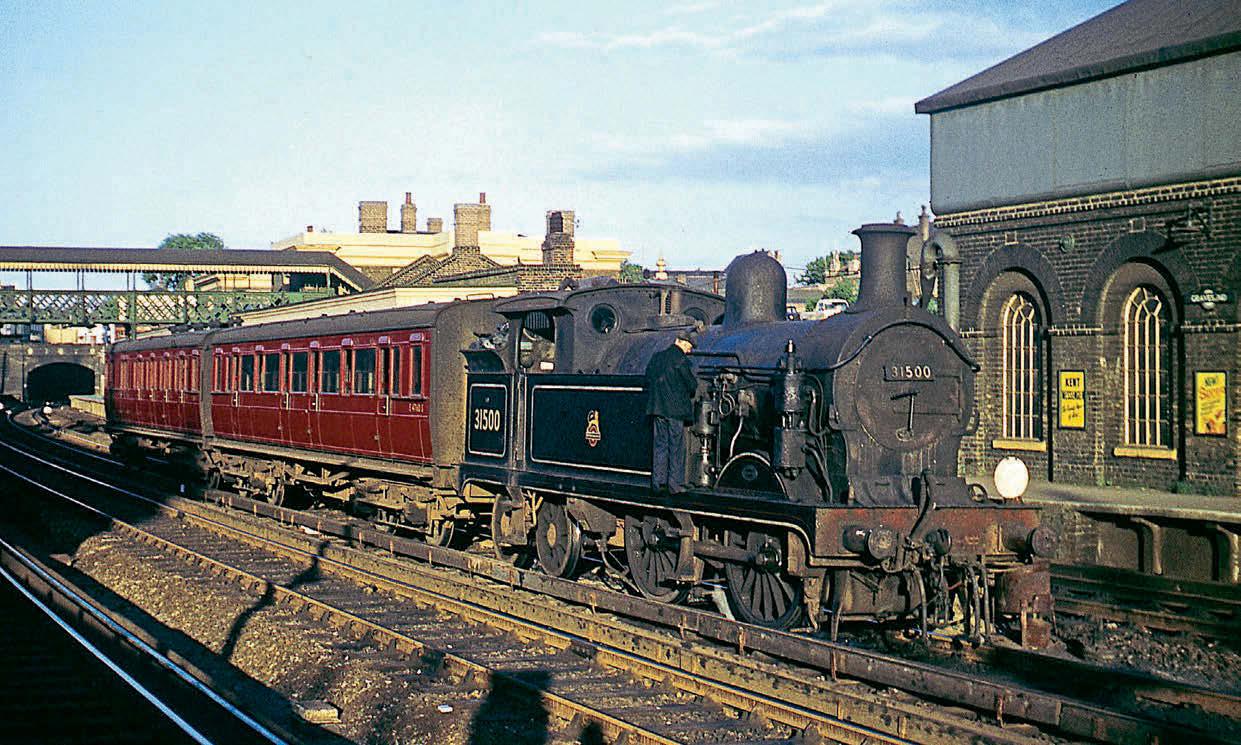
1905-built SECR H Class No. 1500 became No. 31500 under British Railways and survived in service until June1961. With just over a year left on May 28, 1960, the 0-4-4 tank is pictured with a twocoach train at Gravesend Central – possibly an auto-train working to Allhallows-on-Sea. COLOURRAIL
great foresight to record for posterity a run some 18 months before passenger service withdrawal on the line from Hoo Junction to Grain, that also served the Allhallows branch and which perished with the same swing of the pre-Beeching axe to end 79 years of service. No. 31500 was to survive a further year and two days before its withdrawal, having existed over 55 years since its emergence from Ashford Works in 1905. It is sheer coincidence that last month’s Practice and Performance featured the extensive work of Southern 0-4-4Ts, but Table 1 this month offers another chance to show a fine example of tight Southern branch line operation. With only two coaches, the crew ran hard, reaching a maximum speed of 53mph, and never less than 40mph, between each pair of stations – even those which were less than 2½ min apart. Mr Foale’s now 65-year-old log contains distances, schedules and dwell times, registering a ½ min early arrival despite the rain.
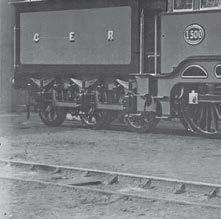
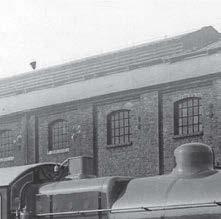
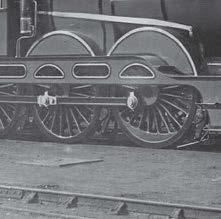
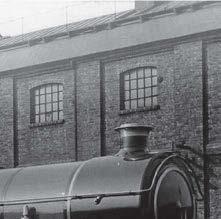
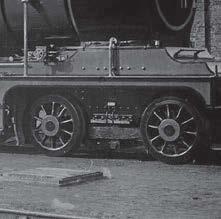

Brand new GER 4-6-0 No. 1500 poses in dark blue livery with red lining and brass embellishments on the chimney and coupled wheel splashers outside Stratford Works in early 1912. It continued in service to Nationalisation and was allocated No. 61500, but was withdrawn soon after in June 1948.
The second RPS archive genuine No. 1500 belongs to one of the classic Great Eastern Railway Holden ‘S69’ 4-6-0s, subsequently London & North Eastern Railway (LNER) ‘B12s’, introduced in 1911 for Liverpool Street express work.
The RM October 1922 issue has a table of five runs with these 6ft 6in diameter driving wheel locos, including the example shown in Table 2 of No. 1500 itself in the hands of driver Diaper. The actual time from the London terminus to Harwich Parkeston Quay was 85 min 45 sec for the 68.9 miles, but C J Allen – in view of the signal delays – suggests what might be considered an ungenerous net time of 83min, compared to the fastest in the group of 80min. I would have calculated the figure as 81¼min, but Mr Allen was there and I was not.
The only slackness in the schedule was the 20min allowance from Shenfield to Witham, likely to take nearer to 18min, but beyond that little could be regained. No. 1500 with 325/345 tons (net/gross) was turned onto the local line from Bethnal Green to Bow Junction, with a heavy check at the latter. More adverse signals intervened at Seven Kings and speed was only 53½mph at Harold Wood, falling to 29mph topping the 1-in-103/85 of Brentwood Bank at Ingrave, to pass Shenfield 4½min late. Maximum speed was 70½mph after Ingatestone, with minima of 53mph after Chelmsford, 52½mph at Hill House, then 42mph at Parson’s Heath (yes, Mr Allen used the apostrophe). On the Harwich branch after Manningtree, the maximum was a final flourish of 61mph on the long curve towards the Quay.
Time to venture off piste. I was pleased to see an LNWR Class B 0-8-0 in the list of No. 1500s. The locos entered service from 1903, being converted to ‘G1s’ and finally Class G2a. Numerically, No. 1500 became 9232 under the LMS, then 49232 in 1948 after Nationalisation. On my childhood lineside visits near Huddersfield Hillhouse loco shed, a classmate
of former No. 1500 would occasionally appear out of the mist like a ghost from the Great War. Strangely (still) to me, it was often a Bescot example and, even now, I cannot really conceive the traffic pattern that brought it to that part of Yorkshire’s West Riding. I remember taking a photograph of one relic in 1961, No. 48930; a puzzled 11-year-old feeling sure the primitive appearance meant it must be older than the 1936 quoted in my Ian Allan ABC, my having ignored a clue about its Bowen-Cooke heritage. Of their association with his predecessor George Whale there was no mention, and certainly none of my No. 48930’s original design by the mercurial Francis William Webb.
Back to the RPS archive though. There were only four references to these LNWR 0-8-0s working ordinary passenger trains prior to withdrawal from British Railways, but three times as many by preserved No. 49395 on heritage lines. There were a couple of railtours, including No. 48930 on the South Bedfordshire Loco Club ‘Banborian’ in September 1962 from Luton to (you have guessed) Banbury.
The first recording came in June 1937, when Huddersfield signalman Albert Mellor timed No. 9387, also of Bescot, from Stalybridge through Standedge Tunnel to Huddersfield. Oddly, this same locomotive was allocated to Huddersfield Hillhouse for 15 months from the onset of Nationalisation in January 1948. Table 3 shows the run alongside a very similar one with Farnley Junction stalwart ‘Jubilee’ No. 5708 Resolution, with little to separate the two uphill performances. These logs came to the RPS archive from the Huddersfield Railway Circle through the efforts of Chris Taylor.
Pacific conversion
For our final example of No. 1500 in the era of steam, the entry for ex-LNER ‘A8’ 4-6-2 tank No. 69879 (originally NER ‘H1’ No. 1500) provided the enticement to take another look at Newcastle’s pre-DMU suburban trains.
The archive has nothing for No. 69879, but Mr I S Carr recorded an interesting journey from Sunderland to Newcastle with four coaches, three of them non-corridor. His
Table 1: Grain to Gravesend
Table 2: London Liverpool Street to Harwich Parkeston Quay
train had originated at Middlesbrough with home-shed code 51D No. 69878 (numbered No. 1499 from its introduction in 1921 to LNER renumbering in 1946 and finally to its British Railways identity, which the admirable
LNER ‘A8’
brdatabase.info website tells me was acquired in January 1950). The records show it was allocated in the North East between Heaton (1921-1936) and Middlesbrough, with the exception of a few weeks at Hull Botanic Gardens in June 1950. Having originally carried the number 1499, we should probably have covered this loco’s exploits in last month’s edition.
Running nonstop to Gateshead took 18min 50sec for the 11 miles, with a maximum speed of 46mph before an adverse distant signal at Felling brought speed down to 31mph, recovering to 40mph. The last half-mile over the High Level Bridge into Newcastle took 2min 26sec, negotiating the diamond crossings (see Table 4). The Sunderland to Newcastle time was 21min 40sec in May 1954, when colliery slacks would be expected. A randomly selected modern schedule showed 26½min, including a massive 8½min allowance; catch a modern Tyne & Wear Metro all-stations electric unit and expect to take half an hour. Such can be the measure of progress.
Moving into the modern traction era, the most obvious electric train to bear the number 1500 was a British Rail Southern Region 4-CEP. The only archive entry for this set working on its own is the 07.20 VictoriaRamsgate between Ashford and Canterbury West, timed by David Lloyd-Roberts in 1989, but there are six more of it working in eight and 12-car formations.
No. 1500 was the original refurbished CEP that appeared from Eastleigh Works in 1975, formerly set No. 7153 (the last of the Phase 1 CEPs in the full fleet of Nos. 7101-7212) in the relatively haphazard renumbering that took place. Entries for No. 7153 in the archive are mainly in 12-car formations, although Richard Howlett recorded the unit as it ventured alone from Margate to Dover while he was on an East Kent Rover in August 1977, with a maximum speed of 70mph before reversal at Minster.
Table 5 shows a log of the 14.47 Dover Western Docks to London Victoria from Chatham to Bromley South in October 1987, timed by Chris Taylor. Coupled to classmate
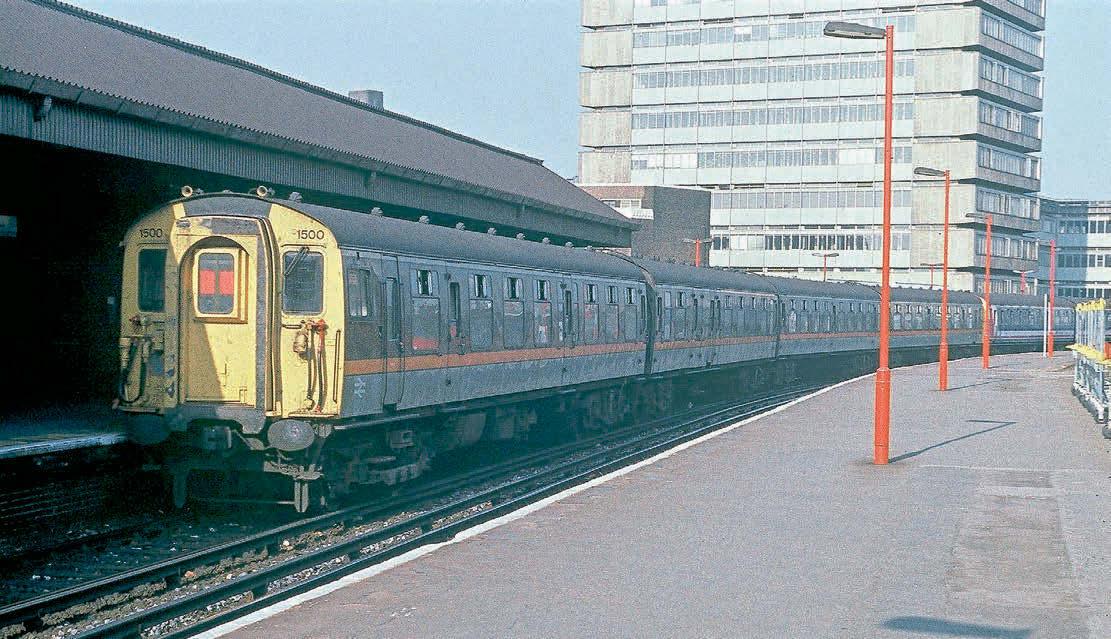
No. 1563, the train weighed 315 tonnes tare (around 325 gross) with a power/weight ratio of only 6.2hp/tonne. Suffering a 5min late departure, there was every reason for the driver to make up time. This included liberties with the speed restriction over the first two miles, before settling to the EMU standard of around 60mph on the 1-in-100 of the legendary Sole Street bank, where certain south-eastern steam drivers had earned their reputations.
Our eight-car train attained its full 90mph unit maximum down the matching gradient through Longfield before reducing speed for South Darenth viaduct. In 1987, the 85mph line speed authorisation ended at Fawkham. Swanley was passed uninterruptedly before an acceleration to 78mph on the 1-in-100 rising gradient to St Mary Cray, followed by a smart stop at Bromley South down a 1-in-95 approach, having taken 22min 36sec.
The start-to-stop average speed of 62.1mph might not impress every reader, but it represents the second fastest time in the RPS archive between these two stations, beaten only by 21min 42sec with ‘Networkers’ Nos. 365506 and 365507 timed by RPS archivist Lee Allsopp in 2002, also shown in Table 5. It is evident that higher speeds were by then attainable, averaging 73.1mph from Cuxton Road to Sole Street, followed by five minutes at 85-90 mph.
The fastest time by steam was Standard Class 5 No. 73086 The Green Knight in 1956, driven by the legendary Sam Gingell, load 10, 333/365 tons tare/gross in 26min 40sec, minimum 41mph on Sole Street bank, timed by prominent Stephenson Locomotive Society figure Bruce Nathan. This was markedly faster than driver Gingell two months earlier with No. 73089 Maid of Astolat ‘load 8’ (240/260 tons) which had managed 47mph on Sole
Street bank. The maximum downhill speed of both trains was (shall we say?) in excess of any of the other figures in Table 5. In the case of ‘the Maid’, perhaps this was too fast for the signalman, as driver Gingell checked his speed to 13mph through Swanley. Logs of these runs appeared in The Railway Magazine Practice and Performance article of April 2011.
For comparison, Table 5 also includes a Class 47 run from 1991 with the 17.16 Folkestone Central to Manchester Piccadilly. The trailing load was only six vehicles weighing 206/212 tonnes (net/gross), 334 tonnes including loco No. 47812, giving 7.7 hp/tonne. The diesel was 70sec down on the CEPs by Cuxton Road, then it raced up Sole Street bank touching 67mph at Cobham Road, but reached only 82mph down the other side. These widely divergent techniques resulted in a difference of only 1½ sec between the ‘47’ and the CEPs over the 11 miles 48 chains from Cuxton Road to Tweedhill – meaning the diesel was still 69sec down. Signals checked the Swanley approach speed to 49mph before a last burst to 76mph at Kevingtown.
This Cross-Country Class 47 leads us into what is probably the most famous No. 1500, at least to the many readers who do not remember the ‘B12s’. Even so, Brush Type 4 No. 1500 is better known as renumbered No. 47401 – the sometimes North Eastern and sometimes not. The locomotive had a large slice of publicity in TRM March 2025 relating how brand new No. D1500 worked test trains in 1962 to provide a comparison with ‘Deltic’ No. 9018 (55018) Ballymoss between King’s Cross and Doncaster. In celebration of The Railway Magazine’s 1500th edition, I have selected a more unusual run, in keeping with its occasional name. The RPS archive
Above: Class 411 4-CEP EMU No. 1500 was the first of the fleet to be refurbished in the mid-1970s, although originally it was the No. 7153, the 53rd and last of the Phase 1 order. The unit is seen at Waterloo East on August 5, 1989 wearing the London & South East Sector’s ‘Jaffa Cake’ livery and at the rear of a formation heading to Charing Cross. Although the CEPs continued in service until the early 2000s, the driving vehicles from No. 1500 were converted to departmental use as third-rail tractor unit No. 932081, but were scrapped in 1996. COLOUR-RAIL
Table 6: Newcastle to Berwick-upon-Tweed
Loco 47401
Vehicles/tare/gross tonnes 8/265/280
Train 08.40 York-Aberdeen
Date August 27, 1983
Recorder A J Middlemiss
MilesTiming PointWTT M SM P H
0.00NEWCASTLE C. 0 0 005L
1.65Heaton 3 3745
4.98Forest Hall 7 1167
9.90Cramlington 10 5983
13.93Stannington 13 4192
16.63Morpeth 1716 0046
18.55Pegswood 18 0168/90
25.61Chevington 22 5587
28.54Acklington 24 4894/64
31.93Warkworth 27 3475/84
34.86Alnmouth31½29 4982/85
39.43Little Mill 33 1177
43.03Christon Bank
46.00Chathill
49.21Lucker
35 4693/98
37 3795
39 4883
51.64Belford 4441 2690
54.99Smeafield
58.65Beal
60.84Goswick
43 3698
46 1576
47 4986/tsr20
67.00BERWICK-uponTWEED a 5655 35
Net time 53min
Table 7: Manchester London Road to Sheffield Victoria
Loco 27005
Date January 19, 1955
4.95Guide
Sheffield Victoria a 1517 33 27005 later named Minerva
contains 36 entries for this busy diesel before its renumbering.
Predictably, most are on East Coast Main Line expresses, but there is an uncharacteristic appearance on the 17.35 Broad Street to Hertford North on March 30, 1967 timed from Finsbury Park by Peter Smith. In contrast, there are almost 100 entries after renumbering until withdrawal in 1992, plus an outing on the Keighley & Worth Valley in 2004.
Again, most entries are from ECML trains until the HST 125 revolution changed its normal use to Trans-Pennine and CrossCountry. The last entry is on the Down postal from Paddington via Bristol in January 1992. I had many runs with the loco, including the Saturday 08.40 York to Aberdeen in August 1982, although only as far as Berwickupon-Tweed for a family day out. Six minutes were lost to two 20mph temporary speed restrictions (TSRs), for which there was no recovery time, taking 62min 17sec for the 67 miles from Newcastle.
Locally-based recorder Alan Middlemiss had a better trip a year later with the same loco, train and schedule, this time taking only 55min 35sec – or a little less than 53min net after allowing for a 20mph TSR on the Scremerston racing stretch. The train spent long periods in excess of 90mph, with maxima of 98mph either side of Chathill, figures that I rarely experienced north of Newcastle with non-‘Deltic’ motive power.
The details are shown in Table 6.
At the risk of pushing out the boundaries of the ‘1500’ locos reprise, it is worth mentioning
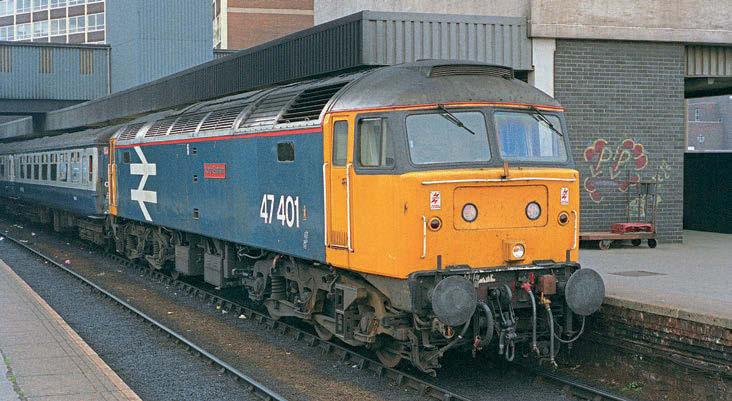
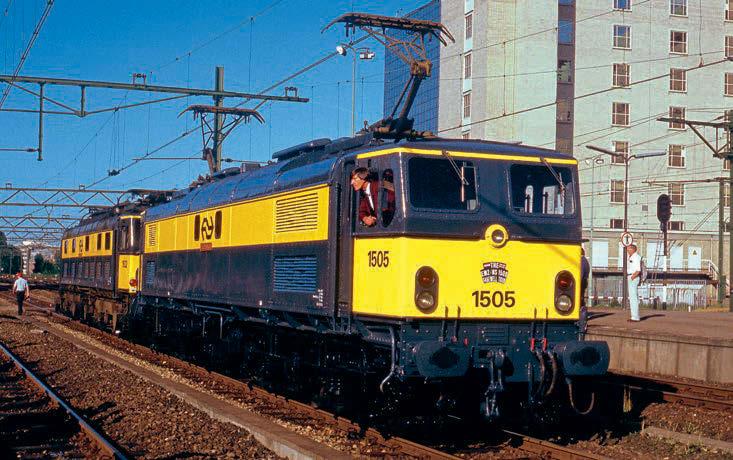
the fleet of seven Woodhead EM2 (Class 77) electrics that operated on 1500V DC overhead wiring.
Woodhead passenger trains had to serve Sheffield Victoria, whereas rationalisation concentrated services across the city at the Midland station.
A journey time from Manchester of only an hour meant poor utilisation of the nonstandard locos, although their withdrawal in September 1968 ultimately resulted in a new lease of life in the Netherlands a year later – yes, as Class 1500 – and a working life extension to 1986 that exceeded their native employment.
In Table 7, I have shown an early example of Woodhead running timed by the redoubtable G J Aston, with some higher speeds west of Penistone than I used to see in later years. The Hadfield to Penistone section closed in July 1981, and the Sheffield to Penistone section was truncated at Deepcar (for steel traffic) in 1983 when the remaining passenger services to Huddersfield were
diverted via Barnsley. The tabulated run shows No. 27005 Minerva, which later went to the Netherlands but, despite carrying the name of the Roman goddess specialising in strategy, found itself limited to supplying parts for its six classmates.
The Dutch 1500 Class oddly did not have a No. 1500, but it did have a No. 1501 – the former No. 27003 Diana – which was recorded many times by British train timers, sometimes including railtours. Some 17 years after their export – on June 14, 1986 – Martin Tasker logged this future Utrecht Spoorwegmuseum specimen hauling an 11-coach ‘EM2 Farewell’ special, with speeds pegged at 75kph (46mph). The train did not have one of those contrived names that so often adorn British charters, but perhaps ‘The Woodhead Wastrel’ might have been more evocative.
Even so, these electric Co-Cos remain a testament to that short-lived, loco-hauled electric 1500V DC chapter in British railway history, which is so fondly remembered by those who saw its zenith. ■
• Discounts on many of the Society’s books
• Exclusive visit programme to railway facilities and heritage sites
• Talks and illustrated presentations at branches throughout the UK
• Discounted access to the Modern Traction locomotive database
• Extensive library and archive, plus... TheRailway Observer (digital edition)–Amonthly 72 page full colour magazine, featuring:
• Superb quality pictures
• Network operating reports
• Loco and unit stockchanges
• Infrastructure news
• Articles ona range of railway subjects and much more...





A first attempt at standardising electrification settled on 1500V DC supply, but widespread use was thwarted by the Second World War, after which 25kV AC took over.
THE majority of electrification on Britain’s railways today is either 25kV AC overhead or 750V DC third-rail, but many different systems have been tried since the first ones in the late 19th century. For example, the Midland Railway used 6.6kV AC overhead on its Lancaster-Morecambe/Heysham branch from 1908, while in 1913 the Lancashire and Yorkshire Railway electrified the branch from Bury to Holcombe Brook at 3.5 kV DC overhead. In an attempt at standardisation after the First World War, a Government report in the late 1920s recommended 1500V DC overhead for all future schemes.
Electrification of the Manchester, South Junction and Altrincham Railway at 1500V DC was completed in May 1931 between Manchester London Road (Piccadilly) and Altrincham via Sale. It was converted to 25kV AC in 1971, but most of the route became part of the Metrolink tram system in the early 1990s, which is electrified at 750V DC overhead.
The MSJ&AR was jointly owned by the LMS and LNER, and in the 1930s the latter company planned to electrify its London Road to Sheffield/Wath ‘Woodhead Route’ at 1500V DC. Although work began later that decade, the Second World War meant it was not completed until 1955, by which time 25kV AC technology was on the horizon as the new standard. Nevertheless, a fleet of EM1 (Class 76) and EM2 (Class 77) locomotives hauled passenger trains over the route until 1970, after which it continued as freight-only – particularly for power station coal – until closed as a through-route in July 1981. The section between Manchester Piccadilly and Glossop/Hadfield was retained for local passenger trains using LNER-designed Class 506 EMUs until the line was converted to 25kV AC at the end of 1984.
Another major scheme completed using 1500V DC was part of the LNER’s Great Eastern Main Line from London Liverpool Street. Like the Woodhead Route, work began in the 1930s, but was not completed until after the Second World War – the section to Shenfield opening in 1949 with extensions to Chelmsford and Southend Victoria in 1956. Suburban trains were worked by what became Class 306 EMUs, which were similar in design to the Class 506s. Conversion to 6.25kV AC was done at the end of 1960, followed by 25kV AC at various dates from the 1960s to 1980s.
One other route electrified at 1500V DC was the North Eastern Railway’s line between Shildon and Newport (Middlesbrough), completed before the First World War but removed by the successor LNER in 1935, when renewals were due but the amount of traffic
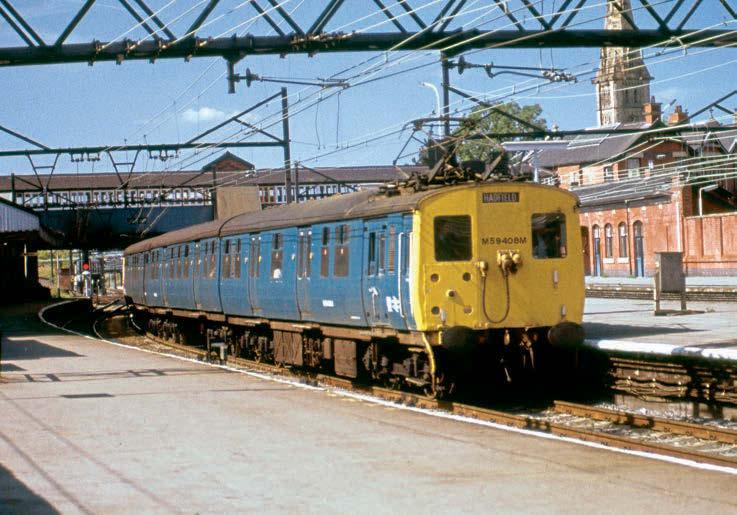
Ordered by the LNER before the Second World War, but delivered to British Railways in the early 1950s, one of the 1500V DC Class 506 EMUs (led by No. M59408M) calls at Guide Bridge in 1982 with a working to Hadfield. The units were withdrawn at the end of 1984 when the line was converted to 25kV AC. HAWTHORNE COLLECTION
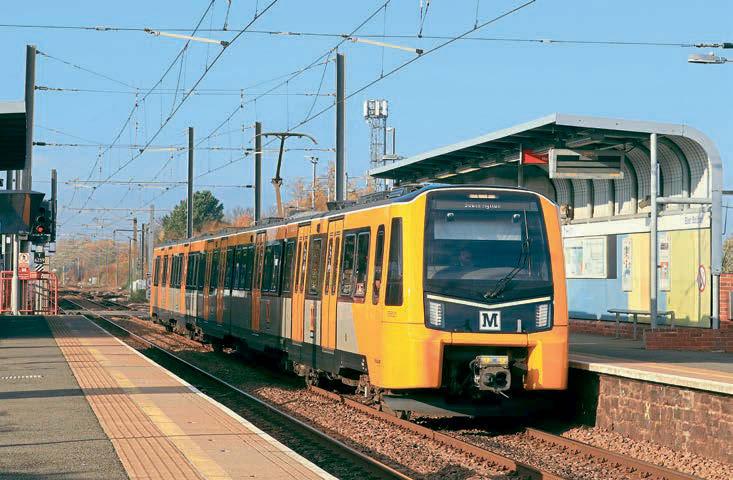
The modern face of 1500V DC operation is the Tyne & Wear Metro system. Pictured at East
on November 7, 2025, is new Stadler unit No. 555021 with the 11.14 Newcastle
no longer justified the expense. Taking the story full circle, however, the only major use of 1500V DC overhead in Britain today is also in the North East on the Tyne & Wear Metro. This system was built in the 1970s, replacing suburban services around Newcastle and
Gateshead that were previously operated by British Rail. The original fleet of Metrocars (designated Class 599 on TOPS to run on Network Rail metals to Sunderland) has been in use for almost 50 years, but is currently being replaced by new Stadler-built Class 555. ■
Reflecting almost 130 years of
railway history, our 1500 issues
have covered much since the very first one in July 1897, writes Paul Bickerdyke.
ISSUE 1 of The Railway Magazine was launched in July 1897, just over 70 years since the opening of the Stockton & Darlington Railway, but with Queen Victoria having four more years left on the throne. It was also a time at the end of significant network expansion, with the opening of the Great Central Railway’s London Extension just a couple of years away as the last main line to be built until the opening of HS1 more than a century later.
By the time of our 100th issue in October 1905, it was the Edwardian era and The Railway Magazine had already become established among the great and the good of the railway world as well as a growing band of readers amongst the general public with an interest in railways and train travel.

Issue 100 had our first special souvenir cover, with an illustration of a modern locomotive number No. 100. It also contained a number of tributes from top railwaymen, including G J Churchward, locomotive superintendent of the Great Western Railway, who said: “I must congratulate you on the hundredth number of The Railway Magazine. The fact that it has grown to its present dimensions since the first number was issued is undoubted evidence of its popularity.”
Others offering their congratulations included the locomotive superintendent of the Highland Railway Peter Drummond,
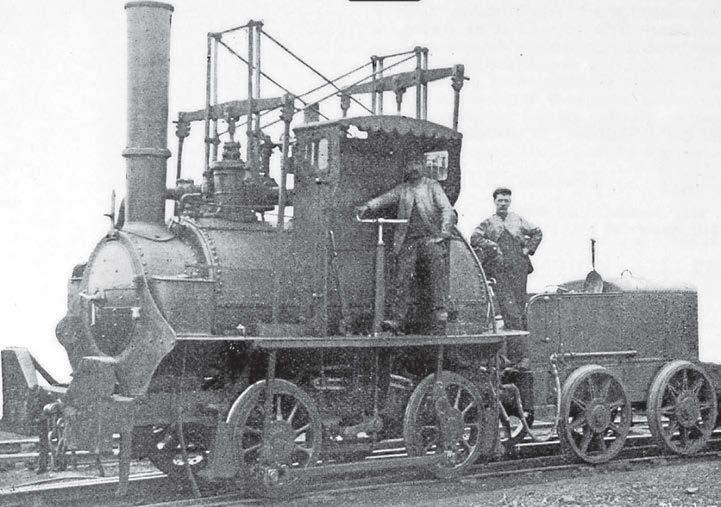
For our 100th issue in October 1905, the NER’s Wilson Worsdell sent in this image of what he believed to be the oldest working locomotive at the time. The 0-4-0 was
in 1822 and was employed at a colliery in Hetton-le-Hole. Note the driving cab is on one side of the
general manager of the GCR Sam Fay, locomotive superintendent of the Great Eastern Railway James Holden, chief mechanical engineer of the North Eastern Railway Wilson Worsdell, and many others. The 200th edition in February 1914 featured
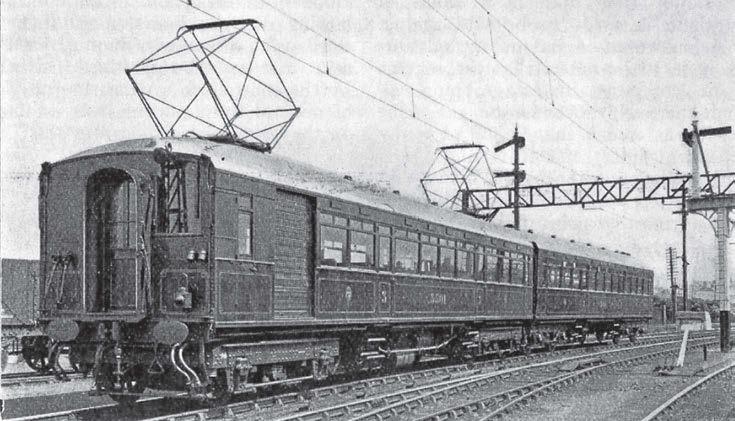
another specially designed cover of a locomotive named Railway Magazine and a signal box with the issue date on it.
The editor was John F. Gairns, who had taken over from founding editor George Augustus Nokes (using the pen name G A Sekon) in 1910. He wrote that the magazine had put paid to the doubters who said there would not be enough subjects to write about for more than three or four years!

Mr Gairns added that the period since issue 100 had seen few significant step changes, but many small improvements had added up over the eight years. One telling comment was that he thought competition between companies had become a secondary consideration to enabling both freight and passenger operations to be conducted more efficiently.
Our next ‘Century issue’ was No. 300 in June 1922. This was after the end of the First World War, during which the magazine had continued on a regular monthly basis. The issue contained an in-depth look at a new Great Northern 4-6-2 Pacific class, noting

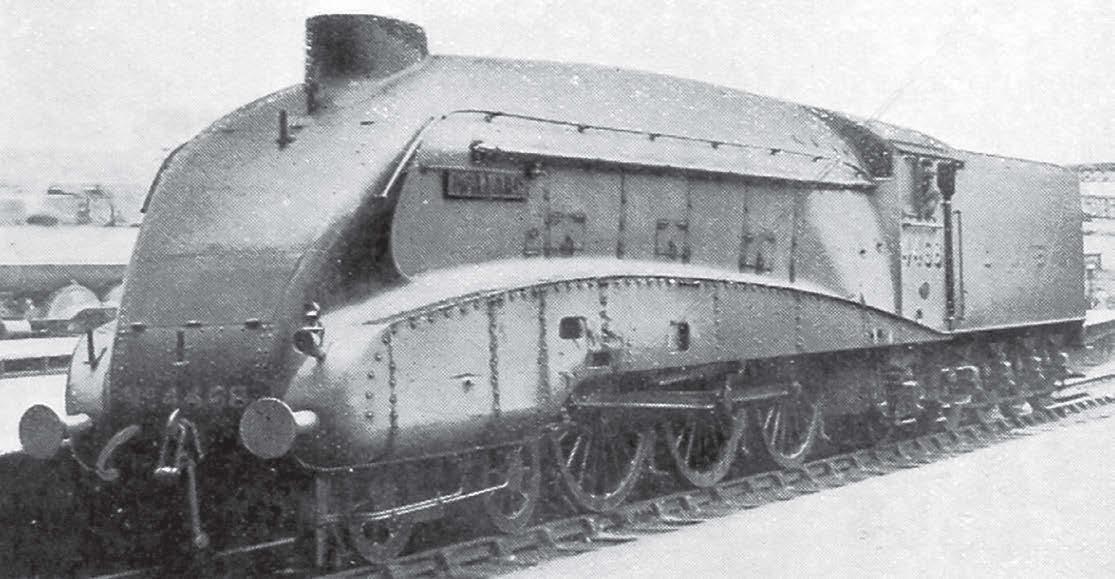
The 1930s had been all about speed and glamour, as epitomised by locomotives such as streamlined ‘A4’ No. 4468 Mallard, which was pictured in our February 1939 issue on July 3 the previous year, the day it claimed the world speed record for steam.
that these were first built by the GNR solely for express passenger work for 11 years. The first of this A1 Class was No. 1470, later named Great Northern, with its rather more famous classmate No. 1472 following in early 1923 –the locomotive that would become Flying Scotsman in 1924 after the LNER’s non-stop service between London and Edinburgh.
Issue 400 in October 1930 was at the start of a decade that would become known as a ‘Golden Age’ for rail travel in Britain until the start of the Second World War. In a review of the years since the ‘Big Four’ Grouping in 1923 – a term coined by this magazine – it was noted that there had been an increase in the use of containers for general freight. Originally used for registered luggage on cross-Channel services, containers were now being brought to and from goods yards by road lorries, with cranes providing the transfer to rail wagons.

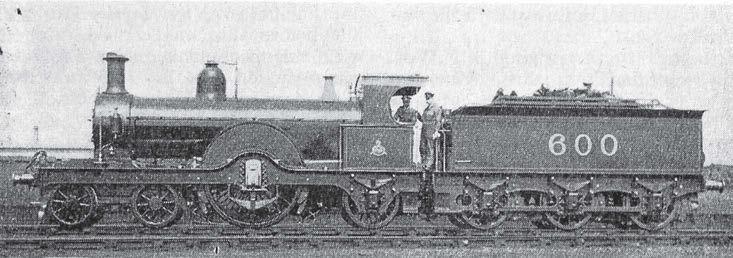
entire history of railways” were attributed to increasing competition from both road and air, as well as technical advances by the railway companies themselves.
Moreover, said the article, large firms were establishing distribution depots at railway centres so that goods could be received in bulk, often in containers, and distributed from there as desired by ‘country-lorry’.
By the time of issue 500 in February 1939, Europe was only months away from the start of the Second World War, but there was no hint of that in the magazine.
Instead, there was a look back over the Golden Age, with one particular article looking at the improvements in speed seen since the start of the decade. These “most startling developments in the
Also praised was the scrapping of an agreement by the LMS and LNER not to reduce times between London and Glasgow/ Edinburgh below 8½ hours, an agreement that had led to 37 years of stagnation on the West and East Coast routes.
Four’ companies to create British Railways. The issue also noted the growing trend towards dieselisation, the first meeting of the Talyllyn Railway Preservation Society, and it was also the first in our series of articles marking the ‘Century’ numbers with a look at all locomotives to have carried No. 600.
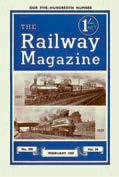

As a monthly magazine, the ‘Century issues’ came along every eight years and four months, but there was a larger gap between issues 500 and 600. Wartime paper rationing forced the frequency to go bi-monthly from May/June 1942 to November/December 1949, a period of 92 calendar months.
Issue 600 was therefore not until April 1951, with huge amounts of change over the previous 12 years – not least the toll on the infrastructure and rolling stock due to the war effort, and the subsequent nationalisation of the ‘Big
There was not much fanfare for issue 700 in August 1959, perhaps because – as the editorial described – publication of the magazine had been severely hit by a strike in the print trade, with the July issue being over a month late and the editorial team trying their best to catch up.

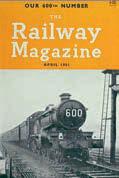
Nevertheless, there was much to talk about, with ample coverage of a changing British Railways, with articles re-examining the 1955 Modernisation Plan; the introduction of diesel multiple units for St Pancras to Bedford workings; new electric trains for Manchester to Bury; and infrastructure changes for the Kent Coast electrification. We had started
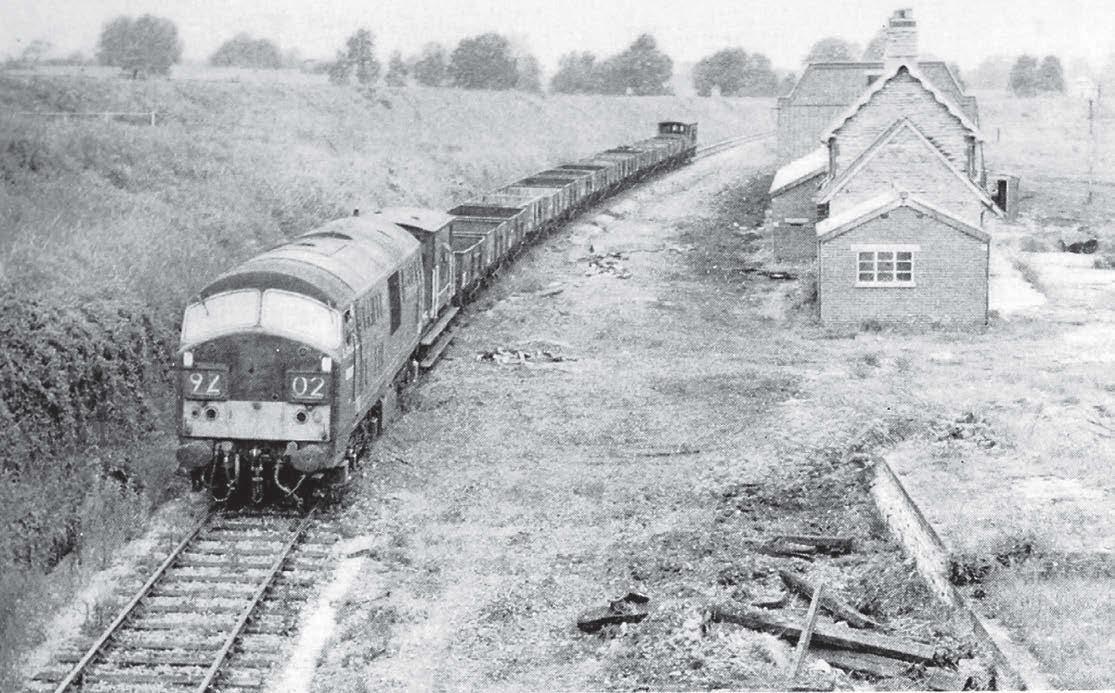
The effects of the Beeching cuts were evident in issue 800, December 1967, with this image of
line track-lifting train at Templecombe on June 4 that year.

using colour images on the front cover from November 1963, and issue No. 800 in December 1967 featured a superb image of Great Southern Railways 4-6-0 No. 800 Maeve. This issue was on the cusp of a huge turning point in railway history, with main line steam having less than a year left. This was reflected in the articles, which include a look at new Mk.2 coaches being built at Derby Carriage & Wagon Works (now the home to Alstom), but also how it was still possible to experience steam over Shap in Cumbria.
It is probably fair to say the 1970s were generally a bit gloomy, with the end of steam still relatively fresh in the memory along with the countless line and station closures of the Beeching cuts.
Issue 900 in April 1976 is no exception to this, with the headline news item covering British Rail raising fares by 5% on InterCity routes, 10% on average, and by up to 17.5% for local fares and season tickets.
drivers. There was more of an air of optimism by the time of issue 1000 in August 1984, which was a huge milepost in railway publishing.
There was news of Class 150 orders, the first new bogie DMUs to be built for more than 20 years, while British Rail Engineering was in search of overseas orders, sending a prototype railbus to Denmark for evaluation and developing an International coach at Derby Litchurch Lane. New stations opened at Sandwell & Dudley and Lostock Hall, while more Class 58s were authorised and locohauled trains returned to South Pennine and ‘Torbay Express’ services.
There were also reports on a dispute between BR and Tyne & Wear PTE about handing over tracks for the planned Metro system; a fire and explosion at Finsbury Park Underground station; the disposal of railway land by the BR Board; and in-cab signalling trials that were thought would lead to the elimination of



Meanwhile, as per issue 100, there were tributes from celebrities in railway circles, including William McAlpine; artists Terence Cuneo, David Shepherd and C Hamilton Ellis; David St John Thomas of David & Charles Publishing; and Dai Woodham.
Among many kind words were these from Michael Draper, general manager of the Severn Valley Railway (1976-1993), who said: “Congratulations to the Hansard of the railway community!”
Issue 1100 came out in December 1992, just a few years before Privatisation and with the railways facing mixed fortunes.
On the plus side, ‘Eurostar’ was chosen as the name for the forthcoming international services between London, Brussels and Paris, while unique electric No. 89001 entered
preservation for the first time (it later being resurrected by GNER for use on the East Coast Main Line). New stock in the form of Class 465 ‘Networker’ EMUs were entering service, while modernisation of the Waterloo to Exeter route meant Class 159 DMUs were on the way – albeit, from an enthusiast’s point of view, at the expense of loco-hauled formations.
Other bad news included the announcement that 31 coal mines were to close, with the associated knock-on effects to the Trainload coal business. But in a move prescient of future developments, celebrity ‘A3’ No. 4472 Flying Scotsman made its secondonly visit so far to the National Railway Museum in York – a dozen years before the museum would purchase the locomotive for the National Collection.
Celebrations in April 2001 of the 1200th issue were muted by the tragic news of the fatal crash at Great Heck, south of Selby in North Yorkshire, in which a GNER passenger train was derailed when it hit a car that had driven on to the tracks, and was then hit by a freight train going in the opposite direction.

The car had driven down an embankment from the M62 motorway that crossed over the
railway at this point, and the car driver, Gary Hart, was sentenced to five years in prison for 10 counts of causing death by dangerous driving after a jury found he had fallen asleep at the wheel.
The terrible accident was claimed to be a one-in-67-billion chain of events and remains Britain’s worst rail disaster this century.
By the time of issue 1300 in August 2009, the Privatisation era was into its second decade, but already showing signs of strain.
Columnist Lord Berkeley warned of potential passenger franchise failures, in which ‘the keys’ would be handed over to the Department for Transport, but added that such moves would ignite an operational timebomb.

This was proved to be the case, particularly on the East Coast Main Line, where a succession of franchisees – Sea Containers’ GNER, National Express East Coast, and Virgin Trains East Coast – were all stripped of their contracts.
In due course this led to a general breakdown in the franchising model, made worse by the Covid pandemic, and eventually leading to the renationalisation of passenger operations that is taking place today.
Before and after the Second World War, there had been a regular eight years and four months between our ‘Century issues’. But issue 1400 came in November 2017, eight years and three months since issue 1300 because the end of 2013 had seen an additional ‘Xmas Edition’ to realign the publication dates with the calendar months. This issue included the start of Class 800
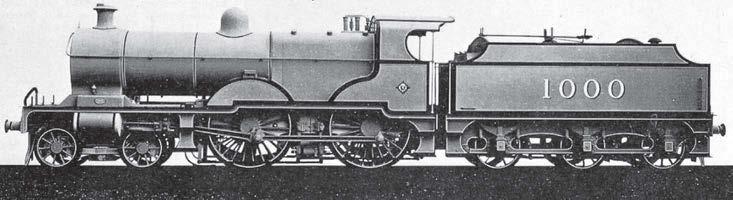
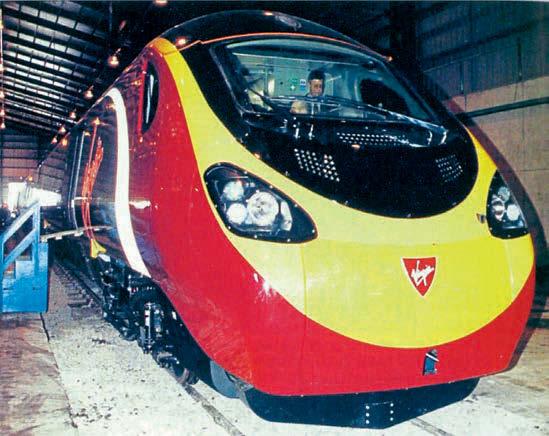
Above: What more obvious choice was there to include in our August 1984 1000th issue locomotive survey than Midland Railway Johnson Compound 4-4-0 No. 1000.

Left: Although issue 1200 was overshadowed by the fatal crash at Great Heck, it also included more positive news about the arrival of the first Virgin ‘Pendolino’ set No. PS1 (390001) for testing.
IETs with Great Western Railway, which means that today they have already been in service for more than eight years – how time flies!
Lord Berkeley was again gazing into the crystal ball, and this time predicting concerns over rising costs for building HS2. Problems then were more about construction at Euston and Old Oak Common, with no mention of the cancellation of the Eastern Leg to Leeds
or the Western leg to Manchester. Those were both still to come. ■
■ All 1500 issues of The Railway Magazine are available to view online in our digital archive, with free access given to subscribers of the magazine. This useful tool allows for casual browsing, or keyword searches of specific subjects. More powerful than an annual index, it is like having a complete set of RMs on your bookshelf at home. For more information, see the website at www.railwaymagazine.co.uk/archive
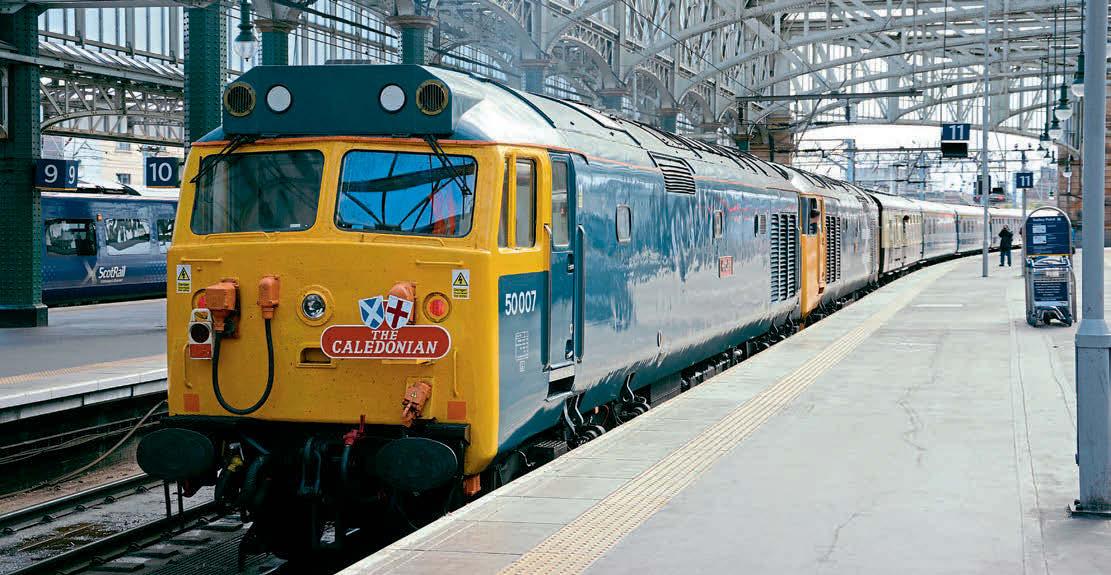



The RM-sponsored tour ‘The Caledonian’ on October 7, 2017, was featured in issue 1300 as it took Class 50s back to Glasgow via Shap and Beattock for the first time in many years. Nos. 50007+50049 are pictured at the Scottish terminus.



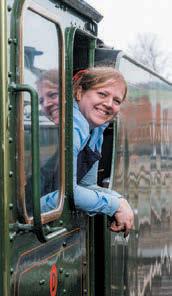
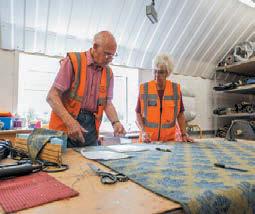
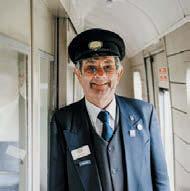

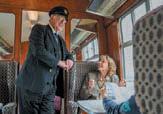
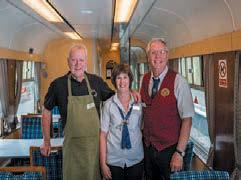
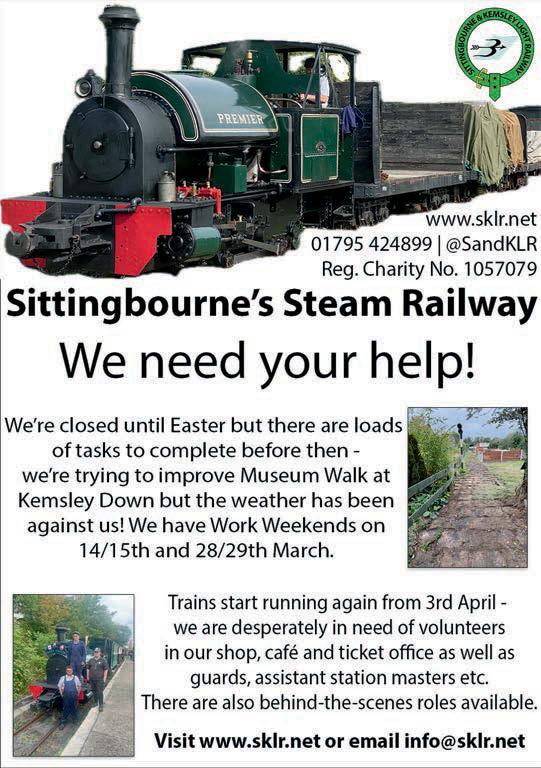
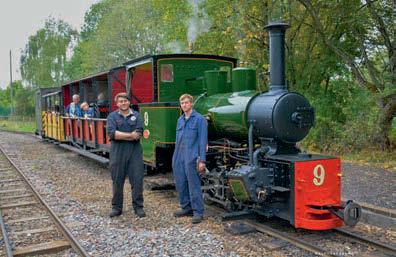


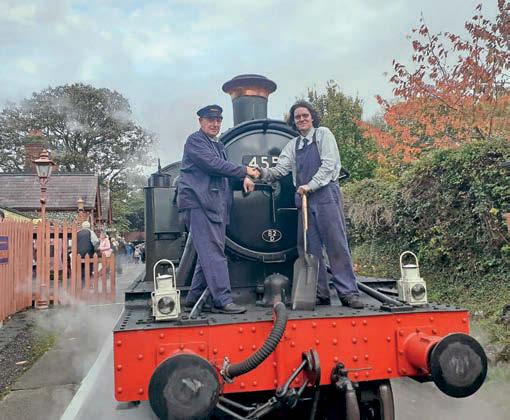

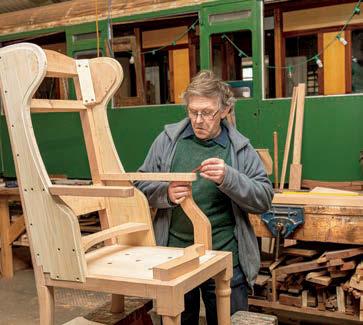
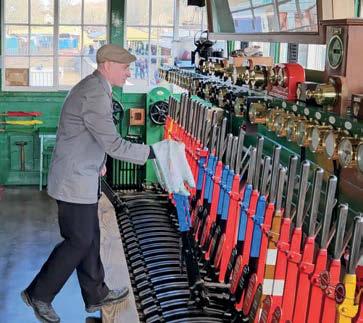
I HAVE been regularly buying
The Railway Magazine for the past 25 years or so and I wish to state my commitment to purchasing it on a regular monthly basis. As a (now retired) teacher – and hungry for accuracy in historical narrative, particularly about trains and railways – I relied on this publication to feed my hunger to stay in touch with my hobby in a way that is informative, interesting and accurate. But this email is partly in response to Mike Andrew’s letter (February) showing the hilarious artificial intelligence (AI) depiction of a train on a Christmas card (repeated right).
I recently started to ask myself whether or not to continue buying this magazine. I do not have a problem with it, but amongst many other costs of monthly outgoings, I was analysing my budget at the start of the year. Suffice to say, the main competition for supplementary information that could feed my hunger
for past and present railway information and stories was the use of social media and the internet in general.
However, I recently came across two AI-generated articles told with a mixture of AI animation and real footage of train stories; one was the excellently animated video of the 2000-year history of York, the other was the story of Barry Island scrap locomotives. Both were on a famous online video platform (pun not intended).
Both stories were very well told… if you never knew any serious detail around them in the first place. The first video began with York’s development as a village, then growth from Viking inception to its modern context, with its association and history of trains and railways. This was shown as an ‘excellent’animation, and in one scene shows a 19th-century movement of a train out of York old railway station from inside the walls in a way I had never seen before, for both good
and bad reasons! The wheels looked hilarious with huge ‘hub caps’ and the rodding was moving in very strange directions amongst the steam, it was hilarious but very frustrating to see.
The second was the Barry Island story, which had so many anachronisms (of locomotive identification) there’s not enough space to give examples. But most frustrating was the ‘any train will do’ approach whereby now and again what was shown was an American 19th/20thcentury steam locomotive!

In these two experiences of using social media I was clearly left with the impression that with trains and railways, serious detail and accuracy does not matter, let’s tell it as though it’s to children. It’s all very infantile!
I even recall an email I sent to
BBC Look North when a report came on, a number of years ago, telling us information about the demise of GNER, but in the footage showed Waterloo International, as if being related to the story in some way. It’s not that hard to avoid making mistakes with a bit of simple research. The mainstream media really isn’t that bothered
about details, it’s all very bizarre and frustrating.
Please continue to be the reliable source of historical information and railway narrative that you have been and I will continue to purchase this magazine for years to come; especially if it seems AI is here to stay.
Michelle Fitzsimons, Horbury
AS always, I was glad to see the latest RM arrive. One item, however, made my heart sink (page 73). Despite my address, I have strong connections with Bradford as my mother’s home town. Given a (temporary) boost as 2025 City of Culture, Bradford has for so many years seemed neglected in the national scheme of things. And now the West Yorkshire tramway is delayed again.
Yes of course London, with its population nearing 10 million, needs huge investment in transport – but other areas desperately need the same commitment. I felt
disappointed, not least because I am unlikely to live to travel on this regional boon.
In many parts of Europe it would be unthinkable for a city (in this case more than one) not to have a tram system or light railway of some kind. We think also of Leicester, Bristol, Southampton; the list goes on.
A footnote: if there can be any comfort to be drawn from the recent terrible rail accidents in Spain, it is that Britain’s railways are so wonderfully safe. Let us hope that the horrors of the Railtrack era do not return.
Dr Martin Davies, Langton Green
I AM a little surprised by the time being taken to sort the engine problem on the Hitachi IEP-type trains (February issue). It started last summer and has now been established the cause is blocked filters.
Being of the age when most people were a lot more informed about mechanics and undertook their own car maintenance, loss of power on cars was mainly down to three things: lack of a spark (not a problem with diesels), lack of air, or lack of fuel. The
latter almost immediately led to investigation of the in-line filter. In older cars, this was mainly due to corrosion in the tanks caused by water getting in with the petrol. I’m no diesel fitter or engineer, but still a bit surprised at the time taken.
South Western Railway had a similar problem just a few years ago with its Class 158 and 159 fleets. It was quickly found to be contaminated fuel at Salisbury. It could be I’ve missed

something in the mags over the months, but I’m surprised there’s no mention of looking for a problem with the fuel at the depots.
Pete Cutler, by email
…I REFER to the article on page 15 of the February edition. You state the diesel engines being ‘Hitachi’, which is the manufacturer of the train. However, surely the engines are of MTU manufacture, which is a subsidiary of Rolls-Royce.
Bob Rich, Nottingham
I WAS interested to read John Heaton’s article in the February edition relating to my sighting of the runaway coal train that ended up in rather a mess in Huddersfield station on March 14, 1966 – 60 years ago.
The first few months of 1966 had proved really interesting with regular visits of ‘Jubilees’, ‘Britannias’ and ‘9Fs’, and on Monday, March 14, I had just reached the north end of the station, probably around 6pm, when I heard a large crash at the opposite end with dust rising up. I ventured to the other end of Platform 1 and managed to take one photo of the mangled wreckage of the rear of a coal train that had been diverted into bay Platform 2.
Apparently, a coupling had broken after the coal train had passed through the station and so the wagons were heading back down through Huddersfield Tunnel towards the station on the 1:96 gradient. The quick-thinking signalman must have thought the safest thing to do was to divert the runaway into the bay platform as it was
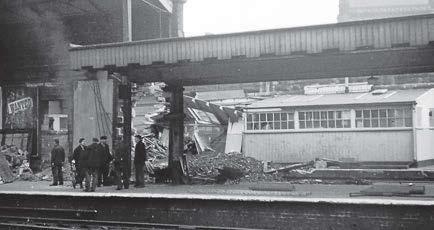
empty. The guard had jumped clear I understand, presumably once he realised that his brakes could not stop the train.
The guards van had more or less disappeared under the last few coal wagons, which had ridden over it, demolishing the gent’s toilet wall. The last coal wagon was left balancing around 10-12ft in the air inside the toilet, and several more coal wagons were very badly damaged.
A railway policeman then turned up and prevented me from taking further photos. I visited the station the following evening and could see that most of the wreckage had been
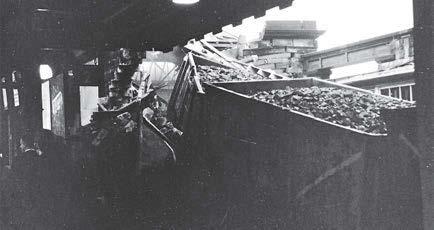
LOOKING at the photo on page 38 of your February issue, my money is on the ‘loco’ No. GKN 195 referring to the company’s age. Formed in 1759 you say, I’ll bet that display was 1759 + 195 years = 1954. Try some trade magazines from that year and I bet you’ll solve it.
Simon Marshall, by email
…THE van on the right of the picture resembles a van used for transporting prisoners, or possibly a ‘Black Maria’. Why this should be in the photo is another matter.
Possibly the number 195 refers to the number of years the company had been operating, which would place the photo in 1954.
John Allen, by email
…I AM on my own quest regarding British Telecom’s ‘KX’
phoneboxes, which were made at GKN Telford, and have been tracing sites using information in photographs.
My guess is that this is a studio or film set location, and the GKN structure was promotional for a company advert or Pathé showreel. I say this because the buildings look like the old film lots in Pinewood or Elstree, and that trailer looks like it is a part of a pre-1970s BBC or ITN/ regional ITV Outside Broadcast unit. The squares look like windows and when you start googling old BBC and ITV OB units you get similarlooking vehicles.
Might have been retired to a studio for use, or broadcasting from a trade industry event?
Ciccio Gee, via Facebook
■ If any reader can supply more details about this GKN photo, please get in touch.
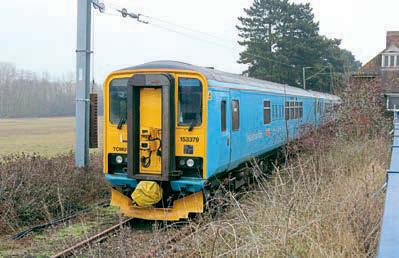
cleared away. The breakdown crane, having finished its work, stood in the middle of the station and ‘B1’ No. 61030 was getting ready to haul it away, probably to Wakefield shed. Looking across from Platform 4 to bay Platform 2, it was surprising how quickly the mess had been cleared up.
Two further memories relating to John’s article: on May 14, 1960, I was returning with family from Leeds and, as we approached Huddersfield along the viaduct, we slowed and took a crossover away from the usual route into Platform 1 to pass a rather forlorn-looking Fowler tank No. 42410 stranded and derailed on a crossover just outside the station. Interestingly, No. 42410 would survive through to September 1966, by then last of the class.
The other memory is from January 6, 1962, when I saw from a passing train the underneath of an upturned ‘V2’ that had run off the line at Mirfield, a most unusual sight indeed.
David Smith, Sheffield
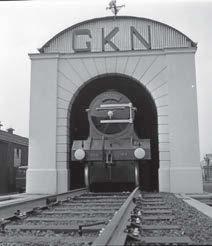
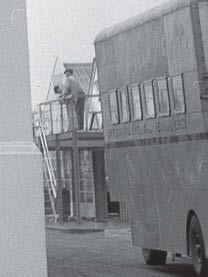
LAST month’s photo (repeated below) shows almost all that remains of the former GWR Millbay station in Plymouth, which opened in 1849 but closed to passengers in 1941 after wartime bomb damage in the area, with the line through it to the docks surviving until 1971. The two distinctive gateposts (bottom) are not quite in their original positions, but they do have visible damage said to have been caused in the air raids, and even as recently as January this year an unexploded bomb was found nearby.
For this month, an easier one (above, by Mike Cooper) – where can Network Rail units Nos. 153379+384 be found stabled adjacent to a main line station?
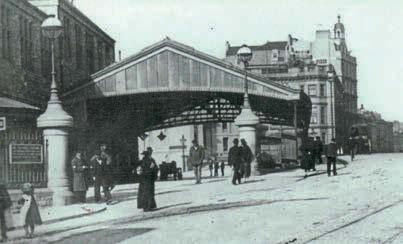
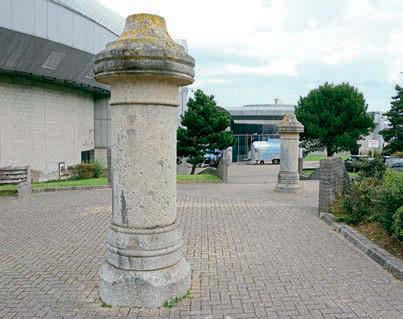
The wheel question is…
I KNOW that in the 1930s the LMS and LNER were building restaurant and sleeper carriages with Mansell wheels (of composite steel/wood construction) because they were quieter than steel wheels, but when did their use for new stock finish? And when did their use on BR end?
I am guessing the introduction of DMUs retired a lot of venerable stock.
Bob Knell, by email
Chiltern also all diesel IN the Headline News article on electrified route mileage (February), it is stated that “CrossCountry remains the only operator with a 100% dieselpowered fleet”. This is not true as Chiltern’s fleet is also diesel: Classes 165, 168 and 68. Richard Hurrell, by email
WEDNESDAY, MARCH 4
Bradford Railway Circle. Bradford Mechanics’ Institute Library, 76 Kirkgate, Bradford BD1 1SZ. 14.00. ‘Highland Railway – Part 2’: Bill Jagger. Matlock Rly Club. Duke William, 91 Church St, Matlock DE4 3BZ. 15.30. TBA.
Pennine Railway Society. Town Fields Sports Club, Bennetthorpe, Doncaster DN2 6AA. 19.30. ‘From Pit to Power Station’: Chris Booth. Sutton Coldfield Railway Society (SCRS). St James’ Church Centre, 59 Mere Green Rd, Sutton Coldfield B75 5BW. 19.30. Test Track Night. Talking of Trains. Library Hall, Ewell Rd, Surbiton KT6 6AG. 19.00. ‘Worcester’s railways revisited’: Dick Crane.
THURSDAY, M ARCH 5
Lutterworth Rly Soc. The Pavilion, Recreation Ground, Coventry Rd Lutterworth LE17 4RB. 19.30. ‘Don’t Jump’: Alan Godber.
Norfolk Rly Society. United Reformed Church Hall, Ipswich Rd, Norwich NR4 6QR. 19.30. ‘Members presentation and using the legacy discussion. Nuneaton Rly Circle. Chilvers Coton Conservative Club, Bridge St, Coton, Nuneaton CV11 5UD. 19.45. ‘The Sea Wall’: Gavin Lake. Railway Correspondence & Travel Society (RCTS). Archive and Library open day. Leatherhead Station Approach KT22 7SQ. 11.00-16.00.
FRIDAY, MARCH 6
RCTS. St Teresa’s Church Hall, 71 Gloucester Rd, North Filton, Bristol BS34 7PL. 19.30. ‘Midland Blue – Midland railway lines in the 1980s’: Stewart Jolly, Slough & Windsor Railway Society. The Manor, Brunel Way, Slough station SL1 1FQ. 19.30. ‘Flying from the Pilot’s Point of View’: Lorimer Burn. Stephenson Locomotive Society. Langdon Square Community Centre, Coulby Newham TS8 0TF. 14.00. ‘One Man’s View of the East Coast Main Line’: Malcolm Paul.
MONDAY, MARCH 9
East Yorkshire Railway Society. Driffield Community Centre. Mill St, Driffield YO25 6TR. 19.30. TBA. Lincoln Railway Society. St Hugh’s Church, Harewood Crescent, North Hykeham, Lincoln LN6 8JG. 19.30. ‘A Year in the life of the Kent & East Sussex Railway’: Robin Coombes.
TUESDAY, MARCH 10
Great Western Society. Room 4, BAWA, 589 Southmead Rd, Filton, Bristol BS34 7RF. 19.45. ‘Last Steam Around Gloucester’: Chris Baldwin.
Meon Valley Locomotive Soc.
St Peter’s Church Hall, Free Street, Bishop’s Waltham, Hants SO32 1EE. 19.30. ‘Paddington to Bristol Temple Meads, Brunel’s Billiard Table’: Mike Pym.
LCGB. Parish Room, St Michael’s Church, Bounds Green Rd, Wood Green, London N22 8HE. 14.00. ‘Roaming Around London’: Geoff Brockett.
LCGB. Friends’ Meeting House, Butter Hill, South St, Dorking RH4 2LE. 14.00. ‘Hereford to Swansea – Part 2’: Chris Jones. Pewsey Vale Rly Society. Woodborough Social Club SN9 5PL. 14.45. ‘The Great Central Railway’.
RCTS. St Mark’s Church, St Mark’s Close, Lancaster Ave, Hitchin SG5 1UR. 14.00. ‘Timetable Planning – A Dark Art’: Dave Hepper.
RCTS. The Swifts, Haggis Gap, Fulbourn, Cambridge CB21 5HD.19.30. ‘That Was The Year That Was - 1972’: Geoff Plumb. RCTS. East Croydon United Reformed Church, Addiscombe Grove, Croydon CR0 5LP. 19.30. Members’ Images and branch annual meeting.
RCTS. Farm Road Sports & Social Club, Farm Rd, Sheffield S2 2TP. 19.00. ‘The 1923 Grouping’: Robin Gibbons.
RCTS. Gladstone Club, Station Road, Northwich CW9 5RB. ‘Canadian Rocky Mountain Express 2004’: Steve Blakemore. Wells Railway Fraternity. Wells Town Hall, Wells, Somerset. 19.30. ‘Railway Publishing and the Titfield Thunderbolt’: Simon Castens.
WEDNESDAY, MARCH 11
SCRS. St James’ Church Centre, 59 Mere Green Rd, Sutton Coldfield B75 5BW. 19.30. ‘The San Francisco Cable Cars’: Tom Ingall
SLS. Abbott Hall Social Centre, Dowker Lane, Kendal LA9 4DN. 19.15.’The Stately Trains Collection’: Stephen Middleton. Talking of Trains. Library Hall, Ewell Road, Surbiton KT6 6AG. 19.00. ‘Southern in Focus’: David Cross.
THURSDAY, MARCH 12
Continental Rly Circle St Paul’s Church Centre, Rossmore Road, Marylebone, London NW1 6NJ. 18.30. ‘Java 1973’: Geoff Plumb. LCGB. St Bartholomew’s Church, 47 Vesta Ave, St Albans AL1 2PE. 19.30.
‘The Elizabeth Line’: Howard Smith OBE. Monmouthshire Railway Society. Lysaght Institute, Orb Drive, Newport NP19 0RA. 19.00. ‘1962 was only yesterday’: David Mathew.
RCTS. St Luke’s Church, Mayor’s Walk, Peterborough PE3 6EZ. 19.00. ‘East Midlands Railways
1970-2000’: Brian Sharpe.
RCTS. Scots Guards Club, 2 Clifton Terrace, Edinburgh EH12 5DR. 14.30. ‘Paddle Steamer Waverley – 50 Years of Preservation’: Richard Thorburn.
Shropshire Railway Society. Gateway Education and Arts Centre, Chester St, Shrewsbury SY1 1NB. 19.00. TBA.
South East Essex Railway Soc. Friends’ Meeting House, 18 Dundonald Drive, Leigh-on-Sea SS9 1NB. 19.00. Track Night.
FRIDAY, MARCH 13
SLS. Conference Room, 1st floor, Newcastle Arts Centre, 67 Westgate Rd, Newcastle upon Tyne NE1 1SG. 19.00. ‘Railway heavy load movements by road’: Malcolm Paul.
SWRS. The Manor, Brunel Way, Slough station SL1 1FQ. 19.30. ‘The Heritage Scene from the Naughties to Today’: Robert Stonehouse.
SATURDAY, MARCH 14
RCTS. Mint Methodist Church, Fore Street, Exeter.19.00. ‘A Railway Life’: Chris Holland.
MONDAY, MARCH 16
RCTS. Bromborough Suite, The Merebrook, Greenfields Ave, Bromborough, Wirral, Merseyside CH62 6DO. 13.30. ‘Railways Remembered – Lake District and North Lancashire’: Charles Roberts.
RCTS. Shenfield Parish Hall, 60 Hutton Road, Shenfield CM15 8LP. 19.30. ‘The History and Development of Stratford Depot’: Hugh Driscoll.
TUESDAY, MARCH 17
Leicester Railway Society. Braunstone Civic Centre, 209 Kingsway, Leicester LE3 2PP. 19.30. TBA.
RCTS. Archive and Library open day. Leatherhead Station Approach KT22 7SQ. 11.00-16.00.
RCTS. Highway Public House, Willerby Road, Hull HU5 5LH. 19.30. ‘My Further Local Favourites’: Steve Jordan.
RCTS. Didcot Civic Hall, Britwell Road, Didcot OX11 7JN. 14.00. ‘Britain’s Changing Railway from Outside and In’: Phil Deaves. SLS. Langdon Square Community Centre, Coulby Newham TS8 0TF. 14.00. ‘Deltics on Parade’: Trevor Emil and centre annual meeting.
WEDNESDAY, MARCH 18
Giggleswick Rly Circle. Victoria Hall, Settle BD2 9DZ. 10.30. ‘My railway photographic life with a camera’: Eddie Bobrowski. Matlock Rly Club. Duke William, 91 Church St, Matlock DE4 3BZ. 15.30. TBA.
Pennine Rly Soc. Town Fields
Please check with organisers before travelling to events.
Sports Club, Bennetthorpe, Doncaster DN2 6AA. 19.30. TBA.
RCTS. Archive and Library open day. Leatherhead Station Approach KT22 7SQ. 11.00-16.00.
RCTS. Junction Church, 2 Romsey Rd, Eastleigh SO50 9FE. 19.30. ‘Tracks In The Mist Volume 2’: Colin Brading. SCRS. St James’ Church Centre, 59 Mere Green Rd, Sutton Coldfield B75 5BW. 19.30. Annual photo competition, Talking of Trains. Library Hall, Ewell Rd, Surbiton KT6 6AG. 19.00. ‘The Story of a Princess’: Jim Connor.
THURSDAY, MARCH 19
Aln Valley Rly. Barter Books, Alnwick Station. 19.30. ‘The Alnmouth to Alnwick Branch Line’: Bart Rippon. Barrow Hill Roundhouse. Campbell Drive, Barrow Hill, Chesterfield S43 2PR. 19.30. ‘Fifty Years with the 50s’: Geoff Hudson.
Lutterworth Rly Soc. The Pavilion, Recreation Ground, Coventry Rd, Lutterworth LE17 4RB. 19.30. Annual meeting. Marlow & District Rly Soc. Bourne End Community Centre, Wakeman Rd, Bourne End SL8 5SX or on Zoom by visiting www. mdrs.org.uk. 19.30. ‘The Central Wales Line Part 1 – Shrewsbury to Llandovery’: Chris Jones. Norfolk Rly Soc. United Reformed Church Hall, Ipswich Rd, Norwich NR4 6QR. 19.30. Members presentation and using the legacy discussion. Nuneaton Railway Circle. Chilvers Coton Conservative Club, Bridge St, Coton, Nuneaton CV11 5UD. 19.45. ‘The Moseley collection – Steam in the 1930s’: Robin Mathams.
RCTS. Victory Club, Burlington House, Lypiatt Rd, Cheltenham GL50 2SY. 19.00.
‘The Railway Scene around Cheltenham and Gloucester’: Mike Dodd.
RCTS. Darlington Cricket Club, South Terrace, Darlington DL1 5JD. 19.00. ‘A Northern View’: Steve Batty.
RCTS. Woking United Reformed Church, White Rose Lane, Woking GU22 7HA. 19.15. ‘British Transport Police’. RCTS. Saltaire Methodist Church, Saltaire Rd, Shipley BD18 3HJ. 19.30. ‘Belgium – Trains, Trams and Beer’: Peter Holden.
FRIDAY, MARCH 20
LCGB. Keen House, 4 Calshot Street, London N1 9DA. 18.30
‘India and Pakistan – Part 2’: Peter Robins.
SWRS. The Manor, Brunel Way, Slough station SL1 1FQ. 19.30. ‘English Electric Class 50s’: Joe Burr.
SATURDAY, MARCH 21
SLS. Friends’ Meeting House, Mount St, Manchester M2 5NS. 14.00. ‘Great Central Railway Unification’: Tom Ingall
MONDAY, MARCH 23
RCTS. Cox Green Community Centre, Highfield Lane, Cox Green, Maidenhead SL6 3AX. 19.30. ‘The Deltics – Worthy successors to the A4s’: Michael Smyth. RCTS. Weston Favell Village Hall, Booth Lane South, Northampton NN3 3EP. 14.00. ‘Nostalgia of Steam on 16mm Cine Film 1920-2003’: Chris Pratt.
TUESDAY, MARCH 24
RCTS. Redhill Methodist Church, Gloucester Rd, Redhill RH1 1BP. 14.00. ‘Heritage Railway Association’: Steve Oates.
WEDNESDAY, MARCH 25
RCTS. Bassil Shippam Centre, Tozer Way, Chichester PO19 7LG. 14.00. ‘Chasing Steam in Western Europe 1970-1974’: John Barrowdale.
SCRS. St James’ Church Centre, 59 Mere Green Rd, Sutton Coldfield B75 5BW. 19.30. Annual meeting.
South East Essex Rly Soc. Friends’ Meeting House, 18 Dundonald Drive, Leigh-on-Sea SS9 1NB. 19.00. ‘Apprentice to the Board’: Ron Labram, former Stratford Works apprentice. Talking of Trains. Library Hall, Ewell Rd, Surbiton KT6 6AG.19.00. ‘The Atlantic Coast Express Remembered’: Dick Crane.
THURSDAY, MARCH 26
Shropshire Railway Society. Gateway Education and Arts Centre, Chester St, Shrewsbury SY1 1NB. 19.00. TBA. Stevenage Locomotive Society. Community Arts Centre, Roaring Meg Retail Park, Stevenage. 19.30. ‘50 years with 50s’: Geoff Hudson.
FRIDAY, MARCH 27
RCTS. Fulwood Lawn Tennis Club, Highgate Ave, Preston PR2 8DY. 19.30. ‘Freedom of Scotland 1961 Part 2’: John Sloane. SWRS. The Manor, Brunel Way, Slough station SL1 1FQ. 19.30. ‘A Touch of Winter’: Peter Robins.
SATURDAY, MARCH 28
RCTS. Archive and Library open day. Leatherhead Station Approach KT22 7SQ. 11.0016.00.
TUESDAY, MARCH 31
RCTS. Digswell Village Church Hall, Welwyn AL6 0DH. 14.00. ‘Harwich Branch’: Dave Goodyear.
Frodingham progress
A TEMPORARY scheme of railway extensions and improvements in the Frodingham area was completed in April 1925 but, owing to opposition, a larger and more permanent scheme was abandoned by the LNER until a later date. Parliamentary powers for some of the improvements were necessary and these have been obtained. The LNER directors have decided to proceed forthwith with scheme of improvements, which includes the removal of the existing station at Frodingham to a site a short distance to the west, where an entirely new station will be constructed [called Scunthorpe & Frodingham].
Kings of sandcastle
THE multitudinous activities and ramifications of railways give them a finger in numerous pies. To own a ruined castle, and to obtain income fees paid by holiday makers who visit the remains of a bygone military stronghold must, however, be something of a novelty. The Southern Railway owns the
ruins of Sandgate Castle, Kent which during the summer is visited by many pleasure seekers who pay 3d a head for the privilege.
Weighell‘gets tough’
NEWS that British Railways is seeking fare increases of 10% on Inter-City services and about 17½% on season ticket, commuter and local travel brought a warning from Sidney Weighell, general secretary of the National Union of Railwaymen, that the union would “get tough” and “not cooperate” if increases drove more passengers away from the railways. He claimed that last year’s increases had cut the number of passengers on the Euston-Glasgow route by 30% and the London Midland Region as a whole had lost 24%. Meanwhile, the NUR has submitted a pay claim of up to £6 a week, the maximum allowed under Government policy. The other railway unions are likely to follow suit.
Alston branch finale
A LETTER from the Transport Users Consultative Committee (North

IT IS appropriate to look back at railway history as The Railway Magazine celebrates more than 128 years of being in existence with its 1500th issue this month.
It is difficult to find any activity that was engaged in by the railway industry that was not vast. The railways owned more than 30,000 acres of land beyond that actually used for their undertakings and over 58,000 houses, mainly for the use of staff. The railways also owned more than 33,000 goods road vehicles and nearly 500 road passenger vehicles.
Nor should it be forgotten that by 1909 over a third of the UK canal system was owned by the railways, amounting to more than 1000 miles. The GWR even owned its own coal mines, primarily for the supply of locomotive coal. With this vast span of control and diversity of activities on our railways, it would be simpler to list the things they did not do.
One of the most interesting and yet most neglected aspects of Britain’s Railway history is that of its people. Without them, railways could not exist today and would not have existed over the years since their earliest days. Without the people requiring their service for the transport of passengers or goods, there would be no cause for them
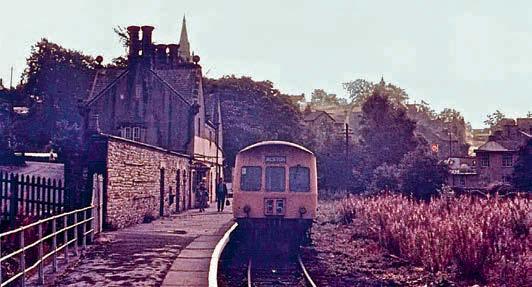
Eastern Area) states that, unless there is unexpected delay in completion of the road, which is a prerequisite to its withdrawal, the rail service is likely to cease on the introduction of the new BR timetable from May 3.
MARCH 2006
Pegler made an OBE ALAN Pegler, the man who saved the Ffestiniog Railway and Flying Scotsman, has been made an OBE for services to heritage railways. Pegler, who aged
85 had thought that official recognition would pass him by, told The Railway Magazine: “ I am absolutely delighted – particularly so by the fact that the citation is for heritage generally, rather than a specific aspect of it.”
…and NRM chief a CBE NATIONAL Railway Museum head Andrew Scott has been made a Commander of the Order of the British Empire for services to museums. Scott, 55, joined the NRM in 1994 and presided over many changes. “This is an accolade I’m accepting on behalf of the whole team.”
to exist; and without the engineers, the track workers, the drivers, the ticket collectors, the guards and the signalmen and more, there would be no railway anyway.
Building travel and tourist traffic, along with the start of the railway hotel business, was gradually developed. In the early days, train travel was quite slow and the railways considered it their duty to provide facilities for rest in the larger towns, as well as a further opportunity to develop emerging tourist traffic. Hotels were often built in towns on the same plots as the stations, which was convenient although sometimes a little noisy.
The first railway hotel is reputed to be what was later known as the Euston Hotel, built by the London & North Western prior to 1840. This was followed by a flurry of hotels opened in London close to the main lines or terminals in the 1850s and 60s. Continuing the diversity in operations, the Great Eastern Railway had its own farm at Bentley, Suffolk, supplying produce for railway hotels and catering establishments.
Both sleeping cars and dining cars crept slowly into use from humble beginnings from about 1873, and the Great Western in 1890 introduced sleeping cars with compartments
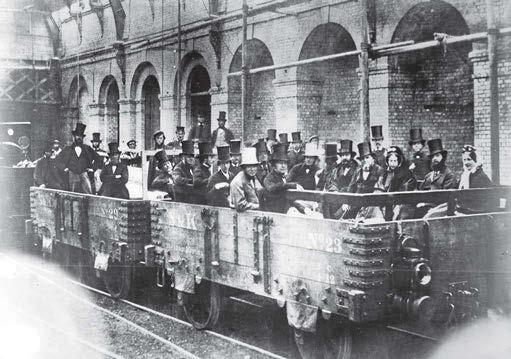
Railways have been for and by the people since the very earliest days, as illustrated by this shot on May 24, 1862 when VIPs were given a pre-opening look at the first section of the Metropolitan Railway, the photograph being taken at Edgware Road station. Among the dignitaries is the then Chancellor of the Exchequer (and later Prime Minister) William Gladstone, who is sat to the right of the man in grey with his elbow on the side of the wagon. The passengers were conveyed in contractor Smith & Knight’s wagons, being hauled by locomotive to Baker Street and then by horses to Gower Street (now called Euston Square).
leading off a side corridor, each with a double bunk. An extra charge was payable and bedding was provided. Similar to today, it was no surprise to find the sleepers mainly working Anglo-Scottish and London to West Country services.
Dining on the railways’ own carriages did not really take off until the 1890s, after the difficulties of storage and cooking had been solved. By 1909, both Third Class and First Class catering vehicles were provided on the longer distance routes. The station buffet was created selling sandwiches, pies and cakes
– thus creating the long-standing reputation of the British Rail pork pie that is still joked about today.
The war years provided the greatest challenge of all for the railways, with the conveyance of both troops and munitions. Overnight air raids saw major destruction of main lines and goods yards and, with exceptional effort by all concerned, managed to see repairs carried out and the movement of the necessary supplies resumed.
For information on the society visit www.rcts.org.uk

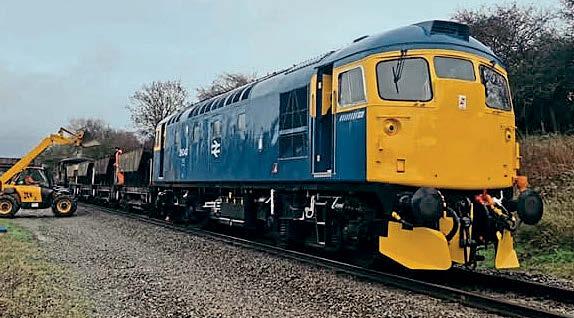

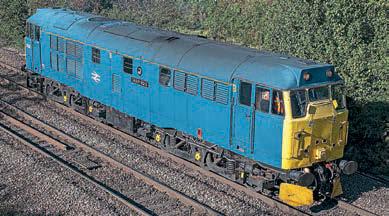

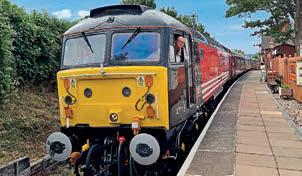

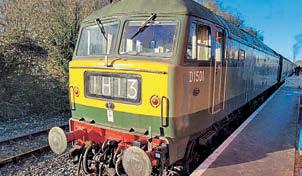

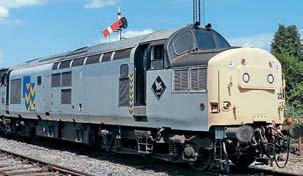

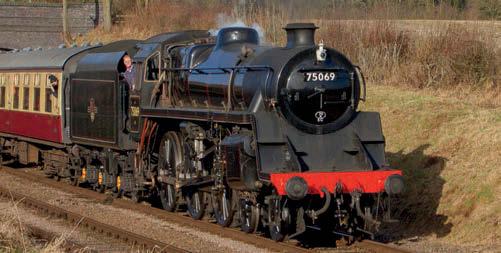
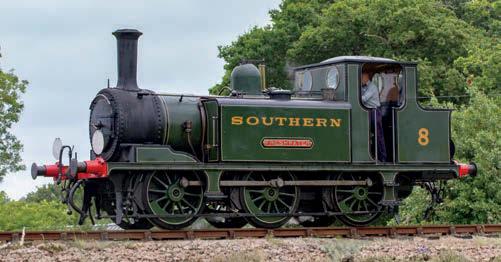
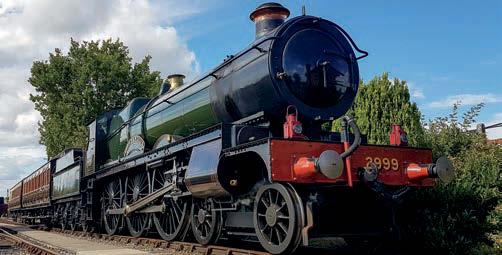
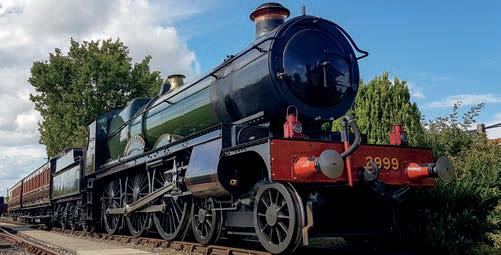

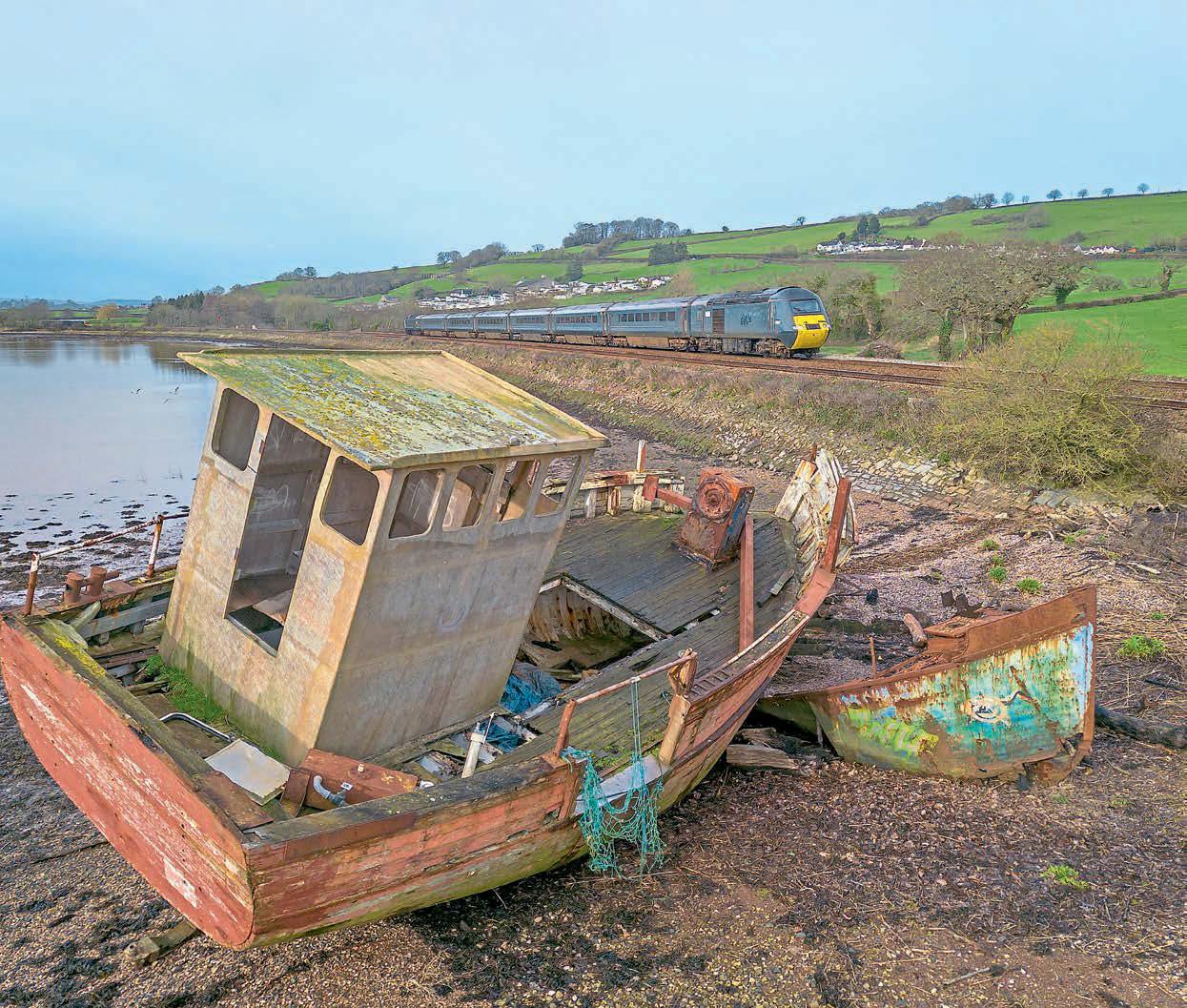
1 LAIRA’S LAST: The final clearout from Laira depot, Plymouth, of all HST power cars and Mk.3s that were fit to move by rail took place on February 17 when Nos. 43092 and 43093 took coaches Nos. 49105, 48150, 48114, 48137, 49117 and 48136 to the Mid Norfolk Railway for storage, the 5Q43 movement seen passing Bishopsteignton (between Newton Abbot and Teignmouth). This left just GWR-owned power car No. 43156 and parts donor No. 43088 at Laira. JON HIRD
2
0-6-0 PAIR: ‘Austerities’ Nos. 68067 (Hudswell Clarke No. 1752 of 1943) and Hunslet No. 3809 (of 1954) are silhouetted at Kinchley Lane, Great Central Railway, on January 24 while double-heading the 14.30 Loughborough to Leicester North. PHIL GRAIN


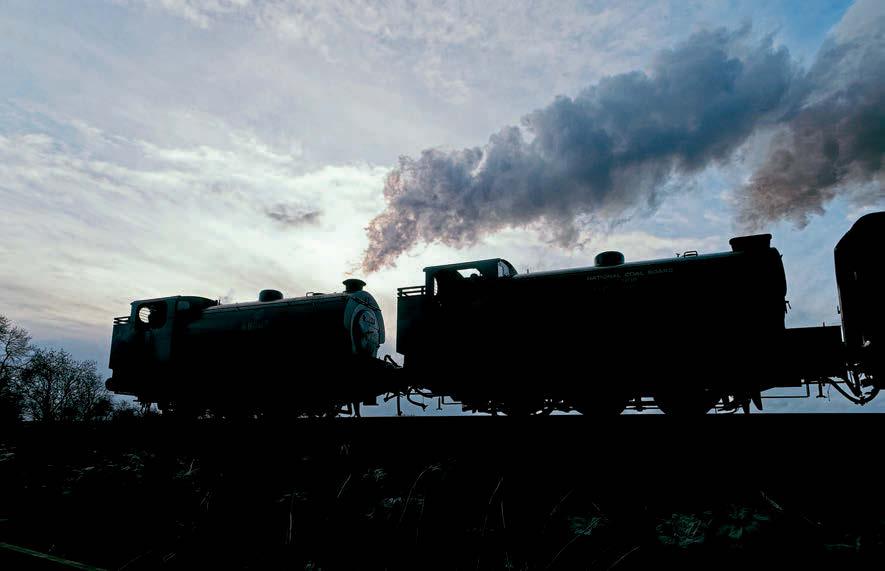
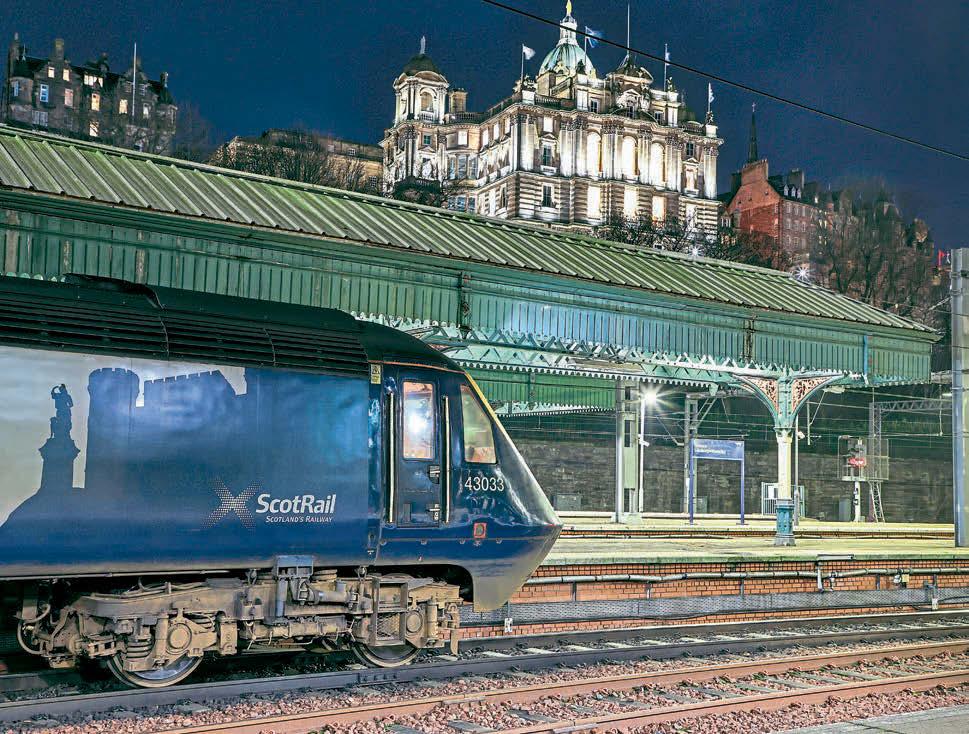
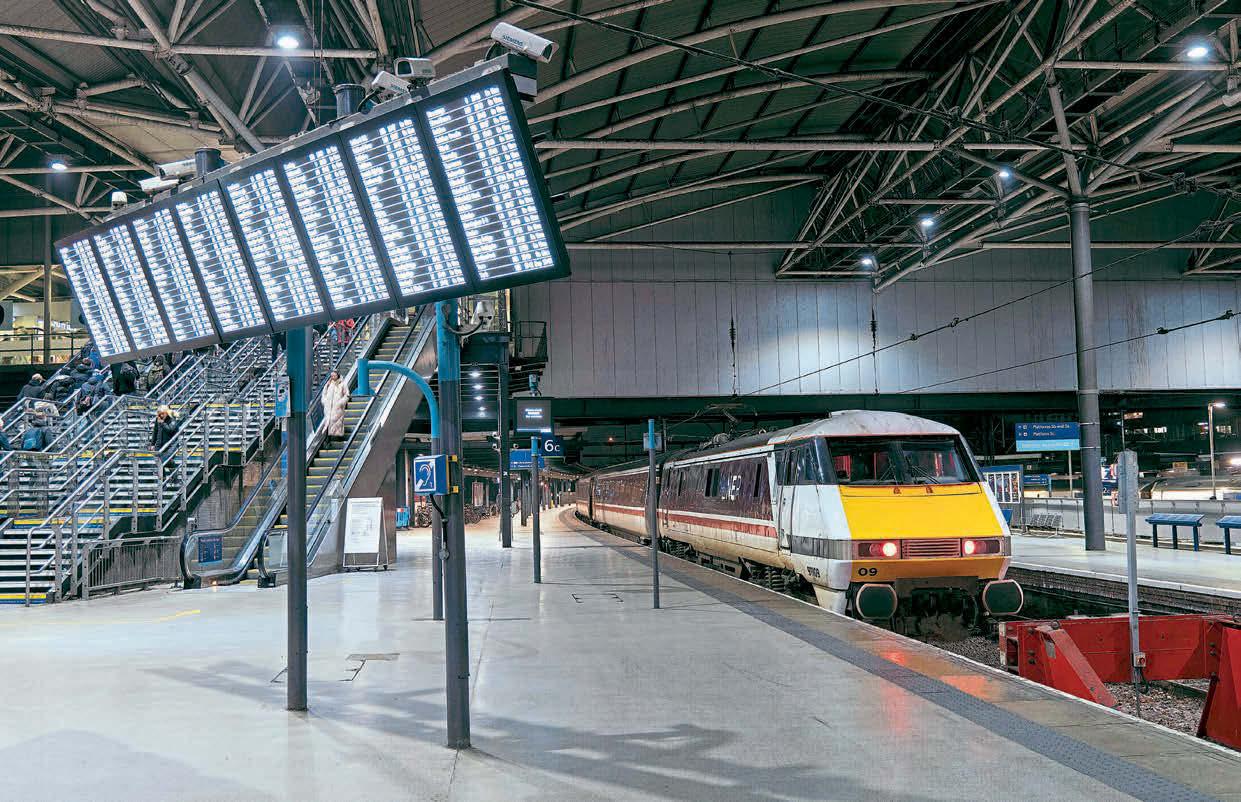
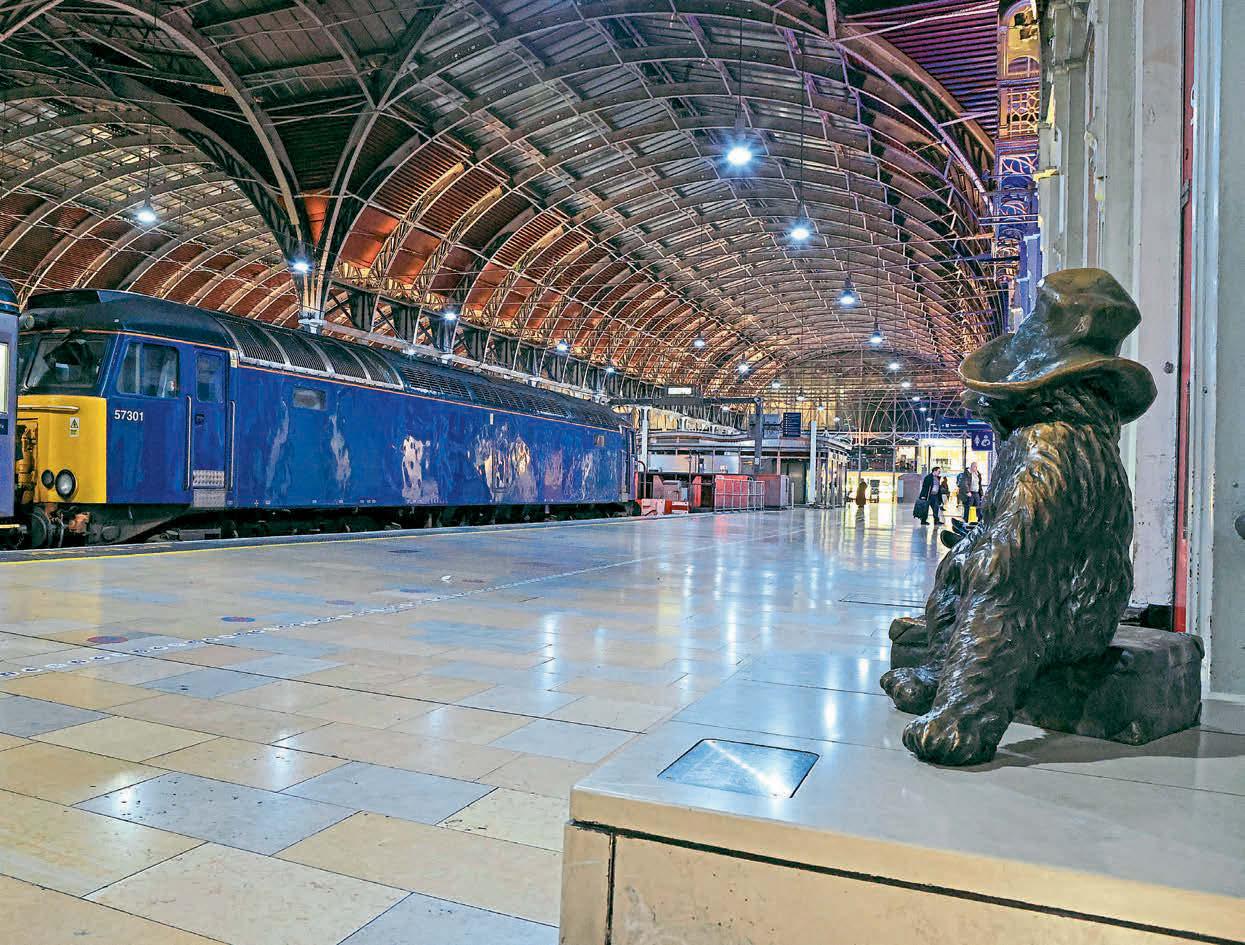
1
WAVERLEY NIGHTS: With the Museum on the Mound lit up in the background, ScotRail power car No. 43033 is pictured at Edinburgh Waverley on January 26 after arriving at the rear of the 18.52 from Inverness. CHRIS GEE
2
QUIET LEEDS: Considering this shot was taken around 17.30 on a weekday, and with plenty of departures shown on the screens, this shot of No. 91109 on February 4 makes Leeds station look surprisingly empty. The loco has just brought in the 15.10
from King’s Cross and would later propel the 18.40 back to the capital. STEVE SIENKIEWICZ
3
PADDINGTON BLUE: The statue of Paddington Bear gives No. 57301 a hard stare at the London terminus on February 9 after the hired-in diesel had brought in the stock for that night’s 23.45 ‘Night Riviera’ sleeper to Penzance. CHRIS GEE
4 NEW STREET ‘VOYAGER’: CrossCountry DMU No. 221113 is framed by the pillars at Birmingham New Street on February 9 as it calls with an unknown working. PHIL WALLIS
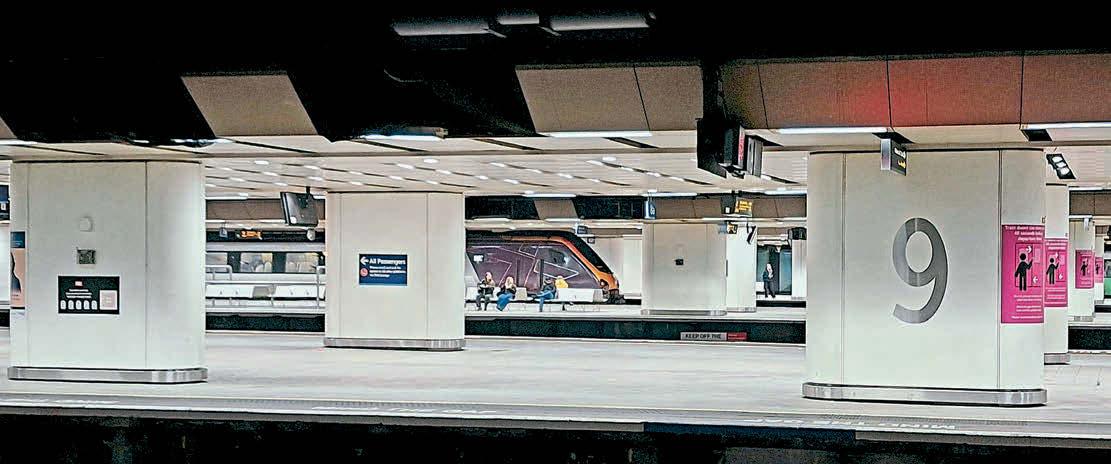
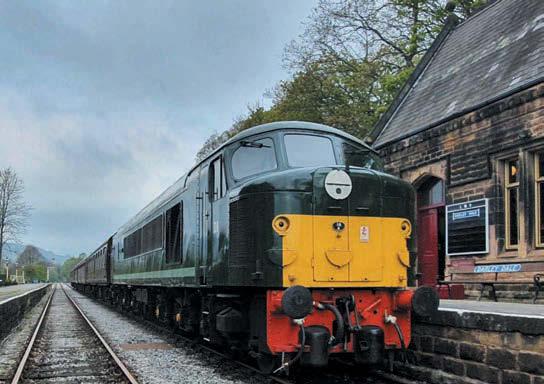

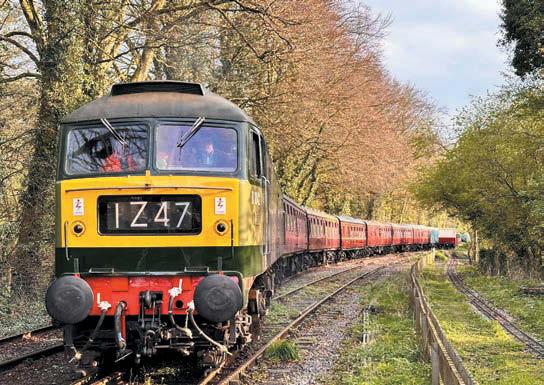
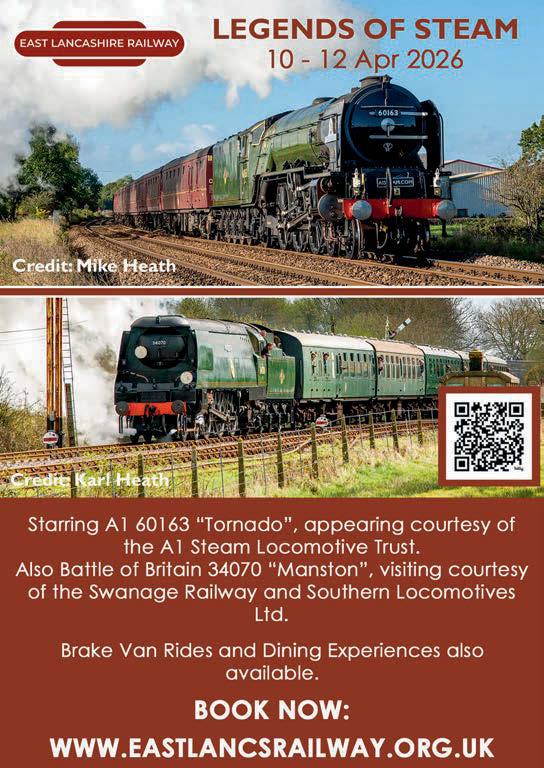
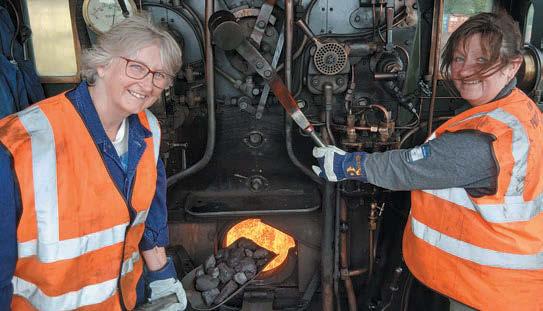
Our Steam EnginemanCoursesenable youtodiscoverwhat it feelsliketobeonthe footplate of one of ourhomefleet locomotives.
Our TasterCourse: Ahalfdaypractical experience onthe footplate.
OurBronzeCourse: Atwo daycourse,one dayinthe classroomandtheseconddayasa practicalexercise. OurSilverCourse: agoodsservicefromMinehead to Blue AnchorandshuntingmovesatMineheadandDunster. OurGoldCourse:preppingtheengineandhavingonetrip onthe footplate andthe othertravellinginthetrain.4 participantsare takenonthe20mileseachway fortwo roundtripsontheline.
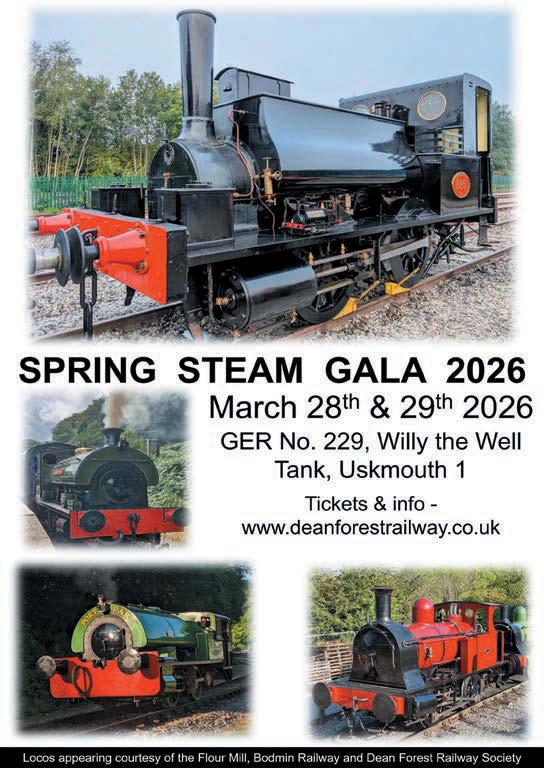




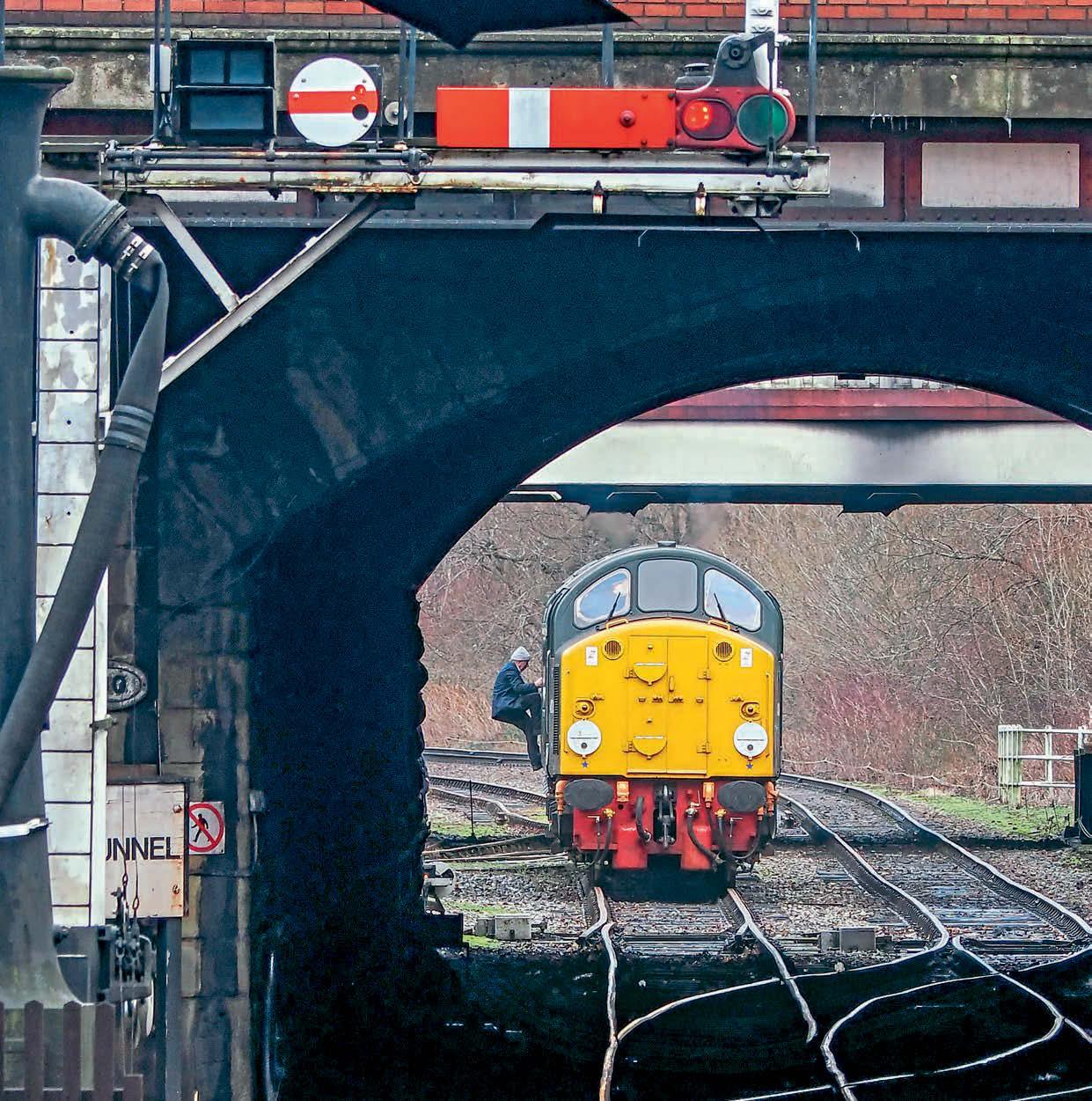












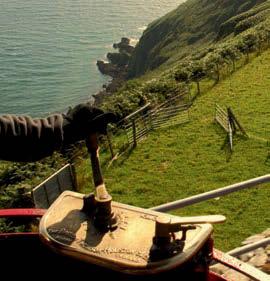








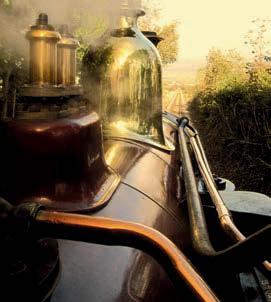




An exchange of Cambrian displays has been agreed between the Severn Valley and Vale of Rheidol railways.
THE Bluebell Railway’s ‘Dukedog’ 4-4-0 No. 9017 Earl of Berkeley – currently on static display in the Vale of Rheidol Railway’s museum at Aberystwyth – is due to swap places in spring with Severn Valley Railway resident No. 7819 Hinton Manor from the Engine House museum at Highley.
With a two-year agreement being reached, the exchange has been welcomed by SVR Charitable Trust chair Judith Meredith. She said: “We extend our heartfelt thanks to the Vale of Rheidol Railway and to the Dukedog’s owners, the Bluebell Railway, whose support and co-operation have made this swap possible. This partnership brings these remarkable locomotives to wider audiences and strengthens the bonds between heritage railways across the UK.”
Neither locomotive is a stranger to their upcoming destination in preservation. The 1938-built ‘Dukedog’ visited the
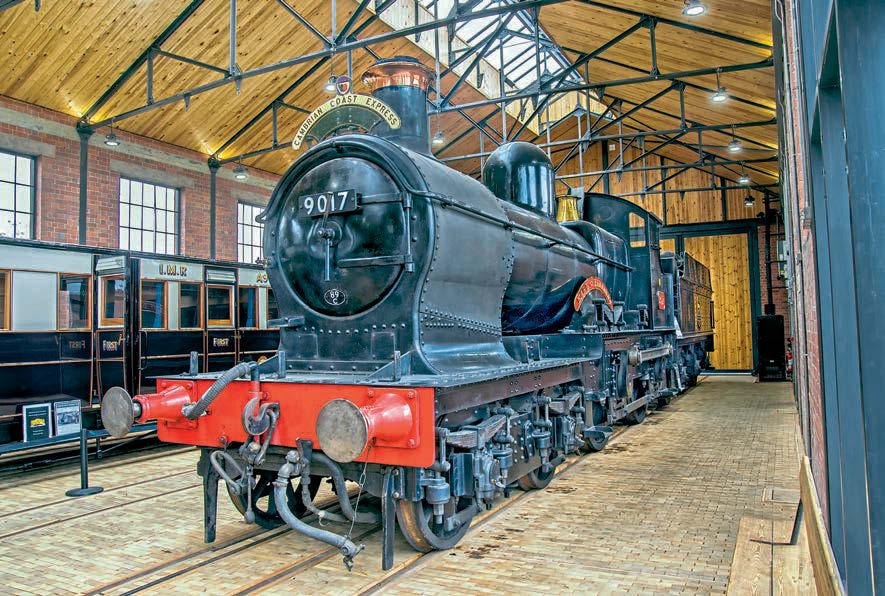
‘Dukedog’ No. 9017 Earl of Berkeley in the VoR’s museum in Aberystwyth on August 7, 2025. GEOFFGRIFFITHS
SVR in 2008, being paired with the National Railway Museum’s 1903-built 4-4-0 No. 3440 City of Truro. Meanwhile the ‘Manor’, having previously worked on the Cambrian network for
British Railways, returned to Aberystwyth for a series of mainline specials in 1987 and 1991.
Both locomotives have been on static display for a
THE ongoing restoration of the sole surviving North Eastern Railway Worsdell C-class No. 876 (as LNER ‘J21’ No. 65033) has seen some great leaps forward on the boiler recently.
As this issue went to press, the firebox outer wrapper had been riveted in place ready for drilling of stay holes in the side sheets. The backhead was awaiting a bracket being riveted on before the attachment of various pads for gauge frames, the regulator stuffing box, brake ejector mounting, and clack boxes.
Once these are fitted, the backhead will be complete and ready to receive the inner firebox.
The loco has received more than one stay of execution in the past. After being initially withdrawn in 1939, it was reinstated during the Second World War, then found itself shunting around the Newcastle area until being withdrawn from North Blyth shed in 1962.
Having initially been set aside for the National Collection, this decision was rescinded upon discovery that the cab was not the original. Then, just four
How the ‘J21’ boiler looked on January 20. LCLT
days before the engine was due to be towed away for scrapping, the engine was moved to Consett steelworks in preparation for preservation.
Progress on the 1889-built 0-6-0 can be followed either through the relevant Facebook page (@J2165033) or the website lclt.org.uk.
considerable time. No. 9017 was withdrawn from traffic in 2011, while No. 7819 has been out of service for even longer, having been withdrawn in January 1995. After spending
some time in store, the latter was cosmetically spruced up for display at Swindon’s McArthur Glen shopping centre, next to the STEAM Museum, before moving to the Engine House.
CONSTRUCTION of the new-build
‘Patriot’ No. 45551 The Unknown Warrior continues to make steady progress.
Heritage Boiler Steam Services said the latest updates on the boiler were the fitting of palm stays and copper stays in the throatplate. Meanwhile, the two outside cylinders have been returned from Riley Engineering and permanently riveted in place, ready for fitting of the motion support brackets.
Plans from here include the fitting of
brackets for the spring hangers, brake hangers, motion guides and the stretcher for the internal motion.
It is hoped that work on machining and assembly of the wheel sets will commence at Riley’s during May or June this year, subject to a final quality control check and availability of workforce and resources. Non-destructive testing on the tender axles at Leaky Finders has revealed no issues, and work on the tender itself is due to continue from May.
AN anonymous donation of £200,000 has allowed work to begin on overhauling the Keighley & Worth Valley Railway’s resident 57XX pannier tank No. 5775.
Having arrived on the line in January 1970 following withdrawal from London Transport duties, the 1929-built 0-6-0PT quickly reached global fame hauling ‘The Old Gentleman’s Train’ in
the 1970 feature-film adaptation of The Railway Children. Having been out of service since 2000, the engine has been waiting its turn in the overhaul queue while being displayed in the fictional GN&SR livery carried in the film.
The KWVR recently witnessed the withdrawal of resident Taff Vale 0-6-2T No. 85, which has taken No. 5775’s place in the overhaul queue.




















The same loco will be used on the same day but 50 years apart.
THE weekend of March 28/29 will mark the West Somerset Railway’s 50th anniversary as a heritage line.
With the first section of the Minehead branch opening as far
as Blue Anchor, 3.5 miles away, the first train on March 28, 1976, was sent on its way by Lord Montague of Beaulieu behind Bagnall 0-6-0ST No. 2996 Victor, formerly of the Steel Company

Visiting the Embsay & Bolton Abbey Steam Railway from the North Yorkshire Moors Railway, LNER ‘P3’ (later ‘J27’) No. 2392 is pictured working hard on the climb to Holywell Halt with the 10.40 Embsay to Bolton Abbey on February 14. The 1923-built loco is the sole survivor of the once 115-strong fleet that was mostly built for the NER from 1906. STEVE SIENKIEWICZ

of Wales and the Austin Motor Company in Longbridge.
In a matter of a few years, the former Taunton to Minehead branch, which was closed by British Rail in January 1971, had been reopened over the 20-mile stretch to Bishops Lydeard. This quickly made the WSR the longest standard gauge
heritage railway in Britain. To mark the occasion this year, the Lakeside & Haverthwaite Railway has agreed to loan Victor to recreate the first operations on the line 50 years to the day. The engine will then stay on the line until after the Spring Steam Spectacular on May 1-4.
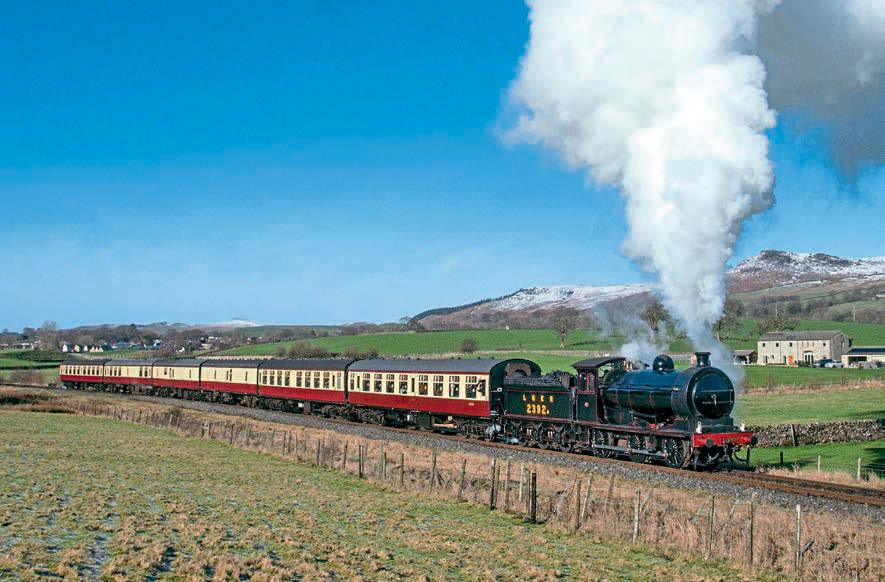
AN unfortunate series of events has resulted in the premature temporary withdrawal of the Nene Valley Railway’s DSB F Class 0-6-0T No. 656 Doc. Having been returned to traffic in early 2024, the locomotive suffered leaking boiler tubes in October last year. Then, on the final operating Wednesday of the 2025 season, a significant leak resulted in the engine being failed before it was due to leave the shed for the day’s service. Subsequent discussions with the boiler inspector led to the decision to retube the boiler, among other repairs.
As this issue went to press, the old tubes had been removed, tube holes had been de-burred, and a copper welder was being sought for repairs to some of the tube holes and palm stays.
The Nene Valley Railway is currently hoping to have the 1949-built locomotive back in service for the summer season.
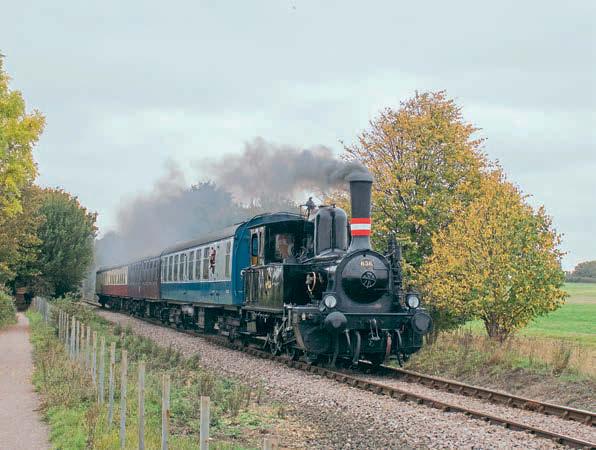
Danish tank No. 656 Doc approaches the Lynch River bridge, Nene Valley Railway, on October 11, 2025, after being returned to service fitted with train vacuum brakes. JAMES KINDRED
THE unique BR Standard 8P No. 71000 Duke of Gloucester has been booked as a guest engine for the Severn Valley Railway’s Spring Steam Gala on April 16-19.
Having already been booked for the Bluebell Railway’s Giants of Steam weekend on October 16-18, the SVR gala will mark the first public running of the 1954-built Riddles Pacific on the line since it last visited for the Spring Gala in 2009.
Having undergone testing on the line in May 2025 following its overhaul, the loco’s visit to the SVR also marks 50 years since the railway held its first ever Spring Steam Gala event. ■ SVR freezes fares: The Severn Valley Railway has frozen its ticket prices for 2026, including Freedom of the Line, short journey, and day rovers for special events. The line’s visitor engagement manager, Lewis Maddox, said: “We know that affordability can play a big part in planning a day out, especially for families. Holding our prices helps ensure the Severn Valley Railway remains an accessible and enjoyable option throughout the season.”
THE Bluebell Railway’s newbuild Brighton Atlantic No. 32424 Beachy Head will make its very first venture away from home metals on May 23-25 when it visits Didcot Railway Centre for the ‘Heritage in Motion’ weekend.
As a recreation of the original ‘H2’ 4-4-2 that was scrapped in 1958, the new-build No. 32424 was completed at the Bluebell Railway’s Sheffield Park workshops in August 2024.
The Great Western Society at Didcot also intends on demonstrating its other assets over the weekend, including shunting demonstrations, the use of the Wickham and pump trolleys, and demonstrations of the coal stage, 50-ton hoisting apparatus, the traverser and turntable.
Visitors will also be able to see inside the Travelling Post Office.
SATURDAY 11 APRIL 2026
10AM TO 4PM
We are delightedto announce that all visitors, members and non-members, are welcome to view the on-going construction progress of our two previously discontinued classes of steam locomotives.
DiamondGroup (CTL Seal) and both new build projects are proud holders of the “Made in Sheffield” Award. Both new build teams, founder members of theMain Line SteamBuilders Group, will have representatives on site to answer any questions on their project Tours of the works will be available in the afternoon, subject to guides being available.Anumber of associated organisations will be attending.
Admission:
Members: FREE School parties & Students: FREE Non-members: £3.00. Refreshments available.
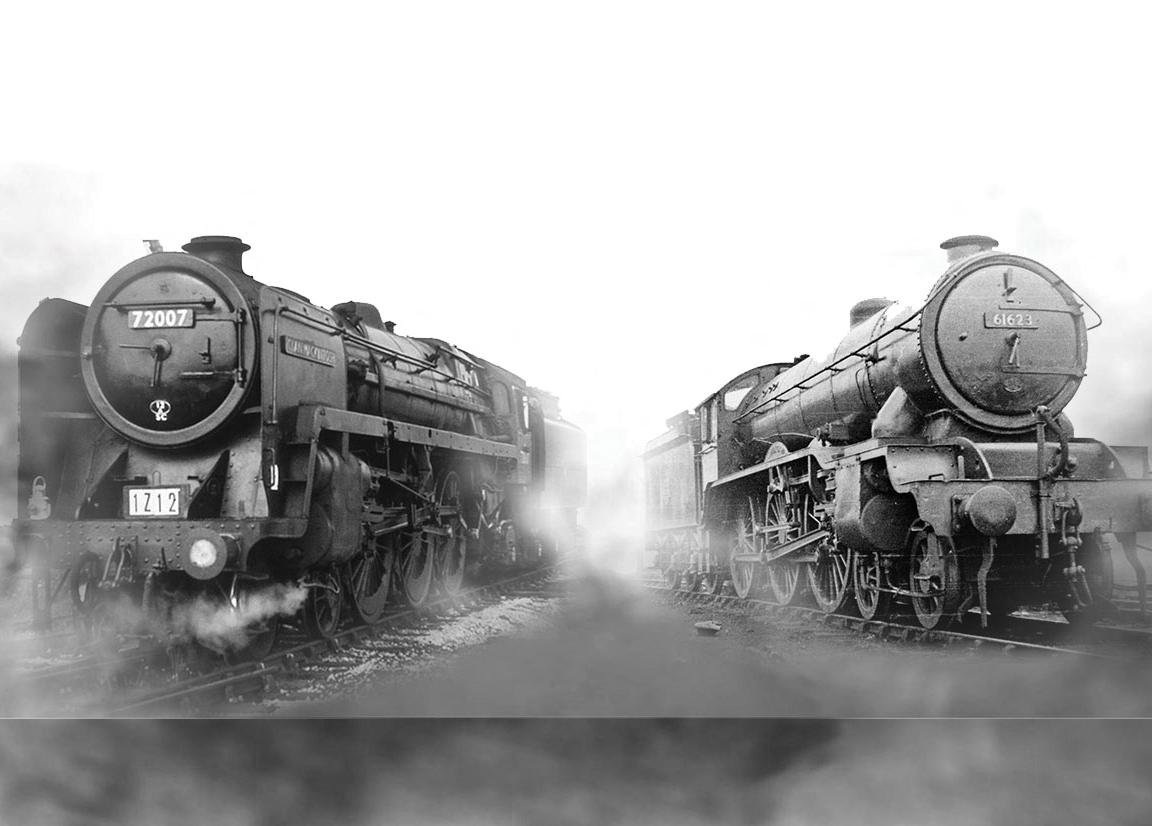

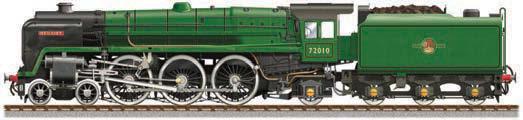

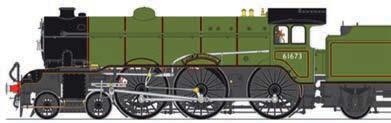

The world’s most famous steam locomotive is heading for Ruddington for passenger work in May.
WITH the combined partnership of the Great Central Railway (Nottingham) and Fox & Edwards Events, the NRM-owned LNER ‘A3’ Pacific No. 60103 Flying Scotsman will haul passenger trains along the line from the GCR(N)’s base at Ruddington to the head-of-steel near the Midland Main Line at Loughborough. Running days are scheduled for May 23-25 and May 30-31.
GCR(N) chairman Andy
LORD Peter Hendy, minister of state for rail and former Network Rail chairman, has spoken up in support of the Rother Valley Railway Heritage Trust in a specially recorded video message.
Speaking of his lifelong fondness for heritage railways on January 26, Lord Hendy highlighted the work undertaken to extend the Kent & East Sussex Railway to Robertsbridge on the Tunbridge Wells to Hastings main line, describing it as a “brilliant” project that is “close to his heart”.
After emphasising the advantages of building a dedicated engine shed and station complex at Robertsbridge Junction, Lord Hendy concluded: “Let’s make this a success, let’s build a locomotive shed and let’s open the railway”.
The support has been gratefully received and acknowledged by RVRHT chairman Gardner Crawley, who said: “Lord Hendy has recognised the dedicated work of our team so far in bringing the railway between Robertsbridge to Tenterden back to its full glory.”
With £250,000 already raised for the locomotive facilities project, the Buildings Appeal is seeking to raise the remaining £350,000. To learn more, see the website at rvr.org.uk/fundraising.
Fillingham said: “We are thrilled to be welcoming Flying Scotsman back to the East Midlands, 25 years since it last operated on a heritage railway in our region. We’re very proud of the work of our volunteers in reopening the railway to visitors and this should bring awareness of our superb attraction to new people.”
Fox & Edwards Events general
manager Oliver Edwards added: “This is an internationally renowned locomotive which we are delighted to be hosting for this celebration on a wonderful railway.”
The locomotive is also due to be on display during the GCR(N)’s Model Railway Weekend on May 16-17. Bookings can be made at foxandedwards.com/events.
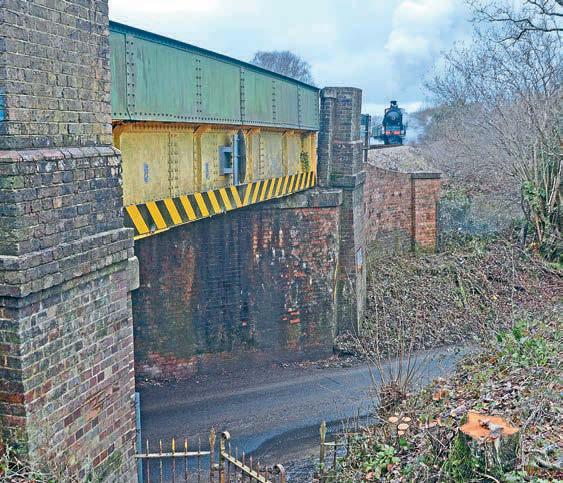
The £400,000 total renewal of Broom Lane bridge on the Spa Valley Railway began after the end of half-term services on February 22, severing the railway between High Rocks and Groombridge. The bridge is pictured on February 8 as Caledonian Railway 812 Class No. 828 approaches with the 14.35 Eridge to Tunbridge Wells West. Corrosion of the primary girder flanges is said to be the reason for the work on the bridge that dates back to the 1890s. If all goes to plan, the line should reopen on Good Friday, April 3. DAVID STAINES
THE engineering director of the Hengist Project, Geoff Turner, has made a £150,000 donation to the project to recreate a BR Standard Class 6 ‘Clan’ locomotive.
Mr Turner is facing terminal cancer and said he hoped that the donation would inspire others to support the project, demonstrating both the scale of commitment required and the belief that this long-lost type can be successfully completed in the years ahead.
The new-build loco will become No. 72010 Hengist, which is the next number in the sequence after the 10 that were built by British Railways, Nos. 72000-72009, which were all withdrawn by 1966 and scrapped.
Mr Turner has been involved
for more than 20 years, playing a pivotal role in shaping the technical direction and progress of the build. The donation will fund the completion of the locomotive’s driving wheel set, including casting of the cannon axle boxes, machining of associated components and final assembly. This milestone will enable the Hengist team to assemble a fully rolling chassis by 2027.
In recognition of his dedication and lasting impact, the Hengist team has agreed to name the locomotive’s boiler after him, an honour befitting a passionate and devoted railwayman whose contribution will live on for generations to come.
See also the website at 72010-hengist.co.uk.
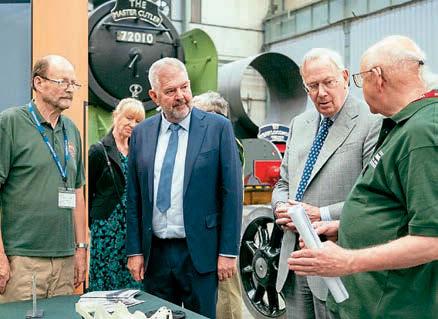
GCR 5MT booked for Watercress gala
THE first guest engine for the Mid Hants Railway’s Spring Steam Gala on April 24-26 will be a first-time visitor to the line.
The Great Central Railway’s resident BR Standard 5MT No. 73156, built at Derby in 1956, will arrive on the line shortly before the gala weekend. As one of five BR Standard 5MT 4-6-0s in preservation, No. 73156 was the last one to be restored to working order, being completed in 2017.
Main frame milestone
THE new LNWR George the Fifth 4-4-0 reached a significant moment in its construction on February 5 when, with the installation of 191 huckbolts, the main frame assembly was declared complete.
The delivery of the hornblocks was due to take place as this issue went to press, and for more information see newprincegeorgesteam. org.uk.
‘9F’ recreates GCR Annesley scenes DURING its visit to the Great Central Railway on January 22-25, NYMR-based ‘9F’ No. 92134 masqueraded as long-lost classmate No. 92043, which had been based at Nottingham’s Annesley shed, to commemorate 60 years since the closure of the 16B depot. During the gala event, the loco was also paired with the GCR’s ‘Windcutter’ mineral train.
Please check with railways before travelling to events.
March
7-8 Statfold Railway: Spectacle of Steam 14-15 East Somerset Railway: Spring Gala 19-22 Keighley & Worth Valley Railway: Steam Gala
20-22 Bluebell Railway: Spring Steam Gala
27-29 Swanage Railway: Spring Steam Gala
28 Churnet Valley Railway: Borders Explorer Open Day
28 Ribble Steam Railway: Spring Steam Gala
28-29 Dean Forest Railway: Spring Steam Gala
28-29 West Somerset Railway: 50th Anniversary Celebration
April
3 Great Central Railway: Good(s) Friday
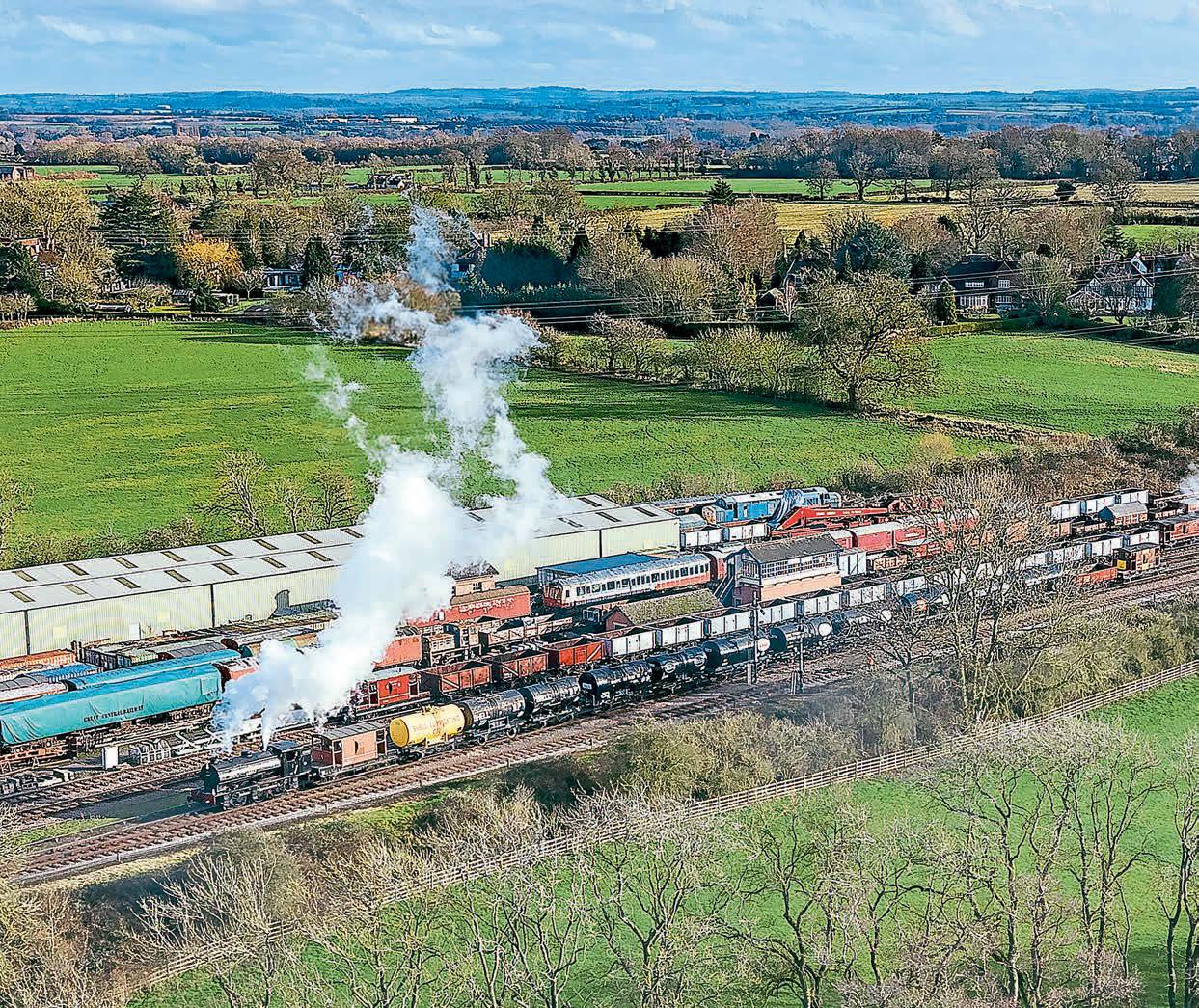
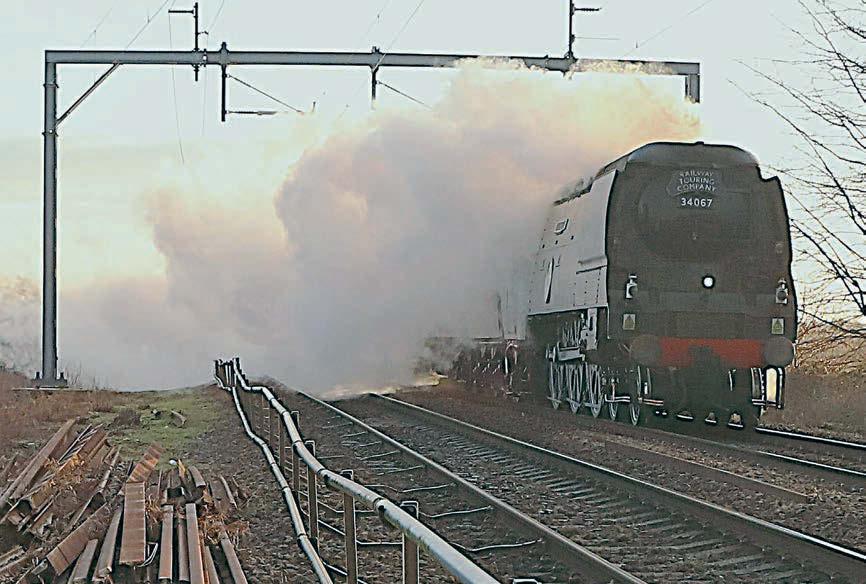
1 2
1
PASSING FREIGHTS: A view from above of Swithland Sidings, Great Central Railway, on January 24 as Hudswell Clarke 0-6-0 ‘Austerity’ No. 68067 (works No. 1752 of 1943) heads north with a rake of tanker wagons while BR Standard Class 2 No. 78019 points south on the ‘Windcutter’ set of mineral wagons. Alan Weaver
2
STEAM BATH: ‘Battle of Britain’ Class No. 34067 Tangmere is bathed in its own exhaust steam as it passes Astley, Greater Manchester, on January 31 hauling the Railway Touring Company’s ‘Winter Cumbrian Mountain Express’ from Manchester Victoria to Carlisle. Greg
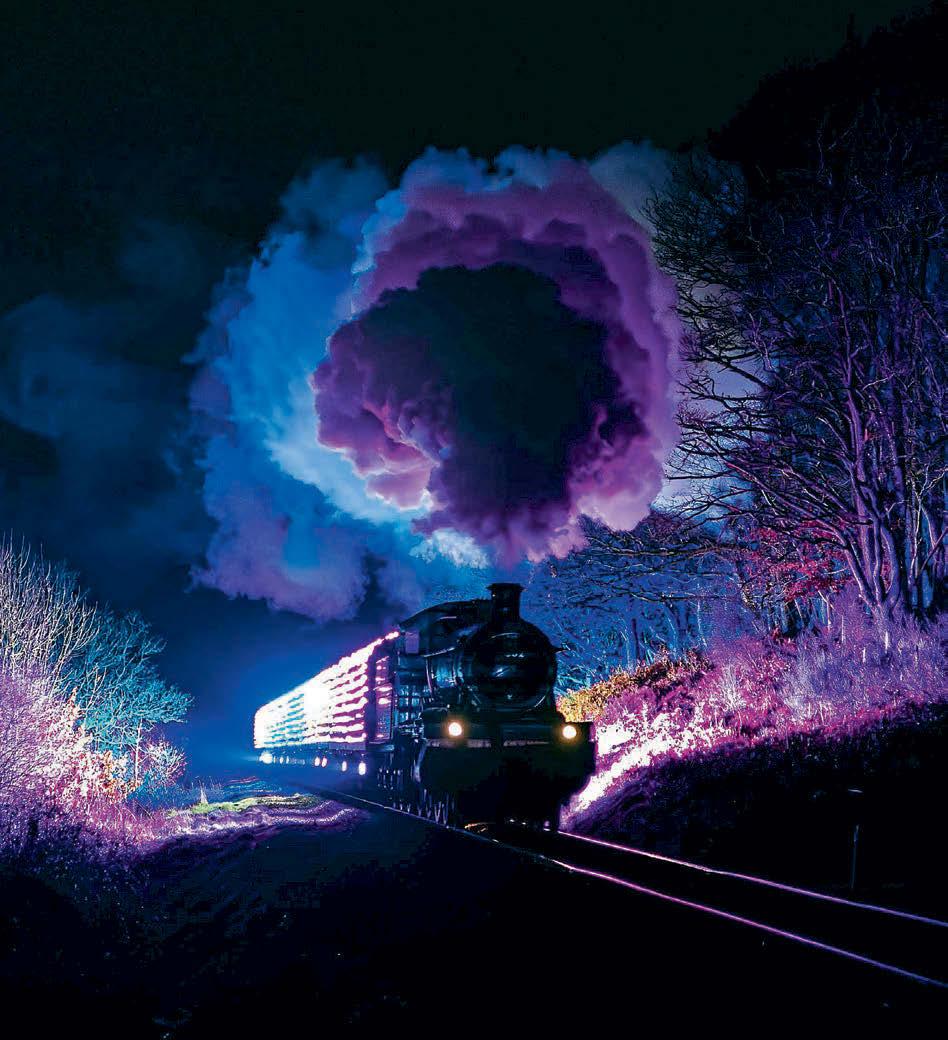
3
BOOGIE NIGHTS: The Severn Valley Railway’s first ‘Boogie Nights’ music and lights special of the year ran on February 13, with ex-GWR No. 7802 Bradley Manor providing the motive power and the train seen lighting up the countryside around Orchard Crossing, north of Bewdley. Martyn Tattam
4 STANDARD TANKS: After the ‘Austerity’ had completed its run with the tank train at the Great Central Railway on January 24 (see above, left), it was the turn of BR Standard Class 5 No. 73156 to take over, hauling them as the 15.30 Loughborough to Rothley Brook and seen heading south at Kinchley Lane. Phil Grain
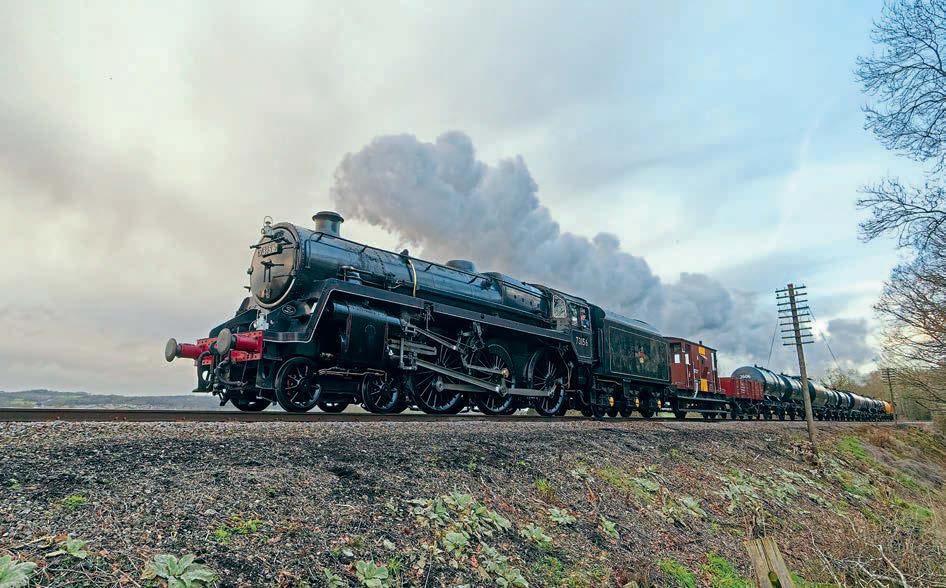


Eastern TimesIssue9 (£13.50)
Northofthe Border (£14.95)
BR TimesIssue2 (£13.50)
NorthEastern to the Coast (£14.95)
The RC Riley Colour Collection - SouthernRegionMainLines (£24.95)
Southern TimesIssue13 (£13.50)
DieselDecade Volume1 (£14.95)
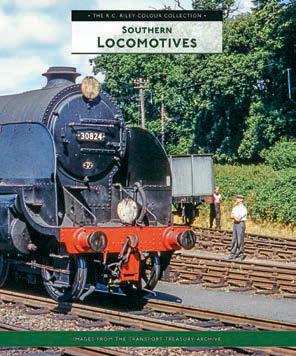
The RC Riley Colour Collection - Southern Locomotives (£24.95)
Locomotivesofthe Southern Railway Part 3(£17.95)


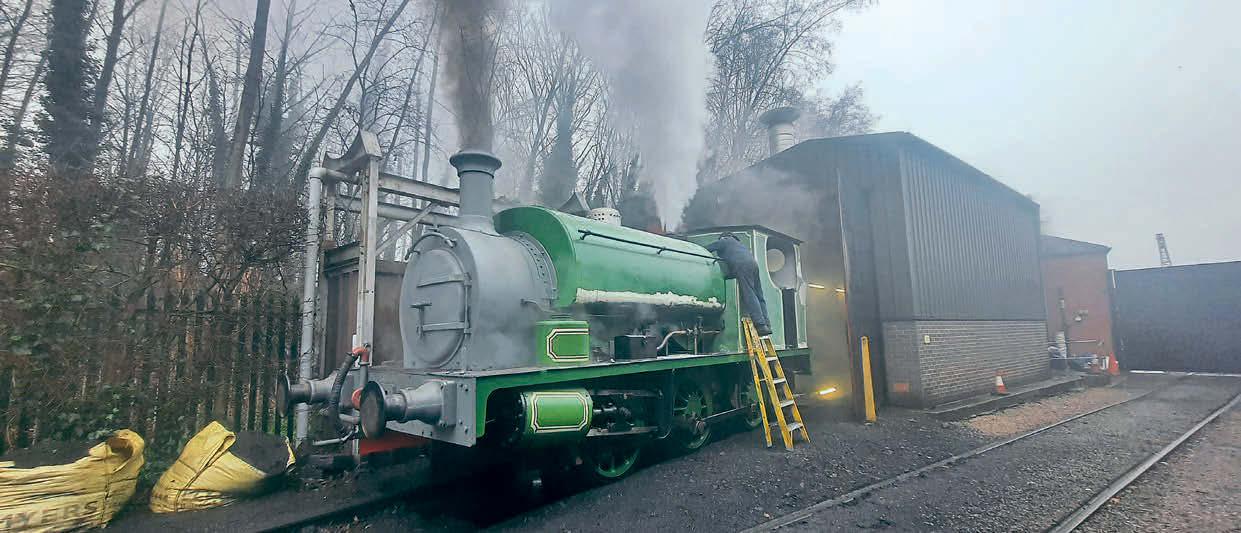
The 0-6-0ST is expected to return to service on the Middleton Railway later this year.
HUDSWELL Clarke 0-6-0ST
Slough Estates No. 3 (works No. 1544, built in 1924) is nearing the end of a comprehensive overhaul at Moor Road on the Middleton Railway.
Owned by the Slough & Windsor Railway Society, the locomotive was steamed for the first time on January 18 and is expected to enter service later this year.
A major, time-consuming job was the replacement of the front frame stretcher. When the loco was dismantled, the previous one was found to be badly cracked. A new one had
to be designed, fabricated from steel, and fitted.
The base of No. 3’s saddle tank required replacement on both sides and its chimney now has a different appearance. As previously fitted, it had a home-made top, which was felt to spoil the look of the engine. A new top to the correct Hudswell Clarke design was manufactured and fitted using a pattern kindly supplied by the Nene Valley Railway.
Other detail changes being made include the fitting of replacement lamp irons, the correct shading being given to
THE Telford Steam Railway has hired Avonside 0-6-0ST Cranford, (works No. 1919, built in 1924) to work steam services this year. It arrived at the TSR on January 30 and will remain until at least the end of September. TSR says it is very grateful to Chris and Simon Theaker for the loan of Cranford
The loco worked the last few years of its life in industrial service at Cranford ironstone quarry in Northamptonshire. It was preserved initially at the Foxfield Railway in Staffordshire. Eventually sold on, it is now based at the Appleby Frodingham RailwayScunthorpe.
Two Peckett Class W6 0-4-0STs are based at the TSR
. These locos have 14in by 22in cylinders. The oldest of the Telford pair is Rocket (works No. 1722), built in 1926 for Courtaulds Co. Ltd in Coventry. The factory had exchange sidings adjacent to the London and North Western Railway’s Nuneaton to Coventry line. Rocket remained at Courtaulds until 1972, when it was preserved. The locomotive entered service at Telford in 2014 and has since been donated to the railway. It is out of service awaiting its 10-year overhaul.
Ironbridge No. 3 (works No. 1990) was built in 1940 for Ironbridge Power Station in Shropshire, the last of three identical locos used there, all of
its painted name, and lining-out being completed to the original specification, restoring the locomotive to the condition in which it operated at Slough Estates until withdrawal.
Of the Middleton Railway’s other working steam locos, Hunslet 0-6-0ST Brookes No. 1 (works No. 2387, built in 1941) is available for traffic after minor repairs.
The Vintage Carriages Trust’s Manning Wardle 0-6-0ST Sir Berkeley (works No. 1210, dating from 1891) failed at the end of last year with a leaking main steam pipe joint.
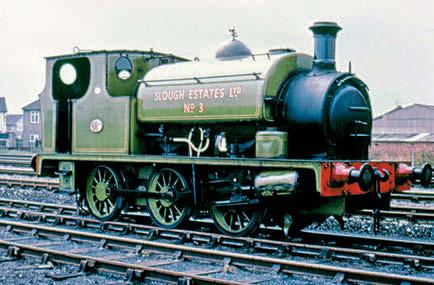
This is being attended to, alongside attention to the right-hand injector, and the loco should be visiting Beamish museum for Easter.
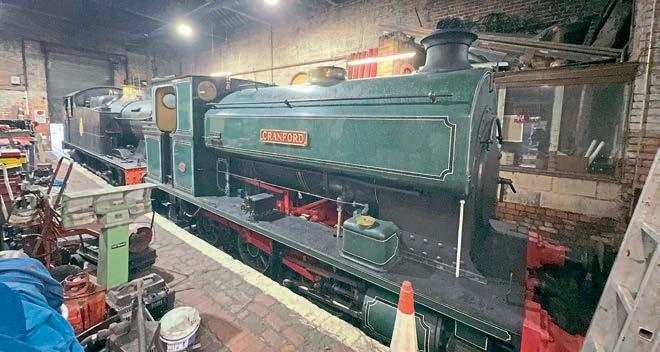
which are preserved (works No. 1803, built in 1933, at Foxfield, and works No. 1893, dating from 1936, at Swindon). No. 1990 remained at Ironbridge throughout its
working career until it was retired in 1980. It was then sold to Steamport Museum at Southport. In 1985, the locomotive was purchased by the Telford Steam Railway and
moved there. It requires a major overhaul, which includes a new firebox.
Hawthorn Leslie 0-4-0ST No. 139 Beatty (works No. 3240, built in 1917) has left the railway.
Several thousand pounds is expected to be needed to complete work on No. 87867, the only surviving example of the type to be built with FBT6 bogies.
LYDNEY-BASED vehicle TEA No. 87867 is next in line for attention following completion of work on the National Wagon Preservation Group’s VCA van No. 200429 at the Dean Forest Railway.
The restoration of the bogie tank wagon is expected to cost several thousand pounds and an appeal to help raise funds is due to be launched soon.
Manufactured as No. 8009 by Charles Roberts & Company, No. 87867 was one of only two
TEAs to be fitted from new with FBT6 bogies and it still retains them. The other, No. 87868 – previously No. 8010 –was scrapped.
Delivered in 1972 to ShellMex and BP Ltd, No. 87867 was rescued for preservation after spending time as an internal user slops and measure tank at Coryton in Essex.
“It’s been stored for 20 years and it’s in a bit of an atrocious condition,” said NWPG media manager Chris Thorn. “We
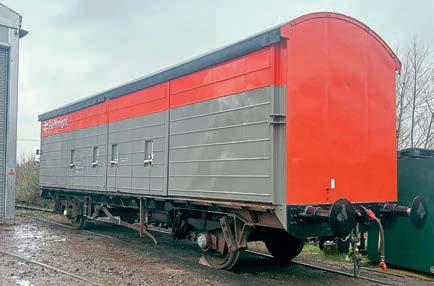
want to get it cosmetically overhauled and it will look impressive when it’s done.”
Valley Rail Preservation, which is based at the DFR, is expected to undertake the refurbishment of No. 87867. It has been carrying out repairs and repainting to VCA No. 200429, which has been restored to Railfreight red and grey livery, complete with the British Rail double-arrow logo. Modified into a PDA van,
it saw service with the Ministry of Defence in the later years of its pre-preservation career and was acquired by the NWPG from the MoD sidings at Marchwood, arriving at the DFR in early 2025.
Having been turned back into a VCA, it will provide storage space for the group.
“The plan was that it would be completed outright as a VCA because not many of the air brake vans have been restored,” Mr Thorn told The RM. He added that having Valley Rail able to
undertake the work on-site has proved quicker and more costeffective than NWPG volunteers travelling long distances to do it in their spare time.
■ Details of the TEA appeal will be published on the NWPG’s Facebook page. To find about making regular contributions to the group by standing order, email contact@nwpg.co.uk.
The NWPG also welcomes donations of railwayana which it can sell online to help fund its work.
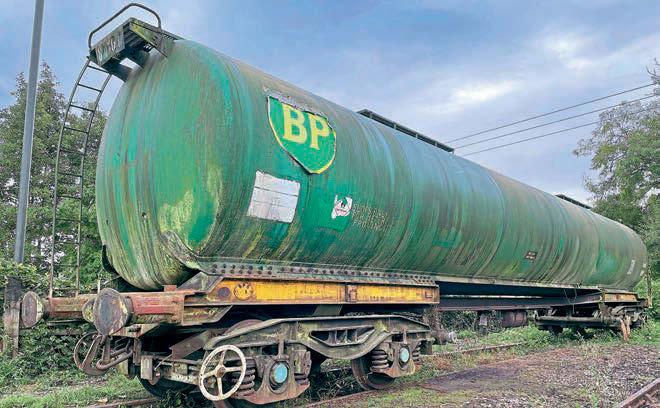
VOLUNTEERS at Poulton & Wyre Railway Society are able to work towards completion of Brake Gangwayed Pigeon Van No. 4237 – a project begun by their late colleague Rick Rossall – after replacement hinges for the double doors were sourced from the Stainmore Railway Company.
Dating from 1938, Yorkbuilt No. 4237 was originally designed for the carriage of racing pigeons, but later converted into a tool van for use on breakdown trains (No. ADB975242). It arrived at the PWRS’s base at Thornton, north of Blackpool, in 2014.
Mr Rossall began the interior refurbishment of the vehicle in 2023 and was able to utilise materials donated by fellow members of the society. Although he managed to complete much of the
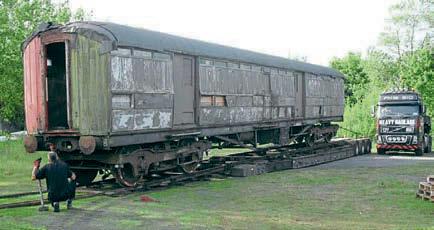
work, he died before he could finish it.
One of the tasks he had required help with was repairing the van’s double doors, some areas of which were rotten. The doors were also missing their original hinges. He had discovered that the SRC had a North Eastern Railway carriage dating
from 1910 in scrap condition from which replacement hinges could be sourced and, in January this year, fellow volunteers made the trip to Cumbria to collect them.
The double doors are the last major components on No. 4237 which require completion. They will be refitted after timber has been
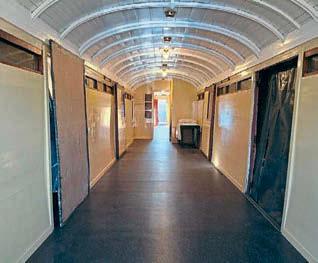
replaced at the bottom of the door posts. Attention will then turn to the van’s exterior.
PWRS carriage representative Clive Pickup told The RM that he believed at least £5000 would be required to complete external work. The society does not believe replacement teak panels will be within its budget and, as
the vehicle has only ever been intended to be cosmetically restored for the static storage of tools, it is expected to be repainted in North Eastern red.
The society is eager to recruit more active volunteers. Anyone with an interest in assisting with its projects can make contact via its website: pwrs.org
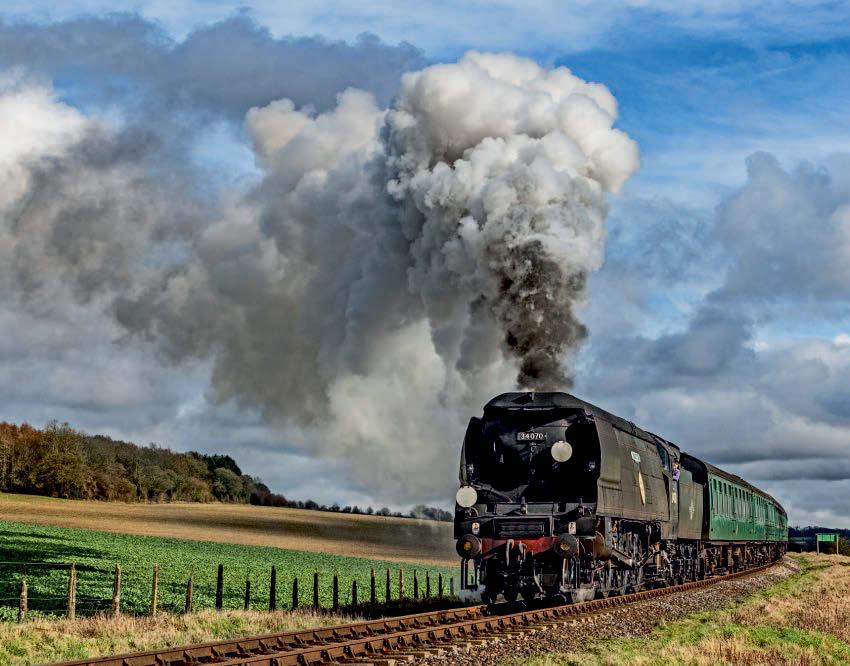
■ THE West Lancashire Light Railway Trust has been awarded a £90,200 grant, part of over £1.2m funding allocated to 13 community projects by West Lancashire Borough Council, to construct a multipurpose building at Hesketh Bank. To be known by the Welsh term ‘Y Caban’ with completion anticipated this summer, it will function as a tearoom, school classroom and training and meeting room for volunteers.
■ CLEARANCE of material from the landslide which covered the Welsh Highland Railway’s track near Tryfan Junction in mid-December (RM, February) was completed on January 9. More ground investigations are being undertaken to establish whether further work is required.
■ CONSTRUCTION of the Lynton & Barnstaple Railway’s carriage shelter at Woody Bay by contractors was completed in mid-January. Tasks remaining include finalising ballast levels and permanent way work to the transshipment siding.
■ THE new boiler constructed by Bennett Boilers for Sittingbourne & Kemsley Light Railway’s Kerr, Stuart Brazil class 0-4-2ST Melior was delivered to Kemsley Down on January 28.
■ THE boiler for 1863 Mountaineer Locomotive Ltd’s replica Ffestiniog Railway George England
0-4-0T+T Mountaineer was test fitted into the frames at Northern Heritage Engineering on January 21.
■ THE Ravenglass and Eskdale Railway is holding a May 2-4 Northern Rock Golden Jubilee Gala to celebrate the 50th anniversary of its 2-6-2 Northern Rock entering service. Visiting locomotives are anticipated.
Please check with railways before travelling to events.
March
7-8 Statfold Barn Railway: Spectacle of Steam Gala
14-15 Cleethorpes Coast
Light Rly: Volunteer Recruitment Weekend
28 Apedale Valley Light Railway: Cadeby Light Railway Day
1 Talyllyn Railway: Stations at Stations
THE last of the ‘Collection X’ locomotives to be moved to Aberystwyth from the late Peter Rampton’s Gorebridge Green Farm in Surrey, Avonside 0-44-0T 2057/1931 Renishaw No. 4, arrived at the Vale of Rheidol Railway (VoR) on January 23. Renishaw No. 4 is a Heislertype geared locomotive with its cylinders arranged in a V formation under the boiler, driving a central crankshaft which transmits power to each of the bogies via the equivalent of road vehicle prop shafts and universal joints. It worked at the Renishaw Sugar Estates in South Africa. Purchased by Peter Rampton, it arrived at Southampton on September 1, 1969 and was taken direct to Gorebridge Green Farm where it was steamed around 1976 during an open day, hauling Isle of Man Railway carriage F. 68 over a length of dual gauge track, then went into storage.
The relocation of ‘Collection X’ locos from hitherto very private storage to the VoR will open them up for viewing by visitors.
New interpretation and interactive elements are being installed in the museum at Aberystwyth to tell the story of the railway and ‘Collection X’ with the refreshed exhibition layout including items not previously on public display.
Behind the scenes
A decision has been made to drop the admission charge to the museum in favour of free entry. Work is also progressing at Capel Bangor to support expanded ‘Collection X’ displays with behind-the-scenes tours planned for later this year.
At the VoR’s Devil’s Bridge terminus, winter work includes replacement of the former toilet block with a new facility in keeping with the traditional station appearance and a covered picnic area has been
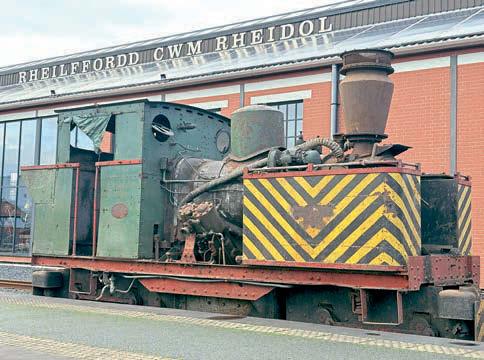
Avonside 0-4-4-0T Renishaw No. 4 pictured at Aberystwyth station on January 23. STUART WILLIAMS/VOR
added. This year the driver experience line will be extended and catering improved.
VoR traffic in 2025 was 3% down compared with 2024, primarily attributed to prolonged periods of dry weather, which led to steam operations being restricted and sometimes suspended. This resulted in the railway operating
around 11% fewer trains than in 2024. However, passenger numbers per operating train increased by 8% compared with the previous year, and retail revenue increased by 31% compared to 2024.
Overall, the railway recorded a 5.6% increase in turnover across passenger, retail and engineering activities.
THE Glyn Valley Tramway Trust (GVTT) has added a Hunslet 28hp diesel locomotive and a pair of open coaches to its stock for use on a revived section of the old Glyn Valley Tramway centred on the original station at Chirk.
The items have been purchased by GVTT volunteers from a private railway in Somerset, to be placed on long-term loan to the GVTT. The trust itself has purchased a set of points from the same source. These will be used to access the planned engine shed siding south of Hand Lane Bridge.
Further information about the loco and coaches will be revealed when the
items are removed from storage and sent to CJS Heritage Engineering in Wigan for regauging and restoration. The items are understood to currently be 2ft 6in gauge (the coaches apparently being on ex-RNAD underframes) and require altering to the 2ft 3ins gauge adopted by the GVTT revival project. The locomotive will be employed on tracklaying as the tramway is rebuilt.
The two additional coaches mean the GVTT will have a total of three coaches available, emphasising the need for rolling stock storage. It hopes to be able to offer members a short ride on GVT metals later this year.
THE Golden Valley Light Railway (GVLR) placed an order in mid-January for construction of its new carriage storage shed at its Swanwick Junction base – and volunteers have started work on providing an access road to the site.
An appeal to finance the construction of a new three-road building was announced two years ago. It will house GVLR’s three bogie carriages, ex-Ashover Light Railway No. 4 and ex-Ffestiniog Railway Nos. 118 and 119 and a rake of ex-colliery manriders, releasing space in the line’s running shed.
THE Brecon Mountain Railway (BMR) carried 63,262 passengers in 2025, an 18% increase on the previous year with revenue 27% up.
BMR says this was the line’s strongest season since opening in 1980 and puts that down to an expanded marketing and public relations strategy.
During August, trains were loaded to an average 97% of capacity, emphasising the need
for an additional carriage which will be met by the ’Excursion Car’ (open sided above the waist bogie coach) currently under construction at the Vale of Rheidol Railway and due to enter traffic this year.
Completion of the acquisition of the BMR by the Vale of Rheidol Railway is anticipated during this year.
A passenger shelter has been added at the BMR’s Torpantau
terminus. This was originally a stop on the former Brecon & Merthyr Railway but all original structures disappeared in the 1970s. When the BMR was extended to Torpantau in 2014 the terminus, 1,313 feet above sea level, only had a platform. The new structure, built with support from the Visit Wales Weatherproofing grant, is the first building at Torpantau in over a century.
THE Rhyl Steam Preservation Trust, operator of the 15in gauge Rhyl Miniature Railway, has purchased Barnes 4-4-2 No. 103 John from Jim and Helen Shackell.
It means all six of the ‘Barnes Atlantics’ designed by Henry Greenly and built by Albert Barnes & Co of Rhyl for the original miniature line at Rhyl have therefore now returned to their old North Wales home.
No. 103 John was at
Rhyl between 1921-1969, subsequently going to Alton Towers, the Whorlton Lido Railway and the Lightwater Light Railway and, privately owned, at the Ravenglass & Eskdale Light Railway between 1995 and 2001 when it was purchased by Jim and Helen Shackell. In 2007 it went to the Evesham Vale Light Railway (then owned by them) and has been in storage since 2012.
Reuniting No. 103 John
with No. 101 Joan, No. 102 Railway Queen, No. 104 4-4-2 Billie (purchased in 2022), No. 105 Michael and No. 106 Billy (owned by Rhyl Town Council and displayed in the line’s Central Station museum) will be celebrated with an April 3-6 Reunion Gala. No. 103 John will not be ready to steam during the event, which should feature the four operational ‘Barnes Atlantics’ in service with John and Billy on static display.
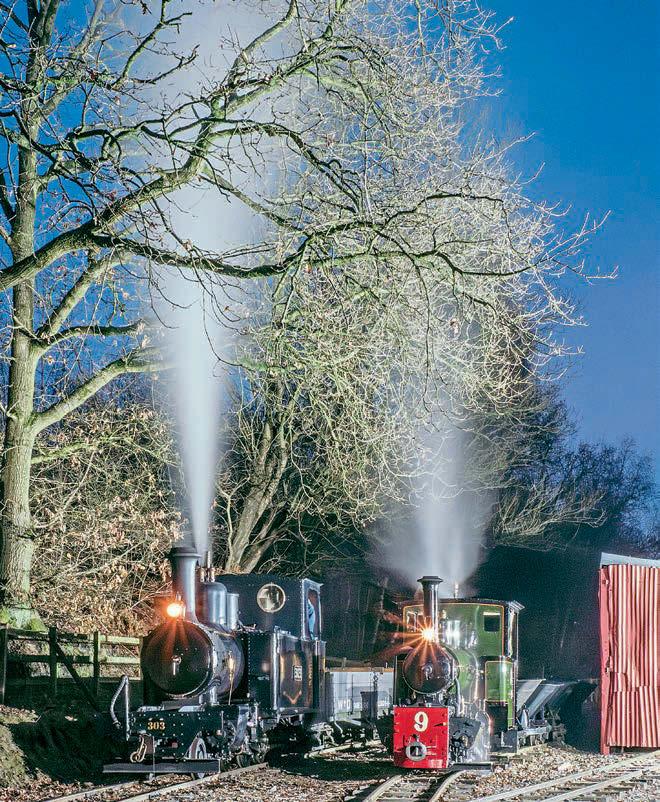
FALLS: The War Office Locomotive Trust’s ex-WDLR Hunslet 4-6-0T
HE1215/1916 No. 303 (left) and The Moseley Railway Trust’s Hudswell Clarke ‘Ganges’ class 0-6-0WT 1238/1916 are pictured at dusk during a special January 10 photographic event at the Apedale Valley Light Railway. NIGEL VALENTINE
AN £80,000 appeal has been launched to finance the forthcoming overhaul of the Ffestiniog Railway’s Hunslet
2-4-0ST+T Blanche
Its boiler ticket expires
later this year, but Blanche is very worn mechanically and restricted to low mileage use. It is currently being used to test anthracite as a fuel. The boiler is not thought to present many
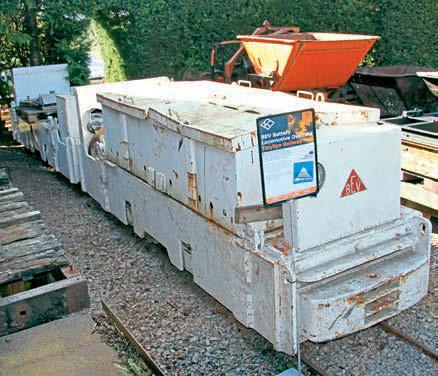
THE Talyllyn Railway (TR) is anticipating the arrival of its first battery electric locomotive for testing this spring.
Two Wingrove & Rogers battery electric locos acquired from a private owner were delivered to the TR in late March 2022 (RM, May 2022). They had worked on the Heathrow Terminal 5 construction project and were identified as John Murphy plant numbers JM/ LM19 and JM/LM22.
The envisaged use, potentially stripping one of the pair for useable components in the rebuilding of the other, was to provide a yard shunter around Tywyn Wharf and Pendre. Both were sent to Alan Keef Ltd later that year.
As received, LM19 had a battery tank but no batteries
■ PERRYGROVE Railway’s Exmoor 0-6-2T Anne made its final appearance before withdrawal for overhaul at the line’s January 17-18 winter steam up. On returning to service, its current purple livery will be replaced by a new, undisclosed scheme. Also appearing for the final time at this event was Exmoor 0-4-2T Ruby which has been at Lappa Valley since 2015 but is now going to a new location abroad.
major issues, but the wheels, cylinders and motion all require significant work. Donations in the £1000 to £2000 range will be rewarded by replica brass name or works plates.
■ THE 150th anniversary of the Douglas Bay Horse Tramway, which opened in August 1876, will be marked on August 7, following the Isle of Man’s July 28-August 2 Transport Festival.
Prior to the Festival, The Isle of Man 50 Group is running photographic charters on the Manx Electric Railway and Isle of Man Steam Railway on
while LM22 had neither tank nor batteries. LM22 was deemed to be in better overall condition and Keef regauged the loco to 2ft 3in and assembled the wheelsets with gearboxes. A TR volunteer renovated the chassis and worked on the electrical aspects of the loco, including establishing that the traction motors required specialist attention. Reassembly of LM22 commenced in late 2025.
On returning to Tywyn, initial testing will probably involve using a string of borrowed 12 volt truck/bus batteries prior to the purchase and installation of new batteries. The loco will also need to be fitted with side buffers and draw hooks. In the longer term an enclosed cab may be constructed.
July 26-27. For details, contact Ian Hastie at ianhastie@ blueyonder.co.uk
■ THE Ffestiniog Railway Heritage Group has commenced a project to restore the weighbridge and reinstate the weighing equipment in the associated building at Boston Lodge Halt. This will include laying a length of demonstration track on the railway’s original alignment adjacent to the current platform.
■ FOLLOWING the purchase of Isle of Man Railway (IoM) bogie coach No. F6 from the Vale of Rheidol Railway and its return to the island (RM, September 2025), the IoM Steam Railway Supporters’ Association has stripped the bodywork off the underframes to assess the required work to restore it to its 1876 appearance.
Owner describes local support for the 7¼-inch gauge line as ‘unbelievable’.
THE owner of Pugneys Light Railway says he has been overwhelmed by the local response after it suffered on-site damage and break-ins.
Offers of practical help and messages of support flooded in after the 7¼-inch gauge railway at Pugneys Country Park in Wakefield, West Yorkshire, revealed three separate incidents had left it unable to continue to absorb the costs of vandalism without putting its future at risk.
Fares are being increased by 50p to £2.50 as a result.
During the first break-in at the station, an angle grinder was used to cut the hinges from shutters. Windows were smashed, radios stolen and other property damaged.
“The next time, they cut through a hinge on the station door,” PLR owner Bob Brocklehurst told The RM. “Whether they were disturbed or ran out of battery or something like that, they then left. We turned up
the last time to find one of the solar panels had been ripped off the roof and that was really the last straw.”
Describing the outpouring of affection for the railway, Mr Brocklehurst said: “When my wife and I sat there reading all these comments that were coming through, it was unbelievable. One of the customers came along with an offer of putting a state-of-the-art alarm system in and has basically alarmed all the buildings we’ve got. He’s done all that free of charge.
“We’ve had a lot of well-wishers saying how much they love the railway,” said Mr Brocklehurst, thanking everyone for their support.
He added that small railways such as the PLR are only able to function by having a dedicated band of volunteers.
Anyone who would like to enquire about lending a hand at the PLR can contact Mr Brocklehurst on 07885 930523.
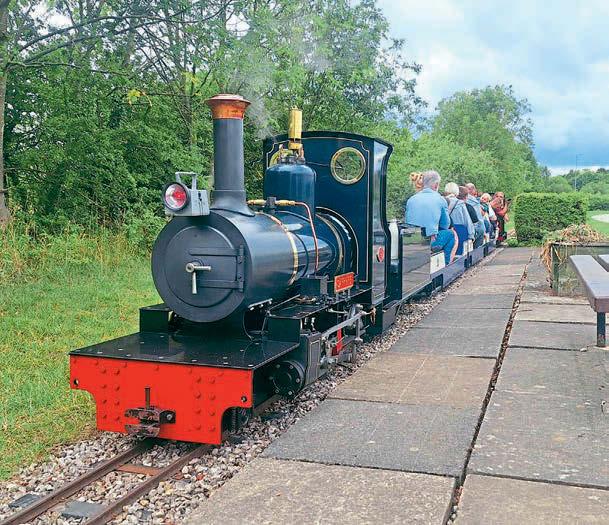
Compiled by Graeme Pickering
If the project is completed as scheduled, services could resume this summer after a gap of almost two years.
MANCHESTER Transport
Museum Society is hopeful of bringing Heaton Park Tramway back into operation this summer for the first time since September 2024.
Contractors are expected to make a start this spring on a project to modernise the substation which supplies power to the tramway’s overhead line equipment after Manchester City Council agreed to provide £400,000 for the work. The substation was found to be in need of renovation after an electrical failure forced the tramway to delay the start of its 2024 operating season for more than two months while a replacement part was sourced and fitted.
The funding was described by MTMS chairman Geoff Senior as a “vote of confidence” in the hard work and dedication of the society’s volunteers.
“A lot of my consideration over the last 18 months has been if the tramway doesn’t reopen, where do we go then and what happens to the collection,” he told The RM. “I’ve now flipped my planning from
despair to delight.” Mr Senior says the work is currently predicted to run from April to early summer, potentially giving scope for the reopening of the tramway in time for a major commemoration.
“The date we’d really like to hit if we can is the weekend of June 6-7 because that’s the 125th anniversary of Manchester’s first generation trams starting.
“Come what may we will do something that weekend. We’re looking at joint events with the Greater Manchester Transport Museum, Stagecoach, which operates out of Queen’s Road Bus Garage, which was the first tram shed, Transport for Greater Manchester and Metrolink.
“We will have a little tramway exhibition on the Saturday, hopefully other events, visiting buses and other things.”
Although trams have not been running, there has still been activity on-site. Volunteers from contractor VolkerRail carried out track replacement work last summer. Using rail donated by TfGM, they concentrated on six sections which were deemed in need of replacement following an Office of Rail and Road inspection.
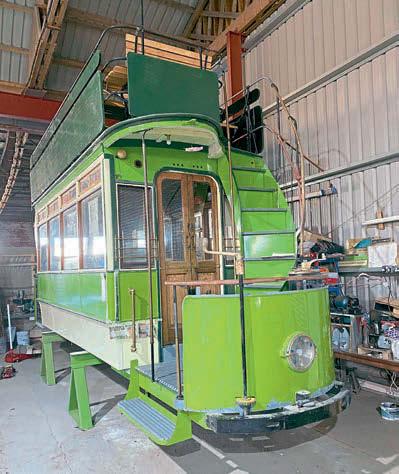
PROGRESS ON NO. 4: Previously resting on wooden blocks, the body of Chester No. 4 has been raised on to steel trestles by Hooton Park Trust, Cheshire, for the fitting of departure gongs and sanding equipment. Work to apply the final green top coat was under way last month. TONY
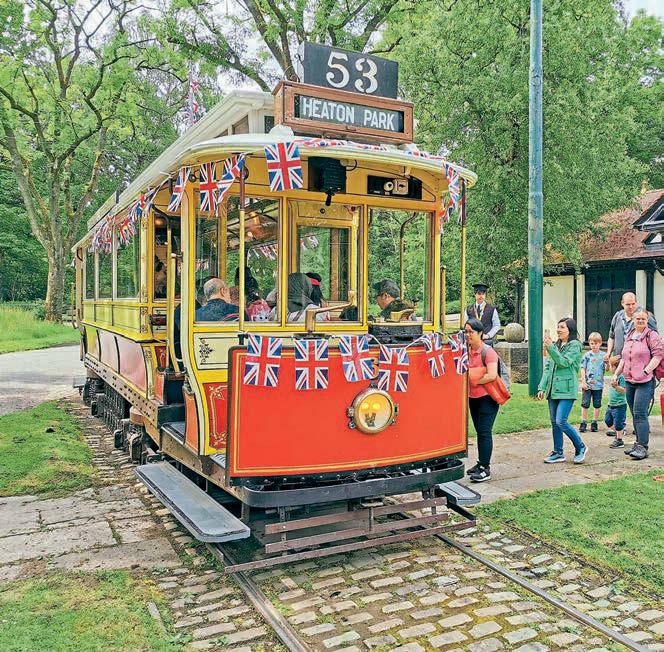
Heaton Park Tramway Museum opened for one Sunday a month between May and September and MTMS volunteers continued to work on the restoration of Manchester No. 173, which itself will be 125 years old in June.
“One of the other things we’ve done over the last year or so was to take in a beautiful collection of large-scale model trams,” said Mr Senior. “We currently
hold 14 of Ashley Best’s models, which have gone on display in a cabinet within the Heaton Park Tramway Museum and they are absolutely world-class models of Greater Manchester trams.
“They are an added attraction for people to come and see, and I think that is another huge vote of confidence for somebody of that standing and ability within the model tramway community to want to have his models preserved and on display within our museum.”
Once the substation has been recommissioned, Mr Senior
envisages a few weekends of test runs before tram services resume for visitors.
“There will be a period of planned training and refamiliarisation and reassessment for the staff, and testing of the trams and infrastructure before we actually go live with passengers,” he added.
MTMS is keen to recruit further volunteers to help with operation of the tramway, museum and restoration work. It can be contacted by emailing: info@hptramway.co.uk
VOLUNTEERS at Shipley Glen Tramway in West Yorkshire are aiming to raise up to £89,000 to fund repairs to the trackbed which are vital to its long-term survival.
The cable-hauled system, which was originally powered by a gas engine but has been electrically operated for over a century, was opened by local entrepreneur Sam Wilson
in 1895 to provide access to a fairground and other long-gone visitor attractions in the area. Although it can still operate safely at the moment, the charity which runs it says work will need to take place over the next few months to stabilise the trackbed.
A dry summer followed by a wet winter has contributed to the erosion of earth which
supports the track. The tramway has a target of Easter for finishing the repairs, which are expected to take around three weeks to carry out. It believes they will help to keep the tramway operational for the next 10-15 years.
Further information about the tramway and its appeal can be found at its website shipleyglentramway.co.uk
LNWR black for LSL ‘90’ LOCOMOTIVE Services
Limited’s Class 90 No. 90002 has received LNWR lined black livery following attention at Eastleigh Works. It had arrived back at its Crewe base by mid-February awaiting a return to traffic. It is the second LSL AC electric locomotive to receive the LNWR scheme, following in the footsteps of No. 90026 which was repainted in summer 2025.
NER ‘autocar’ heads to Weardale Railway
THE North Eastern Railway ‘Autocar’ is set to visit the Weardale Railway during March on a rare visit to the line.
Built in 1903 and designed by Sir Vincent Raven, the popular vehicle will operate services between Bishop Auckland and Stanhope before headlining selected Easter events.
Claire Gibbons, general manager at Weardale Railway, said: “This vehicle tells an extraordinary story of innovation and ambition at a time when steam dominated the railways, and we’re thrilled to be able to share that story with our visitors here in Weardale.”
Please check with railways before travelling to events.
March
5-8 Nene Valley Railway: Spring Diesel Gala
20-22 Chinnor & Princes
Railway: Diesel Gala
28 Gloucestershire
Warwickshire Railway: Behind the Scenes
28 Mid-Norfolk Railway: 47596 60th Anniversary April
3 Great Central Railway: Good(s) Friday
4 Chinnor & Princes
Risborough Railway: Diesel Only Day
5 Ribble Steam Railway: Diesel Railbus Specials
10-11 Peak Rail: Twin Peaks Diesel Gala
11-12 Gloucestershire
Warwickshire Railway: GWSR Vintage Weekend
26 Gloucestershire
Warwickshire Railway: Double Up Sunday Class 37
The Southern Electric Traction Group has acquired four-car No. 455871.
FOUR-CAR third-rail EMU No.
455871, formerly operated by South Western Railway and owned by Porterbrook, has been preserved and delivered to the Southern Electric Traction Group at its base at Strawberry Hill depot, south-west London.
It moved under its own power from Wimbledon depot on January 14.
The unit is fully mainline certified and since arrival has been undergoing a ‘D’ exam to ensure its continuing fitness to run. On February 17, it was also named Roy Watts MBE after the long-term Bluebell Railway chairman and SETG supporter in a ceremony at the depot.
The SETG has said that it intends No. 455871 to play a long-term operational role and
will be a part of the group’s strategy alongside 4-VEP Class 423 No. 3417 Gordon Pettitt
The group added that in the coming months, work will focus on further mechanical evaluation, rebranding and phased cosmetic work, but no decision has yet been taken on a final livery.
SETG spokesman Steve Upton said: “The ‘455s’ defined everyday travel for millions across the south of England.
“The preservation scene has different meanings for different generations, we are proud to be in a position where, just like No. 3417, we are actively protecting another milestone in British Railways history.”
The SETG added that the purchase of No. 455871 was
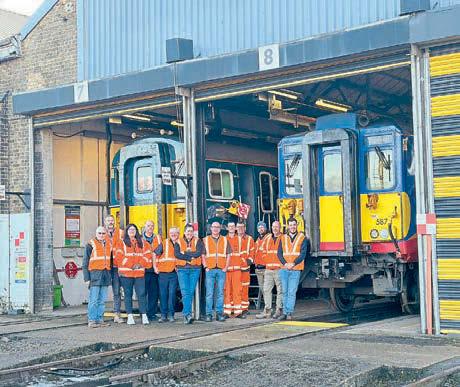
complementary to the goals of the organisation and is hoped to unlock “significant fundraising potential”.At the depot, work
also continues on returning No. 3417 to a mainline standard. To find out more information, visit setg.org.uk
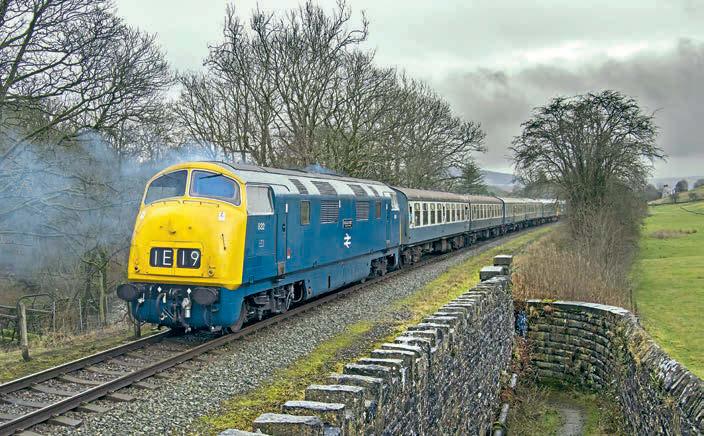
A Winter Warmer diesel day at the East Lancashire Railway on February 7 saw Nos. D5054 (disguised as scrapped classmate No. D5053), 40106 Atlantic Conveyor, 832 Onslaught, 47765 and 50015 Valiant in action. ‘Warship’ No. 832 is seen at the rear of the 11.22 Heywood to Rawtenstall at Irwell Vale, with the train being headed by No. 50015 Valiant. These two locomotives later ‘top and tailed’ a rare nine-coach working from Bury to Rawtenstall and back.
GEOFF GRIFFITHS
THE Great Central Railway has confirmed that ‘Deltic’ No. D9015 (55015) Tulyar is set to work its first passenger dates for 29 years at the line, with a long-term residency to follow.
Fittingly, the first train to be hauled by No. D9015 will be a Deltic Preservation Society members’ train, with further running dates to be announced in due course.
These are hoped to include the GCR Spring Diesel Gala
on April 24-25 and a series of limited ‘Deltic’ driving experiences during the year.
This will be the first time in many years that enthusiasts will get the chance to take the controls of a ‘Deltic’ on a heritage railway, and tickets are on sale now at gcrailway. co.uk/shop
GCR general manager Malcolm Holmes said: “To see No. D9015 return to passenger service
after29 years is genuinely historic, and we’re delighted that the Great Central Railway will play a part in that story. There’s something uniquely special about a ‘Deltic’ in full voice on a main line heritage railway, and Tulyar is a locomotive with enormous significance. We know this will be a major moment for diesel enthusiasts – and for everyone who has supported the Society’s remarkable restoration effort over the years.”
This will be the first time since April 1997 that No. D9015 has been in traffic, with an estimated £450,000 in expenditure and thousands of volunteer hours going towards its restoration. A major milestone was passed on July 31 last year with the starting of the engines for the first time since work began.


West Yorkshire Metro-liveried

‘Pacer’ No. 144011 pauses at a gaslit Haworth, Keighley & Worth Valley Railway, on January 24 while working the 16.45 Keighley to Oxenhope. STEVE SIENKIEWICZ


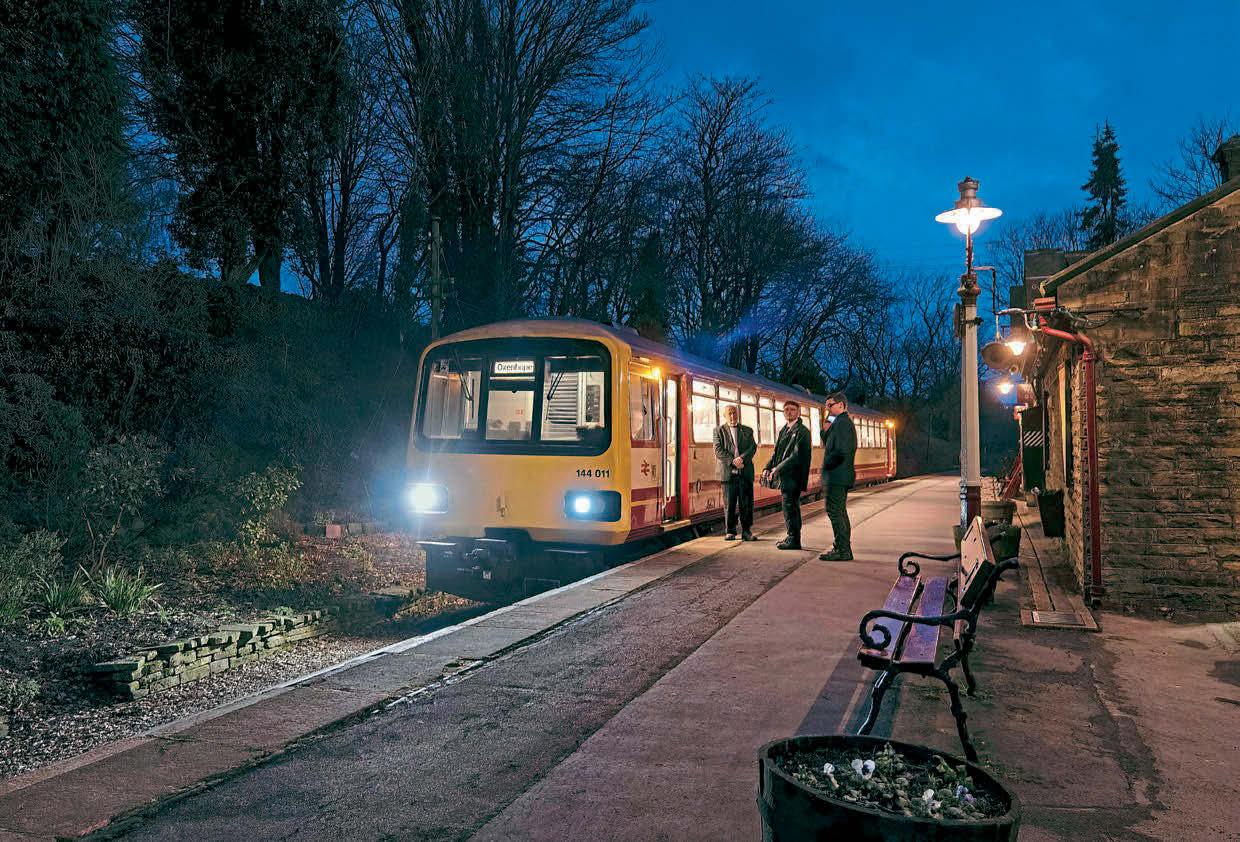
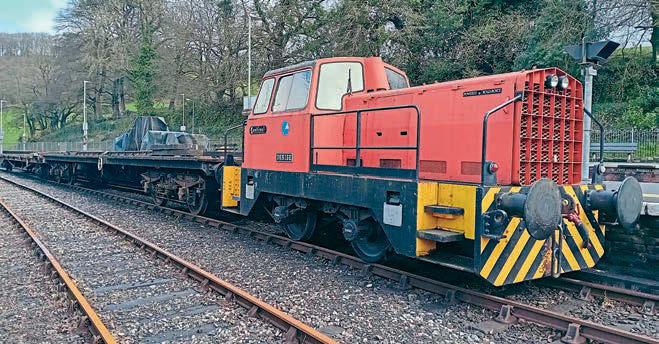
In a first-time visit to Bodmin Parkway, Rolls-Royce Sentinel Denise arrives with a works train on January 7.
The sole-surviving Class 207 centre coach, No. S60616, has been returned to BR blue at the Spa Valley Railway. One side remains blue and grey, with the repaint being undertaken to match the rest of unit No. 1317. The work saw four coats of paint applied to the roof, with red oxide primer and anti-corrosion black primer below the solebar. The smart coach sits at Tunbridge Wells West on February 8.DAVID STAINES.
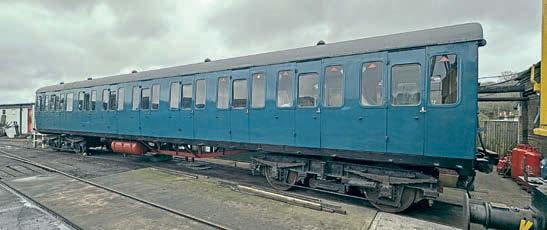
THE Bodmin Steam Railway’s Rolls-Royce Sentinel shunter Denise broke new ground on January 7 when it visited Bodmin Parkway station. It was the 0-4-0’s first visit there, and the closest it has been to the Great Western Main Line, which runs adjacent to the BSR’s tracks.
The shunter was in use on a works train, with recent infrastructure repairs at the station focusing on replacing a worn-out point at Bodmin Parkway, together with some track realignment involving
new ballast and sleepers. As well as Denise, No. 08444 and No. 47306 The Sapper have also been used on shunting and works duties before the line’s reopening on March 15. Elsewhere, work is coming to a conclusion on the longterm overhaul of No. 37142 at Bodmin. Once the popular Class 37 re-enters traffic, its place in the shed will be taken by No. 50042 Triumph, which is awaiting work to begin. It is thought that No. 37142 will reenter traffic during May/June.
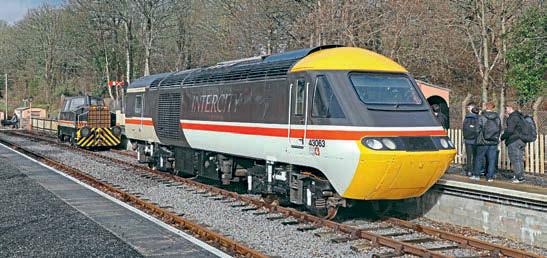
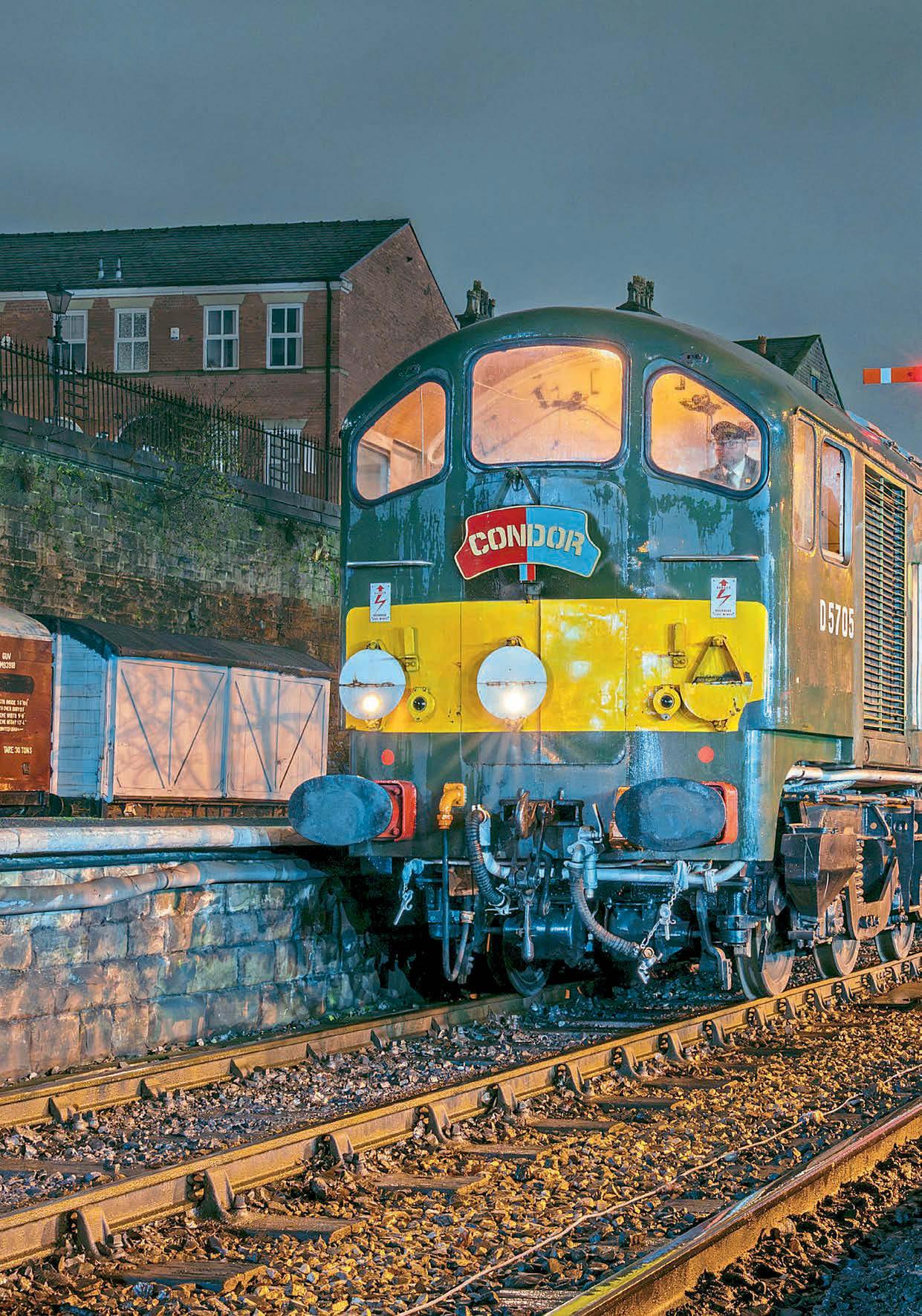
CONDOR MOMENT: A 3P20 Parcels Group photo charter was held at Bury, East Lancashire Railway, on February 6, raising funds for the Class 15 Preservation Society and its ongoing restoration of sole-surviving BTH Type 1 No. D8233. The Society is also custodian of the last Class 28 Co-Bo No. D5705, which was posed for the charter with a Conflat, four box wagons and various other vans to recreate the early 1960s’ overnight ‘Condor’ freight working between London and Glasgow depicted in a painting by Terence Cuneo. TOM MCATEE
Right: Terence Cuneo’s 1960 painting of a Class 28 Co-Bo hauling the ‘Condor’, which was made into a poster titled ‘Night Freight’ for British Railways’ London Midland Region.



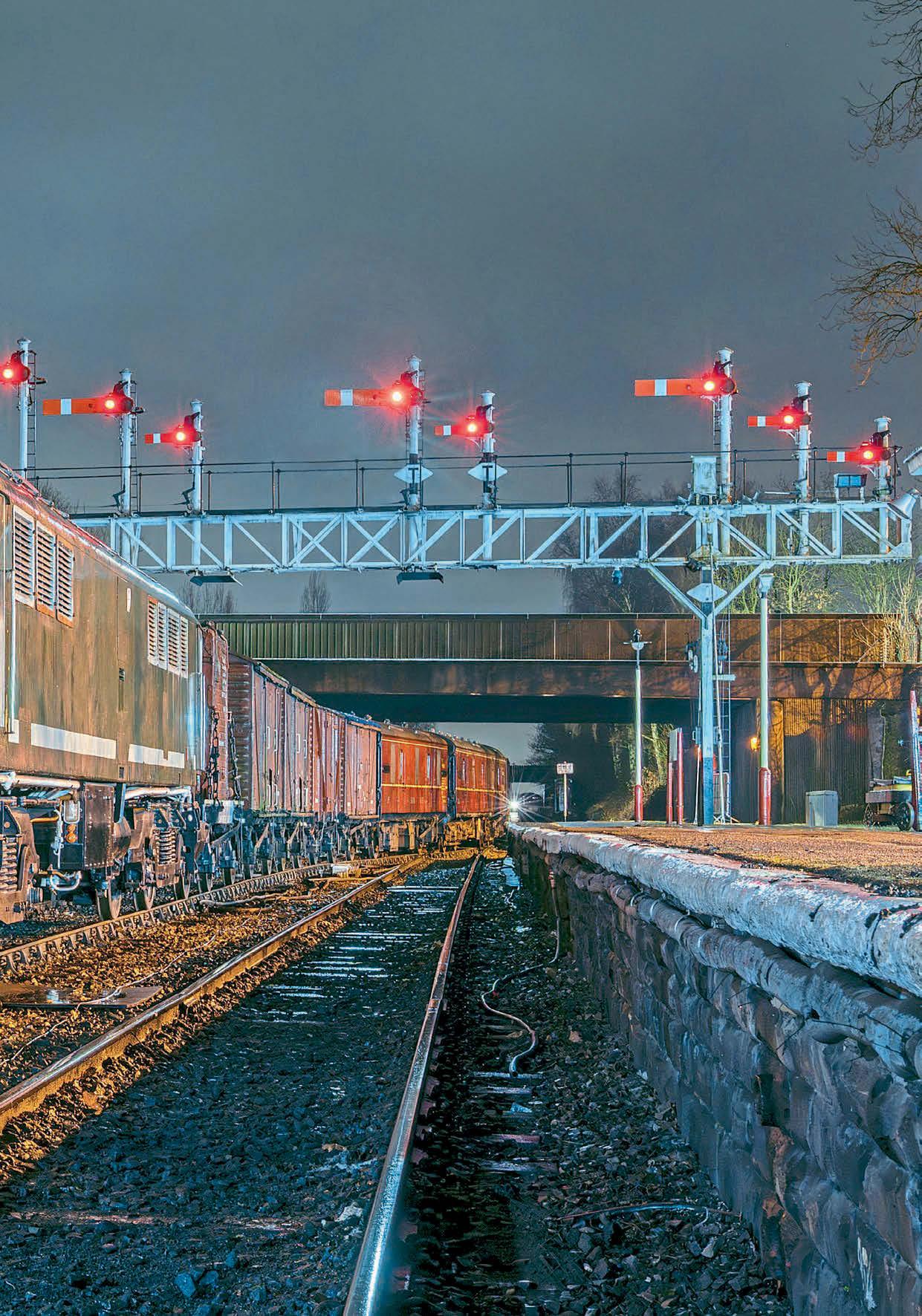


Class 67 and Mk. 4 set arranged for spring tour from Holyhead to Swansea.
THE Branch Line Society and the 225 Group, dedicated to celebrating the ‘InterCity 225’ trains, have joined forces with Transport for Wales for a railtour on April 25 with a Class 67 and Mk. 4 set.
The tour, ‘Gerald of Wales/Y Gerallt Gymro,’ a name synonymous with services linking North and South Wales, will feature one of the carriage rakes used on TfW’s Premier
services between South Wales, Manchester and Holyhead. With a start from Holyhead (07.08), the tour will travel along the North Wales coast with pick-ups at Bangor, Llandudno Junction, Colwyn Bay, Rhyl and Prestatyn. Passengers can also join at Chester, Crewe (09.49) and Shrewsbury before the train makes its way through the Welsh Marches to Newport and
Swansea. The return journey will follow the same route, but with a stop at Cardiff Central instead of Newport.
Additionally, the tour gives the rare opportunity to travel on a Mk. 4 set between Chester and Crewe, in both directions, as the trains are not booked to do this in normal service.
Being a BLS tour, there will be several rare track moves, including the Hereford Up and Down Relief Lines, Leckwith Loop (Cardiff Central to Pontyclun via Radyr Branch Junction, Penarth Curve North
Junction, Ninian Park and Leckwith Loop North Junction), Stormy Loop, Pencoed Up Passenger Loop and Port Talbot Down Loop. There will be non-stop running between Shrewsbury and Newport.
Passengers will have a break of just under three hours in Swansea.
A 225 Group sales stand will be on board offering membership and merchandise, and the group is also planning a raffle.
Adult Standard Class Fares are £99 (£79 for under-18s).
First Class Dining is available at £225 for adults and £205 for under-18s, to include a full Welsh breakfast on the outward journey and a three-course evening meal, including a 75cl bottle of wine on the return trip. First Class passengers will also benefit from complimentary hot drinks throughout their journey. Standard Class passengers will have access to a well-stocked buffet car, including a licensed bar. There are discounts for 225 Group and BLS members and TfW staff. More details at: branchline.uk
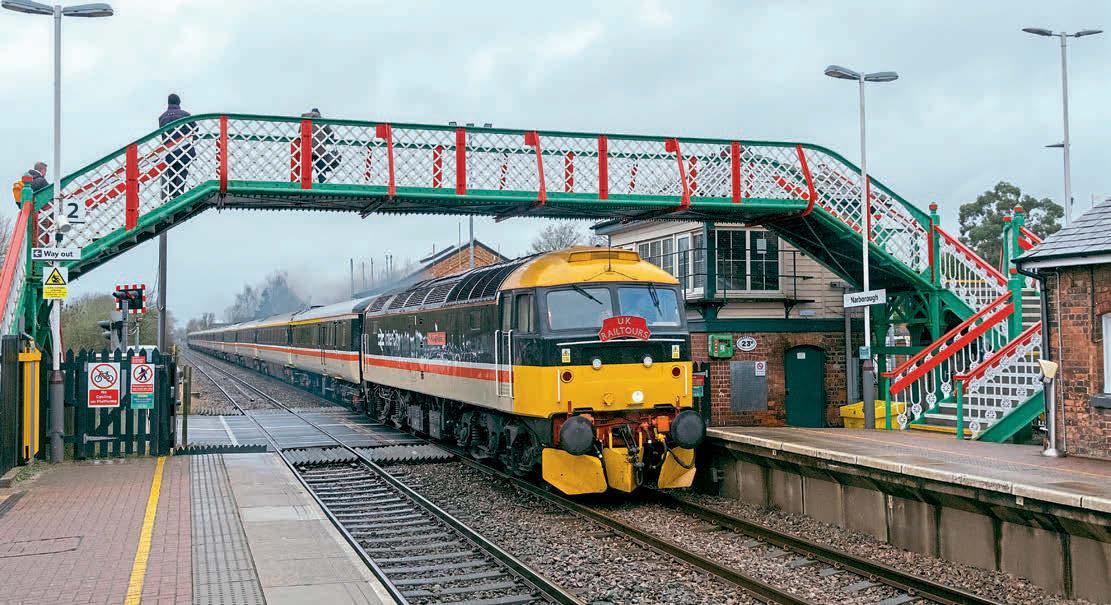
The first use of Locomotive Services stock by UK Railtours occurred during the weekend of January 23-25, which involved an out-and-back positioning move from Crewe to Norwich with passengers ahead of the main tour. On January 23, as part of the outward rolling stock for the ‘Peak Blinder’ tour, UK Railtours operated the ‘Canary Brush Positioning Move’ with Class 47 No. 47593 Galloway Princess at the head, seen passing through Narborough. CHRIS MILNER
‘PEAK’ POWER: On January 24, Class 45 No. 45118 The Royal Artilleryman passes Kilby Bridge, south of Leicester, with the ‘Peak Blinder’ tour from Norwich to Chesterfield. At the rear was No. 47593, which had led the positioning move on the previous day. CHRIS MILNER
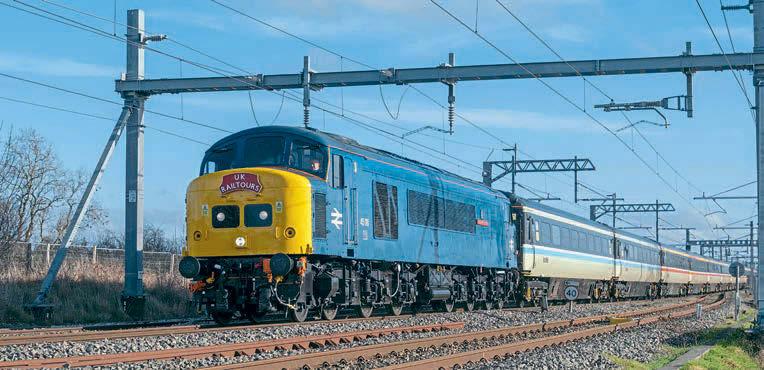
THE Scottish Railway Preservation Society has released details of four tours it plans to run in May and June using Class 37 or 45 locomotives. The first of the quartet of excursions is on May 2, when the society’s own Class 37 No. 37403 Isle of Mull works the ‘Garrison Growlers’ with a
second as yet unidentified class member.
Starting at Glenrothes with Thornton, the tour will pick up at Kirkcaldy, Inverkeithing, Falkirk High and Westerton before heading over the West Highland line, through the scenery of Rannoch Moor, and terminating in Fort William. After a break of
a few hours, the tour returns to Fife. Adult Standard Class fares are £135 (£69 for a child), with First Class seats available at £185. Seats at a guaranteed table for two are £225 each, while First Class dining is available at £270 (£310 at a guaranteed table for two), with passengers served breakfast and dinner.
The remaining tours form a one-way positioning move either side of a full day’s tour, so potentially a three-day excursion. On June 5, the other SRPS Class 37 No. 37025 will work an outward positioning move under the title of ‘The Growling Peak’ from Linlithgow to Carlisle. With a relaxed start time (10.30), there is also a pick-up at Edinburgh Waverley and a trip around the Edinburgh Suburban line before heading towards the West Coast Main Line at Carstairs, with an arrival into Carlisle at about 14.00. The fare is £45 for adults and £25 for children, with a basic buffet service on board.
The next day, June 6, is the main tour, which will feature Locomotive Services Ltd ‘Peak’ No. 45118 The Royal Artilleryman working the ‘Oban Peak’ and becoming the first of the class to reach this West Highland terminus.
It will start at Carlisle (06.15), picking up at Lockerbie, Carluke, Motherwell, Robroyston and Westerton, before heading to Oban for a break of more than three hours. Fares are £135 in Standard Class (£69 for children), with First Class seats available at £185. Seats at a guaranteed table for two are £225 each, while First Class dining is available at £275 (£315 for a guaranteed table for two), with passengers served breakfast and dinner. Return to Carlisle is expected to be at about 22.45, travelling via the same route as the outward journey.
Finally, on June 7 (Sunday), the Mk. 1 stock returns to its base with a move called ‘The Return Syphon’ from Carlisle (14.00), calling at Motherwell and Falkirk Grahamston. Fares are £45 (adult) and £25 (child). Online booking and more details are available at www.srpsrailtours.co.uk
& Carlisle
S Wales Industrial
Derby-Leicester-Gloucester-Cardiff-Swansea & return 50008/08795UKR 14 Settle & Carlisle Circular Leicester-Hinckley-Tamworth-Lichfield TV-Settle & Carlisle
15 Northern Belle Liverpool-Warrington-Crewe and return
20-22 Scottish RailtourBranch Line Society railtour within Scotland TBC
27-29 W Highland Pullman Rugby-Birmingham NS-Wolverhampton-Stafford-Ft William
The Cracoe Jack Keighley Worth Valley Rly and Tarmac Cracoe
9-13 The Manxman Five days exploring railways on the Isle of Man
Hastings-East Somerset Railway
The Not Holyhead Derby-Chester-Llandudno Jct-Blaenau Ffestiniog-Bangor 50008/XXXUKR 17 Cambrian Coast ExpressDorridge-Birmingham NS-Shewsbury-Tywyn-Pwllheli 37240&97/3
18 Northern BelleBlackburn-Rochdale-Manchester Victoria and return WCR
18 The Plant King’s Cross-Pottefs Bar-Stevenage-Doncaster WABTECClass 57/3
25-27 Lord of the Isles PullmanSt Albans-Luton-Bedford-Leicester-Derby-InvernessM Pullman
May
2 Atlantic Voyager Birmingham NS-Worcester SH-Bristol TM-Newquay WCR 47s RTC
2 Northern Belle Nottingham-Chesterfield-Doncaster-Edinburgh WCR NB June
6 Second RTC diesel tour London-Shrewsbury-Aberystwyth 37 and 97/3 RTC 20TBC Hastings-Paignton (TBC) 1013HDL
27 Mazey Day Cornishman Dorridge-Par-Truro-St Erth-Penzance WCR 37s
NOTES: LSL Pool: 60007/46100/61306/70000/34046/60532/5029. WCR Pool: 45596/45680/45699/46115/35018/34028/34067. VT Pool: 5043/7029/45596/D1755/37240/20142/20189. Saphos Pool: 46100/34046/70000/60007. IC Pool: 20096/107, 37521/667/688, 40013, 45118, 47501/593/614/712/805/810/828, 55022, 86101, 87002, 90001/02. All tours listed above may be subject to cancellation – check with tour promoter. Key: BEL Belmond British Pullman 0800 058 1237 BLS Branch Line Society branchline.uk HDL Hastings Diesels hastingsdiesels.co.uk/
A TOUR for the seasoned enthusiast is how UK Railtours describes its ‘Not Holyhead’ tour planned for April 11, which will see a pair of Class 50s visit North Wales and include a rare visit for the class to Blaenau Ffestiniog.
Starting at Derby (06.00), passengers can travel first up the Midland Main Line to Bedford, with pick-ups at East Midlands Parkway and Leicester. At Bedford, the train retraces its route, calling at Kettering and again at Leicester and East Midlands Parkway for those wanting a more leisurely start. From East Midlands Parkway, the tour takes the freight-only Sheet Stores Junction to Stenson Junction line, then the North Staffordshire line via Uttoxeter to Crewe, the final pick-up point. After leaving Crewe, Llandudno is the next destination, where passengers can enjoy a short break. Reversing, the train heads south down to the end of the 27-mile Conwy Valley line, where Blaenau Ffestiniog is dwarfed by mountains of slate.
Returning up the branch, there will be a call at Llandudno Junction to pick up passengers who opted for a longer stay in Llandudno
and made their own way to the junction.
Heading further into Wales, the tour continues to Bangor, where, after a photographic stop, the tour reverses and returns to the pick-up points, this time via the Middlewich freight-only line on the way towards Crewe where the independent lines will be taken before passing through Basford Hall yard and a set down at Stafford.
At Lichfield, the chord will be taken to the freight line to Alrewas, then past Castle Donnington, and further setdown stops at East Midlands Parkway, Leicester, Kettering and Bedford, with the train returning to Derby non-stop. Traction will be No. 50008 Thunderer and another of the class from the Class 50 Alliance. Rolling stock is from Eastern Rail Services and will include a buffet car serving a range of snacks and drinks as well as breakfast boxes and baps on the outward journey and hot meals on the return, but there is no First Class dining option.
Adult fares are £139 in Standard Class (£119 junior) and £239 for First Class non-dining. Bookings can be made online at www.ukrailtours.co.uk or by calling 01438 715050.
supplier Breedon’s first new batch of JPA powder tank wagons entered service on January 14.
The 18 wagons form part of an order for a total of 62 JPAs, placed with VTG in November 2024. Although VTG’s iWagon digital monitoring technology has been installed on 51 of the leasing company’s existing vehicles since initial trials began in October 2023, these are the first UK examples to enter service having been built with it already installed.
Constructed by Feldbinder at Wittenberg in Germany, they were delivered via the Channel Tunnel, final inspection and handover to Breedon taking place at Hope Cement Works in Derbyshire. Breedon says the remaining 44 wagons will be introduced in phases over the next 12 months. Built for cement movement, they feature Knorr-Bremse’s FreightControl Sentinel, which is described as the “technological backbone” of the iWagon system.
MAINTENANCE of GB Railfreight’s fleet of 585 FEA intermodal platform wagons will take place at its Peterborough hub and be handled by Wabtec.
Under the terms of a new 10-year deal agreed by the companies, Wabtec will use its KinetiX high-speed, laser-guided imaging system to capture images to assess the condition of wagon components. Capable of taking up to 20,000 pictures per second, it is designed to allow a more proactive ‘pit-stop’ approach to the maintenance regime while reducing the likelihood of in-service faults.
Bulk traffic business gets a new name as ownership of the Freightliner brand and intermodal changes.
COMPLETION of the purchase of Freightliner Ltd by global shipping and logistics organisation CMA CGM Group was announced on January 29. CMA CGM has bought the Freightliner name in the UK and its British intermodal business, but bulk operations remain with the previous owner, which relaunched these on the same day as Heavy Haul Rail Ltd.
Freightliner Ltd will continue to operate as a standalone entity providing “multi-user, multi-customer” intermodal services providing links to 10 terminals. It retains 80 locos comprising seven Class 08s, 46
Class 66s and 27 Class 90s, along with 2000 wagons.
“Becoming part of a global group of this scale gives Freightliner the means to accelerate its development and strengthen its role at the heart of UK intermodal logistics,” said Freightliner managing director Chris Lawrenson. “By combining our deep UK rail expertise with CMA CGM’s maritime reach and global logistics capabilities, we are building a more resilient, integrated and future-ready supply chain for our customers.”
Mr Lawrenson added that its teams would “continue to operate with the same
autonomy, professionalism and reliability” as they had previously, but “now supported by the... resources of a worldclass logistics group”.
The Heavy Haul business operates 250 trains per week, serving customers in energy, construction and other industrial sectors. It moves 17 million tonnes of freight annually and also takes on responsibility for engineering trains previously run by Freightliner. It will offer support services to passenger operators and rolling stock leasing firms
including providing drivers and route conducting trains.
There are over 1000 wagons and a total of 95 locos, all diesel, in Heavy Haul’s fleet. It has inherited all 14 of the Class 59s and 19 of the Class 70s formerly operated by Freightliner as well as 62 of its Class 66s.
“We want to become the UK’s most progressive bulk rail freight partner, known for bold thinking, outstanding reliability, and a commitment to building a cleaner future for freight,” said Heavy Haul managing director Dave Penney. “Our goal is to support industries, communities and the economy by moving more of the UK’s bulk freight from congested roads to clean, high-capacity rail.”
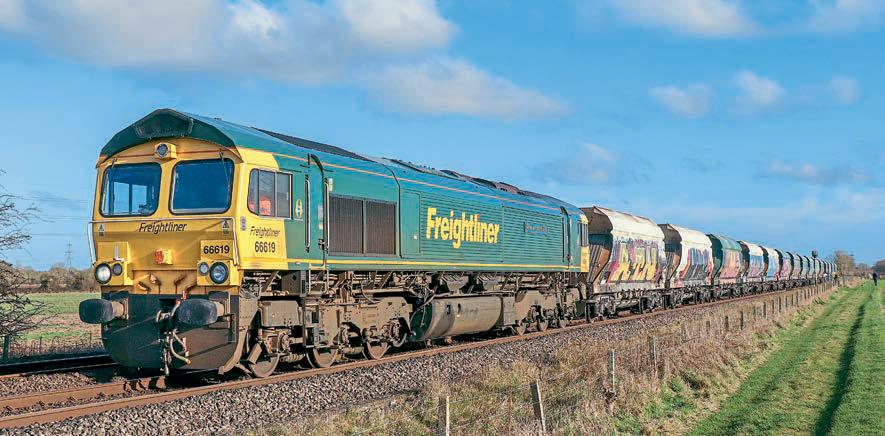
Save on a trip to the shops!








EUROTUNNEL’S LeShuttle Freight service was used to carry an electric heavy goods vehicle for the first time in January, as part of a demonstration run in which the lorry completed a round trip of 1056 miles. The trial played a part in the validation of procedures for conveying electric lorries as LeShuttle prepares to accept eHGVs for transit later this year. Organised in partnership with logistics company Kuehne+Nagel (K+N), DAF Trucks and vehicle charging
systems specialist Voltempo, the journey began on January 19 from K+N’s depot at East Midlands Gateway near Derby. The lorry was loaded with 12 tonnes of cargo and fully charged using Voltempo’s HyperCharger, a system which can deliver energy at a rate of up to one megawatt or distribute it between the six bays which form part of the charging hub. Travelling via LeShuttle from Folkestone, through the Channel Tunnel to Coquelles, it continued its trip to K+N’s
depot at Haiger in western Germany. The round trip involved topping-up the lorry’s
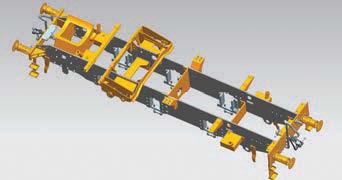
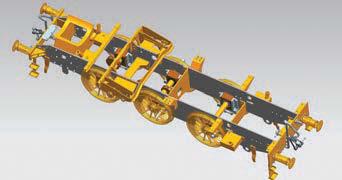
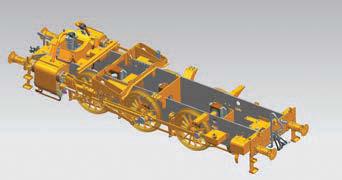
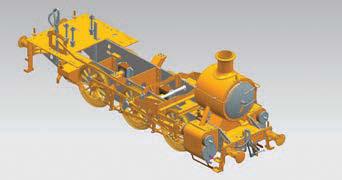
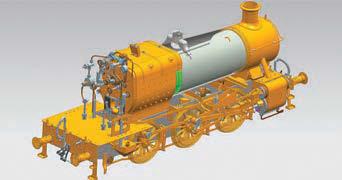
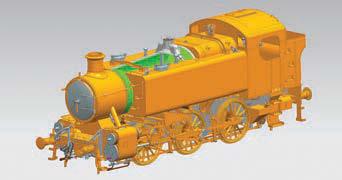
Summary Specification
•5”Gauge,coal-fired, livesteam
•2outside cylinders
•Outside Walschaertsvalve gear
•Stainlesssteelmotion
•Silver soldered copperboiler
•Boilerfeedbyaxlepump, injectorandhand-pump

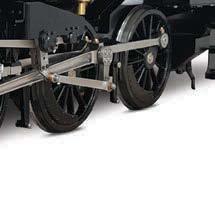

See YouTube build video’s. Over 120,0000 views! www.youtube.com/@MADforSTEAM
ApproximateDimensions
•Multi-element superheater
•Drain cocks
•Safetyvalve
•Etchedbrass body
•Choiceofliveries
•Length35”
•Width 10”
•Height14”
•Weight51kg
•Mechanicallubricator
• Mechanical lubricator
•Reverser
Allten locomotivesofthe classwereconstructed in 1949at Swindonand enteredservice on the Western Regionof BritishRailways. They were employedonheavy shunting duties at London Paddington.
We aredelighted to report thatourfully machined, bolt-together, kitofthe GWR15xxhas proved tobe agreat success. Thequalityissuperband this has enabled many customerstoassembly theirmodel quicklyand getout on thetrack.Itissuitablefor thenovicebuilder whowill benefitfromillustrated assemblyinstructions anda telephonehelplineif advice is needed.The complete kitisdelivered in asingle consignmentfully paintedinunlined,or lined,black liverywiththenumber of your choice. The15xxisalsoavailableasa factorybuilt readyto-run modelforan extra£500. Boilers aresilver soldered andUKCAmarked. Allmodelsbenefit from a5year warranty.
Requestyourfreebrochuretoday by e-mail, telephone, or by returningthe couponopposite. Telephone: 01327705259 E-mail: info@silvercrestmodels.co.uk Find more informationat www.silvercrestmodels.co.uk

15xx x model in BRBlack livery




“I amabsolutely delighted with my 15xxmodel. It is perfectinevery detail. Silver CrestModels have been apleasuretodealwith.”
S.H.(Banbury)
Save£195.00.Freep&p forany orderreceived within 28 days.
Themanufacture of thebatch is now complete andmodelsarereadytoship fromoursupplier. Paymentinfullis required with your order.
Pleasesend,without obligation, my free 15xxClass brochure.






Transport for London says work on the Docklands Light Railway route to Beckton Riverside and Thamesmead could begin as soon as next year.
WORK on the proposed extension of the Docklands Light Railway from Beckton to serve new stations at Beckton Riverside and Thamesmead could start on-site as soon as next year, with trains running by the early 2030s.
The targets are set out in Transport for London’s latest business plan, which outlines key projects up to 2029/30 – the first such multi-year summary it has published since 2019.
Extending the DLR has been highlighted as the Mayor of London’s top transport investment priority.
The route would include a new tunnel under the Thames as well as the stations on either side of the river and provide a rail connection to areas where regeneration schemes are expected to create between 25,000 and 30,000 new homes and about 10,000 new jobs. In a separate project, TfL expects
redevelopment work at Pontoon Dock station on the DLR route between Canning Town and Woolwich Arsenal to begin this autumn. Due for completion by late 2028, it will include the installation of six new escalators, a mezzanine level, landscaping and retail space. It will tie-in with plans to create thousands of new homes and jobs at Silvertown Quays.
TfL says 75% of the funding will come from third-party sources and that contributions have been secured in principle from the developer, the Greater London Authority and Homes England.
The business plan refers to the progression of proposals for a new fleet of trains to replace the existing 1972 Stock on the Bakerloo line, the oldest units in revenue-earning service on London Underground, although
BEGINS: Work is underway to refurbish the historic footbridge at Whitley Bay station, on North Tyneside, which has been closed since sustaining storm damage in February 2023. It follows the completion in mid-2025 of a two-year £5.3 million refurbishment to the roof, atrium and entrance canopies at the Grade II-listed North Eastern Railway station, built in 1910 and part of the Tyne & Wear Metro system since 1980. Structural repairs and strengthening work to the bridge, along with a repaint and the installation of new decking, stairs and handrails, will take place. As seen in this picture, scaffolding and protective covering has been put in position while the refurbishment is carried out. It is expected to be completed in May. NEXUS
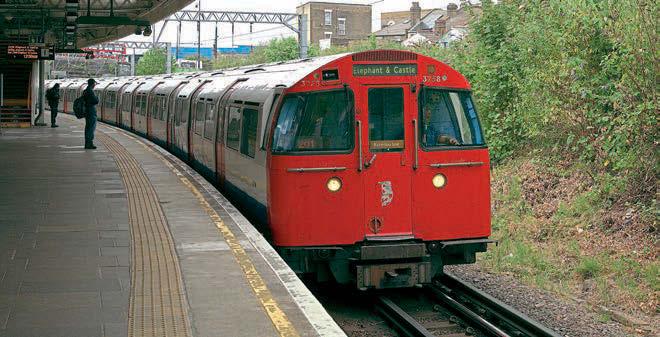
Although no anticipated timeframe for the procurement of new Bakerloo line trains is given in Transport for London’s latest business plan, it sets out an aim of making progress with a proposal to replace the current Metro-Cammell-built 1972 Stock, which is the oldest fleet in revenue-earning service on the London Underground system. Driving Motor car No. 3258 is seen leading an Elephant & Castle-bound working at Willesden Junction on July 17, 2025. PETER TRIMMING/CC BY-SA 2.0
no anticipated timeframe is set out in the document.
The second half of this year should see the first of 94 new Siemens-built nine-car trains introduced on the Piccadilly line. A peak service capacity of 27 trains per hour on the central London section of the route is planned once all of the new fleet has been deployed.
TfL says it continues to make the case for Piccadilly line signalling to be replaced and for ordering an additional 18 new trains which could enable 36 trains per hour, a move seen as essential to meet the passenger demand predicted from the planned Heathrow Airport expansion. Meanwhile, procurement of
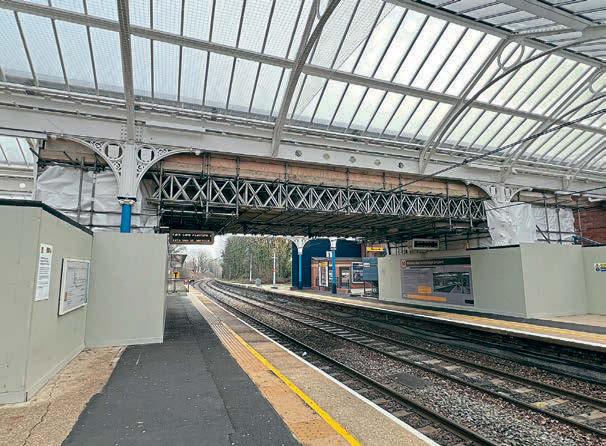
FURTHER discussions about increased frequency evening tram services in Nottingham are anticipated following the conclusion of a trial.
Having run services between Nottingham Station and Highbury Vale at intervals of
four minutes (and eight minutes to locations beyond those stops) until 23.00 during last year’s Goose Fair, Nottingham Express Transit continued to operate the improved evening timetable on an experimental basis until January 26. Services then
returned to their pre-trial norm of every 15 minutes.
NET managing director Sarah Turner said the trial was “well-received” by passengers and provided “performance and customer data to build on for the future.”
“Over the coming months, we look forward to engaging with Nottingham Council in ongoing discussions regarding the possibility of making the enhanced evening timetable a permanent part of city life,” she added.
24 new trams to replace the Bombardier CR4000s on the London Trams system (for which Alstom, Stadler, CAF and Hitachi were shortlisted 2024) is also expected, with a possibility that additional vehicles could be added to the order, to supersede the 12 Stadler Variobahns which make up the rest of the current fleet.
COMPLETION of the link between the West Midlands Metro Dudley extension and the existing network took place during the February school half-term holidays.
In order to finish the final ‘tie-in’ work, trams between Wednesbury Great Western Street and Edgbaston Village were suspended from 21.15 on February 16 until the start of service on February 19.
West Midlands Railwayoperated train services between Wolverhampton and Birmingham New Street and National Express West Midlands bus services in the area accepted WMM tickets during the engineering work. Additional buses were also scheduled to provide connections with trams at Wednesbury and Wolverhampton.
The Dudley extension is expected to open to passengers at the end of August.
Network Rail says the scheme will improve access for passengers and ease congestion, but there has been opposition to the construction of an 18-storey office block and the demolition of most of a Victorianstyle extension.
THE controversial plan for the major £1.2 billion redevelopment of London Liverpool Street station was approved by the City of London Corporation’s planning committee in a 19-3 vote on February 10.
Network Rail (NR) aims to redevelop the historic Grade II 1874-built station to handle a predicted 158 million passengers a year by 2041, but the project has brought heavy criticism from high-profile figures including the actor and writer Griff Rhys-Jones, president of the Victorian Society, and organisations such as the Twentieth Century Society (C20). There were more than 3500 objections to the scheme.
Opponents are unhappy with NR’s proposal to demolish a large section of the station’s Victorian-style extension which was completed in 1992. However, much of the controversy surrounds the addition of a 97m (318ft) tower block over the concourse of Britain’s busiest railway station, its 18 storeys having nearly 90,000 square metres of office space.
NR’s plan, which has been drawn up by Acme, will tackle the station’s congestion and accessibility issues on and around the concourse, giving a 76% increase in overall capacity, with lower concourse space
ScotRail fares frozen for a year
ALL rail fares on ScotRail services will be frozen for the next 12 months, First Minister John Swinney has announced. The freeze will include season tickets and Flexipass. The move follows the abolition of peak fares last September.
Like us facebook.com/ TheRailwayMagazine
Follow us
@railwaymagazine
expanded by 23% to ease passenger flow. There will be step-free access from street level to all platforms, including all London Underground lines for the first time, and eight new lifts with increased capacity.
The number of escalators will increase from four to 10, and there will be new accessible entrances and more intuitive wayfinding from Broadgate, Exchange Square. In addition, there will be toilets on all levels, including family and Changing Places facilities.
NR said the scheme has been carefully designed to safeguard Liverpool Street’s unique heritage, with the Victorian trainshed remaining untouched. It adds that the transformation will unlock new views over the Victorian architecture, bringing passengers closer to the heritage. The new office block will have a publicly accessible roof garden providing views across the capital.
Griff Rhys-Jones has described the office block as “disfiguring,” adding: “It is doubtful whether it will easily provide the profit to ‘improve’ the concourse and can only realise a small amount of extra space for the passenger.
“Its focus is retail opportunities, which the commuter doesn’t need.
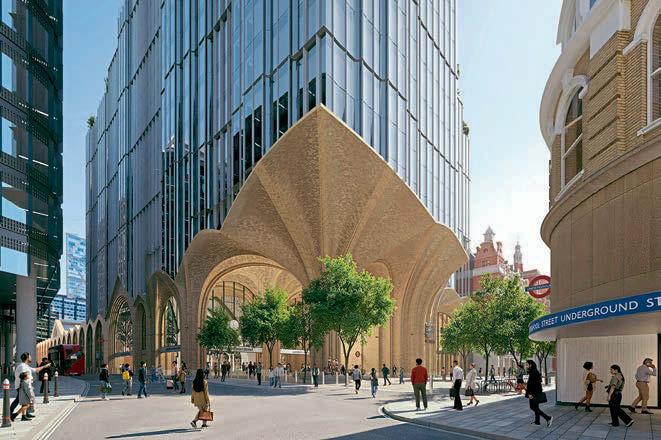
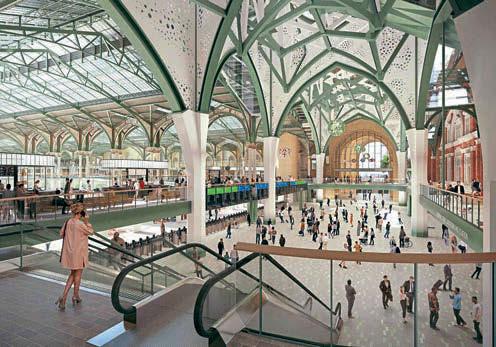
It will destroy an existing conservation area. It demolishes listed buildings. It is harmful to the surrounding historic fabric.”
The Liverpool Street Station Campaign (LISSCA), also headed by Mr Rhys-Jones, is hoping that the scheme will be
called in. “We will now await the decisions of the Mayor of London and, if necessary, the Secretary of State for Housing, Communities and Local Government,” it said. “We proceed knowing that public support for preserving the station remains strong.”
Although the public body Historic England did not formally object to the plan, its concerns related to the size and location of the new entrances and the reduction in the ability to appreciate the architectural qualities of the landmark former Great Eastern Hotel.
STRONGER enforcement powers aimed at reducing antisocial behaviour are to be introduced by ScotRail following a report from the Rail Enforcement Powers Working Group.
The group, which includes representatives from ScotRail, British Transport Police, Network Rail, rail unions, and the Crown Office and Procurator Fiscal Service, assessed current
police enforcement powers and their effectiveness on the railway, with a view to considering where these could be strengthened to improve safety for passengers and staff. Its report backed the lifting of the blanket alcohol ban on ScotRail services, which has already taken place, and replacement with time-limited restrictions. Currently, the BTP has the power to issue a Verbal
Discretionary Warning (VDW) for low-level antisocial behaviour offences. As it is unique to the BTP, this poses challenges around its effectiveness, as it is only recorded within the force’s own internal systems and is not shared more widely as part of an offender’s criminal history. Changes will be made so that all offences under the Transport Act 2000, Glasgow Subway bylaws and
other acts will be recorded. There are also plans to raise the fixed penalty fine for antisocial behaviour from £40 as it has not changed in more than 20 years. Further measures, such as banning offenders from using ScotRail, are being recommended for repeat offenders, assaults on rail staff, sexual offences on a train, theft from a train and interfering with safety equipment.
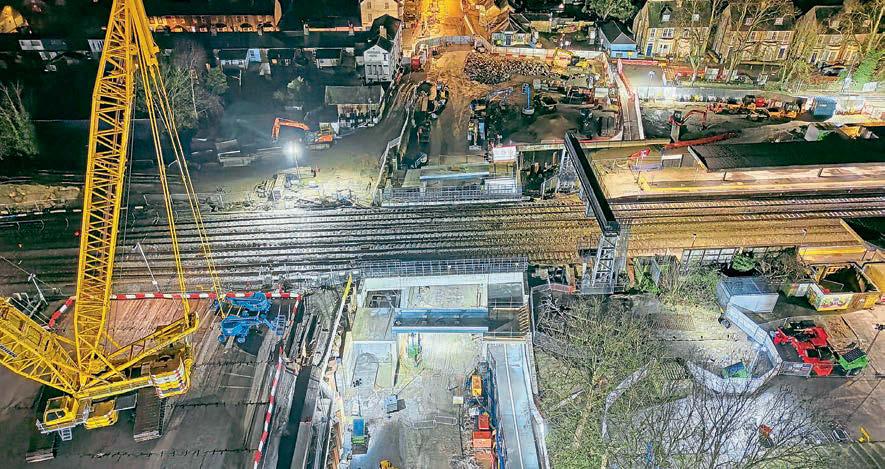

THE replacement of Botley Road bridge, adjacent to Oxford station, has been completed following an eight-day rail closure on February 1-8.
The original bridge was demolished once the spans for the new structure were installed.
Work on replacing the bridge, which also included lowering the road, began in 2023 as part of preparation for an additional platform and a western entrance to the station, leading to Botley Road. However, the project became protracted after
the discovery of an unmapped brick arch. Difficulties were also encountered during the movement of utilities, when a Victorian sewer which was in poor condition was discovered.
The new bridge will provide additional rail capacity for when
services are reinstated on the Cowley branch line. The work has also helped to create an improved and safer road layout. Costs on the project have risen from £161 million to £231m. Full reopening of Botley Road is expected in August.
A PUBLIC consultation has begun after Network Rail proposed Bordesley station, east of Birmingham Moor Street, for closure.
Under the current proposal, it would shut on or after June 4, 2029. Opened by the Great Western Railway in 1855, the station used to have four platforms and serve extensive cattle sidings but has been downgraded over the years and one of its island platforms was taken out of use.
The reason for closure is to allow construction of the Bordesley East and West chords, providing a connection to the Camp Hill line. This work is planned as part of the Midlands Rail Hub. The junction for the chords will be located in the
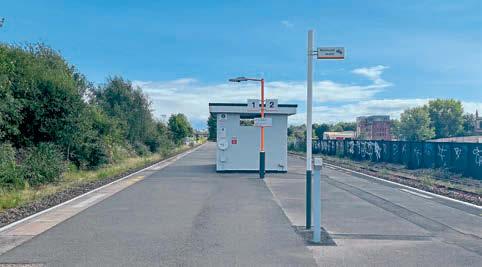
space occupied by Bordesley station.
The main recent purpose of the station, which suffers from poor access with steep stairs and capacity limitations, has been to serve as a stop for about 1400 football supporters
attending Birmingham City home matches, with West Midlands Trains and Chiltern Railways services making additional stops. The club plans to move to a new ground near Adderley Park from the 2030/31 season. There is one official
Left: Aside from trains stopping on home matchdays for Birmingham City, Bordesley, earmarked for closure in 2029, receives only one service per week, the 13.47 Whitlock’s End-Kidderminster on Saturdays. The station is pictured on August 19, 2023.
THOMAS ROBINSON/CC BYSA 2.0
train, the 13.47 Whitlock’s End to Kidderminster on Saturdays. Responses to the consultation can made be until 23.59 on May 15 at www. smartsurvey.co.uk/s/x-F75IKT or by email to bordesley. consultation@dft.gov.uk
NORTHERN said that 2025 proved its strongest year for passenger demand since the pandemic, with nearly 98.6 million journeys taken during the calendar year. This is a 10% increase compared with 2024, with an additional 8.8m journeys recorded.
The operator added that growth was strongest on
services into major city centres. Journeys into Manchester rose by 12% year-on-year, while Liverpool saw a 19% increase. Leeds recorded growth of 7%, and Newcastle saw the biggest rise of all, with journeys increasing by 27% compared with December 2024, boosted by the opening of the Northumberland Line,
which surpassed one million passenger journeys on January 23. On February 9, Northern officially launched a faster service between Leeds and Sheffield.
The ‘Yorkshire Flyer’ journey time is 47 minutes, with one intermediate call at Wakefield Westgate. Northern’s other
Landslip and broken rail disrupt ECML services
EAST Coast Main Line services were disrupted on February 15 following a landslip near Crofton, between Wakefi eld and Doncaster, which blocked the line and led to the operator issuing a ‘do not travel’ alert. There was also disruption southbound from York due to a broken rail, plus all ECML LNER services terminated at Peterborough, with passengers being taken by bus to Bedford due to engineering work connected with ETCS digital signalling work.
ELR and Network Rail partnership
THE East Lancashire Railway (ELR) and Network Rail have agreed a partnership that will see railway materials no longer required on the national network reused on the ELR. Rail, sleepers and other equipment will be included in the agreement, and NR will provide support to the heritage and public-facing activities at the ELR. In addition, NR staff will also be able to use their volunteering leave to help out on the heritage railway.
LNR moves control functions to Rugby LONDON Northwestern Railway (LNR) has moved its control functions to the Rail Operations Centre (ROC) at Rugby.
Its staff now work alongside Network Rail control teams, responsible for the line between Euston and Crewe, with the move making decision-making easier being under one roof. Staff will be able to respond more efficiently during incidents. The centre has a dedicated British Transport Police desk, should police attendance be required.
Beeston gets an upgrade
A £1.36 million project to completely refurbish the waiting shelters and a historical canopy at Beeston station, Nottingham, has begun.
services between Leeds and Sheffield are hourly to both Lincoln and Nottingham and run via Barnsley (scheduled for 62 minutes), or the stopping service via Rotherham Central and Fitzwilliam, taking about 79 minutes. The new service brings the number of Northern trains between Leeds and Sheffield to four per hour.
Built for the Midland Counties Railway, the station’s Grade II-listed building, dating from 1847, has been suffering from general deterioration. The investment will focus on timber renewals, replacement of canopy glazing and roof drainage repairs. The project is due for completion at the end of March.
LNER releases brand name and computer-generated interior images of the first new fleet which will enter service under Great British Railways.
‘SERENZA’ will be the name given to the 10 Class 897 trimode intercity units which are being built by Construcciones y Auxiliar de Ferrocarriles, LNER has announced.
The operator says the name was created by combining the word ‘serene’ with a Spanishstyle suffix – a nod to CAF being a Spanish company – and is designed to reflect a sense of “peacefulness and calm, combined with energy, movement and modernity”.
LNER released computergenerated images showing the planned interior of the trains after confirming last month that the fleet of 10-car sets – for which a £437 million order was announced in November 2023 – will be the first new trains to enter service under Great British Railways. They will carry GBR branding from new, inside and outside.
Displacing ‘225s’
Capable of running on electric, battery or diesel power, the ‘Serenzas’ will displace LNER’s remaining Class 91-operated ‘Intercity 225’ sets which are based at Northern’s Neville Hill Traincare Centre in Leeds.
A dozen Class 91 locomotives and eight rakes of Mk.4 vehicles, which now run as seven-car formations, have been retained since the introduction of the Hitachi-built ‘Azuma’ fleet.
Unlike the ‘225s’, which are these days (with the exception of an ‘out and back’ King’s Cross-Newcastle diagram due to be introduced in the spring) confined to workings between Yorkshire and London, the Class 897s could see use across the current LNER network including its most far-reaching AngloScottish diagrams. Their battery mode is designed to lower emissions and noise when arriving at or departing from unelectrified stations.
Construction of the first Class 897 is already under way. Units 1-3 will be manufactured by CAF in Spain and the remainder of the fleet will be built at the firm’s plant at Newport in South Wales.
As of mid-2025, it appeared that the new trains were on course to enter service in 2028, but last month LNER declined to give details of latest target dates for completion and introduction, stating that further information would be released “as the project progresses”.
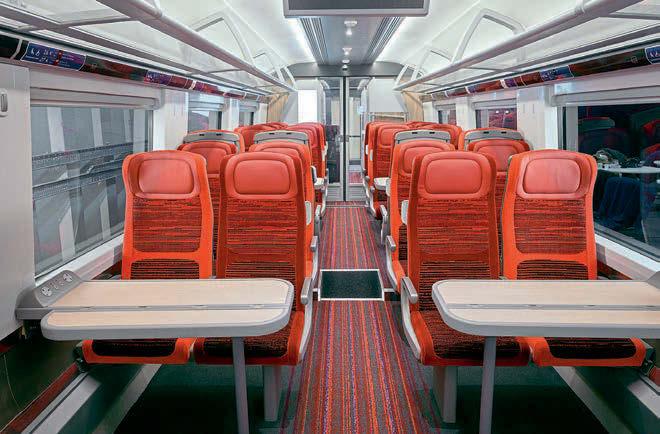
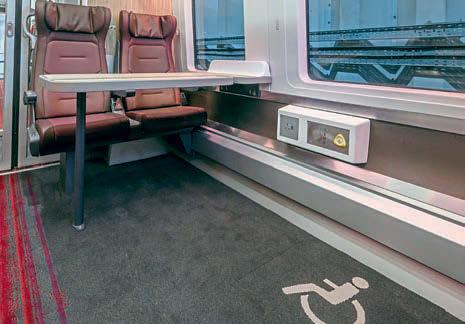
Left: An image showing the intended appearance of a wheelchair space in a Class 897 First Class coach. LNER worked with Accessibility Forum to incorporate more room at tables for wheelchair users and assistance dogs. It claims passengers will notice an improvement in seating comfort compared with existing trains. Cycle storage space is designed to be easier to use. Each unit will feature five water bottle refill points. LNER
EUROTUNNEL’S 57 Class 9 locomotives – used to ‘top and tail’ LeShuttle services carrying cars, coaches and lorries between Folkestone and Coquelles – are to be fitted with European Rail Traffic Management System equipment.
The project will form the first phase of a resignalling programme for the Channel Tunnel. ERTMS includes European Train Control System (ETCS) in-cab digital technology. This will ultimately replace the current TVM (trackto-train transmission) in-cab signalling on the route through the Channel Tunnel.
Compagnie des Signaux (CSEE), part of the MERMEC Group, has devised plans for the installation of a dual-
standard ERTMS/TVM system on the Class 9s. Eurotunnel says that managing migration to ERTMS in this way will help to facilitate a smooth transition in line with the schedule for resignalling and keep locomotive downtime to a minimum.
“Our dual-standard ERTMS/ TVM solution has been designed to guarantee safety, performance and availability, while facilitating the transition to European standards,” said Gilles Pascault, the president of Compagnie des Signaux.
The dual-standard has been adopted by other operators around the world.
Ground infrastructure will be converted to ERTMS in the second phase of the programme.
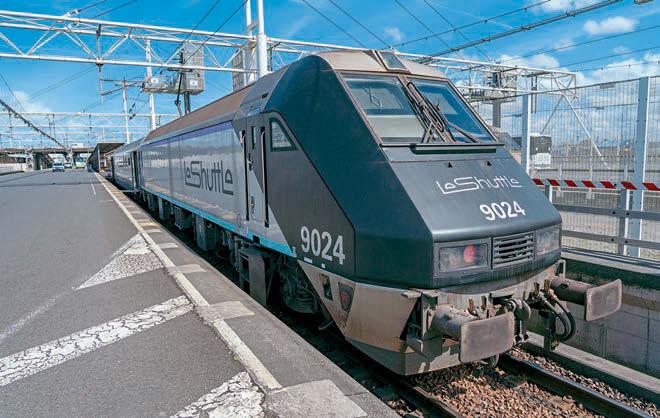
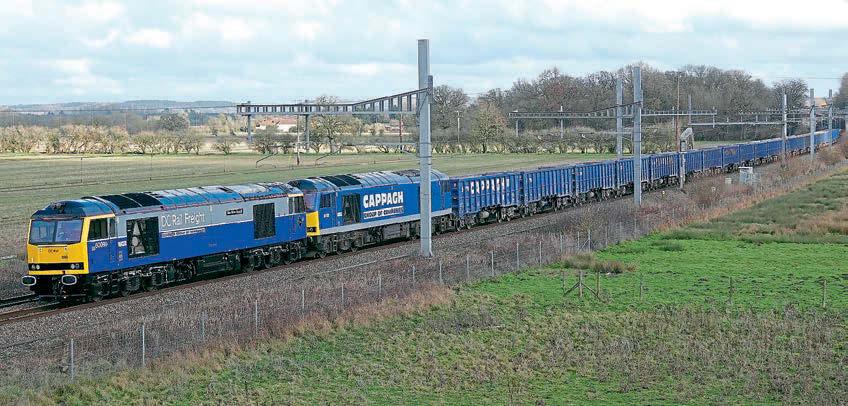
BACK IN ACTION: Class 60, No. 60099 Ben More Assynt worked its first freight service for over a decade on February 4. It is seen in front of No. 60028 at the head of the 6V23 Willesden DCRail Sidings to Merehead Quarry train at Ufton Nervet. The return to traffic with DCRail of No. 60099, an ex-DB Cargo locomotive, follows a 12-month overhaul completed last year by UKRL at the former Brush Works in Loughborough, where it was originally built. UKRL is continuing work on No. 60013, while Boden Rail Engineering is overhauling No. 60022 Ingleborough and No. 60060 James Watt, all three of which are also being prepared for comebacks with DCRail.
BOUND FOR STORAGE:
As reported in The RM last month, GB Railfreight stopped rostering its 10 operational Class 60s for specific diagrams from early January. It placed them in warm storage for use as required while it reviewed traction needs, influenced by the introduction of the Class 99s, and has now put the Class 60s up for sale. Pictured at Seaburn on January 17, GBRf Class 66 No. 66311 hauls Nos. 60076 Cross Fell and 60002 Graham Farish 50th Anniversary 1970-2020 from Tyne Coal Terminal to join stored classmates at Doncaster Down Decoy Yard. GBRf ‘Tugs’ have continued to see use on hire to DCRail. THOMAS PYE
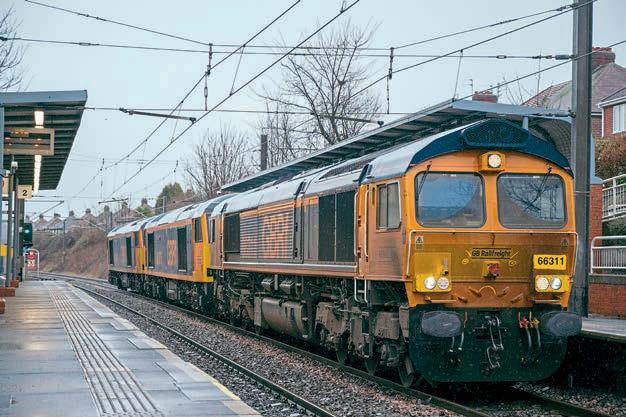
ROMANIAN rail freight company Grup Feroviar Român is to take delivery of a total of 25 ex-DB Cargo UK Class 66s.
The multi-million-pound sale was announced by DBC in January. All of the ‘Sheds’ will be returned to operational condition compliant with current UK standards and repainted blue at DBC’s Toton depot in Nottinghamshire. No. 66014 was the first to be prepared for export. All of the locomotives are due to be delivered to Romania by mid-2028.
“These locomotives are surplus to DB’s requirements and will still leave ample locomotives in our fleet to meet predicted traffic growth
in future years,” said DBC engineering director Wayne Miller. “We’re proud to be reinstating the locomotives at our centre of excellence in Toton, and look forward to further developing this partnership.”
GFR, part of the GRAMPET Group, operates 16,500 wagons and 380 locomotives in Romania and says the Class 66s will become the backbone of its diesel fleet, superseding its LDE 2100 locos.
GFR chairman and GRAMPET vice president Sorin Chinde added: “The replacement of the current LDE 2100 locomotive fleet was necessary due to the rising maintenance costs of the existing fleet, caused by their age and the
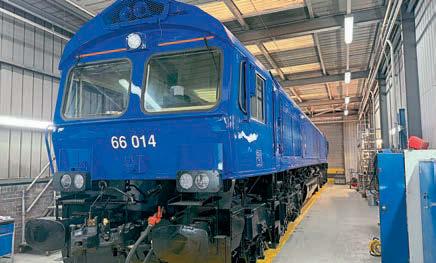
Mk.5a sets launched as ‘Chiltern Explorers’ THE first ex-TransPennine Express Mk.5a set entered passenger traffic with Chiltern Railways on January 26, on the 08.15 Birmingham Moor Street to London Marylebone service, worked by Class 68 No. 68022. The five-car Mk.5a rakes have been branded ‘Chiltern Explorer’. Allocated to one diagram initially, Chiltern expects all 13 sets to be in service before the end of the year. This should allow an additional 10,000 seats to be offered overall by the operator each weekday from December. The ‘Chiltern Explorers’ will be operated by the same pool of Class 68s that powered them on TPE workings.
Chiltern expects all of its Mk.3 stock, which the Mk.5as replace, to have left the company by the end of March.
Seat sensor tech for LNER ‘Azuma’ fleet LNER has announced that detection technology will be introduced on all 65 of its Hitachi-built Class 800 and 801 ‘Azuma’ trains to help passengers find vacant seats following a successful trial.
Currently, the onboard system of green, amber and red lights and reservation information is reliant on data drawn from bookings, but the sensors, which will be placed above seats and wheelchair spaces, can gauge whether they are available or occupied, providing information in real time. Supplied by the Swedish company Sensative AB, the system uses cable-free, battery-powered sensors. LNER says it has achieved more than 98% accuracy.
increasing difficulty of sourcing spare parts.
“The superior power characteristics and high availability of the Class 66s
will allow us to withdraw from service a larger number of 2100 horsepower locomotives than the number of units purchased from DB Cargo UK.”

WAGON number taking is now a hobby, but was once an occupation. Prior to the 1923 Grouping, hundreds of men were employed by the Railway Clearing House (RCH) as wagon number takers, or wagon checkers.
Before the age of computer systems, the written recording of wagon movements by men stationed at large goods yards was vital to the tracking of the more than a million wagons then in use. However, this method of record keeping had drawbacks. Thousands of wagons could be ‘lost’ in yards or works sidings due to misidentification.
By the 1930s, primitive systems using punched index cards were available, but true accuracy in recording wagon location and movement had to await the TOPS system of the British Rail era.
■ LAST year saw the withdrawal by the Ministry of Defence (Army) of the 1940s-era KWA ‘Warwell’ tank transporters. This has left the 1950s-built YKA ‘Osprey’ recovered track panel carriers as

Compiled by Steven Fredrick Lappage
the oldest operational mainline wagons in the UK, with more than a hundred examples still on Rolling Stock Library records. However, with Network Rail doing fewer renewals and more maintenance in the current control period, there is less need for these wagons. Despite this, few disposals have taken place.
■ SB Rail, formerly First Swietelsky, is hiring three KFA-F container flats from Touax SA, Nos. TIPH 93328/341/461. They are being used as beam carriers/runners for Kirow KRC 250 UK 25-tonne diesel-hydraulic cranes Nos. DRK 81623-625. This follows the scrapping of Trinity Rail KRA-A flats Nos. FS 97413-415. Notably, SB Rail also hires three elderly YWA flats for use with these cranes, Nos. DB 996107/345/588.
The Worksop-based company has also acquired several track machines from Network Rail and, following extensive repairs, they have been returned to service: Plasser & Theurer 09-3X-D-RT tampers Nos. DR 73116/118;
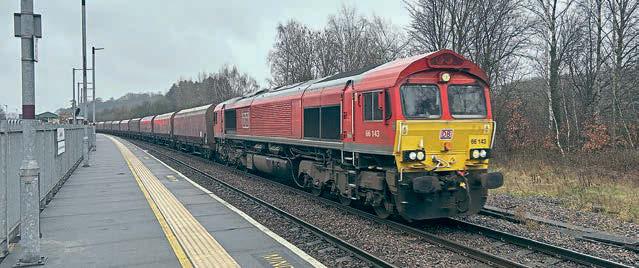
The occasional coal working from Scunthorpe to Earles Sidings, for the Hope Cement Works, normally runs through Sheffield station, but on February 2 it was diverted to run from Rotherham to Toton, then reverse and travel back north to access the Hope Valley line. DBC’s No. 66143 is seen hauling the train south through Chesterfield on its way to Toton. LOGHAN SMEDLEY
09-3X-D tamper No DR73120; and USP 5000 RT ballast regulator No. DR 77904.
Balfour Beatty Rail Plant has sold Plasser & Theurer type 0816/4x4C 100-RT tamper No. DR 73939 for further use in Europe. The machine was built in 2003 as works No. 3106 and carried the name Pat Best. ■ MODERNISATION of Bletchley and Tyseley depots has provided employment for a pair of previously stored KWA ‘Fastrol’ excavator
carriers, Nos. VTG 95633/622. ■ FREIGHTLINER Heavy Haul (FLHH) HHA bogie coal hoppers scrapped have been Nos. 370007/010/028/045/ 062/081/092/094/107/115/ 139/141/147/153/159/171/ 189/203/216/246.
Refurbished bogies and brakegear recovered from these wagons have been fitted to new MWA-C box opens built by W H Davis at Langwith Junction works, Shirebrook. Also destined for use by FLHH,
recent deliveries have been Nos. 81 70 5892 737-4 to 753-1. A further two dozen wagons are still to be assembled, ending with 81 70 5892 776-2. More Railtrack-era JNA-A box wagons broken up at Sunderland Docks have been Nos. VTG 3414/423/ 428/430/431/439/443445/455/457/467. Marcroft Engineering built the wagons in 1998 utilising bogies and brakegear recovered from scrapped TEA petroleum tanks.






WGER DBC Class 66 allocated for export to Romania
Allocations
43083 sent for disposal
43317 sent for disposal
59002 DHLT-DDII
59104 DDII-DHLT
66003 WQ/WQNC-TO/WBET
66006 WBAR-WGER
66009 WBAR-WGER
66012 TO/WBAT-WQ/WFMS
66013 TO/WBAT-WQ/WQNC
66014 WBAR-WGER
66018 WBBK-WGER
66024 WBAR-WGER
66027 WBAR-WGER
66034 TO/WBAT-WQ/WFMS
66037 WBBK-WGER
66040 WBAR-WGER
66041 TO/WBGT-WQ/WFMS
66047 WBAR-WGER
66054 WBAT-WBRT-WBAT
66056 WBLT-WBRT-WBLT
66065 TO/WBAT-WQ/WQNC
66068 WBAT-WBGT
66069 WBAR-WGER
66075 WBAR-WGER
66076 WBAR-WGER
66080 WBAR-WGER
66083 TO/WBAT-WQ/WQNC
66085 WBAR-WGER
66086 WBAR-WGER
66087 WBAR-WGER
66089 WBAR-WGER
66095 WBAR-WGER
66099 WQ/WQNC-TO/WBBT
66102 TO/WBBT-WQ/WFMS
66110 WBAR-WGER
66111 WBAR-WGER
66113 TO/WBAT-WQ/WFMS
66114 WBAT-WBBT
66115 WBAR-WGER
66116 WBAT-WBRT-WBAT
66126 WBAT-WBRT-WBAT
66138 WBBK-WGER
66144 TO/WBAT-WQ/WFMS
66145 WBBK-WGER
66150 WBAT-WBRT
66154 TO/WBAT-WQ/WFMS
66160 WBBK-WGER
66168 WBGT-WBAT
66170 TO/WBAT-WQ/WFMS
66181 TO/WBAT-WQ/WFMS
66186 WQ/WQAA-TO/WBAT
66197 WBAR-WGER
66198 WBAT-WBRT-WBAT
66503 DFHJ-DFIM
66589 DDHN-DDHJ-DDHJ
66601 FD DDHJ-DDHS
66602 FD DDHJ-DDHS
Liveries
Blue: 66006
Chiltern new: 68026
Colas ECML Thunderbird: 67027
Europhoenix HVO green + EPR
Decals: 37218, 37611
Heavy Haul Rail: 66602
InterCity Swallow: 43025
GNER: 43060
Midland Mainline: 43048
+HHR decals: 66545
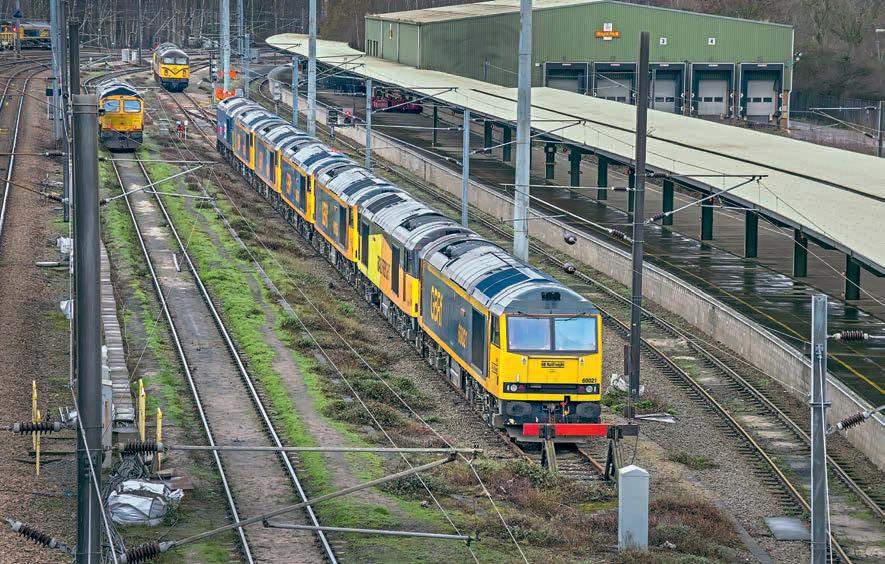
Named
08653 ‘Lydia’ Star of the Humber
08887 Dave Short
37419 Agamemnon
66068 Pride in Motion
90007 507 (Railway) Specialist Team Royal Engineers
Names removed
37608 Andromeda
37611 Pegasus
43092 Cromwell’s Castle
43093 Berkeley Castle
43098 Walton Castle
43156 Maen Castle
43198 Driver Stan Martin 25 June
1950 – 6 November 2004 / Driver Brian Cooper 15 June 1947 – 5 October 1999
56091 Driver Wayne Gaskell The Godfather
60020 The Willows
60040 The Territorial Army Centenary
60065 Spirit of Jaguar
60071 Ribblehead Viaduct
60100 Midland RailwayButterley
66502 Basford Hall Centenary 2001
73951 Malcolm Brinded 73952 Janis Kong
For export to Romania
66006/09/14/18/24/27/37/40/ 47/69/75/76/80/85/86/87/89/95, 66110/11/15/38/45/60/97
Preserved
Churnet Valley: 09014
Stored/stopped locations
Carnforth: 43097/98, 43198
Crewe EMD: 66102
Doncaster Decoy: 60002/21/26/56/76/85/96
Leicester: 47727/39/49, 68016/17/19/24/25
Longport: 69003/07/11
Merehead: 59104
Toton: 66012/13/34/41/65/83, 66113/44/54/70/81
Whitemoor: 69012/15
Operational 66099, 66186
Disposals
EMR Kingsbury: Arrival date: January 23: 43317
Allocations
62801 (5729) sent for disposal
62811 (5719) sent for disposal
71532 (5709) sent for disposal
71558 (5719) sent for disposal
77744 (5709) sent for disposal
77763 (5719) sent for disposal
77783 (5729) sent for disposal
5701/10 sent for disposal
5869/70 sent for disposal
222001-03/05 DY/EMHQ-CZ/ LFHQ
398032 newly delivered HQ/ HLHQ
466012/20/41 sent for disposal
555023/26/45 newly delivered GF/PXGG
701022/38 HQ-WD
810014 newly delivered HQ/ EMHQ
Liveries
c2c: 357017/40
CrossCountry new: 170115, 220027/33
London Overground new: 378203
+ Great British Railways –coming soon: 730216
Named 345062 Jorge Ortega 450056 Hotshot 802209 North Star
Names removed
222001 The Entrepreneur Express 222002 The Cutler’s Company 222004 Children’sHospital Sheffield
Formations
222002: 60242+60346+ 60622+60562+ 60166
Now in passenger traffic 175002/09 230001 555010/38/40/41 701022/38
Stored/stopped locations
Derby: 180109/13
Dollands Moor: 465045, 465169/75 Long Marston: 458529, 769452 Widnes: 60342, 60544 (222002), 222003
Wolverton: 50751 (175008), 175004, 175110
Disposals
J Denham Metals, Shildon: Arrival dates: January 14: 4039; January 15: 4073; January 22: 4008; January 23: 4045; January 28: 4023; January 29: 4056; February 4: 4014 and February 5: 4089. EMR Kingsbury: Arrival dates: January 31: 466012/20; February 12: 466041
Opus Group, Litchurch Lane: Arrival dates: January 22: 5870; February 2: 5719/29. Departures to local scrap yard: January 20: 71532, 77744 (5709); January 21: 62792, 71566, 77745/46 (5710); January 27: 71706, 77718 (5870); January 28: 62778, 77717 (5870); January 29: 62777, 77715 (5869); February 2: 71705, 77716 (5869); February 3: 62783, 77727 (5701); February 4: 71545, 77728 (5701); February 8: 77783 (5729); February 9: 62811 (5729), 77763 (5719); February 10: 62801, 71558 (5719).
Allocations
11406/08/12/13/15/16/17/26 off lease
12406/24/29/31/32/67/85 off lease 12515 off lease
Liveries
InterCity: 40730, 42119, 44000
Preserved
IC225 Group, Tuxford: 11412/26
Stored/stopped locations
Carlisle Upperby: 10504/13, 10648/50/75/83, 40106, 46012
Nemesis Rail, Burtonupon-Trent: 10274, 12608/15/17/20/23, 82305 Wembley LMD: 82302/03
■ STOCK CHANGES CORRECT AS OF FEBRUARY 14.






Diecast Chassisand Running Plate
Etched Metal Nameplates
Elegant Collett Corridor Coaches
HM7000 Compatible
R30404 GWR, SaintClass,2999‘Lady of Legend’
R30405 GWR, SaintClass,2975‘Lord Palmer’
R40465 GWR, CollettCorridorBrake ThirdClass LH ,5040, Coach
R40466 GWR, CollettCorridorBrake ThirdClass RH,5041, Coach
R40467 GWR, CollettCorridorComposite LH,6521, Coach
R40468 GWR, CollettCorridorComposite RH,6522, Coach
R40469 GWR, CollettCorridorThird ClassLH, 5017,Coach
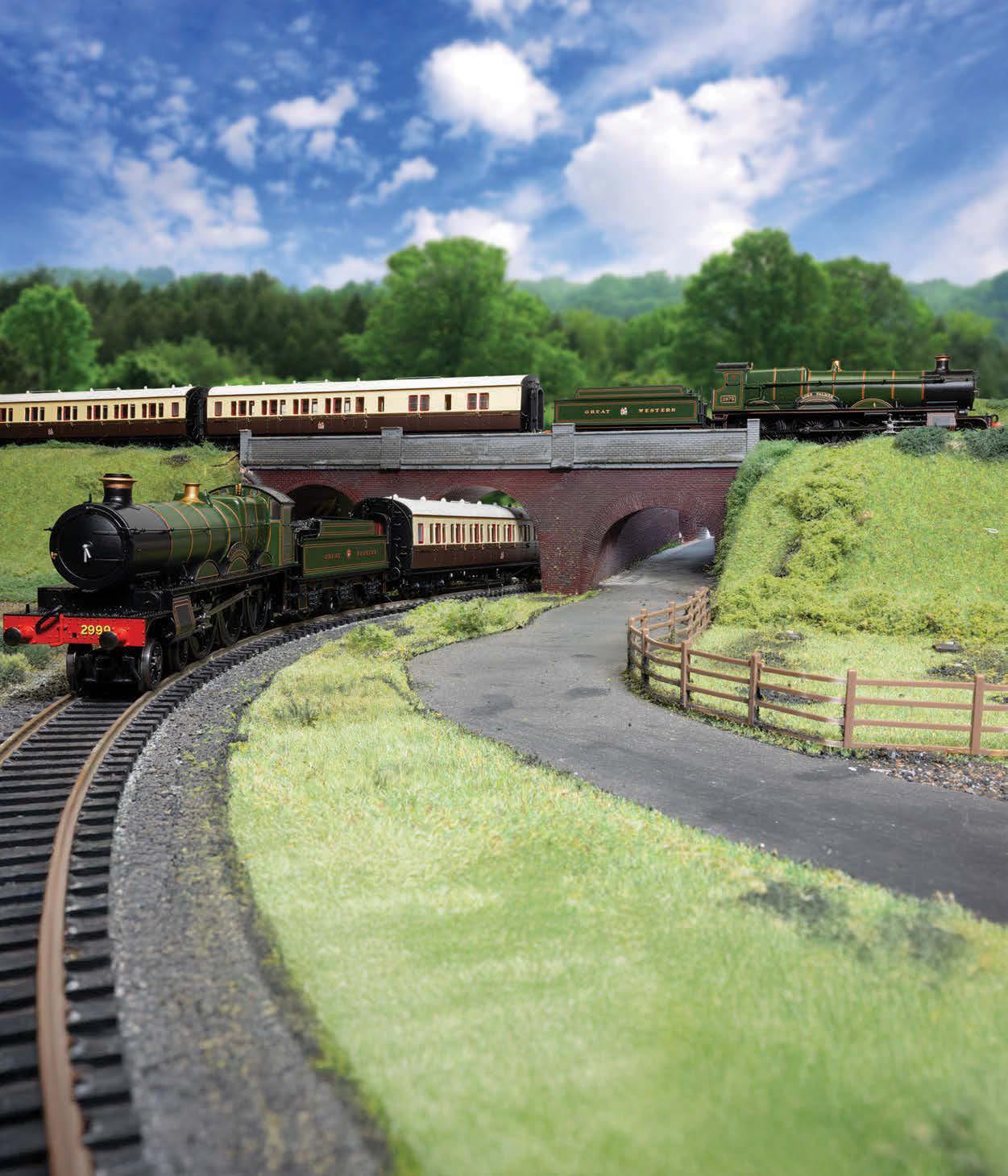
Formoreinformation please visityourlocal Hornby stockist or go to hornby.com


Compiled by Ashley Butlin
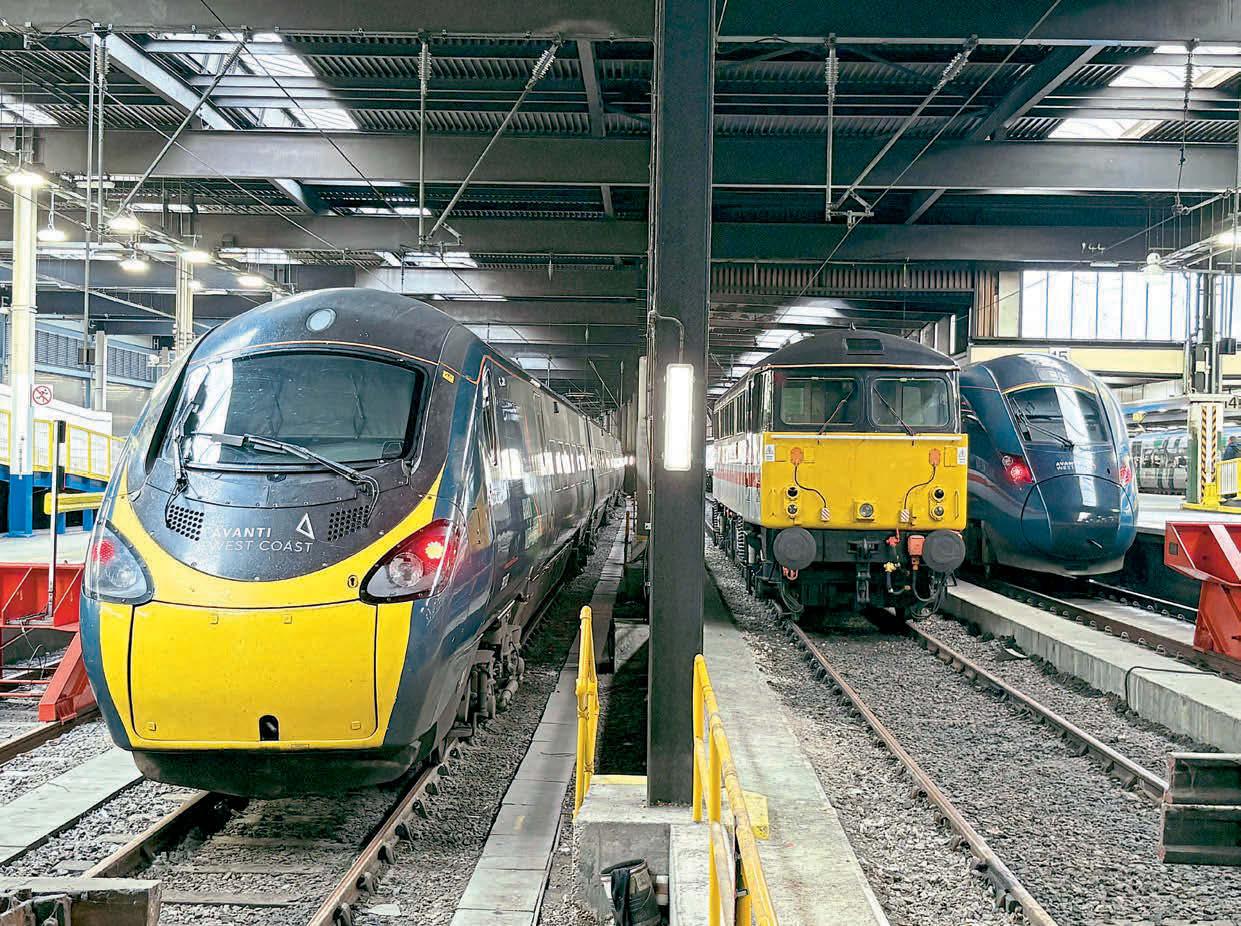
Three generations of West Coast electric power line-up at Euston on February 12 with (from left) ‘Pendolino’ No. 390050, No. 87002 Royal Sovereign and ‘Evero’ bi-mode No. 805009. BRAD JOYCE
Substantial disruption to services occurred on the East Coast Main Line north of Newcastle on Monday, January 14 due to two unconnected events.
Heavy snow and rain in northern Scotland resulted in speed restrictions affecting the 07.52 LNER train, worked by Class 800 ‘Azuma’ No. 800104, from Aberdeen and the 07.55 from Inverness (worked by No. 800109), which were to form the 10.30 and 11.30 departures respectively from Edinburgh to London. As both trains were heavily delayed, Class 801 Nos. 801202 and 801215, which were waiting to operate the 11.00 and 12.00 departures from Edinburgh, were sent on to London at 10.30 and 11.30, in the paths of the delayed Aberdeen and Inverness trains.
The trains which had been worked by Nos. 800104 and 800109 were both retimed to run half an hour later from Edinburgh. In the case of the ex-Inverness service, which arrived in Waverley 44 minutes
late at 11.50, and already well filled, all seat reservations were cancelled to allow passengers from north of Edinburgh to remain in their seats, leaving Edinburgh passengers booked on the 12.00 to hunt for spares. Such was the overcrowding in First Class, the train manager asked ticket holders without seats to transfer to Standard Class.
Subsequently, No. 801215 was caught in disruption behind Class 803 No. 803002 on the 11.25 Lumo departure from Edinburgh to London, which was halted after hitting an animal on the line north of Alnmouth at about 12.20. No. 800109, on the ex-Inverness train, now running as the 12.00 from Edinburgh, was held just short of Little Mill crossover and eventually signalled to switch to the Down line through Alnmouth, past the two trains in front, followed by CrossCountry’s 12.05 Edinburgh to Plymouth, while a queue of northbound trains formed south of Alnmouth, resulting in significant delays.
No. 801215 later reversed to Little Mill crossover to allow it to overtake the still stationary Lumo but was cancelled on arrival at Newcastle, while the Lumo service was eventually recorded passing Alnmouth 129 minutes late at 14.31 and passed through York at 16.08, 140 minutes late. Knock-on effects to services were still evident on the ECML until late afternoon.
The 16 Mk. 4 vehicles stored at Worksop went off-lease at the end of January. Their future is uncertain at present.
Great Western
Railway
Class 165 No. 165103 was reported running from St. Philips Marsh to Wabtec Doncaster on January 3. Class 175 No. 175010 was top-and-tailed by Nos. 37512+37501 from store at Ely to Penzance on January 13. A single Class 175 vehicle, reported to be 50751, was moved by road on January 20 from Ely to Wolverton. A further move from Wolverton
found No. 175101 heading to Laira on January 23. These were followed on January 30 when Nos. 175004+175110 were top-and-tailed from Ely to Wolverton by Class 93 Nos. 93008+93006.
More Class 175s, including Nos. 175002/07/09, have been reported in traffic.
Battery-powered Class 230 No. 230001 finally entered revenue-earning service on January 31 when it worked the 2G02/05.30 from West Ealing to Greenford. It will initially be used on Saturday workings on the Greenford branch.
ScotRail
Making a change to stock usually seen on the West Coast Main Line, Class 334 No. 334014 returned north from Wolverton to Yoker on January 29.
Caledonian Sleeper
On January 28, Caledonian Sleeper-liveried (CS) Class 92 No. 92023 hauled six empty CS coaches from Polmadie (5Z92/10.08) to Preston. Later,
this loco took the same set of coaches back from Preston (departing at 15.10) to Polmadie.
Snowfall on January 8/9 caused disruption to CrossCountry services. On the Birmingham-Stansted Airport route, services only operated between Birmingham and Leicester. The 1P18/14.18 Leicester-Birmingham New Street was formed of two-car Class 170 ‘Turbostars’ Nos. 170117+170113 instead of the usual three-car unit. On the same day, Manchester Piccadilly-Bournemouth services only operated between Birmingham and Bournemouth. The 1O22/14.27
Manchester PiccadillyBournemouth started from Birmingham New Street at 16.03 and was formed by Class 220 ‘Voyager’ Nos. 220014+220013.
An hour at Birmingham New Street on the afternoon of January 9 saw the station remarkably quiet, with very
few trains operating and the resultant lack of passengers, due to the snowfall.
Lumo
Driver training using former East Midlands Railway Class 222 No. 222005 continues on a regular basis. On January 12, it was observed working from Preston to Euston and back.
Two vehicles from 222002 (Nos. 60342 and 60544) were moved by road from Central Rivers depot to Widnes for use in the sets being transferred from EMR. No. 60342 is to be included in 222005, while No. 60544 will be returned to 222002. On completion, the sets will be renumbered 222601-05. The remainder of No. 222002 ran north from Central Rivers to Polmadie on February 3.
Northern
Class 156 No. 156420 returned from Wolverton to Newton Heath on January 10, with No. 156466 going in the opposite direction.
Although the Isle of Man Steam Packet Company sailing from Heysham to Douglas was cancelled due to Storm Chandra on January 27, the once-a-day-only Northern connecting branch line service
from Lancaster (2C87/12.44) to Heysham still ran, being operated by Northern Class 156 No. 156459. Class 769 No. 769452 was moved from Allerton to store at Long Marston by Class 37 No. 37884 on January 30. The same loco moved No. 769424 from Brodie Engineering, Kilmarnock, to Allerton on February 4.
With a section of the WCML closed in early January for a bridge replacement at Clifton, south of Penrith, TransPennine Express northbound services from Manchester Airport terminated at Oxenholme. Most of these services were operated by five-car Class 397 electric multiple units. However, the 1C85/19.44 from Manchester Airport and return from Oxenholme 1M94/21.05 were usually operated by three-car Class 185 diesel units. On January 12, these two diagrams were operated by No. 185143 and No. 185148 on the following day. No. 397008, working the Manchester Airport (1S30/04.57) to Glasgow Central on January 15, was the first WCML passengercarrying train to cross the
newly installed railway bridge over the M6 at Clifton, south of Penrith. No. 397005 made the journey back to Longsight on January 23 following attention at Wabtec travelling via Edinburgh, Carstairs and Carlisle.
Class 398 No. 398024 was top-and-tailed by Nos. 20007+20205 from Kings Norton to Pengam on January 8. The same pair moved No. 398019 on the same diagram on January 16.
Class 165 No. 165021 was observed returning to Banbury from Wabtec on January 8.
Class 68 No. 68014 moved 12620+12623+12617+ 12608+12615+10274+82305 (set AL03) from Wembley depot to Nemesis Rail, Burton on Trent, on January 25.
The first service using the Mk. 5a stock, to be known as ‘Chiltern Explorer’ sets, took place on January 26 when No. 68022, plus set CH02, worked the 08.15 Birmingham Moor Street to Marylebone.
East Midlands Railway
While the Class 810s are now running regular service trains
each day, they are not yet working in passenger use in multiple. However, on January 29, Nos. 810003+810004 were observed passing through Kettering on a test train. It is uncertain at present when pairs of units (10-car formations) will be in service.
A further Class 378, No. 378210, moved north from Wembley to Widnes on January 17, with No. 378223 moving back to Wembley.
Govia Thameslink Railway
There was major disruption to Thameslink services on January 19 due to over-running engineering work north of London. Only services to Bedford were able to run, with most of Southern services calling additionally at Three Bridges to cover for the loss of some of the Thameslink services.
A further pair of Class 379 units, Nos. 379011+379014, were moved from storage at Worksop to Hornsey by Class 57 No. 57306 on January 16, leaving just Nos. 379012/13/15
to be returned to Hornsey.
Two further Class 466 units, Nos. 466012+466020, were moved by No. 37884 from Gillingham to EMR Kingsbury on January 31. The consist was observed firstly at Silkstream Jn, then Sheet Stores Jn, and finally Clay Mills Junction.
A number of Class 465s have been moved from Slade Green to Dollands Moor for secure storage, with No. 465169 being top-and-tailed by Nos. 66106+66175 on January 24, followed by No. 465175 on January 31, moved by Nos. 66061+66175. No. 465045 was moved from Slade Green to Dollands Moor on February 7, top-and-tailed by Nos. 66192+66185.
Currently at Grove Park, No. 465038 is booked to go to Ashford as a training unit. Stopped Nos. 465241/42/47 are to be moved to Slade Green for component recovery prior to going for scrap.
Southern January 15 was not a good day for travellers between Portsmouth and Southampton Central, when the 14.23 Portsmouth Harbour to Cardiff Central with No. 166221 struck

A view of Wakefield Westgate station on February 2 from the multi-storey car park at the north end as No. 91106 Swallow departs on the final leg to Leeds with the 15.10 from King’s Cross.


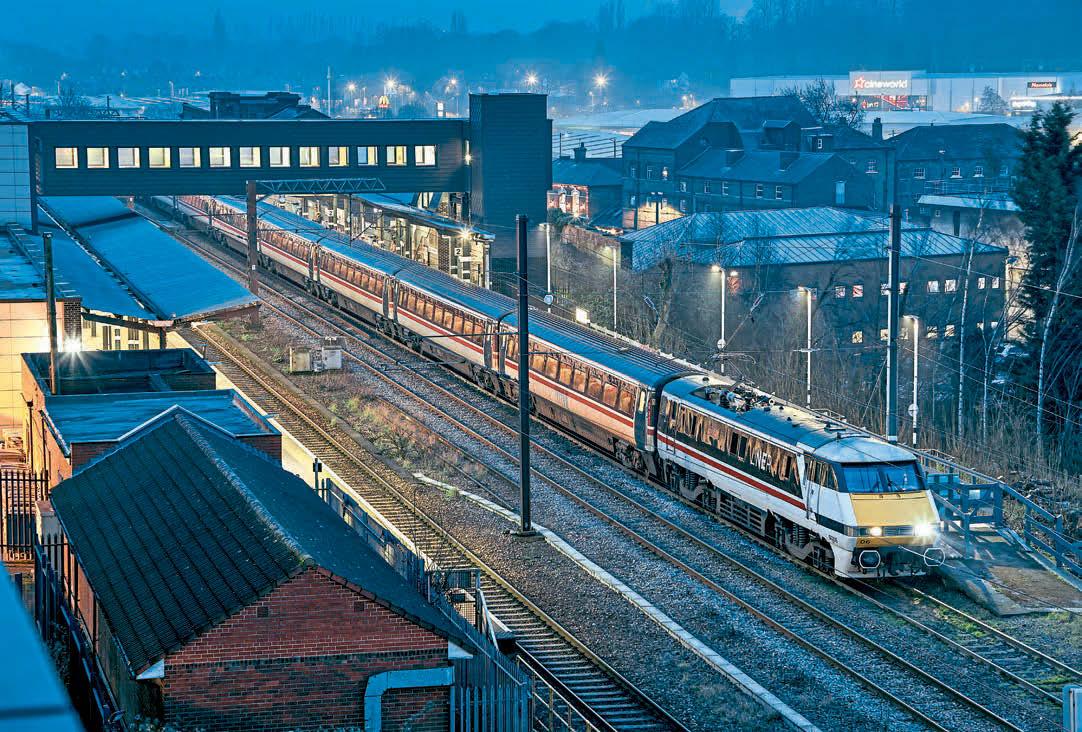


a fallen tree at Swanwick. The service was terminated and ran empty to a depot for repairs. The 15.23 Portsmouth to Cardiff with Nos. 158745+158766 started from Fareham and diverted via Eastleigh. The 16.24 Portsmouth to Cardiff with No 166219 also started from Fareham and was diverted via Eastleigh. Meanwhile, Southern services from Brighton terminated at Chichester or were diverted to Portsmouth & Southsea. Due to signalling issues at Preston Park, the 16.46 Victoria to Littlehampton, formed of Nos. 377470+377210, was diverted to Brighton. It was 30 minutes late on arrival at Littlehampton. A further signalling issue between East Croydon and Purley on January 19 meant some services were terminated short of their destination.
Locomotives noted on Southern metals included Nos. 66066, 66534, 66727 and 70812 during January 10 on the first of three weekend blockades between Gatwick Airport and East Croydon. No. 59203 worked the Westbury-Crawley New Yard-Westbury aggregates on January 15 and No. 59103 worked it the next day. The engineering work in the Gatwick Airport/East Croydon area on January 17/18 produced a variety of power, with Nos. 66001, 66538, 66717 and 66791 noted. No. 66001 was observed earlier, passing Arundel Junction working a ballast train from Eastleigh. Nos. 66100 and 66757 were noted at Haywards Heath on aggregates services from Newhaven on January 29 and 30. Also on January 30, Rail Grinding Machines Nos. DR79274+DR79264+DR79265 were noted at Three Bridges, heading towards Horsham. In addition, No. 66150 was seen on the Mountsorrel to Hothfield aggregates. The following day, Nos. 66551+66850 were noted at Sittingbourne on a engineer’s train from Hoo Junction.
More of the Class 701 units have been moved out of storage. No. 701007, which was last reported stopped at Worcester while on route from Long Marston to Wimbledon, continued behind No. 57303 on January 8. A further move on January 14 had No. 701006 taken by No. 57310 from Long Marston to Wimbledon. Classmate No. 57606 then took No. 701008 on the same
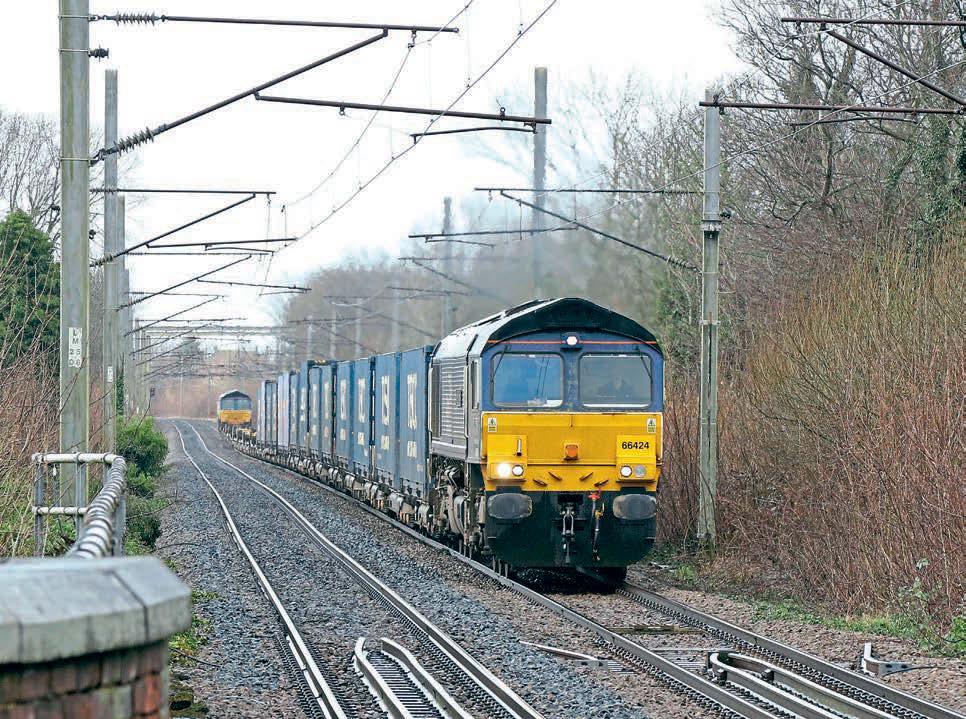
With Manchester Piccadilly largely closed for major track renewal works on February 14-22, container trains to and from Trafford Park were diverted to run top-and-tail via Earlestown, Chat Moss, and a reversal at
February 16, Nos. 66424 and 66423 top-and-tail the
route on January 21. The same loco then moved No. 701023 to Wimbledon on January 28, leaving just 701045/48 at Long Marston.
Class 455 units were in use on most days in January. With fewer trains needed at weekends, the likelihood of a Class 455 having to substitute is much reduced, but during a visit to Waterloo station on January 17, Nos. 5732+5721 were seen by Platform 2 forming the 1D41/15.23 departure to Dorking. It is reported that six units will be retained, namely Nos. 5712/16/17/21/27/32, possibly until March.
No. 458529 was moved from Wimbledon to Long Marston by No. 37501 on January 16.
The following day, Europhoenix Class 37 No. 37884 hauled Nos. 5710 + 5737 north through Market Harborough as the 5Q57/09.17 Wimbledon Park Depot-Derby Litchurch Lane. The same loco then took No. 5870 on the same diagram on January 22. It was in use again on February 2, conveying Nos. 5729+5719 to Derby.
Charter trains
On January 24, UK Railtours brought a Class 45 back to the Midland Main Line. No. 45118 Royal Artilleryman headed the 1Z10/06.09 Norwich to Chesterfield ‘Peak Blinder’ which ran via Cambridge, north London and the MML. Intercity Executive liveriedClass 47 No. 47593 Galloway
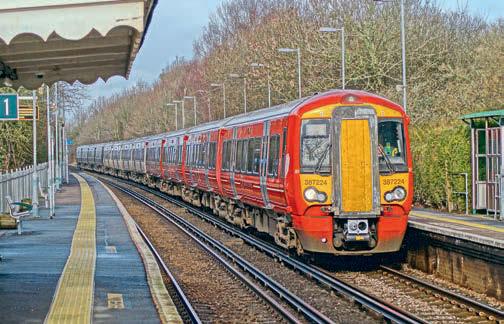
Princess was at the rear. After servicing at Barrow Hill, the return 1Z13/16.12 Chesterfield to Norwich ran via Sheffield, Loversall Carr Junction and Peterborough back to Norwich.
DB Cargo
In what is reported as the second running of a new diagram, No. 66130 took a rake of empty scrap wagons from Cardiff Tidal Sidings to Rossington on January 12, where they were loaded with scrap bound for Hartlepool Docks for export. The following day, the Class 66 took the then empty wagons to Sunderland, where they were again loaded with scrap and taken back to Tidal Sidings. Also on January 13, No. 66053 worked the regular Tidal to Saltley and return scrap train. Class 66 No. 66091 worked the regular Tidal to Burton steel train on January 13.
Tamper No. DR73957 was top-and-tailed from the Swanage Railway to Plasser & Theurer’s West Ealing Sidings by Class 66 Nos. 66128+66100 on January 26.
No. 59005 worked the 09.11 Westbury-Crawley New Yard-Westbury aggregates on January 9, noted passing West Worthing on the return trip.
On January 13, No. 59206 failed at Havant, working the 09.11 Westbury to Crawley New Yard aggregates. A rescue locomotive was sent from Southampton to move the train back to Eastleigh for an overnight stay.
On January 14, No. 59104 failed between Kintbury and Newbury when working the 6A15 from Whatley Quarry to Appleford. It has been widely suggested that a connecting rod in the engine broke,
Left: A 12-car formation at Berwick, East Sussex, on February 12 included units from each of the TSGN third-rail companies, as Nos. 387224 (Gatwick Express), 387121 (Thameslink) and 387174 (Southern) make up the 08.24 London Victoria to Eastbourne. CHRIS LIVINGS
although it is not clear if further damage was sustained as a result of the flailing remaining rod. Reports show No. 59104 being moved to Merehead and then taken out of the active pool. It remains to be seen if it ever works again for Heavy Haul Rail Limited.
One of the few Freightlinerhauled container services to be seen in winter daylight hours on the northern section of the WCML is 4S60, which runs as required from London Gateway in Essex to Coatbridge in Scotland. On January 24, this partly loaded service arrived at Coatbridge at 13.22 with Class 90s Nos. 90042+90044 coupled in front of Class 66 No. 66521.
Direct Rail Services
On January 20, Class 68 Nos. 68003 and 68007 were observed passing Thankerton with 6M50/14.54 Torness
Power Station to Carlisle Kingmoor, top-and-tailing the nuclear flasks.
Operating for the first time this calendar year on January 20 was the 6E73/09.09 service of loaded stone from Shap Summit Quarry via Burnley and Wakefield to Doncaster, which on that day saw the heavily work-stained Class 66 No. 66429 Charlie Brise pull a train of yellow Wascosa vehicles. That day’s 6E73 was held on the Up through line at Lancaster to allow Avanti West Coast, TransPennine Express
and Northern passenger trains to get ahead. Judging by the sound of No.66429 pulling this heavy train up the 1-in-98 gradient south out of Lancaster, it may well have been working on full power!
A trio of Class 68 locos, Nos. 68004+68033+68034, ran light together on January 22 from Crewe (0Z34/10.20) to Carlisle Kingmoor TMD.
On Friday, January 23, No. 88008 Ariadne was noted coming to a stop at Platform 5 at Crewe station when working train 4M27 from Coatbridge
to Daventry International Railfreight Reception.
Class 68 Nos. 68003+68007 hauled three white FNA flasks on January 24 from Crewe (6C53/06.19) to Sellafield.
On January 2, No. 66747
Made in Sheffield left Harwich Parkeston Quay Yard as 4E11/00.22 for Masborough, while No. 66763 took 4M78/05.52 to Hams Hall, both returning to Harwich PQ Yard the following day, the latter on 4A78/05.24 from
Felixstowe North, while the former brought in 4L10/16.20 from Trafford Park. Both departed on January 5. The following weekend, it was again No. 66763 on 4A78 but with No. 66314 Katie on 4L10 from Trafford Park – the first time it has been here since its naming. January 17 and the third weekend visit for No. 66763, while No. 66721 Harry Beck headed 4L10 from Trafford Park, and on January 24 it was again No. 66763 on 4A78 from Felixstowe North, but No. 66307 Ipswich Town
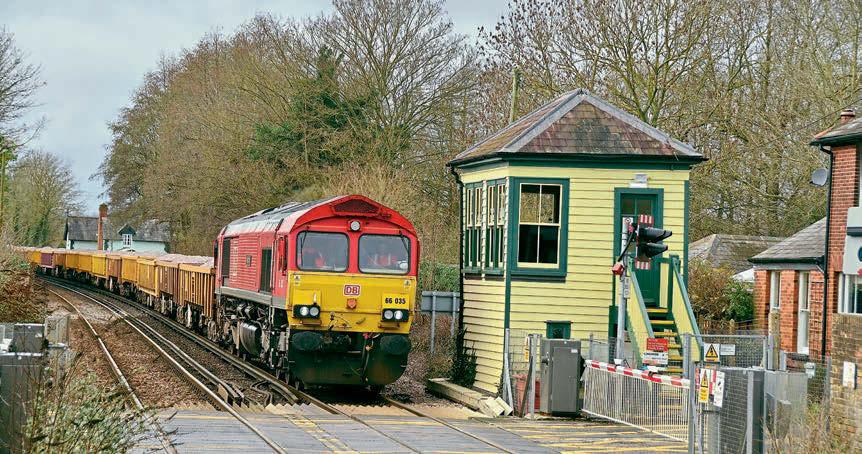
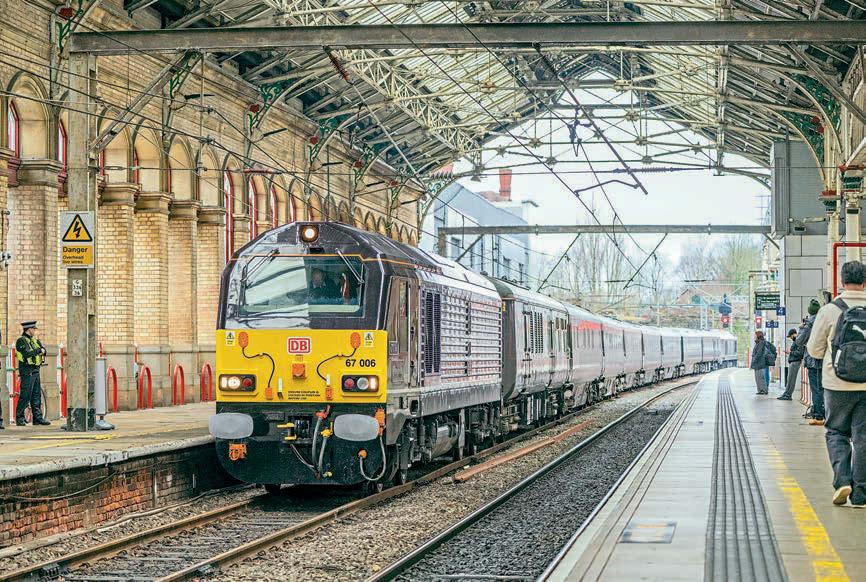
worked in with 4L10. Both left on January 26, with No. 66307 on 4R20 to Felixstowe North and No. 66763 heading off to Hams Hall. Change occurred on January 31 when No. 66723 Chinook brought 4A78 into the yard early Saturday morning and the later 4L10 from Trafford Park did not run.
During a visit to London Bridge station on January 7, Snow and Ice Treatment Train 3Y90, from Tonbridge West Yard to Purley Down siding, was seen leaving from beside Platform 15. The SITT was headed by No. 69001, followed by flat wagons YXA 99 70 9594 017-4 and YXA 99 70 9594 019-0, on which the snow and ice treatment modules were mounted, and at the rear No. 69013 in Andy’s Man Club livery.
The 09.01 Eastleigh East Yard to Hoo Junction Up Yard Civil Engineer’s train on January 9 was headed by four Class 66s, Nos. 66706+66544+66796+66771. Just 66706 was under power. MoD traffic reported included No. 66718 on a Bicester-MarchwoodBicester diagram. A change of traction on January 14 found No. 66712 working a Bicester-Kineton-Carlisle diagram. On January 19, No. 66753 worked from Bicester to Longtown. The previous day, No. 66718 had been in use again, working from Marchwood to Southampton Western Docks prior to working north on January 19 to Kineton, Bicester and Carlisle. The same locomotive was out again on January 29, working from Carlisle Yard to Longtown and back.
On January 15, the day’s Hams Hall (Birmingham) to Mossend (4S57) fully loaded container train, pulled by Class 66 No. 66309, was 74 minutes late on departing from Ham’s Hall. However, thanks to generous scheduling, it was only two minutes late arriving into Mossend Yard.
On January 21, Nos. 66762+66771 worked a train carrying cars and delivery vans on open trucks from Dagenham Dock (6X77/14.02) north on the ECML to Mossend. A number of the GBRf Class 60s are currently stopped in the yard at Doncaster Decoy, with Nos. 60002/21/26/56/76/85/96 reported at the beginning of February. Also stopped in early February at Leicester depot were Class 47 Nos. 47727/39/49. Meanwhile, Class 69 Nos. 69003/07/11 were stored back at Longport,
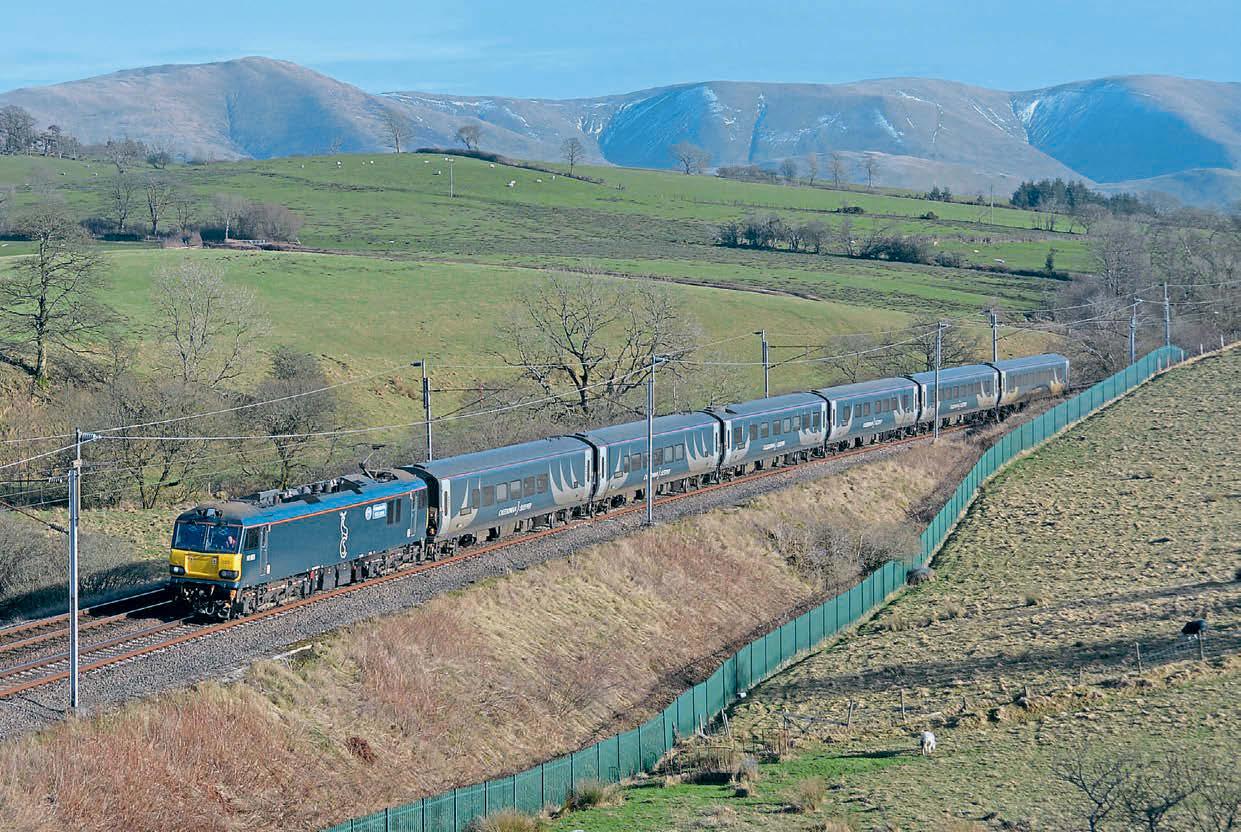
with Nos. 69012/15 stored at Whitemoor.
On January 27, GBRf Class 66 No. 66732 pulled a single white ‘Nacco’ branded bulk carrying vehicle from Wellingborough (6S90/09.04) to Eastrigg MoD sidings north of Carlisle.
In a move on January 29, unit Nos. 769535+769549 were moved from Leicester to Long Marston by No. 37423.
Colas Rail
Colas Rail Switch and Crossing Tamper No. DR73930 was moved from Shap (6J01/10.26) to Preston Dock Sidings on January 16.
Colas Rail Tamper No. DR73942 Nathan Hayes was moved on January 22 from Shap (6J87/10.19) to Edge Hill Sidings in Liverpool.
On the same day, two Class 70s, Nos. 70806+70810, hauled three empty log-carrying vehicles from Carlisle New Yard (6Z66/10.04) to Crewe.
Class 67 No. 67027, destined for use as a Thunderbird loco on the ECML, was sent to the Swanage Railway on February 3 for electric train supply (ETS) testing on stock at the railway.
High Speed Train power cars Nos. 43198+43097+43098 ran north from Laira to Carnforth on January 21.
WCR Class 57 No. 57012 hauled two maroon and four
blue/grey empty Mk. 2 coaches on January 28 from Carnforth (5V42/12.58) to Southall.
An interesting run on February 4 from Southall to Carnforth consisted of Class 57 No. 57012, plus Class 33 Nos. 33207+33025 triple-heading 17 coaches. These were Nos. 5955+6176+6183+5961+5965 +6024+6042+6067+6724 and 6051+6115+9526+3340+3390 +3314+3336+1212.
Disposal of members of the Tyne & Wear Metro’s original ‘Metrocar’ fleet resumed in the new year, with Nos. 4039 (January 14), 4073 (January 15), 4008 (January 22), 4045 (January 23) 4045, 4023 (January 28) 4023, 4056 (January 29), 4014 (February 4) and 4089 (February 5) leaving Howden depot by road for scrapping at J Denham Metals at Bishop Auckland.
New Class 555 units Nos. 555023/26/45 were reported at Dollands Moor on February 4, being taken to Wembley by Class 20 Nos. 20007+20205 that day and then overnight to York North Yard.
On January 9, BR Green Class 37 No. 37521 (D6817) was observed at Knighton Junction, south of Leicester, forming 1Z99 to Bardon Hill.
Inter-City swallow-liveried Class 87 No. 87002 Royal Sovereign pulled a rake of empty red and cream Mk. 2 coaches, plus two matching Mk. 1 coaches, from Crewe (5Z90/11.14) to Carnforth on January 14. After running round the coaching stock, No. 87002 returned the empty coaches to Crewe (5Z91/13.10).
Class 57 No. 57003 set off light engine from Carlisle Upperby at 16.57 (0Z57) on January 27, bound for Crewe. This loco only got as far as Tebay, however, having failed with an unknown problem. Rescue came in the form of LSL Class 37 No. 37521, which ran light northwards from Crewe (0Z99/20.46) to Tebay, collected No. 57003, and then this pair of locos set off together at 23.26, bound for Crewe.
Class 60 No. 60055 Thomas Barnado hauled the 6A25 Humberstone Road to Wembley aggregates service on January 18. Returned to service on hire to DCRail is GB Railfreight No. 60095, observed in traffic at the end of January.
In a move on January 8, HST power cars Nos. 43004+43042 conveyed coach Nos. 48119+ 48120+48121+49109+49108
A daylight run for a Caledonian Sleeper set is pictured at Beckhouses, Cumbria, on January 28, hauled by No. 92023 Polmadie 150 1875-2025 as the 10.10 Polmadie (Glasgow) to
+48122+48122+48124 on the 5Q43/08:10 move from Laira to Ely.
During January 13, RailAdventure Class 43 Nos. 43467+43468 moved Nos. 43066+43076 (DATS locos), plus Romic coaches Nos. 48106+48108+48104+49102, from Burton-upon-Trent to the Mid-Norfolk Railway.
Heading by road for scrap at EMR Kingsbury were No. 43017 on January 14, followed by No. 43020 the following day.
Class 37 No. 37407 moved Nos. 43188+43189 from Laira to Ely on January 20.
On January 27 vehicle Nos. 40807 (still blue/grey) and 42038 were moved from the Mid-Norfolk Railway to Burton by Nos. 43467 and 43468.
On January 18, after operating at Farington Junction, south of Preston, Network Rail’s Multi Purpose Vehicles Nos. DR79610+DR79621 ran south to Springs Branch, Wigan, then north to Carnforth arriving at 10.34.
On January 27, NR yellow-livered Class 43 Nos. 43014+43062 John Armitt top-and-tailed a set of New Measurement Train coaching stock from Leicester (1Q26/05.27) via Crewe to Edinburgh. The following day, this same formation ran
south from Slateford Depot (1Q26/06.38) to Crewe. NR blue-liveried Class 153 No. 153383 formed a 2Q14/11.55 Derby RTC to Bedford and 13.21 return on January 11, seen passing through Market Harborough. The same unit was out again on January 16 when it formed a 2Q64/10.05 Derby RTC to Bedford and 12.51 return.
BR Large Logo Blue Class 37 No. 37610 and Colas No. 37219 Jonty Jarvis top-and-tailed the 3Q11/20.05 Derby RTC to Ferme Park test train south through Market Harborough during the evening of January 22. The pair returned home overnight on January 23/24 as the 3Q05/23.19 Ferme Park to Derby RTC.
Noted on January 28 as it passed through Harwich International station working the 1Q18/10.54 Ferme Park to Clacton-on-Sea four-weekly NR Monitoring train were Colas Rail Freight Class 37/0 No. 37057 Barbara Arbon and classmate No. 37254 Cardiff Canton on the rear.
Our thanks
The Railway Magazine’s thanks for information go to: Paul Atkinson, Gene Collins, Mike Cooper, Robert Drysdale, Dave Greene, Barry Knock, Sean Morris, Dorian Porter, Mark Reynolds, David Rockford, Craig Wellum and Chris West. ■
Paddington to Penzanceduringthe Diesel Erafollowsthe course ofthe GreatWestern Railway’s mainlinefrom London Paddington to Penzancethrough awonderfulselectionofcolourimages fromthe renowned railway photographerBernardMills.The images coveraperiodofmorethan50 yearsanddate back to the mid-1960s,withtheprimaryfocusbeingthediesel-hydraulic eraofthe1970s.Each volume exploresthe routefromLondon Paddington to Penzance,with Part 1includingboththeGWR’s original routefromPaddington to Tauntonvia Bristolandthe later, moredirectlinevia Westburyand Castle Cary. A4size. 96pageseach.£22.95each.




Payjust £19.95 perbookplusP&P by visiting www.platform5.com andusing
basket, ororderbypost/telephonefromPlatform5MailOrder.Offerends30/04/2026.
Thedefinitiveguide to alllocomotives,coachingstock andmultipleunits that runonBritain’s main line railways. Includes detailed fleet listswith, owner,operator, livery anddepot information.Fully updated andincludesall new rolling stockdue to be deliveredin2026. Also contains:
• On-Track Machines •Network Rail ServiceStock •MultipleUnit Formations •Rolling StockAwaitingDisposal•Lists of Depots &Workshops •64pages of colourillustrations
Contains acomprehensive overview of Britain’srailway networktoday andawealth ofuseful technical dataforevery class. 432pages.Hardback.Cover Price £32.95.












www.platform5.combyusingthepromotioncode
by post/telephonefromPlatform 5Mail Order.Offerends30/06/2026.
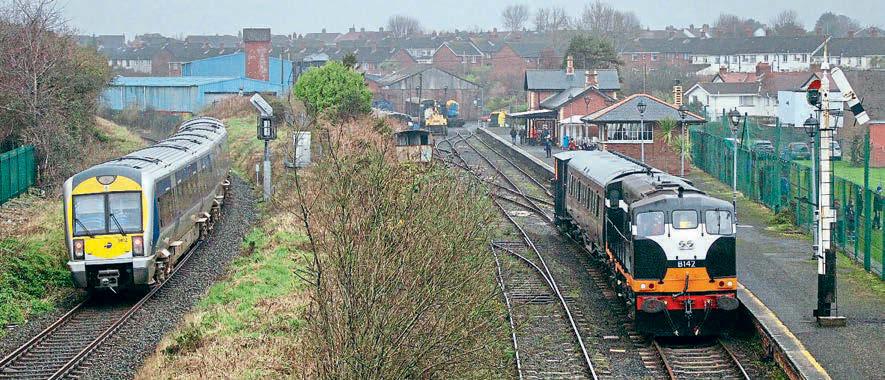
The locomotive could return to the main line later this year.
THE Railway Preservation Society of Ireland has started the overhaul of Great Northern Railway (Ireland) Q Class 4-4-0 No. 131.
Following its withdrawal from main line service at the end of December due to the expiry of its 10-year boiler certification, No. 131 returned to Whitehead from Inchicore Works on January 23.
The overhaul began two days later with the removal of cab fittings and pipework, followed by the lifting of the cab roof.
Attention then shifted to the boiler, with cladding removed
and insulation carefully bagged for reuse. A key step in the process involved unbolting the smokebox from the cylinder block, paving the way for the boiler lift, which took place on February 8 using two shear-leg cranes, themselves heritage items, to lift it clear of the frames and place it on to a specially prepared works trolley.
This trolley, believed to have originated from the GNR(I) Works at Dundalk, was equipped with wooden and steel bearers to accommodate the boiler’s unusual shape.
The ashpan was removed
separately. The boiler and trolley were then positioned outside the Dunleath Workshop for grit-blasting and washing.
Examination
This thorough cleaning will allow a detailed examination of the boiler, revealing the extent of the work necessary on No. 131 to return it to steam. The locomotive received a boiler retubing in 2023, and the tubes are considered sound until at least 2030.
It is anticipated that No. 131 may return to main line traffic later this year, following the overhaul completion of LMS (NCC) WT Class 2-6-4T No. 4.
■ In a separate development
at the end of January, the RPSI was granted a Railway Operators Licence by the Belfast-based Department of Infrastructure, successfully completing the first stage of the licensing process required to operate steam trains in Northern Ireland.
“This is a significant milestone for the Society and a key step towards returning steam trains to the main line in Northern Ireland,”said RPSI chairman Peter Rigney. “A tremendous amount of work has gone on behind the scenes to reach this point, and great credit is due to the small, dedicated team who made it possible. The next phase will be the granting of a safety certificate.”
THE Irish Railway Record Society has announced a tour on Dublin’s Luas tram system on May 10, traversing the Red Line and exploring various nonpassenger sections of track and lesser-used platforms. The tour will depart from and return to the Red Cow Luas Depot, covering the following route: Red Cow – Smithfield Crossover (reverse) – Heuston middle platform (reverse) –Connolly (reverse) – The Point (reverse, with a request for the use of the centre platform) –Belgard – Saggart – Saggart Reversing Siding (reverse) – Tallaght – Tallaght Reversing Siding (reverse) – finishing through the middle platform at Belgard, and back to Red Cow Depot. Highlights include the Smithfield Emergency
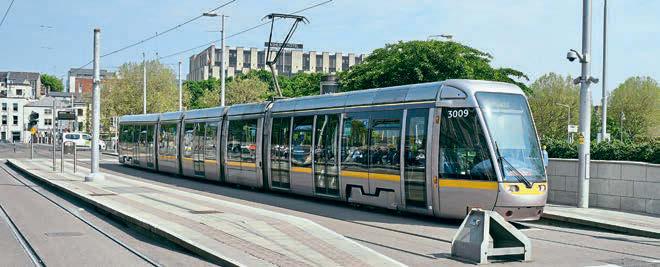
Interim chairman for IÉ is appointed FORMER Dublin Bus chairman Ultan Courtney has been named as chairman of Iarnród Éireann for a one-year period following the resignation of Steve Murphy.
Mr Murphy, who was appointed two years ago after joining the board in August 2023, had been expected to serve until 2029.
Ireland’s Department of Transport said Mr Courtney would take on the role while a formal recruitment process is carried out.
THE High Court action brought by CAF over the awarding of a €650 million contract to replace the Dublin–Belfast Enterprise Service train fleet to rival manufacturer Stadler reached a formal conclusion on February 13.
CAF had sued Iarnród Éireann and Northern Ireland Railways, challenging the legality of the contract tender process, but the injunction it sought was lifted last November, allowing IÉ and NIR to proceed with procurement from Stadler. Last month, Judge Mark Sanfey was told that the case had been settled, and could be struck out, with no order as to legal costs.
Dublin MetroLink project tender process launched TRANSPORT Infrastructure
Ireland launched the tendering process for two main contracts relating to the Dublin MetroLink rail project last month.
The 18.8km (11.7 miles) route will run from Swords to Charlemont serving 16 stations. The first contract, valued at €4.56 billion, focuses on the southern section from Charlemont to Northwood. It encompasses the construction of bored railway tunnels, tunnel portals, ventilation shafts and belowground station excavations at multiple locations, reaching depths of up to 35m (115ft). Set at €3.34 billion, the second contract covers the northern section from Northwood to Estuary. This will include constructing viaducts, park-and-ride facilities and preparing a depot at Dardistown, in addition to excavations and station works at multiple sites.
Crossover, travel from Connolly to George’s Dock using the third non-passenger side of the delta junction, and access
to non-passenger turnback sidings at both Saggart and Tallaght. Details can be found at www.irrs.ie
New ground for British-built Pacific No. 3925.
AFTER many years when steam motive power was not permitted on the national network in Argentina without a diesel locomotive assisting, British-built Pacific No. 3925 broke new ground in November, working on its own
in the centre of Buenos Aires.
The Class 12E loco, with two coaches, was used for several hours working in and out of Plaza Constitución station as part of filming for a new Netflix movie.
Rather bizarrely, the storyline was set in Berlin before the Second World War, so the loco had German numbers and signage attached for the film sequences.

Pacific No. 3925 arrives at Plaza Constitución station on November 26, 2025. Before the filming work commenced, the loco was given German-style numbers and branding –but in this condition, it was only available to the film makers. DARIO


Twenty Class 12E threecylinder 4-6-2 locos were built by Vulcan Foundry in Newtonle-Willows and delivered in 1927/28 for the British-owned Buenos Aires Great Southern Railway, which operated the 8,000km 5ft 6in (1,676mm) gauge network, running south from Buenos Aires to Bahia Blanca. A further loco followed in 1930.
Although nominally replaced by diesels in the 1950s and 1960s, all the Class 12E locos remained in service in 1967 with the Ferrocarril General Roca, which took over operation of the network following nationalisation of Argentina’s railways. No. 3925 (Vulcan Foundry No. 3911 of 1925) was withdrawn in 1973 and stored. It was rescued from storage in
scrap condition in 1993 by the Ferroclub Argentino railway preservation group and completely restored at its Remedios de Escalada site, where it is now based and on display at weekends when the site is open to the public.
Following a near 20-year restoration, the locomotive was authorised for main line operation again during 2025.
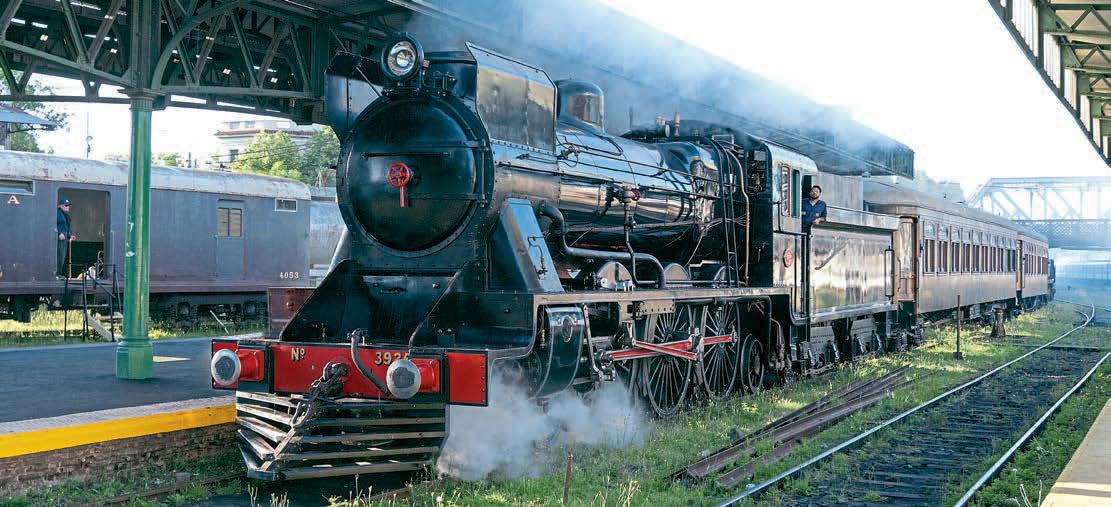
CANADA’S ‘Northlander’ passenger service, connecting Toronto with Timmins and Cochrane about 740km (460 miles) further north, is being reinstated following withdrawal in 2012.
Three brand-new trains and modernised infrastructure will allow it to be relaunched later this year. The service was originally started by Ontario Northland Railway (ONR) in 1976 and in its early years used former European Trans Europ Express (TEE) diesel electric multiple unit coaches (Swiss SBB type RAm TEE and Dutch NS Class DE4, both used for TEE services from 1957 to 1974). These were powered by older Canadian diesel locos as the TEE power cars were not designed for Canadian winter weather.
From 1992, North Americanbuilt coaches and locos replaced the ex-TEE vehicles, some of which have since been shipped back to the Netherlands where they are being restored by a preservation group.
To reintroduce the service, ONR ordered three ‘Venture’ push-pull trains from Siemens. Derived from push-pull trains already delivered to Canadian national operator Via Rail, the ONR trains have three passenger coaches (two Economy and one Business Class) and a SC-42 ‘Charger’ diesel loco. Siemens built them in Sacramento, California, and the first was delivered to Canada by rail in late December last year.
In addition to the new trains and modernised or rebuilt
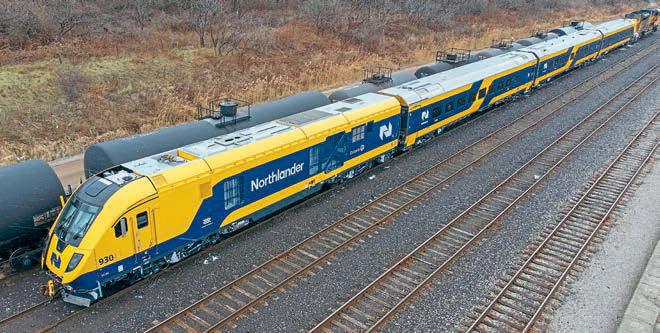
stations, a 982m-long (0.6 miles) chord has been built, connecting the Canadian National Newmarket subdivision (used by the trains between Toronto and North Bay) to the Ontario Northland
main line and station in North Bay. The new trains will operate between Toronto and Cochrane via Timmins. Current plans are for trains to run overnight in both directions. In Timmins, they will serve and reverse at a new station east of the town. They will connect in Cochrane to the existing ONR ‘Polar Bear Express’ service to Moosonee, which runs several times a week using older coaches and EMD GP38 diesel locos.
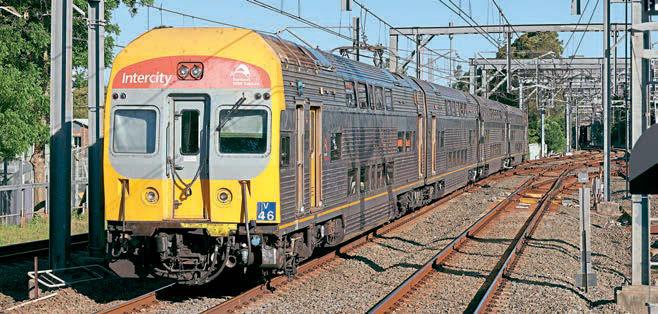
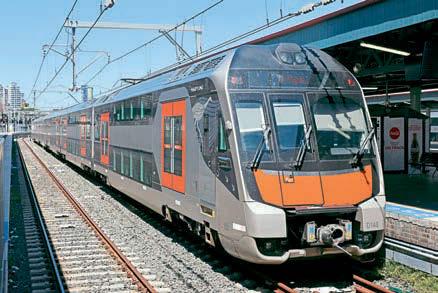
THE last train worked with New South Wales ‘V set’ electric multiple units ran from Lithgow to Sydney Central on January 30.
Formed of four or eight-car EMUs, 246 double-deck outer suburban ‘V set’ vehicles were built by Commonwealth Engineering (Comeng) in eight separate orders between 1970 and 1989. The trains were used for longer-distance services on the 1.5kV DC electrified network which expanded in the 1970s and the next two decades. Withdrawals of the oldest trains
began in 2005, but the majority remained in service until last year. One four-car train has been earmarked for preservation.
The ‘V set’ trains have been replaced by a new fleet of ‘D set’ double-deck electric units, also known as ‘Mariyung’ (an aboriginal word for emu).
Hyundai Rotem, together with Australian rolling stock company UGL and Japanese firm Mitsubishi Electric, won the contract in 2017 to build the new fleet of 512 vehicles, later increased to 554 vehicles
forming 55 six-car and 56 fourcar sets, enabling operation of 10-car formations on busy services. The trains were built at Hyundai Rotem’s Changwon factory in South Korea.
The first train was delivered in 2019. A further 56 vehicles were added to the order (to form 28 more six-car trains) in 2021. Despite initial approval for use granted in 2021, the ‘D sets’ did not enter service until late 2024. One vehicle was exhibited at Innotrans in Berlin in September that year.
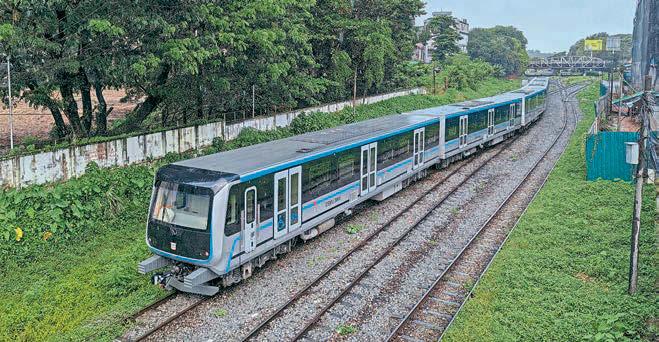
NEW trains which were part of an order placed with CAF for use in Myanmar have begun entering service.
Japan’s Mitsubishi Corporation awarded CAF a contract to build up to 246 diesel electric multiple unit (DEMU) metre-gauge vehicles in 2020. It was part of a bigger deal agreed between Mitsubishi and the government of Myanmar, funded by loans from the Japanese government. The contract, worth more than €500 million to CAF,
includes 11 six-car units for the Yangon Circular railway and a further 30 six-car units for the Yangon-Mandalay railway, operations which are both being upgraded. The first of the new trains arrived in Myanmar in early 2024, and they have now entered service on the 46km Yangon Circular Railway, replacing second-hand DMUs and a handful of diesel locohauled trains. The other 30 trains are designed for use on the 620kmlong (385 miles) Yangon-
Mandalay line which connects Yangon to the country’s capital, Naypyidaw, and the second largest commercial city, Mandalay. Along with infrastructure improvements, the new units (replacing second-hand Japanese DMUs) should lead to journey times being almost halved (from about 15 hours to eight) once all work has been completed. Some of the longer-distance trains are now in use working services from Yangon to Bago and Naypyidaw.
The new fleet of ‘D set’ double-deck trains, also known as ‘Mariyung’ (‘emu’), carry this image on driving cars.
TWO former Channel Tunnel Class 92 locos have been moved from Romania to Bulgaria by DB Cargo.
At least one of the five former British Rail Class 92 electric locos exported to enter service with DB in Bulgaria, No. 88-034 (previously No. 92 034), has been stored, and two more ‘92s’ (loco Nos. 88-003 and 88-039, formerly 92003 and 92039) have been transferred to Bulgaria from DB’s subsidiary in Romania.
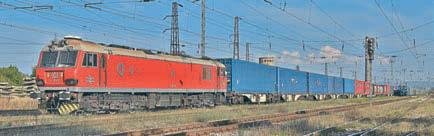
Now in Bulgaria, DB No. 88-039 (formerly No. 92039) is seen at Voluyak Yard, northwest of Sofia, waiting to head west with a container train on September 7, 2025. Unlike the other five ‘92s’ in Bulgaria, the locos imported from Romania carry full DB red livery and have the cast BR double-arrow symbol and Channel Tunnel bodyside rings. Now designated Class 88s, they are a regular sight on intermodal trains heading for the Serbian border. STEPHEN GINN
Slovenia modernises international fleet hour. The complete order is worth €97.7 million. The coaches should be in service by the end of 2028, but the four new locos will enter service in May 2027, replacing older SŽ pp Class 342 locos built in Italy by Ansaldo in 1968-70.
SLOVENIAN national passenger operator SŽPotniški promet (SŽ pp) has ordered 20 new loco-hauled international day coaches from Hungarian builder Magyar Vagon Group and four Siemens Vectron multi-system locos capable of 200km per


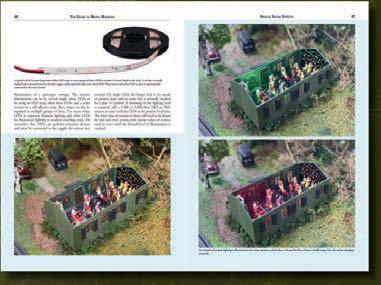



By Brian Robertson
THIS publication covers in depth a topic rarely seen in print except for the occasional pictures supporting other topics. From the days of the Crimean War in 1855, railways have been employed to convey sick and wounded personnel away from the battlefield to the safety of hospitals. By the time of the South African War in 1899-1902, specially converted trains were in use. Their use greatly increased in both World Wars to bring back the injured to Britain, where further converted coaching stock was used to move the casualties to hospitals around the country. Wars have continued since then and ambulance trains continued in use through to the late 1990s, with trains maintained on
By Colin J Howat
standby should they be called upon. This publication provides a detailed look at these specialist forms of rolling stock, with dates of formations and employment listed. Ominously, we are now once again in a time of conflict and uncertainty in Eastern Europe and the days of ambulance trains could again be called on should conflict intensify and spread beyond the borders of Ukraine.
A fascinating look into a little recorded subject, the publication has been researched in depth with a full listing of source material listed. Highly recommended to all interested in this aspect of railway history. AB
Published by Amberley Publishing www.amberley-books.com
128 pages, paperback, £16.99
Published by Amberley Publishing www.amberley-books.com
96 pages, paperback, £15.99

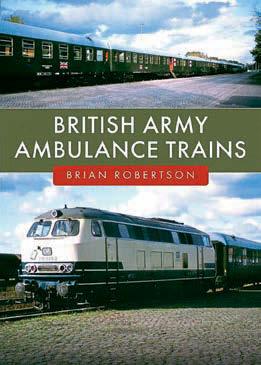
MY serious interest in railways began around a year after the last Class 126 DMUs were withdrawn, so I was particularly keen to read this book, which chronicles the careers of both the Edinburgh–Glasgow and Ayrshire sets to gain a better understanding of their history.
The introduction is very informative and well-structured. The author’s personal experiences add a lot to it, as he not only travelled on the units in their BR days, but was also allowed to drive one and was present for the recovery of vehicles for preservation. His inclusion of anecdotes from friends who were also familiar with the Class 126s also adds further interest.
A good mix of black and white and colour images have been used to illustrate the book (180 in total). The collection of photographs starts off strongly with construction, ex-works and publicity shots from British Railways. Later in the book, however, some of the images used are of noticeably poorer quality and the selection seems to lack direction. Perhaps it would have worked better to pull shots of the same railtour or those from specific eras or locations together rather than running them separately over a series of pages. I think giving a little more space to pictures and information on the power cars exported to Liberia and the vehicles preserved at the Bo’ness and Kinneil Railway would also have been worthwhile. GP
On the tracks of the Flying Scotsman
By David Pendleton
HERE is a vivid portrait in words and quality photographs of the iconic 400-mile East Coast Main Line between London King’s Cross and Edinburgh Waverley.
The excellent text by long-time railwayman and author David Pendleton works well in partnership with the vivid images by Gavin Morrison, one of our most distinguished photographers of the railway scene and the ECML in particular.
The numerous photographs are mostly in colour, though a fair number are monochrome, and they cover the wide range of services, workings and rail operations on this key route from the days of British Railways Eastern Region steam right up to present day LNER ‘Azuma’ operations.
Key rail centres such as Doncaster, York, Darlington and Newcastle are an essential feature, and the informative text covers both the history of the route and features personal anecdotes and observations.
This is a valuable addition to the literature that covers the history and development of a key UK rail route –recommended strongly. RSS Published by Great Northern Books www.greatnorthernbooks.co.uk 144 pages, hardback. £22.50
Bound volumes
Your magazines can also be bound into volumes (12 issues approx) for £60.00 per volume and £10.00 for postage and packing.
For more information see www.craftsmanbinders.co.uk; or



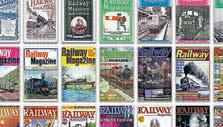
email: Grahamlampard@gmail.com.
Send your magazine copies with your name and address plus remittance to: Graham Lampard, Craftsman Binders, Unit G38, Vulcan Works, 34-38 Guildhall Works, Northampton NN1 1EW.





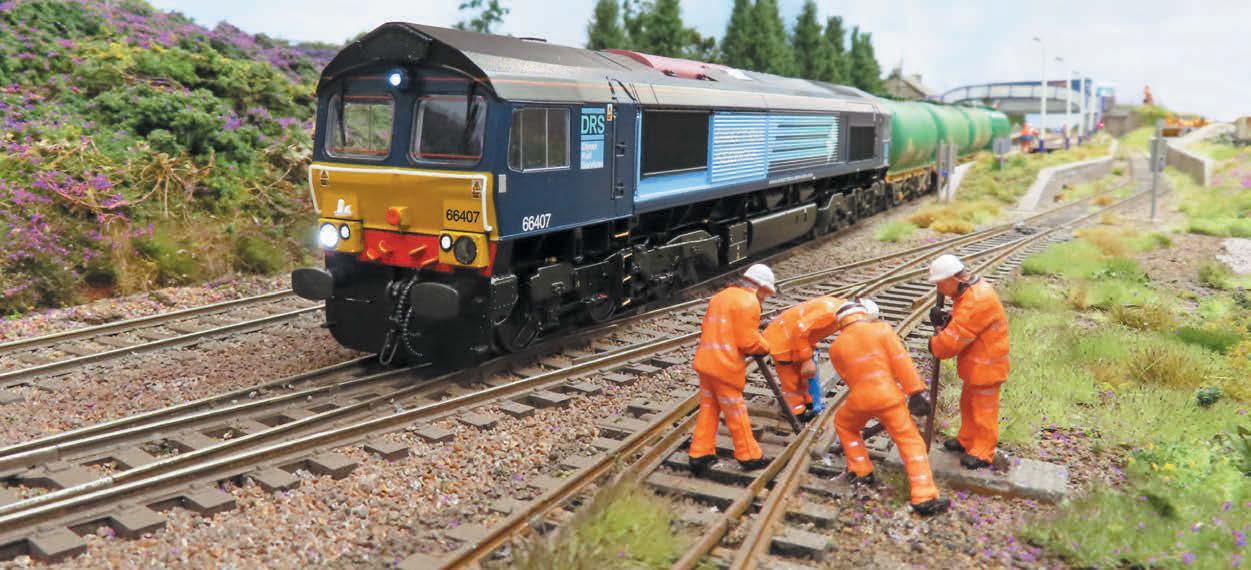


GREAT CENTRAL RAILWAYANA LTD
14SCHOOLSTREET, WOODFORDHALSE, DAVENTRY,NORTHANTSNN113RL
Themarketleadersintheauctionofold railwaytickets,busandtram tickets,luggagelabelsand railwayletterandparcelstamps Auctionswillbeheldonline Pleaserefer to www.paddingtonticketauctions.co.uk forfurtherdetails
We arenowacceptingitemsinallcategories forsubsequentevents. Contact usnow foraspeedy valuationandadvice onhow to enter your collection forauction. A colourillustratedcatalogueof at least500lotswillbepublishedonour website at www.paddingtonticketauctions.co.uk at least two weeks beforetheauction.
If you requireaprinted copy pleasesend yournameandaddress to enquiries@gcrauctions.co.ukorspeak to uson 01327263633or01327262193
5Station Road,

Specialising:In-printand
railway books, Timetables,WTTsandmore... Mail orderincluding overseas. Mastercard/Visa Onlineshop:www.railroadtrading.co.uk orphone T. 01403263026 E-mail:jb.railroadtrad@btinternet.com POBoxNo.194,Horsham. W. Sussex,RH135GS



Visitour website to viewthousandsoftransportphotographsincluding Railways, ShippingandBuses. Includingselectionsfrom Colin Marsden,David Canning, Darren Ford andmanymorepublishedphotographers. All available forpurchase onpremiumqualityphotopaper.Newitemsbeingaddedevery week. Furtherdetailsfromtransport.topicsuk@hotmail.com
Followuson Facebook: TRANSPORT TOPICSUK Eba: transporttopicsuk www.britishrailwayphotographs.com


www.railwaymagazine.co.uk
Findusattheselocations
*HemswellAntiqueCentres, Building2,CaenbyCorner Estate,HemswellCliff.DN215TJ *JSCCollectables,13Birdgate, Pickering. YO187AL
* RedHouseAntiqueCentre, DuncombePlace, York. YO17ED EACH OPEN7 DAYS AWEEK 07788856752
Email:nicholasgerrard railwayana@gmail.com












Sponsored by
The crossword winner and two runners-up can choose books worth £50 and £25 respectively from the extensive Nostalgia Collection. Visit us at www.mortonsbooks.co.uk
Across 1 and 7 down Eastern end of the West Somerset Railway (7,7)
5 London district with Central, Park and Stadium stations (7)
9 Nominal location of Warwickshire stations Henley and Hampton (2-5)
10 Lynton & Barnstaple Railway 2-4-2T loco, a 2017 new-build (3)
11 Initials of London’s automated light metro railway system (1,1,1)
12 and 2 down Former NER station between Malton and Gilling (9,3)
14 Station between Tunbridge Wells and Robertsbridge (5)
15 ___ Park, station between Stratford and Romford (5)
17 Kent & East Sussex Railway station and loco depot (9)
19 ___ Hall, preserved GWR No. 4920 (9)
21 First station north of Ravenglass on the Cumbrian Coast Line (5)
24 ___ Green, station between Birmingham and Sutton Coldfield (5)
25 ___ Lane, station between Harrow & Wealdstone and Watford Junction (9)
27 Former GWR station between Exeter and Heathfield (3)
28 Number of driving wheels on a BR 9F (3)
29 Station on the Rhymney Line (3-4) 31 See 25 down
32 Station and junction between Marple and Manchester (7)
Send completed form (photocopies are accepted) to: March Crossword Quiz, The Railway Magazine, Kelsey Media Ltd, Media Centre, Morton Way, Horncastle LN9 6JR. Open to UK entrants only. Winners will be announced in the May 2026 issue. The winners will be the senders of the first all-correct solutions opened in our office. You can email entries to railway@kelsey.co.uk Please list the answers to the clues for across, then down. There are no cash alternatives available. The winners will be the first names drawn at random from the people who answered correctly. Terms and conditions apply. To view the privacy policy of Kelsey Media (publisher of The Railway Magazine) please visit www.kelsey.co.uk/privacy-notice
PEP TALK: This year marks the 50th anniversary of the first EMUs derived from British Rail’s prototype PEP project entering service (the Class 313s), while this spring should see the last few PEP-derived vehicles still in main line use being withdrawn (the former Class 508 trailers in the Class 455 sets).


Down
1 Seaside terminus of a former branch from Churston (7)
2 See 12 across
3 Bridge ___, one end of the heritage Caledonian Railway (Brechin) (2,3)
4 Station between Wokingham and Guildford (9)
5 Birthplace of George Stephenson (5)
6 Robin Hood Line station, formerly the largest UK town without a railway passenger service (9)
7 See 1 across
8 Junction for the GWR’s Fairford branch (7)
13 The ‘V’ of DVT (3)
16 Station between Nottingham and Newark (9)
18 City of ___, ‘Coronation’ ‘Pacific’ No. 46243 (9)
19 Lord ___, ‘Battle of Britain’ No. 34052 (7)
20 17th-century French playwright commemorated by Class 92 No. 92010 (7)
22 ___ Peters, celebrated Somerset & Dorset line photographer (3)
23 LNER CME, 1923-41 (7)
25 and 31 across Romney, Hythe & Dymchurch railway pioneer and Chief Engineer (5,7)
26 ___ Castle, GWR No. 5097 (5) 30 ___ o’ the Wynd, ‘A1’ No. 60116 (3)
Solution to the January issue
Across: 9 Ashchurch 10 Diana 11 Lever 12 Immingham 13 Islands 14 St Cyres 17 Leigh 19 Man 20 Luton 21 Manxman 22 Spilsby 24 Calbourne 26 Gooch 28 Chale 29 Sir Daniel Down: 1 Earl 2 Shovel 3 Sheringham 4 Trains 5 Thompson 6 Aden 7 Bathurst 8 Yarm 13 Irlam 15 Collingham 16 Sandy 18 Ian Allan 19 Montrose 22 Sierra 23 Scotia 24 Cock 25 Over 27 Hull
January winner: J M Sears, Preston.
Runners-up: Derek Higgs, Dartford; Val Wood, Loughborough.
The closing date for this month’s crossword is Friday, April 3, 2026.
To mark the end, we look back over the life and times of all the PEP-derived second generation EMU fleets in our issue out on Wednesday, April 1.