MensFitnessGuideIssue58

Page 1


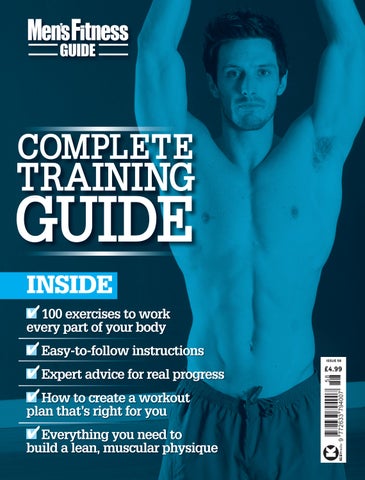
100 exercises to work every part of your body

Easy-to-follow instructions

Expert advice for real progress

How to create a workout plan that’s right for you

Everything you need to build a lean, muscular physique

GUI DE COM PL ET E T RAI N I NG

Photography Tom Miles

Design Marco Crisari, Richard Davis

Illustrations Roger Gorringe

Model Toby Rowland@WAthletic

Sub editor Juliet Giles

Kelsey Media, The Granary, Downs Court, Yalding Hill, Yalding, Kent, ME18 6AL; Tel: 01959 541444

ADVERTISEMENT SALES

Head of investment: Mike Pyatt (01732 452243, mike@talk-media.uk)

PRODUCTION

Print production manager: Georgina Harris Print production controller: Hayley Brown

MANAGEMENT

Chief executive officer: Steve Wright Publishing director: Mark Winterton

Operations director: Gill Lambert

Retail director: Steve Brown Head of direct consumer revenue: Helen Knight

Kelsey shop: shop.kelsey.co.uk/subscription/MEG Back issues: 01959 543747

DISTRIBUTION IN GREAT BRITAIN

Seymour Distribution Limited 2 East Poultry Avenue London, EC1A 9PT Tel. 020 7429 4000 seymour.co.uk

DISTRIBUTION IN NORTHERN IRELAND AND REPUBLIC OF IRELAND

Newspread tel: +353 23 886 3850

KELSEYmedia

Kelsey Media 2026 © all rights reserved. Reproduction in whole or in part is forbidden except with permission in writing from the publishers. Note to contributors: articles submitted for consideration by the editor must be the original work of the author and not previously published. Where photographs are included, which are not the property of the contributor, permission to reproduce them will have been obtained from the owner of the copyright. The editor cannot guarantee a personal response to all letters and emails received. The views expressed in the magazine are not necessarily those of the editor or the publisher. Kelsey Media accepts no liability for products and services offered by third parties. Kelsey Media uses a multi-layered privacy notice, giving you brief details about how we would like to use your personal information. For full details, visit kelsey.co.uk or call 01959 543524. If you have any questions, please ask. Submitting your details indicates your consent, until you choose otherwise, that we and our partners may contact you about products and services that will be of relevance to you via direct mail, phone, email or SMS. You can opt out at ANY time via email: data.controller@kelsey.co.uk or 01959 543524.

While every care was taken during production, the publishers cannot be held responsible for the accuracy of the information or any consequence arising from it. Kelsey Media takes no responsibility for the companies advertising in this guide. The health and diet information presented in this guide is an educational resource and is not intended as a substitute for medical advice. Consult your healthcare professional before making any extreme changes to your diet.

Welcome

For many years, it has been proven that the best way to change your body shape is through weight training. Within the pages of this guide, you will find everything you need to know about training with weights safely and effectively. Put simply, by working your muscles against a resistance, you will create tiny tears in your muscle fibres that will heal bigger and stronger than they were before. Building muscle is also an effective way of burning fat, because your body is obliged to burn up calories from your fat stores simply by sustaining the extra muscle you carry. Of course, this doesn’t mean you can live off pizzas and expect to have the body of an Olympic athlete, but by following the 80/20 rule of eating (whereby 80% of your diet is healthy, while 20% allows for cheat meals and treats), you can build the body you’ve always wanted without sacrificing the foods you love.

WHAT’S IN THE COMPLETE TRAINING GUIDE ?

Inside these pages, you will find demonstrations and explanations for some of the best exercises to build every part of your body. We’ve included a wide range of moves, because most men stick to the same few exercises every time they go to the gym – the ones they know and are comfortable with. However, experience shows that people who always do the same exercises soon stop adding new muscle, because their bodies have adapted to their routines and are no longer stimulated.

To keep adding muscle, you need to continually change your workout routine to keep your body stimulated. That’s why we have provided you with enough exercises for you to change your workout frequently, without ever doing the same routine twice. This has the additional benefit of keeping your brain stimulated, so you don’t get bored and give up on your training regime after only a few weeks.

WHAT ELSE WILL YOU FIND?

As well as the main exercises, you’ll find information on how to warm up, plus how to put together an effective workout. Ultimately, this guide will teach you the principles of effective weight training and provide you with all the ammunition you need to start your own training regime with confidence, so you can build the body you have always wanted.

How to use this guide

The Complete Training Guide is perfect for beginners and experienced weight trainers alike. If you are familiar with gyms, have trained with weights before and know your goals, then you can simply use this guide as a reference to the best exercises for each muscle group. If you are new to training, you’ll find tips and advice on warming up, building a workout regime and training effectively. We start with an introduction to warming up – why it’s so important before each and every workout, and providing you with the perfect pre-workout warm-up. Then we move onto the exercises themselves, which make up the bulk of the Complete Training Guide We’ve divided the exercises by body part. On page 10, you’ll find a chapter dedicated to exercises that build muscles in the arms. This is followed by chapters on abs, back, chest, legs and shoulders. Of course, the reality is that many of these exercises will work muscles in several parts of the body at once, but we have usually given only the

target muscle for each exercise. For example, the barbell curl (on page 10) is in the ‘arms’ chapter, even though the exercise also trains muscles in the shoulders and torso. With more than 600 muscles in the human body, we thought it best that each exercise only mentions the muscles you are aiming to target specifically!

On each spread, we have demonstrated one main move and then offered three ‘variations’. The main moves are classic exercises that should be in every man’s repertoire, while the variations ensure you always have an alternative when you need to perk up your training.

BUILDING A WORKOUT

After the exercise demonstrations, we provide details on how to arrange the exercises into workouts for the best results (page 60). Most weight-training manuals give you a specific workout plan to follow, but this means that those guides’ usefulness comes to an end once you have completed the plan after

Advice for beginners

New to exercising? Read this before you get started:

• Check with your GP before beginning any new exercise regime, especially if you have a history of heart trouble.

• Always warm up properly before doing any serious exercise, to help prevent aches and strains occurring.

• If you feel pain during your workout, stop immediately. Don’t be tempted to work through it, or you could do serious damage to

muscles, joints or tendons.

• Maintain perfect form for every repetition (rep) of every exercise. Each exercise in this book comes with detailed notes on form, and most gyms have fitness experts who will be happy to help if you are still unsure about an exercise.

• Pick a weight you can manage easily the first time you perform any lifting exercise. This way, you can concentrate on performing the exercise perfectly. Leave your ego

a few weeks. Instead, here at Men’s Fitness, we believe it’s better to explain the basic principles behind effective workouts, so that you can create your own plans to suit your fitness level and lifestyle, and also means you can keep changing your workouts every few weeks, safe in the knowledge you’ll be working out to maximum effect.

EAT AND BE MERRY

Of course, your body shape doesn’t just come down to your workouts: what you eat plays a huge part, too. To make the most of the exercises in this guide, it’s important to make sure your workouts are properly fuelled. Always make sure you’re eating a combination of healthy carbohydrates, protein, fats and vitamins at every meal, to keep you healthy and boost all your muscle-building efforts.

With all that’s included in these pages, the Complete Training Guide is a comprehensive weight training manual that will see you through every step of your weight training journey. We hope you enjoy it.

at the door – choosing a weight that’s too heavy for you is the fastest way to cut your training short through injury.

• You have hit ‘failure’ when you can’t complete another rep of an exercise without breaking good form. So, if your training plan says you should perform each exercise ‘to failure’, it means you should stop when you can’t lift a weight with perfect form, not when you can’t lift the weight at all.

• In many of the form guides throughout this guide, you’ll see

A few training myths busted

1

‘Weight training will make me look overly bulky; I just want to tone up’

No-one has ever woken up after a weight training session to discover that they have turned into Arnold Schwarzenegger overnight. Yes, weight training will increase muscle size, but gaining massive bulk takes years (and, in many cases, illegal steroids), so don’t worry about sudden body changes.

Also, ‘toning’ is one of those terms that doesn’t mean anything. If you want to ‘tone up’, what you are really saying is you want to build muscle and lose fat, in order to look more defined, and that’s exactly what this guide is all about.

2

‘Doing sit-ups will help me lose fat from my belly’ Sorry, you cannot lose fat from a specific part of your body. You can just lose fat generally, and the best way to do that is through proper diet and calorie-burning exercises. Sit-ups use very few muscles, and so burn very few calories, which makes them rubbish at getting rid of belly fat.

instructions saying ‘brace your core muscles’ or ‘hold your core tight’. This means you should contract the muscles around your midriff – especially your abdominals – to stabilise your spine while doing lifts. To do this, start by ensuring that you are standing or sitting up straight, with your hips in line with your torso. Now imagine that someone is about to punch you in the stomach and you have to tense your abdominal muscles to take the blow. Maintain that contraction throughout the move,

3

‘More training equals bigger muscles’

This isn’t quite true. You need to do the right amount of training in order to get the best results. Any more is at best unnecessary, and at worst counter-productive. Doing too many weight-training sessions in one week, or taking too much time for each session, can quickly lead to over-training, which can actually see you losing muscle mass instead of gaining it, and can also lead to an increased risk of injuries, including muscle tears and stress fractures, which could put you out of action for months.

4

‘Aerobic exercise is best for fat loss and definition’ Aerobic exercise, such as running and cycling, is a great way of burning calories, as well as improving heart and lung function, but often it can lead to a breakdown in muscle tissue as well. The best way to strip away fat is through a combination of weight training and cardiovascular exercise, done at the right times and right intensities. A few 30-minute cardio sessions a week is great.

to protect your lower back from muscle strains.

• If you don’t want to look like a beginner in the gym, remember a few basic etiquette points. Always return equipment to its place after use and don’t hog equipment for too long. Wipe your sweat off machines, mats or benches after use – gyms usually provide paper towels for this purpose. If someone is using the equipment you want, ask to ‘work in’ with them, which means taking turns doing a set of exercises while the other rests.

5

‘I can re-shape my muscles by doing specific exercises’

Unfortunately, no. The shape of your muscles is decided purely by genetics. You can change the size of your muscles, but not their shape.

6

‘By doing weight training, I can turn fat into muscle’ Fat and muscle are two entirely different tissues, and you cannot turn one into the other. If, through a combination of sitting on the sofa and eating pizzas, you allow your muscles to wither and fat to accumulate, it may seem as though your muscles have become fat, but it’s not the case.

7

‘The same training regime will give the same results for everybody’

Different people have different genetic make-up. Some people are naturally tall and thin (ectomorph), some are short and round (endomorph) and some are somewhere in between (mesomorph). If you are fortunate enough to be a mesomorph, you will find it easier to increase muscle mass than the ectomorph, while endomorphs will have a tougher time losing fat than the other two, but everyone can still improve their overall body shape by following the advice in this guide.

Get ready for action

Before every workout, do this warm-up to prepare your muscles

Spending ten or 15 minutes doing a warm-up before your workout can seem like valuable time wasted, but it’s vital if you don’t want to waste days laid up at home with damaged muscles or ligaments.

The purpose of a warm-up is simple: to raise your core temperature and prepare your muscles for the work to come. By doing some light cardiovascular exercise – such as running, cycling or rowing – you make your heart beat faster, which pumps oxygen and nutrients to your muscles and elevates your body’s temperature. Warm muscles are more elastic, so you can work them through a greater range of motion with less chance of injury.

Once you’ve done the cardio warm-up, you

should then move onto targeting the muscles directly with dynamic stretches. These will help to further increase the temperature of your muscles, stretch them gently and get them ready for heavy lifting. Dynamic stretches differ from static stretches, because you are moving continuously, placing the muscles under tension a little bit more with each repetition, thereby preparing not only the muscles, but also the joints and nerves, for the actions they are about to perform.

Once you begin your workout, it makes sense to do your first set of each lift with a light weight, so that you further prepare the specific muscles and tendons you are targeting for heavier weights in the following sets.

WARM-UP: CARDIO

Begin with ten minutes of gentle cardio, such as running, rowing, cycling or cross-training. By the end, you should be sweating gently and puffing, but not out of breath. You don’t want to burn out before your workout begins!

WARM-UP: DYNAMIC STRETCHES

Do 10 repetitions of each of the following exercises, alternating sides with each rep where appropriate. Start gently and aim to increase the range of motion with each rep.

1. LUNGE WITH REVERSE FLYE
LATERAL LUNGE WITH TWIST
SQUAT-TO-OVERHEAD REACH

Barbell curl

Target: biceps

This is the classic biceps move, allowing you to move the maximum weight to develop mass in your biceps.

Stand tall with your shoulders back
Hands just outside your hips
Core muscles braced for support
Elbows tucked into your sides
Keep your elbows tucked into your sides
Lower slowly to the start
Stop before your forearms reach vertical
Don’t rock back and forth to use momentum

Variations

EZ-BAR CURL

The EZ-bar allows you to turn your hands inwards slightly, taking some of the strain off your wrists and elbows.

DUMBBELL CURL

With dumbbells, you work both arms evenly, unlike the barbell curl where your stronger arm can take more of the strain.

NEGATIVE BARBELL CURL

Get a training partner to help you lift the bar into the ‘up’ position, then lower it as slowly as you can with good form. Focusing on the eccentric (lowering) phase allows you to use heavy weights and has great potential for muscle growth.

Keep your elbows tucked in
Lower as slowly as you can
Grip the bar with your hands turned inwards slightly
Palms facing forwards
Get help to lift the bar to the start position

Dip

Target: triceps, chest

The big triceps move. This can be tough to get right at first, but keep at it if you want to add real power and mass to your upper arms.

Body upright
Grip parallel bars just wider than hip-width
Lower slowly and push back up powerfully
Lower as far as is comfortable (try not to overstress your shoulder joints)
Point your elbows straight back
Don’t swing your legs for momentum

Variations

ASSISTED DIP

If you struggle to do full dips, the dip machine can help you get started. A set of light dips is also a good way to warm up your delicate shoulder muscles before moving onto full dips.

WEIGHTED DIP

If you find dips easy, hang a weight plate from your waist, so that you hit failure within your chosen rep range.

FOLD DIP

By drawing in your knees and leaning forward during the dip, you can take some of the pressure off your shoulders, because it lessens the angle between your torso and upper arms.

Use a dip machine to aid the movement
Lean forward and draw in your knees as you dip
Hang a weight plate from a belt

Close-grip bench press

Target:

triceps, chest

By bringing your hands close together for a bench press, you transfer much of the emphasis from your chest to your triceps.

Hands close together on the bar
Shoulders and head supported on the bench
Feet flat on the floor
Bring the bar down towards your sternum Keep your elbows close
Lower the bar slowly and press up powerfully
Brace your core and don’t arch your back
Squeeze your shoulder blades together to stabilise your body

Variations

DIAMOND PRESS-UP

Touch your thumbs and index fingers together (to make the shape of a diamond), to focus the workload on your triceps while doing press-ups.

UNILATERAL WALL PRESS-UP

You need to keep your elbow tucked in to maintain balance, which places the emphasis on your triceps. To make the move harder, stand further away from the wall.

MEDICINE BALL CLOSE-GRIP PRESS-UP

The medicine ball adds wobble to a diamond press-up, forcing the stabilising muscles in your core and shoulders to work harder.

Touch fingers together
Body straight from head to heels
Elbows close to your sides
Elbow close to your side
Brace your core to prevent wobble
Body in a straight line

Seated one-arm overhead triceps extension

Target: triceps

Add shape and definition to your triceps by targeting each arm separately.

hand behind your back
Feet flat on the floor
Sit upright with your back straight
Squeeze your triceps at the top of the move
Elbow pointing to the side

Variations

SWISS BALL ONE-ARM OVERHEAD TRICEPS EXTENSION

The Swiss ball forces you to maintain good posture throughout the move, and to perform the move with perfect form.

SEATED

EZ-BAR OVERHEAD TRICEPS EXTENSION

Using an EZ-bar allows you to press more weight, meaning bigger muscle gains.

DUMBBELL

OVERHEAD TRICEPS EXTENSION

If you don’t have an EZ-bar, you can place both hands on a dumbbell. Some people will find this places less of a twisting force at the elbows and shoulders than can happen with an EZ-bar.

Pick a ball that allows you to sit with your thighs horizontal and feet flat on the floor
Wrists turned in slightly
Keep your body upright throughout the move

Dumbbell kickback

Target: triceps

This move hits your triceps from a new angle, placing additional force on the muscle at the top of the move compared to the overhead triceps extension.

Keep the rest of your body in the same position throughout

Rest your hand on the bench beneath your shoulder
Set the bench at around knee height
Body horizontal, with upper arm in line with your body
Press the weight straight back, moving only at your elbow
Let the dumbbell hang straight down
Look down, so your neck is in line with your body
Squeeze your triceps at the top of the move

Variations

DUMBBELL KICKBACK WITH LIFT

After performing a dumbbell kickback, lift your straight arm above the horizontal, to place greater emphasis on the long head of your triceps.

TWO-ARM KICKBACK

Work both arms at the same time – but you need to be strong in the core to maintain this position.

Lift your arm without over-straining your shoulder joint

Keep your back in its natural arch

Keep your core braced to maintain the position

CABLE KICKBACK

The cable places greater force on your muscles at the beginning of the move compared to the dumbbell kickback.

Make sure there is tension on the cable at the beginning of the move
Set the cable at just below shoulder height

Reverse crunch

Target: lower abdominals

Place the emphasis on the lower part of your abs, by attacking them from a different angle.

Head and shoulders flat on mat
your knees bent at 90°
Arms by your sides for support
Thighs vertical and knees bent at 90°
Curl your knees towards your chest, hold, then lower slowly to the start

Variations

MEDICINE BALL REVERSE CRUNCH

The extra weight will stimulate extra muscle growth. And using a medicine ball safeguards you from dropping a dumbbell on your head.

TUCK AND CRUNCH

Attack your abs from above and below at the same time.

SEATED REVERSE CRUNCH

By sitting on the edge of a bench, you increase the workload on your lower abs and force your core to work harder to balance your body.

Clasp a medicine ball between your knees
Use your abs to raise your shoulders and hips at the same time
Grip the edge of the bench for support
Lean your torso back to around 45°
Draw your knees into your chest, maintaining balance

Oblique crunch

Hit your abs from the side, to target your obliques – the muscles that frame your six-pack. Target: obliques (side abs)

Touch your fingers to your temples
Use your side abs to crunch up sideways
Lie on your side with your arm in front
Bend your knees Hold

Variations

SWISS BALL OBLIQUE CRUNCH

Get a greater range of movement by wrapping your body around the ball.

DUMBBELL SIDE BEND

Vary the resistance you place on your obliques, by using a dumbbell.

Move as far as you can to the other side, without leaning forward or back

MEDICINE BALL SIDE THROWDOWNS

This dynamic throwing movement adds a plyometric element to your workout, which fires up your fast-twitch muscle fibres.

Jam your feet against a wall for support
Rise up sideways
Lie sideways and curl your body round the ball
Lean to the side holding the dumbbell
Throw it down hard to the side. Catch it on the bounce and repeat to the other side
Hold the ball overhead

Plank

Build a strong link between your upper and lower body, with this classic stability move.

Hold your body in a straight line from head to heels
Elbows beneath shoulders
Head looking down
Feet together
Hold the position for as long as you can, without letting your hips sag

Variations

SWISS BALL PLANK

The extra wobble forces your core stabilising muscles to work even harder.

ONE-ARM, ONE-LEG PLANK

By lifting opposing arms and legs, you introduce a rotational force that makes your midsection work harder to keep your body straight.

Hold the position, then repeat with the opposite arm and leg lifted

FOOT RAISE AND HOLD

This isometric hold targets your lower abs and will help you to maintain a strong core during heavy lifts. Hold your feet a few inches off the floor

Don’t let your hips drop below the horizontal

Jackknife

Target: upper and lower abdominals

Make your abs sing, with this advanced move that requires flexibility as well as a strong core.

Feet together, held off the floor
Arms behind your head, held off the floor Contract your abs, and bring
arms and legs up to meet above your stomach

Variations

SWISS BALL JACKNIFE

This moves takes gravity out of the equation, but adds in extra wobble, to keep your core stabiliser muscles working hard.

MODIFIED V-SIT

If the jacknife proves too hard, this move targets the same muscles without placing so much strain on your hamstrings and lower back.

SWISS BALL PASSING JACKNIFE

Pass the ball from hands to feet, to ensure that you maintain perfect form at all times.

Body in a straight line from head to feet
Draw your knees to your chest Hands beneath shoulders
Instep resting on the ball
Roll your feet over the ball
Feet raised
Arms by sides
Draw your knees to your chest
Balance on your bum at the top of the move
Grasp a Swiss ball behind your head
Lower slowly with the ball clasped between your feet
Pass the ball from hands to feet at the top of the move
Return the ball to your hands on the next rep

row

Variations

WIDE-GRIP CABLE ROW

Place more emphasis on your rear deltoids (back of your shoulders) and mid traps.

SQUAT TO ROW

This turns the cable row into a full-body movement that works the legs, core, back and shoulders.

INVERTED ROW

Use your own bodyweight to complete the row.

Stand
Low
Pull your chest to the bar, keeping
Hang from a bar set at thigh height
Body straight from head to heels

One-arm row

Target: traps, lats, rhomboids

Work each side of your back independently while pulling heavy weights.

shoulder Hand and knee on bench

Variations

ONE-ARM REVERSE FLYE

The flye movement takes the arm muscles out of the equation and places all the stress on the traps and rear deltoids.

ONE-ARM CABLE ROW

Give your core a workout by holding your body upright during the row. This takes some of the stress off the lats and places it on the rear deltoid.

SPLIT SQUAT TO ONE-ARM ROW

This whole-body move works the legs, back, arms and shoulders, and introduces a rotational effect to work your core muscles.

Pull-up

Work against your own bodyweight in this classic test of strength. The overhand grip ensures most of the work is done by your back and not your arms. Target: lats, traps, rhomboids

Grip the bar just wider than shoulder-width apart
Let your body hang straight down – don’t swing
Pull up until your chin is over the bar
Extend your arms fully in the down position
Lower slowly to the start without swinging
Squeeze your lats as you pull up
Overhand grip

Variations

NEGATIVE PULL-UP

Use a bench or a helper to get yourself into the ‘up’ position and then lower yourself as slowly as you can. This lets you do a few more reps after failure and stimulates the eccentric muscle growth.

WEIGHTED PULL-UP

If you can do lots of pull-ups, a weight belt will make sure that you hit failure within your chosen rep range.

WIDE-GRIP PULL-UP

Place greater emphasis on your lats by widening your grip. It makes the movement shorter but tougher.

Lower yourself slowly
a wide grip on the bar

Good morning

This move will strengthen your erector spinae muscles as well as the backs of your legs. Be sure to maintain perfect form, to prevent injuries. Target: lower back, hamstrings, glutes

Bend forward from the hips, not the waist
Push your hips back to maintain balance
Keep a natural arch in your lower back
Hands just outside your shoulders
Body upright, core braced
Rest the bar across the back of your shoulders, not your neck
Shoulders back
Feet shoulderwidth apart
Bend your knees slightly
Shoulders back
Lean as far forward as the stretch in your hamstrings will allow (but not beyond the horizontal)

Variations

SPLIT GOOD MORNING

Place extra pressure on your hamstrings with this one-sided move.

SINGLE-LEG GOOD MORNING

Standing on one leg requires your core muscles – lower back and abdominals – to work harder to maintain balance.

MEDICINE-BALL SLEDGEHAMMER

Done quickly and powerfully, this exercise targets a host of muscles around your body, especially the stabilising muscles in your lower back.

Place one foot on a low bench
Stand on one foot
Make the move slow and balanced
Straighten your legs and lift the ball high
Bring the ball down powerfully through your legs
Keep your back flat

Dumbbell bench press

Target:

pecs

Dumbbells take more effort to stabilise than a bar, and allow for a greater range of movement, making the move tougher.

Hold dumbbells at chest level
Knees bent 90°, feet flat on floor
Palms facing forward
Head and shoulders supported by bench
Brace your core muscles
Don’t arch your back
Press the weights straight up and lower slowly

Variations

SWISS BALL DUMBBELL PRESS

Lying on a Swiss ball means you have to stabilise your entire body, which helps to build a stronger foundation from which to improve your bench presses.

ALTERNATING DUMBBELL PRESS

Work each side of your chest independently, to iron out any muscle imbalances.

Return each weight to the down position before lifting the next

SWISS BALL PRESS-UP

This deceptively difficult move requires your chest muscles to control the wobble, making them more stable in heavier presses.

Body horizontal from head to knees
Knees bent 90°
Head and shoulders supported by ball
Grip the sides of the ball
Body in a straight line – don’t let your hips sag

Decline bench press

lower pecs

By angling the bench downwards, you target the lower portion of your chest. Target:

Lower the bar slowly to your chest and press back up powerfully
Hands wider than shoulder-width apart
Bench angled at 30-45°
Don’t arch your back as you press up
Lift the bar from the rack and hold it directly above your chest
Brace your core muscles
Feet secured beneath pads
Head and shoulders supported by bench

Variations

Don’t let your hips sag

INCLINE PRESS-UP

A great way to warm up before doing decline presses, or to exhaust your lower pec muscles safely afterwards.

DECLINE DUMBBELL PRESS

The dumbbells allow for a greater range of motion than the bar, and can be kinder to your shoulder and elbow joints.

Palms facing forward

Press the weights straight up from your chest

DECLINE SMITH MACHINE PRESS

The Smith machine means you don’t have to worry about controlling the bar, so you can afford to go as heavy as you dare.

Hands just wider than shoulder-width apart
Position the bench so the bar is directly above your chest

T press-up

Turn the humble press-up into a powerful muscle-building tool that works the chest, shoulders, arms and core in one dynamic move. Target:

pecs

Body in a straight line from head to heels
Don’t let your hips sag
Feet shoulderwidth apart
Push up powerfully and twist your body
Keep your body straight
Roll onto the sides of your feet
Grip dumbbells with straight wrists
Hands shoulderwidth apart
Elbows close to your body
Raise a dumbbell overhead with your arm straight
Go straight into the next press-up, lifting the opposite arm on the next rep

Variations

CLAP PRESS-UP

When you push up explosively enough so that you can clap your hands, you target the fast-twitch muscle fibres that have the most potential for growth.

PASSING MEDICINEBALL PRESS-UP

This move blends power and co-ordination, to give you functional upper-body strength.

ALTERNATING OFFSET

JUMP PRESS-UP

Jump your hands backwards and forwards while doing shallow press-ups, to hit your muscles from different angles.

Body straight
Push up
Elbows pointing back Pass
Put one hand level with your head
one hand level with your chest

Dumbbell pullover

Target: pecs, lats

An single-joint move that hits your lower chest, lats and triceps.

Grasp a dumbbell in both hands over your chest
Head and shoulders supported on bench
Feet flat on floor
Don’t arch your back
Core muscles engaged

Variations

SWISS BALL DUMBBELL PULLOVER

Counteracting the wobble gives your core a thorough workout as well as your chest.

DUMBBELL PULLOVER PRESS

By bending your elbows and straightening them as you raise the weight, you give your triceps an extra workout.

CABLE PULLOVER

The cable ensures you don’t lose resistance at the top of the move.

Head and shoulders supported by ball
Body horizontal from head to knees
Straighten your arms as you bring the weight over your head
Bend your elbows at the bottom of the move
Place your bench so the tension remains on the cable throughout the move
Use a hammer grip on a rope handle

Front squat

Target: quads

Placing the bar on the front of your shoulders makes your back more upright in the squat, emphasising your quads and lessening the pressure on your lower back.

Rest the bar on the front of your shoulders
Feet shoulder-width apart, toes turned out slightly
Back upright and core braced throughout
Keep your elbows as high as you can during the squat
Lower your body until your thighs are parallel to the floor
Keep looking forward
Grip the bar with your fingertips
Elbows pointing forward
Push back up through your heels
Knees in line with feet

Variations

OVERHEAD

SQUAT

A difficult move that tests your posture and shoulder mobility to the full.

Hold a light bar over your head with straight arms

SUMO SQUAT

Take a wide stance, to alter the effect on your quads. More emphasis will be placed on the inner thigh.

CROSS-GRIP FRONT SQUAT

Folding your arms provides a platform for the bar to rest on the front of your shoulders. This is useful for people who find the front squat places strain on their shoulder joints.

as

Squat down
far as you can without letting your back arch forward
Back upright
Wide stance, toes pointing out
Grip a dumbbell by the end
Knees in line with toes
Cross your arms and grip the bar with your fingertips
Keep your elbows high

Lunge

Target: quads, hamstrings, glutes

This classic move requires power and coordination, both of which are vital for sports.

the bar on the back of your shoulders
Back upright and core braced throughout
Elbows back to retract shoulder blades
Knee over front foot, not beyond it
Feet pointing forward
Push off front foot back to the start

Variations

SPLIT SQUAT

It’s like a lunge but without the initial step, so you can ensure your form is perfect and take some of the pressure off your knees.

JUMPING LUNGE

From a lunge, jump up and land in another lunge. This move is great for functional power and stability.

REVERSE LUNGE

By stepping backwards instead of forwards, you place a slightly different stress on your quads and hamstrings. It also promotes good coordination.

Jump up and swap leg positions in mid air

Land in another lunge and go straight into the next jump

Start in a split stance
Start in a lunge position
Raise your hands to gain height
Step backwards and lower into a lunge

Romanian deadlift

hamstrings

The best way to build muscle mass on the backs of your thighs. Ensure perfect form to protect your lower back.

Head up, looking forward
Feet shoulderwidth apart
Shoulders back
Torso upright, core braced
Grip the bar just outside your hips
Back flat
Core braced throughout
Neck in line with spine

Variations

ONE-LEG ROMANIAN DEADLIFT

Work each leg independently and promote leg stability. A great way to warm up your hamstrings for heavyweight Romanian deadlifts.

SPLIT DUMBBELL ROMANIAN DEADLIFT

As well as working each leg independently, this move is highly functional, as it replicates the standard way most people bend down to pick up items.

STIFF-LEGGED

ROMANIAN DEADLIFT

Keeping your legs straight places greater emphasis on your hamstrings, but can put extra pressure on your lower back, so ensure perfect form and build up the weight slowly.

Stand on one leg
Lean forward at the hips
Let the weights travel down your front shin
Start in a split stance
Keep your legs almost straight as you lower the bar
Back flat

Swiss ball leg curl

Target: hamstrings

Use your own bodyweight to target your hamstrings.

Feet together on top of ball
Arms by sides
Head and shoulders on the mat
Drag the ball towards your backside with your heels
Raise your hips Keep your body straight
Body in a straight line from shoulders to heels

Variations

ONE-LEG SWISS BALL LEG CURL

Each leg has to work twice as hard to stabilise your bodyweight on the wobbly ball.

SWISS BALL HIP RAISE AND LEG CURL

A combination move that starts by exercising your hip flexors (tops of your thighs) and then moves on to target your hamstrings.

DOUBLE MEDICINE

BALL LEG CURL

Two legs, two balls. Extra coordination is required to pull off this move, making your core work hard to keep your

Keep one leg lifted throughout the move
Drag the ball beneath you
Raise your hips until your body is straight from shoulders to heels
Start with your body flat on the floor
body straight.
Place a medicine ball beneath each calf
Drag them both beneath you, until your heels are on the balls

Shoulder press

Add size and strength to your shoulders, with this must-do exercise. Target: deltoids

Grip the bar just wider than shoulder width
Hold the bar on your upper chest
Feet shoulderwidth apart
Body upright, core muscles braced
Look straight ahead

Variations

PUSH PRESS

Use the power in your legs to initiate the move. This can help you lift more weight and prevent you from leaning back at the start of the move.

INVERTED

SHOULDER PRESS

Got no weights? This is the easiest way to train your shoulders using your own bodyweight.

SHOULDER PRESS WITH ROTATION

Work your shoulders and core at the same time, using the muscles of your midsection to control the rotation.

Bend your knees slightly
Push up with your knees and arms at the same time
Bend your elbows until your face almost touches the floor
your core muscles to control the motion
Alternate sides with each rep

Alternating dumbbell shoulder press

Focus on one side of your body at a time, to make each shoulder work as hard as possible. Target: deltoids

Look forward
Torso upright, core braced
Use your core muscles to stabilise the movement
don’t rock from side to side
Keep your hips aligned with your torso
As you lower one dumbbell, raise the other
Start with one dumbbell raised
Dumbbell at shoulder level
Elbow to the side

Variations

ROTATING

SQUAT PRESS

This turns a shoulder move into a whole-body move, working your legs, back, shoulders, arms and core all at the same time.

ALTERNATING WIDESHOULDER PRESS

Hit your delts from a new angle, with this variation on a classic move.

CABLE SPLIT SQUAT TO OVERHEAD PRESS

A whole-body move that uses a cable to maintain a constant resistance on your shoulders.

Face away from a low cable
Knee over front foot
Twist your torso towards the cable Rotate
torso
Back knee close to floor

Lateral raise

Target: middle deltoid

Keep the weight light and isolate your middle shoulders with this single-joint move.

Don’t swing your body for momentum
Feet apart
Body upright, core braced
Hold light dumbbells by your sides, palms facing in

Variations

FRONT RAISE

Transfer the emphasis to your front shoulders.

FRONT/ LATERAL RAISE

Alternating sides each time works both the front and middle shoulders.

CABLE SQUAT TO OVERHEAD RAISE

Work your front, middle and rear shoulders, as well as your legs, back and core with this compound movement.

Hold dumbbells in front of your thighs with palms facing you
Lift to shoulder level
Lift to the side and front simultaneously
Hold one dumbbell by your side and one in front
Alternate sides with each rep
Stand up and lift the handle overhead with straight arms
Squat down with your back straight
Low cable Knees in line with feet

Cuban press

Target: rotator cuff

This move works the smaller, internal muscles of the shoulder that control the rotational movement of the shoulder joint. A strong rotator cuff will prevent injuries from heavy lifting.

Look forward
Hold light dumbbells by your sides, palms facing back Body upright
Elbows bent 90°
Weights hanging straight down Press the weights directly overhead
Reverse the movement back to the start

Variations

LYING CUBAN PRESS

A change of angle places your rotator cuff muscles under different stresses.

SWISS BALL LYING CUBAN PRESS

Keeping the ball steady helps to ensure that your posture is correct while you perform the move.

STANDING FOUR-POINT PRESS

Combine pressing and rotating the shoulders in one move – don’t overdo the weights while performing

Elbows still bent at 90°
Ball beneath abdomen

How to build a workout

You’ve seen the exercises, now here’s how to combine them into an effective workout routine

Whenyou go to a gym, or even if you train from home, it’s vital to have a clear idea in your mind of what you want to achieve from your workout. Then you can select the exercises that will best help you to achieve your goals.

The first thing you need to realise is that there is no such thing as the perfect workout – a single routine that you can perform again and again to help you build muscle and burn fat. The human body has more than 650 muscles and you can’t hope to work all of them thoroughly in one single workout. You have to keep changing and developing your training regime, because different exercises will affect your muscles in different ways. If you always stick to the same few exercises, your body will soon adapt to the stresses placed on it and stop responding. In short, doing the same workout time and time again won’t give you the body you want.

For that reason, we haven’t provided you with a specific workout plan to follow in this book, but we will give you the tools to create your own workouts. Firstly, we’ve given you 100 exercises to choose from. Now, we’ll provide you with the knowledge you need to help structure your workouts. When you have a better understanding of reps, sets and reps, you’ll be able to look through the exercises to create your own bespoke plans.

THINGS TO THINK ABOUT WHEN PLANNING YOUR WORKOUTS

1

What exercises should you do?

That depends on what you want to achieve. It might be that you want to add muscle mass to a specific part of your body. Or perhaps you want to burn off fat to look more defined. You could be training for a sport or trying to build core stability to improve posture and athletic performance. Your goals will affect the structure of your workout – the exercises you do, the sets and reps you choose, the rest periods you take and the weights you select. Read on to discover more about reps, sets and reps.

2

How many repetitions (reps) should you do?

When it comes to building muscle, not all men are created equal. Different bodies will react differently to the same exercises, but there are a few general rules about sets and reps that you can follow, until you work out what works best for you. Low reps in the 4-8 range are considered best for building strength; reps in the 8-12 range are best for adding muscle mass; and high reps in the 15-25 range are best for muscle endurance.

In each case, for the set to be effective you need to be hitting ‘failure’ – the point at which you cannot complete another rep without breaking good form (not

the point at which you can’t move the weight at all) – at or around the specified rep range. If you get to 12 reps and feel you could do lots more, then you are using a weight that’s too light for you.

3How many sets?

Once you’ve completed the specified number of reps of an exercise, you’ve finished one set. However, your muscles can usually cope with extra work after a short rest, and the more work they do, the more they will grow. So, two to three sets is the norm for most exercises.

When you first start training, you might want to do one set only until your muscles have become accustomed to training, then you can start to increase the sets you do after a few weeks. You’ll need to use your own discretion to decide how many sets suits you, but your target muscle should feel fully exhausted by the time you finish the last set.

4

What about rest times?

The longer you rest between sets, the more time you give your muscles to recover. If you are training for strength with low reps and heavy weights, you might want to rest for several minutes between sets to give your muscles the best chance of lifting the most weight. On the other hand, if you are training for endurance or fat loss, you might want to leave no rest time at all between sets, to keep your work rate high and introduce a cardiovascular element to your workout.

Generally, the less time you spend between sets the better, as this forces your muscles to work

harder and stops you wasting time in the gym. Between 45 and 90 seconds is standard for muscle-building sets of 10-12 reps.

5How many exercises per workout?

How much time do you have in the gym? If you are focusing on a particular body part, you can get away with doing fewer exercises, say four or five, and concentrate on the intensity. If you are hoping to do a full-body workout, then you may need to do eight or more exercises to ensure that you hit all the areas you want to build.

6

How much time in the gym?

Longer does not always mean better when it comes to weight training. Various studies have suggested that after around 45 minutes of exercise, you can actually start breaking down your muscle mass as your body begins to eat it up for fuel. There’s no reason to spend two hours in the gym, and many men who do often spend it sitting around admiring themselves in the mirror. An hour, including warm-up, warm down and stretching, is as long as you need for an effective workout. Just use the time effectively.

NOW IGNORE THE ABOVE!

We’re not suggesting you ignore it altogether, but you should understand that what we have just given you is simply a very basic template for constructing a workout.

Having read the above, you could be tempted to think that every workout should last at least one hour, include eight exercises, three sets of each, 10-12 reps per set, with 45 seconds rest

between sets. Admittedly that’s not a bad way to get started, but muscles love variety, so you have to be prepared to rip up the rule book and vary your workouts regularly. Even something minor, such as changing the rep range or changing the rest time, can stimulate your muscles into new growth.

However you structure your workouts, mix them up regularly, to add variety. If you simply perform the same workout over and over, not only will you hit a plateau, but you’ll get bored and might stop altogether. Keeping it interesting is key to enjoying your workouts!

Turn static files into dynamic content formats.

Create a flipbook
Issuu converts static files into: digital portfolios, online yearbooks, online catalogs, digital photo albums and more. Sign up and create your flipbook.