MAGAZINE, Media Centre, Morton Way, Horncastle, Lincolnshire LN9 6JR
Website: www.classicmechanics.com
General enquiries and back issues: Tel: 01507 529529 24-hour answer phone help@classicmagazines.co.uk www.classicmagazines.co.uk
Archivist: Jane Skayman jane. skayman@kelsey.co.uk 01507 529423
Subscription:
Customer services: Tel: 01507 529529. Lines are open: MondayFriday 8.30am-5pm
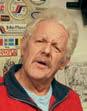
Pip Higham: he
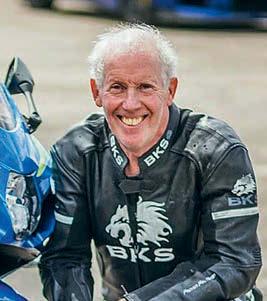
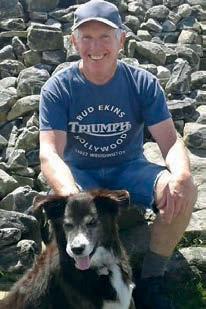
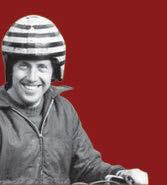
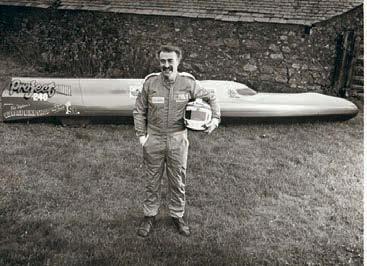
Pip was indeed the best of us. Not just a contributor, he was more than a very accomplished drag racer, bike tuner and engineer. He was just the most lovely man you could meet.
When we spoke, he was always asking after people. When my daughter broke her ankle last year, she was in Manchester, I was in the Midlands and Pip was nearer – so offered (along with his lovely Jean) to go help her out. It wasn’t the first time he’d offered such help. Considering his achievements on the drag strip, in life, on two wheels and in an engineering sense, he was so remarkably humble. Never the big ‘I am’ but just one of the boys and full of mischief and fun.
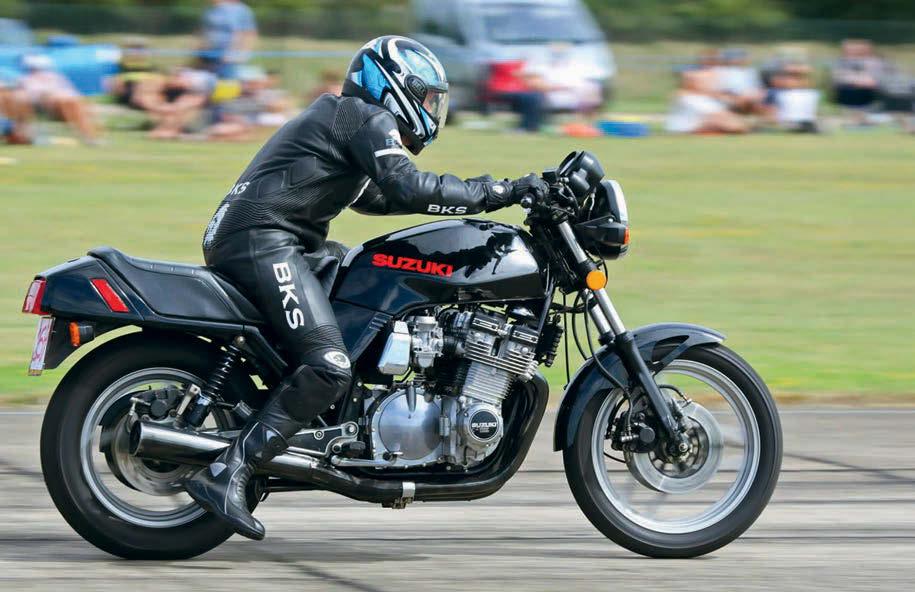
I will never forget the April Stafford Show of 2013. He was camping out with his Transporter and me with my Mazda Bongo. We spent an enjoyable evening with food and too much beer, joined by Suzuki GB’s Ian Wilson and Daryll Young and Higgspeed’s David Higgs.
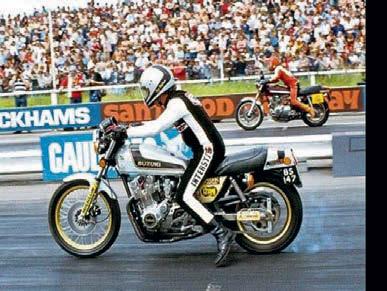
Ian (a former and handy Supersport rider) had sat next to Pip all evening, and as the subject turned to Suzuki and their successes, Ian said: “Who was that bloke who won lots of stuff for Suzuki as a drag racer in the 1980s? Pippin or someone?” I could see Pip’s smile and his shoulders start to bounce…
We have carried a personal tribute from his friend Bob Dixon this issue (see news pages) and also we will do something on his life and career in a future issue.
Also, we have some features and columns still left over from Pip which we will eventually print. And maybe we will revisit his ‘meeting of minds’ features when he went to meet Allen Millyard. We make no apologies for this because Pip may have gone, but he will never leave us…
Andy Bolas wants lots of horses to get off the line!
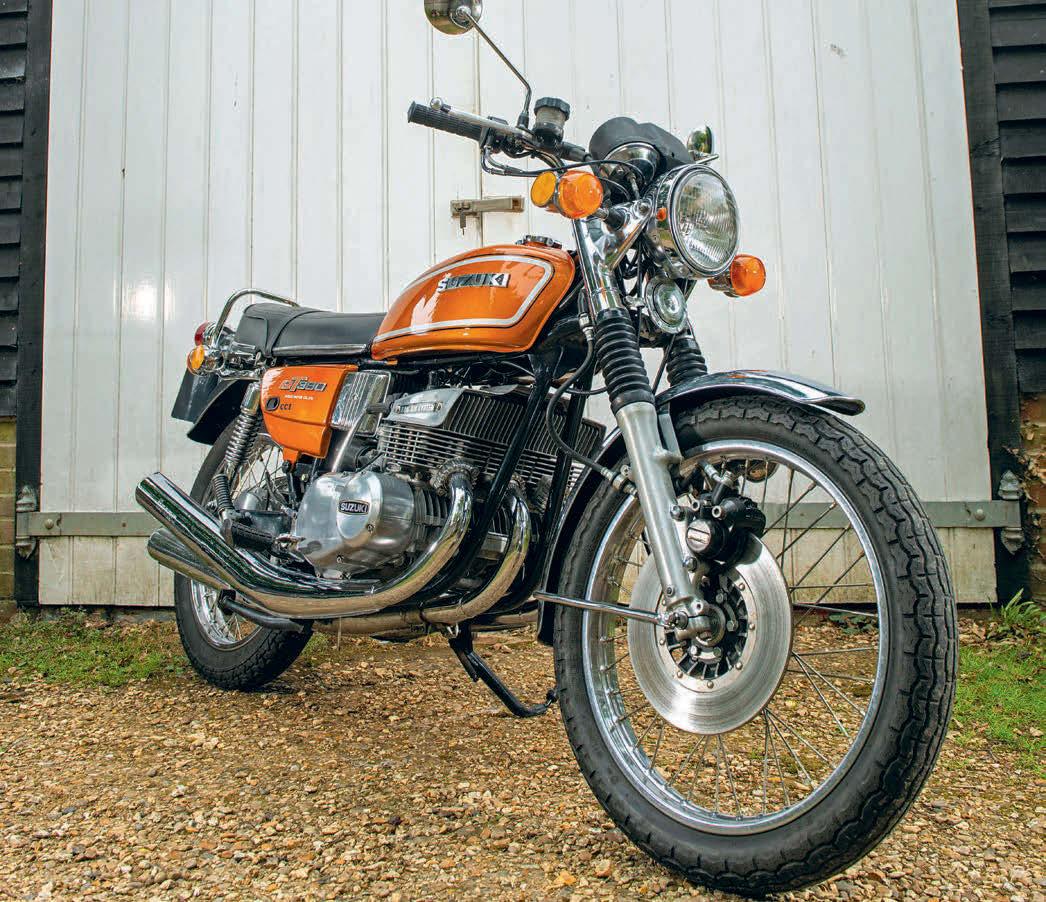
058 ❙ PROJECT SUZUKI GT380
We say again: Will Malc Shaw ever send an opening shot?
062 ❙ PROJECT KAWASAKI Z900 SPECIAL
More of a saga than the Forsyte one. Still going…
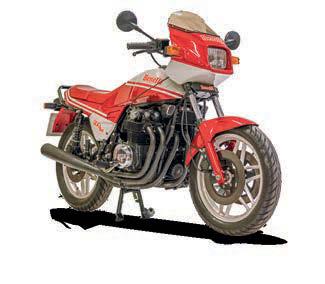
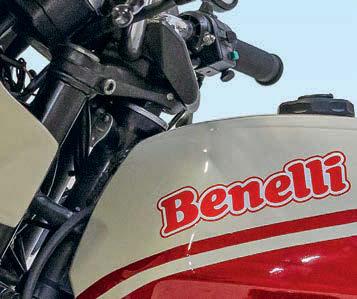
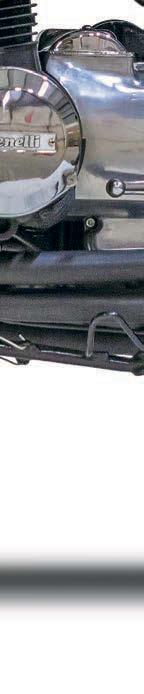
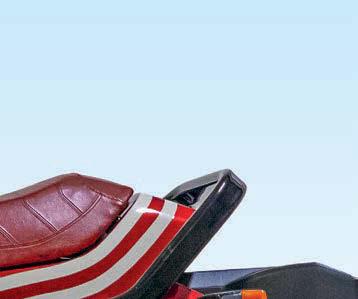
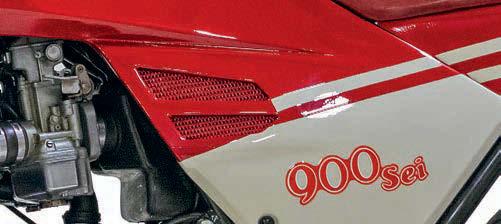
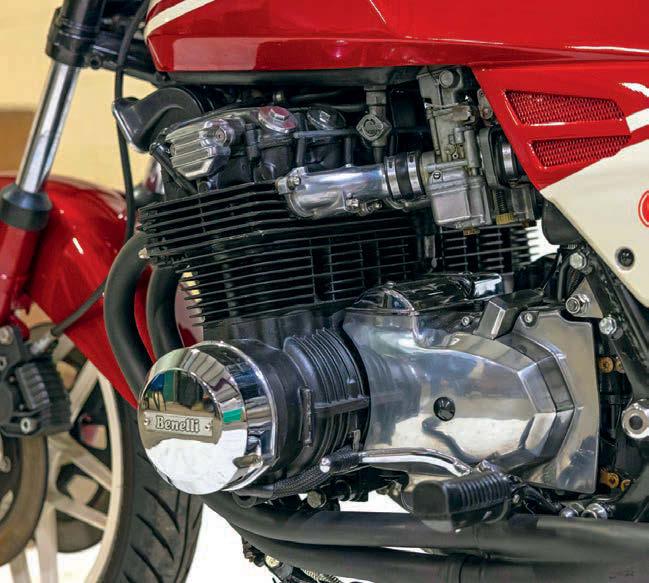
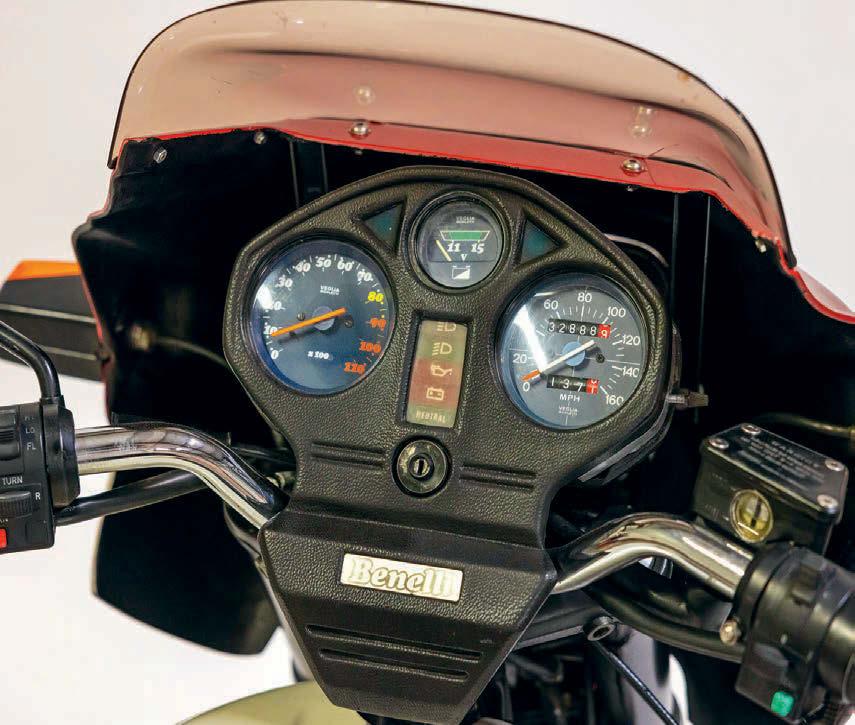
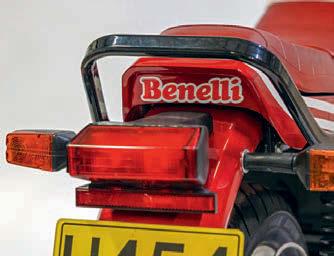
066 ❙ BENELLI 900 SEI
Steve Cooper with this sexy-six Buyer’s Guide.
072 ❙ BAY-WATCH!
Kev Raymond looks at what projects are out there…
080 ❙ PROJECT SINGULAR OBSESSION
This project has more names than Tommy Robinson!
086 ❙ PROJECT KAWASAKI HYBRID
Is Scoop finally nearly done with this super special?
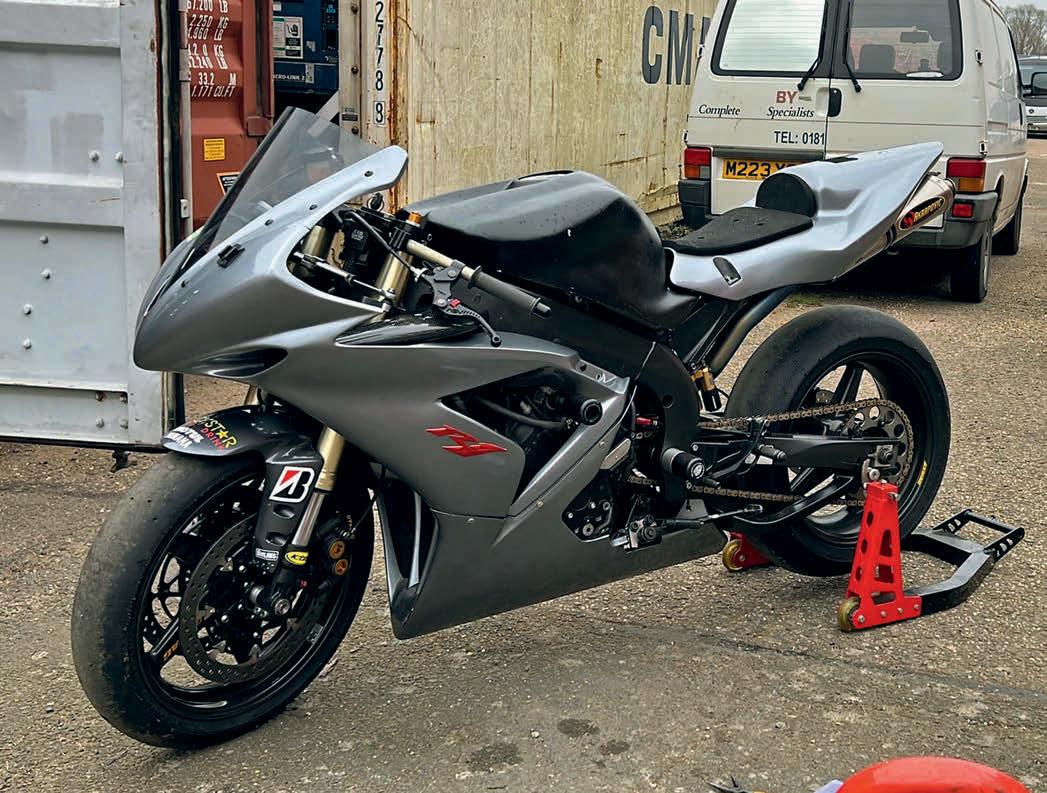
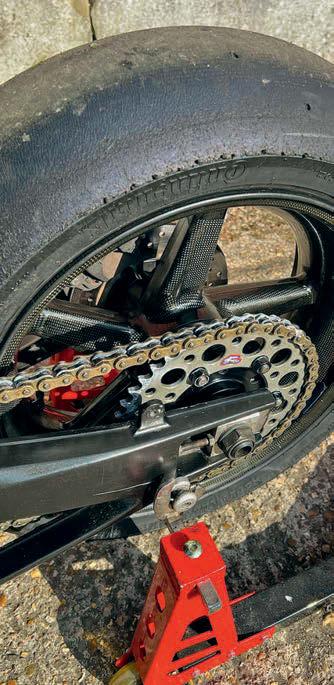
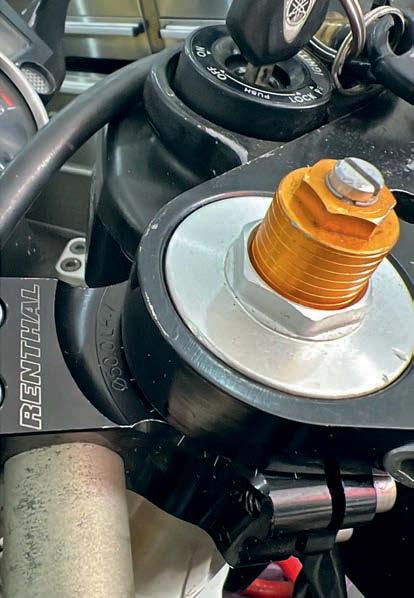
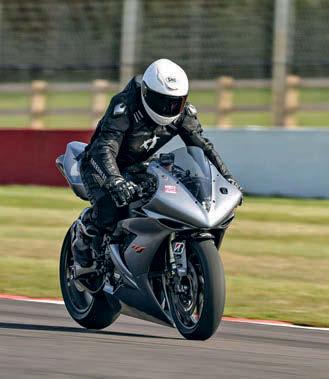
092 ❙ PROJECT YAMAHA YZF-R1 5VY
Paul Berryman has gone all floppy and wants to know why?
006 ARCHIVE
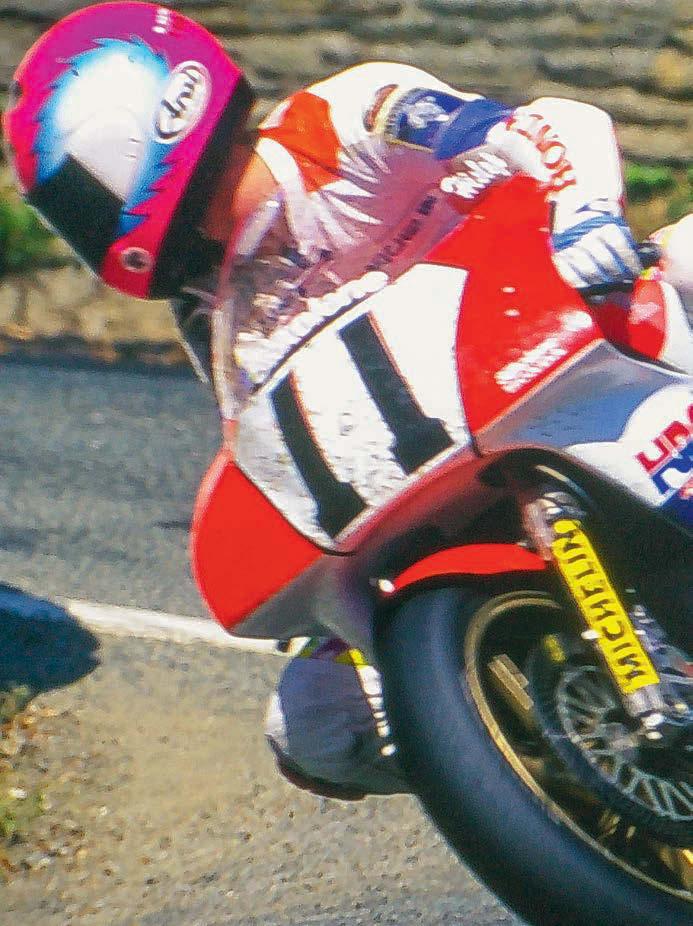
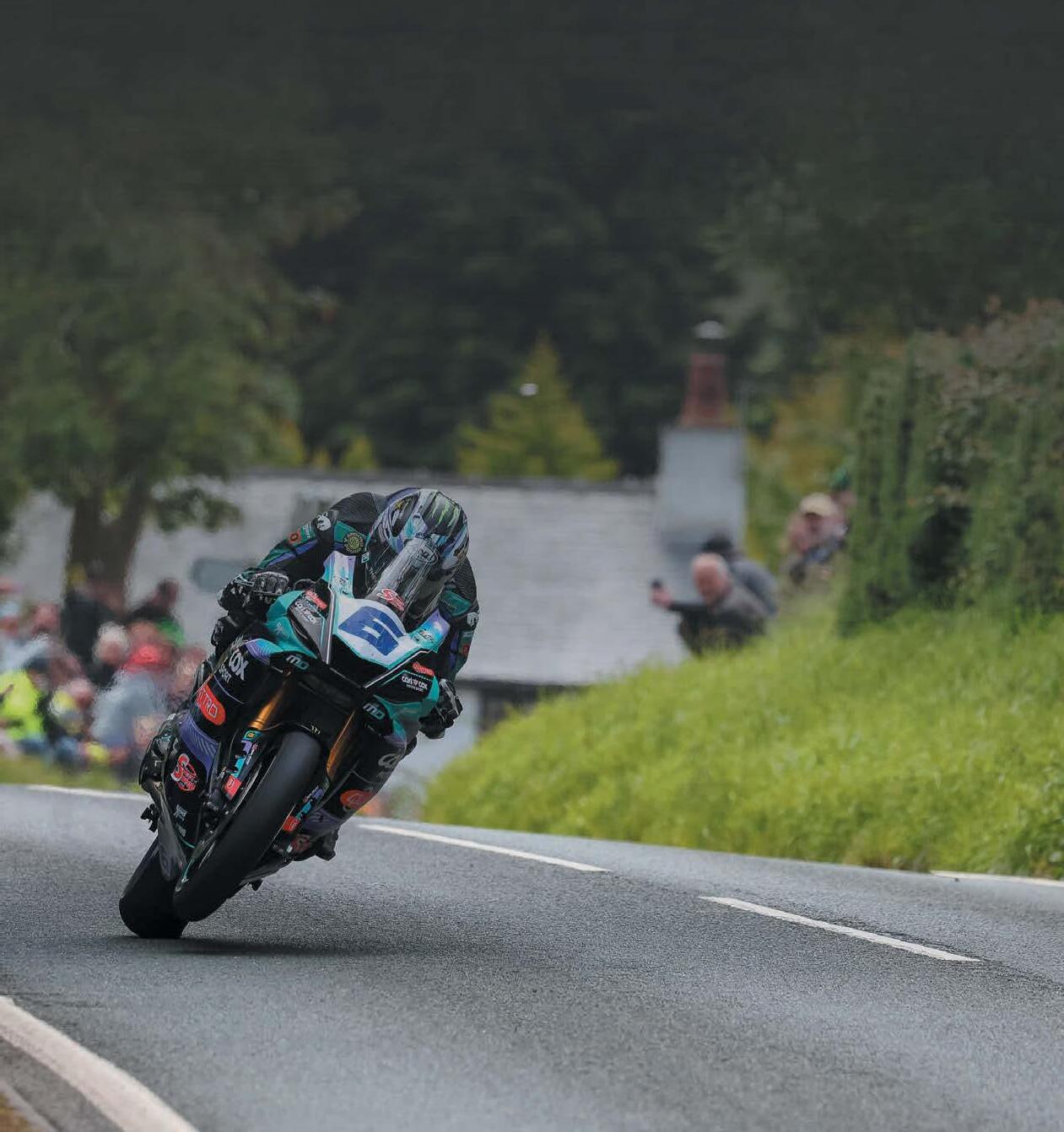
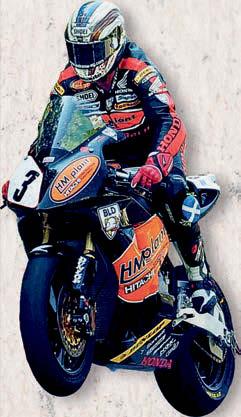
When Honda brought out the ‘big guns’ for the 1991 Isle of Man TT races.
008 CMM STUFF
New kit, tools, tyres and tested stuff.
012 NEWS
News and events for May 2026.
018 FEEDBACK
What are you all talking about this month?
020 SHOW US YOURS
We want to see what’s in your shed and see what you looked like back in the day!
024 YAMAHA RD350LC 2 YPVS
Is this the greatest bike ever?
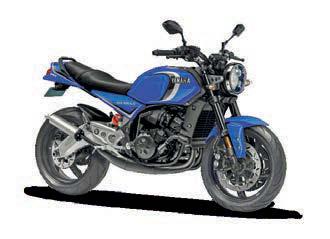
034 RETRO REBOOT SPECIAL!
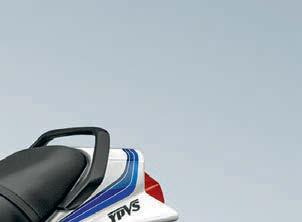
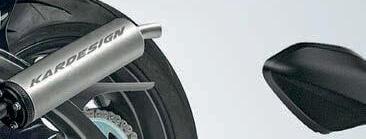
Kar Lee brings his genius to the LC and YPVS: What if they still made them?
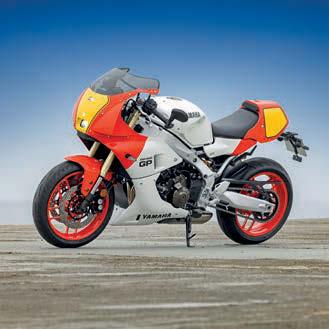
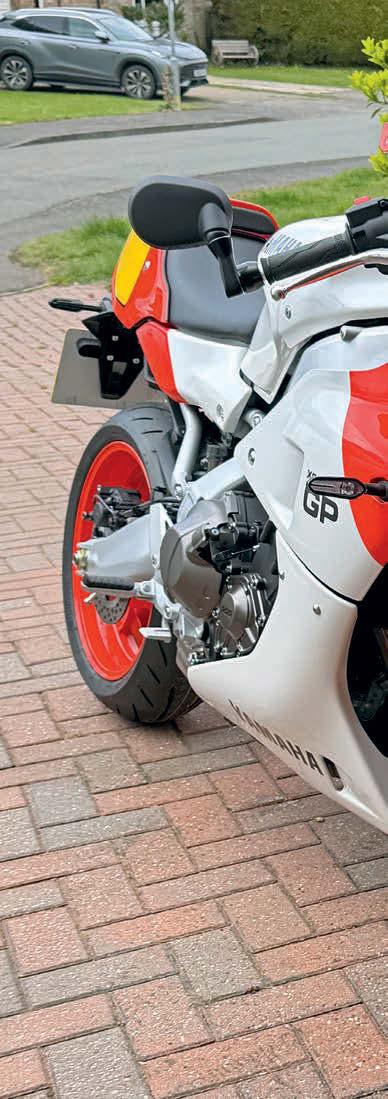
036 RETRO YAMAHA XSR900 GP
Welcome to our new retro bike fleet!
038 THE CULT OF ELSIE!
What made the LC and Powervalve so special?
042 RETRO ROYAL ENFIELD BEAR 650
Another ‘old-looking’ bike we have this year.
045 SUBSCRIBE AND WIN! We’ve now got SIX prizes to win for existing subscribers!
048 SUBSCRIPTIONS
New subscribers can get a FREE disc lock worth £19.99.
050 CENTREFOLD
More LC Reboot loveliness from Kar Lee
097 NEXT MONTH
What’s happening in the June 2026 issue?
098 PIP HIGHAM
Pip recalls the ‘Project 360’. Sounds scary!
To preorder your next issue of Classic Motorcycle Mechanics head to classicmagazines.co.uk/ pre-order-cmm
Alternatively, scan the QR code on this page and order your next copy today. We will send it directly to you!
Exotica Island!
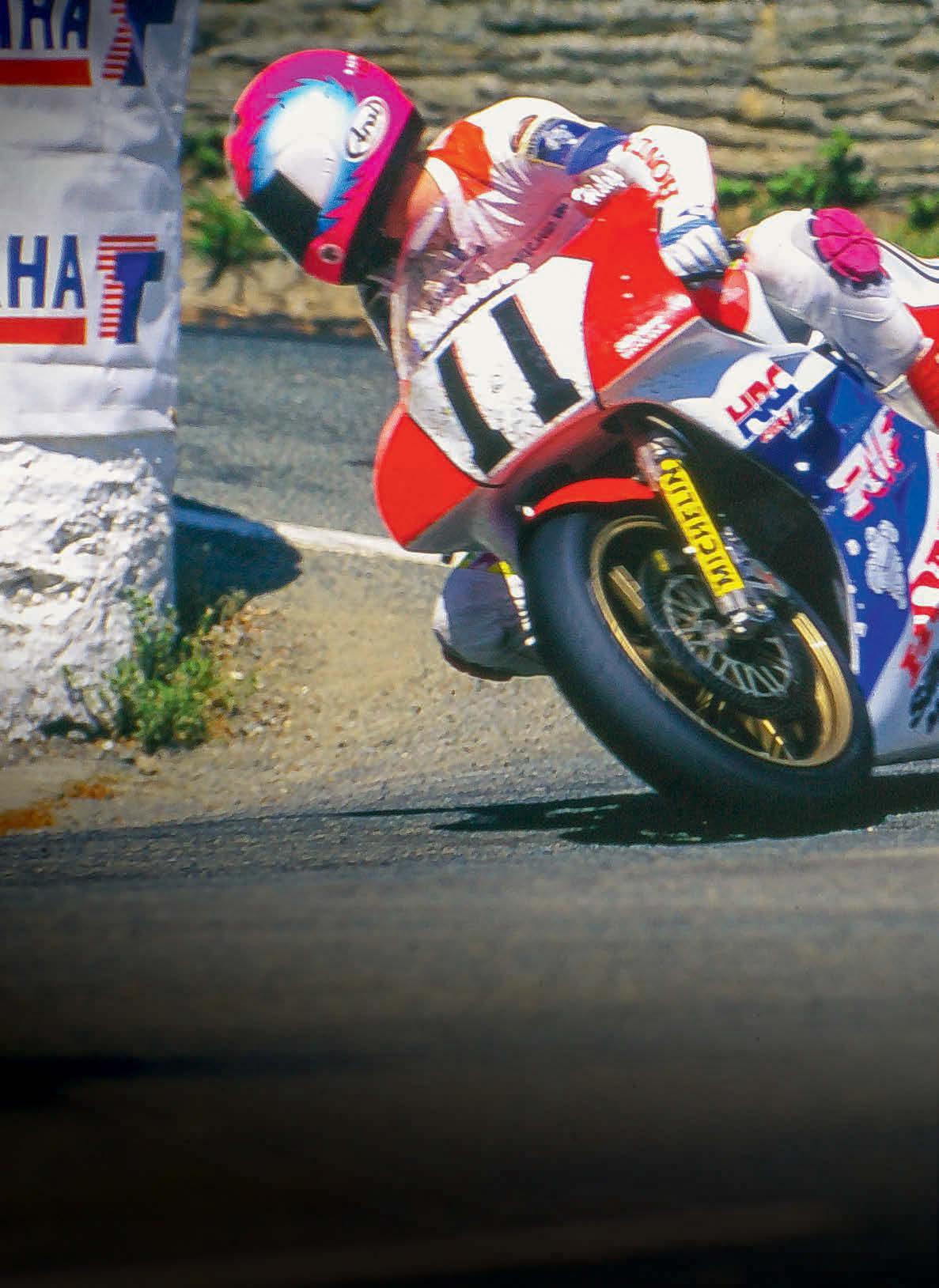
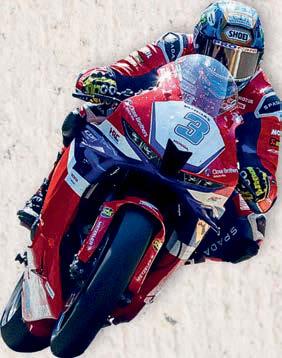
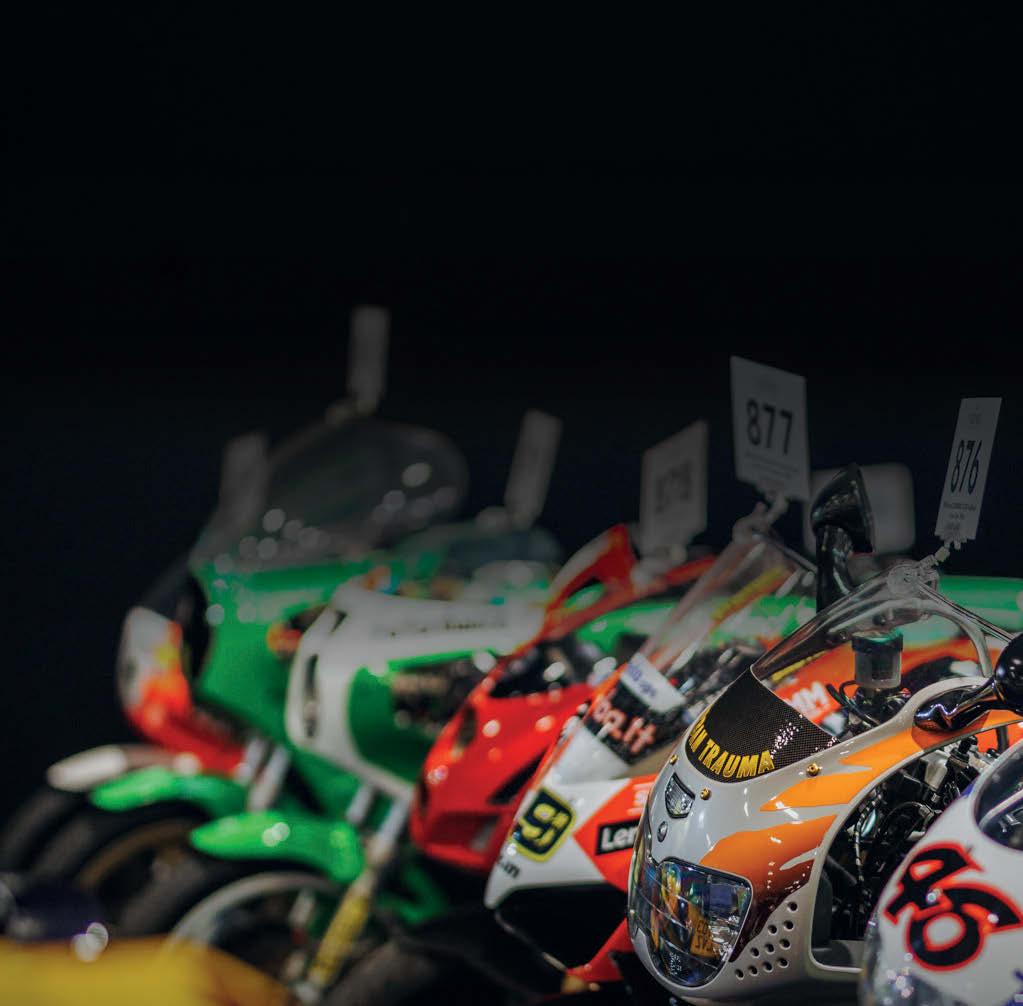
Back in 1991, the most exotic prototype four-stroke racing motorcycles took part in the punishing Isle of Man TT races.
Two very special RVF750s were given to then TT legends Steve Hislop and Carl Fogarty to race around the punishing 37.73-mile Mountain course.
In some respects, the bikes were the four-stroke equivalent of the-then two-stroke 500cc grand prix bikes, or like today’s MotoGP machines. Whatever they were, they were light and powerful. Their V4 engines produced around 165bhp (20-35bhp more than a well-sorted RC30) while they weighed just 130 kilos – some 30-35 less than an RC30…
Many felt they may have been a bit of a handful around the TT course, but they were shipped in to spoil Yamaha’s 30th anniversary celebrations.
Hislop would ride the bike in both the Formula 1 and the Senior, while Fogarty would head to a world superbike race late
in race week, so Joey Dunlop would ride it in the finale. Hizzy knew that Honda and HRC’s expectations were high. “There was a lot of pressure on Carl and me that year, because Honda wanted to make sure they won the Formula 1 TT, giving them 10 F1 wins in a row,” Hislop said in 2002. “They didn’t care which one of us won it, but one of us had to. The bikes were so much faster than anything we had ridden there before.”
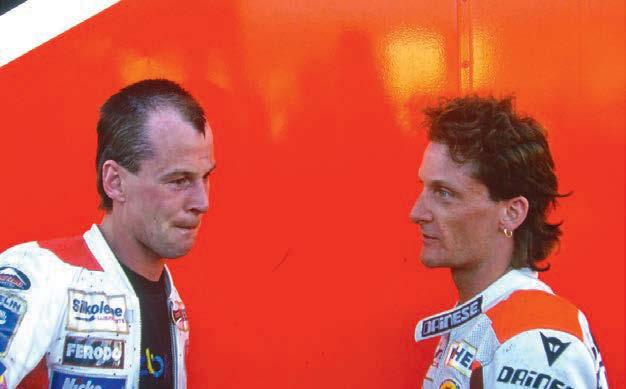
Of course, getting two such competitive racers at the height of their powers meant that both were trading fast laps and scaring themselves silly during practice: check out the stress on their faces in the inset shot! Things got so bad that HRC’s Yoichi Oguma sat both down to get them to make an agreement over who would win the race. It fell on deaf ears.
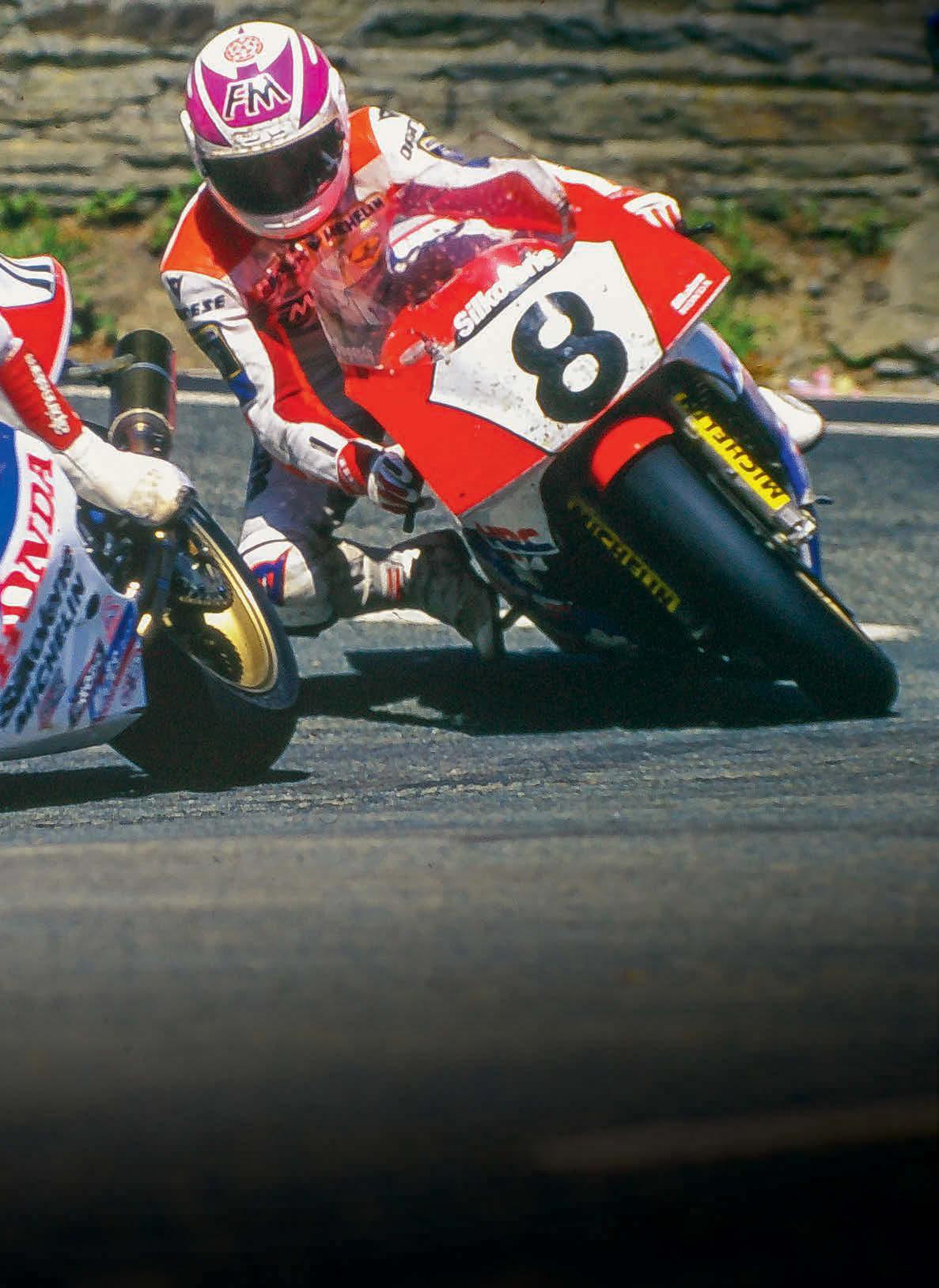
While fastest laps were traded between the two in practice, in the race, the big face-off never materialised, with Hizzy gaining an advantage on lap one and
catching Carl on the road, hence this great shot of the two from journalist, author and photographer Mac McDiarmid. Steve would win the Formula 1 race and then take the Senior ahead of Dunlop on Fogarty’s vacated RVF. If you want to read the full story, then you need to get Island Racer 2026… cmm
Island Racer 2026 is brought to you by the team behind CMM and Classic Racer. This year’s issue looks at the modern and historic magic of the world’s number one road-racing event.
The magazine costs £9.99 and is on sale from 16 April, but is available to pre-order from: https://www.classicmagazines.co.uk/ product/island-racer-2026
cmm Stuff
The latest riding kit, top tools, tyres, retro clothing and more!
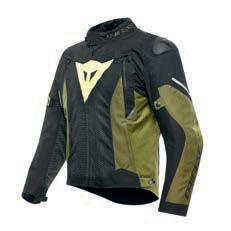
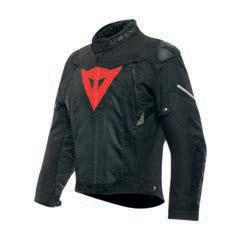
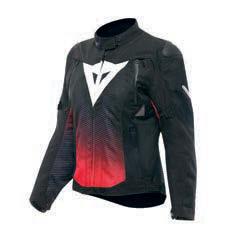
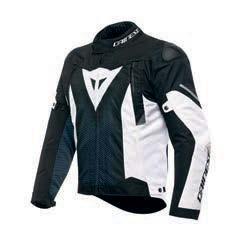
DAINESE SUPER SPRINT D-DRY JACKET
The Super Sprint D-Dry textile from Dainese is designed for a more sports-focused riding position, but offers the adaptability of pukka touring kit.
It’s a CE Level A-rated jacket, perfect for three-season use, from spring through to autumn. The outer shell is crafted from flexible and versatile polyester, with stretch panels for comfort, and the jacket accommodates CE Level 1 shoulder and elbow armour.
There is dedicated space for both back and chest protectors. The jacket also can work
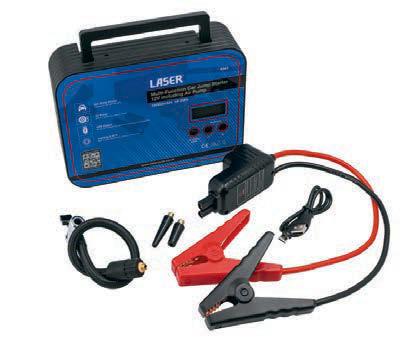
LASER TOOLS MULTIFUNCTION JUMP STARTER
with the Smart Air airbag system.
A removable thermal lining keeps the chill at bay on cooler rides and can be discarded when the temperature rises. The Dainese D-Dry membrane is both waterproof and breathable. Also, it has many inner and outer pockets and a connection zip for trousers.
Available for both men and women in men’s sizes 34–52 in black/red, black/white and black/olive. Women’s sizes range from 6–20 in black/fuchia, pink/white and black/red. www.dainese.com
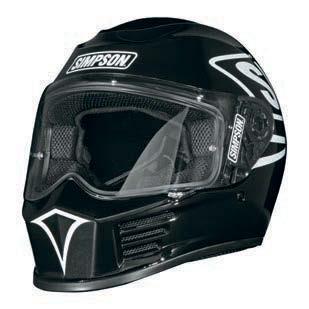
SIMPSON SPEED 12 O’CLOCK
Oh yes, we love this. This is the Simpson Speed 12 o’clock and it’s in stock now!
The 9344 multi-function 12V jump starter delivers compact, roadside-ready power and tyre inflation in a single unit. It combines a powerful jump-start output with a 150psi air-pump, USB power bank and selectable LED work/safety lights.
The jump pack should be able to jump bikes and cars up to four-litre diesel engines and six-litre petrol! Also, it acts as a portable power bank. We reckon it would fit under a pillion seat, too. It’s supplied in a neat, zip-up carry-case, too. www.lasertools.co.uk/Product/9344
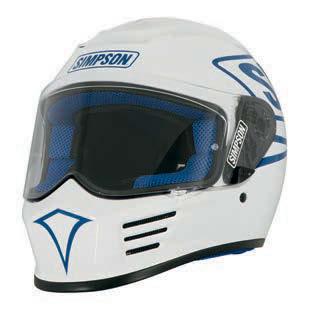
Harking back to the old Simpson Bandit helmets, that were notoriously considered not legal in the UK but oh-so cool, the Simpson Speed is a lightweight helmet that comes fitted with a clear visor and a free additional dark smoke visor in the box. Both Pinlock ready! This Polycarbonate shell lid is ECE 22.06 certified; has three shell sizes for optimum outer profile; has venturi-effect chin vents and central rear exhaust vent; and an ultra-wide, quick-release visor for maximum field of view. The hypoallergenic comfort liner is fully removable/washable and it has cut-outs for a comms system. Good old double-D ring retention and in sizes XS-XXL in classic white and black. www.oxfordproducts.com
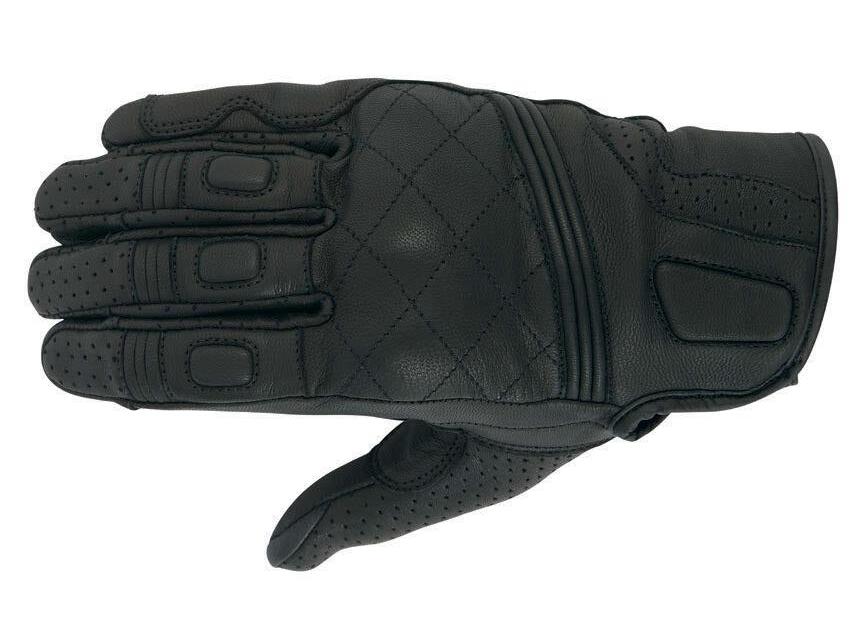
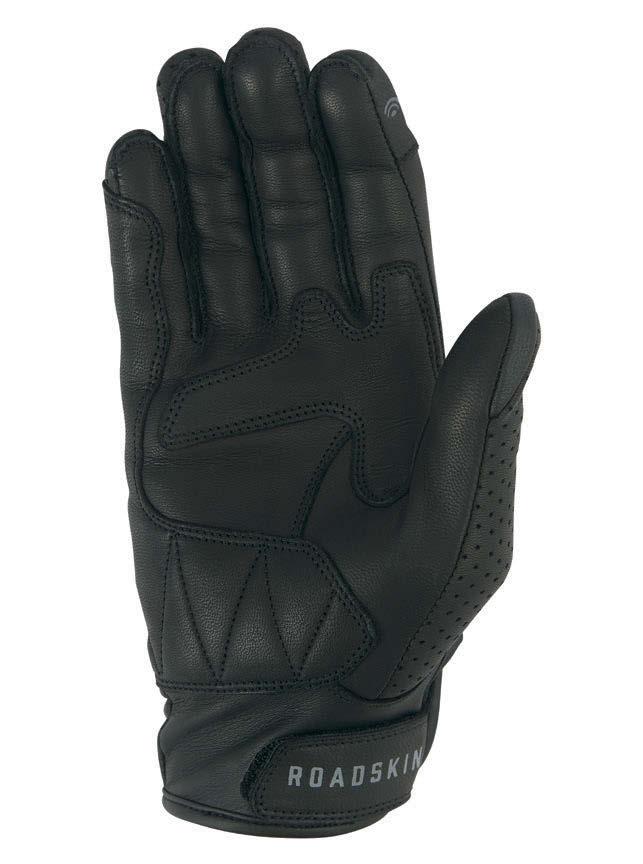
ROADSKIN RHIANNON GLOVES
Check out these Rhiannon Ladies Motorcycle Gloves from Roadskin, the perfect combination of protection, style and comfort, tailored specifically for female riders.
Crafted from premium goat leather, they provide abrasion resistance while offering a soft, supple feel, ensuring safety without compromising comfort. The integrated knuckle protection adds another layer of security. They feature touchscreen compatibility, a Velcro wrist strap, and come in sizes ranging from S to XL. They’re certified to EN13594 Level 1 KP, too.
https://roadskin.co.uk
www.classicmechanics.com
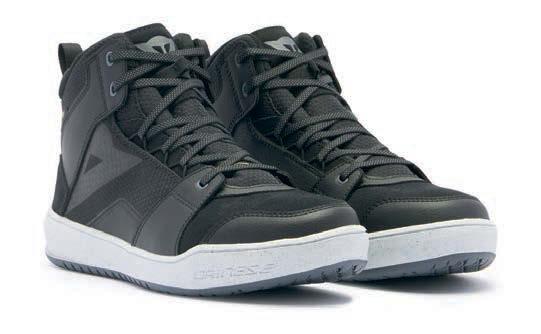
DAINESE SUBURB AIR SHOES
If you want style, comfort and safety, then look no further! The Suburb Air is a sneaker-style, lace-up boot that has been developed to ensure practicality while riding and comfort when off the bike. Perfect for city rides and longer jaunts, they offer a stylish solution for summer days.
The ‘Groundtrax’ sole has been designed to ensure there is adequate grip on the pegs, while offering the same comfort as a high-quality trainer. They’ve got a mesh upper and mesh lining so feet will feel as fresh and comfortable at the end of a hot ride. A gear-
www.facebook.com/ClassicMechanics/
change pad reduces signs of wear and tear, while soft D-foam padding offers protection that meets CE Category II. Available in a variety of colours (grey/ white sole, black/white sole, olive green/ white sole). Sizes 6-12. www.nevis.uk.com
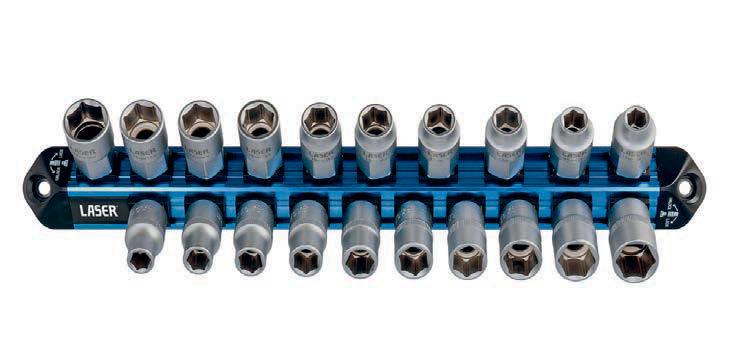
LASER TOOLS LOCSOC MAGNETIC SOCKET RAILS
Hands up who has lost a socket or is always trying to find that elusive one? One that is always 10mm? Then you need this…
This is the patented socket storage system: the LocSoc range of magnetic socket rails. Sockets are locked in place to prevent accidental loss. LocSoc combines positive mechanical locking for the sockets, combined with powerful rare-earth magnets and a soft backing to the rail to deliver fast, secure organisation that stands up to daily workshop use.
www.twitter.com/cmmmag
SEALEY SPRING 2026 CATALOGUE
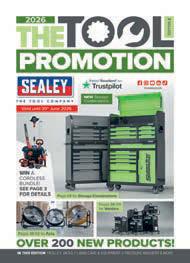
This catalogue is packed with the Sealey Spring Tool promotion, which means it’s packed full of new products, tools, exclusive deals and a garden kit giveaway. With over 200 new additions, it’s a must for the tool freak. Deals available from 1 Apri until the end of June. www.sealey.co.uk
WIN, LOSE OR DIE
You’ve also got a fast, ‘one-thumb’ release where you push the socket to the side with your thumb to rotate the locating stub and release the socket. To replace the socket, simply click back into the locked position.
The rails are soft-backed to prevent damage to the finished surfaces of your tool box. A range of single, dual and triple rails are available and, of course, no actual sockets are supplied! An elegant solution to an age-old fettler’s problem! www.lasertools.co.uk
This book showcases the unvarnished, raw truth behind the world’s most dangerous sport –motorcycle road racing – in the words of those who ride it. Written by sometime CMM contributor Stuart Barker, it chronicles stories from all the top road-race events, notably the North West 200, Ulster Grand Prix, Macau Grand Prix, Cookstown 100 as well as the Isle of Man TT.
Through a host of exclusive interviews with riders, mechanics, team bosses and race organisers, Win, Lose or Die takes readers behind the scenes of one of the world’s most lethal sports, revealing the triumphs and tragedies, the blood, the guts, the sweat and the tears that are involved in winning a road race. www.bonnierbooks.co.uk
ISLE OF MAN TT-SHIRTS
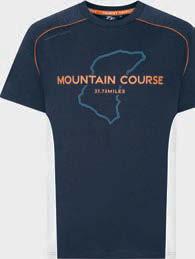
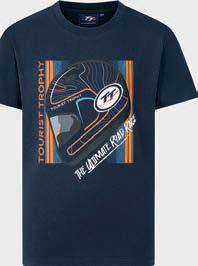
Check out these super-cool TT-shirts from our friends at Duke Marketing. They are the new designs in a wide range of merchandise from the company. These T-shirts include a ‘Tourist Trophy – the ultimate road-race’ through ‘Mountain Course – The Greatest Road-Race in the World’ and ‘Mountain Course 37.73 miles’. https://www.dukevideo.com/Isle-of-Man-TT/Official-TTMerchandise
cmm Tested
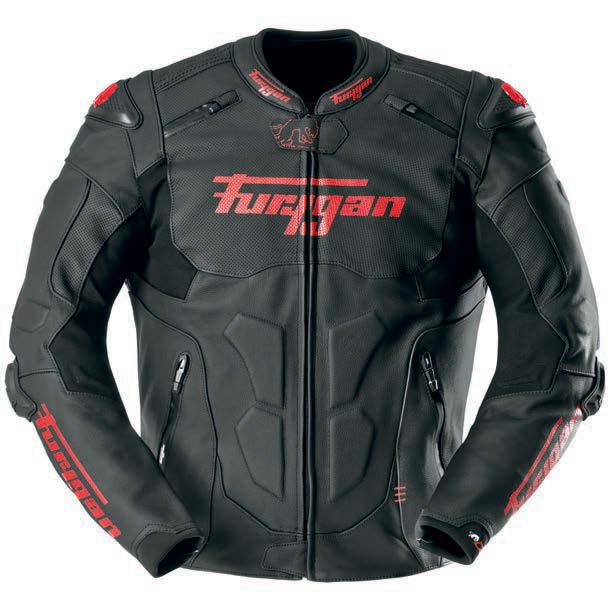
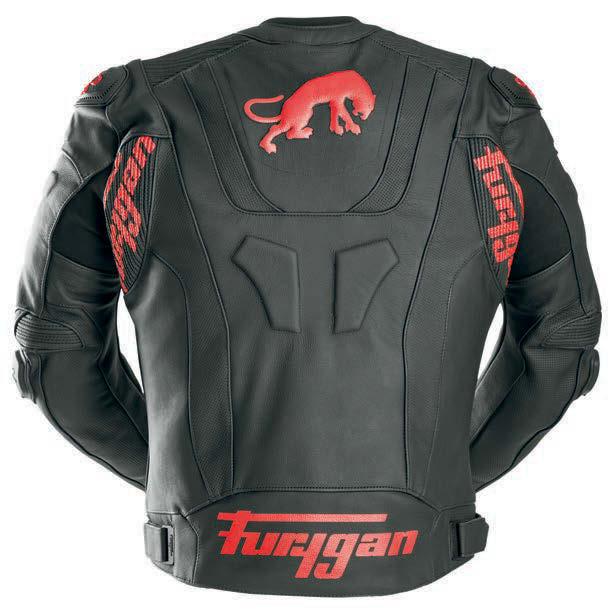
FURYGAN RAPTOR EVO 3 JACKET
The Raptor Evo 3 promises superb protection and yet it should be spot on for casual riding, too, if that’s what you enjoy most.
I had to wait a while for the winter blues to pass before wearing one. Cold, wet, miserable days are no time to be trialling leather! Instead, I turned to the Furygan Apalaches Evo jacket and Killington trousers, and what a revelation this outfit turned out to be… practical, functional, protective, warm, in fact, everything you could want and expect from such a high-quality brand, and particularly one recognised for its expertise in leather, safety innovation and stylish, durable gear.
With the Raptor Evo 3, you get exactly what you have come to expect from a Furygan product. This versatile jacket can be worn as part of a casual outfit, and by that, I mean motorbike jeans and boots, or can be zipped to something like the Drack leather pants with knee sliders. I don’t possess a pair of this particular pair of trousers, so will go with Furygan’s description, the
pant utilising the best of the brand’s racing technology, while retaining the versatility of a one-piece suit, for both road and track use.
As spring turns into summer and then autumn, I prefer a more casual styling set up unless I am full bore with my one-piece leathers. So, what about this latest evolution of said jacket which the brand describes as a ‘more committed cut’?
Without doubt, on inspection the quality of the cow leather is as good as it gets, selected as it is for its strength and thickness, so no qualms about its trusted high abrasion resistance and durability.
£499.90
That is thanks in part to the triple stitching, a sewing technique for creating extreme tear and abrasion-resistant seams, where a fold of material protects the main thread. High tenacity bi-stretch inserts have been placed strategically to maintain ease and comfort. The Raptor boasts D3O elbow and shoulder inserts, matched with hard plastic protection on the outside, so it looks good as well as serving a precise purpose.
The jacket also comes with sleeves should you want to insert a Level 2 back protector and D3O Ghost chest armour. I love the fact that D3O, whilst being such a soft material, its molecules lock in the event of an impact to absorb kinetic energy, the clever technology making it possible to create soft, ergonomic and topperforming protectors for more security and comfort.
You are treated to two outside and two inside (wallet) pockets; waist adjuster tabs to give you that precise adjustment to your body shape; Neoprene inserts at the collar and on the wrists; and gussets behind the shoulders and on the elbows for increased comfort and mobility should you want to get into that tuck position; and, of course, you have that trouser connecting zip.
Another nice thing about the Raptor is that it comes with a removable thermal liner with aluminium inserts on the chest which are there to retain heat and keep out the cold, and allow the liner to be both thin and efficient. The only spoiler here is that on my first outing with a head-on, fresh, nay, cold, north-easterly wind, I could feel a chill in my chest, but then I was only wearing a thin base layer, so that was probably my fault for not being better prepared for
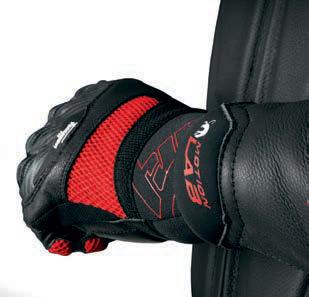
Yes, you can get gloves to match! Should you wish!
an early spring day, but then I was keen to get out on the bike whist donning the Raptor.
Of course, aesthetics always play a personal part in any motorbike clothing. The Raptor’s design is certainly appealing – personally, I think it looks brilliant – as is its feel and level of comfort. With this jacket, you just know you have all the protection you could ever want or need.
The Raptor Evo 3 jacket is CE and EPI Class AAA approved, indicating the highest level of safety certification for motorcycle protective clothing. It is available in various colourways, including black/red, black/fluo yellow and black/white, in sizes S-3XL.
Mike Cowton
www.furygan.com
News
SHEENE BIKE TO SHINE AT STAFFORD!
You’ve still got time to get to The International Classic Motorcycle Show and see this amazing machine go up for auction.
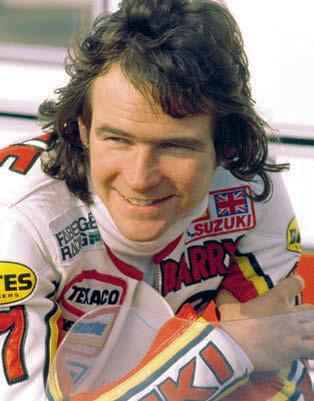
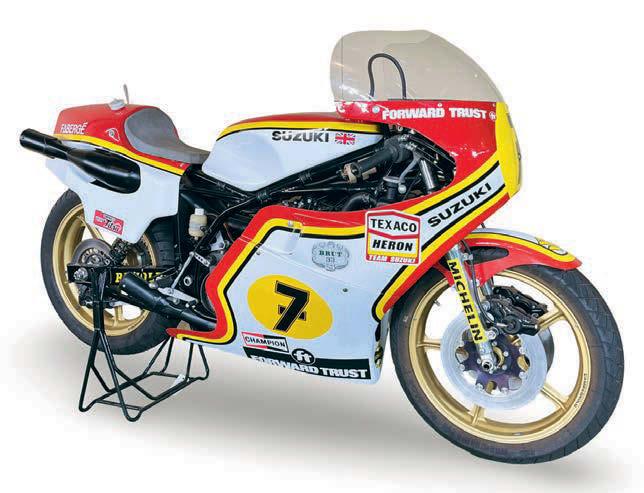
This is Barry Sheene’s title-winning 1977 World 500cc Championship works Suzuki RG500 XR14.
With 2026 marking the 50th anniversary of his first world title, it’s a timely piece of history that will go under the hammer at Stafford on 25-26 April. This bike has all the due provenance, having raced (and won) in 500cc grand prix races and ndividual races in the UK, too. This is ‘Frame 1201/Engine Number RR1202’, one of two machines he used that year, the other being owned by the Sheene family. This is the bike that Barry crossed the line on at the final race of the season to seal his 500cc title.
Ben Walker, International Department Director of Bonhams Collectors’ Motorcycles, said: “This is the first time in nearly 40 years that this historic motorcycle has re-emerged into public view. It is the actual bike that Barry Sheene won
the final race of the 1977 season on and therefore, the World Championship. Machines of this calibre and importance rarely come on to the market, let alone one belonging to the late, great Barry Sheene.”
This amazing piece of two-wheeled history comes to the market without reserve and with an estimate of between £160,000-£200,000…
The Sheene machine isn’t the only gem, as there’s also a 1965 MV Agusta 500cc race bike raced by both Mike Hailwood and Giacomo Agostini. It was bought in 1986 by John Surtees to be used on parade laps. Some history there… For more go to: https://www.bonhams.com and then search for Stafford April auction.
You’ve also got special race guests John McGuinness and Dean Harrison, as well as an array of amazing machines on display, plus the associated stalls and auto-jumble stands.
The show – sponsored by Carole Nash – is once more held at the Stafford County Showground (ST18 0BD.) Head to: www. classicbikeshows.com
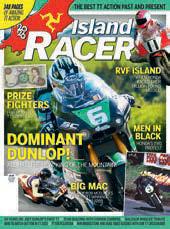
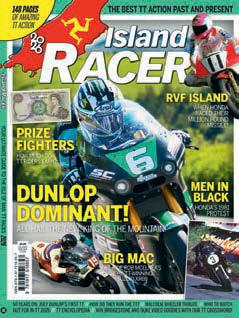
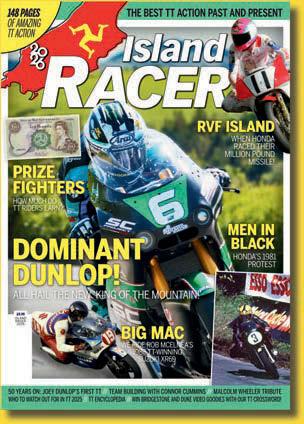
ISLAND RACER 2026 OUT NOW!
Island Racer 2026 annual is out NOW! Brought to you by the team behind Classic Racer, this year’s issue looks at the modern and historic magic of the world’s number one road-racing event.
IR26 takes a look at Michael Dunlop’s dominance;how and why Honda protested a result in the 1981 TT; the malevolence of the RVF – Honda’s exotic 750 V4 which raced in 1991 in the hands of Steve Hislop and Carl Fogarty; and we take a look at how much money TT racers can earn.
And there’s much, much more, including who to watch out for in 2026, who won what in 2025, as well as stats, facts and info on this amazing event. The magazine costs £9.99 and is on sale NOW from: https://www.classicmagazines.co.uk/product/island-racer-2026
INSURANCE FORYOUR CLASSICBIKE
Complete coverthatcosts youless
If you’relooking foraffordableinsurance foryourclassic bike, youcantrustBikesuretofind youacompetitive quotethatwon’t compromiseonquality.
We offerspecialistclassicbikepolicies,tailored to yourridinghistoryandpersonalneeds.
PIP HIGHAM – A TRIBUTE
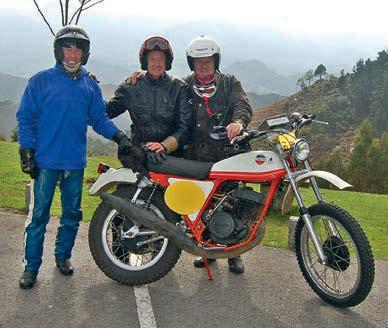
One of my fondest memories of my dear friend Pip is a road trip we did together back in the early noughties when I accompanied him and his brother Bill (also sadly no longer with us) to participate in the Moto Club Piston Rally in the Picos De Europa.
We loaded up Pip’s VW Transporter and set off for our Spanish adventure. My overriding recollection of the trip is the three of us laughing all the way down to Portsmouth, across the Bay of Biscay and up into the mountains of northern Spain. Pip and Bill were like a double act: Pip with his always-up-for-it sense of fun and Bill with his dry, laconic observations on life and the universe in general. The pair of them were so funny together.
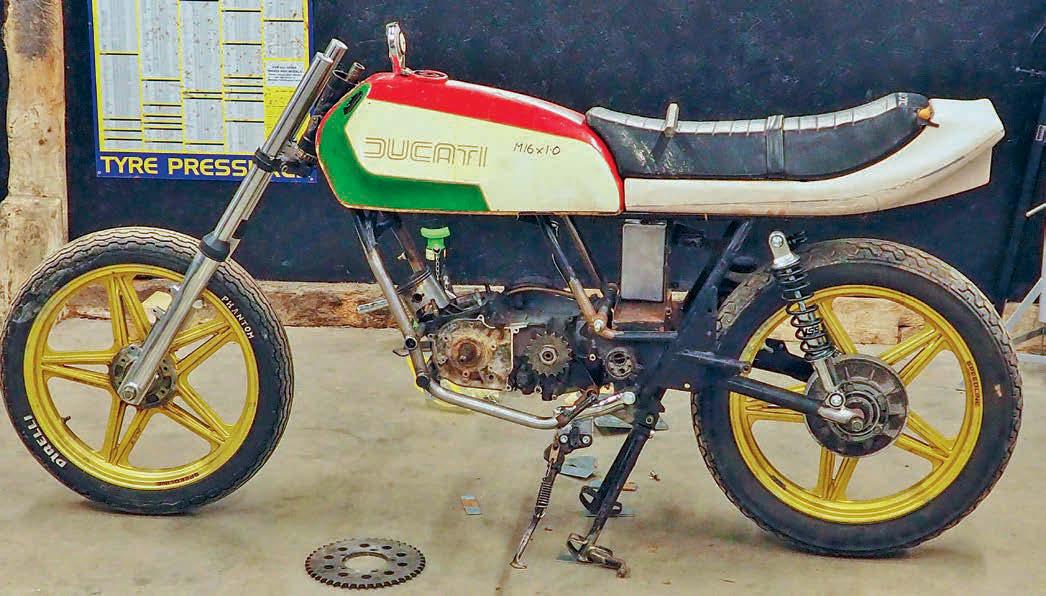
Although Pip will always be remembered for his riding genius on fire-breathing drag bikes, he also loved tiddlers, particularly his Ducati singles. Bill also liked small bikes and both brothers could hustle a lightweight Ducati along at an indecently quick pace. I couldn’t wait to get out with them into the dramatic terrain of the Picos to participate in the Route of Five Thousand Curves time trial event and, who knows, we might even pick up a prize or two...
We unloaded the bikes, signed on for the event at rally HQ and set off with serious intent into the rugged Cantabrian scenery. As I recall we were doing pretty well up to lunchtime, perhaps not potential winners at this stage but certainly contenders, and Pip and I were keen to press on and build up a time cushion in case we hit a problem.
Bill was perhaps less serious about this sort of stuff than Pip and I, and it was at this point Bill announced he needed to
find a cash machine. We had plenty of cash, but Bill was having none of it and shrugged off all protests from Pip and myself that we simply didn’t have time.
Now, if you’ve ever been to the Picos you’ll know how preposterous it was to suggest we might locate a cash machine in this remote, mountainous region of Spain but Bill, ever the optimist, dragged us higher and higher into the mountains looking for the elusive cashpoint which, of course, was never, ever going to be found.
Bill’s proposed 15-minute detour turned into half-an-hour, then an hour, and it became clear not only had we thrown away our early lead, we were now in real danger of being disqualified from the event. By now Pip and I had got over our initial frustration and were starting to see the funny side of Bill’s hopeless quest for cash. Eventually, we managed to convince Bill the Picos De Europa was a cashpointfree zone and could we please get a shimmy on in order to reach the final checkpoint before it closed, hopefully avoiding the humiliating embarrassment of being scratched from the event.
We’d gone from heroes to zeroes in the space of a Spanish lunchtime. All that we could hope to salvage from the event was to cover the remaining 20 miles of the route as quickly as possible and with a bit of luck avoid the shame of disqualification.
Those last 20 miles are forever etched in my memory. Pip and Bill were both outstandingly gifted motorcyclists and Bill, far and away the quickest amongst us, took the lead and set the pace.
As tail-end Charlie I could only watch in awe as he carved his way around perilous mountain passes closely shadowed by
Pip, both riders inch perfect and Hailwood-smooth.
It was a motorcycling masterclass, joyous to behold, and remains one of my all-time favourite motorcycling memories. Bill at the front, imperious and in total command, Pip chin on the tank and fiercely gunning his little Ducati through the high mountain passes to keep up with Bill without giving an inch, and myself trailing hopelessly behind praying I didn’t lose sight of them.
It was both hilarious and, if I’m honest, quite scary. The three of us were grinning from ear to ear when we parked up and performed our ignominious walk of shame into the final checkpoint just as the officials were packing up their kit. We were the very last riders to do so.
Pip was the kindest, most generousspirited person I’ve ever met. Small in stature but a giant of a human being. I will never forget him. Let’s hope Bill and Pip are reunited once more and still getting up to mischief together.
Bob Dixon
PRE-ORDER YOUR CMM
Want the next issue of CMM? Of course you do! Then it’s simple. Subscribing is best but, failing that, why not pre-order? Simply scan the fuzzy circular thing with your smartphone (c’mon, we’ve all got one) and off you pop! Alternatively, if you like what you see coming up in the next issue (see page 96 for more) then go to: www.classicmagazines.co.uk/ issue/preorder where you can pre-order all of Kelsey’s wonderful magazines. Even ones about trains, cars or towpaths…
SAMMY MILLER MUSEUM DATES
Here are the Sammy Miller Museum dates so far for 2026.
Park Racecourse, Staines Road E, Sunbury-onThames, Surrey TW16 5AQ: www.kemptonautojumble.co.uk
London.acecafe.com
Motorcycles, LE10 3BZ: www.triumphfactory.co.uk
Beaulieu Spring Autojumble
Motor Museum, Beaulieu, New Forest, Hampshire SO42 7ZN: www.beaulieu.co.uk
Two-Stroke Day and Fizzy Frenzy
Cafe: North Circular Road, NW10 7UD: London.acecafe.com
Post to Mechanics, PO Box 99, Horncastle, Lincs LN9 6LZ or email your pictures to editorial@classicmechanics.com
Star Letter
Farewell Dad!
Firstly, congratulations to editor Bertie Simmonds on being employee of the month: although it was rigged methinks!
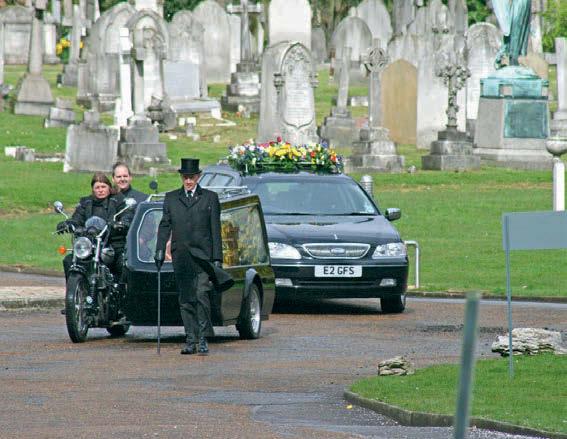
On other matters, my Dad fell asleep in 2009. He was a biker so there was only one option for his final ride. Looking at the photos of the day, I’m pretty certain the bike used was provided by
Love the CBF!
Great article about the CBF1000 in the most recent issue. I had a 2009 model when I was at university. I thought it’d be a good commuter, which it was, but the lack of cornering clearance and ho-hum looks made it a bit too dull for me at that age. I’m sure I’d enjoy one now, but watch out for those Italian electrics!
Having decided to go for something slightly sportier, I found a good deal on a VFR800 VTEC.
A friend and I rode the Biffer two-up to pick up the new bike; around 125 miles one way. After finalising the purchase,
Motorcycle Funerals, as seen in your magazine. It was all arranged through Garner’s of Surbiton, a local funeral company.
It was a lovely day (given the circumstances). The funeral director Ray had looked after several family members previously and was due for retirement. This was the first time he had ridden on a motorcycle – ever! He was
we turned for home with me on the VFR and my friend on the CBF.
As if taking revenge on me for deciding to replace her, the reg/rectifier on the CBF gave up the ghost halfway back and left us stranded on the side of the road! The trip concluded with me going home in the passenger seat of a flat-bed truck and my friend riding my shiny new VFR home for me.
Mason van Dyk
Bertie says: “Biffer?! Maybe she gave up the reg/rec ghost on hearing her awful nickname? Ha! Mind you – you can’t beat a VFR (Viffer) either!”
We love to hear from you, so why not let us know what you like, or dislike, in YOUR magazine. Simply get in touch by sending emails to: letters@classicmechanics.com or direct to the editor at bertie. simmonds@kelsey.co.uk or post your letters to the normal address.
The best will win one of our lovely T-shirts!
pillion from my Mum and Dad’s house to the cemetery (some five miles.) At the cemetery I was asked if I wanted to ride pillion for the approach to the chapel. I jumped at the chance; what a way to say goodbye to my Dad, with one last ride together. No tarted-up Volvo estate. On some pics I have a grin on my face – not something that typically happens at funerals!
My sons are fully aware of my wishes for my last ride. I‘ve always jested to them that: “You would only get me on a
Harley over my dead body!” Guess which bike they will choose? If they do – no inheritance for them!
Paul Leiberman
Bertie says: “That’s beautiful Paul! One last ride together, you and your dad. Isn’t it interesting that the choice of bike is SO important? It’s not like we would choose or avoid a four-wheeled hearse? Well, apart from the fact that I wouldn’t want to go out in a Ford Scorpio ‘estate’…”
Yank rubbish!
I have been a dedicated subscriber for a few years now. But it has only been the past several months or so that I have noticed a bad trait that has entered the prose that you and your team use when writing your articles.
It is the use of the most awful word ever to blight the English language.
I am, of course, referring to the ‘gotten’ word. I can let you get away with it once, but your team are now repeat offenders of dropping this ghastly word with regularity, so I must pull you up on it otherwise me dear old English teacher would be turning in his grave.
Please could I ask that you stop using it? It blemishes what still is a cracking monthly publication.
Iain Major
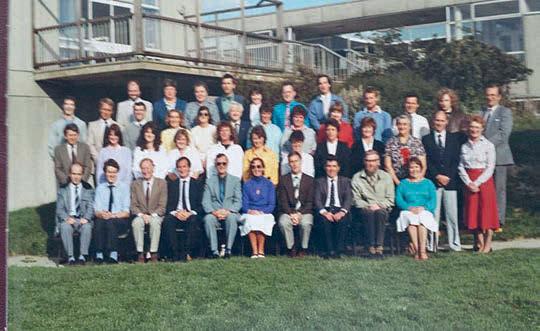
Bertie says: “Sorry to offend Iain! I will defend myself/ ourselves by saying: ‘English is a constantly evolving language!’ And (ahem) ‘me English teacher? Pictured are my/me teachers from Conyngham Secondary Modern (1982-1987). They are to blame, although I actually feel I owe them so very much!”
Loved the CB250RS
Great to see Steve Cooper’s classic ride on the Honda CB250RS. I bought one new in 1981 and covered about 34,000 miles on it.
My younger brother
thought it was so good, that not long after he bought one as well. Mine was black, his was blue. I have to admit the blue was the best looking. When considering faults and issues, Steve did miss one tiny fault. The RS would do over 90mph. Until one day it wouldn’t. You might struggle to top 80mph. Why?
Well, in the late 1980s a very experienced mechanic told me he had never seen an RS without a cracked cylinder head. The engine was based on the XL250. With bigger valves, there was not much metal between the holes. Having said that, they just kept going. Only not quite as fast!
Keith Armstrong
Bertie says: “Ooh! Anyone else experience that?”
Thank you!
This message is for Bertie, no more than to say you’re a top fella and to say thanks for producing two great mags (Classic Motorcycle Mechanics and Classic Racer) which I buy every issue of. I shall be picking up a 350LC in May which the seller is kindly holding on to for me whilst I complete my garage workshop. I’ll send a photo of it and another message once I get it for you to consider if it’s worth appearing in the mag. Keep up the great work (and model making which I’m also a fan of (Tamiya F1 and motorbikes)!
Pete Spiers
Bertie says: You cheered up my day with this Pete! You’ll see me here proudly
Fun not frump!
I’ve just read the article on the Honda CBF1000, and agree with just about everything, except the ‘frumpy’ comment, but maybe that’s because it describes me as well.
I bought mine new in 2007 (still got it) and have enjoyed it ever since, a dozen or so trips to Scotland and a European tour of 3500 miles in two weeks taking in the MotoGP in Brno. I’ve had a couple of stator failures and an imploding rear
Leap year?
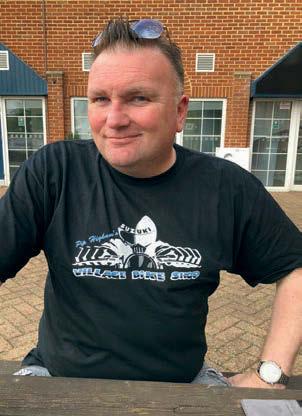
wearing a Village Bike Shop/Pip Higham T-shirt which raises money for an Air Ambulance. Go to: https://www.motorthreads. co.uk”
wheel bearing, but nearly 90,000 on the clock now. It’s a very underrated machine.
Stuart Claydon
Bertie says: “Agreed Stuart! I’m thinking of buying one!”
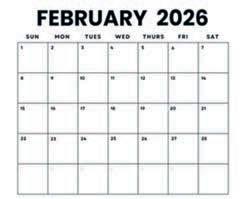
In the April 2026 edition of CMM ‘Selected Events’ it says there are three events in February! March, maybe? Don’t worry too much as my ‘Old Bike Mart’ wall calendar shows 29 days in February, which had me confused for a bit anyways! Love the magazine, keep up the good work!
Malcolm ‘Wolfie’ Smith
Bertie says: “Oops! Sorry Wolfie! Have the 29th off mate!”
We want to see YOUR pride and joy in our pages, so you can share what you ride and what you restore/build with fellow readers. Email your hi-res shots to bertie.simmonds@kelsey.co.uk or mail in some photos at the address at the front of the mag. Let us know what you’ve done, how you’ve done it and send before and after shots if you can. Do get in touch – because the best of the month gets a free T-shirt!
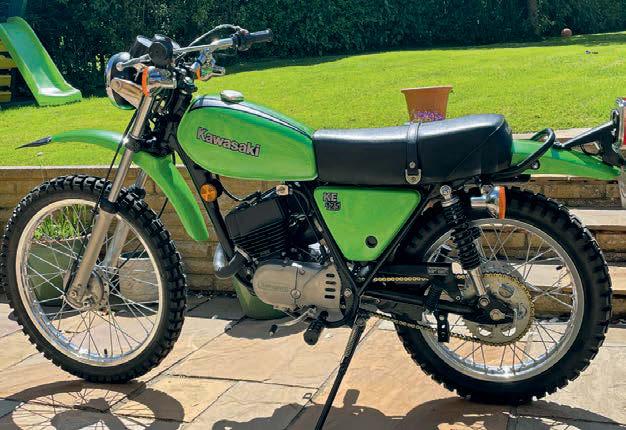
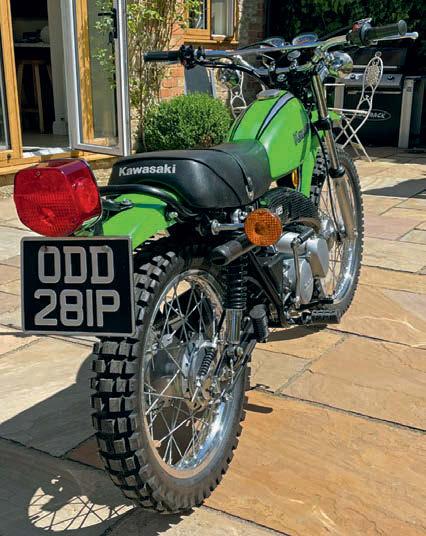
ALASTAIR HERRIOT’S 1977 KAWASAKI KE125
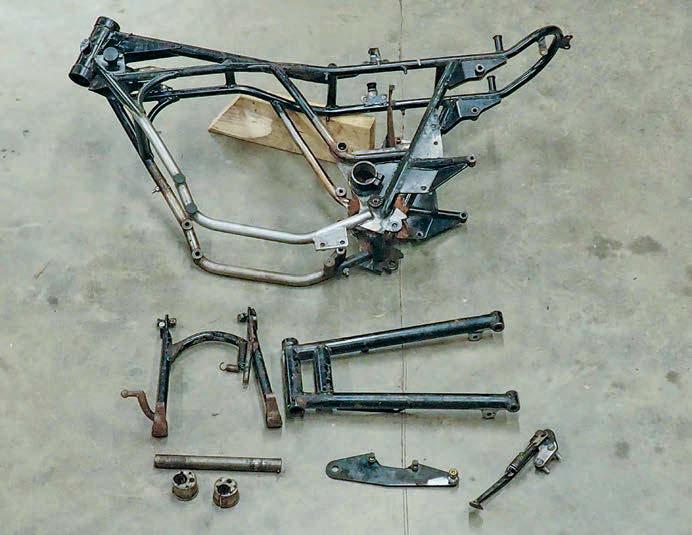
This is my 1977 Kawasaki KE125 A4, bought as a wreck in 2020. Having owned two of these back in 1980, I thought it would be good to see if it could be returned to its former willing little self!
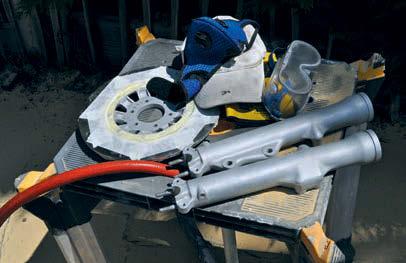
The frame was stripped and powder-coated satin black. The engine was seized solid and required a full nut and bolt rebuild, including Cerakote of
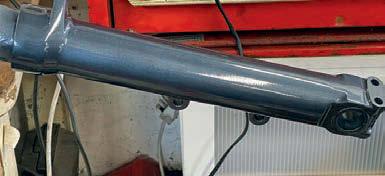
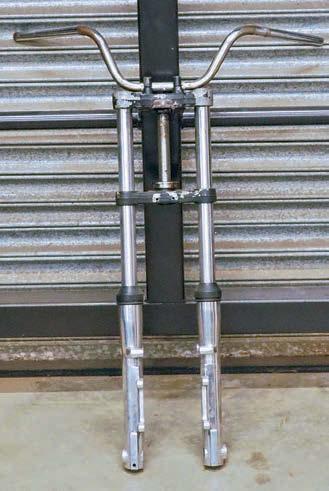
barrel, head and exhaust. The forks were stripped and rebuilt with chroming by A M Philpots (superb job). It’s got a new wiring loom with all tools and equipment supplied by Ralph at Bikers Toolbox (fantastic advice and service throughout). Wheels rebuilt with new spokes and alloy rims. Overall, it was a very therapeutic exercise having never done one before.
Lots of hard work to find NOS parts from the ever-helpful and brilliant team at Z-Power (I can’t praise them highly enough). The paint is a mix of original Kawasaki colours and stripes. However, they were not in this combination for this year, but I like it. The only outsourced jobs were powder-coat, chrome and paint. The rest was a labour of love over four years.
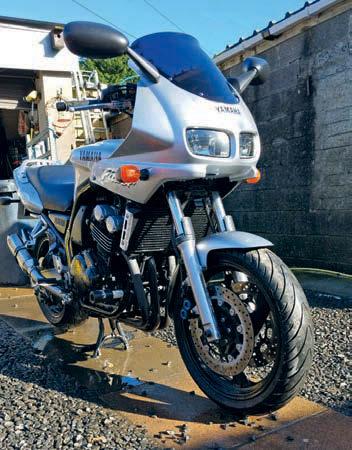
NATHAN BRADLEY’S 2000 YAMAHA FZS600 FAZER
This is my first motorcycle! I got my licence in August 2024. I started to see a few Fazers about and loved the style of them.
Some came up with more miles on than I wanted or were too far away to go see until the perfect one arrived nearly on my doorstep. Less that 10k on the clocks, shining in silver. I wanted it. I hemmed and hawed again; the motorcycle is 25 years old, only six years younger than me!
Should I go for something newer? My brother was over and knew I liked that style of bike. I got out the money, counted what I had and thought I’d be happy with parting with that. I organised to see it. My Dad came with me and his comment once seeing it was: “Immaculate.” It was a done deal; the motorcycle was mine. So, in October 2025, just over a year since getting my licence, I am now the proud owner of a 2000 Yamaha Fazer FZS600!
JOHN DAVIES’ 1979 SUZUKI GT350B
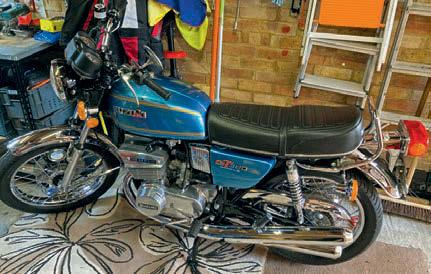
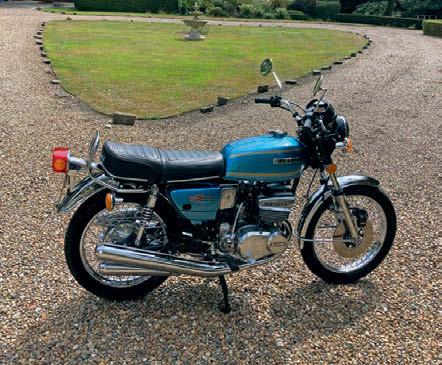
Hope you like this. It’s been dry stored for over 25 years. I bought it from a collection. It’s got a book with its full history and 15,000 genuine miles. I’ve serviced it,
maintained it and kept it looking like it did brand-new in 1979.
It’s probably the best in the UK and it runs like a Swiss watch!
NIGEL HODGSON’S 1984 HONDA VF1000FE
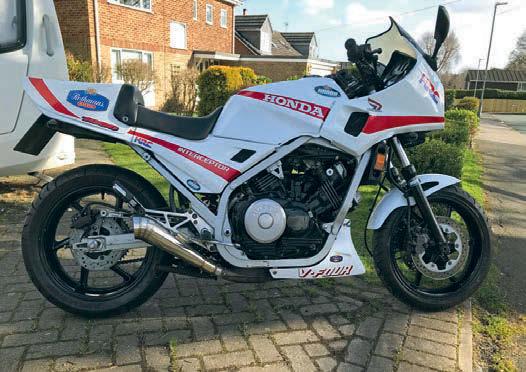
This is a bit of a working ‘work in project’ bike really. It’s been completely repainted and has CBR600 wheels.
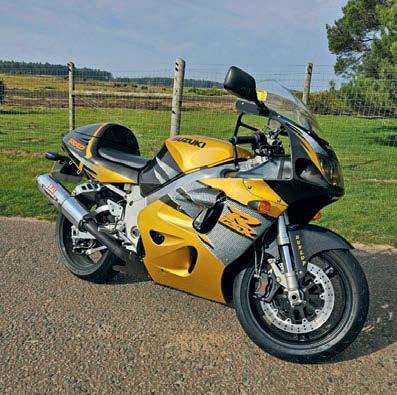
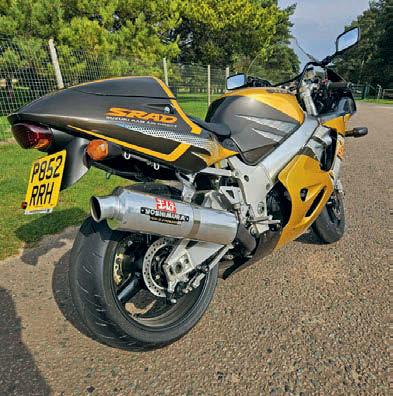
RICHIE PERROTT’S 1997 SUZUKI GSX-R750 SRAD
My SRAD is finally back on the road after 18 months of a restoration. Basically, I put it back to standard-ish with a few tasteful upgrades including HEL radial master cylinder and HEL four-pot calipers and conversion brackets. It’s got a Yoshimura RS3 end can with Harris hanger and SES clip-ons. This labour of love has been gone through from front to back. The bike wasn’t great when I got it: LED lights, a 3D number-plate, and every bolt was gold-anodised crap! Oh, and gold bar-ends, black screen, no brakes, wheels corroded, just name a few things. But now it looks spot on in my opinion!
The way we were…
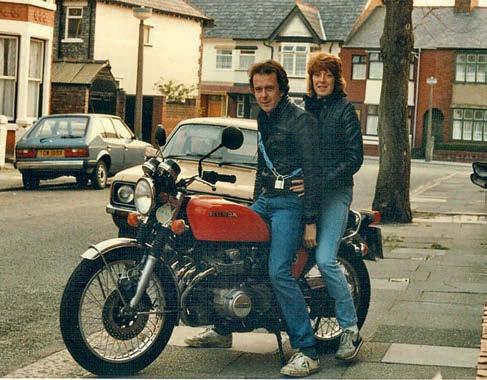
Send us your nostalgic snaps of you back in the day with your steed! Send to me at bertie.simmonds@kelsey.co.uk or via our vibrant Facebook page. C’mon, we’ll send you a T-shirt if you are our first pick!
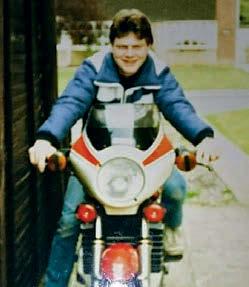
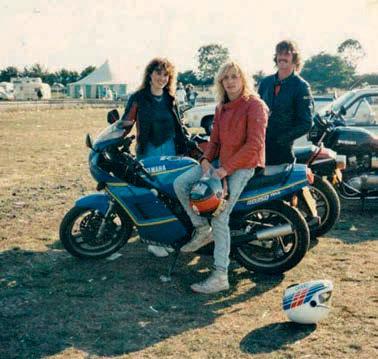
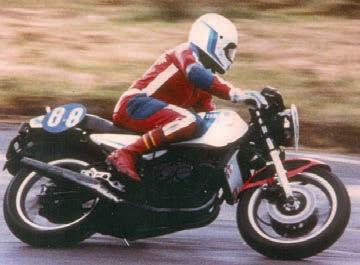
Graham Bennett says: “This picture shows my wife Karen and I on my Honda 550 Four in around 1980. Sadly, she passed away suddenly last year. I came across this picture whilst recently tidying some things up and it brought back some lovely memories.”
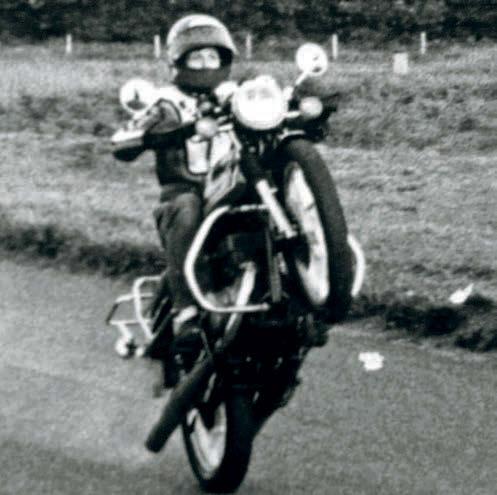
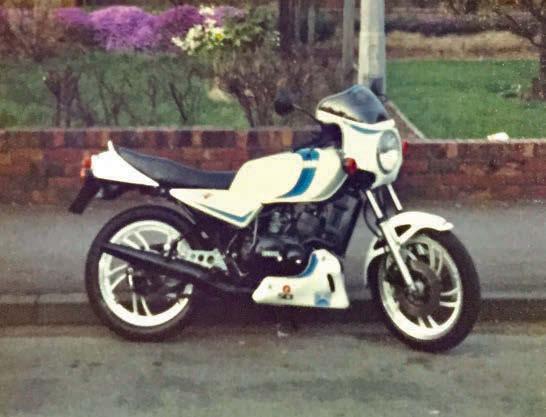
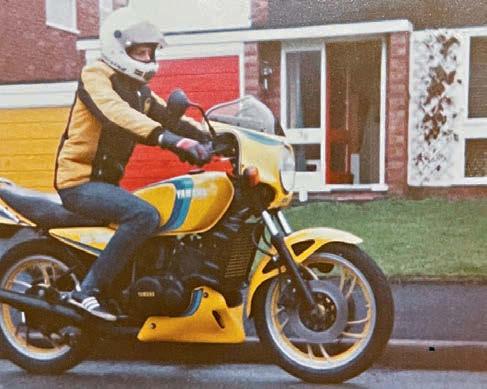
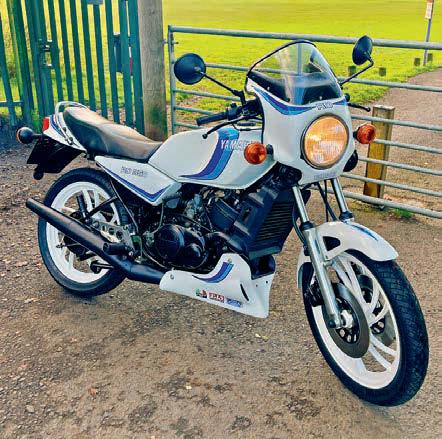
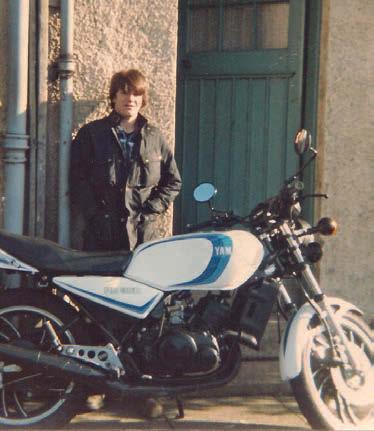
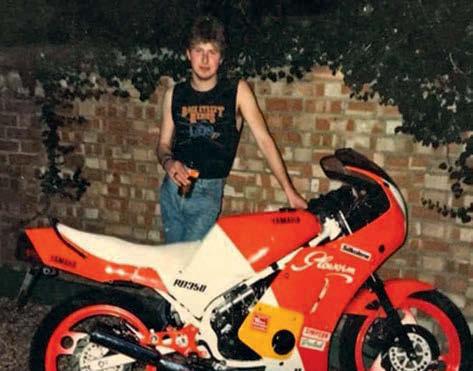
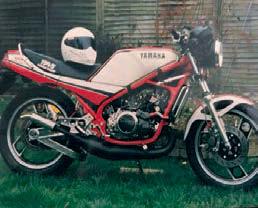
Andy Rudall says: “A few pictures for you! One is of my very first Yamaha RD350LC in its original white, just as I bought it from Kidderminster Motorcycle Mart in March 1981. A true classic and an absolute dream bike for me at the time. Not long after, I gave it a bit of a makeover and painted it yellow, just to be different. This photo was taken outside my Mum
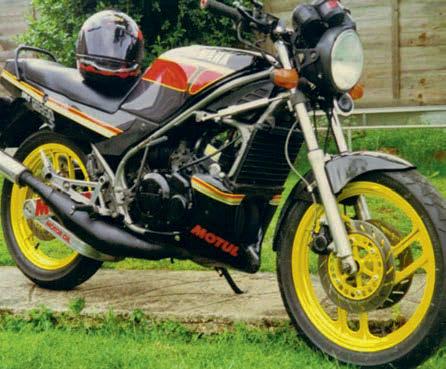
and Dad’s house in Kingswinford – still makes me smile seeing it parked there! Oh, and a bonus pic of me on my 1978 Suzuki GT250 X7 just after passing my test over Encille Common. Note the huge crash bars! Then fast-forward to today, and here’s the RD350LC I have now. It’s not the same bike as I had in 1981 unfortunately, but my amazing wife
(who on our first date didn’t blink an eye when I picked her up and wheelied off from her mom and dad’s house) surprised me with it for my 60th birthday. I’ve restored it to look exactly like the one I had back in 1981 – the very bike I was riding when I first met her. Three bikes, countless stories, and one incredible journey through time.”
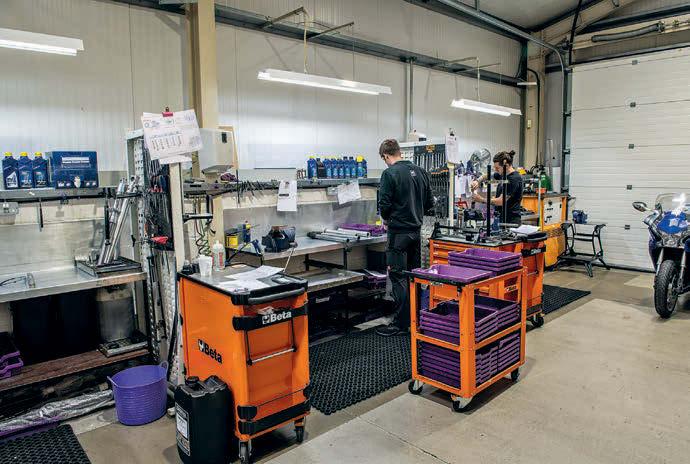
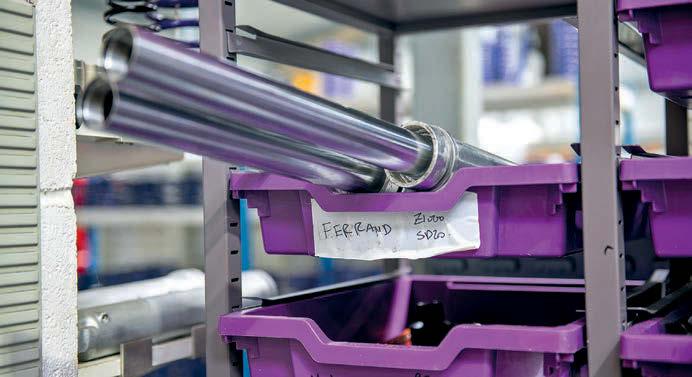
Custom-length forktubes, reconditioning of alloy fork lowers,or straightening of bent forks, we have the experience andequipment to dothejob right.
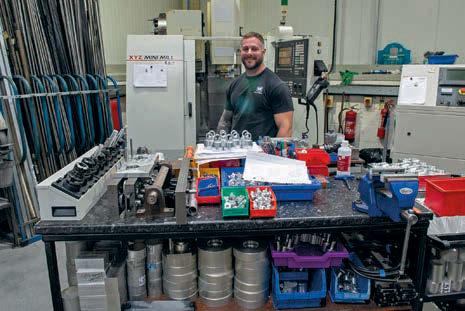
yoursuspension,orneedcustom-madeparts, we canhelp.
DPBrake PadDealer
FOREVER YOUNG!
That’s how those of a certain generation feel after riding the first of the YPVS line. The first Powervalve models really were a revelation when they were released back in 1983…
Today we’re going back to 1983, back to the year the internet and mobile phone were born. Margaret Thatcher was in Number 10 and good old Phil Collins was at number one with ‘You Can’t Hurry Love’.
Boy racers were hurtling around in Escort XR3s or on 350LCs. All this was about to change though as Yamaha was about to unleash the RD350LCII (or 2) on the public! So put your Rubik’s Cube down and take a look at this beauty.
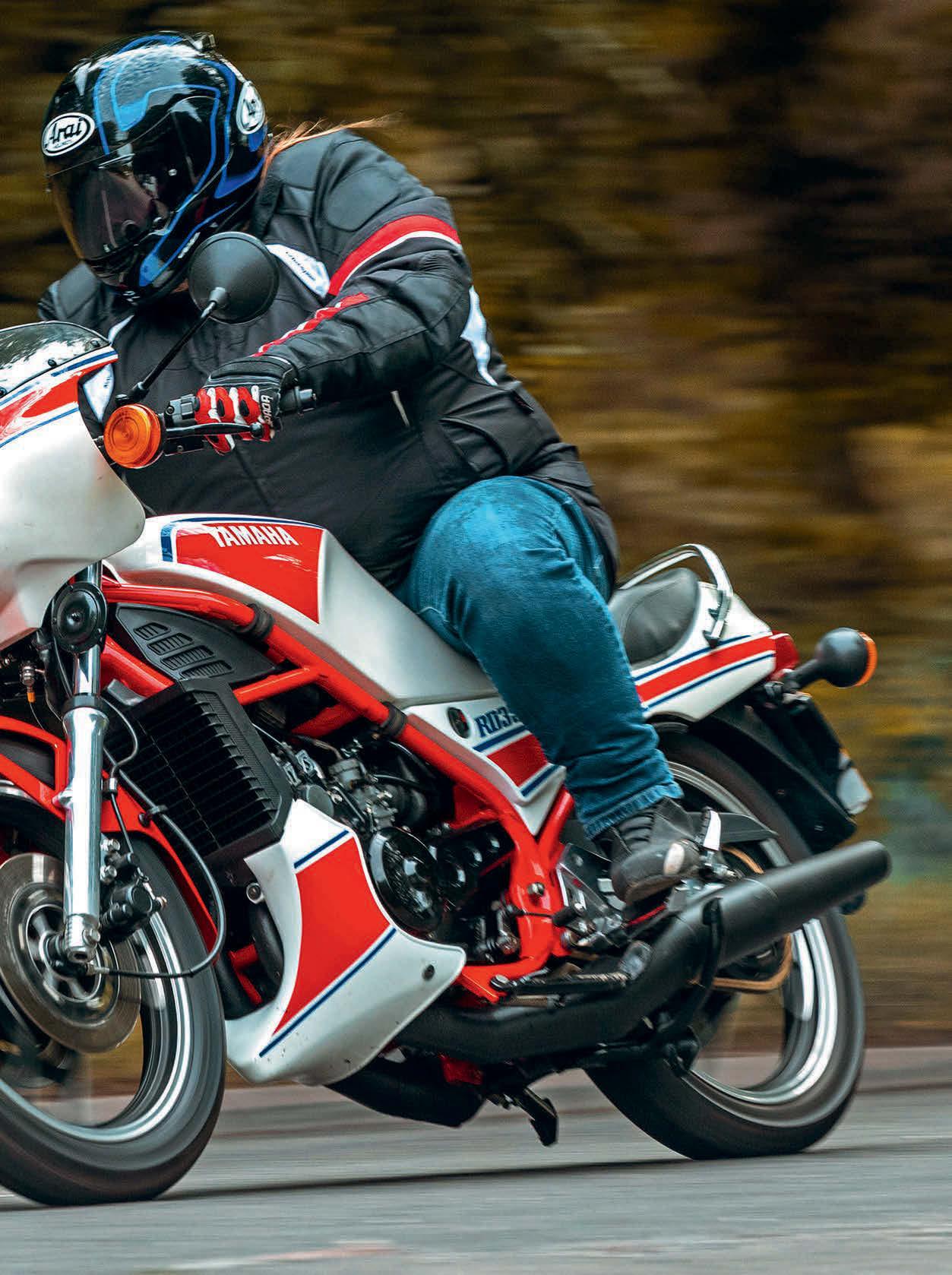
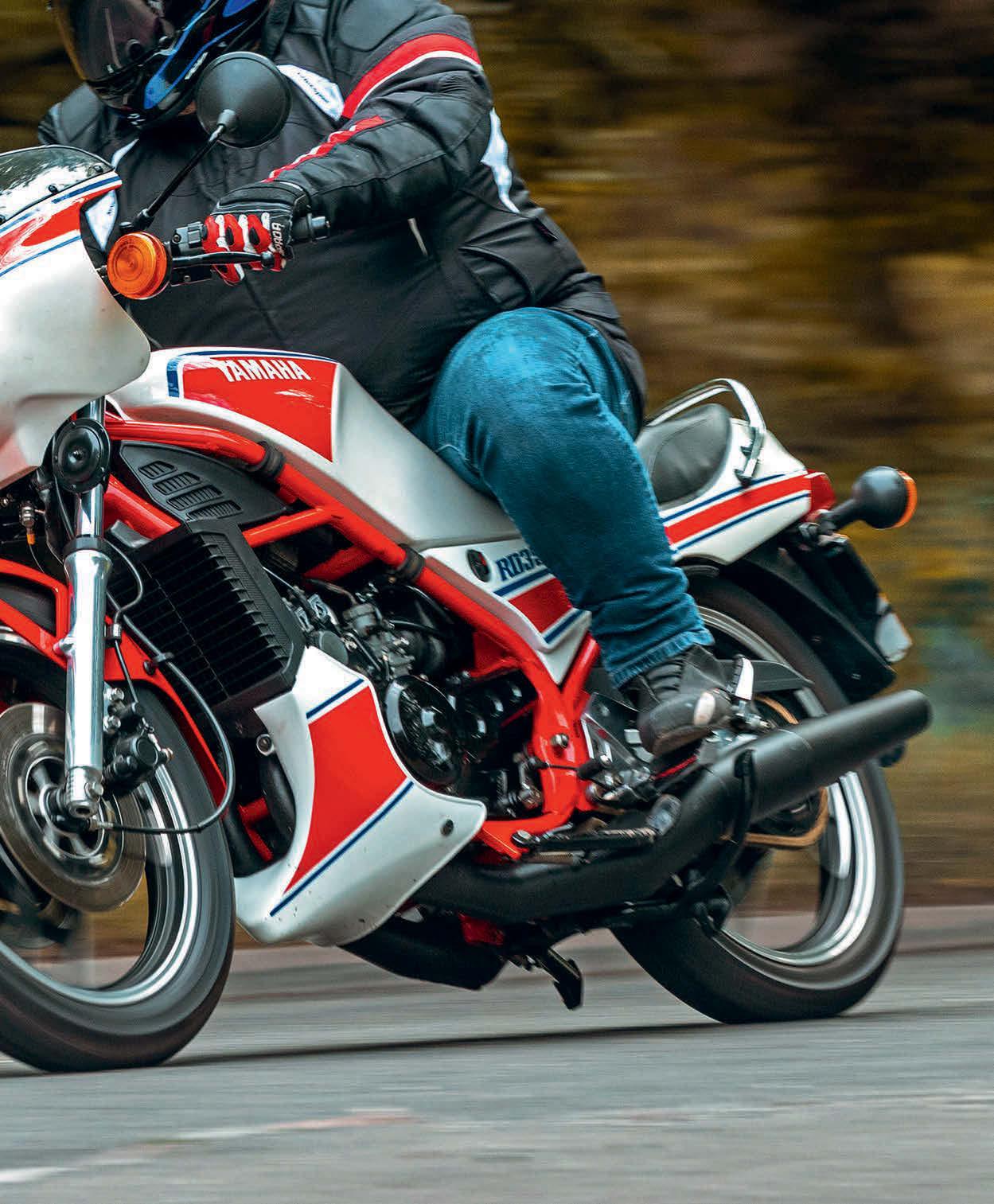
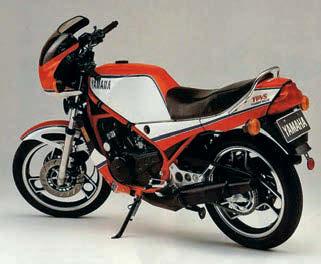
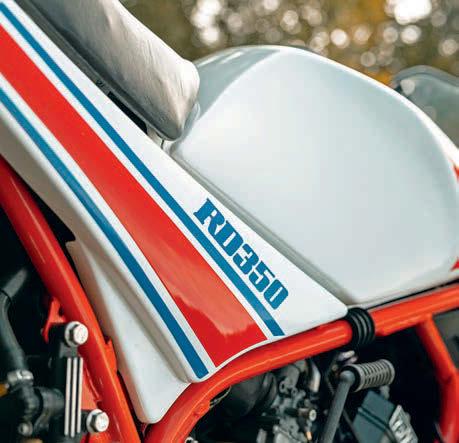
I wonder if Yamaha knew back then that the LC and YPVS would still have such a huge following 40 years later? When compared to the early LC the LCII looks so much more substantial without being bulky or bulbous. The box section swingarm and red
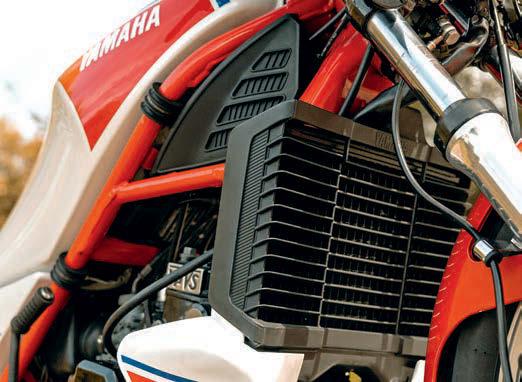
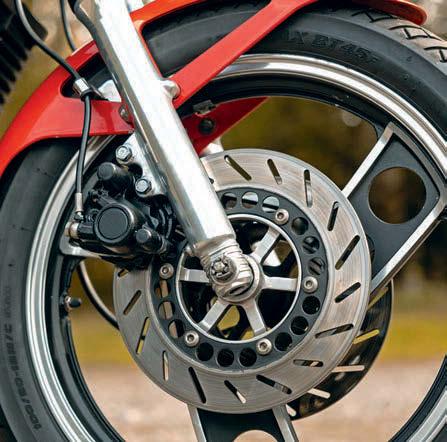
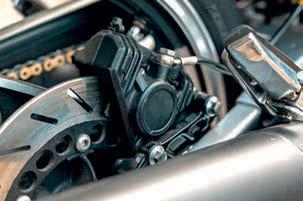
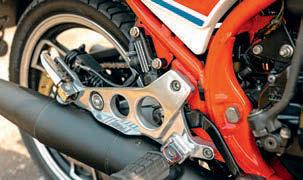
perimeter frame and new styling just scream ‘racer’, the new style wheels look lighter, and the old LC’s rear drum had disappeared and been replaced by a slotted 267mm disc (the same as the front) gripped by an opposed twin piston caliper. Everything just looks so much more modern and up to date when compared to the old LC.
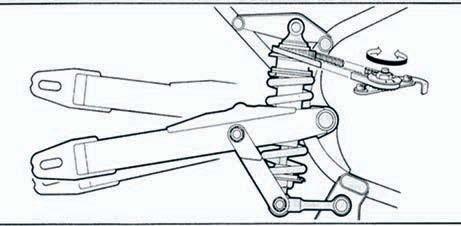
While the front forks have been beefed up in size to 35mm diameter they also now have air assistance. The rear-end was a rising rate unit connected to the swingarm via a linkage and a vast improvement on the previous bike’s layout which mounted the shock directly to the swingarm. Although the rear shock works a lot better than before, it can be a bit of a pain in the botty to
WORDS: ANDY BOLAS PICS: GARY D CHAPMAN, MORTONS ARCHIVE, YAMAHA UK
CLASSIC RIDE
adjust some 40-plus years on, unless the belt adjustment system has been well maintained. I have seen some of these fitted with the later shock from the F2 model or aftermarket market shocks which are adjustable for pre-load via a stepped collar on the shock body.
These frame and suspension improvements made the LC2 even more of a demon on the back lanes where it waited for unsuspecting large capacity four-strokes to bully. And bully them it did, with 12bhp more than the LC and with more composed handling the LC2 was a better all-round package.
Top value, motor changes…
At £1695 on the road, it was also extremely good value when compared to the likes of Honda’s VF400 which cost another £200 more or Suzuki’s GSX550 which was £2099, only being undercut by Suzuki’s dreary GS550 which cost £1599. Now, on paper the Yamaha was neither the most powerful, had the biggest mid-range bike nor was it the fastest. However, numbers on paper and on the road are two very different things!
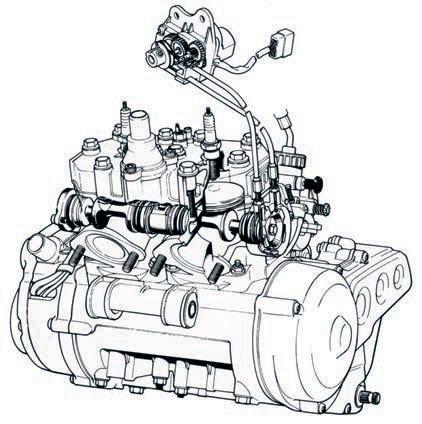
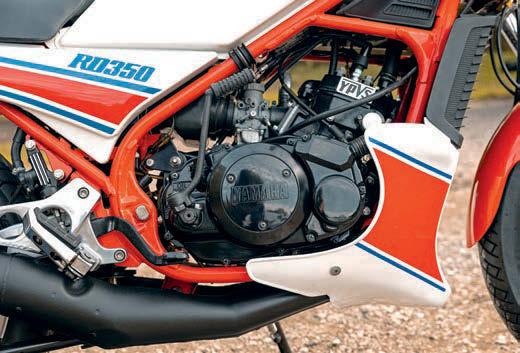
At the heart of the new RD was a newly developed 347cc two-stroke twin with YPVS. Now, I know most people will know what it is and how it works but just in case you don’t, here goes. YPVS (Yamaha Power Valve System) would change the two-stoke world forever. Initially this was developed for Yamaha’s racing machines in 1978 and was successfully used on Kenny Roberts’ YZR500, also on their YZ moto-cross machines, albeit mechanically controlled rather than the electronic set-up of the GP bike.
On refelction, if you’re a Powervalve purist, the 31K is the puppy!
TOP:
BELOW: The odd belt-adjustment for shock!
Diagram shows the layout and working of the Yamaha Power Valve System.
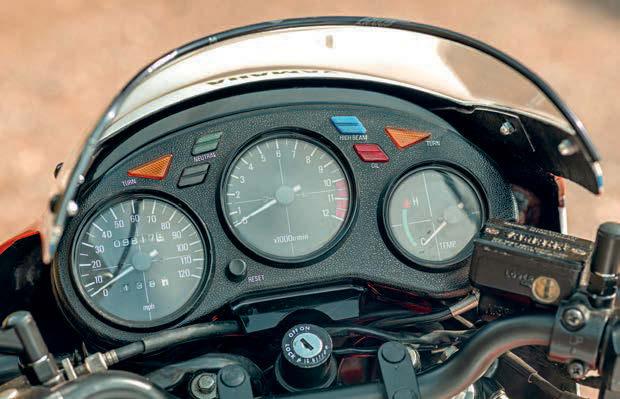
TOP: Cockpit brings back memories to many a middle-aged man! Spare idiot light for Jap-spec speed warning.
MIDDLE LEFT: Useful bikini fairing for protection.
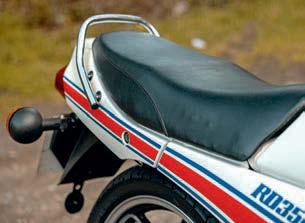
MIDDLE RIGHT Only committed pillions need apply!
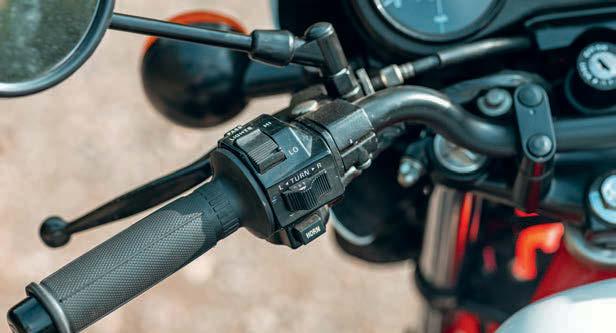
BOTTOM: Switch-gear of its time. And winker no longer cancels!
The system was also used in both mechanical and electronic set ups in 1981’s TZ models and then for 1983 Yamaha equipped the new LC with YPVS. As some will know, YPVS was an electronically controlled system that could alter the height of the exhaust port. Previously the porting would be a compromise between rideability and top-end power. The smaller the exhaust port the lower the top-end power but the better the bottom-end drive would be. If you had a large exhaust port you would have good top-end power but at the cost of low-down power and tractability. With YPVS you got the best of both worlds because at low rpm the valves would remain closed, fooling the engine into thinking it had a small exhaust port, but as the revs and engine speed increased the valves would open increasing the height of the exhaust port giving you the best of both worlds.
THE LC FAMILY TREE CLASSIC RIDE
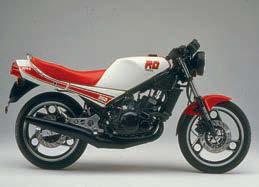
1980 YAMAHA RD250/350LC
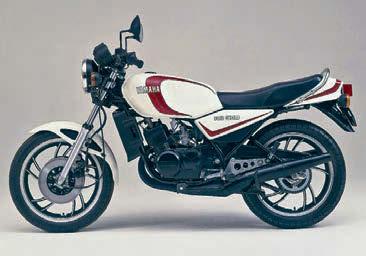
Yamaha released the precursor to the YPVS, the 250 and 350 LC (model code 4L1/4L0). The LC featured an all-new liquid-cooled motor related to the TZs of the time and featured a mono-shock rear-end. The new bike was capable of around 110mph from its 347cc liquid-cooled twin which was producing 47bhp and weighed just 143 kilos. Many were modified back in the day, although nowadays many have been returning them to standard trim. So began the ‘cult of LC.’
1981 YAMAHA RD350LC
1983 YAMAHA RD350LCII YPVS
All-new model. The LC-2 (model code 31K) has a new perimeterstyle frame, new bodywork including bikini fairing and belly-pan. The LC-derived 347cc motor now makes 59bhp and can reach almost 120 mph thanks to its all new (for a road machine) YPVS set-up which varies the exhaust port height. The new bike weighed in at just 145 kilos just two more than before. Rear shock pre-load was adjustable via a belt adjuster and the front forks were now 35mm and featured air assistance along with variable damping.
1984 YAMAHA RD350LCII YPVS
New colours and improved longer bracing on the frame under the head stock area. Front forks now had 35 mm straight stanchions (1983 model had reduced diameter between the top and bottom yoke).
1986 YAMAHA RD350LCII YPVS F2 AND N2
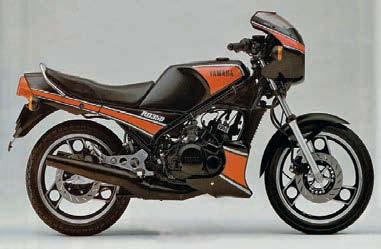
This year saw the production of two models yet again, the RD350F2 (model code 1WT) and N2 (model code 1UA). These were much sleeker than the previous models. Frames were modified to suit the new petrol tank and rear panels. The seat was new, rear light, indicators, wheels and mirrors differed from the previous bike.
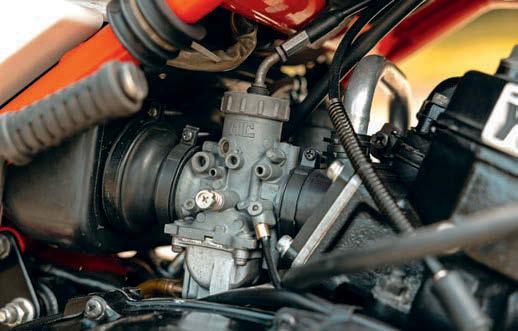
Mechanically the new models had modern-style exhausts with alloy-looking silencers, power jet carbs, new porting, new ignition system and power valve control box.
All these modifications got the power up to a claimed 63bhp, although the delivery felt a little softer and the power tailed off around 9000rpm. The F2 weighed in at 141 kilos and the un-faired N2 at just 137 kilos.
1988
This year saw the frame modified and fitted with engine stabilising bars, also the exhausts were modified around the neck coming out of the cylinder as there were lots of cases of the exhausts fracturing due to engine vibration. Front forks now featured a drain-plug and the swing-arm spindle gained a grease nipple. Finally, the main jet size was increased to 220 from 160.
1982 YAMAHA RD350LC
New graphics and a new candy blue colour scheme for the LC’s last year.
1985 YAMAHA RD350LCII YPVS F AND N
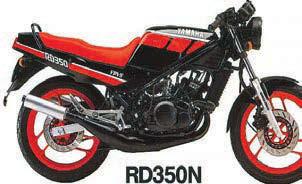
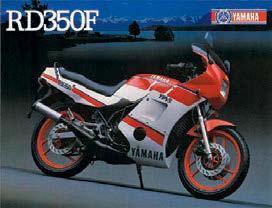
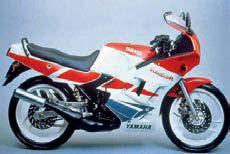
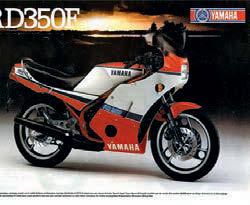
Two new models the RD350F (model code 57V) and the RD350N (model code 1JF) both still pushing out 59bhp. The F was a fully faired version and the N was a naked version.
The F had the fairing mounted to the frame and featured slightly higher bars than the N model which lent itself to a more sportier riding style due to slightly lower clip-ons than the F. Both bikes featured a new box-section swingarm and uprated twin opposed piston calipers front and rear. The two new models also featured a new instrument display using the same clocks as its big brother the 500LC. The F also shares its mirrors and top fairing with the 500.
The rear shock was now adjusted via a stepped collar rather than the previous bike’s belt system. Weight was slightly up with the F model at 148kilos with the N at 144kilos. These two models were very short lived and were only produced for 1985.
YAMAHA RD350LCII YPVS F2
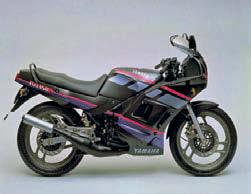
This year saw the N2 discontinued and the F2 (model code now 3DH1) had a new Grey/black colour scheme introduced and the pilot jet size increased to 27.5 from 25.
The 350 YPVS was still going strong but now faced ever increasing competition from the sports 250s. December 1991 sadly saw the F2 discontinued from the UK.
1992 YAMAHA
RD350R
The Powervalve returns to the UK market and is now known as the RD350R.
Now made in Brazil, this was the Powervalve’s last hurrah. The R came with restrictors in the exhaust and was jetted to suit, it also had the same 150mph speedo as the 500LC. Some saw the bike as a poor replacement for the outgoing F2, but it was just as quick once derestricted and the new fairing (with twin headlights) offered more protection. Discontinued by the end of 1995.
Yamaha’s system was simpler than later versions from their competitors. The Power Valve is a cylindrical-shaped piece of aluminium with a cut-out in it sitting above the exhaust port. When the solid section is down over the exhaust port the valve is in the closed position, so the port height is lower and when the cut-out is above the exhaust port it’s higher. Maintaining both low-down grunt and top-end power. Genius!
The valves are operated via cables running from the servo-motor under the petrol tank and the servo was controlled by the Power Valve control box which matched the valve position to engine speed and rpm.
At the time Yamaha probably didn’t realise that they had created possibly the greatest two-stroke
ABOVE: It’s surprising just how good this bike is, 40 years on.
engine ever produced; the fact that it was in production for 13 years speaks volumes about its popularity.
The 350 YPVS engine itself has appeared in many two-stroke specials over the years and is still as popular with today’s tuners like John Floyd or Andy Ball just as it was back in the days of Stan Stephens and Terry Beckett. Nowadays it’s not unheard of to get over 100bhp out of the YPVS motor with different big-bore cylinders etc. In fact our own Vic Shield has a few bikes with tuned YPVS motors in them. But then he is mad…
Look at this beauty!
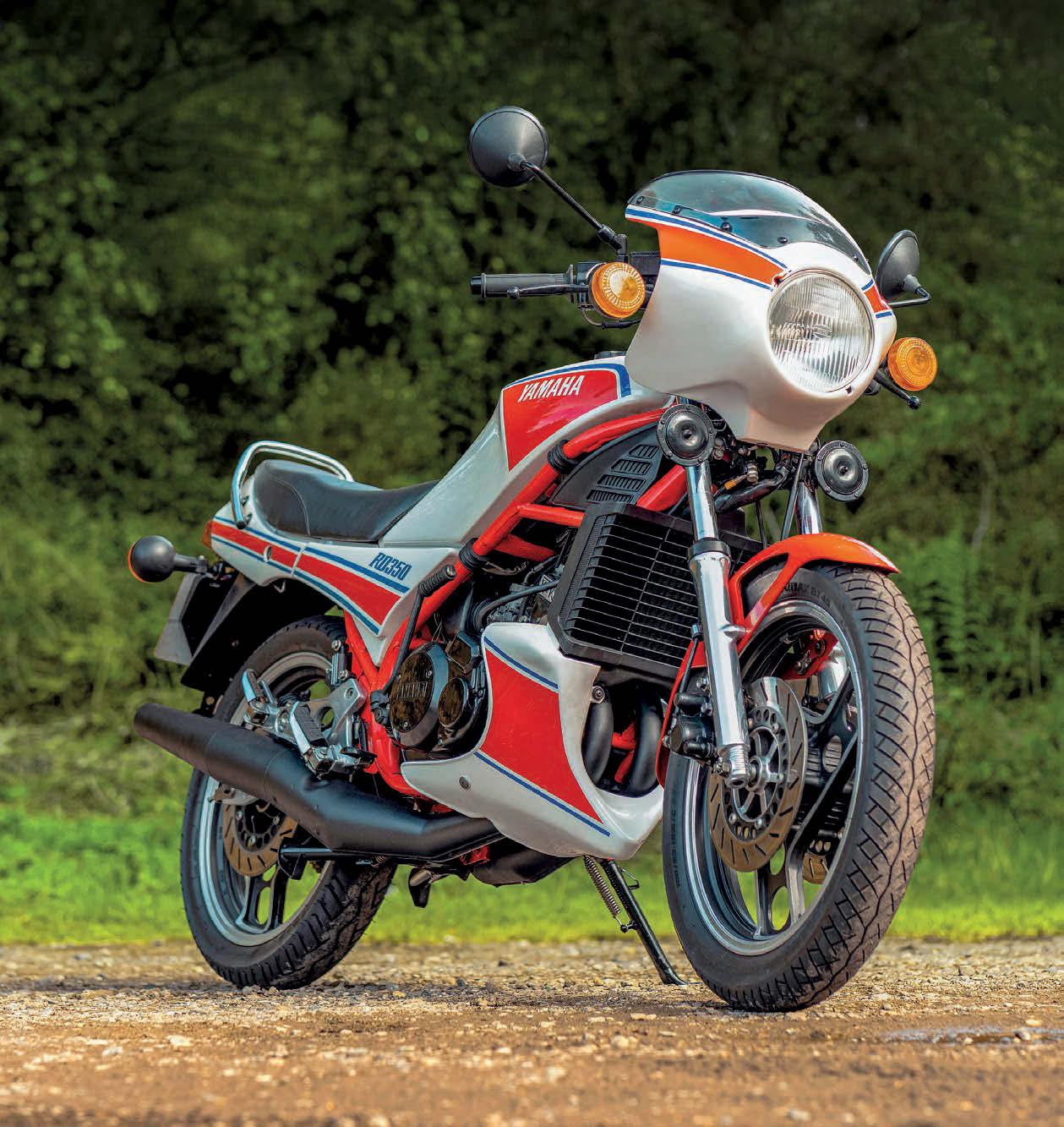
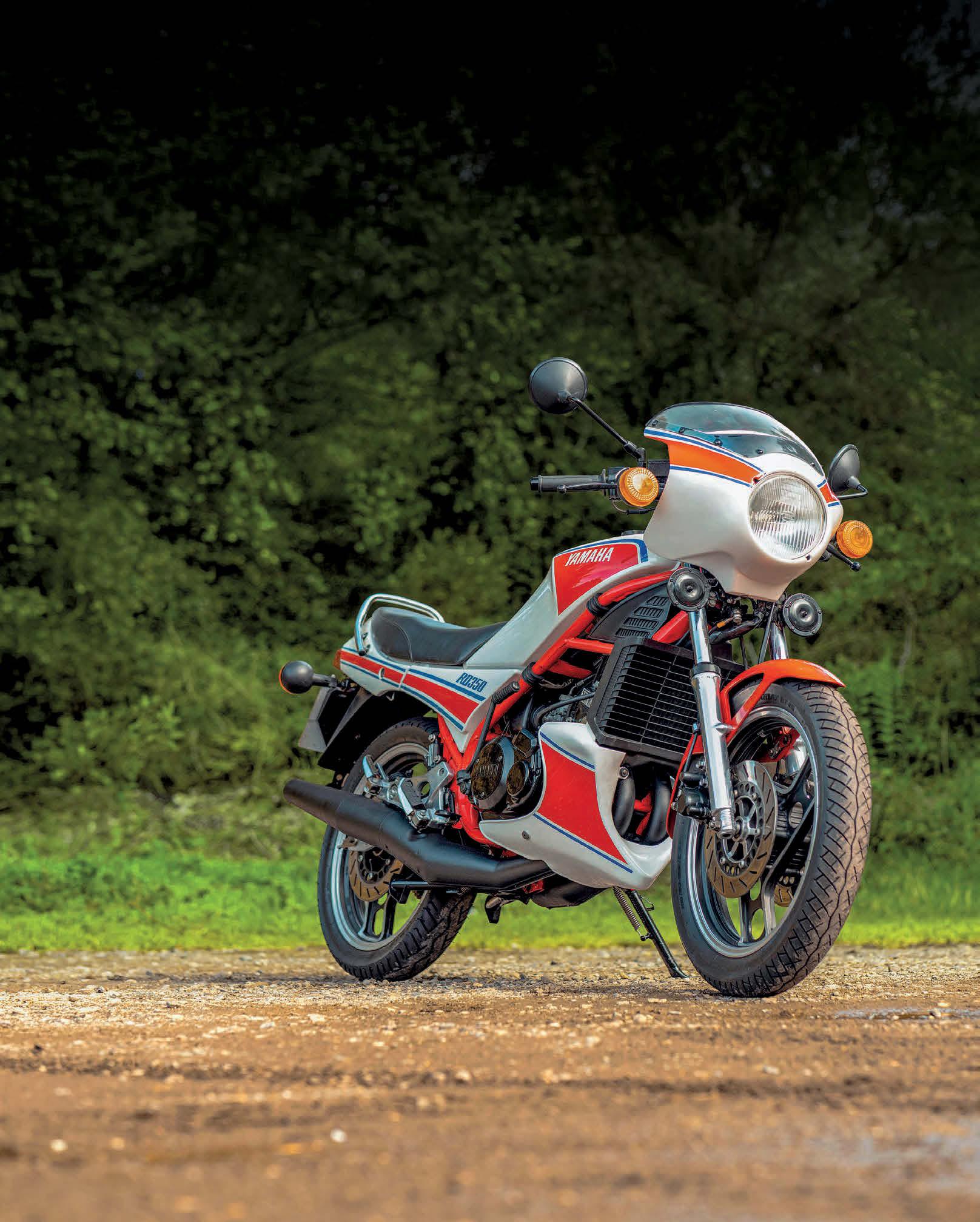
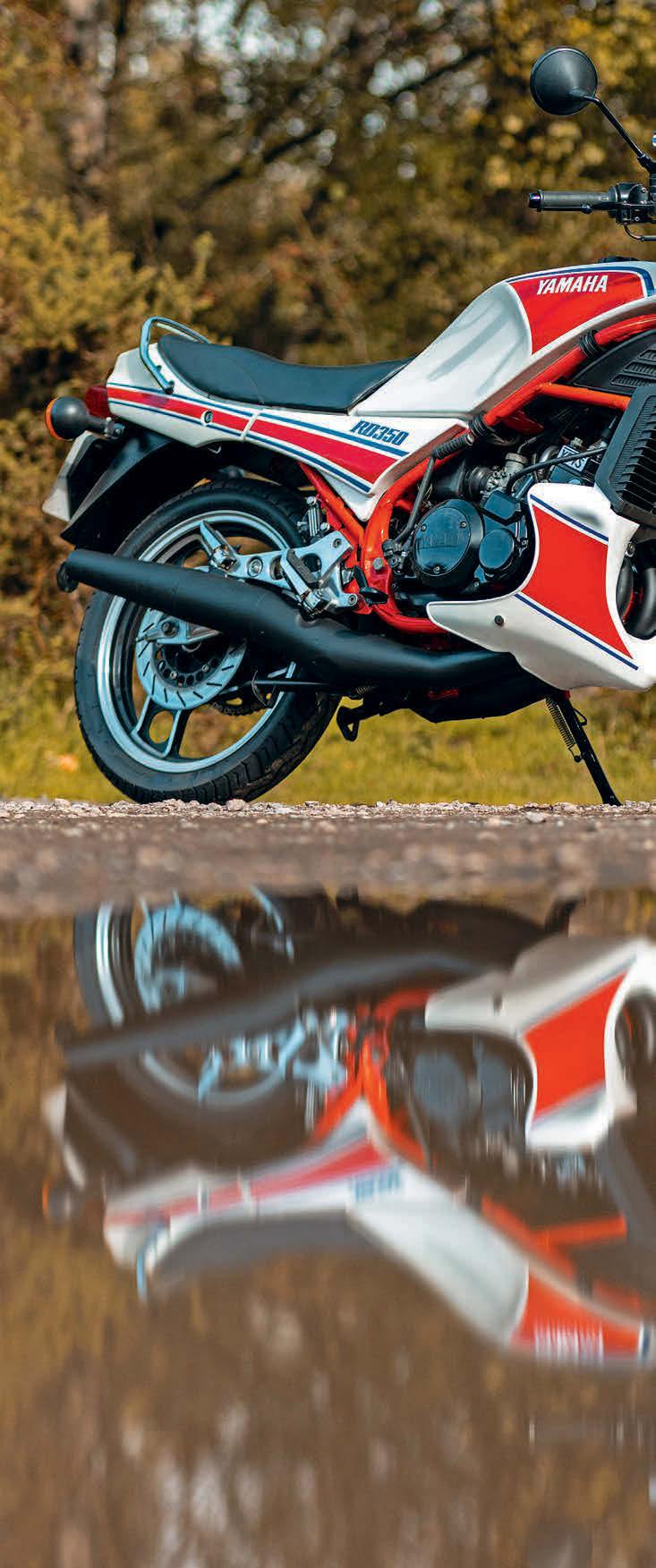
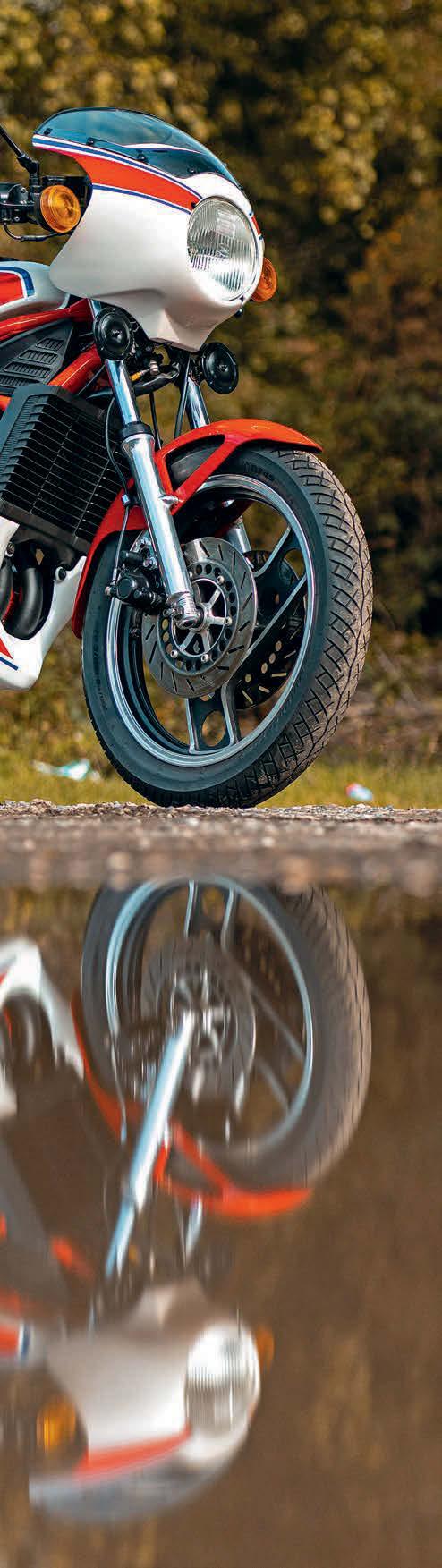
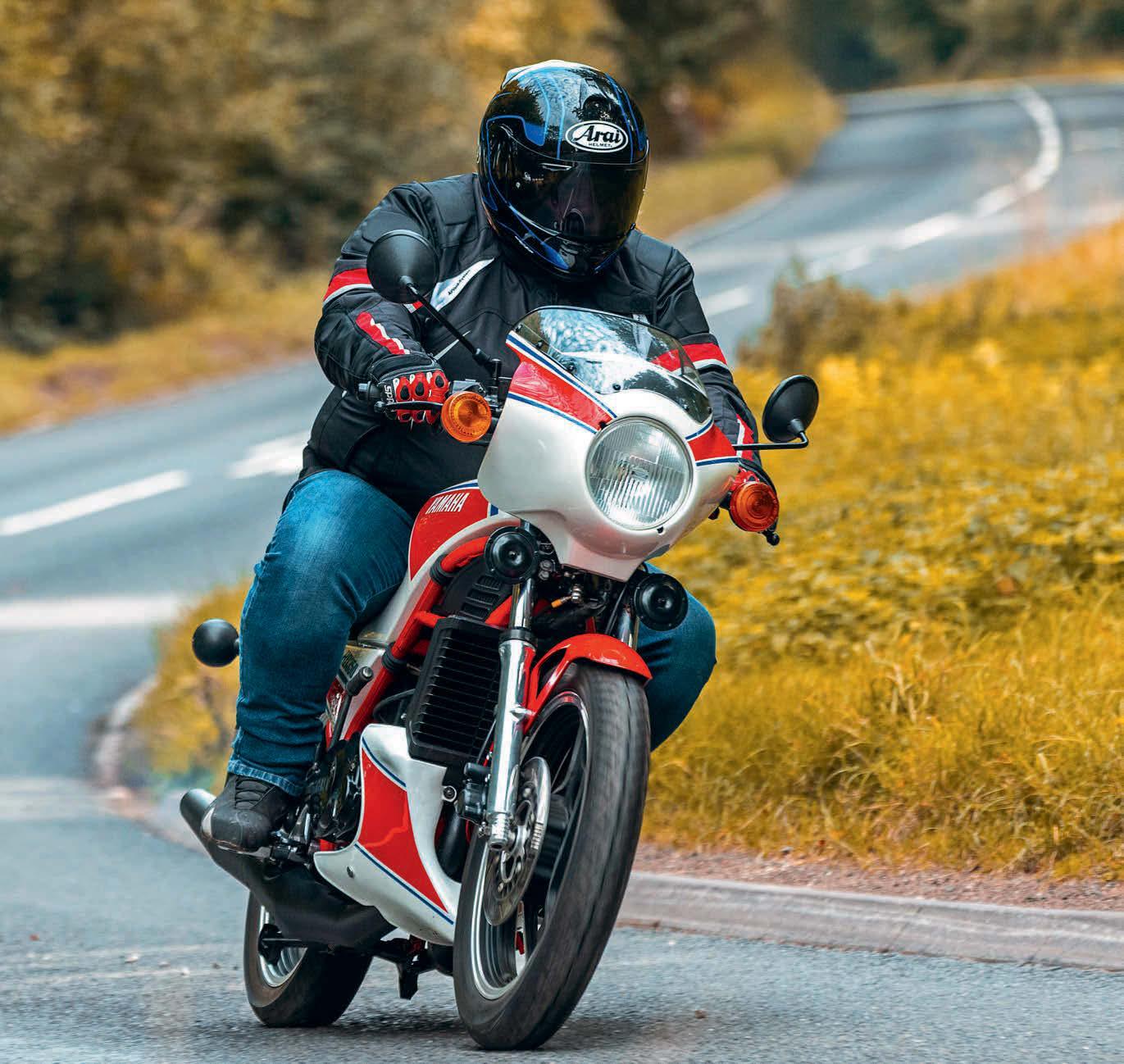
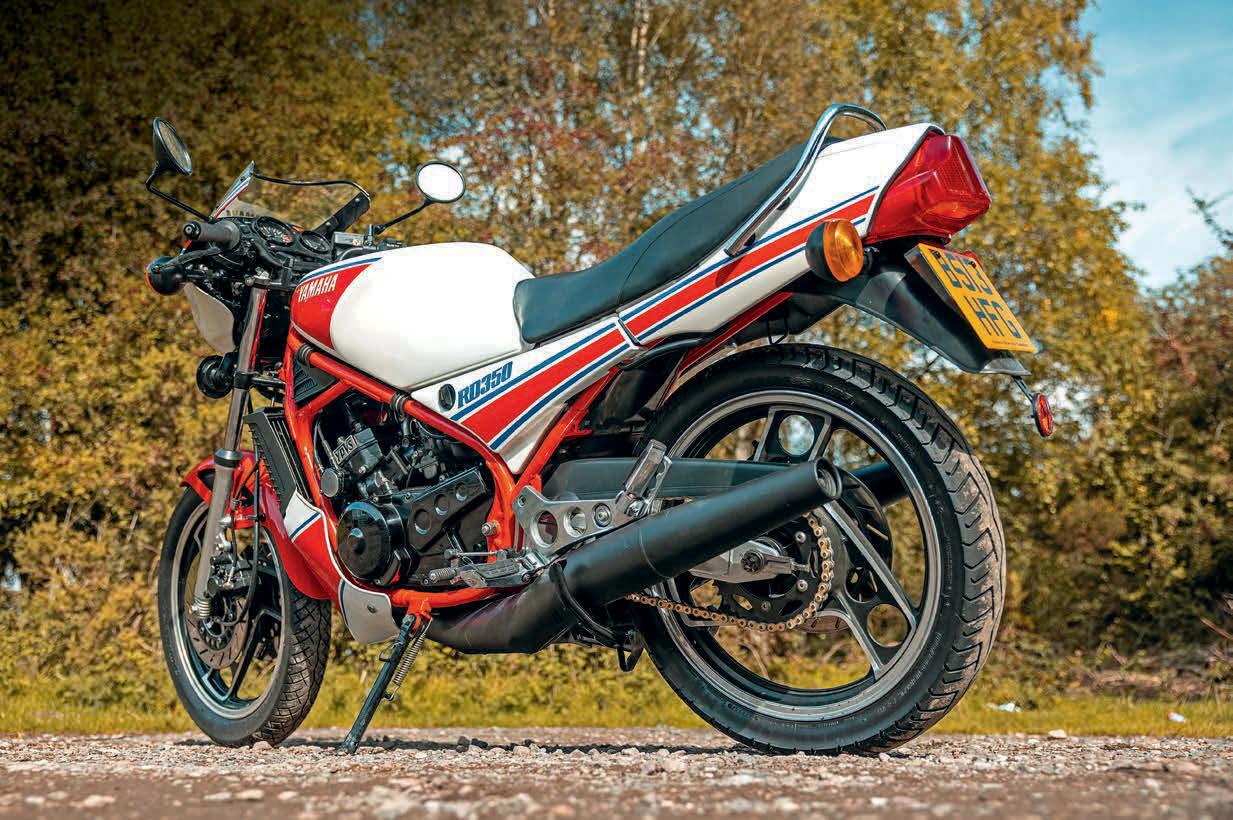
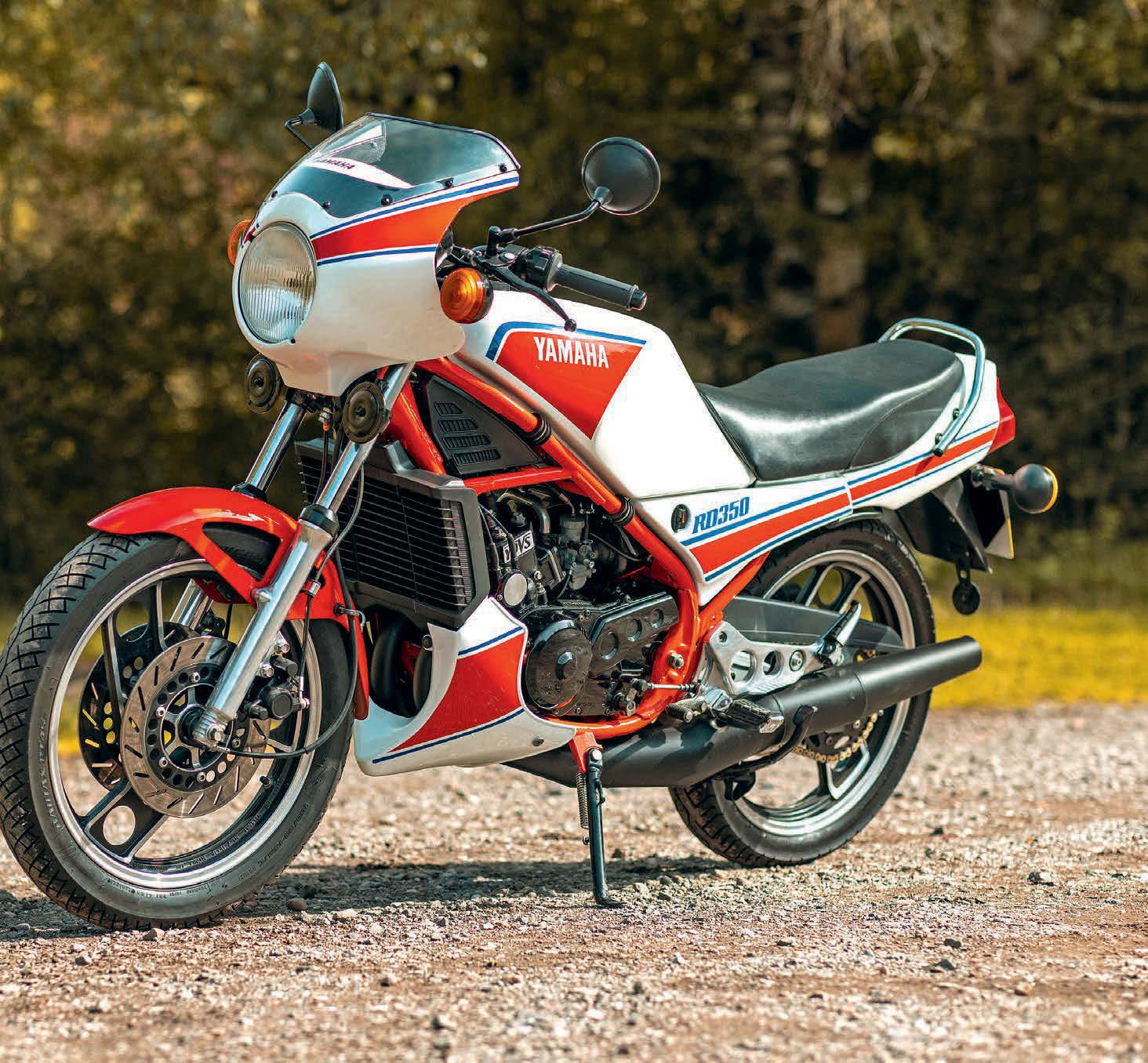
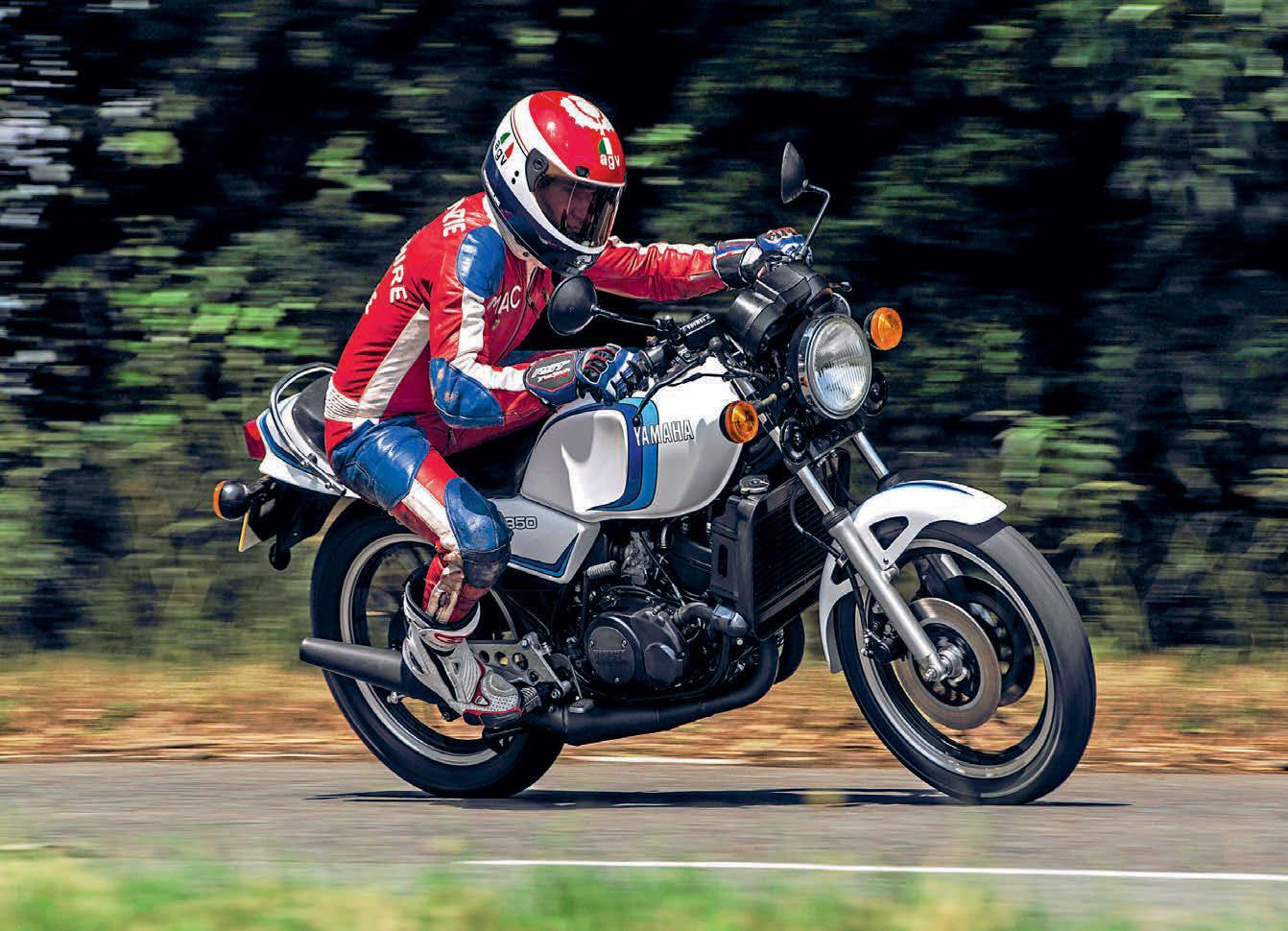
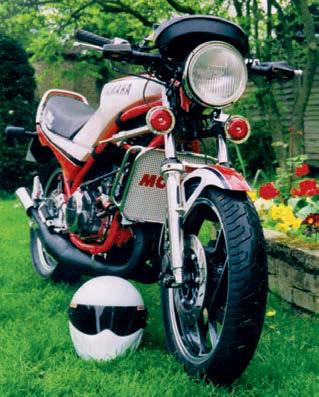
Here we have a late registered 1983 Yamaha RD350LC2, owned by reader Grant Jeffery. It
looks pin sharp in the ‘new pearl white’ colour scheme and it’s in standard trim too: no expansions or other mods except braided brake lines. Point of order, yes, Yamaha said ‘Power Valve’ but we may call this bike ‘Powervalve’ as many owners did!
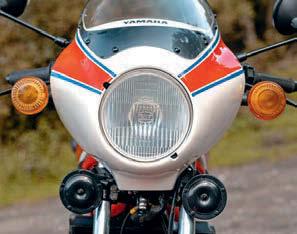
According to the owner, the bike had been fully restored several years back and he had recently given it a bit of a refresh with some paint and powder-coat. This really is a stunning bike. I quite like the look of the instruments with the centrally mounted rev-counter and the rather large temperature gauge. All three clocks are large and clear: there appears to be a spare idiot light in the display. After a little research I found that this is for the 80km/h warning light for the Japanese domestic market. The switch-gear looks the same as that found on the F and N model and they also have self-cancelling indicators.
Sitting on the bike you feel right at home and although it is a very light machine it still feels more substantial than the LC it replaced. Turning the ignition on and we’re greeted by the familiar whirring of the power valves. These things are so easy to start, the choke is readily accessible on the left-hand side of the carbs and it only take a couple of prods and it fires into life.
The fuel tap is easy to operate even with gloves on. No fuel gauges or warning lights on this bike, oh no. When you run out you just turn the tap to reserve then find the nearest petrol station and fill up. Just don’t forget to return the tap to the on position again. Although the bike is not too heavy to push if you do get caught out!
The standard exhausts give a lovely deep
SPECIFICATION
RD350LC II YPVS
ENGINE
347cc liquid-cooled two-stroke twin with torque induction and YPVS
MAXIMUM POWER
59bhp @ 9000 rpm
MAXIMUM TORQUE
34.7lb/ft @ 8500 rpm
TRANSMISSION
6-speed manual
SUSPENSION
Front- 35 mm forks with air assistance. Rear – monoshock adjustable for pre-load.
BRAKES
Front- twin 267mm discs with twin opposed piston calipers. Rear- 267mm disc with opposed piston caliper.
TYRES
Front- 90-90-18
Rear- 110-80-18
SEAT HEIGHT
throbby burble at idle and a lovely shriek when getting higher into the rev range. Most Powervalves I have ridden recently have had quite heavy clutches (due to people fitting a full set of H/D springs, best compromise is to fit three) but the clutch on this one is just right lever-wise. However it does drag a little. Plodding along while we’re warming the engine up shows you just how flexible the engine is compared to the non YPVS LC and dare I say it, even under 6000 rpm the engine is very flexible.
Now the engine is warm and it’s time to clear its throat, the transition of power while not as coarse or abrupt as the LC, still gives a good kick
FAR LEFT: Great colour-way, but we love the black version too!
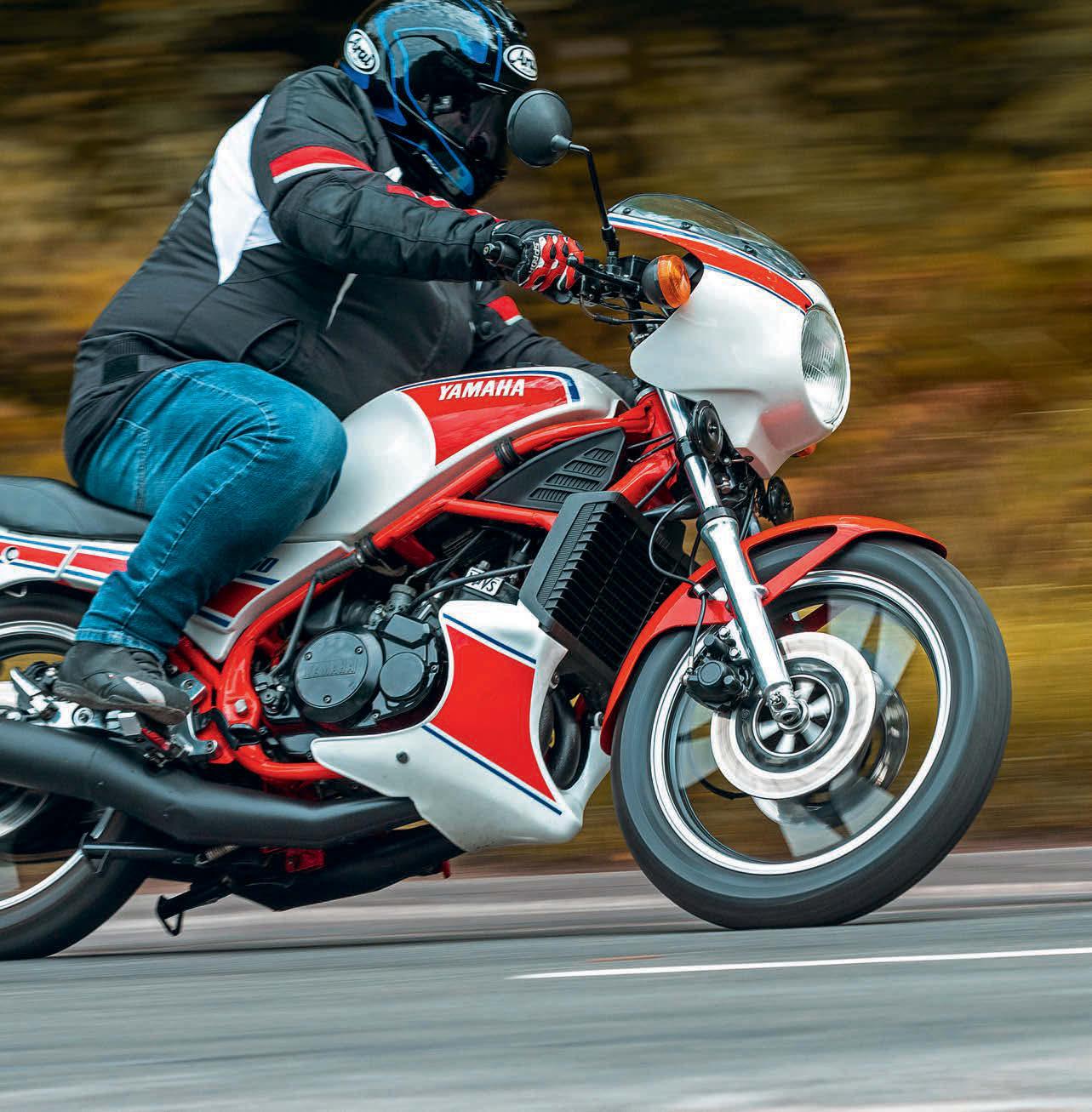
MAIN: Comfortable and crazy in equal measure! Not Andy, the YPVS...
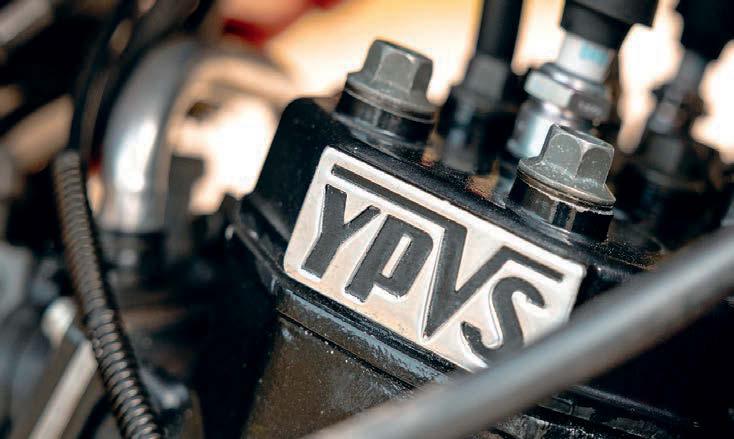
The coolest acronym in motorcycling!
CLASSIC RIDE
up the behind and this thing will pull all the way to the red-line, too. The sound and smell are intoxicating and the feeling you get when hitting the power-band is just addictive. If you crack the throttle too hard it sends the front wheel pawing at the air, just like it said in the old road tests!
This is an absolute hoot to ride and just goes to show you don’t need heaps of horsepower to have fun. The handling is a little loose and flighty, but we’re not on the best of surfaces here and if you push too hard you get a little warning through the bars just telling you to wind your neck in a little.
I’m absolutely loving riding this. It is so light and flickable, the motor is so much fun with its power delivery: even the brakes feel pretty good which is a surprise as they usually feel quite wooden especially without braided lines but not these. The only thing I found disappointing was the fact the self-cancelling indicators no longer selfcancelled.
Buying one today
The LC2 is like so many of the 1980s and 1990s two-strokes: it’s no longer the bargain it once was and to get something worth owning you are going to be spending probably £6000-plus.
Modifications don’t always detract from the bike’s value as long as they are done well, just be wary of anything that’s been tuned by a mate from down the pub!
Some original bits like the bikini fairing and exhausts can be very hard to find but most other things are out there and like with the LC, people are starting to remanufacture parts for these now. I would love one of these but I still have my old N2 and don’t have space for another bike: maybe one day! It’s worthwhile joining the LC Club and the VJMC for fun events and advice. Also, a great source of information is RD350LC.net which is run by the ever-helpful Xavier Blanc who kindly helped with this article.
Overall, I love this bike. Yes, it’s still as crazy as ever and it can scalp more than a few big four-strokes – just like it did back in the day! cmm
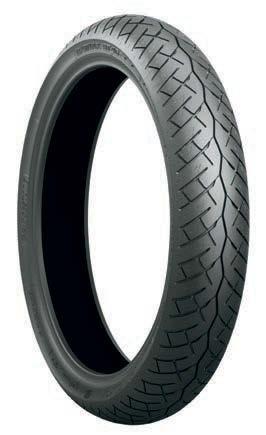
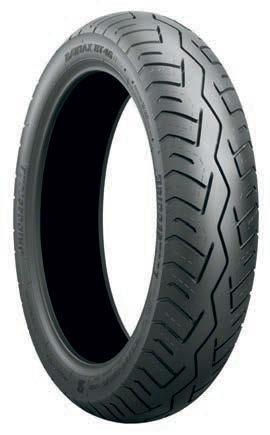
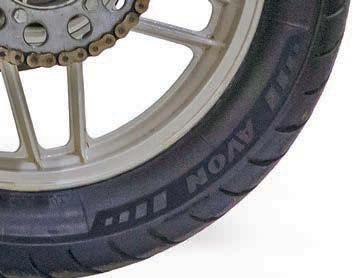
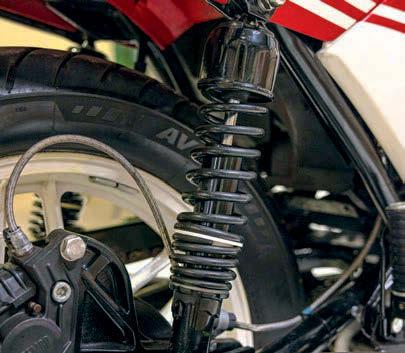
Bridgestone BT-46 tyres
Bridgestone’s BT-46 tyres are perfect for your Yamaha RD350LC YPVS as they are available in sizes Front- 90-9018 and Rear- 110-80-18.
Launched in 2020, the BATTLAX BT-46 tyres are the successor to the popular BT-45s, which were launched back in 1998.
The BT-45s were one of the most popular choices for modern classic riders and the
BT-46 gives even greater performance. Using the latest in tyre technology, Bridgestone has succeeded in upgrading the BT-45’s wet performance, while maintaining the level of dry handling performance. The new BT-46 is therefore a perfect choice for your modern classic wherever and whenever you ride it. For more go to: www. bridgestone.co.uk
LC means ‘liquid-cooled.’
Still a masterpiece of a motor!
Always benefit from good set-up.
Brakes are still good today...
Original expansion chambers here...
One of the two-wheeled greats!
Slotted discs same size at rear.
Still pretty. And still pretty crazy!
HEAVEN! TWO-STROKE
What
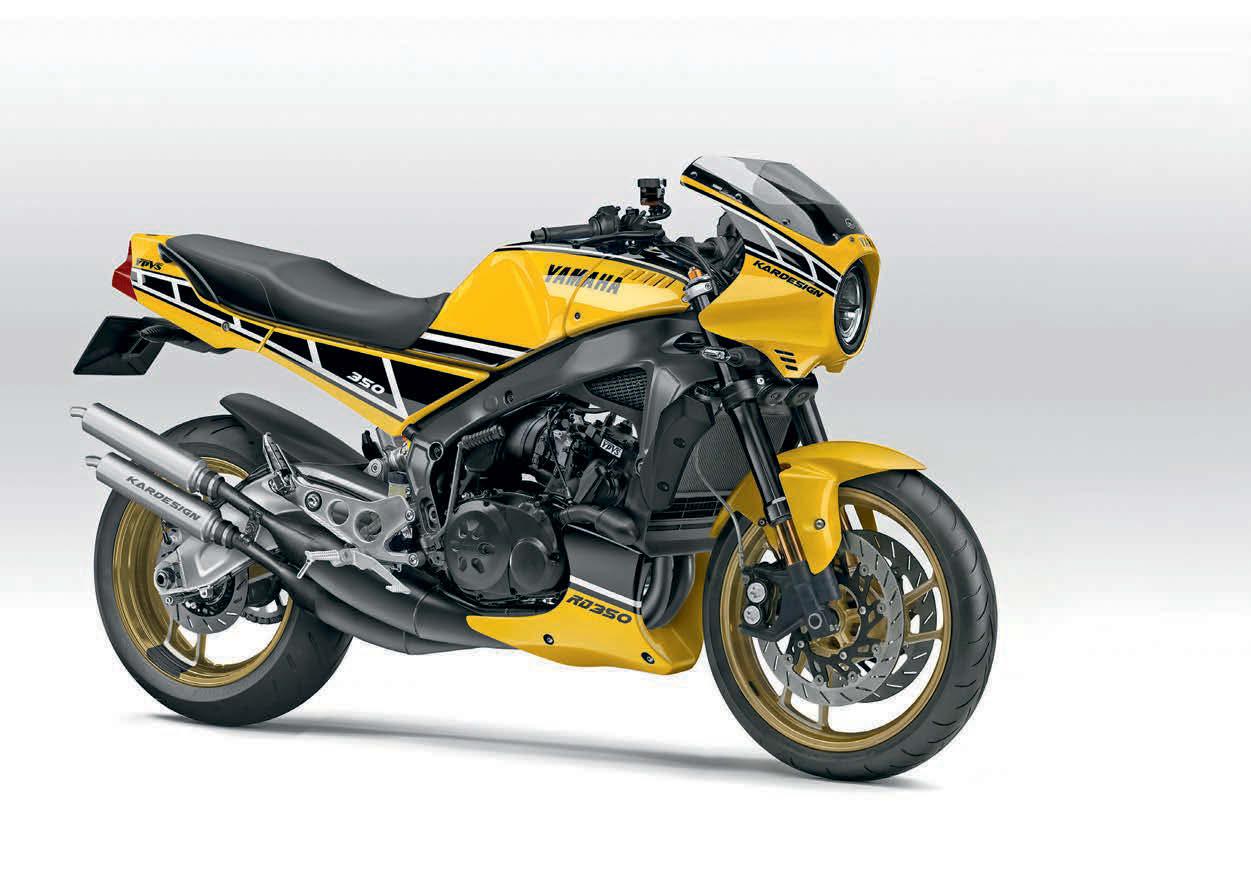
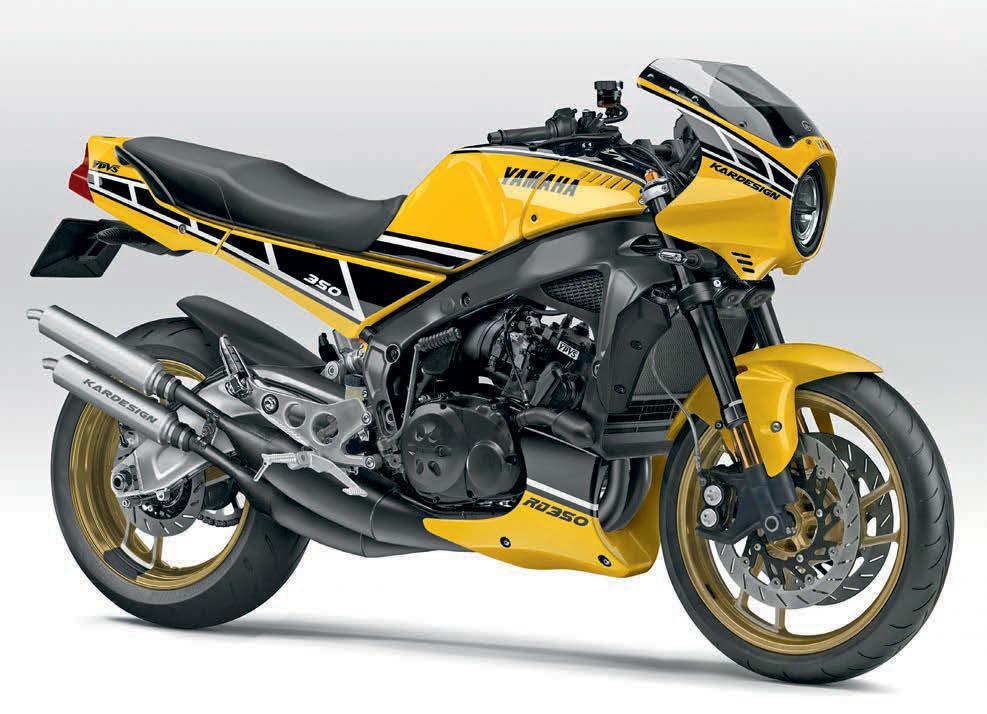
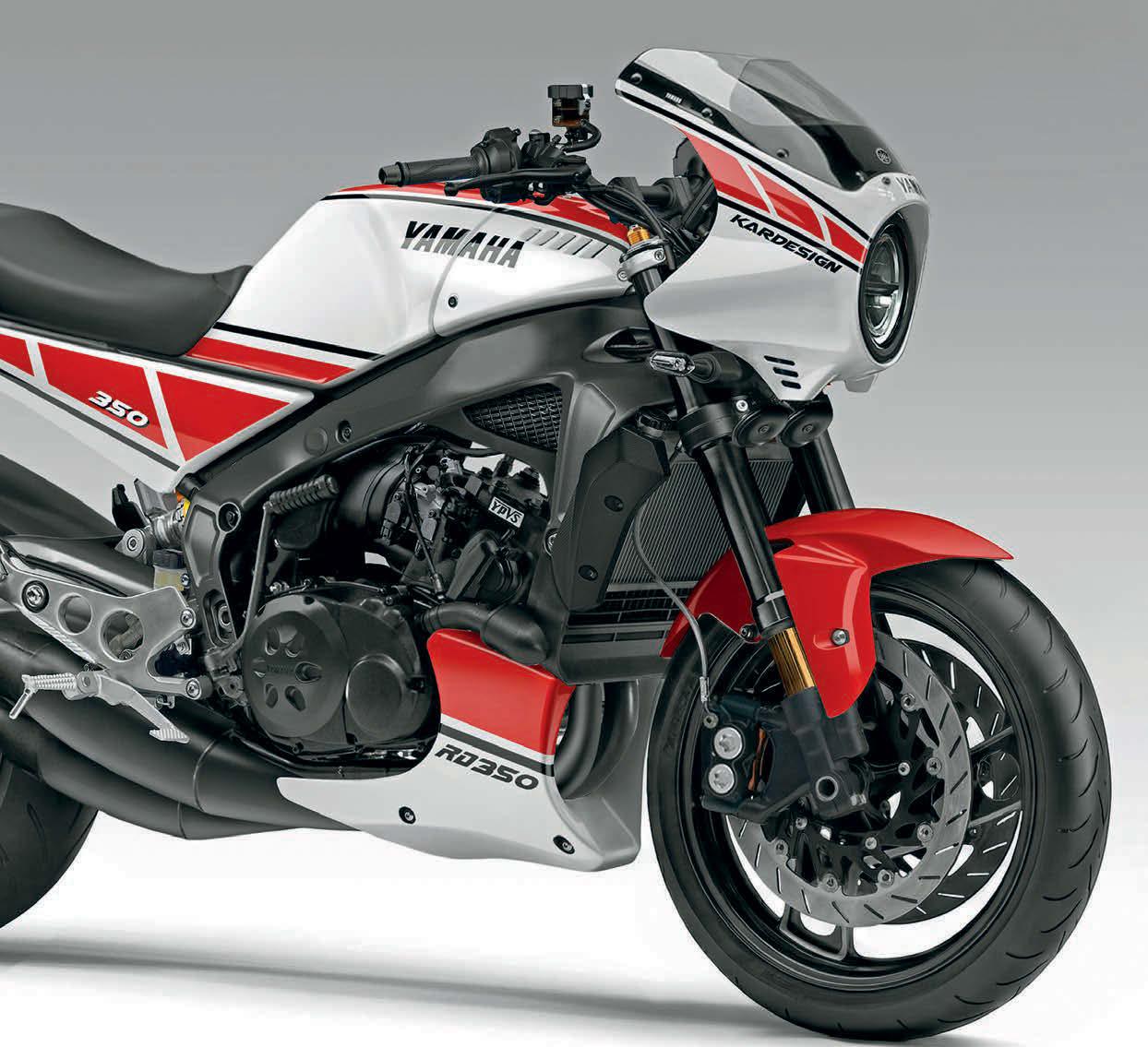
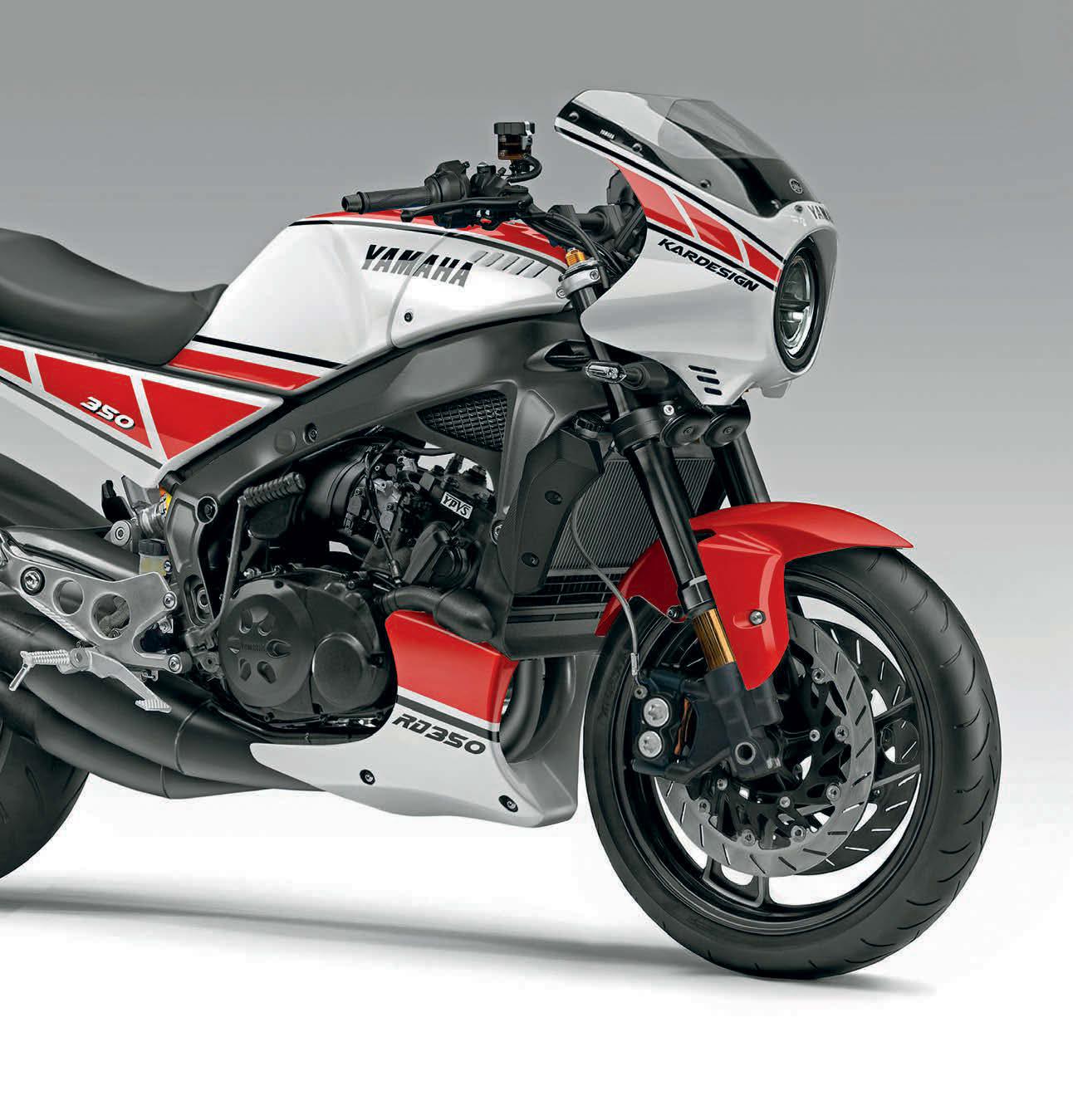
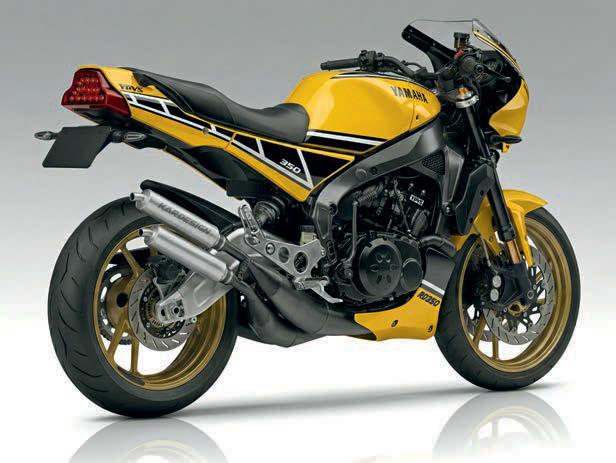
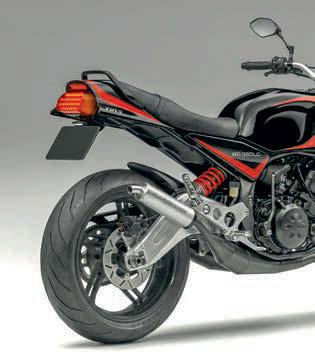
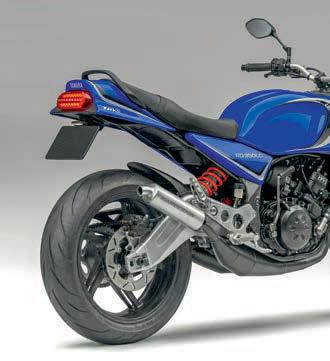
if two-strokes and the RD/LC family of motorcycles were still a thing? Wouldn’t it be good? We think it would be great – if they looked like this!
WORDS AND IMAGES: KAR LEE
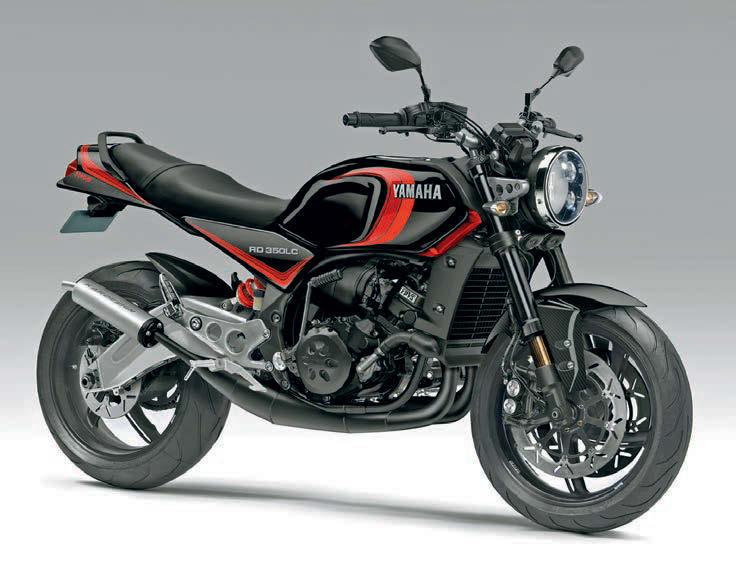
Imagine a world where large-capacity two-strokes are still a thing. A world where the Yamaha line-up consists of the MT-07 twin, the MT-09 triple, the MT-10 four-cylinder and this pair of modern-day RD350LCs.
There was a time when owning a Yamaha RD didn’t just mean riding a motorcycle – it meant belonging to an unruly tribe. You’d be the kind of rider who preferred the smell of two-stroke to sensible decisions and believed that the best way to treat a throttle was with enthusiasm rather than restraint. That needle isn’t getting to the powerband by itself, so give the noise tub a good twist!
The original RD350LC and later RD350LC YPVS became cult heroes for exactly that reason: they were fast, light, affordable and mischievous. Barely-controlled wheelies leaving the pub car park, a bottle of two-stroke in the tail unit and bolting on endless tat were all part of the experience.
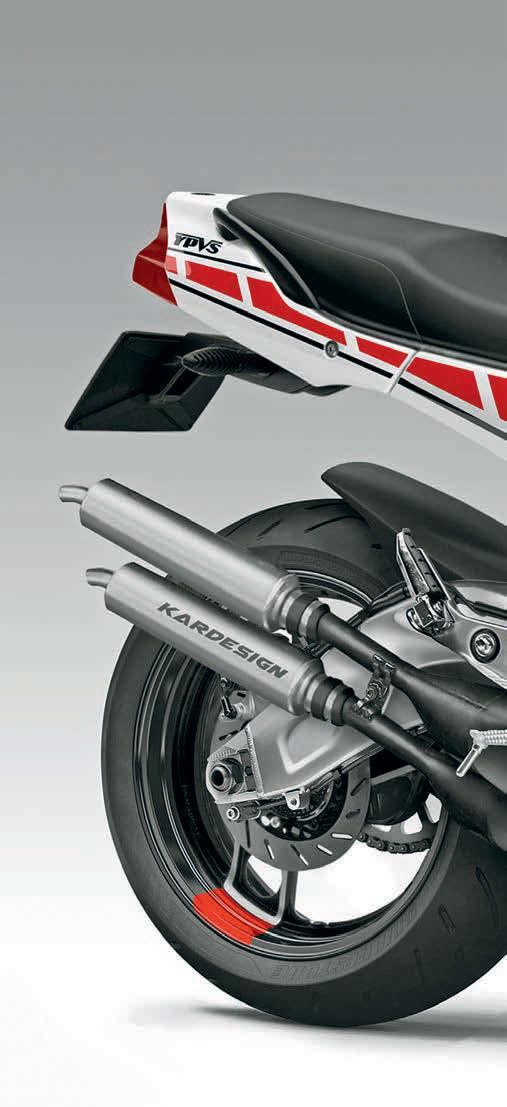
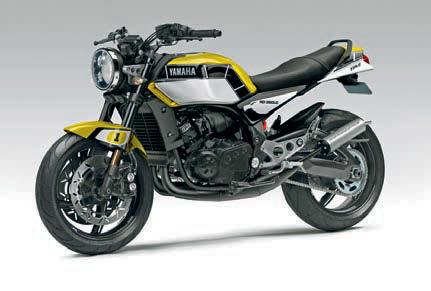
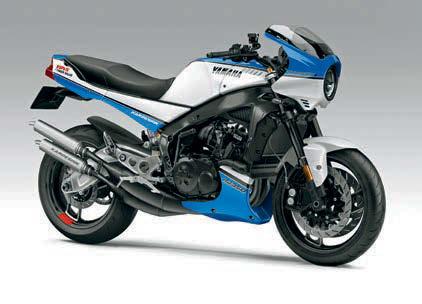
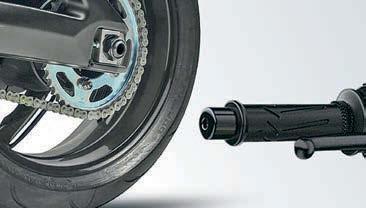
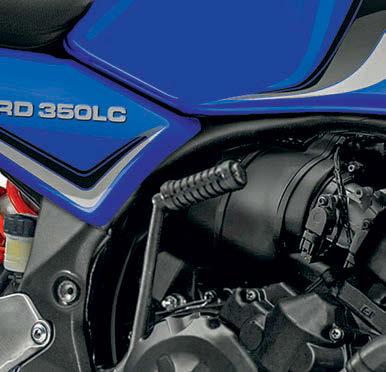
Both the RD350LC and RD350LC YPVS reboots you see here share the same beating heart: a modernised, fuel-injected, YPVS-equipped two-stroke twin producing a reliable 80bhp with a power-band wider than three packets of Rizlas. That
might not sound outrageous in today’s horsepower arms race, but in a featherweight chassis it’s more than enough to recreate the playful chaos that made the originals so addictive. The RD was never about numbers, it was about smiles, smoke and hovering clutch hands…
The updated engine brings the reliability and usability that older smokers never quite managed. Instead of multiple plug chop sessions, modern fuel-injection keeps things clean, crisp and consistent. The power delivery remains lively, but the bike won’t sulk if the weather changes or the temperature drops five degrees.
Which means riders can spend less time fiddling with spanners and more time doing what RD owners have always done best: riding the thing like it owes them money. Despite sharing the same engine, the two bikes take slightly different paths when it comes to their chassis.
The RD350LC is the nostalgic troublemaker. Built around a classic steel cradle frame, it stays visually faithful to the original LC that terrorised
slightly more sophisticated sibling – although ‘sophisticated’ might be stretching things a bit. The cast alloy chassis is based on a design inspired by Yamaha’s MT-09 triple, giving it a modern backbone and sharper handling dynamics.
It still carries the iconic RD styling cues: a wobble-inducing cockpit fairing and side-panels that always seem to work themselves loose.
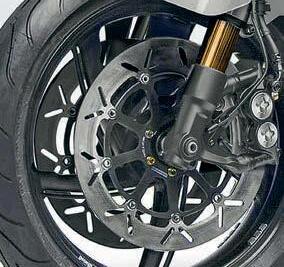
Both machines benefit from modern inverted forks, monoshock rear suspension (no more belt adjustment, hurrah) and YZF-R6 radial calipers. What we’d give to see this in Yamaha showrooms, to swing at the kick-start and hear the crackle that guarantees mischief in 2026. The sort of motorcycle that encourages skids and wheelies and the kind of grin that only appears when an engine hits its 3500rpm-wide sweet spot. Exactly what an RD should be.
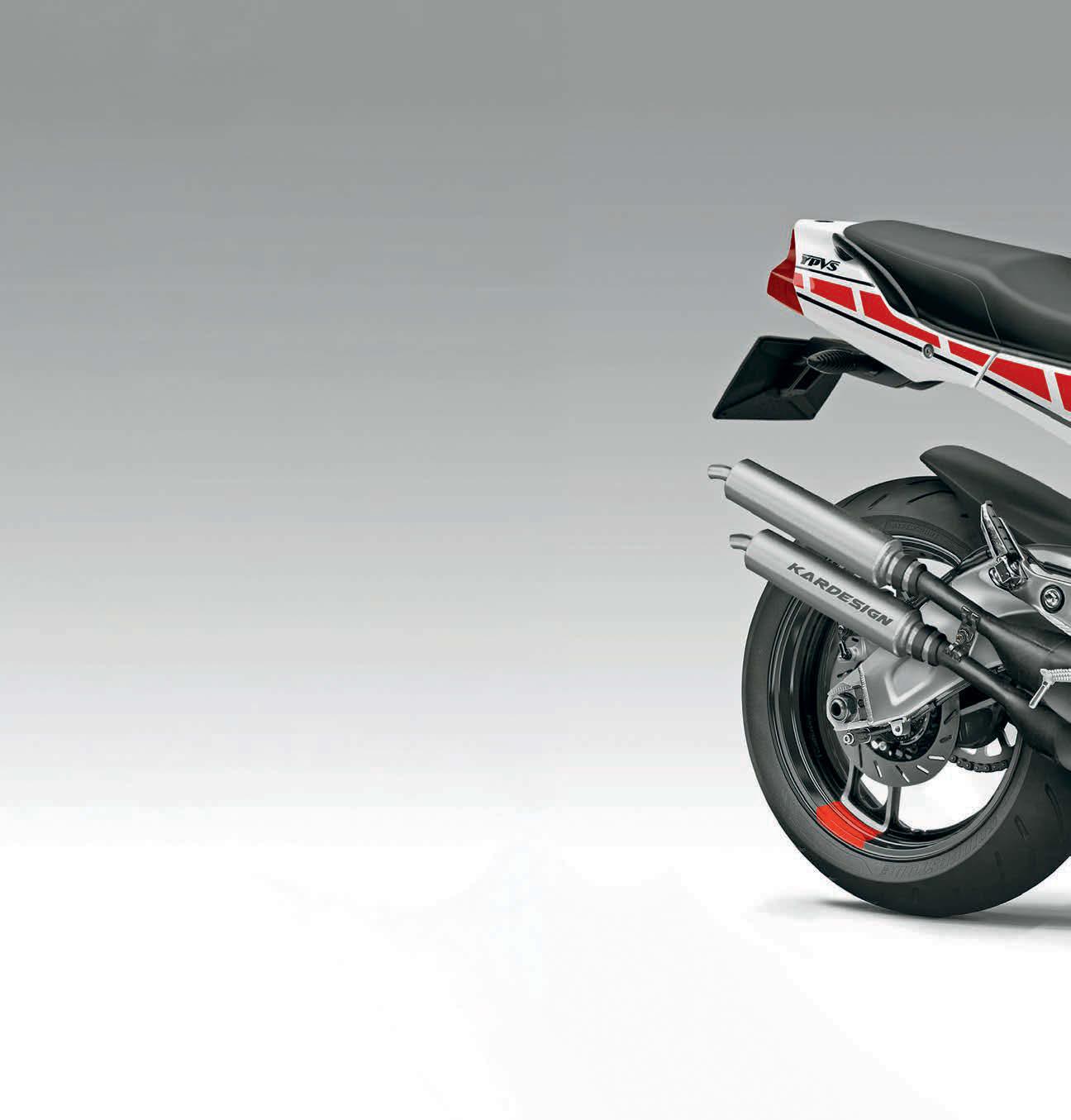
Check out our saucy centrefold for more RD350LC reboot action! And let us know what YOU think. Don’t forget the Yamaha retro XSR over the page. cmm
MARLBORO MAN!
With his love of 1990s sports-bikes and old-school racing, Bert’s a dead cert to be won over by this bike, isn’t he? Will this non-smoker finally start smoking?
WORDS: BERTIE SIMMONDS PICS: BERTIE SIMMONDS, YAMAHA UK
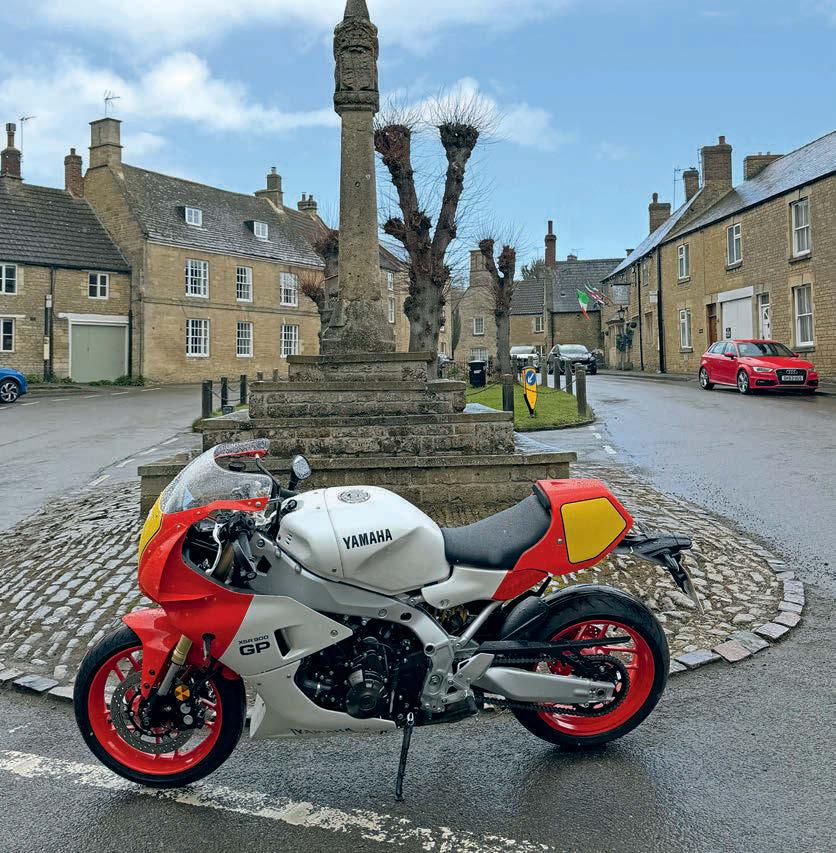
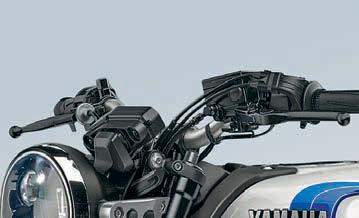
Deadlines and poor weather don’t make for an easy start to a two-wheeled romance. I’ve been itching to get out on this beautiful Yamaha XSR900 GP since I’ve gotten hold of it just a short time ago...
...But I couldn’t. And then – a ‘window’, just a day before CMM’s deadline appeared! The clouds cleared, the forecast said ‘scattered showers’, and I had what looked like a gap in the weather for an hour or so… but let’s get back to the beginning.
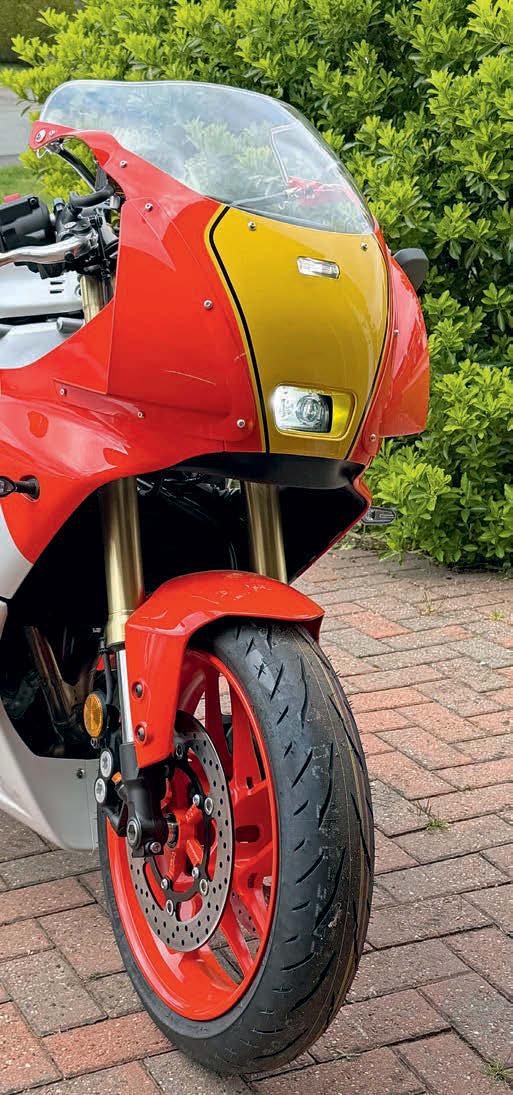
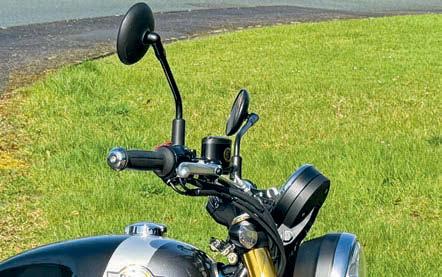
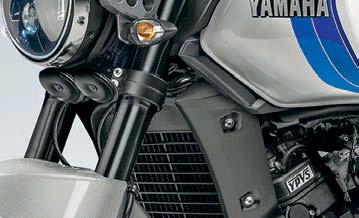
In the short time I’ve had the XSR, I’ve been poring over every detail. It really is exquisite. The fit and finish of the parts (okay, maybe apart from the optional fairing lowers) is sublime. And then there’s the colour scheme. I cannot believe that this bike was largely ignored when I went to Motorcycle LIVE
at the NEC – but that was only because it sat next to the ‘Legend Yellow’ version (think Kenny Roberts). In the flesh, this ‘Legend Red’ fluorescent homage to the fag-packet racers of our youth is simply stunning.
While the shape of the machine itself is very reminiscent of Yamaha sports machines of the past, clearly it is an ‘all-new’ bike, albeit one heavily based on the XSR900 but with a fairing, of course.
As I nervously totter off my drive (new tyres and zero miles on the clock concentrate the mind wonderfully), my dodgy knees heave up my feet to the pegs and I feel some weight on my wrists. I’ve not experienced this crouch for quite some time.
But you know what? It feels nostalgic because I spent most of the 1990s and 2000s like this and POWER/TORQUE
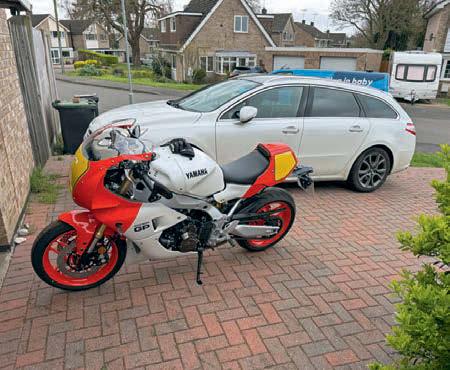
Pristine, clean and blue skies. None of this would last!
It got so wet, Bert could have cried!
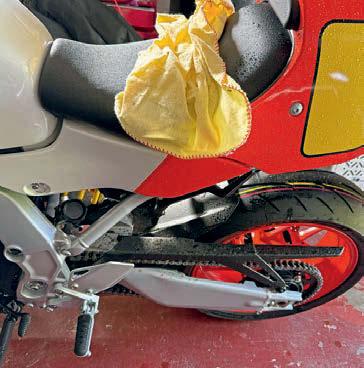
ABOVE: About 20 mins of fun leads to an hour’s clean up!
ABOVE RIGHT: Hardly estate car practicality...
I’m a former YZF750 owner. Today’s back complaints come courtesy of riding sports machines with heavily overladen backpacks. And with zero carrying capacity I need to get a new backpack…
Zero miles means I’m running in the XSR. Soon my knees are acclimatising themselves to being at such an angle again. I still want to open up that 890cc CP3 (cross-plane crank, three-cylinder) motor a tad. Yes, three cylinders, not four, and it’s a four-stroke not a two-stroke – even if it carries the livery of the V4 500cc two-strokes that Messrs. Rainey, Lawson, Kocinski (and Mackenzie) raced with.
The motor is a stunner, even with me going steady, using that superb up-and-down quickshifter. Yes, you can shut the throttle and just tap
down on the lever and there’s no need to faff about with the (admittedly light) cable clutch.
Now, I’ve experienced many miles with the CP3 engine, thanks to having a Yamaha Tracer 9 GT a few years ago. And it’s a modern masterpiece, with lots of torque on tap and a top-end of 117bhp. Also, it sounds good through the standard exhaust. Which is somewhere under the bottom of the bike. We’ll be changing that for something that looks more ‘period’.
The drizzle is starting to fall now, and I’ve not even scratched the surface. What was going to be a few hours is now cut short as the heavens truly open. But what has become a painfully short ride, isn’t so painful on my joints as they loosen up and remember what a sports bike feels like. Other first impressions are that the indicator button is fiddly and the bar-end mirrors aren’t my cup of tea…
What do we have planned for the bike? I’m spreading the love. Long-term bikes historically stay with one person, which means a single point of view and by the end of the summer you’re left struggling to say something new. Instead, this bike will be shared with those that it is aimed at… So, that’s Paul Berryman, lover of sports Yamahas and former OW01 owner and two-stroke sports Yam lover Andy Bolas, for two.
Either way, we’re chomping at the bit to get going. So, rain, rain go away… cmm
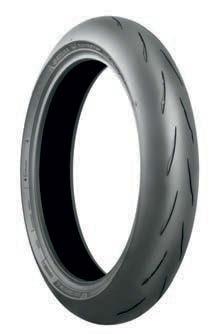
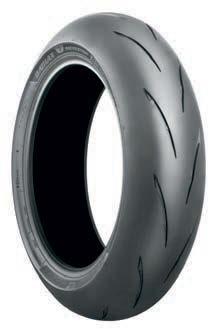
Bridgestone Racing Street RS12
With the Yamaha XSR900 GP promising road and track brilliance, Bridgestone’s new BATTLAX Racing Street RS12s are perfect for the XSR’s 120/70-17 and 180/5517 fitment. For more go to: www.bridgestone.co.uk
restored RD350LC.
THE CULT OF LC!
From the era that style forgot came a machine like no other: Yamaha’s RD350LC. What made this bike (and little brother and subsequent models) so well-loved?
At the start of the 1980s, we were under the shadow of the Cold War, Thatcherism had been unleashed upon us, and unemployment was hitting two million thanks to a country in the depths of recession.
And then there was the music… Actually, lots of the music was pretty good apart from Black Lace. And the comedy was pretty good, too. Oh, and the motorcycles.
If ever there were motorcycles built for Britain at that time it was the RD250 and 350LC. Even if they were made in Japan. Sure, they were a bit pricey in 1980 (£1030 for the 250 and £1130 for the 350) but you’d get it on the never-never anyways, right?
Both bikes made everything else on two wheels pretty much redundant overnight. In the learnerlegal 250cc class, the RD was the puppy. And the 350 was like a plucky underdog, taking on machines twice its size: why have anything bigger?
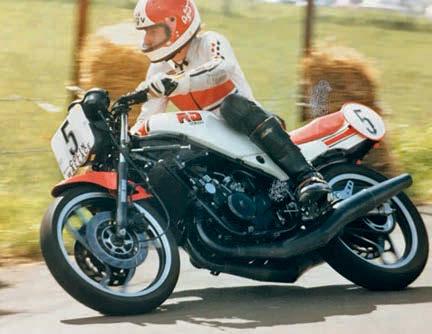
Just ask one Niall Mackenzie. “My original bike was PUS 581W and after being run-in and serviced (and cured of a nasty splutter and fitted with beefed-up exhausts to prevent the manifolds
ABOVE: Andy Underhill and his Powervalve.
ABOVE RIGHT: Pretty cool having the ‘ultimate’ LC (YZR500) in your collection...
cracking), it was a whistling missile! Sood I had to try it out against the chip shop competition. None of its contemporaries came close. Bigger game couldn’t corner and one night when I cleaned up against a fairly tasty rider on a GS750, that was a defining moment for me. Yamaha had built an amazing little bike that was way ahead of its time.”
Niall’s pal and former teammate at Cadbury’s Boost Yamaha in 1996, James Whitham, also loves LCs and thinks he knows what made them so good. He says: “The thing with the LC is that it was ‘just
Niall Mackenzie on his
WORDS: BERTIE SIMMONDS PICS: MORTONS ARCHIVE
Niall Mac races!
Sean Wood and mates.
right’. They were so well balanced. If it had a bit more power or one of the other parameters was different, it would have spoiled the bike.”
With its RD (Race Developed) heritage, it was little wonder both the 250 and 350LCs often found themselves on the track. It helped create a number of future race stars, Mackenzie being one of them.
Back on the road and as the years went by, the bike was often mucked about with. The initial ‘Pro-Am’ bikini fairings could be swopped out for a full Mel Lemoto fairing or Mead Speed bodywork. Standard expansion chambers soon were replaced by either Allspeeds or Microns and a fork brace was essential. Tuners such as Stan Stephens and Terry Beckett could give you more than the standard 47bhp, whether you raced or not.
Richard Veroft’s special.
Peter Matthews races!
Another from Richard Veroft.
The bike became a legend, winning bike of the year awards which should have been won by much larger-capacity machines. But then the ‘Elsie’ had been taken to our hearts by then. And taken by thieves: allegedly the LC was the most nicked mode of transport in early 1980s Britain, more so than the Ford Escort!
Of course, things changed; they always do. In 1983 in came the YPVS or ‘Powervalve’ and the bike would be developed through the 1980s before being replaced by a new breed of 250cc racereplica crotch rockets. For me, they were like suppositories and not as comfy as my F2.
Today, the love of the LC in all its forms is as strong as ever. cmm
Arron special!Sewell’s
LC CLUB: keeping the cult alive!
If you love all things LC then you really have to join the LC Club.
Started back in 1989 by Patrick and Julie Moore, the club has grown and grown, and today serves around 530 members across the UK and the world.
The LC Club is for owners of everything LC: so that means the complete RC-LC range, Powervalves, RZ imports and TZR and TDRs as well as specials. There’s a quarterly magazine which covers restoration, specials building, parts sourcing and much, much more. And, of course, a vibrant Facebook page and their newly refreshed web page, which is at: www.lcclub.co.uk
Stuart Beale special.
Niall Mackenzie’s LC.
Simpson Bandit! Cool.
ASRECEIVEDFINISHED
All typesof telescopicmotorcycle forks refinishedinthe correctHARDCHROME coating. Ourlong-establishedprocessdelivers your forklegsback to youwith up to 30timesmore hardchromethanoriginal.
YOUONLYRECHROME FORKLEGSONCE SOCHOOSETHE INDUSTRY LEADERS
A.M.Philpot(HardChrome) Ltd, Unit D, CradockRdIndustrial Est, Luton, Beds LU40JF 01582571234info@pittedforks.co.uk
Premium reproductiondecals forclassic Kawasakimotorcycles. Engineered forauthenticity,madetolast for authenticity, made to last H2’s, H1’s, S Series, KH Series, KE, KS, KT, F, KD, KX
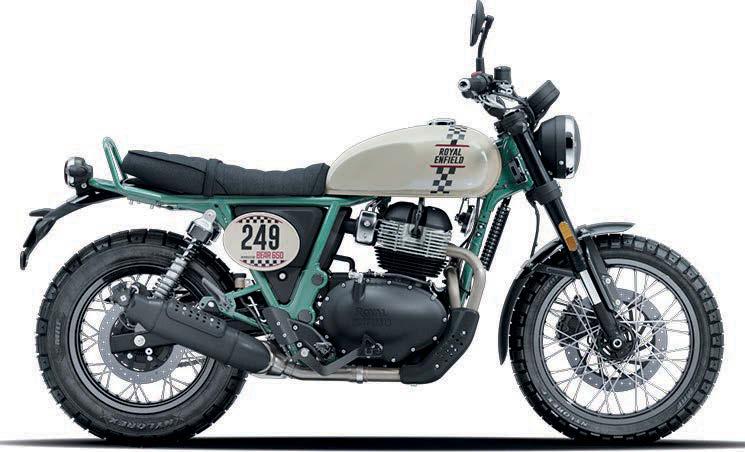
The back roads are where the Bear is happiest to prowl!
GRIN AND BEAR IT!
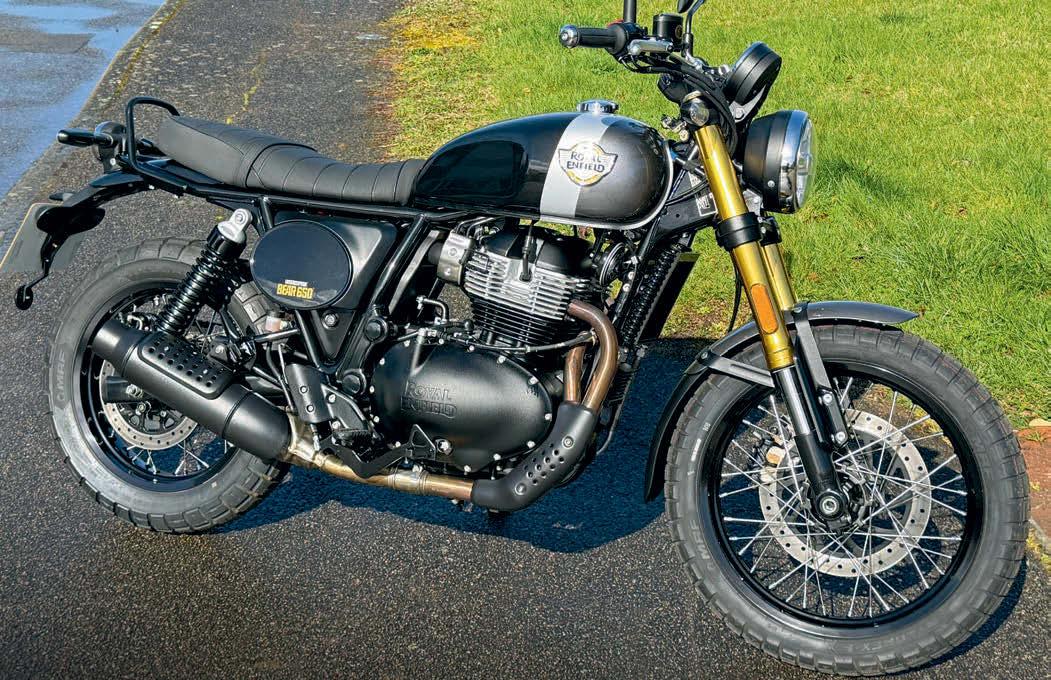
Bertie said he loved the Enfield Bear last year, so now we will be running one to see how it holds up to some long-term testing.
WORDS AND PICS: BERTIE SIMMONDS
This year is going to be an interesting one, as we at Classic Motorcycle Mechanics put our pages where our gob should be and see if retro machines can give the feel of a pukka classic…
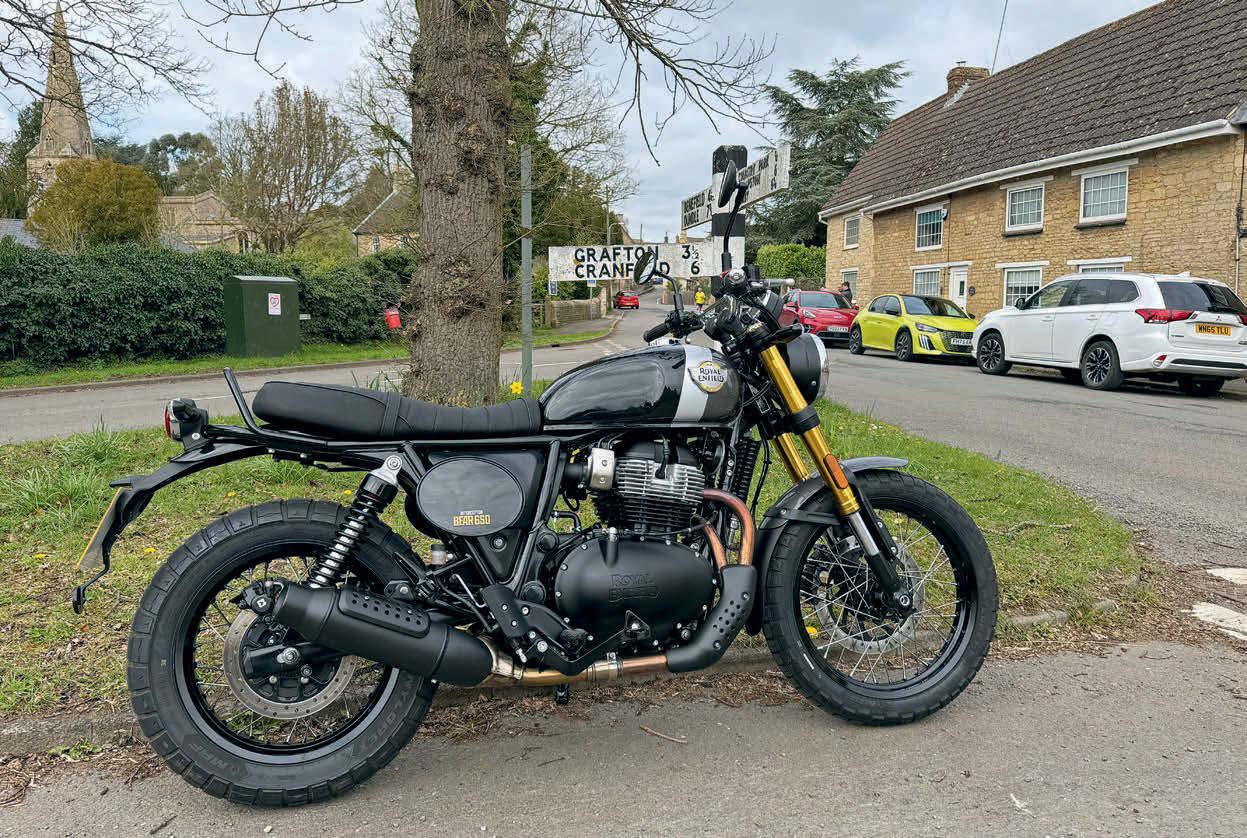
Well, that’s the idea anyways! But first, an admission. I was actually a little worried when we took delivery of the Royal Enfield Bear 650 at CMM towers. Why? Because I was wondering whether I’d called it right, with my test on the bike last year. Back then, the Bear and I really hit it off. I loved the smile-inducing mix of comfort, easy-going road attitude, good looks, equipment and value. I said then and I will say it again: ‘THIS BIKE MADE ME SMILE!’
But what about now? Well, much about bikes and
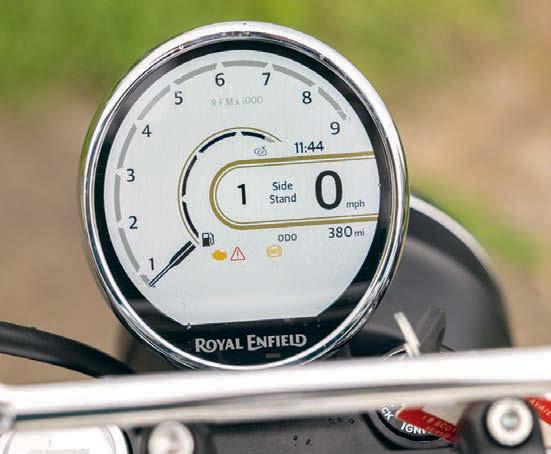
ABOVE RIGHT: Clever clocks are cool. And change from night/ day display when it gets dark. You can choose, too...
biking is about ‘power’. We’re obsessed with looking at the number of donks pumped out by this bike or that and, well, doing stuff on the old Yamaha RD350LC this issue, it’s interesting to note that the Bear is pushing out the same bhp (47) as an Elsie. Okay, let’s ignore the fact that the Bear is about 65 kilos heavier with fuel, but the bike is also going to be torquier… about 12ft-lb up. I don’t know quite where I’m going with this daft analogy, but suffice to say, the sort of smile a humble small two-stroke gave me is matched by the one on my mush when I ride the Bear.
Thankfully, my smile is wider, this time around, too, because this colour scheme, a subtle and muted black (set off by those golden legs) is a better colourway than the one I tested in 2025.
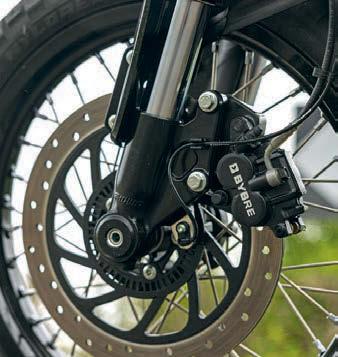
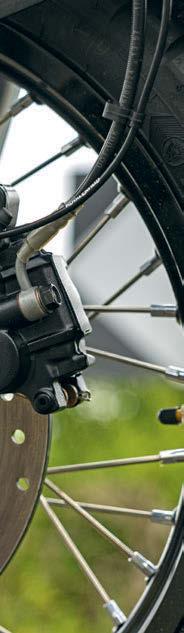
Brakes are basic Brembos.
Okay, ‘Golden Shadow’ sounds a bit strange, but the colours and paintwork are deep and reflective. Lovely… and better overall than the ‘Two Four Nine’. Just my take, of course. The other fave colour is the Boardwalk White with the blue seat… Thankfully, your botty won’t be blue or black and blue: comfort on the Bear is superb. It’s the perfect potterer and the view from the bars is largely taken up by the wonderful scenery (avoid A-roads and motorways) and that superb dash. I love the one-clock do-it-all display. It’s sometimes a little hard to read, but mostly gives you plenty of information.
BELOW: One Bear, fresh out of hibernation.
say that on my brief reacquaintance with the bike; I was pretty darned impressed by those ByBre brakes.
I rather think this is going to be a great summer for those at CMM who want a nice, gentle potter around the local back lanes!
What do we have planned for the bike? As with the XSR, I will indeed be ‘spreading the love’. When he can get a week or three free from his endless holidays, CMM’s own ‘Judith Chalmers’ (I didn’t think people would remember Cliff Michelmore, I could have said him) Steve Cooper will be in charge of the Bear for a month or so and others, of course. We may also try and get a saucier can on the bike to liberate a little sound!
Handling on those pseudo knobblies is pretty good – we may look at changing them, just to see what (if any) difference it makes. I know the ‘style’ would be more ‘road oriented’, but I wonder how it would handle with more road-biased tyres? I do
We have also been asked by Royal Enfield to attend a few owners’ events so we’re really quite looking forward to the year ahead. cmm
Bridgestone
Adventurecross AX41
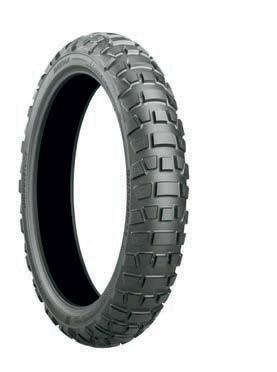
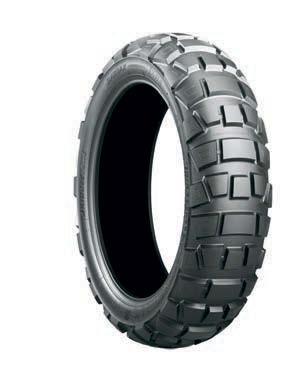
With the Royal Enfield Bear 650 having the look of a pseudo off-roader (well, flat-tracker or scrambler) we reckon these are perfect for the Bear’s 100/90-19 and 140/80-17 fitment: the BATTLAX Adventurecross AX41. For more go to: www.bridgestone.co.uk
RustbusterSloshtanksealantandframe restorationproductsare tested to be ETHANOLPROOF. We have testedwithup to 100% Bio-Ethanolwithnodegradationofthe coatingE15noproblem. You canpurchasefromour websiteoradistributornear you. Foruseonsteel,aluminiumandGRPtanksnotplastic.
SUBSCRIBE TODAY WIN AND
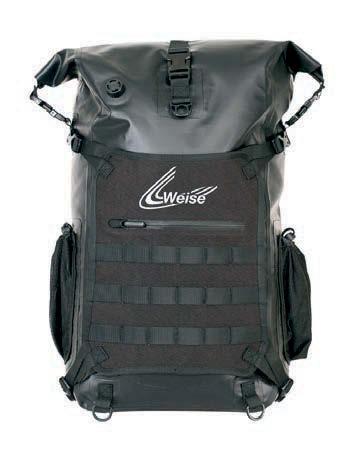
Built to shrug off even torrential downpours, the Tempest is crafted from military-grade Ripstop tarpaulin material, with welded seams to keep water out. The padded airflow back panel and shoulder straps keep you comfortable all-day long. Find out more at www.weiseclothing.com
A ComfortAir Seat Cushion worth £69.99. Ideal for classic and modern machines alike, these seat cushions improve comfort on longer journeys. Best of all, they’re easy to both attach and remove. www.mycomfortair.co.uk
Subscribe to Classic Motorcycle Mechanics and six lucky subscribers will be entered into a draw to win one of these great prizes!
As long as you have an active subscription, your unique subscriber ID will be entered into our monthly draw to win one of a number of brilliant prizes!*
This month, there are six fantastic prizes up for grabs! As well as our usual goodies – represented this month by a Weise Tempest Rucksack worth £79.99 – we have an MTR Vintage retro crash helmet worth £130; a ComfortAir Seat Cushion worth £69.99; a cool Tamiya kit; a Bridgestone Oxford Products Oximiser 3X worth £69.99; and MotoClean goodies worth £59. That makes a combined worth of more than £400!
Here are our prizes for YOU in this May issue of CMM…
A model kit from Tamiya worth £30-50. If you want to build your own classic in miniature, you can’t find a better model kit than Tamiya, which are imported into the UK by www.hobbyco.net
*All
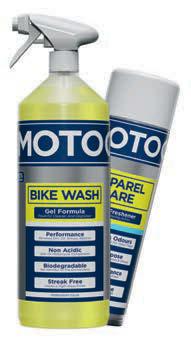
A MotoClean bundle worth £59: Gel Bike Wash (£14.99); Brake Cleaner, (£9.99); Chain Lube (£11.99); Maintenance Spray (£9.99); Apparel Care (£11.99). www. motoclean. co.uk
An MTR Vintage retro crash helmet worth £130. This is a retro full-face motorcycle helmet from the Louis Moto brand MTR. You’ve got a fibre-glass helmet, the classic double-D fastener and a comfort lining. Go to www.louis-moto.co.uk for more info.
A Bridgestone Oximizer worth £69.99. Bridgestone has been making brilliant tyres for decades, so why not see what’s available for your classic at www. bridgestone.co.uk/motorcycle-tyres
cmm Tool of the month
Ralph Ferrand works with tools all day long – he sells them too at bikerstoolbox.co.uk so he knows what works. with
Not too salty!
There are a huge number of arguments against using Lithium-Ion batteries, not least their somewhat grubby ‘green’ credentials and the fact that they catch fire, belching out some serious nasties into the air.
Lithium is certainly a finite resource. We have, surely, all seen the video reports showing the exploitation of poor people in developing counties by rich multi-nationals obtaining the raw materials for Lithium-Ion batteries, which often end up in ‘Electric Vehicles’.
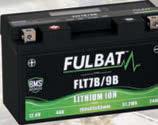
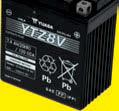
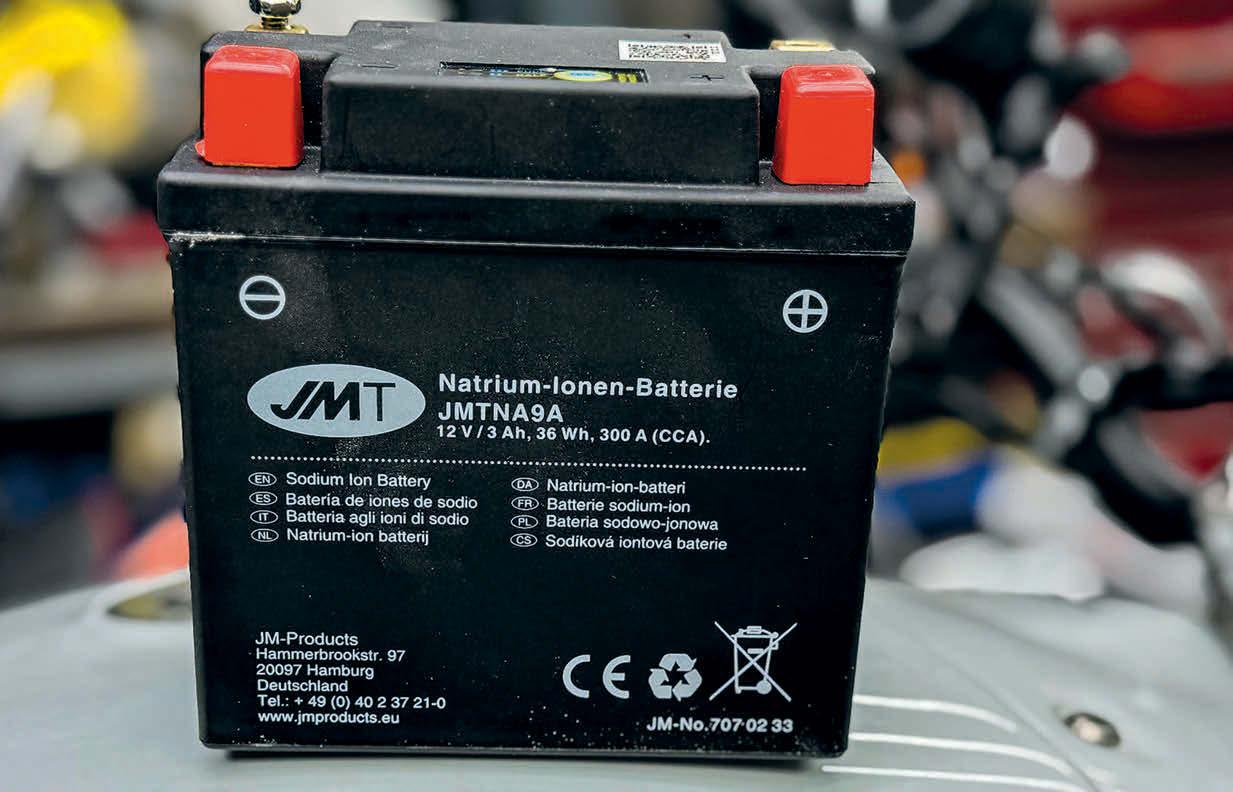
Well, there is a new emerging technology in the form of Sodium-Ion batteries and one of my wholesale motorcycle parts suppliers has just taken on a limited range of these new batteries and gave me one to test in my 955i Triumph Speed Triple. When it was delivered, having been tested in
ABOVE: It doesn’t feel substantial enough to start this bike … but does, with alacrity!
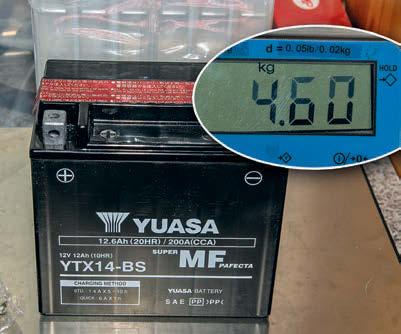
other bikes, so not quite new, I was astounded by the weight. As you can see from the photos, it looks just like an ordinary lead acid accumulator, but when you pick it up it is feather-light. It gave me great amusement to stuff it into the hands of visitors, watching the shock on their face as they realised the unexpected lack of weight.
The battery I was given had terminals either side, like Motobatt batteries, so could be stuck in any bike with enough room. It wasn’t anywhere near physically big enough to fill the cavernous battery box of the Trumpet, but I rammed in some bits of foam packing that was kicking around and which worked fine. Due to the extreme density of lead acid batteries and the fragility of their plastic cases, you must tie them down securely lest they smash themselves to bits with the slide hammer effect.
There are a few things about these batteries that require a reprogramming of my usual ‘bike brain’. One is the requirement of a certain figure when it comes to the capacity of the battery, usually measured in amp/hours.
With traditional batteries one may need, say, a 14Ah battery to provide enough cranking amps to spin a 1000cc engine, but with this type of battery you can get huge amounts of starting current from a much smaller-capacity battery. The one I’ve wedged in my 955i offers 300CCA (Cold Cranking Amps) which seem to work fine, and with a retail price of less than £50 is considerably cheaper than the Yuasa AGM I bought for it at north of a ton and which only proffers 200CCA.
Due to the rather nasty gang culture in some of our inner-city areas of idiots throwing acid into the faces of their victims, only those of us registered in the motor trade now are allowed to buy acid packs for batteries.
This means that when you buy an AGM battery it is pre-filled, which is fine if your local dealer fills it for you, but many attracted by the cheap prices from a Google search find that they are buying a ‘cheap’ battery that may have been filled and therefore started its limited lifespan many months, or even years, previously. Some brands of AGM batteries are pre-filled in the factory, so their life starts before the battery even enters the supply chain which can be a considerable time. I bought my Z1300 with ‘brand-new’ tyres bought on-line by the vendor, that were well out of date and had to be replaced after a buttock-clenching ride from Cornwall to home.
Lead acid batteries have an internal resistance which is why they go flat even when they don’t have a load on them, and if you deeply discharge them they are generally screwed and at best will be damaged and no longer perform properly. SodiumIon batteries don’t discharge when left alone and also charge very swiftly. Probably of little interest to
us these days but they are also fine at minus 20-30 degrees C.
Now, these new Sodium-Ion batteries are nice and cheap because the raw material can be extracted from sea water which is not exactly in short supply. So, they are truly green, which cannot be said for Lithium-Ion batteries, if you look at the whole story. Another positive is that they can take many more charge/discharge cycles than almost any battery technology. Whilst Sodium-Ion batteries do require a different charging method, the battery case you buy also contains some electronics to turn the rough old charging from your old classic into whatever it is that its batteries need.
In theory this is also the case with the LithiumIon batteries, but I am told that they are far more likely to turn vehicles into fireballs. I’ve never tried Lithium-Ion batteries on my bikes because they are so expensive. And what do they offer over an AGM?
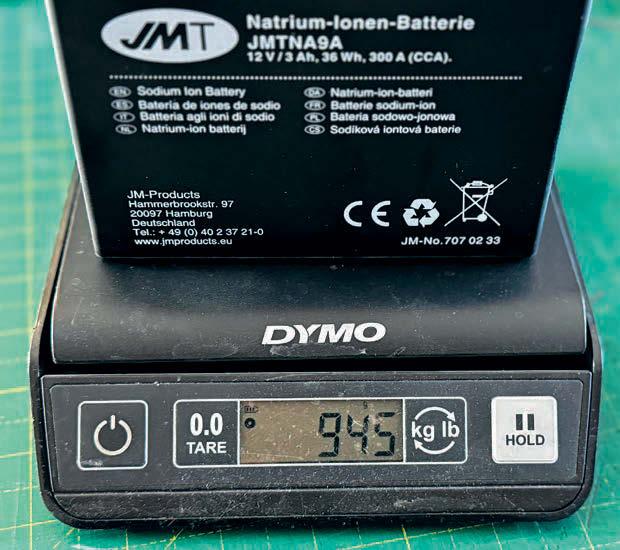
ABOVE: Less than a kilo! But powerful!
These new batteries, however, are cheaper than decent-quality AGM, lighter, longer lasting, don’t go flat when left alone for a few months and aren’t ruined if you do forget about them, even with a load connected like an alarm. I used to have to buy at least one new battery every year for She Who Must Be Obeyed’s Street Triple as the alarm killed them; had this tech been out then, it would have saved me a fortune.
Currently there is a very limited range of these batteries available, the biggest being the one shown here, but I have already bought some stock of this size, because I think they’re great and will pop them on Biker’s Toolbox website: www. bikerstoolbox.co.uk cmm
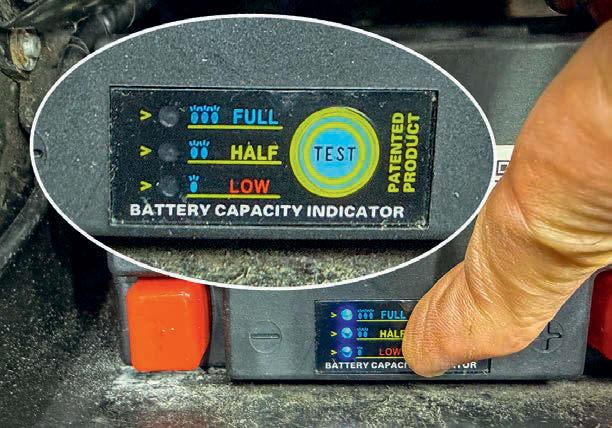
This battery has a built-in charge tester.
RIGHT: This fat bird won’t go on my letter scale. Until a few weeks ago this would have been the battery I would recommend for the 955i Triumph. At less than half the price with half as much extra cold cranking power, a fifth of the weight, faster charging and no damage from a full discharge, Sodium-Ion does it for me.
IMAGES: KAR LEE DESIGNS
Yamaha RD350LC
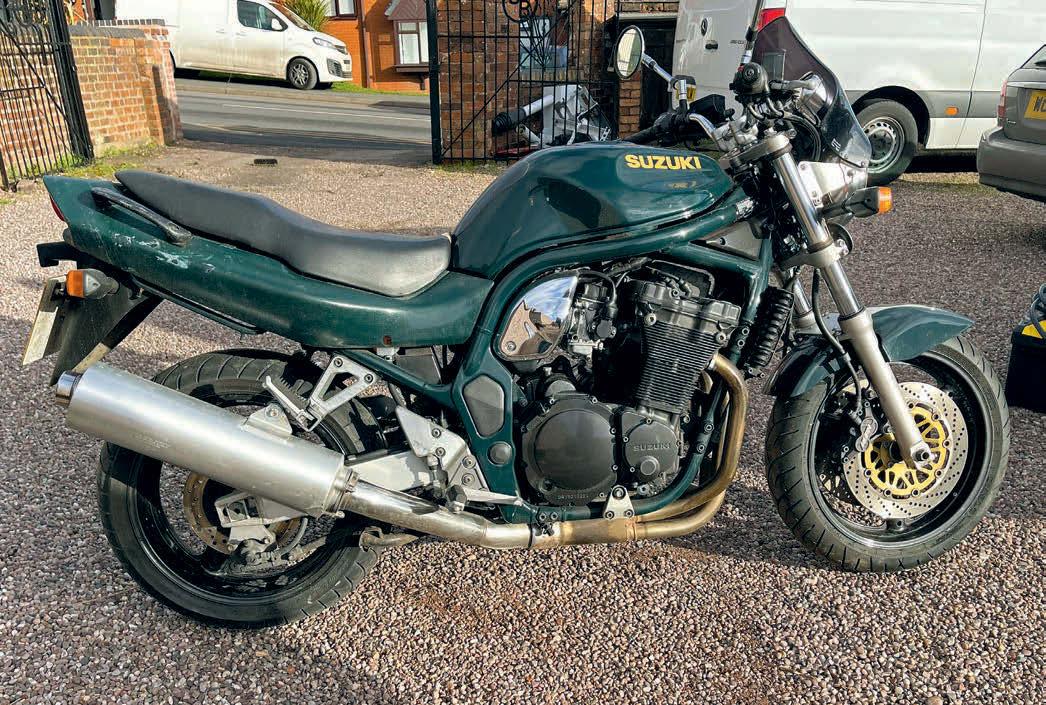
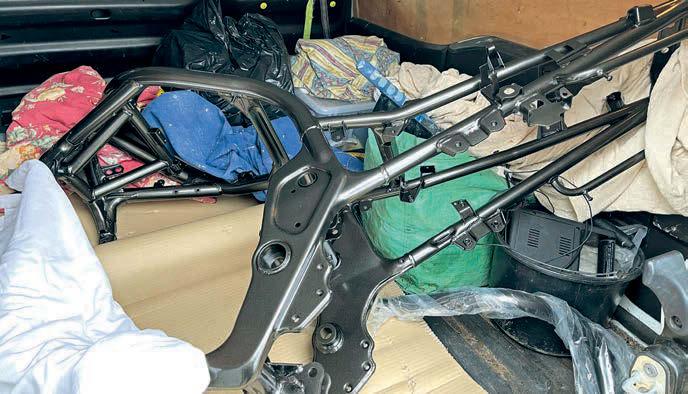
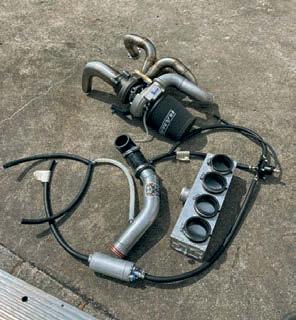
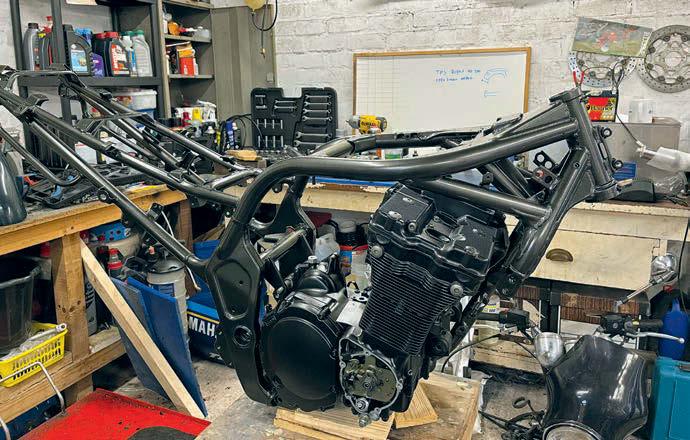
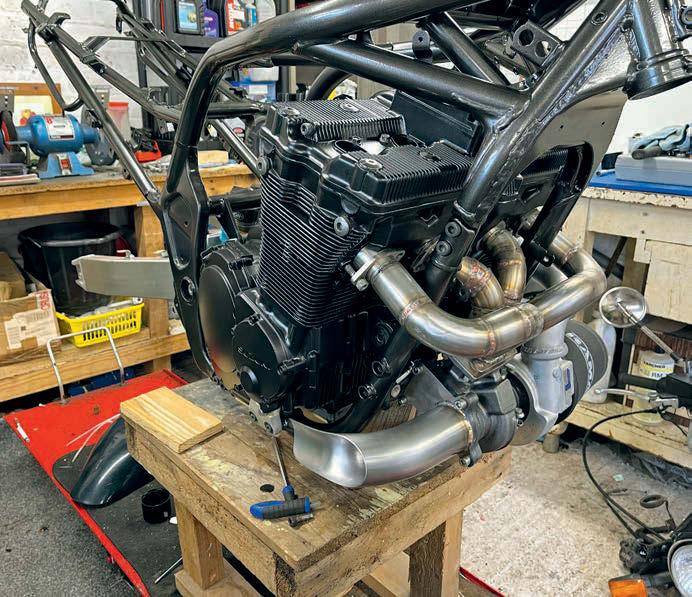
Project Suzuki GSF1200 Bandit Turbo Part 1
Well, blow me!
No thanks Andy! But yes, we’d love to hear about your latest project! So, spit it out!
Sometimes when you get offered a go on someone’s bike it’s best to say no!
This project is all because I had a ride on CMM reader Paul Morris’ GS750 running a 1216 Bandit motor a while back, with up-to-date running gear and some cool-looking spoked wheels. I rode it from Cadwell down towards Horncastle and I was sold after that ride. I have never ridden anything with so much forward velocity! This thing has around 250bhp at the rear wheel and it absolutely blew my mind. The handling leaves a little to be desired and it’s a case of twist the throttle and just hang on as the world turns into a blur of grey and green, but what a rush!
The power delivery is brutal, like a tuned RG500 it’s nothing… nothing, then BOOM, you hit 5000rpm and the boost kicks in, the transition of power hits you like bit of four-by-two around the back of the head and the sound is intoxicating!
My turbo journey starts with a tired-
Donor bike has low miles so engine should be very robust!
looking but original 1200 Bandit which had stood outside for a long time but had only covered 14,000 miles. I have a soft spot for 1200 Bandits and they seem to be the go-to bike/motor for turbo conversions.
Once I got the bike home, I started to formulate a plan for it. I had heard good
Getting started with the strip-down. Maybe not the most fun bit!
Great bikes with a mammoth motor!
things about FAST BY ME Turbo Systems, Dave Dunlop, but sadly Dave wasn’t taking on any more work at the time and I didn’t want to wait so I hunted around for another supplier and found Pete Field on a Bandit Facebook page.
Pete would have a bolt-on kit ready for me in six weeks; hopefully this would give me time to get the rest of the bike refreshed. While chatting I was offered the option of an uprated turbo unit which apparently had the potential to run up to 370bhp for a couple of hundred quid more. Seemed like a no-brainer at the time... Now, this may be where some of the problems could have come from as Pete later told me he hadn’t done a bolt-on kit with this turbo before.
Before doing anything else we checked that the bike would run and was actually worth strapping a turbo on to. So, fresh
fuel and a new battery and away she went: a little fluffy to start with but the motor sounded happy enough so it was game on!
We stripped the bike down and came across a snapped exhaust bolt which needed drilling out and just cleaning out with a tap. Luckily the majority of the old bolt came out with the drill bit on the reverse.
With the bike now in bits, the bolts and fixings were prepped for plating at Parkfield Electroplating and the frame and wheels, etc., were dropped off to Rugeley Powder Coating (now closed down, sadly).
Rich Gibbons then turned his attention to the engine, removing any loose paint or corrosion before masking it up and painting it with a couple of coats of Simoniz tough satin black. Got to say the motor looks stunning and is a credit to Rich’s prep work. The finish is amazing,
and this paint is very durable, too. While Rich was doing these bits I decided to rub down the fork lowers and give them a coat of etch primer. I wanted to paint them a nice graphite grey colour. I had a look at what paint I had lying around and ended up with a Peugeot graphite grey. Once the primer had dried I gave it two coats of grey, allowing it to dry in between and then allowed it to dry overnight before giving them a couple of clear coats and I’m really happy with the end result.
With the motor on the engine stand, Rich checked and adjusted the valve clearances as required. These are easy enough to do as they don’t require any shims as they’re done via lock nuts on the tappets and only a couple were out of spec. Also, I took the opportunity to fit some titanium rocker cover bolts which
Finally down to the bare frame.
One stud bent!
Prepping the motor for paint.
Fork bottoms got a good seeing to as well. Chips away!
Some housekeeping meant that valve clearances were checked.
Oooh! What a lovely job. Should look good with turbo attached!
look sharp against the satin black motor. With everything back from the platers and powder-coaters we can now commence reassembling. I have had the majority of parts either gloss black or black sparkle, which is kind of like an anthracite grey and almost the same as the original wheel colour, and will work well with the bodywork which I am
What’ll it do mister?
So, my first thoughts with this bike are to run it on low boost with the standard engine internals, as apparently I should get between 195-215bhp, although Simon Francis reckons more like 160-180bhp at the rear wheel.
This is running around 5-6psi boost; any more would cause major engine issues as we are still running standard compression. I wanted to give people an idea of how much you would need to invest in the different stages of the set up.
My next step with the motor will be MTC turbo pistons or Hayabusa pistons which help to lower the compression and increase capacity to 1216cc, but this will need the block reboring to 81mm. To get more power we need to run more boost, to run more boost we need to lower the compression, something we will look into next time.
For now though, we are going to stick with low boost and get things how I want them. Also. I would like to change the front-end and possibly the swingarm for something a little more exotic, or maybe brace the original swingarm. My end goal power-wise is around 250bhp at the rear wheel. Hopefully this won’t cost too much to achieve and I would like it to be reliable as well. Don’t want much, do I?
having painted in candy red. The wheels were fitted with new bearings, new Bridgestone BT-016 tyres and freshly replated disc bolts.
A new head race bearing was fitted and greased up in the frame as the old ones were destroyed while being removed. Always remember if you haven’t blocked off all the threaded holes in the items you
have had powder-coated then you will need to run a tap through all the threaded holes to clean out both the coating and possibly blast media, too. This can be quite time-consuming, but you can get packs of rubber bungs in different sizes which saves you the job of trying to remove powder-coat afterwards.
We got the engine in the frame quickly,
New carb parts!
Engine in frame. Hmm!
The carbs are stipped.
Frame back from powder-coat.
On the carb front it was found that a new diaphragm was required.
then we got the front-end and rear-end attached. Then I had a call to say that the turbo kit was ready. As you can see, the kit contains the headers, fuel pump, oil scavenge pump and various other bits and pieces that you will require.
Like I have previously mentioned, the bike ran a little fluffy so while the carbs were off the bike they were stripped down and cleaned in the ultrasonic bath, then blown out ready for assembly. One of the diaphragms was damaged so this was replaced and the carbs were then built up using the jets supplied with the kit.
Our first attempt at fitting the kit wasn’t very successful as we had issues with things not fitting as they should, so not exactly ideal on a ‘bolt-on kit’. After much
deliberation and back and forth to Pete with bits being altered, etc, I kind of lost interest and at one point removed the kit and was going to sell it. Instead, I left the bike and kit up the corner in my workshop. Patience is a virtue as they say, but unfortunately it’s not one that I am bestowed with and, in hindsight, I should have waited and got the job done by FBM as they offer a ride-in,-ride out service: perfect for me! We live and learn.
It was at this point where I was deliberating whether to go for a big-bore and cams on the motor and just sell the kit on. To be fair, someone with halfdecent engineering skill would probably have little to no problems making this lot work. Unfortunately I don’t, which is why I wanted a bolt-on kit just to make my life easier!
After a couple of months I had calmed down a little and thought I would have another try. We even tried to fit the headers to the motor without the turbo on. This wasn’t an easy task as one of the nuts had been cross-threaded and snapped off when we tried to remove the turbo. I had to call on the services of Shaun Pearson at SP Vapour Blasting again as the bolts were welded into the manifold.
Shaun managed to cut off the old bent thread then redrilled the hole and welded in a new bolt for me; absolute legend! Crisis averted. After trying the kit on again it became obvious that the headers were not the correct length and were touching the frame, among other issues. I spaced the headers out with three exhaust gaskets and, hey presto, they fitted better!
With this in mind, I decided that I
needed some help, so I approached Simon Francis at SF Services, a very clever bloke who knows his stuff with specials and is also a great fabricator.
We had a good, long chat about the issues I was having with the kit and what was needed. Simon was great and very understanding of my requirements, and got me booked in quite quickly. Simon is happy to do everything from a service or recommissioning job to chassis conversions and everything in between. He is very reasonably priced, too.
My brief to Simon was to make everything fit as good as possible and get the bike up and running, then at least all we would have to do would be the finishing touches and, hopefully, I would be able to get the pile of crap on the road for the end of the biking season before I just go and buy a Z H2 instead!
Well, sadly things haven’t gone as planned, but hopefully I can get out on it in the spring, fingers crossed. cmm
Thanks to:
Pete Field for the turbo kit and advice
Richard Gibbons for his help
Parkfield Electroplating – 01902 865654
S F Services Simon Francis for fabrication, etc. – 07879 991592
Shaun Pearson @ SP Vapour Blasting – 07510 711482
Paul Morris and Clive Wood from Old Skool Suzuki for the encouragement to keep going and not set fire to the bloody bike
Ella and Alex for always putting up with my sometimes crazy ideas and helping me keep motivated!
Loving the pipe-work!
Missed by a mile!
Both front and rear wheels were overhauled, checked and sorted!
We really can’t wait to see and hear this tested in CMM!
CFSstoragefuelsareexcellentfuelstorunonallthe time –cleanerburning,easierstarting,smootherrunning andbetter throttleresponse. Foralltypesofvintage, classicandmodernvehicles.Alsoavailableasleaded. Availabletoorderfrom650+gardenmachinerydealers inthe UK.
HIGHPERFORMANCE SILICONEHOSE &ACCESSORIES
FITTING ALL POPULAR MAKES AND MODELS
RACEPROVEN
EXTREMEDURABILITY
Tried, tested and trusted by the World’s most successful drivers, riders and race teams. Made in the UK, raced across the world.
PERFORMANCEUPGRADE
Built using motorsport proven technologies, offering improved reliabilty durability and aesthetic enhancement.
Samco Sport hosesare the mostreliable upgrade you can make toyourengine,they are evenbackedbya Lifetime Warranty.
Project Suzuki GT380 Part 5
Still using a stock pic of a GT380 with spoked wheels...
Grounded!
Malc should be grounded! Yet again no opening shot for this article and he can’t find a shot of the bike ‘as is’ after all his hard work which is recounted here… Oh well!
It’s funny really, (okay, strange then), but in writing up the process of these rebuilds it feels very hard to actually convey the amount of work and time involved to get to any given point.
Some jobs go well, even surprising me on the speed that they are achieved, while other parts become infinitesimally slow and frustrating. One thing that is a constant is the rapid drain on the bank
balance. As I’m writing this part, having ordered some more bits and entering them into the log of what I have spent, I have already hit the initial projected sale price, and there are more parts to buy!
However, I’ve not yet considered the potential value of the wheels. I do have ‘dark moments’ about this, wondering if it is worth it. Financially, definitely not. The positive side is developing and learning skills, solving problems, some of which require lateral thinking and the sharing of
this to others. Time then to knuckle down, stop moaning and carry on!
Last time I’d had great fun (ahem) painting the wheels, making up spacers and other parts, sorting out the rear brake back-plate and fitting new sprocket and bearings. Now I needed something to suspend them on.
Previously I’d stripped the front forks. As far as I know there are two types fitted to the GTs (L, M, A and B models: I think earlier ones, J with drum brakes and some Ks are different). I’m not sure how specific they are to each model or year and, of course, there are different spring rates for the heavier bikes and slightly different length fork tubes. Individual bikes may also have been swopped about and messed around with since the 1970s! I do stand to be corrected on this, but it’s
mainly from my own observation of the bikes I have and the parts books.
The two types can be identified from the top of the fork tube. One type has a bolt-type fixing which screws down inside the fork tube, the other has a rubber bung hiding a metal bung with an O-ring, held in place by a circlip.
The first type are more complicated, having bushes. Meanwhile, the second type are very simple: the fork tube slides in the ally of the fork leg. Providing the ally is not worn, in which case its scrap, then there is very little to do. I had the second type of fork.
Disassembly is reasonably simple but can require a little luck. Do not strip the fork end caps off and remove the springs! Drain the old and generally very smelly oil out of the forks via the small screw in the
lower part of the fork leg first. I use soft jaws in the vice and carefully grip the fork leg. At the base hidden in a recess is a cap head bolt. Make sure you have a good-fitting Allen key or socket. If you’re lucky this will unscrew. I find that an initial measured sharp blow will loosen them. If not then it’s a pain, but I’ve another way to loosen them.
Next, strip out the metal cap holding the spring in. First remove the circlip. This may require a soak in freeing fluid and scraping any rust away as best as possible. Take care as you remove the circlip because if the end cap is free the spring will fling it out, only to land in the workshop black hole!
Once done, remove the spring. This is a messy job so have plenty of rags, etc., handy. Now, if the Allen bolt didn’t come
undone, find a length of tube that has an internal diameter a bit bigger than the spring and an outside diameter similar size. It needs to be long enough to slide up into the fork leg and longer than the fork tube (Photo 1)
With the tube on the floor, put your weight on the fork leg and hopefully that will stop the internals from rotating and you will get the bolt undone. I’ve managed to get a few recalcitrant bolts undone like this but accept no responsibility for others trying this method.
The fork tube will now slide out of the leg with its associated internals. There is usually a wire spring clip above the fork oil seal. Remove this and remove the oil seal. If you use any method of prising the seal out, put something like a thin piece of MDF under your pry bar to protect the
ally fork leg, do not leaver on the ally!! Better still, buy a proper seal removing tool (which I haven’t done!). Photo 2 shows the parts (admittedly for cleaning and reassembly) laid out on the bench. Fork tubes previously had been sent off to A.M. Philpot’s for rechroming (01582 571234); a great job they do, too. Fork legs were checked, everything cleaned and new seals also at the ready.
I am not a great fan of polished fork legs and decided I wanted to try and replicate an original finish as best as I could. The first step for me is to go over the leg and remove as many of the casting lines and flashings as possible (Photo 3) Then I sand-blast them (Photo 4) to get an even finish and remove any old lacquer. Also, you can see in this photo the front disc blasted ready for masking and the centre for powder-coating.
Next, off to the polishing wheel and a coarse cut using the sisal wheel and grey compound. Remaining on the polisher, I use a siafleece wheel (a bit like a revolving Scotch-Brite pad) to achieve the finish, remembering to ‘cut’ in the same direction (Photos 5 and 6). Luvverly!
I thought it would be a good idea to protect them, so used a clear powder-coat and ended up with a grey-looking finish! Damn… back to square one and the finish was re-established.
I knew it was no good using clear 2K lacquer as its ability to adhere to the ally was limited, but I have had success with the various AutoBorne Sealers including clear, which I get from the Airbrush Co. (01903 767800). They are a ‘water-based acrylic primer boasting excellent adhesion direct to most hard surfaces’ which includes aluminium. From my experience, the AutoBorne Sealers do seem to have a very tough finish. Mixed up and ready to spray (Photo 7)
Again, this didn’t work as it dulled the finish, making it look greyish again. So, after repeating the stripping and polishing/ finish procedure yet again, I decided to leave them as is.
Reassembly is a reverse procedure using new seals and clips where required. The fork oil seals I put in last and use my
homemade driver turned to size from Acetal and a few bits of tube so I can drive it home while keeping it square. Obviously, put the required amount of fork oil in before putting the caps and circlip back in place.
This can be a right pain as the spring fights against it. I use a length of Acetal round bar to push the cap in, but this needs to be small enough to get the circlip round it first, which you also have to hold with circlip pliers while pushing the cap down and getting the circlip into its groove! Trial fit up of the front end to make sure everything is correct (Photo 8)
I asked my mate Geoff round to help me lift the frame off the bench and on to a couple of wooden blocks. While he steadied it, I slipped the stands in place (Photo 9)
All the nice, refurbished parts were laid out on the bench (Photo 10). New spacers had been made in aluminium and front and rear stainless wheel axels. All the yoke bolts had been screw cut in stainless as they are metric fine thread, and polished. The rear wheel popped into place with its nice shiny bits (Photo 11), front fitted and
the rolling chassis wheeled on to my bike lift, hooray!
Of course, me being me, I couldn’t for the life of me actually find a picture of the bike at this stage. I know, what am I like?
But at least this keeps everyone in suspense until next time, eh? cmm
Project Kawasaki Z900 Custom Part 11
My first view of Maxton’s suspension factory.
Spring has sprung!
We know it’s a dangerous thing to do, but we unleashed our Ralph on to the unsuspecting top-class suspension business that is Maxton. It’s good stuff!
Whilst I have made most of this build in such a way as it could have been built with non-CNC machine tools in the early 1980s and very much not off-the-shelf ‘custom’ bolt-on stuff, I have taken some liberties with the front forks, not that anyone short of a rivet counter would notice.
My previous knowledge about the technicalities of trick handling motorcycle suspension could have been tattooed on the scrotum of a flea. Thankfully, a good friend of mine – a former Manx Grand Prix racer – suggested that I talk to Richard Adams at Maxton Suspension about having my forks breathed on. I did, and so I sent off a tidy set of Z1000A1 forks to have magic installed. They prepared what was required and then invited me and my trusty Nikon D850 to visit their factory and see how the spell-makers work.
Maxton was started in 1971 by Ron
Williams, when he was building his own design of frames for Yamaha-engined bikes for the Isle of Man TT races. Also, he designed and made his own magnesium wheels. He worked for HRC (Honda Racing Corporation) and Norton, designing frames for them, and travelled the world with the HRC Grand Prix team. Then Ron decided to concentrate on his own business designing suspension for race bikes. Ron’s stepson, Richard, worked for Maxton for nine years, learning from the master before taking on his current role in charge of research and development, leaving Ron to concentrate on his passion for designing shock absorbers and suspension systems. Ron sadly passed away at the end of 2024. Whilst Maxton specialise in suspension for racing, they also cater to those who want suspension on their road bikes to be as good as it can possibly be. They also specialise in upgrading classic bike suspension to behave like the suspension
of today, which piqued my interest. Although there are a handful of British suspension firms, I am not aware of any that actually manufacture all their suspension components in-house in England.
They do have a seriously impressive factory and all the parts are manufactured in rural Cheshire. As an engineer by trade, I was in heaven and would love to have some of their kit in my own workshop. Above all, they are a friendly bunch who are rightly proud of their products and methods of production. There are no slackers and everyone I met was excited to be working there.
When I stepped into their unit it really was, to quote Madness, a case of ‘Welcome to the House of Fun’! There were machine tools that made me drool – not just humble centre lathes, but CNC lathes as well as multi-axis milling machines and plenty of machines I had never even seen before. Unlike my own
workshop, everything was scrupulously tidy and in its correct place. I have always wanted to work like this, but somehow it never works out and wherever I am, creative becomes an unholy mess. Maybe one day my inability to work tidily may be a recognised mental health issue and have a fancy acronym.
They have huge stocks of everything required to create world-class racing suspension systems, from raw materials to rack upon rack of springs in their now-famous purple hue.
Richard gave up lots of his time to help me understand how forks work and how they have evolved over the years, and I will try and pass some of this on to you guys. I am still far from being an expert but do have some idea now.
Motorcycles evolved from bicycles which initially had no suspension whatsoever. Then the pneumatic tyre was created that somewhat reduced the jarring of the basic roads of the time (I’m not sure the roads are that much better now).
Next, the idea of springs came to mind and were added between the axles and the frame. Cars of the time had leaf springs and many earlier bikes had ‘springers’ or girder forks. The early telescopic forks, like the ones fitted to my Z900A4, had springs to soak up the lumps and also had basic hydraulic dampers fitted that prevented the forks simply bouncing straight back, which was a giant leap forward, making the ride considerably
Shock absorber fixings after the lathe and ready for the 4-axis mill.
The shock mount before milling and after with a fetching black coating.
What man wouldn’t be smiling when he has a 4-axis CNC mill to play with all-day long!
This is where they assemble custom suspension.
It might be CNC, but the parts still have to be made to a drawing.
My old forks ready to be built.
more pleasant, not to mention safer. These forks effectively have what is now known as rebound damping.
Another improvement was to produce progressive fork springs. These springs have a tighter wind at one end to the other so in use they start off softly and as the compression increases so they become harder or, to put it another way, take more weight to move a specific distance.
In the late 1980s bikes started to be produced with what is now known as a cartridge damping system, which has hydraulic damping for both compression and rebound. This means that a slightly lighter spring can be used, and the forks use adjustable damping to control the fork compression as well as rebound.
Depending on what a bike is doing, the fork movement needs to be different, i.e. under heavy or light braking, accelerating out of corners, braking into corners, bumpy roads, etc. One wants the tyre to
enough time I could probably
but this is the
Given
make the simple shock mounts on a manual lathe and mill,
sort of thing that simply can’t be made with traditional manual machine tools.
Another shock absorber part freshly machined, but this one has a remote pipe port so has to be made entirely on the milling machine.
Loading a part into a CNC lathe.
I can drive a manual milling machine, but this is science fiction to me.
Any size and colour of spring, just as long as it’s
This is where suspension is charged with nitrogen.
be in contact with the road all the time for traction in all directions.
All the Japanese big four experimented with anti-dive forks, using mainly mechanical set ups which effectively locked up the front forks under heavy braking which helped a bit, but really wasn’t very subtle and left a great deal to be desired.
Another innovation was ‘air forks’, where a bit of compressed air was added to help. I have this on my Z1300 but have found that it just makes the forks really hard and unpleasant, so don’t pump air into the forks.
Cartridge dampers were clearly the
answer and they have got better and better as the years have gone by. Setting up suspension is a black art and with my lack of understanding I tend to leave everything at factory settings. Racers need their suspension to be absolutely perfect and whilst walking around the paddock at the Classic TT on the Isle of Man, I noticed that the vast majority of top teams had the tell-tale purple stickers and springs of Maxton suspension all over their race machines (other quality suspension firms are available!). It’s lovely to see a British company smashing it out of the park.
The beauty of cartridge forks is that they can be retro-fitted to olde-skool forks
with very little on the outside to give away the modernity under the surface. I’ve seen lots of folks sticking upside-down forks on old Zeds, but for my money they never look right. Sticking cartridges in the old forks, you have the old classic looks with modern handling, so therefore have the best of both worlds.
The only downside is that the fork stanchions are still rather spindly compared with modern tackle, but are a world apart from the original gear.
Next month I’ll show you what Maxton Suspension did to the innards for my 1976 Z9 forks. https://www. maxtonsuspension.co.uk cmm
Yes, I could drive this lathe!
purple.
They keep a few springs in stock.
BUYER’SGUIDE
Check out Italian six appeal at its very best, says Steve Cooper.
EXHAUSTS
The earlier 750 Sei’s system does not swap over.
SWITCHGEAR
Later 900s have Magura switch-gear but the earlier OEM Italian is generally okay.
ELECTRICS
HANDLING
Only leaking fork seals and shot shock absorbers can spoil the ride.
Much better than the old wives’ tales – Bosch generator and ignition with Nippon Denso coils so nothing flaky here.
ENGINE
Seriously strong with no known fundamental issues; just feed it decent oil and filters.
Cards on the table, elephant in the room, an inconvenient truth and even The Emperor’s New Clothes – yes, Benelli’s glorious six is based around Honda’s CB500/4.
BODYWORK
Not common, but owners groups may be able to help.
GEARBOX
Strong and reliable, Benelli upgraded the insides, making them more robust.
To varying degrees the world’s first six-cylinder production bike did indeed borrow from The Big Aitch but it still beat them – and Kawasaki – to the showrooms. Yes, it was more expensive, no, it wasn’t as fast, but it was emphatically lighter, handled so much better and had substantially more effective brakes. And having sampled all three I’m still deeply impressed by the Latin lovely.
Sadly, a parlous dealer and spares network allied to a volatile Lire-to-Sterling exchange rate meant the 750 Sei didn’t sell well in the UK despite some 5000 being made from 1974-1978. Looking to broaden the bike’s appeal and theoretically challenge the new wave of Japanese big bikes you might think the 750 to 900 switch was just a simple case of fitting larger pistons, but no.
Pesaro-based firm carried out this rather substantial refresh towards the end of the glam rock decade to deliver the 900 Sei and the model would go on to sell just shy of 1700 units before production was halted at the end of the 1980s, with Benelli walking away from most motorcycles before taking up scooter production.
All of which is very much small fry compared to the Japanese behemoths; arguably the very concept was something of a technological cul-de-sac and yet these bikes still attract disproportionate interest.
Both bore and stroke were increased and, quite surprisingly, the bike received a new frame. The
The example featured here is from the 900 series of Sei models which seems to be less well known in the UK and probably for good reason. By 1978 and just as the 900 Sei was coming on stream Honda was back in the game loud and proud with the CBX1000 that was swiftly followed Kawasaki’s huge Z1300. In the face of multiple valves and double overhead camshafts – plus liquid-cooling in the Zed’s case – any Benelli with six pots, a single cam and air-cooling was effectively yesterday’s news.
It’s my Bike
– Richard Powell
I bought this Sei as a non-runner that had been left outside to suffer.
I cleaned the badly corroded ignition switch and fitted a new battery which brought all the dashboard lights back to life and a spark to the ignition. The carbs and fuel tank were cleaned and flushed with new fuel before the engine came back to life.
I replaced all the seals in the braking system and refilled the system with new brake fluid before taking it for an MoT. Having passed, I then used the bike for five years. The good thing about 900 Seis is that they are mechanically very reliable, often doing very high mileages. The bike was built in an era where you could service your own bike, it just takes a little longer because of the extra cylinders.
Every 900 Sei came with linked Brembo braking, six-into-two exhausts and excellent handling.
Service parts are easy to find. This Benelli has had an oil-cooler fitted and a larger sump pan, which help keep the big engine cooler.
What to buy and how much to pay
First off you’ll need to make a decision on whether you want a standard or modified example as a fair number of the 900 Seis do seem to get the retro treatment.
This can be anything from the fitment of a six-into-one exhaust through to a full six-piper and far beyond. Conventionally in our world, non-standard bikes tend to go for less but a tastefully revised 900 Sei is very likely to still go for very good money. A decade or more ago you could have grabbed a standard one for less than £5000 but not now. Prices range from the sublime to the ridiculous, with examples going from around £10,000 up to around £18,000.
Then factor in that many still perceived it as a CB500/4 rip-off and there really was little if any enthusiasm for either the 750 or 900.
And finally the models’ reputation was finally done immeasurable harm when, at the start of the internet, someone showcased a picture of a 750 Sei’s broken crank. Apparently said to have been accidently dropped and fractured, this old wives’ tale seemingly cemented ‘fragile cranks’ as a fact in the public’s psyche. Talk about giving a dog a bad name, mud sticks or there’s no smoke without fire, but it was, and remains, just so much BS.
Fortunately, the truth is remarkably different with owners totally and utterly besotted by their
If, however, you were feeling really flush, we found one remodelled to look like an early 60s race bike with six pipes and massive multi-lever brakes for a cool €43,000! For obvious reasons examples in lumps and chunks are best avoided.
Our recommendation would be to look out for examples for sale through well-known auction houses, through one of the specialist website forums or the Benelli Owners Clubs in Europe and the UK. If you shop around carefully and bide your time, you may pick up an unloved one for as little as £8500, which has to be something of a bargain for something so unique and exclusive.
bikes in general and even more so with the 900 Sei. Remarkably robust – well, it is kind of Honda based – the bike is an eminently good classic more than up to the task of touring Europe. Some might suggest they’re little more than curios or potential museum pieces but we’re taking about precise Italian engineering here where passion meets cold, clinical, knowhow.
These engines are very well engineered and by the time the 900 Sei arrived, Benelli’s quality control had improved vastly. Much of this had come about when Argentinian entrepreneur Alejandro de Tomaso took control of several Italian bike manufacturers, pulled them up by their bootstraps, injected some capital and gave them a stiff talking-to.
So, what do you get with a 900 Sei? The most obvious is the styling which is dramatically different from the 750’s. There’s the angular seat/ side-panel unit; a slim line seat unit that also has the covering running up the rear of the tank; a cockpit fairing; body-coloured guards; an engine that’s been canted forward slightly; and a six-intotwo exhaust system painted black to match much of the motor.
Dare we suggest that the bike in camera also has something of a Katana look to it as well? Also changed are the wheels which were cast alloy and similar to those used on Moto Guzzi models – also then under de Tomaso’s control – and, interestingly, some 900s also seem to use a fairing extremely similar to that seen on Guzzi Le Mans models.
Also in the package are peerless handling and exemplary braking courtesy of Brembo. Star of the show has to be that engine. Compared to the 750, the increased bore and stroke of the 900 add significant increases in torque and flexibility, delivering the engine the Benelli six should have had in the first place. If you have a decent wedge burning a hole in your pocket and fancy something different then a 900 Sei could for you.
And if there’s one thing guaranteed with Benelli six ownership it’s the fact that it will always command a crowd at bike night. Just be prepared for the nay-sayers telling you: “t’s just bleedin’ Honda wiv two extra pots innit mate?” cmm
With this model, there’s a quirky kinda beauty about it...
ENGINE TYPE
906cc, air-cooled, SOHC four stroke, in-line 6 Bore and Stroke 60.0 x 53.4mm
HORSEPOWER 80bhp @ 8400rpm
TORQUE 42ft-lb @ 5200rpm
*and FB Marketplace, and Gumtree, and anywhere else we spot something we like...
Kev Raymond keeps his eye on the choppy waters of the classic world to see if any projects, donors and bargains are out there worthy of being dragged out of the surf for some mouth-to-mouth…
1984 Honda Gold Wing
Asking: £740
Yes, it’s tatty. Yes, it’s been sat for a long time. Yes, it’s a non-runner. And yes, it’s in France and will need trailering back to Blighty (although it’s a Brit selling it, it’s only an hour or so from the ferry, and it’s a UK-reg bike, so no issues there). But it’s a full on Gold Wing for 750 quid, and that’s not something you come across every day.
If you’ve never ridden a Wing you might wonder why anyone would want a two-wheeled Winnebago, but the fact is this is just about the most comfortable way to cover miles that anyone has yet invented.
These older four-cylinder versions are considerably less complex and expensive to run than the later sixes, too (and with no troublesome electronics to drain your wallet along with your battery). I’d say this is a perfect opportunity to get it mechanically sorted but leave the rust, mildew and faded metallic paint as they are.
That way you can enjoy the comfort, while simultaneously upsetting the strange people who hate Gold Wings AND the equally strange people who spend all their time polishing them. It’s a win/Wing situation...
1979 Suzuki AP100
Asking: £1250
When I met my future wife, nearly 40 years ago, she had a bike and I temporarily didn’t. So, she’d cart me around Portsmouth on the back of her AP100, its knackered rear shocks pogoing under our combined weight. She named it Red, even though it was blue. I’ve had a soft spot for the things ever since, but any thoughts of finding
one to restore for her have tended to run on to the rocks of silly prices – they went through a phase of being bought to provide donor engines to upgrade restored AP50s when nostalgic former teenagers found that 50cc wasn’t enough to cart their generously upholstered middle-aged frames about all those years later.
eye because it looked complete and unmolested – probably because according to DVLA it’s been off the road since 1989! So, although it’s a nonrunner, I bet it won’t take much to get it puttering along like a good ‘un again.
1977 CZ 250
Asking: £180
At some point, everyone needs a project like this. No, not to buy and restore – that would be absolute madness, as would the pair of terminally- rusted Honda CBs offered by the same seller, and presumably dug up from the same field.
But together they’re perfect to leave prominently on display in an open browser window as you go off and make a brew or to reduce the air quality in the smallest room. Hopefully
in your absence your significant other will notice them and be suitably horrified at the thought you might actually be thinking of buying them. This is your cue to ramp that horror up to fever pitch before climbing down and admitting that, okay, maybe they’re a bit too far gone. Then you can capitalise on your loved one’s relief by ‘sensibly’ buying something that looks much, much better, but is in reality nearly as bad.
Asking: £750
A weird one this. Not because there’s anything weird about a FireStorm, but because I did a double-take when I saw the 06 plate – I think of these as 1990s bikes, and if asked I’d have said they stopped making them in about 2002.
But no, production continued until 2005 apparently, making this one of the last registered, in March 2006. I’ve always liked them, and although the
2006 Honda VTR1000F FireStorm
suspension and brakes are a bit basic, that can be easily massively improved without spending a fortune, and the thumpy V-twin is an absolute belter.
This one’s obviously been unloved for a while, and the seller says it won’t idle, despite a carb strip and clean. These are prone to carb problems, and it might just need a proper set up, although it’s equally possible the carbs
1989 Suzuki RGV250
Asking: £1495
You don’t see many RGVs down at this sort of price these days, sadly – not even as boxes of bits.
But then you don’t often see RGVs with big single four-stroke motors shoehorned into them, like this one. What we have here is a VJ21 chassis with what looks like a Kawasaki ZXR400 front-end and a Yamaha XT660 motor which is apparently bored out to 785cc. I’m not sure that’s right – if it is then it must be more than just a big-bore, as anything more than about a 102mm bore requires the crankcases opening out for a
need a proper deep clean, especially the tiny, easily blocked idle circuits. It’s cheap enough, too – with clean-looking runners starting around a grand more than this, you’ve got plenty of wiggle room to keep it down to bargain levels. And it might turn out to be a 10-minute fix, in which case you’ll be quids in. Might want to put the fuel tank on the right way round as well...
bigger cylinder, and even then I think it would need a longer stroke crank to get anywhere near 785cc. The common 102mm big-bore gives 686cc, so maybe it’s just someone typing with sausage fingers like mine.
Anyway, aside from the grotty black paint and the ill-fitting later seat, this looks very nicely put together, although it’s apparently not been run for at least 10 years so will need a thorough going-over. ‘Will make a great track day bike or a brilliant hillclimber,’ says the seller. Not wrong, say I.
1995 Suzuki VX800
Asking: £700
Don’t see a lot of these, largely because they didn’t sell many in the UK, which was deep in its love affair with sportsbikes at the time, so anything with no race-track pretensions was deemed ‘boring’.
I remember having one on test for a couple of weeks, and a friend asked me why I was testing it. “I thought you hated all that custom crap?” he said. And I did (and I do). I tried to persuade him the VX was nothing of the sort, but he wasn’t having it – it had a single front
disc, a big, shiny V-twin engine and a very slightly raked out front-end, therefore it was beneath his notice. I offered to let him try it for himself, but he turned his nose up. Well, his loss. In the real world the VX is a great back-roads bike – stable, comfy, but nimble enough to throw around in the bends and with a decent dollop of torque so you can have fun at more or less legal speeds. Shame this one is drab silver though – the metallic candy red ones look lovely in the sunshine.
1970 Yamaha DT250
Asking: £not for sale
MAYBE NOT… EH?
1966 Honda S90 Sports
Asking... £888
I have seen things you people wouldn’t believe... Attack ships on fire off the shoulder of Orion. I watched C-beams glitter in the dark near the Tannhäuser Gate. All these things will be lost in time.
But I’ve never seen anything quite like this hapless fox who wandered into someone’s
garage sometime after this little Honda was parked up in the early 70s and got itself wedged in-between the fairing and the tank. Poor thing must have suffered horribly. For sale on Car and Classic, if your tastes run to mummified carnivores as well as time-capsule Hondas. I mean, for fox’s sake!
This isn’t a project – or at least, not anymore. I just spotted it on the Vintage Yamaha Two-Stroke group on Facebook and loved these before and after photos, posted by owner Brian Smith. Not just the quality of the work, but the fact he reckons there’s only nine days between the photos! ‘It’s not finished yet,’ he noted. ‘Still a couple of odds and sods to do.’ Even so, nine days into one of my projects, most people would look at the before and after pics and ask: “Which is which, Kev?”
HondaBenly 1959,125cc,withIsleofMan andfamousriderhistory, a uniquemachinefrom a privatecollection,investment opportunity,sensibleoffers. Pleasecall.01522703689. 1949
TOPPRICES PAID Politecollectionfromany area by genuineenthusiast Call Leslie 01925381058 anytime ore-mail bsam20s@btinternet.com
TriumphTR5
Project Singular Obsession Part 7
Grudgingly we say Scoop is on to something here!
Plastic fantastic!
Polyester
resins, ABS plastics and vinyl are the headline acts in this episode of ‘What on earth is he calling this project this month?’
Imagine, if you will, a late 1970s manufacturing company producing motorcycles in Italy. Now dial in the inevitable militant unionist politics of the period, the mercurial nature of the workforce, a good portion of Latin temperament and a liberal peppering of bloody mindedness.
This, dear reader, is the backdrop to which the Ducati GTV350 was built – oh, and the then nebulous concept that was ‘quality control’. Having come up with the infamous paralysed twins – the first generation of which bombed – Ducati’s hastily implemented makeover included a seat that was mounted off a complex, handcrafted, fibreglass moulding. What could possibly go wrong? Were the original moulds geometrically true? Did Giuseppe and Carlo apply the gel coat, matting and resin accurately and conscientiously? Did they hell!
Total this little lot up then factor in more than four decades of poor storage and maltreatment and it’s not too surprising to discover what has survived is cracked, damaged, careworn and well out of sorts. Oh, and from front to back the fibreglass is twisted by some seven degrees. But we can only work with what
Permatex is pumped into the gap between the 3D printed mounts and the ancient fibreglass.
we have as spares aren’t exactly falling off trees, etc.
The first task was to get the moulding to sit level (a relative term to be fair) on the four bolt-down points that stick out of the frame. This involved lots of packer pieces in order to have the seat foam – that sits on top the fiberglass – snuggle up
Yes, there is a twist to the seat base but: ‘…They’re all like that sir!’
correctly to the tank. Once Sean Allen and I had reassured ourselves all was good, various replacement mounts were fabricated via 3D printing and alloy turnings before being carefully slipped in place.
With gaping great chasms to fill around the original mounting holes (damaged by previous owners), copious amounts of Permatex resin were hosed in. The whole shebang then was clamped into place and left undisturbed to set over 48 hours. There’s still a subtle twist on the tail-end but it is what it is, and there’s only so much you can do with something so old and cranky …the seat, not me, obviously! For good measure the underside of the fibreglass was latterly given another layer of resin and matt on the underside to stabilise the myriad of cracks and fissures acquired over the years.
The seat foam, its fibreglass base and the old cover then were dispatched for recovering. Getting hold of decent replacement covers isn’t easy and a lot of what is out there has variously shrunk, cracked or gone hard over time. I had made some reasonable efforts to clean up the existing cover, but it proved impossible – who knew bird plop was both indelible and bonded so intimately with 1970s vinyl? The returned seat looks a treat and Phil Turner of P & K Classic Bikes has done another stonking transformation – cheers matey!
Two points of note regarding the seat’s rebirth. Firstly, it was supplied originally to Ducati by Guiliari, the Italian aftermarket seat specialist; the blobby yellow logo is apparently theirs. Secondly, the original covers must have been pre-moulded to fit properly as they were simply glued in place. Phil sent me an image with one of his special seat spike kits pop-riveted on in order to secure the cover tightly enough. Another reason why I go to
experts on jobs such as these.
With everything now pretty much sorted in terms of adapting the Ducati chassis to take the Suzuki engine, the suspension at both ends, seat and tank, etc., the bike was stripped down for inspection and, potentially, renovation. Fortunately, so far we’ve not spotted anything too bad.
We’re pretty certain there’s a crack around the battery box so we’re taking no chances – we’ll get it sympathetically blast cleaned so we can get a sanity
Not taking any chances with 50-year-old plastics, we’ve added some reinforcement.
The new cover fitted by Phil Turner of P&K certainly looks the business.
Vicious things, them there spikes – but damn effective at holding vinyl in place.
Massive magneto malevolence
Bearing in mind that this motor was donated free of charge when I bought the Apache, I really shouldn’t be gazing too deeply into the buccal cavity of this particular equine bequest.
When seller Chris Toma gifted me the engine it was on the basis that (A)
check before we proceed.
We’ve rebuilt forks that were expertly refinished by A M Philpots of Luton to their usual high standard. Having worked there for a while I know just how much work and expertise goes into reclaiming those tubes. There’s a lot more going on than meets the eye with this process and it’s reassuring to know there’s much more hard chrome there now that Paioli ever bothered to apply. Everything is back inside with fresh seals and some decent
Apparently this is Guiliari’s mark of authenticity – honestly!
it was in his way/under his feet and (B) of unknown quality. Obviously it’s led a hard life and/or been badly stored –this isn’t up for debate – so I have very modest expectations of it.
That it has to come apart is a given, but before we can do much more than remove the cylinder the flywheel magneto has to come off. The engine is vertically split just like many twostroke singles so it’s simply not possible to get the crank out now and then worry about the big round thing filled with magnets at a later date.
Having been in a not dissimilar situation decades ago I know better
then worry about the big round thing filled with magnets at a later date. situation
(for once) than to rush into this particular task. Easing oils of various types have been trickled in and around the taper in the supremely naïve hope they’ll accomplish something. I’ve managed to acquire a rather robust, three arm, puller and have purchased some high tensile steel cap head bolts that are now firmly homed in the ‘pulling holes’ of the rotor’s centre. The whole shebang was tightened up to within an inch of its life and left to sulk. Prolonged force on tapered fittings can sometimes deliver up the desired result – well, a fella can hope, can’t he?
And take everything apart again ready to be inspected, repaired and made gorgeous.
fork oil. A couple of fabrications that haven’t been covered so far are the electrics tray and the oil tank.
The former is a rather neat mild steel job with a couple of nicely pressed drain holes… just in case the bike gets caught in a deluge. It will sit beneath the fibreglass seat base approximately where the air box for the old Ducati GTV350 motor used to live. This means it’ll get a decent airflow to keep the electrical giblets cool while remaining protected
from the elements… and idiots like me!
The oil tank is a flipping work of art and has been fabricated by Sean Allen from alloy sheet and tubing. The filler neck and top were bought in and I believe originally intended for some form of automotive sport application. The tank’s capacity is just over a litre, which should be more than enough for the Ducati/Suzuki hybrid’s intended purpose. I won’t be touring on it and if it gets 250 miles of use in one hit, I’ll be seriously surprised. Hopefully, we’ll
Forks rebuilt, yoke to be refinished, bars to go in the bin!
be hustling along fast A roads and wide country lanes exploiting the Ducati’s handling and the Suzuki’s grunt. It will be accessed by removing one of the side panels, which brings us neatly on to…
Soon to be populated by regulator/ rectifier, CDI and numerous other magical devices.
and
Elsewhere I’ve genuinely been doing something constructive by way of rescuing the bruised and abused side panels. They’re made from late 1970s ABS plastic (Acrylonitrile Butadiene Styrene as you were asking). It’s a cheapish and easily formed polymer that has remained popular for high volume/low stress applications.
The material tends to hold its shape well and is relatively inert, hence it gets use in everything from plumbing waste pipe through to LEGO bricks… yes, really. The two panels on the GTV had obviously led a hard life so I got stuck in with some homemade ABS adhesive and plastic welding reinforcement staples. The panels were obviously a weak point as someone had pop-riveted some metal on to the panels’ top mounts.
Sometime later, but the same week, the end result was a pair of mouldings that were free from cracks and ‘substantially stronger than when they left Bologna!’ I just need to remove excess glue, then they can be put to one side ready for painting.
And that is pretty much where we are – all the big jobs to the running gear just about done.
The decision has been made to go for powder-coating with a high build, anti-corrosion base layer that hopefully will cover the few rust-induced pock marks. High gloss black is the hue of choice because (A) I struggle to like coloured chassis and (B) it’s the most cost-effective option. Then we’ll be on to the motor – The Gods of Restoration are already laughing and fit to burst! cmm
Handcrafted oil tank in alloy unfortunately will remain hidden.
It’s shakedown time for Scoop’s long-running Kawasaki hybrid. The saga may soon be over, but there are still a few niggling issues he has to deal with.
Someone once told me that the restoration and build was only 75 per cent of the process of getting an old bike back up and running.
Callow fettler that I was back then, initially I scoffed but now it makes a lot more sense – bolting stuff on and getting a project to fire-up isn’t the end of the job. There’s always stuff that’s been overlooked and then you have to get the wretched thing to carburate fuel properly.
With a standard, old school engine it’s not the easiest of tasks given the capricious nature of modern petrol but with the various parties involved in the bike’s birth, collectively we’ve managed to add several layers of complexity to the exercise. We have boost ports machined into the bores, the cylinder heads have been profiled in line with modern understanding of two-stroke combustion, and there’re reed-valves installed in the inlet tract. So, good luck with that little lot then!
The right foot-rest is just too close to the engine’s outer cover, leading to problems with keeping the rider’s foot properly located.
Build guru Ian Bird has spent considerable time and effort playing silly beggars with needles, jets, slides and the like. Having ridden it we’re now there or thereabouts, but there’s a small amount of fluffiness on part throttle to deal with. We’ll be breaking out the box of Mikuni jets and having a little play around with needle heights, and if that doesn’t get us
Whilst on the opposite side everything looks right and feels correct without any obstructions… and, yes, the engine is central in the frame.
somewhere near where we should be it’ll be rolling road time.
One area that we knew would be an issue was the right-side foot-rest – I’d found it awkward when I rode Ian’s Hybrid ages ago and mine was just the same. Knowing that the 500 motor would be significantly wider than the 250’s, this was effectively a given but here’s the rub:
– the left side is fine… strange! All of which meant we were off to see ace engineer Sean Allen for some attention with the insertion of a new section 30mm longer.
The two castings and central bar get separated ready for reconstructive surgery. Sean then turned up some suitable steel at the correct size to replicate the original layout and welded everything together. The extension might not look significantly different, but bolted back on the bike, the revised foot-rest not only looked right, it felt right as well on the road.
Better still, there was no need to carry out any surgery to the brake pedal – happy days, and the revised peg just needs some VHT Satin Black over it.
It’s easy to forget that despite this being a totally restored motorcycle, we’re still dealing with components here knocking on five decades old or more. Yes, the engine has new bearings, crank and pistons, and the rolling chassis has been given a clean bill of health so we’re not likely (I sincerely hope) to have any major issues but… Occasionally something slips through the net or only becomes apparent during the shakedown process.
A perfect candidate is the kick-start knuckle which is showing its age a little. The lever was a little loose at the pivot knuckle, allowing it to vibrate around. It’s based around a 10mm pin with corresponding holes in the lever
Allowed to cool and given a session with the wire-wheel we have a right-hand side footrest that’s now 30mm longer.
and boss all held snug by two sets of balls and springs.
Manufacturing tolerances, wear and tear, allied to minimal grease when new had all combined to give noticeable flop and wobbliness. The pivot pin had worn 0.4mm undersize along with the three holes that were no longer parallel, uniform or concentric. Thankfully, Sean stepped in again, producing an oversized, 11mm, stainless steel pin to fit the suitably reamed holes for a perfect, wobble-free, lever assembly. Reassembled with some
With the actual rest has been removed and the mount reduced to its component parts we can see what we’re dealing with.
First tacked to check orientation, the three parts are then welded into their final positions.
fresh grease, it was just so much nicer to use and didn’t vibrate.
One unexpected issue was the tear of red trickling out of the oil-pump cover after a couple of rides with more evident inside. With all the banjo bolts snug on lines out of the pump, the only other likely suspect was the oil feed line. And, going gently so as not to pull the threads out of the pump, the offending bolt was given a tweak. Once again another part of the inevitable ‘settling-in’ effect.
Probably not obvious on a cursory
The new, extended, centre part and OEM ends ready to be united.
All back to size ready to be reassembled and all the chrome as it should be.
A new pivot pin being machined from stainless steel with the groove for the E-clip.
glance, the front forks seemed to be a tad prone to sagging and, potentially, at risk of bottoming out under the wrong conditions.
Now, some might venture: ‘What do you expect when you’ve installed a 500 motor in a 250 frame!’ And, to be fair, they’d have a point…well, up to a point, anyway. Builder Ian Bird has made two previous 250/500 hybrids to the same blueprint and not had an issue.
Knowing the springs were within specification for length we can only draw one conclusion: they’ve gone off over the years. I’ve had similar issues with my Yamaha YL1’s clutch springs that were still factory length but allowed the plates to slip. Quite simply, and rather like an old bloke trying to remove a seized swingarm spindle, a temper has been lost.
Hoiked out using my Hooky McHook rod spring retrieval device (patent pending), everything was cleaned up and one spring
Why this bike took so long!
Most of my projects take a fair time and I no longer spanner late into the night anymore – that bloke who looked a bit like me was 20 years younger.
Yes, I still have the passion but I no longer put myself under pressure with aggressive timelines. And if any of my projects have taught me patience it’s the Rickuki and Kawasaki Hybrid. At several stages during the latter’s creation the fates have intervened and conspired to variously impede, stall and generally obfuscate.
The whole Covid saga obviously screwed everything up with lockdowns, outsourcing and supply issues. Then Ian Bird – the man that can – was taken seriously ill. Thankfully, he recovered and then muggins here was diagnosed with Stage 3 cancer.
It took a year out of my life to simply get my shit together (sic), perhaps another two to adjust to a ‘new normal’ and then get my head straight. Mercifully, all is ‘good in the hood’ as the kids say and I’m still here doing what I love. If I’ve learnt anything from the last five-and-a-bit years it’s this… Don’t take anything for granted, make the best of every day and don’t put yourself under unnecessary pressure because it takes as long as it takes. Oh, and remember – this old bike lark is just a hobby!
sent off to Alberta Springs for replicating in a heavier gauge. Such changes aren’t without their issues, however.
Upping the wire gauge of the spring rate from 3.45mm to 3.66mm increased the spring rating from 4.7N/mm to 6.09Nmm, but came with a caveat. If the O/D (outside diameter) of the spring was to match that of the original to fit inside the fork stanchion then, because chunkier material was being used, the I/D (inside diameter) would obviously increase.
In many situations this would not be an issue, but the KH250/400 sourced forks have a post on the upper surface which acts as a register for the bottom-end of the bouncy bit. The new spring, therefore, wouldn’t fit over this, so what were the options? Either take the forks apart and trim the post or machine the new springs.
Not wanting to rip off the entire front-end to machine under a single
Really not what you want to be seeing on a motor that’s still running in!
millimetre off said register, Plan B was to ‘massage’ the new spring’s ID just a tad. Spring steel is well known for being tough to work with but a gentle session with a Dremel and genuine grind wheel worked wonders and I found an 11mm socket made for a perfect go/no go gauge. FYI, other grindstones are available but I’ve learnt that many generic examples are variously poorly made, wear too fast or even fall apart. Therefore, when it comes to jobs like this I bite the bullet and buy the proper kit.
And that pretty much brings the Kawasaki Hybrid up to date. At the time of writing the sun has made half-hearted attempts to break through the gloom but it’s still unpleasant here on the western fringes of rural East Anglia. Fingers crossed we get a decent spring and summer, allowing me and The Hybrid to do our little bit for global warming. cmm
It’s a lot simpler hooking the spring out than taking a fork leg off… and significantly less messy.
Such leakages demand urgent investigation.
Spring and seat with penny-pinching OEM sheet steel packer – a nasty cheapskate fix.
Gentle fettling with Mr. Dremel’s finest saves the day.
Availablefromdealers worldwide. Visit carbtune.com to finddealerin your region. All Carbtunes comewith Toolpouch. Fullinstructionsandguarantee. Nitrilehosesanddampers. 5mmand6mmbrassadapters to fitvirtually anybike. 4-column workson twins,triplesand fours. Guideprices:2-column–£63;4-column–£79
Project Yamaha YZF-R1 5VY Part 10
Flop Gear!
A track test reveals our PB has got a floppy rod problem. We’d just put that down to his age…
After five years laid up in the back of a container my 2004 R1 was close to being back in the game.
I’d finally fixed an annoying pre-storage over-fuelling problem by swapping out most of the fuel system parts, and with time and tweaks on MSG Racing’s dyno had proven power output was mint with 159bhp at the rear wheel and a fuelling curve which looked flatter than an ironing board (note: that’s a good thing). What I hadn’t done was a full rolling systems check in the real world, and this bike’s real world was to be the race track. With two overseas track-days booked at Portimao and Jerez later in the year, this R1 needed to prove it could function in the harshest of environments.
For a first outing and test, there is no
better place in the UK than Donington Park’s GP circuit. The combination of swooping twists and curves, peppered with heavy braking and corners of every speed and type make it a superb test track. Plus, I know it like the back of my hand, so I know what I want, when and how I want it. One of the things I want, is a bike that changes gear when I ask it to. More on that later.
The corrected fuelling is just one of the improvements since the last time I rode this bike: all the lights and non-essential switchgear have gone; it’s had an EXUP delete plug replacing the EXUP servo; it has had race bodywork fitted; carbon-fibre air-tubes; YEC kit bell-mouths; plus new higher-spec forks. Also on the just-fitted list were a pair of drop-dead gorgeous carbon-fibre Dymag wheels and Brembo T-Drive discs. Fair to say, there were
After five years it’s all bolted together and ready for a shakedown. Let’s do this!
last used.
Sexy carbon-fibre Dymags are just one of the upgrades since
WORDS
Question: Fork spring pre-load almost all the way out – will this work?
enough untried combinations to keep me on my toes in the first laps.
Inside the new forks were 20mm K-Tech piston kits with improved damping control, as well as a set of K-Tech springs. With no alternative info available I set both the compression and rebound clickers slap, bang in the middle of their range as a starting point, which just left a question about the fork spring weight.
The K-Tech 9N/mm springs were a match for the standard 0.93Kg/mm springs fitted from stock. Stock springs are often just that little bit too soft for hard track use, so with the braking power upgrade and with Donington demanding very stern action from the stoppers, I was expecting to run out of fork travel.
Sticking a cable tie on a fork tells you all you need to know about what’s left to
Answer: Yes! Still plenty of travel left, too much in fact. Next step would be to remove a little fork oil.
play with – my ideal would be 3-5mm from bottoming out with nothing left in the tank speed-wise. If I’m building up to going fast, like today, seeing 10-12mm is okay, because it will diminish as the pace increases. If it was 15mm or more, I’d be easing the fork pre-load adjusters out to make the fork work nearer the bottom of its travel. The general feel from the front-end was just exceptional – the light fork springs provided an incredible amount of feedback; you can almost believe you’d feel a cigarette paper on the track if you ran over it under hard braking.
The rear-end of the bike is supported by an Ohlins STX shock on settings left over from when I ran it previously – nothing needed changing there at all, the back end was planted in every phase of riding. The only change I made to the chassis set up all day was to add three clicks to the Ohlins steering damper to stop the bars wagging under acceleration away from the Melbourne Loop – I’d call that a win! As for the rest of the riding experience at Donington, it was 99 per cent mint. The
freshly-mapped engine oozed power at every part of the rev-range, and throttle response was crisp, instant and addictive.
Unfortunately, there was one very annoying intermittent problem. On a handful of occasions, it simply refused to select fourth gear at the first or second time of asking – but it was only happening out of Coppice and Redgate, notably similar because both have right-hand lean angle applied at the point fourth is selected.
My first two ports of call when checking gearshift problems are always the same: 1) Is the chain correctly adjusted. Some bikes hate a chain with excess slack, my little CBR600 being one, but it wasn’t the issue on the R1 – which leads me to 2) The gear lever actuator angles at the foot-lever, and the gearbox end, need to be the same. Let me explain…
Poor shifts can manifest when owners have messed about with gear lever positions or swapped rear-sets. Basically, if you measure the relative angles between the actuator arms and shaft centres at
This was a moment. After five years of being forgotten, the R1 gets the green light to come to life on track again…
…And guess what? It’s brilliant. Just one problem…
Donington’s hard braking is a real test for fork travel.
both ends of the shift rod, they should be the same. Imagine this: you have two clocks with old-fashioned movable hands – affix a length of rod on a pivoted joint at a similar point on the big hands, both of which are at 12 o’clock – when you move one hand forward an hour manually, the other will match its position perfectly. Cool – this is what we want!
Now, imagine we do the same thing with just one of the clocks at a different time, let’s say 2pm. Things get more difficult. The motion required to manually move the hand forward an hour at 12 is
basically starting at ‘0’, ending at 30 degrees. But for a hand at ‘2’, it wants the force applied to happen at an angle of 60 through 90 degrees. So, the vectors aren’t aligned and any movement that does happen is reduced because of this misalignment. On a gear change linkage, it’s the same (see schematic). In a nutshell, make sure the pivots are A) as near to perpendicular to the gear lever movement as possible and B) have the same actuator arm angles. Do that, and you’re mint.
Having said all that, annoyingly on my
R1, this wasn’t the bloody issue. The problem instead was pretty bike-pecific, and nothing to do with having a bad gearbox. Nope, the problem here WAS linkage related, but something a little different…
The 5VY model of R1 has a weird gear change linkage which runs a shift-rod front-to-back through a hole in the left-hand side lower frame near the swingarm pivot. Using aftermarket rear-sets like the ones on my bike, the jacked-up foot-rest position means the shift rod has to use a free-floating height reducer to allow the rod to pass through the otherwise too low hole in the frame rail.
Upon examination, this extra piece of linkage was a little loose, as was the rose joint to gear lever fixing. I suspected the right-handed nature of this shifting problem could have been due to the free-play in the lowering linkage. Gravity could make this flop down and away from the usual stacked position it has with the upper shift mechanism. This could cause the long shift rod to foul slightly inside its pass through the frame – potentially robbing the shift movement of a little force and direction.
Not being able to get fourth gear as you enter the longest straight on a track is dodgy. You could have someone right up your chuff waiting for you to accelerate, and 100 per cent not expecting to have you losing speed as you come off the corner. There’s a very real risk of being
With the linkage off the bike, the floppy rod problem is easy to see.
Gravity when leaning lets the rod drop, the shift being affected if there was play in any related bolts.
...Which allows the rod to access the hole in the frame.
Valtermoto rear-sets have a lowering link for the shift rod...
The gearbox internals are mint – this was less than 1000 miles ago.
taken out from behind. Fine margins in gear linkage set up can determine between a very good day out and very bad one.
I tightened the shift rod and rose joint as much as I could, which was more than a little but honestly not a huge amount. However, the difference was clearly seen in the way shift forces were transferred, now without free-play. On track the gear located reliably thereafter and relief was felt. Finally, a simple fix to what felt like it could be an engine strip level issue.
Another tweak to the transmission which may have been contributing to poor gear change became clear after the initial shakedown day, when I ran the bike on the paddock stand to lube the chain (don’t ever try this at home, especially for cleaning with a rag – you’ll lose a finger). Gently releasing the clutch, the rear wheel started spinning, but every second or so there was a pretty violent slap in the chain drive. The chain was well adjusted and had only done about 3-500 miles although it was originally fitted way back in 2019.
The five years of container storage hadn’t been kind to it; I’d spent ages getting surface rust off it when it came back out this year. After stopping the engine I assessed it for tight spots – sure enough, there were sections of it which just didn’t move as well as some others. For such a new chain this was disappointing, but I guess five years of moisture and zero movement had assisted it seizing up.
My bike has a pair of beautiful R1specific Dymag CA5 carbon-fibre wheels fitted. What I didn’t expect when delving into the chain slap, was to take a look at the alignment between the front and rear sprockets and discover the chain wasn’t completely parallel to the direction of the bike, with the engine sprocket looking visibly nearer to the centre of the bike than the rear sprocket.
It wasn’t much and you really had to look to see it, but it was definitely off. The 520 chain and sprockets are two sizes down from the 530 fitted as stock, and I guess it’s for that reason the 520 sprocket has a shouldered centre to make it the same width as a 530 sprocket and not cause the gearbox output shaft thread to run out before torquing up correctly.
I checked it was installed the right way around on my bike and it was (shoulder outside). Also, I noted if I turned it around so the shoulder sat nearest the bike instead, I’d get better chain alignment. So, that’s exactly what I did, and the alignment improved enough to get ticked off the jobs list.
Overall, this track test had been a roaring success. It’s always easy to focus on the negatives, but with that being limited to just the gear change issue,
With the linkage tightened, the bike worked great again. Albeit, one more issue lurked.
I was super happy.
If you’re running a bike on track, things like this always crop up once in a while. I did plenty of laps, I did a half-decent lap-time within three seconds of my best ever, and had a ball in the chilly spring sunshine.
The potential in this bike has always managed to go missing before. Today, it started to reveal itself properly. Bring on Portimao and Jerez – the reasons I reclaimed it from the back of the container in the first place! cmm
This shallow side of the shouldered 520 sprocket should face into the bike.
With aftermarket wheels and lighter 520 chain (530 stock) alignment was a fraction off, even though it shouldn’t have been.
But alignment is better when it’s flipped to the deep shoulder side. Done.
Donington done. Next stop the Iberian Peninsula –Portimao and Jerez!
WESPECIALISEIN:
• Top yoke conversions
• Custombarrisers
• Standardbarrisers
•Rotatingbarrisers
• Custom workistakenuponrequest
• We keepinstockmostoftheparts required forbothengine rebuilds andcomplete restorationprojects.
EXACTREPLICAEXHAUSTS
CB500FOUR374TYPESETOF4EXHAUSTS
CB350FOUR333TYPE,SETOF4EXHAUSTS
CB750K2FOUR341TYPE,SETOF4EXHAUSTS
CB750K0/K1300TYPESETOF4EXHAUSTS
•OrderOn-Line: Vastcomprehensiveandeasy to use,secureonlinestore-thousands ofgenuineHondaandaftermarketsparepartslisted forhundredsof models.
• Partssuppliers forallHondamotorcycles: Fromtheearly 60’sand70’s classics to currentmodels
We receivehugedeliveriesofoldandobsolete Hondapartsthroughouttheyear Sophone, fax,emailorvisitour website
THE BIG ONE: Andy Bolas rides a special Honda CB1000 ‘Big One’.
HONDA CB1000F: Meet the modern, retro take on Honda’s CB750/900F.
LONG-TERM LOVELIES: More on our Yamaha XSR900 GP and Royal Enfield Bear 650 retro long-termers.
KAWASAKI AR125: Buyer’s Guide on this former learner-legal.
SHOW US YOURS AND THE WAY WE WERE: Win a T-shirt for sending us your nostalgic waffle!
PROJECT BIKES: We will be showcasing some of the following (space allowing): Mark Haycock’s Honda CB400 Four; Steve Cooper’s Ducati/Suzuki special or Rickuki; Jeff Ware’s Honda CBR900RR FireBlade or Suzuki GSXR750F. Then there’s Ralph Ferrand with his Kawasaki Z900 Special; Will Hollman’s Yamaha DT360 or his new BMW R1200 ; and maybe Andy Bolas’ Suzuki GSF1200 Bandit Turbo. And what about Malc Shaw’s Suzuki GT380? Oh, and perhaps Paul Berryman’s and/or Ducati ? And don’t forget Vic Shield’s
*The editor reserves the right to completely mess up the list in a bid to give you the best mix of 1960s, 1970s, 1980s,1990s AND early 2000s machines and fettling tips!
Pip Higham
Tuner, engineer, rider
Project 360...
Many years ago, I think it was at a show of some kind at Brighton, I made the acquaintance of Mr. Colin Wilson.
He was showing his latest creation, a Rover V8 powered drag bike. It was a very lovely piece of work; Colin obviously had skills. Over the next couple of hours I learned quite a bit about the adventures of Colin, all told in a humorous fashion. He was a very likeable and engaging chap.
A couple of weeks later he pitched up at the Vintage Bike Shop. “I’ve sold that Rover thing, and I’m ’ere t’buy tha’s Kitana.” I was a little taken aback but my time in Pro Stock was pretty well done; I could no longer run with the VHR- (Vance & Hines Racing) engined bikes that had recently appeared and I’d got my hands full building a house and wrestling with the local authority over a few planning issues. I’d already represented myself once in the High Court in Manchester and the thought of going there again gave me the willies! So, I plucked a figure out of the ether, Colin responded with his offer and we rapidly agreed on a figure roughly in between.
Colin took the bike away, fiddled with it a lot, painted it, and the next time we saw
him was at Long Marston. He had matching fancy new leathers and proceeded to perform huge burnouts before pootling off down the asphalt in a series of hops, farts and minor wheelies. I observed from a safe distance until it all went terribly pear-shaped, Colin had grabbed a fistful mid-fart and the Kat unceremoniously pitched him off at the wrong side of a ton.
A couple of us legged it down the track. Colin’s new leathers were suddenly a bit scuffed, as was the bike. I thought to myself: ‘That’ll be the last we’ll see of that!’ How wrong could I be?
The next morning, bright and early, I heard the unmistakable sound of the Kat being warmed up in the paddock. I wandered over. Colin had straightened out the foot-pegs and wrapped some grey fabric around the torn seat, and suddenly it was hard to tell the bike had spent the previous 10 seconds of its competitive career spitting off the pilot and spinning its own merry way a hundred yards or so all on its ownsome down the left lane at Long Marston.
Colin smiled at me, limped across, and with a grin that spoke volumes, asked what time qualifying started. He cranked up the steering damper (somebody had backed it off, which probably gave rise to the earlier event) and qualified in a respectable sixth or seventh spot: not too shabby at all. I shouldn’t have been surprised by either his gutsy ‘never give up’ attitude or his ‘tight wire’ riding style. He’d raced a few TZs previously and was quite familiar with the acrid smell of scorched leathers, plus the fact that when you race, stuff occasionally doesn’t quite go according to the master plan.
perfect back flip, right there on the pavement in front of half-a-dozen like-minded souls. Now, I’ve seen Beth Tweddle and Olga Korbut do back flips, but not on a concrete pavement in the middle of a seaside resort! Nuts!
Later, I bought the Kat back off Colin and he embarked on yet another crazy project to build a Vesco-like streamliner to attack the motorcycle outright speed record. From his initial declaration that this was his aim to him pitching up at the workshop with the full 20-odd foot long machine, complete with fully enclosed bodywork, functioning steering and brakes, all housed in a swoopy, custombuilt trailer, was a matter of weeks. You just have to respect that level of cubic enthusiasm. I know people that took longer than that to erect a 10x8 shed!
Subsequently, I became great pals with Colin and one of my lasting memories of his endless repertoire of total madcapness occurred while we were walking from our digs to find something to eat in Douglas. We’d all had a thoroughly good time at the Ramsey Sprint, neither of us had fallen off, and all engines were unperforated and operating in fine fashion, which, in drag racing back then, was akin to a minor miracle. Colin was quite giddy and with no warning he performed a
We built a couple of engines for the device, Project 360 it was called, using FJ1100s as the basis. In his normal fashion, Colin drummed up plenty of support for it. His enthusiasm was unavoidable, and he even got Top Gear to attend a test session at Elvington. It didn’t go well. Side winds and streamliners don’t go well together. Colin disappeared soon after, leaving just as quickly and mysteriously as he had arrived, but I’ll never forget him, or his grin. cmm
Another shot of ol’ 360!
Project 360: it didn’t do well round the twisty bits of Cadwell Park!
Colin with the original liner Project 240, later to become Project 360.
Col (blue T-shirt), me and two blokes after the Ramsey sprint, chilling.
Ex-Peter Hickman,2019 Ulsster Grand Prix Superstock winning, SMITHS BMW RACING MOTORCYCLE
£35,000 - 38,000 *
Believed Ex-Cameron Donald 2015 Senior TT & 18th Superbike TT C 2015 NORTON FACTORY V4 RACING MOTORCYCLE
£15,000 - 20,000 *
The Spring Stafford Sale
Stafford I 25 - 26 April 2026
The International Classic MotorCycle Show
250+ MOTORCYCLES - 170+ TO BE OFFERED WITHOUT RESERVE
Join us on Saturday 25 and Sunday 26 April for another landmark two-day Bonhams auction Bid in person, via www bonhams com/motorcycles or via the Bonhams App for iOS and Android - being a part of something truly special couldn’t be easier
BRING YOUR MOTORCYCLE TO BONHAMS, WE’LL SELL IT TO THE WORLD
ENQUIRIES
Bonhams Motorcycles
Visit bonhams com/motorcycles pick up the phone, or drop us an email to:
• REQUEST A COMPLIMENTARY AUCTION VALUATION
• FIND DETAILS OF YOUR NEAREST SPECIALIST
• DISCUSS BUYING OR SELLING AT AUCTION
Further entries are now invited for our highly anticipated Summer Sales If you’re considering selling - whether you’re simply exploring your options or ready to consign - our specialists are here to offer no-obligation advice, expert valuations, and access to an international audience