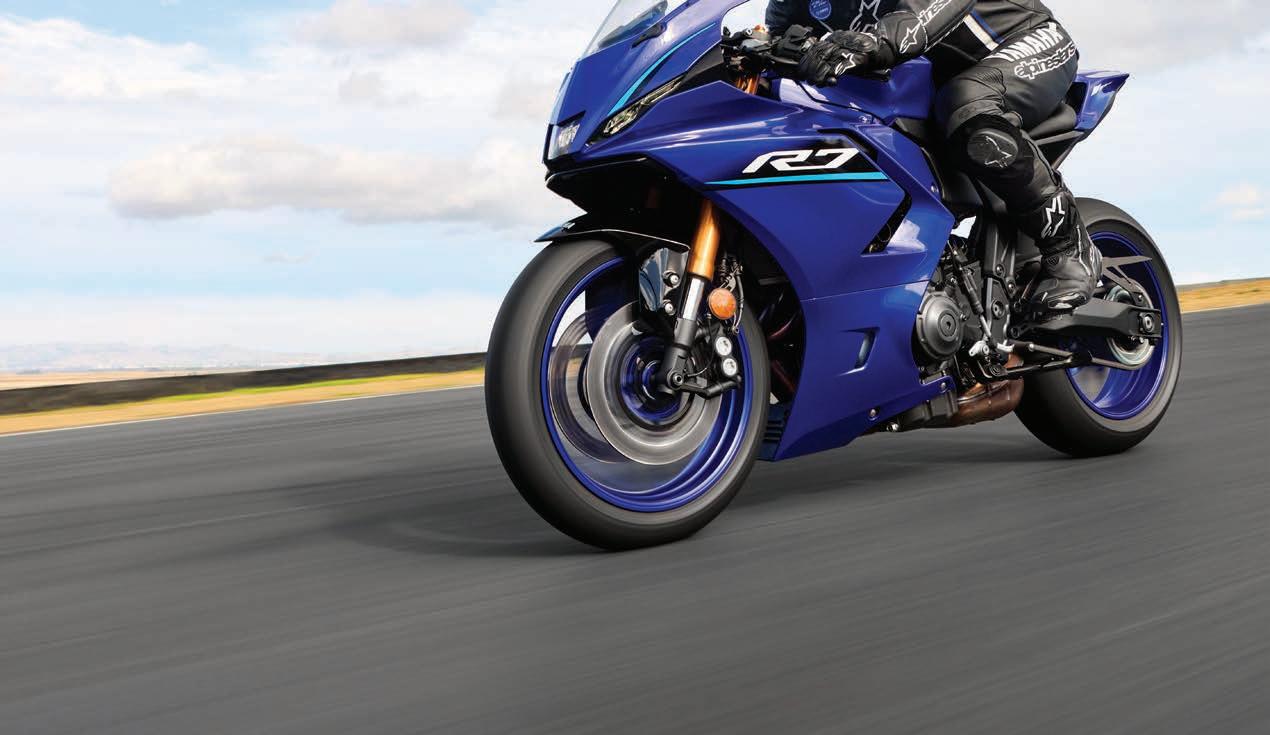
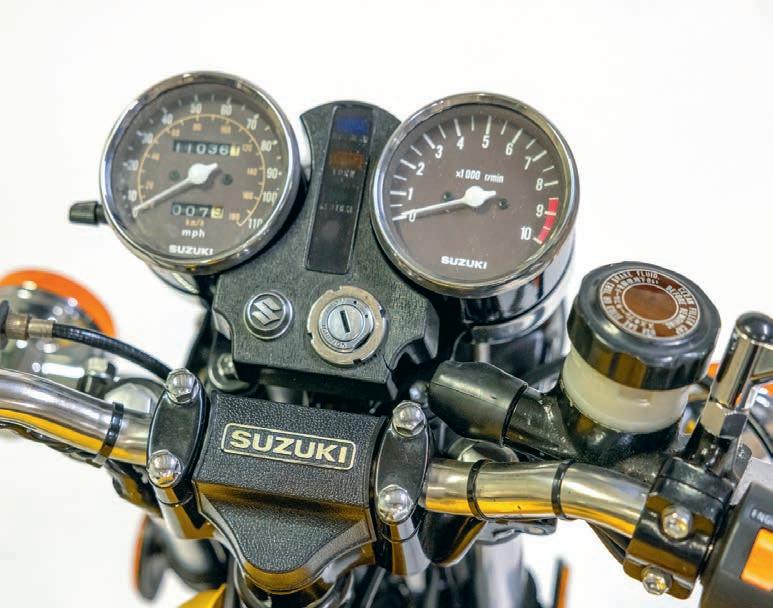
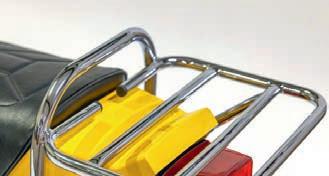
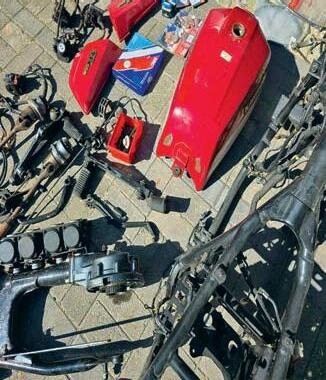
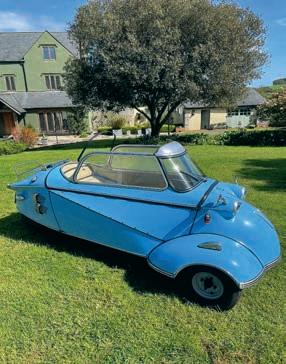
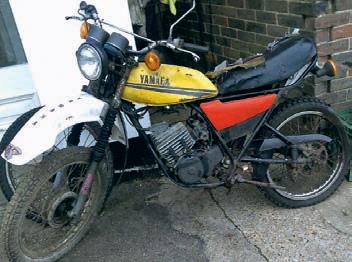
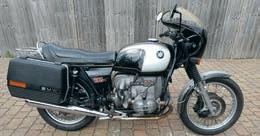
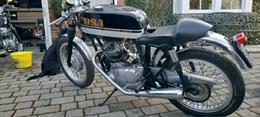
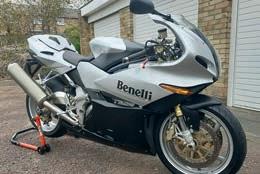
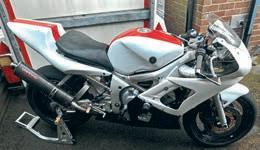
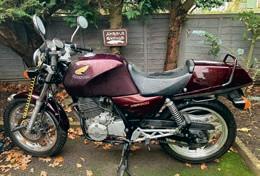
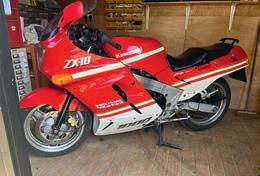
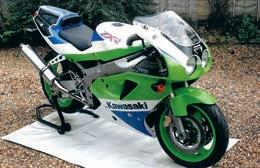
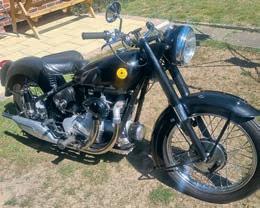
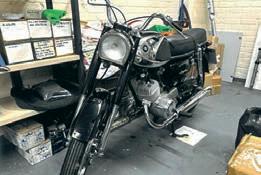
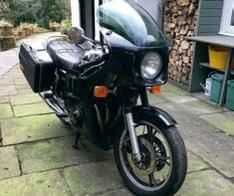
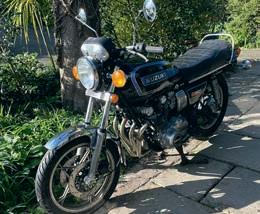
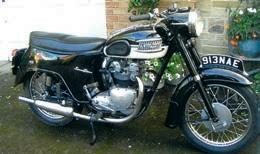
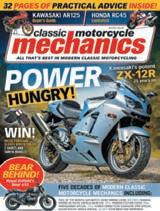
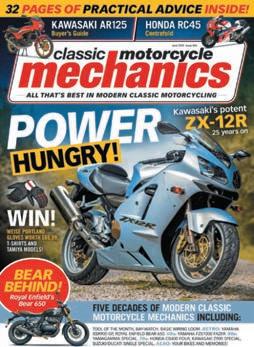
I’m not being rude here, but – how do you like your classics? Mucky? Or minty?
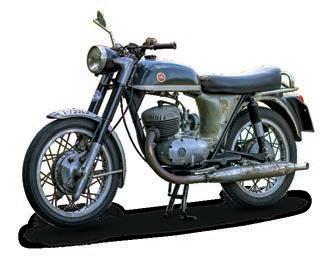
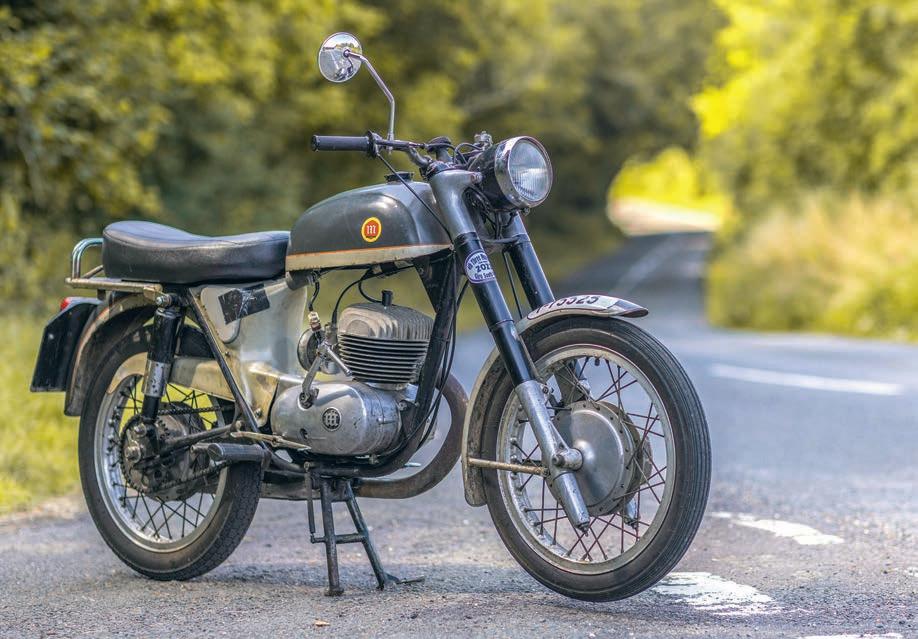
This question rears its ugly head thanks to this issue’s Classic Ride on the Montesa Kenya. Now, perhaps other magazines would only insist on the most sparkling, low-mile machines, but we have been known to carry more useable machines in our pages.
We do – sometimes – get complaints from people who think we should be trying to get immaculate examples of a particular machine in the magazine – especially our cover stars. Sometimes we do, sometimes we can’t.
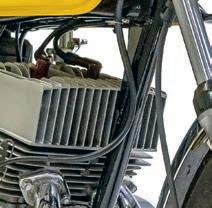
Like in real life, I often look at the pictures for a road test and think: ‘That bike looks great!’ But when you magnify the picture, you’ll see flaking engine paint, scuffed engine covers and the like. That’s life! But, of course, many of us want to see minters. It’s what we go to shows for, right? And yet, conversely,
there’s that old adage: ‘Don’t hide ‘em, ride ‘em.’ It’s why some people like having two of their favourite machine. One as a ‘daily rider’ and one tucked away to show how the bike looked when it rolled off the factory assembly line, decades before. It’s probably also why we have modern retros. After all, if you’ve got a classic Kawasaki Zed and a modern/more modern Zephyr, ZRX or new Z900RS, you’ve got all the bases covered.
So, what’s it to be? How do you do it? Are you lucky enough to have a ‘daily’ classic or retro? And are you okay that we sometimes showcase machines which – while looking a little careworn – are much-used and much loved? Let us know!
Editor
bertie.simmonds@kelsey.co.uk
EMPLOYEE
046 ❙ TOOL OF THE MONTH
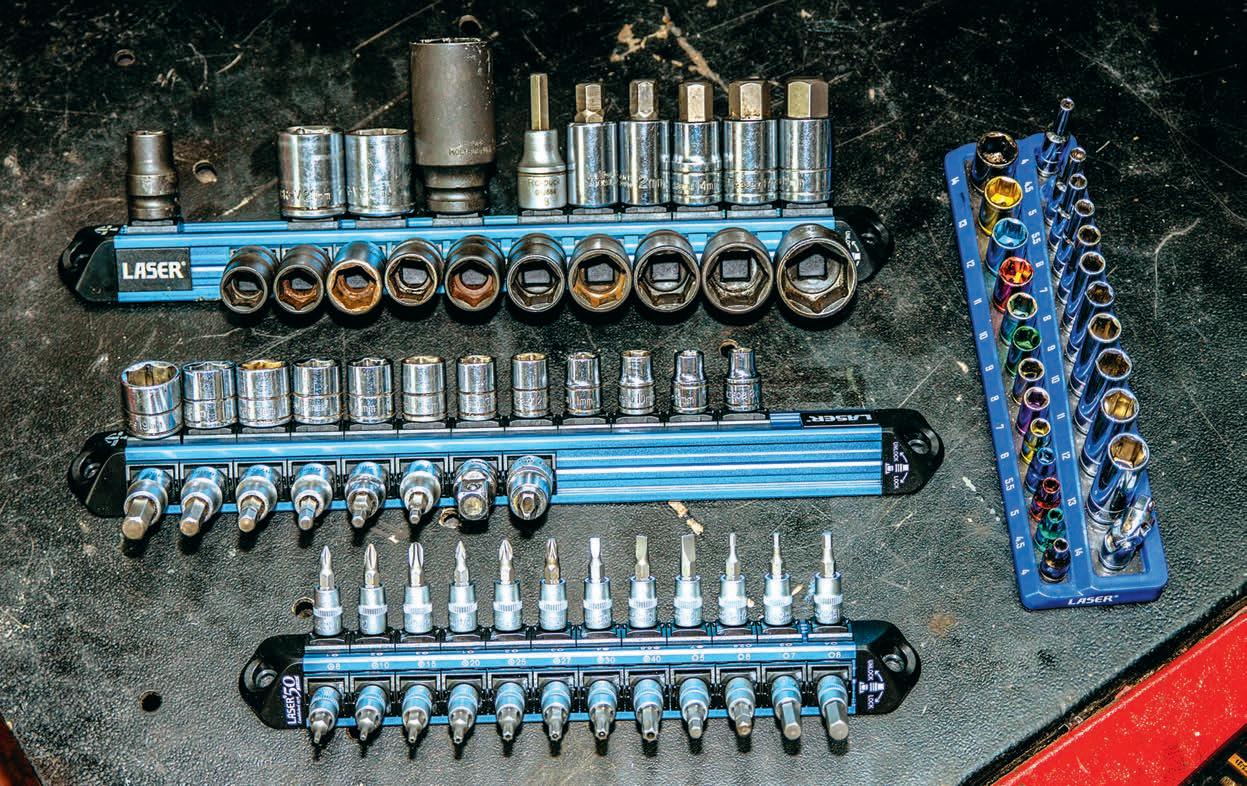
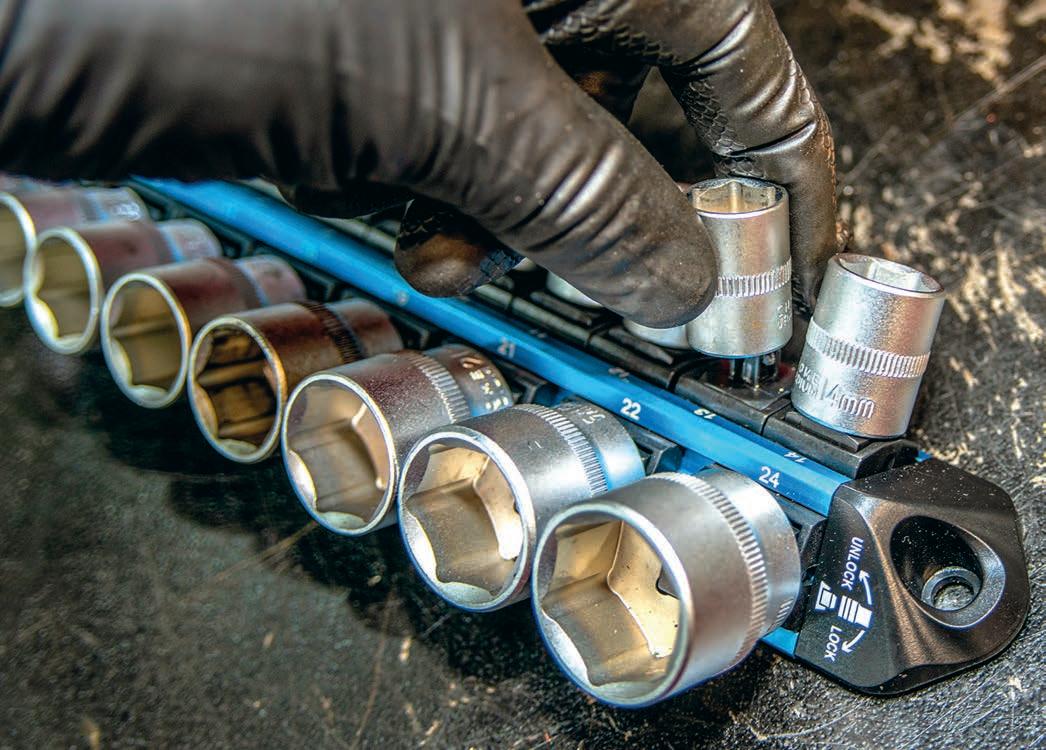
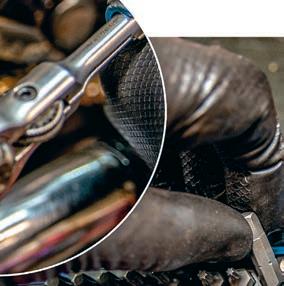
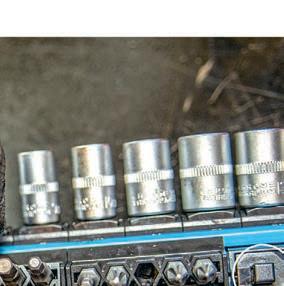
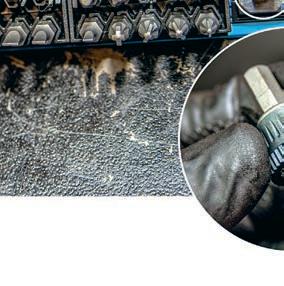
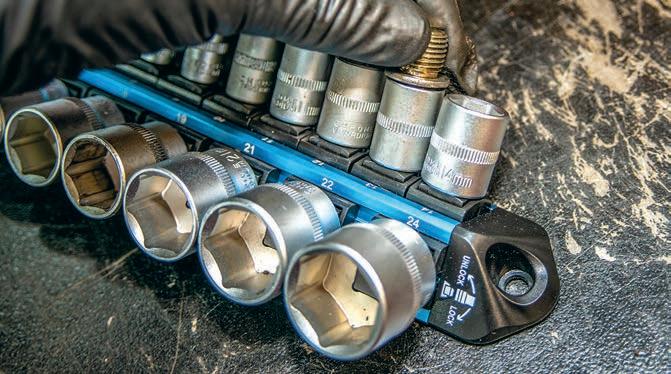
Ralph Ferrand grasps his sockets!
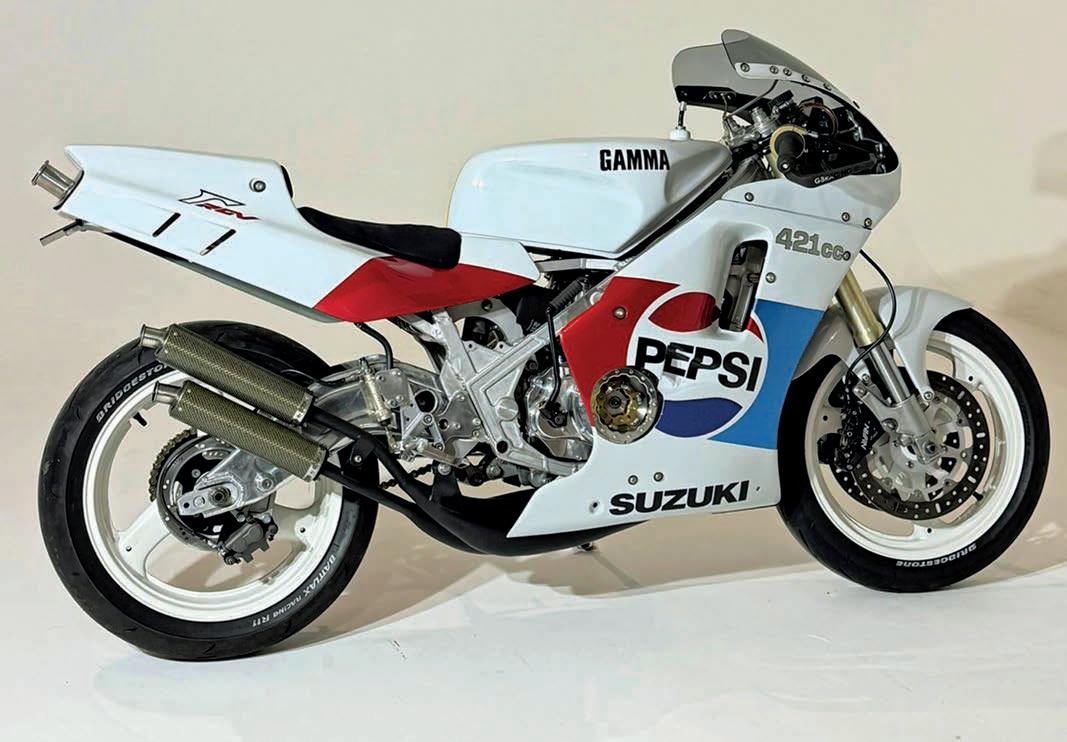
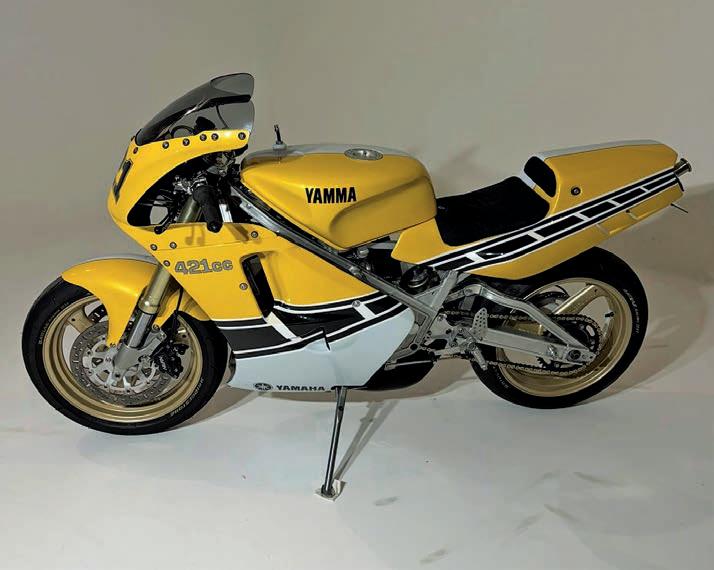
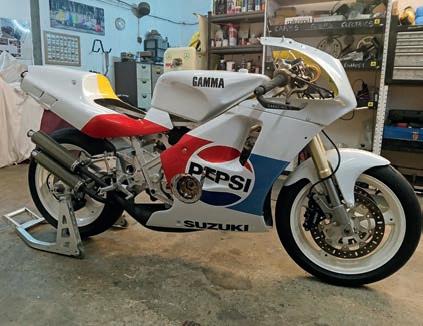
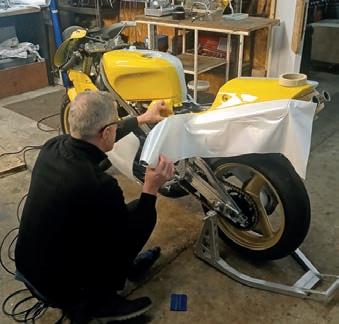
052 ❙ PROJECT YAMAGAMMA
Big Vic Shield is in two minds about this build!
058 ❙ PROJECT HONDA CB400 FOUR
He’s back! Mark Haycock and his Four.
062 ❙ PROJECT KAWASAKI Z900 SPECIAL
Ralph Ferrand talks about where fuels rush in!
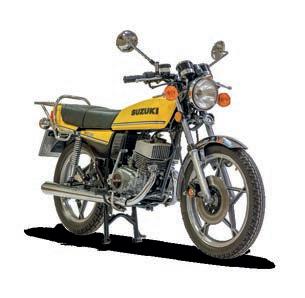
066 ❙ SUZUKI X5
Steve Cooper talks two-stroke 200…
072 ❙ BAY-WATCH!
Kev Raymond looks at what projects are out there…
080 ❙ PROJECT SINGULAR OBSESSION
Scoop is moving on with this single-cylinder.
086 ❙ PROJECT SUZUKI GT380
Malc Shaw is making things look lovely!
092 ❙ PROJECT DUCATI 748
Paul Berryman returns… with a leaking Ducati!
006 ARCHIVE
What have we plucked from the Archives this month?
008 CMM STUFF
New kit, tools, tyres and tested stuff.
012 NEWS
News and events for July 2026.
018 FEEDBACK
What are you all talking about this month?
020 SHOW US YOURS
We want to see what’s in your shed and see what you looked like back in the day!
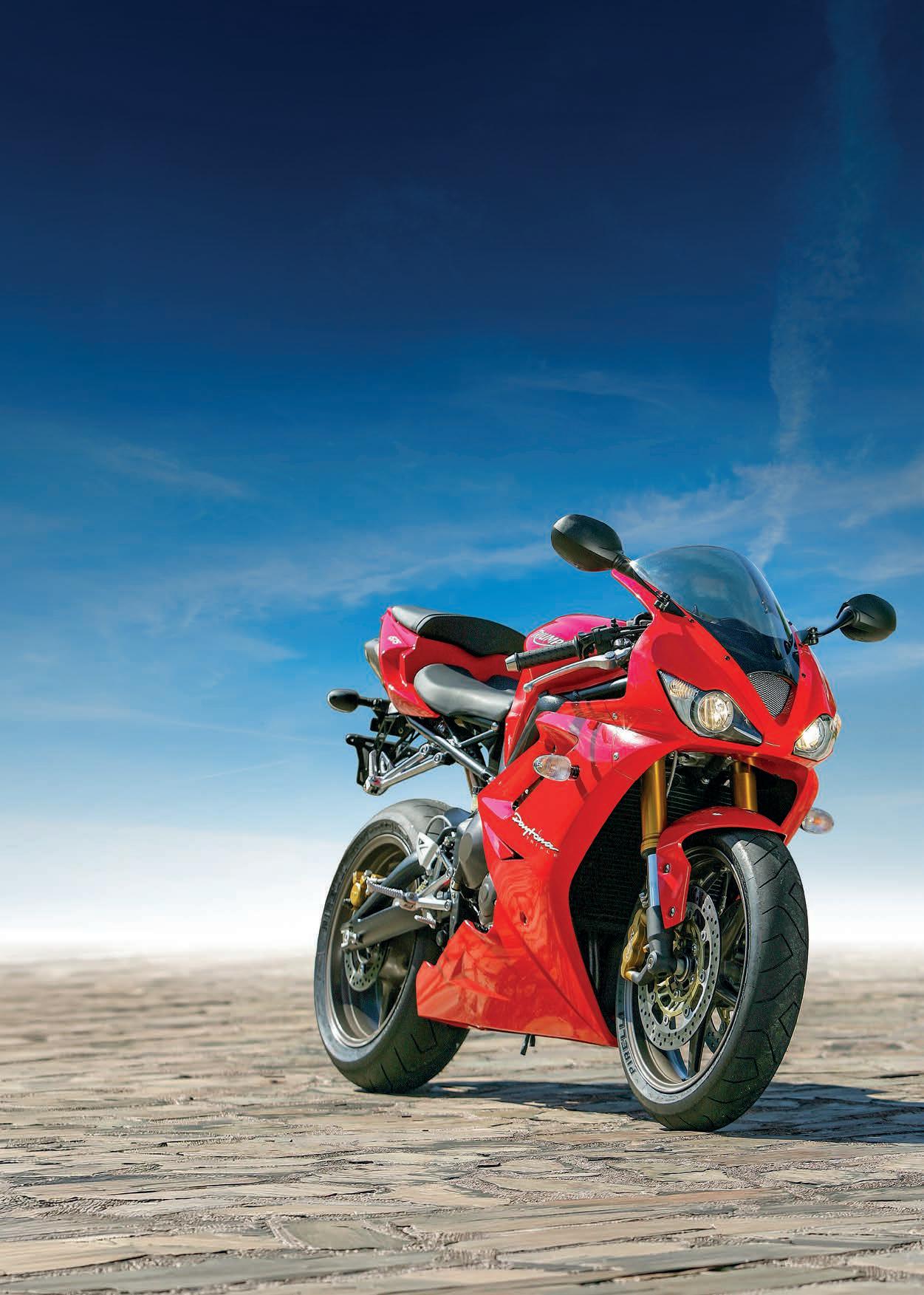
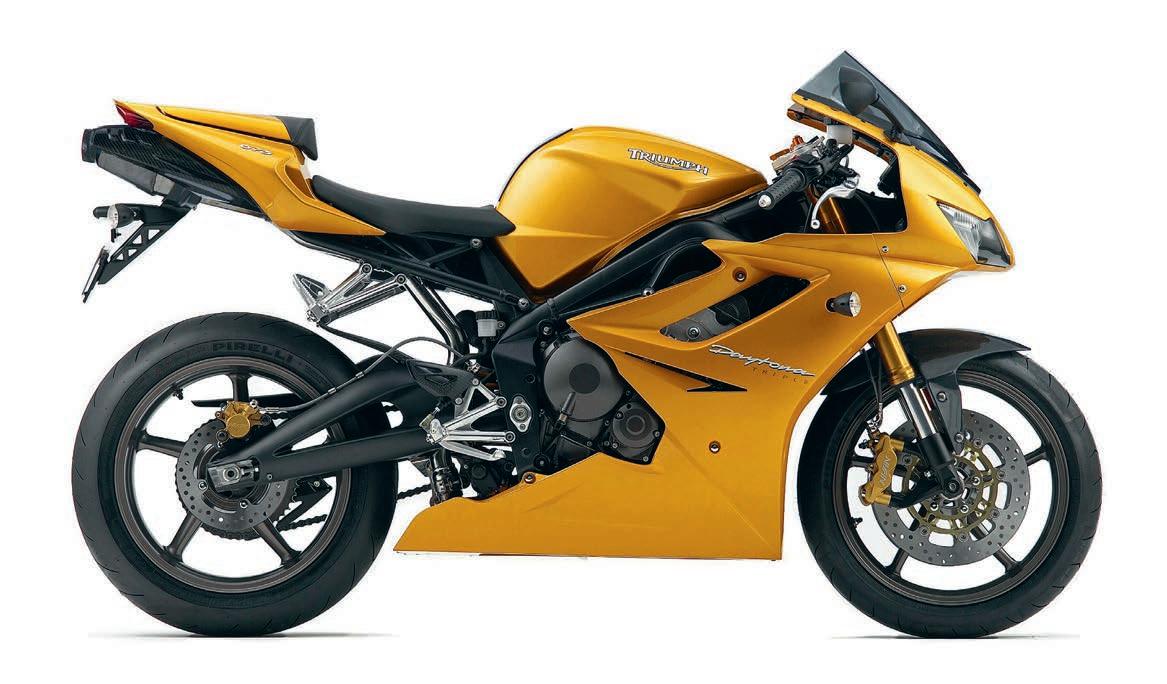
024 2006 TRIUMPH DAYTONA 675
The best British sportsbike EVER built.
032 MONTESA KENYA
Steve Cooper on why this 175cc two-stroke cuts the mustard.
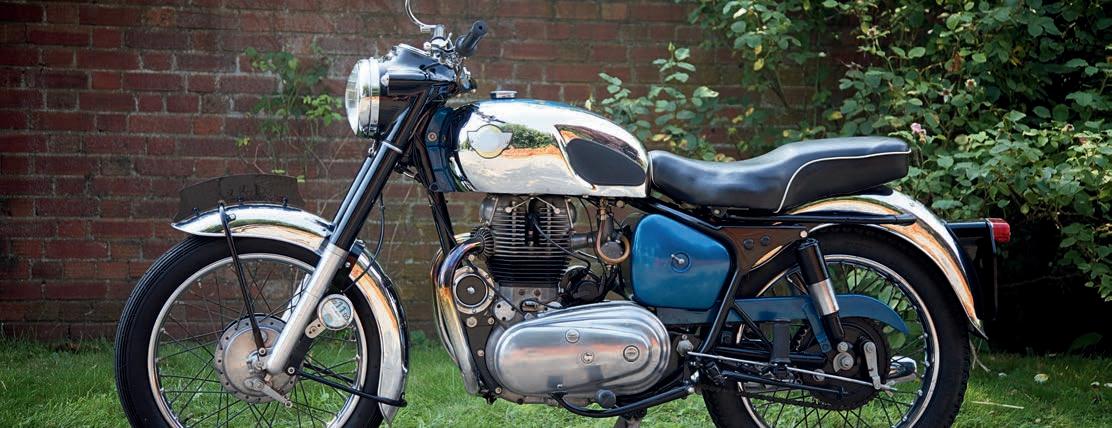
037 ROYAL ENFIELD BEAR 650
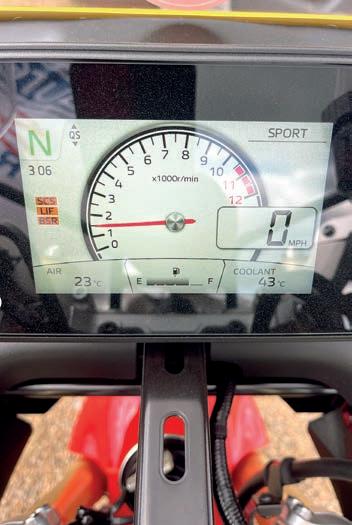
Can our idiot editor work out the clocks?
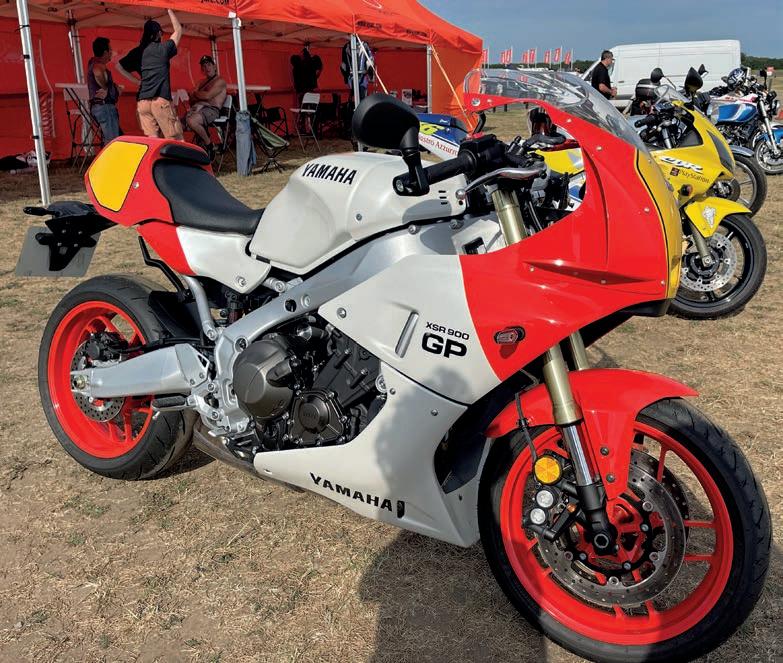
039 YAMAHA XSR900 GP
Andy Bolas gets a go on our retro Yam!
042 SAMCO HOSES
Bertie Simmonds finds out about Samco Hoses and Racebikebitz.
048 SUBSCRIPTIONS
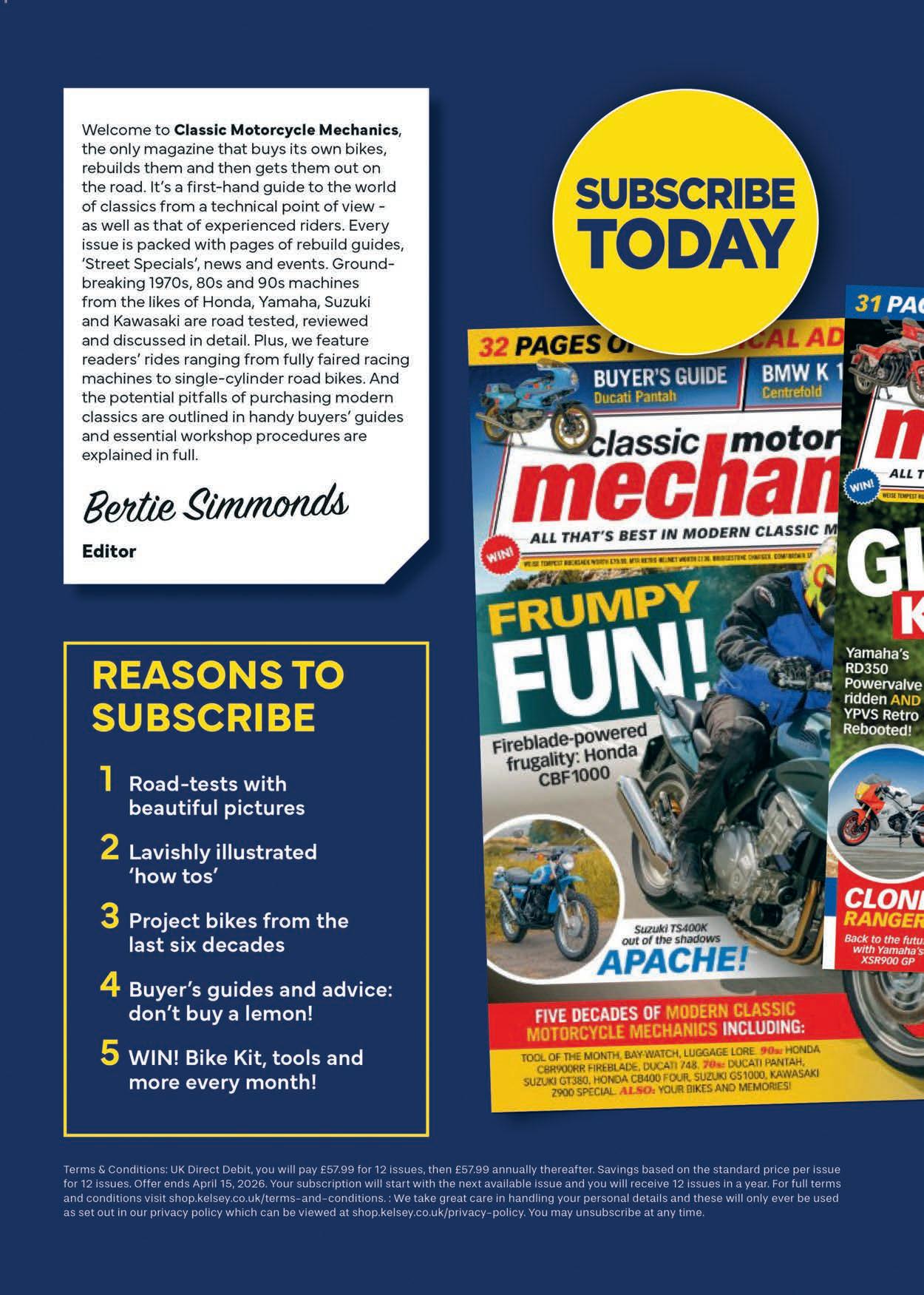
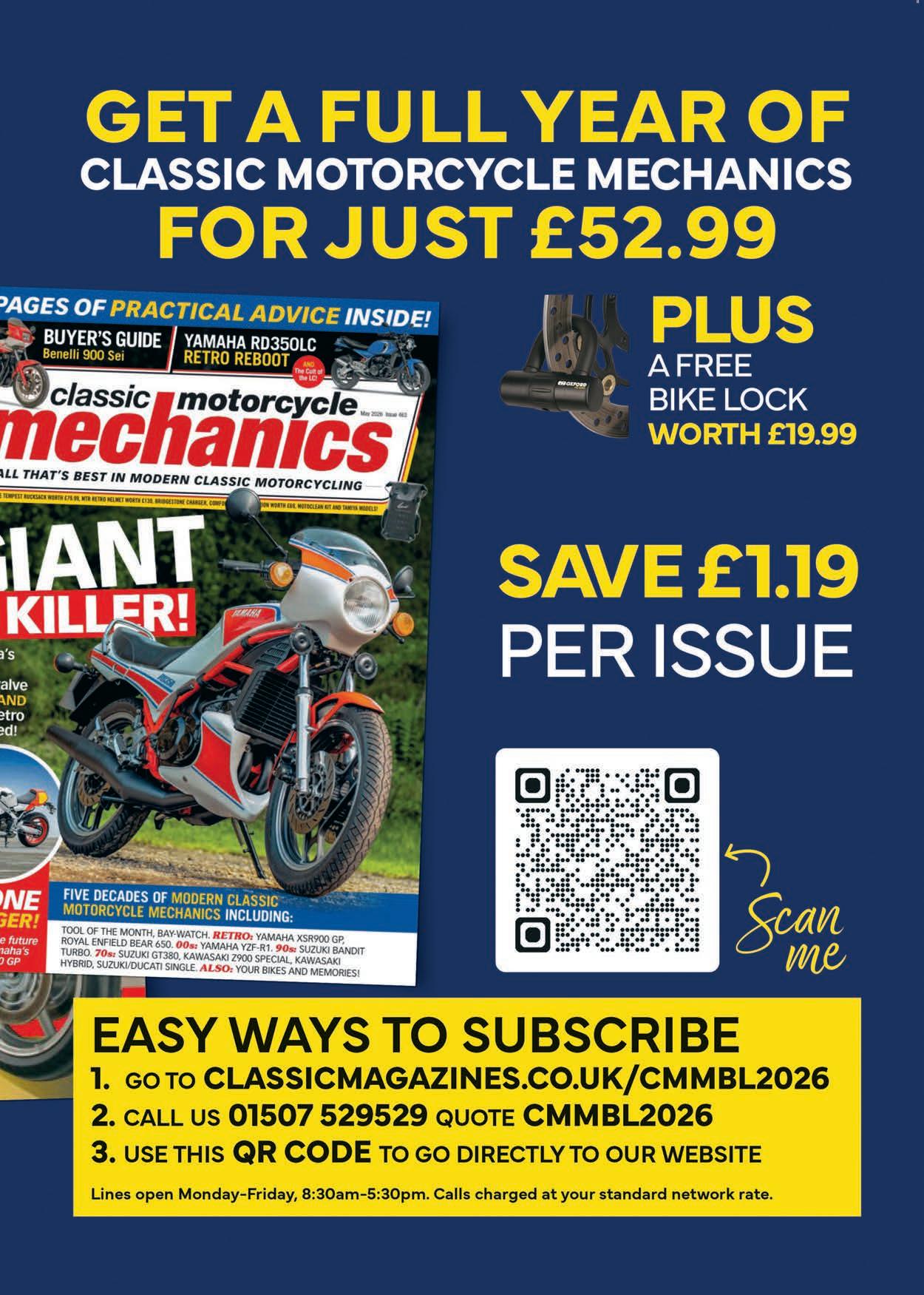
New subscribers can get a free gift… so what are you waiting for?
050 CENTREFOLD
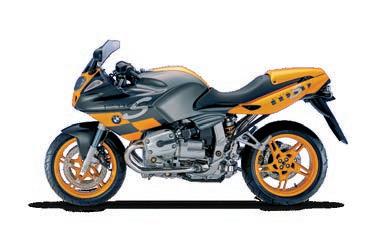
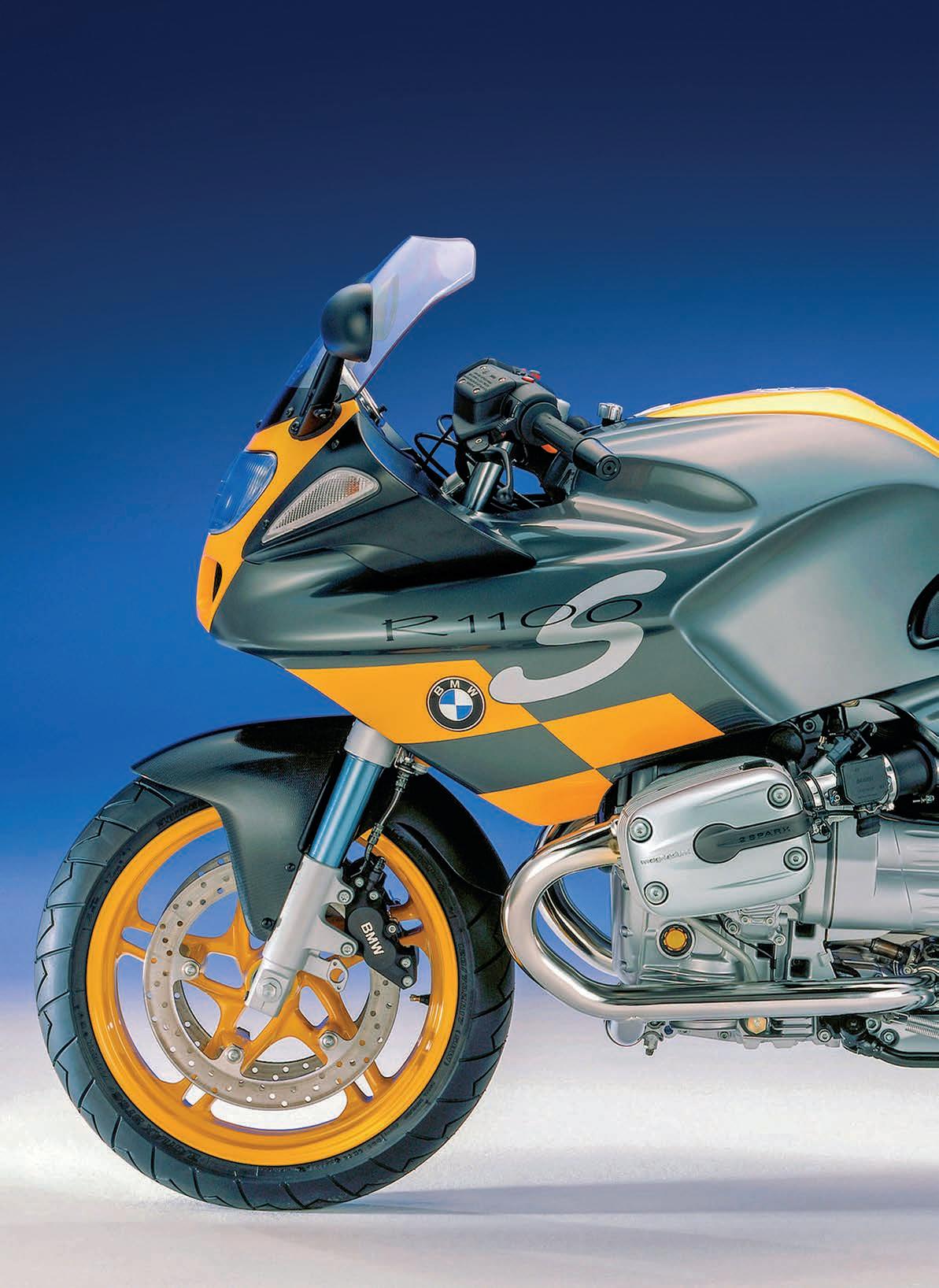
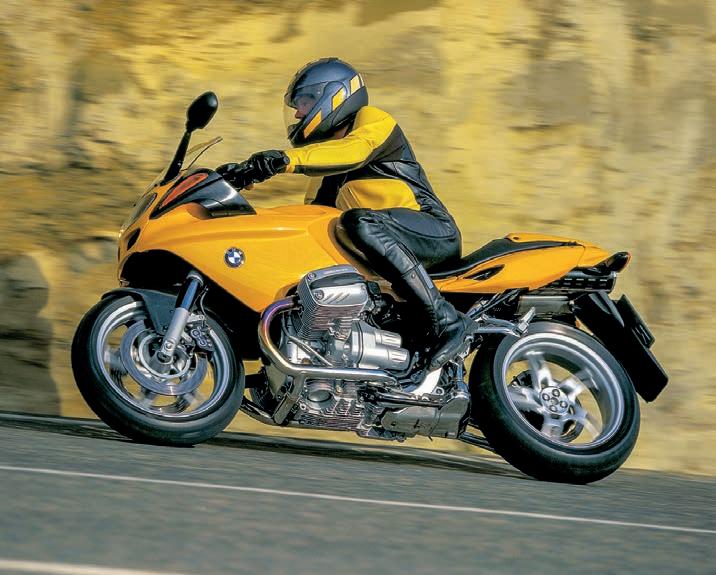
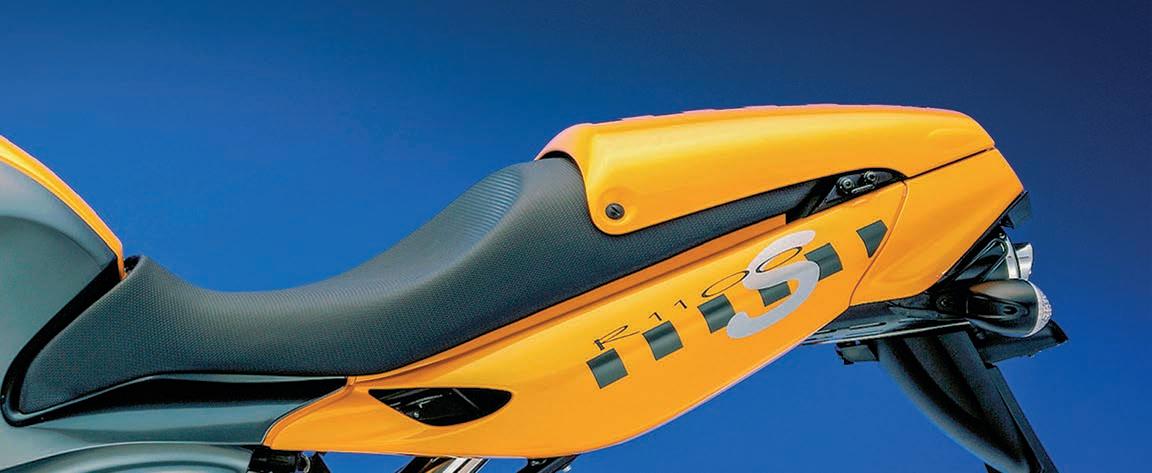
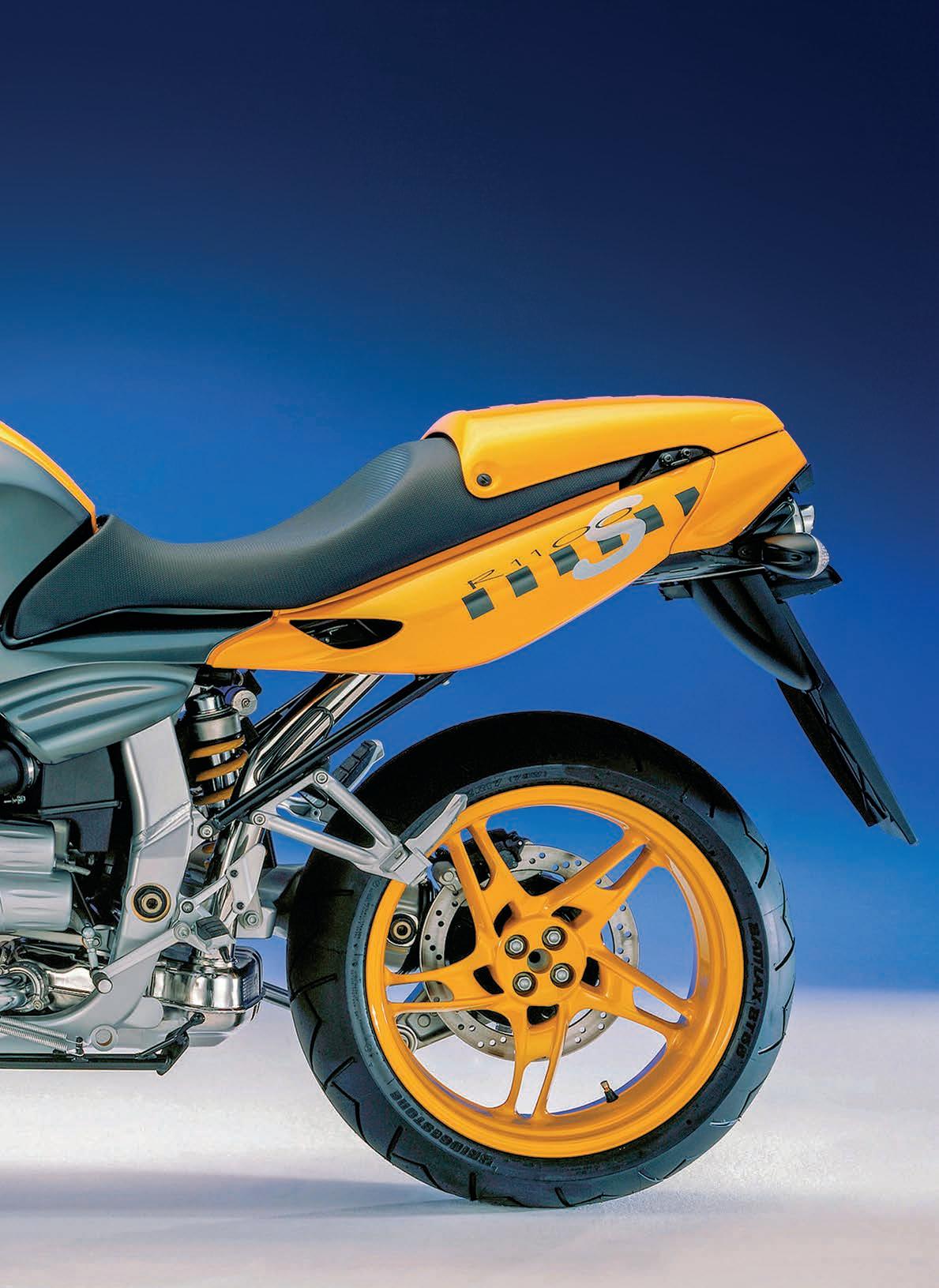
BMW’s sporty R1100 S.
096 NEXT MONTH
What’s happening in the August 2026 issue?
098 PIP HIGHAM
The late, great Pip’s final column for us.
To preorder your next issue of Classic Motorcycle Mechanics head to classicmagazines.co.uk/ pre-order-cmm
Alternatively, scan the QR code on this page and order your next copy today. We will send it directly to you!
The A-Team
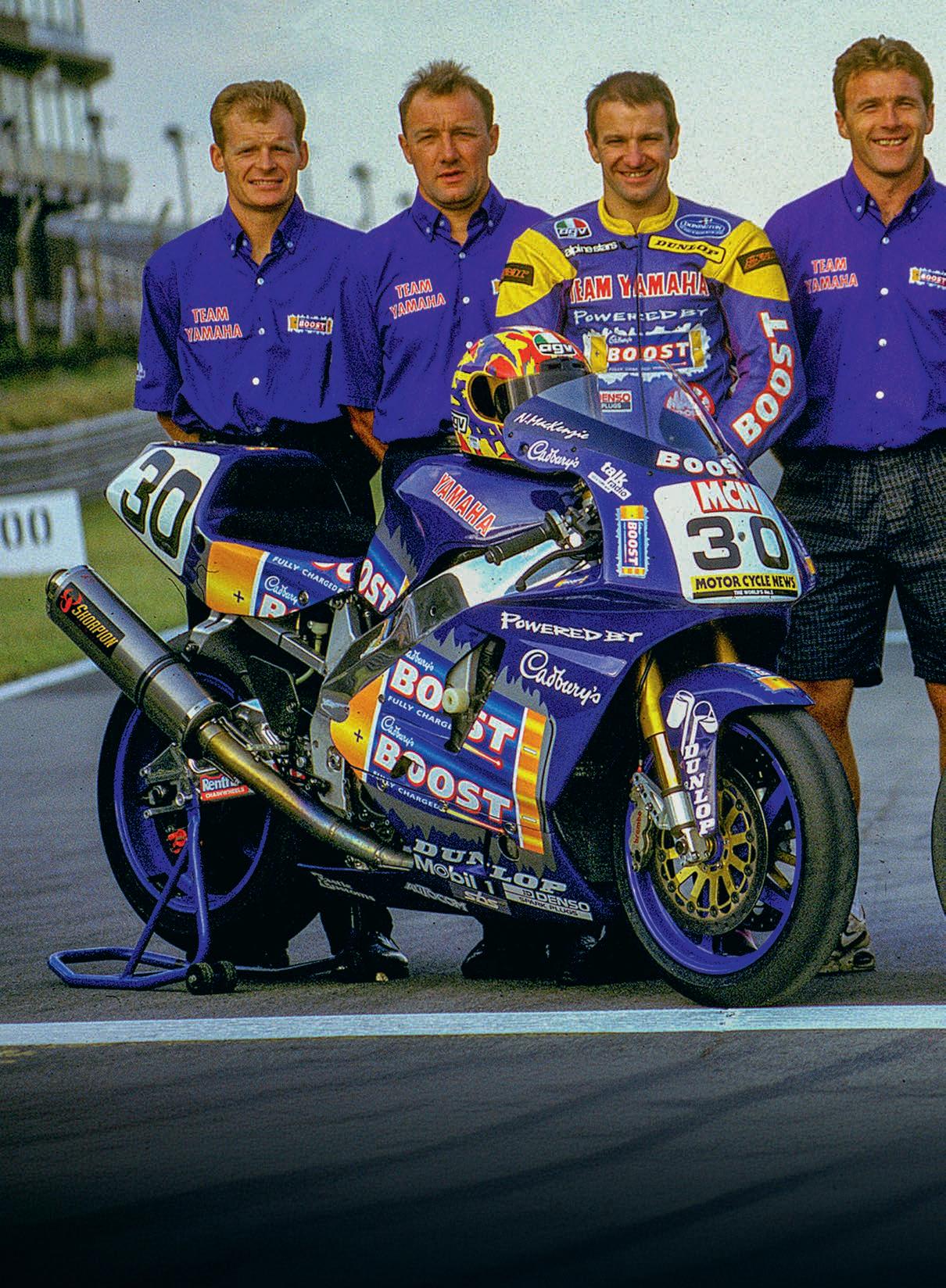
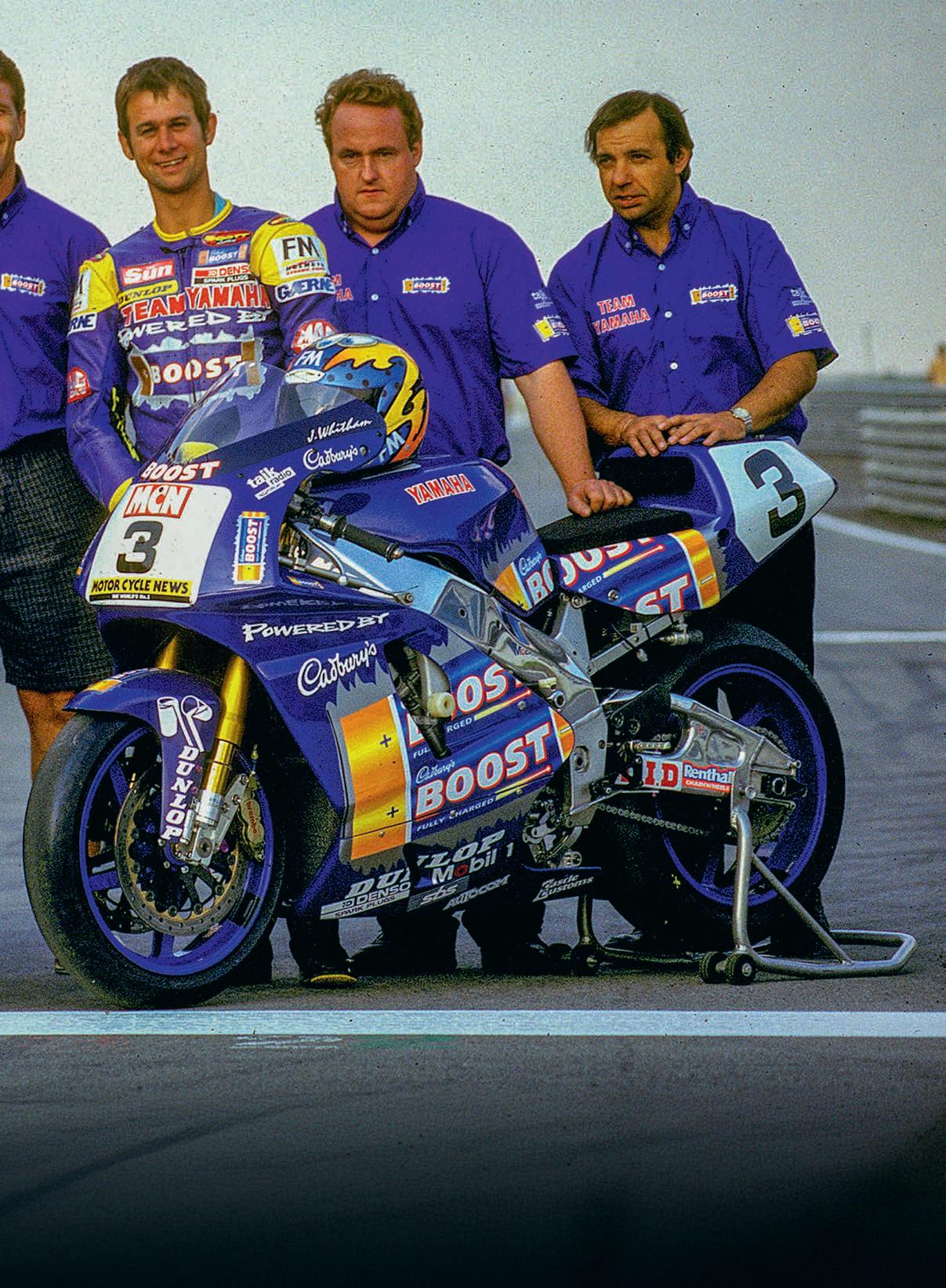
The stars aligned for this amazing British Superbike squad, formed just over 30 years ago to take part in the 1996 series.
Run out of the back of Steve ‘Stavros’ Parrish’s former Loctite Yamaha converted horsebox, the group dominated that year’s event. James Whitham took 10 wins overall that year and Niall Mackenzie took five wins. Whit’s double no-score at the
WORDS: BERTIE SIMMONDS PICS: YAMAHA UK
opening round at Donington Park in March meant he was playing catch-up...
By the season’s end (also at Donington Park) in October the two title rivals went into the doubleheader equal on points. The Scot eventually would take the title by just four points.
The two will be on stage over the weekend of 10-11 October at the Classic Motorcycle Mechanics Show held once
more at the Stafford County Showground. It’s hoped that Niall will bring his beautiful Belgarda Yamaha YZF750SP which the team used in 1996-1998.
James will be at the show on both days, while Niall will attend on the Sunday, after he jets back from the Estoril round of World Superbikes, where his son Tarran will be racing. Go to: https://www.kelsey. events/staffordo to book tickets.
If you can’t wait that long – why not pop along to The Stirrup Cup pub, Barton Seagrave, Kettering, on Monday, 29 June. Both James and Niall will be interviewed on stage by CMM and Classic Racer editor Bertie Simmonds, who reported on their season-long battle, back in the day.
Tickets will cost £15. For info go to: https://www.thestirrupcupbartonseagrave. co.uk cmm
Top team! From left to right : Barry Stanley, Adrian Marsh, Niall Mackenzie, Rob McElnea, James Whitham, ‘Stuey’ Smith and Mel Allen.
cmm Stuff
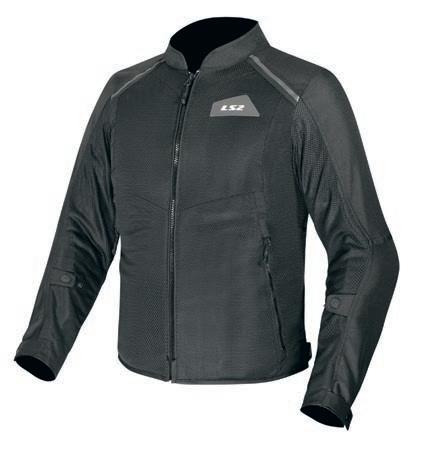
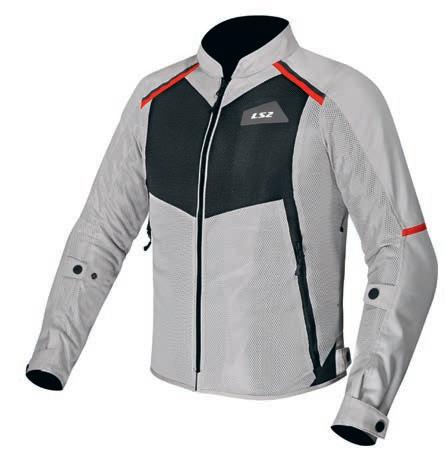
LS2 BREEZE JACKET
Like the name suggests, the LS2 Breeze is a mesh-panelled urban riding jacket, made to keep urban riders cool when the temperature climbs!
While we all love sticky summer days, riding in such conditions sometimes isn’t fun! This jacket combines large mesh panels with a 600D textile outer shell, and fitted with removable and adjustable CE Level 1 shoulder and elbow armour. So, it keeps riders protected and cool. Practical touches include scratch-resistant zip piping, handy pockets, reflective strips for night visibility and adjustment points at the waist, cuffs and arms. Available in both men’s and women’s sizes from XS to 5XL. ls2helmets.com
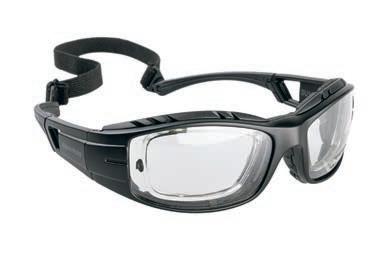
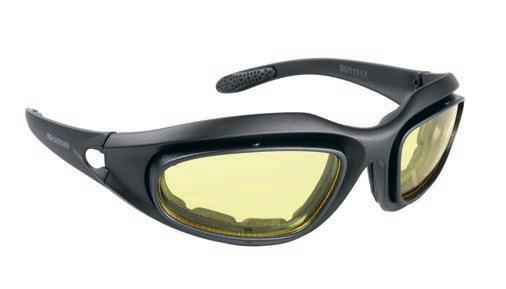
OXFORD BIKER SUNGLASSES
We like these new Oxford Polarised sunglasses. They come with interchangeable or auto-tint lenses for optimal visibility. Each pair also comes with a hard case and drawstring pouch, as well as a head-strap for secure riding!
The Eliminators cost £49.99 and come with extra shaded lenses while the Transformer comes with auto-tint lenses only for £39.99. https://www.oxfordproducts.com
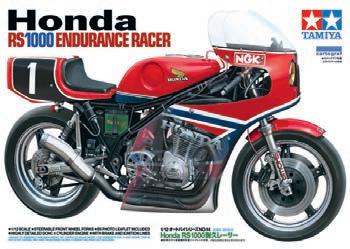
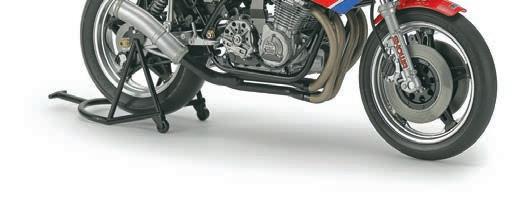
TAMIYA HONDA RS1000 ENDURANCE RACER
Tamiya’s beautiful 1/12th scale Honda RS1000 Endurance racer has been rereleased.
It costs £29.99 from Wonderland Models, but why not try and win a kit like this? Yes… we really need MORE
of your old pictures for ‘The Way We Were,’ on page 22, which will be backed by Tamiya from the August issue. Send in your pics and you could win one of these beautiful little kits. www.wonderlandmodels.com
LASER TOOLS MOTORCYCLE HELMET BAG
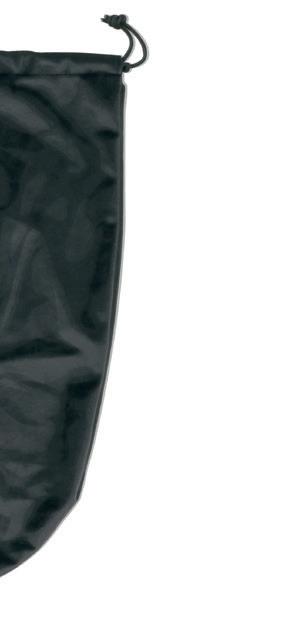
Want somewhere to put your welding mask or motorcycle helmet somewhere safe from scratches? Then try this. Laser Tools has recently introduced their new safety face shield, welding and motorcycle helmet bag, a simple, protective storage solution for easily scratched face and head PPE.
The velvet drawstring visor/ helmet bag helps technicians, riders and fabricators keep motorcycle helmets, welding masks and arc-flash shields safe between jobs. The generous size (550x480mm) means most safety kit will be safely covered.
www.lasertools.co.uk/ Product/9311
www.classicmechanics.com
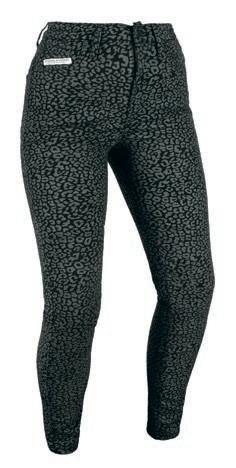
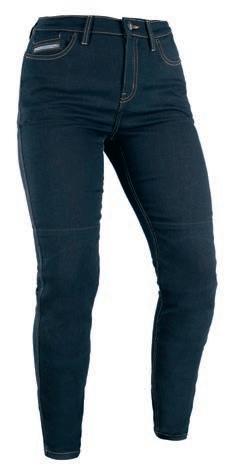
OXFORD ORIGINAL APPROVED SUPER STRETCH JEANS
Oxford’s Original Approved Super Stretch Jeans are now available in a few new colourways.
They feature flexible Level 2 knee protectors, Level 1 hip protectors, have a comfortable stretch fit, feel lightweight and yet have the reassurance of CR AA rated protection as well as reinforced impact abrasion zones.
These can also be worn with the Oxford Belt Connector which costs about £16.99 so you can connect to an Oxford jacket. You’ve got two front and two rear pockets, too. Men’s colours are black, indigo, mid blue and petrol blue, while the ladies have black, indigo and leopard! The best thing is that these come in an array of waist sizes and leg lengths. https://www.oxfordproducts.com
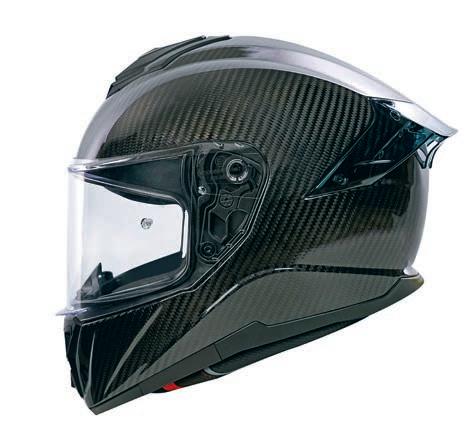
SPADA BLADE CARBON
Every model in Spada’s new helmet collection is built to the latest ECE 22.06 standard, combining modern design with improved performance and genuine value for UK riders, it says on the release.
Leading the range is the Blade Carbon sport helmet. The Blade Carbon sits at the top of the line-up, constructed from a full carbon-fibre shell to deliver lightweight performance without compromising strength. Designed for real-world riding, it balances premium construction with everyday usability, giving riders a hi-spec helmet that doesn’t feel out of reach. It comes supplied with a dark visor and carry case as standard. https://spadaclothing.com
www.facebook.com/ClassicMechanics/
www.twitter.com/cmmmag
RICHA R-MX GLOVES
Sticky, sweaty hands? Yuck! If the temperature rises, why not grab a pair of Richa R-MX gloves which are perforated, protective and made from abrasion-resistant textile.
Crafted from polyester with mesh sections for cool comfort, these gloves are perfect for summer rides. With a combination of CE-approved KP1 knuckle protectors and D3O palm
sliders, there is no compromise on safety. A Velcro closure at the wrist keeps the gloves secure, while the lined palm offers a slip-free grip on bike controls. Conductive fingers mean that smartphones and sat-navs can be operated with a gloved hand. Available in sizes S–3XL in a combination of black, black/red, brown/red, and grey/red. www.nevis.uk.com
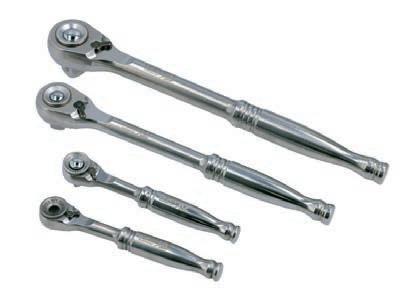
LASER TOOLS STAINLESS STEEL RATCHET SET
Part of the Laser Tools 50th anniversary range, the set includes quarter-inch, three-eighths and half-inch square-drive ratchets, together with a quarter-inch hex-drive bit ratchet, all manufactured from stainless steel for excellent resistance to rust, corrosion and workshop contamination. The ratchets feature smooth, fine-tooth mechanisms for improved operation in confined spaces where swing arc is limited. The quarter-inch and bit ratchets utilise a 60-tooth mechanism, while the larger two ratchets feature 72-tooth mechanisms for precise fastener control and reduced movement between clicks.
The compact quarter-inch hex bit ratchet also incorporates a thumb disc, allowing you to quickly spin fasteners during initial installation or removal.
www.lasertools.co.uk/Product/9365
Tested
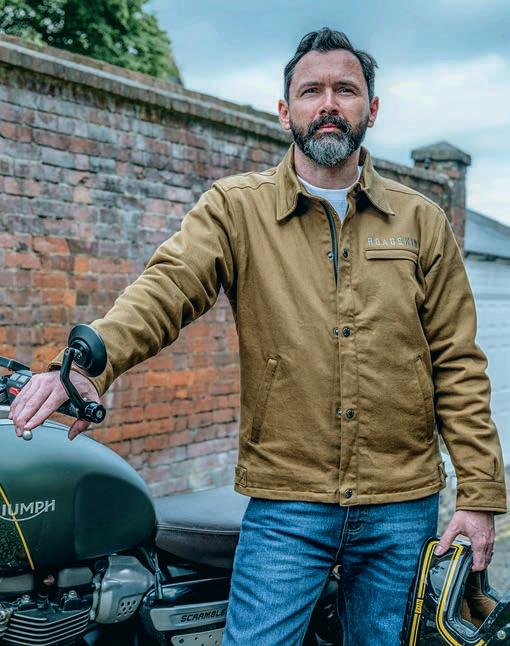
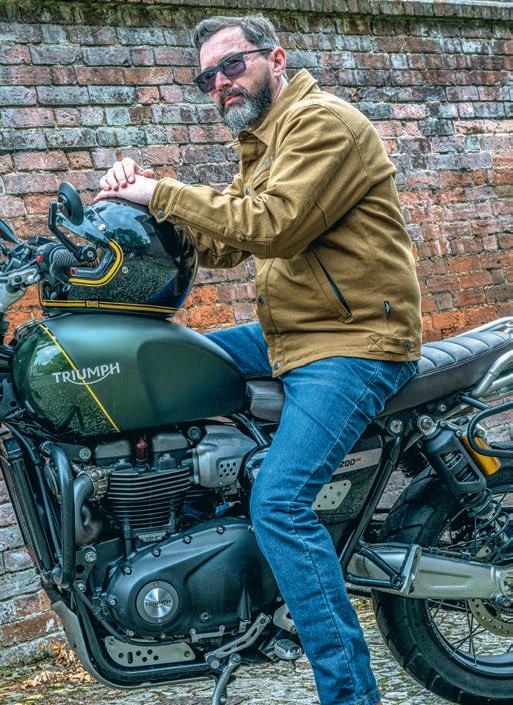
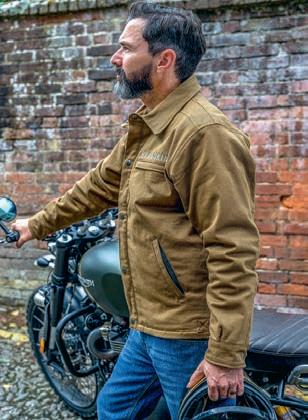
ROADSKIN COLE JACKET
New kit needs a ‘settling-in’ period, right? Roadskin are currently one of my favoured brands and I’ve recently been wearing the newly launched Cole jacket – their very first AAA-rated motorcycle jacket. That’s the milestone.
Roadskin understand the frustration of having to choose between heavy, restrictive riding gear and casual clothing that offers less protection. We want top protection and a
casual fit and feel. We want it all… Roadskin understand and the result is this, the Cole jacket. It looks smart. It’s cool. And, most importantly, and without shouting it from the rooftops, it hides those top-tier protective capabilities.
The Cole jacket boasts cutting-edge Rheon Level 2 armour for the back, shoulders and elbows. This reactive polymer technology stays soft and flexible during normal movement but instantly stiffens upon impact to dissipate energy. You are treated to a premium stretch twill outer shell (98 per cent cotton, two per cent elastane) for comfort and flexibility. A mesh inner lining actively wicks away sweat, enabling the regulation of body temperature on those warmer journeys. Adjustable waist and wrist poppers make for a tailored, draft-free fit. There are three zipped outer pockets and two exceptionally deep internal pockets, ideal for holding a phone/wallet.
During this time of year as the weather warms and I choose not to lie flat on the tank of my sports bike with my legs tucked up on rear-sets, I opt for ‘lifestyle’ motorcycle clothing. The problem is, with a jacket with a collar, when you get to a certain speed it flaps… Also, I have worn jackets with hoods with drawcords that clatter against the helmet. Nothing more distracting and irritating than that. Clearly, Roadskin’s designers were aware of this issue and solved it by including integrated poppers to hold the collar securely in place, thereby helping to prevent any distracting wind flap at speed!
On and off the bike, the jacket itself feels soft and flexible. I felt comfortable and relaxed in the jacket, but be warned, the Cole offers a snug fit so make sure you try before you buy, especially when you are going to add the armour.
The jacket, in a neutral Tobacco colour, comes with
popper adjustments at the waist and wrists, and I had made sure they were secured before heading off. With the outer shell comprising high-quality stretch twill, the jacket moved naturally with my body as I moved around on the bike itself, which is just what you want from a riding jacket.
As far as Roadskin are concerned, premium safety is never an optional extra, rather, it’s a given, which is why the Cole features a comprehensive 240gsm Kevlar lining seated discreetly beneath the stretch twill exterior, adding a vital layer of defence.
Overall, so far I’m very impressed with the Cole jacket from Roadskin and I will be giving it a ride-out on my other types of bikes to see if it’s as good on a sports-tourer as it has been so far on a sports machine. One colour only, with sizes M to 3XL.
Mike Cowton
https://roadskin.co.uk
cmm News
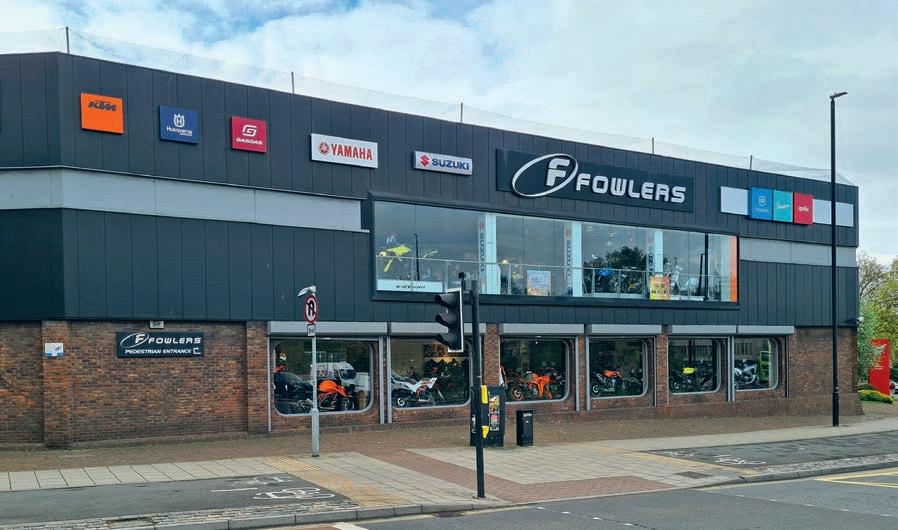
FOWLERS’ CENTENARY!
Founded in 1926, Fowlers has grown into one of the UK’s largest motorcycle dealers and parts suppliers, and is still run by the family whose name appears above the door.
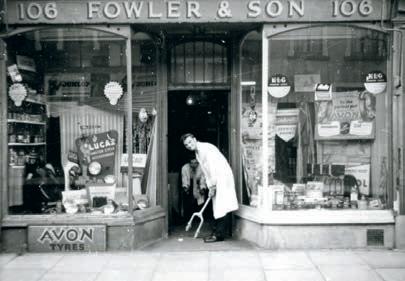
When Alice and Frank Fowler opened a cycle shop in the St. Paul’s district of Bristol in the 1920s, they never imagined that 100 years later it would grow into one of the biggest motorcycle dealers in the country.
Their son, Harold, joined the business in 1926 and introduced motorcycles shortly after, starting a family dynasty which continues to this day. Harry, as he was known, was a prominent scrambler and trials rider in the late 1940s and 50s. He also set about expanding Fowlers, at various times adding Ariel, Matchless, James, Francis Barnett, Norton, Triumph and BSA, as well as Italjet and Watsonian sidecars.
During the 1960s, new premises were secured to accommodate the growing business and, always with an eye to the future, Harry was awarded franchises from Honda, Yamaha and Suzuki by the end of the 1960s.
In 1982 the entire operation moved to purpose-built showrooms, close to Temple Meads station in the centre of Bristol, where they have been ever since. As well as a huge choice of two-wheelers from many manufacturers, clothing, helmets, parts and accessories are also on sale. You can also have a bite to eat and a cuppa in Harry’s Café on one of the top floor
mezzanines, overlooking the bikes on display. Harry Fowler passed away in August 2006, aged 94. The dynasty is maintained with his daughter, Stephanie, who is Managing Director, and several of his grandchildren have diverse roles in the company too.
Stephanie Fowler says: “Although Fowlers is one of the longest established businesses in motorcycling, it is far from rooted in the past. We recognise the need to keep abreast of the times and take advantage of the latest technologies and trends, including being more eco-friendly. As a family business, we set great store in a warm welcome and treating customers with integrity. When your name is over the door, reputation really matters!”
Find out more at www.fowlers.co.uk
ICONIC BIKES UP FOR AUCTION
Some very special race machines of yesteryear will be auctioned on Saturday, 18 July at Kempton Park.
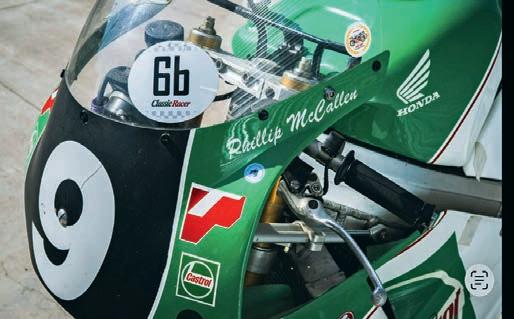
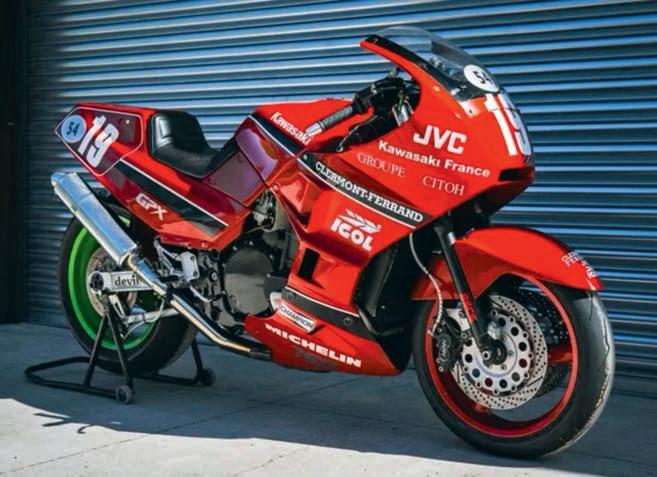
Iconic Auctioneers has a number of motorcycles up for auction and a few have caught our eye. One is a former Phillip McCallen/Simon Crafar Honda VFR750R RC30 and the other is a Kawasaki GPX750R.
The Honda was used by Crafar (later a WSB star and 500cc grand prix winner) during his 1992 season in British national races. Later it was used by McCallen in 1993 on short circuits. The Kawasaki is a works bike with real pedigree, having won a WSB race in the hands of Adrien Morillas in Hungary in 1988. This marks the bike as the first Kawasaki WSB race winner and the only GPX to win such a race.
Also in the same auction is another RC30: this one being used by Joey Dunlop and Steve Hislop! Expect that to go for a packet! For more: https://www.iconicauctioneers.com
ARDINGLY IS ON!
‘Lightweight Racing’ is the theme at the Southeast’s biggest indoor classic motorcycle show this July.
Elk Promotions’ Ardingly Classic Bike Show & Jumble returns to the South of England Showground on Sunday, 26 July, with the lightweight theme and a tribute to Dresda café racers.
Alongside clubs such as the BSA Bantam and the Classic 50cc Motorcycle Racing Clubs, Guy Fithen will be representing Dresda, famed for their precision engineering and performancefocused custom motorcycles. Dave Degens, founder of Dresda Motorcycles, sadly passed away in January 2026 and this will
be an opportunity to see his legacy.
A noted racer, frame builder and tuner, Dave was a familiar face at Ardingly events and his ‘racing bikes for the road’ continue to attract a passionate following.
There’s no age restriction on machines at the July Ardingly Show, so expect a mix that’s broad and fascinating – past winners have included a 1937 350cc Velocette KSS and a 1995 Honda CBR900RR FireBlade Urban Tiger.
Visitors wishing to enter their bike in this year’s show can do so at: www. elkpromotions.co.uk/enter-your-bike For tickets and full event info go to: www. elkpromotions.co.uk/ardingly-july
PRE-ORDER YOUR CMM
Want the next issue of CMM? Of course you do! Then it’s simple. Subscribing is best but, failing that, why not pre-order? Simply scan the fuzzy circular thing with your smartphone (c’mon, we’ve all got one) and off you pop! Alternatively, if you like what you see coming up in the next issue (see page 96 for more) then go to: www.classicmagazines.co.uk/ issue/preorder where you can pre-order all of Kelsey’s wonderful magazines. Even ones about trains, cars or towpaths…
RARE CLASSIC JOINS NMM!
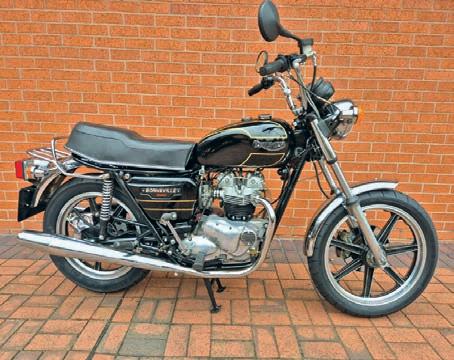
The National Motorcycle Museum has been donated a rare Triumph motorcycle from 1980.
It’s a Triumph T140MF anti-vibration prototype with the balanced engine layout, using what became known as the ‘Morton System’. Donated by granddaughter Sarah Morton, the engine was developed by her grandfather Dr. Paul Morton after he was seconded to Triumph (Meriden) from industrial giant GEC.
Not to be confused with the T140AV machines which used rubber mountings, the T140MF used a balancer shaft which ran forward in modified T140 crankcases. Quite revolutionary for its time, the
CAFÉ AWARD
The Sammy Miller Museum now has an award-winning café!
design came about following UK police force requirements for a bike without the vibration problems associated with previous twin-cylinder machines of British manufacture.
Most interestingly, all of Dr. Morton’s design drawings, calculations (some handwritten), together with a host of newspaper cuttings, letters and factory meeting minutes were included in the donation.
In March, Sammy’s Pit Stop Café was named Coffee Shop of the Year at the New Milton Advertiser & Times Food and Drink Awards 2026. Nominated by the public from across the New Forest area and judged by industry experts, the accolade is a significant achievement.
Based in the museum, Sammy’s Pit Stop has earned a reputation for its welcoming atmosphere and inclusive, allergy-friendly menu. Judges praised the café’s outstanding standard of service, while customers highlighted its relaxed, friendly environment. Considering the number of eateries in the New Forest area, this recognition is impressive.
So, if you’re free on a Tuesday, why not pop in? The museum has a Tuesday morning ride-in, which is going from strength to strength. An ever-growing number of riders join the team for a relaxed catch-up over excellent coffee and freshly baked cakes, all prepared on site by the team. For more on upcoming events, go to: https://sammymiller.co.uk
After Dr. Morton left the project, he retained the machine which was used for some years on the road. The museum restoration team currently is recommissioning the bike so that it can be ridden again.
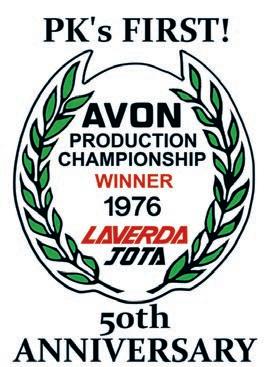
The 1970s welcomed the world’s first true muscle bikes, none more so than the Slater Brothers’ developed Laverda 981cc three-cylinder 3CE, which in 1975 became the Jota!
Capable of 140mph, the Jota was the fastest production bike you could buy and many examples were soon seen on the racetracks of Europe.
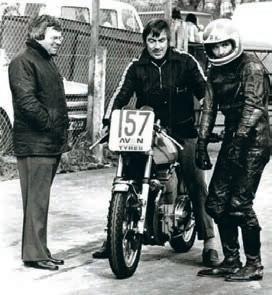
In the UK, The Avon Production Bikes series was the obvious choice and Slaters entered or supported a number of riders in the series, with the most successful being Peter ‘PK’ Davies. ‘PK’ and other riders, including Roger Winterburn, Mick Hunt, Roger Taylor and Michael James, helped the Jota become the dominant force in production racing for the remainder of the 1970s, with PK winning the series in 1976, 1978 and 1979.
The International Laverda Owners Club will be celebrating the 50th anniversary of PK’s 1976 win during the CRMC Classic Motorcycle Festival held at Donington Park on 1-2 August. The club will be displaying a range of Laverda road and race bikes, some of which will be participating in the historic parades during the weekend.
Adam Davies will be displaying some of his father’s trophies and
For more on the National Motorcycle Museum (which really is worth a visit) head to: https://www. nationalmotorcyclemuseum.co.uk
50TH CELEBRATION!
also streaming a new documentary film about PK’s racing career. Also in attendance will be some of the sponsors, including Richard Slater. If you’re interested in attending the event, email the club via: pk50th@ iloc.co.uk
cmm News
selected events
Vintage Motorcycle Day
Cambridge Museum of Technology, Cheddars Lane, Cambridge CB5 8LD: www.museumoftechonology.com
Melbourne Raceway, Melbourne Airfield, Ash Lane, York, North Yorkshire YO42 4SS: www.straightliners.events
13 Straightliners Full Throttle
Elvington Airfield, Elvington, North Yorkshire YO41 4NU: www.straightliners.events
We love to hear from you, so why not let us know what you like, or dislike in YOUR magazine. Simply get in touch by sending emails to: letters@classicmechanics.com or direct to the editor at bertie.simmonds@kelsey.co.uk or post your letters to the normal address. The best will win a top clothing/kit gift from our friends at Weise Clothing.
Star Letter
Nice Ninja!
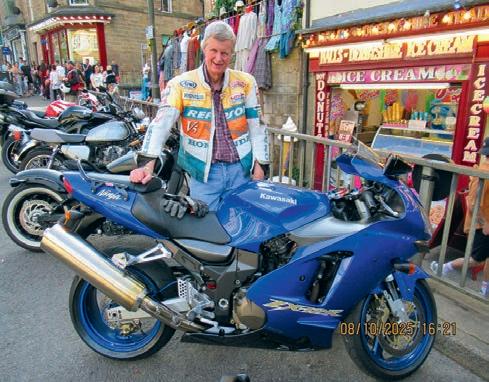
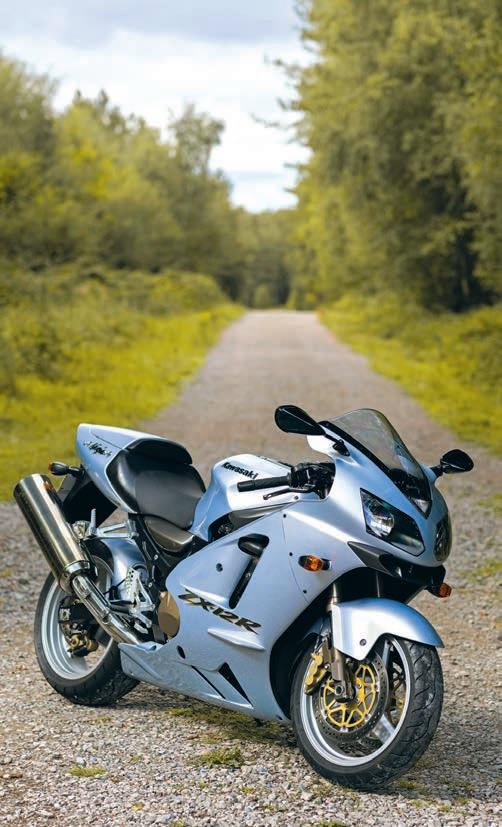
You made my weekend as I’ve just read the latest Classic Motorcycle Mechanics. Your test on the ZX-12R is brilliant! I am biased as I have this blue one which I bought in 2002 – a B1 model. It’s the best bike I have owned, hence I’ve still got it 24 years on. I wanted a blue one but couldn’t get one in the UK so
Liquid cool?
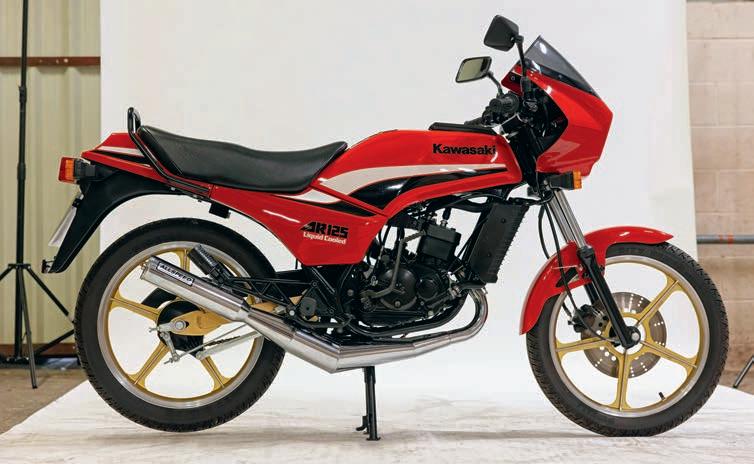
I have been reading the buyer’s guide on the Kawasaki AR125 and in the article Steve Cooper mentions that this was the first production liquidcooled motorcycle before the GPz900R. Has he completely forgotten about the Kawasaki Z1300? Now, I know that we can be a little bit forgetful at times, but this fact can be easily checked!
James Ebejer
Bertie says: “Thanks James! To err is human… to forgive Scoop (and us all) is divine!”
a friend got mine brand-new in its crate from France: a full power model. I have no intention of doing 180mph on it, but love its handling and acceleration. I have never been a top speed merchant, as anything over 130mph seems quick.Also, it handles excellently. I would put it against most sports bikes on the road. It is sure-footed and
STAR LETTER
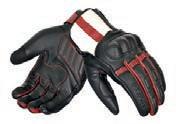
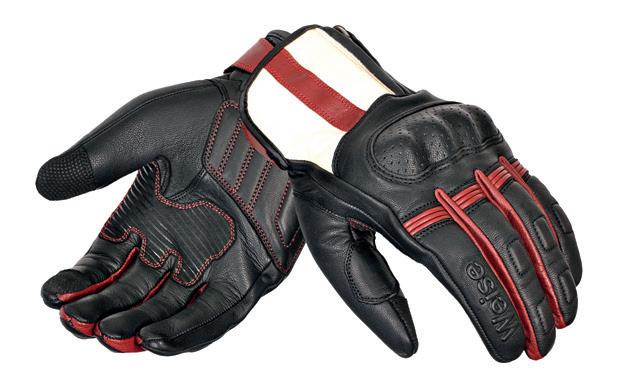
This month our Star letter wins these Weise Portland Gloves worth £69.99! These comfortable, short-cuff gloves seamlessly blend classic style with modern protection.
Crafted from goat leather, the material provides a durable yet lightweight, soft feel. For safety, the gloves feature integrated TPU knuckle armour and carry a certi ed EN13594:2015 Level 1KP rating. Find out more at: https:// www.weiseclothing.com
rock steady in bends; we don’t pussy foot about at times. I have always stuck to Dunlop tyres and it’s now on Qualifier IIs – they are brilliant. I love these bikes and would buy another if I could find a low mileage, standard bike. (Anyone? Let me know!) Maybe another B-model or the later ones with the newer brakes. One personal thing, but I don’t understand why people modify these bikes which are amazing as
standard. Just don’t put the cheapest tyres on them! Just one niggle about the magazine: the brilliant pictures look rubbish on the paper you now use. Tell them to go back to the proper shiny paper!
Andrew Ellis
Bertie says: “Thanks for the feedback, Andrew! Glad you liked the test. We will pass on your comments about the paper quality.”
Good and bad!
Hello! Brilliant magazine, I have enjoyed the last eight issues. I was really looking forward to the write-up on the new XSR900 GP. However, I am sorry to say it was rubbish. In the future, I wonder if you could actually test the bike and give us your professional input. I am sure the chaps writing on the bike this time are nice enough, but the article was put to shame by the Kawasaki ZX-12R in the same issue. Keep up the good work.
Keith Gold
Bertie says: “Thanks for your feedback Keith. To
Scoop on Pip
I
first met Pip face-to-face at a Stafford bike show many years ago when he stopped me to say hello. We sat down, two old blokes chin-wagging, and he mentioned how much he liked my contributions to CMM. This from Pip: racer, mechanical genius, raconteur and solver of immense two-wheeled conundrums, and me a jobbing fitter at best.
SUBSCRIBE TODAY
Toilet trained?
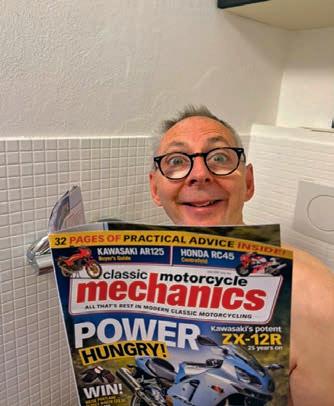
So, I was on holiday in Italy and imagine my surprise while sitting on ‘the throne’ reading the June issue of CMM to see not one, but TWO, pieces in there from me... fantastic!
My missus was very worried as to what was up with me, as I started shouting and screaming. The picture shows how pleased I was! Thank you so much for publishing my
bits and awarding me Star Letter as that’s brilliant! I really need a new pair of gloves as well!
I’ve been a little busy recently with a holiday and ripping out/rebuilding a new bathroom and, most importantly, buying (now running in) a new Tiger 800 Sport – first new bike ever! Thanks again: you can tell
be fair, this was my call. I’d asked for reader feedback on the XSR and felt that Andy and Steve’s comments were so good, they warranted more space. We’ve got the bike all year, so don’t worry, we will be giving many opinions on the bike.”
From that point on we kept in touch and I was (and remain) amazed he had time to ask about my projects.
When I was going through my cancer treatment Pip would regularly message or call, lifting my spirits and taking my mind off things. Even when he was diagnosed and going through the mill a few years later, Pip was always enquiring after my welfare!
I’ve met with very few people in my life who have ever had the generosity of spirit of Pip Higham and I’m forever indebted to him for his kindness, humanity and, most of all, his friendship.
Steve Cooper
Bertie says: “He was one of a kind, Scoop!”
More power!
Loved the last issue, superb as usual and the main test brought back good memories of my very own Kawasaki ZX-12R which was a real beast of a bike!
I’m one of those saddos who looks at the specification boxes and what did I see? Ah, the
from the expression on my face how happy I am and was just pleased it wasn’t a medical emergency!
Rick Metcalf
Bertie says: “Thanks for this Rick! A bit worried that your wife went into the loo to take that shot of you. But clearly, you’re both very close after years of marriage!”
ZX-12R only produces 17bhp! I rather think you missed out the ‘5’ at the end there.
Mike Dawson
Bertie says: “That’s my tired eyes for you! Apologies and I hope it didn’t spoil the rest of the test for you Mike!”
We want to see YOUR pride and joy in our pages, so you can share what you ride and what you restore/build with fellow readers. Email your hi-res shots to bertie.simmonds@kelsey.co.uk or mail in some photos at the address at the front of the mag. Let us know what you’ve done, how you’ve done it and send before and after shots if you can. Do get in touch – because the best of the month gets a free T-shirt!
WINNER
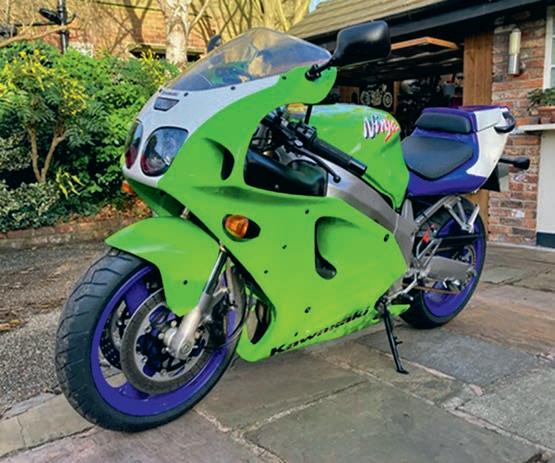
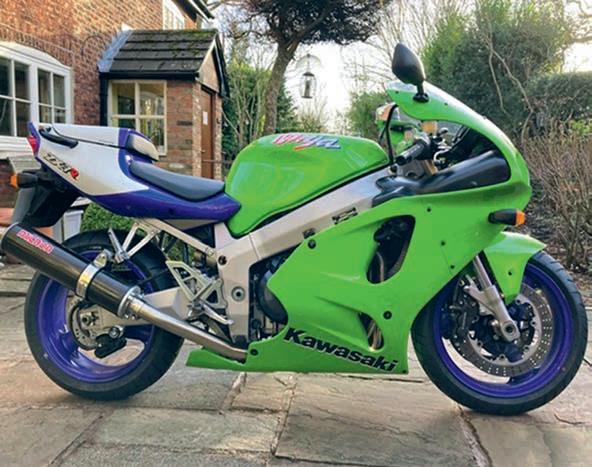
BARRY DAVY’S 1998 KAWASAKI ZX-7R
The previous owner bought this new in 1998, rode it for a few miles and parked it in his garage. In 2015 he had it recommissioned, put a few more miles on it and returned it to the garage. Sadly in 2024 he and his wife divorced, she got the house and last year he had to clear out his stuff, including the Kawasaki. I came across it last November, parked upstairs at a nearby bike workshop called Ride &
Restore. They were storing it for him. I contacted him, made an offer, we haggled and I got it for a bargain price. It had a genuine 1550 miles on the clock. It’s got a few minor scuffs and is suffering from the usual Kawasaki flaky wheel paint of that era. They will be powder-coated. It’s got new tyres and I’ve replaced the scabby original exhaust with a Black Widow stainless system but kept the period Micron can
it came with. I’ve rebuilt the Tokico six-pot calipers and had them recoated gold, and fitted HEL brake lines. It runs well although the carbs still need some work to overcome a little hesitancy at low revs.
The ZX-7R is one of my dream bikes and I’m very lucky that this one dropped into my lap so easily. It’s one of the best-looking bikes to have ever come out of Japan!
MARTIN CRAMPTON’S 1984 YAMAHA RD125LC
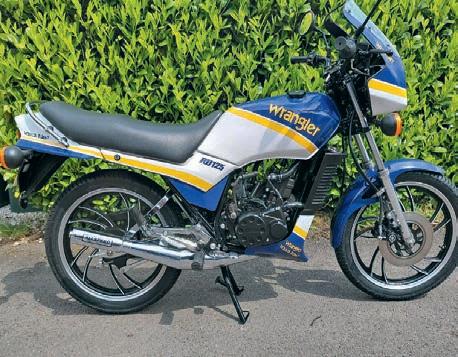
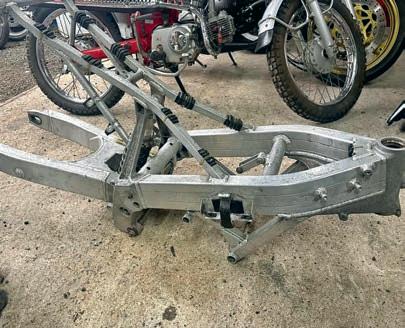
It would be nice to see my latest project in the ‘Show Us Yours’ section! This is my 1984 Mk.1 Yamaha RD125 LC. I picked it up, stripped it to the bare frame and fully rebuilt it over the last six months. I decided to chrome the swingarm and rear-sets to sparkle up the rear end. This style of machine was the first
bike I ever fell off when I was 17! I was on the pillion of my friend’s identical Wrangler LC. He popped a wheelie (unknowing to me) and I ended up sitting in the middle of the road, caught very much by surprise! I always loved the look of his bike back then, so glad I eventually have replicated it.
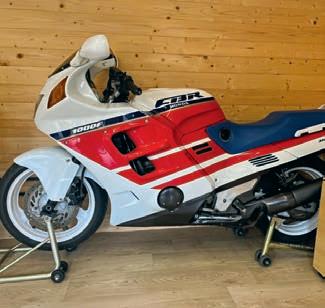
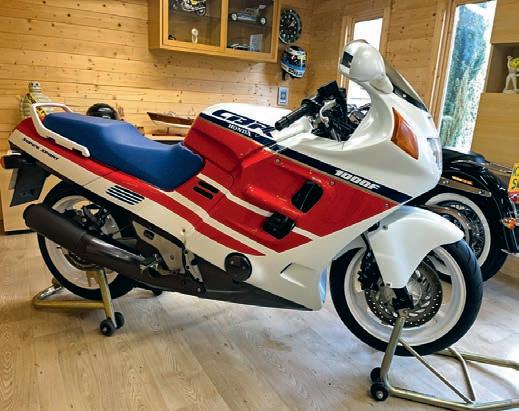
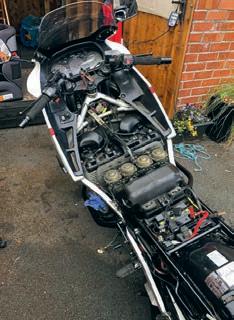
JAMES SELFRIDGE’S HONDA CBR1000F
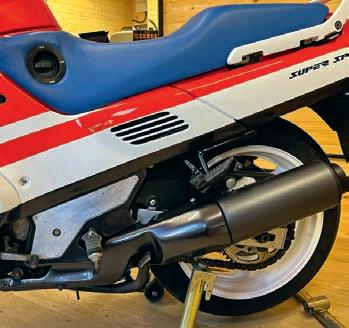
I believe the Honda CBR1000F is a very underrated and undervalued bike and I was of a mind to rescue one. I found one with just 11k on the clock but the condition left a lot to be desired. But it was local to me!
It was a runner, but to get it running well I stripped and rebuilt the carbs, serviced it and soon she started on the button and ran well. The bike hadn’t been stored well and various panels were damaged, the wheels were black (not white) and someone had painted the swingarm and side-stand red! I spent lots of time unpicking previous
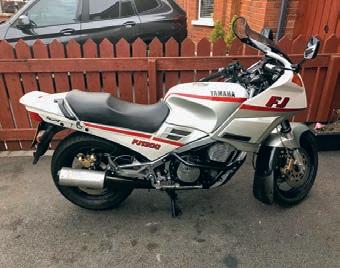
PETER BAILLIE’S 1989 YAMAHA FJ1200
Here’s a long story cut short. A chap died leaving 38 bikes, mostly MZs under tarps in his back garden. The NI MZ Riders Club stepped in to restore/sell them for the family’s benefit and I ended up with a 1989 Yam FJ1200 which hadn’t moved in years.
Thankfully, it started and ran
owner’s ‘modifications’! And it was stripped down and had the swingarm, side-stand and clutch cover blasted and powder-coated. Also, I started to collect good panels (and a new fuel tank as the original was dented) from various sources.
The panels went to Dream Machine, who do the best job; they even had an identical model at their place. While waiting for the paint, the brakes were fully rebuilt with new pistons and seals. As always, this job was undertaken by my very best friend Rick. The correct wheels were fitted, bushes and bearings
so only needed clutch, brakes and fluids tinkered with, and some ‘unsticking’ and general TLC. It passed its MoT and is now destined for a mate to return to biking, who previously had an XS1100. It’s a geat bike, comfortable, goes like a train and in not too scruffy a condition. Another one saved!
were replaced, plus many other jobs were carried out.
It was never my intention to fully restore the bike so the engine stayed in situ and the frame tidied up. The bike was restored off and on over two years and used as an ornament in my man cave/step-daughter’s tattoo studio!
Eventually, I moved the bike on (the new owner got a bargain) and this meant room for my next project: a Honda VFR750. I would say these big CBRs are good bikes, underrated and still cheap! Big thanks again to my buddy Rick.
The way we were…
Send us your nostalgic snaps of you back in the day with your steed! Send to me at bertie.simmonds@ kelsey.co.uk or via our vibrant Facebook page. C’mon, we’ll send you a T-shirt if you are our first pick!
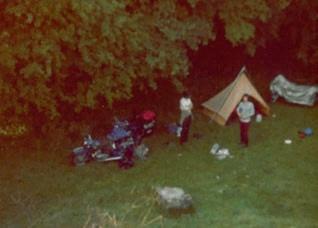
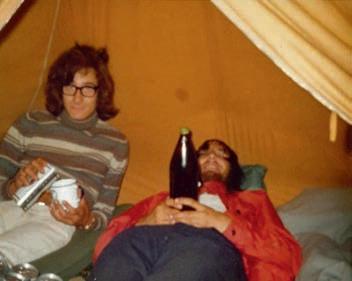
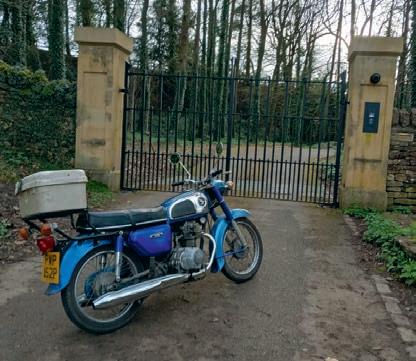
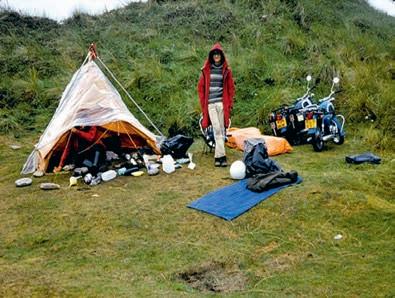
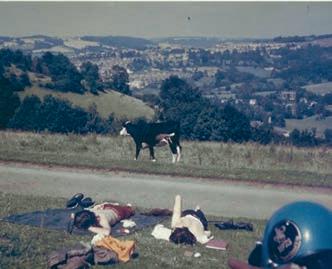
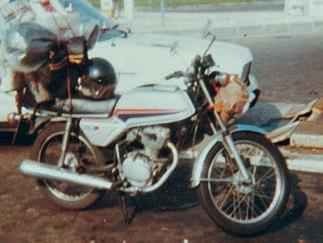
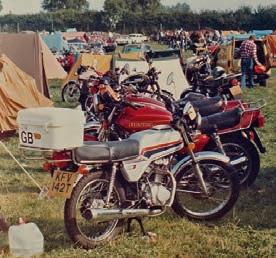
Graham Hobbs says: “Life in the 1970s was one of the best times to be an older teenager. It was liberating! My parents could no longer keep me from owning and using a motorbike. I replaced a Motobi two-stroke moped with a Honda CD175. It was not too big for a daily 12-mile commute through the London traffic, but not so small that I couldn’t go on longer trips.
Soon after passing my test, the little machine was big enough for me to see family in Devon. I could use the motorway, too. The North York Moors soon followed and then Wales beckoned, only this time I wouldn’t be alone.
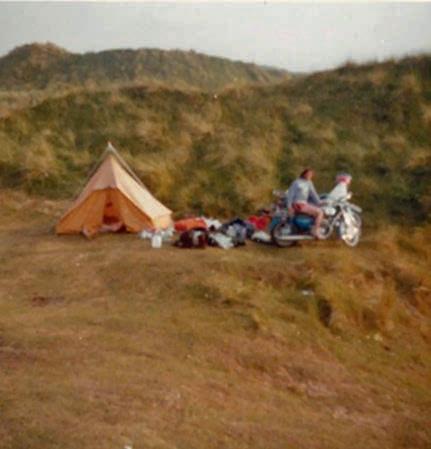
John and Stan were friends from school and the three of us decided to go camping in Wales, all on Honda CD175s; it was 1973. We borrowed a tent without a fly-sheet, camping kit, stove, etc. It’s amazing how much you can carry on a small motorbike, but I had to carry the paraffin for the stove. (John’s mum insisted he wasn’t going to, for fear of fire/explosion!) We were ready and set off at 5am. Rhossili Bay, here we come!
We had got as far as the Cotswolds
when we came upon Rodborough Fort, a folly which mimicked a castle overlooking Stroud, the highest caravan site in England. ‘A welcoming location!’ the adverts said. Not if you were motorcyclists, it wasn’t. They didn’t want us there!
We retreated to Rodborough Common, got the primus stove from John’s bike, retrieved the so-far unexploded paraffin from my machine and brewed a cuppa. Stan wondered if we could simply pitch the tent on the Common. It wouldn’t cost us a bean.
That seemed a good idea until an elderly local put a stop to it. Then he told us there was a disused quarry along the road, with a post in the entrance to stop campers getting in and using it, but we could get in with our bikes…
and ended up in Rhossili Bay, camped for a week, where the only big issue was trying to drive laden motorbikes through sand dunes: definitely not recommended!
The last day in Wales, it bucketed down and the lack of a fly-sheet left us sheltering in a sodden tent. We were commiserating with a mug of tea when the primus stove went out. Easy: just place a Swan Vesta non-safety match on a hot bit of the stove, the match lights up by itself and the hot paraffin gas reignites.
The resulting reignition reached to the roof and those old tents could burn down in seconds. Happily, our tent was so sodden that it put the flame out instead. Maybe John’s mum was right?
We would have had a good night’s sleep if a herd of curious cows hadn’t invaded our pitch at about 3am. Happily, the tent remained standing, the bikes didn’t get knocked over and there were no cows around by our proper waking-up time.
We headed east to Cirencester, skirted Gloucester, crossed the Severn
Looking back today, the bike-hating Rodborough Fort Caravan Park went bankrupt. It’s now owned by a millionaire and bikers/tents still aren’t welcome! John, Stan and I survived and are still in touch.
We even had a reunion holiday in Rhossili Bay to mark 50 years since our motorbike expedition. This time, we went by electric car and stayed at an Airbnb!”
Complete coverthatcosts youless
If you’relooking foraffordableinsurance foryourclassic bike, youcantrustBikesuretofind youacompetitive quotethatwon’t compromiseonquality.
We offerspecialistclassicbikepolicies,tailored to yourridinghistoryandpersonalneeds.
CHANGER! GAME
It’s British, it’s beautiful and it’s 20 years old. Bertie Simmonds makes the case for Triumph’s Daytona 675 for being the most important British bike ever built.
Supersport 600s of the 1990s and early 2000s were often so similar, you’d need a micrometer to measure the differences between them.
Or a dynamometer, and even then, all the (mainly) Japanese four-cylinder, 16-valve, liquidcooled across-the-frame fours would be pretty much in the same ballpark for dimensions, power, torque and performance. Of course, we had some interesting interlopers such as the stunning Ducati 748, but mainly it was all inline fours.
During the 1990s, when the Supersport 600 market was at its peak, Triumph wanted a piece of the action and they began to talk to their owners about what they felt made a proper supersport machine and almost to a man the owners said the same thing: ‘four cylinders’.
With this in mind, from the mid-1990s Triumph developed the four-cylinder TT600 – a fine-handling machine, with superb brakes but one which suffered initially from a motor which lacked the punch of the Japanese machines. Development and ongoing modifications – as well as a redesign to the aesthetics – led to the Daytona 600 and 650. Kawasaki had already ‘cheated’ by making their Supersport machines 636cc – the road-biased ones, at least. Triumph did the same, making their Daytona a 650.
It could be argued that this was a five-or-so-year rabbit hole that the Hinckley factory fell down, but it served them well enough. The development of the four-cylinder supersport machines clearly moved on their know-how in the class, but just a blob of character was needed to make the difference and in the background things were stirring… (See Ross Clifford boxout.)
Eventually, in early 2005 images of this new Triumph sports machine had been spotted, with the bike seen in the UK for the first time at the
CLASSIC RIDE
NEC show in late 2005, ahead of the launch in January 2006 at Sepang, in Malaysia.
Small, not ‘far away!’
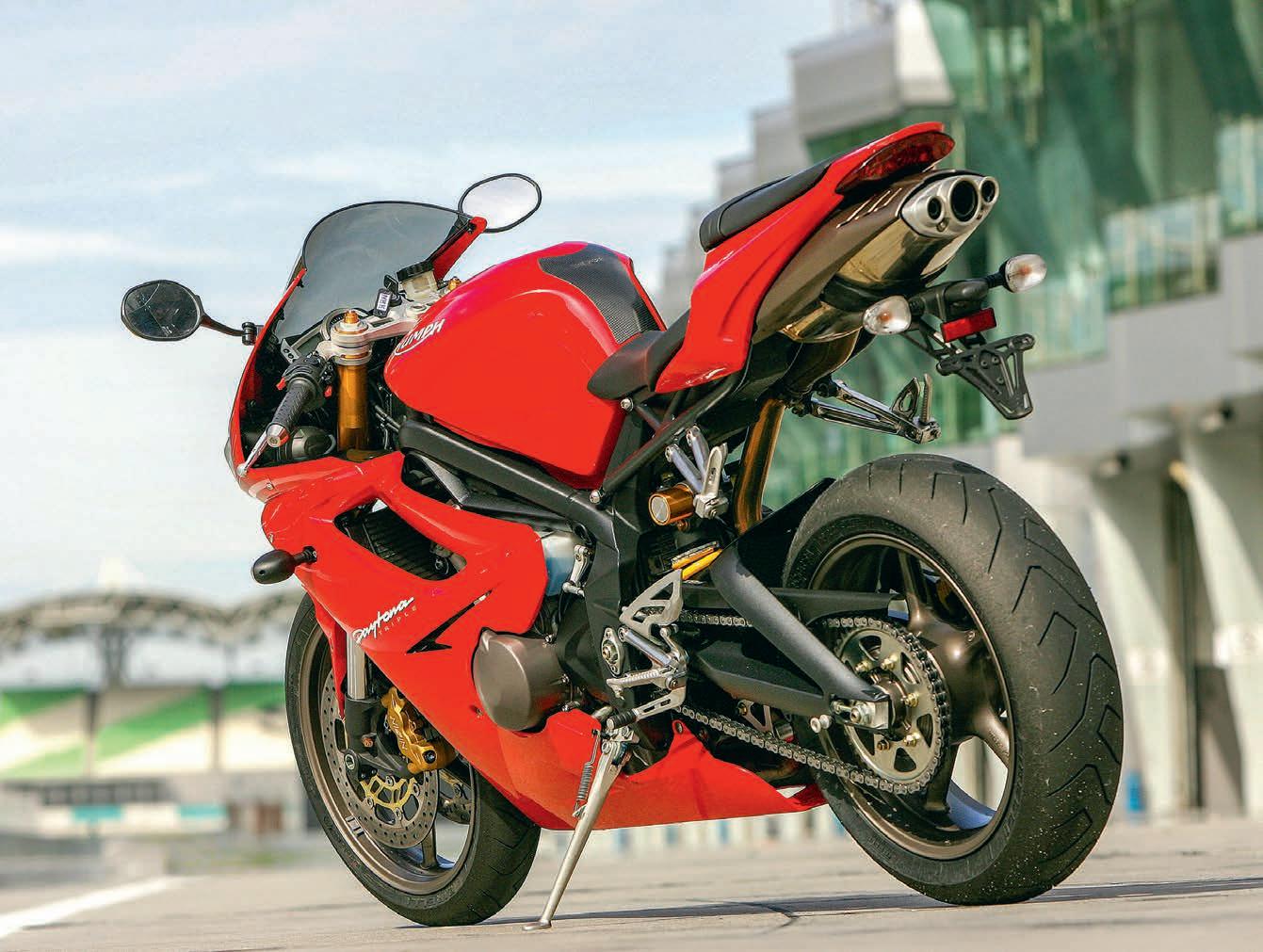
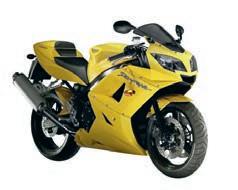
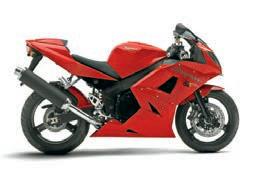
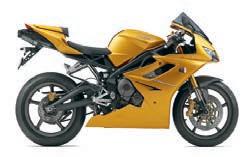
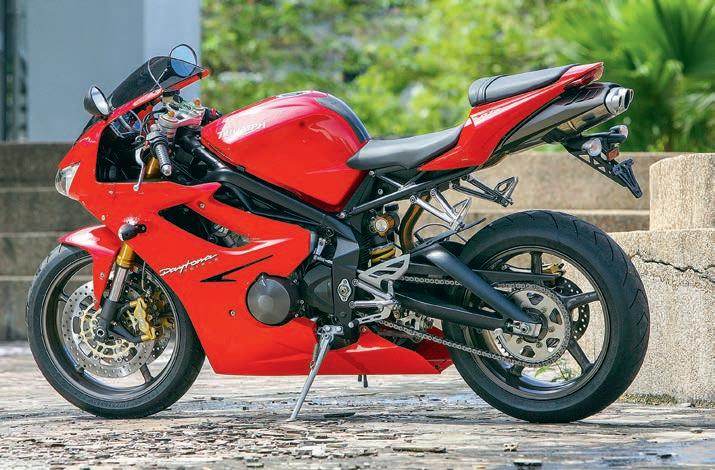
If there’s something that can be said for the generation one Daytona 675 it’s that it still looks fresh today. It’s simply stunning… and it was like nothing else at the time. Just the colours it comes in, too. Nothing shouty, nothing showy, nothing shell-suit, just very classy solid colours of ‘Tornado Red’, ‘Scorched Yellow’ and ‘Graphite’.
Being different is something that could not always be said of Triumph’s first supersport machine, the TT600, which, at launch, seemed so much like a copy of the Honda CBR600F-X, even down to its two-tone colour schemes, one of which was a yellow/black mix-up – the same as Honda’s. I even recall a group test where I got on the Triumph thinking it was the Honda…
You don’t have that problem on the 675. It is unmistakable. It’s small, it’s narrow, it’s – well – almost reminiscent of a 250cc/400cc supersport machine. It really is that small. And it’s gotten smaller – or I’ve gone up a size or two!
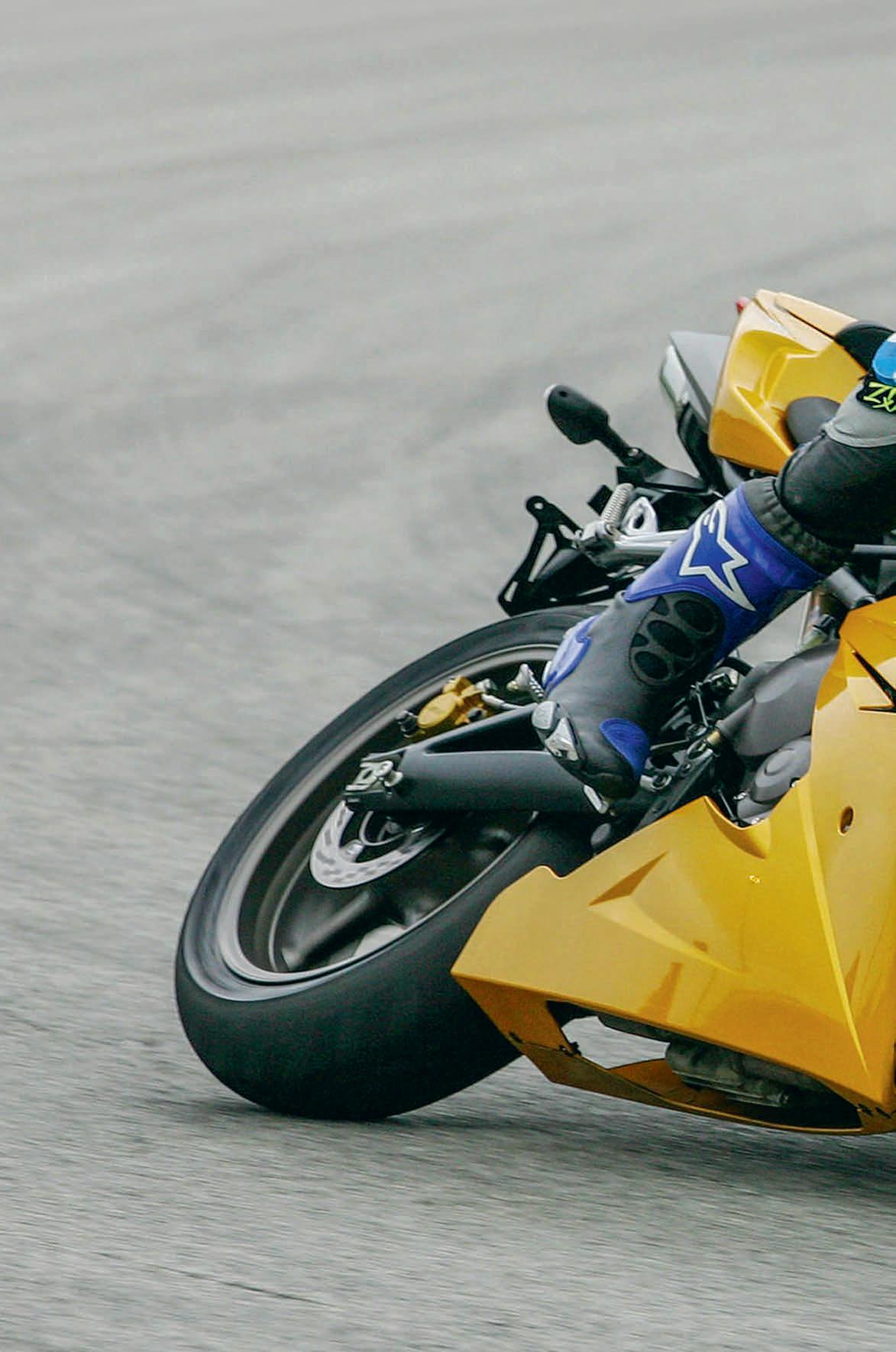
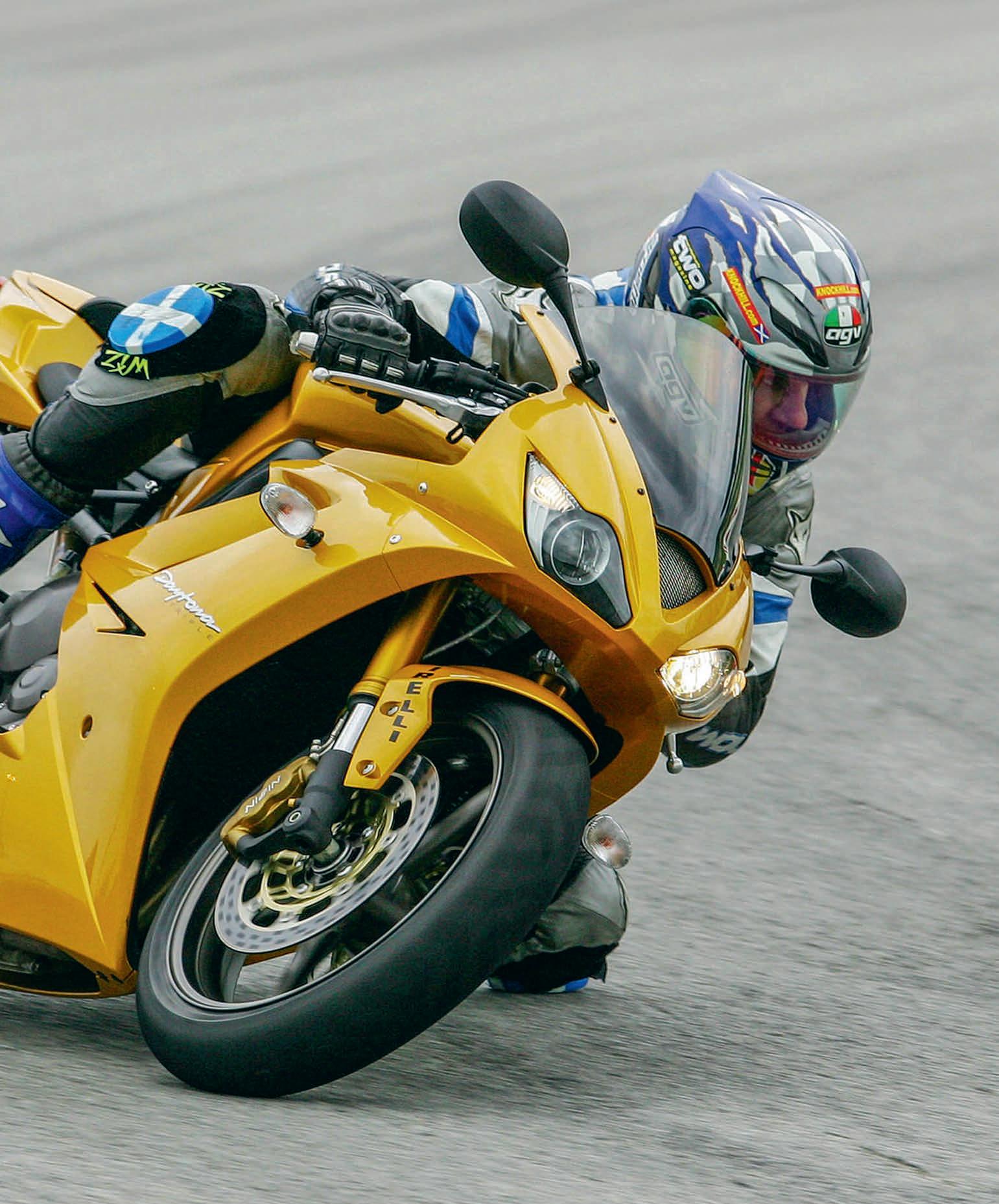
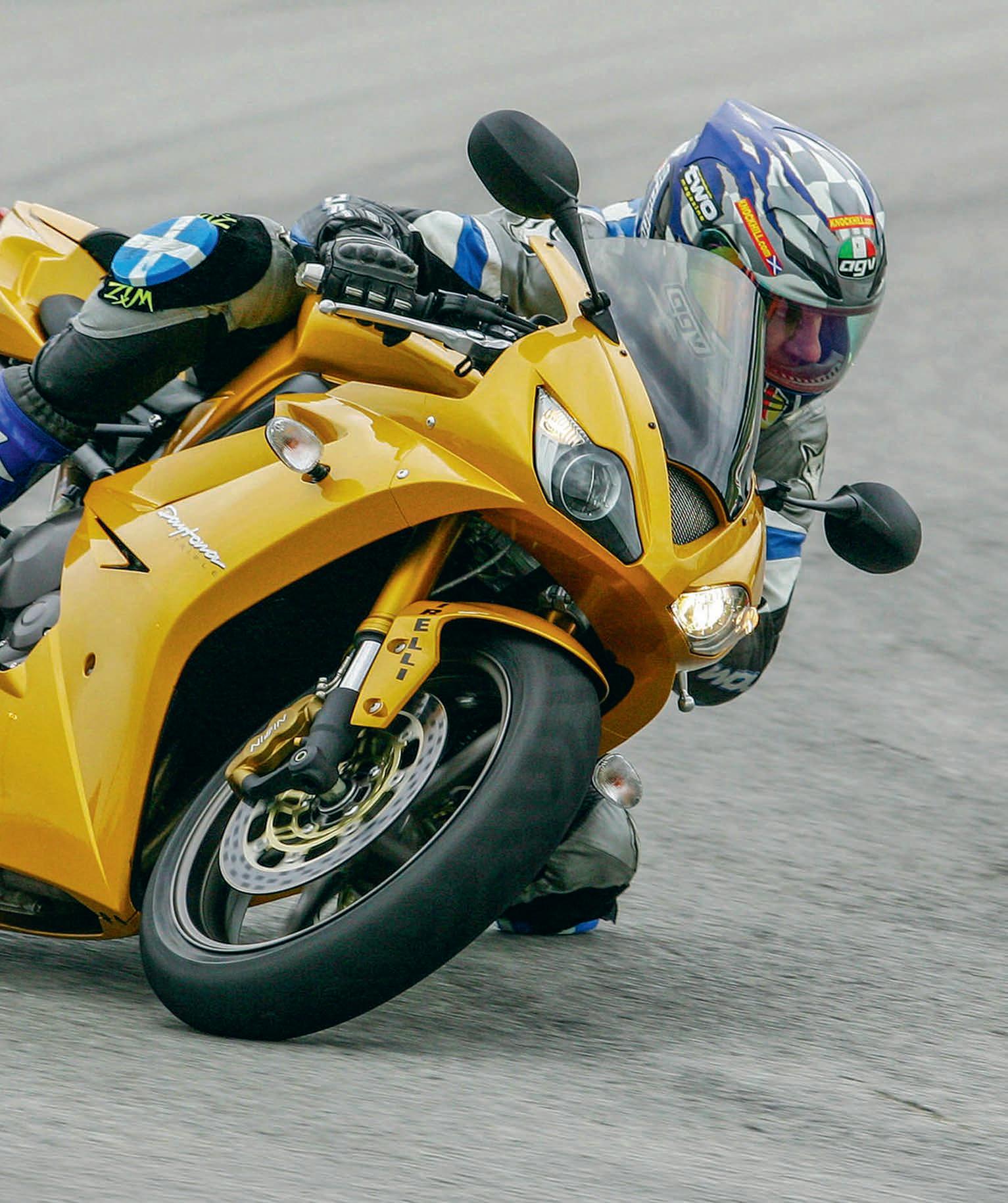
That narrowness is there from the off. Even before you throw a leg over the thing. The bike I rode for the purposes of this test was a Tornado Red example and one which had been fastidiously looked after. Action shots for this test are from the
Developer’s view: Ross Clifford
Ross Clifford was in charge of New Product Development at Triumph at the time of the 675’s birth and later moved to Micron Exhausts, Indian Motorcycles, and currently is at Royal Enfield in the US. I asked him about the development of the 675 Daytona post-launch.
“After we launched the TT600 we knew it was a good bike but perhaps it wasn’t ‘different’ like a Triumph should be. At the time and later we had also been working on a hyper-
bike – a four-cylinder large-capacity machine, in the Blackbird and Hayabusa class; this was another bike that we’d followed the Japanese on, but we’d also been doing some things very differently, such as the Rocket III cruiser – with a threecylinder motor.
Conversations were starting to be had at a high level. Feedback showed that we could build a great handling supersport bike and that we clearly could develop a characterful three-cylinder motor. Maybe bring the two together?
Towards the end of 2001 an engine development team started looking at a middleweight triple, to see what sort of performance we could expect from it. The results were promising so in 2002 we began a concept phase – all still led by engineering.
From a chassis standpoint we had good bikes in the TT and Daytona 600, so we used a test mule of one and changed things about to get optimal chassis weight and geometry. Our test riders were soon lapping quicker on the mule than on a standard 600.
Engine-wise, we spent a lot of time
– maybe up to six months – really fine-tuning the 675’s motor. That meant working on the fuel-injection (previously we had Sagem systems developed for us, but this time we took the hardware and did it ourselves). Also, we looked at cam timing, mapping and looking at inlet tracts. Endurance work on the motor would replicate 60,000 miles around a track at full load and flat-out.
For styling, initially we ooked at a naked middleweight (later we’d produce the Street Triple) but as sports bikes were still a big thing in the early 2000s, we went for a fully-faired machine with smoother, flowing lines compared to the Daytona 600 and 650, with a dash of T595 in it. The final styling – which you see on the bike – was the result of much work including with customer focus groups.
By the time the bike was launched, we were very excited and sure it would be a success, thanks to feedback from our test riders David Lopez Cordoba and Dave Rawlins. I had ridden the bike the first time at the end of 2004 and even in the rain it felt special.’’
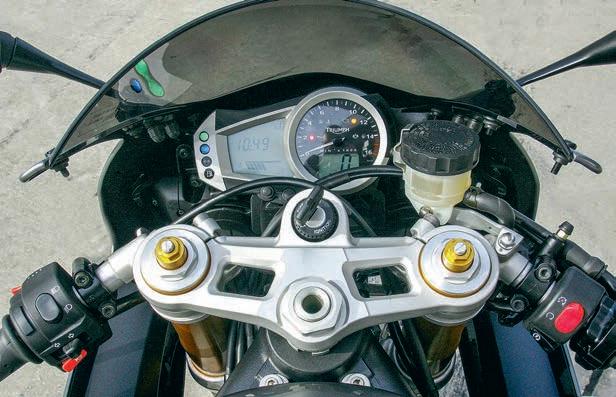
Cool clocks and narrow bars!
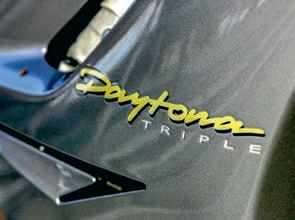
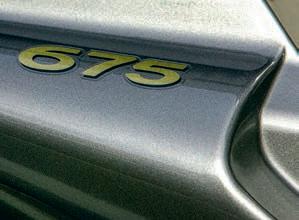
Quality colours... ...and subtle decals.
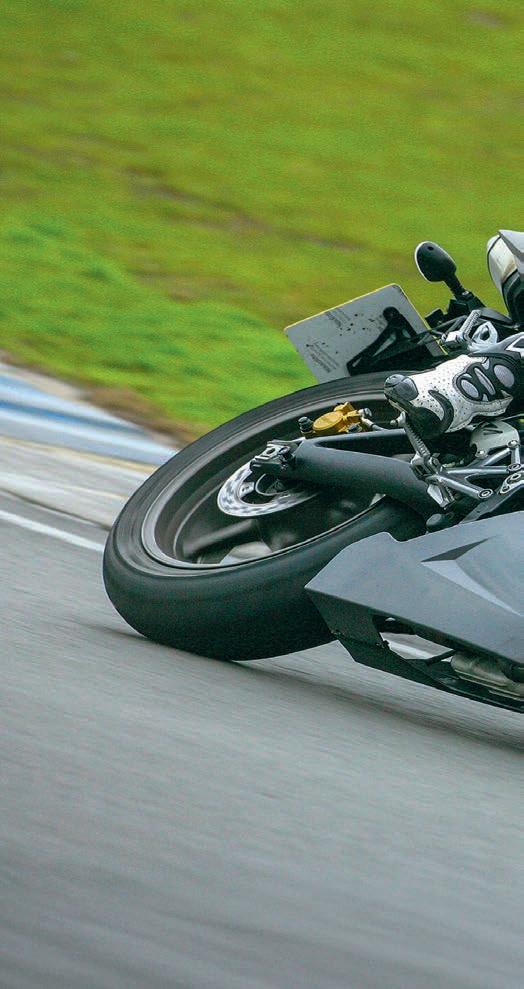
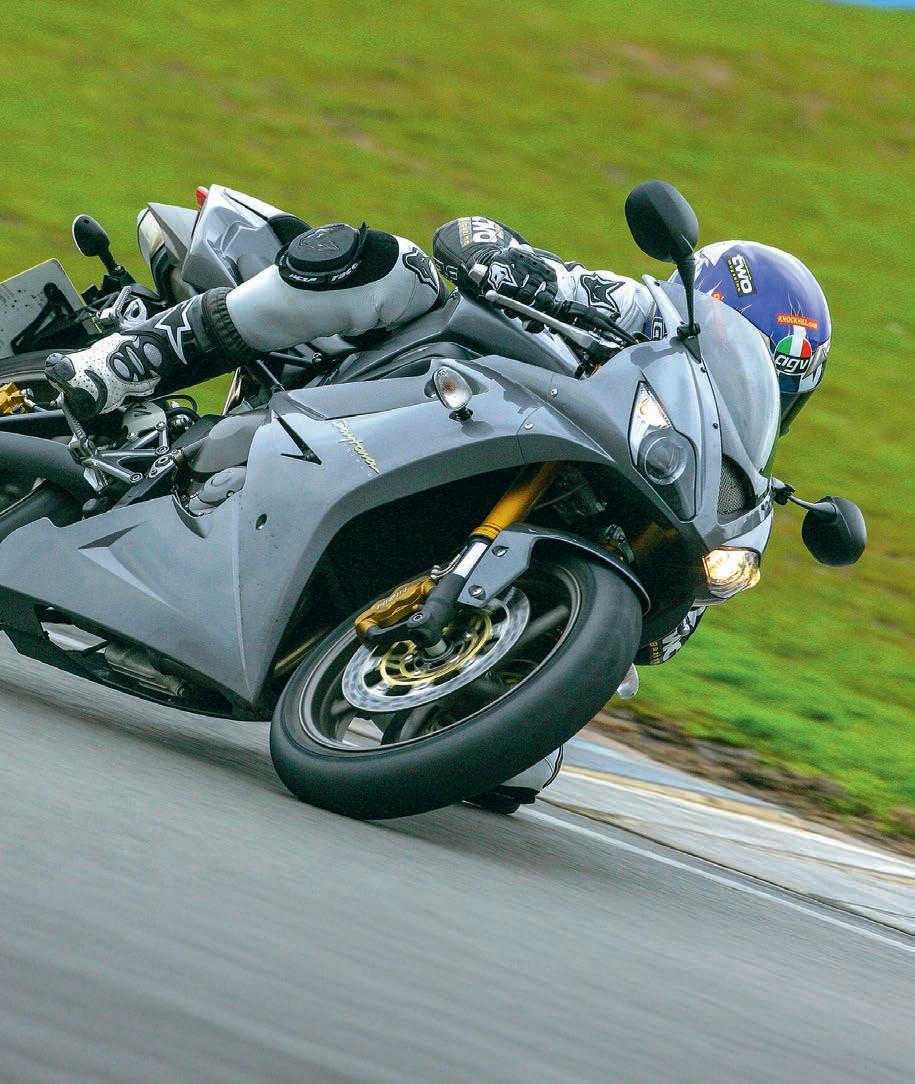
Triumph snappers at the launch. Believe me when I say that you’d rather see Niall Mackenzie ride this from 2006 than middle-aged (and counting) me in 2026…
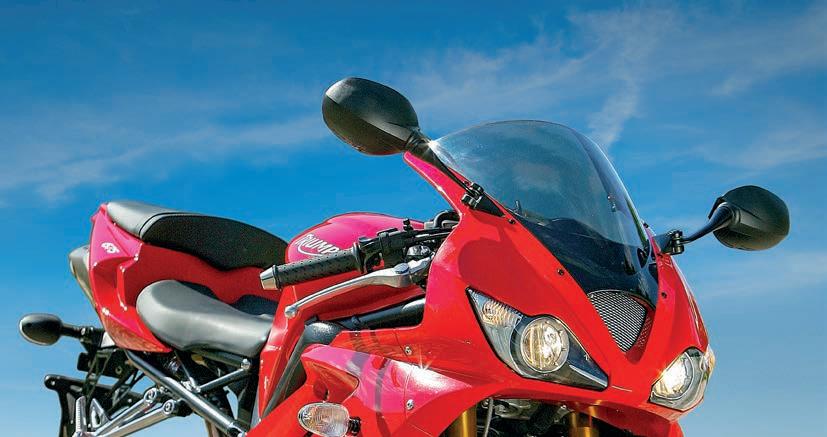
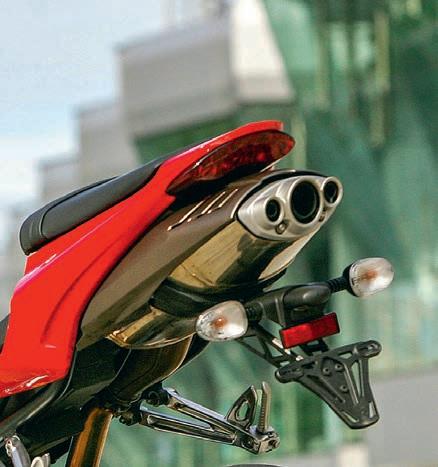
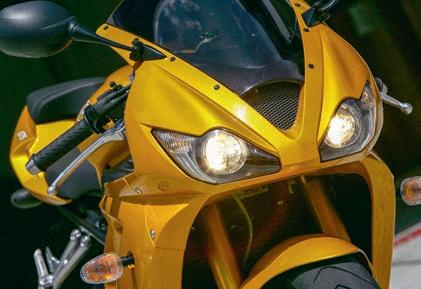
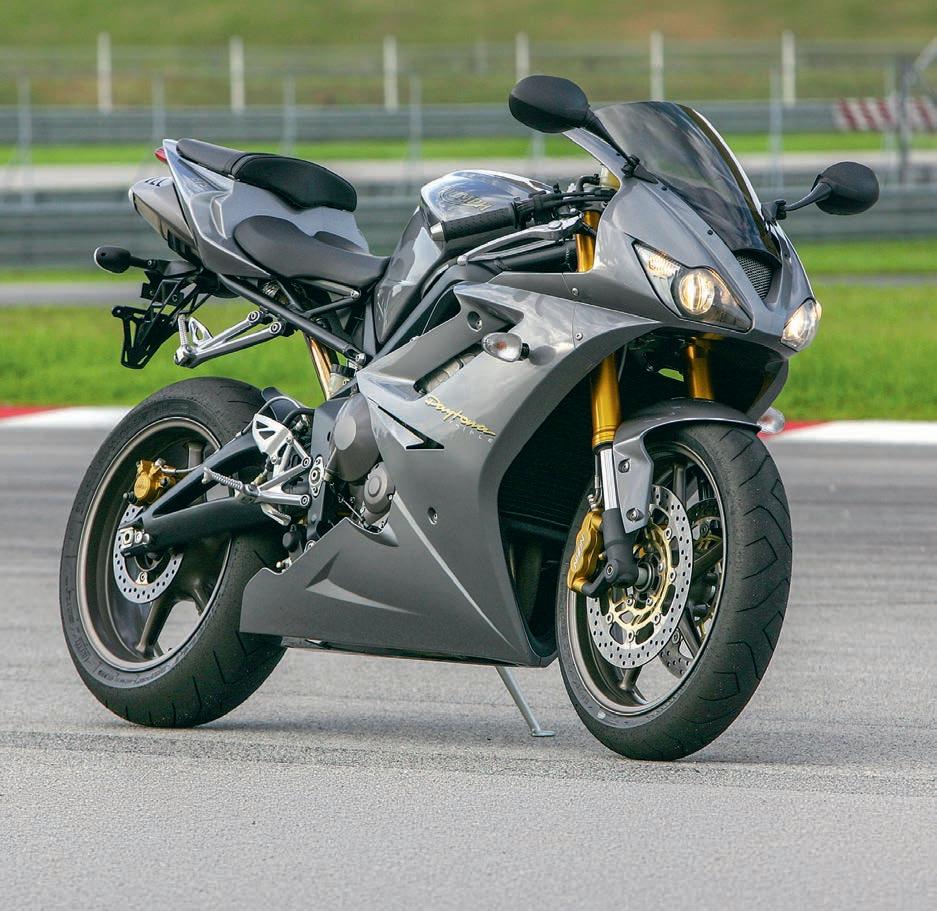
I’m drinking in the looks of the 675. I disagree with some of my colleagues who think it’s aged: I think it’s a timeless beauty. From the front that small front cowling has that wonderful pair of scowling headlights with the aggressive central air-intake beneath the smoked screen. It’s lithe all the way from the sculptured tank to the waspwaisted tail-end complete with under-seat exhaust. There’s nowt on it that doesn’t need to be there. And it’s a doozy in red.
Wow… this feels small when I climb aboard. The
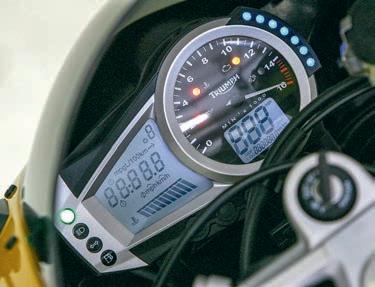
BELOW LEFT: Clocks offer plenty of functionality for 2006.
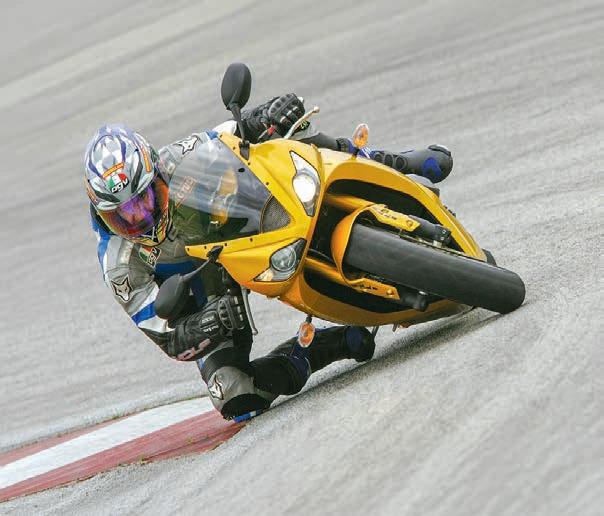
BELOW MIDDLE: Yellow was a popular colour.
BELOW RIGHT:
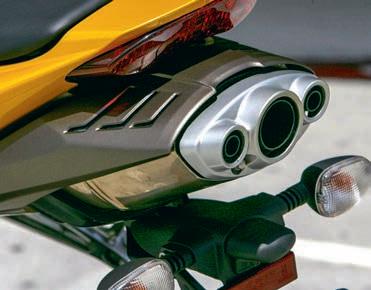
Under-seat pipe could get rider hot!
825/830mm seat height is there or thereabouts (2006 R6: 850mm) but it’s the narrowness of the thing. You do feel the difference and that smallscale feeling is exacerbated when you grab the bars – which don’t seem that far apart.
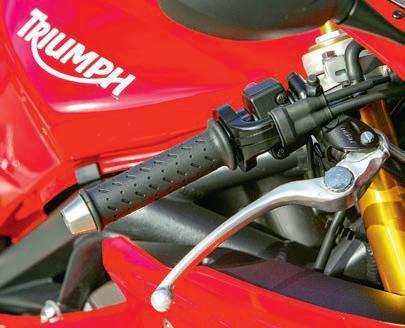
Looking at the clocks, they were very modern for the time and offered a good deal of functionality. The left-hand LCD screen had the traditional neutral, high-beam, indicator and low-fuel light on the far left, while the main screen had a digital speedometer, trip computer and gear position indicator. You’ve even got a clock. To the right is a traditional tachometer with a redline set at around 14,000rpm, a few thousand lower than what you’d see on the clocks of an inline-four supersport
CLASSIC RIDE
TRIUMPH’S SUPERSPORT TIMELINE
2000-2002 TRIUMPH TT600
Comments: Aiming to take on Japan’s best middleweights, the inline-four 600 almost did it. Handled great, superb brakes, but the motor seemed to be under-developed. A number of sticking plaster updates to the fuel-injection system (two major, from the factory) helped, but it was still underpowered compared to the opposition. It had a claimed 110bhp and weighed 188 kilos wet, 170 kilos dry.
breathed-on motor with further updates to fuel-injection system. New aesthetics featuring a more angular look to the bodywork. Still around 110bhp claimed and 165 kilos dry weight.
2005 TRIUMPH DAYTONA 650
Comments: Now with a 646cc motor, updated fuel-injection and a claimed 114bhp. Was a stop-gap until the new triple arrived.
600… The changeable blue shift-lights are around the outside of the tacho…
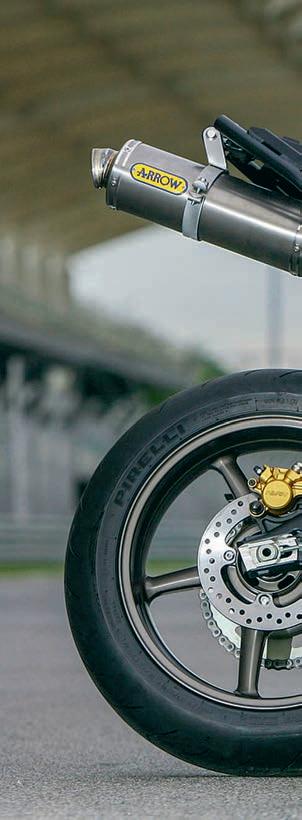
Pressing the start button (clutch in) and you realise this isn’t a four-cylinder. There’s that beautiful burble that you get from the triple and there’s plenty of noise as standard – although back in the day you could plump for an Arrow end-can as part of a large accessories list.
Let’s talk about the motor. There wasn’t anything really groundbreaking inside the cases. The weight of the motor was five kilos down on the 650, it was 442mm wide (not 489 like the 650) and it was 551mm tall (not 565mm.) Helping the motor keep ‘trim’, there’s a stacked close-ratio gearbox and the oil and water pump are inside the engine body itself, like the R1 of the time. The motor runs a balancer shaft and each of the three cylinders has its own fuel map, with different settings for each gear thanks to the effect of that ram-air scoop.
Feel the difference…
You could be sat on a big triple from the sound, so let’s snick into first and see if it delivers. Remember that at the time the 675 came out, you didn’t have the three-cylinder bikes we have on the roads today like, well, other Triumphs and Yamaha’s CP-3 powered machines. Unless you went Benelli or Triumph, you didn’t get the real triple experience.
In this middleweight guise, a triple was a fairly fresh experience back then and even in the first few gears you can feel the difference. In comparison to a four-cylinder 600 sports bike, the flexibility the triple gives is almost like night and day. Forget tracks… out on the road the torque really gives you an edge.
You can exploit that mid-range urge from as low as 4-5000 revs. And while you’d be chasing 10,000rpm-plus for real urge on a 600, you’ve got a thicker spread of oomph on the 675, and while the Triumph does have more torque, I also think the gear ratios are spot on. It feels like this isn’t geared for ultimate top-end, but rather all-round usability. That said, the sound and sensations on this triple mean you do want to dip into five figures on the open road from time to time even if you can happily be going plenty fast enough at a lowly 8000rpm. Power? Well, back in the day claimed was around 123bhp at the crank, which probably saw 115bhp on the road at the rear 180 section Pirelli. Redline was around 14,000rpm…
2006-2008 TRIUMPH DAYTONA 675
Comments: 675cc triple, completely new frame, suspension and chassis parts. Updated in 2009 with 50 changes/improvements and more power, less weight.
The upside of the torque is that you’re not dancing on the gear-lever as much as you would on a 600 either. Thankfully, this is (or was) one of the slickest Triumph gearboxes of the time. Today’s 20-year-old example doesn’t feel quite that good and you need to be positive with the selection; it’s not quite as light as I remember. On the downchanges do remember that you don’t have a slipper-clutch, but I’m being careful anyway as it’s a friend of a friend’s bike!
Handling-wise, the thing is still spot on. It’s not a long bike at 1395mm wheelbase but it’s there or thereabouts with the opposition. Steering geometry of 23.9 degrees and just over 89mm of trail are also similar to others in the class. Remember, the 675 also has an adjustable swingarm pivot; that’s more an RR/SP race bike thing. For me, the bike
Road or track, the Daytona really shines. Use that torque!
Updated chassis, heavily
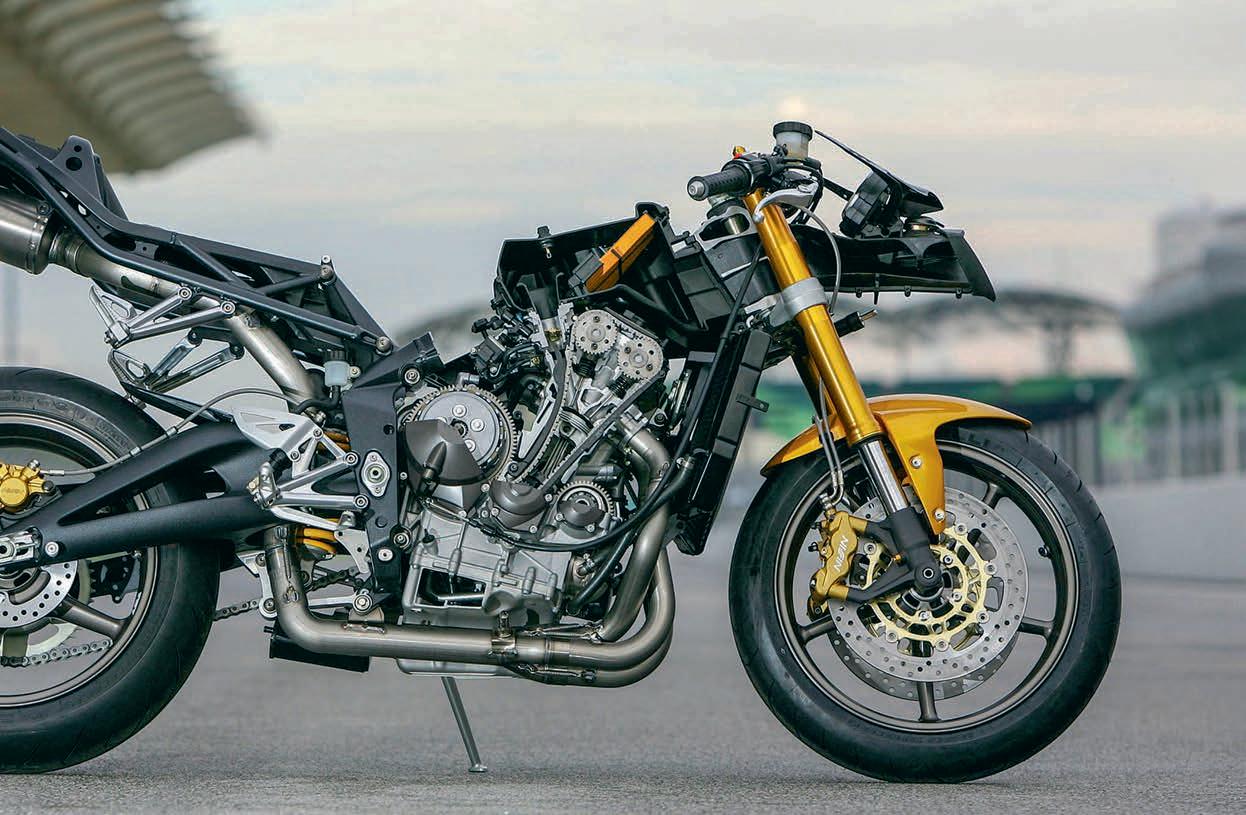
Saucy strip-down bike on display at the Malaysian launch shows how tightly packaged the 675 was...
A formerBSBthree-time champ at the launch!
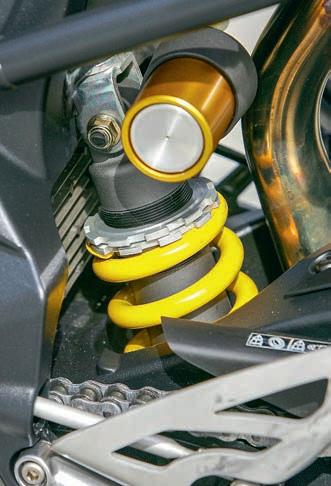
gives a great trade-off between being able to turn quickly enough but without feeling unstable – even on big throttle openings. The suspension on this example has been refurbished and it’s superb. The 41mm upside-down forks offer full adjustability (I like and require lots of pre-load) and the monoshock is spot on, too.
As are the brakes. I remember the radialcalipered 308mm discs being a great combination – and these are just as good as I recall. Simply brilliant on a bike which is around 180 kilos dripping wet and they give plenty of feel.
I know you’re bored of hearing this, but if only I was as lithe and pliable as I used to be. The ergonomics aren’t extreme at all – it’s rather that I do need to stretch more before I ride the more sporting of bikes. Within an hour I did need to get off and move about a bit. Nowt to do with the 675. My couple of hours on the Daytona 675 along with reading notes from old road tests confirm what I first thought 20 years ago. That Triumph had
CLASSIC RIDE
built a bike which didn’t follow the rules, and which ploughed its own furrow. It offered a big-bike performance ‘feel’ in a light, lithe and narrow little chassis. All allied to amazing looks and that jingoistic ‘feel-good’ factor of being British…
Owning one – what goes wrong?
Let’s cut to the financial chase. The first 675 was around £7300 on the road, which compared well with the Japanese 600s of the time. Honda’s CBR600RR was £7239, Kawasaki’s ZX-6R was around £7128, Yamaha’s YZF-R6 was £7437 and Suzuki’s GSX-R600 was the bargain of the class at £6887. Ducati’s base-level 749 was £8733.
Today the first generation of Daytona 675 (2006-2008) commands stronger prices than the previous four-cylinder models: naturally, as it’s a better bike. Trackday machines start from anything as little as £2500 to around £3500, and halfdecent road bikes start from just under £4000. People are clearly wising up: low-milers are sat at around £4500-£5500…
Issues seen on the first generation Daytonas include electrical – especially regulator/rectifiers – and there was a recall by 2008. Original owners found some of their bikes used oil, others would upgrade to a different oil pump gear as the stock oil pump drive gear would spin too quickly and cause oil frothing. Also, later bikes had shorter oil dipsticks which meant you’d fill to a higher level. Many of those who raced or trackdayed their 675s would urge not to over-rev more than 12,500rpm. Other than that, some quality/finish issues were noted on paint and metal fittings.
Niall Mackenzie had a 675 for the best part of a year in 2006 and he said the following in his reports for Two Wheels Only/Visordown when he was about to set out on his ‘Day of Champions’ ride at the 2006 British Grand Prix. ‘I got a guilty lump in my throat when I walked past the non-MoT’d LC (she gets jealous) and chose to jump on the Triumph instead. That left me thinking: with the 675 already being touted as the main contender for bike of 2006, could it possibly one day have the iconic status of the LC? I’ll let you know in 2030.’
We are a decade away from that, but we pushed Niall for an answer today and he said: “I said at the time that the TT600 and the Daytona 600/650 were nearly bikes; at best they were two years behind the opposition, at worst four. This wasn’t the case with the 675. So, 20 years on, is the 675 as
Back in the early 2000s and Triumph wasn’t that interested in racing.
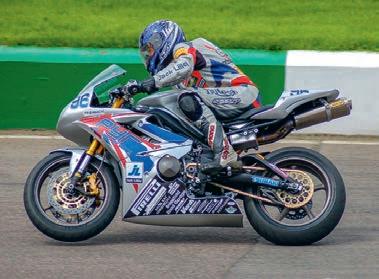
Sure, they’d made a return to the British national Supersport series with the Daytona 600 four-cylinder and even won a race despite not being that competitive. And, yes, they’d even won a TT with Bruce Anstey in 2003, but when the 675 triple was launched, it came without a factory-backed team. Instead, in 2006 it was left to part-time Triumph test rider and full-time racer, Mallory Park-based Aussie Paul Young (below) to fly the flag before a Triumph-backed team MAP Embassy came into the British Supersport class. With another Aussie rider, Glen Richards, they would take the 2008 and 2012 British Supersport titles. More British titles would come for developed versions of the bike in 2014 and 2015 with Billy McConnell (another Aussie) and Luke Stapleford.
On the world supersport scene, Triumphs first competed in 2008 before taking an eighth overall in the series with Garry McCoy in 2009. Since then, they placed fourth overall in 2010 with Chaz Davies. Meanwhile, TTs have been won by later Daytona-based models in 2014 (David Johnson) and 2019 (Peter Hickman).
This bike is stunning in any colour. Especially red...
big a classic now as the RD350LC was? I did thousands of miles on the 675. It was a lovely little bike, but I can’t say I’m longing to have another. Maybe because there are more triples around now. I’d go for a Street Triple which is more fun…”
Of course, the Daytona 675 is no Elsie and the Street Triple reminds me muchly of my old Powervalve, but I think the Daytona is a classic and, importantly, a seminal British motorcycle.
While we won’t say it was a game-changer from a technical standpoint, instead Triumph took what was, supposedly, the blueprints for a successful supersport 600 class machine – tore them up and did their own thing. Very successfully, too…
As Niall mentions, the general layout spawned the excellent Street Triple naked middleweight of a year later (2007) and then developed the machine on and on into the 765cc Street Triple, which would also lend itself to a very special project.
For the 2019 season, it was announced that Triumph’s race-tuned 765cc triples, based on the Street Triple RS motor, would replace the Honda CBR600RR-based engines. They will until 2029.
When measured this way, I would argue that the original 2006 Triumph Daytona 675 has become the most influential British motorcycle ever made. It’s taken on the Japanese and beaten them – both in the showrooms and on the racetracks. It’s formed the basis for a grand prix class of racing, too.
So, while I don’t doubt that a certain Mr. Mackenzie is correct that the 675 is no LC, it sure as hell can consider itself a true classic and a groundbreaking bike on its own many merits. cmm
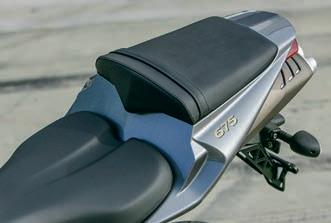
BELOW LEFT TOP: Don’t bother with a pillion! Spoils the handling.
BELOW LEFT BOTTOM: Rear shock is fully adjustable. As is swingarm pivot.
BELOW MAIN: Even gorgeous in grey! Well, ‘graphite’.
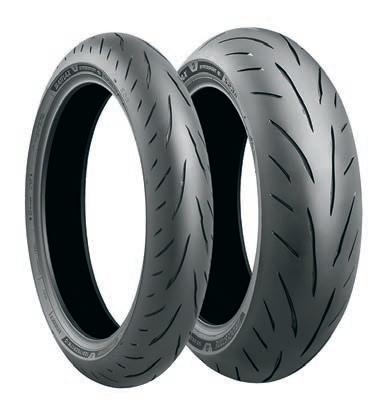
Bridgestone Hypersport S23s
To suit the Triumph Daytona 675’s road and track capabilities, Bridgestone’s BATTLAX Hypersport S23s are perfect for the Daytona’s 120/70-17 and 180/55-17 fitment. For more go to: www.bridgestone.co.uk
OUT OF AFRICA!
Or more accurately – Spain! Steve Cooper rides a curiosity called a Montesa Kenya.
IWORDS: STEVE COOPER PICS: GARY CHAPMAN
like unusual bikes – the oddball stuff does it for me – and also I have something of a thing for the smaller capacities.
And on top of that little lot, I’m irrationally fascinated by the Spanish road bikes that we so rarely saw in this country, which may have swayed my judgement here somewhat. Spain’s various off-road stuff sold globally through the 1960s and 1970s, bringing much-needed foreign currencies into General Franco’s protectionist Spain. This, in turn, supported the likes of Ossa, Bultaco, Montesa and the oft-derided Sanglas.
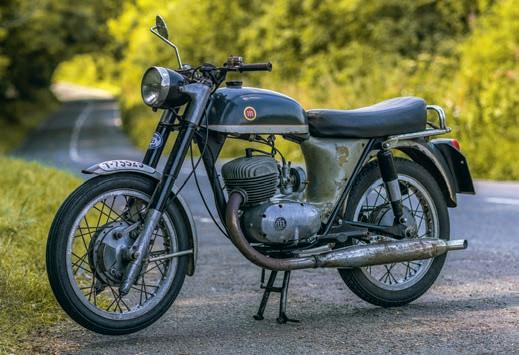
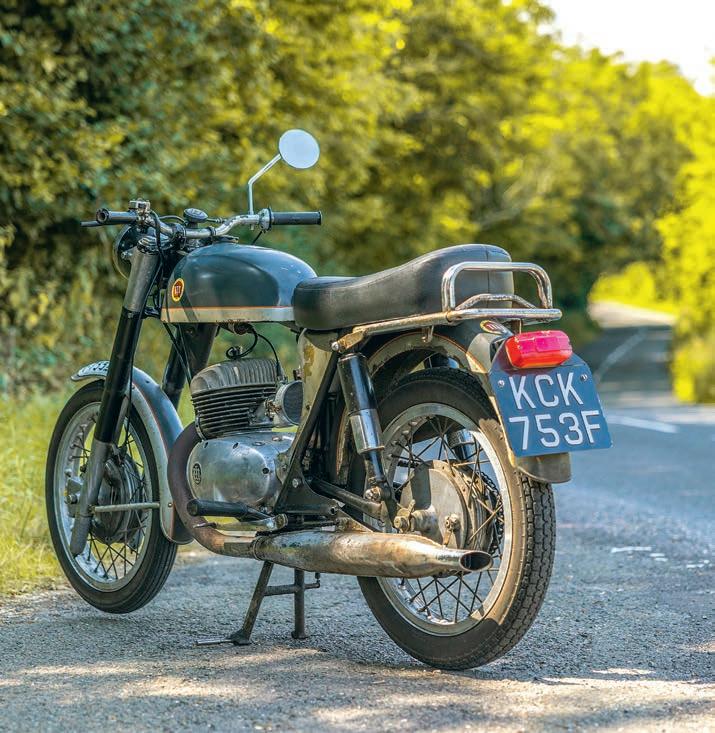
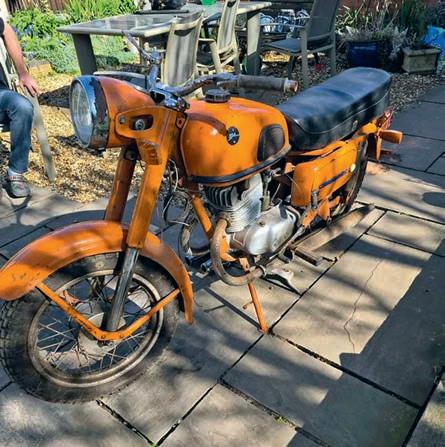
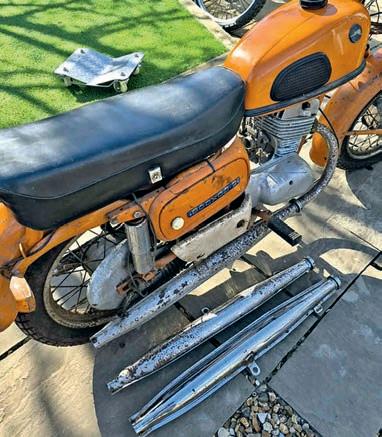
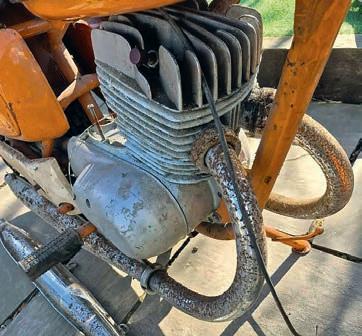
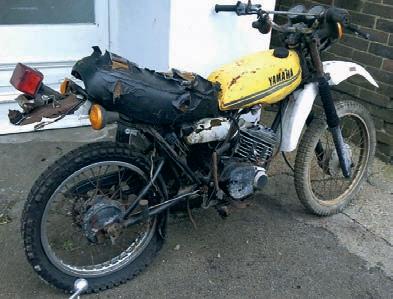
Yes, the bike in camera is ‘cosmetically disadvantaged’, I agree there’s some extreme patina to hand, and no, the duct tape on the side-panelcum-frame infill is not standard fitment but… The 175 single here is what had been on offer in Spain for some time when we were still just getting to grips with the early Japanese stuff, battling belligerent Bantams or vacillating the vagaries of Villiers-powered velocipedes.
While famous names were climbing up wet boulders or firing out of berms in Europe and America, Tomas´, Ricardo and Enrique were navigating their country’s byways on the road-going cousins of Sherpas, Scorpions, Phantoms and the like. Few Brits would recognise a Bultaco Metralla, Montesa Impala or Ossa Copa if it ran over their foot but when someone dangles a genuine Montesa road bike in front of you, who am I to say no?
Therefore, I believe it makes for a viable and directly relevant comparison as to what was available to Iberian enthusiasts – despite latterly getting an ear bashing from our Bertie. In fact, when we met up post photoshoot he gave me that look you only ever see at the pantomime – the one when Jack shows his mother the handful of beans he got in exchange for the cow!
Meanwhile, back at the plot we’re in a quiet Hampshire lane, discussing the finer points of Martin Kemp’s Montesa Kenya. Sold outside of Spain as an Impala, the Kenya moniker
Not the prettiest example...
Proudly made in Spain!
CLASSIC RIDE
apparently relates to the firm’s success with similar 175s ridden north to south across the African continent from Cape Town to Tunis in 1962. Much of the basic layout and components were shared with the Cota trials and Cappra scrambles machines, thereby maximising parts usage and minimising production costs.
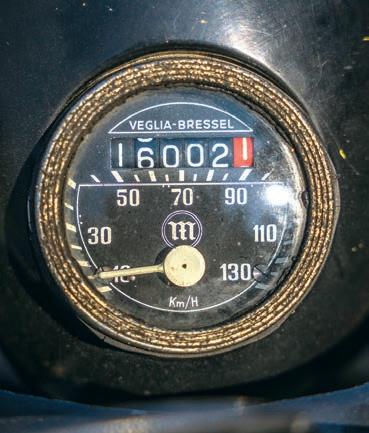
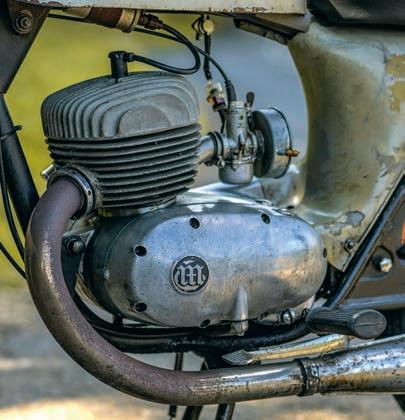
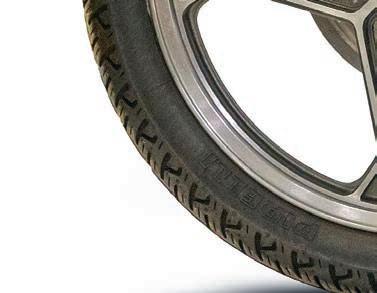
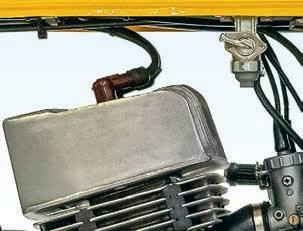
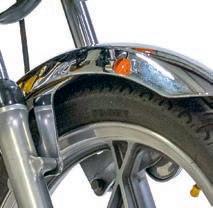
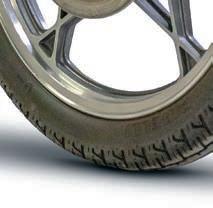
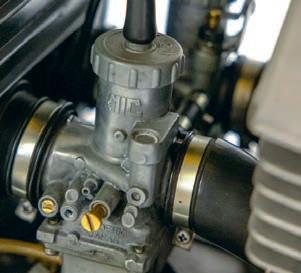
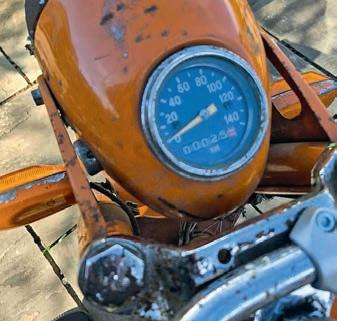
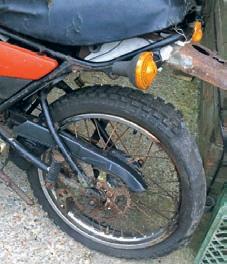
What I love about this little chap is the originality and authenticity that, to me at least, far outweighs its careworn appearance. These bikes were built for everyday use as evidenced by the pull-out, telescopic rear rack, and there’re quality components wherever you look. Those flanged alloy rims carry the prestigious Akront ellipse; the carb made by IRZ in Spain looks to be a close copy of an Amal or Villiers unit; the speedo is made by Veglia-Bressel; both the side-panel/frame infill and chain-guard are moulded fibre glass; and the control cables come with captive springs to ensure
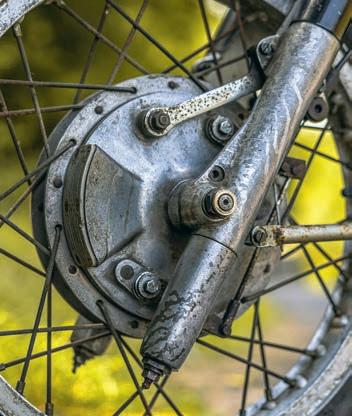
BELOW CENTRE:
Brakes work well enough.
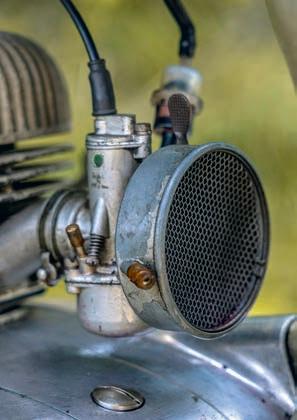
BELOW RIGHT:
Beautiful little carb!
the adjusters stay where they’re set.
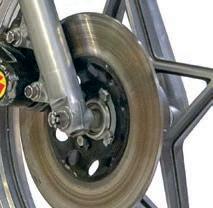
Check out that front brake with its twin leading shoe actuation; the air scoop with its grilled filter (complete with Montesa M cast in it) and the rear outlet; this is all a world away from some cheap and cheerful ride-to-work hack. There’s an air of quiet sophistication and subtle quality about the Montesa that shows the manufacturer cared about the end product. Compare this to the commuters offered by BSA or AMC and ask why their offerings were so patently cheese pared.
Style-wise, the 175 Montesa is a little odd to say the least and, arguably, not even of its time with something of a late 1950s vibe going on. The aforementioned infill panel looks like a watereddown version of Triumph’s infamous bathtub enclosure, the headlamp and its mounts are definitely old school, and the silencer’s turned-out tail-pipe is remarkably Germanic. And just what is
The Owner’s View by Martin Kemp
I’ve long admired Montesa’s stylish Impala road bikes, but they were a rare sight in this country as they were expensive when compared to a British 200 or 250.
There was only one dealer/ importer and there was plenty of competition from British and the emerging Japanese bikes of the era. Consequently, very few were imported, which is a shame as they are a very capable bike. The 250 Impala Sport had a top speed of 96mph – pretty impressive for a 250 single in 1966/67.
The Kenya 175 was a model built for the American market though they were sold in Spain, too. I bought this
example in 2018. It had done 13,000km and completely original. It required new tyres, an oil change and a thorough service. It has been totally reliable and I have added another 6000km over recent years, including doing three 500-mile rallies on it – each one over three days. It is an easy starter; the brakes are fantastic (2LS front); the handling is very good; it goes well; and is great fun to ride.
Downsides are the 6volt direct lighting, with a 25W headlight, so it is unrideable at night. There is an electronic ignition kit with 12volt lights available, but this is standard. It is premix so you have to carry
two-stroke oil on longer journeys. Spares are plentiful as Montesa reintroduced the Impala in the early 1980s as a cheap commuter bike. If you visit Barcelona today you will still see Impalas being ridden, hence there has been a constant demand for spares, and they are reasonably priced.
I like my Spanish bikes – I also own Ossas and Bultacos – and I like bikes that are different. I’d recommend a Montesa road bike to anyone.
Quaint clocks!
Considering what it looks like, it’s a good ride!
going with those front forks please? Even owner Martin doesn’t know why they are built the way they are but says the layout was common on many Montesa road machines.
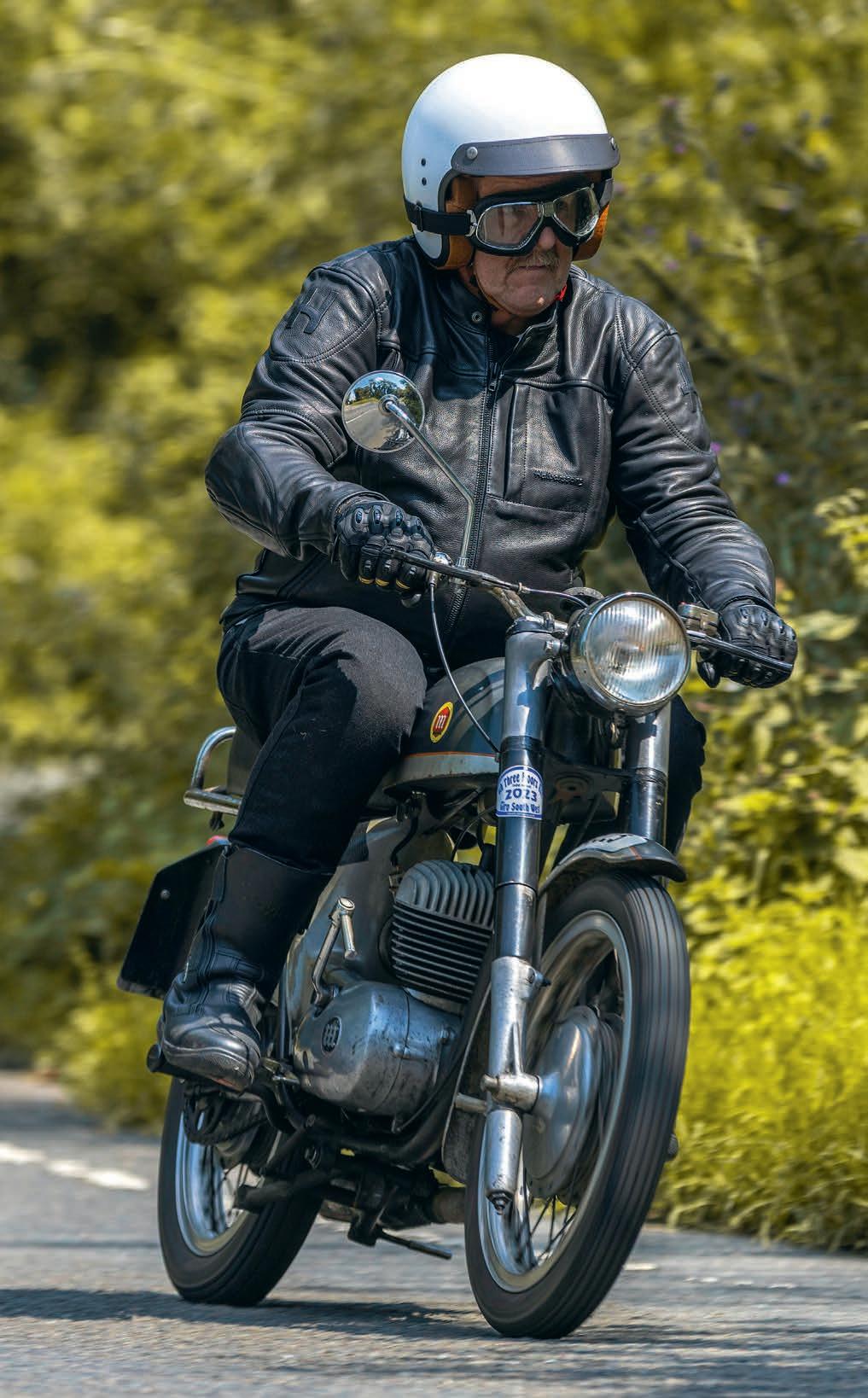
Starting the Kenya from cold, there’s a choice of both the choke which is incorporated in the pancake air-filter and/or the tickler device on the float bowl. The former is a genuine choke that works by restricting airflow rather than operating an internal enrichment device as per many Japanese bikes of the period. The tickler is an arcane device that simply presses on the carb’s float, thereby raising the fuel level. Thankfully, Martin has only just ridden in so there’s no need to worry. Which is a bonus, because I’ll have enough to think about given that the gear lever is on the right…
Fired up, the Montesa’s all alloy engine makes the sort of noises you’d expect from a 175 two-stroke single – it’s the exhaust system that draws your attention. Although not exactly loud, it’s not unerringly quiet either – even at tick-over. There’s also a tuned version of the same motor used in the Impala Sport that offers six more horses and some of those were liberated by removing most of the silencer’s baffling!
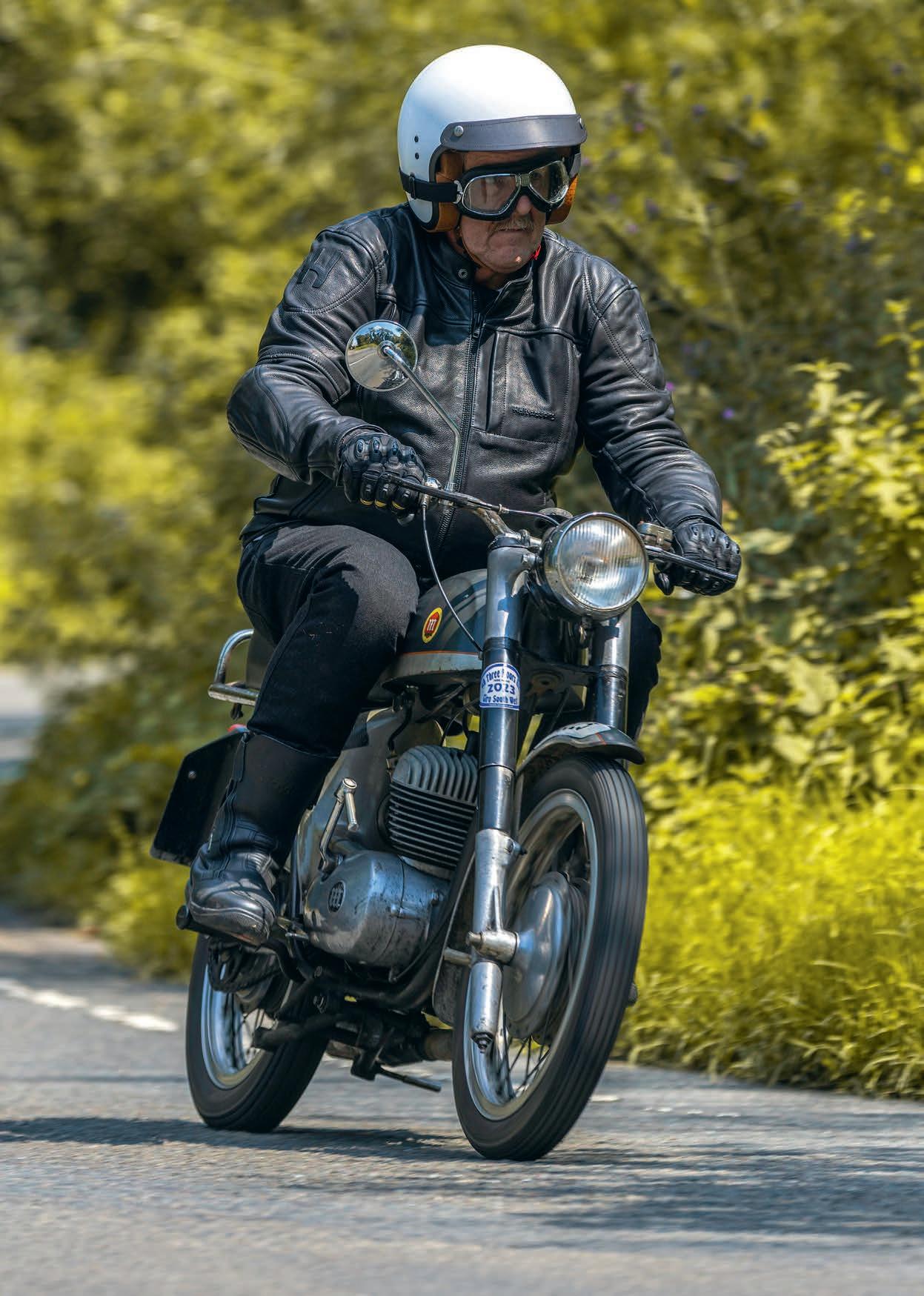
Fortunately, the heel-and-toe gear lever itself isn’t too much of an issue. Having lived with my Yamaha YL1 for 20 years thus similarly equipped I soon fall into the one down, four up routine. If you wanted to be perverse, the change pattern is also one down via a toe-push and three down via your heel. Many question why levers were built this way but there’s a logical answer. Many owners would have ridden the Montesa Kenya to work in their office shoes so didn’t want pedal marks on their suede loafers. And if you think that’s quirky, check the tiny brake and clutch levers: they may be small but their leverage is definitely more than adequate.
The Kenya manages to confuse and impress
within the first mile of riding. It is most emphatically not some antediluvian, oleaginous, old plodder whose roots are back in the late 1930s; neither is it an outright sports-bike either. Montesa’s designers and engineers produced that most rare of two-stroke machines – a bike that majors on torque rather than out-and-out power.
When it was produced, the bike’s four gears might very well have been perceived as old hat in the face of five ratios on almost all Japanese machinery. However, the Spanish single makes exemplary use of its quartet of cogs and, arguably, you never needed the extra one.
Montesa quoted 12bhp at 5500rpm, yet never released a torque figure, but I’m guessing it would be impressive. I’d also hazard a guess the two key figures are separated by a decent margin. This in turn means substantial flexibility and hence the need for just the four ratios. All of this translates on the road to remarkable levels of flexibility and urge.
There’s no thought been given to damping down induction noise so that’s always going in the background along with a silencer that was probably compliant in 1968 but a decade later would have got you pulled over by the plod. Not that we’re the least bit worried today as we’re having fun and enjoying the bike’s innate abilities.
SPECIFICATION
MONTESSA KENYA
ENGINE
17cc air-cooled, pistonported, two-stroke single
BORE AND STROKE
60.9mm x 60.0mm
CLAIMED HORSEPOWER 12bhp @ 5500rpm
MAXIMUM TORQUE
N/A
TRANSMISSION TYPE
4 speed, chain drive
COMPRESSION RATIO
8.5:1 (uncorrected)
CARBURATION 22 IZR
TYRES
2.50 x 172 (F) & (R)
FUEL CAPACITY
2 gallons (9 litres)
BRAKES
180mm TLS drum (F)
180mm SLS drum (R)
DRY WEIGHT 90kg (200lb)
RIGHT: Lusty enough and plenty
reliable.
Having ridden just a handful of Spanish bikes but a lot more Italian offerings I’d go out on a limb and say I prefer the Iberian contributions. The ride is as good as the Latin bikes but the suspension is simply just more forgiving. Flying round the lanes there’s good feedback, the bike feels planted, and the combination of ribbed front and block pattern rear Vee Rubber tyres works fine; this little single has impeccable road manners. That apparently simple piston-ported motor gives its all and almost tells you when you need to change up a gear. And the brakes? As good as anything Yamaha offered on its pre-RD twins and seriously better than any contemporary British commuter could have offered. Am I impressed? Yes. Would I like to own one? Possibly, if I had the space and the resources to keep it running. Our test bike may be a tad aesthetically deprived in areas, but it has the heart of a lion, the poise of an Impala (sic) and the élan of a flamenco dancer! Olé! cmm
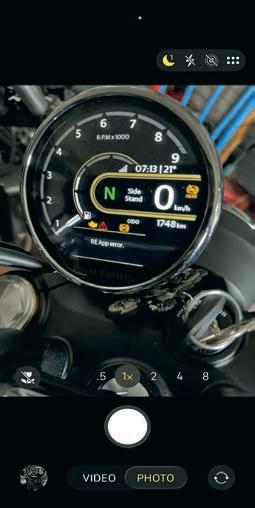
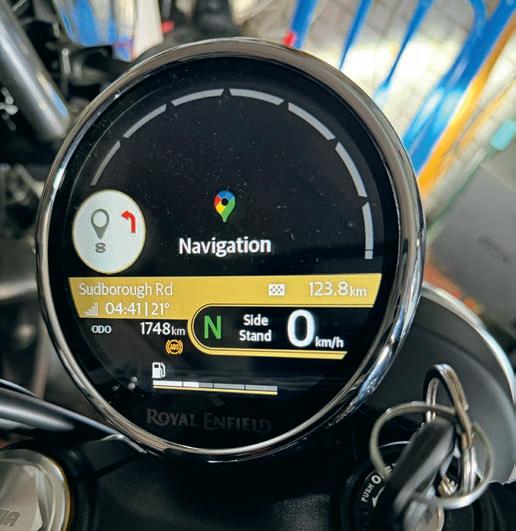
Above, we see that there seems to be an app fault!
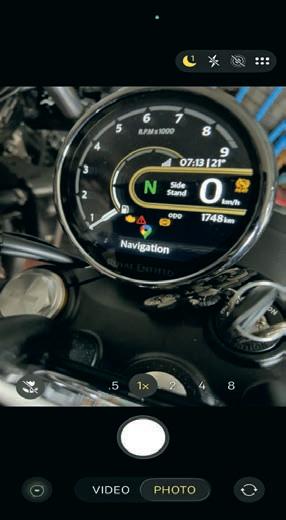
Left, we see the app works, but no nav!
CLOCK-WATCHING
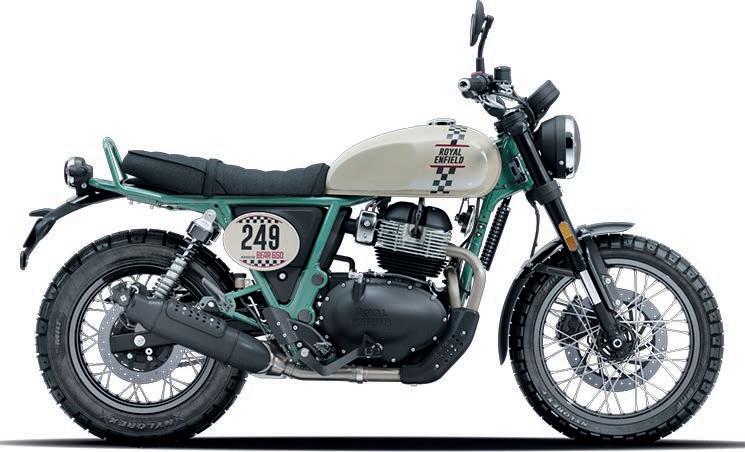
It can’t be that difficult connecting the Bear 650 to Bertie’s phone so he can have on-board sat-nav, can it? But then, he is a fool!
About 40-odd years ago I was an IT whizz. It’s the 1980s, I was a teenager and I had a Sinclair ZX Spectrum and I could usefully make it beep the theme tune to sci-fi show ‘V’ and I made my own text adventure.
I could also master the 14-day timer of a Ferguson Videostar. This was useful to my father as he’d often ‘sell’ VHS equipment down the pub which came without instructions, or guarantees. He was a bit like Del Boy, but shadier…
Today, my skills have been eroded by the decades, but I’m nothing if not a trier and so I figure I’ll pair my iPhone with the Bear 650 so I can set up the Tripper sat-nav feature. But first, I need to download the app. Of course, I’ve not used the App Store for ages, and this is a new phone. And I can’t remember the password. Okay, new password. Nope, that’s not ‘strong’ enough. Nope, not that one – you’ve used that in the last year. Etc.
Finally, after 20 minutes, I’m in the App Store, looking for the right Royal Enfield app. I think I download two and work out which is which. Best I check out the functionality of these Royal Enfield clocks, eh? They are great clocks, look clear enough but obviously pack a lot of said functionality into them. I know this because looking at the PDF of the owner’s manual (remember when the manual just sat under the seat?), the clocks figure in about 28 pages of the 146-page manual…
Of course, the PDF manual is on my work laptop and that’s in my home office which is upstairs and not right next to my Bear 650 which is in the
SPECIFICATION
ROYAL ENFIELD BEAR 650
POWER/TORQUE 47bhp/42ft-lb WEIGHT
214 kilos
COST NEW (SECONDHAND) £6799 (£5600) FROM: https://www.royalenfield. com
garage. Okay, I can do this, just guess. Five minutes in and I can’t seem to go back from a selection made with the dinky little joystick on the left-hand bar. I head back upstairs and read more of the manual, then go back downstairs again. This time, when the ignition is turned on, I hold ‘right’ on the left-hand joystick. A Wi-Fi network name and code appear on the dash. After three attempts, the phone is finally paired with my bike.
But can I get some sat-nav up on the clocks? Let’s see. Okay, here we go… left-hand stick across to ‘navigation’ and hit the button and… Ahh! RE App Error. Back upstairs, read some more. This is great exercise.
Back into the garage, ignition on, left joystick to navigation, now press and hold the M/mode button on the right-hand handlebar. Yes! It has done something, but still no map on it… Come on, Simmonds… remember all you learned over the years with the Spectrum, a Commodore Amiga, the PC and all the work Apple Macs over the 34 years spent in journalism…
Of course! Switch the bike off. Switch the app off and on. Start again – et voila! I set a pretend destination, and the map appears on the clocks. Of course, while trying to take a picture on my phone (see above) the map disappears but comes back on after. So, I know it works.
Of course, after all this, I’m too emotionally spent to go and ride and instead have a cup of milky tea, confident in the knowledge that I’ve mastered the Royal Enfield Bear 650’s clocks! cmm
The Yamaha XSR900 GP intends to mimic Yamaha sports-bike classics from the 1980s and 1990s. So who better to try it out than the VJMC’s Andy Bolas?
WORDS AND PICS: ANDY BOLAS
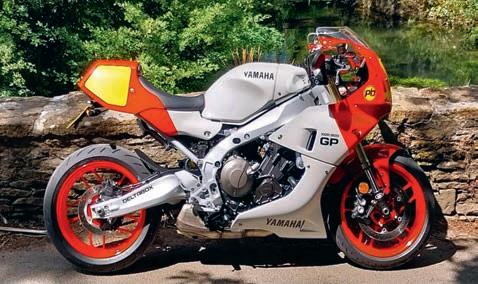
Ican’t tell you how cool this bike looks with the sun beating down on its pearl white and red paintwork, looking every inch like a 1990s fag packet colour scheme!
This is Yamaha’s XSR900 GP from their Sport Heritage range and features the stonking CP3 890cc triple motor. The styling draws on many 1980s and 1990s Yamahas, both road and race, but with all the mod cons of a ‘modern’ bike.
At £12,904 list price for the standard GP model, the XSR represents reasonable value, although it is around £1200 dearer than the Z900RS from Kawasaki and £500 more than Suzuki’s Katana which are aimed at similar buyers but I don’t think either are finished to the same standard.
Based on the standard XSR, the GP sports a half fairing as standard (ours has the optional belly pan which costs £609), clip-ons and a host of other tweaks. This thing looks fast standing still.
The five-inch TFT dash is brimming with tech compared to the stuff I ride normally, even the new Suzuki GSX-8S that I have. The dash has five different themes and my favourite is the analoguelooking one which suits the retro theme of the bike better than the others.
You can change the display layout and configuration for the odometer, total mileage, coolant temperature and mpg: cool if you like tech or a pain if you want function over faffing!
Currently I am struggling setting up the maps and getting the bike to connect to my phone. Hopefully, my IT department (13-year-old Alex) will be able to
SPECIFICATION
POWER/TORQUE
117bhp/67ft-lb
WEIGHT
200 kilos
COST NEW
(SECONDHAND)
£12,900 (£8999)
FROM: www.yamaha-motor.eu/gb/ en/home
get this set up soon so I can do some longer rides. The rest of the electronics like the power modes and traction control are easy to work out and alter. The power settings include Sport, Rain and Street along with two custom modes which you can set to your own particular requirements. I’ll be looking at this next time, as I believe you can alter them either on the bike or via the Yamaha MyRide App.
The bike is too quiet, so an exhaust can’t come soon enough! Also, it’s a little taller than I expected it to be and the riding position is sportier than the rest of the bike would like you to believe. It feels somewhere between my old 1993 FZR600 and my 5EB R6. On the move it doesn’t feel cramped. Bravo Yamaha on their OE tyre choice as the GP is fitted with Bridgestone S23s out of the box. The suspension currently is on its stock settings but I guess the more the bike gets ridden, the more I will find things I want to alter or improve. The brakes are fantastic and make light work of reeling in the nigh-on 120bhp triple at speed.
I love how the bike feels light and flickable, and that stunning triple motor produces enough power to keep you on your toes, but not enough to frighten or intimidate you. The quick-shifter which works on both up and down changes is brilliant, too.
I think Yamaha should look at making a version based on the MT-10; that would be an absolute hoot to ride. I took the bike to Snetterton for a VJMC event where it was in a line-up of classic bikes and didn’t look out of place! cmm
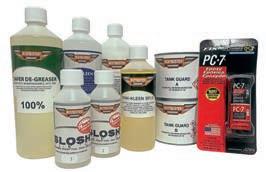
RustbusterSloshtanksealantandframe restorationproductsare tested to be ETHANOLPROOF. We have tested withup to 100% Bio-Ethanolwithnodegradationofthe coatingE15 noproblem. You canpurchasefromour websiteora distributor near you. Foruseonsteel,aluminiumandGRP tanksnotplastic.
Together, these ridersandmachines representa remarkablepieceofBritish racinghistory andmake Beezumph 32 a must-see event for classicmotorcycleenthusiasts.
Cadwell Parkis ready, thepaddockwillbe buzzing, andthe stories andmachineswillonceagain bringthegoldeneraof racing to life.
SAMCO’S SUCCESS!
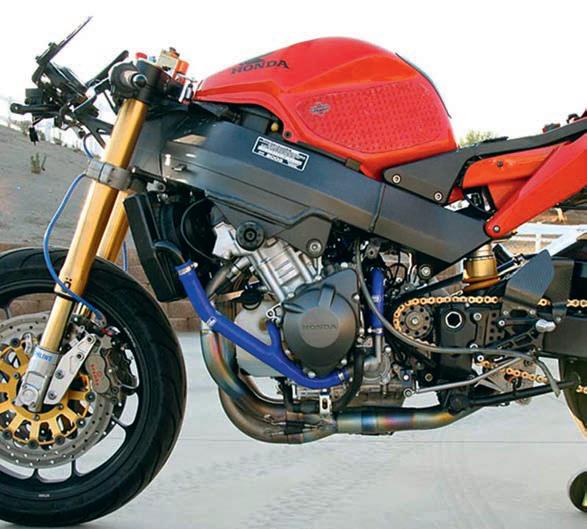
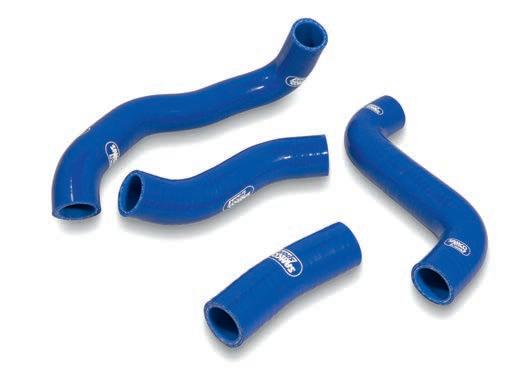
They are designed and made in Britain, and are a performance add-on and perfect replacement for your OE engine hoses. Check out Samco Sport and Racebikebitz.
As the old saying goes: ‘Racing improves the breed’ and so it is with Samco Sport’s products, distributed by Racebikebitz.
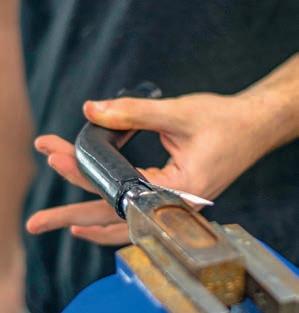
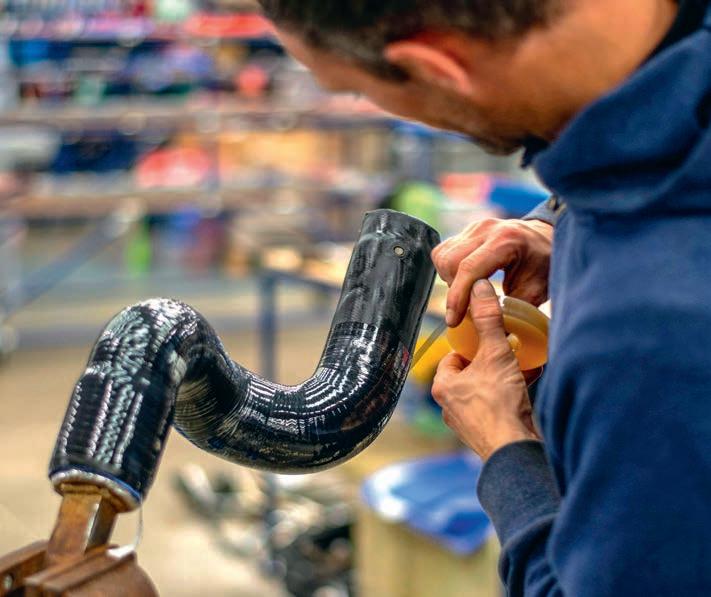
For more than 30 years Samco Sport have been designing and manufacturing their range of replacement engine hoses from their factory in Wales – making them a proud ‘designed-andmanufactured in Britain’ product.
Starting out in the four or more wheeled arena (they also do trucks and quads), the range of replacement hoses has spread into the motorcycle market. Today, Samco produces around 1000 different hose sets for motorcycles in a bewildering array of colour options (even camouflage versions), ensuring that there is a set for your modern classic or track-day machine.
Richard Murphy of Racebikebitz originally hails
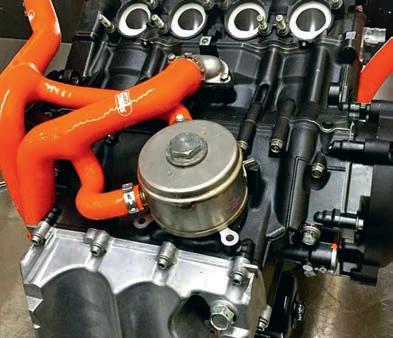
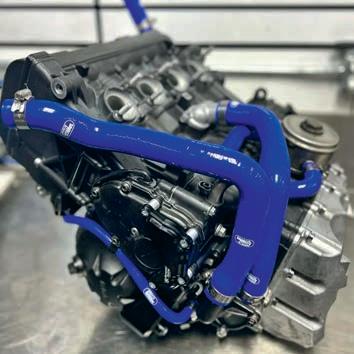
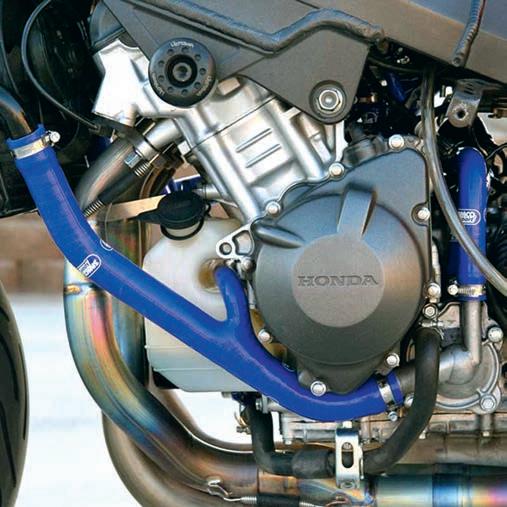
ABOVE LEFT: The hose set up on a Honda CBR954RR FireBlade.
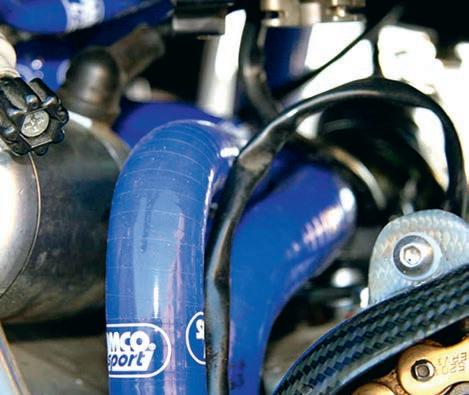
ABOVE RIGHT: The ‘house blue’ colour has long been seen as a performance part in the car world. Bikes now, too!
from the performance car world, where Samco Sport really made their name as ‘performance’ parts for hot-hatches and various Ford performance models, including Cosworths, and he can recall some of the first tentative steps in the motorcycle world, distributing Samco Sport hoses as Racebikebitz. He says: “About 21 years ago we started Racebikebitz and had just a few, maybe six, motorcycle applications of Samco Sport hoses. I still remember DUC/1 which was a 916/748 hose set and HON/1 for the Fireblade and YAM/1 for the Yamaha YZF-R6. Eventually, we would be asked by British Superbike teams to make them for them so initially it wasn’t much of an application range to show to the public.”
That has changed dramatically. Helped in some ways by the fact that Richard knew Troy Corser,
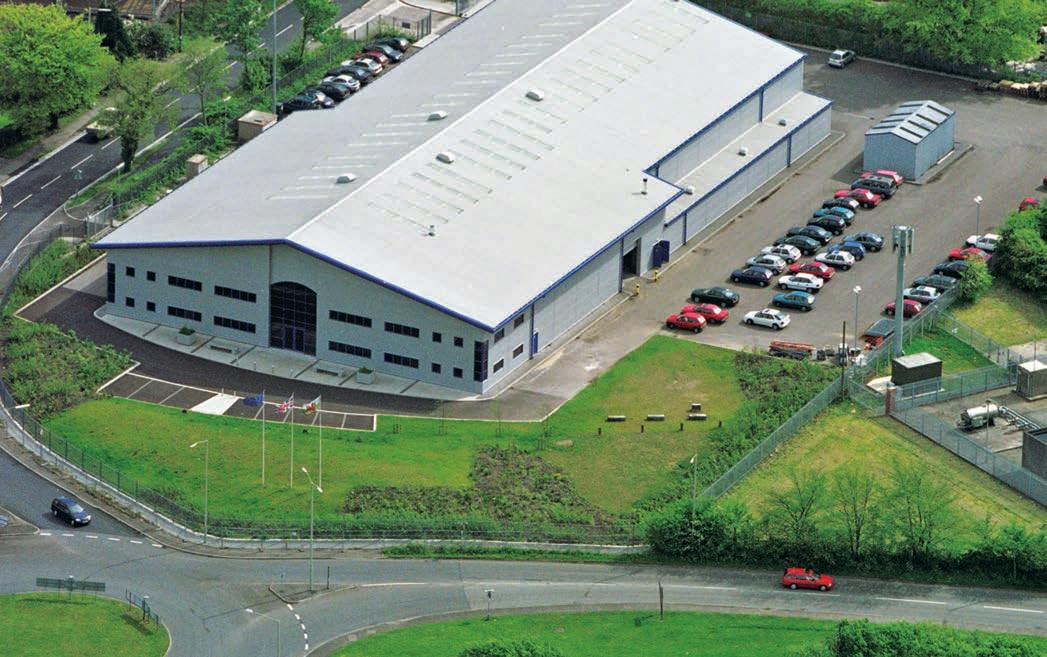
Samco Sport HQ in South Wales.
whose Yamaha World Superbike team had some issues with their engine hoses, so soon Samco Sport were in the WSB paddock. They shared in success with Jonathan Rea’s Kawasaki squad, taking six world titles, and are still involved with the Bimota by Kawasaki Racing Team. In partnership with Samco Sport, Racebikebitz began developing kits for road and race machines, on- and off-road. Richard says: “I’d say of the 1000 or so kits we do for motorcycles, we’ve developed 950 of those ourselves. So, we’ve added value to Samco Sport ourselves.”
Racebikebitz can rightfully claim to be ‘The Number One Worldwide Silicone Hose Supplier’. But what kits really sell? And we mean especially in the ‘modern classic’ arena? “The 748/916 kits still sell well,” says Richard. “Mainly in black – so not blinging the bikes up. Maybe some in red. During lockdown we seemed to sell many Kawasaki ZRX kits and still do, about three or four kits a month in
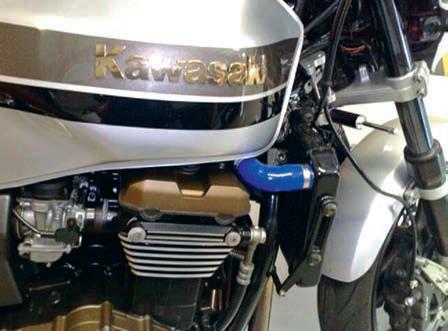
RIGHT: Some radrouting Samco hose on one of their most popular modern classics: the Kawasaki ZRX1100-1200.
BELOW LEFT: Orange hoses on a 2006 YZF-R6.
BELOW RIGHT: More of a Yamaha colour! Another R6 here.
black, a few in blue or red, but the craze for green hoses seems to have ended. We do a fair amount of Yamaha RD350LC kits, sold to dealers or YamBits and the like. They order off us almost weekly! Then its 1970s-1980s-1990s liquid-cooled bikes, so Suzuki GT750 Kettles are popular and various Honda Gold Wing models; hoses go to David Silver Spares, too. A more recent bike – but now a modern classic – I’d say the biggest seller is the original and subsequent models of BMW’s S1000 RR. So that’s the original that Troy Corser raced from 2009. We supplied hoses for his bike and had dual-branded hoses with BMW. That kit didn’t change for about 10 years, as I recall.”
Race teams often spur on development. When a new bike comes out, they get them early and Racebikebitz and Samco Sport are soon on hand to develop the latest replacement performance alternative to the OE hoses. “The Ducati V4s is a case in point,” says Richard. “The standard Ducati hoses have rigid corrugated plastic and rubber inserts in the hard plastic. That’s fine, but with track bikes, hoses have to come off and go back on again easier. So, it’s almost imperative to fit Samco Hoses to racing Ducatis.’’
In the early days of working with race teams, often the products would be designed and manufactured at Samco Sport’s plant near Cardiff in South Wales, and then be flown to whatever race circuit they were needed at to get there in time. It’s no surprise that Samco Sport hoses often are sported by most bikes in the British Superbike paddock. “Largely everyone runs our product,’’ says Richard. ‘‘When I first started, I tried telling people why they should use our product. Now it’s switched to ‘They don’t want to race without us’ rather than ‘Why would we use them?’.”
Racing also has led to updated versions of the
Hand-built to perfection.
Fabrication at the plant in South Wales.
Samco Sport hoses – such as the ‘race-fit kit’. Richard says: “Some bikes may have multiple hoses that join together, it keeps costs down. ‘Race-fit kit’ brings some of the hoses together with a one-piece fitting. This leads to increase flow of coolant and fewer parts to break. On the race-fit kit, it could be that the fewer connections or single moulding means the wall thickness changes, giving increase coolant flow. More flow equals lower temperatures and therefore fewer failures. On Yamaha’s R6 the 11 hoses are down to just three in the race-fit kit and just eight hose clips and not 16. Michael Dunlop uses our stuff on all his R6 race bikes. And he’s won many TTs using Samco Sport hoses.”
For either the restorer or specials builder then, Samco Sport hoses are the answer. “Samco is a recognizable brand,” says Richard. “It’s a quality product with a lifetime guarantee. I say this regularly, but if you need to change hoses, don’t buy cheap… And if you don’t want to go Samco, then go OE. That said, we are a high-performance silicone hose. Ours can have 10 times the burst pressure of a standard hose and the temperature rating is higher. And hot temperatures don’t cause Samco hoses to dry out and become brittle like standard OE rubber hoses do. Hand on heart, the only failures I’ve seen have been thanks to poor fitting or when a hose has accidentally been nicked or clipped from the outside. Samco Sports hoses along with their stainless fittings/clips are so
A 2002-03 Blade again.
Colours have come on a bit since standard Samco Sport blue and the old fave black.
over-engineered they’re perfect replacements for cherished older motorcycles.”
And then there’s ‘any colour you like’. Pretty much! From the original ‘Samco Sport’ blue through a wide range of colours now including camo for you urban warriors out there.
Richard adds: “I think some people still don’t realise that this is a handmade product, designed and manufactured in the UK. These aren’t just replacement parts, but a performance addition to your motorcycle. It’s a real success story and we’re proud to be part of it.”
For more, go to: https://racebikebitz.com and https://samcosport.com cmm
ABOVE:
Hoses can also come in a fitment kit with hose clips.
Guaranteed for life.
Built by hand.
cmm Tool of the month
Ralph Ferrand works with tools all day long – he sells them too at bikerstoolbox.co.uk so he knows what works. with
Socket to ‘em!
Laser Tools are celebrating 50 years of selling professional quality tools to the motor trade and have produced a new range of hand tools carrying a 50-year warranty.
Amongst these new tools are some double-sided locking socket rails called LocSoc. Some of you will remember that I have featured various socket rails previously and was unsure if I should revisit this subject. What swung it for me was using these working on real bikes in my own workshop.
The small, inexpensive quarter-inch drive plastic twist lock tray, previously covered, is still a favourite of mine, particularly when used with the colourcoded sockets.
The larger, magnetic twist and lock rails are good, but in long-term use I have found that twisting the sockets to release them with oily, gloved fingers, especially with hex drivers, can be a tad tricky sometimes, generating unwanted frustration.
Yes, these are a huge improvement over the old
ABOVE: Top is the bare half-inch rail I have populated. Next down is the threeeighths bare rail I have filled with my sockets on one side and hex drivers and an adapter the other. The bottom one is the pre-loaded quarterinch socket bit driver set. On the right is my old twist lock plastic tray I have had for many years.
chrome spring clips that have been around for years, but this new contender is a game-changer for me. This new product has a magnetic base so attaches itself firmly to my steel-decked bike bench. To release the sockets, one simply pushes the socket over, like a light switch, making it easy to pull off with precious little friction. Because the magnetic base anchors it, this is a onehanded operation, freeing the other hand to hold the ratchet or whatever the socket needs to be fitted to.
There are three ‘loaded’ versions of these rails. The first has quarter-inch drive sockets from 4mm to 14mm, three-eighths of an inch from 15mm to 24mm, and a three-eighths to quarter-inch adapter. The second has quarter-inch drive sockets from 4m to 14mm and a shed-load of quarter-inch hex bits encompassing hex and Star (Torx) drivers as well as Pozi, Phillips and flat screwdriver bits, various adapters and bit holders.
The preloaded quarter-inch drive sockets and quarterinch hex bit. Bottom inset shows the quarter-inch drive bit holder and above where it’s stored. Top inset shows a 6mm hex bit in use with a Roto-lock ratchet on a scruffy Hinckley Triumph.
Having your sockets securely held on the bench allows one to use a bolt to select the correct-sized socket with ease.
The third set is all quarter-inch socket bits including hex drivers from 2.5mm to 8mm and tamper-proof Star (Torx). I really rated the first two sets, but given how many sockets and hex bit drivers I have here already, I returned them after testing, although the third quarter-inch drive rail is staying because it is too useful to go.
The LocSoc rails are available as empty rails in quarter-inch, three-eighths and half-inch drive for sockets, and I have so far kept one of each but can see me buying more of them. The magnetic bases make a huge difference, making them perfect for single-handed operation. Also, it means they can be stored on the side of your roller tool cabinet, freeing up drawer space. This storage also makes it easy to simply grab a socket from the side of the tool cabinet with one hand with no necessity to start searching through drawers.
The only negatives I found was that the big half-inch rail I am using to tidy up my half-inch impact and hex drivers seem to need the sockets to be fitted back on with the indent hole lined up with the locking ball on the rail. With all sizes, one does need to be careful when picking up a loaded rail that you don’t squeeze the sockets inwards and in doing so unlock them, but after using them for a relatively short space of time, I soon became wise to this potential problem and found that the myriad advantages far outweighed these picky points.
At the time of writing the loaded rails were on a special offer of only £39.95 each, and whilst the offer would potentially have expired (30 June, 2026) by the time many of you read this, Laser Tools agreed to extend this for me until August 31. cmm
Flick the socket over like a light switch and pull it off, easy!
BMW R 1100 S
PIC: BERTIE SIMMONDS ARCHIVE
You’ve got Schwantz on one side...
Project Yamagamma Part 3 Split personality!
He’s trying to stir it up this issue, is our Vic. What will the purists do when they see his YamaGamma? Ulp!
‘Split personality’ is a phrase not used anymore in psychiatry. Instead, it’s ‘Dissociative Identity Disorder (DID) or ‘Multiple Personality Disorder’ (MID).
This is a mental disorder in which an individual’s personality appears to have become separated into two or more distinct personalities, each with its own complex organisation and yet living in the same physical being.
However, if you look at my YamaGamma I think you would agree it’s much more of a ‘split’ personality, it being a mix of two legendary machines and now resplendent in a suitable ‘split’ paint job. Yes, welcome back to the mind of a looney! And, no, I don’t mind being called that, before anyone complains on my behalf.
But first a public warning to those of a nervous motorcycling disposition. This is anyone who counts rivets or who thinks the ‘original air’ should be bottled, saved and put back into their bike’s tyres after restoration…
Indeed, if you are easily offended by non-conformity then please skip these pages and read the other pages by the
...and King Kenny on the other side!
talented motorcycle restoration experts that share their knowledge in this excellent magazine.
However, if (like me) you’re as mad as a box of frogs and love motorcycles that don’t fit the agenda then please read on… Last time out, we left the YamaGamma as a rolling chassis with newly painted wheels and bodywork minus graphics. I had been fabricating mounting brackets and fixing points for as many bolt-on parts as necessary.
The bike had been a track bike in the past, so the suspension set up was spot on for the previous owner and not me. The front forks needed no adjustments. However, the Sachs rear shock had to have
more load put on to the spring and the remote reservoir needed fine-tuning on the damping side of things.
Like all special bespoke builds, it’s one step forward and countless back until you get things right. So, after mounting the fairing and happy with the results, I realised that the radiator was too close to the exhausts when fitted. I redesigned the mounting brackets and fabricated new inlet and outlet pipes which were TIG welded on to the radiator in their new locations. A temperature sender from those lovely folk at Acewell Instruments was fitted in-line, which will be wired into the digital head unit later.
With the radiator fitted, the cooling
Useful carrying space!
This detail needed to be seen...
system was filled with Evans 180 Power Cool which is more of a chemical than a mix of anti-freeze and water. This liquid coolant cannot be mixed with water or anti-freeze so it is recommended to use on a new build. I’ve had this in all my two-strokes and when the head gasket went on my tuned 375cc Yamaha LC, it still ran okay. However, it did blow a lot of vapour from the exhausts! As it states on the bottle, it boils at 180 degrees and therefore keeps the motor cooler. Or that’s the plan! The gearbox oil causes many a debate, but I like to use a good-quality 75w gear oil and this has kept the cogs lubricated at all speeds and temperatures.
The side-stand was the next issue to
Awaiting bodywork.
Side-stand cut-out.
Extra strength!
Pretty, even when naked...
be addressed. As previously described, this was fabricated and worked perfectly until the fairing had been bolted to the frame. A cut-out had to be made so that the stand could flick into the ‘down’ position. It was a good job this was done before the vinyls were applied by my mate Terry at Blank Canvas!
On the opposite side, the fairing covered the lock-up clutch with the glass-side casing. I felt this was too attractive to cover up, so a hole was cut out to show this off and the back side of the fairing reinforced to help stop any cracking.
Everything fitted fine, but something just didn’t look right, and this became apparent when I mounted the seat and sat on the bike. Now, I’m not exactly built like a racing snake and even with all the
willpower in the universe I just couldn’t get tucked in behind the fairing with my knees. So, the decision was made to widen the fairing by around four inches or 100mm in modern parlance.
A plate was made to fit in the belly-pan and new mounts made to widen the knee gaps. It now looked the part and with the extra width, I was able to fit a new adjustable steering damper to help calm the front-end down – if ever needed.
The magical box of sparks supplied by Electrex World needed fitting. The digital dash and wiring to power all the components was still on my sketch pad and the 36mm Keihin carbs needed clamping into place and setting up.
These were all jobs that could be better done with the bodywork off, so it was time to apply the graphics and then ship it off
to the painters for some clear coat lacquer. Excited!
Here’s where the purists will be howling! I wanted to keep the classic racing colour schemes of the 1980s and 1990s as these were the best years for two-stroke grand prix bikes. I’m a big ‘King’ Kenny Roberts fan and love the yellow and black ‘Speed blocks’. And, as this bike had a race-tuned 421cc Yamaha engine squeezed into the Suzuki RG250 frame, I wanted to show that the heart of the machine was powered by a Yamaha two-stroke engine.
And now for the flip-side. Kevin Schwantz was another rider that impressed me and the only Suzuki rider that I really followed. So, it was appropriate for me to keep the Pepsi colour scheme but minus his 34 racing
Which side do you prefer?
Steering damper.
Quite easy to go to this...
...from this. Great bit of kit! Adding extra girth!
number. Terry helped me design the graphics and instead of being straight colours we opted for a metallic finish on the vinyl which worked really well once lacquered.
manufacturer based overseas. They have a store on eBay and work with you to manufacturer bespoke leather protective gear along with other items of clothing. My challenge to them was that I wanted a split colour jacket to match the bike: half Yamaha and half Suzuki Gamma. The results were excellent – although I can’t speak for the level of protection, it looks the part!
Now I’m ready for the shows and the trips to the seaside cafe for a brew. The YamaGamma is a bit like Marmite: you will love it or hate it. I love it! See you on the road. cmm
Thanks to:
My OCD/illness for building bespoke motorcycles at Vic’s Custom and Classic Motorcycles in Faversham, Kent: Vic@ vicscustomautos.co.uk 07788 417038 (And to the lovely wife for putting up with me!)
John Ewens for this bike’s seat and all my others: Saddlemans1959@gmail. com (07734 357815)
Terry for the graphics and vinyl work: Terry@blankcanvasvehiclegraphics.co.uk (07711 916377)
John Floyd for another excellent engine build: Floydyracingtuning@gmail. com (07711 185554)
Acewell Instruments for a very easy to set up system: Info@acewell.co.uk (0191 6408663)
While the bodywork was away, I cracked on with the sparks. As this machine has a daylight use only MoT there was no need for a charging system. The ignition runs without a battery and the only thing that is needed was a horn and speedo to pass the MoT regulations. I had a spare lithium battery kicking around and once charged this will power up the dash and horn easily for weeks.
I awaited with anticipation for the bodywork to come back from the paintshop like a dad waiting to see his new-born child for the first time but with less screams, fewer tears and much less muck flying about.
Dave for the machine work: Mocom1973@hotmail.co.uk (07703 383095)
Paint work done by MAS European: (07394 052551)
Jacket by MARKX: letstalk@markxgear. com (07590 879424)
The YamaGamma was bare, with all its organs showing, and it desperately needed its new split personality bodywork to complete it, as this bike was booked into the Three Counties Showground for the first Kickback show of 2026 and I only had a few weeks to go.
I went to collect the fresh paint along with the new seat lovingly made by another mate, John Ewens. The inside of the fairing panels never get seen but my OCD just couldn’t put up with that, so I decided to cover them with a reflective heat-proof adhesive matting. This was only about 1mm thick and easy to apply, especially around the cut-outs and folds in the plastic.
At the beginning of this build I hadn’t really expected the bike to look this good (trumpet blowing time) and once the YamaGamma was kitted out in its multi-coloured dream-coat of plastic, it far exceeded my expectations. Or should that be ‘both’ our expectations?
I got in touch with a motorcycle clothing
We think it’s come out very well indeed!
Jacket sums up Vic’s personality! Colourful! Out for a blast...
Decals going on.
Just like ‘Revvin’ Kevin’s’.
Precisionengineering for motorcyclesuspension,braking, and performance components
• Manufacture of new forktubes– including custom lengthsandone-off builds
•TM Motorcycle dealer – officialsales,service,and support
•Othermotorcycleengineeringon request
Custom-length forktubes, reconditioning of alloy fork lowers, or straightening of bent forks, we have the experience andequipment to dothejob right.
We may flip this shot next month: see if anyone notices!
Project Honda CB400 Four Part 13 Carb conundrum!
Carburettors are those magical devices that mix two things together to make the magic happen. But what happens when they’re all gummed up?
When we come to the carburettors on a bike which has not run for years, there will need to be some work done to get them back in working order.
You will find that it will be a lot easier if the previous owner has taken the trouble to drain the carbs of fuel when laying the bike up. This is because the fuel undergoes a transformation from petroleum spirit to an evil-smelling resin. I believe this is because it has not just evaporated but rather been catalysed by the metal into something else. Whatever it is, it needs to be cleaned out, and you will find that the goo responds well to treatment with cellulose (paint) thinners, followed by a warm bath in an ultrasonic cleaner.
Now you need to make a decision about how much work you actually need to do. I say this because, filled with enthusiasm, I simply took the whole assembly to bits and there are a lot of bits. Photo 1 shows what two carbs contain after ultrasonic cleaning. Having done all this, I looked back and wondered whether anything was achieved by all this, or whether I could have simply concentrated on the bits which actually need treatment. Let me start then by looking at those.
You will need some spares, of course. For instance, O-rings, as these are certain to need replacement. Remembering the fuss about finding all the correct O-rings for the oil-pump, it was refreshing to find that a complete CB400F carb set kit, consisting of no less than 28 O-rings, is available on eBay for (at the moment)
£18.50 including P&P. What is more, they are made from Viton so are fully modern petrol proof and apparently tried and tested. The username is julies9731 and she has an eBay shop to search through. By the way, she also does a kit for the CB400F oil-pump which would have saved me time!
We start by removing the whole carburettor assembly (Photo 2) and you can remove each float chamber to do a fair bit of work, but I think you will need to separate the individual carbs to do a proper job. You first take out the eight countersunk screws as here, but we come across a difficulty as the two pairs are still tied together, each side of the operating arm (Photo 3). By undoing the brass caps (Photo 4) you will find a spring and under that a ball joint seating. Then you can separate the joint after removing the tie on the adjusting screws as shown in Photo 3. When you have each individual carb separated, you can take off the float chamber and access the main and pilot jets as well as the floats and float valves (Photo 5). Note the spring clip, which is designed to press the main jet in constantly, but I think you will find that
there is no chance of the jet falling out as the sealing O-ring will have turned into a strong glue. So maybe the best thing is just to check it is clear and leave it where it is? I cannot think that this is the best way to hold a jet in place rather than a screw thread. If you do remove the jet (with difficulty) then you will find that it holds the emulsion tube in place – hence the spring clip (Photo 6). The pilot jet (next to the float) is held by a screw thread quite successfully.
You will perhaps decide to replace all the float valve assemblies (Photo 7), just to make sure they will all work. The good news is that they are still available as Honda parts. The bad news is the price: would you believe £68.58 EACH plus P&P, of course. I hear reports that pattern parts are useless, but they seem to work okay for me, and I am looking at eBay now and see a listing for all four for £14.41, direct from Taiwan. Or you could just check over what you have and see if they will do the necessary? Your choice.
Finally, in the region of the float chamber, the O-ring in the kit does fit perfectly (Photo 8) and towards the middle we see the emergency overflow
for times when the float valves fail. I believe the little hole also has an alternative purpose as a means to ensure the air pressure within the float chamber remains the same as that outside the carb. If you really want to, you can inspect the slide and needle assembly by undoing a couple of screws at the top of the carb, after bending the locking tabs (Photo 9). Note the location of the various components including nylon spacer, bush, thin washer, spring and dust cover. Not forgetting the felt washer on the other end
(Photo 10). It would probably be a good time for a drop of sewing machine oil on each pivot.
The linkage ball joints work with a spring and seatings like this (Photo 11) and this (Photo 12). Before you know where you are, you will find you have the slide assembly in front of you (Photo 13) If you want to take things further, you can remove the needle. It is held in by a couple of screws which are accessible by a narrow diameter screwdriver (Photo 14) There is no information in the manual
about needle position, but mine were in the middle slot which was what I would expect (Photo 15). Mine were pretty much as new as far as wear was concerned.
The O-ring supplier gave a bit of advice about fitting them (Photo 16) and as you can see, the O-ring will not shear. I thought about that and after a while I did manage to do just that (Photo 17). I cannot remember quite how, so you will have to experiment yourselves.
Next time, I shall assemble the carbs as a set, fit them and set things up. cmm
Covering the valve seat with an alcohol-based marking blue with a piece of cotton wool.
Project Kawasaki Z900 Custom Part 13 Bump and grind!
Ralph’s Zed isn’t right in the head! But it will be, when he sorts the valve seats.
This month I am back working on the part of the engine that delivers the raw fuel to the combustion chamber to make a series of big bangs to give us motive power…
To help with this, I treated the head to a new set of valves from my good friends at Z Power. Now, those of you who have read this column from the start will possibly remember that in part two I warmed the head up in my oven and fitted new valve guides. With the best will in the world these were never going to have 100 per cent perfect alignment with the original valve seats, particularly as the old guides were obviously worn, so it was imperative that I recut the valve seats.
Most folk would pass this job on to an auto-engineering company, but having a serious tool-buying addiction, previously I had invested in some professional valve seat cutting gear. The kit I have is from American company Neway and is pretty much accepted as the best of its type on the market. As I always say: ‘‘Buy once, cry once!’’ The Chinese, unsurprisingly,
Reaming the valve guides with a suitable 7mm hand reamer.
have copied Neway and are selling direct cheaply, but I understand from those in the trade that quality is poor. Good cylinder heads for classic bikes tend to be thin on the ground and to risk damaging rare and expensive cylinder heads with cheap copies of professional tools is plain daft. I bought my cutters from Dave Davis, a very helpful fellow who can be called on 01798 813 949 or emailed at ddavis@ btconnect.com.
I don’t feel using these cutters is difficult, but one needs to take time and
My Neway 3 angle valve seat cutting kit for Big Zeds.
Collet-type pilot.
be methodical. Firstly, when new guides are fitted one needs to ream the hole before fitting a valve stem. They don’t need much taking out but they do need to be reamed or there is the danger of the valves seizing open. This happened on a head I had paid good money to have new guides fitted to (on the wife’s Z650) when she was riding it with my daughter riding pillion. Another reason I do my own; I know it’s done correctly.
I fitted the 7mm pilot into the freshlyreamed valve guide and tightened it up for perfect alignment. I selected the 45-degree cutter and applied oil to the bearing surface where it located on the pilot mandrel and a wee drop of Rocol RTD cutting fluid to the cutting faces to make the cut easier and extend the life of the tool, though frankly I am unlikely to ever wear out these tools.
I fitted the plastic T-piece wrench to gently cut the seats, removing as little material as humanly possible. Once the main 45-degree faces were done on all eight, I flipped the cutter over and lightly touched up the 30-degree angles. One has to adjust the position of the cutters in their slots carefully, particularly when cutting the 30-degree faces as they can catch the combustion chamber if you’re not careful. Lastly, I cut the 60-degree final facet of the three-angle valve seat.
Making the 60-degree valve seat cut.
Some auto engineers only cut the 45 degree, which is cheaper, but is not recommended, and as the Lord God Kawasaki saw fit to cut three angle seats, so do I.
Once I had recut the seats I then lapped them in with fine valve grinding paste. I no longer use the sticks with rubber suckers either end, as they are way too much like hard work and keep coming off.
The mechanical oscillating tool that fits to a cordless drill is perfect and they are inexpensive; don’t be tempted to attach a drill to the back of the valve stem – that is NOT clever!
The valve stem is lubricated, and I use
The mechanical valve lapping tool with a cordless drill.
a small flat-bladed screwdriver to dab small amounts of fine grinding paste on to the valve. The valve, on the end of the tool, is fed into the guide and the body of the tool is gripped whilst the drill is run fairly slowly. Only a light pressure is applied and the valve should be lifted from time to time to refresh the paste and prevent any scoring. I cannot emphasise enough how critical it is that the grinding paste ONLY goes on the valve faces and nowhere else, and particularly not on the stem to be dragged into the guide.
With new valves and a freshly-cut valve seat, this should take very little time and shortly there will be a nice matt ring on
using the
lapping
the
body must be held whilst it is being used. I need more hands when trying to photograph this, but hopefully you get the idea.
This is how I apply fine valve lapping paste.
When
valve
tool,
main
60-degree valve seat cutter.
When the valve is lapped in there should be a nice matt-coloured, even ring around the valve face the same size as the 45-degree cut on the seat.
the valve face and the cylinder head valve seat. Once finished, I set my chemical spray bottle nozzle on fine jet, gave a few extra pumps for maximum pressure and washed out all the parts of the head with brake cleaner. I always inspect vigilantly lest any fine grains of lapping paste have got anywhere they shouldn’t.
As valves and their seats wear, so the gap between the cam lobes and the follower diminishes. As heads got serviced and the valve faces lapped in, so the gap decreased with the passing seasons. The shim size range is from 3.20mm down to 2.00mm at the thinnest. I have known folk to grind down shims when even a
Parting off the embryoni special tool in the lathe.
I had a piece of softwood but no paper when I designed this special tool.
2.00 shim was too thick. This is unacceptable on many levels, not least of which is that the shims are case hardened, so by removing the top layer, the shim is then not hard enough to cope with its necessary interaction with the cam lobes and they have been known to spit thin shims out of the bucke, causing catastrophic damage.
Because I had fitted new valves and recut the seats, I really needed some way of telling where I stood with these clearances, so the best way was to make up some Go/No-Go gauges out of some aluminium bar I had in stock. Hastily, I worked out what sizes were required using
the data from the excellent Kawasaki factory service manual and drew up a ‘blueprint’ on a piece of softwood in the absence of any paper to hand (above pic).
I could have fitted all the valves in the head with the smallest shims along with the cams, etc., to measure what the score was, but making these gauges was a far better solution as inevitably some things would need changing. The manual has a drawing that shows the important dimension that needs measuring and a full-page chart with all the variants of the measurement shown in the drawing and what to do with them.
The finished ‘Go’ gauge. The grooves aid getting it back out and the number of them identify which gauge is which.
I simplified the situation by making one gauge as a ‘Go’ gauge and the other as a ‘No-Go’ gauge and have drawn you a diagram explaining how it works. Basically, I fitted the Go gauge where the springs, buckets and shims go and poked the valve in. If the valve stem was not proud of the 7mm hole in the gauge, this would indicate that the valve stem was too short and more meat should be cut from the seat. It is rarer for this to occur unless one has shortened the valve stems before measuring. With the No-Go gauge in place, if the stem is proud of the top surface of the gauge, this would indicate that the seat has worn too much and the only solution is to shorten the valve stem which is the more usual state of affairs.
This is how the gauges are used.
The manual not only informs us that we can shorten the stem but also shows the skilled mechanic how to, with the most gorgeous pen-and-ink drawing. The manual tells us that we can take 0.3mm off the stem. An auto engineer shortened the valve stems on my Z1300 head, at my request, and when I got them back not only had they ground them wonky, but also they were below the keepers, suggesting that they had ignored my instructions to remove 0.3mm. I then had to remove some meat off the keepers and try and carefully square up the stems to save buying another set of valves, which may or may not have been available at the time. At that point I had to learn how to grind them properly myself, which didn’t mean
This diagram is from the factory manual showing the critical dimension.
freehand on a bench grinder as clearly the ‘experts’ had done. I sourced a cup grinder for the ‘right price’ and used a vee block which I set up carefully and secured. I rotated the valve as it gently touched the grinding wheel, keeping a perfect square end face. I started off by measuring the total length of the valve with my digital calipers and calculating what this would be with 0.3mm removed. I then, a bit at a time, removed material, constantly checking the length to ensure that I didn’t remove too much.
My home-brewed gauges, which I used my engraver to annotate, aware of my dreadful memory.
This gorgeous drawing is from a factory service manual showing how to trim down a valve stem.
Once the valve had the requisite 0.3mm removed I ground a neat 45-degree chamfer carefully on the stem as per the original.
Even if the valves and seats are within tolerance of the test from the gauges, but indicate that the shims will be smaller, it’s still worth nipping some meat off the valve stems so that you use the fatter shims and future proof the engine.
Skinny shims are also more likely to be ‘spat out’ by a performance engine than their lardy colleagues. There is a plethora
of thicker shims about that tend to be less desirable for older engines that have, over the years, demanded thinner and thinner shims.
Next time I can start reassembling this head. cmm
Thanks to:
Z Power https://www.z-power.co.uk
Dave Davis 01798 813 949 – Neway valve seat cutters retailer in the UK. Kawasaki UK for allowing the use of their images.
My home-brewed valve stem grinder.
BUYER’SGUIDEWORDS:
ELECTRICS
Look out for supposed fixes by have-a-go heroes. Blue ‘Scotchloks’ should be sounding alarm bells!
Suzuki’s GT185 had carried the sub-250cc banner well for the Hamamatsu brand from 1973 through to 1978 – a full six model years which was no mean feat.
However, times were changing and even if Yamaha hadn’t seen fit to upgrade the RD200 –which could trace its roots back to 1967 – Suzuki was upping its game. For the 1979 model year the X5 (or GT200 in some markets) was launched in a bid to grab the speed-obsessed teenagers whose job (or parents) couldn’t quite stretch to the X7 250.
The cute little 200 twin was styled to look as much like its bigger brother as possible, right down to the same style of wheels and that signature gunmetal grey engine case paint.
Quoted at 23 horses, the 200 twin was down in power over the X7’s stated 30bhp but was some 23 kilos or three-and-a-half stone lighter. The top speed may have been 10mph less than the quarter-litre missile of legend but if you could only afford a 200 it was arguably the best out there at the time. And as everyone knew, 200s were significantly cheaper to insure than the headline 250s which also helped sales.
EXHAUSTS
BODYWORK
Originals are hard to find. If expansion chambers have been fitted, ensure the jetting is correct.
40-plus years old now, so check for cracks and damage to mounts. Rear compartment known for weak clips issues. Tanks can rot out.
HANDLING
Many ended up as hacks so check for leaking seals, saggy shock absorbers and worn swingarm bushes.
ENGINE
Well-built and lubed by Suzuki’s CCI system, but check for usual twostroke wear and tear – pistons, rings, little-ends, etc., as there’s no knowing how the engine has been treated or maintained.
X5
Cute as you like, the ‘Baby X7’ still delivers the goods.
The X5 differed from the old GT185 by having both cylinders cast as one unit which not only reduced mass but also allowed better porting. Both engines utilised a one-piece cylinder head design but, thankfully, the X5 didn’t run the Ram Air cowl of the GT which was, by accounts, little more than an affectation. The engine was back up to a nominal 200cc as per the original Suzuki 200 twin, aka the T200 Invader. No one really ever did suss out why the bore and stroke of the GT185 was dropped by a paltry one millimetre but many suspected it was just to give the model a unique identity in a crowded marketplace.
The T200 Invader had been built as a kick-startonly machine whereas the contemporary Yamaha CS 200s had featured a four-brush starter dynamo arrangement. The GT185 starter had been a direct crib of Yamaha’s but not the X5 – oh no. The
It’s my bike
– Neil Morrisey
I owned a GT200X5 before turning 17 in 1981 and paid £475 for it. I passed my test and used it for another three years.
Then in 2017 I purchased a wreck that had been standing in a shed since 1992; the last tax disc was still on the bike. The bike was the same colour that I owned back in 1981!
I spent hours stripping it back to bare frame, replacing all bearings in the frame and wheels. The wheels I refurbed by hand and painted with a tiny artists’ brush while turning them. The frame and associated parts were stripped and sent to the powdercoaters. I had the engine refurbished by a two-stroke specialist and the tank and plastics refurbished.
Fifteen months on and I had rebuilt forks, calipers and carburettors with new parts from Robinsons Foundry. The rear plastic tail-piece was found at David Silver Honda. I found NOS silencers in Singapore, but they had to be rechromed. Finally I finished the bike after two years!
What to buy and how much to pay
Interest in X5s – and smaller bikes with electric starts in general – is on the up, purely because of an aging demographic.
Minimal weight allied to an electric foot peg allows older riders to stay on two wheels for longer. A dusty, back-of-the-shed X5 in need of a clean and a good fettle will probably start at a grand and go up as far as £1250-£1500.
From there it would be a decent used example; something that runs without issue and we’re potentially looking at, say, £2000 up to £3250 tops unless it’s mint. A genuine show bike may be more, but you should be asking yourself how much more as they don’t have a huge cachet… yet.
new bike ran a ‘proper’ starter like bigger bikes that meshed, when activated, with a gear on the crank. Given that the X5 was effectively a scaled-down X7, one omission that stood out was the absence of reed valves. Only costing a handful of yen, they could have probably brought a sharper edge to the new 200.
And yet the R&D Suzuki dedicated to its new X5 you can well believe wasn’t solely in the hope of monopolising UK sales. The bike was reasonably well received in parts of Europe but positively welcomed in SE Asia where it was perceived as being ‘a cut above’ the average sub-250cc commuter twin. And on that very subject Suzuki used the X5 as the base for the SB200 that was sold alongside it. Pared down with a very basic front brake, conservatively styled, fitted with a larger seat yet still fitted with two carbs, it was a so-so job at making a rival to Yamaha’s RS200 but with just four gears it did feel a little out of its depth. Being sold at just £100 less than its sporty brother didn’t help sales much either.
Back with the X5, the running gear followed the GT185 by using a single down-tube chassis and one that wasn’t too far off that Suzuki’s engineers had adopted for the 250 X7. The smooth lines aped modern trends, and also mirrored bikes like the X7, GP125, etc., and included the almost obligatory tail-piece unit. Many of the peripheral fittings were generic across much of Suzuki’s range, thereby
PARTS AND SERVICES
RESOURCES
We spotted a restored X5 just shy of £4000 but it had been ‘tastefully updated in the café racer style’. Enough said, etc., and best walked away from unless you can get a decent deal. An example in boxes really, honestly, truthfully, needs to be 100 per cent all there or you’ll be spending countless hours searching for rare parts.
And the SB200 option? Probably only if you want an X5 with less charisma and inferior brakes – sorry, but they don’t sell for top money. We reckon X5s will only go up in the medium term so if you fancy something classic that’s light, easy to ride, cheap to insure and comes with an electric starter, you just might want to grab one now.
keeping costs down. However, despite being a ‘baby X7’ the exhausts didn’t, following the 250’s expansion chamber looks.
The bike was never a huge seller here (yet did well enough) and just four years later it was no longer a particularly saleable bike. The introduction of the 125cc learner law pretty much killed off the market for anything between 125cc to 250cc, and some dealers found themselves stuck with stock that simply didn’t move. The only buyers were the older ride-to-work brigade and they were by then thinner on the ground. Many X5s (and SB200s) were ridden into the ground, making a rarer find five decades on.
Today the X5 is very much a viable classic and, potentially, an ideal choice for those who want a lightweight machine that comes with an electric starter. There’s enough oomph to maintain a rider’s interest, good looks and, of course, that iconic two-stroke twin exhaust note. If you were after a sub-250 Japanese classic you could do a whole lot worse than track down a decent Suzuki X5. cmm
Classic Suzuki wheel design! Pipes rare today...
She’s a bit of a stunner in yellow!
ENGINE TYPE 196cc, air-cooled, two-stroke, twin BORE AND STROKE
x 50.0mm
www.pittedforks.co.uk
ASRECEIVEDFINISHED
All typesof telescopicmotorcycle forks refinishedinthe correctHARDCHROME coating. Ourlong-establishedprocessdelivers your forklegsback to youwith up to 30timesmore hardchromethanoriginal.
YOUONLYRECHROME FORKLEGSONCE SOCHOOSETHE INDUSTRY LEADERS
A.M.Philpot(HardChrome) Ltd, Unit D, CradockRdIndustrial Est, Luton, Beds LU40JF 01582571234info@pittedforks.co.uk
Checkoutour website for fulldetailsofourcomprehensive reclamationservice
Visit website www.carbtune.com forfulldetails WORKS WITH FUEL INJECTION Morgan Carbtune Ltd,Unit33N Townsend Enterprise Park, Townsend Street, Belfast BT132ES,NorthernIreland Tel:02890239007•Email:morgan@carbtune.com
Carb&fuelinjectionthrottlebalancer. Worldwide well respected tool. RiDE’s testscoredthenew Carbtunehighest, themostaccuratemulti-gaugedeviceand theonly tool“Recommended”. Availablefrom dealers worldwide. Visit carbtune.com to finddealerin your region. All Carbtunes comewith Toolpouch. Fullinstructionsandguarantee. Nitrilehosesand dampers. 5mmand6mm brassadapters to fitvirtually anybike. 4-column workson twins,triplesand fours. Guideprices:2-column–£63;4-column–£79
SPECIALISTSIN PARTSFORHONDA
• We keepinstockmostoftheparts required forbothengine rebuilds andcomplete restorationprojects.
EXACTREPLICAEXHAUSTS
CB500FOUR374TYPESETOF4EXHAUSTS
CB350FOUR333TYPE,SETOF4EXHAUSTS
CB750K2FOUR341TYPE,SETOF4EXHAUSTS
CB750K0/K1300TYPESET OF4EXHAUSTS
•OrderOn-Line: Vastcomprehensiveandeasy to use,secureonlinestore-thousands ofgenuineHondaandaftermarketsparepartslisted forhundredsof models.
• Partssuppliers forallHonda motorcycles: Fromtheearly 60’sand70’s classics to current models
Honda CBR600F
Q:The problem is with the forks on my CBR600F. It’s a ‘jellymould’, but better than the Tiger Cub I started my biking with. I want to change the fork oil and fit new seals, dust covers and bushes. Following the Haynes manual and with continual turning back to the exploded view of the forks to figure what was supposed to be happening, very soon I had the right fork dismantled. Easy. I dismantled the left fork down to the part where it tells me to ‘pull the fork tube sharply outwards until the lower bushing strikes the top bushing, repeat until the top bushing and seal are tapped out of the slider’. Yeah, right. I can only assume that somehow the bottom bush is getting under the top bush and spreading it in the fork slider because there is no way these two parts are going to separate.
I tried release oil, heat, brute force and a big hammer, swearing, but nothing worked. All I’ve done is badly score the fork tube and left the fork slider slightly misshapen. It looks like a search through eBay but they seem to be sold as pairs and I may be faced with the same problem again. Where did I go wrong?
Fred Evans
A:I have checked both the Clymer and genuine Honda manuals and this should be a fairly straightforward job. Just to check, the drill is to remove the
socket head cap screw (Allen bolt) at the bottom of the slider and both the dust seal and snap ring (internal circlip) in the top of the slider, then to do as you say.
The only thing that is holding the components together is the fit of both the bush and the oil seal in the slider. I cannot imagine that the bush can be an excessively tight fit as it is made to the correct size and as it is I believe copperplated there should be no corrosion sticking it in place. That leaves just the oil seal, which should come out fairly easily. One thought though: you did remove the snap ring, didn’t you? These can often be quite hard to remove as they become rusted in place after years of soaking in rainwater and road salt. Maybe some remaining rust was jamming against the oil seal?
1988 Moto Guzzi LeMans Mk V
Q:I have renewed or overhauled the following on this bike: bearings; oil seals; timing chain; tensioner; clutch; forks; carbs; brakes; swingarm; final-drive; battery, etc. The bores, valves, pistons, rings and compression were good so the heads were given a good clean, tested and left at that.
Recently I have changed to a Mistral Race exhaust and here is the nub of the problem: she starts on the button with a dab of choke in all weathers; performance is good; acceleration and response excellent; she blows no smoke (oil of fuel); and burns no appreciable amount of oil. The plugs are a bit sooty, but I would rather run a bit on the rich side. Recently, a crusty deposit has started to build up on the plugs between the electrode and insulator which does not look like any of the chart photos. The nearest looks like ash build-up from additives. The plugs are not carbonfouled or oiled up, and the deposit is a crusty brown to black, not ashy or white. I’m wondering if it is burning a bit of oil but before I strip the top-ends and check rings, I wondered if you could shed any
Our very own wizened sages, Messrs Mark Haycock and Steve Cooper, are here to answer all of your woes, be they mechanical or spiritual. Every month we will be giving advice, as well as some general tips. Don’t forget to send in your own tips, too.
light on additives/modern fuels possibly being the culprit or wisdom on jetting?
I’ve been using super unleaded with a lead replacement or combined lead replacement and octane booster. The set up: Mistral 40mm straight through reverse cone megas, 150. Main Jet: up from 145 standard, 65 Idle. Jet: up from 57 standard. Needle: K19 on 3rd notch down. Plugs: BP7ES, K&N Filters.
Charles Cooper
A:Your plugs are those recommended by NGK but you could try using the iridium-tipped version which is the BPR7EIX. However, I think the key here is that all was okay until you changed the exhaust so the thought must be that there is something wrong with your current set up. I am assuming you are running the new Mistral exhaust without the removable baffles fitted, in which case the recommended carburation changes are merely to increase the main jet size by about 10 per cent.
Following this, you should put back the 57 pilot jets, though there is also the change of air-filter to contend with. The other difficulty with the main jets is that what is not specified is whether that is a 10 per cent increase in diameter or area over the standard 145. If it is diameter, that would equate to a 160, but if it is area that would make it a 152 (if there were one, your 150 would be about right). I think there are a couple of things you could try. Fit the baffles as then less change is needed to the jets and see whether you still have the problem.
You could try to put the jets up to 160. All sizes of jets can be found at: https:// www.gutsibits.co.uk/pr/Home/index.php
*and FB Marketplace, and Gumtree, and anywhere else we spot something we like... WORDS: KEV RAYMOND
Kev Raymond keeps his eye on the choppy waters of the classic world to see if any projects, donors and bargains are out there worthy of being dragged out of the surf for some mouth-to-mouth…
Asking: £395
There’s no way this isn’t going to be a bargain for someone. The 1100F was never as fast as a ZZ-R, or as floaty and comfy as a CBR1000F, but the exGSX-R1100 motor and the effective fairing meant it was always a good budget high-mileage blaster. The rear shock was tripe (okay solo, rubbish two-up) but that’s easily sorted. Solid, too – I once low-sided one off the side of a French mountain and still managed to ride it back to Blighty after it had been dragged back up to the road. This one looks pretty tidy (if a bit furry in
The electric screen works fine apparently, so that’s good, even if it’s more use for amusement value than making any difference in aerodynamics or windblast. The period Cobra exhaust is a nice touch but will probably be a bit loud and tiring for touring – I’d flog it off and try and find an original four-into-two system. Probably best to find the new system first, then flog off the old one. 1990 Suzuki
places), but it’s been off the road for more than 10 years so will need a thorough going-over and new tyres, etc.
1995 Honda RS125 NX4
Asking: £4000
More memories! In the early 90s I dabbled a bit in road racing, and my second-ever outing was at the muchmissed New Brighton road races on one of these.
Well, sort of – it was an RS125 but this one now has a tuned GSX-R125 fourstroke motor in it, to make it eligible for the Freetech race series (mostly Endurance rounds with a few sprint races thrown in). So, you get pin-sharp Grand Prix level handling, but without the hassle of constant twostroke rebuilds (parts for the original motors are not cheap and you need at least a top-end rebuild every few meetings).
It comes with spare
wheels and sprockets, and it’s been modified with a taller seat height to allow a bit more leg room (a standard RS125 is really cramped if you’re anything but a skinny midget). The frame’s been lightly modified for the new motor but could be returned to standard easily enough if you could find an original engine, at which point it would probably be worth considerably more.
You could have a LOT of fun on this at a suitably tight and twisty circuit. It’s a bit tatty round the edges, true, but then so am I. The difference is this would respond well to some cosmetic treatment...
1988 Honda RS250 frame
Asking: £700
The RS/GSX-R 125 hybrid made me wonder what you could do with a 250 version, and coincidentally this late 1980s RS250 chassis popped up a couple of days later. I’m thinking front-end and wheels from an early noughties 600 (GSX-R600 K4 maybe?) and a relatively modern motor.
I wonder if there’s room in there to shoehorn in a Yamaha MT-07 lump – that would make an incredible track-day bike. Please, someone do it and let us know how it goes – can’t do it myself as I really can’t afford divorce proceedings right now.
1975 Cossack/Voskhod
Asking: £500
Coming straight back from dreamland to the real world, I’m nearly as tempted by this as I was by the RS125.
Why? I have no real idea, except that I’ve always liked old Commie stuff, and also I’ve always liked bikes that look used rather than pristine show queens.
To be fair, even when new this wouldn’t have been anyone’s idea of a show queen, at least anywhere outside the Vladimir Oblast just east of Moscow, which was where Voskhod bikes were built in a factory which mainly
1988 Kawasaki GT550
Asking: £500
Bikes advertised as ‘complete’ when they’re just boxes of bits are always a bit of a lottery, unless you know that model inside out and have a stash of spare parts to hand.
Even when you’ve taken everything apart yourself, inevitably some small parts are going to go missing, or conversely you’ll finish the rebuild and find a load of small bits you’ve
specialised (and still does) in automatic weaponry. They were sold in the UK in the 1970s badged as Cossacks, but this one has kept its Voskhod badging on the side-panel, which has led the seller to advertise it as a ‘Bocx’ – which is a misreading of the original Cyrillic script for Voskhod (which means ‘Sunrise’ in Russian). A sunrise that was probably accompanied by a fierce vodka hangover for most owners back then, which is probably still the appropriate response if you buy one today...
mysteriously ‘saved’ along the way and can’t remember where they were supposed to go. But this does have a few things going for it.
The frame and various other bits have been blasted and powder-coated already, so you could quickly make some progress bolting stuff back on to make it bike-shaped, and it comes with a stash of new parts including wheel
bearings, brake pads, cables and more. It’s only got 25,000 miles on the clocks, too – absolutely nothing for one of these, which were classic despatch riders’ bikes back in the day and capable of enormous mileages on minimal maintenance. Could be good, but I wouldn’t want to sink much cash into it – it’s not going to be worth a heap even if finished off nicely.
1978 Yamaha DT175MX
Asking: £649
’Rough as a Badger’s rear end,’ notes the eBay seller, and he’s not wrong!
Just arrived from the US of A, this early DT-MX (note the steel tube swingarm rather than the later box-section item) has clearly spent a good few years rotting away gently to itself somewhere.
Maybe not so gently... The rims are rusted right through (the front is from something
else but the knackered original comes with it); the engine’s seized (or at least stuck); the oil-tank has disintegrated; and the fork stanchions will be toast.
But on the other hand, it’s got matching frame and engine numbers, so for someone with a shelf full of odd bits and some time on their hands, it’s not past saving. Got to be brave and/or knowledgeable, though.
And now...
1970s Moto Guzzi Le Mans II
Asking: ‘Just WTAF is going on here?’
Not a project, not for sale, just something that made me smile... A 1980s Flat Panda with a 1978-ish Guzzi Le Mans massaged in the passenger side.
Top work, although given that the little Latin rust-bucket only made about 34bhp and the Guzzi weighed over 200kg, it must have been a slow drive home. Back in the 1980s, a friend called Steve used to race a Laverda Montjuic, which
he transported in just the same way as this in his Renault 5. Seats out, front wheel out of the bike, tools and friendly spannerman crammed in any old how, and off he went.
The bike was orange, the Renault was orange, they used an orange plastic Corona crate as a paddock stand, and they had a proper laugh. Team Big Nose, wherever you are now, I salute you!
1999 Honda Messerschmitt KR200
Asking: £7950
Yes, you’re right – three is not a suitable number of wheels for a powered vehicle. But still...
Despite the 1950s looks, this is a modern recreation of the classic KabinenRoller bubble car, using the drivetrain from a 1999 Honda Spacy 250cc four-stroke scooter instead of the original version’s 10bhp, 191cc two-stroke.
Sadly, that means you lose the original’s ability to run in both directions (if you wanted to go backwards you had to stop the engine and restart it with the crank spinning in the opposite direction, which also, terrifyingly, meant you had four reverse gears and could theoretically do about 60mph going backwards!).
This one has twice the power and will probably do about 75mph but makes do with an electric reverse gear conversion, which is probably just as well. The seller says: ‘Probably does thousands of miles to the gallon. Ideal to tour in America or Europe as well as the UK as it’s neither left nor right-hand drive. Absolutely bonkers.’ Correct!
1999,£2,000,bikeisin first class conditionandhasstandard exceptforbraidedbrakehoses andBlackWidowsilencer. MoT’d untilSept25th.Sorry but reducedofferscannot beconsidered.Pleasecall 07474617442, Tyneand Wear 2718
FullDiagnostics available forallEuropeanmarques, we also serviceand repairanyotherEuropeanmarques, MOT’s,tyres etc.
Basedin Ruthin,North Wales (30mindrive westofChester) we areanindependentcompanywhospecialisein Servicing, Maintenanceand RepairofDucati motorcycles. Comeandvisit foracoffeeorcalluson
Sheetmetal work Wiringand electrical problemsolving
Project Singular Obsession Part 9
Motor mayhem!
If I didn’t know any better, I’d say I have yet another obsession. That I remain besotted by two-strokes to this day is a given and no one who has dealings with me would argue I’ve absorbed far more than is healthy about sub-250cc Yamaha twins.
And if you hadn’t picked up on what’s now something of an ongoing thread it’s clear that muggins here has a thing for Suzuki’s largest TS in general and its motor in particular. Preoccupation, fixation, passion – call it what you will, but for a dyed-in-the-wool Yamaha enthusiast I love the engineering inside Suzuki’s Apaches. It’s very definitely not a techno-fest but what’s there is exquisitely engineered and from first principles. When Rob Pemberton of SPA Motorcycles was
inside my other Apache motor he commented just how much better designed and built it was compared to the DT360/400 – and this from a lifelong Yamaha motorcycle engineer!
This instalment commences with what almost became an Attenborough-esque life-or-death struggle to remove the flywheel magneto. Easing oils, controlled heat, hearty Saxon expletives and a lot of grunting made little impression. Having enlisted my son-in-law to apply some finely-honed, gym-developed, muscle, more blood, sweat and tears were sacrificed on the Hamamatsu altar.
Knowing that said chap rebuilds the likes of Sopwith Camels and Spitfires every day, it was rather worrying to hear him say: ‘‘…this isn’t going to come off!’’ Simplistically, two things were happening:
It may be big but it’s certainly not clever – some cleaning may be necessary.
Simply not going to be usable in that state and remedial action required.
Another old lump!
Someone was in here decades ago looking for more vava voom. On the plus side there’re just witness marks on the basket but no ridges…phew!
Looks like we have a decent gear train which is a huge bonus.
nothing and bugger all! Having bribed the big chap another brew and biscuits, we gave it one last try and to our collective and utter amazement it came off in clouds of white and brown dust. What’s there is desperately unattractive and the jury is still out as to whether it’s retrievable. With the top-end off and cleaned, it’s rather apparent that the cylinder is going to need a rebore. There’s a lot of what might be politely termed ‘patination’ and overt rust, so I made a note to track down an oversized piston and rings – the shopping list begins again! Elsewhere, the half-moon key has been ‘massaged’ to give more latitude over the ignition timing. The conclusion here is that this motor has been used in anger in competition. Back once more at SPA Motorcycles, the clutch drum is off and given a clean
And holding our collective breath…
After a quick clean in the parts washer we may just be ahead for once.
It’s not every day you find seals like this.
bill of health. What’s not up for debate is the automatic and mandatory replacement of the clutch springs which are cheap and the friction plates which are eye-wateringly expensive. Given that the motor is going to receive a considered tune and, hopefully, a decent pipe, there’s little point in taking a chance – do it right, do it once as they say.
Out comes the crankcase splitting tool and despite all the corrosion, things begin to move. For all the oxidisation and decay on the outside, the crank has always been free so perhaps the inside is in better condition than the outside? We can only hope. Once the cases begin to move off the main bearings everything falls into place rather nicely. Against all the odds the crank looks to be okay – The Gods of Restoration must be having a good day!
The crank is liberated and after a thorough clean and inspection pronounced fit for service – this is obviously a huge bonus from both a cost and logistics perspective. And it just keeps on getting better because the gear train is similarly signed off as fit for purpose… unlike the previous TS400 episode!
Obviously, the motor will need a new set of seals but between the pair of Apache rebuilds the right-hand side main seal seems to have become rarer than honesty in parliament.
A couple of years ago several dealers had them knocking around in dusty, grubby, bags, but not so now. Perhaps me shouting the joys of Apaches has had some impact on owners have been stocking up? The seal dimensions aren’t especially unusual, but what seems to
be unique is the lugs or castles on the outer face. Apparently, they are there to ensure the seal isn’t driven too far in.
I’m guessing you could make a packing ring or similar to distance off the seal but if that had been a good idea presumably Suzukis would have fitted one – which they patently didn’t. I did spot a pattern seal made in Taiwan online for just £2:50 plus shipping which rather had me questioning its veracity. It had spacers but certainly not in the same proportions as those of the OEM so I swerved it; I’d rather pay decent money for something that’s correct and not have the motor apart twice. The search for the genuine part will now commence but I doubt it’ll be cheap or quick.
Given the state of the alloy cases,
there’s no way they can be reused as is. Huge amounts of corrosion together with flaking black paint, dirt, oil and grease simply won’t cut it. After a perfunctory clean they were dropped off at T&L Engineering of Elstow, Beds, for a very serious talking to. The transformation was incredible, but also it revealed just how pockmarked the alloy was around the magneto area. Compare the clean case to when we were pressing the crank out – there really is no getting away from corrosion. When engine cases are blasted it’s always best to rinse them off in running water or, better still, run them through an ultrasonic bath. And if you still weren’t convinced it’s a worthwhile job, check out the brass bushing that was masked off with corks and bungs – blast
For the purpose of confirmation this is why it all needs to be scrupulously clean.
media gets absolutely everywhere.
The corrosion around the magneto housing was replicated inside a blind casting at the base of the motor – the bright dot in the centre is from my LED torch positioned beneath it. A metal eating worm had burrowed its way into the primary drive side which would have seen vital gearbox oil leaking away into space behind it. Welding down a deep hole on to alloy that’s already been compromised probably isn’t recommended so the damage was liberally cleaned with thinners, allowed to dry and then sealed with JB Weld which I’ve used with extremely good results over the years.
That about wraps up the state of play for this session and hopefully next time we can get the motor rebuilt. cmm
It has a bearing on the overall cost!
One of the benefits of strokers featuring vertically split crankcases is they often utilise standard bearings. This means the engine’s designer carefully researched what bearings were commercially available – size, load, clearance, shielding, ball or roller, etc. Based on this, they then made a decision as to what would give a sensible service life and generally the selected bearings would be overspecified rather than under. This is
good news for anyone owning bikes with engines built like this as you should be able to purchase generic bearings from wholesalers at sensible prices.
As a prime example the Apache motor’s main bearings are labelled 6306C3 and they are readily available from as little as £7 for a cheap non-branded example up to around £20 for something with a well-known name. From a Suzuki dealer the same
item made by Japanese bearing manufacturer KOYO will be around the £52 mark. Ouch! As the motor here was going through a rebirth it made sense to renew all the bearings and massive savings have been made simply by Googling the legends engraved into the old bearings’ surfaces. When you can buy four gearbox bearings online at the price of one ‘genuine’ Suzuki bearing your engine rebuild costs drop dramatically.
Not what we wanted to see but we have the technology.
Suck on that you little git!
Careworn with evidence of deterioration – not unlike the owner then!
A quick session in the ultrasonic bath loosens any blast media.
SPECIALISING IN NICKEL COPPER,CHROME, GOLDPLATING,FULLMETALPOLISHING SERVICE, MOTORCYCLEEXHAUSTSILENCERS, ELECTRO-PLATINGOFSTEEL, COPPER,BRASS ANDMOSTALLOYS.
Therearemany ChromePlaters - but few can actuallydeliverthegoods. We Can! FACT We can have your parts collectedfrom your dooron nextdaydeliveryanywhereintheUK. Phone today forfriendlyadvice. Don’tthrow money at yourmotorcyclewithoutthinkingaboutit. Consulttheexpertinthisfield. ALLWORKIS CARRIEDOUT BY OURSELVESIN OURFULLYEQUIPPEDPLATINGPLANT. UNITS1&2,MALTONSTREET, WITHAM,HULL, EAST YORKSHIREHU91BA TEL:01482589838
• Mostitemsseat related WEDON’T JUST BUY AND SELLSEAT
www.pandkclassicbikes.co.uk
At last! Malc sends an opening shot!
Project Suzuki GT380 Part 6
Plenty of Carbs!
Our Malc finally delivers an opening shot and then gets down and dirty sorting carbs and cleaning, polishing and plating.
Rarely do I have one project on the go, its usually two or three!
That’s not including the things I ‘must’ do and day-to-day living chores.
I think it’s pathological in that I’m not sure it’s helpful and although I do try not to start new things, often my excitement gets the better of me. I buy parts months, sometimes years, before I need them (cost saving?). I’ve some paintwork to do in the summer, so I have it in my head that I’ll also primer-up the Kawasaki KH400 tank, tail-piece and side-panels I have. See? Scale of economy! The KH wheels were rebuilt about three years ago and I won’t get on to that bike for another couple of years, I bet!
Recently, I thought I wanted a quick and light bike to ride, so went and test rode the Ducati Hypermotard 698.
Hmmm! I discounted it as it was just a race engine on the road. Then you’d spend another £2500 on an exhaust and an ECU flash to make it run better at low revs!
Instead, I decided to crack on with my Suzuki T500 ‘street tracker’. Now, the Ducati’s front braking was awesome – so let’s graft some big brakes on to a Suzuki GT front wheel! Well, it’s working out but taking up a massive amount of time. It will be revealed in these pages, Bertie willing, in the future, but it is distracting from doing what needs to be done now, including writing this article! Okay, next year then!
At last, (says Bertie) a picture of the
GT380 on the bench (main photo), even if it’s a bit further on than this narrative! I can crack on and start fitting refurbished parts to what is now the engine and rolling chassis.
I turned my attention to the carburettors. They are essentially three carbs held in a bank together. As with the rest of the bike, they were covered in crud and grime (Photo1). Rock-hard rubbers and fuel pipes, all the linkages corroded, nothing looking good at all. The worst part was the rubber boots on the carb tops (Photo 2). Fuel and age had degraded them into this sticky black morass that was extremely difficult to clean off. They were all stripped back to their component parts, checking that the rebuild kits were correct (Photo 3)
Everything was cleaned as best as possible (Photo 4) before sending off to Steve at Kent Vapour Blasting (07399 813647), and they returned looking great (Photo 5) Plating (to be more precise, bright zinc) deserves an article on its own but here I will do an abridged version. I’ve been forced to look at this one thing (well, two things) but they are linked. Polishing: My local guys have packed up and packed up doing plating, too. My local zinc platers have a minimum charge – which is fair enough as it’s a commercial enterprise but it makes it expensive to get a small
number of parts plated. So, what to do?
I looked at all the usual routes to research this activity and settled on a kit from Caswell’s (0330 400 8855) (Photo 6). It contains all the chemicals you need plus some other parts, good instructions, and it works out the most cost-effective route. Also, I bought some cheap Chinese extras (which have all worked well).
Fundamentally, these are fish tank heaters and circulation pump, plus a power supply (Photos 7 and 8). All the required chemicals were mixed up with demineralised/deionised water and kept in
plastic containers (Photo 9).
Here’s the plating tank set up (Photo 10). I insulated it to help keep heat in as apparently the plating is better at a specific temperature with the solution being circulated. Copper wire was placed round the top of the tub and the insulation only stripped from the three areas the anodes were to be hung from. A bus bar to hang the components for plating from was made from 15mm copper tube. Anything that might pose an electrical short was wrapped in insulating tape. If you’re going to go down this route you need some
space and a well-ventilated area; it does get a bit toxic with the fumes given off! All the parts are cleaned, derusted and activated with the chemicals supplied and wired with thin copper wire so they can be hung from the bus bar (Photo 11)
The instructions are quite comprehensive so all I’m going to say is ‘follow them’! However, getting the voltage and amperage spot on to get a bright, clean zinc deposit can take a bit of experimentation, but it works and I had some good results fairly quickly. Although this (Photo 12) is not great, I used the yellow passivate solution which, after a bit of a gentle buff, looks very ‘original
equipment manufacture’, that gold-looking tint. Once plated, parts are washed then left to cure for 24 hours at room temperature. One thing I have found after doing a few more parts is that wire brushing bolt heads can give a better lustre, but polishing parts prior to plating can make them look almost like chrome.
The carbs were all reassembled with the new jet kits, float heights set, polished stainless hex cap head bolts, clips and rubber parts. Slide height is set using a twist drill between the slide and carb throat as a basis to get the heights all the same prior to start-up. All the plated parts were reused (Photo 13)
The collection of spares Johhny had given me with his bike included three new inlet rubbers – all soft and chewable (Photo 14)! This meant one new one had to be sourced! The carbs then were slipped into place and secured with new polished stainless clips.
The air-box was stripped to its basic components (Photo 15). The centre black part was tatty looking and a bit scratched; definitely not at a level I was happy with. For ages I could not work out a way to make it look ‘like new’. Then, finally, EUREKA! I rubbed it down carefully to remove scratches and key the plastic, then applied with an airbrush a few coats of AutoBorne black sealer, available from Airbrushes.com (01903 767800). A flat-down once dry and a couple more coats had it looking pristine. The sheen of the black looks very OEM. Importantly, the paint is very tough and has keyed to the plastic well.
A little tip if you’re building a GT380: Before you fit the air-box, fit the oil-pump cover and the rev-counter cable (Photo 16). The reason is this: iIt took me three goes to work it out as they won’t go in otherwise!
Once I realised the build procedure (it’s not in the manual), I slipped the air-box in and secured the remaining rubbers with new stainless clips. It’s a bit tricky as there’s not a lot of room and a few bits are competing for the space (Photo 17). It’s looking good, even if I say so myself. Now for those big brakes! cmm
NOVEMBER
Using Ducatis on a trackday? Take two, just in case.
Project Ducati 748 Part 9
Are fiends electric?
PB’s 748 demands attention after three track breakdowns. Apols to Gary Numan!
It’s beyond frustrating!
Having carted the 748 over 250 miles to Anglesey and banked the first few really good laps of a two-day event, it now won’t start.
Since wheeling the bike out of the van, trying to stir the engine into life had become a hit-and-miss affair, with two, three or more jabs of the starter button needed to make the motor crank. Thankfully, the engine always wants to wake up, it’s just activating the starter motor which was problematic.
In not very much time at all the starter button stopped being sporadic and became dysfunctional. Dead. I parked the 748 and my other bike (the Monster S2R) was pressed into action.
Ha, of course I’m not stupid enough to just take the 748 without back-up! As much as I love it (and I really do) I’m still
Anglesey pitlane, 250 miles from home. And it won’t start.
sensibly cynical about its reliability. Being in the paddock at a Classic Bike Trackday event meant I was sharing a garage with just about the most useful man in the country for the diagnosis of this problem, Rich Llewellin of Louigi Moto. I don’t think this one stretched his years of experience very far, confirming what a couple of other trackdaying Ducati
Brake lever guards are now mandatory on non-classic bike trackdays.
WORDS
Anticipation builds for what comes next…
What came next: an oil leak-based breakdown. Brendan Flanagan and Phil Hyde assess the problem whilst PB does something inappropriate with a spanner.
owners had surmised: this was very likely the starter solenoid which had given up. Annoyingly, it’s a cheap and simple fix, but if you haven’t got one with you, then you ain’t fixing it!
As usual the OE Ducati part has a heavy tax lumped on top of it, being around £44 for the Hitachi manufactured part, with pattern parts coming in at under a tenner including post. I need to apologise for my flip-flop between recommending OE and pattern in every article on the 748, e.g. last time out it was only to use OE O-rings for tank and quick-release fuel pipe unions, but for this one I ordered a cheap pattern one. Expect an article on regret when it fails somewhere highly inconvenient soon. Except, it probably won’t – solenoids aren’t exactly laden with difficult-to-achieve hi-tech manufacturing requirements. We’ll see!
Just a few days later with the 748 back in the game for under a tenner, which already felt like a win, it was ready for the
next instalment of ‘What’ll go wrong next?’
As usual, I didn’t have to wait long.
The 748 wasn’t ever meant to go to Donington for this particular track evening, but when the OE length final drive chain I ordered for my 5VY R1 turned out to be too short to fit my race gearing (I ordered 114 links, it needed 118), I had to make a decision: lose the chance to ride my favourite UK circuit or take the 748? I was pretty sure the 748 would be brilliant but potentially broken by the experience of being properly ragged at my home track. However, after using a massive self-tapping screw to add a mandatory brake lever guard, loaded it anyway.
I was booked into the fast group and lined up third in line for the first session of the evening. A good mate of mine, TT sidecar passenger and MSV instructor Phil Hyde, led the sighting laps at what could be described as ‘a spirited pace’, and the 748 warmed to the job nicely. After
watching the two modern V4 Aprilias in front of me ease away a little as the session began, I waited for the deluge of faster bikes to come past, but aside from a late model race-prepped Fireblade, none did.
The 748 was, as it always seems to be, way better than I could ever have imagined at going fast. I’m not kidding when I say it’s one of the easiest bikes I’ve ever had to just jump on and push with
PB places a bet on the 748 making it through the next session. He lost.
Something amongst this wiring isn’t doing its job. The 748 is now dead.
Flimsy wires to solenoid actually functional. Look elsewhere.
This pinched wire was tucked away behind the battery box. Sub-optimal, but seemingly still not the cause.
confidence straightaway – it’s ever so slightly heavy to turn, but as a consequence it’s super-stable. Also, it holds a line predictably, it brakes superbly, and the motor offers instant shove from any rpm with the added bonus of that booming and addictive soundtrack.
In the last few laps I swear those two Aprilias who’d led the session away were now getting hauled back in, too – I’d never lost sight of them at all. This was fun –the 748 was mint! I now know of course, this was simply the usual precursory elevation before my lofty hopes fell to the floor in a crumpled heap.
I pulled into pitlane, where tonight’s
helper and serial classic-bike abuser/ owner Brendan Flanagan awaited. We enthused together at how well the 748 had gone, and he added that I’d pulled away from everyone else in the group. Life was good! And then underneath the bike, I saw the oil. Dripping. Not a little. Quite a lot.
Trying to cure oil leaks on the 748 has been a thing throughout its entire time with me; so far, missing starter motor bolts have been replaced, a multitude of very loose crankcase bolts have been tightened, and yet there’s always some sort of shine on the engine from an annoying thin film of oil that just shouldn’t be there. Well, Donington looks like it just revealed what I hoped may be the final culprit. Oil was gushing out of the pressure switch housing on the right-hand crank casing and running down all over the engine and into the bottom fairing. Sigh!
When I’d got stuck into the 748 the year before, I had noted the thread on the oil pressure switch was a bit iffy – in as much as trying to get the switch out felt a bit too hard, like it may have been cross-threaded. I’d left it in place because it seemed to be adequately tightened and added it to that ‘to-do’ list, you know, the
Oh
dear. This was on my ‘one day soon’ list. Looks like today is the day.
Better. Still didn’t sort the problem though.
one which you never get around to, because the bike still more or less works as it should. Well, whipping it out revealed the thread was indeed mashed up and the pressure switch no longer mated with the crankcase, allowing oil to bypass the whole unfastened mess with ease.
This is where TT passenger/Track instructor Phil Hyde reappears in the story. As well as spending his life going faster than most people consider sane, he’s also the kind of bloke that travels with trackday spares which solve almost anything. The oil pressure switch thread was indeed knackered, but only the top part of it; the actual switch only nips up on the very top threads, leaving plenty of decent thread below should a longer fixing be available. And, thanks to Phil, it was! The bolt secured nicely, sealing the leak, and my oil sight glass revealed a quick top up would be able to replace the puddle it left in pitlane. Game on!
Evening trackdays offer four, 20-minute sessions, and I’d missed just one of mine fixing this, which is how I found myself sat at the front of the queue with a smug grin for session three. I now know, of course, this was simply the usual precursory elevation before my lofty hopes fell to the floor in (another) crumpled heap.
The green light was seconds away, and then... it stopped. The engine had died on tick-over which was a problem I thought I’d fixed with the fuel-pump and spark plug swap-out. Except, this wasn’t just the engine – the starter button didn’t work either, something else I thought I’d fixed. In fact, the electrics had died: no lights on the dash, no power to anything, dead.
I wheeled the bike to the side of the queue concurrently watching 40 people on functional bikes leave pitlane for a delicious sunset session, as I wondered what the root cause of my new problem was. Well, at least I had already suspected Donington would break the 748 – I just wish I’d been a bit more wrong.
Back in pitlane, we whipped the fairings off again and spent a not inconsiderable amount of time wiggling wires wherever we could find them. Nothing is as
The connector block by the main 40A fuse was taken apart and cleaned up. It wasn’t bad though.
magnetic on a trackday as someone with a problem in pitlane, and trust me, when it’s a Ducati electrical problem, you can multiply the usual interest several times over. Everyone offered a suggestion about what to wiggle or had a wiggle themselves. Thanks to all of you, I wish I could just have said: ‘‘It’s fine, I’ve got this,’’ but as usual the enigmatic 748 had delivered a problem I had no previous experience of fixing.
Eventually, the correct wiggle was located to bring the dashboard lights back to life. Down by the starter solenoid there’s a main 40A fuse, and it was the wiring around here which seemed to be at
the root of the issue. Although eventually the bike seemed to be capable of staying on, there was a clear and sensible decision to be made about not getting it out on track again; a bike that can randomly turn itself off has no place on a shared race-track. I packed up and took it home. Next day, a proper autopsy began, and sadly it turned out wiggly wires were simple a side issue to the real problem…
First thing was to disassemble the connector block down by the 40A fuse, as this was definitely the smoking gun. It’s a chunky old set of pins and spades, which came apart with moderate ease revealing precisely nothing much was wrong, aside from a little corrosion which just wasn’t bad enough to be the root of the problem.
Going behind the battery box revealed that cluster of wiring from the alternator that had also been on my ‘one day soon’ job list. Well, today was the day to sort
that, because one look at the absolute mess of twisted together and taped up heavy-duty wiring screamed to me, ‘Here’s your real problem!’ Ah, if only!
Having methodically taken all these wires apart and crimped them together using in-line connectors, we tested the battery when the engine was running – and revealed what we’d done was probably a nice thing to do, but wouldn’t be sorting the problem.
As we ran the bike, the voltage was dropping. I swapped out the reg/rec for one which was known to work from my Monster, thinking this would be it. It wasn’t. What we had here was potentially an alternator failure.
And because the next part of this story reveals a rather dark secret, it’s going to be in its own article. If you like reading about other people’s bad news, and deceit, this one is for you… cmm
The chunky six-pin connector showed signs of previous failure with a bypassed wire. Cleaned up and reassembled.
Let’s not forget why we’re bothered – the
748 still turns me on in spite of continual grief.
Bike now works, but voltage drops when revved.
RED RIP-SNORTER: Andy Bolas tells us why Kawasaki’s ZX-6RJ is a forgotten supersport is a gem!
CHEAP MILE-MUNCHER: A 160bhp super-tourer for two grand: BMW’s K 1300 GT.
KAWASAKI Z900: Buyer’s Guide on this legendary Zed.
PROJECT BIKES: We will be showcasing some of the following (space allowing): Mark Haycock’s Honda CB400 Four; Steve Cooper’s Ducati/ Suzuki special or Rickuki; Jeff Ware’s Honda CBR900RR FireBlade. Then there’s Ralph Ferrand with his Kawasaki Z900 Special; Will Hollman’s Yamaha DT360 or his BMW R1200 GS; and maybe Andy Bolas’ Suzuki GSF1200 Bandit Turbo. And what about Malc Shaw’s Suzuki GT380? Oh, and perhaps Paul Berryman’s Yamaha YZF-R1 and/or Ducati 748? And editor Bert has bought a BMW K 1300 GT!
SHOW US YOURS AND THE WAY WE WERE: Win a T-shirt for sending us your nostalgic waffle!
Pip Higham
Tuner, engineer, rider
The prospect of blasting down the Stelvio Pass on an FJ1100 or a big GS is rather appealing, but how about on a CB100N? As you’re aware, I love a little bike so when friend Mark Dillon alluded to a European adventure on his CB100 many years ago I nearly dropped my meat pie!
Apparently, he was in between bikes, shuffling from a Triumph T140V to a CB900F, when the CB100 innocently materialised, almost out of the blue. Mark was discussing the whys and wherefores of a European trip when one of his pals uttered those fateful words: “Yea sure, but not on a little squirt like that thing!”
Mark rose to the bait like a hungry trout. “Well! Why not?” I’m not sure if any alcohol had been consumed or if this was simply bravado-fuelled brinkmanship, but Mark was in and he was unlikely to back down.
The pictures tell a great story of a bike more suited to running down to the shops for a loaf than zipping along the B3 from Strasbourg to Freiburg through the wonderfully-named Dinglingen and Langenwinkel! But freshly serviced (that’s an oil change, a lubed chain and a new plug), Mark collected his bed roll, one-man tent, Primus and a few items of clothing and planned out a rather ambitious route which started at the Silverstone British GP.
From there he headed to Portsmouth where he boarded the ferry along with dozens of other European riders who had also been at Silverstone. There is an interesting discussion to be had regarding little bikes that regularly do over 200
miles to a tank versus big ’uns that might not even scrape half that distance. Ten minutes spent refuelling requires a lot of fuel-sapping speed to catch up (feel free to discuss!). From Le Havre the route ambled along the coast on roads more suited to the little bike’s character up to Amsterdam, then back inland through Luxembourg towards Germany.
The CB100 is a very sturdy wee bike, the main bearings are huge and the centrifugal means of keeping the oil feed to the big-end clean is a tried and tested winner. Based generally on the CB125 motor, it’s perfectly happy spinning at high rpms for long periods. Just as well! By this point Mark had covered over 1000 miles and the little silver bike was singing along, frequently doing well over 100 to the gallon and not using a drop of oil. What a peach!
I was intrigued to know where he laid his head at night; generally on organised campsites on the outward journey, with a few exceptions. Such as at the side of Ajax’s ground when visiting Amsterdam and later on a bit more ‘al fresco’ round the back of various service stations, toilets, etc., under his sleeping bag! Occasionally he had a couple of like-minded souls for company but generally he flew solo. Usual food was simple, fresh and easy to manage; bread sticks, ham and cheese are great staples available everywhere, and invariably cheap!
Back to the plot. From Germany via Switzerland (expensive), over the Bernina Pass in sight of Mont Blanc and down to San Remo in Italy for a few days’ ‘RnR’ – both rider and little bike certainly
Big adventure – little bike!
needed it!
After five days Mark reluctantly loaded up the poor little ‘Burro’, filled up the tank, checked the oil and booted the CB100 into life. Back towards the South of France and impossibly full campsites. Mark aimed through the built-up industrial area of northern Italy and then on to Monte Carlo, but only for a cursory glance before heading towards Marseilles along the DN7, a slightly less manic alternative to the E80.
Being hounded by huge artics that are always in a hurry, these roads are not for the faint-hearted. Quite what they thought of the ‘Crazy Engleesh’ on his diminutive bike was anybody’s guess. Marseilles is big and busy, Mark soon headed north, resting at night, usually behind the toilets at one of the ‘Aires’ that punctuate the route, towards Lyon and Auxerre.
As the mercury dropped a touch the little bike coughed, and with lights dimming and strange indicator behaviour, Mark realised there was summat afoot! On inspection, the tiny six-volt battery had boiled and was totally dry. What to do?
Mark happened on a nearby stream and decanted a bit of mountain water into it. He crossed his fingers as he filled up the battery and seconds later normal service, more or less, was resumed. Back in the saddle, with fingers still crossed, he set off towards Le Havre and a ferry back to Blighty. A mere 300 or so miles later he pulled in at home with a slightly achy bum and a thousand stories!
Total distance covered: 2850 miles. Fuel used: about 120 litres, give or take. Water used, one cupful! cmm
Little CB100 at initial purchase; it had no idea. At a service station in deepest, darkest France.
Tent on the forks, proper Easy Rider style.
Camping at Silverstone, mayhem!
MAXIMUM DURABILITY
Z3GS Super Heavy-Duty X-RingChain
Engineeredforultimatestrength,offeringhighperformance for allmodernsuperbikes.Featuringacorrosionresistant “Gold& Silver”coatingonboththeinnerandouterlinks.