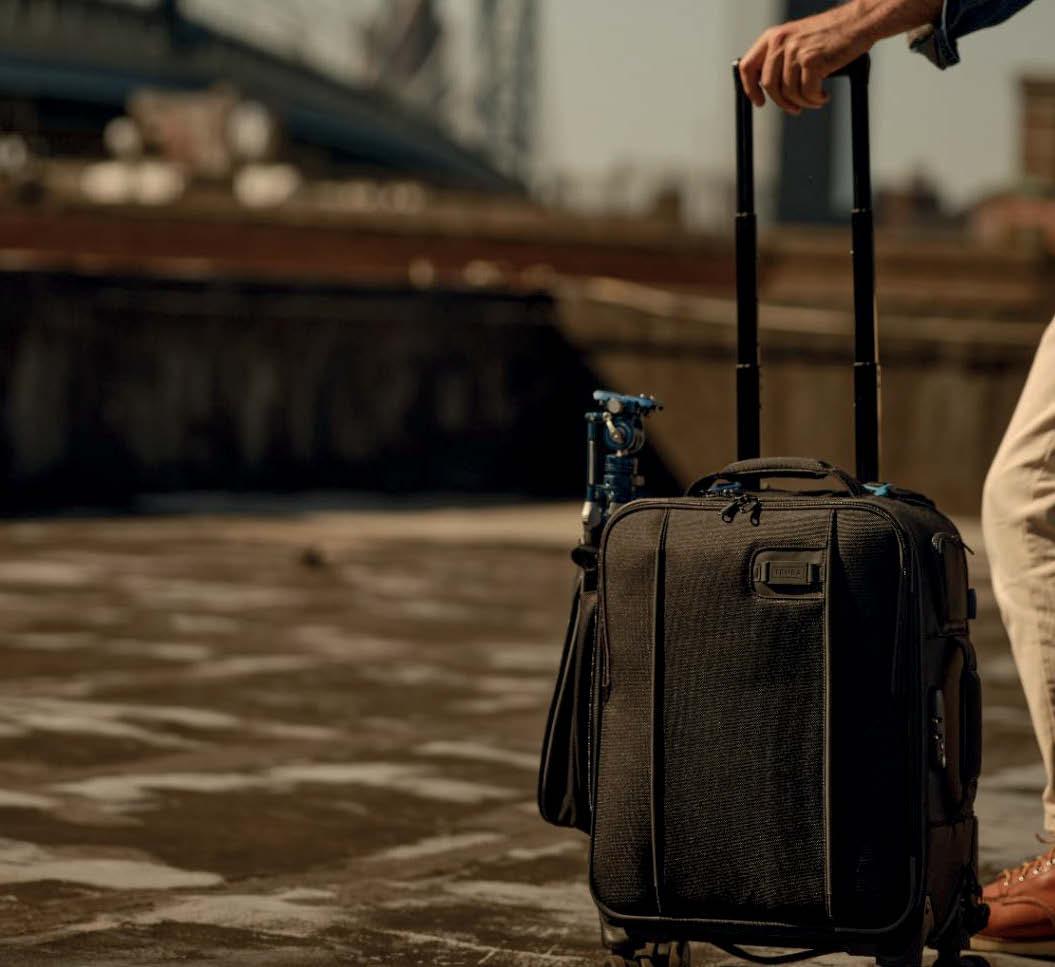
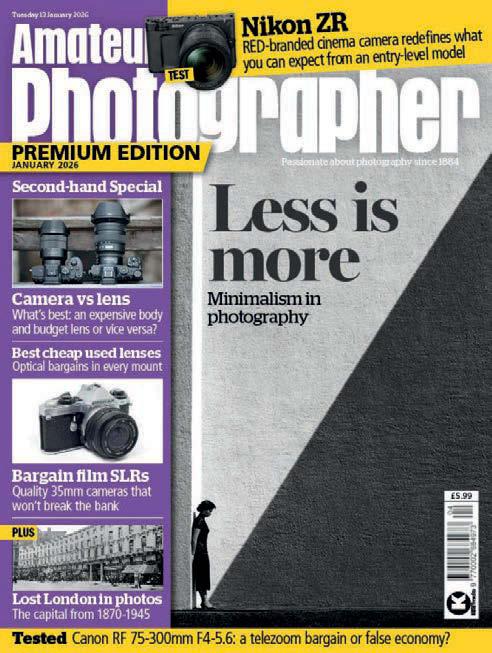
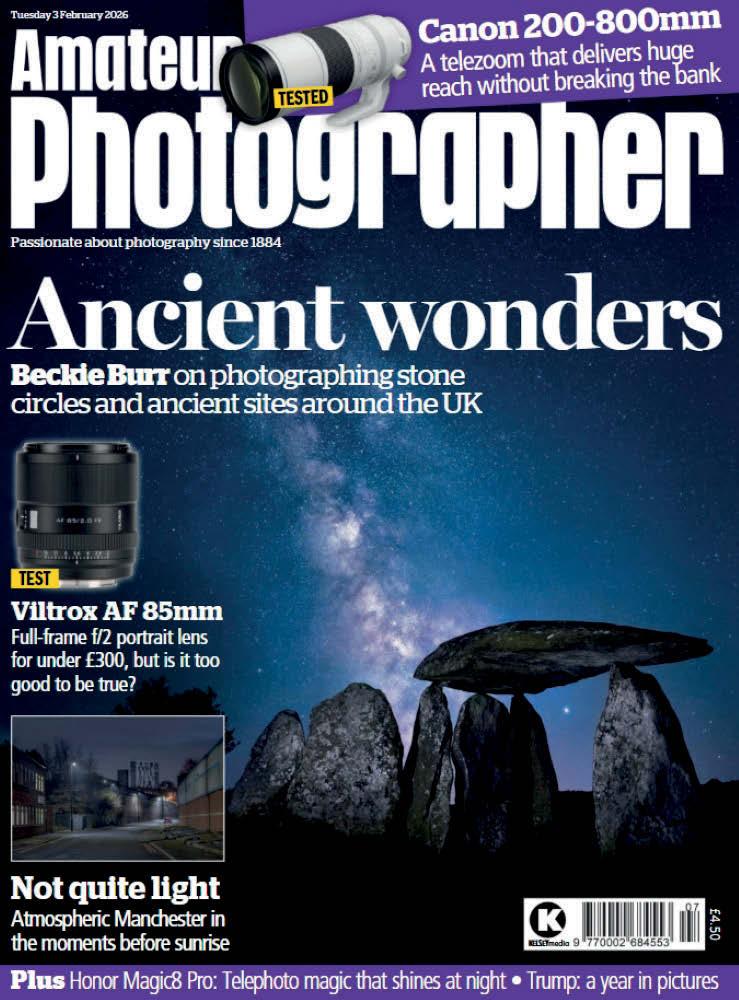
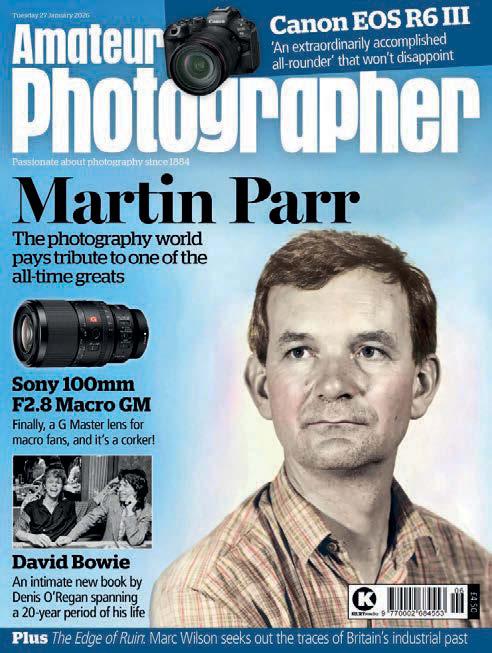
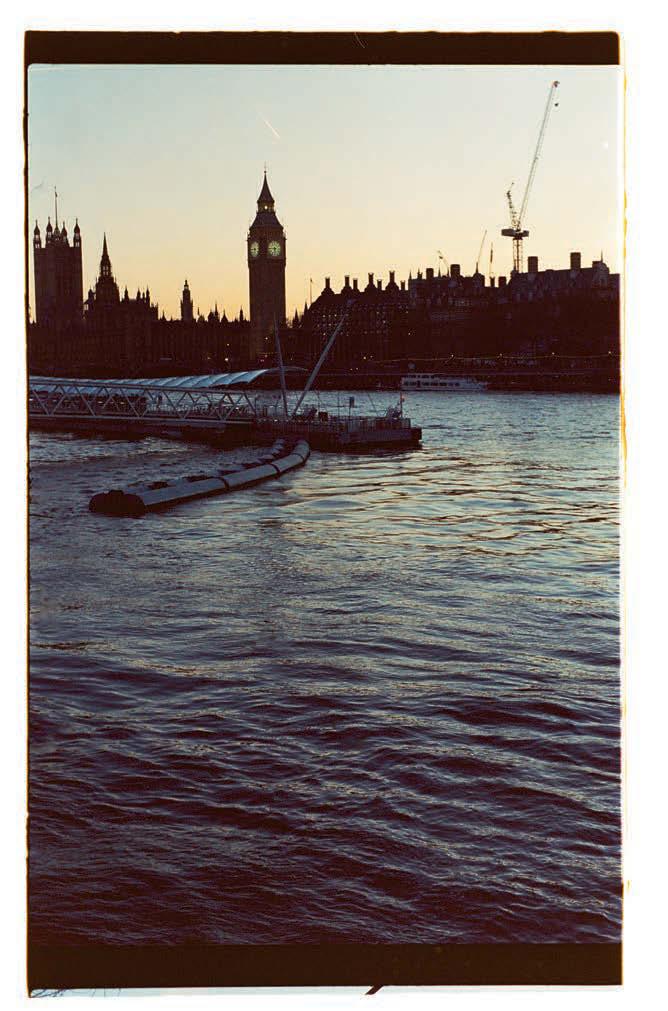
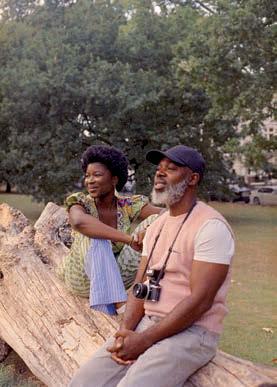
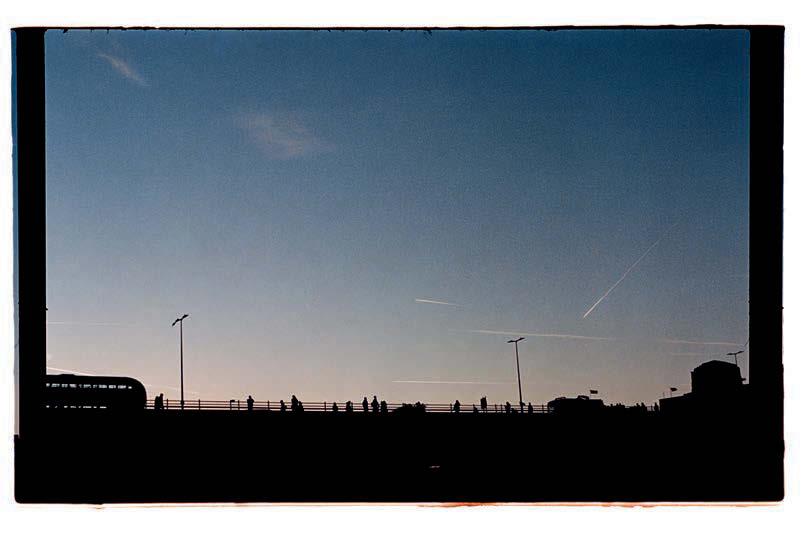
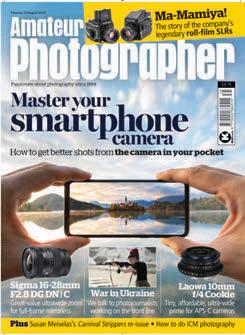
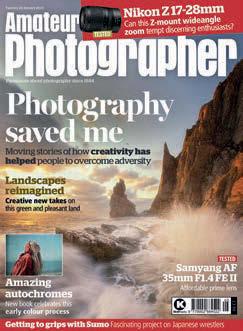
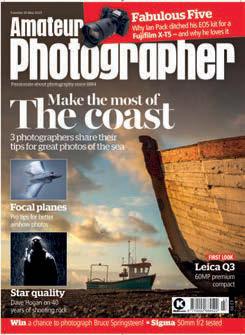
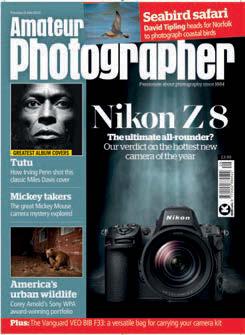
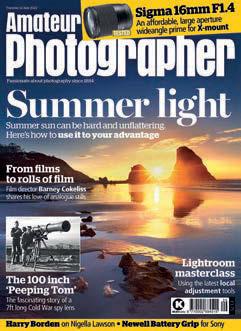
How C.I.M.E Lab is making film photography more affordable
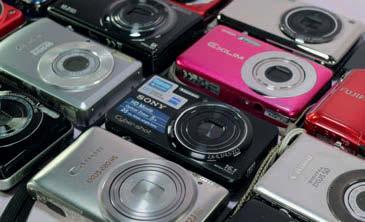
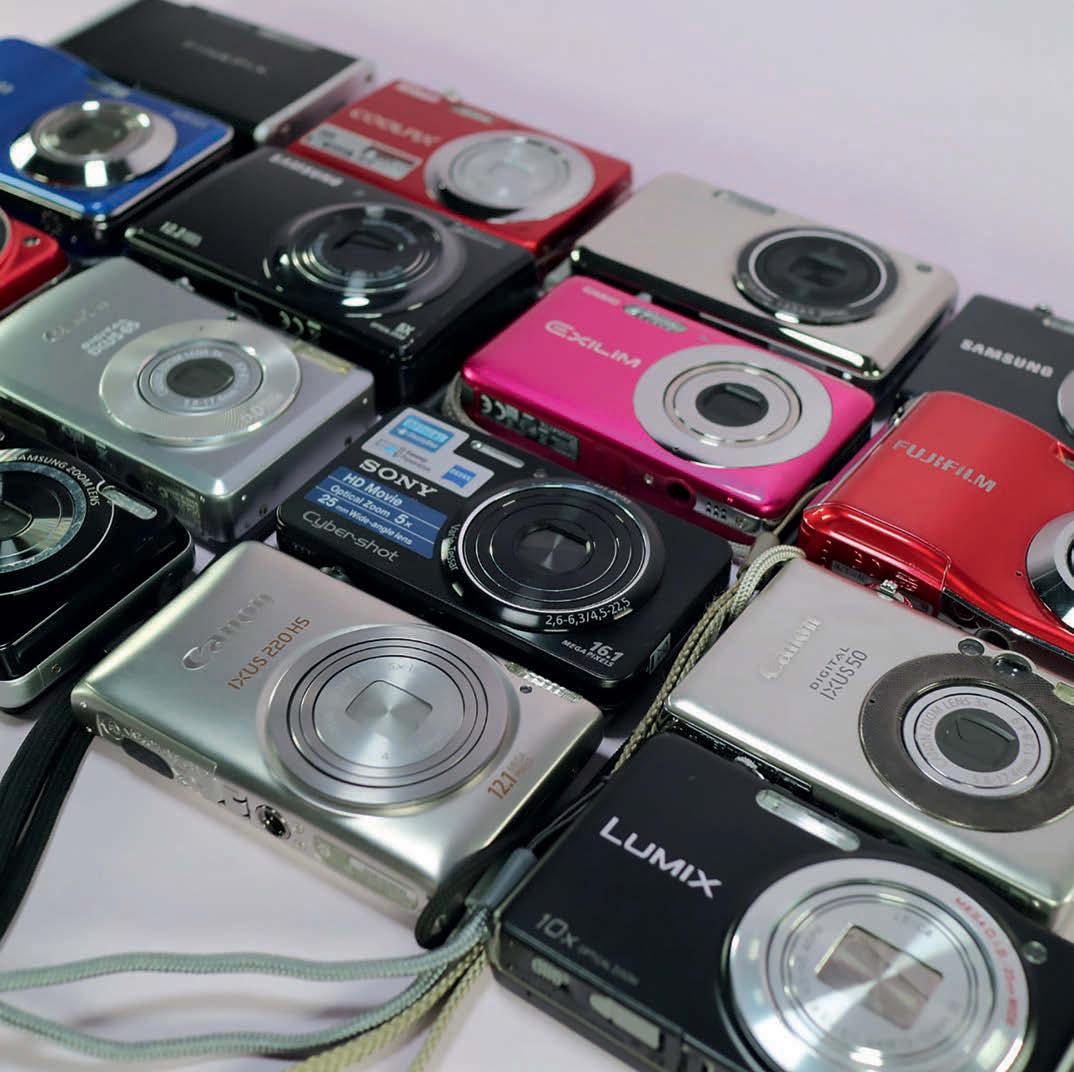
Dosh for digicams
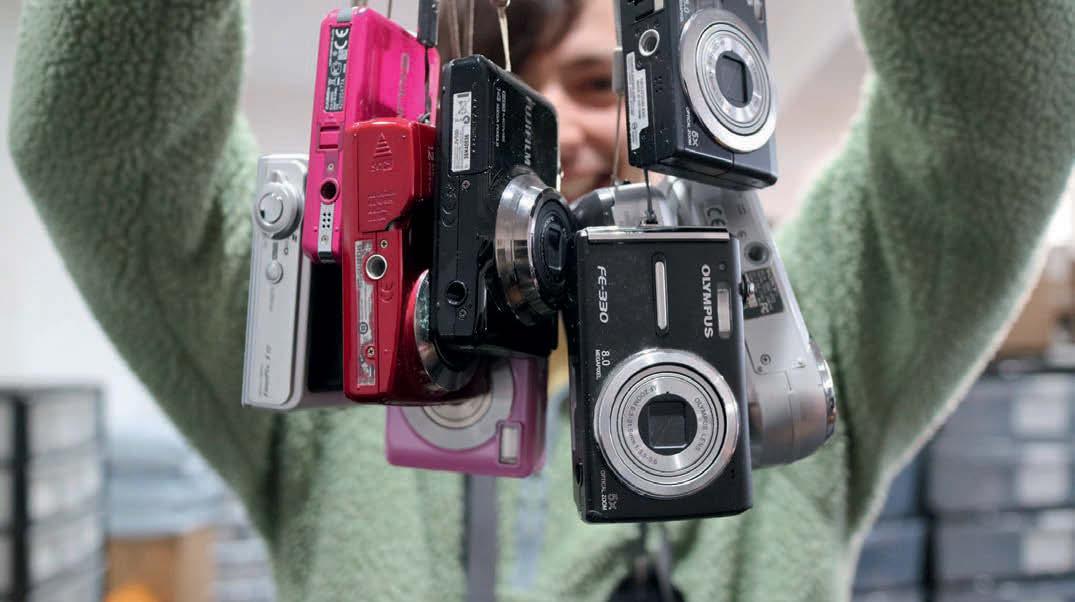
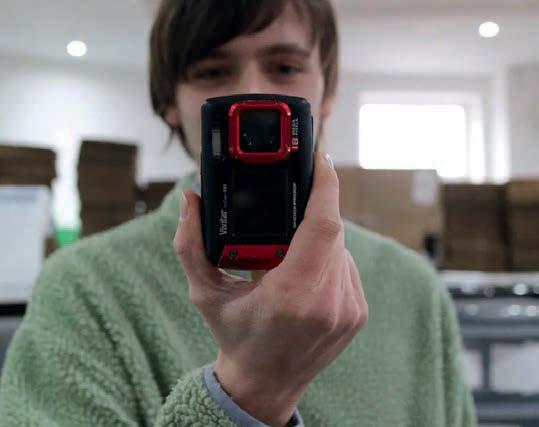
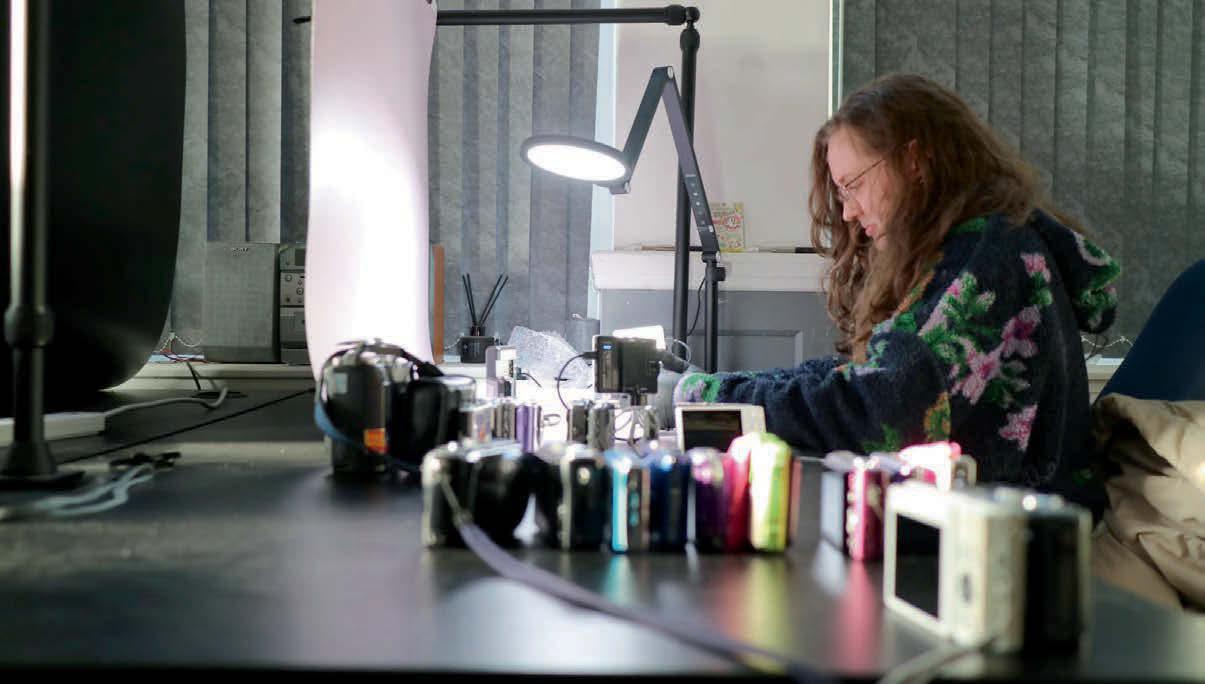
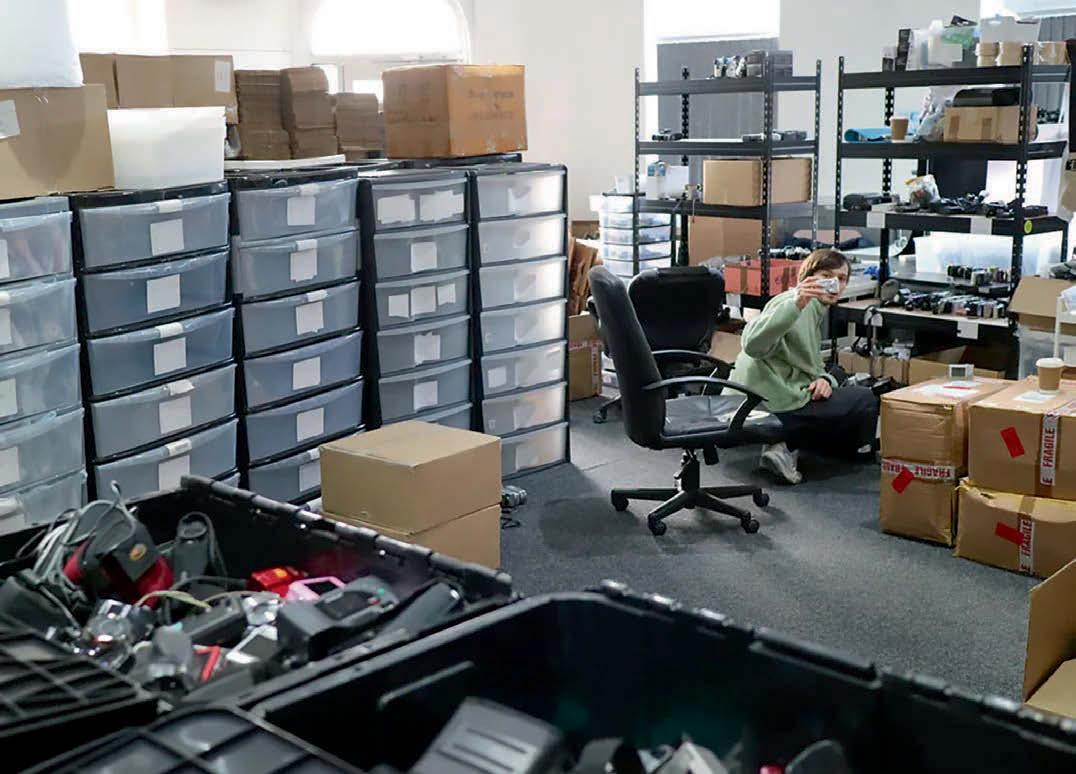
Cashing in on the craze for noughties digital cameras
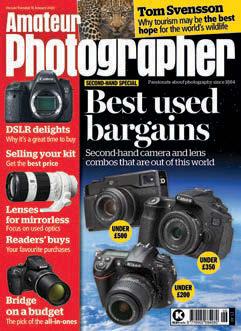
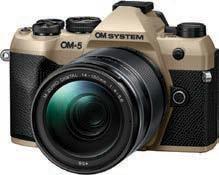
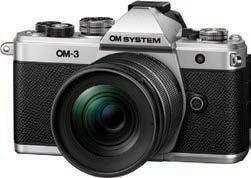
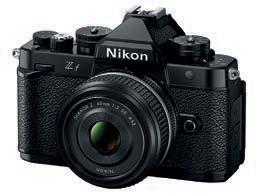
Cameras under £500
There are bargains to be had if you know where to look
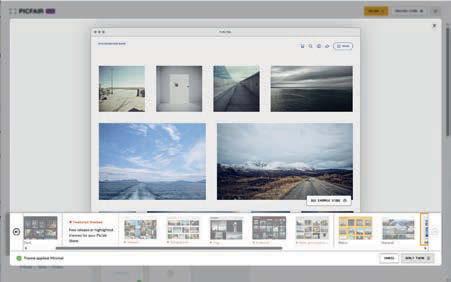
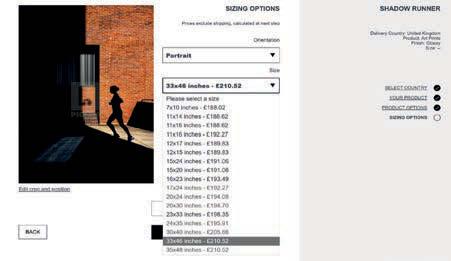
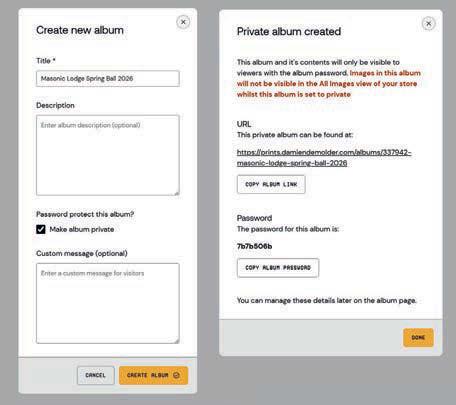
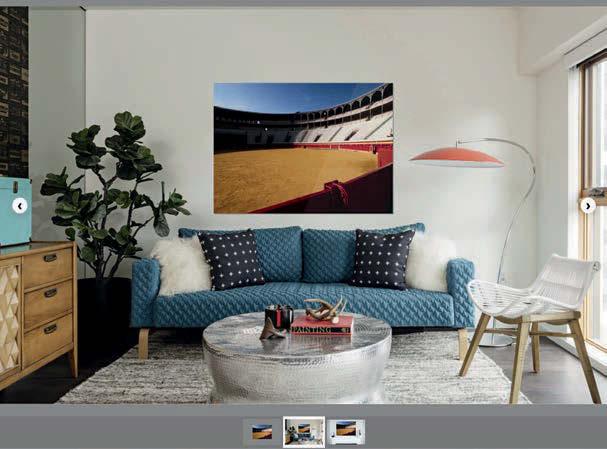
Pictures into pounds
How to monetise your hobby with a bit of help from Picfair
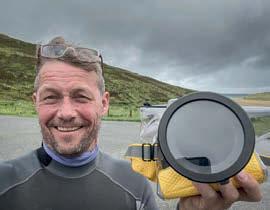
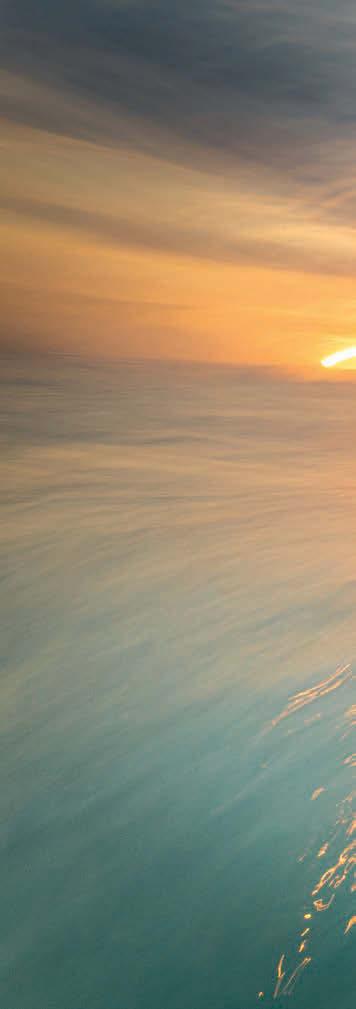
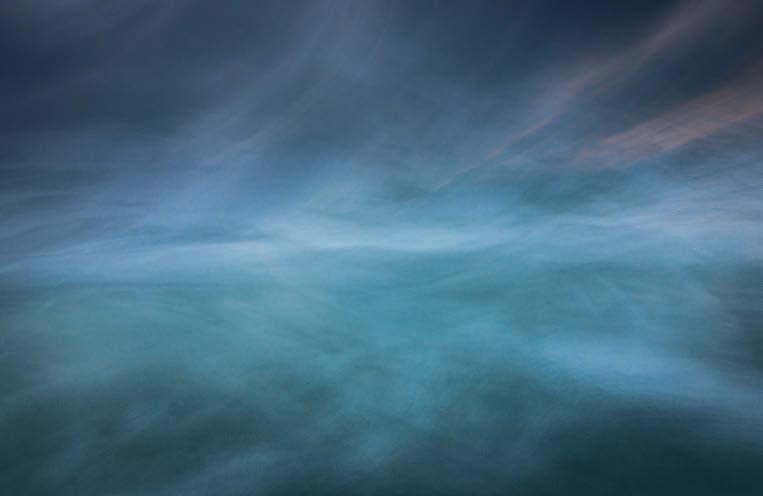
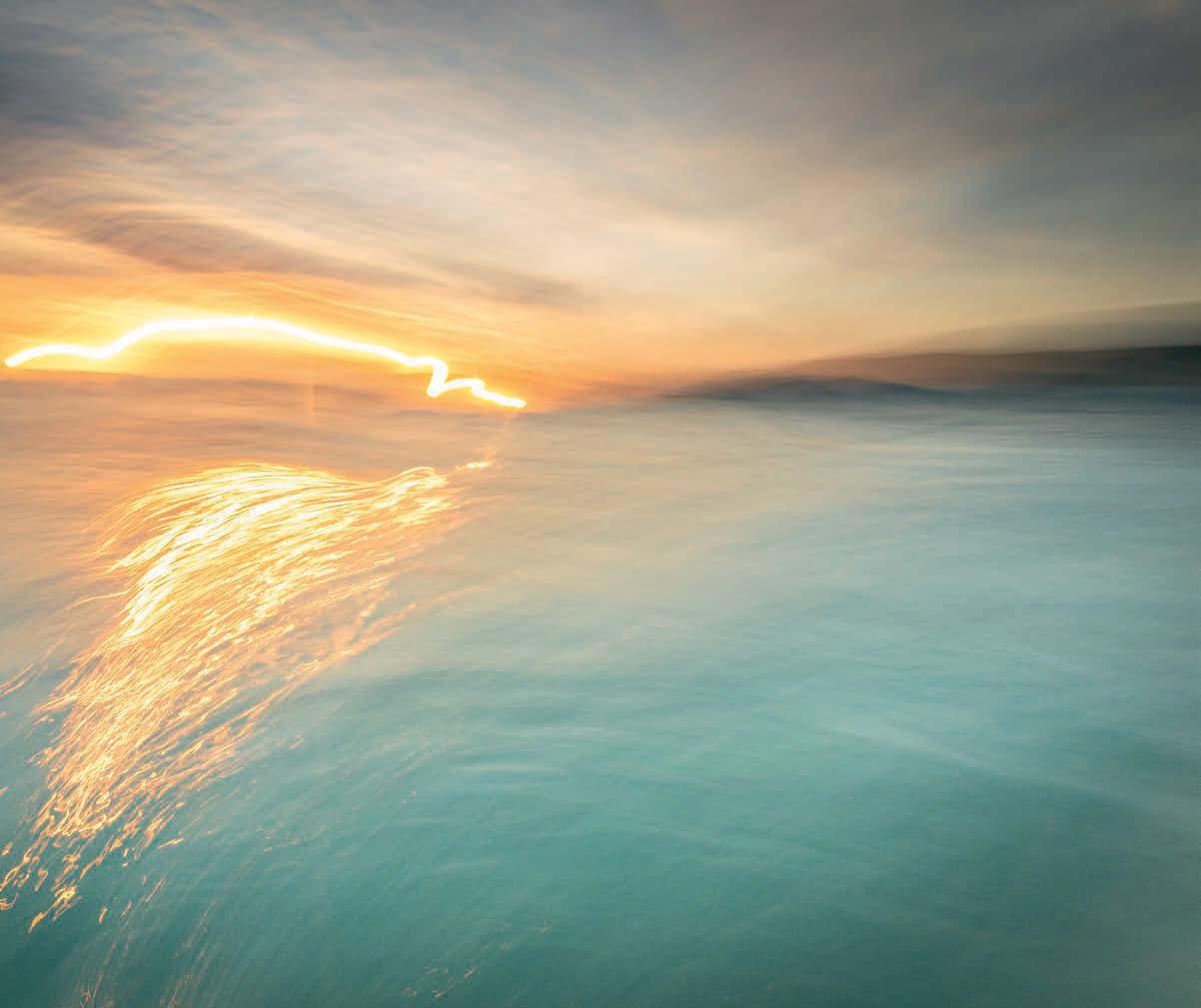
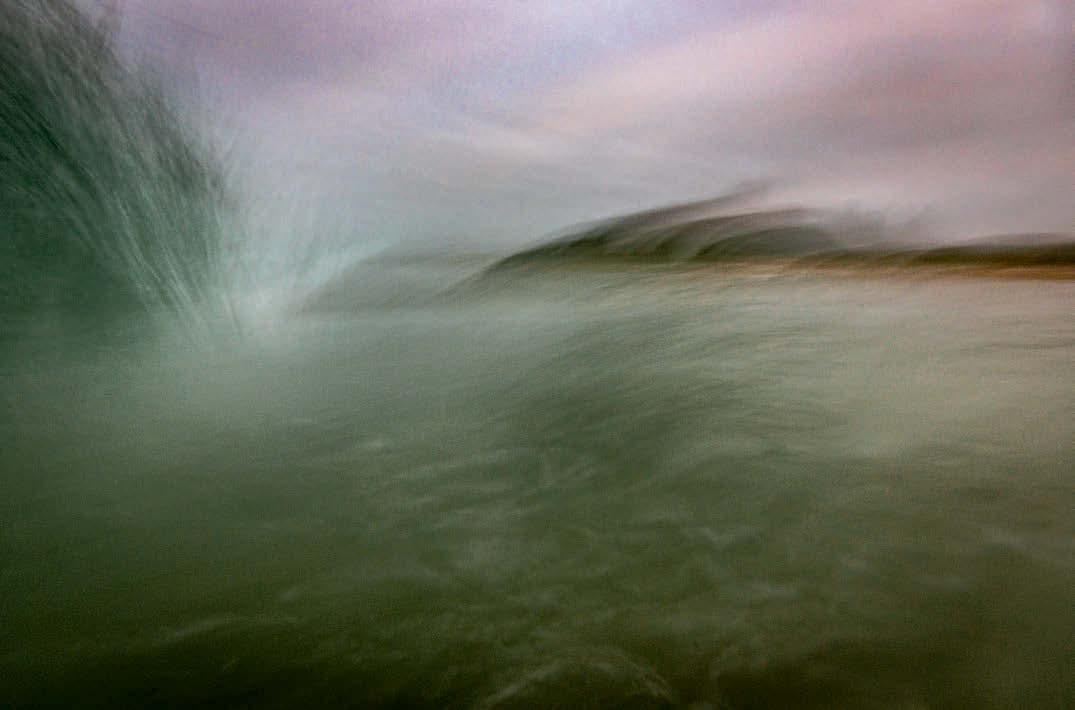
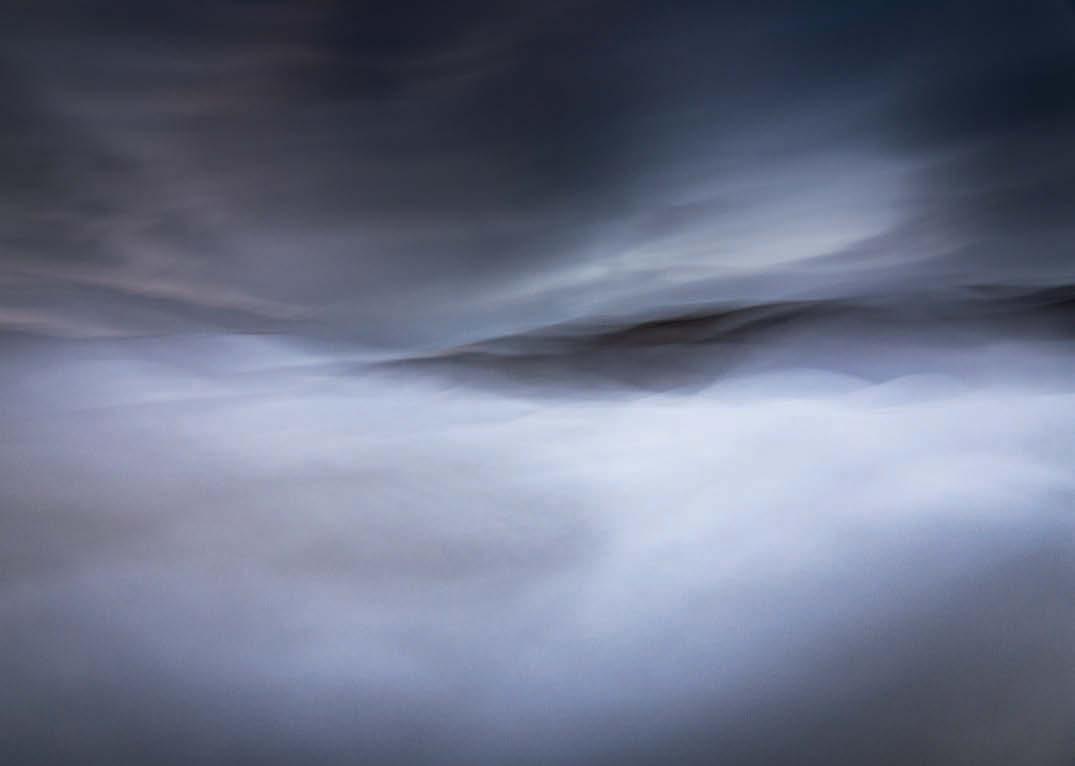
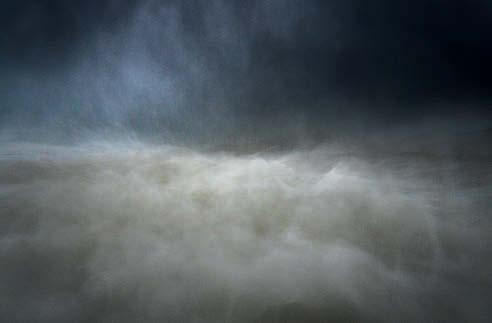
The ocean in motion
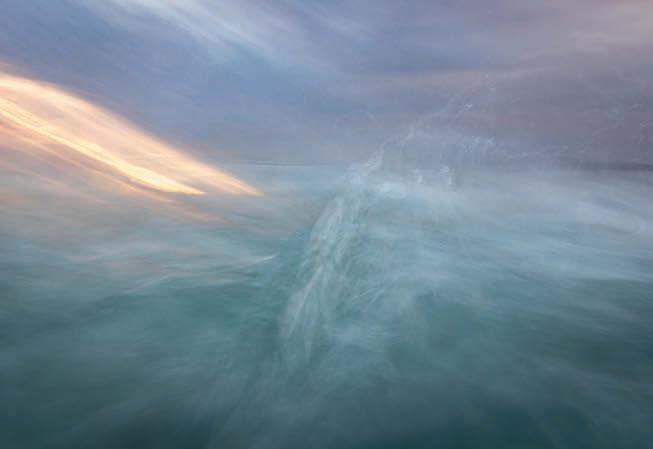
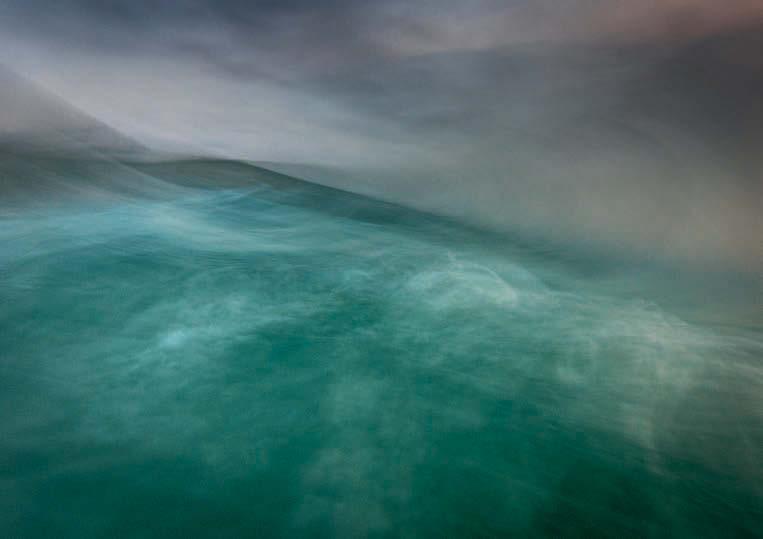
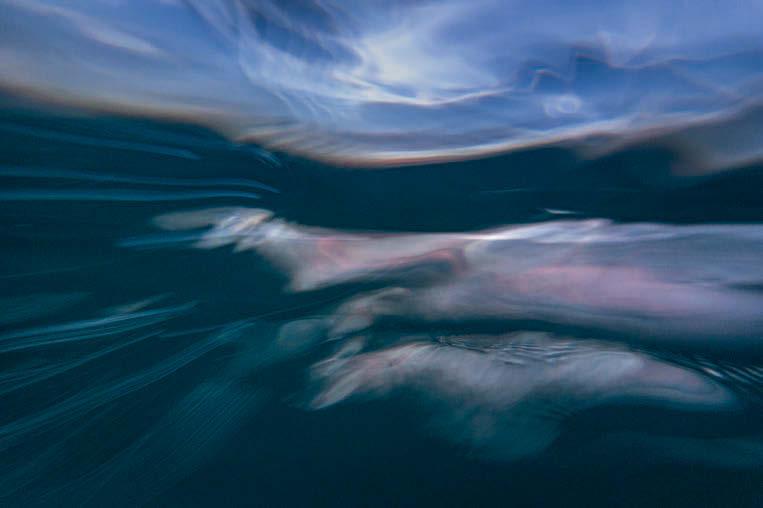
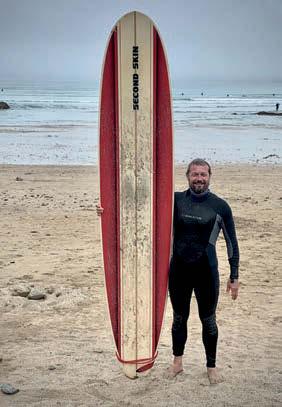
Actor turned photographer Bill Ward discusses Immersive, his collection of abstract ICM photos
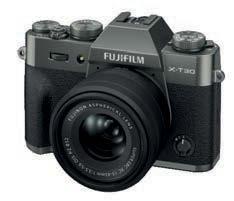
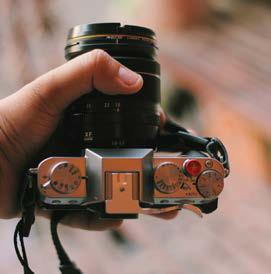
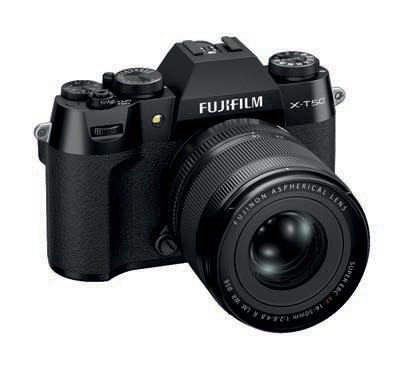
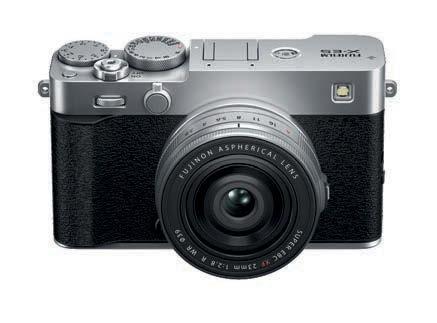
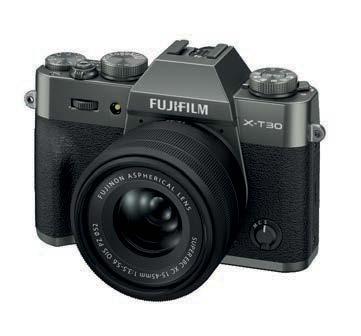
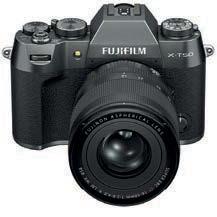
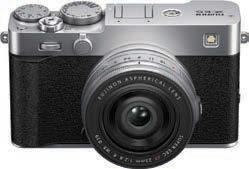
Fujifilm’s X-E5, X-T50 and X-T30 III are small, light and great value – but which one is best?
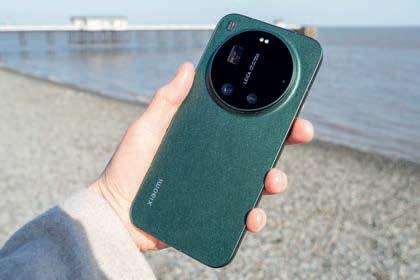
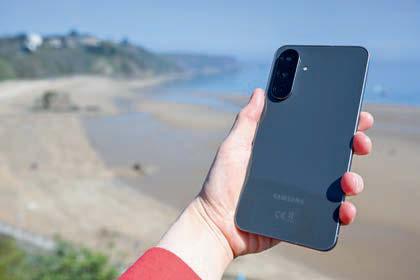
Plus Don’t buy an iPhone – get one of these better-value alternatives instead
Passionate about photography since 1884
Whether it’s photography, video, content creation or beyond, we’re here to support every step of your creative journey - bringing everything your need together under one roof.
To expertly craft a home for every creator and inspire the perfect shot, every time.
Welcome to your new
7days
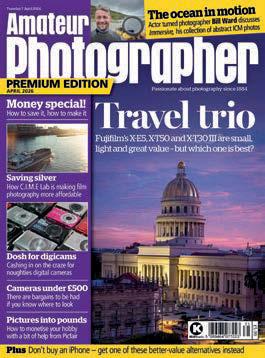
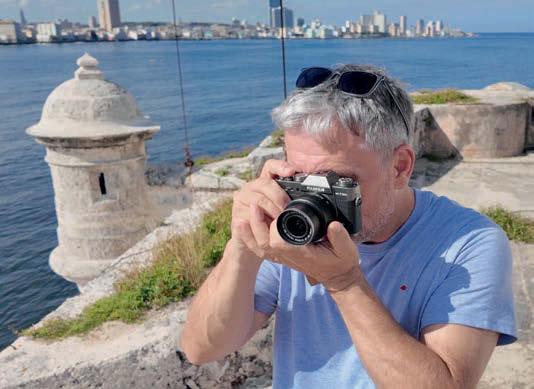
The theme of this Premium edition issue is saving money – a perennially popular topic given all the economic uncertainty around at the moment. You’ll find lots of tips and insights inside, ranging from editor Nigel’s experiences with three great-value Fujifilm cameras in Cuba, through to a round-up of the best cameras under £500 (new or used). Two top pros also consider whether you can still make a living with photography these days, and we reveal how an enterprising young couple from Leeds is cashing in by sourcing and reselling old digital compacts from the noughties. Money-saving aside, don’t miss my big feature on the best songs about photography – while former TV actor Bill Ward discusses his innovative take on ICM (Intentional Camera Movement). Geoff Harris, Deputy Editor
New Samyang 35mm lens for Sony
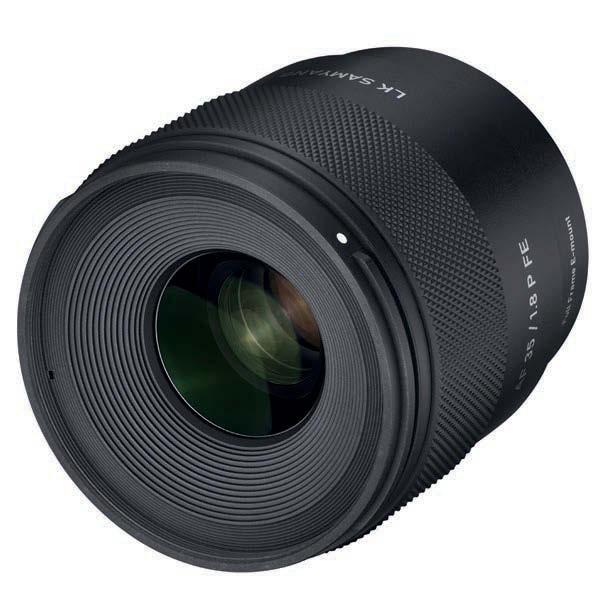
South Korean lens maker Samyang has announced the AF 35mm F1.8 P FE, the latest addition to its Prima Series designed for everyday photographers and ‘hybrid’ stills and video shooters.
The Sony FE-mount lens builds on the momentum established with the launch of the AF 35mm F1.4 P FE in 2024, followed by the AF 16mm F2.8 P FE and AF 85mm F1.8 P FE in 2025.
‘Offering a more portable alternative to the AF 35mm F1.4 P FE, it delivers an excellent balance of image quality and mobility,’ said Samyang.
The new AF 35mm F1.8 P FE lens is relatively light and compact at 216g, and features 10 lens elements in 8 groups to ensure sharp resolution and reduced aberration. UMC II coating minimises flare and ghosting, Samyang claimed, delivering
The new Samyang AF 35mm f/1.8 is for Sony FE-mount cameras
improved contrast and clarity in challenging lighting conditions, and the lens is weathersealed too. The filter size is 62mm and USB connectivity is provided for firmware updates.
The Samyang AF 35mm F1.8 P FE lens goes on sale at the end of April for £342.
Kodak updates bridge camera
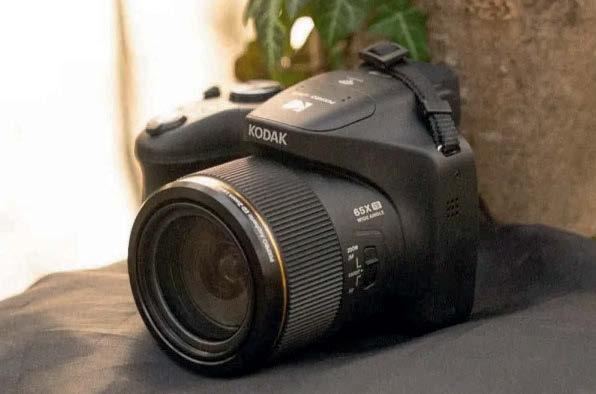
Kodak has announced the new Pixpro AZ653, an update that replaces the seven-year-old AZ652. This ultra-zoom bridge camera now has USB-C charging, but otherwise the specifications remain the same, with Full HD video rather than the now ubiquitous 4K recording.
The new Pixpro AZ653
There’s a 65x, stabilised optical zoom lens, equivalent to 24-1560mm, giving a vast zoom range, only beaten by the 83x optical zoom of the Nikon Coolpix P950 and the 125x optical zoom of the Nikon Coolpix P1100. While the Kodak AZ653 is still well behind the competition in terms of video, it’s cheaper than these cameras at £350, and comes with a 1cm macro mode, an electronic viewfinder, and a 3-inch vari-angle screen. Other features include 5fps burst shooting, Wi-Fi connectivity and ‘Intelligent’ scene and shooting modes. Kodak also makes other budget ultra-zoom cameras, including the Pixpro AZ405, with 40x optical zoom lens, and the Pixpro AZ255, with 25x optical zoom lens.
Feed your head
This quirky image by Valentina Bolla is featured in this year’s shortlist in the World Food Photography Awards sponsored by Tenderstem Bimi Broccolini. The competition attracted thousands of entries from over 50 countries and the winners of the 27 categories will be revealed on 2 June. An exhibition of all the finalist images will then run at The Mall Galleries, London, from 3-7 June. You can see the full shortlist at worldfoodphotographyawards.com
New mid-range Samsung phones
Samsung has released the Galaxy A57 and A37 midrange smartphones, with the A57 now equipped with an enhanced Image Signal Processor (ISP). This helps it deliver sharper and more detailed images with less noise and adapt to low light better for both video and stills. The Object Eraser AI tool has also been upgraded on both phones to deliver more naturallooking results. They are both available now, with the A57 costing from £499 and the A37 from £399.
Cascable photo app update
The Galaxy A57 and A37 are out now
The app adds support for more Sony models
The Cascable Studio photography app for iPhone, iPad and desktop Macs has been updated to include support for the Sony A1 II, A9 III, A7 V, ZV-E10 II and FX-range cinema cameras. The update also adds support for accessing the storage slots of certain Sony cameras, made possible by recent firmware updates from Sony. Full details are at bit.ly/cascabletweaks
This photo by Valentina Bolla is among the shortlist in the World Food Photography Awards sponsored by Tenderstem Bimi Broccolini
Heart-rending image wins nature contest
The winners of the 2025 Nature Photography Contest have been announced, with ‘Please Spare Our Home’ by Thomas Vijayan taking the top prize - Photography of the Year. Thomas wins €1,000 for his moving image of a mature orangutan surrounded by the remnants of its devastated habitat, with uprooted vegetation, broken trunks and exposed earth defining the scene.
‘The photograph goes beyond wildlife photography to become a powerful visual statement on deforestation and habitat loss,’ said the organisers. ‘It reflects the consequences of human activity while reminding us of our shared responsibility toward the species that inhabit our planet.’
It’s another win for Thomas, who was named Photographer of the Year in the previous competition.
Winning that plaudit this year is Angela J Sanchez from Georgia, USA, who triumphed with a portfolio of images showing a range of species adapting to different environments.
The Nature Photography Contest features ten categories, with Pawel Zygmunt from Ireland winning the Natural Landscape section. Pawel was also a runner-up in the recent Night Photographer of the Year competition which was organised by AP and smartphone maker, Honor.
You can see the full list of the winning images at: thenaturephotocontest.com
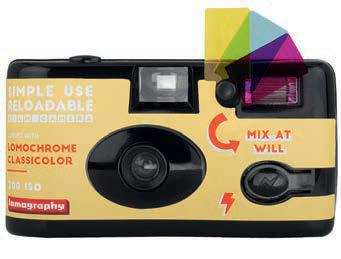
New Lomography film compact
Lomography has released the (deep breath) Simple Use Reloadable Film Camera LomoChrome Classicolor. It’s an easy-to-use, reloadable 35mm film compact that comes with the eponymous Lomographic film. Lomography claims this ‘captures true to life colours with blushing skin tones. Red tones burst energetically out of the frame, while blues and greens remain clear and crisp.’
The new camera features a fixed, 35mm lens with an f/9 aperture, a 1/120sec shutter speed and built-in flash with a range of funky gel filters. A single AA battery provides power and an optional Analogue Aqua Underwater Case is available for adventurous types wanting to take the plunge. The firm’s first Simple Use Reloadable Film Camera came out in 2017, and this latest addition to the range is available now for £19.90.
The reloadable 35mm film compact is £19.90
The winning image, ‘Please Spare our Home’, by Thomas Vijayan
WViewpoint Gavin Stoker
The mania for full-frame sometimes has our columnist scratching his head
hy is the full-frame sensor so highly rated? Is it because its dimensions ape a frame of 35mm film and therefore make it a match for a shedload of vintage lenses? Or because, in swapping film for digital, full-frame practitioners – especially pro photographers – don’t feel they’re losing quality in return for convenience?
Personally, I’ve always considered that full frame is something nice to have, but, for many of us, basically not essential.
That’s not to dismiss key creative advantages of a larger sensor. The opportunity to crop images without noticeable degradation is a real boon (but this comes more from resolution than sensor size alone).
That’s also something that Fujifilm’s 40.2MP X-Trans CMOS 5 HR sensor –the highest-resolution APS-C chip to date – allows, however.
Fujifilm proudly suggests that, paired with its own fifth generation processor, it can deliver quality above and beyond what’s expected of an APS-C camera and the best Fujifilm cameras prove this. AP’s X-H2 review confirmed it’s a camera that pros can use with confidence. It’s also excellent value for money compared with full-frame-sensor rivals. Still, any user will be wise to invest in top-tier glass to maximise the Fujifilm sensor’s potential.
Framing the alternatives
APS-C aside, further alternatives to full frame in the ‘crop’ sensor stakes include Micro Four Thirds. The main selling point remains its ability to enable longer focal lengths from relatively compact lenses, plus the system’s lightweight, portable camera bodies, as well as one of the cheapest weather-sealed cameras in the form of the OM-5 Mark II.
Traditionally, a full-frame camera –especially if a DSLR – meant a large body size second only to a medium format camera. Such robustness might
be something semi-pro and pro photographers actively seek out, but the weight, especially with a good quality lens attached, can prohibit it being an everyday creative tool.
Of course, if really favouring compactness, I can seek out a compact, enthusiast-targeted camera with one-inch sensor that will theoretically give a better performance than a 1/2.3-inch chip. Or there’s my phone as a back-up. But with that comes the temptation to check emails or Instagram, rather than focus just on the photographic task at hand.
Going the other way as regards alternatives, medium format camera sensors are typically 1.7x larger than fullframe ones. This makes them preferable for those who want to produce photorealistic billboard-sized output.
Traditionally, the cost of medium format cameras has put them out of reach of the consumer. But this has greatly changed in recent years. Fujifilm’s ever-expanding GFX range offers a huge 102MP resolution at a price not too dissimilar to a high-end full-frame mirrorless camera from rival makers.
In short, for those users who want to shoot full frame there has never been more comprehensive suppor t. Equally, for those who don’t, there has never been a wider – or better-performing –array of alternatives.
Gavin Stoker has been writing about and reviewing all things photographic for the best part of 25 years.
Do you have something you’d like to get off your chest? Send us your thoughts in around 500 words to the email address on page 3 and win a year’s digital subscription to AP.
Follow AP on YouTube
Don’t miss our videos for the latest kit, tutorials, behind the scenes tours and exclusive interviews with top photographers SOME RECENT VIDEOS
To find our channel simply point your smartphone camera at this QR code or type our name into Google: YouTube/AmateurPhotographerTV
Sony has made hay with its full-frame range
100 Photos That Changed The World
by Roberto Mottadelli, Gianni Morielli and Margherita Giacosa
£25, White Star, Hardback, 224 pages, ISBN: 9788854421790
A
stunning reminder of the power that photography has to shape key moments in history, says Amy Davies
For at least the past 150 years, photography has been fundamental in defining and shaping our understanding of key moments in our global history.
During a time when the ver y fabric of reality is being questioned thanks to the ongoing march of AI, a book like this reminds us of the power of the visual in reporting on global news, political movements and historical moments.
Let’s not pretend that photography hasn’t always had the power to deceive. What is left out of the frame can be just as important as what’s left in it – and there’s also no doubt
that photo manipulation is as old as photography itself.
But regardless, we have imagery that has certainly informed and illustrated, but has also shocked, explained and even – in some cases – changed the outcome of the course of history.
Beyond all that, the collection features a huge range of well-known photographers working for some of the biggest news outlets and agencies in the world, so it represents the crème-de-la-crème of photojournalism.
Just some of the big names here you might recognise include Steve McCurry, Abbas,
Henri Cartier-Bresson, Cecil Beaton, Burt Glinn, right the way up to the present day with Evan Vucci’s image of the assassination attempt of Donald Trump in 2024.
That final photograph is a stunning example of exactly what this book is suggesting photography has the power to do. Although it’s hard to know for sure, it has been suggested by many that photographs from this event is what swung the election for Trump, where previously it had been far less of a foregone conclusion.
This is an updated version of a book which has already proved popular, and the new additions bring important new context. If you’re at all interested in history, news, photojournalism and how our collective memories are shaped by what we see and consume in the media, it’s a fantastic addition to your bookshelf.
Left: New York City Engulfed in Flames, June 7, 2023 by David Dee Delgado
Right: Nameless graves in Kyiv, Ukraine, December 27, 2022 by Anadolu Agency
Books & exhibitions
The latest and best books and exhibitions from the world of photography
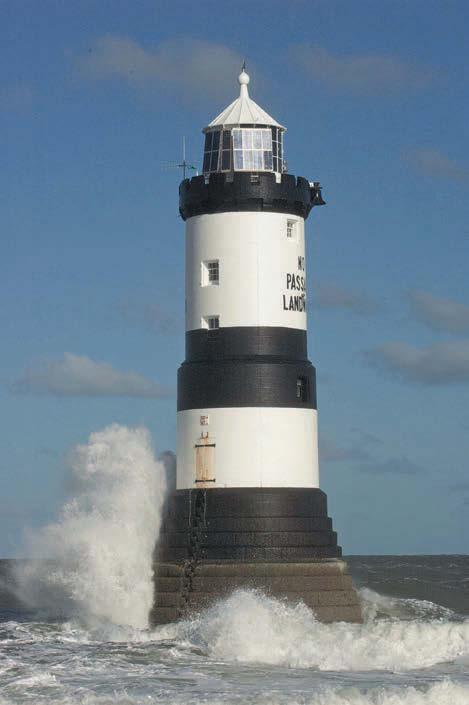
Apparently, there are more than 30 lighthouses around the coast of Wales. If you’re anything like me and you fancy a photographic challenge, this sounds like one to tick off.
This is a book that explores the history of lighthouses in Wales, including details on how they have been operated over the years, and who has been involved with that story – from lighthouse keepers to architects.
But from a photography perspective, it’s illustrated beautifully, but also acts as a guidebook to help you pick your next landscape destination. Some of my favourite landscape shots that I’ve taken over the years have included a Welsh lighthouse, so there’s plenty of good stuff on offer here.
I haven’t yet managed to make it to all 30, but it’s a manageable target to achieve, and you could have some fabulous photographic holidays along the way.
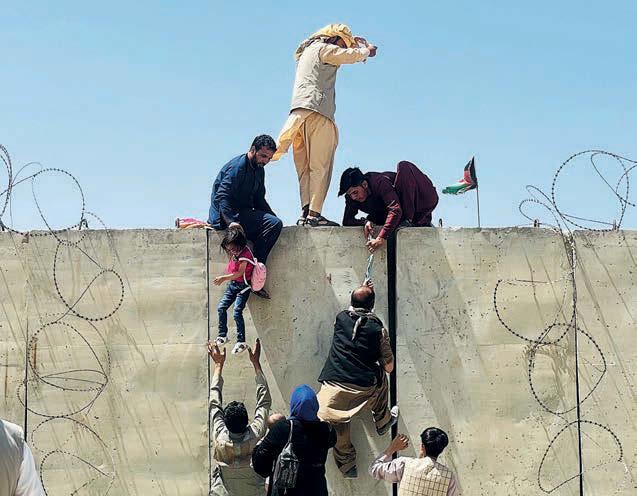
Above: Thousands of Afghans rush to the airpor t in Kabul, August 16, 2021 by Anadolu Agency
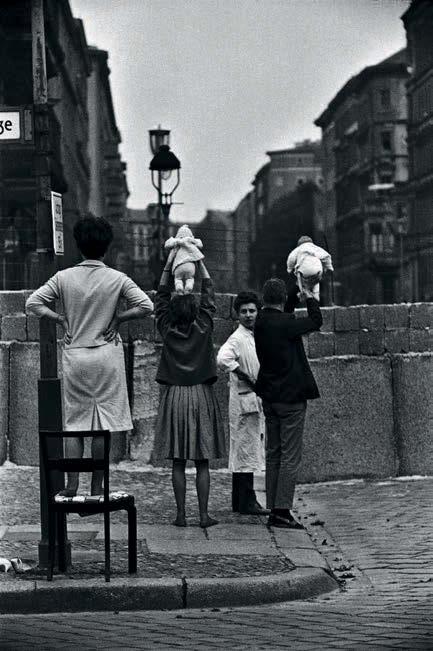
Right: Father and Mother Showing Baby Above Wall, Berlin, Germany, August 26, 1961 by Bettmann Archive
Bobby Doherty, Mushroom & Flowers, 2022
Above: Bobby Doherty, Untitled, 2025
Right: Takeshi Homma, Fukushima #43, 2011
Below: Ben Toms, Untitled, 2021
The Gourmand’s Mushroom. A Collection of Stories and Recipes
Mushrooms are often a favoured subject for nature photographers, being found in some of the world’s most bucolic locations.
They’re also a great source of food too, so for still-life devotees and food photographers alike, mushrooms can also be an inspiration.
With that in mind, it’s perhaps no surprise that somebody’s decided to put together a whole book on the topic – and it’s a pretty massive one too.
There’s all sorts of fascinating things to devour here. Mushrooms have been revered as food, medicine, sacrament and symbol.
The photography (and illustration) in this book is a pure delight, with some truly creative methods for capturing fungi in all its forms.
Also accompanying the imagery is a range of texts exploring a number of different topics ranging from ancient folklore to toxicology to avant-garde art, architecture, fashion, film and even space travel.
This is one of those books that you never knew you needed, but one that you can get really stuck into and be spouting off mushroom facts to your friends and family for weeks on end.
It might also inspire some of your own photography too, so for all of those reasons, it comes highly recommended.
Left:
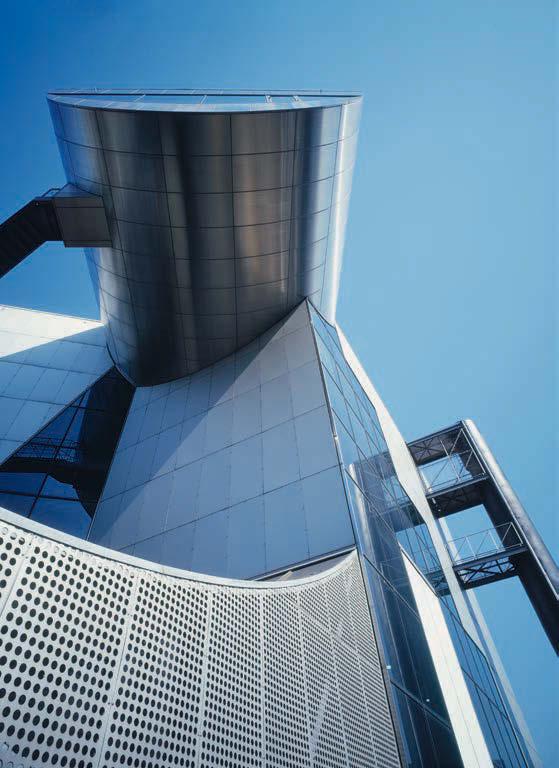
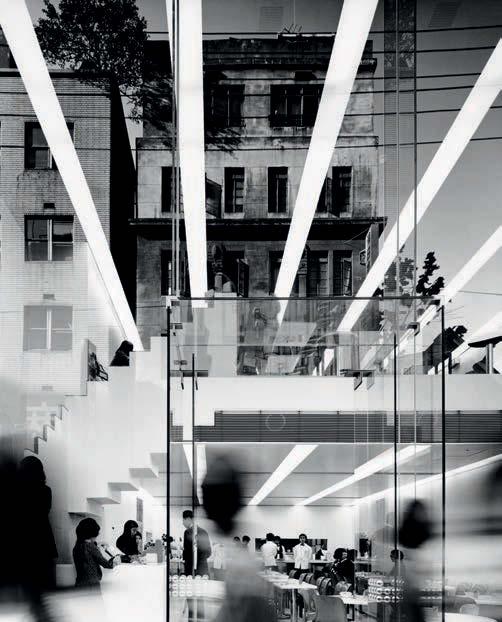
Ka Me Ra: Modern Japanese Architecture through the Photographer’s Lens by Ari Seligmann
This has got to be one of the most fascinating books I have come across in recent times.
At first glance, it might seem like a lovely photobook of Japanese architecture – which in one respect it is. It allows us to travel to far-flung destinations and get a glimpse of beautiful architecture which might otherwise be difficult to visit. But in another sense, it’s also an examination of photography as a
medium, and how it is used to document important buildings.
One of the questions it poses is, ‘Can documenting buildings in this way ever be entirely neutral?’. This is something which the architecture expert Ari Seligmann aims to answer, recognising that photographs of buildings are more than marketing images for architects and magazines, but they’re not quite historical record either.
Bringing together biography and photo
history, Ka Me Ra shines a light on several Japanese architectural photographers who – unlike the buildings which their lenses have captured – have had almost no global recognition, until now.
The book itself is also exquisitely printed, with sections using different paper stock for a real tactile journey through the pages.
This is an early contender for book of the year for me, so I’d highly recommend picking up a copy of it.
Left: 0.51 TIT Centennial Hall c. 1990 by Kazuo Shinohara 1987 Above: 9.04 Carioca Building 1971 by Shiro Kuramata 1971
Our favourite photos posted by readers on our social media channels this week
Every issue, Europe’s leading photo printing company CEWE will be giving the AP Pic of the Week winner a total of £100 in vouchers to spend on CEWE’s exceptional photo products. Visit cewe.co.uk
Cosmic Frequency
by Joao Yordanov Serralheiro
Sony Alpha 7 IV, Sony FE 14mm F1.8 GM, Benro Mach3 TMA28C w/ Benro Geared Head, Godox Intervalometer, 181x30sec at f/2.8, ISO 500
‘I love landscape astro photography, in particular star trails. This image was captured under one of the dishes from the AMI LA (Arcminute Microkelvin Imager Large Array) at the MRAO (Mullard Radio Astronomy Observatory) in Cambridge. Star Trails is a technique that uses the natural rotation of the Earth with a series of long exposures revealing the apparent movement of the stars across the night sky. This particular image is the result of 181 30-sec exposures stacked.’ Instagram: @joaoysphotography Website: www.joaoysphotography.com
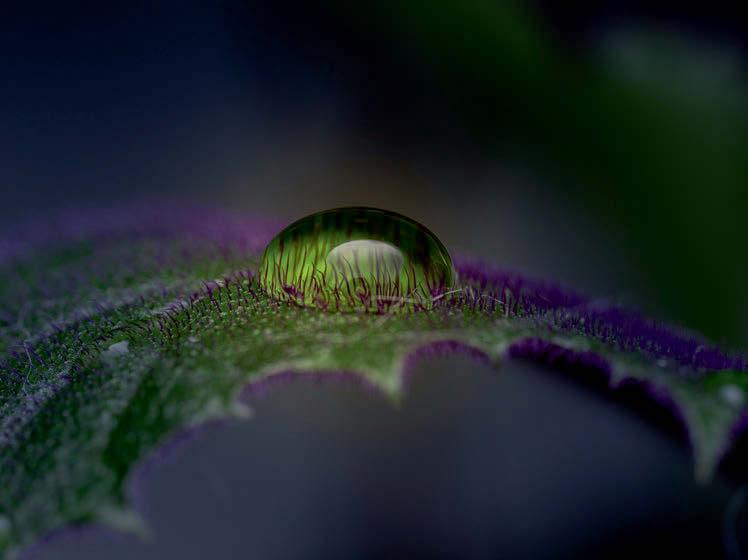
A Lens Inside a Lens
by Nick Stein
OM System OM-1, M.Zuiko 90mm
f/3.5 Macro, 1/250sec at f/8, ISO 200, diffused flash, tripod
‘This was taken indoors during winter using a water droplet on a purple passion plant leaf. The fine hairs on the leaf helped hold the droplet in place while also adding texture and depth. With diffused flash, the droplet acts like a lens, revealing a small world within it.’
Instagram: @littlebugphoto
We also liked...
Want to see your pictures here? Simply share them with our Instagram or Facebook communities using the hashtag #appicoftheweek Or you can email your best shot to us at ap.ed@kelsey.co.uk. See page 3 for how to find us.
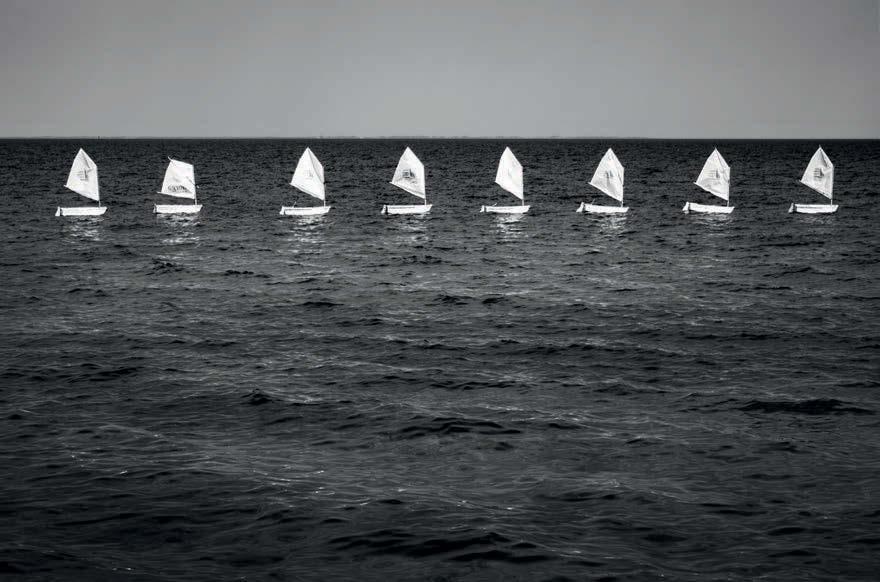
Pentax K-5 II, Pentax-DA 18-55 F3.5-5.6 AL WR, 1/500sec at f/7.1, ISO 125, at 55mm
‘This photo was taken in Gdynia, Poland, in 2018. It was taken on a sunny day and shows Optimist-class boats belonging to the Yacht Klub Polski Gdynia, prepared for training young sailors.’
Facebook: facebook.com/ mariusz.grala.31
Instagram: @mariusz_grala
500.px: mariuszgrala
LETTER FROM THE EDITOR
Dear reader,
Looking to improve your photography? Amateur Photographer is the magazine for you, so subscribe today and pay just £32.99! You will be joining our community and enjoy convenient home delivery every week plus you will receive our free weekly newsletter. Amateur Photographer is the perfect read for both amateur and professional photo-enthusiasts providing news, reviews and advice to help improve your skills..
Nigel Atherton, Editor
Join us and enjoy these great benefits: Every issue delivered directly to your door
Receive the Amateur Photographer newsletter every week**
One FREE entry per round into Amateur Photographer of the Year Competition
Additional PREMIUM content every 4 weeks at no extra cost
Immersive
quality
Bill Ward spent a decade in the ocean, developing a unique style of abstract seascape. As he releases Immersive, a new book of ICM photography, he tells Peter Fenech how it combined his passions for acting, surfing, and photography
In the digital world, where cameras are equipped with ultra-high resolution sensors and hyper-sensitive autofocus systems, loaded with clever AIpowered technology, it can be difficult to see how photography can get any better.
It is certainly a challenge to capture images which are truly original. After all, how can an image be one-of-a-kind when there are millions of files being created around the world each day, most likely of very similar subject matter? It’s a problem lamented by many photography purists, especially those with the drive to capture inspiring images that trigger an emotional reaction in their audience.
As is often the case whenever creative stagnation threatens to put the brakes on innovation, the best solution might be to do the unexpected. This is what photographer Bill Ward has made his signature style. His abstract seascape images trade sharpness for silky-smooth waves, captured using long exposures, and literal detail or painterly colour palettes drawn using an expert understanding of intentional camera movement (ICM).
A professional actor by trade, Bill is also a passionate surfer, and so has spent a great deal of time in the water. It was this love of the coast that made a fascination with seascape photography inevitable.
‘I do a lot of canoeing, sailing and bodyboarding. Water is my medium.
I’ve always been drawn to the coast,’ he explains. ‘I’ve surfed in Morocco, Portugal, the USA, France and beyond, so it’s no surprise that I now consider myself a coastal photographer.’
Bill’s photographic journey started in his twenties, first with a Kodak Instamatic and later with a Praktica MTL 5B, which he took travelling with him. This fully manual camera is what initially inspired him to adopt a see-and-shoot approach to photography, whereby he places less of a focus on planning a shot and more on using what the environment around him provides. These formative years are what
Below: Bill’s images make use of light and colour contrasts, rather than capturing a literal view of each location
would later inspire his Immersive project and the style for which he is now recognised internationally.
‘In late 2009, I was working on a pilot for a detective series in Montreal. We were waiting to see if the show would be picked up for a series, and during that four-month period, I was contractually obliged not to take on any other acting work. I wondered what I could do to fill the time, so I bought my first DSLR and a tripod, and set myself a photographic project,’ he explains. ‘That’s how I became so projectbased in the way I work.’ The next stage was to combine his passions
for water, photography and expression, culminating in his current body of work.
‘As a surfer, my fascination is the transfer of energy between the sea and the land. I wanted to get a camera into that place, where I’d usually only use a surfboard. I started by getting as close as I could, either barefoot or wearing wellies. Then I went further in using a wetsuit. I would place the camera down as low as I could, wait for the wave, then pull the lens back and up over my head as it approached. I started to get the type of photos that I’d never seen before.’
‘I was focusing on the meeting point of the land and the sea. It started to occur to me why I was stopping at the sea - why didn’t I keep going?’
Into the water
From this point, Bill’s project became about experimentation and honing the recipe of camera settings and movements. ‘The next stage was to get the camera punching through a breaking wave, and that was the point at which I needed a waterproof housing. My interest was less in shooting huge sculptured waves. Mine was ICM – a moving camera, a moving body, and a moving wave.
‘For the images in my book, Immersive, my shutter speed varied quite a lot, ranging from as fast as 1/100sec to as long as 3 or 4 seconds. I like to try different combinations of exposure length with different movement types, because you don’t know what you’ll get until you try it. That is, of course, the beauty of ICM photography.’
As he began to work the
Above: Bill uses exposure duration to control the amount of detail visible in the surface of the water, with shorter shutter speeds revealing texture
waves, Bill developed a preferred method for shooting different water movements, based on the lighting and behaviour of the sea. ‘When there is very little swell, and the setting sun creates a languid vibe, longer shutter speeds tend to suit this atmosphere better as they exaggerate the smaller movements. Meanwhile, shorter exposures seem to work more effectively with larger waves,’ he explains.
‘I tend to shoot in manual mode. I lock the camera off at a focus distance as it’s quite dark under the water, and lenses will start hunting, which isn’t ideal when it’s in a waterproof housing. I like to lock off the focal length and autofocus, then play with the other variables such as shutter speed.’
Bill highlights that in ICM photography, the more control you take over each camera setting, the more likely it is that you will discover a style of image that pleases you. He mentions aperture control, which raises an interesting point: when the intention of an image is to blur detail through long exposure, what effect can depth-of-field have, especially in the relatively flat terrain of a beach environment?
‘Depth-of-field still has a big impact on the look of a shot,’ emphasises Bill. ‘You still get a visibly selective focus even in a
Clockwise from above: The secret to the success of Bill’s Immersive series is his combinations of camera and subject movement to vary the look of the waves
Using a waterproof housing enables Bill to allow the water to wash over his camera, producing an unusual perspective of lapping waves
Using wideangle lenses captures an expansive view that recreates Bill’s perspective when out on the water
His Immersive project started with Bill capturing images from the shore before moving into the sea itself
Warm and cool colour temperatures complement each other to give images direction and depth, despite the flat coastal locations
‘I was using everything: my head, my heart and my body - I’d never been able to do that with photography before’
blurred scene, which impacts the contrast and contours of the breaking waves. You will get dark and light patches, and the variable sharpness of these can help create separation between the centre and edges of the frame. I often shoot at f/16 for practical reasons, but I have shot with my lenses wide-
open at f/4, which makes shallow focus noticeable.’
Looking at the selection of Bill’s images that feature in Immersive, a pattern emerges – many are taken during the golden hours. Is this an aesthetic choice, as for many landscape photographers, or purely a practical decision?
Bill’s top tips for ICM and underwater work
1 experimentContinuously
Try everything. There is no right and wrong. The more variables you change – shutter speed, f-stop, camera movement – the more unexpected the results will be.
2 Forget about ‘hit rate’
The nature of experimentation is that not all of it is going to please you, but use these misses to navigate towards what works. There is a reticence amongst people new to ICM about the number of images that don’t work. If you aren’t happy, change something. Use these to inform your direction.
3 Develop your own taste
Decide if you prefer a completely abstract image or one that retains some detail so that the subject matter can be clearly identified.
4 Prepare for housing failure
Accept that it’s at least a possibility and use this to keep yourself mindful of conditions. Housing failure only has to happen once for you to lose your gear.
5 Stay safe at all times
This is far more important than any photography. Know your personal limits. Understand that Mother Nature can change sea states very quickly. Look at tide times and state. Look at rips and swells. Always assume that the unexpected can happen.
‘It started off practically because the ambient light is lower at these times. My first experiments were using a Ricoh GR III, which featured a built-in ND filter, making long exposures easier. Once I switched to a DSLR, I had to wait for the ambient light to drop and shoot later in the day. There’s actually a section of the book on stormy weather, so sunrise or sunset weren’t a prerequisite, but it is where the project started. The lower the light, the lower the shutter speed.’
Tools for the job
Neutral density filters still play a part in Bill’s repertoire, helping him to hold back the shutter speed just enough to hide or reveal the amount of detail he wants in his images.
‘I will often use a 5-stop or 3-stop circular ND to get the shutter speed down. Circular filters are needed as they are the only type that will fit in my camera housings. I do use
variable NDs too, but for the images in Immersive, I simply controlled the exposure using ISO.
‘I’m using a Pentax K-3 Mk II, which is readily available on the second-hand market, so there is noise present, but I’m rarely above ISO 800, and I quite like the extra texture it brings anyway.’
Bill feels that APS-C cameras suit his underwater work perfectly, not least because of their current affordability. ‘I started using a Pentax K-1 full-frame model, but that’s not expendable. A waterproof housing will work until it doesn’t!’ he jokes.
‘This type of work isn’t for the faint-hearted; you must accept that a housing failure is possible if not actually likely. I’ve broken two cameras doing this, so forward planning with your choice of camera is essential. The cameras I prefer are the cheapest!’
In line with the title of his book, Bill likes his viewers to feel immersed
‘I’ve always been drawn to the water. I now consider myself a coastal photographer’
Above: Bill’s cameras are used in Manual mode with AF deactivated to prevent camera settings and focus from changing between shots
Below: An ND8 or stronger ND filter allows Bill to capture images with just the right amount of movement
in nature through his images, and as such, he tends to favour wideangle lenses. ‘I tend to see wide, so I prefer shorter focal lengths. I shoot a lot on a Sigma 10-20mm lens [15-30mm in full-frame terms] as the wider I am, the more I feel that I’m surrounded by nature. This might be different for someone else, and I will then move through the focal ranges myself. I have a 55-300mm for detail, and the next iteration of the project is to move on to longer lenses.’
Top of
the shots!
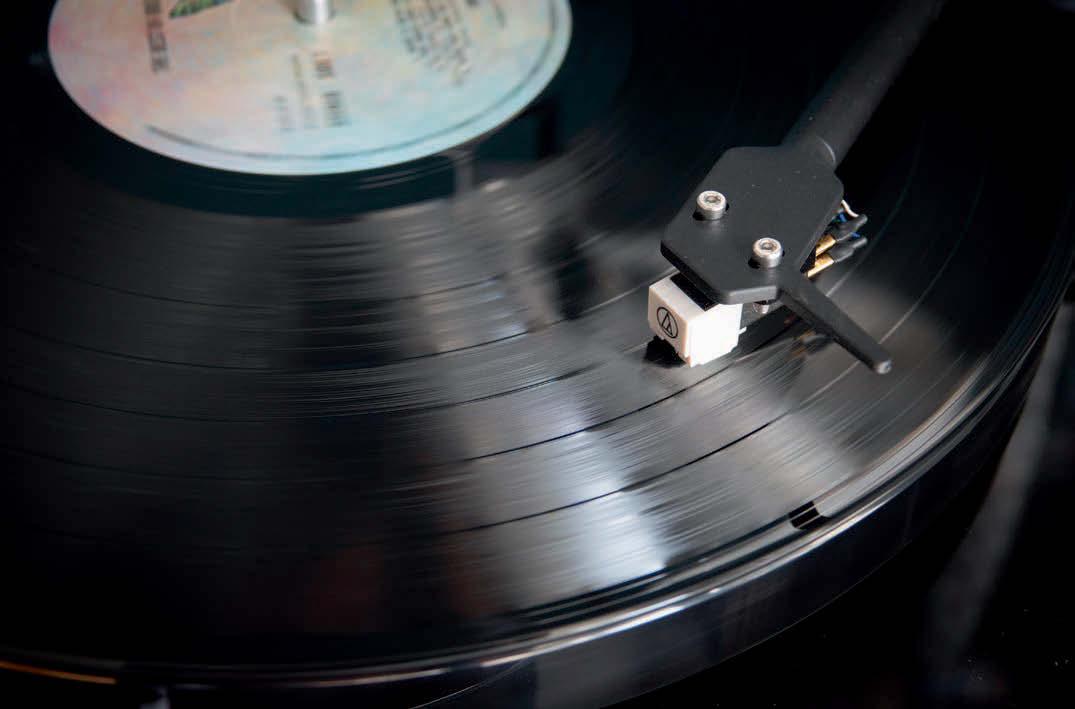
Spring is in the air, so if you feel like whistling, why not whistle a song about photography and cameras? Geoff Harris shares some classic cuts
Earlier this year, enduring pop icon Harry Styes released his long-awaited comeback single, Aperture. Rather than f-stops, depth of field and bokeh, it’s about letting love and light into your life, apparently – just as a camera lets in light. We see what he did there, so we’ve been inspired by Harry to compile a list of our top ten photographyrelated songs. As you’ll see, things have come a long way since cheeky chappie Tommy Steele recorded Flash, Bang, Wallop! What a Picture in 1967…
Some of our top ten songs are to do with taking pictures, others are about looking back on pictures, some reference photographic products and some name-check actual photographers, so it’s an eclectic and entertaining list to enjoy. Of course, our list is not definitive, and you are sure to have your own favourite photography-related tunes – so do get in touch via ap.ed@kelsey.co.uk or our social media (please note too that our list is not in any order of preference or favourites – after all, it would be a brave soul who pits Lady Ga Ga against Taylor Swift, not to mention A Flock of Seagulls!)
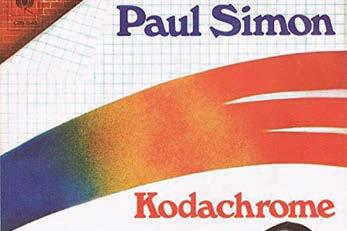
Kodachrome by Paul Simon
Paul Simon name-checks Kodak’s iconic photographic film in this toe-tapper from 1973, using it to evoke nostalgic memories of a past when everything seemed brighter and the colours more saturated (even though the reality might have been rather different). It’s certainly the stand-out song about 35mm film – until somebody releases a track called Tri-X, Portra or Velvia, that is.
Paparazzi by Lady Ga Ga
The big G’s raucous dance-pop classic was a highlight of her debut album in 2008, and captures the complex and conflicted relationship between celebrities and the then-ubiquitous packs of paparazzi – with
celebs craving the interest and exposure on the one hand, while increasingly resenting the intrusion of privacy on the other.
‘I’m your biggest fan,’ go the lyrics. ‘I’ll follow you until you love me, Papa, paparazzi’.
Girls on Film by Duran Duran
More quintessentially ’80s than drum synths and phones as big as bricks, Girls on Film sees Simon Le Bon and the heavily gelled boys focus on another complicated relationship between photographer and subject – this time the subject being a model.
The opening seconds of the song’s video will bring a tear to the eye of anyone missing the days when analogue cameras ruled the Earth; the video also turned Duran Duran into MTV superstars.
Wishing (If I Had a Photograph of You) by A Flock of Seagulls
Forever assured their place in popular culture thanks to Samuel L Jackson’s one-liner in Pulp Fiction, these synth-pop haircut extremists also had a sensitive side, exemplified by this song.
Apparently lead singer Mike Score fell for a girl he met on the band’s first US tour and said he’d get a photograph of her next time. She nixed the idea, saying he’d soon forget her when the band hit the big time. Now, all this angst could have been avoided if smartphones had been around in 1982, but then we wouldn’t have the song.
Pictures of You by The Cure
Staying with the ’80s, Goth godfather Robert Smith here wrestles with one of the great contradictions and conundrums of photography – many images purport to capture reality, but of course, they are an edited version of reality, not the real thing. And how do you define ‘reality’ anyway? Maybe we should just let the lyrics do the talking…
‘I’ve been looking so long at these pictures of you/That I almost believe that they’re real/I’ve been living so long with my pictures of you/That I almost believe that the pictures are all I can feel.’
Photograph by Ed Sheeran
Bringing us back down to more modern times with a more contemplative and moving track, Ed examines how photographs can help ease the challenges of long-distance relationships, or just being away from home a lot. Whether you are Sheeran-ite or not, Ed’s economy of expression is surely to be applauded.
‘We keep this love in a photograph/We made these memories for ourselves/Where our eyes are never closing/Hearts are never broken/And time’s forever frozen still.’
Apparently he broke up with the subject of the song, but it’s the thought that counts.
Picture This by Blondie
Blondie lyricist and singer, the shy and retiring Debbie Harry, was also yearning for a photo keepsake of her significant other – In this case, bandmate and real-life mate, Chris Stein. Apparently she was inspired after seeing Chris in the shower, but let’s not go there… Picture This was a huge hit, so the record company definitely didn’t take a bath on it, or the band’s advance go down the drain [somebody needs to pull the plug on you too – Ed].
Sean Flynn by The Clash
It’s hard to find well-known songs about named photographers, but this track fits the bill, taken from the band’s critically acclaimed 1982 album, Combat Rock
Sean Flynn, the son of actor Erroll, covered the Vietnam war as a photojournalist before disappearing in Cambodia in 1970 (Flynn’s close friend, the British documentary photographer Tim Page, was convinced he was executed by the Khmer Rouge).
The song’s lyrics are more concerned with atmosphere and allusion than biography, however, reflecting Clash frontman Joe Strummer’s fascination with the Vietnam war – then still very fresh in people’s memory.
Picture to Burn by Taylor Swift
Taylor, meanwhile, has no time to be sentimental about photos of her ex – in this case, a good ol’ boy with a pick-up truck who pee’d her off big-style. However good the exposure or composition, their once-cherished pictures are destined for a fiery fate.
‘You’re a redneck heartbreak who’s really bad at lying/So watch me strike a match on all my wasted time/As far as I’m concerned, you’re just another picture to burn.’ Now steady on!
Hey Ya by OutKast
This high-energy number, now opening a wedding reception somewhere near you, is also notable for name-checking Polaroid film. ‘Shake it like a Polaroid picture’ goes the lyric from OutKast’s 2003 floor filler, but it proved to be a mixed blessing for the Polaroid company.
Yes, it helped to boost Polaroid’s image and sales during a difficult time, but they also had to remind customers not to shake the image as it could damage it. So even free advertising can come at a cost…
Three bonus B-sides
Photographs by Rhianna & will.i.am
Rhianna is in more reflective mood on this cut, realising that all she has left from a failed relationships are some photos. Unlike Taylor Swift, however, she doesn’t appear to be planning to set fire to them any time soon. Which is nice.
Pictures of Lily by The Who
This power-pop classic refers to a frustrated young man’s collection of vintage model photographs. Back in 1967 there were no dodgy sites on the internet to look at, remember. Pictures of Lily is also memorable for featuring a French horn solo, though the song’s protagonist is preoccupied with a different kind of horn…
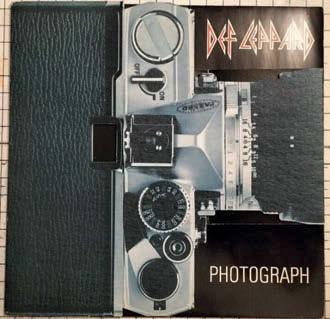
Photograph by Def Leppard
While the Sheffield hair rockers won’t win any prizes for imaginative song titles, this riff-tastic pop-metal workout focuses on people’s need to possess the subject of a photograph – even they though they are unobtainable. Hence the Marilyn Monroe lookalike in the video, apparently.
Testbench IN THE FIELD
Three X’s in Havana
With their smaller APS-C sensors Fujifilm makes some great cameras for travel photography, but which one is best? Nigel Atherton took three to Cuba to find out
Travel photography demands a particular kind of camera. It must be small enough to not be a burden, and light enough to slip into a jacket pocket. It should also be capable of handling any subject, from fast-moving street scenes, to low-light cityscapes to engaging portraits. Few brands cater to this combination of size and capability quite like Fujifilm. With their retro-inspired controls, compact APS-C bodies, and excellent colour science, Fujifilm’s cameras have long been favourites among travellers and street photographers. But which model to choose? Within the
X-series alone are several bodies well suited to travel, including vlogging-oriented models such as the X-M5 and X-S20. Yet for photographers who value classic dials, tactile shooting, and a more traditional stills-first design, the real contenders narrow to three: the X-T30 III, the X-T50, and the X-E5.
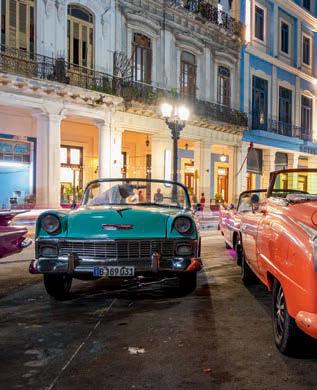
I decided to take all three to one of my favourite cities in the world: Havana, Cuba. The combination of faded Spanish colonial architecture, 1950s American cars, beautiful people and wonderful salsa music is as intoxicating as the Mojitos. It is also one of the few places that,
Shooting from the hip with the screen tilted 90 degrees enabled me to capture candid street scenes without being noticed Fujifilm X-E5, 16-50mm, 1/240sec at f/4, ISO 125
thanks to the 60-year US embargo, is mercifully free of modern American chains like McDonald’s and Starbucks that plague almost everywhere else. But I sensed (correctly as it has turned out) that with Trump 2.0’s aggressive foreign policy agenda, that state of affairs might not last much longer. I was hoping that this article may encourage a few readers to experience the magic of Cuba for themselves and spend some much-needed tourist money there, but with a new US blockade currently starving the population of food, fuel, power and medicine, it seems that tourism will be off the agenda
there for a while. So let’s take a closer look at those cameras.
The X–T30 III
The newest of the three, the X-T30 III, is the smallest, lightest, and least expensive – traits that immediately give it an advantage for travel. Weighing just 378g, it is genuinely pocketable, especially when paired with Fujifilm’s new 13-33mm kit lens. With the lens turned to its retracted position I was able to slip this camera into my blazer pocket when I went to see the famous cabaret show at the Hotel Nacional de Cuba, and get some great shots without the
need to carry a bag.
The camera’s lower price is partly due to the retention of the 26MP APS‑C X‑Trans sensor used in the X T30 II, instead of the newer 40MP sensor used in the other two. But the resolution is still more than sufficient for most photographers. Fujifilm has however upgraded the new camera with the X‑Processor 5, bringing faster autofocus and subject recognition AF. The other reason for the lower price is the omission of IBIS (In Body Image Stabilisation), which the other two cameras have. While IBIS is undeniably useful – allowing slower shutter speeds, steadier
handheld video, and extra latitude in low light – it isn’t essential. Photographers relied on steady hands for generations before stabilisation existed. Moreover, the 13 33mm kit lens has optical stabilisation, which helps offset the lack of IBIS, particularly at slower shutter speeds.
The 13-33mm lens
My first impressions of the 13 33mm f/3.5 6.3 were not very positive. With such a small maximum aperture, especially at 33mm, there would be no hope of the shallow depth‑of‑field that enables subjects to ‘pop’ from the background.
Using the X-T30 III at Castillo del Morro, with the Havana skyline behind
But I took it with me anyway because, hey, that’s the lens most people will buy it with. Yet in practice, its compact size and usefully wide 20-50mm full-frame equivalent focal range made it unexpectedly versatile. The wide end of the lens enabled me to capture tight interiors, sweeping façades, and the tops of tall buildings, and achieve that dramatic perspective that very wide lenses are known for. All things that the highly regarded but much larger and less wide 16-50mm f/2.8-4.8 (which I also took with me) couldn’t match. There are of course lots of small, relatively fast prime lenses available, both from Fujifilm and third parties, so it certainly isn’t a
case of choosing one or the other. But more on that later.
The X-T50
Step up to the X-T50, and the upgrades become immediately apparent. Priced roughly £400 above the X-T30 III, the X-T50 brings major under-the-hood enhancements while remaining compact and light, at 438g.
The X-T50 is built around Fujifilm’s latest 40MP X-Trans CMOS 5 sensor, also used in the flagship X-T5. The additional resolution provides extra flexibility for cropping afterwards, which is useful when travelling with a limited lens kit. The X-T50 also gains 7-stop IBIS, which significantly aids handheld
with the new 23mm f/2.8 –although the 23mm lens on the X100VI is a stop faster. The X-E5 also lacks the X100’s hybrid viewfinder and full weathersealing, as well as a built-in flash (which the X-T50 and X-T30 also possess) plus a few other fairly small differences.
On the other hand, the X-E5 has a couple of additional controls on the body that the X-T50 lacks. The button and lever on the X100VI that switches between hybrid and EVF viewing has been retained on the X-E5 and can be customised. I set the centre button as a playback
shooting, especially in low light or with telephoto lenses. In Havana’s dim cafes and dusk-lit cobbled streets this was handy to have.
The X-E5
The X-E5 body carries the same £1,299 RRP as the X-T50 and features an almost identical spec, but rather than the ‘DSLR’ based design of the X-T50, it’s a rangefinder-style camera. Anyone who considers the Fujifilm X100 series of compacts to be beautiful (which seems to be most people, judging by how well it sells) will immediately fall in love with the X-E5. It is, after all, to all intents and purposes an X100VI with interchangeable lenses, especially if you get it
The National Capitol of Cuba (‘El Capitolio’) photographed at dusk from the roof terrace at the nearby Grand Hotel Manzana Kempinski
Fujifilm X-E5, 16-50mm, 1/8sec at f/5.6, ISO 3200
IN THE FIELD Testbench
button because I found the one on the back, to the right of the eye-piece to be a little awkward to reach. Flicking the surrounding lever to the left or right provides two more customisable options. Like the X100VI the X-E5 comes in a choice of black or silver (the X-T50 and X-30 III are also available in a third, charcoal option, which is unusual and quite striking). Judging by sales most people seem to prefer the black one, but to me the silver version is prettier and offers the full retro camera experience, evoking the romance of classic rangefinders.
Dial F for film simulations
All three cameras feature a dedicated Film Simulation dial on the left side of the top plate, in place of a drive mode dial on older models, which is now a button on the back. On the X-E5 Fujifilm has placed this dial beneath the top plate,
Parisien at the Hotel Nacional de Cuba, shot hand-held on the X-T30 III which I carried in my pocket
Fujifilm X-T30 III, 13-33mm lens, 1/125sec at f/6.3, ISO2500
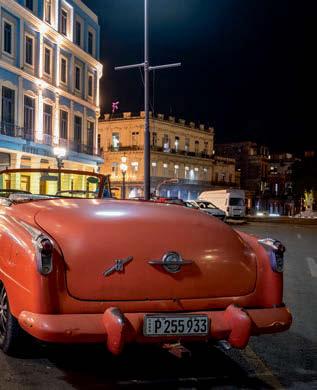
Old American cars parked outside my hotel at night.
Taken using a tripod
Fujifilm X-T30 III, 13-33mm, 2 secs at f/4, ISO 400
Cabaret
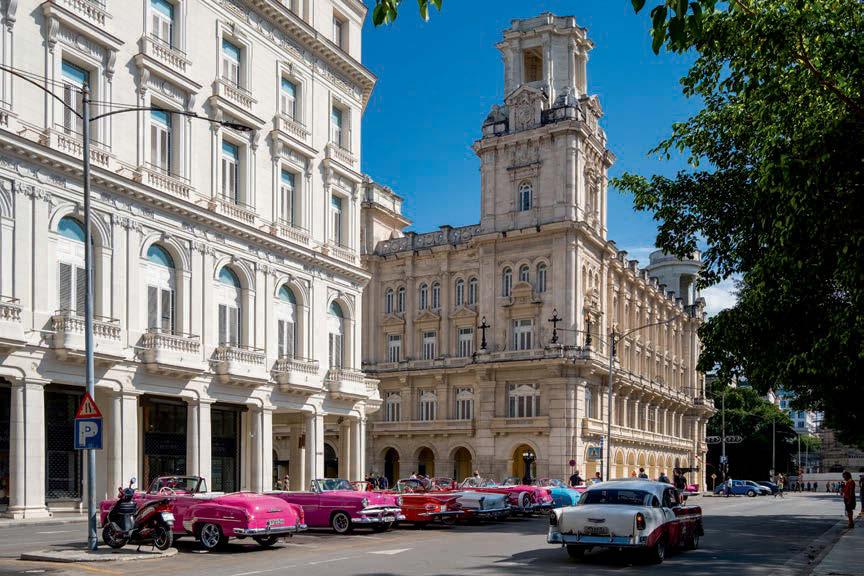
The wide end of the 13-33mm lens enabled me to include the top of this building in the shot
Fujifilm X-T30 III, 13-33mm, 1/1700sec at f/5.6, ISO 160
Taken using the Classic Chrome film simulation mode, for a more retro colour palette
Fujifilm X-E5, 23mm, 1/1000sec at f/5.6, ISO 200
visible through a small window and controlled by a rear thumbwheel. Not everyone is thrilled about this, but I rarely use the continuous mode or the self-timer so it doesn’t bother me, and it does place Fujifilm’s popular colour profiles (including Velvia, Classic Chrome, Nostalgic Neg and Acros) right in front of your nose. In a colour-filled city like Havana, Velvia was my default choice for its saturation, though for portraits I switched to Astia for its softer tones.
Lens choices
With the 13-33mm lens on the X-T30 III, and the 23mm f/2.8 pancake on the X-E5 I found myself lacking a telephoto option for portraits. Although the 16-50mm offers the equivalent of 75mm, I wanted something with a wider maximum aperture that could blow out backgrounds with aplomb, like Fujifilm’s bokelicious 56mm f/1.2. But not that actual lens, because while it’s one of my favourite optics it’s a bit of a beast, and not the best choice for
to set the f-stop (not the end of the world) and it doesn’t offer any weatherproofing, but then again neither do any of the three cameras. I attached this lens to the X-T50 and pretty much left it there for probably 80% of the photos I took on that camera. The final lens in my kit bag was the 27mm f/2.8 pancake which I took as a prime alternative to the 13-33mm. This is a great lens which is similar in size to the 13-33mm but faster, and the 40mm equivalent focal length is perfect for street photography.
Controls and ergonomics
Despite the stylistic differences, all three cameras share certain common Fujifilm hallmarks: a physical shutter speed dial, exposure compensation dial and film simulation dial; a joystick for AF point selection; a Q button for quick access to a customisable menu of commonly used functions; and an LCD screen that tilts up and down but doesn’t fully articulate. However, the X-E5 is alone in this company in having a screen that tilts up 180% degrees, so it can be viewed from the front of the camera. This makes it the only one of the three that’s remotely suitable for vlogging. Though it must be said
an article about ideal travel kit. Fujifilm has a range of small f/2 primes from 18mm up to 50mm, and in terms of size and performance they’d all be a perfect pairing with any of the cameras. But instead, I stepped outside of the Fujifilm eco-system and went for the excellent Sigma 56mm f/1.4. It’s only marginally slower than the Fujifilm 56mm f/1.2 but it’s half the size and half the price. It doesn’t have an aperture ring so you need to use the front input dial on the camera
Most Cubans are happy to be photographed in exchange for a dollar
Fujifilm X-T50, Sigma 56mm f/1.4, 1/200sec at f/1.8, ISO 64
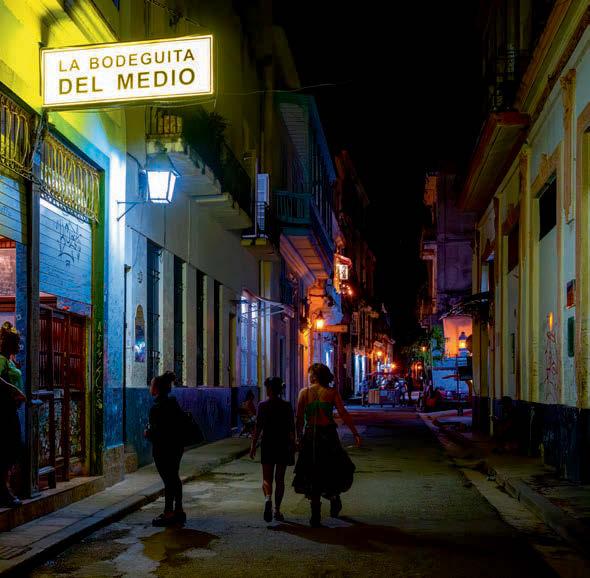
A Havana backstreet bar famous for its Mojitos. Shot hand-held
Fujifilm X-E5, 23mm, 1/30sec at f/4, ISO 2500
that none of them are videocentric cameras and if this is important there are much better options both inside and outside of the Fujifilm system.
None of the cameras has an especially deep handgrip like Fujifilm’s X-S20, but given how light the cameras are the grips on the X-T30 III and X-T50 are deep enough, in conjunction with the substantial thumb rest on the back – as long as you don’t attach heavy lenses. The front grip and thumb rest on the X-E5, on the other hand, are very minimal, in keeping with the rangefinder styling. So this isn’t a camera to use with long lenses, unless you invest in something like the SmallRig L-Shape grip.
When three isn’t a crowd
Taking three cameras may defeat the object of travelling light, and
this is certainly not something I would dream of doing if I was using full-frame cameras. But the fact that these bodies, and their lenses, are all so small, meant that I never felt weighed down. The advantage of having the three was that I didn’t need to switch lenses (though I did, purely for the purposes of writing this feature). I typically kept the X-E5 with the 23mm lens around my neck and the other two in my bag. If I wanted a wider lens than 23mm, I would reach for the X-T30 III with the 13-33m. And if I needed a longer lens, say, for a por trait, I grabbed the X-T50 and Sigma 56mm f/1.4.
Very few people are going to be doing that, but I can see many travellers rocking two of these bodies, and in that scenario, as a prime lover I’d be inclined to put the 23mm on one and the 56mm
on the other, which would cover most eventualities – with maybe something wider in the bag for emergencies.
Verdict
So which of these is the best choice? All three are fantastic cameras that were a pleasure to use and all delivered great results with very few duds. If you are ruled by your head, then the X-T50 is probably the most practical option. You get the flagship sensor and processor, plus IBIS, and the ergonomics are slightly better than the X-E5, especially if you have any plans to use longer lenses at any point. If you’re ruled by your heart you’re more likely to go with the one that looks the coolest hanging around your neck – the one that you’re most likely to keep in a glass display case on your mantelpiece when you’re not using it – the X-E5. This was the one that most persistently begged me to pick it up. Who needs a built-in flash anyway, and if you want to use long lenses, the SmallRig L-Shape grip is less than £40, and there are cheaper alternatives available.
But if you are ruled by your wallet, then the obvious choice is the X-T30 III. I’m not sure how many people actually need 40 megapixels, and while the ability to crop and still maintain decent
resolution is certainly useful, innovations like Adobe’s Super Resolution feature make this less of a deal than it once was. As for IBIS, none of the photos I took on the X-T30 III suffered from noticeable camera shake, despite using it indoors, and in low light. The high ISO performance is good enough to make slow shutter speeds less necessary.
Crucially though the X-T30 III body is about £400 cheaper than the other two, which is a tidy saving. If you can afford an X-T50 or an X-E5 it means you could alternatively buy an X-T30 III plus an additional lens. I’d be inclined to get it with the stabilised 13-33mm kit lens, which is almost half price if you get it with the camera, rather than on its own. And then to go with it I would buy a prime lens with a physical aperture ring, because that’s when these cameras are at their best. Perhaps the 23mm f/2, or the 27mm f/2.8. Or even the 50mm f/2 if you want something longer.
Finally, you might want to consider tracking down a used X-T30 II, which uses the same sensor but the older processor. This means you miss out on things like Subject Detection AF and the Film Simulation dial, but you’d save even more money and it’s otherwise almost the same camera.
Cruising the Malecón
Fujifilm X-T50, 16-50mm, 1/500sec at f/5.6, ISO 125
Basketball court
Fujifilm X-T50, Sigma 56mm f/1.4, 1/1800sec at f/5.6, ISO 125
THE EISA PHOTOGRAPHY MAESTRO CONTEST 2026
PRIZES:
SINGLE PICTURE
€1000 & EISA
Maestro Trophy
PICTURE SERIES
€2000 & EISA
Maestro Trophy
This year’s theme: Travelling
Scope and Contest Rules:
The competition has two categories.
Single: You may submit one picture based on the theme of ‘Travelling’. Series: You may submit a total of 5-8 pictures as part of a portfolio based on the theme of ‘Travelling’.
Photographers may compete in one category only. All entries must be in digital format (camera or scanned film originals) and must not have won a prize in any other competition. AI-generated images and pictures older than 2023 are excluded.
NATIONAL DEADLINE: MAY 15TH 2026
Email your entry (single image OR series) to: ap.Maestro@kelsey.co.uk. Images must be JPEG and a minimum of 2000 pixels on the longest side. AP will choose the winners and publish them in a July issue. The first-placed winners will receive a one-year digital subscription to AP and go forward to the International round.
National Maestro winners will also be published on Facebook at the end of June for the EISA Public’s Choice competition. Prize for Single and Series winners: €500
INTERNATIONAL JUDGING: JUNE 2026
The winning entries from each of the 15 participating EISA countries will then be judged together at the Association’s General Meeting in June 2026. The final results of the International Maestro contest will be celebrated at the EISA Awards Gala in September 2026 and revealed, online, alongside the EISA product Awards on August 15th 2026.
The winning photographs will be published in the Sept/Oct issues of all 15 EISA photo magazines/websites.
USED CAMERAS Testbench
SECOND-HAND CLASSIC
Olympus OM-D E-M5 Mark II
It’s over a decade old, but there are still plenty of reasons to choose this popular Micro Four Thirds camera
Announced in early 2015, the OM-D E-M5 Mark II arrived three years after the original E-M5. Although it has the same 16MP pixel count as its predecessor, it was vastly improved in a number of areas, with an updated control layout resembling the then flagship OM-D E-M1. Users can select from 81 autofocus areas, it has a mechanical shutter that goes up to 1/8000sec, presents an entirely silent fully-electronic shutter mode and reaches 10fps continuous shooting with fixed focus. In addition, it offers 5 stops of in-body image stabilisation and the 2.36m-dot electronic viewfinder is noticeably larger and more detailed than the E-M5’s. The trade-off is that the Mark II’s battery is rated at a fairly mediocre 310 shots per charge.
What we said
l ‘The Mark II sees the concept of the small SLR-like mirrorless camera refined to being a really serious photographic tool’
l ‘The E-M5 Mark II offers a hugely impressive feature set in a very portable package’
l ‘It lags a little behind APS-C cameras with regard to raw image quality, particularly in terms of noise at high ISOs’
l ‘The original E-M5’s replacement is a considerably better camera’
How it fares today
Though many of today’s mirrorless cameras are able to resolve finer detail and outshine the E-M5 Mark II at high ISO and in low light, the output from the 16MP sensor remains perfectly adequate for many amateurs, enthusiasts and the more casual user. If it’s dual card slots and faster burst shooting you’re after, you’ll want to look at the OM-D E-M1 Mark II or OM-D E-M1 Mark III.
What to pay
The Olympus E-M5 II has dropped from its launch price of £900 (body only) to some reasonable prices on the used market. Expect like-new used examples to cost around £445, with excellent condition models fetching around £399. If you’re prepared to accept a little more cosmetic wear, good condition examples sell for between £275-£345. A good selection of both black/silver and all-black finishes are available.
New alternatives
The rebranded OM System OM-5 Mark II is the modern-day Micro Four Thirds equivalent to the OM-D E-M5 Mark II. Durable yet compact, it offers a 20MP sensor with an ISO 64-25,600 range, far superior autofocus, up to 7.5 stops of image stabilisation with compatible lenses, 4K video at 30p (C4K video at 24p) and an IP53-rated weather-sealed body. It currently costs £1,099 body only.
Where the E-M5’s rear buttons were notoriously small and spongy, the Mark II’s are generally larger and more positive – particularly the d-pad that’s used to move the AF area
The Mark II’s slightly larger front grip and more prominent thumb ‘hook’ combine to give a more positive hold. Users with larger hands will probably still prefer to get an add-on grip
Built-in intervalometer: up to 999 frames can be recorded, at intervals from 1 second to 24hrs 59mins 59secs, and with a specified delay before starting. A time-lapse movie can be assembled in-camera, too
At a glance
£300-£350
(good used condition)
l 16-millon-pixel, Four Thirds sensor
l High-resolution multi-shot mode:
4 0MP in JPEG, 64MP in RAW
l ISO 100-25,600 (extended)
l 3in, 1.04m-dot LCD
l 2.36million-dot EVF, 0.74x equiv magnification
l 469g with battery and card
For and against
+ Excellent JPEG image quality
+ Fast, responsive operation
+ Robust, weather-resistant body
+ Supported by wide range of MFT lenses
– Complex menus
– Connectors interfere with articulated screen
– Raw image quality can’t quite match larger-sensor cameras
– No 4K video, only Full HD at 60fps
Testbench USED CAMERAS
What the owners think
Three
Olympus E-M5 II
users give their verdict
Volker Woll
The Micro Four Thirds system caught my attention early on, and I became an adopter in 2010, two years after its introduction. Initially intended as a lightweight secondary system for travel, it quickly became my main, and eventually my only, system, replacing my Canon DSLR.
The E-M5 Mark II was the third MFT camera I purchased, and it served as my primary camera for nine years. While newer models offer more bells and whistles, it remains a remarkably capable tool. One standout feature is the High-Res Mode, which produces 64MP images from the 16MP sensor. I still use this feature whenever possible for my
Andy Westlake
It was love at first sight, really. The first time I set eyes on the E-M5 Mark II, I was smitten. I already owned the original E-M5, and appreciated having a tiny camera with interchangeable lenses that delivered DSLR-level image quality. The Mark II added a larger, brighter viewfinder plus a fully articulated screen, alongside considerably improved controls. It’s a fabulous little camera. There’s just so much to like here. I particularly appreciate the metal-shelled weather-sealed body, super-quiet shutter, and effective in-body stabilisation. I can use it with so many great lenses, ranging from tiny primes to large-aperture zooms, from both Olympus and Panasonic. People like to harp on about the perceived image-quality failings of Micro Four Thirds, but modern noise reduction software does a great job of cleaning up your files. Image quality isn’t just
Volker finds the high-res mode ideal for detailed vistas
Olympus E-M5 II, 7-14mm f/2.8 at 9mm, 2sec at f/4, ISO 200
landscape photography.
When paired with Pro lenses, it forms a rugged, exceptionally well weather-sealed setup capable of handling demanding conditions. At the same time, mounting a small prime lens transforms it into an unobtrusive street
This dramatic shot is an out-of-camera JPEG
Olympus E-M5 II, 12-40mm f/2.8 at 12mm, 1/2500sec at f/5.6, ISO 200
camera. In every scenario, the retro-styled, beautifully designed body not only delivers but is also a joy to use. While cameras are ultimately just tools, some inspire creativity more than others. And for me, the E-M5 Mark II has certainly been one of them.
Volker can be followed on Instagram @chickenandricetales
For and against
+ High-resolution multi-shot mode
+ Performs well in demanding conditions
– Need to carry plenty of spare batteries
– High ISO noise performance
about noise, either, and Olympus cameras have always given lovely JPEG output. I’ve since acquired
newer and technically better cameras, but the E-M5 II remains one of my all-time favourites.
For and against
+ Small yet high build and image quality
– High-ISO noise needs processing out
Ben Mecham
My E-M5 Mark II found me at a time when I thought Micro Four Thirds was irrelevant. While looking for an inexpensive film scanning solution, it stood out thanks to its high-resolution pixel-shift mode. Over time, it slowly worked its way into my everyday carry rotation.
Despite its compact size, the metal body gives it a reassuring heft. The buttons feel tactile and deliberate, avoiding the squish common in some weather-sealed bodies. That said, packing so many controls into such a small form factor has its downsides. I often need to take my gloves off to change settings.
Olympus color science is where the camera really shines. It gives natural, vivid colors that respond well in post. I’ve also found that high ISO paired with monochrome produces a gritty image with pleasing tonal range.
Overall, from casual nights out
The small, weather-sealed body means you can carry and use the E-M5
almost anywhere
and against + Compact design – Continuous AF can struggle in
For
dim light
II
Olympus E-M5 II, 7-14mm at 14mm, 1/15sec at f/4, ISO 200
This striking portrait showcases the camera’s lovely colour output Olympus E-M5 II, Sigma 56mm F1.4, 1/125sec at f/1.4, ISO 640
to hiking frozen lakes in the high Rockies, the OM-D E-M5 Mark II has proven itself a sharp and
dependable shooter. Ben’s work can be found on Instagram @benn.dng
Excire Foto 2025 and Excire Search 2026
Excire Foto 2025 and Excire Search 2026 claim to add order to unmanageable photo collections. Will Cheung puts them to the test
It’s all very well shooting thousands upon thousands of photos but at some point, you’re going to have to sort through them. Fortunately, you can take the tedium out of managing your images with Excire’s software.
Excire Foto 2025 and Search 2026 use the same technology and have very similar AI-powered photo and video management features. The key point of difference is that Foto 2025 is a standalone app so a perfect workflow partner to your favoured editing software, while Search 2026 is an Adobe Lightroom Classic plug-in. That means you can rate, organise and cull your shots without leaving the host software.
Both are available for Mac and Windows, cost £199 each for an outright purchase and a bundle of the pair costs £299. In this test, we’ll take a close look at both.
Excire Foto 2025
Open Foto 2025 and you’re presented with an easy to navigate interface. Not having any editing features and only tools to organise photos means fewer palettes and a cleaner look.
The central area is reserved for picture previews, with tool icons across the top and down both sides, and thumbnails running along the base when viewing a single image.
To enjoy Excire’s talents, images need to be initialised, so the first job is to find a home for
the database with adequate capacity as it grows. I use a 4TB SSD to store my Lightroom catalogues, so that where’s my Excire database went.
Excire Foto 2025 is powerful enough to cope with a huge number of images without compromising performance, so you can just have one database for all your work, even if you have hundreds of thousands of raw images. Over the period of my test, I ended up with a database of over 650,000 files which took up 234GB of storage.
With the database’s destination decided, make sure Excire is set up to suit your needs by going to Excire Foto>Settings> Preferences. The software’s quick-start guide walks you
through the process. During import, having the Analyze photos option active ensures images are fully processed, which means keywords are automatically generated, previews created and images aesthetically analysed. It’s worth saying that all the work performed in the two Excire apps is done locally so there’s no risk
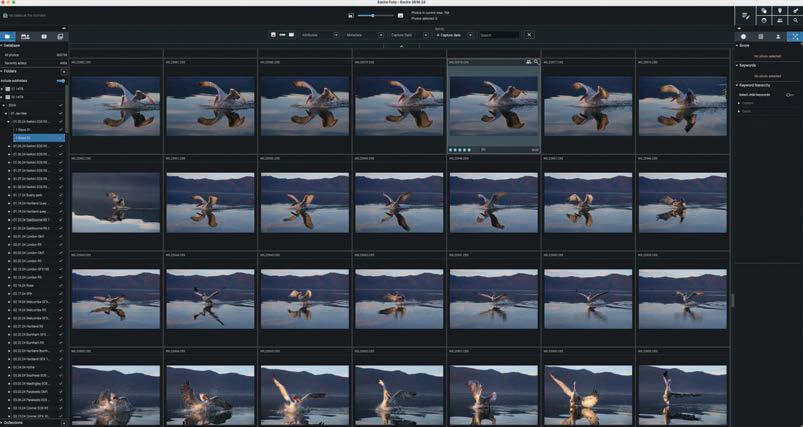
Foto 2025 works quickly even with a huge number of pictures. In this test, my database eventually grew to over 650,000 images, yet thumbnails and full screen previews still refreshed rapidly
when it comes to privacy.
Initialising thousands of raws takes time and Excire suggests importing big image collections overnight. Upload time is only a consideration in your early days with Excire, as it’s a one-off process and adding new shoots is much quicker. Adding 4,454 raws from a new shoot took only 13 minutes!
Auto keywording
Manual keywording is a tedious process. Excire’s auto keywording is particularly useful with people pictures.
The auto keywording did okay with other subjects too, although don’t expect too much detail. For instance, pictures of pelicans, dragonflies and birds in my database were correctly identified and keyworded but if you need the next level of detail, i.e. the actual species, you’ll have to add that manually.
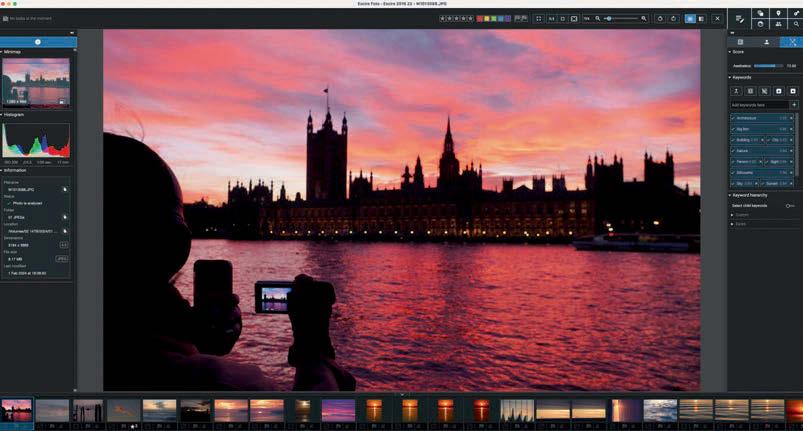
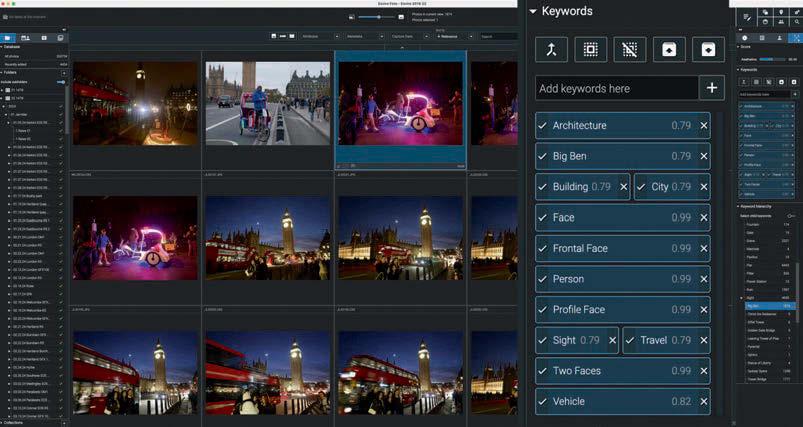
Excire wasn’t so good with specific locations, but you get general keywords so it’s still useful. The exception was London’s Elizabeth Tower, and my shots were keyworded Big Ben. However, some random church spires received the same tag as did shots of pedicabs taken on Westminster Bridge.
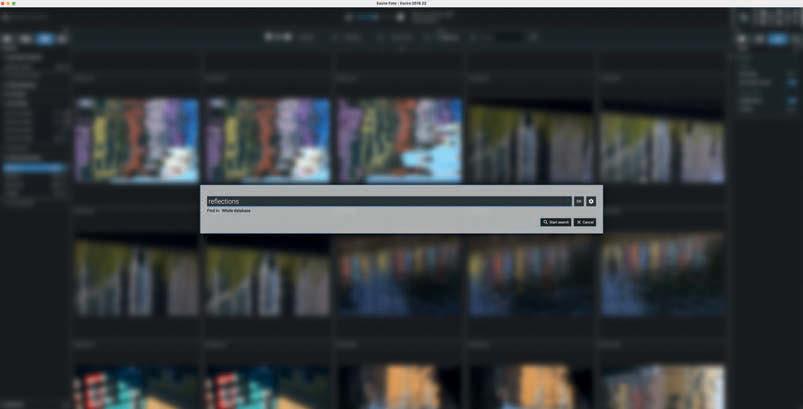
While Excire’s auto keywording is not infallible, it’s more than useful. After a few ‘Find by’ text prompt searches, each taking 10-20 seconds, I know I have 1,829 photos of fountains, 191 sandy beaches and 4,193 images featuring balconies!
Searching skills
With images initialised, you can start appreciating more of Excire Foto 2025’s skills. There’s a seven-button panel to search for images in the database. You can search by GPS, duplicates, similar images and keywords.However, it’s perhaps the remaining three that are the most interesting: Find Faces, Find People and Find by text prompt.
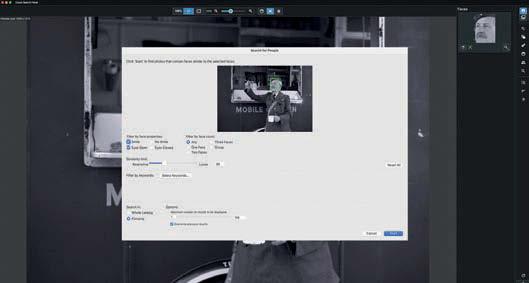
Using Find Faces allows you to search by different numbers of faces, by age, smile and gender. With Find People, you start with an image containing the subject, select the face, pick whether you want eyes
Double clicking on a thumbnail takes you into single image mode where Excire’s rating tools are shown –keys 1-5 for star ratings and 6-9 for colours, the same keys as used in Lightroom. There’s also the option to compare two images side-by-side
Excire
Testbench SOFTWARE TEST
open or smiling or not, and hit return.
The searches within Excire can be controlled in respect of targeting and the final number of images shown can also be varied. I left my favourite search parameter till last, and this is the Find by text prompt. Type in a description of what you’re looking for and Excire will search through the database.
Where this search excels is if you’re looking for images that show a mood, emotion or people performing a specific activity. A search for ‘people using phones’ found 3,980 images and I got 3,121 photos with ‘couples having a relaxing time’.
All searches and the images found are retained in the Results palette for future reference, and these can be made into collections, shared or expor ted in different formats. You can even export the file names and their full path in .csv format.
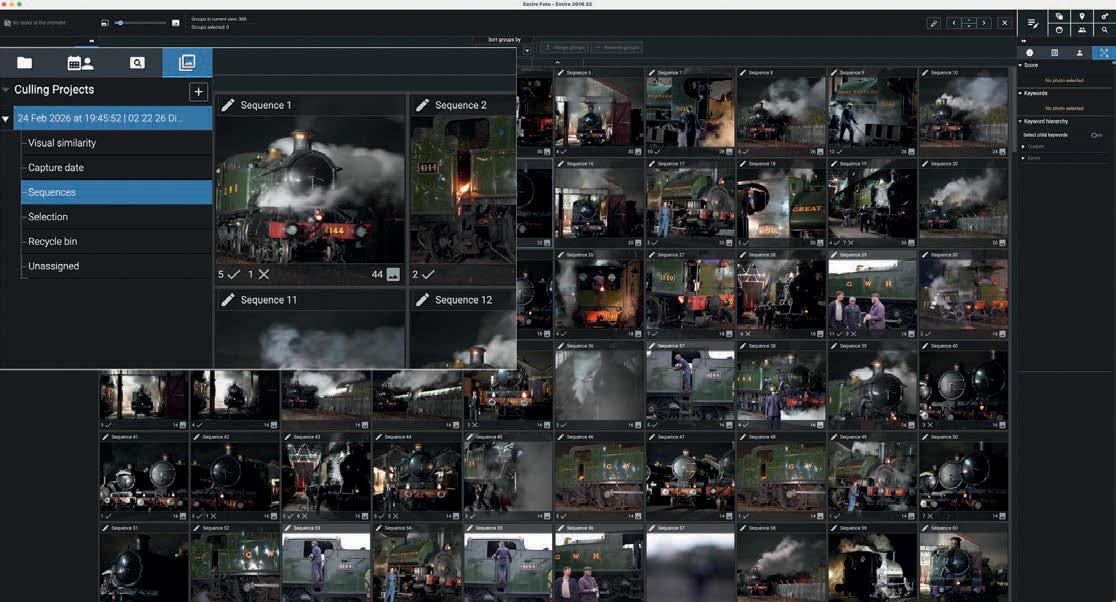
AI assisted culling
Also useful is AI-culling module where the software assesses images, grouping them into sequences or similar-looking pictures. There are a few other options as well (grouping by people, grouping by content, grouping by date/time). Culling projects are retained for future use and can be removed later.
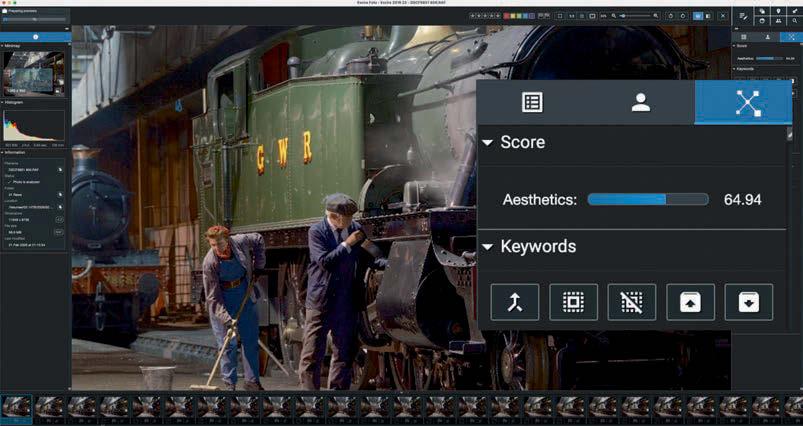
There’s also a Smart Selection option where you can refine the images further with criteria such as Aesthetics, Eye Sharpness and Face Sharpness.
During initialisation, every image is analysed and given an Aesthetic score out of 100. This feature might not appeal to ever yone, but it can accelerate the selection process when you have lots of similar pictures to process.
When it comes to dealing with large numbers of images, speed is important and Excire is fast. It’s possible to rapidly view and rate full screen raws using 1-5 for stars, 6-9 for colour tags, P for
Excire’s AI keywording works very well, as can you see from the keywords panel (it has been enlarged). Big Ben has been correctly keyworded, and the same tag was applied to my pedicab shots taken on Westminster Bridge
Excire’s ‘Find by’ text prompt is
mood or emotion, too
pick, and X for delete (the same keys as Lightroom) without having to wait for previews to sharpen or refresh. Lightroom is miles behind in this respect.
Excire Search 2026
Excire Search 2026, meanwhile, is a plug-in for Lightroom Classic users. The two Excire apps have similar features, so the comments already made relating
‘When it comes to dealing with large numbers of images, speed is important and Excire is fast’
to Foto 2025’s auto keywording, aesthetic scoring and search skills apply here.
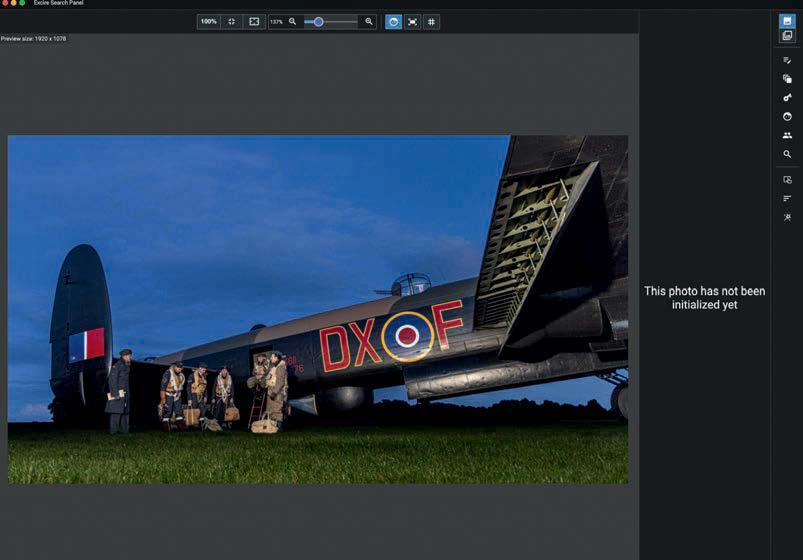
As you’d expect, the two apps handle differently. Opening a Lightroom catalogue also opens the Excire Search Panel and it’s here where searches and culling projects are initiated. The results of searches are shown back in the Lightroom Classic’s Collection interface.
The Lightroom catalogue must be initialised by the Excire app. In Lightroom go to Library>Plug-in Extras and you’ll find all Excire’s processes including Initialise Photos. As with Foto 2025, the
analysing process takes time so if you’re working with a big catalogue, leave the computer to run overnight.
With Excire Search 2026 being a plug-in, its Search Panel might not be showing when Lightroom Classic is open. If not, bring it up with Library>Plug-in Extras>Open Excire Search Panel – or shortcut keys Alt+X (Windows), Opt+X (Mac). You can also set up whether you want the plug-in to launch when Lightroom opens (under file>plug-in manager).
If you’re using a single monitor and have Lightroom filling the screen so the Excire panel is
a powerful search tool and can look through huge catalogues for specific subjects such as reflections, red buses and sunsets. But you can look for photos that depict a particular
behind, you can use the shortcut keys to bring the panel forward. Alternatively, you can get around this by shrinking the Lightroom window, so you can have it and the Excire Search Panel showing side by side. You can also minimise the Excire Search panel to a strip with icons that sits unobtrusively off to the side.
If you have a dual monitor set-up, having the two windows open on separate screens makes life much easier.
In the Search panel, the large area shows the active image in Lightroom, and the search and culling project tools are ranged down from the top right corner. The main search features are the same in the two apps although the dialogue boxes look different. The only missing find feature in Search 2026 is GPS search.
In terms of performance, the two apps work similarly so no issues there. One difference is speed, though, and while I found Foto 2025 particularly quick, Lightroom can be slower with many fewer images (which is no reflection on Excire).
The way Search 2026 is integrated into Lightroom Classic is impressive. I like that Excire’s culling projects appear in Lightroom’s Collection panel and Excire’s keywords show in a separate folder in Lightroom’s Keyword List after they have been transferred. Excire’s Aesthetic ratings are also viewable in Lightroom.
Verdict
If you’ve been looking for photo and video management software that’s easy to use, effective, works locally and takes the drudgery out of organising your photos, Excire could be the answer. Both programs work very well, but as a Lightroom Classic user with a broad photographic remit, if I had to choose one Excire app then I would go for the standalone Foto 2025. That might sound odd, but I loved Excire Foto 2025 for the speed with which it sorted my 650,000-image database.
Ultimately, having everything in one place made sense to me, hence my leaning towards Foto 2025. But there’s an argument for Lightroom Classic users to take the plunge and buy the bundle. Both apps are available as fully functional 14-day trials from excire.com so you can tr y them for yourself.
Recommended
The Excire Search Panel appears when Lightroom Classic is opened. The tools for image search and culling projects sit in the top right corner
Excire Search 2026 works as a plug-in and has powerful search tools
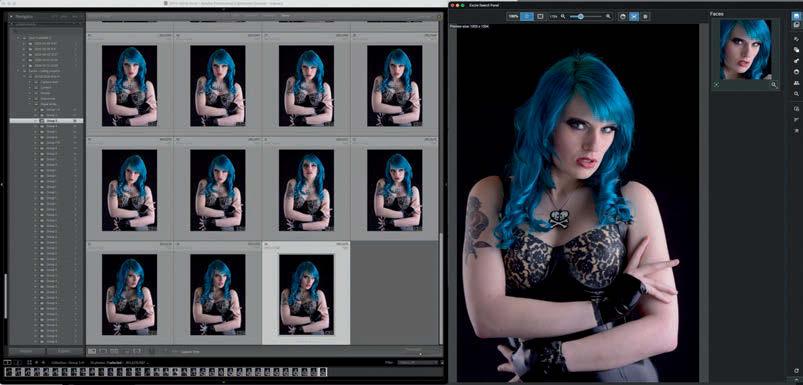
Excire Search 2026 has the same culling skills as Foto 2025. Here, the Lightroom panel (left) shows the groups identified by Excire’s culling module and a set of previews from one group. Excire’s Search Panel is on the right
Testbench ACCESSORIES
Peak Design Slide Lite
This is one of the best camera straps you can buy, says Andy Westlake
● £59.99 (£69.99 for Carryology Essentials Edition)
● peakdesign.com
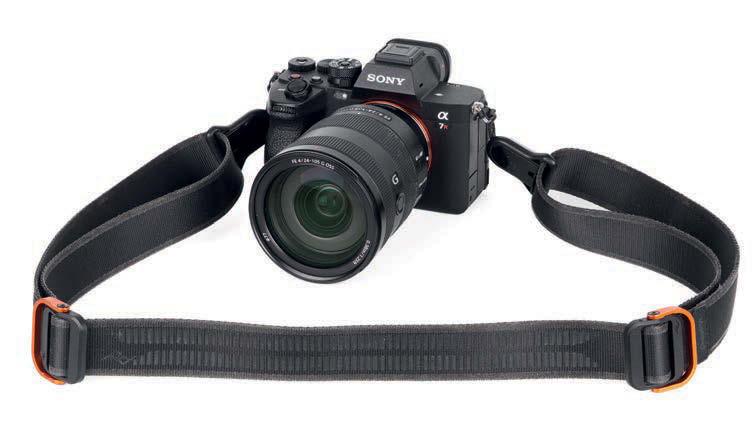
Peak Design originally made its name making camera straps, with the Slide Lite being one of its longest-running products. But I make no excuse for reviewing it now, because I think it’s still one of the best camera straps around, and certainly one of my favourites for everyday use. It’s also now available in a wider range of colours than before.
So what makes the Slide Lite special? To me, it offers a real Goldilocks combination of features for anyone shooting with a full-frame camera setup. Its 3.2cm width makes it comfortable even when you’re using a fairly heavy lens, while its readily adjustable length allows you to set it as you need for any given situation. The flat, seatbelt-like fabric and lack of any bulky padding makes it relatively easy to stow into a camera bag, and the use of Anchor connectors means it’s easy to remove from your camera when needed.
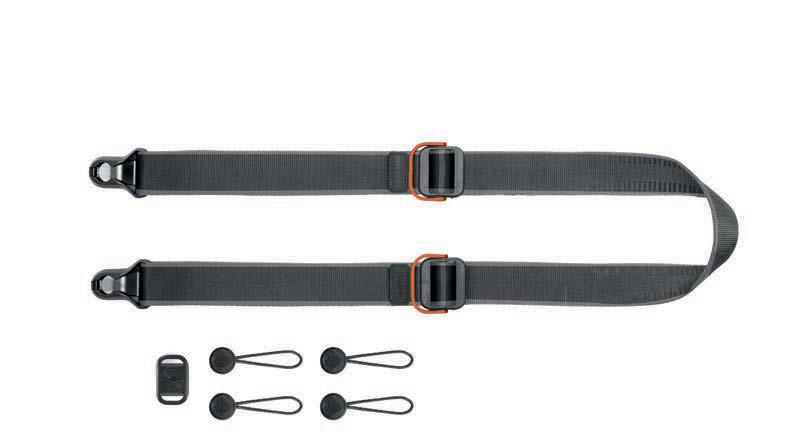
Colours
Eight colours are available: Black, Coyote, Sage, Ash, Eclipse, Kelp, and Ocean, plus black with orange clips for the Carryology edition.
Anchors
The strap fits onto your camera via Peak Design’s familiar Anchor Link connectors.
I generally use it cross-body style, but it’s equally at home when used as a shoulder or neck strap. I tend to set it relatively long for ease of use when I’m shooting, but pull it much shorter when I’m walking, to stop my camera from bouncing around. Adjustment is via two large clips which are easy to open and then lock down again when you’re set.
Another neat feature is the way the strap includes a grip on one face. This can be really useful when you’re using it as a shoulder strap, and it might be prone to sliding off. Flip the strap over onto its smooth side, and it’ll glide easily across a coat or shirt when you’re bringing the camera up to your eye for shooting.
I’ve also become a big fan of the Carryology Essentials Edition, which comes in black with distinctive orange metalwork. The main difference is that its edges are reinforced with slash-resistant ultra-high molecular weight polyethylene, which brings extra peace of mind when carrying expensive kit, while also making it less prone to fraying. It’s available from Peak Design’s online store and costs £10 more than the standard version.
Our Verdict
Kit
You get four Anchors, an Anchor Mount that attaches to your camera’s tripod socket, a hex key to screw this in, and a pouch to hold it all.
Adjustable
Two large clips allow the length to be adjusted for different carrying styles, including neck, shoulder and cross-body.
At a glance
● 99-145cm length
● 3.2cm width
It’s fair to say that £60 or £70 can look like a lot to pay for a strap. But honestly, the Peak Design Slide Lite is so good that I think it’s wor th the money. It’s an excellent camera strap that works extremely well.
● Employs PD Anchor connectors
● Available in 8 colours
ALTERNATIVE OPTIONS
The Slide Lite sits in the middle of Peak Design’s range of flat fabric straps, between the 19mm wide Leash, and the 45mm wide Slide. I really like the Leash (right) for smaller and lighter mirrorless models such as the Fujifilm X-T5 or OM System OM-3. But I’m not a fan of the Slide – I find it unnecessarily large and bulky.
(0) 1959 543 747
Amateur Photographer Customer
Team, Kelsey Publishing Ltd, Kelsey Media, The Granary, Downs Court, Yalding Hill, Yalding, Maidstone, Kent ME18 6AL
Find current subscription offers on our website shop.kelsey.co.uk/APB Already a subscriber?
Manage your subscription online at shop.kelsey.co.uk/site/loginForm
Classifieds
Telephone 0906 802 0279. Premium rate line, operated by Kelsey Publishing Ltd. Calls cost 65p per minute from a BT landline; other networks and mobiles may vary. Lines open Mon-Fri, 10am-4pm Email ads@kelseyclassifieds.co.uk
Kelsey Classifieds, Kelsey Media, The Granary, Downs Court, Yalding Hill, Yalding, Maidstone, Kent ME18 6AL
Distribution in Great Britain Frontline Distribution Solutions 2 East Poultry Avenue, London, EC1A 9PT Tel 020 7429 4000
Distribution in Northern Ireland and the Republic Of Ireland Newspread. Telephone +353 23 886 3850
Kelsey Media takes your personal data very seriously. For more information of our privacy policy, please visit www. kelsey.co.uk/privacy-policy. If at any point you have any queries regarding Kelsey’s data policy you can email our Data Protection Officer at dpo@kelsey.co.uk.
Inbox
to the Editor at ap.ed@kelsey.co.uk
LETTER OF THE WEEK
The positive manosphere
I’m glad Paul Sanders is now able to openly discuss his mental health struggles (AP 17 March issue). Unfortunately, not everyone is as lucky in their treatment, post-trauma support, or finding that ‘stranger on the cliff edge’ intervention to turn them back from the abyss. Mental health support services can be stretched or often non-existent. Having used the (excellent) services referenced in your disclaimer, unfortunately they are not always the best available. First I recommend trying your local GP. Perseverance and honesty can pay off and despite the bad press, the NHS does offer excellent support, if not so easily available. Then, Andy’s Man Club (andysmanclub.co.uk) is literally a life-saver, and needs all possible promotion. I never miss a chance to shout about the club that has helped so many men suffering in silence,
without fear of being judged, for whatever reason. It’s free, with no pressure or judgement, and is run by people who have been there – with the bonus of tea and biscuits. Ian Bennett
Thanks for alerting us to this valuable resource, Ian, and we are glad it made a difference to you. Hopefully it will prove helpful to other readers, along with the NHS and other professional services.
Hawk talk
I read with interest the article by Tony Kemplen (AP 31 March) on his Kodak No.2 Cartridge Hawk-Eye Model C. Many years ago, before I developed an interest in photography, I inherited the Model B version from my grandfather. I believe the Model B, also around 100 years old, was slightly more advanced than the C in that it featured both
landscape and portraitoriented viewfinders. Both are clouded on my model, so use of the camera is perhaps the epitome of ‘point and shoot’. I occasionally run a roll of Ilford FP5 through the old thing and here is one of the resulting pics (right). It’s fun to use and often a talking point, but I don’t think I’ll be giving up on my digital kit just yet!
Julian Cartwright
Horrified
AP 24 March has arrived and I was horrified and disgusted to see that the cover depicted a woman made to look like an object, not a human being. This sends all the wrong messages to males of all ages and makes AP look pornographic.
Shirley Craddock
The photographer, Bob Carlos Clarke, was a product of his time, but remains highly regarded. It’s been 20 years since his death, so rather than titillate, our goal was to re-evaluate his work, and we spoke to his wife, his agent and a photography historian. What do other readers think?
It’s all a blur
After London by Simon Roberts features blurry pictures of landmarks, dressed up as climatecrisis prophecy. The concept is doing a lot of heavy lifting as the images can’t quite manage on their own. Your writer even admits it: ‘or you could simply say they’re blurry photos’. Roberts has accomplished work elsewhere, so this feels like a concept that pitched better than it landed. Defocus as metaphor for post-apocalyptic emptiness is a onesentence idea stretched to 112 pages of fine-art paper. LJ Linehan
Ian read our feature and has advice
Ben Burchell
Depends on the use. For most general purposes, you probably don’t need one because a lot of cameras have IBIS. For long exposures, for example, at night, they’re essential. After thought, big, heavy wildlife lenses benefit from tripods (or monopods).
Ray Testa Photography
Too many factors to consider. If you have to think about it, save your money. Otherwise, you already know the answer.
Alison Ross
Property photographer here, so definitely need mine for internals. Other than that, hardly use it.
Phil Birch
Essential for some things. I bought a Manfrotto in the ’70s and it’s been used on over 1,000 weddings and portrait sessions. I don’t use it much these days though.
@westicles59
Nice to have.
Hugh Maxwell Photography
A tripod is essential, at times, for landscape photography, especially when you’re using long exposures to convey movement or large apertures for maximum depth of field. One of the greatest advantages of a tripod is it slows you down when composing your images and leaves your hands free to do other tasks such as when using filters. That being said, you can still take great photographs without one!
Eric Begbie
I haven’t used my tripod since around 2017. The IBIS in modern cameras allows them to be hand-held at shutter speeds down to about 1/4sec. They would still be useful for anyone wanting to use much longer exposures.
@the.project.photography
Depends on your style, I guess.
Alan Arnold
Essential if focus stacking or for long-exposure shots. Not so much for general photography now with modern stabilisation on lens and camera bodies. Useful to indicate to others around you that you are a serious photographer or you want to join a group photograph and your arms are not long enough.
Lloyd Spencer
I’ve owned a tripod for decades. Can’t remember ever using it. All my cameras are small, lenses wide… I need to be mobile… even while contemplating the landscape. My monopod doubles as a walking stick (alpenstock). Lives in my car.
@corr.photography
Essential with how useful it is with selfportraits and long exposures.
Purple Rain
By Ron Slenzak
The designers broke out of the confines of a movie poster to create an unforgettable LP cover, writes Steve Fairclough
With five studio albums already under his belt, the uber-talented US musician Prince branched out big time with his next project – the Purple Rain film, album and US tour. The Purple Rain motion picture is essentially Prince playing himself, in the role of The Kid, and it allowed him to showcase
the power of his live performances within the emotional narrative of the movie. Whilst such a grandiose project provided an instant, global platform for Prince, the need to tie the visual promotional aspects of Purple Rain together provided a major challenge for the designers of the accompanying album package. What’s not in doubt is that Prince’s
Prince’s Purple Rain
Musicians: Prince, Bobby Z., Brown Mark, Wendy Melvoin, Lisa Coleman, Matt Fiunk, Apollonia, David Coleman, Novi Novog, Jill Jones, Suzie Katayama
Released: 25 June 1984 (Warner Bros.)
Best chart performance: No. 1 in Australia, Canada, the Netherlands and the US
Sales: Approximately 25,000,000 certified sales worldwide
Fascinating fact: The cover of the Purple Rain album shares something in common with rock band Pink Floyd. A few years before the Purple Rain LP was released, Hipgnosis’s Aubrey Powell shot a famous image of a handshake between two men in suits, one of whom was on fire. The photo was used for the cover of Pink Floyd’s 1975 album Wish You Were Here and was shot in the same Warner Bros. Studio backlot as the Purple Rain album cover was nine years later, in 1984
movie and sixth studio album were the huge breakthrough that his prodigious talents merited. While Prince’s previous albums were primarily solo recordings, the Purple Rain LP contained the credits ‘produced, arranged, composed and performed by Prince and the Revolution’, though he had teased the band’s name two years earlier in 1982 on his 1999 LP, writing ‘and the Revolution’ backwards within the i of Prince on the album cover. The Purple Rain album was written and recorded between July 1983 and March 1984, except Baby I’m a Star, which dated back to 1981. Regarding the meaning of ‘Purple Rain’, the journalists Mikel Toombs of The San Diego Union and Bob Kostanczuk of the Post-Tribune both speculated that Prince took the title Purple Rain from lyrics in the band America’s song Ventura Highway. The lyrics state, ‘Wishin’ on a falling star, watching
The front cover of the Purple Rain soundtrack album combines the on-set photography of Ron Slenzak and the still-life flower photographs by Stuart Douglas Watson
for the early train. Sorry boy, but I’ve been hit by purple rain’.
Asked to explain the use of ‘Purple Rain’ in Ventura Highway’s lyrics, America founding member Gerry Beckley responded, ‘You got me.’ However, Prince explained the meaning of Purple Rain as, ‘When there’s blood in the sky – red and blue = purple. Purple rain pertains to the end of the world and being with the one you love and letting your faith/God guide you through the purple rain.’
Country song
Purple Rain was originally written as a country song and was intended to be a collaboration between Prince and Fleetwood Mac singer Stevie Nicks. According to Nicks, she received a ten-minute instrumental version of the song from Prince with a request to write the lyrics, but felt overwhelmed. She said, ‘I listened to it and I just got scared. I called him back and said, “I can’t do it. I wish I could. It’s too much for me.”’
At a rehearsal, Prince then asked his backing band to try the song, ‘I want to try something before we go home. It’s mellow.’ According to the Revolution member Lisa Coleman, Prince then changed the song after the Revolution’s Wendy Melvoin started playing guitar chords to accompany the song. Coleman explained, ‘He was excited to hear it voiced differently. It took it out of that country feeling. Then we
Ron Slenzak (born 1948) is a US photographer who is best known for photographing album covers. As well as Purple Rain the album covers he shot include Jefferson Starship’s Spitfire, the self-titled debut album from Huey Lewis and the News, Throwin’ Down by Rick James, Romance in the Night by José Feliciano and Hugh Masekela’s You Told Your Mama Not to Worry. His other clients have included Disney, Sony Entertainment, Warner Brothers Television, and Paramount Pictures.
Slenzak is currently a member of the faculty at the ArtCenter College of Design in Pasadena, California.
all started playing it a bit harder and taking it more seriously. We played it for six hours straight and by the end of that day we had it mostly written and arranged.’
The risqué lyrics of the track Darling Nikki – a song about a sexual encounter – meant Parental Advisory stickers and imprints were put on Purple Rain album covers. This was Warner Bros.’s 1985 answer to complaints from Tipper Gore (Al Gore’s wife) and the Parents Music Resource Center (PMRC), a body who campaigned to highlight music deemed to have violent, sexual or drug-related references made within songs.
Movie poster
Purple Rain is undoubtedly the most iconic of Prince’s album covers. The
main image is a shot by Ron Slenzak for the movie poster, under the art direction of Ed Thrasher Associates. It captured Prince’s co-star, and love interest, Apollonia Kotero, standing in part shadow at the top of a short, external fire escape stairway. Prince was parked on the street below, sitting astride his customised 1981 Hondamatic CM400A motorbike. The star was dressed in an ornate purple suit, with his face and upper body starkly lit, staring out from amidst clouds of smoke with his trademark love symbol emblazoned on the bike.
Edward ‘Ed’ Lee Thrasher Jr (1932-2006) was a Grammy awardwinning American art director and photographer. He had served in the US Navy during the Korean War and in 1957 began working
The original photograph by Ron Slenzak, which was used on the movie poster and album cover of Purple Rain
The back cover of Purple Rain features the multi-font track listing at the top with the floral still-life photography by Stuart Douglas Watson as the background image
at Capitol Records as an assistant, later becoming an art director and photographer. In 1964 he joined Warner Bros. Records, where he designed a number of album covers, including the Jimi Hendrix Experience’s Are You Experienced, Van Morrison’s Astral Weeks, the Grateful Dead’s Anthem of the Sun.
Thrasher’s design company – Ed Thrasher Associates – was commissioned to produce the artwork to publicise the Purple Rain motion picture. The staircase on the movie poster and album cover is part of an external backlot of Warner Bros. Studios in Burbank, California, which was designed to look like New York and was specifically known as Hennesey St. It was shot after production of the Purple Rain movie transferred from Minneapolis to Hollywood in January 1984. The movie poster photograph is credited as being shot by Ed Thrasher and Associates/Ron Slenzak.
Fate intervenes
Laura LiPuma Nash was a young, recently hired, 20-something member of the art department of Warner Bros. Studios when fate led
to her involvement with designing album covers for Prince. In a 2019 interview with the journalist Lydia Moran, LiPuma Nash recalled that a decision not to go to lunch with art department colleagues changed her career. ‘I was kind of the new kid on the block. One day, the boss comes running into the art room in a panic… he goes, “Oh my God, you’re the only one here? I’m going to have to send you to meet with Prince.”’
Prince was in the middle of shooting the video for his When Doves Cry single and LiPuma Nash was summoned to help with the cover artwork for that single. She admits, ‘I was so intimidated, but I honestly don’t have the greatest recall about that meeting.’ It clearly went well as LiPuma Nash would art direct all of Prince’s five album packages from 1984’s Purple Rain onwards – the others being Around the World in a Day (1985), Parade (1986), Sign O’ The Times (1987) and Lovesexy (1988) – plus all other releases by artists from Prince’s Paisley Park stable.
Of the Purple Rain project, LiPuma Nash recalls, ‘Everything I did involved this purple. The same
Above: The inside sleeve of Purple Rain featured a still of Lake Minnetonka from the movie and almost unreadable lyrics printed on top of the image
purple; I never varied from that purple.’ However, an obvious stumbling block was that LiPuma Nash inherited the portrait format design of the movie poster for Purple Rain and had to then create a square format album cover from this existing artwork. She explains, ‘I was a little disappointed. I thought, “Oh, shoot, it’s my first album cover with Prince and I’m stuck with this movie poster.” That’s why I had the flowers created for borders. You couldn’t really bleed the [movie poster] image because you had to see the whole poster.’
THE PANEL ON PURPLE RAIN
Andy Cowles
The grandiose ambition of Prince’s pop highpoint is totally matched by this carefully choreographed shot. Forget the graphics and mad handwriting, what we’re looking at is a STORY. Is Prince really Meatloaf in disguise? Who is the lady in the doorway? And does she think Prince is coming, or going?
Scarlet Page
Prince’s confident, alluring expression, the positioning of the motorcycle, the woman he’s perhaps just left at the top of the stairs... it all transforms the cover into a standalone visual, as well as an introduction to the music. The dry ice, smoke and coloured gel lights add the perfect touches to this over-the-top vibe.
Harry Borden
A bonus of spending a decade of my career working for the music mags was getting into gigs for free. For Prince, I was happy to pay. This portrait captures the lush, vainglorious, sexual ambiguity of Prince. He could easily look ridiculous, but he fully commits and becomes something sublime and iconic.
Right: The original one-sheet poster for the Purple Rain movie provided a visual template for the ensuing album cover
The floral elements of the Purple Rain front and back covers were shot by photographer Stuart Douglas Watson. He explains, ‘I was just finishing up my last semester at the ArtCenter College of Design in Pasadena and had already done a few album covers for one of Brothers Records because of my unique [still] life style, using the 8x10 format, which was unusual at the time.’ Like Watson, the photographer who shot the main Purple Rain album cover image, Ron Slenzak, had attended the ArtCenter College of Design and now teaches visual arts there.
Watson adds, ‘The flowers were used on the dust jacket and to promote the movie. I did a test of flowers as a personal art piece and
showed it to Laura LiPuma, who was the art director on the Prince Purple Rain project at Warner Records. I took the unusual approach of photographing the backs, rather than the front, of flowers which I felt were often neglected; equally beautiful and sometimes more so. Laura [LiPuma] loved it showed it to Prince… he loved it and gave me the job to shoot the flowers. Someone else was given credit on subsequent publications for the flowers, but all the flowers shot were my still-life photos I created. I’m extremely proud to have worked on what I believe is one of the most amazing albums ever created.’
Top: Doug Henders’s graphics were on the flip side of the album’s inner sleeve – he would design the cover of Prince’s 1985 album, Around the World in a Day
Above: This purple vinyl promo copy of Purple Rain shows Stuart Douglas Watson’s still-life photography used in the central label of Side 1 of the LP
Font choices
The creation of the jagged Purple Rain logo font had originally been commissioned by Warner Bros. to graphic designer Jay Vigon for the movie. Vigon later adapted it for the album cover to appear with purple letters with yellow shadows – over two decks it spelt out Purple Rain Prince and the Revolution. Prince also had a penchant for fonts and, at the top of the rear cover of the Purple Rain album, he chose different fonts from a book in order to give each track listing a separate identity via using their own typeface.
The LP’s inner dust sleeve features a cropped still of sunlight reflected on the surface of Lake Minnetonka from the movie – not a great choice, given that it was overlaid by the
lyrics in purple text that were almost impossible to read. Its flip side displayed a stylised face drawn by artist Doug Henders, who went on to illustrate Prince’s next album cover – 1985’s Around the World in a Day Over 40 years since its original release the Purple Rain album cover remains engrained on the consciousness of millions around the world, despite being something of a compromise of having to create an album package based around a movie poster. That the cover has proved so memorable is a testament to the artistic talents of its designers and photographers. In a final, sad twist, the track Purple Rain was the final song Prince would perform live – he did so on 14 April 2016 at the end of a concert in Atlanta, Georgia. Prince passed away just one week later, aged 57.
The original Purple Rain album came with this poster of Prince and the Revolution shot by photographer Larry Williams
The Purple Rain font was commissioned especially for the movie by Warner Bros. It was created by graphic designer Jay Vigon, who adapted it for the soundtrack album
1 Helix by Brian Hubbard
2 Lilies by David Smith
3 Cullernose Point by Peter Warner
Club Join the
This welcoming club has various activities and mainly aims to enjoy the image-making process
When was Buckingham Camera Club founded?
Buckingham Camera Club was founded in 1979 with the aim to promote the art of photography in a fun and sociable environment.
What does your club offer to new members?
We are a supportive and friendly group of photographers, and we welcome new members of every skill level. Our members range from enthusiastic beginners to professional members who can share their knowledge. We have members using everything from vintage plate cameras to the latest mirrorless systems, and from smartphones to 35mm film cameras. In addition, we also have a wide range of different activities throughout the year that members can take part in, which centre around improving our mastery of photography and sharing our images in monthly
competitions. The aim is to enjoy the process of image making.
Describe a typical club meeting
Our club meetings include members evenings, speakers, competitions and model shoots. Throughout the year we offer a number of practical sessions which centre around the set subject for competitions. There are workshops, in which small groups of members can learn new techniques, and we have photo walks over the summer. The aim is to enter our photos in club and regional competitions so we can learn from external judges.
An important part of our meetings are the breaks when members have a chat over a cuppa and some biscuits. This is a great opportunity to get to know other club members better, especially when you have recently joined the club.
In addition to the weekly meetings, we have two social
get-togethers, one in summer, and one just before Christmas.
Do you invite guest speakers?
The club organises illustrated talks by various guest speakers and accomplished photographers about a variety of different topics throughout the year. Members enjoy the inspiration and the opportunity to ask questions.
Do members compete in regional or national competitions?
We enter The Chilterns Association of Camera Clubs (CACC) competitions as a club, including the Rosebowl and the phone photography competition. And some individual members have successfully entered national competitions and have been
awarded the ARPS and FRPS.
How many members do you have? We currently have 25 club members.
Are any residential trips or outings planned?
Not currently but members have organised these in the past.
What are the club’s goals for the future?
We would like to offer even more practical evenings, photo walks and external speakers. Some of our members have already delivered talks, and we hope to encourage more members to come forward. We believe everybody has skills that are worth sharing. We also hope to attract some new members to the club.
Buckingham Camera Club
Padbury Village Hall, Main St, Padbury, Buckingham MK18 2AP
7
Meets: Wednesdays at 8pm. There are no meetings in August and over the Christmas/ New Year period
Membership: £75 adults, £100 couples, £45 under 24-year-olds
How C.I.M.E. Lab is bringing community and affordability to film photography
A north London-based film lab is opening new avenues for photographers by repurposing motion-picture film for stills shooters. Jon Stapley meets the founders to learn more
Like most modern film photographers, there are two things I love more than almost anything. One is trying out a new film stock I’ve never used before. The other is finding new ways to keep shooting film without having to sell a kidney. As such, I was hugely excited when AP editor Nigel Atherton tasked me with learning more about one of the London film scene’s newer sensations, C.I.M.E. Lab (short for ‘Caught in My Eye’). Based in the north London borough of Camden since 2023, C.I.M.E. was founded on the clever idea of taking motion-picture film stocks like Kodak Vision or the monochrome Double-X, and repackaging them for stills photographers.
Handling the ECN-2 development too, and providing scans at useful resolutions of 24MP and up, C.I.M.E. Lab is all about making film photography more accessible to more people. That’s music to my ears – so, I delisted my kidney from eBay, and met up with the lab’s cofounders Paul Odulate and Olamide Taiwo to learn more.
Starting out
Having previously worked as a commercial photographer shooting digitally, Paul Odulate discovered black & white street photography in lockdown. It was through this pursuit that he made friends with a retired engineer and avid film photographer named Peter, who gave him a medium format Rolleiflex camera to play around with.
‘I shot my first portraits with that camera and I immediately fell in love with film,’ he says. ‘From there, I’ve never looked back. I went down a rabbit hole of looking for a camera, finding cameras, experimenting with cameras, shooting different film stocks.’
Paul started out shooting the standard stocks that every budgetconscious film photographer will know well – Kodak Gold, Kodak ColorPlus, all the hits. However, within a few months, prices for even these cheap(er) stocks started to climb and climb.
‘I started investigating ways of trying to shoot more affordably, and that’s when I came across motion picture film,’ Paul tells me. ‘I bought a large roll, and realised it was going
to take me about two years to shoot it all.’ (Since motion picture film will generally be shot at a rate of around 24 frames per second, it comes in enormous reels.) ‘I started sharing it with other people – but the lab I used to develop my regular film at didn’t develop it. So I had to learn to develop it at home.’
Paul bought a CineStill Cn2 ECN-2 kit and got stuck in. Before long, the friends to whom he’d been handing out the motion picture film started asking for his help with development, since labs that would do it were rare, slow and expensive.
‘I started developing everybody else’s film,’ he says. ‘And I just thought, you know what? There’s an opportunity here.’
Before long, he’d recruited his friend Olamide Taiwo, a fellow photographer and photowalk buddy, to handle the operations and infrastructure side of things. ‘When I got involved with C.I.M.E. Lab, it was when Paul was still developing from home,’ Olamide says. ‘My story is similar in the sense that film was just too expensive – but I loved the medium and the stuff I was capturing. The way I was looking at things differently was very much a testament to the slow process, but also the fact that it’s a beautiful medium. There’s just nothing like it.’
Building community
After a challenging first few months spent operating out of Paul’s house, C.I.M.E. Lab flourished enough to
Opposite page: CIME Lab runs photowalks at popular locations like London’s Barbican
Below: This image is shot with Kodak Vision3 500T, a motion-picture film with reduced shadow-grain
move into a small studio space in Camden. It was here that Paul and Olamide were able to begin building what both clearly consider to be the true heart of the business – a close, supportive community of people who love film photography.
‘It’s beautiful to see just how much can be done just by having a space, regardless of its size,’ smiles Olamide. ‘We’ll have people over the community coming through… photographers who are professionals, hobbyists, and those who are just wanting to start out with it… they’ve decided to come and visit us, to speak to us more about it. That’s how we slowly started to build on the community side, because it wasn’t just about buying film. It was about sharing the love of a medium and having conversations about that and growing within that.’
C.I.M.E. Lab began running its own photowalks, encouraging people who had never even held a camera before to come along and try it out for themselves. It was from here that Paul and Olamide started thinking of ways to make film photography more accessible to a broader swath of people. Beginning with simple initiatives like selling discounted recycled disposable cameras reloaded with cine film, this work has since taken on a life of its own, becoming the C.I.M.E. Project, now encompassing workshops, photo walks and communityled programmes.
The test drive
I could have chatted about film photography with Paul and Olamide for hours – but the proof is in the shooting. So, armed with a couple of rolls of cine film kindly sent to me from the C.I.M.E. shop, I loaded up to see for myself what C.I.M.E. Lab is all about.
Roll 1: Kodak Ektachrome 100D
A daylight-balanced colour-reversal film, this supersmooth emulsion produces deep, rich colours that absolutely bowled me over. I was lucky enough to get some honeyed golden-hour light over London’s Barbican, and this film absolutely drank it in, resulting in vivid and dramatic scans – expertly processed by Paul Odulate himself – that just popped with vibrancy. As a slide film, it requires precision, and even small exposure errors will be noticeable. But the results are well worth it.
Roll 2: Kodak Vision3 500T
A more sensitive film, Kodak Vision3 500T provided me with greater latitude as the sun went down and I crossed the river at the Blackfriars Bridge, heading for London’s South Bank. Its particular tolerance to powerful highlights allowed me to capture images of the still-intense setting sun dancing on the water of the Thames. As I chased the final minutes of light, it held up well with good shadow detail, and only the final few frames in the last gasps of the day proved too dim for even 500-rated film and an f/1.2 lens to handle.
For Paul, this can be as much about helping people feel better in themselves as it is about teaching a skill. ‘One of the biggest things about film photography for me is the mental well-being side of it,’ he confirms. ‘When I started film photography, lockdown had started, and getting out with a camera again was so important to me. Meeting people out on the street, having conversations… And on the mental well-being side of things, the photo walks are great, but also the development workshops we do for people to learn how to process film. I promote it as a form of mental well-being – the slow nature, the
slow processing.’
The work has been noticed. Olamide explains that Camden Council has recently invested in C.I.M.E. Lab to help them get more community-focused projects off the ground, helping younger photographers with portfolio reviews and professional networking opportunities. ‘We are focusing on incorporating young people into the medium, because there are a lot of programmes for photography, but they’re focused mostly around digital photography.
‘We want to include those who have an interest in film, but cannot afford film, especially young people
Above: Kodak’s E100 is Paul Odulate’s favourite film – and I loved it too
Below: Looking up from London’s South Bank, using Kodak Vision3 500T
Top right: C.I.M.E. Lab founders
Olamide Taiwo and Paul Odulate
and people from disadvantaged backgrounds. It’s unfortunate when someone wants to try something, but it’s not within their means –especially something that would help them express themselves, express what they’re going through.’
The future
Paul and Olamide are full of ideas for C.I.M.E. Lab’s future – not all of which they can talk about just yet. One exciting piece of news is that the lab is moving to a much larger home on Finchley Road, where they will hopefully be able to expand their events portfolio and community work. Olamide says they want to see C.I.M.E.’s disposables selling more widely in retail stores, promoting a sustainable approach while sharing the joy of cine film.
‘Recently, one of our clients used our disposables for her wedding, and it was just beautiful to see how everyone was just literally having a great time,’ says Olamide. ‘They seemed very much present. You can see images from kids, and images from adults. It’s something that brings everyone together and that involves everyone.’
And, let’s be honest. It doesn’t hurt that cine film produces images that just look cool.
‘I’m always preaching that we’ve got the highest quality film, and we’re selling at the lowest possible price,’ says Paul. ‘If it’s good enough for Hollywood, it’s good enough for us to shoot.’
Visit cimelab.com and thecimeproject.com to learn more about C.I.M.E. Lab and its community work.
Profile: Olamide Taiwo
Job title: Co-founder and Community Manager
Favourite camera: ‘My favourite 35mm camera is my Pentax Spotmatic; I call it
“SpottieOttieDopaliscious” after the OutKast song. And my favourite medium format is the Rolleiflex. I absolutely love shooting with it, and I need to start shooting it more. Spring is here, so I will be.’
Favourite film: ‘I would say 250D [Kodak Vision 3] is my favourite. I love things that feel very mystical and dreamy, and I think 250D does that really well. I love its warmth. I love that it makes things feel very nostalgic. I think film does that generally, but this does it in a more fairy-tale kind of way.’
Profile: Paul Odulate
Job title: Founder and Lab Technician
Favourite camera: ‘Medium format, it’s always been the Rolleiflex. I just love the slow pace, the viewfinder, the size – its compactness. My favourite 35mm… the Leica M-P. I love the mechanical nature, the build quality, the looks. Everything about it. I don’t carry it any more, because I don’t want it to be a barrier to entry for people that I meet and speak to. So, now I walk around with a £15 Pentax ME Super.’
Favourite film: ‘At the top of the tree for me is E100 [Kodak Ektachrome]. I love shooting slide film; I have a projector and I love projecting. I love the richness of the colours, love seeing people out in the sun on E100. Landscapes, nature – everything looks good.’
Left: 500T film helps you get usable images, even when the sun is low
Cashing in
with old digitalcameras
As part of our money-saving special, we meet an enterprising young couple who’ve built a strong business selling cameras you couldn’t give away a decade ago...
We’re always sceptical about anyone who claims to have a crystal ball when it comes to technology and here’s another reminder why. It turns out that a lot of camera buyers, particularly younger ones, don’t give a hoot about the latest imaging and optical tech and are more tempted by vintage digital compacts from the early 2000s – the kind of gear you see on online marketplaces, at car boot sales or in charity shops.
This is not exactly breaking news – we’ve covered the popularity of retro digital compacts before – but we didn’t realise that the interest in old digicams, with their comparatively puny resolution and leisurely autofocus, is quite as big as it is.
This is certainly not news to Zak Megson and Danielle Gollings, two enterprising 20-somethings from Leeds. Since they began selling old digital cameras on eBay as a side-hustle in 2020, they’ve shifted over 46,000 units and now run a flourishing business called Digicam
Collective that turns over a far-fromshabby £600,000 a year!
So how did Digicam Collective get started? ‘Originally we were buying anything we could find that looked like a good deal, including trainers and odds-and-ends, so we could sell on eBay,’ Zak explains. ‘I remember seeing an old Pentax film SLR, and contacted the seller. It turned out he had a whole garage full of camera gear, which he no longer had room for. On a whim, Danielle and I drove over to Barnsley and took it all, including some digital compacts, a Nikon DSLR and lots of accessories. We started selling the compacts on eBay, and there was instant demand. At the time – 2020/1 – there weren’t many people selling these on.’
The imperfection generation
So why does Zak think there has been such an upsurge of interest in older digital cameras, particularly compacts?
‘I think it’s partly nostalgia. For a lot of people of my generation, they see the old family photos taken on a point-and-shoot compact camera,
‘It turned out that the seller had a garage full of camera gear, which he no longer had room for. On a whim, we drove over and took it all’
The
Zak
Below: As well as Canon, Nikon and Panasonic compacts, cheap and cheerful Vivitar models are a hit, says Zak
whether film or digital, and want that same effect/look on the photos they take now.
‘But I also think a lot of it is to do with people getting a bit tired of phones, or more specifically, all the distractions that come with taking photos on a phone.
‘If you are at a gig, for example, everyone has their phone with them. You are there trying to enjoy the performance and take photos, but you get distracted when your phone keeps pinging away with notifications from social media,
Above:
enterprising
Megson, one half of Digicam Collective
or a worrying email from work, for example.
‘You don’t get these distractions with an old camera, and they are also trendy – a lot of people on TikTok are talking about having an “analogue 2026”. So I think people are trying to step away from phones and algorithms.
‘On our website, we tell people not to try to “perfect” their photography. Life isn’t perfect, after all, and having a few imperfections in an image is probably more true to your experience.’
Sourcing the cameras
‘We used to pick up a lot of cameras at car boot sales/garage sales, although we don’t go to so many now,’ continues Zak. ‘House clearances are a great source of cameras too, so we build relationships with house-clearance specialists. More recently, we’ve been sourcing cameras from people
who’ve bought abandoned storage units. Third-party marketplaces, such as Facebook Marketplace, are also good sources for cameras we can pick up cheaply and then sell on at a reasonable profit.’
Zak and Danielle’s business has moved beyond just being on eBay, and the duo is about to unveil a new website, where they will also be able to buy-in used cameras (in a similar fashion to MPB and other specialist used retailers). ‘We want to be a kind of “We Buy Any Camera” type service, so we are also looking to buy in broken or faulty equipment which we are often able to repair,’ Zak adds.
Filling a gap, being more green Zak reckons that the success of Digicam Collective shows there is a gap in the used market, with bigger ‘preloved’ retailers focusing on higher-end DSLR and mirrorless gear, rather than the cheap and cheerful
‘I think the interest in old cameras is partly nostalgia. They are trendy too – people on TikTok are talking about having an analogue 2026’
Digicam Collective co-founder Danielle Gollins
digital compacts that are now back in fashion.
‘Bigger used camera retailers have to increase their margins to cover their operating costs, so it makes sense that they focus on the higher-end stuff. Our average sale price at the moment is around £40.
‘When we buy in cameras, we will pay people a good price, a fair price, for the kind of camera gear that nobody else will take. We also save people the hassle of sourcing and selling cameras themselves through Facebook Marketplace or eBay.’
Following on from this, Digicam Collective offers a 30-day returns policy on all the cameras it sells, along with a 60-day warranty covering mechanical faults.
‘As the cameras we sell are older, there is always the risk that a sensor fails or a ribbon cable comes loose or something… we are really focused on being able to fix these issues ourselves. Neither me or Danielle have a technical background, but there is a lot of help online when it comes to fixing up cameras, and we can always call in specialist expertise.
Indeed, as part of our community building we are going to start
‘Another key reason for setting up the business was our concern over the environmental impact of discarded semi-conductors, for instance ’
posting YouTube videos with tips for fixing an old camera, rather than throwing it away.
‘This is important to us, as another key reason for setting up the business was our concern over the environmental impact of discarded semi-conductors for instance –anything we can salvage has to be good for the environment. We also have a partner in Japan who can help with fixing old cameras, as they have easier access to parts.’
Striking gold with golden oldies
Digicam Collective is currently focused on older, ‘funkier’ cameras rather than more recent DSLR and mirrorless gear, though it doesn’t shy away from buying or selling these if good examples become available. ‘A
lot of people don’t realise how much older, lower-end digital cameras could be worth,’ notes Zak. ‘My grandma, for example, was about to take a box full of camera gear to the recycling centre, but fortunately I managed to get them off her first!’
Does Zak sometimes worry that the current demand for funky digital compacts from the noughties will prove to be a passing fad?
‘Earlier on we were thinking that, but we’ve been in business for around five years now and we’ve only seen the demand increase. In the last year, we did about £600,000 of revenue… when you factor in eBay and our trade partners in Singapore and Japan, we have sold more thanr 46,000 cameras. It’s become a full-time job for me and Danielle, and we employ a small
Digicam Collective will soon be running out of office space at this rate…
team as well.’ According to Zak, particularly popular compacts include the Nikon CoolPix, Canon IXUS and PowerShot ranges, along with older Panasonic Lumix models. ‘These brands fly off the shelves. You’d be surprised though, even 5MP Vivitar compacts also do well, selling for about £30; people love ’em!
‘We’ve noticed that there are now Facebook and Reddit groups dedicated to obscure compact cameras. It’s crazy how many people are really into them… so if you are thinking of getting rid of an old digital compact, hang on to it. We will buy it off you!’
To find out more about Digicam Collective, see the eBay shop at bit.ly/digcollectebay. The new-look website is at digicamcollective.com and you can get 10% off your first order.
Can you still
survive as a pro?
Making a living as a pro photographer is harder than it’s ever been. Two pros, Ian Tennant and Scott Antcliffe , share their experiences and advice
Case study 1: Ian Tennant
‘To be, or not to be a professional photographer in the ever-changing world of photography, that is the question.’
Is it even possible to make a living as a professional in this day and age? It seems to be a continuous battle for many pros working in the industry at the moment. To be more precise, if I was setting out as a freelance photographer today, could I still make a living and have a successful career as a corporate photographer specializing in media, PR, marketing and editorial photography – as I have done thus far?
. Trip back in time
If you were a photographer starting out decades ago, you needed a lot of specialist equipment including a darkroom setup. Generally speaking, cameras and lenses were out of reach of the masses. This continued until digital cameras completely revolutionized photography in the early to mid-1990s, primarily driven by news agencies needing immediate image transmission.
When I started out, in the late 1990s, the digital revolution was a blessing. At the time I was competing against news agencies who were able to continue scanning negatives to meet urgent transmission deadlines at their central office locations in the city where I was working.
As a freelance photographer, it was difficult for me to transmit images while out on the road. At this junction in my career, I had to run a print film camera and digital body alongside each other to cover all the potential requirements from clients. Some were still posting out the traditional press releases with a print, while others required immediate transmission of images which I was able to do by acquiring a Canon digital SLR and linking a Nokia mobile phone to my Apple laptop to transfer images.
The smartphone factor
Taking the above into account, photography today is no longer the specialist service it once was. The whole creative industry has been radically changed by the advancements in technology. Of course, while
these advancements have helped photographers immensely with workflows and mobile setups, there have been some high-profile casualties. Rankin’s advertising agency went into liquidation with over £1.7 million in debts, for example, citing reduced client budgets and AI competition as key factors. Photography is now affordable to everyone. Smartphones for example, have taken away a considerable amount of work from photographers because clients take their own images. This is a fact you can’t get away from. It’s quick and simple for potential clients to take their own images, and they’re happy with the results. The market is now saturated, with supply outstripping demand.
For more on Ian Tennant and his work, see iantennantphoto.com
If we’re honest, we all know smartphones are incredible pieces of kit which produce very high-quality creative images in the right hands. They are like a digital Swiss army knife – I’m writing this feature on an Apple iPhone 17 Pro Max in a hotel room in Delhi, India. Who would’ve thought this would have even been possible a few decades ago?
Lots of my clients use smartphones, and I can’t blame them. I’m fortunate that I work for big organizations, businesses and publications who appreciate professional photography and I do not have to spell out to them the benefits of using a pro photographer. That’s not to say that I haven’t lost a lot of work because of smartphones.
I also believe that professionally taken, creative images have never stood out more prominently than they do today in a sea of poorly composed images taken by the smartphone paparazzi.
Yet, with cameras being more affordable, and smartphones challenging traditional camera manufacturers for market share, in many ways photography has been diluted. Recently, Instagram CEO Adam Mosseri said he thinks professional photography looks unreal, because it’s too polished and people will think it looks like it’s been produced using AI. He apparently prefers rough and ready pictures that
‘I believe that professionally taken, creative images have never stood out more prominently than they do today in a sea of
poor phone images’
Above: Strictly Come Dancing live tour, Birmingham
Left: BBC Countryfile presenters Matt Baker, Anita Rani and Adam Henson
don’t look so great, but do look real. Now, Instagram doesn’t like still images and it’s algorithms are based around video content, so it’s not hard to see why the CEO makes comments like that. By now, I think we can all see why the professional photography industry is in decline. Technological advancements have obviously helped photographers and creatives alike, but the problem is that this technology is available to the masses. Now everyone’s a photographer, a web designer and copywriter, aided by AI. I know deep down I would not have had the successful career I’ve had if I started out today. I simply don’t believe it would be possible. I often wonder if Heart FM, the local, now national, radio station that employed me 12 years ago would do the same thing today, or just use their smartphones.
I recently caught up with the managing director of a PR company who told me she hadn’t booked the services of a professional photographer for more than two years. When I asked why, she said they do it in house and only book a pro as and when they believe they need one.
Last of a dying breed?
As a case study that reveals the state of play for professional photographers, let’s take my nephew
‘It is possible to achieve your goal of becoming a pro – but only if you are prepared to put in the hard yards’
Matthew, who has recently graduated in media studies. Despite the saturated job market, he is fortunate to be using his skills in video production, photography and journalism in his role in the marketing department of the local fire and rescue service. I asked him for his insights.
Above: Midlands Air Ambulance Charity Helicopter
Left: Supermarine Spitfire at the Bicester Heritage Centre
Right: Lloyds Development Capital athlete sponsorship
Bottom: A production of Brief Encounter at the Birmingham Repertory Theatre
‘Photography is no longer a specialist service,’ Matthew answered. ‘Potential clients take their own images and even the ones likely to commission a photographer don’t want to pay a lot, even if they have the budget. My friends and colleagues at university categorically believe it would not be possible to make a living as a professional photographer today. One of them told me that they’d done some research and I could be one of the last of a breed of photographers who actually makes a living from being a professional photographer. From the date of my birth in 2004, the professional photography market had declined year on year. The best that people could now hope for would be a job in another industry, with photography being a side hustle.’
Now, although this article sounds rather negative so far, my goal is simply to put everything into perspective by telling people what they need to hear, not what they want to hear. All things change over time and photography is no exception. Having said this, I believe it is possible to achieve your goal of becoming a professional photographer – but only if you are prepared to put in the hard yards and never give up. Even if the odds are stacked against you.
Case study 2: Scott Antcliffe
‘Travel photography is one of the hardest genres to earn a living from but I’ve disproved that to an extent,’ Scott explains from his base in Chesterfield. ‘I’m fortunate in that I can write too; this really helps when it comes to finding work. Being able to write and take photographs saves editors extra work and I don’t take up two spots on a press trip, two flights, etc.’
While Scott gets a steady steam of work from tourist boards and travel firms he has to supplement his income with event photography, specifically weddings, but also music and corporate and commercial work. ‘If I was just a travel photographer, I probably wouldn’t make that much money. On the positive side, I’m having to turn down work, which I guess is a good position to be in.’
Networking is crucial
A former primary school teacher who used some inheritance to buy his first DSLR over a decade ago, Scott reckons that about 40% of his income comes from travel photography. ‘As well as working with overseas tourist boards, I do UK-based projects with regional boards and travel companies. The rest is weddings, event and commercial work.’ In addition he writes technical features for the Nikon magazine (Scott is a keen Nikon Z9 user and favours zoom lenses for their versatility).
As well as being able to write, Scott’s success in high-profile travel competitions has helped. He was named Wanderlust Travel Photographer of the Year 2024 and the National Geographic Traveller Photographer of the Year 2025 – two big names which still have a lot of
Scott lives close to the Peak District, with Winnats Pass being one of his favourite spots
A Venetian gondolier at sunrise with Santa Maria della Salute in the background
A woman walking down the steps into Fort Canning Park, Singapore
clout. ‘You also need to have good people skills and good networking skills. I need to be able to work closely with editors, and regularly go to travel and tourism events and trade shows. As well as the recent Photography Show, there’s the World Travel Market in London, which is a good place to meet tourism boards.’
Still shooting stock images
Life is tough and competitive for travel photographers, but Scott also finds work updating stock image libraries – something we were surprised to hear, with so much free or cheap imagery around. ‘This tends to be images of smaller, more rural and less well-known locations, rather than hotspots like Venice. As photographers we can weave a strong narrative and it doesn’t always work so well with stock images. Stock images of a small mountain town in Italy, or a local artisan, are much less easily sourced, which is where I can help. As travel photographers and writers, we can describe what a place looks or feels like with our senses, and AI can’t do this.’
Scott also points out that good people skills are crucial. ‘Most of the tourist boards in the same region speak to each other, so if you get a good reputation for meeting deadlines and being easy to work with, it really helps. Just being generally nice!’
The world of travel photography is now infested with smartphone-wielding social media influencers, with their big online audiences – has this affected Scott’s business? ‘Influencers have their place, but I don’t think you can’t beat traditional, high-quality travel writing and images. Tourist boards and travel publications, including brochures, often need high-resolution images that they can print big and you still can’t replicate this easily on a smartphone.’
For more of Scott’s work, see his website at scottantcliffe.co.uk and his Instagram page at www. instagram.com/ scottantcliffephoto
Most of Scott’s workflow is based around still photographs, but he also provides video footage from a drone. ‘Some newspapers won’t commission articles unless you also provide some short-from video too. Editing video is not my particular strength, but I’ve had to learn.’
So to sum up, Scott’s advice for other wannabe travel photographers is to sharpen their writing skills, network like a demon, and add other strings to their photography bow, such as events and weddings. ‘There are definitely still opportunities; even with the ongoing trouble in the Middle East, there are still lots of destinations to photograph and write about. I am managing to stay afloat and I’ve got two young twins to worry about!’
Making money
from print sales
Selling prints of your work can be a real drag, says Damien Demolder. Unless someone else is dealing with all the tedious bit of the process...
If there’s something we all have already, it’s pretty pictures that other people like. Well, perhaps we do. And if we do, there’s a chance that those other people will be happy to part with money to be able to have one of those pretty pictures on their wall. That’s the simple bit, but finding a way to efficiently progress from someone saying ‘Ooh, that’s fabulous, I’d love to have that on the wall’ to the point where it is actually on the wall and your pocket is a bit
heavier, is the hard bit.
In an ideal world you’d have the person sitting with you while you chat about the size they want, the finish they like and then you press ‘print’ and watch it come off the printer. They are delighted and you are richer. But we often want to sell to people who aren’t in the seat next to us in the office – some of us don’t have a printer or a printer that’s capable of making big prints, we can’t always make canvas prints at home and then how do you post a
Above: This shot by Lara Santaelle is one of the many pictures she has for sale on her site. She’s reportedly made over £10,000 this year via the Picfair service.
Visit: prints. larasantaella.es
framed 30in print from here to Canada without it arriving in a thousand pieces? It’s actually a massive drag, and as immeasurably satisfying as it is to have someone put one of my pictures on their wall at home, I can’t be bothered with the process. I’ve actually developed a bit of an allergy. When I get an email asking about print sales I convince myself it’s a scam, and when someone corners me and asks in person I feign deafness. I’d love to sell prints, but there’s just so much
involved that I can’t convince myself it’s worth the effort, unless someone else is prepared to handle it all for me. And I mean all of it.
That someone else
I do now offer print sales on my website. No one has bought one yet, but I have my fingers crossed. I don’t mind having my fingers crossed and waiting, as setting up the infrastructure for me to sell prints was, in the end, pretty easy and I will never have to ask people what size they want, actually print anything or visit the Post Office with an odd-shaped box on pension day. Picfair runs the back end of my print-sale service and deals with all the boring bits. I just had to pick the pictures, load them into a gallery, name them and set a base price. I watched a video of a man setting up his Picfair account in less than two minutes – it took me a little longer than that but not a whole lot more, and it was actually quite simple. The idea behind Picfair is that photographers sign up, load images to a gallery and then embed that gallery into their website as though it is a native part of their own site. Then visitors to your site can not only wonder at your visual genius, they can enjoy a dose of it on their walls every day. When they decide which picture they want, they are given a choice of fine art prints, canvases or framed prints. Then from drop-down menus they select the finish and the size, and then pay. Picfair makes the print, sends it to them, then drops the not-so-hardearned cash in your bank account. So the Picfair service supplies all the tedious bits and the features it’s very hard for normal people to create and install themselves.
The customer end
There are two ways to get people to your gallery. You can send people a link to your gallery hosted on Picfair which will have ‘picfair’ in the link address, or you can integrate the Picfair gallery into your own website and make it feel like part of your own native offering with your own domain name in the address. The difference for my own gallery is damiendemolder.picfair.com/ if the gallery is on the Picfair site, and prints.damiendemolder.com/ when you come across it on my own website. Either way, your visitor will
see the images you offer and the albums you have put them into. You don’t need to use the albums feature, but it’s handy if you want to keep pictures of a type in one place.
The customer sees a picture they like, clicks on it to see it magnified to full-screen and then decides they want to buy it. Hitting the ‘Buy’ button takes them to the choices you offer – prints, canvas, framed prints and digital downloads. You don’t have to offer downloads, but if you do, there are choices for buyers depending on how they intend to use the image.
If someone wants a print, they decide what size they want and the prices are shown alongside the
dimensions. They specify the country they are in, and the total price is shown just before checkout. The photographer gets the money they have priced the image at, while Picfair adds the cost of the print and shipping during the process so the customer sees it early on. The print is then made locally to the customer via Picfair partner labs, and delivered to their door.
Those wishing to download the image can choose between three licence types – Editorial & Personal, Commercial, and Advertising. Picfair has terms built in to these licences that explain to the downloader what can and can’t be done with the picture once downloaded.
uses albums to group his biking pictures into events, so he can sell to those participating in these events. Visit: facuvrphoto. picfair.com/
Top: Facundo Villegas
Which licences are available for any one image is a matter for the photographer to decide.
In practice
Remarkably, setting up an account and a gallery was as simple as Picfair claims it is, and I actually had one up and running in a few minutes. We can pick between Picfair Lite which is free but only operates as a show gallery that doesn’t have the selling options, and Picfair Plus which requires a subscription but which allows you to sell.
The subscription to the Plus service, costs £7.50 a month if you pay annually or £9 if you pay on a month-by-month basis – though AP readers can get 60% off these fees. The Lite version is really just a try-out to see how the store works, allowing you to add 20 images and brand it with your logo, but doesn’t go further than that. The Plus service allows up to 10,000 images to be shown, allows selling to the public and lets us integrate the store into our own site if we want to. We have a choice of templates for the store to give it different looks, and we can create a biographical page to tell our customers our life story, help them connect with our art or just make them feel sorry for us.
Each image loaded can be given a title instead of its filename, and we can add caption information. We also set a base price per image or per group of images as we upload (which can be changed later) and decide if we want to allow downloads, and if so which licences we’ll allow. It is a pretty simple process, though of course at first, when you are loading a bunch of pictures, it takes some time to give each picture the required attention. If your filename is the title of the image, this will be shown automatically – so it pays if you are an organised person.
As I’d mentioned, you can create albums to separate your wildlife images from your fighter jets, and so guide customers to the subjects they are interested in. A new feature for Picfair is the ability to make albums private, so only those with a direct link, or a password, can see the images inside.
The only complicated bit from my side was integrating the Picfair gallery into my own site. The company does give us pretty clear instructions, but you need to be able
to generate CNAMEs via your DNS provider – and to know what those things are. An internet search will help anyone not sure how to do this.
The Picfair website has an instructional section called Focus Blog that’s designed to support sellers with information and tips for best practices and making the most of the subscription. It seems pretty good and covers quite a lot.
Not just pretty pictures
The recent ability to make albums private makes Picfair a lot more useful to professional photographers. Weddings and events can get their own album and only those with permissions can see the pictures. It’s a great feature to allow exclusive areas in your galleries, so that people from events can view and order pictures without the whole world seeing. I hadn’t thought of this sort of use for Picfair when I first looked at it, but can see that it would have been very handy for some of the events I’ve shot recently, and would allow people an easy way to order prints for themselves without me having to be involved. It’s great too for kid’s events, like football teams and school sports, where parents aren’t keen to have their children posted online in public domains. One of the Picfair users I’ve looked at, Facundo Villegas, uses his albums to post pictures from motorcycling
Above: Jordan James uses his Picfair gallery to show off his work as The Autistic Photographer, and has also made over £10,000 this year from sales. jordan-jamesphotography. picfair.com/
Below: Users have a range of themes to choose from to customise the way their gallery looks
events – all he has to do is give out the address of the album either in text form or as a QR code, and the bikers he shot can see, and buy, their pictures. Participants can order prints or download their images to use on their phone or on their social media. It’s pretty slick, and one event should easily cover the annual cost of the Picfair Plus subscription.
Show me the money Picfair’s CEO, Benji Lanyado, tells me Picfair makes its money from the fees subscribers pay to use the platform, not from their sales, so the price users set for their images is the price they get. If you determine you want £100 for your Cornish sunset that’s what you’ll get every time someone buys it, no matter what size they buy or whether it’s a print or a mounted print. The customer pays more than £100, but the
difference is only the cost of the product that they’ve ordered. It’s an interesting pricing model, which makes it financially easy for your customer to order larger and larger prints, as the incremental cost is less dramatic than had we set the prices manually – we’d generally charge a lot more for a big print and make a greater margin on it.
So, when setting prices we need to think about the size or product we would like to be selling and aim for that. You might think £10 is about right for a small print, but then you’ll find when someone buys a massive print you still only get £10. If you expect people to buy small prints – from an event, say – then pricing at £10 might be about right, as you’re less likely to sell wall art of someone grinning into the camera with a friend at a drinks reception. If you are selling decorative images though you might want to set a price of £300 – which makes small prints seem expensive, but 30in artworks about right. We can set different prices for the three download categories dependant on
Users can add biographical details to
to create a closer connection with customers
Right: A blog area on the site offers users inspiration, as well as hints and tips for improving sales
expected uses, or switch them off.
To give you an idea, one of my pictures I priced at £150. A 10x7in print will cost the customer £188.02, and a 33x23in print will cost £198.35 – not as much of a difference as had I priced those sizes manually, but at least I don’t need to think too much about pricing. I still get £150 whichever size the customer chooses. Were they to select a 26x20in framed print the price would be £220, and a 50x42in framed print would be £282.90. A 25.5x20in canvas wrap would be £191.60, and one sized at 50x40in would be £201.89 – all before shipping costs are added.
Not
rich yet
Well, my prints have been up for sale for at least 20 minutes, and I’m still not rich, but I’m pleased to have this utility to hand to make art print sales a possibility and to make life a whole lot easier when I next have
event pictures for people to browse, download and/or print. It was easy to do, adds another potential revenue stream for my business, it looks nice on my website and I know that for most of the time it will involve no additional effort on my part. And that makes me happy.
www.picfair.com
such as events and children’s sports days
your picture might look on a wall, and gives an indication of the size of the print
Above: Private albums allow us to host images in passwordprotected areas that can only be accessed by those authorised by the photographer. These are great for things
Left: This option lets customers see how
Left: Product options and prices for customers are shown via dropdown menus
their account
Don’t buy an iPhone, buy one of these instead!
Want a good-value smartphone with lots of specs? By stepping away from the Apple behemoth, then you can save a pretty penny, says Amy Davies
Here in the UK, Apple has the biggest share of the smartphone market, at almost 50%. Samsung is also a big player, at 33%, while all of the others fight it out for smaller chunks of the pie – for example Google is the third biggest, but has only 4.33% of the market. (Source: Statcounter via Uswitch). Anyway, all of this goes to show that Apple pretty much has the market sewn up, and as
a result you could argue that it’s become a bit complacent about what it offers to new buyers – hardly a surprise when the company is so dominant.
I review all of the major smartphones and over the years it has been proven over and over again that you simply get more for your money when you choose an Android. This is the case whether that be right at the top, with flagship models, or right at the bottom with
the cheaper offerings.
The current line-up of iPhones comprises the iPhone 17 Pro/Max, the iPhone 17 and iPhone 17e, each at different price points.
I’ll take a look at some great alternatives here – they won’t necessarily be cheap, but they all offer something an iPhone doesn’t. So, if you’re prepared to make the switch, you should get a lot more for your money –especially from a photography point of view.
Don’t buy the iPhone 17 Pro Max… buy the Xiaomi 17 Ultra
iPhone Price: £1399 (512GB)
Xiaomi Price: £1299 (512GB)
17
l 3 x 50MP cameras – 1x, ultrawide and 4x zoom
l 18MP selfie camera
l 4K 60fps video recording
l 6.9-inch OLED screen, 2868 x 1320 pixels, 120Hz, 3000
l 256GB base storage
l 2 x 50MP cameras, 1x 200MP camera – 1x, ultrawide and 3-4x zoom.
l 50MP selfie camera
l 8K 30fps video recording
l 6.9-inch OLED screen, 2608 x 1200 pixels, 120Hz, 3500
l 512GB base storage
Although the iPhone 17 Pro is undeniably a great phone – and I would still highly recommend it – the Xiaomi 17 Ultra is simply excellent for photographers for a number of significant reasons.
Biggest among those reasons is the huge (for a smartphone) one-inch 50MP sensor behind the main 23mm f/1.6 equivalent camera lens. It produces beautiful images which are highly detailed – it’s essentially like having a premium compact camera in your pocket, which can also make phone calls and do emails.
Along with the 1x lens, there’s also a 50MP 14mm ultra-wide and a 200mm telephoto lens which actually has an optical zoom giving you 75-100mm at
f/2.39-f/2.96. So essentially you’ve got four lenses here instead of the iPhone 17 Pro Max’s three. Remember too that all three of the lenses are Leica branded, so you can feel confident of high quality.
Other fantastic features include telephoto macro shooting which give better results than the iPhone; 8K video recording (the
iPhone tops out at 4K); a 50MP selfie camera (the iPhone’s is 18MP); and a massive 6000 mAh battery with superfast charging. Although not cheap at £1,299, for that you get 512GB of onboard memory – the equivalent iPhone 17 Pro Max is priced at £1,399, so it’s still a bit of a saving for the equivalent model.
The Xiaomi 17 Ultra produces reliably detailed images
iPhone
Pro Max
Xiaomi 17 Ultra
Don’t buy the iPhone 17… buy a Google Pixel 10 Pro
iPhone Price: £799 (256GB)
Samsung Price: £799 (128GB)
iPhone 17
l 2 x 48MP cameras – 1x and ultrawide
l 18MP selfie camera
l 4K 60fps video
l 6.3-inch OLED screen, 2622 x 1206 pixels, 120Hz, 3000
Google Pixel 10 Pro
l 1 x 50MP camera, 2x 4 8MP cameras, 1x, ultrawide and 5x zoom
l 42MP selfie camera with AF
l 8K 30fps video (via Video B oost)
For the same price as the iPhone’s mid-tier option, you can get a Pixel flagship phone, albeit with less storage.
The iPhone 17 is a great all-rounder, and is reasonably priced – for an iPhone. But it’s still a mid-range model with only two lenses – you’ll get three with a Pixel 10 Pro.
So that means you get a 50MP 25mm f/1.7 equivalent, alongside a 48MP f/1.7 ultrawide and a 48MP 113mm (5x) f/2.8 telephoto lens. It’s a bit like buying an iPhone 17 Pro for the price of an iPhone 17 in that respect – bargain.
another photographer, as well as things like Long Exposure and Action Pan. There’s also a Pro mode, which Apple is still reluctant to include in its models. I also think that the AI editing tools with a Pixel are superior to an iPhone, with more scope to change scenes quite dramatically (while still retaining the original essence of your picture)
than you get with the more basic offering from an iPhone.
The screens are almost the same in terms of brightness, refresh rate and size, so you won’t be missing out there by going for the Pixel either. All of this in a phone for under £800 (or £900 if you want more storage), making the Pixel 10 Pro the much more sensible buy.
l 6.3-inch OLED screen, 2856 x 1200 pixels, 120Hz, 3300
l 128GB base storage
iPhone Price: £599 (256GB)
Samsung Price: £499 (256GB)
On top of that, there are other photographic specs of interest that beat the iPhone. There’s a range of fun shooting modes, such as the innovative ‘Add Me’ feature for taking couple shots without the need for
Don’t buy the iPhone 17e… buy a Samsung A56
iPhone 17e
l 256GB base storage Samsung A56
l 1 x 48MP camera, 1x
l 12MP selfie camera
l 4K 60fps video
l 6.1-inch OLED screen, 2532 x 1170 pixels, 60Hz, 1200
l 256GB base storage
l 1 x 50MP, 1x 12MP, 1 x 5MP camera, 1x, ultrawide, macro
l 12MP selfie camera
l 4K 30fps video
l 6.7-inch OLED screen, 2340 x 1080 pixels, 60Hz, 1900
l 256GB base storage
Apple’s iPhone 17e feels like a bit of an oddity in 2026. Only offering one camera feels a bit ‘retro’ (and not in a good way).
The 48MP 26mm f/1.6 unit is a good camera, but most Android phones at this price point will offer at least two.
Indeed, the Samsung A56 actually offers three – so as well as the 1x 50MP f/1.8 camera, there’s a 12MP f/2.2 ultrawide, and a 5MP macro mode. In all honesty, that third lens may as well be ignored, but you still get two decent lenses for less cash than the iPhone will set you back.
On top of that, you also get a much bigger 6.7-inch screen with the Samsung A56, and it’s brighter too. Elsewhere, the specifications are broadly
similar, with 256GB storage available for both, as well as 12MP selfie cameras. The A56 has a more extensive native camera app than the iPhone, and surprisingly even features a Pro mode – not bad for something at this price point.
There’s AI editing available on both models, but there’s a bit more
flexibility with the Samsung option, too.
Samsung’s A series models have proved to be exceptionally popular across the globe in recent times, and with a good range of specs in a package which is under £500, it’s not difficult to see why
If you want a simple phone, it’s a great choice.
The A56’s 1x lens produces bright, detailed images
Pixel phones are known for high-quality imagery
More buck for your bang
Looking to offload your old gear to put towards a new purchase? Get more for your second-hand trade-ins with these simple tips from Amy Davies
When you’re looking to pick up a new bit of kit – or just raise cash for any other reason – it can be helpful to take a look through your shelves and cupboards and seriously consider whether you can part ways with some of your ‘just in case’ gear.
As photographers, we have a habit of holding on to things that we probably won’t ever use, while they sit there gathering dust. Someone else could get use out of it, you could have some cash (or a different bit of kit), and you’ll make room in your house – winning all round. It makes sense also to try to get the
best price possible for your gear. Many online retailers are reasonably fair when it comes to the condition of your stuff – but there’s a few simple steps you can take to help ensure you get the highest price that a company is willing to offer.
Remember, everyone is busy and in a rush these days, so anything that you can do to make the life of the staff working at these outlets easier, and quicker, will also help you to get to your dough in the fastest time possible.
Follow these tips and let us know how you’ve got on selling your gear via the methods listed on page 3.
1 Compare quotes
There’s lots of businesses out there vying for your gear. It’s good sense to take a look at what the different companies are willing to pay for your stuff. It might be that one particular company is desperate to get hold of certain kinds of gear, while another is overrun with it – so the prices can be quite different sometimes. Some places to consider include WEX Photo Video, MPB, Park Cameras, London Camera Exchange, Jessops, CameraWorld and more besides. If you have a favoured outlet, but someone else is offering more, see if your preferred vendor will be willing to price match what someone else is offering.
2 Treat your gear well
Obviously it should go without saying that being careful with your gear will lead to a better condition product that will likely sell for more. But it’s worth reminding you again here. It’s not just about trying your best to avoid knocks and scrapes, it’s also about regular cleaning (including of sensors), keeping the gear in a safe and secure place, away from damp or moisture, and regularly inspecting it for any issues for as long as you have it. A few minutes here and there can really add to the value of your stuff over its lifetime.
3 Replacement parts
Life happens, so sometimes there will be heavy or extensive damage. Depending on what it is, this can
drastically reduce the price that a retailer is willing to pay you. But, you might find that if you can replace or repair the broken part yourself, it more than covers the cost of doing so in the quote you receive back. As an example, things like missing eyecups or damaged rubber grips can be replaced for only a few pounds, but can sometimes add much more to the trade-in value. To find out if it’s worth doing it, take a look at the quote you’ve received for a damaged item, and then also get a quote for an item in good or excellent condition and consider the difference.
4 Keep your accessories
We’re all guilty of leaving lens caps lying around the place, aren’t we? Try your best to keep all of your accessories together – lens caps, chargers, batteries, lens hoods and so
Above: We’re all guilty of holding on to gear we’re not using any more – so why not get some cash for it
Below: Sor t through your accessories for a more complete offering
on. You might find if any of this is not included in your trade-in, money gets knocked off your quote. Again, you can pick up replacements quite cheaply, so it may be worth doing so – or rifle through your cupboards to see if any compatible accessories from other gear could be sent instead.
5 Clean it up
Before you pack your gear away, give it a good clean. Yes, most retailers will not consider that a bit of grime and dust will affect the quote that they give you, but it’s all about speeding up the process and making your gear look as good as it possibly can. Use gentle and appropriate cleaning methods to make sure you don’t damage anything.
6 Pack it securely
You don’t usually need the original box that the product came in for your gear, so don’t panic if you’ve long since thrown that away. However, you will need to send your gear off in something sturdy, secure and well-packed. Since original boxes are designed to specifically fit a product, it’s not a terrible idea to keep hold of them if you’ve got the space. Either way, do ensure that there’s no way for the product to get damaged in transit and potentially knock your quote down that way.
7 Trade in for a product, not for cash (maybe)
Many retailers will offer you more for your old gear if you put it towards buying something else, rather than cold hard cash. Consider doing this if you’re in the market for something anyway – but, do try not to be tempted by the higher value to buy something else you won’t need that will sit on your shelf replacing the gear that you just got rid of!
Best cameras under £500
If you want to save money on kit, follow this guide, where our experts recommend the best cameras under £500, both new and used
In this guide, we’re counting off the best cameras under £500, and that can be a trickier ask than you might expect. Cheap cameras aren’t as common as they used to be, the market having been somewhat decimated by the rise of the smartphone, and people’s expectations for a camera at this price have changed accordingly. Now, in order for a camera to justify a cost of £500, it has to offer something a smartphone doesn’t, whether that’s superior image quality, a broad lens range, or extra physical features like waterproofing. And no, these features are not just reserved for the top cameras for photography. As such, we’re not just
counting off cheapo bargain cameras here – we’re looking at some of the best compact cameras you can buy, and even a few excellent interchangeable-lens models. Generally, the trick to getting a great camera for a low price is to look on the second-hand market, and many of the models we’ve included on this list are a good few years old and mostly available used. We’ve taken our extensive testing and reviewing experience and applied it to this list to determine which cameras are actually worth your money.
Where to buy used cameras
Our recommended second-hand dealers to buy from include:
l Wex Photo Video
l Park Cameras
l Clifton Cameras
l MPB
l Castle Cameras
l FFordes
l London Camera Exchange
l CameraWorld
l Worldwide Camera Exchange
l Mifsuds
l Grays of Westminster (for Nikon)
Panasonic Lumix
DMC-G7 with 14-42mm lens
At a glance
l Sensor: 16MP Live MOS
l Viewfinder: 2.36miliondot OLED EVF
l Screen: 3in, 1.04-million-dot free-angle touchscreen
l Continuous shooting: 8fps
l ISO: ISO 200-25,600 (expandable to 100)
l Video: 4K 25p
This Micro Four Thirds mirrorless camera from Panasonic may date back to 2015, but it’s still available new with a 14-42mm lens for less than £500 all-in. This makes it one of the best-value buys for those who prefer to avoid the second-hand market, and you get a hell of a lot of camera for your money. The Lumix G7 was released in the early days of Panasonic’s exploration of 4K (in our review in the AP magazine at the time, we adorably referred to 4K as a new ‘buzzword’), and it also included 4K Photo modes. These allow for the extraction of 8MP stills from 4K footage, effectively giving you a 30fps burst mode – which even now is hardly something to turn your nose up at.
The Lumix G7 is a fairly dinky little camera by modern mirrorless standards, but it manages to fit on some control dials for aperture and shutter speed control, as well as a free-angle rear display. This makes it a satisfying camera to use and control, and we also especially like the 2.36-million-dot electronic viewfinder, which is an excellent example of its type.
Capable of producing both high-end 4K video and technically impressive still images, the Panasonic Lumix G7 is a compelling package for hybrid content creators, and with a bargain price that continues to impress.
For and against
+ Electronic shutter runs fast and silently
+ Useful control dials
+ High-res EVF
– 4K Photo modes are laggy (early days)
– Somewhat plasticky build
Canon EOS 2000D with 18-55mm lens
At a glance
l Camera type: DSLR
l Sensor: 24.1MP APS-C sensor
l Viewfinder: Pentamirror, 95% coverage, 0.5x
e quivalent magnification
l Screen: 3inch, 920k dot fixed LCD
l Continuous shooting: 3fps
l ISO: ISO 100-12,800
l Video: Full HD video
This is one of Canon’s cheapest entry-level DSLRs. Thanks to its 24.1MP APS-C sensor, it can produce images of impressive quality and depth, and a selection of Picture Styles can be applied to give your images a specific ‘look’ in-camera. Handling-wise, the 2000D is everything you’d expect from a DSLR, with a solid pentamirror viewfinder that gives an immediate view of the shooting area. The LCD is fixed and not touchsensitive but you can’t have everything.
The EOS 2000D isn’t the speediest camera, but it manages a burst rate of 3fps and can do so for a decent amount of time. We tested this functionality out in our full review and we could get 40 consecutive full-size JPEGs before the camera started to stutter – not bad. In raw format, this fell to a rather stingier 10, but, in honesty, the EOS 2000D is more designed for the kind of photographer who’ll be using JPEGs anyway.
As a Canon EF DSLR, the EOS 2000D gives you a huge range of lenses to choose from. It comes with an 18-55mm lens while keeping comfortably under our £500 limit. This lens won’t blow anyone away but it’s perfectly serviceable and a solid foundation to work on. And you could probably pick up a Canon EF 50mm f1.8 STM lens as well for something a bit more interesting, and still stay more or less within budget.
At a glance
l Camera type: Compact camera with a 25 – 100mm (35mm equiv.) f/2.0 – 4.9 lens with 4x optical zoom
l Sensor: 12.7MP 1/2.33” CMOS
l Viewfinder: N/A
l Screen: 3in 1040k dots LCD screen
l Continuous shooting: 20fps/5fps
l ISO: ISO 100-12,800
l Video: 4K 30p
The waterproof compact camera market isn’t nearly as well populated as it used to be – so it was nice to see the relatively recent arrival of the OM System Tough TG-7, a continuation of the Olympus Tough range before the Olympus imaging division was sold to OM Digital Solutions. It’s not much of a change from what came before, but it didn’t need to be – the Tough TG cameras were already regarded as pretty much the best tough compacts you could buy.
Sporting a 25-100mm equivalent optical zoom lens with an f/2 maximum aperture, the TG-7 provides real versatility for waterborne and extreme sports shooting. Its tough credentials are impeccable – you can drop it, drown it, kick it, jump on it, and it’ll keep on working. It also offers a number of specialised shooting modes for different shooting situations. The Underwater Macro modes are great for getting close-up images of subjects from your dives, and there’s also the option to shoot in raw for greater control over the look of your images.
All this has come with a bit of a price hike, and the TG-7 only just makes the cut for this guide. If your budget stretches to it, however, it really is the best waterproof camera on the market.
For and against
+ Easy to use for newbies
+ Solid APS-C image quality
+ Lots of lenses available
– Fixed, non-touch LCD screen
– Small RAW shot buffer For and against
+ Compact, tough, waterproof
+ GPS, Wi-Fi, Bluetooth built-in
+ Great macro performance (even underwater)
+ Optical zoom lens
– Small sensor
– Raw needed for best results
Testbench BARGAIN CAMERAS
Panasonic Lumix GX80 with 12-32mm
At a glance
l Camera type: Mirrorless camera
l Sensor: 16MP Four Thirds sensor (no optical low-pass filter)
l Viewfinder: 2.76m-dot EVF (16:9 aspect ratio)
l Screen: 3in 1.04m-dot tilting touchscreen
l Continuous shooting: 8fps
l ISO: ISO 100-25,600 (extended)
l Video: 4K 25p video
The Lumix GX80 hails from the time when it seemed Panasonic was bringing out a new enthusiast-focused camera every other day. Those days are over, but it produced some superb mid-range choices that are still highly credible today, especially with prices having come down in the intervening years.
The GX80 sports the one-two punch of effective 5-axis stabilisation and high-quality 4K video, making it as fearsome for video as it is for stills. It also offers 4K Photo modes that allow for high-quality stills to be extracted from 4K footage, meaning you effectively have a 30fps burst mode – as has been standard on Panasonic cameras for a long time. This was also one of the first cameras to offer Post-focus, that allows for an image’s focal point to be selected post-capture (it basically whips through a series of frames at every focal distance, then lets you pick the keeper).
Design-wise, the rangefinder feel of the GX80 won big with us in our review at the time, and still does today; it’s a comfortable, satisfying camera to hold. The shutter is also quiet, which is handy for street shooting, and we were generally impressed with image quality across the board. Though we wouldn’t recommend using the top ISO settings, unless absolutely necessary.
A throwback of a camera in multiple ways, the panasonic Lumix GX80 makes for a superb sub-£500 buy.
Olympus OM-D E-M10 Mark IV with 14-42mm
At a glance
l Camera type: Micro Four Thirds Mirrorless
l Sensor: 20.3MP CMOS, 17.4 x 13mm
l Viewfinder: 2.36m-dot, 0.62x magnification
l Screen: 3in tilting touchscreen
l Continuous shooting: 15fps
l Video: 4K 30p
The Olympus OM-D E-M10 Mark IV is an excellent choice for smartphone users who want to upgrade to a ‘proper’ camera. Inheriting its retro looks from earlier film SLRs, it offers just as tactile handling with dedicated control dials. It has an advanced Photography mode on the top plate for easy access to double-exposure, HDR shooting, silent mode, and auto exposure bracketing or other Olympus-only features like Keystone Correction and Live Composite modes for long-exposure shots at night.
The 20MP sensor offers a significant jump in resolution compared to phones, and the 4K 30p video on board is supported by 5-axis in-body image stabilisation and a flip-down touchscreen for vlogging.
Equipped with a contrast-detection AF, it is best suited to more static objects, but with a lower burst rate and some persistance you can get usable wildlife shots too. Its compact size makes it an excellent ‘walk-around’ camera for street and travel photography, and the petite body pairs well with a range of affordable Micro Four Thirds lenses. Available for around £400 secondhand, it’s an excellent choice if you’re looking to upgrade to the mirrorless system.
At a glance
l Camera type: Compact camera with 24-720mm f/3.3-6.4 (35mm equiv.) lens
l Sensor: 20.3MP 1/2.3-inch MOS sensor
l Viewfinder: N/A
l Screen: 3-inch, 1840k-dot, touch-sensitive T FT LCD
l Continuous shooting: 10fps
l ISO: ISO 80–3200 (expandable to 6400)
l Video: 4K 30p
The TZ99 has a 30x optical zoom capability that is significantly better than any current smartphone can deliver, making a camera like this appealing for a number of genres, such as travel and wildlife. Video recording is available at 4K 30fps and you can use a front-facing screen for selfies and recording pieces to camera – with recording time of up to 90 minutes in 4K and 100 minutes if recording in Full HD.
Other specifications of note include USB-C charging, built-in Wi-Fi and Bluetooth, and the ability to record in raw format.
You can get some good shots in good light that’s not too bright or contrasted. You’ll get the best results holding the camera quite still and photographing things that don’t move too rapidly.
A great choice for those looking for something to take on their travels; however, be aware that in low light, it suffers by comparison to its larger-sensor rivals. If you’re mainly going to be using it on your sunny holidays, you shouldn’t worry too much about that. The TZ99’s RRP has now crept up to £519 but you can sometimes find it on sale cheaper – it remains excellent value for money.
Panasonic Lumix TZ99
Sony A6000 with 16-50mm lens
At a glance
l Camera type: Mirrorless
l Sensor: 24.3MP Exmor APS HD CMOS sensor
l Viewfinder: 1.44m-dot OLED EVF
l Screen: 3-inch 921,600 dots tilting LCD screen
l Continuous shooting: 11fps
l ISO: ISO 100-12,800 (expandable to ISO 25,600)
l Video: Full HD video at 60/50/25/24p
Despite being launched back in the spring of 2014, there is still a lot to like about this mirrorless veteran, especially at this price. It features a 24.3MP Exmor APS HD CMOS sensor that delivers reasonably highresolution images, backed up by an improved Bionz X image processing engine.
This is still a pretty nippy camera too, offering a fast 0.06sec autofocus time and a 179-point hybrid AF system, covering almost 100% of the frame. The Alpha 6000 has 25 precision contrast-detection AF points. The hybrid autofocus system not only makes it easier for the camera to recognise scenes, but it also boosts the ability of the Alpha 6000 to lock onto the correct subjects and track them tenaciously.
In addition, the A6000 can shoot 11fps of RAW+JPEG for 21 frames or 49fps of fine JPEG before it begins buffering. There is also a tilting LCD, a pop-up electronic viewfinder with 1.44-million dot resolution providing 100% frame coverage, and Full HD video recording (but not 4K, unfortunately).
Most of the camera’s weight sits in the grip, which houses the battery and memory card, but this is countered by the weight of the lens, making the Alpha 6000 well balanced. It’s comfortable to operate one-handed. Top-spec technology and a host of cutting-edge features have given the Alpha 6000 longevity and keeps it competitive even today.
Nikon D3500 with 18-55mm VR lens
At a glance
l Camera type: DSLR
l Sensor: 24.2MP APS-C CMOS sensor
l Viewfinder: Optical viewfinder, 0.85x mag
l Screen: 3-inch, 921,000-dot fixed LCD screen
l Continuous shooting: 5fps
l ISO: ISO 100-25,600
l Video: Full HD video at 60p
The Nikon D3500 is one of the best budget DSLRs for beginners. While the market momentum is with mirrorless cameras at the moment, DSLRs remain great value and can take a very wide choice of affordable lenses. The D3500 is an APS-C (DX) format DSLR that has a still-very-capable 24.2MP sensor, a decent sensitivity range up to ISO 25,600, and the ability to shoot at up to 5 frames per second.
It also comes with a Guide Mode that helps beginners figure out the essential functions in order to take better pictures. There is also full manual control for more confident photographers. For a DSLR, the D3500 is relatively compact and lightweight at 365g, and it can record full HD video.
Though the sensor has the same effective 24.2MP resolution as Nikon’s earlier D3400 and D5600, the sensor in the D3500 is an updated version. It does away with an optical low-pass filter to help maximise the sensor’s ability to resolve fine detail images.
The D3500 also has a great body design, deep grip and an intuitive layout of controls that make it straightforward to use. A great selection of Nikon F-mount lenses is available, with Nikon ‘DX’ lenses being specifically designed for the camera’s APS-C sensor. The D3500 remains a great Nikon DSLR full stop.
How to choose the best cameras under £500
If you’re not sure where to start with choosing your cheap camera, don’t worry. There are a few questions you can ask yourself before you start looking that will make things easier.
To start, one of the first things worth ticking off is figuring out whether you want an interchangeable-lens camera (i.e. a DSLR or a mirrorless camera) or a fixed-lens compact? Interchangeable-lens cameras, as the name implies, allow you to change lenses. If you have another lens of the same mount (e.g. Nikon F, Canon RF, Micro Four Thirds, etc) you can swap it out at will. This gives you a great deal of versatility – but naturally, extra lenses will cost more money.
Compact cameras have a fixed lens that cannot be changed. Sometimes it’s a prime lens, more commonly it’s a zoom. This gives you an all-in-one package that tends to be very affordable, with the downside being restrictiveness. If you buy a compact with a 24-72mm lens, you’ll be never be able to go wider or longer than that focal range.
Sensor considerations
What’s also worth thinking about is sensor size. Cameras have sensors of different physical sizes – larger sensors give you better, richer images, with more detail and better dynamic range. However, as you might have guessed, these cost more, and require physically larger camera bodies to house. And on that subject –how portable do you need your camera to be? Do you want to slip it into a pocket, or is a little extra weight not too much of a concern?
You should look at the resolution of your sensor, which is measured in megapixels (MP). You might think you want as many of these as possible, but this is only the case if you’re planning to print images. If you only want to share images on social media, then all those pixels will only clog up your cards and hard drives.
Planning to shoot video? Check the video resolution and frame rate of each camera on this list, as well as whether they have videographerfriendly features like a mic input socket for clean audio.
COVER STORY
COVER STORY
COVER STORY
YOUR BEST PHOTOS START HERE
‘The best camera is the one that’s always with you’ is one of the most famous adages in photography, which is why we’ve put together this packed, 132-page guide on getting the best possible shots from your smartphone. For most of us, our phone is always there in our pocket or bag, but not everyone makes the most of the increasingly powerful capabilities of modern smartphone cameras. Discover more with The Ultimate Guide to Smartphone Photography!
Best Buys
IN ASSOCIATION WITH
OM System Tough TG-7
l £499 l explore.omsystem.com
This latest model in a long line of classleading rugged cameras is waterproof to 15m, shockproof against a 2.1m drop, crushproof and freezeproof. The 25-100mm equivalent lens is paired with a 12MP sensor, with in-body stabilisation to combat shake. Viewing is via a 3in LCD. The TG-7 is also one of the few cameras of its type that can record raw files.
★★★★★ Reviewed 2 Apr 2024
Ricoh GR IV
l £1,199 l ricohgr.eu
A favourite of street photographers, the GR IV combines a 26MP APS-C sensor and a sharp 28mm equivalent f/2.8 lens in a slim, pocketable body. It offers sensitivities up to ISO 204,800 and 4fps shooting, with in-body image stabilisation helping to keep images sharp. Viewing is via a fixed 3in rear LCD, while battery life and controls are improved compared to its predecessor.
Reviewed 23 Sep 2025
A round-up of the AP testing team’s favourite and most highly rated kit, including both cameras and all kinds of accessories, across a wide range of price points
Canon PowerShot G7 X Mark III
l £819 l canon.co.uk
This lovely little pocket camera provides a good range of features for both photography and video. You get a 20MP 1in sensor, 24-100mm equivalent f/1.8-2.8 zoom lens, 4K 30p video recording, and a tilting rear screen. It’s ideal for those who’d like more advanced controls than on a smartphone.
★★★★★ Reviewed 28 Sep 2019
Sony RX100 VII
l £1,049 l sony.co.uk
Sony has somehow crammed a 24-200mm equivalent zoom, pop-up electronic viewfinder, tilting screen, 20fps shooting and 4K video recording into a body that you can slip into a jacket pocket. With the firm’s latest AF technology also on board, it’s without doubt the most accomplished pocket camera on the market. ★★★★
Reviewed 5 Oct 2019
Fujifilm X100VI
l £1,599 l fujifilm-x.com
The sixth version of Fujifilm’s charismatic rangefinder-styled compact boasts a 40MP APS-C sensor in front of its fixed 23mm f/2 lens. It also gains in-body stabilisation while barely increasing in size. Traditional analogue control dials are joined by a unique hybrid optical / electronic viewfinder and a tilting touchscreen on the back. It’s a truly fabulous camera.
Review 9 Apr 2024
Leica Q3 43
l £5,900 l leica-camera.com
If you want the very best fixed-lens compact camera, regardless of price, then this is it. Built around a 60MP full-frame sensor and a superb 43mm f/2 optically-stabilised lens, it boasts a large corner-mounted electronic viewfinder and a tilting rear screen. Image quality is quite simply stunning, with the 43mm lens delivering an extremely natural perspective.
★★★★★
Reviewed 10 Dec 2024
Canon EOS R50
l £859 with 18-45mm lens l canon.co.uk
With the EOS R50, Canon has fitted some impressive technology into a compact and lightweight body. It boasts highly capable subject recognition autofocus coupled with rapid continuous shooting. Image quality is very pleasing too, with attractive files direct from the camera. It also works well with EF-mount DSLR lenses.
Reviewed
6 Jun 2023
Olympus OM-D E-M10 Mark IV
l £749 with 14-42mm l explore.omsystem.com
With a charismatic retro design, fine handling, highly effective in-body stabilisation and attractive JPEG output, Olympus has made a camera that’s more pleasant to use than its entry-level competitors. Its 20MP sensor delivers good results up to ISO 3200 at least, and its tilting screen can be set to face forwards beneath the camera. ★★★★
Reviewed 26 Sep 2020
Fujifilm X-T5
l £1,599 body only l fujifilm-x.com
Fujifilm’s latest X-T model is a great choice for serious enthusiast photographers. It boasts a 40MP APS-C sensor housed in a retro-styled body covered with traditional analogue control dials. Subject-detection autofocus, in-body stabilisation and Fujifilm’s lovely colour modes round off an extremely desirable package.
Reviewed 3 Jan 2023
Nikon Z50II
l £999 with 16-50mm lens l nikon.co.uk
Nikon’s Z50II is a very capable camera that offers the most advanced feature set in its class. It handles really well too, while giving excellent output in both JPEG and raw. Some users might be put off by its 20MP resolution, but in reality this counts as little practical difference to 24MP or 26MP cameras. With Nikon now offering a decent range of DX lenses, it’s a great option as a first serious camera. ★★★★
Reviewed
25 Feb 2025
Fujifilm X-T50
l £1,299 body only l fujifilm-x.com
Fujifilm’s mid-range line takes a major step up, with a 40MP sensor and in-body image stabilisation. Traditional analogue dials control exposure settings, while the firm’s peerless Film Simulation colour modes get their own selection dial for the first time. The compact body is ideal for travel.
Reviewed
30 Jul 2024
Panasonic Lumix GH7
l £1,699 body only l panasonic.com/uk
Panasonic’s flagship Micro Four Thirds camera is aimed at videographers, but holds its own when capturing stills as well. Its 25MP sensor delivers plenty of detail, while enabling 5.7K recording at 60fps, or 4K at 120fps. Autofocus is much improved over the firm’s older models, too. Pro-spec video functionality and effective in-body stabilisation round off a fine package.
Reviewed 5 Nov 2024
Fujifilm X-E5
l £1,199 body only l fujifilm-x.com
Fujifilm’s rangefinder-style X-E line gets a trumphant reinvention, with a 40MP sensor and in-body image stabilisation. Traditional analogue dials control exposure settings, while the Film Simulation colour modes get their own selection dial. The body sports an electronic viewfinder and flip-up screen, and its compact size is ideal for travel.
Reviewed 16 Sep 2025
OM System OM-5 Mark II
l £1,099 body only l explore.omsystem.com
This small, fully featured and weathersealed mirrorless camera is both a pleasure to use, and capable of great results. Its petite body finds space for an extensive complement of controls, along with class-leading 5-axis in-body image stabilisation, yet weighs in at just 418g. On-chip phase detection enables fast, decisive autofocus.
★★★★
Reviewed 5 Aug 2025
OM System OM-3
l £1,699 body only l explore.omsystem.com
Don’t be fooled by the retro-syled body, as the OM-3 sports many of the same high-end features as the flagship OM-1 Mark II. This includes the same 20MP stacked-CMOS sensor that offers up to 120fps shooting. Practical features such as subject detection AF are complemented by some compelling creative options, including a colour mode dial on the front.
★★★★★
Review 4 Mar 2025
Nikon Zf
l
£1,729 body only l nikon.co.uk
This lovely-looking full-frame mirrorless model combines plenty of substance with its classic retro styling. It boasts tactile top-plate dials for shutter speed, ISO and exposure compensation while delivering lovely image quality in both JPEG and raw. There’s some cutting-edge technology on board too, including impressive subject detection autofocus.
Reviewed
9 Jan 2024
Sony Alpha 7 V
l £2,799 body only l sony.co.uk
Sony’s enthusiast-focused full-frame model employs a new 33MP partially-stacked sensor. Not only does it deliver excellent image quality, but it can also shoot at 30fps. Its subject-detection AF can recognise birds, humans, animals and vehicles. A large, clear viewfinder and fully articulated touchscreen round off the package. ★★★★★
Reviewed
3 Mar 2026
Nikon D850
l £2,699 body only l nikon.co.uk
This brilliant professional all-rounder provides a winning combination of high resolution and speed. Its 45.7MP sensor produces fine results at high ISOs, and the autofocus is incredibly responsive and accurate. Build quality and handling should satisfy the most demanding of users. It’s an absolutely sensational camera capable of tackling any type of subject.
Nikon Z7II
l £1,769 body only l nikon.co.uk
Nikon delivered a sensible update to its high-res full-frame model, with an additional SD card slot and slightly faster shooting. As before, its 45.7MP sensor gives stunning image quality, backed up by 5-axis in-body image stabilisation and fast, accurate autofocus. The viewfinder is superb, and F-mount SLR lenses can be used via the FTZ adapter.
Reviewed 6 Feb 2021
Nikon Z8
l £3,789 body only l nikon.co.uk
This stunning camera takes all the best bits of Nikon’s flagship Z9 and places them in a smaller, less-expensive body. Combining high resolution, rapid speed, cutting-edge autofocus and pro-level build, it’s capable of shooting 45.7MP raw files at 20fps. It can also record 8K video. With its superb viewfinder and tilting rear screen, it’s a stunningly capable camera. ★★★★★
Reviewed 11 Jul 2023
Canon EOS R6 Mark III
l £2,799 body only l canon.co.uk
Sony Alpha 7R V
l £3,699 body only l sony.co.uk
With its 61MP full-frame sensor, the A7R V provides class-leading image quality while adding a whole array of improvements over its predecessor. These include subjectdetection AF, a larger, more detailed viewfinder, and a more flexible rear LCD design. For those whose needs are more about image quality than speed, it’s probably the best full-frame camera you can buy. ★★★★★
Reviewed 17 Jan 2023
Leica M11
l £7,299 body only l leica-camera.com
Leica’s 60MP full-frame rangefinder is a beautful anachronism – a camera type that has been obsolete for decades, yet which still remains an object of desire for many photographers. This elegant mix of the old and the modern offers tripleresolution raw recording, including 36MP and 18MP options, and vastly improved battery life. It’s a really lovely camera that can deliver stunning results. ★★★★
Reviewed 8 Mar 2022
Fujifilm GFX100S II
l £4,999 body only l fujifilm-x.com
Based around a 24MP full-frame sensor, this brilliant all-rounder will do almost anything you might ask it to. It combines reliable subject-detection AF, rapid continuous shooting, and effective image stabilisation in a body that handles well and gives great results. It also works well with adapted EF-mount DSLR lenses.
Reviewed
Reviewed 21 Oct 2017
27 Jan 2026
Fujifilm’s third-generation super-high resolution camera places a 102MP mediumformat sensor in a body the size of a fullframe DSLR. It gains much-improved AF, including subject recognition, while in-body stabilisation allows easy hand-held shooting. It’s perfect if you need to shoot in the field without compromising image quality.
Reviewed 20 Aug 2024
Billingham Hadley Pro 2020
l £326 l billingham.co.uk
The latest model in this iconic line of British-made satchel-style bags includes some well-considered updates, such as a detachable shoulder strap. It’s impeccably constructed from premium materials to keep your kit protected, including Billingham’s signature triple-layer canvas that’s impermeable to water. It’s pricey, but will last for decades. ★★★★★
Reviewed 5 Oct 2019
Vanguard Veo Active 42M
l £160 l vanguardworld.co.uk
Vanguard’s VEO Active backpacks are designed for hiking. This model is small enough to carry on a plane, but still has space for a camera and three lenses, plus a 13in laptop and personal items. It offers excellent protection thanks to its metal frame and padded insert.
Reviewed 19 Jul 2022
Tenba DNA 16 backpack
l £199 l uk.tenba.com
This a two-section backpack lets you carry plenty of personal items alongside your camera, with its roll-top design. Uniquely, it unzips and pulls open from the front, which lets you get at your kit from above while the bag is upright. There’s space for a camera and 3 or 4 lenses, plus a laptop up to 15in.
Reviewed 21 May 2024
Essential Film Holder Kit
l £90 l clifforth.co.uk
Many photographers either still enjoy shooting film, or have old negatives and slides that they’d like to digitise. Probably the best way to do this is to copy them using a DSLR or mirrorless camera. This easy-to-use device holds film flat over a lightbox for copying. It gives excellent results and is much quicker than using a scanner. ★★★★★
Reviewed
29 Aug 2020
NiSi Compact Filter Kits
l £42-85 l nisioptics.co.uk
Users of compact cameras with built-in lenses have rarely had the option to use filters creatively, so it’s great to see NiSi address this with an inexpensive range of specially tailored kits. They’re available for Fujifilm X100series cameras, the Sony RX100 VI or VII, and the Ricoh GR range.
Reviewed 31 Oct 2020
Novo Mantis T3 Mini Travel Tripod
l £70 l ukdigital.co.uk
This neat 27cm-tall mini tripod has two-section carbon-fibre legs that can be set to three different angles, and chunky rubber feet that unscrew to reveal ground spikes. The matched MBH-25 ball head (£60) provides impressive strength, and an optional centre column is available for £30.
Sirui Traveller X l £109-170 l store.sirui.com
This remarkable travel tripod manages to combine a useful 1.5m maximum height with an extremely light weight, and without compromising too much on stability. It achieves this feat by using 5-section carbon-fibre legs that employ a ‘single twist lock’ mechanism. It’s sold in kits with several different ball heads, or a pan-and-tilt option for video.
★★★★
Reviewed 29 Oct 2024
Benro GD3WH
l £229 l benroeu.com
This relatively lightweight and portable geared head employs an Arca Swiss type quick release. Three large control knobs, one for each axis of movement, drive the camera directly in the corresponding direction, allowing highly accurate setting of composition. With its sturdy magnesium alloy construction, it’s rated to support a 6kg load.
Reviewed 26 May 2018
Vanguard VEO 2S AM-264TR
l £90 l vanguardworld.co.uk
This unusual monopod boasts an extended height of 1630mm, a folded height of 565mm and a maximum load capacity of 6kg. Three foldable legs at the base provide a tri-stand platform, and are linked to the four-section carbon fibre leg via a ball joint that allows smooth panning and tilting motions.
Reviewed 30 May 2015
26 Stores Nationwide
Reviewed 6 Feb 2021
Adaptalux Studio Nature LED Macro Combo Pack
l £400 l adaptalux.com
This clever modular LED system is perfect for lighting small subjects creatively. The pack includes a control pod with a built-in rechargeable battery, four flexible lighting arms (two white, one blue and one green), plus three diffusers and two colour filters. Always-on LED lighting makes it easy to visualise the results in real time. ★★★★★
Reviewed 20 Sep 2022
RØDE VideoMicro II
l £83 l rode.com
RØDE’s updated compact on-camera video microphone brings a number of welcome improvements. Along with a much-improved Helix shock-mount, it comes with cables for use with both cameras and smartphones, plus a choice of foam or furry windshields. Audio quality is a dramatic improvement over most cameras’ built-in mics, too.
★★★★★ Reviewed 20 Jun 2023
Tenba Tools Cable Duo 4
l £20 l uk.tenba.com
Not all handy accessories have to cost a fortune. This well-designed tech organiser pouch features a dual-compartment layout, with a shallow space on one side for cables, and a deeper one on the other for such things as battery chargers or computer mice. The simple rectangular design fits easily into a bag and the tough transparent covers make it easy to see what’s inside.
Peak Design Pro Tripod
l 799 l peakdesign.com
This may well look like an insane amount of money to spend on a tripod. But for serious photographers shooting with high-end kit, it’s the best tripod we’ve tested for a very long time. It’s quick to set up, extremely stable, and will hold heavy cameras and lenses without breaking a sweat. ★★★★★
Reviewed 22 Jul 2025
Calibrite ColorChecker Studio
l £519 l colourconfidence.com
Previously known as X-Rite i1 Studio, this kit enables users to adopt a completely colour-managed workflow, from capture through display to print. It allows profiling of cameras, scanners, monitors, projectors and printers, and works with both Mac and Windows computers. It’s a great tool for any photographer who likes to print at home.
★★★★★ Reviewed 19 Jan 2019
Kase Revolution Plus Magnetic Circular Entry Kit
l £210-£500 l kasefilters.com
These clever kits include circular polarising, 3-stop and 6-stop neutral density filters that snap magnetically onto adapters that screw into your lens. This considerably speeds up the process of using filters and encourages you to use them creatively. Kits are available in sizes from 67-112mm, with adapter rings from 49mm up.
Epson Expression Photo XP970
l £249 l epson.co.uk
An update to the XP960, which won our coveted gold award, this impressive multifunctional unit provides A3 printing ability while retaining a compact footprint. Along with a conventional USB connection, it can print over Wi-Fi, or directly from an SD card or USB stick, controlled using the excellent colour LCD touchscreen. Other useful features include an A4 scanner and double-sided document printing.
Biolite Charge 80 PD
l £85 l ubioliteenergy.com
Powerbanks can be invaluable when you want to keep shooting for longer. This device houses a 20,000mAh Li-ion battery, which is capable of replenishing the average camera battery up to ten times. It can also be used to power certain cameras directly.
★★★★★ Reviewed 10 Jul 2021
Fujifilm Instax Mini Link 3
l £115 l instax.co.uk
Reviewed 21 Feb 2023
Reviewed 20 Sep 2022
Powered by a built-in rechargeable battery, this smart little printer connects to your smartphone via Bluetooth and is controlled using an attractively designed and intuitive app. It’s small enough to slip into a coat pocket or bag, and delivers gorgeous little prints with fine detail and vivid colour.
★★★★★
Reviewed 3 Dec 2024
CANON R MIRRORLESS USED
R5 MKII body ....................................£2699
R6 MKIII body ...................................£2399
R5 body......£1699 R6 body ...........£999
R6 MKII body box ...........................£1399
RF 10-20 F4 L IS STM .....................£1799
RF 14-35 F4 L IS USM box ............£1099
RF 15-30 F4.5/6.3 IS STM box .......£249
RF 15-35 F2.8 L IS USM box ........£1499
RF 24 F1.8 STM macro box ............£399
RF 24-70 F2.8 IS USM box ............£1899
RF 24-105 F4 L IS...............................£999
RF 35 F1.8 IS macro box .................£369
RF 50 F1.2 L USM box ...................£1299
RF 70-200 F2.8 L IS USM box ......£1899
RF 100 F2.8 L IS USM macro ..........£1099
RF 100-400 F5.6/8 IS USM .................£599
RF 100-500 F4.5/7.1 L IS USM........ £1999
RF 600 F11....£599 RF 800 F11.....£599
1DX MKII body box .........................£POA 7D MKII body .....................................£499 6D MKII body .....................................£599 6D body box.......................................£399 5Ds body .............................................£699 5D MKIV body box .........................£1199 5D MKIII body box............................£399
80D body box ....................................£499
600D body box .....................................£199 1300D + 18-55 box .............................£199
BG-E21/20/16/14/13/11/9/8/7...... £WEB
CANON M MIRRORLESS USED
M50 MKII + 15-45 box.....................£449
EF-M 11-22 F4/5.6 IS STM ..............£199
EF-M 18-55 F3.5/5.6 IS STM .............£99
EF-M 18-150 F3.5/6.3 IS STM ........£299
EF-M 55-200 F4.5/6.3 IS STM ........£199 EF-M adapter.........................................£49 CANON AF LENSES USED 8-15 F4 USM .......................................£699 10-18 F4.5/5.6
NIKON DSLR USED D5 body box.....................................£2299
D500 body box .........................£599/999
D7200 body box ...............................£399
D7100 body box ...............................£299
D5300 body box ...............................£299
D5100 body box ...............................£169
DIGIC Accelerator technology powers Dual Pixel Intelligent AF
with next-generation Eye Control AF and Action Priority mode.
NWith Nikon’s best AF system to date, redesigned S-Line optics, improved ergonomics, and a lighter build, your go-to lens for telephoto agility excels in more situations than ever before.
Weighing in at a class-leading 998g, this lens offers a significant upgrade in terms of balance, agility, and stability. A full 362g lighter than its predecessor, and 12mm shorter, this new lens is more comfortable to handle when shooting handheld and video shooters using a Z camera on a gimbal will benefit from the balanced internal zoom, which keeps the centre of gravity consistent when changing focal lengths.
FUJIFILM X-T5
Photography First
Putting Photography First, X-T5 uses 40 megapixels in a stripped-back, stills-focused form factor, creative potential is broader than ever. When it comes to image quality, Fujifilm’s signature analogue filmic look is retained, with an astounding level of added detail. Should more ever be needed, simply engage Pixel Shift Multi-Shot mode for 160-megapixel images.
The LUMIX TZ300 is a pocket-sized digital compact camera designed for travelers and everyday creators who want exceptional image quality in a portable form. Whether you’re photographing distant landmarks on a vacation, capturing vibrant night views in a busy city, or recording spontaneous moments with friends, this versatile camera adapts to any situation
EOS 5D Mark IV....................................... from £819
EOS 6D Mark II from £559
EOS 70D......................................................... from £185
EOS 60D from £105
CANON MIRRORLESS
EOS R3 from £2,679
EOS R5 C from £2,089
EOS R5 from £1,619
EOS R6 from £819
EOS R8 from £929
EOS RP from £489
D750 from £459
D700................................................................. from £234
D5100 from £106
D3500 from £254
NIKON MIRRORLESS
Z9 from£2,049
Z7 from£719
Z6 from£504
ZF from £1,129
Z50 II from£599
Z50 from£339
Above It All, See It All
Reimagine the flight experience with flagship 360° imaging. Introducing DJI Avata 360, capturing every epic moment in all its glory. Take to the skies, embrace the infinite, and unlock a new dimension of 360° creativity.
ZEISS SECACAM 1
The essential observer
Keep watch over your nature observation site with the ZEISS Secacam 1, the ideal option for wildlife tracking. The acclaimed ZEISS image quality guarantees thorough coverage, even when you’re not present.
f you ever want to annoy me, just tell me there’s something I shouldn’t take pictures of. There are of course some things I wouldn’t take pictures of, but I’ll make up my mind what they are. I don’t need you to tell me. I am generally quite an easy-going person, but this is one thing that really presses my button. It’s a censorship, and a restriction on my rights to speak, to record and express what I encounter in my life. Consciously not taking pictures of something denies it happened, and when you tell me not to photograph it you gag me, sweeping the issue under the carpet.
We spend a lot of time not talking about things which would be much better out in the open. It isn’t healthy. When we talk about something that’s troubling us, life begins to get a bit better.
Comfort
I used to think ‘a problem shared is a problem halved’ meant the person we are sharing with takes on half of the problem for us. Really it means when what’s in our head comes out of our mouth we suddenly begin to see the solution, to get things off our chest, to make sense of the situation. The other person doesn’t need to take anything on at all, but if we are lucky they might say, ‘Oh, I’m going through that too’. We can then be of immense comfort to each other, and our shared experience will bring a special understanding and connection – and some relief. But if neither of us says anything we’ll
remain strangers forever.
Through her Instagram account, photographer Helen Rimell talks about dementia. She shows us what it’s like to have dementia, and what it’s like to live with someone who has dementia, and to be their carer. To those who have no experience of dementia, Helen’s No Longer Her(e) project documenting her mother’s decline opens their world to inform and make aware. To those caring for a dementia sufferer, the project must offer a mirror of sorts, an insight into a familiar world and a sense of deep connection. It’s a project Helen and her mother Susan decided to begin together when Susan’s diagnosis was delivered in 2015.
The text posted alongside the image here invited those close
Photographer and journalist Damien Demolder has worked in the photographic publishing
photography for a number of leading publications and has also been a judge on a
to Helen’s mother to come and say their goodbyes as, after all medication and fluids were stopped, and nothing more could be done, Susan was coming to her end. It’s a sad and deeply touching image, that to me at least, expresses so much about their life together and Helen’s love for her mother. Susan is at peace – no longer scared, anxious – and Helen accepting that her mother is about to die.
The first comment I saw on this post was from a slightly outraged commenter hoping Helen had permission from her mother to publish such an image. She certainly wouldn’t have liked anyone to have taken a picture of her that way. The project was explained and the commentator apologised, but I wondered at the pride, the
righteous indignation of the commenter. These are exactly the issues we all need to discuss. Suffering in silence for the sake of ‘dignity’ is deadly. There are people all around us who can share our experience so long as we speak out. We all know of people who didn’t speak when they could have done.
Helen’s pictures of her mother looking lost, looking frightened, sitting on the floor, wedged between the toilet and the sink, staring into space, looking at her with no recognition, have all been met with identification, understanding and sympathy. What greater purpose can there be for photography than letting someone else know they aren’t alone?
Visit Instagram.com/helenrimell/ to see more of Helen’s work.