















































































heartfelt welcome to this, our bumper summer special. In this extended issue we are delighted to share extra seeds and content from our friendly family of leading gardening experts, all served up with lashings of AG love for you, our dear readers. We thank you so much for your continued support, and welcome all faces anew.
Come rain or shine we are here for you, with the latest up-to-date advice and planting ideas, inspiration and hearty hands-on support for all gardens great and small, for keen amateur gardeners across our fair land. For whatever-the-weather gardening, money-saving tips, the love of cut flowers, all-year-round food growing, tropical plants, bulbs for every season, resilient shrubs, watering wisely and practical jobs for the week ahead, we are here to help you through.
As we breathe in the warm, gently scented air of summer, the season of abundance is almost upon us, so why not consider if you might have any surplus to share this year. It’s so lovely to reach out with swapsies, spare plants, cuttings or seedlings as we grow. Or even just a smile, a kind word, an acknowledgement to the person standing next to you in the garden centre; such gentle connection, where possible, has the potential to lift your day and that of others. Often the smallest, simplest actions can be free but rich in return.
In this extended issue we include some delicious early summer recipes for carrots, strawberries and beans that shine a spotlight on the delicious fruits of our labour. It is such an exciting time of year as the natural world bursts into full productive swing and encourages us to join in its bounty and beauty. Let’s switch o and take time to breathe it all in and revel in the real joy of summer, one and all.
In the spirit of sharing, we’d love to see images and hear tales of your summer gardening successes. From delicious recipes and thoughtful poems to plants and produce, do write in and we can revel in the connection of a grand greenfingered summer garden party for all keen amateur gardeners, together.
In this issue our merry band of brilliant expert AG contributors include Ruth Hayes, Bob Flowerdew, Graham Clarke, Anne Swithinbank, Lucy Chamberlain, Michael Perry, John Negus, Mike Palmer, Kelly-Jane Leach, Jayne Hickling, Liz Zorab, Nick Hamilton, Rosie Irving and Toby Buckland.
We hope you enjoy everything we have put together for you.
Please keep writing in. We love receiving your ideas, letters, questions, musings and poems. The spirit of AG continues rejuvenated, working towards a brighter green future for us all, together.





ISSN: 0954-8513
Amateur Gardening
Kelsey Publishing Ltd.
The Granary, Downs Court, Yalding Hill, Yalding, Maidstone, Kent, ME18 6AL
Editorial
Editor Kim Stoddart
Newseditor Ruth Hayes
Editorialconsultant Sue Bradley E-mail: Editor@amateurgardening.com Website: www.amateurgardening.com
Management
CEO Steve Kendall
Managing director Fiona Mercer
Group publisher Daisy Bury
Group web editor Rachael Harper
Subscriptions marketing manager
Claire Aspinall
Retail director Steve Brown
Any general questions
Kelsey customer service team 01959 543 747 cs@kelsey.co.uk
UK Subscriptions 01959 543747 https://shop.kelsey.co.uk/amateurgardening-magazine
Distribution in UK
Frontline Distribution Solutions 2 East Poultry Avenue, London, EC1A 9PT
Distribution in Northern Ireland & Republic of Ireland
Newspread Tel: +353 23 886 3850
Advertisement sales
Head of Commercial Julia Barrass Julia.Barrass@kelsey.co.uk
Sales Karen Davies 01959 543536 I Karen.davies@kelsey.co.uk
Design Lee Caple
Production
Head of ad print and design Nick Bond 01732 447006 production@talkmediasales.co.uk
Kelsey Media 2026 © all rights reserved. Kelsey Media is a trading name of Kelsey Publishing Ltd. Reproduction in whole or in part is forbidden except with permission in writing from the publishers. Note to contributors: articles submitted for consideration by the editor must be the original work of the author and not previously published. Where photographs are included, which are not the property of the contributor, permission to reproduce them must have been obtained from the owner of the copyright. The editor cannot guarantee a personal response to all letters and emails received. The views expressed in the magazine are not necessarily those of the Editor or the Publisher. Kelsey Publishing Ltd accepts no liability for products and services o ered by third parties.
Kelsey Publishing Ltd uses a multi-layered privacy notice. For full details, visit www.kelsey.co.uk/privacy-notice/
If you have any queries regarding Kelsey’s data policy you can contact our Data Protection O cer at dpo@kelsey.co.uk.
Please note we are unable to send seed to subscribers overseas because of EU legislation.


One hundred years ago, Andreas Stihl had a vision to make working in nature easier. For a century, we’ve developed tools to deliver on that promise. Built with legendary performance and enduring quality, our roots in professional forestry have evolved into a range of tools that have been designed for those who work with heart and soul in their gardens.





















Your gardening fortnight
6 Your news fortnight
8 Ruth Hayes - jobs and ideas
12 Lucy Chamberlain - fruit and veg
15 Nick Hamilton - Small space I Big ideas
16 Kim Stoddart - All-weather gardening wins
garden ideas
18 Wildlife watch - bird ringing
20 The natural forager’s garden
- Anne Swithinbank
23 Happy houseplants - golden pothos
24 Totally tropical planting inspiration
- Liz Zorab
28 Growing under cover - Kim Stoddart
30 Pretty perfect persicarias
- Rosie Irving
36 How to have a year of colour with bulbs - Mike Palmer
40 Essential plants for a permaculture paradise - Niall McCauley
46 Fabulous thrifty gardening inspiration- Kay Maynard
50 Fuss-free cut flowers
- Kelly-Jane Leach
62 The poetic beauty of the connected garden in June - Andrew Jackson
64 Sensational summer recipes
- Jayne Hickling
44 Gardening tea break - Graham Clarke
54 Seed-sowing advice, and events
56 Ask John Negus - your questions
60 Your letters to AG
68 9 plant ideas for future gardens
- Michael Perry
70 How to choose the right spot for a shed - Toby Buckland
74 Top tips for growing beans for drying
- Bob Flowerdew
Editor@amateurgardening.com
www.amateurgardening.com





Bringing you some of the gardening news highlights

Endangered habitats such as the Peak District will be protected by the latest Government pledge
Pledge will help rejuvenate endangered UK habitats
The government has launched the Wildlife-Rich Habitat Fund and pledged to invest £30 million to restore and create wildlife-rich habitats across England’s most iconic landscapes.
From Dartmoor to the rugged Lake District, protected landscapes are a haven for endangered plants, birds and animals. The new fund will deliver thousands of hectares of new habitat across England’s National Parks, National Landscapes, and
the Broads over three years, helping to bring nature back to the places people love most.
In one of the ventures, the Peak District National Park Authority is working with Sta ordshire Wildlife Trust, volunteers and contractors to revive more than 80 hectares of upland moorland at Gun Moor.
Following years of degradation during which the deep peat dried out and wildlife vanished, the project is restoring 24 hectares of wet heath, re-wetting deep peat and establishing a new area of native woodland on the lower slopes.
Nature Minister Mary Creagh said: “Our national parks and protected landscapes are home to some of our most marginal species. Our Wild Again funding is already turning the tide on their decline. It will mean more birdsong, flower meadows full of bees and butterflies, and new areas of native woodlands.”
A Dorset gardening charity has picked up two prestigious awards.
Chestnut Nursery in Poole, which is run by mental health charity Plants and Minds, won the Community Service Award and was joint winner of the Best Place to Work Award.
Judges praised the work that Plants and Minds carries out to support adults with mental health challenges.
Chestnut Nursery’s manager
Andy Verreck said: “We are thrilled that the judges recognised the achievements of our team members, volunteer friends and colleagues.
“Our team members have been through so much, and for many, Chestnut is their second home – a safe, inclusive and friendly environment that helps to break isolation, enhance wellbeing and equip people with the skills and confidence to move forward in life.”
Give your lawn some green love

Make your lawn the star of the show
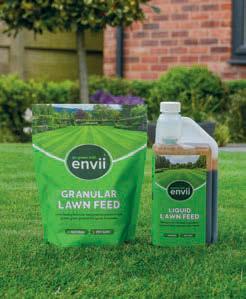
The new Envii Granular Lawn Feed and Envii Liquid Lawn Feed have been developed to deliver genuinely effective lawncare whilst staying true to Envii’s environmentally conscious ethos, combining strong performance with natural, plant-based ingredients that are safe for pets, wildlife and family gardens.
Robust agave has gone through the roof
After 10 years of care and nurture, Birmingham Botanical Gardens’ Agave sisalana (sisal hemp) has produced a huge sword-shaped spike which has reached through the roof of the Arid Glasshouse and is currently standing at over 3.68m (12ft) tall.
A pane of glass within the 19th Century structure has been removed to allow the towering agave plant to continue to grow.
The Arid Glasshouse is planted with a variety of succulents, cacti and plants from temperate dry environments spanning from Africa to the Americas and Australia.
Right: The spike of the Agave sisalana peeking through the roof at Birmingham Botanical Gardens




Muck Boot clogs get a seasonal glow-up

Charities
Unpaid carers are being invited to take part in a free fortnight of simple gardening and nature activities this summer.
Green Care for You is a gentle twoweek programme put together by the charities Carers UK and Thrive. Its aim is to help unpaid carers looking after a family member or friend to enjoy the benefits of gardening and nature in a way that fits around their caring role.
The scheme starts on June 22 and
carers can sign up to receive details of simple nature and gardening activities such as appreciating plants, taking a herbal tea break, arranging flowers, growing microgreens and looking for wildlife.
The first 250 people who sign up will receive a free packet of microgreen seeds to grow at home.
Thrive Chief Executive Ben Thomas said: “Being active and doing some form of exercise, like gardening, helps improve both physical and mental health, strengthening muscles, reducing stress and providing a sense of purpose.”
Carers UK CEO Helen Walker added: “Green Care for You is a motivating fortnight to help carers make some time for themselves through the benefits of gardening and nature.”
To sign up, visit https://uk.emma-live. com/greencareforyou
Gardeners are being asked to keep an eye out for one of the UK’s most astounding-looking insects.
Stag beetles are gentle giants that live in woodland edges, hedgerows, traditional orchards, parks and gardens. They are mainly found in the south of England, but could be seen anywhere, and the People’s Trust for Endangered Species is asking the public to let them know if they see one - and where they spotted it.
Stag beetles have a shiny black head and thorax (middle section), and chestnut-brown wing cases. Males have large antler-like jaws, female jaws are much smaller. The insects can reach 8cm (3in) in size.
If you see one, log your sighting at stagbeetles.ptes.org/take-part-in-thegreat-stag-hunt

Muck Boot has added two new colours to its bestselling, ultra-comfy lightweight women’s Muckster Lite Clog range.
The shades are Woodrose Twilight Mauve, a soft pastel pink, and Monument Turbulence, a modern pastel purple.
The Muckster Lite Clog is 50% lighter while delivering dependable support and all-day comfort. The shoes are made from Bio Lite, a high-performance foam that is ultra-durable and easy to clean.
Visitors to Kew Gardens are invited to step into the weird, wonderful and remarkably fragile world of Evolutionarily Distinct and Globally Endangered (EDGE) species with a brand-new pop-up exhibition in the Princess of Wales Conservatory.
The carefully curated selection of plants, many of which are typically kept behind the scenes, has taken over one of the glasshouses’ orchid display cabinets.
Tom Pickering, Head of Glasshouses Collections at Kew, said: ‘The goal of this exhibition is to show our visitors that botanic gardens hold valuable living collections of conservation importance. Global biodiversity is vanishing before our eyes, and some of the most remarkable plant species on Earth face an uncertain future.”

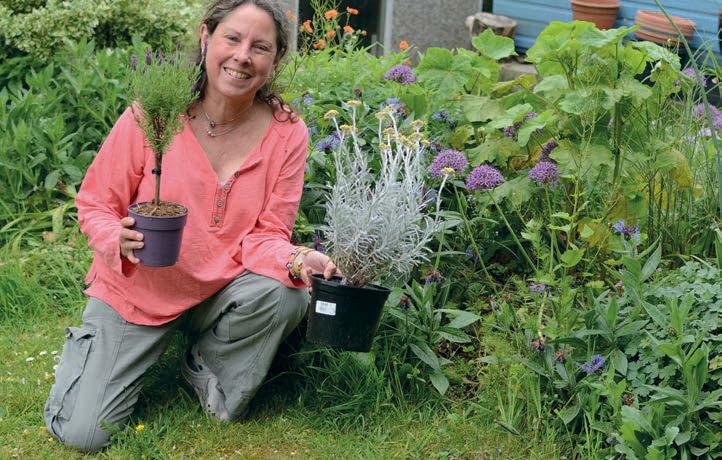
I favour plants that suit and protect the soil, plus resilient varieties such as lavender and silver-leaved curry plant (Helichrysum italicum)
Raise the odds for a healthy garden by getting to know what you’ve got
1

your soil and choose the right plants, says Ruth
Doesn’t gardening sometimes feel like pushing a boulder uphill? I mean, yes, it’s an attractively floral, scented, even moss-covered boulder, but can still take quite an e ort to get it going in the right direction.
It’s been a joke for generations that gardeners are never happy with their lot, but can you blame us when we’re faced with increasingly unpredictable weather?
The past few weeks have demonstrated a climate with more mood swings than

■ Plants behaving in unusual ways can be caused by a wonky climate.
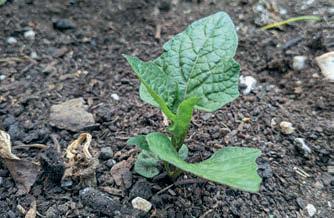
■ French and runner beans have never survived winter in our garden - it’s always been too cold.
■ But last autumn, as an experiment, I cut back their top growth and left their roots in the soil.
■ Lo and behold, to my surprise, two runner bean shoots have emerged so I’ve mulched and given them a seaweed feed and hopefully they’ll crop this summer.



a truculent adolescent. One moment we had blazing sunshine, then came a battering of hail, before gale-force winds swept through, knocking blossom from the trees.
As I write this, we’re in the grip of a heatwave - so how can we successfully juggle all these changing weathers and still create a thriving, productive garden?
The key to success is resilience - within ourselves and in what we grow and how we garden.
Luckily, we gardeners are up for a challenge, and here are my top five tips for creating a flourishing outside space, in the summer and throughout the year.
■ Has anyone else had any unexpected returns in their garden? Please let us know.
Start with the soil. Good, healthy soil equals resilient, healthy plants so make sure yours is as good as it can be by incorporating lots of lovely well-rotted compost and/ or manure.

2Study your garden. Test to find out the soil pH, look carefully to see the spots that get the most sun and shade and assess places where the soil needs extra love, frost lingers longest and plants get battered by wind and rain.
3 Right plant, right place. Make sure plants have enough space to grow well and are somewhere that suits them. Propagate from plants that thrive.
4 In my garden I try to cover as much soil as possible with plant growth in summer. Largeleaved and sprawling plants help to block weeds and protect the soil from desiccation. Perennial roots knit into the soil and hold it together, protecting against erosion.

This runner bean is unexpectedly returning after I left its roots in the soil last autumn


What to look for


5 Collecting seeds and harvesting water, reusing pots, using old growbag compost as soil improver and maintaining tools all helps break the ‘buy more’ cycle and makes your garden more sustainable and resilient.
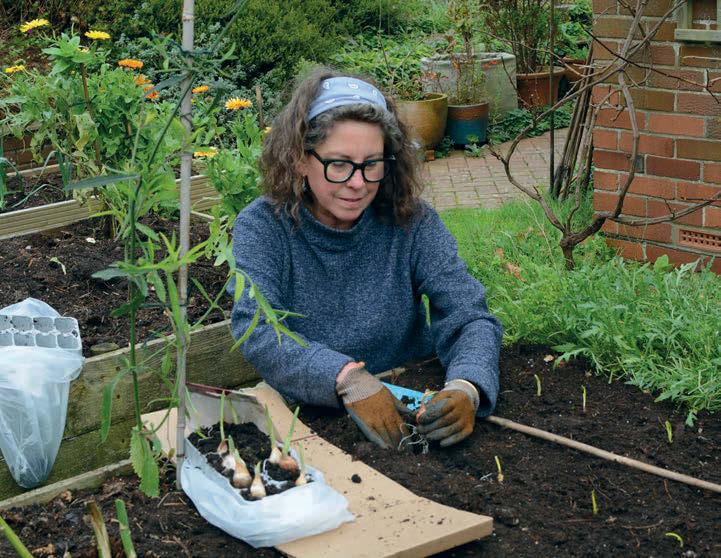

Give them lots of room for the bulbs to swell
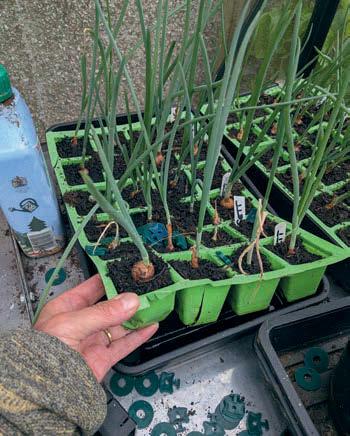
This year I started my onion sets in modules to give their roots a chance to grow - and also because our raised beds needed some maintenance. Later planting also reduces the risk of bolting - producing flower spikes - which can happen when onions are subjected to periods of cold.
Space is now available: the beds are mended and the soil improved with lots of well-rotted homemade compost, so it’s time to rehome the sets, which have grown well and are raring to go.
I’m planting them out 10 to 15cm (4 to 6in) apart, in rows roughly 30cm (1ft) apart - this spacing gives them ample space to grow and avoids crowding, which can lead to fungal diseases and smaller bulbs.
They should grow well in the sunny, sheltered spot we’ve chosen for them and my main job will be keeping them weed-
free and well-watered during dry spells until mid-summer.
Then it’ll be time to let their leaves wither away before harvesting.
I started the sets undercover and they have grown well

Last summer I made batches of jumbleberry jam to use up our fruit glut. Start by putting a couple of saucers in the freezer and washing the jars you will need. Sterilise the glass jars by placing in an oven on a low heat or in the microwave.
Place 1kg (2lb 2oz) of mixed berries (I used tayberries, raspberries, blackberries, blackcurrants and gooseberries) in a pan with 150ml (5 fl oz) or water and the juice of two lemons.
Gently heat for 10 minutes to soften the fruit and its skins, then add 1kg (2lb 2oz) of sugar - you can use preserving
1
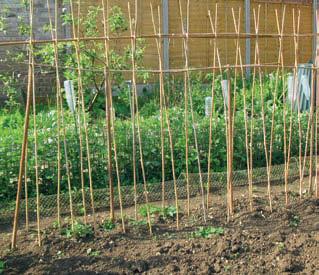
Construct your bean support, with a teepee of canes or two facing rows attached to a horizontal cane. Choose a sunny, sheltered spot with soil that has been enriched with mulching.
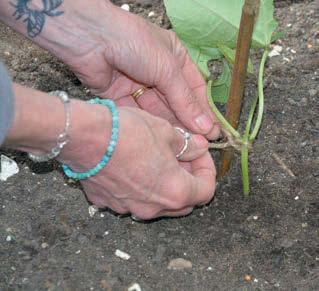
2 Plant your beans, attaching one or two plants to each pole, then firm them in and water well. Keep the soil damp, not soggy, and protect young plants from slugs and snails.




ABOVE: Turning homegrown berries into tangy-sweet jam is one of summer’s delights INSET: The wrinkle test tells you when jam is at setting point
sugar but I used granulated. Bring to the boil and let it bubble for 15 minutes, then plop a teaspoon of the hot jam onto one of the frozen saucers.
After a minute or so, gently push the jam with a fingertip. If it wrinkles, it’s ready, if not, boil for a few more minutes and then try again. Keep going until it wrinkles!
Then turn o the heat and let the jam stand for 10 mins. Skim o any surface scum and carefully spoon the jam into the hot jars.
We only mow the edges and pathways of our back lawn and it is full of life

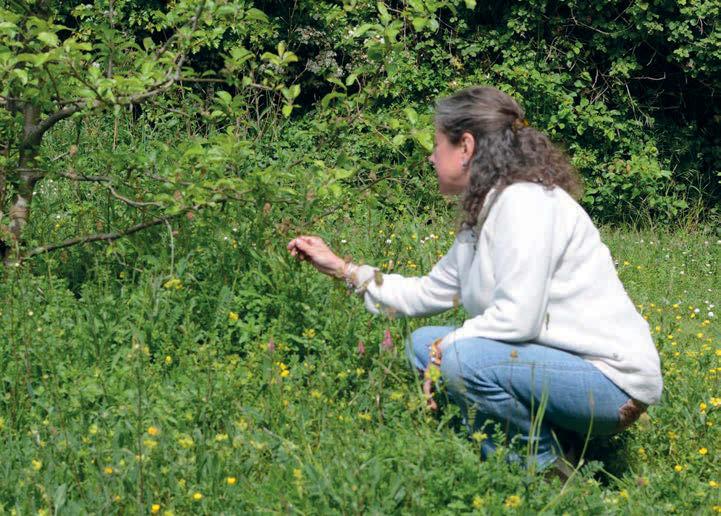

Mow, weed and edge it - but only if you want to!
Down the road from us is a house with an artificial lawn. It looks sterile and grim, apart from a dandelion that’s sneakily flowering at its edge (keep going, dandelion!), and is a world apart from our lawns.
These are speckled with flowerscurrently sainfoin, ox-eye daisy, speedwell and kidney vetch – on which the bees and butterflies busy themselves, crab spiders lurk, thick-thighed flower beetles sun themselves and grasshoppers make their sewing machine sounds.
It’s paradise, but not for everyone, so if you like a slightly less wayward lawn, here are the things you should be doing now.
Mow regularly with a high blade to keep
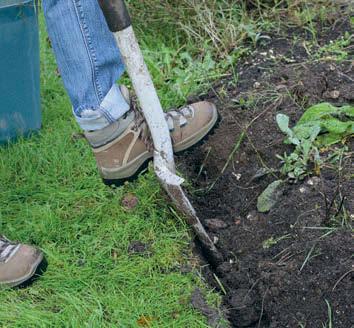
ABOVE: Edging helps create a neat and defined garden
grass healthy, knock weeds down to size and prevent blades scu ng and damaging the soil.
Edge borders to create sharp definition and dig out and compost perennial weeds if you must, re-seeding the gaps they leave with fresh grass.
Don’t bother watering as rain will soon re-green baked turf. If you have a newly laid or sown lawn, however, you will need to water ever seven to 10 days during dry spells to help it establish.
We all like to be outside as much as possible in summer, and this extends to certain houseplants as well.
Calathea spp, sansevieria, spider plants, cacti and succulents and anthurium will all benefit from a few warm weeks in the garden.
Start them somewhere sheltered and shaded while they acclimatise, then move leafy plants such as calathea into dappled
shade that mimics the forests where they naturally grow. Raise the pots so excess water can escape.
Succulents and cacti will like a sunny spot but move them undercover when rain is forecast.
Moth orchids, weeping figs and velvet-leaved African violets should be kept indoors, but continue to give food and water, and keep leaves free of pests and debris.




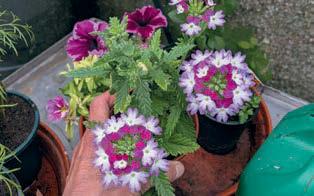
ABOVE: My healthy plug plants are ready to go into the garden
■ By now I would have usually planted up my hanging baskets and patio pots.
■ But because May’s weather was so undecided - here in Dorset we experienced heavy hailstones one minute, blazing sun the next - I decided to leave my bedding plants in the greenhouse rather than lose them to the haphazard climate.
■ Most of them are this year’s plug plants. Throughout the spring I pinched them out and removed any flower buds and they have developed into sturdy plants and are now ready to go outside.
■ I’ve also got some petunias and calibrachoas that survived winter in the greenhouse, much to my delight.
■ In the next issue I’ll plant them out and explain how to get the best results from your bedding, pots and baskets, both sustainably and economically.
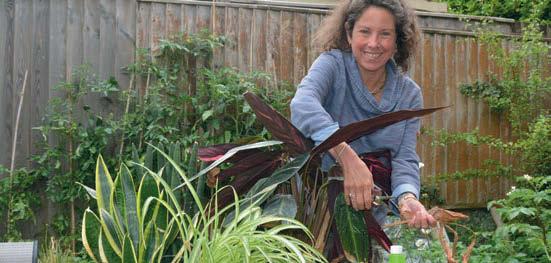
ABOVE: I’m checking over my houseplants in the garden and many of them will stay outside for summer INSET: Keep leaves clean to enable photosynthesis and maintain general health
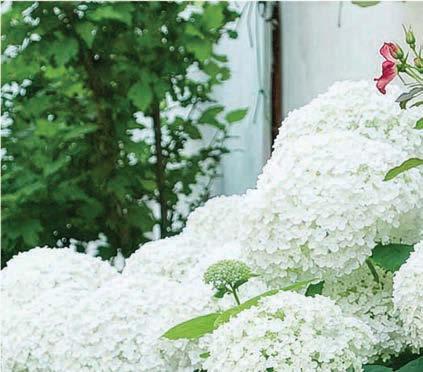
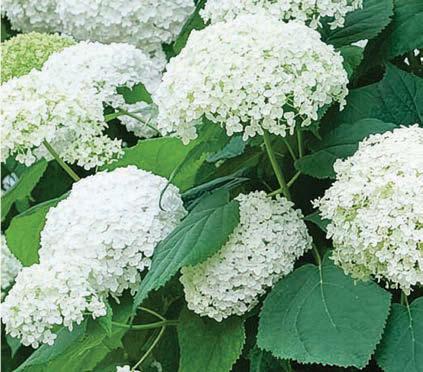
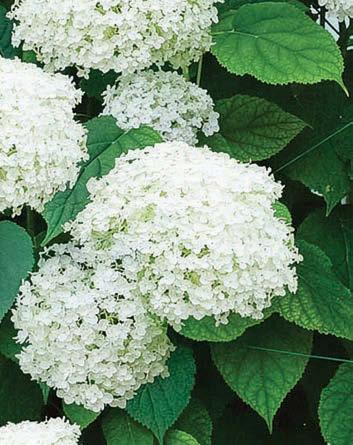
‘Annabelle’ delivers:
• Giant, globe-shaped blooms year after year
• Cold-hardy and tough—perfect for UK gardens
• Low maintenance, high reward
• Supplied as an Established 3 Litre Plant
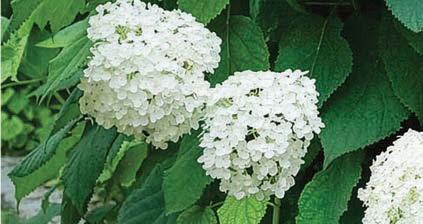
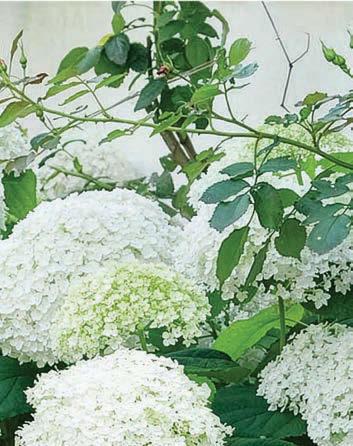
Bring effortless elegance to your garden with Hydrangea ‘Annabelle’, the much-loved variety famed for its huge, snow-white flower heads Blooming reliably from midsummer, each rounded cluster can reach an impressive 10–12 inches across, creating a stunning display that brightens even the shadiest corners.
Shady corners? It loves them. Cooler climates? It performs beautifully. Unpredictable summers? It blooms reliably, year after year, because it flowers on new wood.
IF YOU WANT MAXIMUM IMPACT WITH MINIMUM EFFORT...THIS IS THE PLANT FOR YOU.















It’s a busy time of year but Lucy is here to help with the most pressing tasks
Living in Essex (one of the driest counties in the UK) on a light, sandy soil, has its challenges. One of the main ones for a grow-your-own gardener like me is cultivating anything resembling spinach during the summer. Annual spinach gets stressed in drought and heat, throwing up a flower spike at the expense of lush leaves. Swiss chard and perpetual spinach, too, perform poorly, preferring the cool and moist conditions of autumn through to spring. So where do we go for our leafy hot-season fix?
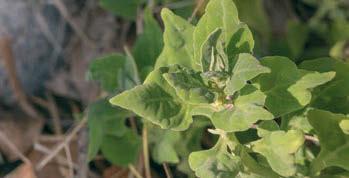
Luckily there are four backbone plants that I now rely upon for my spinach alternative: red orach, amaranth, New Zealand spinach and tree spinach. These four leaves are part of my self-seeding repertoire, and I now simply reposition seedlings as and when I find them, or I leave them where they emerge – it’s all rather beautifully hands-o .
The red orach tends to germinate quite quickly in spring, so it’s the first o the blocks. The tree spinach, New Zealand spinach and amaranth emerge a few weeks after this, and I’ll see a rash of seedlings come mid-May. If I plan to transplant any of them I’ll do so before they’re 10cm (4in) tall, selecting the healthiest and ditching any that look to be carrying pests or diseases (leaf miner, for example). A quick water settles them in.
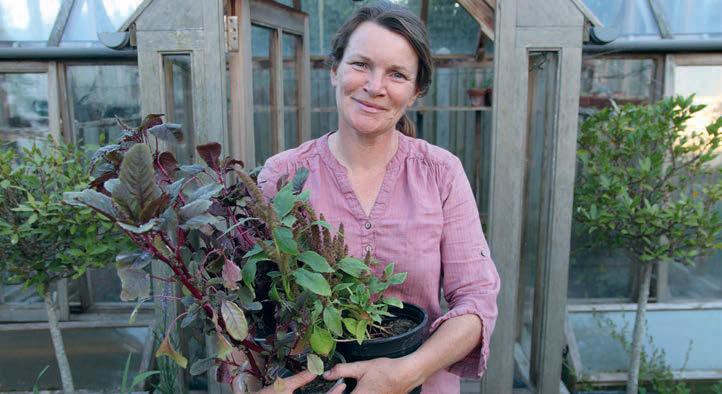
Amaranth is one of the leafy vegetables that Lucy grows in place of fast-bolting spinach

Unlike true spinach, flowering can be dramatically delayed by regularly pinching out the growing points of the plants – this also encourages soft, succulent re-growth that’s very palatable compared with older leaves. While orach, amaranth and tree
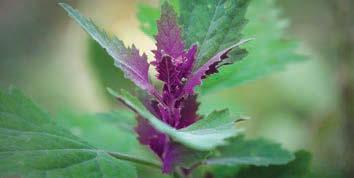
a few plants flower and seed so that the whole cycle can go on year after year.
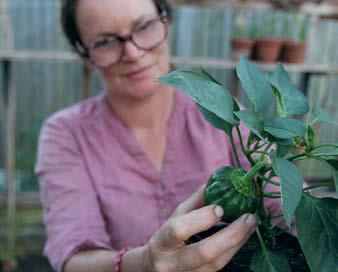
✿ I say sweet peppers, but this rule can also apply to cucumbers, beefsteak tomatoes and aubergines, so let me explain.
If you’re a tad greedy and you let the very first fruit set on any of these plants, while the plants are still themselves very small, you’ll hold back the plants’ growth and dent yields further down the line this summer.
So, bite the bullet now and take o fruits that look oversized compared
with the plants holding them. It’s tough, I know, but I promise, it will give these crops a breather: imagine a young ant trying to carry a full-sized bumblebee on its back – you’d be straining, too!
I’ve noticed that grafted plants, in particular, can show this trait. They’re so keen to set and carry a crop – but give them a little relief. As soon as plants start bulking up, of course, let them carry all they want – just set them up for a healthy start.
allow

It might seem a simple task, but there are good and bad ways to dig up the first delicious spuds of the season. Flowering is often quoted as an indicator of tuber initiation, but it varies from variety to variety so often it’s best to simply unearth a root or two to establish maturity, and gain the best yields and quality of eating:
1
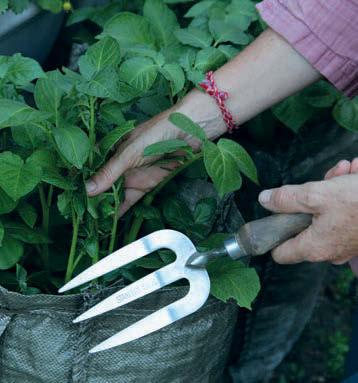
In growing bags, look for telltale bulges in the side of the bag, or gently dig around with a hand fork to see how large tubers are. Of course, you can then just tip the whole bag out into a tray and pick the tubers out of the compost. But instead of this one-hit harvest, it’s better to unearth a few tubers for one meal, then re-plant the plant for subsequent yields.
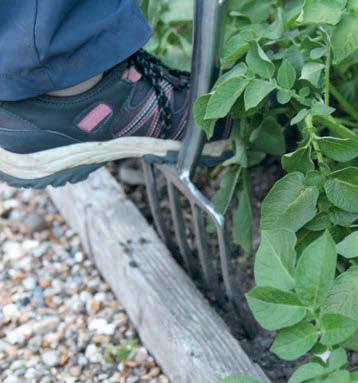
2 Making ridges is the traditional way to grow potatoes, and the one you’ll see farmers adopt by the hectare. When growing new potatoes like this, there’s a nifty way to prevent yourself from stabbing the tubers (which is sacrilege in our house!). Don’t push your fork prongs into the ridge. Instead, slide them alongside each ridge and then gently lever the plants out of the soil.
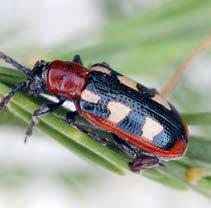
✿ Some beetles are incredibly pretty, and asparagus beetle (Crioceris asparagi) is certainly one of them. But it can also develop a voracious appetite for your asparagus plants, if given half a chance, so it pays to monitor this luxury edible regularly to ensure that doesn’t happen.
Keep checking over the spears for beetles 8mm long that are white, black and red – remove them if you see them, along with their eggs, which protrude out from the spears at a 90-degree angle.
The larvae are tiny at first but can grow to 1cm (½in) long – disgustingly they cover themselves in their own poo as a deterrent against predators. Don a glove and remove these, too.
It’s the grubs that are most destructive, so feel free to let a small population enjoy your asparagus, but monitor numbers and step in when needed.
Check asparagus plants regularly and remove any asparagus beetles, eggs and larvae that you spot
3
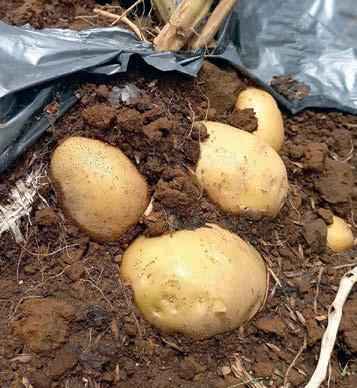
I’ve adopted the method of growing under sheets when I’ve been timepoor and on a weedy allotment. You essentially grow potatoes in beds under weed control material (into which you cut a cross and pull the emerging potato leaves through). To harvest, pull back the sheeting, take what you need, then re-plant the plant(s) and water them back in for future picks.
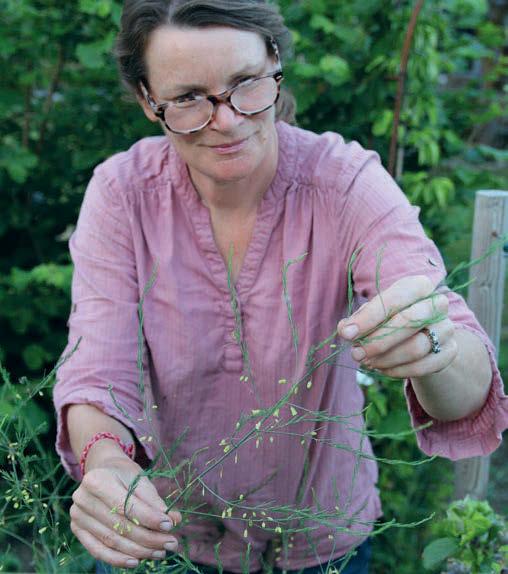



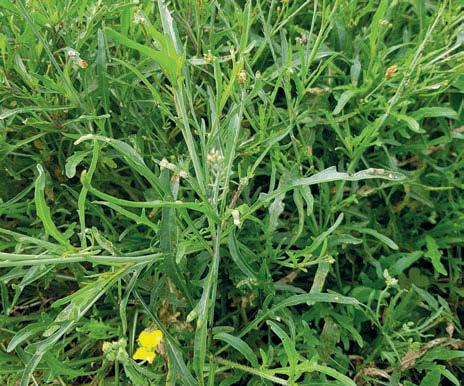
✿ Do you like the sound of only having to sow rocket once every few years, rather than every few weeks? Then this short-lived peppery perennial has your name on it.
Diplotaxis tenuifolia is a hardy plant that freely self-seeds around your plot, nestling in nooks and crannies to produce heavily serrated leaves with a spicy hit. It’s a member of the brassica family and, while it will ultimately flower, this doesn’t diminish its ability to continue producing leaves.
If plants become lax or woody, you can shear them back to stimulate a new flush of soft, palatable growth – and you can eat the yellow flowers, too (they have a peppery flavour). The leaves can be eaten like conventional rocket – mixed into salads, scattered across cooked pizzas or made into a tangy pesto.

1
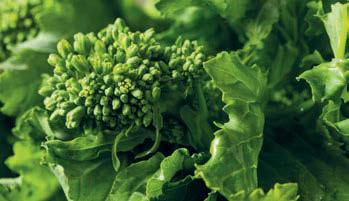
Did you forget to start o any calabrese this spring? Don’t fret – there are other broccoli relatives that crop in as little as five weeks from sowing. Source seeds of broccoli raab, choy sum or kai lan – quick-tomature brassicas that develop edible florets. Raab will be quickest, but kai lan and choy sum will give bulkier harvests.

4
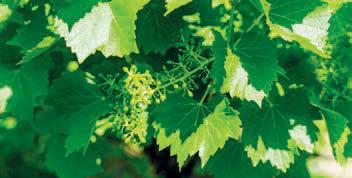
Some gardening tasks are a labour of love, and this is one of them. If you are lucky enough to own a dessert grapevine (ie one where you want fewer, large fruits rather than lots of small ones for wine) then it may be time to thin out the bunches. Using small scissors, aim to remove half the fruitlets if the bunch looks congested.


2If, like me, you’re a fan of hybrid berries, you may well be looking at a tangle of stems right now. Tayberries, loganberries, Japanese wineberries and indeed blackberries will be throwing up long, arching non-flowering/-fruiting stems – carefully bundle these together and support them out of the way of the main fruiting laterals.




3
A favourite morning job of mine, before the family is out of bed, is to creep down the garden, turn on the hose and damp down the greenhouse. Doing this at the start of hot summer days creates a beautifully buoyant atmosphere that the likes of melons, cucumbers, tomatoes, aubergines and peppers will revel in. Just delicious.

5


Do you find that your courgette plants run out of steam or succumb to powdery mildew well before the season is over? Simply sow a second batch of plants now and they’ll pick up the baton when your early spring sowing starts to fade. Opt for powdery mildew-resistant varieties like ‘Defender’ (green) or ‘Lingodor’ (yellow).







With Nick Hamilton of Barnsdale Gardens
Recycle where you can and prioritise when watering
Water has always been an essential resource because everything that lives needs it and I’m sureit will become even more scarce at certain times of the year This is primarily due to changing weather patterns which, like the fierce heatwave in late May, are all too apparent We now tend to get long periods either with or without rain, which invariably means we will have to change the way we use water.
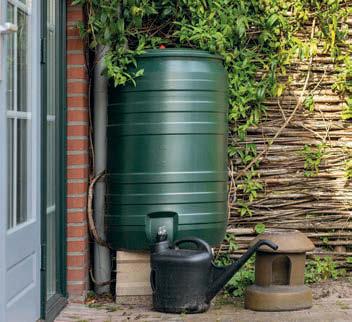
The most important pieces of equipment we should all have are water butts or water storage containers attached to every downpipe so that we can collect rainwater. I also empty my bathwater into a large container to use in my garden. I’ve
Water

Above: Think carefully about the best ways to water wisely to make the water you have go further
found the best way to do this is by using a length of hosepipe and syphoning it, although the art is knowing when to stop sucking so that you don’t get a mouthful of soapy water!
I have several butts in the gardens, as well as larger water containers, and I use a couple of the water butts to provide me with a nitrogen-rich feed using nettles, and a potash feed using comfrey.
A buried seep hose for beans
Water can be applied to the garden using a watering can or a low-pressure rubber pipe through which moisture leaks into the surrounding ground. This pipe is buried just under the soil surface to prevent excessive evaporation and I find that it works superbly when laid next to my runner beans, meaning my harvested beans are succulent and not stringy. It can also be laid around plants in a border, although I would also advise mulching at the same time to help keep that valuable moisture in the ground.
There are several products that work well as a mulch, but you’d go a long way to beat your own garden compost. However, if you don’t or can’t compost, then bark, shreddings, gravel, ornamental chippings etc do an admirable job for a permanent planting area. To suppress weeds, the mulch should be 5 to 8cm (2 to 3 in) thick.
When it was clear, last year, that the summer was likely to be long and dry, I took what I considered to be a very responsible approach to the application of water in the gardens. I walked around and identified the small number of trees and
n Barnsdale Gardens in Rutland, East Midlands, has been enthralling garden fans since 1983 when Geoff Hamilton, the much-loved presenter of BBC Gardeners’ World, bought a Victorian farmhouse with over five acres of land. Barnsdale was

Above: Mulching brings many benefits, including soil moisture retention and weed suppression
shrubs that absolutely needed to be kept alive by watering, if needed, and these were either ones that were unusual and magnificent specimens or those that had a strong sentimental value.
The rest of the plants, and there are a lot, had to look after themselves. Yes, a few frazzled in the hot and dry conditions but, surprisingly, I didn’t have to water all the plants I had identified, and those I did only once or twice.
I see the Rutland Water reservoir every time I drive to and from Barnsdale and last year it was the lowest it had been. While I’m replanting the few plants that didn’t make it last year, I console myself with the fact that if last winterwas much drier, we would have started this year short of water, so I had done my bit to conserve this valuable resource.

Above: Nick is reminded of the necessity of conserving water every time he drives past Rutland Water and notices the lowering levels
Geoff’s ‘great experiment’ in peat-free and chemical-free growing, and his legacy continues today with his son Nick ensuring that the 38 gardens are kept to the stunning standard for which they are renowned. Visit www.barnsdalegardens.co.uk
Editor and resilient-gardening expert Kim Stoddart explains how to protect plants and gardens during a heatwave
Every year it seems new weather records are being set and then broken. Most notably, last month we saw the hottest day ever recorded in May and learned that it has been the warmest spring on record. The searing heat later in May was then followed by storms with extreme rain, thunder, lightning and, in some places, hail.
Overall the topsy-turvy weather can flit back and forth, with weather systems influenced by the Jet Stream (fast-flowing, narrow ribbons of air high in the atmosphere) becoming stuck, leading to unseasonably warm or cold weather. These ‘doomy’ stats aside, the reality on the ground for us gardeners is that we need to be as prepared as possible for anything, regarding the plants we grow and the way that we garden.
I know it can be stressful, but there are many simple ways to help protect plants by working with materials you might find readily available in your garden or local community. There is no one-size-fits-all fix with this, but the natural world and its systems can provide inspiration and gentle protection. Also, working with materials that might otherwise go into the recycling or rubbish, or be piled in a corner, can feel really positive and empowering.
It may no longer be ‘gardening as usual’, but it’s often amazing how adaptable plants can be if we look and learn, get a little creative and tap into our intuition and potential to shore up the defences naturally.
Later in May it was our sensitive seedlings that required protection from the heat. Plants in smaller pots are at risk of heating up and drying out fast, so positioning them together in cool shade, or planting them out were the best tactics. Mulching after watering can lock water in for longer and help protect soil from extreme heat. Some form of shading is also incredibly useful, be it dedicated shade netting, or impromptu materials sourced for free closer to home.



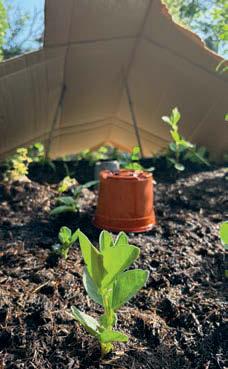
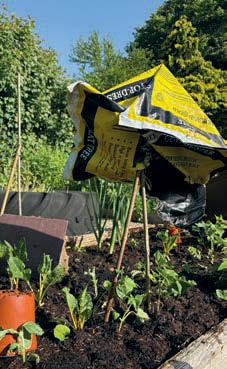
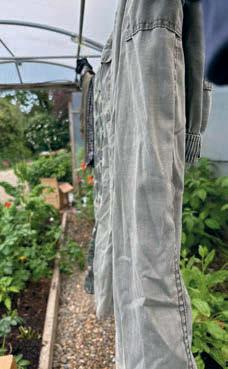
Mulching with a thin protective layer can be used for planted pots and on the ground. Great materials to use include compost, grass clippings, comfrey, chop-and-drop leaves, wood chip, leaf mould or fallen leaves from trees.
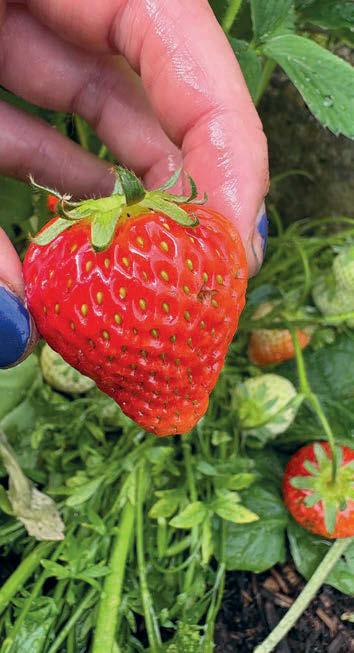
We’ve spoken a lot about how to water sensibly to reduce the amount of watering needed for plants. Just as a quick recap: earlier or later in the day when the temperature is cooler works best, and to water deeply into the ground so the water won’t dry out as quickly. Then mulch with the materials mentioned above.
Using ground cover plants as much as possible (trying to avoid bare soil) also works well, as does using no, or little, digging to help nurture soil life and fungi below ground, which can provide plants with natural protection.
Compost heaps have been a source of wildfires in periods of deep drought, so do take care to mix in woody, dry materials (don’t leave them on top) and water your heap so it is moist underneath and doesn’t become tinder.
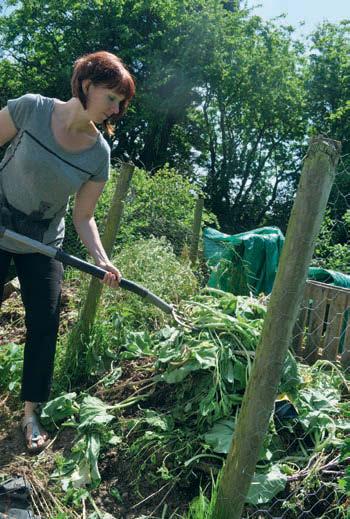

Keep adding to compost heaps but make sure any dry materials are mixed in well to guard against fires
Watch out for heat-loving plant eaters
Perennial plants that have been subject to prolonged heat can look fine on the surface but become weaker come the next extreme weather event, or become more susceptible to pests. Obviously socalled pests can also be food for garden wildlife, but you might need to intervene a little more. It’s good, as always, to watch and decide on a case-by-case basis if natural intervention is needed.
I noticed that the young apple trees at the community garden I run near to me in Wales had some aphid infestation after May’s heatwave. But on closer inspection I also saw that there were a lot of ladybirds, wasps and ants on the leaves working their way through the aphid population leaf by leaf. There were a few ladybirds using the trees to mate, so after removing some of the top shoots, I decided to let the plants be, reassured by the knowledge that they were providing food and the natural order would soon be back in balance again.
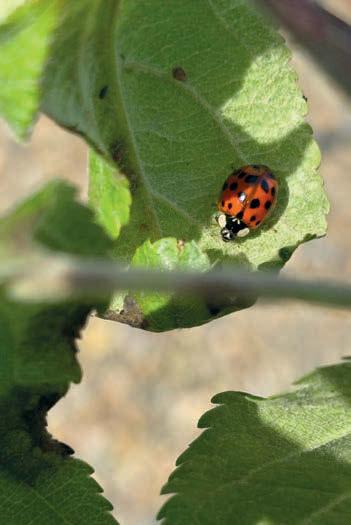


Come rain or shine, I’ve been using stone and gravel a lot at the community garden to provide plants with protection. The site (up till recently a building site) has lots of aggregate so I’ve been experimenting over the years with how it can be used and what can be grown in it, with rather fascinating results.
The larger stones foraged from the site are used around young plants to protect against heat, wind, rain and hail and then moved around as the plants grow. Earlier in May we were subject to a cold patch which threatened newly planted seedlings and my courgettes and sunflowers thrived thanks to the stones’, natural barrier from the elements.
The stone also harbours natural predators such as ground beetles, spiders and earwigs and allows the easy removal of slugs, if the weather turns wet and populations surge out of balance. I also grow soft fruits and herbs in the gravel and I’m delighted to say they seem to be thriving.



The RSPB explains how small leg bands provide experts with a wealth of vital information
Have you ever seen a bird with a ring on its leg and wondered what it means? Every year, thousands of volunteers give their time and expertise to ringing – and without them, we would know far less about our birds and how to help them.
If you’ve ever stopped to think about how we know so much about bird populations and the logistics of counting them, then ringing is a large part of that equation. It is critical in many ways, from helping us monitor populations to tracking migration patterns and understanding nest survival rates, all of which are vital to help inform future conservation e orts.
The British Trust for Ornithology (BTO) is responsible for bird-ringing, ensuring everyone is properly trained and licensed, and then collates all of the data produced. Up to 900,000 birds are ringed in the UK every year!
Ringers are mostly volunteers, and go through extensive training, learning how to safely catch, handle and identify birds, take the necessary measurements and record the information. These details are then entered into a national database, overseen by the BTO.
At this time of year, ringers are carefully ringing chicks in nests, which will help researchers understand more about breeding success and survival rates. In the longer term, this provides information about changes in populations and helps to identify which species are in danger.
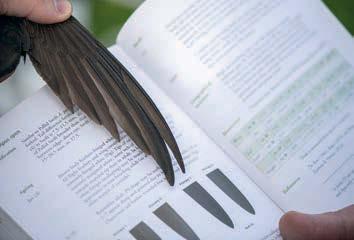
Common garden birds such as goldfinches are tagged as well as rarer species

Details of a life on the wing
It may sound like something reserved only for our less common birds, but lots of garden birds are ringed every year, which provides a wealth of information about their movements, health and longevity.
Ringing played a big part in helping to identify the rapid decline in our greenfinch populations this century, alongside other monitoring schemes like the Garden Wildlife Health project. Because of the information collected, it became clear that the problem was not down to breeding or nesting success, but a problem in adulthood – namely, the disease, trichomonosis.
The rapid decline in the species’ population led to it being added to the Red List, showing the birds which are of most conservation concern, and following more research into the problem, some updated advice was given earlier this year from the RSPB about feeding our garden birds, which you can read at www.rspb. org.uk/whats-happening/news/how-tohelp-garden-birds.
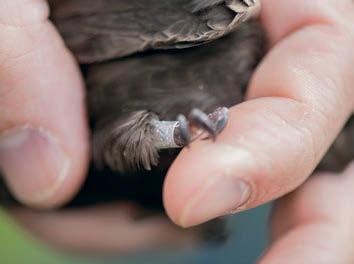
So what should you do if you spot a bird in your garden this summer with a ring on its leg? Firstly, never try to catch it, and if possible, take a photograph.
Ideally, the information to note down is the unique letters and numbers on the ring, which leg it is on – left or right, the location, the date and time, and the condition of the bird. If there’s also a plastic coloured one, it means the bird is part of a specific study. Send any information you’ve collected to the BTO’s ringing projecthttps://app.bto.org/euring/ lang/pages/rings.jsp
Q Do any birds eat aphids?
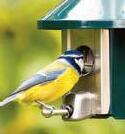
A Yes, many of our garden birds will eat aphids, needing lots of protein to feed their hungry chicks. Blue tits are especially good at hoovering up large amounts, along with house sparrows, wrens and a number of others.
Q I’ve had two nests in my garden over spring and birds have been really active. But they’ve now gone really quiet. Why is that?
A This is totally natural behaviour! After a busy breeding season, birds need to rest and recuperate.This can involve moulting, changing their plumage and making the most of natural food supplies which may take them away from gardens.
Helping to collect information like this is just one of the ways you can really help your garden birds. For lots more ideas, visit www.rspb.org.uk
“This
Mary W. (En eld)
“No
Sarah R. (Warwick)
“Great
Graham S. (Beds)










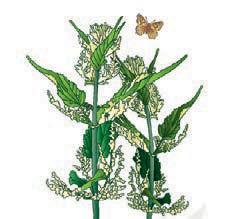


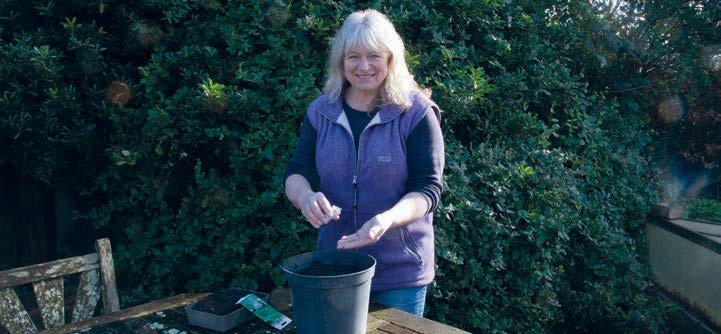
Anne plants herbs for garden foraging and adds an attractive water feature
Self-su ciency is all very well if you have the space and time to grow, harvest, store and cook a lot of produce. For many of us, foraging in our gardens for a wide range of flavours from fruits, herbs, veg and what some people might call weeds is a more achievable aim. Gathering snippets of mint, chives, lemon balm and maybe the first picking of broad beans and strawberries is a sensory treat.
Writing this column has honed my interest in using di erent parts of a plant. Coriander, for instance, is commonly harvested for mature leaves but makes a delicious microgreen too. Exploit its tendency to bolt (run up to seed) by eating the flowers and green, unripe seed pods.
I enjoy the slightly metallic flavour of coriander but know that some people hate it. There is a good reason for this, because up to 20% of folk have a genetic kink that makes them over-sensitive to aldehydes. Coriander contains high levels of these
organic compounds and its detractors will always find it tastes revolting.
Continuing with our herbal theme, I have a new rosemary to plant. These evergreen Mediterranean sub-shrubs love sun and warmth, so planting them during the balmier months seems sensible. As a flavouring, the leaves can be widely used in roasts, as tea and in baking. There are many di erent cultivars of what is now known as Salvia rosmarinus, including those with mauve and pink flowers, some with trailing stems
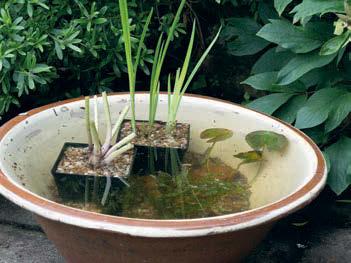
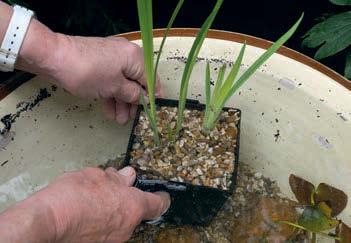
If you are lacking the resources to make the pond of your dreams, how about a pond in a pot? Repurpose a container with no hole and consider sinking it in the ground, to help regulate water temperature and allow access for amphibians.
Add 8cm (3in) of topsoil (from garden beds), a layer of shingle and then fill, preferably using rain water.
Plenty of aquatics are available from early summer but I took sections of miniature waterlily, Iris ensata and marsh marigold from our existing pond. Lilies enjoy being planted, their roots anchored by stones. Aquatic baskets double as access for birds and other wildlife, or add a large stone. Bunches of submerged oxygenating plants
and others with an upright form that’s great for hedging. Until this year I’d never come across one with ginger-scented leaves and I can’t wait to try it.
They say never site a pond under trees and year on year as an oak tree spreads, our small concrete pond has become shadier and shadier. There’s enough light for iris and marsh marigold to bloom, newts still visit to breed, but dragonflies no longer hover to lay their eggs. Maybe I’ll build them a pond in a pot somewhere warmer and sunnier.
were my only purchase and, ridiculously enchanted by this new pond, I can’t wait for the first signs of life.

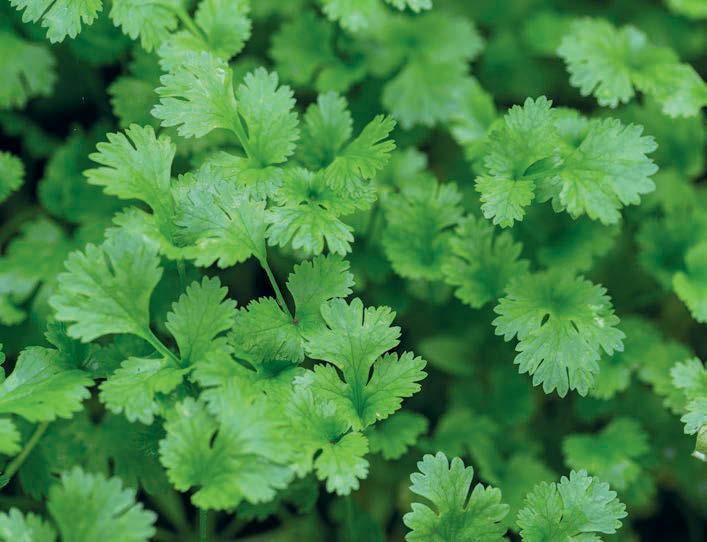

Also known as cilantro, coriander (Coriandrum sativum) is a tender annual in the carrot tribe with its roots in Southern Europe and the Middle East. I always think of it as a modern herb, probably because nobody seemed to be growing or eating it in my childhood days. Yet it has been cultivated for thousands of years - the Romans carried it across Europe and it was popular in the UK during Tudor times.
Given warmth, coriander seeds germinate e ciently in five to 10 days, the plants develop quickly but are famous for bolting at the drop of a hat. When this happens, the bright green foliage loses its lushness but there are tasty compensations to be had. Small white flowers are followed by green seed pods and then the familiar aromatic pale brown pods for storing, all edible.
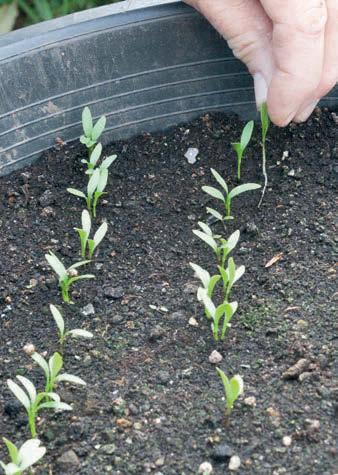
Having accepted the quirks of coriander and tried a variety of di erent growing methods, my favourite is to sow monthly under glass, setting the seeds thinly and evenly across the top of a 15 to 23cm (6 to 9in) pot. If you really love coriander, start sowing in February on a warm windowsill. Later sowings can move to the greenhouse and continue there until early autumn.
From each ‘seed’, a pair of seedlings usually develop and although I often leave them to grow together, thinning to one every 5cm (2in) is said to give the best results.
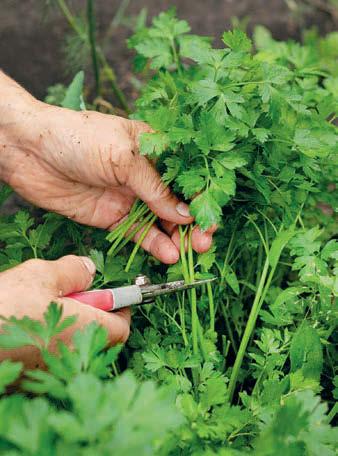
When plants reach 10 to 15cm (4 to 6in) high, harvest by snipping what you

need just above the growth point of plants. They should regenerate well but the compost is likely to run out of nutrients so a general purpose liquid feed will keep them going. By all means try growing coriander in the ground, sowing direct because the plants resent disturbance. They like sun, well-drained soil and if spaced more generously, around 15 to 20cm (6 to 8in) apart, they’ll give a better yield of seeds.
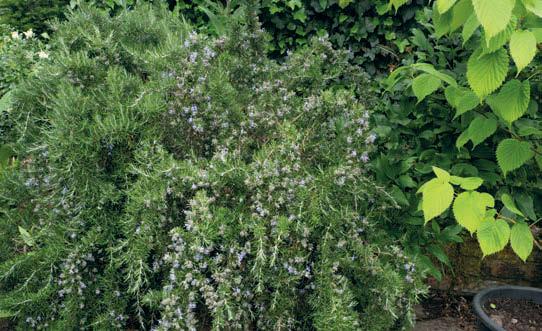
1
I can’t imagine a garden without rosemary and although it prefers a light, well-drained soil, it grows well in our improved clay in beds mounded slightly higher than ground level. This ‘Foxtail’ variety trails from a raised, south-facing bed.
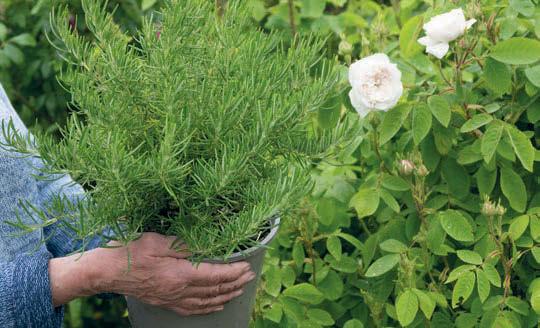
3 This spring, I was tempted by the deliciously aromatic Salvia rosmarinus ’Green Ginger’. Already, we’ve enjoyed tea made from its ginger-scented and flavoured leaves. The label informs me it reaches a height and spread of only 60cm (24in).
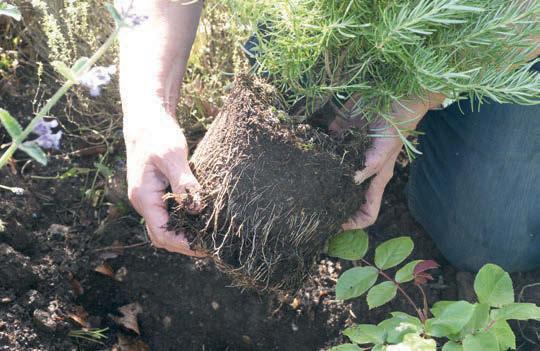
5 Having made sure the root ball is moist (if necessary dunk it in a bucket of water, then allow to drain), remove the rosemary from its pot. Gently loosen any congested roots before setting it in the planting hole at the correct depth.
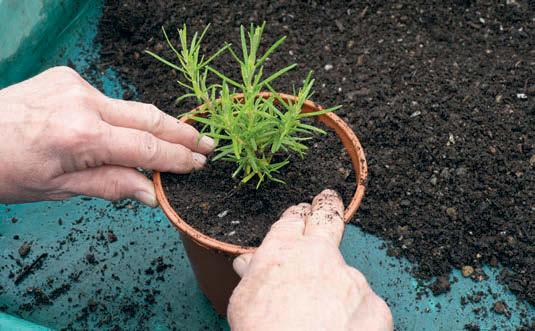
2
Last year I rooted two cuttings from an old, woody specimen of ‘Majorca Pink’. Established in 9cm (3.5in) pots, they’re now being potted on, to gain some size before fending for themselves in the open ground.
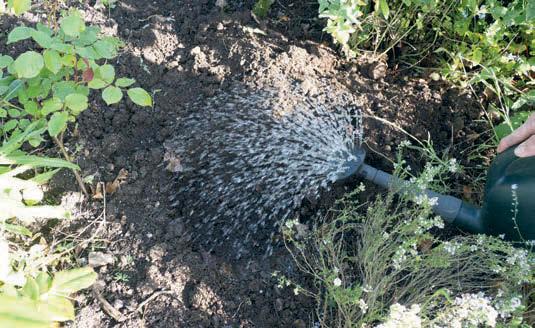
4 This ‘Green Ginger’ rosemary would make a great container plant but I’ve cleared a space between roses and amongst catmint, lavender and thyme in the kitchen garden. If the soil is dry, give the planting hole a good watering before planting.
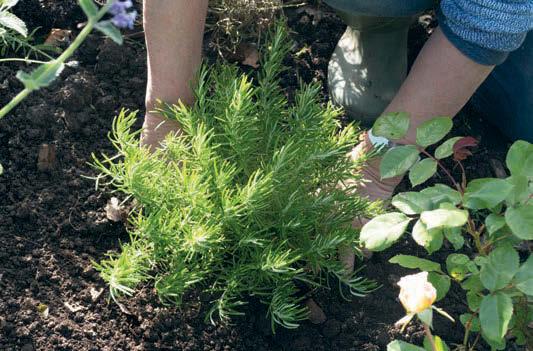
6 With soil backfilled and firmed around the root ball and the rosemary watered in, new roots should soon reach out into the warm soil. We’ll be keeping an eye on the plant and watering again during summer droughts.


Epipremnum aureum is known as devil’s ivy or golden pothos
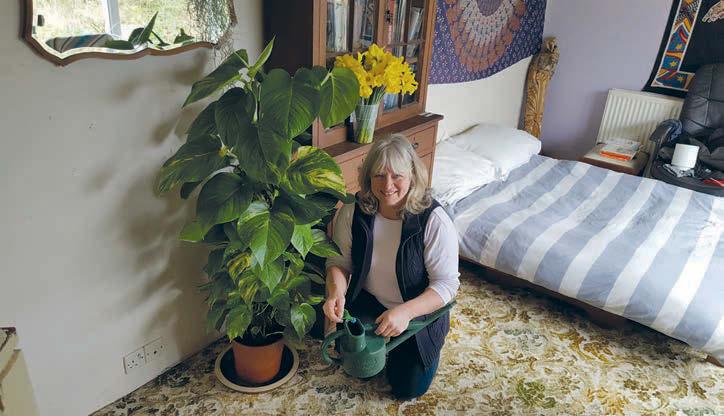
Golden pothos will bring light to a shady space
Ordinary, no-frills devil’s ivy or golden pothos, known botanically as Epipremnum aureum, is easy to grow and copes well with shady rooms. I recall one plant that took over an oldfashioned tea trolley parked at the back of a room. It grew upwards, trailed downwards, covered the trolley and then sent many stems of leaves behind a piano.
In the family Araceae and related to philodendron and alocasia, this climber originates in the South Pacific Solomon Islands, inhabiting tropical forests in a similar way to Swiss cheese plant. Plants are often sold growing on moss poles, to which they cling with aerial roots, but keeping the moss properly wet indoors

With expert broadcaster, author and long-standing AG columnist, Anne Swithinbank
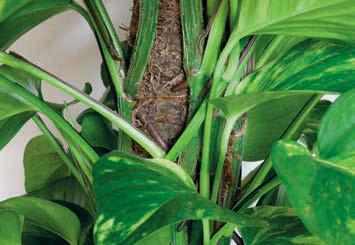
Aerial roots
takes a lot of misting. Should it dry, stems will leave the poles and set o in search of moisture. Cultivars with unusual leaf markings are available.
Pothos grow best in good but indirect light and enjoy normal room temperatures. They’re less happy with hot, dry air or when temperatures dip much below 15ºC

(60ºF). Water as the compost surface begins to dry out and add a general purpose liquid feed monthly when growth is active. Overgrown plants respond well to a spring pruning. When new growth shows, pot on or at least top dress and feed to encourage lush leaves. Use the prunings to make cuttings of tips and stem sections.

Above: Use cuttings to make prunings. Here Anne has cut off sections each with two nodes
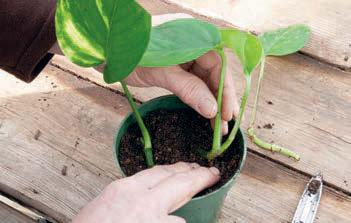
Above: Insert cuttings into damp compost
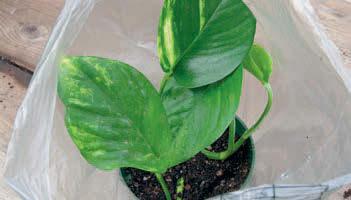
Above: Encase cuttings in a loosely knotted poly bag
Epipremnum pinnatum Happy Leaf (‘Ad260664’)
Glossy, wavy-edged leaves are relatively small and plants will intrigue their owners by showing a range of variegation from nearly white leaves to those splashed and streaked with shades of green. Keep out of harsh sunlight, as the pale leaves are more prone to scorch.

Philodendron scandens ‘Lime’ Sweetheart plants are perhaps less thuggish than the pothos tribe and have a more refined growing habit. This lime green version with less chorophyll in its leaves is usually well-behaved and adds a pretty lightness to indoor greenery.

Scindapsus pictus ‘Argyraeus’
The satin pothos originates from Borneo and Indonesia but is usually represented by this cultivar whose satiny-looking dark, olive green leaves are margined and spotted with silver. An easy plant as long as it doesn’t feel a winter chill.


Liz Zorab chooses her favourite plants that conjure up more exotic places

You don’t need to live in the tropics to have a tropicallooking garden! Choose plants with lush leaves, big bold shapes or more unusual forms and plant densely to give the impression of your own tropical paradise island. Add a water feature hidden among the plants for the gentle sound of moving water, and a seating area surrounded by calm greens and hot flower colours.
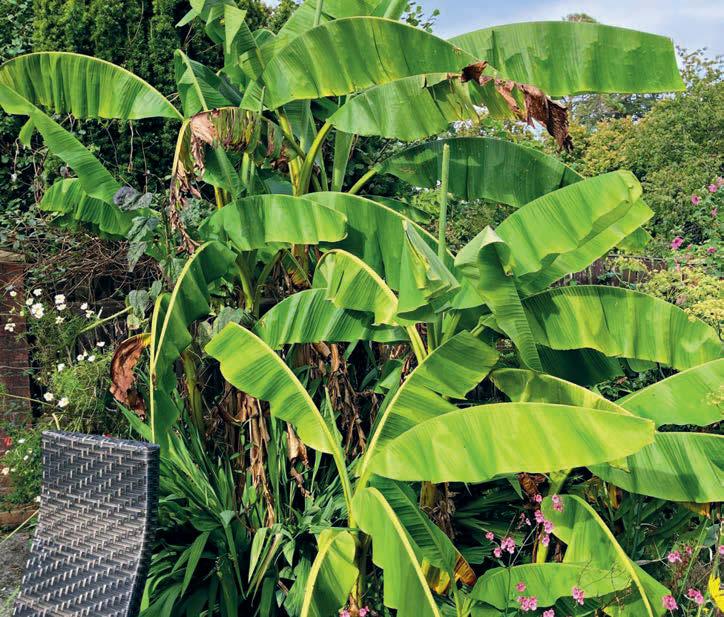
Musabasjoo

Often called a hardy banana plant, Musa basjoo tolerates cold weather but is unlikely to survive being frozen. Unless you live in a warm, mild or coastal area, grow it in a large container that can be moved to a frost-free space before freezing temperatures arrive in autumn. It can grow to 5m (16ft 5in) and is suckering, so will form a clump and spread over time. After flowering in summer, it occasionally produces inedible fruits.
Grow in a south-facing, sheltered position in full sun, in chalk, loam or sandy soil that is well-drained. For easiest propagation, either remove the suckers in spring or divide the clump every few years.
Anisodontea ‘El Rayo’
Also known as the African mallow, this semi-evergreen plant produces a mass of pink flowers from June to October. Grow in well-drained loam or sandy soil in a sheltered position, in full sun. It prefers a south or west-facing position.
This mallow can cope with some cold, but is unlikely to survive being frozen. I’ve seen it in a friend’s sheltered and southfacing garden, planted against a fence and surrounded by other plants that provide protection, and it lives happily through the winter.
Unless in a very mild area, it may be best grown in a large container and moved to a frost-free area for the winter. Expect it to grow 100cm to 130cm (3ft 3in


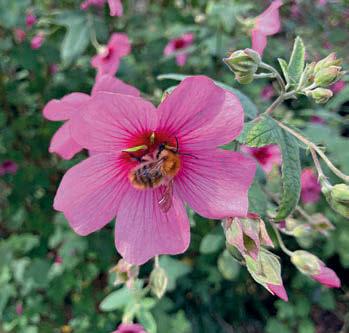
to 4ft 3in) in height and 60m (2ft) in width. However, given the right conditions, it can grow larger.
Cordylineaustralis
Also known as the cabbage palm, Cordyline australis grows into a small tree with long, strap-like leaves. It produces large panicles of cream flowers in

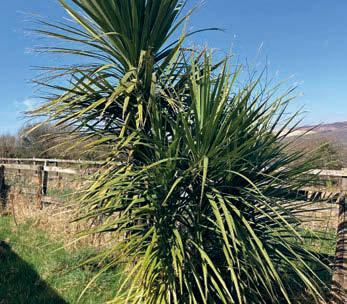

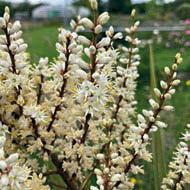

Above: Architectural Cordyline australis, also known as cabbage palm, has long, strap-like leaves and, inset, large panicles of cream flowers that appear in summer
summer followed by non-edible berries in autumn. It suckers and grows young plants around the base of the main stem, which can be carefully removed to provide more plants. I leave the young plants in situ, to create a more bushy and lush e ect. It grows quickly and can reach 6m (20ft) in height and have a spread of 4m (13ft).


Grow in any soil type, but it prefers a west or south-facing, sheltered spot in full sun or partial shade. Cordyline australis is drought tolerant and may not survive a very cold or very wet winter, but don’t throw out sick-looking plants immediately, because they may regrow from below ground in the spring.
We’ve been lucky that they seem to thrive on our exposed and windy, very wet, north-facing site, although smaller plants and those in containers often get knocked back by the winter.
Canna spp
Hedychium ‘Tara’
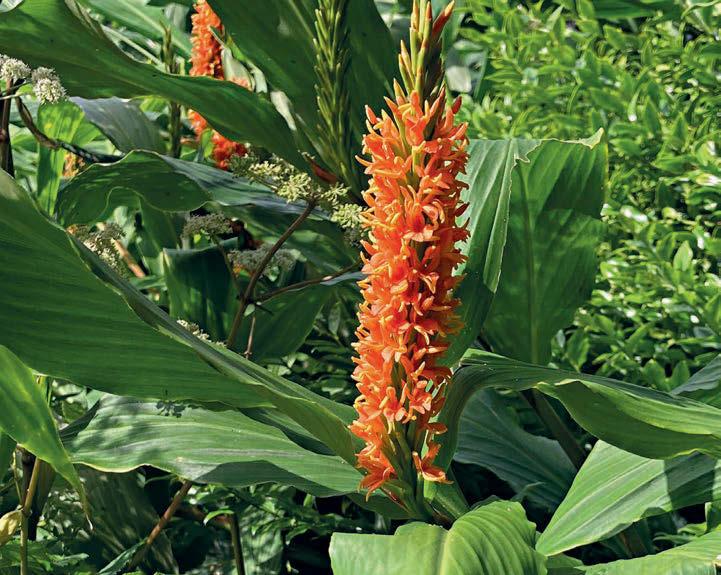
Ginger lily ‘Tara’ is a clump-forming variety that can reach a height of 200cm (6ft 6in). Grow in full sun or partial shade in a sheltered spot in a south or eastfacing position.

Hedychium ‘Tara’ prefers soil that is not clay, but is moist and drains well. During summer and autumn,the flower spikes add dramatic vertical accents with the added bonus of fragrant flowers. It is hardy throughout most of the UK and Ireland, but give it a deep mulch in autumn. To be certain that it survives the winter, it can be grown in a pot and moved to a frost-free environment.

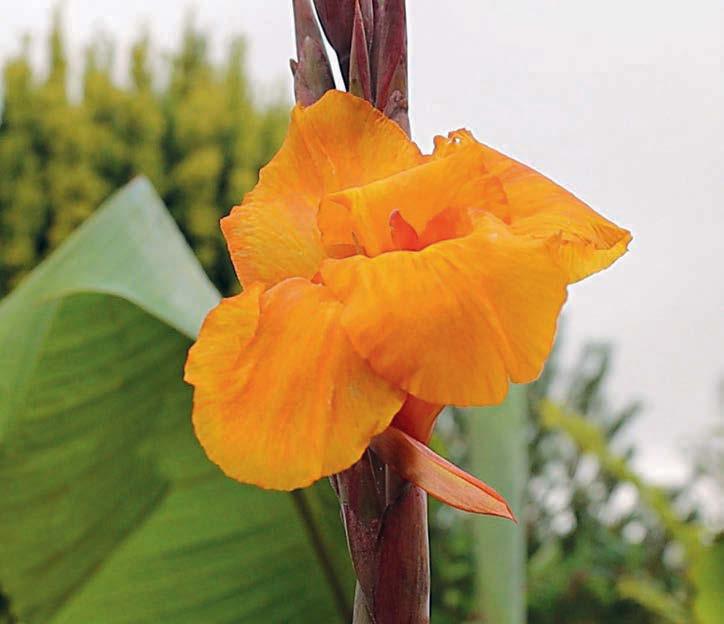
Cannas are available in a range of colours, so choose one that appeals to you. They grow to 180cm (6ft) in height with large leaves and interesting flower spikes that appear from June to October. Cannas will grow in all most soil types as long as they are moist but well-drained. Position in full sun or partial shade in a sheltered spot. They can be hardy in coastal and mild areas of the UK. Outside these areas, they will need to be grown in pots or lifted and moved to a frost-free environment for the winter.


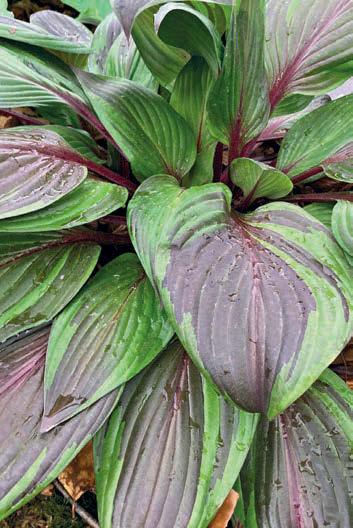
Hosta Red Ninja (‘Nk2021’)
Hosta Red Ninja (‘Nk2021’) was awarded Plant of the Year for 2026 at RHS Chelsea, and I’m delighted to have purchased a small specimen for my garden.
Red Ninja (pronounced nin-ya) has dark red leaves with green margins and produces spikes of lavendercoloured flowers. To ensure that the red colouration is at its best, grow in a spot that gets some direct sunlight, so a position in partial shade is ideal. Grow in moist but well-drained soil. It is hardy across the UK, Ireland and the rest of Europe to minus 23ºC (-9ºF). It reaches a height of 35cm to 40cm (1ft 2in to 1ft 4in) and spread of 60cm (2ft).
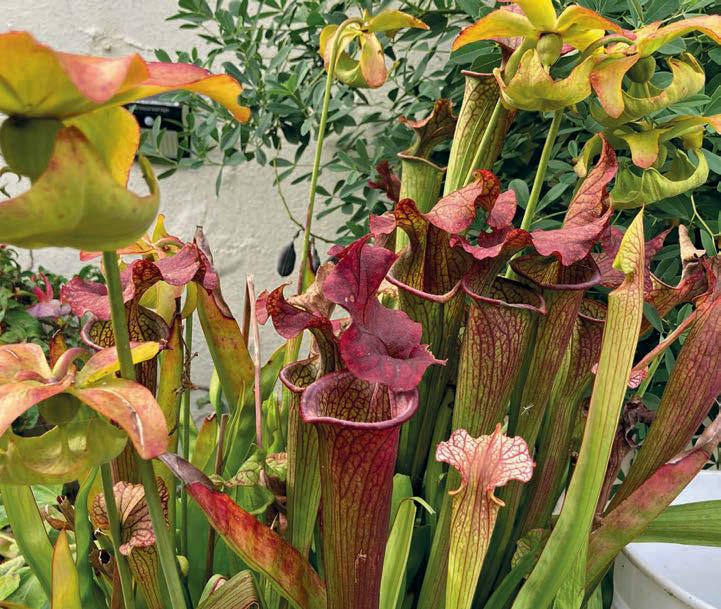
Sarraceniaflava var. atropurpurea
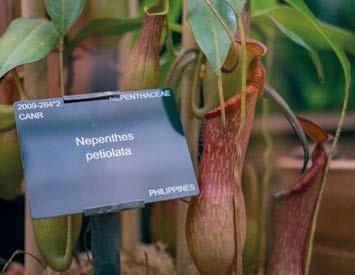
This carnivorous pitcher plant will require a little extra care and attention, but it makes such a good statement that I think it is worth the e ort. It requires an acid, loam soil that is moisture-retentive or poorly drained and kept a little less wet in winter. While the foliage remains yearround, the brown-red flowers appear in spring.
Grow indoors except in warmer areas, where it may survive outside if protected during cold spells. In other parts of the country, cultivate in pots and move outdoors for the warmest months of the year. Position in a sheltered place, in full sun.
A friend has a large clump in a pot sited next to their kitchen wall where the sun heats up the bricks during the day and radiates warmth at night. It adds a dramatic touch to their garden. It reaches a height of 30cm to 90cm (1ft to 3ft) and a spread of 30cm to 60cm (1ft to 2ft).
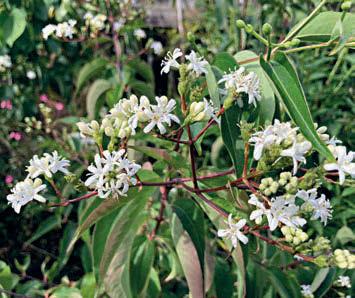
Heptacodiummiconioides
Also known as seven son flower tree, this is a bushy, upright shrub that produces masses of fragrant white flowers in late summer, continuing to flower through to late autumn. For added interest, it has peeling bark.


Grow in any soil type that is moist, but well-drained. It prefers a sheltered spot in full sun or partial shade, so avoid growing on a north-facing aspect. It is hardy across the UK, Ireland and the rest of Europe. The eventual height is around 600cm (20ft) and spread 300cm (9ft 10in).
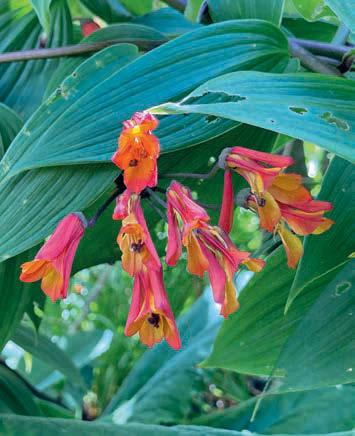
Bomareamultiflora
The trailing lily is an herbaceous climber that twines around and scrambles through other plants to a height of 300cm (9ft 10in). Whenever I’ve seen it, I have been drawn to the bright clusters of coloured flowers which contrast well with the dark green foliage.
It requires a warm spot in moist, but well-drained loam or sandy soil. Grow in full sun in a south or west-facing, sheltered position. It will tolerate cool temperatures, but won’t survive being frozen. Cut back dead stems at soil level in autumn and move before the first frosts of the year to a frost-free position.
Muck Boot are proud to be the only gardening boots with a range endorsed by the RHS, and this year marks their 10-year anniversary. The RHS endorsed Muckster collection has become a trusted favourite for gardeners, combining 100% waterproof protection with supreme comfort. Available in mid, ankle and low heights, they’re made for every season.
Use code AG25 for 25% off site-wide before end of July 2026 at www.muckbootcompany.co.uk


AG editor KimStoddart explains how some free-spirited growing can reap multiple rewards and help you find your balance
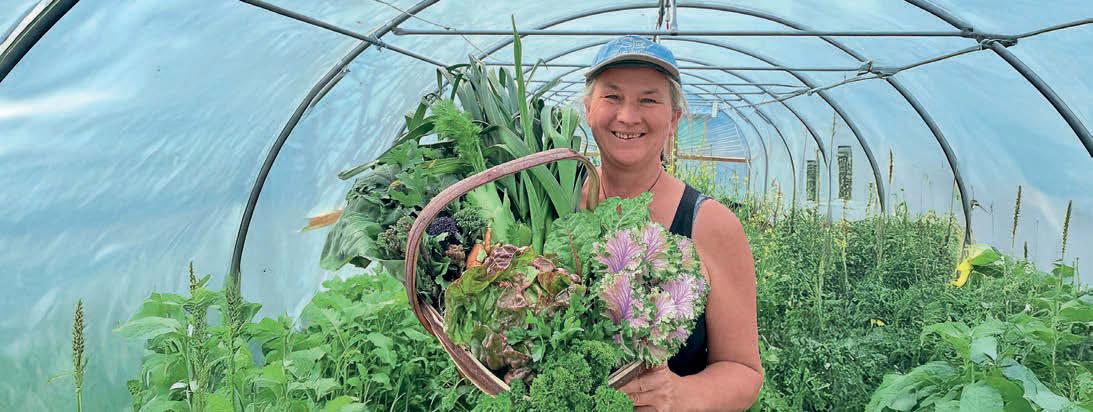
I’ve experimented a lot over the years with di erent ways of growing plants and produce, and a protected space enables you to test the boundaries of how early and late plants can crop, or even overwinter, often with rewarding results. Part of the fun and privilege of undercover growing is that there is the potential to grow food all year round, grow a wider array of produce and enjoy your space even if it’s chucking it down outside.
A truly resilient polytunnel or greenhouse is also a little wild as lesscarefully cut back plants and produce have greater protection against extreme heat, can nurture a wider array of natural predators and benefit from natural systems. This makes it a lowermaintenance space for the gardener. As the private water supply on my smallholding has run almost totally dry over many summers in previous years, and I’m really busy editing this fine magazine, these techniques have been truly tested to the limit. I have played with how wild a polytunnel can actually grow while remaining productive - and the answer is very wild indeed if you so wish.
There are limits, of course, and I do want to be able to walk around the pathways,
so here’s how I strike a balance to boost results, save time and money, encourage wildlife and get a greater enjoyment of my polytunnels in easy-to-employ ways:
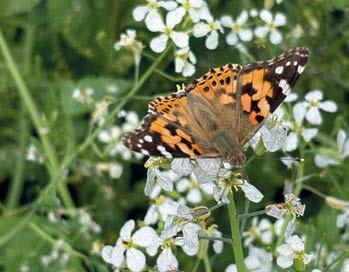
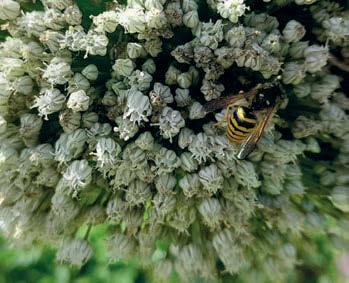
Self-seeding produce and saving seeds Collecting some of your own seed from plants that have performed especially well can provide you with more locally adapted, hardy plants. Some of the plants which are easiest to save seed from in a greenhouse or polytunnel (and which can go mouldy during a soggy summer outside) include lettuce, rocket, radish, coriander and fennel. The flowers of these plants will also draw in lots of butterflies, bees, lacewings and hoverflies, and maybe even moths. The pretty blooms are edible so can be added to dishes and also used for cut flowers, as Kelly-Jane explains on page 50
You can also reliably save seed from tomatoes, peppers, chillies, peas and French beans inside and out by harvesting them from the best-looking, strongest performing specimens.
Show-stopping blooms on produce
I also allow parsley (as a biennial) to flower and set seed in its second year and let

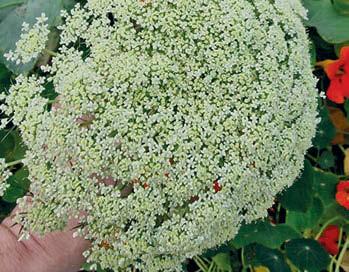
it do so naturally for lots of lovely plants for free. Carrot, parsnip and leek flowers are absolutely gorgeous and so I always embrace a few inside and out for the show-stopping display much-loved by wildlife and gardeners alike.
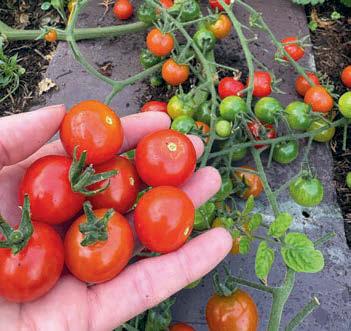
Trailing tomatoes
I always let plants trail a little, which can provide useful ground cover to protect soil in the heat. In the case of tomatoes, they will also often root through their stems, which can be useful as it enables them to obtain food and water from more than one source. I generally let plants self-root and then support them upwards, while leaving at least one tomato plant to grow completely wild on the ground to contrast and compare.
Invariably the ground-hugging plant always performs better, and while this means that fruits can become sullied through touching the soil, you can place stones, tiles and slate underneath to protect the harvest.










www.FirstTunnels.co.uk Sales@FirstTunnels.co.uk or call 01282 601253

























www.facebook.com/polytunnels www.twitter.com/firsttunnels www.youtube.com/polytunnels

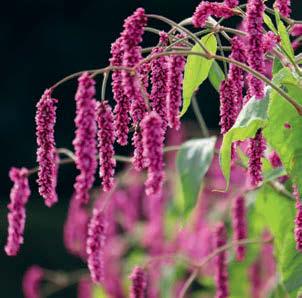



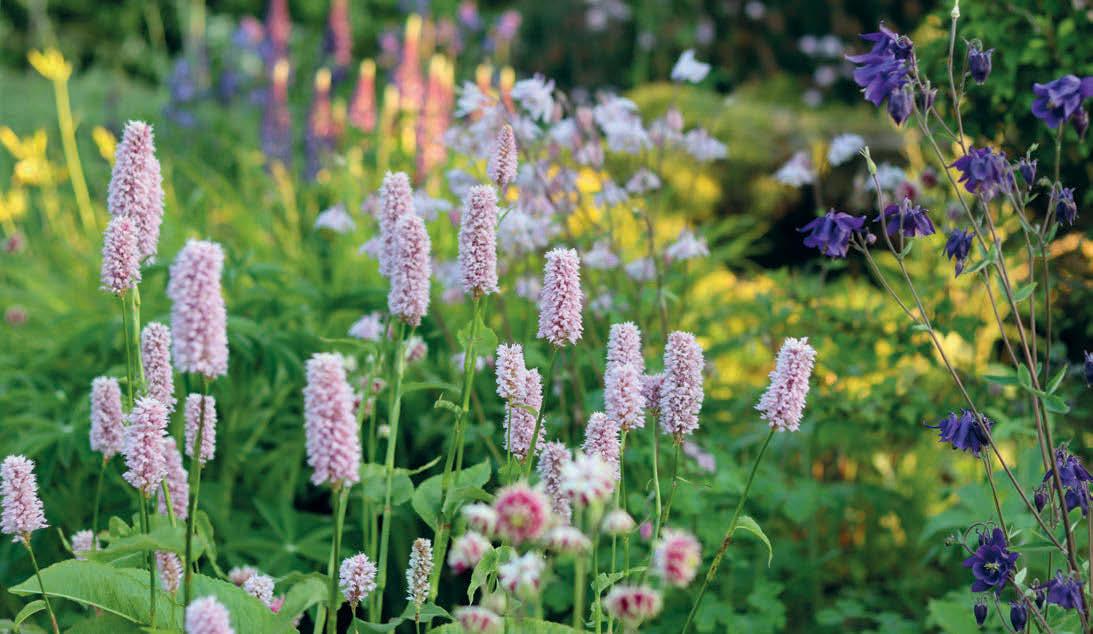


TPersicarias flower later in the year, come in a range of pink and purple tones, and are fantastic plants for filling gaps and knitting a border together

Rosie Irving shines a light on these troublefree, elegant plants
he uninspiring common name of ‘knotweed’ does not do justice to the 120 or so known species of persicarias These plants come into their own when in flower, producing masses of mostly upright flower spikes that add great vertical interest in a border and contrast beautifully with rounded flower shapes. Most persicarias are late-flowering, deciduous, herbaceous perennials and they’re the type of plant you could easily
walk past in a nursery or garden centre. I’d urge you, however, to reconsider as every flower border needs an understated plant to harmonise the look of showier ones. After all, too many divas in one room can be tiring.
Some have recently been reclassified as Bistorta spp due to DNA analysis, but they’re still known within the trade as persicarias.
A typical Victorian introduction Years ago, plant hunters were employed by commercial nurseries such as Veitch Nurseries, based in Devon and London, to seek out new species, usually in China or India.
Seed was the easiest way of transportation, and plant hunters would dry and label the collected seeds before sending them via mule to colonial ports

■ Although best grown in rich, moist soil, most will cope well with poor, dry soil and this can be a good way of curbing excessive plant growth.
■ Pair persicariaswith other large, tough plants to enable them to jostle together rather than allowing them to overcome more delicate plants.
for shipping to London. The seeds would then be delivered to the nursery or botanic garden to be germinated, grown and distributed around the country, mainly to wealthy landowners eager to impress their friends and guests with their latest exotic plant acquisition.
The global circulation of plants in this way was one of the defining features of Victorian horticulture.
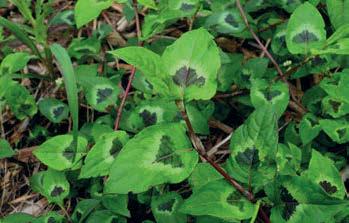
The exotic looking leaves of persicaria was one reason for their popularity in Victorian times.
■ The genus name Persicaria is derived from the latin word persica meaning ‘from Persia’, but this turned out to be a mistake as they originate from south-east Asia, the Americas and Australia.
Mainly late-season flowering perennials, they became particularly popular with Victorian gardeners in the mid-19th century due to their exotic appearance which was, at that time, extremely fashionable. Wealthy estate owners, commercial nurseries and botanic gardens all competed to introduce more new species from Asia and the Americas.
Grows well with…
The upright flower spikes of persicaria look wonderful paired with contrasting round and/or flat top flowers such as achilleas, zinnias and rudbeckias.
Other suitable late-season flowering plants areheleniums, dahlias and cannas Adding ornamental grasses both softens and breaks up the mix of flowers. Pheasant’s tail grass (Anemantheles lessoniana) with its arching, narrow, evergreen leaves that turn shades of orange and red as the days become colder, and upright Panicum virgatum are strong enough to grow alongside persicarias without overpowering them and the other flowering plants.
The upright, evergreen, sword-like leaves of Crocosmia sppwork well too. Choose lower-growing, red flowering ‘Hellfire’ instead of ‘Lucifer’ as the latter can reach heights of 120cm (4ft) when in flower and has a tendency to flop over, which could overly dominate the planting scheme. Lower-growing, orange flowered crocosmias such as ‘Star of the East’ and shorter flowering stemmed ‘Carmin Brilliant’ contrast well with redflowering persicarias such as Bistorta amplexicaulis ‘Blackfield’.
Reasons to grow
■ Persicariasare incredibly tough and resilient plants.
■ They’re generally free from pests and diseases, making them an excellent, low-maintenance addition to any garden border.
Wildlife benefits
■ Persicarias are some of the most important plants to grow in any garden, particularly wildlife ones.
■ They produce both pollen and nectar during their long flowering season providing a continuous source of food for many pollinating insects such as honeybees, butterflies and social wasps.
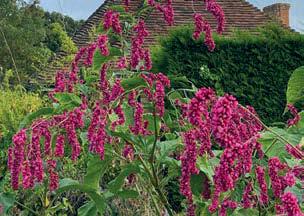
(8ft) and produces bright cerise tassels
Who can resist a plant with a wonderful common name, especially on a hot summer’s evening! Persicaria orientalis, also known as ‘kiss me over the garden gate’ or ‘prince’s feather’,is an annual, unlike most plants in the Persicaria genus, which are mainly herbaceous perennials.
It’s a glorious plant and I’m totally smitten by it. Don’t be fooled by seed packets that state the height as 1.5m (5ft); it often grows to 2.5m (8ft) and sometimes taller if the soil is very fertile.
Persicarias have large pointed, soft green leaves and rosy-pink flowers hanging gracefully in tassels on arching stems. A firm favourite in Victorian cottage gardens, it’s said that the look of the flowers gave rise to its common name, ‘kiss me over the garden gate’ as the stems arched over cottage garden gates, dangling their rosy-red flowers in front of beguiled gardeners.
Although known as a cottage garden plant, it looks good in di erent styles of planting schemes, including tropical-style borders, due to its height, appearance andlarge, pointed leaves and bamboolike stems.
If included in a wildlife garden, the flowers will attract pollinators.
If grown from seed, it will need both a period of cold, (putting seeds in the fridge for four weeks usually su ces), and light, so only lightly cover the seeds with compost or soil.
It flowers from mid-summer all the way through to the first frosts and, in favourable conditions, will self-seed.
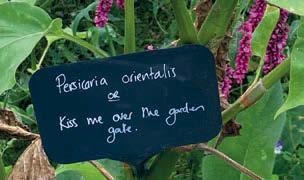
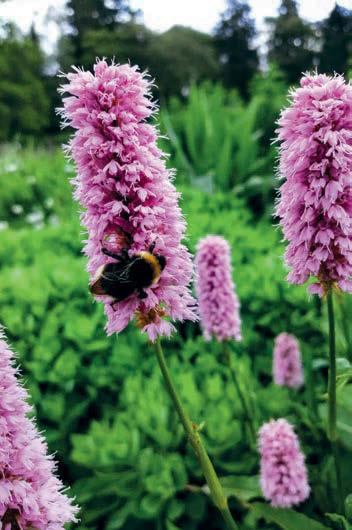
Above: All varieties of persicaria will attract pollinators and other beneficial insects to your garden
■ The genus Persicaria is being revised by the taxonomists (people who name plants) due to DNA analysis. Some have been moved into the genus Bistorta and others into Koenigia.
■ Divide congested clumps in autumn while soil is still warm.
■ To divide ground cover cultivars, just remove sections of the plant with roots attached and replant.
■ Generally speaking, cultivars with larger leaves tend to need a more moisture-retentive soil than smallerleaved ones
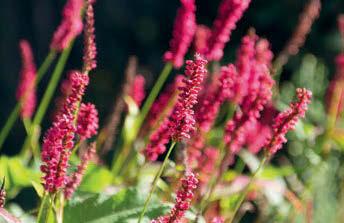
Bistorta amplexicaulis ‘Firetail’
Height and spread: 1.2m (4ft)
A vigorous, clump-forming perennial that quickly makes dense groundcover and will grow in full sun or part shade. Prefers damp soil so is an ideal choice for planting next to a pond or in a bog garden. Its tiny, bright red flowers are much loved by bees and other pollinating insects.
© Shutterstock
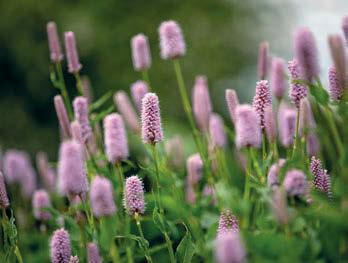
Bistorta officinalis ‘Superba’
Height and spread: 60cm (2ft) x 90cm (3ft)
Another groundcover perennial, but this time low-growing and early flowering, it is ideal for front-of-theborder planting with tulips. It tolerates most soil types and grows best when the soil is reliably moist year-round and will flower on and o from April until August. The flowers are soft pink and upright.
© Chiltern Seeds
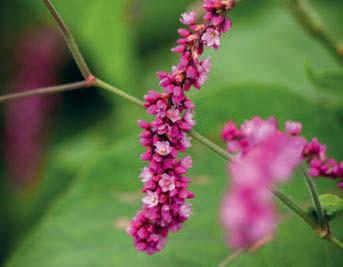
Persicaria orientalis ‘Cerise Pearls’
Height and Spread: 1.4m (4ft 6in) x 60cm (2ft)
If you love the look of P. orientalis but not its height, then ‘Cerise Pearls’ is a shorter alternative. It’s also an annual and will quickly grow to its full height with arching stems covered in pink flowers which can be cut for flower arrangements. Best planted at the back of a border for maximum impact without overshadowing the other plants. Although preferring full sun it will take part-shade. Flowers from July runtil the first frosts.
You can follow more of Rosie’s gardening adventures on Instagram @rosieposieirving
Nutscene® twines have been supporting the nations plants since 1922, often copied never equalled!
Offering up to 23 colours of fabulous Jute, it is made from plants for plants! This natural fibre will compost in your garden, is strong enough to support tomatoes, and ideal for delicate delphiniums, dahlias and daisies. And your tender sweet peas will relish our 2ply finer twine.
Used by gardeners and also loved by florists, crafters, and makers too.
Save 10% with code ROSIE on all purchases from our web site www.nutscene.com which carries a host of practical, useful quality items for gardening.






“To plant a garden is to believe in tomorrow ”
– Audrey Hepburn

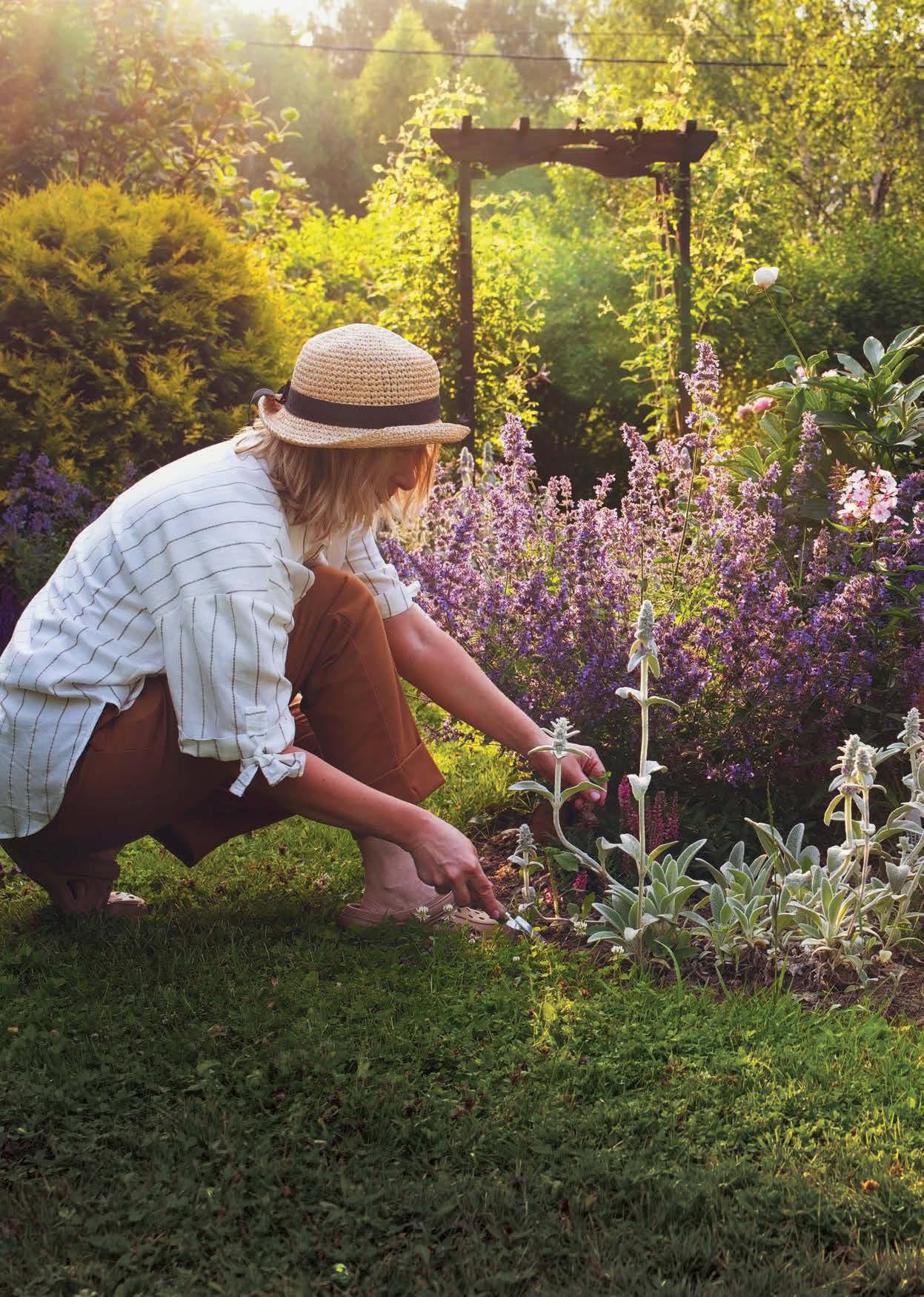






























































































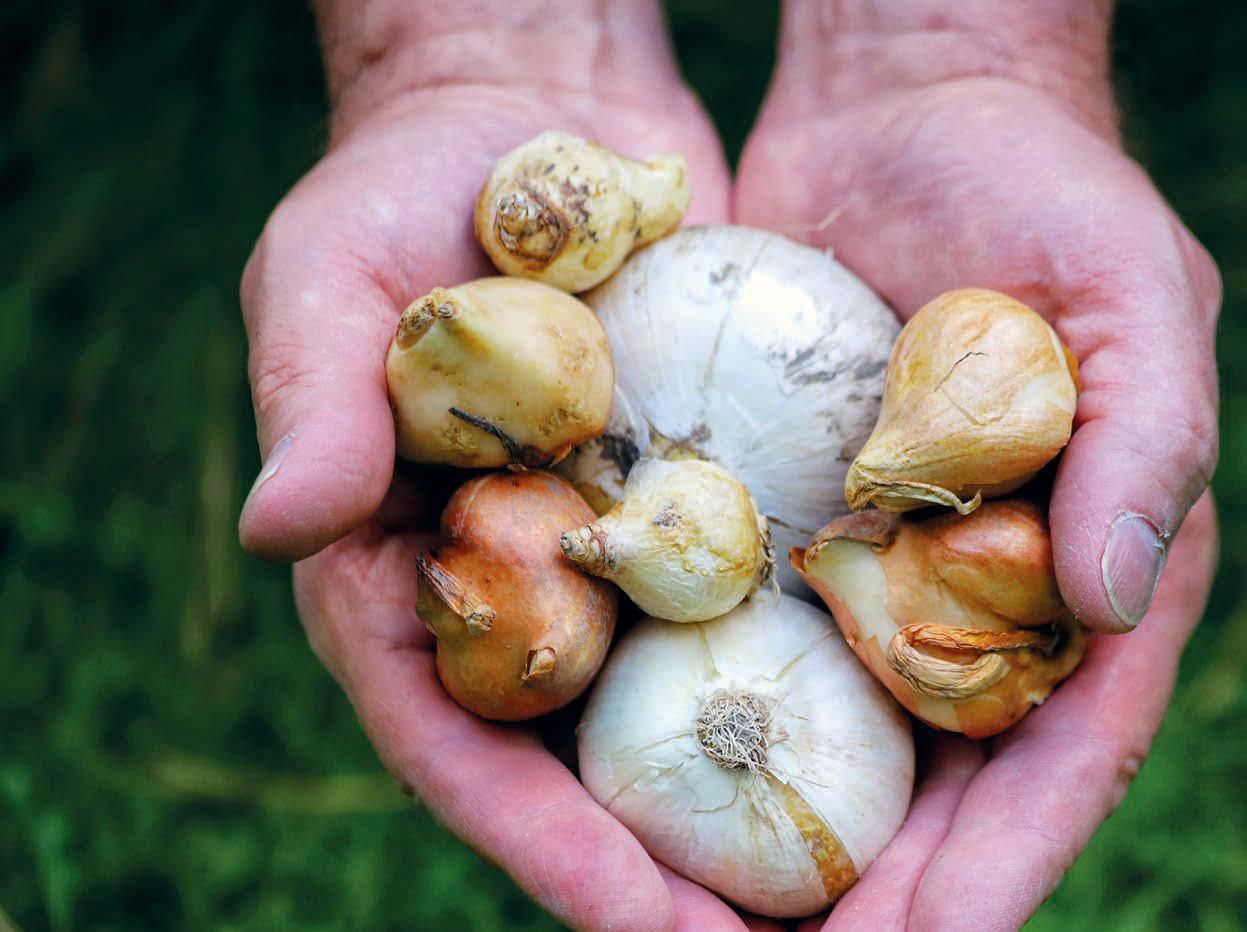

Mike Palmer shares his favourite bulbs, tubers, rhizomes and corms that bring year-round colour, from winter shoots to autumn fireworks
“Planting bulbs is gardening at its most hopeful – quiet work now for a burst of joy later.”
Poet, novelist and diarist, Joy Sarton
They slumber quietly, snuggled down in the depths of the soil, waiting patiently for their moment in the spotlight, which arrives only when Mother Nature, conductress extraordinaire, yields her baton aloft and orchestrates this season’s Gardening Proms.
I’m talking bulbs - those non-descript nuggets of treasure we usually bury in our borders and containers in autumn. But there’s a lot more to bulbs than tulips and da odils – in fact, there’s a whole year’s worth of floriferous concertos, arias and rhapsodies to be enjoyed.



Let’s start with some gardening science. A bulb is a storage capsule, a miraculous organ containing everything a plant will need to grow, all compressed into a small space. Some bulbs, like tulips and da odils, have protective papery tunics and are known as tunicate bulbs, while others are formed with scales, like lilies. Not everything we think of as bulbs are true bulbs. Dahlias, for example, grow from tubers, crocus and gladioli from corms, and irises and cannas are rhizomes.
Botanical technicalities aside, these incredible gems are a gardener’s friend. They’re readily available and, being small and light, are easily transported, giving great returns for little in the way of gardener investment. Furthermore, they’re perfect where space is at a premium (window boxes, balcony gardens and smaller gardens), generally low maintenance, and many are beloved by our pollinator pals.
And, if you’re not already ‘on side’, they can provide a year of colour and interest. Let’s dive deeper with my bouquet of beautiful bulbs for burgeoning borders and pots throughout the seasons.
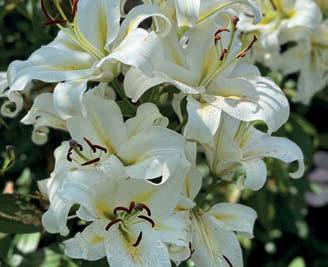
Summer allows us to pull out all the stops and tick all the bulb boxes. True bulbs include lilies, for dappled shade and sun, including trumpet, Asiatic and Oriental. I couldn’t be without the statuesque bridal-white diva Lilium ‘Casa Blanca’. Maybe something a little more exotic tickles your fancy, so another true bulb, variegated pineapple lily (Eucomis ‘Bicolor’) is a real showstopper.
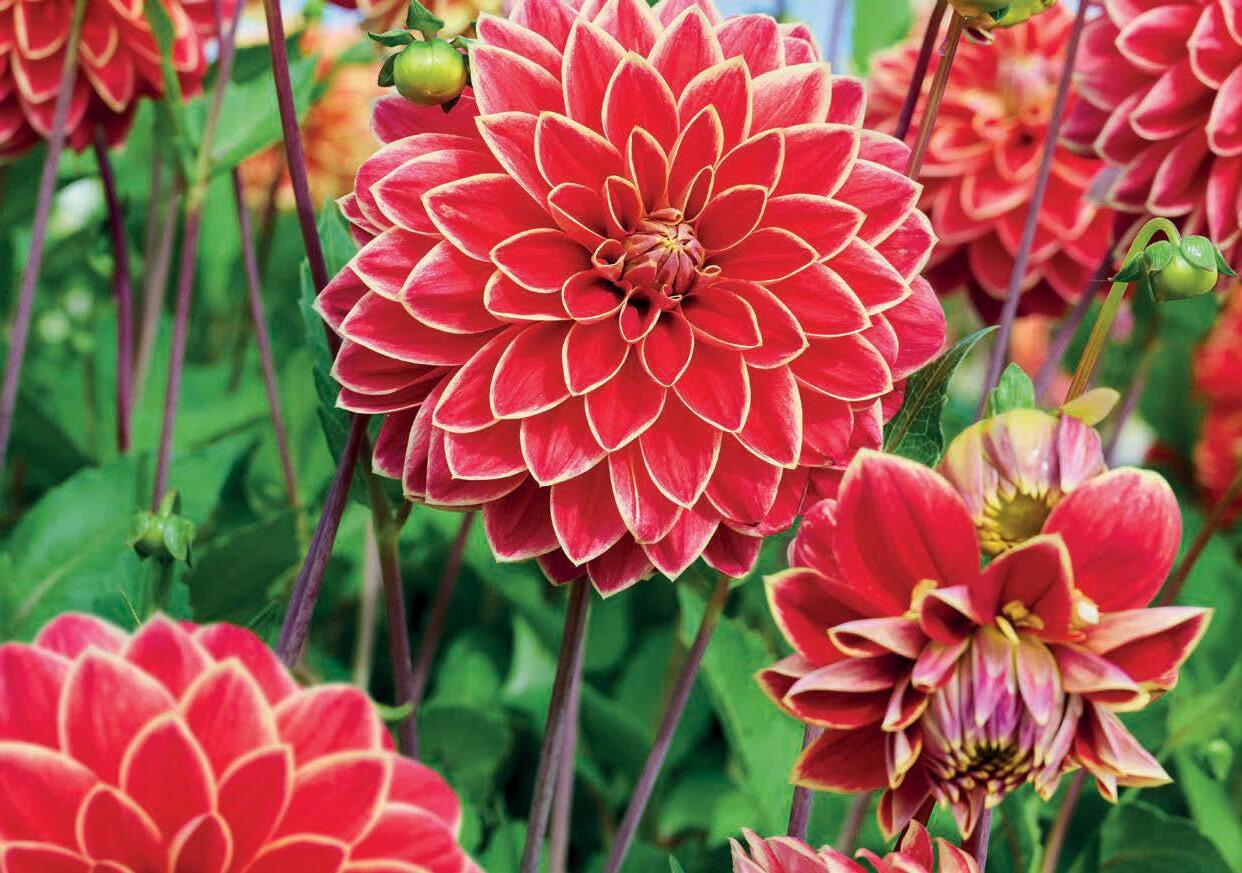
On the tuber front I o er for your delectation, dahlias – don’t make me pick a favourite – Dahlia ‘Totally Tangerine’ (now look what you’ve made me do!) and pots of cascading or upright begonias.
Gladiolus, crocosmia, and freesia are all corms and best planted in spring, allowing them to establish themselves in warmer, drier soil. Equally welcome at our Summer Bulbous Bash, are plants growing from rhizomes, including a colourful pageant of bearded irises (Iris germanica) for early summer blowsiness, and tender Canna indica, for a taste of the tropics in late summer.
Lilium ‘Casa Blanca’
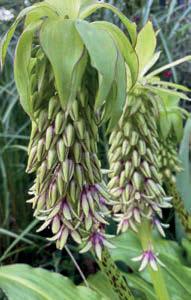
Eucomis ‘Bicolor’ A real showstopper: Eucomis
‘Bicolor’, also known as variegated pineapple lily, brings glorious colour and interest to the summer garden
Dahlia ‘Totally Tangerine’
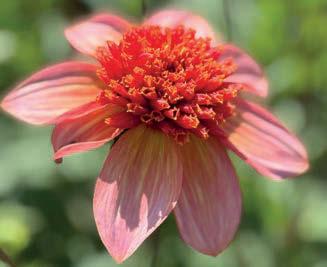
Can you choose a favourite dahlia? When pressed, Mike opts for the anemone-flowered ‘Totally Tangerine’
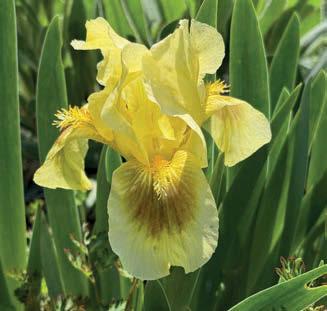
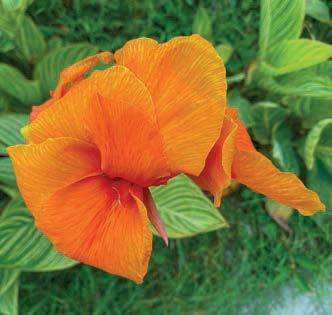
Tropical-looking canna lily are colourful gems with lush green foliage
Rhizomes including bearded irises and cannas, bring flowers and foliage interest to summer pots and borders.
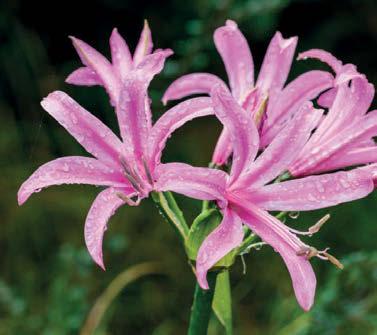
The ‘season of mists and mellow fruitfulness’ blows in on a cool breeze all too soon. But before autumn falls, set a reminder in our late-summer calendars to plant autumn-flowering bulbs including sugar-pink nerines (Nerine bowdenii), their inquisitive noses poking out just above the soil, as if taking in the last warm breaths of the season, and golden-yellow winter da odils (Sternbergia lutea).
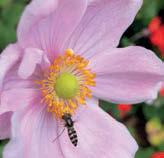
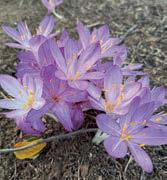
End-of-season rhizomes include Japanese anemones (Anemone x hybrida) and the ruby, pink and white blooms of Hesperantha coccinea (formerly Schizostylis coccinea). Corm considerations include the pale-pink or lilaccoloured autumn crocus (Colchicum autumnale) and last but certainly not least, the autumn or sa ron crocus (Crocus sativus).
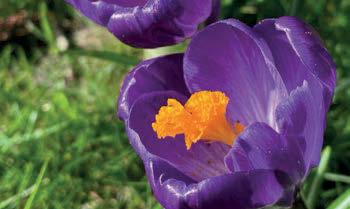
The orchestra tunes up, introducing a much-anticipated prelude. True bulbs, including pristine snowdrops, sunshineyellow winter aconites, jewel-like crocus naturalised in the grass, joyful dwarf iris, or vibrant early da odils, herald the arrival of spring.
Providing an elegant passage from winter into spring, I do my woolly hat to Cyclamen coum, its swollen tubers resembling the upturned cap of a woodland mushroom, planted smoothside down just beneath the soil in the dappled shade of deciduous tree canopies.

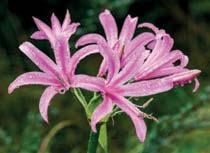
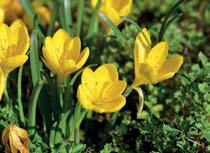
Nerine bowdenii
Plant Nerine bowdenii for striking pink flowers in autumn
Sternbergia lutea
Winter da odils (Sternbergia lutea) are a prelude to spring
Anemone x hybrida
Japanese anemones are a sugar-pink confection providing beautiful blooms in autumn
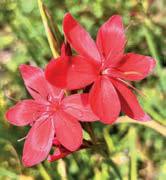
Hesperantha coccinea
The nodding blooms of Hesperantha coccinea are ruby, pink or white
Colchicum autumnale
The leafless flowers of Colchicum autumnale are commonly known as naked ladies
Close the season with a rapturous rhapsody of autumn-flowering beauties including nerines, sternbergias, Japanese anemones, hesperanthas and colchicums.

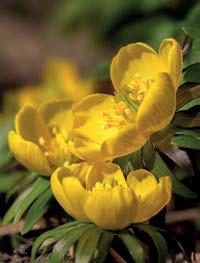
Eranthis hyemalis
Plant winter aconite (Eranthis hyemalis) for golden blooms that shine brightly in the gloom of winter
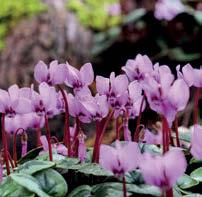
Cyclamen coum
Cyclamen coum brings joy with its pretty pink flowers and attractive foliage
In late winter a collection of bulbs, corms and tubers, including snowdrops, da odils, crocus, aconites and cyclamen, bring colour to our gardens
As spring breaks, a choir of glorious autumn-planted bulbs pushes through, including honey-scented pink, blue, purple and white hyacinths, the purplecheckered or white blooms of snake’s head fritillaries, pretty sprays of glory of the snow (Scilla luciliae, previously Chionodoxa lucilae), and a magical planting of the distinctive purple-blue of bluebells, (Hyacinthoides non-scripta), beneath the emergent canopy of a woodland garden.
Hyacinthus spp
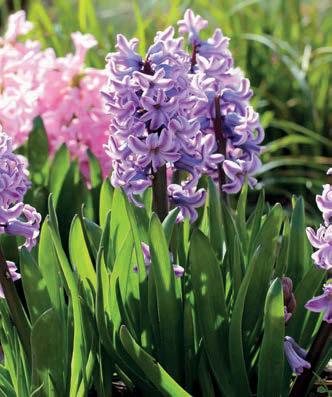
Colourful and fragrant, hyacinths are a welcome sight and a fantastic source of nectar for insects
Fritillariameleagris
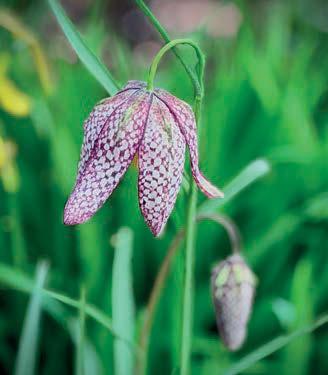
Snake’s head fritillary is a delight in spring with its nodding blooms with a checkerboard pattern
Hyacinthoidesnon-scripta
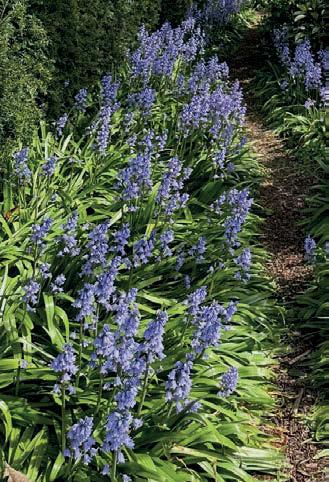
A woodland wonder and a great choice for a border in partial shade, English bluebells bring a sea of blue and gorgeous fragrance
Scillaluciliae
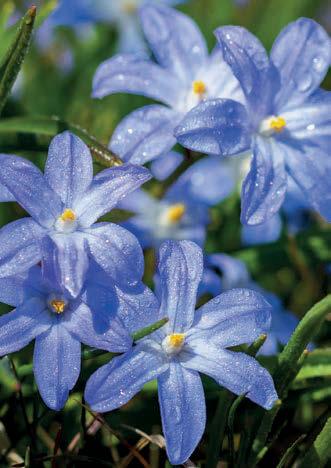
Dainty glory of the snow (Scilla luciliae) is easy to grow from bulbs
A spring symphony of scented hyacinths, eye-catching snake’s head fritillaries, dainty glory of the snow and carpets of bluebells
Soil and sunlight: Soil, sun and shade requirements for bulbous plants vary, so check your conditions for specific bulbs before buying. As a rule of thumb springflowering bulbs such as tulips and da odils need sun before tree foliage unfurls. Woodland bulbs (snowdrops and bluebells) prefer dappled or full shade in their summer dormancy and summerflowering bulbs (lilies, dahlias) need full sun, but cool, shaded roots.
Maintenance: Bulbs and corms are buried to approximately three times their depth. Tubers, like dahlias, should have the top of the tuber a little beneath the soil’s surface while rhizomes sit on, or just under, the surface.
If you have light, sandy soil, plant slightly deeper, and in clay soils, plant on a bed of grit to improve winter drainage.
Pests and diseases: Keep an eye out for nibbled or notched foliage and unusual markings and colouration of foliage, flowers and stems.
If you grow tulips, the recommendation is to plant them in November to lessen the risk of tulip fire, a fungal disease that rots and bulbs and distorts flowers and foliage.
Propagation: Some bulbous plants multiply beneath the soil, allowing gardeners to lift clumps of bulbs and divide them after flowering. Replant the divisions at the same depth as they were growing and allow the foliage to die back naturally.
Some set seed, while others produce o sets which can be pulled gently away from the ‘mother’ bulb.
Planting Companions: Think complementary or contrasting colour schemes.
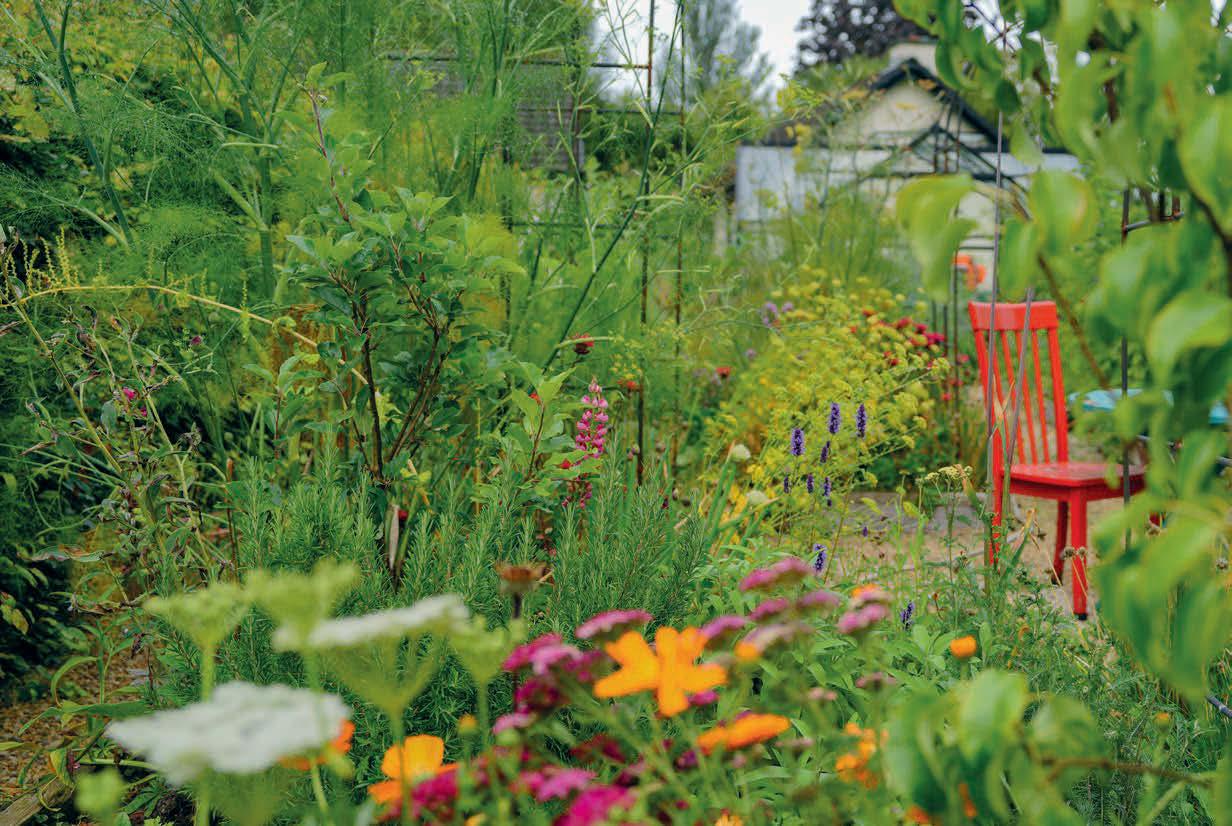
Niall McCauley explains how to create a harmonious green space that benefits plants, pollinators and people
Acouple of years ago, I shifted my vegetable garden into what I call my ‘guild garden’ and planted up all 16 raised beds as fruit tree guilds. This is a permaculture design concept, a way of growing plants together around a fruit tree, so they support one another and the tree. Best of all, it’s not complicated, it’s productive and it’s also beautiful. For me, that combination is what gardening is all about.
In my guild garden, fruit trees form the backbone of the space. Around them I grow plants that attract pollinators, improve the soil, suppress weeds, repel pests or help retain moisture. The result is a garden that feels softer, more natural and is far more resilient than neat rows of isolated plants. And, perhaps most importantly, it’s buzzing with life.
A fruit tree guild usually consists of
several elements. There’s the tree itself, and surrounding it are six main plant groups that help build a micro-ecosystem. Dynamic accumulators draw up nutrients from deep in the soil, and nitrogen-fixing plants improve fertility.
Common plants with superpowers Attractors bring in pollinators and beneficial insects, while repellents help confuse pests. Suppressors and mulchers shade out weeds, cover and protect the soil, and produce leafy material that benefits the earth.
We so often overlook how ‘common’ plants can be superpowers in our gardens. The wonderful thing is that many perform more than one role, making it so much easier, and fun, to weave them together. In my garden the result is a slightly relaxed, layered look where flowers mingle together beneath apples, pears and

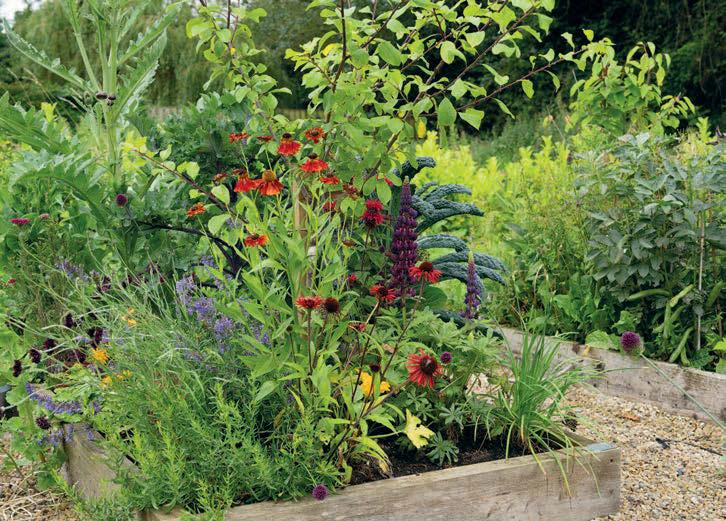
plums. It feels less like ‘planting’ and more like creating my own little ecosystem. And perhaps that’s the real joy of a guild garden. It isn’t about perfection, it’s about creating a living, layered space that works with nature rather than against it and enjoying every buzzing, flower-filled moment along the way.
The central tree
Whether you fill your garden with fruit tree guilds as I have, or only plant
one, everything revolves around a great fruit tree. For small gardens, or where you want to weave in multiple trees, I always recommend buying trees on dwarfing rootstocks such as M27. Unbeatable choices include ‘James Grieve’ and ‘Discovery’ apple trees, ‘Beurre Hardy’ pears, and ‘Stella’ cherry trees. Your local nursery or tree supplier will be able to assist with trees that are self-fertile or good pollination companions.
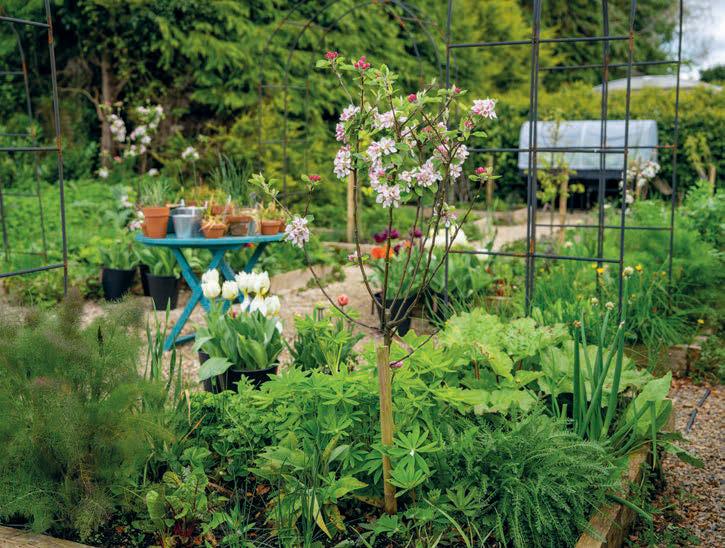

Sunny calendula embodies the
guild garden and is a wow with pollinators and other beneficial insects
Calendula
If there’s one plant that perfectly captures the spirit of my guild garden, it’s calendula. It self-seeds gently, pops up where it pleases and threads the whole garden together with glowing orange flowers. At around 30 to 60cm (1 to 2ft) tall, its flowers in glowing shades of orange and yellow continue through much of the growing season.
Pollinators love it, the petals are edible, and it seems to flower endlessly. More than anything though, calendula reminds me not to overcontrol the garden. Sometimes the best moments happen when plants are allowed a little freedom.
Nepeta
Nepeta, commonly known as catmint, is a hardy herbaceous perennial that forms soft mounds of aromatic grey-green foliage covered in blue flowers for months on end. Most varieties grow around 40 to 60cm (16 to 24in) in height and spread. Living in a cool, wet, climate like Ireland where lavender can struggle, nepeta is a robust alternative that I rely on.
Within a guild garden, it draws in bees and other beneficial insects while softening the edges of paths and beds. I love its relaxed, slightly tumbling habit. Shearing plants back after their first flush of flowers usually encourages fresh foliage and sometimes a second display later in summer.
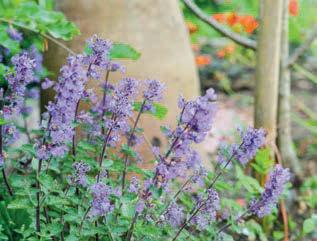
Above: Nepeta (catmint) is a robust alternative to lavender if you live somewere cool and damp


Research has found that the scent of Tagetes spp, or French marigolds, can repel and confuse certain pests, such as whitefly
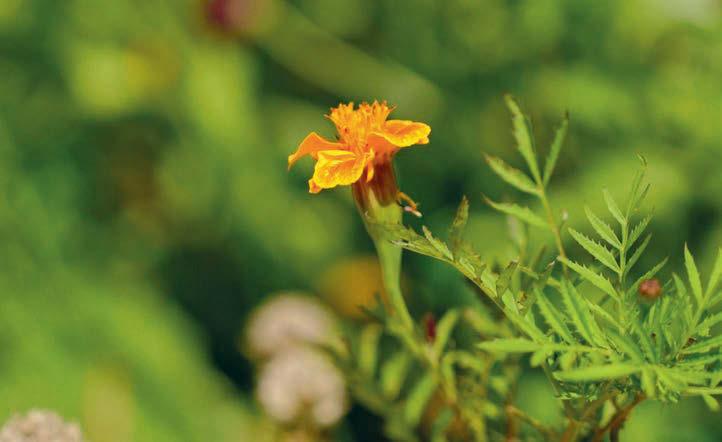
Tagetes
French marigolds are cheerful half-hardy annuals and I sow dozens of them each year because they flower tirelessly from early summer until the first frosts. Most varieties reach around 20 to 40cm (8 to 16in) tall, with a similar spread. They’re great repellent plants within my fruit tree guilds. Their aromatic foliage may help deter certain pests and confuse others among fruit and vegetable crops. Whether or not they perform miracles, they certainly earn their keep visually, dotting gold, orange and rust shades through the garden. Deadheading regularly keeps the plants compact and flowering continuously, although I usually leave a few late blooms to self-seed naturally.
One of my all-time favourite plants - I tell everyone about drumstick alliums! Unlike so many alliums, their stems are slender and topped with small egg-shaped, berry-purple flower heads in early summer. They typically grow to around 60cm (2ft) tall but occupy very little ground space. Their onion-scented foliage and bulbs help contribute to the repellent layer of a guild garden, while the flowers add height and movement without heaviness.
I love the way they emerge through lower-growing plants like Nepeta spp or strawberries. Plant bulbs in autumn in well-drained soil and remember to mark their location so you don’t accidentally dig them up!
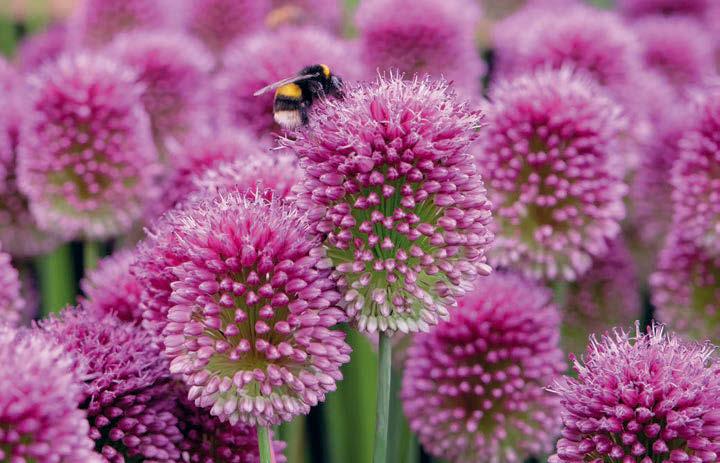
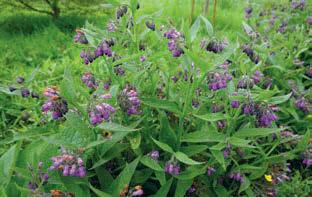
The leaves of comfrey can be used as a mulch or to make a nutrientrich liquid fertiliser, and they also help to shade out weeds
Comfrey forms large clumps of coarse green foliage topped with nodding purple, pink or cream bell-shaped flowers from late spring into summer. Depending on variety, it typically reaches around 60 to 90cm (2 to 3ft) tall with a similar spread. It’s a true multi-performer, supporting pollinators, shading out weeds, and working as an accumulator.
In a guild garden, its deep roots help draw nutrients and minerals from lower soil layers, which can then be recycled back into the system when the leaves are chopped and used as mulch or turned into a liquid feed. It’s enormously productive. My tip is to cut it back several times through the growing season to encourage fresh leafy regrowth.
Achillea
Achillea spp, otherwise known as yarrow, is a long-flowering herbaceous perennial with flat, umbel flower heads that float above finely divided foliage. Most varieties grow to around 60 to 90cm (2 to 3ft) tall and spread gradually over time.
In a guild garden, it acts as a dynamic accumulator while also drawing in beneficial insects such as hoverflies. I particularly love planting it near heleniums where the warm colours echo one another beautifully in midsummer. Achillea thrives in full sun and poorer soils; in fact, overly rich conditions like those found in my garden can make it floppy, so avoid overfeeding.

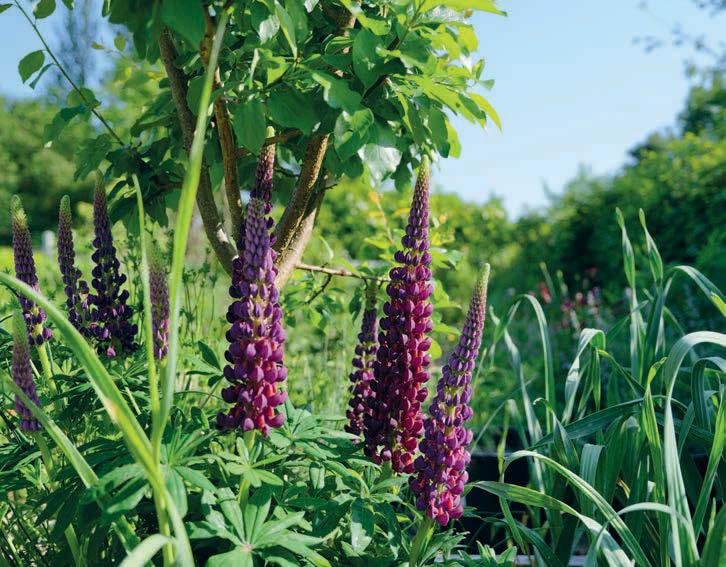
Lupins are herbaceous perennials loved for their dramatic spires of flowers in shades ranging from soft creams to deep purples and fiery reds. Most varieties reach 90cm to 1.2m (3 to 4ft) tall. Beneath the soil they quietly perform one of the most valuable guild roles by fixing nitrogen through nodules on their roots, helping improve fertility for surrounding plants.
They also add fantastic vertical structure in late spring and early summer. In my garden, I’ve found young growth needs protecting from slugs, especially during damp Irish springs when damage can happen astonishingly quickly. They can be a little hit and miss and I usually lose one or two during each winter, but they’re so worth it.
Baptisia
Often called false indigo, baptisia is a longlived herbaceous perennial with lupin-like, but smaller, flowers held above blue-green foliage. Depending on variety, it grows around 1 to 1.5m (3 to 5ft) tall and forms an impressive clump over time.
Like lupin, it belongs to the pea family and locks nitrogen in the soil, making it a valuable fixer within a fruit tree guild. It featured heavily in several RHS Chelsea show gardens this year, and it’s easy to see why. Once established, it’s remarkably drought tolerant and low maintenance.
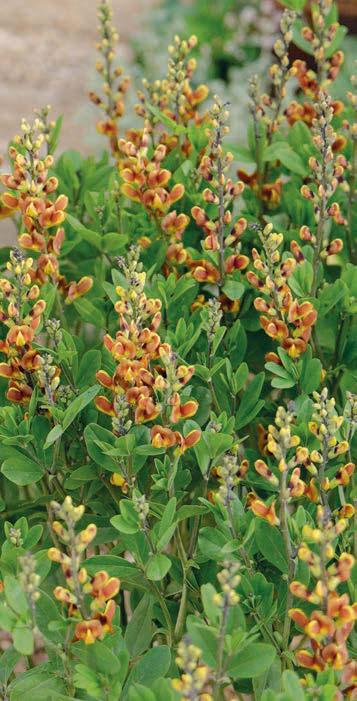

Above: Instead of composting rhubarb leaves, use them to mulch the soil and help it retain moisture, says Niall
Rhubarb
Rhubarb is big and bold with serious architectural presence, and it’s edible. Plants can easily reach 90cm (3ft) tall with leaves spreading 1.2m (4ft) or more across.
In my guild garden, those enormous leaves help shade the soil surface, suppress weeds and reduce moisture loss. I think rhubarb earns its place visually too, especially in spring when the crinkled young foliage unfurls dramatically.
Top tip from me: when you harvest those tasty stalks, don’t discard the leaves, lay them on the soil to act as a mulch. Keep plants productive by mulching generously in winter with compost or well-rotted manure, and remove flowering stems quickly so energy returns to the crown rather than going into seed production.
We all know strawberry plants, but in guild gardens they’re more than just a delicious fruit. They act as living suppressors, covering exposed soil and helping reduce weed growth.
I use them almost as edible groundcover through parts of my guild garden, in which they knit the plantings together beautifully. And of course, the joy of stumbling across a perfectly ripe strawberry while wandering through the garden never gets old. To keep plants cropping well, I remove older tired plants every few years and replace them with vigorous young runners.
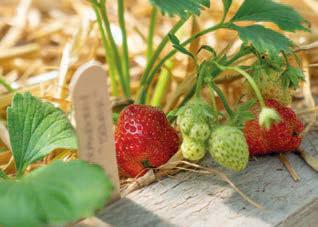
and to knit areas of your beds together

Garden peas: yes please/no thanks!
I love peas. I’d have them with most meals, if I could. However, I have a friend who su ers from ‘pulsophobia’. The term relates to the fear of any of the pea, bean and pulse family (which includes lentils and baked beans), but her particular phobia is that of the green garden pea. In a restaurant, if there is a single pea on a plate of served food, she cannot even look at it let alone tackle eating it. If you have pulsophobia, look away now!


Great British Pea Week takes place from July 6 to 12 this year. Launched by the Yes Peas! campaign (https://peas.org) and the British pea-vining industry, the celebration is now in its 11th year. Its aim is to recognise the e ort made by the nation’s pea growers, who between them produce two billion portions of peas for home and abroad each year.
5 perfect pea facts
■ The pea was originally called pease (as in pease pudding, a savory dish made of boiled peas and beans, typically with added seasoning and spices, and often cooked with a ham). However, because most plurals end with an ‘s’, we gradually began to interpret pease as a plural, therefore dropping the ‘s’ sound when talking of the singular – hence ‘pea’! Originally, ‘pease’ came from the Latin word pisum, the genus name.
■ Marrowfat peas are green peas that have been allowed to mature and partly dry out before harvesting, rather than picked young (like normal garden peas). ‘Mushy peas’ is simply marrowfat peas soaked overnight in water, then rinsed and simmered with a little sugar and salt until they form a thick, green mush.
■ Peas known as mangetout (French for 'eat all') are really ‘snow peas’ and ‘sugar snap peas’. The whole pods are eaten, before they are fully ripe. Snow peas can be grown in open fields during winter, hence the ‘snow’ name.
■ When a pea plant has been harvested, don’t lift it immediately. After a week or two, cut the top growth o and compost it. Leave the roots in situ, and later dig them in. Nitrogen in the roots breaks down into the soil, and helps a following leafy crop, such as any of the cabbage family.
■ Actress and singer Patsy Kensit, known for her roles in EastEnders,Emmerdale and Holby City (and in Lethal Weapon 2 with Mel Gibson), started her career advertising peas! In 1973, at the age of just four, she appeared in an advert for Birds Eye frozen peas.
This fortnight in gardening history
16 June 1890 Hollywood comic Stan Laurel was born in Ulverston, Lancs. His real surname was Jefferson, but ‘Stan Jefferson’ had unlucky 13 letters so, in 1922, he chose the name ‘Laurel’ – said to have been inspired by a laurel wreath found by his then girlfriend, actress Mae Dahlberg. 21 June (every year) The old adage says that we should harvest shallots on the longest day (21 June). Of course, it also says that they should have been planted on the shortest day (21 Dec).

ACROSS
1 Genus of flowering plants, referred to as ‘fescues’, belonging to the grass family (7)
6 Ornamental garden pool (4)
7 The olive genus (4)
8 Something you invariably need to do to a plant to propagate it vegetatively (3)
9 Eaten the middle of the first part of the name of this magazine! (3)
10 It’s like a hundred and eleven, but it’s when you (or your plants) are not well! (3)
11 The vervain botanical group of summer-flowering annuals and perennials (7)
12 Young people get their degrees here, in junipers! (3)
13 Nardus stricta is ___ grass, while Selaginella kraussiana is known as the ___ spike moss (3)
14 This deluge vessel is celebrated in Arkansas, as well as in parks – and in tree bark! (3)
15 Shortened, contracted name for the heavy-duty waterproof cloth, originally of tarred canvas (4)
16 Rind, as in Hamamelis x intermedia ‘Orange ____’ (4)
17 Rhizomatous flowering perennial genus, often seen growing near to water; some are known as false goat’s beard or false spirea (7)
DOWN
2 The mother-in-law’s tongue genus (11)
3 Scrub told us about rain showers! (11) (anag)
4 An apple on the head figured in the tale of this legendary Swiss figure (7,4)
5 ‘Red Sun’, ‘Golden Gourmet’, ‘Longor’ and ‘Matador’ are all cultivars of this bulbous vegetable (7)
9 Relating to water, as in plants and animals (7)






















We’re thrilled to announce that our entry into the prestigious RHS Chelsea ‘Plant of the Year 2026’ has achieved Second Place: Hydrangea paniculata GROUNDBREAKER RUBY. This revolutionary dwarf Hydrangea paniculata spreads to form a dense, low-growing carpet, quite unlike traditional upright varieties. From mid-summer, it produces an abundance of conical flower heads that open fresh white, then gradually deepen through soft pink to rich ruby red, creating a captivating, multi-tonal e ect that lasts for around 100 days, from July to
Awarded RHS Chelsea Plant of the Year 2026 - and its easy to see why this caught the judges eyes! Broad, slightly glossy leaves emerge in rich burgundy-red tones with contrasting green margins, while ruby-red stems intensify the plant’s striking appearance.




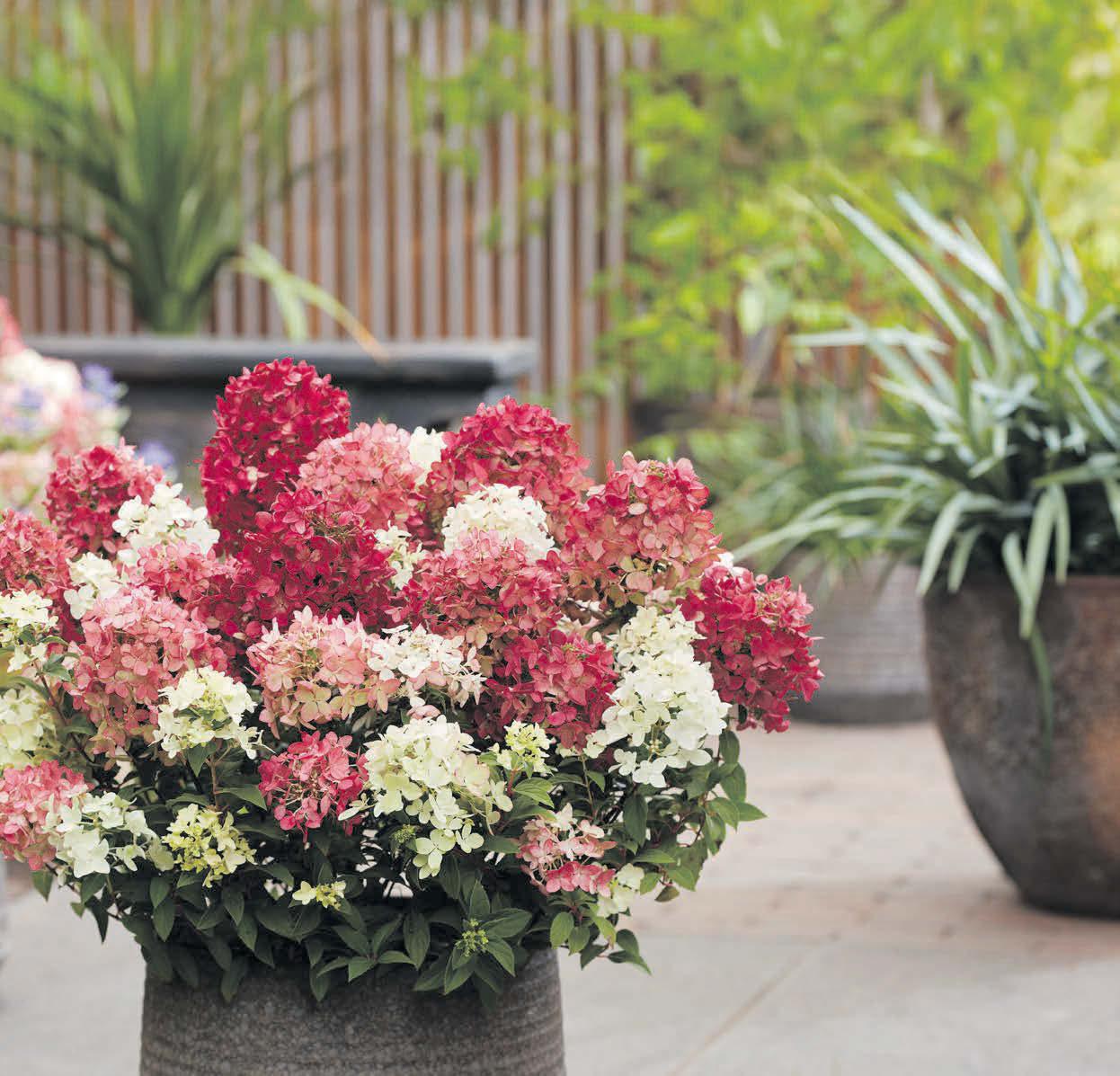
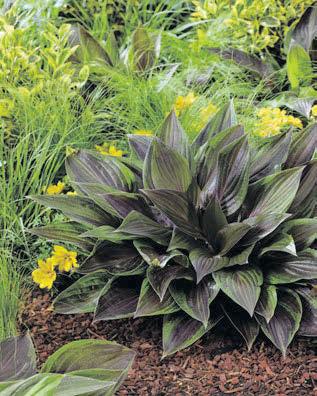



Be original in your plot with car boot, charity shop and online market treasures, says Kay Maynard
Everywhere you look in our garden you will see something that I have either bought on Facebook Marketplace or from our local car boots, charity shops or flea markets.
I’m very reluctant to buy new things and will always try to find secondhand items. It’s a sustainable, eco-friendly and cost-e ective way to add character to your garden. I love the rustic and weathered look so these items suit our garden perfectly.
From large tree trunks which make lovely seating perches and plant stands to the enamel buckets we have dotted all around our garden, which I use when I’m deadheading. The buckets are also handy to collect rainwater in and make great planters.
Vintage watering cans can be hit and miss, and I’m never entirely sure if they will be water tight. If they have holes in them and can’t hold water, they do make lovely planters. I use vintage feeding troughs as birdbaths and I have one placed under our outdoor tap, where it captures excess drops and makes a great area for cleaning my tools.


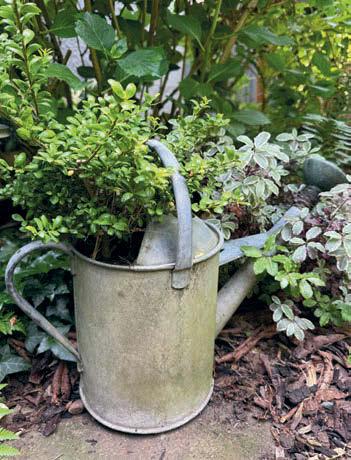
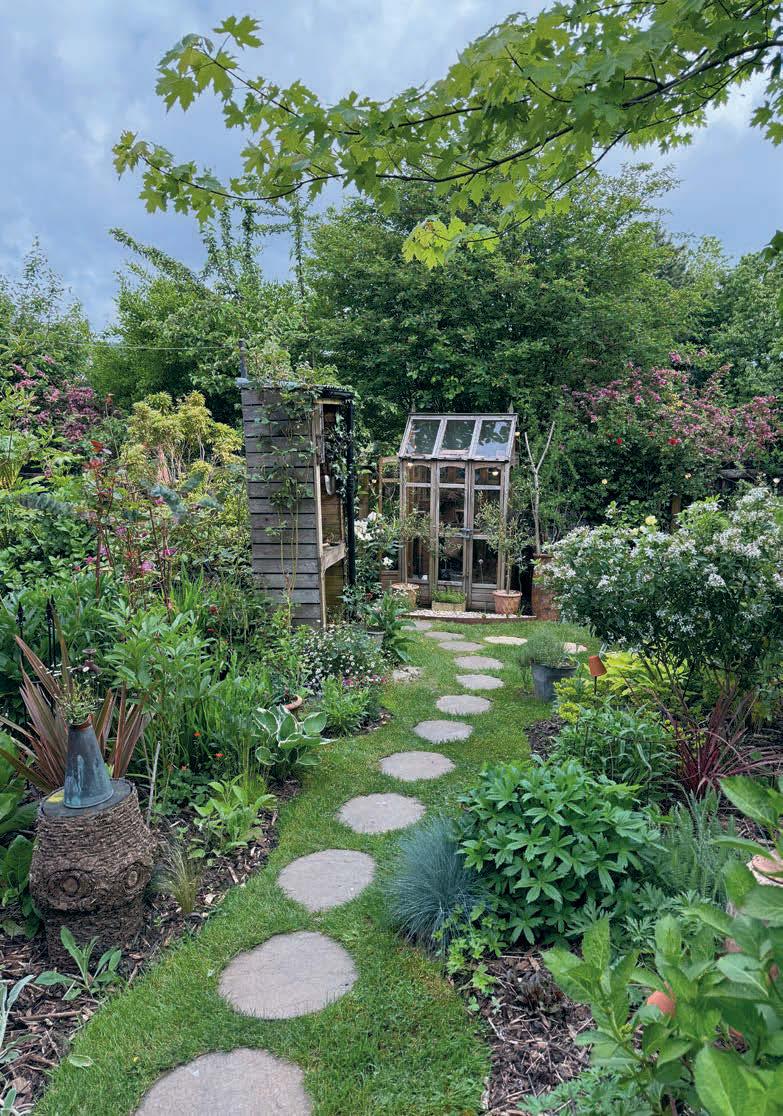



Weathered metal adds character I also have a lovely vintage water tank which makes a great water feature. It’s full of pond plants and the birds love it. Then there’s the lovely old rusty oil drum that cost me £10 and which now houses our fig tree. I used the lid in our garden shelter area: it is now a sign warning people of our tiny sausage dog!
A vintage metal bin doubles up as a water butt on our small covered pergola and we have an old whiskey barrel in our garden shelter which is another water butt. A collection of old enamel jugs were bought
with holes already in them,and they look lovely as planters dotted around the garden. I find placing Erigeron karvinskianus in them creates something beautiful as it trails all over, and as it enjoys poor soil, I placed stones in the jugs to weigh them down and save on soil, which works well.
I bought some lovely old corrugated metal sheeting and placed it on our shed roof just to add character and keep the rain out, as our little shed is also quite old.
We have several vintage chimneys which make great planters. They are in shady flower beds and contain evergreen

Visitors are alerted to the dog’s presence by a sign written on an old oil drum lid
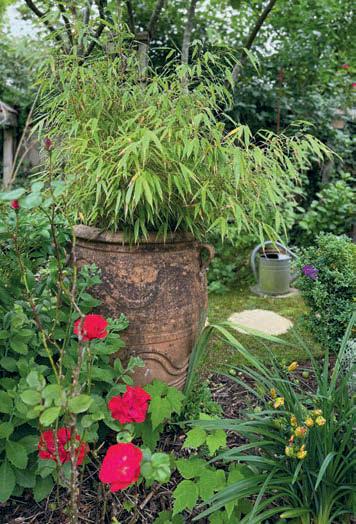
Above: This large vintage planter, which is now home to a bamboo, is a statement piece in the garden and was a lucky find on Facebook Marketplace
ferns, adding year-round interest. A lovely old metal chimney cowl is in a chimney planter with a small clematis climbing up it. New planters can be so expensive, but second hand or vintage ones are often a fraction of the price but have more character.
My favourite Facebook Marketplace place purchase is a very large vintage planter where I have planted bamboo. She was £50 which I think is a lot of money, but is a statement piece and looks great all year.
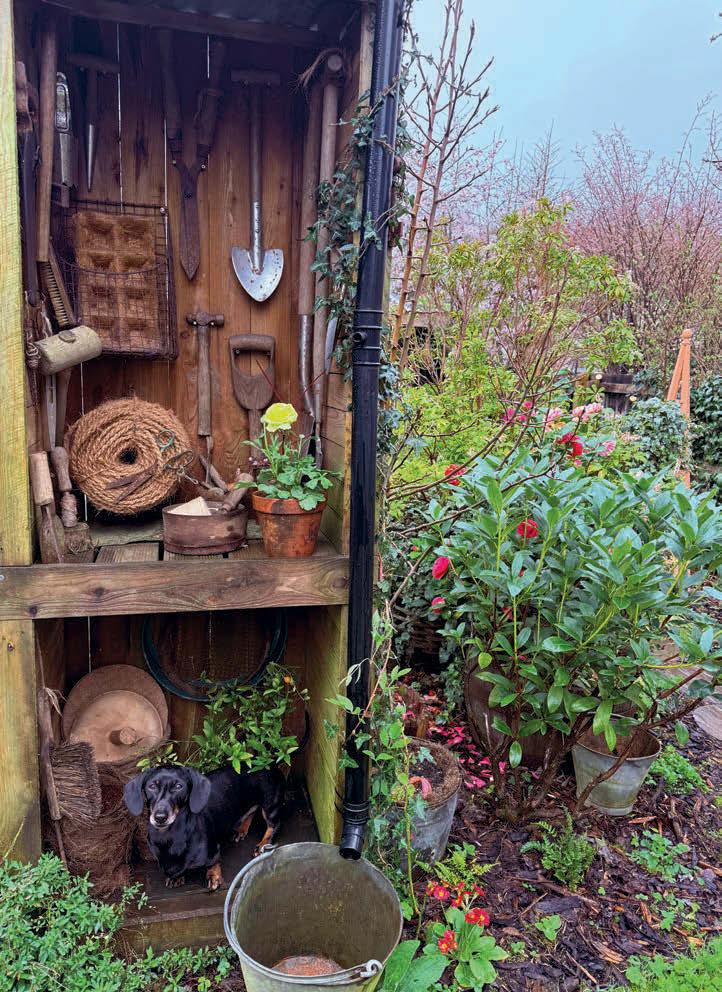
Get creative with wooden pallets If you’re looking at creating a new garden project, pallets are a great way to source materials. We built a garden tool storage unit using pallet wood and a corrugated metal roof. It’s been such a great addition to our garden, it has saved me countless hours having all the garden tools in one area.
It was made with second hand materials and is now mainly full of older garden tools. I prefer the look and feel of them and they do seem to be a lot more durable.
We built a little wall with old sleepers, and some window boxes out of old wooden decking boards, where our garden robin nests.
I also love finding bargain plants. At certain times of the year people are dividing their plants and will often take them to a car boot to sell. It’s a coste ective way of getting some really nice healthy plants that you wouldn’t necessarily be able to get in the garden centre.

Old containers, whether they are ceramic, wood or metal, are often robust and add more interest than modern pots
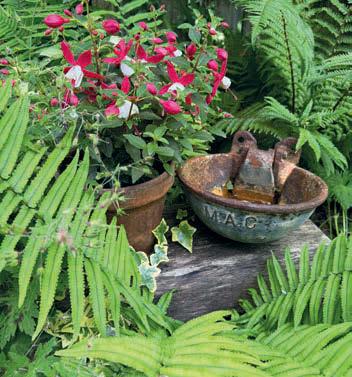
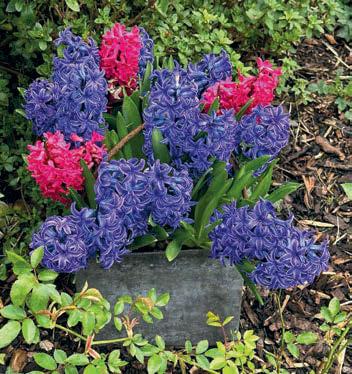
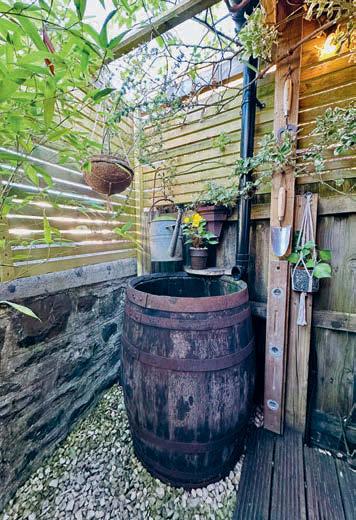







What if I told you the best bouquet is one that you grow yourself? The most beautiful arrangements often come from breaking the norm and using what’s already around you.
If we shift our mindset away from what we traditionally think of as ‘bouquets’ and start looking within our own spaces, there’s an abundance of material waiting to be cut and utilised. Better still, everything you cut can be returned to the soil as compost.
My favourite thing to do is cut back an unruly plant and use the trimmings in a bouquet or posies. Very little needs to go to waste, such as the perennial sweet pea shoots in my display. Growing in abundance also guarantees that nature gets what it needs and wants from your plants, while we enjoy their beauty as well.
It’s not about having the ‘right’ flowers –it’s about recognising what you have and being bold enough to use it. My own cut flowers are rarely conventional, and that’s exactly how I like them.
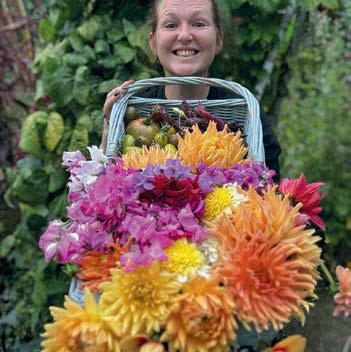

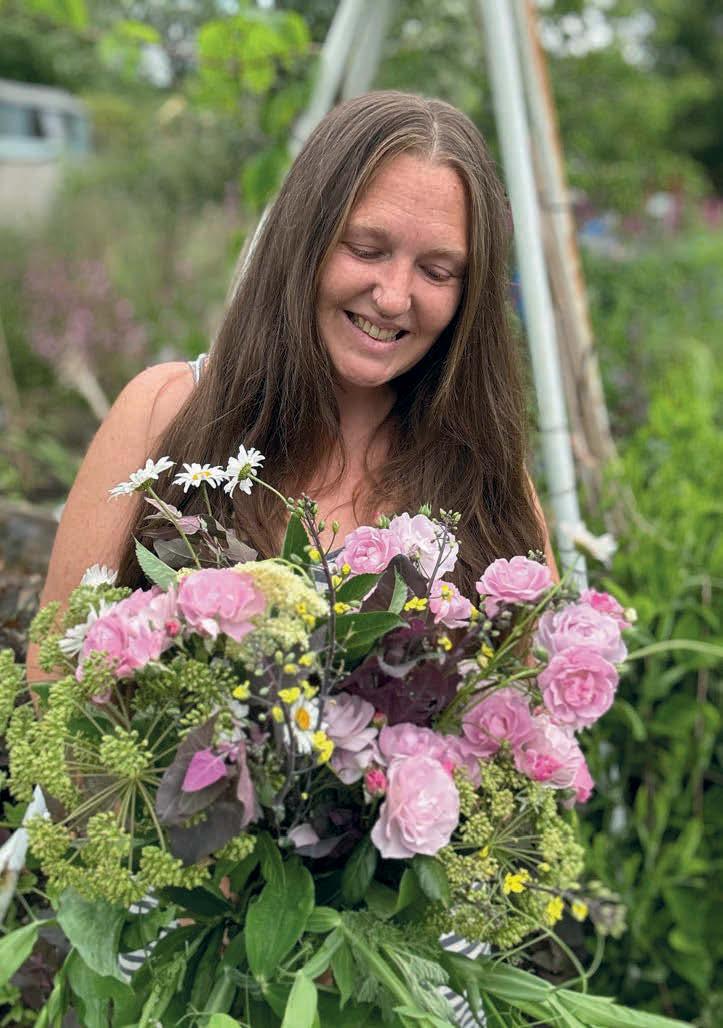
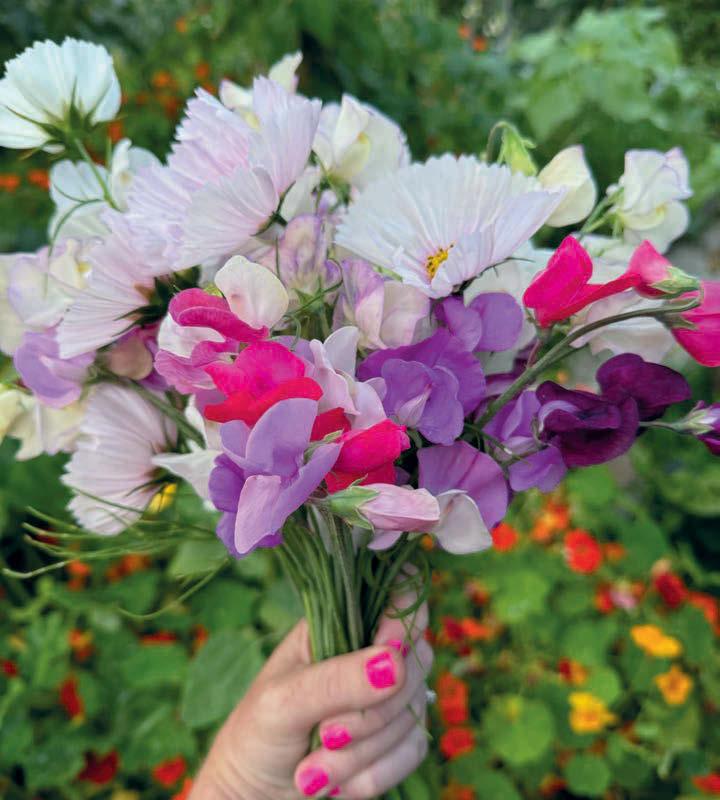
A bouquet built from the season At first glance, my arrangements may look unusual, but it’s simply a reflection of what’s naturally available.
I love a scented bouquet in a di erent way – blackcurrant stems, fennel, orange mint, cola herb and roses bring the most natural and wonderful scent. Play around with what you have, especially herbs and novelty mints, which add subtle scent and texture. These bouquets are about more than sight; they o er a full sensory

experience when created with thought and care.
With any growing space, you have some edibles that will naturally self-seed in your environment and with my allotment, it’s orach (Artiplex hortensis) and angelica. Angelica has seen resurgence in recent years and provides a beautiful addition to seasonal arrangements, as well as being edible. Orach seeds into my paths and beds.
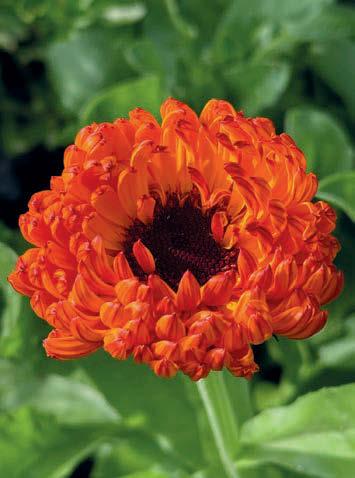
Some I keep to use as food, some I save for early cutting, and some I allow to go to seed as you get beautiful rounded, pink and purple seed heads for use later in the year for cutting.
Even the brassica flowers – often overlooked once they bolt – become a feature, adding a delicate seasonal yellow that ties everything together along with the pink thornless Lilac Bouquet (‘Chewlilacdays’) roses.
This kind of arrangement isn’t forced or overly styled, it’s a true reflection of the space at that moment, impossible to recreate exactly again. Working seasonally is freeing and instead of chasing specific flowers, you let your space and personality lead the way.
Seasonal stems are stronger, fresher, and often last longer in the vase because they haven’t been transported or forced. They also tend to have a better scent –something you quickly notice when mixing herbs like rosemary, orange mint, and fennel into arrangements. You’re not only creating something beautiful to look at, but something sensory, and alive.
Instead of asking yourself ‘What do I need for a bouquet?’, turn the question into ‘What can I use today?’, because this is exactly where the magic, personality, and individuality come from.
Spring and early summer are full of glorious opportunities. Umbels, fresh foliage, flowering herbs, and early perennials all overlap to create changing layers of interest week by week, while keeping your costs down.
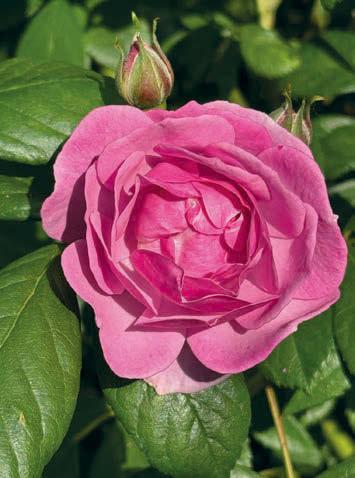
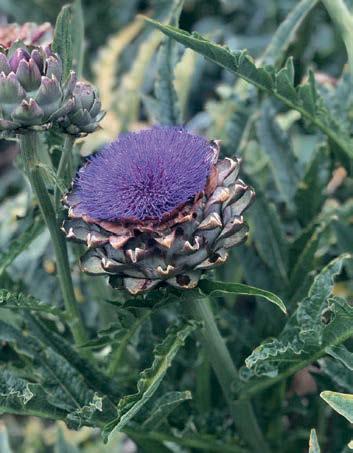
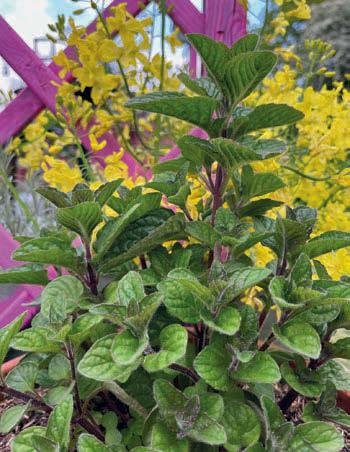
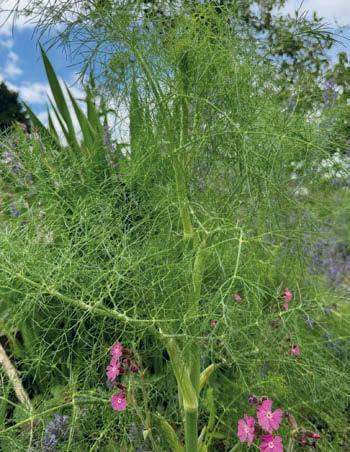
One of the easiest ways to elevate your arrangements is foraging, and it’s as simple as looking closely at your garden and allotment edges, your hedgerows, or even trimmings from prunings that you would normally throw into the compost. Foliage works as much as the flowers, adding texture, depth and fullness. These elements bulk out a bouquet naturally, creating an abundant look without extra cost.
Seasonality also encourages your own true creativity, and your bouquet becomes a canvas that’s representative of your personality. The inclusion of herbs introduces scent in a subtle, unexpected way. Even vegetable plants, like flowering artichoke or bolting radishes that have gone beyond their cropping stage can be repurposed beautifully before being composted. Simply shift your perspective and see foliage as a feature rather than a filler.
Be inspired by nature
Using seasonal and foraged materials should be an enjoyable, sensory experience from the first spark of
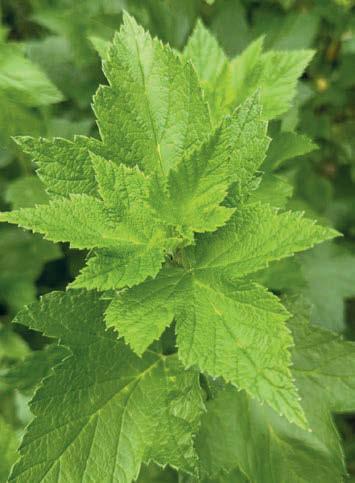
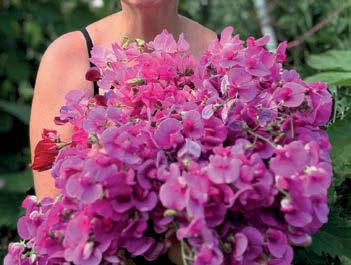
inspiration to cutting, arranging and enjoying.
The most thoughtful, characterful, and interesting arrangements are often made from the unexpected, and when you begin to see your space in this way, your opportunities expand exponentially.
Kelly-Jane Leach @DirtyGardenHoeUK
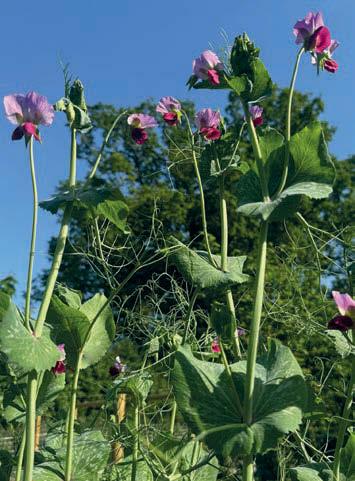
Experimenting with flowers and foliage is rewarding, but it’s important to approach it with care. Not every plant is safe to handle or include in arrangements, so identification is key. If you can’t identify it, don’t cut it.
Some members of the umbellifer family, for example, can pose a risk. Parsnip flowers and giant hogweed can cause phytophotodermatitis, a reaction that occurs when the sap comes into contact with the skin and then is exposed to sunlight, causing irritation or blistering. It isn’t something to take lightly.
Research any unfamiliar plants, wear gloves when needed, and when in doubt, leave it out. It’s a wise precaution to keep arrangements out of reach of children and pets.
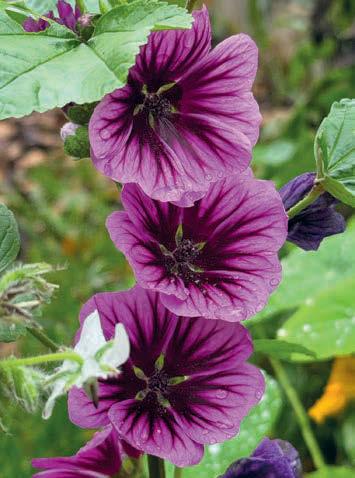




Experience a perfect lawn, every day, without any effort. The STIGA’s autonomous robot mowers feature an AIintegrated camera to avoid obstacles while delivering superior cutting results, creating perfect lawn stripes and improving the health of your lawn after just a few mowings. Discover the whole range with STIGA Vista technology at stiga.com
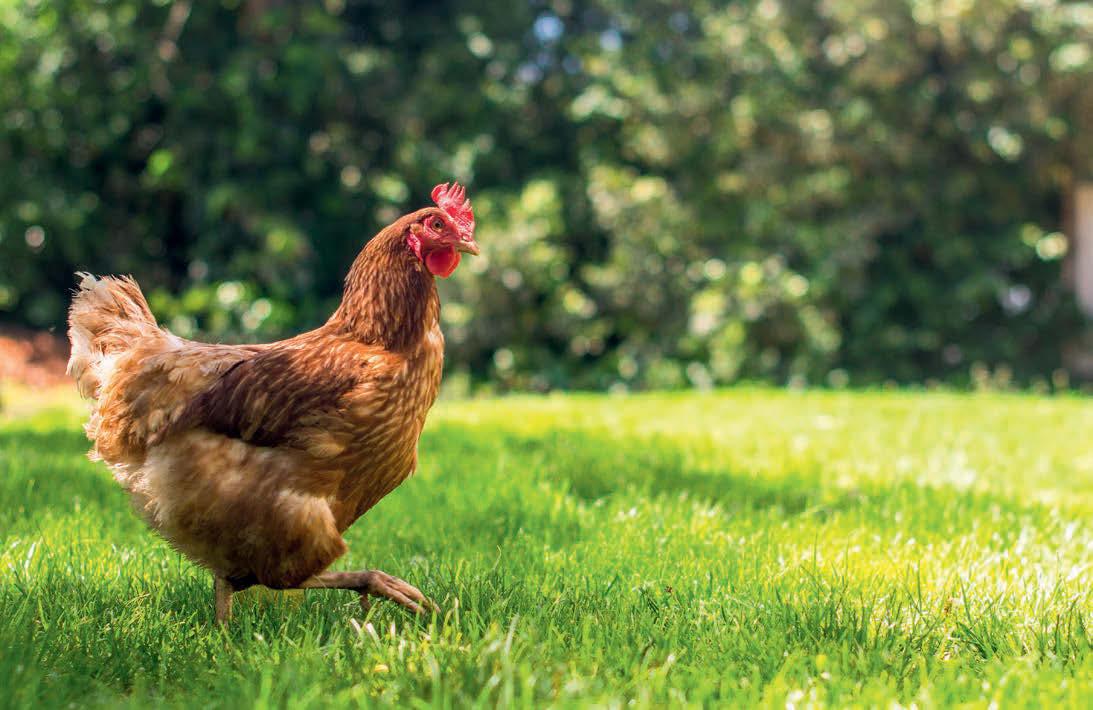








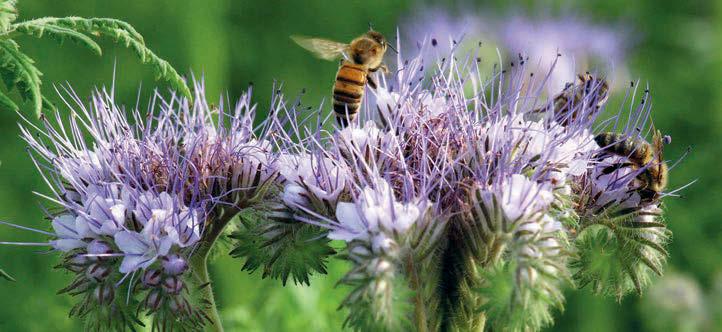
Continuing with my earlier theme of climate-resilient gardening, I like to grow plants that can do more than one job.
Tough multi-taskers are so important in a garden vulnerable to all extremes of weather, and if they are beautiful to boot, then so much the better!
Take fiddleneck, Phacelia tanacetifolia, for example. This annual has scented purpleblue flowers, can reach 1m (3ft 3in) tall and is brilliant for attracting pollinators and pest predators such as bees and hoverflies into the garden.
20-21 June: Buxton Garden Trail, Buxton, Derbyshire, SK17 9AH. 10.30am to 4.30pm, visit gardens, buy plants, chat to gardeners and take tea.
It is one of the most attractive plants for blocking weeds I’ve ever seen and its expansive root systems hold the soil together, protecting its structure.
Because it is hardy, it will germinate in low temperatures and if you use green manures to feed your soil, it can be chopped down in autumn or before it flowers in spring and incorporated into the soil.
As if this wasn’t enough, its tall stems have a long vase life, making it a popular plant with flower arrangers too.
Sow phacelia seeds from May to September in soil that has been weeded and watered. The plants will self-seed freely, so if you don’t want it to return in the same place, cut it back before seedheads ripen.
Soapwort is a rockery gem
■ Rock soapwort (Saponaria ocymoides) is a charming carpeting plant that puts on a fantastic show in rockeries and containers.
■ Growing to just 15cm (6in) tall, its vibrant pink flowers are a magnet for bees and semi-evergreen leaves add interest throughout the year.
■ A hardy perennial, it can be sown now undercover and then grown and potted on when the seedlings are large enough.
■ Ideally, keep it undercover for its first winter then add it to the garden the following spring once the young plants have been hardened o .
■ Its cousin, Saponaria o cinalis, was historically used to clean laundry, and was brought to the UK by monks sometime before the 11th century.
Below: The tumbling pink flowers of rock soapwort
Dorset, DT2 7GD. Beautiful gardens in a historic village. £8 for 1 day, £10 for both.



20-21 June: Snape Open Gardens, Snape, near Bedale, North Yorkshire, DL8 2TR. Approx 19 village gardens to see, plus refreshments and plant stalls.
20-21 June: The Peter Beales’ Rose Festival Weekend, Peter Beales Garden Centre, London Road, Attleborough, Norwich, Norfolk, NR17 1AY. A rose spectacular.
20-21 June: Cerne Abbas Open Gardens, Cerne Abbas, near Dorchester,
27-28 June: Arley Hall Garden Festival, Arley Hall and Gardens, Northwich, Cheshire, CW9 6NA. 10am to 5pm. Plants and more.
27-28 June: Benington Lordship Gardens Floral Festival & Open Gardens, Benington Lordship Gardens, Benington, near Stevenage, Hertfordshire, SG2 7BS. Noon to 5pm.
27-28 June: Armathwaite Open Gardens, Armathwaite, near Carlisle, Cumbria, CA4 9PF. See 14 gardens and enjoy refreshments.
events at least six weeks in advance to editor@amateurgardening.com

Kate Elliott, Head Gardener at Columbine Hall in Su olk, is giving a talk on Friday, July 31 to raise funds for St Elizabeth Hospice in Ipswich.
She will be talking about the part she has played in the development of Columbine Hall’s gardens over the past 29 years.
The event is at 6.30pm and tickets cost £15 in advance (to include a drink and chance to explore the gardens) from www.columbinehall.co.uk or phone the hospice’s Great Garden Trail team on 01473 723600.




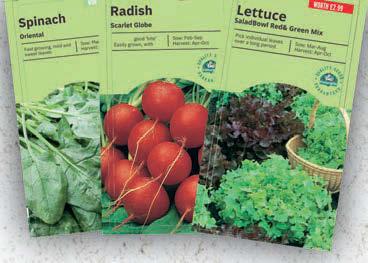





















John is a gardening legend and here to answer your lovely questions
QPlease can you suggest plants for a coastal garden including something that will provide us with some privacy as we have a popular walking route in front of the garden.
C Thomas, Devon
AI appreciate your dilemma. Privacy is so important, especially if you have a public footpath bordering your garden.
I suggest that you consider the following shrubs which will screen you from probing eyes:
Elaeagnus x submacrophylla (also known as E x ebbingei): Evergreen. Silvery-hued foliage.
Veronica brachysiphon (also known as Hebe brachysiphon): Evergreen. White flowers in summer.
Escallonia rubra ‘Crimson Spire’: Semievergreen. Strong and upright, bright crimson blooms.
QThe plant pictured has appeared in my border. Is it a weed or something that is worth keeping?
Jan Schutt, byemail
AThe tree seedling that has appeared in your border is probably that of a green alder ( Alnus alnobetula – previously A. viridis ). A native of Central and Southern Europe, a seed from a cultivated tree growing nearby blew into your garden and is enjoying your fertile soil.
Producing chunky catkins in spring, it grows to around 15m (50ft).
If you like it and have room for it and

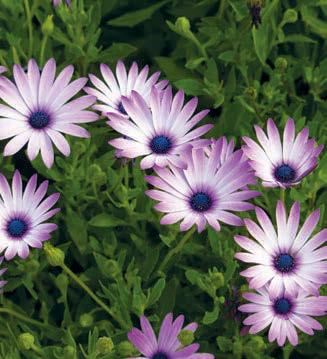
Tamarix tetrandra: Feathery leaves on this tamarisk complement pink flowers in spring.
Griselinia littoralis: Evergreen. Dense shoots, yellowish-green leathery leaves. Brachyglottis (Dunedin Group) ‘Sunshine’ (also known as Senecio ‘Sunshine’): Evergreen. Bright yellow daisy-like flowers amid silvery green leaves.
Olearia macrodonta: Evergreen. Also called New Zealand holly, large sprays of fragrant white blooms appear among leathery sage-green foliage.
can see it as a feature, I suggest that you water it well, so that soil clings to its roots, and transplant it where it will have space to flourish.
Delightful African daisies
Q Please can you tell me what this is?
Lynda Cox, by email
A The thin, notched-leaf species is a form of African daisy (Osteospermum spp). A native of South Africa, it is probably O. jucundum. Enchanting us with a wealth of mauve-pink to magenta-purple daisy flowers that light up most of summer, it is fairly hardy and comes through most winters in sheltered gardens.
Vermiculite or perlite?
Q I’m never very sure when to use perlite or vermiculite, so this year I’ve put a bit of each into my seed compost and will try and see if this works. Is that wise?
Elizabeth Hayward, by email
A Both moisture-absorbing perlite and vermiculite are ideal for covering surface-sown seeds or for mixing with seed compost.

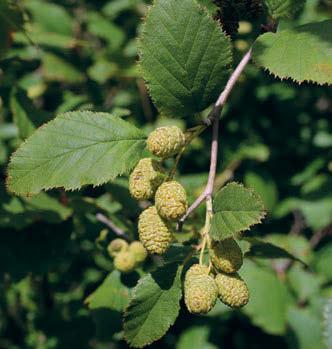
Above:

Both aid aeration and drainage, which helps to speed germination and keep seeds viable. I applaud your idea of mixing a little of each with seed compost.



John is a gardening legend and here to answer your lovely questions
Check its roots and re-pot in fresh compost
QMy Hydrangea aspera Hot Chocolate (‘Haopr012’) is not doing well but I don’t know why. It is a young plant living in the pot, in dappled shade with some direct sunshine.
Gosia Lyson, byemail
AThere are many reasons for a hydrangea’s leaves to wilt: among them dryness at the roots, overwatering and ants undermining the root system I suggest that you re-pot your plant to help it regrow strongly. You will then discover if dryness or overwatering is the problem or if creatures have made a home in the root ball.
Initially, after removing dead growth and tapping the root ball from its pot, examine the roots. If they appear healthy, do nothing.
Then, after cleaning the pot, cover the drainage hole with crocks or gravel and fill in with 7cm (3in) of loam-based potting compost.
Nestle the root ball into the compost and top up with more of the same to
QI have been told that Spanish bluebells might hybridise with the English ones I have planted in my garden. Is this a bad thing? And how can I tell the difference between the two varieties?
P Grayson, Somerset
AUnfortunately, bees and other pollinating insects transfer pollen from alien Spanish bluebells ( Hyacinthoides hispanica ) to blooms of our protected English species ( Hyacinthoides non-scripta ) and resultant seedlings, which we don’t want, resemble the Spanish kind. Pleasingly, they are easy to distinguish. The Spanish clan is more vigorous, with thicker stems and wider
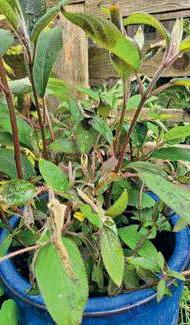
within 5cm (2in) of the rim - this is to allow space for watering. Thereafter, keep the compost damp.
Hopefully, your Hot Chocolate will flourish and flower well.
pale blue and scentless blooms that encircle the stem.
Whereas, our English bluebell has more slender, drooping stems with scented, deep blue flowers on one side of the stem.
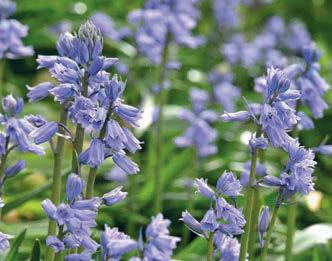
Above: Spanish bluebells are easy to tell apart from their English counterparts


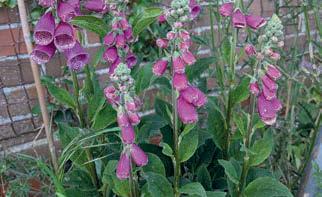

Is this an unusual foxglove?
Q We had a foxglove that flowered last year. I deadheaded it, and this year it has come back with lots of small spikes of flowers instead of just one. Is this usual? I thought they flowered once and then died.
Martin Davison, WestWales
A I suspect that you are growing a common foxglove (Digitalis purpurea) which can be a biennial – producing a rosette of foliage in its first year, flowering in its second season, then dying. Occasionally, it blooms in its third year before expiring.
There are also true and fascinating perennials– D. grandiflora, D. lanata and D. parviflora among them.
Whichever you have, bees and other insects love them.
Q Our bay tree was a cutting and has been in this pot for a few years. It was always very healthy until this year. It gets fed every couple of weeks during the growing season. Should I re-pot or bin it?
Susan Martin, byemail
A As your bay has been in the same pot for several years and is now developing brown leaves, I think it is stressed and needs re-potting.
Pleasingly, it can be done now. Start by watering the compost to reduce the risk of roots clinging to the pot and breaking. Then, very carefully remove the root ball.
If roots have filled the pot, reset the root ball in a container 10cm (4in) larger in diameter.
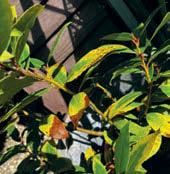

John is a gardening legend and here to answer your lovely questions
Pansies, polyanthus and violas are robust winter plants
QI’d appreciate ideas for autumn/winter and winter/spring hanging baskets. Also, last year and so far this year I haven’t been able to find trailing Helichrysum petiolare or Dichondra argentea ‘Silver Falls’ and I’m stuck in a rut with just trailing ivy and lobelia as ‘fillers and spillers’. Sandra Ball, byemail
AUnfortunately, Dichondra argentea ‘Silver Falls’ appears to be less readily available at garden centres but is available online.
The same goes for trailing helichrysum. There is a good selection of plants stocked by garden centres which are suitable for autumn and winter hanging basket displays.
My favourites are Clematis Little Lemons (‘Zo14100’), polyanthus, the Arizona Bicolor
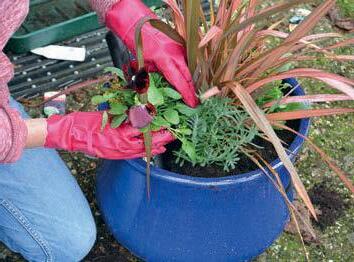


There are lots of plants and hardy grasses that

mix of primrose and the Ocean Blues collection of viola. Edge the arrangement with variegated ground ivy (Glechoma hederacea ‘Variegata’).
As for cheering winter and spring, I suggest that you choose winter-flowering pansies, cyclamens, primroses and silverleaved cinerarias.
If it’s a riveting display you are seeking for next summer, mix and match the following contenders: Surfinia petunias, fuchsias, Calibrachoa Million Bells Series and Anagallismonellii ‘Skylover’.
Then rim the basket or tub with purple bell vine (Rhodochiton atrosanguineus), trailing heuchera, Italian mint and golden creeping jenny (Lysimachia nummularia ‘Aurea’). Visitors will love your creativity.
QI bought this ‘lily’ years ago and quickly realised it was not a lily and never saw it flower. However, because it had a lovely leaf and was a lovely shade of green, I left it alone. This year though it has thrown a lot of offshoots and is large, with a flower bud in the middle. If you could identify this lovely plant I would be very grateful. I have found lily beetles on it. Mr Brad Nicholson, byemail

ALucky you! I feel sure that you have a giant Himalayan lily (Cardiocrinum giganteum - previously called Lilium giganteum himalaicum).
A native of the Himalayas, China and Japan, a bulb can take five or more years to develop into a magnificent plant.
Prized for its large, slender and nodding trumpet-shaped white flowers which crown its 2.4m (8ft) stem, it dies back to

Established in 1820, Johnsons Lawn Seed is the UK’s oldest lawn seed brand, renowned for innovation and expert grass breeding. Backed by parent
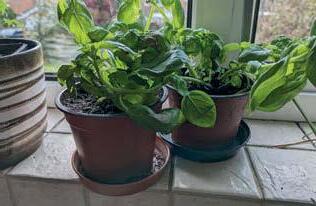


Can basil grow in the garden?
Q Can I move my basil outside in the summer?
Bob Drew, by email
A Basil is tender, but will enjoy summer outside in a sheltered, warm and sunny spot. Introduce it to the garden slowly, so it has time to harden o and get used to the di erent conditions. It does best in pots and growbags, especially in cooler areas where it can be moved indoors if the weather turns. Bees and other pollinators will love its flowers.
ground level after flowering. It forms replacement bulbs around the base.
If you lift them and replant them in rich soil containing lots of organic matter in dappled shade, they will mature and bloom within several years.
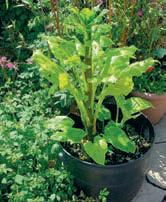
company DLF’s extensive research and a 15-year breeding programme, every seed is carefully developed for performance and reliability. With solutions for every garden, including the latest innovations such as Nature’s Lawn and Ace Lawn, gardeners can confidently create greener, healthier lawns tailored to modern needs.
www.johnsonslawnseed.com



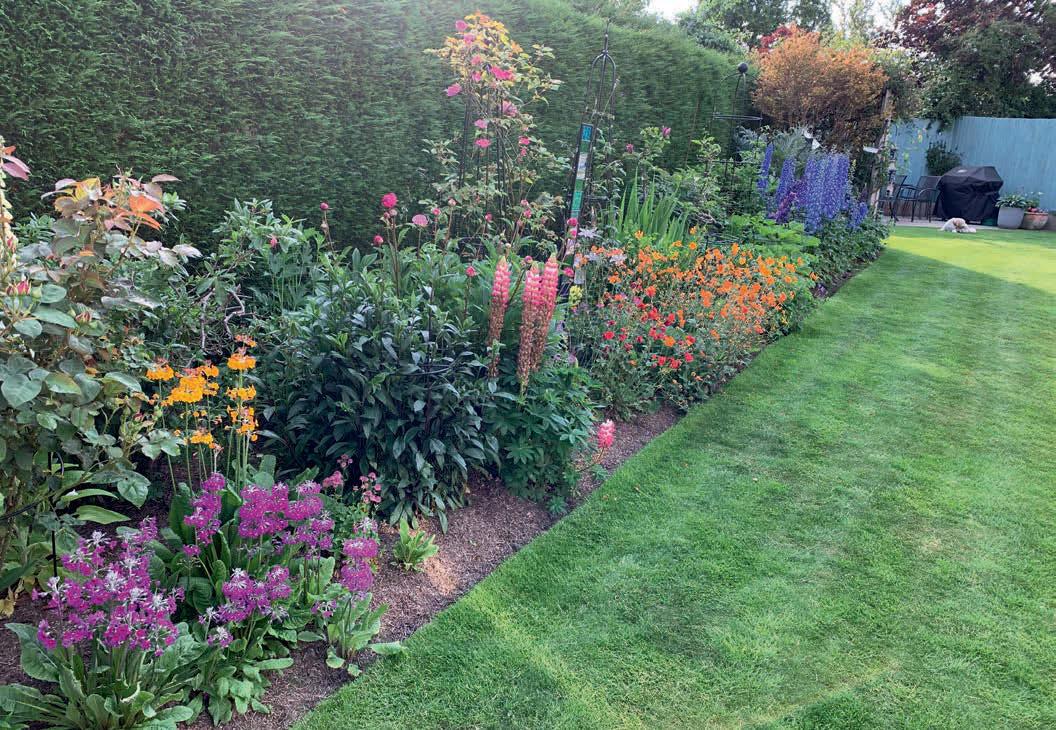






We love receiving your letters, emails and social media posts. Every message, poem, idea and comment matters. Please keep them coming. We will send out a thank you gift for every item published in the magazine as soon as we can, so do please send your address and contact details when you get in touch.
Hi Kim,
Just a quick thank you to you and everyone at AG.
This image shows the sunny end of my north-facing garden late last summer. I work from home, so was lucky enough to sit out on the bench every day, me and the laptop in the happy spot (there’s my jacket, bag and the rest on the bench, it’s not a wellplanned photo!).
I‘d had no interest in my sodden clay soil and sparse lawn until I picked up a copy of the magazine when you took over in 2023. I bought a copy just out of intrigue, what is this magazine that‘s been around for over a century?
You and your writers have inspired me no end. I have so very much to learn, but I‘ve started and I‘m so happy. Last year I grew my first-ever flowers from seed, they were Cosmos ‘Lemonade’ that came free from AG (they‘re in the photo). Elsewhere in the garden there
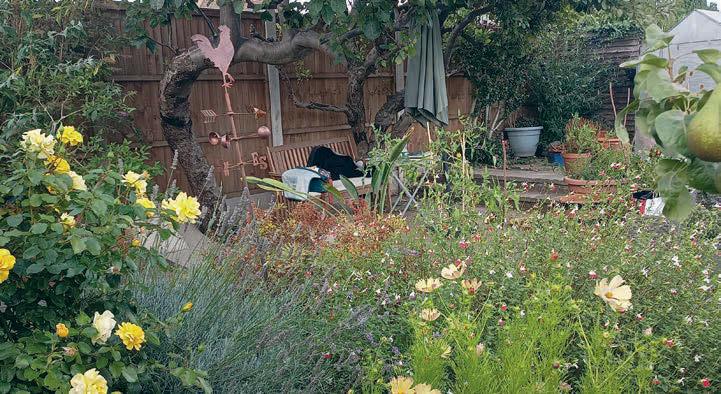
were tall dill flowers like I‘ve never seen before, and I’d even harvested a few gooseberries.
This is all so new to me, and I‘m only on the journey because I found your wonderful magazine and tried something new. Thank you so much.

Powering Your Garden with Innovation
STIGA is a leader in modern garden care, offering highperformance battery gardening tools, intelligent robots, lawn mowers, trimmers, and a full range of equipment designed for efficiency and ease. With a strong focus on precision, durability, and sustainability, STIGA combines cutting-edge battery technology and smart automation to help gardeners achieve outstanding results with less effort. From compact gardens to expansive landscapes, STIGA’s cordless tools, robotic mowers, and advanced machinery deliver reliable, eco-friendly performance you can trust.
With all kind regards Jane Wilson-Rose
Kim says; Jane, that’s so lovely for the team and me to hear. Your garden looks lovely. We are so glad you joined the AG family.


Dear Kim
Three patient years beneath the sky,
Through frost and rain that wandered by,

The Canterbury bells have found their hour, And lifted high each shining flower.
The bees delight in every bell, And linger where the blossoms dwell.


Soft pink whispers, purple deep, And white as clouds the heavens keep, A little chorus, bright and free,
At last, the blooms I‘d hoped to see!
Best regards Anna Shah


Kim says; Anna this is just beautiful, thank you for sharing.

Hi Kim
AG 31st Jan featured a step-by-step guide to grow your own teabag plants from Simon Akeroyd.
One of my friends once told his young daughter that tea bags grew on trees so I was immediately up for the challenge to see if I could grow a plant from a tea bag. With a camomile tea bag (courtesy of a hotel stay), the challenge began. After a few seedlings were tended in the warmth I‘ve managed to grow one plant following the step-by-step guide. I‘m so delighted with the results that I can now say ... Yes plants can be grown from a tea bag.
Best wishes
Steve Watkin Co Durham
Kim says; that’s so great to hear Steve. Isn’t it so rewarding to get a plant for free in this way.






Dear Kim,
My mum and I regularly sit together and look through Amateur Gardening Magazine.
She is in a care home now with dementia but was once regularly on a trade stand at The Royal Norfolk Show. She worked at a nursery near Newton Flotman for many years and had a reputation for her hanging baskets.
Amateur Gardening Magazine provides much valued stimulus and conversation. We swop copies and pick out photographs we like. The April 2026 edition with a Norfolk Lavender focus is a big favourite!
It‘s lovely to hear her access old memories, even if they are just fleeting, because of something she‘s spotted in Amateur Gardening.
Thank you to all the team for a super magazine for all ages (mum will be 89 this month).
Susan Helmont
Kim says; Susan, thank you so much for sharing your experiences. It’s so lovely to hear how helpful gardening and AG mag can be to enable your mum to access some memories. If you have any images of your mum’s hanging baskets do please write in again, we’d love to see them.
Please send us your letters, poems and musings
Your contribution is such an important part of this magazine, now and for the future.
AG is for you the people, for gardeners and proud custodians of gardens everywhere, so please do write in. We will send a gift for each letter, poem and musing published.
Address: Kim Stoddart I Amateur Gardening magazine I Kelsey Publishing Ltd. I The Granary I Downs Court I Yalding Hill I Yalding I Maidstone I Kent I ME18 6AL
Email: editor@amateurgardening.com


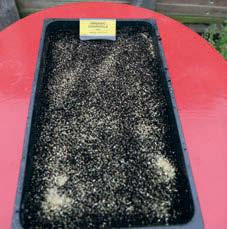
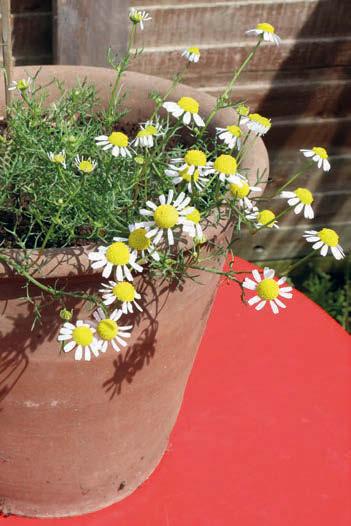






























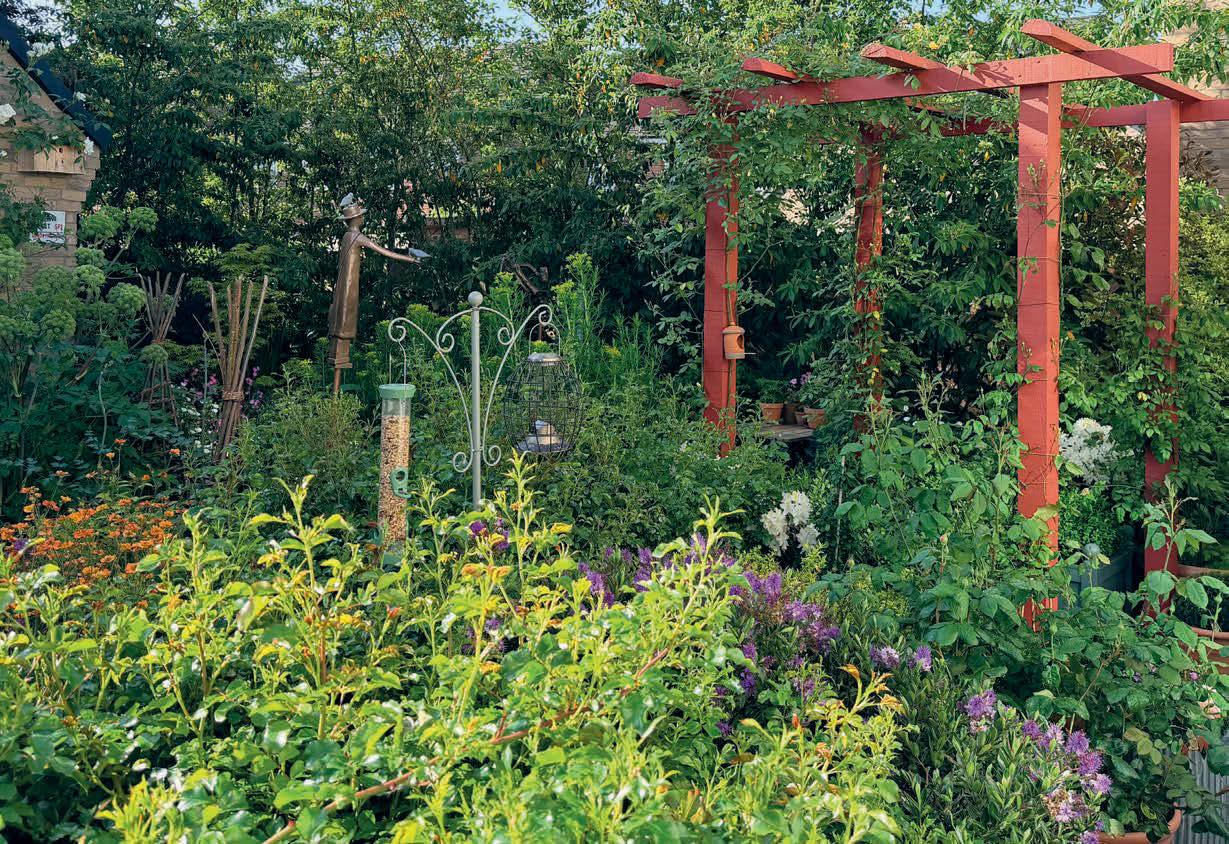


“Green things growing, green things growing, everywhere you look today.”
Mary Oliver
June is when the garden stops asking permission. It simply grows. After the restraint of early spring and the hopeful energy of May, everything now seems to lean into itself with an assured certainty. Stems lengthen, foliage deepens, flowers arrive not as isolated events but as part of a rising tide. It is, of course, what we have been working towards all year, but that does not make it any less astonishing.
A garden in June is not tidy in any conventional sense. Indeed, the pursuit of tidiness now feels almost beside the point. Borders soften at their edges, paths narrow without apology, and familiar plants appear

to have doubled in size overnight. What was once clearly defined begins to merge, and in that merging something far more interesting emerges: a sense of wholeness, even inevitability, as though the garden has finally decided what it wants to be.
This is where the gardener’s eye is tested. There is always the temptation to intervene, to restore order for its own sake, particularly in new or recently planted spaces where every plant still feels like it is on probation. But June asks a more subtle question: is this disorder, or is it simply life doing what it has always done when allowed enough space and time?
A well-designed garden should, by now, be entering its stride. The structure laid down in winter and early spring, the evergreens, the hedges, the permanent bones, now carries the exuberance of softer planting. The best combinations do not shout for attention but hum with it.
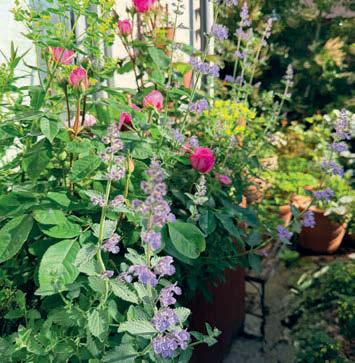
Geraniums weave through roses, grasses catch the light at unexpected angles, and perennials that seemed modest in April now assert themselves with quiet authority.
The garden is in motion
And yet nothing is fixed - that is the essential truth of June. Everything is in motion, even when it appears still. Plants move in subtle ways: a stem leaning towards light, a seedling finding a gap, a clump quietly expanding into its neighbour’s space. The garden is negotiating constantly, and if we watch closely, we begin to see that negotiation as a kind of intelligence.
The gardener’s role, then, becomes less about control and more about judgement. When to intervene, and when to leave well alone. A stake adjusted after wind, a stem shortened to prevent collapse under summer rain, or a plant lifted or divided not because it has failed, but because it has succeeded too well. These are small, almost invisible acts, but they create the di erence between richness and chaos.
There is also a deeper restraint required: the willingness to tolerate a degree of imperfection. A rose leaning slightly obalance, or a self-seeder appearing in what was meant to be a formal rhythm. Maybe it’s a path that’s narrowed more than planned. In isolation these might feel like flaws, but together they often create the very character that makes a garden memorable.
One of the quiet revelations of June is how quickly intention gives way to reality. Plants we thought would behave modestly surge ahead while others, expected to dominate, settle into the background.
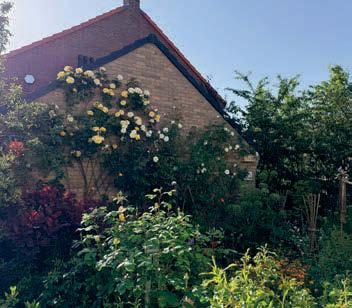

Enjoy the fabulous colour combinations of the June garden. Here roses and nepeta make great bed fellows.
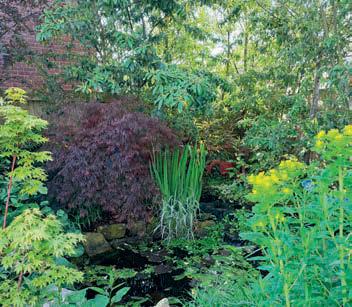
Above: Add water to a garden, such as a pond, and see how it elevates the presence of wildlife
Combinations reveal themselves that no plan could have predicted. It is not a failure of design, but proof that design, however carefully considered, is only ever the beginning of the story.
And then there is light. June light has a particular generosity. It lingers without urgency, settling into foliage and drawing out textures that earlier in the year are barely visible. Even ordinary plants take on a kind of significance under it. A patch of nettles becomes a silver-green sculpture. A hedgerow becomes a moving tapestry. The ordinary is transformed, if only we pause long enough to notice.
A garden in which everything belongs To spend time in a garden at this moment is to be reminded that abundance is not simply a matter of quantity, but of relationship. It is how plants sit beside one another, how they overlap and support, how they create spaces within themselves for air, movement, and life. The best gardens at this time of year are not those with the most flowers, but those where everything seems to belong.
For those working with new gardens, particularly on recently built plots where the soil has only just begun to recover its memory, June can feel slightly overwhelming. There is a sense of too much, too fast. But this is a necessary stage. Establishment is not neat. It is exuberant, messy, and occasionally unsettling. Only later does it settle into balance.
And so, the task is not to rush towards control, but to learn to read what is already happening. To see where the garden is asking for help, and where it is simply asking to be left alone.
Because in the end, June is not about mastery. It is about participation.
The garden is no longer something we are building. It is something we are living with.
And if we are fortunate, and patient, it begins, in its own time, to live with us.
Naturalistic planting is often misunderstood as simply ‘letting things grow wild’. In reality, the most successful examples are carefully considered and quietly structured. They feel e ortless, but are anything but.
At its heart, naturalistic planting is about mimicking nature’s logic rather than nature’s randomness. It draws on the rhythms, repetition, and relationships found in meadows, woodland edges, and grassland communities, but interprets them within a designed space.
Start with structure, not decoration
Start by establishing the underlying framework. This might be repeating grasses, a matrix of reliable perennials, or structural shrubs that hold the composition through the year. Without this backbone, planting can quickly become chaotic.
Think in drifts, not dots
Nature rarely places single specimens in isolation. Instead, plants occur in communities. Use generous drifts of the same species, weaving them through the space so the eye is carried rather than interrupted.
Prioritise texture over colour
Colour is transient; texture endures. Think about fine grasses against broad leaves, upright spikes beside mounds, airy seed heads floating above denser growth.
Allow for seasonal dominance
A naturalistic garden is not static. At di erent times of year, di erent plants take over, and accepting this ebb and flow is essential.
Use repetition as rhythm
Repeating key plants creates a visual rhythm that ties the planting together. Without repetition, even the most beautiful plants can feel scattered and unresolved.
Design for movement and light
Wind and light are active participants in naturalistic planting. Choose species that respond to both: grasses that shimmer, perennials with translucent seed heads, plants that shift subtly through the day.
Edit, don’t control
Perhaps the most important discipline is restraint. Naturalistic planting is not unmanaged planting. It requires selective editing, removing what overwhelms, supporting what collapses, and allowing selfseeding where it strengthens the composition. The aim is not to recreate nature, but to borrow its intelligence: its balance of order and thoughtful beauty.
Jayne Hickling shares some delicious ideas for dishes using homegrown strawberries, beans and carrots
We all have our favourite go-to recipes, but occasionally we want to add some ‘wow factor’ and really demonstrate what homegrown can create.It’s all about adding plenty of flavour without overpowering the extraordinary, unbeaten deliciousness that homegrown produce delivers
Focusing on just three of our main crops, here are some fabulous recipes that are ideal for sharing and eating in your outside spaces. They represent real opportunities to let homegrown produce shine.
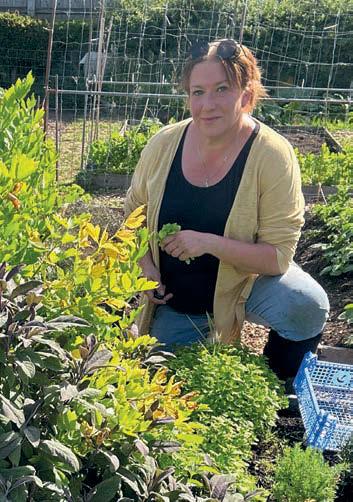
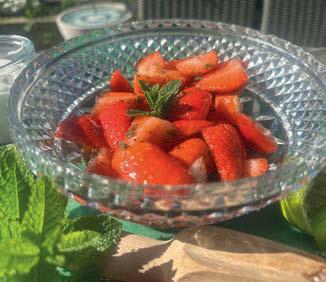
■ Small handful fresh mint leaves, finely sliced
■ Black pepper (optional, tiny pinch)
■ 1 tsp balsamic vinegar (optional)
Method
■ Slice the strawberries.
■ Put them in a bowl with the sugar, honey and citrus juice.


Just in time for Wimbledon, these balsamic vinegar strawberries offer up a sophisticated treat

The first for me is strawberries, which are the reason I started to grow my own fruit and vegetables in the first place. When my children were small they loved strawberries, and while they are more grown up now, they still love picking these delectable fruits fresh o the plant.
Adding a little twist of sophistication for more developed palates is fun. With Wimbledon on the way, strawberries and cream are in abundance, but I love to add a grown-up element. With the summer sun and dreams of far o places, this is almost like a nonalcoholic mojito in a bowl - and it also counts as one of our five a day!
Ingredients
■ 400g (14oz) strawberries
■ 1 tbsp caster sugar
■ 1 tbsp honey (use maple syrup for a vegan alternative)
■ 1 tbsp lime juice
■ Leave for 10 to 15 minutes so the juices are released.
■ Stir through most of the mint.
■ Taste and adjust sweetness.
■ Finish with remaining mint and, if you like, a tiny pinch of black pepper.
■ Add 1 tsp balsamic vinegar (optional)
Serve with:
■ Greek yogurt.
■ As an equally beautiful alternative you can use basil instead of mint. This keeps well in the fridge for a couple of hours ahead of serving.


Jayne’s creamy coconut-rich French bean curry works well as a stand-alone dish, or you can also add meat, tofu or tempeh and dial up the heat if you fancy something more spicy

French beans can be incredibly prolific, but luckily there are so many delicious recipes for using them up


A bowl of French beans offers the kitchen gardener a wealth of opportunities







French beans can be so prolific that keeping up with them is almost a chore, though we miss them once they’re gone.
In the heat of summer, spices can be oddly cooling. The initial outlay of spices can seem daunting, but you can buy combined options
The brilliant thing about this dish is that it is so adaptable. You can easily add more chilli if that’s your preference, or even team with meat or protein. For me, however, placing what is often seen as a side dish front and central on the table is a chance to really show o your bean harvest.
Ingredients
■ 400 to 500g (14oz to 1lb 2oz) French beans, trimmed and sliced
■ 1 medium onion, finely chopped
■ 3 garlic cloves, minced
■ 1 small piece ginger, grated
■ 1 red chilli (optional)
■ 1 tsp mustard seeds
■ 1 tsp cumin powder
■ 1 tsp turmeric
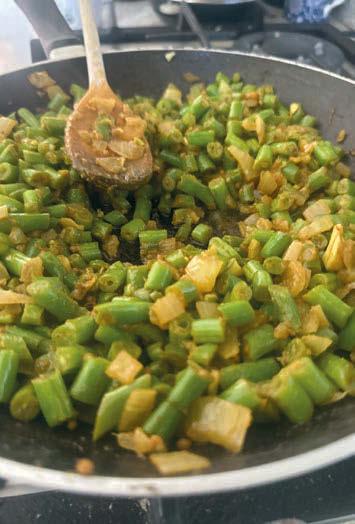
■ 1 tsp coriander powder
■ 1 tsp paprika
■ 2tsp garam masala spices
■ 400ml (14 fl oz) tinned coconut milk
■ 1 to 2 tbsp oil
■ Salt to taste
■ Squeeze of 1/2 lime
Method
■ Heat oil in a pan over medium heat.
■ Add mustard or cumin seeds and let them crackle.
■ Add onion and cook until soft and lightly golden.
■ Stir in garlic, ginger, and chilli for one minute.
■ Add the rest of the powdered spices
■ Add French beans and stir well to coat in spices.
■ Pour in about 80ml (3fl oz) water, cover, and cook six to eight minutes.
■ Add coconut milk and simmer uncovered for another four to five minutes until slightly creamy.
■ Finish with salt and lime juice.
Serve with:
■ Rice, naan or flatbread.

Multicoloured and vibrant carrots are another one of our homegrown jewels often relegated as a side dish or added into other recipes.
But vibrant orange carrots, or the bright colours of rainbow carrots, create a dish which again places homegrown produce in the spotlight. Whereas most dishes will lose the bright colours, this one enhances them and is a little bit of a showstopper, sounding much more complicated than it actually is.
The buttery pu pastry over the deeply caramelised carrots, revealed with the dramatic flip upside down, presents a glossy, jewel-toned tart with creamy goat cheese and fresh thyme.
You can make your own pu pastry, but when the dish is about the veg being the king, this is a little ‘cheat’ we can allow ourselves. After all, we grew the carrots and the herbs so we’re allowed to feel fine about shop-bought pastry!
Ingredients
For the tart
■ 1 sheet pu pastry.
■ 450g (1lb) baby carrots (if you’ve grown rainbow carrots, they will retain their colour)
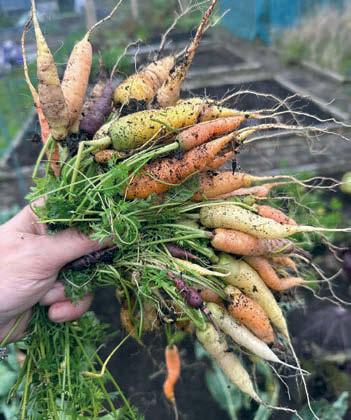
Above: Whether you grow multicoloured heritage carrots or the more usual orange varieties, they deserve to be given a time to shine
■ 2 tbsp olive oil or rapeseed oil.
■ 60g (2oz) salted butter
■ 1½ tbsp runny honey (use maple syrup as a vegan alternative)
■ 1 tbsp brown sugar
■ 1 tbsp balsamic vinegar
■ 2 tsp fresh thyme leaves
■ Salt and black pepper


This glistening carrot tarte tatin makes a mealtime centrepiece with real wow factor, and isn’t as complicated to make as you might think
Goat cheese layer (vegan alternatives are available)
■ 120g (4oz) soft goat cheese
■ 2 tbsp Greek yogurt
■ 1 tsp lemon zest
■ Pinch of black pepper
To finish
■ Fresh thyme
■ Honey
■ Chopped chopped cashew nuts
Equipment
■ Use a 23 to 24cm (9 to 10in) oven-safe skillet if possible.
Method
1. Roast the carrots slightly first
■ Preheat oven to 200°C (400°F or Gas Mark 6).
■ If carrots are thick, halve them lengthwise.
■ Toss with olive/rapeseed oil, salt, pepper, and thyme.
■ Roast for 15 minutes so they begin softening and caramelising.
2. Make the caramel base
■ In the skillet, melt the butter with honey and brown sugar over medium heat.
■ Cook two to three minutes until bubbling and lightly darkened.
■ Add balsamic vinegar.
■ Arrange carrots tightly in a circular pattern in the pan. Let them cook for another three to four minutes so that the bottoms glaze.
3. Add the pastry
■ Lay pu pastry over the carrots and tuck edges down into the pan.
■ Pierce a few steam holes with a knife.
■ Bake 25 to 30 minutes until deeply golden and pu ed.
4. Make the goat cheese cream
■ Mix goat cheese, crème fraîche, lemon zest, and pepper until smooth.
5. Perform the dramatic flip
■ Cool the tart for five minutes only.
■ Place a serving plate over the skillet and carefully turn it over.
■ You should get glossy caramelised carrots on top with crisp pastry underneath.
■ To serve, top with drizzled honey, drops of the feta mixture and a sprinkling of chopped cashew nuts.
You can find out more about Jayne’s work via www.theallotmentcook.co.uk





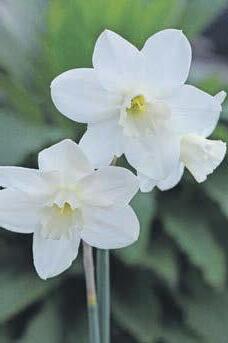
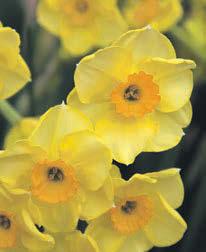
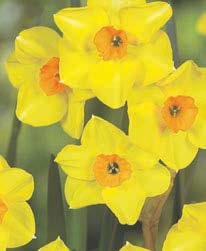

Narcissus Collection
This cheery selection of dwarf Narcissus is bound to put a big smile on your face this spring This exciting collection of miniature da oldils brings together four well known varieties, for a range of colours and ower forms that will brighten up borders, rockeries and patio containers.
Collection comprises:

Narcissus 'Martinette' - Showy sprays of fragrant, delicate yellow owers with little orange trumpets.
Narcissus 'Niveth' - A beautiful white variety with broad petals which sit behind a ared trumpetpleasantly scented.
Narcissus 'Golden Dawn' - A cup-shaped da odil, which produces up to three owers on each stem.
Narcissus 'Tête-a-Tête' - A much loved variety with a delightful fragrance.

Narcissus Collection 60 bulbs - Contains: Golden Dawn x 10, Tete A Tete x 20, Martinette x 15, Niveth x 15.

Narcissus Collection 120 bulbs - Contains: Golden Dawn x 20, Tete A Tete x 40, Martinette x 30, Niveth x 30.
Pre-order for August Despatch.
Hurry o er ends July 4th.
Tulip ‘Everlasting Mix’

Tulip ‘Everlasting Mixture’ will come back year after year just as strongly as your favourite perennials! Sturdy and colourful, these magni cent tulips begin to bloom in early April, and with superb weather resistance they will continue for longer than most garden varieties. The bold colours and strong upright stems make this mix particularly good for cutting. Height: 40cm (16”). Spread: 15cm (6”). Bulb size: 11/12. 16 Bulbs £21.98 £12.99



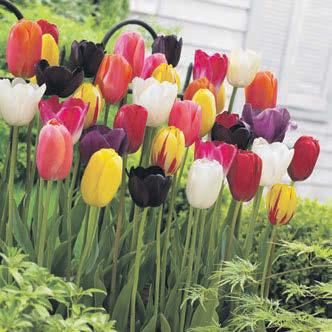



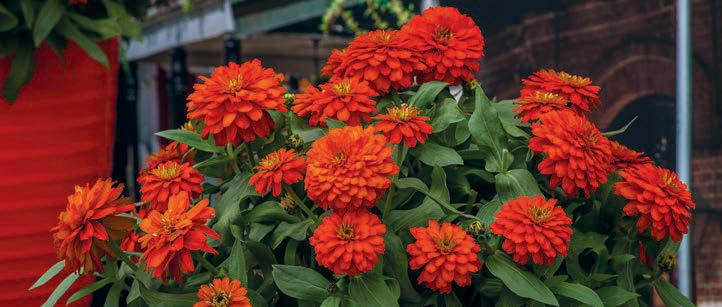
MichaelPerry celebrates the best of the bunch, coming to your garden soon from North America
Every year, we gardeners go searching for the next big thing flowers with wilder colours, plants that bloom for longer, vegetables that look as beautiful as they taste, and varieties tough enough to survive increasingly unpredictable weather.
My search recently took me to America, hunting down the All-America Selections - think the ‘Oscars’ of the gardening world. These prestigious awards from the National Garden Bureau test brand-new plant varieties across North America, with only the very best earning winner status after proving themselves tougher, brighter, more productive or more eye-catching than anything currently on the market.
From electric pink celosias and gothic dahlias to striped squash that look handpainted, these winners are bolder, brighter, and could reach a garden centre in the UK very soon!
Coreopsis grandiflora SunGlobe
SunGlobe is basically sunshine in plant form. Smothered in glowing golden blooms from spring until autumn, this compact coreopsis flowers earlier and for longer than many older varieties, all while asking for very little maintenance. It’s perfect for busy gardeners who still want a garden bursting with colour.
PetuniaShake™ Raspberry
This may be one of the most unusual petunias yet. Its swirling raspberry, cream, and limegreen tones give the flowers an almost tie-dye appearance, turning baskets and patio pots into instant conversation starters.
Dahlia ‘Black Forest Ruby’
Dark, almost black foliage paired with velvety ruby-red flowers gives this dahlia a dramatic gothic look that feels straight out of a fantasy novel. It’s the kind of plant that instantly steals attention in the garden.
Sedum spectabile
‘Spectacular’
The name is not subtle - and neither is the plant. Sedum spectabile
‘Spectacular’ forms thick, sturdy clumps topped with nectarrich blooms that bees absolutely swarm late into the season. This type of sedum is now reclassified as Hylotelephium spectabile in the UK.
Squash‘Green Lightning’ F1
This pattypan squash looks almost unreal, with dramatic green striping splashed across the fruit like strokes from a paintbrush. It’s highly productive and good to eat, with a mild, sweet flavour, and decorative enough to display indoors after harvest.
Celosia ‘Flamma Pink’
One of the boldest plants in the entire collection, ‘Flamma Pink’ produces electric flamingopink plumes that look like tiny flames dancing above the foliage. It thrives in heat, keeps its vivid colour for months, and is almost impossible to ignore.

Marigold‘Mango Tango’
These rich tropicalorange blooms practically glow in sunlight. This marigold (Tagetes patula ‘Mango Tango’) brings intense warmth and colour to borders, patio containers, and summer bedding schemes.
Petunia Dekko™ Maxx™ Pink
This petunia doesn’t do ‘a few flowers’. Instead, it creates giant clouds of bright pink blooms that completely smother baskets and containers for months on end.
Zinnia marylandica Zydeco™ Fire
Blazing red-andyellow flowers give Zydeco™ Fire its name. The fiery bicolour blooms continue right through late summer, bringing nonstop heat and energy to sunny gardens.
mrplantgeek.substack.com


























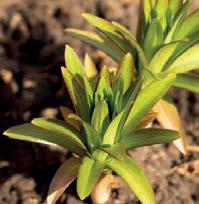

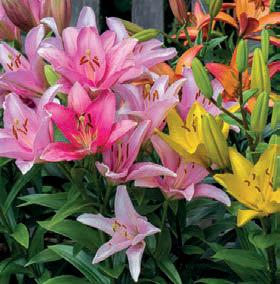

















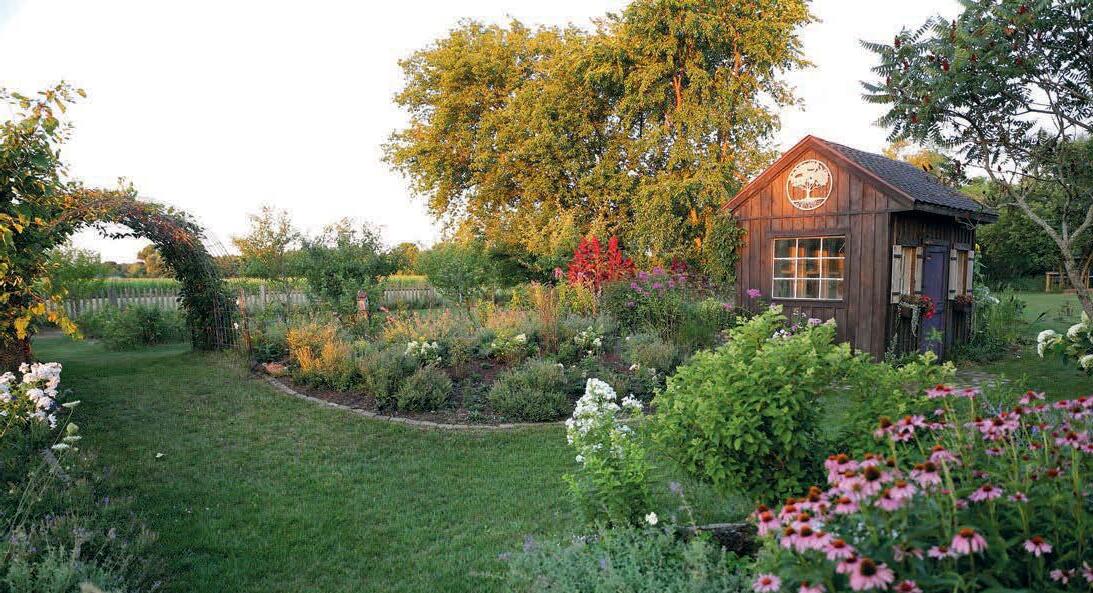
Toby takes a tip from RHS Chelsea when relocating these important garden structures
Before I get into this article which, so’s you know (spoiler alert!), is about the vital consideration of where to put a garden shed, I want to share that I’ve just watched Dirty Dancing Yes! Nearly four decades after the movie-musical was released, I’ve finally sat through each of the one hundred minutes to witness bou ant-haired, ‘reformed bad boy’ Johnny Castle, played by the late Patrick Swayze,
confidently assert that ‘Nobody puts Baby in a corner’.
It is the line of the film and Johnny was right to say it even though for the first 95 long minutes of the movie, female lead ‘Baby’ hadn’t been anywhere near a corner, let alone put in one.
But anything can happen in the last five minutes of a movie, and I was relieved that Johnny had made sure that anyone hell-bent on ‘corner-based’ shenanigans knew to back o .
I mention this as thanks to Dirty Dancing, corners and what shouldn’t go in them have been on my mind. And along with ‘Baby’, WIFI routers and radiators, there’s something else to keep out of a corner… the garden shed.

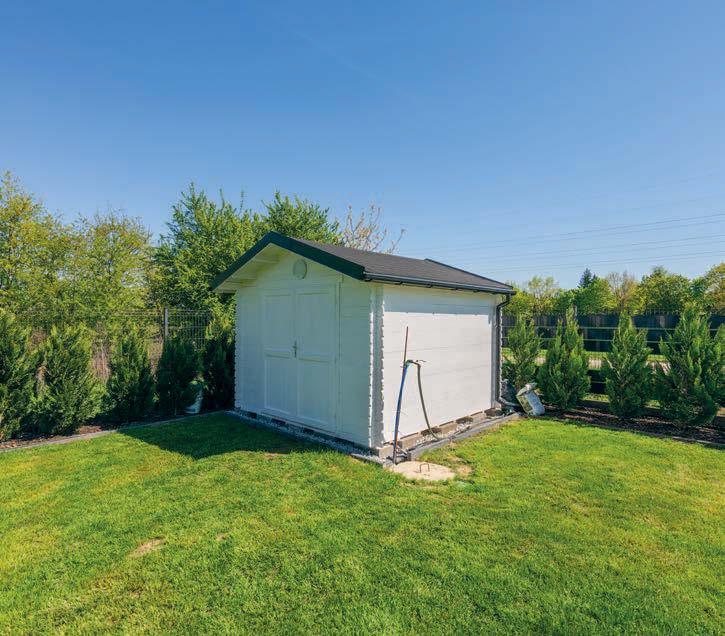
Learning from the experts I’ve just come back from the RHS Chelsea Flower Show where most of the larger gardens conform to a set pattern, especially when it comes to their sheds and buildings.
By the garden entrance there’s usually a mature tree, with branches that frame the view of the garden, stoppingit from being viewed all in one go while at the same time ‘creating mystery’.
Next to the tree is a path that leads to a paved area and a structure that’s themed, perhaps as a Japanese tea house, a brutalist concrete pavilion or even a lock keeper’s cottage. Whatever its theme, in order to understand or copy the design, think of this building as a shed but in fancy clothes.
The thing to note is that this ‘shed’ is always just in from the end of the garden to leave space for planting behind. In a show garden, this mini-me area is used to create a di erent vibe, perhaps a secret seating area, colour theme or woodland garden. And the idea is a good one though seldom copied by the rest of us.
Most sheds in most gardens are placed in corners: if you’ve ever had an empty plot you’ll know that the far corner seems the obvious place as it helps fill the space and makes a ‘good start’.
But as a garden grows, the corner spot is less advantageous. It couldn’t be further away when you want to nip out and grab something from inside and when tight against the fence, there’s no storage space behind for stu you’d rather not look at.
Create a private space
Even more importantly, its position robs you of the opportunity to have a seat beyond its ship-lap walls, which in overlooked gardens is just about the most private spot you can get.
It’s an old trick but the closer you are to a screen, be it a fence canopy of shed, the greater the privacy. In gardens that are surrounded by windows on all sides, you’re better o having internal structures that you sit beside to block out the neighbours rather than using high fences and trellis on the boundary - which from upstairs windows are seldom high enough.
I once rented a house that had a shed just 2.5m (8ft) from the brickwork of the back wall, and although the Victorian terrace was overlooked from every direction, when I sat on the garden picnic bench I’d tucked between shed and wall, you’d never know you were in a city. It was secret sanctuary.
Placing a shed more centrally has other advantages. In long thin gardens, a halfway down spot draws the eye from the back fence, turning a narrow and uninspiring plot into something less predictable. Combined with a central seating area or arch, it divides the plot into a garden of two halves - each half more kindly proportioned than the whole.
As in an RHS Chelsea design, the behind-the-shed bit can have its own theme, from a utility area including compost heaps or children’s play stu to a wildlife zone including ponds or a kitchen/cutting garden. It’s also a good spot for seats and an evening fire pit.
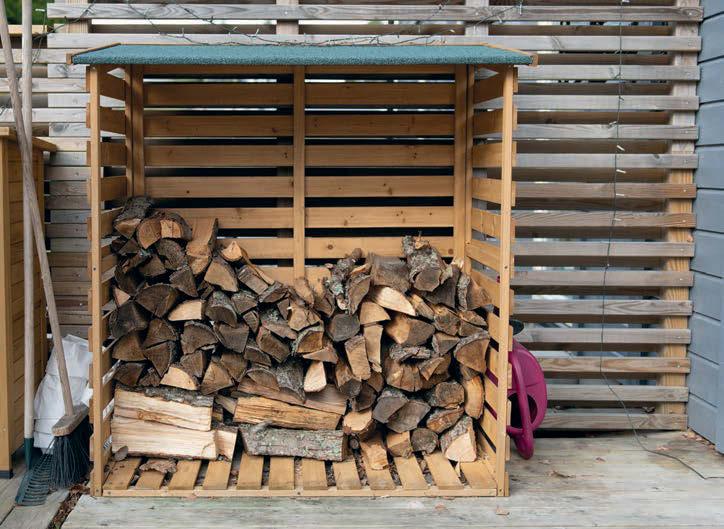
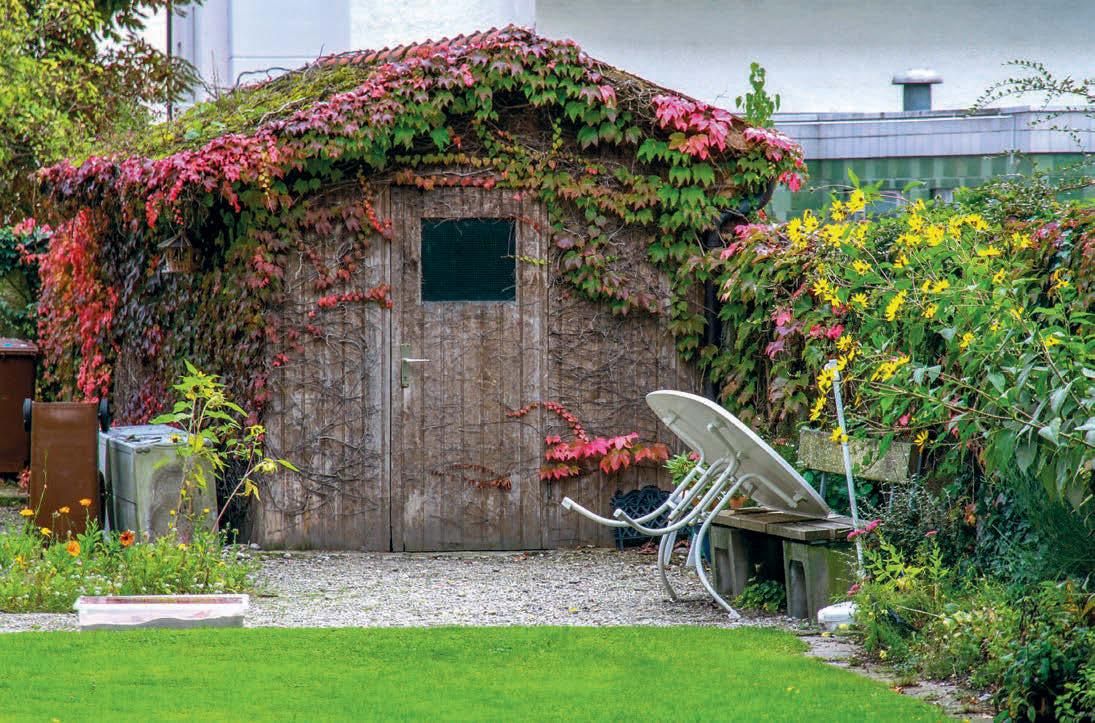
Sheds as focal points
Brought out from the boundary, the shed becomes more than a place to cram stu that won’t fit in the house. It turns into a focal point that’s worth painting and adorning with planters.
In my garden, I like my sheds away from the boundary so I can plant behind them. This spring I moved one of my sheds to create more space for a large cabbage palm which will grow up over the top and hide the garden’s edge.
Large-leaved plants like palms, tree ferns and hardy bananas always look good near buildings as the straight lines
of a structure bring out the bigness of their jungly leaves.
For a cottage-garden feel, I also like climbers that run up the sides and mound on the top - but choosing requires care.
Before adding a climber to any building, the first thing to do is read the label and believe the height and spread advice. If the label says it will climb to 9m (30ft), a 1.8 x 2.4m I6 x 8ft) shed isn’t an appropriate home!
Also consider how the plant climbs. Ivy, trumpet vine and Virginia creeper have roots and pads that glue themselves to woodwork, making


For generations, Durstons has been helping gardeners get more from every seed, plant and growing season. From its Somerset base, this family-run business develops high-performance composts designed to deliver stronger roots, healthier plants and more flowers, helping gardeners achieve better results with confidence. Independently proven to grow plants up to 70% bigger and produce up to 50% more blooms, Durstons' peat-free compost range combines outstanding performance with simple product choices and easy-to-understand packaging. With sustainability, quality and innovation at its heart, Durstons continues to invest in the future of growing media, giving gardeners trusted products that help their gardens thrive. www.durstongardenproducts.co.uk
treatment and repair almost impossible. Roses, on the other hand, are easy to remove, as are alpina types of clematis and summer and winter-flowering jasmine. Planted on the north side and trained to wires, they soon shin up the wall towards the sun. Because they always grow towards the south, they’ll perch and create a flowery hat for your shed roof that requires little pruning. Then, should the shed need some TLC, the wires can be cut to expose its sides.
Never mind 'Baby': don’t put a shed in a corner.


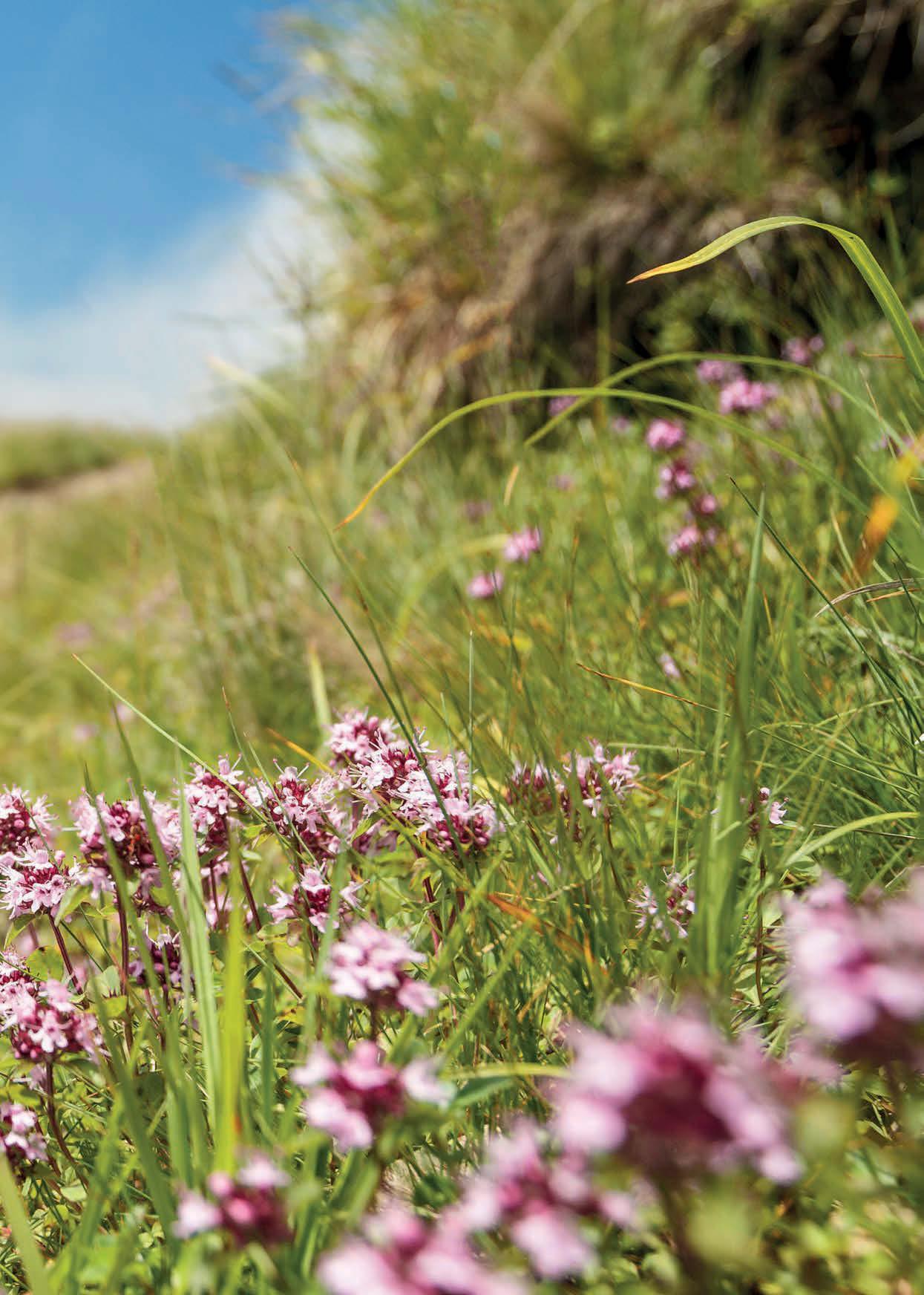


with Bob Flowerdew , long-standing AG contributor, broadcaster and all-round expert.
Bob’s top tips for growing and drying beans for storing
An easy way to get considerably more food value from a plot without much e ort is to grow beans for drying.
Dried beans re-hydrated and cooked in soups and stews are rich in protein, fats and nutrients, with much higher values than as green pods. Some are surprisingly tasty – ‘Czar’ runner bean seeds are much like gourmet butter beans.
Of course, there are varieties traditionally grown for drying such as ‘Brown Dutch’ and the currently popular ‘Borlotto’ strains, but the usual garden varieties also serve. They may be smaller or have slightly thicker skins (though these can be slipped o when re-hydrating) but are still useful.
With our trend of longer, drier, autumns, we can dry crops more reliably. In the past, and in wetter years, they needed harvesting early to dry and ripen under cover, which is not convenient. However, batches sown now should have plenty of time to ripen outdoors, then be collected and stored – which, if well dried, is potentially for a very long time.
Dried beans packed in sealed containers and kept cool and dark can last many years and still be good food, often still viable as seed too. They are a prepper’s standby and always handy to have in the larder
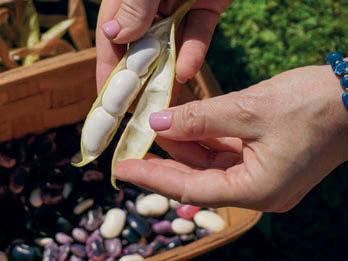

The sole drawback is you must remember to soak the beans the night before so they’re soft and ready to boil. (Ideally change the water a couple of times while soaking, and never add salt till after boiling or you’ll harden them.)
All beans must be thoroughly well boiled to make them more digestible and destroy any natural toxins - the plant’s defence against pests. (I said sole drawback, but beans have a reputation for causing flatulence, which I find reduces if I use beans in smaller amounts at first before eating larger quantities during the depths of winter.)
Fill spaces in the garden when they become available, maybe as garlic, onions and new potatoes mature and are harvested, and any wee gaps where a climber or runner can ramble, as these plantings are inherently more productive.
Plus, as well as sowing direct in situ, sow more into cells or pots for those places that will be freed up in the next few weeks.
Because all these beans are legumes, they’ll need no feeding or fertiliser and will actually enrich the soil, so benefiting other plants. However, they respond to generous watering until mature - runner varieties particularly so.
Beans prefer soils rich in moistureholding humus, and if you’ve not done so recently, it’d be a good idea to add lime, or wood ash, to make acid or neutral soils sweet and slightly more alkaline.
As I mentioned, there are varieties especially for drying, and ‘Horsehead’ is a UK classic, though not all are always
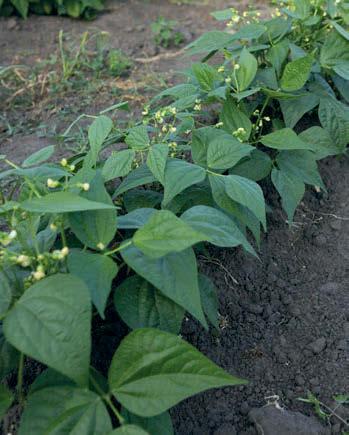
Fill spaces with soil-nourishing beans as they become available
easy to find, such as the superb but tiny ‘Hutterite Soup’.
Luckily, sometimes beans sold for consumption are still viable. I’ve had excellent crops of red kidney beans from shop-bought packets (these are the Jamaican ‘peas’ in peas ‘n’ rice). Not known to have been worth growing here before, these have proved fine for the last four years. I’ll have to work on the rice now…
You can find out more about Bob via his website www.bobflowerdew.com
























































































Grow your own; Nothing beats the taste and health benefits of growing your own vegetables and herbs. Versatile; Available in 3 sizes, pick the size that suits you and your space. Rewarding; Cultivating vegetables and flowers is both fun and rewarding for all ages.
A stylish raised bed in a choice of sizes is a great alternative to converting your outdoor space into a time consuming and space hungry allotment.
These Garden Life Metal Raised Garden Beds are perfect for the home gardener, combining traditional style with modern design features, these raised beds are extremely durable, strong yet light weight and made to last, produced in weatherproof hot dipped galvanised zinc steel and finished in an aesthetically pleasing shade of sage green to blend in beautifully with your outdoor space. Additional features include a rubber edging safety band to prevent sharp edges and add that finishing touch. Items despatched in June.