Phase 2 is now open! Register by July 12, 2026, to be eligible for settlements to help your utility with costs associated with PFAS.
https://nrwa.org/issues/pfas/
WARWA Updates for the Season
By Robyn Dombroski, ARWA Executive Director
inter in Southcentral was quite a back-and-forth season this year! From no snow, hurricane force winds, then snow dump, no winds, and back to heavy winds. Likewise, spring and the annual breakup season have been rather disappointing with ongoing gusty winds, and now looking at one of the wettest and coldest springs on record. Alaska likes to keep us on our toes, that much is for sure.
Our annual February legislative visit to Washington, D.C. went as well as they usually do. ARWA’s President, Jana Littlewood, and I made the in-person visit to meet with our Congressional delegates and/or their staff to discuss the importance of federal funding for rural water across the nation, including ARWA. It is always nice to meet with them and their staff, and we never fail to get their strong support, which makes the long trip a pleasant experience, at least from that perspective.
PLEASE DON’T FORGET TO SIGN UP TO DONATE TO ARWA WHEN YOU SHOP AT FRED MEYER!
Mark your calendars now for our 2026 training conference, which will be held at the Sheraton Anchorage Hotel and Spa October 19–22. If you need CEU hours for ADEC certification renewal, this is your one-stop shopping place to be with 30 core hours of training available. We look forward to seeing you all there.
Please don’t forget to sign up to donate to ARWA when you shop at
REMEMBER THAT IF YOU ARE IN NEED OF JUST A FEW CEU CREDITS TO RENEW YOUR OPERATOR’S CERTIFICATION, WE OFFER ONLINE TRAINING THAT CAN FULFILL THAT NEED.
Fred Meyer! It costs you nothing but a few minutes of your time to make sure you designate ARWA for your contribution. Link your Freddie’s Rewards account to ARWA by going here: www.fredmeyer.com/ communityrewards (our organization is CB055). We don’t get much, but every little bit helps us in our efforts to fulfill our mission to help you.
Lastly, remember that if you are in need of just a few CEU credits to renew your operator’s certification,
we offer online training that can fulfill that need. Go to our website (www.arwa.org) and click on the top right menu where it says “Online Training.” These courses have been fully approved for CEU credit by ADEC. If your system is a current member, you can receive a $30 discount per course. We are also working on adding an ARWA merchandise store to our website, so stay tuned for that! Looking forward to a fabulous summer season in our great state!
Send Us Your Letters of Support
What Are You Thankful For?
• How has ARWA helped you and your system?
• Have you saved any money attending any of our trainings?
• Did an ARWA staff member help you solve a problem?
• Have you been to one of our recent training events and thought the trainer did an excellent job?
We need to hear from you! Letters of support will be included in our Annual Report for our Congressional Delegates. Your written support is important and will help us continue to serve rural water and wastewater systems throughout the state!
Send letters of support to:
Alaska Rural Water Association 1075 S Check Street, Suite 106 Wasilla, AK 99654-8067 Or email kelly@arwa.org
FUEL STORAGE TANKS AND WATER CONTAMINATION RISKS
By Sarah Ramey, Source Water Protection Specialist, sarah@arwa.org
What Community Water System Operators Need to Know
Fuel storage tanks are a common part of modern infrastructure and can be found at municipal facilities, treatment plants, well sites, maintenance garages, emergency generator stations, commercial fueling operations, and residential properties. While these locations are essential for transportation, heating, and backup power generation, they also represent one of the more significant contamination threats to drinking water supplies. For operators at community water systems, understanding the risks associated with fuel storage tanks is an important component of source water protection and emergency preparedness.
Petroleum products such as gasoline, diesel fuel, heating oil, and aviation fuel are all stored in fuel tanks and contain a variety of compounds that can negatively affect drinking water quality. Common contaminants associated with fuel releases include benzene, toluene, ethylbenzene, xylene compounds, methyl tert-butyl ether (MTBE), and other petroleum hydrocarbons. Some of these chemicals are toxic even at low concentrations and may create both acute and long-term health concerns. In addition to potential health impacts, fuel contamination can create taste and odor problems,
damage treatment systems, and result in costly remediation efforts. The cost associated with mitigating the contamination and the cost for treating the water for drinking water standards is costly and can run into the millions. Prevention of contamination is the first and foremost goal.
Groundwater systems are especially vulnerable to fuel contamination
because spilled petroleum can migrate downward through soils and eventually enter aquifers used for drinking water sources. Once contamination reaches groundwater, dissolved fuel compounds can form plumes that move with groundwater flow and potentially affect wells located significant distances from the original release. Surface water systems can also be impacted when
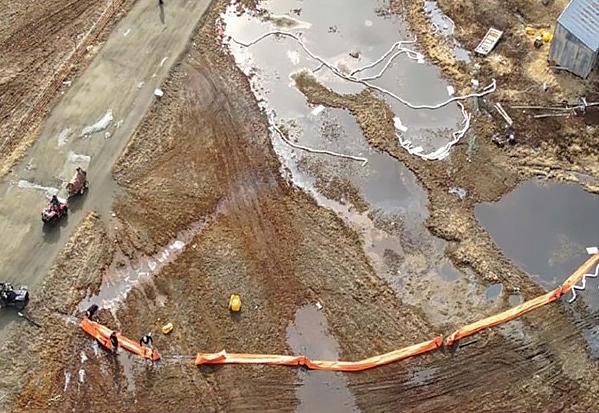
Photo credit Resolve Marine. Kwigillingok, Alaska drone photograph showing removal of the shore, sealing, and absorbent boom at spill site where 8,827 gallons of diesel fuel spilled during fuel transfer operations. May 30, 2024
spills occur near rivers, lakes, reservoirs, or storm drainage systems connected to source waters. The ADEC website for source water protection that provide GIS mapping of contaminated sites and watershed protection maps is located at www.dec.alaska.gov/eh/dw/dwp. This is a great resource to find your water system’s protection areas to evaluate the potential risks your water system may face.
Many operators immediately think of large industrial facilities or gas stations when considering fuel contamination risks, but residential and small commercial fuel systems are also common sources of releases. In colder regions, residential heating oil tanks are widespread and may be installed in basements, garages, above ground, and underground outside homes. Older tanks, especially buried steel tanks, can corrode over time and develop slow leaks that remain unnoticed for years. Homeowners may first become aware of a problem after noticing strong fuel odors, stained soils, unexplained fuel consumption increases, or contamination in private wells. In some cases, abandoned underground heating oil tanks remain hidden on older properties and are only discovered when excavation or redevelopment activities occur.
Although residential spills are often smaller in volume than commercial releases, they can still create serious localized groundwater contamination problems, particularly in shallow aquifers or densely developed communities, as we have in Bush Alaska. A number of community water systems have encountered contamination concerns linked to clusters of aging residential heating oil tanks located within wellhead protection areas. For operators, reports from residents regarding fuel odors, basement spills, or leaking outdoor tanks should be taken seriously, especially in areas where municipal wells draw from shallow groundwater sources.
Commercial fuel storage systems can pose even greater risks because of the larger fuel volumes involved. Gas stations, fleet maintenance facilities, trucking terminals, construction yards, agricultural operations, marinas, and warehouses often maintain underground or aboveground storage tanks for fueling vehicles and equipment. Common causes of commercial spills include overfilled
ONCE
CONTAMINATION REACHES
GROUNDWATER, DISSOLVED FUEL COMPOUNDS CAN FORM PLUMES THAT MOVE WITH GROUNDWATER FLOW AND POTENTIALLY AFFECT WELLS LOCATED SIGNIFICANT DISTANCES FROM THE ORIGINAL RELEASE.
tanks during deliveries, leaking piping systems, equipment failures, corrosion, vehicle impacts, and human error during fuel transfers. Older underground storage tanks without modern leak detection systems or corrosion protection remain a major concern in many communities.
The United States Environmental Protection Agency regulates many underground storage tank systems under federal requirements that include leak detection, spill prevention, corrosion protection, and operator training. However, not all tanks fall under the same regulatory standards, and many residential or smaller commercial systems may be exempt from portions of federal regulations based on their remote locations. In our rural communities, these smaller fuel tanks pose larger risks. Many of our western communities have been pounded by fall storms, and fuel spills were seen all over during recovery efforts. I found all of the spill photos at a website for active spill sites on the ADEC website www.dec.alaska.gov/ spar/ppr/spill-information/response
From a water system operations perspective, one of the most important concepts is source water vulnerability.
Fuel storage tanks located near community wells, recharge areas, streams, or reservoirs can significantly increase contamination risks. The danger is especially high in areas with sandy soils, shallow groundwater, fractured bedrock, or karst geology, where contaminants can travel rapidly. Flood-prone locations also create elevated risks because flooding can damage tanks and piping, dislodge underground systems, or spread spilled fuel over wide areas.
Operators are often among the first to notice subtle signs of contamination. Fuel odors in raw water, unusual taste and odor complaints from customers, visible sheen on standing water, elevated volatile organic compound results, or unexplained changes in source water quality may all indicate a potential petroleum release nearby. Operators should also remain aware of abandoned commercial properties, old fueling stations, and redevelopment projects occurring within source water protection areas, as excavation activities sometimes expose previously undocumented contamination.
Preventive measures are critical for minimizing contamination risks.
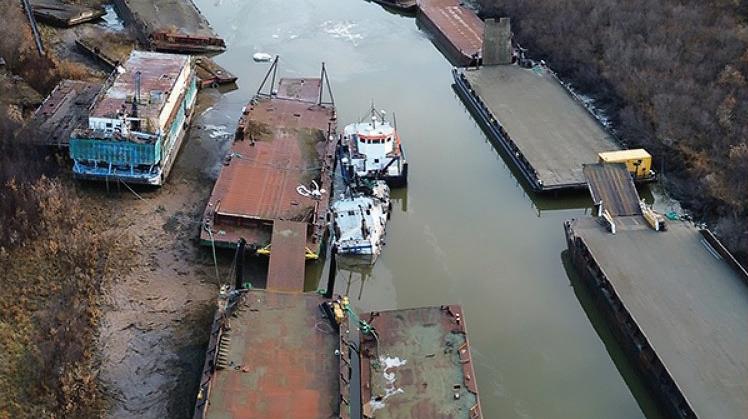
Photo credit Charles Guest, Bethel Search and Rescue. Tug Frances Snow in Steamboat Slough off of the Kuskokwim River where an unknown amount of diesel fuel, engine oil, and hydraulic fluid was spilled. The smell of fuel was reported in Bethel and as far away as Napaskiak.
Community water systems should maintain updated maps identifying fuel storage facilities, municipal wells, groundwater flow directions, and stormwater drainage pathways. Source water assessments should include nearby commercial fueling operations as well as residential areas with widespread heating oil use. A great resource for many of these items is the
ADEC Source Water Protection website located at www.dec.alaska.gov/eh/ dw/dwp. Regular communication with local fire departments, environmental agencies, emergency management personnel, and public works departments can improve spill response coordination and help identify emerging concerns before they affect drinking water supplies.
Operators should ensure emergency response plans clearly outline procedures for spill reporting, source isolation, public notification, alternative water supplies, and coordination with laboratories and regulatory agencies. Fuel contamination incidents can create long-term operational and financial challenges for community water systems. Treatment processes may require modifications such as activated carbon adsorption, air stripping, or additional monitoring. In severe cases, contaminated wells may need to be removed from service for extended periods while remediation efforts are conducted. Cleanup costs associated with petroleum releases
can reach millions of dollars, and the impacts to public confidence can persist long after the contamination itself has been addressed. Ultimately, fuel storage tanks remain one of the more significant and persistent threats to drinking water quality, particularly for groundwater-based community water systems. While regulations and tank technologies have improved substantially over the years, aging infrastructure, deferred maintenance, severe weather events, and human error continue to create vulnerabilities. Water operators play a critical role in identifying risks early, protecting source waters, and coordinating effective responses when spills occur. Periodic sampling for volatile organic compounds, BTEX compounds, and petroleum hydrocarbons can provide early warning of contamination migration. Vigilance, planning, and strong source water protection practices remain some of the most effective tools available for safeguarding public drinking water supplies.
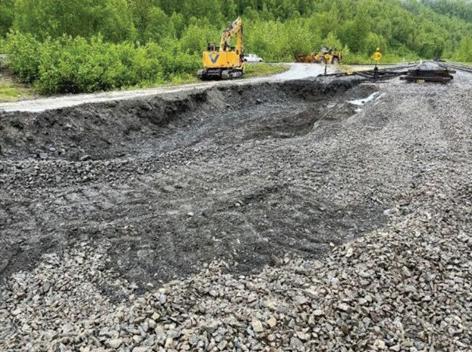
Photo credit ADEC. Photograph of the excavation of contaminated soil along the Alaska Railroad located approximately 20 miles north of Talkeetna. 6/8/2025. A diesel spill of 800-1,000 gallons was released from a locomotive fuel tank that was punctured as a result of derailment. The cause of derailment is still to be determined.
WINTERS CAN BE ROUGH!
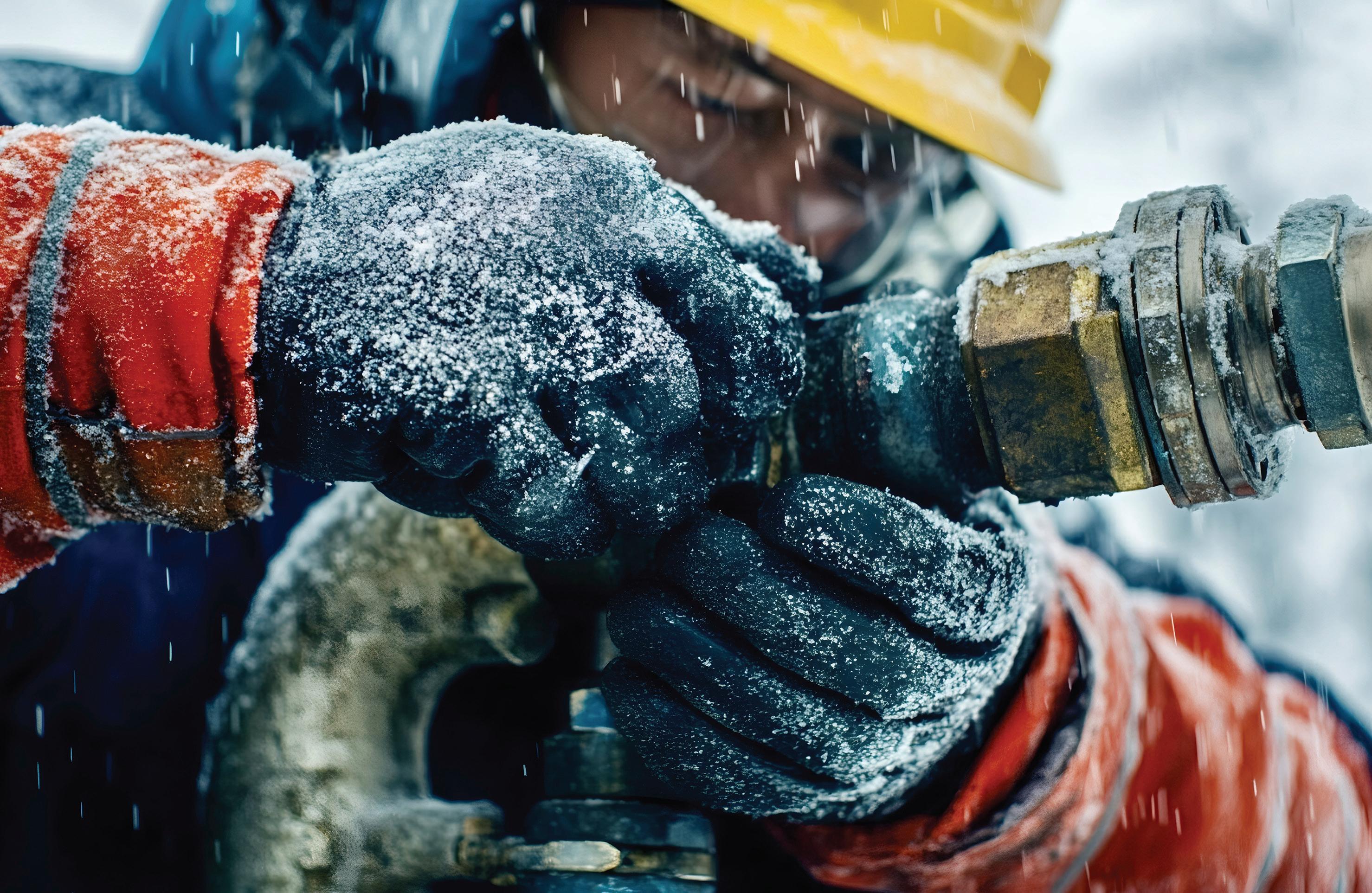
Winter months can prove to be very challenging for water and wastewater systems here in Alaska. Not only for the infrastructure of the systems, but also for the water operators across the state. This past winter was especially long and extreme here in Southcentral. Many systems were forced to deal with numerous water service line and sewer service line freeze-ups. Here in the Mat-Su area, we experienced a 43-day cold snap early in 2026, driving the frost deep into the ground, leaving many residents without water service for days, even weeks. This was compounded by the lack of snow ground cover, allowing the intense cold to penetrate deep in the ground. Many residents of Alaska this past winter endured water service interruptions, which caused many people to realize how important turning on the faucet or flushing the toilet isn’t always a given here, unfortunately. This, in turn, caused a lot of anger in people, understandably. Most people don’t truly realize the root causes of these outages. They may think there was something the city or the operators could have done to prevent their inconveniences. Predicting a freeze-up can be pretty darn hard, just like any other weather prediction.
By Kevin Schoneman, Circuit Rider, kevin@arwa.org
Many systems all over Southcentral had to resort to asking their customers to run their faucets and continually run water to help prevent freeze-ups. This does help, but it can also cause multiple other issues for the water systems and their operators. Number one would probably be increased costs for operations, increased electricity use due to extra water being pumped and stored, as well as extra wear and tear on equipment.
Water-thawing companies did really well with their services this past winter. Even if you could get in touch with one of the companies, you were most likely looking at several days before they could respond to your request. I did hear some number thrown out there. One was $800 for the initial call-out and $200 for each additional hour to complete the thawing process. I also heard of a few where three or
IN THE MAT-SU AREA, WE EXPERIENCED A 43-DAY COLD SNAP EARLY IN 2026, DRIVING THE FROST DEEP INTO THE GROUND, LEAVING MANY RESIDENTS WITHOUT WATER SERVICE FOR DAYS, EVEN WEEKS.
Another issue can come into play as well, which is an excess demand on the water sources, such as wells, with well pumps cycling more often. Wastewater systems are also taking on excess amounts of effluent, causing extra cost to move the water and treat it. Most of the time, a pencil-lead-sized stream of water will do the trick, but human nature takes over when it’s really cold and people fear losing water, e.g., if a little is good, then more might be extra insurance.
four hours were needed. A $1,600 unexpected bill in the middle of winter wouldn’t be what anybody would want to receive. Many of us in the water and wastewater field are bracing for leaks starting to show up in the spring. Hopefully not, but it’s kind of a general consensus that it’s a strong possibility for this time of year. Hopefully, we can all look forward to an enjoyable summer before we have to wade through another long Alaska winter!
Proactive Notifications
Proactive Notifications
• Alarms dispatched to all your devices— phone, tablet, computer, fax, pager
• Customizable notifications
• Convenient alerts
Secure Data
Secure Data
• Defense–in–depth security policies
• Multiple security measures layered to protect your system
• Securely access your data anywhere
Purpose–Built Hardware
Purpose–Built Hardware Convenient Support
• Radio supports multiple carriers to ensure optimum connection
• Standardized RTUs are economical
• Fast and easy installation increases efficiency
• Advanced remote–control business logic
• U.S.–based technical support 24-7-365
• Live weekly training webinars
• Audit trail for accountability
• All resources at no charge
• No software or cellular carrier relationships to maintain
• Continual system enhancements
• State–of–the–art web portal features live data, multiple windows, and more
• Comprehensive reports
• All necessary components included—no hidden fees
THE BEST WASTEWATER PROFESSIONALS UNDERSTAND THAT INTEGRITY IS PART OF THEIR JOB.
By Nicholas Sena, Wastewater Training & Technical Assistance Specialist, nicholas@arwa.org
OPERATOR CODE OF ETHICS: GETTING THE JOB DONE IN RURAL ALASKA
When the temperature drops to 30 below, the roads disappear, and the nearest repair part is hundreds of miles away, rural wastewater operators still report for duty. Long before most communities wake up, we as operators are checking pumps, monitoring lagoons, thawing frozen lines, and protecting public health with little recognition and even less margin for error. In many remote Alaskan villages, one operator’s judgment can determine whether a community has safe sanitation services during the harshest conditions on earth. The work is demanding, isolating, and often
overlooked, yet it remains one of the most important public services in rural Alaska.
In rural Alaska, wastewater operators do far more than maintain pipes and pumps. They protect public health, preserve fragile ecosystems, and serve neighbors who depend on safe water every day. Ethical decision-making is central to that responsibility. Operators often work in isolated communities where harsh weather, limited budgets, and aging infrastructure create constant pressure. Even so, shortcuts can never replace careful testing, honest reporting, and reliable maintenance.
Strong ethics also build public trust. Residents expect operators to communicate clearly about boil water notices, system failures, and repair timelines. When equipment breaks, transparency matters as much as technical skill. Many operators wear many hats in small villages, balancing utility work with community leadership and emergency response.
Training and certification also play an important role in ethical operations. Rural operators must stay current on state and federal regulations while adapting those standards to unique arctic conditions. Freeze-ups, fuel
delivery delays, and power outages can quickly turn minor issues into serious public health concerns. In many communities, operators respond at all hours to prevent service interruptions or environmental contamination. Your willingness to answer late-night calls and work through dangerous weather reflects a strong sense of duty.
Mentorship is another important part of the profession. Experienced operators often train younger workers, passing along practical knowledge that cannot be learned from manuals alone. They teach the importance of accountability, accurate record keeping, and respect for the community’s resources.
For operators who often work with little or no direct supervision, several ethical principles are especially important:
• Honesty in reporting water quality data, maintenance logs, and system failures.
• Accountability for completing inspections, sampling, and repairs on schedule.
• Public health protection as the highest priority in every decision.
• Environmental stewardship to prevent contamination of land and waterways.
• Reliability and preparedness during emergencies, outages, and severe weather.
• Respect for community trust through clear communication and professionalism.
• Commitment to ongoing training and following all safety and regulatory standards.
• Integrity under pressure, especially when resources, staffing, or funding are limited. The best wastewater professionals understand that integrity is part of their job. Their commitment
keeps rural communities healthy, resilient, and prepared for Alaska’s demanding conditions through every season, storm, outage, and difficult operational challenge.
Even the most experienced operators face moments when systems fail, resources run short, or difficult decisions feel overwhelming. Rural utility work can be isolating, but operators should remember they are never alone. Support, training, and technical assistance are available through the Alaska Rural Water Association. Reaching out for help is not a sign of weakness; it is a sign of professionalism and commitment to protecting the community. Whether troubleshooting equipment problems, navigating regulations, or seeking operational guidance, assistance is available to help operators continue getting the job done safely and ethically.
The Rural Water Wire delivers the latest news and information about the water and wastewater industry directly to your email’s inbox each Thursday. Sign up today!
THE BIG
ATHAW
By Jordan Cameron, Circuit Rider, jordan@arwa.org
s spring arrives, the repercussions of last winter’s deep freeze continue to impact communities across the state. According to the local USDA Rural Development office, three northern communities experienced total freezeups of their water and sewer utilities, affecting a significant number of residents. This situation underscores the magnitude of hardship faced by entire communities, with hundreds of others throughout the state dealing with similar challenges related to frozen services and mainlines. In fact, I recall instances in recent years where water services required thawing as late as the first week of June.
In my previous article, I discussed the initial effects of the deep freeze on water systems. Now, as temperatures rise and the ground begins to thaw, previously frozen mainlines and services are starting to become operational again. Recently, a community experienced the unfortunate occurrence of their mainline splitting twice near the main office, fortunately with operators on site to shut down the line before the tank was depleted. This presents a particularly critical challenge, as
a concurrent construction project on the raw water supply line to the Water Treatment Plant (WTP) has significantly reduced flow, complicating repairs. Moreover, any maintenance on the mainline must be executed with available materials, which in rural Alaska can be a challenge.
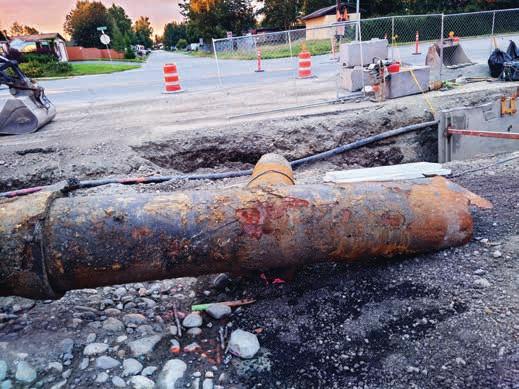
This spring, many residents have found their previously reliable water services freezing after flowing normally throughout the winter months. Addressing these issues can be particularly challenging since many systems have transitioned to HDPE for service connections, leaving few effective thawing solutions for plastic lines that lack heat trace installations. Consequently, numerous homeowners will face the dual burden of repairing service lines and water-damaged properties, serving as a stark reminder that cold weather can persist for extended periods.
To mitigate future issues, residents and water purveyors must consider strategies for insulating and/or installing heat trace systems to prepare for subsequent deep freezes. However, many communities lack the financial resources to undertake these projects without support from State or Federal
funding, necessitating a prioritization process as funding becomes available. The previous winter’s exceptional duration of severe cold prompted utilities with larger systems to advise customers to run their water to prevent freeze-ups.
When service lines do freeze, the responsibility often falls on the customer to conduct thawing operations all the way to the main line. This thawing process typically requires a private contractor utilizing a commercial machine, particularly if the service line is copper and connections can be made at both ends. Unfortunately, many of these machines are limited to 200 amps, leading to mixed results and substantial costs. It is also essential to recognize the inherent risks associated with improper connections or back-feeding power, which may damage adjacent electrical systems. As a result, many utilities do not provide thawing services for customers.
As we prepare for the inevitability of future freeze events, it is crucial for utilities and their customers to take proactive measures. Preparing thaw wires, heat trace systems, insulation, and additional protective coverings are all effective strategies for mitigating the adverse effects of deep frost.
Sign up for a free trial, or request a proposal for your next Board or Council meeting. We’ll launch your new website and alerting system within only 3 business days, then show you how to make updates or post alerts yourself, anytime you like. Need help? No problem – Support is unlimited, and satisfaction is guaranteed!
Conference Registration Form
28TH ANNUAL TRAINING CONFERENCE
19 – 22, 2026
Attendee Name(s): Company/System Name:
Attendee Contact Phone:
|
*For groups of 6 or more please email kelly@arwa.org for the group discounted rate
Mail Completed Registration Form with Payment to: 1075 Check Street, Suite 106, Wasilla, AK 99654-8067 Fax to: 907-357-1400 Email to: kelly@arwa.org Questions? 907-357-ARWA (2792)
*Any early bird registration not paid in full by the first day of the conference shall be charged the full registration rate. We provide an attendee directory to our Vendors who wish to contact our member systems regarding their products/services. Please check one: Yes include my system No do not include my system (No response indicates approval.)
INTERACTIVE EDITION AVAILABLE ONLINE
Staying connected and in the know has never been easier with both print and digital editions of The Last Frontier Water News.
Make sure to check out our highly interactive, mobile-optimized edition.
www. arwa .org
Thank You to Our Advertisers !
ONE SOURCE.
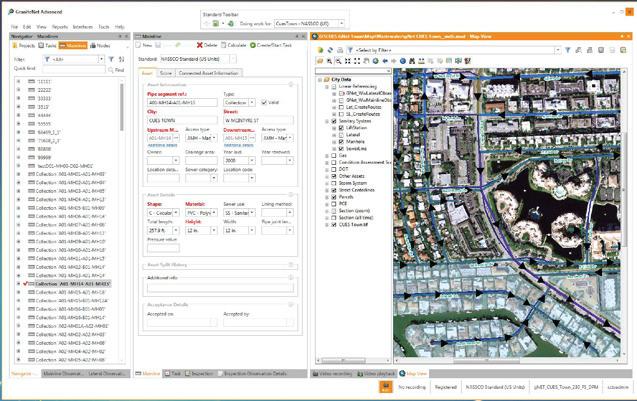
Software + Equipment + Support — All from CUES, the Industry Leader
Why juggle vendors when you can have it all in one place? We deliver fully integrated pipeline inspection solutions, from powerful asset management software to industry-leading pipeline inspection equipment. Our systems are designed to work together, reducing downtime and eliminating connectivity headaches. And when you need help or loaner/parts support, we’ve got you covered. Call today for a free demo!