
MVMA_Issue1_2026_Issuu

Page 1


VETERINARIAN

A magazine of the Michigan Veterinary Medical Association
MICHIGAN VMA

LUNCH & LEARN: MARCH 17 TH “FROM EXAM ROOM TO EQUITY”

TPSG PRACTICE OWNER RETREAT

ENJOY A TWO DAY AT THE INN AT BAY HARBOR TO PREPARE YOUR EXIT!

Are you an owner who manages multiple veterinarians?

TPSG Great Lakes invites you to register for our inaugural Practice Owner’s Retreat in Bay Harbor, Michigan at the beautiful Inn at Bay Harbor. Immerse yourself in a weekend getaway with you and a partner, and come back refreshed with valuable knowledge to use to your advantage :

Maximize your profitability by understanding your KPIs and how to minimize their effect on your financials

Integrate your team into your exit by learning different structures and offerings through partnerships and equity

Understanding terms and structures is crucial, and feeling confident in your offer is essential

Prepare for life beyond the sale for you, your practice, and your family

TPSG MICHIGAN PRACTICE LISTINGS

Southern Michigan in Kalamazoo/Jackson Area. Gross $1.43M. Long-standing, small animal practice with strong staff. Call for more information. (MI-9350)

Eastern Michigan. Gross $1M. Established small animal practice with a great facility that can withstand future growth. Well-equipped with strong profitability, the new owner is to earn $310,000 after mortgage and expenses. (MI-9530)

CLIENT TESTIMONIAL:

DR. JENNIFER & MICHAEL SANDY - COMMUNITY ANIMAL HOSPITAL

“We were happy to be partnered with Bret and TPSG for the sale of our practice. Thanks to Bret’s knowledge and ability to provide connections, the process could not have been any easier for us.

Starting with the valuation process of our practice, gathering documents, through negotiations, helping direct financing options, and getting us to closing, Bret took so much weight off our minds and allowed us to have a happy conclusion for everyone involved.

I can’t imagine attempting to navigate that ordeal without the expertise that TPSG provided. Highly recommend them to anyone looking to buy/sell a veterinary practice.”

2026 BOARD OF DIRECTORS

Dr. Elaine Sheikh, President

Dr. Timothy Duncan, President-Elect

Dr. Henry Reinart, First Vice President/Treasurer

Dr. Kenny Rogers, Second Vice President

Dr. Matthew J. Hynes, Immediate Past President

DIRECTORS REPRESENTING DISTRICTS

Dr. Kelsey Deland, (1) Southern

Dr. Kerry Gilbert, (2) Michiana & (3) Southwestern

Dr. Laura Miller (4) Jackson

Dr. Chelsea Render, (5) Washtenaw & (9) Livingston

Dr. Emily Socks, (6) Wayne & (8) Oakland

Dr. Michelle Meyer (7) Macomb

Dr. Jamie Morrison, (10) Mid-State

Dr. Mary Kinser, (11) Western

Dr. Daniel White, (12 & 13) Saginaw & Thumb

Dr. Chelsea Van Assche, (14) Northeastern

Dr. Megan Grant, (15) Northern

DIRECTORS REPRESENTING ASSOCIATIONS

Dr. Rebecca Dietlin, Southeastern MI VMA

AT LARGE DIRECTORS

Dr. Angel Abuelo Sebio, MSU CVM

Dr. Melissa Dyson, Lab Animal Medicine Vacant, Equine

Dr. Kayleigh Marinac-Prudente, Food Animal

MVMA STAFF

Bonnifer Ballard, CEO Rachel Boersma, Director of Member Services

Kara Henrys, Director of Learning & Strategic Partnerships

By Melissa C Dyson, DVM, MS DACLAM, Lucy Kennedy, DVM, DACLAM & Amy Puffenberger, MAM

MVMA has a new domain name! Visit us at www.mivma.org

Updated staff emails: Bonnifer Ballard: bonnifer@mivma.org

Rachel Boersma: rachel@mivma.org

Kara Henrys: kara@mivma.org

MVMA: mvma@mivma.org

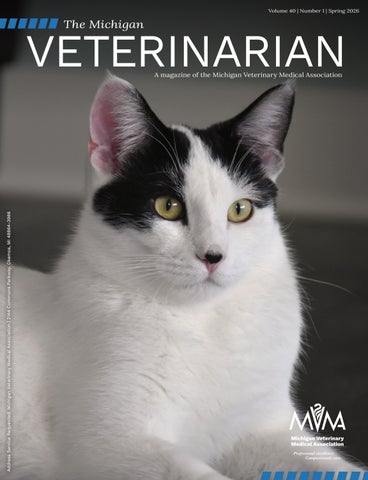
Cover photo compliments of Dr. Dana Tatman-Lilly.

Prepare Today for The Tough Questions Tomorrow

Ihave spent much of my career as a student of leadership. I have always been drawn to theory as well as the practical application of anything to do with values and ethics, and how they drive our motivations and decisions.

Last year, I presented a webinar on ethics in decision making for my association peers. I enjoyed the prep work and really appreciated the great dialogue during the webinar. Ethics can be clear during a discussion or exercise, and then in real life, it gets complicated and messy.

I was recently made aware (through a friend of a member) of a practice that allowed a veterinary assistant to perform dental extractions, sometimes with success and sometimes disastrous results. It was an ethical dilemma for the individual who discovered this. Was it her responsibility to file a complaint against a fellow practitioner? Was it the member’s? What about me? Did I have an ethical obligation to report this malpractice?

Maybe as you read the previous paragraph you knew exactly what you would do. Maybe you even said it aloud. Yet the situation for her was quite complicated. There were relationships and people’s jobs to consider. For the person facing this situation, the path forward was anything but obvious. Ethics are seen through the lens of our personal values and experiences.

When I present on ethical decision making, I provide a high-level overview of the various ethics theories (utilitarianism, virtue, social contract, etc.). I then take attendees through a values exercise to help them identify their most important values. After that, I have the group discuss scenarios. This approach allows attendees to become aware of how and why they tend to make the decisions they make. And self-awareness is key to being prepared when life surprises you.

Ethics can be clear during a discussion or exercise, and then in real life, it gets complicated and messy.

For veterinary professionals, you have an added layer because of your oaths and the professional code of conduct you are held to. This adds a layer that makes some decisions even more difficult.

Often, ethical issues are a surprise. They can come out of left field and hit you like a fast ball from Justin Verlander. If you do the prep work, you will be able to respond thoughtfully, instead of reacting, and remain true to your values and the version of yourself you strive to be.

Leave emergency to us, so you can do what you do best.

VEG is the emergency-only partner that complements and supports the wellness care you provide. Our ER team collaborates with you, offering 24-hour ER care, critical case hospitalization, onsite lab services, oxygen therapy, surgeries, transfusions, and more.

Emergency care that works for people and their pets:

• Call and speak to a doctor

• See a doctor right away

• Stay with your pet

Open in Ann Arbor, with two more Michigan locations coming soon. Visit veg.com/locations.

We Shelter from Storms Together

Happy Spring! It’s hard to believe that the foaling/lambing season is almost here. I hope the winter has been restful and rejuvenating. I love every season we get to experience here in Michigan, but winter is such a special time. For me, it’s a cozy time of year where I get the chance to focus on building and preparing for the busyness of spring and summer. This winter, some of the MVMA leadership had the opportunity to gather in Chicago for a national veterinary leadership conference. One of the most memorable moments wasn’t in a lecture hall, but early in the morning as we watched the sun rise over the city. It was an apt depiction of the dawn of a new year for our organization. That image has stayed with me, and it feels fitting as we continue moving forward together.

One of the priorities of our organization is providing timely and practical continuing education to meet the needs of Michigan veterinarians at every stage of their careers. As we look towards Q2 of 2026, the highlight of our CE calendar is the upcoming Great Lakes Veterinary Conference on Mackinac Island. As a smaller conference, GLVC is a prime event for networking with colleagues while earning CE credits. I always return from the Island feeling recharged professionally. If you haven’t yet registered, I strongly encourage you to consider joining us. I promise that this is an investment in yourself and you don’t want to miss it!

As I watched the sun rise over brilliant vermillion sky in Chicago, I was struck by the beauty, even knowing that the sky signaled a storm ahead. Our profession

has some storms on the horizon. With that in mind, I want to recognize the importance of MVMA’s advocacy work. Through the MVMA PAC and our ongoing efforts in Lansing, we are actively representing the interests of veterinarians and protecting the future of veterinary medicine in Michigan. Advocacy doesn’t happen without engagement, and I encourage you to consider how you might participate – whether through PAC support, staying informed on legislative

issues, or lending your voice when it matters most. MVMA will continue to keep you apprised of ways you can help, so make sure you keep an eye out for emails containing time-sensitive information regarding advocacy efforts.

Thank you for being part of a strong, member-driven organization. Your involvement, ideas, and dedication continue to shape the MVMA, and I am grateful for the opportunity to serve you.

Leaders, Do You Feel Detached?

Here

is How to Stay Connected with

Your

Team

Leadership in a veterinary hospital is important and rewarding work. You guide and care for your team, shape your clinic’s culture, and serve patients and their owners. Still, after spending time as a leader some of us begin to notice feelings of detachment.

Detachment rarely happens all at once. Much like burnout, it tends to creep in over time. You might notice you’re less emotionally available to your clients and team. You stop feeling curious and asking questions. You feel numb instead of inspired. You still care but it feels distant and routine, almost boring.

Distancing yourself from your leadership role is not failure; it is a response to chronic overwhelming pressure. It may make you want to quit or step down. The desire to detach is your brain attempting to protect you from ongoing emotional harm.

As I coach veterinary leaders, I often see them come to me with feelings of detachment. They say things like, “I just don’t love my job anymore.” That feeling is not unusual, and you are not alone. The good news? It is reversible if you begin to understand the causes and what you can do to interrupt it.

Over time, detachment separates you from what makes your work and leadership rewarding: purpose, meaning, and strong relationships. “ “

Why Do Veterinary Leaders Become Detached?

Leadership in veterinary medicine is complex and comes with a uniquely elevated emotional load. We must manage chronic staff shortages, hold space for team and client conflict, make difficult financial decisions, navigate ethical dilemmas, and assume responsibility for our team’s well-being. When your nervous system is under that kind of constant high demand, it seeks relief. Detachment feels like relief. It reduces your emotional exposure and helps you keep going.

Over time, detachment separates you from what makes your work and leadership rewarding: purpose, meaning, and strong relationships.

Detaching is not the same as creating boundaries. This distinction matters. Healthy boundaries allow you to care deeply without selfsacrifice. Detachment creates distance, so you don’t have to feel at all. One expands your leadership capacity. The other slowly erodes it.

If you’ve been telling yourself, “I just need to care less,” what you may actually need is to care differently.

How Do We Lead Without Shutting Down?

Try these coaching strategies to help you stay connected without becoming emotionally depleted.

Notice your disconnection. All problems must be acknowledged before they can be changed, and that is true for detachment. If you feel irritable, avoidant, cynical, or indifferent about your hospital, you are probably already checking out. Becoming aware of your lack of emotion is the first step toward changing it. Start by noticing the signals, then reflect, rest, and get support so you don’t continue to spiral.

Work on your emotional intelligence. Strong leaders allow for their emotions (even negative emotions) without resistance. “ “ “

Reconnect to your “Why”. When you are exhausted, you easily forget your original purpose. Why did you step into leadership, and who do you want to serve? How do you want to positively impact the world? What kind of leader do you want to be? Your purpose must be practiced and remembered to retain your enthusiasm. Check in with yourself weekly to ensure you stay focused on your purpose and mission.

Work on your emotional intelligence. Strong leaders allow for their emotions (even negative emotions) without resistance. They don’t absorb others’ negative emotions. You can support your team without taking on their stress or anxiety. You can listen without fixing anything for them, and you can teach them to accept their emotions. I often tell myself when listening to a team member, “This is not yours to fix”, and that keeps me from falling into the trap of absorbing their negative emotion.

Working on your mindset is an important skill that helps you navigate all of life’s emotions, the good and the bad.

Lead with authenticity, not perfection. People respond to leaders who set an example from a place of honesty. Admitting that you don’t always have the answers and showing your humanity is refreshing to the people around you. Challenges are part of life, and facing them without drama is what strong leaders model for their team. Set the example that progress and strong relationships are the most important factors for a successful team.

Get a coach or mentor. Leadership is often lonely. Having a coach or mentor to help you navigate your leadership challenges will allow you to feel supported and heard. You will often be your own worst enemy, judging yourself harshly when things aren’t going well. Having another leader to lean on will make the challenges feel lighter. Don’t wait until you are overwhelmed and distant to ask for help. You can turn anything around with a little support and a new outlook.

Veterinary leadership does not require isolation or perfection. The best leaders stay connected – to themselves, their teams, and their purpose – while honoring their limits. You can lead with clarity, compassion, and confidence without losing yourself. Start by taking good care of yourself today.

True leadership stems from individuality that is honestly expressed.
- Sheryl Sandberg “

EDUCATIONAL EVENTS

Events Calendar

APRIL 2026

MAY 2026

JUNE 2026

JULY 2026

Thank You To 2025 Michigan Animal Health Foundation Donors

UP TO $100

Dr. Dale Ackler

Dr. Jeffrey Adams

Dr. Laine Adams

Dr. Rich Adams

Dr. Kimberly Adrid

Dr. Mary Alban

Dr. Lyssa Alexander

Dr. Sarah Allison

Dr. Michele Anderman

Dr. Cathy Anderson

Anonymous

Dr. Nicole Arcy

Dr. Anna Arthmire

Dr. James Artwohl

Dr. Jennifer Aschenbrener

Dr. Maureen Austin

Dr. Dechamma Ballaranda

Dr. Karen Barbu

Dr. Kim Barna

Vickie Barnhardt

Dr. Samantha Barscewski

Dr. Kristina Baszler

Dr. Edward Brauer III

Dr. Lincoln Baylis

Dr. Norman Bayne

Dr. Cheryl Beatty

Dr. Elizabeth Beaudoin

Dr. Rick Beisinger

Dr. Amy Bennett

Dr. Joel Beutler

Dr. David Bezek

Dr. Theresa Bismack

Dr. Kimberly Bolduc

Dr. Judith Brooks Harwood

Dr. Nathan Booth

Dr. James Botsford

Dr. Alexa Boulton

Dr. Kim Braeutigam

Dr. Heather Brenner

Dr. Marilyn Brink

Dr. Toinette Strusinski-Broschay

Dr. Daniel Brown

Dr. Emily Browning

Dr. Christopher Buckley

Dr. Susan Burcham

Dr. Bonnie Burke

Dr. Tina Burke

Dr. Loren Burlingame

Dr. Steven Burns

Dr. Therese Burns

Dr. Isaac Burrell

Dr. Sebastian Buzdug

Dr. Barbara Bytwerk

Dr. Amanda Charney

Dr. Kathryn Christy

Dr. Jason Chudy

Dr. Clare Cinzori

Dr. Michelle Clancy

Dr. Dale Clark

Dr. Kayla Clark

Dr. Sandra Cline

Dr. William Cline

Dr. Rebecca Coll

Dr. Kathleen Collier

Dr. Catherine Collins

Dr. Jim Connell

Dr. James Cook

Dr. Susan Cook

Dr. Jeanne Corbett

Dr. Bryan Cornwall

Dr. Julia Coyle

Dr. Kelly Credille

Dr. Stacie CressmanBell

Dr. Courtney D’Anna

Dr. Anna Davis

Dr. Melissa Davis

Dr. Lorie DeGrazia

Dr. Leslie Deines

Dr. Pierre DePorre

Dr. Joanne DeSana

Dr. Stephanie Dexter

Dr. Ajaib Dhaliwal

Dr. Stanley Diment

Dr. Stephanie Dorner

Dr. Judy Duderstadt

Dr. Nina Duflo

Dr. Timothy Duncan

Dr. Timothy Eagan

Dr. Julie Eberly

Dr. Kathryn Eckler

Dr. Shawn Ellis

Dr. Michelle Engel

Dr. Jill Erickson

Dr. Julie Estell

Dr. Matthew Fain

Dr. Troy Fairbanks

Dr. Mohammed Fakhruldin

Dr. Susan Farmer

Dr. Garry Fedore

Dr. Simon Fick

Dr. Myda Fisher

Dr. Robert Fisher

Dr. Marissa Fitzpatrick

Dr. Michael Fleming

Dr. Tessa Forbes

Dr. Jeffrey Fortna

Dr. Race Foster

Dr. Elizabeth Francis

Dr. Hayley Gaynor

Dr. Emily Geldersma

Dr. Samantha Gerbers

Dr. Kenneth Gertsen

Dr. Kerry Gilbert

Dr. Todd Gilbert

Dr. Jennifer Gillum

Dr. Cheryl Good

Dr. Jarold Goodrich

Dr. Christi Gorczyca

Dr. Karla Gorman

Dr. JoLynne Grant

Dr. Nancy Greeley

Dr. Clinton Groover

Dr. Andrew Grzanowski

Dr. Erin Haas

Dr. Byron Hagewood

Dr. Steven Halstead

Dr. Laurie Hanson

Dr. Marlena Hill-Harris

Dr. Heather Haskins

Dr. Robert Hassler

Dr. Heidi Heckler

Dr. Nicole Hein

Dr. Lucy Henney

Dr. Kara Henning

Kara Henrys

Dr. Jennifer Herdon

Dr. Kathryn Hoevenaar

Dr. Elizabeth Hogen

Dr. Gail Hoholik

Dr. Stephanie Holloway

Dr. Kellie Holmstrom

Dr. Amanda Houk

Dr. Erin Howard

Dr. Valerie K Hudson

Dr. Timothy Hunt

Dr. Matthew Hynes

Dr. James Innis

Dr. Scott Jandron

Dr. Whitney Jencka

Dr. Carolyn Jo Gerrish

Dr. Randy Jones

Dr. Sarah Jones

Dr. Carol Joy

Dr. Katherine Kaczmarek

Dr. Amy Webb Kallin

Dr. Daniel Kaspari

Dr. Elizabeth Kauffman

Dr. Eric Keilen

Dr. Wendy Keilholtz

Dr. Lyndi Keizer

Dr. Andrew Kelley

Dr. Tari Kern

Dr. Edith Kimball

Dr. Mary Kinser

Dr. Larissa Kipa

Dr. Jennifer Klabunde

Dr. Ulrike Klotz

Dr. Kristin Knirk

Dr. Anthony Kooney

Dr. Stacie Kreiser

Dr. Kerry Kreps

Dr. Lauren Krupsky

Dr. Lisa LaCross

Dr. Kara Laird

Dr. Jonathan Lane

Dr. Susan Lane

Dr. Jacob Langendorfer

Dr. Stacey Rolston Laursen

Dr. Lisa Layer

Dr. Donna LeClaire

Dr. Marianne LeducBaker

Dr. Christine Lee

Dr. Cassandra Leicht

Dr. Mark Lelli

Dr. Larry Letsche, DVM

Dr. Kurt Liljeberg

Dr. Amy Lin

Dr. Catherine Lindstrand

Dr. James Lloyd

Dr. Brenda Lobbezoo

Dr. Laurie Lockman

Dr. Tammy Lons

Dr. Dan Lorimer

Dr. Jill Lynn

Dr. Ann Marie Rizzo

Dr. Daniel MacArthur

Dr. Michelle Magolan

Dr. Robert Maier

Dr. Kenneth Main

Dr. Jamie Major

Dr. John Malburg

Dr. Alice Marczewski

Dr. Allison Marr

Dr. Kirsten Marshall

Dr. Tara Martin

Dr. Ann Mattise

Dr. Christine McCloskey

Dr. Douglas McInnis

Dr. Dwight McNally

Dr. Ryan McNally

Dr. Paul McNeilly

Dr. Andrea McQueen

Dr. Ronald Mehler

Dr. Keith Merle

Dr. Jeffrey Messman

Dr. Allen Meyer

Dr. Lisa Meyer

Dr. Michelle Meyer

Dr. Bailey Mielke

Dr. Christy Money

Dr. Scot Moore

Dr. Catherine Moreau

Dr. Daniel Morin

Dr. Jamie Morrison

Dr. Thomas Munro

Dr. Susan Myers

Dr. Jerrod Notebaert

Dr. Michael Nowicki

Dr. Mary Oswald

Dr. Loretta Pantenburg

Dr. Jessica Pascuzzo

Dr. Stephen Paxton

Dr. Wendy Peacock

Dr. Amy Peck

Kathleen S Peters

Dr. Michael Petty

Dr. Sarah Pick

Dr. Jan Pol

Dr. Holly Pope

Dr. Jeffrey Powers DVM

Dr. Katherine Powning

Dr. Katelin Quantz

Dr. Diana Raddatz

Dr. Lindsey Ramus

Dr. Justine Rasche

Dr. Mary Reichardt

Dr. Allen Reynolds

Dr. Ashley Reynolds

Dr. Lisa Reznik

Dr. Erin Richards

Dr. Monica Riegler-Pecoraro

Dr. Nadia Roehrig

Dr. Katherine (Tina) Roggenbeck

Dr. Paula Sauer

Dr. Tracey Saunders

Dr. Michele Schalow

Dr. Linda Schmitt

Dr. Kelly Schoenherr

Dr. Albert Schultze

Dr. Mary Seager

Dr. Rebecca Severn

Dr. Pamela Sexton

Dr. Lynn Sharples

Dr. Jillian Sheldon

Dr. Erin Shevock

Dr. Kay Shorkey

Dr. Anne Shuff

Dr. Joseph Simon

Dr. Jessica Smith

Dr. Zachary Smith

Dr. Michele Smith-Arkens

Dr. Jamie Snow

Dr. William Snyder

Dr. Kelly Sovey

Dr. Jeffrey Sprague

Dr. Douglas Stacer

Dr. Kevin Stachowiak

Dr. Kelly Stewart

Dr. Aimee Stickney

Dr. Darwin Stith

Dr. Christine Swanson

Dr. Melissa Szasz

Dr. Helen Szostak

Dr. Orit Szwarcman

Dr. Sherry Teegardin

Dr. Lori Themel

Dr. Robert Theuerkauf

Dr. Jennifer Thomas

Dr. Michael Thome

Dr. David Thompson

Dr. Jason Thornsberry

Dr. Nicole Tremain-Nelson

Dr. Beth Tucker

Dr. Monica Turenne

Dr. Jason Vandenbrink

Dr. Kenneth VanFleet

Dr. Hanna Vecsernyes

Dr. Alysha Vincent

Dr. David Visser

Dr. Bryan Voetberg

Dr. Wendell Weber

Dr. Stacey Weinrick

Dr. JoLee Wennersten

Dr. Karen Wernette

Dr. Annie Westerhof

Dr. Mary Weston

Dr. Daniel White

Dr. Patricia White

Dr. Jean Wilcox

Dr. Christine Williamson

Dr. Sarah Wilson

Dr. Kevin Windsor

Dr. Stephanie Wolffe

Dr. Wendy Woodard

Dr. Kathleen Yates

Dr. Jennifer Zablotny

Dr. Amanda Zoerner

Dr. Matilda Zorn

Dr. Kerry Zubke

Dr. Sarah Zuker

Dr. Ron Zylstra

$101-$250

Dr. Christian Ast

Dr. Arthur Beaudoin

The Blackbaud Giving Fund (GM)

James and Heather Dedyne

Sharon Fandel

I & C Sales North, Inc

Eric Johnson CMP, CMM

Mary Rolsch

$251-$500

Bonnifer Ballard

Dr. Ryan and Marcia Carpenter

Charities Aid Foundation of America

Dr. Mary Beth Leininger

Dr. Angela Long

Donna Oser

Dr. Stephen Steep

$501-$1,000

Caseville Small Animal Clinic

Dr. Jeffrey Dizik

$1,001-$5,000

Dr. Julie Cappel

Dr. Harry Michael Chaddock

ABOVE $5,000

Sally Jo Morse

The Bane of Blasto

It has been 52 years since I was a veterinary student, but I still remember first learning about Blastomyces and the condition blastomycosis. At that time, professors stated “you’ll never see it.” The first case I saw was in senior clinics. It was referred by Dr. Barber, my future employer and a future client, both in the upper peninsula of Michigan. So, we always looked for it and usually saw three or so cases a year. Now retired and looking back on hundreds of cases of blastomycosis, I have a better perspective and want to share my experience.

I practiced on the eastern end of the Upper Peninsula, which is home to the perfect environment for Blastomyces, yet that is hardly the only place. It is appreciated well throughout the Upper Midwest, Tennessee Valley, the Mid-Atlantic coast and beyond. My juxtaposition with geography and the changing client demographic led me from diagnosing a handful of cases a year in the first half of my career to upwards of a couple dozen in the latter.

I presume this is due to human – and by extension, dogs – expansion into the typical endemic areas: lakes, rivers, and streams. It is also due to rapid testing being available and more clients being willing to financially invest. Previously, a best-guess and awaiting serology took days and often wasn’t practical in rapidly declining cases. Today, a new urine screening test has been a game changer. There is the potential for cross reactivity with other fungal agents so note prior travel history/primary residence. Turnaround for the test is typically a couple days, and I have found the supplier’s articles and staff incredibly helpful in managing cases.

However, these dogs (and their humans) are not simply sticking out in my neck of the woods. They travel back to

their primary residence which can be hundreds if not thousands of miles away. As exposure to Blastomyces does not immediately lead to clinical illness rapidly in all cases, this time delay will mean that the patient is starting to become sick even months after exposure. Now in a nonendemic area, with unusual symptoms, clinicians are left scratching their heads.

Given this predicament, I encourage veterinarians everywhere to remember to consider blastomycosis as symptoms can vary amongst patients. Perhaps pneumonia that will not resolve with antibiotics, or radiographs that look like a snowstorm. That bone lesion that could be osteosarcoma but looks a little different. A dermatitis that simply won’t heal and has a gelatinous exudate. Eye pain or acute glaucoma and uveitis. Bizarre neurologic features that would mimic meningitis. Often, they can have significant fevers (>105 F) due to the profound inflammatory response.

With a strong suspicion and ideally a confirmatory test, therapies are fortunately readily available. Controlling inflammation, pain and fever is important at the first suspicion along with the use

of commercially available anti-fungals. Preference for the azole group –itraconazole being most common and should not be compounded for fear of subtherapeutic dosing.

Given the latent period, I have started to recommend that any dog that has visited an endemic area be tested. My regimen is to test prior to departure and again one and two months later. I had an experience where a dog left in August with a negative test, again negative in September and in October, but tested positive in December and was severely ill. Blastomycosis is not only seen in the warm seasons. I have diagnosed many in December and January. Treatment is months long and should continue until two negative urine titers are collected at least a month apart. As it is not suspected that a patient can naturally clear the infection, if there is a detectable antigen level I would still implement treatment even if at that time there were no symptoms.

I’ve had the fortune of working with a regional community foundation and the Hessel School House who together have hosted seminars on blastomycosis.

This One Health venture brings physicians and veterinarians together with the community to raise awareness. I have worked closely with Dr. Daniel Langlois at Michigan State University’s Small Animal Clinic as well as MiraVista’s veterinary section director Dr. Andrew Hanzlicek. I encourage any veterinarian who is suspicious of blastomycosis but not comfortable with diagnosing or treating to reach out to the above-mentioned veterinarians or to a local specialist; time is of the essence for our patients.

There recently was a mass exposure event at a paper mill in Escanaba. The origin of the infections has still not been determined; however, 162 cases were confirmed with one death. I know of local individuals who had symptoms of blastomycosis but were never tested, succumbed to the disease, and the infection was confirmed post-mortem. This also happens many times with veterinarians and their clients. It is a scary disease, so test.

In summary, blastomycosis is out there, so don’t hesitate to look. With a non-invasive and no-risk diagnostic tool at the ready,

Mandatory CE Day

hopefully we can save the lives of our patients while managing this disease full of curve balls.

Veterinarians are required to complete 45 hours of continuing education (CE) during every 3-year DVM license renewal cycle, and licensed veterinary technicians are required to complete 15 hours during every 3-year LVT license renewal cycle.

Out of the 45 total hours required, at least 30 hours must be considered medical training for the DVM license renewal. This includes one hour of veterinary law or controlled substance education, as well as one hour of medical records education during each renewal cycle.

Opioid training is required only for those who maintain a Michigan Controlled Substance license. While this was initially considered a one-and-done requirement, as of May 2024, this training must be completed during each 3-year MI CS license renewal cycle.

The annual Mandatory CE Day, being held virtually on May 14, 2026, is the only time during the year that MVMA offers opioid training. Don’t miss this opportunity to earn the specifically mandated credits. Registration ends at 5:00 pm on May 13.

We know your schedule is packed, and finding time for continuing education can be challenging. That’s why we’re here to support you every step of the way. From flexible learning options to resources designed with busy professionals in mind, our goal is to make completing your CE as manageable and rewarding as possible – so you can stay current, confident, and focused on what matters most: providing excellent care to your patients.

Collecting All the Pieces:

Why We Have Reportable Animal Diseases

To solve a jigsaw puzzle, there is always a strategy: find the corner and edge pieces, look for distinctive features and patterns, sort by color, and (most importantly) look at the lid of the box to know what type of image needs to be built.

To get a clear picture of the state of animal health across Michigan, we don’t have these luxuries. There are no corners or edges to define limitations and boundaries, and unfortunately, there are no box lids to give us a broad view to inform and guide our efforts. However, the one tool we do have is reportable diseases, and the clues and insights you are able to provide to us about these cases let us know what pieces might fit together and what pieces should fill a different section of the puzzle.

In the state of Michigan, the Michigan Department of Agriculture and Rural Development (MDARD) and the Michigan State University Veterinary Diagnostic Laboratory (MSU VDL) work together to collect these pieces and complete the animal health puzzle. If you have attended one of the presentations or webinars from MDARD or read some of our articles, chances are we reminded and encouraged you to report reportable animal diseases to our department. With these constant requests, we often don’t explain how a disease becomes reportable or why it is so crucial to report these cases. As a diagnostic partner to MDARD and veterinary teams throughout the state, the MSU VDL also has a vital role to play with these diseases. The MSU VDL stays abreast of current reportable diseases and has a process for sending lab results directly to MDARD when those diseases are found in samples from Michigan animals.

Through this process of testing and reporting, the reportable animal disease list helps us to gather the key pieces we need to define and build out that picture of animal health in Michigan. This picture can equally inform our efforts as well as your own, so we can work together to best protect animal health across the state.

DEFINING THE PIECES:

HOW IS THE REPORTABLE ANIMAL DISEASES LIST CREATED? Michigan’s reportable animal disease list is maintained by the State Veterinarian. The list includes diseases that pose significant threats to animal health, public health, or even the health of various animal-related industries.

“Knowing what types of diseases are out there and how they may be changing can help us all to take appropriate action.”

The diseases are separated into different categories (Emergency Diseases, Regulated Diseases, Monitored Diseases, and Lab Report Only), which all require different layers and intensities of response. The more concerning the disease, the more thorough and immediate the response.

Every year, the list is reviewed to see if any edits are needed. Diseases can be added, deleted, or classified into a different category. These edits are largely informed by feedback to MDARD from veterinarians, industry, and other partners in animal health. Edits can also be made in response to emerging threats.

Creating the list allows us to define what type of picture we get to see regarding animal health across Michigan.

ANALYZING THE PIECES: WHY DO

REPORTABLE DISEASES NEED TO BE REPORTED?

The simple response to why reportable diseases need to be reported is, it’s the law. Public Act 466 of 1988 requires “a person who discovers or suspects or has reason to believe that an animal is either affected by a reportable disease or contaminated with a toxic substance shall immediately report this to the Michigan Department of Agriculture and Rural Development.”

But, reporting reportable diseases is about more than just complying with the law. It is about collecting information. Without understanding what type of animal health threats may be present across the state, it is difficult to know what actions need to be taken to best protect animal health and human health. Knowing what types of diseases are out there and how they may be changing can help us all to take appropriate action.

Monitoring for Change and/or New Conditions

When a sample is sent in for testing to a laboratory such as the MSU VDL, we can both identify the disease and learn from its

“Piece by piece and test by test, we can build a clearer and clearer picture of animal health across the state through reportable diseases.”

genome. Over the past five years, we have seen our share of diseases that were first reported as ‘mysterious illnesses.’ Viruses adapt. Diseases shift. Animals move. We might not know what we don’t know. But, the more we report and test, the more we can know – the more pieces we have to work with.

Further, emerging diseases are not always novel, but something about their expression or discovery could be inherently unique or different. These changes could subsequently impact the effectiveness of vaccines and the other measures we use to keep animals healthy and safe. Identifying these cases could reveal a notable shift in the general pattern of a disease or reflect more subtle, long-term changes, which can then help us to adapt our strategies to best address the disease.

For example, finding highly pathogenic avian influenza (HPAI) in dairy cattle in 2024 was certainly a surprise and shifted our perception of what should be considered a susceptible species for this virus. Through reporting and testing suspected cases, we were able to gain an understanding of how the disease was spreading and more effectively manage our response.

As we’ve mentioned in previous articles, MDARD and the MSU VDL work together to investigate, identify, and diagnose known, emerging, and reemerging diseases affecting animal and public health. Some diseases are of such high consequence to animal agriculture that federal regulations determine what laboratories are authorized to conduct testing. As a member of the United States Department of Agriculture’s National Animal Health Laboratory Network, the MSU VDL is part of the country’s first line of defense against these high-consequence diseases such as African swine fever, chronic wasting disease, classical swine fever, foot and mouth disease, HPAI, and Newcastle disease.

Protecting Public Health

Reporting reportable animal diseases can be just as important for public health as it is for animal health. About 40% of Michigan’s reportable diseases are zoonotic, meaning they affect both animals and people. While some of these zoonotic diseases are quite well known (like rabies, HPAI, and tuberculosis), others are not as common – like brucellosis, leptospirosis, and tularemia. Due to the numerous

opportunities for people to interact with animals, the risk for transmission can be high. Since we’ve mentioned rabies, please remember that bats remain an important reservoir for rabies. Bats found in homes should be submitted for testing.

By identifying these diseases quickly, we can limit the risks they pose by taking appropriate biosecurity measures, tracking exposures, and working with public health agency partners.

Controlling and

Eradicating

a Disease

To effectively mitigate and control a disease, it is important to identify where the disease is and where the disease is not. Through reporting reportable diseases, animals can act as sentinels for zoonotic diseases and as signs of disease spread. For instance, confirmed cases of eastern equine encephalitis and West Nile virus in horses can inform what types of mosquito abatement strategies are necessary to protect an area’s public and animal health. For several years, MDARD has worked with the Michigan Department of Health and Human Services to cover the testing costs for Michigan animals suspected of arbovirus infection submitted to the MSU VDL, serving to incentivize testing and helping identify areas of the state where arboviruses are circulating.

Further, when a disease is more easily transmissible (i.e., not dependent upon a vector like mosquitoes), reporting it can guide surveillance efforts, which all helps to identify and mitigate the risks associated with that disease.

CONCLUSION

Piece by piece and test by test, we can build a clearer and clearer picture of animal health across the state through reportable diseases. Making certain diseases reportable opens a consistent and reliable avenue of feedback to know if these diseases are affecting Michigan’s animals, where those diseases are, and what measures to take to best protect human and animal health.

If there is ever suspicion or confirmation of a reportable disease, please be sure to contact MDARD at 800-292-3939.

Every report is a chance to learn. Every report is a chance to see more clearly. Every report helps us to work better together to keep animals and people healthy.

Coming Up at MSU

As a land-grant research institution, scientific discovery is woven into everything we do at Michigan State, including at the College of Veterinary Medicine. Our mission emphasizes a One Health framework, our scientists span fields of expertise, and our research has a positive impact on animal, human, and environmental health.

Here’s a snapshot of what we’re working on in 2026:

• Helping Equine Athletes

Dr. Jane Manfredi; clinicianscientist, dressage medalist, and leader of the ENCORE Laboratory; is seeking innovative strategies to treat metabolic syndrome and osteoarthritis in horses. This work involves direct outreach to the sport horse community, yielding feedback that informs research questions into equine welfare, athletic longevity, and performance. Dr. Manfredi’s research is truly bench-to-paddock.

• Stress And Your Gut

Dr. Adam Moeser is exploring how early-life stress influences gut health, immune system strength, and nervous system development. Does trauma early in life alter disease risk later in life? How does the stress response impact the function of mast cells? Are these mechanistic connections influenced by sex differences? This work recently earned national recognition when graduate student Ty Mitchell received an NSF Graduate Research Fellowship, a major achievement for a veterinary researcher.

• Changing The Story Of Cancer

Led by Dr. Alison Masyr, MSU’s veterinary oncology clinical investigation center runs several clinical trials at any given time, generating transformative insight that redefines effective cancer treatments in both humans and animals. Recently, the MSU Veterinary Medical Center became one of the first veterinary hospitals able to apply PET/MRI in this effort, thanks to a leading-edge, cross-campus collaboration.

• Eye-Conic Expertise

Blinding diseases are devastating to humans and animals alike. Spartan researchers are making strides in investigating glaucoma from the bench to the clinic; from traveling the country to find genetic markers that can guide responsible dog breeding (like Dr. Keiko Miyadera), to uncovering disease mechanisms that may lead to more effective therapies in both animals and humans (like Dr. Simon Petersen-Jones

and Dr. Andras Komaromy). Others still are investigating the eye itself, like Dr. Brian Leonard, whose research focuses on corneal healing at the cellular level.

• Food Animal Welfare

An expert in food animal health and welfare, Dr. Pedro Trindade is using data science approaches to optimize acute pain monitoring in farm animals. His lab and collaborators recently developed a machine-learning system that can automatically detect pain in calves using ear-tag sensors, which can provide ranchers and veterinarians with actionable information to treat pain.

• From Cats To Horses

Dr. Gisela Soboll Hussey’s lab is unraveling the pathogenesis of equine and feline herpesviruses (including EHV-1). The team’s goal is to understand how initial virus-host interactions influence immunity in the host, revealing new targets for future vaccines and therapeutics. Their work also seeks to explain why we see neurological disease and abortions in some horses but not others.

This overview barely scratches the surface. To keep in touch with our research activities, follow the MSU College of Veterinary Medicine on social media, subscribe to Spartan Veterinary News at cvm.msu.edu, or contact our researchers directly.

Spay and Neuter Timing in Kittens: Member Perspectives and Clinical Consensus

When it comes to spay and neuter timing in kittens, many veterinarians agree on the importance of sterilization, but the ideal age remains a topic that invites thoughtful discussion across practice settings.

In a recent Michigan Veterinary Medical Association member poll, responses were closely divided. About 45.1% of respondents agreed that the ideal timing for spay or neuter is before five months of age, while 54.9% disagreed, with many comments emphasizing context, patient factors, and the realities of different practice environments.

While polls are often used as engagement tools, they can also serve as listening tools, highlighting where consensus is strong and where nuance remains.

According to Dr. Michelle Meyer, DVM, past president of the Feline VMA and a member of the MVMA Board of Directors, the profession’s current evidence-based guidance supports earlier timing.

“While timing can feel controversial and individual patient factors always matter, the veterinary profession’s current position is grounded in evidence,” Dr. Meyer said. “Spay and neuter up to about five months is safe, effective, and helps prevent heat-related health and behavioral issues.”

In 2016, veterinary consensus groups worked to clarify spay and neuter timing and provide consistent guidance, wrote Philip A. Bushby, DVM, for the United Spay Alliance. Evidence supports early sterilization to prevent unintended litters, reduce mammary cancer risk, and avoid reproductive emergencies like pyometra. The Veterinary Task Force on Feline Sterilization recommends spay/neuter by five months of age.

“ Spay and neuter up to about five months is safe, effective, and helps prevent heat-related health and behavioral issues.”

For shelter and rescue populations, timing is often even earlier, largely for practical and population-health reasons.

“The consensus recommendation is to spay or neuter by five months of age, before the first heat cycle,” Dr. Meyer said. “For shelter and rescue kittens, sterilization can safely be performed even earlier, often at eight weeks or two pounds, so cats leave the facility already sterilized and do not contribute to overpopulation.”

Major veterinary organizations have aligned around this guidance. The Feline VMA supports pediatric spay and neuter by five months as part of a comprehensive approach to population control, and the AVMA endorses the Veterinary Task Force on Feline Sterilization consensus recommending gonadectomy by five months for cats not intended for breeding.

“ Spaying prior to the first heat cycle significantly reduces the risk of mammary carcinoma, one of the most aggressive feline tumors. Early neutering may also reduce hormone-driven behaviors such as spraying, roaming, and fighting, which can contribute to relinquishment.”

Clinically, one of the strongest arguments for earlier sterilization is that cats can become reproductively active surprisingly young.

“Cats can become reproductively active as early as four to five months, sometimes without obvious physical signs, so waiting increases the risk of unintended litters,” Dr. Meyer noted.

Spaying prior to the first heat cycle significantly reduces the risk of mammary carcinoma, one of the most aggressive feline tumors. Early neutering may also reduce hormone-driven behaviors such as spraying, roaming, and fighting, which can contribute to relinquishment.

At the same time, Dr. Meyer acknowledged why some practitioners still feel more comfortable waiting closer to six months, including practice norms, training exposure, and individual patient considerations.

Some long-standing concerns about pediatric sterilization, such as increased urinary obstruction risk in males or long-term developmental harm, are not supported by current evidence.

“Evidence does not support the myth that pediatric spay and neuter is inherently unsafe or causes long-term orthopedic or urinary problems,” she said.

Ultimately, the discussion reflects both shared goals and varied clinical realities across Michigan practices. While the evidencebased consensus supports ‘Fix by Five,’ veterinarians continue to apply professional judgment based on patient health, caregiver circumstances, and the setting in which care is delivered.

Fix by Five: What Evidence Supports

• Standard recommendation: Sterilization by five months to reduce unintended pregnancies and associated risks.

5 5 5

• Early risks avoided: Spaying before first heat lowers mammary carcinoma and eliminates pyometra.

• Behavioral benefits: Reduced spraying, roaming, and fighting may help keep cats in homes.

• Shelter timing: Often even earlier (over eight weeks and/or two pounds) to prevent litters before adoption.

• Safety evidence: No strong evidence links early spay/ neuter to major orthopedic or urinary problems.

• Context still matters: Veterinarian judgment and patient factors should guide final timing decisions.

Promoting Animal Welfare in Michigan’s Commercial Dog Kennels

Because of increased societal concern for the welfare of companion animals, and the general public’s perception of ‘puppy mills’, a group of Amish and Old Order Mennonite commercial dog breeders in Michigan got together and founded the Michigan Council of Animal Welfare (MICAW). The Council’s motto and message was ‘Do it legal; Do it right!’ Having ‘Animal Welfare’ in the name of the organization was not just lip service. Since then, they have striven to promote the highest ethics and best practices that promote animal health, both physical and behavioral. The strong emphasis on behavioral health applies to both puppies and breeders. To this end, much help has been provided to breeders by the Purdue University Canine Care Certification Program (CCC), which has established scientific standards for dog breeders. These standards emphasize puppy development, socialization and early exposure (especially during the ‘sensitive period’ of three to 14 weeks of age), positive social interactions, exercise (including exposure to multiple substrates and stairs, for example), and problem or abnormal behavior solutions. All of these goals contribute toward finding happy homes for puppies and happy ‘forever’ homes for retired breeders. We now have our first Canine Care Certified kennel in Michigan. But the concepts or ‘best practices’

The concepts or ‘best practices’ promoted by the CCC program have been promoted throughout participating MICAW kennels. Some of these ‘best practices’ include: exercise yards, proper socialization, enrichment, basic training, genetic health testing, ethical breeding practices, and re-homing of retired animals.

promoted by the CCC program have been promoted throughout participating MICAW kennels. Some of these ‘best practices’ include: exercise yards, proper socialization, enrichment, basic training, genetic health testing, ethical breeding practices, and re-homing of retired animals.

There has been a heavy emphasis on retiring breeders (re-homing) at six years of age or six litters, whichever comes first. Toward this end, MICAW has established a formal agreement with Adopt-A-Pet, in Fenton, MI. MICAW’s first

encounter with Adopt-A-Pet included suspicion on both sides, but Adopt-A-Pet agreed to visit a MICAW kennel to learn more and the MICAW Board agreed to visit the Adopt-A-Pet shelter. Both organizations were blown away, as preconceptions or biases were destroyed. MICAW discovered a mutual zeal for advances in animal welfare in the shelter we visited! This included enrichment activities, providing calming music and olfactory stimulation, and a daily training session. All re-homed breeders going to Adopt-A-Pet are spayed or neutered (they truly are retired), provided health care (including dental care), and prepared for adoption by providing socialization and basic training, including leash walking and crate training. Currently, MICAW and Adopt-A-Pet support and advocate for each other. Our retired breeders do not need to be ‘rescued’, just ‘adopted.’ A bridge has been established between the commercial kennel industry and the shelter community unified to promote animal welfare! This benefits both the dogs themselves, as well as dog breeders and consumers who can rest assured that retired breeding animals are provided with kind care and loving homes.

A bridge has been established between the commercial kennel industry and the shelter community unified to promote animal welfare! This benefits both the dogs themselves, as well as dog breeders and consumers who can rest assured that retired breeding animals are provided with kind care and loving homes.

MICAW has also established a Kennel Management Assistance program (KMA). We have trained a number of breeders in USDA and MDARD standards, and this team of two or three breeders conduct an annual visit to MICAW participating kennels to ensure they are maintaining minimal standards and striving further for best practices. That way MICAW is able to advocate for our kennels. This annual visit by their peers, provides a fresh set of eyes, and the opportunity to share ideas and strategies for good kennel management and animal welfare.

Another heavy emphasis has been on ‘exercise yards,’ with enrichment and toys. Our breeders are able to enjoy a ‘dog’s life,’ with supervised social interaction with other dogs and their caretakers.

The kennels that have more than four breeding females and sell ‘wholesale’ require a USDA license. Those kennels with more

than 15 females who have whelped, require registration with MDARD. Both USDA and MDARD have a legal requirement for the facilities to have an ‘attending veterinarian’ (AV), with the authority to dictate adequate levels of animal care. In this way the attending veterinarian has much to say concerning ‘animal welfare,’ and the licensee or registrant has agreed to follow the veterinarian’s recommendations. One requirement for the attending veterinarian is an annual visit to the facility. There is a real need for participating veterinarians- the puppies born in Michigan’s commercial kennels will become the cherished pets and patients within our communities. These puppies and their parents deserve excellent care and oversight, as can be provided by an attending veterinarian. And these vets are able to make a real difference in the lives of the animals they oversee –we encourage Michigan’s veterinary community to consider the big impact they could make to these animals.

Collectively, these actions safeguard animal welfare while also demonstrating to society a commitment to responsible dog care, which we pray will garner community support for responsible commercial dog kennels for generations to come.

One of MICAW’s goals has been to establish a bridge between the professional commercial dog breeder and Michigan’s veterinarians. That bridge is ‘animal welfare.’ Thank you to MVMA for the opportunity to do that!

A Day in the Life of the Laboratory Animal Veterinarian

UNIT FOR LABORATORY ANIMAL MEDICINE, UNIVERSITY OF MICHIGAN

The journey of a laboratory animal veterinary professional is a familiar path – spurred by a love of animals, a drive to understand how the biological world works around us, and a passion for helping others. Somewhere along that path, many of us found a love of benchtop science and biomedical research as well. Some had family members or loved ones that experienced a life-changing medical diagnosis. These experiences led us, veterinarians and veterinary technicians alike, to commit our professional lives to the care and welfare of the animals used in biomedical research programs.

A Brief History of Laboratory Animal Medicine

Simon D. Brimhall, VMD, was the first veterinarian employed by an American medical research institution in what is now called the field of ‘laboratory animal medicine.’ Dr. Brimhall worked at the Mayo Clinic for seven years (1915–1922), where he was responsible for many of the same functions that we are today – oversight of animal husbandry activities; monitoring, treatment, and care of laboratory animals; management of facilities and services; and veterinary counsel to researchers and institutional leaders (Alvarado GC and Dixon LM 2013 Missouri Medicine PMCID: PMC6179843 PMID: 23829108).

Veterinarians and technicians provide for animals’ daily needs (food, water), they give medical care and also provide enrichment and positive human socialization for animals.

The field grew as research programs recognized the value of veterinary expertise. The American Veterinary Medical Association formally recognized the American Board of Laboratory Animal Medicine as a specialty board in 1957 (aclam.org), and the National Association of Veterinary Technicians in America approved a veterinary technician specialty in laboratory animal medicine in 2016. The Guide for the Care and Use of Laboratory Animals was first published in 1963 by the National Research Council Institute of Laboratory Animal Research.

In 1966, the Animal Welfare Act and Regulations were signed into federal law. These regulations and guidelines emphasize the need for veterinarians with expertise in laboratory animal medicine to lead practices for the care and use of animals used in research.

A Day in the Life:

What does a laboratory animal veterinarian do? Lab animal veterinarians are sometimes called ‘research vets,’ and while many of us support research projects or even

run our own laboratories, the primary function of a lab animal veterinarian is to provide medical care to animals used in research and education, including oversight of the daily care (by caretakers) and use (by scientists) of those animals.

The field of lab animal medicine is an incredibly diverse one, both in scope and in species. Although mice, rats, and fish represent the vast majority of animals in our vivaria, we might also be working with rabbits, sheep, goats, chickens, pigs, non-human primates, dogs, cats, frogs, or reptiles. Almost every lab animal vet has taken care of an unusual species, from bats to octopuses to jerboas. Our patients have many of the same health issues that they would have in any

other setting. However, taking a proper history for our patients includes a few different questions than you might see in private practice. With the advent of transgenic technologies, understanding the genetic background (genotype) and how that impacts the animal physiologically (phenotype) is a key component to every case. Additionally, it’s critical to understand what research program the animal is enrolled in and what procedures they may have already undergone.

Outside of clinical work, lab animal vets hold a myriad of responsibilities. We design and implement daily care and preventative medicine programs for the animals with the goal of fulfilling all of the animal’s needs and maintaining a

high level of health and well-being. These decisions require adherence to the many regulations that govern our operations. The certifying exam for a lab animal vet may have a question on diarrhea in a post-weaning pig followed immediately by a question on the federally required height of a rabbit cage (16", in case you were wondering).

It’s important to understand the regulatory landscape that oversees everything we do. Any use of animals in research receives comprehensive oversight at many levels, both within and external to the institution. All procedures and experiments must be approved by an Institutional Animal Care and Use Committee (IACUC) via

Social housing is important for all animals. We work hard to make sure compatible pairs and groups have space to live and play safety together.

Animal care staff in make enrichment toys for animals to play with. Often using seasonal themes and contests to build toys. Rabbits love to open Christmas presents and pigs get to play with pumpkins from the Halloween carving contest.

an animal use protocol. A large part of what every lab animal vet does is to be a part of that review process, ensuring that experimental plans are being appropriately established to minimize pain and distress and remain consistent with veterinary standards of care. Our scientific colleagues may be seen as ‘clients,’ but we as veterinarians have full authority over the animals in our care.

Ultimately, the veterinarians and veterinary technicians that go into laboratory animal medicine are here because we have a great deal of respect for the scientific process, and we know that the best cared for and supported animals result in the best possible science. Our work, and more importantly the lives of laboratory animals everywhere, directly

contributes to the health and wellness of all your family members, human and animal.

We’re proud of the work we do and appreciate the opportunity to share a small glimpse of our world with you. Our concern

for the environment is more than just talk
We recently opened a Compassion Reflection garden to allow staff a place to honor the research animals used in our programs.

Equine Practice Committee

The Equine Practice Committee is off to a running start this year – first up in our calendar for the year was the wet lab on Equine Dentistry and Mouth Health on Saturday, January 21st. Colleen M. Turner, DVM DAVDC EQ took attendees through hands-on practical dental skills from oral exam fundamentals and instrumentation to identifying pathology, performing routine dental procedures, and refining the approach to sedation and safety.

Additionally, we are looking for more veterinarians to join our committee and help be a voice for equine practitioners across Michigan! Please contact committee chair Dr. Calli Felster at drcallif@thumbvets.com if you have an interest in joining the committee.

Food Animal Practice Committee

Inside the Cow, or, Why Perform Liver Biopsies?

Have you considered performing liver biopsies on cattle? Been afraid to try or worried about complications? Unsure how to interpret or use the data? Not sure where to start? Wondering why we should even be looking at minerals?

I had those same questions just a few years ago. Now, I use liver biopsies in our practice as a tool to help producers assess trace mineral status in their herds. Liver biopsies are key in investigations involving reproductive performance, inconsistent growth, increased disease incidence or immune issues, unexplained production losses, and even dwarfism in calves. The information these biopsies provide gives us factual data to support our theories and removes guesswork from our evaluations.

Liver biopsies are practical, fast, and often performed in the field, requiring very few supplies and a properly restrained animal. Do you have to sample the whole herd? Absolutely not. Valuable data can be obtained from as few as five or six strategically selected cows.

So how do you collect these samples? Proper restraint – most often a chute – limits movement and allows access to the right side. A small area is clipped and scrubbed between the 10th and 11th ribs, about one-third of the way down from the spine, or I draw a line from the hook to the elbow as a landmark. Once the site is clean, a small amount of lidocaine is used for local anesthesia, followed by a scalpel blade to make an incision through the tough skin. A biopsy needle is then advanced (I use a Tru-Cut 14-gauge, 6-inch biopsy needle) to collect a full core of liver in the trough.

I typically collect two samples to ensure adequate tissue, with a little backup just in case, before sending them to the lab.

I’ve learned that body condition and stage of pregnancy can influence where I place my incision and the angle at which I advance the biopsy needle. After sample collection, a little AluShield spray – and screw worm spray in the summer –is all that’s needed post-procedure. Cattle, both calves and cows, tolerate this procedure very well, with minimal and rare complications. The entire process takes just minutes per cow.

Samples can be placed in dark blue–top tubes or, my personal favorite, 1.5 mL microcentrifuge tubes from Amazon – a fraction of the cost and with no expiration date. Freeze the samples if you’re unable to ship them overnight.

Ready to try it or want to learn more? Interested in practicing on a cow before bringing this tool back to your clients?

Liver Biopsy Wet Lab: Coming this Summer!

At MiVetCon 2025, Dr. Jerry Rusch – a mentor I frequently consult with and a part-time consulting veterinarian for Axiota Animal Health – presented three informative hours on sample collection, the importance of minerals, what happens when mineral balance goes wrong, and how to read mineral tags to understand what we should be evaluating. Now he’s back and ready to assist in training veterinarians on how to collect samples, interpret the data, and revisit the basics of mineral nutrition in cattle.

Keep an eye out for more information as we bring back the MVMA Food Animal Practice wet lab this summer on July 25, 2026. This lab will include an afternoon discussion on mineral basics, a cadaver lab, and a hands-on wet lab where you can gain confidence performing liver biopsies on cattle and bring this valuable diagnostic tool back to your practice.

Legislative Update

Robert Fisher,

Overall, there has been little activity on the legislative issues that are important to the MVMA and the veterinary profession. Our lobbyist has reported that the legislature currently has higher priorities that have precluded pursuit of many other legislative issues. Most pressing have been budgetary concerns and the State’s operational deficit. Additionally, leadership in the legislature has indicated a lack of willingness to prioritize legislation that enact ‘policy’ changes. Comments were made to keep that type of legislation at levels perhaps lower than the previous year, which incidentally were already at levels lower than traditionally seen. This is not altogether a detriment as the majority of legislation proposed, that is of interest to the MVMA and moving through the legislature process, has fundamental issues or is directly opposed by the MVMA.

The most notable legislation to update is HB 4220, which allows the establishment of the veterinary/client/patient relationship through telemedicine. The MVMA has been opposed to this legislation preferring instead that the relationship be established through an in-person exam of the patient (or timely visits to facilities where herds/flocks are housed). This viewpoint is consistent with an enhanced standard of care, current LARA promulgated rules, and federal regulations. At present this bill has passed the house and is in the senate for consideration. The MVMA has offered several amendments to the bill that will make it more acceptable and allow to move the stance on the bill to neutral.

These amendments include:

1) A residency requirement for veterinarians performing telemedicine in Michigan (or domiciled place of business)

2) Requirement to inform and receive consent of the risks and benefits of using telemedicine from the client prior to utilizing telemedicine

3) Require a veterinarian to be able to transfer the medical record to the veterinarian of the client’s choice if the client is unable to follow up with the veterinarian providing telemedicine. (as opposed to requiring the veterinarian to find a suitable veterinarian to visit under the same circumstances)

It is unclear at present if any or all of these amendments will be incorporated in the bill if and when it is taken up by the senate. Many thanks to our Executive Director for working tirelessly

with various stakeholders and legislators promoting the MVMA’s interest in this matter.

One additional proposed legislation to update are HB 5208 and 5209. These bills require a complete ban on declawing cats and provide criminal penalties for doing so. The MVMA is opposed to this legislation as written. This has proven to have varied opinions even among the MVMA membership. Recently, a poll was sent to the MVMA membership to survey the members on their thoughts. The results revealed that the membership is split on the issue from support to opposition. At present the MVMA is opposed to the bill, unless accommodations can be incorporated into the bill for circumstances where the health of the client needs to be protected or failure to allow the procedure would result in destruction/surrender of the cat. The MVMA would change its position to neutral under those circumstances. Thus far no action has been taken by the legislature since introduction.

There are numerous other bills that have been introduced that affect animals and the veterinary profession. A listing of them and the MVMA’s position can be obtained by accessing the MVMA website.

Advocating for the Veterinary Profession

There are more than a dozen bills currently being considered in Lansing. Topics range from the definition of adequate shelter to cat declaw to telehealth. MVMA is tracking each of them. Our primary focus right now is the telehealth bill.

HB 4220 and 4221 passed the Michigan House in December. Those bills now sit in the Senate Regulatory Affairs Committee. Interestingly, there are original companion bills, SB0193 and S0194 that were directed to the Senate Agriculture Committee.

While we wait to see which group of bills will move, they’re all quite similar, MVMA continues to meet with members of both committees to educate them about the impact the bills will have on veterinarians, pet owners, and their pets.

By the time you read this, we will have held our 2026 Legislative Day when MVMA members meet with their elected representatives to advocate for policies that best meet the needs of the profession.

For the latest on the bills, be sure to check out the Docket on the MVMA website.

There are more than a dozen bills currently being considered in Lansing. Topics range from the definition of adequate shelter to cat declaw to telehealth. MVMA is tracking each of them. Our primary focus right now is the telehealth bill.

Protecting the Title, Clarifying the Role: The Work of the LVT Task Force

The Licensed Veterinary Technician (LVT) Task Force has been focused on two foundational goals: securing meaningful title protection for LVTs and clearly defining scope of practice within Michigan’s veterinary administrative rules.

As potential rule changes approach, our committee recognized an opportunity to help shape language that strengthens the profession while protecting patients and veterinary teams. At the heart of this work is a simple but critical principle: credentials should matter. When a team member has completed accredited education, passed a national examination, and maintained licensure, that achievement deserves recognition and legal clarity.

Title protection is more than semantics. Without it, the distinction between credentialed Licensed Veterinary Technicians and uncredentialed staff becomes blurred. This has the potential to create confusion for the public, inconsistency in hospitals, and liability concerns for veterinarians. Protecting the LVT title ensures transparency for clients and reinforces professional standards within our practices.

Equally important is clarifying scope of practice. Our task force has carefully evaluated how other states structure technician and assistant responsibilities, including reviewing language from the AVSB Model Practice Act. We debated multiple approaches: listing tasks LVTs may perform, identifying tasks assistants may not perform, or defining broader categories of responsibility with

Clearly defined roles protect patients, support veterinarians in delegating appropriately, and recognize the advanced training of credentialed technicians.

The group has largely supported identifying procedures that should be restricted to credentialed LVTs while clearly defining direct and indirect supervision. This framework provides clarity without unnecessarily limiting practice flexibility.

Throughout every discussion, one theme has remained consistent: clarity strengthens teams. Clearly defined roles protect patients, support veterinarians in delegating appropriately, and recognize the advanced training of credentialed technicians.

This initiative is not about limiting opportunity. It is about elevating standards, reducing gray areas, and ensuring that Licensed Veterinary Technicians are recognized and utilized for the professionals they are. By protecting the title and clarifying scope, we are helping build a stronger, more

JOIN YOUR FUTURE LEADERS

The Leadership Development Committee meets this spring. The Committee’s focus is to provide consistent, talented leaders for the organization at the state and national level.

The committee is currently working to support the Power of Ten Leadership Academy. The first meeting of the POTL will be April 11, 2026. If you are interested in joining or have an associate that is interested, please reach out to the MVMA office to be considered. The POTL is a powerful free program that helps young veterinarians learn and grow their leadership potential.

The LDC is also working to recruit new members to serve on our committee for 2026. If you are interested in leadership and are an MVMA member in good standing, this is the committee for you. Our meetings are virtual and are held quarterly.

If you would like to nominate a MVMA member or yourself for any position or committee, contact Dr. Julie Cappel at jacappeldvm@gmail.com or contact the MVMA office.

If you want to learn more about the MVMA or the leadership development committee, please reach out! We are always looking for strong leaders to join our association.

Veterinary Acupuncturist (CVA) Program

Dr. Janice Huntingford DVM, MSTCVM, DACVSMR, CVPP, CCRT, CAVCA Primary Instructor

Megan Lin, VMD, DACVIM (Neurology)

AVMA Update

The annual AVMA Veterinary Leadership Conference (VLC) was held in Chicago January 8-10, 2026. It was the most well-attended VLC ever, with more than 900 attendees. During this leadership meeting, the House of Delegates (HOD) met and discussed two resolutions:

1. Resolution 1 – Animal Training and Early Exposure –Referred back to the Board of Directors. The HOD felt this resolution needed to be structured differently to apply to companion animals, as training and exposure is different for production animals and wildlife. The idea of creating resources for practitioners to assist pet parents with training was also discussed.

2. Resolution 2 – Camelid Castration – Approved as amended. This resolution provided guidance for ideal age of castration, surgical technique and analgesia for camelids with input from subject matter experts.

Veterinary Information Forum (VIF)

VIF Topic – Veterinary Technician Training and Education. The HOD members shared knowledge of technician training programs in different states and the value veterinary technicians add to our teams when fully utilized.

VIF Topic – House of Delegates Membership Criteria. Allied organizations discussed their membership challenges and the importance of subject matter experts being able to contribute to the AVMA and our profession.

The next AVMA Convention and House of Delegates meeting will be held July 10-14, 2026 in Anaheim, California. There will be a special event at Disney Land! Registration is open!

AVMA Resources

A new AVMA resource on vaccine hesitancy was created by the Council on Biologic and Therapeutic Agents and its Clinical Practitioners Advisory Committee, with support from our Division of Animal and Public Health and Marcom teams.

You can access it at www.avma. org/resources-tools/animal-health-and-welfare/animal-health

AVMA President-Elect Candidate

Dr. Bob Knapp is running uncontested for AVMA President-Elect 2026-2027. He served on the Board of Directors as District 5 representative (which includes Michigan, Ohio, Kentucky, West Virginia), most recently as Board Chair. Dr. Knapp owns Knapp Veterinary Hospital in Columbus, Ohio and is a third-generation veterinarian. His professional philosophy includes the 3 Rs: Relationships, Respect and Responsibility.

Drs. Jill Lynn and Larry Letsche representing Michigan Veterinarians at the VLC House of Delegates meeting.
VLC was attended by veterinarians, veterinary students and staff. Pictured above are Emily Perilloux, Veterinary Assistant and DVM hopeful, and Dr. Jill Lynn. Mentoring and leadership development is an important aspect of VLC.
AVMA Veterinary Leadership Conference attendees.

AVMA Volunteer Opportunities

Almost every aspect of AVMA’s work is advanced by volunteers in some way.

There are positions available on councils, committees, and other entities that can be a great match for your interests, background, and skills. Volunteers are engaged in a wide variety of activities on behalf of the association, from legislation to education to medical ethics.

Important deadlines related to AVMA volunteer opportunities:

• March 1 is the deadline for receipt of nominations to serve on an AVMA committee.

• May 1 is the deadline for receipt of council nominations.

Please visit the Volunteer Opportunities section of the AVMA website to learn more. The list of vacancies includes incumbents whose terms end in July 2026 and are identified by an asterisk (*) next to their names. Please note that those individuals eligible for reappointment must still be nominated to be considered.

REMINDERS:

• Committee nominations must include the nomination form and a 1–2-page resume.

• For Council nominations, along with the nomination form, the following must also be received by the May 1, 2026 deadline: Campaign Guide document, photo and maximum 2-minute introductory video.

If you are interested in volunteer opportunities, please visit: www.avma.org/volunteer and reach out to your delegates for assistance and more information.

Please submit nominations via email to officeevp@avma.org.

AVMA PAC UPDATE

The AVMA PAC Board raised a record $340,000 last year to help with our work in Washington, D.C. The PAC contributes to Representatives and Senators that help to pass bills beneficial to veterinary medicine. This is done in a nonpartisan way with close to a 50/50 split between the two major parties. We were able to contribute over $270,000 to our veterinary champions.

AVMA Ambassadors and the Governmental Relations Department attended over 280 events last year with members of Congress. This was also a record number of events attended. Veterinary Medicine is one of the most respected professions, so all these contacts will only enhance our standing in Washington.

The goal of the AVMA PAC in 2026 will continue to raise as much money as possible to be able to advocate for our profession.

The AVMA

PAC Board raised a record $340,000

last year to help with our work in Washington, D.C. The PAC contributes to Representatives and Senators that help to pass bills beneficial to veterinary medicine.

Currently only two percent of members contribute to the PAC. The long-term goal is to increase this to ten percent. If you are an AVMA member and can help, please go to the AVMA PAC website and contribute.

The AVMA PAC hosted the Legislative Fly-In in Washington D.C. on February 23 and 24, 2026. Veterinarians and vet students from across the country met personally with Congress members and their staff to advocate for the profession. They discussed such bills as the Farm Bill, the Combating Illicit Xylazine Act, the Healthy Dog Importation Act and the Rural Veterinary Workforce Act. Hopefully, this direct contact and advocacy will lead to passage of these bills.

The AVMA serves more than 111,300 members. Please reach out to your delegates with questions or to provide input on issues regarding our profession.

Please call or contact us here: Drs. Jill Lynn (Delegate) at 517-331-2009 or jill.lynndvm@yahoo.com, and Larry Letsche (Alternate Delegate) at 734-355-2754 or remrock02@aol.com

Larry Letsche, Chair of the PAC, giving the House of Delegates updates on PAC activities.
Dr. Larry Letche speaking to the House of Delegates on MSU’s Veterinary Technician program, expansion of the program to include some online education and the achievement of a 100% pass rate on the VTNE (Veterinary Technician National Exam).

Bylaws Updated, Membership Expanded

A Board appointed task force took most of last year to examine and update MVMA’s bylaws. The changes were posted for the membership’s review and the Board is expected to approve the changes at its Spring Board Meeting.

Here’s how this will impact the organization:

A Simpler, More Inclusive Membership Structure

• Membership categories are being reorganized into four main groups: Full, Affiliate, Allied, and Other.

• New membership options are formally recognized for Recent Graduates (up to 48 months post-graduation), Post-DVM Education members (interns, residents, PhD and fellowship programs), LVTs, students, and other veterinary professionals.

Expanded Participation and Representation

• The Board of Directors will now include an LVT Director and a Student Director.

Clearer and More Consistent Voting Rules

• Voting rights are clearly defined by membership class.

• Proxy voting is eliminated to avoid confusion.

• Election procedures are streamlined, with some details moved to Board policy (while keeping protections in place).

Member Benefits:

Free Legal Consultation

Members of MVMA get access to free legal consultation.

Have a question about a business issue? Need some advice on a difficult client interaction? Want to discuss a situation with

Stronger Leadership Development and Continuity

• Officer succession is more clearly defined (Second Vice President → First Vice President → President-Elect → President → Immediate Past President).

• Leadership Development Committee responsibilities are clarified.

• AVMA Delegate and Alternate Delegate roles now include clearer succession and term limits.

Improved Governance and Oversight

• Board quorum requirements are clarified.

• Financial oversight is strengthened with an independent audit required at least every three years.

• Conflicts of interest and removal processes are more clearly defined.

These bylaws changes are designed to reflect the modern veterinary profession, expand representation, and clarify how MVMA operates and makes decisions.

Members may view the bylaws any time on the About Us page of the MVMA website.

a team member? Visit the Practice Hub on the MVMA website for information on how to connect with an attorney for a free 15-minute consultation.

Welcome New Members

November 2025 – January 2026

Emily Angal, DVM

Martha Arndt, DVM

Jacob Bloom, DVM

Karl Bowman, DVM

Jordan Brigman, DVM

Emily Brook, DVM

Sarah Brown, DVM

Keshia Bupp

Sandra Butler, DVM

Aurora Costin, DVM

Kendra Creighton, DVM

Shady Fahmy, DVM

Therese Fahner, DVM

Jessica Gordon, DVM

Kris Gavicherla, DVM

Emily Hernandez

Allison James, DVM

Nicole Kniffen

Alexis Kraniak, DVM

Koldo Llano, DVM

Melanie Maeda, DVM

Samantha Miller

Grace Piper-Phillips, DVM

Kellie Purucker, DVM

Erin Quinn, DVM

Jean Ray, DVM

Kayla Rolley, DVM

Jill Sackman, DVM

Daniel Stern, DVM

Linden Stocking, DVM

Corie Switalski

Nathanael Taylor, DVM

Emma Treiber, DVM

Chelsea Van Assche, DVM

Hunter van Rossum, DVM

Alyssa Vanputten, DVM

Cassondra Verellen

Haley Ward, DVM

Aaron Webster, DVM

Member Spotlight

Chelsea Render, DVM

Doctor Chelsea Render is an ambulatory farm animal veterinarian in Washtenaw County. She grew up on a Haflinger breeding farm and is pleased to continue the family tradition with a small breeding program of her own, even continuing some bloodlines from stock her grandpa imported 40 years ago.

Chelsea has three young children, with a fourth on the way. Balancing veterinary medicine, on-call life, farm work, and family life feels impossible sometimes, but she believes that with the chaos there’s purpose, which she calls a ‘full life,’ rather than a full schedule.

When did you know you wanted to be a veterinarian? I decided in high school that I wanted to study agriculture. As a first-generation/first-overall college student, I did not expect a long academic career. I hoped to be part of the animal science industry and during my undergrad I had a particular interest in beef production, which lead me to the science of animal welfare and the medical aspects of good husbandry. Being more of an action-person than a research-person, I felt the draw to veterinary medicine. After that, ambulatory work was the clear and obvious path.

What has been the biggest surprise as a practicing veterinarian?

One of the biggest surprises in practice has been how common the most fundamental diseases remain. Maybe it was always this way, but it seems like the old diseases are new again, particularly with the renewed interest in small-scale farming and homesteading. Nutrition, for example, is a continuous challenge on farms with vastly differing resources, infrastructure, and operational goals. The information available for livestock feeding is vast, but is surprisingly inaccessible and complicated for the non-professional or small-scale farmers. Most of my consult time is spent on the basics. I like to throw in using traditional terms like ‘milk fever,’ or ‘grass tetany.’ It usually gives them good fodder for the search engine after I leave.

Share with us a memorable patient story.

One case that stuck with me is a particularly grueling pig dystocia early in my career. I worked on the sow for five hours and left with arms bruised, a sprained muscle and muscle aches for days, but with several live and vigorous piglets. I was overjoyed to watch them sweep the fair later that year. I don’t always get to see these animals achieve their purpose, so they come to mind a lot when fatigue hits.

How do you recharge your batteries after a particularly challenging day?

I recharge on the go. My phone battery is a fair reflection of me: low, typically charging just enough in the truck. I get a lot of windshield time driving between farm calls, which helps me reset. At this stage of life, I find small moments to recharge during the daily routines.

What is your hope for vet med in the future?

I hope veterinary medicine continues to evolve in ways that make our work more efficient and our lives more sustainable, without losing our professional autonomy. Our profession is changing rapidly, so rapidly that many of us in the trenches barely have time to see the big picture. I sincerely hope that we are proactive about preserving our medical judgment contractually and legally and continually highlight the human parts of veterinary medicine that historically have made veterinarians treasured members of our communities.

Any last thoughts?

Along with the ‘full life’ concept, it’s important to me to find time for organizations and causes that matter. I am passionate about agriculture and regulatory policy and also believe in organized veterinary medicine (thanks, in part, to THE N. Kent Ames, DVM). In staying involved and staying informed, we can be ready to advocate for our values not just with lawmakers but with clients and people we meet every day.

Michigan Veterinary Medical Association 2144 Commons Parkway Okemos, MI 48864-3986

p.517-347-4710 | f. 517-347-4666 mvma@mivma.org | www.mivma.org

Professional Excellence. Compassionate Care.

Turn static files into dynamic content formats.

Create a flipbook