THE OFFICIAL PUBLICATION OF THE ALASKA RURAL WATER ASSOCIATION
LASTFRONTIER
ADDRESS SERVICE REQUESTED: 1075 S Check Street, Suite 106, Wasilla, AK 99654
ISSUE 4 2026
THE
W A T E
R
N
THE NEW AND IMPROVED WATER CYCLE
E
W S
PASSING THE TORCH: THE FUTURE OF WASTEWATER IN RURAL ALASKA
28TH ANNUAL TRAINING CONFERENCE
Protect your property investment from leaks and water damage with Leak Defense’s new install and retrofit kits for RPZ systems.
Contact your Hollabaugh® rep for design assistance and pricing
Learn more about Leak Defense
L CIP Construction Technologies Since 1997, we are continously the leader in the industry by offering the highest standards in safety, quality products and workmanship, and most importantly, customer service.
SERVICES: • Cured-in-place Fiberglass/PVC Manhole & Lift Station Liners • Chemical Grouting • Manhole Bench & Invert Rebuilds • Concrete Structural Repairs • Certified Applicator for Sherwin Williams Water & Wastewater Coatings • Mr Manhole Chimney Leveling System • Handlaid Fiberglass & Carbon Fiber
Anchorage, AK, Butte, MT and Kalispell, MT 406-291-8017 | JimSwain@cipcontech.com | www.cipmanhole.com
THE OFFICIAL PUBLICATION OF THE ALASKA RURAL WATER ASSOCIATION
LASTFRONTIER ISSUE 4 2026
THE
W A T E
R
N
16
E
W S
FEATURES
Alaska Rural Water Association 1075 S Check Street, Suite 106 Wasilla, AK 99654-8067 ARWA STAFF Robyn Dombroski, Executive Director Kelly Comerford, Office Manager Kevin Schoneman, Circuit Rider Bennett Lane, Circuit Rider Nicholas Sena, Wastewater Training & Technical Assistance Specialist Sarah Ramey, Source Water Protection Specialist
The Last Frontier Water News is published by:
Tel: 866-985-9780 Fax: 866-985-9799 www.kelman.ca Managing Editor: Lauren Drew Design/layout: Tabitha Robin Marketing Manager: Megan Stanley Advertising Coordinator: Stefanie Hagidakow The Last Frontier Water News is published quarterly by Craig Kelman and Associates for the Alaska Rural Water Association. All rights reserved. The contents of this publication may not be reproduced in whole or in part without the express consent of the publisher. ©2026
8 13
8
The New and Improved Water Cycle
11
Alaska Rural Water Circuit Rider Program
13
New Friendly Neighborhood Circuit Rider
16
Passing the Torch: The Future of Wastewater in Rural Alaska
19
28th Annual Training Conference
DEPARTMENTS 7 Executive Director’s Message 24 Training Calendar
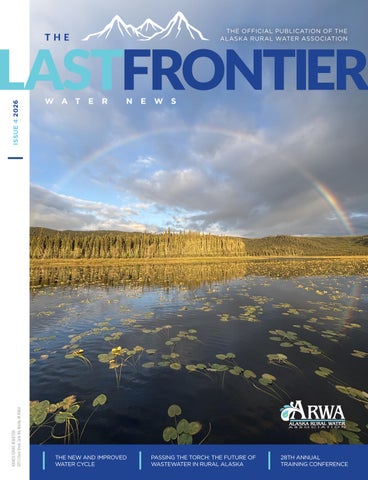
Cover Photo Credit: Jayce Comerford – Photo taken in Tok Alaska
26 Thank You to Our Advertisers
Complete Billing in Hours. Not Days. With Muni-Link’s cloud-based software, you can save time on billing and optimize utility operations: • Easy-to-use, intuitive system • Everything you need in one place • Unlimited support
Learn more at muni-link.com/automation
PROTECT PUMPS. PREVENT CLOGS. REDUCE DOWNTIME. THE ORBITGRINDER: INLINE WASTEWATER GRINDER. + Reliable Macerating Results + Adjustable Cutting Performance + Large Selection of Component Materials + Energy-Efficient Operation
+ Ease of Maintenance (MIP®)
Goble Sampson 801-268-8790 www.goblesampson.com
6
T H E LASTFRONTIER | ISSUE 4 2026
Learn More www.boerger.com
RETURN TO CONTENTS
By Robyn Dombroski, ARWA Executive Director
S
ummer has been rather interesting this year. Between making new rainfall records in some areas with cooler temperatures and the first-ever heat advisory for Anchorage, it’s been quite the back-and-forth season! But, as we all know so well, winter will be here in the blink of an eye. So, start your prepping now! For starters, I would like to welcome our new Circuit Rider, Bennett Lane, to ARWA. We are thrilled to have him join our fabulous crew. He is just getting started on making the rounds, but when he reaches your system, be sure to give him a warm welcome. The coming change in the seasons also means our 2026 annual training conference is quickly approaching. As always, Kelly has put together a terrific agenda with some fantastic speakers to help get you through the grueling four days to earn those CEUs. Big “thanks” to Kelly for all the hard work putting this together! If you haven’t done so already, mark your calendar for October 19–22 and make plans to join us at the Sheraton in Anchorage where we are offering an opportunity to earn a full 3.0 CEUs. Registration is open, and all registration forms and information can be found on our newly created website – www.arwa.org – as well as within this publication. We hope you can join us and always look forward to seeing everyone! The soon-to-be-upon-us fall season also means it won’t be long before I begin working on compiling success stories to share with our Congressional delegates in the hopes of securing their continued support for our federally funded programs. That means I am once again begging for your letters of support, just as I do every year. If ARWA brought training to your community, or you received some praiseworthy assistance
RETURN TO CONTENTS
from our awesome field staff members, please take a moment to email us a letter to express your appreciation. Our Congressional delegates want to hear from YOU. I can tell them the stories all day long, but hearing it directly from you speaks volumes. This will help us continue to bring you assistance. Speak up and let your voice be heard! Letters can be emailed to me at robyn@arwa.org. A few minutes of your time truly can make a big difference! Please don’t forget to sign up to donate to ARWA when you shop at Fred Meyer! It costs you nothing but a few minutes of your time to make sure you designate ARWA for your contribution. Link your Freddie’s Rewards account to ARWA by going here: www.fredmeyer.com/ communityrewards (our organization is CB055). We don’t get much, but every
EXECUTIVE DIRECTOR’S MESSAGE
Don’t Miss ARWA’s 28th Annual Training Conference little bit helps us in our efforts to fulfill our mission to help you. Lastly, remember that if you are in need of just a few CEU credits to renew your operator’s certification, we offer online training that can fulfill that need. Go to our website (www.arwa.org) and click on the top menu where it says “Training,” then go to “Online Training.” These courses have been fully approved for CEU credit by ADEC. If your system is a current member, you can receive a $30 discount per course. We are also working on adding an ARWA merchandise store to our website, so stay tuned for that! We are always here to assist you in any way we can, so don’t hesitate to contact us. Speaking on behalf of our fabulous ARWA team, we look forward to seeing everyone at the conference!
Send Us Your Letters of Support What Are You Thankful For? • How has ARWA helped you and your system? • Have you saved any money attending any of our trainings? • Did an ARWA staff member help you solve a problem? • Have you been to one of our recent training events and thought the trainer did an excellent job? We need to hear from you! Letters of support will be included in our Annual Report for our Congressional Delegates. Your written support is important and will help us continue to serve rural water and wastewater systems throughout the state! Send letters of support to: Alaska Rural Water Association 1075 S Check Street, Suite 106 Wasilla, AK 99654-8067 Or email kelly@arwa.org
ISSUE 4 2026 | T H E LASTFRONTIER
7
THE NEW AND IMPROVED WATER CYCLE By Sarah Ramey, Source Water Protection Specialist, sarah@arwa.org
W
ater operators have long relied on a fundamental understanding of the hydrologic water cycle to manage drinking water systems, wastewater facilities, stormwater infrastructure, and source water protection. While the traditional water cycle remains scientifically accurate, current scientific guidance from the U.S. recognizes a more comprehensive model that better reflects how water moves through natural systems and how human activities influence water quantity and quality. This new illustration of the hydrologic cycle was released in 2022 and explains in more detail how humans change our landscape. Human activities directly and indirectly change how water moves the hydrologic cycle. In this article, I will explore how adding human activities into the hydrologic cycle appropriately tracks how humans affect even natural processes that have existed for millions of years. Humans build dams and reservoirs for drinking water that changes how water is stored. Dams alter the way rivers naturally flow. Dams trap sediments and increase evaporation from the dammed water storage area. And being Alaskans, let’s turn our attention to the fish. Dams directly affect the natural cycles of fish by blocking them from being able to return to their natural breeding grounds. This can negatively affect fish populations. As mentioned, dams can also trap vital sediment and nutrients that feed smaller fish and bugs (which are the base of the food web), the food source for healthy salmon. When the food sources don’t thrive, the salmon cannot thrive. Dams can also change
8
T H E LASTFRONTIER | ISSUE 4 2026
the water temperatures that are directly related to raising water temperatures beyond what cold water species can tolerate. Dams have now been added to the water cycle to appropriately show their role in the diagram. Another impact that humans play in the water cycle is the urbanization of paving streets with concrete and asphalt. This practice prevents precipitation from soaking into the ground, which, over time, eventually should be contributing to aquifer recharge. When the water cannot soak into the ground the way the hydrologic cycle portrays, then this leads to increased surface water runoff that carries sediment and flash flooding into communities along rivers, like we are seeing in the eastern part of the U.S. today. This rapid runoff can carry contaminants from the paved surfaces to the rivers and oceans. In the case where rapid runoff causes flooding in communities, that flooding can impact wells by overtopping the well casing, forming a direct conduit between the surface water and the aquifer. These wells can become contaminated, and increased treatment must be employed to produce the same safe water for communities. Humans also use trees for producing forest products to mill into construction materials. Clearing trees from vast landscapes reduces the amount of water returned to the clouds through transpiration. Transpiration is defined as the release of water vapor from plants into the air. The loss of the natural transpiration from deforestation dries out the land and the air, and is yet another avenue of the natural hydrologic cycle that is cut off from its natural processes.
Many water systems use groundwater as their source water. This can often lead to extracting water faster than nature can replenish it through rainfall or snowmelt, and ultimately limits the aquifer recharge. Besides limiting the amount of groundwater available, over pumping reservoirs can cause land subsidence, or the sinking of the land area over the aquifer. As water is drawn out of the underground layers of sand, clay, and silt over the aquifer, the water pressure drops. Without the groundwater pressure, the sands, clays, and silts pack tightly together, causing the ground to sink. When you couple that with rising sea level due to melting of polar ice caps, this can cause communities along the coasts to lose land area as the sea water encroaches on communities. We are seeing that in western Alaska and many other coastal areas around the world. It impacts Alaska more due to our latitude on the globe. The irrigation of farmland can also disrupt the natural water cycle. The importance of farmland for food production is necessary to feed our hungry world. In order to produce high-yielding crops, irrigation practices are employed. When groundwater and surface water are pumped onto crops, this generates microclimates that increase the moisture in the air through transpiration, which directly influences humidity, wind patterns, cloud formations, and localized severe storms that can be devastating to communities all around the world. Updating how the hydrologic cycle is viewed helps us understand the nuances of how humans truly affect the world around them. I am not going to call
RETURN TO CONTENTS
this climate change per se, although increased temperatures on Earth, no matter how it is generated, do play a key role in all of this. Understanding this expanded view of the water cycle helps operators anticipate changes in source water, improve treatment decisions, enhance system resilience, and support regulatory compliance. The traditional hydrologic cycle describes the continuous movement of water through several primary processes: • Evaporation from oceans, lakes, rivers, and other water bodies • Condensation of water vapor into clouds • Precipitation as rain, snow, sleet, or hail • Surface runoff into streams, rivers, lakes, and reservoirs • Collection in surface waters before the cycle repeats This model provides the foundation for understanding water movement, but does not fully represent the complexity of today’s water resource challenges. The updated understanding recognizes that water movement is influenced by interactions among the atmosphere, groundwater, soils, vegetation, infrastructure, and human activities. Water is viewed as part of an interconnected system rather than a simple circular process. The modern water cycle directly recognizes human activities as significant drivers of hydrologic change, and they include reservoir and dam construction, groundwater withdrawals, water reuse and recycling, irrigation, urbanization, stormwater infrastructure, climate change, and watershed management practices. These factors directly affect both water quantity and water quality. The expanded water cycle has practical implications across water and wastewater operations. It directly touches source water protection, and operators should recognize that contaminants can enter water supplies through surface runoff, groundwater recharge, failing septic systems, agricultural activities, industrial discharges, and urban stormwater. Effective source water protection begins at the watershed level. Human activity in the hydrologic cycle can also affect water treatment plant operations. Changes in precipitation can alter raw water quality by increasing turbidity, natural organic matter, nutrient loading, pathogens, algal blooms, and sediment transport. These changes to raw water
RETURN TO CONTENTS
“Old” Water Cycle; notice no mention of human activity. All illustrations were acquired from USGS.gov.
“New” Water Cycle. All illustrations were acquired from USGS.gov.
may require adjustments to coagulation, filtration, disinfection, and monitoring programs. Extended droughts, intense rainfall, flooding, and changing groundwater conditions can influence storage levels, water age, and overall distribution system performance. Modern water resource management supports compliance with drinking water regulations by emphasizing energy on source water assessments, watershed protection, risk management, emergency preparedness, resiliency planning, and sustainable water use. Operators who understand watershed processes are better prepared to identify potential operational risks before they affect finished water quality. Today’s operators work in an environment of increasing variability. We are seeing
population growth, aging infrastructure, emerging contaminants, changing precipitation patterns, and watershed development, which all affect water system performance. The modern water cycle does not replace the traditional hydrologic cycle; it expands it to include the full range of natural and human influences on water movement and storage. This broader perspective is more than a scientific theory. The “New” Water Cycle is a practical framework for managing drinking water systems safely, efficiently, and sustainably. Understanding the complete hydrologic system strengthens operational decision-making, supports regulatory compliance, and helps ensure reliable, high-quality drinking water that the community’s water operators serve.
ISSUE 4 2026 | T H E LASTFRONTIER
9
ANTHC’s Tribal Utility Support helps Nelson Lagoon after emergency freeze up
I
n late March 2026, Tribal Utility Support (TUS) received an emergency response support request from the Aleutian Pribilof Islands Association, Inc (APIA) Remote Maintenance Worker (RMW) group on behalf of the community of Nelson Lagoon. A recent storm eroded sections of coastline, exposing a previously buried 10.5-mile raw water transmission line (RWTL). Many sections froze in unseasonably cold weather, leaving the community unable to get raw water to the water treatment plant (WTP). Meanwhile, the water storage tank (WST) was draining quickly due to regular community use. TUS contacted operator Darren Johnson and arranged an in-person meeting in Anchorage to discuss the problem and propose solutions. Darren and his crew had the necessary tools to address the line, so TUS provided consulting and the response plan strategy. The crew successfully thawed and reconnected the pipe, but when the raw water pump restarted, only a trickle reached the WTP despite the intake measuring 50 gpm. With a leak or blockage somewhere
along the 10.5-mile line and no visible evidence at the surface, the operators requested TUS field support. TUS utility support engineer Jonathon Hazelton mobilized to Nelson Lagoon with leak detection and pressure testing equipment, a handheld GPS system, and a troubleshooting plan. An acoustic leak listening device was initially used to detect subsurface leak sounds, but the results were inconclusive due to high winds. Close coordination between Jonathon in the field and TUS staff in Anchorage proved critical. Rather than manually inspecting 10.5 miles of line, which could have taken several weeks, Jonathon and the operators systematically installed pressure gauges at key locations and collected GPS coordinates. TUS staff plotted the locations and pressure readings on Google Earth, helping narrow the search. As Jonathon provided updates and photos from the field, staff in Anchorage analyzed the information and provided updated guidance in real time. On the fourth day, a new puddle of water
appeared at a location that had previously been investigated. The source was traced to a leak at a buried air relief vault. A pressure test had forced additional water through the leak, bringing it to the surface. The operators excavated the vault and found a corroded pipe. They quickly patched the leak, restoring full flow and pressure to the WTP.
Need emergency Tribal Utility Support assistance? Call 1-907-729-3600 or email TUS-support@anthc.org
The operators immediately began treating water and filling the WST, but another problem emerged when the pressure pumps could not pressurize the distribution system. After adding another 6 inches of water to the WST and bleeding air from the pump priming port, the pumps regained function and system pressure was restored.
Check out our current job openings!
With the system back in normal operation, Jonathon provided guidance on Bac-T testing requirements to lift the boil-water notice before heading to the airstrip just in time to catch his flight back to Anchorage.
anthc.org/careers
Work with us!
ALASKA RURAL WATER CIRCUIT RIDER PROGRAM
I
hope everyone is having an enjoyable summer here in Alaska. It has been a very busy summer for many systems across the state. It’s been busy here at Alaska Rural Water Association as well. Many of you are aware of the Alaska Rural Water Association’s Circuit Rider Program. ARWA is a member of the National Rural Water Association (NRWA), which has assistance programs in all 50 states and the territories of Puerto Rico and American Samoa. Some of the larger or more populated states across the country have three or four Water Circuit Riders assigned to different regions. Here in Alaska, we have two water circuit riders who cover the biggest state in the U.S. The Water Circuit Rider program began in 1980 in 18 states to assist small rural water systems across the country. There are currently 132 Water Circuit Riders across the U.S. The program is funded by a grant from the United States Department of Agriculture – Rural Development. I’m pretty sure everyone heard about all of the difficulties with budgets and federal program funding in 2025. It really was hard to plan very far into the future with so many question marks on the horizon. We were very fortunate here at ARWA as we only had about a 30-day stretch where we had restrictions. At the end of October 2025, the NRWA received a “stop work order” from the U.S.D.A. due to the lack of funding for the Circuit Rider Program contract. The federal contract is on a five-year cycle, and that particular cycle ended on October 31, 2025. Unfortunately, it was really bad timing for federal contracts, but that is in our review mirror now! On May 1, 2026, the new five-year contract began. That means this hopefully won’t come up again until 2029. It was also brought up at the NRWA In-Service Training Conference in June that when this contract was approved, it was part of the passage of the Farm, Food, and National Security Act of 2026, the first farm bill to clear a chamber since 2018 after years of extensions and gridlock, and included a bipartisan agreement that the Circuit Riders would be considered “essential personnel” and wouldn’t receive any stop work orders again during a lapse in appropriations. The NRWA Circuit Rider Program was specifically designed to provide technical assistance and overthe-shoulder support to small rural water systems with populations of 10,000 people or less.
By Kevin Schoneman, Circuit Rider, kevin@arwa.org
earthquakes, tornadoes, floods, wildfires, ice storms, and more. • Protecting the environment and public health by improving treatment processes. • Improve financial sustainability through better management practices, more efficient operations, and assistance with financial loan/grant applications. • Enhance compliance with drinking water regulations, such as Sanitary Surveys. • Aid with all aspects of water utility management, finance, operation and maintenance, regulatory compliance, energy efficiency, and loan/grant applications. • Assisting systems with navigating community-led regional partnership initiatives. If your community’s public water system needs assistance, reach out to kelly@arwa.org and she will be happy to get you directly connected to the Circuit Riders.
Assistance and services provided by Circuit Riders include, but are not limited to: • Identify and evaluate affordable solutions to drinking water problems in rural areas. • Assist systems to rapidly respond and recover after natural and man-made emergencies such as hurricanes,
RETURN TO CONTENTS
ISSUE 4 2026 | T H E LASTFRONTIER
11
WATER QUALITY IS ENGINEERED
PROTECT OUR MOST VALUABLE RESOURCE Our NSF 61/600-approved coating systems lock down long-term protection for tanks, towers and every inch of your potable water infrastructure. Designed for the toughest immersion environments, our solutions deliver proven performance that protects your assets and the communities that depend on them. Stronger defense. Longer service life. Zero compromise.
Learn More
swprotective@sherwin.com sherwin-williams.com/protective © 2026 The Sherwin-Williams Company
NEW, FRIENDLY, NEIGHBORHOOD CIRCUIT RIDER
By Bennett Lane, Circuit Rider, bennett@arwa.org
H
ello! My name is Bennett Lane. I’m your new, friendly, neighborhood Circuit Rider. Who else saw the new Spider-Man? Wasn’t it great? I grew up in the neighborhood of River View in Eagle River, Alaska. Lots of eagles and rivers! It was a great place to grow up, and it made me love the outdoors. I have great memories of exploring the woods around where I grew up, of dip netting the Kenai and Copper River. And less fond memories of cleaning fish. So, clearly, I’m a Marvel fan. And hey, who doesn’t aspire to be more like Spider-Man? But I also really like my job, and I feel honored to be entrusted with one of the most important aspects of a community, its water. With great water comes great responsibility. Ok, I promise that’s the last Spider-Man reference. I feel like that holds true, though, as I feel a great responsibility to the rural communities of Alaska and to provide them the best service I can.
coming full circle. Absorbing as much as I could in those two weeks, I passed my tests and started job searching. I was hired on with UIC Municipal Services, where I worked for two years, spending the majority of my time in Wainwright. I have experience working with membrane filters, chlorination, and many other vital parts of a treatment plant. I also worked on the distribution side, with fire hydrants, isolation valves, and fixing leaks! I am excited to start my new job as a Circuit Rider with ARWA, and I am currently working to become a certified sanitary surveyor. I look forward to PaxxoInc. Inc. working with Paxxo your community and assisting the best I can.
1924 FarmerRoad, Road,Newnan, Newnan, GA 30263 1924 Millard Millard Farmer GA 30263 www.paxxo.com. www.paxxo.com. Phone. +1 770 770 502 5020055 0055Fax. Fax.+ +1 1770 770 502 0088 Phone. +1 502 0088
The closed bag system The closed bag system The closed bag system The closed bag The closed bag system The closed bag system The closed bagsystem system The closed bag system The closed bag system The closed bag system The closed bag system The closed bag system closed bag system TheThe closed bag system The closed bag system The closed bag system Thescreenings closed bag system for and grit. The closed bag system The closed bag system for screenings and grit. The closed bag system The closed bag system The closed bag system The closed bag system for screenings and grit. The closed bag system for screenings and grit. The closed bag system for screenings and grit. The closed bag system The closed bag system for screenings and grit. The closed bag system for screenings and grit. The closed bag system for screenings and grit. for screenings and grit. The closed system The closed bag system for screenings and grit. The closed bag system The closed bag system The closed bag system for screenings and grit. The closed bag system for screenings and grit. for screenings and grit. The closed bag system The closed bag system The closed bag system The closed bag system screenings and grit. The closed bag system for screenings and grit. The closed bag system for screenings and grit. for screenings and grit. The closed system The closed bag system The closed bag system for screenings and grit. The closed for bag system for screenings and grit. The closed bag system The closed bag system for screenings and grit. The closed bag system for screenings and grit. The closed bag system for screenings and grit. The closed bag system The closed bag system The closed bag system for screenings and grit. The closed bag system The closed bag system for screenings and grit. The closed bag system The closed bag system for screenings and grit. The closed bag system The closed bag system for screenings and grit. closed bag system The closed bag system The closed bag system • Mounts to existing equipment for screenings and grit. The closed bag system for screenings grit. for screenings and grit. for screenings and grit. • Mounts to existing equipment The closed bag system The closed bag system for screenings and grit. The closed bag system • Mounts to existing equipment for screenings and grit. The closed bag system The closed bag system for screenings and grit. The closed bag system for screenings and grit. Mounts to existing equipment for screenings and grit. for screenings and grit. The closed bag system The closed bag system The closed bag system for screenings and grit. The closed bag system for screenings and grit. • Mounts to existing equipment for screenings and grit. for screenings and grit. for screenings and grit. • Mounts to existing equipment for screenings and grit. The closed bag system The closed bag system The closed bag system for screenings and grit. for screenings and grit. forThe screenings and grit. for screenings and grit. for screenings and grit. for screenings and grit. for screenings and grit. for screenings and grit. The closed bag system for screenings and grit. • Mounts to existing equipment The closed bag system The closed bag system for screenings and grit. • Mounts to existing equipment The closed bag system The closed bag system for screenings and grit. for screenings and grit. closed bag system The closed bag system • Mounts to existing equipment • Mounts to existing equipment for screenings and grit. screenings and grit. • Mounts to existing equipment for screenings and grit. • Increased odor control • Mounts to existing equipment for screenings and grit. The closed bag system • closed Mounts to existing equipment for screenings and grit. • Mounts to existing equipment The closed bag system for screenings and grit. Mounts to existing equipment •• Increased Mounts to existing equipment • Mounts to existing equipment The closed bag system for screenings and grit. for screenings and grit. for screenings and grit. The closed bag system • Increased odor control odor control for screenings and grit. for screenings and grit. The closed bag system for screenings and grit. The closed bag system Increased odor control The closed bag system • Mounts to existing equipment • Mounts to existing equipment • Mounts to existing equipment • Mounts to existing equipment The closed bag system • Mounts to existing equipment The bag system for screenings and grit. for screenings and grit. The closed bag system for screenings and grit. for screenings and grit. • Mounts to existing equipment The closed bag system • Mounts to existing equipment • Mounts to existing equipment • Increased odor control Increased odor control for screenings and grit. for screenings and grit. for screenings and grit. The closed bag system for screenings and grit. • Mounts to existing equipment Mounts to existing equipment The closed bag system for screenings and grit. THAT WAS WHERE I HAD MY FIRST • Mounts to existing equipment The closed bag system for screenings and grit. for screenings and grit. for screenings and grit. • Increased odor control The closed bag system The closed bag system • Increased odor control • Mounts to existing equipment for screenings and grit. Mounts to existing equipment • Mounts to existing equipment for screenings and grit. The closed bag system Mounts to existing equipment for screenings and grit. • Increased odor control • Mounts to existing equipment • Minimized mess • Mounts to existing equipment •• Mounts to existing equipment The closed bag system • Mounts existing equipment Increased odor control for and grit. • Mounts to existing equipment Increased odor control for screenings and grit. • Increased odor control • Mounts to existing equipment for screenings and grit. • Mounts to equipment The closed bag system • Increased odor control for screenings and grit. Increased odor control ••existing Increased odor control • Minimized mess • Mounts to existing equipment • Mounts to existing equipment Mounts to existing equipment Minimized mess • Mounts to existing equipment for screenings and grit. for screenings and grit. • Increased odor control Mounts to existing equipment • Increased odor control The closed bag system Increased odor control for screenings and grit. Minimized mess for screenings and grit. for screenings and grit. The closed bag system Mounts toIncreased equipment Increased odor control The closed bag system Mounts to existing equipment • Mounts existing equipment Mounts to existing equipment • Mounts to existing equipment • Increased odor control • Mounts to existing equipment The closed bag system •screenings odor control • Minimized mess for screenings and grit. screenings and grit. • Increased odor control Mounts to existing equipment for• screenings and grit. • Increased odor control Mounts to existing equipment to existing equipment • Mounts equipment Mounts Mounts to existing equipment to existing equipment • Increased odor control Minimized mess •to Increased odor control screenings and grit. Increased odor control Mounts to existing equipment for and grit. Mounts to existing equipment ••for Mounts to existing equipment ••to Mounts to existing equipment The closed bag system ••••odor Increased odor control Minimized mess for screenings and grit. Increased odor control Mounts existing equipment for screenings and grit. •• ••Mounts Mounts existing equipment ••existing Mounts to existing equipment Increased odor control Increased odor control • Mounts to existing equipment existing equipment The closed bag system Mounts to existing equipment • Increased odor control for screenings and grit. Very robust, 90m, (295’) long •to Minimized mess Minimized mess Increased odor control for screenings and grit. Mounts to existing equipment Mounts to existing equipment Minimized mess Increased odor control Mounts existing equipment screenings and grit. Increased odor control Increased odor control ••to Mounts to equipment odor control Mounts to existing equipment Increased odor control Minimized mess for and grit. • Increased odor control ••••Mounts Increased Very robust, 90m, (295’) long Very robust, 90m, (295’) long Minimized mess Minimized mess Increased odor control •screenings Minimized mess Mounts to existing equipment Minimized mess Increased odor control ••screenings Increased odor control Mounts to existing equipment Minimized mess Mounts to existing equipment Mounts to existing equipment The closed bag system for screenings and grit. for screenings and grit. ••control Increased odor control Increased odor control • Increased odor control Mounts to existing equipment Increased odor control • Very robust, 90m, (295’) long •control Minimized mess Mounts to existing equipment Minimized mess •• •Increased Increased odor Very robust, 90m, (295’) long for screenings and grit. for screenings and grit. • Mounts to existing equipment • Increased odor control Increased odor control •••mess Minimized mess Mounts to existing equipment ••for Minimized mess Increased Increased odor control • Minimized mess odor control • Minimized mess •Minimized Mounts to existing equipment • Increased odor control • Mounts existing equipment Increased odor control • Increased odor control • Increased odor control • Very robust, 90m, (295’) long Minimized mess • Mounts to existing equipment • Mounts to existing equipment • Minimized mess INTRODUCTION TO WATER AND Mounts to existing equipment • Increased control • Increased odor control Increased odor control Very robust, 90m, (295’) long • Mounts to existing equipment • Minimized mess for screenings and grit. Increased odor control Minimized mess • Increased odor control Minimized mess • Increased odor control Mounts to existing equipment Mounts to existing equipment • Increased odor control • Mounts to existing equipment Minimized mess • Minimized mess • Mounts to existing equipment • Mounts to existing equipment • Increased odor control • Increased odor control Very robust, 90m, (295’) long continuous feed, non-porous, for screenings and grit. ••odor Very robust, 90m, (295’) long • Mounts existing equipment Increased control Increased odor control Minimized mess Mounts to existing equipment Increased odor control ••odor Minimized mess Minimized mess Increased odor control Very robust, 90m, (295’) long • Increased odor control •mess Minimized mess ••Increased Minimized • Minimized mess continuous feed, non-porous, Mounts to existing equipment ••equipment Increased odor control continuous feed, non-porous, ••••equipment Very robust, 90m, (295’) long Mounts to existing Minimized mess Minimized mess mess Mounts to existing •continuous control Very robust, 90m, (295’) long Very robust, 90m, (295’) long Minimized mess Increased control Increased odor control Very robust, (295’) long Minimized mess Increased odor control robust, (295’) long ••mess Very robust, 90m, (295’) long Minimized mess continuous feed, non-porous, screenings and grit. ••90m, Mounts to existing equipment Minimized mess •••non-porous, Increased odor control Increased odor control •odor Mounts to existing equipment Increased odor control Minimized mess Minimized Very robust, 90m, (295’) long Increased odor control Very robust, 90m, (295’) long Very robust, (295’) long ••robust, Minimized mess •• ••Minimized Minimized mess Minimized mess feed, non-porous, ••for Very robust, 90m, (295’) long odor control •••equipment Minimized mess Mounts to existing equipment Minimized mess •to Minimized mess Minimized Minimized mess •Increased Very robust, 90m, (295’) long to existing •Minimized Increased odor control Increased odor control Increased odor control Very robust, 90m, (295’) long Mounts to existing Increased odor control •••equipment Minimized mess Mounts to existing equipment continuous ••feed, Increased odor control •Very Very robust, 90m, (295’) long • Increased odor control Minimized mess continuous feed, non-porous, Minimized mess Minimized mess ••Very Increased odor control Increased odor control Very robust, 90m, (295’) long Very robust, 90m, (295’) long Very robust, (295’) long robust, 90m, (295’) long •Mounts Very robust, 90m, (295’) long ••non-porous, Minimized mess • Mounts to existing equipment Minimized mess •••Minimized control • Minimized continuous feed, non-porous, Increased odor control Increased odor control feed, non-porous, Increased control Mounts to existing equipment polythene bag ••Increased Mounts existing equipment Minimized mess •continuous mess Minimized mess Very 90m, (295’) long Minimized mess • odor Minimized mess Mounts to existing equipment Increased odor control Minimized mess Very robust, 90m, (295’) long Very robust, 90m, (295’) long Very robust, 90m, (295’) long • Very robust, (295’) long ••• Very robust, 90m, (295’) long polythene bag Increased odor control continuous feed, non-porous, polythene bag Minimized mess • Very robust, 90m, (295’) long feed, non-porous, Increased odor control Very robust, 90m, (295’) long • Minimized mess •••• Minimized mess •90m, Minimized mess Minimized mess Increased odor control continuous non-porous, • Very robust, 90m, (295’) long continuous feed, non-porous, • Minimized mess ••mess Very robust, 90m, (295’) long polythene bag ••continuous Increased odor control robust, (295’) long • Mounts to existing equipment •odor Very robust, 90m, (295’) long continuous feed, non-porous, Very 90m, (295’) long Minimized mess •robust, Very robust, 90m, (295’) long continuous feed, Increased odor control • Very robust, 90m, (295’) long continuous feed, non-porous, Minimized mess Very robust, 90m, (295’) long continuous non-porous, continuous feed, non-porous, • Very robust, 90m, (295’) long Minimized mess • Minimized mess • Minimized mess continuous feed, non-porous, • Minimized mess • Very robust, 90m, (295’) long Very robust, 90m, (295’) long •• •Very Very robust, 90m, (295’) long Mounts to existing equipment Increased odor control • Very 90m, (295’) long continuous feed, non-porous, • Minimized mess • Very robust, 90m, (295’) long polythene bag continuous feed, non-porous, • Very robust, 90m, (295’) long • Increased odor control WASTEWATER AS A CAREER – THE Minimized mess Increased odor control • Increased odor control • Minimized mess • Minimized mess Very robust, 90m, (295’) long • Minimized mess polythene bag • Very robust, 90m, (295’) long polythene bag • Minimized mess Very robust, 90m, (295’) long continuous feed, non-porous, • Minimized mess Minimized mess Very (295’) long • Very robust, 90m, (295’) long continuous feed, non-porous, Increased odor control continuous non-porous, continuous feed, non-porous, polythene bag • Very robust, 90m, (295’) long • Mounts to existing equipment continuous feed, non-porous, • Minimized mess • Minimized mess Increased odor control bag Minimized mess ••robust, Very robust, 90m, (295’) long continuous feed, non-porous, •Very Increased odor control robust, 90m, (295’) Very robust, 90m, (295’) long Very robust, 90m, (295’) long Increased odor control robust, 90m, (295’) long Minimized mess continuous non-porous, continuous feed, non-porous, continuous feed, non-porous, continuous feed, non-porous, Minimized mess Very robust, 90m, (295’) long Minimized mess polythene bag continuous feed, non-porous, •feed, Very robust, 90m, (295’) long • Very (295’) long continuous feed, non-porous, Very robust, 90m, (295’) long Minimized continuous feed, non-porous, continuous feed, non-porous, • Very robust, 90m, (295’) ••••polythene Very robust, 90m, (295’) long Very robust, 90m, (295’) long continuous feed, non-porous, ••polythene Very robust, 90m, (295’) long polythene bag More than 20,000 installations Very robust, 90m, (295’) long Minimized mess continuous feed, non-porous, bag ••Very Increased odor control ••• Very robust, 90m, (295’) long polythene bag continuous feed, non-porous, ••continuous Minimized mess ••••mess More than 20,000 installations Very robust, 90m, (295’) long continuous Minimized mess polythene bag feed, non-porous, continuous feed, non-porous, non-porous, 20,000 installations polythene bag Very robust, (295’) long polythene bag continuous feed, non-porous, polythene bag • Very robust, 90m, (295’) long • Very robust, 90m, (295’) long continuous feed, non-porous, polythene bag • Very robust, 90m, (295’) long continuous feed, non-porous, More than 20,000 installations • Very robust, 90m, (295’) long continuous feed, non-porous, continuous feed, non-porous, • Very robust, 90m, (295’) long Increased odor control Minimized mess continuous feed, non-porous, polythene bag continuous feed, non-porous, Minimized mess polythene bag continuous feed, non-porous, Minimized mess • Very robust, 90m, (295’) long Very robust, (295’) long polythene bag continuous feed, non-porous, continuous feed, non-porous, • Minimized mess • Very robust, 90m, (295’) long • Very robust, 90m, (295’) long • Very robust, 90m, (295’) long • Very robust, 90m, (295’) long polythene bag continuous feed, non-porous, continuous feed, non-porous, Very robust, 90m, (295’) long Minimized mess continuous feed, non-porous, Increased odor control polythene bag polythene bag • Very robust, 90m, (295’) long • Minimized mess • Very robust, 90m, (295’) long polythene bag •feed, Very robust, 90m, (295’) long continuous feed, non-porous, feed, non-porous, feed, non-porous, continuous feed, non-porous, Minimized mess polythene bag polythene continuous feed, non-porous, Minimized mess •continuous Very robust, 90m, (295’) long Very robust, 90m, (295’) long ••feed, Very robust, 90m, (295’) long More than 20,000 installations polythene bag continuous feed, non-porous, More than 20,000 installations continuous non-porous, polythene bag polythene bag ••90m, Very robust, 90m, (295’) long •bag More than 20,000 installations continuous feed, non-porous, polythene bag continuous feed, non-porous, continuous feed, non-porous, • continuous More than 20,000 installations continuous feed, non-porous, polythene bag Very (295’) long non-porous, polythene bag polythene bag ••feed, Very robust, 90m, (295’) long More than 20,000 installations continuous non-porous, worldwide polythene bag ••continuous Minimized mess continuous feed, non-porous, polythene bag worldwide polythene •(295’) More than 20,000 installations polythene bag continuous feed, non-porous, bag polythene bag continuous non-porous, Very robust, 90m, (295’) long continuous feed, non-porous, continuous non-porous, ••polythene Very robust, robust, 90m, (295’) long polythene bag continuous non-porous, continuous feed, non-porous, polythene bag continuous feed, non-porous, continuous feed, non-porous, polythene bag bag More than 20,000 installations polythene bag polythene bag continuous feed, non-porous, continuous feed, non-porous, Minimized mess Very robust, 90m, (295’) Very robust, 90m, (295’) long continuous non-porous, WATER/WASTEWATER CLASSROOM • More than 20,000 installations Very robust, 90m, (295’) continuous feed, non-porous, continuous feed, non-porous, polythene bag More than 20,000 installations polythene bag polythene continuous feed, non-porous, polythene bag More than 20,000 continuous feed, non-porous, •20,000 More than 20,000 installations Very robust, 90m, long continuous feed, non-porous, polythene bag •(295’) Very robust, 90m, (295’)long long Minimized mess continuous feed, non-porous, continuous feed, non-porous, •bag More than 20,000 installations polythene bag • Very robust, 90m, long feed, non-porous, More than 20,000 installations polythene bag More than 20,000 installations polythene bag polythene bag continuous feed, non-porous, More than 20,000 installations polythene bag polythene bag continuous feed, non-porous, ••polythene Very robust, 90m, •installations More than 20,000 installations continuous feed, non-porous, •20,000 More than 20,000 installations Very robust, 90m, (295’) long continuous feed, non-porous, worldwide •than More than 20,000 installations continuous feed, non-porous, polythene bag worldwide polythene bag polythene bag polythene bag bag polythene bag More than 20,000 installations More installations worldwide continuous feed, non-porous, continuous feed, non-porous, ••continuous Very robust, 90m, (295’) long polythene bag worldwide • More than 20,000 installations •feed, More than installations worldwide polythene worldwide continuous feed, non-porous, polythene bag •bag More than 20,000 installations polythene bag polythene •(295’) More than 20,000 installations continuous feed, non-porous, More than 20,000 installations More 20,000 installations polythene bag polythene bag More than 20,000 installations polythene bag polythene bag polythene continuous non-porous, polythene bag More 20,000 installations polythene bag continuous feed, non-porous, worldwide • than installations Very robust, 90m, (295’) long continuous feed, non-porous, polythene bag worldwide • More than 20,000 installations More 20,000 polythene bag More than 20,000 installations continuous feed, non-porous, polythene bag polythene bag polythene bag polythene bag polythene bag More than 20,000 installations • More than 20,000 installations More than 20,000 installations worldwide continuous feed, non-porous, polythene bag worldwide • Very robust, 90m, (295’) long polythene bag • More than 20,000 installations continuous feed, non-porous, polythene bag • More than 20,000 installations continuous feed, non-porous, polythene bag • More than 20,000 installations • More than 20,000 installations worldwide polythene bag polythene bag More than 20,000 installations worldwide worldwide More than 20,000 installations polythene bag polythene bag installations worldwide chris.pettigrew@paxxo.com than installations chris.pettigrew@paxxo.com continuous feed, non-porous, continuous feed, non-porous, worldwide polythene bag More than 20,000 polythene More than 20,000 installations worldwide worldwide • More More than 20,000 20,000 installations More than 20,000 installations worldwide worldwide worldwide polythene bag Contact chris.pettigrew@paxxo.com Contact chris.pettigrew@paxxo.com •bag More than 20,000 installations continuous feed, non-porous, worldwide worldwide More than 20,000 installations polythene bag More than 20,000 installations More than 20,000 installations •••installations More than 20,000 installations worldwide worldwide • More 20,000 installations • worldwide More than 20,000 installations polythene bag More than 20,000 installations worldwide worldwide polythene polythene bag worldwide than 20,000 installations More than 20,000 installations polythene bag worldwide More than 20,000 polythene continuous feed, non-porous, polythene bag •bag More than 20,000 installations WAS RIGHT NEXT TO THE worldwide • bag More than 20,000 installations More than 20,000 installations polythene bag worldwide polythene bag worldwide •More More than 20,000 installations than 20,000 installations continuous feed, non-porous, More than 20,000 installations More than 20,000 installations chris.pettigrew@paxxo.com Contact chris.pettigrew@paxxo.com worldwide polythene bag •worldwide More than 20,000 installations worldwide • More than 20,000 installations •than More than installations • More More than 20,000 installations polythene worldwide More 20,000 installations More than 20,000 installations More than 20,000 installations More than 20,000 installations Contact chris.pettigrew@paxxo.com Contact chris.pettigrew@paxxo.com worldwide More than 20,000 installations polythene bag polythene bag worldwide ••worldwide More than 20,000 installations •than More than 20,000 installations ••than More than 20,000 installations worldwide •Contact More than 20,000 installations worldwide worldwide More than 20,000 installations Contact chris.pettigrew@paxxo.com worldwide worldwide Contact chris.pettigrew@paxxo.com for more information worldwide polythene bag worldwide More than 20,000 installations for more information More than 20,000 installations worldwide More than 20,000 installations •bag More than 20,000 installations for more information Contact chris.pettigrew@paxxo.com worldwide Contact chris.pettigrew@paxxo.com •20,000 More than 20,000 installations •worldwide More than 20,000 installations • More 20,000 installations More than installations More 20,000 installations worldwide worldwide worldwide More than 20,000 installations More than installations worldwide worldwide Contact chris.pettigrew@paxxo.com Contact chris.pettigrew@paxxo.com worldwide polythene bag worldwide worldwide Contact chris.pettigrew@paxxo.com worldwide Contact chris.pettigrew@paxxo.com More than 20,000 installations worldwide polythene bag worldwide worldwide • More than 20,000 installations for more information Contact chris.pettigrew@paxxo.com worldwide Contact chris.pettigrew@paxxo.com worldwide for more information • More than 20,000 installations • More than 20,000 installations worldwide Contact chris.pettigrew@paxxo.com • More than 20,000 installations Contact chris.pettigrew@paxxo.com worldwide Contact chris.pettigrew@paxxo.com Contact chris.pettigrew@paxxo.com worldwide Contact chris.pettigrew@paxxo.com More than 20,000 installations worldwide Contact chris.pettigrew@paxxo.com More than 20,000 installations More than 20,000 installations More than 20,000 installations for more information worldwide chris.pettigrew@paxxo.com Contact chris.pettigrew@paxxo.com for more information worldwide More than 20,000 installations worldwide Contact chris.pettigrew@paxxo.com Contact chris.pettigrew@paxxo.com worldwide and cassette bag reorders. worldwide worldwide worldwide Contact chris.pettigrew@paxxo.com worldwide Contact chris.pettigrew@paxxo.com worldwide Contact chris.pettigrew@paxxo.com worldwide Contact chris.pettigrew@paxxo.com More than 20,000 installations worldwide worldwide worldwide forContact more information worldwide for more information More than 20,000 installations worldwide for more information • ••worldwide More than 20,000 installations for more information Contact chris.pettigrew@paxxo.com Contact chris.pettigrew@paxxo.com worldwide Contact chris.pettigrew@paxxo.com Contact chris.pettigrew@paxxo.com More than 20,000 installations Contact chris.pettigrew@paxxo.com Contact chris.pettigrew@paxxo.com worldwide Contact chris.pettigrew@paxxo.com worldwide worldwide Contact chris.pettigrew@paxxo.com ELECTRICAL CLASSROOM. for more information worldwide for more information for more information worldwide more information worldwide Contact chris.pettigrew@paxxo.com Contact chris.pettigrew@paxxo.com More than 20,000 installations worldwide for more information for more information worldwide forfor more information worldwide for more information more information •Contact More than 20,000 installations worldwide for more information Contact chris.pettigrew@paxxo.com worldwide Contact chris.pettigrew@paxxo.com Contact chris.pettigrew@paxxo.com Contact chris.pettigrew@paxxo.com Contact chris.pettigrew@paxxo.com worldwide Contact chris.pettigrew@paxxo.com Contact chris.pettigrew@paxxo.com Contact chris.pettigrew@paxxo.com for more information for more information worldwide chris.pettigrew@paxxo.com Contact chris.pettigrew@paxxo.com for more information for more information for more information worldwide Contact chris.pettigrew@paxxo.com for more information Contact chris.pettigrew@paxxo.com for for more information more information more information worldwide for more information worldwide Contact chris.pettigrew@paxxo.com worldwide Contact chris.pettigrew@paxxo.com Contact chris.pettigrew@paxxo.com worldwide Contact chris.pettigrew@paxxo.com for more information Contact chris.pettigrew@paxxo.com Contact chris.pettigrew@paxxo.com more information Contact chris.pettigrew@paxxo.com Contact chris.pettigrew@paxxo.com for more information Contact chris.pettigrew@paxxo.com more information Contact chris.pettigrew@paxxo.com for more information more Contact chris.pettigrew@paxxo.com Contact chris.pettigrew@paxxo.com Contact chris.pettigrew@paxxo.com for moreinformation information Contact chris.pettigrew@paxxo.com for more information Contact chris.pettigrew@paxxo.com Contact chris.pettigrew@paxxo.com Contact chris.pettigrew@paxxo.com Contact chris.pettigrew@paxxo.com for more information Contact chris.pettigrew@paxxo.com Contact chris.pettigrew@paxxo.com Contact chris.pettigrew@paxxo.com Contact chris.pettigrew@paxxo.com worldwide for more information Contact chris.pettigrew@paxxo.com worldwide Contact chris.pettigrew@paxxo.com Contact chris.pettigrew@paxxo.com Contact chris.pettigrew@paxxo.com for more information for more information Contact chris.pettigrew@paxxo.com Contact chris.pettigrew@paxxo.com Contact chris.pettigrew@paxxo.com Contact chris.pettigrew@paxxo.com for more information for more information forContact moreinformation information for more information for more for more information Contact chris.pettigrew@paxxo.com Contact chris.pettigrew@paxxo.com for more information Contact chris.pettigrew@paxxo.com for more information Contact chris.pettigrew@paxxo.com for more information for more information Paxxo Inc. for more information for more information for more information for more information chris.pettigrew@paxxo.com for more information for more information Contact chris.pettigrew@paxxo.com for more information information Contact chris.pettigrew@paxxo.com Contact chris.pettigrew@paxxo.com for more information Paxxo Inc. for more information for information Contact chris.pettigrew@paxxo.com for more information Contact chris.pettigrew@paxxo.com for more information Contact chris.pettigrew@paxxo.com Contact chris.pettigrew@paxxo.com for more information Contact chris.pettigrew@paxxo.com for more information Contact chris.pettigrew@paxxo.com for more information formore more information Contact chris.pettigrew@paxxo.com more information for more information Contact chris.pettigrew@paxxo.com for moreinformation information for more information for information for more for more information Contact chris.pettigrew@paxxo.com Contact chris.pettigrew@paxxo.com Paxxo Inc. more information Contact chris.pettigrew@paxxo.com Contact chris.pettigrew@paxxo.com more information for more information for more information for more information for more information Paxxo Inc. Paxxo Inc. Contact chris.pettigrew@paxxo.com Contact chris.pettigrew@paxxo.com Paxxo Inc. for more information for more information 1924 Millard Farmer Road, Newnan, GA 30263 Contact chris.pettigrew@paxxo.com Contact chris.pettigrew@paxxo.com for more information for moreinformation information for more information for more 1924 Millard Farmer Road, Newnan, GA 30263 for more information Paxxo Inc. for more information Paxxo Inc. for more more information for more information for information more information Paxxo Inc. for more moreinformation information for more information 1924 Millard Farmer Road, Newnan, GA 30263 for more information Paxxo for more information Paxxo Inc. for for more information Paxxo Inc. for more information Paxxo Inc. I was homeschooled and practiced martial arts while Paxxo Inc. for more information 1924 Millard Farmer Road, Newnan, GA 30263 1924 Millard Farmer Road, Newnan, GA 30263 Paxxo Inc. 1924 Millard Farmer Road, Newnan, GA 30263 www.paxxo.com. for more information Paxxo Inc. for more information Paxxo Inc. 1924 Millard Farmer Road, Newnan, GA 30263 for more information Paxxo Inc. Paxxo Inc. for more information Paxxo Inc. Paxxo Inc. www.paxxo.com. Paxxo Inc. 1924 Millard Farmer Road, Newnan, GA 30263 Paxxo Inc. Paxxo Inc. Paxxo Inc. Paxxo Inc. Paxxo Inc. Paxxo Inc. 1924 Millard Farmer Newnan, GA 30263 Paxxo Inc. Paxxo Inc. Paxxo 1924 Millard Farmer Road, Newnan, GA 30263 www.paxxo.com. 1924 Millard Farmer Road, Newnan, GA 30263 Paxxo Inc. 1924 Millard Farmer Road, Newnan, GA 30263 1924 Millard Farmer Road, Newnan, GA 30263 1924 Millard Farmer Road www.paxxo.com. 1924 Millard Farmer Road, Newnan, GA 30263 1924 Millard Farmer Road, Newnan, GA 30263 www.paxxo.com. 3 1924 Millard Farmer Road, Newnan, GA 30263 1924 Millard Farmer Road, Newnan, GA 30263 Phone. +1 770 502 0055 Fax. + 1 770 502 0088 www.paxxo.com. growing up. I am also a proud graduate of the Alaska Military 1924 Millard Farmer Road www.paxxo.com. 1924 Millard Farmer Road, Newnan, GA 30263 1924 Millard Farmer Road, Newnan, GA 30263 1924 Millard Farmer Road, Newnan, GA 30263 1924 Millard Farmer Road, Newnan, GA 30263 Paxxo Inc. 3 Phone. +1 770 502 0055 Fax. + 1 770 502 0088 Paxxo Inc. Paxxo Inc. Paxxo Inc. Paxxo Inc. www.paxxo.com. 1924 Millard Farmer Newnan, GA 30263 1924 Millard Farmer Road, Newnan, GA 30263 1924 Millard Farmer Road, Newnan, GA 30263 Paxxo Inc. 1924 Millard Farmer Road, Newnan, GA 3026 Paxxo Inc. 1924 Millard Farmer Road, Newnan, GA 30263 1924 Millard Farmer Road, Newnan, GA 30263 1924 Millard Farmer Road, Newnan, GA 30263 www.paxxo.com. Paxxo Inc. Paxxo Inc. Paxxo Inc. Paxxo Inc. 1924 Millard Farmer Newnan, GA 30263 1924 Millard Farmer Road, Newnan, GA 30263 Phone. +1Inc. 770 502 0055 Fax. + 1770 770 502 0088 Paxxo Inc. Paxxo Inc. 1924 Millard Farmer Road 1924 Millard Farmer Newnan, GA 30263 1924 Millard Farmer Road, Newnan, GA 30263 www.paxxo.com. www.paxxo.com. www.paxxo.com. www.paxxo.com. Paxxo Inc. www.paxxo.com. Newnan, GA 30263 Paxxo Inc. 3 Phone. +1 770 502 0055 Fax. + 770 502 0088 Paxxo Inc. Paxxo Inc. Paxxo Phone. +1 770 502 0055 Fax. +0055 1+Road, 502 0088 Paxxo Inc. Paxxo Inc. www.paxxo.com. www.paxxo.com. www.paxxo.com. Paxxo Inc. www.paxxo.com. Paxxo Inc. Paxxo Inc. Paxxo Inc. Paxxo Inc. Paxxo Inc. www.paxxo.com. Paxxo Inc. Phone. +1 770 502 Fax. +Newnan, 1 1770 502 0088 Newnan, GA 30263 Phone. +1 770 502 0055 Fax. 1 770 502 0088 Paxxo Inc. www.paxxo.com. Paxxo Inc. Paxxo Inc. www.paxxo.com. Paxxo Inc. Paxxo Inc. Paxxo Inc. Paxxo Inc. www.paxxo.com. www.paxxo.com. Paxxo Inc. 1924 Millard Farmer Road, Newnan, GA 30263 www.paxxo.com. Paxxo Inc. www.paxxo.com. 1924 Millard Farmer Road, Newnan, GA 30263 Phone. +1 770 502 0055 Fax. + 1 770 502 0088 www.paxxo.com. Youth Academy and went on to attend the Alaska Job Corps 1924 Paxxo Inc. Paxxo Inc. 1924 Millard Farmer Road, GA 30263 Farmer Road, Newnan, GA 30263 1924 Millard Farmer Road, Newnan, GA 30263 Phone. 770 502 0055 Fax. + 1 770 502 0088 www.paxxo.com. www.paxxo.com. www.paxxo.com. Paxxo Inc. 1924 Millard Farmer Road, Newnan, GA 30263 www.paxxo.com. www.paxxo.com. Paxxo Inc. www.paxxo.com. 1924 Millard Farmer Road, Newnan, GA 30263 www.paxxo.com. www.paxxo.com. Newnan, GA 30263 1924 Millard Farmer Road, Newnan, GA 30263 1924 Millard Millard Farmer Road, Newnan, GA 30263 1924 Millard Farmer Road, Newnan, GA 30263 Phone. 770 502 0055 + 1 770 502 0088 Phone. +1 770 502 0055 Fax. + 1 770 502 0088 www.paxxo.com Phone. +1 770 502 0055 Fax. + 1 770 502 0088 www.paxxo.com. Phone. +1 770 502 0055 Fax. + 1 770 502 0088 www.paxxo.com. Paxxo Inc. 1924 Millard Farmer Road, Newnan, GA 30263 Phone. +1 +1 770 502 0055 Fax. + 1 770 502 0088 1924 Millard Farmer Road, Newnan, GA 30263 www.paxxo.com. www.paxxo.com. 1924 Millard Farmer Road, Newnan, GA 30263 Phone. +1 770 502 0055 Fax. + 1 770 502 0088 Paxxo Inc. 1924 Millard Farmer Road, Newnan, GA 30263 Phone. +1 770 502 0055 + 1 770 502 0088 Phone. 770 502 0055 Fax. + 1 770 502 0088 1924 Millard Farmer Road, Newnan, GA 30263 Phone. +1 770 502 0055 Fax. 1 770 502 0088 www.paxxo.com. www.paxxo.com. Paxxo Inc. 1924 Millard Farmer Road, Newnan, GA 30263 Phone. 770 502 0055 Fax. + 1 770 502 0088 1924 Millard Farmer Road, Newnan, GA 3026 www.paxxo.com 1924 Millard Farmer Road, Newnan, GA 30263 1924 Millard Farmer Road, Newnan, GA 3026 Paxxo Inc. Phone. +1 770 502 0055 Fax. + 1 770 502 0088 Paxxo Inc. Phone. +1 770 502 0055 Fax. + 1 770 502 0088 Phone. +1 770 502 0055 Fax. + 1 770 502 0088 1924 Millard Farmer Road, Newnan, GA 30263 1924 Millard Farmer Road, Newnan, GA 30263 1924 Millard Farmer Road, Newnan, GA 30263 Paxxo Inc. Phone. 770 502 0055 Fax. + 1 770 502 0088 1924 Millard Farmer Road, Newnan, 30263 1924 Millard Farmer Road, Newnan, GA 30263 Phone. +1 770 0055 Fax. + 11GA 770 502 0088 Paxxo Inc. Paxxo Inc. www.paxxo.com. 1924 Millard Farmer Road, Newnan, GA 30263 502 Phone. +1 770 502 0055 Fax. + 1 770 502 0088 Paxxo Inc. 1924 Millard Farmer Road, Newnan, GA 30263 Phone. +1 770 502 0055 Fax. + 130263 770 502 0088 1924 Millard Farmer Road, Newnan, GA 30263 www.paxxo.com. 1924 Millard Farmer Road, Newnan, GA 30263 1924 Millard Farmer Road, Newnan, GA 30263 www.paxxo.com. Phone. 770 502 0055 Fax. +Road, 10055 770 502 0088 1924 Millard Farmer Road, Newnan, 30263 Phone. +1 Phone. 770 502 0055 Fax. + 1 770 502 0088 Paxxo Inc. Paxxo Inc. 1924 Millard Farmer Road, Newnan, GA Phone. +1 770 502 0055 Fax. 1770 502 0088 Phone. +1 770 502 0055 Fax. + 1770 770 502 0088 1924 Millard Farmer Newnan, GA 30263 www.paxxo.com. www.paxxo.com. www.paxxo.com. 1924 Millard Farmer Newnan, GA 30263 Phone. +1 770 502 0055 Fax. + 1 770 502 Phone. +1 770 502 Fax. + 1GA 770 502 0088 1924 Millard Farmer Road, Newnan, GA 30263 www.paxxo.com Phone. +1 770 502 0055 Fax. 770 502 0088 Phone. +1 770 0055 Fax. 110088 770 502 0088 Paxxo Inc. +1 770 502 0055 Fax. + 1 770 502 www.paxxo.com. 770 502 program for electrical wiring. That was where I had my first Paxxo Inc. Phone. +1 770 502 0055 Fax. +Phone. 1Newnan, 770 502 0088 1924 Millard Farmer Road, Newnan, GA 30263 Phone. +1 770 502 0055 Fax. +Paxxo 1770 770 502 0088 Phone. +1 770 Fax. + 1770 770 502 0088 Phone. +1 770 502 0055 Fax. +0088 502 0088 www.paxxo.com. www.paxxo.com. Phone. +1 770 502 0055 Fax. ++ 1 Road, 770 502 Phone. +1 770 502 0055 Fax. +0088 1+++0088 502 0088 www.paxxo.com. Paxxo Inc. www.paxxo.com. www.paxxo.com. 1924 Millard Farmer Road, Newnan, GA 30263 Phone. +1 770 502 0055 Fax. +Inc. 10055 770 502 Paxxo Inc. Phone. +1 770 502 0055 Fax. + 1 502 0088 Phone. +1 770 502 0055 Fax. 1GA 770 502 0088 Phone. 770 502 0055 www.paxxo.com. 1924 Millard Farmer Road, GA 30263 www.paxxo.com. Phone. 770 502 0055 Fax. + 1 770 502 0088 Paxxo Inc. www.paxxo.com. www.paxxo.com. Inc. www.paxxo.com. 1924 Farmer Road, Newnan, GA 30263 www.paxxo.com. 1924 Millard Farmer Road, Newnan, GA 30263 1924 Millard Road, GA 30263 Phone. +1 770 502 0055 Fax. + 1770 770 502 0088 1924 Millard Farmer Road, Newnan, 30263 www.paxxo.com. www.paxxo.com. Phone. +1 770 502 0055 Fax. ++1 1Paxxo 770 502 0088 0088 www.paxxo.com. www.paxxo.com. Phone. +1 770 502 0055 Fax. +Newnan, 1770 502 0088 1924 Millard Millard Road, Newnan, GA 30263 www.paxxo.com. 1924 Millard Farmer Road, Newnan, GA 30263 www.paxxo.com. www.paxxo.com. Phone. +1 770 502 0055 Fax. 1770 770 502 0088 1924 Millard Farmer Road, Newnan, GA 30263 Phone. 770 502 0055 Phone. +1 770 770Farmer 502 0055 Fax. +1 1Farmer 770 502 0088 Phone. +1 770 502 0055 Fax. + 770 502 0088 Phone. 770 502 0055 Fax. + 1 770 502 0088 770.502.0055 1924 Millard Farmer Road, Newnan, GA 30263 88 www.paxxo.com. www.paxxo.com. Phone. +1 770 502 0055 Fax. + 1 502 0088 0088 www.paxxo.com. Phone. +1 770 502 0055 Fax. + 1 770 502 0088 1924 Millard Farmer Road, Newnan, GA 30263 Phone. +1 770 502 0055 Fax. + 1 770 502 0088 Phone. +1 502 0055 Fax. + 770 502 0088 Phone. +1 502 0055 Fax. + 1 770 502 0088 Phone. 770 502 0055 Fax. + 1 770 502 0088 introduction to water and wastewater as a career – the 1924 Millard Farmer Road, Newnan, GA 30263 88 www.paxxo.com. Phone. +1 770 502 0055 Fax. + 1 770 502 008 +1Farmer 770 502 0055 Fax. + 1770 770 502 0088 1924 Millard Farmer Road, GA 30263 Phone. +1 770 502 0055 Fax. +770 1770 770 502 1924 Millard Farmer Road, Newnan, 1924 Millard Farmer Road, Newnan, GA 30263 0088 Phone. +1 770 502 0055 Fax. ++0088 1+ 770 502 0088 www.paxxo.com. www.paxxo.com. Phone. +1 770 502 Fax. +0055 1Newnan, 502 Phone. +1 770 502 0055 1770 770 502 008 Phone. +1 770 502 0055 Fax. +0088 1770 770 502 0088 1924 Millard Farmer GA 30263 Phone. +1 770 502 0055 Fax. +502 10055 502 0088 Phone. +1 770 502 Fax. 1 502 0088 www.paxxo.com. 1924Phone. Millard Road, Newnan, GA 30263 88 www.paxxo.com. Phone. +1 770 502 0055 Fax. + 1GA 502 0088 Phone. +1 770 502 0055 Fax. + 1Newnan, 770 502 Phone. +1 770 0055 +130263 1Fax. 770 502 0088 Phone. +1 770 502 0055 Fax. 502 0088 www.paxxo.com. Phone. +1 770 0055 Fax. ++ 110088 770 502 0088 www.paxxo.com. Phone. +1 770 502 0055 Fax. +502 1Fax. 770 502 0088 Phone. +1 770 502 0055 Fax. +0088 770 502 0088 Phone. +1 770+ 502 0055 Fax. + 1770 770 502 www.paxxo.com. www.paxxo.com. water/wastewater classroom was right next to the electrical Phone. +1 770 502 0055 Fax. + 1 0088 www.paxxo.com. Phone. +1 770 502 0055 Fax. 1 770 502 0088 www.paxxo.com. www.paxxo.com. Phone. +1 770 502 0055 Fax. + 1 770 0088 Phone. +1502 770 502 0055 Fax. 770 502 0088 www.paxxo.com. Phone. +1 770 502 0055 Fax. ++ 11 770 502 0088 Phone. 770www.paxxo.com. 5020055 0055Fax. Fax.+ ++ 1770 770 502 0088 Phone. +1 770 502 502 0088 Phone. +1 770 502 0055 1770 770 502 0088 classroom. Greg, the water/wastewater instructor, was Phone. +1770 770 502 0055 Fax. +1 1770 770 502 0088 Phone. +1 502 Fax. 502 0088 Phone. +1 770 502 0055 ++ 110088 502 0088 Phone. +1 770 770 5020055 0055 Fax. +10055 1770 770 502 Phone. +1 502 Fax. + 502 0088 very tall. A little intimidating at first, but one of the nicest guys once you got to know him. He provided a great first impression of water and wastewater operators. After completing Job Corps, I planned to be an electrician. But life had other plans! Through chance, I heard about a two-week course being put on by the Alaska Rural Water Association back at Job Corps! I attended the course, where Greg, the instructor, was also taking the class, and it felt like
RETURN TO CONTENTS
ISSUE 4 2026 | T H E LASTFRONTIER
13
ALASKA’S COMMUNITY WATER SYSTEM SPECIALISTS
Acoustic Condition Assessment
Tank Inspection and Cleaning
Leak Detection and Line Location
Water & Wastewater Utility Operation
GIS Mapping and Utility Digitization
Remote Monitoring Systems
Find out more at nusalaska.com or call (907) 222-4084
Mission is Simply More Intelligent Advanced Monitoring • Low Cost • Managed SCADA
Proactive Notifications
Secure Data
• Alarms dispatched • Defense–in–depth to all your devices— security policies phone, tablet, computer, fax, pager • Multiple security measures layered to • Customizable protect your system notifications • Securely access • Convenient alerts your data anywhere
Purpose–Built Hardware • Radio supports multiple carriers to ensure optimum connection • Standardized RTUs are economical
Convenient Support
Mission Managed
• U.S.–based technical • No software or support 24-7-365 cellular carrier relationships to • Live weekly training maintain webinars • Continual system • Audit trail for enhancements accountability • State–of–the–art
• Fast and easy installation increases • All resources at no charge efficiency
web portal features live data, multiple windows, and more
• Advanced remote– control business logic
• Comprehensive reports • All necessary components included—no hidden fees
Locally Represented by:
123mc.com
(907) 222-4084 • nusalaska.com
PASSING THE TORCH:
THE FUTURE OF WASTEWATER IN RURAL ALASKA By Nicholas Sena, Wastewater Training & Technical Assistance Specialist, nicholas@arwa.org
More Than a Job: Preparing the Next Generation to Protect Rural Alaska’s Water In many rural Alaska communities, there is a person most residents rarely think about. They may not see them arrive at work in the morning. They may not know what equipment they operate, what samples they collect, or how many alarms they respond to after everyone else has gone home. They may never consider what happens after they flush a toilet, drain a sink, or wash a load of clothes. But someone is making sure that wastewater goes where it is supposed to go, and that it is treated properly before it returns to the environment. That person is the wastewater operator. For generations, operators across Alaska have quietly carried the responsibility of protecting their communities’ water, public health, and environment. They have learned their systems through years of experience, training, troubleshooting, and sometimes simply by figuring out what works when a problem occurs at the worst possible time. Today, however, Rural Alaska faces a challenge that may be just as important as maintaining aging infrastructure: Who will take over when today’s operators retire? The answer may determine
16
T H E LASTFRONTIER | ISSUE 4 2026
far more than who turns the valves, checks the pumps, or collects the next wastewater sample. It may help determine whether Rural Alaska can continue to provide safe, reliable wastewater service for generations to come. A Job Most People Never See Wastewater treatment is one of those essential services that tends to disappear into the background when everything is working correctly. That is actually a sign of success. When a wastewater system is functioning properly, people don’t have to think about it. Toilets flush. Sinks drain. Homes stay sanitary. Wastewater is collected and treated. The community’s water resources remain protected. But behind that apparent simplicity is a complicated system. Wastewater operators may be responsible for pumps, lift stations, lagoons, treatment processes, electrical equipment, controls, sampling, recordkeeping, maintenance, troubleshooting, regulatory requirements, and emergency response. In many rural Alaska villages, one operator may wear several hats. The job can require mechanical knowledge, electrical skills, biology, chemistry, mathematics, computer skills, environmental awareness,
and good judgment. It also requires an understanding of the community and the environment in which the system operates. A lagoon doesn’t always behave the same way in January as it does in July. A pump can fail during a storm. A power interruption can create an emergency. Equipment can become difficult to repair when replacement parts are hundreds of miles away. And when something goes wrong, there may not be another operator just down the road. That is the reality of wastewater work in Rural Alaska. The Experience We Cannot Afford to Lose Many experienced operators have accumulated something that cannot simply be purchased or downloaded: institutional knowledge. They know the system. They know which pump makes a particular sound when it is beginning to fail. They remember what happened during an unusually cold winter. They know how seasonal conditions affect their lagoon. They know which pieces of equipment have been troublesome and which solutions have worked in the past. Much of that knowledge may never appear in an operations manual. It lives in the experience of the person who has spent years taking care of the system.
RETURN TO CONTENTS
This is why the retirement of an experienced operator can represent more than the loss of an employee. It can mean the loss of decades of knowledge. The challenge for Rural Alaska is not simply finding someone willing to take a job. It is finding a way to transfer knowledge from one generation to the next before it walks out the door. Changing the Way We Talk About Wastewater One of the first steps may be changing the way we introduce young people to the profession. Ask a young person if they want to work in wastewater, and the answer might not be enthusiastic. That is understandable. If wastewater is described only as sewage, sludge, unpleasant smells, and dirty work, it is not difficult to see why a young person might look somewhere else for a career. But that description misses most of the story. Today’s wastewater operator can be a mechanic, electrician, environmental technician, laboratory technician, equipment operator, computer user, problem solver, and public-health professional – all in the same day. Wastewater treatment is also directly connected to science. A treatment lagoon is a living biological system. Microorganisms break down organic matter. Operators monitor conditions and make decisions based on what they see, smell, measure, and observe. Pumps and mechanical equipment move wastewater through the system. Controls and instrumentation help operators understand what is happening. For a young person interested in mechanics, technology, science, the environment, or working with their hands, wastewater can offer a surprisingly diverse career. And unlike many jobs, the result of the work is visible. You are helping keep your community running. Start With Curiosity Older operators may have one of the most important roles in solving the workforce problem: becoming mentors. Instead of waiting for a young person to apply for a wastewater position, invite them to become curious about the work. A high school student might be interested in seeing how a lift station works. Another might be
RETURN TO CONTENTS
fascinated by pumps and mechanical systems. Someone else might enjoy laboratory testing or environmental science. Another young person might be interested in computers, controls, and instrumentation. The operator’s job is not necessarily to convince every young person to become a wastewater operator. It is to show them what the profession actually is. Invite students to tour the facility. Explain what the equipment does. Show them a wastewater sample. Talk about the biology occurring inside a lagoon. Let them see the control panel. Explain what happens when a pump fails. Tell them about the training required and the opportunities available. Most importantly, tell them why the work matters. A young person is much more likely to become interested in a career when they can see a purpose behind it.
Clean Water Is About More Than Water For Rural Alaska, the importance of wastewater treatment reaches well beyond the treatment facility. Clean water is connected to homes, families, rivers, lakes, fish, wildlife, subsistence activities, and the overall health of a community. A wastewater system that is properly operated helps protect the environment that surrounds a village. That matters everywhere, but it can feel especially important in communities where people live closely connected to the land and water. A river is not simply a geographic feature. It may provide fish. A lake is not simply a body of water. It may be part of the community’s environment and way of life. The land surrounding a village is not simply undeveloped space. It is home. Wastewater operators are one of the groups working quietly behind the scenes to protect those resources. That is something worth being proud of.
FOR GENERATIONS, OPERATORS ACROSS ALASKA HAVE QUIETLY CARRIED THE RESPONSIBILITY OF PROTECTING THEIR COMMUNITIES’ WATER, PUBLIC HEALTH, AND ENVIRONMENT. Teach the Story Behind the System Experienced operators have stories. They remember the equipment failures, the emergencies, the long nights, the frozen lines, the power outages, and the times they had to figure something out with limited resources. Those stories are worth sharing. A young apprentice sitting beside a veteran operator may learn more from one afternoon of conversation than from a manual alone. The veteran might say: “Listen to that pump. That’s not how it normally sounds.” That simple observation can become a lesson in mechanical maintenance. Or: “When the weather changes like this, keep an eye on the lagoon.” That can become a lesson in biology and environmental conditions. Or: “This is why we take that sample.” That can become a lesson in public health. These are the moments when knowledge becomes transferable. The goal should not be to create a workforce where young operators simply inherit a checklist. The goal should be to create operators who understand why they are doing the work.
Building a Future Instead of Filling a Vacancy When a community loses an experienced operator, the natural reaction may be to ask: “Who can we hire?” Perhaps the better question is: “Who can we teach?” There is an important difference. Hiring someone fills a position. Mentoring someone builds a future. A young person who begins working alongside an experienced operator today could become tomorrow’s certified operator, supervisor, trainer, or mentor. Eventually, that young person may be the one standing beside another teenager explaining how a pump works. That is how a profession survives. That is how knowledge survives. And that is how communities become less dependent on constantly searching outside their villages for qualified people. The Future Is Sitting in the Classroom Rural Alaska’s young people are often described as the future of their communities. That statement is especially true when it comes to infrastructure.
ISSUE 4 2026 | T H E LASTFRONTIER
17
THE OPERATOR’S JOB IS NOT NECESSARILY TO CONVINCE EVERY YOUNG PERSON TO BECOME A WASTEWATER OPERATOR. IT IS TO SHOW THEM WHAT THE PROFESSION ACTUALLY IS. The young person sitting in a classroom today could someday operate the community’s water treatment plant. They could maintain its wastewater lagoon. They could become an electrician, mechanic, environmental technician, engineer, or water and wastewater manager. They could return home after receiving training elsewhere and bring new skills back to their community. But they need to know these opportunities exist. That responsibility belongs to all of us. Operators can mentor. Communities can encourage. Schools can introduce students to water and wastewater careers. Utilities can provide internships and entrylevel opportunities. Experienced professionals can share their knowledge before retirement. And young people can be given something even more important than a job description: a reason to care.
18
T H E LASTFRONTIER | ISSUE 4 2026
Passing the Torch Every generation of operators inherits something from the generation before it. Sometimes it is an aging pump. Sometimes it is a stack of old operating records. Sometimes it is a maintenance trick that was never written down. Sometimes it is simply a story about how someone solved a problem twenty years ago. But the most important thing passed from one generation to another is responsibility. The responsibility to protect the water. The responsibility to protect the community. The responsibility to keep learning. And the responsibility to teach the person who comes next. Rural Alaska does not need to lose the knowledge of its experienced operators when they retire. Their experience can become the foundation upon which the next generation builds. The solution to the operator shortage may not be
found entirely in recruiting people from somewhere else. It may be found right here in our villages, our schools, our families, and our communities. The next generation is already here. They simply need someone to show them what is waiting on the other side of the door. Someone to explain that wastewater is not just about what people flush away. It is about what we protect. It is about science, technology, skilled trades, environmental stewardship, and public health. Most of all, it is about people. When an experienced operator takes the time to teach a young person how to care for a community’s water, they are doing more than training a new employee. They are passing the torch! That may be one of the most important things we can do to ensure that Rural Alaska’s communities and their clean water remain strong for generations to come.
RETURN TO CONTENTS
28TH ANNUAL TRAINING
CONFERENCE AGENDA Do you need CEUs? The Alaska Rural Water Association is excited to bring you an opportunity to receive a total of 3.0 CEUs in our four-day conference filled with fun and innovative courses, and an award ceremony recognizing your fellow operators for their achievements throughout the year. This year, ARWA’s Annual Training Conference will be held at the Sheraton Anchorage Hotel & Spa located in downtown Anchorage. For reservations call 907-276-8700 and mention ARWA for the group rate. Or, go to our website, www.arwa.org, click the link under 2026 Training Conference, and reserve your room online. Conference Room Rates: Single/Double $155.00 per night. All reservations at the Sheraton require the first night’s deposit be paid at the time of reservation, or held with a credit card number. Classes will take place 7:00 am – 5:30 pm daily to ensure 3.0 total CEUs can be properly obtained. We will also be holding our Annual Water Taste Test, so don’t forget to bring in your water sample! Register on our website today!
Please note the following: • As a courtesy to our speakers we ask that you silence your cell phones (or turn them on vibrate) during all training sessions. • Classes start at 7:00 am promptly (maximum five minutes per hour may be missed to ensure CEUs are earned). • Your badge must be scanned in and out of every session by the proctor when you enter and leave. Failure to do so will result in no CEUs being awarded for that session. There are no partial credit options. • Please join us at our Annual Meeting of the Members on Tuesday, October 20 at 4:30 pm. • The Annual Awards Ceremony will take place during lunch on Wednesday, October 21. During the Awards Ceremony ARWA will hold the Annual Water Taste Test. • Agenda is subject to change.
If you have any questions concerning your membership, feel free to give us a call and we will be happy to help. Make sure you check our website often for conference updates, or call the ARWA office at 907-357-ARWA (2792) with any questions.
We look forward to seeing you at this year’s conference! RETURN TO CONTENTS
ISSUE 4 2026 | T H E LASTFRONTIER
19
28TH ANNUAL CONFERENCE
Conference Agenda Monday, October 19 Registration will begin at 7:00 am and will be open throughout all four days of the conference. 7:25 am – 7:35 am Opening Announcements – Kuskokwim Room Room 1 7:40 am – 8:40 am
Line Locating/Leak Detection John Schwartz, USA Bluebook
8:50 am – 9:50 am
Asset Management John Schwartz, USA Bluebook
Room 2 Inflow and Infiltration Studies for Wastewater Systems Susan Poe, NRWA
9:50 am – 10:10 am Vendor Breakout – Coffee/Tea Provided 10:10 am – 11:10 am 11:20 am – 12:20 am
Hydrants and Valves John Schwartz, USA Bluebook
Strategies for Wastewater Collection System Issues Susan Poe, NRWA
12:20 pm – 1:30 pm Lunch – On Your Own 1:30 pm – 2:30 pm
Amperometric Chlorine Sensors Michael Quaka, Halogen Systems
Modernizing Water Infrastructure Without Disruption: A Practical Path to Resilient, Secure, and Intelligent Systems Kiera Rust, Schneider Electric
2:40 pm – 3:40 pm
Revolutionize Drinking Water Quality with Active Tank Mixing Kevin Chapa, Big Wave Water Technologies
Onsite Hypochlorite Generation William Reilly, Wm. H. Reailly
3:40 pm – 4:00 pm Vendor Breakout 4:00 pm – 5:00 pm
Source Water Protection Update/Groundwater Under the Influence of Surface Water Ian Needs, ADEC
Beyond Gravity: Wastewater Infrastructure for Alaska's Challenging Terrain TBD, AIRVAC
A preliminary judging will take place prior to the awards luncheon to narrow it down to the top three samples for our judges to rate. The final judging will take place at the awards luncheon, Wednesday, October 21, 2026.
Annual Water Taste Test Do you think you have the “Best Water in Alaska?” You’ll never know unless you bring a sample of your water to this year’s conference! Bring your water to this year’s conference and find out if you will be representing the State of Alaska at The Great American Water Taste Test finals in Washington, DC!
20
T H E LASTFRONTIER | ISSUE 4 2026
To enter: • Bring 1/2 gallon of your system’s water in a clear, clean glass container (no plastic). • Turn it in on Monday at the registration table. • Be sure that your water system’s name, and the system representative’s name is clearly marked on your container. Water will be judged on a scale of 1–10 with a maximum score of 30 in the following categories: • Clarity • Taste • Odor The water system voted the best water in Alaska will send their water to compete at the 2027 National Rural Water Association Rally in Washington, DC.
RETURN TO CONTENTS
7:00 am – 8:00 am
Room 1
Room 2
Dechlorination Basics John Schwartz, USA BlueBook
ABC's of Troubleshooting Wastewater Systems Susan Poe, NRWA
8:00 am – 8:20 am Vendor Breakout – Coffee/Tea Provided 8:20 am – 9:20 am 9:30 am – 10:30 am 10:40 am – 11:40 am
Pumps Overview (3 hours) John Schwartz, USA BlueBook
ABC's of Troubleshooting Wastewater Systems continued (4 hours) Susan Poe, NRWA
11:40 am – 12:50 pm Lunch – Provided – Kuskokwim Room 12:50 pm – 1:50 pm
Emergency Preparedness John Schwartz, USA BlueBook
2:00 pm – 3:00 pm
Drinking Water Program PFAS Sampling Project Heather Murray,ADEC
Solving Infiltration and Corrosion Problems in Sewer Structures Jim Swain, CIP Construction
3:00 pm – 3:20 pm Vendor Breakout 3:20 pm – 4:20 pm
Lead and Copper Rule Improvements Requirements for Public Water Systems Darlene Galido and Heather Murray, ADEC
Intro to Polyethylene Chemical Storage and Crosslinked XLPE Zeb Williams, Poly Processing
4:30 pm Annual Meeting of Members – Kuskokwim Room
28TH ANNUAL CONFERENCE
Tuesday, October 20
Snow, Ice and Refuse Equipment
Bob's Services is Alaska's largest truck conversion house and one of the state's largest hydraulic repair shops. BSI is also the State of Alaska's #1 provider for work trucks and plows, in addition to completing conversions and repairs with a complete fabrication and machine shop.
Anchorage: 907-276-3221 | Wasilla: 907-376-3221 | bobsservices.com
RETURN TO CONTENTS
ISSUE 4 2026 | T H E LASTFRONTIER
21
28TH ANNUAL CONFERENCE
Conference Agenda Wednesday, October 21
7:00 am – 8:00 am
Room 1
Room 2 *Presented via Zoom
Operator Ethics John Schwartz, USA BlueBook
Surviving Compliance Issues Susan Poe, NRWA
8:00 am – 8:20 am Vendor Breakout – Coffee/Tea Provided 8:20 am – 9:20 am
Operator Field Math John Schwartz, USA BlueBook
9:30 am – 10:30 am
Advanced Math Crash Course John Schwartz, USA BlueBook
10:40 am – 11:40 am
Operator Certification Update Brandi Adams and Rachel Puckett, ADEC
Activated Sludge/Lagoons/Basic Microbiology Susan Poe, NRWA
11:40 am – 12:50 pm Awards Luncheon – Provided – Kuskokwim Room 12:50 pm – 1:50 pm
Underground Line Locating for the Beginner Daniel Kranich, Northern Utility Services
Show Me the Money! State Revolving Loan Program Young Ha, ADEC
2:00 pm – 3:00 pm
Leak Detection and the Importance of a Systematic Approach David Kranich, Northern Utility Services
Sewer Lift Stations and Pumps Dean Day, Day Engineering
3:10 pm – 4:10 pm
Optimizing Water System Operations for Operator Sanity David Kranich, Northern Utility Services
Ponds and Simple Activated Sludge Sewer Treatment Plants Dean Day, Day Engineering
4:20 pm – 5:20 pm
Built to Last: Unlocking the Full Potential of Slow Sand Filtration for Small Community Drinking Water Systems Kristof Karpiuk, P.Eng, MS Filter Systems Inc.
Valdez, AK-Sewer, Lift Stations, Long Pipe, and Sewer Plant Upgrades Dean Day, Day Engineering
Thursday, October 22
7:00 am – 8:00 am 8:10 am – 9:10 am 9:20 am – 10:20 am 10:30 am – 11:30 am
Room 1 *Presented via Zoom
Room 2
Basics of Backflow Ray Johnson, Backflow Management Inc.
Emerging Contaminants Nicholas Sena, ARWA
Documented Backflow Incidents Ray Johnson, Backflow Management Inc.
Understanding Operation and Maintenance Best Practices Eric Bjelland, RUBA
11:30 am – 12:30 pm Lunch – On Your Own
22
12:30 pm – 1:30 pm
Backflow Prevention Methods Ray Johnson, Backflow Management Inc.
Preparing for Your Next Sanitary Survey! Kelli Whelan, ANTHC
1:40 pm – 2:40 pm
Backflow Prevention Methods Ray Johnson, Backflow Management Inc.
Planning Energy Projects That Will Reduce Your Water Utility’s Operating Costs Rachel Christensen, ANTHC
2:50 pm – 3:50 pm
Cross Connection Regulations Ray Johnson, Backflow Management Inc.
ARUC Standardization and Best Practices Gunner Hodgson, ANTHC
4:00 pm – 5:00 pm
Cross Connection Control Programs Ray Johnson, Backflow Management Inc.
TBD ANTHC
T H E LASTFRONTIER | ISSUE 4 2026
RETURN TO CONTENTS
Annual Meeting
Alaska Rural Water Association 1075 S Check Street, Suite 106, Wasilla, AK 99654-8067 Phone: 907-357-ARWA (2792) | Fax: 907-357-1400 | www.arwa.org
ALASKA RURAL WATER ASSOCIATION Annual Meeting of the Members Tuesday, October 20, 2026 | 4:30 pm – 5:30 pm The Annual Meeting of the Members of the Alaska Rural Water Association will be held Tuesday, October 20, 2026, beginning at 4:30 pm in the Kuskokwim Ballroom at the Sheraton Anchorage Hotel & Spa, 401 E. 6th Avenue, Anchorage, AK 99501. Please contact Kelly (kelly@arwa.org) at ARWA for your Certification of Delegates form. This form must be obtained, filled out, and returned prior to the Annual Meeting of the Members. Contact the ARWA office at 907-357-ARWA (2792), or kelly@arwa.org if you have any questions. The meeting is called for the purpose of electing directors, presenting reports, and conducting business properly brought before the delegates. ALASKA RURAL WATER ASSOCIATION ANNUAL MEETING OF THE MEMBERS AGENDA October 20, 2026 | Sheraton Anchorage Hotel & Spa | 4:30 pm I. Call to Order Jana Littlewood, President II. Determination of Quorum Jana Littlewood, President III. Reading of Notice of Meeting Jana Littlewood, President
28TH ANNUAL CONFERENCE
OFFICIAL NOTICE
IV. R eading and Approval of Minutes of Last Annual Meeting of the Members Jana Littlewood, President V. Presentation of Financial Report of the Association Robyn Dombroski, Executive Director VI. Reports of Directors, Officers, Boards, and Standing Committees VII. Reports of Special Committees VIII. E lection of Directors Seat A – Director (Voting Members Only) Seat B – Director (Voting Members Only) Seat G – Member-at-Large Director (Eligible Members in Accordance with Bylaws) IX. Unfinished Business X. New Business i. Auditor’s Report Michael Foster, CPA ii. President’s Year in Review Jana Littlewood, President XI. Adjournment Agenda is subject to change.
RETURN TO CONTENTS
ISSUE 4 2026 | T H E LASTFRONTIER
23
TRAINING CALENDAR
Introductory courses that “qualify” the attendee for a provisional level certification upon passing the provisional level certification exam and applying for certification. The Provisional Level exams may be administered on the last day of the course.
Alaska Training Coalition Calendar
Courses other than introductory courses that will have exams administered on the last day of the course.
Through collaboration with ADEC Division of Water, we are providing you with the most up-to-date training information for the State of Alaska. We hope this is helpful for you to fulfill your training needs. If you are interested in a particular course, you must call the contact listed to register for the course. Training classes may be canceled or rescheduled at the discretion of the instructor. Per Board Policy 2016-01, training must be at least one hour long to be eligible for CEUs.
Webinars/webcasts that are NOT approved for the CEU credit unless prior arrangements have been made with the Operator Certification Program.
OCTOBER
24
Date
Course
Location
CEUs
Sponsor
Contact
13–15
AWWMA Annual SE Conference Regional mini-conference focused on rural operators in SE Alaska. Participants will learn the essentials of technical, managerial and financial readiness for federal USDA Rural Development funding.
Juneau
Varies
AWWMA
https://awwma. com/upcomingevents/
19–22
ARWA 28th Annual Training Conference Alaska Rural Water Association is excited to bring you your one-stop shop for your opportunity to receive a total of 3.0 CEUs in our four-day conference. https://www.arwa.org/2026-training-conference This year, we will host two training tracks focusing on water, wastewater, and source water protection. In addition, we will also be holding our annual water taste test. So don’t forget to bring in your water sample!
Anchorage
Up to 3.0 Core
ARWA
kelly@arwa.org
19–30
Small Treated Water Systems This class is good for people new to water treatment, those that need small treated certifications, back-up operators, those that have no certification and those that have had trouble passing higher level ADEC exams in the past. The course will be held on the Zoom platform from October 19–30, 2026, on Monday, Wednesday, and Friday, from 10:00 am – 1:00 pm. At the conclusion of the course, operators can take their State of Alaska, Small Treated Exam in their home communities. For more information and to register, complete an online registration form (PDF). Must register before September 18, 2026 to reserve a place in the course.
Online
1.6 DW Core
ANTHC
bjberube@ anthc.org
T H E LASTFRONTIER | ISSUE 4 2026
RETURN TO CONTENTS
Date
Course
Location
CEUs
Sponsor
Contact
2–6
Water Distribution Levels 1 and 2 Instructor: Cliff Fletcher Cost: $ 800 for members, $875 for non-members Exam Fee: $150 Exam session on Friday Exam Information: https://awwma.com/exam-prep/
Anchorage
3.0 Core
AWWMA
angiem@ awwma.org
30 – Dec. 4
Introduction to Alaska Small Wastewater Systems Instructor: Cliff Fletcher Cost: $ 800 for members, $875 for non-members Exam Fee: $150 Exam session on Friday Exam Information: https://awwma.com/exam-prep/
Fairbanks
3.0 Core
AWWMA
angiem@ awwma.org
30 – Dec. 11
Water Distribution Level 1 and 2 This class is intended for operators who require Class 1 or 2 Water Distribution certifications. The course will be held on the Zoom platform from November 30 – December 11, 2026, on Monday, Wednesday, and Friday, from 10:00 am – 1:00 pm. At the conclusion of the course, operators can take their State of Alaska, Water Distribution Level 1 or 2 exam in their home community. For more information and to register, complete an online registration form (PDF): https://dec.alaska.gov/ media/glrhpb0r/virtual-water-distribution-sign-up-sheetfall-2026.pdf Must register before October 30, 2026 to reserve a place in the course.
Online
1.5 DW Core
ANTHC
kmwhelan@ anthc.org
Location
CEUs
Sponsor
Contact
Kodiak
3.0 Core
AWWMA
angiem@ awwma.org
TRAINING CALENDAR
NOVEMBER
DECEMBER Date
Course
14–18
Introduction to Alaska Small Wastewater Systems Instructor: Cliff Fletcher Cost: $ 800 for members, $875 for non-members Exam Fee: $150 Exam session on Friday Exam Information: https://awwma.com/exam-prep/
RETURN TO CONTENTS
ISSUE 4 2026 | T H E LASTFRONTIER
25
ADVERTISER PRODUCT & INFORMATION CENTER
Thank You to Our Advertisers! This issue of The Last Frontier Water News is made possible by the companies that convey their important messages on our pages. We thank them for their support of the Alaska Rural Water Association, and encourage you to contact them when making your purchasing decisions.
COMPANY
PAGE
PHONE
WEBSITE
Alaska Native Tribal Health Consortium
10
907-729-1900
www.anthc.org
Bob's Services, LLC
21
907-276-3221
www.bobsservices.com
Boerger, LLC
6
877-726-3743
www.boerger-pumps.com
CIP Construction Technologies, Inc.
4
406-291-8017
www.cipcontech.com
CUES
IBC
800-327-7791
www.cuesinc.com
Harmsco Filtration Products
3, 11
800-327-3248
www.harmsco.com
Hollabaugh Pacific
IFC
503-238-0313
www.hollabaughpacific.com
Mission Communications/Northern Utility Services
14, 15
907-222-4084
www.nusalaska.com
Neptune Technology Group, Inc.
6
800-633-8754
www.neptunetg.com/home
PAXXO
13
770-502-055
www.paxxo.com
Sherwin-Williams
12
www.sherwin-williams.com/protective
Summit Consulting Services, Inc.
18
907-291-2339
www.scsalaska.com
USA Bluebook
OBC
800-548-1234
www.usabluebook.com
THE OFFICIAL PUBLICATION OF THE ALASKA RURAL WATER ASSOCIATION
LASTFRONTIER ISSUE 4 2026
THE
W A T E
R
N
E
W S
ADDRESS SERVICE REQUESTED: 1075 S Check Street, Suite 106, Wasilla, AK 99654
Please consider supporting ARWA, and our quarterly publication, by reaching out to our Marketing Strategist, Megan Stanley, to get your company featured in an upcoming issue.
26
Megan Stanley, Marketing Strategist THE NEW AND IMPROVED WATER CYCLE
PASSING THE TORCH: THE FUTURE OF WASTEWATER IN RURAL ALASKA
28TH ANNUAL TRAINING CONFERENCE
T H E LASTFRONTIER | ISSUE 4 2026
megan@kelman.ca
866-690-2808 RETURN TO CONTENTS
ONE SOURCE.
TOTAL PIPELINE INSPECTION SOLUTIONS.
Software + Equipment + Support — All from CUES, the Industry Leader
Why juggle vendors when you can have it all in one place? We deliver fully integrated pipeline inspection solutions, from powerful asset management software to industry-leading pipeline inspection equipment. Our systems are designed to work together, reducing downtime and eliminating connectivity headaches. And when you need help or loaner/parts support, we’ve got you covered. Call today for a free demo!
CUES
800.327.7791 | salesinfo@cuesinc.com | www.cuesinc.com
Gillian Wilson, RSM 503.784.8352 | gillianw@cuesinc.com
Experience the Advantage Get the Best Treatment™ from a partner who has served the industry since 1991. • Over 55,000 products from leading brands • Fast shipping from our nationwide distribution network • Unsurpassed customer service • Free technical advice from industry experts • Satisfaction guarantee In the lab, plant and field, USABlueBook is your trusted ally in all things water and wastewater.
Request a catalog
FREE 1800-page catalog: usabluebook.com/maincatalog
800.548.1234 • usabluebook.com