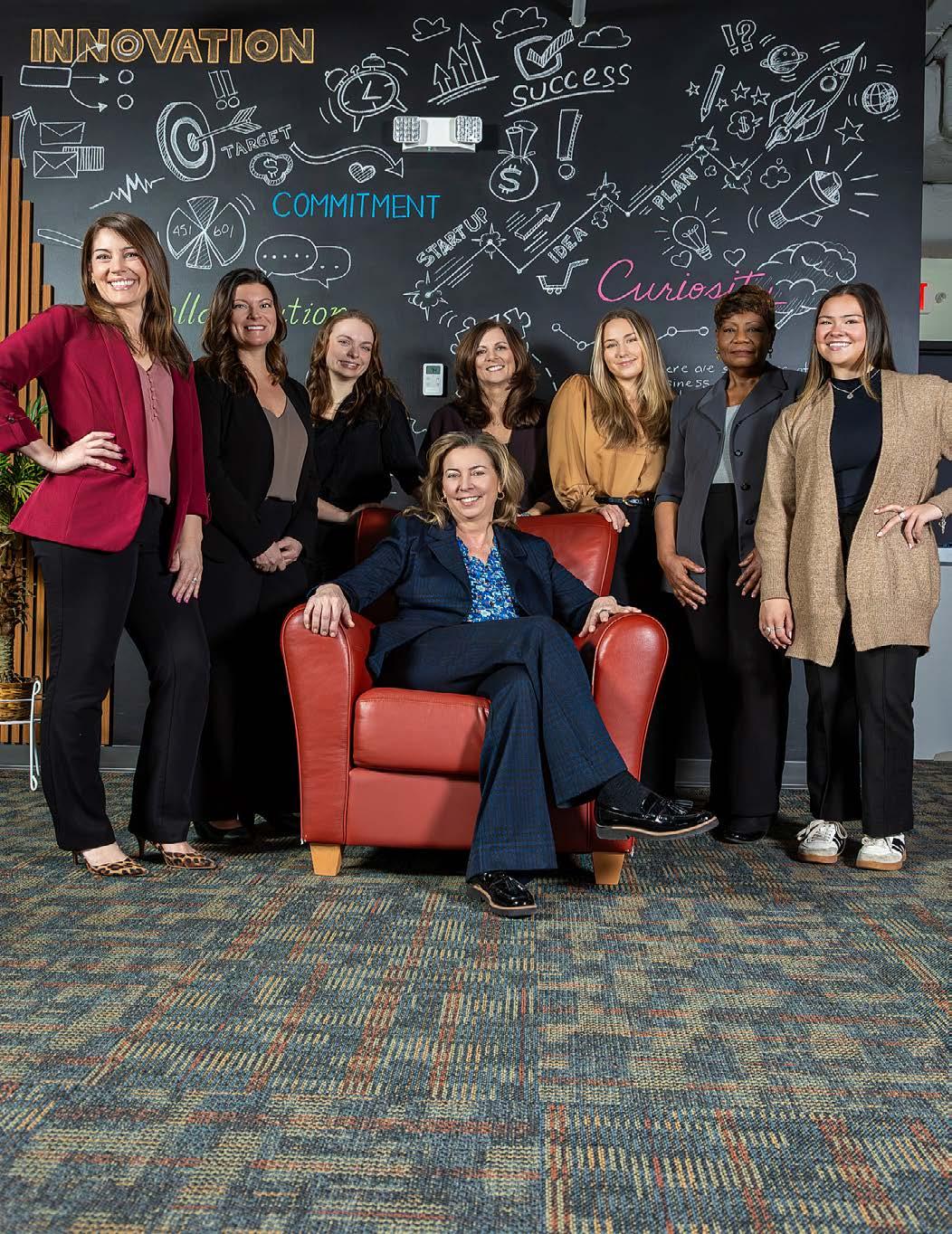
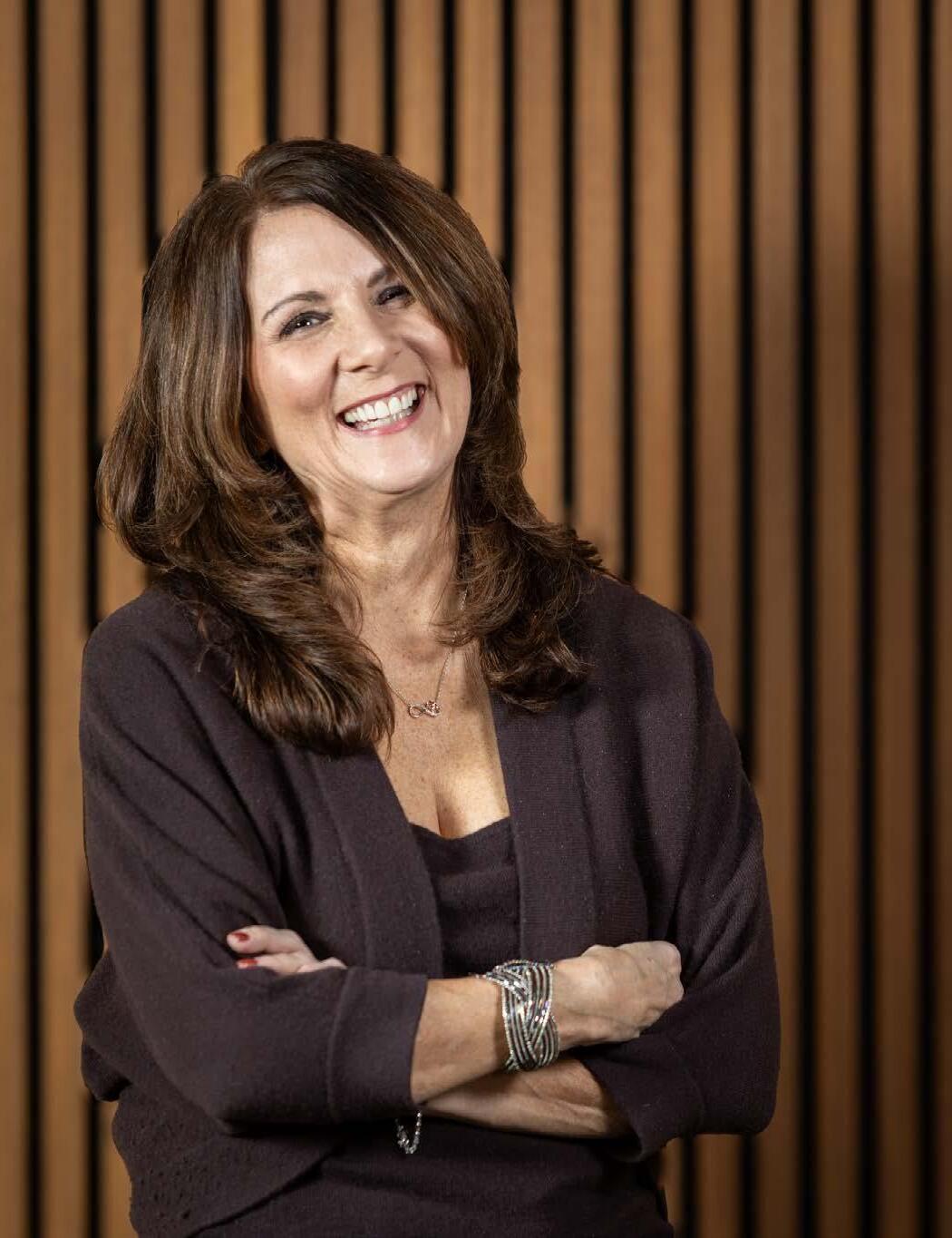
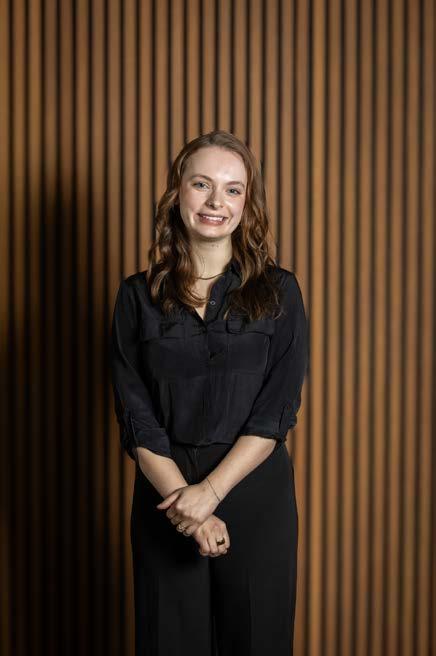
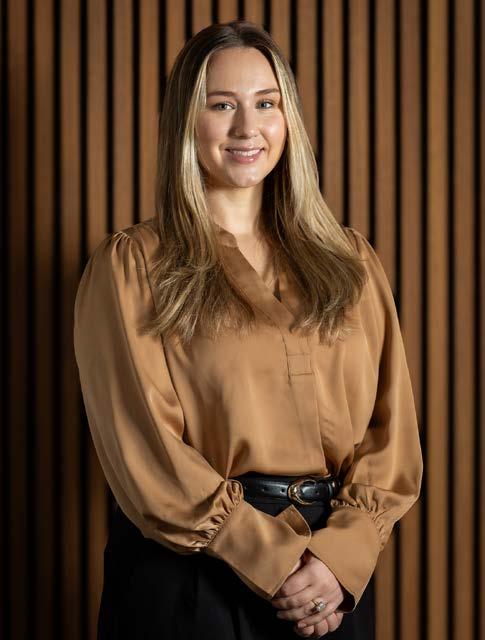
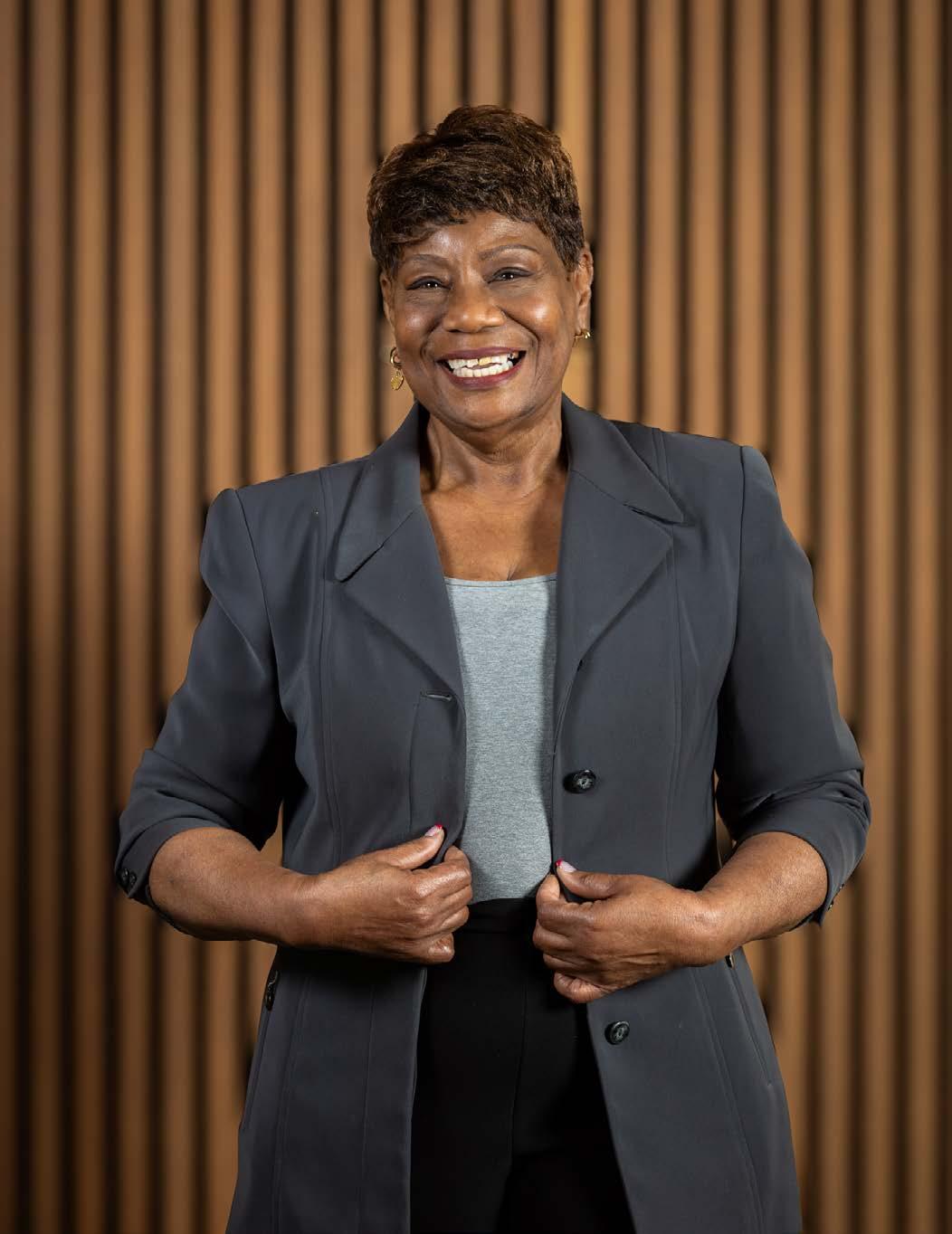
Michelle Ashby & the Women of Tipping Point Communications AGAINST ALL ODDZ
48
110
A PENNY FOR YOUR THOUGHTS
ON
OUR COVER TT
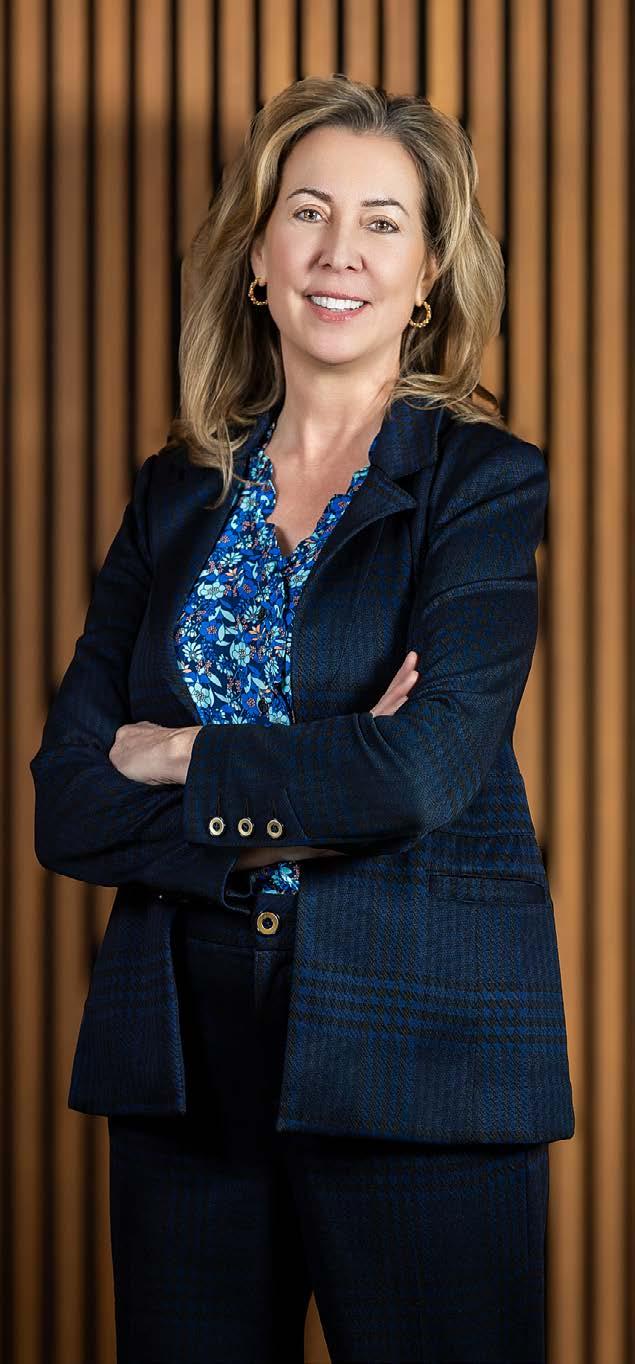
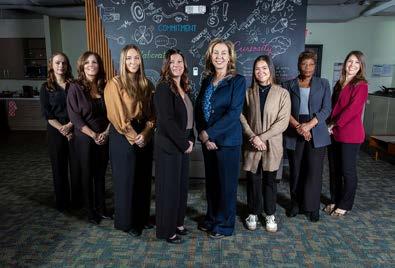
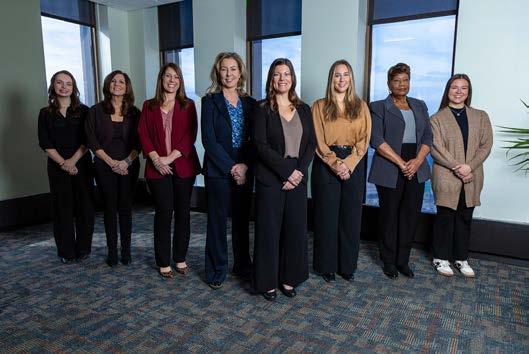
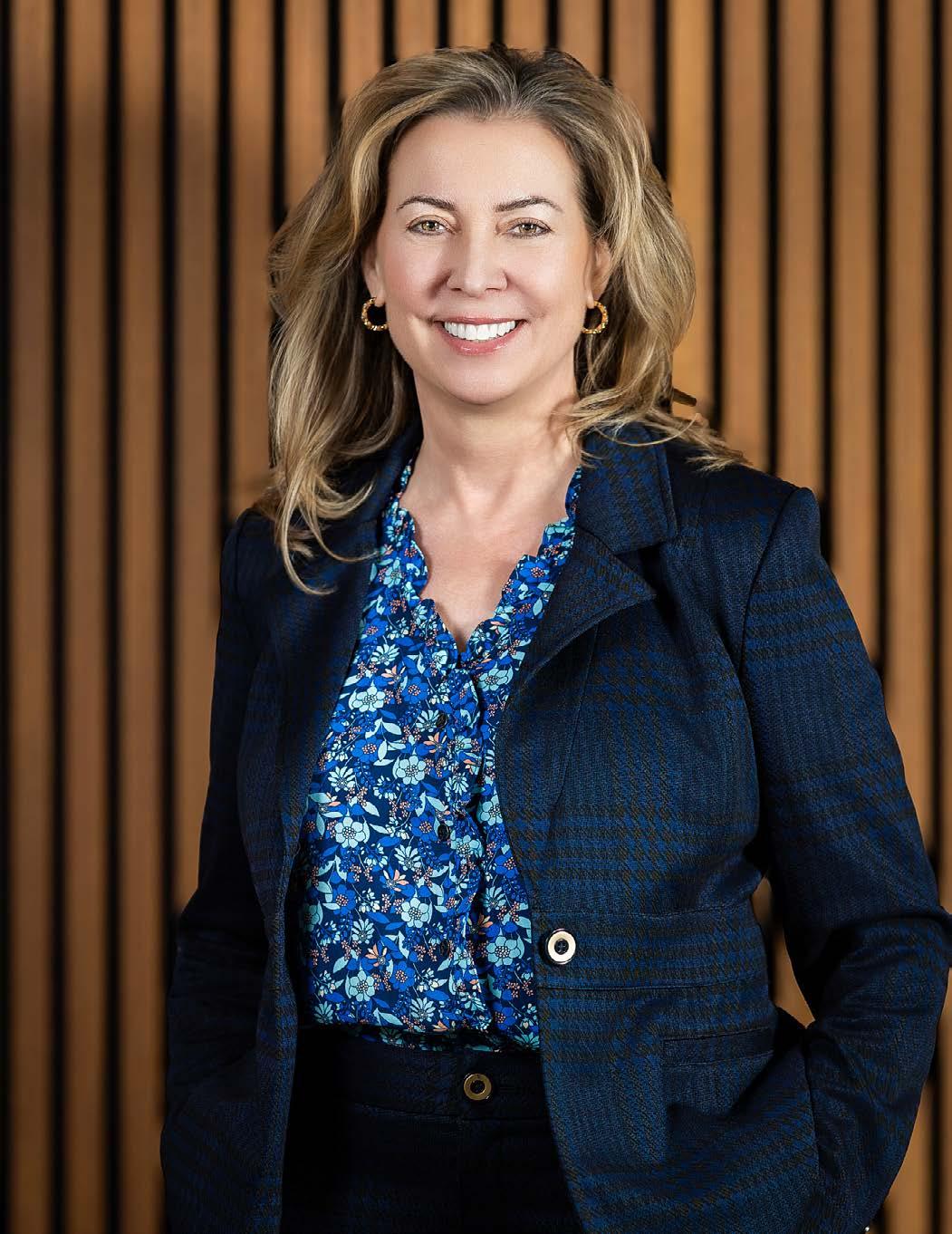
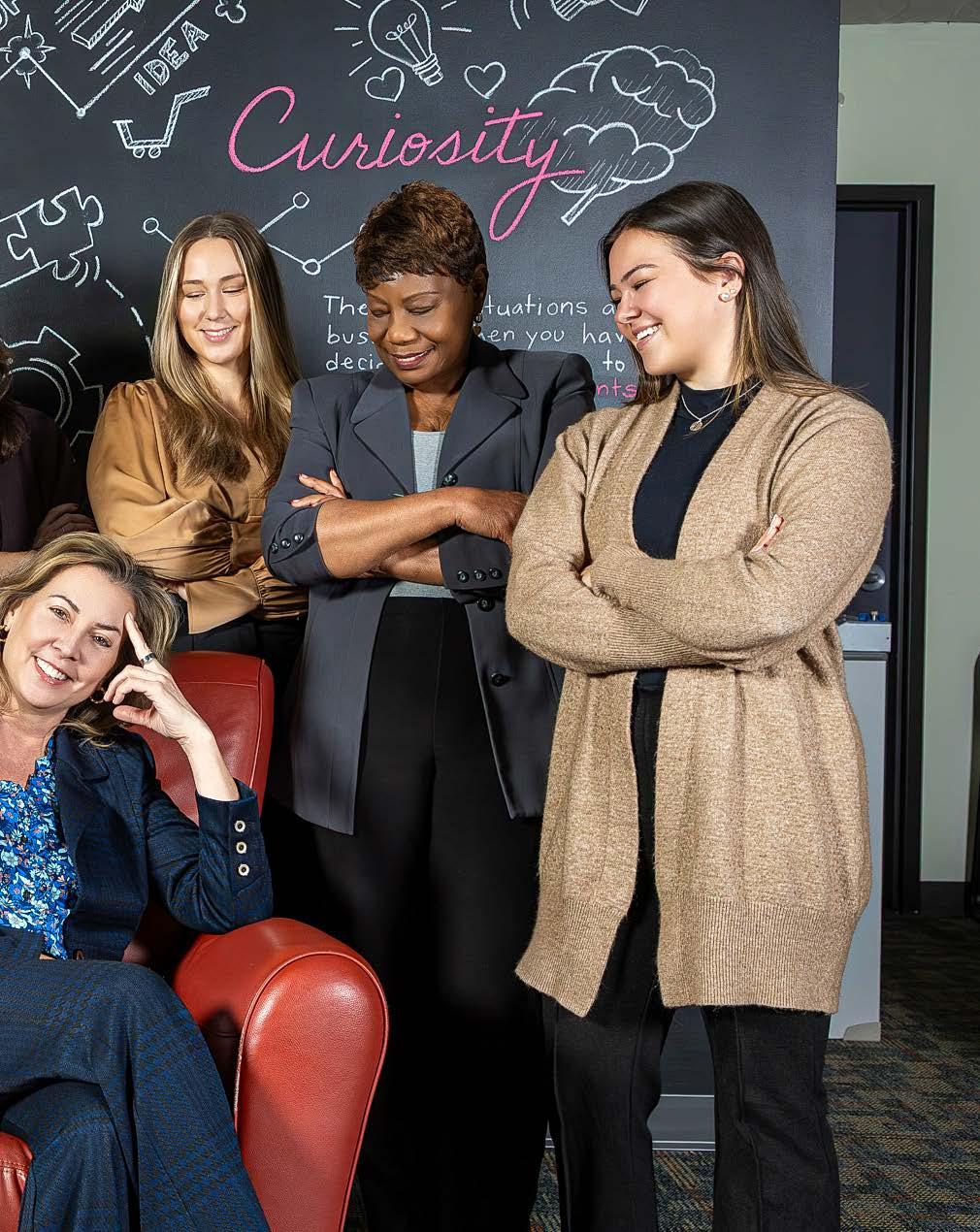
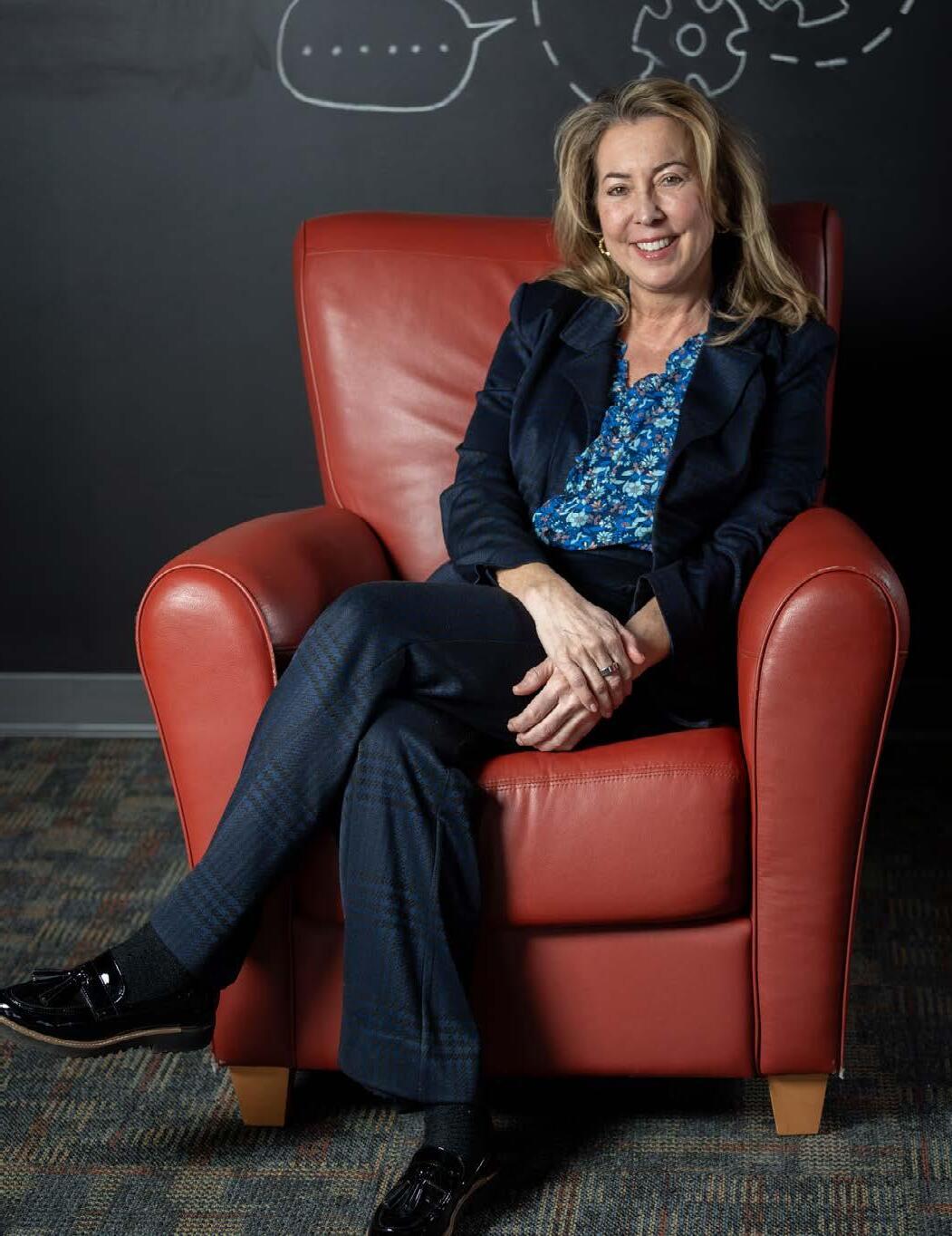
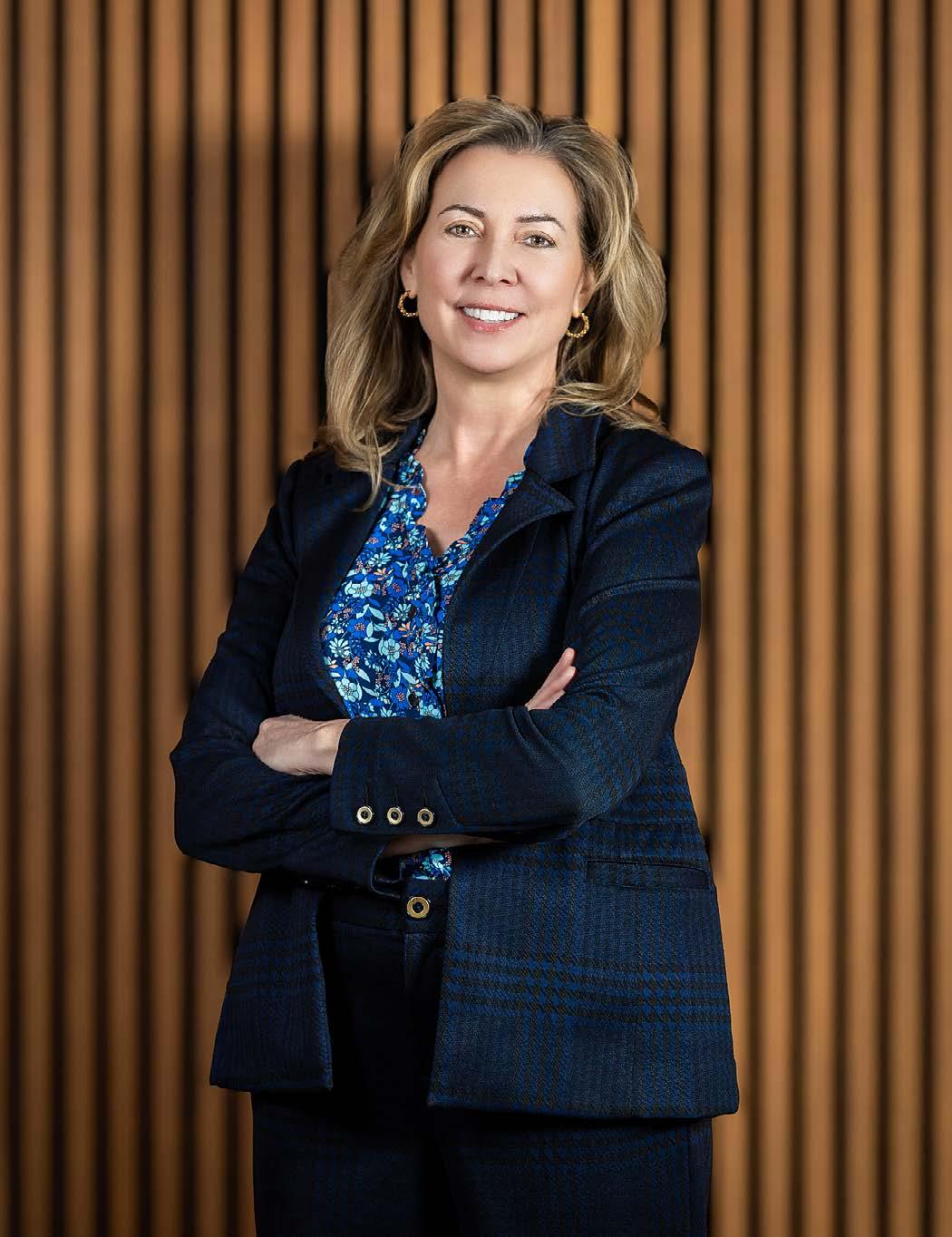
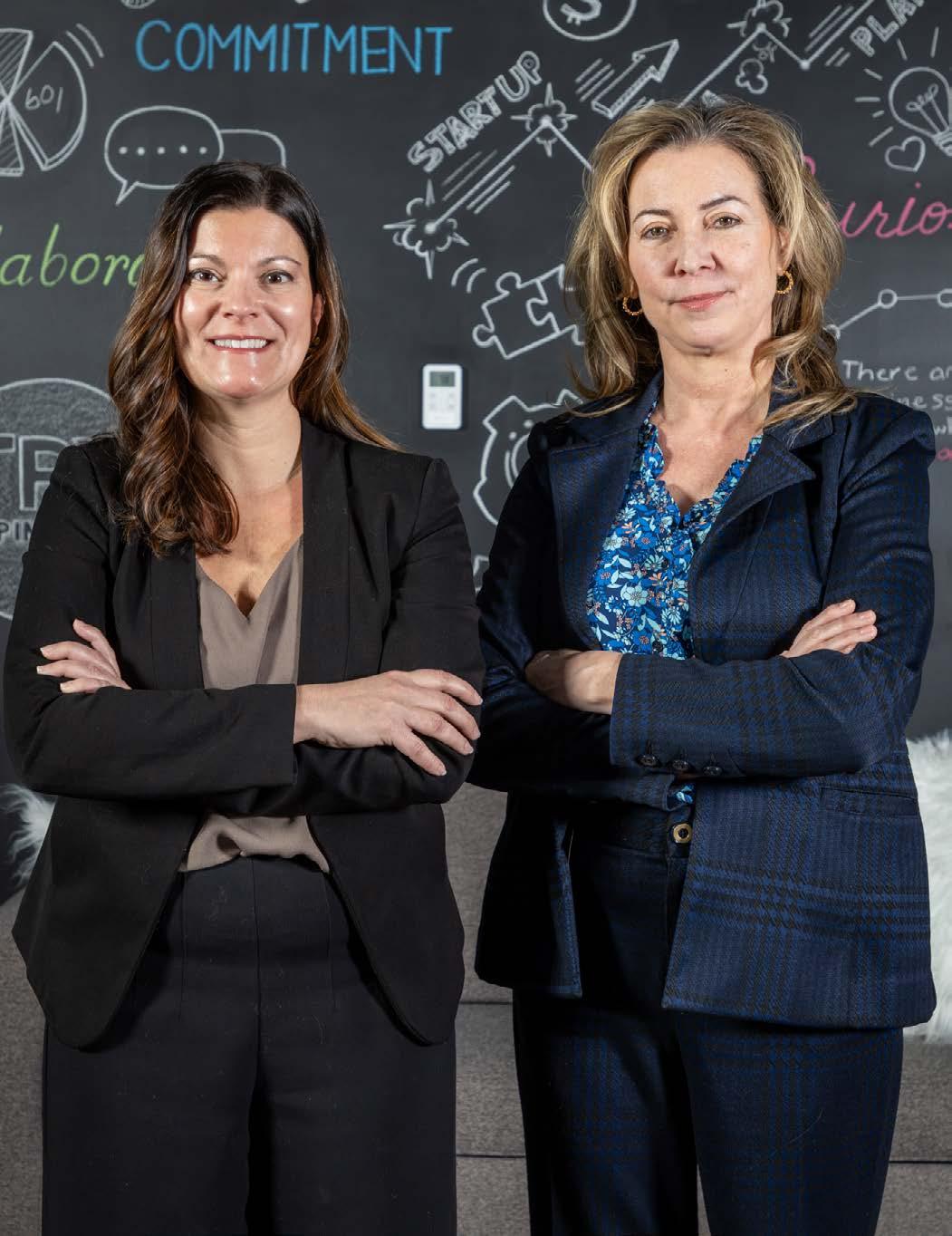
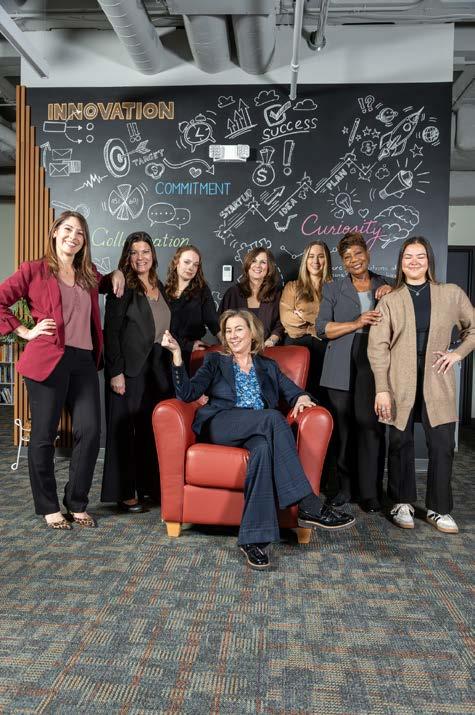
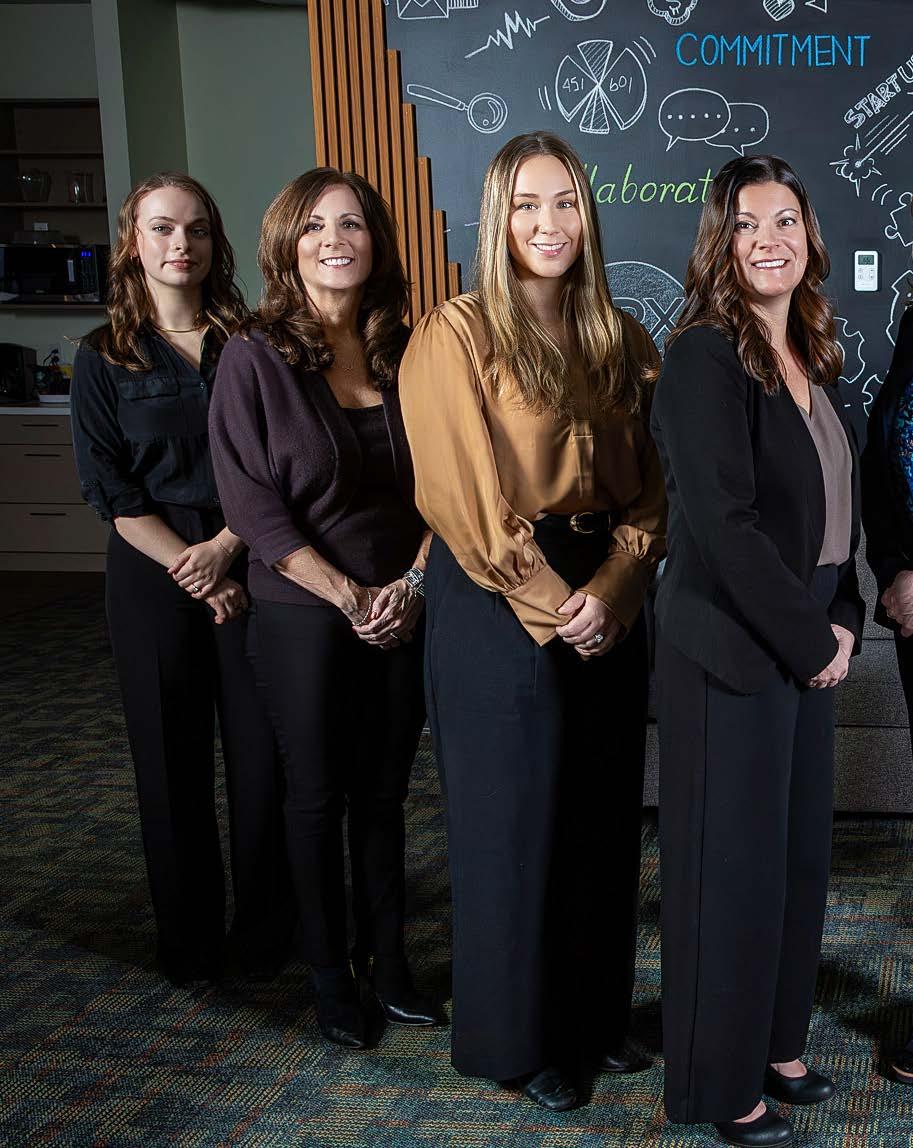
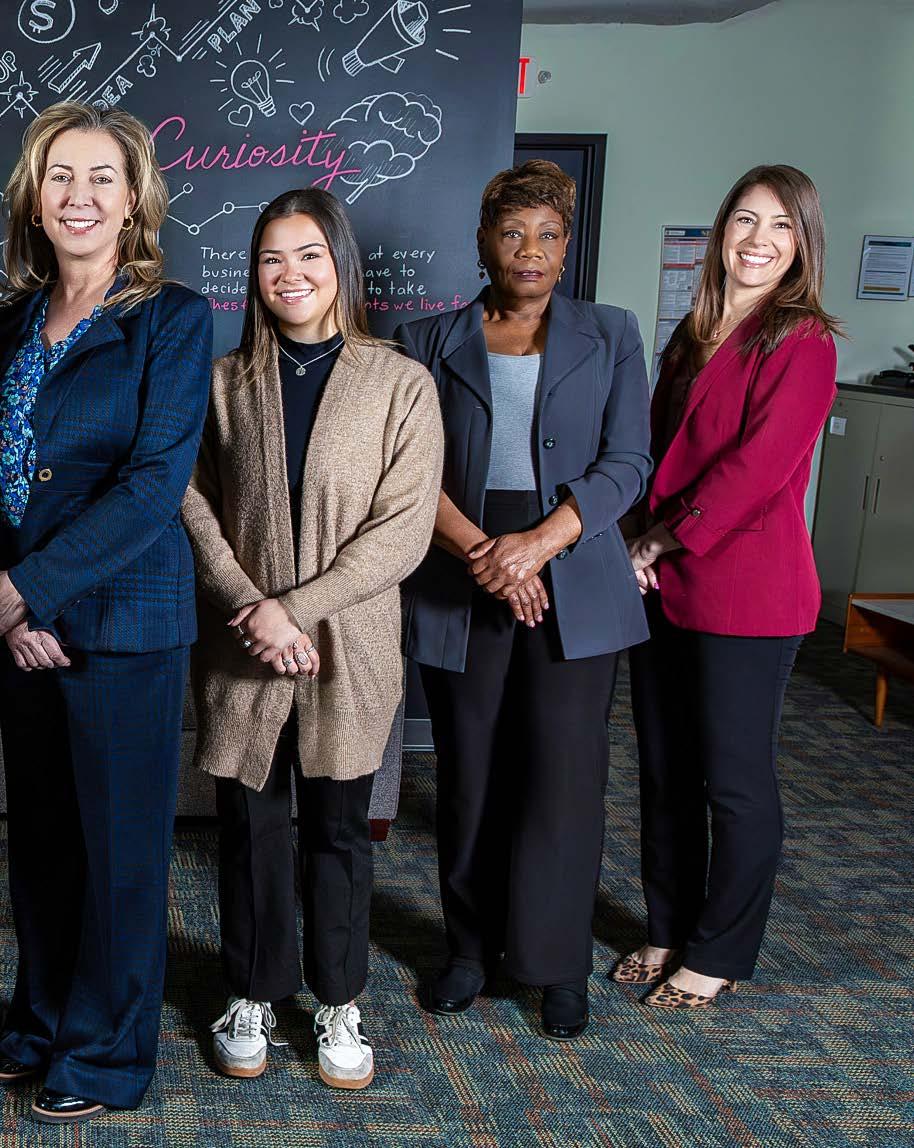
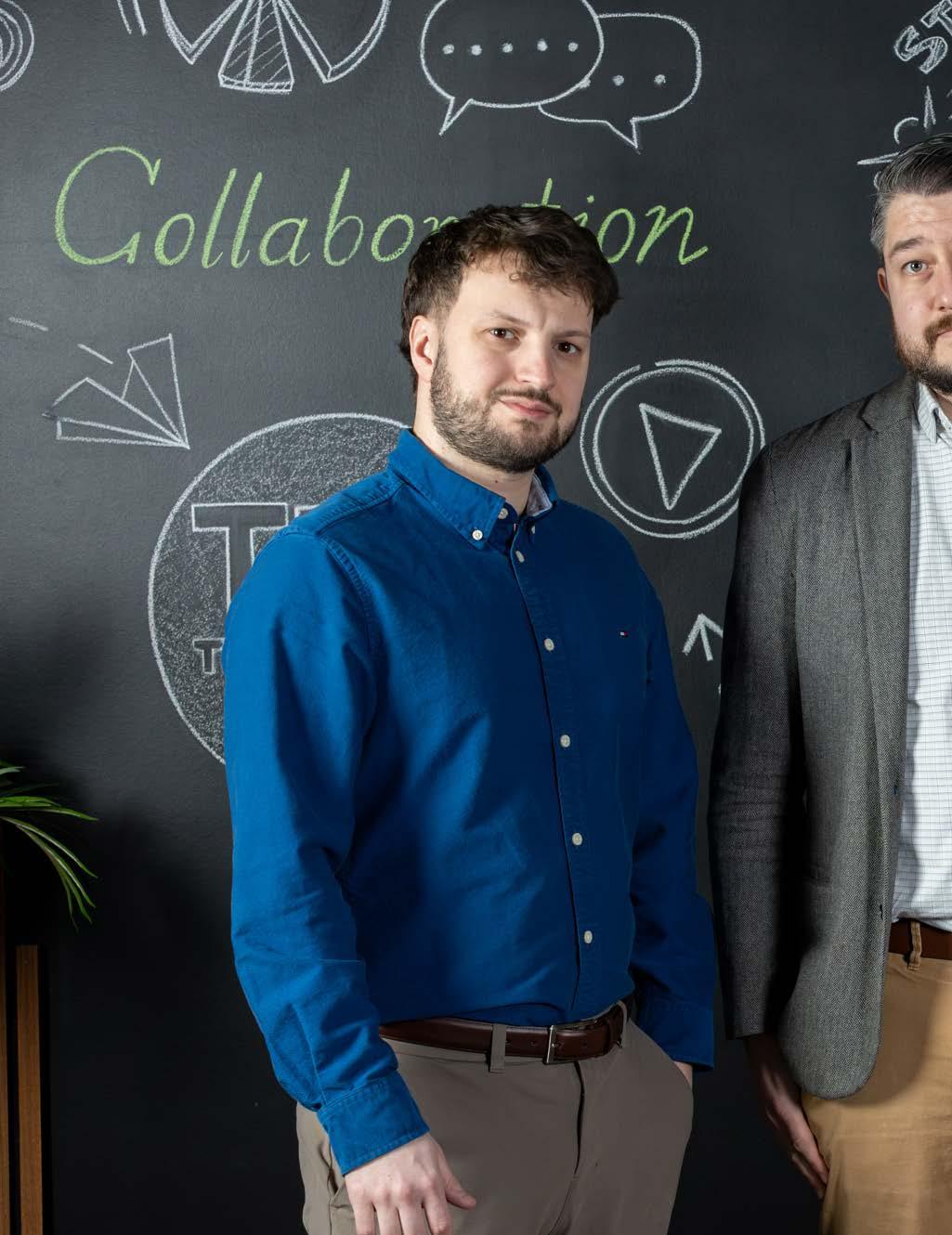
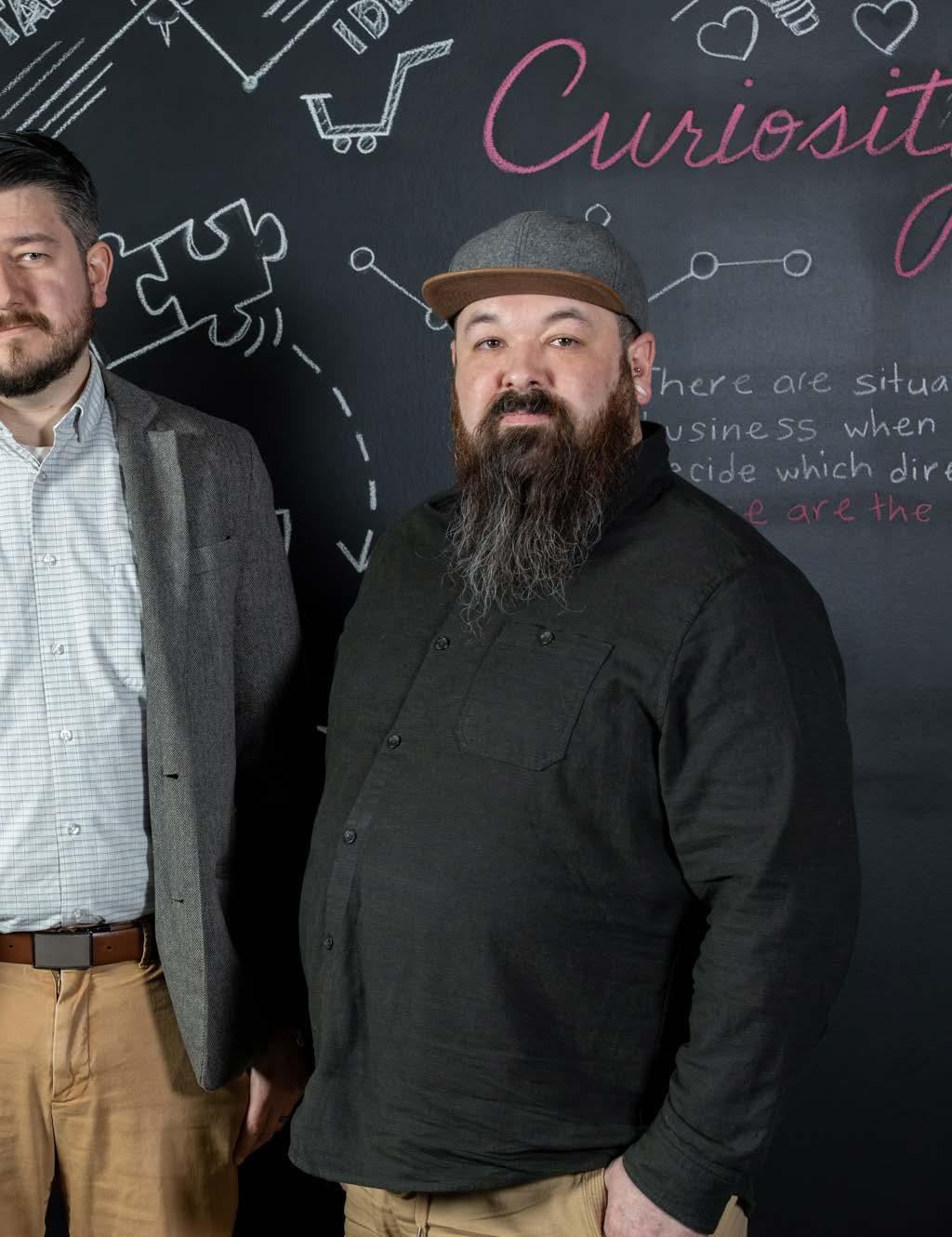
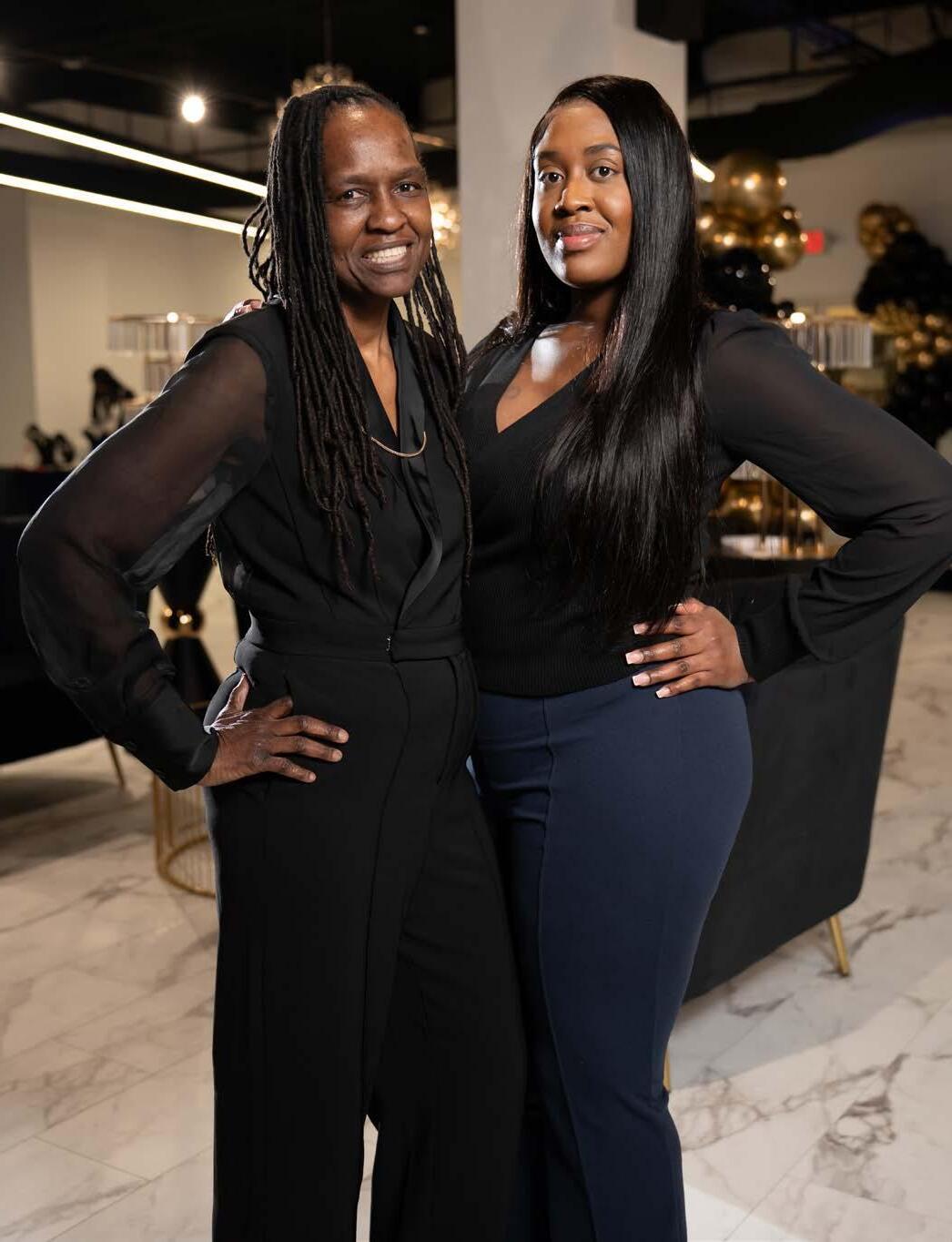
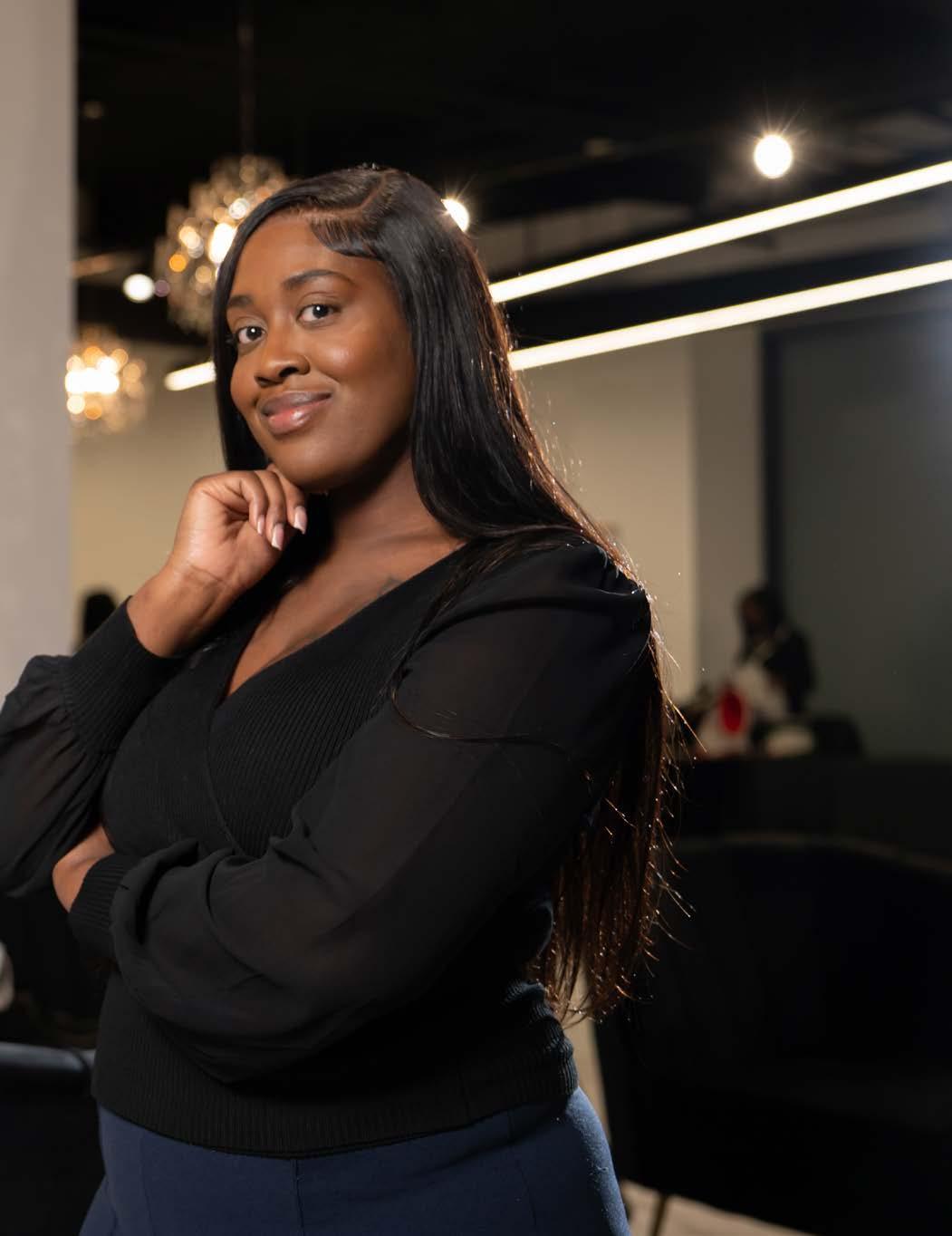
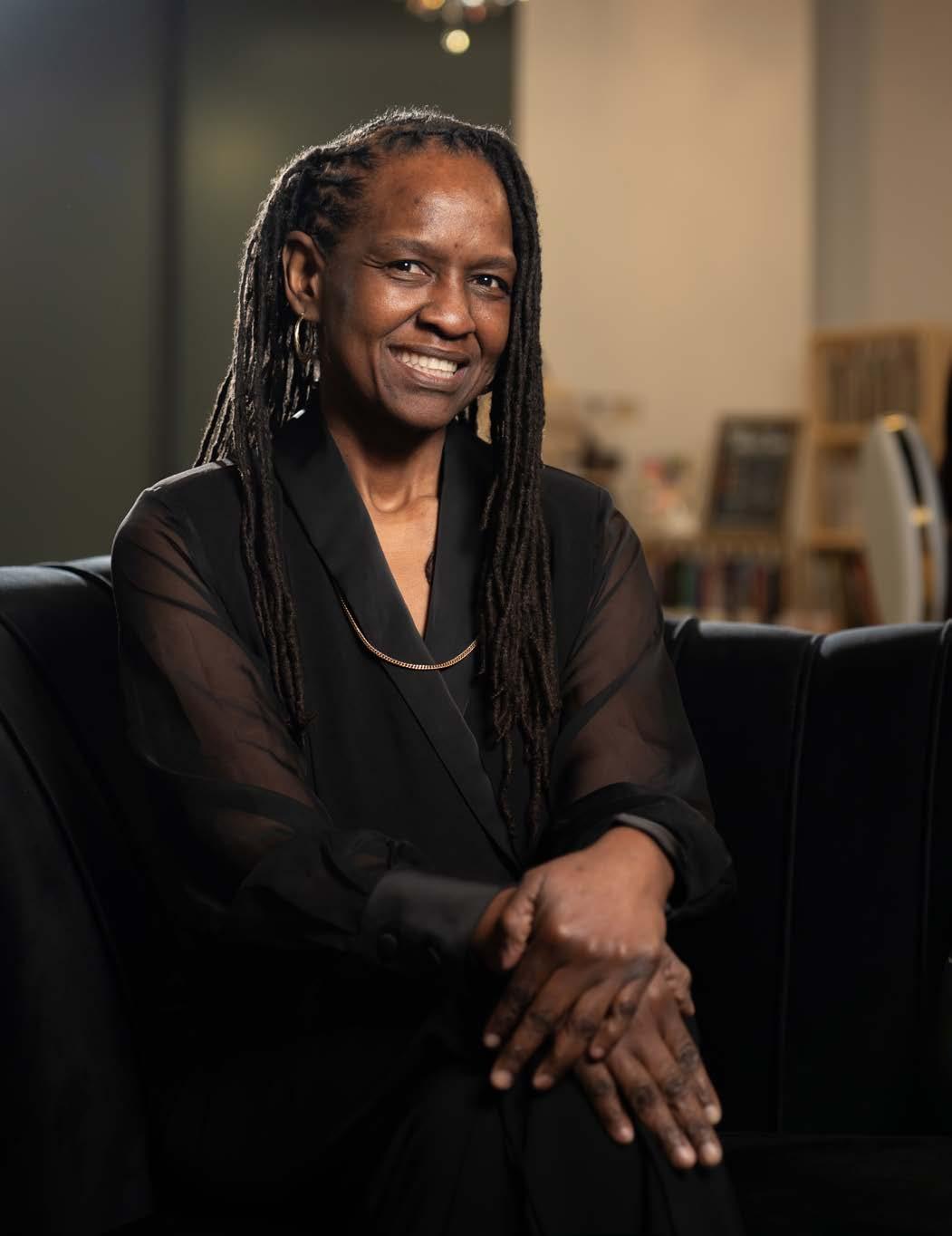
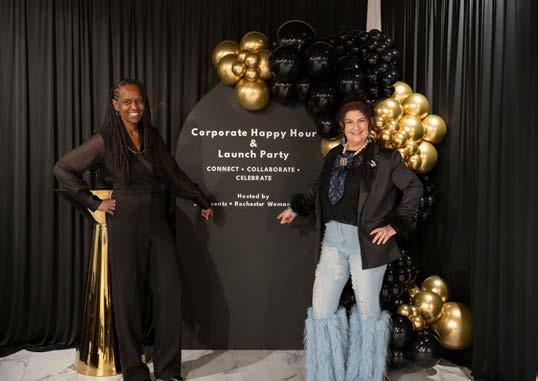
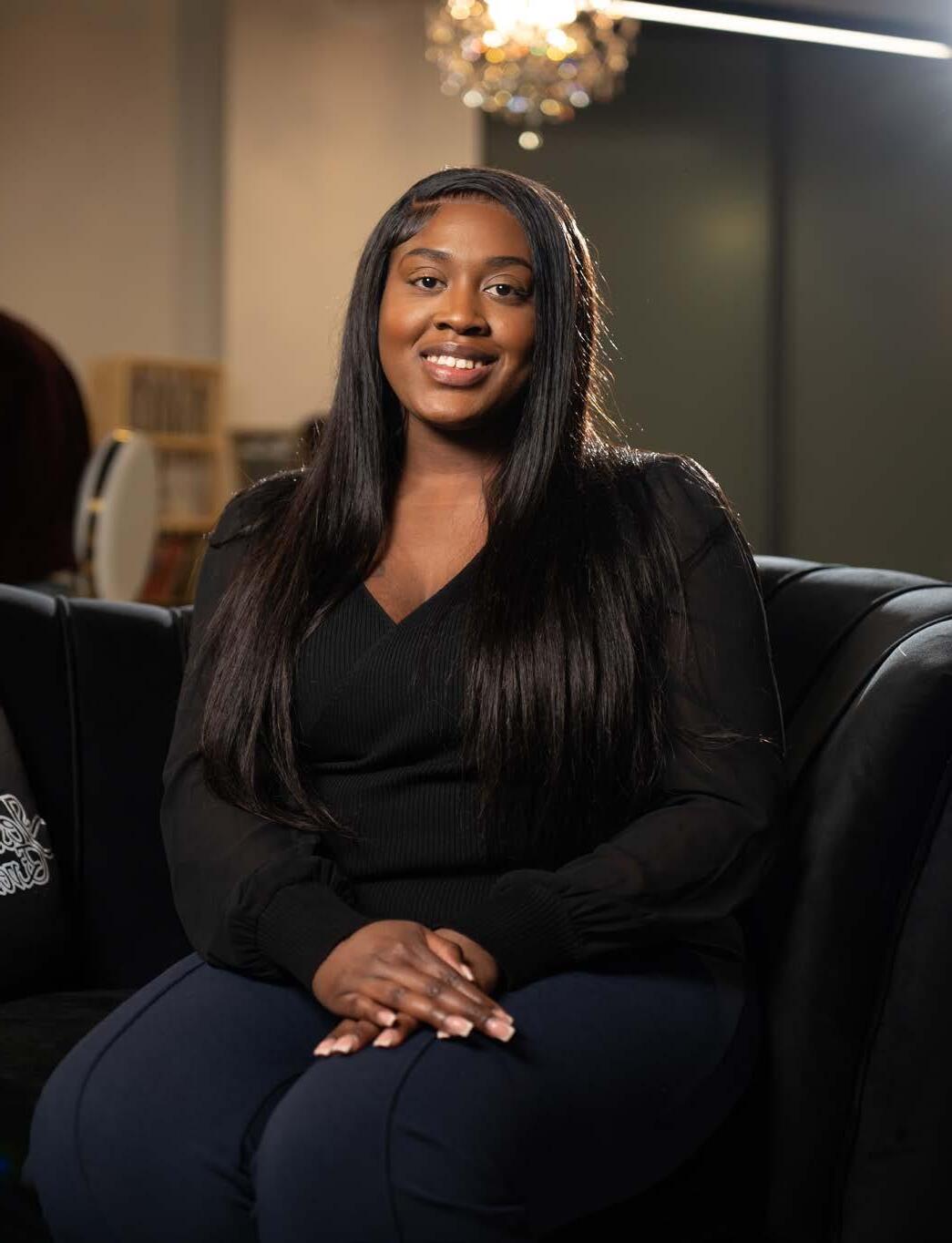
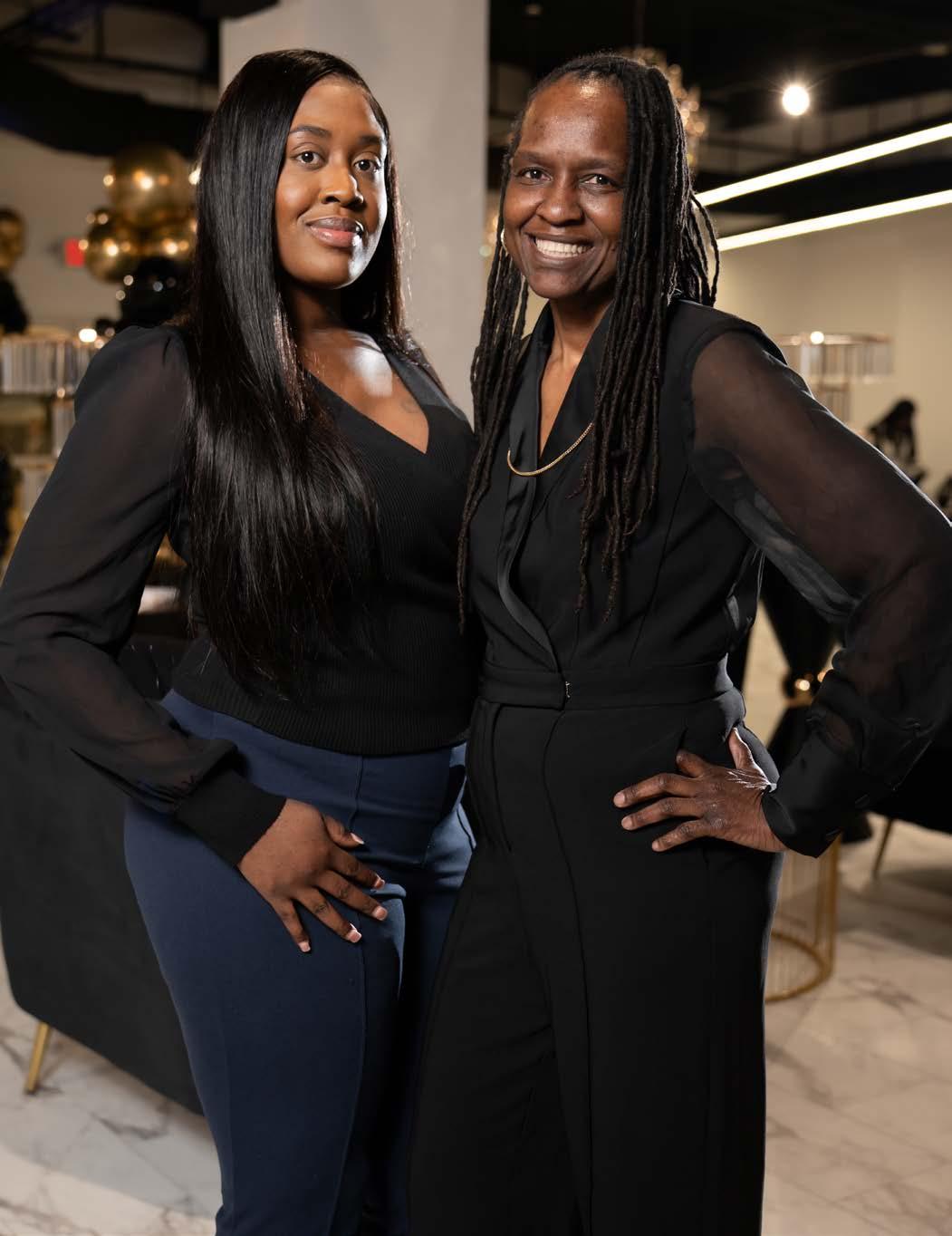
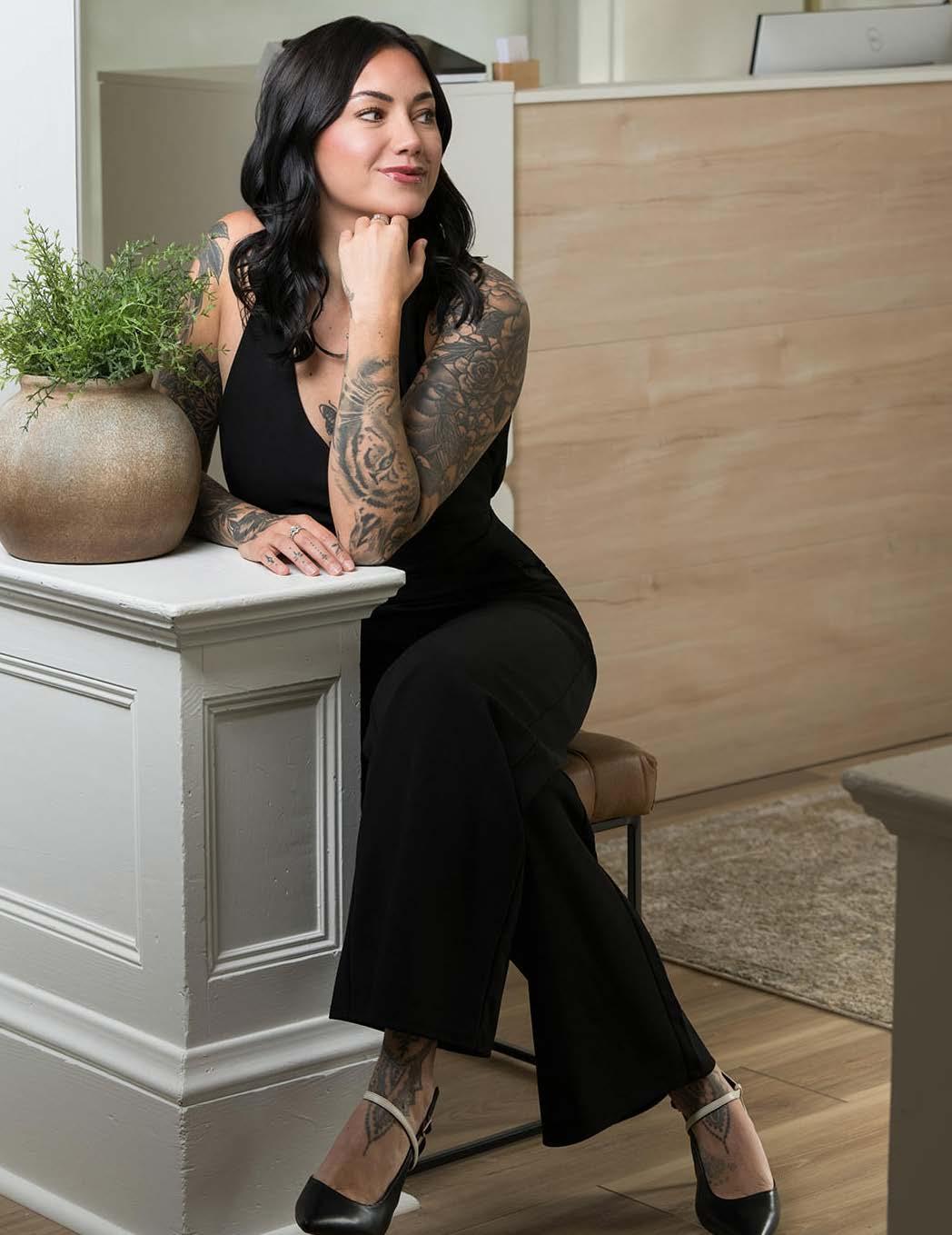
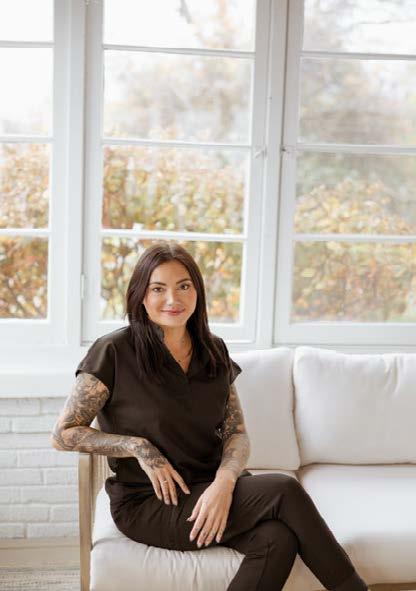
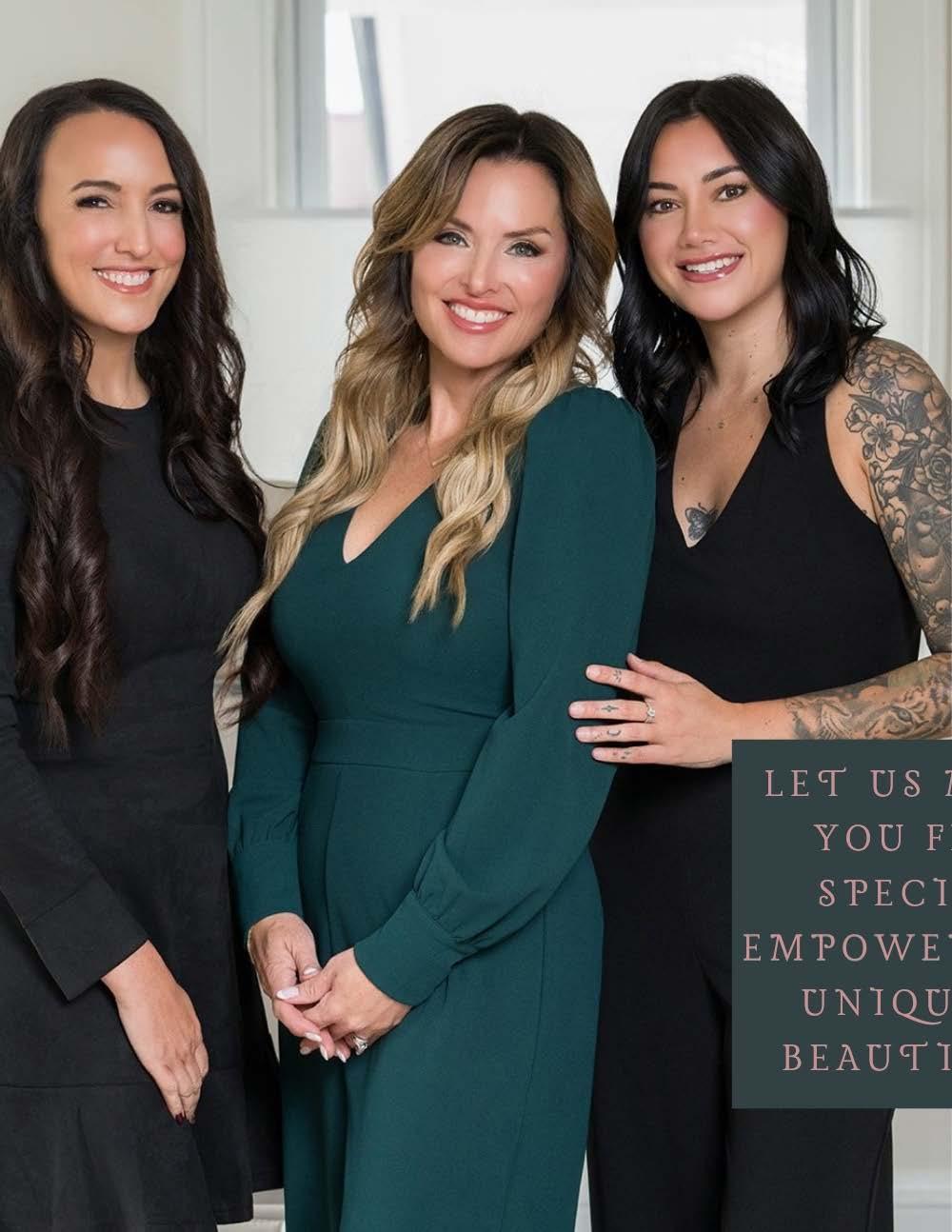
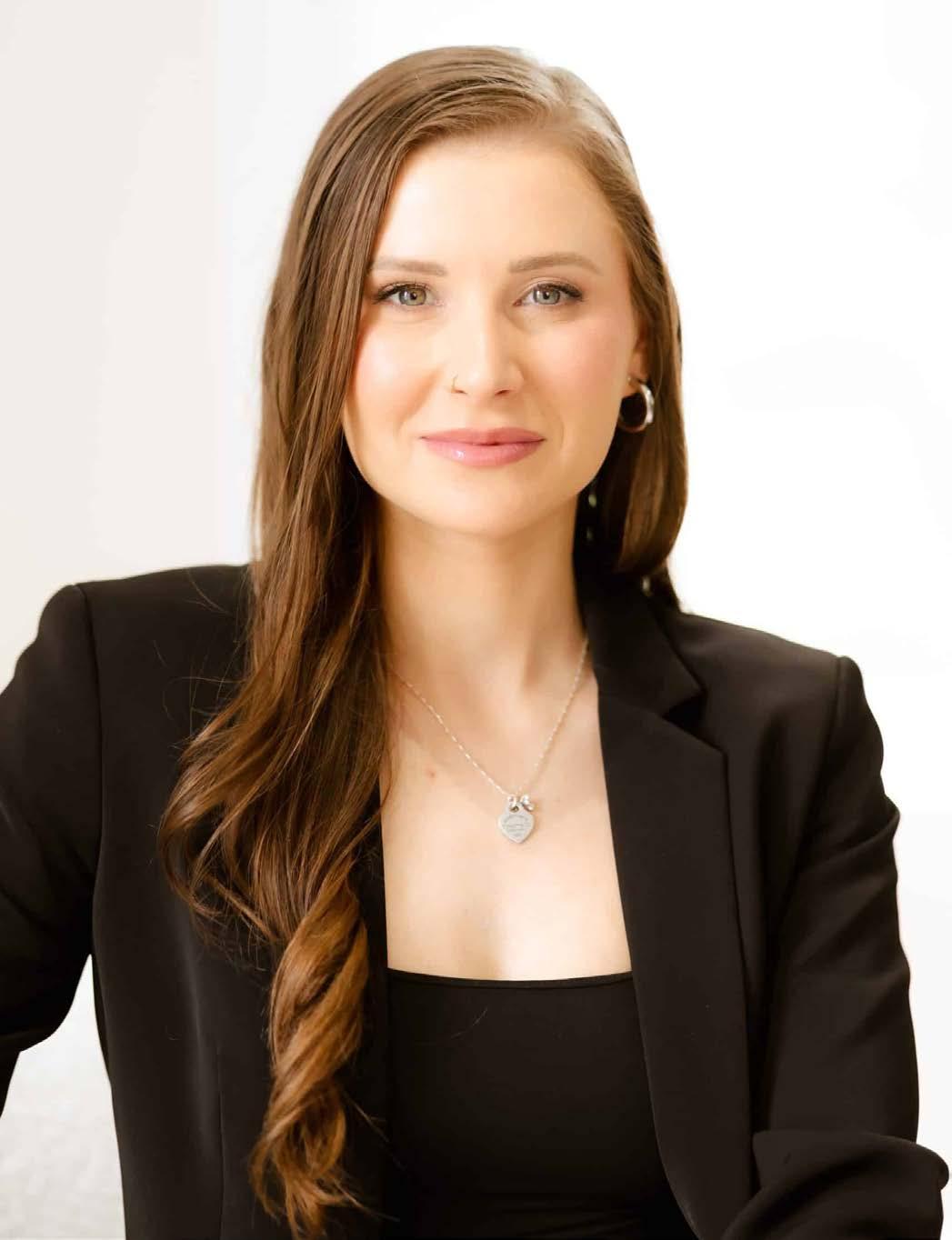
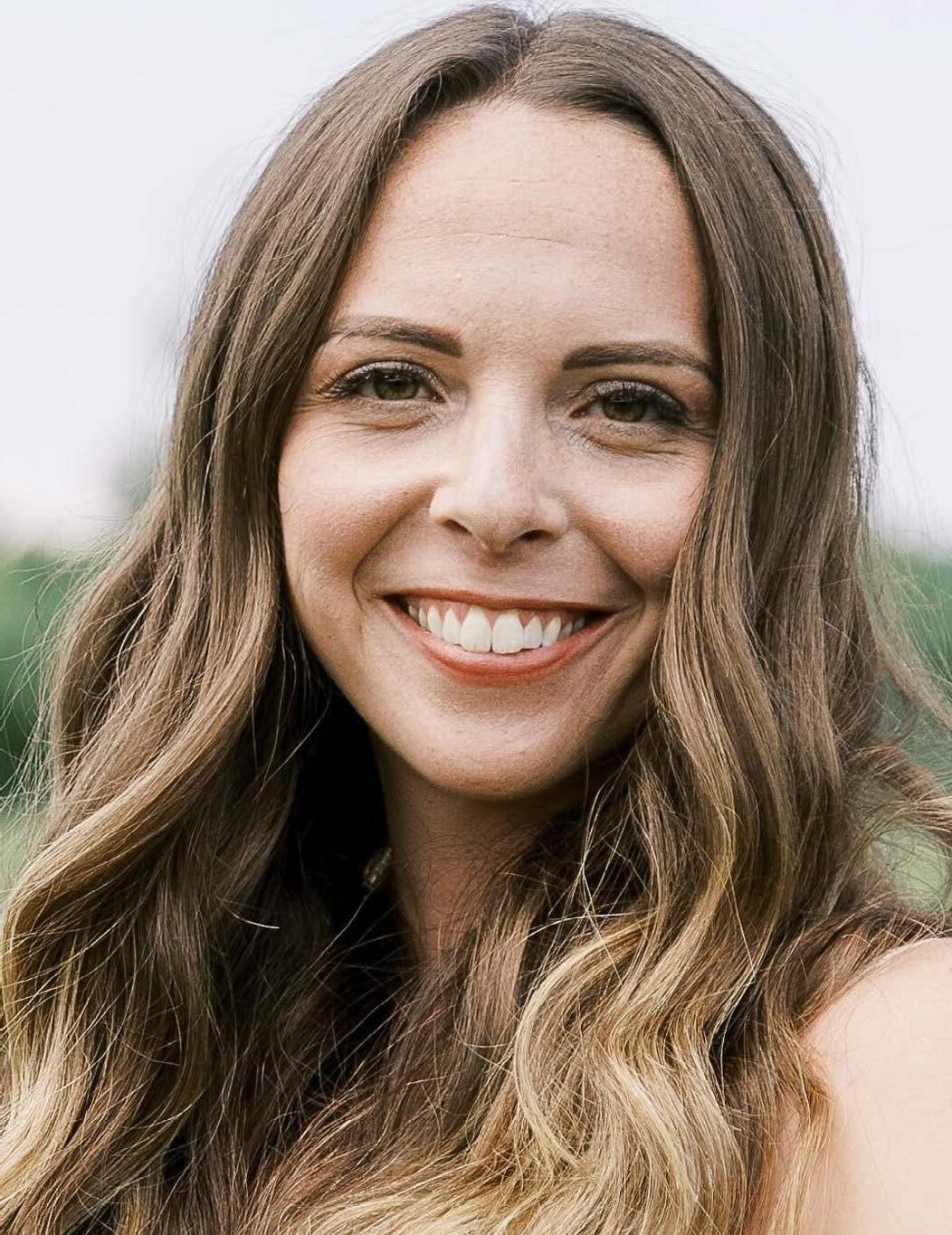
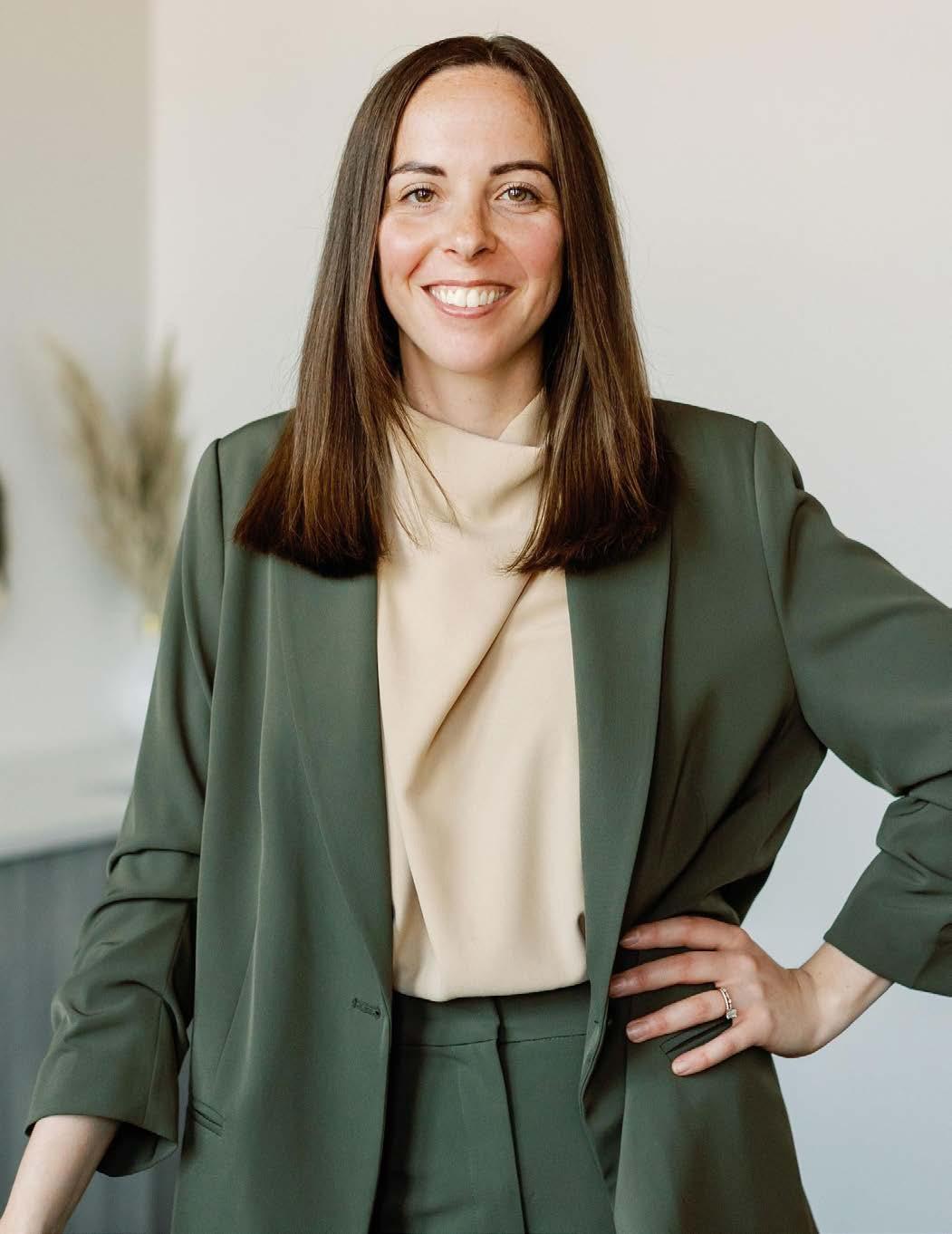
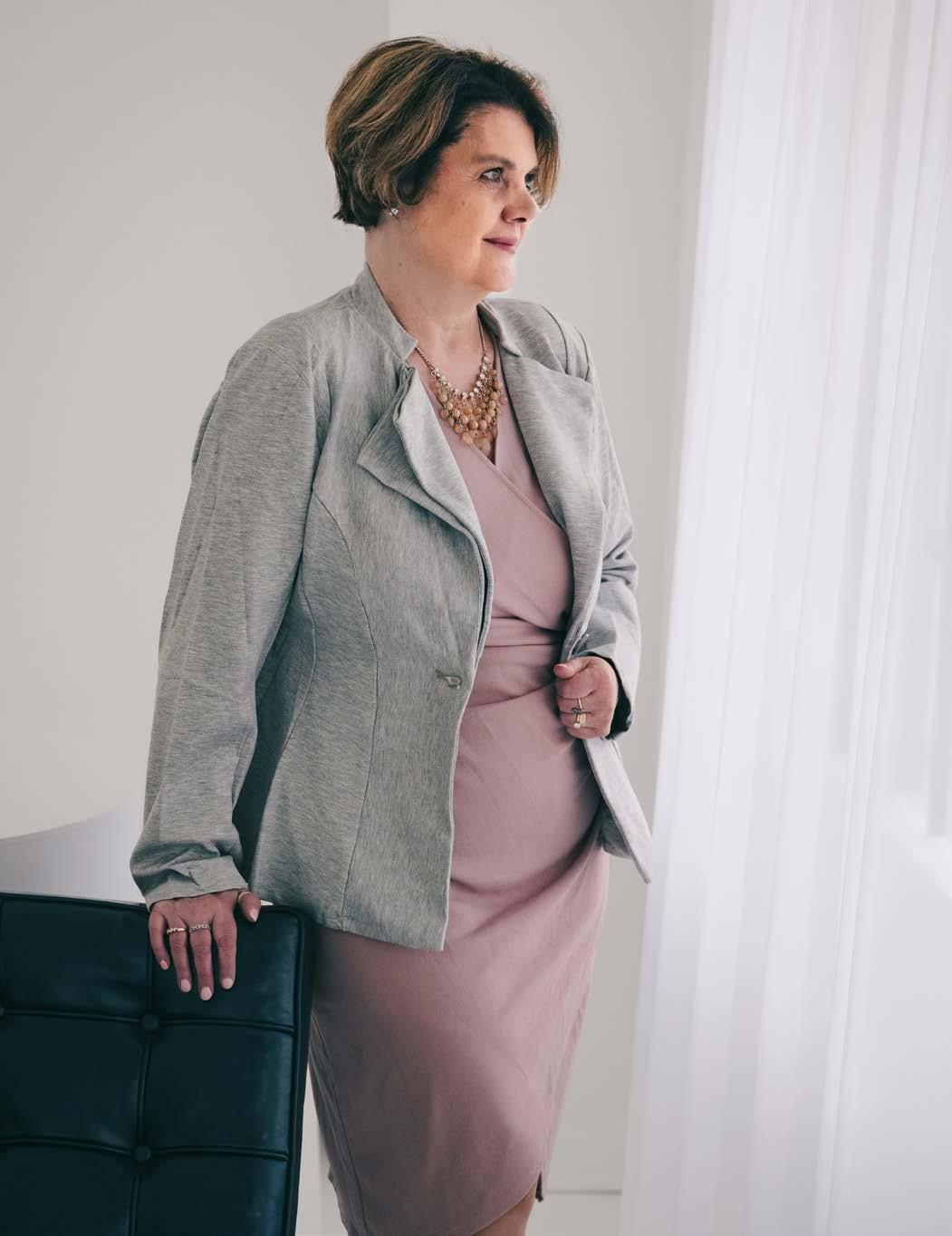
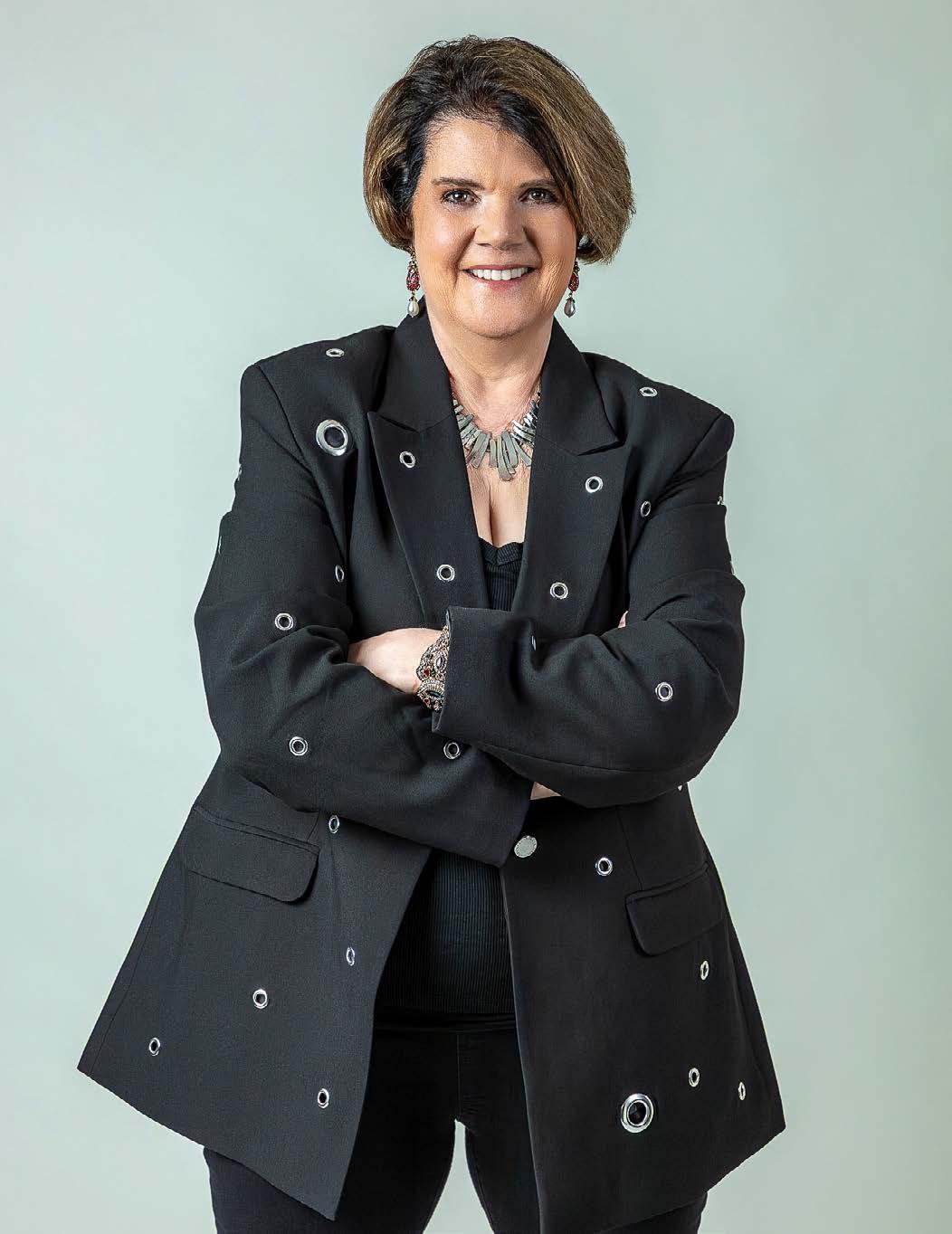
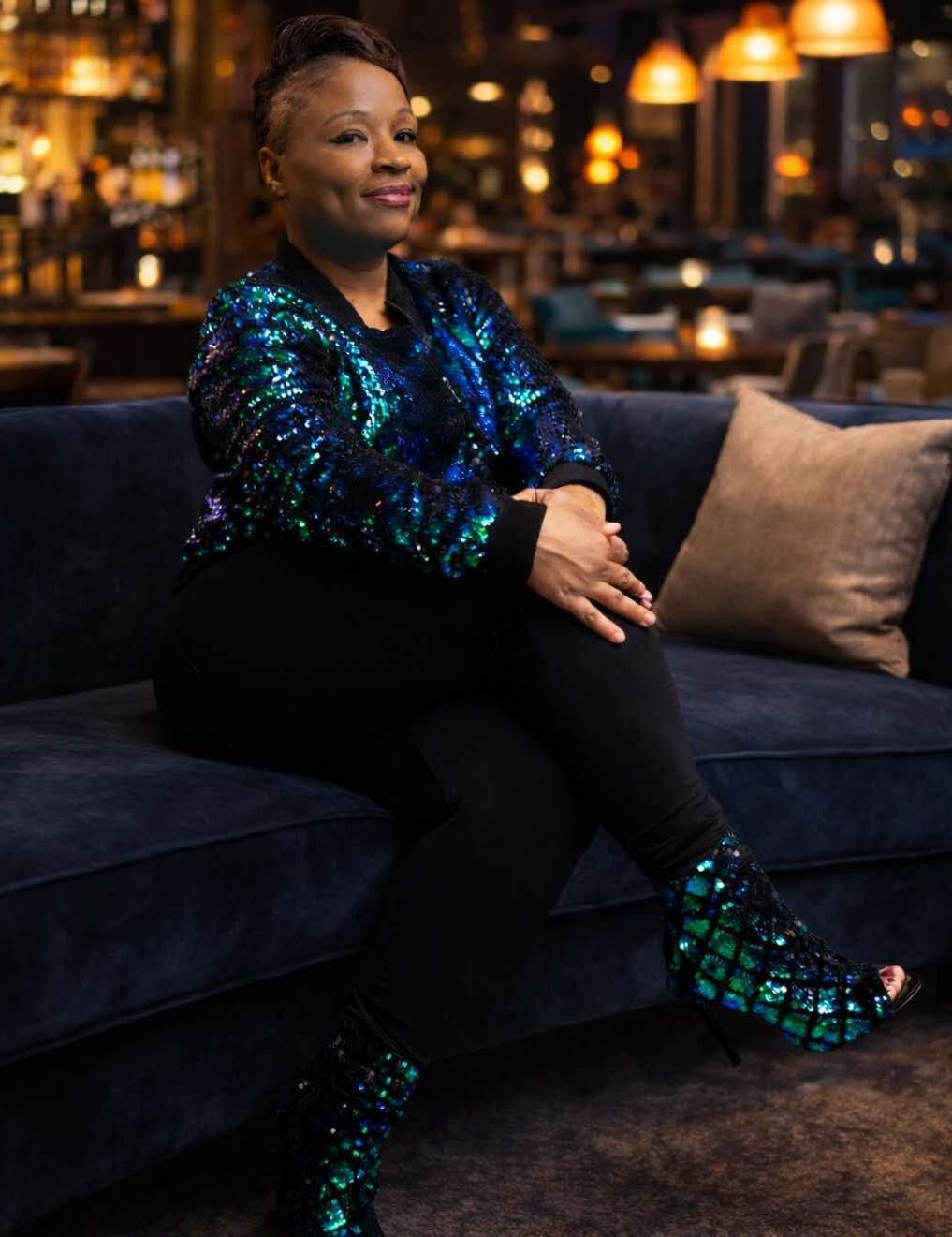
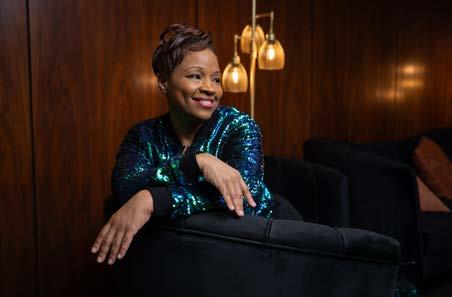
This months cover woman Michelle Ashby and her amazing team were photographed on location at the Tipping Point Communications headquarters in Rochester NY by Belavati Studios.
As we close out Women’s History Month, I find myself reflecting on what it truly means to create space for women to be seen, heard, and celebrated— not just for a moment, but consistently, intentionally, and unapologetically. For over 17 years, Rochester Woman Online has been built on that very mission. And as we look ahead, I can confidently say—we’re just getting started. Seventeen years down… and we are just as committed to the next seventeen and beyond.
This issue is a powerful reflection of that mission in action.
On our cover, we are honored to feature Michelle Ashby and her incredible team at Tipping Point Communications—a true visionary who has not only built a successful agency, but has redefined leadership, strategy, and growth in a space where women continue to break barriers. Michelle’s story is one of courage, evolution, and trusting the process—even when the path isn’t clearly laid out. She represents what it means to lead with both strength and intention, while creating opportunities for others to rise alongside her.
We also shine a spotlight on inspiring women like Torianna Melendez of Lovely You Aesthetics, whose journey into nursing and aesthetics is a testament to resilience, adaptability, and passion. Torianna’s approach goes far beyond beauty—she is helping women feel confident, educated, and empowered in their own skin through personalized, evidence-based care. Her story reminds us that success isn’t always a straight line—but it’s always worth the journey.
And that’s exactly what this platform is about.
Every issue, every feature, every story we share is rooted in one goal: to amplify the voices of women who are doing incredible things—in business, in their communities, and in their own lives. Women who are building, leading, overcoming, evolving, and showing up as their most authentic selves. Because when one woman shares her story, it has the power to inspire countless others.
That same energy is coming to life in a BIG way at one of our most anticipated events of the year…
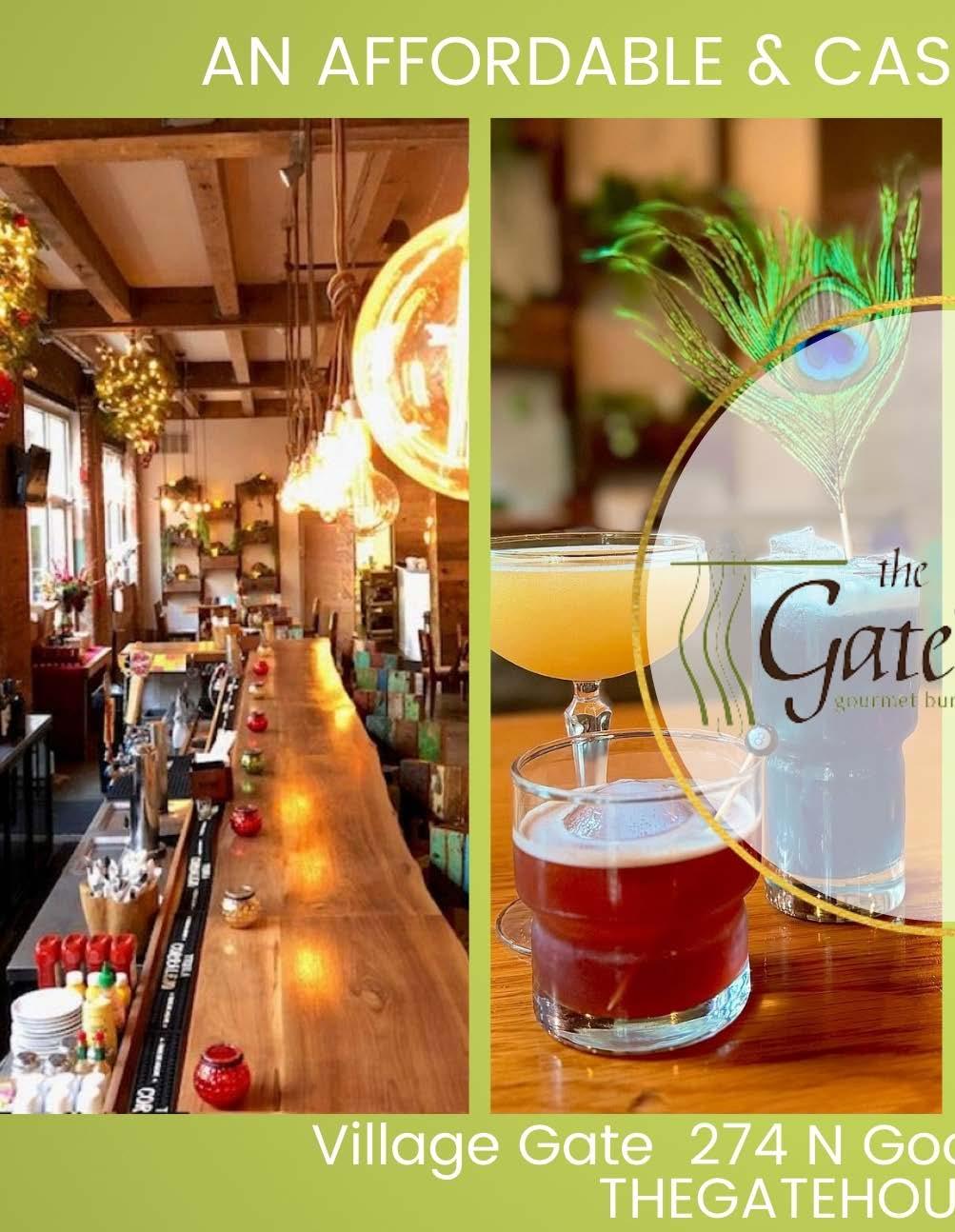
✨ The Ultimate Women Entrepreneurs Expo Sunday, May 17th | 11 AM – 5 PM Village Gate – 2nd Floor Atrium
This is more than just an event—it’s an experience. With over 60+ women-owned businesses, an incredible lineup of speakers, powerful panel discussions, networking opportunities, and so much more… this day is all about connection, collaboration, and community. And the best part? It’s FREE to attend.
If you’ve ever wanted to surround yourself with driven, like-minded women… if you’ve been craving inspiration, connection, or your next big opportunity—this is where you need to be.
As always, I want to personally invite YOU to be part of this movement.
Do you have a story to share?
Are you building a business, brand, or mission you’re passionate about?
Have you overcome something that could inspire another woman?
We want to hear from you.
Whether it’s through a feature, advertising, live interviews, or even becoming a future cover woman—there is a place for you here. Our audience of over 100,000 readers is waiting to connect with voices just like yours.
{
LOOK AT OUR TEAM }
PUBLISHER
FREELANCE EDITOR
CREATIVE DIRECTOR/GRAPHIC DESIGN
LEAD PHOTOGRAPHER
PHOTOGRAPHY
CONTRIBUTING WRITERS
ADVERTISING SALES
SOCIAL MEDIA DIRECTOR
WEB DESIGN & MANAGEMENT
Kelly Breuer
Marisa Zeppieri
Kelly Breuer
Belavati Studios
Creating Your Memories
Dominic Guzman
Brandon Vick
Christine Conte
Walida More-Sims
Victoria Fountaine
Torianna Mendez
Tamesha Beckford
The ACS Team
Clianda Florence
Meg Tobin
Shauna Dixon
Lori Bruton
Erin Pittinaro
Victoria Fountaine
Jessica Fabus Cheng
Robin Dewind
Chrstine Piacentino
Dr Pam Denton
Kelly Breuer
Network Rochester
Network Rochester
charge. Please feel free to contact publisher Kelly Breuer at 585.727.9120 or you can
terwomanonline.com.
YOU ARE ENOUGH.
THE WOMEN OF TIPPING POINT
BY NICOLE HEROUX WILLIAMS I PHOTOS BY NSP STUDIO
PHOTOS BY BELAVATI STUDIOS
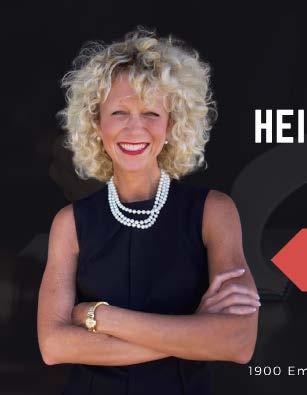
In an industry driven by noise, trends, and constant change, Michelle, founder of Tipping Point Communications, built something different — something rooted in precision, strategy, and fearless clarity. What began in 2005 as a boutique media shop quickly evolved into something far more powerful: a behind-the-scenes force transforming how brands think, communicate, and grow. Today, Tipping Point stands as a full-service agency known for its seamless integration of media, analytics, creative, and public relations — but at its core, it remains exactly what Michelle envisioned from the start: a strategic partner that makes every marketing dollar work harder.
With over two decades of experience and relationships that span years — even decades — Michelle has built her reputation not just on results, but on trust, honesty, and the courage to lead through complexity. Her approach challenges the traditional marketing model, insisting that media, messaging, and creative must work together from the very beginning. It’s this philosophy that has allowed her to guide clients through seismic shifts — including the rapid transformations brought on by the pandemic — with agility, confidence, and measurable success.
of leaders within her company, her journey reflects a deeper truth about leadership: growth requires both vision and the willingness to let go.
At the heart of it all is what she calls the “X Factor” — that defining clarity that separates brands from the rest. It’s not just what a company does, but why it matters. And for Michelle, helping clients uncover that truth isn’t just strategy —
Scarborough, and advanced buying software. These systems are costly and require experienced operators.
I saw an opportunity to build a high-level media strategy firm that could serve as a trusted partner to agencies that did not want the overhead of maintaining that capability internally. We became the behind-the-scenes engine. We evaluated vendors objectively, analyzed audience data, negotiated savings by our purchasing power, and ensured clients were investing at the right levels and in the right places for real return.
it’s transformation.
You founded Tipping Point Communications in 2005 as a boutique media shop. What was the original vision — and how has it evolved into the full-service agency it is today?
But beyond the business, Michelle’s story is one of evolution. From navigating the early challenges of entrepreneurship as a female founder to learning how to step back and empower the next generation
In 200 5 , many creative agencies were producing strong campaigns, but they did not fully understand the complexity behind media strategy. Media buying is not just placement. It requires mathematical precision, market analysis, vendor negotiation, and expensive research tools like Nielsen,
Over time, something important happened: A client invited our media team to the strategy developing table. We began participating in more complex conversations. Messaging. Positioning.
Brand clarity. He said, “Media drives the message. We need to understand how to reach our target audience first, then we’ll decide what the creative should be.” From that point forward, we embraced the realization that media works best when it is connected to strategy and creative from the start.
This evolution led us to expand thoughtfully into public relations, analytics, digital, and creative services. What began as a specialized media consultancy has grown into an integrated agency. The common thread has never changed. We are still obsessed with
“I saw an opportunity to build a high-level media strategy firm that could serve as a trusted partner to agencies that did not want the overhead of maintaining that capability internally.”
YOU ARE ENOUGH.
BY NICOLE HEROUX WILLIAMS I PHOTOS BY NSP STUDIO
accountability, strategy, and making every marketing dollar work harder.
Over 20 years later, you’ve built decadelong client relationships. What do you believe is the secret to that kind of longevity in business?
Trust and courage. Trust is earned by telling clients the truth, even when it is uncomfortable. Courage is staying in the room when conversations get hard. We build partnerships. This means understanding clients’ businesses as deeply as they do. It means protecting their budgets like they are our own. It means showing up in a crisis no matter what, 24/7/365 . It also means pushing back when something will not work. Longevity comes from prioritizing their business growth. When clients feel seen and heard, they are more likely to stay with you. Especially when you’re focused on generating results.
Tipping Point is today known for media, analytics, PR, and creative. At what point did you realize you needed to expand beyond media to better serve your clients?
The real inflection point came after the pandemic.
Overnight, our clients were forced to do more with less. Budgets tightened. Timelines shrank. Expectations increased. Clients did not need another vendor. They needed a partner who could pivot quickly, integrate channels, and move from strategy to execution without friction.
We had to make a seismic shift in our collective mindset about who we wanted to be going forward. Staying a traditional
media, PR agency was not enough. Agility became the mandate.
That led to one of the most important decisions in our history. We acquired a digital creative agency and brought video production and design talent under our roof. Instead of outsourcing creative execution, we integrated it. Instead of managing multiple partners, our clients had one accountable team.
Bringing video, digital design, and performance strategy together allowed us to respond faster, test smarter, and stretch every dollar further. It strengthened our ability to build complete campaigns, not just deploy them.
The expansion was not about growth for growth’s sake. It was about resilience. It was about ensuring our clients could adapt, compete, and win in a landscape that changed overnight.
You often talk about the “X Factor” — that moment when everything clicks. How do you intentionally create that spark for clients?
The X Factor is the clearest expression of who clients are and why what they do matters. Most organizations describe what they do. Very few can articulate what makes them distinct. The X Factor lives in that gap.
We create it by slowing down before we speed up. We dig into leadership beliefs. We challenge assumptions. We ask what they are willing to stand for and what they are willing to walk away from. Because differentiation requires courage.
When we uncover that core truth, everything aligns. Messaging sharpens. Creative becomes intentional. Media becomes precise. Teams rally around a shared identity instead of scattered tactics. The spark happens when a client sees themselves clearly for the first time. You can feel the shift in the room. Confidence rises. Decisions get easier. Marketing stops feeling reactive and starts feeling powerful.
What does TPX(e) represent in today’s marketing landscape — and why is the “extension” mindset so critical for brands right now?
TPX(e) represents an expansion mindset. Brands must push beyond traditional approaches while continuing to build authentic relationships. Our team guides clients to expand their thinking and uncover their unique X Factor.
Today’s marketing landscape moves fast. Audiences are fragmented and technology continues to reshape how people discover and engage with brands. Data, digital platforms, and emerging tools give brands new ways to reach the right audience with the right message at the right time.
You built this agency during a time when women-owned marketing firms were far less common. What challenges did you face early on as a female founder? One of the biggest challenges was credibility. I never owned a business before. I didn’t have banking, legal, or accounting relationships. I had just purchased the agency with a second mortgage on our home.
As a female founder, I realized quickly
“One of the biggest challenges was credibility. I never owned a business before. I didn’t have banking, legal, or accounting relationships. I had just purchased the agency with a second mortgage on our home.”
YOU ARE ENOUGH.
BY NICOLE HEROUX WILLIAMS I PHOTOS BY NSP STUDIO
that I lacked a business network of peers. While I was still learning how to read a balance sheet, decisions were being made in circles that I did not yet travel in. Joining Vistage International (a CEO peer group) was instrumental to my professional growth over the years. My group offered feedback and guidance on how to operate day-to-day, grow my team, and survive the ups and downs of ownership.
What is one defining leadership moment that shaped the way you run Tipping Point today?
A defining leadership moment for me came when I realized that the very thing that helped me build Tipping Point could also limit its future. For many years, I was involved in everything. Strategy. Creative. Client work. Team decisions. When you start a company, that level of involvement feels necessary. You carry the vision and you want the work to reflect it. But as the company grew, I began to see that holding onto every decision was not leadership. It was control.
The moment came in December and has shaped how I lead today. By consciously stepping back, it allowed the team to step forward. This shift has not been easy. Letting go means trusting others to interpret the vision, make decisions, and sometimes do things differently than I would. But it is also creating space for new ideas, new energy, and new leadership to emerge inside Tipping Point.
My role looks very different than it did in the early years. I focus on
financial oversight, coaching the leaders, nurturing client relationships, and helping guide the long-term direction of the company. Day-today leadership now sits with the next generation of Tipping Point.
After twenty years, I believe the strongest thing a founder can do is make room for fresh thinking. A company cannot grow if it is tied too tightly to the habits of its founder. My job now is to create the conditions for others to lead, challenge assumptions, and take Tipping Point into its next chapter. Leadership isn’t about being at the center of everything. It is about building something strong enough that it no longer needs you to be in it.
You were once on the cover of Rochester Woman Magazine when your children were in elementary school. How has motherhood influenced your leadership style and the culture you’ve created within Tipping Point?
Parenting has a way of reminding us that titles and recognition do not matter as much as patience, consistency, and showing up for people. It taught me that leadership is not about being impressive. It is about being steady and dependable. This perspective has shaped the culture at Tipping Point. I aspired to create a business place where people can do exceptional work and still be human. People have families, hard days, and responsibilities outside the office. I understand that deeply because I lived it from day one as an owner. Nothing keeps priorities and ego in check more than going home to
change diapers, help with homework, and have one of the kids tell me I was the “stupidest mom ever.”
What are you most proud of: the growth of the agency, the client results, or the team you’ve built?
I never expected that I would, or could, build a business like Tipping Point. I didn’t set out to become an entrepreneur; this was completely accidental. I studied Journalism and Advertising at Ohio University, so the path makes sense. We have awesome clients who are fun to work with and challenge us every day. And a great team who cares about producing results for them. I am grateful for every aspect of my life.
As someone who loves being on the water, practicing yoga, and cheering at your sons’ games — how do you intentionally create balance while running a high-performing agency?
I look at each day in its simplest form: 8 hours for work, 8 hours for personal time, and 8 hours for sleep. Being flexible is key. We all have demands on our time. By giving team members the grace to schedule their days in ways that are most conducive to their personal demands, I find that productivity and creativity flourish. Some days I need a break, so I take it. I encourage everyone to do the same. We all achieve better outcomes…in life and work...with a clear, rested mind and body.
“ After twenty years, I believe the STRONGEST thing a founder can do is make room for fresh THINKING.
A company cannot grow if it is tied too tightly to the habits of its FOUNDER.”
“For us, it always comes back to helping clients find their “X Factor,” the thing that truly makes them special.” - Laura Zigarowicz
YOU ARE ENOUGH.
BY NICOLE HEROUX WILLIAMS I PHOTOS BY NSP STUDIO
Tipping Point is proudly majority female-led. How does that shape your agency culture and client experience?
Meghan Gleason, Account Coordinator: Its inspiring to me that the women in the office are also mothers, partners, board directors, and volunteers – and that is reflected in the culture. Our agency is shaped by women who show up to work every day, then go home and show up in every other aspect of their life, too. You can guarantee that the women at Tipping Point are giving you their best, and then some.
Amy Holcomb, Director of Client Services: “Empowered women empower women” - Kerry Washington. This quote really sets the tone for how culture is shaped at Tipping Point. Michelle empowers everyone around her to be the best by learning, sharing, and modeling our core values. This transcends to everyone in the office, not just women. When the team is empowered, they aren’t afraid to speak up in meetings, throw out an idea that might just be the best big thing or make a mistake. There is a freeing quality about the culture that encourages us to be our best self everyday and I really think this is transferred to our clients in the way we do things and carry ourselves.
Shannon Munier, Senior Account Executive: love working for a company that supports and encourages confident and accomplished women. I always feel that we’re being cheered on and lifted up.
Laura Zigarowicz, Director of Agency Operations: It creates a culture where empathy is front and center. Our team (men and women) bring a lot of different perspectives to the table, and there’s a real sense of support for one another. That energy carries over to our clients. We take time to listen, ask thoughtful questions, and truly understand what they’re trying to accomplish. When people feel heard and respected, stronger ideas come out of the process.
Sophia Germano, Senior Media Buyer: Working for a female-led agency has created a culture that prioritizes collaboration, support, and open communication. It encourages different perspectives and thoughtful problem-solving, which ultimately leads to stronger ideas and better outcomes for our clients.
What is one thing Michelle does as a leader that makes you feel empowered or supported?
Trish Wiest, Media Director: One thing Michelle does that really makes me feel supported is the way she trusts me to run with my work. She has reasonable expectations, but she doesn’t micromanage; she gives me the space to figure things out and do it in my own way. At the same time, I know she’s always available if I need input or want to talk something through. That mix of trust and approachability makes it a lot easier to feel confident and do my best work.
Meghan Gleason, Account
Coordinator: Michelle likes to give “high-fives,” which are little recognitions of the work you are doing or things you have accomplished. Sometimes after a client meeting or proposal, Michelle will send me a high-five. It’s a small gesture that lets you know she’s thinking of you.
Amy Holcomb, Director of Client Services: Michelle is a very involved leader; however, she allows us the opportunity to manage our clients as if they were our own agency. That personal accountability and trust are something that is not taken for granted. With that said, she always makes herself available to bounce ideas off of, strategize or be a listening ear - she often has a unique point of view that adds tremendous value to the client or opportunity. She is one of the best listeners I have met and asks pointed questions based on her active listening.
Joe Ann Latimer, Office Manager: Michelle creates an environment where you’re encouraged to grow and take ownership of your work. She trusts her team, gives people the space to lead, and supports new ideas even when they push us outside our comfort zones. That confidence in our abilities makes you want to rise to the challenge.
Shannon Munier, Senior Account Executive: Michelle empowers each of us to take charge of our work and feel confident in our expertise. We are always encouraged to try new things, offer alternative ideas, and
“One thing Michelle does really well is keep the team connected to the bigger picture.”Sophia Germano {
YOU ARE ENOUGH.
BY NICOLE HEROUX WILLIAMS I PHOTOS BY NSP STUDIO
strengthen our client relationships.
Laura Zigarowicz, Director of Agency Operations: Michelle challenges you to grow and be the best version of yourself. She is a strong advocate for professional development and coaching, always encouraging the team to keep learning and sharpening their skills. She also makes it a point to recognize great work and celebrate both the big milestones and the small wins along the way.
Sophia Germano, Senior Media Buyer: One thing Michelle does really well is keep the team connected to the bigger picture. She’s transparent about where the agency is going and how our work contributes to that vision. That makes it easier to stay motivated and feel like you’re part of something bigger than just day-to-day tasks.
How does collaboration across media, analytics, PR, and creative teams create stronger campaigns?
Meghan Gleason, Account Coordinator: A great campaign needs all elements. What’s unique about Tipping Point, is it all happens under one roof. We all work together to understand a client, and it’s needs and how we can create the best outcome for them.
media, analytics, PR and creative creates a wonderfully unique atmosphere for a client. One where
business goals, stakeholders and challenges.
know when to pull in other tactics and teams to support the work that we are each individually doing. We complement each other in a way that I don’t think would be possible without the collaboration that we prioritize day-to-day.
Laura Zigarowicz, Director of Agency Operations: The best ideas rarely come from one department. One team might spark an insight that inspires the creative. Another might uncover data that changes how the story is told. That constant back-and-forth is where the tipping point happens. Our brainstorming sessions are exciting when we have representation from each department and the ideas flow.
Sophia Germano, Senior Media Buyer: Collaboration across teams allows us to approach campaigns from every angle. Analytics helps uncover insights, media ensures we’re reaching the right audience, PR builds credibility, and creative brings the story to life. When those disciplines work together from the beginning, the result is a more cohesive strategy and a stronger impact for the client.
Amy Holcomb, Director of Client Services: Having the ability to collaborate across disciplines from
Shannon Munier, Senior Account Executive: It allows us to get a first-hand look into what other teams are doing, giving us a deeper understanding. That deeper understanding strengthens the results that clients get from us because we
What does the TPX(e) approach look like from your perspective when working with clients?
Amy Holcomb, Director of Client Services: TPX(e) is Tipping Point’s elevated analytics offering. From linear reach extension, live dashboards
“It’s inspiring to me that the women in the office are also mothers, partners, board directors, and volunteers – and that is reflected in the culture.” - Meghan Gleason
YOU ARE ENOUGH.
BY NICOLE HEROUX WILLIAMS I PHOTOS BY NSP STUDIO
to Media Mix Modeling, everyone wants to know how their advertising is performing and what tactics, creative, etc. are making a difference. We’re able to use data to structure our client campaigns so we’re nimble - seeing when something is working or not and implementing a change quickly instead of waiting a month or so after the media is going to then evaluate how it worked. Everyone is driven on ROI that the more you can focus on real time, the better the experience for the client.
Laura Zigarowicz, Director of Agency Operations: For us, it always comes back to helping clients find their “X Factor,” the thing that truly makes them special. Once that’s clear, everything else clicks. The strategy becomes sharper, the messaging becomes more authentic, and the creative feels more meaningful because it reflects who they really are.
In a world of quick wins and short-term metrics, how do you prioritize long-term strategy and measurable impact?
Amy Holcomb, Director of Client Services: Building time to be thoughtful and strategic is intentional and doesn’t happen by accident. At Tipping Point, we are encouraged to make time to do deep thinking and slow down instead of “go go go.” It makes such a difference when you bring a really thoughtful question or strategic vision to a client meeting. In a world of “we have to get it done now,” deep thinking is often a lost skill but one of the most valuable things you can bring to a client relationship.
Shannon Munier, Senior Account Executive: Ongoing and consistent communication with our clients is key. We ensure that we are consistently referencing the overall strategy developed at the start of the
that it fits into our broader goals.
Laura Zigarowicz, Director of Agency Operations: We schedule internal deep dive sessions with various team members about a specific client to see if there are ways, we can service the account better. This gives our clients fresh ideas and makes us true partners. What makes Tipping Point different from other agencies in Western New York?
Meghan Gleason, Account Coordinator: What makes Tipping Point different is our size. We are small but mighty. In any given day, I may be conversing with 10 different companies about their marketing and PR tactics. Because Tipping Point is a small team, I get to work on several different client accounts and work closely with every single member on our team.
Laura Zigarowicz, Director of Agency Operations: Curiosity is one of our values and we encourage and support all of our employees to dig into any aspect of their job to see if it can be done better, service our clients better, and produce better campaigns. The tools available to marketers are growing exponentially, and we love to dive into new things.
Sophia Germano, Senior Media Buyer: Tipping Point stands out because of how integrated the team is. Media, PR, and creative aren’t operating in silos; they are working together from the beginning. That integration and close collaboration allow us to move faster, think more strategically, and deliver campaigns that are both creative and impactful.
How do you ensure data and analytics enhance creativity rather than limit it?
Meghan Gleason, Account Coordinator: Analytics are used as guides and references. I’d say creativity comes first, but the data points show us what is working and what’s not, so we know how to make our content better, and what to scale back on.
“Data driven campaigns are so important because we’re seeing first-hand what is working and what isn’t.” - Amy Holcomb
YOU ARE ENOUGH.
BY NICOLE HEROUX WILLIAMS I PHOTOS BY NSP STUDIO
Amy Holcomb, Director of Client Services: Data driven campaigns are so important because we’re seeing first-hand what is working and what isn’t. Using technology can help by reviewing complex data points or uncovering themes or patterns that could take hours. We’re then able to take those learnings and apply that to the campaign and our creative vision
Laura Zigarowicz, Director of Agency Operations: We see data as a source of inspiration. It helps us understand audiences better and uncover opportunities we might not have seen otherwise. Once we have those insights, the creative team has the freedom to explore ideas that connect emotionally. The numbers guide us, but imagination still leads the way.
What is one campaign or client success story that truly represents the “X Factor” moment for your team?
Meghan Gleason, Account Coordinator: One of the first campaigns that I worked on at TPX was our partnership with Endless Highway, a non-profit that provides opportunities to those using mobility devices. Our video and creative team produced a beautiful video for them, our PR team helped organize a launch event, and many other TPX members had their hands on the project as well. After the campaign, the Endless Highway team brought lunch to the office, and we all reflected on the unique experience
we had together. It was a unifying and special moment with the client.
Laura Zigarowicz, Director of
you give to young women entering the industry today?
tourism message, we created something that felt warm and personal. It invited Canadian travelers to experience Rochester like a neighbor visiting for the weekend. Seeing that idea come to life across video, digital, outdoor, and even curated mailer boxes was a real X Factor moment for the team.
As women in marketing and communications, what advice would
Meghan Gleason, Account Coordinator: Women are the ones who get things done. I have never met anyone with more drive, determination, and motivation than the team at Tipping Point. I would tell young women to just go for it – you are the youngest in the room for a reason. You are qualified, valuable, and your opinion matters.
Amy Holcomb, Director of Client Services: Women have this amazing sense of intuition - I would say always trust your gut. Another piece of advice I would give, that I learned from a female executive, is never follow the path that someone else wants you to take- follow your own path, and if there’s isn’t a path to where you want to go, make one!
Shannon Munier, Senior Account Executive: Don’t be afraid to ask questions and prioritize looking for a team that will empower you to learn and grow.
Laura Zigarowicz, Director of Agency Operations: Speak up and trust your ideas. Early in your career it can be easy to hold back, but your perspective matters. Surround yourself with people who encourage you to grow, ask lots of questions, and stay curious. This industry rewards creativity and confidence, and both of those develop with experience.
“Don’t be afraid to ask questions and prioritize looking for a team that will empower you to learn and grow.” - Shannon Munier
YOU ARE ENOUGH.
BY NICOLE HEROUX WILLIAMS I PHOTOS BY NSP STUDIO
And listen to podcasts! There are so many great ones out there that will help you continue to build your skills…. put it on your schedule to listen to one every time you drive to work or walk the dog or workout.
Sophia Germano, Senior Media Buyer: Be curious and stay adaptable. Marketing and communications are constantly evolving, and the most successful people are the ones who keep learning and aren’t afraid to try new things
Looking ahead to the next 5–10 years, what’s the next tipping point for Tipping Point Communications?
Laura Zigarowicz, Director of Agency Operations: Keep it human! Marketing is changing quickly, especially with AI tools. The next big moment will come from combining those tools with strong human insight. The agencies that succeed will be the ones that use technology thoughtfully while continuing to tell authentic stories and build real relationships with audiences.
bring not only expertise, but empathy, resilience, and perspective into every strategy, every campaign, and every client relationship. Their collaborative culture — where media, analytics, PR, and creative work seamlessly together — isn’t just a business model, it’s their
defining philosophy: the pursuit of the “X Factor.” It’s not about chasing trends or quick wins — it’s about uncovering the deeper truth behind a brand and building strategy from that foundation outward. With a balance of data-driven insight and human-centered storytelling, Tipping Point continues to prove that the most impactful marketing doesn’t just reach people — it resonates with them.
As the industry evolves, one thing remains clear: the future belongs to those who can blend innovation with authenticity. For Michelle and her team, the next chapter isn’t just about growth — it’s about staying grounded in what matters most. Real relationships. Real insight. Real impact. And as they continue to push boundaries while keeping that human connection at the center, Tipping Point Communications isn’t just keeping up with change — they’re helping define it.
At its core, Tipping Point Communications is more than an agency — it’s a reflection of the people behind it. A team largely led by women who
competitive advantage. It’s where ideas are challenged, strengthened, and transformed into something greater than the sum of their parts.
That same spirit is what fuels the agency’s
Helping Rochester businesses get seen, heard, and connected since 2005.
DREAM
YOU ARE ENOUGH.
WHAT THE TRUTH OF ANIMAL ADVOCACY REALLY LOOKS LIKE
BY NICOLE HEROUX WILLIAMS I PHOTOS BY NSP STUDIO
BY MATT ALBERT
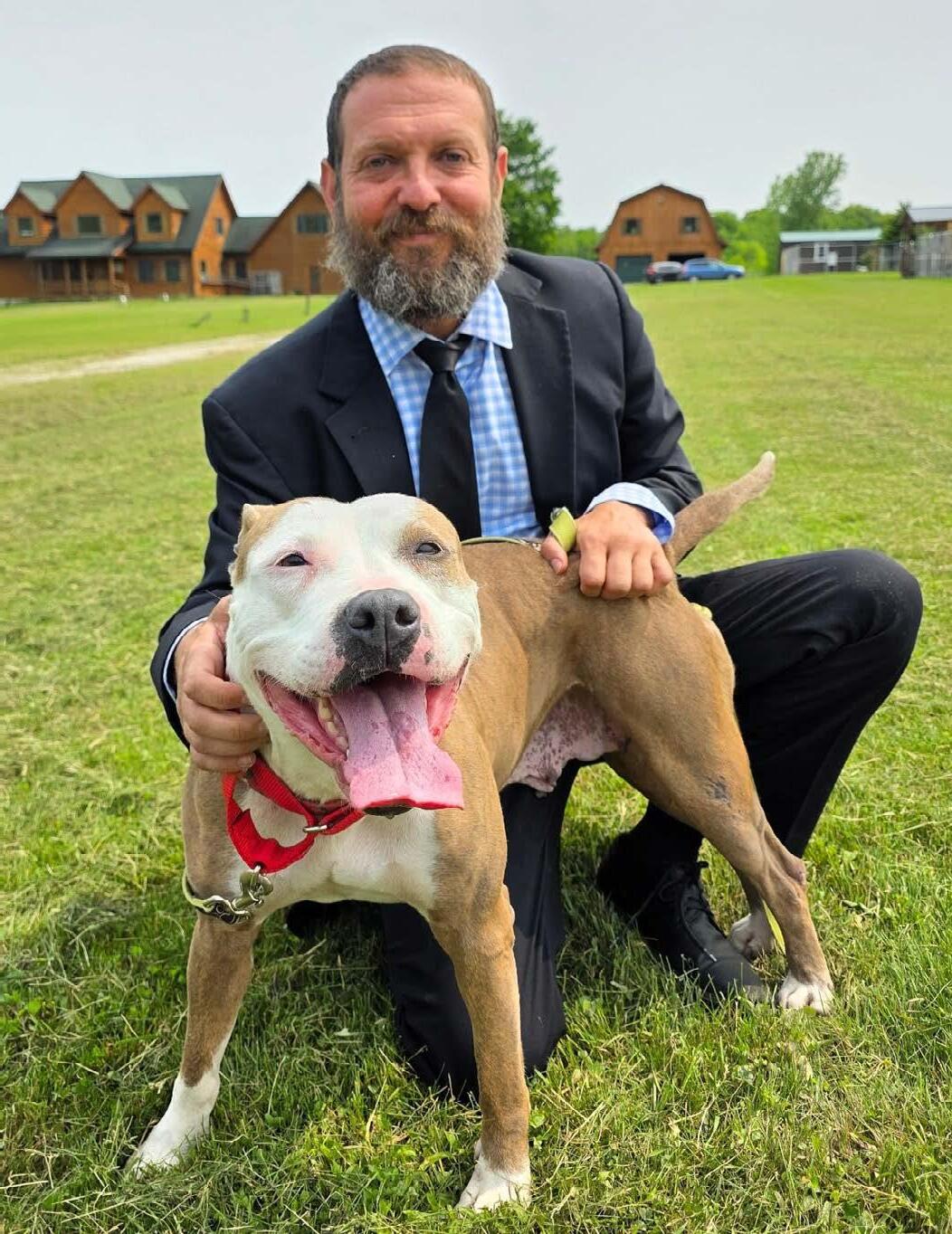
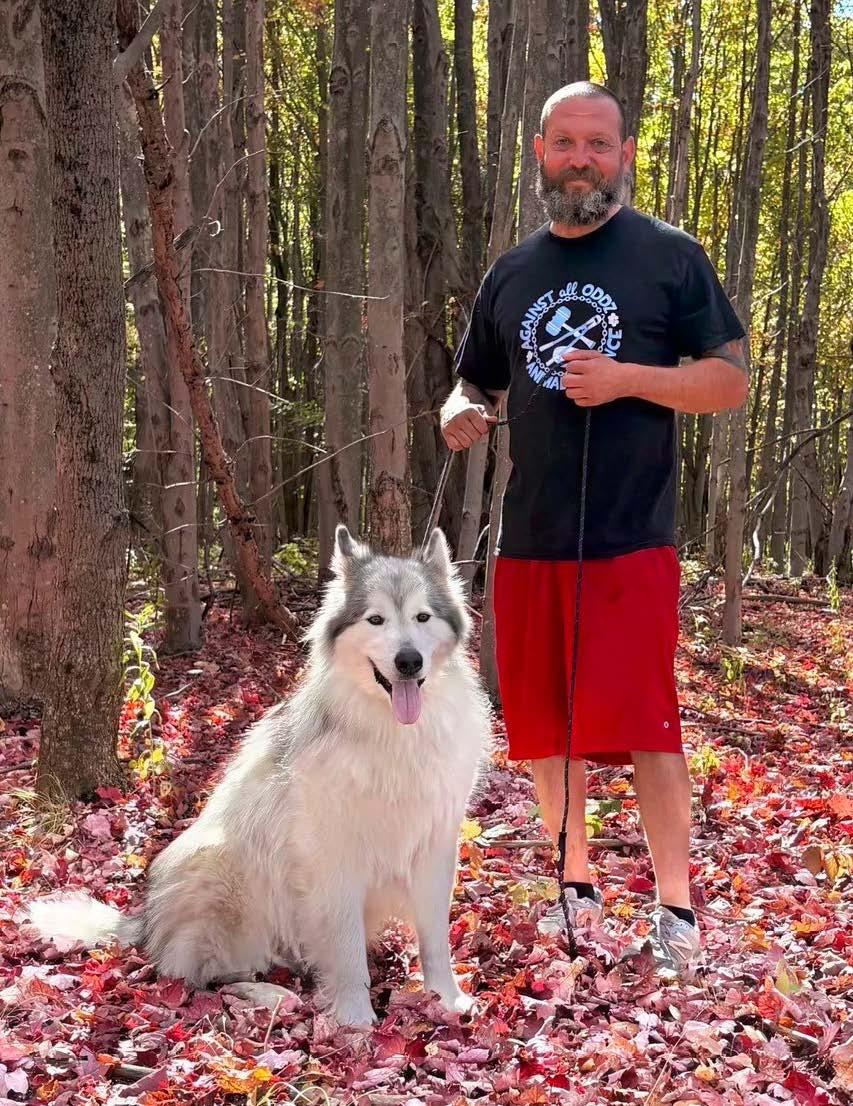
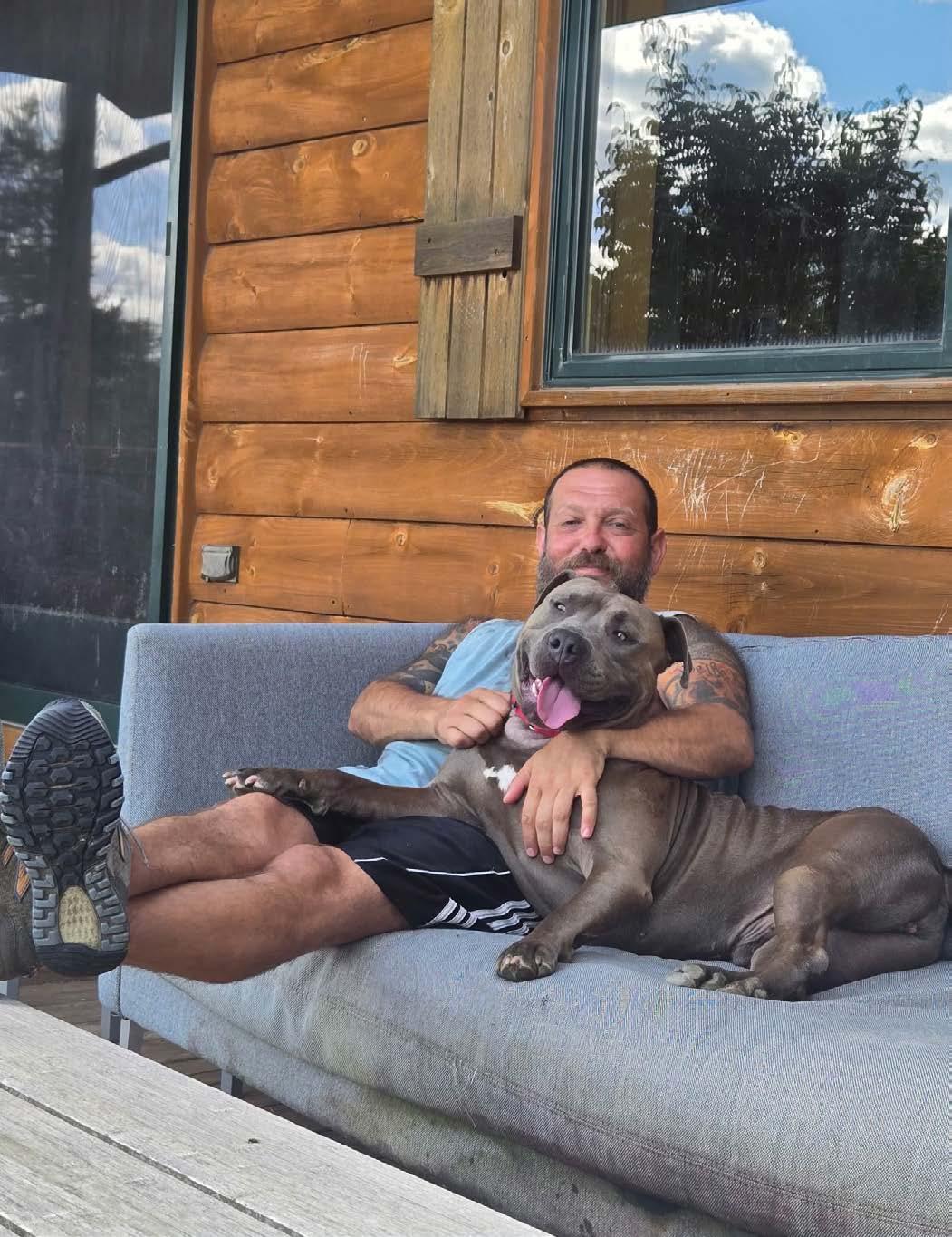
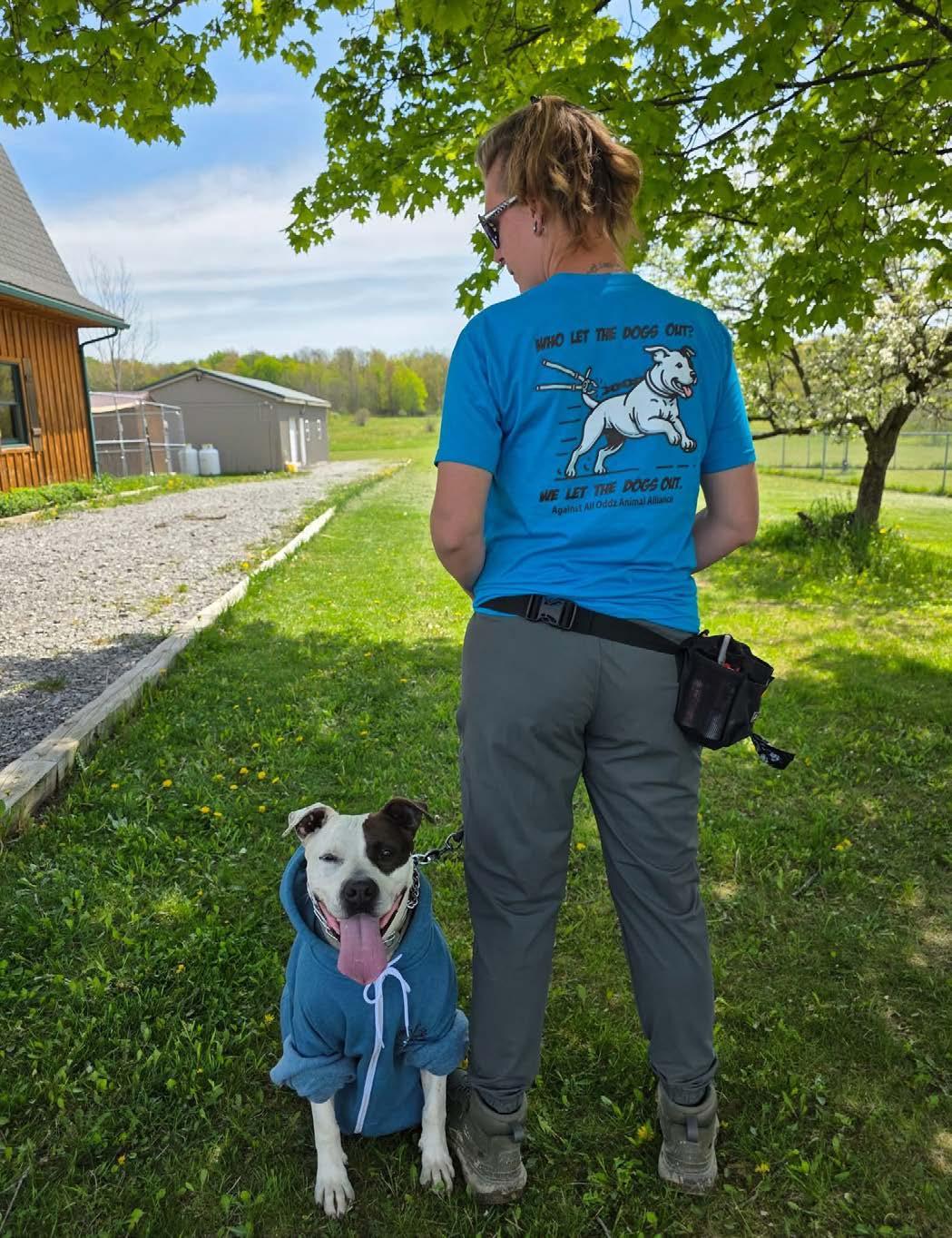
In a world where animals often have no voice, Matt Albert has made it his life’s mission to be one of their strongest advocates. As an attorney and the founder of Against All Oddz Animal Alliance, Matt is redefining what animal advocacy looks like—combining the power of the legal system with handson rescue and rehabilitation to create real, lasting change. His work exists at a unique intersection, where compassion meets accountability, and where saving lives goes far beyond traditional rescue efforts.
Matt’s journey into animal advocacy was shaped by his early experiences as a prosecutor, where he witnessed firsthand how often cases of animal cruelty were minimized or overlooked. That realization ignited something deeper—a commitment not only to pursue justice in the courtroom, but to address the broader systemic gaps that leave vulnerable animals unprotected. Over time, what began as professional responsibility evolved into a personal calling, leading him to build an organization that could step in where others could not.
Through Against All Oddz Animal Alliance, Matt has created a groundbreaking model that doesn’t just respond to crisis—it challenges the system itself. By advocating for animals legally while simultaneously providing them with rehabilitation, training, and sanctuary, his work is changing outcomes for those who are often considered “too difficult” or beyond saving. It’s a mission rooted in resilience, second chances, and the belief that every animal—no matter the circumstances—deserves a voice, a future, and a fighting chance.
For readers who may not be familiar with your work yet, can you tell us a little about yourself and what led you to dedicate your life to animal advocacy?
I’m Matthew Albert, an attorney and the founder of Against All Oddz Animal Alliance,
and I’ve spent much of my career focused on advocating for animals in a meaningful, practical way.
My dedication to this work really took shape early on when I was a prosecutor at the Erie County District Attorney’s Office. I saw firsthand how often animal cruelty cases were minimized or overlooked, despite the seriousness of the harm involved. I formed an anti cruelty task force with various law enforcement agencies. I believe those methods and practices can be replicated across the across the state and greatly improve animal welfare in New York.
That experience had a lasting impact on me and pushed me to take those cases seriously and pursue them aggressively. It also opened my eyes to the broader connection between how we treat animals and the health of our communities.
As my career progressed, that professional responsibility grew into a personal mission. I continued to focus on animal-related legal work while also getting more involved outside the courtroom – volunteering with rescues, offering pro bono legal representation on behalf of dogs in all sorts of cases, and advocating for more compassionate treatment of animals overall.
Ultimately, I founded Against All Oddz Animal Alliance to bring those efforts together in a more direct and impactful way. It allows me to combine legal advocacy with hands-on rescue and rehabilitation, which I believe is essential to creating lasting change.
You founded Against All Oddz Animal Alliance with a very unique mission that combines legal advocacy and animal rescue. What inspired you to create an organization that works both in the courtroom and directly with animals in need?
There is a void in the legal system when it comes to the rights and welfare of animals, as they are still largely considered property under the law. While there are protections in place, they don’t always go far enough to fully address the seriousness of harm animals can endure or the urgency of their situations.
Throughout my career as an attorney, I saw both the strengths and limitations of the legal system. On one hand, legal action can create accountability and drive meaningful change, but on the other, it often moves too slowly to address the immediate needs of animals who are suffering or at risk.
That’s what inspired me to create Against All Oddz Animal Alliance – a model that combines legal advocacy with hands-on rescue and rehabilitation. I wanted to build an organization that could step in directly to help animals in need while also using the legal system to hold people accountable and push for broader protections.
Bringing those two elements together allows us to not only respond to individual cases, but also work toward long-term, systemic change for animals.
How did the name “Against All Oddz” come about, and what does it symbolize for the animals and cases you take on?
The name “Against All Oddz” really reflects both the mission and the mindset behind the organization. From the beginning, it was meant to represent stepping in for animals who are up against overwhelming odds – dogs who are often out of options and out of time.
We regularly take on the animals that most rescues simply aren’t equipped to handle. These can be dogs with bite histories, those involved in dangerous dog proceedings, or animals facing euthanasia
{ AGAINST ALL ODDZ
“Our model is built on a truly holistic approach to animal welfare – because rescue, by itself, often isn’t enough to address the full scope of what these animals need.”
through court orders or municipal action. In many situations, these dogs have “gotten themselves into trouble” or have been placed in circumstances that make them difficult to manage or adopt out. As a result, they’re often the ones left behind. While many rescues do incredible work, they may not have the resources, facilities, or expertise to safely take on these more complex cases, and that’s the gap we were built to address. What makes our approach different, and really what the name speaks to, is that we don’t just rescue these dogs, we support them on every level. Through our foster program, our sanctuary for dogs who can’t be placed traditionally, and our legal advocacy work, we’re able to step in at every stage where a dog is at risk. That means while a dog is being defended in court, it’s also receiving rehabilitation, training, and care in real time, giving the system a real, viable alternative to euthanasia.
“Against All Oddz” symbolizes that commitment and refusal to give up. It’s about recognizing that these animals are often the product of circumstance, not lost causes, and being willing to do the harder work to give them a real chance.
Since launching the organization, how has Against All Oddz Animal Alliance grown, and what are some milestones that have defined your journey so far? Since launching Against All Oddz Animal Alliance in 2015 , the growth has really been about expanding both our capabilities and our credibility in spaces where animal advocacy hasn’t traditionally had a strong voice.
We began as a foster-based rescue, but it quickly became clear that there was a much larger gap – particularly for dogs with complex behavioral issues, serious medical needs, or legal challenges. One of the first major milestones was recognizing
that need and evolving beyond a traditional rescue model to take on more complex, higher-risk cases. As a result, a defining moment in that evolution was establishing our sanctuary in Darien Center. With over 5 0 acres, it gave us the ability to provide a structured, controlled environment for dogs who cannot safely or successfully enter foster homes. That shift allowed us to focus not just on placement, but on long-term rehabilitation and individualized care for animals who would otherwise have very few options.
On the legal side, there have been several important milestones that helped shape our work and expand our impact. We’ve handled cases involving police shootings of family dogs and through litigation, we were able to bring national attention to the issue, secure meaningful outcomes, and contribute to a measurable decrease in these incidents locally while influencing reforms beyond Western New York.
We’ve also taken on cases involving stolen animals, helping reunite pets with their owners in situations where law enforcement typically declines to get involved, often treating these matters as purely civil disputes. Being able to step in and advocate in those situations has been another important part of our growth.
More broadly, we’ve built the capacity to step into active legal cases involving dogs facing euthanasia and not only advocate in the courtroom, but support those cases with real, evidence-based alternatives. Being able to pair legal defense with rehabilitation has helped change outcomes in cases that historically had very little chance.
We’ve also reached a point where we’re increasingly brought into cases proactively, rather than as a last resort. That reflects a growing level of trust from courts,
municipalities, and other stakeholders who now see us as a viable resource in complex situations. That shift – from being reactive to being sought out – has been a significant milestone in itself.
Overall, our growth has been defined less by scale and more by depth – building the infrastructure to handle more difficult cases, expanding what’s possible for the animals we take in, and steadily changing expectations around how these situations can be approached and resolved.
Your organization has been described as operating at the intersection of animal welfare law and rescue, working with attorneys, trainers, and advocates. Can you explain how that model works and why it’s so important?
Our model is built on a truly holistic approach to animal welfare – because rescue, by itself, often isn’t enough to address the full scope of what these animals need. At Against All Oddz Animal Alliance, we work at the intersection of rescue, rehabilitation, and legal advocacy, bringing together attorneys, trainers, veterinary professionals, and advocates to create a comprehensive approach for each animal.
From the rescue side, that means taking in dogs that are often overlooked or considered too difficult, whether due to behavioral challenges, medical needs, or their circumstances, and giving them the time, structure, and individualized care they need. In our foster program and sanctuary setting, dogs receive not just a roof over their heads, but real rehabilitation, training, and stability, with the goal of setting them up for success in whatever their next step may be. At the same time, we integrate legal advocacy when it’s needed – particularly in cases where a dog is facing euthanasia or otherwise impacted by the legal system. Our role is to advocate for humane alternatives, while
“Being able to pair legal defense with rehabilitation has helped change outcomes in cases that historically had very little chance.”
ensuring that we can support that advocacy with a concrete plan for the animal’s care and future.
The collaboration between trainers, medical professionals, and legal advocates is what makes this model so effective. The trainers and behavioral experts help us understand the dog and build structure around their needs, the veterinary care addresses health and quality-of-life concerns, and the legal work helps protect that animal’s opportunity to be considered.
This approach is important because these situations are rarely simple. By addressing all aspects, we’re able to make informed, responsible decisions and give animals a real chance when they might not otherwise have one. It also helps shift outcomes more broadly, showing that with the right resources and coordination, there are often better alternatives to euthanasia or neglect.
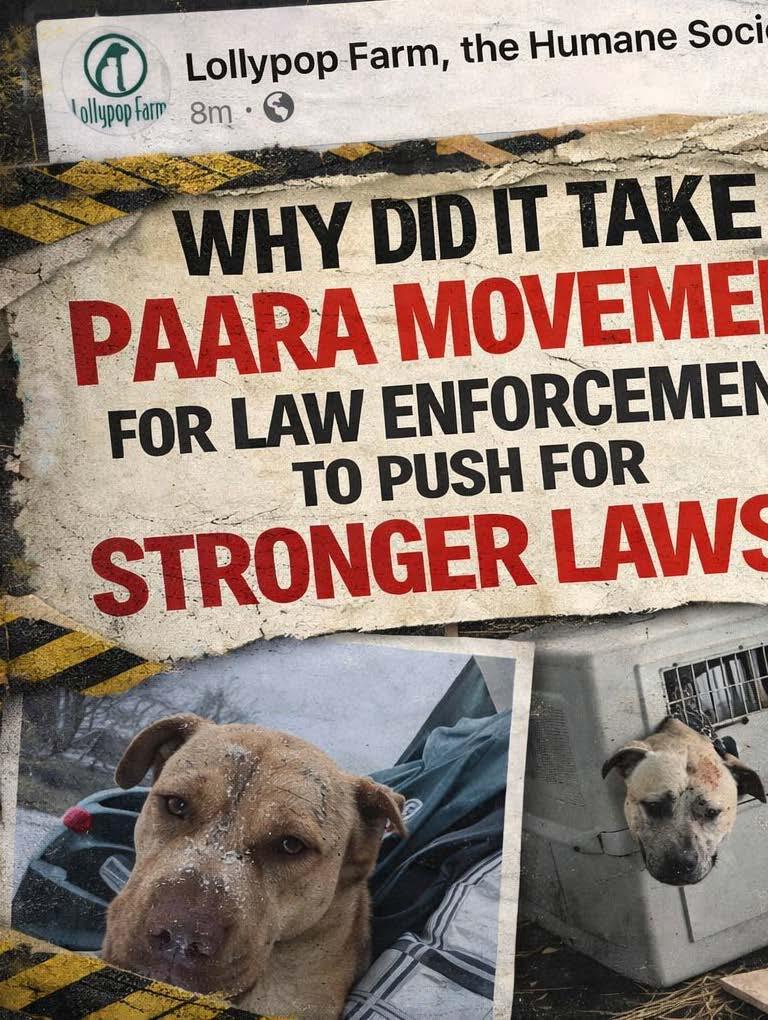
Recently, your organization filed a major lawsuit involving the Rochester Police Department and concerns about enforcement of animal cruelty laws. What initially brought this situation in Rochester to your attention?
This situation initially came to our attention in relation to a residence on Sherman Street, through two of our volunteers, Carey and Shirley, who had been documenting ongoing neglect over an extended period at this residence. Despite repeatedly reaching out to local authorities and animal welfare organizations in Rochester, they were told that nothing could be done or that it didn’t meet the threshold for enforcement action. When Carey and Shirley brought their documentation to us, we reviewed the materials they had compiled, including photos, videos, and detailed notes spanning two years. It was clear that this was more than an isolated incident; the patterns they documented suggested a systemic problem
that needed attention.
As we began engaging with the situation, additional reports from the community indicated that similar concerns were occurring at multiple locations throughout the city. This confirmed that the issue extended beyond a single property and highlighted a broader failure in enforcement of animal welfare protections.
At that point, our role was to step in to assess the situation, bring organization to the available evidence, and determine how best to advocate for the animals involved.
Reports surrounding this case describe repeated calls about animals living in dangerous conditions, including dogs left outside in extreme weather and possible neglect. What did your investigation uncover that made you decide legal action was necessary?
Once we conducted a full review of the documentation and evidence gathered by our volunteers and the community, it became clear that there was a sustained pattern of serious animal cruelty and neglect. Dogs all over the City of Rochester had been left outside in subzero temperatures without adequate food, water, or shelter. Some had died or suffered severe harm as a direct result of these conditions – from prolonged exposure to extreme winter weather, malnourishment, or injuries sustained while left without proper care and supervision.
These findings were supported by extensive materials, including photographs, videos, veterinary statements, and detailed records compiled over time. What stood out was not just the ongoing harm to individual animals, but the broader failure of local authorities to respond, despite repeated reports and documented evidence.
Throughout this process, we made inquiries
about the residences of suspected abuse and neglect and offered our services to help the animals directly. We also attempted to collaborate with city authorities to ensure that legally mandated protections were enforced. When these efforts were ignored or dismissed, it became evident that informal complaints and outreach were no longer sufficient. Legal action was the only way to compel meaningful intervention and ensure that the animals had an advocate in a system that had repeatedly failed to protect them. In other words, pursuing litigation was the only way to demand that the laws protecting these animals be taken seriously and properly enforced.
The lawsuit centers around enforcement of New York’s Article 26 animal cruelty laws and the responsibility of law enforcement to act. Can you explain for our readers what those laws require and why they are central to your case?
Article 26 of New York’s Agriculture and Markets Law lays out clear rules for protecting animals from abuse, and several parts of that law are directly relevant to what we uncovered in Rochester.
Section 371 of New York’s Agriculture and Markets Law requires police officers to take action whenever they encounter violations of Article 26, which covers various forms of animal cruelty and neglect. Officers are legally obligated to seize animals, file charges, and bring cases to court – they cannot ignore animals in danger.
Section 35 3-b specifically addresses dogs left outdoors. It requires owners to provide shelter appropriate for a dog’s breed, age, health, and the weather, along with access to food, water, and a clean environment. If a dog doesn’t have that, it’s a violation, and authorities are allowed to seize the animal until proper care is provided.
“ Some had died or SUFFERED severe harm as a direct result of these conditions – from prolonged exposure to EXTREME winter weather, malnourishment, or injuries sustained while left without proper care and supervision.”
{ AGAINST ALL ODDZ }
““Against All Oddz” symbolizes that commitment and refusal to give up.”
Section 373(2) allows law enforcement to remove animals that have been confined in unsafe, unsanitary, or harmful conditions for more than 12 hours, provided a warrant is obtained. This gives officers a clear legal path to intervene before further suffering occurs.
These laws are central to our lawsuit because they create a clear legal duty for authorities to act. Our documentation shows that this required enforcement did not occur, and our lawsuit seeks to ensure the laws are properly enforced so that animals receive the protection the law guarantees.
From what you’ve seen, what are the biggest gaps in how animal cruelty cases are handled between agencies like police departments and humane societies?
One of the biggest gaps we’ve seen in Rochester is that reports of animal cruelty often go unanswered or unresolved. Under Section 371 of New York’s Agriculture and Markets Law, police officers are legally required to act when they encounter violations of Article 26, while humane organizations have authority to intervene but are not required to. In practice, this duty isn’t being fulfilled: complaints are ignored, investigations are delayed, and animals continue to suffer. Too often, responsibility gets passed back and forth between agencies without real action. Our lawsuit seeks to fix this, ensuring the law is enforced and animals receive the protection and care they are legally entitled to.
Many advocates say that calls about animals in distress sometimes go unanswered or are passed between agencies. How widespread is this issue, and how does your lawsuit aim to address it?
Unfortunately, the issue of unaddressed reports is widespread in Rochester. From our review of multiple cases, it’s clear that calls about animals in distress often do not
result in timely or effective action, leaving vulnerable animals at risk. Complaints may be logged but then left unresolved, or responsibility is shifted between police and animal welfare organizations without any proper follow-through.
Our lawsuit addresses this systemic problem by holding the police department accountable for enforcing Article 26 of New York’s Agriculture and Markets Law. We’re seeking a court order to ensure that when animals are in danger, authorities act promptly, investigations are conducted, and legal protections are consistently applied. This case is about making sure the law works in practice, not just on paper.
The lawsuit related to Rochester reportedly includes extensive evidence and documentation gathered by advocates and neighbors. Can you talk about the process of collecting that evidence and what it revealed?
The evidence for this case was collected through a combination of careful community reporting, direct observation, and professional review. Myself and our Executive Director Eileen Marutiak personally visited some of the properties in Rochester, observing the dogs and their living conditions firsthand. We saw animals tethered outdoors in extreme weather, inadequate and damaged shelters, unsanitary grounds, and even dogs covered in blood – all indicators of severe neglect and abuse.
Throughout this process, we also worked closely with local animal advocates in Rochester, gathering reports, photos, and videos from neighbors who had been monitoring these situations over time. This collaboration allowed us to track ongoing patterns of abuse, rather than isolated incidents, and ensured that our understanding of conditions was thorough and corroborated by multiple sources.
Expert review further confirmed the severity of the situation. Veterinarians examined the documentation and concluded that the dogs were at serious and immediate risk of harm. They found that prolonged tethering, exposure to extreme temperatures, unsanitary conditions, and inconsistent access to food and water were likely to cause dehydration, hypothermia, frostbite, malnutrition, musculoskeletal injuries, and infections. Puppies and lactating mothers were identified as especially vulnerable, with exposure to cold, wet, and contaminated environments posing life-threatening risks. Experts also noted the psychological and behavioral harm caused by isolation, chronic stress, and lack of social interaction, which can result in anxiety, learned helplessness, and aggression.
By combining firsthand observations, community reporting, and expert assessment, we were able to document a clear and ongoing pattern of neglect and abuse. This process not only highlighted the immediate danger to these animals but also revealed systemic failures in enforcement, forming the basis for our lawsuit to demand meaningful action and protection for the dogs who have been left to suffer in deplorable conditions.
Social media has played a huge role in bringing attention to this case and rallying support from animal advocates. How important has community awareness been in pushing this issue forward?
Community awareness has been a gamechanger. Social media and local networks exposed abuse that might have stayed hidden, rallied volunteers, and put real pressure on authorities to act. When neighbors, advocates, and everyday people come together, it proves that public attention can force accountability and literally save lives.
What do you hope the outcome of this lawsuit will accomplish—not just for the
{ AGAINST ALL ODDZ }
{ WOMAN WHO INSPIRES }
“On one hand, legal action can create accountability and drive meaningful change, but on the other, it often moves too slowly to address the immediate needs of animals who are suffering or at risk.”
dogs involved in this case, but for animals across New York State?
Our immediate goal is to get protection and relief for the dogs who are currently suffering, but this case is really about fixing a broken system. Right now, there are clear laws in place, but without consistent enforcement, those protections don’t mean much in practice.
We want to see a shift toward proactive enforcement, starting with the creation of a dedicated anti-animal cruelty unit within the Rochester Police Department. Based on similar models I’ve helped implement elsewhere, such a unit would focus exclusively on identifying, investigating, and prosecuting cases of abuse and neglect. Even a small team – a detective and a few motivated officers – could make a huge difference, ensuring reports are acted on quickly, evidence is properly documented, and offenders are held accountable.
Just as importantly, we want to see better coordination between law enforcement, humane organizations, and the community so that credible reports lead to real intervention, not inaction. In addition to addressing cruelty directly, this approach often reveals larger patterns of criminal behavior and strengthens public safety overall.
Altogether, this lawsuit is about making sure the system works the way it’s supposed to as well as pushing it to do better.
Do you believe this case could create a legal precedent for how animal cruelty laws must be enforced in other cities? Yes, and that’s a critical part of why this case matters. This lawsuit has the potential to make it clear that enforcing animal cruelty laws is not discretionary, it’s a legal obligation. When police encounter violations, they are required to act.
If the court affirms that and holds the department accountable, it sends a strong message not just in Rochester, but across New York: agencies cannot ignore documented cruelty or shift responsibility elsewhere without consequence.
That kind of ruling would give advocates, communities, and even other municipalities clearer guidance on what enforcement is supposed to look like. It creates a standard – one that says these laws have to be taken seriously and applied consistently.
Ultimately, it could help close the gap between what the law says and what actually happens on the ground, which is where animals have been falling through for far too long. It also opens the door to broader systemic change, setting a model for proactive enforcement that ensures animals are protected, laws are upheld, and communities see real results statewide.
Animal advocates often say that animals have no voice. In your work, how do you approach being that voice for them through the legal system?
Animal advocates are right: animals are voiceless within our legal system. They cannot walk into a courtroom, tell their story, or assert their own rights – and the system, as it exists, was never designed to hear them. That reality is exactly why advocacy matters. Their voice has to be built, carefully and credibly, by someone willing to stand in that gap.
In my work with Against All Oddz Animal Alliance, being that voice starts with reframing how the legal system sees the animal. Too often, dogs in dangerous-dog hearings or cruelty cases are reduced to incidents –one bite, one allegation, one moment in time. Our role is to reconstruct the full story: the animal’s history, environment, medical condition, and behavioral context.
We present the court with a complete, evidence-based narrative that shows not just what happened, but why it happened and what can be done moving forward.
Being their voice also means translating behavior and science into legal language. Courts respond to evidence, not emotion. So we work with trainers, veterinarians, and behaviorists to present objective findings –temperament assessments, risk mitigation strategies, and long-term management plans. This shifts the conversation from fear-based decision-making to informed, rational outcomes.
At the same time, advocacy requires challenging assumptions within the system itself. There is often an ingrained belief that euthanasia is the safest or simplest solution for difficult animals. Part of our role is to respectfully but firmly push back on that idea, showing that public safety and humane treatment are not opposing goals. When given the right structure, many dogs deemed “dangerous” can live safely and successfully. Ultimately, being a voice for animals in the legal system is about accountability and possibility. It’s about ensuring that decisions are based on evidence rather than expediency, and that animals are not losing their lives because systems failed to adapt to their needs. Through that approach, we’re not only advocating for individual dogs – we’re helping reshape how the law understands and responds to them.
Working on cases involving abuse and neglect can be emotionally heavy. What keeps you motivated to continue fighting for animals even when the odds seem stacked against you?
What keeps me motivated is the reality that for the animals we represent, there is no alternative. When a dog is facing euthanasia or has been failed by every system around it, there isn’t someone else stepping in if we
“I
saw firsthand how often animal cruelty cases were minimized or overlooked, despite the seriousness of the harm involved. I formed an anti cruelty task force with various law enforcement agencies.”
e don’t. That level of responsibility doesn’t make the work easier, but it makes it clear why it has to be done.
The cases can be heavy; there’s no way around that. You see the worst outcomes of neglect, abuse, and systemic failure. But at the same time, you also see what’s possible when an animal is given structure, care, and a real chance. Watching a dog move from a euthanasia list into rehabilitation, and then into stability, reinforces that these outcomes are not fixed. They’re often the result of decisions, and decisions can be challenged.
I also stay grounded in the idea that progress isn’t always loud or immediate. Sometimes it’s a single case that sets a new precedent, a judge willing to consider an alternative, or a municipality rethinking how it handles these situations. Those shifts matter because they change outcomes not just for one animal, but for the ones that come after.
At the end of the day, it comes back to something simple: these animals are in the position they’re in because systems failed to adapt to them. Staying motivated means continuing to push those systems to do better – case by case, decision by decision – until a different standard becomes the norm.
For readers who want to get involved in helping animals in their own communities, what are some meaningful ways they can make a difference?
There are many ways to make a difference for animals in your community. Volunteering at a shelter, rescue, or sanctuary provides direct support, while fostering offers temporary homes that not only save lives but also help animals develop the skills and confidence they need to thrive in permanent homes.
Speaking up – supporting humane policies, reporting abuse, and promoting responsible pet ownership – amplifies their voice. Even small actions, like adopting instead of buying, sharing posts to raise awareness, or donating time, money, or resources, create meaningful change and allow organizations like ours to continue providing care, rehabilitation, and advocacy for animals in need. Every effort helps build a world where animals are valued, protected, and given a real chance at life.
If you’d like to join the Against All Oddz team, we are always grateful for support –whether through volunteering, fostering, or donations. You can reach out to us at our website, againstalloddzaa.org, or find us on nearly any social media platform.
Looking ahead, what is the long-term vision for Against All Oddz Animal Alliance, and what future changes would you like to see in the way our legal system protects animals?
At Against All Oddz, we’ve built a foundation that combines rescue, legal advocacy, and community programs into a fully integrated model, and looking ahead, our goal is to expand and build on that foundation in even more ambitious ways.
On the legislative front, we’re working to strengthen protections for animals, including anti-breeding legislation, tougher penalties for abusers, and legal measures that elevate animals’ status within the legal system. Our focus is not just passing laws, but ensuring they are enforced effectively to create meaningful, lasting change.
We’re also hoping to expand the reach and scope of our sanctuary and community programs. This includes welcoming farm
animals, launching new initiatives like a Veterans Program – which pairs sanctuary animals with veterans for therapeutic and skill-building opportunities – and a Prison Partnership Program, which allows incarcerated individuals to train and care for animals while gaining valuable experience and personal growth.
To support these efforts, we’d like to grow our infrastructure with new buildings, grooming stations, and multiuse spaces for community education, training workshops, and volunteer development. These expansions would allow us to save more animals, provide more comprehensive rehabilitation, and engage our community in meaningful ways.
Our vision is to take what we’ve already created and amplify it so that more animals are protected, more lives are transformed, and our communities become stronger and more compassionate. Every initiative we launch builds on our integrated model, ensuring that animals aren’t just saved, but given a real chance to thrive, and that people have the tools and support to make a lasting difference.
{
THE MOTHER DAUGHTER DUO BEHIND JESS EVENTS
YOU ARE ENOUGH.
BY NICOLE HEROUX WILLIAMS I PHOTOS BY NSP STUDIO
In a world where moments pass quickly, there are those who dedicate their lives to making them unforgettable. For Jess and her mother, Victoria, founders of JessEvents, creating meaningful, beautifully curated experiences isn’t just a business — it’s a shared passion rooted in family, creativity, and connection. What began as a love for design, organization, and celebration has grown into a thriving, woman-owned event company known for turning life’s most important milestones into lasting memories.
Since launching in 2018, JessEvents has evolved from humble beginnings into a recognized name in Rochester’s event scene, blending modern elegance with personalized service. From weddings and milestone celebrations to corporate events and themed experiences, their work reflects a signature style that is both sophisticated and heartfelt. But beyond the stunning décor and flawless execution, what truly sets them apart is the genuine care and intention they bring to every client and every detail.
entrepreneurial spirit, but also a celebration of what’s possible when women come together to build something meaningful — not just for themselves, but for the community
they serve.
At the heart of JessEvents is a powerful dynamic — a motherdaughter partnership built on trust, collaboration, and a shared vision. Together, they balance creativity with structure, passion with precision, and dreams with execution. Their journey is not only a testament to
Jess, can you tell us a little about how JessEvents began and what inspired you to start your own event planning business?
JessEvents began from my genuine love for creating beautiful, memorable
experiences, with my mother, Victoria, being part of that journey from the start. I’ve always had an eye for design and organization, and she’s always had the drive and structure to turn big ideas into reality. Together, we turned a shared passion for celebrations into something much bigger: an event company that helps others celebrate life’s most special moments.
You launched JessEvents in 2018 — what was that first year like, and how has your business evolved since then?
That first year was full of learning, growth, and long hours, but also a lot of excitement. Victoria and I took on every opportunity that came our way, whether it was decorating for small parties or coordinating weddings. Over time, our style, process, and team have evolved. Now, JessEvents is known for professionalism, luxury design, and personalized service. We’ve added new inventory, opened our own venue, and expanded our reach around Rochester.
Being a woman-owned business in the event industry comes with its unique challenges and rewards. What does that title mean to you both personally and professionally?
Being a woman-owned business means strength, creativity, and perseverance. It reflects our determination to build something lasting from the ground
PHOTOS BY CREATING YOUR MEMORIES & BELAVATI STUDIOS
{ POWER PARTNERS }
{ SHIFT+CONTROL } { WOMAN WHO INSPIRES } { WOMEN WHO INSPIRE }
“We take time to listen, plan, and execute together, so each client feels heard and cared for. Our goal is to make each event unique, full of personality, love, and attention to detail.”
up. Professionally, it’s empowering to know our leadership and vision inspire other women, especially mothers and daughters, to work together and create something meaningful. Personally, it’s a reminder of the bond we share and the example we’re setting for the next generation.
JessEvents prides itself on providing “exceptional service from start to finish.” How do you ensure every client feels special and every event stands out?
Everything we do is truly a team effort. From the first consultation to the final cleanup, we both work hands-on to make sure every detail is perfect. We take time to listen, plan, and execute together, so each client feels heard and cared for. Our goal is to make each event unique, full of personality, love, and attention to detail. When clients see how much effort and passion we put into their vision, they immediately notice the difference.
clients’ faces. Whether it’s a couple realizing their wedding dreams or a family celebrating a major milestone, those reactions remind us why we do what we do.
You mention adding new techniques and inventory -can you share some of the latest trends or creative touches you’ve incorporated?
and unpredictable. How do you handle the stress and still maintain that calm, stress-free experience for your clients?
Teamwork and preparation are everything. Since we handle every detail together, we’re always aligned, helping things run smoothly behind the scenes. Recently, we took a big step in opening a new, larger venue at 280 East Broad Street, right in downtown Rochester. This expansion isn’t just growth; it’s about becoming part of the Rochester community, contributing to the city’s lively event scene, and offering a beautiful space for celebrations right in the heart of everything. Rochester means a lot to us, and building our dream here is incredibly meaningful.
What is your signature style or creative hallmark when it comes to event design and coordination?
What types of events does JessEvents specialize in, and which do you find most rewarding to plan?
We focus on weddings, milestone celebrations, corporate events, and themed parties. Each type allows us to express creativity in different ways, but the most rewarding moments are always when we see pure joy on our
We’re always evolving! Recently, we’ve added luxury balloon displays, custom shimmer walls, and modern floral installations that add elegance and drama to any setup. We’ve also expanded our rental collection to include unique backdrops and statement pieces. Victoria and I love blending timeless design with new trends, keeping our work fresh while maintaining the distinctive JessEvents style.
The event world can be fast-paced
Our signature style is modern elegance with a touch of glam. We love soft, romantic colors paired with luxurious details that elevate the space without overwhelming it. Every event has a sophisticated yet warm feel that’s uniquely “JessEvents.”
Building lasting relationships seems central to your business. How do you connect with clients in a way that keeps them coming back?
“Teamwork
{ POWER PARTNERS }
{ SHIFT+CONTROL } { WOMAN WHO INSPIRES } { WOMEN WHO INSPIRE }
and preparation are everything. Since we handle every detail together, we’re always aligned, helping things run smoothly behind the scenes.”
We genuinely care about the people we work with. Many of our clients become part of our extended family—they come back for baby showers, birthdays, and corporate events because they trust us to deliver quality and care. We take time to get to know each person, and that personal connection builds long-term trust and loyalty.
As small business owners, how do you balance the creative and business sides of JessEvents, from client vision to budgets and logistics?
We share every responsibility equally, whether it’s the creative process, business planning, or execution. Every design idea, budget, and detail is discussed and decided together. Having two perspectives and ideas keeps us organized, balanced, and inspired. This collaboration is key to JessEvents delivering excellence at every level.
the pandemic. How did you adapt your business to keep moving forward during that time?
The pandemic forced us to rethink everything. We began offering intimate setups, micro-celebrations, and custom home décor for clients who still wanted to celebrate safely. It wasn’t easy, but it taught us the importance of flexibility
and we’re grateful to them. We believe in giving back, supporting, uplifting, and thanking women who continue to make this industry thrive.
Collaboration is key in your industry from venues to vendors. What do you look for in the partners you work with to bring your clients’ visions to life?
and creativity. Those challenges made us stronger as a team and as a business.
What have been some of your proudest moments since launching JessEvents?
Opening our own venue is definitely one of our biggest milestones. It’s a project we’ve dreamed of from the start. We’re also proud of how much our brand has grown, being recognized by clients and local media. Seeing clients return year after year is truly fulfilling.
The event industry was hit hard during
What advice would you give women thinking about starting their own business, especially in a competitive field like event planning?
Just start. Don’t wait for everything to be perfect—you’ll learn along the way. Stay consistent, stay passionate, and surround yourself with supportive people. We’re lucky to have connected with many inspiring women in this industry who have encouraged and supported us,
We value professionalism, reliability, and creativity. We only work with vendors who meet our standards for excellence and care about clients. Every partner plays an important role in ensuring a seamless experience, and when everyone brings their best, the results speak for themselves.
Looking ahead, what’s next for JessEvents? Do you have any big goals or new services you’re excited to launch in the near future?
We’re exceptionally excited about the growth of our new downtown venue, which is a main focus right now. We plan to expand our luxury décor options, introduce new event experiences, and host workshops for aspiring planners and creatives. Our mission is to keep evolving, inspiring, and creating unforgettable celebrations that bring people together.
For more information contact jessevents. com
“ I’ve always had an eye for DESIGN and organization, and she’s always had the drive and structure to turn BIG IDEAS into reality. ”
Main
MEET TORIANNA MELENDEZ { BEAUTY REDEFINED
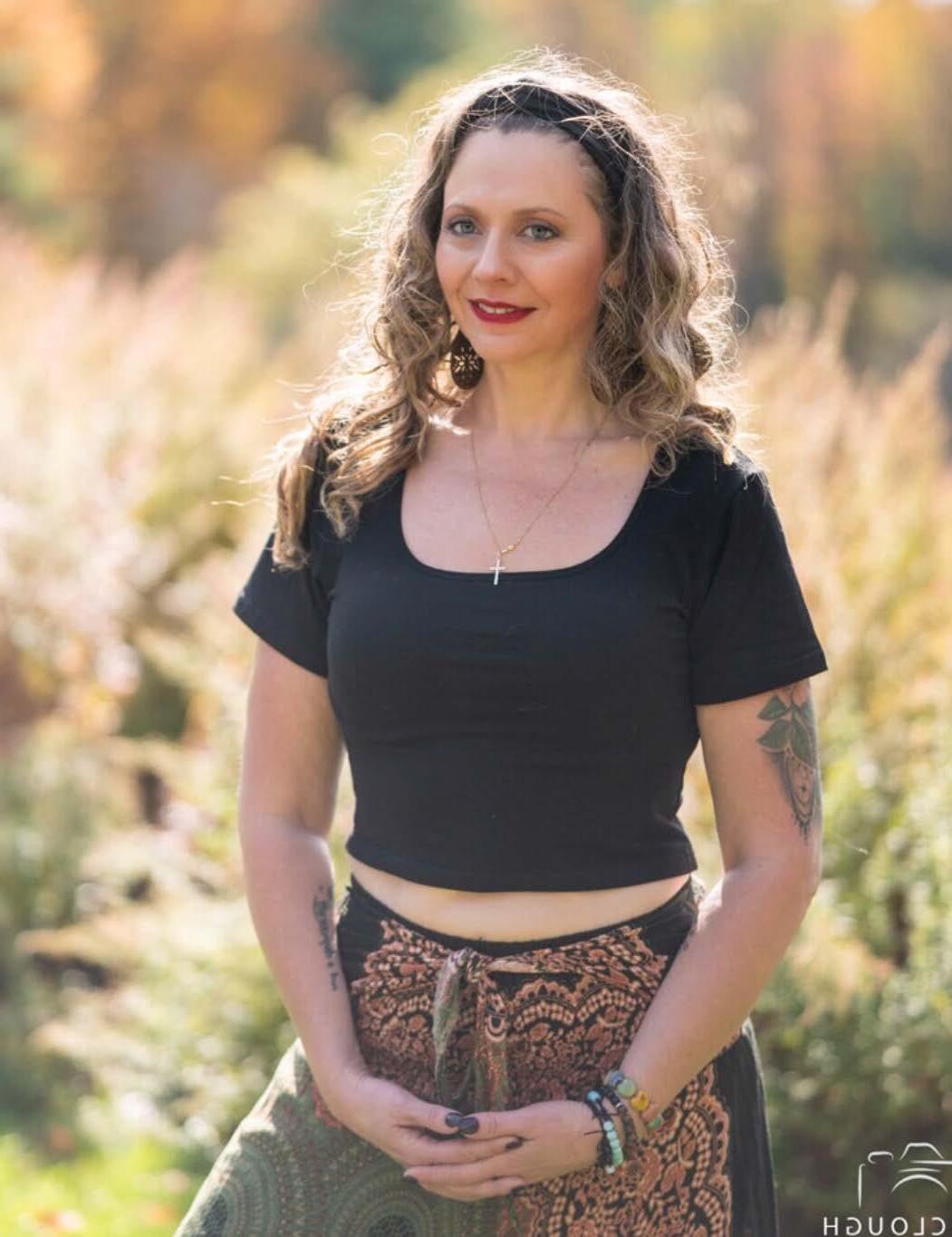
With a unique blend of clinical expertise and aesthetic artistry, Torianna Meledez is redefining what it means to deliver personalized, results-driven skincare. As a registered nurse with eight years of experience and a growing specialization in medical aesthetics, Torianna brings a deeply rooted commitment to patient care, education, and precision into every treatment she provides. Her journey into healthcare wasn’t a straight line—but rather one shaped by exploration, resilience, and a desire to find a path where science and compassion intersect.
What sets Torianna apart is her ability to seamlessly merge her medical background with the evolving world of aesthetics. From her early days working in acute care settings to gaining handson experience in plastic surgery and procedural treatments, she developed a strong foundation in anatomy, safety, and patientcentered care. Today, she channels that experience into creating customized treatment plans that go far beyond surface-level beauty— focusing instead on long-term skin health, restoration, and confidence.
designing a comprehensive aesthetic plan, Torianna’s approach is thoughtful, intentional, and always centered around enhancing—not changing—what makes each individual uniquely beautiful..
Tell us a little about yourself and your journey into nursing. What originally inspired you to pursue a career in healthcare?
When I started college, I was only
Now part of the team at Lovely You Aesthetics, Torianna is passionate about helping clients feel like the best version of themselves—refreshed, empowered, and confident in their own skin. Her philosophy is rooted in natural, balanced results and evidencebased practices, ensuring every client feels informed, comfortable, and cared for throughout their journey. Whether she’s educating a first-time client or
16 and essentially unsure about my future. I grew up loving Animal Planet and shows like Orangutan Island, and I thought I might pursue “that” — whatever “that” happened to mean. I initially planned to be a biologist or zoologist, but after a year I realized I wasn’t certain about that path either. I paused college, worked in retail and food service, and became a parent. With my son, I began thinking about a career in the realm of labor and delivery. I considered becoming an L&D nurse
or a doula, but I wasn’t sure which direction to take. I discussed it with my grandmother, who was a nurse. She was thrilled I was contemplating nursing and encouraged me to pursue it, highlighting the endless possibilities and specialties within the field. Interestingly, during my L&D rotation in school, I didn’t enjoy that specific specialty. I even had a moment of panic, wondering if I had spent years in school for something I wouldn’t love. Yet I persevered, finished the program, and later explored other nursing areas. Looking back, I’m glad I didn’t quit — the journey broadened my perspective and affirmed my path in nursing.
You have eight years of nursing experience and three years specializing in aesthetics. What first drew you to the world of medical aesthetics and skincare? Aesthetics wasn’t my original goal. I started in acute nursing— surgical, stroke, orthopedics, and OR—and first worked on a unit specializing in GI, trauma, and plastic surgeries, which gave me my first exposure to aesthetic surgery. After traveling as a nurse, I settled in Rochester in a plastic surgery office, doing OR and pre/post-op care. The long hours as a single mom led me to an eye surgery center, where I also started doing Botox in the office. That moment sparked my aesthetics journey.
As both a registered nurse and an esthetic professional, how does your medical background influence the way you approach aesthetic treatments?
{
“I prioritize natural results by avoiding rushing the process. Some enhancements can be life-changing in a single session, but more often I use a staged plan that blends multiple modalities over time.”
As a nurse, a core part of my role is care plans and patient education. That principle carries into aesthetics. In the hospital, we craft care plans around mobility, diet, pain etc. In aesthetics, I write treatment plans focused on skincare, skin treatments, fillers, Sculptra, and Dysport. I then pair those plans with thorough education on products, realistic expectations, timelines, aftercare, and what to monitor moving forward. My medical background ensures I prioritize safety, evidence-based decisions, and clear communication at every step.
You specialize in restorative treatments and medical-grade skincare. What does “restorative aesthetics” mean to you, and why is it such an important focus in your practice?
Restorative treatments, to me, mean restoring what’s been diminished: volume from collagen, elastin, and fat loss. These changes are a normal part of aging that we’ll all experience. My goal is not to erase who you are, but to help you look like you—refreshed and revitalized—so you still see the best version of yourself. This focus on restoration guides my approach to medical-grade skincare and aesthetic treatments, ensuring natural, harmonious results and a commitment to safety and education.
Many clients are looking for natural-looking results rather than dramatic changes. How do you create enhancements that still preserve someone’s natural beauty and facial balance?
I prioritize natural results by avoiding rushing the process. Some enhancements can be life-changing in a single session,
but more often I use a staged plan that blends multiple modalities over time. This careful, proportionate approach helps preserve facial balance and harmony, ensuring the outcome looks like you—enhanced but not altered. I involve you in steady progress, adjust plan details as we monitor results, and always aim for subtle refinements that respect your unique features.
You offer treatments like neurotoxins, dermal fillers, and bio-stimulators. For readers who may be new to aesthetics, can you explain the differences between these treatments and how they work?
Neurotoxins (Dysport, Jeuveau) work by temporarily blocking nerve signals to targeted facial muscles. This causes those muscles to relax, reducing movement that creates dynamic wrinkles. Common treatment areas include the glabellar lines between the brows (the “11s”), the forehead, and crow’s feet. Benefits include smoothing the skin and preventing progression of dynamic lines into permanent, static wrinkles. Dermal fillers add volume and structure beneath the skin to restore contours, plump areas that have lost fullness, and soften wrinkles at rest. They’re often used for cheeks, lips, nasolabial folds, and chin, providing immediate volume. Bio-stimulators (such as Sculptra) work by stimulating your body’s collagen production over time. They’re used to rebuild foundational fullness, improve skin texture, and enhance facial support, with results unfolding over weeks to months as collagen develops.
What are some of the most common skincare concerns you see among your clients, and how do you typically
approach creating personalized treatment plans for them?
Common skin concerns I see most often are fine lines and wrinkles, sun damage, and uneven texture or tone. For personalized treatment plans, I assess each client’s goals, skin type, and lifestyle, then tailor a combination of approaches-such as laser therapies, neurotoxins, medical-grade skincare, and diligent sun protection (SPF). I emphasize safety, gradual progress, and clear expectations, and I customize the plan to balance results with maintenance that fits the individual.
Safety and precision are key components of aesthetic medicine. How do you ensure that every treatment you provide is both safe and effective for your clients?
Safety is always my top priority. I stay current through ongoing, formal continuing education and hands-on training to keep up with evolving best practices and new techniques. I assess each patient’s medical history, anatomy, and goals before any treatment, and I tailor plans to minimize risks and maximize safety. I use evidencebased protocols, standardized infection control, proper dosing, and meticulous technique. I also review aftercare, set realistic expectations, and maintain open communication so patients feel informed and secure throughout their care.
The aesthetics industry is constantly evolving with new treatments, technologies, and products. How do you stay current with the latest advancements in skincare and aesthetic medicine?
{ BEAUTY REDEFINED }
“Looking back, I’m glad I didn’t quit — the journey broadened my perspective and affirmed my path in nursing.”
Staying current in aesthetics is essential, just like in any medical field. I commit to ongoing education and practical training to evaluate new trends, products, and devices before incorporating them into practice.
What are some common misconceptions people have about aesthetic treatments like Botox, fillers, or advanced skincare procedures?
One common misconception is that aesthetic treatments always look fake or “overdone.” If you’ve seen over-the-top looks on TV or red carpets, those cases often involve surgical intervention or excessive filler. When done correctly and conservatively, aesthetic procedures and products can enhance features while preserving a natural, flattering appearance.
You focus heavily on evidencebased skincare. Why is it important for clients to use medical-grade products and treatments rather than relying solely on over-the-counter skincare?
Focusing on evidence-based skincare is essential because medical-grade products and in-office treatments are formulated with higher concentrations of active ingredients, standardized formulations, and rigorous testing that support safer, more predictable results than overthe-counter options.
How do you help new clients feel comfortable and confident during their consultations and procedures?
Many clients come in with both curiosity and real fears. The number-one concern I hear is pain or needles. I’m direct about expectations and tailor the experience
heard me say, “this one might be a little spicy” before we proceed in some more sensitive areas and I’ll save the worst for last whenever possible. The goal is to deliver safe, effective treatments while preserving your sense of control and comfort throughout the experience.
what excites you most about being part of this practice?
I made the switch to Lovely You because I wanted to be in an environment surrounded by another injector or injectors, a team with a strong support system. The opportunity to collaborate and learn together was essential to me. Having Carla as a wealth of knowledge and a go-to resource has been invaluable to my growth and practice.
What do you find most rewarding about working with clients and helping them improve their skin health and confidence?
As a nurse, I find joy in helping people. In aesthetics, seeing clients leave radiating confidence is incredibly rewarding. Equally meaningful are the relationships I build along the way. I’ve shared laughter, tears, grief, and celebrations with many clients, and the personal connections often lead to trust and openness.
Looking ahead, what are your goals as an aesthetic nurse, and what trends or innovations in skincare and aesthetics are you most excited about in the coming years?
My goals as an aesthetic injector are to continue learning and growing as the market evolves. I’m excited for the future of aesthetics, and I’m especially looking forward to training on PDGF and offering it to clients soon!
Many people feel nervous about trying aesthetic treatments for the first time.
What made you decide to join the team at Lovely You Aesthetics, and
{ EAT THE COOKIE }
JUST KEEP BLOOMING
YOU ARE ENOUGH.
BY NICOLE HEROUX WILLIAMS I PHOTOS BY NSP STUDIO
I don’t know about you, but I’m over the snow.
I really appreciate a fresh layer sparkling under the moonlight, I love the peace and muted sounds as it settles in, but then...reality. Hauling out the shovels and snowblowers. Sliding on the ice. With that said: February and March live in an interesting space on the calendar. The fun sparkle of the new year has faded, but spring hasn’t quite arrived. It’s a season of in-between — where intentions either take root or slip away. After Fresh Grace January, this is the moment when life asks a question: What will you do with that grace? For me, the answer is love — not the romanticized version wrapped in pink ribbons and heart-shaped chocolates, but the grounded, active kind. The kind that truly looks like patience when you’re tired. The kind that shows up for others even when you’re still healing yourself. The kind that chooses growth over comfort, again and again.
Love, I’ve learned, is not a feeling. It’s a practice.
When you’ve walked through something life-altering — illness, grief, uncertainty — your definition of love shifts. It becomes less about grand gestures and more about presence. More about noticing. More about choosing connection when withdrawal would feel easier.
There’s a quiet courage required to keep blooming after hard seasons. The world often celebrates resilience
BY JESSICA FABUS CHENG
in dramatic ways: comeback stories, triumphant transformations, visible success. But real courage lives in the ordinary moments. Answering the phone. Trying again. Trusting people again. Trusting yourself again. Love in action is built from those moments.
Research from Harvard’s long-running Study of Adult Development — one of the longest studies on human happiness — found that the strongest predictor of long-term well-being isn’t wealth, career achievement, or even physical health. It’s relationships. Connection. Feeling supported and giving support in return.
In other words, love isn’t just emotional — it’s biological. And it’s survival. As winter slowly loosens its grip and the first signs of spring appear, nature reminds us of something important: growth doesn’t happen in a dramatic leap. It happens gradually, beneath the surface first. Roots deepen before flowers bloom.
So if this season feels slower than you expected, you’re not behind.
You’re rooting.
One of the most powerful ways to practice love in action is through small consistency. A text that says, “Thinking of you.” A walk with someone who needs company. A boundary that protects your peace so you can show up more fully later. Love isn’t always soft. Sometimes it’s firm. Sometimes it’s saying no. Sometimes it’s resting when guilt tells
you to push harder. Loving yourself and loving others are not competing priorities — they strengthen each other.
And then there’s courage.
Courage is love moving forward despite uncertainty. It’s signing up for something new. It’s speaking your truth. It’s allowing joy back into your life after fear tried to convince you it wasn’t safe.
After surviving something that once threatened my future, I understand now that courage rarely feels heroic in the moment. It feels ordinary. It feels like choosing to participate in life again. It feels like saying yes to experiences even when part of you whispers, What if…?
But every time we choose participation over withdrawal, we bloom a little more.
Spring doesn’t demand perfection from flowers. It simply offers conditions for growth. The same is true for us. We don’t need to force transformation. We need to create environments where it can happen naturally — through kindness, connection, and steady care.
Love in action also includes compassion — for ourselves and for others navigating invisible battles. Everyone you meet is carrying something you can’t see. When we lead with empathy instead of assumption, we make the world gentler.
And gentleness is not weakness. It’s wisdom.
As we move toward longer days and lighter evenings, this season offers a wonderful invitation: Keep blooming. Bloom in your courage. Bloom in your journey.
Bloom in your willingness to show up imperfectly but sincerely.
You don’t need to have everything figured out to grow. You don’t need certainty to move forward. You only need willingness — the decision to keep loving, keep trying, keep participating.
Because love in action isn’t about perfection but presence. It’s about showing up as you.
And presence, over time, creates transformation.
If January was about grace, February and March are about movement — letting that grace shape how you live, connect, and expand. Not dramatically. Not all at once. Just steadily, like the first buds of spring pushing through cold soil toward sunlight.
You are allowed to bloom in your own time.
You are allowed to bloom again. And again.
{ MINDFUL BEAUTY } { ELEVATE BY
WHERE HEALTH, WELLNESS AND AESTHETICS MEET
BY VICTORIA FOUNTAINE
An Integrative Approach
Over the past several years, we began noticing a shift in how people think about their health - including our own. Rather than waiting to be treated once they fall ill or have a diagnosis, many are asking how to live healthier and age gracefully in order to prevent disease in the first place. The COVID-19 pandemic has accelerated this shift.
Even among younger generations, alcohol and tobacco use have declined. Studies show Gen Z drinks and smokes less than Millennials did at the same age, and Millennials less than Gen X — reflecting a broader cultural shift toward healthier lifestyles. elevate.TM by EvenFlow Aesthetics was a natural evolution of this paradigm shift.
Rather than treating health, wellness, longevity, and aesthetic concerns as separate goals, elevate™ integrates them into a single coordinated approach built on four pillars: medically supervised weight loss, physician-developed supplement protocols, physiciandeveloped vitamin therapies, and nonsurgical energy-based facial and body contouring technologies. Together, these tools allow us to support transformation by working across multiple levels of the body’s biology — from muscle, fat and connective tissue to metabolism and cell / molecular signaling — helping produce results that are healthier, more natural, and longer lasting.
GLP-1 Therapies and the New Era of Metabolic Health
One of the most significant developments in modern medicine has been the emergence of GLP-1 peptide therapies
such as semaglutide and tirzepatide.
GLP-1 is a naturally occurring peptide hormone produced by the body after eating. It plays a central role in regulating appetite, blood sugar, and metabolic signaling. Modern GLP-1 medications mimic and extend the action of this natural hormone, helping patients regulate hunger, blood sugar, and metabolic balance more effectively.
While these medications are widely recognized for supporting weight loss, research and clinical experience has demonstrated broader health benefits. Clinical trials show improvements in blood pressure, cholesterol levels, visceral fat, and blood sugar regulation — key drivers of cardiovascular risk. There is also emerging evidence that demonstrate positive effects on inflammation, immune signaling, addiction and neurocognitive health.
For many patients, medical weight loss becomes the beginning of a much larger shift toward improved health and overall well-being. But these therapies are not magic.
Sustainable results still require healthy lifestyle habits such as proper nutrition, exercise, and recovery. Some patients benefit from additional support to optimize these areas, while others seek natural strategies to improve their health, wellness, and aesthetics without medication.
That is precisely why elevate.TM was created.
Supporting the Biology Behind Transformation
Significant weight loss and body recompositing place real demands on the body.
Metabolic pathways shift, muscle tissue adapts, connective tissue remodels, and nutritional needs change as the body adjusts to weight loss.
When these changes occur rapidly the body may struggle to keep pace.
This is why many patients experience unwanted side effects such as muscle loss, skin laxity, fatigue, hair thinning, and/or metabolic slowdown.
Within elevate.TM we develop a medically supervised plan that supports a safe and controlled reduction in weight while minimizing the physiologic and cosmetic changes that can accompany it. Rather than reacting to problems after they appear, we use an integrated strategy designed to support the body
{ ELEVATE BY EVENFLOW }
“Within elevate.TM we develop a medically supervised plan that supports a safe and controlled reduction in weight while minimizing the physiologic and cosmetic changes that can accompany it.”
throughout the entire transformation process.
Physician-Guided Nutritional Support
As part of this approach, EvenFlow partners with Thorne, whose formulations are developed in collaboration with physicians and researchers and supported by extensive scientific validation.
The company follows some of the most rigorous manufacturing and quality standards in the supplement industry, including NSF® certification and thirdparty testing to ensure purity, potency, and safety.
Their formulations are designed to support a wide range of physiologic needs — from metabolic health and weight management to athletic performance, recovery, hormonal balance, brain health, and mens and women’s healthy living. This allows us to develop targeted supplement protocols that align with each patient’s biology, lifestyle, and stage of life and pair it with other technologies to further optimize result.
Complementing these protocols are physician-developed vitamin therapies designed to promote metabolism, immune resilience, recovery, mental clarity, and skin vitality. Together, these tools help ensure the body has the nutritional foundation needed to adapt to metabolic change while maintaining strength, energy, and overall health.
Our Approach to Medically Managed Weight Loss
At EvenFlow, we believe medical weight loss should be actively managed — not simply prescribed. Rather than placing patients on medication and monitoring the number on the scale, we guide the
entire transformation process.
From the beginning, we educate patients about the physiologic changes that can accompany significant weight loss. Muscle loss, facial volume changes (aka “Ozempic face), loss of gluteal muscle (aka “Ozempic butt”) and increasing skin laxity are becoming increasingly common.
Instead of waiting for these changes to occur, we plan for them.
Our program integrates advanced energybased technologies that help preserve muscle, tighten skin, and sculpt areas of stubborn fat as weight loss progresses. While the GLP-1 peptides work at the systemic level to provide weight loss and metabolic shifts, these devices work with precision to target problem areas in the body and face.
For example, EmSculpt Neo combines high-intensity focused electromagnetic energy with radiofrequency to generate supramaximal muscle contractions — roughly equivalent to 20,000 contractions in a single session. Clinical studies demonstrate up to 30% fat reduction, 30% increases in muscle strength, and 25 % gains in muscle mass, helping counter muscle loss while improving strength and body contour.
Quantum RF technology further supports body contouring by stimulating collagen remodeling and tissue tightening, with clinical trials demonstrating measurable improvements in both fat reduction and skin laxity upwards of 25 %.
These technologies can also be combined with treatments that stimulate collagen, improve skin quality, and support cellular
and tissue regeneration at the molecular level — helping the body adapt to transformation while maintaining healthy, natural results.
These technologies work alongside other advanced treatments such as RF microneedling, collagen-stimulating biostimulators like Sculptra®, and skin-rejuvenation platforms including MOXI and BBL HEROic. Regenerative therapies such as Plated SkinScience™ exosomes can further support skin tightening, hair growth, and skin and cellular rejuvenation.
Together, these tools allow us to support the body throughout the entire transformation process — helping patients achieve results that look natural and feel healthy.
Elevate by EvenFlow: Changing the Way Rochester Approaches Health and Wellness
elevate.TM was designed for people who want designed for people who want a more thoughtful and personalized approach to their health, wellness, and body transformation. It’s for those seeking natural, science-guided ways to live healthier, feel stronger, and age with confidence — without relying solely on traditional medications or surgery. Whether you are currently on a medical weight-loss journey, considering GLP1 therapy, or simply looking for ways to optimize your health and longevity, elevate™ was created to help guide your unique path.
If you are ready to take the next step, we invite you to schedule a discovery session with our team and begin building a plan designed specifically for you.
“ At EvenFlow, we believe MEDICAL WEIGHT LOSS should be actively managed — not simply PRESCRIBED. ”
“When
{ A PENNY FOR YOUR THOUGHTS } TRANSFORMATIVE EXPERTS
YOU ARE ENOUGH.
BY NICOLE HEROUX WILLIAMS I PHOTOS BY NSP STUDIO
It Rains, It POURS.”
Storytelling helps heal the soul and may transform lives! During a rainstorm, spurts of high-intensity rain punctuated by variable periods of low-intensity rain occur. During such periods, surface soil moisture tends to diminish because of internal drainage, thus reestablishing a somewhat higher infiltrability. I’ve never been big on New Year’s resolutions because I honestly do not stick to my plan, so why waste my own time✨!
As many may know, the Transtheoretical Model (TTM) outlines six stages people go through when changing behavior: Precontemplation (unaware/ unwilling), Contemplation (thinking about change), Preparation (planning to act), Action (actively changing), Maintenance (sustaining change for 6+ months), and sometimes Relapse/Recycling, where people return to earlier stages. A person can stay stuck in a stage for days, weeks, months, or years. Let me tell you, the contemplation stage gets me every time !
What I will say is that this year and moving forward, I am allowing myself to heal out loud, with no excuses or explanations (which has been a challenge for me). Healing is the process of becoming well or whole again, encompassing physical repair of injuries, recovery from illness, and emotional or psychological recovery from distress, often involving restoring balance through biological processes, self-care, social support, finding
BY WALIDA MONROE-SIMS
meaning, and, for me, increasing my prayer time to transcend suffering. It’s a complex journey of repair, restoration, and growth, not just the absence of illness, aiming for wholeness.
There are 6 areas to pay attention to while healing. One’s healing expression should never be taken personally. Biological: Nutrition, sleep, exercise, managing chronic illness, and the body’s immune response. Psychological: Positive thinking, emotional expression, stress reduction, creating new memories, and social connection. Social Support: Connecting with family, friends, support groups, and community. Mindfulness: Focusing on the present moment to appreciate small improvements. Purpose: Finding meaning and a sense of contribution beyond oneself. Emotional Healing time varies greatly, from days/weeks for minor upsets to months or years for trauma, depending on the event’s severity, support systems, and individual factors, with some finding significant relief in 3-6 months but lasting recovery often requiring ongoing work like therapy, selfcare, and creating meaning from the experience. (THIS WHEWW!)
There’s no set timeline, but consistent effort in processing feelings, finding support, and building resilience helps move through stages like shock, processing, and acceptance, though triggers can cause lingering pain. This is why it’s essential to never put a time on healing or suggest that an
individual should “just get over it and push forward.” Healing in silence does not equate to guilt, anger, nor does it minimize an individual’s emotional strength.
Forgiveness: Luke 17:1-4 reminds us of Jesus’ teaching his disciples about the seriousness of causing others to sin, the need for self-watchfulness, and the command to offer unlimited forgiveness to a repentant brother/ sister, even if they sin repeatedly. Forgiveness is a conscious decision to release resentment and negative feelings toward someone who has harmed you, focusing on personal healing rather than excusing the offense, forgetting, or necessarily reconciling; it involves letting go of anger for mental and physical health benefits. (Help Me Jesus)!
What Forgiveness Is & Isn’t: A deliberate choice to let go of bitterness, a shift in motivation, and a path to emotional freedom for yourself. Isn’t: Forgetting, condoning the behavior, excusing the wrongdoer, or being obligated to reconcile. Acknowledge the Hurt authentically, allow yourself to feel and process emotions like anger and pain. Understand the Offender: Try to see their flaws and humanity. Let Go: Consciously release resentment and the desire for revenge. Forgive Yourself: Extend forgiveness to yourself as part of the process taking accountability for your wrong doings. Reframe the Past: Stop hoping for a different past and focus on your present peace.
{ A WOMAN’S PERSPECTIVE } { A PENNY FOR YOUR THOUGHTS }
“It’s okay to heal out loud, or in silence, and to take your time knowing that storms wash away debris and allow you to embrace the new. Look forward to God’s promises in 2026 and beyond!”
Reconciliation: Reconciliation means restoring friendly relations between people or groups after a disagreement. It involves repairing relationships, resolving discrepancies, and finding a way for opposing ideas, facts, or parties to coexist or agree. I am being intentional about being the best version of myself and not embracing a false sense of harmony (which is so easy for me to do).
We are now two months into the New Year, and as I think back on the days I left the house without my sword & shield, an umbrella, water boots,
or a raincoat, these are the moments that I was not prepared for the storm. After a rainstorm, water either soaks into the ground, runs off surfaces into streams, or evaporates back into the air. As intense trials, challenges, or periods of turmoil have tested our faith, resilience, and sometimes our relationship with God, manifesting as emotional distress, spiritual battles, major life crises, or internal struggles like fear and doubt, serving to build character and deepen reliance on the divine. These metaphorical storms can feel just as real and disruptive as natural ones, impacting one’s
spiritual well-being and vision. “My resolve is set; I have my sea legs and am ready for the rough waters ahead knowing that in the end, there are rainbows ahead.”
It’s okay to heal out loud or in silence and to take your time knowing that storms wash away debris and allow you to embrace the new. Look forward to God’s promises in 2026 and beyond!
#SpeakUpSpeakOutBreakTheSilence
BECOMING THROUGH TRANSITION
3 Steps to Navigating Life’s Turning Points
The second half of 2025 shaped me in ways I never expected.
It brought new levels of healing, forced me to face painful truths, and pushed me to confront parts of my life that were no longer aligned with the woman I was becoming. There were many moments during that time when I believed I was broken. I had spent years living in survival mode, and in many ways, it had become familiar. When survival is all you know, it can begin to feel normal.
But what I eventually realized was this: I was not broken. I was becoming. Becoming whole. Becoming honest. Becoming the woman I was always meant to be.
Through deep reflection and inner work, I began to see areas of my life that were draining my spirit rather than supporting my growth. I faced difficult truths about my marriage. I recognized how much of my energy had been poured into a job that left me feeling depleted. I acknowledged the toxic patterns and environments that had slowly dimmed my light.
Somewhere along the way, I had lost my warmth, my joy, and the vibrant energy that had always defined me. I had become quiet and small — everything I once promised myself I would never allow. In May of 2025 , I reached a crossroads. I knew the way I had been living was no longer working. I also knew that if I continued down the same path, I would
BY LORI DOWLING
eventually lose the passion that fuels my purpose of helping other women heal and grow.
That realization terrified me.
So I did something different. I turned inward.
I began doing deep shadow work, exploring the parts of myself I had continued to hide from, even after years of personal growth. I revisited childhood wounds, reflected on relationship patterns, and reconnected with my inner child. Slowly, the shadows began to fade. As they did, the denial I had been holding onto also dissolved.
What remained was clarity.
I was standing in a life that no longer fit who I was.
Nothing around me supported the woman I was becoming.
I had a decision to make.
Continue surviving… or finally allow myself to live. I chose to live. I chose myself.
In September, after months of painful reflection and grief, I made the decision to end my marriage. Even when a relationship is no longer healthy, walking away is never easy. My former husband and I had been friends long before we were partners, so letting go meant mourning not only a marriage but a friendship as well.
But once I stepped away, something unexpected happened.
The weight lifted.
Peace slowly began to settle in.
It felt unfamiliar at first, even uncomfortable, but it was also freeing. Just one month later, another major transition arrived. The job I had held also came to an end. While it was not something I anticipated, deep down I knew that door was meant to close as well.
For the first time in a long time, I allowed myself space.
Space to process.
Space to grieve.
Space to imagine what my life could become.
And with that space came clarity about my purpose and the work I am here to do. In November of 2025 , I rebranded my coaching practice from Lori Murphy Coaching: Empowerment Services for Women to Lori Dowling: Soul Embodiment Healer for Women.
That shift reflected the deeper work I had done within myself and the work I now guide other women through — healing through shadow work, embodiment practices, and reconnecting with the truth of who they are.
Transition can feel overwhelming. It can bring grief, fear, excitement, and uncertainty all at once. But transition is also where transformation lives.
Here are three steps that helped me
{
“Transition can feel overwhelming. It can bring grief, fear, excitement, and uncertainty all at once. But transition is also where transformation lives.”
navigate one of the most profound transitions of my life.
Step 1: Tell Yourself the Truth
Transformation begins with radical honesty.
Often we know when something in our life is no longer aligned, but we avoid facing it because the truth can feel overwhelming. When I finally allowed myself to acknowledge what wasn’t working — in my relationships, my career, and my environment — clarity began to emerge.
Truth is uncomfortable, but it is also liberating.
Step 2: Turn Inward Before Moving Forward
In times of transition, our instinct is often to rush into the next chapter. But healing requires reflection.
Through journaling, shadow work, and somatic practices, I gave myself the space to understand my patterns, my wounds, and the lessons that were asking to be learned. That inner work allowed me to move forward from a place of awareness rather than reaction.
Sometimes it means leaving behind relationships, environments, or identities that once felt familiar but no longer align with your truth.
Choosing yourself is not selfish — it is necessary for living an authentic life. Today, I am no longer searching for who I am.
And when you choose to step fully into that version of yourself — that is when you truly begin to thrive.
Connect With Lori
If this message spoke to your heart and you are navigating your own season of healing, transition, or rediscovery, I would love to connect with you.
You can follow my work, upcoming workshops, and empowering content for women here: Email: lmcempowerment@ gmail.com Facebook: https://www.facebook.com/ lori.a.dowling Instagram: https://www.instagram. com/lori_murphy_coaching TikTok: https://www.tiktok.com/@ loria.murphy
Together, we can continue the journey of healing, embodiment, and stepping into the most powerful version of who we are meant to be.
Step 3: Choose the Life That Honors Who You Are Becoming
Growth requires courage.
I know who I am.
And more importantly, I trust the path that is unfolding ahead.
Transition may shake your world, but it can also reveal the most powerful version of yourself waiting on the other side.
PAGES & PORTALS
In a world where storytelling continues to evolve beyond the pages of a book, one local business is reimagining what it means to truly experience a story. Page & Portal Books is more than just a literary concept—it’s an immersive journey designed to engage the senses, spark imagination, and reconnect readers with the magic of getting lost in a great book. Built on a foundation of creativity, passion, and purpose, this unique venture blends literature, ambiance, and discovery into something entirely its own.
At the heart of Page & Portal is a lifelong love of reading and resilience. What began as a childhood passion— overcoming early challenges with reading and eventually diving into beloved fantasy worlds—has grown into a business that celebrates not only stories, but the experience surrounding them. With a background that spans dance, business, and advanced studies, the founder brings both creativity and strategy into every aspect of the brand, creating something that feels both intentional and inspired.
Tell us a little bit about yourself and your background — and how your love for storytelling first began.
I’ve always had a passion for reading since I was a little kid. I struggled with reading in school, but I was determined to persevere. By middle school, I was reading well above grade level, and I took a particular interest in fantasy series, including Harry Potter. I graduated from SUNY Brockport with a degree in dance, but switched to business due to
Together with a business partner who shares a deep commitment to literacy and accessibility, Page & Portal Books was born from a simple yet powerful idea: to make reading feel like an experience, not just an activity. By pairing carefully curated titles with hand-poured candles, themed accessories, and sensory details, they’ve created a concept that invites readers to slow down, connect, and fully immerse themselves in each story. It’s a reflection of their shared belief that books have the power not only to entertain—but to transport, inspire, and bring people together.
an injury. My current venture, after my MBA from UB, is pursuing a Master’s degree in Information Science.
How did you come up with the concept of Page & Portal Books — a business that blends mystery, reading, and adventure into one unique experience?
I’ve always had a passion for candles, and an interest in candle-making. Growing up, my family had a candle closet and I distinctly remember all the scents my mom would put out during seasons and holidays. Candles are so expensive
and I knew there was a way to get highquality candles at a reasonable cost. We wanted to combine our passion for candles and love of books to provide a reading experience for our customers at a reasonable cost.
What inspired the idea of a mystery book box — and how did you know there was an audience for this kind of interactive literary experience?
While mystery boxes and “blind dates with a book” are popular on social media, we wanted to elevate the concept. By pairing each title with a specifically curated, hand-poured candle, we transform a simple read into an immersive reading experience.
Can you share a bit about your business partner and how the two of you combined your talents and passions to bring Page & Portal to life?
This was a joint venture, and something that we decided to pursue together. My business partner is an elementary special education teacher and he is just as passionate about reading and literacy as I am. This shared value led us to prioritize accessibility; his background and perspective really brought to life our mission of making books– especially challenged and banned books– accessible to readers. One of our taglines is “Championing Intellectual Freedom in Rochester.”
What is the creative process like behind curating each mystery or themed book box? Do you choose titles first or build the theme around a story idea?
As we build each kit, we look at the genre of the book, which determines the
PHOTOS BY CREATING YOUR MEMORIES & BELAVATI STUDIOS
{ UNLOCKING THE PAGES }
“I’ve always had a passion for reading since I was a little kid. I struggled with reading in school, but I was determined to persevere.”
example, a romance book will have specialty stickers and a romance-themed bookmark. We also pair each book with a specific candle scent, based on the genre or the themes/vibes of the book. We’ve gotten a lot of feedback from customers about the genres that they enjoy and would like to see on our shelves or in our mystery kits, so we are intentional about having titles in these high-demand genres.
What genres tend to be your favorites — and do they influence the kinds of mysteries and surprises you include for your customers?
We enjoy fantasy and romance, and we can sometimes be a little biased toward those genres. It’s important for us to remember to be balanced in the genres that we offer and use the feedback from customers to ensure that we are providing something for everyone.
How do you keep the sense of mystery alive for readers — especially those who come back month after month for new boxes?
We are always exploring new scents, and a lot of our scents are seasonal. Right now, we are beginning to make our Lilac Memoir candles for our spring line. We like to update our scents so that customers aren’t getting the same scents when they return to us for another kit. We are also constantly updating the accessories that come with our kits, including bookmarks, stickers and tea flavors. We don’t want our patrons to become bored with our product, so we are always thinking of ways to evolve our kits.
What has been the most exciting or
surprising moment since launching Page & Portal Books?
We are still truly overwhelmed with the positive feedback and support that we’ve received since our launch this past December. We felt nervous entering an overly-saturated market, but our first event was such a huge success and it was the moment that we realized that this could be really special.
How has the Rochester community responded to your concept — and what does local support mean to you as small business owners?
We are very fortunate to have such positive support from both customers and event organizers in Rochester. We have had amazing experiences meeting event hosts, other small business vendors, and of course all the shoppers who come out to festivals and events to support local small businesses. Rochester is such an incredible community for local small businesses to thrive, and we are blessed to be part of it.
What do you believe makes Page & Portal stand out from other book subscription services or literary experiences?
Our mission is to provide readers with an enjoyable reading experience. What sets Page & Portal apart is our multisensory approach. We believe a great book deserves a great environment, so we are incredibly intentional with our pairings. We want the scent of the candle and the taste of the tea to harmonize with the story, creating a curated atmosphere that makes the act of reading feel like a true experience. It’s a tailored, immersive experience for every customer.
Every great business has its challenges. What has been the biggest lesson or hurdle you’ve encountered, and how did you overcome it?
Our biggest hurdle has definitely been realizing that we are not going to be perfect on the first try. Our candles have been a constant work in progress and we’ve found that many of our products have come with trial and error. Learning by doing, self-discipline, and utilizing free resources at our local library have helped us in understanding the art of candle-making and learning techniques that are beneficial to creating high-quality products for customers.
For those who may not be familiar, can you describe what customers can expect when they order a Page & Portal box — without giving away too many secrets, of course?
You will find a book that you will enjoy that is tailored to your personal preference, of course without giving it away. The book wrapping itself will include curated hints about the story, along with a recommended hand-poured candle based on the genre and vibe of the book. The kit also features goodies, including a hand-made bookmark, stickers, a bag of tea, and other accessories that you will have to buy to see!
How do you choose which authors or titles to feature — and do you ever collaborate with local or independent writers?
We look carefully at every book and existing reviews to see if it is a book that we would like to carry, as well as looking into each author to ensure that they represent our values. Part of our mission is to champion LGBTQIA+
{ UNLOCKING THE PAGES }
{ SHIFT+CONTROL } { QUEEN OF ARTS }
“It’s important for us to remember to be balanced in the genres that we offer and use the feedback from customers to ensure that we are providing something for everyone.”
and various minorities’ stories and voices. Additionally, we take feedback from our customers on genres and their favorite books, authors, and series to consider. Part of our long-term strategy is to collaborate with local authors to curate special-edition Page & Scent Kits.
What advice would you give to someone with a creative business idea who’s hesitant to take that leap of faith?
You just have to go for it. This was the advice that we were given when we first had the idea of launching Page and Portal Books. After going back and forth on it a few times, we took the leap of faith and we are so glad we did!
Finally, what’s next for Page & Portal Books? Are there new themes, expansions, or surprises in store for readers in 2026?
We are looking to launch a subscription box later this year for the Rochester area! This would include everything currently offered in a Page & Scent Kit, but with some new and exciting add-ons!
YOU ARE ENOUGH.
READ YOUR WAY TO A SHARPER MIND
BY NICOLE HEROUX WILLIAMS I PHOTOS BY NSP STUDIO
BY CLIANDA FLORENCE & DR. CAROL ST. GEORGE PROFESSOR AT THE UNIVERSITY OF ROCHESTER
The Surprising Health Benefits of Books at Every Age
Picture the last time you got truly lost in a book. The world fell away. Time moved differently. You forgot, briefly, that there were emails to answer or a load of washing still in the machine. That feeling, it turns out, is not just pleasant. It is your brain doing some of its most valuable work.
A growing body of research now confirms what readers have long suspected: regular reading is one of the most powerful things we can do for our cognitive health and overall wellbeing. Not occasionally, not when life slows down, but consistently, as a habit. The science spans every stage of life, from infancy to old age, and the findings are striking enough that some researchers are beginning to talk about reading the way we talk about exercise: as something close to essential.
Dr. Maryanne Wolf, cognitive neuroscientist and director of the Center for Dyslexia, Diverse Learners, and Social Justice at UCLA, and one of the world’s foremost authorities on the reading brain, puts it plainly: “What we read, how we read, and why we read change how we think.” Her decades of research have shown that reading does not simply transmit information. It physically reshapes the brain, building new connections and strengthening existing ones.
“What we read, how we read, and why we read change how we think.”
— Dr. Maryanne Wolf, UCLA cognitive neuroscientist
It Starts Earlier Than You Think
The benefits of reading begin before a child can even hold a book. When parents read aloud to infants and toddlers, they are doing far more than sharing a story. They are actively building neural pathways,
expanding vocabulary, and strengthening a child’s capacity for focus and language. The American Academy of Pediatrics has recommended since 2014 that parents read aloud to children from birth, citing evidence that children who are regularly read to enter school with stronger literacy skills, larger vocabularies, and better emotional regulation.
For school-age children, independent reading accelerates cognitive development in ways that screen-based learning cannot replicate. A 2019 study published in Psychological Science found that children who read for pleasure showed measurably stronger brain connectivity in areas linked to language, visual processing, and cognitive control compared with non-readers of the same age.
A 2023 study from the Universities of Cambridge and Warwick, published in Psychological Medicine, followed over 10,000 young adolescents and found that children who began reading for pleasure early, between the ages of two and nine, showed larger total brain areas and volumes, including in regions critical to cognitive function, mental health, and attention. Around 12 hours of reading per week was identified as the point of maximum benefit. Professor Barbara Sahakian of the University of Cambridge noted that reading supports thinking, creativity, empathy, and stress reduction, while also improving the physical structure of the brain itself.
A separate 2023 study published in Scientific Reports, drawing on brain scan data from nearly 8,000 adolescents, found that greater reading time was associated with higher cognitive performance and increased cortical area, while greater television viewing was linked to comparatively lower cognitive performance and decreased cortical area. What children do with their downtime shapes the physical structure of their growing brains.
The Middle Years: Reading as Mental Maintenance
Most of us already know the feeling of reaching the end of a long day with nothing left to give. And yet that is precisely when a book, even twenty quiet minutes with one, can do its best work. Cognitive science is clear that for adults managing careers, children, relationships, and the thousand small demands in between, reading is not an indulgence to be earned. It is maintenance. Regular readers demonstrate stronger critical thinking, improved focus, and greater emotional intelligence than non-readers, and the gap widens with consistent practice.
A landmark 2013 study published in Science by researchers at the New School for Social Research found that reading literary fiction improved participants’ ability to understand and detect the emotions of others, a capacity psychologists call Theory of Mind. It is worth pausing on what that means in practice. Stronger empathy shapes how we handle a difficult conversation with a colleague, how we read the mood of a child who will not say what is wrong, how we respond rather than react when a relationship is under strain. The woman who reads regularly is, the research suggests, practising all of that without realising it.
Dr. Wolf’s research helps explain the mechanism. In her book Reader, Come Home (2018), she argues that deep reading draws on background knowledge, builds analogies, tests inferences, and exercises critical judgement in ways that scrolling simply cannot replicate. Her concern is that digital habits are quietly eroding these capacities in many of us, rewiring our brains toward speed and surface-level processing without our noticing. The good news, she is careful to add, is that the neural pathways can be rebuilt. But it takes patience and a willingness to slow down.
{ LETS GET L.I.T. }
“What we read, how we read, and why we read change how we think.” - Dr. Maryanne Wolf
There is a more immediate benefit too. A 2009 study from the University of Sussex found that just six minutes of reading reduced participants’ stress levels by up to 68 percent, outperforming listening to music, taking a walk, and drinking a cup of tea. Six minutes. For anyone who has ever told herself she does not have time to read, that finding is worth keeping close. These benefits are not abstract. Neuroimaging research has shown that regular reading creates lasting changes in neural architecture, building stronger connectivity between the brain regions involved in language, memory, and executive function. What begins as a habit in the middle years quietly lays the groundwork for what comes next, and that is where the research becomes particularly compelling for women.
Aging Well, One Page at a Time
Perhaps the most urgent research surrounds reading and aging, and here the evidence has real stakes for women specifically. A 2013 study published in Neurology, following nearly 300 participants over six years, found that people who engaged in mentally stimulating activities including reading throughout their lives experienced significantly slower memory decline, regardless of other health factors.
More recent research pushes that evidence further. A study from Rush University Medical Center in Chicago, tracking nearly 2,000 adults over an average of eight years, found that consistently engaging in intellectually stimulating activities including reading, writing, and language learning was associated with up to a 40 percent lower risk of developing Alzheimer’s disease.
Neuroscientist Dr. Lisa Genova, Harvardtrained researcher and author of Still Alice, whose TED talk on memory has been viewed more than 11 million times, has long championed the idea that lifestyle choices
shape the brain’s resilience against disease. In her 2021 book Remember: The Science of Memory and the Art of Forgetting, she explores how building cognitive reserve through learning-rich activities can help the brain withstand damage before symptoms appear. Reading, she argues, is one of the most accessible ways to do exactly that.
This matters particularly for women. A December 2024 study from the University of South Australia found that not all sedentary activities carry equal cognitive value, with reading providing far greater mental stimulation than watching television. Given that nearly two thirds of the estimated 5 5 million people living with dementia worldwide are women, the case for reading as a protective habit is especially relevant. A 2023 study published in the Journals of Gerontology, drawing on European population data, found that access to books in childhood was associated with a reduced risk of cognitive impairment in later life. Individuals with greater childhood book access lived a greater proportion of their lives free of cognitive impairment, even after controlling for education and socioeconomic background. The books in your childhood home may be protecting your brain decades later.
For older adults already experiencing early cognitive changes, reading in groups such as book clubs has been shown to help maintain analytical and verbal skills, while also reducing the isolation and depression that represent significant health risks in later life.
The Simple Prescription
You do not need to read a book a week to reap these rewards. Even 20 to 30 minutes of daily reading makes a meaningful difference. A 2016 study from Yale University, published in Social Science and Medicine, tracked over 3,5 00 adults and found that those
who read books for as little as 30 minutes daily lived an average of nearly two years longer than non-readers.
Dr. Wolf offers a note of caution worth sitting with. In an age of screens and information overload, she warns that many of us have become, as she puts it, “cognitively impatient”, our brains gradually rewired toward speed and surface-level processing. The antidote is not willpower. It is practice. Returning to the habit of deep, sustained reading rebuilds those neural pathways, but it requires patience with yourself while they recover. Women have always known, intuitively, that books matter. We pass them to our daughters, press them into the hands of friends going through hard times, and build our closest friendships around them. Science is simply catching up to what readers have long understood: that a life lived with books is, in the most literal neurological sense, a richer, sharper, longer one. Keep reading. It is doing more for you than you know.
References
American Academy of Pediatrics. (2014). Literacy promotion: An essential component of primary care pediatric practice. Pediatrics, 134(2).
Bavishi, A., Slade, M. D., & Levy, B. R. (2016). A chapter a day: Association of book reading with longevity. Social Science & Medicine, 164, 44-48.
Cheng, C., et al. (2023). Neurocognitive and brain structure correlates of reading and television habits in early adolescence. Scientific Reports.
Genova, L. (2021). Remember: The science of memory and the art of forgetting. Harmony Books. Hutton, J. S., et al. (2019). Home reading environment and brain activation in preschool children. Psychological Science, 30(7), 1080-1091.
Kidd, D. C., & Castano, E. (2013). Reading literary fiction improves theory of mind. Science, 342(6156), 377-380.
Lewis, D. (2009). Galaxy stress research. Mindlab International, University of Sussex.
Lewis, N. A., et al. (2023). Availability of cognitive resources in early life predicts transitions between cognitive states in middle and older adults. Journals of Gerontology, igad124.
Mellow, M., et al. (2024). Sedentary behaviour, cognitive stimulation and dementia risk. University of South Australia. ScienceDaily, December 16, 2024.
HOW I TURNED MY DARKEST SEASON INTO MY GREATEST GIFT
YOU ARE ENOUGH.
BY NICOLE HEROUX WILLIAMS I PHOTOS BY NSP STUDIO
At 33 years old, I found myself sitting at my kitchen island looking at my husband in tears, saying out of desperation: “I think I’m dying.” It had been two months since I was diagnosed with CIRS – a chronic, multi-system illness involving a persistent dysregulated immune response. My body had given out. I lost 25 pounds in two months, and you couldn’t peel me off the couch. I had unrelenting brain fog, ice pick pain in my knees, and constant nausea. I was not allowed to get my heart rate up due to the stress on my body. And I was acutely aware that my organs were starting to fail.
The irony? I had been “taking care of myself.” Clean diet. No chemicals. Exercise. Meditation. Sauna. I was doing everything “right.” I was a litigation attorney in a high-pressure environment, and everyone chalked my issues up to stress. Yet, for years, I knew something was amiss. But I did what most high-functioning women do: pushed through it and ignored the soft whisper telling me the roots went much deeper. I knew there were truths I had been ignoring out of fear of what I might find.
When I finally received my diagnosis, I was relieved. But after that initial relief, things got worse. I was met with skepticism, told to take more tests, and even told by loved ones it was all “in my head.” That skepticism was more painful than the physical symptoms.
One day I slammed my laptop shut,
BY SAMMY CATONE
unable to think. A Mel Robbins podcast on the “Let Them” theory was still echoing in my mind, and a thought surfaced: “Who the hell are you trying to prove yourself to?” Finally, the whispers turned into screams I couldn’t ignore. I had spent my entire life burying my emotions and the deepest depths of my soul in exchange for external validation. But I had it all backwards.
The answers were never outside of me. They were within me all along; I had just never sat in silence long enough to hear them.
And so began my journey of remembering. What followed were three discoveries that didn’t just transform my health – they transformed my entire life and became the foundation of my coaching.
The Beliefs Running Silently in the Background
My beliefs about my health, success, money, and what I deserved had been quietly running the show long before I got sick – and I had never stopped to assess whether they were mine, or learned, or pure imagination. They drove me to prove myself in a highpressure career and kept me desperately chasing external validation.
Our subconscious minds are always listening, and the stories we carry but never examine quietly shape our lives. The real healing could not begin until I was willing to examine the stories I had been telling myself
my entire life.
I had never once stopped to ask: what are my core values? What is my version of success? What makes me happy? When I did, the answers started coming.
Self-Worth Is Your Ceiling
I was never short on confidence. But I had never examined my self-worth. Self-confidence is believing in your ability to do things well – it rises and falls with outcomes. Self-worth is the unshakeable knowing that you are enough simply because you exist. It doesn’t fluctuate.
I had spent my entire life trying to earn my worth, not realizing it was not something to be earned. Each new accomplishment was a disguised attempt to finally feel like enough. I was living a lie I didn’t know I believed: I’m only valuable when I’m productive. And when your worth is tied to your output, anything contrary to that feels life-threatening.
I couldn’t have named it then, but somewhere beneath the surface I didn’t feel worthy of peace. So I kept choosing struggle – in my career, in my relationships, and eventually in my body. My illness wasn’t separate from that belief. It was an expression of it.
Here’s the thing: worth isn’t built through effort. It’s built through an identity shift. When self-worth is truly embodied, you stop proving,
“At
{
{ RECLAIM YOUR JOY
33 years old, I found myself sitting at my kitchen island looking at my husband in tears, saying out of desperation: “I think I’m dying.””
you stop choosing hard, and you stop leaving yourself behind for the sake of an illusion.
Because you were always enough. Spirituality as a Superpower The third discovery was the one I least expected: spirituality is a superpower. Not religion or doctrine, but the practice of shattering the illusion of separateness and acknowledging your power.
Spirituality was what finally cracked open my sense of self-worth. It gave me a foundation that no job title or outside opinion could touch. Something I hadn’t felt in years returned: an ocean of peace inside me that I had constant and unfettered access to. It felt like coming home after a long, stressful trip away.
Within a few months of sitting with these discoveries – shifting my beliefs, rebuilding my relationship with myself, and rediscovering my relationship with Source (God) – I began to heal. Not because I found a perfect protocol. But because I stopped searching for the answers and started listening. I stopped asking “why is this happening
to me” and started asking “how is this happening for me?”
That shift also revealed something I hadn’t anticipated: my purpose. I realized everything I went through had uniquely equipped me to serve.
to become a coach, because I know what it feels like to lose yourself inside a life that looks successful from the outside but miserable and empty on the inside.
You don’t have to hit rock bottom to find your way back to yourself. But if you have – I want you to know there is a way through.
I chose the adversity I wanted to face before coming to this planet for a very specific reason: to evolve and remember my power so I could help others do the same.
So I left my secure, high-paying career
You have always been whole, perfect, and complete.
Your only job is to remember.
You can learn more about Sammy’s work at www. sammycatone.com
PUTTING MY ARMOR ON EVERY DAY!
BY CHRISTINE PIACENTINO I PHOTOS BY DOMINIC GUZMAN & BELAVATI STUDIOS
Every morning, before my feet hit the floor, I put my armor on. Not because I want to fight—but because I must. Before the sun rises, before emails start, before the next crisis arrives, I take a breath and brace myself for another day in a world that does not make room for families like mine. Someone recently called me a hero. I don’t feel like one. I’m just a mom raising a young man in the rare-disease world. A world where courage isn’t optional, where the battles never end, and where the stakes are always life and death.
My latest fight is with the U.S. drug approval system, where flawed policies and dismissive standards hinder families like mine, causing real hardship and heartbreak. Rare diseases impact over 30 million Americans, with nearly half being children, babies, toddlers, and teenagers, who deserve the same chance at life. Yet, more than 90% of these diseases lack FDA-approved treatments, not due to scientific failure but because the system dismisses real-world evidence and the lived experiences of families, failing them.
rules. Patient populations are small. Diseases like Duchenne muscular dystrophy are genetically complex, with dozens of mutation types and unpredictable progression. Measuring decline is messy and imperfect. And in progressive, life-limiting conditions, long-term placebo use isn’t just difficult; it’s unethical because asking a child to go without treatment for years to satisfy a statistical model is
cruelty, not science. This system’s inflexibility denies families fairness and compassion, forcing them into impossible choices.
in clinical trials for Ataluren, a drug developed specifically for nonsense mutation Duchenne. He started as a child. He grew into a teenager, then a young adult, and finally a man—all while taking a therapy that helped preserve his abilities and quality of life. Around the world, Ataluren is approved in more than 5 0 countries. Families and clinicians consistently report slower disease progression, preserved function, and better daily living. Long term data support those experiences. Real world evidence supports them. The lived experience of hundreds of families supports them.
But in the United States, after years of regulatory back-andforth, the FDA effectively made approval impossible. The agency repeatedly dismissed real-world evidence, discounted longterm functional outcomes, and demanded trial designs that cannot be executed in a rare disease population. In early 2026, after exhausting every pathway, the manufacturer withdrew its application.
For families like mine, the fallout was immediate.
Traditional clinical trials were never designed for rare diseases. They assume large patient populations, predictable disease courses, and the ability to run long, placebo-controlled studies without causing harm. But rare diseases don’t follow those
Instead of adapting to the realities of rare disease, the system forces families to accept unfair standards, denying them fairness and compassion. This should evoke a sense of injustice and a call to action for reform.
My son Jon has lived this reality firsthand. For 20 years, he participated
Some patients were offered compassionate use, but only for about six months. Six months after decades of participation. Six months after giving their bodies, their data, and their childhoods to research. Six months as a temporary courtesy, not a lifeline. When those months run out,
“And
tomorrow morning, before my feet hit the floor, I’ll put my armor on again.”
families are left scrambling: traveling overseas to access a drug their own country refuses to approve, fighting for extensions that may or may not come, or watching abilities disappear one by one as the disease progresses without treatment.
Imagine telling a child or young adult who has taken a therapy for most of their life that the medicine helping them is being taken away; not because it failed, not because it harmed them, but because the system refused to see them.
That is why, on March 10, parents and patients stood on Capitol Hill with Senator Ron Johnson and told their stories publicly. Jon’s story was read aloud at the press conference. Families spoke through tears, through anger, through exhaustion. They spoke because silence has never saved a single rare disease patient. Senator Johnson announced an investigation into the FDA’s rejection of rare disease therapies, calling out what many families have long believed: that the agency appears to be “looking for excuses to say no.”
He committed to demanding transparency, reviewing the FDA’s denial letters, and holding the agency accountable for decisions that deny treatments with proven benefits. Most importantly, he acknowledged that time lost to bureaucracy means muscle cells die, lung function declines, independence fades, and lives become narrower, consequences that are irreversible for patients. This should make the audience feel the critical
need for change to prevent irreversible harm.
The Ataluren case is not an anomaly. It is a chilling warning.
It tells families that even global approval, long term safety data, and lived experience may not be enough. It tells companies that investing in rare disease is a regulatory gamble, one that may not be worth the financial risk. And it tells parents like me that we may have to fight harder than ever to keep our children standing, breathing, living.
This shouldn’t be how it works.
Rare diseases demand a system that values real-world evidence and ethical standards, offering hope for a more compassionate future.
I don’t want to be a warrior. I want to be a mom. I want to wake up and think about ordinary things: breakfast, errands, weekend plans, not whether my son will lose the treatment that has helped sustain him for most of his life. I want a system that values lived experience, that listens to patients, that understands that rare disease families are not asking for shortcuts. We are asking for fairness. For urgency. For humanity.
But until the system changes, I’ll keep putting my armor on—because my child’s life depends on it. And I know I’m not alone. Across the country, thousands of parents are suiting up every morning, fighting battles they never asked for, carrying
hope on their backs like a shield. We fight because our children deserve a future. We fight because no one else will fight for them if we don’t. We fight because love leaves us no other choice.
And tomorrow morning, before my feet hit the floor, I’ll put my armor on again.
THE COURAGE TO LET GO
YOU ARE ENOUGH.
BY NICOLE HEROUX WILLIAMS I PHOTOS BY NSP STUDIO
Just recently, I had to make one of the hardest decisions I’ve faced in a long time—ending a three-year friendship that I truly held close to my heart. It wasn’t a sudden decision, nor one made lightly. It came after months of reflection, quiet prayers, and a deep internal struggle between holding on and honoring what I knew, deep down, was no longer healthy for either of us.
Letting go of someone who once meant so much is a kind of heartbreak that doesn’t always make sense to the outside world. There was no single defining moment, no dramatic ending—just a slow realization that the relationship had shifted in ways that could no longer be ignored. For a long time, I found myself holding onto hope, replaying memories of what once was, wishing for things to go back to a place that felt safe, easy, and full of joy. I prayed for reconciliation. I asked for clarity. And in that stillness, I began to understand something profound: not all relationships are meant to last forever, no matter how much love is there.
BY TAMESHA BECKFORD
peace. It’s about honoring growth, respecting boundaries, and recognizing when two people are no longer aligned in the way they once were. Letting go doesn’t mean the love disappears. It doesn’t erase the laughter, the late-night conversations, or the memories that once brought so much light into your life. Those moments remain, and they always will. What changes is your understanding of what that relationship is meant to
so much about self-respect and emotional boundaries. I’ve learned that protecting your peace is not selfish—it’s necessary. I’ve learned that patience isn’t about waiting for things to go back to how they were, but about trusting that what’s ahead is exactly what’s meant for you. And most importantly, I’ve learned the power of surrender—of placing things in God’s hands and allowing Him to guide the outcome, even when it doesn’t look the way we hoped.
be moving forward. Sometimes, the most loving thing you can do—for yourself and for the other person—is to release the connection with grace.
That truth is hard to accept. Because when we love someone, we want to fight for it. We want to fix it. We want to believe that if we just try a little harder, give a little more, or hold on a little longer, things will somehow fall back into place. But I’ve learned that love—real, honest love—is not about forcing something to work at the cost of your own
For me, letting go became an act of courage, but also an act of faith. It required trusting that God sees what I cannot. That even in the pain, there is purpose. That even in the loss, there is room for something new to grow. When we release what we cannot control, we create space—space for healing, for clarity, for peace, and for new blessings to enter our lives.
Through this experience, I’ve learned
There is a quiet kind of grief that comes with letting go. It shows up in small moments— the instinct to reach out, the memories that resurface unexpectedly, the absence that feels unfamiliar at first. But over time, that emptiness begins to shift. It becomes a place of reflection instead of regret. A place where healing begins to take root. A place where faith grows stronger.
Choosing to let go is not a sign of weakness—it is one of the greatest acts of strength. It is choosing peace over chaos, growth over comfort, and faith over fear. It is trusting that your heart is strong enough to heal, and that what lies ahead is greater than what you had to leave behind.
And maybe that’s the most powerful lesson of all: sometimes, the end of one chapter is not a loss—it’s a beginning.
UNBOXING MOTHERHOOD
The Alchemy of Becoming Fully Expressed
There I was on my couch, a newborn nursing in my arms, my three-year-old half sprawled across my lap, and the same Disney movie looping for what felt like the 600th time.
My husband was away at an event, and for the first time it was just me and them. Alone.
Both kids safe, loved, pressed against me in the stillness of our home; and in that moment, I felt everything at once.
I wanted to cry. Hold them tighter and run at the same time. Not away from them, but from the weight of what I suddenly realized I was carrying.
The responsibility.
The love.
The fear.
The magnitude of it all landing in my body at the same time.
That’s the part no one prepares you for. The myths no one talks about. The comparison that creeps in when you’re already exhausted wondering if you’re doing enough, being enough and holding it all together the way everyone else ‘seems’ to. The moments you sit in your car and cry not because you don’t love your life, but because you can feel how much of yourself you’ve been holding in.
Then, a picture that stop you. A tiny version of your child staring back at you and now they’re 13. It hits you: It’s going too fast and no matter how much you try to slow it down,
be present, soak it in, it just keeps moving.
BY ERIN PITTINARO
As my children grow, each stage brings a new season, not just for them, but for me.
As a mother.
As a leader.
As a woman becoming in real time. Because these seasons aren’t here for me to manage.
They’re here to teach me;
The patience I need to practice.
The growth I’m being asked to step into. The wisdom to know the difference between pushing forward and letting go One day you’re chasing toddlers through water and sand, sticky hands, endless laughter, energy that never seems to run out. And then you blink.
And you’re talking about senior photos. College tours.
Life beyond you.
I remember one night at the beach, the kind of golden sunset that makes everything feel suspended in time. The light hit their faces just right; sharper jawlines, the faint peach fuzz where baby cheeks used to be. And it took my breath away.
Because they’re not little anymore. They’re becoming.
Young men with opinions. Voices.
Identities that are no longer shaped solely by me.
And in that moment, I didn’t just see who they are now, I saw what’s coming. Five years from now. The distance.
The independence.
The inevitable goodbyes I’m not ready for.
And I could already feel it that quiet sting in my chest.
It’s wild how one moment can hold all of it. The joy of now. The ache of what’s already gone.
And the sobering truth that time keeps moving, whether we’re ready or not. That tug in your chest? That’s the sacred heartbreak of motherhood.
The sweetness and the sting.
The impossible duality of holding on while letting go.
This is where most women get stuck. They try to hold it all together. Control time. Do more. Be more.
As if effort can slow what was never meant to stay.
But here’s the truth; you didn’t lose yourself in motherhood.
You were handed a version of it that required you to.
The one that says: Be everything. Do it all.
Don’t complain. Don’t want more.
Don’t outgrow it.
Unboxing motherhood is the moment you stop asking, “Am I doing this right?” and start asking, “What is actually true for me in this season?”
It’s questioning the expectations you’ve been living inside of.
It’s releasing the pressure to perform.
“I
{ UNBOXED: THE ALCHEMY EXPERIENCE }
{ SHIFT+CONTROL } { HER HUSTLE }
wanted to cry. Hold them tighter and run at the same time. Not away from them, but from the weight of what I suddenly realized I was carrying.”
It’s choosing to lead yourself, while you’re raising them.
Because your children don’t need a perfectly balanced version of you. They need a present one. An honest one.
A fully expressed one.
One who knows how to move through seasons instead of resisting them.
That’s the alchemy.
Not becoming everything for everyone else but allowing motherhood to refine you, stretch you, and expand you without abandoning yourself in the process.
Some seasons ask you to pause. Some demand action.
Some stretch you beyond what feels manageable.
And some break you open completely, only to rebuild you into someone new. The power isn’t in controlling them.
It’s in recognizing them. Honoring them and leading yourself through them with intention.
Because one day, they will grow. They will leave.
And what will remain is you.
Not the role.
Not the routine.
You.
Motherhood was never meant to confine you, but it will, if you never question the version you were given.
Unboxing is the courage to tell the truth. Alchemy is the courage to transform because of it.
And motherhood?
It’s the place you get to do both.
YOU ARE ENOUGH.
WHY TRAVEL MATTERS MORE THAN EVER RIGHT NOW
BY NICOLE HEROUX WILLIAMS I PHOTOS BY NSP STUDIO
BY SHAUNA DIXON
If the past few years have taught us anything, it is that the world can feel overwhelming at times.
Between constant news updates, busy schedules, and the everyday responsibilities we all carry, it can sometimes feel like life moves at a relentless pace. Many people are feeling more mentally drained than ever before. And yet, at the same time, something interesting is happening.
People are traveling more intentionally. They are no longer just looking for a quick vacation. They are looking for experiences that bring joy, connection, perspective, and a chance to reset.
Travel has always been about seeing new places, but lately it is also about something deeper. It is about stepping outside the noise for a little while and remembering how big and beautiful the world really is.
A Change of Perspective
Travel reminds us that life is meant to be experienced, not just managed.
It also reminds us how connected we all are. Conversations with locals, shared meals with fellow travelers, and moments of curiosity about different cultures have a way of breaking down the invisible walls we sometimes build around ourselves. Even a short trip can leave you feeling lighter, calmer, and more inspired.
Travel as a Reset
For others, a reset looks different. It might be wandering through historic European cities, exploring art museums, or sitting for hours over a meal in Spain or Portugal while watching the rhythm of daily life unfold around you.
River cruising has also become incredibly popular with travelers who want a slower, more thoughtful experience. Sailing through the heart of Europe along the Rhine or Danube allows you to explore charming towns, vineyards, and cultural landmarks without the stress of constantly packing and unpacking.
One of the most powerful things about travel is how quickly it shifts your perspective.
When you are sitting at a café in Paris watching the city wake up, walking through a small coastal town in Italy, or standing on a quiet beach in the Caribbean, something changes. The stress that felt so overwhelming at home suddenly feels smaller.
More and more travelers are approaching trips as a form of self-care. Not in a trendy way, but in a meaningful way. Sometimes that means a quiet beach escape where the only agenda is rest and sunshine. Caribbean destinations like St. Lucia, Jamaica, and the Dominican Republic remain favorites for exactly that reason. The combination of warm weather, beautiful water, and excellent hospitality creates the perfect environment to unplug and recharge.
In many ways, these types of trips feel less like a vacation and more like a reset button.
Shared Experiences Matter
Another shift I have seen as a travel advisor is how much people value shared experiences.
Families are traveling together more often. Friends are planning long overdue getaways. Couples are prioritizing time away to reconnect without the distractions of daily life. Instead of buying more things, many people are choosing to invest in memories. A week exploring Europe, a cruise through scenic landscapes, or even a few days somewhere warm can create stories and laughter that last far longer than anything wrapped in a box.
Travel creates the kind of moments that stay with us.
There Is No Perfect Time
{ TRAVELING WITH SHAUNA }
“Many people are feeling more mentally drained than ever before. And yet, at the same time, something interesting is happening. People are traveling more intentionally.”
One of the most common things I hear from people is that they are waiting for the perfect time to travel. When work slows down. When the kids get older. When life feels less busy. The truth is that perfect timing rarely appears on its own.
Life will always be full. Schedules will always be complicated. But the travelers who look back with the best memories are usually the ones who decided to go anyway.
They made the time. They chose the experience. And they rarely regret it.
The World Is Still Waiting
Despite everything happening in the world, the beauty of travel remains the same.
Cities continue to welcome visitors with open arms. Beaches still sparkle in the sunshine. Historic streets still invite you to wander and explore.
Sometimes the most powerful thing we can do is step away from the noise and reconnect with the parts of life that bring us joy.
Travel gives us that opportunity.
If you enjoy travel inspiration, tips, and honest advice, I also invite you to join my Facebook community, Travel by Shauna (@travelbyshauna), where I share ideas, trends, and behind-the-scenes insights to help make travel easier and more enjoyable.
About the Author
Shauna Dixon is a Rochester-based travel advisor who helps travelers turn dream vacations into stress-free realities. She believes everyone deserves a trip that feeds the soul, whether it is a weekend in the Finger Lakes, a tropical getaway, or a bucket-list journey abroad. She can be reached at MoonAndBackEscapes.com, sdixon@dreamvacations.com, or 585542-8821 (text or call).
And when you are ready to start planning, I am here to help turn those ideas into a seamless, well-designed trip. Travel should feel exciting, not stressful, and it all starts with a smart plan.
YOU ARE ENOUGH.
THE BEST ADVICE I EVER IGNORED
BY NICOLE HEROUX WILLIAMS I PHOTOS BY NSP STUDIO
BY LORI BRUTON
Your Journey from Silent to Seen
“Don’t write a book. No one will read it.”
Those words were delivered with a tone as cold as a Rochester winter wind. They came from a man I considered a luminary, a right-hand man to a world-renowned leadership expert and bestselling author. I was sitting in a room pulsating with the promise of dreams, until his words doused me like a bucket of ice water.
I retreated to the back row where I stayed silent and felt safe. I believed him. For months, I laid down my pen and let my incomplete manuscript gather dust. I fell into the trap of thinking I needed fame or a massive platform to be worthy of the page. I allowed his “authority” to eclipse my calling.
Today, as the author of seven books, I am grateful I chose to stop negotiating with my dreams. If I had listened to that worst advice, the treasures within me would still be buried. Instead, I discovered that writing a book is the most powerful way to move from being invisible to being truly seen.
The Authority of the Author
an author, doors you didn’t even know existed begin to swing open. When you become a published author, you are viewed as a high-value expert in your field. This status opens doors to PR and media coverage that were previously locked.
Think about the impact of being a guest on a top podcast, being interviewed for TV or radio, or being invited to
If you have felt a nudge to write, you have likely faced the same whispers of doubt that I did. You might be thinking, “I don’t know where to start,” or “I don’t have time to write a book.” Perhaps the publishing process feels like an overwhelming mountain to climb.
You are not alone in those fears. The transition from being silent to getting seen requires a shift in perspective. You have to move from imagining the “what if” to imagining the “what is.”
lead a corporate training workshop. Corporations and organizations often buy books in bulk to share expertise with their teams.
What I’ve learned on the journey from Silent to Seen is that a book is far more than words on a page. It is an investment in your authority. When you move from being a spectator to
Your book is not just a collection of stories; it is a key that unlocks consulting, coaching, and speaking opportunities.
Overcoming the Silent Obstacles
Imagine holding your finished book in your hands for the first time. Imagine the feeling of a reader reaching out to tell you how your words changed their life. Imagine being introduced as an “Author” at your next community event. This journey isn’t just about the finished product; it’s about the person you become while creating it.
Identifying Your Impact
If you have a story burning inside you, the first step isn’t just putting pen to paper; it’s identifying your impact. Before I start a new project, like my upcoming book From Silent to Seen: How to Heal, Rise, and Write the Next Chapter of Your Life, I ask three critical questions:
1. What is my vision, voice, and value?
2. How do I want my audience to FEEL after they read the last page?
3. What do I want them to DO next?
“What
if you died today? Would your unique gifts and talents be remembered?”
When you write with that level of intention, your book stops being a project and starts being a roadmap for someone else’s freedom.
A Proven Roadmap: From Idea to Legacy
When I work with aspiring authors, we focus on a structured journey that removes the overwhelm. Writing a book doesn’t have to take years. With a clear framework, you can move from a blank page to a completed manuscript in a relatively short amount of time.
The process begins with Discovery and Foundation. This is where we clarify your book’s purpose and define exactly who you are writing for. Your story is a bridge to your reader’s transformation. If you don’t know where the bridge is going, you can’t build it.
Next, we move into Structure and Content. This is where the “Silent to Seen” transformation gets practical. By building a strong outline and organizing your material into manageable chapter frameworks, the mountain of a book becomes a series of small, achievable steps.
Finally, we focus on Writing and Development. This is the stage where you find your rhythm and overcome the blocks that have kept you quiet. It leads to the final polish where you prepare for cover design and publishing options. This structured approach is what allows you to say goodbye to doubt and hello to your legacy.
Why the World Needs Your Story Now
We often wait for the right time to share our truth, but that time rarely arrives on its own. Your book is a healing journey for you, providing clarity and confidence. But more importantly, it is a piece of you that will impact lives for years to come.
I often think of the words of Dr. Myles Munroe, which I included in my book, The LORI Factor: Live the Life Your Were Born to Live
“The wealthiest places in the world are not gold mines or banks. The wealthiest place is the cemetery. There lie companies that were never started, masterpieces that were never painted… there is buried the greatest treasure of untapped potential. Don’t go to the grave with your treasure still within YOU.”
What if you died today? Would your unique gifts and talents be remembered? Did you use your voice to make a difference? If you haven’t yet, it is not too late to start.
The Transformation Awaits
Reinvention happens when truth opens a door you didn’t know existed and you choose to walk through it. My journey from the girl in the back row to a 7-time published author started the moment I decided my story was worth more than a critic’s opinion. If you have a story or expertise that
can change lives, don’t let another year pass in silence. Your message has the power to inspire, educate, and uplift. You deserve to be seen, and your readers deserve to hear your voice.
Are you ready to stop being silent and start being seen?
It’s time to move from the back row to the front page.
I am currently opening a few spots on my calendar for women who are ready to author their legacy, make an impact, and turn their passion into pages. Whether you are at the idea stage or have a dusty manuscript waiting for a second chance, I would love to discuss your vision.
Email me at: lorisstories2022@gmail. com
Or Book a call: https://calendar.app. google/Kfv91UeL8HbsAugA7
{ ANIMAL CARE CORNER }
MEET BROOKLYN AND SCARLETT
BY THE ACS TEAM
Brooklyn
*Estimated to be almost 4 years old
*Transferred to ACS from Best Friends Dog Rescue on 11/4/24
*Came in HW positive and was treated upon intake
Bio - Waiting Since November! Brooklyn is available to Foster or Adopt. This sweet soul has been waiting far too long. Since November 2024, Brooklyn has been curled up behind shelter walls, dreaming of a family to love. She adores cuddles, lives for belly rubs, and her goofy antics will keep you smiling even on the toughest days. Brooklyn is great with kids and adults alike, and while she prefers quieter canine companions, she does enjoy a little rough and rowdy playing with a polite canine partner. (Sorry – no kitties, though!) Brooklyn is crate trained, muzzle trained and housetrained – she’s just waiting for a couch to call her own. Despite everything, Brooklyn is still hopeful. Still wagging her tail. Still believing her person is out there. You could be the miracle she’s been waiting for.
Please consider fostering or adopting Brooklyn – even short-term fosters can save lives! Give this Goofy Lovebug a Chance!
A man named Paul came in to look at dogs and met Brooklyn. Brooklyn stole his heart although had some challenges with the ultimate outcome of her adoption; he was persistent, committed, and determined. Paul starts his journey with Brooklyn by taking her out on Doggy Day Out trips where dogs can go offsite with community members for a field trip, to get them seen, and to get out of the shelter for a bit ultimately reducing their stress levels.
Doggy Day Outs grew Paul’s love for Brooklyn, and eventually he brought his resident dog, Odin to ACS for him to meet Brooklyn. During Brooklyn’s assessment upon intake, it was determined she could
live with other dogs although would be best matched with a dog that was submissive, best matched with a calm dog, and that she was a boss dog. This posed a potential problem for Paul and his dog Odin as odin was the exact opposite of that. But, with the patience and determination Paul offered, he spent a lot of time with Brooklyn to get to know her. He worked with her, Odin, and a local trainer to fully assess the dynamic,
and with time, Brooklyn and Odin worked things out.
The trainer mentioned several times “Brooklyn just wants to fit in, it’s clear she really wants to be in a home”. Paul was Brooklyn’s way out and she seemed to have known that.
Scarlett
*Estimated to almost 8 years old
*Lap Cat
*FeLV+
Bio - Hey everyone, this is Scarlett, basically a
gray puffball! She loves sitting high watching the birds fly by and catching their worms. Birds are her favorite things to watch. She would love to sit at the highest perch of your cat tower and watch the birds up close. Scarlett enjoys chasing her favorite toy and climbing as well. Scarlett is sweet and gentle with beautiful manners! She is a mature lady who adores relaxing and sleep in between her three meals a day, which she will be sure to remind you of! Scarlett is an independent cat but she does enjoy being doted on with pats and may come up for the occasional snuggle on your lap. Scarlett is a gentle soul who needs a kind and understanding home. This little lovebug is always ready to curl up on your lap or by your side for some quality time. You are going to be her feline friend fur-ever! Don’t fur-get to buy more catnip! Because she loves it!!
Scarlette was transferred to ACS from Humane World for Animals in Maryland on 5 /27/25 . We knew she was FeLV positive and that was actually one of the reasons we took her. There are a lot of shelters that will euthanize cats that are FIV/FeLV positive for many different reasons. We are fortunate to be able and care for FeLV positive cats. FeLV is a virus that may lead to immune deficiency and can hinder the cat’s ability to protect themselves from other infections. It’s spread through urine, feces, grooming, and milk from infected cats over a period of time and although contagious, FeLV cats are able to live with other cats that are not FeLV positive. It’s important to keep the non positive cat up to date on their vaccines and to keep everyone in good health.
Because many people are nervous about FeLV cats status, they tend to sit with us much longer than other cats and much longer than we would like to see them be here. Fortunately, for Scarlette, she wasn’t here even 6 months before her adopter and her met and fell in love. We are so happy for Scarlette and wish her the best in her future!
BREATHING SPACE: BUTTERFLY HUG
Hi, I’m Meg, LMHC, and welcome to Breathing Space, where we slow down, reconnect with our body, and breathe. I am a body-centered psychotherapist, retreat leader, and end-of-life doula offering you monthly nervous system regulation techniques. Lately, the world feels loud. Heavy. Fast.
Many of the women I sit with tell me the same thing in different words. They are tired. They are wired. They are carrying the weight of family, work, aging parents, growing children, uncertainty in the news, and the constant hum of “What if?”
Even when nothing catastrophic is happening in the moment, the body often does not know that. Our nervous systems are living in a state of alert. Shoulders up near our ears. Jaw tight. Sleep fractured. Mind scanning for the next thing.
When the world feels overwhelming, we often assume the solution must be big. A vacation. A life change. A full overhaul.
But sometimes, a small gesture goes a very long way.
Today’s regulation technique is simple. You can do it in bed at 2 a.m. You can do it in your car before a meeting. You can do it quietly in a crowded room. And while it may look gentle, it packs a powerful punch for a wired nervous system.
It’s called the Butterfly Hug.
BY MEG TOBIN
What is a Butterfly Hug? & How is it Different from a Regular Hug? Often, when we see someone we love after a long absence, we embrace them. A hug reconnects us. It reassures us. This person I love is here with me. Hugs are supportive. When we are upset, someone may offer us a hug. Their embrace lets us know we are not alone. They can help reduce anxiety and bring us back to the present moment.
They are soothing.
A hug, though, is a physical embrace between two people.
What we are outlining today is a hug for the nervous system.
The Butterfly Hug is a self-soothing technique where you “hug” yourself and gently tap your hands on opposite sides. When we do the Butterfly Hug, we connect with ourselves. We ground. We soothe our worries and calm our nervous system from the inside out.
Butterfly Hug Exercise
The Butterfly Hug is a bilateral stimulation technique used to selfsoothe and relax. This grounding practice involves alternate tapping on your left and right sides, creating a calming, rhythmic pattern that helps settle the brain’s alarm system. When is the Butterfly Hug useful?
• When negative thoughts are looping.
• When you wake in the middle of the night feeling worried or scared.
• When you are anxious before a meeting.
• When you feel yourself getting overwhelmed and need to ground. Generally, this practice takes anywhere from 30 seconds to 5 minutes.
Step 1: Position.
Find a comfortable position. Sit or lie down. Your eyes can be closed or partially closed, gazing softly downward.
Step 2: Butterfly Hands.
Bring your hands in front of your chest with your palms facing you. Cross your wrists and interlock your thumbs to form a butterfly. Your interlocked thumbs are the butterfly’s body. Your fingers are the wings.
Step 3: Bring your butterfly to your chest.
Rest your hands just below your collarbones.
Step 4: Name what is stressing you. Allow the worry to come to mind. What is weighing on you?
Step 5: Breathe.
Take a deep breath in through your nose, letting your belly expand. Exhale slowly through your mouth.
Step 6: Begin tapping.
Tap the left side of your chest with your right hand once. Then tap the right side of your chest with your left hand once. Continue alternating left and right at a pace that feels steady and comforting. There is no perfect speed.
It is okay if your mind stays with the worry. You are not trying to force
{ BREATHING SPACE }
“Even when nothing catastrophic is happening in the moment, the body often does not know that. Our nervous systems are living in a state of alert.”
it away. You are giving your body rhythm and safety while the thought is present.
Step 7: Observe.
Notice what is happening in your body. Is your breath changing? Are your shoulders softening? Is your jaw loosening?
Step 8: Add reassurance. You might repeat a phrase silently such as, “I am safe,” “This moment is okay,” or “I can handle this.” If you are visual, imagine a place where you feel safe and grounded.
Step 9: Continue for 1–2 minutes. Or longer if it feels good. Let your body settle.
Step 10: Gently release.
Lower your hands to your lap. Sit quietly for a few breaths and notice any shifts.
What does this do for your brain and body?
Bilateral stimulation engages both sides of the brain. When we rhythmically alternate left and right, we help the nervous system process what feels overwhelming and return to balance.
In simple terms, you are sending your body a message: “We are here. We are safe enough. You can soften.”
This practice helps shift you from fight or flight into rest and digest. It does not change the world. It changes your internal state so you can meet the world
with a steadier presence. Reflect
What did you notice as you tapped? Where in your life might this small practice support you?
In a time when so much feels outside our control, it matters that we remember this: we can influence our nervous system.
Sometimes the most powerful interventions are the simplest ones.
Hug it out. Breathe.
What shifts for you? Drop me a note at meg@therapycny.com. I love hearing how these practices land in real life.