Welcome to another incredible edition of Rochester Woman Online Magazine— the area’s premier women’s publication and a place where stories aren’t just told... they’re celebrated.
Every month, I am reminded of how fortunate I am to meet extraordinary women who are making a difference throughout our community. Women who are leading, inspiring, creating, healing, advocating, and breaking barriers every single day. This month is no exception.
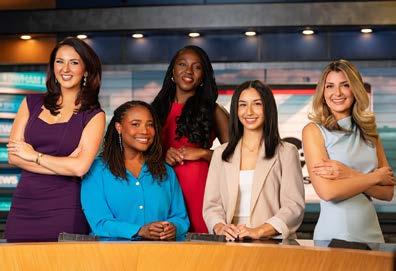
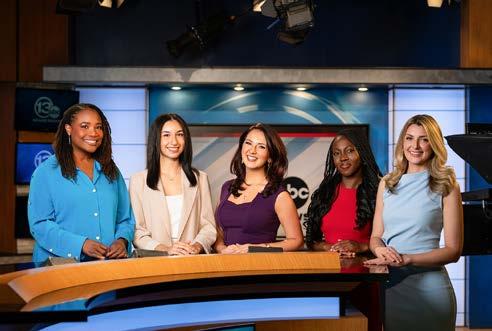
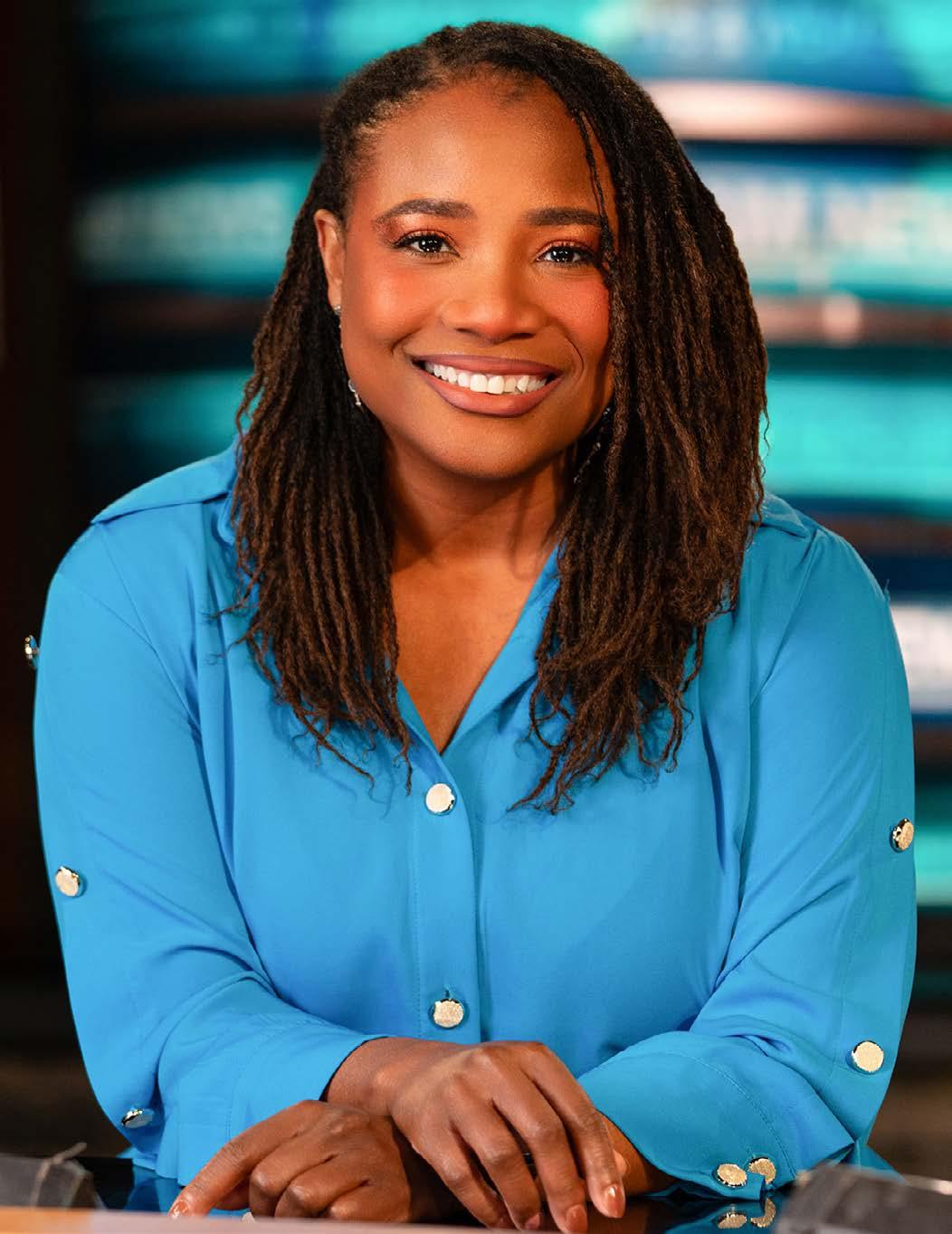
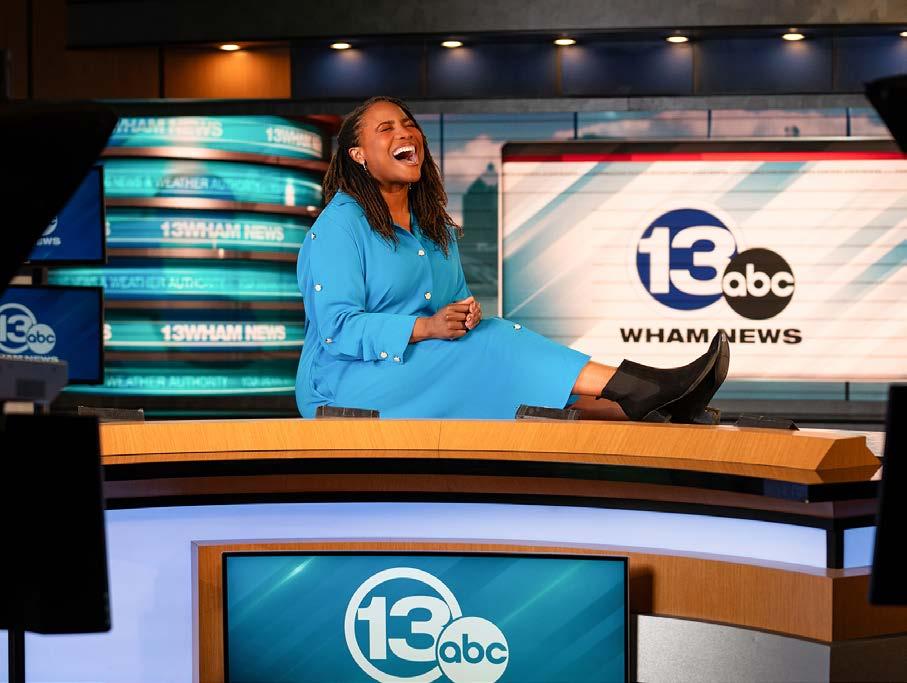
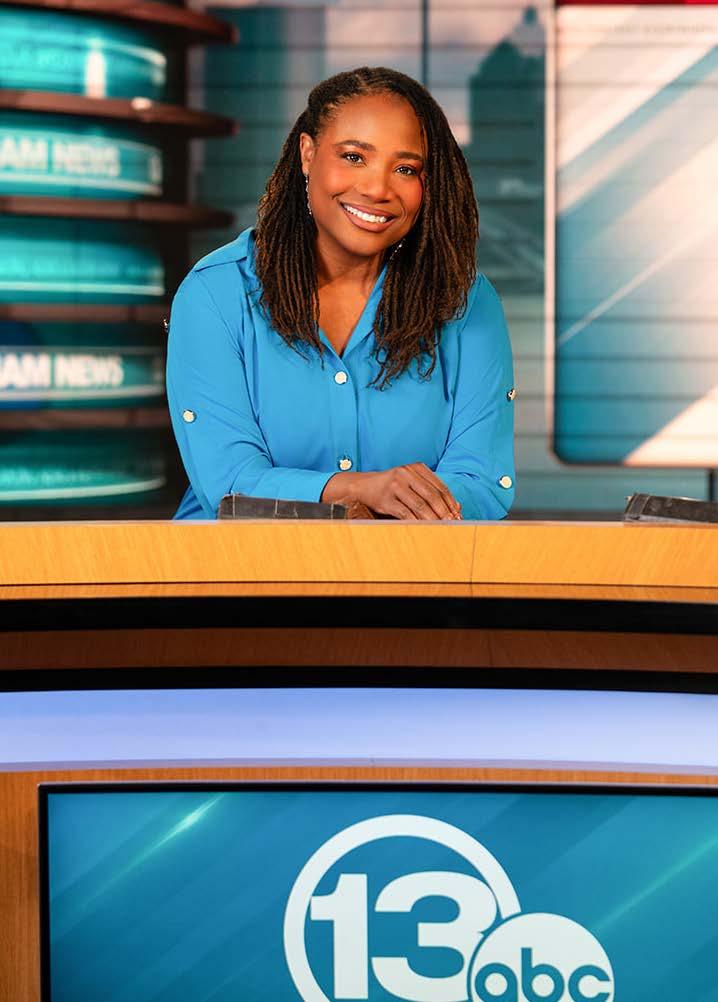
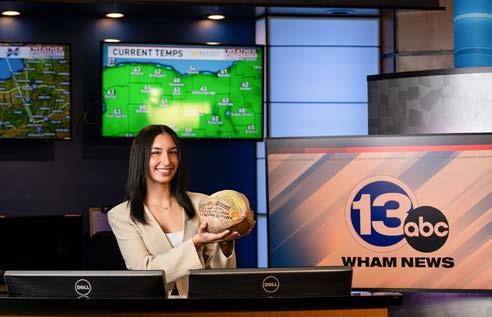
It is my absolute honor to introduce our June 2026 cover feature, showcasing the remarkable women of 13 WHAM TV. These talented journalists, anchors, meteorologists, and broadcasters are more than familiar faces on our television screens—they are dedicated professionals who work tirelessly to keep our community informed while paving the way for future generations of women in media. Their stories remind us that success is built on perseverance, passion, and the courage to lead.
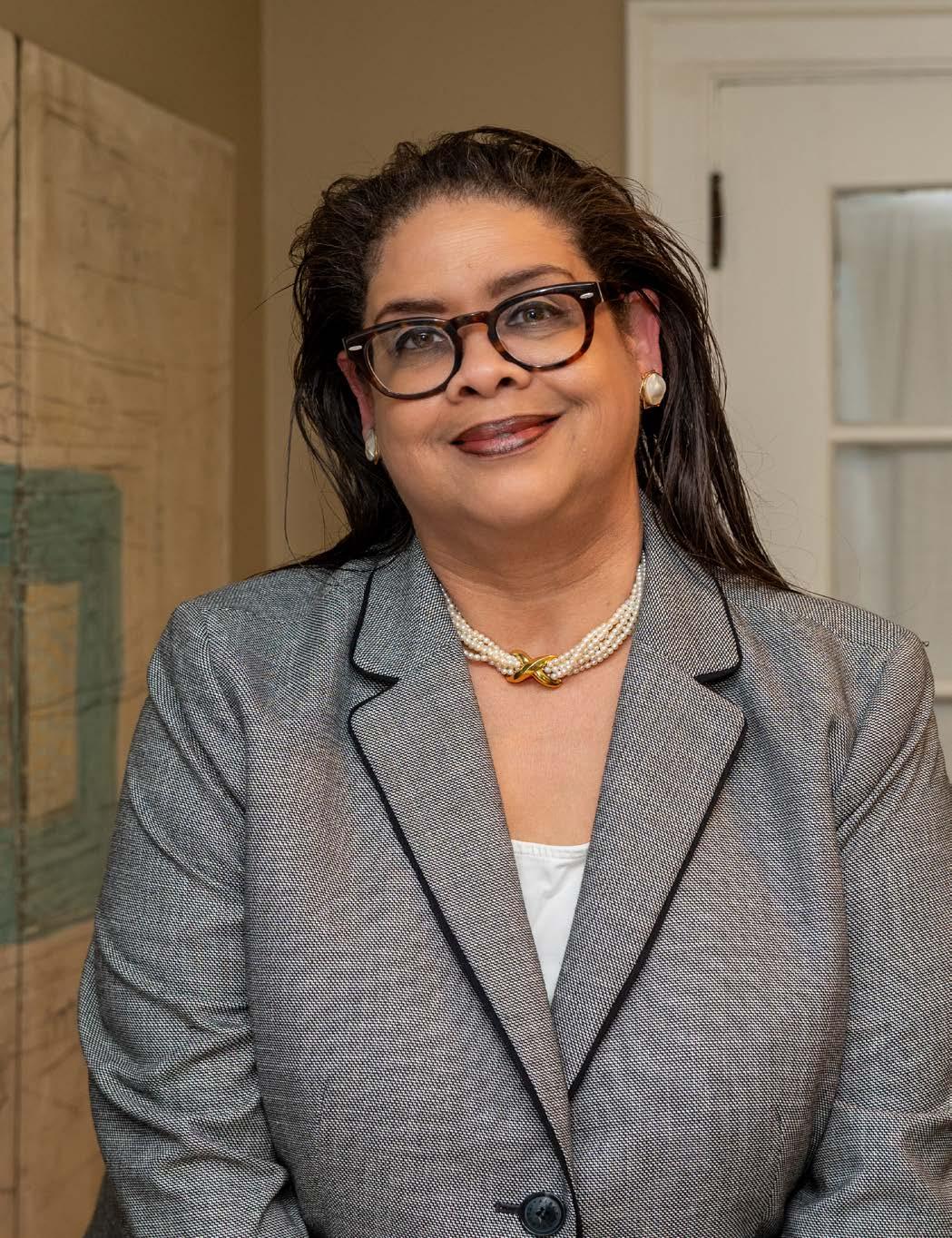
As you turn the pages of this month’s edition, you’ll also meet many other inspiring women who are changing lives in their own unique ways. We’re honored to feature Dr. Julietta Fiscella, whose remarkable career of leadership, excellence, and service has left a lasting impact on healthcare throughout our region. You’ll also be inspired by Marci Almond of Unchained Journeys, whose mission of hope, healing, and transformation continues to empower others to overcome life’s challenges. And don’t miss our feature on Miss Cynthia of The Refinement Studio, whose dedication to helping women build confidence, discover their beauty, and embrace self-care is making a difference one client at a time.
Of course, these are just a few of the incredible stories waiting for you. This issue is also filled with insightful articles from many of our talented returning columnists, along with fresh perspectives from exciting new contributors. Whether your interests include business, health and wellness, fashion, beauty, personal growth, community, nonprofit organizations, lifestyle, or women’s empowerment, there truly is something for everyone in this edition.
Be sure to visit www.rochesterwomanonline.com for our continually updated calendar of events. Whether you’re looking to network, support a local cause, discover your next favorite business, or simply spend time with incredible people, we’d love to see you there.
For nearly 18 years, Rochester Woman Online Magazine has remained committed to one mission: giving women a platform to be seen, be heard, and be celebrated. We believe every woman has a story worth telling. Every entrepreneur has a dream worth sharing. Every nonprofit has a mission worth supporting. Every business deserves an opportunity to grow.
If you’ve ever thought, “Maybe my story could inspire someone,” the answer is yes. If you’re looking to grow your business, launch a new venture, promote your nonprofit, celebrate a milestone, or simply share your journey with thousands of readers throughout Western New York and beyond, we would love to feature you.
There truly is no other publication quite like Rochester Woman Online Magazine. Together, we’ve built more than a magazine—we’ve built a community where women encourage one another, celebrate one another, and create opportunities together.
Thank you to our readers, advertisers, contributors, photographers, designers, sponsors, and community partners for believing in our vision and helping us continue this incredible journey. Your support allows us to shine a spotlight on the amazing women who make our community stronger every single day.
Until next month, keep chasing your dreams, supporting one another, and never stop believing in the power of your own story.
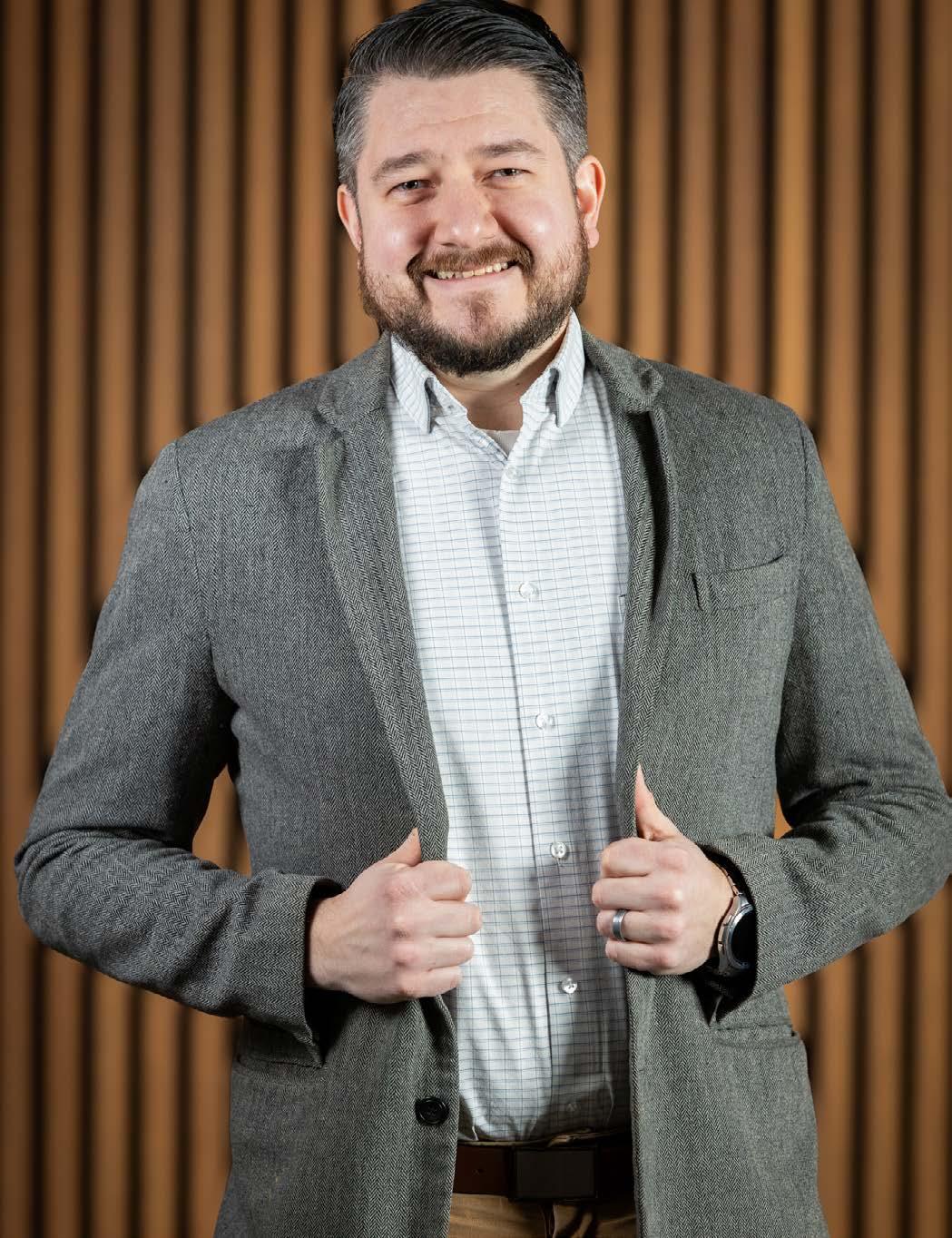
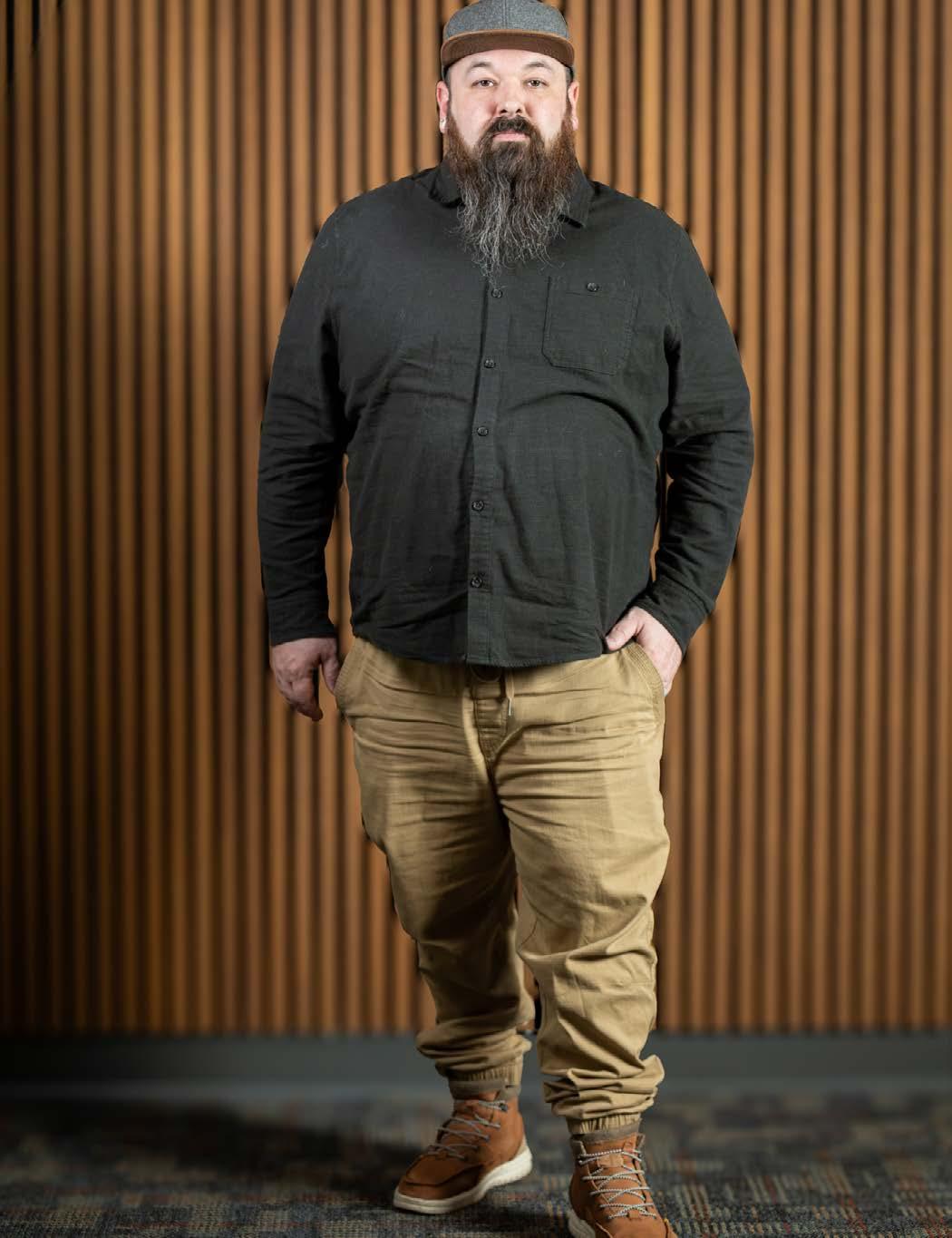
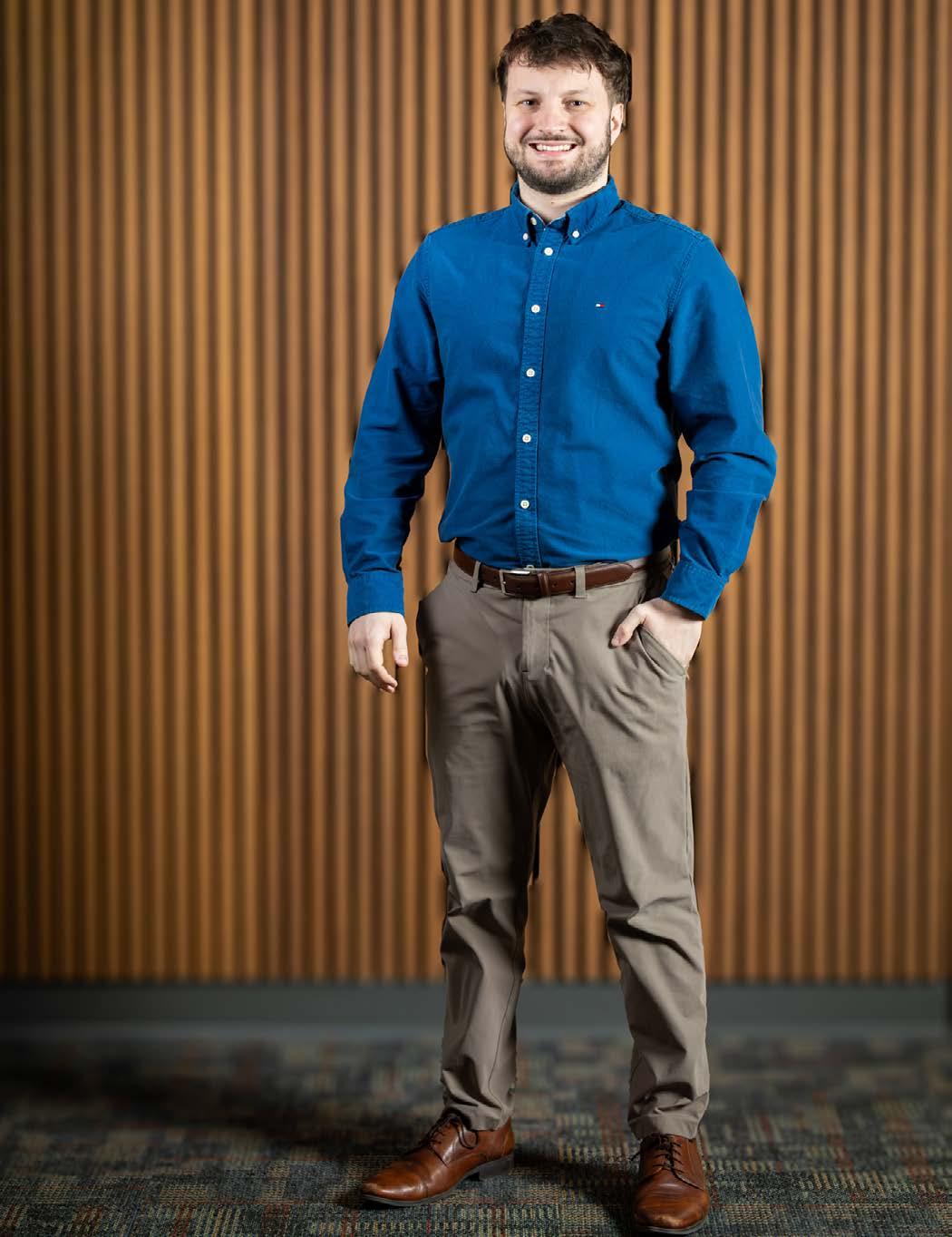
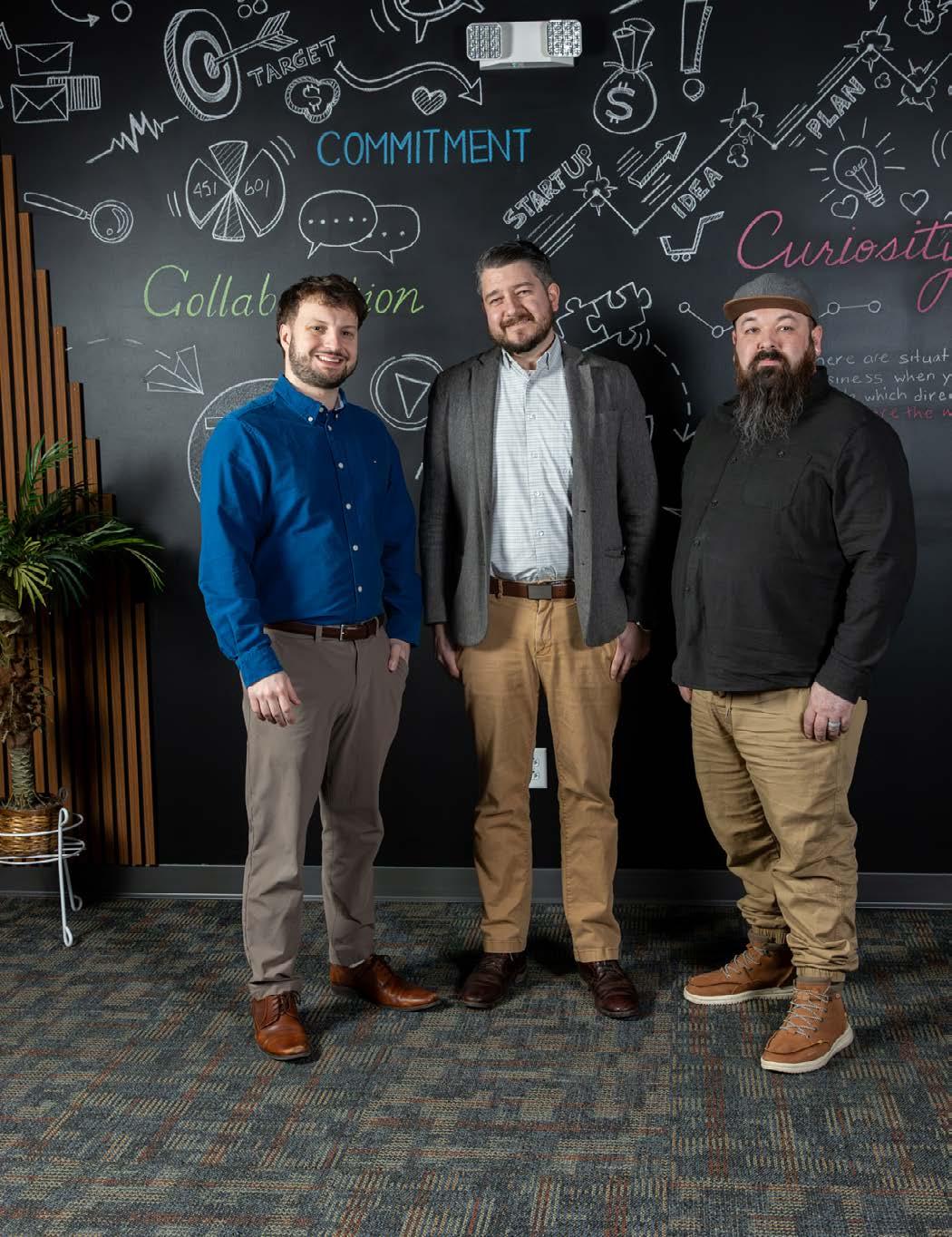
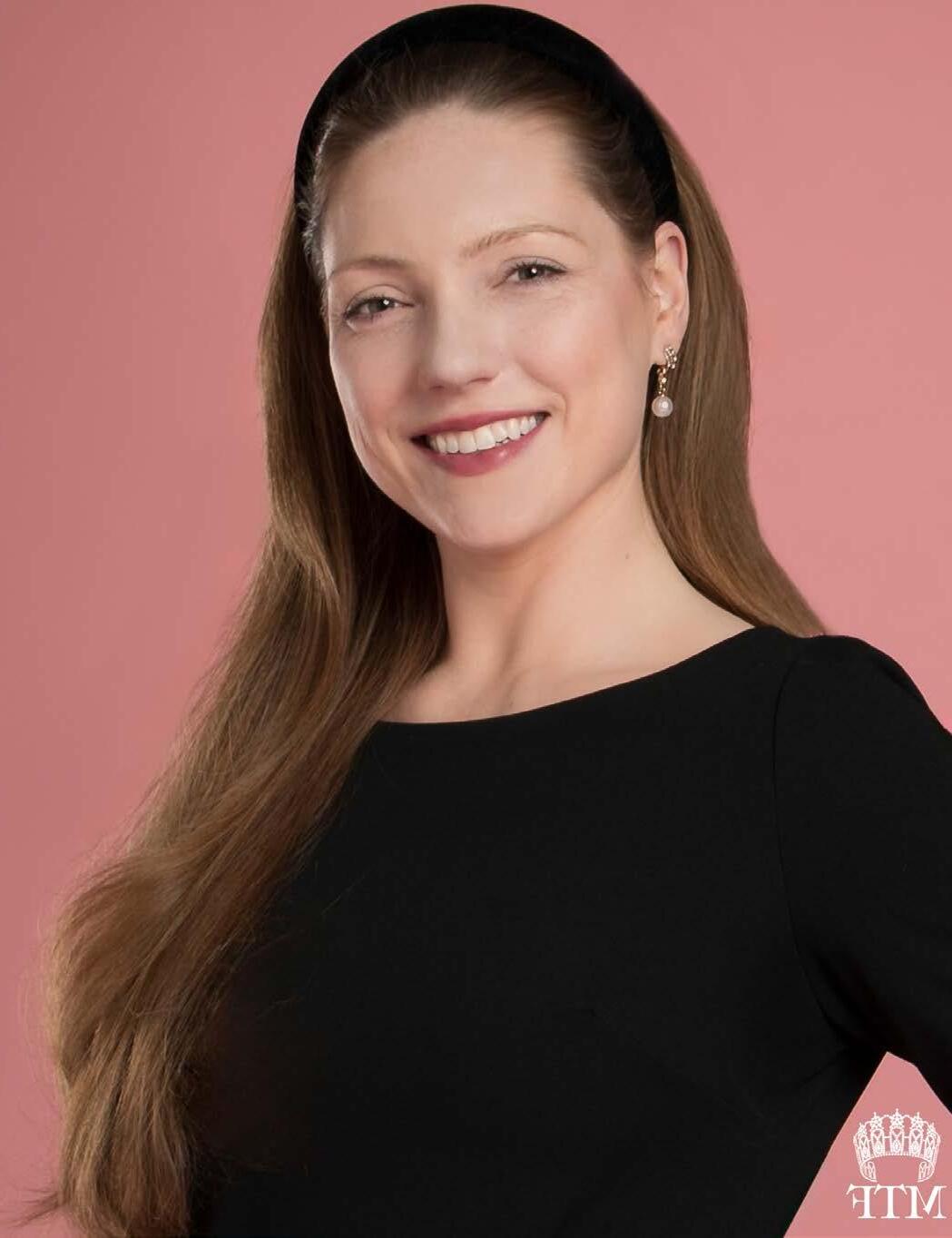
For our June 2026 cover, photographer Chrisom Bebee shot on location with the women of 13 Wham TV at their studios in Henrietta NY. ON OUR COVER TT
Broadcasting Streaming
{ A LOOK AT OUR TEAM }
PUBLISHER
FREELANCE EDITOR
CREATIVE DIRECTOR/GRAPHIC DESIGN
LEAD PHOTOGRAPHER
PHOTOGRAPHY CONTRIBUTING WRITERS
Kelly Breuer
Marisa Zeppieri
Kelly Breuer
Chrisom Bebee
Sweet Home Photography
Chrisom Bebee
Belavati Studios
Christine Conte
Walida More-Sims
Lori A. Dowling
Tamesha Beckford
The ACS Team
Clianda Florence
Laura Villanti
Shauna Dixon
Lori Bruton
Ann Cook
Jessica Fabus Cheng
Robin Dewind
Chrstine Piacentino
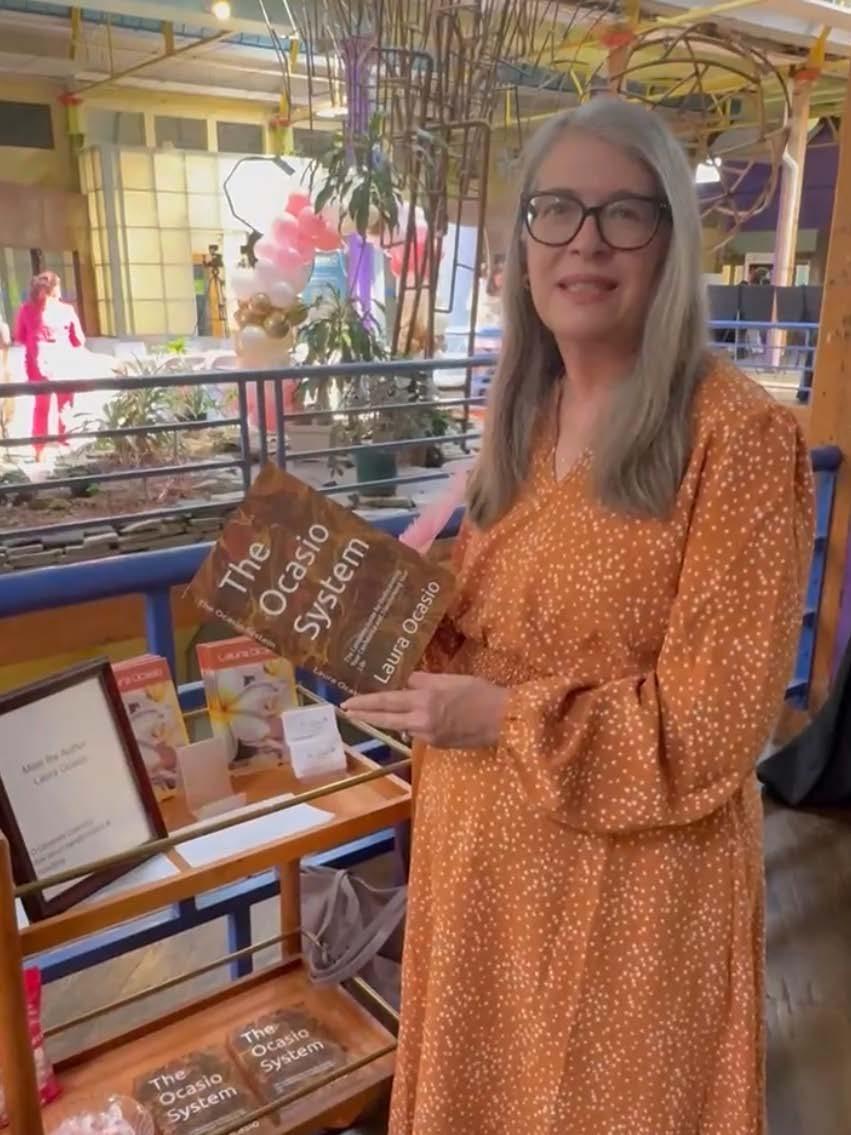
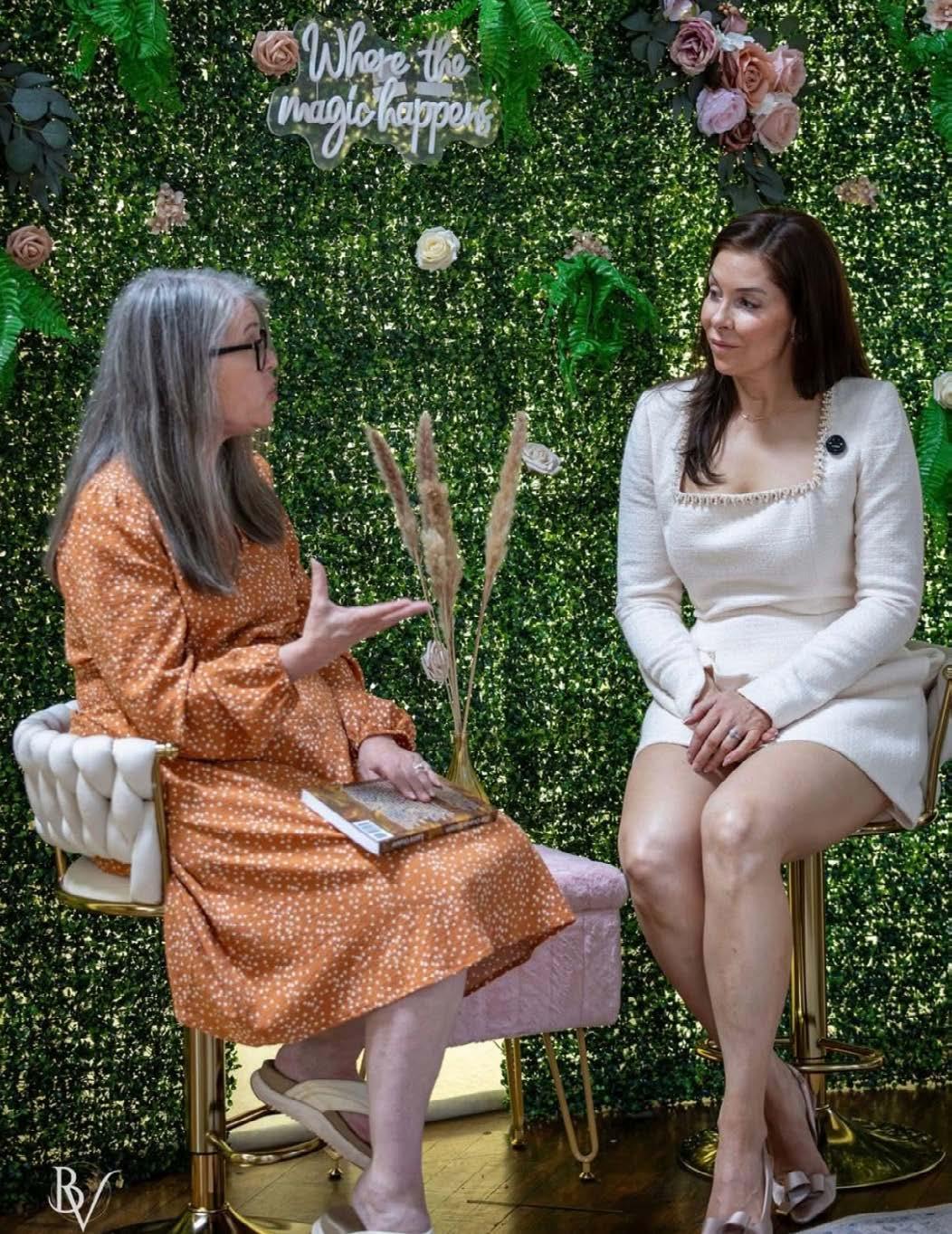
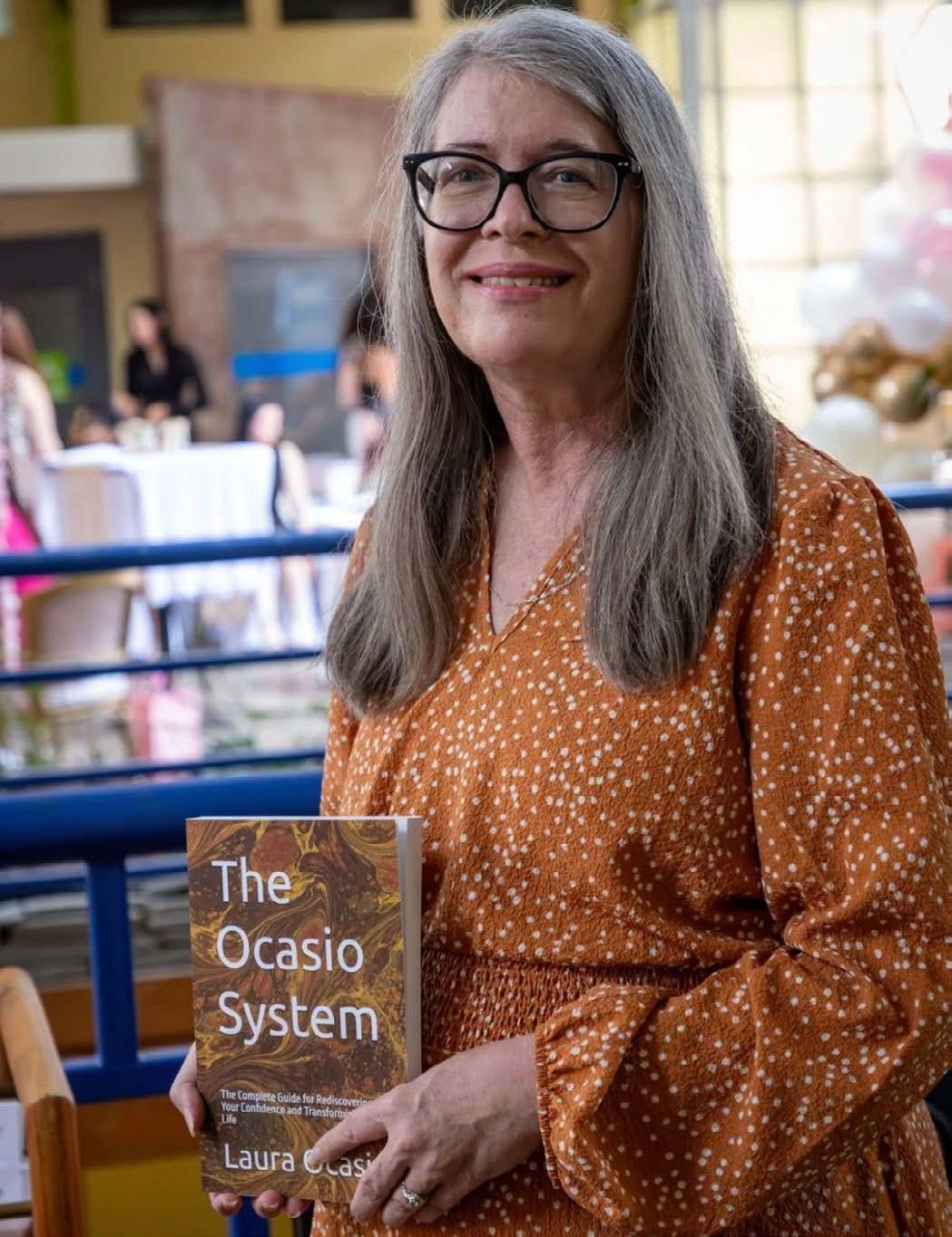
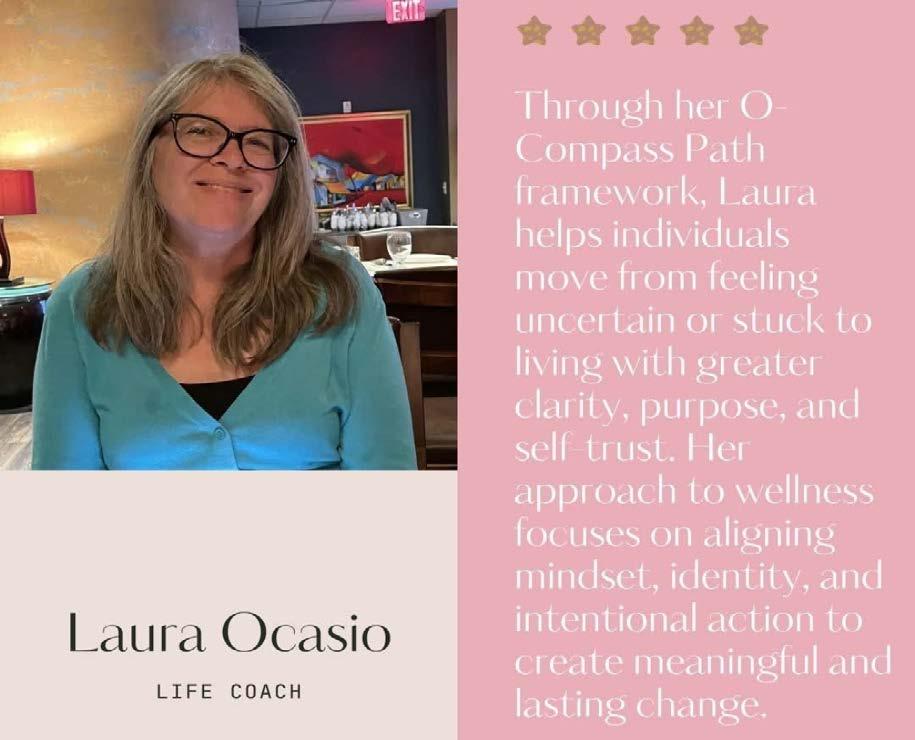
Laura Ocasio
Angella Luyk
Dr. Julietta Fuscella
Cynthia O’Neill
Keisha Simone
Healther Caroll
ADVERTISING SALES
SOCIAL MEDIA DIRECTOR
WEB DESIGN & MANAGEMENT
Kelly Breuer
Network Rochester
Network Rochester
Ann Cook
LEADING THE NEWS
YOU ARE ENOUGH.
BY NICOLE HEROUX WILLIAMS I PHOTOS BY NSP STUDIO
THE WOMEN OF 13WHAM BREAKING BARRIERS ON AND OFF THE AIR
Every day, they wake before the sun rises, step in front of the camera, and deliver the stories that shape our community. They guide us through breaking news, celebrate our triumphs, help us navigate challenges, and keep us informed when it matters most. But behind the anchor desk, weather maps, and sports highlights are remarkable women with stories every bit as compelling as the ones they tell.
For this special cover feature of Rochester Woman Online, we are proud to spotlight five extraordinary women of 13WHAM who are not only leaders in journalism but also powerful examples of resilience, authenticity, determination, and heart.
From the moment Abby Fridmann first stepped into a 13WHAM satellite truck as a college student and discovered her calling, to Stephannie Joseph chasing her dream across state lines with little more than ambition and courage, these women remind us that success is rarely a straight path. It is built through hard work, perseverance, and the willingness to take chances on yourself.
over cancer and an unwavering passion for sports storytelling. Meanwhile, meteorologist Selena Ramos demonstrates how curiosity, science, and determination can inspire the next generation of women pursuing careers in STEM.
What struck me most while interviewing these incredible women wasn’t simply their professional accomplishments—though there are many. It was their humility. Their commitment to community.
future journalists, or inspiring young girls to dream bigger, they are making an impact far beyond the television screen.
Their journeys remind us that leadership doesn’t require perfection. It requires courage. It requires showing up. It requires being willing to keep moving forward, even when the path isn’t easy.
This month, we invite you to get to know the women behind the headlines—the journalists, storytellers, mentors, role models, and trailblazers who help keep Rochester informed every single day.
Their belief that every person has a story worth telling. And perhaps most importantly, their desire to use their platforms to lift others up along the way.
As evening anchor Karen Edwards reflects on a career covering some of the most important stories in New York State, sports anchor Jenna Cottrell shares a journey marked by personal triumph
These women represent the very essence of what Rochester Woman Online has stood for over the past 17 years: empowering women to take up space, use their voices, break barriers, and lead with authenticity. Whether they are reporting from the scene of breaking news, covering championship seasons, tracking severe weather, mentoring
Because while they may spend their careers telling the stories of others, this month, it’s their turn to be celebrated.
Welcome to our special cover feature honoring the incredible women of 13WHAM—women who continue to inform, inspire, and lead both on and off the air.
Abby Fridmann – Weekday Morning News Anchor
You’ve built an impressive career from local reporting to anchoring. What has been the defining moment that shaped you as a journalist? It’s hard to pick just one, but I’d have to say it was the moment I realized I wanted to be a broadcast journalist. Ironically, I was sitting inside the 13WHAM satellite truck, shadowing
PHOTOS BY CHRISOM BEBEE
“Giving back has also helped me process my own journey. It’s a reminder of how far I’ve come and how much perspective it’s given me. It’s not always easy to revisit, but it’s always worth it.”
YOU ARE ENOUGH.
BY NICOLE HEROUX WILLIAMS I PHOTOS BY NSP STUDIO
the amazing reporter Amy Hudak for college credit. Broadcast journalism wasn’t a career I had considered, but I had mentors who insisted I give it a try. I guess they saw something in me that I couldn’t see in myself.
Amy was covering one of the biggest murder trials in Rochester’s history. She was, and still is, tough as nails, eloquent, and a class-act. While watching her write, research, and select soundbites for the 5 o’clock news, something instantly clicked. I knew, without question, this was what I was meant to do.
I was 19 years old and excited but also overwhelmed. With less than a year away from graduation, this threw a wrench in my entire life plan.
It all worked out exactly as it was supposed to in the end. That day changed the entire course of my life. It feels poetic that after all these years, and after working in several newsrooms, I’ve ended up back at 13WHAM, right where it all began.
As a morning news anchor, how do you balance delivering hard news with creating meaningful connections with your audience?
For me, they go hand in hand.
I care deeply about this community, and I hope that comes through the screen while people watch Good Day Rochester. One of the best parts of my job is meeting the people who make the area as great as it is -- nonprofit leaders, students in school musicals, small business owners. Those conversations show how vibrant our community is and the connections build trust.
So, when we cover difficult or heartbreaking stories, viewers know we are approaching them with care, compassion, and responsibility. It’s such an honor to be part of people’s mornings and to be invited into their homes during celebrations, hardships, and everything in between. I never take that trust for granted.
Your award-winning storytelling speaks volumes — what drives your passion for telling stories that matter? Thank you for saying that!
I’ve covered a lot of stories over the years. To put it simply -- the people motivate me.
News correspondent Steve Hartman said it best. “Everybody Has a Story.” That was the name of his human-interest series that ran for years on CBS Evening News.
If you’ve never seen one of those stories, you should check it out but grab a box of tissues. You’ll need it.
Steve’s longtime photographer, Les Rose, was my professor and mentor at Syracuse University’s Newhouse School of Public Communications_.
Here’s what he taught me: you never really know what someone is carrying with them. Every person you meet has challenges, moments of joy, and lessons learned (either the easy way or the hard way). Those experiences shaped them into the person they are today. Chances are, if you ask about it, they are willing to share.
So, there it is. Everybody has a story.
There’s something powerful about being trusted with those stories. It takes vulnerability to share your life. Whether it’s a major life moment or a quirk that makes them unique, those conversations make this career so meaningful. It’s an honor to write about them.
How has working in Western New York influenced your perspective both personally and professionally? I’ve been fortunate to work in two Western New York markets -- Buffalo and Rochester.
Professionally, Western New York has made me a more versatile journalist. No two days are the same. You might start the morning covering a school board meeting, shift into breaking news, and end the day interviewing elected officials. There is a lot happening in our community. There are no “slow news days” in Western New York. That pace teaches you how to adapt quickly while still taking time to treat the stories with care.
Personally, it has deepened my appreciation for the places I call home. Buffalo will always be part of me. Working in my hometown strengthened that pride more than I can even say. In Rochester, I’ve felt incredibly welcomed. From day one at 13WHAM, viewers embraced me with kindness and support. It has had an enormous impact on my confidence. I wouldn’t be where I am without them.
As an adjunct professor, how important is it for you to mentor the next generation of journalists?
“It feels poetic that after all these years, and after working in several newsrooms, I’ve ended up back at 13WHAM, right where it all began.”
YOU ARE ENOUGH.
It means the world to me.
BY NICOLE HEROUX WILLIAMS I PHOTOS BY NSP STUDIO
I had incredible mentors throughout both my bachelor’s and master’s programs, so having the opportunity to do the same for the next generation is great. Seeing students grow over the course of a semester, whether it’s becoming more confident in front of a camera or strengthening their writing skills, is incredibly rewarding.
They probably think I’m a little crazy sometimes, especially when I start lecturing them about grammar, quizzing them on the names of Supreme Court justices, or sending them outside to practice live reports in bad weather, but I hope one day they’ll appreciate it. One of my biggest influences was Kimberly Young, a professor I had at SUNY Brockport. Much of my writing style and on-camera presence was shaped by her guidance. She taught me the importance of telling stories with compassion, gravitas, and composure. Now, I have the privilege of working alongside her at SUNY Brockport, teaching the next generation of journalists just like she did for me.
In a fast-paced, ever-evolving media landscape, how do you stay grounded and authentic?
Three things are certain in morning television: intensity, unpredictability, and exhaustion! That being said, having people who work hard and can laugh through the stressful moments make all the difference.
That’s where my Good Day Rochester team comes in.
I could write a book about how incredible our team is, but it would take hours to give each person the credit they deserve. That being said, my co-anchor Dan Schrack keeps me grounded every day. After three years of working elbow-toelbow for our 5-hour show, he is my tried-and-true friend. I’m convinced there’s nothing we can’t do if we do it together.
My parents, husband, friends, and family also keep me grounded. They knew me long before I ever stepped in front of a camera. There are times when the news consumes me. They keep me humble and connected to real life. I’m so grateful to have them as my touchstones.
As for authenticity, I think viewers can tell when someone is genuine. I’ve never wanted to come across as perfect -- because I’m not. We are all human. But I show up every day with enthusiasm, curiosity, and gratitude. I think that’s what people connect with most.
What challenges have you faced as a woman in broadcast journalism, and how have you overcome them? You develop thick skin quickly in this industry.
I’ve received messages criticizing my hair, body, voice, and basically everything else. Early on, those comments bothered me. Not so much anymore.
At this point, if someone is taking the time to find my email, write a message, and hit send, I must be taking up quite a bit of space in their mind. It’s almost flattering.
Most of the time I delete those messages. Truthfully, I feel sorry for the people sending them. At some point in their lives, they learned that treating others like that was acceptable. What a sad way to live.
Another challenge is being taken seriously as a journalist. People can criticize my appearance all they want, but I never want to give anyone a reason to question my intelligence.
I’ve had comments made to me like, “Wow, I didn’t expect you to be so intense,” or “You really know what you’re talking about,” and even, “You really put me in the hot seat. I didn’t expect that.”
The reality is, I am an intense person. I make sure I’m confident in my reporting. Our community deserves nothing but my best every single day.
What message do you hope women take away from your journey and your voice on screen every day?
I hope women feel encouraged to be confident in who they are -- and not shrink themselves to make others more comfortable.
I’ve found there is often a double standard in leadership roles. If you speak with conviction, you may be told to soften your tone. But strength and kindness can exist at the same time. You can be kind and still hold people accountable. I hope women see that they don’t need to change themselves to be respected. There is power in being confident, prepared, and unapologetically yourself. You can be compassionate and still powerful. I hope more women feel empowered to embrace both.
“ The reality is, I am an INTENSE person. I make sure I’m confident in my reporting. Our COMMUNITY deserves nothing but my best every single day. ”
“The newsroom is where I found community. It started as an extracurricular activity that I did for fun at our TV studio in middle school, and it grew once I got to college and beyond.”
YOU ARE ENOUGH.
BY NICOLE HEROUX WILLIAMS I PHOTOS BY NSP STUDIO
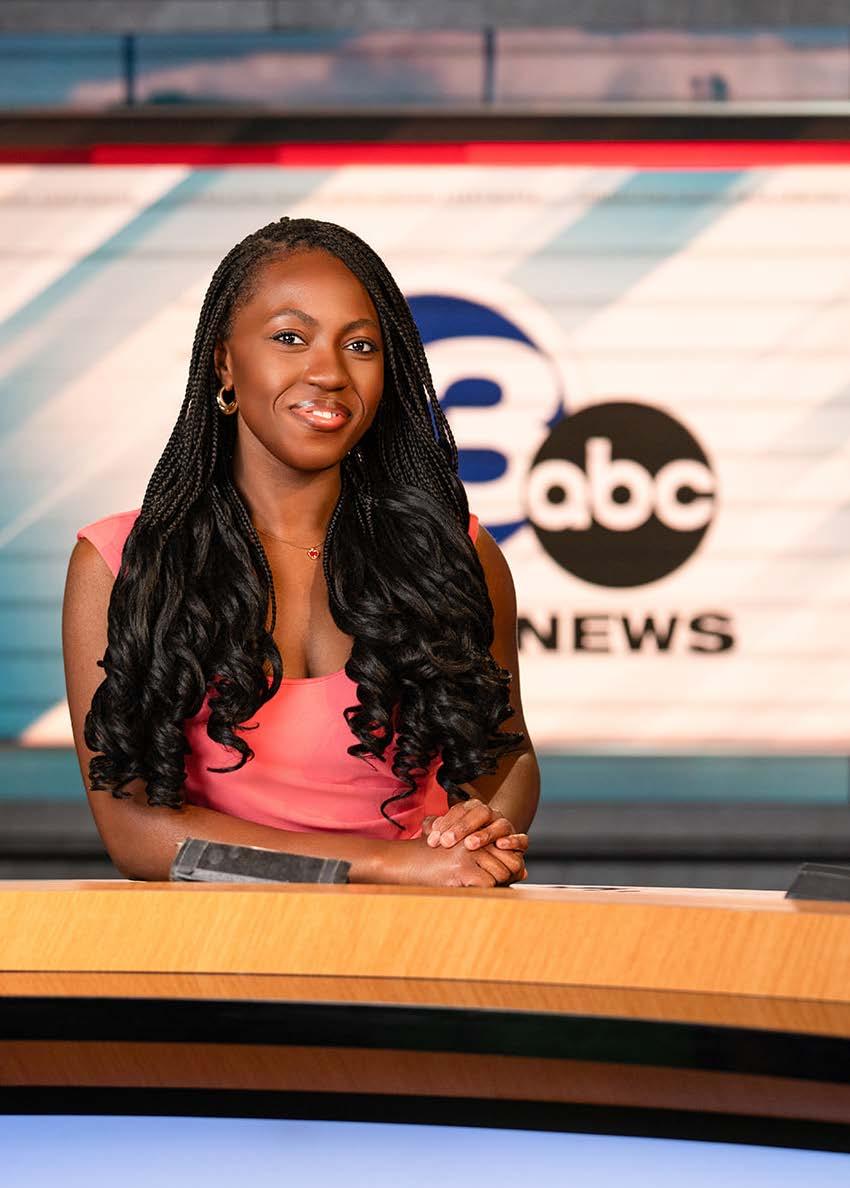
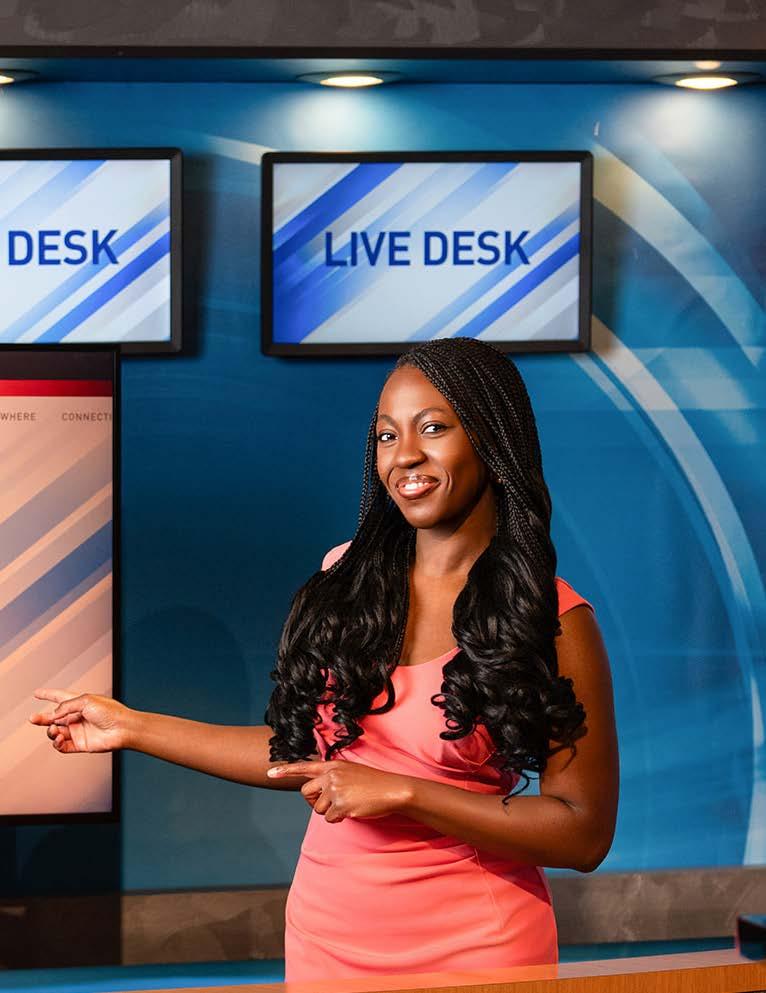
Stephannie Joseph – Weekday Morning Breaking News Anchor
Starting your career so quickly after college and stepping into an anchor role—what has that transition been like for you?
It has been nothing short of a whirlwind. I moved to Rochester to become a reporter about two weeks after graduating from college in 2023. I didn’t have a car or a permanent place to live when I got here, but I had a dream! I truly credit the people I met early on at WHAM with making my experience what it is. I worked with a fantastic weekend anchor who pushed me to start anchoring here in the first place. I expected something like that to happen three or five years into my career. I was promoted to full-time anchor in 2024. There have been growing pains between then and now, as with any job, especially as someone so young. I had to navigate life away from all I’ve ever known, while adapting to a new city and kicking off a career. Some days are easier than others, but it’s my passion for journalism that fuels me on those challenging days.
community. It started as an extracurricular activity that I did for fun at our TV studio in middle school, and it grew once I got to college and beyond. Each day is different, which makes it fun and interesting. I love being part of a team that puts so much care into the stories we tell and choose. We are intentional about how we build a show and what graphics we use. It’s fulfilling to see all of that work come to life. I take pride in keeping this
elected as Massachusetts governor. For the latter, I remember that a lot was happening that night. I had to take the train immediately after work while carrying all my equipment to the election night celebration for Healey. Once I was there, I had to find my team, choose a good place for our camera, think of a script on the spot, and push past crowds of people to get near the stage for videos of the winner(s) as results came in. I even got reaction from voters. This experience prepared me for Monroe County’s 2023 elections. I was able to stay calm and coordinate live interviews and reports for multiple shows. I now host a segment called Political Pulse on ARC Rochester at 9:20 a.m. I take a closer look at local, state, and federal policies by talking to experts and politicians. This is only possible because of the confidence I gained through previous political reporting. Repetition, trial and error, and deadline pressure helped me find my voice and boost my confidence.
You’ve called the newsroom your “happy place”—what is it about journalism that fuels your passion every day?
The newsroom is where I found
Covering major elections early in your career is no small feat—how did those experiences shape your confidence and voice?
I had the opportunity to cover multiple historic elections while studying at Boston University. The first was when Michelle Wu became the first woman elected as mayor of Boston. The second was when Maura Healey became the first woman and openly LGBTQ+ person
As someone with a background in both journalism and sociology, how do you approach storytelling differently? I’ve always wanted to tell stories that highlight marginalized communities. Sociology is a social science that looks at human interaction through several lenses, including race and gender, to understand the nuances between our lived experiences and the layers behind some community issues. That background gave me the tools to seek
YOU ARE ENOUGH.
“For me, at the center of leadership is people…listening, collaborating, getting a second or third set of eyes as we work to share what’s going on.”
BY NICOLE HEROUX WILLIAMS I PHOTOS BY NSP STUDIO
out, approach, and frame stories.
What has been the most surprising lesson you’ve learned since joining the Rochester news community?
It’s always ok to ask for clarification or more details, even if we’re sent a release with details that seem straightforward. Unless something is said, you should never assume its meaning. If I’m questioning a quote or a sentence in a press write-up, then a viewer will likely do the same.
How do you stay resilient and confident in such a fast-moving, high-pressure industry?
I have a great support system back home that keeps me in check and brings me comfort. I also seek advice from other industry professionals who can resonate with how I may be feeling.
What advice would you give to young women who are just starting their careers and chasing big dreams?
The most important thing is to regularly reach out to your professional and personal community. You will need a mentor or someone you feel comfortable venting to and asking for advice. There will be hard moments as you begin to learn. Your family and friends will remind you to give yourself grace.
With that being said, remain focused and be ready to work. Dreams take hard work and the path to achieving them can be tough. Don’t let anyone dim your light. Take up space intentionally and authentically, always. Be a sponge — learn and grow as you go along.
What kind of impact do you hope to make—not just as a journalist, but as a role model?
I want people to fearlessly chase their dreams. Growing up, I didn’t see many people who looked like me working in news, so I was nervous about pursuing my career. I want other Black women and girls to feel empowered and comfortable being themselves too. Everyone deserves to see themselves represented in every field, including journalism. If I can do it, they can too.
Karen Edwards – Weeknight News Anchor
With over a decade of experience, what has been the most defining chapter of your career so far?
I think my time covering Rochester and other parts of the state have marked my most defining chapter thus far. From covering the Buffalo Tops mass shooting to protests over the death of Daniel Prude and multi-part reporting on New York State’s Crown Act, I feel I truly started to come into my own once I moved to Rochester in 2019.
You’ve worked in multiple markets across the country—how have those experiences shaped your storytelling? It’s really broadened my horizons! It’s so true that different parts of the U.S., even different parts of one state or county, often have completely different cultures and interests.
As someone who calls Rochester a “second home,” what makes this
community so special to you?
As a Black woman in her late 30s, I am so grateful for how diverse Rochester is! For instance, there have been cities and towns where I’ve struggled to find a hair stylist. But, not in Rochester! The community is really plugged in. I’ve made incredible lifelong friends here and have felt welcomed by the community. The Finger Lakes region also has a lot of things I’m interested in, including a pretty great gaming community, a nice selection of breweries and wineries, and lots of fun outdoor activities.
Breaking news requires clarity and confidence—how do you prepare yourself for those high-pressure moments?
With a lot of deep breaths and maybe a prayer or two? To be honest, there’s really no way to prepare outside of relying on my knowledge and training. But something I find extremely helpful is simply working in a positive, collaborative environment where I don’t have to be afraid to ask questions. Breaking news, really any news coverage, is a massive team effort and I’m so grateful to be part of such a great team.
What does leadership look like to you in the newsroom, especially as an evening anchor?
For me, at the center of leadership is people…listening, collaborating, getting a second or third set of eyes as we work to share what’s going on. It’s about being available to listen, coach or lend a helping hand. I work hard to lead by example and make sure my teammates know I’m always available and willing to help. And I’m
“Authenticity means everything to me. When I first started my career, I was so nervous, always afraid to speak up… I’m so grateful that I’ve left that version of myself behind.”
YOU ARE ENOUGH.
BY NICOLE HEROUX WILLIAMS I PHOTOS BY NSP STUDIO
heavy handed with the compliments! Constructive criticism is important, but I personally think it’s even more important to celebrate our wins. That’s what leadership looks like to me.
Growing up in a military family, how did that upbringing influence your work ethic and adaptability?
Well, growing up as the daughter of a Naval officer, our family moved something like 13 times before I reached high school. While my father would be out-to-sea for months on end, my mother held down the fort while pursuing her own career in teaching and becoming a professor. I saw firsthand that it’s possible to achieve your dreams even when you don’t have an established “base” – and that moving and being exposed to different kinds
a journalist.
You embrace both serious journalism and your fun, “nerdy” side—how important is it to stay authentic in your career?
Authenticity means everything to me. When I first started my career, I was so nervous, always afraid to speak up… I’m so grateful that I’ve left that version of myself behind. That comes from experience, of course, but also from all the support and kindness I’ve been exposed to throughout my career. Also, in a field like on-air journalism
where I’m often mired in some of the darkest parts of humanity, I’ve found it increasingly important to lean into my nerdy side. Making time to play video games has been great for my
What legacy do you hope to leave in the communities you serve through your reporting?
I hope to leave a legacy of kindness and inclusivity. One of the most incredible comments a viewer can share with me is that I made them feel comfortable telling their story. I’m always thinking about our viewers and the community – what questions would they want me to ask this official? Are we sharing all sides of this story? I hope when people look at my body of work, they see fairness and inclusivity.
“ I’ve always LOVED sports, it’s not something I remember choosing, it’s just always been part of WHO I AM. ”
“I also feel really grateful because I’ve had important people in my life who believed in me before I fully believed in myself.”
YOU ARE ENOUGH.
BY NICOLE HEROUX WILLIAMS I PHOTOS BY NSP STUDIO
Jenna Cottrell – Sports Anchor
Your journey in sports broadcasting is incredibly inspiring—what first sparked your passion for sports storytelling?
1. I’ve always loved sports, it’s not something I remember choosing, it’s just always been part of who I am. I grew up playing soccer and lacrosse, and my dad is a huge sports fan, so we always had a game on watching together as a family.
Sports took on an even deeper meaning for me in middle school when my brother was diagnosed with leukemia. He’s been in remission for over two decades now, but during that time, playing and watching sports became an escape. I was drawn to the passion, the camaraderie, and the way people could overcome the odds to do something special.
Sports are powerful, and I feel really lucky to be part of telling those stories.
Covering the Buffalo Bills at such a high level, what makes this team and fanbase so special to you?
2. I really do love my job. I’ve covered the Bills for nearly a decade now, which is kind of wild to think about. From when I started in 2016 to where the franchise is today, the transformation has been incredible, and Western New York deserves it.
What makes this team and fanbase so special is the passion. It’s real, it’s constant, and it runs deep. There are bigger cities and what people might
call “better” sports markets, but there’s something different about covering a team that genuinely matters to its community. That connection is powerful, and it’s something I don’t take for granted.
You’ve faced and overcome a personal health battle—how did that experience reshape your perspective on life and career?
Being diagnosed with cancer in 2017 and going through treatment, followed by nearly a decade in remission, completely changed my outlook on my life and my career. Cancer is something my family knows well, both my brother and I are thankfully in remission, but we’ve each faced diagnoses that challenged us in ways we never expected.
Since then, my priorities have definitely shifted. I find myself appreciating the smaller moments more, the catchups with friends, a great meal, laughing until your stomach hurts, even just a sunny day. It’s made me more grounded and more grateful for everyday life.
Professionally, it’s also made me more empathetic in how I cover athletes and their stories. Sports are still about wins and losses, but there’s always so much more happening underneath that. That experience helped me recognize those layers more clearly, and I think it’s made me a better storyteller because of it.
As a woman in sports media, how have you navigated challenges and
carved out your space in the industry?
I’ve been really fortunate in a lot of ways, but early on I learned pretty quickly that the best way to carve out your place in anything is through preparation and consistency, knowing your stuff, showing up every day, and letting your work speak for itself.
I also feel really grateful because I’ve had important people in my life who believed in me before I fully believed in myself. From my parents, family, and friends to my coworkers Mike Catalana and Dan Fetes, there have been so many people who have helped me find my voice along the way.
Over time, I’ve become more comfortable owning my perspective. There’s real value in having different voices in this industry, and I don’t think you succeed by trying to sound like everyone else. You succeed by being prepared, being reliable, and bringing your own point of view to the conversation, and that’s what I try to bring to my work
What does it mean to you to be recognized for excellence in sportscasting across New York State? It’s really cool, and I’m grateful for it, but I don’t do this job for awards or recognition. I definitely don’t take it lightly, but my focus has always been on connecting with people, telling good stories, and having fun along the way.
How do you bring both insight and authenticity to your reporting in such a competitive field?
“The insight comes from just studying and genuinely enjoying watching and learning sports. The authenticity comes from just being myself.”
YOU ARE ENOUGH.
BY NICOLE HEROUX WILLIAMS I PHOTOS BY NSP STUDIO
The insight comes from just studying and genuinely enjoying watching and learning sports. The authenticity comes from just being myself. I don’t think you can force that, and I’ve always felt viewers can tell when it’s an act. I’m a little sarcastic by nature, and that shows up in my sportscasts and on the Buffalo Plus YouTube channel. But I think that fits, sports are supposed to be fun, lively, and opinion-driven.
At the same time, I don’t ignore the competitive side of the industry. I just try to stay focused on building real relationships, listening more than I talk, and treating people the way I’d want to be treated.
Your work mentoring other cancer patients is powerful—how has giving back impacted your journey?
male-dominated field?
I have a lot of respect for the women who came before me and did the hard work of breaking barriers. That’s something I try to carry forward by supporting people who are just starting out in the business. At the same time, I try to focus on the job itself, not the fact that I’m in a maledominated field. For me, it comes down to working hard, staying curious, and recognizing there’s always more
I think it’s important to give back. I was so scared when I went through my diagnosis and treatment that if I can help someone feel better and give them some insight why wouldn’t I. Giving back has also helped me process my own journey. It’s a reminder of how far I’ve come and how much perspective it’s given me. It’s not always easy to revisit, but it’s always worth it.
What message do you hope to share with women who want to break into sports media or any traditionally
to learn. It’s also important to trust yourself and stay committed. If you do that, you can carve out your place, no matter the industry.
Selena Ramos – Meteorologist
You discovered your passion for weather at a young age—what sparked that curiosity and turned it into a career?
I grew up in the Adirondacks and spent a lot of time outdoors such as
hiking, swimming, and snowboarding. Upstate New York is known for its snowy winters, and one storm in particular really stuck with me. We got over a foot of snow and were basically stuck inside. I remember thinking, how is this even possible? That moment sparked a lot of curiosity for me. As I got older, that curiosity grew into a passion, and I realized I could turn it into a career where I not only study the weather but also help keep people informed and safe.
As a woman in STEM and meteorology, what challenges have you faced and how have you pushed through them? I studied meteorology for four years at the University at Albany, and I was the only woman in my classes alongside several men. It could feel isolating, and I didn’t always feel like I was fully connected with my peers. But I didn’t let that discourage me. I focused on my goals, sought out support from others I connected with, and stayed committed to working hard. That experience pushed me to become more confident in myself and my abilities.
Your research and experience with extreme weather events are impressive—how do you translate complex science for viewers? My goal is always to make science relatable and easy to understand. The weather can get very technical, but viewers just want to know what it
“I
studied meteorology for four years at the University at Albany, and
I was the only woman
in
my
YOU ARE ENOUGH.
classes alongside several men.
It could feel
isolating,
and I didn’t always feel like I was fully connected with my peers.”
BY NICOLE HEROUX WILLIAMS I PHOTOS BY NSP STUDIO
means to them. I focus on breaking things down into simple terms, using visuals, and connecting them to everyday impacts. Such as how a storm will affect your commute or weekend plans. It’s about telling a clear story, not just presenting data. 4. What has been your proudest moment so far in your journey from student to on-air meteorologist?
One of my proudest moments was seeing all my hard work come together when I stepped in front of the camera for the first time. Going from studying maps, models, science, and
math in the classroom to actually delivering a forecast to viewers was incredibly rewarding. It reminded me that everything I worked toward was becoming real.
How do you stay calm and confident when reporting on high-impact or severe weather situations?
Preparation is everything. I make sure I fully understand the setup and potential impacts before going on air. During severe weather, I stay focused on the facts and what viewers need to know to stay safe. Taking a calm, clear approach helps build trust, and I remind myself that people are relying on me for accurate information.
connection play in how you deliver your forecasts?
Community connection is a huge part of what I do. I’m not just delivering a forecast; I’m speaking to real people who are planning their day around the weather. Whether it’s a snowstorm, heatwave, or severe storms, I always think about how it will impact families,
perspective helps me communicate in a way that’s more meaningful and relatable.
shows young girls that they belong in these spaces. When you can see someone who looks like you doing what you dream of, it makes it feel more possible. Mentorship is just as important because having guidance and support can make a huge difference in someone’s confidence and success. I want to be that example and support system for the next generation.
What advice would you give to young girls who are curious about science but unsure where to start?
Start by simply asking questions and exploring what interests you. You don’t have to have everything figured out right away. Take science classes, watch weather coverage, even go on social media, and type key words that interest you. Don’t be afraid to try new things.
Most importantly, believe in yourself and don’t let anyone make you feel like you don’tbelong because you absolutely do!
What role does community
Being involved in women in STEM leadership—why is representation and mentorship so important to you? Representation matters because it
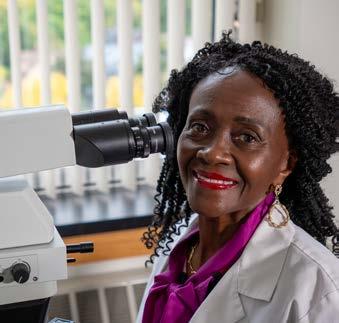
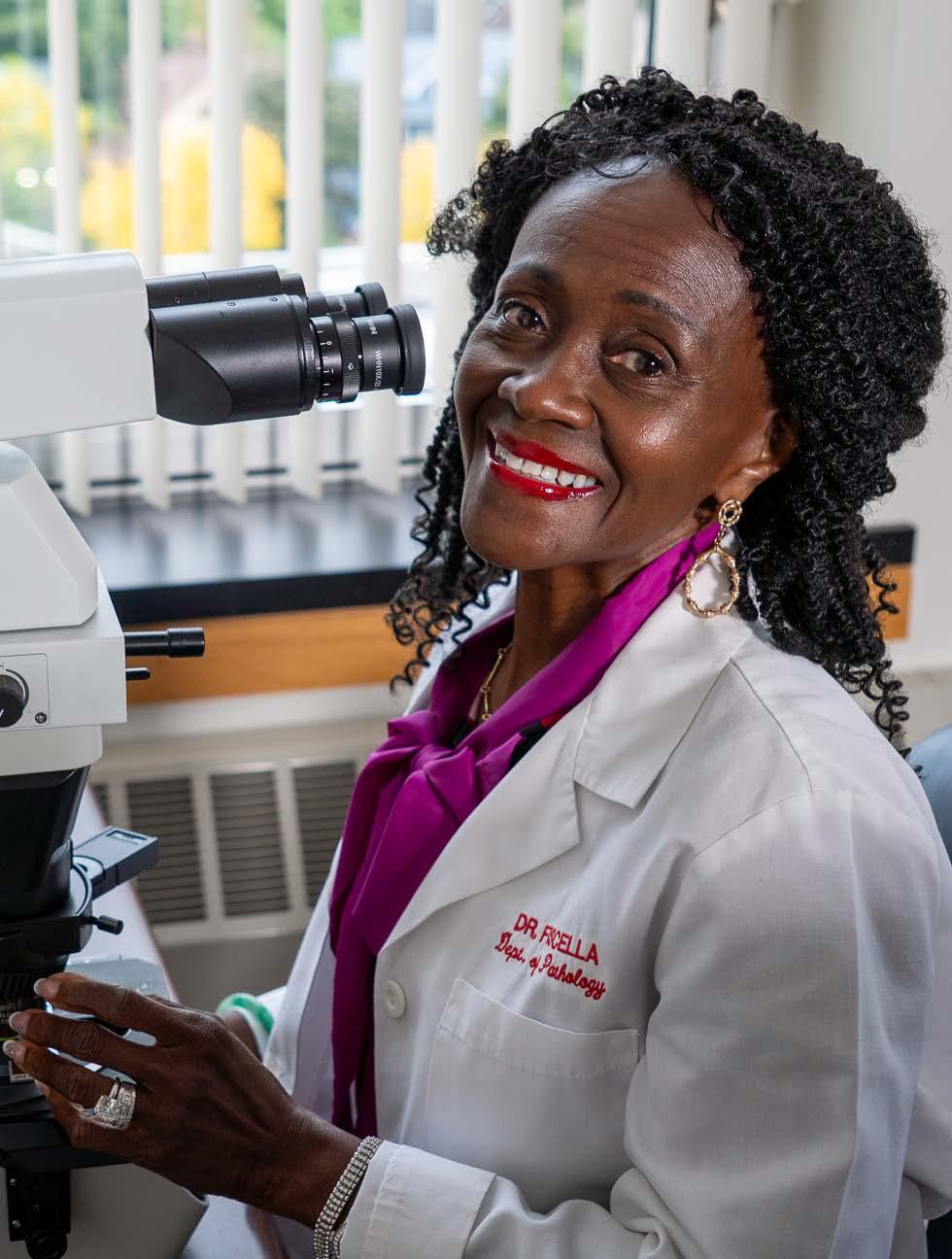
DR. JULIETTA FISCELLA
YOU ARE ENOUGH.
BY NICOLE HEROUX WILLIAMS I PHOTOS BY NSP STUDIO
A Legacy of Excellence, Leadership, and Lifelong Learning
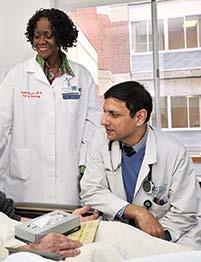
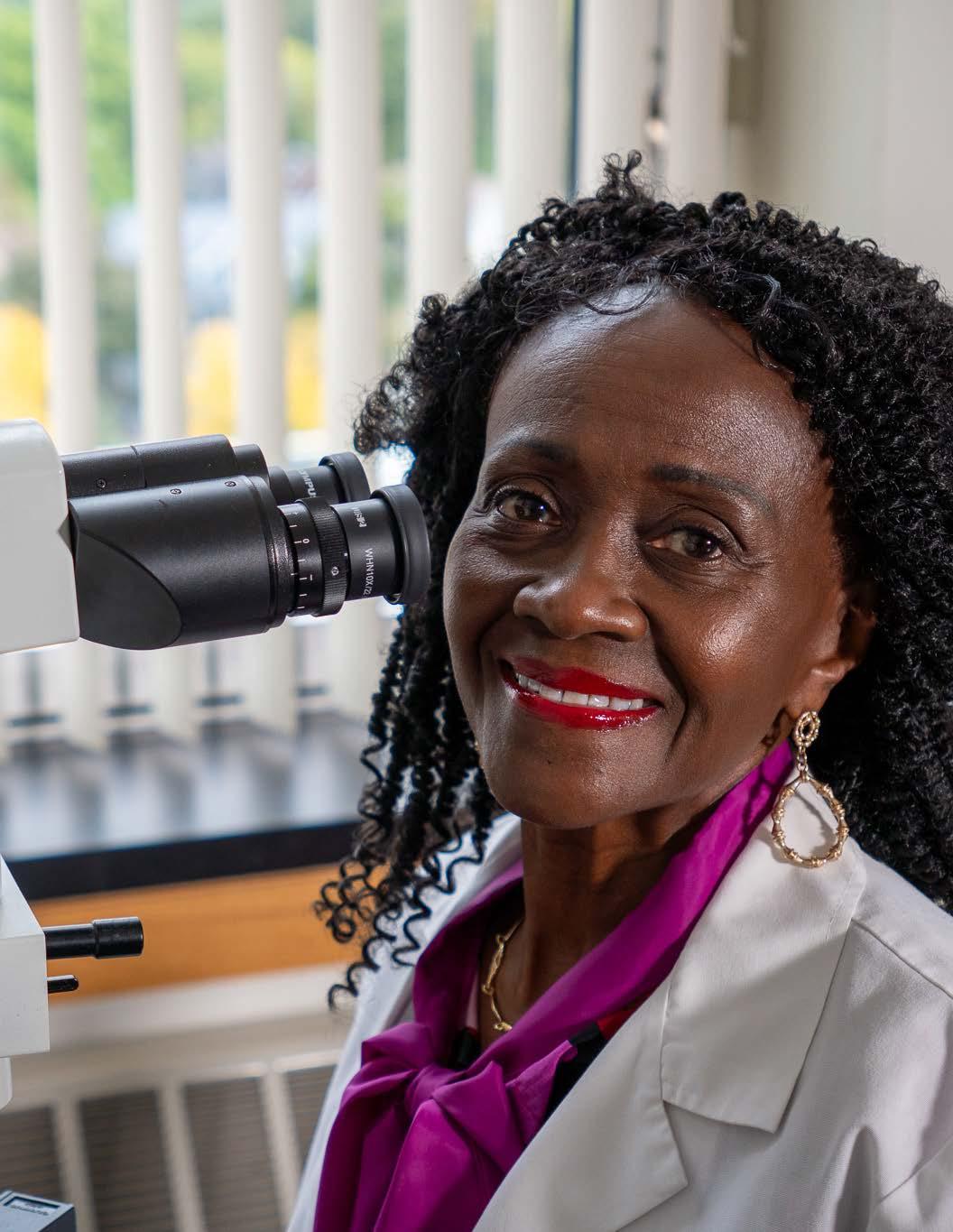
For nearly three decades, Dr. Julietta Fiscella has been one of Highland Hospital’s most influential yet often unseen leaders, helping shape patient care through her expertise, dedication, and unwavering commitment to excellence. As Chief of Pathology and Laboratory Services, she has spent the last 30 years ensuring that every diagnosis, every laboratory result, and every specimen processed through Highland Hospital met the highest standards of quality and accuracy.
While many patients may never have met the pathologist behind their diagnosis, Dr. Fiscella’s impact has touched countless lives throughout our community. Every blood test, tissue sample, and laboratory analysis represents a critical piece of a patient’s healthcare journey, and throughout her distinguished career, she has approached that responsibility with precision, compassion, and an unwavering commitment to getting it right.
As she prepares to retire from Highland Hospital, Dr. Fiscella reflects on a remarkable career defined by innovation, leadership, mentorship, and service. Under her guidance, the laboratory maintained exceptional compliance with state and national regulatory standards, implemented significant operational improvements, and navigated some of healthcare’s most challenging moments— including the unprecedented demands of the COVID-19 pandemic. Her leadership helped establish standardized blood transfusion practices, strengthen quality assurance programs across the University of Rochester Medical Center system,
and cultivate generations of laboratory professionals who continue to thrive because of her mentorship and support.
Yet what makes Dr. Fiscella’s story so compelling extends far beyond her professional accomplishments.
Raised in humble circumstances, she often describes her journey as one of perseverance, grit, and determination. In fact, she jokes that if she ever writes a memoir, its title would be “From the Outhouse to the Big House: A Journey of Grit and Success.” Behind that humorous title lies a powerful truth: education transformed her life. It opened doors she never imagined possible and ultimately led her to become a respected physician, leader, and advocate for others seeking opportunities to grow.
That commitment to education inspired another important part of her legacy: the creation of the Fiscella Employee Educational Fund. Established with her husband and inspired by their son’s experiences at Highland Hospital, the fund provides educational assistance to employees working in service and entry-level positions, helping them pursue higher education, career advancement, and brighter futures. For Dr. Fiscella, creating pathways for others is just as important as the work she has done inside the laboratory.
As medicine continues to evolve through automation, technological advances, and the growing influence of artificial intelligence, Dr. Fiscella remains focused on the principle that has guided her career from the very beginning: behind every test result is a human being depending on an accurate diagnosis. It is a philosophy
that has defined her leadership and one that continues to inspire those who have worked alongside her.
Retirement may mark the end of one extraordinary chapter, but for Dr. Fiscella, it is far from the end of the story. As she looks ahead to growing her Rochesterbased organic skincare company, JuleeGlow, she carries with her the same passion, vision, and entrepreneurial spirit that helped define her medical career.
In this exclusive interview, Dr. Julietta Fiscella reflects on the lessons she’s learned, the lives she’s impacted, the legacy she leaves behind at Highland Hospital, and the exciting new chapter that lies ahead.
First, congratulations on your upcoming retirement—what emotions come up for you as you reflect on 30 years at Highland Hospital?
My emotions are mixed. I feel great about having performed excellently in my role as Chief of Pathology, achieving HH Laboratory’s compliance with all regulatory requirements, and nurturing and mentoring my staff. I also feel sad about having to leave because it was a home away from home.
What initially inspired you to pursue a career in pathology, a field that often works behind the scenes but is so critical to patient care?
I am a very visual person, so pathology was a perfect fit.
As Chief of Pathology and Laboratory Services, how would you describe your role in ensuring quality and reliability across the hospital?
My role is to lead through instruction and
{ WOMAN LEADING THE WAY }
“My role is to lead through instruction and insight. Quality of care is of the utmost importance.”
insight. Quality of care is of the utmost importance. Every patient who steps into HH is regarded as my patient because their diagnosis relies on the results of a tube of blood, a piece of tissue, or an organ. Therefore, my job is to ensure that every patient receives the correct diagnosis in a timely manner. This means every specimen must be properly identified, triaged to the correct laboratory division, processed on time, and reported with the correct diagnosis. I need to ensure that our instrumentation meets the manufacturer’s specifications and that we maintain rigorous quality control.
Many patients never meet the pathologist behind their diagnosis— how would you explain the impact your work has on patient outcomes?
Many patients met me. At their clinicians’ request, I spoke with them about blood transfusions, particularly for patients with sickle cell disease. Other patients were invited to speak with me about their pathological diagnosis. In fact, the CMO and I had a program in which we would choose a patient each day of the week and go to the bedside to discuss the pathology. I also visited patients in the ICU who had received massive transfusions, just to help them understand the team effort involved in their care.
Yes, many patients do not have the opportunity to understand what a pathologist does. However, providing the precise diagnosis that informs their care is exactly how we, as pathologists, contribute to patient outcomes. Patients do have access to their EMRs, so they can view them themselves.
You’ve led major improvements in laboratory operations—what are some
of the changes you’re most proud of?
-Standardization of blood and blood transfusion practices.
-Cost-cutting for blood and blood products by reviewing every transfusion with clinicians and staff.
-Establishing a centralized, standardized quality improvement program for the URMC Department of Pathology, for which I served as Chair for many years.
-Mentoring new and existing lab staff members so they can succeed in their careers at HH.
-COVID was a big one. Getting to the hospital quickly and accurately testing through instrumentation.
How have advancements in technology and medicine transformed pathology over the course of your career?
For the clinical laboratory division, the main advancement is automation. Most testing is now performed by inserting specialized test kits into an instrument and allowing it to run according to the manufacturer’s specifications.
For surgical pathology, although there is machinery, a few hands-on procedures are still necessary. I think that with AI, much of this work will be replaced, either in whole or in part.
Your subspecialties include gynecologic, cytopathology, and pulmonary pathology—what drew you to these areas of focus?
I did pulmonary pathology when HH had a large department focused on it. HH had a large clinic serving patients with interstitial lung disease who either needed a biopsy diagnosis or were referred from neighboring cities. I attended training at the Armed Forces Institute of Pathology (now defunct), where I
studied alongside the brightest and best in the specialty. Presently, HH is not the site that diagnoses these lung diseases. In fact, most of the physicians who worked with these patients have retired. For cytology, because I am an extremely detail-oriented person, making a diagnosis at the cellular level is always exciting to me. I always consider it much easier than tissue diagnoses, although many surgical pathologists will disagree.
Because Gynecology (both benign and malignant cases) was always present at HH, it made sense to diagnose them. HH also became the URMC site for GYN Oncology as a subspecialty location.
Quality assurance has been a key part of your leadership—what does excellence look like in a laboratory setting?
Simple phrase; Right patient, right time, correct diagnosis
How do you build and lead a highperforming team in such a detail-driven and high-stakes environment?
You lead by example. My engagement is crucial. I must understand every phase of the operation, and in most cases, my knowledge of these phases (blood bank) is also important.
I lead multiple roundtable discussions where staff speak freely in a safe environment about the issues they face at work. I have an open-door policy where anyone can come and talk to me about any issues they are experiencing at home, at work, with their health, etc. Most of my staff really appreciate that policy. Daily rounding is vital because it lets me learn about issues in real time. Daily huddles are also important.
{ WOMAN LEADING THE WAY }
“I have an open-door policy where anyone can come and talk to me about any issues they are experiencing at home, at work, with their health, etc. Most of my staff really appreciate that policy.”
What have been some of the biggest challenges you’ve faced in your role, and how did you overcome them?
Because hospitals do not have a large operating margin, budget cuts have always been challenging.
You’ve maintained exceptional performance on state and national regulatory reviews—what’s the secret to that level of consistency?
There is no secret; if you practice with expertise every day, you must always be inspection-ready. Every regulatory body has written standards that must be followed; therefore, it is not difficult to follow them.
Your work has impacted nearly every patient at Highland—what does that kind of reach and responsibility mean to you?
As I mentioned earlier, either their blood tube or their tissue will come into contact with my department; therefore, care must be taken to establish the correct diagnosis to obtain precise results.
The Fiscella Employee Educational Fund is such an inspiring initiative— what motivated you and your family to create it?
I come from a very impoverished background, where if you did not have the means for education, you could not work your way to the top. My parents sacrificed everything to educate the five of us, therefore I would not be in the position I am in today. Our son was instrumental in that idea because he had worked as an OR Tech at HH during his college breaks. Many employees would tell him he was lucky that
his parents could afford to pay for his education. He approached us to discuss what he had heard, and at that point we decided to create a fund so that staff in the Service departments would have a path to education for upward mobility.
Can you share a story or example of how the fund has changed someone’s life or career path?
Many employees have used the fund. It covers tuition, books, equipment, transportation, etc. My husband and I have decided not to manage the fund or become intimately involved in the process. It is handled entirely by the HH HR department.
Why is it so important to you to support employees in entry-level roles as they pursue education and growth?
I believe that everyone needs a path to move up in life if they desire. It is best for the community we live in.
Looking back, what has been the most rewarding part of your career—not just professionally, but personally? Personal growth. I was able to be part of a medical institution, something I never thought possible, given where I came from. I have always said that if one day I have the time to write my memoir, the title would be “From the Outhouse to the Big House,” “A journey of grit and success.” This would be a bestseller!
What advice would you give to young women entering medicine, particularly in specialized fields like pathology?
I would say, always remember why
you chose medicine as your lifelong career. Presently, AI will change values in medicine and the way we care for our patients; however, never lose sight of the fact that at the other end there is a human being who needs your expert diagnosis.
As you step into this next chapter, what legacy do you hope you’ve left at Highland Hospital and within the community?
I love the way you phrase the question. My next chapter is the expansion of my organic skin care brand, JuleeGlow. com, established in Rochester. I launched this brand last November to offer the public an alternative to the chemical additives that large companies use in their skin care. The skin is the largest organ, yet we abuse it with dangerous chemicals that contribute to all kinds of skin and health problems. I do hope JuleeGlow is the local brand the public will support moving forward.
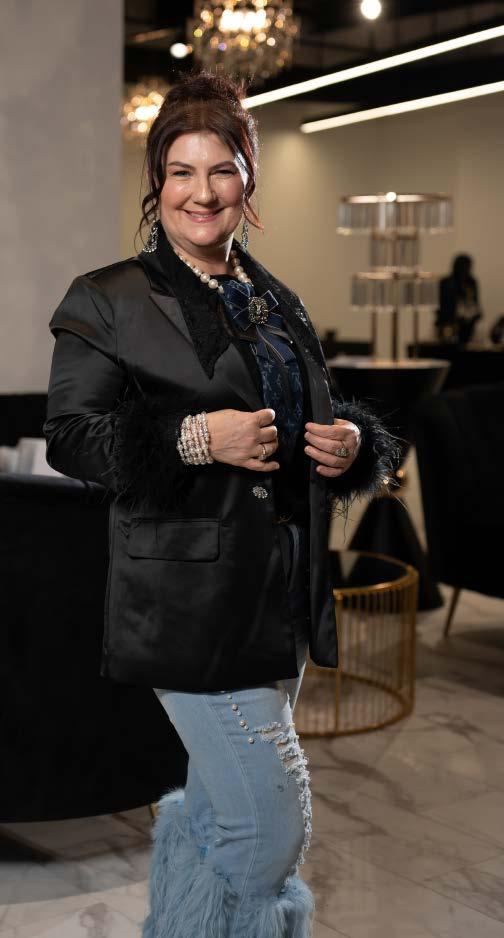
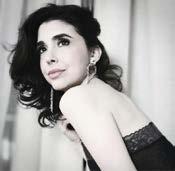
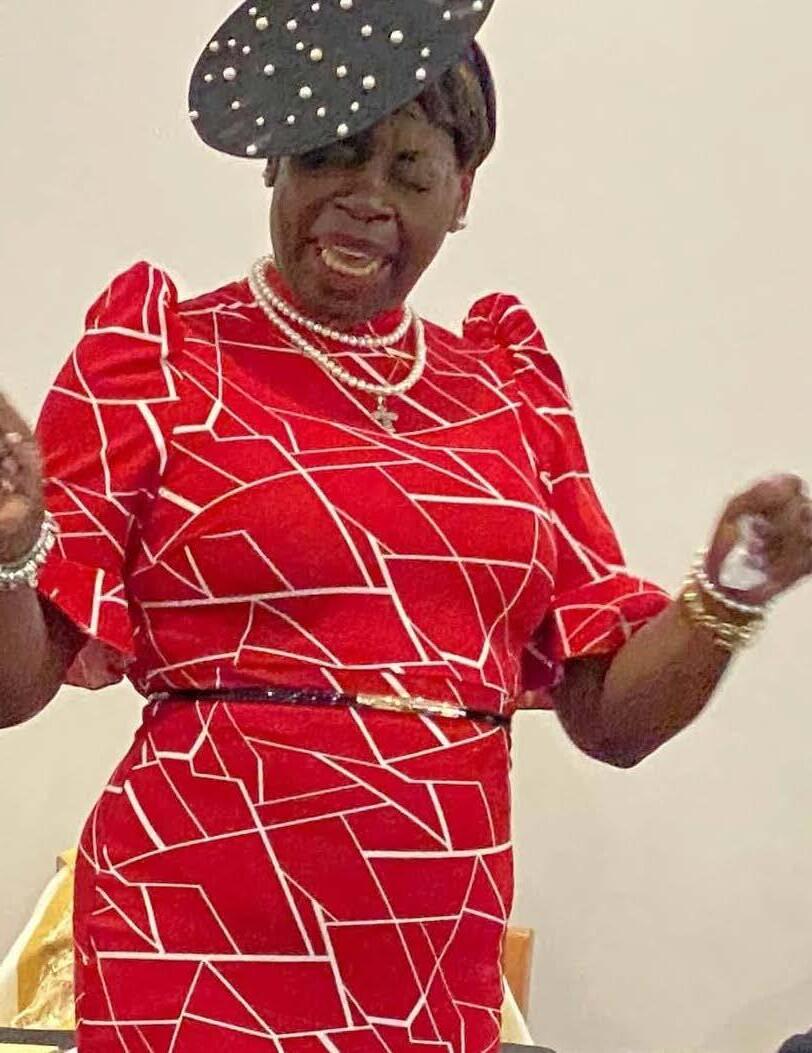
MISS CYNTHIA
YOU ARE ENOUGH.
BY NICOLE HEROUX WILLIAMS I PHOTOS BY NSP STUDIO
PHOTOS BY SWEET HOME PHOTOGRAPHY
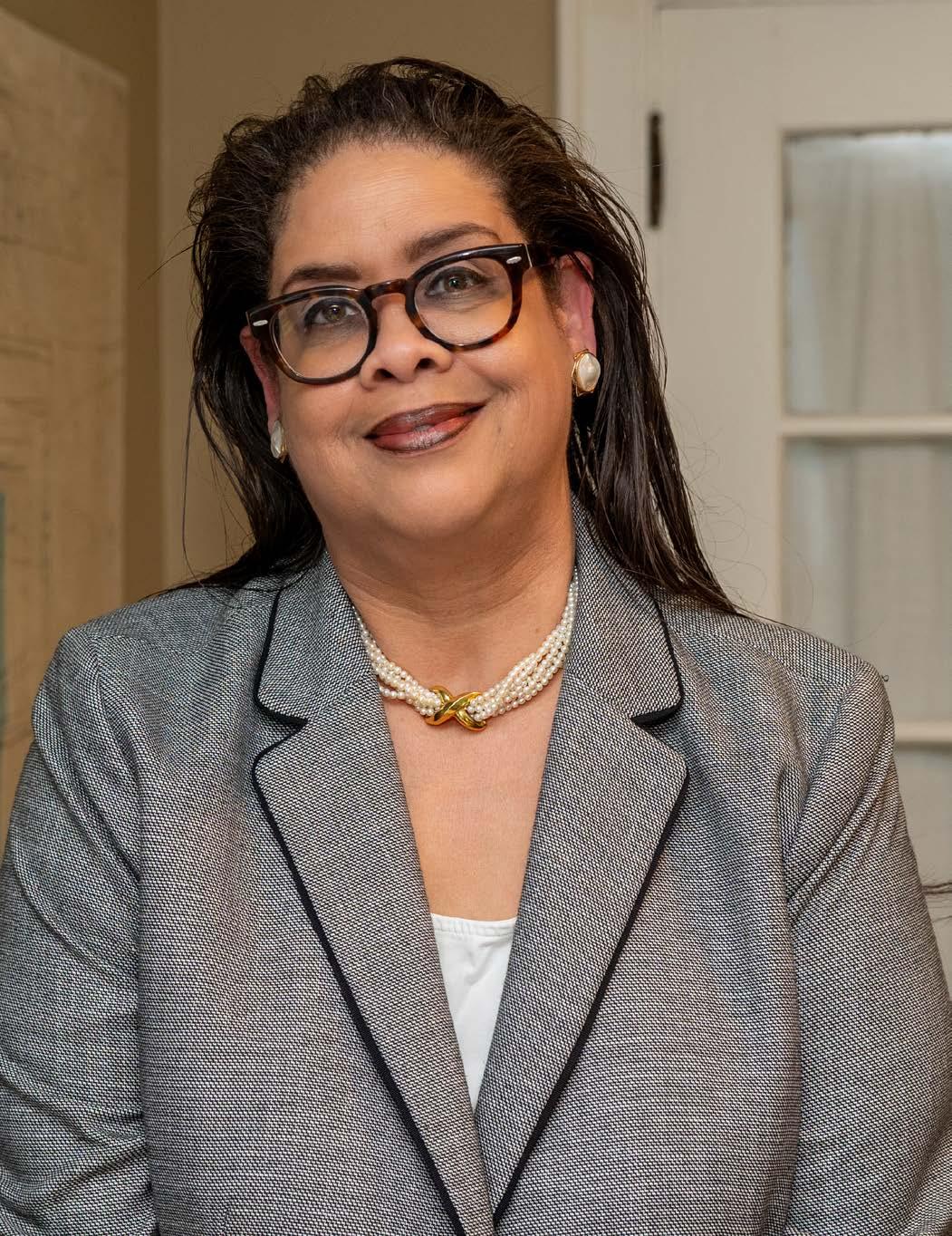
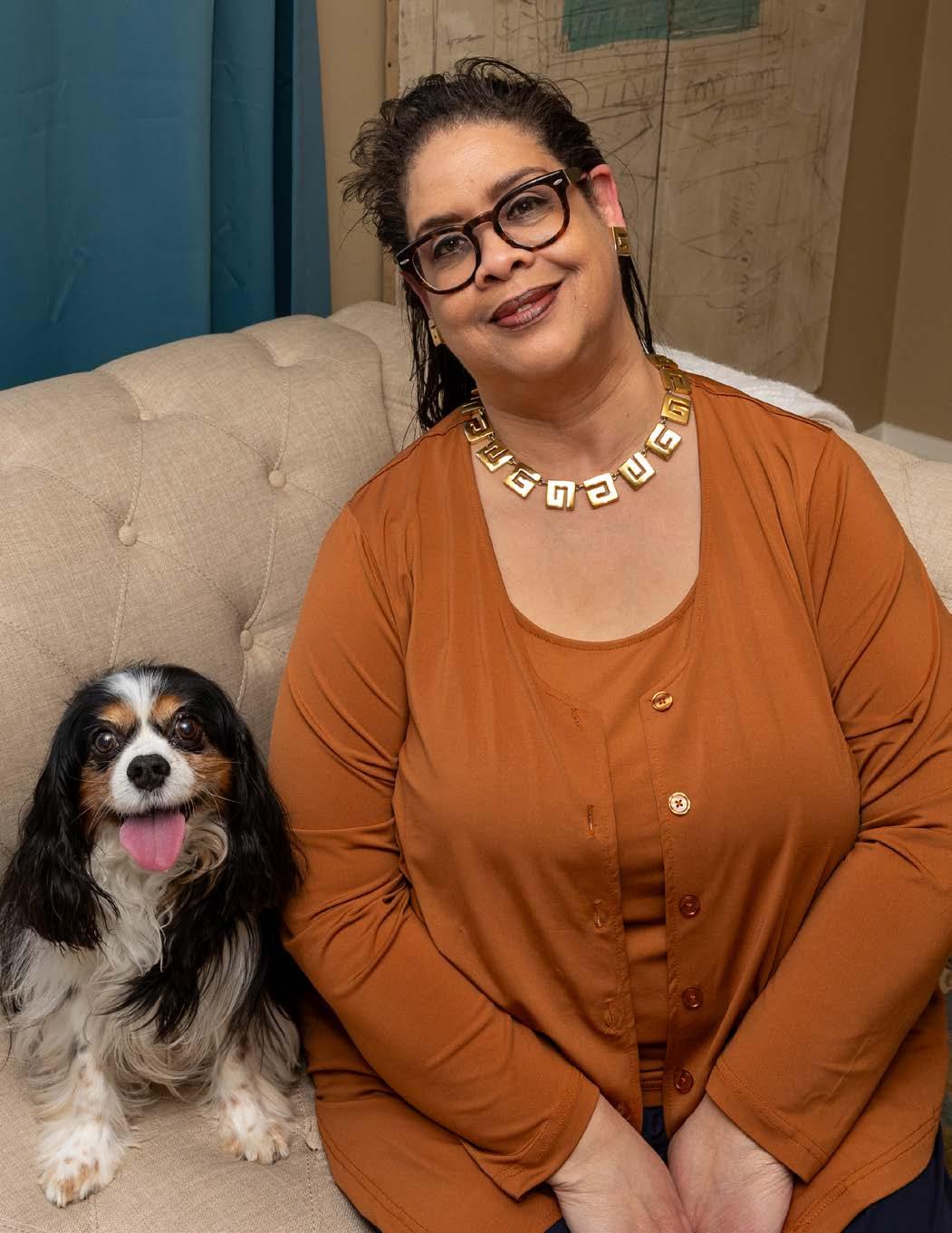
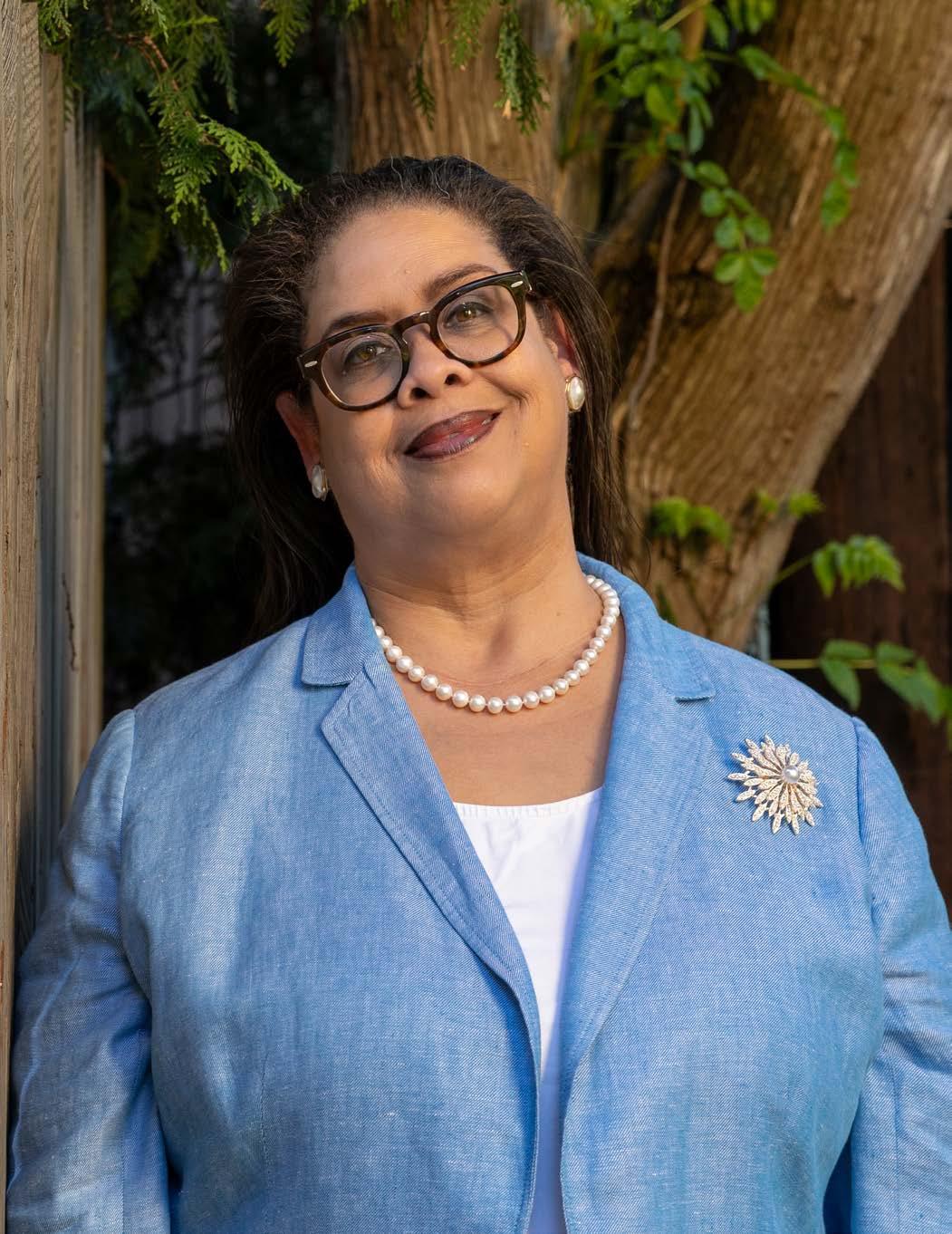
ful relationships, and develop strong character has never been more important. For Cynthia V. O’Neal, founder of The Refinement Studio, that mission has become both her calling and her life’s work.
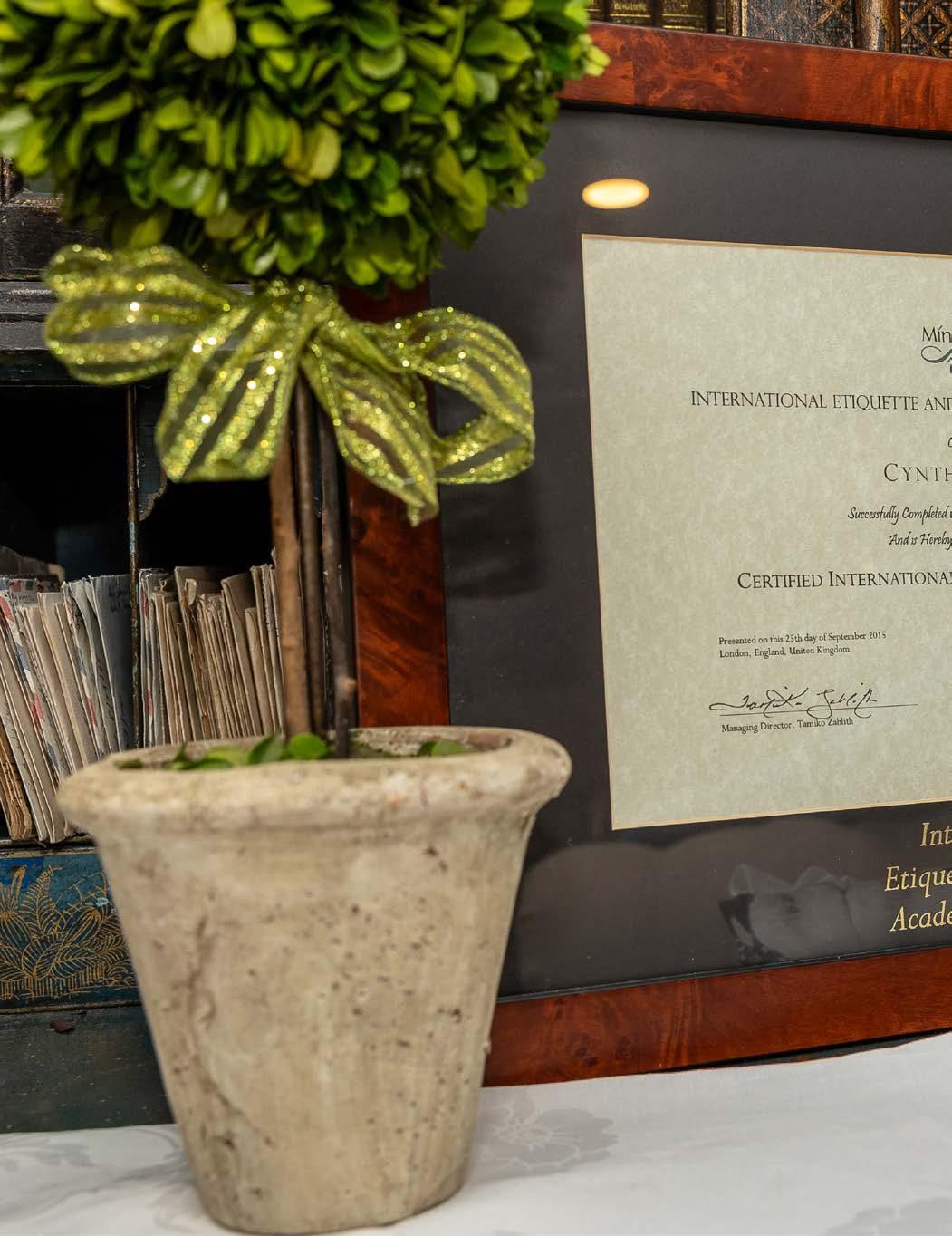
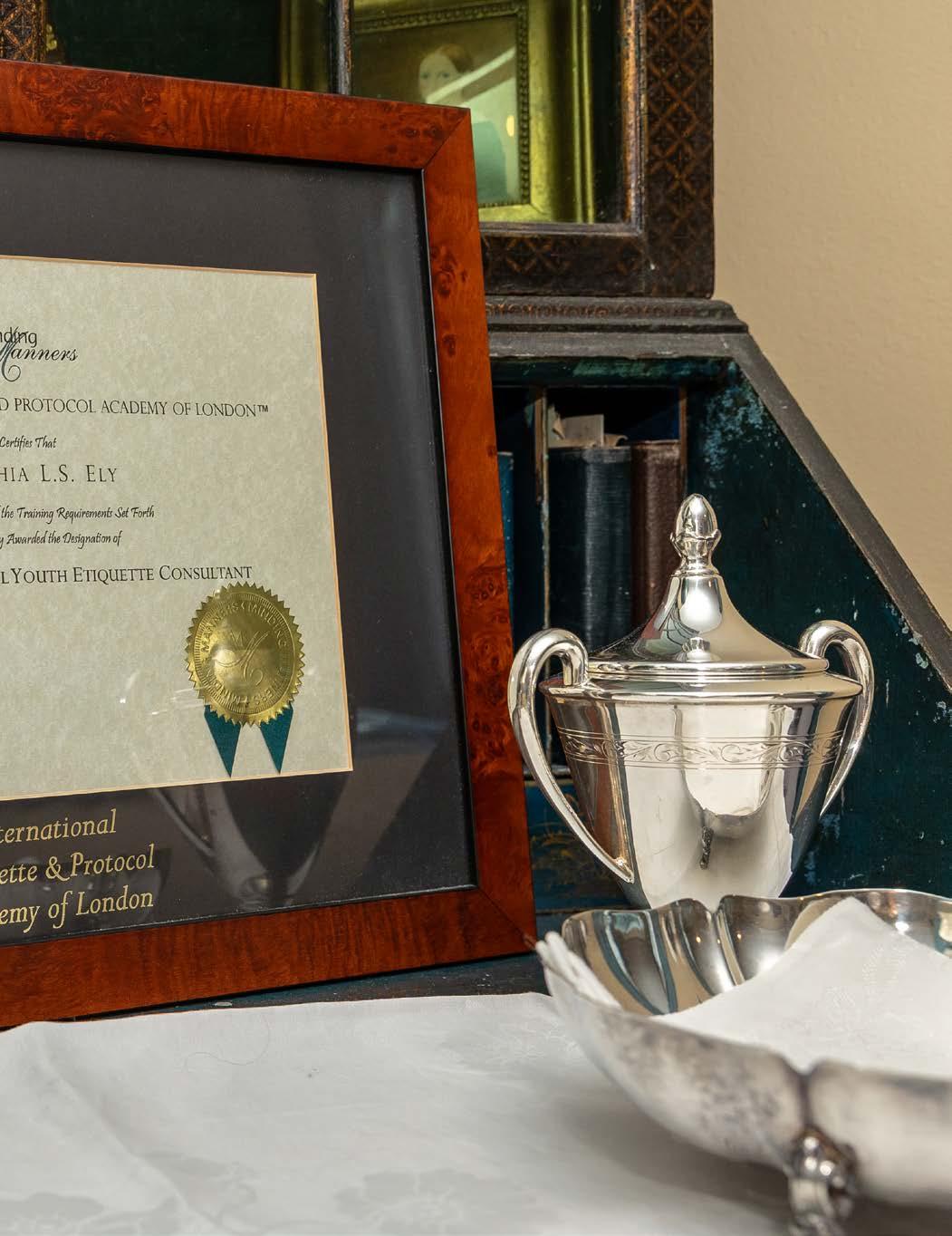
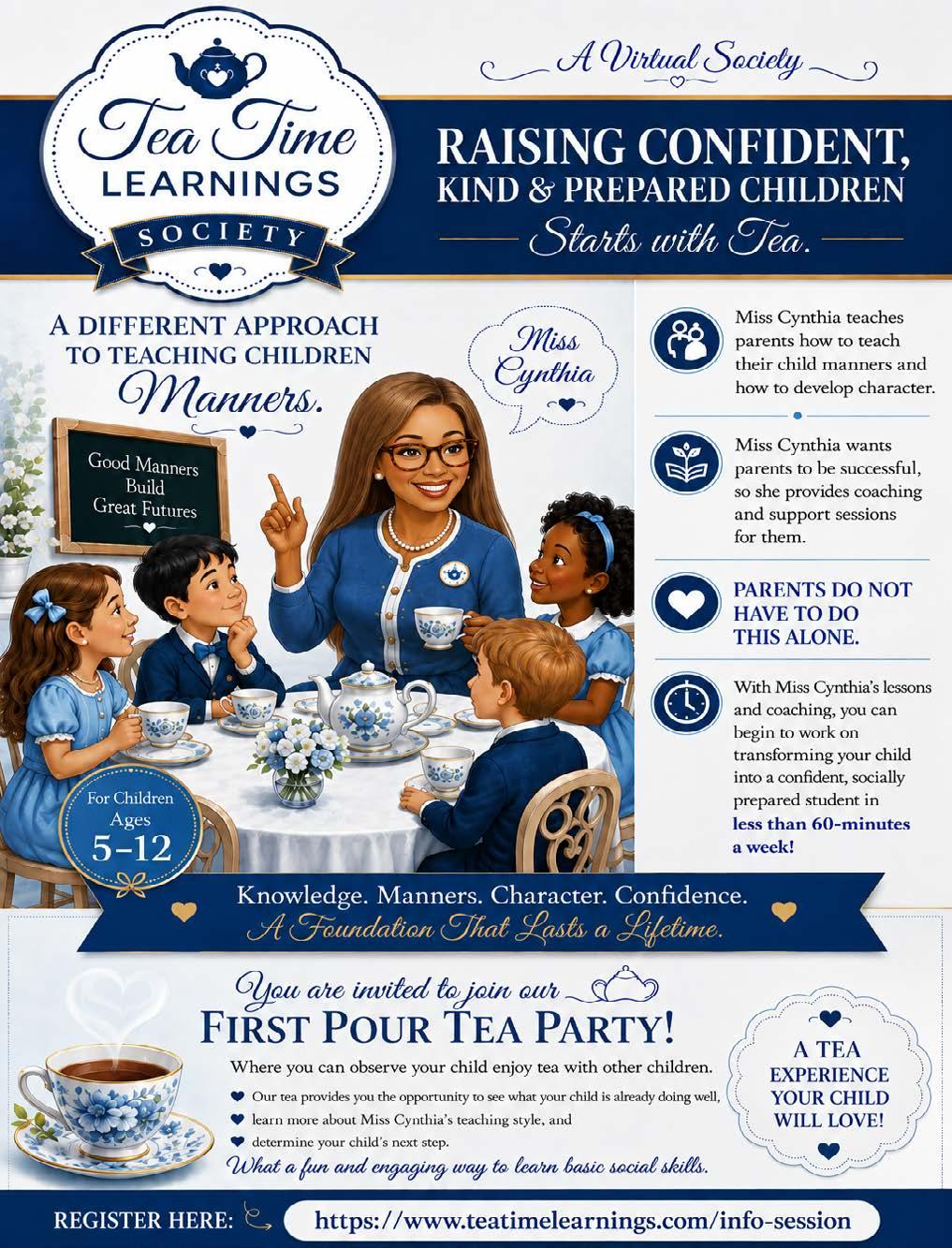
As the only UK Certified International Youth Etiquette Consultant outside of New York City, Cynthia is helping children move beyond traditional ideas of etiquette and discover something much more powerful: confidence, leadership, emotional intelligence, and self-worth. Through innovative programs, dining experiences, mentorship, and her Tea Time Learnings Society®, she is equipping young people with the skills they need to thrive both personally and professionally in an increasingly complex world.
What began as a desire to restore civility, respect, and meaningful human connection has evolved into a transformative movement that is changing lives throughout our community. In this exclusive Rochester Woman Online interview, Cynthia shares her inspiring journey, her passion for helping children step out of the shadows and into their full potential, and why she believes confidence, character, and kindness remain some of the most valuable skills a child can possess.
Before creating The Refinement Studio, what was your professional and personal journey, and how did those experiences shape the work you do today?
Before creating The Refinement Studio, my professional journey centered around curriculum development, instructional design, teaching, training, coaching, and leadership development. I was passionate
(and still am) about helping people grow “into the fullness of their being.”
For more than 25 years, I worked in the non-profit world as a Pre-School Teacher, Case Manager, Trainer, and Director. One of my goals was to shift the non-profit mindset to a for-profit one. I wanted to help organizations manage their resources well, create processes and strategies to guide their growth, and develop their staff.
I have also served on both nonprofit and corporate boards, which have given me a deeper understanding of the importance of communication, emotional management, collaboration, and relationship-building. These appointments fueled my desire to serve and to protect the interests of shareholders.
During this journey, I became increasingly aware that many children were academically capable, yet struggling socially and emotionally. I saw children who were uncomfortable making eye contact, introducing themselves, communicating respectfully, or navigating everyday social situations with confidence. I also saw parents who deeply wanted to help their children, but often felt overwhelmed by the speed and noise of modern life.
I wanted to interrupt this pattern by reintroducing social manners to the world. I know the power of a smile, a greeting, a handshake, and a thank-you note, and I remember the opportunities I had as a child. On more than one occasion, I received opportunities others did not. My parents instilled these values and
protocols into my siblings and me. It was the best education I received!
You are the only UK Certified International Youth Etiquette Consultant outside of New York City. What inspired you to pursue this unique certification and specialize in youth etiquette training?
Once I decided to teach social etiquette, I began my search for the best etiquette certification school I could find. My search led me to Miss Tamiko Zablith, of the International Etiquette and Protocol Academy of London. She has a diplomatic background, teaches social etiquette to several royal families in the Middle East, and served as CNN’s royal expert for the royal weddings.
I was drawn to the international approach to etiquette because it connected etiquette with leadership, cultural awareness, emotional intelligence, diplomacy, and personal presence. The training exposed me to both American and European etiquette traditions, global social customs, dining protocol, communication styles, and refined interpersonal skills.
What inspired me most was being able to share that these skills are not reserved for elite environments. Every child deserves the opportunity to learn how to carry themselves confidently, communicate respectfully, and feel comfortable in social and professional spaces.
Children today will grow up in a global world. They will sit in interviews, collaborate with diverse teams, attend networking events, travel internationally, and represent themselves both online and
respectfully, and feel comfortable in social and professional spaces.
Children today will grow up in a global world. They will sit in interviews, collaborate with diverse teams, attend networking events, travel internationally, and represent themselves both online and in person. I wanted to prepare children not just for school, but for life.
I intentionally created programs that focused heavily on verbal and non-verbal communication, confidence, emotional awareness, leadership, dining etiquette, first impressions, and social presence.
My goal is to help children develop confidence. A child who walks with confidence and demonstrates strong self-esteem is prepared for any social setting. Children who are confident are less likely to be bullied and targets of predators.
What originally sparked your passion for helping children build confidence, leadership skills, and strong character? One pivotal moment that deeply impacted me was the Karen Klein incident in 2012. Witnessing an adult being publicly humiliated by children made me realize something larger was happening culturally. I remember thinking, “Someone has to begin teaching these children manners.”
In that moment, I realized just how far we, as a society, had fallen from the standards, guidelines, and niceties we once possessed. It took me some time to really absorb the truth of it all.
I didn’t want the rest of the world to
believe this type of behavior was the norm in our area. So, I called my sister, Miss Maudie Vee, who was living in Raleigh, NC, at the time. She had recently opened The Refinement Studio and was beginning to teach etiquette.
I shared the Karen Klein story with her and told her we needed to open an office here in New York. The next day, I asked her to sell her business to me, and she did!
With great expectation, I began my new journey. It was time for us to resume the courtesies we once observed and return to the dinner table. The dinner table used to be the center of our culture. It was the place where lessons were learned, values were created, character was developed, and family unity was fostered.
I encourage parents to make room in their home schedule for the family to eat together. When they do, they will discover the power in dining together and reclaim the influence they may have lost.
When children develop awareness, verbal skills, emotional intelligence, and confidence early on, it changes how they move through the world.
Many people hear the word “etiquette” and think only of manners or formal dining. How would you describe what modern etiquette truly means for children and young adults today? Modern etiquette is far more than knowing which fork to use.
Today, etiquette is about helping children develop confidence and teaching them
to interact thoughtfully and confidently with others. It is about respect and presence.
It includes making eye contact, introducing yourself confidently, listening without interrupting, managing emotions appropriately, speaking respectfully, navigating technology wisely, showing gratitude, handling social situations with confidence, and learning how to make others feel comfortable and valued.
In many ways, social etiquette is relationship training.
Children and adults are growing up in a fast-paced digital culture where many face-to-face social skills are no longer naturally developed, which is why intentional teaching matters so much.
At The Refinement Studio and through the Tea Time Learnings Society®, I teach etiquette as a leadership framework. My focus is not perfection. My focus is on helping children become calm, confident, thoughtful, emotionally aware young leaders who can navigate the world with grace.
Why do you believe confidence and character development are just as important as academic success for today’s youth?
Academic success may open doors, but confidence, character, and communication determine your “staying power.” Many schools and employers find themselves asking students and employees to leave because they lack the social skills needed to do their work, interact with their peers and coworkers, and add value to the institution or company.
“Etiquette
is never just about manners. It is about helping children discover confidence, self-worth, awareness, and the ability to move through the world feeling capable and prepared.”
A child can earn excellent grades and still struggle to communicate clearly, advocate for themselves, work well with others, manage emotions, build relationships, or navigate real-world social situations.
Today’s employers, colleges, and organizations consistently emphasize the importance of soft skills, emotional intelligence, professionalism, adaptability, and communication. Those skills often become the deciding factor in leadership opportunities and long-term success.
More importantly, character shapes who a child becomes.
I want children to develop integrity, kindness, self-control, humility, responsibility, confidence, and respect for others. I want them to understand that true leadership is not about status or attention. It is about how you treat people.
When confidence and character develop alongside academics, children become more grounded, emotionally healthy, socially capable, and prepared to lead meaningful lives.
Your mission focuses heavily on developing “kingdom-minded leaders.” What does that phrase mean to you personally?
To me, “kingdom-minded leadership” means raising children who lead with humility, integrity, wisdom, compassion, and responsibility. These are powerful Christian principles. The same principles that formed our nation and guided society in how to operate. I would like to see
a return of these founding principles.
It means teaching children that leadership is not about power, popularity, or performance. It is about service, character, stewardship, and the impact we have on the people around us… How we contribute to society.
I believe children should learn how to interact with others with kindness, carry themselves with confidence and humility, respect others, show self-control, honor their commitments, and use their gifts to positively influence the world.
My faith deeply shapes the way I teach. I believe leadership begins in everyday moments, at the dinner table, during conversations, through gratitude, through self-control, and through how we respond when things do not go our way.
Kingdom-minded leadership is really about helping children become leaders who lead without compromising their principles and guiding values.
What are some of the biggest social or emotional challenges you see children struggling with in today’s world?
One of the biggest challenges I see is a lack of face-to-face communication skills and emotional awareness. These are the most difficult to teach and develop because many adults have difficulty in modeling them.
Television adds to the problem by falsely leading children to believe they can say what they feel, when they feel like it, regardless of how it makes others feel. We live in a world where “freedom of
speech” means “I can say what I want.” Sadly, “what they want” is often rude, crude, disrespectful, and selfish.
Today, many children are growing up heavily connected to screens but disconnected from meaningful interpersonal interaction. As a result, I often see children struggling with:
• Confidence in conversation… many children remain quiet and withdrawn.
• Eye contact… I see many heads bent, eyes looking downward.
• Respectful communication… many children lack the vocabulary to respond respectfully.
• Emotional regulation… children often react instead of thinking before they speak.
• Patience…we live in a fast-paced world, we have fast food, overnight delivery, and instant messaging. Everyone wants their needs met NOW!
• Resilience… I have noticed many children taking longer to recover from being hurt or disappointed.
• Gratitude… sadly, children and adults alike are weak in expressing gratitude. Many do not say thank you, send a note, or even a text (Miss Cynthia is not a fan of the text, but it is better than nothing)
• Social anxiety… bullying, mass shootings, noise, and cultural confusion have added to childhood anxiety.
• Understanding how their behavior affects others… children are so used to seeing incidents of disrespect and ridicule that they don’t always consider the full impact of these behaviors.
I also see many children struggling with identity and self-worth. They are
{ TAKE HER SEAT }
{ SHIFT+CONTROL } { WOMAN WHO INSPIRES } { WOMEN WHO INSPIRE }
“Children who know how to confidently interact with others, listen well, make others feel comfortable, and navigate social situations thoughtfully will stand out tremendously.”
constantly comparing themselves to people they see online, seeking validation and feeling pressure to perform, instead of simply learning to become grounded and secure in who they are.
What concerns me most is the rise in child suicides and the number of children who cut themselves. Young people need safe environments where they can develop confidence, build self-esteem, and identify their worth.
These struggles are exactly why I created my programs and experiences. I wanted to create calm, encouraging environments where children can develop confidence naturally, parents can feel supported, and families can intentionally build leadership skills together - one meaningful moment at a time.
How does The Refinement Studio help children move “from the shadows to center stage” emotionally, socially, and personally?
Many children quietly sit in the shadows socially and emotionally because they are unsure of themselves. They may fear speaking up, introducing themselves, participating in conversations, or stepping into leadership opportunities.
The darker side of this conversation includes a parent’s worst nightmare, the taking of his/her child. Children who operate at the fringe of group activities, stay off to the side, and keep their heads down are more likely to experience being bullied or taken.
At The Refinement Studio, we help children develop confidence through
consistent practice, encouragement, coaching, and real-world social experiences. We help them to develop their voice and authority, and we teach them how to use it!
We teach children how to speak confidently, enter and exit conversations comfortably, make eye contact, introduce themselves professionally, navigate dining and social situations, regulate emotions, and carry themselves with confidence and grace.
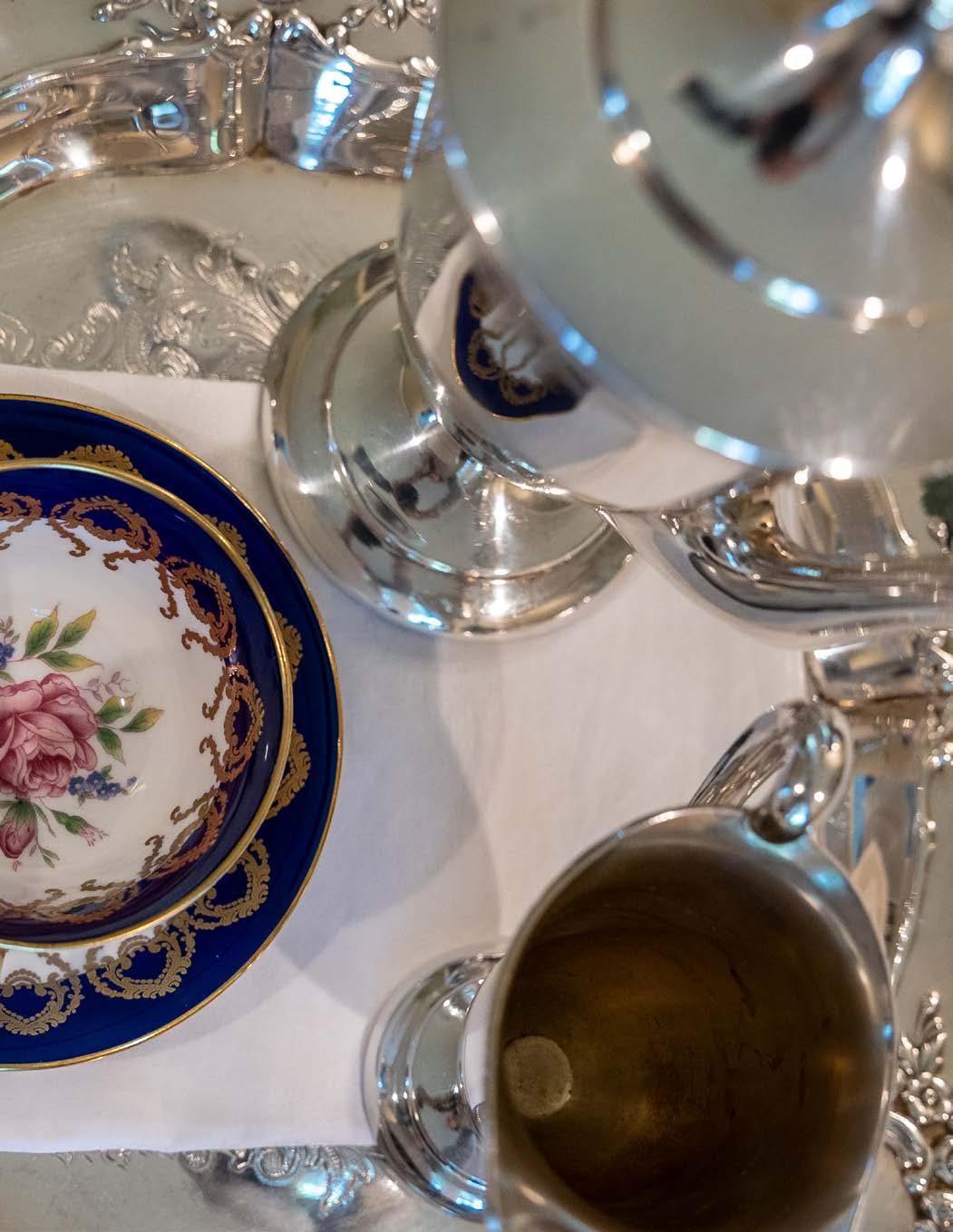
Dining experiences are a large part of our offerings; they allow our students the opportunity to practice these behaviors in the “real world.” Tea parties are a fun, interactive way for children to learn how to enjoy tea, engage in conversation, and be gracious.
Our multi-course dining experience allows our students to learn how to hold and use cutlery properly, sip soup, eat bread, and interact with wait staff. Practice builds confidence and competence. The students get a kick out of watching Miss Cynthia drop a knife or spill sauce!
What makes our approach unique is that we focus on identity and character development alongside etiquette instruction. We help children understand that confidence is not about pretending to be someone else. It is about them learning to embrace who they are and to change the atmosphere of any room.
“Confidence develops when children feel prepared, practiced, and secure in who they are.”
Over time, children begin to speak up more, engage more comfortably with others, and carry themselves differently. Parents often tell me, “My child walks into a room differently now.” It is an incredible transformation to witness.
In your experience, how important is early mentorship and positive reinforcement in shaping a child’s self-esteem and identity? It is incredibly important.
Children become what is consistently reinforced around them. Early mentorship, encouragement, and positive guidance help shape the way children see themselves and what they believe they are capable of becoming.
Many children are quietly waiting for someone to slow down long enough to notice their strengths, gently coach their weaknesses, and remind them that growth is possible.
I intentionally create environments where children feel seen, valued, encouraged, and safe to practice. Confidence rarely develops through criticism or pressure. It develops through coaching, repetition, support, and small moments of success.
I often remind parents that children do not need to be perfect. They need guidance, consistency, and opportunities to grow. Parents don’t need to be perfect either. They too need to be supported in their efforts.
At times, I feel as if parents don’t receive the support they need.
{
“My parents’ decision to invest in my social and leadership development offered me opportunities I never imagined. I have had the fortune to sit at powerful tables with influential leaders.”
Sometimes, one encouraging conversation, one successful social interaction, or one moment of feeling capable can completely change how a child views him/herself.
What role do parents play in reinforcing confidence, leadership, and etiquette lessons at home?
Parents play the most important role.
Children learn to navigate the world through everyday experiences at home, which is why I often say, “The family table is the first place children practice leadership.”
One spoken word from a parent changes EVERYTHING… it has the power to influence, redirect, encourage, and guide. It has been my experience that, deep down, children want to please and be loved by their parents, even when they are not behaving that way!
My programs are intentionally designed to partner with parents, not replace them.
Small coaching moments repeated consistently over time shape confidence and identity.
Can you share a transformation story or moment with a student that reminded you why this work matters so deeply?
One of the most meaningful moments for me was watching a child who initially entered my class quietly and was withdrawn. She sat down at the table, head down, and eyes downward. She remained in that position for most of the class.
Her mentor-sponsor shared how “Mattie” (not her real name) was a precocious child, possessing superb skills with sign language and an interest in learning everything. However, when it came to behaving and listening, she seemed, at times, extraordinarily frustrated and incorrigible. She often mimicked her mother by pretending she was deaf. Her approach with people she encountered was to look down and be silent, and she frequently reverted to baby talk.”
Thankfully, “Mattie” took to me immediately after that first class. Something in her sparked, and she decided to wear a nice dress to every class.
And, just like that…”Mattie” began to listen and engage in the lessons with enthusiasm.
Her mentor shared, “I had to make a stop on the way home. I introduced “Mattie” to a woman, and much to my surprise, “Mattie” said clearly, “It’s nice to meet you.” At her next class, Miss Cynthia asked if she was using the skills she was learning, and “Mattie” said, ‘I
used them when I went door to door to sell pies for my class.’
“Mattie” sold more pies than any of the other children in her class! When she comes to dinner in my home, she asks to set the table. With no guidance from me, she proudly places the forks, knives, spoons, and glasses in their proper places.
Miss Cynthia is teaching “Mattie” manners, but “Mattie” is learning much more. “Mattie” is gaining self-awareness and self-confidence, both of which are necessary for her to reach her potential.
I believe that sponsoring “Mattie” for Miss Cynthia’s course is life-changing. She is learning how to handle herself in any situation. She is developing “an innate sense of consideration for others and respect for (her)self,” which is what manners truly are, according to Emily Post.
Having a student like “Mattie” is why this work matters so deeply to me. She arrived timid, opened up to the possibilities, practiced everything she learned, and transformed into a confident, successful young lady. My work focuses on the transformation. I see each student not as they currently are, but who they will become.
Etiquette is never just about manners. It is about helping children discover confidence, self-worth, awareness, and the ability to move through the world feeling capable and prepared.
There is nothing more satisfying than changing the life of a child.
“My work is rooted in calmness, meaningful connection, refinement, and long-term development.”
In a world heavily influenced by social media and technology, why are social skills and interpersonal communication more important now than ever before?
In a world heavily influenced by social media and technology, why are social skills and interpersponal communication more important now than ever before?
Great question, it is because human connection still matters deeply.
Technology has changed how our children learn and entertain themselves, but it has not removed the need for interpersonal skills - how to relate to others, control their emotions, deal with disappointment, and show respect.
In fact, those skills are becoming even more valuable because they are becoming less common.
Today, many children and young adults feel more comfortable texting than speaking face-to-face. Yet, success in life still depends heavily on communication and relationships, especially in interviews, networking, teamwork, friendships, customer interaction, public speaking, and professional presence.
Children who know how to confidently interact with others, listen well, make others feel comfortable, and navigate social situations thoughtfully will stand out tremendously.
These are life skills that open doors academically, professionally, socially, and personally. The US Supreme Court Judge Clarence Thomas said it best, “Good manners open doors that the
best education cannot.”
When given a choice between a candidate with character and a socially underdeveloped genius, many decisionmakers choose character. The question for parents becomes, “Will your child be prepared?”
What advice would you give to parents whose children may struggle with confidence, anxiety, social interaction, or self-worth?
First, I would encourage parents not to panic or lose hope.
Confidence is a skill that can be developed. Social interaction can be practiced. Emotional awareness can be taught. Children grow tremendously when given consistent encouragement and safe opportunities to practice.
I would encourage parents to slow down and intentionally create more face-toface interaction opportunities at home:
• Family Dinner… If you do not eat as a family, I encourage you to begin with at least two times a week.
• Conversation Practice
• Greetings… Practice a smile, eye contact, and the greeting.
• Role-playing social situations… use family and friends to help role-play situations.
• Public interactions… the best way to practice!
• Moments that gently stretch your child socially.
I also encourage parents to focus less on criticism and more on coaching. Children respond best when they feel
emotionally safe and supported while learning.
Most importantly, I would remind parents that small moments matter more than they realize. Confidence is often built quietly through repeated positive experiences over time.
I specifically created the Tea Time Learnings Society® to provide children and parents with supportive environments where growth can happen naturally and intentionally.
My final thought on this is to remind parents to avoid comparing their journey with someone else’s. You and your child will move forward in your own time. Learning and skill development are not a race. Focus on the progress, and celebrate each of them!!!!
As a woman entrepreneur and leader, what challenges have you personally overcome while building The Refinement Studio and creating a space centered around empowerment and growth?
Like many entrepreneurs, I have faced moments of uncertainty, growth, stretching, and learning how to trust the vision God placed in my heart even before I could fully see how it would unfold.
Building something meaningful requires perseverance, clarity, courage, and the willingness to keep moving forward even when others may not fully understand the mission at first.
One challenge has been helping people understand that etiquette is not superficial or outdated. I have worked hard to
{
{ SHIFT+CONTROL } { WOMAN WHO INSPIRES } { WOMEN WHO INSPIRE }
“I want children to leave knowing they do not have to hide in the shadows or doubt their worth.”
reposition etiquette as a form of leadership development. It is a battle because my work is in direct opposition to society’s “relaxed, modern culture.”
A society or culture that fails to have a set of meaningful guidelines to follow will ultimately become what we are seeing now - loud, opinionated, selfish, and disrespectful.
Another challenge has been building something intentional in a culture that often values speed over depth. My work is rooted in calmness, meaningful connection, refinement, and long-term development. The approach is different, but I believe it is needed now more than ever.
What continues to inspire me is seeing the transformation in children and hearing parents say, “This is exactly what my child needed,” or “I appreciate your support,” or “thank you for doing this work (I get this sentiment the most.)”
I often use William, Prince of Wales, and Catherine, Princess of Wales, as
examples of how we should behave toward all people. They consistently stand tall, smile, look people in the eye, interact with grace, regulate their emotions, show respect whether or not they care for someone, and seek to serve others. These are simple lessons to learn, but the power they confer when mastered is unimaginable.
My parents’ decision to invest in my social and leadership development offered me opportunities I never imagined. I have had the fortune to sit at powerful tables with influential leaders.
If there is one message you hope every child leaves The Refinement Studio believing about themselves, what would you want it to be?
I want every child to leave believing that she/he is valuable and capable. I want every child to know that their presence matters and that they have the ability to positively impact the world.
I want children to understand that confidence is not about being the loudest person in the room. True confidence is
calm. It is grounded. It is thoughtful. It is respectful.
I want children to leave knowing they do not have to hide in the shadows or doubt their worth. They can learn, grow, communicate confidently, lead with kindness, and navigate the world with grace and strength.
Most importantly, for the children who have had traumatic, humble, or broken beginnings, I want them to know that where they begin does not dictate where they will end. They will decide where they want their life to go and who they will ultimately be. All it takes is one lesson at a time.
I’d like to end this question with this thought: every child is our hope for a better future, and we each have a responsibility to build them up in every way we can.
THE WOMAN YOU’RE BECOMING DESERVES TO
YOU ARE ENOUGH.
BY NICOLE HEROUX WILLIAMS I PHOTOS BY NSP STUDIO
Have you ever looked around at your life and quietly thought to yourself:
There has to be more for me than this.
Not in an ungrateful way. Not in a “my life isn’t enough” way. But in a deeper way.
The kind of feeling that shows up when you’ve spent so much time surviving, showing up for others, handling responsibilities, carrying titles, being dependable, and pushing through… that somewhere along the way, you stopped checking in with yourself.
I think a lot of women know that feeling.
We know how to keep going.
We know how to smile through hard seasons.
We know how to carry pressure quietly. We know how to make things happen even when we’re tired.
But sometimes, while we’re busy being everything for everybody else, we slowly lose connection with ourselves. Not completely.
Just enough to start wondering:
Who am I becoming?
That question has been on my heart a lot lately.
Not because I have all the answers.
BY KEISHA SIMONE
Not because I’ve figured life out perfectly.
But because growth has a way of making you reflect on what truly aligns with the woman you’re becoming. And maybe you’re in that season too. Maybe you’ve outgrown spaces that once felt comfortable.
Maybe your dreams have gotten bigger, but fear keeps telling you to stay safe.
Maybe you’ve been balancing motherhood, relationships, careers, business ideas, family responsibilities, grief, burnout, and expectations… while still trying to figure out what you need.
Whew. That part.
Because women carry so much silently. And sometimes the strongest women are the ones rebuilding themselves quietly while still showing up for everyone else with grace.
Growth has a way of pushing you out of your comfort zone, sometimes little by little, and sometimes all at once. And if I’m honest, that part can feel uncomfortable.
Because becoming HER often requires you to step into spaces you never imagined for yourself. It requires you to trust yourself differently. To think bigger. To stop talking yourself out of opportunities that may have been meant for you all along.
Sometimes growth looks exciting from the outside.
But in real life, growth can also look like uncertainty.
Like starting over.
Like taking risks.
Like rebuilding your confidence while still showing up every day.
The truth is, we often pray for elevation, purpose, confidence, new opportunities, peace, financial freedom, healthier relationships, or bigger dreams… but we don’t always realize those things require growth first.
And growth rarely happens inside comfort zones.
Sometimes becoming HER means walking into rooms nervous.
Applying anyway.
Launching the business anyway.
Speaking up anyway.
Starting over anyway.
Believing in yourself before you fully feel ready.
That’s not easy.
But I’m learning that some of the most beautiful versions of us are discovered on the other side of fear. For me, Becoming HER is personal. It’s entrepreneurship.
{ BOSS MOVES }
“But
sometimes, while we’re busy being everything for everybody else, we slowly lose connection with ourselves.”
It’s leadership.
It’s rebuilding.
It’s healing.
It’s confidence.
It’s learning how to evolve without feeling guilty for changing.
When I co-founded Hair By Her Boutique with my late sister Dionna, it was always bigger than hair.
At the core of it all was always the desire to help women feel seen.
Because sometimes confidence starts with finally giving yourself permission to show back up for YOU.
That’s what this column is about. This space is for the woman trying to balance entrepreneurship and a career. The woman navigating motherhood or grandparenting while still chasing her dreams.
The woman learning to prioritize herself without guilt.
The woman rediscovering herself after heartbreak, disappointment, burnout, or survival mode.
Some months we’ll talk about business and bossing up.
Some months we’ll talk about healing. Some months we’ll talk about confidence, the real kind. The kind that requires you to walk into rooms scared, start over scared, dream bigger scared, and trust yourself anyway.
We’ll talk about relationships.
Boundaries. Purpose. Visibility. Faith. Rest.
Starting over.
And what it truly means to evolve unapologetically.
Most importantly, I hope this space gives women permission.
Permission to dream again.
Permission to pivot.
Permission to outgrow old versions of themselves.
Permission to stop shrinking.
Permission to choose themselves too.
Because the truth is, many women are waiting for a sign that it’s okay to evolve.
So let this be yours.
You are allowed to become a new version of yourself.
You are allowed to want more.
You are allowed to become HER.
So before you leave this page, I want you to sit with a few questions:
What parts of yourself have you neglected while taking care of everyone else?
What would happen if fear stopped making your decisions?
What would your life look like if you truly believed you deserved more? And what if the woman you’ve been praying to become… is waiting on you to finally choose her?
Think about that.
Because this is only the beginning.
Welcome to Becoming HER.
We have a lot to talk about ��
“ And sometimes the STRONGEST women are the ones rebuilding themselves QUIETLY while still showing up for everyone else with GRACE. ”
THE MEN BEHIND TIPPING POINT COMMUNICATIONS
Behind every successful organization is a team of dedicated individuals who bring unique perspectives, talents, and leadership to the table. At Tipping Point Communications, an awardwinning agency built on a foundation of strong female leadership, the men of the organization play an equally important role—not by taking center stage, but by helping create a culture where collaboration, respect, and the amplification of women’s voices are part of the company’s DNA. Their leadership is rooted in humility, trust, and a shared commitment to ensuring that every team member has the opportunity to succeed.
In this special feature, we introduce three remarkable leaders—Kevin Wilson, Kieran Redmond, and Matt Allchin—who share how working within a woman-owned agency has transformed their approach to leadership, communication, and teamwork. Through thoughtful reflection, they discuss what true allyship looks like, why creating space for women’s ideas leads to stronger organizations, and how supporting female leadership isn’t simply the right thing to do—it’s also the key to building exceptional work and lasting client relationships. Their perspectives offer a refreshing reminder that empowering women isn’t about stepping aside—it’s about standing beside them, listening, learning, and helping create opportunities where everyone can thrive.
As Rochester Woman Online Magazine continues to celebrate women who are breaking barriers and redefining leadership, we also believe it’s important to recognize the men who champion that mission every day. The conversations that follow demonstrate that the strongest organizations are built through mutual respect, emotional intelligence, and a shared belief that diverse voices lead to better ideas. Together, the men and women of Tipping Point are
PHOTOS BY BELEVATI STUDIOS
proving that when collaboration replaces ego and inclusion becomes part of the culture, extraordinary things happen.
KEVIN WILSON SENIOR DIRECTOR OF MEDIA STRATEGY
Tipping Point is powered by strong female leadership — what does it mean to you as male leaders to work alongside and support women who are helping shape the vision of the company
It means I get to do better work. The women shaping this agency, Michelle, Amy, Laura, and the rest of the team, they push every conversation to a higher level. They care deeply, they think strategically, and they hold the bar high. My job is to show up worthy of that standard and contribute to something that’s clearly working.
How has working within a woman-owned agency changed or influenced the way you approach leadership, collaboration, and communication?
It’s made me a more thoughtful communicator. Michelle challenges leaders here to examine not just what we’re saying to clients and to our teams, but how we’re saying it and how it’s being received. That’s an empathy muscle. It doesn’t come naturally to everyone, and working here has sharpened mine considerably. I ask more questions now. I listen differently. I think that makes me a better leader and a better partner to our clients.
Michelle Ashby built Tipping Point into one of the region’s most respected agencies — what have you learned from her leadership style and vision?
The most important thing I’ve learned from Michelle is that trusting your team isn’t passive. It’s a deliberate act of leadership. She models what it looks like to step
back with intention, to create space for the people around her to lead, and to let the work reflect the team rather than the founder. That’s harder than it sounds. It takes confidence and discipline to do that well, and watching her do it has changed how I think about my own role with the media team.
What do you think makes female leadership unique, especially in the marketing, media, and communications industry?
At TPX, the thing I notice most is that the women here lead with curiosity first. Before jumping to a solution, they ask excellent questions. That might sound like a small thing, but in media strategy it’s everything. The best plans come from genuinely understanding the problem; the audience, the timing, the message, before you start building. That instinct toward curiosity produces smarter strategy, and I see it consistently from the women on this team. It’s a value that Michelle has worked very hard to instill with the whole team.
As a male leader, how do you intentionally create environments where women feel empowered, respected, and heard? It looks different depending on where someone is in their career. With the women I work alongside as peers, it’s mostly about deferring publicly and meaning it. Shannon knows more about PR than I ever will. Trish has decades of experience buying TV and radio and doesn’t need me jumping in to explain on her behalf. Amy is, and ought to be, the face of our client strategy. My job in those moments is to get out of the way and let their expertise speak.
For women earlier in their careers, it’s about making sure their wins don’t go unnoticed. A strong moment in a client meeting, a strategy that lands -those things
{ WHAT ABOUT THE MEN? }
“At TPX, the thing I notice most is that the women here lead with curiosity first. Before jumping to a solution, they ask excellent questions.”
should get back to Michelle. Recognizing those moments explicitly, and making sure the right people hear about them, is how you actually help someone grow. Have the women leaders at Tipping Point challenged you to grow personally or professionally in ways you didn’t expect? Three people come to mind immediately, and they’ve each taught me something different.
Amy Holcomb has helped me connect to how a client is actually feeling about the state of our work. I can get deep in the numbers, and Amy pulls me back to the human side of it. That empathetic beat makes the work land better. It gives our media strategy a framing that fully incorporates the client’s perspective, not just the performance data.
Trish Wiest has taught me that you can’t get more if you don’t ask. She is one of the toughest negotiators at Tipping Point, and she’s shown me that caring deeply about your clients means being willing to fight for the best value on their behalf. That’s a discipline I’ve carried with me.
Sophia Germano is on the media team, and early on I recognized how talented she was without fully seeing that she didn’t yet have the confidence to speak up the way her skills warranted. If I’d made assumptions about capacity based on how much she spoke in meetings earlier in her career, I would’ve overlooked one of the best people on my team. She needed situations where she could learn to speak confidently about her work. She does that now, consistently, and I feel lucky to have her on the team.
In your opinion, what does true allyship in the workplace actually look like beyond just words?
For me it comes down to this: help the women around you succeed. It’s not charity, it’s the only way any business thrives. Give grace. Model a respectful environment actively, not just when it’s easy. And have the
same conversation with your male colleagues. Culture is built in the moments when no one’s watching. Allyship that only shows up publicly isn’t really allyship.
Many women still struggle with being underestimated in leadership roles. What advice would you give to men in business about supporting women more intentionally?
Be humble, and be proactive about examining your own assumptions. It’s easy to think you’re being neutral when you’re actually operating from a bias you haven’t interrogated. Ask yourself honestly whether you’re giving the same weight to ideas regardless of who’s presenting them. Whether you’re creating the same access. Whether the credit is landing in the right place. Those aren’t comfortable questions, but they’re the right ones.
What has been one of the most inspiring thing you’ve witnessed from the women leaders within Tipping Point?
It’s more of a pattern than a single moment. What makes the women of TPX exceptional isn’t just the big wins. It’s the discipline of every day, for every client, regardless of size. Sophia making incremental optimizations in an account that no one will ever notice but the client will feel. Trish negotiating a little harder to squeeze out a few more spots. Amy sending a thoughtful note when a client has something happening in their lives. Michelle and Laura striving every day to cultivate a culture of curiosity and putting the client first. That level of care, sustained consistently, is what actually builds great client relationships. It’s a privilege to see it every day, and it sets a standard I try to live up to.
Looking ahead, how do you hope businesses and workplaces continue evolving when it comes to equality, inclusion, and empowering women in leadership? My honest hope is that we reach a point where female-led organizations are so common and so clearly effective that conversations like this one feel unnecessary because it’s
unremarkable. But I also know that progress isn’t automatic. It’s cultivated. Institutions shift. Gains can erode. That every-day discipline I see from the women on this team? That’s what inclusion requires too. It can’t be treated as a project with a finish line.
In practice, that means continuing to find opportunities for women to succeed and actively supporting the female leaders in your organization. Empowering your full team, regardless of gender, is the only way our businesses and our society will actually thrive.
SENIOR ART DIRECTOR KIERAN REDMOND
What does it mean to you as male leaders to work alongside and support women who are helping shape the vision of the company?
It’s honestly one of the most professionally rewarding aspects of what we do here. Working alongside women who are shaping the vision of Tipping Point isn’t something we see as a talking point — it’s just the reality of how great work gets made. It means checking your ego at the door, being genuinely curious about perspectives that differ from your own, and recognizing that your role is sometimes to amplify, not to lead. There’s a real privilege in being trusted to be part of something built by strong women, and we don’t take that lightly.
How has working within a woman-owned agency changed or influenced the way you approach leadership, collaboration, and communication?
It’s recalibrated a lot of things. In many traditional agency environments, the loudest voice in the room gets the most credit. Here, we’ve learned that the most thoughtful voice matters more. Working within a woman-owned agency has pushed us to listen more deliberately, communicate with more empathy, and lead through trust rather than authority. Collaboration
{ WHAT ABOUT THE MEN? }
“One of the biggest lessons we’ve taken from her is that sustainable success comes from investing in people first.”
isn’t just a buzzword here — it’s a practiced discipline, and that’s shaped how we show up in every room, internal or external.
What have you learned from Michelle Ashby’s leadership style and vision?
Michelle leads with an extraordinary combination of conviction and care. What she’s built with Tipping Point isn’t accidental — it’s the result of a clear vision, deep relationships, and an unwillingness to compromise on the quality of the work or the integrity of the culture. One of the biggest lessons we’ve taken from her is that sustainable success comes from investing in people first. She doesn’t just manage a team; she develops human beings. That’s a standard we try to hold ourselves to every day.
Why is creating space for women’s voices and ideas so important in today’s business world?
Because the data is clear and the moral case is even clearer. Organizations that genuinely include women in decisionmaking outperform those that don’t — not occasionally, but consistently. Beyond performance, though, it’s simply right. We’ve seen firsthand that when women’s voices are centered in strategy and creative development, the ideas are richer, the solutions are more human, and the impact is broader. Creating that space isn’t about being progressive for the sake of appearances — it’s about building something that actually works.
What do you think makes female leadership unique, especially in the marketing, media, and communications industry?
In an industry built on human connection, female leaders tend to bring a relational depth that translates directly into more resonant storytelling and more durable client relationships. That said, we’re cautious about overgeneralizing — every leader is an individual. What we can say is that the women leading here and across our industry have consistently demonstrated a capacity to hold multiple perspectives simultaneously,
build consensus without losing clarity, and lead with authenticity in a way that earns genuine trust. In communications especially, that’s not a soft skill — it’s a competitive advantage.
How do you intentionally create environments where women feel empowered, respected, and heard?
Intentionality is the key word. It doesn’t happen by accident. Practically, that means making sure women are in the room when decisions are made — not just consulted after the fact. It means noticing when someone is talked over and course-correcting in real time. It means attributing ideas correctly and publicly. It means asking for feedback on our own behavior and being willing to hear uncomfortable answers. And it means understanding that psychological safety has to be built consistently, not just declared.
How important is it to help amplify women-owned businesses and women leaders through your storytelling work? It’s central to our purpose. Visibility is a form of power, and for too long, the stories being told — and the people telling them — skewed in one direction. When we help a woman-owned business get seen and heard, we’re not just serving a client; we’re participating in a larger shift in who gets to have a public voice. The best storytelling creates legitimacy, builds trust, and opens doors. Being able to do that work for women-led brands and leaders is something we take seriously as a responsibility, not just a service.
Have the women leaders at Tipping Point challenged you to grow personally or professionally in ways you didn’t expect? Absolutely — and often in the most direct, honest ways. We’ve been challenged to examine blind spots we didn’t know we had, to slow down when we wanted to move fast, and to recognize that being “decisive” isn’t always the same as being right. There have been moments where a female colleague has
reframed a situation in a way that completely changed how we saw a client challenge or a team dynamic. That kind of challenge is a gift, even when it’s uncomfortable, and it’s made us meaningfully better at what we do.
What does true allyship in the workplace actually look like beyond just words?
It looks like behavior that’s consistent when no one is watching. It’s not announcing your allyship — it’s practicing it. It’s recommending a woman for a speaking opportunity, a promotion, or a high-visibility project without needing to be asked. It’s not laughing at the joke that demeans. It’s doing your share of the administrative and relational labor that often falls disproportionately on women. It’s listening when someone tells you something made them uncomfortable, even when your first instinct is to get defensive. Allyship is a practice, not an identity.
How do you help women-led brands stand out and feel confident in their visibility?
A lot of it starts with the discovery process — really listening to who they are, what they’ve built, and why it matters before we ever start talking about strategy. Women-led brands often have compelling stories that they’ve been conditioned to undersell or over-qualify. Part of our job is helping them see the full strength of what they’ve created and giving them the language and platform to own it unapologetically. Confidence in visibility comes from knowing your story is being told accurately and powerfully — that’s what we work to deliver.
What role does respect, trust, and emotional intelligence play in building successful teams and campaigns?
They’re the foundation — everything else sits on top of them. You can have brilliant strategy and exceptional creative, but if the team doesn’t trust each other, the work suffers. Clients feel it too. Emotional intelligence is what allows you to navigate conflict productively, give feedback that actually lands, and build relationships that outlast
{ WHAT ABOUT THE MEN? }
“The women in leadership here are incredibly good at balancing creativity, business strategy, and relationship building all at once.”
any single campaign. In our experience, teams with high emotional intelligence don’t just work better together — they produce work that connects more deeply with audiences, because they understand human experience in a more nuanced way.
What advice would you give to men in business about supporting women more intentionally?
Start by listening more than you speak — especially in conversations about women’s experiences in the workplace. Don’t wait to be asked before you act. Look at your own patterns: Who are you mentoring? Who are you recommending? Who do you amplify in meetings? The gaps between our stated values and our daily habits are where unintentional harm lives. And when you get it wrong — because you will — own it, correct it, and move forward without making the apology about yourself. Intentional support is a lifelong practice, not a moment.
Why is helping women be seen and heard especially important right now?
Because the conversation about who deserves visibility and influence is still very much open — and the voices being left out of that conversation are shaping the outcome for everyone. Right now, there’s a cultural and economic moment where womenled businesses, movements, and ideas are gaining real traction, but the infrastructure of attention, media, and investment still doesn’t reflect that fully. Being part of helping bridge that gap — through strategic communications and storytelling — feels urgent and important in a way that’s hard to overstate.
What has been one of the most inspiring moments you’ve witnessed from the women leaders within Tipping Point?
Watching how our leadership handles highstakes moments with grace and groundedness stands out consistently. There have been times when a client relationship was under pressure, or a campaign wasn’t landing the
way we’d hoped, and the women leading those situations modeled exactly what good leadership looks like: honest assessment, calm problem-solving, and care for everyone involved — not just the outcome. There’s no theater to it. It’s just steady, thoughtful leadership when it matters most — and that’s more inspiring than any highlight reel.
How do you hope businesses and workplaces continue evolving when it comes to equality, inclusion, and empowering women in leadership?
We hope the conversation moves from representation as a goal to belonging as a standard. Getting women into the room is step one — making sure the room is genuinely shaped by their presence is what actually changes culture. That means reexamining how leadership is defined, how success is measured, and whose contributions are valued. It also means holding on to the progress made, even when it’s tempting to treat it as finished work. The workplaces we’re most hopeful about are the ones where the next generation of women leaders doesn’t have to fight the same battles — because the people in them today decided to do the harder, quieter work of changing the systems, not just the optics.
DIRECTOR OF VIDEO PRODUCTION MATT ALLCHIN
Tipping Point is powered by strong female leadership. What does it mean to you as male leaders to work alongside and support women who are helping shape the vision of the company?
For me, it’s just created a really healthy work environment. There’s a strong sense of trust and collaboration here, and people’s ideas are genuinely valued no matter who they come from. I think when you have leadership that encourages communication and teamwork, it naturally brings out better work from everyone. It’s also refreshing to work somewhere that feels tight knit and supportive instead of overly competitive.
How has working within a woman-owned agency changed or influenced the way you approach leadership, collaboration, and communication?
I think one of the biggest things I’ve learned is the value of adaptability and perspective. The women in leadership here are incredibly good at balancing creativity, business strategy, and relationship building all at once. Watching that has helped me become more well rounded professionally and better at handling challenges without overcomplicating things.
Michelle Ashby built Tipping Point into one of the region’s most respected agencies. What have you learned from her leadership style and vision?
One of the biggest things I’ve learned from Michelle is the importance of trusting your team. She gives people the freedom to do what they do best creatively, and that trust makes people want to rise to the occasion. She’s also built a culture where relationships matter, both internally and with clients, and I think that’s a huge reason why the company has been so successful.
Tipping Point’s culture seems rooted in collaboration over ego. Why is creating space for women’s voices and ideas so important in today’s business world? Because different perspectives lead to better ideas. Especially in marketing and storytelling, you need a variety of viewpoints and experiences if you want your work to connect with people in a real way. When people feel comfortable sharing ideas openly, the work gets stronger and the culture does too.
What do you think makes female leadership unique, especially in the marketing, media, and communications industry?
I think a lot of female leaders bring a strong balance of empathy, communication, and adaptability. In this industry, understanding people is everything. Whether it’s clients,
{ WHAT ABOUT THE MEN? }
“The women shaping this agency, Michelle, Amy, Laura, and the rest of the team, they push every conversation to a higher level. They care deeply, they think strategically, and they hold the bar high.”
audiences, or your own team, emotional intelligence goes a long way. I’ve definitely seen that reflected in the leadership at Tipping Point.
As men in leadership roles, how do you intentionally create environments where women feel empowered, respected, and heard?
A big part of it is making sure people feel comfortable speaking up and making sure their ideas are acknowledged. I also think trust is important. Giving people ownership over projects and respecting their expertise goes a long way. At the end of the day, people do their best work when they feel valued.
Tipping Point has become known for storytelling that creates impact. How important is it to help amplify womenowned businesses and women leaders through that work?
It’s really important because storytelling shapes how people see themselves and others. Helping spotlight women-owned businesses and women leaders not only helps those brands grow, but also inspires other people who may see themselves in those stories. That kind of visibility matters. Have the women leaders at Tipping Point challenged you to grow personally or professionally in ways you didn’t expect? Definitely. I think working in this environment has made me a better communicator and collaborator. It’s also pushed me creatively because there’s a strong openness to new ideas and perspectives here. That’s helped me become more thoughtful in how I approach both leadership and creative work.
In your opinion, what does true allyship in the workplace actually look like beyond just words?
I think real allyship is shown through consistency. It’s about supporting people’s growth, advocating for fairness when decisions are being made, and treating everyone’s contributions with the same level of respect.
It’s less about making statements and more about how you operate day to day as a teammate and leader.
Tipping Point works with brands, nonprofits, healthcare organizations, and entrepreneurs. How do you help women-led brands stand out and feel confident in their visibility?
A lot of it comes down to authenticity. The best storytelling happens when people feel comfortable being themselves and clearly communicating what makes them unique. Our job is helping bring that out in a way that feels genuine and connects with people emotionally.
What role does respect, trust, and emotional intelligence play in building successful teams and campaigns?
Honestly, they’re everything. Creative work requires people to share ideas openly and sometimes take risks. If there isn’t trust on a team, people hold back. The best projects usually happen when people feel respected and comfortable collaborating with each other.
Many women still struggle with being underestimated in leadership roles. What advice would you give to men in business about supporting women more intentionally?
I’d say listen more and pay attention to the dynamics around you. Make sure people are being heard and given credit for their ideas. Support doesn’t always have to be some big public gesture. A lot of the time it’s about everyday respect and making sure everyone has an equal seat at the table.
Tipping Point describes itself as a team that helps businesses get “seen, heard, and connected.” Why is helping women be seen and heard especially important right now?
Because representation really matters. The more women people see leading companies, creating great work, and succeeding in
leadership roles, the more it becomes normal and expected. Visibility creates confidence and opens doors for future generations too.
What has been one of the most inspiring moments you’ve witnessed from the women leaders within Tipping Point?
One thing that’s always stood out to me is how the leadership team balances ambition with empathy. Even in stressful situations or busy deadlines, there’s still a strong focus on supporting employees and maintaining a positive culture. That balance is something I really respect.
Looking ahead, how do you hope businesses and workplaces continue evolving when it comes to equality, inclusion, and empowering women in leadership?
I hope workplaces continue moving toward cultures where leadership is based on talent, character, and results rather than outdated expectations of what leadership is supposed to look like. The more perspectives you have at the table, the stronger the ideas become. That’s especially true in creative industries where understanding people and culture is such a huge part of the job.
DREAM
Helping Rochester businesses get seen, heard, and connected since 2005.
CHRISTINE RIFENBURGH { THE GRIEF BRIDGE }
Your work centers around supporting adult survivors of suicide loss — a journey many people struggle to talk about openly. What inspired you to dedicate your life to this work?
In 2011, I lost my brother Francis to suicide. That one event split my life into a “before” and an “after.” I learned quickly that this kind of loss is not only grief. It is shock, trauma reactions, stigma, unanswered questions, and a type of pain that can make basic functioning feel impossible.
What inspired me to dedicate my life to this work is simple: I know what it feels like to be shattered and still expected to keep living. I also know what it feels like when someone truly understands. In the early days, I attended suicide loss counseling, including support groups. I remember sitting in group unable to speak, crying the whole time, and having someone reach over and hold my hand. That moment mattered. It told me I was not alone, and it was a turning point in my survival.
Later, I was invited to co-facilitate suicide loss support groups for over 11 years. I witnessed hundreds of survivors walk through that door with the same shock I once carried. I watched them question everything, blame themselves, fear judgment, and also reach for meaning and connection in the middle of devastation. I saw what works and what harms. I saw how often people are given grief advice that does not fit the realities of suicide bereavement.
The Grief Bridge exists because survivors deserve support that is specific, compassionate, practical, and grounded
in reality. I built this mission because too many survivors are left to navigate the most confusing kind of grief without a map, and I refuse to accept that as normal.
You describe your approach as “survivorcentered and nervous-system aware.” What does that mean in practical terms for someone navigating grief after suicide loss?
Survivor-centered means I do not force a timeline, a set of stages, or a “right way” to grieve. I assume the survivor is the expert on their own experience. My job is to create safety, name what is happening, provide tools, and help them make decisions that protect their mind, body, and heart.
Nervous-system aware means I treat suicide loss not only as emotional pain, but as a full-body event. Many survivors experience panic, intrusive images, insomnia, numbness, hypervigilance, appetite changes, brain fog, and sudden emotional flooding. These are not character flaws. They are often signs that the nervous system is trying to survive something that felt dangerous and unreal.
In practical terms, this means:
• We start with stabilization before deep processing. If someone is flooded, we first bring them back into steadiness.
• We use body-based tools that work in real life, not just in theory.
• We normalize trauma responses without pathologizing the survivor.
• We build plans for hard moments: nighttime panic, grocery store ambushes, significant dates, unhelpful conversations, and days when getting out of bed feels impossible.
• We differentiate between a hard day and a dangerous day, because safety matters and because many survivors are afraid of their own thoughts.
This approach protects survivors from being pushed beyond what their system can tolerate, and it honors the reality that healing is not only mental. It is physiological.
After supporting survivors for more than 11 years, what are some of the most common emotions or struggles people experience in the aftermath of losing someone to suicide?
Suicide loss survivors often tell me, “I feel like I’m losing my mind.” They are not. They are responding to a loss that disrupts the entire nervous system and the entire meaning structure of life.
Common emotions and struggles include:
• Shock and disbelief that lasts longer than people expect
• Guilt and relentless replaying: “What did I miss? What should I have said?”
• Anger at the person who died, at systems, at family members, and often at themselves
• Fear for other loved ones, fear of another suicide, fear of being alone with their thoughts
• Shame and stigma, including silence or judgment from others
• Intrusive images, nightmares, panic, and hypervigilance
• Loneliness when friends disappear after the funeral and the world moves on
• Confusion and spiritual crisis, including anger at God or loss of faith
• A sense of identity collapse: “Who am I now that this happened?”
{ THE GRIEF BRIDGE }
“In 2011, I lost my brother Francis to suicide. That one event split my life into a “before” and an “after.” I learned quickly that this kind of loss is not only grief.”
It is important to understand the scale of this issue. The World Health Organization reports that more than 720,000 people die by suicide each year worldwide. Each death leaves behind people who love them. A commonly cited estimate is that millions of people are newly bereaved by suicide each year. For example, the American Foundation for Suicide Prevention has shared an estimate of 3 to 4 million people each year who lose someone to suicide.
Those are not abstract numbers. Those are parents, spouses, siblings, children, friends, coworkers, and entire families trying to make sense of the unimaginable while the world expects them to “be okay.”
Society often places pressure on grieving people to “move on” or “find closure.” Why is it so important to challenge those ideas, especially in suicide bereavement? Because those ideas often harm survivors.
“Move on” implies leaving love behind.
“Find closure” implies there is a neat ending, a final explanation, a way to wrap suicide loss in a bow. Suicide rarely provides that. There are often unanswered questions that never get resolved. Survivors can spend years trying to understand what happened. If you tell someone they need closure, you are telling them to achieve the impossible. In suicide bereavement, grief is often intertwined with trauma, guilt, stigma, and fear. When society pushes closure, survivors may hide their pain, pretend they are fine, or force themselves to function while their nervous system is still in alarm. That can lead to isolation, depression, increased anxiety, and a sense of failure.
I believe in dual-track living. One track is grief, love, and ongoing connection. The other track is rebuilding. Survivors can carry both without betraying their loved one and without apologizing for their pain.
The goal is not to get over it. The goal is to live with it in a way that becomes more livable over time.
Your work emphasizes “real tools for real days.” What are some examples of practical support that can genuinely help someone through the darkest moments of grief?
Practical support is the difference between drowning alone and having something to hold onto.
Examples include:
• Grounding tools for grief spirals: a quick sensory reset such as naming what you see, hear, and feel to bring the brain out of panic and into the present.
• Exit plans for overwhelming situations: rehearsed phrases like “I need to step outside” or “I’m not up for talking details today.”
• Nighttime plans for insomnia and 2 a.m. panic: a bedside kit, a written script to read when the mind is racing, and a plan for who to contact if fear spikes.
• Scripts for intrusive questions: what to say when someone asks “how did they die?” and you do not want to share.
• Significant date planning: anniversaries, birthdays, and holidays can cause anticipatory dread. Planning reduces panic.
• Support ladders: knowing which people are safe for which kind of support. Some friends can listen. Some can help with errands. Some are not safe for deep conversations.
These tools are not about fixing grief. They are about helping someone survive moments that can feel unbearable.
As both a grief coach and educator, how do you help survivors understand the connection between grief, trauma, and the nervous system?
I explain it in human language. Survivors do not need to feel like a diagnosis. They need to feel understood.
I tell them: your nervous system is designed to protect you. After a suicide loss, your brain can interpret reminders as danger even when you are not in danger. That can show up as panic, numbness, intrusive images, and hypervigilance. It can also show up as sleeping too much, not eating, or feeling disconnected.
Then I help them identify their patterns:
• What does “too activated” look like for you? Racing thoughts, shaking, dread, nausea?
• What does “shutdown” look like for you? Numbness, exhaustion, fog, sleeping all day?
• What brings you back toward steadiness, even 5 percent?
Once survivors understand that their body is responding to shock and trauma, shame decreases. They stop asking “What’s wrong with me?” and start asking “What do I need right now?” That shift alone can be lifesaving.
Suicide loss can leave survivors carrying guilt, unanswered questions, and isolation. How do you help people begin navigating those complicated emotions with compassion instead of self-blame?
{ THE GRIEF BRIDGE }
“Suicide loss survivors often tell me, “I feel like I’m losing my mind.” They are not. They are responding to a loss that disrupts the entire nervous system and the entire meaning structure of life.”
First, I normalize the guilt without endorsing it. Guilt is common because the brain searches for control. If I can find what I should have done differently, then maybe I can make sense of the loss. But suicide is complex. It is influenced by mental health, biology, life stressors, access to lethal means, trauma history, and many factors outside a survivor’s control.
Then we work on three things:
1. Reality-based compassion We separate what the survivor controlled from what they did not. We name love and effort clearly. We replace punishment with truth.
2. Language shifts
Many survivors talk to themselves in brutal ways. We practice different language, not positive language, but honest language. For example: “I did not cause this. I loved them. I am devastated.”
3. Connection to others who understand Isolation makes guilt grow. When survivors hear another survivor say, “I thought it was my fault too,” shame loosens. That is why suicide loss support groups and specialized support are powerful.
We also address stigma. Survivors often fear judgment or silence. I help them build boundaries and choose safe people.
You are the author of two books specifically created for the earliest stages of grief after suicide loss. What inspired you to focus on those particularly vulnerable timeframes? Because those timeframes can be the most dangerous and the most lonely.
In the first weeks and months after a suicide loss, many survivors cannot eat, cannot sleep, cannot stop replaying what happened, and cannot imagine living another day. They may be surrounded by people and still feel completely alone. I wrote After the Shock for the first 90 days because people need immediate stabilization and practical guidance. Then I wrote After the Wreckage for the first year and beyond because the first year contains constant landmines. The first holiday. The first birthday. The first anniversary. The first time you laugh and feel guilty. The first time the world expects you to be normal again. These are vulnerable windows. Survivors deserve tools, language, and support that meets them where they actually are.
What do you wish more people understood about grief, especially grief following suicide loss?
I wish people understood that survivors are often still in shock long after the funeral.
I wish people understood that suicide grief is often trauma grief. A survivor can be functioning and still be fighting panic and intrusive images. They can be smiling and still be shattered.
I wish people understood that saying nothing can be painful. Survivors often need someone to say, “I’m here,” and mean it for months, not days.
I also wish people understood that saying the loved one’s name can be healing. Many survivors fear their person will become a taboo topic. Speaking their name honors their existence and reduces isolation.
How has this work personally transformed you as a woman, professional, and human being? It has made me braver and softer at the same time.
As a woman, it has taught me to trust myself and to build something meaningful even when I feel fear. It has taught me that impact is not always loud. Sometimes it is one survivor breathing through one hard hour.
As a professional, it has made me deeply committed to ethics, pacing, and traumainformed care. Suicide loss is not a topic you can treat casually. Survivors deserve precision, respect, and safety.
As a human being, it has expanded my compassion. It has also taught me boundaries. I can care deeply without carrying everything. I can serve without abandoning my own health.
You’re currently building The Grief Bridge into a larger ecosystem of support, including a certification program and interactive app. What is your long-term vision for this mission? My vision is a world where suicide loss survivors do not have to search in the dark for support.
I want The Grief Bridge to be an ecosystem that includes books, 1:1 support, group support, education, and training. I want survivors to have access to tools between sessions. I want them to have language for what is happening. I want them to feel less alone on nights, weekends, and holidays when support is often absent.
{ THE GRIEF BRIDGE }
“The goal is not to get over it. The goal is to live with it in a way that becomes more livable over time.”
The certification program is part of this because many helpers are not trained in suicide bereavement. There are therapists and coaches who do not understand grief well, and suicide grief requires even more nuance. I want to train people properly so survivors are not harmed by minimizing language, rushed timelines, or unprepared support.
The app is part of the mission because grief does not stay within business hours. People need something accessible in the moment.
Why is peer support and lived experience so powerful when it comes to grief and healing?
Because lived experience reduces shame. When a survivor hears someone else say, “I thought I was losing my mind too,” something changes. They stop feeling crazy. They stop feeling alone. They stop feeling like they are the only one who has frightening thoughts or body reactions.
Peer support also provides practical wisdom. Survivors teach each other how to survive anniversaries, how to navigate family conflict, and how to deal with unhelpful comments. That wisdom is priceless.
Lived experience is not the only form of expertise. But in suicide loss, it is a powerful bridge to trust, because survivors often feel misunderstood by people who have not walked this terrain.
Many women silently carry grief while still trying to function for families, careers, and daily responsibilities. What advice would you give to women
who feel like they have to “hold it all together”?
I would tell them this: holding it all together has a cost.
Grief will come out somewhere. If you do not give it space, it often shows up in the body through exhaustion, irritability, depression, anxiety, and numbness.
My advice is practical:
• Lower expectations. You are not who you were before the loss, at least not yet.
• Ask for one specific form of help. Not everything. One thing.
• Build small moments of regulation into your day: water, breath, a short walk, a shower, sitting in your car and crying.
• Choose one safe person to tell the truth to, even if the truth is simply, “I am not okay.”
• Stop forcing productivity as proof of strength.
Strength is not pretending you are fine. Strength is telling the truth and taking care of yourself in the middle of it.
In your experience, what does healing actually look like after profound loss, especially when “healing” doesn’t necessarily mean the pain disappears?
Healing is not the absence of pain. Healing is a change in your relationship to the pain.
Healing looks like breathing again. Sleeping again. Laughing without collapsing into guilt. Making a plan for anniversaries. Being able to speak their name without panic. Feeling love without being destroyed by it.
Healing also looks like integration. The
loss becomes part of your story, but not the only chapter. You do not forget. You learn how to carry it.
Some days will still be heavy. Healing does not erase waves. It helps you survive waves with more tools, more support, and less shame.
If someone reading this interview is currently struggling with suicide loss or overwhelming grief, what is the one message you hope they hear most clearly from your story and your work? You are not broken. You are responding to something devastating.
Your grief makes sense. Your body’s reactions make sense. Your confusion makes sense. Your exhaustion makes sense.
And you do not have to do this alone. One of the most important things I can say is this: suicide grief is complex, and it is not the place for generic advice or pressure to “move on.” If you feel stuck, overwhelmed, or unsafe, seeking support from someone trained in suicide loss specifically can change everything. There is a difference between support that means well and support that understands. You deserve the second kind.
If you are in a hard moment, take one next step: text someone safe, reach out to a support group, or contact a trained professional. You do not have to solve your life today. You only have to get through today, with support.
MARCI ALMOND
Your story is incredibly powerful and deeply personal. Can you take us back to the beginning and share what first inspired the vision behind Unchained Journey?
Truly, it was my own experience dealing with trauma that brought this to fruition. In 2015 I experienced a medical mistake go wrong. My doctor completed a medical procedure on me but did not realize he had put 3 holes in my small intestine. He sewed me back up and sent me on my way. 3 days later, I was in the emergency room as they tried to save my life. I spent two weeks in the hospital fighting to live. Ended up needing another surgery and spent years trying to find answers to all the medical issues I had from this mistake. This experience caused me to lose not only my identity, but every area of my life suffered, my career, my marriage, my relationships. It destroyed not only my physical state but my emotional, mental and spiritual state as well. It was the battle to heal and move forward and what I learned through it that brought about Unchained Journey.
You speak so beautifully about the confidence and empowerment your father gave you growing up. How did that shape the woman, leader, and coach you are today?
My father made a ton of mistakes in life but the most important thing he did right was tell me that I could be and achieve anything I wanted. He was my number one fan. He pushed me hard, not because I wasn’t doing my best but because he believed in me so strongly. This in turn allowed me to believe in myself. It grew my confidence to try new things. When I would fail,
he would ask me what I learned. This taught me not to fear failure but to shift my perspective and see each failure as a learning opportunity. He also taught me to love Jesus. Jesus was my refuge in all my trials. This allowed me to see myself through Jesus’s eyes, valued, loved, designed for a purpose. All of this impacts the way I coach. When I am speaking with my clients, what I see in front of me is not the struggles, the mistakes, or even what she, herself sees. I see the potential. I see the person God loves and designed. I see who she can be once she gains her confidence and realizes her worth. As a leader, I understand the value of empowerment and how it affects each individual as well as a team overall. My life purpose and passion is to empower others and I believe that came because of the influence my father had on me.
Many women struggle with self-worth. Why do you think impacts so many women?
As women, we are naturally nurturers. This is beautiful and valuable, but when done without taking time to care for ourselves, it can be to our detriment. We give of ourselves to many outside sources – our husbands, our children, our career, our church, the neighbors, our friends and in return we expect those things to give us our confidence and self-worth. This is a lie that society tells us. We find that that our efforts often are not acknowledged, so what does that tell us? We are not valuable. When our confidence and self-worth become wrapped up in what we are getting from outside sources, it becomes earned value rather than innate value. Another wards, what you do well or what you
are told equals your value. The reality is, we all are valuable exactly how we are made. We each have a God given purpose. In addition to this, we forget that our own cups need filled as well. It is important to incorporate self-care into our routine. By doing so, we are telling our psyche that we are valuable and important. As we do this, our sense of self worth increases. This is a habit that we are not encouraged to incorporate because it is packaged as being selfish. I would argue that by not taking care of our needs, we are not able to take care of others to the best of our ability. It is a WIN/WIN.
You went through an incredibly difficult season involving major medical trauma, PTSD, panic attacks, and emotional healing. What was the turning point where you realized you wanted to fight your way back?
To be totally honest, I was lost. It wasn’t me that caused the turn around but my husband. He had been begging me to go for a walk with him for months. We were avid hikers prior to my medical trauma. The fear and negative self-talk were keeping me prisoner in my own home. I finally agreed to go for a walk on a trail we liked. As I was walking the trail I was literally bawling my eyes out!! The fear was telling me, “If you get hurt again, you won’t survive! Turn back! Stop!” repeatedly those words were ringing in my ears. It was so irrational, but I couldn’t stop it. And I didn’t know how to explain what was going on in my head. When my husband and I got home, he looked at me and said, “Where is my wife? Where is the woman who doesn’t let anything knock her down? Where is the fighter that I married?
{ SHIFT+CONTROL } { QUEEN OF ARTS }
{ HEALING, GROWTH & REDISCOVERY }
“The reality is, EVERYONE is going through “stuff” and the more we share what we are going through, the more it breaks the hold the situation has on us.”
Where is the conqueror who always comes out on top?” It was those honest, brutal questions that made me stop and evaluate myself. It was that self-reflection that allowed me to start to see what I had allowed into my being – negative self-talk, fear, anger, bitterness, grief. I had lost my sense of direction, of who I was and who I wanted to be. I had shifted my focus to everything negative in my life and allowed it to consume me. Had I not stopped, honestly reflected on my part in my recovery and decided what I wanted to change, I may still be sitting in my house today.
During your healing journey, what were some of the biggest internal “chains” you personally had to break free from? These are big, and I think we all struggle with these at some point in our lives. Negative Self Talk was a mountain to climb, irrational fear kept me frozen, medical PTSD impacted day to day activities, uncontrollable anxiety locked me in my house, Anger and Bitterness controlled me emotions, and Loss of Identity sent me spiraling downward. This combination shocked me to my core because this was the opposite of who I was before the trauma! I also kept looking back with intense grief at what I had lost rather than looking forward to what new version of myself I could become.
It was during this darkest time of my life, that I set aside my positive daily habits in exchange for wallowing in my pain. I had stopped my daily quiet time, which is when I spend time with God, write in my gratitude journal and pray. This change allowed negative selftalk to take hold. It allowed anger and
bitterness to take root. It also allowed me to have a victim mentality instead of a survivor mentality.
You’ve said that your struggles eventually revealed your purpose. How did you go from surviving one of the hardest seasons of your life to helping other women transform theirs?
I grew up in a VERY dysfunctional home full of drugs, alcohol and abuse. I have watched God use those struggles as he continually brought people into my life that have had similar experiences and allowed me to help them through shared experience. This has developed one of my foundational beliefs that everything in our life can and will be used for a far greater purpose than we can imagine. During my survival mode, I had forgotten this. It was once I started to claw my way out of it, that I remember that there had to be a purpose behind what I was going through. What could be learned? What could be used to help others. What could I do with what had happened? Most often, when we are stuck, we need a shift in mindset. Once I started training my brain to seek the answers to these questions, answers started falling into place. God began showing me other hurting women, who needed someone willing to share her story. Someone willing to be vulnerable. Someone who would act and break free. As I shifted my mindset and began to heal, I began my coaching courses, started a non-profit, began motivational speaking and organized events to empower women. I focused on taking this devasting experience and transforming it into a powerful platform – I took the power and used it for good!
What does the name “Unchained Journey” truly mean to you on a deeper level?
I was in a pit of despair so deep it was as if I were chained up unable to move, frozen in fear. Once I started working through my “stuff” I remembered life is a journey. I remember the first day that I didn’t have a panic attack and thinking it was like 1 small link in a chain had been broken…one small link in my healing. And if I could break one chain holding me back, I could break more! My mindset became all about breaking free from all of those chains and living an Unchained Journey, full of hope, recovery, empowerment and helping others. I began to discover I actually had the power to decide who I wanted this newest version of me to look like! That was one empowering realization!
As a professional coach, what is one of the most common things women come to you struggling with emotionally or mentally?
I love this question because it is so telling of our overall societal failure. Most women lack acknowledgement of their self-worth. They do not fully understand their value. They seek their value from men, their career, their beauty, status, money, friendships, etc. When the reality is, they were design perfectly, in the image of God. They have an innate value, just in who they are, and a purpose they were designed for. They are LOVED beyond measure. They are CHOSEN. When women discover their value, there entire countenance changes. They walk taller, they look others in their eyes, they re-evaluate who should or shouldn’t be in their lives. They don’t
{ HEALING, GROWTH & REDISCOVERY }
“Mindset is EVERYTHING. Our mental state is the key to all healing, whether physical, emotional, spiritual or mental.”
\allow others to treat them poorly. They start making choices for the betterment of themselves and consequently, those around them.
What does empowerment actually look like in everyday life for women who may not yet believe in themselves?
Empowerment is the belief that they can achieve all that they desire. It is the belief that they are capable, even when the world around them may tell them, they are not. It is the small action taken daily that allows them to take chances on themselves and pursue their dreams in all areas of their lives. The key is taking 1 step at a time and doing the work. This always includes growth, often times in many different areas. Having a coach gives you someone to walk beside you through the journey, hold you accountable and be the person that will believe in you until you believe in yourself. Empowerment is doing the “thing” even when it scares you!
You describe watching women “blossom before your eyes” through coaching. Can you share a client transformation or breakthrough moment that deeply impacted you?
So many to choose from LOL…Let’s see? One of my clients came to me after leaving an abusive relationship. She had been beaten down mentally for over 25 years. She had been made to feel unlovable and powerless. She had no sense of her worth nor identity outside of her partner. When I asked her to describe herself, her words were all negative. When I asked her one thing she liked about herself, she had no answer nor could she identify one thing she liked to do for herself. Through the foundational
program L.I.N.K that I developed and use with my clients, she started to defeat negative self-talk, overcome her limiting beliefs and recognize her value. At 56 years old, she went back to school and fulfilled her lifelong dream of becoming a nurse. She also was a guest speaker at one of the conferences I organized. The woman she is today is due to her hard work and commitment to breaking free from her own chains and walking into a better future for herself and her children. She recognized her journey was not over!
How important is mindset in healing, growth, and rediscovering your identity after trauma or hardship?
Mindset is EVERYTHING. Our mental state is the key to all healing, whether physical, emotional, spiritual or mental. Our brain literally sends signals to our body that are based on what our mind is saying. Learning how to acknowledge our current mindset and shifting it if needed is a crucial skill to a successful life. It was this realization that allowed me to move into my physical and mental healing. Developing the skill of shifting our mindset is a process, it does not happen overnight, you do need to commit to the process of growing in this area. The truth is you have to fight for it!
What advice would you give to the woman reading this who feels trapped by fear, anxiety, past pain, or limiting beliefs?
You must decide that you want something different for your life. That is the first step, decision. Then you must begin to learn new tools to help you through those emotions. You may need someone to introduce you to new tools. You
also need to work through your stuff! When this medical incident took place, it brought back up all the pain, fear, insecurities from my childhood and that just doubled, maybe even tripled the depth of the hole I was stuck in. Because I hadn’t worked through my childhood trauma, it all came pouring out and that just made my recovery much more of a struggle. Additionally, looking forward, not backwards is key!
Faith and family clearly play a huge role in your life. How have those foundations helped guide you through both success and struggle?
I will try to get through this answer without tearing up in gratitude. Through everything, my husband has stayed by my side. He never left me at the hospital, he grieved with me, fought with me, encouraged me and even gave me tough love when it was needed but mostly, he always believed in me. He is my rock. My children are each unique and bring different gifts to the table, they are the center of my world. They gave me something to live and fight for even when I didn’t want to fight.
Add grandchildren to the mix and my whole world lights up, they bring joy in the hardest of times. My family keeps my vision and dreams in front of me when outside influences try to intrude. From a young girl, Jesus has been my refuge. A place to hide when my world was chaos, the comforter of my soul. He has not walked beside me through my trials but instead carried me when I couldn’t stand. My favorite poem is footprints in the sand, which I am sharing with you today. When God gives you a purpose in life, whether
{
{ HEALING, GROWTH & REDISCOVERY }
“My family keeps my vision and dreams in front of me when outside influences try to intrude.”
you are struggling or celebrating, your foundation is solid and unshakable! Family and Faith are my foundation.
You seem to approach life with both deep compassion and joy — from coaching women to planning adventures, traveling, and finding beauty in simple moments. How important is joy in the healing process?
I am an adventurer by spirit – my parents were gypsy - vagabonds and we moved more times than I can count as a child. These experiences shaped that wonder and excitement for new things. As I look around the world, I am in a constant state of anticipation, I cultivate an adventurous spirit, one always seeking new experiences. This has greatly impacted how I respond to new encounters that have come into my life. One of my core beliefs that developed
is that God designed this world to be explored, for our enjoyment and pleasure. Happiness comes from outside sources, but joy comes from inside. One of my daily practices is a gratitude journal, which brings joy into my life. Starting your day with gratitude sets the stage for how your day will go. You cannot express gratitude and remain, bitter, angry, hopeless, etc. As you remove those negative emotions and actions, it leaves space for joy to enter our being. It gives us space to not only experience joy but then to start the healing process. In a state of joy, you feel more open to new skills, new wisdom and new capabilities.
If there is one message you hope women walk away with after hearing your story and learning about Unchained Journey, what would you want them to remember most?
They are not alone. This is one of Satan’s greatest tools in keeping us stuck. He will tell us repeatedly that we are the only ones that have gone through this experience, that nobody will understand what we are going through, that we should be ashamed, etc. The reality is, EVERYONE is going through “stuff” and the more we share what we are going through, the more it breaks the hold the situation has on us. But, more importantly, it helps someone else in the middle of a struggle. One of the greatest gifts I have ever been given is watching my tragedy help another woman through theirs. It changes your entire perspective. It inspires HOPE.
{ EAT THE COOKIE }
BRAVERY LOVES COMPANY
YOU ARE ENOUGH.
BY NICOLE HEROUX WILLIAMS I PHOTOS BY NSP STUDIO
By the time summer arrives, something within you has shifted. It’s no longer just a quiet awareness or a gentle nudge forward - it’s a steady, undeniable pull. The days are longer, the sun lingers a little later, and life seems to invite us back into the world. After months of reflection, growth, and renewal, there comes a moment when we realize that the next chapter isn’t about preparing anymore. It’s about participating.
If January was about grace, February and March were about love in action, and spring was about stepping into empowerment, then summer is about bravery.
Not the dramatic, movie-worthy kind of bravery. Not the fearless kind, either. The everyday kind. The bravery of showing up. The bravery of raising your hand. The bravery of introducing yourself, sharing your story, trying something new, or saying yes to an opportunity before you feel completely ready.
Because here’s what I’ve learned: bravery rarely arrives fully formed. It grows in community.
Bravery loves company.
We often think courage is something we have to find within ourselves, alone. But some of the bravest moments in our lives happen because someone else went first. Someone shared their story. Someone extended an invitation. Someone took a risk that gave us permission to take our own.
BY JESSICA FABUS CHENG
Confidence doesn’t appear before action. Confidence is built because of action. Every time we take a step despite uncertainty, we gather evidence that we can handle what’s next. Every time we choose courage over comfort, we expand what feels possible.
And when we witness other people doing the same, something powerful happens. Their bravery reminds us of our own.
As I prepare for my upcoming Bravery Loves Company event this July, I’ve been thinking about how many meaningful moments in life started with a single courageous decision. A conversation. A question. A chance encounter. An introduction that turned into a friendship. An opportunity that seemed intimidating at first but ultimately changed everything.
Rarely do those moments happen in isolation.
They happen when people gather. They happen when stories are shared. They happen when someone decides to show up exactly as they are.
That’s why bravery isn’t just personal. It’s contagious.
Think about the people who have inspired you most. Chances are, it wasn’t because they were fearless. It was because they were willing. Willing to try. Willing to be vulnerable. Willing to keep going when the outcome wasn’t guaranteed.
Their courage created space for yours.
And perhaps that’s one of the greatest gifts we can offer each other.
This summer, I want to encourage you to think about one area of your life where you’ve been waiting. Waiting to start. Waiting to speak. Waiting to believe you’re ready.
What if readiness isn’t the requirement?
What if willingness is?
Bravery doesn’t ask us to have all the answers. It simply asks us to take the next step.
That step might be attending an event where you don’t know anyone. It might be launching the idea you’ve been sitting on. It might be sharing your story, applying for the opportunity, or finally saying yes to something your heart has been nudging you toward.
Whatever it is, remember this: you don’t have to do it alone.
Bravery loves company.
The people who encourage you, support you, challenge you, and cheer for you matter. Community matters. Connection matters. We are often far more capable than we realize, especially when we’re surrounded by others who remind us of our strength.
This is how change actually happens - not all at once, but through small, courageous actions repeated over time. One conversation. One invitation.
{ EAT THE COOKIE
}
“This is how change actually happens - not all at once, but through small, courageous actions repeated over time.”
One decision. One step.
And then another.
As summer unfolds, my hope for all of us is that we stop waiting for confidence to arrive and start building it through action. That we choose courage even when our voices shake. That we remember we don’t have to walk alone.
Because the truth is, bravery was never meant to be a solo journey.
It was meant to be shared.
And when we gather, encourage one another, and take those first uncertain steps together, something remarkable happens.
Change begins. Confidence grows.
And the life we’ve been hoping for starts to move within reach.
So this season, choose bravery.
Not because you’re fearless.
But because you’re willing.
And because somewhere, someone else is waiting for the courage your story might inspire.
ROCHESTER PERSONAL DEFENSE
In a world where personal safety has become an increasingly important topic of conversation, knowledge, confidence, and preparedness are more valuable than ever. For more than 20 years, Rochester Personal Defense has been helping individuals throughout the Greater Rochester area develop the skills, awareness, and mindset needed to protect themselves and their loved ones. Founded in 2005, the company was built on a simple yet powerful mission: to provide safe, professional, and effective firearms and personal defense training that was accessible to everyday people.
What sets Rochester Personal Defense apart is its commitment to “real training for real life.” Rather than focusing on unrealistic scenarios or Hollywood-inspired tactics, the team emphasizes practical skills and situational awareness that can be applied in everyday situations. Their training programs are designed to empower students with the confidence to make informed decisions, understand their options, and take responsibility for their own safety. Whether someone is completely new to self-defense or looking to expand existing skills, Rochester Personal Defense meets students where they are and helps them build a solid foundation.
their sense of security. Through education, hands-on instruction, and a welcoming environment, students discover that
to begin, this conversation offers valuable insights into what it truly means to be aware, be confident, be prepared—and ultimately, be safe.
Rochester Personal Defense has been providing firearms and personal defense training since 2005. What inspired you to start the company, and what has kept you passionate about this work over the years?
I started Rochester Personal Defense based on need. After I became an instructor, I started running into a lot of people that needed safe, professional, and effective training, and they were not able to find anything. Essentially, I became one of the first actual companies in the area that was open to the public firearms training companies that offered everything from basic skills to concealed carry, and more.
Your website talks about “real training for real life.” What does that philosophy mean to you, and how does it set Rochester Personal Defense apart from other training programs?
For women in particular, personal defense training can be life-changing. Many women come to Rochester Personal Defense after experiencing fear, uncertainty, or even traumatic situations that leave them questioning
In this exclusive Rochester Woman Online feature, we sit down with the founder of Rochester Personal Defense to discuss the importance of personal safety, common misconceptions surrounding self-defense training, and the life-changing impact that education and preparedness can have on individuals and families. From inspiring success stories to practical advice for women who don’t know where
There are a lot of skills, situations, and concepts that look great in the movies and on TV but have no real grounding or benefit in the real world. I focus on training people for what is most likely to happen compared to what is never going to occur.
For women who may feel intimidated or nervous about learning firearm safety and personal defense, what would you say to encourage them to take that first step?
A lot of times, the intimidation and nervousness come from the unknown. Self-defense and firearms training is a
“Independence
{ REAL TRAINING FOR REAL LIFE }
is key. Self reliance is very critical. Depending on someone else for your own personal safety is irrational.”
whole new, wonderous world that can seem overwhelming and larger than life so to speak. We have also found that people have experienced inadequate or bad training. Do not hesitate to call my team or stop in to the Training Center. We welcome you immediately. It is common to be apprehensive and intimidated but we ease people in to the topic and training very well and after you get comfortable, you will look back and wonder why you were hesitant.
What are some of the biggest misconceptions women have about personal safety and self-defense training? That they will not be successful in their own defense. That is one of the major concerns. Some meat head guy will tell them that they cannot fight because they are not strong, can’t do it, or some other reason that he is telling her, just to feel big and strong. Guys that tell women this are small and scared that she might be able to succeed.
Why do you believe firearm education and personal defense skills are especially important for women today?
Women are out in the world just as much as the guys, so why not? Typically, and statistically, women tend to be targeted for victimization more than men, so this inherently becomes more important. Independence is key. Self reliance is very critical. Depending on someone else for your own personal safety is irrational. When the moment happens, they will not be there but YOU will. It will be up to you to take care of the problem and be your own first responder.
What are some of the most common
situations or concerns that bring women into your classes for the first time?
Unfortunately, a bad or violent experience. That event will cause just about anyone to realize that their perception of safety was not as adequate as they once thought.
Safety is clearly a major focus of Rochester Personal Defense. What foundational safety principles do you believe every firearm owner should understand before anything else?
To be a safe and reliable firearms owner, you have to accept that you are 100% responsible for the gun, where it is, and what it does while in your ownership or possession. They are not toys, they’re not something to take lightly. The rules for safety exist for a reason and that is to prevent unintentional damage or injury.
Many women may be interested in self-defense but unsure whether owning or carrying a firearm is right for them. How do you help students determine what level of protection and preparedness fits their comfort level and lifestyle?
Great question. We get this all the time. Typically, we can chat over the phone or in person. It really all depends on what they are able and willing to do to adopt a safer lifestyle. We will help them discover the factors that go into making that decision based on what they wish to do for their safety.
Beyond firearms training, what are some of the most valuable personal defense habits or awareness skills women can practice in everyday life? Awareness and being assertive when need be. Pay attention to the world around
you and be aware of things that may change and could affect you. When it is time, stand up for yourself. Be the B*tch if need be. Do not let someone do anything to make you continue to be uneasy, uncomfortable, or unsafe.
Your training serves both private citizens and law enforcement professionals. How does working with such a wide range of students shape your teaching style and approach?
I learn a lot of material to serve both sides of the training world. That gives me a lot of ability to be a more effective instructor/teacher for my students. I have been taught by some very skilled instructors, and I took what I could from them to be better at working with whomever is in the course.
What have you learned over the years about confidence and mindset when it comes to personal defense and situational awareness?
A lot. But to distill it down here: 1Confidence in your ‘carriage’ ie: How you carry yourself – walking, driving, etc. 2- The knowledge that you are the only one fully responsible for your safety so do what you can to be safe.
Can you share a success story or memorable experience where training made a meaningful impact in someone’s life?
There have been a few. A 15yr old who was almost grabbed by a predator at the mall, but remembered her self defense class and successfully made them disengage and she got away. In another class, a client shared a severe assault from her boyfriend’s best friend.
{ REAL TRAINING FOR REAL LIFE }
{ SHIFT+CONTROL } { HER HUSTLE }
“Essentially, I became one of the first actual companies in the area that was open to the public firearms training companies that offered everything from basic skills to concealed carry, and more.”
She felt helpless and withdrew from the world because of it. Her friends convinced her to attend a self defense course with them. In that class, she told my other instructor and I enough about the incident that we were able to use what we knew about combatives and come up with a skill that she was able to do and, in her particular situation, may have changed the outcome of her incident.
In a high-stress or dangerous situation, how important is mental preparedness compared to physical skill? Mental preparedness is more important
than the physical part. It’s not just the capability. You must possess the ABILITY and willingness to use that skill, or it is useless.
What advice would you give to women who want to protect themselves and their families but feel overwhelmed by where to begin?
Call us. Talk to us. Ask us the questions you need to ask. You have our permission to begin. We’re here just waiting for you to stop in, call us, or reach out. Once you take that first step, the rest is easy.
As someone who has dedicated years
to teaching safety, responsibility, and preparedness, what do you hope people walk away with after training at Rochester Personal Defense?
A better understanding of what they can do. I want to make people better. I want them to be aware of the risks in the world but, better yet, have the mental strategy and physical ability to stop those risks and not be afraid.
It all comes down to this: Be aware, be confident, be prepared.
And……..then…….Be Safe
MEET BRANDI VULLO
Brandi Vullo is a full-time Realtor with Howard Hanna Real Estate in Rochester, New York, and has been helping buyers and sellers achieve their real estate goals for more than 11 years. Before entering real estate, she spent approximately 15 years working in home health and hospice care, primarily caring for Alzheimer’s patients. That experience helped shape the compassion, patience, and dedication she brings to every client relationship today.
Known for her warm personality, honest communication, and commitment to exceptional service, Brandi has built her business on trust, relationships, and genuinely helping people through some of life’s biggest transitions. Whether working with first-time homebuyers, growing families, or sellers preparing for a new chapter, her goal is always to make the process as smooth and stress-free as possible.
PHOTOS BY CHIRSOM BEBEE
and Mia, who keep life entertaining and are often featured on her social media pages.
Outside of real estate, Brandi enjoys spending time with family, supporting local businesses and community initiatives, gardening, walking her dogs, and finding new ways to give back to the
Rochester community she loves.
Estate. Before becoming a Realtor, I spent approximately 15 years working in home health and hospice care, primarily caring for Alzheimer’s patients. Helping people has always been at the heart of who I am. I entered real estate because I wanted a career where I could continue helping people during important life transitions. Real estate is not just about houses—it’s about people, families, dreams, and new beginnings.
What do you love most about helping buyers and sellers?
What I love most is being part of such an important chapter in someone’s life. Whether it’s a first-time homebuyer, a growing family, or someone downsizing, every situation is unique and meaningful. Watching clients reach their goals is incredibly rewarding.
How would you describe your approach to working with clients?
Family is at the center of everything Brandi does. She has been happily married to her husband for over 30 years and is the proud mother of three adult children: Lilly, a licensed aesthetician and business owner; Bethany, a retail manager; and Mikey, an EMT and volunteer firefighter. She is also a devoted dog mom to Chance
“Real estate isn’t just about houses— it’s about people, relationships, and helping families find a place to call home.” —
Tell us a little about yourself and your background. What led you to a career in real estate?
My name is Brandi Vullo, and I’m a Realtor with Howard Hanna Real
My approach is built on communication, honesty, and accessibility. I treat every client the way I would want my own family treated and work hard to ensure they feel informed, supported, and comfortable throughout the process.
How do you help clients through the emotional side of buying or selling a home?
Buying or selling a home is often
“Communication and organization are key. I focus on building relationships, staying accessible, and making sure clients always feel supported.” { HER STORY. HER SUCCESS. }
emotional because homes hold memories and milestones. I strive to be a calm, supportive presence, offering guidance, reassurance, and compassion throughout the process.
What qualities should people look for when choosing a Realtor?
Trust, communication, integrity, responsiveness, and compassion. A great Realtor educates, negotiates, problem-solves, and genuinely cares about a client’s best interests.
How do real estate relationships often become meaningful beyond the transaction itself?
Many clients start as strangers and become friends. Being trusted during important life moments creates meaningful connections that often continue long after the closing table.
What challenges have you faced in your career, and how have they shaped you?
Real estate can be emotionally demanding, and personal health challenges have taught me resilience, gratitude, patience, and empathy. These experiences have made me a stronger professional and person.
more important than ever.
What advice would you give to women interested in entering the real estate industry?
How do your personal values shape the way you run your business and serve your clients?
Family, honesty, hard work, and community involvement guide everything I do. I want clients to know they are valued as people, not just transactions.
What are some of the trends you’re seeing in Rochester’s real estate market?
The Rochester market remains competitive, with limited inventory in many areas. Buyers are more cautious due to interest rates, making preparation, education, and strategy
Believe in yourself, stay consistent, and build genuine relationships. Success comes from authenticity, perseverance, and showing up every day.
How do you maintain high-level client service while running a busy business?
Communication and organization are key. I focus on building relationships, staying accessible, and making sure clients always feel supported.
What’s a misconception people often have about real estate that you wish more clients understood?
Many people don’t realize how much happens behind the scenes. Realtors manage communication, negotiations, inspections, timelines, and problem-solving every day.
How do you balance your professional success with your personal life and self-care?
I prioritize family, make time for self-care, and give myself grace. Balance comes from being present, authentic, and remembering what matters most.
What does home personally mean to you?
Home is where life happens. It’s where families gather, memories are made, and people feel safe, loved, and connected.
What empowering message would you leave women?
Trust yourself. You are stronger and more capable than you realize. Stay true to yourself, embrace your journey, and build a life that feels meaningful and authentic to you.
“ BELIEVE in yourself, stay consistent, and build genuine relationships. SUCCESS comes from authenticity, PERSEVERANCE, and showing up every day. ”
YOU ARE ENOUGH.
WHEN READING BECOMES A CHORE { LETS GET L.I.T.
BY NICOLE HEROUX WILLIAMS I PHOTOS BY NSP STUDIO
BY CLIANDA FLORENCE & DR. CAROL ST. GEORGE PROFESSOR AT THE UNIVERSITY OF ROCHESTER
Struggling to Stay Engaged
When a middle school teacher handed out a class novel this spring, one student flipped through the pages quietly, looked up, and asked, almost in disbelief, “Wait…we have to read the whole book?” That question stayed with her long after class ended, not because the students could not read the words on the page since most of them could. The surprise came from something else entirely. Reading an entire book from beginning to end simply felt unfamiliar to them.
Teachers are seeing this everywhere now. Students who manage short passages well often struggle to stay engaged with longer texts. A chapter can feel overwhelming. Plots become difficult to follow. Their attention wanders. Even strong readers sometimes lose momentum halfway through a novel because sustained reading no longer feels natural.
It is easy to blame screens alone. Phones, scrolling, and constant digital stimulation have reshaped all of our attention spans. Many adults know the feeling too. We skim articles instead of finishing them. We bounce between tabs. We read half a chapter before reaching for a phone.
At the same time, young people are not necessarily reading less text overall. In many ways, they are reading constantly through captions, comments, messages, subtitles, fan fiction, and social media. The issue is not that literacy has disappeared.
The issue is that fragmented digital reading is very different from sustained literary attention.
The Reading War
Part of this story also began inside education long before TikTok entered the conversation. To understand the current moment, it helps to revisit the “reading wars,” the decades-long debate over how children should learn to read. Whole language versus phonics. Skills versus immersion. Meaning-making versus systematic decoding. For example, the recent science of reading movement brought important and necessary corrections. Explicit phonics instruction matters deeply, especially for struggling readers. Many children who once slipped through the cracks are finally receiving structured instruction that helps them unlock language successfully.
But while schools focused heavily and appropriately on foundational skills, something else slowly changed too. Reading became fragmented. Instead of spending weeks immersed in full novels, students increasingly encountered reading in pieces. Short passages, excerpts, benchmark texts and test-prep drills followed by comprehension questions became the norm in literacy instruction. These testable components were marked by having students read for a few minutes, stop, annotate, and identify the main idea or the author’s purpose and then cite textual evidence.
In many classrooms these activities
became so focused on proving comprehension that they accidentally interrupted it and somewhere along the way, we started treating reading as a skill to measure instead of a life enhancing experience for a lifetime. That distinction matters more than we may realize.
Deep comprehension develops slowly. A novel asks readers to remember who people are, what happened 200 pages earlier, and why any of it matters. It asks them to sit with confusion for a while before clarity arrives. It teaches patience, focus, and emotional endurance in ways shorter texts simply cannot. Students cannot build reading endurance by reading only fragments.
Some students today perform well on reading assessments yet rarely experience the quiet satisfaction of finishing an entire book independently. In trying to carefully measure literacy, schools may have unintentionally weakened some of the habits that create lifelong readers in the first place. And joy matters here too. Most adults who loved reading as children remember a particular kind of absorption. Reading under the covers with a flashlight. Carrying a book into the grocery store because you could not bear to put it down. Losing track of time completely inside a story. Those moments shape identity, not just academic performance.
Some of the strongest readers were not created through programs or incentives. They became readers
{ LETS GET L.I.T. }
{ SHIFT+CONTROL } { QUEEN OF ARTS }
“The issue is not that literacy has disappeared. The issue is that fragmented digital reading is very different from sustained literary attention.”
because they fell in love with books. A teacher read aloud after lunch and the room went silent except for the turning of pages. A librarian placed the right novel into the right hands at exactly the right moment. A child discovered that books could become companions during lonely or difficult times in their life.
Somewhere along the way, reading became heavily monitored, leveled, timed, assessed, tracked, and quantified. Much of that was wellintentioned and sometimes necessary. Still, children can begin to associate books primarily with performance instead of pleasure and the irony is
that sustained reading may matter now more than ever. A novel asks something increasingly rare of us which is to slow down, pay attention, and stay awhile.
Long-form reading develops concentration, empathy, critical thinking, and resilience. It teaches readers how to remain inside complexity without immediately reaching for distraction. In a culture built around speed and constant interruption, that ability becomes increasingly valuable.
None of this means schools should abandon phonics or evidence-based
instruction. Children absolutely need those foundations. The goal should never be choosing between skill-building and fostering a love of reading. The larger challenge is remembering that literacy was always supposed to lead somewhere beyond testing and benchmarks. It should lead toward curiosity, imagination, connection, and the deeply human experience of disappearing into another world for a while. Our goal should be to help children develop a lifelong love for books and reading.
{ A PENNY FOR YOUR THOUGHTS } YOU WERE MADE TO SHINE
YOU ARE ENOUGH.
BY NICOLE HEROUX WILLIAMS I PHOTOS BY NSP STUDIO
“Look where he brought me from, look where he brought me from, he brought me out of darkness into the marvelous light, look where he brought me from!”
To “shine” goes far beyond the dictionary definition of reflecting light—it is about radiating the unwavering grace, truth, and love of God into the world. It is a quiet, powerful calling to live a life of deep compassion, kindness, and purpose. Here is how we can understand, embrace, and nurture this radiant purpose every day through a spiritual lens:
�� Unveiling Your Inner Light: What It Means to Shine
Shining spiritually means your very presence becomes a beacon of hope. It is not about drawing attention to your own achievements, but rather illuminating the path so others can experience God’s goodness. It is an authentic, purposeful life where your everyday actions naturally reflect divine love. Many of us are shy; putting yourself out there is the ultimate way to shine. By stepping out of your comfort zone and letting your true self be seen, you ignite your own potential and inspire others to do the same. Your light is too bright to be hidden!
In Matthew 5:16 (NIV) Jesus said, “In the same way, let your light shine before others, that they may see your good deeds and glorify your Father in heaven. “He explained that no one lights a lamp just to hide it under a rock, or let the flame burn out, however a lamp is meant to be placed on a stand to give light to everything around it. Whether you are timid or outgoing, you are called to be a light to the people around you, and this only happens if you are taking
BY WALIDA MONROE-SIMS
time to interact with people to cultivate new relationship. A second example is to always point back to the light source. When Jesus said, “Let your light shine before others,” that was not the end of the message. He went on to give the reason why it is important to shine: “so that they may see your good works and give glory to your Father who is in heaven. Our goal should never be to bring recognition to ourselves, but to bring glory to God. There is a thin line between being a light and putting on a show to get attention. It is a matter of the heart.
The Proof Within: How We Know We Were Made to Shine
We were designed to be luminous. Just as a mirror is inherently made to reflect light, our souls were crafted to reflect the beauty of GOD. When we extend radical kindness, offer grace, or stand in truth, we feel an undeniable sense of alignment. That inner peace and purpose is the ultimate confirmation that we were created to illuminate the world around us. We also know we are made to shine through a few key concepts. According to Life Church Finds, Walk Thru the Bible, and Christianity.com three concepts include; Biblical Purpose: In Matthew 5:16, Jesus directly commands believers to let their light shine so that their good works glorify God. Reflection of the Creator: Just as the moon reflects the sun, humans were uniquely made to reflect the spiritual light of Christ, bringing hope and clarity to a confused world. Intrinsic Value: A.W. Tozer noted that our highest calling is to display His mercy, justice, and love. By using our
unique gifts, we participate in heaven’s design.
In the book of Philippians 2:14-16, it tells us to; “Do all things without grumbling or disputing, that you may be blameless and innocent, children of God without blemish in the midst of a crooked and twisted generation, among whom you shine as lights in the world, holding fast to the word of life, so that in the day of Christ I may be proud that I did not run in vain or labor in vain. In addition, in the Gospel of John (John 1:9), Jesus is called “the true light, which gives light to everyone”. Throughout the New Testament, the followers of Jesus are called to be lights in the darkness.
Practical Grace: How to Shine Every Day You don’t need a grand stage to illuminate the world; you only need a willing heart. You can let your light shine through simple, profound actions:
Embody Compassion: Offer a listening ear or a helping hand to those walking through difficult seasons. Practice Kindness: Choose grace and patience, especially in moments where it is least expected. Live with Purpose: Anchor your daily decisions in integrity, love, and a desire to uplift others.
Romans Chapter 12:2 (NIV) tells us: Do not conform to the pattern of this world, but be transformed by the renewing of your mind. Then you will be able to test and approve what God’s will is-his good, pleasing and perfect will. Being a light” sounds great, doesn’t it? However, it is also a little abstract. Since we now know that we are called to be
{ A WOMAN’S PERSPECTIVE } { A PENNY FOR YOUR THOUGHTS }
“Look where he brought me from, look where he brought me from, he brought me out of darkness into the marvelous light, look where he brought me from!”
lights and are supposed to be brilliant beacon of lights to people around us, what can we do? I can give you and
multitude of examples of what we can do but I want to focus on two tips shared by Billy Graham. The first tip is to be careful what you say. The Bible calls the tongue “a restless evil, full of deadly poison” (James 3:8). Therefore, it is extremely important to that we take our speech seriously. Many of us are familiar with the saying “If you don’t have anything nice to say, don’t say anything at all.”
Words are powerful and can be used for good or bad. Therefore, we can remind our self with the verse Ephesians 4:29 “Let no corrupting talk come out of your mouths, but only such as is good for building up, as fits the occasion, that it may give grace to those who hear”. The second tip is, to think of other by embracing the journey of loving others exactly where they are—meeting needs, offering encouragement, and choosing grace over criticism. When conversations turn to gossip, boldly redirect them. See every difficult person as a precious soul made and loved by God. By doing this, you reflect His light and unlock the profound, healing power of forgiveness. According to the gospel of Luke 6: 31 we are to “Do to others as you would have them do to you”.
Clearing the Shadows: What Keeps Us from Shining?
Sometimes, the radiance we are meant to share becomes dimmed. The busyness of life, unhealed wounds,
self-doubt, or the weight of worldly anxieties can act as clouds obscuring our light. Recognizing these obstacles is the first step toward clearing them away, allowing your true purpose to break through once again. Sin keeps us from shining; Mathew 7:3-5 (NIV) tells us “Why do you look at the speck of sawdust in your brother’s eye and pay no attention to the plank in your own eye? How can you say to your brother, ‘Let me take the speck out of your eye,’ when all the time there is a plank in your own eye? You hypocrite, first take the plank out of your own eye, and then you will see clearly to remove the speck from your brother’s eye.
The shine of something new is easy to see, but over time, dust can settle. Just like that dust, sin and the pull of this world can dim our sparkle and cloud the joy of Christ within us. There was a time when I forgot I was made to shine. My life was not always a burning lamp. I know the dark corners of addiction, homelessness, abuse, shame, guilt, and unforgiveness. I know the heavy, hollow feeling of believing you could never love or be loved, and the heartbreak of having people watch your flame flicker and fade into burnout. Today, I stand before you as living proof that God is a deliverer, a healer and I know Him as a God of boundless love and forgiveness.
I am a woman who is not ashamed to share my story, a woman who will proudly declare how good God is, and a woman who is completely free
from the guilt of my past. No matter where you are right now, your light can shine again! The song by Natalie Grant says: You were made to shine, you were made
for life, even if you’ve lost your way, turn and you will hear GOD say, you were made for more, so much more, child of everlasting light made a blaze away the night, so my sister and brother burn bright, burn bright.
This big light of mine, I’m going to let it shine, let it shine, let it shine, let it shine!
A BETTER WAY TO SHOP CANNABIS
In Rochester
Proudly licensed. Legacy rooted.
MARRIAGE, CAREGIVING, AND THE STRENGTH TO STAY
BY CHRISTINE PIACENTINO I PHOTOS BY BELAVATI STUDIOS
Caregiving doesn’t just reshape your life. Your marriage is reshaped in ways no one prepares you for. People talk about medical decisions, advocacy, logistics, and appointments. They talk about insurance battles, treatment plans, and the exhaustion of coordinating your life around someone else’s needs. But what isn’t talked about enough is what happens between two people who once shared the same dreams, only to find themselves navigating a reality that neither of them imagined. No one really talks about the way stress settles into a home, or how love can remain present while connection becomes harder to reach. Yet even amid these challenges, love and commitment can deepen, showing the resilience of marriage in the face of adversity.
My husband and I have been married for 36 years. We’ve built a family, a home, and a history. We’ve lived through ordinary seasons and difficult ones, through the routines that make up a life together. But when our son was diagnosed, everything shifted, changed. Almost like a fault line opened not just around us, but between us. It seemed our family had changed overnight, and while we were both trying to stay upright, we were no longer standing in the same place. The diagnosis didn’t just alter our future; it changed the emotional language of our marriage. Caregiving doesn’t break a marriage. It exposes every fault line. I’m not a professional marriage counselor or therapist and although my husband and I dealt with our son’s diagnosis differently we did seek out the help of a professional.
Our grief took two different roads. We were not grieving the diagnosis in the same way. the same way. My grief turned into action. Learning,
organizing, advocating, absorbing every piece of information I could. If there was something to read, I read it. If there was someone to call, I called them. I needed motion because motion made me feel less powerless. His grief turned into anger, not at Jonathan, not at me, but at the world that had suddenly become cruel and unpredictable. He was angry at what had been taken from us, angry at the unfairness of it, angry that there was no fix for the complex disease. No straight, treat it, cure it, be done with it.
Anger is an extremely difficult companion to live with in a marriage. In our early years, everything I said seemed to make him angrier. Even practical conversations could turn into an argument without warning. I just stopped talking. Not because I didn’t have words, but because my words only added fuel to a fire I didn’t know how to extinguish. I told myself I was keeping the peace, but in truth, I was disappearing and hiding to survive a little at a time. When you are already carrying fear for your child, it’s easy to feel invisible in your own marriage. Recognizing these silent struggles can help you feel less alone in your experience.
Silence became my survival strategy. Anger became his. The quiet distance grew between my husband and me. That distance didn’t happen all at once. It grew in small moments, clipped conversations, tired silences at the end of long days, the way every discussion eventually circled back to worry. We were both trying to survive, but survival doesn’t always look like partnership. Sometimes it looks like two people protecting themselves in opposite ways. We went to one conference together, and attending the conference changed everything for both of us. Doctors, researchers, families, people who
understood the world we had just been thrown into. It was one of the first times I felt surrounded by people who didn’t need the backstory explained. No one looked confused. No one offered shallow comfort. Everyone there understood that love and fear can coexist in the same breath. For a caregiver, that kind of room can feel like oxygen.
For me, it was a lifeline. I remember looking around and thinking, I am not alone.
Other families were fighting the same fight. For him, it was something else entirely. Too real, overwhelming, and painful. On the way home, he told me he would never go to another one. Because he does not come to conferences or speak publicly about our son, there are moments when people seem to imagine my husband isn’t real or an imaginary husband someone mentioned, not seen. They know my voice, my advocacy, my presence in those rooms. They hear me tell our story and rarely see him standing beside me, so they begin to mistake absence for unreality. But his silence was never the measure of his love. It was the shape of his sorrow. To speak publicly about our son, to sit in those rooms and revisit what our life had become, asked something of him he could not bear to give. I carried the story outward. He carried our story inside.
That moment was a turning point, where our emotional paths split. I gravitated toward community because I needed a sense of belonging, information, and hope. He ran away from it because it asked him to face too much all at once. We stayed married, but we were no longer grieving in the same room. That’s one of the hardest truths of caregiving: two people can love the same child
“And after 36 years, we’re still here. Believe me, it’s not because it’s been easy. It’s because we’ve held on through every impossible chapter.”
with their whole hearts and still cope in ways that feel completely incompatible. You can love someone deeply and still feel invisible beside their pain. But understanding and patience can help bridge these differences, strengthening your bond even in difficult times.
Caregiving and dealing with a rare disease changed everything! My husband and my roles, our communication, our intimacy, our balance. It changed the rhythm of our days and the shape of our nights. There was always something to arrange, manage, anticipate, or fear. Our marriage, which once had room for spontaneity and lightness, became structured around responsibility. Even when we had a moment alone, we were rarely free of the emotional noise our family was carrying.
I became the communicator, the organizer, the advocate. He became the one carrying anger he didn’t know how to name.
That shift was not something we sat down, discussed, or chose. It happened because someone had to keep the machine running, learn about Duchenne Muscular Dystrophy, remember the details, ask the questions, follow up, plan, and hold the emotional center. Over time, those roles became so ingrained that it was hard to separate the crisis from our identity as a couple. I wasn’t just his wife anymore; I was the one managing the impossible. And he wasn’t just my husband; he was the one trying to live with a problem he couldn’t solve and the pain that comes with that realization.
Communication between us unraveled into bickering. It wasn’t because we stopped loving each other, but because we were both swimming in different
waters and drowning in our own ways. I felt lonely and invisible, like the weight of the world had landed on my shoulders and no one noticed. He, in turn, felt helpless, robbed of a life with our son that he envisioned. Angry at a universe that had rewritten our family’s story without permission.
Loneliness inside a marriage is its own kind of heartbreak. You can sit across from someone at the kitchen table, discuss medications, schedules, and next steps, and still ache to be seen beyond the task list. Caregiving has a way of reducing life to functionality, what crises must be solved next. Softness, easy conversation, and shared laughter get lost in the act of just surviving life.
Even during the hardest years, some moments truly reminded us why we made it this far. My husband set up the systems in place that our son would need as he got older, Medicaid, disability payments, designed an addition on our house so our son could live at home, and built a patio so during the warm months, my son could enjoy the outdoors in his wheelchair.
He gave up career advancement. He traveled with Jonathan to clinical trial appointments for years, from Western New York to Salt Lake City, Utah, every twelve weeks. We decided that someone would stay home with our daughter. I also needed to keep working. He carried the travel, the logistics, the exhaustion. That mattered more than words could ever hold. In a marriage strained by grief, acts of service can become a language of love. We may not have been good at comforting each other in traditional ways, but he showed up where it counted. He got on the plane, sat in waiting rooms, managed hard days, and kept going back.
And one day, in a rare moment of softness, he told me I was a good mother. It was a very quiet statement, that was real, and it mattered.
I have learned that in caregiving marriages, tenderness does not always arrive wrapped in poetry. Sometimes it appears in endurance. Sometimes it looks like divided responsibilities, hard-earned trust, or the simple relief of knowing the other person will keep going when you become ill or too exhausted to fight. Those moments may seem small from the outside, but inside a life like this, they can hold everything together. Love shows up quietly, in places where the anger finally subsides and steps aside for a brief period.
I’ve been asked many times why and how we have stayed married. The truth is simple and complicated at the same time. We stayed because we believe that the vows we took when we were married are for better or worse. We stayed because we realized that although we deal with our son’s diagnosis differently, neither one of us is right or wrong. We accepted each other’s approach. Ultimately, we stayed because of love. I learned a valuable lesson in my teenage years. My father was dying of cancer. My parents didn’t have a traditional marriage. My father didn’t live at home. However, my mother, when my father became too ill to live on his own, asked my father to move back home. One morning, as my mother and I were preparing breakfast, we argued. When I brought my father his breakfast, he told me he never wanted to hear me talk to Mother like that again. I was surprised, as he never had anything flattering to say about my mother. He told me “I have always loved your mother, I just couldn’t live with her.” His comment
“Caregiving and marriage are very difficult things to navigate. Doing both at the same time takes a level of commitment and strength most people will never understand.”
really made me think when my husband and I were going through our rough patches. It made me believe that even when we were hurting, we were still a family and we were raising our children. Commitment is just for the easy chapters in our marriage. We stayed because divorcing would not have changed our grief; it would have added another loss we needed to endure.
Somewhere between our exhaustion, anger, and silence, we still had a life that we built together.
Caregiving and dealing with a rare disease did not give us the marriage we planned. But we built a marriage on something deeper than ease. We learned that we could bend without breaking, forgive each other for being human, and that anger is really grief in disguise.
We learned that surviving something together is not the same as surviving it gracefully. Grace comes later, after some of the damage has been felt. Most of all, we learned that a marriage can look very different from what you once imagined and still be real, still be loyal, still be love.
Caregiving didn’t weaken our marriage, but it did transform it. It forced us to confront parts of ourselves we never wanted to see and to grow in directions we never fully expected.
It forced us to grow in directions we never expected. It taught us that partnership is sometimes less about romance than resilience. Our marriage is less about saying the perfect thing than about staying when life becomes unrecognizable. And after 36 years, we’re still here. Believe me, it’s not because it’s been easy. It’s because we’ve held on through every
impossible chapter.
I’m sharing this because I think there is not a single way to survive caregiving within a marriage. Of course, there isn’t. Every couple absorbs crisis differently. I’m sharing because I understand that caregivers suffer in silence, believing that if their marriage feels strained, they must be doing something wrong. Each person in the couple is not doing anything wrong; they are just dealing with the pressure differently. Pressure reveals what was hidden, magnifies what was fragile, and asks more of you and your love than most people will ever understand. If your marriage has been changed by caregiving, that does not mean it has failed. It may simply mean it has been asked to carry more than it ever expected.
We learned some ways of communicating so each one of us didn’t feel like an island. Some of the things that helped us were: Normalize Asking for Help Together. It could be counseling, family support, or community resources. This reinforces that you don’t have to carry this alone, as individuals or as a couple.
• Make it a shared decision, not a last resort
• Consider couples therapy or support groups for parents of medically complex children
Acknowledge You’re Both Experiencing It Differently. Even though you’re facing the same situation, your emotional responses may not match. This helps because conflict is reduced by misunderstood coping styles
• One partner may be more hopeful, the other more anxious or practical
• Avoid judging or “correcting” how the other copes
• Say things like: “I see you’re handling
this differently, and that’s okay”
Stay a Team in Medical Conversations. Healthcare decisions can become overwhelming and divisive if not handled carefully. This is helpful because it aids in preventing resentment and provides a united front for your child.
• Discuss decisions privately before agreeing in front of providers
• Make space for both voices when advocating for your child
Carve Out “Non-Child, Non-Medical” Talk Time. It’s easy for your entire relationship to revolve around your child’s needs. Doing so will help in keeping your identity as a couple and not just co-caregivers.
• Intentionally talk about your day, interests, or anything unrelated
• Even short daily moments (10–15 minutes) can help
• Protect small rituals like coffee chats or evening check-ins
Give Each Other Permission to Speak the Hard Truths. Parents often suppress feelings to “stay strong,” but that can backfire. Speaking the Hard Truths helps build emotional intimacy and prevents silent resentment.
• Share fears, guilt, anger, or exhaustion honestly
• Avoid bottling emotions until they explode
• Ask open questions like: “What’s been weighing on you lately?”
Caregiving and marriage are very difficult things to navigate. Doing both at the same time takes a level of commitment and strength most people will never understand. We live it and, using a lot of grace and faith, we show up anyway.
FAMILY CAREGIVING
BY —ANN MARIE COOK, PRESIDENT/CEO, LIFESPAN
For many women, there comes a point when the conversation shifts—from careers, to raising children, to caring for Mom and Dad. The need for family caregivers is rising, and more working women are balancing demanding jobs, supporting adult children, helping with grandchildren, and caring for aging parents. We are no longer the “sandwich generation”; we are the double-decker sandwich generation.
A recent study by the Pew Research Center highlights several realities of caregiving:
• The caregiving burden increases as family members reach age 75 and older.
• Among those with an aging parent, spouse, or partner, women are more likely to serve as the primary caregiver.
• Caregiving can be meaningful, but women are more likely to experience negative impacts on emotional wellbeing and physical health.
• Caregiving for a person living with dementia can be especially challenging— and isolating.
Caregiving may unfold gradually, or it can begin overnight after a fall or serious health episode. Either way, roles shift—and that transition can be emotionally and physically demanding.
At Lifespan, we hear stories like these every day:
“I was in a meeting at work when I got the call that my dad had a stroke. That’s when all our lives changed.”
“The day came when I needed to give my mom a shower. I realized I’m no longer just a daughter—I’m a caregiver.”
In New York State, 80% of long-term care is provided not in nursing homes, but by family members. As people live longer with chronic conditions,
caregiving often includes coordinating with medical providers, managing prescription changes and side effects, navigating hospitalizations and rehabilitation decisions, and exploring housing options—along with how to pay for them.
My advice, as President/CEO of Lifespan, is simple: don’t try to do it all alone. The long-term care system can be confusing, and navigating eldercare is rarely straightforward. I often describe Lifespan’s role as similar to a travel agent—you may not know the terrain, but experienced guides can help you understand the landscape and make informed choices. Call or email Lifespan at 585-244-8400 - or another trusted aging-services provider - to talk through your situation and identify next steps. If you’re feeling unsure where to begin, you’re not alone. These are the kinds of questions we answer every day:
• “I don’t even know where to start. I just know my mom needs help, and I work.”
• “What’s the difference between assisted living and a nursing home? How do I know what level of care my mom needs? How much do different housing options cost?”
• “My father needs help at home. How much does it cost, and how do I find someone we can trust?”
• “I’m worried about my husband driving, but I don’t know what other transportation options are available—or what they cost.”
It’s also important to remember that caregiving is not a static role. Needs and responsibilities change as illnesses progress or frailty increases. The questions you have today will be different from the questions you’ll have in a few months—or a few years—and that is expected. Reach
out again as your situation changes.
For families caring for someone with dementia, we have respite programs with trained staff and volunteers. We have Memory Cafes where both you and your loved one can enjoy a meal and enjoy activities together in a supportive environment. We have social workers who care guide you and we have educational programs to understand the progression of the disease. Take advantage of these resources and many people find friends and support from other caregivers.
When possible, we encourage caregivers to look ahead, plan, and take action on key legal documents that can help prevent a crisis. Make sure your family member has a health care proxy and a power of attorney. Planning also includes learning about home care, adult day programs, and housing options—and understanding your family member’s income and resources, which can shape what care is feasible.
While a great deal of information is available online, nothing replaces a conversation with an eldercare professional. Lifespan offers more than 30 services to support older adults and family caregivers as they navigate the challenges—and opportunities—of longer life. Our phone advisors can provide information and guidance and, when helpful, connect you with a social worker who can meet with you and your family to assess your situation, recommend options, and link you to services. We can also help you understand Medicare and Medicaid and so much more. The most important thing to remember is that you are not alone in this journey. We are here to help.
DANIELLE HUBBLE
PHOTOS BY MYERS CREATIVE, JOHN ZOGARIA & KENT FRIEL
You wear many hats—mother of three, FertilityCare Instructor, doula, actress/model, and Mrs. Rochester contestant. How do all of these roles come together to shape who you are today?
Every role I hold has taught me something about compassion, persistence, and connection. Motherhood has taught me how to adapt, while my work as a FertilityCare Instructor and doula allows me to serve women in meaningful ways. Acting and modeling have also given me an outlet for creativity and selfexpression. Together, these experiences have shaped me into someone who deeply values service and seeks every opportunity to uplift women and mothers.
What first inspired your passion for maternal health, fertility education, and supporting women through motherhood?
My own birth experiences deeply inspired me. My first son’s birth involved a very difficult induction, while my second was a beautiful and empowering homebirth. Experiencing both sides showed me how important education, support, and informed care truly are. I realized so many women are navigating these experiences without the benefit of guidance, and I felt called to help change that.
Can you explain what restorative women’s healthcare means to you and why you believe more women need education and awareness around it?
To me, restorative women’s healthcare means looking beyond symptoms and asking what the root cause of an issue truly is. Women deserve healthcare that works with their bodies, not against them. So many women are told their pain, irregular cycles, or hormonal
concerns are simply “normal,” and they often don’t realize that there are answers and support available. Education puts the power back into a woman’s hands.
I’m especially passionate about supporting organizations like Restore Health & Wellness that are helping women access more personalized and
restorative approaches to healthcare here in Rochester. What makes Restore especially impactful is its integration of NaProTechnology with fertility education. As a FertilityCare Instructor, I value the partnership between FertilityCare and Dr. Angela Kristan’s NaProTechnology practice, where detailed cycle charting helps identify and address the root causes of women’s health concerns. Together, this collaborative approach empowers women with knowledge about their bodies, supports informed healthcare decisions, and promotes true healing and wellness.
As a FertilityCare Instructor, what are some of the most common struggles or misconceptions women face when it comes to understanding their bodies and reproductive health?
One of the biggest misconceptions is that women are supposed to feel disconnected from their cycles or simply accept symptoms without questioning them. Because many women were never truly taught how their bodies function they often feel frustrated or ashamed because they don’t understand what’s happening hormonally. Once they learn to appreciate and understand their cycles, many feel empowered for the first time.
“If I have the opportunity to speak publicly and bring awareness to these issues, I want to use that visibility in a way that truly matters and helps everyone to feel informed.”
You work closely with women and couples during some of the most emotional and vulnerable seasons of life. How do you help create a sense of empowerment and support for the families you serve?
I create a space where people feel truly heard and respected. Support begins with listening without judgment. Whether I’m working with a couple learning fertility appreciation or supporting a mother as she navigates pregnancy and labor, I want them to feel informed and confident in their decisions. My role is not to take over their journey, but to walk alongside them with encouragement and compassion.
I’ve also been inspired by organizations like The Margaret Home and the incredible work they do supporting pregnant and parenting women here in Rochester. Their mission reflects how powerful compassionate community support can be for mothers and families during vulnerable seasons of life.
What has being a DONA-trained doula taught you about the emotional, physical, and spiritual strength of women?
Being a DONA-trained doula has shown me that women are incredibly strong in ways that often go unseen. Birth is not only physical; for many women, it is deeply emotional and spiritual as well. I’ve witnessed women advocate for themselves, discover a strength they didn’t know they had, and overcome fear and adversity. It is one of the greatest honors of my life to help women feel strong, supported, and empowered during such
a transformative time.
You are using the Mrs. Rochester platform to advocate for maternal health awareness. Why was it important for you to use your voice and visibility for this mission?
In the United States, we have one of the highest maternal mortality rates among developed countries, and it is estimated that nearly 80% of those deaths are preventable. We need to start having more conversations about why this is happening and what we can do to change it. I believe it starts with education, advocacy, and support. If I have the opportunity to speak publicly and bring awareness to these issues, I want to use that visibility in a way that truly matters and helps everyone to feel informed
Many women today feel pressure to “do it all” while silently struggling behind the scenes. What message would you want mothers to hear about asking for support and giving themselves grace?
I would want mothers to know that asking for help is not weakness—it’s wisdom. We were never meant to carry the weight of the world alone. Motherhood is beautiful, but it can also be exhausting and overwhelming. Giving yourself grace and allowing others to support you, is healthy and necessary. You do not have to earn rest or prove your worth. There are people who care about you and you deserve their support too.
Faith and community play a major role in your life and the moms group you lead. How has building community
among women impacted both your life and the lives of the mothers around you?
Community changes everything. When women gather in authentic friendship, faith, and support, they realize they are not alone in their struggles or their joys. I’ve seen mothers gain confidence, healing, and form amazing friendships simply by having a place where they feel welcomed and understood. Personally, community has strengthened my faith, my journey through motherhood, and my sense of purpose.
What has motherhood taught you personally about resilience, identity, and self-worth?
Motherhood has taught me that strength often looks quiet and calm. It has stretched me, humbled me, and refined me into the woman I am today. I’ve learned that my worth is not tied to perfection, but to the love and presence I bring to my family and my community. It has also taught me resilience, especially during the struggles and seasons of motherhood.
You also have a background in acting and modeling. How have those experiences influenced your confidence, personal growth, and ability to connect with others?
Acting and modeling taught me how to communicate, grow, and connect with people from all walks of life. The training I received through Mary Therese Friel Modeling Agency has helped me grow in confidence and professionalism, while also teaching me the importance of authenticity. The most meaningful connections happen when people feel
“ I CREATE a space where people feel truly HEARD and respected. Support begins with listening without JUDGMENT. ”
“Every role I hold has taught me something about compassion, persistence, and connection.”
truly seen and understood, and that lesson has carried into every area of my life and advocacy work.
What challenges have you faced while balancing family life, advocacy work, entrepreneurship, and personal goals—and how have you navigated them?
Balancing multiple roles can be very challenging, especially while raising children. There are seasons where priorities shift with new opportunities, and I’ve had to learn flexibility and grace with myself. I’ve learned the importance of strong support systems, faith, organization, and recognizing that balance does not always mean everything receives equal attention every day. Sometimes balance simply means being fully present with the people around you.
when they voice concerns about their health, fertility, postpartum recovery, or emotional wellbeing. Studies have shown that doula support improves birth outcomes, and every woman who wants that support should have the opportunity to receive it with insurance assistance. Right now, the out-of-pocket cost for a doula can exceed $1,000, despite the fact that
choices we make to love and serve our families, and in the quiet, faithful moments of daily life. You do not have to have everything figured out to be valuable. Healing and clarity often begin when we slow down, seek support, and remember that we are worthy of care too.
As you continue your journey as a wife, mother, advocate, and Mrs. Rochester contestant, what legacy or impact do you hope to leave for women and families in the Rochester community?
In your experience, what are some of the biggest gaps in maternal care or women’s health conversations that still need more attention?
I believe every woman who desires support during pregnancy and birth should have access to it, and that doula care should be available to all women. Too many women feel dismissed
this care can truly change lives. What advice would you give to women who may feel disconnected from themselves, overwhelmed in motherhood, or uncertain about their purpose?
I would tell them to start by giving themselves the same compassion they so readily give to everyone around them. So many women are carrying invisible burdens being inundated with unrealistic expectations. Purpose can often be found in the everyday
I want to leave a legacy of service, advocacy, and empowerment. I want women and families in the Rochester community to feel supported, valued, and seen. Whether through fertility education, birth support, faith-based community, or simply meeting another mom for coffee, I hope my impact reminds people that they are not alone and that their stories truly matter.
YOU ARE ENOUGH.
BUILDING DREAMS AND SUPPORT SYSTEMS
BY NICOLE HEROUX WILLIAMS I PHOTOS BY NSP STUDIO
My Experience at The Ultimate Women Entrepreneurs Expo
It is always exciting to attend an event focused on women, their businesses, and the dreams that inspired them to begin their journeys in the first place.
From the moment I, Laura Ocasio, walked into the beautiful event space at Village Gate, I could feel the energy of creativity, courage, and connection surrounding the room. The décor was thoughtful and welcoming. Kelly Breuer created an atmosphere that celebrated women stepping into their purpose and supporting one another along the way. For me, this event also became the perfect place to celebrate the release of my book, The Ocasio System: The Complete Guide to Rediscovering Your Confidence and Transforming Your Life. In one of those unexpected moments that simply feels meant to be, the floral décor throughout the room closely matched the flowers featured on the covers of my two foundational books. It felt like a quiet reminder that sometimes the pieces of our journey align in ways we never could have planned ourselves.
What stood out to me most was the feeling of connection throughout the second floor of Village Gate, which was fully dedicated to women, their businesses, their goals, and the importance of community. There is something powerful about being in a room filled with women who understand both the excitement and vulnerability that comes with building something meaningful. Conversations flowed naturally, encouragement was exchanged freely, and the spirit of support systems could
BY LAURA OCASIO
be felt in every corner of the event. As women entrepreneurs, creators, and leaders, we often spend so much time building our businesses that we forget how important it is to build connections alongside them. Events like this serve as a reminder that success is rarely created in isolation. Sometimes the most valuable thing we gain is not only visibility for our work, but the encouragement, inspiration, and support that come from women cheering one another forward.
One of the topics that came up repeatedly throughout the event was the importance of personal branding and learning how to communicate the heart behind what we do. As entrepreneurs, authors, coaches, and creators, we can have passion and purpose, but if we are unable to clearly share our message, people may never fully understand the solutions we are offering. Personal branding is not simply about logos, colors, or marketing materials. It is about authenticity, connection, and helping others understand the “why” behind our work.
As I spoke with women throughout the event, I realized that many people naturally assume that The Ocasio System is simply named after me personally. While my experiences certainly inspired the work, the title actually represents a step-by-step transformational framework. Each letter in the word OCASIO stands for a sequential part of the process: O is for Visualized Outcome, C is for Clarity, A is for Achievable Goals, S is for Support Systems, I is for Itinerary or planning, and O is for Outcome Finalized. The system was created to help individuals move from feeling stuck and uncertain toward building
confidence, direction, and meaningful transformation in their lives.
That is why personal branding and visibility matter so much, especially for women building businesses rooted in purpose and service. We are not simply promoting products; we are sharing solutions, experiences, and encouragement that may genuinely help someone else move forward in their life. For me, my coaching and writing are centered around helping women rediscover confidence, embrace authenticity, and recognize that transformation is possible at every stage of life.
Events like this remind me that when women are willing to share their stories and their purpose openly, connections begin to happen naturally. People are drawn not only to the business itself, but to the heart, honesty, and mission behind it.
One of the most memorable areas of the event was a beautifully designed space called “Live in the Lounge.” With elegant décor and two welcoming chairs set up for conversation, the space was intentionally created to allow women’s voices, stories, and businesses to be highlighted and heard. It became a place where connection and conversation could happen in an authentic and supportive way.
During the event, I had the opportunity to sit down with Jessica Cheng for a conversation about my business, Mrs. Ocasio’s Career Coaching and Personal Development. We discussed the origins of the OCASIO Goal Setting System and how many of its foundational
{ THE OCASIO SYSTEM }
“Jessica and I also talked about the importance of practical business and life skills that support long-term success. In my newest book, The Ocasio System, I include a chapter called “Skills for Life,” which focuses on areas such as time management, organization, and personal structure.”
ideas were first developed through my experiences working in education as a teacher. Over the years, I saw firsthand how goal setting, encouragement, and support systems could help people move beyond self-doubt and begin creating meaningful change in their lives.
One of the strongest connections we discussed was how the Ultimate Women’s Entrepreneur Event itself truly embodied the “S” in the OCASIO System, which stands for Support Systems. Entrepreneurship can often feel overwhelming, especially for women balancing careers, businesses, families, and personal growth all at once. Events like this remind us that success is not built in isolation. There is power in women supporting other women, sharing resources, encouraging ideas, and creating spaces where collaboration becomes just as important as competition.
Jessica and I also talked about the importance of practical business and life skills that support long-term success. In my newest book, The Ocasio System, I include a chapter called “Skills for Life,” which focuses on areas such as time management, organization, and personal structure. These skills may sound simple, but they are often the foundation that allows dreams, goals, and businesses to move from ideas into reality. When women are equipped not only with inspiration, but also with practical tools and supportive connections, transformation becomes much more attainable.
Another meaningful part of the event was the opportunity to participate as a panelist
alongside other women entrepreneurs and business leaders. Being able to introduce myself, share my work, and answer questions in such a supportive environment created a genuine sense of connection and encouragement. The panel discussions focused not only on business growth, but also on the personal experiences, challenges, and mindset shifts that shape the journeys behind our businesses.
One of the questions asked was about the most fulfilling moments within our work. For me, the answer came easily. Some of the moments that stay with me the most are when former students reconnect with me years later and share their own success stories. Many of them describe using the same goal-setting principles and organizational skills that eventually became the foundation for the OCASIO System long before the framework even had a name. Hearing how those lessons continued to impact their confidence, careers, and personal growth has been one of the greatest reminders that meaningful work often creates ripple effects we may never fully see in the moment.
Another topic that resonated deeply during the panel discussion was mindset. I was grateful for the opportunity to share that mindset will be the focus of my next book project. During the conversation, I introduced several concepts that have become part of my own personal philosophy and approach to transformation, including JOY, Zenplicity, and Whimsy. These ideas reflect the importance of creating a life that is not only productive and goal-oriented, but
also balanced, meaningful, creative, and emotionally fulfilling.
As entrepreneurs and professionals, it can become very easy to focus only on achievement, deadlines, and constant productivity. What I have learned through both education and coaching is that mindset plays a critical role in how we experience our lives and pursue our goals. Confidence grows when we allow ourselves to embrace authenticity, creativity, peace, and purpose alongside ambition. Being able to share these ideas openly during the panel discussion was both encouraging and inspiring, and it reminded me how important it is for women to have spaces where their voices, experiences, and evolving visions can truly be heard.
As I reflect on my experience at the Ultimate Women’s Entrepreneur Event, I recognize that it became an important part of my continuing journey both personally and professionally. From celebrating the release of my book, to participating in conversations about entrepreneurship, support systems, and mindset, the event created opportunities for connection, reflection, and growth. It reminded me that every stage of building a business includes moments where we step forward, share our voice, and continue evolving into the work we are meant to do.
I also hope that my presence, conversations, and participation throughout the event encouraged other vendors, panelists, and visitors in meaningful ways. Whether through sharing the OCASIO Goal Setting
{ SHIFT+CONTROL } {
{ THE OCASIO SYSTEM }
}
“Participating in this event reinforced the importance of community, visibility, and creating spaces where women can learn from and support one another.”
System, discussing confidence and transformation, or simply connecting with others throughout the day, I hope the message of authenticity, support, and personal growth resonated with those who attended. One of the greatest gifts of events like this is the opportunity to exchange ideas, encouragement, and inspiration with women who are all working toward building something
meaningful in their own lives.
As I continue moving forward with Mrs. Ocasio’s Career Coaching and Personal Development, I look ahead with excitement toward future coaching opportunities, speaking engagements, writing projects, and the continued development of my work surrounding confidence, mindset, and transformation.
Participating in this event reinforced the importance of community, visibility, and creating spaces where women can learn from and support one another. I am grateful to have been part of an event that celebrated women’s voices, businesses, creativity, and dreams, and I look forward to continuing this journey in the chapters still ahead.
{ VOICES OF ROCHESTER }
YOU ARE ENOUGH.
STORIES THAT INSPIRE
BY NICOLE HEROUX WILLIAMS I PHOTOS BY NSP STUDIO
A New Monthly Column from What’s Up Rochester?
Every Saturday from 11:00 a.m. to 1:00 p.m., listeners tune in to What’s Up Rochester? on Rochester Free Radio 106.3 FM to hear inspiring conversations with local business owners, community leaders, nonprofit organizations, artists, and everyday people making a difference throughout our region.
Co-hosted by Angella Luyk and Terri Speid, What’s Up Rochester? was created with one simple mission: to give the community a voice. Each week, the show shines a spotlight on the people, organizations, and stories that make Rochester such a special place to live, work, and grow.
As an extension of that mission, Rochester Woman Online is proud to launch this new monthly column, Voices of Rochester: Stories That Inspire. Each month, we will revisit some of the incredible guests who have appeared on the show, sharing their journeys, passions, challenges, and accomplishments in a deeper and more personal way.
This month, we feature three remarkable stories: a family-owned winery that has become a Rochester institution, an artist whose work captures the beauty of quiet moments, and a couple whose journey through love, loss, infertility, and hope continues to inspire everyone around them.
Casa Larga Vineyards: More Than a Winery—A Legacy of Family, Tradition, and Community
For more than five decades, Casa Larga Vineyards has been woven into the fabric of the Rochester community. Founded in 1974 by the Colaruotolo family, Casa Larga began with a dream rooted in Italian heritage, family values, and a passion for
BY ANGELLA LUYK & TERRY SPEID
agriculture.
The winery’s name traces back to a region near Gaeta, Italy, where founder Joseph Colaruotolo learned the traditions of farming and winemaking from his grandparents. Those lessons became the foundation upon which Casa Larga was built.
Today, Casa Larga remains family-owned and family-operated, preserving the values that helped establish its reputation. Those values—hard work, hospitality, generosity, and community—continue to guide every aspect of the business.
“Wine, food, family, and hospitality” are more than words at Casa Larga; they are the pillars that define the guest experience.
While many know Casa Larga for its awardwinning wines, the winery has evolved into something much larger. Weddings, concerts, festivals, seasonal celebrations, and community events have become a significant part of the business.
Interestingly, that expansion happened naturally.
Guests began asking to host weddings and family celebrations at the vineyard. What started as simple gatherings featuring homemade Italian dishes prepared by family members soon grew into a thriving event destination.
Today, countless couples have exchanged vows on the property, families have celebrated milestones, and community organizations have gathered to support meaningful causes.
For Casa Larga, these events are about far more than business.
They are about creating memories.
They are about bringing people together. And they are about preserving the spirit
of hospitality that Joseph and his wife established from the very beginning.
The winery continues to adapt to changing customer interests, offering immersive experiences that extend beyond traditional wine tastings. Educational programs, seasonal celebrations, and innovative events such as the Sip and Series experiences keep guests engaged while introducing new audiences to the winery.
Upcoming additions include an Italian Sip ‘N Learn series designed to celebrate wine, culture, and community.
When asked what makes Andrea most proud, the answer is simple: her parents’ vision is still alive.
More than fifty years later, Casa Larga remains a place where people gather around food, wine, friendship, and family. It is a legacy built on perseverance, generosity, and the belief that life’s greatest moments are meant to be shared.
Michelle Roberts: Painting the Feeling of Home
For Rochester artist Michelle Roberts, art has never been something she chose—it has always been part of who she is.
Long before her work appeared on national television and found homes across the country, Michelle was a child filling sketchbooks, experimenting with paint, and finding comfort in creative expression. “Art was the place where I felt most like myself,” she explains.
Those early experiences shaped the artist she would eventually become—one whose work captures not only landscapes but emotions, memories, and moments of stillness.
{
““Wine, food, family, and hospitality” are more than words at Casa Larga; they are the pillars that define the guest experience.”
Before pursuing fine art full-time, Michelle spent more than fourteen years helping businesses discover and communicate their identities through branding, marketing, and design.
While many might view her move into painting as a dramatic career shift, Michelle sees it differently.
“The medium has changed, but the heart of the work remains the same,” she says. Whether creating a brand identity or painting a lakeside landscape, she is still listening, interpreting stories, and creating something meaningful.
That realization became especially clear after years of leading her company, Novus. While helping countless clients bring their visions to life, Michelle eventually recognized she had drifted away from her own creative voice. The pandemic became an unexpected opportunity to reconnect with that part of herself.
What began as experimentation soon evolved into a deeper commitment to fine art. By the second year, Michelle had developed a clearer artistic voice and a stronger understanding of the emotions she wanted her work to convey.
Those emotions are evident throughout her paintings.
Quiet lakeshores.
Sailboats disappearing into the horizon. Open fields.
Gentle shorelines.
Atmospheric skies. Each piece invites viewers into a moment of calm.
Michelle explains that her paintings are less about specific locations and more about the feelings those places evoke.
“I want people to reconnect with a feeling
they may have forgotten they needed.” Collectors frequently describe her work as calming, grounding, and restorative. For Michelle, that response is exactly the goal.
In a world that often feels rushed and overwhelming, she hopes her paintings provide a place to pause, breathe, and reconnect with what matters most.
Her work has resonated far beyond Western New York. A significant career milestone came when her paintings were featured on HGTV’s Fixer to Fabulous, introducing her work to a national audience.
The experience was both exciting and humbling.
Yet despite growing recognition, Michelle remains deeply connected to the landscapes and beauty of Western New York.
The Finger Lakes, Lake Ontario shoreline, rolling farmland, and changing seasons continue to influence her work and inspire the atmosphere she creates on canvas.
Looking ahead, Michelle’s goals remain simple but meaningful.
She hopes her paintings become part of people’s lives for generations—pieces that remind viewers of home, belonging, cherished memories, and the quiet beauty found in everyday moments.
Because for Michelle Roberts, art isn’t simply about what we see.
It’s about what we feel.
Haley and Luke Ford: A Story of Love, Resilience, and Hope
Some love stories begin with sparks.Haley and Luke Ford’s story began with friendship,
trust, and mutual respect.
The couple first met while working for separate veteran support agencies. Their interactions were professional, and neither imagined they would eventually build a life together.
In fact, both had emerged from difficult divorces and had largely given up on the idea of marriage altogether.
Those experiences, however, ultimately became the foundation of something stronger. “It set us up for a relationship with no nonsense,” they explain. “We knew what we wanted and needed.”
Because both had experienced relationships where communication and trust had been lacking, they approached their friendship differently. They talked openly, shared honestly, and built a connection rooted in transparency.
Luke repeatedly invited Haley to dinner, hoping to get to know her outside of work. She declined.
Again. And again.
Eventually, during a particularly difficult period in her divorce process, Haley agreed. Neither could have predicted how much that one dinner would change their lives. The conversation flowed effortlessly. Hours later, they were still talking.
In fact, after returning home, they stayed on the phone until nearly three o’clock in the morning.
For both, it felt different. There was laughter. There was understanding.
{ VOICES OF ROCHESTER }
“From family businesses and creative entrepreneurs to inspiring personal journeys, these stories represent the heart of Rochester.”
Most importantly, there was no judgment. Over time, friendship evolved into love, and despite both insisting marriage was no longer part of their future plans, those conversations slowly began to change. Luke eventually proposed in a way Haley would never forget.
After dinner one evening, Haley thought Luke had injured his ankle when he suddenly dropped down.
Instead, she looked down to find him proposing.
Shocked, she repeatedly asked whether he was sure.
His answer never changed.
Later, he proposed again with a ring featuring a diamond that had belonged to Haley’s grandfather, creating a beautiful connection to her family and heritage.
Their journey included two proposals, two wedding anniversaries, and two rings connected to Haley’s grandparents— details that make their story even more meaningful.
The couple chose a courthouse wedding in 2021 during COVID restrictions, followed by a larger celebration at their home in 2022 surrounded by family and loved ones.
As they built their life together, Haley embraced becoming part of a blended family alongside Luke’s children.
It was a role she had always hoped for and one she approached with love, patience, and commitment.
But their greatest challenge was still ahead. For the past several years, Haley and Luke have endured an emotionally and physically demanding fertility journey.
After six IVF transfers, their dream of having a child together remained unfulfilled.
Throughout the process, communication became their greatest strength.
Luke stood beside Haley through countless medical appointments, procedures, and injections, providing unwavering support during some of their most difficult moments.
Even after treatments ended, ongoing medical complications continued to affect Haley’s health.
Yet through every setback, they remained united.
Rather than allowing disappointment to define them, they chose hope.
The experience has strengthened their belief that family can be built in many different ways.
Because Luke’s oldest daughter was adopted, the couple already understood that biology is only one path to parenthood.
Today, they are pursuing a surrogacy journey while remaining open to adoption if needed.
No matter which path unfolds, their vision remains the same.
They hope to raise a child who understands perseverance, determination, resilience, and the importance of never giving up.
Their story is not simply about love.
It is about choosing hope after heartbreak. It is about continuing to move forward despite uncertainty.
And it is about believing that even when life doesn’t follow the plan you imagined, beautiful things can still be waiting around the corner.
From family businesses and creative entrepreneurs to inspiring personal journeys, these stories represent the heart of Rochester.
They remind us that success isn’t always measured by titles, awards, or accomplishments. Sometimes it is measured by perseverance, passion, community, and the courage to keep moving forward.
Join Angella Luyk and Terri Speid every Saturday from 11 a.m. to 1 p.m. on What’s Up Rochester? on Rochester Free Radio 106.3 FM as they continue bringing these remarkable voices to our community—one story at a time.
Written by Angella Luyk Co host of Whatsuprocheste. Have a story idea send her an email to angella@whatsuprochester. com
FALLS NUTRITION
What inspired the two of you to open Falls Nutrition and create a wellnessfocused space in Honeoye Falls?
Our primary motivation for opening Falls Nutrition in Honeoye Falls was a strong connection to the HF-L community and desire to provide a local destination for healthy options and connection. Katie grew up in Lima and went to school at HF-L and Chris grew up in the neighboring towns of Pittsford and Mendon, so the community connection is a personal one. Honeoye Falls stands out as a true small-town community: people know each other, take pride in keeping the village welcoming and walkable. It’s a special place. We’re excited to be able to provide nutritious options and a healthy hub in a town where local matters.
Before opening Falls Nutrition, what were your personal and professional journeys like, and how did they lead you into the health and wellness world?
Chris Jackling worked for thirty plus years with GNC and has extensive background in supplements, nutrition education, and customer wellness support. Katie has a Bachelor of Science in Biology from St John Fisher College and background in specialty foods, procurement, and sales management. Chris and Katie met working at Whole Foods and were inspired to start their own wellness venture together.
Why was it important for you to create a brick-and-mortar nutrition club rather than simply working online
as Herbalife consultants?
We strive to create a personal connection with each customer to help them reach their wellness goals. Online is convenient, but distant. For us, it’s not about selling products, but about creating a place that people can come back to, feel known, and feel supported on their wellness journey.
What does a typical experience look like when someone walks into Falls
Nutrition for the very first time?
Each customer is greeted right away with a warm welcome as we’re genuinely happy to see you! From there, we personally introduce them to our menu, ask them what they’re looking for, and guide them through options that make sense for their goals. We keep it simple and make it easy to find something that tastes great, they genuinely enjoy, and makes them leave feeling better - we
give them a reason to come back.
How do you hope people feel when they leave your club after grabbing a shake, tea, or simply having a conversation with you?
Our goal is that each customer is excited about our products and after visiting have a better understanding about how we can help them with their personal health goals. We strive to make wellness and healthy eating convenient, accessible, and fun. We keep things simple, not overcomplicated. We want our customers to love whatever they choose off the menu, exceed their expectations with superior customer service, and to leave thinking that they’ve found their new healthy habit that they look forward to in their daily routine.
Many people struggle with consistency when it comes to health and wellness. What advice do you give to someone who feels overwhelmed about where to begin?
Our advice to someone who gets overwhelmed by health and wellness is to keep things simple. Don’t try to overhaul your whole diet or daily routine at once. Start by subbing one unhealthy meal or snack with a healthier option at Falls Nutrition. Swap the artificial caffeine and sugary soda for a low sugar Falls Nutrition Power Tea with plant-powered clean energy. Swap one calorie-laden meal with a complete meal replacement shake that packs 24g protein.
What have been some of the biggest challenges — and biggest rewards — of building a business together as
“Our primary motivation for opening Falls Nutrition in Honeoye Falls was a strong connection to the HF-L community and desire to provide a local destination for healthy options and connection.”
Some of the biggest challenges were renovations and all the behind-the scenes work that goes into opening a new business and retail storefront. Our store location was formerly a bakery, so changing customer mindset to eat a bit healthier has also been a bit of a hurdle. However, most people are happy to swap for a healthier option when you offer it to them in a new and enticing way and get excited to try something that feels like an indulgence, but is much better for them. The biggest rewards have been getting to know our customers, making those personal connections, and the smiling faces of our satisfied customers and new friends.
How do you balance entrepreneurship, family life, and your own personal wellness journeys?
Starting a new business has been a challenge to balance work and home life. However, we spend time with our three dogs every day. We love to get out and hike any trail in the Finger Lakes. Chris makes time to work on his sports cars, and Katie spends time in the garden. We recently bought kayaks and are excited to hit the lake this summer.
Falls Nutrition has become more than just a place to grab a drink — it has become a community hub. Why is community such a big part of your mission?
Community matters because people don’t stick to health goals in isolation – they stick when they feel supported. When surrounded by encouragement, familiar faces, a place where people know your name, it becomes easier to stay consistent and harder to give up on yourself.
What are some of the most inspiring transformations or success stories you’ve witnessed through your clients and customers?
We may be only 7 months in, but we’re already seeing our customers start their wellness journeys by taking the first steps to build healthier habits. Sometimes it’s people replacing a meal with something nutritious, and sometimes it’s showing up to eat something consistently instead of skipping meals. Walking in the door for the first time is the first step.
What makes Falls Nutrition different from other wellness or nutrition-focused businesses in the area?
What makes Falls Nutrition different is the personal connection. We genuinely care about the people walking through our doors. Connection and personalization are what keep customers coming back. You’re not just “another customer” to us – we want to know your goals, your favorite orders, and how you’re feeling. For us, it’s about community as much as nutrition.
You both work closely with people who are trying to improve their confidence, energy, and overall lifestyle. How much of wellness do you believe is mental versus physical?
Wellness is equally mental and physicalyour mental health affects your physical health, and your physical health affects your mental health. They’re both deeply connected. Even small physical habits can improve your mood and mental health and vice versa.
What advice would you give to other couples or entrepreneurs who dream about starting a business together but
are afraid to take the leap?
Be first in love with your entrepreneurial goals, but do your research and understand all of what is involved in owning and running a business. Know your numbers early. Understand that you will be figuring a lot of things out as you go. Things won’t be perfect and you’ll need to be extremely flexible, and be able to learn, problem-solve and evolve as your business grows. Communication is paramount. Consistency is key.
Looking ahead, what are your goals and vision for Falls Nutrition over the next few years?
Our vision is to become more than a stop for a drink or shake- we want to be part of your daily routine. We want to be part of our community’s health journey and become a true wellness hub for the area. We aim to make healthy choices accessible, build relationships with every customer who walks through the door, continue innovating with new menu options, stay rooted in personal connection. We want this to always feel like your place, and we want people to feel better when they leave than when they came in.
Rochester Woman Online celebrates inspiring people making a difference in their communities. What message would you like to share with women who may be struggling to prioritize their health, happiness, or dreams right now?
Your health, happiness and dreams all matter for you just as much as everything you do for everyone else. Start small, stay consistent, and choose yourself a little more each day.
JOY COMES IN THE MORNING { I’M STILL STANDING }
YOU ARE ENOUGH.
BY NICOLE HEROUX WILLIAMS I PHOTOS BY NSP STUDIO
Life has a way of bringing us to moments we never expected—moments that leave us questioning, grieving, rebuilding, and searching for strength we never knew we possessed. There are seasons when the weight of loss, disappointment, betrayal, illness, financial hardship, or broken dreams feels overwhelming. These are the moments of mourning.
Yet even in our deepest pain, there is a promise that continues to echo through every storm: joy comes in the morning.
Mourning is not simply about losing someone we love. It can also be the loss of our confidence, our peace, our identity, or the vision we once had for our lives. It is the silent struggle so many women carry while continuing to show up for their families, careers, ministries, businesses, and communities. Behind the smiles and daily responsibilities, many are fighting battles no one else can see.
I know this journey personally. There have been moments in my life when I wondered how I would make it through—moments when the tears flowed freely and the answers seemed nowhere to be found. Yet through every challenge, every setback, and every obstacle, I discovered something powerful: God was still with me.
What I once believed would break me actually built me. My struggles strengthened my faith. My disappointments taught me perseverance. My setbacks revealed a deeper purpose. Most importantly, they reminded me that my story was not over.
That realization became the foundation
BY TAMESHA BECKFORD
of the I’m Still Standing Movement.
I’m Still Standing is more than a phrase—it is a declaration. It is the testimony of every woman who has survived what was meant to destroy her. It is the voice of the woman who refused to give up after divorce, loss, rejection, illness, abuse, financial hardship, depression, disappointment, or life’s unexpected detours.
It is the anthem of women who can look back over their lives and boldly say:
“I cried, but I’m still standing.”
“I struggled, but I’m still standing.”
“I was wounded, but I’m still standing.”
“I doubted myself, but I’m still standing.”
“I faced impossible odds, but I’m still standing.”
Every scar tells a story. Every testimony carries purpose. Every woman who has overcome adversity has the power to inspire someone else who may be fighting a silent battle. Sometimes, simply sharing your story can become the hope someone else desperately needs.
The beauty of morning is that it always arrives. No matter how dark the night becomes, morning comes. No matter how long the season of mourning lasts, joy finds its way back into our lives. Sometimes joy arrives through healing. Sometimes through restoration. Sometimes through a new opportunity. And sometimes through discovering the strength that was within us all along.
As we enter this season of growth and renewal, my prayer is that every woman reading these words remembers that her current circumstances do not determine her final destination. What you’re facing today is not the end of your story.
Keep believing.
Keep pushing forward.
Keep standing.
Because your morning is coming. When it does, you’ll realize that every challenge you faced was preparing you for a greater purpose than you ever imagined. You are stronger than you think. You are more resilient than you know. And no matter what you’ve been through, your testimony still matters.
Because after everything you’ve faced...
You’re still standing.
Be Part of the I’m Still Standing Movement
Women from all walks of life are invited to participate in the I’m Still Standing Photo Shoot on August 20, 2026.
If you have overcome life’s challenges and want to share your story of resilience, strength, faith, and perseverance, we would love for you to join us.
For more information or to participate, please email:
tameshabeckford35@gmail.com
TURNING THE PAGE
YOU ARE ENOUGH.
BY NICOLE HEROUX WILLIAMS I PHOTOS BY NSP STUDIO
BY LORI A. DOWLING
Navigating Life’s Transitions with Grace
Two weeks ago, I closed a chapter that had been part of my life for many years. Today, I find myself settling into a new home, a new community, and a new season of life. As I sit with it all, I am overwhelmed with gratitude.
Not because the journey was easy.
Not because there weren’t moments of fear, uncertainty, grief, and heartbreak along the way.
But because every challenge taught me something I needed to know.
Every ending prepared me for a beginning. Every lesson helped me become the woman I am today.
This move wasn’t simply about changing my address. It wasn’t just about packing boxes, signing paperwork, or learning new roads.
It was about choosing myself. Choosing growth.
Choosing possibility.
Choosing a life that feels aligned with who I am becoming.
Life transitions have a way of stretching us. They invite us to release what is familiar and step into the unknown. Even when the change is positive, there can still be sadness for what we’re leaving behind. There can be fear of what comes next. There can be moments where we question ourselves and wonder if we’re making the right decision.
I’ve learned that these feelings are not signs that we’re on the wrong path.
They are signs that we’re human.
The truth is, every meaningful transformation requires us to leave something behind in
order to create space for something new.
As I continue unpacking boxes, exploring new places, and creating new memories, I am reminded that some of life’s most beautiful experiences begin the moment we decide to trust ourselves enough to take the leap.
If you find yourself navigating a transition— whether it’s a move, a career change, the end of a relationship, a health journey, or simply becoming a new version of yourself—I’d like to share three practices that have helped me move through this season with grace.
1. Honor Both Gratitude and Grief
One of the biggest lessons I’ve learned is that gratitude and grief can coexist. You can be excited about what’s ahead while still mourning what you’re leaving behind.
You can feel hopeful and uncertain. You can be grateful and heartbroken at the same time.
Too often we pressure ourselves to “just be positive,” but true healing comes from allowing ourselves to feel all of it. Give yourself permission to honor the people, places, memories, and chapters that shaped you. They were part of your story for a reason.
2. Stay Present Instead of Predicting the Future
When we’re stepping into something new, it’s easy to get caught up in the “what ifs.” What if it doesn’t work out?
What if I fail?
What if I made the wrong choice?
The mind loves certainty, but growth often asks us to move forward without having all the answers.
Instead of trying to predict the future, focus on what is right in front of you. Take the next step. Then the next one. Trust that clarity often comes through movement,
not overthinking.
You do not need to see the entire path to begin walking it.
3. Trust the Person You’ve Become There was a time in my life when change felt terrifying because I didn’t fully trust myself.
Today, I realize that every challenge I’ve overcome has built resilience, wisdom, and strength.
The same is true for you. You have survived difficult seasons before. You have adapted. You have grown. You have learned.
The person standing here today is not the same person who faced challenges years ago. You are stronger, wiser, and more capable than you often give yourself credit for.
Trust that version of yourself. Trust that you can handle whatever comes next.
As I settle into this new chapter, my heart is full. Full of gratitude for where I’ve been, excitement for where I’m going, and faith in the path unfolding before me.
The best chapters often begin when we’re brave enough to turn the page.
If you’re standing at the edge of a new beginning, I hope you’ll trust yourself enough to take the leap. You may discover that everything you’ve experienced has been preparing you for this moment all along. And that the life waiting for you on the other side is even more beautiful than you imagined
Contact Lori:
https://linktr.ee/lorimurphycoaching
UNCOVERING ROOT CAUSE
YOU ARE ENOUGH.
BY NICOLE HEROUX WILLIAMS I PHOTOS BY NSP STUDIO
BY LAURA VILLANTI
Could You Have Lyme Without Knowing It?
Each year, approximately 30,000 cases of Lyme disease are reported to the CDC by state health departments. However, recent estimates suggest the actual number is significantly higher. Studies indicate that about 476,000 people may contract Lyme disease annually in the United States. This gap between reported and actual cases reveals a critical problem: Lyme disease is vastly underdiagnosed and often misunderstood.
As we enter summer and spend more time outdoors, understanding Lyme disease becomes increasingly important. Here at At Home With Wellness, we see the impact of undiagnosed or misdiagnosed Lyme disease regularly in our practice, which is why we are committed to raising awareness about this complex condition.
Why Lyme Disease Goes Undetected
One of the biggest misconceptions about Lyme disease is that you need to remember a tick bite to have it. In reality, many people with Lyme disease never recall being bitten. They never saw a rash. They never thought to consider Lyme as a possibility.
Additionally, research has found Lyme bacteria and co-infections in other insects beyond ticks, including mosquitoes, fleas, lice, spiders, and certain flies. Most of these insects do not leave a recognizable mark or rash, making it even easier to miss the
connection when symptoms appear. Over 50% of Lyme patients are initially diagnosed with something else. Common misdiagnoses include fibromyalgia, chronic fatigue syndrome, multiple sclerosis, depression, and anxiety. People often spend years seeking answers, seeing specialists across the country, and trying various treatments without understanding the underlying cause of their symptoms.
How Lyme Disease Affects the Body Lyme disease has wide-reaching effects throughout the body, but one of its most significant impacts is on the digestive system. The gut becomes compromised, leading to nutrient deficiencies that can cause brain fog, depression, fatigue, and joint pain. This connection is particularly important because approximately 80% of our immune system resides in the gut. When Lyme disease disrupts the gut microbiome, it creates a cascade of problems: digestive issues, food sensitivities, inflammation, and immune system dysfunction. Many people also develop symptoms associated with mast cell activation syndrome (MCAS) due to gut inflammation triggered by Lyme.
Despite this clear connection, mainstream approaches to Lyme disease rarely emphasize the need to restore and heal the gut microbiome, which is a critical component of recovery.
Common Symptoms Often Attributed to Other Causes
Many symptoms of Lyme disease are mistaken for other conditions or dismissed as normal:
Thyroid Problems : Low energy, weight gain, cold hands, brain fog, and mood swings are often attributed to thyroid dysfunction. While thyroid markers may indeed be abnormal, the underlying cause—Lyme disease— often goes unaddressed. This is why some people continue to struggle despite thyroid treatment.
Chronic Neck and Shoulder Stiffness: Persistent tension that doesn’t respond to chiropractic care, new pillows, or improved posture may be an early signal of Lyme disease rather than simple muscle tension or stress.
Joint Pain and Arthritis: Unexplained joint pain, arthritis, back pain, or joint deterioration that requires replacement surgery may have Lyme disease as the root cause. When inflammation keeps returning and healing doesn’t hold, there is usually something deeper driving the condition.
The Reality of Living with Undiagnosed Lyme
When Lyme disease goes undiagnosed, people often find themselves in a frustrating cycle. They try various protocols and treatments. They do “all the right things.” Yet they remain stuck, unable to recover fully or maintain improvements.
This happens because treating symptoms without addressing the root cause provides only temporary relief.
{
A WOMAN’S PERSPECTIVE } { AT HOME WITH WELLNESS
“Over 50% of Lyme patients are initially diagnosed with something else. Common misdiagnoses include fibromyalgia, chronic fatigue syndrome, multiple sclerosis, depression, and anxiety.”
Lyme disease can trigger inflammation, disrupt the immune system, and affect energy, digestion, mood, memory, and joints. Until it is identified and properly addressed, other healing efforts become significantly more difficult.
Understanding the Difference Between Diagnosis and Cause
Receiving a diagnosis for fibromyalgia, chronic fatigue, thyroid dysfunction, or arthritis provides a name for your symptoms, but it does not always explain why you developed that condition in the first place. A diagnosis can be managed with medication or treatment, but true healing requires addressing the underlying cause.
Lyme disease and its co-infections are among the most common— and most misunderstood—root causes behind chronic health issues. Many people assume that a negative Lyme test or the absence of a remembered tick bite rules out Lyme disease. This assumption is incorrect and is one of the primary reasons people struggle to heal despite significant effort.
root cause of their health issues using Autonomic Response Testing (ART). This functional assessment allows us to identify, layer by layer, all the hidden root causes contributing to chronic and acute health problems. ART is a non-invasive method of detecting the imbalances and stressors that block the body’s natural selfregulating and self-healing abilities. Through this testing approach, we
or if your current treatments are not providing lasting relief, it may be time to consider whether Lyme disease could be playing a role in your health challenges.
How We Help Identify Lyme Disease in Our Practice
At Home With Wellness’s founder, Laura, has helped numerous clients uncover Lyme disease as the underlying
can assess what is preventing the body from functioning properly and determine what is needed to restore function for repair, regeneration, and recovery. Many clients who have struggled for years without answers finally gain clarity about what has been driving their symptoms when Lyme disease is identified through this comprehensive assessment method.
Moving Forward
If you have been experiencing chronic symptoms without clear answers,
We understand how difficult it can be to navigate complex health issues without proper guidance. That’s why we have created a comprehensive Parasites and Lyme Masterclass series available on our website. This educational resource provides clinical insights into how to recognize the signs of Lyme disease, understand why conventional testing often fails, and learn what steps you can take to protect yourself and your family. Visit our website to learn more about it: https:// athomewithwellness.com Awareness is critical. Sometimes it is what spares someone from years of unnecessary suffering. As you enjoy the outdoors this summer, stay informed and stay vigilant about protecting your health.
YOU ARE ENOUGH.
THE IMPORTANCE OF COOPERATIVE CO-PARENTING FOR SINGLE FATHERS { ROCKSTAR SINGLE MOM
BY NICOLE HEROUX WILLIAMS I PHOTOS BY NSP STUDIO
While this column focuses on single mothers, there are also many Rockstar Single Dads out there who are helping their children thrive. And nothing tops a single mom’s ability to be the best version of herself as a mother than a solid co-parenting father. That cooperative father wins in the end, too! Here’s how…
Being a single father comes with both extraordinary rewards and significant challenges. From balancing work responsibilities to managing emotional, financial, and parenting demands, single dads can carry a substantial load. Yet one of the most important influences on a child’s well-being is not perfection — it is stability, love, and cooperation between parents. Cooperative co-parenting allows children to feel emotionally secure while helping fathers build stronger, healthier relationships with their children over time. When parents work together respectfully, children benefit from greater consistency, reduced stress, and a stronger sense of emotional safety. For single fathers, becoming a better parent and co-parenting partner begins with intentional habits that create trust, connection, and stability.
Here are ten practical habits you can develop as a single dad that tend to make the biggest difference, both now and for long-term pay-offs:
1. One of the most important things a single father can do is create predictable routines. Children thrive when they know what to expect. Regular bedtimes, homework schedules, meal routines, and family traditions help children feel secure during times of change. Even simple routines such as a consistent movie night, weekend pancake breakfast, or a bedtime reading ritual create emotional consistency that children carry with them for years.
BY CHRISTINE CONTE
2. Another key aspect of successful coparenting is to speak respectfully about the other parent. Regardless of past disagreements or personal hurt, children should never feel caught between their parents. Negative comments about the other parent can create anxiety, confusion, and emotional conflict for a child. Avoid criticism, sarcasm, or using your child as a messenger. When fathers model respect and maturity, children feel freer to maintain healthy relationships with both parents, which strengthens their emotional development.
3. Treat co-parent communication like a professional partnership. Successful coparenting often requires keeping conversations calm, respectful, and focused on the child’s needs. Brief, clear, and respectful conversations are often more productive than emotionally charged arguments. This can help reduce unnecessary conflict. Fathers who remain composed during disagreements create a healthier environment not only for themselves, but for their children as well.
4. Equally important is to be fully present during parenting time. Children value attention more than expensive activities or elaborate plans. Simple moments such as playing a game together, helping with homework, cooking dinner, or talking before bed create meaningful connection. When fathers put away distractions and focus fully on their child, they strengthen trust and emotional closeness.
5. Apologize when you are wrong. No parent is perfect, and good fathers understand the importance of apologizing when necessary. Losing patience or making mistakes does not make someone a bad parent. In fact, apologizing teaches children accountability, humility, and emotional maturity. In other words, it builds their character. A simple, sincere apology can rebuild trust and show children that respect matters
within relationships.
As an example, simply say: “I yelled earlier. I should have handled that better. I’m sorry.”
The important part of any apology is to mean it, and you do that by showing it; in other words, refrain from doing it again.
6. Strong fathers also learn how to emotionally coach rather than simply solve problems. Children need help understanding and expressing emotions. Instead of immediately offering solutions, a father can acknowledge feelings by saying things like, “I understand why that upset you,” or “That must have been disappointing.” When children feel heard and understood, they are more likely to trust their dad and communicate openly as they grow older.
7. Be involved in the “invisible work” of parenting to strengthen the father-child relationship. Great fathers know more than schedules and rules. They know their child’s teacher, favorite hobbies, fears, friendships, and emotional struggles. They stay engaged in school activities, medical appointments, and daily routines. These details communicate love and attentiveness in powerful ways.
8. Remember self-care. Parenting while exhausted, overwhelmed, or emotionally drained can lead to frustration and impatience. Taking care of physical and emotional health through exercise, rest, friendships, hobbies, or counseling helps fathers remain calm, patient, and emotionally available. A healthy father is better equipped to provide a healthy environment for his child.
9. Another valuable tip is to build a support network rather than parenting in isolation. Trusted family members,
“Kids do not need a perfect father. They need a reliable, loving, emotionally safe one who keeps showing up.”
teachers, coaches, mentors, and friends can provide encouragement and practical help. Children benefit from seeing positive adult relationships and learning that asking for support is a sign of strength, not weakness.
10. Successful single fathers think long-term rather than focusing on short-term victories in co-parenting disagreements. Winning arguments rarely benefit the child. Instead, fathers who prioritize peace, cooperation, and emotional stability create a healthier family dynamic. Asking questions such as, “What is best for my child?”, rather than “How do I win this conflict?”, often leads to better decisions and stronger relationships. When disagreements arise, ask yourself:
• “Will this matter in five years?”
• “Does this help my child feel safe and secure?”
• “Am I parenting intentionally, or am I reacting emotionally?”
Being a strong single father is about building consistency, emotional safety, and teamwork around your child.
likely to trust, respect, and communicate openly with fathers who create stability and reduce conflict.
As children grow into teenagers and adults, they remember the parent who made them feel emotionally safe, heard, and supported. Children also remember the parent who pressured them to choose sides, caused the conflict, or spoke disparagingly about their other parent. Think of it this way: how would you feel about someone who often spoke badly about your mom?
allows fathers to build deeper, more lasting relationships with their children. It creates an environment where love, consistency, and mutual respect can thrive.
Kids do not need a perfect father. They need a reliable, loving, emotionally safe one who keeps showing up.
While single fatherhood may come with challenges, fathers who prioritize cooperation, emotional presence, and healthy communication give their children one of the greatest gifts possible: the confidence of knowing they are deeply loved and supported by both parents.
Cooperative co-parenting is not always easy, especially after separation, divorce, or conflict. However, its long-term benefits are enormous. Children who see their parents cooperating often experience lower anxiety, stronger self-esteem, and healthier future relationships. They feel safer knowing both parents are working together in their best interests.
For single fathers, cooperative co-parenting also strengthens the bond they share with their children over time. Children are more
Children usually thrive most when parents prioritize stability and cooperation over scorekeeping. Here are a few tips that help co-parenting relationships:
• Use shared calendars.
• Confirm plans clearly.
• Be considerate.
• Assume misunderstandings before assuming bad intentions.
• Praise the other parent in front of the child when appropriate.
• Always do what’s best for the child, even when it’s inconvenient for you.
In the long run, cooperative co-parenting
For assistance with any of these habits or tips, or to learn how to emotionally coach your child, or to be a better co-parent, seek the professional help of a good parenting coach.
Happy Father’s Day!
Christine Conte is an ICF-PCC Credentialed Certified Life & Leadership Coach, a Certified Confidence Coach, and a Certified Positive Parenting Coach. Christine is a published author and speaker, and she conducts workshops on a variety of topics, including empowerment, communication, life purpose, & vision boards. As a Rockstar Single Mom for 18 years, Christine raised two incredible daughters on her own and on her own terms despite many impediments. She’s helped women become empowered in the face of difficult life challenges, particularly divorce and single parenting, as a professional coach for over eight years. You can contact Christine at: www.ChristineConteCoaching.com and www. DivorceCoachingSystem.com. You can also join the Rockstar Single Mom Facebook community at www. facebook.com/groups/rockstarsinglemom.
THIS TO SHALL PASS
This Too Shall Pass
There was a sign on the wallpapered wall of our kitchen growing up. Right there in the middle of the delicious smell of her onions and garlic cooking, the noise of our family coming and going, four words: This Too Shall Pass.
I walked past it every day for years and never really understood it. It felt like something you’d needlepoint on a pillow. Nice. Vague. Forgettable. My mother was anything but.
She was hard on me. Harder than I thought was fair, harder than I wanted, harder than I understood for a very long time. Her words could cut right through me, and I took every one of them personally, because I was her daughter, and daughters aren’t supposed to feel like they’re always falling short.
I called her “the witch,” not to her face, but in the way that only a daughter can mean it. She had this uncanny ability to see outcomes before they happened, to know exactly what I was going to do before I did it, and to have an opinion about all of it. She could spot a bad boyfriend or a disloyal friend long before I could. It was annoying. It was hurtful. And it was almost always right. I spent years trying to prove her wrong. Or maybe trying to prove her right. I was never entirely sure which.
What I did know was this: underneath all of it, I never doubted that she was in my corner. Her criticism came wrapped in high expectations, and
BY ROBIN DEWIND
high expectations, I would eventually learn, are a form of love, even when they don’t feel like it.
When my mother was diagnosed with Lewy Body Dementia, a cruel combination of Alzheimer’s and Parkinson’s disease, I came face to face with the fear I had carried my whole life: losing her.
I had spent most of my adult life dreading a sudden loss. A phone call. A car accident. A diagnosis with a swift and terrible ending. Instead, I got something slower. She would deteriorate mentally and physically in front of me. She would forget me, forget herself, forget her own life and reality. Piece by piece, the woman who raised me would recede.
I would have taken any of the other endings. I really would have.
But somewhere in the middle of that slow unraveling, something happened that I didn’t expect.
Lewy Body offers a cruel and occasional mercy: moments of clarity. My mother sometimes knew, in those windows, exactly what was happening to her. She was afraid. But on one of her good days, sitting in her chair, she looked at me and said: I was harder on you than your brother because I expected more from you.
I almost fell off her couch.
My brother was, by any family measure, the star. Athletic, handsome, effortlessly confident, my mother’s obvious favorite, or so I had always
believed. To hear her say she had expected more from me rewrote something I had accepted as fact for decades.
Maybe, she was saying, we are harder on our daughters because we know what they are walking into. Because we want them ready. Because love, sometimes, looks like preparation.
I saw my mother differently after that. And I saw myself differently, too.
I did what I could to care for her, to give her dignity inside a disease that strips it away relentlessly. I showed up. I loved her. I stayed.
And somewhere in that process, I stopped being afraid.
I thought about the sign on the kitchen wall. This Too Shall Pass. Four words I had spent decades dismissing. What I finally understood, standing in the middle of the hardest thing I had ever done, was that the phrase isn’t about minimizing pain. It’s about refusing to be consumed by it.
The hard things pass. But so do the good things. Nothing is permanent. Which means no moment, however heavy, gets to be the whole story.
Accepting my mother’s disease allowed me to accept her needs, her limitations, her small victories, and her daily reality. And eventually, when the day came, it allowed me to accept her death. The thing I had feared most my entire life. I survived it. I didn’t just survive it, I was changed by it, in ways I’m still discovering.
{ HER EDGE }
{ SHIFT+CONTROL } { HER HUSTLE }
“Her words could cut right through me, and I took every one of them personally, because I was her daughter, and daughters aren’t supposed to feel like they’re always falling short.”
Here’s what I know now: everything changes. Which means nothing is going to go perfectly, consistently, forever.
My business will have hard seasons, but it will also gush with abundance, and I need to appreciate both. My friendships will be complicated, and I need to know my worth and prioritize the ones that value me, too. My daughter will push every button I have. I will keep challenging myself, falling short, and getting back up. Thirteen years of owning a business
have proven that more times than I can count.
But I no longer feel the need to pile mental suffering on top of real difficulty to spend my energy worrying about every “what if” before it arrives. I don’t have to make hard things harder by treating them as permanent.
Because they aren’t. They pass.
My mother knew that. She put it on the wall, so her family would see it every single day, in the middle of
dinner and homework and noise and ordinary life.
She didn’t explain it. She just put it there and waited for us to be ready. I finally am.
GARDENS, GETAWAYS & HOMEMADE GOODNESS
Growing up, I spent countless hours exploring “the gully” behind my house. Hidden in the woods were mysterious treasures- pieces of foundations, old gardens, and clues to a neighborhood that once stood there a hundred years ago.
Today, that same area is known as Irondequoit Bay Park West, and every spring it transforms into one of the most breathtaking sights in Monroe County. Around Mother’s Day, massive wisteria vines burst into bloom, climbing high into the forest canopy. The sweet fragrance of the blossoms fills the air, and the sight of purple blooms stretching overhead feels almost magical. Local legend says that during the Depression, homeowners could no longer afford their properties, so the government took over the land and demolished the houses. Remnants of old foundations, glass doorknobs and wild gardens can still be found throughout the park.
BY NATASHA POLITO
If you do love flowers, you should also stop out to Bergen Water Gardens. They have over 70 ponds and beautiful exotic plants, Bergen Water Gardens was an excellent recent find. It was fun to take my parents there on Mother’s Day to explore plants that we don’t typically get to see at a traditional garden store. If you have children, they will delight in the huge display of carnivorous plants! Apparently, there are more meat-eating plants
with his friends. It can accommodate up to 24 guests in three separate condos within a three-minute walk to the famous Captain Jacks or newer jazz bar- The Trestle in Sodus. The Trestle plays jazz from an extensive record collection, and the vibe feels like Vermont blended with an eclectic coffee shop like “Java Joes” from the late 90s. Adorbs.
Park near the Irondequoit Fish & Game Club and follow the green trail for a short hike into the woods. It’s only a three-minute hike on the trail to get to the Wisteria, but you’ll need comfortable shoes, the ability to walk up a hill, and the nerves not to fall off the walking path cliff. The smell of Wisteria all around you- a hundred feet up in the air, is captivating. It’s the most beautiful experience to see and smell!
than just the Venus Fly Trap! The kids will also enjoy looking at the Koi fish for sale. To view the Lotus collection, the best time to visit is late July through early September.
Another fun summer spot is Sodus. Whether you’re headed out to the Lake Ontario Wine Trail, playing Corn Hole at 3Bs Arcade, Bowling and Restaurant, there is a great place to stay right in the middle of it all. Three Schooners Landing offers the perfect vacation spot for a large family, a gaggle of sorority sisters or to get your husband out of the house to fish
Next up on the list of fun and different things to do is a trip to the St. Josaphat’s Ukrainian Festival. No, you don’t have to be Ukrainian to enjoy $1 Blackjack, frozen adult beverages and incredible food! People brave enough to wait in the food line will be happy to see the beverage cart makes it’s way around! While you wait, my top secret tip is to grab a table inside the air-conditioned gym! It’s where they have $1 Blackjack and a beer/wine bar. The funny part for me personally is that the gym used to be the church- and my parents were married there! Now I get to drink and gamble in that same room, LOL! This year’s festival runs from the 13th through 16th of August. They feature dancers from around the world and locally!
There are many ways to spend your money at the Bazaar- an outside tent of various vendors selling jewelry, art and Ukrainian clothing. There are also homemade desserts, pull tabs and 50/50 raffles. If you’re too
{ SHIFT+CONTROL } { HER HUSTLE }
{ THE CHARMING SIDE OF ROCHESTER }
“If you find your way south of the ROC on a Saturday, there are two delicious and cheap Amish baked goods stores. Bring cash! “
nervous to try new food, there is a much shorter line for your traditional American food.
If you find your way south of the ROC on a Saturday, there are two delicious and cheap Amish baked goods stores. Bring cash! One is on Pokey Moonshine Road in Springwater and the other is on Stagecoach Road, Conesus. You would not believe how
cheap the food is! They have incredible baked goods and summer produce. You’ll see adorable shoeless children running around and sharpening their pencil to add up the price of your goodies. Please do not use your camera around the Amish. You can ask for a map of other Amish places to visit. Saturdays are great days to stop out, and Sundays therefore Amish businesses are closed.
Whether you’re chasing the scent of blooming wisteria, discovering exotic plants in Bergen, enjoying jazz on the shores of Sodus Bay, sampling Ukrainian specialties, or stocking up on Amish baked goods, I hope you enjoyed my top tourist secrets of our beautiful area.
ALIGNMENT OF HEALING
YOU ARE ENOUGH.
BY NICOLE HEROUX WILLIAMS I PHOTOS BY NSP STUDIO
BY LORI BRUTON
Essential Elements for Mind, Body, and Soul
When life catches up with us, it is easy to see the areas that have fallen out of alignment. We look at our schedules, our physical surroundings, and even our health, and we realize the reflection doesn’t match the vibrant life we know we are meant to live. True wellness isn’t just about fixing one broken part; it requires a holistic look at the elements we use to restore order to our minds, our bodies, and our souls.
Healing must first begin with how we talk to ourselves each day. It is incredibly easy for the physical world to feel heavy. We look around at a house that needs organizing, a yard that needs weeding, or finances that don’t quite reflect our hard work, and a sense of overwhelm tries to creep in. But your circumstances are not your identity. When we let the chaos of our surroundings dictate our inner peace, we get stuck.
MIND
When we recognize the disconnect, confront the old critical voices of the past, and choose to step into alignment, we can take action to make a shift and not allow our minds to just drift.
Making a deliberate decision to realign our internal dialogue is essential. I’m not talking about positive thinking or saying affirmations. I don’t know about you, but doing that feels like I am lying to myself. Instead of letting
our minds spin on the problems, we have to train our brains to look for the solutions. When you ask yourself better questions, you get better results. Ask yourself, “Why am I allowed to experience health, order, and ease today?” A ‘why’ question breaks the cycle of stress. It clears the mental clutter so that your body and soul have the room they need to restore themselves.
For everyone who is reading this, remember to let your mind lead the way (as long as you are renewing your mind) and your physical world will catch up. Give yourself the grace and go at your own pace.
BODY
Once we align our minds, we have to look at the physical vessel that carries us through this life. True health doesn’t just happen on the surface; it begins at the cellular level. Every single day, our bodies are working tirelessly to repair damage, fight off environmental stress, and keep us moving. But just like a busy office, if the workers can’t talk to each other, everything falls into confusion. That is where vital noninvasive signaling molecules come into play.
These molecules act as the ultimate internal communication network. They know where to go and what to do, making everything work better alongside whatever health protocols you are already doing. The stories of the people taking these molecules are changing lives. I would be happy to share if you want to know.
As we face daily pressures, our natural supply of these molecules can begin to dwindle, leading to a breakdown in how our body handles healing. By supporting our cellular health from the inside out and replenishing this vital system, we give our bodies the exact elements they need to communicate clearly again. Even if we don’t see a massive physical transformation overnight, providing our cells with the right environment allows the quiet work of restoration to take place beneath the surface. It is a reminder that healing is a process, and honoring our physical body means giving it the cellular support it deserves.
SOUL
Finally, we must tend to the ultimate foundation of our well-being: the Soul. You can train your mind to think better thoughts and feed your body the finest cellular support, but if your spirit is restless, true health will always feel just out of reach. In a world that constantly demands our production and attention, the soul requires the willingness to rest, to let go of confusion that does not belong to you, and to step into absolute spiritual alignment.
Tending to the soul means creating a sanctuary of quiet trust. It means realizing that you do not have to solve every problem or carry the weight of situations you cannot control. When we intentionally ground ourselves in God’s peace, we unlock a deep sense of wellness and protection that radiates through our entire being. It is the steady anchor that keeps us
{
“When we intentionally ground ourselves in God’s peace, we unlock a deep sense of wellness and protection that radiates through our entire being.”
steady when the storms of life try to disrupt our order.
True wellness is never about a single quick fix. It is an intentional, daily journey. Align the mind, support the body at the deepest cellular level, and anchor the soul in divine peace.
Check in with yourself. Nourish your mind, body, and soul. You don’t need to stay in survival mode. Pave a path of lasting health and happiness so that you can enjoy your life.
Let’s collaborate and share what’s working and what isn’t. Maybe what
I discovered is your missing piece. Consider this your invitation.
{ ANIMAL CARE CORNER }
MEET HANK
Hank’s Happy Ending
Sometimes the most beautiful stories aren’t about how an animal arrives at a shelter—they’re about the journey that leads them home.
This month, we’re celebrating Hank, a lovable dog whose story reminds us that sometimes the best things in life are worth waiting for.
Hank spent a total of 255 days in the care of Animal Care Sanctuary, including time in both the shelter and a loving foster home. That’s more than eight months of waiting. More than eight months of hoping. More than eight months of dedicated staff, volunteers, and foster families believing that the perfect family was out there for him.
And they were right.
Like many long-stay dogs, Hank had countless people rooting for him along the way. The team at Animal Care Sanctuary got to know his personality, his quirks, and the things that made him special. They watched him grow, learn, and continue to show love despite the uncertainty of shelter life. His foster family provided him with comfort, stability, and a glimpse of what life in a forever home could be.
Then came the day everyone had been waiting for.
Hank found his family.
While adoption days are always emotional, it’s what happens after the adoption that truly tells the story. Just 24 hours after bringing Hank home, his new family reached out to Animal Care Sanctuary with an update that brought tears to many eyes.
“I just wanted to write and let you all know how absolutely AMAZING Hank is. We already love him so much, and he has made himself part of the family so
BY THE ACS TEAM
quickly. It has not even been 24 hours, and we are completely enamored with him.”
For a dog who had spent 255 days waiting, those words meant everything.
His new family shared that Hank was settling in beautifully. He was eating well, taking his medication like a champ, enjoying walks, and quickly mastering what every dog
does best—taking long, comfortable naps.
But perhaps the most touching moment came when Hank met the children in the family.
Wanting to make the transition as smooth as possible, the family gave Hank some quiet time to explore his new surroundings before introducing him to the girls. When they finally met, there were hugs, doggy kisses, smiles, and even a few tears.
“It was really special,” his family shared.
The message went on to thank everyone who had played a role in Hank’s journey.
“Thank you so much for the love and care you showed him both at the shelter and in his foster home. You can truly tell how well he was loved and treated before coming to us. He is such a special fella.”
Those words perfectly capture the mission of Animal Care Sanctuary. Every animal who enters their doors receives not only food, shelter, and medical care, but also compassion, patience, and love. Staff members, volunteers, and foster families work tirelessly to ensure that every dog and cat has the opportunity to find a forever family.
Hank’s story is a reminder that every animal’s timeline is different. Some find homes quickly. Others wait weeks, months, or even longer. But their worth is never measured by how long they stay. Every animal deserves a chance, and every animal deserves a family willing to see the incredible companion waiting beneath the surface.
Today, Hank is no longer a shelter dog.
He’s a beloved family member.
He’s getting belly rubs, taking walks, enjoying naps, giving kisses, and creating memories with the people who adore him. After 255 days of waiting, Hank finally found exactly where he was meant to be.
His story is proof that patience pays off, that foster homes save lives, and that sometimes the happiest endings are the ones that take a little longer to write.
Congratulations, Hank. We couldn’t be happier for you.
And to everyone who helped him along the way—thank you for believing that his forever family was out there.
{ TRAVELING WITH SHAUNA }
YOU ARE ENOUGH.
THE VACATION YOU NEED DEPENDS ON THE LIFE YOU’RE LIVING
BY NICOLE HEROUX WILLIAMS I PHOTOS BY NSP STUDIO
BY SHAUNA DIXON
Have you ever noticed how the vacations that appeal to you change over time? The trip that sounded perfect in your twenties may not be what you’re craving today. What feels exciting during one season of life may feel exhausting during another. And sometimes, the vacation you need most has less to do with the destination and more to do with where you are personally.
As a travel advisor, one of my favorite parts of the job is helping travelers find experiences that match their season of life. Because the truth is, there is no such thing as the “perfect vacation.” There is only the vacation that is perfect for you, right now.
For the Exhausted Caregiver
Whether you’re raising children, caring for aging parents, managing a demanding career, or doing some combination of all three, you may not be looking for adventure. You may simply be looking for rest.
For Couples Looking to Reconnect
Life gets busy. Between work schedules, family commitments, and everyday responsibilities, it can be easy for quality time to slip through the cracks.
Travel creates space to reconnect.
Maybe that means wandering through the streets of Italy, sharing tapas in Spain, or watching the sunset from a balcony in Santorini. Maybe it means a quiet
one day, the house is quieter and the possibilities are endless.
This is often when bucket-list travel begins.
European river cruises have become incredibly popular with empty nesters who want a balance of comfort, culture, and convenience. Imagine sailing past castles along the Rhine, tasting local wines in France, or exploring charming villages in Austria.
This is where an all-inclusive resort shines. Imagine waking up to ocean views, spending the afternoon by the pool, and never having to decide where to eat, what to cook, or who is driving. Destinations like Jamaica, the Dominican Republic, Mexico, and St. Lucia allow travelers to truly disconnect from daily responsibilities and focus on recharging. Sometimes the best vacation is the one where you don’t have to think.
adults-only resort where nobody is asking for anything, and the only decision is whether to head to the beach or the pool. Travel has a way of helping us remember why we enjoy spending time together in the first place.
For the Empty Nesters
Many parents spend years planning vacations around sports schedules, school calendars, and family obligations. Then
Others choose longer journeys to Alaska, Hawaii, or even Africa for a once-in-a-lifetime safari experience. After years of putting others first, many travelers discover it is finally their turn.
For the Friend Groups
Some of the most memorable trips are not romantic at all. They are the ones taken with your favorite people.
Girlfriend getaways continue to be one of the fastest-growing travel trends, and it’s easy to see why. A long weekend in Charleston, a wine-focused escape to Napa Valley, a Caribbean resort, or even a European adventure can provide something many women do not get enough of: uninterrupted time with friends.
There is something special about laughing until midnight, sharing new experiences, and returning home with stories you’ll tell for years.
{ TRAVELING WITH SHAUNA }
“And
when you are ready to start planning, I am here to help turn those ideas into a seamless, well-designed trip.”
For Families Making Memories
Family vacations are about so much more than the destination.
Years from now, your children probably won’t remember what you bought them. They will remember swimming with you in the ocean, exploring a new city together, or laughing over dinner on a cruise ship.
Family-friendly cruises, all-inclusive resorts, Hawaii, Puerto Rico, and the U.S. Virgin Islands all offer opportunities to create lasting memories without the stress of complicated planning.
The older I get, the more I realize that experiences often become our most treasured family possessions.
The Right Trip at the Right Time
The best vacations are not necessarily the most expensive, the most exotic, or the most luxurious.
They are the ones that give you exactly what you need when you need it.
Maybe that is adventure. Maybe it is connection. Maybe it is rest.
Whatever season of life you are in, there is a destination that can help you celebrate it, navigate it, or simply take a break from it for a while.
If you enjoy travel inspiration, tips, and honest advice, I also invite you to join my Facebook community, Travel by Shauna (@travelbyshauna), where I share ideas, trends, and behind-the-scenes
insights to help make travel easier and more enjoyable.
And when you are ready to start planning, I am here to help turn those ideas into a seamless, well-designed trip. Travel should feel exciting, not stressful, and it all starts with finding the right trip for the season of life you’re living.
About the Author
Shauna Dixon is a Rochester-based travel advisor who helps travelers turn dream vacations into stress-free realities. She believes every traveler deserves a trip that feeds the soul, whether it is a weekend in the Finger Lakes, a tropical getaway, or a bucket-list journey abroad. She can be reached at MoonAndBackEscapes.com, sdixon@dreamvacations.com, or 585542-8821.