What Nancy Guthrie’s case and story of Purim teach
Sun-Dried Tomato Basil
The dip your challah has been waiting for March Madness
Jason Barr of KGUN 9 covers Arizona Basketball
Light in the East
How Jewish life flourished in India for many centuries
The Original Hostage
Published by ChabadTucson,Arizona
EXECUTIVE DIRECTOR
Rabbi Yossie Shemtov
REBBETZIN
Chanie Shemtov
OUTREACH DIRECTOR
Rabbi Yehuda Ceitlin
PROGRAM DIRECTOR
Feigie Ceitlin
Affiliates: Congregation Young Israel, Chabad at the University of Arizona, Chabad on River, Chabad of Oro Valley, Chabad of Sierra Vista, Chabad of Vail and Lamplighter Chabad Day School of Tucson
Keeping Jewish is published in print periodically by Chabad Tucson and is distributed free in Tucson and Southern Arizona. Chabad Tucson does not endorse the people, establishments, products or services reported about or advertised in Keeping Jewish unless specifically noted. The acceptance of advertising in Keeping Jewish does not constitute a recommendation, approval, or other representation of the quality of products or services, or the credibility of any claims made by advertisers, including, but not limited to, the kashrus of advertised food products. The use of any products or services advertised in Keeping Jewish is solely at the user’s risk and Chabad Tucson accepts no responsibility or liability in connection therewith.
Note: “G-d” and “L-rd” are written with a hyphen instead of an “o .” This is one way we accord reverence to the sacred divine name. This also reminds us that, even as we seek G-d, He transcends any human effort to describe His reality.
On a recent Friday night, after my wife lit the Shabbat candles, we realized we had forgotten something essential. The refrigerator had not been set to Shabbat Mode. Without it, a light switches on every time the door opens, thereby operating electricity on Shabbat.
It was a small oversight with real implications. Some of our meal was left inside, along with the milk for morning coffee and lunch for the following day.
I stepped outside, hoping someone might be walking by. On that night, the streets were quiet. So I knocked on our neighbor’s door and began to explain, “We just began Shabbat. We don’t operate electricity because...”
She did not need the full halachic (Jewish legal) background. “I’ll be happy to help,” she said before I even finished my explanation. Her husband had just pulled in after finishing a shift at Banner University Medical Center. He came over without hesitation and pressed the necessary buttons to disable light activation.
Living in midtown Tucson means we are close to our neighbors. We hear neighbors’ dogs, see front-door lights, and notice routines, comings and goings, celebrations, and disruptions. That closeness can feel intrusive, or it can feel like community.
In recent days, our city has been shaken by the abduction of 84-year-old Nancy
OPINION My Neighbor’s Keeper
By Rabbi Yehuda Ceitlin
Guthrie from her home. She lived in the Foothills, where houses are separated by distance and desert. Though privacy is often considered a luxury, distance makes community oversight less vigilant. There are fewer eyes noticing irregularities.
Despite that, the community has rallied around Nancy’s disappearance. Neighbors have stepped forward. People have offered prayers and written notes to the family, and a group of cyclists has been biking to search for clues to support law enforcement’s investigation. Living nearby is just one aspect of a close community.
The upcoming holiday of Purim, which begins Monday night, March 2, and continues through Tuesday, March 3, is based on a story where community is the critical factor in saving the Jewish people.
The Jews of ancient Persia were dispersed across 127 provinces. They were comfortable, yet scattered (Book of Esther 3:8). It was precisely that dispersion that made them vulnerable to the scheme to annihilate them. Queen Esther’s response was “Go, assemble all the Jews” (4:16). She understood that gathering was not symbolic. It was strategic.
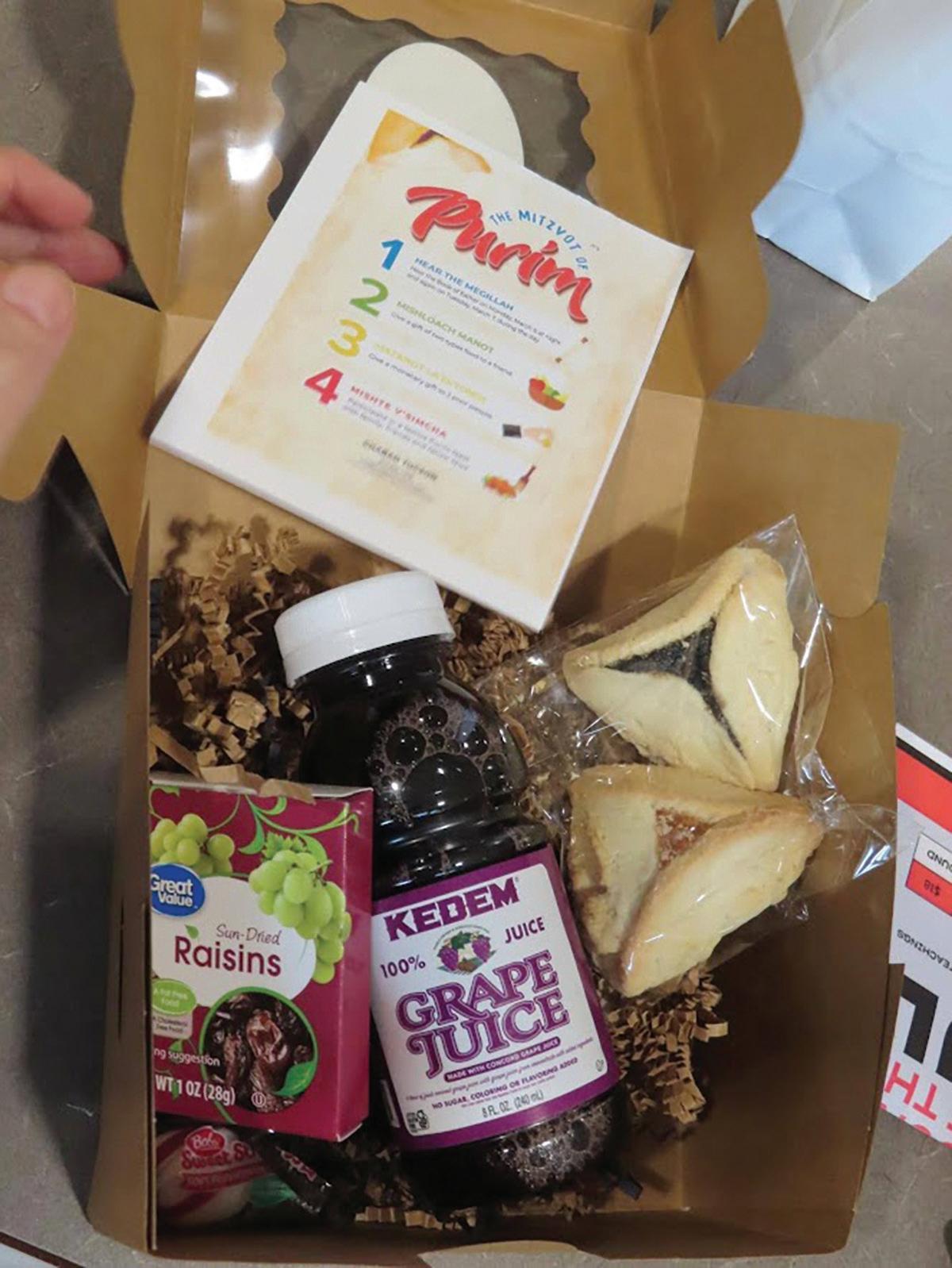
When the decree to annihilate the Jews was overturned, the victory was celebrated with acts that bound people together. We give mishloach manot,
sending food to friends. We give matanot la’evyonim, charity to the poor. The day is structured so that we look out for each other.
Recent surveys show that fewer Americans know or trust their neighbors than they did just a few years ago (Pew Research Center, March 2025). Yet most still say they would help with a small favor. The instinct to care remains, even if the relationships are thinner.
In a society that prizes privacy and independence, Purim offers a different model. Safety isn’t only about locks and security cameras. It is about relationships. It is about whether someone would notice if something were wrong. It is about whether you would knock on a door or answer one.
As we pray for Nancy Guthrie’s safe return, now is a good time to be our neighbor’s keeper. If you live on a large property, make the effort to introduce yourself down the road. If you live close together, treat that closeness as a responsibility.
On Friday night, help was one knock away. Physical proximity created moral proximity. I did not need to explain the intricacies of Hilchot Shabbat (the Laws of the Sabbath). I just needed a neighbor who cared.
- Rabbi Yehuda Ceitlin is the Outreach Director of Chabad Tucson, the Jewish network of Southern Arizona
The Jewish outreach and education network of Southern Arizona
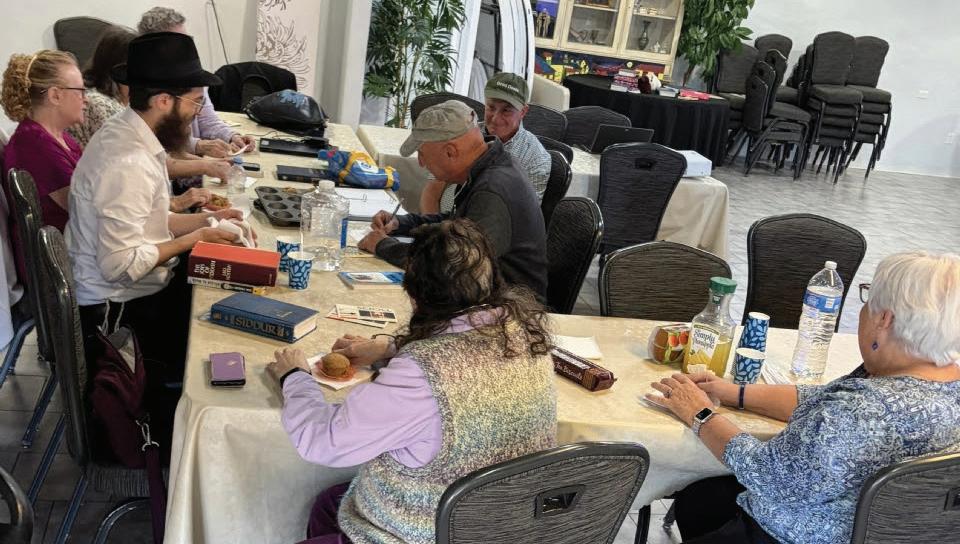
Rabbi Yossie Shemtov meets with the team reviewing the history of Congregation Young Israel, Arizona’s first Orthodox synagogue, now part of Chabad Tucson.
Rabbi Boruch Zimmerman leads the monthly Yiddish Club Meeting at Chabad of Oro Valley.
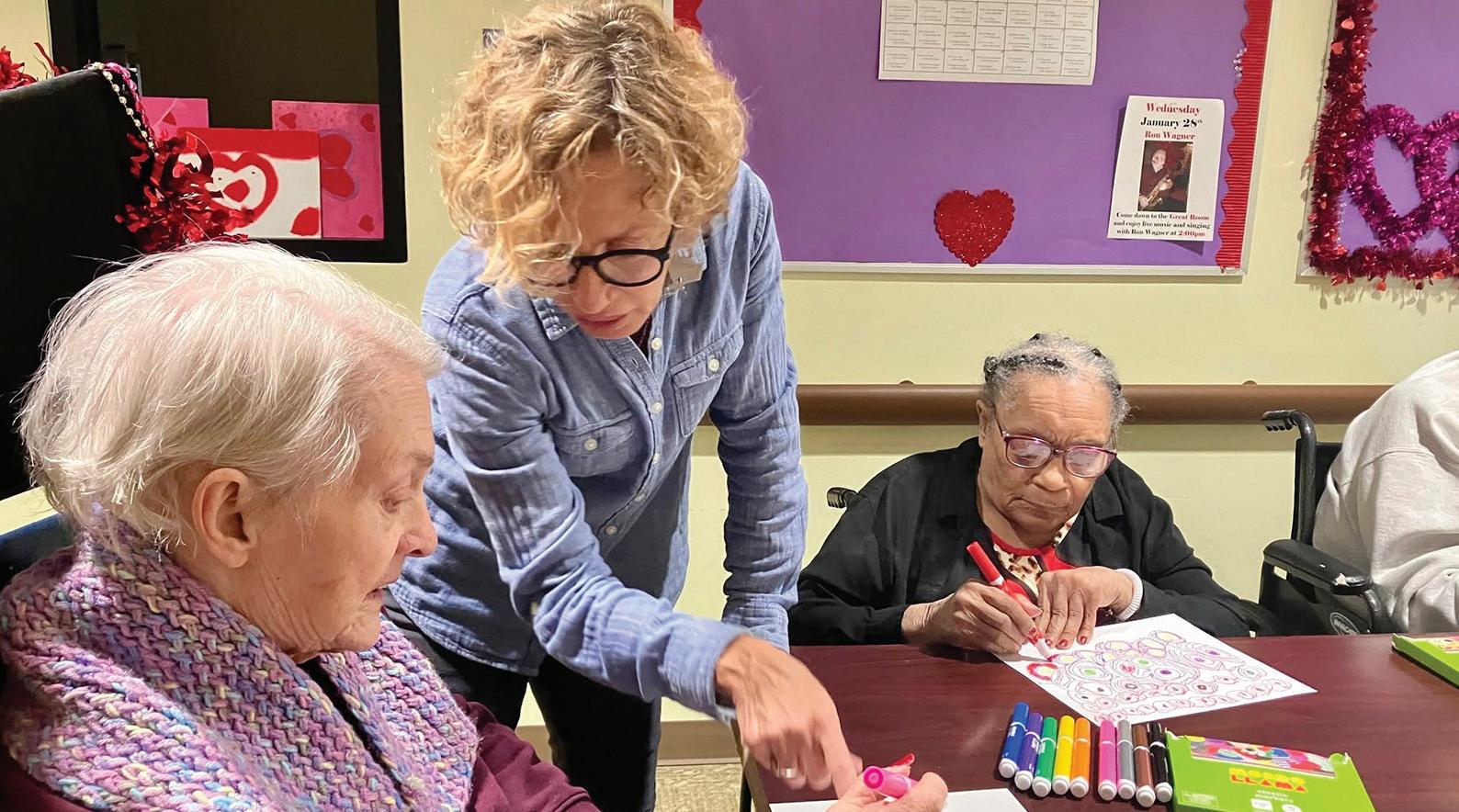
Art teacher Martha Rast helps Handmaker residents explore their creativity through a new series of classes.
Photographer Britta Van Vranken takes class photos alongside construction at Lamplighter Chabad Day School.
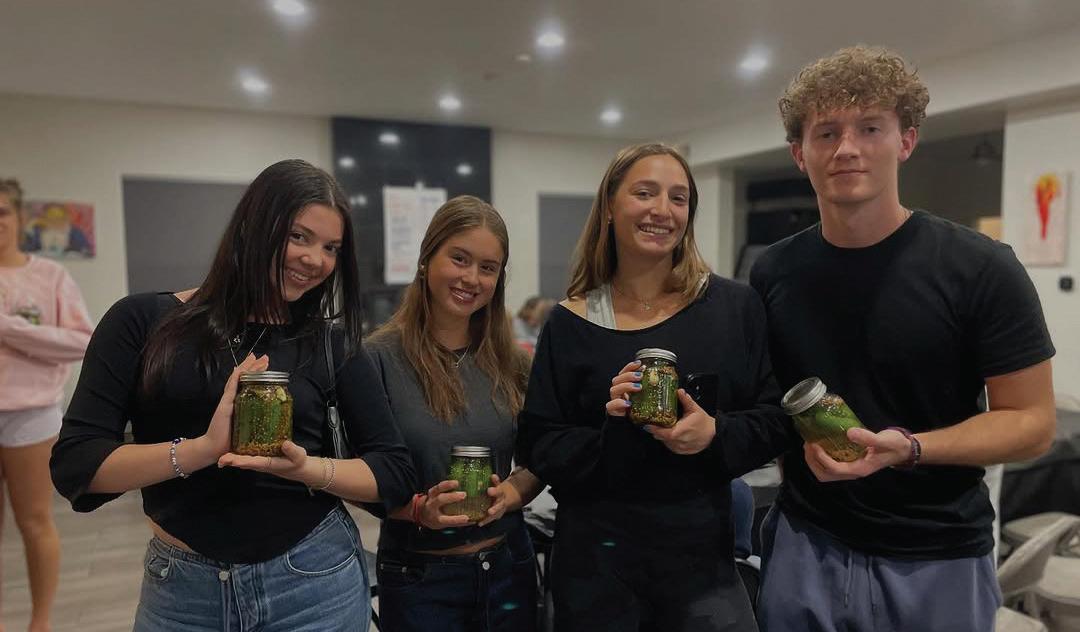
Students at Chabad of the University of Arizona are holding the jar of pickles they made in a workshop.
The Original Hostage
Nichter to debut her memoir at the Tucson Festival of Books
By Suzanne Cummins
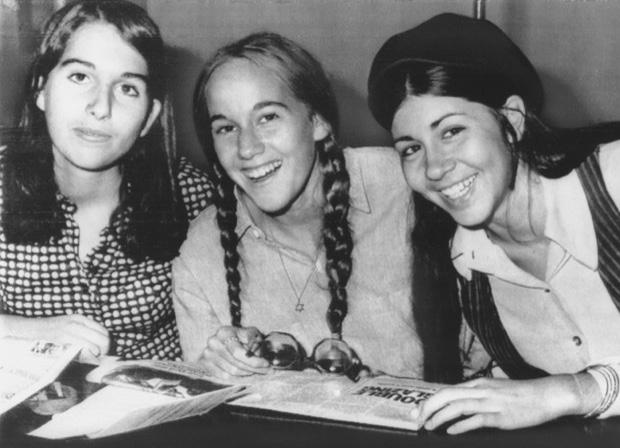
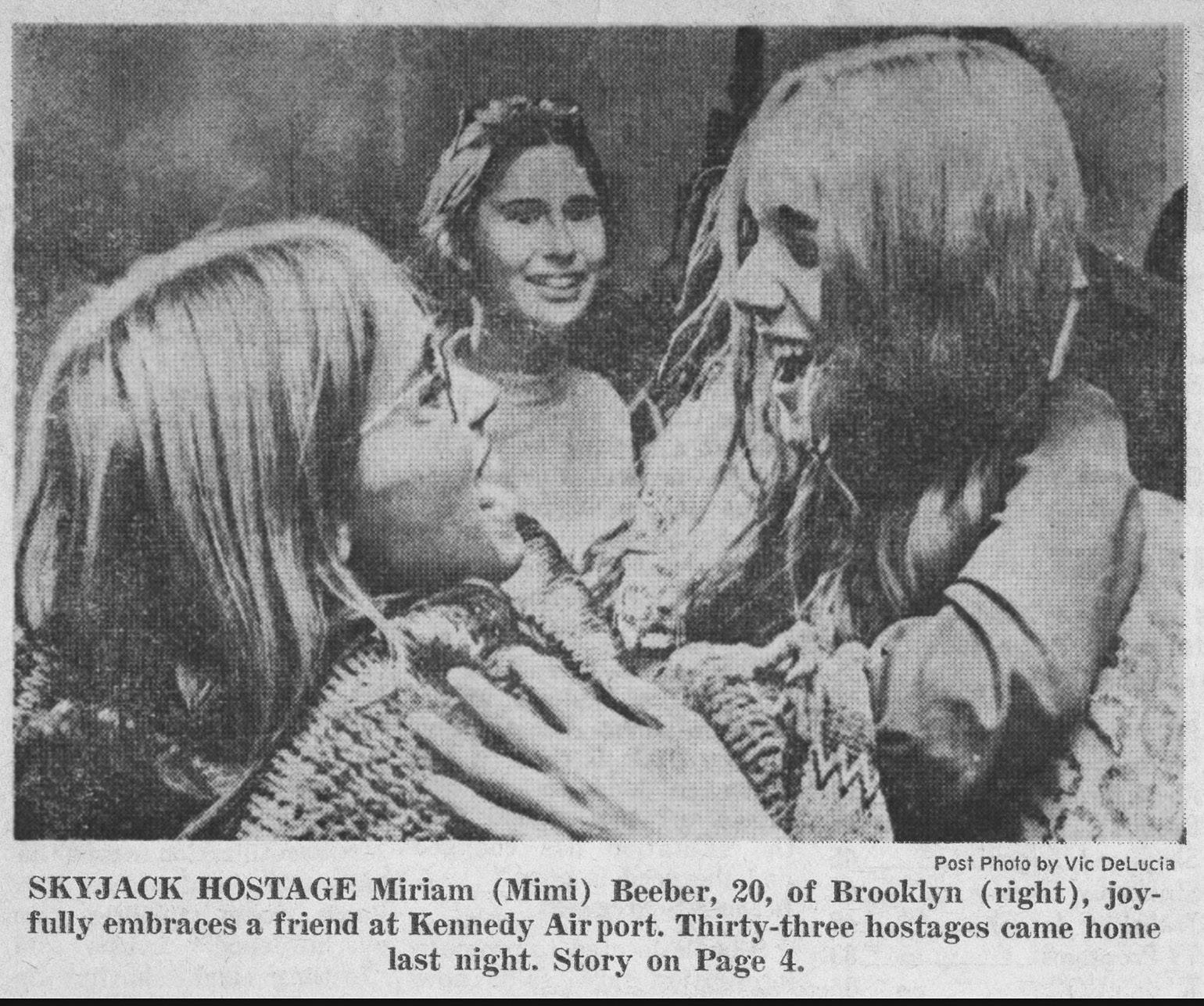
On September 6, 1970, twenty-year-old Mimi Nichter (née Beeber) boarded a flight home to New York after a summer in Israel. Instead of landing in the United States, her plane was hijacked by members of the Popular Front for the Liberation of Palestine, a terrorist organization.
The flight she was on, Trans World Airlines (TWA) Flight 741, was then diverted to a remote desert region in Jordan. Nichter would spend a week trapped on the aircraft and an additional two weeks in Amman as a violent civil war erupted around her.
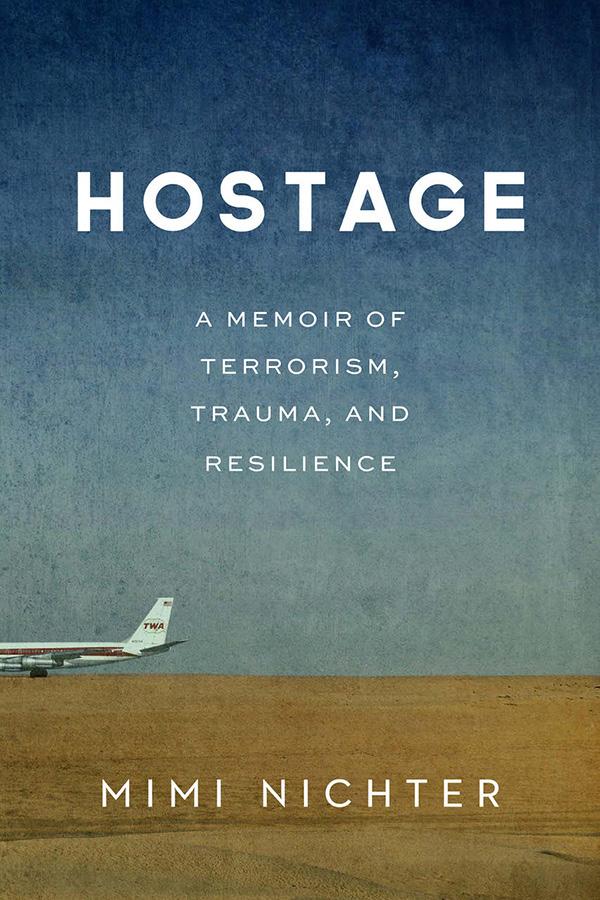
More than five decades later, Nichter has written about that experience in Hostage: A Memoir of Terrorism, Trauma, and Resilience, a 232-page memoir published by Potomac Books, an imprint of the University of Nebraska Press.
The book shares its title with Eli Sharabi’s recent memoir about his captivity in Gaza following the October 7 attacks. Nichter’s account, however, documents the first incident of international terrorism and one of the most significant events in aviation history.
Nichter’s book was a 2026 finalist for the Tucson Festival of Books Literary Award in Non-Fiction. She will appear at this year’s festival, held March 14 and 15 at the University of Arizona mall, where more than 100,000 attendees are expected.
The Hijacking
Nichter’s memoir unfolds with careful pacing, reconstructing the physical and emotional terrain of captivity. The passengers were first held on the plane in the desert heat, without air conditioning,
running water, or flushing toilets, and were uncertain whether negotiations for their release were underway.
As Friday afternoon approached on the grounded plane, observant Jewish women grew anxious about the onset of Shabbat. They asked their captors for candles. At first, the guards refused, insisting none were available. Eventually, they returned with two.
Nichter writes: “It’s a small but surprising concession and, as the candles are lit, I reflect that this is not the first time the Palestinians’ humanity and caring have surfaced. These are people who understand the importance of faith, who are now showing respect for rituals they do not share. It brings a glimmer of gratitude into this dark place.”
She does not romanticize the moment. Many of the observant Jewish passengers
would not eat food lacking kosher certification and grew physically weaker as the days passed. Nichter records how fruit was sometimes brought for them, small accommodations that coexisted with the constant threat of violence.
After one week, most passengers were sent home, but Nichter and thirty-one others were moved to Amman, where a violent civil war erupted between Jordanian forces and Palestinian factions. After living through two weeks of bombing, Nichter and the other hostages are finally released.
When the Red Cross finally arrived to transport them to safety, relief proved precarious. As the hostages prepared to leave, machine gun fire erupted. Nichter recalls: “It’s dusk when Red Cross vans finally arrive… As we leave the building where we have been waiting, machine gun fire suddenly erupts in our direction. We flatten ourselves against the outside structure of the building, holding our breath, praying we can avoid the bullets. After a few minutes, we sprint into the four vans.… I imagined the moment of freedom to be one of great excitement and happiness. But fear clings, its tentacles having reached deep inside me over the last three weeks.”
Identity and Idealism
Nichter was born in 1950 into a Jewish family in Brooklyn, New York. Her home was kosher and Shabbat-observant, and she attended Orthodox yeshiva schools. Yet by the time she entered college, she had distanced herself from formal observance.
Her summer in Israel took place during a period of intense ideological ferment. The women’s movement was reshaping American campuses. Conversations about civil rights, anti-war activism, and social equality were pervasive. For Nichter, Israel represented not only a Jewish homeland but also an experiment in collective living. She was drawn to kibbutz life, where labor was shared, hierarchy was flattened, and gender roles were being renegotiated.
Mimi
She writes of being attracted to “a society that seemed to value contribution over status, where young women could imagine themselves as equal participants in building something new.” That idealism framed her experience of Israel as hopeful and forward-looking. The abrupt transition from that setting to armed captivity created a psychological rupture she struggled to process.
After her release, Nichter returned to college changed in ways she could not easily articulate. Outwardly, she resumed her studies. Internally, she avoided the subject of the hijacking. She describes becoming physically ill when memories surfaced. Silence became a strategy of survival.
The Lawsuit
Three years later, she joined twentyeight former hostages in a lawsuit against TWA Airlines. The legal process, rather than offering validation, reopened wounds. During her deposition, an airline attorney questioned the legitimacy of her psychological injuries. When she testified that she had lost twenty-five pounds during captivity, he responded, “Any woman in America would love that!”
The remark was not incidental. It signaled, in her view, a broader dismissal of emotional trauma as speculative
or exaggerated. Although an initial judge allowed her mental injury claims to proceed, a subsequent trial judge conveyed skepticism toward such damages and pressured her toward settlement. She describes the courtroom not as a space of redress but as one of renewed vulnerability.
“Weeks would pass before I regained my equilibrium,” she writes. “The seeds of trauma were inside me; given the right conditions, they could still flourish. If I learned one thing from my law case, it was that talking about the hijacking in the wrong circumstances threatened to devastate my well-being.”
The experience reinforced her reluctance to speak publicly. It also sharpened her awareness of how institutions interpret, categorize, and sometimes minimize lived suffering.
AnAnthropologist Writes
Nichter went on to build a distinguished career as a cultural anthropologist and is now a professor emerita at the University of Arizona. She authored three scholarly books and numerous academic articles examining health concerns and key social issues in American culture. She also worked in health and development for many years in South and Southeast Asia.
For most of her life, she rarely talked about the hijacking, focusing instead on family, teaching, conducting research, and writing.
Reflecting on her upbringing, she writes: “In part, my inability and reluctance to tell the story reflected how I had grown up. In my conservative Jewish family, we shared little about our private lives with others… Whatever was outside the fuzzy boundaries of normal, I learned, was best hidden.”
The Covid pandemic created the space to attempt creative non-fiction writing. Without the demands of academic schedules, she began reconstructing the events of 1970 not as data but as lived experience. The resulting book is a deeply personal account, offering readers both immediacy and reflection.
Today, Nichter lives in Tucson and is married to her college sweetheart, the mother of two adult sons, and a grandmother of three. By writing Hostage, she has revisited a defining episode of her youth and reframed it through decades of intellectual and emotional work.
For details on Mimi Nichter’s appearances at the Tucson Festival of Books, visit www.tinyurl. com/MimiNichter
Expect the Unexpected
Purim is when people dress in silly costumes and act in ways you rarely see and act in
If you want to know what to expect at a Purim celebration, expect the unexpected. Of all Jewish holidays, this is the one when people let loose, dress up in silly costumes, sometimes have a bit (or more than a bit) to drink, and otherwise act in ways you’d never see them act during the rest of the year.
This year, Purim begins Monday night, March 2, and continues through Tuesday, March 3. In the waning hours of Purim, after a full day of liveliness and fun (more on that below), families and friends gather around the table for a festive meal. It’s actually a mitzvah to eat. Judaism is cool like that. The celebration will resemble a traditional Jewish meal, but with several unique characteristics:
People will be in costume. Purim celebrates a miracle in which G-d’s presence was hidden, so people often “hide” behind costumes. Both adults and kids can dress up. If you are not comfortable coming in costume, just come as yourself, dressed as you would for a Shabbat meal.
“Work” that is prohibited on Shabbat is permissible on Purim. Unless Purim falls on a Friday and the meal coincides with Shabbat (which is unlikely), work may be done, so feel free to ring the doorbell, snap photos on your phone, etc.
Observances are still required, even in the midst of the frivolity. We ritually wash our hands before the meal, and recite the hamotzi blessing over bread. There is, however, no kiddush over the wine.
You may be eating kreplach. In the Ashkenazi (northern European) tradition, the menu often includes
By Menachem Posner
kreplach, meat-filled dumplings swimming in chicken soup. Enjoy.
There may be alcohol served. In fact, there could be a lot of alcohol, typically wine, offered and consumed! Even people who are teetotalers for the rest of the year can be seen sipping wine or toasting after a lively l’chaim! If you are unable to drink, please feel free to decline. It’s not a mitzvah to get sick or harm yourself! It’s safe to assume that there won’t be alcohol at child-focused events or those for underage attendees. Many cities also host alcohol-free Purim parties for recovering alcoholics and others who prefer an alcohol-free environment.
The speeches may sound a little off. Of course, no Jewish table is complete
without words of Torah. But Purim Torah, as it is known, is often a parody of more conventional forms of Torah teaching, with questions and answers, complex numerological references, and sermon-like lessons that sometimes border on the absurd.
There will be Purim-specific songs. Purim has its own set of jolly songs that, together with other joyous Jewish melodies, can be heard at Purim tables from China to Chicago.
The meals may go late—way past nightfall (which marks the end of Purim). There is a special section in the Grace After Meals for Purim (called “V’Al Hanissim”), and even if the meal ends after Purim is over, that section is still included.
The Purim celebration may be themed (and may happen the night before). Chabad centers, synagogues and other organizations often hold larger Purim parties, which share any number of characteristics with the meals described above. In recent years, themed parties have become popular. So you may find yourself at “Purim in the Shtetl,” “Purim in Persia,” “Purim in Israel,” etc. You can tailor your costume to match the occasion.
Note that some communal celebrations are held on the night leading into Purim, right after the Megillah reading. These tend to be more party-like and less meallike. Also note that attending one of these celebrations does not “cut it” as far as the Purim mitzvah is concerned, so make sure also to attend a meal on the
Other Important Stuff
Beyond the meal, there are actually three other Purim mitzvahs:
A. The Megillah reading. A handwritten Hebrew scroll that tells the miraculous story of Purim, the Megillah is read twice: on the night leading into Purim and then again the following day. It is imperative to hear every word of the Megillah both times, so people often ask for complete silence during the reading, which usually lasts under half an hour.
Despite the importance of hearing every word, there is levity during the Megillah reading. As most are aware, every once in a while, the silence is shattered as the assembled break into booing, footstomping, and twirling groggers or other noise-making devices. This happens when the name of Haman—the villain of the Purim story—is mentioned. In some communities, only certain mentions merit noisemaking, so take your cues from those around you, and make sure to stop your noisemaking before the reader continues to read.
B: Gifts of food. During the day of Purim, we give mishloach manot (also called shalach manos, or mishloach manos), a gift of at least two ready-to-eat food items, to at least one fellow Jew. Men
Purim @ Chabad
Some events require advanced registration. Contact each center for details
Fast of Esther
Monday, March 2, 2026 - 13 Adar, 5786
Fast begins 5:35 AM
Fast ends 6:49 PM
Chabad Tucson - 7:00 PM, Megillah reading
Purim Day
Tuesday, March 3, 2026 - 14 Adar, 5786
Chabad of Oro Valley - 4:00 PM: Purim in the Stadium with megillah reading, festive dinner and music.
other described “Purim celebrations Purim, These mealfar the day of Purim, even if you celebrated at a party the night before.
give to men, and women give to women. If you’re invited to a Purim party in someone’s home, you can bring them mishloach manot (make sure to use kosher-certified items). Whether invited to someone’s home or not, make sure to give such a gift at some point during the day.
If you are not sure what to give, a great default is a bottle of kosher grape juice or wine, along with a nice bar of chocolate in an attractive bag. You can also check out one of the pre-made mishloach manot baskets available for purchase online. If you are the creative type, you may want to have themed mishloach manot, perhaps even matching your costume’s theme.
When someone gives you mishloach manot, it is customary to reciprocate. So make sure to have a stash of goodies ready, including the hamantaschen cookies, which we customarily eat.
C: Gifts to the poor. Another beautiful Purim mitzvah is to give money to at least two poor Jewish people. In the absence of actual poor people, there are many organizations that will be glad to pass on your donation to poor people— especially in Israel—provided you give them the money early enough in the day so they can pass it on before Purim ends.
Have a happy Purim!
Chabad Tucson - 5:00 PM: Purim Under Construction with megillah reading, joyous meal and activities.
Chabad on River - 5:00 PM: Purim in Hawaii with megillah reading and family party.
Chabad of Vail - 5:00 PM: Purim in Israel with an Israeli menu and music, activities for all ages.
Chabad of Sierra Vista - 5:00 PM: NYC-style Purim with a deli menu and megillah reading.
1. What do you do in a nutshell?
I’m the main sports anchor and reporter for KGUN-TV, covering communityinterest sports stories as well as University of Arizona athletics.
2. What got you into this line of work?
I grew up outside New York City as a big sports fan. In college, I became involved with the student radio station and interned at two local TV stations, which helped me steer toward a career in broadcasting.
3. What’s your Jewish name?
In Hebrew school, I used the Hebrew name Jacob as a substitute for Jason.
4. How does being Jewish influence your work?
I’m always interested to learn when an athlete or coach is Jewish, and I appreciate when games aren’t scheduled on Yom Kippur. I also wish I could have joined the Arizona Basketball on its trip to Israel a few years ago.
5. What’s your favorite part of the job?
I enjoy hearing from viewers who liked a community sports story I covered.
At Work: Jason Barr
KGUN 9 Sports Anchor
6. Share a memorable moment.
Interviewing Michael Jordan about his time playing minor league baseball under manager Terry Francona.
7. What’s been your biggest challenge?
Technological disruption. People no longer need a news anchor to get sports
information, so I had to find new ways to add value.
8. What’s changed in your industry since you started?
Social media, the rise of influencers, and podcasts didn’t exist in the way they do now when I first started.
9. What’s something exciting on the horizon?
As I write this, Arizona Basketball is ranked No. 1 in the country and has its best team in years, which should make for an exciting March Madness.
10. What do you do outside of work?
I enjoy investing, working out, and volunteering.
11. What do you love most about Tucson?
That it’s home to the southernmost ski mountain in the United States at Mount Lemmon, and how pleasant the weather was when my family visited this past November for Thanksgiving.
12. What’s your go-to comfort food?
I’ve been teased that I mostly eat Asian and Mexican food. I also like licorice, which tends to be a polarizing candy.
13. What’s a piece of advice you live by?
A Jewish sportscaster named Eli Gold once told me, “Not everyone thinks like you and I do,” after I expressed concern about safety in NASCAR, before stronger safety measures were widely implemented.
Chaya’s Sun-Dried Tomato Basil Dip
By Feigie Ceitlin By
People are known to take a l’chaim or two on Purim. To balance it well, it is important to eat something substantial, like challah. While plain challah is delicious, it becomes even better when paired with a flavorful dip.
Our family started loving this dip after my sister-in-law, Chaya Shemtov, first introduced it. A labor and delivery registered nurse in Florida with a busy schedule, she appreciates efficiency. This recipe certainly fits that description.
Ingredients:
1 package sun-dried tomatoes, not in oil, just dried (the white bag from Trader Joe’s works well)
1 cup fresh basil
4 garlic cloves
1 jalapeño, seeded if you prefer less heat
1 teaspoon salt
1/2 to 1 cup olive oil
Directions:
1. Roughly chop the tomatoes and jalapeño to help the blending process.
2. Place the sun-dried tomatoes, basil, garlic, jalapeño, and salt into a blender
or food processor. Pulse a few times to break everything down.
3. Blend until the mixture forms a coarse paste, scraping down the sides as needed.
4. With the machine running, slowly drizzle in the olive oil. Start with 1/2 cup and continue adding more until you reach your desired consistency, whether thick and spreadable or smoother and more pourable.
Taste and adjust salt if necessary. Serve with fresh challah or sourdough.
THE BLESSING
No blessing is needed when eating it with challah or bread on which we bless:
Bah-rookh ah-tah ah-doh-noi eh-lohhay-noo meh-lekh hah-oh-lahm hahmoh-tzee leh-khehm meen hah-ah-rehtz. Blessed are You, L-rd our G-d, King of the Universe, Who brings forth bread from the earth.
Rebbetzin Feigie Ceitlin is the program director of Chabad Tucson and head of school of Lamplighter Chabad Day School.
A legacy of caring
India isn’t the first place that comes to mind when people think of Jewish communities around the world. But from the Cochin Jews on the Malabar Coast to the Bene Israel in the Mumbai region and the Baghdadi Jews of the bustling port cities, Jewish life in India dates back many centuries.
1. India Was a Safe Haven forAncient Jewish Refugees
Cochin is a city in the state of Kerala, along the Malabar Coast in southwestern India. Remarkably, this city was home to a Jewish community for over 600 years. According to a tradition preserved by Cochin’s Jews, their ancestors fled to India after the destruction of the Second Temple in 70 CE and settled in a town called Shingly (modern-day Kodungallur). Around 1340, they began to move to nearby Cochin, where the community flourished for centuries.
2. They Were Welcomed by Local Rulers
India’s rulers were historically tolerant of minority groups, including Jews, respecting them and encouraging them to uphold their practices and beliefs. When the Jews first arrived in Shingly, the local raja (prince) welcomed them warmly, and Cochin Jews continued to enjoy peaceful relations with the leaders of Kerala up until modern times.
3. There Were Malabaris and Paradesis
In the 1500s, the Portuguese took control of parts of India’s coastline. Around the same time, Jews expelled from Spain and Portugal arrived in the new colony. These newcomers—called Paradesis (meaning “foreigners” or “white ones”)—settled alongside the
16 Facts About the Jews of India
By Yehuda Altein
Around the World
local Cochin Jews, who were known as Malabaris, meaning “People of the Malabar Coast.”
4. They Lived in “Jew Town”
Around 1565, the ruler of Cochin gave the Jews a plot of land next to his palace. This area became known as “Jew Town.” At its heart was “Synagogue Lane,” home to many Jewish homes and three synagogues—including the famous Paradesi Synagogue, built in 1568, which is still in use today!
5. The Portuguese Brought the Inquisition to India
The only real case of antisemitism in Indian history before modern times came under Portuguese rule. In 1560, the Portuguese established an Inquisition in Goa, their main Indian stronghold. In the following decades, the Inquisition issued several discriminatory edicts against the Jews, restricting new Jewish arrivals and limiting their interactions with Christians. In 1662, the Portuguese burned the Cochin synagogue along with its Torah scrolls and holy books. For the most part, however, the Jews of India escaped the worst horrors of the Inquisition that ravaged Spain and Portugal.
6. They Maintained Ties With Jews
Despite their remote location, the Jews of Cochin stayed connected to global Jewry. They sent halachic questions to leading rabbis, such as Rabbi Dovid ibn Zimra in Egypt, and Jews from Yemen joined them—including Rabbi Eilyahu Adeni, a prolific poet whose works became part of Cochin’s liturgy.
Later, when Kerala became a Dutch colony, the Cochin Jews developed strong ties with the Jewish community in Amsterdam. For many years, they celebrated the 15th of Av to commemorate the arrival of gifts shipped by the Dutch Jews: Torah scrolls and books to replace those destroyed by the Portuguese.
7. The Paradesi Synagogue Holds PricelessArtifacts
The historic Paradesi Synagogue holds several ancient artifacts that tell the story of Cochin’s Jews. Two copper plates were given by an 11th-century raja to a Jewish leader named Joseph Rabban, granting the Jews rights and privileges. A solid-gold 22-carat goblet is kept there, which was used at Jewish weddings in Cochin for centuries. A tablet on the outdoor wall is a remnant of Cochin’s oldest synagogue, dating back to 1344! These treasures, and more, can be seen today by visitors to the historic site.
8. The Bene Israel Held On to Their Jewish Practices
Further north along India’s western coastline lived the Bene Israel, centered in villages near what is now Mumbai. Isolated from the rest of the Jewish world for centuries, they still held on to several core Jewish practices, such as observing Shabbat and saying the Shema. Many of them worked in oil pressing, earning the nickname Shanwar Teli, or “Saturday oil pressers,” because they did not work on Shabbat.
9. Maimonides Mentioned the Jews of India
In a letter written around the year 1200, the great Jewish leader Maimonides mentioned Jews in India, saying, “They do not know the written Torah, and all they practice from our religion is Shabbat and circumcision.” While he didn’t specify which group he meant, many believe he was referring to the Bene Israel.
10. David Rahabi Revitalized Jewish Practice
While the details are fuzzy, it seems that a Cochin Jew named David Rahabi contacted the Bene Israel and shared with them many practices and beliefs from the mainstream Jewish community that they were either unaware of or had forgotten. Interestingly, while all agree that he existed, there is a wide range of opinions regarding when he lived.
11. They Venerate Elijah the Prophet
Elijah the Prophet plays a prominent role in the culture and beliefs of the Bene Israel. In fact, there is a tradition in which he appeared to the community in a striking nighttime visit
COMMUNITIES
on the holiday of 15 Shevat, which they celebrate with added significance. Today in Israel, many of them visit Mount Carmel, the site of Elijah’s showdown with the prophets of Baal, every year on that day.
12.
Baghdadi Jews Built Thriving Communities
Under British colonial rule, Indian port cities like Mumbai (then Bombay), Calcutta, and Yangon (then Rangoon, in nearby Myanmar) became major trade hubs. Jews from Iraq and Syria—often referred to as Baghdadi Jews—settled in these cities and established flourishing communities with synagogues, schools, and vibrant Jewish life.
13. They Helped Shape the City of Mumbai
Baghdadi Jews, especially the influential Sassoon family, left a lasting mark on Mumbai. They funded the construction of hospitals, schools, libraries, and other institutions, as well as the famous Gateway of India landmark. And they didn’t forget their own community: the Sassoons built synagogues and employed many Jews in their businesses, helping support Jewish life in the city and beyond, including Pune’s Ohel David Synagogue, the largest in Asia outside Israel.
14. Jewish Books Were Printed in India
Believe it or not, India was home to several Jewish printing presses. The first opened in Calcutta in 1840, followed by others in Mumbai, Pune, and Cochin. They printed everything from prayer books to halachic texts to newsletters— sometimes even translating them into local languages like Malayalam (spoken by Cochin Jews) and Marathi (spoken by the Bene Israel).
15. Most Indian Jews Eventually Moved Elsewhere
After 1948, most of India’s Jewish population immigrated. The Cochin Jews and Bene Israel primarily settled in Israel, while most Baghdadi Jews moved to English-speaking countries like the UK. Still, small Jewish communities remain in India—especially in Mumbai—continuing a Jewish presence that has lasted thousands of years.
16. The Holtzbergs Left a Lasting Legacy in Mumbai
In 2003, Rabbi Gabi and Rivky Holtzberg moved to Mumbai as Chabad emissaries to offer hospitality and Jewish awareness to Jewish tourists and backpackers and serve the local Jewish population. Tragically, they were killed in a brutal terrorist attack in 2008, along with four of their guests. But their memory lives on: Chabad activities have only increased in Mumbai, transforming tragedy and darkness into growth and light.
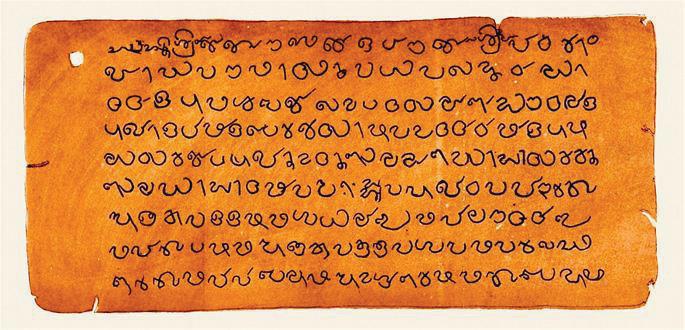
Royal charter issued by the Chera/Perumal king of Kerala to Joseph Rabban, a Jewish merchant of Kodungallur. Photo: Sarah Welch/Chabad.org
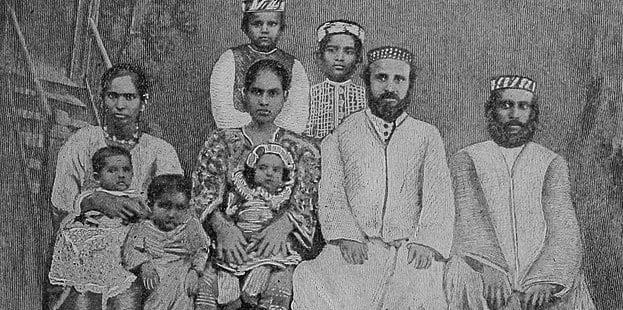
Cochin Jews, c. 1900
What Does “Meshuga” (“Meshuggah”) Mean?
Meshuga: Borrowed from Hebrew, meshuga (mi-SHOO-gah) means “crazy” in Yiddish, the kind that reflects on apparently irrational behavior or even extreme silliness. It can also be pronounced meshigeh, meshugeh or even meshugie.
(Mental illness is a serious condition, and in no way do we trivialize it or make light of those who live with it.)
Other related words:
A person who is meshuga is called a meshuganer (mi-SHOO-gi-ner).
Many such people are meshugoyim, a corruption of the Hebrew meshuga’im, a term unrelated to the Hebrew-Yiddish word goyim (for “gentiles”).
Craziness, or a craze (i.e. an inexplicably compelling but short-lived interest or trend) is called a meshugaas (mi-shooGAHS). Like, “being on TikTok all day is a meshugaas.”
So if you wanted to say, “Hey wackos, that lunatic is making me nuts with his craziness,” it would be accurate to say, “Hey mishugoyim, that meshuganer is making me meshuga with his meshugaas.”
Going Meshuga in the Bible
In the list of curses that will befall Israel if they stray from the Torah, we read, “You will be meshuga from the vision before your eyes that you will behold” (Deuteronomy 28:34).
But being meshuga is not all negative. Indeed, prophets are referred to as meshuga in Scripture. For example, “Jehu went out to his master’s servants, and one said to him, ‘Is all well? Why did this meshuga come to you?’”
Why is a prophet referred to as meshuga? Here is how Maimonides describes the experience of prophets receiving prophecy: “Their limbs tremble, their physical powers become weak, they lose control of their senses, and thus, their minds are free to comprehend what they see.”
Rabbi David Kimchi (also known by the acronym, RaDaK) explains that “they would call a prophet meshuga because at times, during the prophecy, he would act like a meshuga who had left his senses.”
The chassidic masters explain that as the prophets leave their senses behind, they ascend to the same level as Adam before he sinned by eating from the Tree of Knowledge. Thus, their mishugaas does not place them below their “rational” peers, but above the conventions of common knowledge.
PIONEERS
Arizona’s Jewish Mining Wizard Arizona’s
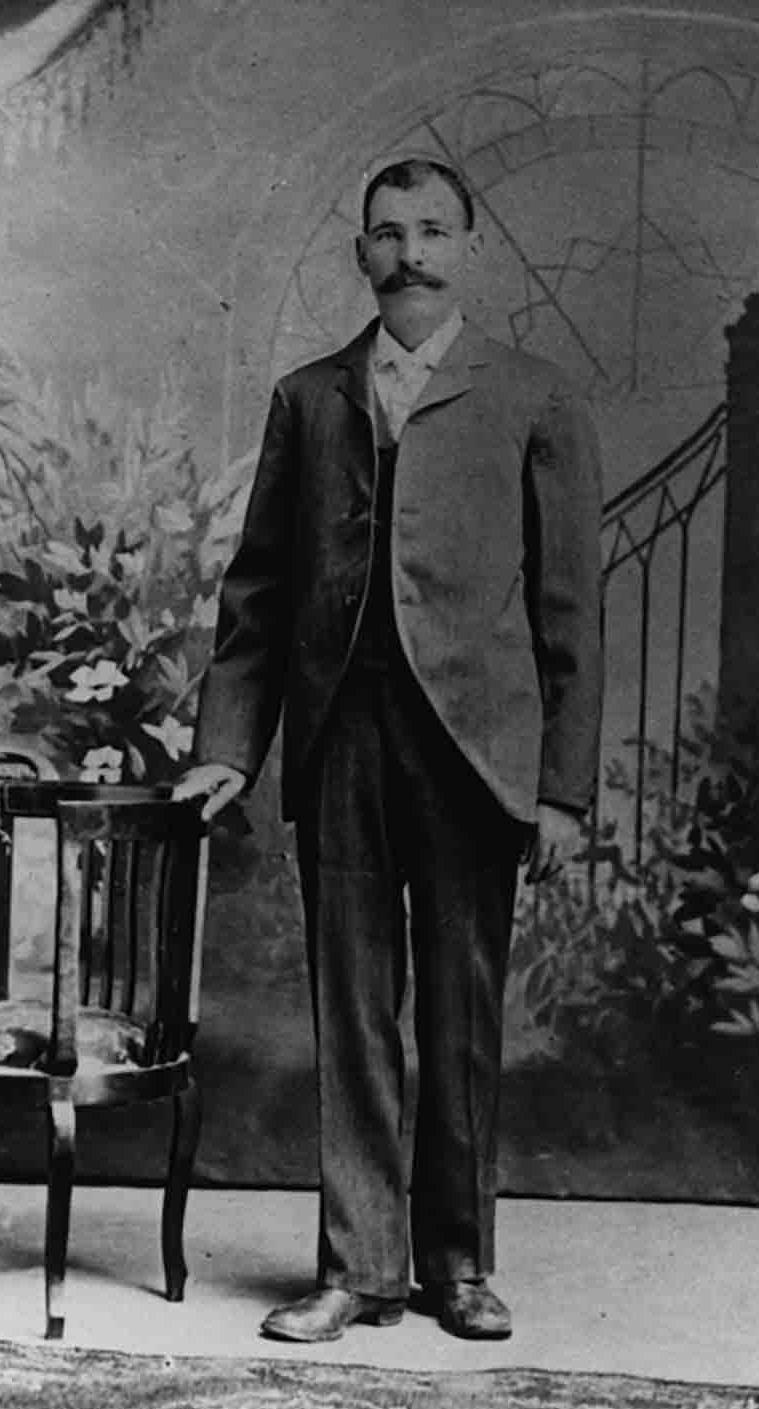
John Barry “Jack” Newman (1846–1916)
By Benjamin Weiss Weiss
John Barry “Jack” Newman, once believed to be the richest man in Arizona, made his fortune through his sharp business acumen and his uncanny ability to stake out successful mining claims.
One would correctly assume that a Polish Jew born on April 9, 1862, in the village of Chorna (then part of the Austro-Hungarian Empire) would not have been born with a name like John B. Newman, and he was not. His birth
name is now lost to posterity.
At the age of fourteen, Newman emigrated to New York, and finding no support there, moved to Pennsylvania, where he got his introduction to mining.
By the early 1880s, Newman had arrived in the Arizona Territory. He got the name Newman when working at the Old Dominion Mine near Globe. Not having a terribly good grasp of the English language, he struggled to make himself understood to the foreman at the mine.
Fed up with trying to communicate his real name, he decided that using the name “New Man” would suffice. This eventually morphed into Newman.
After a brief incarceration for (essentially) shooting the arm off of his business partner (who he believed was cheating him), Newman settled in Globe, Arizona, where he discovered an uncanny ability to find mines rich in ore. It was this knack that led him to discover thirteen claims just outside of
Globe, and those thirteen claims would form the Miami Copper Company. His claims in the surrounding areas formed a significant part of the Inspiration Consolidated Copper Company. His optioning and selling claims built him enormous wealth.
Little is known about Newman’s Jewish involvement. What was reported was that he brought over many Jewish relatives from Europe, who then took on the “Newman” name.
In 1904, Jack Newman married Jemima Tune Woolsey, and that same year, they had their first child, Samuel. Their daughter, Ollie Belle, arrived the following year. Samuel once recounted that his father was so overjoyed to have a son that he decided to celebrate by opening every bar in Globe and giving its citizens drinks for free. According to Samuel, that was the only time in his life that his father ever got drunk.
Later in life, Newman began buying up real estate throughout southern Arizona. The family moved to California in 1910, where Newman was able to afford a home near the town of Venice and bought additional property in downtown Los Angeles.
One day before his sixty-sixth birthday, on April 8, 1928, Newman passed away after he contracted uremia following a botched surgery. Although he is buried in Santa Monica, he is remembered in Arizona for his vast contributions to the mining industry in the late 19th century.
–Presented in collaboration with the Tucson Jewish Museum to honor the city of Tucson’s 250th anniversary. For the full biography, visit tjmhc.org/profiles
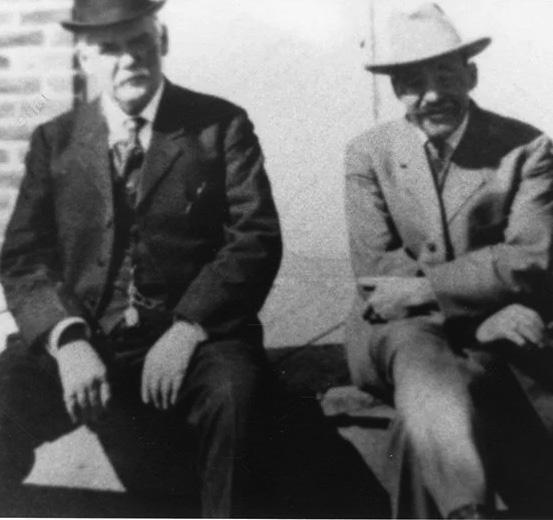
Jack Newman, E.B. Kellner and Jack Newman, seated on right, in Globe, Arizona, ca. 1880s
The Disorganized Kitchen
Magazine recipes are all the same. You have a gorgeous picture of how the food is supposed to look but never actually does when you’re finished making it, and they post a cooking time that is totally not realistic, especially since, about 20 minutes into putting the recipe together, you’re going to realize you don’t have eggs. Recipes are designed for a perfect world where nothing burns and everything looks like the pictures, and the writer “made it for the family, and they absolutely loved it, and didn’t get sick a few hours later.”
This recipe, on the other hand, is set in the real world. I can explain further, but let’s be honest: none of you is reading this far. Who reads the introduction to a recipe? The only people who have that kind of time are people who have no intention of making the recipe at all –the kind of people who read recipes like they do science fiction: They get to the end and they go, “Well, THAT’S not going to happen.”
Realistic Hamantashen
PREPARATION TIME: 1 day
YIELD: approx. 40 cookies
SERVES: 1 person
DOUGH
3 eggs, bought from store
1 cup sugar
½ cup oil (or a cup in which ½ of it doesn’t have oil)
Juice from 1 naval orange (or any military-grade orange). (Alternatively, you can use a ½ cup orange juice. Drink the other half; we don’t care.)
By Mordechai Schmutter
Juice from one lemon (even a civilian lemon) or 1-3 tbsp. of lemon juice
5 cups flour
2 tsp. baking powder
1 tsp. salt (We don’t know why either.)
JELLY
Jelly of some sort (strawberry jelly, prune jelly, petroleum jelly, etc.)
There is also a version of this recipe that has you making the jelly out of fruit, sugar, and boiling water. But who are we kidding?
INSTRUCTIONS
1. In a noisy kitchen, preheat oven to 375o.
2. Fahrenheit.
3. Wonder what that smell is.
4. Suddenly remember that you left some
Tupperware in the oven after the meal on Shabbos so the guests wouldn’t see it.
5. Turn off the oven and scrape out the melted plastic.
6. Mix the first three ingredients, then the fifth, and then the fourth.
7. Tell your children that it’s not time to lick the bowl yet.
8. Spend twenty minutes rummaging through the drawers, looking for the spatula.
9. In a separate bowl that somehow still fits your stand mixer, mix the sixth and eighth ingredients, and then fold it into the first bowl.
10. Using a third bowl that you borrowed from a neighbor, mix the seventh ingredient with itself and fold that in as well. Or just say, “Forget it,” and dump everything into one bowl in the first place. Ingredients are ingredients, we believe.
11. Weaving around the multiple stepstools that your kids set up to watch you, put the mixture in the fridge and allow to chill at 38o.
12. Tell your children that it’s not time to lick the bowl yet.
13. Whenever you remember (allow 6-8 days), take mixture out of the fridge and say, “How long has this been here? Oh, that’s right.”
14. With floured hands, on a floured surface, while standing on a floured floor, and just generally surrounded by mounds and mounds of flour, roll out mixture into small amounts ¼ inch thick.
15. Using a relatively clean drinking glass or a garbage can lid, cut dough into neat circles.
16. Apply jelly to the center of each circle with a spoon or a turkey baster. You can be as cheap as you like with the jelly, but people will know.
17. Pinch the edges of the dough into triangles, bearing in mind that most of them will pop open.
18. Using an oven mitt or a yarmulke, place cookies in the oven.
19. On a cookie sheet, genius!
20. Cookies are ready when the smoke alarm goes off. (at least 20-25 minutes, assuming you remembered to turn the oven back on)
(EDITOR’S NOTE: If you make it past the jokes, this is actually a very good recipe. And I haven’t gotten sick. Yet.)
Photo: Dylan Nolte/Unsplash
Take the Fish in Judaism Quiz
By Menachem Posner
1. On which day of the week were fish created?
A. Monday
B. Tuesday
C. Wednesday
D. Thursday
2. Which Hebrew month has the mazal (horoscope) of fish?
A. Tishrei
B. Tevet
C. Adar
D. Nisan
3. What are the two signs of a kosher fish?
A. Fins and scales
B. Scales and gills
C. Gills and nostrils
D. Nostrils and fins
4. WhatAshkenazi fish dish is traditionally served on Shabbat?
A. Gefilte fish
B. Fish in wine sauce
C. Lox and cream cheese
D. Salmon tagine
5. When is fish served at a Shabbat meal?
A. Right after breaking bread
B. After matzah ball soup
C. For dessert
D. It is not served at all!
6. How do you say “fish” in Hebrew?
A. Kelev
B. Salamon
C. Dag
D. Fisher
7. Is eel a kosher fish?
A. Yes
B. No
8. How must fish be slaughtered?
A. With a perfectly sharp knife
B. While still in the water
C. All of the above
D. None of the above
9. Whom did Jacob bless to be like fish?
A. Simeon and Levi
B. Judah and Tamar
C. Ephraim and Manasseh
D. Rachel and Leah
10. Which Jewish prophet was swallowed up by a giant fish?
A. Moses
B. Obadiah
C. Jonah
D. Fishel Farblunget
Purim I Spy
Count how many of each Purim Count how Purim image you see you see
By Sari Kopitniko | thatjewishmoment.com
BUILDING JEWISH COMMUNITY ONE CONVERSATION AT A TIME
THU, MAR 19 | 7-8:15PM
TUCSON J | 3800 E RIVER RD
DISCUSSION TOPIC: MEMORY + HISTORY
Connect, expand, deepen, share, build, grow! Partners Tucson is designed for Jewish people of all backgrounds and experiences to explore perspectives through meaningful conversation in pairs, using the teachings of Rabbi Lord Jonathan Sacks (z”l). Together, we can shape a shared destiny, ultimately creating a better now and future for Jewish life. No prior knowledge or experience is needed - just curiosity and openness to connect with someone new.
SCAN THE QR CODE OR VISIT bit.ly/tucsonjpartnerstucson