The note that Anne Frank’s stepsister wrote in Tucson
Salt and Pepper Shabbat
Savory lokshen kugel in Ashkenazic tradition
Trading Ad Copy for Community Nanci Levy is the life behind Jewish life at Handmaker
Higher Ed Champion
Young Jewish lawyer who helped create the University of Arizona
Chabad Tucson, Arizona
EXECUTIVE DIRECTOR
Rabbi Yossie Shemtov
REBBETZIN
Chanie Shemtov
OUTREACH DIRECTOR
Rabbi Yehuda Ceitlin
PROGRAM DIRECTOR
Feigie Ceitlin
Affiliates: Congregation Young Israel, Chabad at the University of Arizona, Chabad on River, Chabad of Oro Valley, Chabad of Sierra Vista, Chabad of Vail and Lamplighter Chabad Day School of Tucson
Keeping Jewish is published in print periodically by Chabad Tucson and is distributed free in Tucson and Southern Arizona.
Chabad Tucson does not endorse the people, establishments, products or services reported about or advertised in Keeping Jewish unless specifically noted. The acceptance of advertising in Keeping Jewish does not constitute a recommendation, approval, or other representation of the quality of products or services, or the credibility of any claims made by advertisers, including, but not limited to, the kashrus of advertised food products. The use of any products or services advertised in Keeping Jewish is solely at the user’s risk and Chabad Tucson accepts no responsibility or liability in connection therewith.
Note: “G-d” and “L-rd” are written with a hyphen instead of an “o .” This is one way we accord reverence to the sacred divine name. This also reminds us that, even as we seek G-d, He transcends any human effort to describe His reality.
The Note From Anne Frank’s Stepsister
When Eva Schloss visited our community in February 2018, she brought with her a history that most of us can only imagine through a textbook. As the posthumous stepsister of Anne Frank and a survivor of the horrors of Auschwitz-Birkenau, Eva spent decades traveling the globe to share a testimony of her losses, survival, and her enduring human spirit.
The morning after her arrival in Tucson, my daughters and I went to her hotel room with a gift bag and copies of her autobiography for her to pre-sign ahead of the large event we were hosting with her.
There was another reason for my stopping by; one that included some trepidation.
I knew from her previous interviews and articles that Eva often spoke candidly about the shattering of her faith. She famously described becoming an atheist in the Nazi death camps that had exterminated millions during the Second World War. She was unable to reconcile the existence of a “good G-d” with the human atrocities she witnessed.
I wondered if it would be imposing to invite her to join our family for Shabbat dinner that Friday night. Would she consider this a strictly religious function? Would she find the Kiddush over wine and the blessing to G-d over the challah offensive?
By Rabbi Yehuda Ceitlin
As we left her room, I casually mentioned the option of the Shabbat meal. Eva said she’d be interested in joining and showed up that evening. She was gracious but mostly observed silently as we sang “Shalom Aleichem” and made Kiddush. It was understandable. How can one judge the faith, or lack thereof, of someone who has walked through the gates of hell?
On Sunday, we took Eva to Saguaro National Park and it was there that we saw her express enthusiasm. As we took the open-air tram up the mountain, she was wide-eyed and looked in amazement at the forest of cacti before her. It was clear that seeing them and the desert landscape brought her enormous joy. I thought the cacti exemplified her survival - the plants grow and endure despite extreme conditions.
That evening, the atmosphere shifted from the quiet desert to a crowded auditorium. 1,200 people filled Tucson High School to hear her recall her memories. The Tucson City Council declared it “Eva Schloss Day” in her honor. After the talk, she spent time with people of all ages and backgrounds, signing books and sharing smiles.
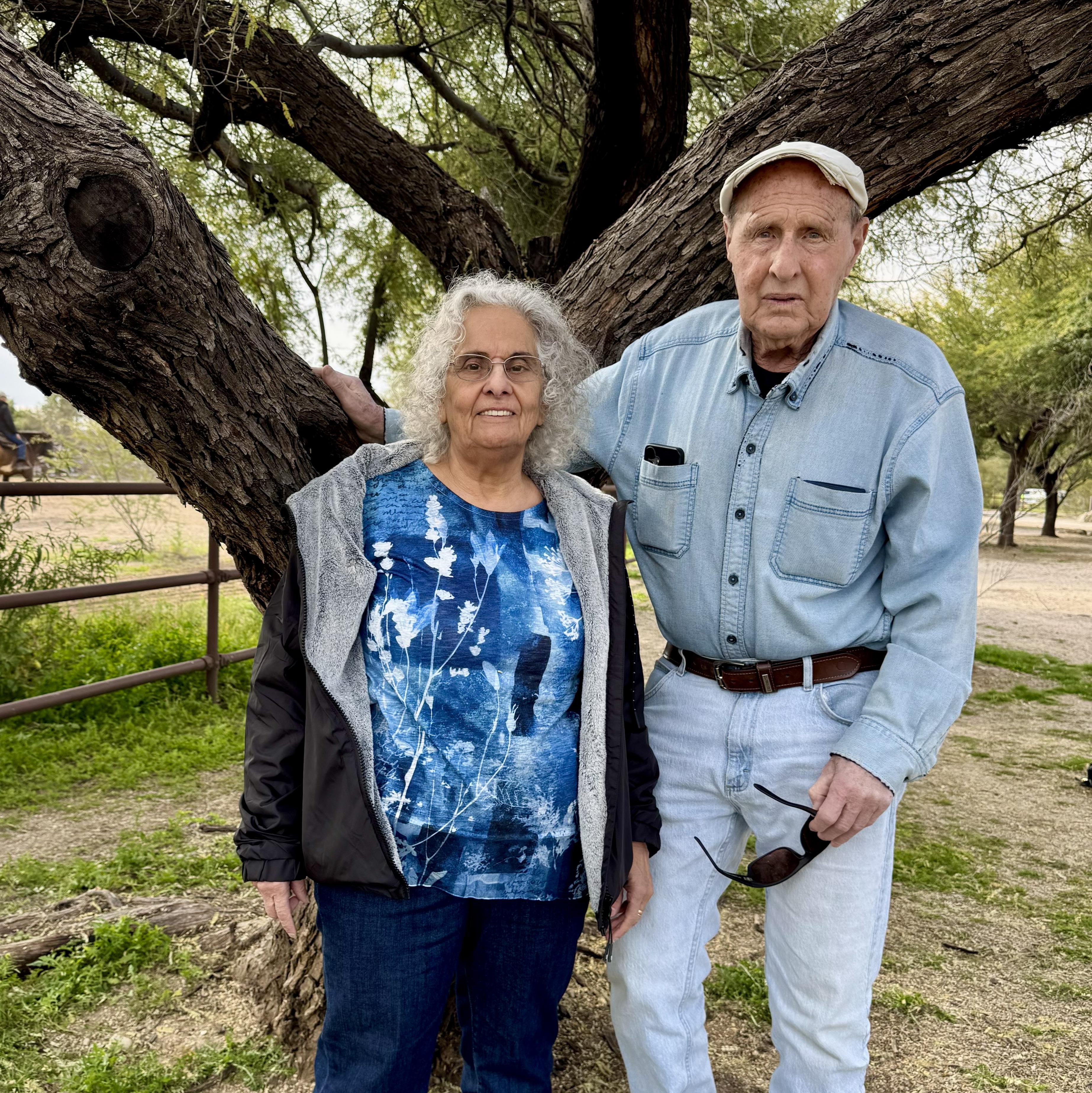
On Monday morning, we drove her back to the airport, marking the end of her first and last visit to Arizona. Before she left, she inscribed one of her books for us: “To the Ceitlin family, It was a wonderful experience spending time together, especially Friday evening and meeting
all the family. With love, Eva.”
Reading those words was deeply moving. Of all the sights she saw and the honors she received in Arizona, she especially embraced the celebration of Jewish tradition and the warmth of family.
It reflected how she came to see the potential in belief as a tool for peace. As she once said, “Religion is something beautiful. It’s personal. And we should let everybody worship whomever they want without danger of being killed or persecuted.”
She believed the core of faith should be simple, stating that religion should bring good to the community and uplift those within it. “I always say the Jewish religion got Ten Commandments from Moses,” she said in an interview. “If we would keep just to this, that’s all we need.”
Eva Schloss passed away on January 3, 2026, at the age of 96. In her long life, she had fully embraced the mantra of her stepfather, Otto Frank, who famously taught her: “Hate won’t take you anywhere. Love lifts you up.” She may have struggled with the “G-d of the Heavens,” but that Shabbat in Tucson, she beautifully embraced the sanctity of the Jewish soul.
- Rabbi Yehuda Ceitlin is the Outreach Director of Chabad Tucson, the Jewish network of Southern Arizona
Lamplighter Chabad Day School Expands
New classrooms underway as registration opens for 2026–2027
Registration is now open for the 2026–2027 school year at Lamplighter Chabad Day School and Preschool of Tucson, serving students from kindergarten through grade 7.
Lamplighter offers a dual-curriculum educational model. Each school day begins with prayer, grounding students in Jewish values and practice. Students then engage in authentic Judaic studies taught by Chabad rabbis and rebbetzins from the Greater Tucson area.
It is followed by a full program of secular studies, including English, mathematics, science, and related disciplines, taught by experienced educators. Students at Lamplighter consistently perform at
or above grade level, with academic outcomes that typically exceed age-based expectations.
As part of its continued growth, the school is expanding its campus at 3830 E. Bellevue Street. A second section of the building is currently undergoing renovation to accommodate increased enrollment and enhanced programming. The expansion includes two new elementary-grade classrooms, a multipurpose room that will serve as both a lunchroom and an assembly space, and two new bathrooms.
Plans are also underway for a new library that will feature a broad selection of Jewish and secular books, along with
designated reading nooks to support independent learning and literacy development.
The renovation is being overseen by the same team responsible for the school’s initial build-out: architect Rhonda Rawson of American Design Consultants; interior designer Rivka Baitelman; and Sally Bach of G2 Contracting. This woman-led team has created a space that is modern, bright, and playful, with an overall aesthetic that is functional, engaging, and well-suited to a learning environment.
“Every aspect of this expansion was planned with our students in mind,” said Feigie Ceitlin, Head of School. “These
new spaces will allow us to welcome more families while strengthening both our Judaic and secular programs in an environment designed for curiosity, growth, and academic excellence.”
Registration for the 2026–2027 school year is now open. Sponsorship and dedication opportunities are available for classrooms and shared spaces as part of the expansion.
For more information about enrollment or sponsorship opportunities, interested families are encouraged to contact the school directly.
Chabad of Oro Valley Launches Jewish Teen Club
Chabad of Oro Valley is expanding its community programming with the launch of the Jewish Teen Club, a new initiative for Jewish high school boys and girls in Oro Valley and Marana.
While Chabad of Oro Valley has long served the area’s strong retired Jewish population, the new teen club is designed to foster Jewish connection, pride, and community among a growing, often underserved teen demographic. The club will meet periodically for a range of programs and activities, giving local teens, including Hebrew school graduates and other Jewish high schoolers, a place to belong and grow.
“This is an exciting step forward for us,” said Rabbi Ephraim Zimmerman of Chabad of Oro Valley. “Teenage years are such a formative stage, and we want Jewish teens to have a place where they feel proud of who they are, connected to other Jewish teens, and inspired to strengthen their Jewish identity.”
The kickoff event, “MasterChef,” will take place on Sunday, February 15, from
12:00 PM to 1:30 PM. Organizers say the program is meant to be a fun, welcoming introduction to the new teen club. The Jewish Teen Club is launching with support from a grant from the Jewish Philanthropies of Southern Arizona (JPSA), which helps cover initial startup costs and programming.
Zimmerman noted that the need for local teen programming has become increasingly clear, including through connections at the University of Arizona’s Chabad on Campus, where Jewish college students from Northwest Tucson have shared that they had limited opportunities for Jewish teen engagement while growing up.
For more information about enrollment or sponsorship opportunities, call 520-881-7956 ext. 2 or email office@LamplighterTucson.com
The Jewish Ranchers of the Bootheel
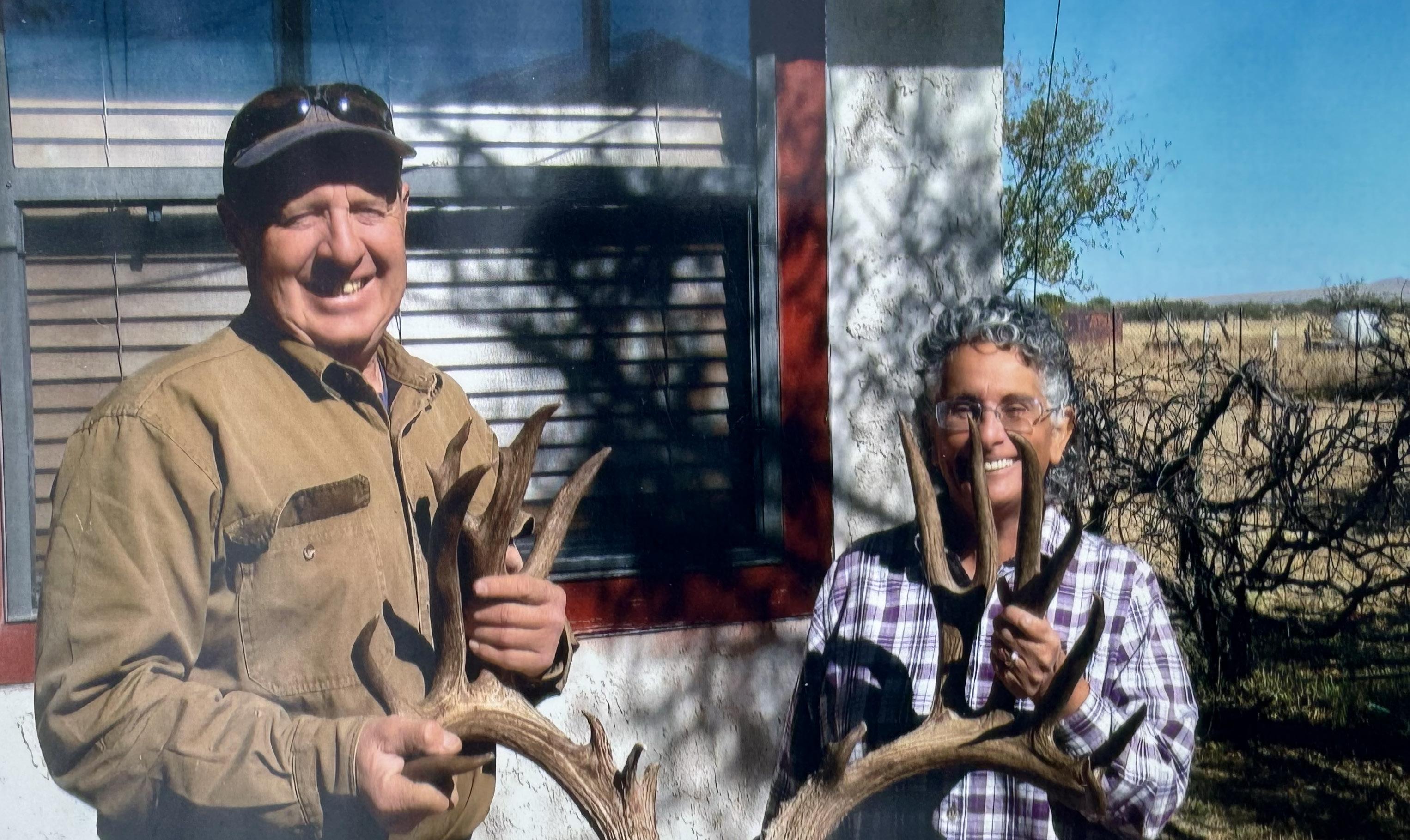
Stephen and Meira Gault’s ranch on the New Mexico-Arizona
If one is inclined to stereotype, one would not conjure a Jewish cowboy or cowgirl into the imagination. Yet for more than three decades, Stephen and Meira Gault lived precisely that life.
“We were likely the most geographically isolated Jewish family in the lower 48,” Stephen later reflected. “No cell phone signal (a blessing!). Nearest neighbor, six miles; nearest town, Animas, 35 miles to the north, population 180 and declining.” He added with characteristic selfawareness: “What’s a nice Jewish boy from Chicago doing there? Good question. I would ask myself daily.”
For 33 years, from 1991 until early 2025, the Gaults owned and operated a cattle ranch in Hidalgo County, New Mexico. The area was a farming, ranching, and mining community long before statehood in 1912, and near the Arizona border. “We bought the ranch in September 1991,” he said. “I was 51, Meira, 42, and our son, Adam, was 2 years old. What were we thinking? Another good question.
Before purchasing the property, Stephen had worked on a ranch, and the couple had rented one in Northern California for five years. They believed they understood what ranching required. They soon learned how much they did not know. The ranch was 21,000 acres. There were upwards of 60 miles of fence - boundary and cross fences.
border
By Lilian Wasserman
Into the Unknown
Stephen was born in Chicago in 1940 and grew up practicing Jewish traditions. He studied humanities in college and spent more than two decades teaching and working in a range of intellectual and educational roles before ranching ever entered his life.
“If I dreamed of being a cowboy, what I became was a fence builder and an apprentice plumber,” Stephen said. “Building a fence, I recommend it. It ignores your moods. It teaches problem solving, economy of effort, patience, and humility - the skills necessary to make a place like that succeed. Perhaps, after my toil, sweat and some blood (barbed wire), the fences I built and repaired will stand... perhaps.”
Meira was born in Hadera, a town established as a farming colony in the Haifa District and long predating the
State of Israel. She lived in Jerusalem as a student and never imagined a life in agriculture. In the IDF, Meira served in an intelligence unit, intercepting and decoding enemy transmissions. English is her third language after Hebrew and Arabic.
The two met in the early 1970s when Stephen volunteered on Kibbutz Na’an. They were married in 1984 and moved to California, where Stephen worked on cattle ranches, and Meira pursued her graduate studies in Middle Eastern history at UC Santa Cruz.
The following decade was a period of searching and preparation. In 1986, they
rented a ranch in Northern California to learn what they could about running a cattle operation. As Stephen later joked, they learned “as much as you can in five years.” Their son Adam was born in 1989 and was, quite literally, a ranch baby from the moment he was born.
In 1991, after careful research, the Gaults purchased land in an extremely remote area of New Mexico’s Bootheel. Stephen believed they were the most geographically isolated Jews in the continental United States. “Where else in the world,” he once asked, “would a Jewish guy be able to become a cattle rancher in the middle of nowhere?”
They named their operation Midbar Ranch, a Hebrew word meaning wilderness. Their brand incorporated the Hebrew letter aleph, a quiet assertion of Jewish presence in a place where almost none existed. “Our brand was known to the State Brand Inspector as bar-s-bar,” he said. “To us, it was the Hebrew letter aleph on its side, hence ‘lazy aleph’.”
A Jewish Life in Isolation
Despite their visible differences, the Gaults were accepted by their neighbors. Their son Adam joined the Boy Scouts through a local church, the only troop available. He earned a religious merit badge. Meira was invited to Adam’s school each year to explain Chanukah, bringing a menorah, dreidels, and chocolate gelt. “The children loved it so much that the school asked her to continue even after Adam graduated,” she said.
Jewish life, however, was not only public. “From the beginning of our marriage, we celebrated Shabbat –candles, Kiddush, Birchat Hamazon,” Stephen related. “Our Shabbatot were joyous.” During their visits to Arizona, they would join Chabad Tucson’s Rabbi Yossie and Chanie Shemtov for a Shabbat meal.
That observance carried a deeper meaning for Stephen. “Our Hebrew patriarchs were pastoral,” he said. “I felt a connection. They knew the smell of livestock. It was lost in the diaspora. Lost to the scribes of the Talmud in Babylonia, to the subsequent flourishing communities in Cordova, Provence, Alexandria, Germany, and the shtetls of Eastern Europe. Running flocks and herds is predicated on ownership of land, something that was universally prohibited to Jews.”
About 7,000 acres of the ranch were privately deeded land owned by the Gaults. The remaining 14,000 acres were a grazing allotment in the Coronado National Forest, for
which they paid nominal fees set by Congress. Their permit allowed for 300 head of mother cows. Through careful management, they maximized production without exceeding those limits.
They never grew or purchased feed. Buying hay, Stephen said, would have been “financial poison.” Instead, they relied on native grasses suited to different rainfall patterns. With the help of a grazing expert, they monitored precipitation and forage conditions and moved cattle accordingly. “Hard work, but essential,” Stephen said. “The alternative was feeding – fiscally deadly.”
Politics and Persistence
The Gaults ran a technologically sophisticated operation. Veterinarians used palpation and ultrasound to determine pregnancy stages and calving windows. Bulls were tested for fertility and genetic traits. Expected Progeny Differences allowed the Gaults to select for precisely the characteristics they wanted.
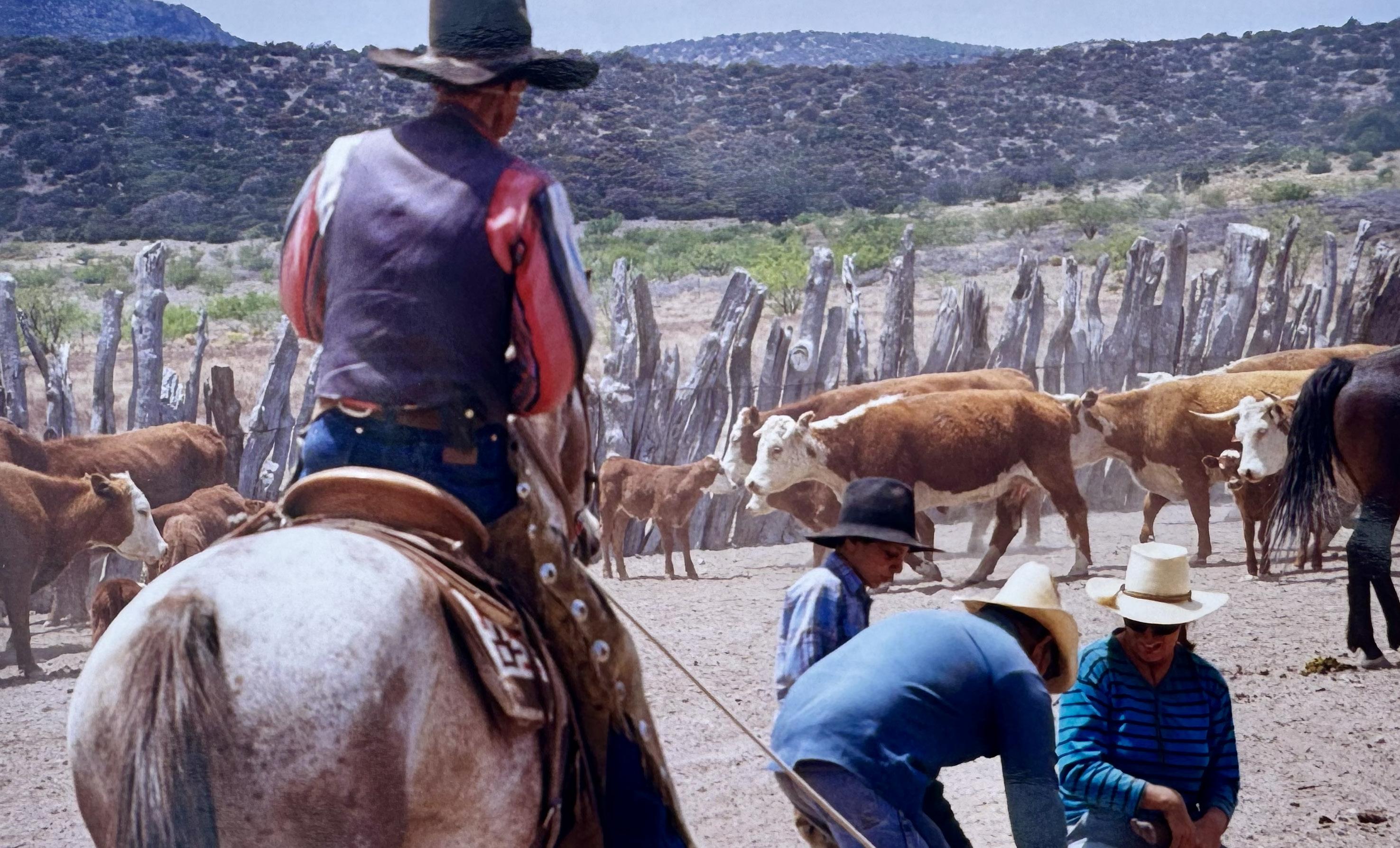
Stephen later summarized the ranching year succinctly: “During the year, there were four ‘gatherings’ where we brought the whole herd to the corrals: branding, testing, preg check, and shipping.”
Roundup time was the most demanding season. Every calf had to be brought to the corrals before auction day. Neighbors stepped in to help, though Stephen and Meira did the overwhelming share of the work themselves, even into their seventies and eighties. On horseback or ATV, they worked their land alongside everyone else.
Each year, they sold two truckloads of calves, totaling roughly 100,000 pounds. One load was heifers, the other steers. The sale took place via live-stream auction. When they eventually sold their herd after divesting their land, the auctioneer told Meira, “In my whole career, I never saw a more beautiful herd than this.”
Ranching politics were, in Stephen’s words, “Byzantine.” Multiple federal and
state agencies regulated nearly every aspect of their work. Meira emerged as an advocate for ranchers, helping organize and chair a Public Lands Advisory Committee to ensure that those whose livelihoods depended on the land had a voice. She navigated conflicts over wildlife protection, land use, and regulation with what Stephen described as grace, diplomacy, and hard questions.
By every meaningful measure, the Gaults succeeded. They paid their debts, stayed in business for more than three decades, and raised exceptional cattle. In March 2025, they sold the ranch. Tools, equipment, vehicles, and household items were auctioned off. “The auctioneer cleaned out my shop,” Stephen said. “I became useless... but for the memories.”
They were, in every sense, a Jewish cowboy and a cowgirl. And by the time they left the wilderness and moved to Tucson, Arizona, they had proven that such a life was not only possible, but enduring.
What to Know About An Upsherenish
The Jewish custom of giving a three-year-old boy his first haircut
By Yehuda Shurpin
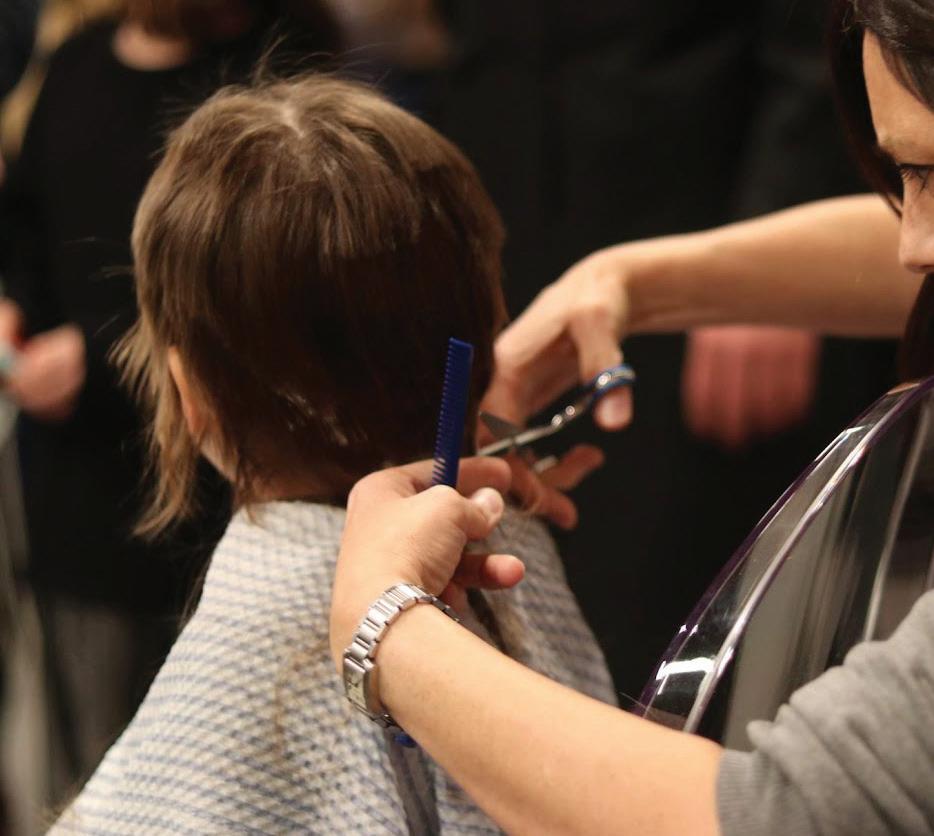
There is a widespread custom that a boy’s hair is left uncut for the first three years of his life. When he reaches his third Jewish birthday, family and friends gather for a festive first haircut known as the upshernish (or chalakah). While the rest of his hair is cut short, the child’s peyot (biblically mandated sidelocks) are left intact—this is his initiation into the mitzvah of peyot.
More than a haircut, the upshernish marks a turning point: because from this age, the child begins his formal Jewish education and starts observing basic mitzvot, such as wearing a kippah and tzitzit. Rooted in longstanding custom and rich symbolism, the upshernish celebrates a child’s entry into a life shaped by Torah and Jewish values.
Let’s address some of the questions commonly raised about an upshernish.
Who Should Attend, and Where Should it Be Held?
Some have the custom to hold—or at least begin—the upshernish in a holy setting, such as a synagogue or house of study, but it’s perfectly acceptable to hold it at home or another neutral environment. Relatives and friends are invited to participate, since having a crowd present shows that this is a big deal.
What Does the Child Wear and Do At the Ceremony?
The child should wear tzitzit for the upshernish and continue wearing them regularly from that day on. He recites the verse Torah tzivah lanu Moshe, and other children may complete the set of 12 pesukim traditionally recited on such occasions. The child is also given money
to place in a tzedakah box.
Who Cuts the Hair?
You should honor someone special, like a rabbi or mentor, to take the first snip.
On one occasion, the Rebbe advised beginning with a kohen, followed by a levi, and then a yisrael, after which
others may participate. Men and women (provided that it is done in a manner that upholds the standards of modesty), relatives and non-relatives, can all be honored to take a snip.
Where On the Head to Cut First?
There are different customs about where
to start cutting the hair. Some start at the area of the head where tefillin are worn. Others begin near the peyot, close to the ear, emphasizing the mitzvah of not shaving that area.
Does All the Hair Need to Be Cut During the Ceremony?
No. You can finish it up later or have a barber do it for you, making sure the payot are left intact. The custom is to avoid having a non-Jewish barber finish the haircut.
What Exactly Counts as Peyot?
The Torah commands, “Do not round off the edges (peyot) of your heads.” The Talmud explains that this refers to the hair between the temples and the ears; “rounding” means removing this area so that the hairline runs smoothly from the forehead to behind the ear. Practically, the peyot spans from behind the ear to the forehead and includes all the hair in front of the ear.
How Long Should the Peyot Be?
Some authorities prohibit cutting the peyot very close to the skin even with scissors, while others hold that the Torah prohibition applies only to shaving with a razor. The Code of Jewish Law rules according to the latter view but advises stringency, cautioning against cutting too close.
In practice, this means leaving the hair long enough to bend over and touch its root—approximately 0.5 cm (about a #2 clipper). This is the minimum requirement; many choose to leave the peyot longer so they are clearly visible.
In many communities, peyot are grown
long as a visible expression of Jewish identity, a practice found among Jews from widely different lands. Others, including Chabad, follow the custom of the Arizal, who would trim his peyot with scissors and not let them grow below the ear.
Giving Charity
In addition to the general custom of having the child give charity at the upshernish, many have the custom to specifically give the child some money to place in a charity box before they snip the hair.
What is Done With the Hair After It’s Cut?
The cut hair should be collected and buried, rather than thrown in the garbage. Some have the custom to weigh the hair and give an equivalent amount of coins to charity. Others donate it to create wigs for children with cancer.
Is There a Festive Meal?
While many mark the upshernish with a celebratory meal, you don’t actually need to serve a full meal; you can just have refreshments such as cake and l’chaim. The child is encouraged and given opportunities to recite blessings before eating. There is often singing and music to enhance the joy.
Wash Your Hands
After the child’s hair is cut, his hands should be washed (as is proper to be done after any haircut), similar to how the hands are washed in the morning (i.e., three times on each hand, alternating hands).
When Should the Upshernish Take Place, and When is It Postponed?
Ideally, it is held on the child’s third Jewish birthday—neither earlier nor later. However, since haircuts are restricted at certain times, the upshernish may be postponed (but should not be done earlier): Shabbat and festivals, during the Sefirat HaOmer
period, the Three Weeks of mourning, and on Rosh Chodesh.
What’s Next for the Child?
A father is obligated to begin teaching his son Torah as soon as the child is able to speak, starting with basic verses such as “Torah tzivah lanu Moshe” and
“Shema Yisrael.” As the child matures, his learning expands, first at home and then in a Jewish school under a teacher. While no fixed age is mandated, many communities begin formal schooling at age three, on or shortly after the upshernish.
At Work: Nanci Levy
Community Outreach Coordinator at Handmaker Jewish Services for the Aging
1. What do you do in a nutshell?
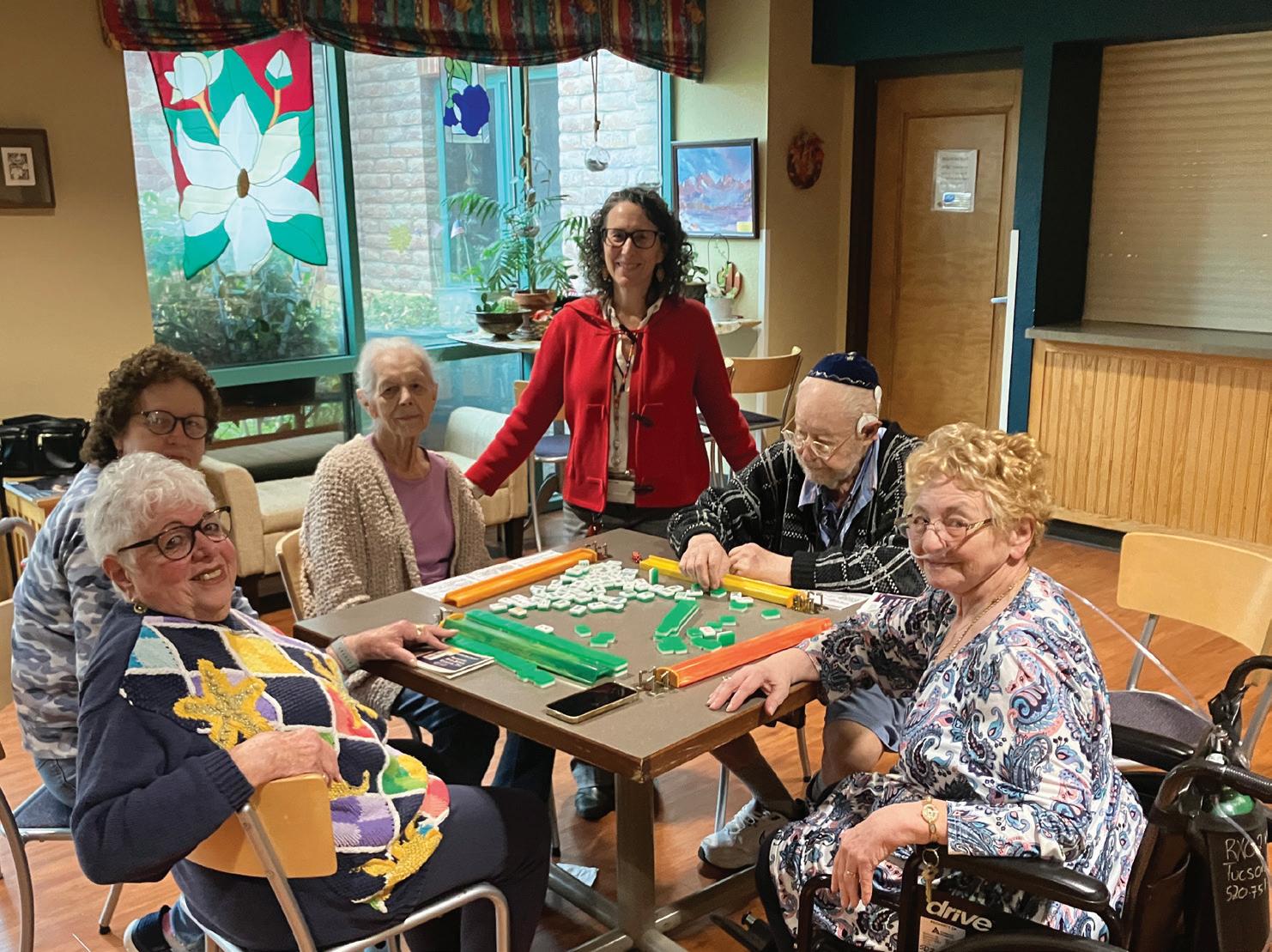
Provide opportunities for Handmaker residents to connect to the greater Tucson Jewish Community through educational and intergenerational programs, as well as to Jewish life through observance of Shabbat and holiday celebrations.
2. What got you into this line of work?
When I lived in New York, I worked in advertising at a large ad agency. My husband Doug and I moved to Tucson in 1995, where I got a job working in PR and advertising for local events at a small ad agency. Then I worked in development and marketing at the Arizona-Sonora Desert Museum. After having our first child, I was lucky enough to take some time off (15 years!) to raise our children (Rachel and Maya). During that time, I got involved and volunteered with the Jewish Federation and Tucson Hebrew Academy. When the position of Outreach Coordinator opened at Handmaker in 2015, it felt like the perfect time and place to go back to work.
3. What changed since you started?
Handmaker had been part of the Jewish Federation since it opened in 1963, but in 2021 Elie Pollak and his company, MED Partners, took over its management. We remain a non-profit, and are still fully kosher (under Rabbi
Yossie Shemtov of Chabad Tucson), and are known as one of Tucson’s longstanding Jewish institutions.
4. What have you learned from working there?
I have learned much from the older adults I work with, including the value of a positive attitude, the importance of maintaining relationships with family and friends, and the importance of slowing down and taking the time to listen.
5. What’s your favorite part of the job?
When I get feedback that I have had a positive impact on someone’s day, I also love getting to know and spending time with some inspirational Handmaker residents.
6. Any memorable moments?
Helping a Handmaker resident into a mikvah as part of her conversion to Judaism.
7. What’s been your biggest challenge?
Working during the COVID pandemic. Thankfully, it is long over, but we still feel some repercussions, such as a tendency for some people to remain isolated.
8. What’s something exciting on the horizon?
We recently received a grant from JPSA to enhance our arts and movement programming, including funding to expand our volunteer base. We are looking forward to welcoming more volunteers at Handmaker to help out!
9. What do you do outside of work?
Hike, yoga, read, and spend time with family and friends.
10. What do you love most about Tucson?
Looking at the mountains. There were no mountains where I grew up on Long Island or where I went to college in Michigan. I never tire of looking at them.
11. What’s your Jewish name? Sarah.
12. What’s your go-to comfort food?
Peanut butter and jelly sandwich.
13. What’s a piece of advice you live by?
Motion is lotion. I heard this from someone in the Handmaker therapy department. In other words, keep moving for your physical and mental health.
Savory Lokshen Kugel
By Feigie Ceitlin
Savory lokshen (noodle) kugel is a classic Ashkenazi dish traditionally eaten on Shabbat and holidays. Egg noodles entered Jewish cooking in Central and Eastern Europe between the 14th and 16th centuries, and noodle kugel soon became a Shabbat staple because it could be prepared in advance and kept warm without active cooking.
While sweet kugels gained popularity in Poland and Hungary, savory “salt and pepper” kugel remained a mainstay for Lithuanian and Russian Jews. The savory kugel remains a Friday night mainstay, valued for its heartiness and for embodying Ashkenazi cooking’s reliance on modest ingredients shaped by tradition.
Ingredients:
1 bag medium egg noodles, boiled
6 eggs
1/4 cup oil
Salt, to taste
Garlic powder, to taste
Pepper, to taste
Instructions:
1. Preheat the oven to 375°F. Grease a 9×13-inch baking pan.
2. In a large bowl, combine the cooked noodles, eggs, oil, salt, garlic powder, and pepper. Mix until evenly combined.
3. Pour the mixture into the prepared pan and spread evenly.
4. Bake uncovered for 1.5 hours, or until the top is well browned and crisp. Enjoy!
Blessed are You, L-rd our G-d, King of the universe, by Whose word all things came to be.
Rebbetzin Feigie Ceitlin is the program director of Chabad Tucson and head of school of Lamplighter Chabad Day School.
A Jew Named Elliot
How a homeless man was honored in death
By Judah Rosen
When I moved to Placerville, California, several years ago, I became involved with the homeless community, which averaged about 60 people, volunteering wherever I found opportunities.
Once a month, I planned a lunch, shopping, cooking and delivering it to various locations. During the winter months, when various churches hosted an overnight shelter, I worked the graveyard shift once a week. Through these activities, I met Elliot, one of the homeless people in Placerville.
Elliot was a pleasant, friendly guy, though very picky about his food. He would always look at what I was offering for lunch that day before accepting it. And he much preferred a cash donation so that he could buy his own meals.
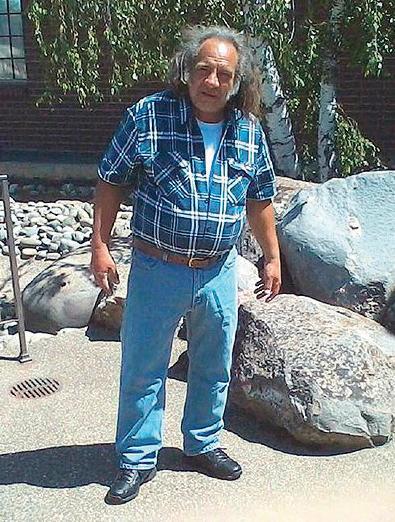
It wasn’t until a year after meeting Elliot that I found out that he was Jewish, and that his name was Elliot Cohen. Although my Jew-radar failed me, the connection that Jews have when they find another Jew kicked in, and I tried to reach out in a more personal and meaningful way to Elliot.
Elliot was a solitary individual and, for the most part, did not hang out with other homeless people. He had his spot on Broadway where he could be found rain or shine, listening to music on his earphones.
Elliot was a fixture, and so many people grew to know and love him. He was a kind person, and I don’t believe I ever saw him in a bad mood.
After being kicked out of the park where he slept, he would sneak back in and sleep on the bathroom floor, preferring the women’s to the men’s because it was cleaner. He also slept behind stores, in the area set aside for trash.
I heard people speaking of his demons. Of course, I don’t know, nor do any of us, what
issues Elliot wrestled with. I do know that he appeared happy and content with the life he led, which is a lot more than I can say about many people in their comfortable homes with their lawns and their fences.
But living on the streets is not an easy life. A friend told me that last winter, Elliot asked to sit in her car for a bit because he was so cold.
Elliot had no apparent interest in religion, although he was proud to be a Jew and had been to Israel. A very private person, he was not all that forthcoming with information, but I was able to find out where he had been born and raised, and where he had lived in the recent past. I surreptitiously took a photo of Elliot and, with the help of Rabbi Yossi Grossbaum of the Chabad Jewish Community Center of Folsom, wrote a letter to various Jewish communities on Long Island in an effort to find his family. Often, families want to know the whereabouts of their missing family members, and I hoped to be able to connect Elliot with his.
I was not successful.
When Elliot died, his autopsy determined that he died from heart disease. It turned out that his father had died from the same disease at about the same age.
The Sheriff’s Department was able to locate Elliot’s family and notified them of his death. I then heard parts of Elliot’s story from his brother. Originally from the Bronx, Elliot grew up on Long Island and had a pretty normal childhood with his younger brother and sister. He loved playing sports and following sports, and later on, chasing girls.
He got good grades in school, but instead
Elliot Cohen as photographed by the author
of attending college, he chose to join the Navy. He was trained to work on a nuclear submarine, but after two years, he was discharged, and his journey into mental illness began.
Over the years, he had traveled to Israel, Las Vegas, and California, slowly losing contact with his family. The last time he had contact with them, a phone call with his mother, was nine years ago.
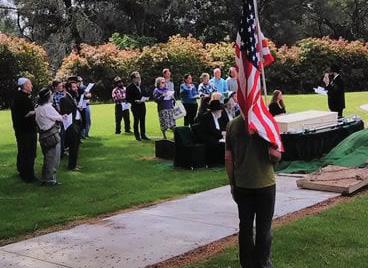
When I was told that Elliot had been found dead on the sidewalk in his sleeping bag, I immediately notified Rabbi Grossbaum of Chabad in Folsom. After some hard work, the rabbi was able to arrange a Jewish burial for Elliot in Folsom, as opposed to the regular practice of cremating indigent people.
Rabbi Grossbaum posted a fundraiser on Facebook to cover the $2,000 necessary, and I was blown away by the response. Fifty-six individuals donated well over that amount in just three days, and these were people who were not in Placerville, and they did not know Elliot. They were Jews from around the country, and they stepped up so that a Jew could have an appropriate burial.
Thirty people attended Elliot’s burial, including Jews from Sacramento who wanted to honor him and make sure there was a minyan.
A local church put on a beautiful and moving memorial service for Elliot. It was standing room only. Various people shared their memories of him, and an honor guard gave his brother a folded flag, as Elliot was a veteran.
I am writing this in honor of Elliot, and also to remind everyone: When we see homeless people on the streets, we don’t know their circumstances, or what led them to live that kind of life, but they are all sons or daughters of someone, and often they are also parents, siblings, or friends. It is not for us to judge them; we do not know their life’s story. But we can treat them with kindness, respect, compassion, and generosity, as befits all of G-d’s children.
Zichrono livrachah. May Elliot’s memory be for a blessing.
Elliot Cohen’s funeral service in California
Elliot Cohen (left) with his siblings, Debbie and Neil, in the 1970s
What Does “Schlep” Mean?
Schlep (or shlep) is Yiddish for “drag” or “pull,” and functions as a noun or verb.
Schlep: To Tote
When a Jewish family prepares for a flight and their Yiddishe mama packs them extra tuna sandwiches—since there is no kosher food available in the airport, and she cannot picture her precious children going hungry—it would be accurate to say that they are schlepping along tuna sandwiches, even though they are toted and not “dragged” or “pulled.”
Schlep: To Drag
Now, suppose the studious yeshiva student of a son decided to pack along his spare set of the Talmud (20 oversized volumes). The luggage would become so heavy that there would be no choice but to schlep it (drag it) on the ground.
Schlep: To Be a Burden
Once this family realizes they have so much luggage, the entire trip becomes more of a burden than a boon. They can then say that the entire trip was just one big schlep.
Oisgeshlept: Drawn Out
As the vacation continues, and they miss their regular routines back home, the ordeal begins to feel oisgeshlept, “drawn out.” If it gets so bad that it begins to remind them of a winter cold that never ends, they may call it an “oisgeshlepte krank,” an illness that drags on and on.
Schlepn Beim Tzung: Tugging by the Tongue
As the family continues to bicker about their non-fun vacation (except, of course, for the abovementioned scholar, whose nose is buried in his Talmud and refuses to get schlepped into the brouhaha), some family members begin to campaign for going home early, telling their parents, “You told us we could leave early if we don’t enjoy it. “Schlep unz nisht beim tzung (don’t tug us by our tongues),” say the exasperated parents. “Don’t try to use our words to force us into anything.”
People as Schleppers
As the family sits and bemoans their fate, they forget to take care of their appearance and soon become a disheveled, bedraggled group. An observer may remark that they look like a bunch of “shleppers,” which literally means “draggers,” but refers to anyone who is not quite making it, socially, financially or appearance-wise. The closest English equivalent to schlepper would probably be “loser.”
Nochshleppers and Mitshleppers: Tagalongs
Good news! Our family finally schlepps back home (schlepping their luggage). Determined not to transgress the Torah guidelines for lashon hara (slander), they keep mum about their experiences. People talk about the wonderful destination, and soon groupies and copycats (mitshleppers and nochshleppers) start making the trip to the same destination.
I hope that answer didn’t schlep on too long, but once I start writing, I get schlepped into it…
PIONEERS
Tucson’s Champion of Higher Education
Selim M. Franklin (1859–1927)
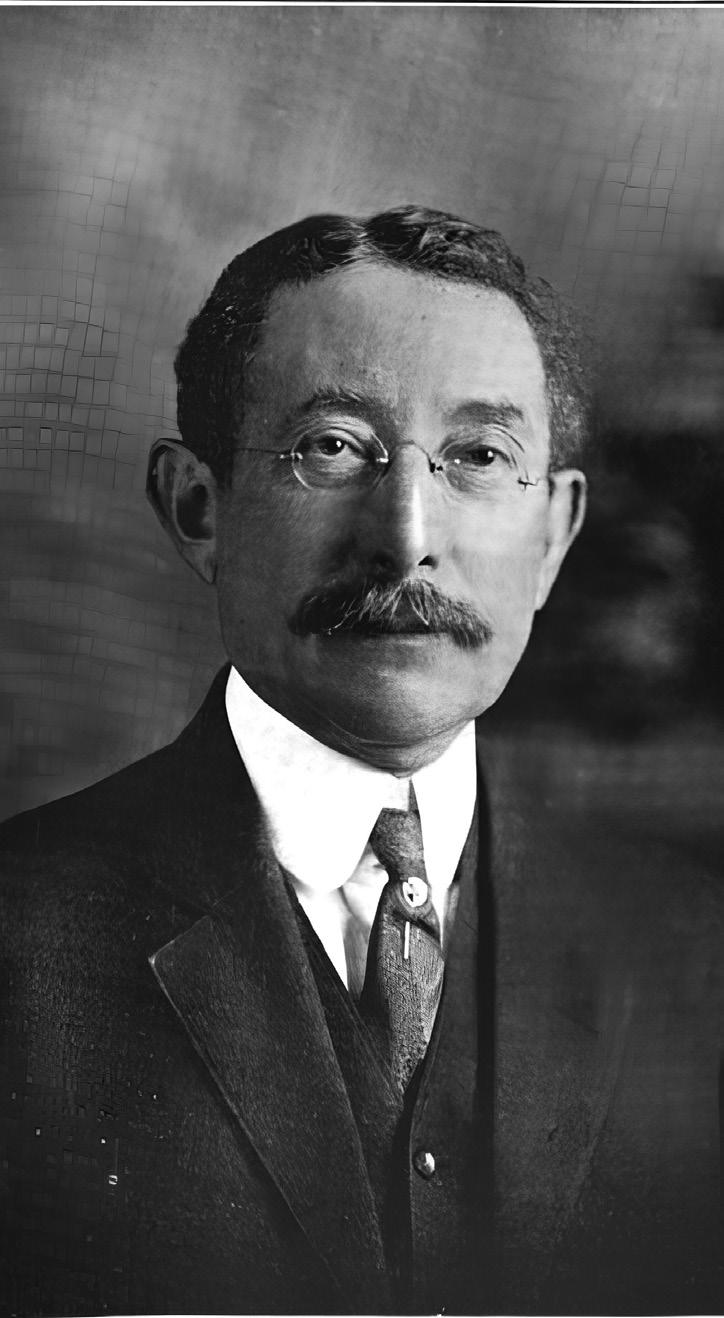
Selim Maurice Franklin was born on October 19, 1859, in San Bernardino, California, to a Jewish family that emigrated from England to the United States during the California Gold Rush of the 1850s. His family descended from Rabbi Menachem Mendel Franckel, of Wroclaw (Breslau), Poland. The name was later anglicized to Franklin.
Franklin’s father, Maurice, and his uncle Lewis, prominent San Diego citizens, established the Franklin House, the city’s key hotel and first three-story building. After several years, the brothers parted ways, and Maurice relocated his family to San Bernardino,
where he opened a pharmacy. Franklin’s mother, Victoria, died when he was two years old, and his father died when he was fifteen.
Taken in by an aunt, Franklin completed high school in San Francisco and then entered the University of California, Berkeley, earning his law degree in 1883.
An uncle by the same name - Selim Franklin – also live din San Francisco at the time. That uncle was an auctioneer, real estate agent, and internationally ranked chess player.
After briefly practicing law in San Bernardino, Franklin moved to Tucson in May 1883 to join his older brother
Abraham. In 1898, he married Henrietta Herring, daughter of prominent Tucson lawyer William Herring. She was the founding president of the YWCA in Tucson.
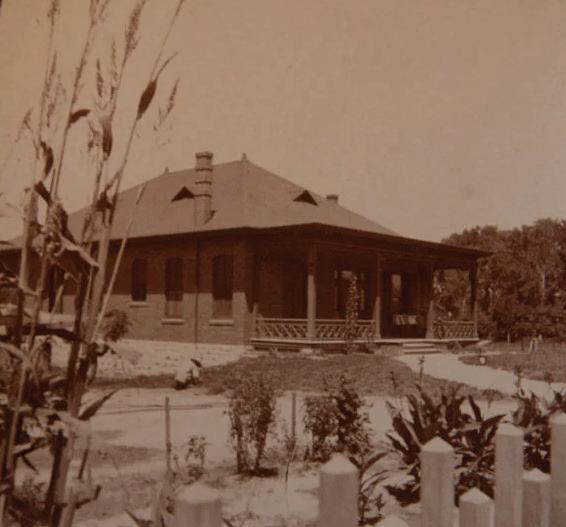
The couple built a home at 402 North Main Avenue and opened a law office on Pennington Street. Franklin handled legal matters for his merchant and banker uncles, Lionel and Barron Jacobs, as well as for other local clients.
In 1884, at the age of twenty-five, Franklin was elected to the lower house of the Thirteenth Territorial Legislature, later dubbed the “Thieving Thirteenth” because of its widespread corruption.
Franklin himself described it as “the most contentious and the most corrupt legislature that Arizona had had.”
He succeeded in persuading fellow legislators to redeem themselves by establishing a university in Tucson. Appealing to their consciences, he argued that founding an institution of higher education could help offset the damage caused by their misconduct. His eloquence proved decisive, and in March of 1885, the legislature voted 18–5 in favor of the proposal, as reported by the Tucson Citizen.
Because the university needed a college of agriculture to be eligible for federal funding, Franklin even served as the first professor of the College of Agriculture in the late 1880’s, even though he lacked training and expertise in the discipline. He served in that capacity for a year until a replacement could be hired.
In the course of his career, Franklin served as an assistant United States attorney, a Commissioner to oversee the design and building of the Territorial Capital Building in Phoenix in the 1890’s, and as a member of the University of Arizona Board of Regents from July 1888 to August 1897.
For the remainder of his life in Tucson, Franklin continued his legal career, becoming a successful local attorney and later a U.S. district attorney. He and Henrietta had three sons and one daughter. He died in November 1927 after suffering a heart attack while playing golf at the age of sixty-eight. He is buried at the Evergreen Cemetery.
–Presented in collaboration with the Tucson Jewish Museum to honor the city of Tucson’s 250th anniversary. For the full biography, visit tjmhc.org/profiles
Selim M. Franklin (left) and The Franklin House located at 402 North Main Avenue in 1899. Photo: Chris Carroll
I Won the Lottery!
(And my wife isn’t getting any of my winnings...)
By Mordechai Schmutter
I won the lottery!
I’m sorry for repeating myself. I’m just trying to let it sink in.
Okay, so a couple of months back, I wrote an article about all these people who won the lottery, and I thought, “Why hasn’t this ever happened to me?” And then I realized it was most likely – and I’m no expert here – because I had never in my life bought a lottery ticket.
But I was thinking about making a purchase, because, you know, we hear in the news all the time about people who won the lottery, and most of them didn’t even expect to win. They say that: “We didn’t even expect to win! We just wanted to throw away our money for the fun of scratching things with a coin!”
So, in my article, I ended with the question of whether people thought I should buy a ticket. And some people said not to bother. But I decided to ignore them, because I figured they’re just trying to keep the numbers down so they have a better chance of winning.
So I bought a ticket. I went into the store and stood in line – an almost 40-yearold who had never bought a ticket – and resolved that I would have to pretend that I knew what I was doing:
“One lottery ticket, please,” I would say, like an adult.
“What kind?”
“Um… A winning kind?”
I decided I would buy a scratcher and
took it home because I didn’t want to stand in the store scratching like an animal, and I won!
You might think I’m lying for the sake of an article, but I’m not. I honestly, seriously did win the lottery. I won 3 dollars. And the ticket only cost 2 dollars!
I’m trying not to let this whole thing go to my head, though. For the most part, I think I should go on as if nothing had happened. I don’t want anyone to feel like now they have to treat me differently.
What I’m worried about is that they always say people who win the lottery don’t know how to handle the money and end up losing it pretty quickly. So I need a plan. I’m going to try to be responsible. I want to see if I can call a financial planner or something. I’m not going to go out and buy a nicer car or anything. No one’s going to know, to look at me, that I won the lottery.
I decided to get the lump sum, instead of
in installments over the course of, like, 20 years.
First, I’m going to get the cash and fan it out in front of me. Maybe put it in a bathtub and swim in it.
But when I’m done playing around, I’m thinking that I want to put a third of it away for the future, put a third of it in my kids’ education fund, and buy myself something nice with the other third. That’s what everyone seems to do.
And obviously, I’m going to give a tenth to tzedakah. I’ll cut them a nice check. Maybe they’ll honor me at a dinner, but I’ll tell them that I didn’t do it for the recognition.
To be honest, though, there are some naysayers out there. Like my wife keeps saying, “Yeah, you only won one dollar.” I don’t see it as that. I don’t need this kind of negativity in my life. The way I see it, I flushed two dollars down the toilet. Those two dollars were gone. And then I won three dollars. That’s 200% more than she’s saying I won. “Don’t let people
put you down,” that’s what I say.
And you know what? You know what? If my wife’s going to talk like that, she doesn’t get any of my winnings. There, I said it. She will not see a penny of it. Not one penny.
Oh my goodness, look what this money is turning me into.
Also, in the interest of full disclosure, I should mention that I actually bought a second lottery ticket. I didn’t win that one, and it cost me three dollars.
I actually bought both tickets in the same trip. I figured that I should buy two, because in case one of them lost, the other one would pay for it. It didn’t quite.
The question is, now that I won, am I going to buy another ticket? I don’t think so. I don’t want to push my luck over here. No one really wins the lottery twice. It looks suspicious, like I’m rigging the game. So I’m going to quit while I’m ahead-ish.
Point is, I won the lottery, and in the tradition of all lottery winners, I’m probably going to quit my job. So this is my last column. Unless it turns out that I blow through all my winnings faster than expected, in which case I’ll be back next month. I guess we’ll see what happens. Actually, I think I already blew through—Oh, wait. It was in my other pocket.
Oh, and in case you were wondering, it was just regular-size money. That was the one disappointment.
Photo: Dylan Nolte/Unsplash
Take the Obscure Mitzvah Quiz
By Menachem Posner
1. It’s a mitzvah to cover the blood of which types of animals?
A. Reptiles and birds
B. Birds and game
C. Game and domesticated animals
D. Domesticated animals and reptiles
2. What should you do before taking the eggs from a nest?
A. Dust them with musk
B. Shout: “Angel of birds, have mercy!”
C. Send away the mother
D. Verify that there is at least one egg left behind
3. What home safety precautions does the Torah mandate?
A. A fence around flat roofs
B. A lock on the front door
C. A place to deposit hot coal
D. A source of fresh water
4. Which two materials may not be combined in a garment?
A. Nylon and leather
B. Leather and wool
C. Wool and linen
D. Linen and nylon
5. Which non-kosher firstborn animal is considered holy?
A. Dog
B. Donkey
C. Horse
D. Pelican
6. For how many years may a tree’s fruit not be eaten?
B. Syria
C. Babylon
D. Yemen
8. What should a king carry wherever he goes?
A. A bottle of kosher for Passover wine
B. His personal Torah
C. A paper with his name and title
D. Matzah from the Seder
9. What can’t you do to an animal while it’s threshing?
A. Touch it
B. Sell it
C. Muzzle it
D. Play music for it
10. What must a farmer do if he forgets some sheaves in the field?
A. Leave it
B. Retrieve
C. Burn it
7. To which land may we not return? A. Egypt
D. Eat it in the field
Dafne Zivan, Illustrator - Elie Benhiyoun, Editor
Grow Jewishly
- One Class at a Time
Practical Torah learning through Chabad in Greater Tucson for men and women, from beginners to advanced
10:30 AM - Chassidus for beginners with Rabbi Rami Bigelman at Chabad on River
11:30 AM - Kitzur Shulchan Aruch with Rabbi Arik Shemtov at Chabad Tucson-Young Israel
7:00 PM - JLI courses for students with Rabbi Shmulie Shanowitz at Chabad at U of A
7:00 PM - Parshah class with Rabbi Rami Bigelman at Chabad on River
8:00 PM - Read It In Hebrew for students with Sara Shanowitz at Chabad at U of A
10:30 AM - Chassidus in English with Rabbi Rami Bigelman at Chabad on River
11:00 AM - Yiddish Club (quarterly) at Chabad of Oro Valley
6:30 PM - Teachings For Life with Rabbi Sruly Shemtov at Chabad of Vail & Zoom
7:00 PM - JLI courses (seasonal) with Rabbi Yehuda Ceitlin at Tucson JCC & Zoom
11:00 AM - Jewish Journeys with Rabbi Ephraim Zimmerman at Chabad of Oro Valley
12:15 PM - Lunch & Learn with Rabbi Yehuda Ceitlin on Zoom
7:00 PM - Tanya class with Rabbi Rami Bigelman at Chabad on River
7:00 PM - Sinai Scholars for students with Rabbi Shmulie & Sara Shanowitz at Chabad at U of A
10:30 AM - Chumash for beginners with Rabbi Rami Bigelman at Chabad on River
12:00 PM - Torah & Deli with Rabbi Yehuda Ceitlin or Rabbi Dr. Howard Schwartz at Handmaker
7:30 PM - Jewish Insights with Rabbi Boruch Zimmerman at Chabad of Oro Valley
7:30 PM - Wings & Torah for students with Rabbi Shmulie Shanowitz at Chabad at U of A
8:00 PM - Yeshiva Hour for men with Rabbi Arik Shemtov at Chabad Tucson-Young Israel
7:30 AM - Daily Rambam with Rabbi Yossie Shemtov at Chabad Tucson-Young Israel
7:45 AM - Daf Yomi (Talmud) with Rabbi Arik Shemtov at Chabad Tucson-Young Israel
9:00 AM - Mishnah with Rabbi Rami Bigelman at Chabad on River
6:00 PM - Shulchan Aruch with Rabbi Yossie Shemtov at Chabad Tucson-Young Israel
6:30 PM - Rebbe’s Talks with Rabbi Yossie Shemtov at Chabad Tucson-Young Israel