Caring for Smiles
Dr. LeeAat Mednick puts patients at ease
Flatbread Salad
The perfect side dish for a summer meal
Temple Mount Quiz
Test your knowledge of Judaism’s holiest place
Opinion, history & humor
Dr. LeeAat Mednick puts patients at ease
The perfect side dish for a summer meal
Test your knowledge of Judaism’s holiest place
Opinion, history & humor
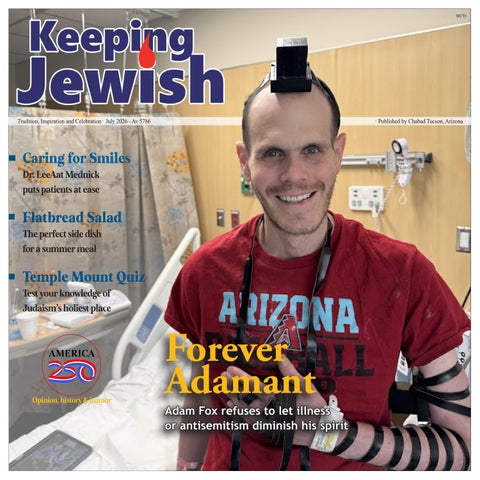
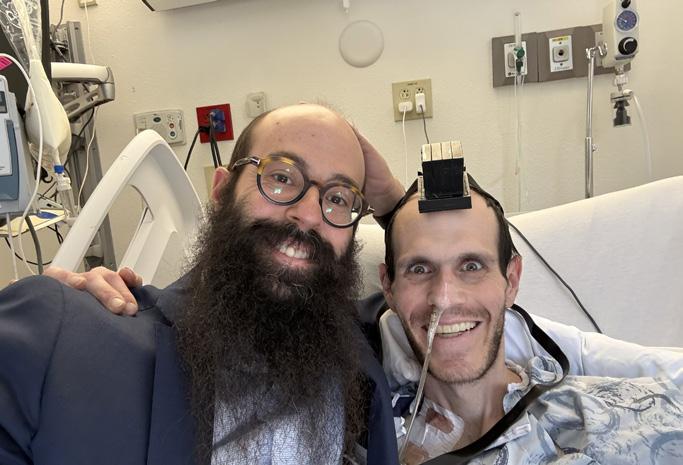
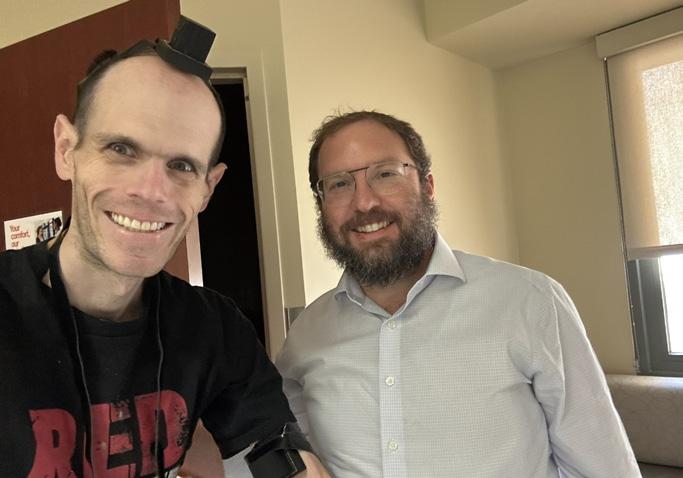
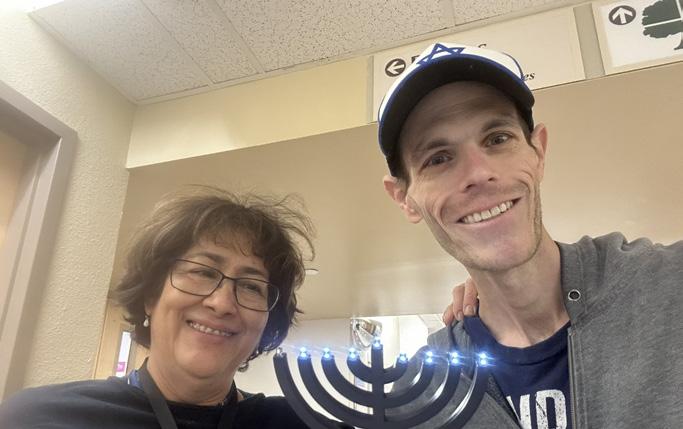
Adam Fox refuses to let illness or antisemitism diminish his spirit
2443 E 4th Street, Tucson, AZ 85719
EXECUTIVE DIRECTOR
Rabbi Yossie Shemtov
REBBETZIN
Chanie Shemtov
OUTREACH DIRECTOR
Rabbi Yehuda Ceitlin
PROGRAM DIRECTOR
Feigie Ceitlin
Affiliates: Congregation Young Israel, Chabad at the University of Arizona, Chabad on River, Chabad of Oro Valley, Chabad of Sierra Vista, Chabad of Vail and Lamplighter Chabad Day School of Tucson
EDITOR
Rabbi Yehuda Ceitlin
COPY EDITOR
Suzanne Cummins
CONTRIBUTING WRITERS
Feigie Ceitlin, Nissan Dovid Dubov, Sarah Pachter, Menachem Posner, Mordechai Schmutter, Chaya Mindel Way, Benjamin Weiss
PHOTOS
Unsplash.com
SPECIAL THANKS Chabad.org
EDITORIAL & ADVERTISING
Phone: 520-881-7956 #12
Email: info@ChabadTucson.com
SUBSCRIPTION: ChabadTucson.com/SubscribePrint
Keeping Jewish is published in print periodically by Chabad Tucson and is distributed free in Tucson and Southern Arizona. Chabad Tucson does not endorse the people, establishments, products or services reported about or advertised in Keeping Jewish unless specifically noted. The acceptance of advertising in Keeping Jewish does not constitute a recommendation, approval, or other representation of the quality of products or services, or the credibility of any claims made by advertisers, including, but not limited to, the kashrus of advertised food products. The use of any products or services advertised in Keeping Jewish is solely at the user’s risk and Chabad Tucson accepts no responsibility or liability in connection therewith.
Note: “G-d” and “L-rd” are written with a hyphen instead of an “o .” This is one way we accord reverence to the sacred divine name. This also reminds us that, even as we seek G-d, He transcends any human effort to describe His reality.
This past month, I traveled to Washington, D.C. for a conference. Between sessions, I spent a few hours walking the streets of the nation’s capital. Everywhere I looked, preparations for America’s 250th birthday were underway.
Banners were draped across the front of government buildings. Museums had special exhibits either on display or in the works. Bookstores had designated sections, and gift shops were stocked with America 250 mugs, water bottles, and souvenirs.
As I reached the Lincoln Memorial, I found access to it somewhat limited. Fences and barricades blocked off some areas as workers set up stages and tested sound systems for the celebrations. The city itself felt unfinished, preparing for celebrations still weeks away.
For a moment, I felt disappointed that I would miss the actual Fourth of July festivities. But upon reflection, I realized I had experienced something even more fitting: a nation still in the making.
In the Preamble to the U.S. Constitution, the nation’s Founding Fathers opened with an aspiration: “to form a more perfect Union.”
That phrase has always fascinated me. It suggests that America was never

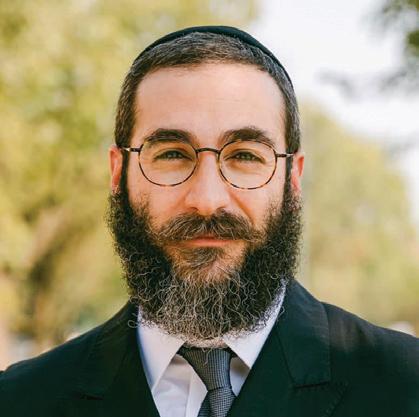
By Rabbi Yehuda Ceitlin
intended to be a finished project. The Founding Fathers envisioned a nation continually striving to better embody its highest ideals. The goal was not perfection, but progress.
That’s why seeing Washington under construction felt so fitting. The city itself embodied the very ideal expressed in the Constitution.
That same idea followed me into the Lincoln Memorial. Engraved on its wall are the closing words of Abraham Lincoln’s Second Inaugural Address, delivered only 41 days before his assassination.
“With malice toward none, with charity for all; with firmness in the right as God gives us to see the right, let us strive on to finish the work we are in; to bind up the nation’s wounds...”
Even as the Civil War was drawing to a close, Lincoln understood that America’s greatest task still lay ahead. The nation would have to heal, rebuild, and continue striving toward the ideals on which it was founded.
That aspiration echoes a deeply Jewish idea.
Judaism teaches that G-d intentionally left creation unfinished. The concept of Tikkun Olam, “repairing the world,”
flows from that idea. The Midrash illustrates this with simple examples: grain must become bread and flax must become clothing. Human beings were created not merely to inhabit the world, but to become G-d’s partners in completing it through honest work, acts of kindness, justice, and devotion.
Neither America nor the world arrives fully complete. Both ask something of us to keep building, repairing, and improving what remains unfinished.
That may be why the preparations in Washington stayed with me. The fences and unfinished displays were not distractions from the celebration; they were part of it. They embodied the very spirit the anniversary commemorates.
The 250th anniversary is as much about what remains to be done in 2026 as it is about what happened in 1776. As the sage Rabbi Tarfon taught (Avot 2:16), “It is not incumbent upon you to finish the task, but neither are you free to desist from it.” Perhaps the most fitting way to celebrate America’s 250th birthday is to recommit ourselves to the work of building a more perfect Union.
- Rabbi Yehuda Ceitlin is the Outreach Director of Chabad Tucson, the Jewish network of Southern Arizona

Following a year marked by academic achievement and significant campus growth, Lamplighter Chabad Day School of Tucson is preparing to welcome students back for the upcoming school year with new facilities, statewide recognition, and ambitious plans for the future.
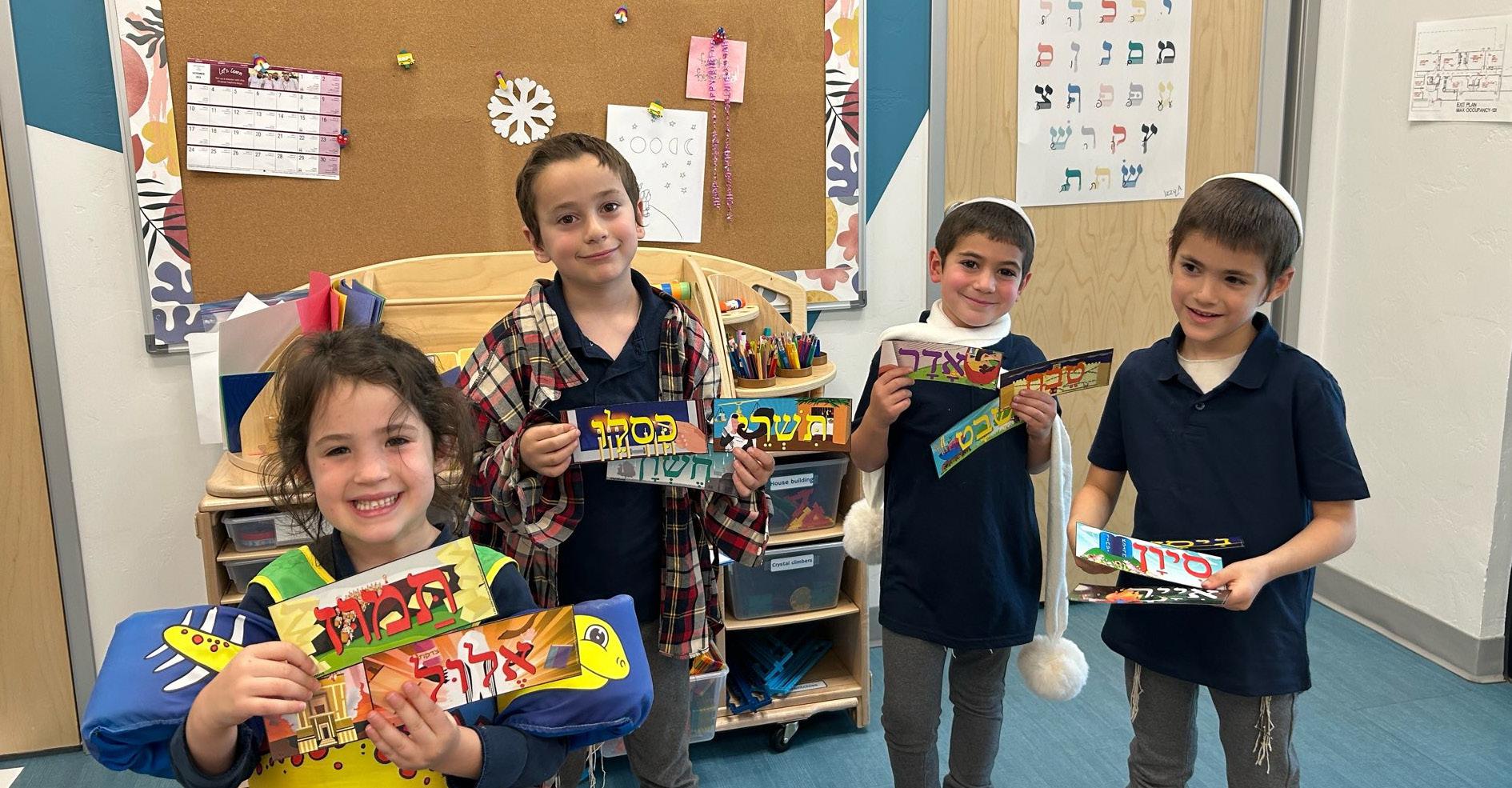
The past school year, 2025-2026, concluded on a high note with the school’s annual Chumash Party, celebrating first-grade students as they completed their Hebrew reading curriculum and received their first Chumash.
The celebration came on the heels of another remarkable accomplishment: every Lamplighter student who took the nationally recognized NWEA MAP assessment has scored between the 80th and 90th percentiles in mathematics, reading, and language usage, well above state and national averages.
As the new academic year approaches, the school has even more to celebrate.
Lamplighter’s Early Childhood Education program was recently awarded a 4-Star Quality First rating, an extraordinary
achievement. Quality First is Arizona’s independent quality improvement and rating system for preschools, recognizing schools that exceed statewide standards in teaching quality, classroom environment, child development, and family engagement.
The recognition also comes with funding for two full scholarships for children from low-income families, expanding access to high-quality Jewish early childhood education.
The school has also completed Phase II of its campus expansion project. The newly finished addition includes a multipurpose hall that will serve as a lunchroom and venue for school programs and community events, two additional classrooms, two new student bathrooms, and a dedicated library. These facilities complement the school’s indoor gymnasium, which was completed last year.
“We are incredibly excited to begin the new school year in these beautiful new spaces,” said Rebbetzin Feigie Ceitlin,
Head of School. “Every addition to our campus allows us to serve our students better and create an environment where they can thrive academically, socially, and spiritually. It’s inspiring to see our vision becoming a reality.”
With the second phase now complete, the school’s next major goal is to construct a modern outdoor playground that provides students with expanded opportunities for recreation, physical development, and outdoor learning.
Lamplighter Chabad Day School is currently seeking community partners and sponsors to help bring the playground project to completion.
Serving children from preschool through elementary school, Lamplighter Chabad Day School combines academic excellence with Jewish values in a warm, nurturing environment that welcomes families from across Southern Arizona.
For more information about enrollment or sponsorship opportunities, contact Lamplighter Chabad Day School at 520-8817956 or visit www.lamplightertucson.com.
The Tucson J will welcome contemporary Jewish artist Alex Woz to Tucson this August for a four-day residency featuring an exhibition, a public conversation, and a hands-on collage workshop.
An Argentine-born Jewish artist based in Los Angeles, Woz has gained attention for combining collage, photography, painting, archival imagery, and graphic design into works inspired by Jewish communities, vintage Israeli design, and the visual style of the 1970s.
“What excites me most about Alex’s work is that it asks big questions,” said
Chloe Loos, Director of Arts + Culture at the Tucson J. “His art explores identity, memory, belonging, resilience, and Jewish pride through images that invite curiosity and conversation.”
The residency begins August 10 with Planting Seeds, a pop-up exhibition in the Tucson J Fine Art Gallery featuring Woz’s prints. The exhibition will remain open through August 13 during the J’s regular operating hours.
On Wednesday, August 12, Woz will join Tucson artist Amy Pozez for a free community conversation exploring
contemporary Jewish identity, artistic practice, and the role of art in shaping memory and culture. A reception in the gallery will follow.
“We’ll explore what it means to create art today, if that art is Jewish or just by Jewish artists, and why visual storytelling is such a powerful tool for building pride and connection,” Loos said.
The residency concludes on Thursday, August 13, with a hands-on collage workshop in which participants will create original mixed-media artwork inspired by their personal and family stories.
“It’s about seeing ourselves reflected in Jewish culture in new ways, and about creating space for conversations that connect past, present, and future,” Loos said.
Registration information for the workshop is available through the Tucson J Arts + Culture department. The exhibition and August 12 community conversation are open to the public.
For more: www.bit.ly/tucsonjalexwoz
Adam
to let illness or antisemitism
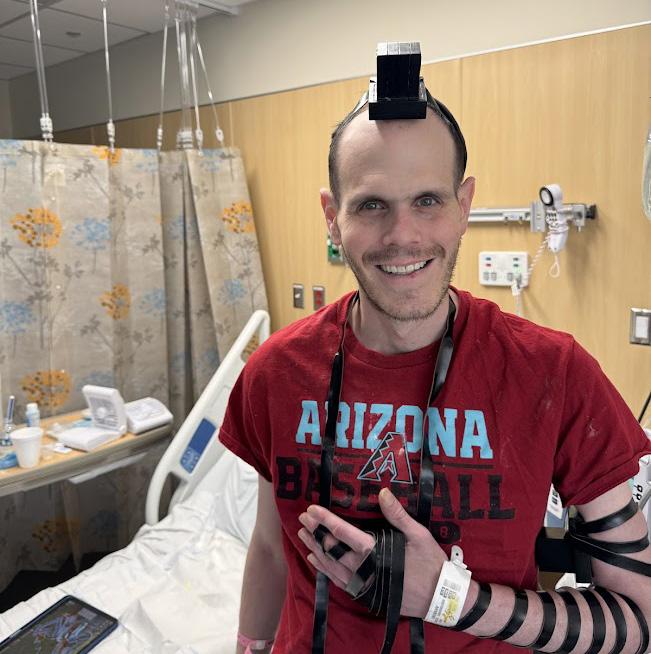
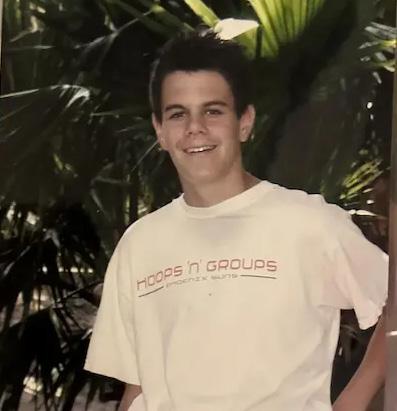
Adam Fox grew up as a Reform Jew in a middle-class family in Tucson, Arizona. Though his family was not observant, as early as third grade Adam found himself drawn to Judaism and Jewish values. A family trip to Israel inspired him.
As his Bar Mitzvah approached, his parents suggested, “Maybe we will just hire a Rabbi and do something in the house.”
Adam refused. He wanted to belong to a synagogue so that he could have a traditional Bar Mitzvah. So his parents found a local synagogue and they started to attend.
For a time in high school, Adam’s focus was on friends and sports – in fact he played basketball and became a star on his team. But in his junior year, Adam was invited to join an event of BBYO (B’nai B’rith Youth Organization), later becoming chapter’s vice president. As a result, he decided that wherever he ended up attending college, he would seek out Jewish life on campus.
He chose Northern Arizona University (NAU) in Flagstaff, and when he arrived, he noticed an advertisement in a welcome packet for a joint Chabad and Hillel barbecue. He attended that barbecue and kept on attending Friday night Shabbat dinners at Chabad for the rest of his time there.
Of all his college experiences, those dinners at Chabad left the deepest impression. “Being together with fellow Jews — that’s what I cherish most from college.”
by Sarah Pachter
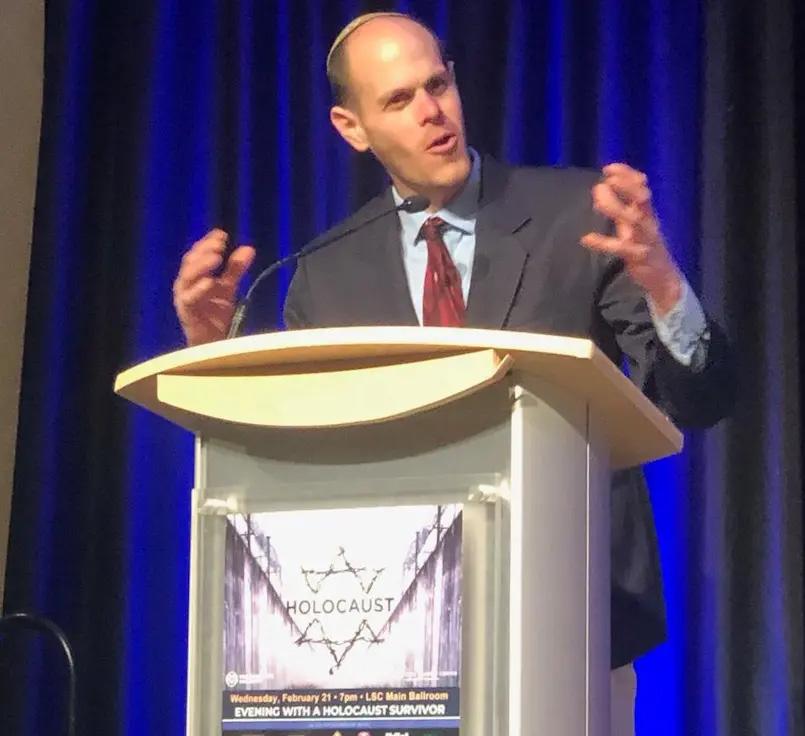
in 2013 with two degrees: Political Science and Criminal Justice.
After graduating, he decided to dive into the Jewish nonprofit field, working for various organizations in Arizona, Ohio, Iowa, and Colorado. He eventually became the Jewish Life Director for Colorado State Hillel.
While at CSU, he empowered students to connect to their Judaism and live as proud Jews. He was enjoying his tenure; however, after dealing with post-October 7th
antisemitism on his campus, Adam decided to switch gears and move into more direct advocacy for Israel and to protect Jewish communities from antisemitism.
“October 7 affected me greatly, and dealing with campus antisemitism was an uphill battle. Any time I raised the issue to the administration, it fell on deaf ears. Based on my experience on campus, I knew I needed to be more of an advocate in the outside world.”
But in February of 2025, his life changed in
a dramatic and overwhelming way.
“It started out like a normal day for me,” he raclled. “I had a protein shake and then went for my daily run. After I cooled down and had a post-run meal, I experienced unrelenting stomach pain.”
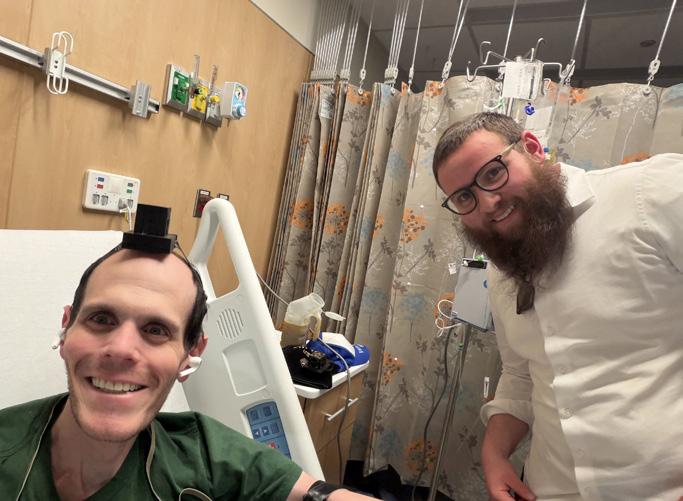
Adam went to lie down, trying many different positions to relieve the pain. After two hours, he knew something was wrong. His father took him to the ER, where he was diagnosed with Volvulus, a condition where the intestines become twisted.
The doctors told him that he needed emergency surgery. Adam couldn’t synthesize what had happened to him. “Just that day I was running. When I was told I needed surgery, I didn’t fully understand the severity. After waking up the next day from surgery, I was told I had almost died.”
Three weeks after getting discharged, the condition reappeared. Adam experienced another excruciating episode, forcing him back to the ER, where he spent another week in the hospital. It kept recurring, four times in total, along with several other obstructions that required hospitalizations but fell short of meeting emergency surgeries—a situation medically unheard of.
At his last hospital admission, Adam was taken back to the operating room where the colorectal surgeon noted that Adam’s small intestine had completely twisted itself once again, and the bowel had to be carefully untwisted, a delicate process that took several hours.
Recovery at that point was slow and difficult. While in the hospital, he had been relying on a nasogastric (NG) tube that ran from his nose into his stomach. Because his digestive system was unable to function normally, the tube continuously removed bile and other stomach contents.
As his condition gradually improved, doctors slowly reintroduced liquids and then food, carefully monitoring whether his digestive system could tolerate them. Currently, Adam is also at risk for aspirating pneumonia, which is lifethreatening.
Despite the repeated setbacks and surgeries, Adam does not view the ordeal as the result of medical failures. Rather, he sees it as part of an extraordinarily complex medical journey—one that tested his endurance and patience in ways he never could have imagined.
When asked how he remains so adament and happy, he answered, “I’m relying on a lot of people, like my father and mother, who have stuck by my side, and all my friends come out to support me and visit me.”
Over the course of the past year, as his illness has consumed much of his life, Adam has developed a following on X (formerly Twitter) – both for his enthusiastic advocacy of celebrating his Jewish identity, and due to his complete honesty about his illness.
His followers have been a major support. He never imagined being a leader in that space. “When I started publicly revealing my medical journey, so many people were inspired. So many people have rediscovered or further expanded their passion for Judaism through me.”
Adam recently lost a friend, Guy David, an online Jewish activist. “He was with me for his latest hospital stay, and he passed away. I wondered, Why him and not me?
He was healthy. Why did he have to pass?”
In memory of Guy, Adam started a project called A Mitzvah a Day. He spent a few days promoting it online. “I recorded myself saying Shema, and encouraged other people to do mitzvahs.”
Many people have responded to Adam’s posts, writing things like, “You inspire me. I want to do more. I want to go out and show the world I’m Jewish.”
Adam understands he is now fulfilling the advocacy he wanted to do following October 7. “I am an advocate in the social media space, encouraging people to be public about their Judaism and defend living their lives as Jews. I get to do that from the comfort of my phone.”
“There are so many ways to connect to G-d and Judaism,” he says. “You can find it by
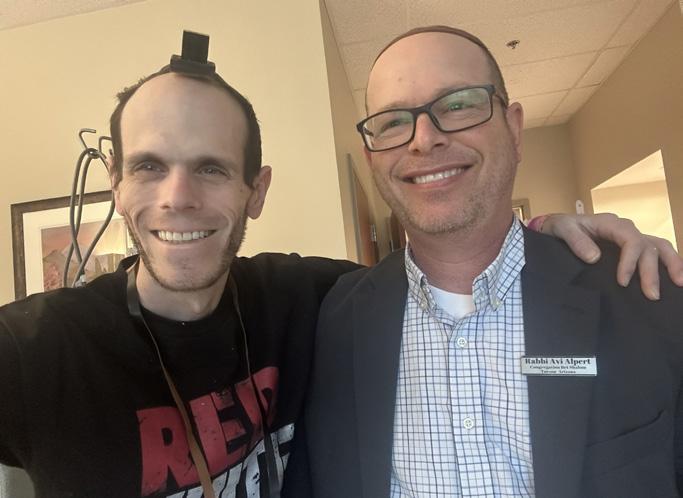
studying Torah. You can find it through the social aspect of the synagogue. Young adults can find it through Hillel or Chabad, or even Saturday morning synagogue services. Maybe what draws you is the culture or history. There is not one way; there are infinite ways to be involved in Jewish life. Don’t let someone else tell you what your way is. Find your way. Find that light that can grow inside of you. Find your passion within Judaism. Whatever way that is, do it.”
Adam is realistic about the drastic medical circumstances he now faces. “I don’t know where my story ends. If there is a chance to save my stomach, I’ll fight hard to keep it.”
Originally published on Aish.com. Do a mitzvah in merit of Shais ben Chaya. To support his medical bills, visit www.tinyurl. com/SupportAdamFox
By Nissan Dovid Dubov
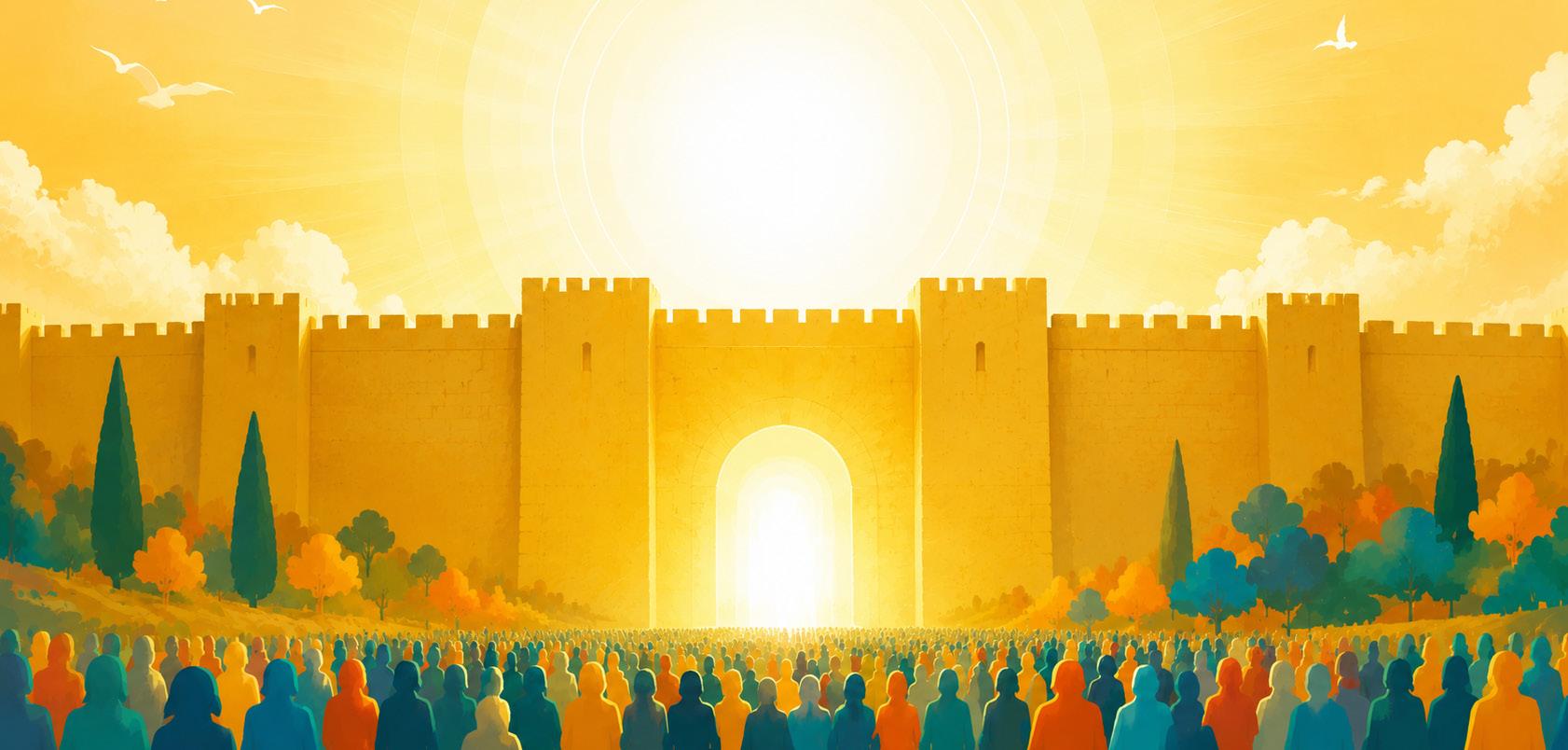
Moshiach is the Hebrew word for “messiah.” The word messiah in English means a savior or a “hoped-for deliverer.” The word moshiach in Hebrew actually means “anointed.” In Biblical Hebrew, the title moshiach was bestowed on somebody who had attained a position of nobility and greatness. For example, the high priest is referred to as the kohen hamoshiach.
In Talmudic literature, the title Moshiach, or Melech HaMoshiach (the King Messiah), is reserved for the Jewish leader who will redeem Israel in the End of Days.
What is the belief in Moshiach?
One of the principles of Jewish faith enumerated by Maimonides is that one day there will arise a dynamic Jewish leader, a direct descendant of the Davidic dynasty, who will rebuild the Temple in Jerusalem,
and gather Jews from all over the world and bring them back to the Land of Israel.
All the nations of the world will recognize Moshiach as a world leader and accept his dominion. In the messianic era there will be world peace, no more wars nor famine, and, in general, a high standard of living.
All mankind will worship one G-d, and live a more spiritual and moral way of life. The Jewish nation will be preoccupied with learning Torah and fathoming its secrets.
What is the “End of Days”?
The term “End of Days” is taken from Numbers 24:14. This has always been taken as a reference to the messianic era.
Is the notion of Utopia merely a dream?
No! Judaism fervently believes that, with the correct leadership, humankind can and will change. The leadership quality of Moshiach means that through his dynamic personality and example, coupled with manifest humility, he will inspire all people to strive for good. He will transform a seemingly utopian dream into a reality. He will be recognized as a man of G-d, with greater leadership qualities than even Moses.
Some people believe that the world will “evolve” into a messianic era on its own, without a human figurehead. Judaism rejects this belief.
Others believe in Armageddon—that the world will self-destruct, either by nuclear war or by terrorism. Again, Judaism rejects this view.
Our prophets speak of the advent of a human leader, of a magnitude that the world has not yet experienced. His unique example and leadership will inspire mankind to change direction.
Where is Moshiach mentioned in the Scriptures?
The Scriptures are replete with messianic quotes. In Deuteronomy (30:1) Moses prophesies that, after the Jews have been scattered to the four corners of the earth, there will come a time when they will repent and return to Israel, where they will fulfill all the commandments of the Torah. The gentile prophet Balaam prophesies that this return will be led by Moshiach (see Numbers 24:17–20). Jacob refers to Moshiach by the name Shiloh (Genesis 49:10).
What sort of leader will Moshiach be?
Moshiach will be a man who
possesses extraordinary qualities. He will be proficient in both the written and oral Torah traditions. He will incessantly campaign for Torah observance among Jews, and observance of the seven universal Noahide laws by non-Jews. He will be scrupulously observant and encourage the highest standards from others. He will defend religious principles and repair breaches in their observance. Above all, Moshiach will be heralded as a true Jewish king, a person who leads the way in the service of G-d, totally humble yet enormously inspiring.
When will Moshiach come?
Jews anticipate the arrival of Moshiach every day. Our prayers are full of requests to G-d to usher in the messianic era. Even at the gates of the gas chambers, many Jews sang “Ani Maamin”—I believe in the coming of Moshiach!
However, the Talmud states that there is a predestined time when Moshiach will come. If we are meritorious, he may come even before that predestined time. This “end of time” remains a mystery, yet the Talmud states that it will be before the Hebrew year 6000. (The Hebrew year at the date of this publication is 5772.)
Will miracles happen when Moshiach comes?
The Talmud discusses this question and concludes that, if we are meritorious, the messianic redemption will be accompanied by miracles. However, the realization of the messianic dream, even if it takes place naturally, will be the greatest miracle.
What will become of the world as we know it?
Initially, there will be no change in the world order, other than its
readiness to accept messianic rule. All the nations of the world will strive to create a new world order, in which there will be no more wars or conflicts. Jealousy, hatred, greed and political strife (of the negative kind) will disappear, and all human beings will strive only for goodness, kindness and peace.
In the messianic era there will be great advances in technology, allowing a high standard of living. Food will be plentiful and cheap.
However, the focus of human aspiration will be the pursuit of the “knowledge of G-d.” People will become less materialistic and more spiritual.
When will the resurrection of the dead take place?
One of the principles of Jewish faith is belief in the resurrection of the dead. According to the Zohar— an early Kabbalistic text—the resurrection will take place forty years after the arrival of Moshiach. However, certain righteous individuals will arise with the coming of Moshiach. All the dead will be resurrected in the Land of Israel.
There is a small bone in the body called the luz bone (some identify this bone as the coccyx), from which the body will be rebuilt at the time of resurrection. Our daily prayers are replete with requests for the resurrection, and there are many customs connected with it.
What can be done to bring Moshiach?
In general, mankind must strive to perform more acts of goodness and kindness. The Jew is mandated to learn and be aware of the messianic redemption, and strengthen his or her faith in Moshiach’s ultimate and imminent arrival.
Charity is a catalyst for redemption. And every day in our prayers, we sincerely plead many times for the rebuilding of Jerusalem, the ingathering of the exiles and the return to Torah observance under the leadership of Moshiach. The Rebbe mounted a worldwide Moshiach campaign to heighten the awareness of Moshiach’s imminent arrival. The Rebbe constantly urged every Jew to prepare on a personal, family and community level for the arrival of Moshiach. This can
best be achieved by “living with Moshiach”—that is, by learning about Moshiach and yearning for his coming.
Summary
In conclusion, the Jew always was and remains the eternal optimist. Even in his darkest hour, he hopes and prays for a brighter future—a world of peace and spirituality.

1. What got you into this line of work?
My father was a dentist before me, so I followed in his footsteps. He practiced in Santa Clara, California, which is near Saratoga, where I grew up. I went to the University of Colorado for undergrad, then to dental school at UCSF (University of California, San Francisco).
2. What’s your favorite part of your job?
Being able to help someone who is scared, or unhappy with their smile, or in pain, and be able to turn it around for them.
3. Share a memorable moment.
There are many, but at work, they center on when people are so happy with the results of their dental work that they cry, want a hug, or otherwise show a great deal of positive emotion about what I have been able to help them with.
4. So what’s more important - brushing or flossing?
They are both important – two parts of the same role: getting your teeth cleaned and removing plaque from your teeth. You can’t get there without both.
5. What’s changed in your industry since you started?
So much. The biggest difference is the complete shift away from metal fillings and restorations to all-white restorations. Also, the inclusion of technology in treatment has been enormous, including scanners that have replaced impressions and AI that can demonstrate gum disease to patients.
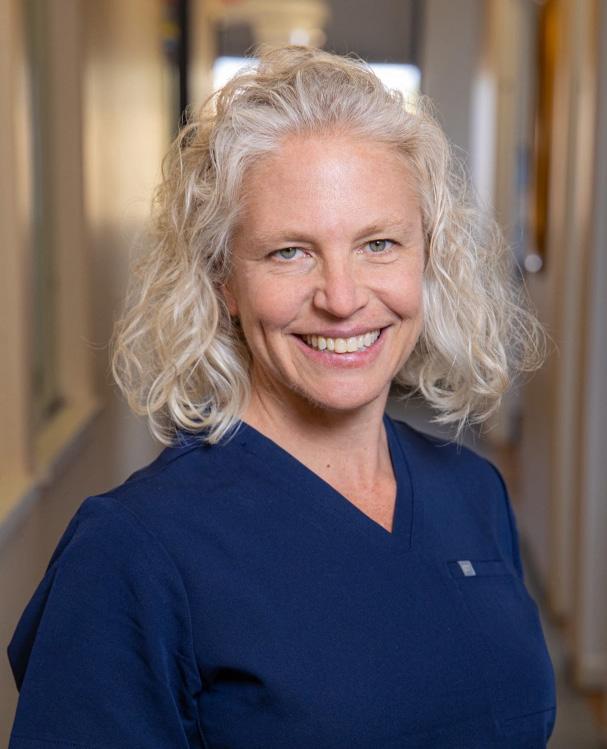
6. You have a Hebrew name. Tell us about your background.
My mother was born and raised on a kibbutz in Israel, while my father grew up in California. They met through an unusual story. While attending dental school at UCSF, my father joined a project led by his mentor, Marvin Stark,

7. How does being Jewish influence your work?
The core Jewish values and treating people right and at the right time come through not just in my work life but in my whole life.
8. What do you do outside of work?
I love crafting, especially knitting, quilting, and, more recently, making jewelry. I also enjoy hiking and spending time with friends and family. I never have trouble filling my free time.
9. What do you like most about Tucson?
I love how Tucson feels like a small town, even though we are a fairly large community. I love the friendliness and kindness I find everywhere, from the post office to the grocery store. People are just friendly here.
10. What’s your go-to comfort food? Soup. All kinds of soup.
11. What is your favorite Jewish expression?
“If I am not for myself, who is for me? And if I am only for myself, what am I? And if not now, when?” (Avot 1:14)
*
Dehnert Dental
to convert an old school bus into a mobile dental clinic for migrant children. Stark later arranged to ship the bus to Israel to provide dental care on kibbutzim. Its first stop was my mother’s kibbutz, where the two met. They eventually married in Israel and spent the rest of their lives together in California.
3945 E Fort Lowell Rd #209, Tucson, AZ 85712
520-783-2850
dehnertdental.com
By Feigie Ceitlin
INGREDIENTS:
Salad:
2 heads romaine lettuce, chopped
3 cups shredded purple cabbage
Cherry tomatoes, halved
½ small purple onion, thinly sliced
2 avocados, cubed
Flatbread or pita chips
Dressing:
½ cup mayonnaise
¾ cup olive oil
½ tablespoon mustard powder
1 tablespoon sugar
1 teaspoon salt
1 garlic clove, crushed
DIRECTIONS:
1. In a large bowl, combine the romaine, purple cabbage, cherry tomatoes, onion, and avocado.
2. In a separate bowl, whisk together the mayonnaise, olive oil, mustard powder, sugar, salt, and crushed garlic until smooth.
3. Pour the dressing over the salad and toss until evenly coated.
4. Just before serving, crack flatbread or pita chips into pieces and toss lightly. Serve immediately.
Enjoy!
THE BLESSING
Bah-rookh ah-tah ah-doh-noi eh-lohhay-noo meh-lekh hah-oh-lahm boh-ray pi-ree hah-ah-dah-mah.
Blessed are You, L-rd our G-d, King of the universe who creates the fruit of the earth.
Blessing on flatbread or pita chips:
Bah-rookh ah-tah ah-doh-noi eh-lohhay-noo meh-lekh hah-oh-lahm boh-ray mee-nay mi-zoh-noht.
Blessed are you L-rd our G-d, King of the Universe, Who creates various kinds of sustenance.
— Rebbetzin Feigie Ceitlin is the program director of Chabad Tucson and head of school of Lamplighter Chabad Day School.


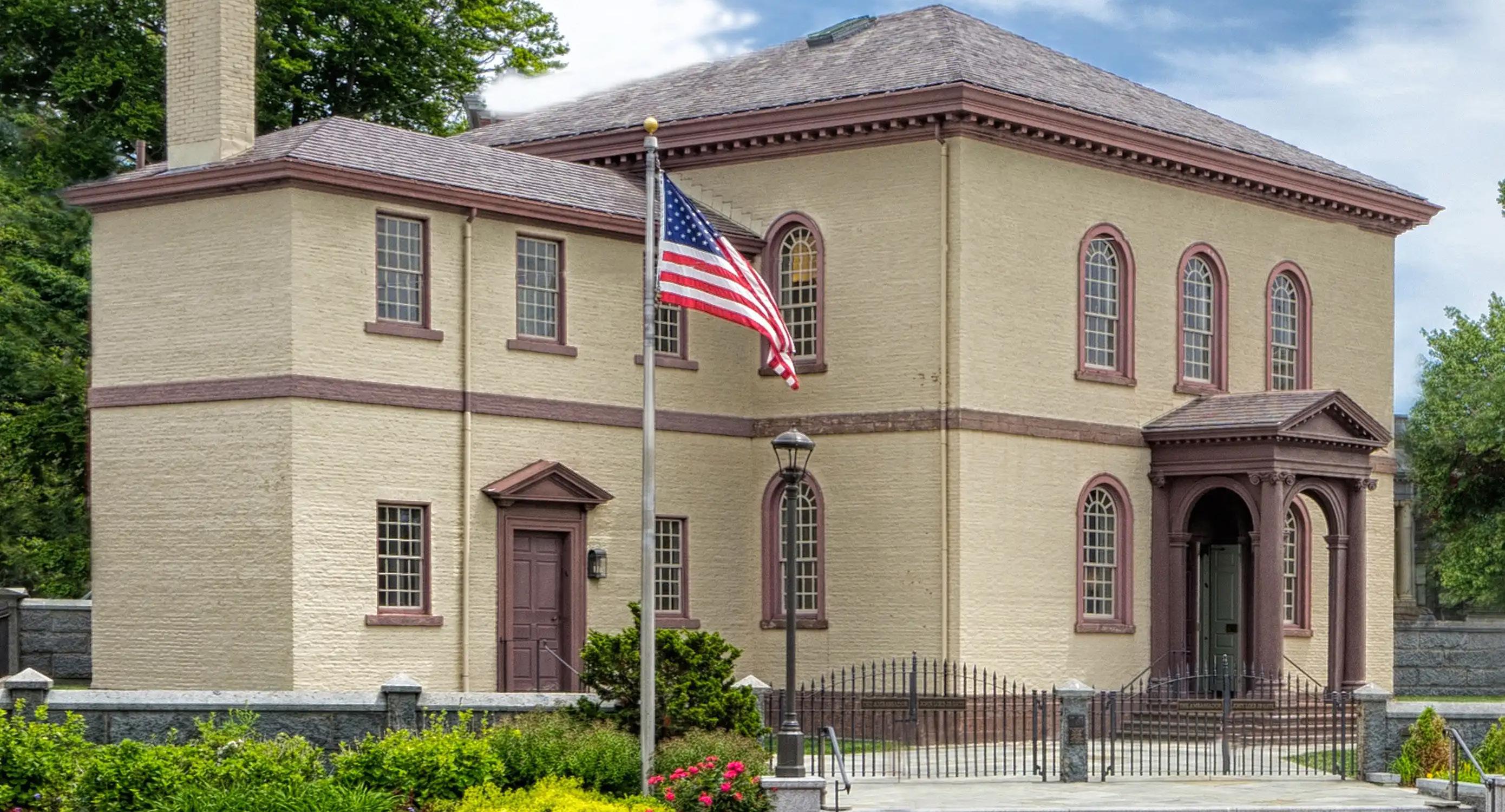
The 17th century was an era of exploration, immigration and innovation. For Jews, persecuted and restricted in many countries, America seemed like a good place to settle. The town of Newport, Rhode Island, founded in 1639, soon attracted settlers of all religious denominations. Though small in number, the Jews who settled in Rhode Island established one of the first Jewish communities in America, and by the end of the century, there were Jewish communities up and down the Atlantic coast.
Rhode Island saw its first Jews as early as 1658, though historians disagree on the exact date. These Jews came from Recife after the Portuguese retook parts of Brazil from the Dutch and enforced the laws of the Inquisition. First finding
By Chaya Mindel Way
their way to the islands of Suriname, Barbados, Curaçao, and Jamaica, these Jews eventually reached Newport.
No more than 15 Jewish people arrived in Newport at first, but they soon established the institutions necessary for Jewish communal life.
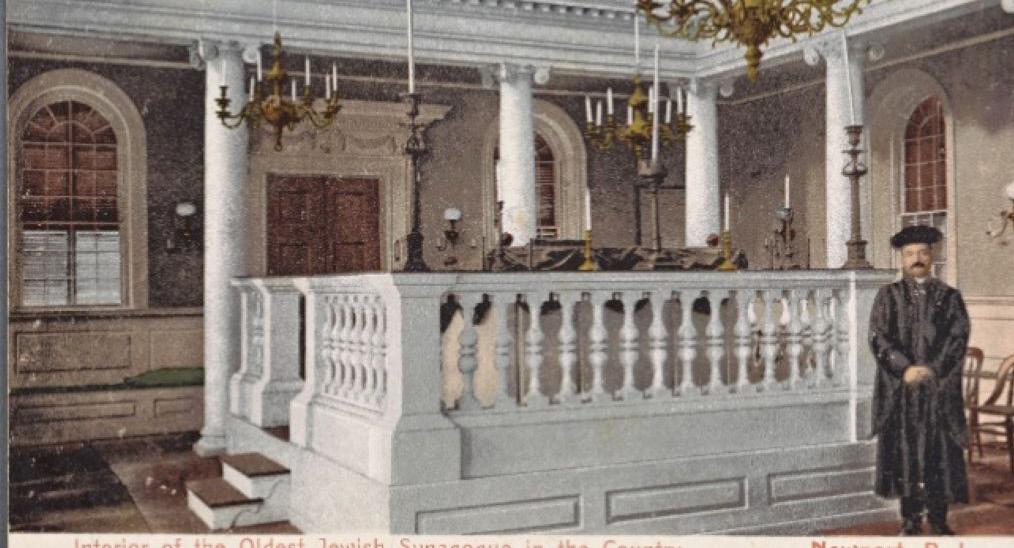
Soon after the arrival of this small group of Jews, a minyan was established, and daily services were held in private homes until the mid-to-late 1700s. The congregation was called Yeshuat Israel— Salvation of Israel.
In 1677, the fledgling community purchased land for a Jewish cemetery, which today sits at the corner of Kay and Touro Streets. This is the oldest known Jewish cemetery in North America.
The Jewish community of Newport grew when a group of new immigrants arrived from one of the West Indian Islands on August 24, 1694. An official synagogue building was begun in 1759 and completed in 1763. The Jews of Newport adhered closely to Jewish law. These immigrants may have used the nearby ocean as a mikvah, as many historians say colonial Jews did, but they might also have built a mikvah near the synagogue.
The Jews of Newport and the Gentiles around them prospered financially and experienced peace in the years before the American Revolution. But because of Newport’s location on the water and the revolutionary activity there, it became a prime target for the British once the
revolution began in earnest in 1776. Most Jewish families left for places such as Massachusetts, Connecticut, and New York. Those who remained were subjected to British rule. While Newport had been one of the five leading ports in North America, along with Boston, New York, Philadelphia, and Charleston, it never regained its commercial prominence after the Revolutionary War, when industry and workers fled.
Isaac Touro, who maintained and watched over Newport’s synagogue, remained behind during the evacuation. The building became a hospital for the British military and a public assembly hall. Because of the long, cold winters, British troops tore down buildings to use the wood for fires, but the synagogue was saved because it was used as a hospital.
The troops left the town in October 1779, and within a year or two, some Jewish families returned.
George Washington, along with Secretary of State Thomas Jefferson, visited Newport on August 17, 1790. Washington spoke to the leading citizens and representatives of the many religious denominations present in the city, including the Jews. Moses Seixas, an official of Yeshuat Israel, addressed the president with words of gratitude and asked him to ensure the Jews’ continued freedom.
Seixas said: Deprived as we heretofore have been of the invaluable rights of free Citizens, we now (with a deep sense of gratitude to the Almighty disposer of all events) behold a Government, erected by the Majesty of the People—a Government, which to bigotry gives no sanction, to persecution no assistance— but generously affording to All liberty of conscience, and immunities of Citizenship: deeming every one, of whatever Nation, tongue, or language, equal parts of the great governmental Machine.”
In response to this greeting, Washington replied to the various communities in Newport. One of his first letters was to the Jewish community. He wrote: “It is now no more that toleration is spoken of as if it were the indulgence of one class of people that another enjoyed the exercise of their inherent natural rights, for, happily, the Government of the United States, which gives to bigotry no sanction, to persecution no assistance, requires only that they who live under its protection should demean themselves as good citizens in giving it on all occasions their effectual support...
“May the children of the stock of Abraham who dwell in this land continue to merit and enjoy the good will of the other inhabitants—while every one shall sit in safety under his own vine and fig tree and there shall be none to make him
afraid. May the Father of all mercies scatter light, and not darkness, upon our paths, and make us all in our several vocations useful here, and in His own due time and way everlastingly happy.”
This was a very important moment in the history of Jewish religious freedom in America. Jews were given the freedom to practice their culture and faith, creating a safe haven for the Jews of the world.
Despite this great event, the number of Jews in Newport decreased, and the synagogue was eventually closed. Jews did visit the town and were sometimes
Scattering its bounty, like a summer rain,
Still keeps their graves and their remembrance green.
But history proved Longfellow wrong. Before the end of the 19th Century, Newport was once again home to a thriving Jewish community. Most of the newcomers were of European descent— from Germany, Poland, and Russia.
Revitalized, the synagogue was renamed Touro Synagogue in honor of the man who had cared to preserve it more than 100 years earlier.
In 1946, Touro Synagogue was designated a National Historic Site. There are currently about 200 Jewish families who live full-time on Aquidneck Island, where Newport is located. Every year, the Touro Foundation sponsors an educational lecture series and holds a public reading of George Washington’s letter. The synagogue is still in use and is visited by thousands of tourists yearly.
buried there, but did not settle the area. The Touro family left money for the upkeep of the synagogue and the cemetery.
While vacationing with his family in Newport in 1852, Henry Wadsworth Longfellow came across the Jewish cemetery in Newport and wrote a poem, “The Jewish Cemetery at Newport.” In it, he describes the absence of Jews in Newport and the upkeep of the graves of those who once lived there:
Gone are the living, but the dead remain,
And not neglected; for a hand unseen,
Even as the local Jewish community remains small, many thousands of Jews visit Newport every summer—including Torah-observant owners of yachts who dock in Newport and walk to the historic synagogue for Shabbat services.
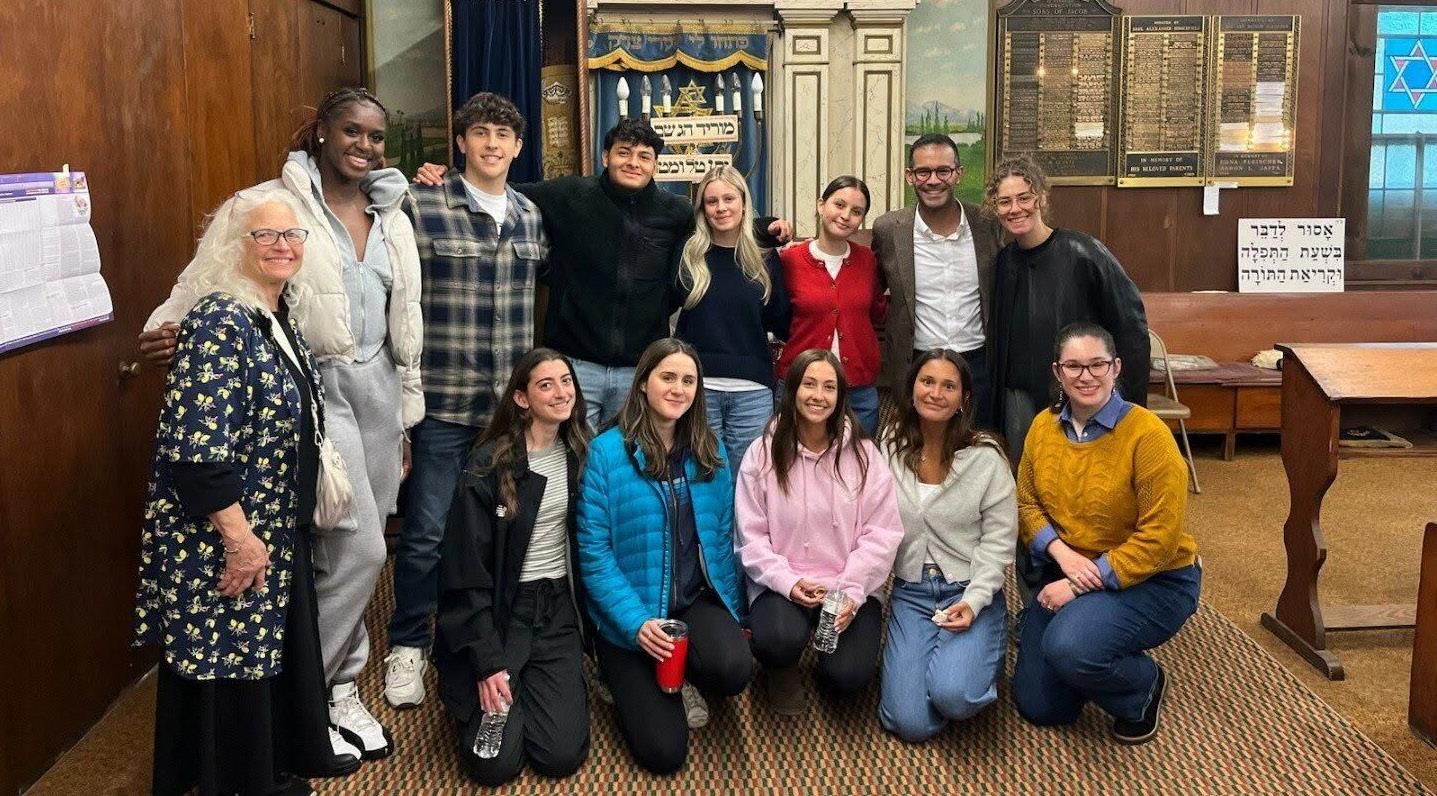
The Chabad House of Newport, which operates during the summer, gives visitors, locals and training sailors from the nearby naval base the opportunity to connect to their Jewish roots and receive Jewish services. In fact, it has allowed some to taste Jewish tradition and experience Judaism for the very first time.
Now well into its fourth century, the Jewish community of Newport remains strong, a shining example of Jewish vitality and commitment.



By Chabad.org Staff
A shadchan is a matchmaker who suggests prospective marriage mates and then coaches them through the dating process. The term is linked to the word shidduch, which means a “match.” The technical meaning of the word (of Aramaic provenance) is actually to “settle down,” since the newly matched couple transitions from an exploratory or uncertain phase to a calm understanding before beginning their new life together.
A shadchan can be either male or female, although a female matchmaker is more properly called a shadchante in Yiddish and a shadchanit in Hebrew (like Aleeza Ben Shalom of the Netflix series Jewish Matchmaking). The plural form is shadchanim.
In Yiddish, to suggest a shidduch is to “red (speak) a shidduch.”
Shadchonus refers to both the act of matchmaking (so you can say that a shadchan is “in the business of shadchonus”) as well as the money traditionally given to the shadchan for his or her services (which would more accurately be referred to as shadchonus gelt, meaning “shadchonus money”).
Paying the shadchan is actually important. Beyond helping the shadchan pay his or her bills, the couple wants to begin this new chapter in life cleanly, honestly, and with no one bearing a burden (or grudge).
In a traditional Jewish setting (especially for a first marriage), the parents of the singles are generally the ones to approach the shadchan, but it is the young man or woman who will meet the prospective match and make the final call on whether to marry. However, when older adults seek a match or when the parents are unavailable, it is the single who deals with the shadchan and decides whether to pursue a given shidduch.
Being a successful professional shadchan is a finely tuned craft that requires insight into human nature, determination, creativity, marketing skills, and sometimes the wisdom of when not to present the whole story (at least not initially).
At times, an eager shadchan may overrepresent a person’s good attributes or suppress some of their less savory side. This has given rise to the joke that the word shadchan ( ) is an acronym for sheker dover, kesef notel, “speaks falsehood, takes money.”

But joking aside, the shadchanim of the generations past and present do a splendid (often underappreciated) job at helping singles find their soulmates.
And in truth, anyone can be a shadchan. See a fine young woman and a promising young man? Just make the suggestion. Even if it does not work the first time, keep on trying.
By Benjamin Weiss
Philip Drachman was a pioneering Jew in local business and politics who became a universally admired figure in late 19thcentury Tucson.
Drachman was born in Piotrkow, Poland, near Lodz, in 1833. For most of the 19th century, Russian control over much of Poland led to forced conscription of young Polish boys into the Russian Army. To spare Philip this hardship, his parents, Rebecca and Harris, hid him for months in an underground cellar they secretly dug by hand. This caused Philip to have respiratory problems for the rest of his life and partly explains his later attraction to Arizona’s dry, hot climate.
Drachman left Poland in 1852 and sailed to America on the same boat as Michel and Joseph Goldwater, who would go on to be important pioneers in territorial Arizona as well.
After arriving in New York, the timeline of Philip’s arrival in the Arizona Territory is unclear. Records show that on October 16, 1860, he was naturalized as a citizen in San Bernardino, California, where his sister Augusta lived. Three years later, he was along the Colorado River working with the Goldwater brothers and other pioneering Jews, including J.S. Hyman, Moses Mannasse, and Isaac Goldberg, who formed the “Colorado River Farming and Stock Raising Association.”
In 1864, Drachman was listed as a notable local merchant in the Arizona Territory, with $1,000 in real estate and $4,000 in personal property. In 1867, Drachman and Goldberg opened their general merchandise store, Goldberg and Drachman.
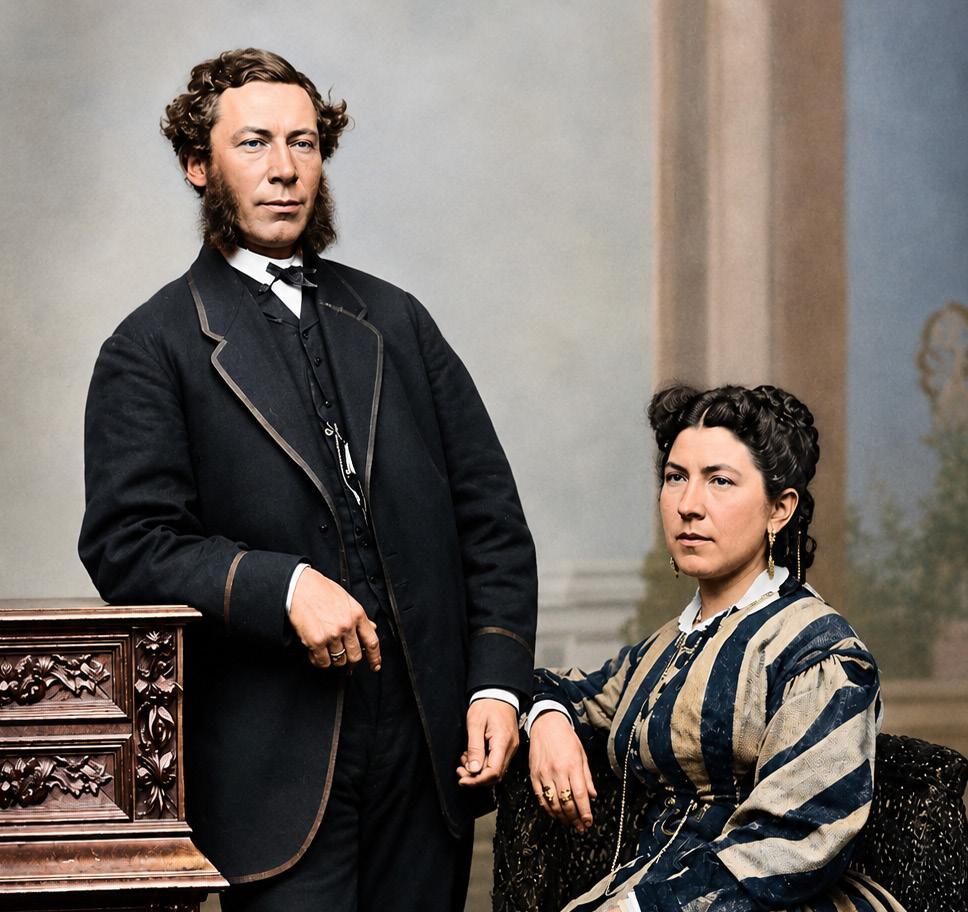
In early 1868, Philip traveled to New York to find a wife. There he met Rosa Katzenstein, and they married on April 1, 1868. The newlyweds left for Tucson a month later. Their return to Arizona was lengthy and arduous. They crossed the Isthmus of Panama and sailed by steamboat to San Francisco. Then they traveled to Los Angeles and on to San Bernardino, where his sister Augusta still lived.
The final and most treacherous leg of their journey began on October 21, 1868, when they left San Bernardino in a “four-horse ambulance which was a relic
of the Civil War,” traveling about twentyfive miles a day. After stopping in Yuma and Gila City, Philip and Rosa were escorted to Tucson by a freight team called the Arizona Schooners. Despite a few frights along the way, including encounters with gruff frontiersmen and passing graves of people killed by Apaches, the couple arrived safely on November 15.
Having returned to his business, Philip enjoyed success during the rest of his time in Tucson. He continued working in merchandising and also got involved in freighting and government contracting.
In 1881, Philip opened a saloon called the Post Office Exchange on the corner of Congress Street and Church Avenue, which became wildly popular. He later owned a cigar store.
Phillip was a success in business and committed to community service. He served in the House of Representatives during the Fourth Territorial Legislature and was a member of the Society of Pioneers. He founded the B’nai B’rith Lodge of Tucson, a Jewish humanitarian organization that advocated for human rights and protected Jewish peoples’ rights and religious freedoms.
The Drachmans were financially prosperous and rich in family life, but their lives were not easy. Philip and Rosa had ten children together. Rosa, like many pioneer wives, raised the family in a house with dirt floors and no indoor plumbing, electricity, or gas.
Philip Drachman passed away on November 9, 1899, after suffering from pneumonia. Rosa was left with the additional burden of raising the children, some of them young, alone.
The funeral of Philip Drachman was the largest that Tucson had ever seen and was a testament to how beloved he had become. During the services, William Zeckendorf and H. Lowenstein conducted the Jewish rites. Drachman Street in Tucson is named after members of the family who contributed to the city’s development.
–Presented in collaboration with the Tucson Jewish Museum to honor the city of Tucson’s 250th anniversary. Visit tjmhc.org/profiles
Every year, on July 4th, our country celebrates one of its biggest holidays –the 4th of July.
The other name for the holiday, of course, is “Independence Day”, in remembrance of July 4, 1776, which was a historic day (they were all historic back then) of the American Revolution. What happened was that the British were taxing us too much, so the founding fathers got together and decided that they should be the ones taxing us instead. Though they didn’t say it that way. They said things like, “No taxation without representation,” but all we heard was, “No taxation.”
The Revolutionary War was a big step in our country’s history, even though America has since come to realize that there are much worse things than being under England’s rule, and England has come to realize that America is not the kind of country that it wants anyway. We are told that if we don’t study history, we are doomed to repeat it – but that is unlikely under the circumstances, so I have no idea why we should study it, except that everyone does, and who wants to feel left out?
England kept taxing the colonists under their rule. For example, there was the Stamp Act, which put a tax on stamps, and the Townshend Act, which put a tax on Townshends, whatever those are. (Actually, Townshend was a chancellor in England who decided that it was more important to put his name on a tax act than to call it something that would actually help people remember what it did.)
To be honest, the colonists felt very nickeled and dimed over all this,
By Mordechai Schmutter

although they were still using British currency back then, so more likely they felt penced and pounded, which sounds worse.
Then, in 1773, England passed the Tea Act, which said that the colonists could buy tea only from Britain, and they
had to pay a pretty big tax on it. The Americans felt this was mean, because they had not yet gotten addicted to coffee. So they held the Boston Tea Party, during which they snuck onto a ship and threw tea into Boston Harbor.
“There,” they said. “Now no one has tea.”
I cannot explain why there was no Boston Stamp Party, in which anyone threw stamps into the harbor, or a Boston Townshend Party, in which anyone threw Chancellor Townshend into the harbor. They just didn’t happen.
The purpose of these parties was to get the British to stay on their side of the ocean, but instead, the British just kept being annoying. They passed the “Intolerable Acts, “ Act number 1 of which was to shut down the Boston Harbor, which was pretty gross (with all the rotting tea and all). They also demanded that the colonists pay for all the tea they’d dumped in, plus tax. They also passed the Quartering Act, which required that colonists host British soldiers for Shabbos if the soldiers were in town, a burden that was not easy because the soldiers ate like Yeshiva students.
And from there, one thing led to another, which led to fighting in the streets.
In the meantime, 56 colonists met to form the First Continental Congress, which was actually to coordinate a protest. Unfortunately, they realized that the king would never see their protest signs anyway, because he lived all the way in England. So they went outside and fought, like everyone else.
About a year later, they got together again and formed the Second Continental Congress. I don’t know why they had to call it that. It was in the same town and involved all the same chevra. What was wrong with the first
one? group What decided should America minyan. because in membership come saying our and was The So their adopt of a Declaration the Congress elected care name The Thomas writer; backup whose Livingston, Robert “Robert don’t of course, got there Franklin. What with Independence, read
one? Maybe they decided to rename their group so no one would know it was them.
What the Second Continental Congress decided was that, “Forget this, we should form our own country.” Basically, America was like the first breakaway minyan. They wanted to break away because Britain was charging too much in membership fees, not letting them come to the meetings, and they kept saying things like, “You can only have our pre-approved food at your kiddush,” and the Americans decided that enough was enough.
The Declaration
So their first act as a country was to adopt a mission statement, in the form of a historical document titled “The Declaration by the Representatives of the United States of America, in General Congress Assembled.” And then they elected a “Committee of Five” to take care of it, because let’s face it, even the name needed work.
The Committee of Five consisted of Thomas Jefferson, who was the head writer; John Adams, who was emergency backup writer; Roger Sherman, whose name sounds Jewish; Robert R. Livingston, of whom the “R” stood for Robert (Yes, that means his name was “Robert Robert Livingston”, and no, I don’t have room to make fun of it); and of course, Benjamin Franklin, who really got around in those days. Wherever there was a hock, there was Benjamin Franklin.
What they eventually came up with was the Declaration of Independence, whose historical words read as follows: “We the people,
changechangechangechangechange, and liberty and justice for all. Yours truly, John Hancock.”
Actually, the declaration was signed by all the delegates, but the first to sign was the president of the congress, John Hancock, who didn’t realize he was supposed to leave room for everyone else. Everyone’s standing there, all lined up, wondering how they’re all going to fit their names on the bottom, and along comes Hancock, and he signs with inappropriately large letters and a big swish underneath, and then he looks up and says, “What? Oh.”
This was before whiteout.
According to most historians, signing by all the delegates wasn’t complete until August 2nd. So what did happen on July 4th?
Is that when the Americans won their independence? No, that happened in 1781. Is it when we started the country? No, that was later. Was it when we started the war? No, that was a year earlier. It had more to do with them saying, “This is why we’re starting the war. Let’s write it down, so we don’t forget.”
July 4th, it turns out, was the day they finished editing it.
That’s what won us the war, right? The editing. So that’s why we celebrate.
What this has to do with fireworks, I don’t know. Either way, the City of Tucson announced that, going forward, it will switch the fireworks on “A” Mountain to a drone show. Do they know something that we don’t?

What do you know about the holiest site in Judaism?
By Menachem Posner
1. Where is the Temple Mount located?
A. Shechem
B. Jerusalem
C. Hebron
D. Tzfas
2. What stood on the Temple Mount?
A. The Tabernacle
B. The First Holy Temple
C. The Second Holy Temple
D. The First and Second Holy Temples
3. What biblical event took place on the Temple Mount?
A. Jacob’s dream of the ladder
B. Moses received the Torah
C. Joshua crossed the Jordan
D. David built his palace
4. Who purchased the Temple Mount?
A. King David
B. King Solomon
C. Ezra the Scribe
D. King Herod
5. Who was the mountain bought from?
A. Rabbi Akiva
B. Aravnah the Jebusite
C. Ishmael, son of Abraham
D. King Hiram of Tyre
6. How does the Torah refer to the Temple Mount?
A. Mount Sinai
B. Mount Moriah
C. Mount Tabor
D. Mount Kodesh
7. Where is the Kotel?
A. The Temple Mount’s northern flank
B. The Temple Mount’s southern flank
C. The Temple Mount’s western flank
D. The Temple Mount’s eastern flank
8. Where was the Sanhedrin (High Court) located on the Temple Mount?
A. In the “Hewn Court”
B. In the outer courtyard
C. Outside the Holy of Holies
D. Near the kiyor (washing station)
9. How big was the (pre-Herod) Temple Mount?
A. 500 cubits × 500 cubits
B. 1,000 cubits × 400 cubits
C. It defies measurement
D. Exact measurement isn’t known
10. True or false: There is a small synagogue on the Temple Mount. True False