We’ve been with you through every stage of life—and we’ll continue to be here for you as part of CommonSpirit.
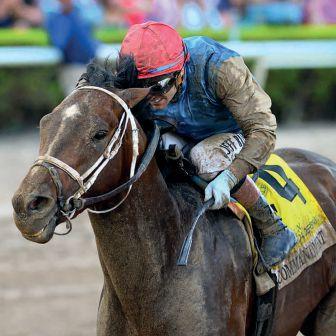
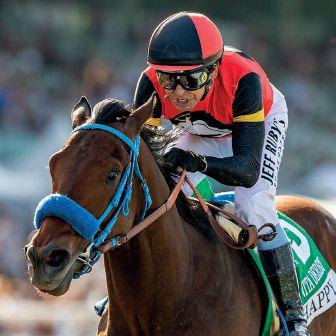
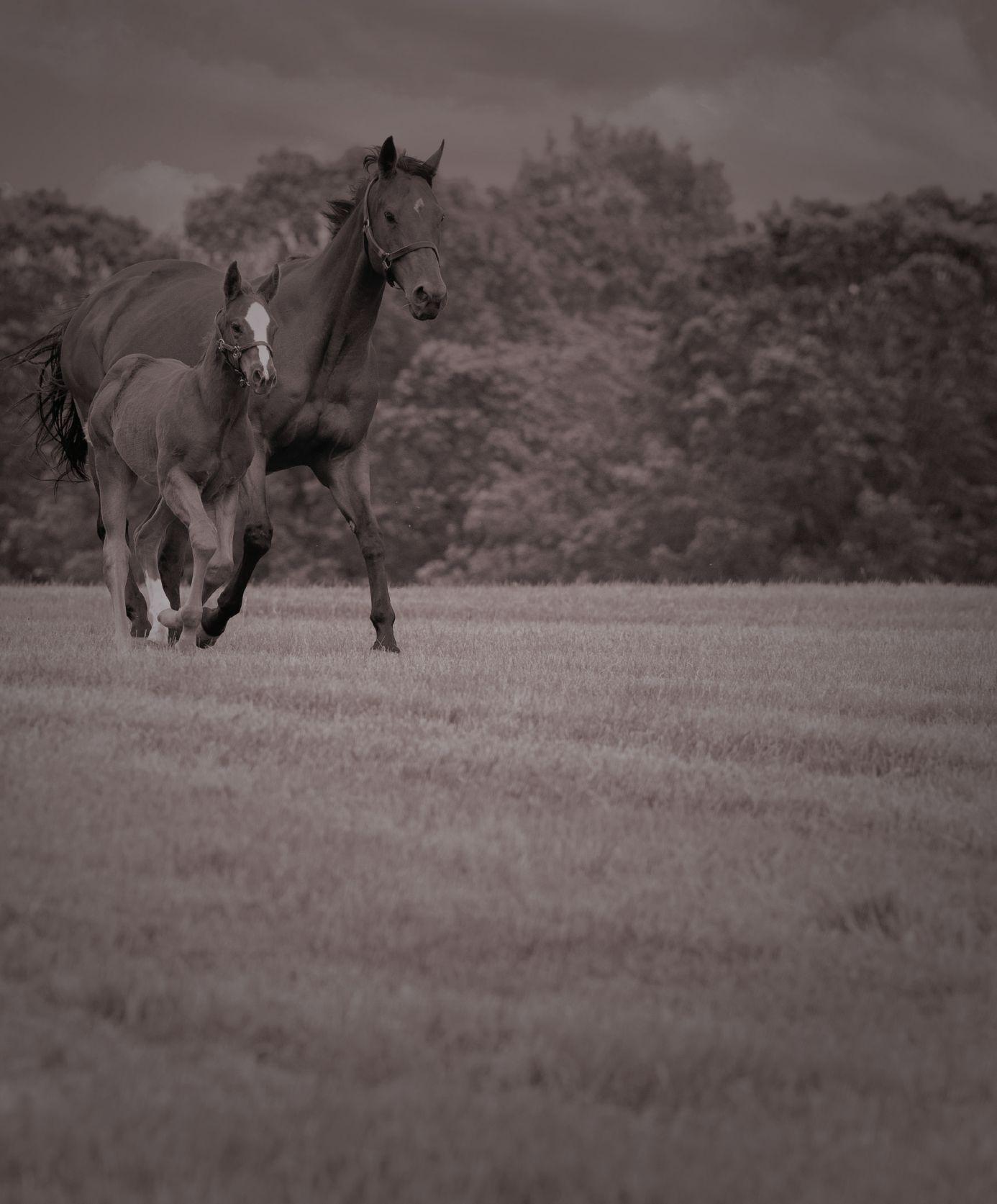
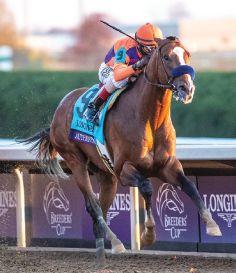
Filly ex Toast of Mayfair, bred by Denali Stud and Lincoln Collins
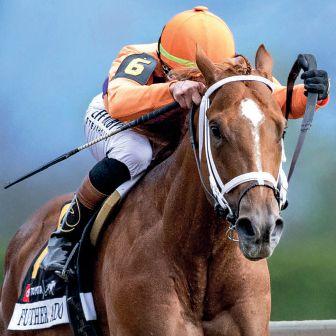
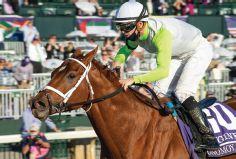
Filly ex Inspeightof, bred by Hunter Valley
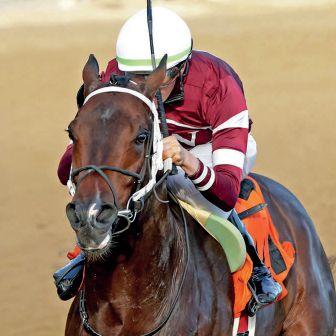
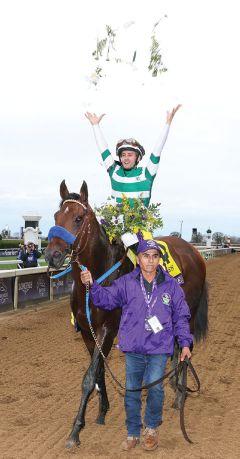
Colt ex Snaffle, bred by Erik R Johnson
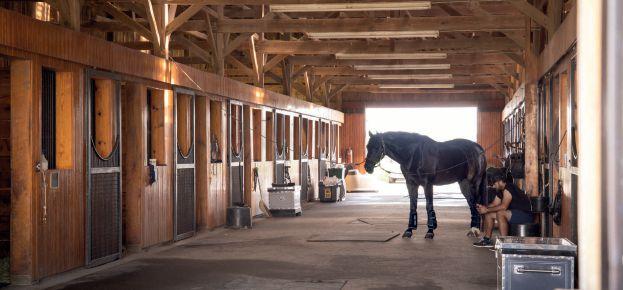
Exceptional Farms in The Bluegrass
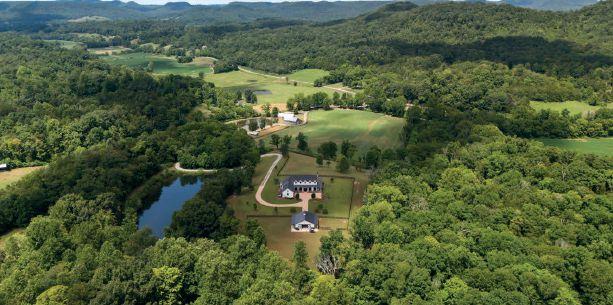
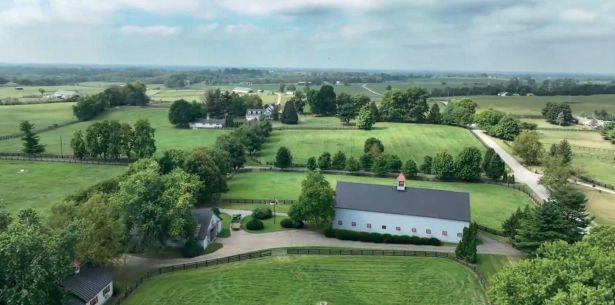
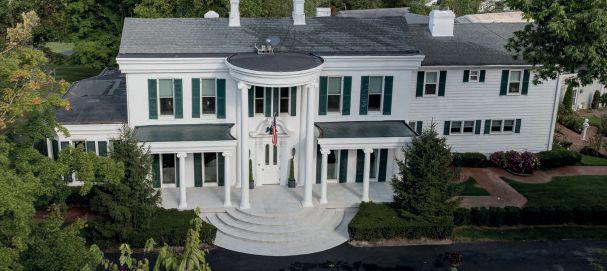
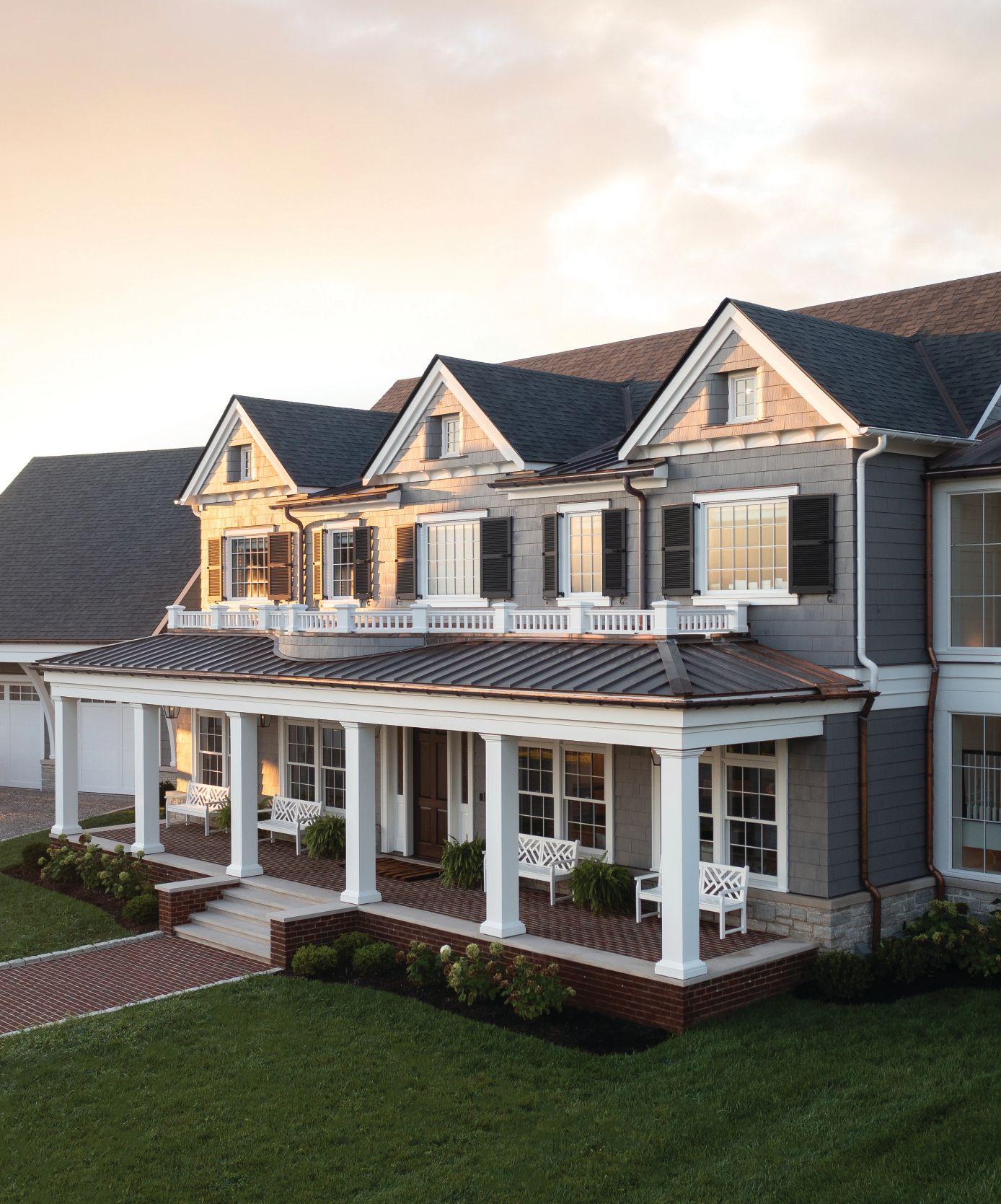
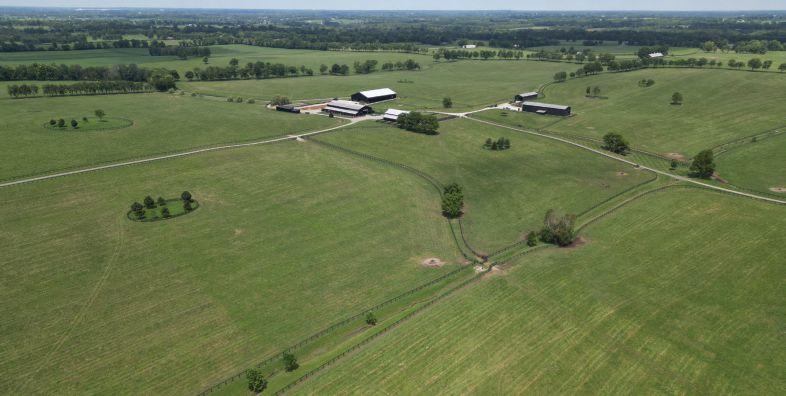
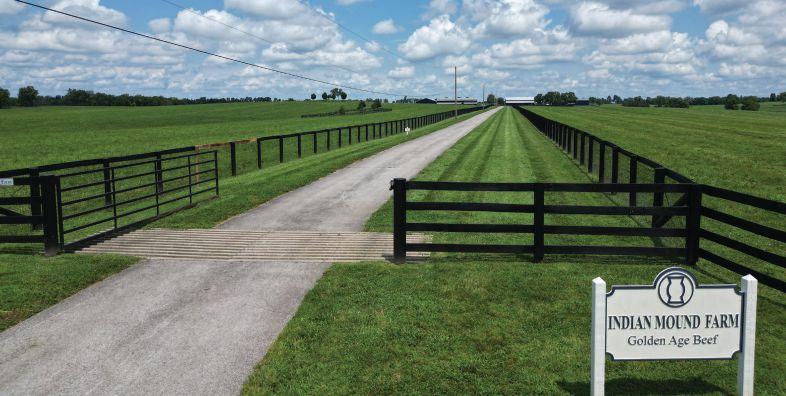
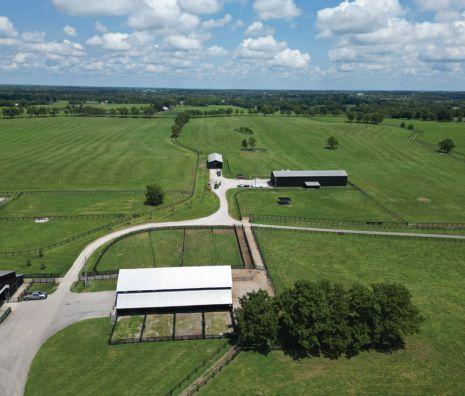
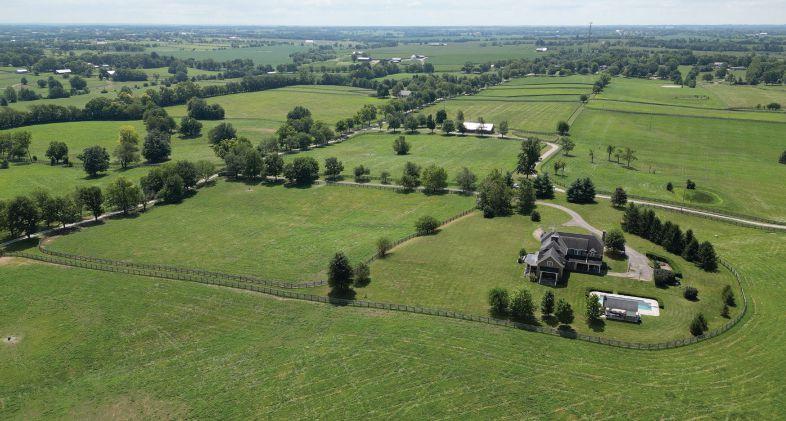
325-acre private Bluegrass estate ideal for equestrian, cattle,
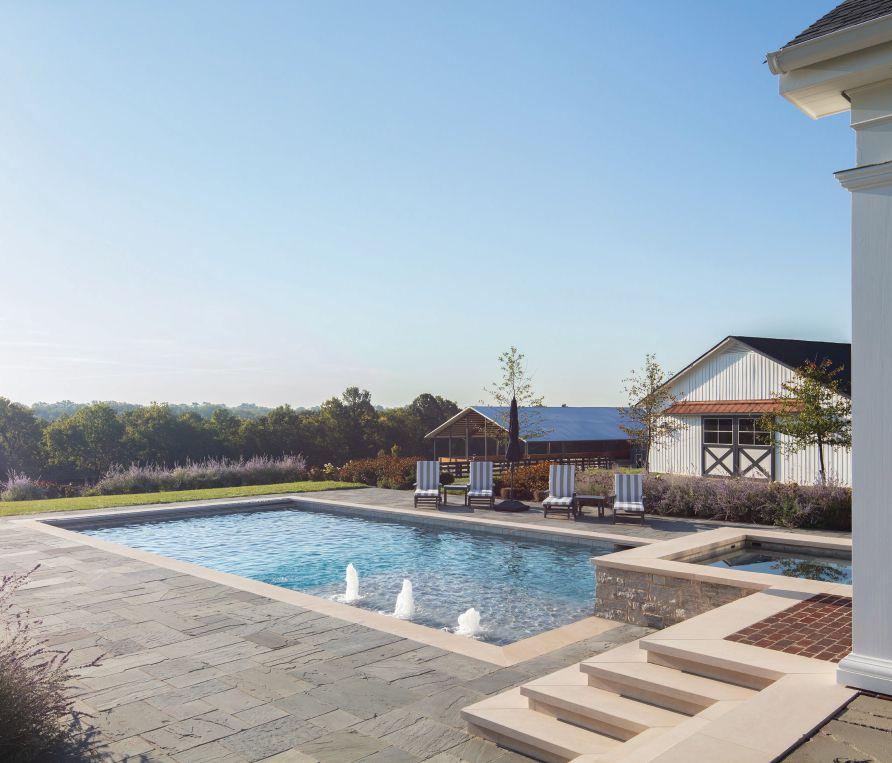
325-acre private estate ideal for and recreation. Designed by a Dallas architect, the home and recreation. a Dallas architect, the home features upscale finishes, Sub-Zero/Wolf appliances, built-in features finishes, Sub-Zero/Wolf built-in sound, wet bar, and a spacious great room. Enjoy panoramic sound, wet bar, and a room views from the 1,356 sq. ft. wrap-around porch. Property views from the 1,356 sq ft porch includes a 4-stall Morton barn with wash bay and heated tack includes a 4-stall Morton barn with wash and heated tack room, a mule barn with studio apartment (sleeps 6), hay barn, room, a mule barn with studio apartment hay barn, cattle facilities, three stocked ponds, quality fencing, and scenic cattle facilities, three stocked and scenic trails for riding, hunting, and ATVs. trails for and ATVs
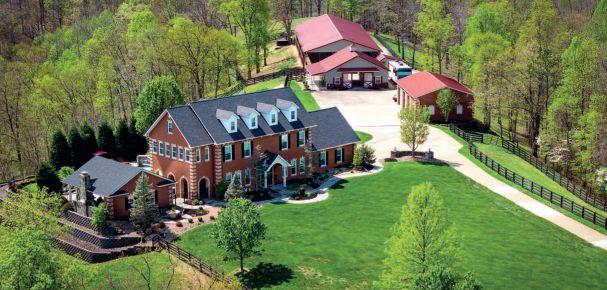
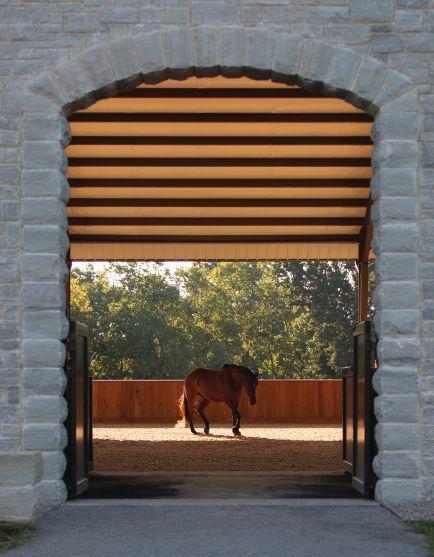
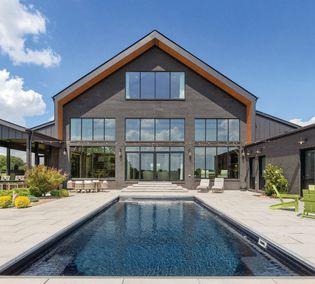
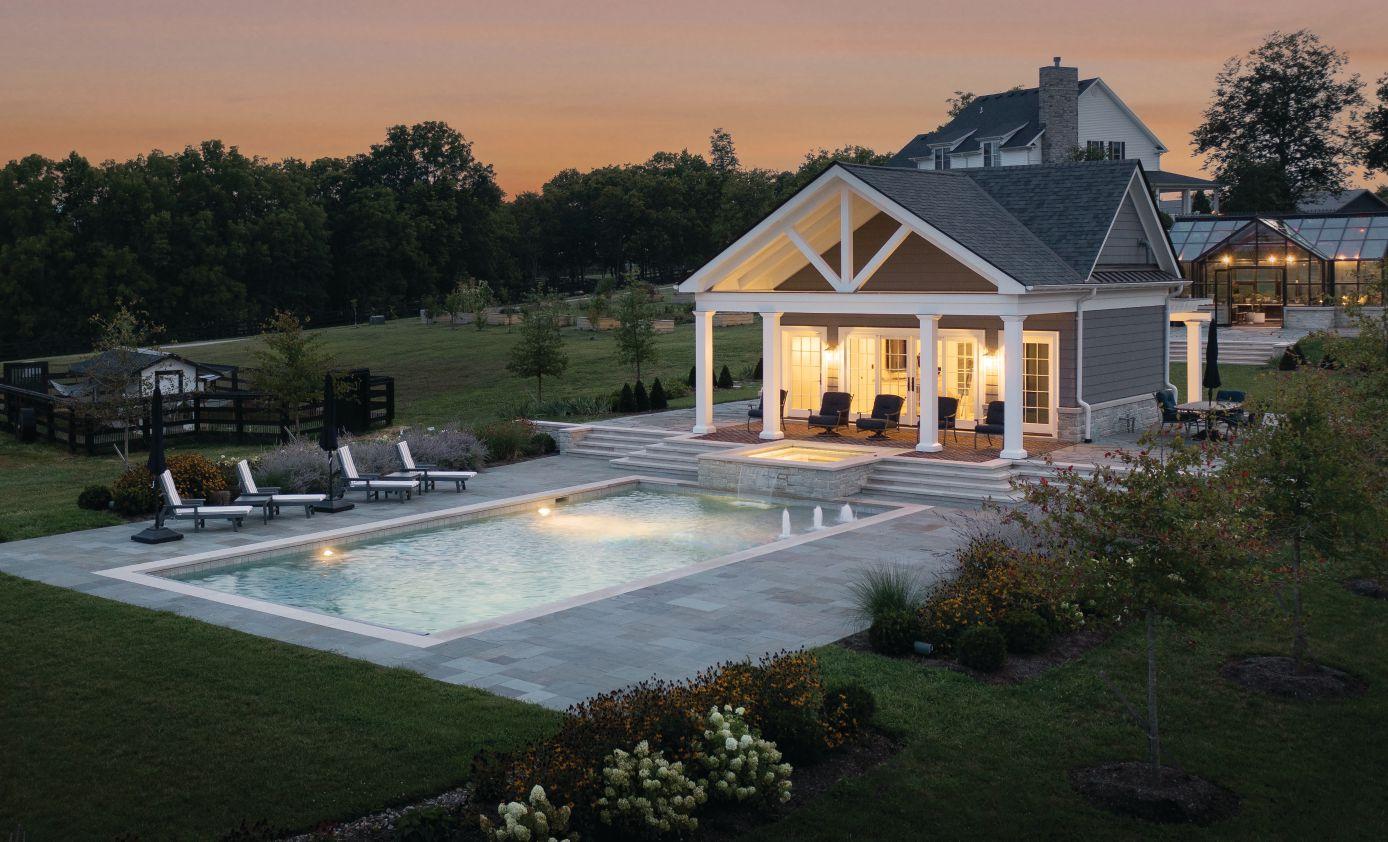
Luxurious gated equestrian estate just 10 minutes from Sandy Ridge Quarter Horse Racetrack and Casino. The 2½-story brick home offers 4 bedrooms, 2 full and 3 half baths with sweeping views over 38 acres. Features include an updated gourmet kitchen, spacious living and dining areas, a private primary suite with study, and a third-floor home theater.Outdoor living shines with a fully equipped kitchen, fireplace, and a custom pool with waterfalls and fire pits. The property also includes a 2-car attached garage, 3-car detached garage with apartment, a 4-stall Morton barn, covered riding arena, and six paddocks.
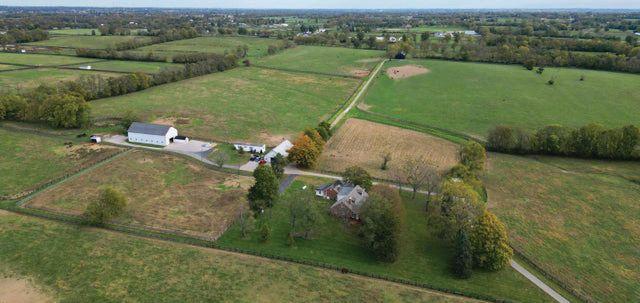
Adjoining the world-renowned Adena Springs and located the world-renowned Adena and located across the road from Brandywine Farm, this turn-key horse across the road from Farm, this horse farm is known for producing stakes horses, including Medaglia farm is known for producing stakes horses, including Medaglia d’Oro. Improvements include a magnificent 4-bedroom, 3 full d’Oro include a 4-bedroom, 3 full bath, and 2 half bath main residence with a 3-car attached and 2 half bath main residence with a 3-car attached garage; a 2,185 sq. ft., 3-bedroom, 2½ bath manager’s home; garage; a 2,185 sq ft , 3-bedroom, 2½ bath manager’s home; and an exceptional guest house. Horse improvements include and an exceptional house. Horse improvements include four horse barns with 48 stalls, three large run-in sheds, a four horse barns with 48 stalls, three run-in sheds, a horse exerciser, and a well-appointed farm office with a full horse exerciser, and a farm office with a full bath. bath
JUSTICE REAL ESTATE
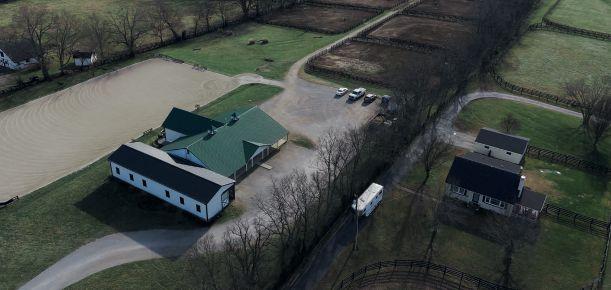
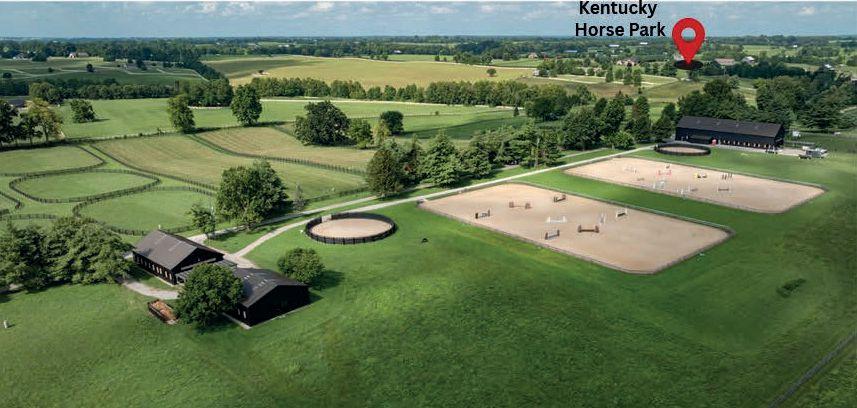
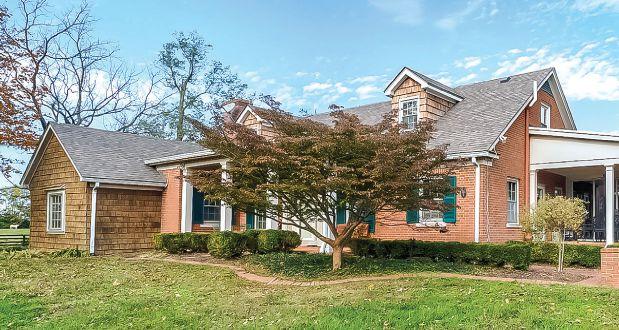
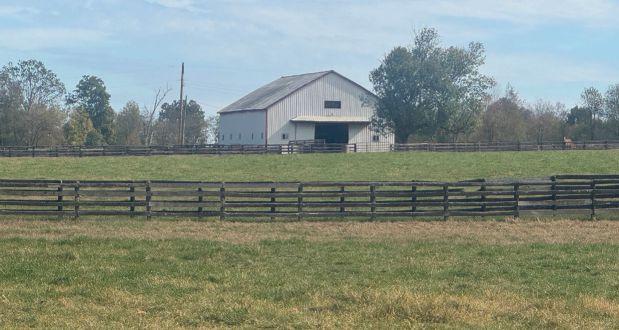
Professionally developed horse farm situated on desirable Mt. Horeb Pike, adjoining historic, world renowned Castleton Lyons, literally minutes from the Kentucky Horse Park, and includes over 1/4 mile of frontage on the magnificent Elkhorn Creek. Significant improvements have been made in the past two years. Designed and constructed two matching 150’ x 250’ ebb and flow arenas with two matching 70’ round pens. Installed all new board and batten metal siding and new metal roofs on barns 1,2,3, & 4; added significant new fencing, added a custom designed security gate on new limestone columns. The Owner’s residence has been completely refurbished on both floors and 2 new exterior decks have been installed. Discover a total of 78 stalls in 6 horse barns, a Kraft walker, additional round pen, equipment building, 29 paddocks, and large fields. Overlooking the magnificent Elkhorn Creek in a very private park-like setting you will find the main residence/office. The gracious first floor contains 4 bedrooms and 3.5 baths. The lower level, with private entrance, consists of 5 rooms and 1.5 baths. The farm also contains a 2 bedroom– 1 bath employee house and a one bedroom, one bath employee cottage. Legado Farm generates a tremendous amount of income, providing one an opportunity to acquire an exceptional farm in the Bluegrass.
MADISON
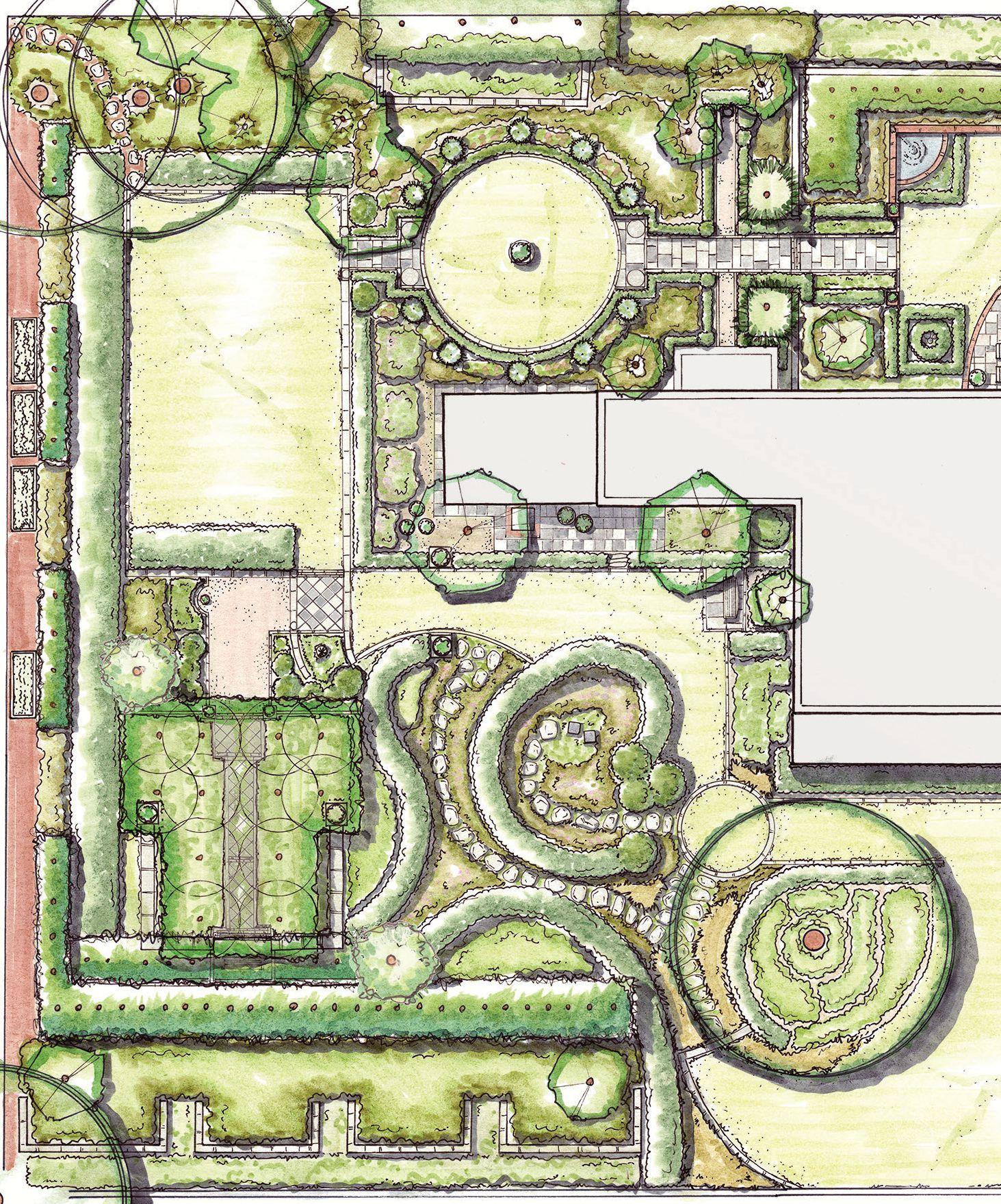
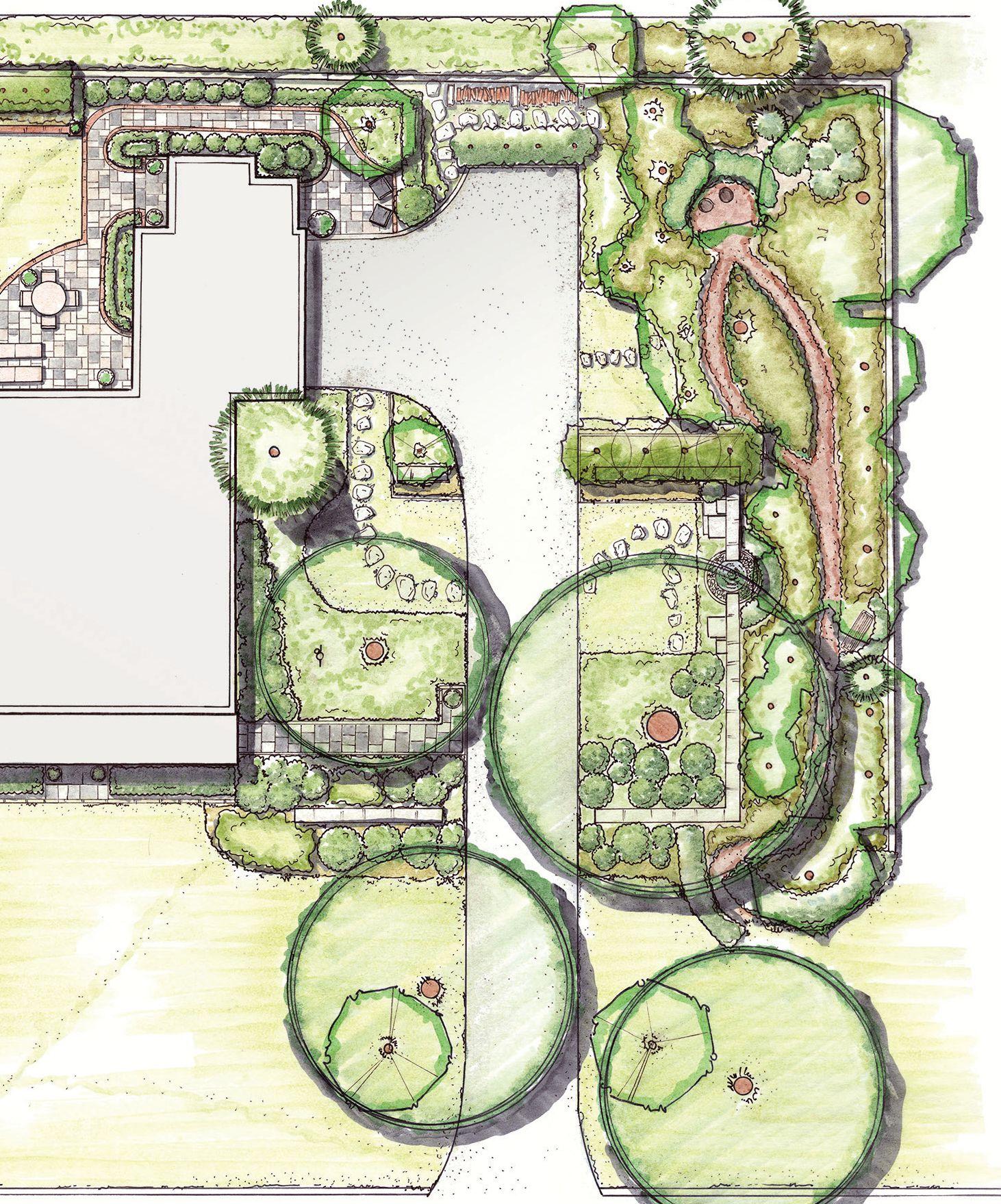
JOSEPH HILLENMEYER GARDEN DESIGN
At Joseph Hillenmeyer Garden Design, we view each project as an explorationÑa process through which we help our clients find the garden they will love. We take an artful approach to problem-solving, creating sophisticated solutions for refined landscapes Our plans are layered, detailed, and reflect an intimate understanding of outdoor spaces We are translators, articulating the rough ideas formed at initial meetings into enduring gardens with resonance and beauty.
At Garden we Jo eph Desi n, we view each as an ch explor tion a process which we help our clients our find the garden they will love. We take an artful approach to solutions for refined landscapes. are andscapes Our reflect an intimate detai ed, and spaces. We are of outdoor spaces translators, the ideas formed at initial into me tings during with resonance and resonance
48
Keeneland and the Cup
by Lenny Shulman
Keeneland has put a special stamp on each of the three Breeders’ CupWorld Championships it has hosted and prepares for a truly special fourth.
64 Shared Roots by Avalyn Hunter
Horse racing and the history of Lexington and Central Kentucky are deeply intertwined, a connection especially significant as Keeneland celebrates its 90th birthday and America its 250th.
78
Putting on a Show
by Rich
Copley
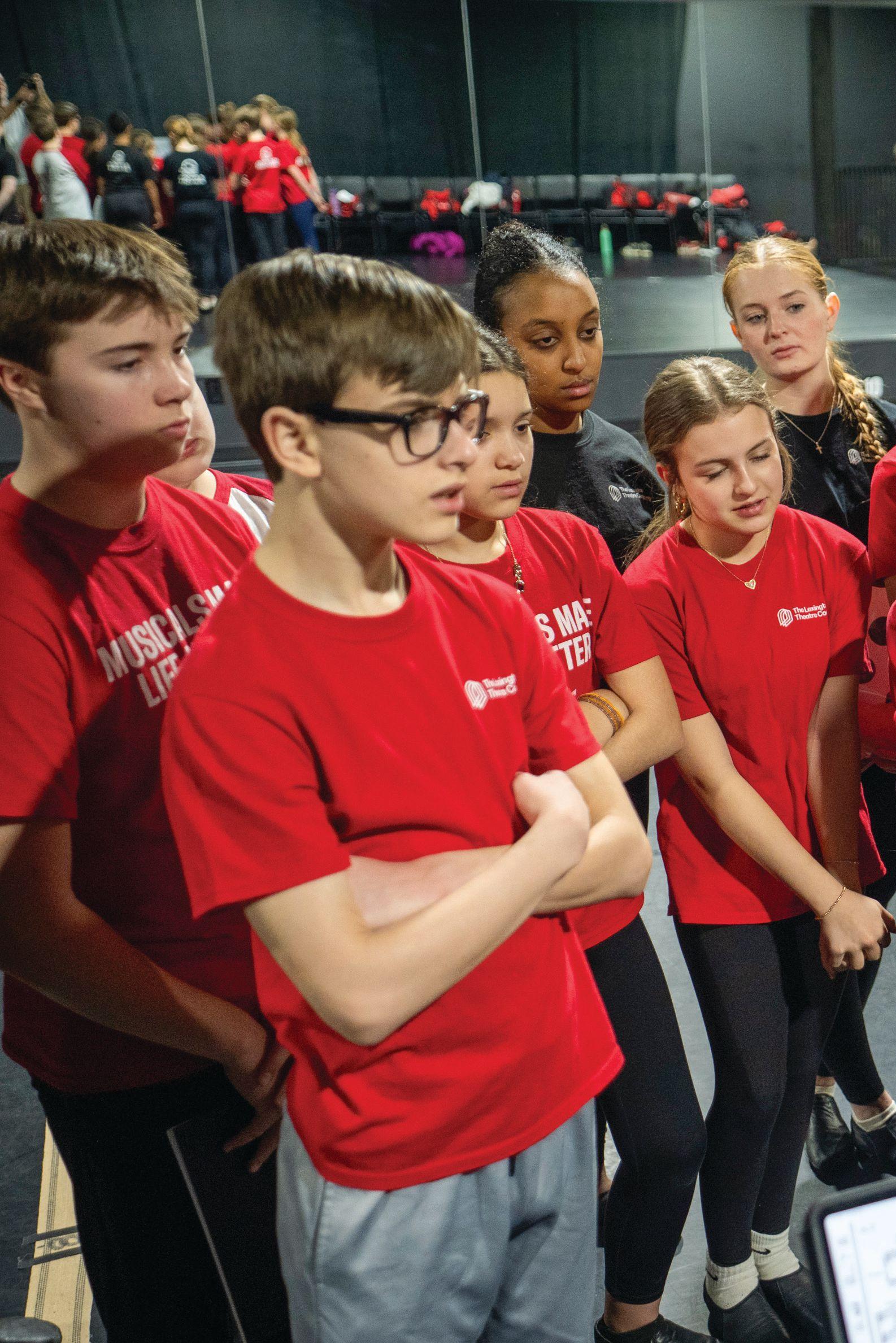
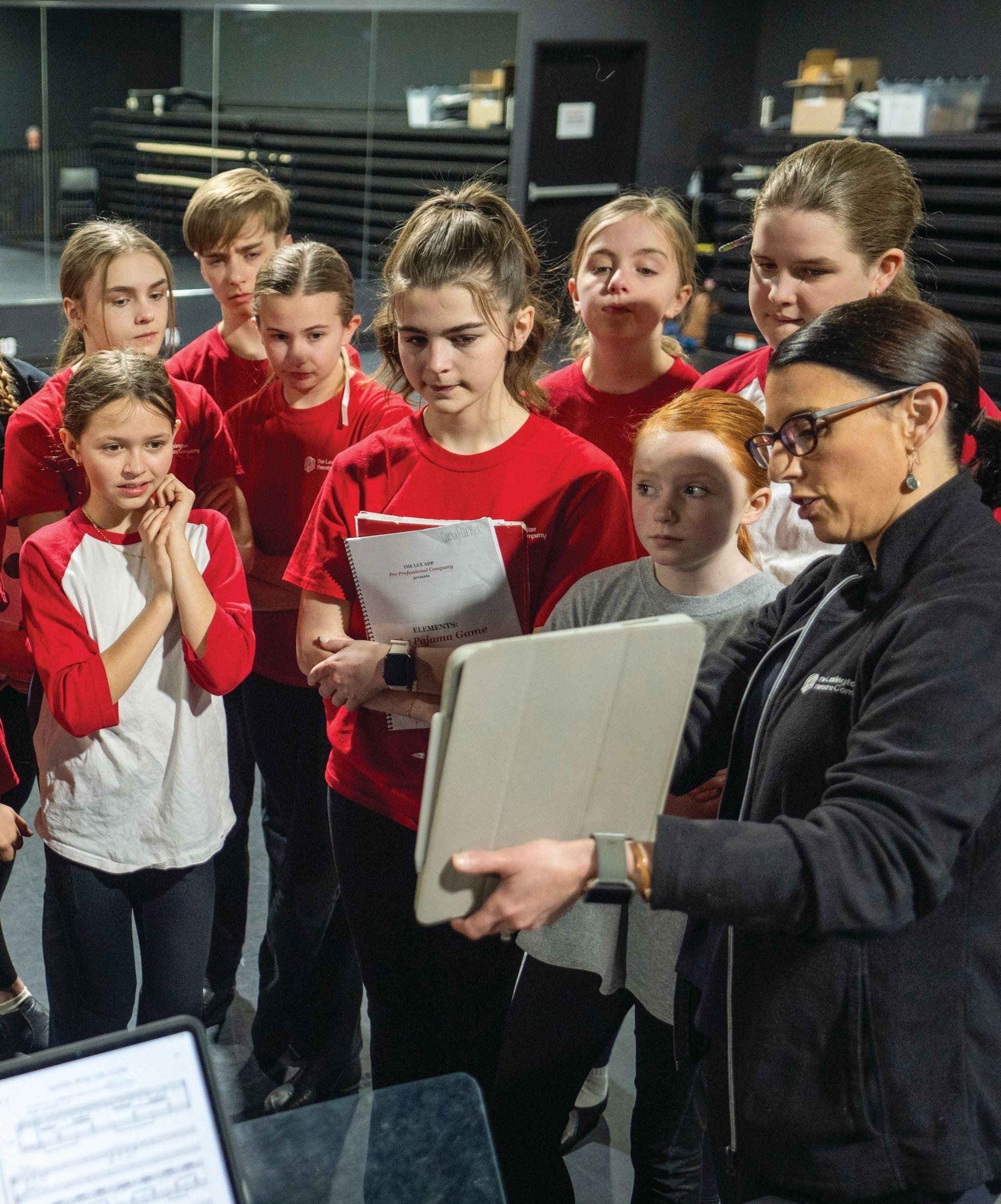
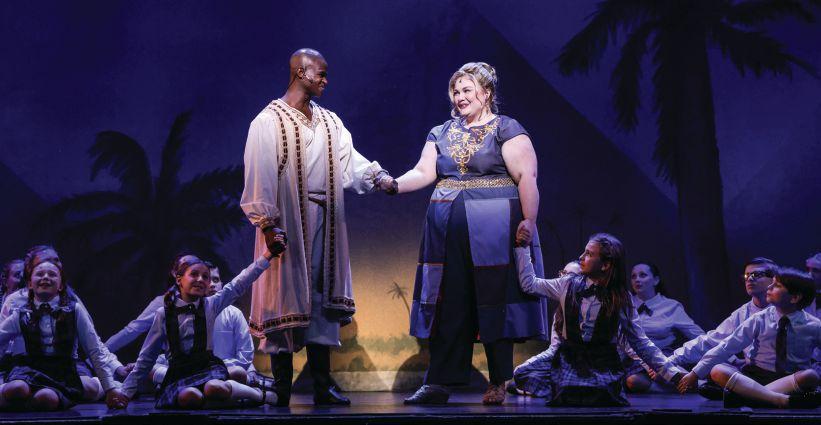
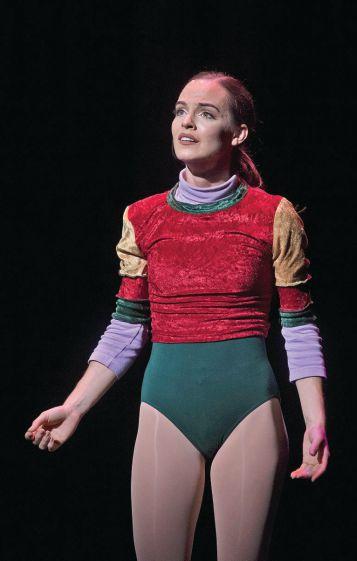
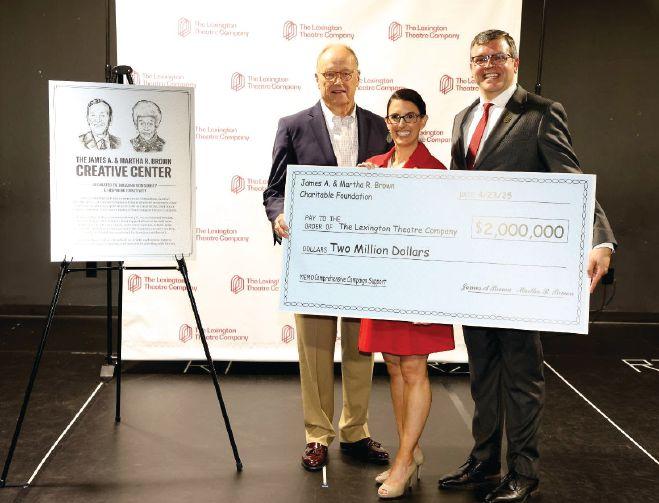
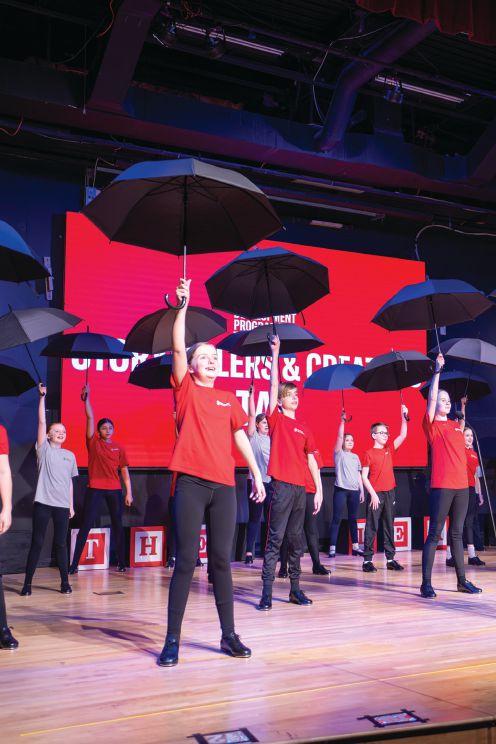
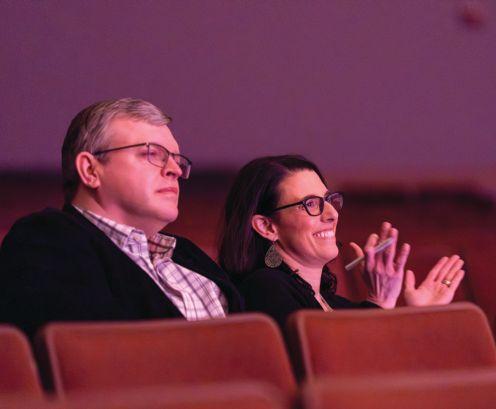
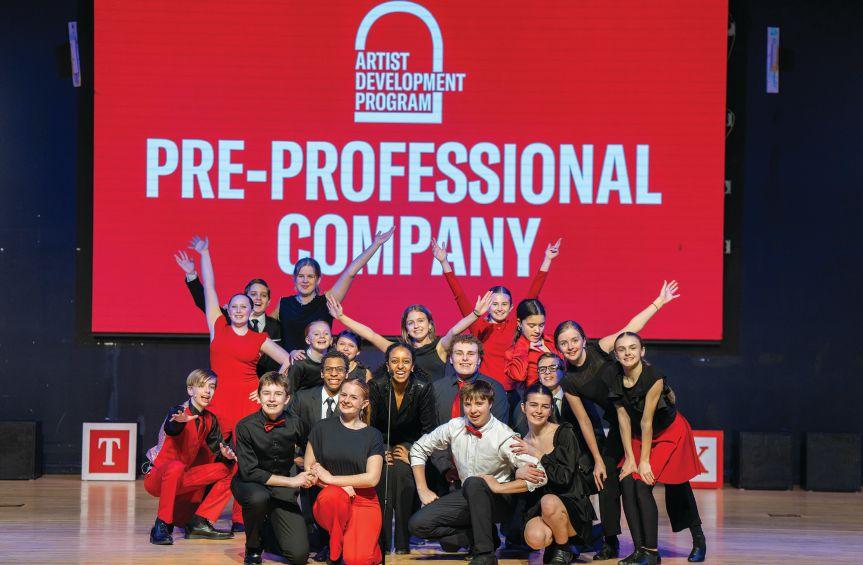
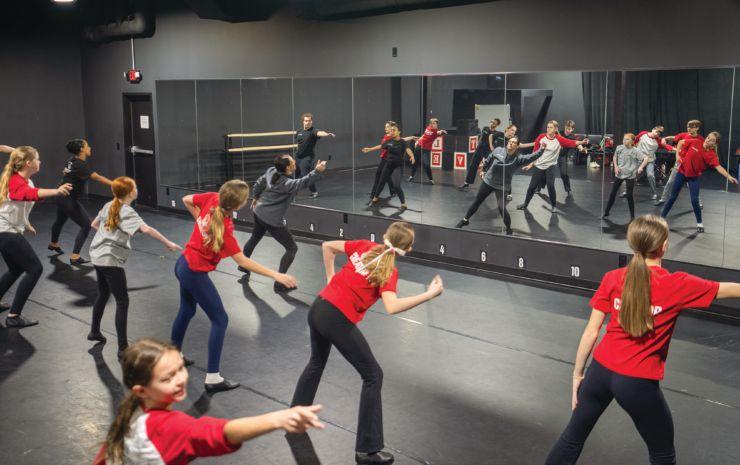
LexingtonTheatre Company brings Broadway-caliber productions to the Lexington Opera House while its school trains thespians of the future.
94
The Little Press That Could
by
Kevin Nance
University Press of Kentucky defies challenges to produce award-winning books ranging from scholarly tomes to equine biographies.
108
Bonding with Bread
by
Jarrett Van Meter
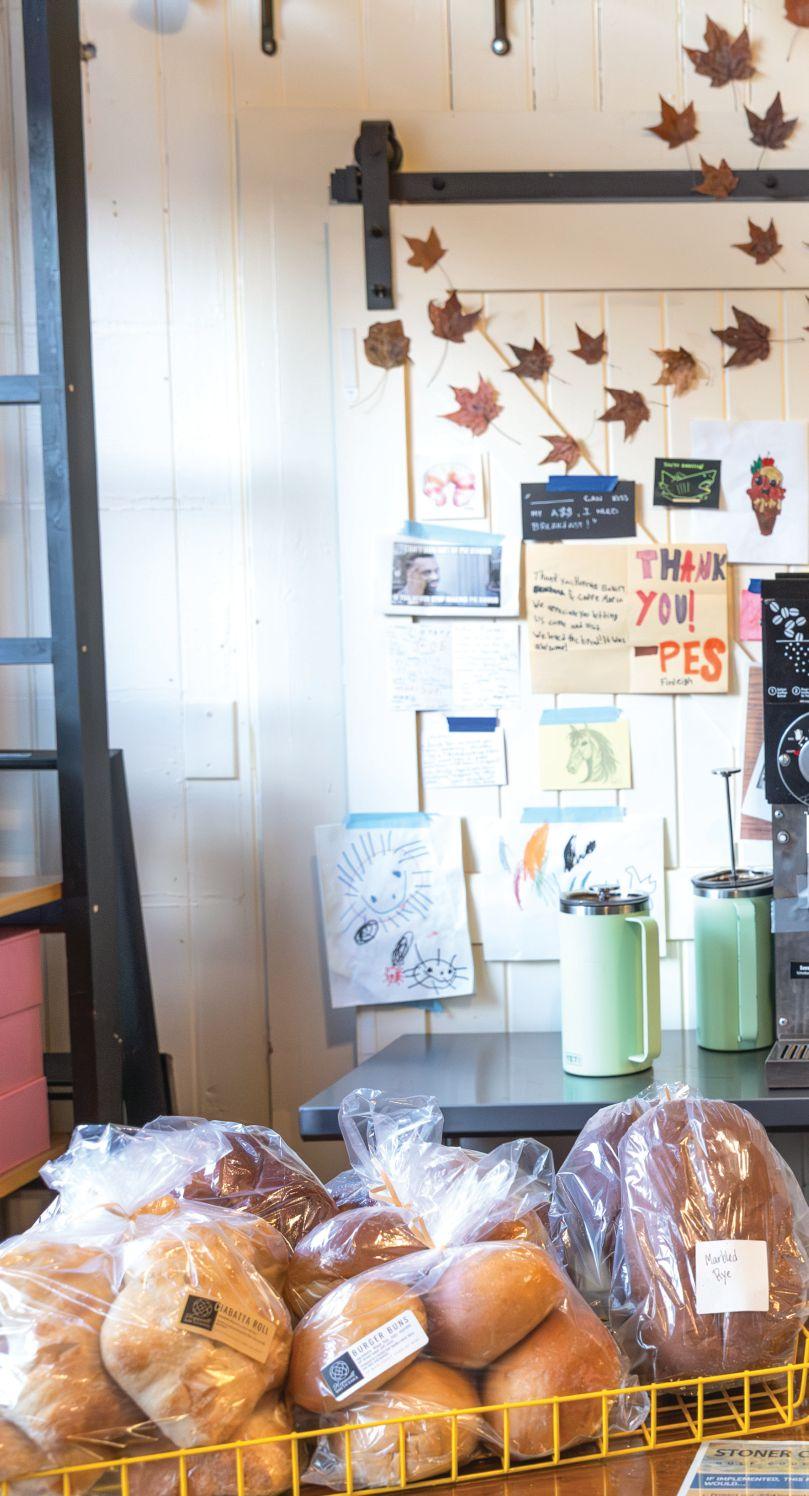
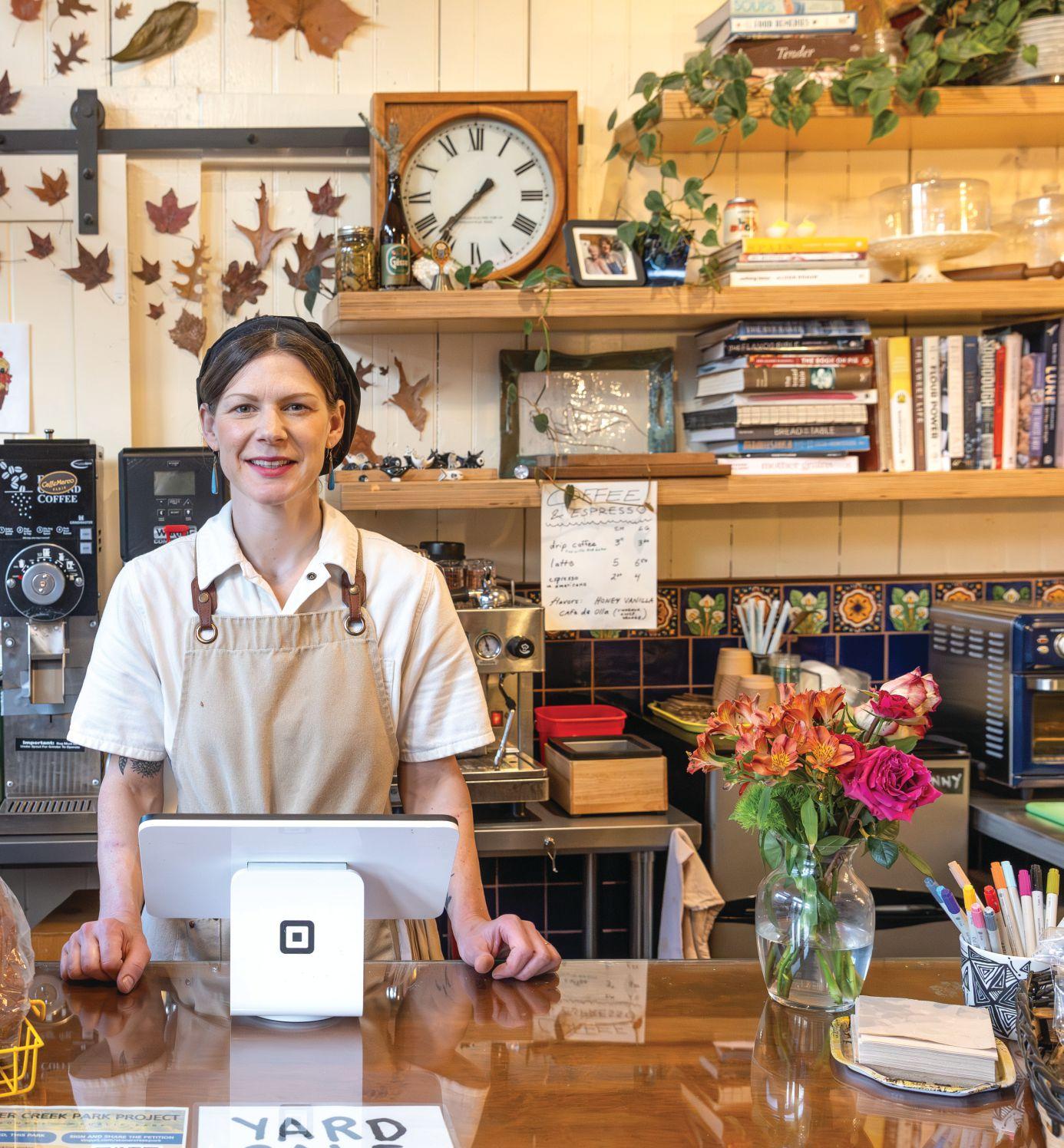
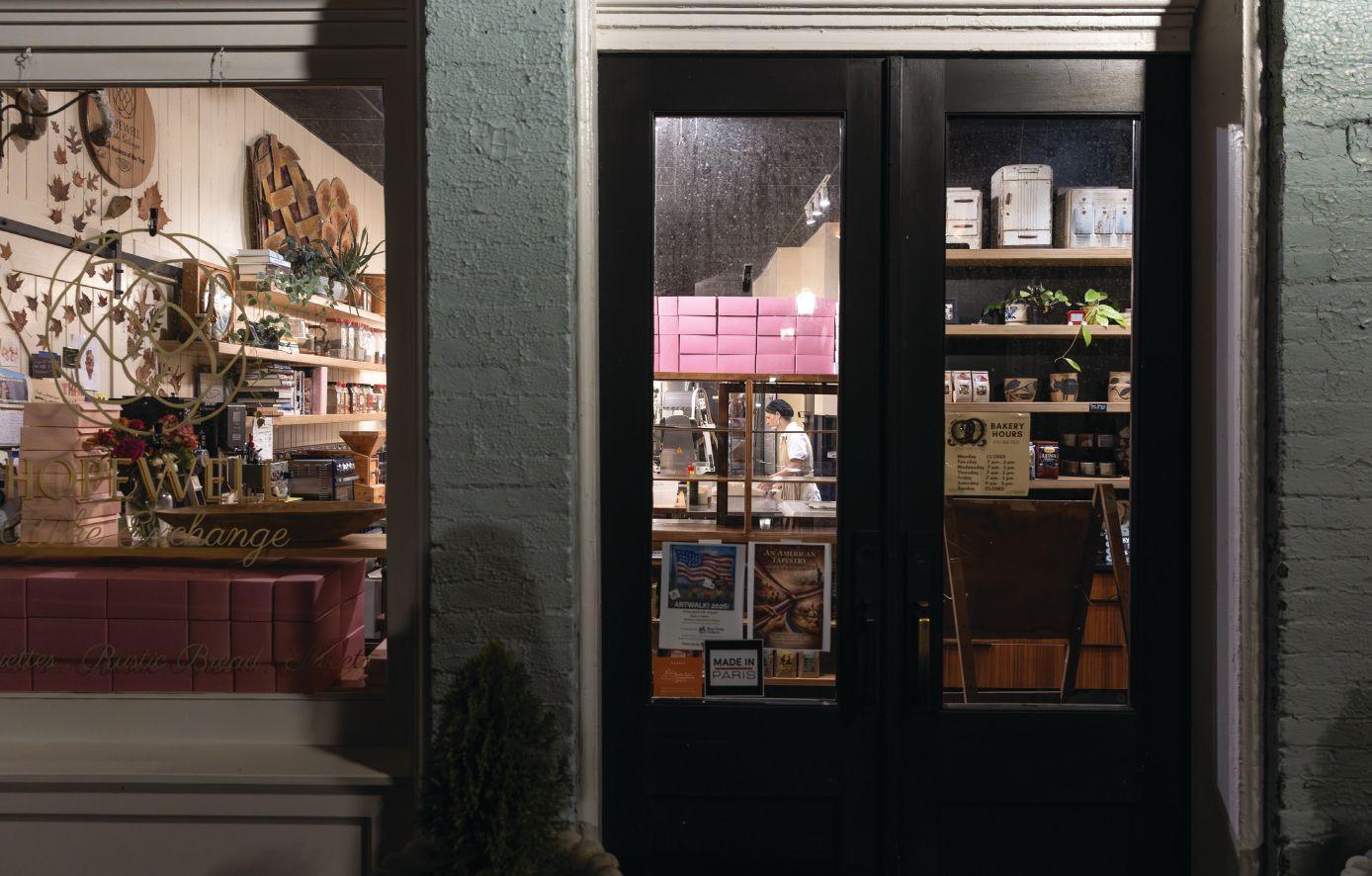
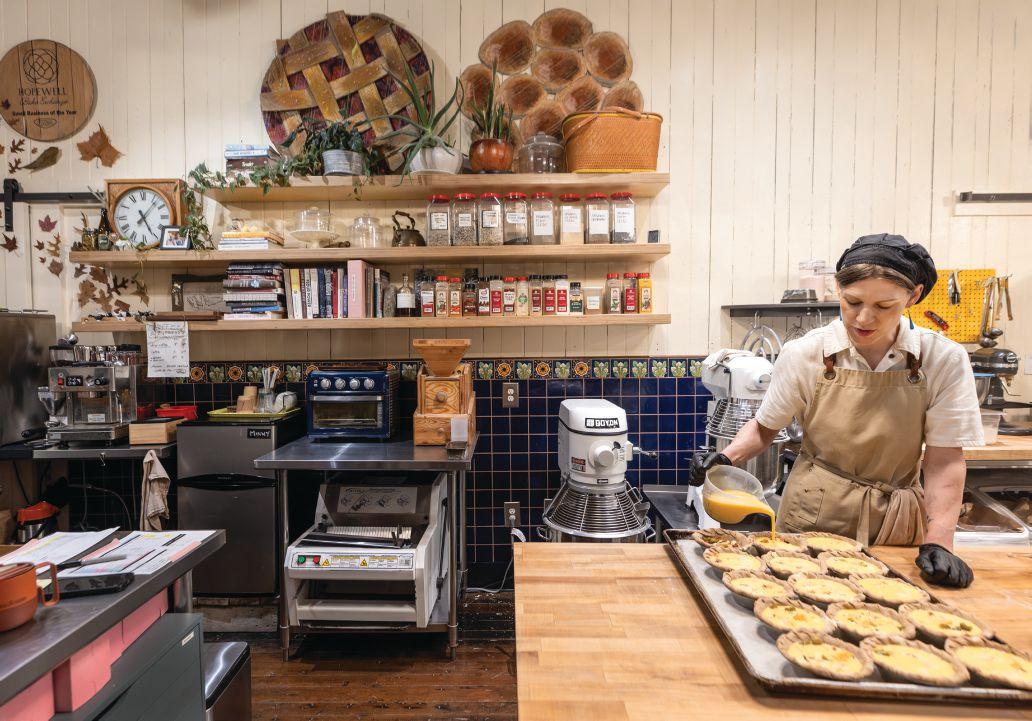
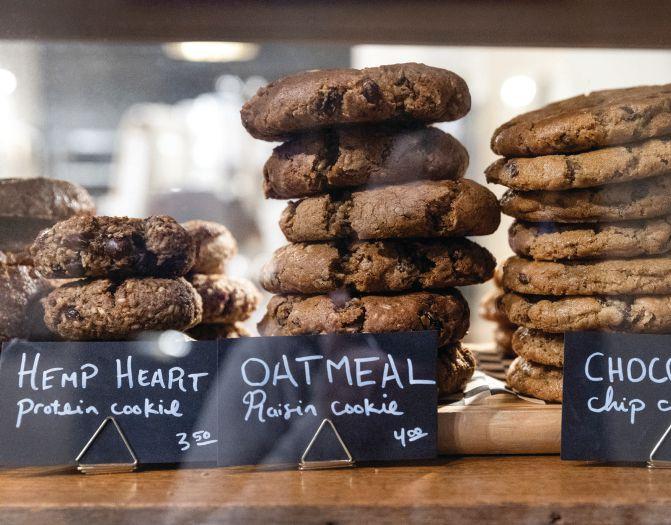
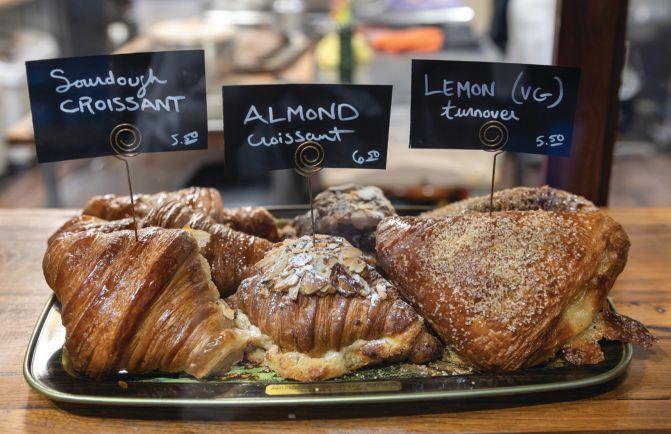
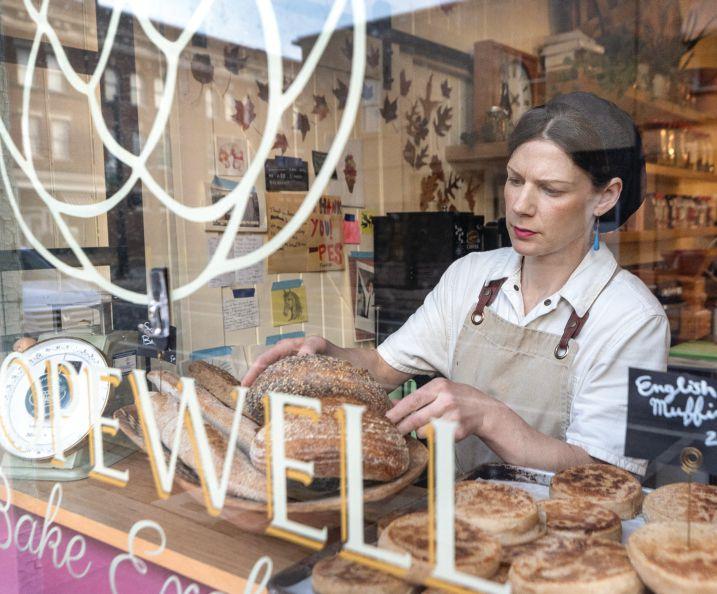
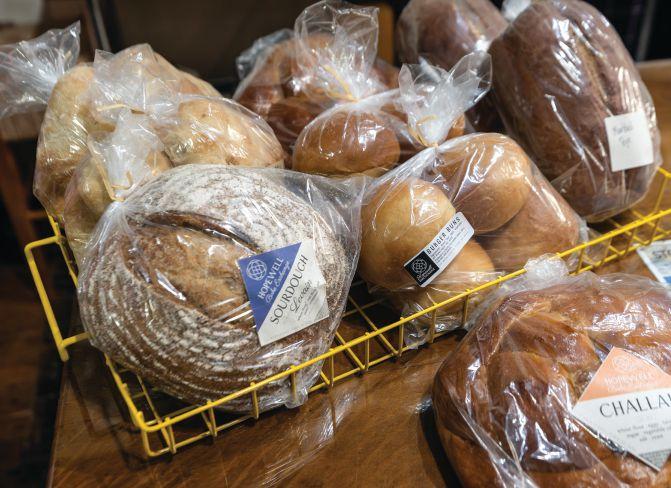
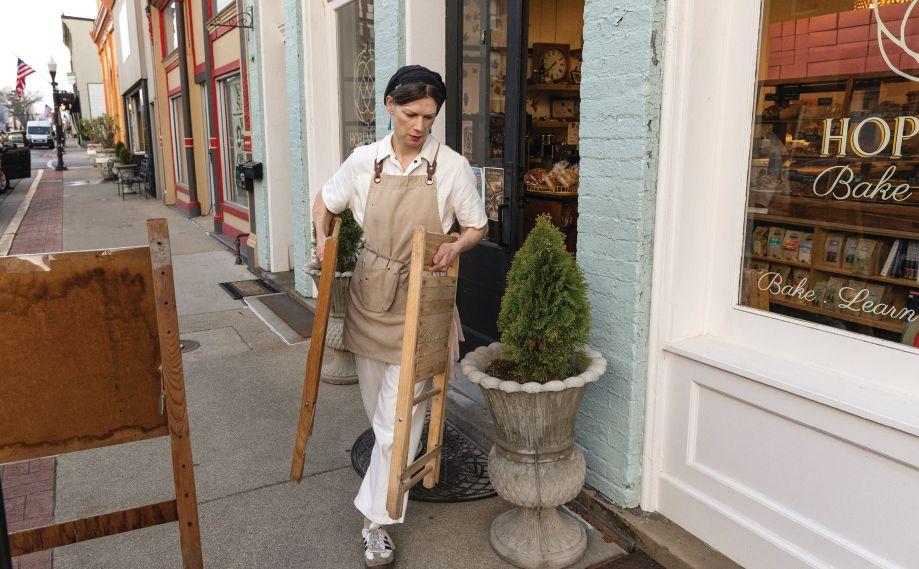
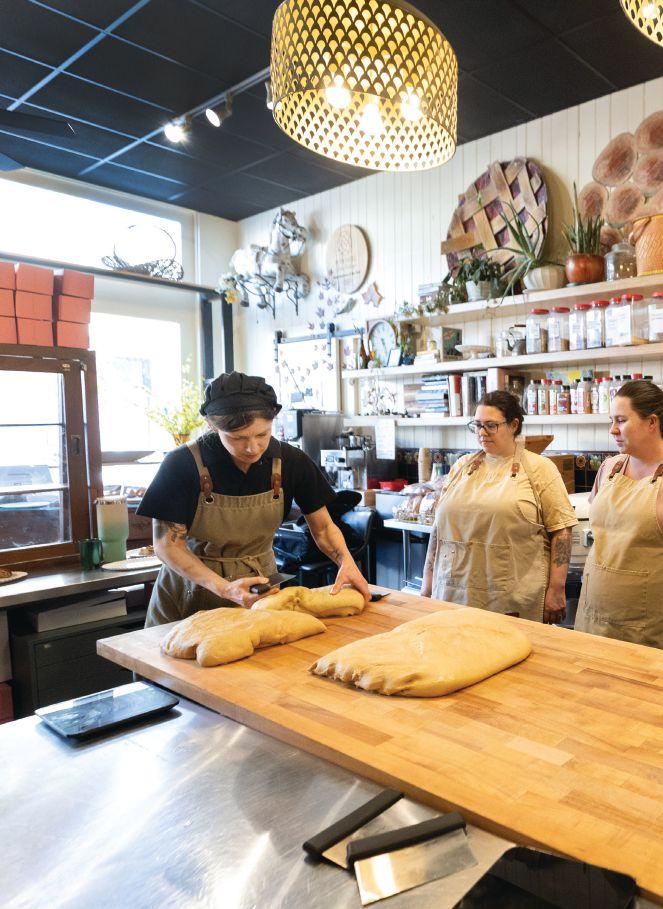
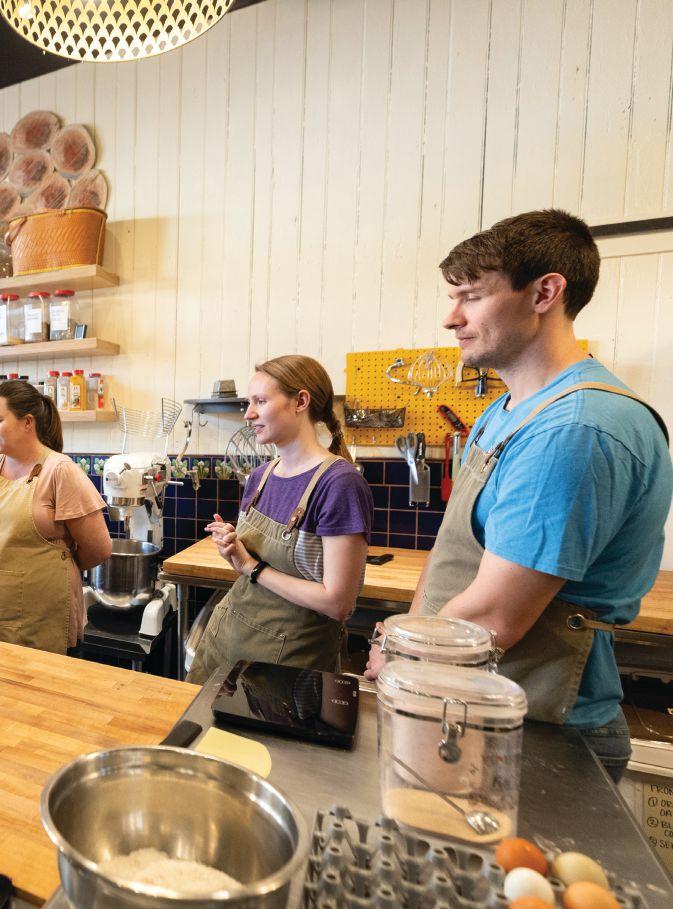
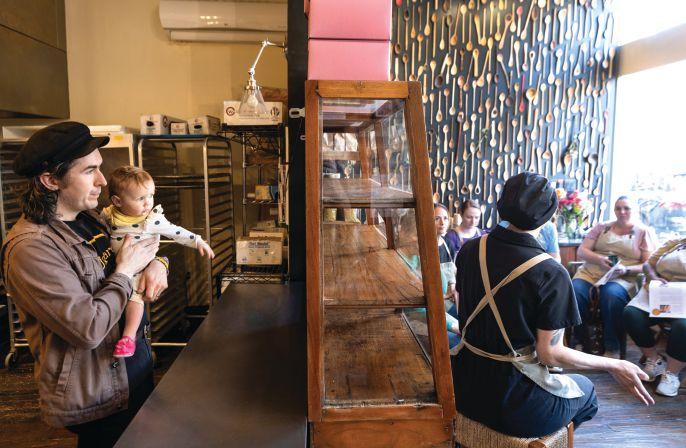
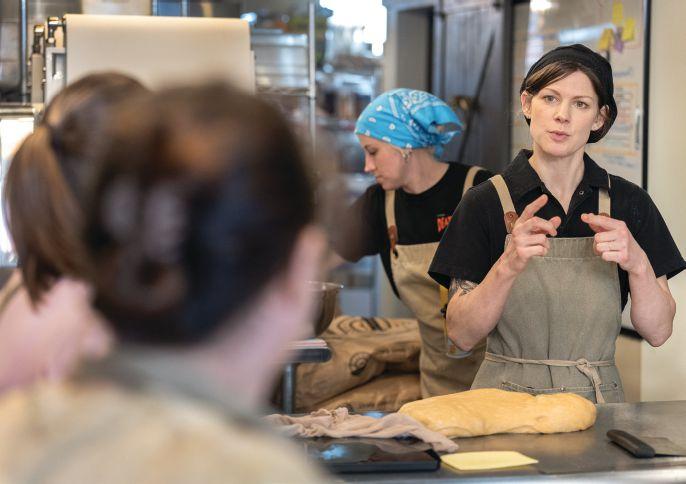
From baguettes to chocolate babka, Hopewell Bake Exchange has put Paris, Kentucky, on the map for its much-loved breads and baked goods.
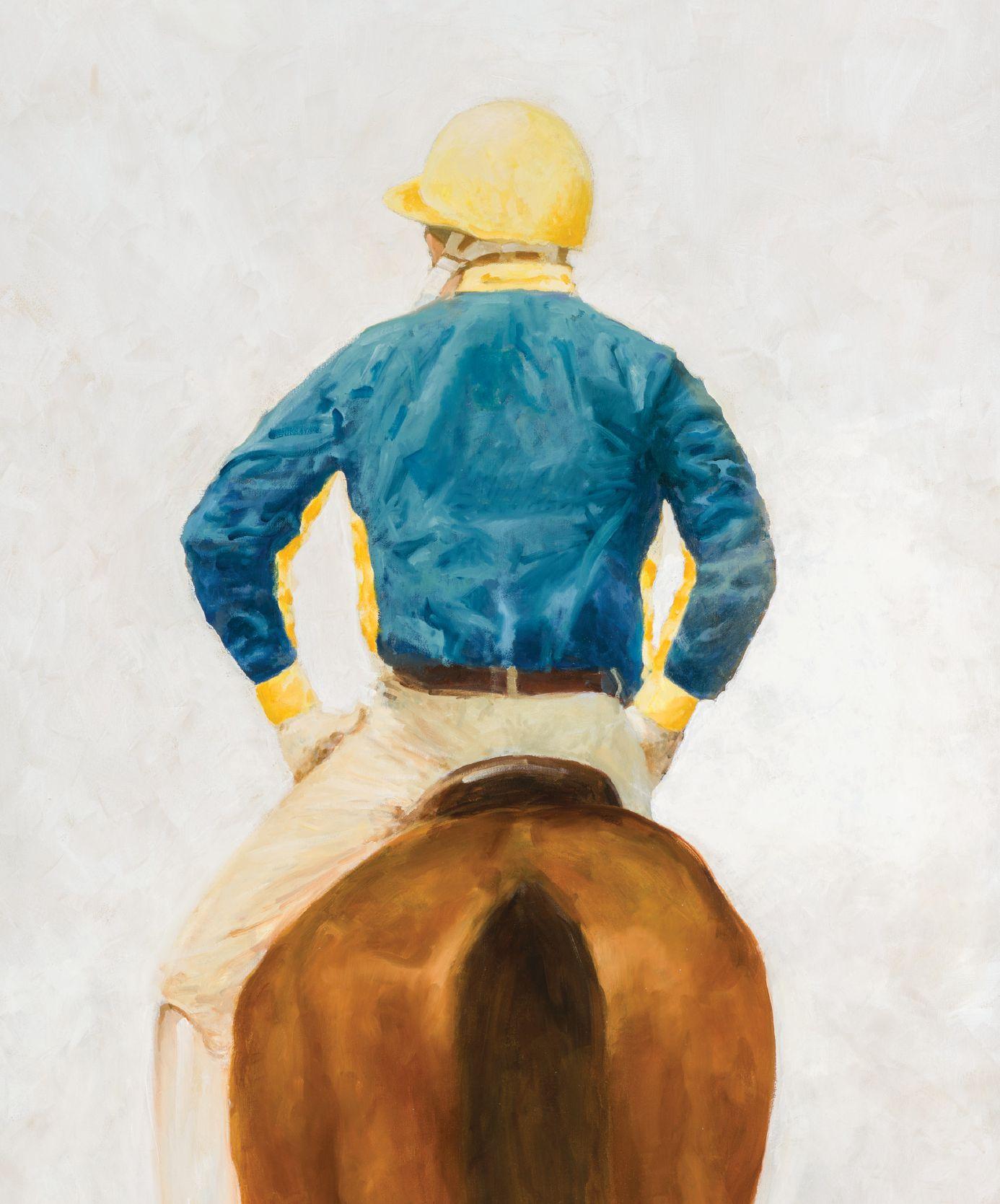
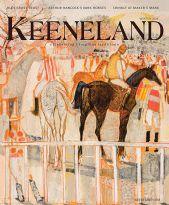
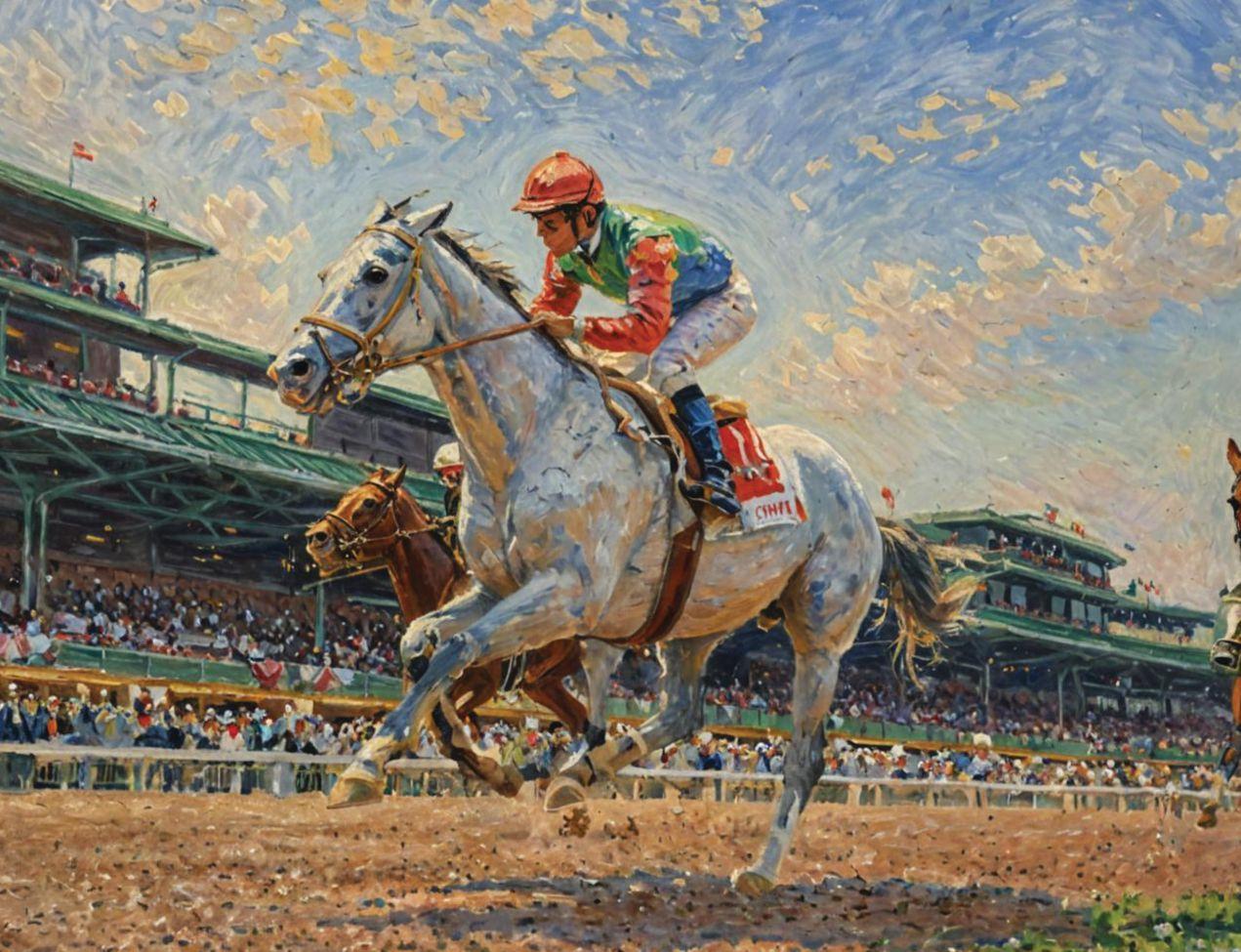
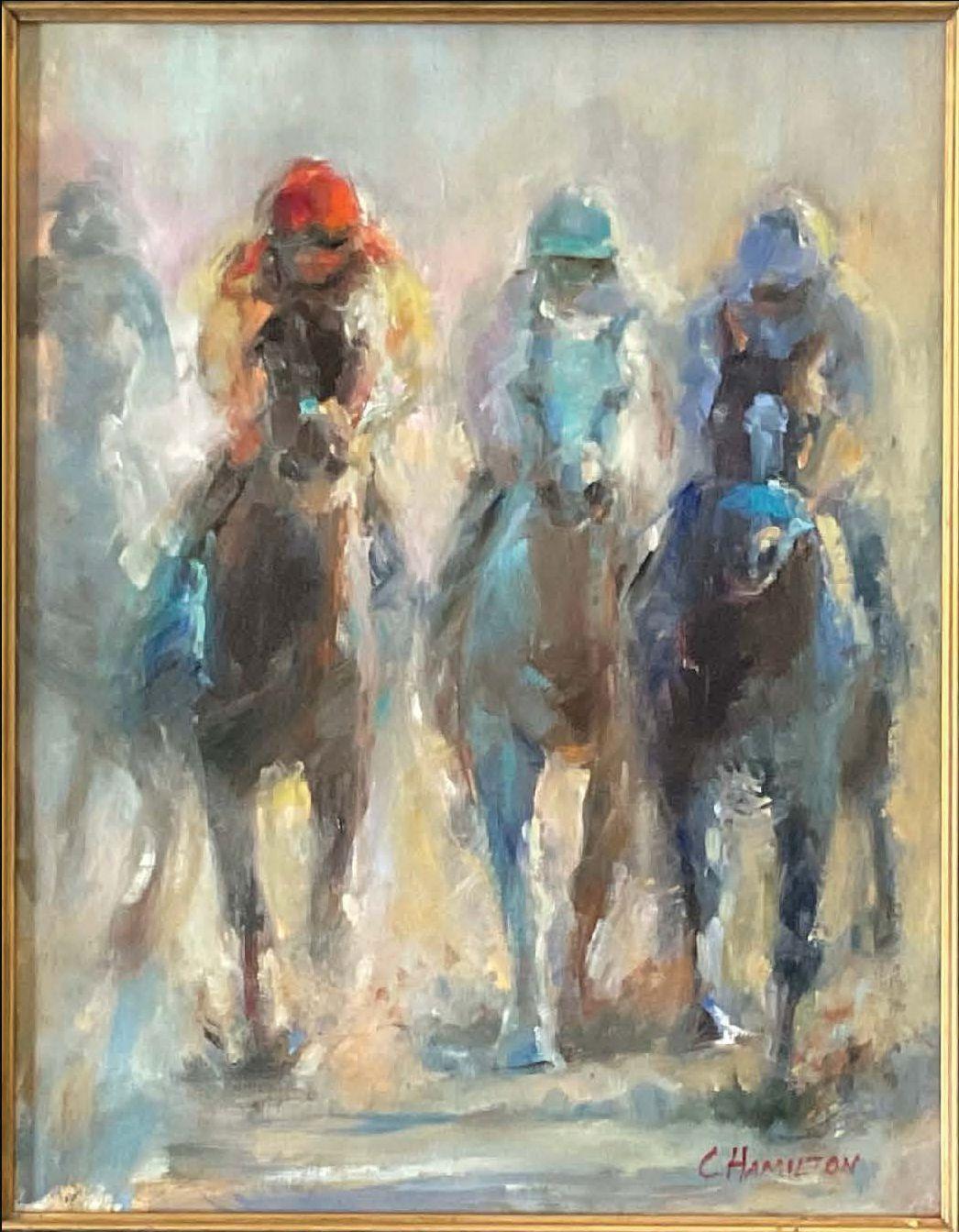
ON OUR COVER Jockey Up
Oil on canvas, 42” x 30” by Larry Wheeler
Wheeler received his formal training at the Maryland Institute College of Art and the institute’s Hoffberger School of Painting.Wheeler has served as the painting conservator for both the Corcoran Gallery and the Smithsonian Institution in addition to teaching at MICA. His skilled work hangs in the Supreme Court Building and the Federal Building inWashington, D.C., and in many private collections.
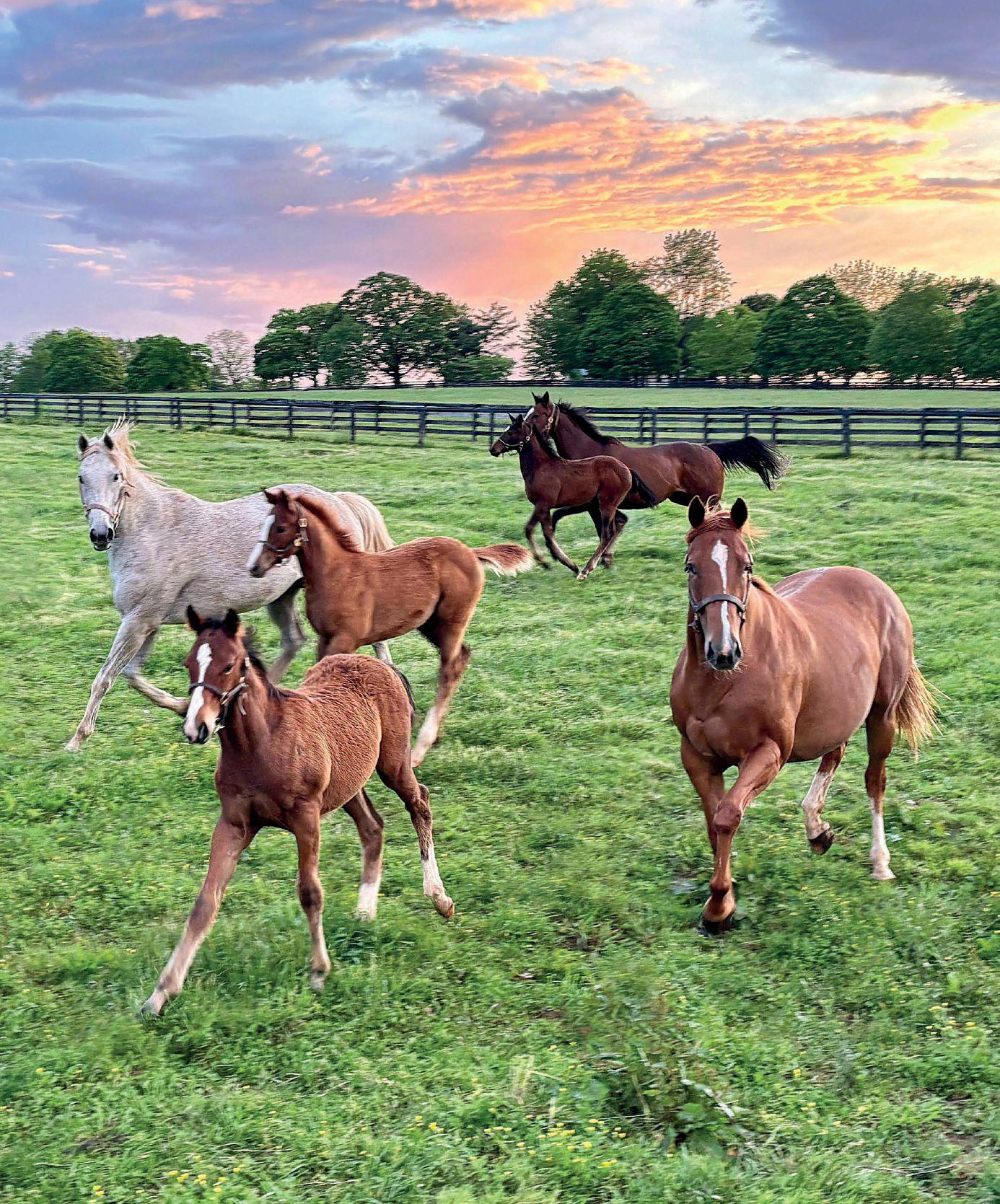
The McLean family has owned and operated their full service, 1,000 acre Crestwood Farm since 1970.
Since then, Crestwood has bred and/or raised multiple Hall-of-Fame inductees, Champions and 310+ stakes horses.
IL MIRACOLO
Gun Runner – Tapit’s World Millionaire by GUN RUNNER out of a TAPIT mare
STAGE RAIDER
Pioneerofthe Nile – Stage Magic SW Half–Brother to JUSTIFY
SIR WINSTON
Awesome Again – La Gran Bailadora 2YO Stakes Winner Belmont G1W Millionaire
Kate Lossen and her Pinhook Mercantile offer unique home goods, pottery, and fine art prints.
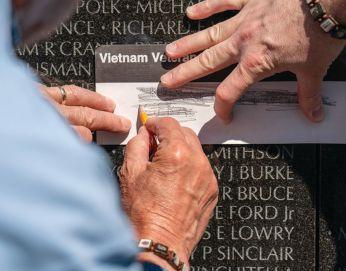
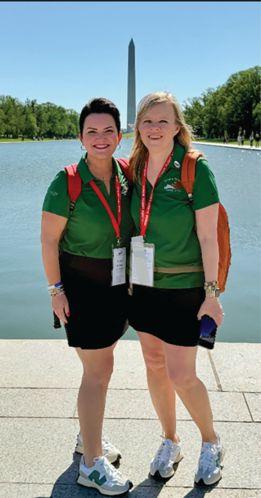
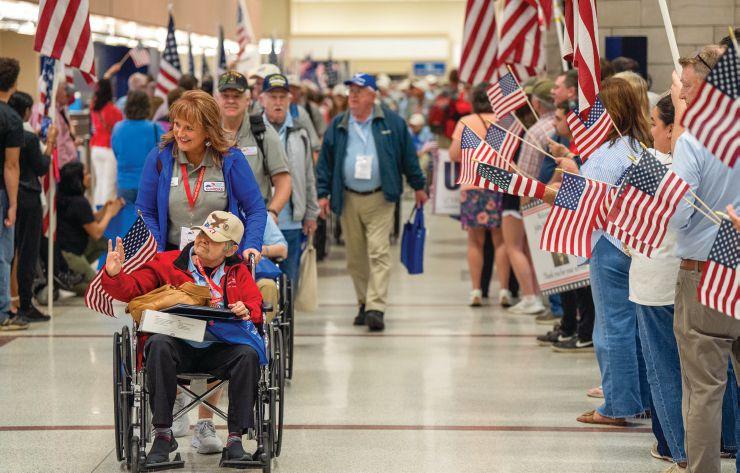
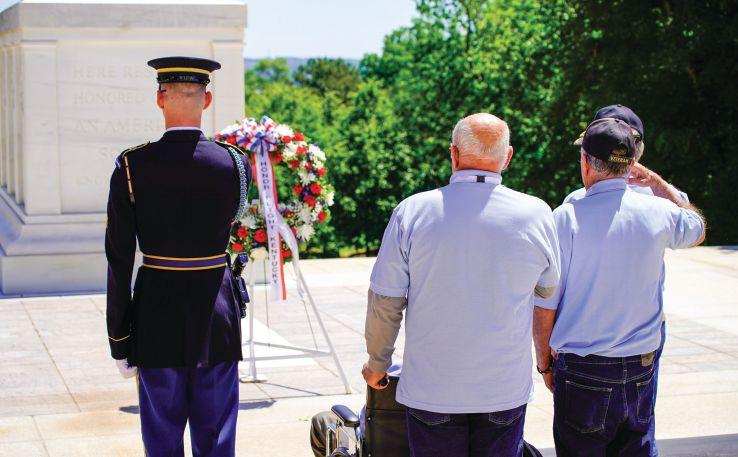
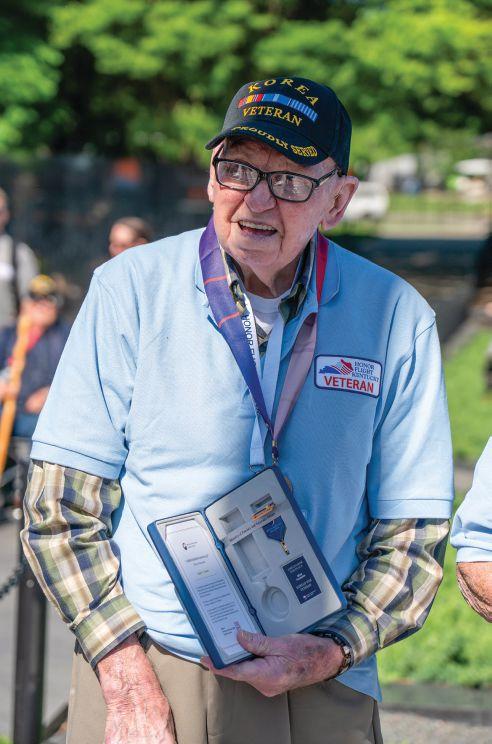
120 MAKING A DIFFERENCE Honor Flight Kentucky by
William Bowden
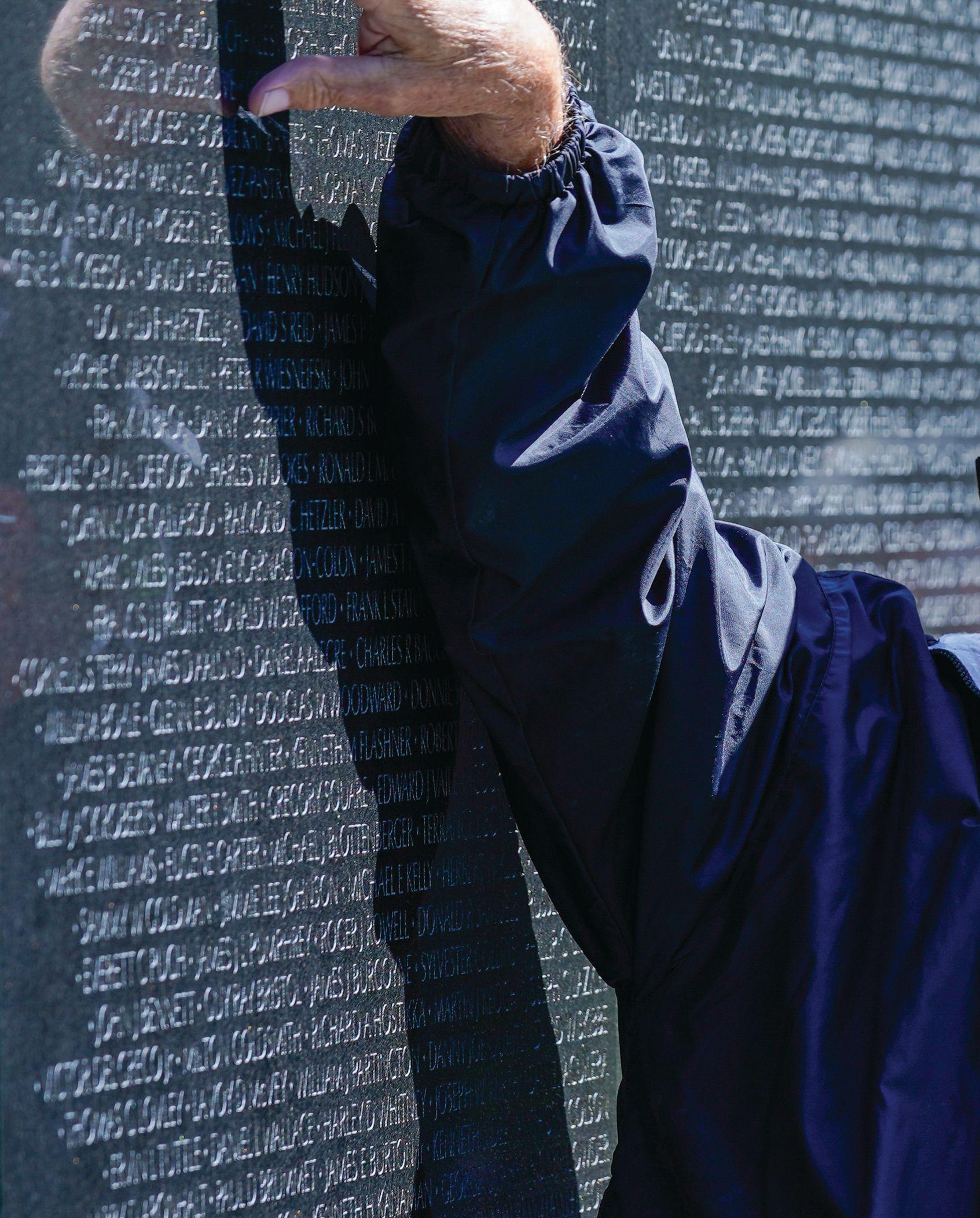
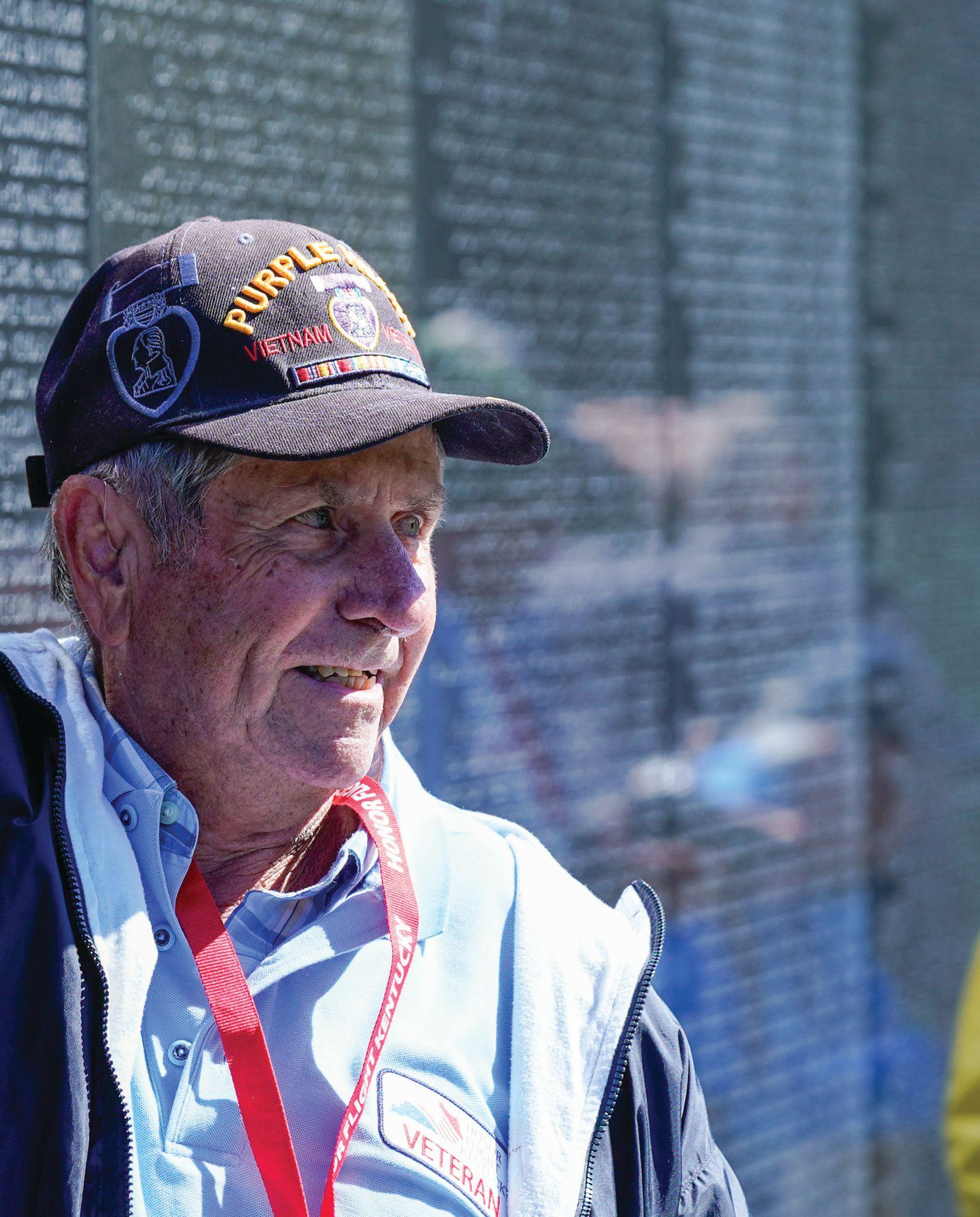
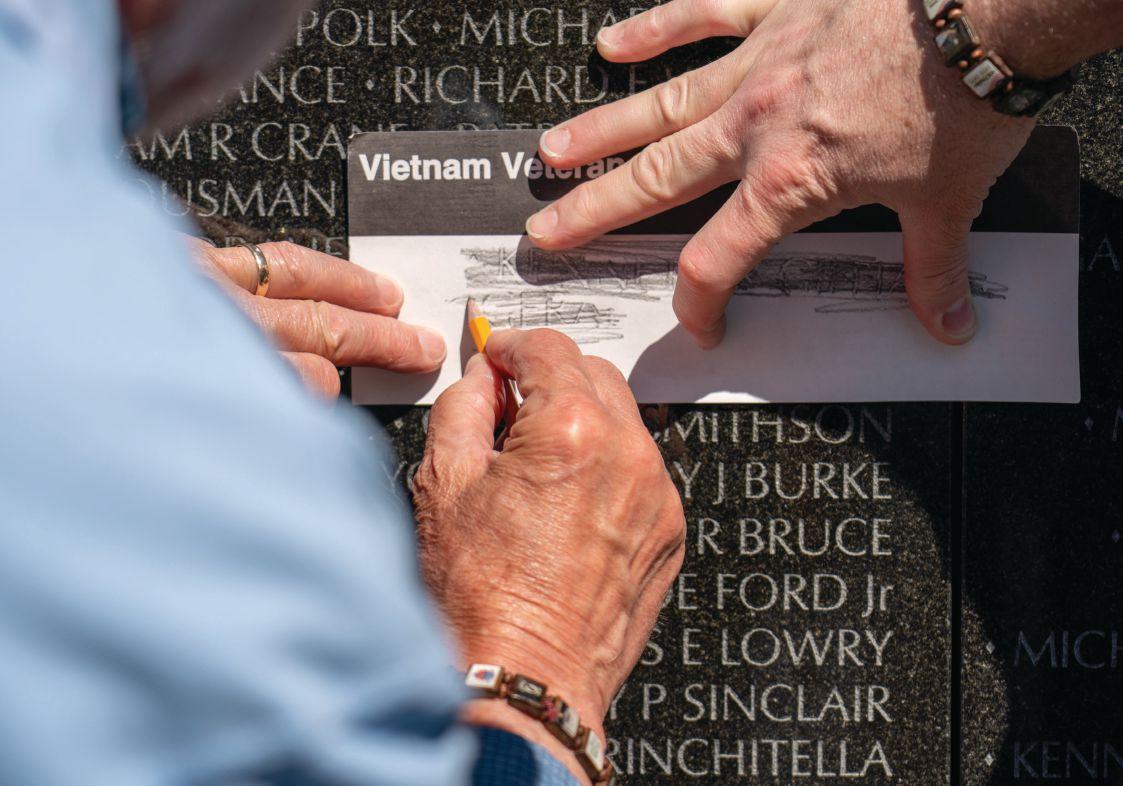
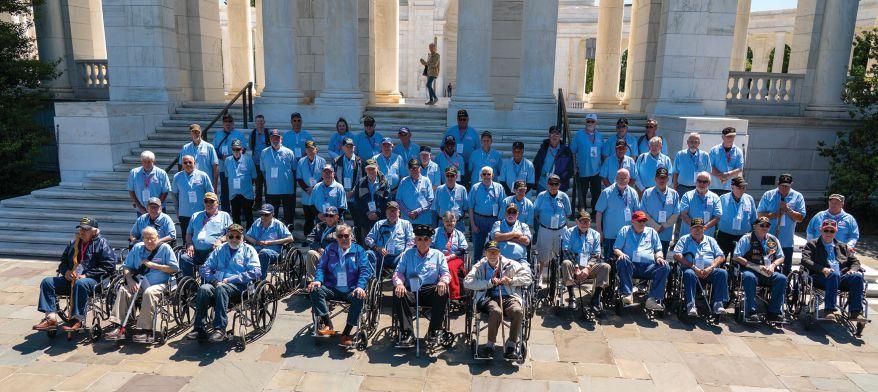
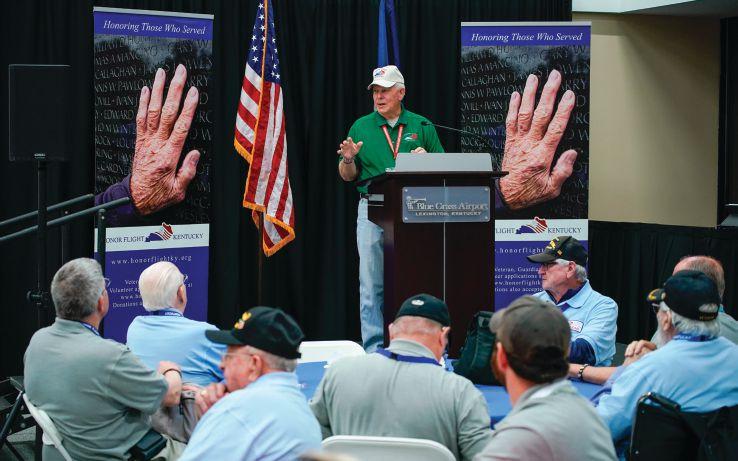
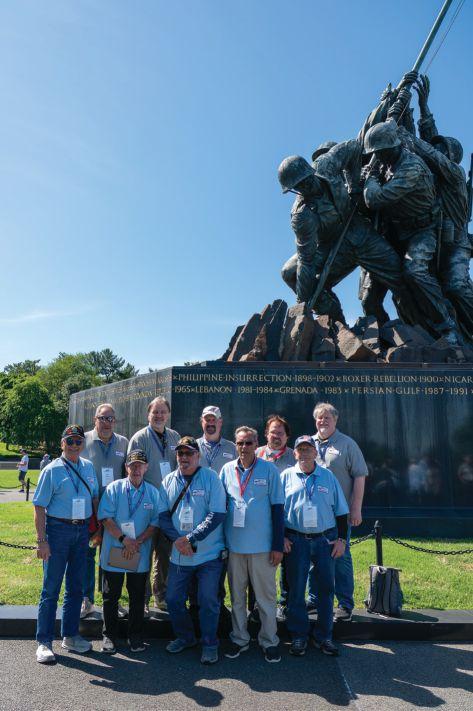
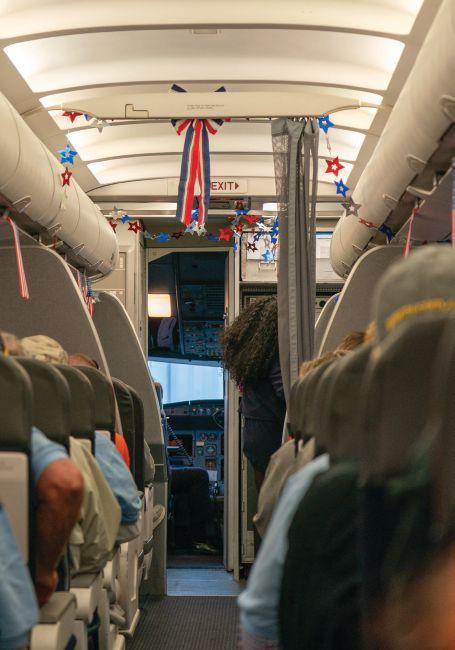
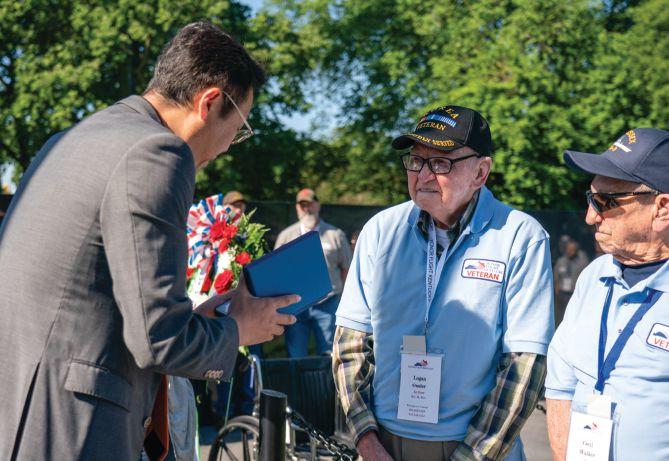
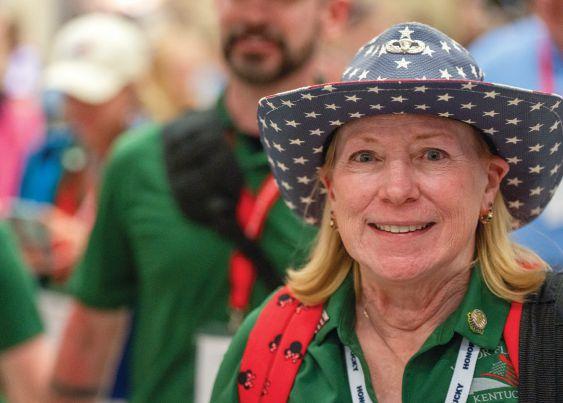
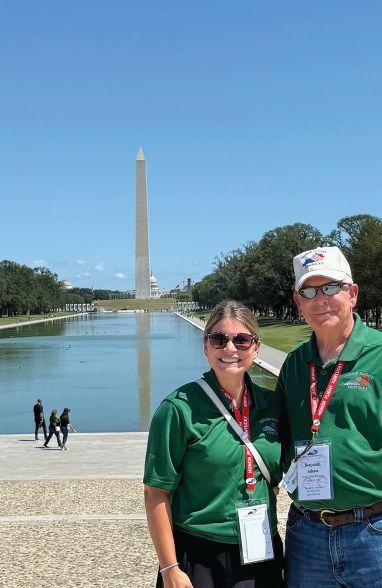
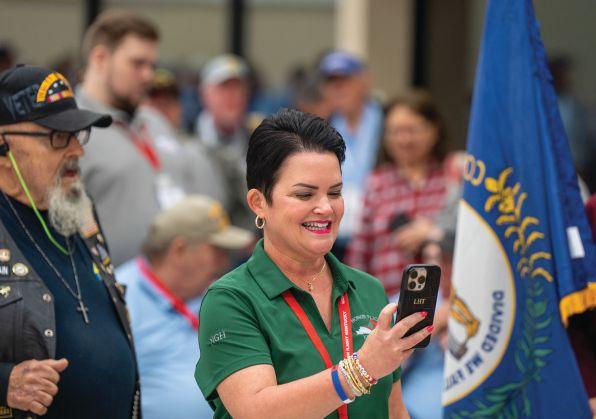
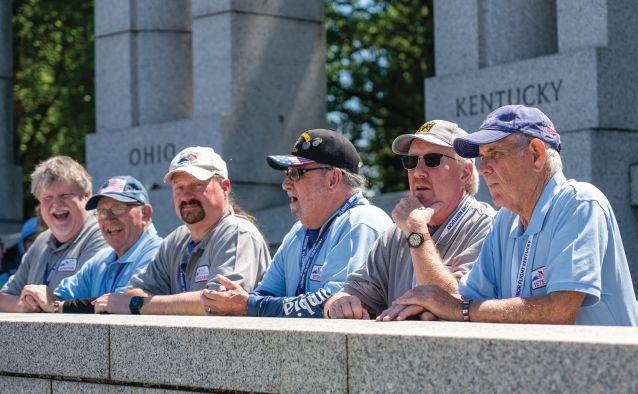
Honor Flight Kentucky flies veterans toWashington, D.C., for a day of celebrating their service.
K EENELAND
celebrating bluegrass traditions
The official magazine of Keeneland Association, Inc. published by Blood-Horse LLC 821 Corporate Dr., Lexington, KY 40503 (859) 278-2361/FAX (859) 276-4450 KeenelandMagazine.com BloodHorse.com
To order Keeneland magazine and additional copies, call 1-800-582-5604 TO SUBSCRIBE OR TO SEND A GIFT SUBSCRIPTION to Keeneland magazine, visit BloodHorse.com/KeenelandOffer
PRESIDENT’S MESSAGE
Teamwork
This spring, one of our seasonal employees — affectionately known as “green coats” — shared with me that the more time he spends at Keeneland, the more he appreciates the many layers of operations that must go “right” to deliver a race day. We often say Keeneland functions like a small city. Responsibilities shift throughout the year, but when preparing for race days, that comparison feels especially true. While the race meet is celebrated for its tradition, beauty, and world-class racing, what truly brings those elements to life is the extraordinary coordination of people behind the scenes.
Long before the first horse steps onto the track, teams across Keeneland are already at work. Our grounds crew meticulously tends to the landscape, ensuring every detail reflects the season at its best. Facilities teams — plumbers, electricians, carpenters — work tirelessly to test systems and address even the smallest details, while building services prepares each space to shine as we welcome guests.
On the racing side, our team manages the complex process of writing the condition book, taking entries, and coordinating daily operations so each race unfolds seamlessly. Our stable manager allocates stalls, coordinating arrivals and departures of equine athletes. Our chaplaincy supports horsemen and -women from around the world who provide daily care for the horses.
Our track maintenance team begins well before dawn, often working overnight to prepare surfaces so training can begin at 5:30 a.m. Outriders, starters, and equine safety teams are on hand early, ensuring safe training and racing conditions throughout the day. Security teams also begin early, working alongside local officials to prepare the grounds.
Further behind the scenes, months of preparation make race days possible. Human resources recruits and hires thousands of seasonal employees. Hospitality teams deliver exceptional food and beverage experiences across the property, while patron operations manages ticketing, admissions, and the movement of tens of thousands of guests with efficiency and care. Directional signage is printed in house by our administrative services team.
Our marketing and communications teams help tell Keeneland’s story, honoring tradition while inviting new audiences into the experience. Our community team builds relationships locally, supports future fans, and recognizes those who serve our community and country.
Our sponsorship and horsemen’s hospitality teams ensure that sponsors, owners, and trainers feel welcomed and valued, with a direct line to our sales team to be prepared for celebrating or commiserating. Retail teams prepare The Keeneland Shop and kiosks with enthusiasm; the finance team manages horsemen accounts and makes sure there is money in the mutuel lines; and the mutuels team ensures wagering systems operate seamlessly both on-site and around the world. Our broadcast team shares the excitement of the spring meet far beyond our gates, supported by technology teams that keep critical systems running smoothly.
While it would be impossible to capture every role or responsibility, a race day depends on countless individuals whose contributions might go unseen yet are deeply impactful.
What makes Keeneland special is not just the sum of these efforts, but the shared commitment to excellence — doing the right thing for the horse, the sport, and our community. We do not take the support of our community for granted — thank you for racing, selling, and buying with us.
Cheers to blue skies ahead. KM
SHANNON ARVIN President and CEO
CONTRIBUTORS
WILLIAM BOWDEN
(PayingTribute) most recently worked as publications editor atTransylvania University. He was formerly a writer and editor at the Somerset (Kentucky) Commonwealth Journal, the Lexington Herald Leader, and the NationalTour Association.
RICH COPLEY
(Putting On a Show) spent 20 years as an arts and entertainment journalist for the Lexington Herald Leader. He is now a multimedia producer for the Presbyterian Church (U.S.A.) and a freelance writer and photographer based in Lexington.
AVALYN HUNTER
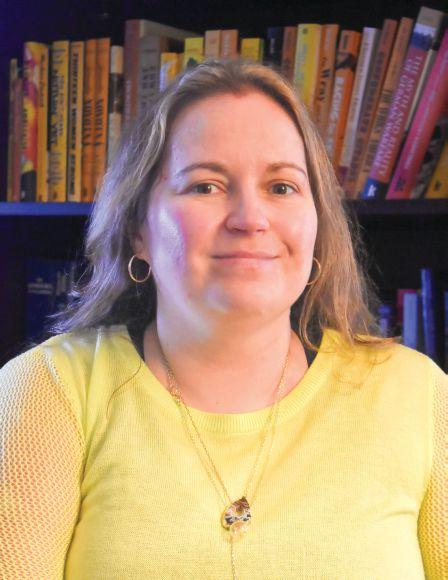
(Shared Roots) is a nationally recognized authority on Thoroughbred pedigrees and racing history. Her work has appeared in BloodHorse, ThoroughbredTimes, OwnerBreeder International, and MarketWatch. She is also the author of six books including the May 2026 release “Holy Bull: An Unconventional Path to Racing Glory” (University Press of Kentucky). Hunter’s website is americanclassicpedigrees.com.
KEVIN NANCE
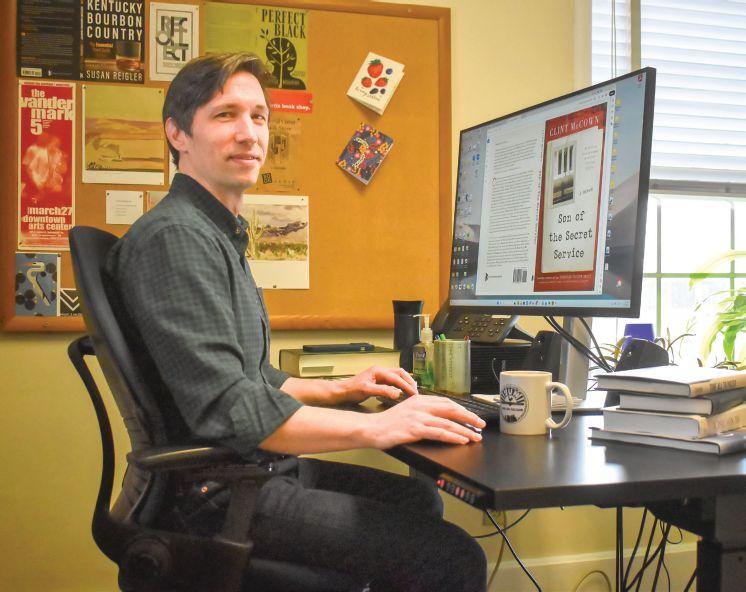
(The Little PressThat Could) is a journalist, photographer, and poet in Lexington. His journalism has appeared in many newspapers and magazines, including the
Washington Post, theWall Street Journal, USAToday, the ChicagoTribune, and Poets &Writers magazine. He’s also the author of three poetry collections, most recently “Smoke.”
AMY OWENS
(Keeneland News/ Connections) is Keeneland Communications Associate.
ROBIN ROENKER
(Finding Her Niche) is a Lexington-based freelance writer who reports on healthcare, higher education, travel, and all things uniquely Kentucky. In addition to Keeneland, her writing has appeared in AARP, Southern Living, USAToday, Atlanta magazine, and more.
LENNY SHULMAN
(Keeneland and the Cup) is a senior correspondent for BloodHorse and the author of “Head to Head: Conversations with a Generation of Horse Racing Legends,” “Justify: 111 Days toTriple Crown Glory,” and “Ride of Their Lives: TheTriumphs andTurmoil of Today’sTop Jockeys.”
JARRETT
VAN METER
(Bonding with Bread) grew up in Lexington and lives in Paris, Kentucky. His writing has appeared in such publications as Garden & Gun,Texas Monthly, Oxford American, and Bitter Southerner.
CIRCLE
LEXINGTON, KENTUCKY
record
266 Yearlings Sold for $500,000+ Representing 60 Consignors
record
$175,807 Average
record
$80,000 Median
From the September Sale through the Breeders’ Cup and November Sale, the industry’s defining moments converge here at Keeneland in 2026.
` September Yearling Sale Begins Sept. 14
` Fall Meet Oct. 2-24
` Championship Sale at the Breeders’ Cup Oct. 28
` Breeders’ Cup World Championships Oct. 30-31
` November Breeding Stock Sale Begins Nov. 3
` November Horses of Racing Age Sale Nov. 11
KEENELAND NEWS
COMPILED BY AMY OWENS
KEENELAND SPRING MEET FULL OF STANDOUT MOMENTS
Milestone achievements and standout performances marked Keeneland’s spring meet April 3-24. Fueled by record purses and a stretch of beautiful spring weather, the meet drew the sport’s leading owners, trainers, jockeys, and horses to Keeneland for 15 days of vibrant, highly competitive racing that delivered thrilling moments at every turn.
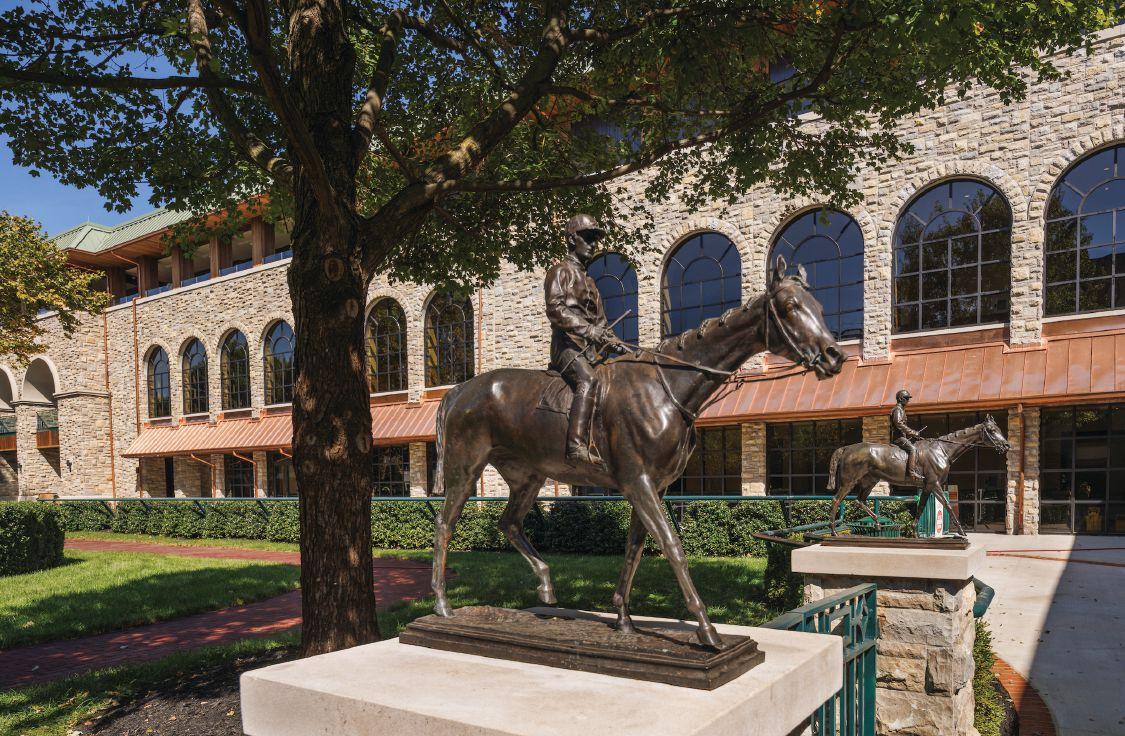
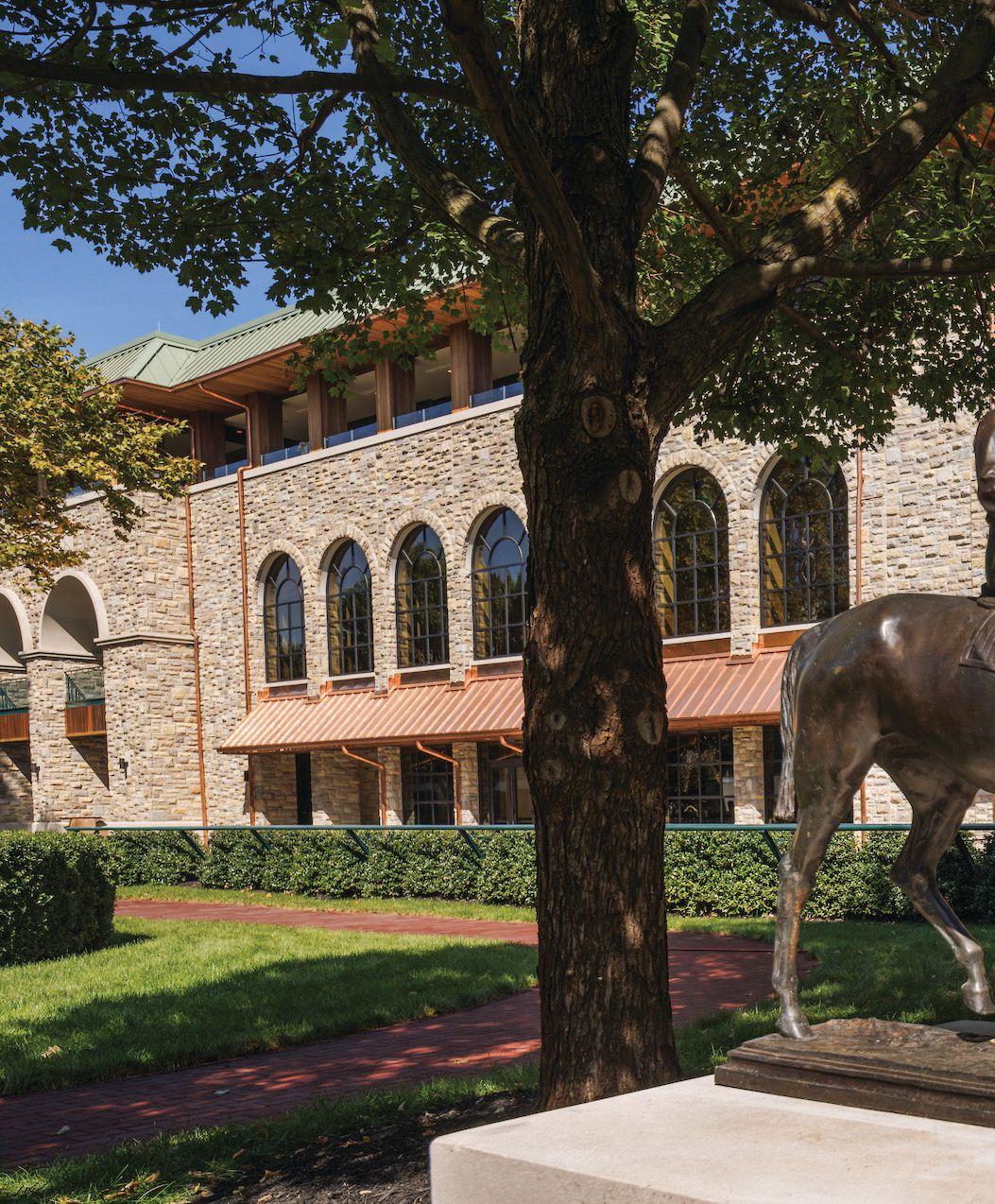
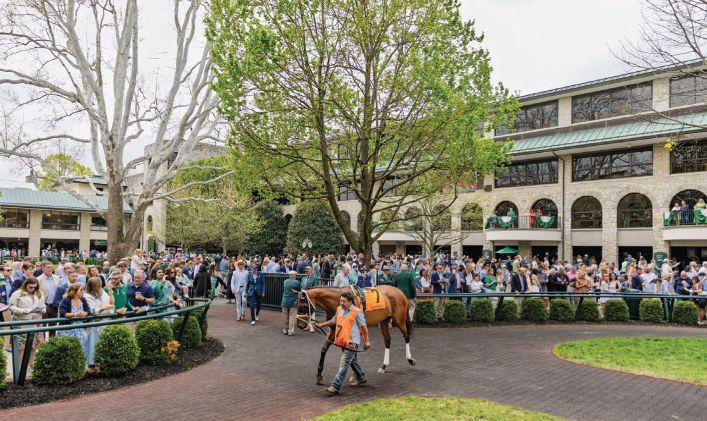
In addition, the meet featured the debut of the new Paddock Building, which introduced five dining spaces to more than 1,000 patrons each race day. Designed for yearround use, the Paddock Building represents the culmination of more than two years of planning and development and is part of the largest capital construction in track history.
the races and made this spring meet very memorable.”
“We were especially excited to welcome guests into the new Paddock Building for the first time,” Keeneland President and CEO Shannon Arvin said. “This is an important project for us, signifying our commitment to our fans and confidence in the future. To see the project come to life during the meet and to hear positive feedback from our patrons have been incredibly rewarding. We’re grateful to everyone who joined us for
Legendary Northern Dancer, whose many exploits include winning the 1964 Blue Grass at Keeneland, is commemorated in this year’s Greats of the Gate bottle.
All-sources wagering (excluding wholecard simulcasting at Keeneland) for the spring meet exceeded $209 million. Total purses reached $21.8 million with 19 stakes worth a season record $9.55 million. Average daily purses for the meet were a track record $1,379,520 while races averaged 8.3 starters per race.
On opening day, Hat Creek Racing’s Percy’s Bar won the Central Bank Ashland (G1) to reach second on the Kentucky Oaks (G1) leaderboard for trainer Ben Colebrook. She was ridden by Luan Machado.
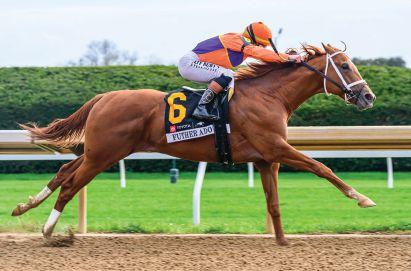
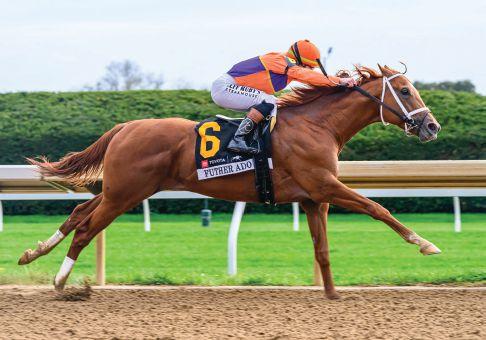
The next day, Spendthrift Farm’s Further Ado drew off to an 11-length victory in the Toyota Blue Grass (G1). Trained by Brad Cox, the spring meet’s leading trainer, and ridden by Irad Ortiz Jr., the season’s leading jockey, Further Ado scored his first career win by 20 lengths in October at Keeneland. He was second on the Kentucky Derby (G1) points leaderboard.
Several horsemen recorded career highlights during the season.
Owners Gary Barber, Michael Dubb, and Eclipse Thoroughbred Partners each earned a Keeneland Milestone Tray to recognize unique accomplishments for an owner at the track. Dubb co-owns Zulu Kingdom, whose victory in the Maker’s Mark Mile (G1) gave trainer Chad Brown his 3,000th career win. Ortiz earned leading rider honors at Keeneland for the third time with 22 wins, including one four-win day and three additional days with three wins apiece. He won three stakes for Cox, who recorded 17 wins to secure his ninth title as leading trainer. Godolphin posted its seventh owner title, notching four wins to outpace other owners. Racing returns to Keeneland for the 17day fall meet Oct. 2-24 followed by the Oct. 30-31 Breeders’ Cup World Championships.
During the 15-day spring meet, Keeneland teamed with corporate and horse industry partners to offer special events that reflected the track’s support of the Central Kentucky community and the sport.
Highlights of these philanthropic initiatives include:
Keeneland and Maker’s Mark® offered the third bottle in their Greats of the Gate commemorative bottle series celebratingThoroughbred racing’s most iconic horses.This year’s bottle honors Racing Hall of Famer Northern Dancer, winner of the 1964 Blue Grass at Keeneland. Proceeds benefit the Kentucky Classic Arts, Kentucky Harvest, Art Center of the Bluegrass, and Blue Grass Farms Charities.
A record 8,300 full-time students representing more than 115 colleges and universities attended College Scholarship Day Presented by Lane’s End. Students had the opportunity to win one of 10
$2,000 scholarships provided by Keeneland and the KentuckyThoroughbred Association or one of two $10,000 scholarships offered by Lane’s End Farm.
Keeneland hosted more than 2,600 members of the military, first responders, healthcare workers, and their families for Heroes Day, highlighted by a flag rollout on the main track.
Members of the Keeneland jockey colony teamed with retired riders for an autograph session that raised $5,552 for the Permanently Disabled Jockeys Fund. On the same day, Keeneland partnered with Hall of Fame riders, leading active jockeys, and racing personalities to raise over $548,000 during the eighth annual PDJFTelethon Presented by Lane’s End.
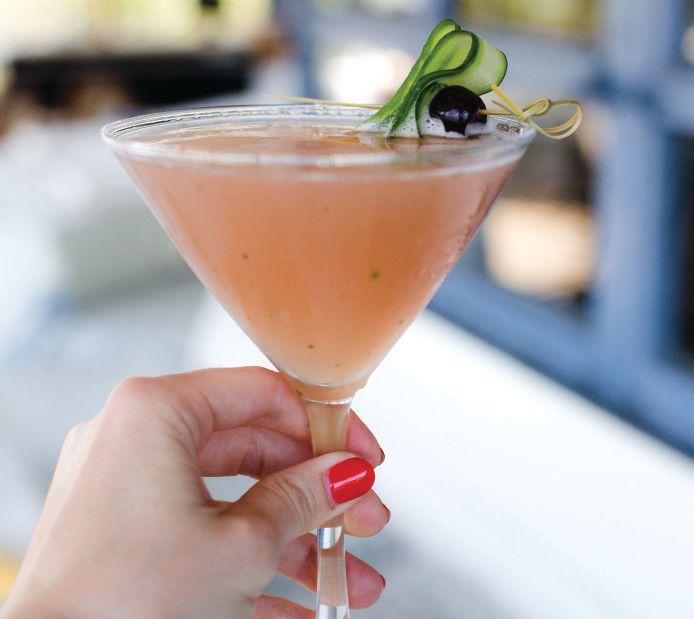
Sales of theTito’sTrifecta cocktail featured during the race meet will enableTito’s HandmadeVodka to donate $10,000 to the Secretariat Center.
Further Ado won the Toyota Blue Grass Stakes by 11 lengths.
SPRING MEET RUNNERS TOP APRIL SALE
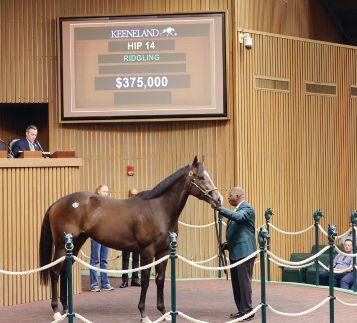
Jethorse LLC paid $375,000 for General Graham, a 3-year-old undefeated son of Omaha Beach who won at Keeneland on April 8, to post the highest price of the April selected horses of racing age sale. The auction followed the races on April 24, the meet’s closing day.
Consigned by Kenneally Racing, agent, General Graham is from the family of Horse of theYear Sovereignty. He is out of grade 1-placed Flying Spur, by Giant’s Causeway.
David Meah of Meah/Lloyd Bloodstock, as agent for Michael Iavarone andTCC Stables, spent $310,000 for Peak Perspective, a 2-year-old filly by Mineshaft.Third in her debut at Keeneland onApril 15, Peak Perspective remains with her breeder and trainer Ben Colebrook, who consigned the filly in the name of Colebrook Stables.
“The April horses of racing age sale was a lively and fitting close to the spring meet,” KeenelandVice President
of SalesTony Lacy said. “There was a big crowd in the sales pavilion with a lot of people coming down from the races and carrying that same energy right into the sale. It was an engaging way to cap the day and send off the spring meet in celebratory style.”
SALES COMPANIES, STALLION FARMS EXPAND COMMITMENT TO TAA
Keeneland Association, Fasig-Tipton Company Inc., Ocala Breeders’ Sales Company Inc., and a group of leading North American stallion farms announced April 27 a significant expansion of their financial commitment to the Thoroughbred Aftercare Alliance. This unified initiative is designed to strengthen long-term support for accredited aftercare programs while encouraging broader participation across the industry.
Beginning with the 2026 Fasig-Tipton July sale, the three sales companies will double their contribution to the TAA, allocating 0.1% of each sale’s gross proceeds. Participation in the program will also become mandatory for buyers and consignors at every sale, with each contributing 0.1% of their
respective transactions. Based on 2025 sales figures and assuming comparable performance, the enhanced commitment from the sales companies is projected to generate more than $4.4 million annually.
In addition, leading stallion farms across North America have committed to a new funding model in support of the TAA. Under this structure, stallions covering more than 50 mares annually will contribute an amount equal to 50% of their advertised stud fee, while those covering 50 or fewer mares will contribute 25%. All contributions are calculated on a per-stallion basis. Based on 2025 advertised fees from participating farms, the initiative is projected to generate $2.2 million annually.
HANCOCK, HUMPHREY SELECTED PILLARS OF THE TURF
Former Keeneland trustee SethW. Hancock and longtime Keeneland director G.Watts Humphrey are among the 11 new members of the National Museum of Racing and Hall of Fame in Saratoga Springs, New York, announced April 23. Hancock and Humphrey were selected in the Pillars of theTurf category, which honors individuals with extraordinary, career-long contributions inThoroughbred breeding, ownership, and innovation.
Hancock’s family founded Claiborne Farm in Paris, Kentucky, and has been involved with Keeneland since before it opened in October 1936. With partners, Claiborne is Keeneland’s leading owner by stakes wins (27) and the fourth-leading owner by wins (165).
Hancock’s father, Arthur B. “Bull” Hancock Jr.; grandfather, Arthur B. Hancock Sr.; and brother, Arthur B. Hancock III, all have been recognized as Pillars of theTurf.
Humphrey also is prominent at Keeneland with eight titles as a meet’s leading owner. Among his 11 stakes wins at the track are two victories in the Spinster (G1) — Clear Mandate in 1997 and RomanticVision in 2017 — and Centre Court in the 2013 Jenny Wiley (G1).
Other new Hall of Fame members with Keeneland connections are the late
trainer Christophe Clement, who won 17 stakes; the late Prince Khalid bin Abdullah, whose Juddmonte operation has won 23 stakes; Joseph E. Widener, whose horses won one stakes each at Keeneland in 1939, 1940, and 1942; and Dr. Robert Copelan, a noted equine veterinarian who for a time assisted with yearling selection for Keeneland sales.
The 2026 class will be inducted Aug. 7 in Saratoga Springs.The event will be aired live at racingmuseum.org and is open and free to the public. Renowned broadcaster Charlsie Cantey will serve as master of ceremonies.
G. Watts Humphrey
General Graham topped the horses of racing age sale.
KEENELAND PHOTO
Seth Hancock
Champion SIERRA LEONE
Breeders’ Cup Classic (G1)
Toyota Blue Grass S. (G1)
Whitney Stakes (G1)
$8,196,200
GUNITE - 2xG1SW
2YO Hopeful Stakes (G1)
4YO Forego Stakes (G1)
$2,493,009
SOCIETY - 2xG1SW
Cotillion Stakes (G1)
Track Record Setter
$2,009,535
GUN PILOT
Churchill Downs Stakes (G1)
$1,217,575
Sire
of
14 Grade 1 Winners and 18 Millionaires
Champion ECHO ZULU 4xGrade 1 Winner
BC Juvenile Fillies (G1)
$2,640,375
TAIBA - 3xG1SW
Pennsylvania Derby (G1)
Santa Anita Derby (G1)
$2,356,200
LOCKED - 2xG1SW
Claiborne Breeders’ Futurity (G1)
Santa Anita Hcp. (G1)
$1,911,825
Champion SUPER CORREDORA
BC Juvenile Fillies (G1)
$1,100,100
Classic Winner ALWAYS A RUNNER
Kentucky Oaks (G1)
$984,800
Classic Winner EARLY VOTING
Preakness Stakes (G1)
$1,372,500
CYBERKNIFE - 2xG1SW
Haskell Stakes (G1)
Arkansas Derby (G1)
$2,137,520
VAHVA
Derby City Distaff (G1)
$2,289,010
BRANT
Del Mar Futurity (G1)
$412,000
FURTHER ADO
Toyota Blue Grass S. (G1)
$1,146,328
CONNECTIONS
1 | BAND OF BROTHERS
The Machado brothers from Brazil — Dylan (left), Muriel, and Luan — participated in the spring meet. Dylan won his Keeneland debut on April 10. Muriel, a former jockey, is a valet. Luan is the regular rider of Central Bank Ashland (G1) winner Percy’s Bar, who made her next start in the May 1 Kentucky Oaks.
2 | JOCKEY CLUB
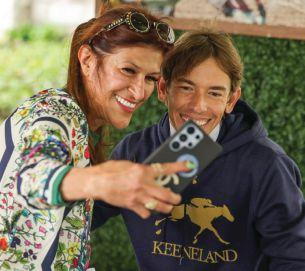
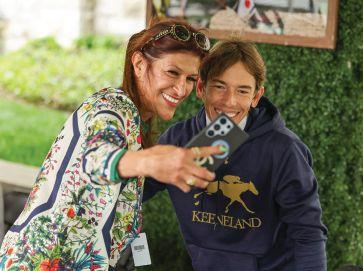
Tyler Gaffalione and a fan take a selfie at the April 18 jockey autograph signing, benefiting the Permanently Disabled Jockeys Fund.
3 | HEIGHT OF FASHION
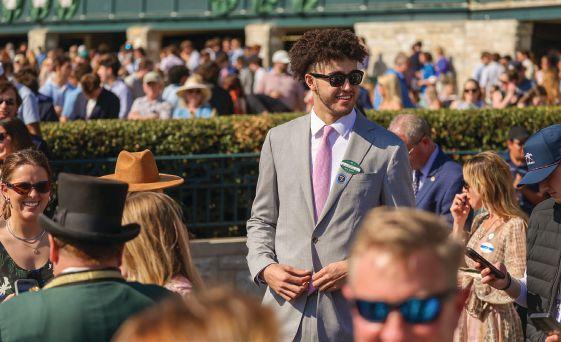
Malachi Moreno, who was the center for the 2025-26 University of Kentucky basketball team, attended the spring races.
4 | SPECIAL TREAT
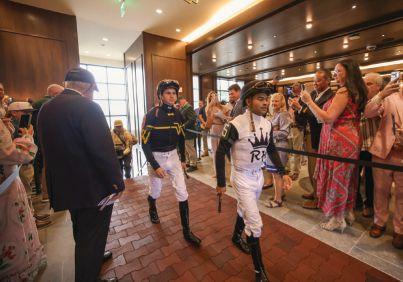
Patrons in the 1936 Room in the new Paddock Building saw jockeys walk from the jockeys quarters to the paddock before each race.
5 | VERSATILE STAR
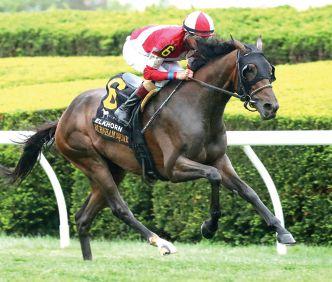
A year after winning Keeneland’s most famous race, the Toyota Blue Grass (G1), to earn a spot in the Kentucky Derby, Burnham Square captured the April 18 VisitLEX Elkhorn (G2) on turf.
6 | TEAM CUP
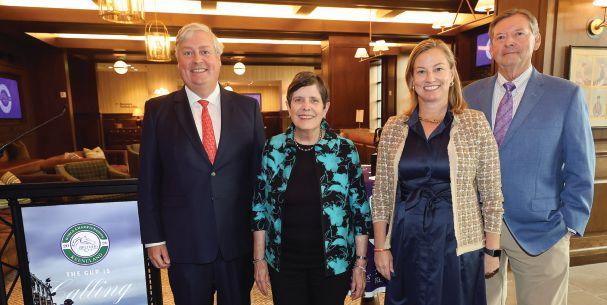
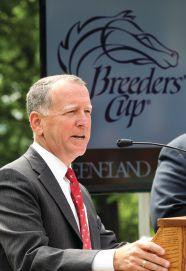
The April 14 press conference welcoming the Breeders’ Cup World Championships to Keeneland on Oct. 30-31 featured (from left) Breeders’ Cup President and CEO Drew Fleming, Lexington Mayor Linda Gorton, Keeneland President and CEO Shannon Arvin, and Breeders’ Cup Festival Chair Kip Cornett.
Out of PURPOSE
Every pairing is intentional. Every generation builds on the last. The result is a broodmare band designed to produce yearlings prepared for the long run. Out of Stonestreet.
Yearlings offered at Keeneland.
SPOTLIGHT ON
KATE LOSSEN
KATE
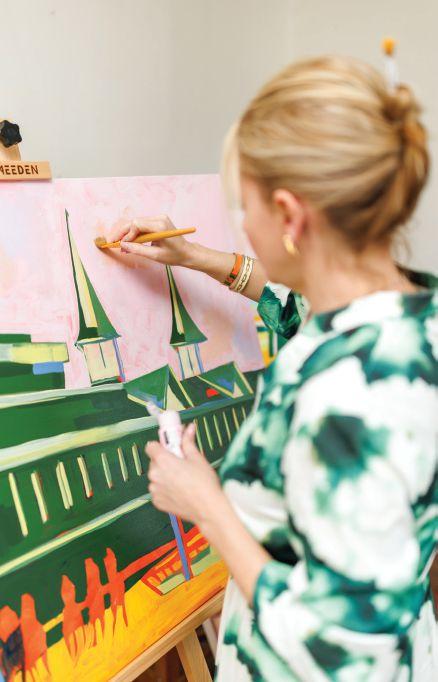
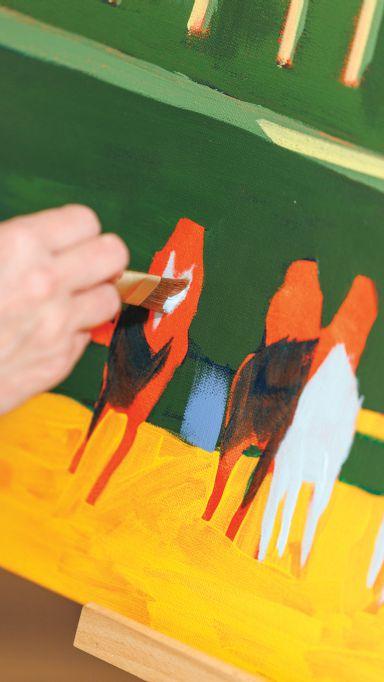
Kate Lossen works on a painting in her home-based Lexington studio.
Finding Her NICHE
ICHE
CREATOR KATE LOSSEN HAS COMBINED HER MANYTALENTS INTO A HOMEGROWN ENTREPRENEURIAL SUCCESS
By Robin Roenker / Photos by Crawford Ifland
KKATE LOSSEN PRACTICALLY whirs with energy and new ideas for artistic expression — so much so that a conversation with her feels like a fast-paced study of creativity, in the best possible way.
As founder of Pinhook Mercantile, an online shop featuring Lossen’s own lines of handmade pottery, home decor, linens, Thoroughbredthemed prints, and more, Lossen has a knack for crafting lovely things. She also has an eye for capturing and curating beauty, talents she puts to good use as an in-demand professional photographer and interior designer.
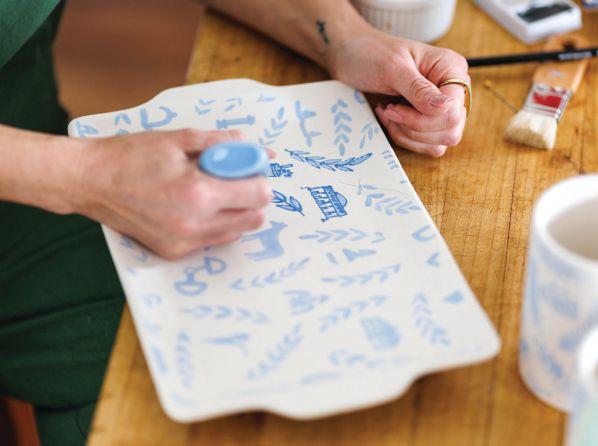
Here she puts finishing touches on trays and coffee
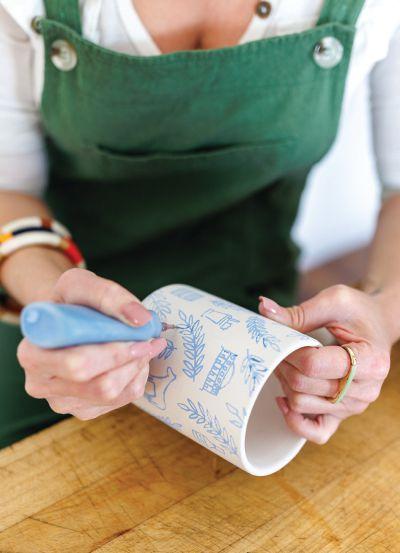
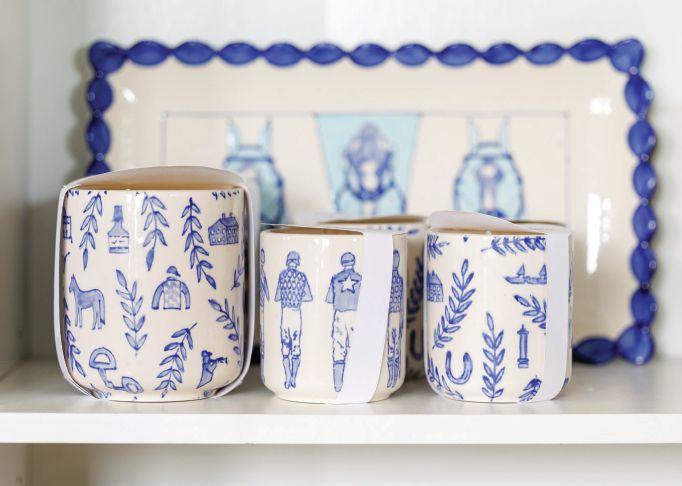
Lossen decorates a candle container, part of her own line of handmade pottery.
Lossen notes that she began producing blueand-white pottery well before the recent resurgence in popularity of chinoiserie.
mugs.
SPOTLIGHT ON KATE LOSSEN
“I think with all my jobs, the one theme that pulls them all together is just creating joy,” she said during a recent sit-down at her home-based studio in Lexington. “My work brings me joy, and it lets me leave a mark on people’s lives that hopefully brings them happiness, too.”
HORSE INDUSTRY ROOTS
Lossen was born in Lexington to parents in the horse industry. Her mother, Vicky Van Camp, has had a long career as a racing research professional, including roles at Thoroughbred Times, Stonerside Stable, and Godolphin, while her late father, Dick Lossen, was a well-known bloodstock agent. As a result, Kate Lossen grew up shadowing the Thoroughbred circuit.
“I was raised here [in Lexington] and everywhere in between,” she said, before describing memorable tenures living in Nashville, Tennessee, where she created and ran a neighborhood newsletter as an eager child reporter, and at a farm in Nicholasville, where she and her older brothers — Joe, a farrier, and John, a carpenter and former bloodstock agent — were free to roam.
“We traveled a lot. We’d be up in Saratoga [Springs, New York] for eight weeks, so we would plan trips to the Russian Tea Room and all the museums in New York City. We were encouraged to learn and feed our curiosity everywhere we went,” Lossen said.
DISCOVERING HER CALLING
Growing up immersed in the equestrian industry, Lossen originally imagined herself pursuing something entirely different.
“When I was younger, I always felt like horses were not my thing,” she acknowledged. But the pull of the industry was strong: Lossen worked for a few years at Thoroughbred Times while studying at the University of Kentucky. She worked at Churchill Downs in customer relations for a while. She worked with the Tony Leonard Collection, helping curate the famed equine photographer’s archives. She eventually married someone in the industry, and their lives centered on the horse world in Ireland, England, and Portugal for several years.
When her marriage broke up in 2017, she had an epiphany: “I realized I can do anything I want,” she recalled. “That was the point that my interior design work [in Lexington] really kicked off.”
Today, Lossen is an in-demand designer for high-profile clients throughout the racing industry. She’s made a name for herself creating comfortable and inviting spaces for clients’ homes and their Kentucky-based short-term rental properties, often incorporating design touches with equestrian themes.
Her interior design work has included projects for clients on staff at Clearsky Farms, Claiborne Farm, Coolmore America, and many others.
“Ninety-nine percent of my [interior design] clients are horse people,” she said. “It’s fun, because you get to do these horsey themes that tie things together.”
Lossen often incorporates equestrian themes in her designs.
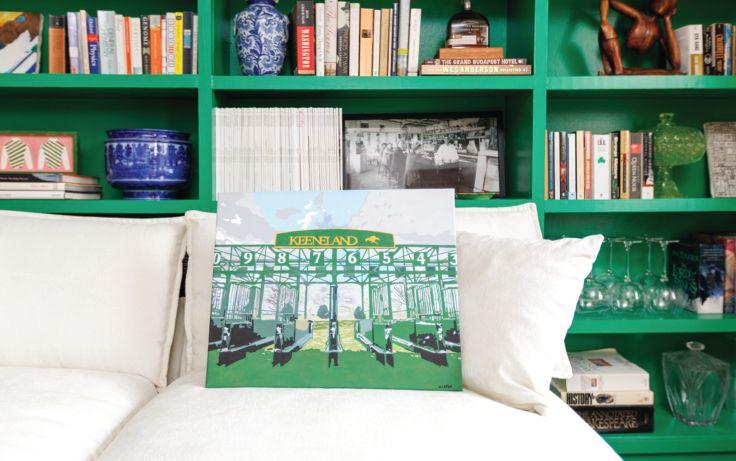
One of Lossen’s original paintings reflects her unique interpretation of the Keeneland starting gate.
SPOTLIGHT ON KATE LOSSEN
“Kate is one of the most artistic people I’ve ever been around. She’s great at coming up with ideas and just going after them,” said Lakota Gibson, manager of sales and seasons at Gainesway Farm, who hired Lossen to help redesign several rooms in her home.
When Lossen found it difficult to find the perfect piece to fill a client’s design space, she’d often create her own. That led somewhat organically to the establishment of her custom lines of colorful horse paintings, horse print fabrics and pottery, and equine photography.
“When I’m working on my own paintings or pottery, those are times when I can focus on bringing out my personal vision,” she said. “When I’m working as a designer, it’s not about me. It’s about making someone else’s dream vision come to life.”
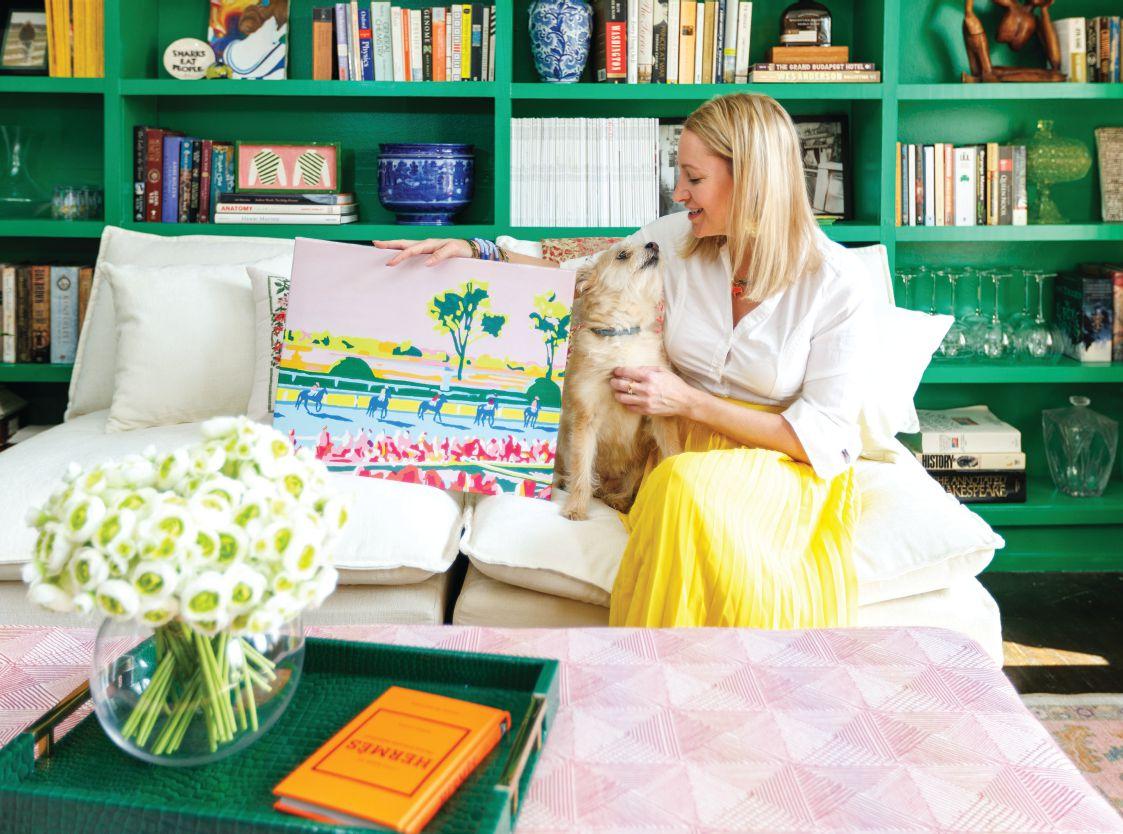
Lossen’s palette for much of her work includes yellows, pinks, greens, and blues.
SELF-STARTER
Even at first meeting, Lossen’s blunt, no-holds-barred, mile-a-minute conversation style exudes a sense of intimate camaraderie, so you comeawayfromthevisitfeelingasthoughyou’veknownherforyears.
She’s unguarded and extremely self-aware, sharing candid stories about the antics of her youth and how her boyfriend frequently marvels at her quirky worldview or her ability to stream a TV show, listen to a podcast, work a crossword puzzle, and knit or paint pottery — all at the same time.
“My brother [John, 13 months her elder] is quiet and chill and methodical, and I’m loud and abrasive and impulsive,” Lossen said. “I daydream about having a podcast called ‘Ask My Mom If It’s True’ where I’d just share wild stories about my life, and people could call in to my mom to verify if it happened and get all the details.”
Always a self-driven learner — “When I was a kid and the encyclopedia salesman came to our house, that was the best day ever,” she recalled — Lossen opted to complete her GED and exit classes at Dunbar High School early. “By the time my friends were at graduation, I had my own house and a job and was attending Lexington Community College full time,” she said.
Lossen’s creative drive is something that has “always been there,” she said. She is largely self-taught as a painter, photographer, potter, designer, and all-around maker, and her early creative impulses were fostered especially by her mom, who allowed Lossen to paint her room whenever and however she wanted, so long as she didn’t ruin the carpets.
Even today, Lossen has an uncanny ability to spot coming trends before they fully explode.
“I was doing the blue-and-white designs on my pottery for years before the current chinoiserie trend became big. And I had started including Southwestern influences in my interior design work a couple of years before it started appearing in Architectural Digest and everywhere else again,” she said.
It’s a knack, Lossen said, that lets her give clients a design look “that’s really fresh and unique to them, which stays feeling fresh for a long time.”
SPREADING HAPPINESS
Thriving on the variety that her many creative pursuits provide, Lossen said her multifaceted entrepreneurial platform “gives my brain every option, so I can wake up and say, ‘What do I feel like doing today?’ ”
“ WHEN I’M WORKING AS A DESIGNER, IT’S NOT ABOUT ME. IT’S ABOUT MAKING SOMEONE ELSE’S DREAM VISION COME TO LIFE.”
— KATE LOSSEN
SPOTLIGHT ON KATE LOSSEN
Her creative freedom is spurred on, she said, by the fact that she has “absolutely zero fear of failure.” That’s not to say she doesn’t think she’ll ever make a misstep. But if it happens, she has full confidence that she can pick herself up, learn from it, and try again. “That’s a theme I try to share with others in my social media feeds,” she said. “There’s no wrong thing in art.”
As a teen, Lossen held an after-school job with well-known local creator Ouisha McKinney, who shared some of the ins and outs of crafting hand-painted pottery pieces.
By 2010, Lossen’s own line of hand-painted pottery had become a top seller on Etsy. Today, her custom hand-painted ceramic picture frames, lamps, bowls, mugs, butter dishes, spoon rests, and more — frequently embellished with horses or botanicals — remain in high demand.
Her colorful, original equestrian-themed prints, many in her hallmark palette of vibrant yellows, pinks, greens, and blues, are also perennial top sellers. In developing that series, she often
recalled her early days spent at Keeneland, drawing alongside celebrated equine cartoonist Pierre Bellocq, better known as “Peb.”
“My dad would just plant me with Peb, and I’d sit in the paddock with him. He’d say, ‘OK, Kate, draw this,’ and I’d try to copy it,” she shared.
Now in her 40s, Lossen notes the irony in growing up looking for a career outside of the horse business, only to have found one squarely within it. She plans to work next on a race-themed series of paintings inspired by the work of photographer Tony Leonard, but with a more abstract execution.
“What was that movie, ‘The Accidental Tourist’? I feel sometimes like I’m the ‘accidental horse artist,’ ” she said. “For a long time, I was fighting it, and then at one point, I realized there are ways I can embrace the industry in my own ways.”
“The horse industry is very lucky to have a local artist like Kate, because she knows the industry inside and out,” said Carrie Gilbert, the racing, sales, and stallion coordinator at
Lossen works on details in a painting of Churchill Downs. Growing up immersed in the Thoroughbred industry, Lossen could not help but be inspired by horses and racing.
SPOTLIGHT ON KATE LOSSEN
SEE MORE OF KATE LOSSEN’S CREATIONS AT PINHOOK MERCANTILE:
Online: pinhookmercantile.com
Instagram: @pinhookdesign
For her professional photography work, Lossen has retained her former married name.View her wedding and other professional photo galleries at Kate McStay
Photography: katemcstay.com.
Flaxman Holdings. Last year, Gilbert commissioned original artwork from Lossen for Flaxman Holdings’ corporate picnic. The company also worked with Lossen to create a series of custom ceramic dishes, which they gave to corporate partners as holiday gifts.
For her part, Lossen loves that her creations get to play a small role in other people’s lives.
“When I go to craft markets, customers will come up and share things like, ‘I have your butter dish on my counter, and every day it brings me joy,’ ” Lossen said. “That’s why I love this work. Who wouldn’t want to wake up every day and bring people happiness?” KM
Working in her home studio allows Lossen to spend time with her dog, Hot Sauce.
Keeneland
and the Cup
KEENELAND HAS PUT A SPECIAL STAMP ON THREE BREEDERS’ CUP WORLD CHAMPIONSHIPS AND PREPARES TO WELCOME A MUCH-ANTICIPATED FOURTH
By Lenny Shulman
Keeneland has invested in the new Paddock Building and reconfigured paddock in time for the 2026 Breeders’ Cup.
DAVID COYLE
IT TOOK 31 YEARS for the Breeders’ Cup, whose corporate office sits a few furlongs away from Keeneland Race Course, to bring its signature world championships to the Lexington track. Because that inaugural voyage into the Bluegrass in 2015 resulted in a raging success when measured in both civic engagement and quality of racing, Keeneland has become a regular venue in the event’s site rotation. The 2026 Breeders’ Cup on Oct. 30-31 will mark the fourth time the Lexington track will host. Keeneland has also helped change the operating philosophy of the annual Breeders’ Cup and today plays a vital role in its ongoing popularity.
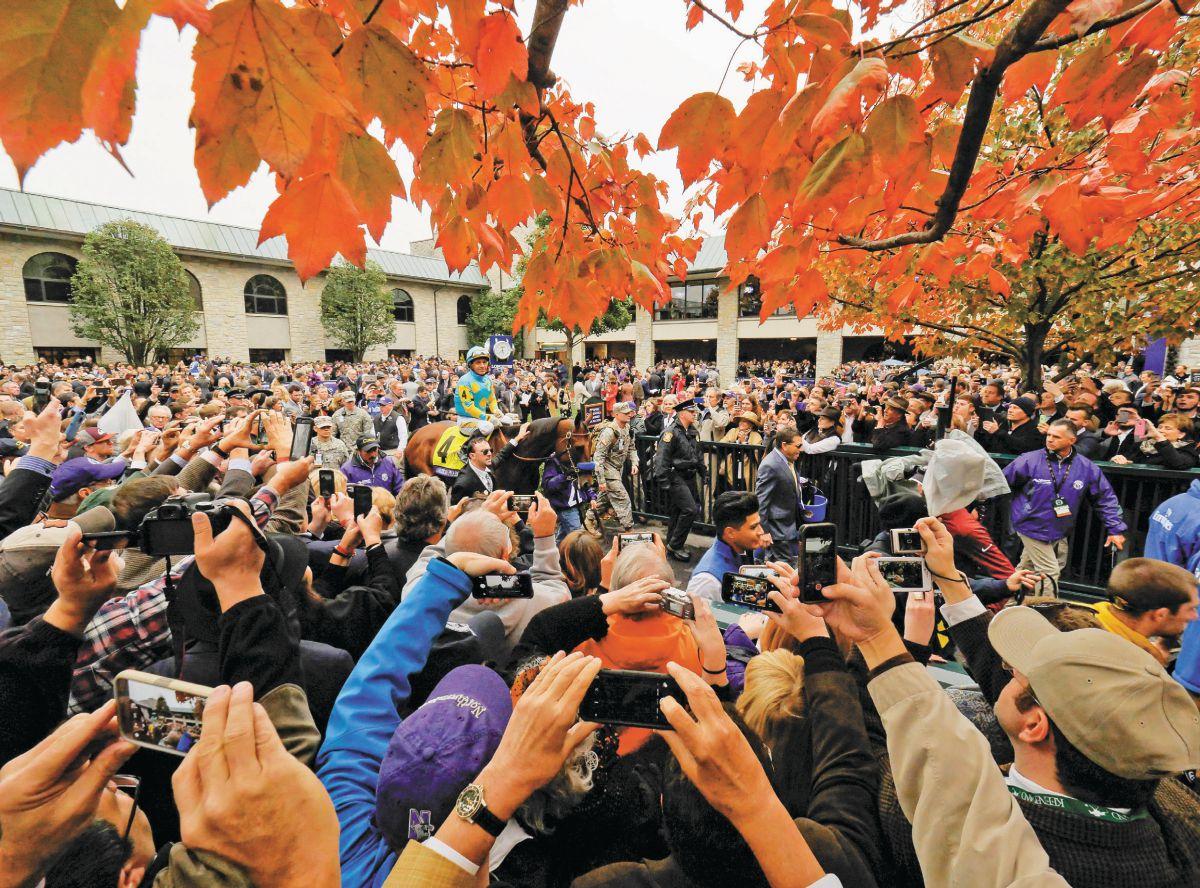
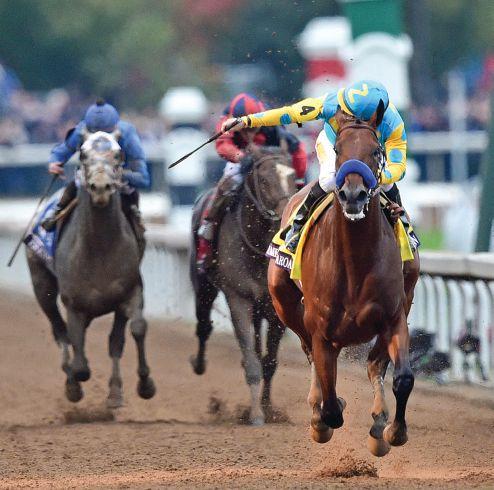
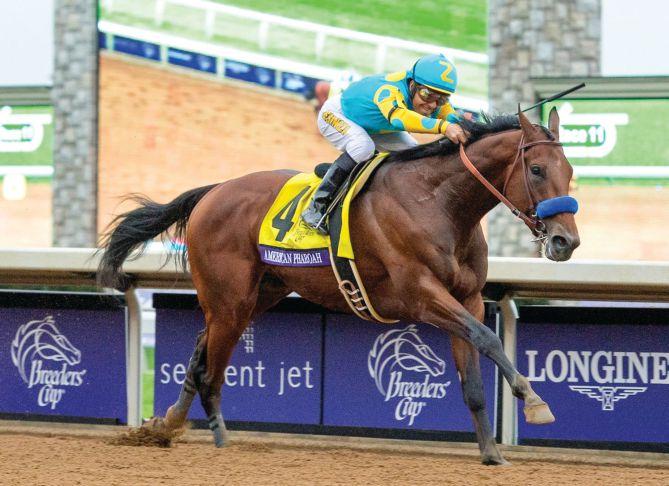
Keeneland’s first Breeders’ Cup, in 2015, benefited from the appearance of that year’s Triple Crown winner, American Pharoah, who stormed home in the Classic, below.
It didn’t hurt, of course, that the 2015 edition of the Breeders’ Cup featured the phenomenon that was American Pharoah. Fresh off becoming the first American Triple Crown winner in 37 years, the colt placed a cherry atop his résumé with a dominating victory in the Breeders’ Cup Classic. Against the Bluegrass’ background of oaks, ashes, and sycamores dressed in autumn colors, American Pharoah elicited full-throated encouragement and more than a few tears from the tens of thousands at the track that Halloween afternoon.
Since the inaugural Breeders’ Cup in 1984 (it began as a oneday event before expanding to the current two-day format in 2007), there has been a tug-of-war over how frequently — and to which venues — to move the event year to year. The marketers originally in charge wanted to emphasize a pleasing atmosphere and visuals that would appeal to the national television audience. They also wanted to maximize attendance. Thus, an early emphasis was placed on holding the event in California at Hollywood Park and Santa Anita Park.
Keeneland left no detail to chance in 2015.
But East Coast and Midwestern horsemen raised their voices, and the Breeders’ Cup for its first dozen years settled into a rotation among Southern California, Churchill Downs, New York (Belmont Park and Aqueduct), and Gulfstream Park in Florida. These were all large facilities that could boast impressive live attendance figures, which was seen as a vital benchmark for the success of the Breeders’ Cup in its formative years.
Over the next decade, those who preferred moving the event to new venues got their say, and the Breeders’ Cup began traveling to other, more boutique facilities in new markets. Woodbine in Toronto hosted the 1996 event; Arlington Park near Chicago held the 2002 edition; Lone Star Park near Dallas took a turn in 2004; and Monmouth Park in New Jersey got the call in 2007.
Still, there was a sizable segment of the Breeders’ Cup board that sought to make a permanent home for the world championships at Santa Anita. None of the new venues ever got a second chance. Woodbine was plagued by bad weather and the threat of a mutuel clerk strike; Arlington was a magnificent facility but the weather would have sent penguins scurrying for cover; Lone Star saw impossibly long lines for everything from beer to placing bets; and it rained so much at Monmouth Park during Breeders’ Cup week that Noah could be seen building a boat.
Truth be told, even Southern California is not immune to Mother Nature. While temperatures are mild in late October/early
Knowledge is knowing a
and the Cup Keeneland
November, the Breeders’ Cup at Santa Anita has twice been threatened with cancellation due to stifling smoke from nearby wildfires.
Yet,forthesevenyearsbetween2008 and 2014, the Breeders’ Cup was held five times in Southern California and theothertwoatChurchillDowns.Tried and true was the name of the game. But during that time, new ideas began percolating: Raw attendance might not be as important as seeking higher per capita spending from patrons. Smaller venues that offered higher levels of hospitality might deliver revenues and an experience that was in line with, or greater than, the status quo.
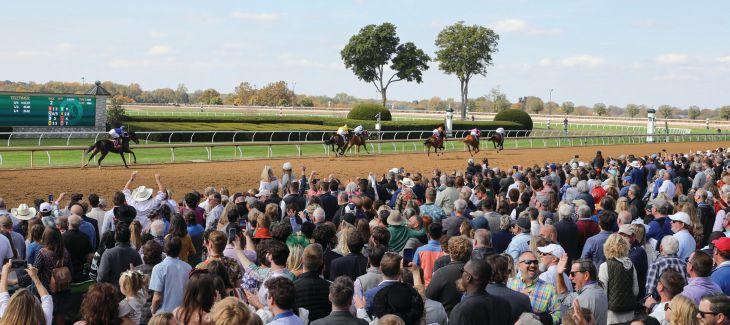
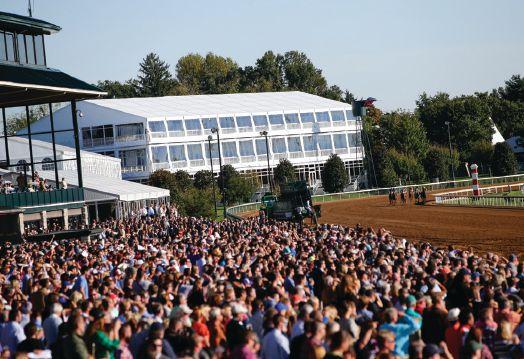
Craig Fravel, below, helped expand the roster of host sites during his tenure as Breeders’ Cup CEO and president from 2011 to 2019. It didn’t hurt Keeneland that its boutique race meets are extremely popular and well attended, above and bottom.
Against this backdrop, Keeneland entered the picture as a serious contender to host the two days of premier racing. Along with Del Mar just outside San Diego, Keeneland offered a boutique facility that had proven to be wildly successful in attracting race fans year in and year out. However, both Keeneland and Del Mar were downgraded by the decision-makers at Breeders’ Cup for having synthetic main-track racing surfaces. Dirt racing dominates the landscape in the United States, and it wasn’t until both venues announced in 2013 that they would be reinstalling dirt surfaces that the last major roadblock was
removed to their hosting the Breeders’ Cup.
“There was a faction of the board in favor of naming Santa Anita a permanent host site, but I wasn’t one of them,” stated Craig Fravel, CEO and president of the Breeders’ Cup from 2011 to 2019.
“I wanted to expand the roster and inject something new into it. We were trying to establish a multiyear site plan in 2013, and both Keeneland and Del Mar were converting back to dirt tracks.”
Keeneland received the nod for 2015, and Del Mar hosted its first Breeders’ Cup two years later.
Del Mar is now also an integral part of the rotation, which is critical considering growing uncertainty swirling around the future of Santa Anita. Cities like Lexington and San Diego also offer an enhanced opportunity to tie civic engagement into the overall Breeders’ Cup experience in a way larger cities such as Los Angeles and New York can’t because of the sheer number of events they host.
CHALLENGES MET
Lexington embraced the arrival of the Breeders’ Cup in 2015 as you would expect from a region that considers itself the “Horse Capital of the World.” Horse racing and breeding are signature industries in Central Kentucky, and so the area enjoyed a head start in understanding the significance of hosting the festivities. It makes a differencetovisitorswhenhotelandrestaurant personnel know exactly why they are in town and can make recommendations
COADY
and the Cup Keeneland
on things to do and sights to see.
Keeneland reconfigured its saddling paddock to handle greater numbers of horses for Breeders’ Cup.
Kip Cornett, founder of the Cornett advertising agency, served as chair of the local festival committee, helping bring together the Lexington business and civic communities to join with the horse industry in rallying around the Breeders’ Cup. Cornett said the seeds for Lexington’s success in hosting the event were planted back in 2010.
“The courage to take on bigger events started when Pearse Lyons and Alltech brought the World Equestrian Games to the Kentucky Horse Park in 2010. That was pivotal because it made people believe and understand that Lexington could host world-class events,” said Cornett. “Everybody pitched in — the city, the university, the creative community, the culinary community. That was a huge moment. When Breeders’ Cup came along in 2015, there was an enthusiasm and an understanding of how to pull off the event. There was momentum in people embracing these opportunities, knowing they make economic sense and cultural sense.”
Bill Thomason, Keeneland’s CEO and president from 2012 to 2020, credited teamwork with a successful first Breeders’ Cup.
However, questions continued to be raised over whether Lexington was equipped to handle issues like traffic and the level of hospitality (hotel rooms) required. Also, Keeneland’s parking capacity needed to be addressed, with about 100 buses ultimately being deployed to shuttle patrons to and from the track from various points around the city. Seating options around the track needed to be expanded to satisfy the demand for high-quality accommodations.
“When I started at Keeneland, the idea of hosting Breeders’ Cup was brought up, but we didn’t think the facility was big enough to handle the requirements of putting it on,” said Bill Thomason, president and CEO of Keeneland from 2012 to 2020. “But we had an incredible team of professionals, and we kept diving further in to see if maybe it could work. The mantra at Keeneland has always been that if we can’t do something well, we aren’t going to do it. We reached a point where we were confident in what we were getting ready to create.”
Traffic and parking are issues that can be mitigated, but the prospect of Keeneland simply being too small to handle the seating demands of a Breeders’ Cup still needed to be remedied.
“[Host Communications founder] Jim Host introduced us to a firm in Alabama [Colonnade Group] that did temporary facilities for the PGA Tour and other organizations,” said Fravel. “We did a site plan for Keeneland that involved temporary
PHOTOS BY Z/KEENELAND
Temporary chalets help accommodate Breeders’ Cup patrons and provide first-class service.
Special Thanks to Our Sponsors
For your ongoing support of Keeneland’s mission and the wonderful traditions of Thoroughbred racing.
G1 STAKES SPONSORS
ADDITIONAL STAKES SPONSORS
SPECIAL RECOGNITION
CORPORATE PARTNERS
and the Cup Keeneland
chalets [multilevel luxury tents] and ran the numbers. I lost a lot of sleep the night beforeticketswentonsale.Amazingly,we were close to sold out within 48 hours.”
Beyond traffic, parking, and seating/hospitality, Keeneland needed to address other items behind the scenes.
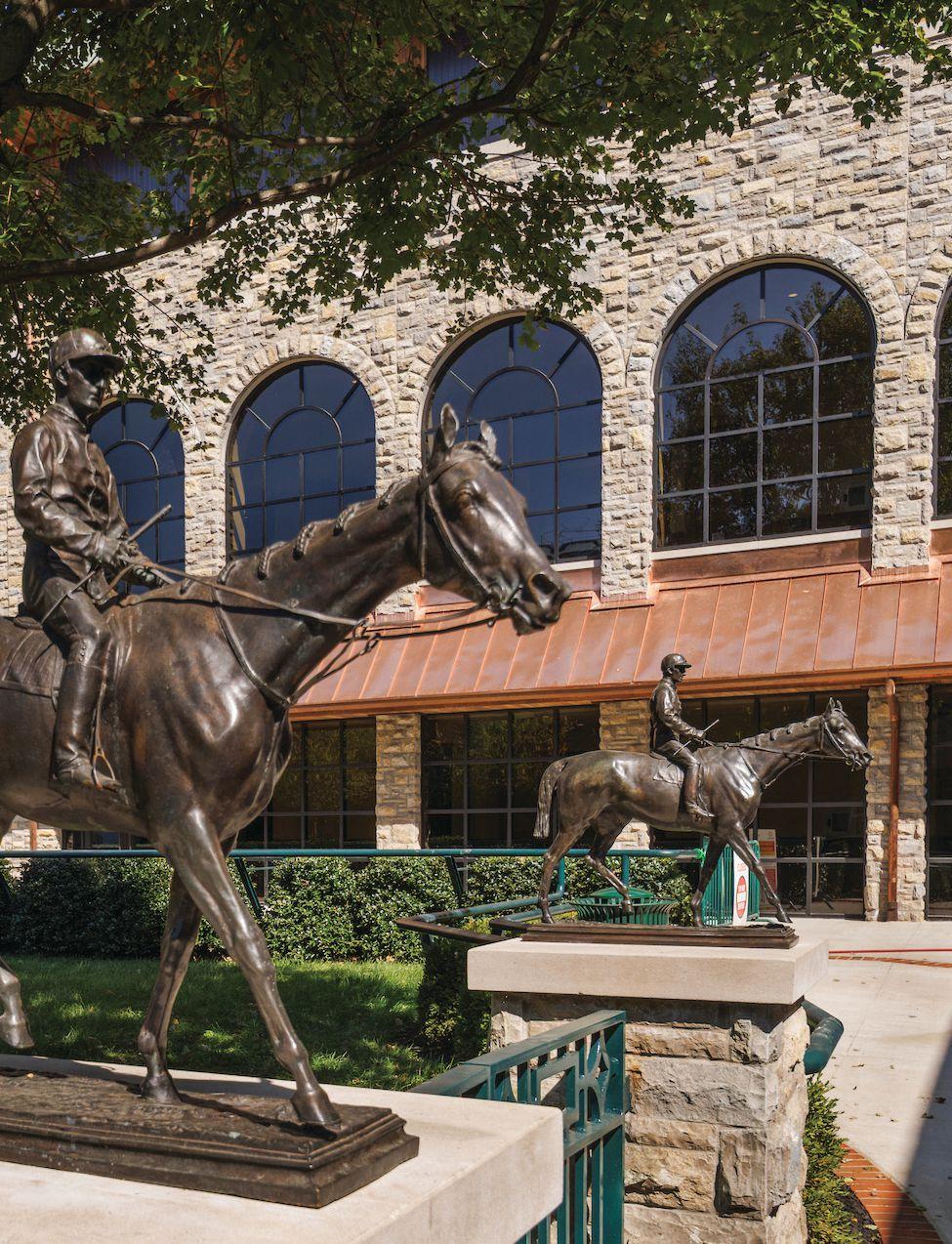
The saddling paddock required reconfiguring to accommodate greater numbers of horsemen while safely attending to the presentation of the horses and getting the jockeys up in view of the fans. Trees were planted and walkways beautified to enhance the experience for patrons. Keeneland coordinated with Blue Grass Airport to ensure that the volume of private jets could be handled. Press conferences were moved to the sales pavilion for the increased number of media members.
“Things do go wrong, but hopefully they are in the background where most people never see them because they are quietly resolved,” Thomason noted. “The seamlessness was a thing of beauty. Keeneland is not a boastful organization; that is not part of the culture. But people take tremendous pride in their jobs and in the organization, and there was elation with the fantastic environment that was created.”
The 2015 Breeders’ Cup was capped by an unforgettable edition of the Breeders’ Cup Classic, courtesy of American Pharoah, which climaxed a weeklong racing and entertainment festival that came off without a major hitch. (See sidebar, p. 60.)
Thanks to the chalets and temporary seating installed in front of the track’s box seats, attendance at the 2015 Breeders’ Cup reached 44,947 on Friday and 50,155 for Saturday. Ticket and seating revenue doubled over the previous year’s Breeders’ Cup held at Santa Anita. Thus, the first Breeders’ Cup at Keeneland established a new template for horse racing, with enhanced hospitality and premium options as revenue producers beyond what higher attendance alone could generate. It is a model now employed by sports venues around the globe.
“It is a heavy lift to pull off a Breeders’ Cup at any racetrack, but especially at a smaller venue like Keeneland,” said Ben Huffman, racing secretary for Keeneland. “There were knockers and naysayers and keyboard cowboys saying we couldn’t do it, but Keeneland pulled it off, and it was a tremendous success.”
Noted Fravel, “All of the expectations on the good side came true, and none of the concerns on the downside ended up being reality.”
COVID CUP
COVID-19 kept Breeders’ Cup attendance in 2020 to a minimum but Keeneland succeeded in creating a safe environment.
The Breeders’ Cup returned to Keeneland in 2020, but under conditions no one could have imagined. In the throes of the COVID-19 pandemic, the entire planet, including the racing world, was in upheaval. The event was run with only horsemen and their families on-site. All enhanced facilities and food service were canceled.
“We had a strong sense of obligation, as did the Breeders’ Cup, to put on the event,” said Thomason. “There was stress on everyone to create a safe environment, and to provide for the owners and the safety of the horses. We wanted to present it correctly, but I can remember the emptiness around the track. Everyone knew Keeneland deserved to host it again, because that one didn’t count.”
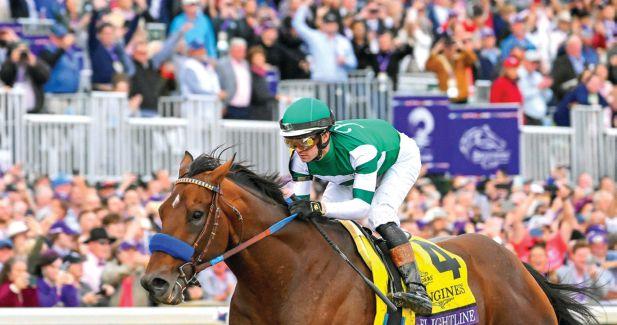
The next opportunity came in 2022, when the Breeders’ Cup at Keeneland was bolstered again by a superstar competing in the Breeders’ Cup Classic. This time, it was the undefeated Flightline who headlined the show, and he did not disappoint.
“I’ll always remember Flightline’s performance in the Classic. In that moment, everyone at Keeneland — regardless of their role — was simply a fan, watching something truly exceptional,”
Flightline kept his record perfect with a popular victory in the 2022 Breeders’ Cup Classic.
Cup and the Keeneland
said current Keeneland President and CEO ShannonArvin.“It’sthekindofperformance that stays with you and becomes part of racing’s shared history.”
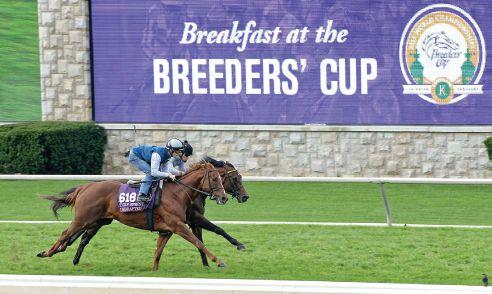
In addition to the satisfaction of staging a successful Breeders’ Cup, racing and sales eventstangentialtotheworldchampionships also benefit from its presence at Keeneland. The autumn race meet there immediately precedes the Breeders’ Cup, giving horsemen an opportunity to get a race for their Breeders’ Cup hopefuls over the same racing surface. This enhances the number of entries and also brings in additional high-quality runners that come to Keeneland to gain experiencewiththelayoutandsurroundings.
“We did detect an uptick in our entries in 2015,” said Huffman. “The thing that pops into my mind is Runhappy running in the Phoenix Stakes as a prep for the Breeders’ Cup Sprint. You usually don’t get 3-year-olds running against older horses in the Phoenix. That’s just one example.”
Rogers Beasley, who served as vice president of sales and of racing at different times in his career at Keeneland, agreed. “It [Breeders’ Cup] absolutely helps the October race meet,” he noted. “Today, the purse money offered by Keeneland attracts horsemen, and the races over the first two weekends are huge for people looking to get their horses a race over the track.”
The Breeders’ Cup is immediately followed by Keeneland’s November breeding stock sale, the timing of which was tweaked by Beasley nearly 40 years ago to take advantage of
having horsemen already in the area.
“The first time Breeders’ Cup came to Churchill Downs in 1988, we moved the sale forward four or five days to start on the Monday night right after Breeders’ Cup Saturday,” Beasley said. “People were already going to be in Louisville, so why not get them while they’re here instead of making them come back in a week?”
Arvin concurs that the Breeders’ Cup creates a unique connection between performances on the track and the sales.
“Flightline’s extraordinary run in the 2022 Classic is a perfect example,” she said. “His victory really generated excitement throughout the industry and beyond, helping connect key new buyers with the Keeneland marketplace.”
Two days after his Classic victory, a 2.5% fractional interest in Flightline sold for $4.6 million at the start of the November breeding stock sale. The share’s auction packed the Keeneland sales pavilion. Flightline entered stud the next year.
COMMUNITY SUPPORT
Lexington, along with Keeneland, has proven to be a star during local Breeders’ Cups. Advertising executive Cornett helped bring Keeneland, Breeders’ Cup, and Lexington together leading up to that initial Breeders’ Cup in 2015. More than $700,000 was raised to sponsor events that year. Cornett built the original marketing campaign around the theme of educating, exciting, and entertaining. The first pillar of that entailed getting the word out that the Thoroughbred industry is a major economic engine for the city — and what a major event the Breeders’ Cup would be. He included public schools and restaurants in helping drive support for the event.
Keeneland’s November sale has benefited from the Breeders’ Cup.
Gatton Park in downtown Lexington will be a focal point of the Breeders’ Cup Festival.
The Keeneland paddock, above, is ready to welcome Breeders’ Cup contenders this fall, when the Lexington track will be the center of the racing world, above right.
ANNE M. EBERHARDT
KEENELAND PHOTO
Cup and the Keeneland
UNFORGETTABLE PERFORMANCES
The 2015 Breeders’ CupWorld Championships will always be celebrated locally for proving that Keeneland and the city of Lexington could expand services and put on the world-class event. However, it will also remain one of the most memorable editions because of the quality of the racing.
American Pharoah at the time was seen as the savior ofThoroughbred racing in NorthAmerica. Earlier in the season, he had become the first horse in 37 years to win the U.S.Triple Crown (Kentucky Derby, Preakness, and Belmont Stakes). His career finale came in the Oct. 31 Breeders’ Cup Classic.When Beholder, the multiple-champion mare who figured to be his stiffest competition, scratched out of the race due to illness,American Pharoah towered over the Classic field. He led at every call, and although his 6 1∕2-length triumph was not suspenseful, it was highly emotional for those in the Keeneland grandstand who stood and cheered with delight as he came down the stretch.
“I’d never heard a crowd at Keeneland roar like that in my life when he turned for home,” said then-Keeneland Vice President of Racing Rogers Beasley. “It was unbelievable and capped one hell of a day.”
Ben Huffman, Keeneland’s racing secretary, vividly remembers that moment. “I still get goosebumps,” he said. “When he hit the wire, I turned around and my family and the people around them had tears of joy.There was pressure for theTriple Crown winner to add the Breeders’ Cup Classic. People felt overwhelming emotion. It’s so clear in my mind, like it was yesterday.”
The great racing extended far beyond
everyone who was going to come in contact with our visitors,” said Cornett. “Greeting people in hotels, restaurants, bars, and tourist attractions with enthusiasm. Those people are spending thousands of dollars to enjoy the Breeders’ Cup. And that work helped lead to Condé Nast Traveler naming Lexington the friendliest tourist city in America. That is huge.
“Entertaining is the third leg of the stool. Whether it’s Wimbledon or the Super Bowl or World Cup, you must have a level of entertainment outside the event site so that people feel there is a lot going on. We did that with music, with food, and with a little bit of everything. We wanted to have people stay five days instead of three if possible. Do the bourbon tours and the horse farm tours leading up to Breeders’ Cup.”
Cornett said the experience of having had Lexington host
American Pharoah.The Breeders’ Cup Juvenile was won in come-from-behind fashion by Nyquist,who would the following spring become just the second Juvenile winner to also capture the Kentucky Derby. Songbird, winner of the Juvenile Fillies by 5¾ lengths that day, would continue from there to craft a Hall of Fame career. She was champion 2-year-old filly in 2015 and champion 3-year-old filly in 2016, winning
two Breeders’ Cups already (not counting the COVID-era Cup) has led to several tweaks that will be incorporated into the leadup to the 2026 edition. The emphasis this time around will be quality over quantity.
“The biggest difference for 2026 is that we have a lot of new great space around downtown. Gatton Park is at the center of that. Host sites for major sporting events have a fan zone, and now we have 11 acres open to the public where we can have performers onstage and free entertainment. There will be food trucks and a large-screen LED where we can show workouts in the mornings and have two big watch parties for the two days of races with entertainment in between,” he added.
Breeders’ Cup President and CEO Drew Fleming concurs that Lexington provides a unique venue for the event: “There
COADY MEDIA
AMERICAN PHAROAH
NYQUIST SONGBIRD
nine grade 1 events in her career and earning more than $4.6 million.
Tepin took the Breeders’ Cup Mile, defeated males in the process, and was named champion grass mare of 2015 and 2016. She loved Keeneland, also winning the First Lady and JennyWiley stakes (both grade 1) there on her way to banking better than $4.4 million.Another femme fatale on the day was the brilliant Found, who defeated males in the Breeders’ CupTurf, nosing out odds-on favorite Golden Horn. She earned multiple championship titles in Europe and topped $7.6 million in career earnings.
ANNE M. EBERHARDT
The fan favorite Runhappy prevailed in the Breeders’ Cup Sprint on his way to being named champion sprinter for 2015.The millionaire also won the grade 3 Phoenix Stakes at Keeneland in the weeks leading up to the Breeders’ Cup there.
The year 2020 was unique for everyone and every industry. Horse racing saw a season like no other. Because of COVID uncertainty as to what was safe, only horsemen and their families and friends were allowed in the Keeneland grandstand for the Breeders’ Cup.Also that year, the Kentucky Derby was run in September and the Preakness Stakes in October.That was a big advantage for any 3-year-old who was reaching peak form during that time.
Authentic won the Derby and finished second by a neck in the Preakness. But his form held for the Nov. 7 Breeders’ Cup Classic at
Keeneland featured a headline horse who drove a tremendous amount of interest toward the festivities.This time, it was Flightline, a lightly raced yet brilliant rocket ship who was coming off an incredible 19¼-length victory in the grade 1 Pacific Classic at Del Mar. In large part because of his presence, the 2022 Breeders’ Cup set an all-sources handle record of $189,060,373. Flightline did not disappoint, winning the Breeders’ Cup Classic by a record margin for the race — 8¼ lengths.
Keeneland, and he proved best by 2¼ lengths. In doing so, he became just the fourth horse to win the Derby and the Classic in the same year, joining Sunday Silence, Unbridled, and American Pharoah.Authentic, who would be retired immediately following the Classic, was named Horse of theYear for 2020 and earned $7.2 million in his career.
Other notable Breeders’ Cup victors at Keeneland in 2020 were Monomoy Girl and Whitmore. Monomoy Girl repeated in the Distaff after having won it two years before. Whitmore, a popular 7-year-old gelding, finally got his Breeders’ Cup Sprint victory in his fourth attempt at the race, and in his 38th career start.
Just as in 2015, the 2022 Breeders’ Cup at
is something truly special about hosting the World Championships in Lexington, the heart of horse country and the epicenter of Thoroughbred racing,” he said. “The passion of this community, combined with Keeneland’s world-class experience, ensures an unforgettable edition for fans, participants, and our global racing audience.”
KEENELAND ENHANCEMENTS
At the race site, Keeneland has unveiled its Paddock Building that overlooks the walking ring and saddling area. The new building, part of a $100-million-plus capital construction project, is the largest in the track’s 90-year history. The Paddock Building introduces five premium dining rooms, and patrons will have access to terraces overlooking the paddock as well as a reserved trackside viewing area.
In addition, Breeders’ Cup and Keeneland are investing $3 million
Fan favorite CodyÕs Wish added to the excitement when he won the Breeders’ Cup Dirt Mile, the first of his two consecutive triumphs in that race. Cody’sWish was named after Cody Dorman, who was born withWolfHirschhorn syndrome, a rare genetic disorder. Horse and child formed a bond as the horse interacted with Cody when the Dorman family visited him through the Make-A-Wish Foundation.Their mutual attraction produced one of the greatest feel-good horse racing stories in modern times.
to add three new luxury chalets and loge box seats to the mix.
Arvin said the improvements are intended to enhance patron experience rather than increase attendance.
“The updated hospitality offerings are designed to provide a more comfortable, elevated environment while maintaining the intimate atmosphere that makes Keeneland so special,” she said.
With three Breeders’ Cups under its belt and lessons learned from each, Arvin is confident the fourth edition will offer patrons a truly unique experience.
“Our approach is always to refine and improve,” she said. “We work closely with our Breeders’ Cup partners year-round, reviewing every detail from operations and guest flow to culinary and communications. Every experience we have to host gives us the opportunity to learn and elevate the experience even further.” KM
AUTHENTIC SKIP DICKSTEIN
MONOMOY GIRL COADY MEDIA FLIGHTLINE
CODYÕS WISH SKIP DICKSTEIN
Readying a Farm for Sale
The punch list we share with our clients.
We’ve been helping clients buy and sell the finest Central Kentucky farms, land, & estates since 1984. Armed with our hyperlocal Central Kentucky expertise and premium market experience, we offer tremendous value to our clients.
Our farm sellers understandably seek the strongest possible return when bringing a property to market. Pre-listing, we consult with them, creating a “punch list” to ready the property for photography and showings. The question always on our selling clients’ mind: which upgrades yield the highest return on investment? Our clients are often surprised when we advise against some of the projects they’re considering.
What would we advise you if you were our client? In our market, buyers are sophisticated, experienced, and decisive. They’re rarely dazzled by cosmetic upgrades. During showings, Central Kentucky farm buyers are evaluating architectural elements, infrastructure, land quality, and calculating expenditures.
Mindful of these buyer priorities, we suggest clients do make select updates prior to listing.
View our checklist at kirkfarms.com/farmupgraderoi
Considering bringing your farm to market? It would be our pleasure to help. Allow us to pay you a visit for a personalized analysis, including market value, personalized pre-list to-dos, and our unsurpassed marketing plan.
Why is the real estate market so loud with views this peaceful?
We guide our clients beyond the noise with thoughtfulness and gracious expertise.
SHARED S
DAVID COYLE
ROOTS S
THOROUGHBREDS and a d LEXINGTON L N are deeply intertwined, intertwined, a connection especially a connection significant as s s KEENELAND CELEBRATES ITS 90TH 9 H birthday and AMERICA ITS 250TH AMERICA ITS
By Avalyn Hunter
Hunter
CCENTRAL KENTUCKY DID NOT
travel a smooth trajectory from colonial days to the present, and neither did the Thoroughbred racing with which the Bluegrass region is so closely identified. But both the sport and the region stubbornly endured the vicissitudes of history, shaping each other into a flourishing partnership. Today, the city of Lexington proudly bears the title of “Horse Capital of the World,” and nowhere in the world does the sport of horse racing find higher expression than at Keeneland, Lexington’s magnificent racetrack.
Horse racing was in Lexington’s blood before the city was officially a city. When Virginians migrated through the Cumberland Gap into Kentucky, they had been racing horses for a century and a half, and saw no reason to stop just because of a change of location. Almost before the ink had dried on Lexington’s charter (granted on May 6, 1782, by the Virginia General Assembly), hooves were thundering down Main Street.
This early street racing was mostly over a quarter mile, though longer races were sometimes arranged. Local newspapers termed it “inconvenient” — probably a mild term, given the hazard to pedestrians — and the town’s trustees soon pressured the racers to move over to the Commons, where spectators could watch the action more safely from nearby High Street. By December 1793, Lexington
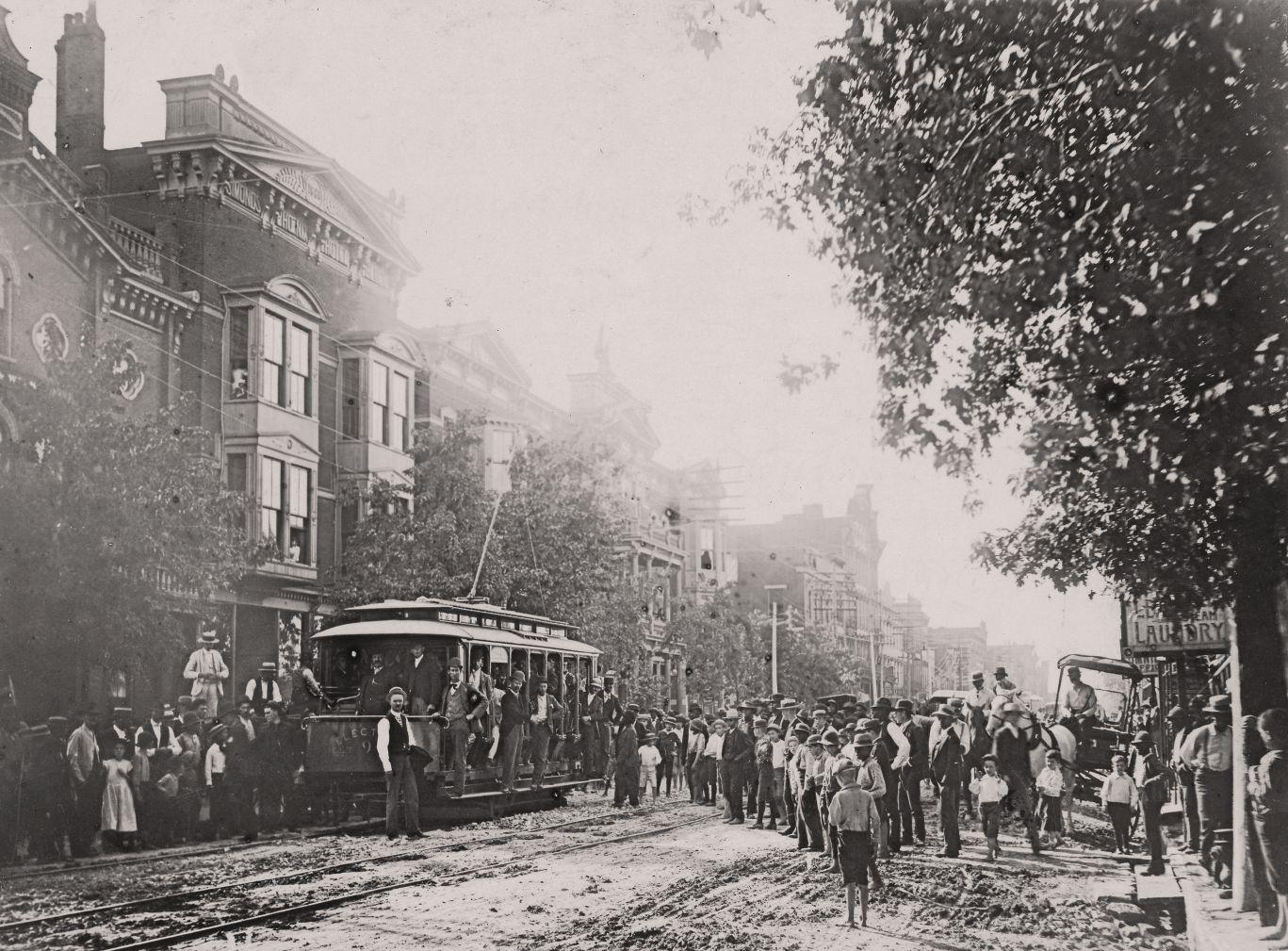
A trolley stops in front of the Phoenix Hotel, a Lexington fixture that served as a meeting place for early racing proponents and for which the Phoenix Stakes, America’s longest-running stakes race, is named.
A trolley stops in front of A stops he Phoenix Hotel, a fixture that served as a place for early which proponents and fo the Phoenix Stakes, America’s stakes race, is named
regulations forbade racing on any street of the town, with violators to be fined $3 — a substantial sum at a time when ordinary laborers earned $60 to $70 annually.
EARLY TRACKS
In pioneer days quarter-mile racing provided excitement, but it failed to satisfy gentlemen used to racing over three- and fourmile heats, a practice modeled after English customs. By 1789, Lexington had its first formal racetrack. Other tracks were soon constructed on private property in neighboring counties, and most conducted their racing according to rules established by the Lexington Jockey Club, which by 1797 was planning race meetings at the “Lexington Course.” Later, the club routinely met at the tavern owned by John Postlethwait on dates and times announced in the Lexington Weekly Press.
Following the War of 1812, racing in the area became more disorganized. By 1823, when the Lexington Jockey Club faded from the scene, racing in the Lexington
area was being conducted at the remaining private tracks. This arrangement was unsatisfactory to horsemen, who considered organized race meetings to be vital to the area’s breeding industry.
On July 29, 1826, 50 prominent Lexingtonians gathered on the site of what had been Postlethwait’s Tavern to create a new organization, the Kentucky Association. Rebuilt by former Lexington Jockey Club secretary Sanford Keen after fire had destroyed the old tavern several years earlier, the place was being run by his widow, who soon afterward returned the property to Postlethwait to settle her husband’s debts.
Keen had named his resurrected business the Phoenix Hotel because it had risen from the ashes like the mythological bird; it remained a Lexington landmark until its closure in 1977 and is the namesake for the Phoenix Stakes, America’s longest-running stakes race. Today, the property is Phoenix Park. The Phoenix Hotel was a fitting site forthecreationoftheKentuckyAssociation
for Improvement of the Breed of Horses, which ushered in a new era for racing in Lexington. With men such as Postlethwait, statesman Henry Clay, politician Jesse Bledsoe, and prominent breeder Dr. Elisha Warfield lending their prestige to the enterprise, matters moved ahead quickly. On Oct. 19, 1826, the Kentucky Association oversaw its first race meeting at the old Williams track (near the present-day Lexington Cemetery). Two years later, the association had constructed its own track on the east end of downtown on land purchased by Postlethwait and six other association trustees.
KENTUCKY ASSOCIATION YEARS
Racing at the Kentucky Association track was a gentleman’s sport. Only association members’ horses were permitted to run for purses. Stablemates were not permitted to run in the same race, and jockeys employed by the same owner could not ride against each other. Any suspicion of collusion between owners, trainers, or jockeys was grounds for a lifetime ban. Bookmakers and pool sellers were also banned; all wagers were to be strictly between gentlemen and were to be settled immediately following the outcome of a heat or race.
The physical plant was primitive: just the track and a judges’ stand, said to be “next to the cow-pens.” It would be 15 years before the course was surrounded by a post-andrail fence. A grandstand was eventually constructed atop a hill in the center of the course. The course itself was uneven, with a rise along the backstretch that provided an extra test of stamina to already-grueling heat races.
Nevertheless, the standard of racing at the track was high. Among the horses that thrilled early racegoers were Sarah Miller, winner of a number of heat races in the region; Jim Bell, who set a long-standing American record for one mile in 1841; and the beautiful Grey Eagle, a Lexington champion who broke the heart of the Bluegrass when beaten by Wagner in two
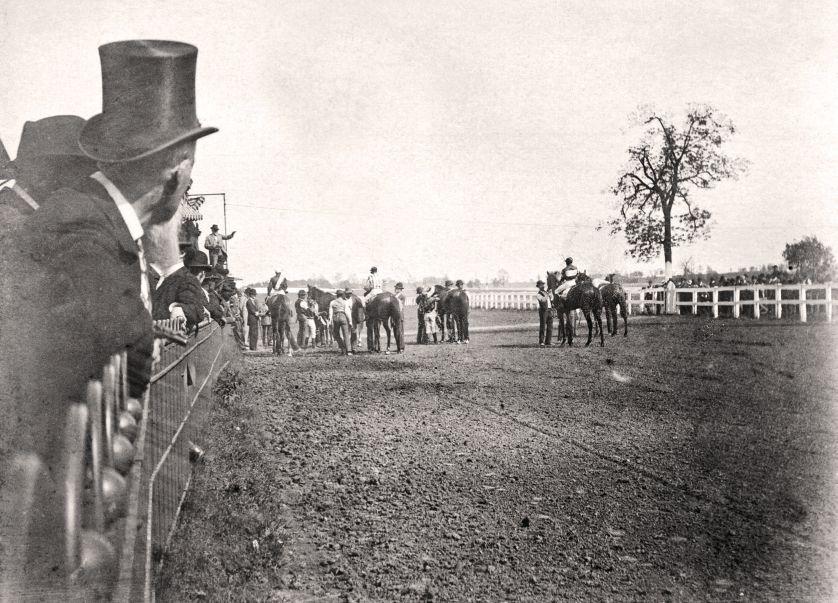
Racing fans crowd the rail at the Kentucky Association track near downtown Lexington.
SHARED ROOTS
races at Louisville in 1838 and 1840. And, in 1853, the most famous horse of 19thcentury America debuted there: Lexington, who on May 23 easily won the Association Stakes in two one-mile heats. Four days later, the colt won the Citizens’ Stakes in three two-mile heats over the same course and was purchased by Richard Ten Broeck and partners. Lexington became a legend, winning six of seven starts all told and, in 1855, setting a four-mile record of 7:193∕4 that endured for 19 years.
Horse breeding began in the Bluegrass hand in hand with racing, and by the mid-1850s, champion sires such as Medoc, Glencoe, and Lexington’s own sire, Boston, had already helped make the region a center for the breeding of fine Thoroughbreds. But no horse did more than Lexington to
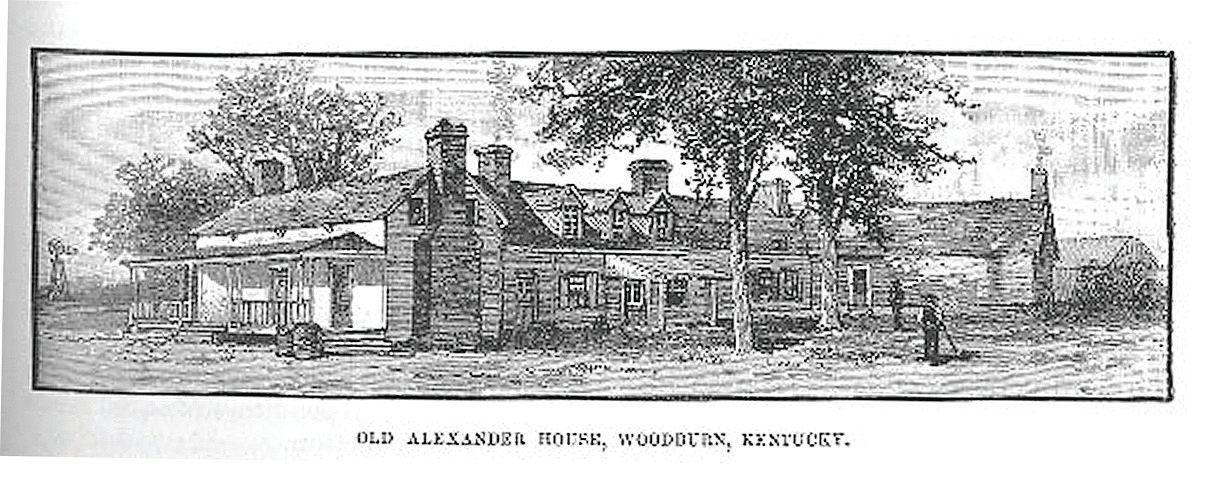
make Central Kentucky synonymous with breeding at its best. Standing first at William F. Harper’s stable on Old Frankfort Pike in 1855-56 and later at R.A. Alexander’s Woodburn Stud, Lexington led the American general sire list 16 times. He was ably seconded at Woodburn by Australian, the male-line ancestor of the immortal Man o’ War, and the great racehorse Planet.
Lexington’s enormous success spanned the Civil War, and this even though many of the stallion’s offspring were taken as cavalry mounts and never saw a racetrack. Lexington himself, although blind, was a potential target for kidnapping and ransom, and Alexander had to send Lexington and his other horses to Illinois for safety after guerrillas struck Woodburn to seize mounts in late 1864 and early 1865. During
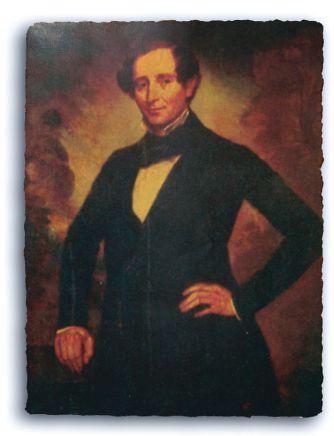
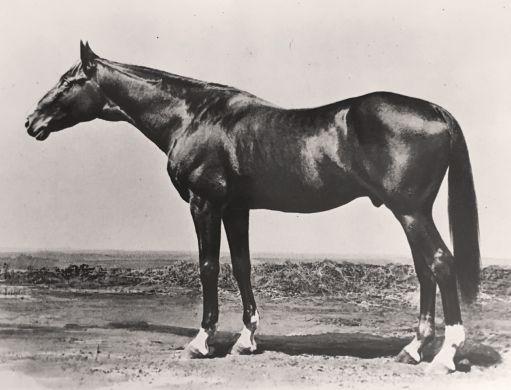
Clockwise from far left, R.A. Alexander was a prominent early breeder who stood Lexington, the most famous racehorse of the 19th century and a 16-time leading sire. Woodburn Stud, owned by Alexander and where Lexington stood, played a key role in Kentucky’s development as the leading Thoroughbred state.
HORSE
RACING
WAS IN LEXINGTON’S BLOOD BEFORE THE CITY WAS OFFICIALLY A CITY.
the second raid, Alexander owed his retention of Lexington’s great son Asteroid to his enslaved trainer, Ansel Williamson, who convinced the raiders that a lookalike son of Lexington was the horse they demanded. The thieves departed with the substitute and 14 other Woodburn horses.
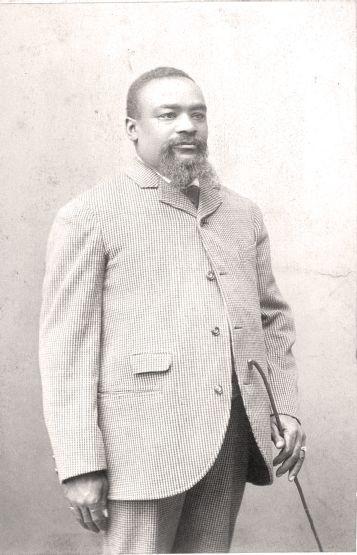
Racing continued in Lexington even during the war, and the progeny of the equine Lexington revitalized the sport after the war’s conclusion. So, too, did the Black trainers and jockeys who had been emancipated from slavery, many of whom had considerable reputations even before gaining freedom. Williamson, who continued working for Alexander following emancipation and later became the trainer for H. Price McGrath, developed the first Kentucky Derby winner, Aristides, and
OPEN YEAR- ROUND
Monday - Saturday | 9am - 5pm
SHARED ROOTS
many other horses of merit. He is now in the National Museum of Racing’s Hall of Fame along with fellow trainer Edward D. Brown, also formerly owned by Alexander. Many other newly emancipated persons and their first-generation descendants also achieved great reputations, among them Isaac Burns Murphy; still revered as perhaps the best jockey ever seen in America, he won his first race at Lexington on Sept. 16, 1876.
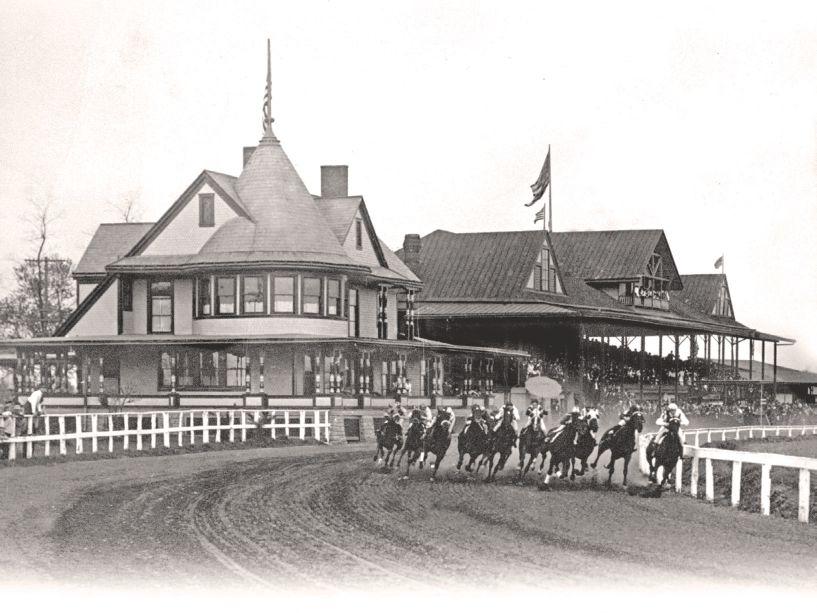
The postwar years also saw a revitalization of the Kentucky Association track, which was regraded and widened in 1872. Among the postwar heroes that raced at Lexington were Ten Broeck, Falsetto, Himyar, Bersan, and Clifford, all considered national champions by racing historians. In 1889, a new grandstand was built, and it was followed by a clubhouse.
Unfortunately, the new additions were just ahead of an economic downturn, and in 1891, the property was sold to the National Realty Company. The Kentucky Association reorganized and retained
control of the race meetings, but in 1897, the racetrack went through foreclosure and became the property of Charles Green of St. Louis. That same year, the Kentucky Association went bankrupt after conducting a spring meeting. Its successor, the Kentucky Racing Association, was organized in 1898 but conducted only one meeting that year before it too folded.
For the next two years, the racetrack lay idle. After that, it was used only for training until 1905, when Capt. S.S. Brown (who had bought the track from Green the previous year) conducted a six-day race meeting. Racing continued to limp along after the Kentucky Legislature organized the State Racing Commission in 1906. Conditions at the track slowly improved, but its finances remained unstable.
In 1918, the property was sold to the newly incorporated Kentucky Jockey Club, which also controlled Churchill Downs and Douglas Park in Louisville and Latonia in Northern Kentucky. Under the leadership of the Kentucky Jockey Club’s president,
Edward D. Brown, formerly owned by R.A. Alexander, became a prominent trainer after emancipation.
The Kentucky Association track enjoyed periods of prosperity and prominence until it closed for good in 1933.
track
Assoc ation en oyed per ods and until it closed
SHARED ROOTS
Johnson N. Camden, and its vice president and executive manager, Matt Winn, the track circuit received a standardized racing calendar and improved purse distribution. The Kentucky Jockey Club also gave Kentucky racing a unified voice in campaigning for desired legislation. But unfortunately for Lexington, the Kentucky Jockey Club put most of its resources into the more profitable meetings at Churchill Downs and Latonia, leaving Lexington largely neglected. Perhaps the highest point for the old Lexington facility during this period came in January 1921 when Man o’ War took his last public gallop there before going to stud.
Recognizing that Lexington was never
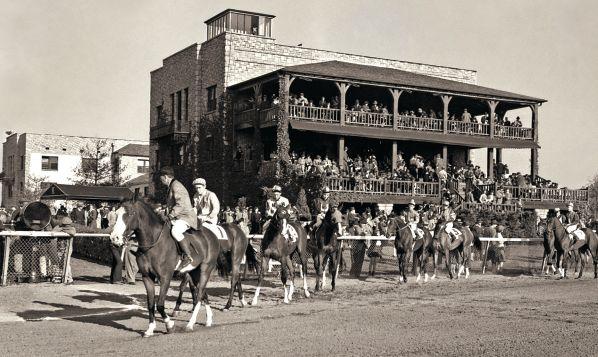
Right, horses parade past the clubhouse on their way to the start of an early race.
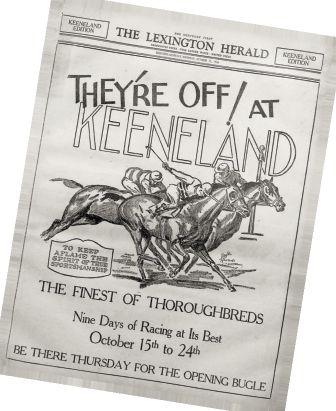
Far right, the Lexington Herald newspaper printed a special program for the track’s Oct. 15, 1936, opening.
Louis Beard, and Hal Price John Oliver Keene sold the
Maj. Louis Beard, left, and Hal Price Headley were instrumental in the creation of Keeneland. Right, John Oliver ÒJackÓ Keene sold the property that would become Keeneland.
going to be a priority for the Kentucky Jockey Club, 100 prominent Lexingtonians reorganized the Kentucky Association in 1923, and this group bought the track back from the Kentucky Jockey Club. By that time, the track facilities were dilapidated, and the surrounding area had become urbanized as Lexington expanded. It was soon obvious that the cost of necessary renovations would be prohibitive, and the onset of the Great Depression in late 1929 sank any hopes of a long-term revival for the Kentucky Association track. The last race meeting took place in April 1933. A one-day trotting meet followed in the fall, and with that, over a century of racing in Lexington passed into history.
Long hours and determination ensured that Keeneland would be built during the dark days of the Great Depression.
LEXINGTON, KY
SHARED ROOTS
MODEL TRACK
But Lexington racing did not die, as a group spearheaded by Hal Price Headley and Maj. Louis Beard began looking for a site outside the city suitable for a new track. They settled on property owned by John Oliver “Jack” Keene. The last man to carry the name of one of Lexington’s prominent families, Keene had spent 20 years building what he had hoped would be a magnificent dwelling place and private racing club. With his finances devastated by his failed venture in building the Raceland track near Ashland, Kentucky, which lasted only four years, and the Great Depression, Keene sold the 11∕16-mile track he had constructed, the elaborate stone “barn” intended as a home for both him and his horses, and 148 acres of land off Versailles Pike to the fledgling Keeneland Association for $130,000 plus $10,000 in stock.
The Great Depression was a precarious time to launch a new track, but Headley, Beard, and future Keeneland general manager William T. Bishop made it work on long hours and sheer determination. Their dream was that Keeneland
would be a model track dedicated to the improvement of the Thoroughbred horse and the sport of horse racing, with any profits plowed back into the enterprise or given back to the local community. Yet it was also a continuation of Lexington’s great racing history. When the Kentucky Association’s assets were sold off in 1935, Keeneland purchased its grandstand and the framing and roofing for five barns, along with the handsome cast-iron post with its “KA” logo that is now Keeneland’s iconic entrance marker. As for Jack Keene’s “barn,” it was transformed by architect Robert McMeekin into the clubhouse and saddling paddocks for one of the most uniquely beautiful racetracks in the world.
Keeneland Race Course opened on Oct. 15, 1936, and Lexington’s business and social leaders and their guests from across the country were prominent among the 8,000 people who witnessed John Hay Whitney’s filly Royal Raiment win the inaugural race. Finances were so tight that Headley was checking the receipts after each race to be sure that the track could pay off winning bets and still reopen the next
day, but Keeneland survived, closing out the year with losses of only $3.47. Two years later, it wrote its first check to charity, giving $500 to the Lexington Community Chest. Today, anchored by the world-famous Keeneland Thoroughbred sales, Keeneland continues its mission to present and support all that is best in horse racing. Its signature races such as the Spinster and those inherited from the Kentucky Association track — the Phoenix, Ashland Stakes, Blue Grass Stakes, and Breeders’ Futurity — have showcased champions such as Princess Rooney, Holy Bull, Knicks Go, and Azeri, and in 2015, the track hosted the Breeders’ Cup World Championships for the first time. In a perfect climax, Triple Crown winner American Pharoah rolled home in the Breeders’ Cup Classic, and Keeneland’s beauty and hospitality drew rave reviews from the 50,155 racegoers. Since then, Lexington and Keeneland have played host to racing’s championship in 2020 and 2022, and in 2026 will do so once again, welcoming the world to savor a city and a track where the best of history and the modern era meet in the living heart of horse racing. KM
The Keeneland sales have a worldwide impact. KEENELAND PHOTO
As they have for generations, Keeneland racing fans return every spring and fall.
Lyndy Franklin Smith, artistic director and co-founder of the Lexington Theatre Company, works with students in the pre-professional company.
show how PUTTING ON A
THE LEXINGTON THEATRE COMPANY brings Broadway-caliber productions to the Lexington Opera House while it trains thespians of the future
Opera House future House while it trains of the
By
Copley
Rich
| Photos by Mark Mahan
LLYNDY FRANKLIN SMITH focused intensely on her student in the Lexington Theatre Company studio.
The student in the Acting the Song class, Kelli Jo Summers, also stood focused, her eyes flaring in rage at her unseen adversaries, her words direct, though a quaver revealed she was way out of her comfort zone.
“You don’t know this man,” she sang, “you don’t know a thing.”
A few beats after Summers concluded, the focus and the rage faded as Franklin Smith circled around the other students in the class to Summers. They discussed the song, “You Don’t Know This Man,” from the Broadway classic “Parade,” in which Summers’ character is defending her husband, who is accused of murder, against an antisemitic mob and a voracious press.
In the spare, gray studio, one of several in the theater company’s complex on Alexandria Drive, the teacher and student talked through vocal and physical choices and places where Summers could focus as she crafts her performance before Franklin Smith and other students in the nine-person class.
“When she’s teaching class … she’s just so focused on you,” Summers said of Franklin Smith. “It’s like you’re the only one in the room.”
Kelli Jo Summers, a singer, performer, and voice teacher, appreciates Lyndy Franklin Smith’s skill and focus as an instructor.
show PUTTING ON A
It is a typical Tuesday night for Summers, who spends her days teaching voice and usually takes a class herself in the evening, and Franklin Smith, who is best known in Lexington for directing massive Broadway musicals on the Lexington Opera House stage as the co-founder and artistic director of the Lexington Theatre Company. Summers has been on stage for a number of those shows and will be again this summer as the theater launches its second decade with the Broadway smash “Les Misérables.”
ATTRACTING ARTISTS AND SUPPORTERS
In just a decade, Franklin Smith and her husband, Jeromy Smith, have taken the theater, known as The Lex, from what many people thought was a crazy dream to an established company presenting three major productions a year, various small-scale shows, and a burgeoning education program for all ages. Along the way, The Lex has made the short list of places to work for artists across the country and attracted major support, including a transformational $2 million gift from the James A. and Martha R. Brown Charitable
Early productions of “42nd Street,” top, and “A Chorus Line,” above, helped put the Lexington Theatre Company on the map.
Brance Cornelius knew Franklin Smith from their high school days in Lexington. Like her, he moved to New York for a performance career. Today, he is The Lex’s education director.
Actor Darian Sanders, left, played the title role in the 2025 production of “Joseph and the Amazing Technicolor Dreamcoat.” He has returned to The Lex numerous times.
WHEN you’ve practiced veterinary medicine as long as Hagyard, you understand it is as much of an art as it is a science. This is especially true as the racing schedule ramps up and the subtleties of each horse’s care during training and competition become more nuanced.
With over 50 masterful veterinarians, we can ensure each case is evaluated and treated with the in-depth care and focus your horse deserves. Call us, so that your horse can be the picture of health season after season.
show PUTTING ON A
Foundation in August 2025.
The Tuesday night Acting the Song class is emblematic of the theater’s educational focus and just one of the places where the seeds are planted for those jaw-dropping productions that have been seen by thousands of people since The Lex launched in 2015.
“It’s always good to be a lifelong learner, and Lyndy is the best example of that,” Summers said. “She’s always pushing herself to be better. She’s always wanting to be at that next level.”
That was obvious to Brance Cornelius, The Lex’s education director, who knew Franklin Smith when he was a student at Lafayette High School and she was at the Sayre School. Cornelius recalled that among their peers, she was uniquely focused on a theater career. That led Franklin Smith to Oklahoma City University’s acclaimed musical theater program, where she met Smith.
Both aspiring performers at the time, the couple worked through regional and summer stock theaters, as well as national tours — Franklin Smith even came through the Lexington Opera House on a national tour of “Fosse” in the early 2000s — before moving to New York. In 2006, Franklin Smith was cast as a swing performer and dance captain of the Broadway revival of “A Chorus Line.”
Cornelius had also moved to New York and reconnected with Franklin Smith. At the time, neither could imagine their careers bringing them back to Lexington.
FILLING A VOID
For decades, the only professional theater company in Lexington was the LexingtonChildren’sTheatre.Sometheaters in town paid directors and actors, but a professional theater that offered contracts with Actors’ Equity, the stage actors union, was something of a holy grail in the
Gabriella Enriquez credits Franklin Smith for seeing her as an artist.
“ WE TAKE THE ENVIRONMENT, THE CULTURE HERE VERY SERIOUSLY, BECAUSE WE WANT IT TO BE HEARTLED, PEOPLE FIRST, AND EXCELLENT ALL AT THE SAME TIME.”
—LYNDY FRANKLIN SMITH, ARTISTIC DIRECTOR AND CO-FOUNDER OF THE LEXINGTON THEATRE COMPANY
Lexingtontheatercommunity.Equityactors who lived in Lexington would have risked their union membership if they performed in non-Equity shows.
It was not that professional theater was impossible outside of major cities. The Smiths saw that up close in several places,
particularly at Music Theatre Wichita in Kansas, which they first encountered as students and continued to return to through their professional careers. Lyndy was introduced to choreography and directing there, and Jeromy’s career took a turn to management in New York.
“They were a real catch to have the two of them in the summer company, and I even asked Lyndy, although I’d never worked with her before, to choreograph the first show of the season, ‘On a Clear Day You Can See Forever,’ ” Wayne Bryan, the theater’s producing artistic director at that time, recalled. He said he kept them busy that summer as “they were working with top-notch people who were on the cusp of major careers, and Lyndy and Jeromy just fit right in.”
It was the start of a fruitful relationship that eventually had Bryan eyeing the couple as his successors at Music Theatre Wichita. At the same time, they had an idea of their own. As the aughts turned to the teens, the couple had moved to Lexington to start a family.
“While we were learning everything out there, we also were seeing the gap here, and the thought that we kept saying to ourselves is ‘This is our home,’ ” Franklin Smith recalled. “We live here, and there’s not a professional regional theater here. Wichita already has a well-established one. Maybe the best use of our gifts is here. It felt like a calling for us.”
The first call they made with the news was to Bryan, who recalled thinking, “ ‘Oh, drat.’ But secretly, I couldn’t have been a more proud papa to know they were going to carry the kind of work we did forward.”
The couple recalled that Bryan’s first words were “How can I help?” — the first of many key offers of assistance The Lex received over the next decade.
The Lexington Theatre Company’s model was presenting shows that combined established Broadway talent, college students, local professionals, and high school students. The theater’s first production was the 2015 Concert With the Stars that
PHILIP GROSHONG / LEXINGTON THEATRE COMPANY
show PUTTING ON A
featured several Broadway stars sharing stories and singing significant songs in their careers, backed by an ensemble of collegiate performers. That show included Lexington native and Tony Award nominee Laura Bell Bundy, who in a sense grew up on stage with Franklin Smith, and Jonathan Groff, a friend of the Smiths’ who was already established on Broadway and went on to roles like King George III in the original cast of “Hamilton.”
when he played the title role in “Joseph and the Amazing Technicolor Dreamcoat.”
Sanders is one of several homegrown talents who have found The Lex to be both a launching pad and a stage to come home to. Colton Ryan, a School for Creative and Performing Arts (SCAPA) at Lafayette High School graduate, was part of a Concert With the Stars ensemble months before being cast in the Tony Awardwinning production of “Dear Evan Hansen,” and then he returned to play Tony in The Lex’s 2019 production of “West Side Story.” Other Lexington-based professional actors have simply found The Lex to be a stage where they can perform.
After a successful production of “42nd Street” to launch the company in 2015, The
That night created one of the first connections The Lex was designed for when Groff performed with Lexington actor Darian Sanders. He has credited that performance and Groff’s encouragement with giving him the confidence to pursue a fulltime stage career that has included multiple engagements with the national tour of “The Lion King.” Sanders has returned to The Lex many times, including last summer
Love’ in my callback, the cut ended for my character, and Lyndy just kept singing,” Enriquez said. “We locked eyes, and we finished the song together, singing together, tears welling up in our eyes, and she got up from the table, came around, and gave me a hug, and we just had a magical moment together. That was one of the first times as a young artist that I had realized I didn’t care what happened after that audition, because she saw me as an artist.”
TAKING A DIFFERENT APPROACH
The theater world has a reputation as a cold and unforgiving place.
“So much of the way we run this company is built on the experiences I had in New York, good and bad,” Franklin Smith said.
Lex continued presenting a Concert With the Stars and one production a summer until 2018, when it expanded to two shows with “The Music Man” and “A Chorus Line.”
By then The Lex was holding auditions for its shows in several locations, including the Smiths’ alma mater. Among those auditioning was Oklahoma City University student Gabriella Enriquez.
“When I had to sing ‘What I Did for
“What we’ve tried to do is, you know, emulate what we liked about the business, get rid of what we don’t like, and then to make it our own. We take the environment, the culture here very seriously, because we want it to be heart-led, people first, and excellent all at the same time.”
The care goes beyond the work, and a core of volunteers works to make the casts feel at home with meals, outings to area attractions such as Keeneland, and Fourth of July events, as the casts for the first productions each summer are almost always here on Independence Day.
“I basically just expose them to some horse aspects of Lexington, and they all absolutely love it,” said Judy Miller, a Thoroughbred owner and breeder who is on The Lex board. “I’ve met people who knew some of the people who came around with me and who said, ‘They haven’t stopped talking about it.’ ”
Bringing artists from across the country to Lexington each summer has spread a desire to be a part of that culture throughout the national theater community. Franklin Smith
Harry Richart, left, of the Brown Charitable Foundation presents a game-changing check to the Smiths. The gift has helped the company pay off its debt on its Alexandria Drive studios, above, early.
show PUTTING ON A
recalled talking to a theater teacher who said that when he asked some students where they wanted to work in the summer, they mentioned The Lex along with other much more established theaters.
“I said to Lyndy, ‘You have no business being in that conversation,’ ” recalled Cornelius, who initially came to The Lex as an actor in the 2022 summer season. “ ‘How, in less than 10 years, are you already a place where people want to come?’ And that’s actually what sold me on it. I didn’t want to miss this really
amazing train that’s taking off from the station.”
Lexington architect Brent Bruner was there for The Lex’s maiden voyage, standing in line after the initial Concert With the Stars to meet Bundy and Groff and writing a generous check to the theater. A few checks later, the Smiths gave Bruner a call.
“We were like, ‘We need to know him,’ ” Smith said. “So we met him for coffee, and we were just like, ‘We want to know you. What made you excited about this?’ ”
Bruner, now on the steering committee
Clockwise from bottom left, Jeromy Smith and Lyndy Franklin Smith encourage students in the pre-professional program as they rehearse for upcoming performances. The program is for students from fourth grade to high school.
show PUTTING ON A
for future growth, said, “I’ve really believed in them because they are just amazingly talented at what they do, and I’ve learned so much about that business from them, which is a much more complex business than I think everyone realizes.”
Miller, who grew up going to Broadway productions in New York, has become something of a disciple for The Lex, bringing friends to productions and encouraging them to get involved.
“It’s kind of like in the horse business; the saying is ‘It’s very easy to sell a good horse,’ ” Miller said. “You have a consignment at Keeneland, and you lead out a good one, and, boy, they just come out of the woodwork. I kind of compare The Lex to that. Show somebody a good product, and if they have any interest at all in what The Lex is all about, they’re all over it.”
A NEED MET
As The Lex grew and added a holiday production, it had an acute need for its own space. The company had been holding rehearsals and classes at places such as Artworks at the Carver School, ArtsPlace, churches, and other venues. But with rehearsals mov-
ing beyond the summer months and the education programs that started during the COVID-19 pandemic quickly growing in person, the patchwork of venues was no longer working.
The Smiths point to key moments in The Lex’s history where a need was miraculously met at just the right moment. None is more bittersweet than the gift of Alexandra Simpson.
Simpson’s mother, Melanie SimpsonConley, watched Franklin Smith and Bundy grow up when she was a Lexington newscaster who TV audiences will remember as Melanie Glasscock. She recalled Franklin Smith winning the Kentucky Junior Miss pageant and taking her daughter to see her when she was in the Radio City Music Hall Christmas Spectacular and other big productions.
“Alex loved them dearly,” SimpsonConley said of the Smiths.
Simpson took to the stage herself, playing Jane Banks in The Lex’s 2016 production of “Mary Poppins.” At the time, she was preparing to audition for the role of Sister Mary Robert in SCAPA’s production of “Sister Act,” and the actor playing Mary Poppins, Christina DeCicco, had played the role on Broadway. Simpson got to present her audition to DeCicco, who gave her notes and encouragement and sent her a water bottle from the show when Simpson got the part.
But Simpson was also battling cancer, and in 2022, she passed away, leaving The Lex family grief-stricken.
“When she left funding gifts for passion projects, she left something for The Lex, because that was one of the best chapters in the book of her life,” Simpson-Conley said. “That that little window of ‘Mary Poppins’ was so filled with joy and excitement on stage that Alex wanted other children to have that same joy in their lives.”
The gift from the Alexandra Hudson Simpson Foundation was part of the funding that helped The Lex purchase its facility on Alexandria Drive, a naming
coincidence not lost on anyone. Bruner designed the former office building to be a theater space with offices, studios, a scene shop, a costume shop, and a black box theater — The Alex Theatre.
The building met many of The Lex’s needs but also left them with debt.
The Brown Charitable Foundation was introduced to the theater through Franklin Smith’s mother, Luanne Franklin, retired general manager of the Lexington Opera House who can now often be found teaching tap dancing classes at The Lex. Harry Richart of the Brown Charitable Foundation said the board was impressed with what The Lex had accomplished in 10 years, starting a theater from scratch and growing to the size and reputation
A former performer, Jeromy Smith brings management skills to his role as co-founder of The Lex.
it now enjoys. “They put together a pretty compelling argument about what they do,” Richart said. “Not only is it live theater, but it’s education; it’s lots and lots and lots of instruction from very young to very old, which was very attractive to us.
“They also gave us the numbers … how they do what they do and how they manage the state of business. We liked what we saw.”
The $2 million gift is the largest artsrelated grant the foundation has made, but Richart said, “It was a pretty easy decision.”
The gift has allowed The Lex to pay off its building 14 years early, enabling the company to grow staff and programs and
to dream bigger. Cornelius joked that “if you’re out of a diaper, we have a class for you,” highlighting offerings in voice, acting, dance, and combinations thereof for students from preschoolers to participants in the University of Kentucky’s Osher Lifelong Learning Institute for people over 50.
THE LEX FAM
On a Saturday morning, the preprofessional company of students from fourth grade to high school seniors rehearsed “The Star-Spangled Banner” for an upcoming performance at the Keeneland spring meet before turning their attention to crafting a performance of “Racing With the
Clock” from “The Pajama Game,” bringing the same precision to an ensemble number Franklin Smith was teaching individuals a few nights before.
“There is going to be, at some point, a time when we put this in front of people,” Franklin Smith said of “Racing With the Clock.” “But the joy is in getting there. And that’s where we discover ourselves as creatives and humans and artists.”
Starting Year 11, The Lex has a season of main stage shows at the Opera House to produce:“LesMisérables”July9-12,“Matilda the Musical” July 30-Aug. 2, and “Irving Berlin’s White Christmas” Nov. 19-22, as well as numerous classes, showcases, auditions, and other endeavors to coordinate.
But it is also time to look ahead to what the next 10 years could be. The Lex hopes to start presenting shows in The Alex Theatre — smaller-scale productions, maybe new works. Could a Broadway musical be incubated right here? They also want to grow educational programs and staff. Some dream of a regional Tony Award for the company, which already has a lot of love in New York. Enriquez noted that The Lex staff stays in touch with veterans of its productions who are in New York — and who refer to themselves as “The Lex Fam” — to keep track of what is happening in the greater theater world.
“We’re really wanting to be involved in the national conversation about what is being developed for Broadway,” Franklin Smith said. “It’s not going to happen overnight, but we are excited to become part of that conversation.”
Smith looked forward to expanding the production schedule and other opportunities for the Lexington theater community.
“Can we grow the community involvement?” he said. “Can we grow the people who are helping us to do this work? Can we grow the impact that we’re having on Lexington? I think all of those things are part of the conversation.
“The one thing I know is that we are driven to make it happen, but I also know that we can’t do it ourselves.” KM
The pre-professional company sings the national anthem under the direction of Shoshana Seid-Green at the Keeneland spring race meet.
DINNER
Book ahead on OpenTable or call 859-785-3905
THINKING OF HAVING A PRIVATE EVENT?
We’ve got the perfect space for you.
Ceremonies, receptions, birthdays, corporate functions, working lunches, cocktail parties and more — we’ve got gorgeous venues, ready to meet your technology needs and top-notch catering. Call 859-785-3900 to learn more
7,500 sq. ft. AV capable, full bar, private dressing suite (customizable audio, lighting, projection), up to 300 guests seated, and up to 450 guests standing.
1,900 sq ft indoor, 900 sq ft outdoor, AV capable (audio, large screen display), up to 75 guests seated, and up to 100 guests standing.
a wide range of readers.
University Press of Kentucky produces books to appeal to
The Little Press That Could
UNIVERSITY PRESS OF KENTUCKY defies challenges to produce award-winning books ranging from scholarly tomes to equine biographies
Story and photos by Kevin
Story and Nance
Nance
AAMID SWEEPING CHANGES
in book production technology, e-commerce, and reading trends, the University Press of Kentucky has established itself as a survivor. Bobbing and weaving with the punches — including a twoyear loss of state funding beginning in 2018, followed by the COVID-19 pandemic — the press has nimbly stayed on its feet.
This is in stark contrast to the number of university presses around the country that in recent years have had to scale back their operations or shut down altogether, like the University of Cincinnati Press.
Whilekeepingitsdoorsopen,UPKhasmanagedtomaintain its staff of 16 and produce a steady stream of about 60 books a year, with annual sales of between $1.5 million and $2 million. Most impressive of all is that with a combination of earned income as well as state, donor, and grant funding, the press has ended the past five fiscal years in the black.
“We’re small but we’re scrappy,” Ashley Runyon, now in her sixth year as UPK’s director, said in an interview at the press’s offices in a handsome old house on the University of Kentucky campus. “We’re in tumultuous times, but we’re pivoting constantly. It’s not easy to be self-sufficient even with funding for any sort of publisher, but we’re working toward that balance between money and mission. As a result, we’re in a strong position in a time when even commercial publishers are struggling to make ends meet.”
UPK offerings range from accessibly written scholarly and trade books on a number of core topics including Appalachia, film, military history (especially the Civil War
Runyon has guided UPK as director for six sometimestumultuous years and takes pride in her organization’s ability to adapt.
Ashley
As managing editor, David Cobb participates in the production of approximately 60 books a year.
Set amidst the rolling pastures of Woodford County, this Set amidst the pastures County, this exceptional estate offers a refined interpretation of Kentucky estate a interpretation living. Spanning over ten acres in Shawnee Farms, the property over ten acres in Shawnee the property blends striking Scandinavian architecture with the timeless blends Scandinavian architecture with the timeless beauty of the Bluegrass. Expansive glass walls frame sweeping of the walls frame co couunntrytryside views, while thoughtfully designed interiors create side while interiors create a seamless balance of form, function, and comfort. From quiet seamless balance of form, function, and comfort From mo mornrnings overlooking the land to evenings spent poolside, ings the land to spent ev every element is designed for both privacy and connection, just ery element is for both and minutes from the heart of Versailles. Versailles
naavviiaan n a arrcchhiitteeccttuurre e w wiitth h t thhe e t tiimmeelleesss s beeaauutty y of t thhe e B Blluueeggrraassss. . E Exxppaannssiivve e g gllaasss s w waalllls s f frraamme e s swweeeeppiinng g o trryysiidde e v viieewwss, , w whhiille e t thhoouugghhttffuulllly y d deessiiggnneed d i inntteerriioorrs s c crreeaatte e seeaammlleesss s b baallaanncce e of f foorrmm, , f fuunnccttiioonn, , a annd d c coommffoorrt t F Frroom m q quuiieet t ornninnggs s o ovveerrllooookkiinng g t thhe e l laannd d to e evveenniinnggs s s sppeennt t p poooollssiiddee, , verry y e elleemmeennt t is d deessiiggnneed d f foor r b bootth h p prriivvaaccy y a annd d c coonnnneeccttiioonn, , j juusst t miinnuuttees s f frroom m t thhe e h heeaarrt t of V Veerrssaaiillllees s countryside seamless balance of form, function, mornings every 5 B BEEDDRROOOOM M S BEDROOM 4
Kentucky native and top-producing real estate advisor, Andrea Coughtry specialized in luxury, residential, and investment properties across the Bluegrass and beyond.
6 606-369-3846 06-369-3846
www.coughtryenterprises.com andrea@coughtryenterprises.com andrea@coughtryenterprises com
The Little Press That Could
University Press of Kentucky represents a consortium of 18 colleges, universities, and historical societies around the commonwealth. Staff work in a building on the University of Kentucky campus.
and World War II), and Kentucky-centric topicssuchasthebourbonandhorseindustries and University of Kentucky basketball. “That’s our bread and butter,” Runyon said, “and I don’t see that ever changing.”
And although the press has limited resources for marketing compared to commercial publishers, its titles have been favorably reviewed in the New York Times, the Washington Post, the Los Angeles Times, the Atlantic, and other national media and enthusiastically discussed on major television networks and other outlets. “We punch a little bit above our weight,” Runyon said of this success, noting thatbookspublishedbythepresshavealsowon numerous awards, including the American Book Award, the International Book Award, and the PEN Bingham Prize.
In addition to the press’s nonfiction titles, it
has made a splash in fiction and poetry in recentyears.KentuckypoetMarianneWorthington’s “The Girl Singer” (2021) received a rave in The New York Times Book Review and went on to win Berea College’s Weatherford Award for Appalachian literature. Published the same year, Crystal Wilkinson’s “Perfect Black” (with artwork by her partner, Ron Davis) won the NAACP Image Award for outstanding literary work in poetry. Willie Edward Taylor Carver Jr.’s “Gay Poems for Red States” (2023) won awards for LGBTQ+ literature and was discussed on “Good Morning America,” NBC, CBS, PBS, and NPR, among other outlets. And Native American author Annette Saunooke Clapsaddle’s debut novel “Even As We Breathe” (2020) won the Thomas Wolfe Memorial Literary Award, was selected for a North Carolina statewide reading project, and is now being
Artwork by the late Stephen Rolfe Powell and a book about the artist are displayed in the UPK lobby.
The Little Press That Could
taught as part of that state’s high school and college curricula.
“I’m so glad that my debut novel was with UPK,” Clapsaddle said in an interview. “They helped connect me to several promotional events, especially in Kentucky, where they have a lot of relationships to draw on. It was also comforting that they knew what I wanted to achieve, and I could always pick up the phone and talk to someone, which isn’t always the case with bigger publishers.” (Fireside Industries, the imprint by UPK and the Hindman Settlement School that acquired the Clapsaddle and Worthington titles and was edited in recent years by Kentucky author Silas House, has been discontinued after “coming to its natural end,” Runyon said. Wilkinson, however, is now editing a new UPK imprint, Screen Door Press, focusing on Black fiction writers.)
Other popular UPK titles include Lexington chef Ouita Michel’s cookbook “Just a Few Miles South: Timeless Recipes from Our Favorite Places” (2021), Jack Givens’ “They Call Me Goose: My Life in Kentucky Basketball and Beyond” (2024), and Milton C. Toby’s “Taking Shergar: Thoroughbred Racing’s Most Famous Cold Case” (2018), an older title about the kidnapping of a famed stallion whose film and television rights were recently sold. “A lot of books do well when they first come out, but you also hope that they don’t have a short shelf life,” Runyon said. “If we’re publishing it now, I still want someone to be able to pick it up 30 years from now and still find it interesting.”
Top, Kentucky and regional topics constitute a substantial portion of UPK’s titles. Above, recent well-regarded fiction titles include Willie Edward Taylor Carver Jr.’s “Tore All to Pieces” and Natalie Sypolt’s “If Only The Rain Would Come.”
Above, Lexington author Crystal Wilkinson’s “Perfect Black” won the 2022 NAACP Image Award. Left, local restaurateur Ouita Michel shares beloved recipes in“Just a Few Miles South.”
The Little Press That Could
Recent and upcoming titles of note include Steve Starkey’s “On the Set of Forrest Gump” (with a foreword by Tom Hanks), Natalie Sypolt’s novel “If Only the Rain Would Come,” Carver’s fiction/poetry hybrid “Tore All to Pieces,” Tony Lee Moral’s “A Century of Hitchcock: The Man, the Myths, the Legacy,” and a forthcoming memoir by former Kentucky basketball coach Tubby Smith, edited by Runyon.
Another sign of the press’s adaptability is that with physical book sales in bookstores diminishing across the industry, all of its titles are now available for purchase on its own website, kentuckypress.com, as well as on Amazon and other e-commerce retailers. UPK has also gone whole hog into e-books and audiobooks, making all of its offerings available in one or both of those formats. “That’s been a huge growth area, particularly in audio,” Runyon said. “We want our books to be in whatever format that a reader would want them.”
PROVING ITS WORTH
Historical Society. The consortium now has 18 members, including the recently added University of Pikeville, Spalding University, and Simmons College.
Originally founded as the University of Kentucky Press in 1949, UPK got its current name 20 years later, when it began to represent a consortium of nine universities around the commonwealth as well as the Kentucky Historical Society and the Filson
This broadening of the press’s statewide network proved useful in 2018, when thenGov. Matt Bevin included UPK on a list of dozens of smaller state programs whose funding would be eliminated. Supporters around the state and in higher education circles around the country raised a considerable ruckus, pointing out that the press’s annual al-
Lexington author James C. Nicholson has written several of UPK’s most popular equine titles. Today, he serves as advisory editor for the series Horses in History.
location of around $672,000 in state funding was less than 10% of thenbasketball coach John Calipari’s salary alone. “At first blush the governor’s proposal seems both shortsighted in its policy and conspicuous in its granularity,” Peter Berkery, executive director of the Association of University Presses, told InsideHigherEd.com at the time. “The University Press of Kentucky is such a prominent and prestigious member not only of our community, but also of the communities it serves throughout the commonwealth; why anyone would want to eliminate an awardwinning curator of their own culture and history is baffling.”
Still, the Kentucky Legislature approved the UPK funding cut, leaving the press fighting for its life. But the Thomas C. Clark Foundation,whichthestate’sleadinghistorianfounded years earlier to support the press with a grant from the National Endowment for the Humanities, “sprang to life,” as Runyon put it, working with supporters around the state to hire a lobbyist for the press in Frankfort. They made the case for UPK’s value as a crucial resource for the state’s citizens and students, tellingKentucky’shistoryandpreservingitfor generationstocome.Intheend,thecampaign worked, with the Legislature restoring most of UPK’s funding in 2020. (The press continues
The Little Press That Could
to enjoy financial support from the Clark Foundation, whose endowment is now around $4 million.)
Since then, UPK has taken care to shore up its raison d’être, making more than 1,300 of its digital titles available for free to all Kentucky high school libraries and public universities. It also recently received a grant to reestablish the Kentucky Bicentennial Bookshelf (which includes 25 key UPK titles including “Tobacco and Kentucky” and “Women in Kentucky”) in libraries in several Eastern Kentucky counties severely damaged by the 2022 floods.
“I think we have a very solid argument as to why we’re beneficial to the state,” Runyon said. “We’re giving so much back to the state that we’re a very valuable investment.”
HORSE TITLES A NATURAL FIT
One of UPK’s most enduring core topics is the horse industry, focusing on the history of Thoroughbred racing and breeding. In recent years, several of its most popular equine titles have been written by Lexington author (and Keeneland magazine contributor) James C. Nicholson, whose body of work includes several of the press’s bestselling books. Among them are “The Kentucky Derby: How the Run for the Roses Became America’s Premier Sporting Event” (2014), “The Notorious John Morrissey: How a Bare-Knuckle Brawler Became a Congressman and Founded Saratoga Race Course” (2021), and “Racing’s Return from the Brink: The Incredible Comeback of Old Rosebud and American Horse Racing” (2025).
buy almost anything with a horse on the cover.’ ” The series continues to this day “and has done pretty well,” he added. “There are a lot of titles I’m proud to have played a small part with, some of which might never have found a publisher otherwise.”
In addition to “Taking Shergar” and Nicholson’s own books, the series has included Jennifer S. Kelly’s “Sir Barton and the Making of the Triple Crown” and “The Foxes of Belair: Gallant Fox, Omaha, and the Quest for the Triple Crown,” Peter Lee’s “Spectacular Bid: The Last Superhorse of the Twentieth Century,” Charles Caramello’s “Riding to Arms: A History of Horsemanship and Mounted Warfare,” Toby’s “Unnatural Ability: The History of PerformanceEnhancing Drugs in Thoroughbred Racing,” Avalyn Hunter’s “Dream Derby: The Myth and Legend of Black Gold” and “The Kentucky Oaks: 150 Years of Running for the Lilies,” Mary Perdue’s “Landaluce: The Story of Seattle Slew’s First Champion,” Emma Hudelson’s “Sky Watch: Chasing an American Saddlebred Story,” and Eliza McGraw’s “Astride: Horses, Women, and a Partnership That Shaped America.” More titles are “in the pipeline,” Nicholson said.
“
I THINK WE HAVE A VERY SOLID ARGUMENT AS TO WHY WE’RE BENEFICIAL TO THE STATE.”
—DIRECTOR ASHLEY RUNYON
Nicholson’s book about the Derby began as a graduate thesis at the University of Kentucky. After UPK got wind of it and then brought it out to considerable acclaim, Nicholson published all but one of his subsequent books at the press. About a decade ago, he proposed a new series, Horses in History, for which he continues to serve as advisory editor, recruiting new authors and acting as peer reviewer. (All of UPK’s books go through one or more rounds of peer review by specialists in their fields.)
“I might have been naive,” Nicholson recalled with a smile, “but back then I said, ‘I bet there was a market for this sort of thing. There were people who would
“Decades ago, UPK didn’t do a lot of equine titles, and those that they did were rather specific to Kentucky,” he said. “The series has allowed it to be more inclusive, more national, not necessarily specifically focused on Kentucky — although almost anything to do with horses is at least indirectly related to the state.” The success of the series is a source of great satisfaction for Nicholson, a Lexington native who grew up unaware that UPK existed. “But once I became aware, and absorbed the idea that books had to come from somewhere, I thought it was cool that these books came from Kentucky, that it wasn’t all being piped in from New York or Los Angeles. It seemed noteworthy to me then that ideas and stories can disseminate from Kentucky, from this little place, to the world. It still does.” KM
Books about horses and horse racing remain a cornerstone of UPK.
Improved Prices on Central Kentucky Farms
Indian Mound Farm 5335 Russell Cave Road, 420 Acres
Located on the corner of Russell Cave Rd and Old Lemons Mill, this is one of the most iconic properties in Central Kentucky. The land and soils are excellent, consisting entirely of federally rated Prime Farmland. Amenities include 2 large feed barns, a barn dedicated to the working of cattle complete with individual pens, cattle chute with scales, over 9 large fields and 5 paddocks and two bedroom apartment, 2 equipment storage barns, a large concrete pad and retention for compost operations and 2 nearly new 3 bedroom/2 bath employee residences.
Listing Price $9,500,000
Royal Oak Farm 613 Hutchison Road, 283 Acres
Royal Oak farm is a well located 283 acre turn-key Horse Farm between Lexington and Paris KY, just aris Pike. Amenities include a lovely 2 story brick main residence and pool, built in 2005 with over 5,500 sqft of living space that includes 5 bedrooms, 4 full baths, large kitchen, expansive great/family room, formal living and dining rooms, lovely fireplaces, all with 10ft ceilings and antique hardwood floors. Farm improvements include 70 stalls in 6 barns, over 20 paddocks and 8 large fields, a maintence and hay storge area, employee residence, employee barn apartment and much more.
Listing Price $5,950,000
Marlendale Farm, 2680 Newtown Pike, 197 Acres
Over 197 acres in two tracts in one of the most sought after locations in Lexington, KY, adjacent to Fasig-Tipton Co., 3 miles to the KY Horse Park, 1/2 mile to I-75, 1 mile to the Mar te Resort. Amenities include 32 stalls in 3 barns, a 3500 sqft brick residence, 2 employee residences, plank fences, paved roadways, and city water throughout all fields and paddocks. In addition, there is a 10 bent tobacco/hay barn, nearly 50 acres of undisturbed pasture land on the east side, and importantly, an owned access lane to Iron Works Pike. Listing Price $9,900,000
BONDING BREAD ONDING
From baguettes to chocolate babka, HOPEWELL BAKE EXCHANGE has put Paris, Kentucky, on the map for its much-loved breads and baked goods
By
Jarrett Van Meter
Photos by Pat McDonogh
Photos Pat
Andrea Pompei welcomes customers to her Hopewell Bake Exchange in downtown Paris.
Preparing the day’s breads and other baked goods brings Pompei to the bakery before dawn.
AShe soon set about remedying that problem, first baking her own bread and eventually opening the highly regarded Hopewell Bake Exchange in downtown Paris.
ANDREA POMPEI HAD no connection to Bourbon County when she arrived in 2016. Her move from Louisville marked the beginning of a new chapter, a fresh start, and in many ways Paris was exactly what she had been looking for. She was able to walk almost everywhere she needed to go, including to her new government job. The community was strong and supported local businesses. The setting was pastoral, the architecture historical. Her street bordered scenic Claiborne Farm.
But something was missing. Something she had come to value through years of international travel and growing up in a family that emphasized gathering around the dinner table.
“Eventually I saw that I was unable to get good bread here in town,” she said.
Pompei grew up just outside of Saratoga Springs, New York, in Ballston Lake, where, for three out of the four seasons, it was a traditional “suburban school kid” upbringing. Two working parents, two brothers, and family meals. Fall was dedicated to playing field hockey, spring to running track, and summer to working in the ice cream tent at the Saratoga Performing Arts Center. But winters were different. Her father, Joe, was an engineer for General Electric, a role that required regular international travel. In lieu of extended absences, he pulled his kids out of school and took them with him for long jaunts to Chile and Peru. Overnight, parkas were swapped for swimsuits, road salt was replaced by sand, and school lunches were spurned for cuchuflí, a sweet snack, on the beach.
To cut costs on the trips, the Pompeis stayed with the families of Joe’s work associates, gathering around their tables for sprawling dinners of steak, roasted chicken, and potatoes. Breakfast was usually fresh bread, either homemade or from the local bakery, and in Chile, the choice was always marraqueta, a white roll with a crusty exterior. The combination of the tough crunch and soft give was a
BONDING BREAD
Below, a collection
revelation for Pompei, and the bread was equally enjoyable with or without orange marmalade.
“They would toast it until it was pretty much charred, and I remember that flavor so much,” she said. “That’s what makes like really good rustic bread. Most people in America are accustomed to white, barely baked bread that is super soft like Wonder Bread, but some of the best complex flavors are created by hitting that point between golden and burnt.”
The trips gave her a taste and appreciation for quality baking. Whether it was close to home at Perreca’s in Schenectady or in her continued world travels in Europe, Pompei sought out good bread. Even so, the idea of doing it herself was still far from mind as she graduated high school and set forth into the world. She double majored in business and Spanish at SUNY Albany before moving to Kentucky in 2006 to pursue a dual master’s in public administration and urban planning at the University of Louisville.
“I didn’t want to drive to Lexington to get good bread,” she said. “So I baked my own bread, and I eventually realized that, you know, people might want to buy this.”
At the time, Pompei still had a day job to contend with, baking in her analog Kelvinator oven on nights and weekends when she was off the governmental clock. She enjoyed doing it, finding the process therapeutic and a good outlet for her creativity. Her friends were taken with the result, and in 2018 she began selling her baked goods at the Paris-Bourbon County Farmers’ Market. Initially, a good day might see her make $100 to $200, but she stayed with it and, in time, demand grew. A coterie of devotees formed, and she began giving demonstrations in the community kitchen space near the farmers market, a thrill in itself.
She stayed in Louisville for 10 years before coming to Paris in 2016 to become the planning director for the city and Bourbon County. It was in Paris, in the kitchen of her home on Scott Avenue, where the baking began in earnest.
“I got to share some of the knowledge I had gained in baking and cooking before there ever was a business,” she said. “At one of them I taught how to make ciabatta rolls and at another one I taught how to make challah. It was just something that was fun to do in my off time.”
Weekends were wall-to-wall baking, vending, teaching, cleanup, and prep to do it all over again in six days’ time. Help came in
Right, Pompei pours egg filling into crusts for vegetable quiches.
of wooden spoons decorates a wall in the bakery.
BONDING BREAD
Clockwise from left, croissants and lemon turnovers tempt early customers. Fresh-baked cookies are stacked in a display case. Pompei arranges bread in the window. Sourdough loaves, rolls, and challah await bread lovers on the counter.
BONDING BREAD
“ I TRY REALLY HARD TO TEACH TRANSFERABLE SKILLS THAT SOMEONE CAN USE REGARDLESS OF THE AMOUNT OF TIME THEY HAVE.Ó
2021 when she met fellow market vendor Arthur Newberry, who had recently moved from Cincinnati to take over his uncle’s Main Street coffee company, CaffeMarco. A former baker himself at Blue Oven in Williamsburg, Ohio, Newberry took an interest in Pompei’s work.
“She was making ciabatta, she was making challah, she was making baguettes — these are not easy breads,” Newberry remembered. “So the fact that she had all three of those breads on her table at the farmers market meant that she had put in a lot of hours the night before, and I would quickly learn how many hours she was putting in.”
The pair became fast friends. Newberry began trekking into town to Scott Avenue from his place out in the country to help Pompei with the massive bakes that preceded market days. The friendship blossomed into romance, and the two are now married. With Newberry’s help and encouragement, Pompei took the next step, stepping down from her government job and moving her baking operation in 2023 into a brickand-mortar storefront that had come available a few doors down from CaffeMarco on Main Street. The two businesses are separate yet rooted in the same pot, a shared vision of quality and community.
“We’re hyping each other up downtown, the other business owners that we know,” said Newberry. “In Paris, and in Kentucky broadly, people are opening doors for one another, asking how they can assist. A lot of times they can’t do much but encourage, but that is an important thing, to have an encouraging small business community.”
Pompei named the bakery Hopewell to acknowledge the town’s original name. It occupies space that once housed a cooperative where women sold their goods.
The bakery, while small, is open and airy. Large front windows offer an abundance of light and, in the winter, warmth. The slight give of the wood
—ANDREA POMPEI
floors lends a homey feel. Pompei added personal touches like a small door-mounted harp chime and a wooden checkout counter fashioned from her grandfather’s former sideboard. Hanging from the wall in the retail section is a collection of wooden baking spoons, many of which were contributed — or bartered for baked goods — by members of the community.
“It’s just a very cozy and welcoming space,” said Melissa Jurgensen, a longtime regular. “It’s a feast for the eyes and, of course, your stomach.”
Jurgensen has been a fan since the early farmers market days, when she made the trip downtown nearly every Saturday for a box of baked goods or a loaf of bread. When the Main Street storefront opened, she was the very first customer at the new space. She still drops by multiple times a week for breakfast bagels, items to take to friends out of town, or crackers and cookies to supply for work meetings in her roles as executive assistant
Pompei carries chairs to the sidewalk in front of the bakery as she prepares for business.
BONDING BREAD
and bourbon steward at Hartfield & Company Distillery.
“It’s exciting to be able to see this start so small and to grow into what it has,” said Jurgensen. “Her products are so amazing that it doesn’t surprise me that this happened because she puts care into everything that they make. It’s her products that really push her progress forward, because everything is so good. I often tell people when they go to the bakery, if they don’t know what to get, just close your eyes and whatever you point at is going to be very good.”
afternoon drive, customers of all walks flocked in. Pompei was able to hire an employee … then seven more. She and Newberry welcomed their first child in April 2025 and the expanded team has offered an enormous relief. Pompei still goes in early but is able to ease up as needed following the day’s initial push.
HOPEWELL BAKE EXCHANGE
719 Main St. Paris, KY 40361 (502) 810-7321
In the bakery’s early days, it was just Pompei and Newberry, no employees. She arrived at the bakery between 4 a.m. and 4:30 a.m. every day and usually stayed until around 8 p.m. It was a brutal slog, but the farmers market stalwarts like Jurgensen continued to show up and new regulars emerged like the group of Hinkle Farms employees who roll through every morning and that Pompei affectionately refers to as “the Muffin Men.” From the suit-and-tie folks to the coverall crowd to international travelers in town for equine business to Lexingtonians out for an
www.hopewellbakeexchange.com
Closed Sunday and Monday Closed
“We have a really detailed work schedule that has to get done throughout the day, baking cookies, muffins, croissants, and loaves of bread, like maybe six or seven different types of bread throughout the day,” she said. “We’re constantly setting timers, and time management is just so crucial. So by being there really early, I’m able to help get the rest of the staff in line for the rest of the day and then be able to check out at lunchtime and spend the rest of the day with my daughter.”
Newberry now serves as the president of the Paris-Bourbon County Farmers’ Market board of directors, but Hopewell stopped selling there upon the baby’s arrival. Pompei is still teaching: She offers classes for kids and adults, everything from sourdough to braided sweetbreads, at the bakery. The Main Street location
both begets and requires community involvement, and teaching gives her another way to connect with her neighbors.
“I admit I always dread a class because I just would rather be at home and relaxing, but once every class starts, I get this burst of energy,” she said. “I really do love teaching. … Once you get the people there in the space, and you see that they’re acquiring new skills or you see their eyes open a little bit, it just really excites me. I try really hard to teach transferable skills that someone can use regardless of the amount of time they have. I try to make it as accessible and approachable as I can.”
Jurgensen, of course, has taken a few of the classes, including “pretzels and bagels” and “pasta and crackers.”
“Very informative, very informal,” she said of Pompei’s teaching style. “She made it enjoyable and just imparted a lot of her knowledge to us, and she made it simple. I love having the opportunity to have the classes. … I started making fresh pasta at home, and oftentimes I’ll make fresh crackers.”
Pompei and Newberry still live in the house on Scott Avenue where the baking started and still make their morning coffee (a medium roast from CaffeMarco) on top of the Kelvinator, but life has busied
around them. It’s challenging, but it’s working, a testament to both determination and a community that helped coax a hobby into a side hustle, a side hustle into a livelihood.
“It’s very liberating to know that I am in charge of my own destiny, but then at the same time, you’re still reliant on people coming in and choosing to spend their money with you,” Pompei said.
In terms of future ambitions, Pompei is largely content. She’d like a new oven and a few more pieces of equipment, but she’s happy in her space on Main Street. Her goals are straightforward: a bit more balance for the staff, “sell out most days, and just serve the local community.” Substantial but manageable. The perfect-sized bite. KM
Top, Pompei’s husband, Arthur Newberry, and their daughter, Rosetta, watch as Pompei instructs a baking class, above.
Far left, Mabel McCauley eyes goodies in a display case.
Left, Pompei shows students in a baking class how to separate dough.
MAKING A DIFFERENCE
HONOR FLIGHT KENTUCKY
Paying Tribute
HONOR FLIGHT KENTUCKY FLIESVETERANSTOWASHINGTON, D.C., FOR A DAY OF CELEBRATING THEIR SERVICE
At the Vietnam Veterans Memorial, Robert Hodge locates the names of five fellow soldiers who died in combat.
By William Bowden
Photos by Mahan Multimedia
MAKING A DIFFERENCE
HONOR FLIGHT KENTUCKY
I
IT WAS AN EMOTIONAL moment for Robert Hodge when he visited the Vietnam Veterans Memorial in Washington, D.C., and gently ran his fingers over the engraved names of five soldiers who had fought by his side and were killed in action during that long and costly war.
The names of Hodge’s fallen fellow soldiers are listed among those of the more than 58,000 Americans who died in the conflict. They appear on the two 246-footlong sections that make up the low, somber wall of black granite whose V-shape slashes into a gentle slope on the National Mall and Memorial Parks.
“When I located their names, I traced each one on
a piece of paper with a charcoal pencil,” Hodge said, in a ritual repeated by thousands of visitors to the memorial since its creation in 1982. “They are gone but will never be forgotten by me.”
He also recited from memory a slightly paraphrased version of “The Spirit of the Wall,” a poem by Judy Gorman King. “I’m talking, saying the poem, and the wall talks to me,” he said. “That may sound crazy, but it’s true.”
Such times of heartfelt remembrance are what Honor Flight
Kentucky makes possible. The nonprofit organization flies groups of veterans like Hodge to the nation’s capital three times a year for an all-expenses-paid day of visiting memorials dedicated to honoring the memory of those who served. Retired Army Brig. Gen. Ben Adams, immediate past president of the Honor Flight Kentucky board of directors, has been on 18 honor flights and appreciates what the organization means to veterans like Hodge. Eligible veterans must have served anytime from 1941
Veterans such as Robert Hodge frequently trace on paper the engraved names of fallen soldiers listed on the monument.
MAKING A DIFFERENCE
HONOR FLIGHT KENTUCKY
Above,
to 1991, a span that encompasses World War II, the Korean War, and the Vietnam War as well as more recent conflicts in the Middle East.
“It is truly one of the best days of their lives,” Adams said. “The trip kind of opens up that closed door they’ve had for so long. They can express themselves with friends
and other veterans, even those they’ve never shared anything with.”
Adams has a legacy of military service in his family that makes his involvement in Honor Flight Kentucky a labor of love. His father served in the Air Force in the Korean and Vietnam wars, his grandfather was in World War I, and the father of his
wife, Shelley, fought in World War II. His own 40-plus years of military service include 24 on active duty and 16-plus in the National Guard and Reserves. He was later commissioner of Kentucky’s Department of Veterans Affairs.
A LARGE OPERATION
Kelli Parmley is director of education for the Lexington Public Library and executive director of Honor Flight Kentucky. In that role, she oversees the intricate and well-organized system that has flown about 2,000 veterans living in Central, Eastern, and Southern Kentucky to D.C. since it began operations in 2015. The Lexington “hub” is part of the national Honor Flight Network, which has taken 339,226 veterans to D.C. since 2005.
Veterans gather at 5 a.m. at Blue Grass Airport in Lexington for breakfast and a celebratory send-off before they board a chartered 149-seat Airbus A320 for the flight to D.C. Each veteran has a “guardian” with them the entire day — a relative, friend, or someone provided by the organization. There are also volunteer medical professionals and a mental health
Honor Flight Kentucky flies groups of veterans to the nation’s capital three times a year. There, they visit memorials to World War II, the Korean War, the Vietnam War, and other sites of interest. Right, veterans stand before the Marine Corps War Memorial.
Retired Army Brig. Gen. Ben Adams, immediate past president of the Honor Flight Kentucky board of directors, addresses a group of veterans preparing to go to Washington, D.C.
MAKING A DIFFERENCE
HONOR FLIGHT KENTUCKY
professional on the flight to ensure that all needs are met.
When the flight lands at Ronald Reagan Washington National Airport, there is typically a crowd on hand to cheer and welcome the veterans as they begin their day. Each participant is assigned to one of three buses used throughout the day to visit sites that include, among others, the World War II Memorial, Korean War Veterans Memorial, and the Military Women’s Memorial. “At the Tomb of the Unknown Soldier in Arlington National Cemetery, we participate in a wreathlaying ceremony,” Parmley said.
That event provided another special moment for 80-year-old Hodge, a retired grain and dairy farmer who lives in Fancy Farm. He went on an honor flight in 2025 that was nearly all Vietnam veterans. As an Army sergeant attached to an armor unit in 1970, he was in-country just three months when his tank hit a land mine. Riding on top, Hodge was thrown into the air and suffered significant injuries that
resulted in his receiving the Purple Heart and Bronze Star.
“I was asked to be one of four to carry our Honor Flight Kentucky wreath to place on the Tomb of the Unknown Soldier,” he recalled. That, and the visit to the Vietnam Veterans Memorial wall, made it a day he will never forget. “It was the trip of a lifetime for me,” he said.
AN UNPOPULAR WAR
As a Vietnam veteran, Hodge returned home in the 1970s only to face the scrutiny of a sometimes-hostile public. The war was intensely controversial, both with the general public and among the politicians making the critical decisions to escalate America’s involvement. Not for these veterans was the joyous hero’s welcome of ticker-tape parades
Veteran June Helligrath gets a celebratory welcome home at Blue Grass Airport.
A chartered flight takes veterans to Reagan National Airport.
Fayette District Court Judge Lindsay Thurston, left, serves on the board and promotes the organization through social media, and Kelli Parmley is Honor Flight Kentucky’s executive director.
showered on World War II returnees in 1945.
“The public was not happy about our involvement in Vietnam,” Adams said. “The first soldiers I had when I was a lieutenant were Vietnam veterans. There was still a lot of carryover of that angst and a lack of appreciation for what they had done for our country. When I saw what Honor Flight was doing to recognize their service, it meant a lot to me.”
Like the war itself, the design of the Vietnam Veterans Memorial was controversial from the start. Unlike the heroic statue of the flag-raising at Iwo Jima, for instance, the wall of names in its low-lying execution can be interpreted as embodying the doubts
and anguish that America’s involvement in Vietnam brought to a large segment of the citizenry.
The Korean War, which came on the heels of World War II from 1950 to 1953, did not engender the same level of controversy, even
though it has come to be called the “forgotten war” by some.
Not so for 92-year-old Frankfort resident Logan Gusler, a veteran of the Korean conflict who served in the Air Force as an air crew mechanic on C-46 and C-47 aircraft.
Old Colony Insurance Service
wreath-laying
at the Tomb of the Unknown Soldier at Arlington National Cemetery.
MAKING A DIFFERENCE
HONOR FLIGHT KENTUCKY
The planes transported supplies and troops out of an air base near the 38th parallel that formed the border between North and South Korea. Gusler recalls walking guard duty along that demilitarized zone when the temperature was 10 below zero.
“I had heard about Honor Flight for a long time but didn’t figure I’d ever get to go on it,” Gusler said. His son-in-law, Tim Gibson, got him signed up and went on the flight with him in 2025. “I’m glad he did that for me. The people handling the flight could not have been nicer.”
A highlight of his experience came at the Korean War Veterans Memorial when the ambassador from South Korea presented Gusler with an official Ambassador for Peace Medal from the Ministry of Patriots and Veterans Affairs in recognition of what his service meant to the South Korean people, a medal he cherishes today.
WOMEN IN SERVICE
Women do not always receive the same kind of recognition the men do in terms of military service, and Honor Flight Kentucky seeks to remedy that situation.
“Women veterans as a group don’t typically wear the hat that says ‘I am a veteran,’ so we wander through the community and never know where each other is,” said Linda Cunningham, an Army veteran whose 10 years of active duty came during the 1980s portion of the Cold War (1947–1991) between the United States and the former Soviet Union.
Cunningham initially served as an enlisted soldier in the military police during which she once stood guard duty on a nuclear weapons depot in Germany. After earning her degree from Indiana University, she became a captain and a combat engineer. She now works for the Bluegrass Area Development District in Lexington and focuses on community planning and workforce assessment. She is an Honor Flight Kentucky board member. Cunningham first heard about the organization in 2018 when an all-female flight was being planned. That took place in June 2022 and included 134 women veterans. Taking that flight was an experience she will never forget.
“The Lexington Fire Department had two hook-
Right, Logan Gusler served in the Korean War. Below, a highlight of his trip to Washington occurred when the ambassador from South Korea presented him with an official Ambassador for Peace Medal.
and-ladder trucks at Blue Grass Airport on the morning of our departure and gave us a water cannon salute as we left, with water going over the plane. That happened again when we landed in D.C.,” she recalled. “Walking through the terminal at Reagan Washington National Airport, we had people cheering us and the West Point Glee Club was there singing. There were signs to welcome us, and people were shaking our hands.”
The day in D.C. was highlighted by a stop at the Military Women’s Memorial, located at the ceremonial entrance to Arlington National Cemetery. “They are
collecting stories of women in service, and we were asked to register and list our service, awards, and most important memory,” Cunningham said. Later, she saved a souvenir brass shell casing from a 21-gun salute the group received at the Marine Corps War Memorial, which showcases the famous statue of the flag-raising
Linda Cunningham saw active duty during the 1980s portion of the Cold War. She serves on the Honor Flight Kentucky board.
on Iwo Jima during World War II.
“When I think of my life-changing experiences, it’s the day I married my husband, first saw my child, and then there’s Honor Flight,” she said. “The organization has recognized each of us as veterans, thanked us, and made us feel appreciated and special.”
KEENELAND JOINS FORCES WITH HONOR FLIGHT KENTUCKY
When it comes time to choose veterans and active-duty military personnel to honor during Heroes Day at Keeneland, Honor Flight Kentucky is an important source of information in identifying those worthy of recognition.
“Honor Flight Kentucky has been a great partner in helping us select those to pay tribute to,” said Kara Heissenbuttel, senior director of community relations for Keeneland. “I have worked directly with Ben Adams [immediate past president of the Honor Flight board] on this.”
Keeneland honors veterans and those on active duty, first responders, health care workers, and their families during the spring and fall race meets. On Heroes Day they receive free general admission, reserved grandstand seating, and a complimentary meal and beverages. Special programming includes an American flag rollout and recognition of the honorees in the winner’s circle.
Heissenbuttel met Adams when he was
commissioner of the Kentucky Department ofVeterans Affairs. He invited her to take part in an honor flight as a guest, a trip that was deeply moving to her.
“It was a really touching experience,” she recalled. “Every moment of their journey the veterans were met with an overwhelming welcome.The most touching of all was when they arrived back in Lexington to a crowd of people with signs and music, cheering them along. It moved them to tears.”
Heroes Day and an annual Honor Flight Kentucky fundraising run/walk held at Keeneland illustrate how the racetrack is very much a part of the community that surrounds it.
“It’s integral to Keeneland to support the Central Kentucky community,” Heissenbuttel said. “We feel it’s mutually beneficial with a lot of our partnerships, like having the Lexington Children’s Museum come out for our Kids Day.We consider ourselves to be a cornerstone of Lexington and throughout the community.”
Kara Heissenbuttel, left, with Ben Adams, leads Keeneland’s efforts to honor veterans.
MAKING A DIFFERENCE
HONOR FLIGHT KENTUCKY
THE BOTTOM LINE
As a nonprofit organization, Honor Flight Kentucky is funded by grants, donations, corporate sponsorships, and fundraising events. That’s where board member Lindsay Thurston plays a leading role. She handles social media, most of which is directed toward potential funding sources while some is for family members of veterans to encourage them to sign their veterans up for Honor Flight.
Thurston, a judge in Fayette County District Court, has also found occasion to volunteer her time in other ways. “I went on the first all-female flight in 2022 as an assistant flight director and a bus captain in D.C.,” she said. “After that experience, I said I want to get on that board and keep doing this. I haven’t looked back since.”
Cunningham has had a similar volunteer track with Honor Flight Kentucky and has a deep appreciation for what it does for veterans, sentiments likely shared by all those associated with the organization.
“It’s a healing experience,” she
said. “I have seen grown men cry tears of joy during the flights. They have the support of their peers, and it’s a super positive day for them. For the women, it gives us a community. I am four years out from the all-female flight, and we have a monthly luncheon and enjoy some weekend activities together.”
The culmination of all this effort comes at the end of a very long day when the flight lands back at Blue Grass Airport around 7:30 p.m. and a weary but happy group of veterans is welcomed home. The public is invited to come out and join in this festive event.
“Ideally, we have several hundred people at the airport to welcome them home,” Parmley said. “It’s especially meaningful for our Vietnam veterans who did not get the welcome home they deserved. With flags and cheers from friends and family members, all the veterans are engulfed in a celebration of their service. It might be the most special moment of the entire day.” KM ❰❰ For more information, visit honorflightky.org.
Board member Thurston prepares for an Honor Flight Kentucky trip to D.C.
Above, a dedicated column honors Kentucky and draws veterans from the Bluegrass State, right.