tram tragedy by A. Gurney, Current affairs correspondent
On Saturday 22nd February, a Metrolink tram in Manchester’s city centre collided with a van at around 10am, tragically killing a 3-year-old girl.
The band: Christian Music by N. Slater, Culture correspondent
Harnessing a cacophony of distortion, Christian Music’s debut album European Tribunal reflects the gallows humour and pessimistic energy endemic of Britain in the 2020s.
Aftermath
of the German Election by M. Palm, Current affairs correspondent
Usually, the projections on the evening of the election day do not differ much from the results published in the next morning.
English Heritage: going under? by T. J. Hayward, Current affairs Editor
Courts stop the stink! by T. J. Hayward, Current affairs Editor
Walleys quarry landfill has been viewed with disdain and distaste since 2016 when excessive hydrogen sulphide gas started to bleed from the landfill.
Preview of May election by J. Budd, Opinion Editor
This May signals the return of local elections to the borough of Newcastle under Lyme for the first time since 2022.
“Should English heritage go under, over 400 propertiescouldbeunderthreatofabandonment”
Student Union’s club nights: a review by N. Slater, Opinion correspondent
In an attempt to cater for everyone, Keele Student Union nights often leave many disappointed or disinterested.
Majorana 1: A Major Deal or just Major Hype? by G. Saji, Deputy Editor-in-Chief
The idea that Microsoft would rather discover a new state of matter than make the Teams calendar even slightly usable while filling me with rage as a uni student has shaken the world to its core, and this may be for good reason.
AI wins Nobel prize revolutionising drug discovery by J. Hearsey, Science & Tech correspondent
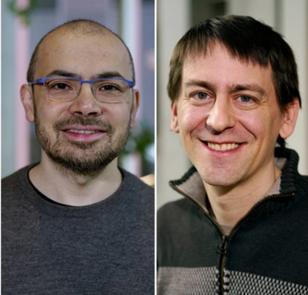
AlphaFold developers Sir Demis Hassabis and Dr. John Jumper awarded the Nobel prize in chemistry.
Cardiff University axes Arts Department by I. Akinsola, Current affairs correspondent
“The arts are on the chopping block.”
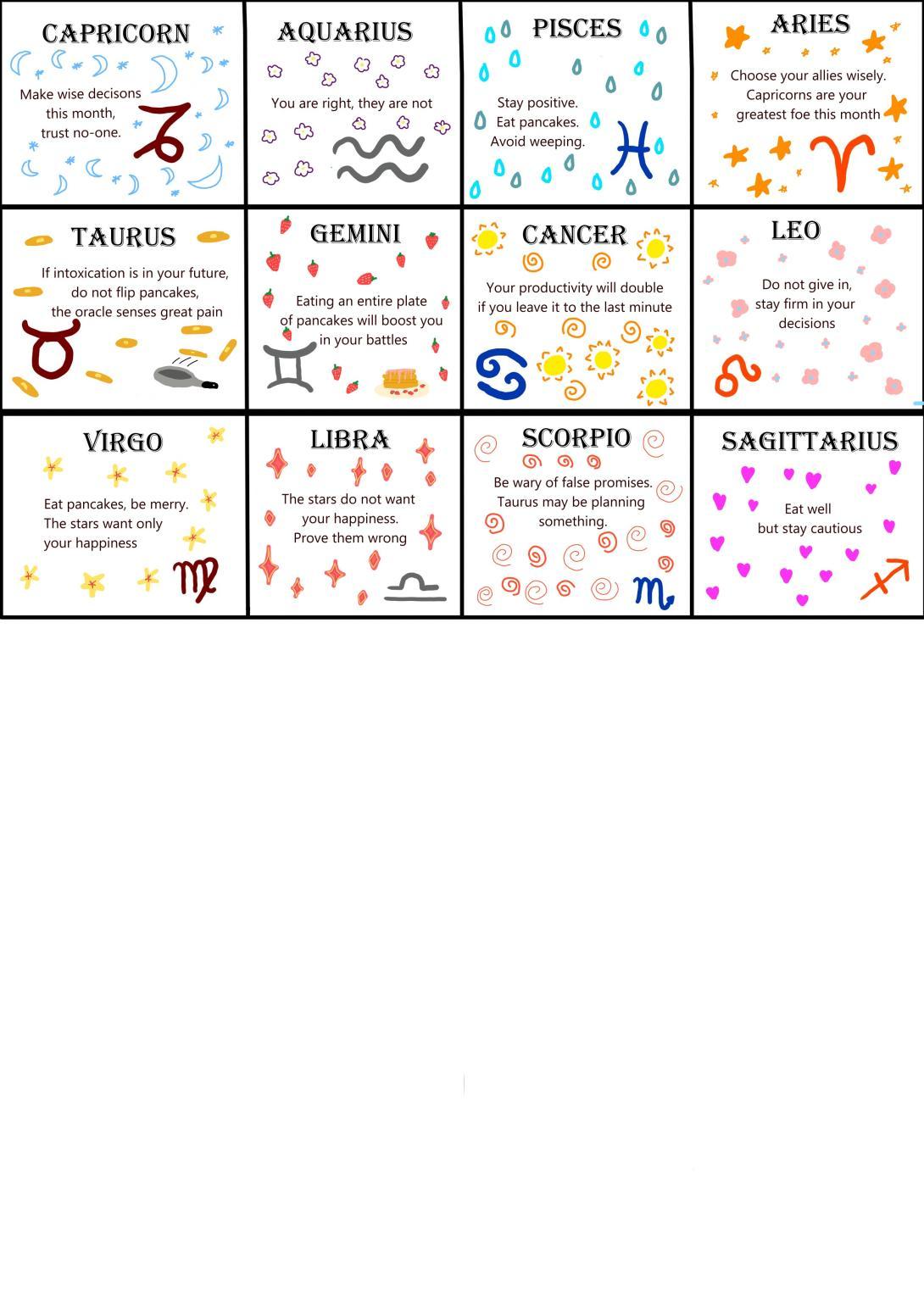
CIA found to be meddling with you student elections for the last six decades! Make sure to Rep YOUR Landlord in all new letters sent in by readers! Also, check out your horoscope in our March star map!
By P. Horsefield, Editor-in-Chief
Concourse is constantly improving since each of our last editions. One such improvement which I am proud to tell you, the reader, is that we have applied to be a society of the Keele Student Union! This is very exciting news as this will allow us to be an official part of the SU as well as reach out further to more societies. However, this does raise some drawbacks (some of them necessary) to being a true part of the Student Union. The first, and most necessary drawback, is that we must strive for neutrality in all issues. Of course, it would be highly unrealistic for young, studious, and passionate undergraduates to be completely unbiased on all topics while still being able to comment on them with full authority. Instead, the Concourse writers and editors will strive to make sure that stories written to you, students of Keele, are of the highest quality, while still containing passion behind each word.
I hope that you enjoy this month’s edition of Concourse, and a happy Ides of March to all that celebrate!
Culture
The band: Christian Music
By N. Slater, Culture correspondent
Harnessing a cacophony of distortion, Christian Music’s debut album European Tribunal reflects the gallows humour and pessimistic energy endemic of Britain in the 2020s. It is the perfect soundtrack to thrash around to in the remaining days of our crumbling empire.
My favourite track of the album is the closing song ‘VRS’, a thundering eight and a half minutes of the most danceable noise rock riffs you can hear in the UK. The band knows how to keep you engaged throughout, with their ability to use one main riff but evolve on it to take it to new places you would not expect. As well, they know when to bring the energy down to shoot it back up again to levels even higher than before, just to keep you on your toes.
I was fortunate enough to be able to see this band play live at their vinyl release show at the Artisan Tap, in Hartshill, Stoke-on-Trent, and I was just equally impressed with the openers (they were called Mercury, check them out). My main memory from the night was standing in the doorway entranced as this erratic topless man commanded the room like a conductor of chaos with some of the best stage presence I've seen in my life. It was such a physical performance that I felt exhausted just standing there holding a pint.
Christian Music's debut album is a triumph of U.K. noise rock, and more people should be talking about it. If you ever
get the opportunity to see these plays live, do not miss it; they are one of the most energetic and engaging acts out there in our current music landscape and you're in for an unforgettable evening.
Keele & beyond Courts stop the sink!
By T. J. Hayward, Current affairs Editor
Walleys quarry landfill has been viewed with disdain and distaste since 2016 when excessive hydrogen sulphide gas started to bleed from the landfill. These numbers were discovered to have been under-reported by a (very timely) audit in August 2023, due to improperly calibrated hydrogen sulphide gas monitors. This led to the environment agency issuing a closure notice to the landfill site (that and the worsening compliance of Walleys quarry).
Since the article in the January edition of Concourse, there have been some updates. Firstly, the environment agency has kept a close eye on Walleys quarry to ensure that the terms of the closure notice were not breached. An inspection on 3rd February found that Walleys quarry had indeed installed and connected additional gas collection infrastructure, capturing an additional 600 m3 of hydrogen sulphide gas and had laid down 26,000 m2 of temporary capping over previously exposed landfill. The environment agency has also stated that they are aware of the smell that has been intermittently released during the works and have called this “unacceptable,” but are hopeful that the once capping work is completed then that will have been the last of the stink.
In even better news for the locals (but not the best, that
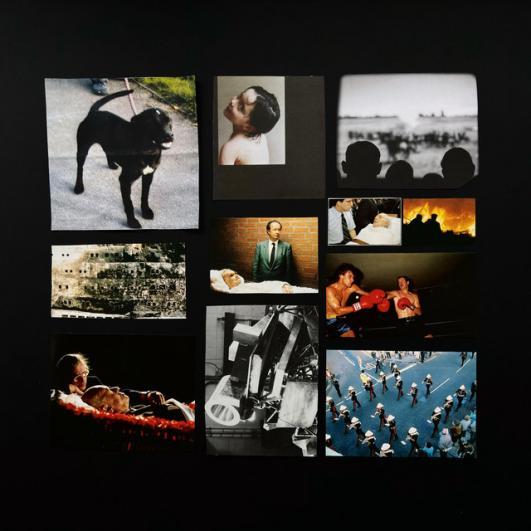
Christian Music’s debut album European Tribunal released in 2024.
comes later), on 30th January, the planning courts held a hearing between the environment agency and Walleys quarry landfill, who were appealing the closure notice. On 4th February the courts ruled against the appeal, this held the closure notice in place and prevents the quarry from taking in more landfill. In response to the court's decision, Walleys quarry gave a press release in which they stated that, “we are disappointed with the court’s decision and remain clear that keeping the site open delivers greatest benefit and sustainability for the site.” (Might I remind the reader of the 2023 compliance assessment report score of 251.1 which puts the quarry in category F by a country mile). They ended the message with their new timeless classic: “As a business we completely reject the accusations made by the Environment Agency relating to poor management of the landfill site...”
Adding to the better news above, on 28th February it was announced that Walleys quarry limited had gone into liquidation and their website has since also been taken down. The environment agency has reassured Silverdale residents that the liquidation will not affect the closure notice and that they will work the liquidators to ensure that the stink will not return. As of the time of writing, Walleys quarry has yet to give a statement. However, it should be warned, since 5th march it was announced that the liquidators had disclaimed the environmental permits which means that all permits for landfill and soil treatment no longer exist. This has not stopped gas collection, and the environment agency are still working on ensuring the safety of the site with their discretionary powers, used to try to prevent pollution from seeping further into Silverdale and the wider area. The water is still rocky around Walleys quarry landfill, but residents affected by it are hopeful that their blight is almost to an end.
Preview of May election
By J. Budd, Opinion Editor
This May signals the return of local elections to the borough of Newcastle under Lyme for the first time since 2022. There are nine seats up for grabs within the Staffordshire County Council across the borough, all of which voted for the Conservative Party at the last election, in a clean sweep that saw Labour lose three seats. The story this time round could however be a very different one.
There have, in fact, been two separate sets of elections since these seats were last contested in 2021, those being the aforementioned Newcastle under Lyme Borough Council in 2022 and of course the one most people are aware of, the General Election in 2024. In terms of the prior, the Conservatives again saw an increase in seats, with the total haul being 25, two over the threshold required for a majority, they gained seven seats, one from Labour, three off the Liberal Democrats and three off the Independents; some of which changed hands in by-elections during the previous electoral cycle. However, a lot has changed since then. We have had four different prime ministers in that time, with Boris Johnson leaving, the Liz Truss and Rishi Sunak eras all coming and going, and the new Labour administration beginning, which all take place within this time span. With so much change it is important to figure out what might play out this time round and what each party might expect.
As previously mentioned, the Conservatives did well last time, winning all the seats up for grabs within the borough, in the Staffordshire County Council elections. This time round it might be more of a challenge. The General Election saw the parliamentary seat of Newcastle under Lyme switch back to Labour for the first time since 2019, reflecting the national swing towards Labour more broadly. The reasons for this are self-explanatory, at least in relation to the national picture. Although Partygate did not appear to cause too much of an upset for the Conservatives in the borough elections, the disastrous budget and other national issues may well have played a part towards Adam Jogee being elected to parliament. Similarly local issues such as the handling of Walley's quarry by the current Conservative administration in Newcastle may well have also influenced to shift. It is therefore very difficult to see how the Conservatives manage to retain all 9 seats. That being said, there is some home from a conservative perspective in the fact that they do have some safe seats in the area that rarely change hands and on a more broader level the areas around Stoke-on-Trent are traditionally quite socially conservative in nature, this combined with the more rural nature of parts of the borough may well aid them come May.
Labour has a lot to be cheerful about this time round. As previously mentioned, the parliamentary seat has been returned to them after five years. On the national level they have been performing solidly, albeit without necessarily kicking up any trees, something which may further boost their credentials locally. Considering they are effectively starting from ground zero again, even gaining just one seat can be seen as a success. The areas where they will likely most target are the three seats they lost last time round, those being Audley and Chesterton, Talke and Red Street, and the most important to students at the university, Keele, Knutton and Silverdale. Of course, they may well do better than this and gain some of the seats they lost in 2017, particularly in urban areas such as May Bank and Cross Heath, but at this point it is very difficult to tell.
One marked difference from 2021 is the surge in support for Reform UK, previously the Brexit party. In the past, the party, which it splintered away from UKIP in 2018, had done quite well within the local area, winning Keele, Knutton and Silverdale district in 2013. More recently in the 2024 General Election, Reform came third, on 22.4% of the vote. This means that in all likelihood we may see one or two seats going to the party in May. This is likely a result of the demographics of the local area. As previously mentioned, people within the Stokeon-Trent area tend to be socially quite conservative despite their working-class roots and may feel a change is needed from the pre-existing party politics of the area.
There may also be a boost for the Liberal Democrats, as they have adopted a more local grass roots approach to campaigning, often focusing on local issues which affect people. They also have not necessarily been mired by the national picture either. On a similar note, Independent candidates may also see a good return in relation to campaigning locally, again with issues such as Walley’s Quarry potentially weighing on people's minds this time round.
Lastly, it is important to note that many people don’t necessarily see a point in voting in local elections, as the
perceived impact is not that great. This could not be further from the truth. Local councils are fundamental to the running of day-to-day services within the local area such as, schools, healthcare, and policing. These affect everybody and the only way to have a say on how you want these to be run is by voting on 1st May.
Opinion Student Union’s club nights: a review
By N. Slater, Opinion correspondent
In an attempt to cater for everyone, Keele Student Union nights often leave many disappointed or disinterested. Despite their attempts to offer themed nights, many of these fall short of expectations, leading to complaints from students. However, many, including myself, and particularly those from the Athletics Union still frequently attend SU nights and have a great time despite these shortcomings.
The last SU event I attended was the KRAP emo night, a nostalgic attempt to bring back the 2000s alternative scene. While I ultimately enjoyed the night, there was one noticeable flaw. The music selection was inconsistent, with long stretches of generic pop-punk hits as well as the occasional oddball that you couldn't even pretend to match the theme, such as Nickelback’s 'Rockstar' and Tenacious D's 'Tribute'.
Despite my complaints about the specifics of the genre, there were still many moments of fun, and most attendees took the night in stride. Considering the slightly poor attendance, the dance floor was full and there was a friendly and inviting atmosphere which is hard to compete with.
Speaking to others, a few recurring criticisms emerged: many students complain that SU nights stick to a repetitive, mainstream playlist that lacks variety. While pop and throwback anthems can be fun, their overuse leaves little room for diverse tastes. General lack of interest means that some students simply don't engage with SU nights, finding them unappealing, predictable, or lacking the excitement of other nightlife options.
With underwhelming guests and overpriced events, SU club nights often feature mediocre guest performers or DJs while charging relatively high entry fees. Many feel they aren't getting their money's worth. The DMK is full of talent and when allowed to play what they want to put on a great evening at a fraction of the cost of a guest DJ, who when they come charges around £15 or more just to enter.
Also, more consistent live music would be a great sight to see at the SU with some of the acts they have brought in being talked about as some of the best nights put on such as Tion Wayne, Jake Bugg, The Ks, and the Zutons. As well as a plethora of tribute acts, which all receive a good reception if being a little pricy for entry.
With the K2 being indefinitely closed, this leaves out many smaller acts that can't pull such a crowd, which is definitely a loss for Keele students. Especially with such a vibrant and budding music scene just down the road in Stoke, full of many bands hungry to play in front of anyone who will listen.
Interestingly, those who seem to enjoy SU nights the most are members of the Athletic Union. With a built-in crowd, the AU consists of some of the biggest student-led organizations on campus. The AU nights are often full of these clubs on social nights. AU members often have pre-drinks together and show up in large groups taking over the venue. For students who aren't part of the AU these Wednesday nights can make you feel separated from most people in attendance. Without that shared sense of community, it is easy to feel like an outsider, watching others have fun rather than being fully involved.
While SU club nights do offer enjoyable moments, they clearly don't appeal to everyone. To make them more engaging, a few changes could be considered:
More diverse music nights instead of relying on the same mainstream hits; introduce well-curated alternative, indie, house, electronic, or even cultural music nights.
Ultimately, SU nights have potential and can be a real class night out, but their current format can only benefit specific groups. If they aim to truly cater to all, they need to rethink their approach and offer experiences that feel fresh, exciting, affordable, and genuinely inclusive.
Current affairs
Cardiff University axes arts department
By I. Akinsola, Current affairs correspondent
The arts are on the chopping block. Cardiff University is now the latest in a wave of universities to propose cutting many of their creative programmes. This follows institutions like the University of Wolverhampton, which suspended all 138 of their performing arts courses, and Canterbury Christ Church University, whose English Literature course became ‘no longer viable in the current climate,’ as of November last year.
The closure was announced as part of wider cost-cutting measures – including plans to cut over 400 full-time jobs and the discontinuation of subjects like modern languages and ancient history. As a result, a swell of critics are warning of severe consequences for music education, particularly in Wales and across the UK.
Among the most vocal opponents is renowned Welsh composer Sir Karl Jenkins, who stated that closing Cardiff’s School of Music could make music education ‘more elitist,’ by ‘[ending] opportunities for state-funded tuition.’ He argues that such a move, risks increasing elitism within the arts and
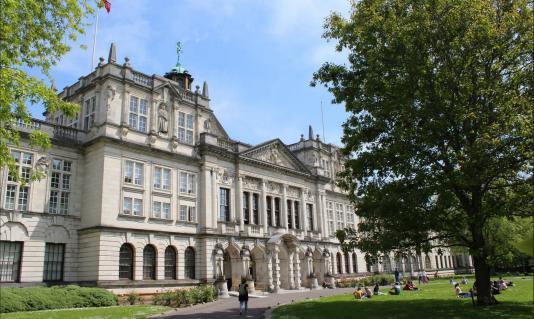
Cardiff University to cut departments in a bid to save money.
undermining Wales’ cultural heritage. The potential closure raises deeper questions regarding the institutional prioritisation of ‘straight subjects,’ and the potential long-term effects of deprioritising the arts in favour of more commercially lucrative fields.
One of the central concerns raised by critics is the impact this closure could have on accessibility to music education. Cardiff University’s School of Music has long been one of the few institutions in Wales offering specialised music education at a high level.
If the closure were to go ahead, prospective students may be forced to seek education elsewhere, potentially in England where tuition fees for Welsh students are higher. This could create financial and geographical barriers, making music education an increasingly exclusive field, accessible mainly to the privately educated.
This risk of elitism is particularly concerning given the wider landscape of arts education in the UK. The recent decline in government support for the arts has led to the increased marginalisation of creative subjects within secondary education. The removal of these programmes further limits opportunities for young musicians, particularly those from working-class backgrounds who may not have alternative pathways into the industry. It will cut off their access to professional training programs, affordable practice spaces and networking abilities. Additionally, fewer university courses could result in a decline in qualified music educators, exacerbating the problem at earlier stages of education.
In a world where cultural diplomacy plays an increasingly vital role in national identity, a sentiment echoed by the conductor of the university’s brass band, Ianto Williams, who acknowledged music as the ‘heart of Wales,’ the proposed closure raises questions about the future of cultural investment in Wales. The nation has a rich musical heritage, spanning from traditional Welsh folk music to globally recognised classical and contemporary artists.
The School of Music has played a key role in nurturing talent and sustaining Wales’ reputation as a hub for musical excellence. It has been integral to local orchestras, choirs, and outreach programs that bring music to wider audiences and its closure would weaken these networks, leaving a gap that will be difficult to fill. This closure would not only affect the music students but also hamper the ability for interdisciplinary
collaboration within the university for students in subjects like drama, film and media studies.
The precedent being followed here is particularly worrying as higher education institutions continue to face financial difficulties and their arts programs fall victim to the need to cut costs. Governmental policies that favour STEM subjects further incentivise universities to abandon creative courses in order to keep themselves afloat.
Furthermore, the devaluation of arts education could have long-term economic consequences. The creative industry is one of the government’s key growth-driving sectors, contributing an estimated £125 billion to the economy in 2024. Reducing pathways into the industry could stifle innovation, limit job prospects, and diminish the UK’s standing as a global leader in cultural production. There is also a significant body of research highlighting the positive effects of music education on cognitive development. A reduction in music education at the university level could therefore have unintended consequences on broader educational outcomes, affecting not just musicians but students of all ages.
The backlash against the closure has been swift, with a petition to save the school garnering over 23,000 signatures, with one contributor stating, ‘Wales has music at its heart and in its soul. It is, therefore, unthinkable for Cardiff University to consider closing its School of Music; no reason can possibly justify such a decision.’ Hundreds of musicians have also taken to the streets in protest. On February 22, 2025, protesters marched from Museum Avenue to Cardiff City Hall in ‘outrage,’ and ‘[calling] on Vice Chancellor Wendy Larner to reverse [the] decision.’
Whether these efforts will be enough to save the School of Music remains to be seen, but the case has already sparked a wider debate surrounding the value placed on arts education in the UK. Critics argue that universities must balance financial realities with their responsibility to preserve cultural and intellectual diversity. Ultimately, this is not just a decision about one department; it is about the broader direction of higher education and the role of music within society.
Metrolink tram tragedy
By A. Gurney, Current affairs correspondent
On Saturday 22nd February, a Metrolink tram in Manchester’s city centre collided with a van at around 10am, tragically killing a 3-year-old girl. The incident occurred when the van had dangerously pulled out in front of the tram, which was unable to stop in time, and subsequently hit the van. This led to the van mounting the pavement and colliding with 3year-old Louisa (Lulu) Palmisano. The collision resulted in a large response by emergency services with two air ambulances attending the scene, rushing the young girl to hospital where she later died of her injuries. Louisa Palmisano had been visiting Manchester for the weekend with her parents and had been “enjoying a happy family day out in Manchester when this unimaginable tragedy struck”. Following the collision, the van driver fled the scene but was later identified and arrested by Greater Manchester Police as 35-year-old Rawal Rehman, who appeared at Manchester
Continue reading on Page 9.
Jordan LaFlure, Executive Editor of
The Onion : “you are free to use that name as far as The Onion is concerned”
CIA-Backed Candidates
Win Student Union Elections
Another year, another round of voting for our representatives in the Student Union. We may act like we don’t know it, but the shabby truth is that the CIA are spending tremendous resources to put puppets in the four officer positions, for the sole purpose of advancing the interests of the United States.
It’s time to wake up.
How many times have we peered through gaps in doors to see suited figures discussing foreign elections, memory wipes every Thursday morning, and the mysterious ‘Men in Black’ hiding in the bushes? This, and more, is irrefutable proof of a considerable CIA presence on Keele Campus.
An anonymous source, in a meeting by some bins, claimed that “Over the past 60 years, the CIA has propped up every single SU Officer in sham elections. They have defended them against local revolutionary communist groups, facilitated Keele’s booming drug market, and opened the campus to hostile US investment.” Peters further claimed that the recent death of a populist candidate for the Wellbeing Officer position, was a state-sanctioned assassination. “Francisco Herrera was a force for change, he was someone who could have changed something around here. He lived for wellbeing; he died for wellbeing.”
Throughout the years, a blank cheque has been given to covert operatives at Keele. Right-wing think tanks posing as debate societies, twisted experiments with mind control in the Central Science Labs and let us never forget the horror of the
manufactured ketamine epidemic in Horwood.
Our team met with a suspicious man, who claimed that “We need the agency here […] Think how it was before they came; the slavery, injustice, abject poverty - as far as I'm concerned the CIA has brought democracy to an underdeveloped part of the world.” We were led by the man to a small warehouse, a small piece of land on campus that is not subject to international law, where an ‘Enhanced Interview’ took place.
As a result of us deciding to publish this article, pernicious rumours have been spread, framing The Shallot as a source of fake news. This is undoubtedly the handiwork of meddling spooks; therefore we would like to assure our dedicated readers that our lawyers are litigious and eager to sue over this sort of thing.
Frog Fact Corner!
This is the Zombie Frog. It is one and a half inches in size, has orange spots all over it, and enjoys spending it’s time hidden in mud. As you can see, it does not look much like a zombie. It was actually named as such after it’s researchers, who looked like zombies as they dug up frogs from the mud.
Repping my landlord
A safe space to express you most sincere concerns about your most beloved landlords! These opinions have been collected recently and reflect the honesty and sincerity of the Shallot news section.
Dear Landlord,
We have noticed many strange shapes and patterns appearing on the grass outside our house as well as mysterious objects circling above our road over the last few weeks. We haven’t thought much more of it until one of our flatmates was seen
A Zombie frog perched on a rock.
Clandestine meeting with CIA members involved in SU elections.
floating up into one of the objects and they haven’t been heard from since. Do you know if they have paid this month’s rent or not?
Yours, tenants
Dear Landlord,
After much consideration and debate, the other tenants and me have decided to set-up a franchise in our current property. I have paid the £30k franchisee fee, but could you please cover the remaining cost to set-up our McDonald’s franchise? This is going to be big, landlord.
Yours, tenants
Dear Landlord,
I have heard many stories from many people that the house I live in is haunted by an inconsiderate ghost, yet I don’t believe this to be the case. In the 237 years I have lived at this property, I’ve allowed generations of people, year after year, to live in my house and I am always respectful. Please could you stop the spreading of these false rumours?
Yours, tenant
Dear Landlord,
We have been repeatedly disturbed by a person claiming to be our landlord who looks identical to you. They have been harassing us for the last two months by claiming that we have not paid our rent and that we must pay it or else face eviction. Would you be able to make them leave us alone?
Yours, Tenants
Thank you to our readers that submitted letters for repping their landlords!
Write in using the QR code to represent your landlord! You might be featured in the next edition!
YOUR star sign by Moss
Aftermath of the German Election
By M. Palm, Current affairs correspondent
Usually, the projections on the evening of the election day do not differ much from the results published in the next morning. This time, however, it was uncertain until well into the night whether the BSW (see table below for explanation of party names and identities) would get into the Bundestag (German federal parliament) or not. Only parties with five or more percent of the votes get into the parliament. Thus, if one party is just below five percent, the parties that are not, get a greater share of seats in the parliament. The success of the smaller parties can therefore determine what coalitions are possible to get a majority in parliament. This election day, on 23rd February, three parties feared they might not make the five percent: Linke, BSW, and FDP. A coalition of CDU and SPD is now only viable because neither BSW nor FDP reached five percent. Otherwise, a third party – like the Grüne – would have been needed in a coalition to reach a majority.
So, these are the results: As expected, CDU/CSU are the strongest party with about a third of the votes, followed by the AfD with 20.8% and SPD on a historic low with 16.4%. The Grüne experienced a three percent decrease to 11.6%, while the Linke got a surprising 8.8% and thus gained 3.9% since the last election. The overall turnout was the highest since 1987 with 82.5% of those eligible casting their vote. This is despite the short preparation period after the previous coalition fell apart in November 2024.
It is assumed that the poor results of SPD, Grüne and FDP are due to dissatisfaction with the former government led by their coalition. While many parties ignored or downplayed the protests of over a million people against the far right and aimed for more hostile migration policies, the Linke did not. This may have earned them their unexpectedly large increase in votes.
The 10% gain of the AfD has been attributed not only to the general rise in dissatisfaction and populism, but also to the right-shift of the CDU/CSU with their chancellor candidate, Friedrich Merz. The increased use of populist language and demands for more hostile immigration policies, as well as the most recent vote the CDU/CSU passed together with the AfD, have helped make far right views more socially acceptable.
The results also show a clear geographical division. While former West Germany mostly voted for CDU/CSU, in former East Germany the AfD got the majority of votes (well over 30% everywhere except Berlin). Although nearly 35 years have passed since the reunification, there is a prevailing feeling in the East of being left behind or overlooked. Many are afraid of immigrants ‘stealing’ their jobs, despite the ageing society struggling with a staff shortage. Thus, their economic power is suffering and again the ‘political establishment’ is blamed. The election was followed by many booking cancellations at the Baltic Sea coast in Mecklenburg-Vorpommern. The eastern state had given 35% of their votes to the AfD and many tourists – especially those with a migration background – do
not wish to spend their vacation in the area anymore, as a political boycott but also due to safety concerns.
Two coalitions are now possible to reach a parliamentary majority: CDU/CSU and SPD, or CDU/CSU and AfD. The latter is less likely than the former, as Merz has ruled out any cooperation with the far-right party. However, a coalition with the SPD will not be easy. Current negotiations between the two parties have highlighted several points of conflict. The CDU/CSU wants to send back immigrants from the German border. They further wish to take the right of those under subsidiary protection to be joined with their families and end subsidiary protection all together. Subsidiary protection is the right of an immigrant to stay in the European Union (EU), because the return to their home country would endanger them. While the SPD opposes these demands, they may not be viable within the EU anyway.
While both parties want to support Ukraine in their fight against the Russian invasion, the CDU/CSU considers a larger extent of support than the SPD. In addition, it is unclear where the financial resources could be taken from. Currently there is a legal cap to the amount of debt the German government can take on. Changing this may be difficult with the new parliament, as both AfD and Linke are likely to oppose it and collectively have enough seats to block such a motion. Thus, despite previously objecting to this change himself, Merz is now trying to change the debt limit in the last weeks of the old parliament where AfD and Linke still have fewer seats.
Other disagreements are in matters of the basic income scheme, minimum wage, pension, and taxes. The CDU/CSU further wants to abolish the EU requirements to reduce combustion engines and restart the use of nuclear power. Despite the long list of potential conflicts both parties appear to be confident they can come to an agreement. Merz has said he is aiming to have a coalition by Easter.
However, there have been SPD MPs who have announced they are not likely to support Merz in the in-parliament vote for the chancellor. The CDU/CSU as moved further right with Merz and since the cooperation with the AfD to pass a nonbinding motion for a harsher immigration policy, trust in their word dwindled. Merz would have no majority in parliament, should he lose more than twelve votes from SPD MPs, unless the AfD would choose to fill that gap. If he is willing to go that far, Merz could rule with a majority at times granted by the SPD and at others by the AfD. The SPD would likely not go through with this in the long run.
English Heritage: going under?
By T. J. Hayward, Current affairs Editor
Many people have heard of English heritage, and many have or have had membership at some point in their life. However, they are now under possible threat due to financial losses.
Should English heritage go under, over 400 properties could be under threat of abandonment, or alternatively could become privatised, and no longer be accessible to the public which would lead to the loss of education about the history of
these sites and the ending of enjoyment held by all who visit.
English heritage is a charity that has responsibility over 400 sites across the UK, across the entirety of England. One such site is Kenilworth castle, which normally holds a 12th century re-enactment show, yet this year, the show is not taking place leading to several re-enactors to speculate that English heritage may be experiencing serious financial issues. Now, this does have some credit behind it as according to the charity commission for England and Wales, which English heritage is registered under, they have experienced approximately £10 million losses (with depreciation of assets considered) for the past three years. Unfortunately, the charity commission only holds financial reports, that are viewable by the public, for the past five years, which is insufficient to determine if English heritage is truly in financial trouble or not.
According to their latest financial report they do state that: “Unrestricted reserves amount to £40.1 million (2023: £55.7 million). The decrease in unrestricted reserves by £15.6 million is the effect of trading activities resulting in net expenditure of £15.7 million.” Which is a lot of money, plus they have restricted reserves amounting £8.7 million and £1.7 million of a restricted endowment reserve (neither of which are necessarily accessible due to their restricted nature), however based off previous spending, it is likely that, assuming there is no net change in losses (which is unlikely to happen but acts as a basic forecast) this would only be survivable for about 3 years. However, they have stated that there is much uncertainty with future costs due to inflation, higher costs to hire contractors (Due to rises in minimum wage and materials) etc. Additionally, this was the first year in which they had no grants awarded to them by the government. This all seems to spell disaster for English Heritage as it looks unlikely that, without subsides in the form of grants, they will be able to cope with the strain caused by the rising costs of everything and the tourism industry having not reached pre-pandemic levels.
We reached out to English heritage for comment but they neither confirmed nor denied being in any financial troubles.
Science & Tech
Majorana 1: A Major Deal or just Major Hype?
By G. Saji, Deputy Editor-in-Chief
The idea that Microsoft would rather discover a new state of matter than make the Teams calendar even slightly usable while filling me with rage as a uni student has shaken the world to its core, and this may be for good reason.
Majorana 1, Microsoft's new chip, has just eight qubits, despite this small number, what is substantial is their kind. Qubits are the information units in quantum computers, like
our regular 1s and 0s, but due to their quantum nature, they can exist in multiple states simultaneously. Quantum computers have a problem, in fact they have many problems due to being constructed from science, but one of the biggest issues is their fragility. We need a way to physically store qubits, like transistors do for bits. Several systems exist, such as superconducting, trapped ion, and photonic qubits, but they’re highly fragile due to their sensitivity to environmental disturbances. External factors like temperature and noise can cause a qubit to collapse. As more qubits are added, maintaining stability without decoherence becomes increasingly difficult.
This is where Majorana 1’s qubits differ. Unlike other qubits, which are based on particles like ions, electrons, or photons, Majorana qubits rely on a topological state created using a new material in the form of nanowires known as the 'topoconductor.'
While the science behind this is very complicated, essentially, by applying a magnetic field to the wires, we induce a topological phase transition (the new state of matter), creating Majorana zero modes at the ends of the wires. These 'quasiparticles' are not traditional particles, but an emerging phenomenon. Their entanglement allows us to create a qubit, where the state depends on the evenness or oddness of electron numbers in the nanowires.
The key significance is that, being topological, the qubit isn’t based on a particle but on the material, its topology, and temperature. This may make the qubit 100 to 1,000 times more scalable. Microsoft has even claimed a clear path to building a million-qubit processor, capable of performing an astronomical number of calculations simultaneously. How one can invent the most powerful computers in the world while making ones that lose 30% battery while powered off, I will never understand.
So, is that it? Not quite. Many scientists are sceptical to say the least, viewing much of this as your standard capitalist fluff to boost Microsoft's valuation for shareholders. They wonder whether the research behind this new qubit holds up, and second, whether its significance is as groundbreaking as Microsoft claims.
We are at a point where Microsoft could backpedal, which they have done regarding MZM’s before. The biggest criticism has been their research paper, which clarifies that their measurements don't definitively prove the existence of topological states. The assertion that Microsoft has topological qubits seems to have originated from publications, not from Microsoft itself. However, Microsoft did not step in to correct the misunderstanding if there is one. Several experts have reviewed the paper and raised concerns about Microsoft's protocols for identifying a topological phase, calling them questionable. The topological state is crucial because it gives the system its unique quantum properties. Well then, what did
they measure? Some scientists suggest they may have simply measured electrons moving through the wire.
Scientists are frustrated with Microsoft's approach because they have claimed to create a quantum version of classical transistors. However, smaller, more developed qubits are already solving issues like decoherence and error correction. For example, Google's Willow chip uses superconducting qubits with strong error correction, and Intel's quantum dot qubits offer the best scalability.
Microsoft's bold claim that their new qubit will revolutionise quantum computing has frustrated researchers, as they lack enough data to support it. Scientists are naturally sceptical of new papers, as peer review is meant to critically evaluate such claims. While they downplay the chip's significance and the possibility that the qubit exists and performs as expected, there is still data from Microsoft that hasn’t been fully reviewed. It's possible Microsoft does have the topological qubit, but proving anything in quantum computing is difficult.
Companies often make bold claims to boost their valuation and stock prices, only for them to fall short, while scientists scream their warnings. That said, if this qubit does exist, it’s still a significant development perhaps not as revolutionary as some suggest, but it offers a completely new approach to quantum computing which may be what the field needs. What do you think? Is this just quantum noise, or could it be the first step toward million-qubit quantum computers? If so, maybe I can use one to open OneNote, one can dream.
AI wins Nobel prize revolutionising drug discovery
By J. Hearsey, Science & Tech correspondent
Each year, the Nobel Prizes celebrate some of the world’s most influential scientific breakthroughs. Previous winners include renowned physicists, Marie Curie and Albert Einstein, whose discoveries made unquantifiable contributions to the realms of radioactivity and theoretical physics.
In a groundbreaking announcement, the 2024 Chemistry Nobel prize was awarded to two researchers at Google’s AI research lab, DeepMind, for the creation of AlphaFold – an AIpowered protein structure prediction database. AlphaFold rattled the scientific field for two reasons. Firstly, its win marks the first time AI has received such a highly regarded award, and secondly, its protein predicting software has solved the 50 -year long mystery of ‘protein-folding,’ which has grappled molecular scientists.
In a nutshell, AlphaFold uses deep-learning technology to accurately predict a protein’s 3D structure based on its amino acid sequence. Proteins generally consist of 20 amino acids which fold to form alpha-helix (coils) and beta-pleated sheet (pleated strands) structures. These unstable structures synthesise and fold into a more ordered, 3D structure which makes the protein fully functioning. Protein molecules perform many essential functions in the human body such as insulin, which is responsible for regulating blood sugar levels.
With the astronomical number of possible configurations a protein could fold into, known as Levinthal’s Paradox, scientists have had to rely on laborious and resource-intensive methods of X-ray crystallography and nuclear magnetic methods to build a picture of a single protein’s 3D shape which can take years. Even then, trial and error was still the most used clinical method for drug development as knowledge of targeted protein binding sites were limited.
In just 18 months, AlphaFold expanded the protein structure database from under 1 million to 200 million, cataloguing almost every protein known to science. More than 500,000 researchers from 190 countries have used AlphaFold’s database thus far – truly revolutionising the field of molecular science. Its impact has been nothing short of transformative, as shown below:
Researchers at the University of Toronto have harnessed the protein database to develop a new drug to treat liver cancer. The program identified a new potential target for treating the disease which led researchers to develop a new molecule in just 30 days.
Vaccine development has felt AlphaFold’s catalytic power as researchers at the University of Oxford used the database to solve the structure of a malaria parasite following years of inconclusive experiments. In turn, a malaria vaccine is currently in the process of development - successfully passing its first phase of clinical trialling as of 2022.
Hope continues as AlphaFold unveils insights into the mechanisms of protein binding that causes Huntington’s disease, a genetic neurodegenerative brain disorder. Scientists have been using protein analysis to study the binding interactions involved, which has the potential to aid targeted drug developments.
AlphaFold’s profound and far-reaching success shows promise for treating boundless diseases which have long plagued sufferers and signifies a new, hopeful era for artificial intelligence in science.
AlphaFold developers Sir Demis Hassabis and Dr. John Jumper awarded the Nobel prize in chemistry.
Society news Personal ads
SPARK
attends National Student Space Conference
On 1st and 2nd March, SPARK took a trip to 2025’s iteration of the National Student Space Conference, organised by UK Students for the Exploration and Development of Space (UKSEDS).
Graciously hosted by the University of Leicester, dozens of organisations and hundreds of students gathered to discuss the space industry and exciting new technologies.
Concourse looking for more writers and other roles
SPARK is hoping to return next year, and host events of their own for physics and astrophysics students. The Concourse team is looking to expand and, thus, we need more writers and other committed people to reach out to us.
We are always looking for more writers, so, keep an eye out for our Instagram where we will let everyone know where our Wednesday meetings are being held. Alongside more writers, the team is looking for two extra roles: a sports editor and graphic designer.
At Concourse, we feel that there is a huge potential for a sports section within this paper. This is only possible if we can get enough people to write for Concourse to support this new section. As well, we are in need of a graphic designer to help with the presentation of Concourse as a whole.
To apply, simply follow our Instagram, @keele_concourse, and watch our for our stories to join our weekly meetings. If you want to actively get involved then also send us a message on our Instagram and we will be able to add you to our growing number of writers and editors!
Here is a query sent in since our last edition: Query: Hungry
Yours, Alex
Response: Well, Alex, I hope you are able to get some food since you sent this in to us.
Here are some personal ads from the previous edition:
Query: I accidentally made the library think I was part of Concourse (I'm researching old Concourse stuff). HOWEVER, the Archives would appreciate a copy of each issue for the archives :)). (also I have Concourse membership through the SU, is there anything I'm meant to do with it?) Last thing is that your website currently doesn't work and I don't know if you want that changed or not (or if you even know about it).
Yours, Anon
Response: It is great to hear that people are interested in Concourse! If you’re researching old Concourse, why not join our team? We meet every Wednesday to discuss ideas for articles as well as a social time for people with a common interest in media and journalism. Referring to archives wanting new copies of Concourse, I fully plan to save these and hand them over to them by the end of the year. Lastly, we are aware that the website is down; we are looking to start it up again to promote quicker stories and provide more accessibility to our monthly editions.
Send in your problems, responses to articles, or general questions to us via the QR code, and our Concourse team will to respond to them the best we can!