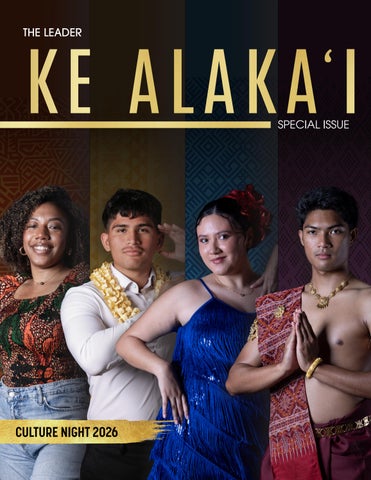
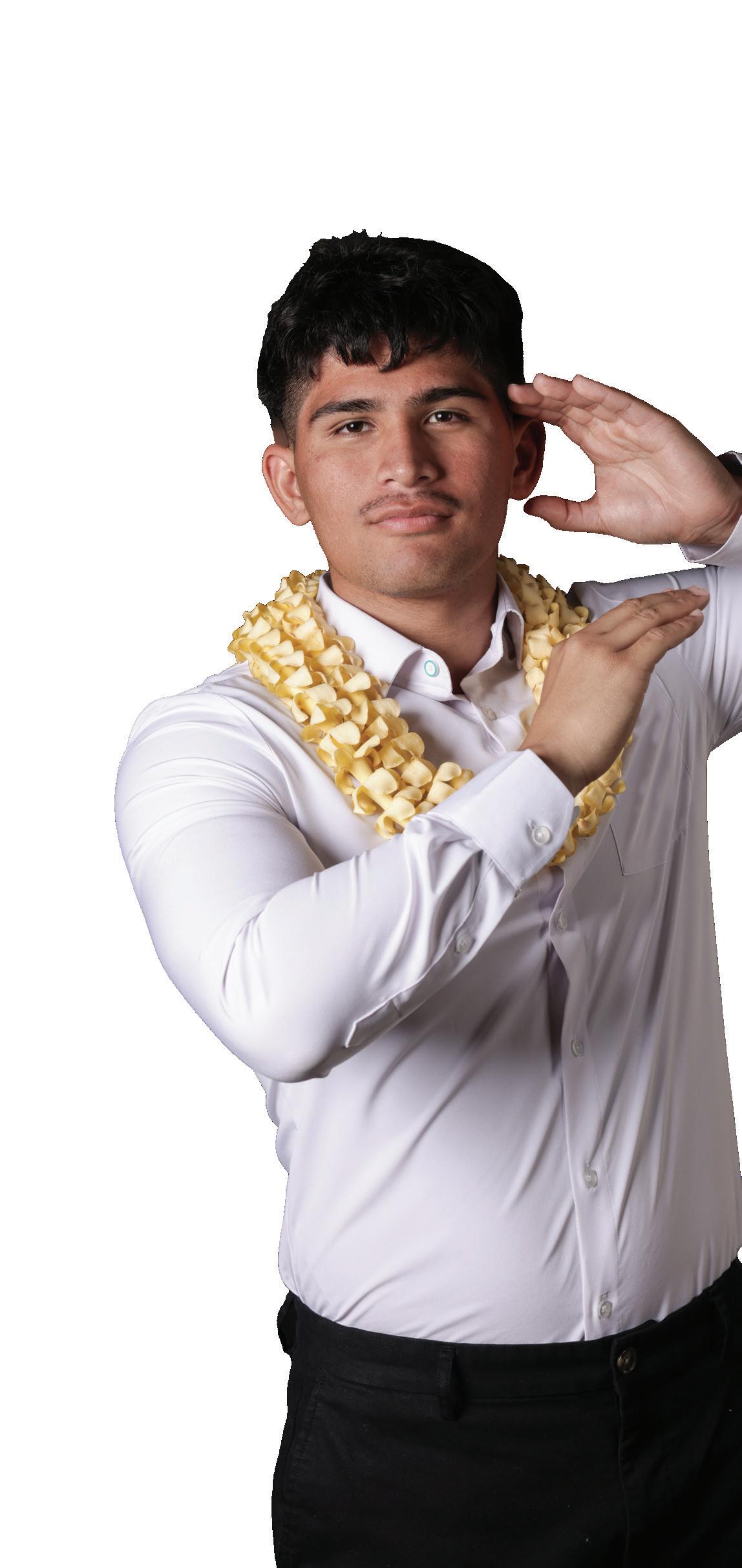
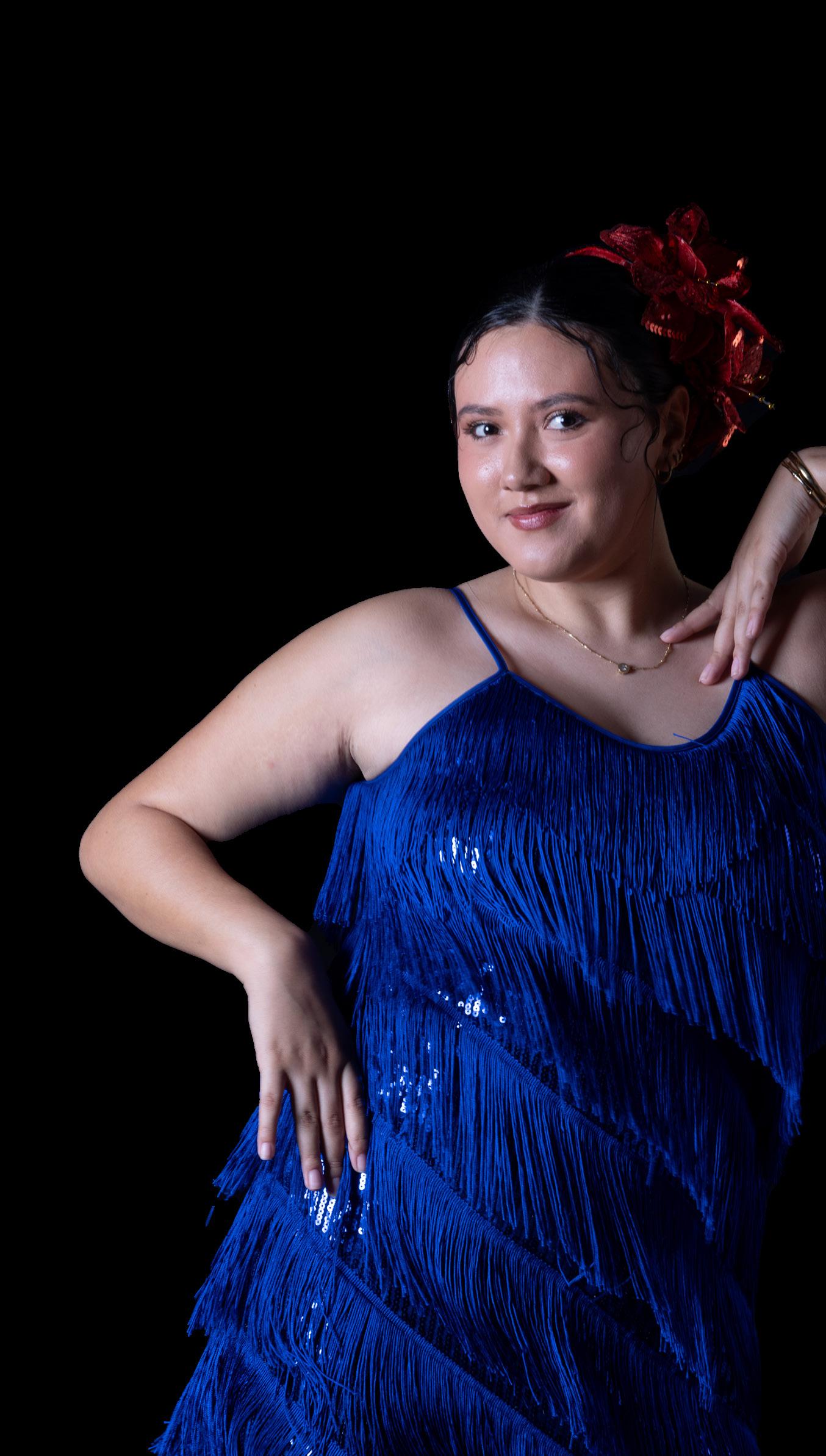
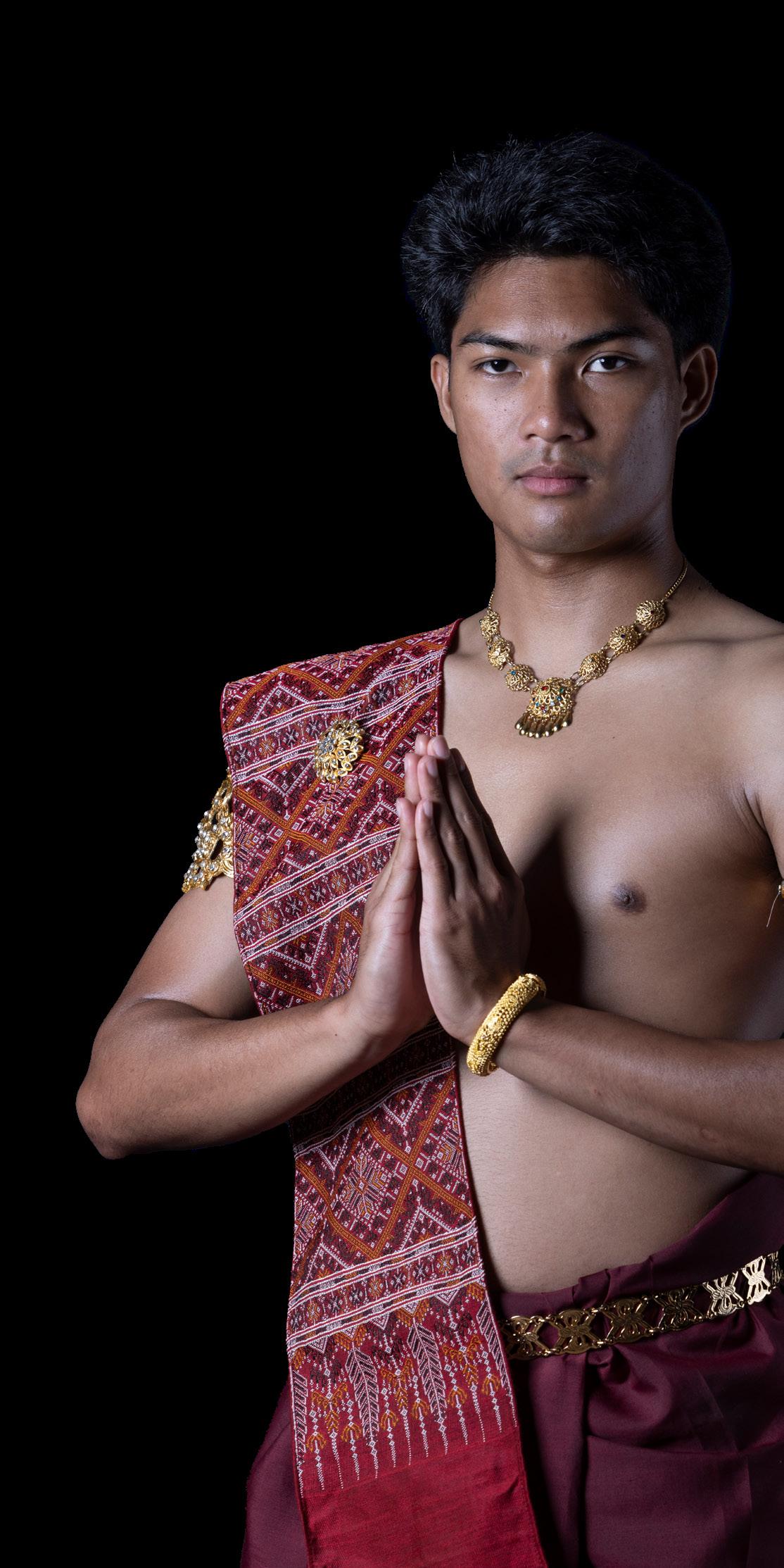
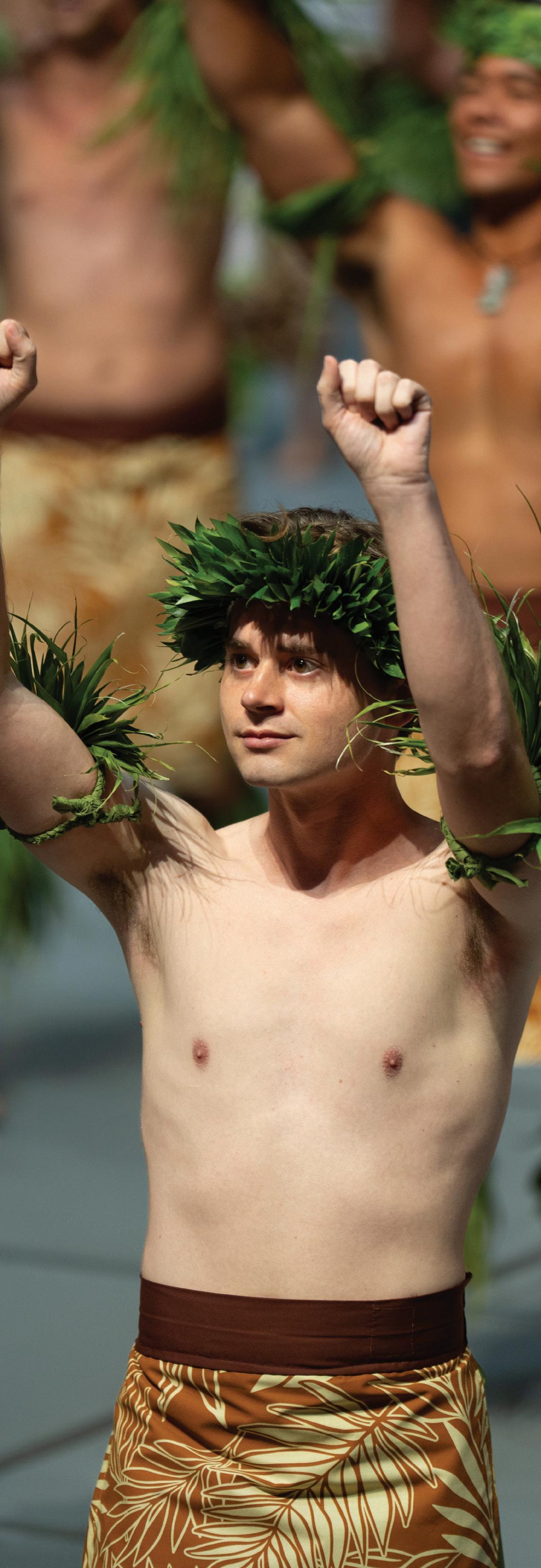
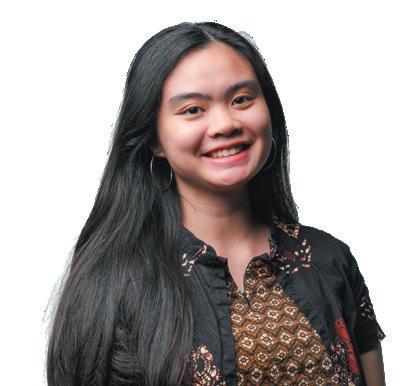
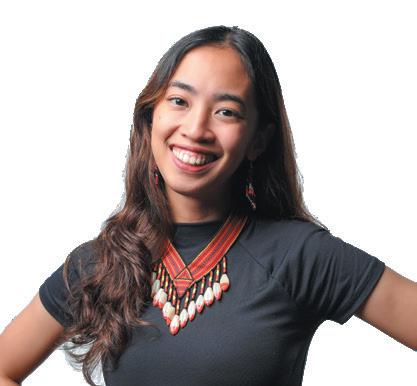
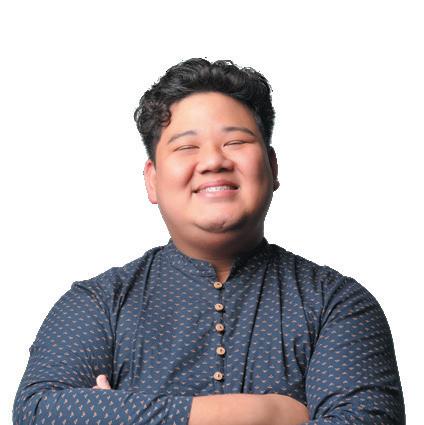
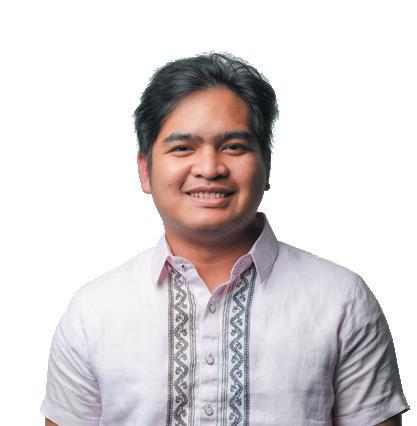
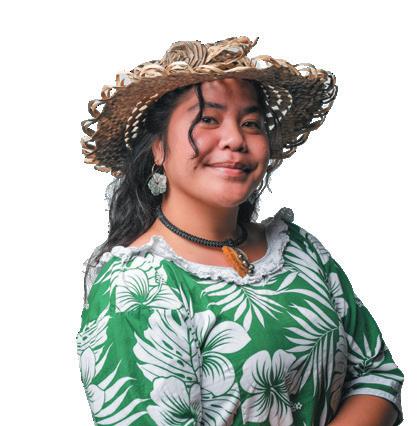
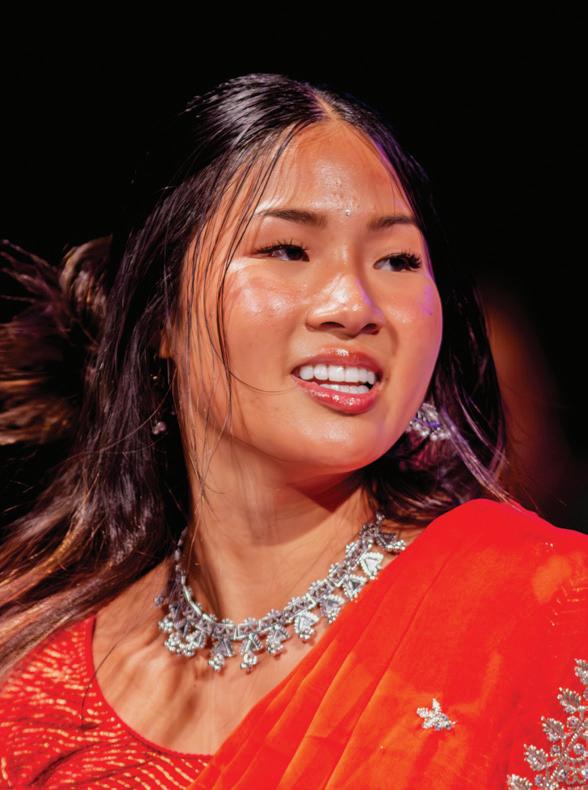
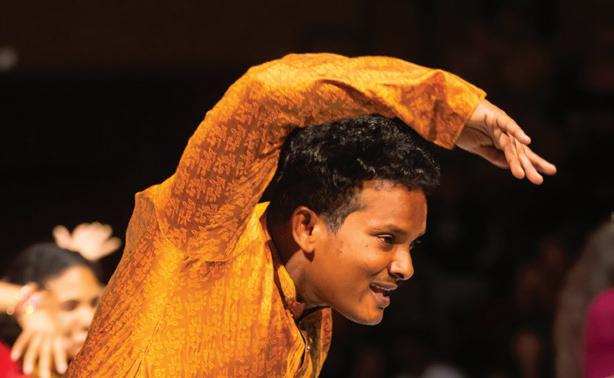
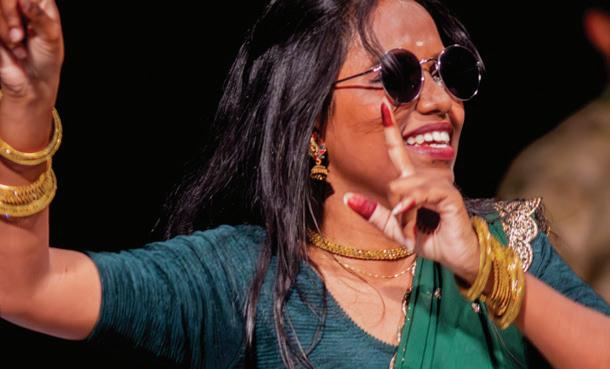
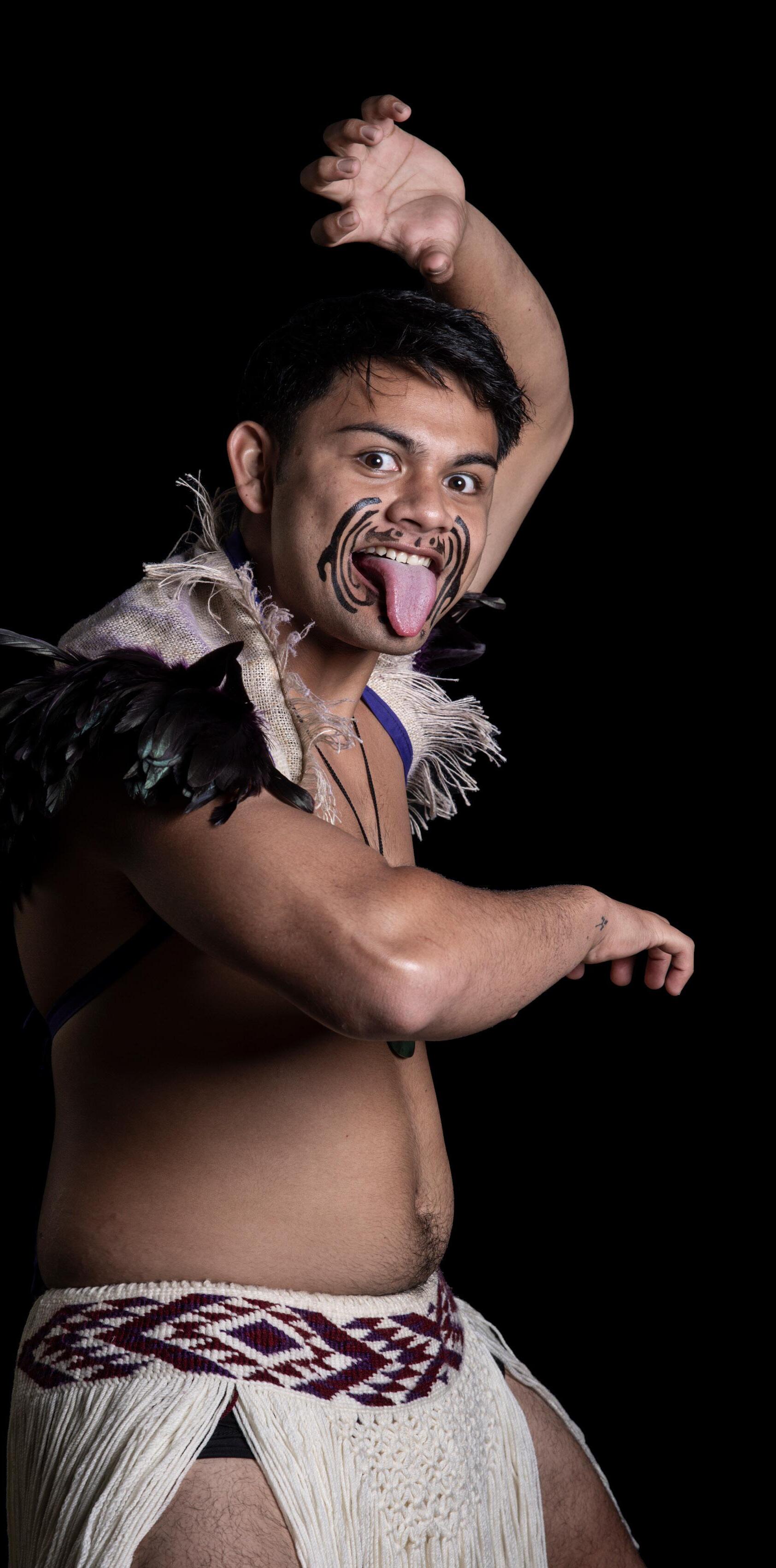
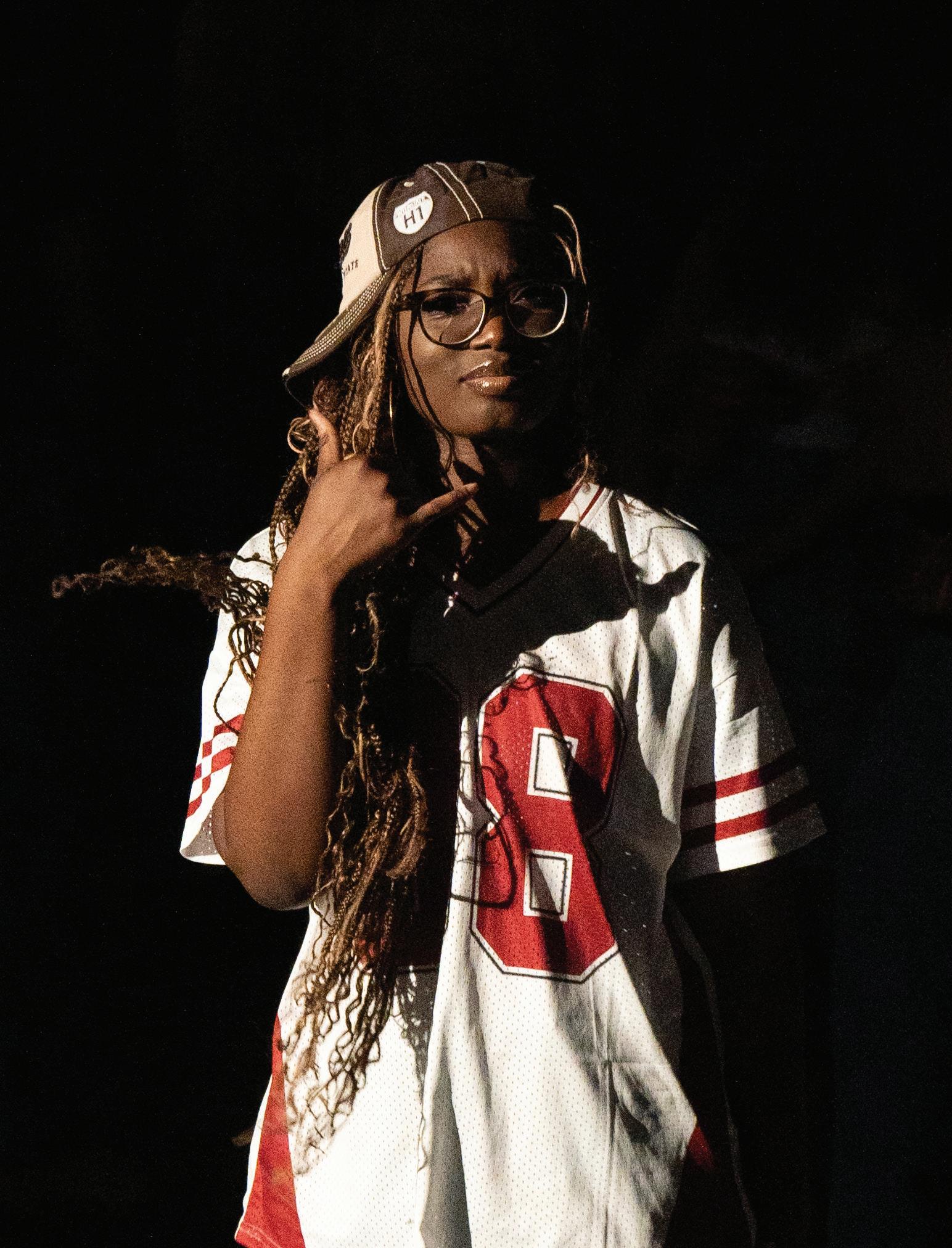
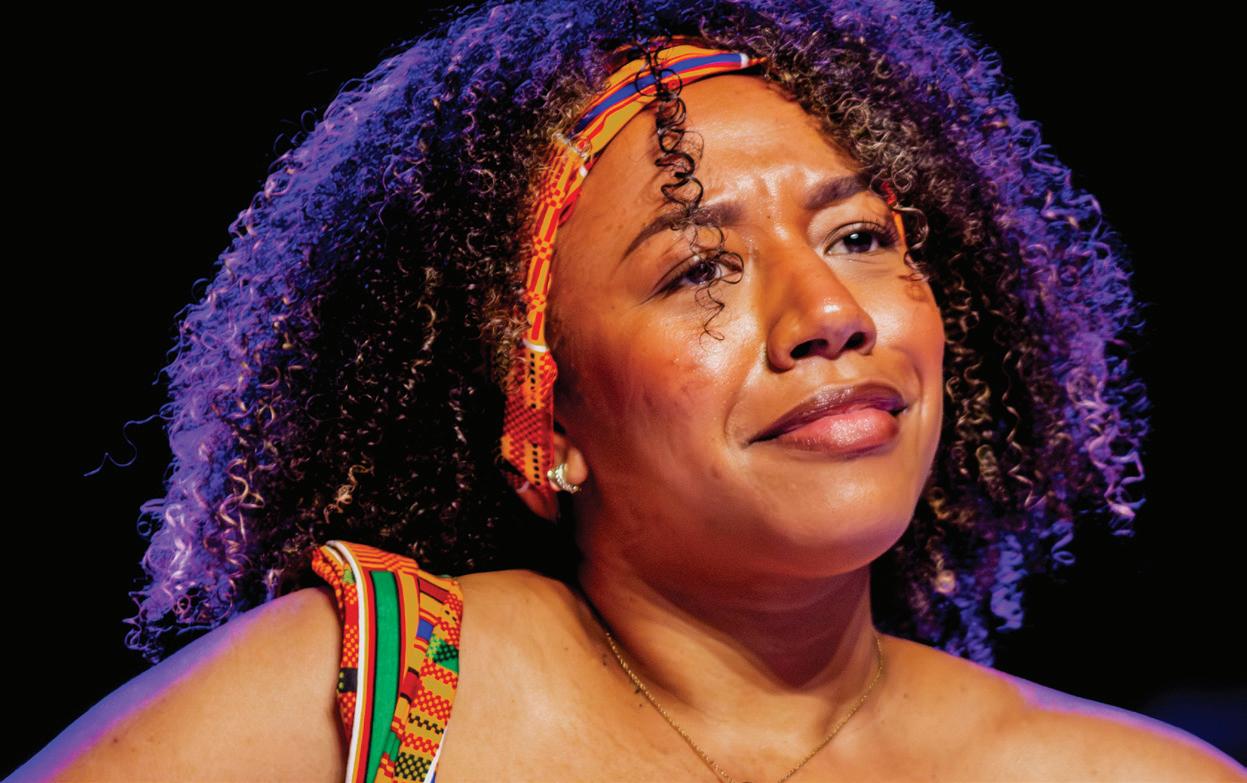
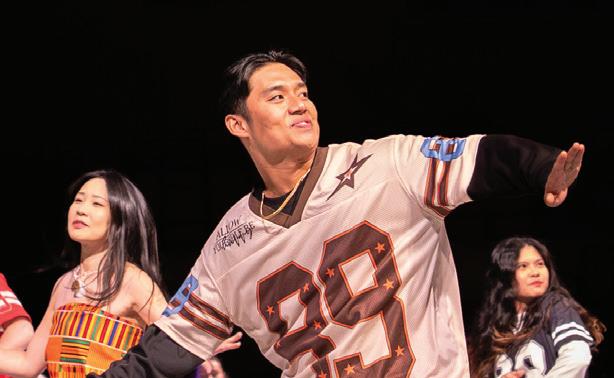
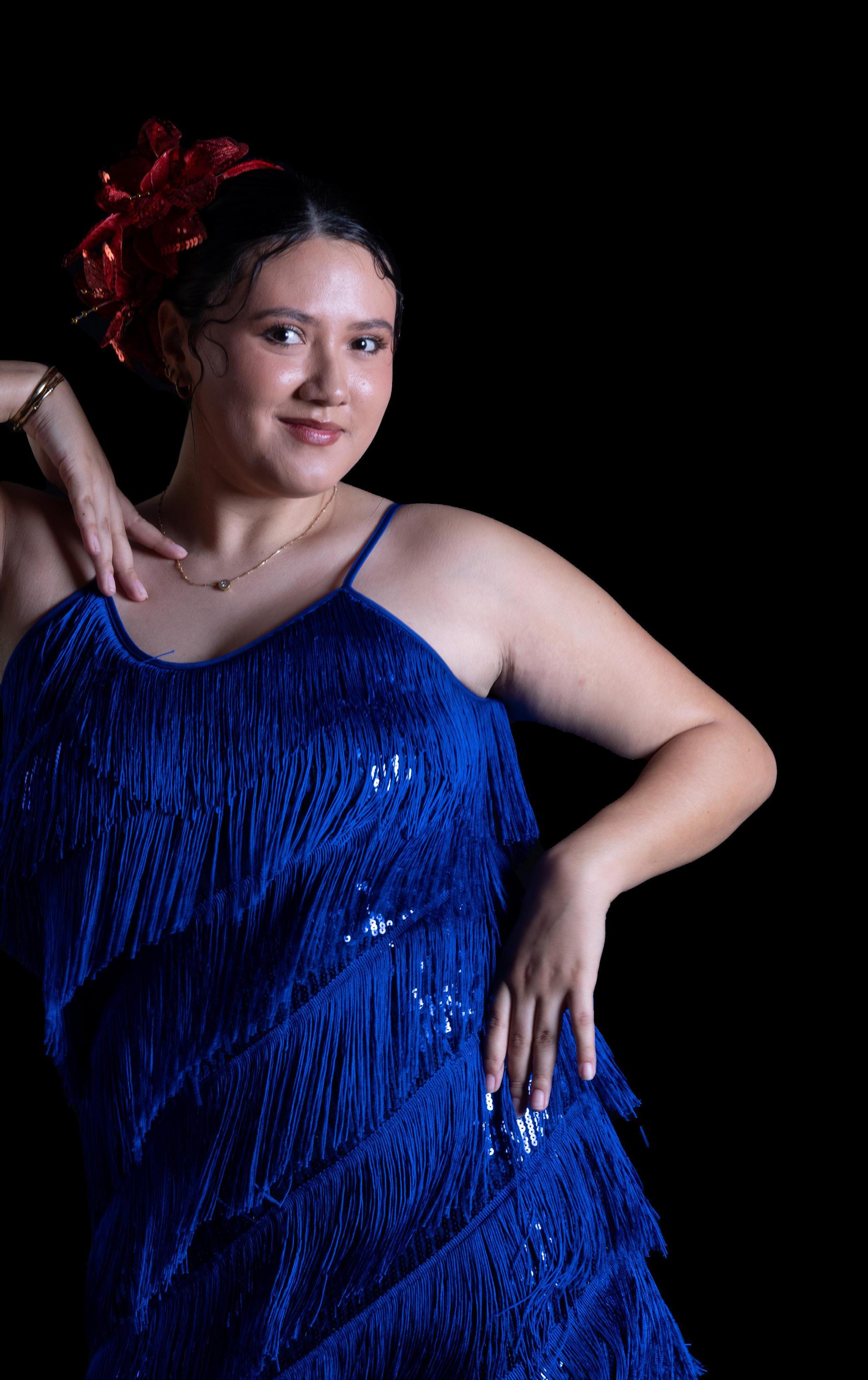
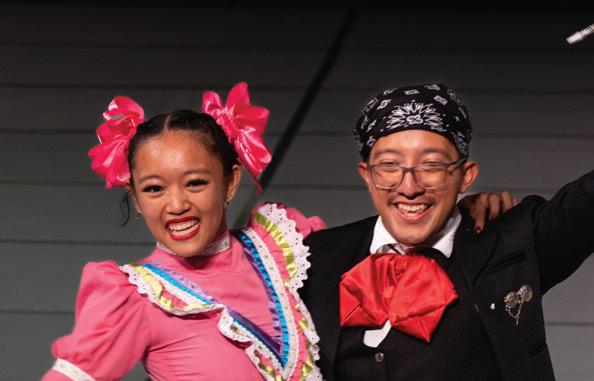
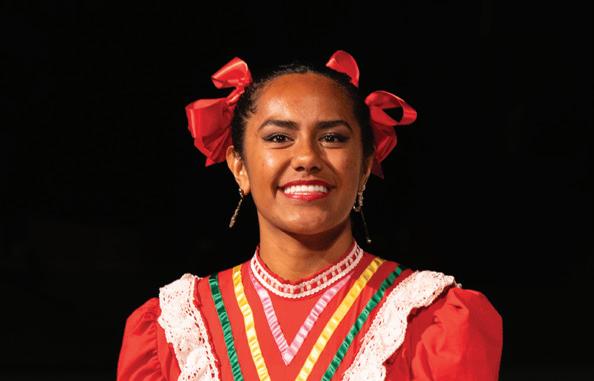
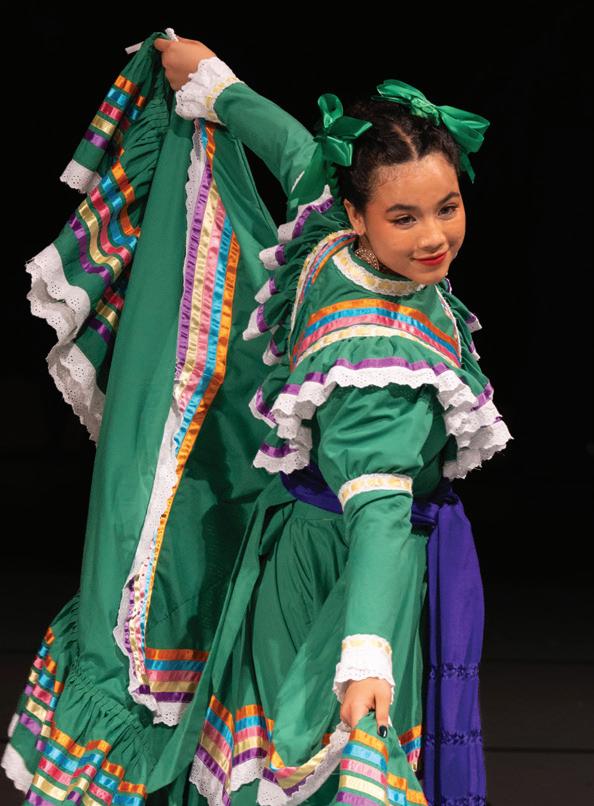
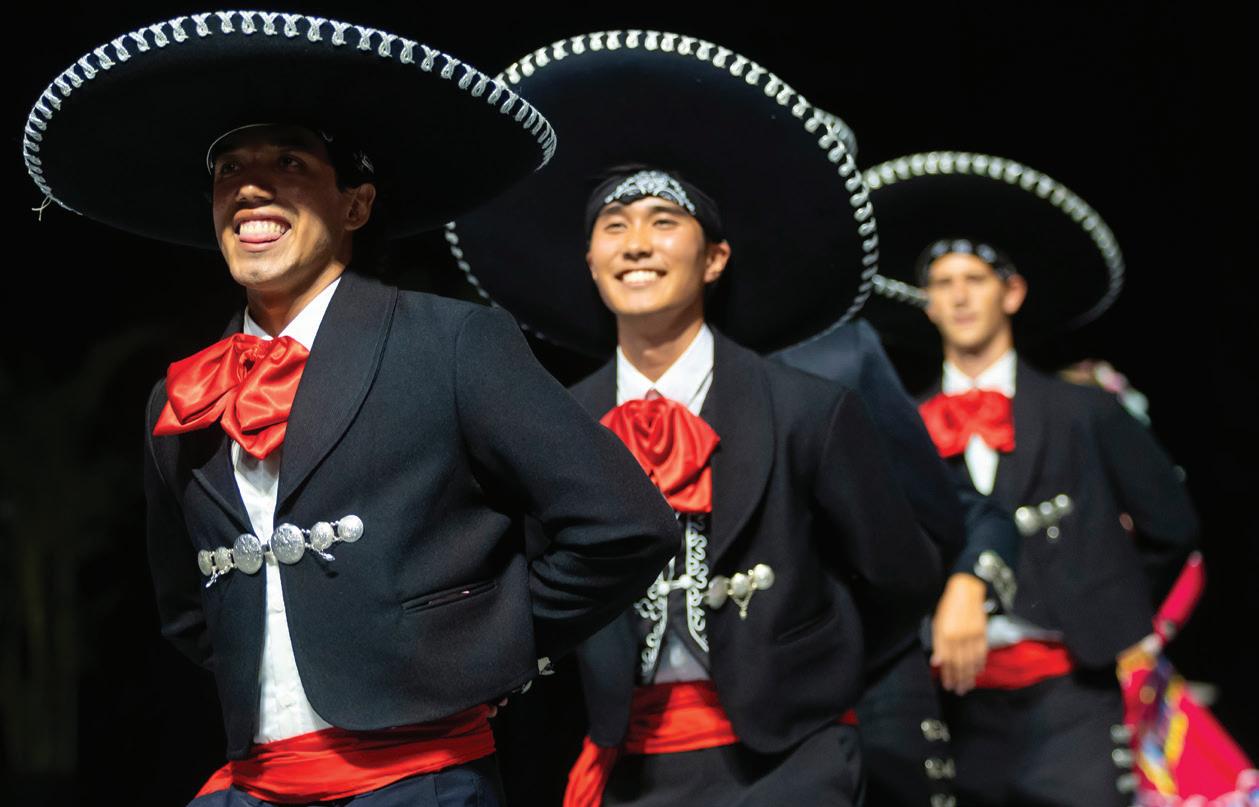
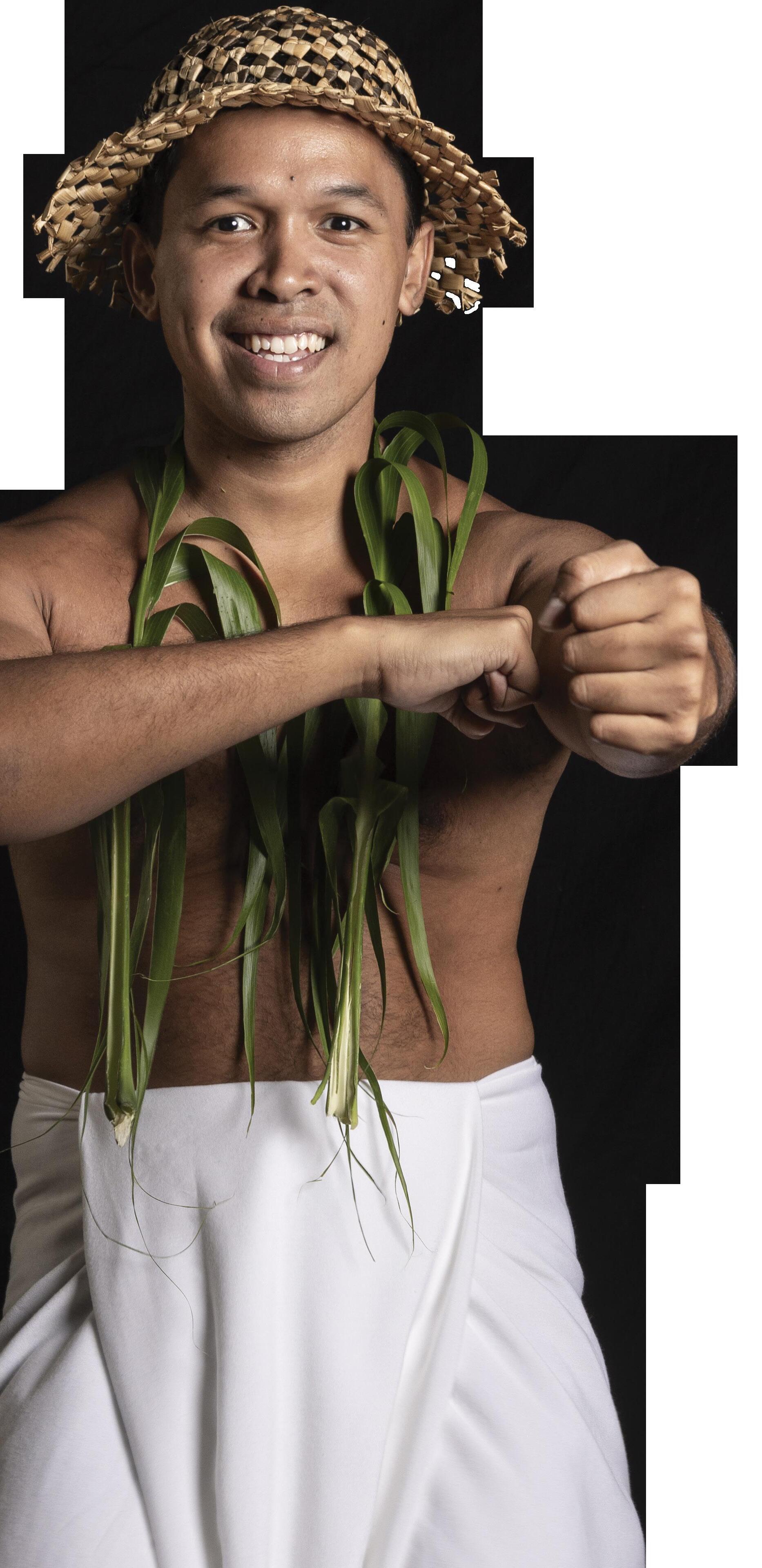
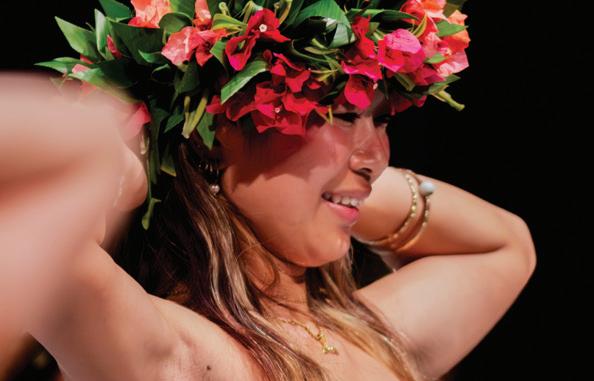
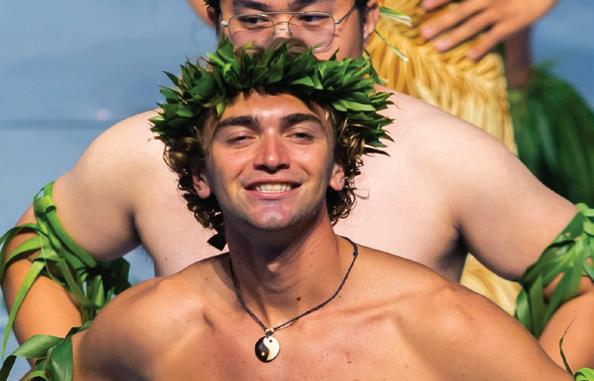
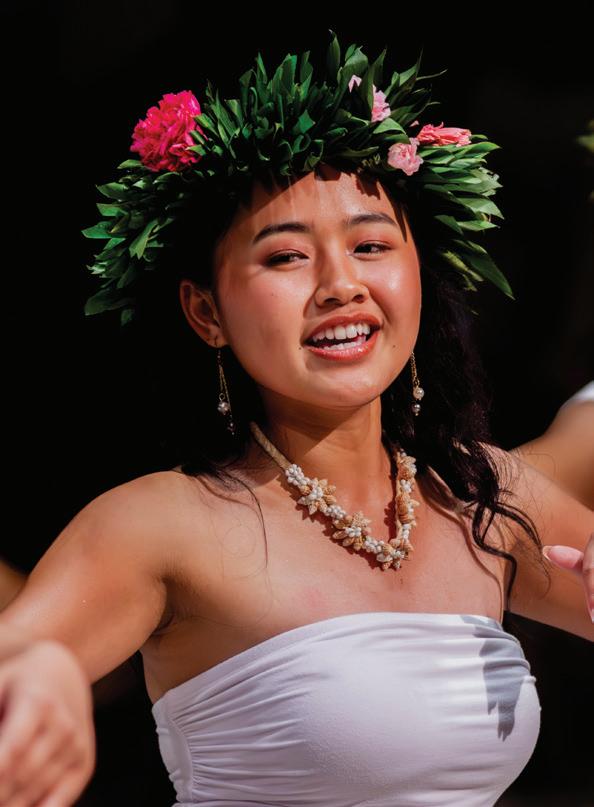
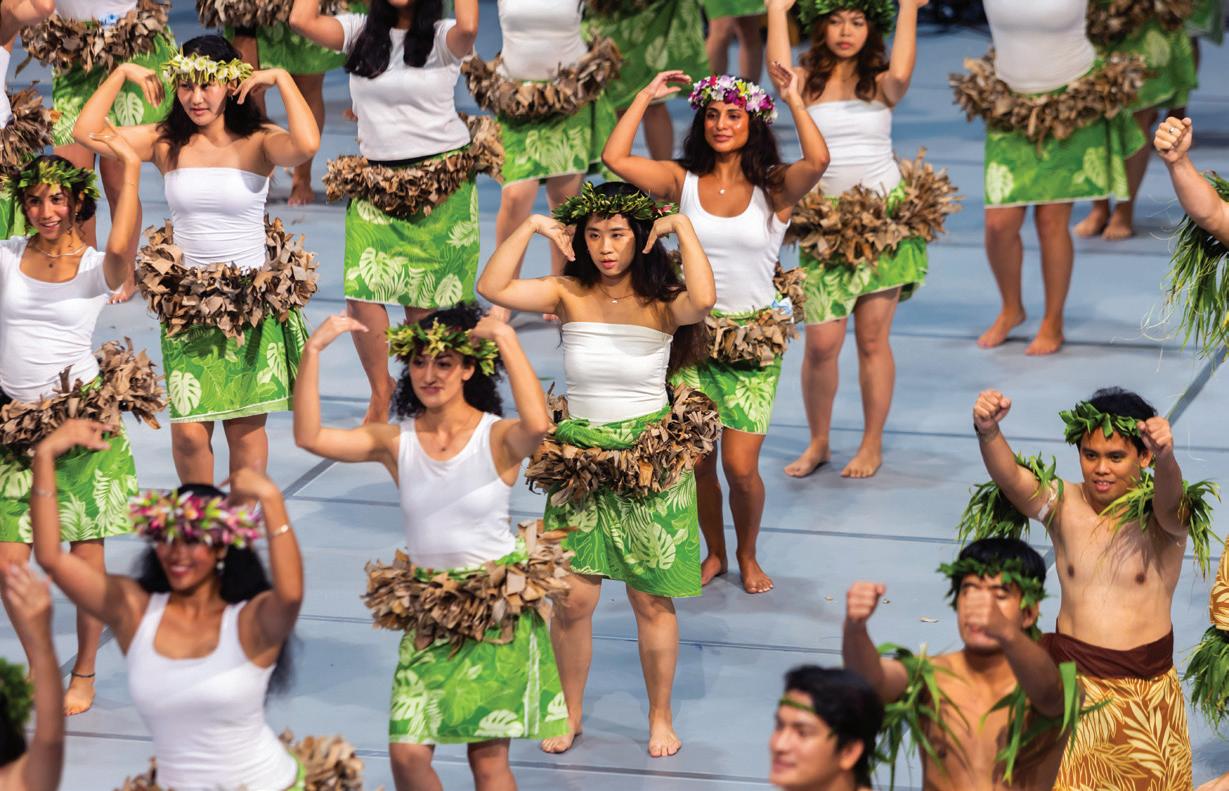
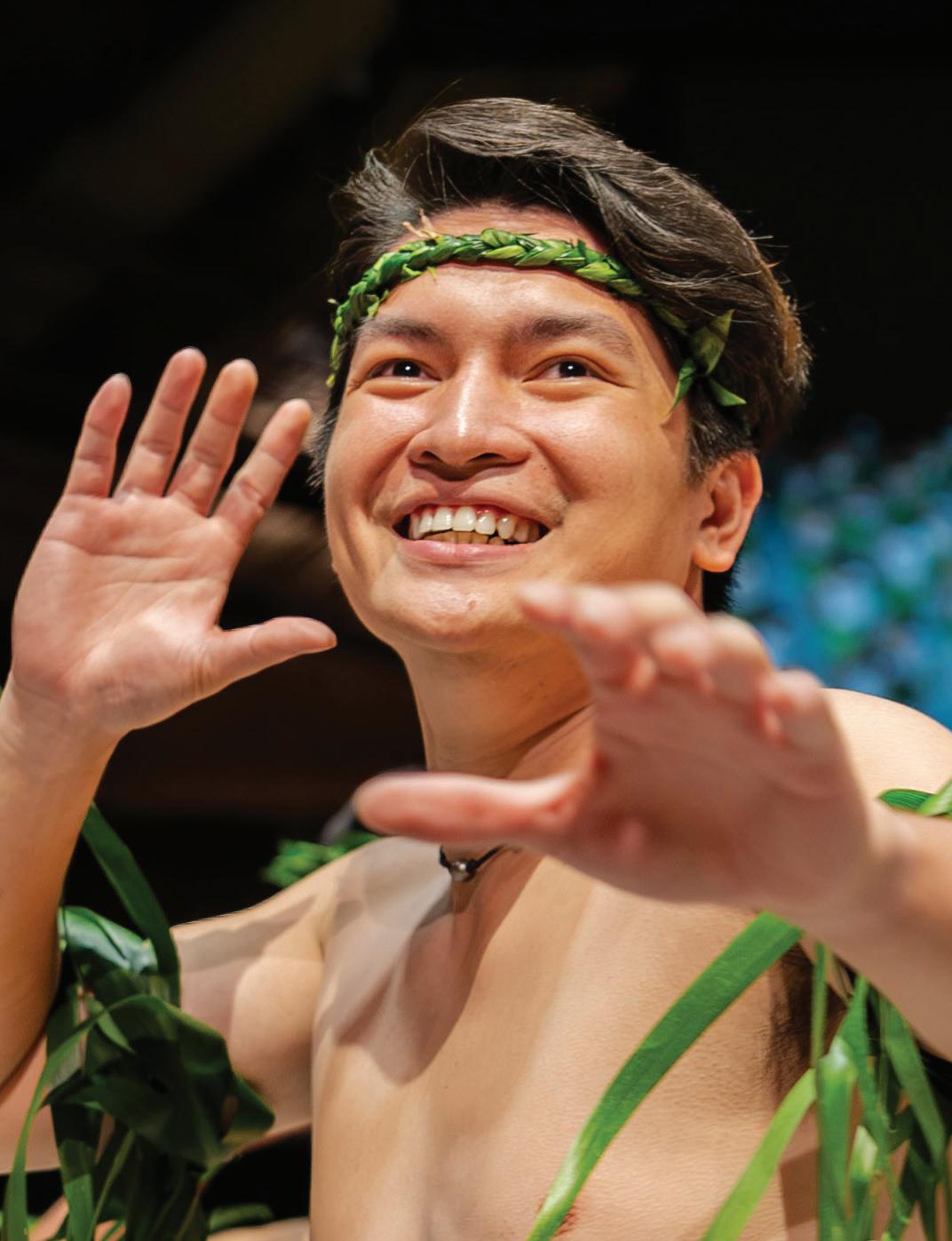
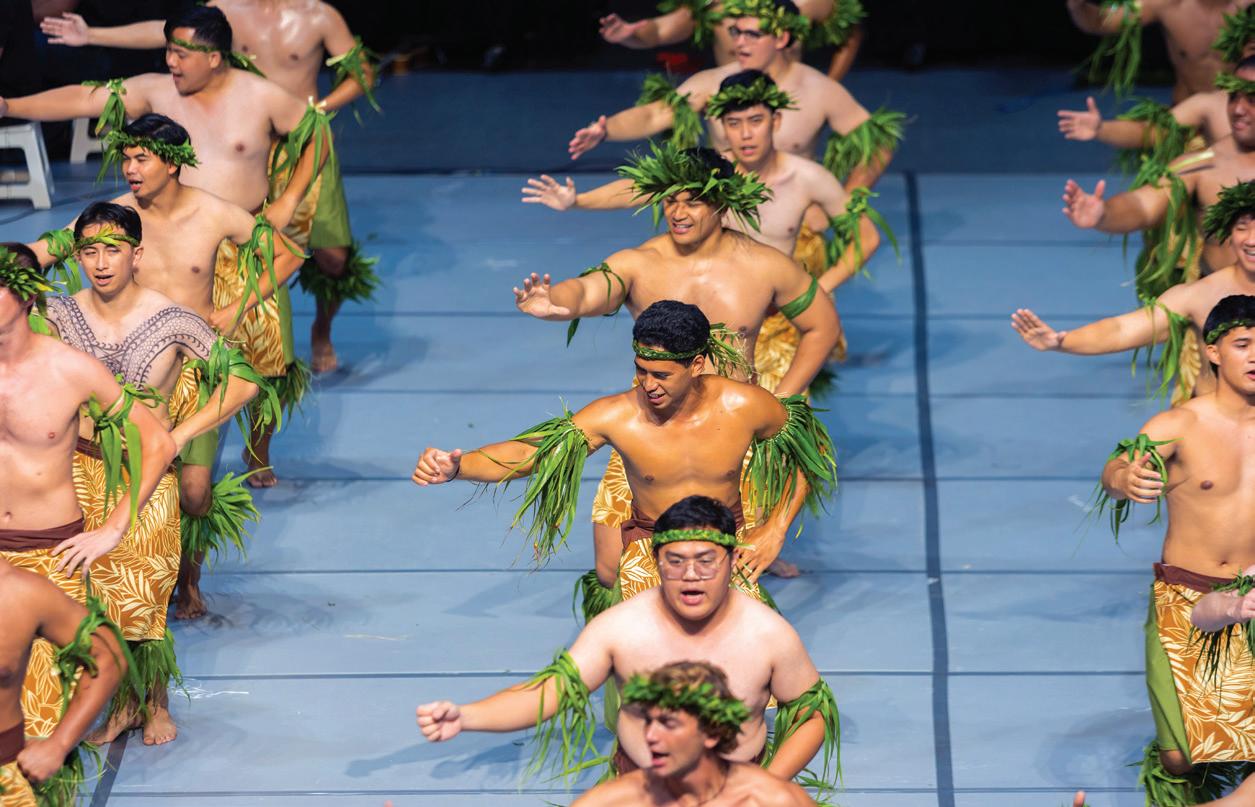
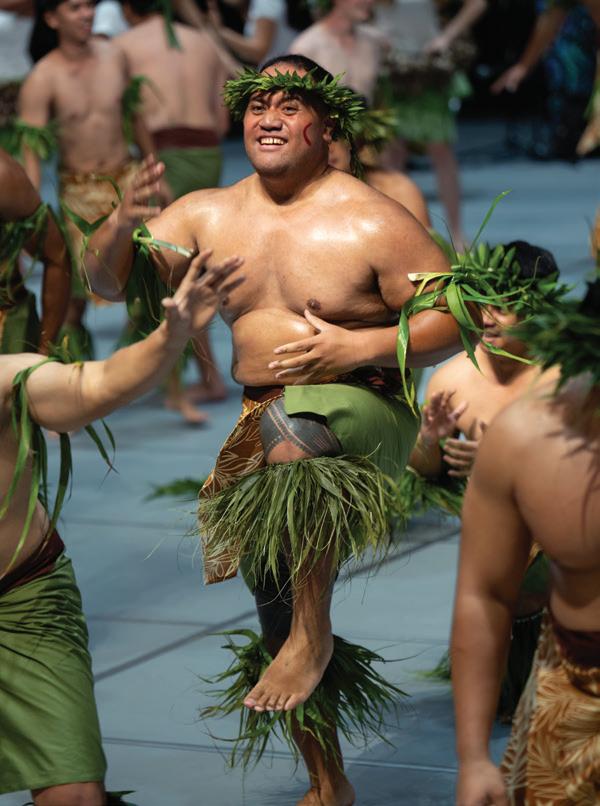
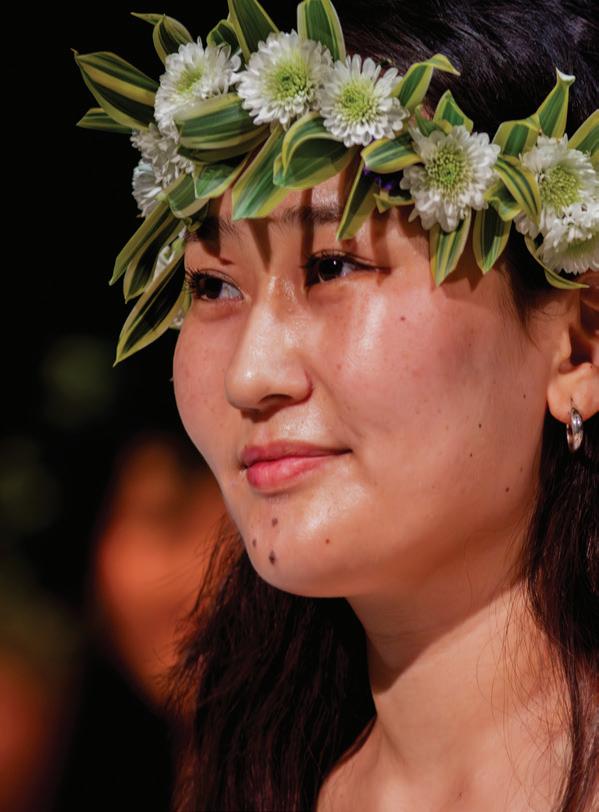
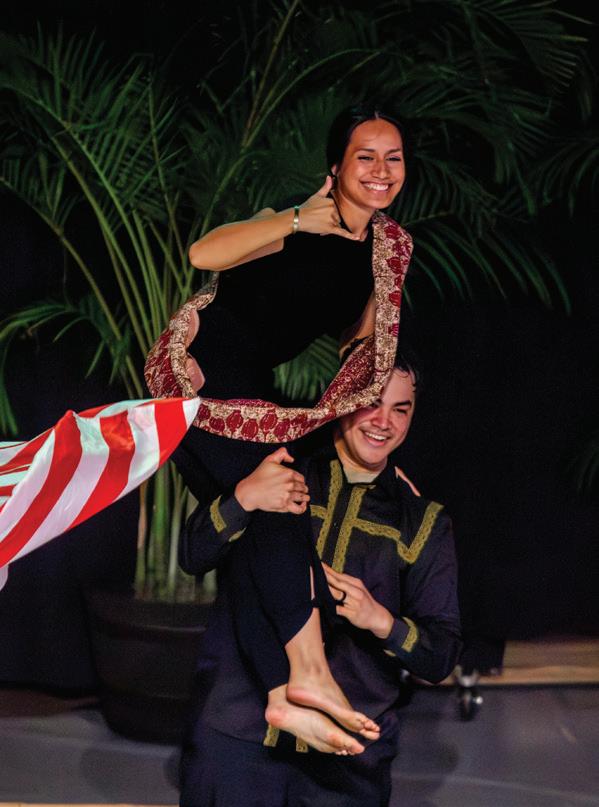
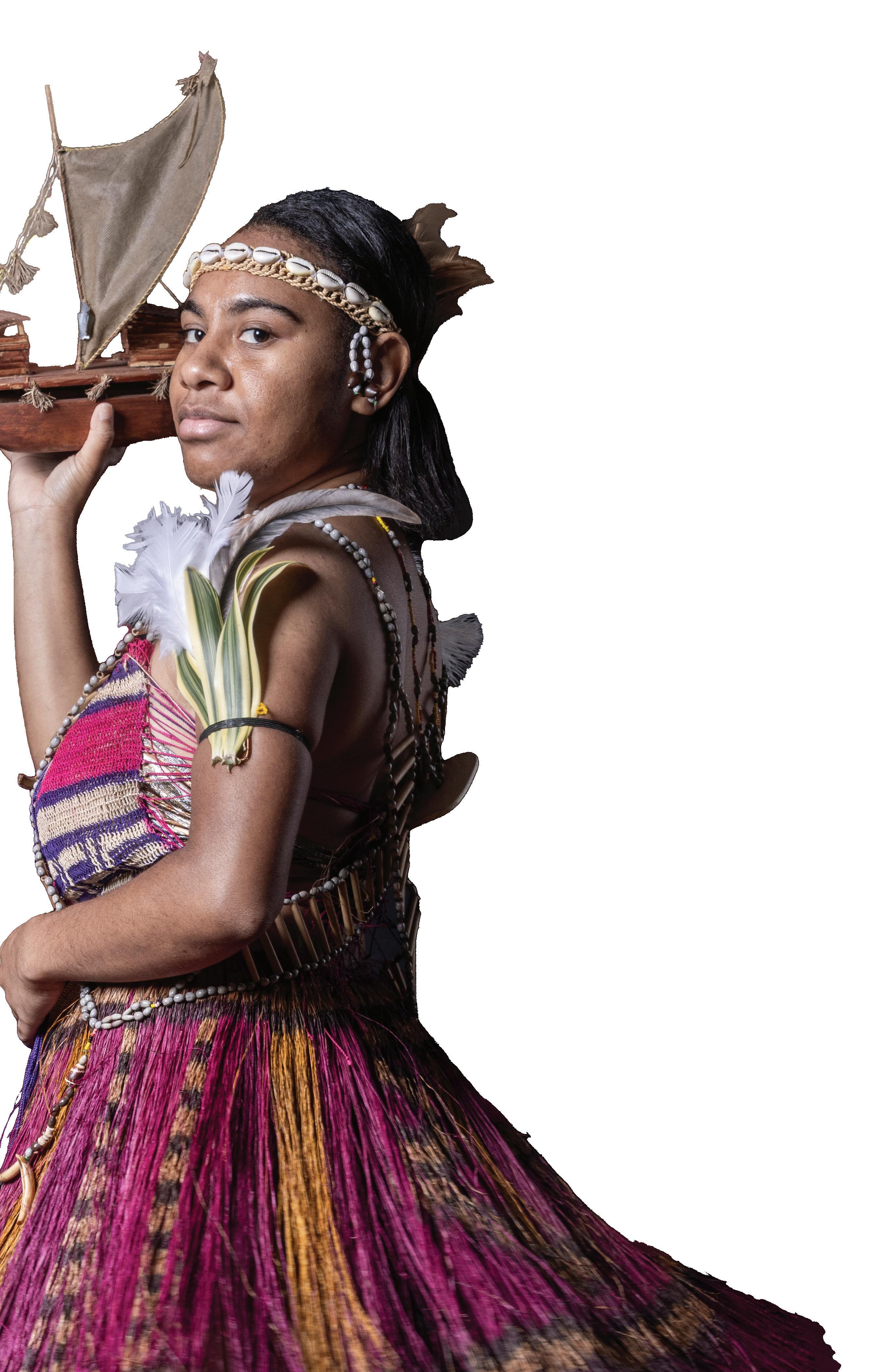
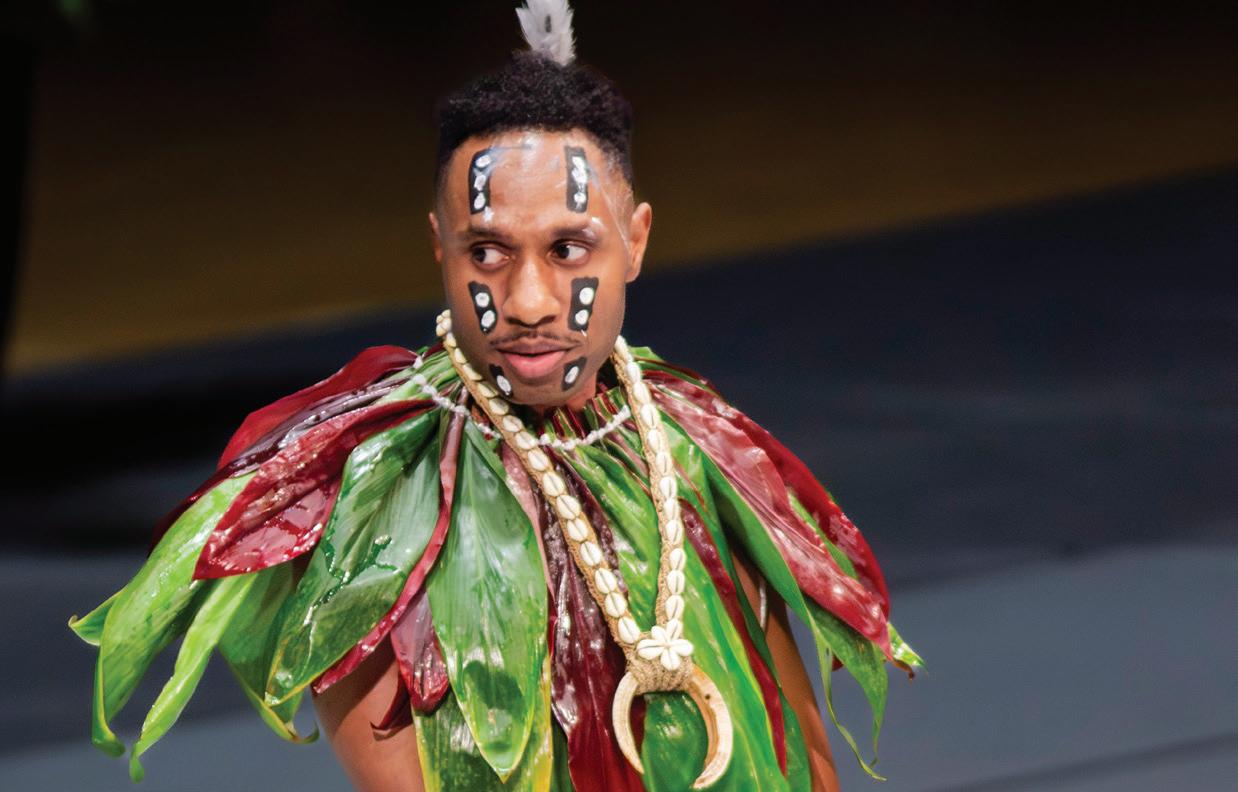
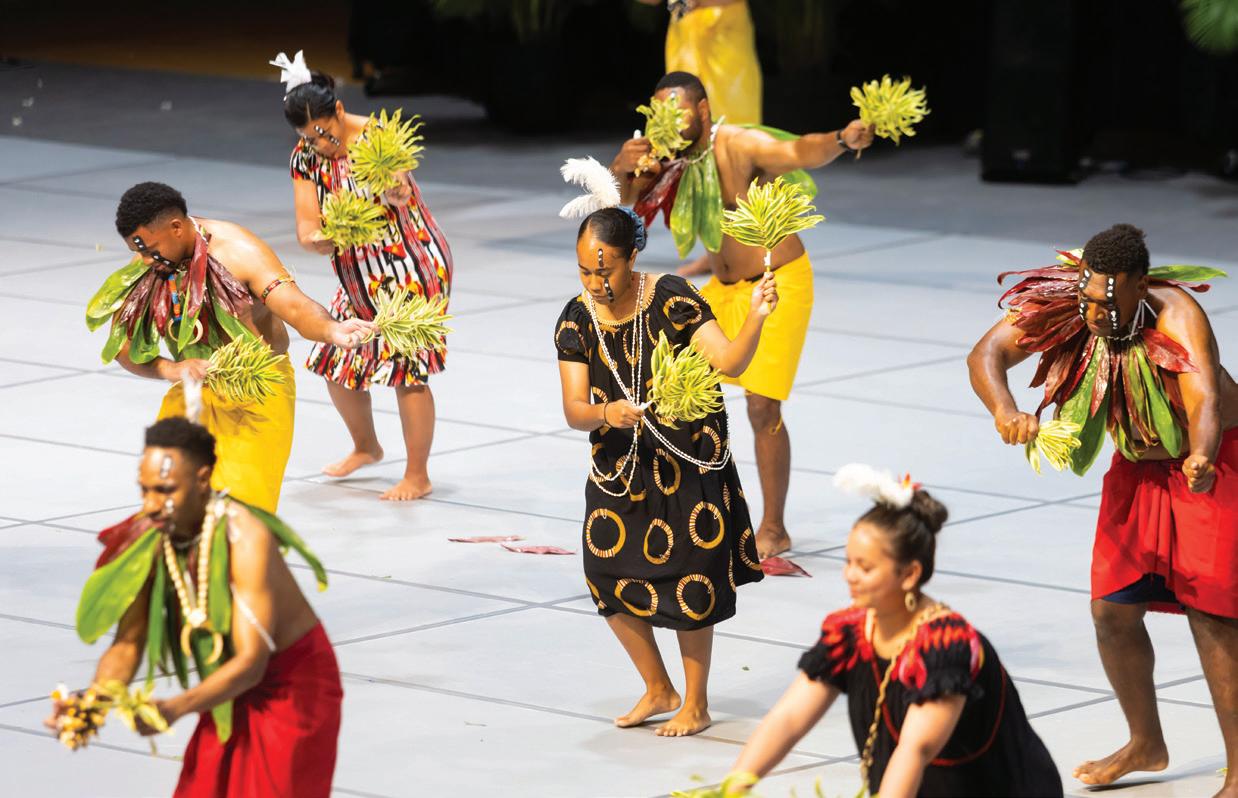
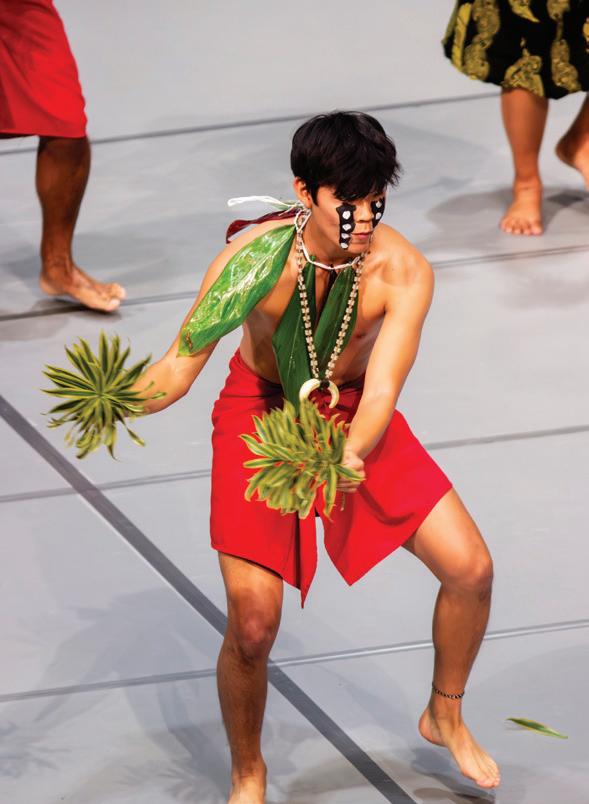
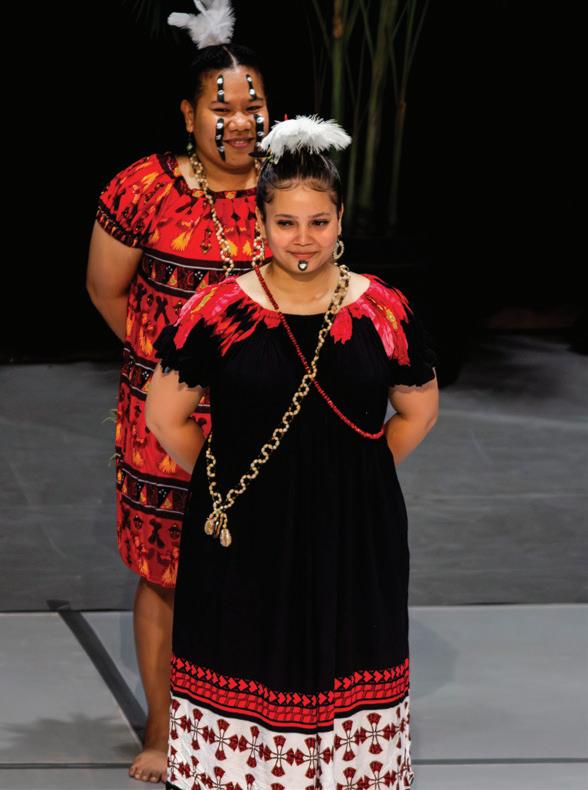
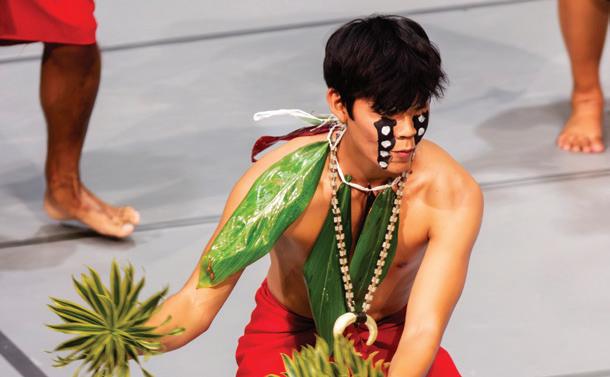
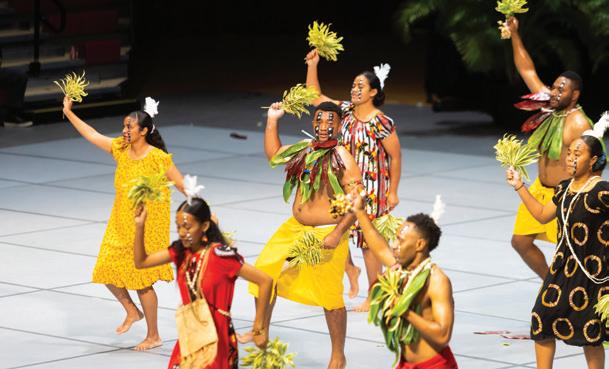
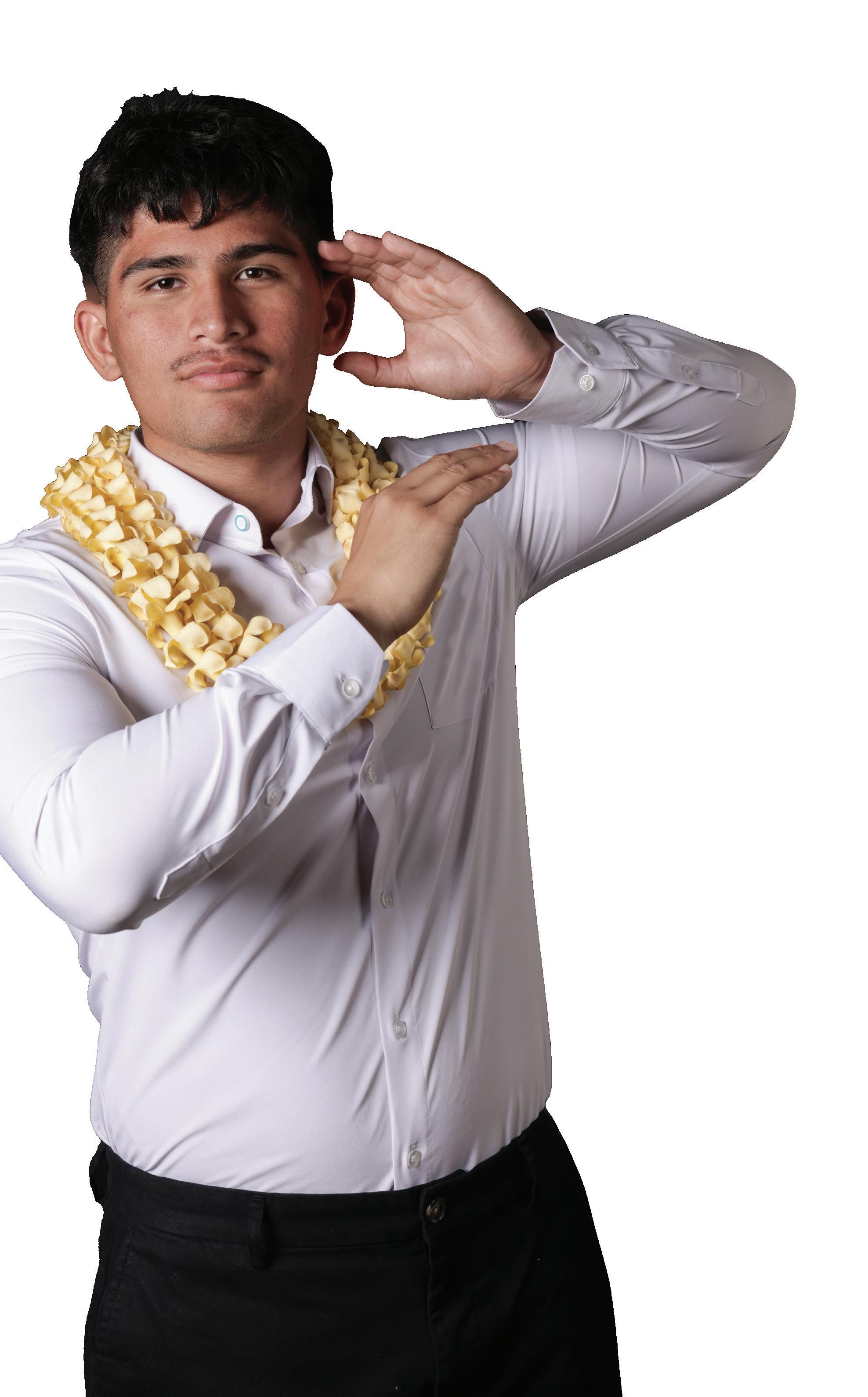
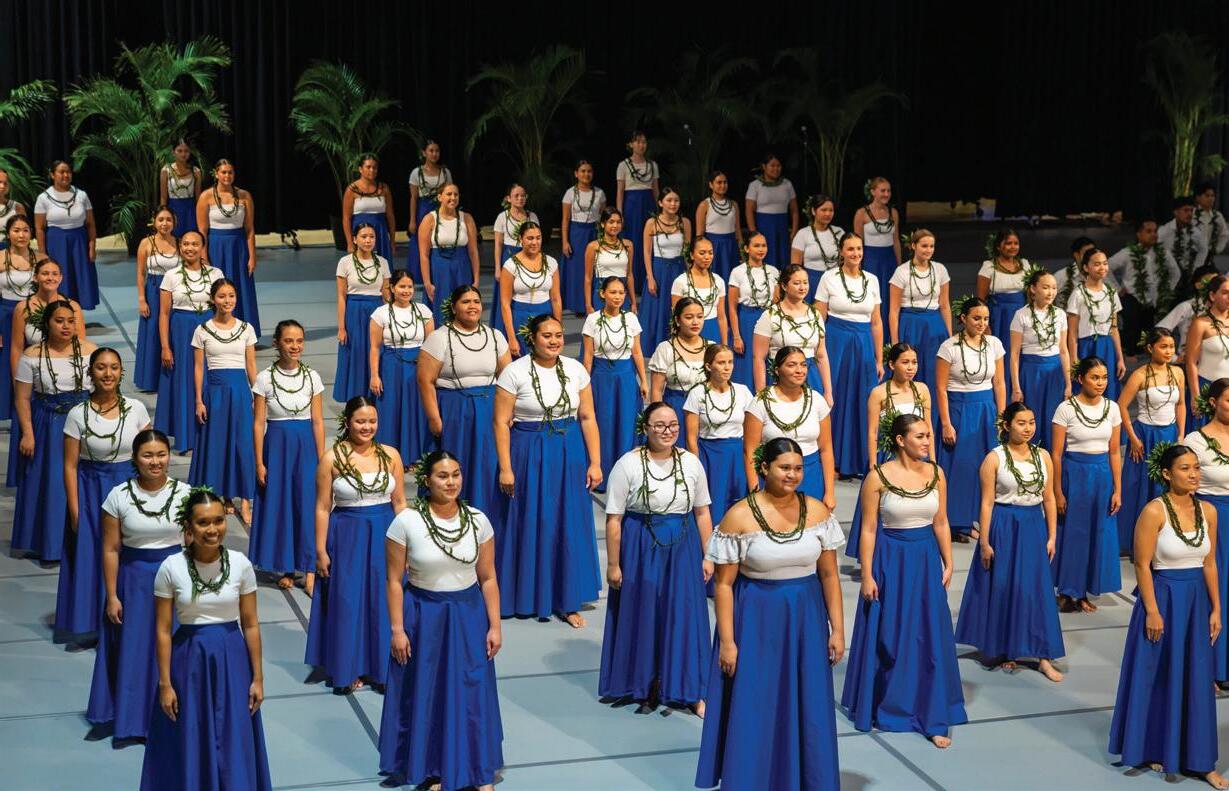
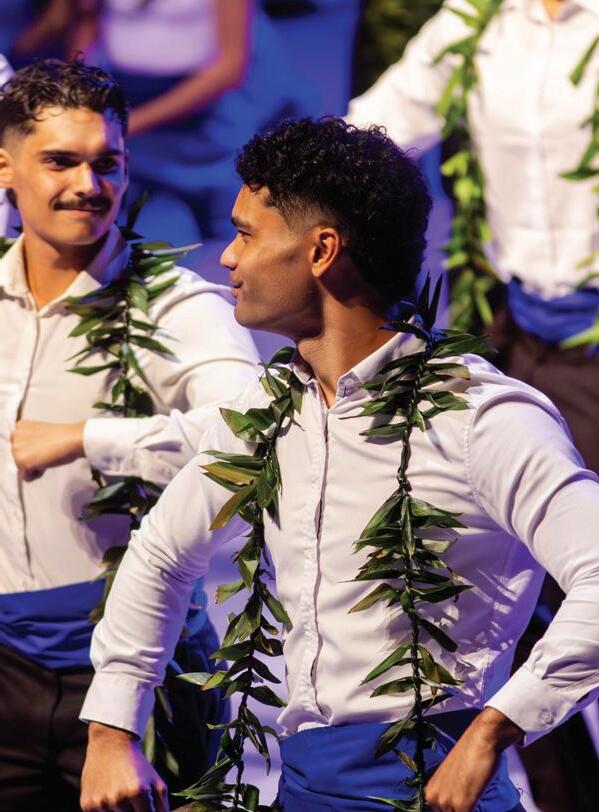
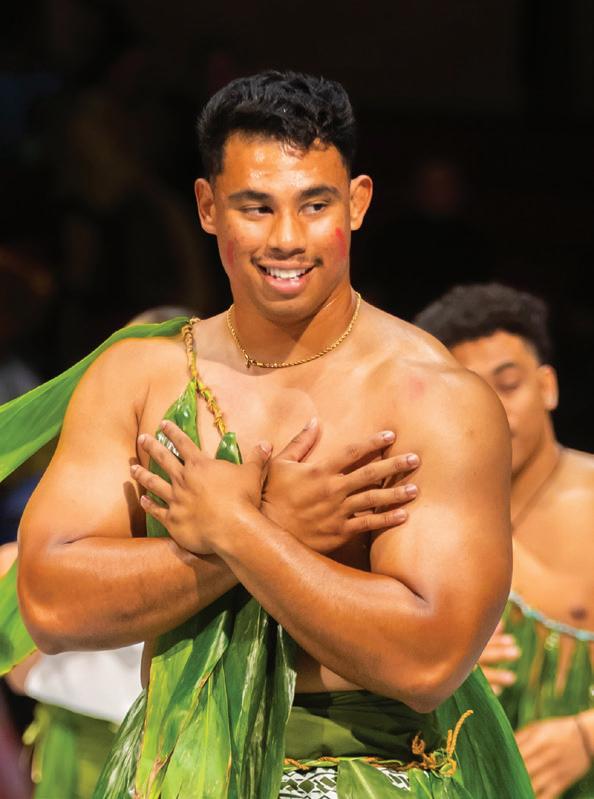
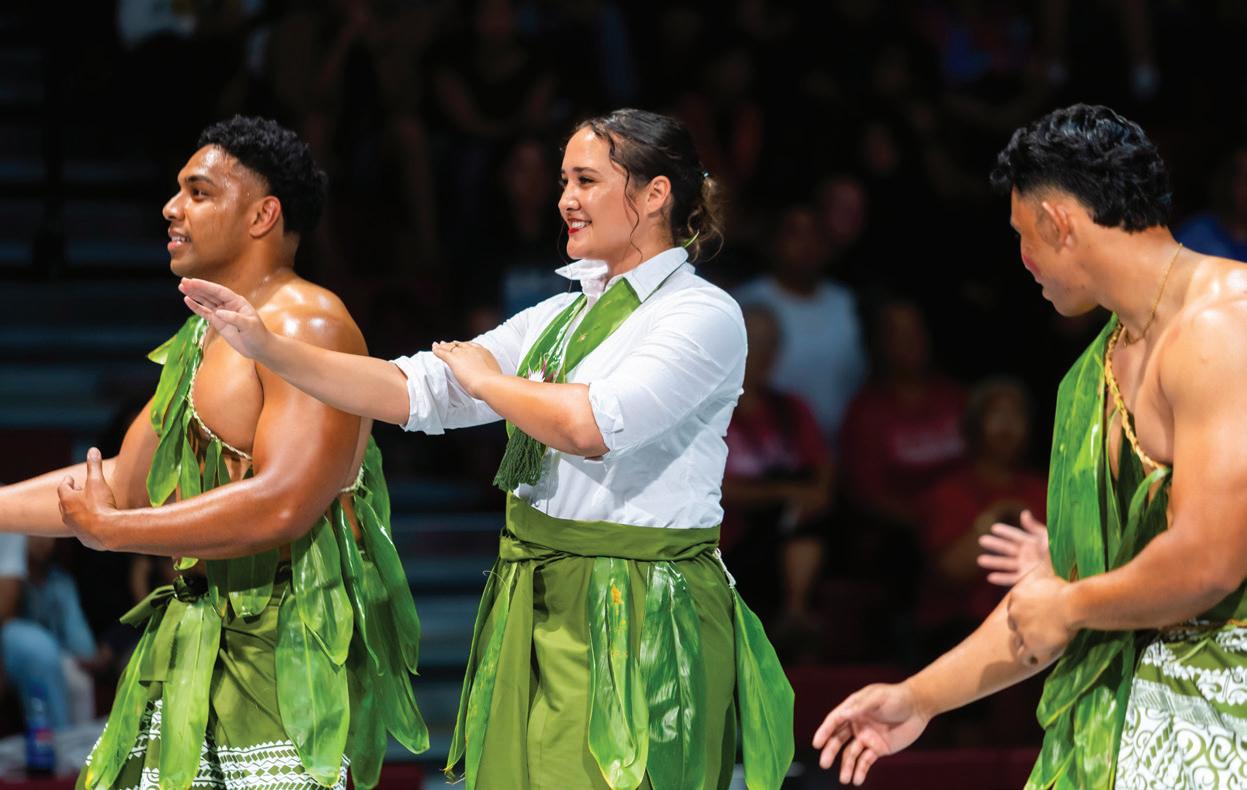
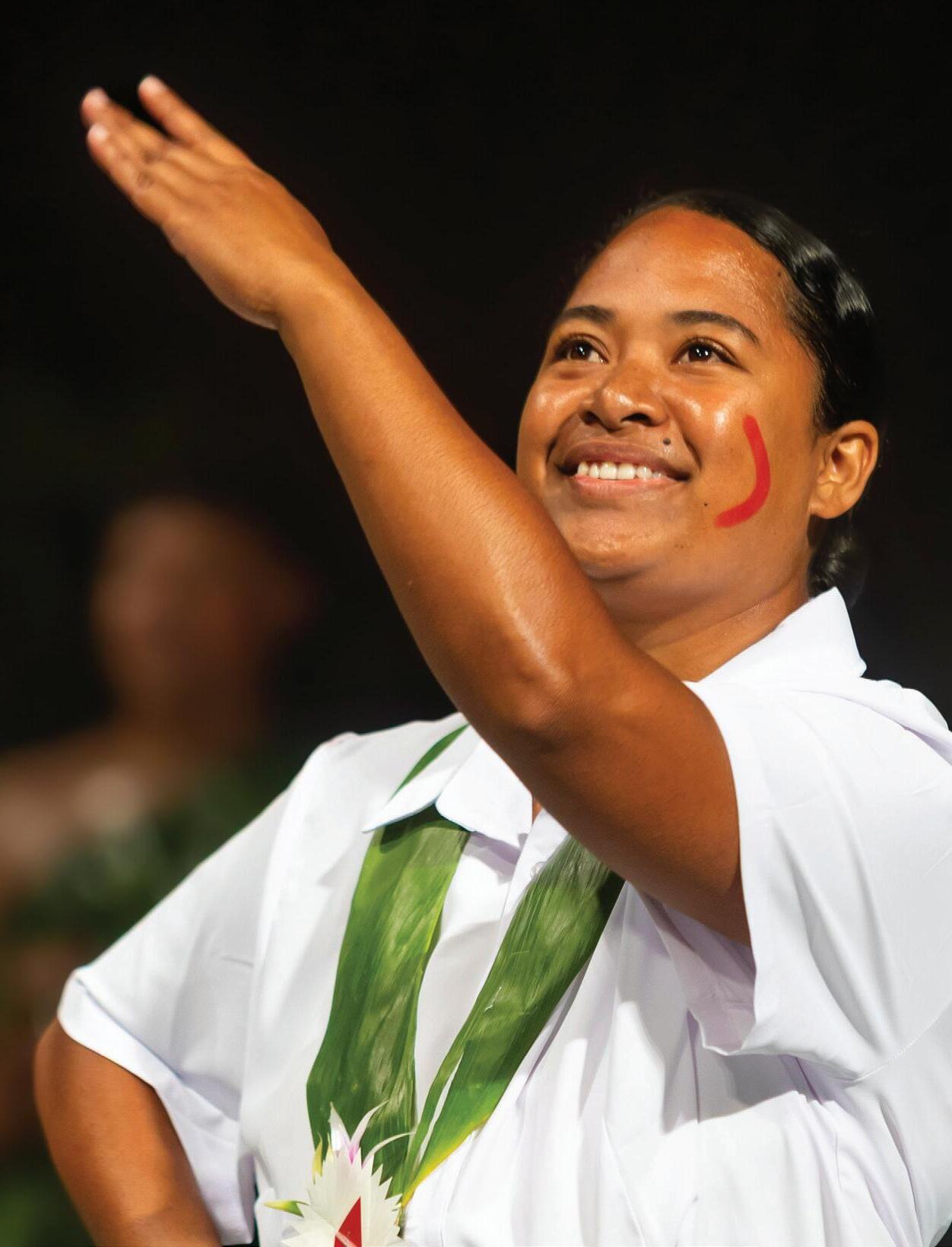
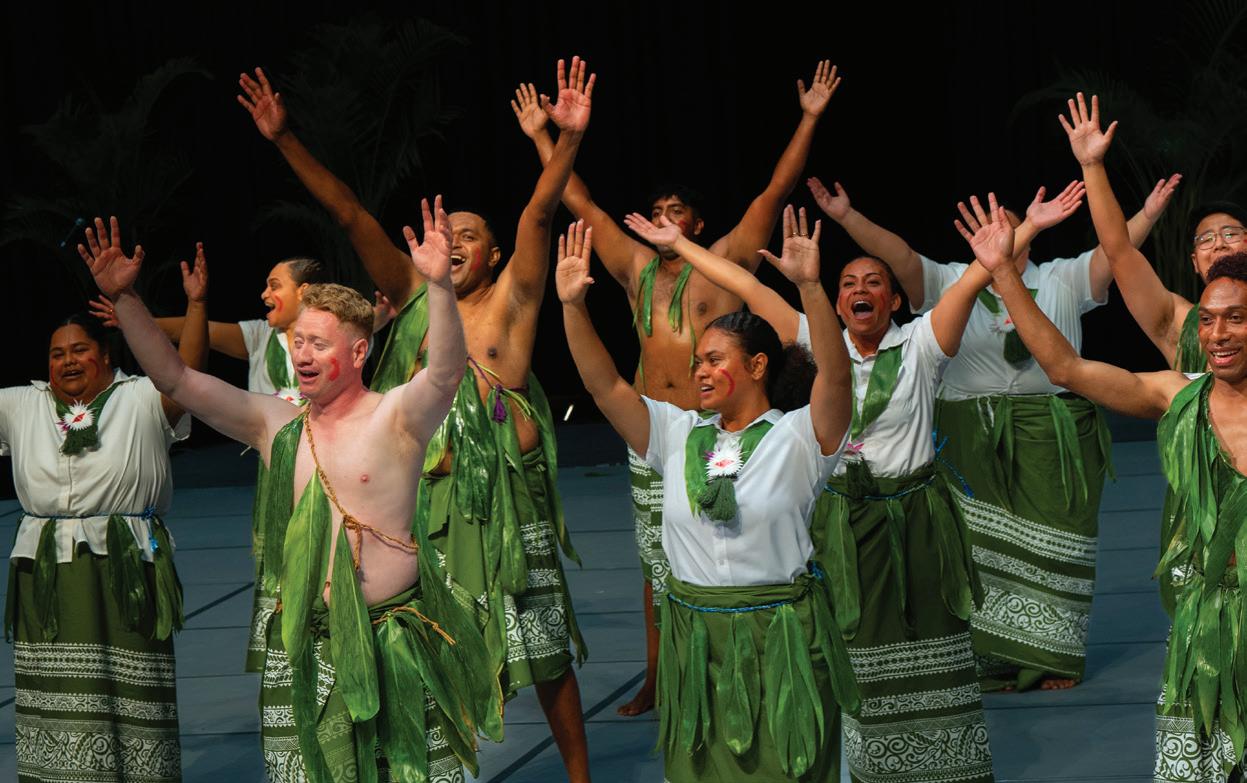
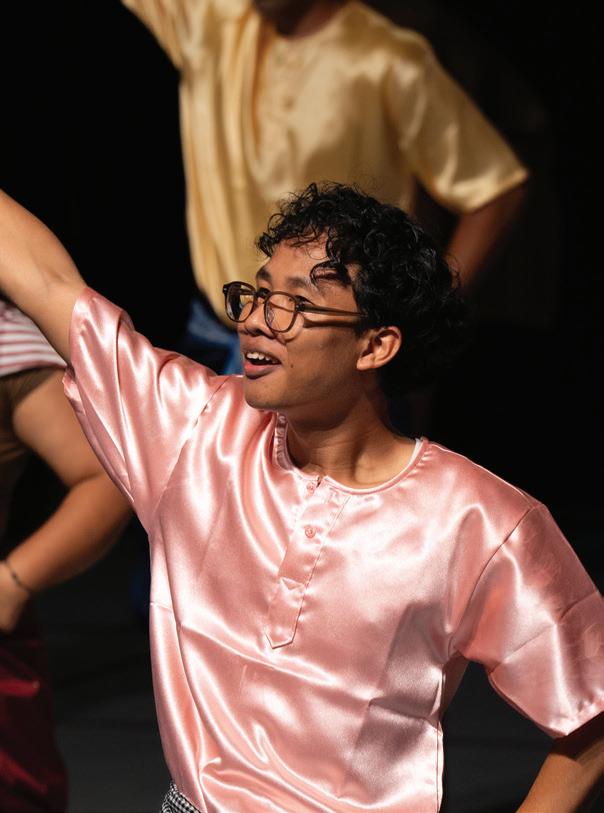
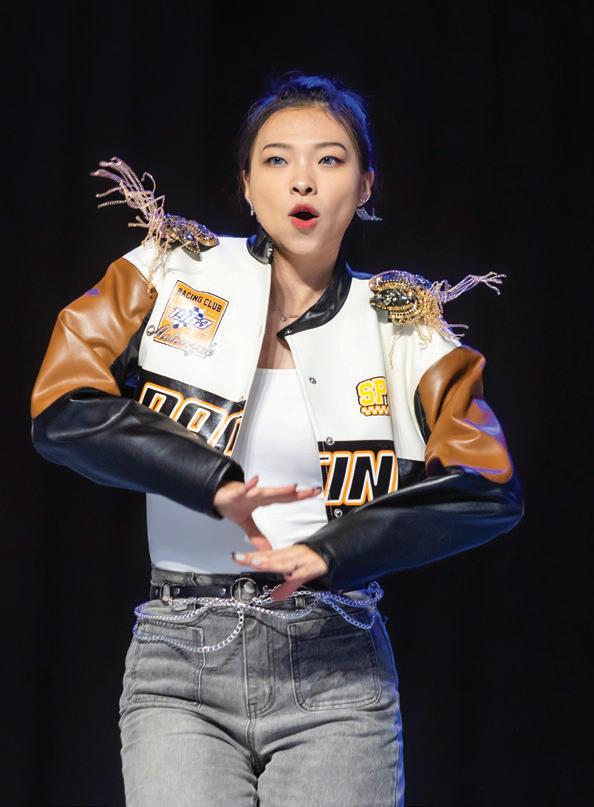
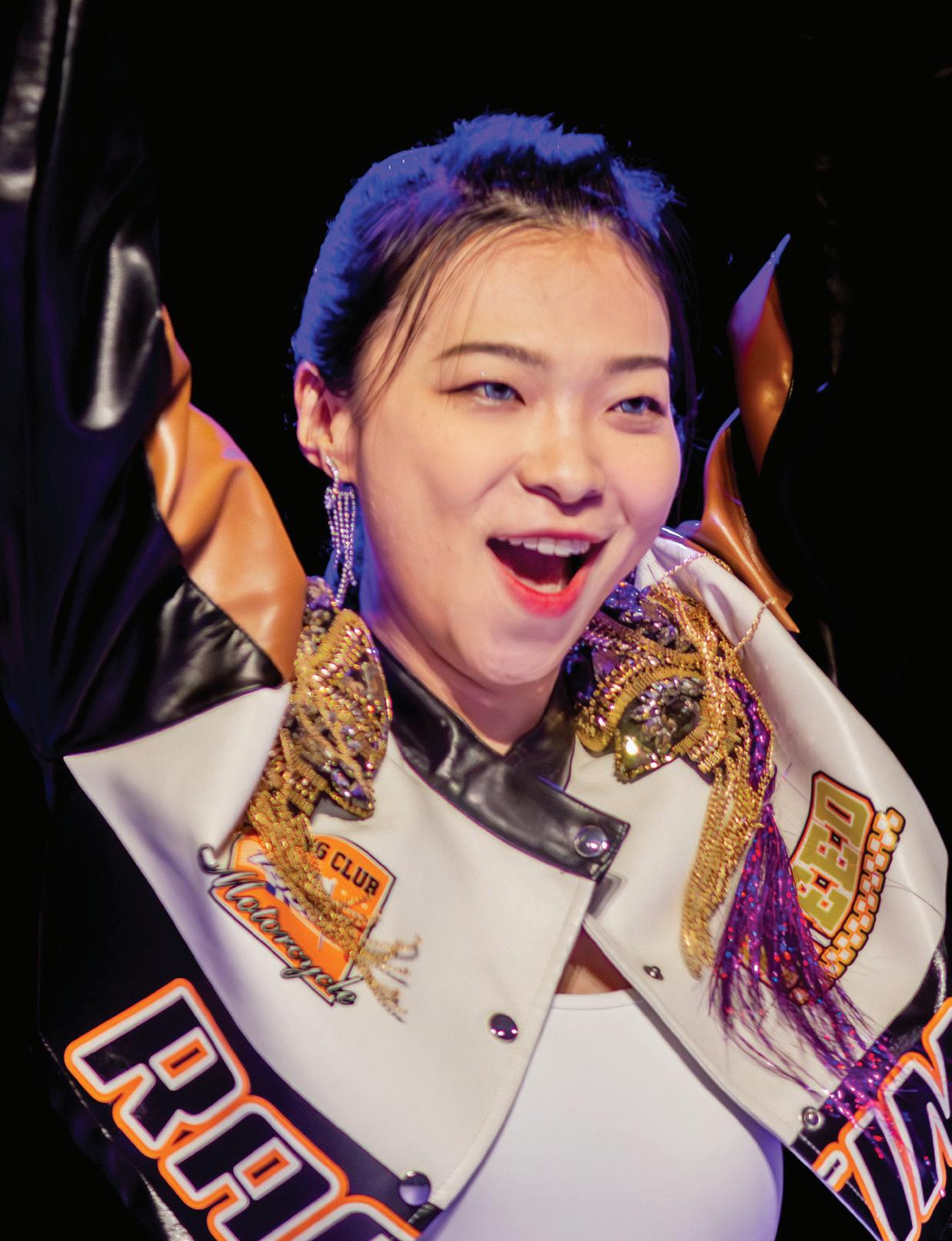
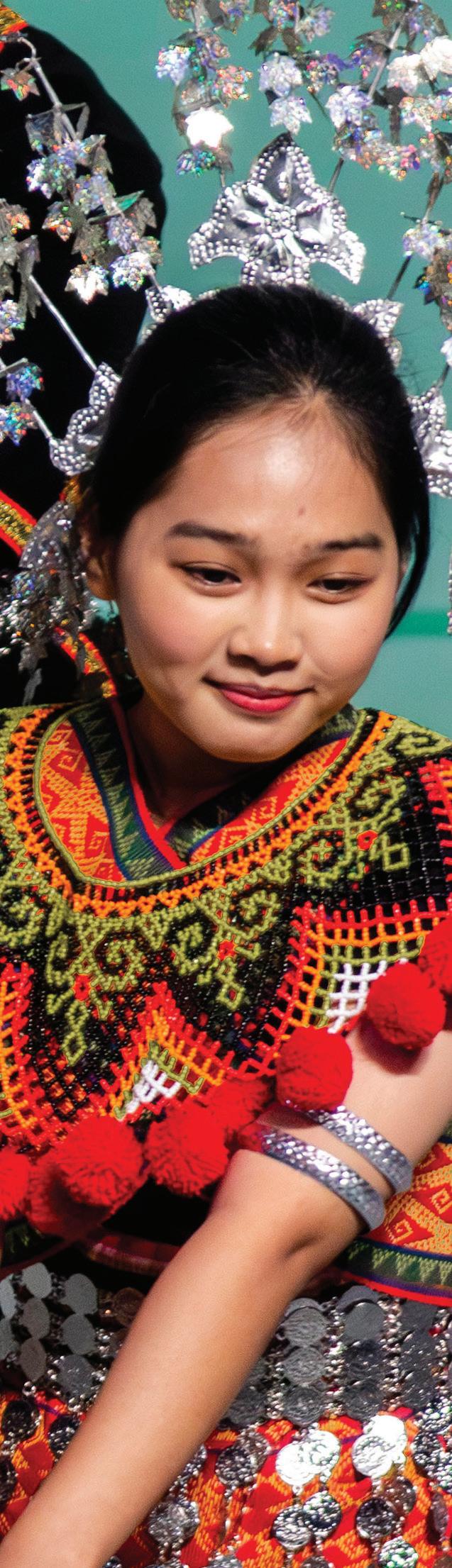
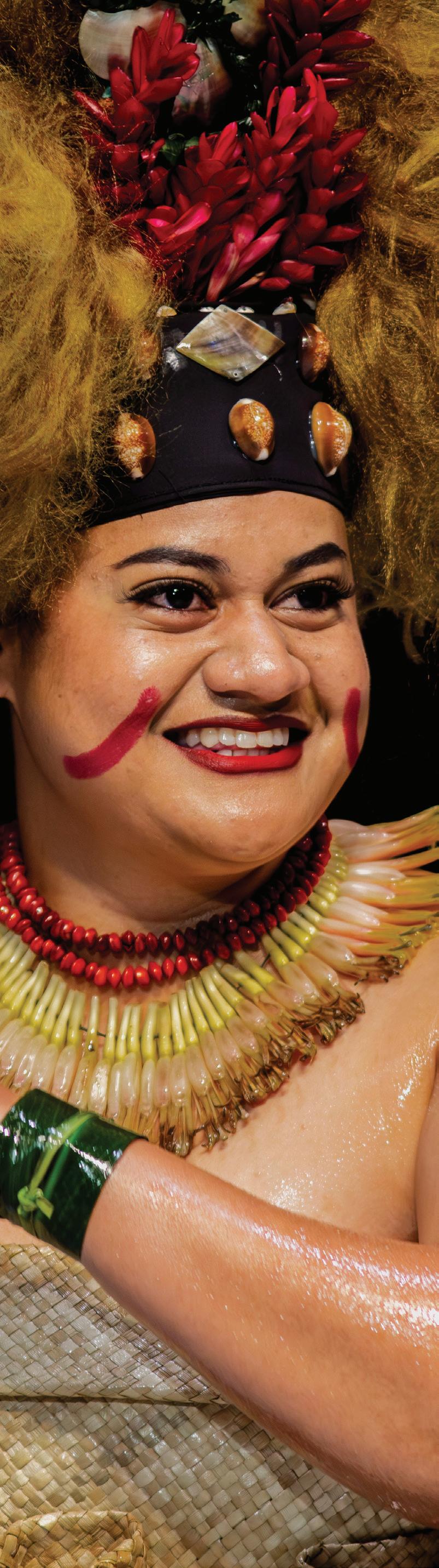
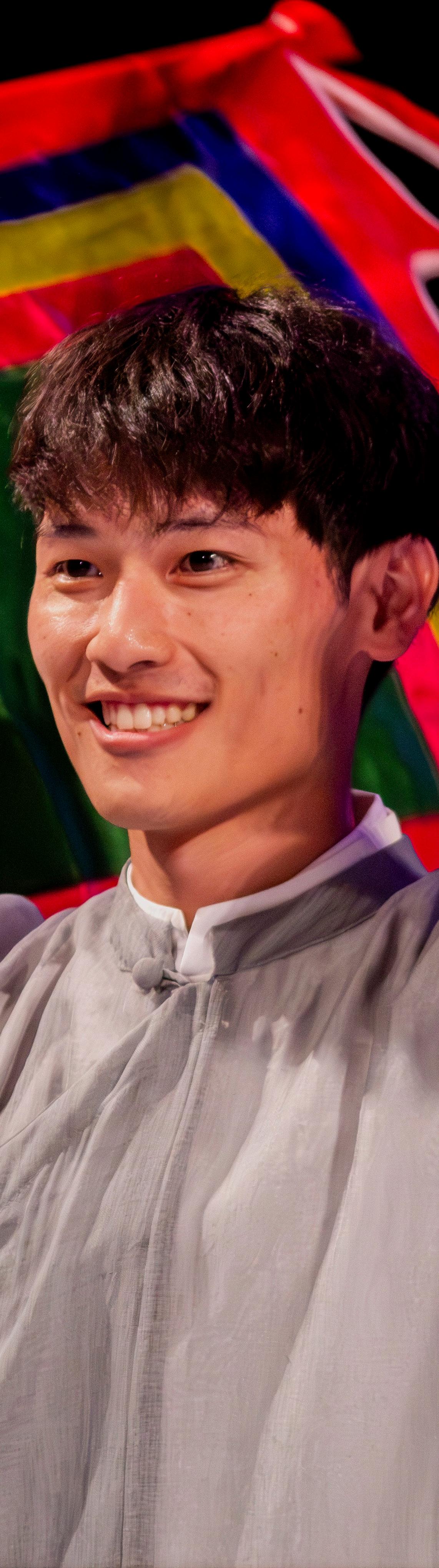
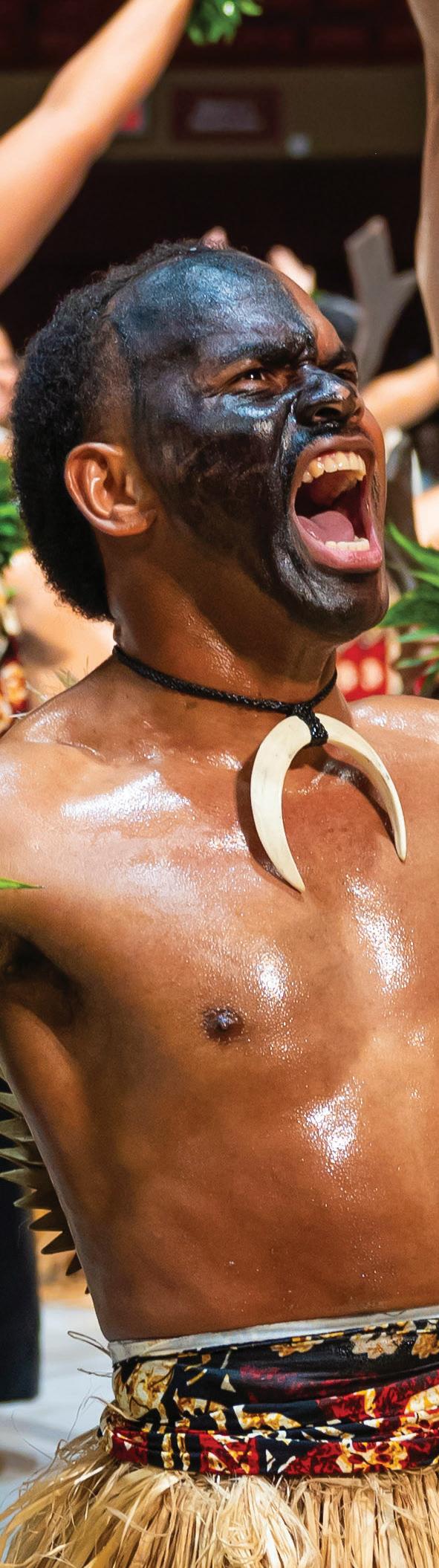
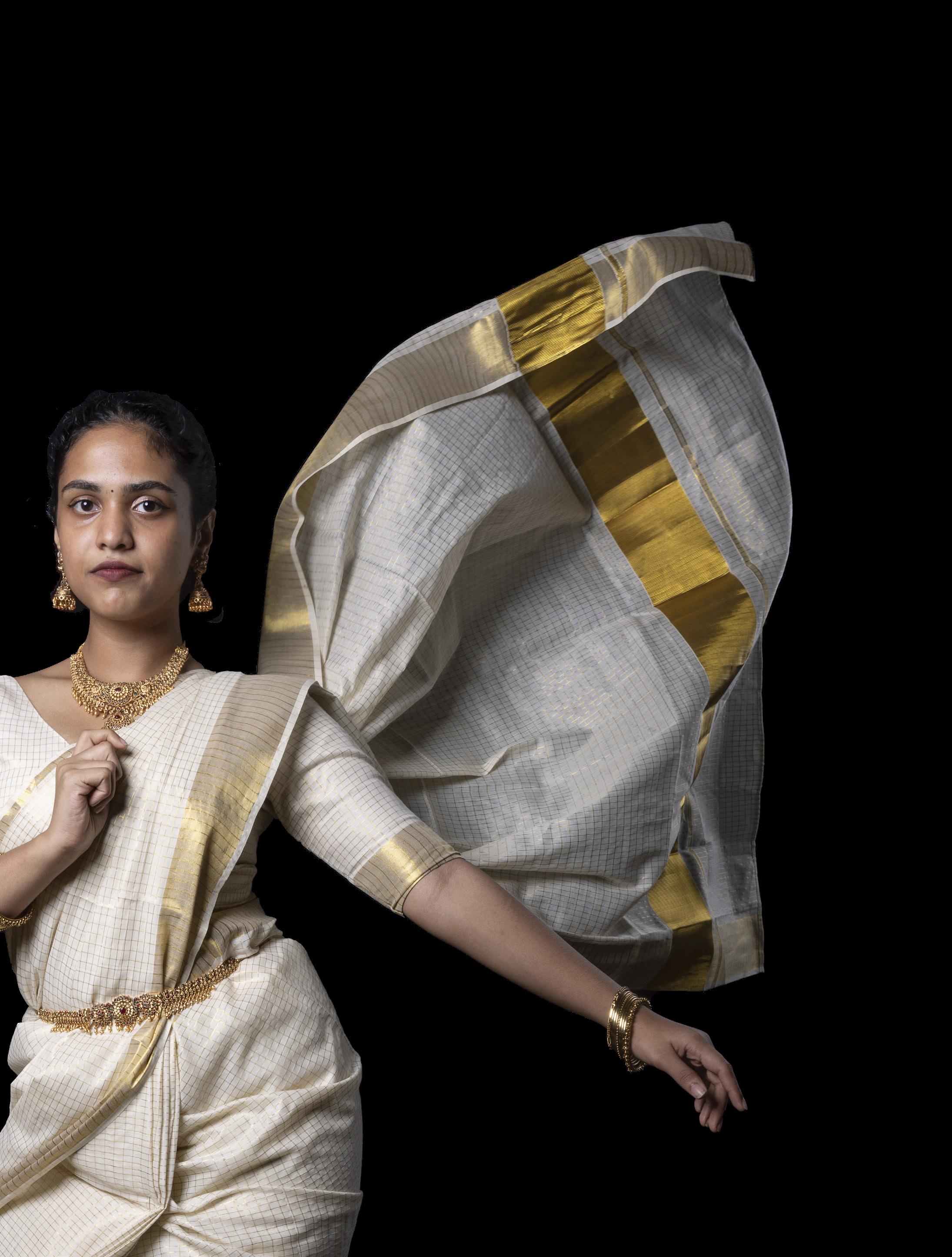
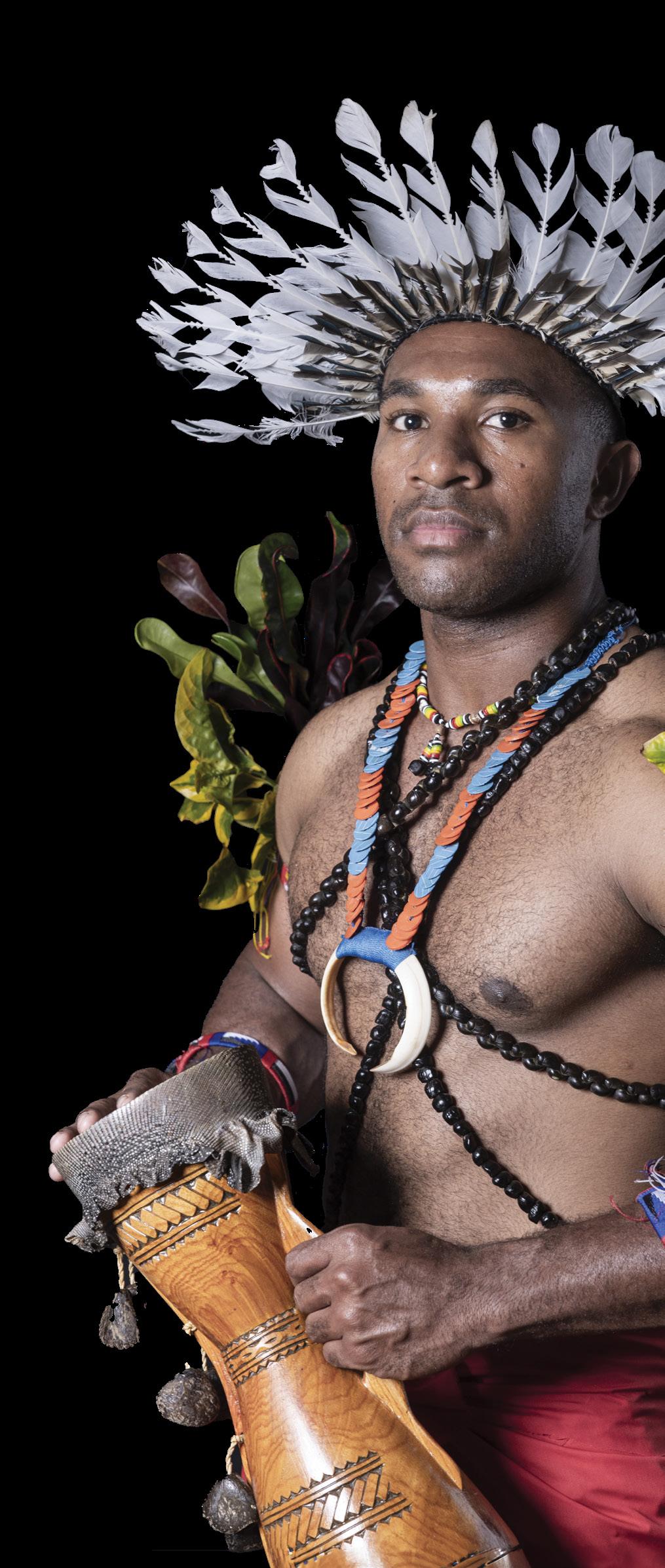
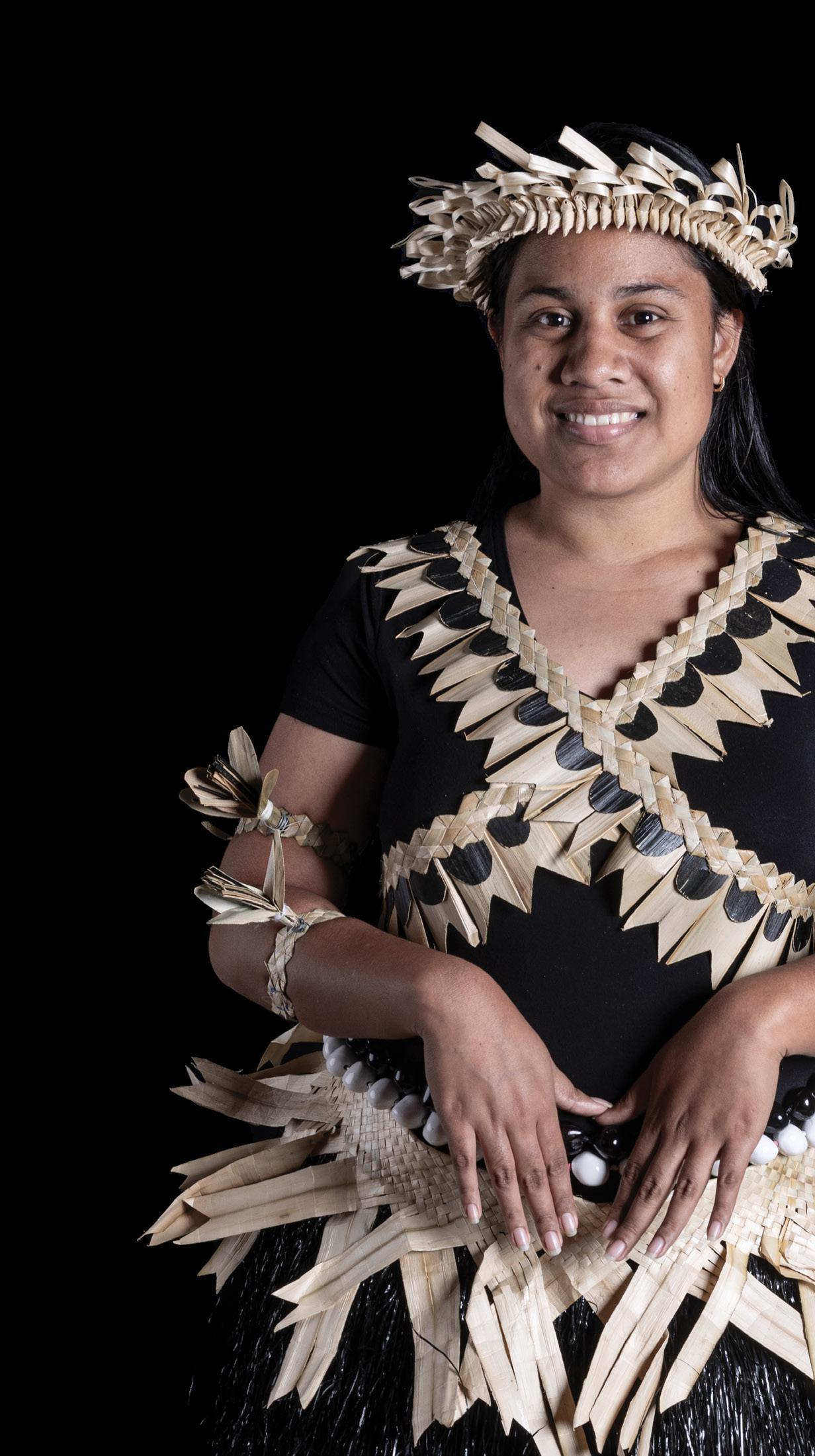
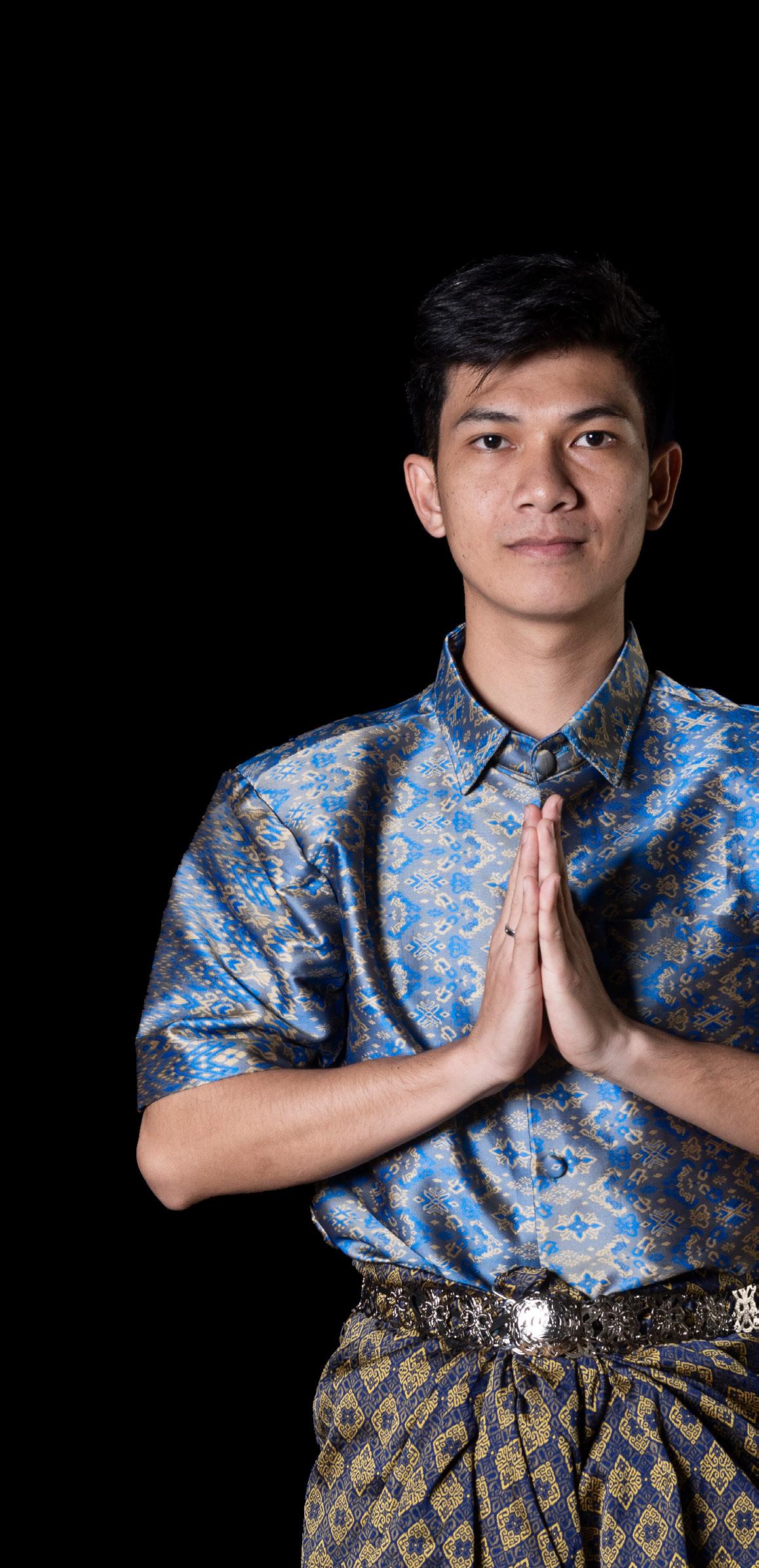
Welcome to our Culture Night issue, a celebration of the diversity that makes BYU–Hawai’i unlike anywhere else. This issue captures one of the year’s most meaningful campus events, where cultures from all over the world come together on one stage.
With more than 70 countries represented on campus and 23 clubs sharing their performances, this magazine was created with one goal in mind: to reflect that diversity as fully and thoughtfully as possible. Every page is an attempt to showcase not just the performances, but the people, stories, and identities behind them. We wanted this issue to feel inclusive, highlighting a wide range of cultures, perspectives, and experiences that make up our campus community.
What makes Culture Night special is that it is not something you just watch. It is something you can be part of. Students are not only invited but encouraged to step into cultures beyond their own, to learn the dances, understand the traditions, and help bring each unique culture to light. Whether you are performing or sitting in the audience, there is an opportunity to learn, appreciate, and celebrate the cultures around you in a real and personal way.
Culture Night is more than a performance. It is a reminder of what it looks like when differences are embraced instead of divided. It creates a space where we can learn from one another, gain a deeper understanding of cultures beyond our own, and find connection through shared experiences. In a world that can often feel divided, these two nights stand as a powerful example of unity, respect, and appreciation.
As you flip through these pages, we hope you see yourself reflected here, whether it is in your culture, your friends, or the moments that made this event unforgettable. More than anything, we hope this issue helps preserve the feeling of Culture Night, the energy, the pride, and the sense of belonging that comes from being part of something bigger than yourself.
Don’t forget to scan the QR code at the back to see even more photos captured by our Ke Alaka’i team. Find yourself, your friends, and the moments that made Culture Night special, and enjoy the issue.
Showcasing Indian diversity through Bollywood music and dynamic dancing
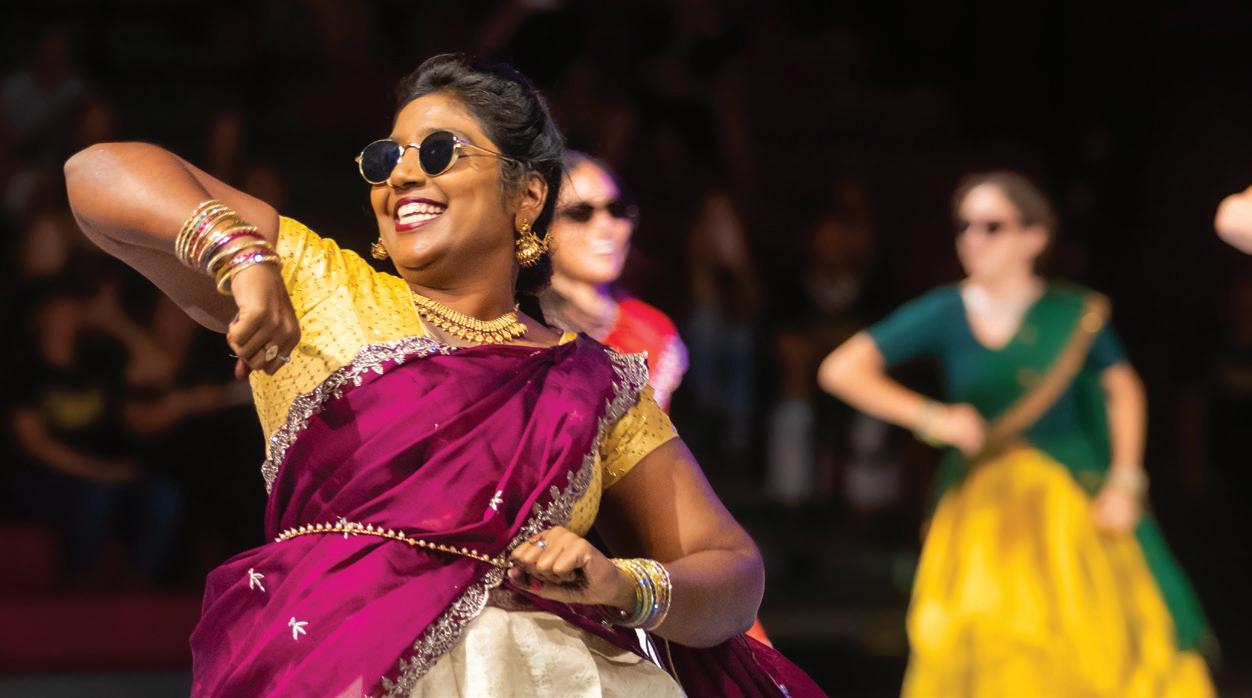
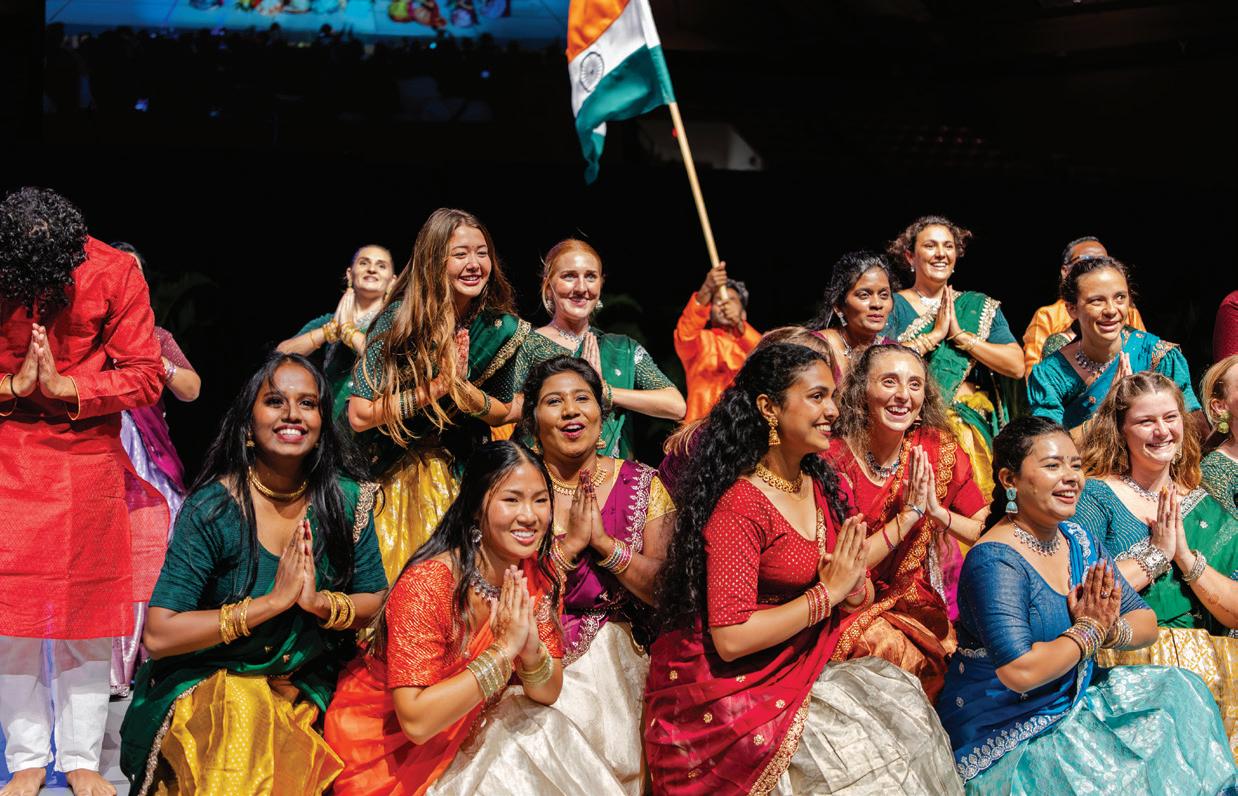
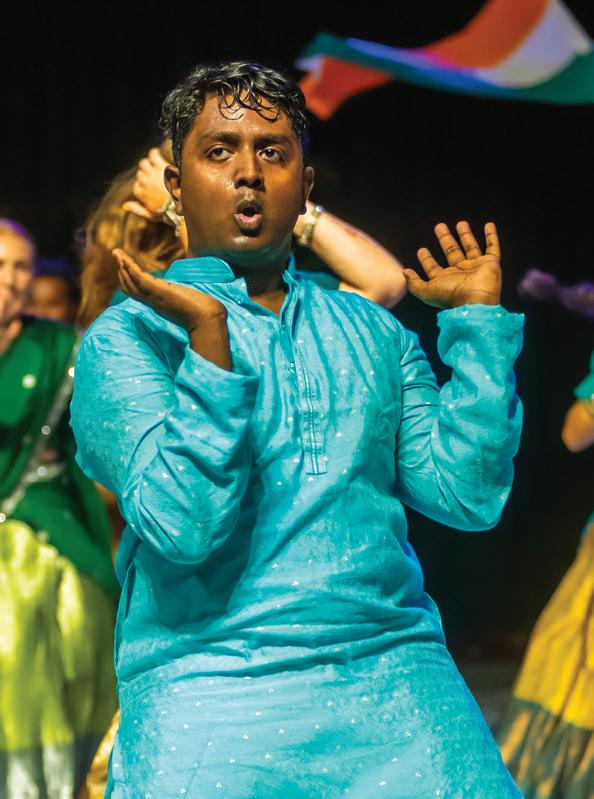
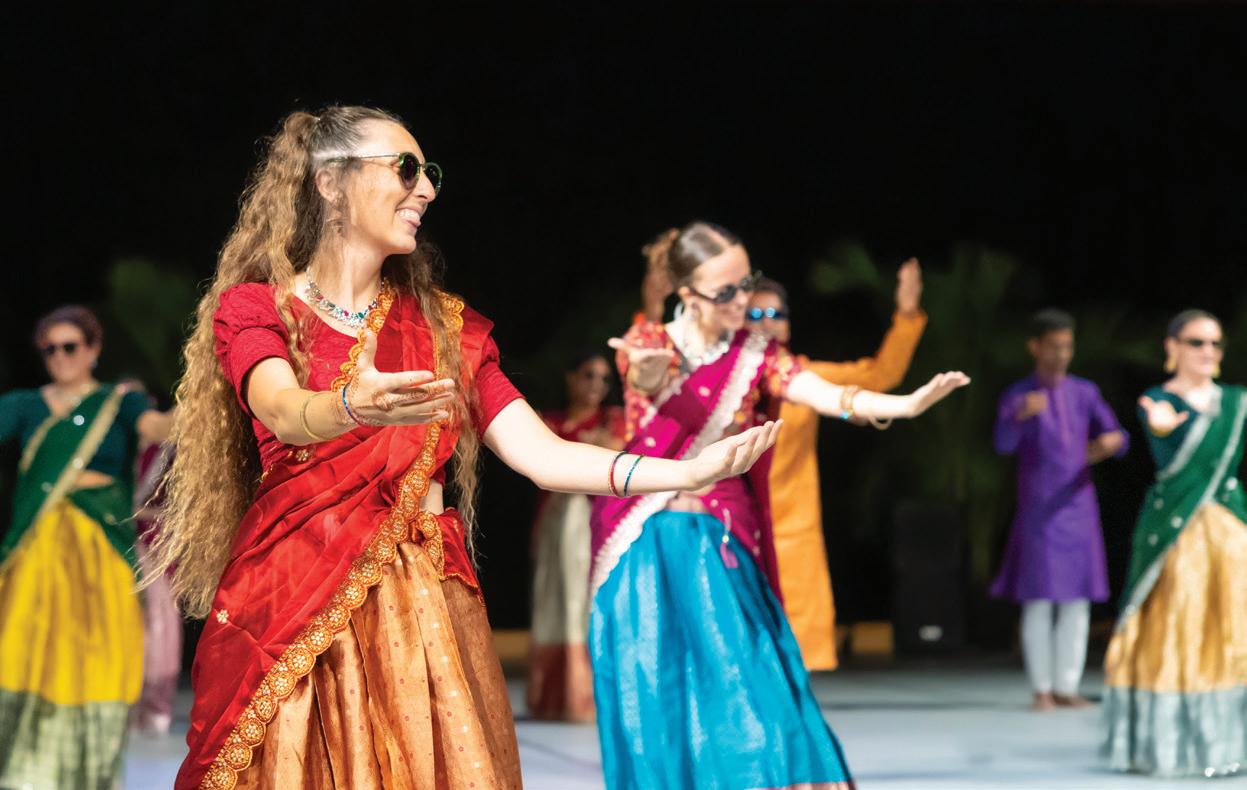
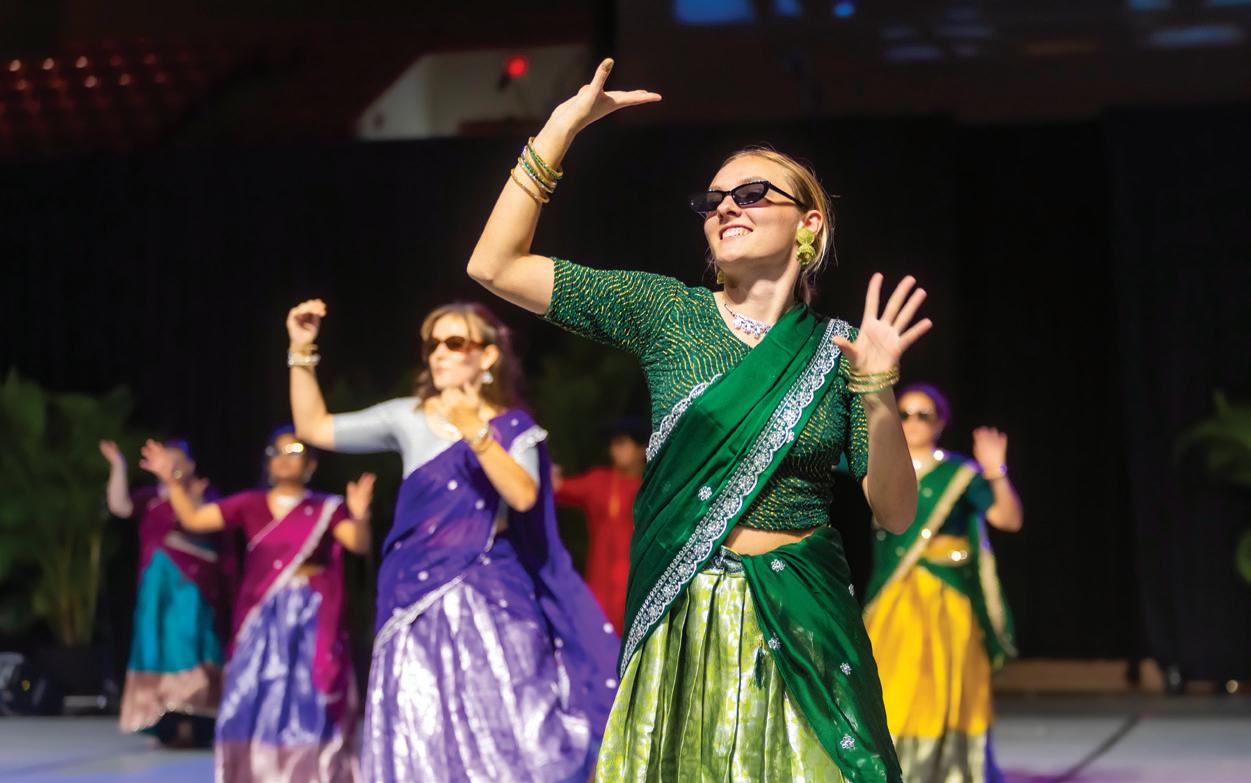
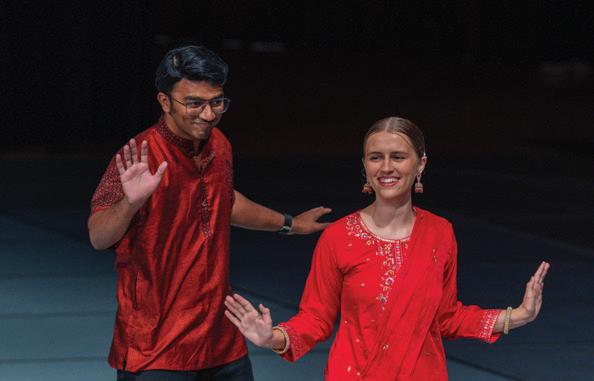
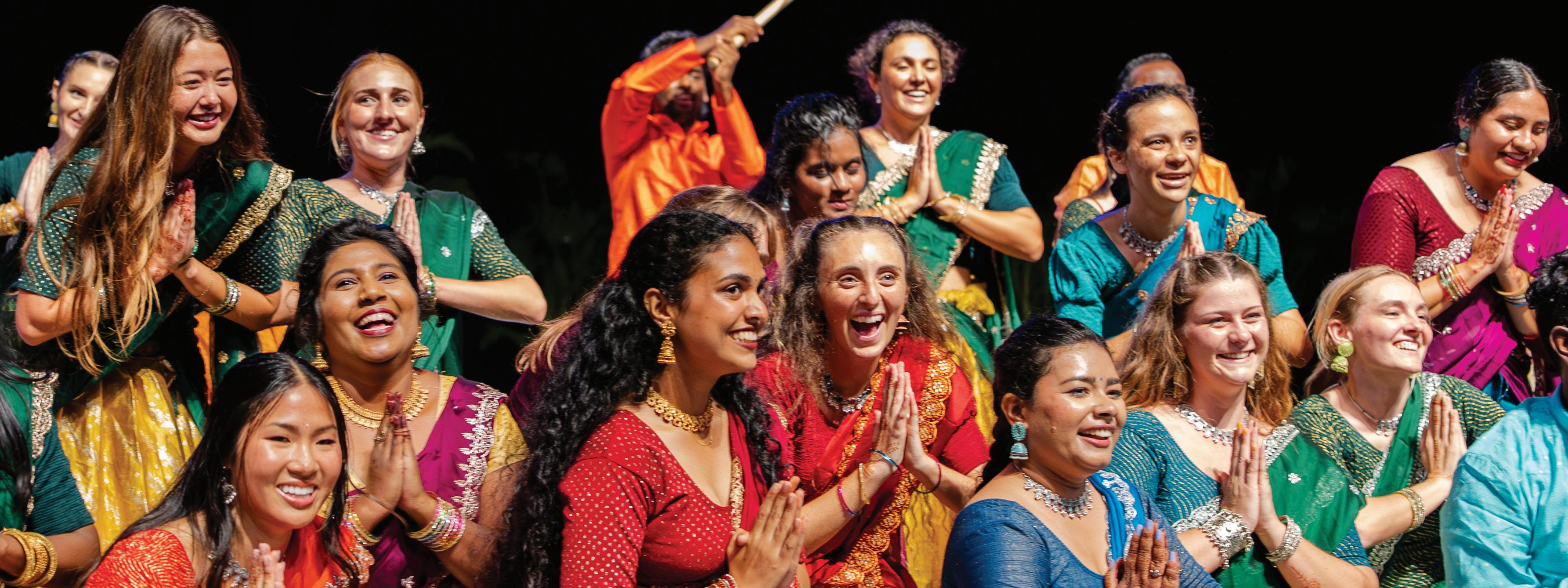
Vibrant colors and lively music filled the Cannon Activities Center as India club performers took the stage. They opened with what club performers described as “fast-paced” and “energetic” movements and carried the powerful momentum throughout the show.
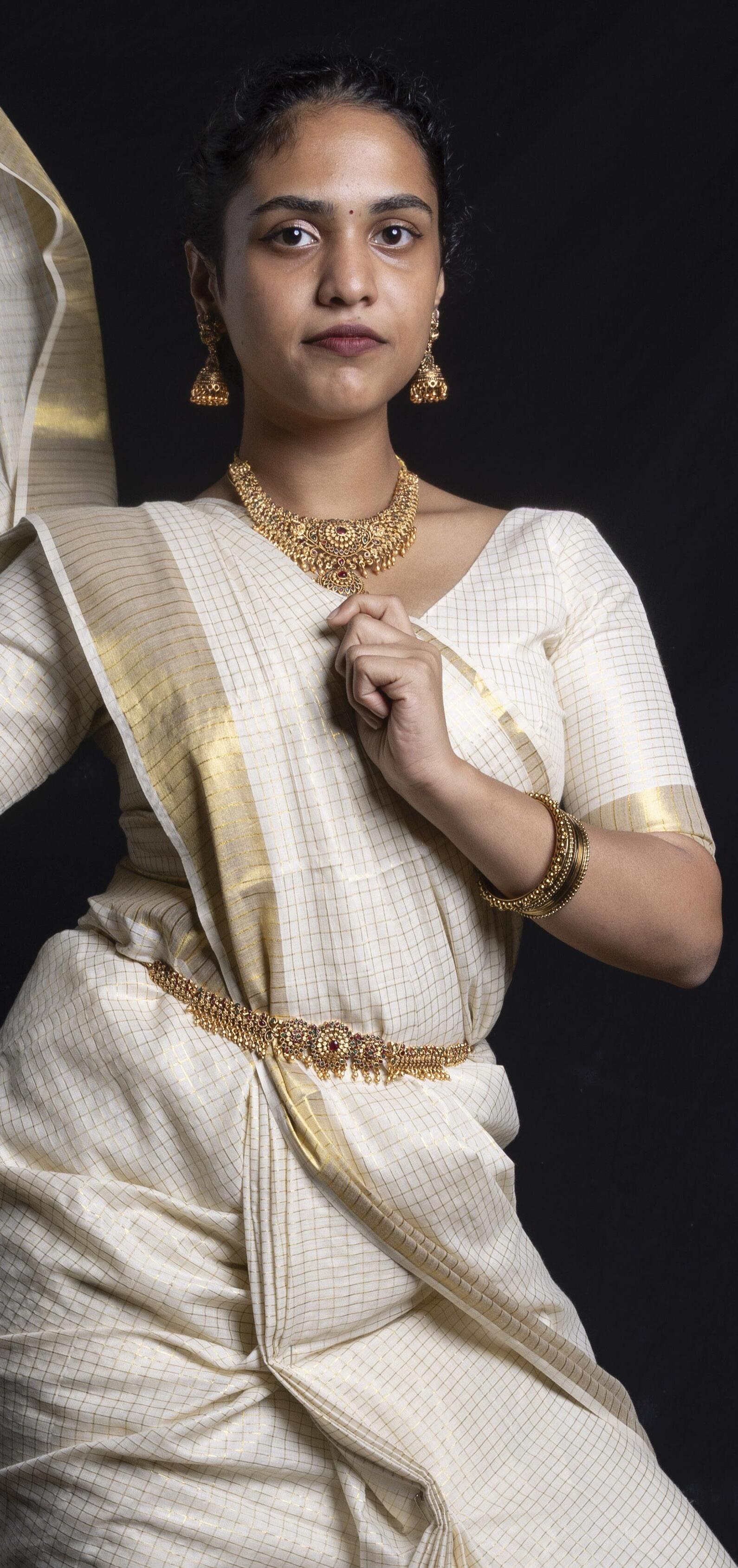
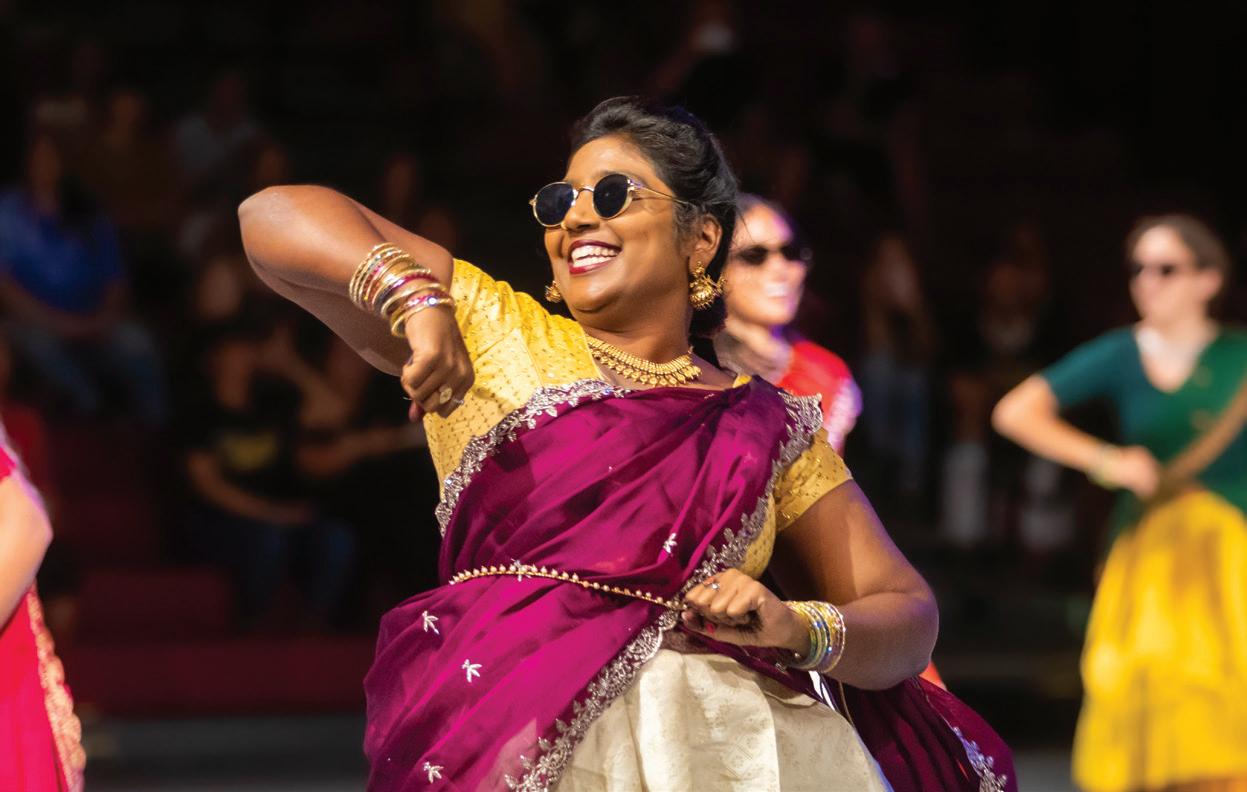
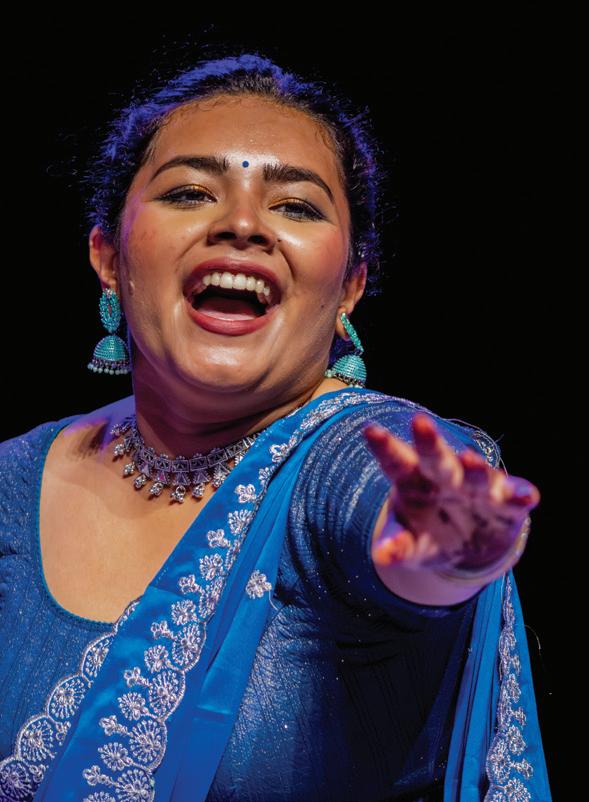
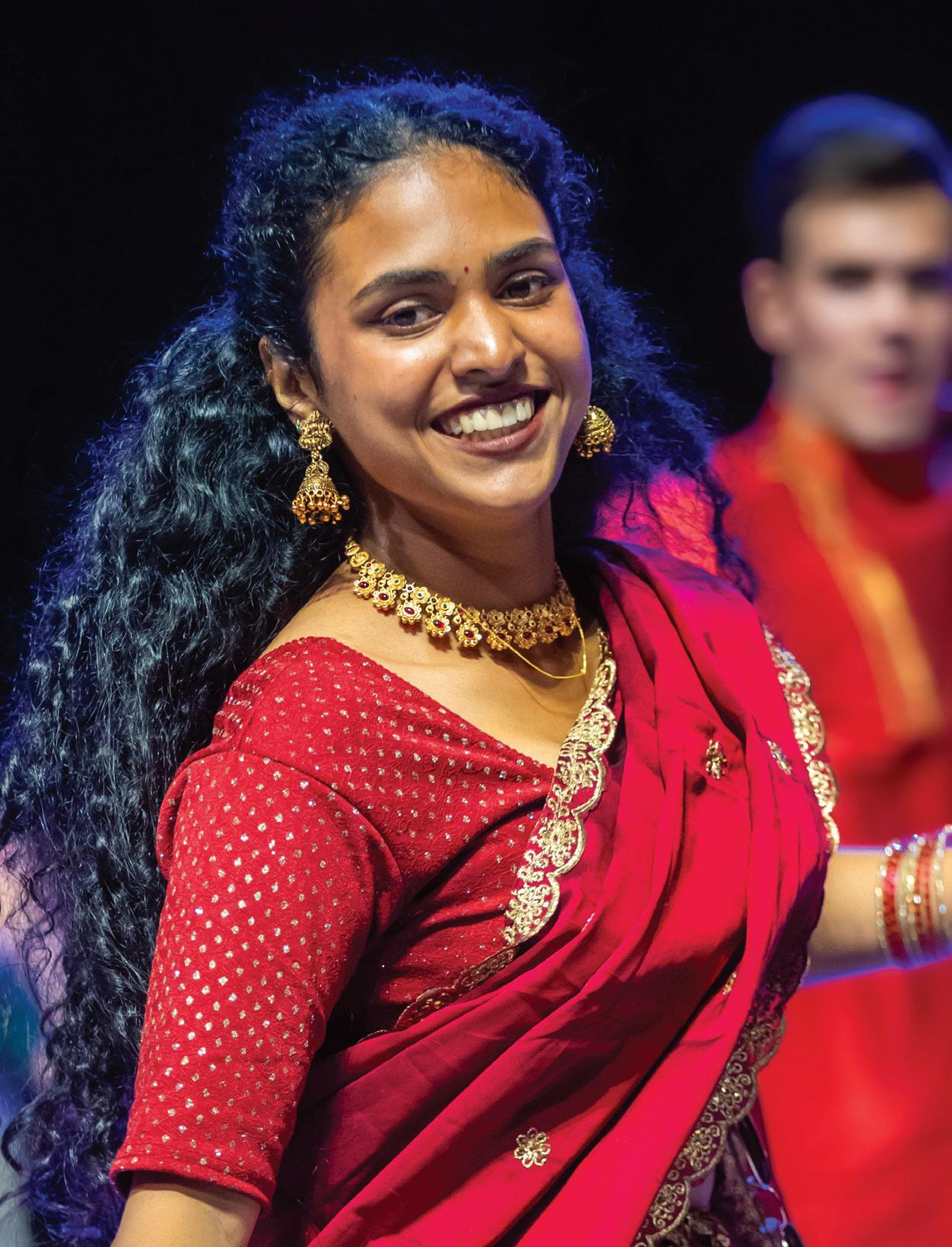
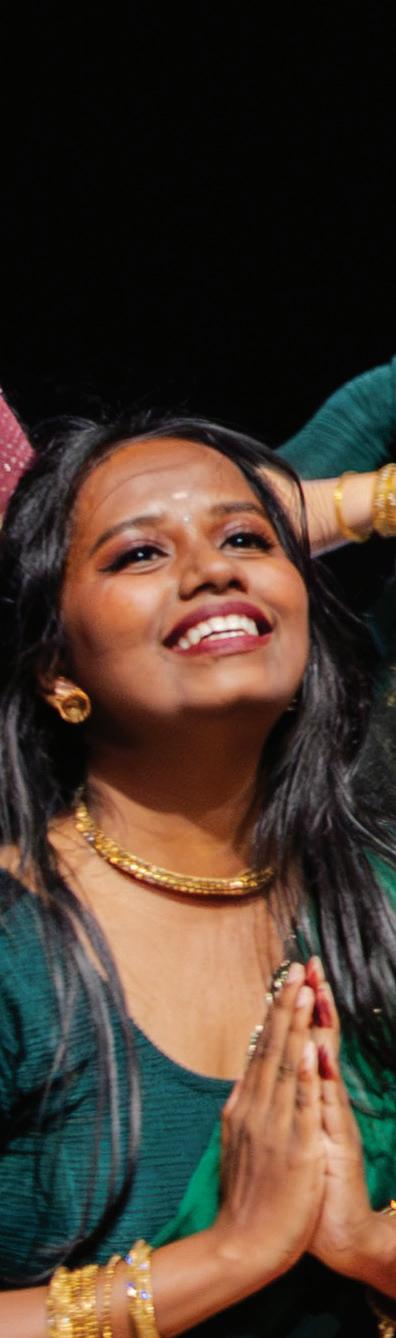
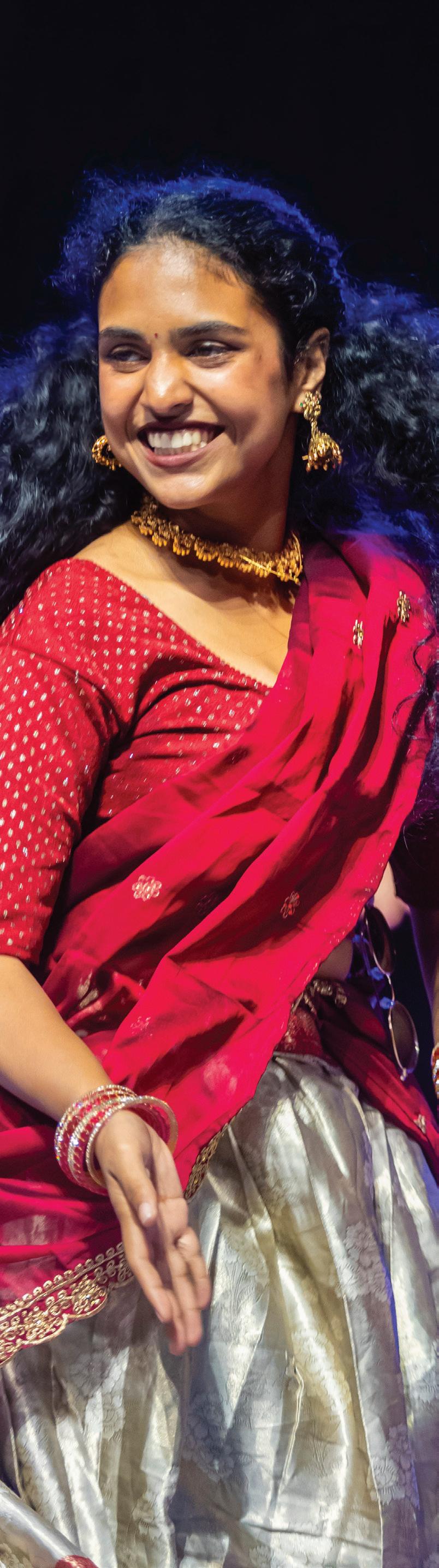
Club president Venu Gopal Guntu, a sophomore in computer science from India, said this year’s performance showcased the country’s diversity, blending traditional culture, modern dance and film music from its 28 states. “Even with our diversity, we come together through dance, culture, art and music,” he said. The male performers wore kurtas and pyjamas, which Guntu described as attire for family gatherings or ceremonies. “If you see a person wearing a kurta, you know he is enjoying a special moment,” he said. The female dancers wore sarees and half-sarees with jewelry and accessories, which he said reflect India’s cultural diversity and long-standing traditions.
Guntu described the choreography as “very tight” and “fast-paced.” He said the club drew inspiration from a new wave of Indian modern dance which focuses on dynamic movements and upbeat energy. He hoped India club’s latest choreography stood out to the audience and that they paid close attention to the performance. “You blink your eyes and you will skip three or four steps,” he said.
Performer Chakravarthi Ambati, a senior in information technology from India, recalled the club’s dance practices as “intense.” To him, the performance successfully captured Bollywood’s liveliness and Kollywood’s “hype,” the Tamil-based film industry. He said, “We wanted to bring that energy to the stage on Culture Night.”
For Téa Daniel, a senior in communication, media and culture from Hawaii, India club’s performance offered a unique opportunity for her to learn the culture and connect with her familial roots. “It’s such a cool opportunity we have as students to celebrate so many cultures. I don’t think you’d get that anywhere else,” she added.•
A0TEAROA
AOTEAROA
BY JULIA AUNAI
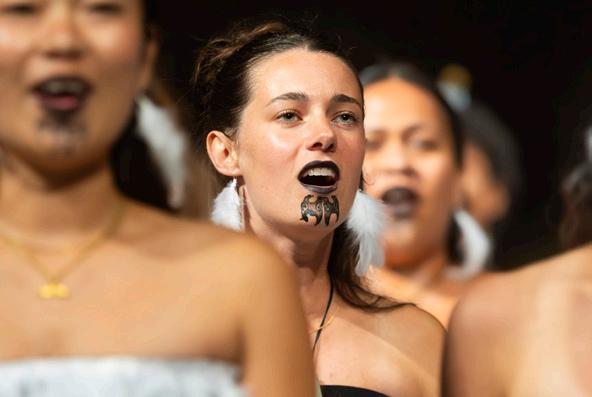
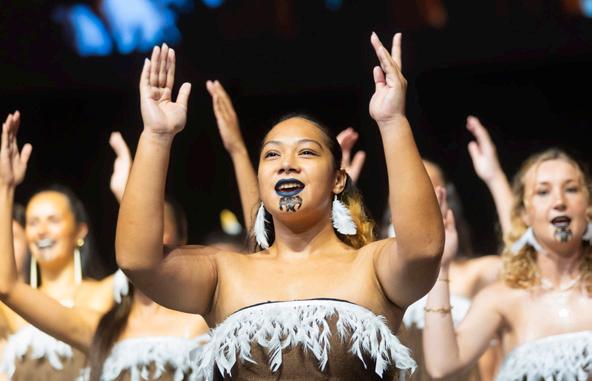
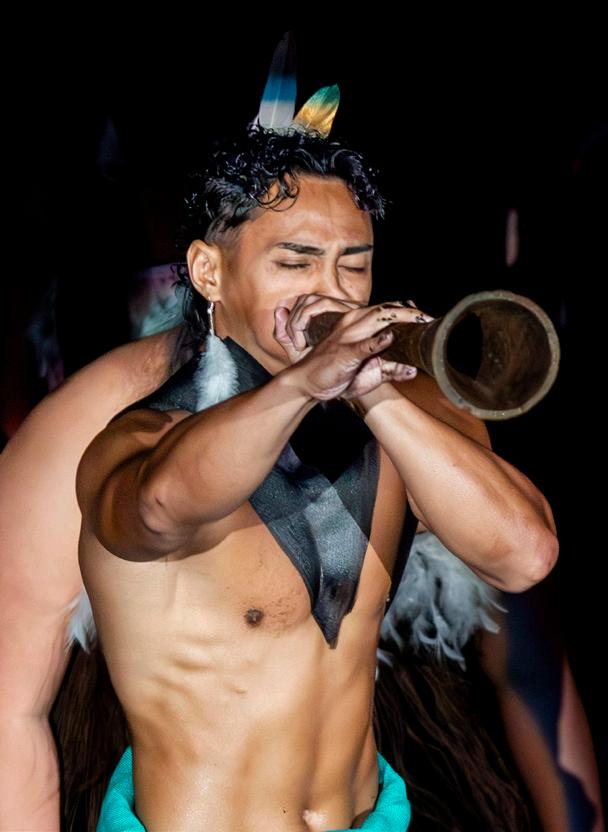
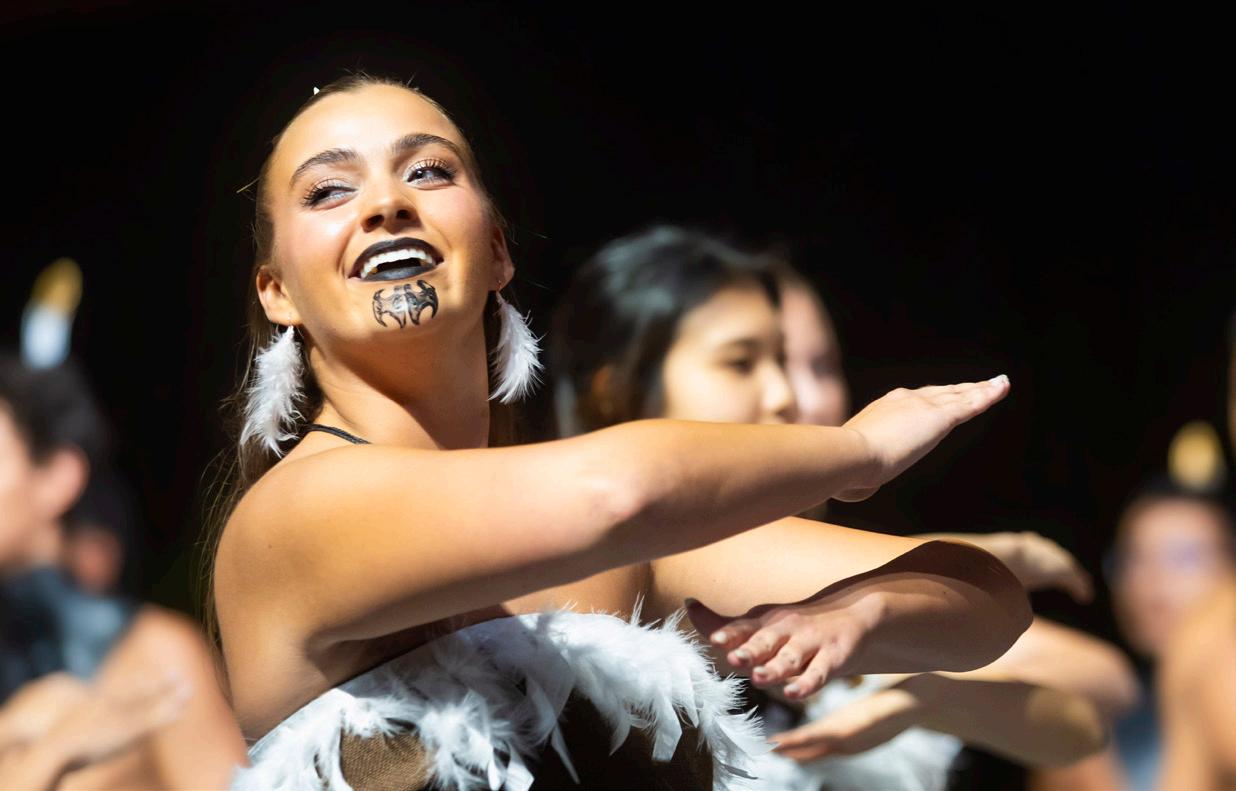
Through haka and song, students celebrate Māori identity
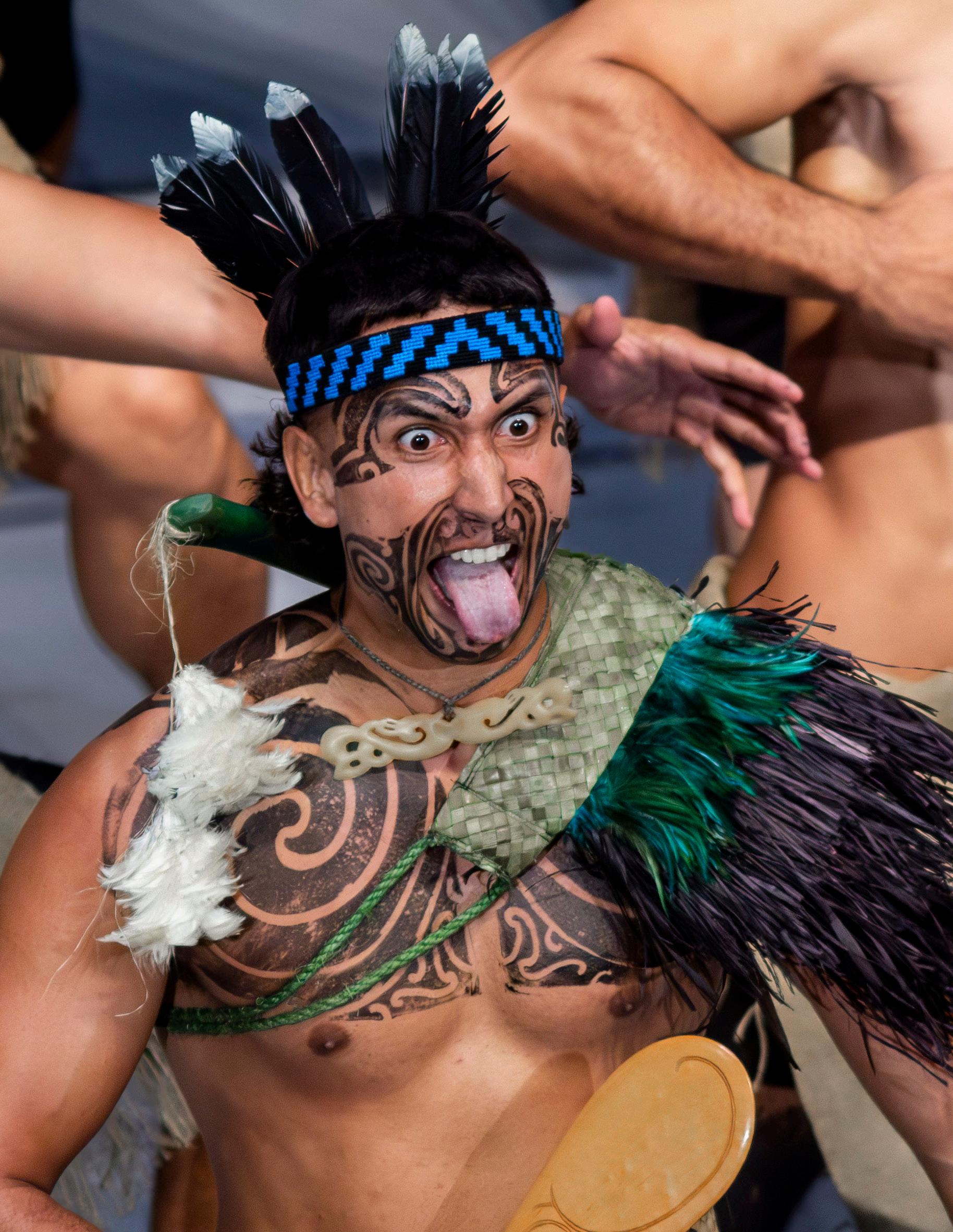
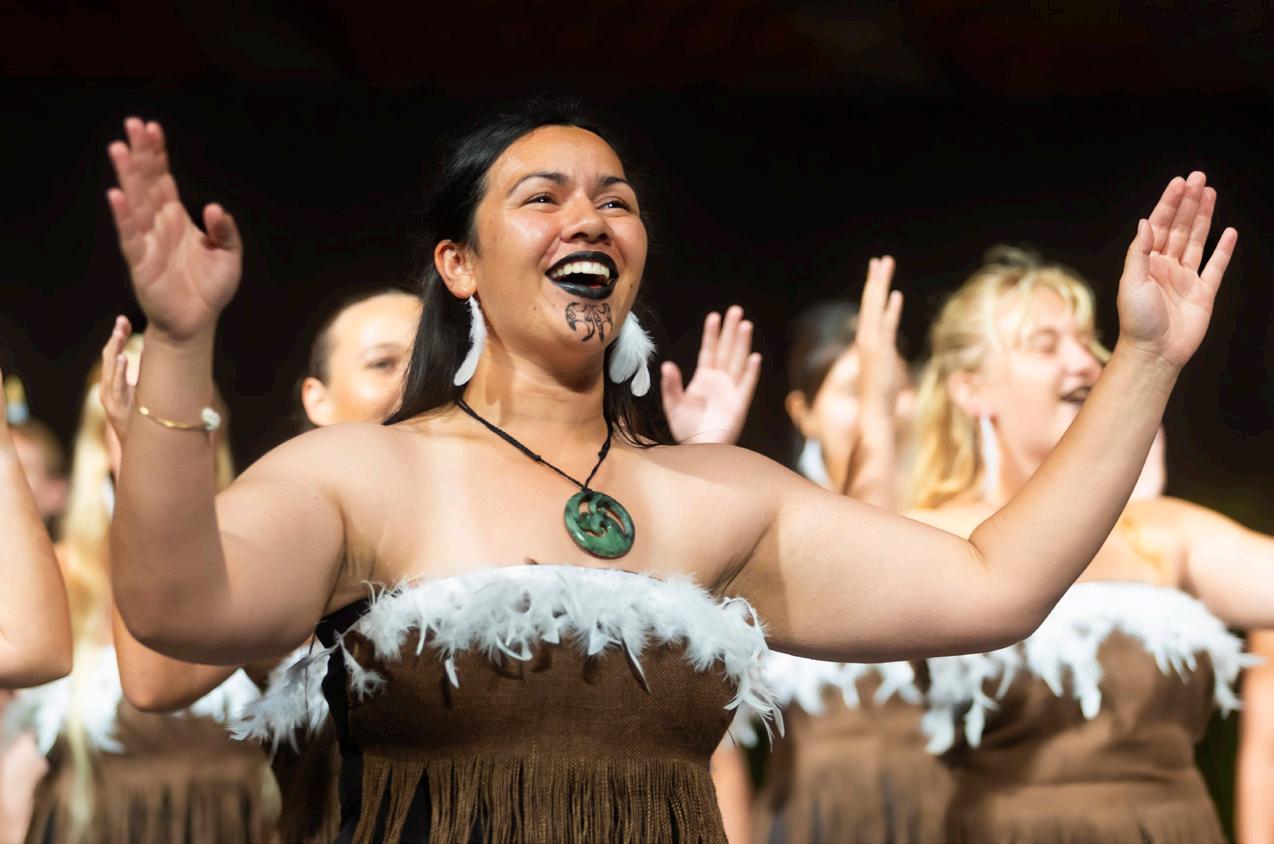
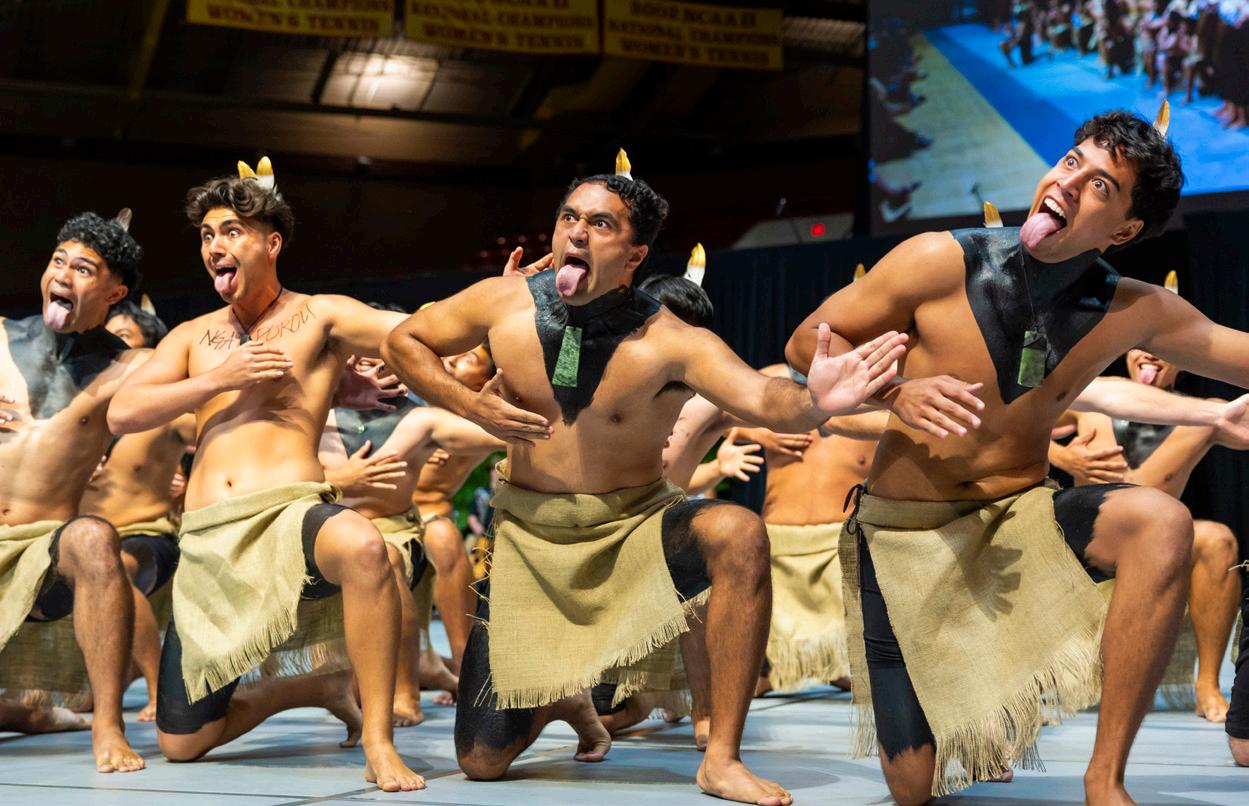
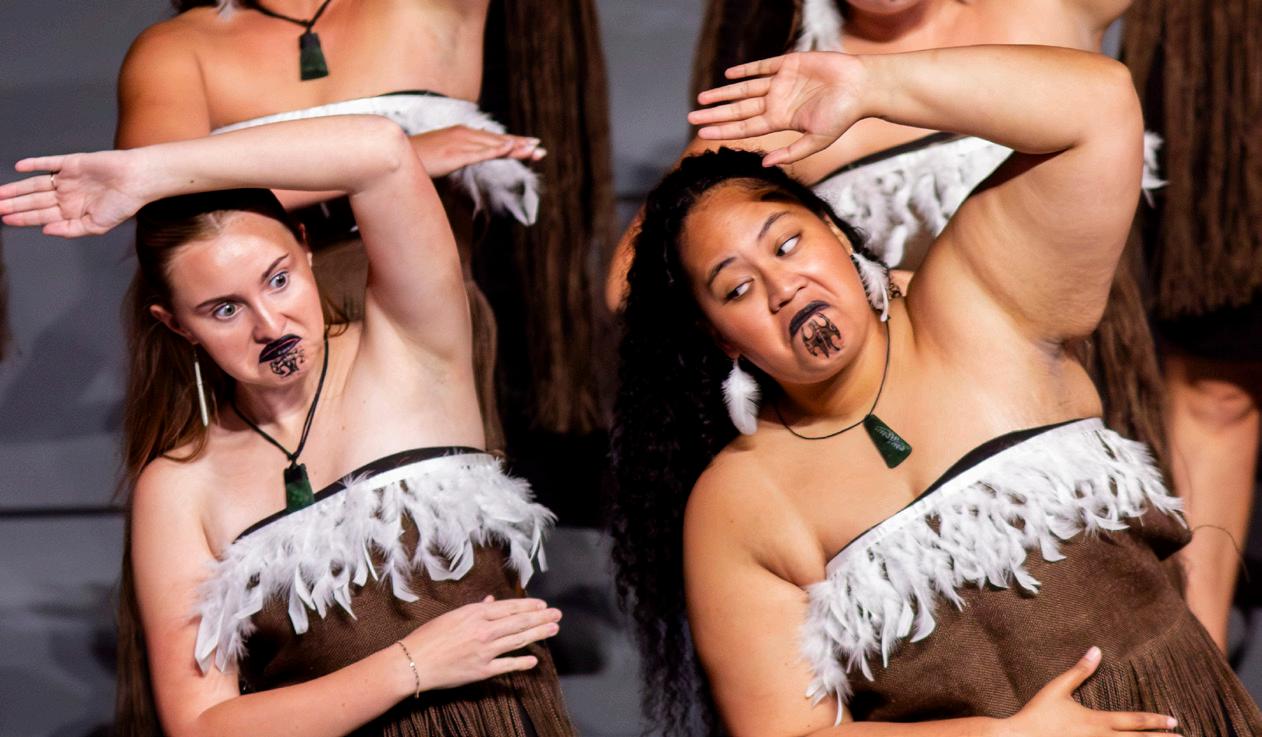
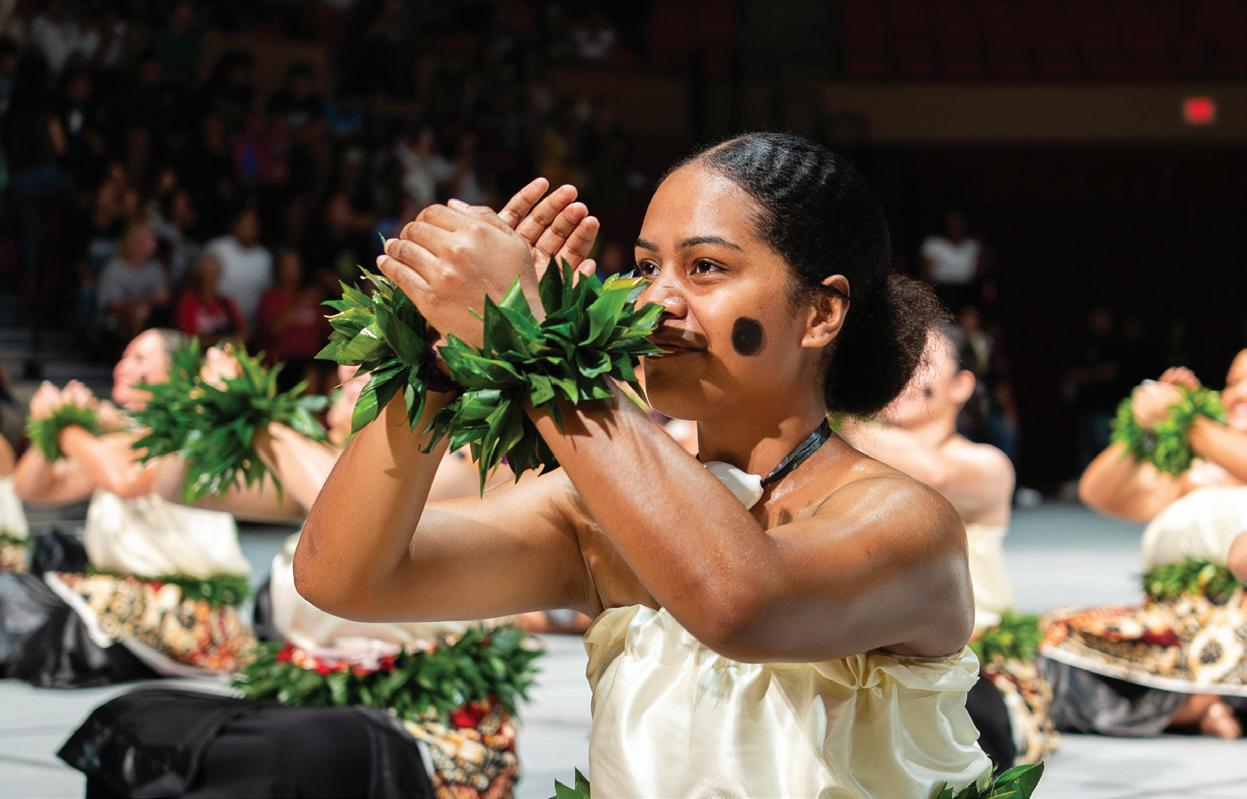
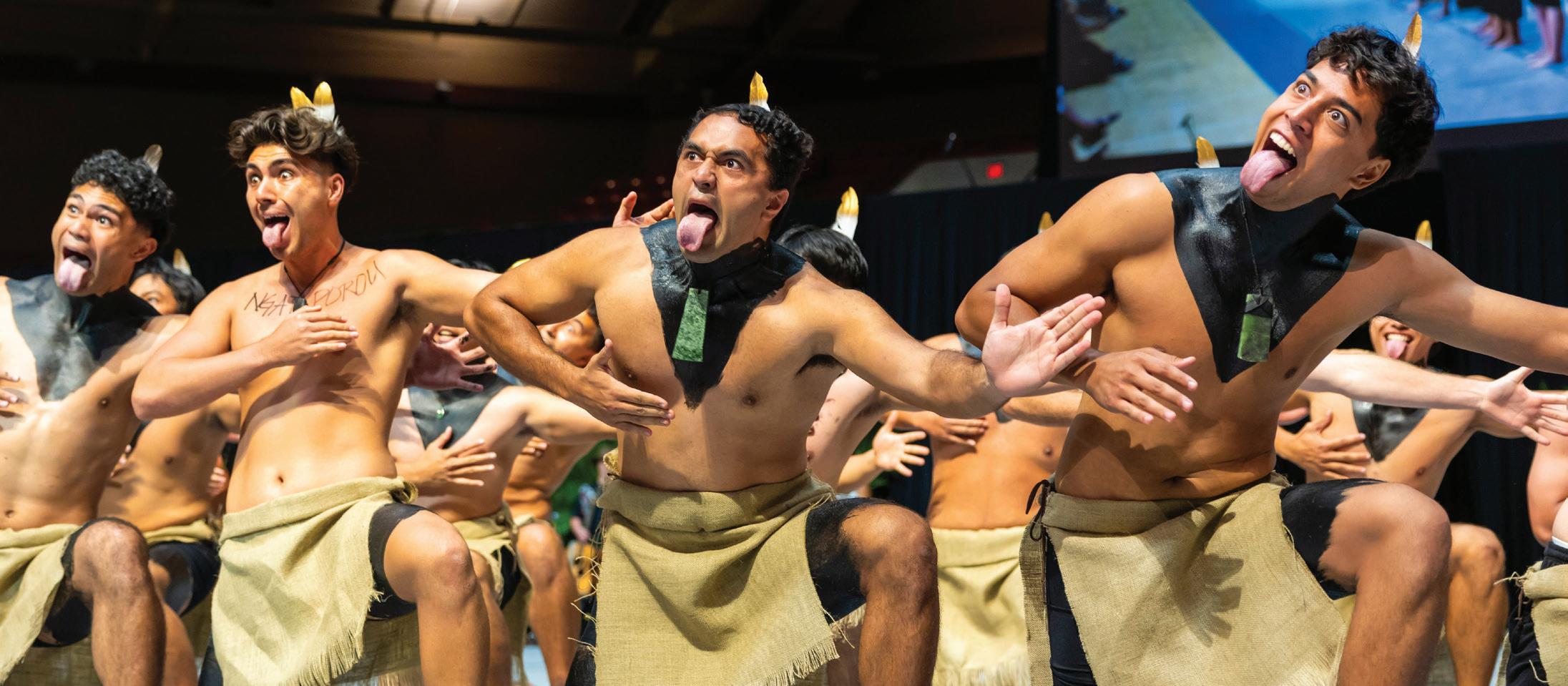
Paora Gemmell, a senior in political science from New Zealand and the choreographer for this year’s performance, said the program was divided into two parts: a chorus-style song and a haka.
The first item was a “waiata”, or choral song, where performers sang with minimal hand movements. Gemmell said the group performed “Toku Reo” a well-known song in New Zealand about the importance of preserving the Māori language.
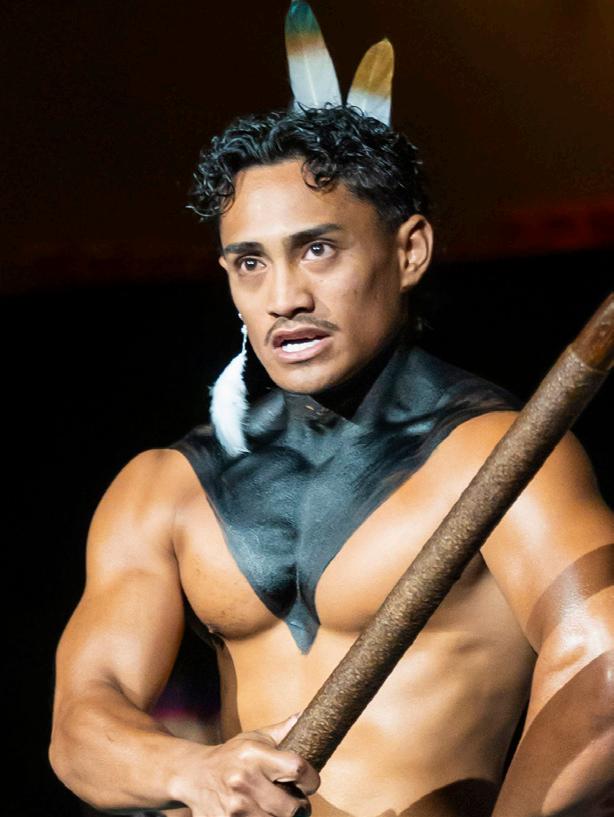
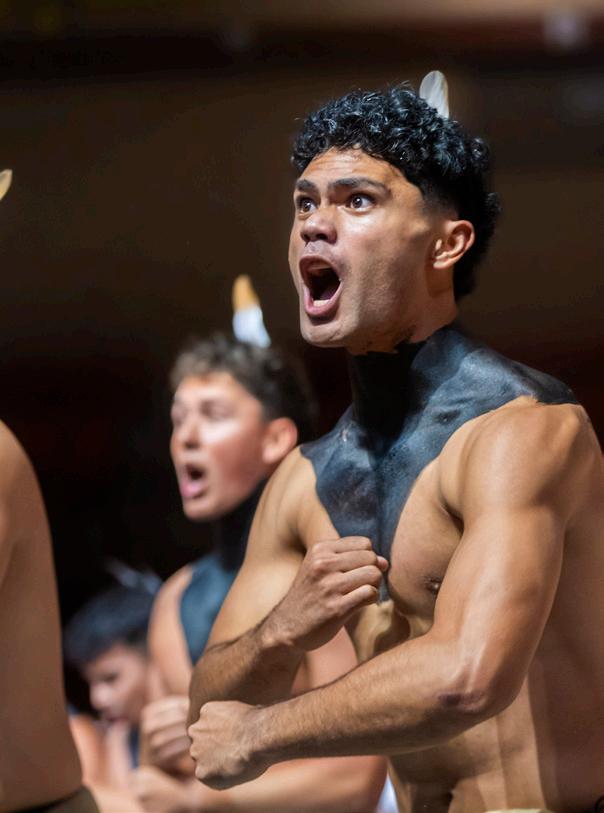
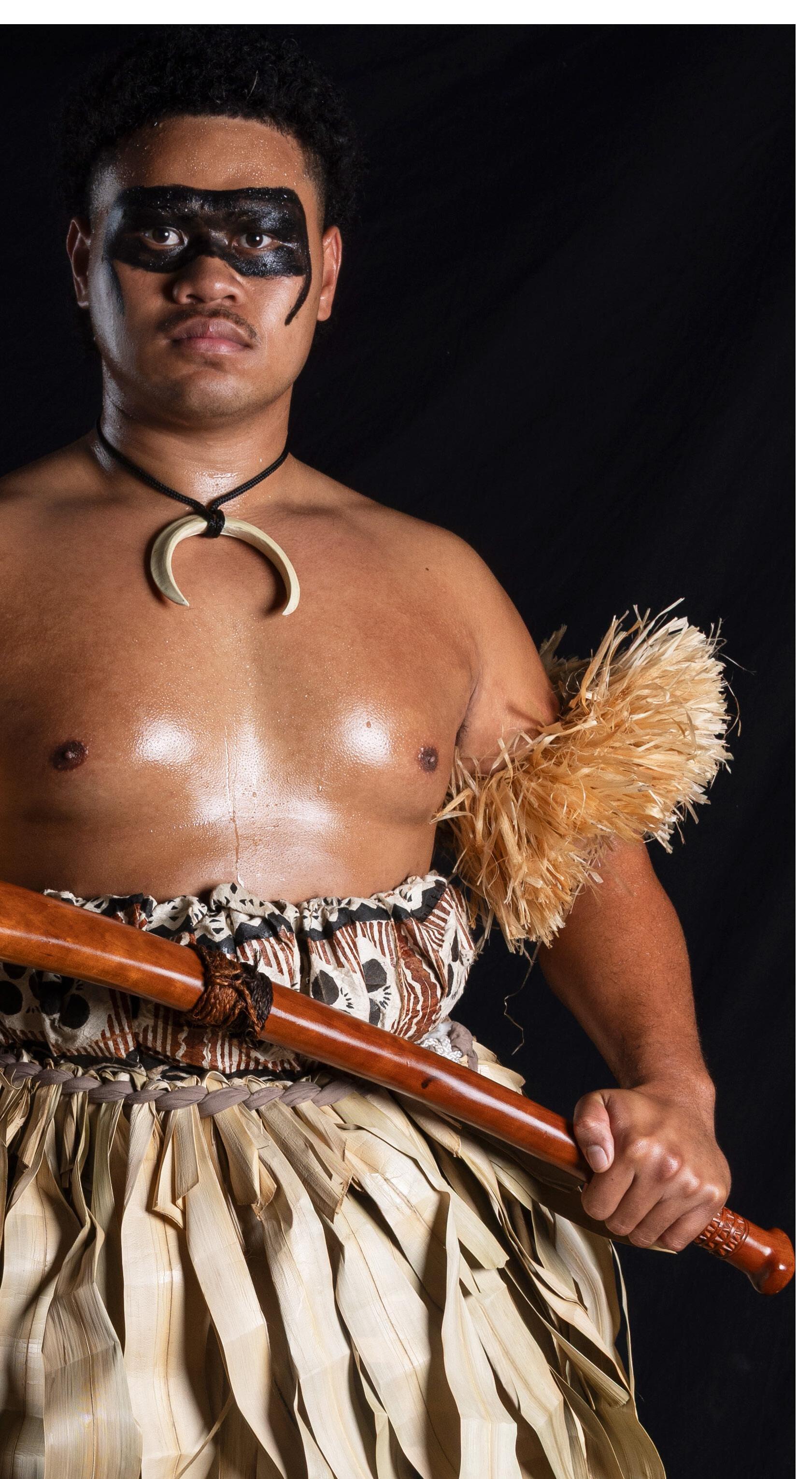
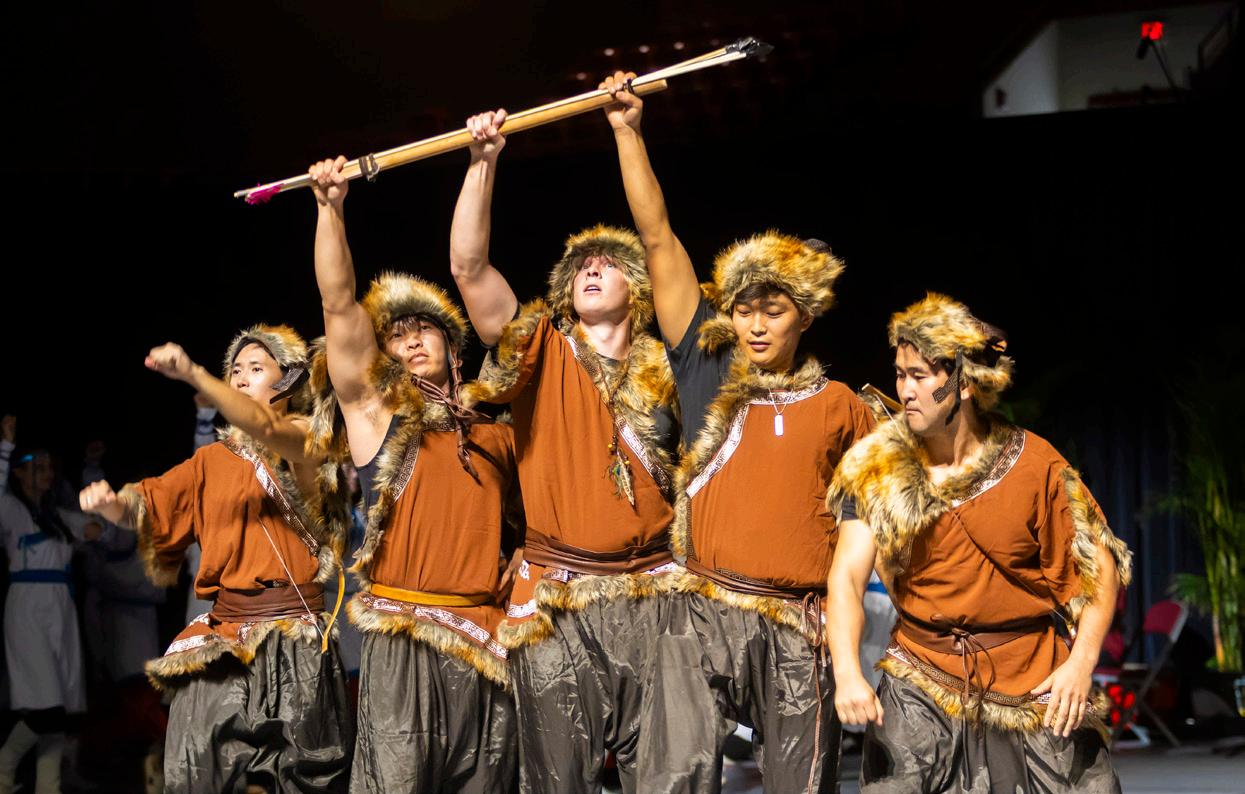
The second item is the haka, a cultural performance often associated with strength and unity. Gemmell said this year, the haka was based on Māori creation stories that used expressive movements. He said it was important for performers to express their own emotions. “I emphasize expressing yourself and how you move rather than trying to be like someone that’s done it their whole life,” he said.
Club president Te Rangahau Hodge, a freshman in business management from New Zealand, said she hopes performers could feel the spirit as they performed. “Yes, I’mMāori, but I’m also a member of The Church of Jesus Christ of Latter-day Saints,” she said. Hodge said this theme was reflected in the costumes this year, with women wearing white and gold.
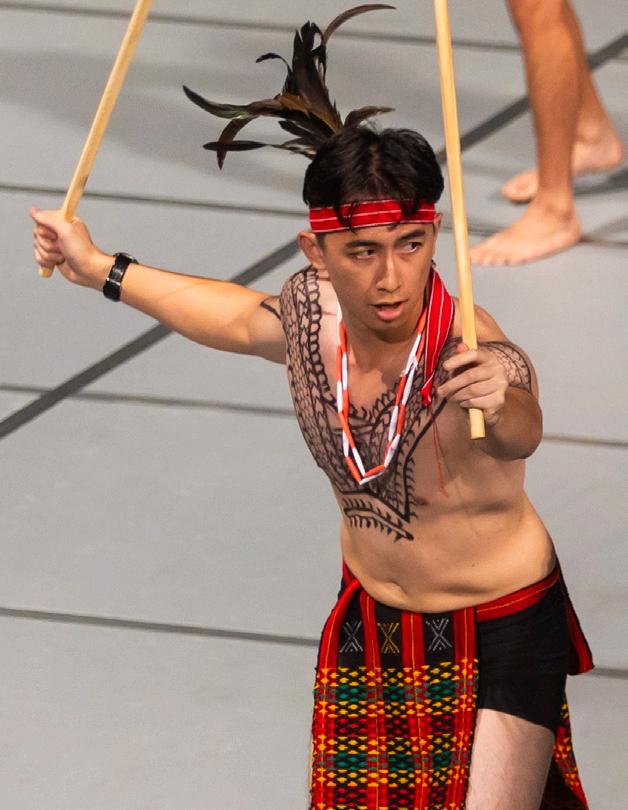
Lex Marcaida, a sophomore in accounting from the Philippines and the club’s treasurer, said participating in the performance reminds him of his own indigenous roots in the Philippines. “There are some resemblances to what they value as to what we value as well.” He said learning haka was his favorite part because of the unity that came when performing all together.•
AFRO WORLD
AFRO WORLD
BY JULIA AUNAI
Afro World blends hip-hop, Caribbean and South African dance styles
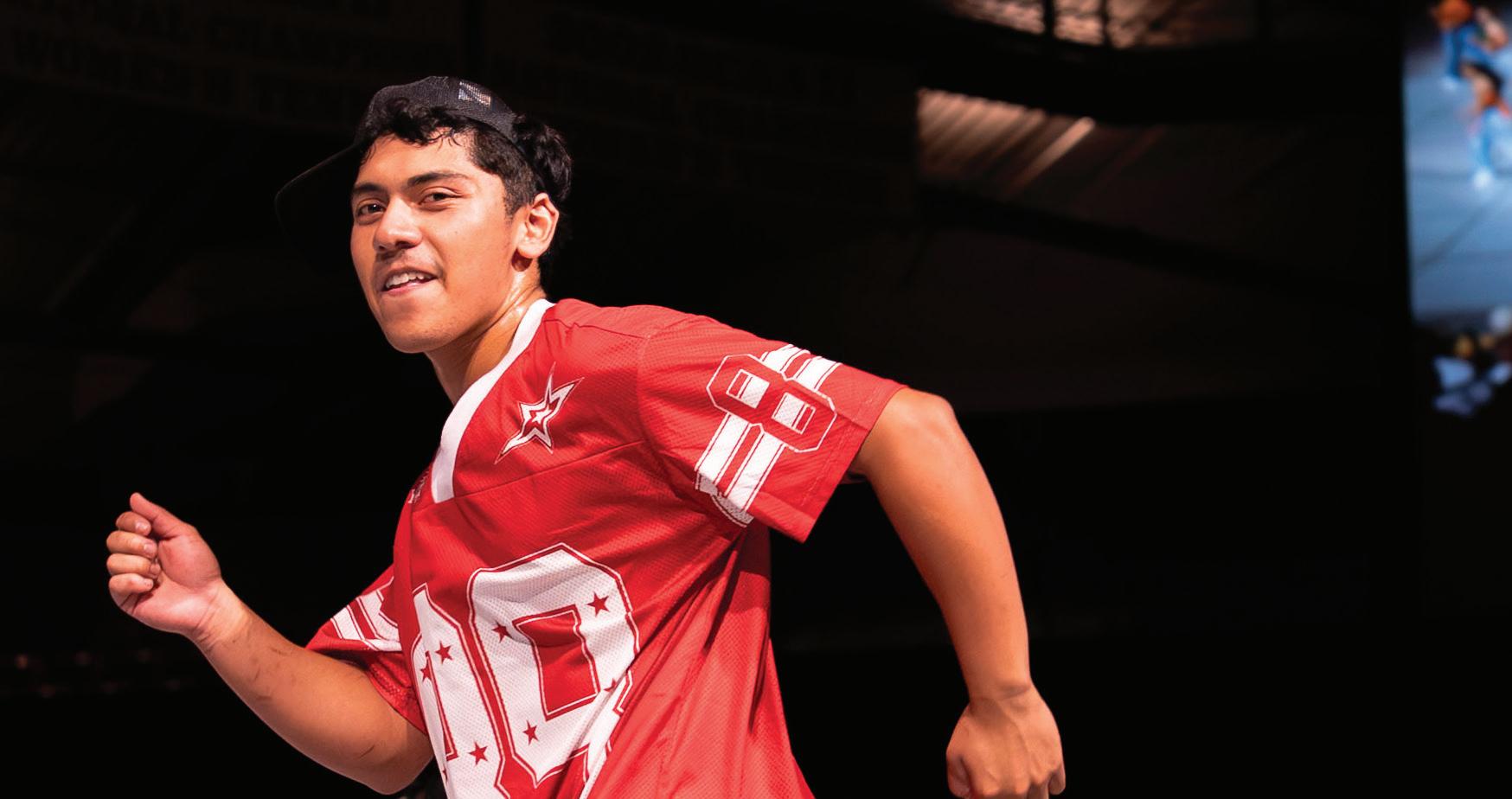
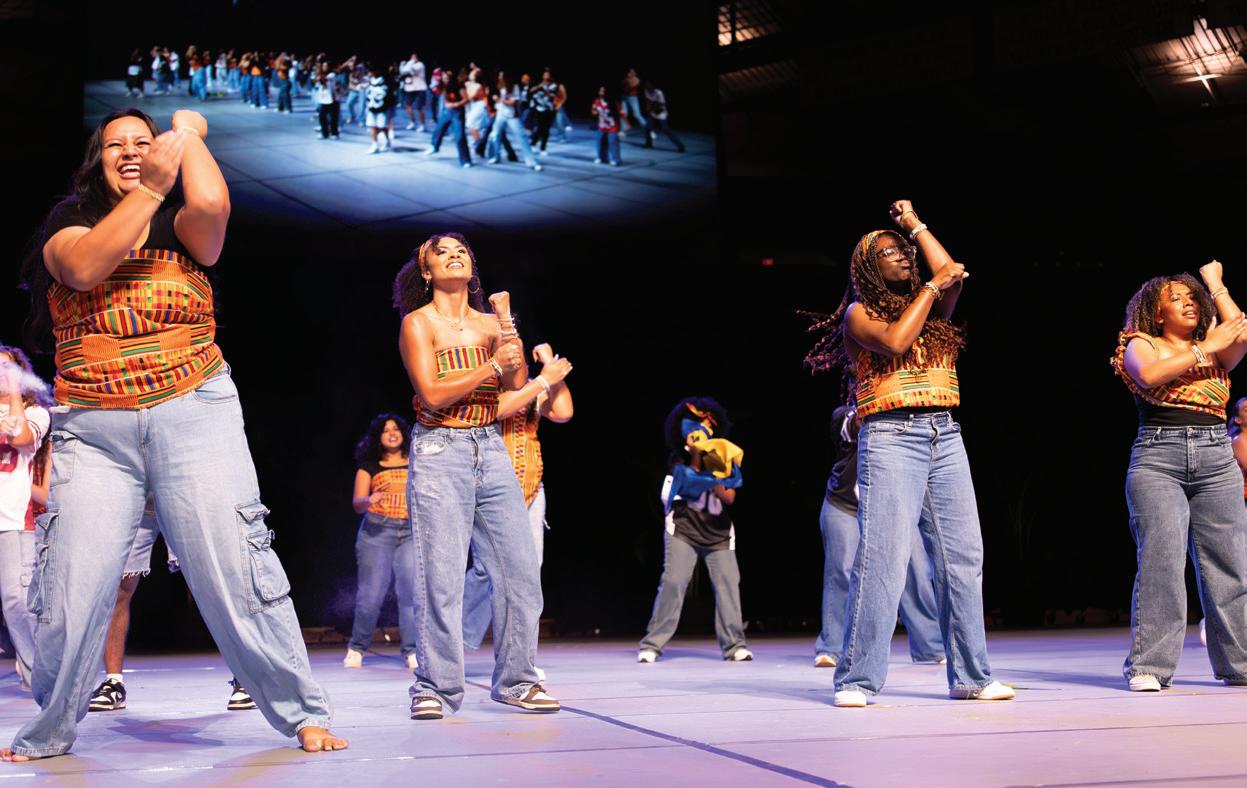
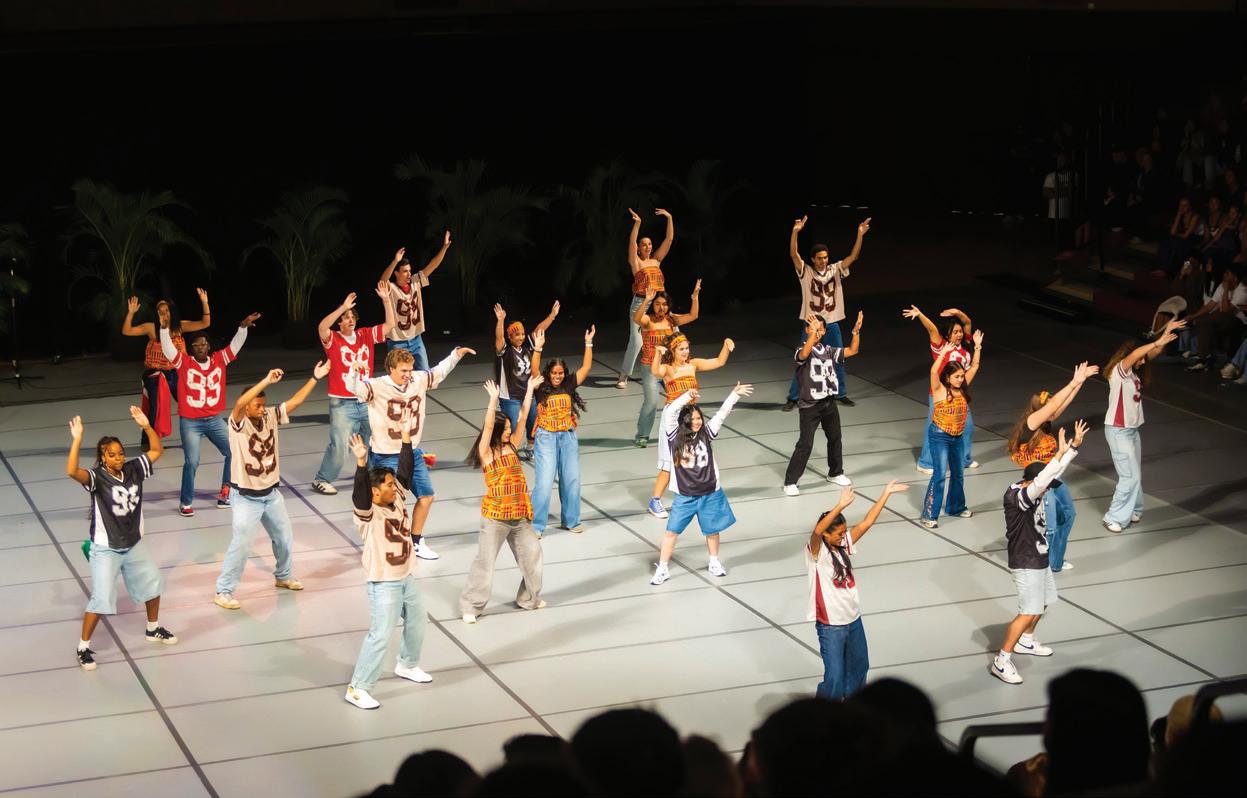
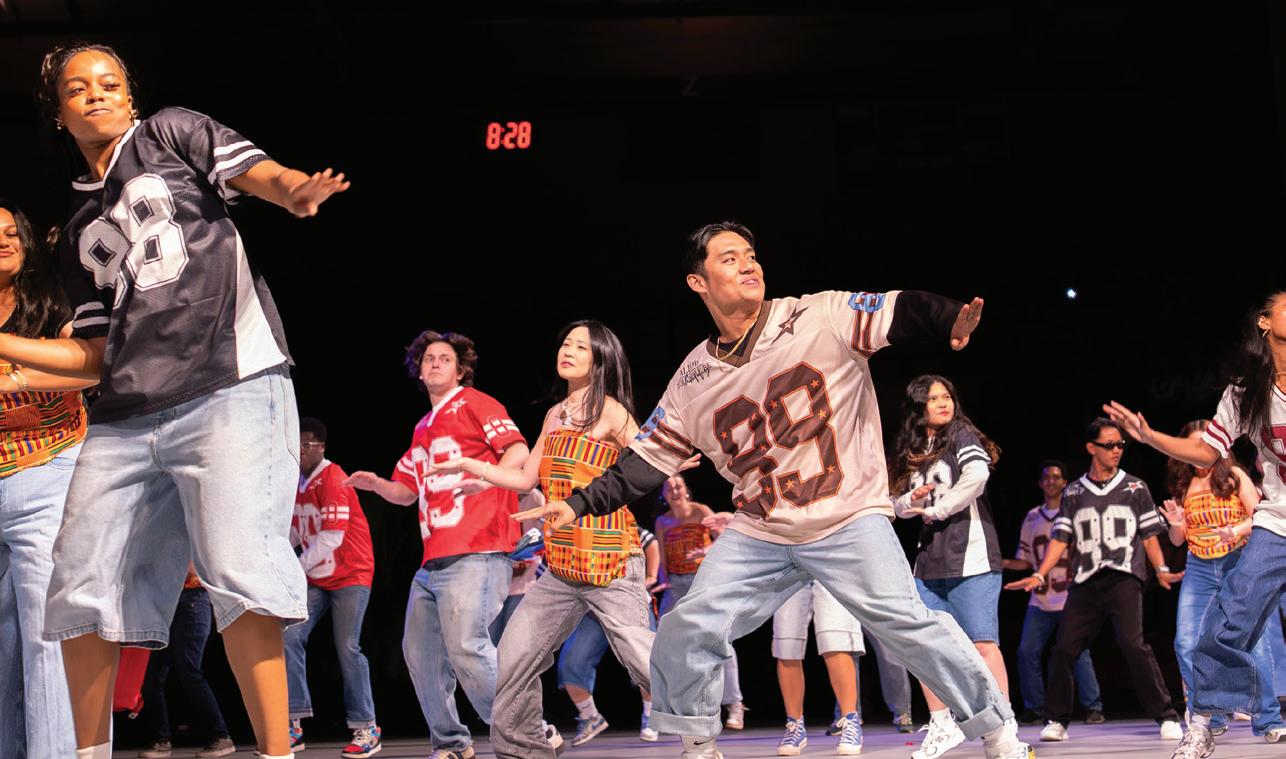
The “‘90s called, are you going to answer,” played over the speakers before House of Pain’s “Jump Around” filled the Cannon Activities Center, launching Afro World’s performance. Dressed in a blend of Caribbean and African-American fashion, dancers moved confidently across the stage, shifting between sharp hip-hop beats and traditional rhythmic movements.
Messie Dengani-Mampaka, a junior in accounting from South Africa, president and choreographer for Afro World club, said the performance “This year is more of a highlight into Black American culture and the Caribbean.” She said the club performed four dances: two hip-hop numbers, a Caribbean dance and a South African dance called “amapiano”. She said the Caribbean dance is a blend of Afro remix with a Caribbean energy. “The Caribbean is very smiley and ‘amapiano’ is more fierce and confident,” she said.
Nokwanda Charity Sibandze, a junior studying business management from Eswatini and the vice president, said “amapiano” emphasizes leg movements that are in sync with the beat and rhythm of the music.
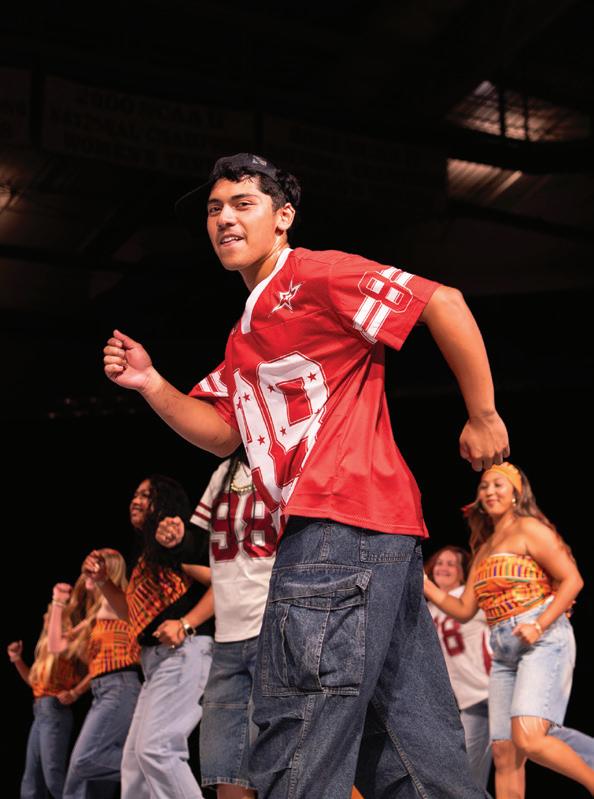
Dengani-Mampaka said costumes for the Caribbean and South African dance blended African-American and Caribbean culture. Performers wore a Caribbean garment called madras with baggy denim jeans. She added in “amapiano”, the energy brought to the dance matters more than what is worn.
Azariah McFarlane, a senior in psychology from Florida, and Annie Haws, a junior in intercultural peacebuilding from Utah, choreographed the hip-hop numbers. McFarlane said, “We’ve done African, we’ve done Caribbean, but I don’t think we’ve actually touched on the 90s and Black American culture.” She added Afro World is about bringing different cultures among the African diaspora.
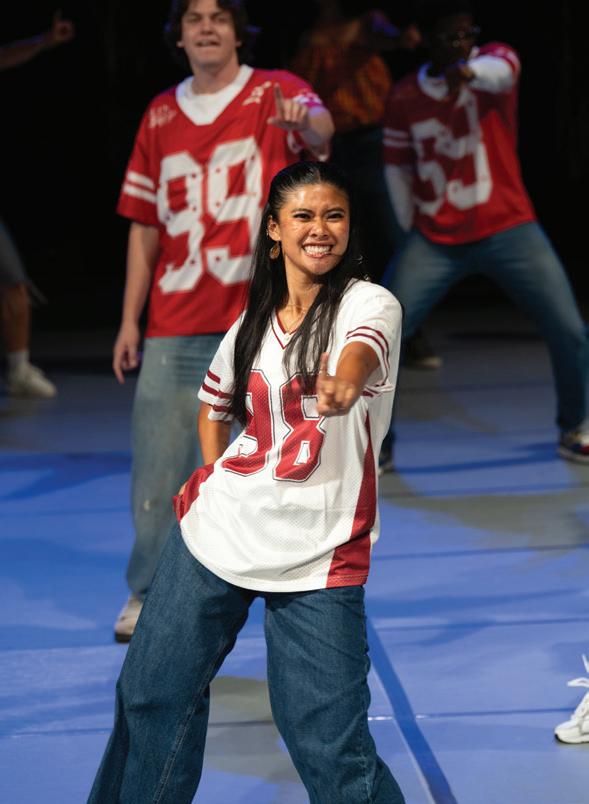
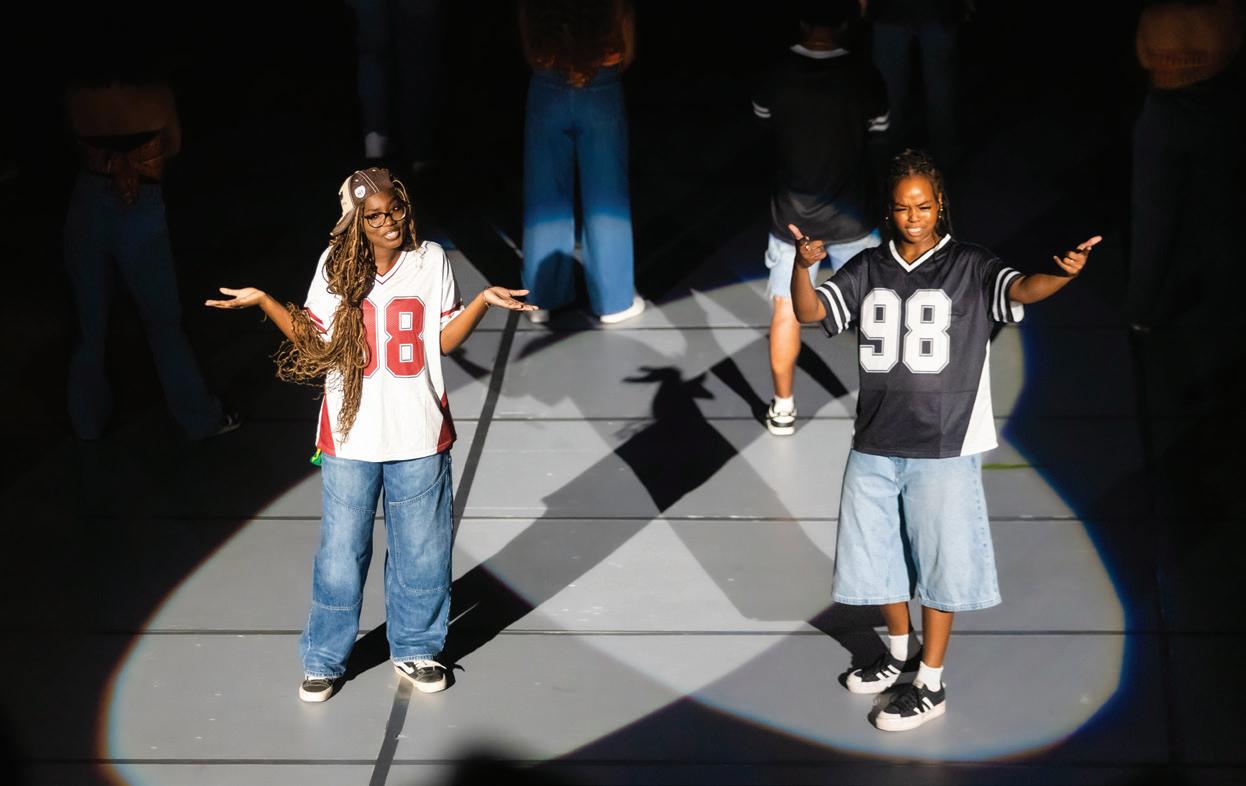
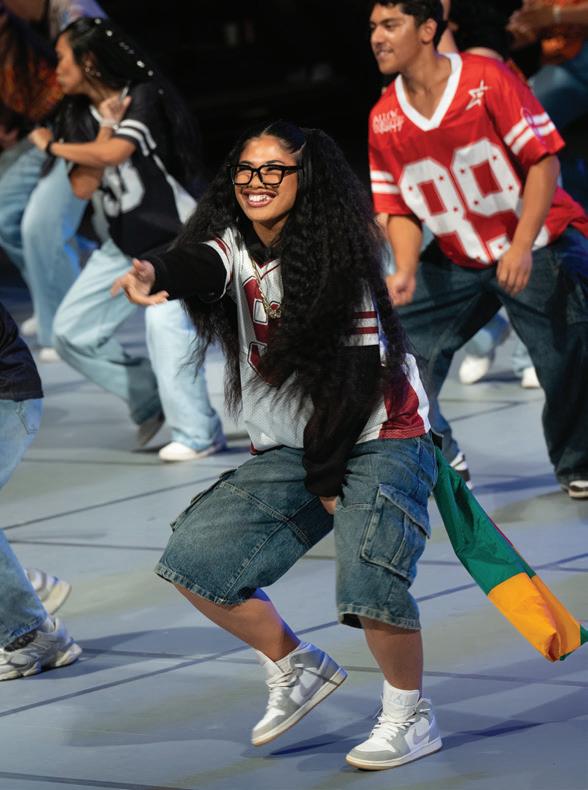
In African-American culture, dancing and music help bring people together, McFarlane and Haws said. They said the hip-hop numbers include a lot of sharp and fast movements. Both described costumes included wearing jerseys, baggy jeans and sneakers. “The jerseys came from the idea that this was a big trend in the 90s, but also a reminder of our identity as a team and how we’re together,” Haws said.•
THAILAND
THAILAND
BY MYCO MARCAIDA
Thailand club blend traditional dance, music and symbolism showing a story of conquering negativity and celebrating Thai culture
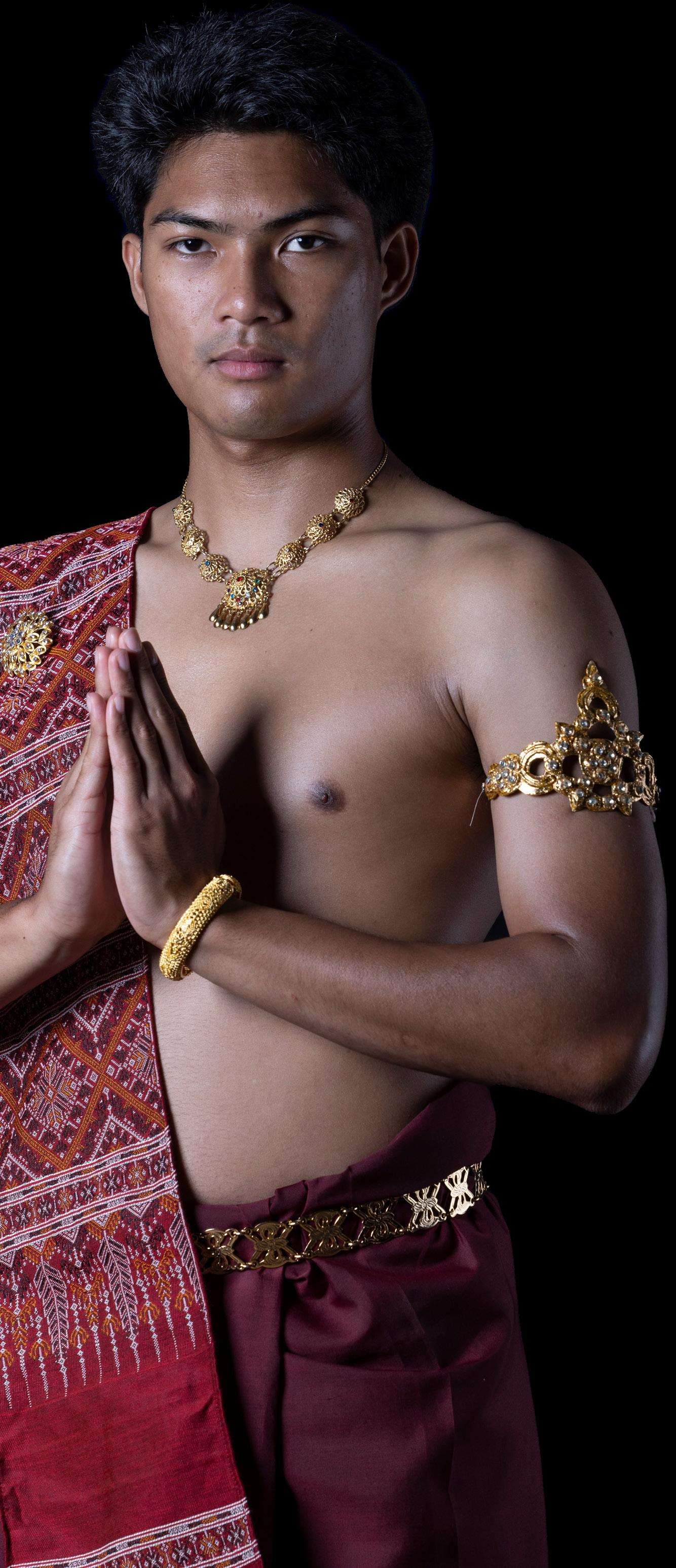
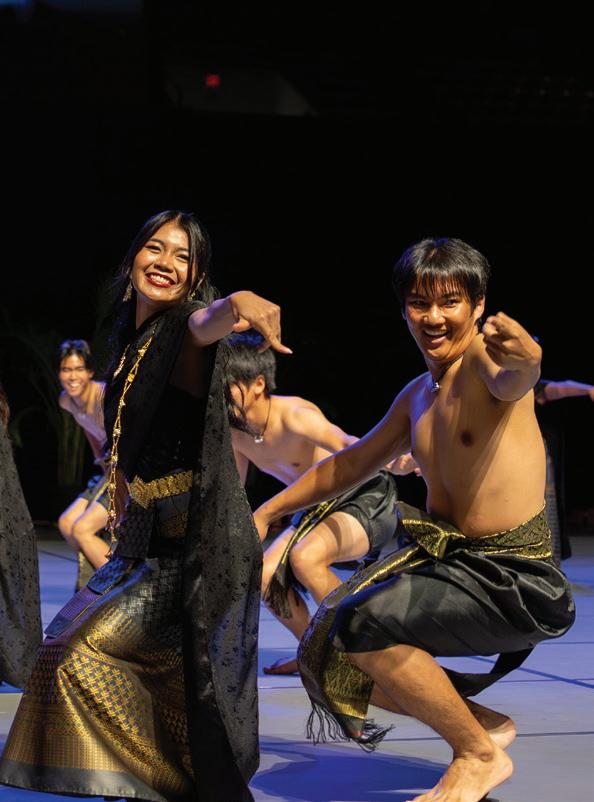
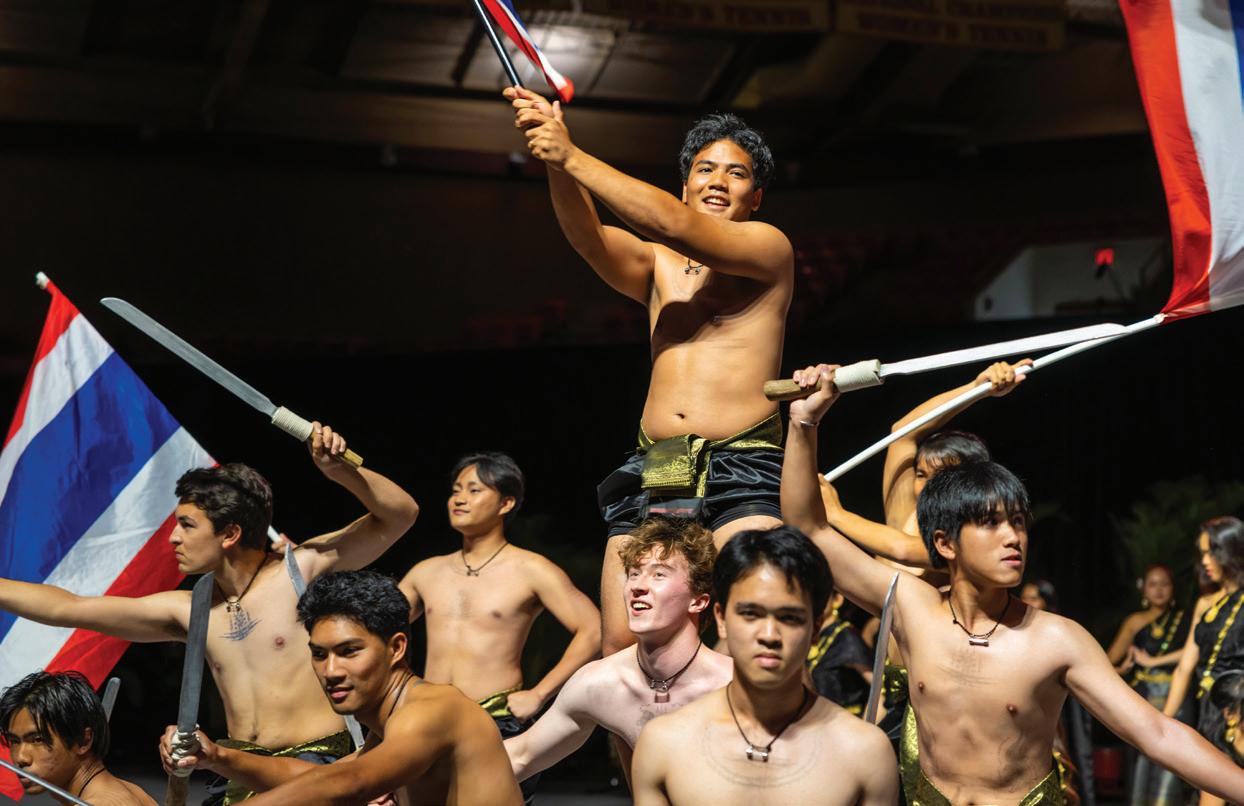
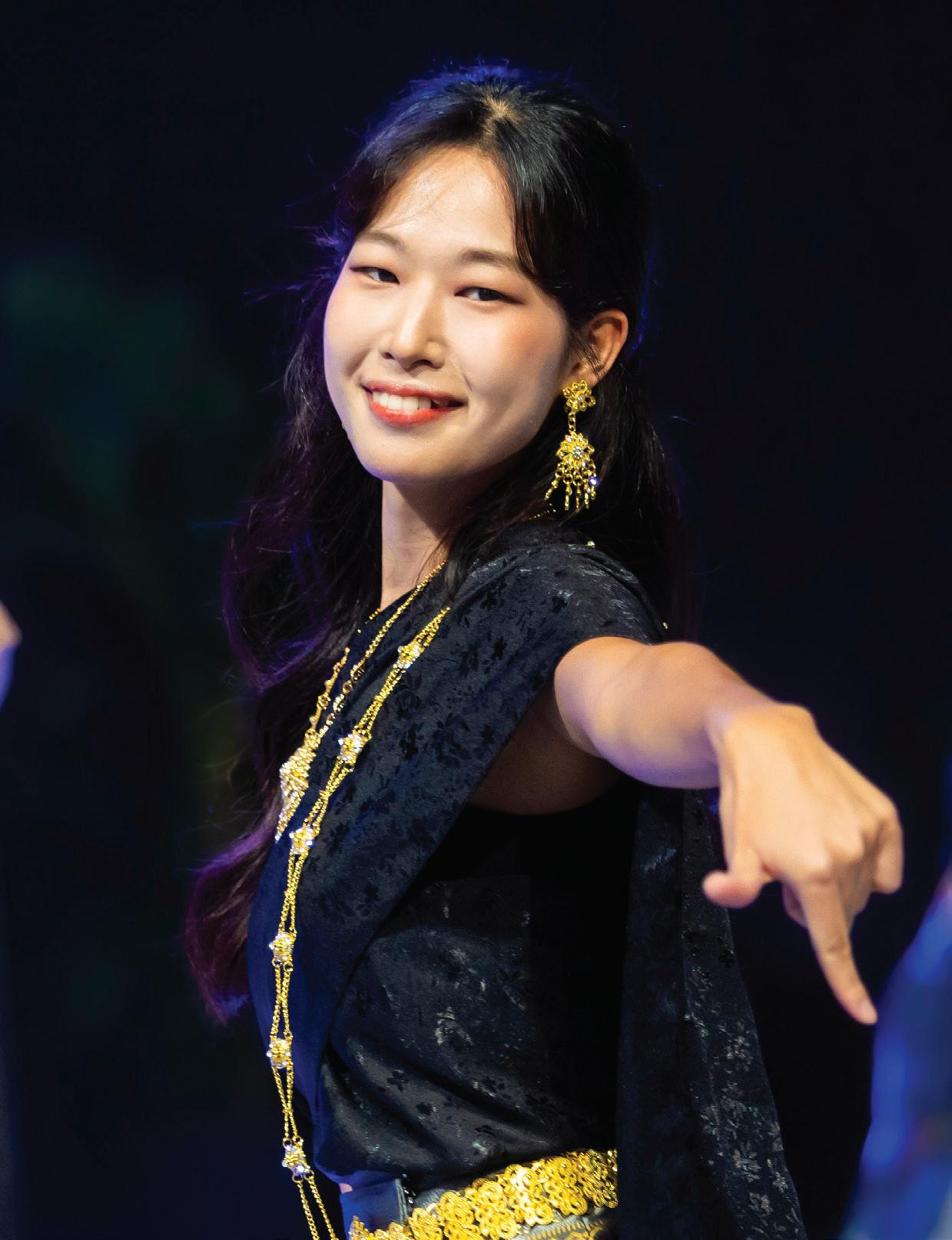
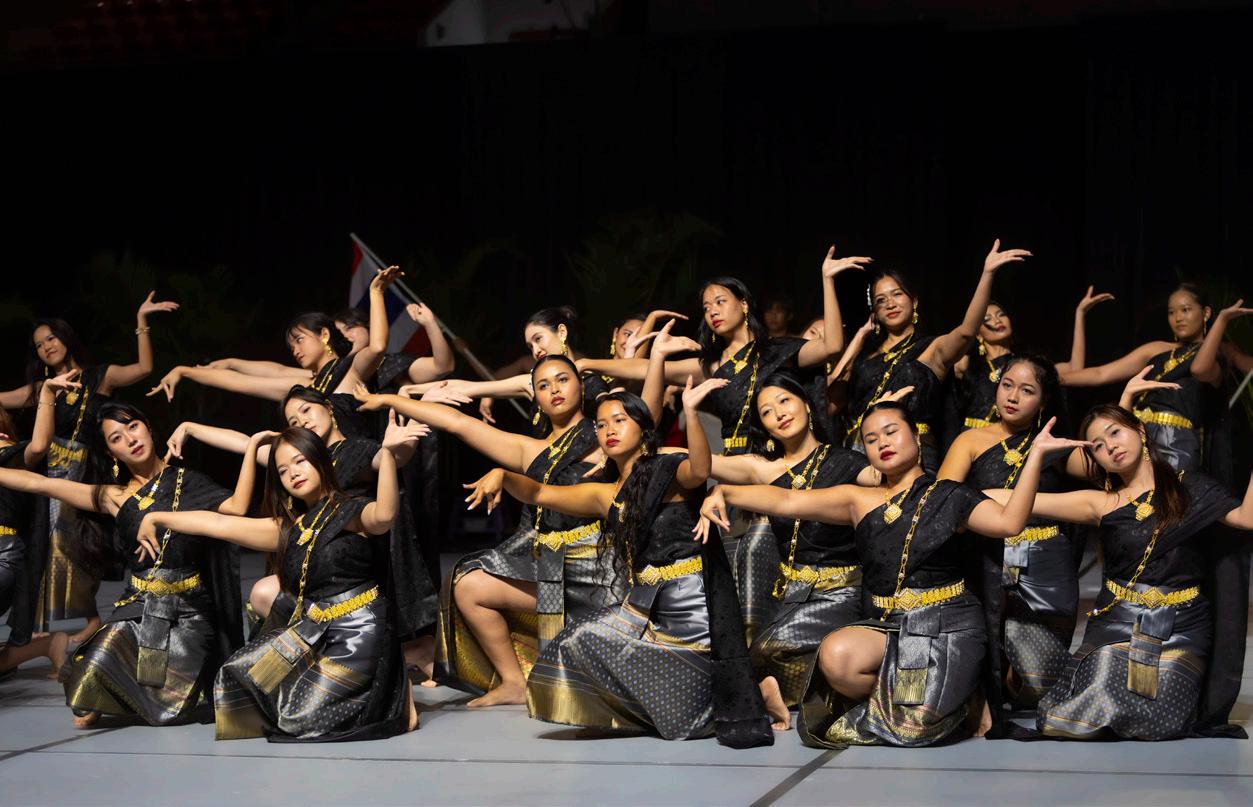
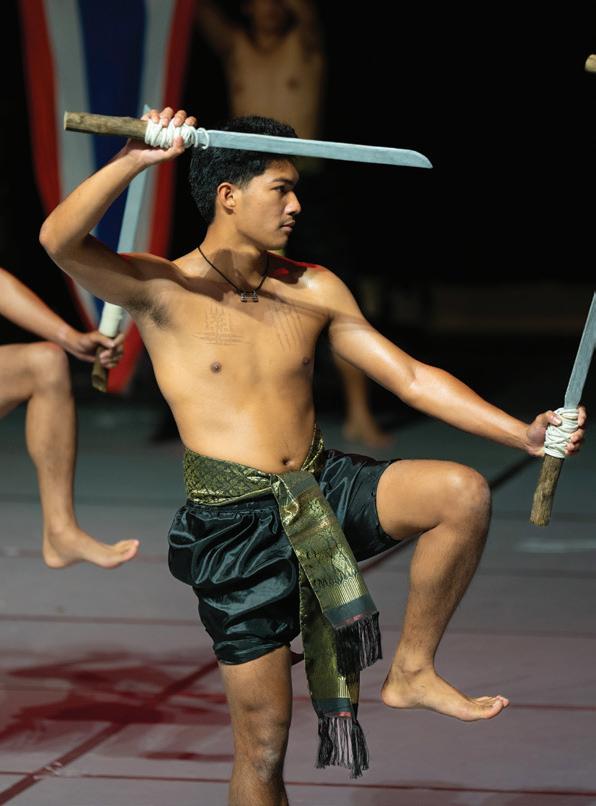
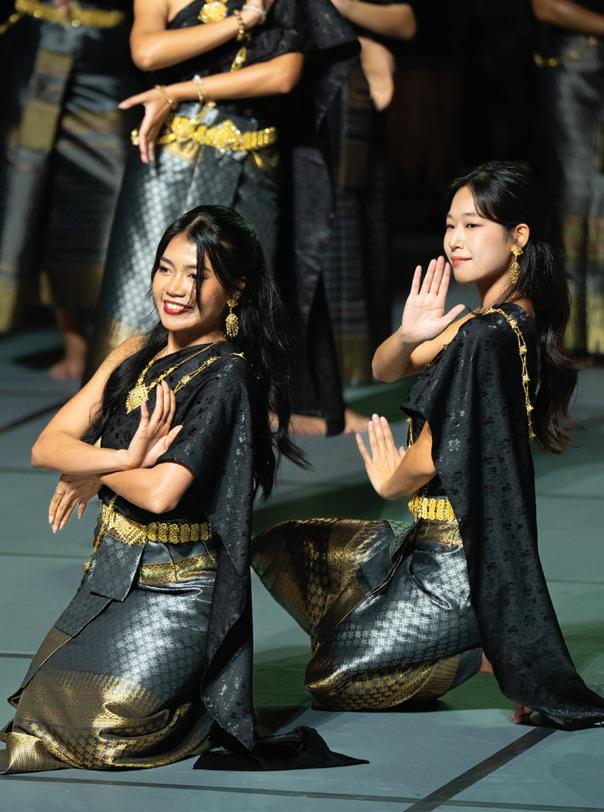
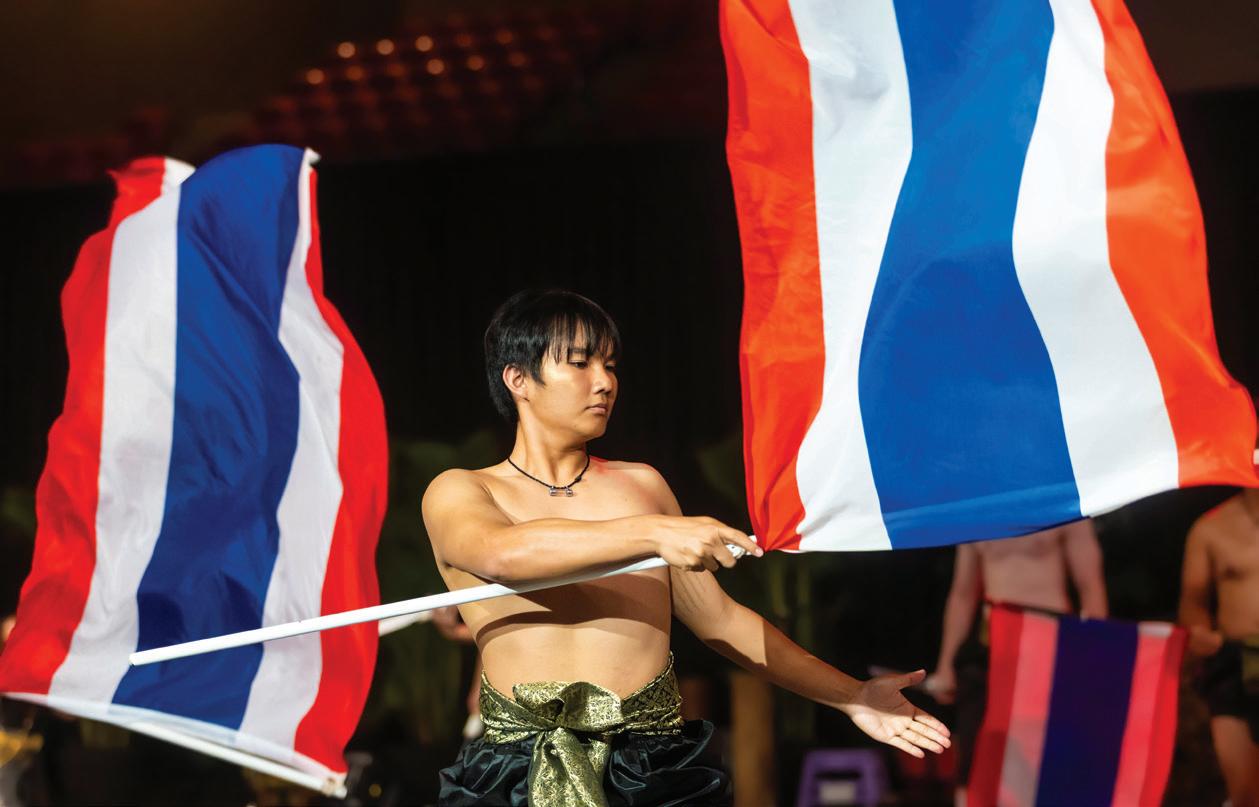
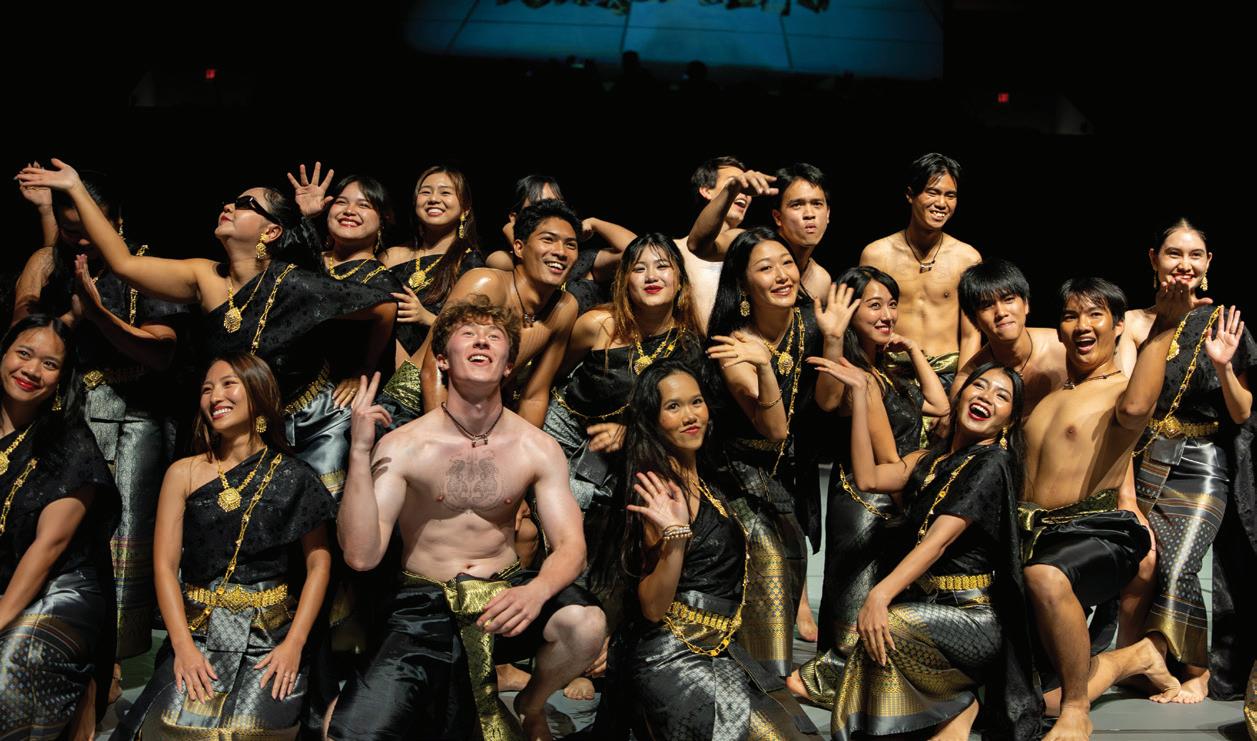
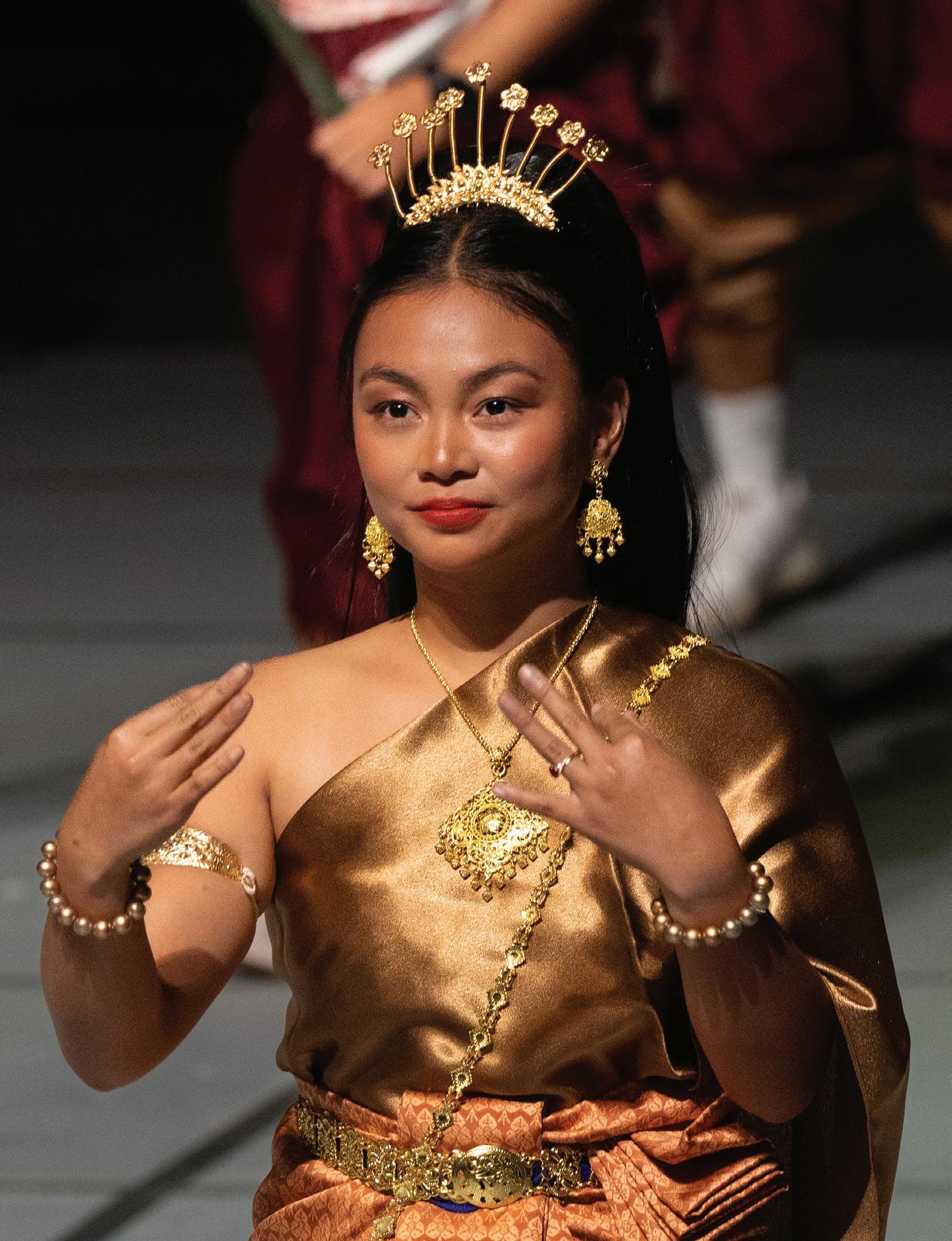
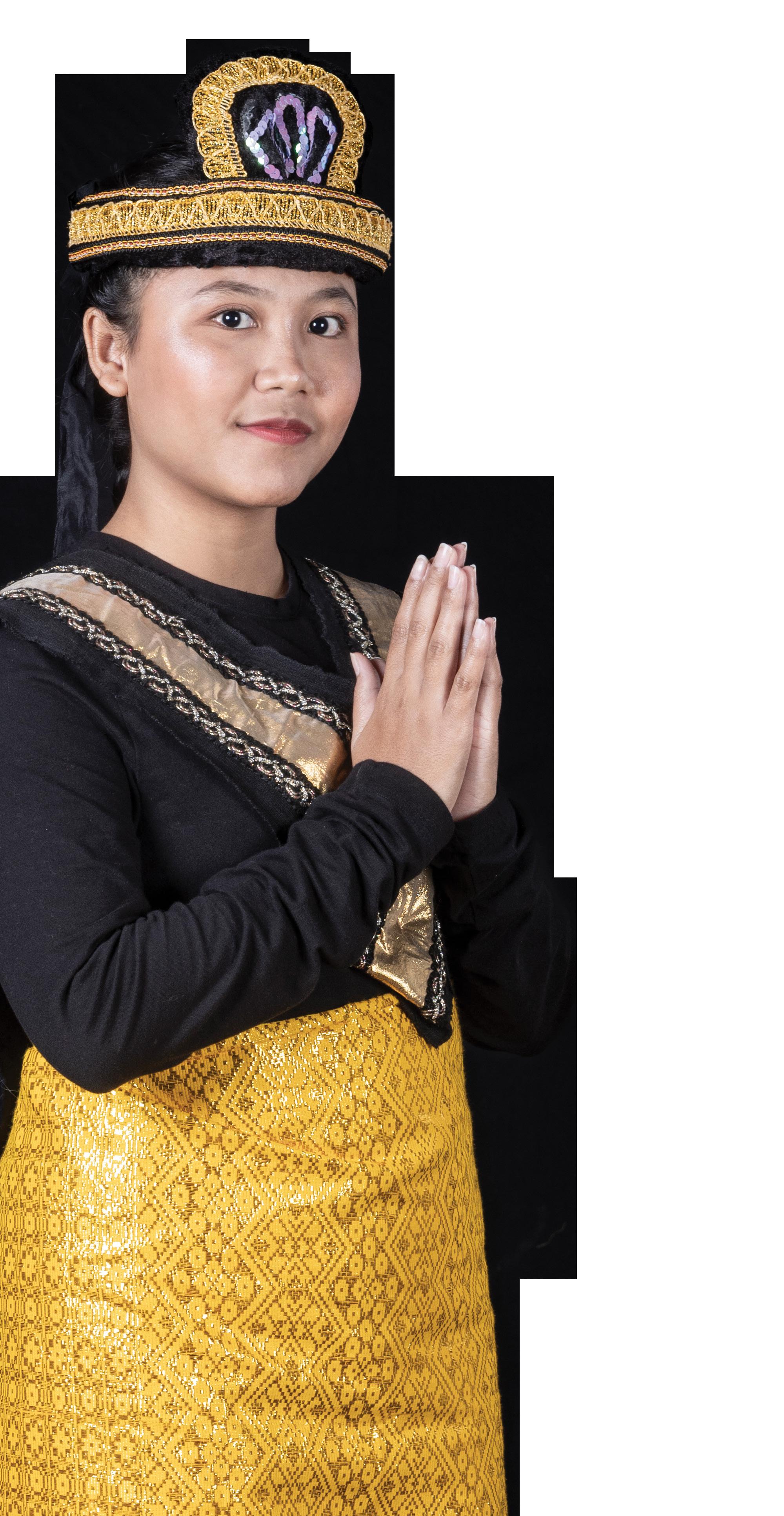
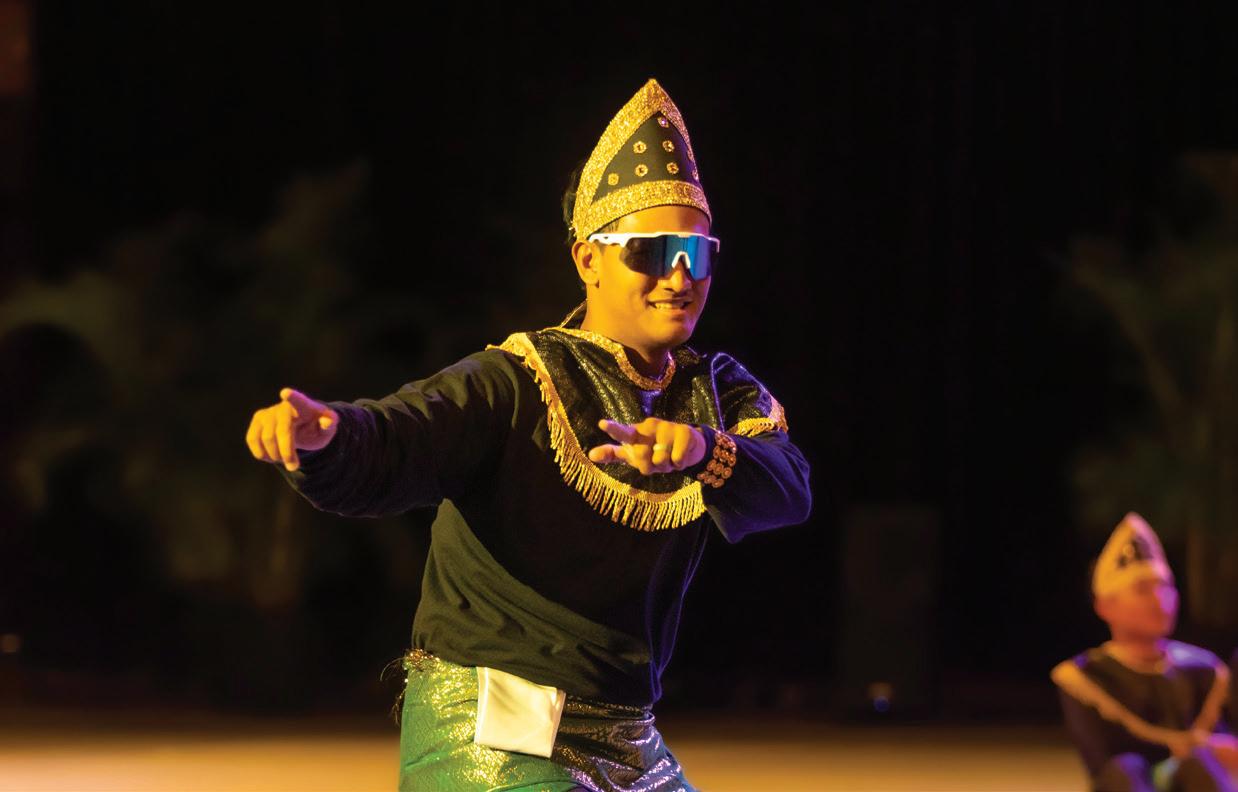
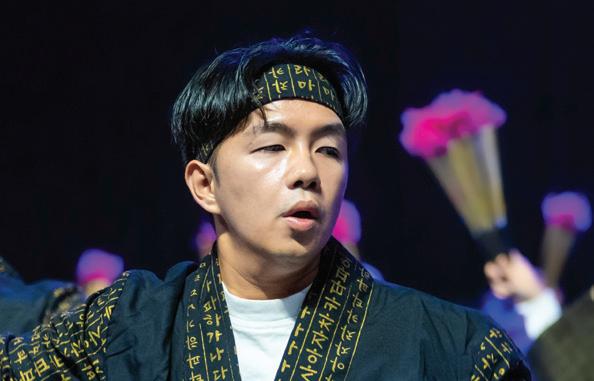
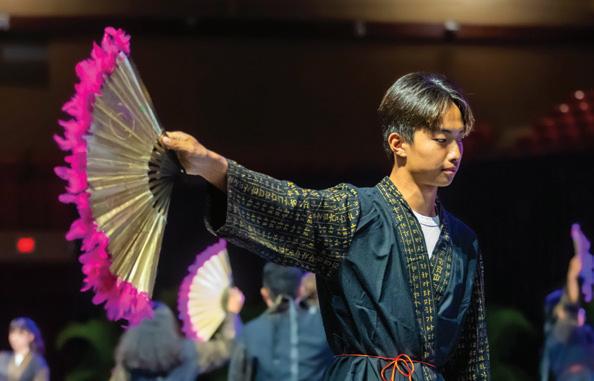
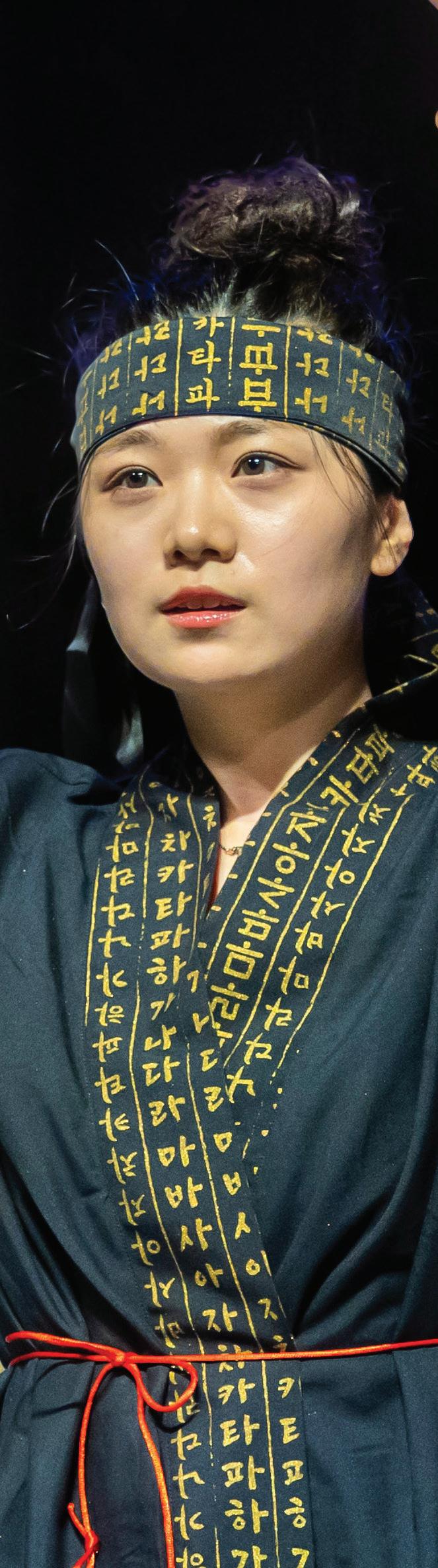
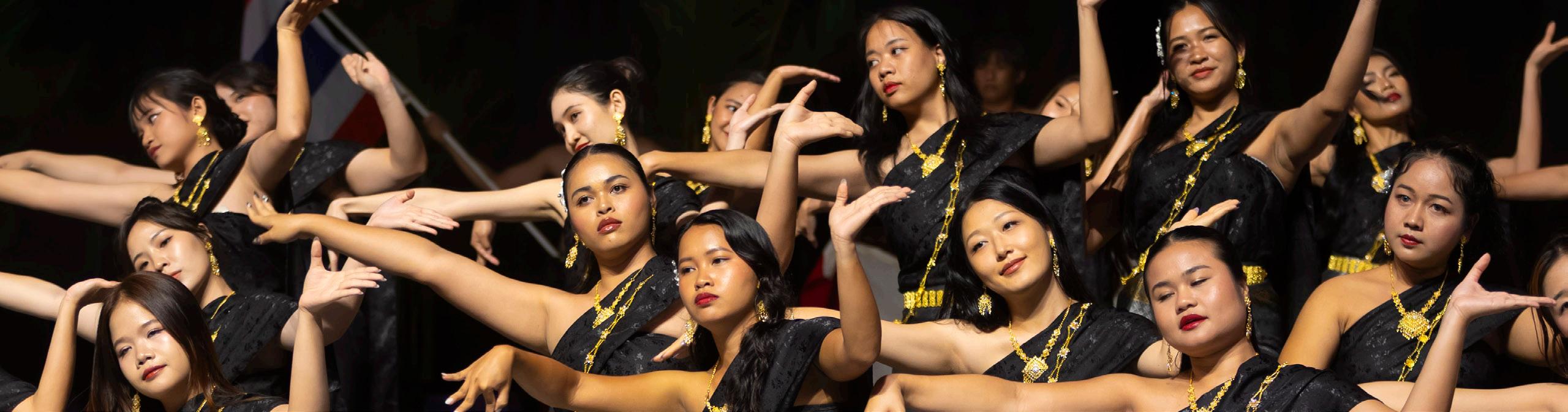
Thailand stormed in on stage with bold colors of black and gold clothing accompanied by chanting music as they showcased their performance from the northeast region from Thailand, said Sawalee Saengchai, a senior in TESOL from Thailand and president and choreographer of the club.
Rooted in Thailand story, the song used for the performance is critical to the story, Saengchai said. “‘Phab Marn’ is a song that means conquering bad spirts, and we wanted to focus on the overcoming negativity and restoring balance between good and bad,” she added.
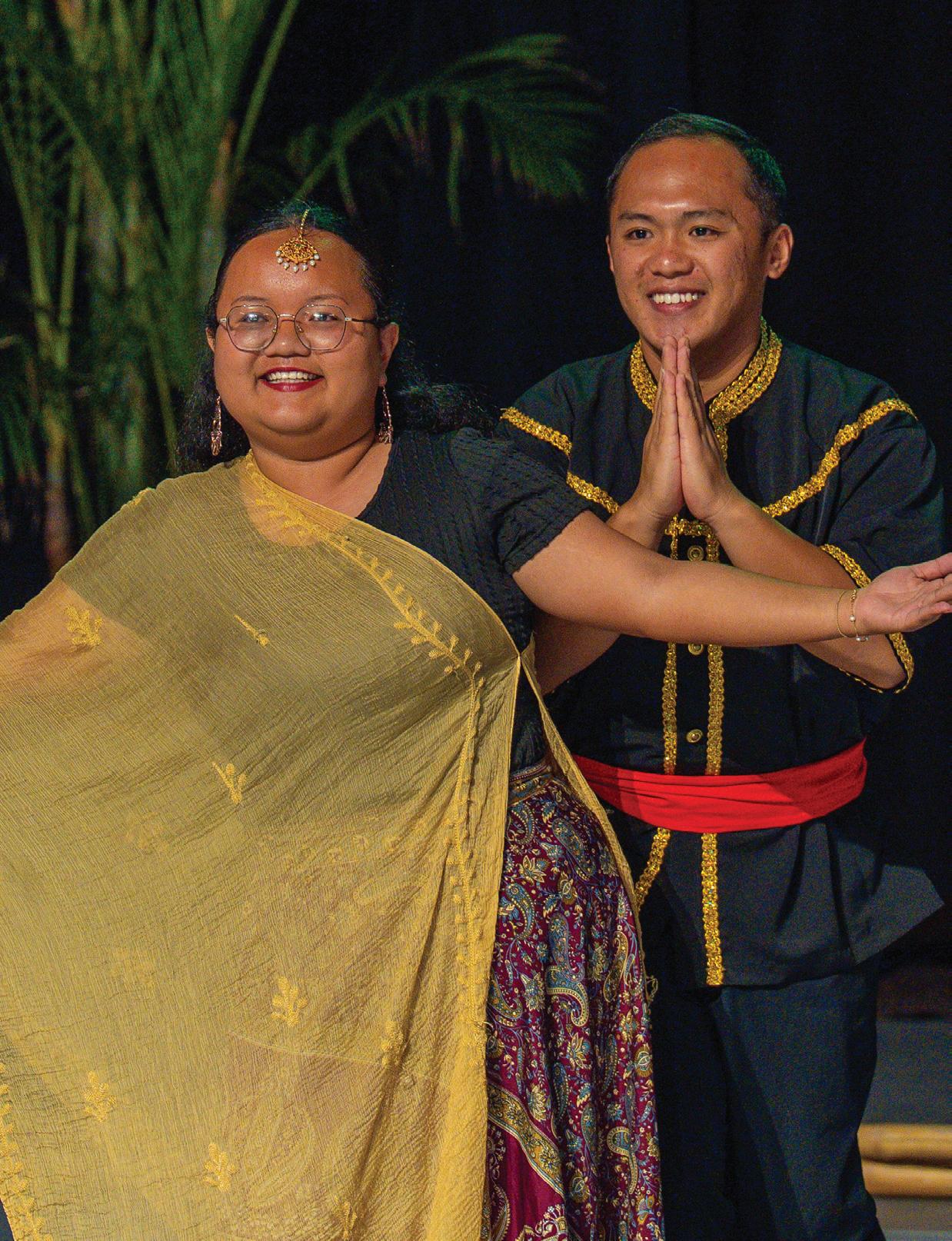
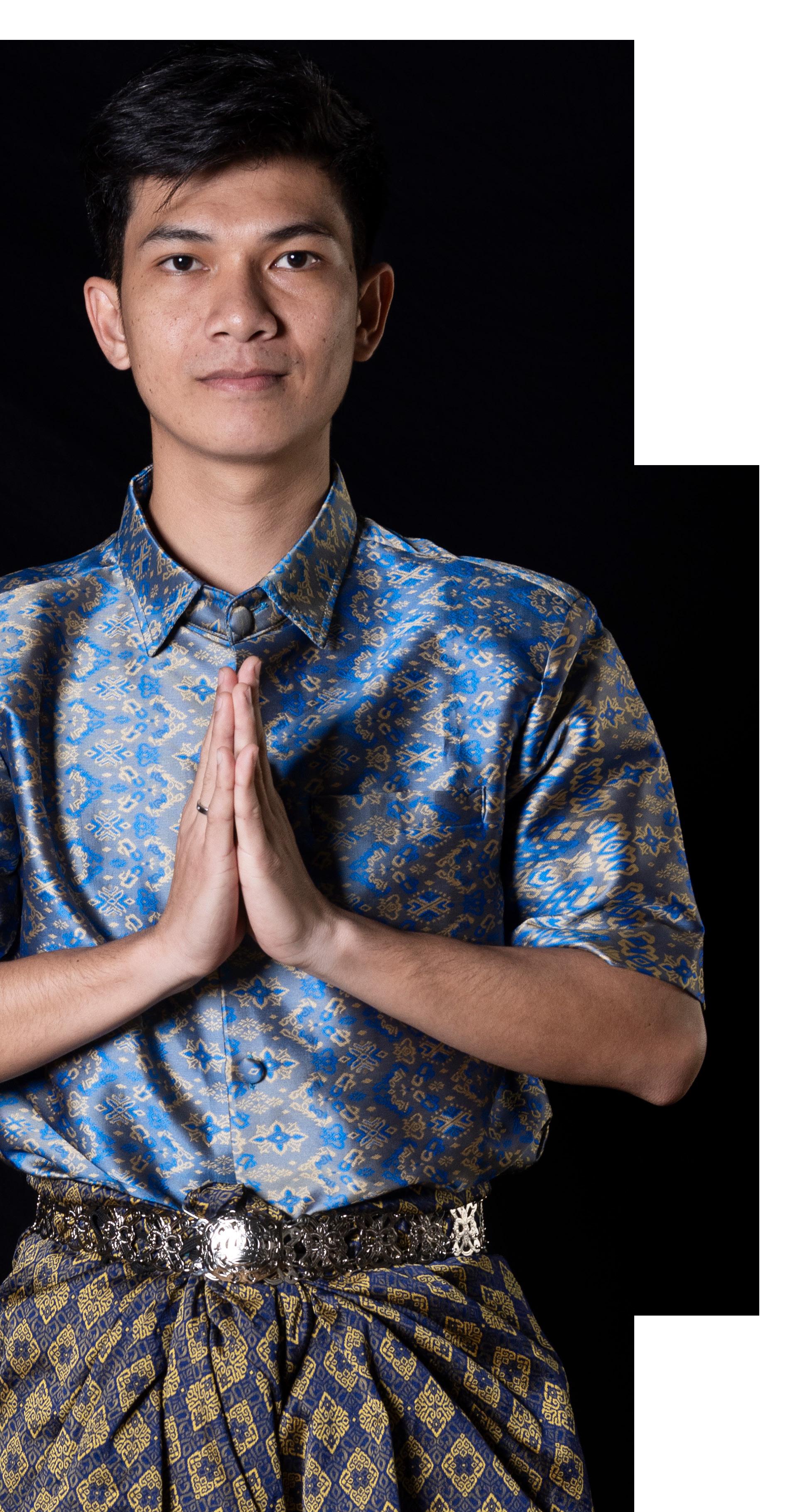
Saengchai said the choreography incorporates culture gestures and movements that reflet Thai traditions. “One example is the ‘wai’, the tradition of greeting having two hands together and bowing slightly. We included that specific gesture as it shows respect and our beliefs,” she explained.
Saengchai said the performers wear black and gold to represent both darkness and strength. “Black represents the negative things but also the power,” she said.
Pimpon Srisuwan, a sophomore from Thailand majoring in accounting and the club’s treasurer, said her participation for culture night made her appreciate and love her culture more. “We spent so much time together with the members in planning and practicing and being in this position in the presidency made me understand Thai culture more,” she added.
Srisuwan said Culture Night has helped her rediscover her cultural heritage. “When I was in Thailand, I didn’t really traditional dance much,” she said. “But when I came here and had to research and watch traditional performances, I realized how beautiful culture is.” Both students said they hope the performance could leave audiences with a deeper appreciation of Thailand and its people. Srisuwan said she wants people to remember Thai people as welcoming and beautiful.•
LATIN AMERICA
BY SAMANTHA FAITH SATORRE LATIN AMERICA
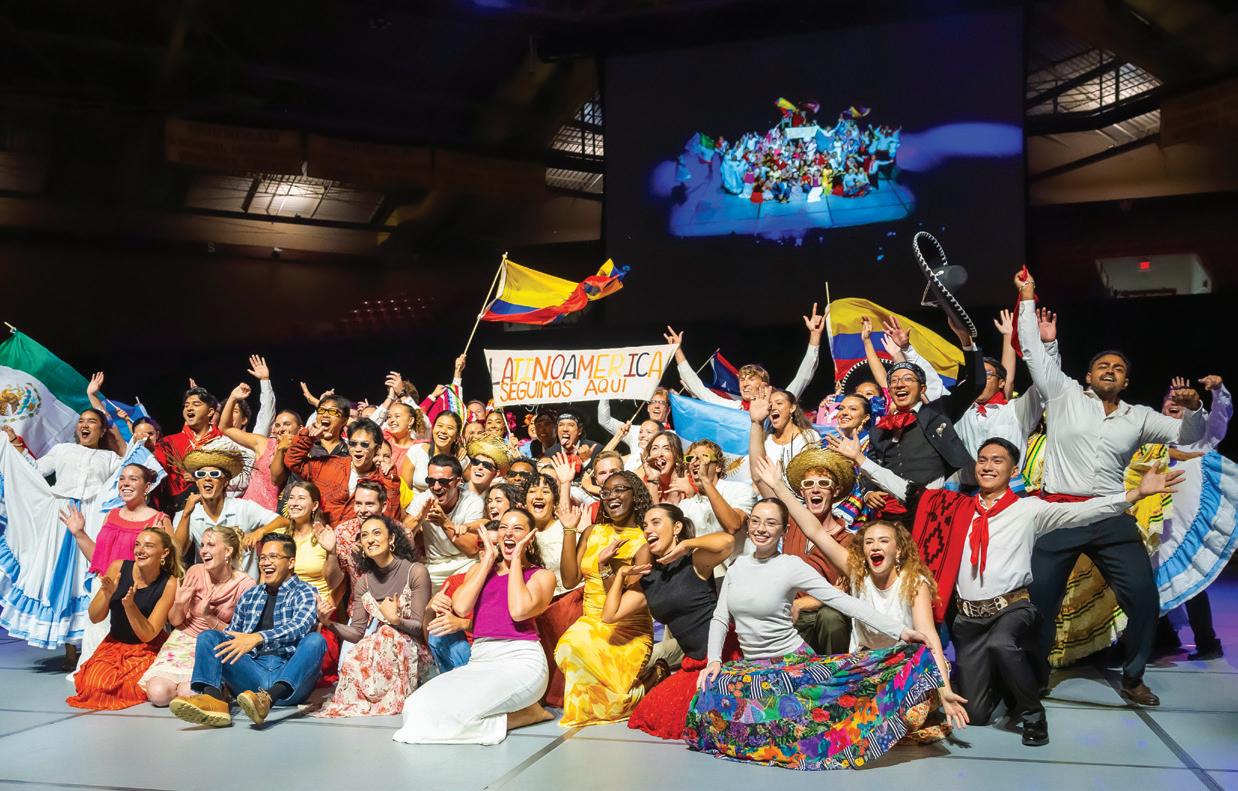
Latin America Club says their performance is designed to challenge stereotypes about the Latin American identity
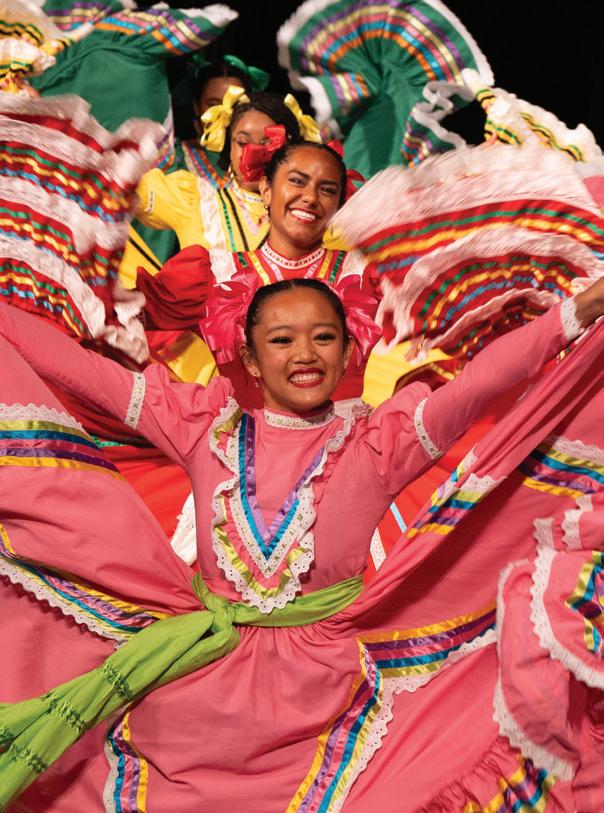
The Latin America Club’s stage was a burst of energy and colors.
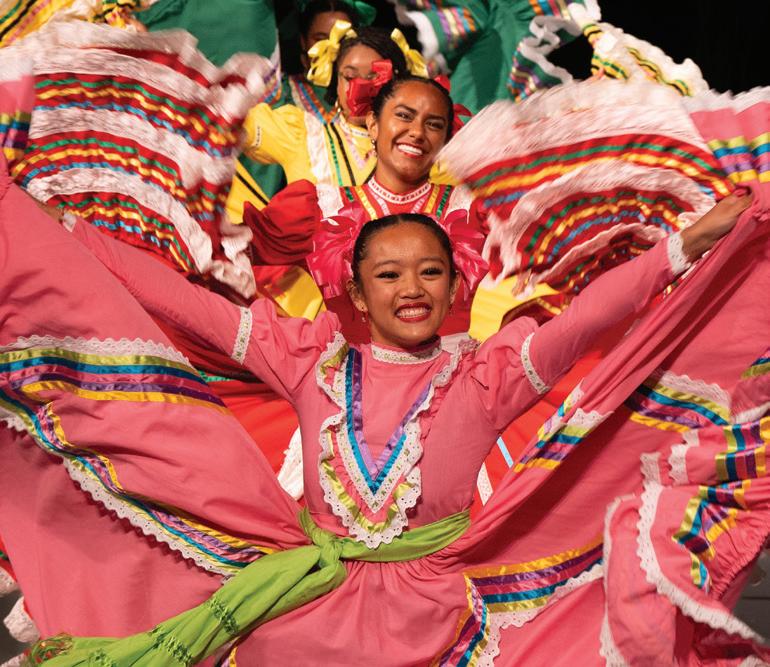
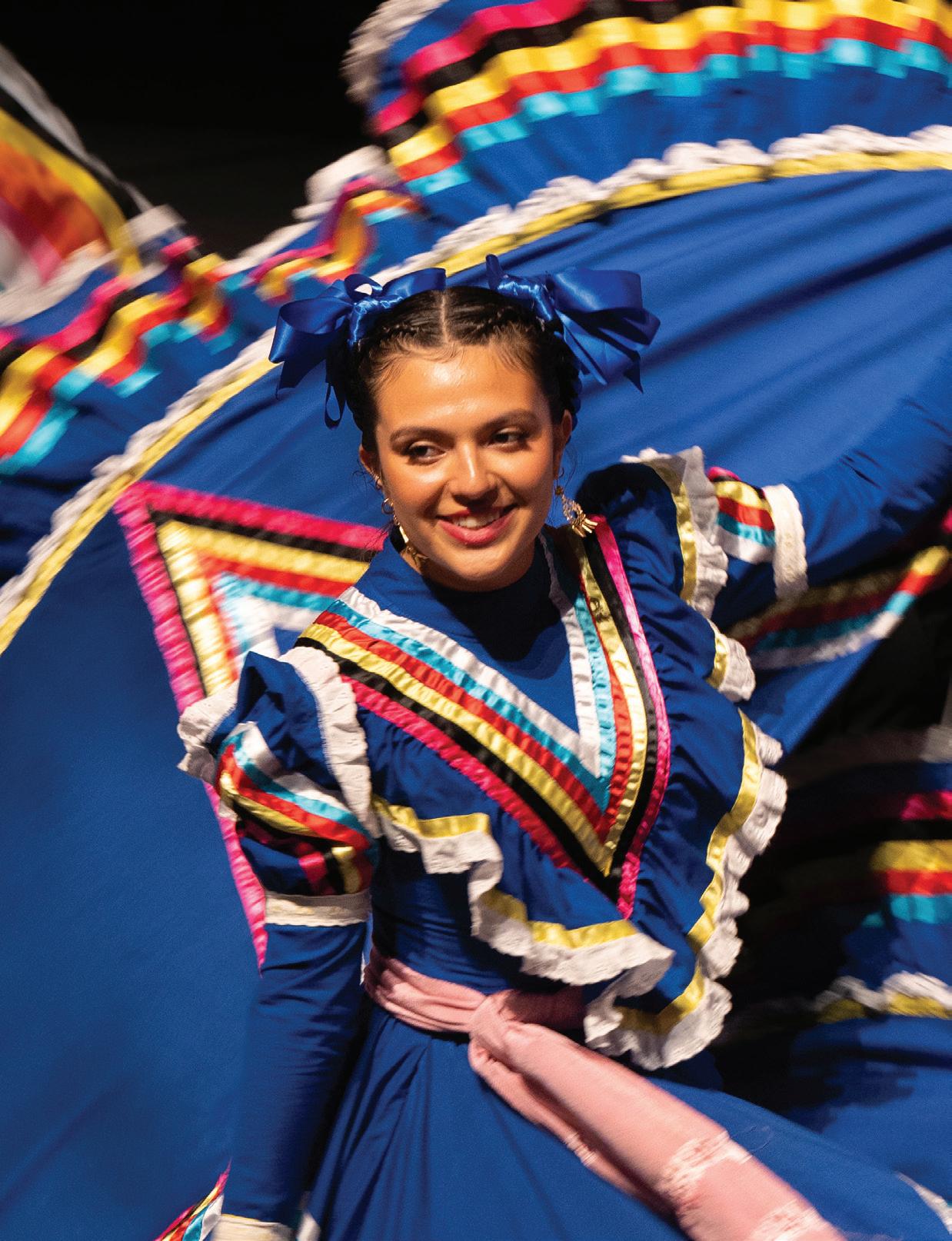
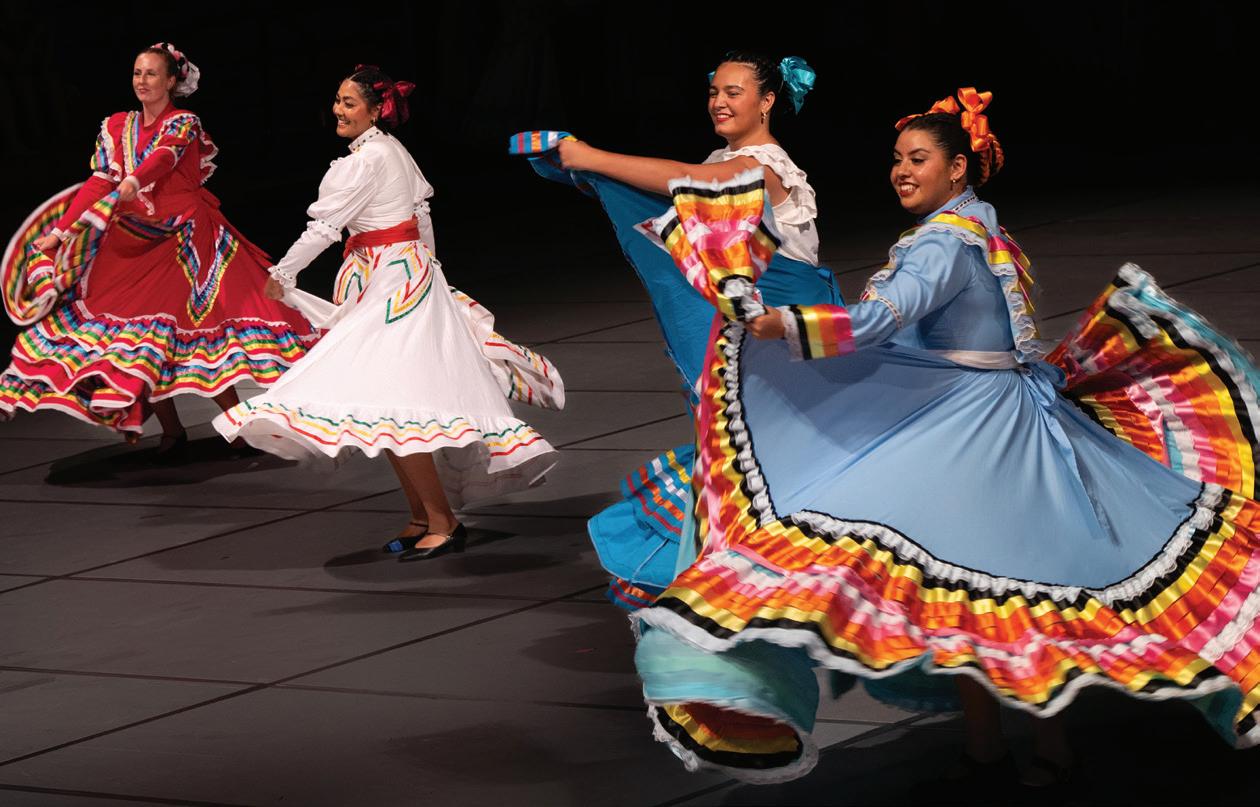
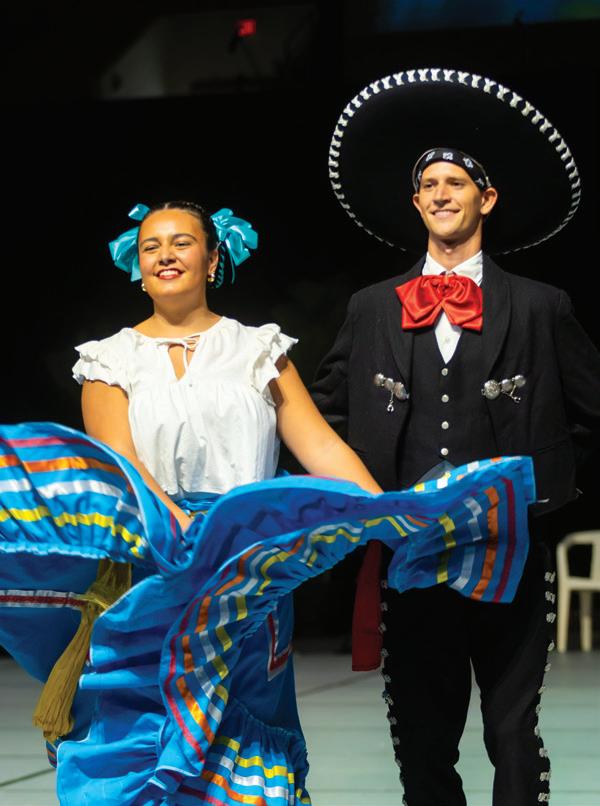
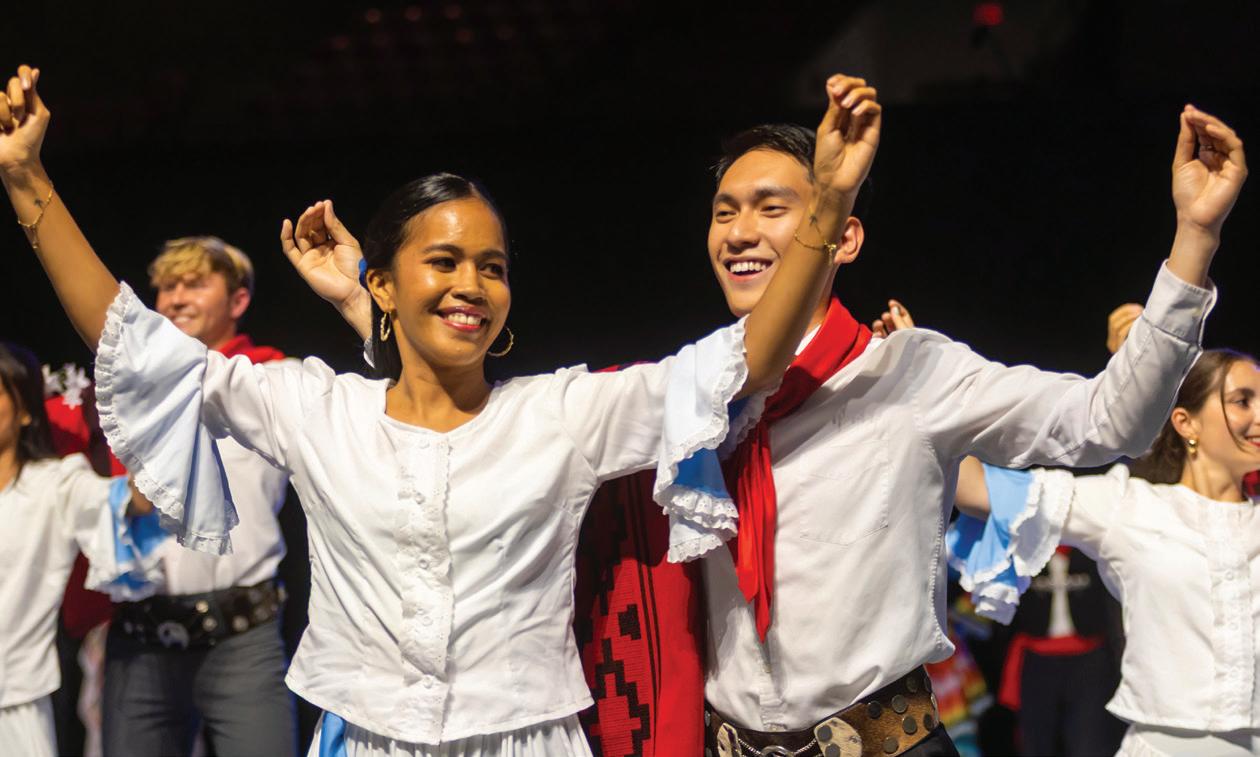
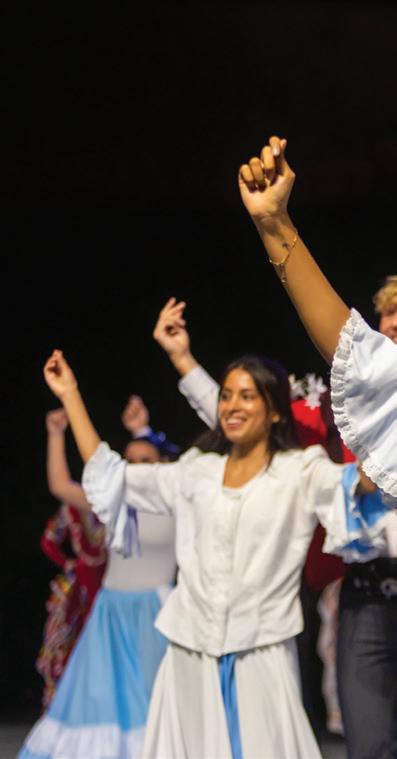
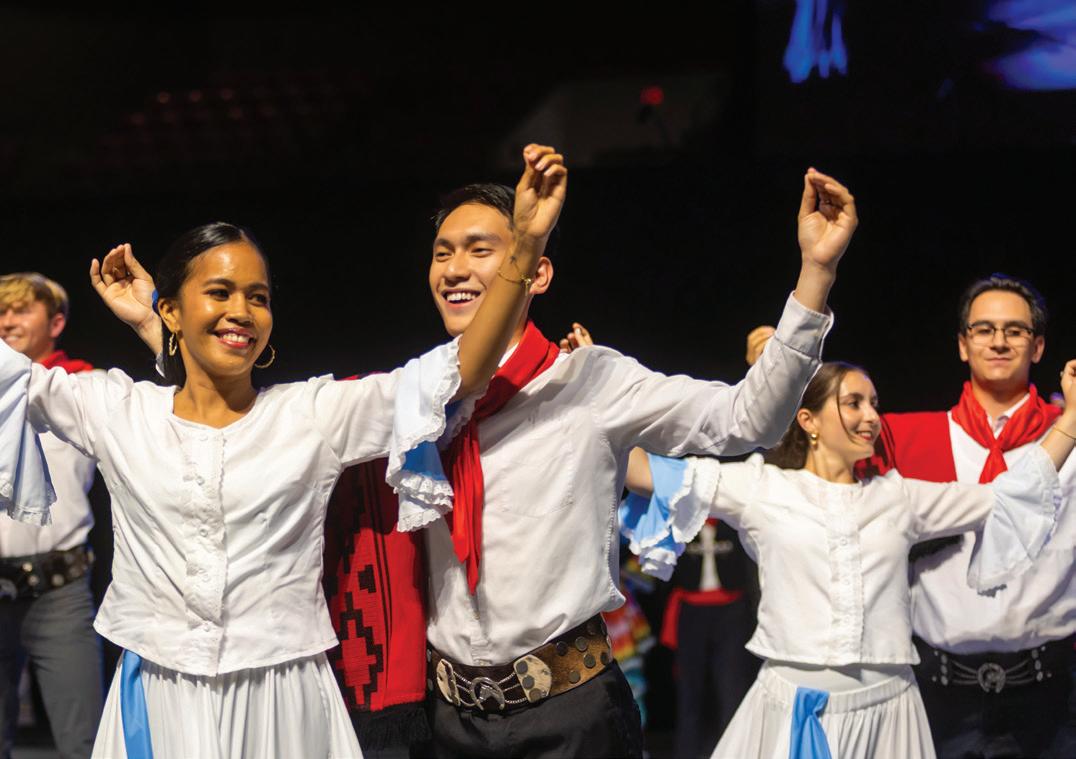
“We love colors. The places we grew up in, the houses, the streets—they’re all beautiful, bright colors,” explained club president Ismael Larriva, a freshman in biology from Ecuador. Weaving the footwork of traditional folk dances like Chacarera with the contemporary rhythms of Bad Bunny, the club reflected both the region’s rich heritage and its modern identity in a flurry of passion and movement.
The club presidency said they tried to bring the entire spectrum of Latin American culture to the stage to showcase the region’s diversity and history. Latin America includes a wide range of ethnicities and traditions of over 30 countries—something the presidency and choreographers said is often misunderstood by others. “Latinos don’t look one specific way,” said Anela Salgado, a junior in fine arts from Hawaii and one of the choreographers. “We’re all mixed, from everywhere.”
Sofie Benjamin, a senior in psychology from Provo and Salgado’s co-choreographer, said they also wanted to challenge the one-dimensional portrayals of the Latin American identity in mainstream media. “There’s so much out there that is skewed or just flat-out racist.We want people to understand that our experience is not what’s always shown,” she explained. She said including a tribute of Bad Bunny’s Super Bowl halftime show in their piece is part of this effort.The artist’s performance is seen by many in the community as a critical moment for Latin American representation on a mainstream American stage, she explained.
“We’re unapologetically being ourselves.With the dances we decided on, we’re not hiding anything,” expressed Larriva.What made the performance more special, he added, is that the group is composed of members from different parts of the world. Joiro Hamada, a freshman in computer science from Mexico and the vice president, expressed the same appreciation: “Just thinking about how diverse our group is makes me feel more humble. It’s like—oh, you want to learn about my culture? That’s so awesome.”•
TAHITI
TAHITI
BY JULIA AUNAI
Tahiti club uses dance to express culture and faith
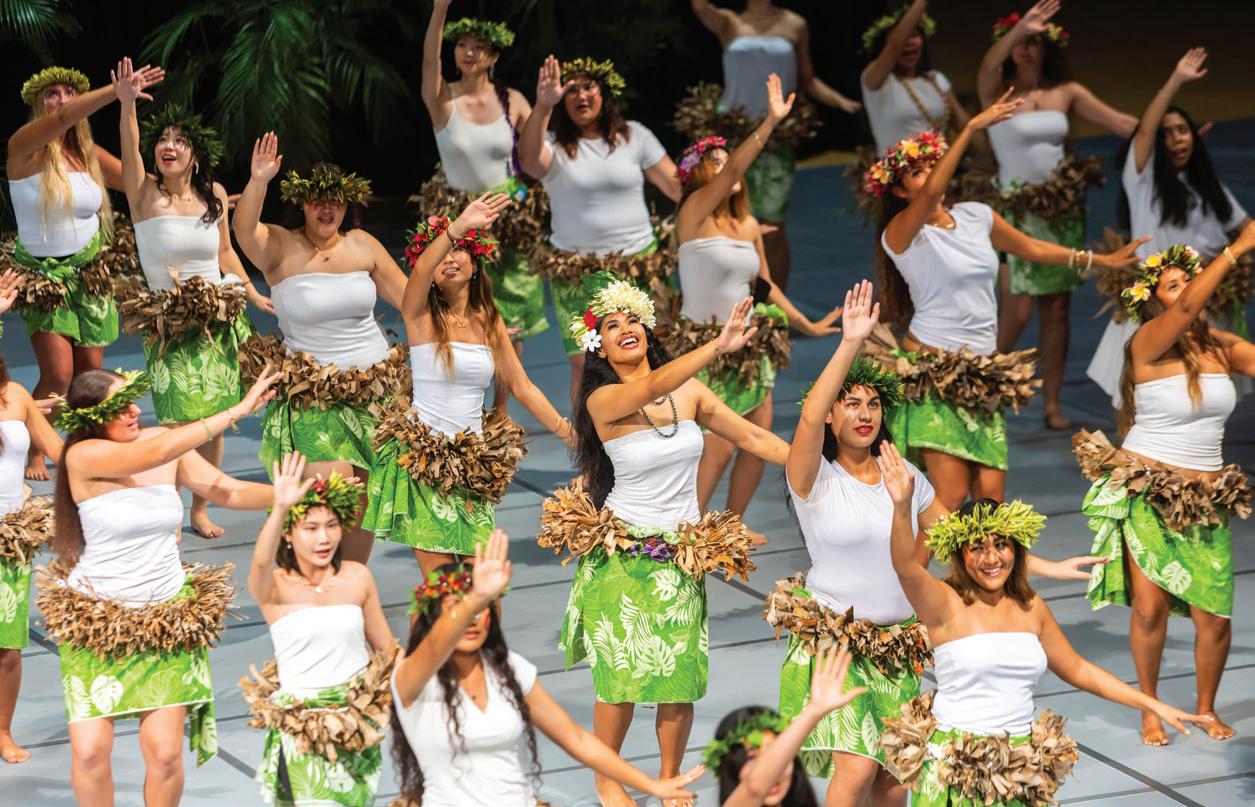
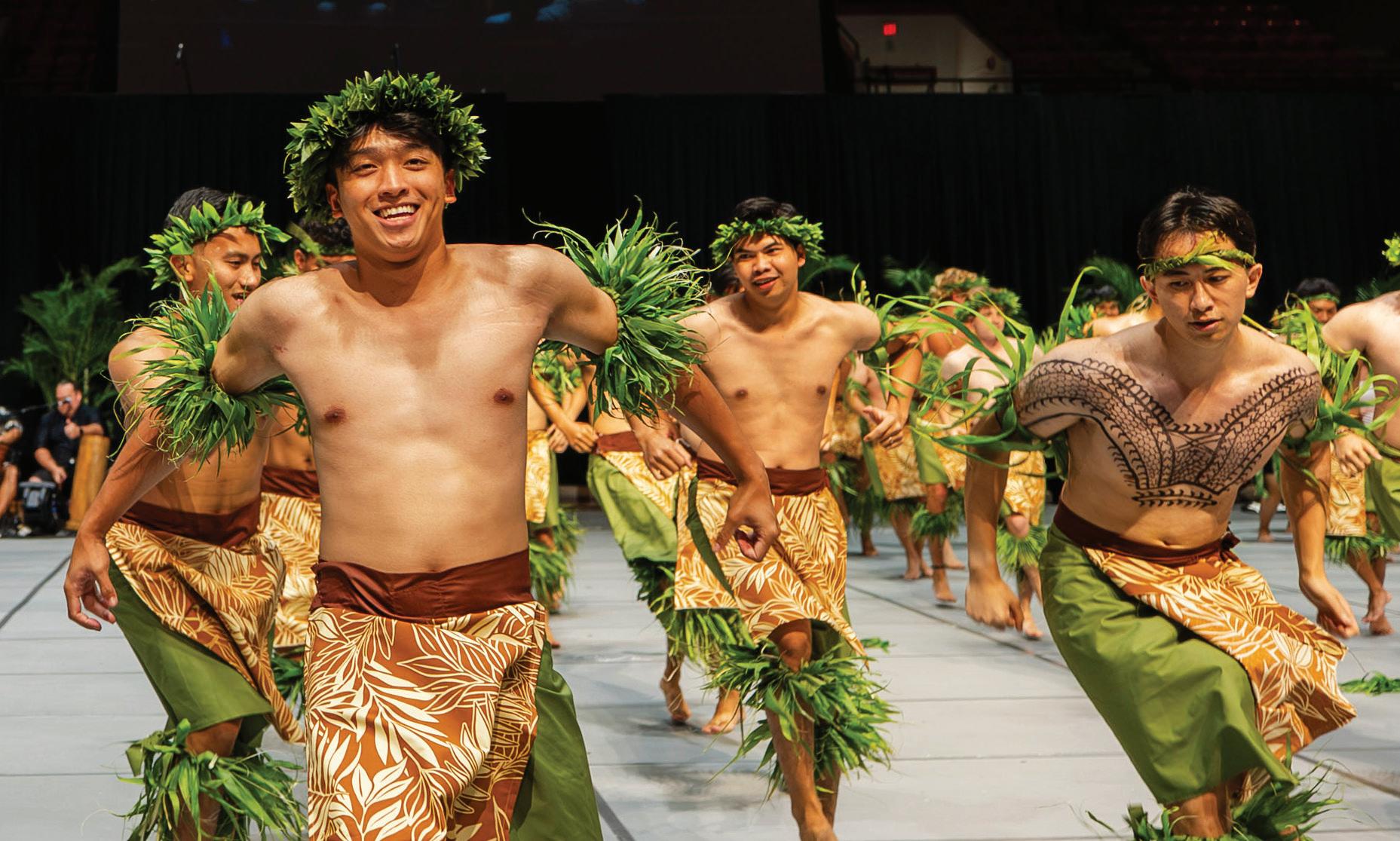
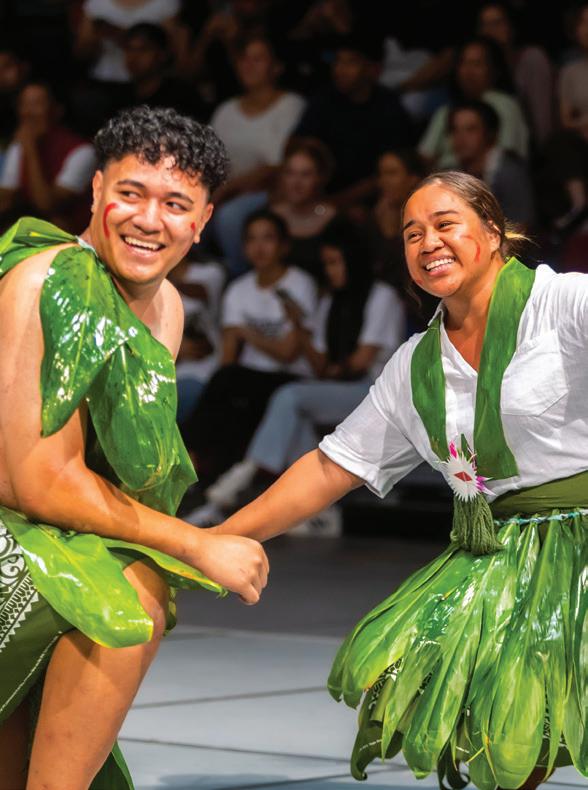
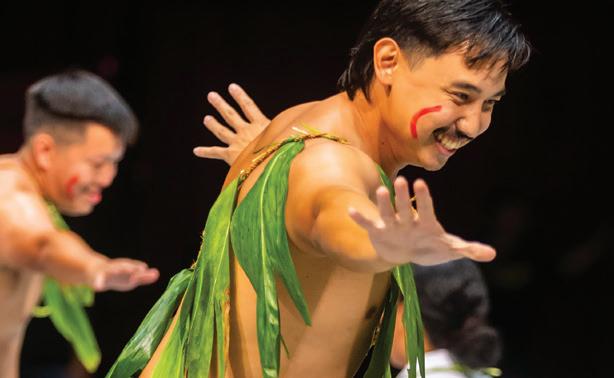
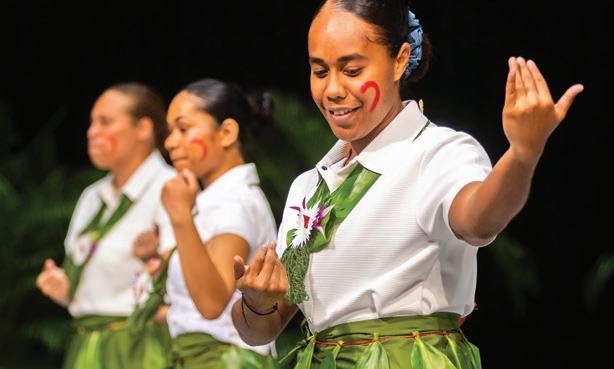
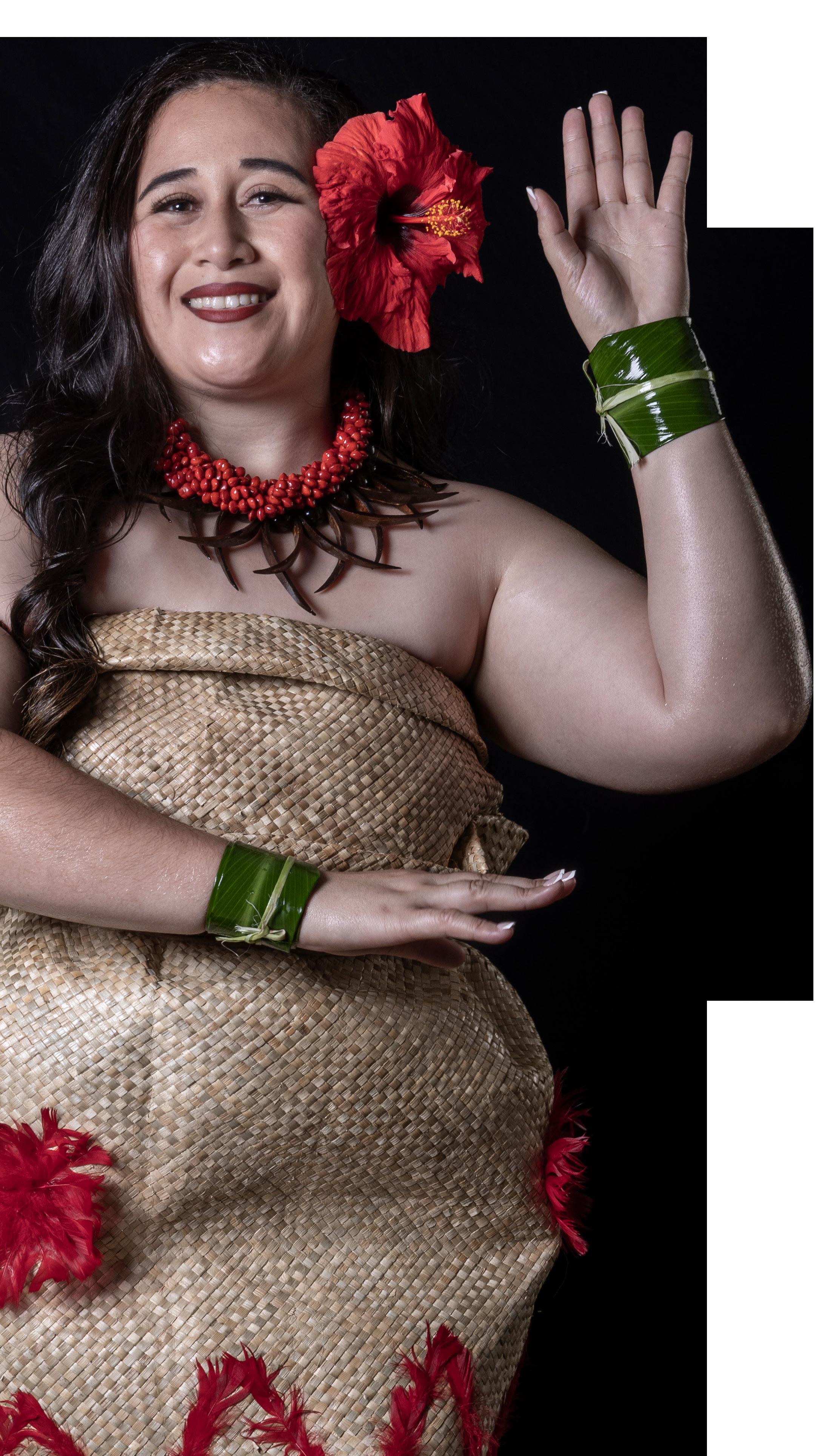
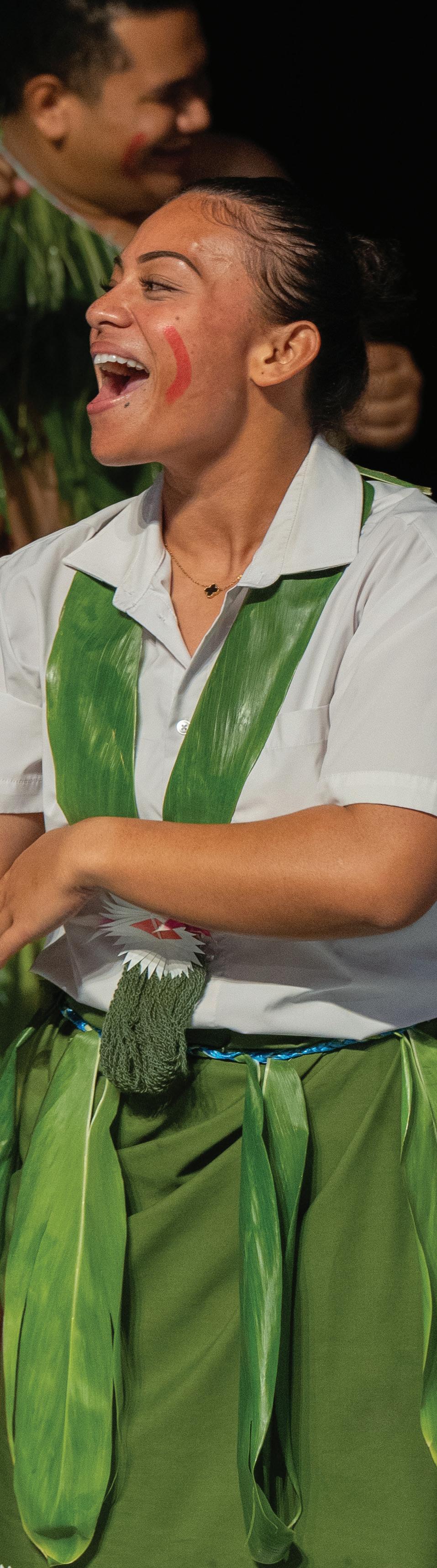
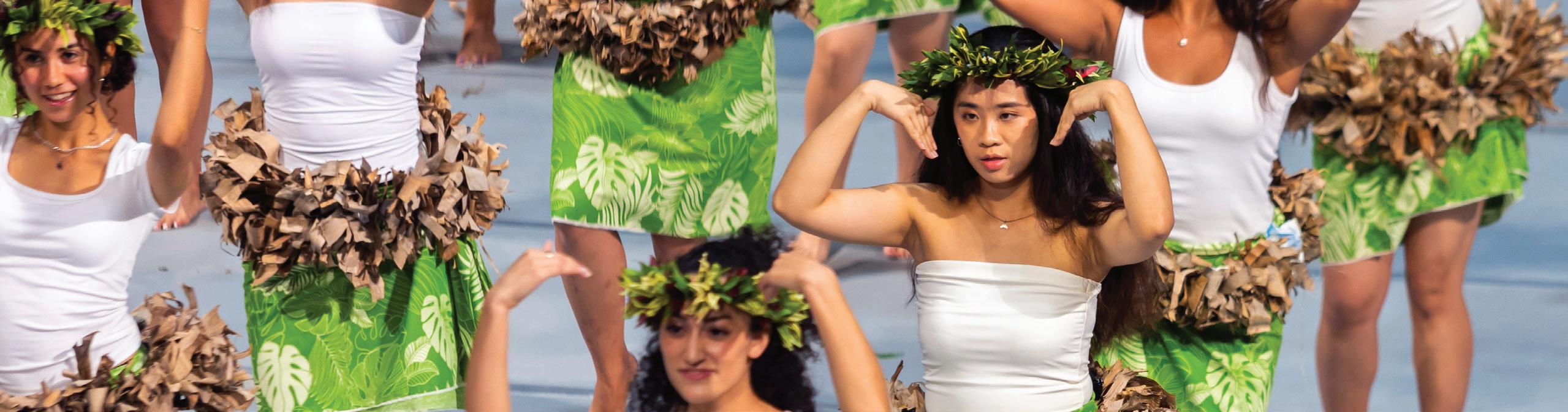
The soft strumming of a ukulele accompanied dancers as they moved gracefully across the stage. As the rhythm of the drums grew louder, the pace of the performance quickened. Dancers matched the faster beat with sharper, more energetic movements. Dressed in green skirts with banana leaf hip bands, women moved their hips side to side and in circular motions, while men performed a mix of slow and rapid leg movements.
Evelyne Heimanu, Tahiti club president and choreographer and a senior in psychology from Tahiti, said she wants to ensure that club members understood the significance of their dance and their cultural values. “I wanted them to feel that though dancing is our culture, it is also about remembering God [who] gave us the opportunity to perform.” She added she wants to focus on how their culture connects to spiritual life.
Heimanu said they performed two dances this year, ‘ote’a and ‘aparima. ‘Ote’a is a fast dance with quick hip movements where dancers match the beat of the drummers. ‘Aparima is a slower dance where dancers use hand movements to reflect the meaning of the lyrics in the song. Heimanu translated the lyrics of the ‘aparima’ song as, “I pray to the Lord for my family, for my friends, today, for tomorrow and forever.”
Vaipoe Tefaaite, a senior studying TESOL from Tahiti and the treasurer, said the lyrics in the ‘aparima dance reflected the club’s spiritual theme this year.“The hip band is always part of our culture, so we chose the banana leaves because it’s easier to [gather] for students,” she said.
Eimeo Lee Chip Sao, a senior in hospitality and tourism management from Tahiti and a choreographer for the men, said he tried to teach members to have energy and gracefulness when dancing. During ‘ote’a, he said the boys performed a scissorlike dance, the recurring movement of legs with minimal hand movements. Even though it can be difficult, he said he wanted members to feel like they belong. “I want people to remember that our culture is beautiful. And part of the culture is being happy and being unified together,” he said.•
JAPAN JAPAN
BY SAMANTHA FAITH SATORRE
Super Mario bridges ancient tradition with modern Japanese culture
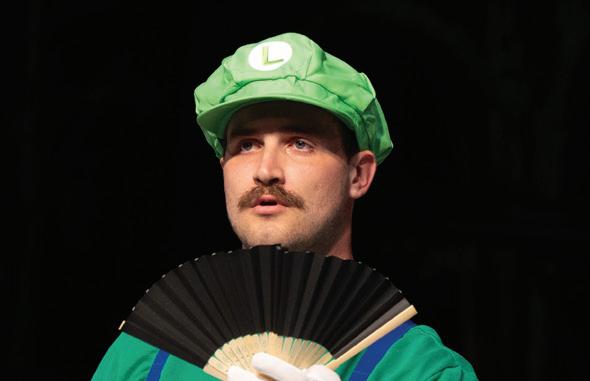
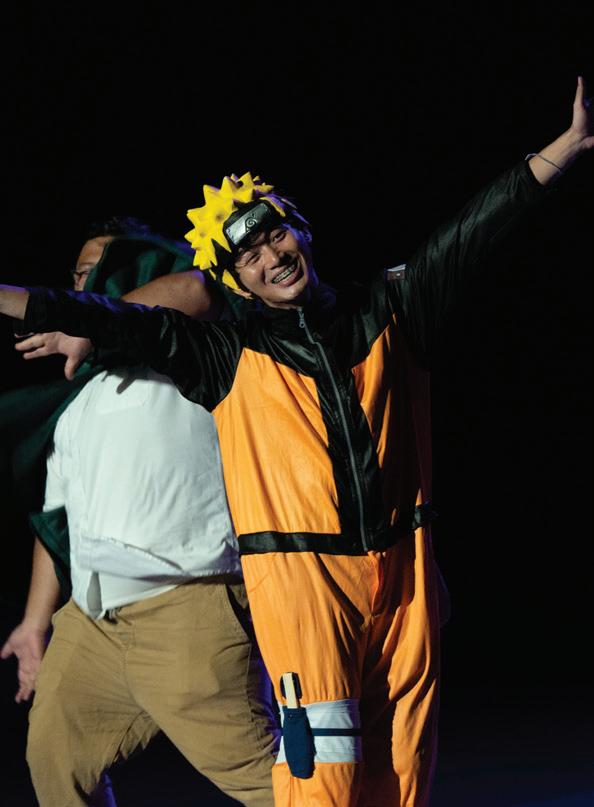
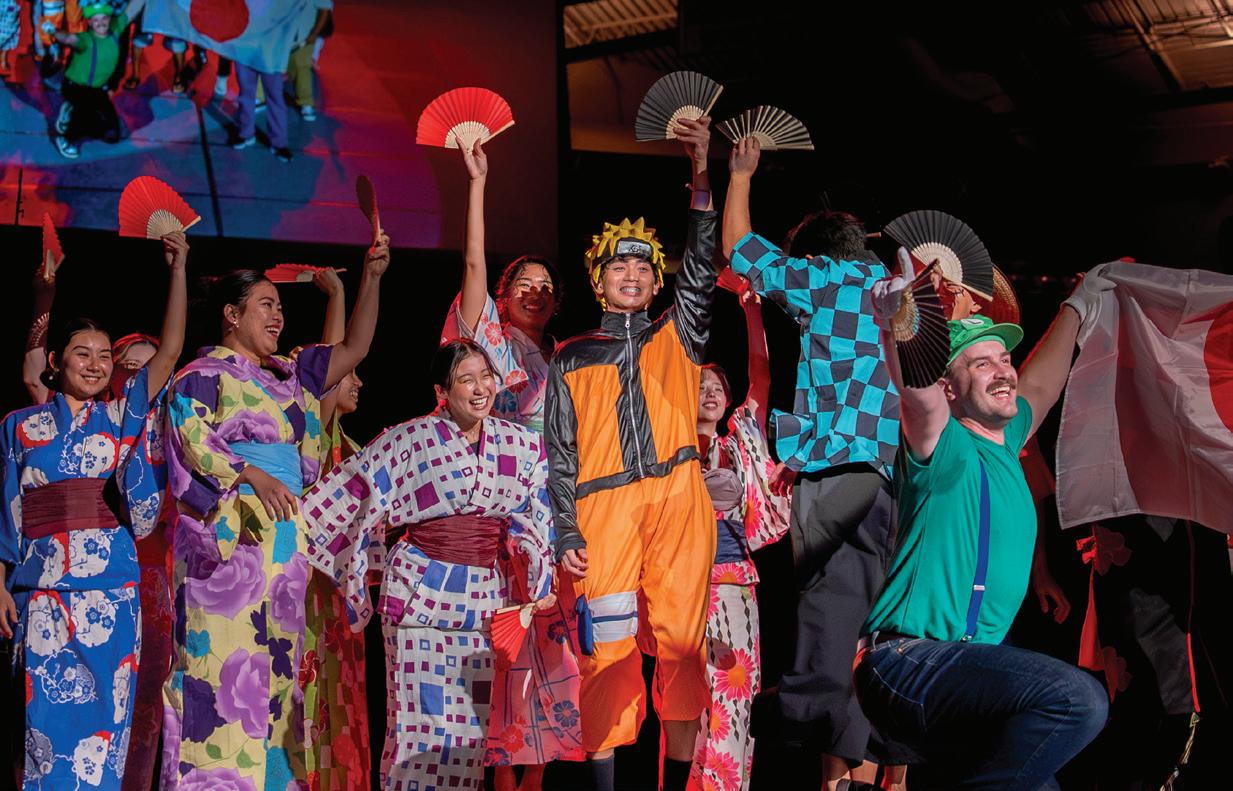
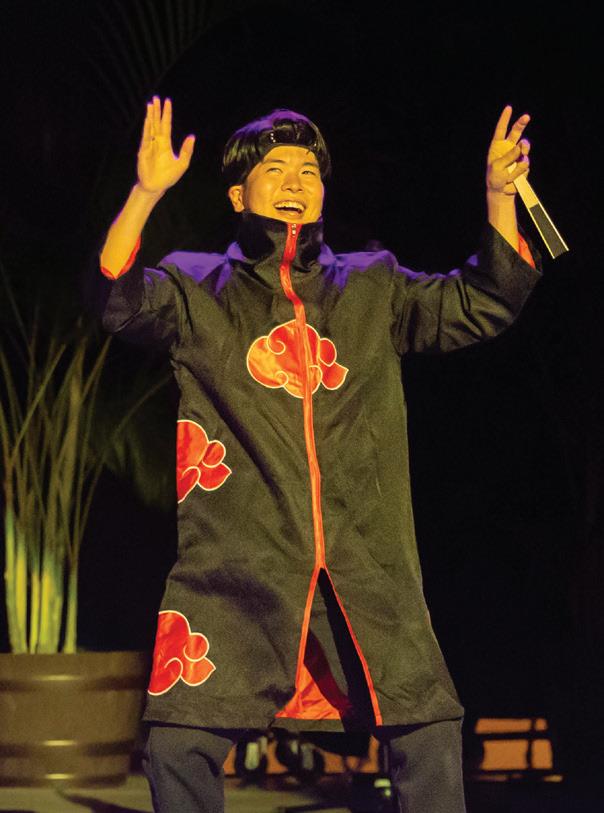
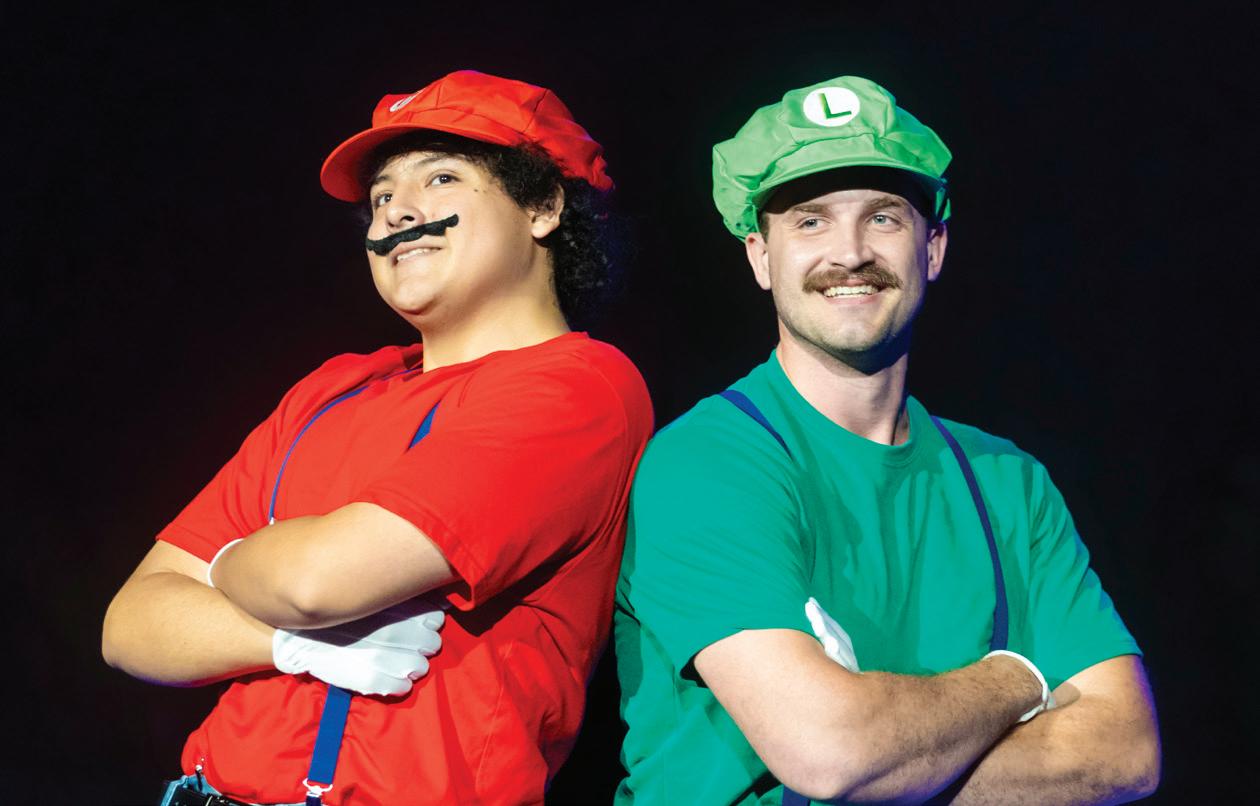
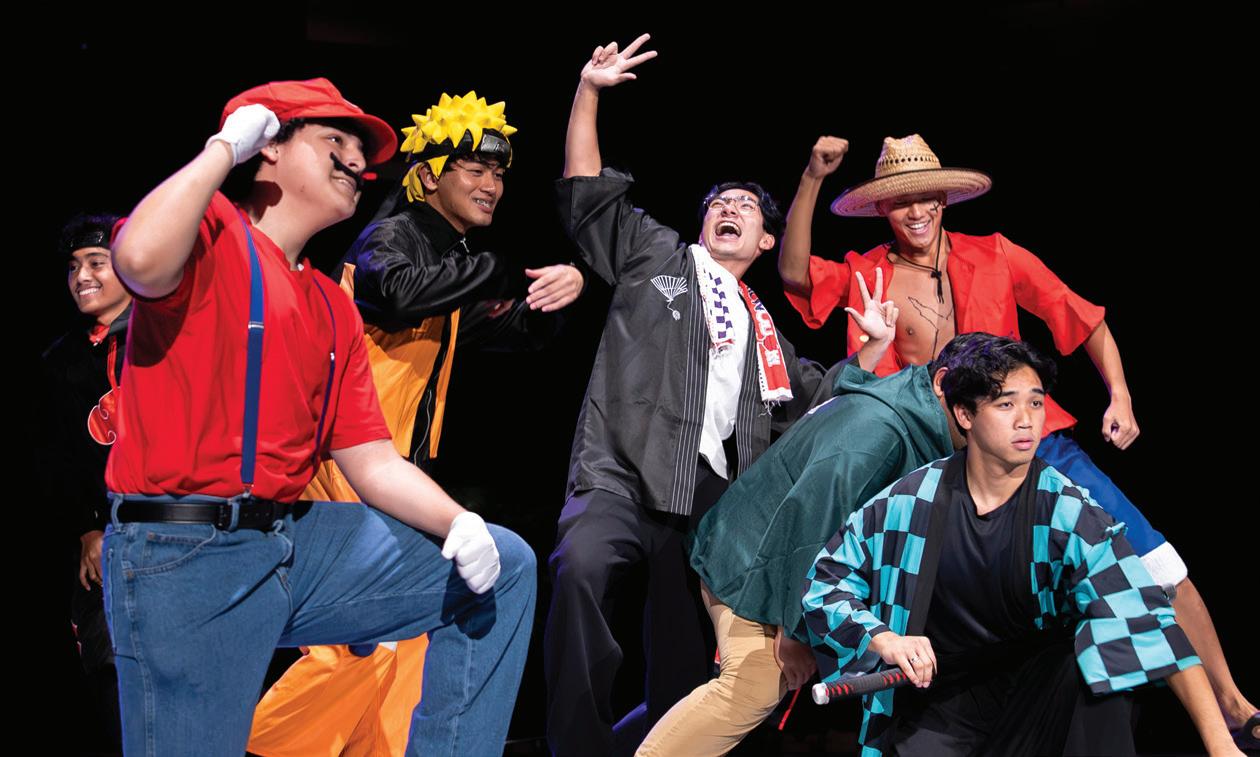
Two blobs of red and green opened the performance for Japan Club. And as a bouncy, fast-paced tune filled the Cannon Activities Center, the audience cheered in recognition of the familiar: Mario and Luigi dancing to the Super Mario Bros theme. The club’s show was a medley of many things people around the world love about Japanese culture: pop culture, such as video games and anime, and the beauty of tradition.
Super Mario is a video game character beloved worldwide, and Japan Club said they wanted to make sure the audience remember that the popular Nintendo character is Japanese. The club said they crafted a performance that is both simple and imaginative: Super Mario traveling through the worlds of Japanese culture, said club president Naoto Calip, a sophomore in information technology from Japan.
“Mario has all these different worlds—land, volcano and sea,” said club choreographer Hosana Yamamoto, a sophomore in business management with a finance concentration from Japan. “We used that to travel through different aspects of Japanese culture all at once.”
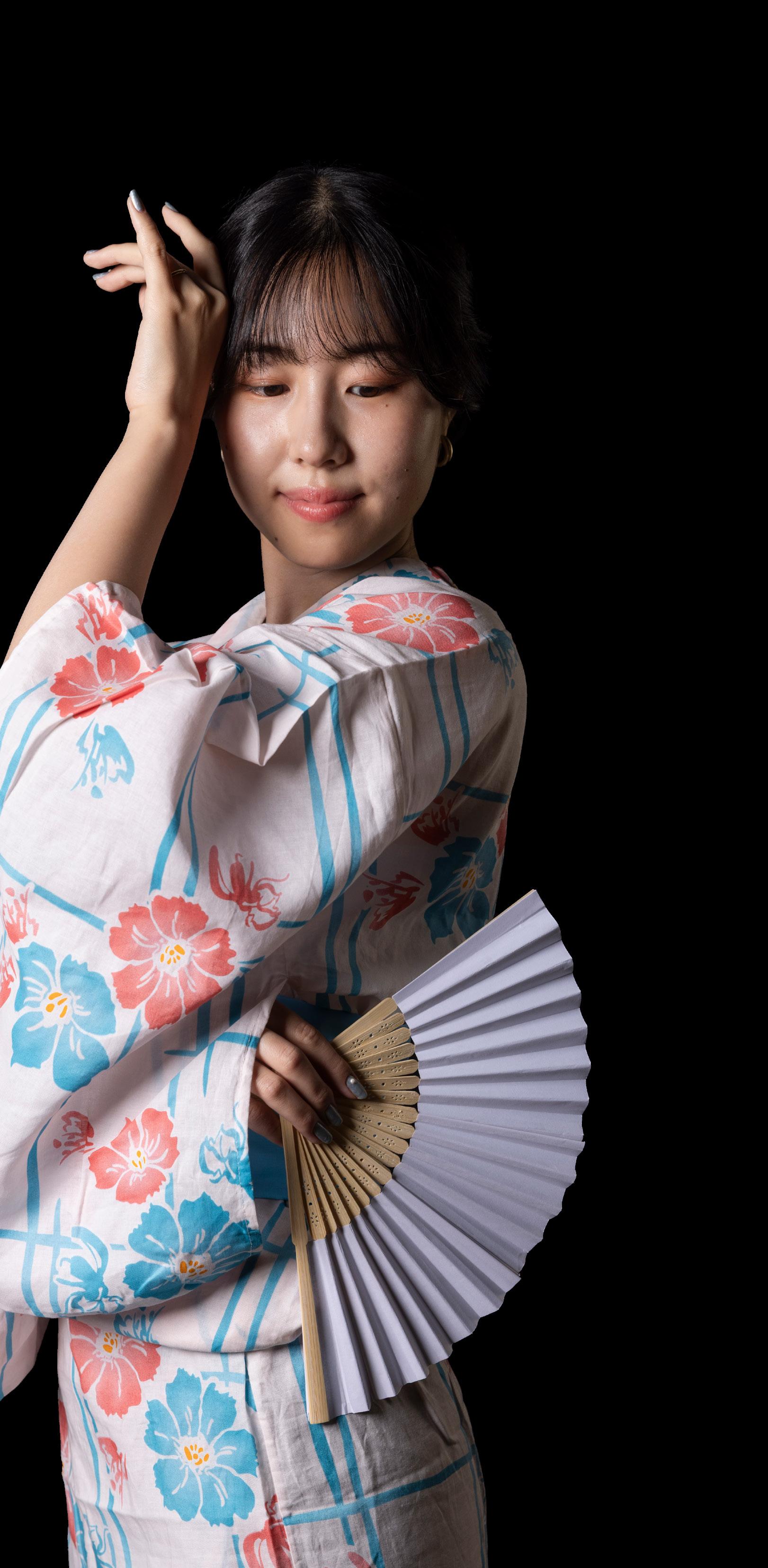
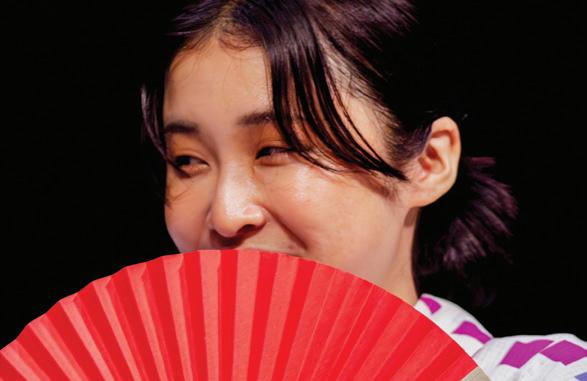
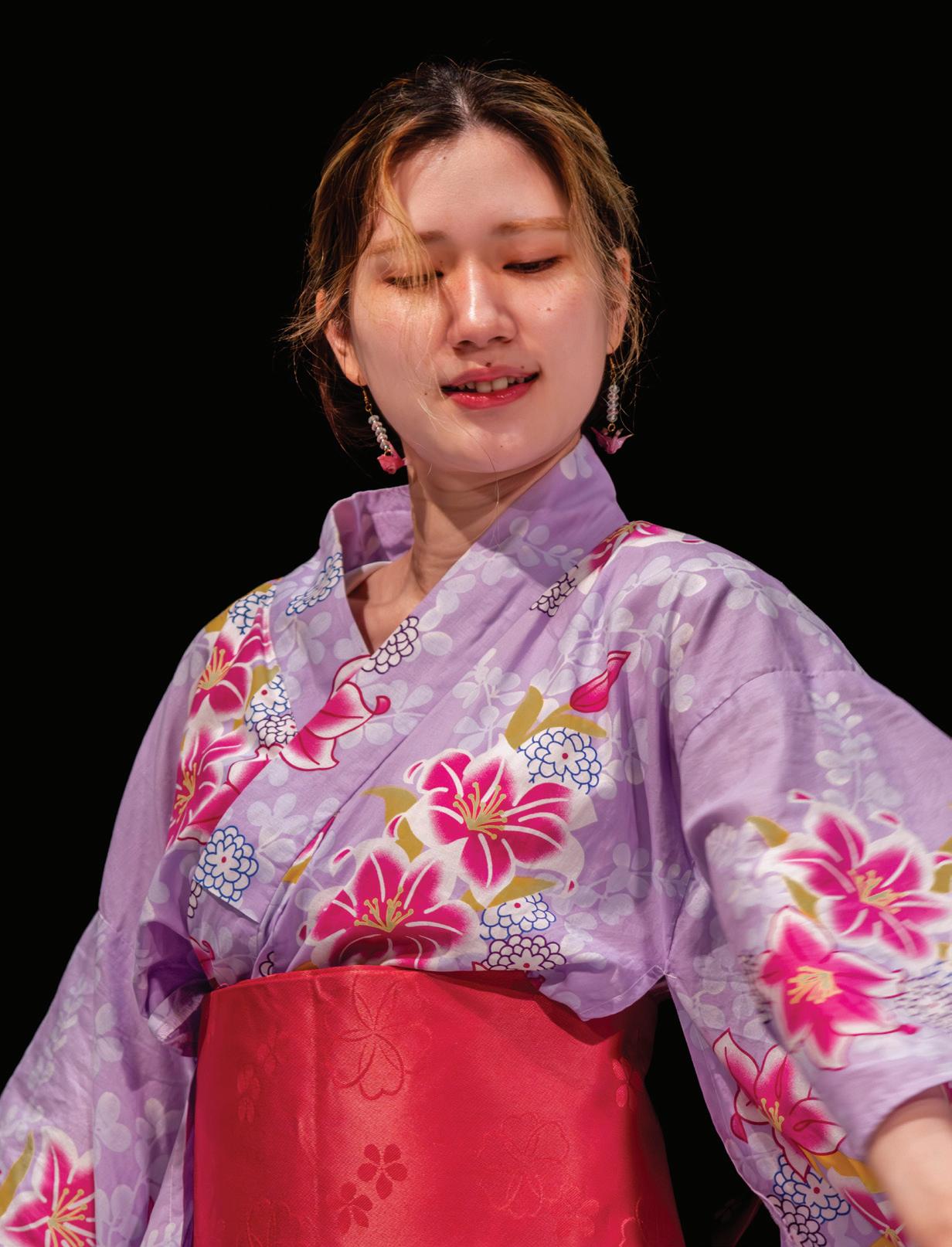
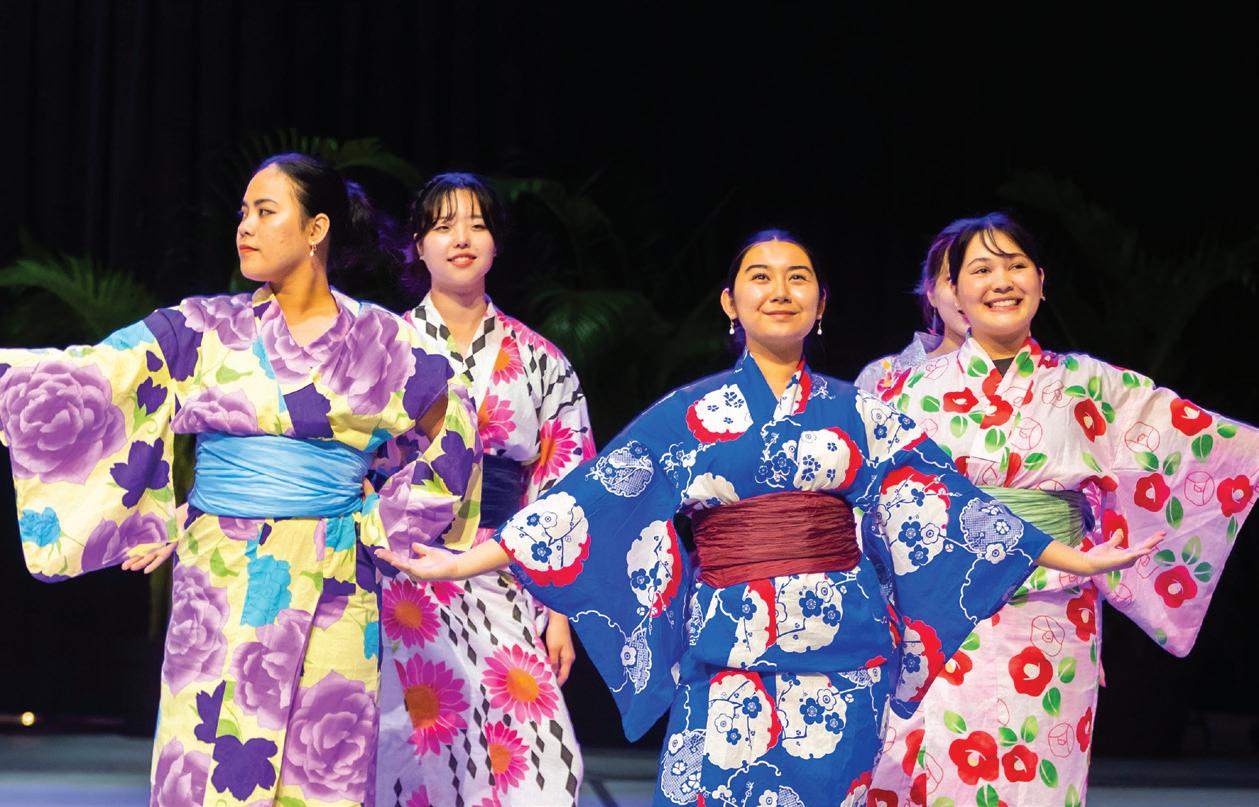
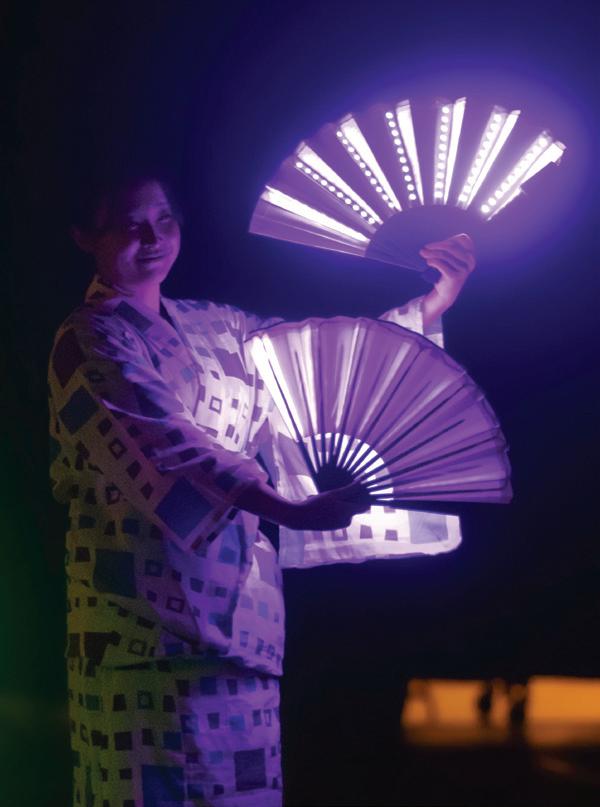
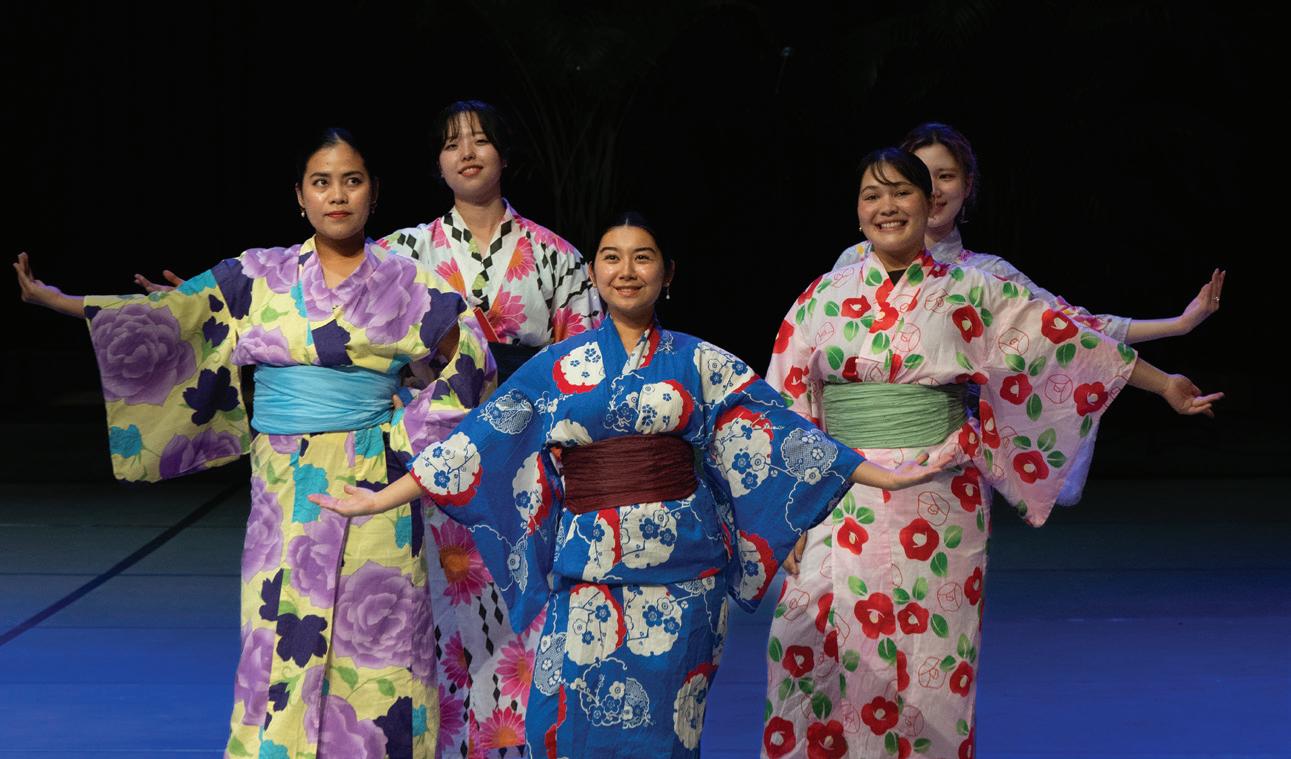
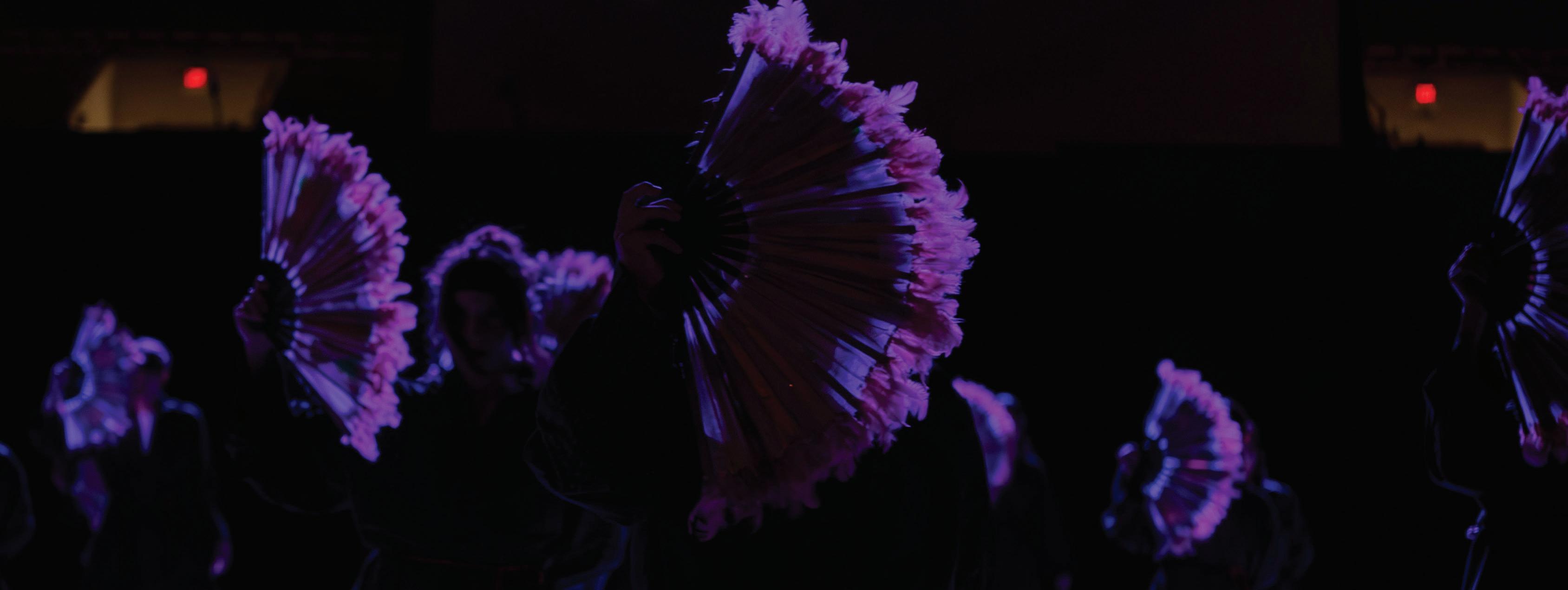
The club blended the past and the present in creative ways. Female dancers wore “yukata”—a traditional garment that, according to Calip, reflects the values of gratitude, politeness and cultural pride. The club put a modern twist to this traditional element by having the performers carry light-up fans. Yamamoto described it as them summoning different eras on one stage. “The lights glow, which gives the fan dance the atmosphere that ties into the game world aesthetic while still honoring the traditional dance. It merges the modern game elements with traditional culture,” she explained.
Both Calip and Yamamoto described the preparation period for Culture Night as a time for students to come together as one. They said producing the performance has not been without its challenges, but it was fulfilling. “People are into different things—some love traditional Japanese culture, some love anime, some love games— which gives everyone something to connect to,” Yamamoto shared.•
FIJI
BY JOHN ANDREW QUIZANA
The Fiji Club performance portrays cultural identity and perseverance through symbolic dance rooted in ancestral voyages
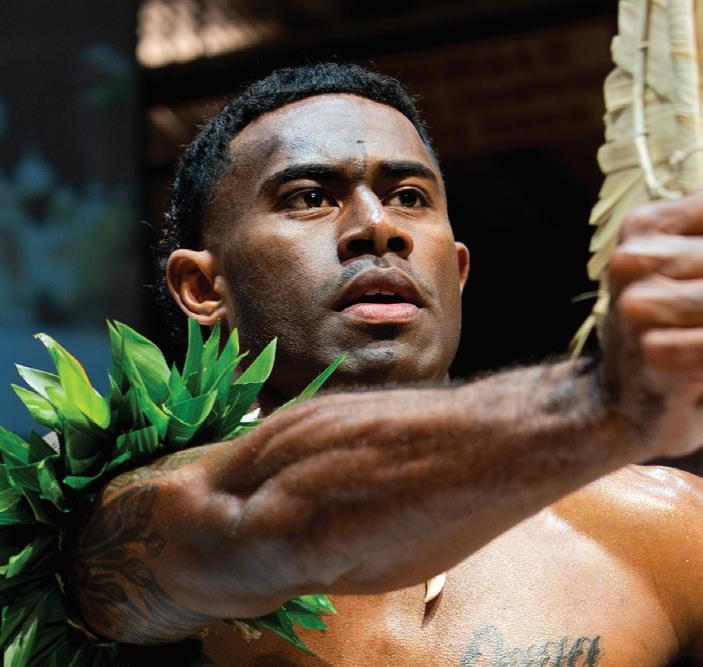
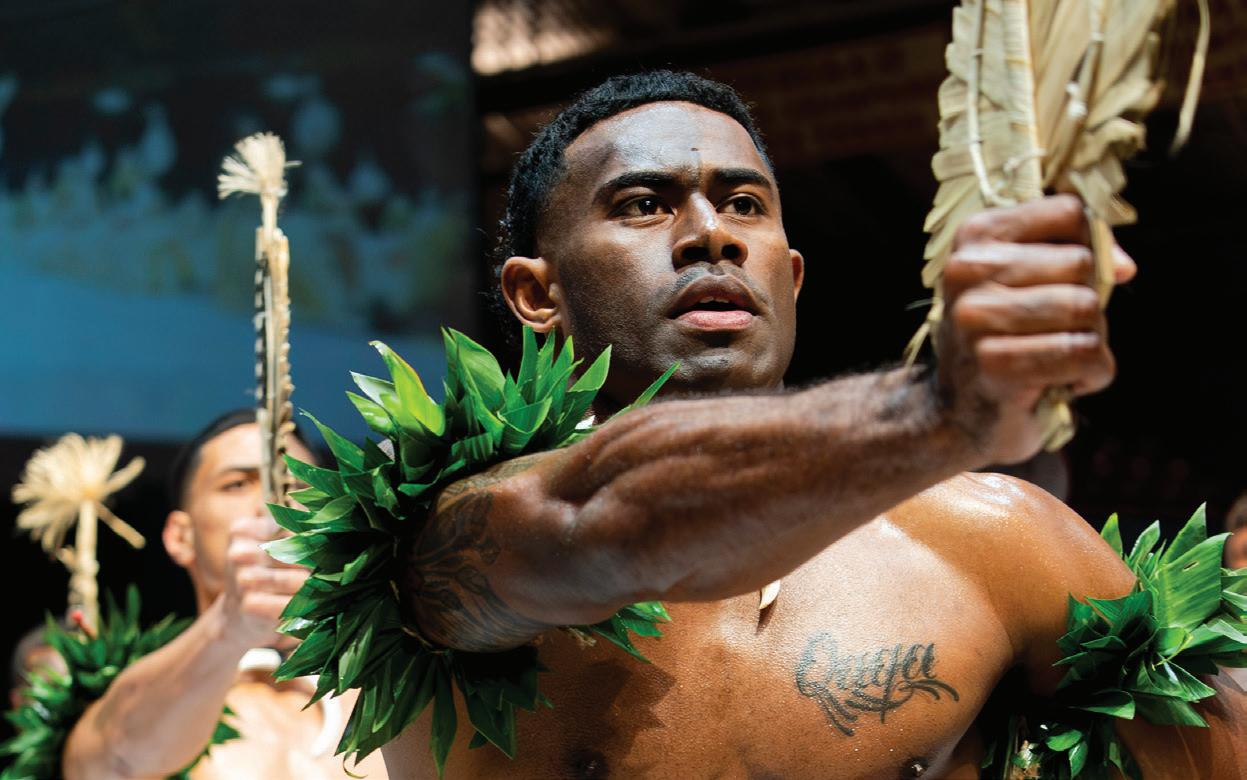
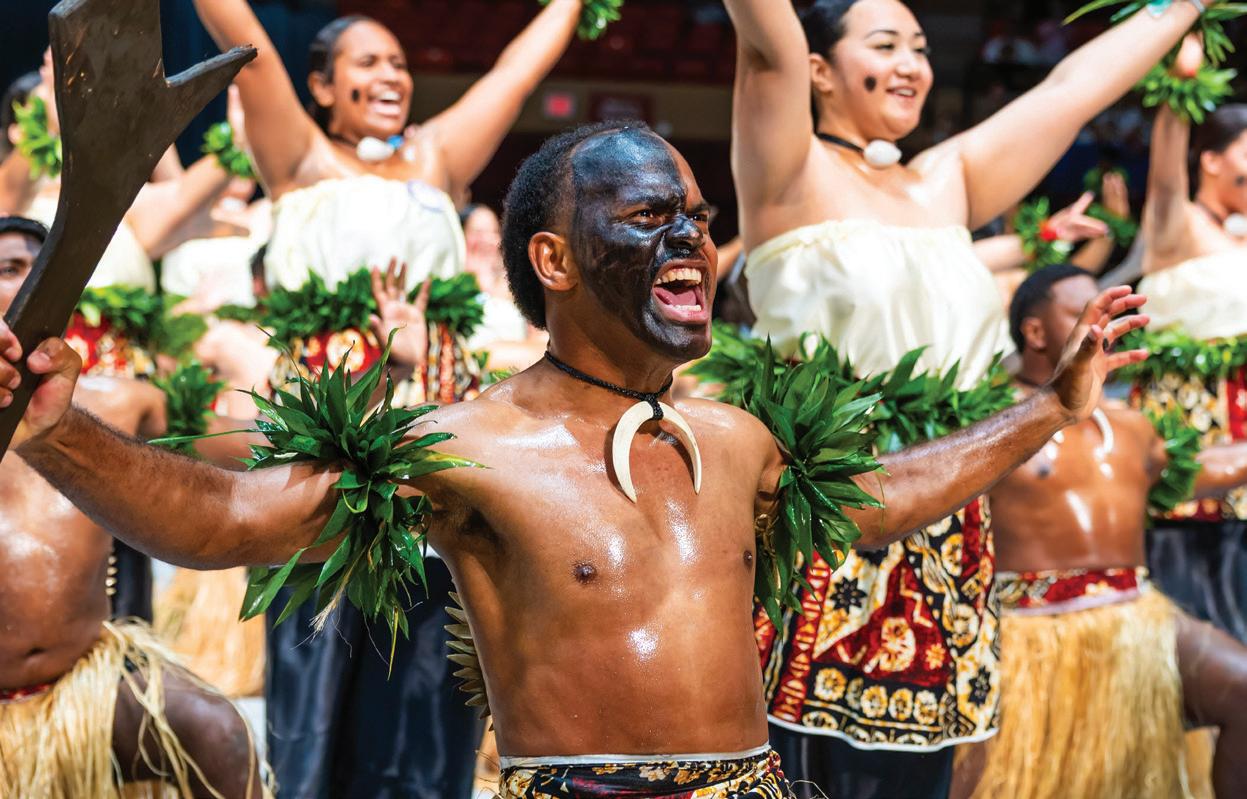
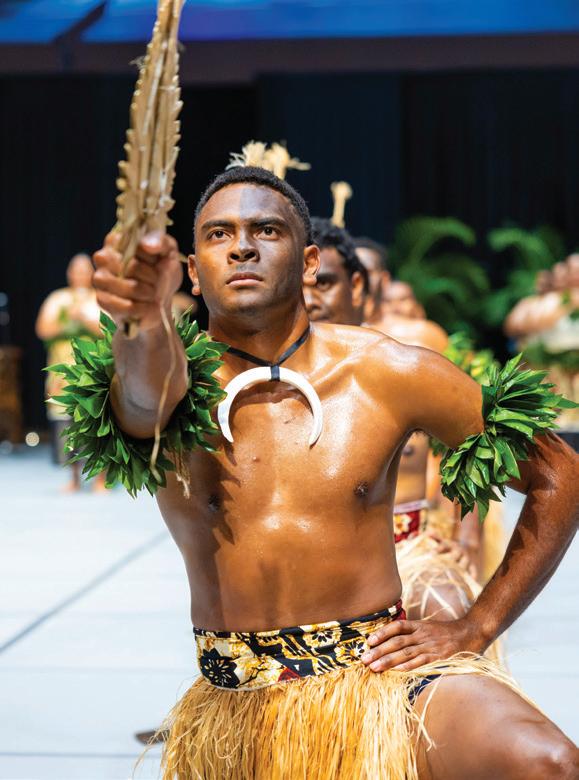
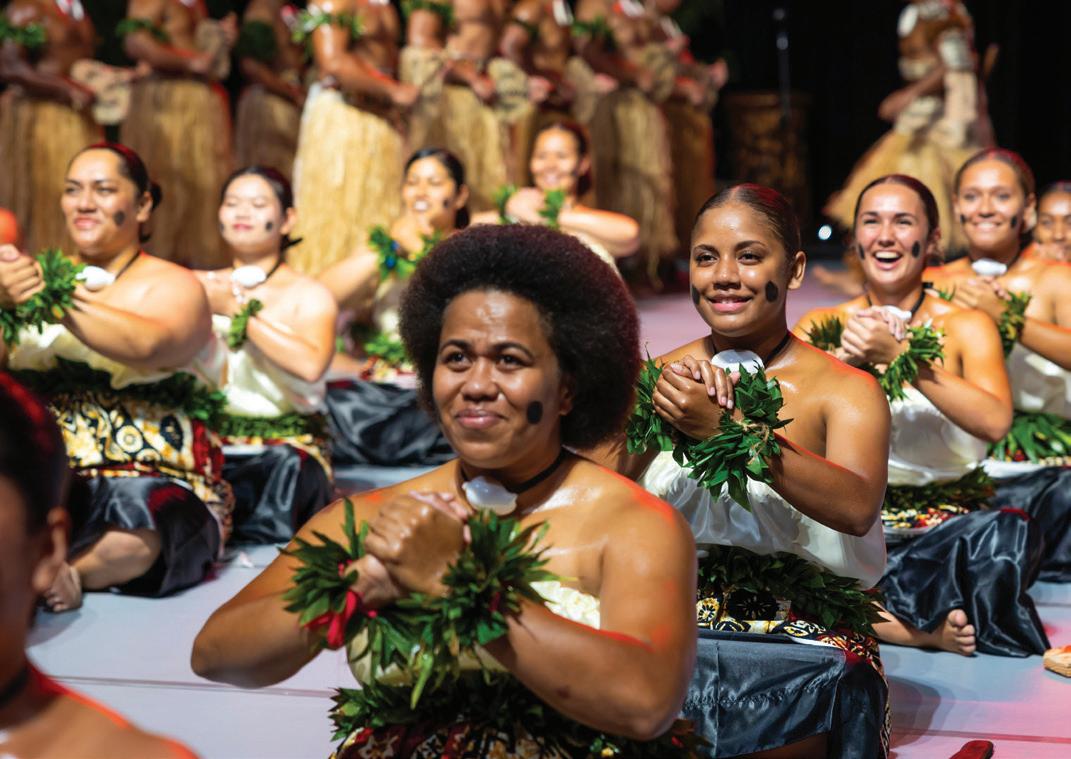
Dressed in vibrant clothings and adorned with traditional accessories, the Fiji Club dancers glided across the BYU–Hawaii stage, men wielding Fijian clubs and women twirling fans, their fluid movements punctuated by bright smiles and synchronized steps. Each sway of the hips, lifted arm, swing of a club, and flick of a fan told a story of voyages across the ocean, of struggles endured and of hope carried for generations to come.
Fiji Club’s Culture Night performance this year told a story of perseverance, identity and connection, said club president Mosese Veilesiyaki, a senior in hospitality and tourism management from Fiji. “The performance focuses on voyaging and struggle, connecting us to our ancestors who traveled to discover new islands, faced harsh weather, and sometimes went without food, yet kept their goals in mind—for themselves and future generations.”
Like their ancestors,Veilesiyaki said they are seeking opportunities and greener pastures. “Coming to BYUH requires sacrifices, and leaving home as the oldest child can leave a gap in the family.This performance reminds us of life’s struggles and the importance of perseverance—for our families, ourselves and Fiji,” he said.
For the dancers, the performance is full of symbolism through movement, costumes and smiles. “Costumes show how much we care about our culture, and our smiles share joy and positive energy. Some think our movements are stiff, but they’re actually fluid,” said Elizabeth Benaia, a freshman in information technology.
Opeti Salaba, a senior majoring in social work from Fiji, emphasized the cultural connections highlighted in the dance. “It’s very important because the performance draws on those voyages. We are connected—not separated—by water. It connects people who share common values, customs, and even links us to Southeast Asia, where the Lapita people originated,” Salaba said.•
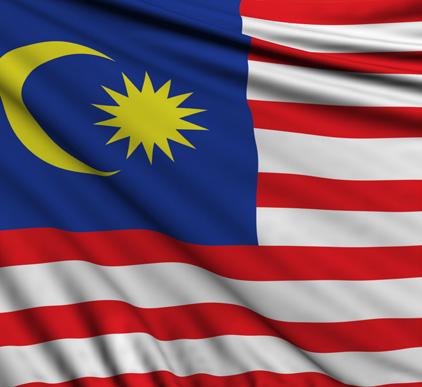
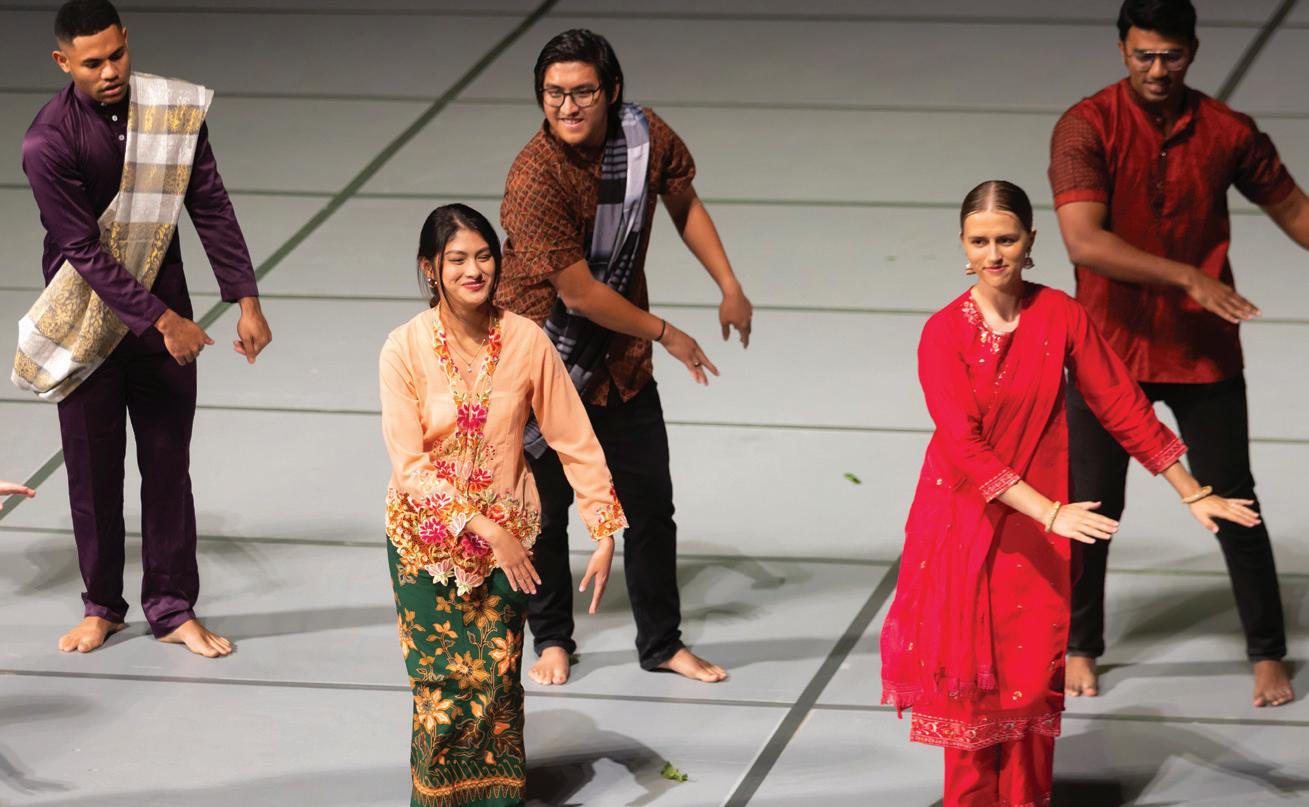
MALAYSIA
MALAYSIA
BY MYCO CHILLIAN MARCAIDA
From the rhythmic bamboo dance Magunatip to the graceful movements of Samazau, performers showcase the
cultural heritage and diversity of Malaysia
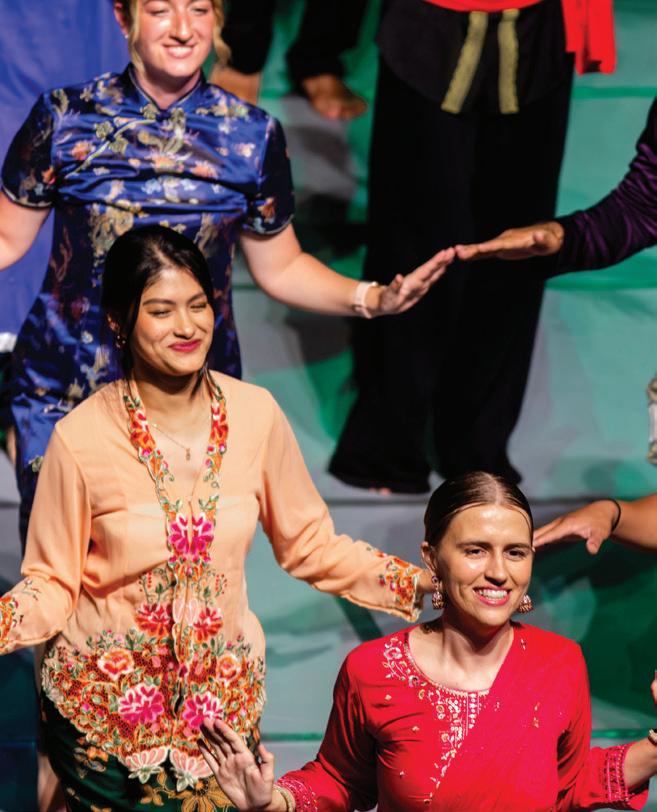
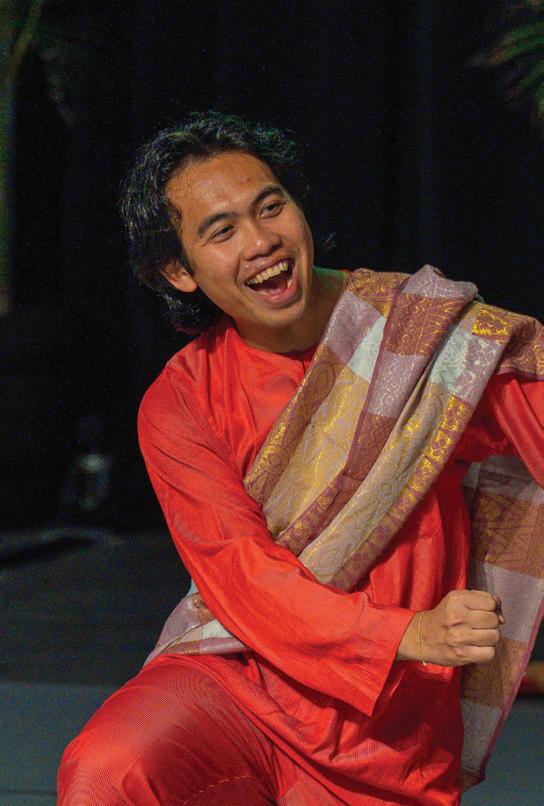
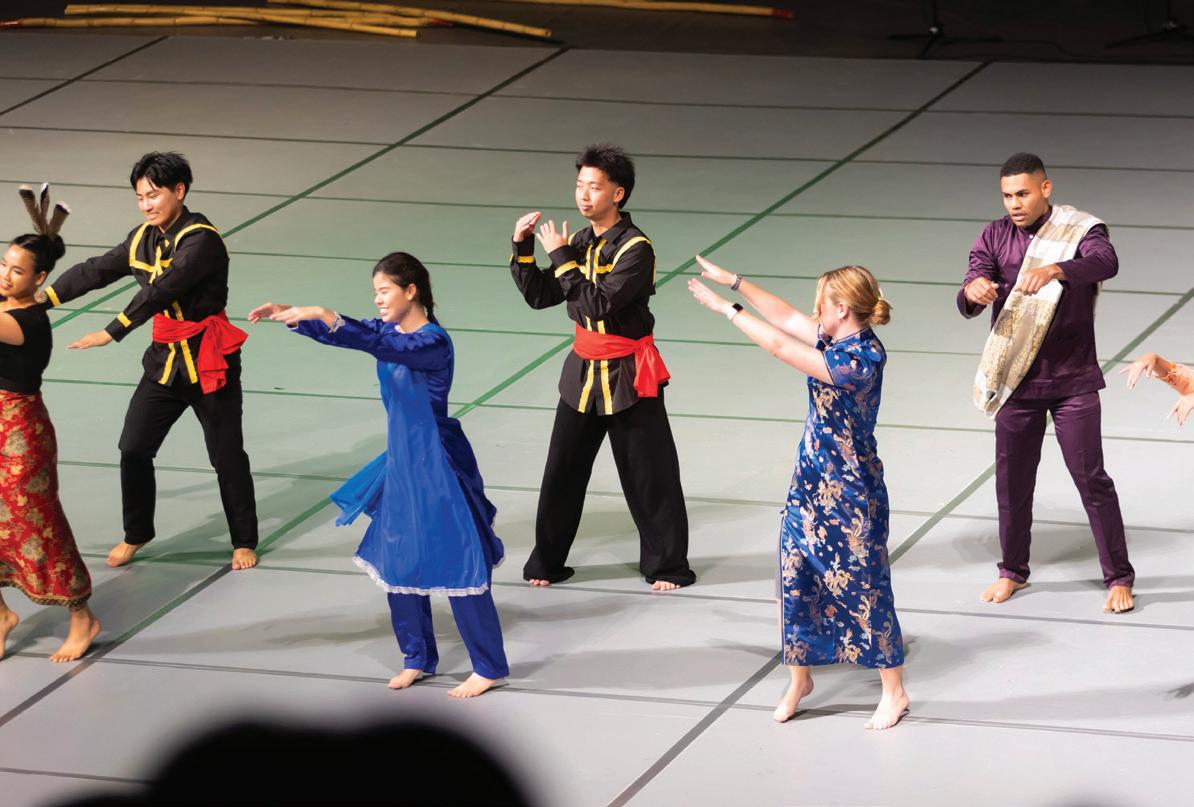
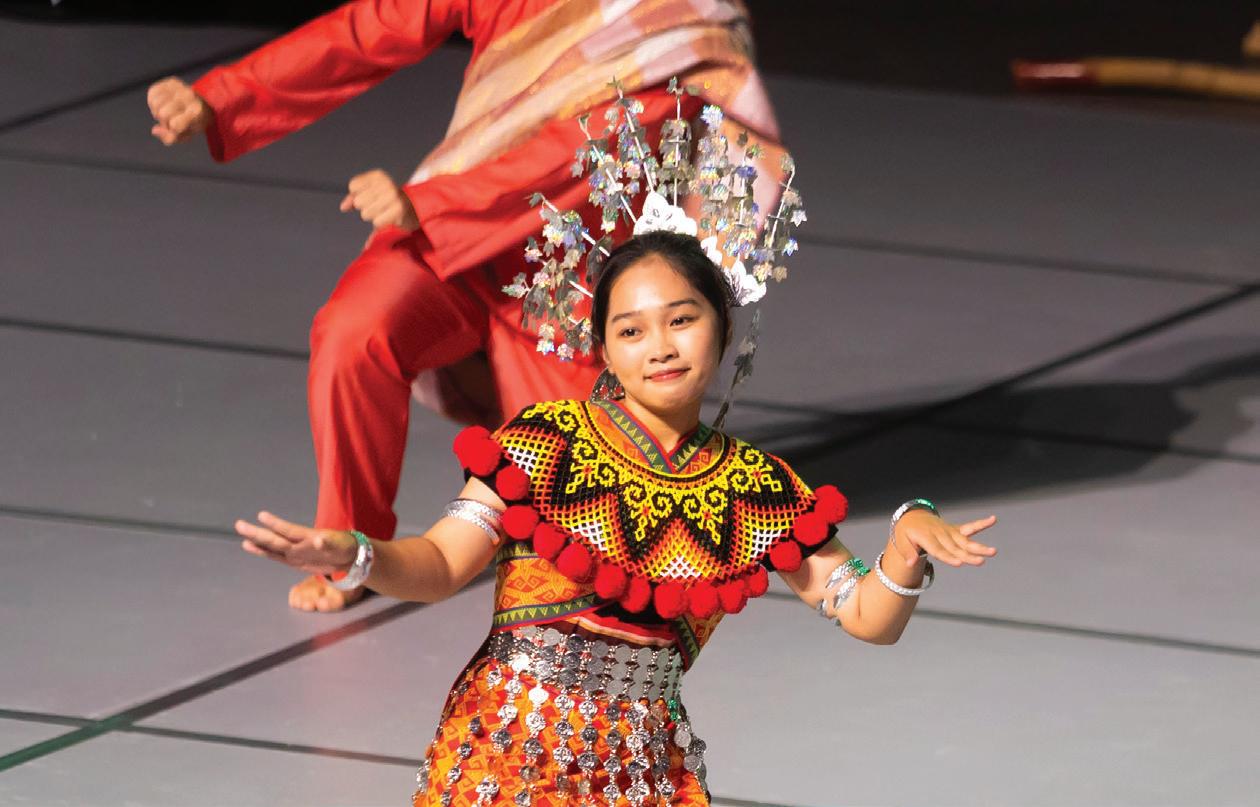
The Malaysia club opened its performance with the rhythmic clacking of bamboo sticks striking the stage as others crossed the long poles in steady beats. The performance transitioned into a cultural showcase, where members took the stage in a variety of traditional outfits, highlighting the diversity within Malaysia’s multicultural community.
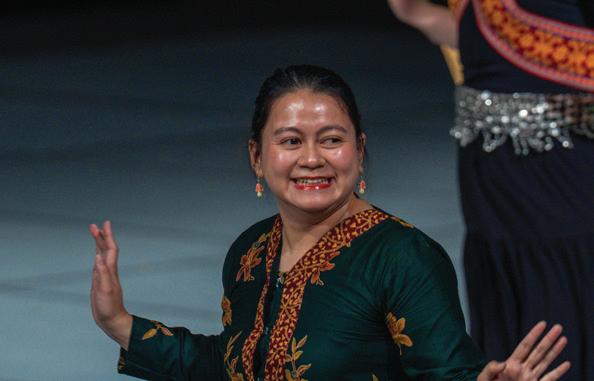
With the focus being Sabah, Malaysia, the story behind their performance is focused on Samazau, a well-known traditional flock dance in the Kadazan-Dusun community, said Billery Martin, a sophomore from Malaysia majoring in computer science and the club vice president. “It began as a dance ritual to honor the spirits and give thanks during the Kaamatan festival to ward off misfortune,” she explained.
The dance uses rhythmic arm movements that resemble the flight of an eagle, Martin continued. “Lowering arms symbolize grace and connection to the spirit world, while the footwork moving slowly and grounded represents stability and unity in the community,” she added.
The most important part of cultural performances is ensuring creative adaptation that respects music, attire and movement, Martin said.
For Christian Enchul Chester, a freshman from Malaysia majoring in TESOL and the club vice president, said the trickiest part of the performance was the bamboo dance “Magunatip”. “We have to quickly transition between two styles—between Samazau and Magunatip. It is demanding since it require perfect timing and agility,” he explained.
Chester said seeing the performers come together while wearing various traditional outfits was what moved him most. “It is visual representation of Malaysia’s diverse ethnic traditional attires and community,” he shared.•
BY ALDEN ETHANAEL PUA
KIRIBATI KIRIBATI
Honoring Kiribatian heritage through a blend of traditional dance and modern music
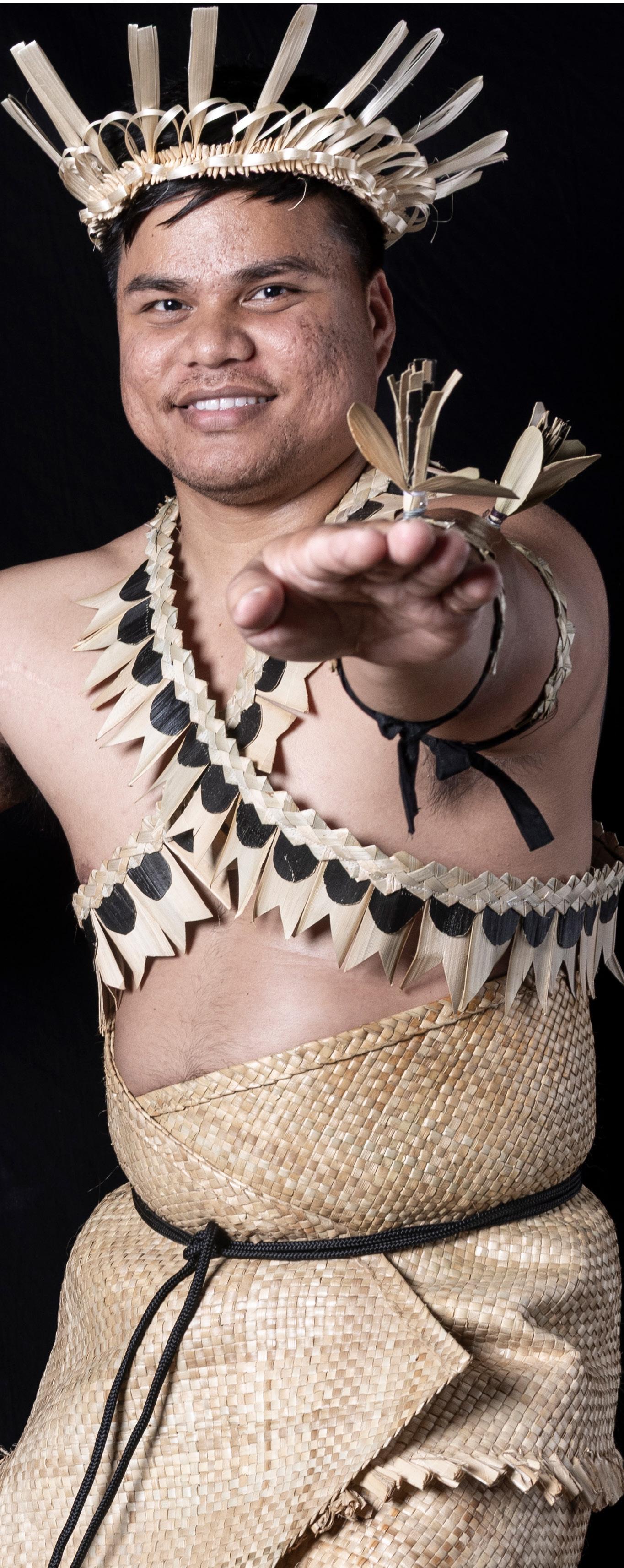
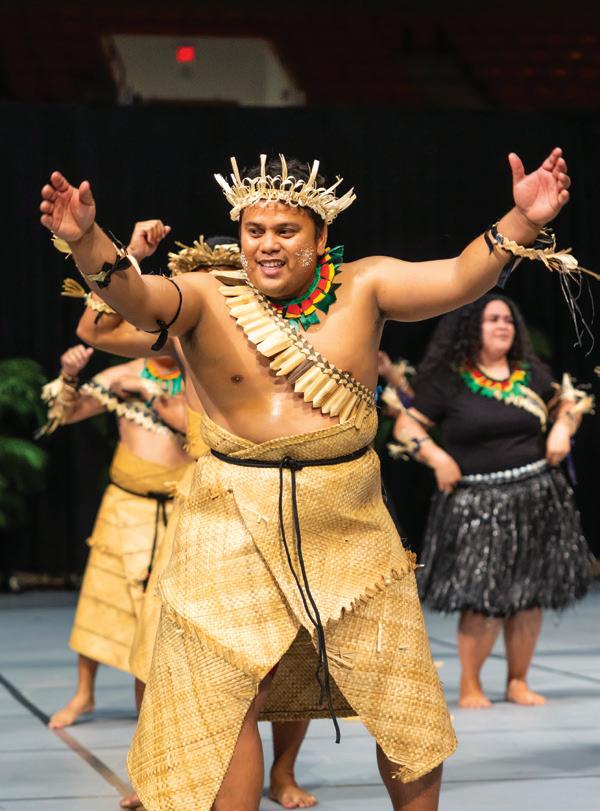
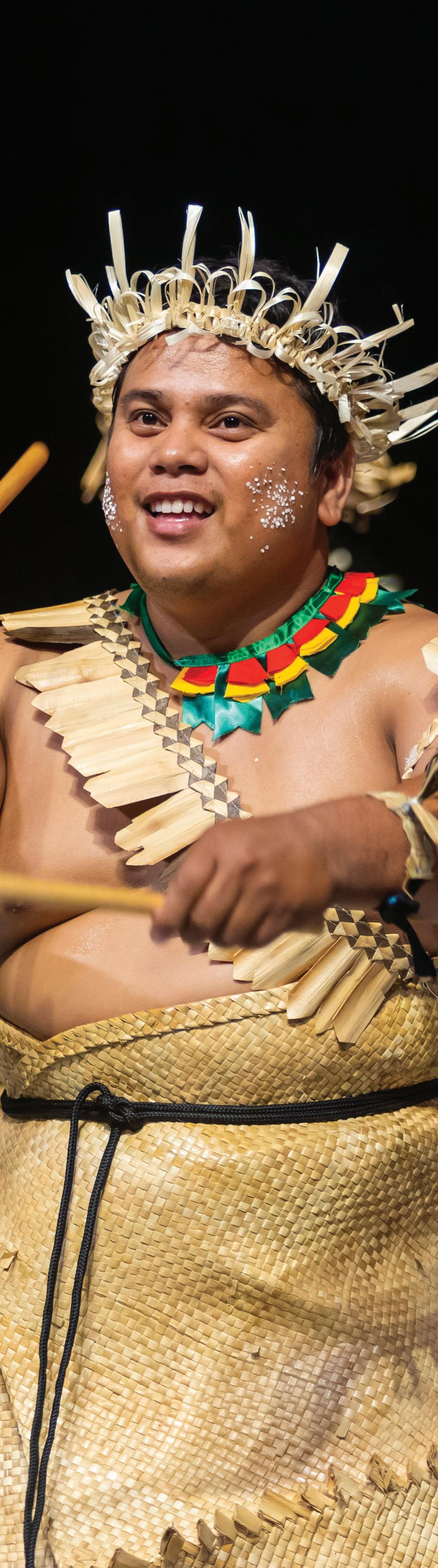
Moving in rhythmic patterns, Kiribati Club performers brought the space to life with energetic steps and coordinated gestures, their costumes decorated with coconut shells and woven mats that swayed with each movement.
“This year, it’s something completely different,” stated Oemwa Johnson, club president and senior majoring in biology and accounting from Kiribati. She explained how the club diversified their performance, using audio tracks while incorporating several new props they have never used before. She said the club hopes audiences will look beyond the dancing to see the history and heritage Kiribati members represent. “It’s about storytelling—about our culture and traditions,” she said.
The club chose to opt for audio playback instead of live music this year. Johnson stated how the songs were “a remix of modern and old [music], a fusion.” She also noted the Kiribatian stick dance “Te Tirere,” a traditional dance they had not previously performed.
The performers wore costumes featuring traditional apparel and cultural accessories. Among several, Johnson highlighted the “karuru,” a decorative band for the hands and fingertips. She also explained how the women’s outfits featured sashes, or “ramwane,” complemented by black and white shells made from coconut: the “katau” (black) and the “tumara” (white). Meanwhile, the men donned dancing mats culturally known to be interwoven by women’s hair.
Choreographer Tekaai Tekanene, a senior from Kiribati majoring in information technology, noted the team’s strong sense of teamwork and togetherness during their dance practices. “Everyone contributed and showed their effort by showing up, practicing and helping each other,” he said.
Sanita Tebeua, a freshman from Kiribati majoring in political science, shared her wishes for the audience. She said, “I hope that through our dance, the audience can get a glimpse of how our tradition is like.” She hoped the club’s dance differentiated Kiribati club from other Pacific cultures.•
PAPUA NEW GUINEA
PAPUA NEW GUNEA
BY LINDA LAULU
Rhythmic stomps to swaying motions, PNG dancers showcase traditions from multiple provinces while expressing a shared heritage
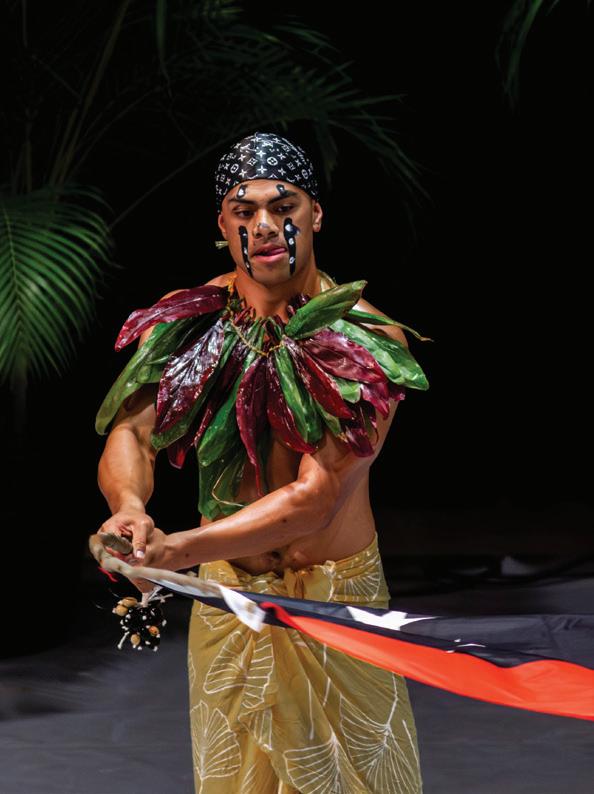
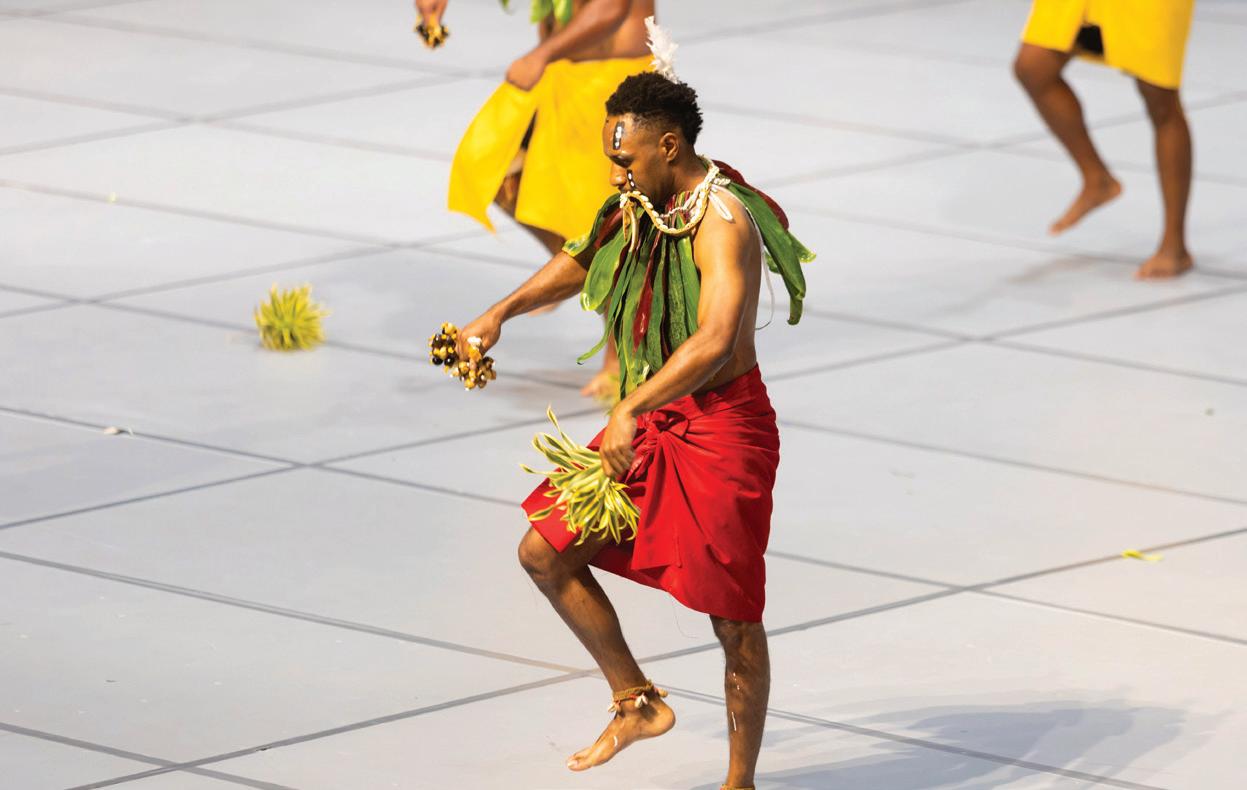
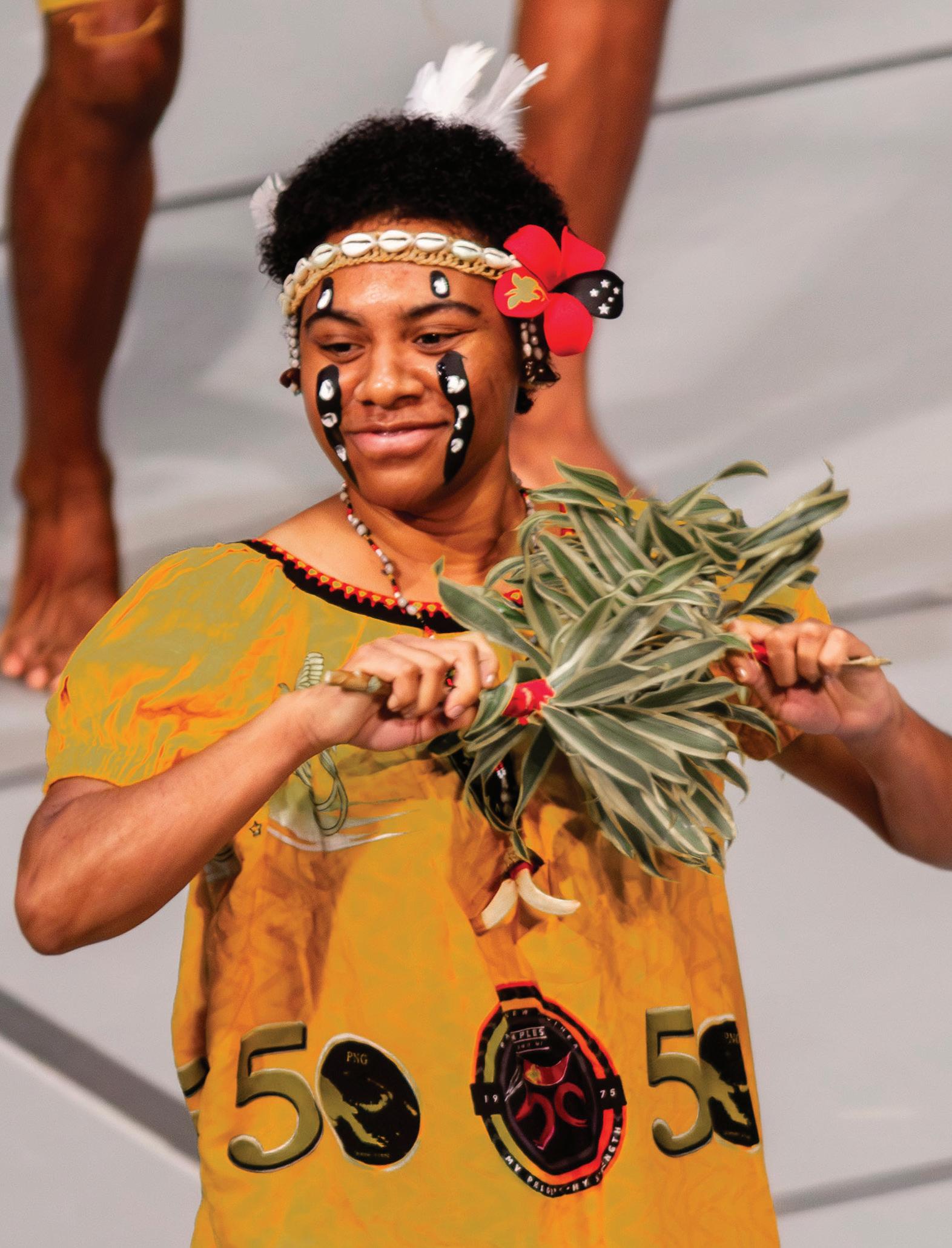
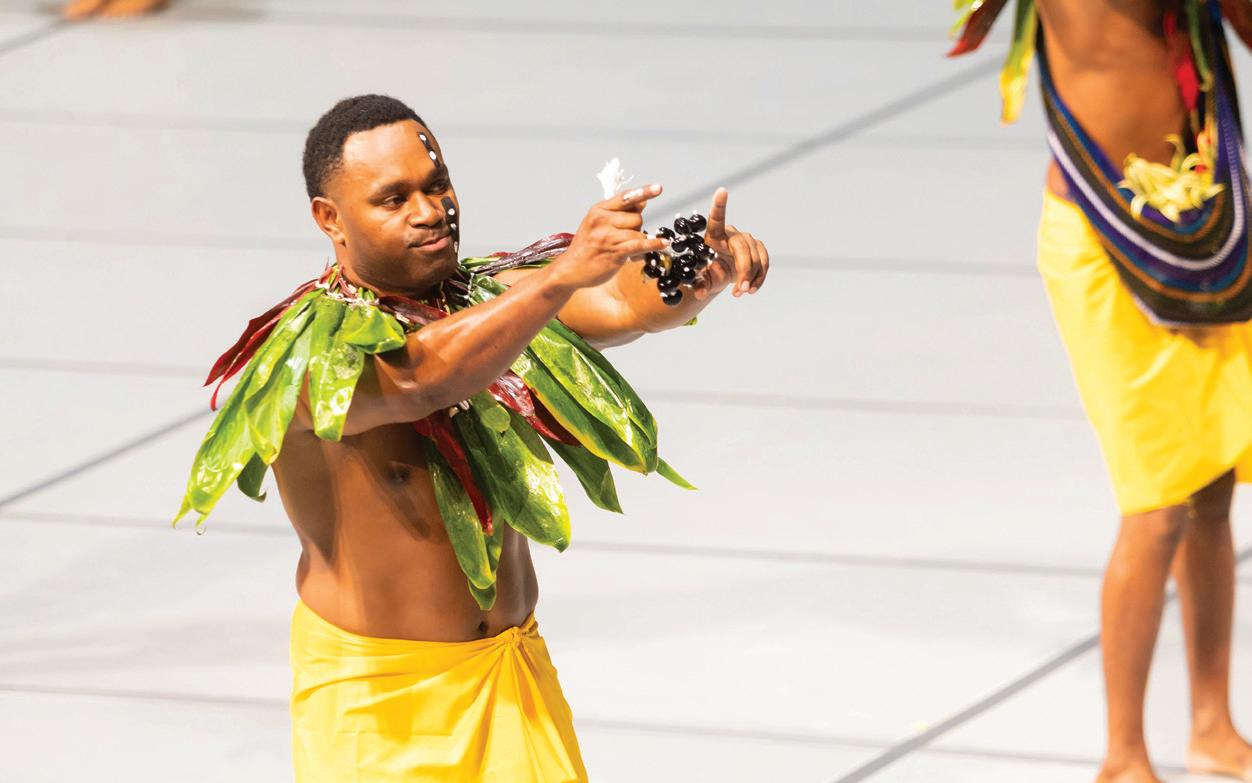
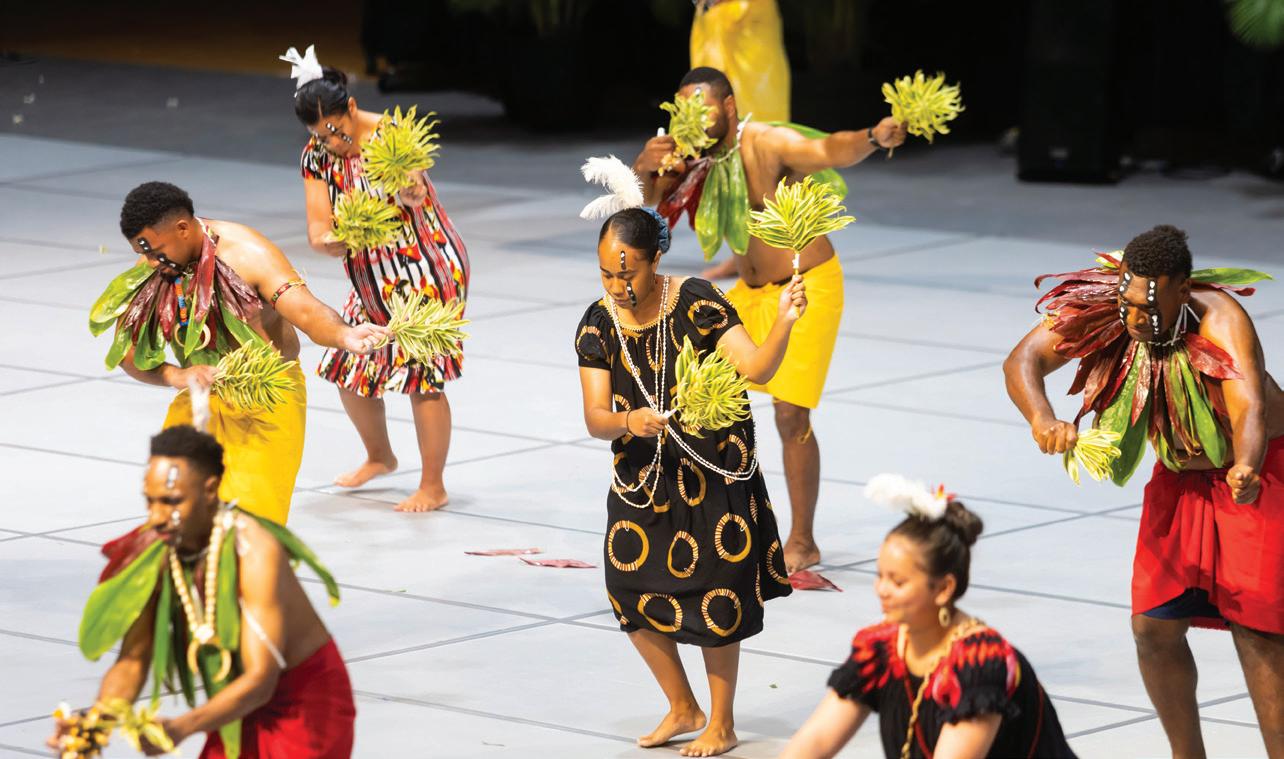
Papua New Guinea (PNG) highlighted dances from the southern and islands regions in their culture night performance, reflecting the theme “Unity in Diversity”, and sharing the culture and spirit of Papua New Guinea.
Nephi Ipai, a sophomore from PNG majoring in accounting and the club president, said their performance represented several provinces from the country. “PNG has many provinces with different cultural traditions.We wanted to highlight these to represent different parts of the country while showing how our people can come together in unity,” he said. He said the choreography included strong stomping, rhythmic stepping, turning and coordinated group movements inspired by traditional dances from those regions.
The club featured a dance titled “Yumi Wan Tasol,” meaning “We are One,” said club choreographer Hubert Tau, a freshman in construction facilities management from PNG. He said the dance combined movements from Bougainville, Manus and East New Britain, including swaying and swinging arms with the beat to show unity and energetic jumping to match the rhythm of the traditional garamut drum.
Jalini Vicky Jeyapathy, a junior in business management from PNG, said “Since PNG has 22 provinces and more than 100 different cultural dances, none of the dance motions are the same as my province, however, the song performed speaks of unity and that’s where I feel most connected.”
Jeyapathy said, “Dancing for PNG outside of my country makes me feel connected to my PNG heritage.” She said the swaying motions reminded her of home. “At home, swaying is a motion used to describe the flow of the ocean. It reminds me how important the ocean is for our families,” she said. “We are all not the same, but the only thing that makes us one is being a Papua New Guinean,” she added.•
HAWAII
HAWAII
BY JOHN RINCON WATSON
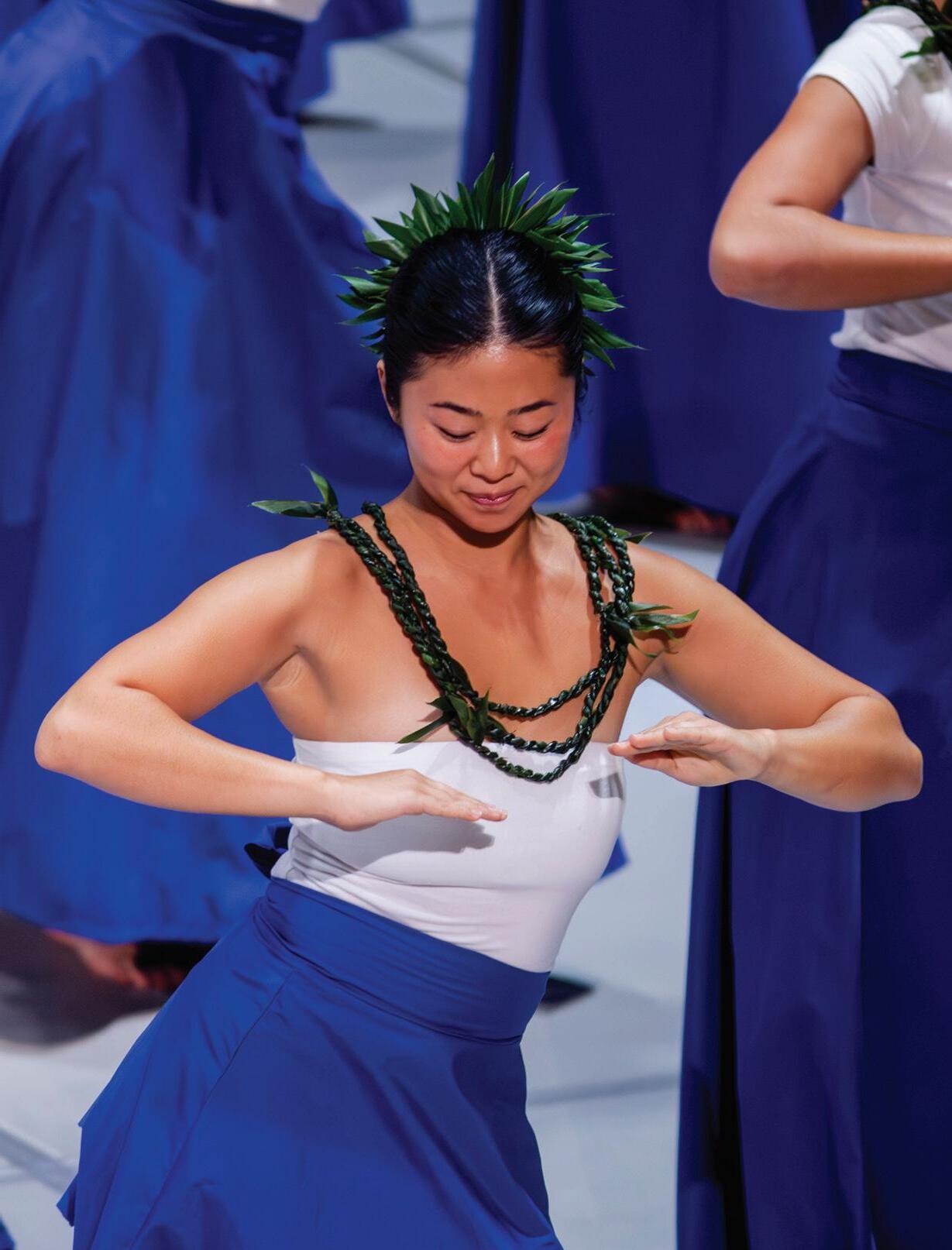
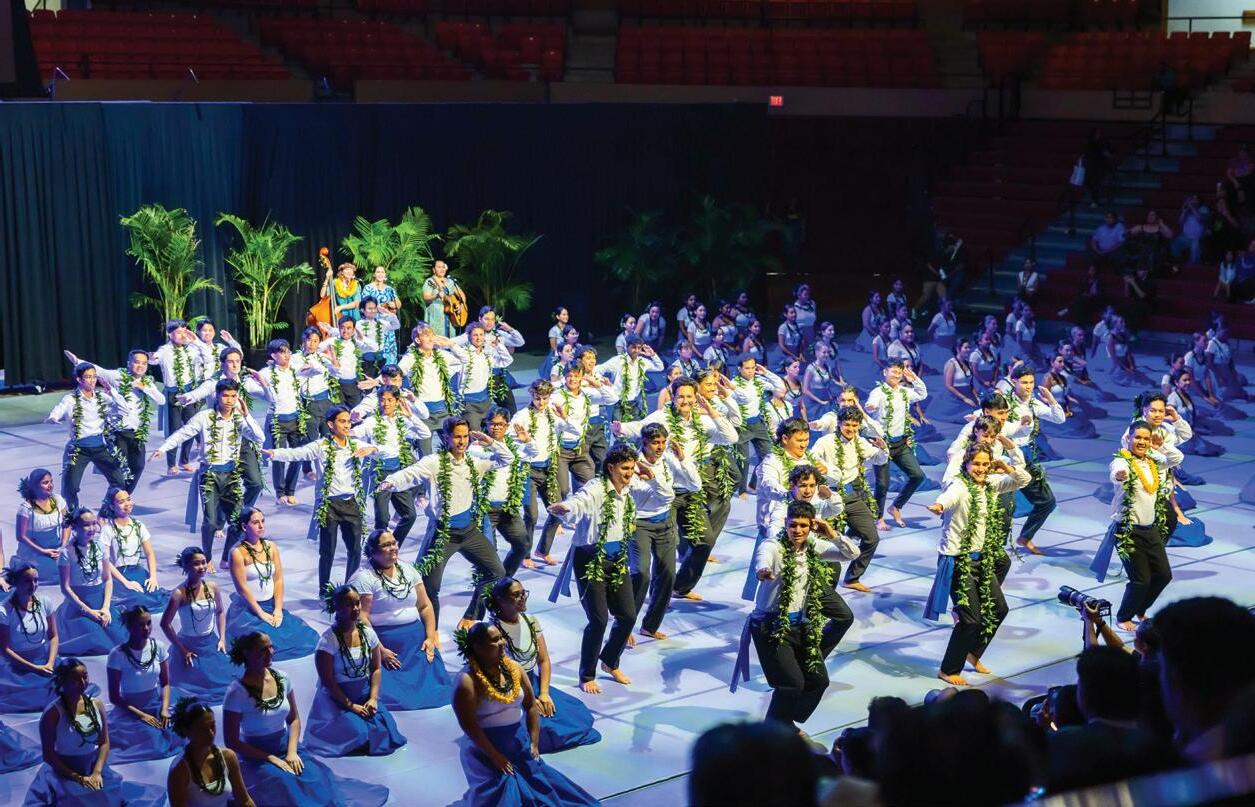
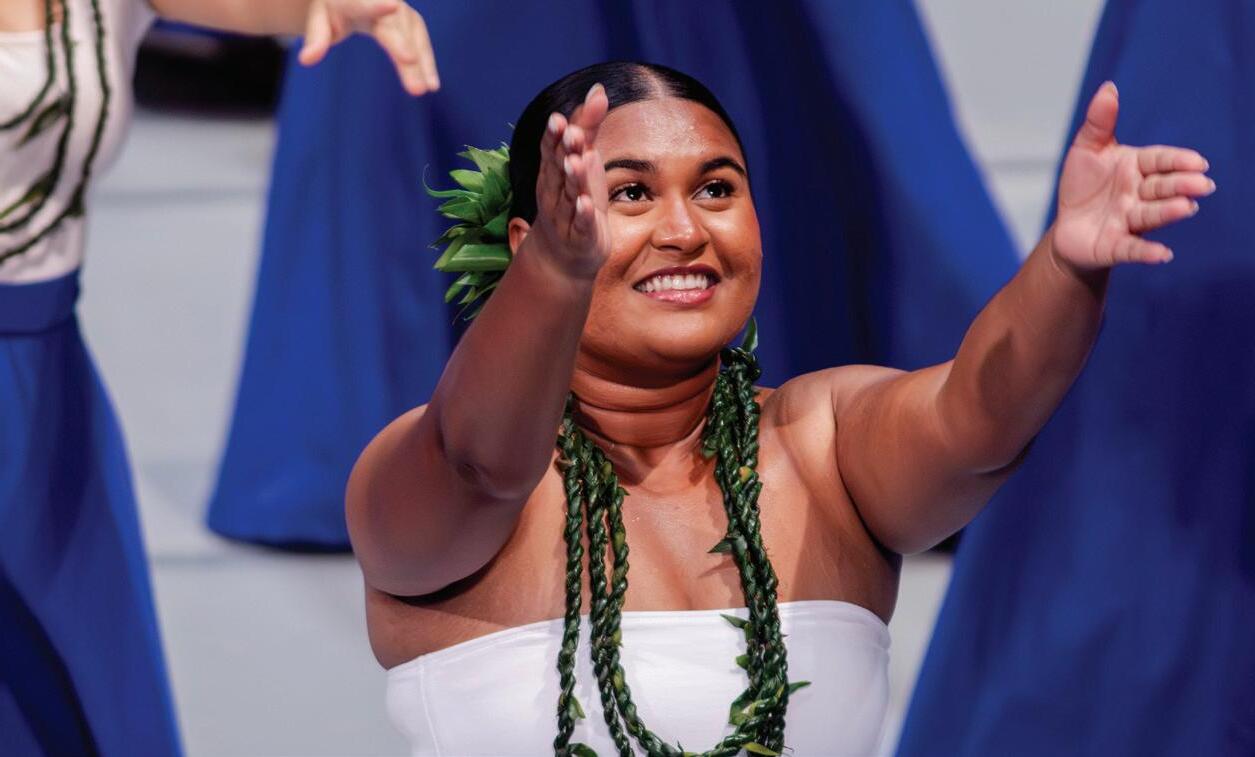
BYU–Hawaii’s Hawaii Club represents Lāʻie and Hawaiian culture through hula
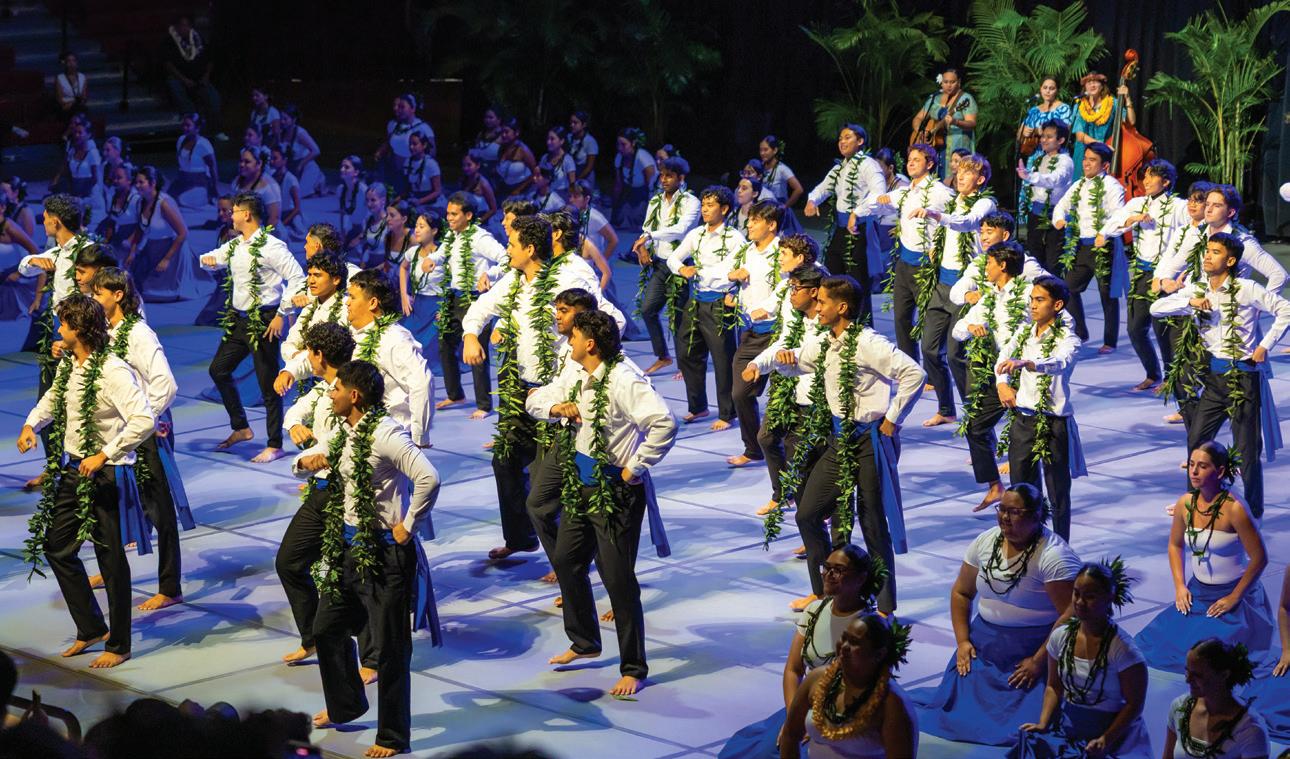
Focused on performing with grace, appreciation and joy, Hawaii Club opened Culture Night by telling a story centered on Lāʻie. The performance honored the beauty and community found in Hawaiian culture, said Hawaii Club president Moanahiwalani Walker, a junior in Hawaiian studies and biology from Hawaii. “The Hawaiian community continues to carry that culture forward, and I hope our performance helped people recognize and appreciate that,” she said.
“Our Culture Night performance focuses on Lāʻie—specifically the temple, Iosepa and the seaweed along the shore,” explained Walker. Hawaii Club’s show featured three songs—each song talked about a unique dynamic of life in Lāʻie and emphasized important details about the resilience of Hawaiians.
The first song, “Nani Laie”, spoke of Lāʻie’s beauty, and compared the temple to a star in the east.
The second song, “Ka Uluwehi O Ke Kai”, talked about the taste and smell of the seaweed along the shore. Finally the third song, “Ka Lei” Hoʻāno, shared details about Iosepa.
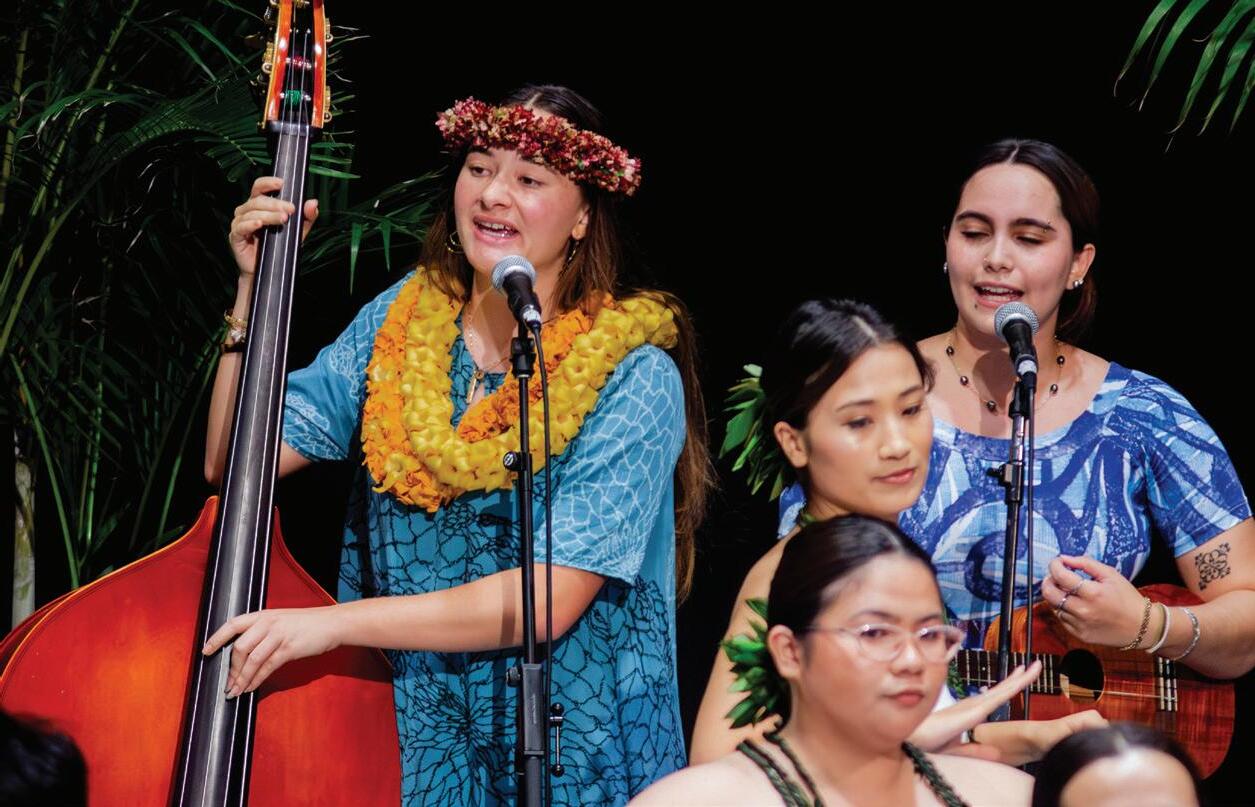
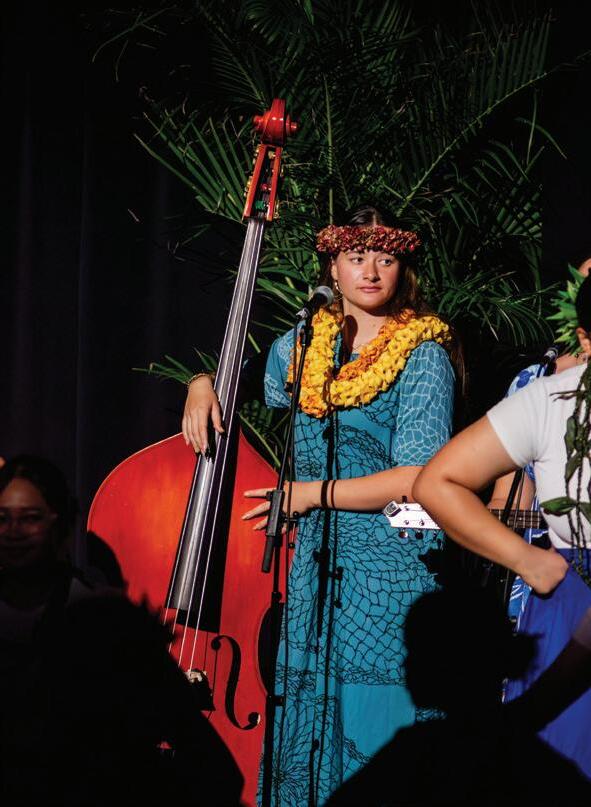
Despite there being many types of hula, Walker explained that they narrowed it down and only performed ʻauana to increase thematic consistency and fit time constraints. This stylistic decision emphasized a more flowy dance, and included instruments like ukulele, bass and guitar. “I think many people view hula as sharp, fast and muscular movements, but this year we are showing the ʻauana side of hula,” she said.
After countless hours of dedication and hard work, Hawaii Club hopes to have been a positive representation of what Hawaiian culture is, expressed Walker. “We hope our performance encourages people to appreciate the history, culture and beauty of Lāʻie and the Hawaiian community that continues to care for and represent it today,” she said.•
TAIWAN
TAIWAN
BY FRANCE VALERIE LUCILLO
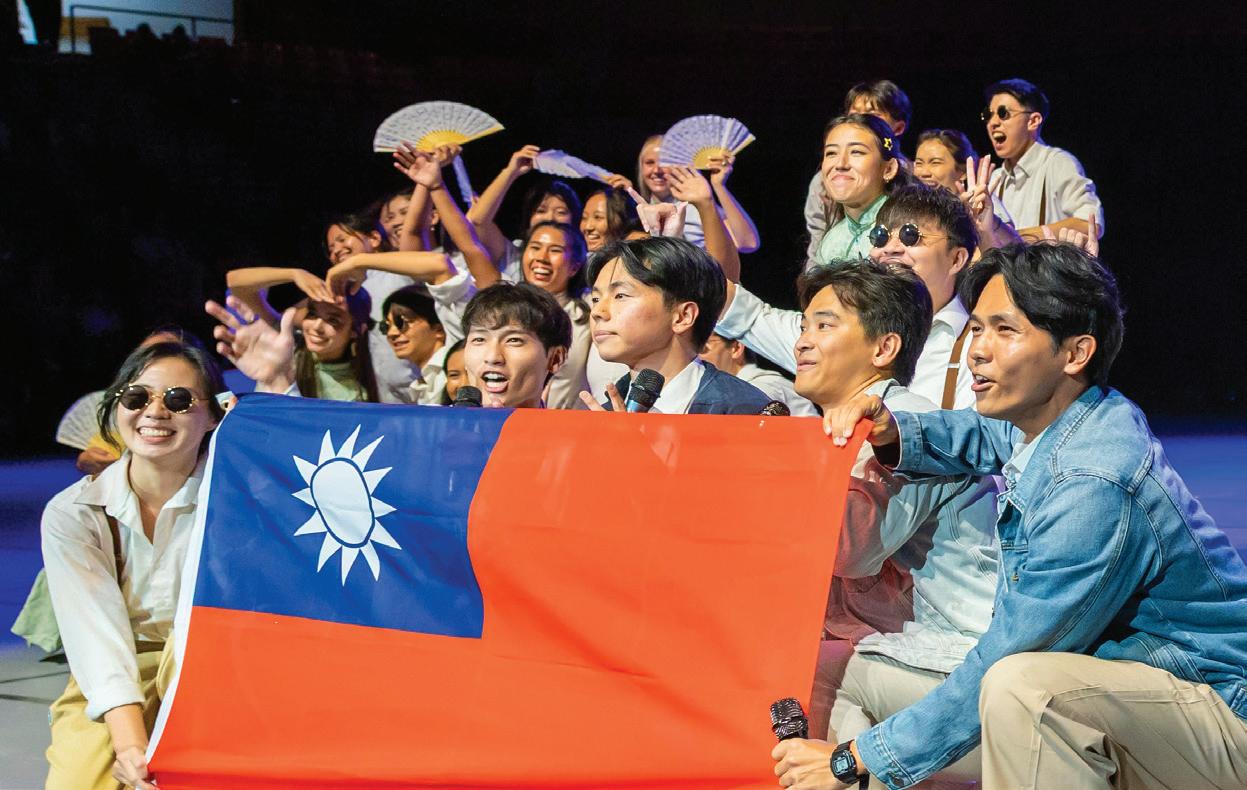
The Taiwan Club performance revives 1950s Taiwanese culture through dance and attire, blending tradition with modern expression
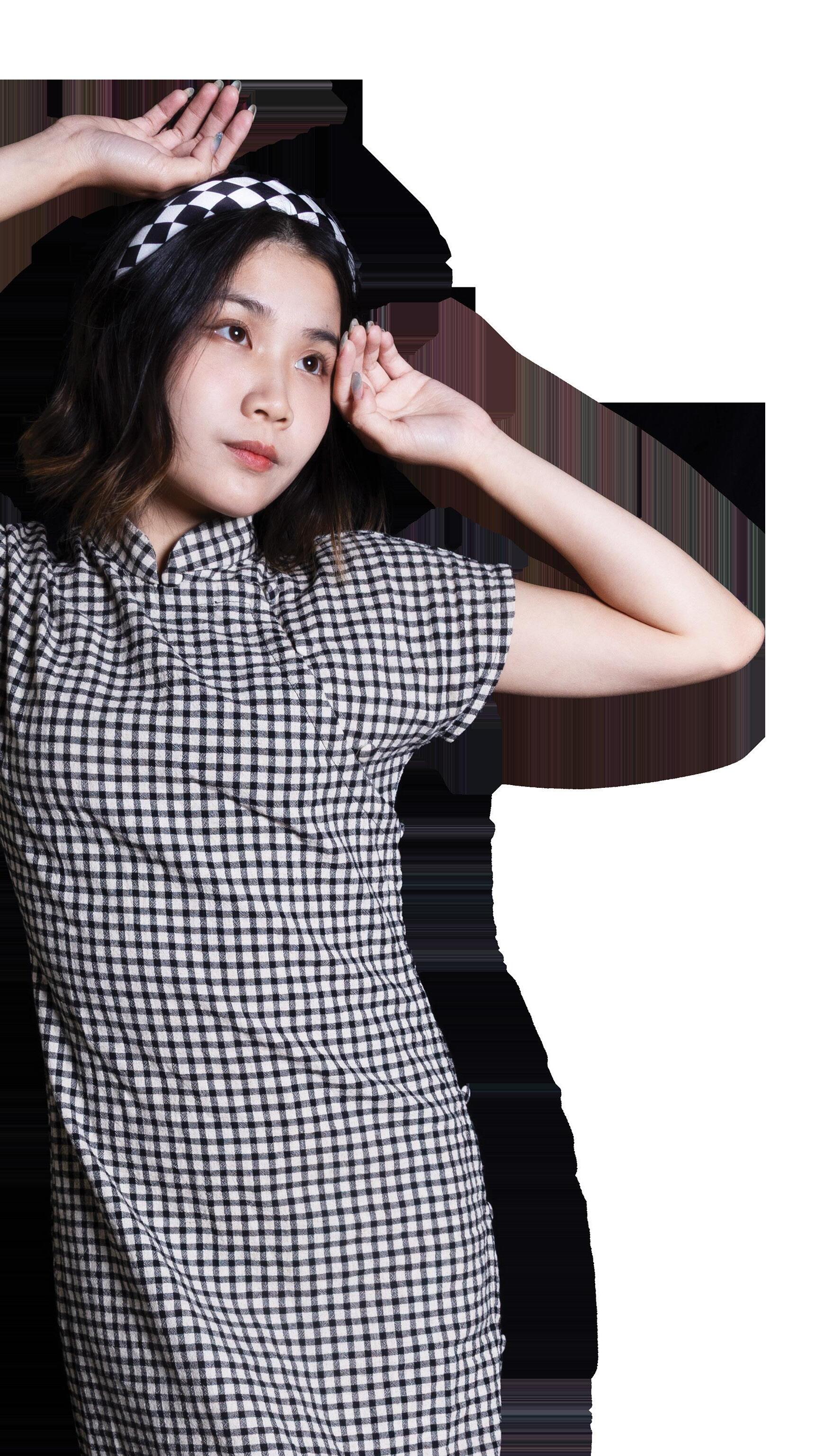
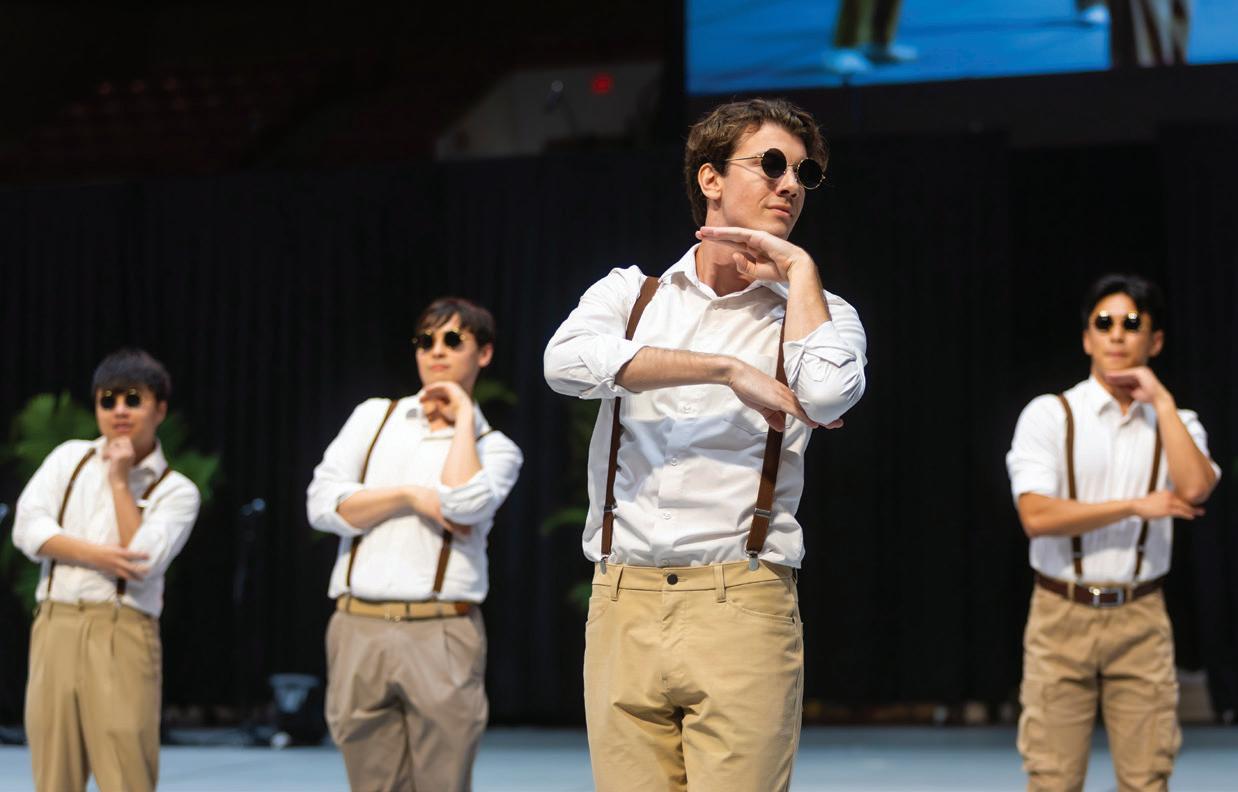
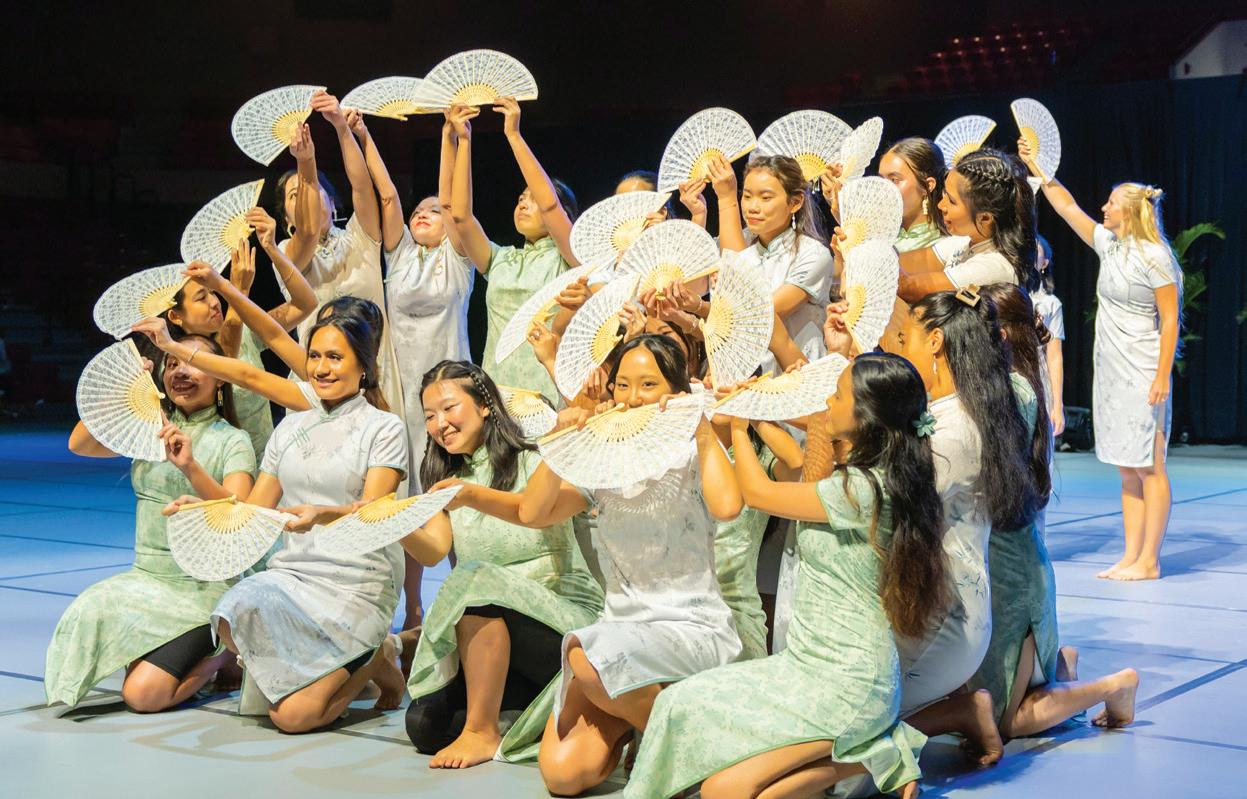
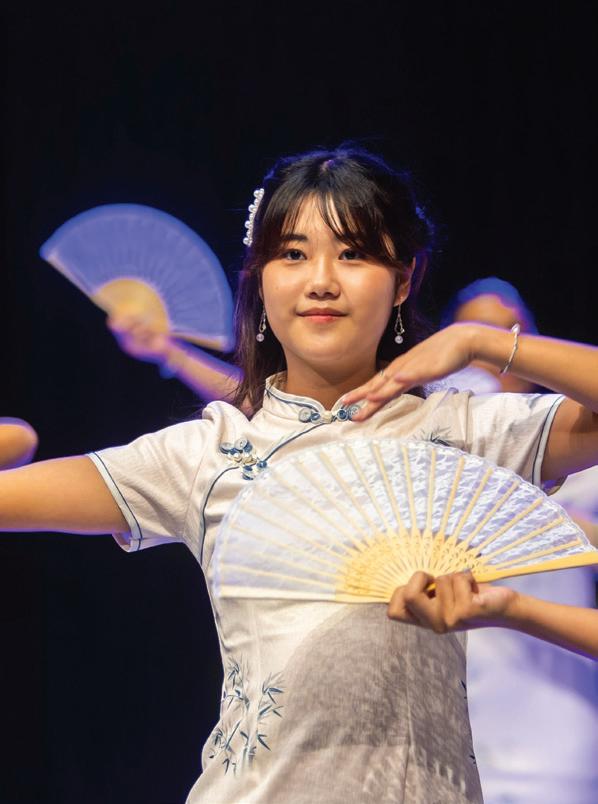
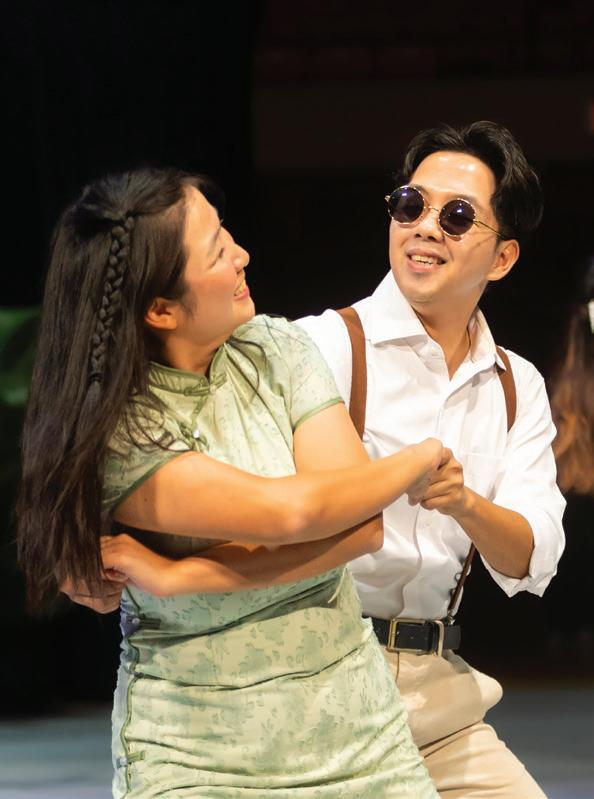
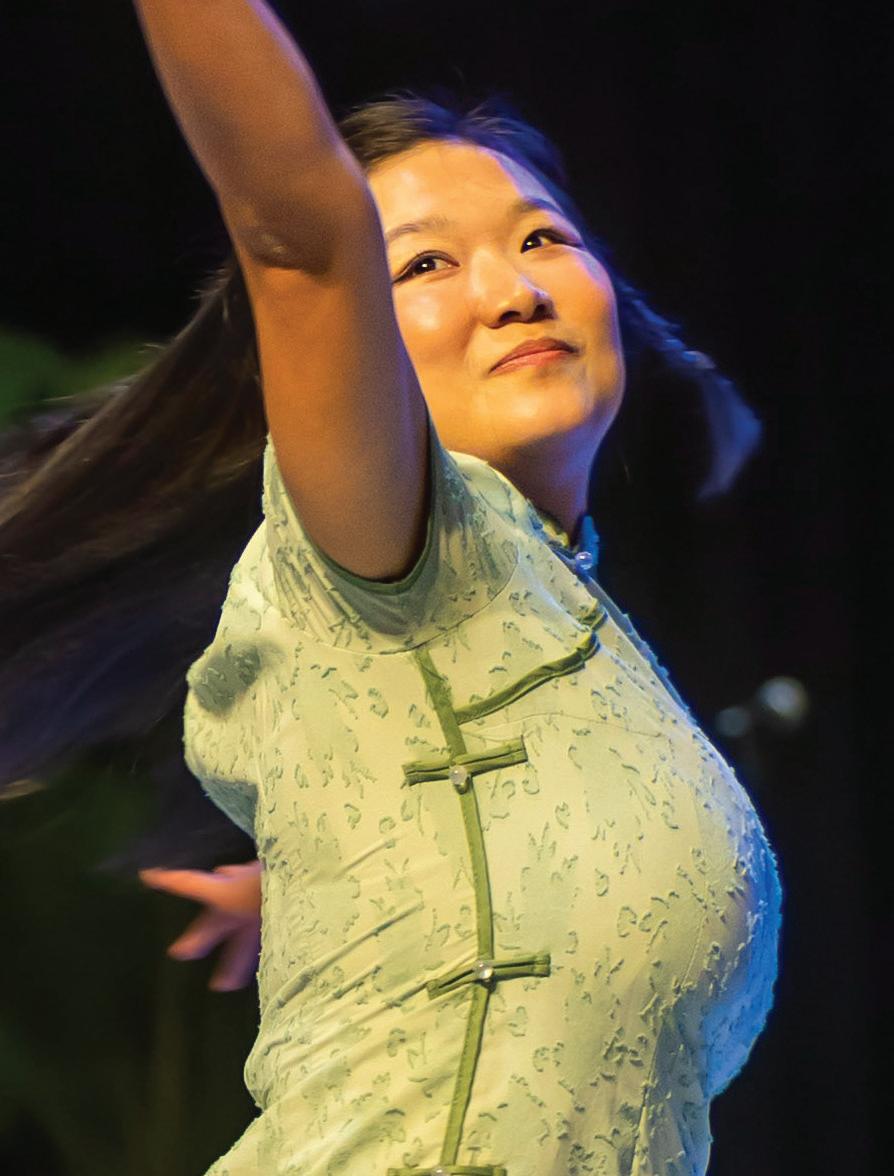
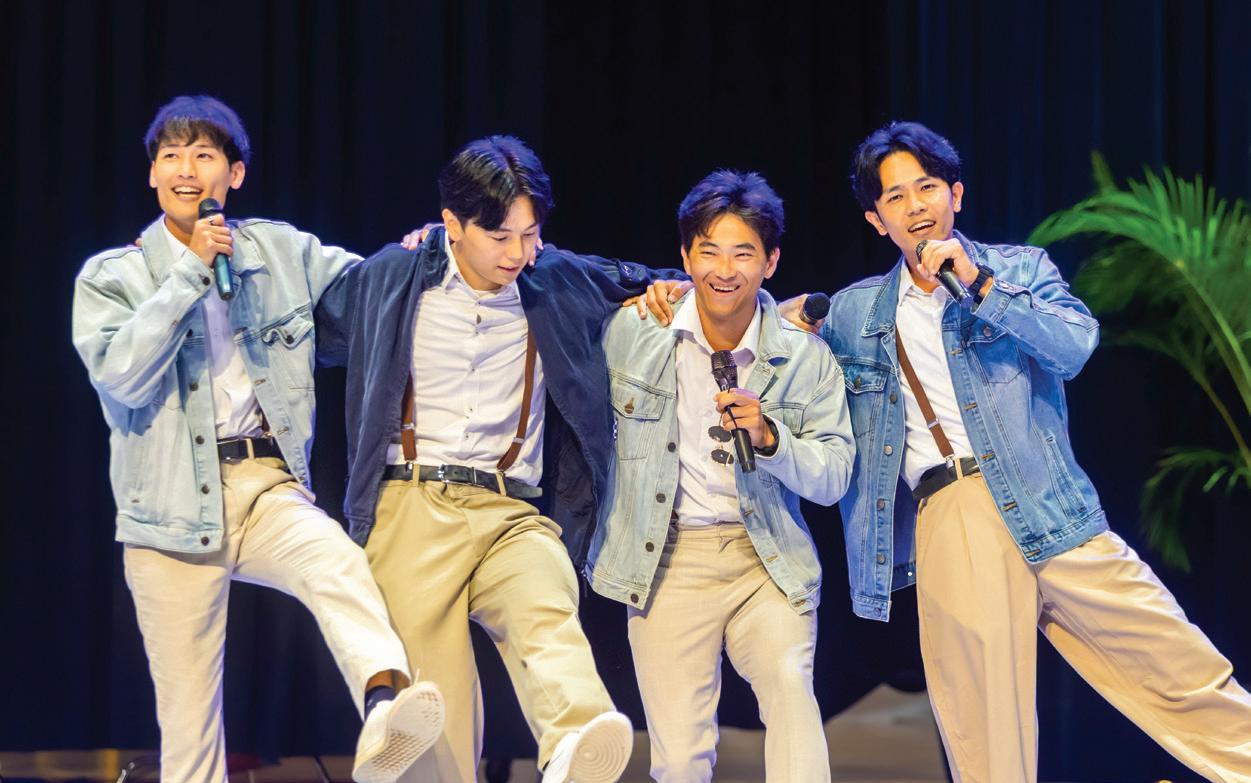
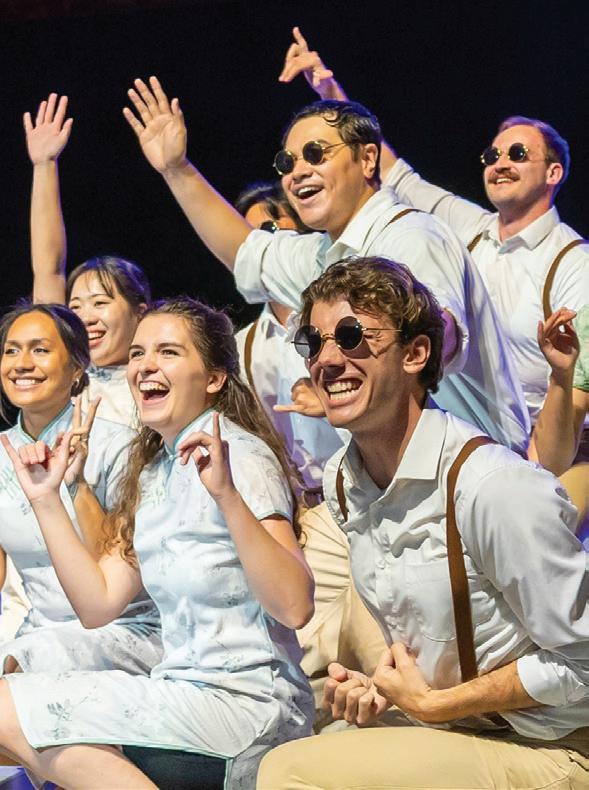
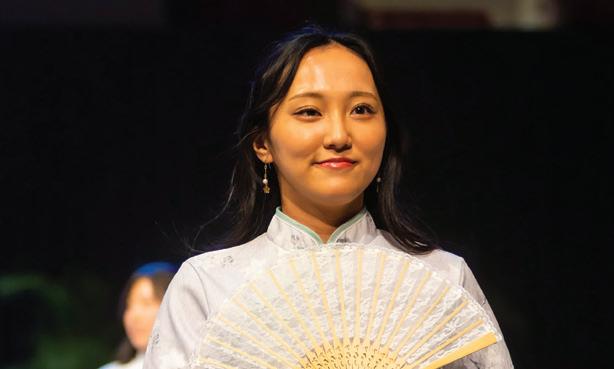
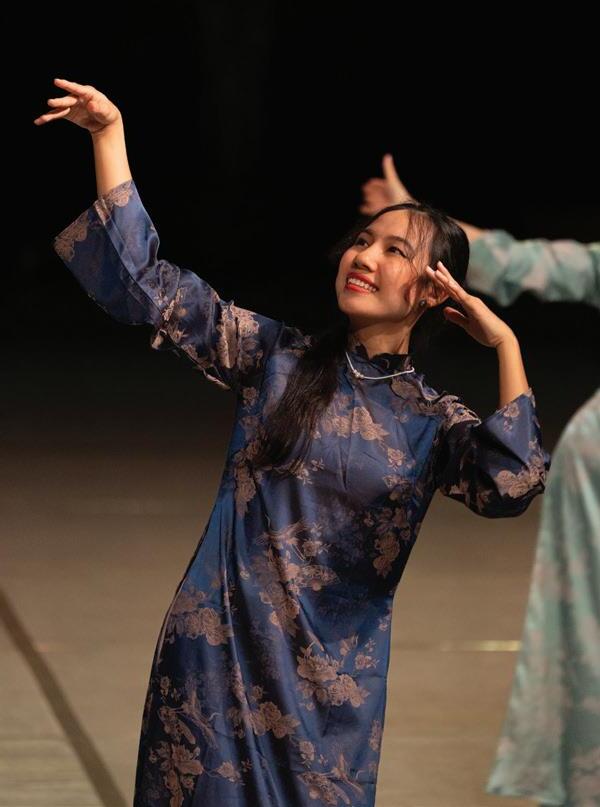
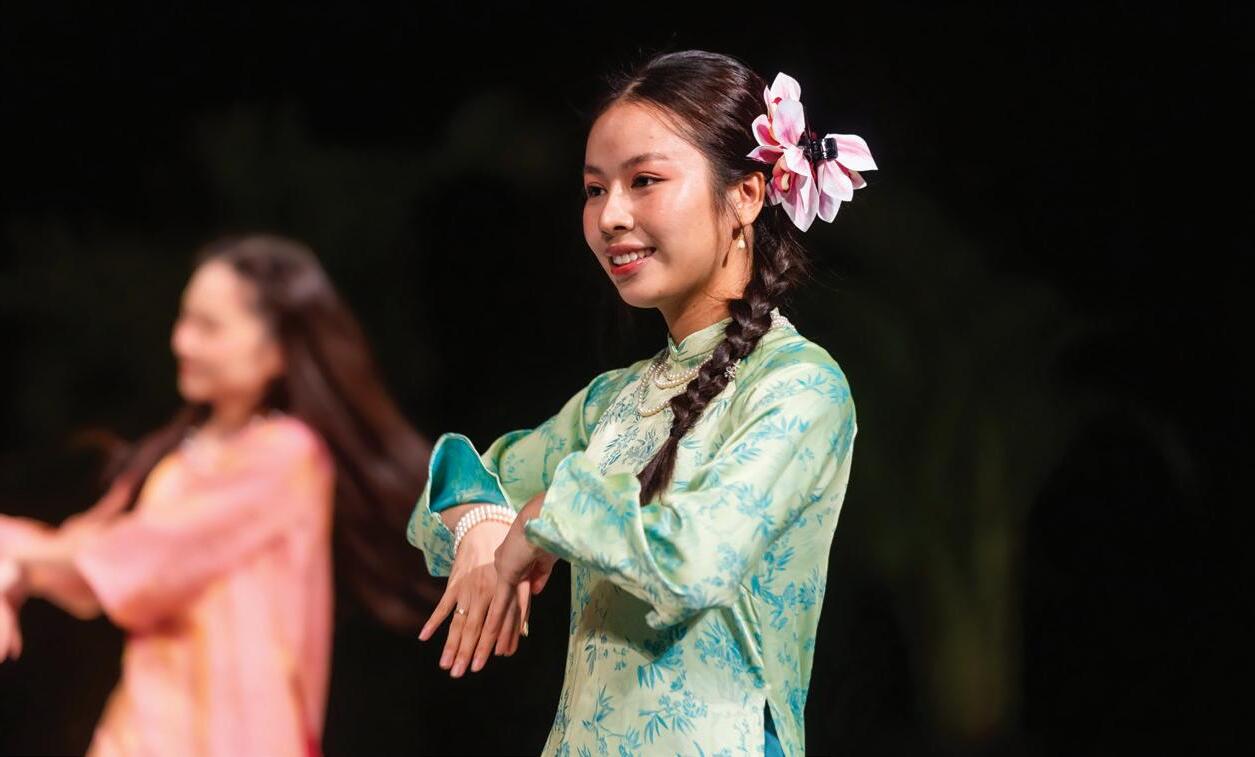
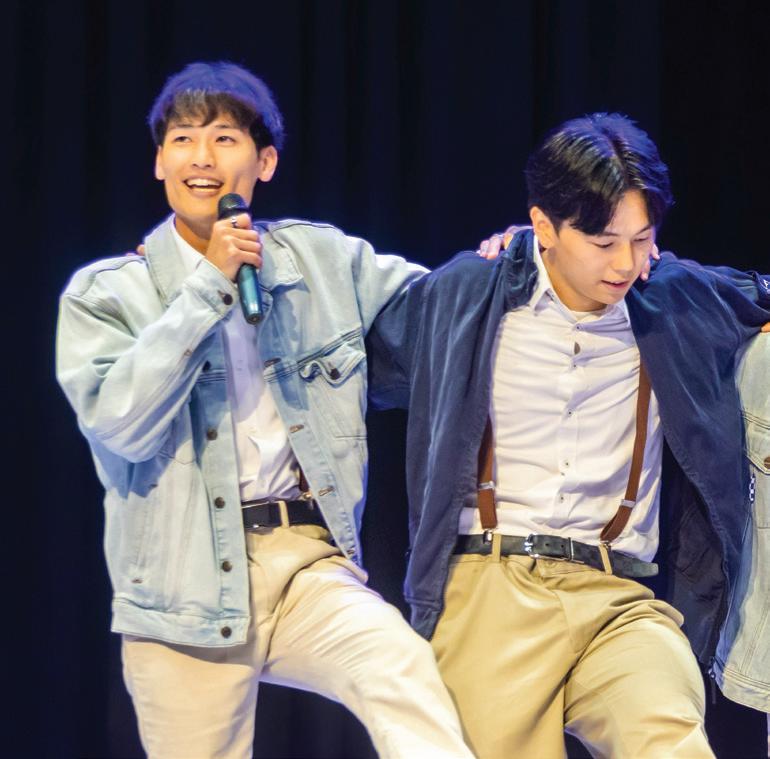
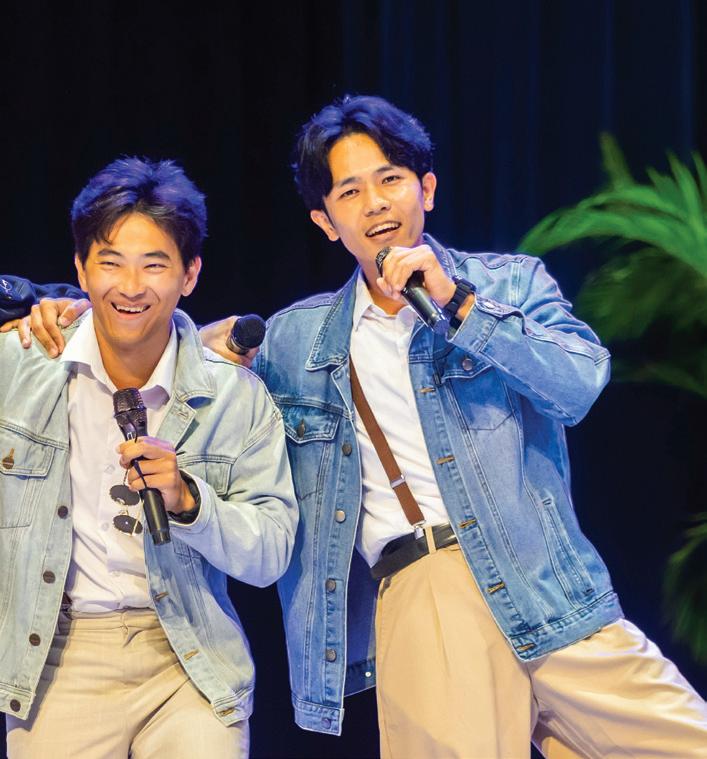
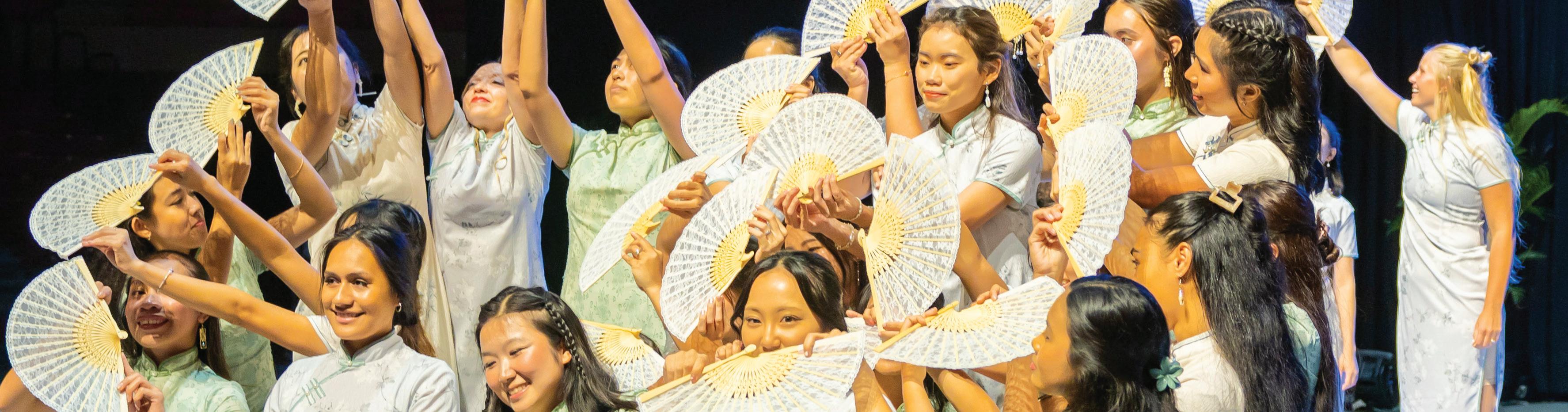
Dressed in elegant “qipao” and vintage-inspired suits, Taiwan Club performers stepped onto the BYU–Hawaii stage; some dancers gracefully moving with fans as they brought the charm of 1950s Taiwan to life. Flowing fabrics, gentle fan movements and synchronized steps reflected a blend of Chinese influence and modern expression, each motion telling a story of culture, history and evolving identity.
The clothing Taiwan Club chose represents Taiwan in the 1950s, said Chi-Ning “Lindsey” Wang, a senior majoring in accounting from Taiwan and the club’s president. She said the 1950s in Taiwan had strong cultural influence from ancient China due to immigration.
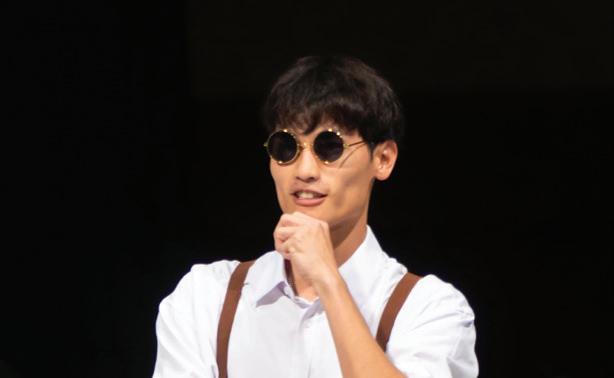
Wang said the women’s one-piece dress known as the “qipao” reflects Chinese influence. “The original design was loose and long, but during the old Shanghai era, it became more fitted to show the beauty of Chinese and Taiwanese people,” she explained. For men, she said they wear button-down shirts with suspenders, coats and slacks.
Shan-Ni “Sunny” Liao, a senior majoring in business management from Taiwan and the vice president, said that as a performer she felt the need to follow the choreographer’s direction. “I think it’s very interesting that because of Culture Night I get to practice the dance and interact with people from different cultures,” Liao said.
Martina Mariano, a senior in construction management from Utah and the club’s choreographer, said the club’s presidency sent her an inspiration video to set the tone for the choreography, especially for the men’s Taiwanese pop dance. “I learned what I could then adjusted it for them,” she said.
Mariano said she chose steps that are easier to execute. “You don’t want to make it too complicated, especially since Culture Night performances are shorter this year. You want it to look good but still be easy to learn and perform,” she said.•
MONGOLIA
MONGOLIA
BY JESSIKA SANTOSO
Honoring the horse through movement and costume
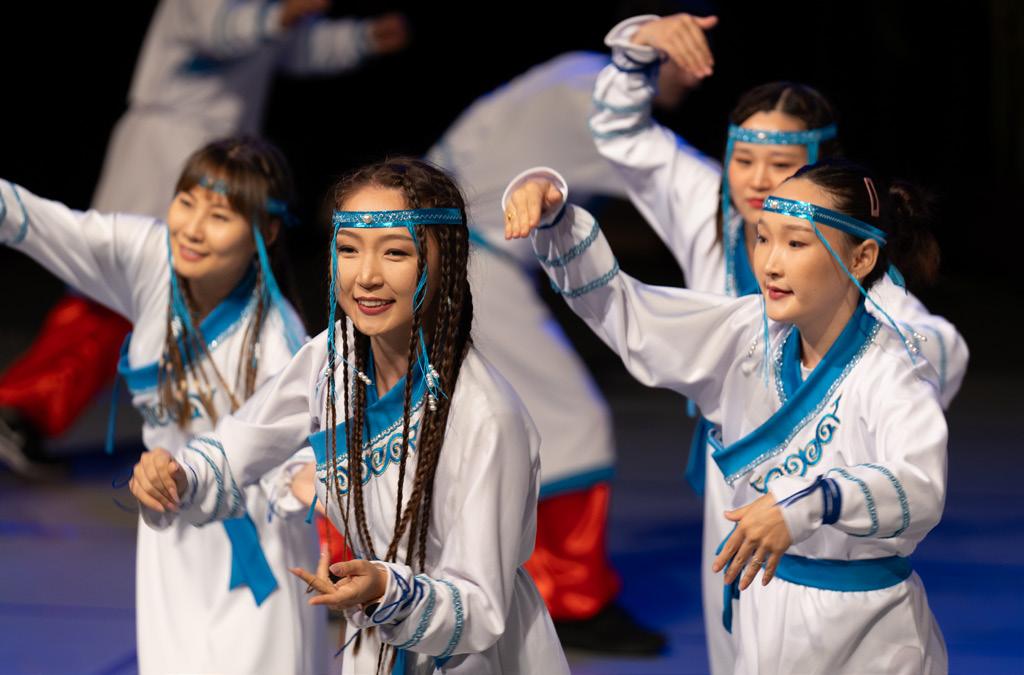
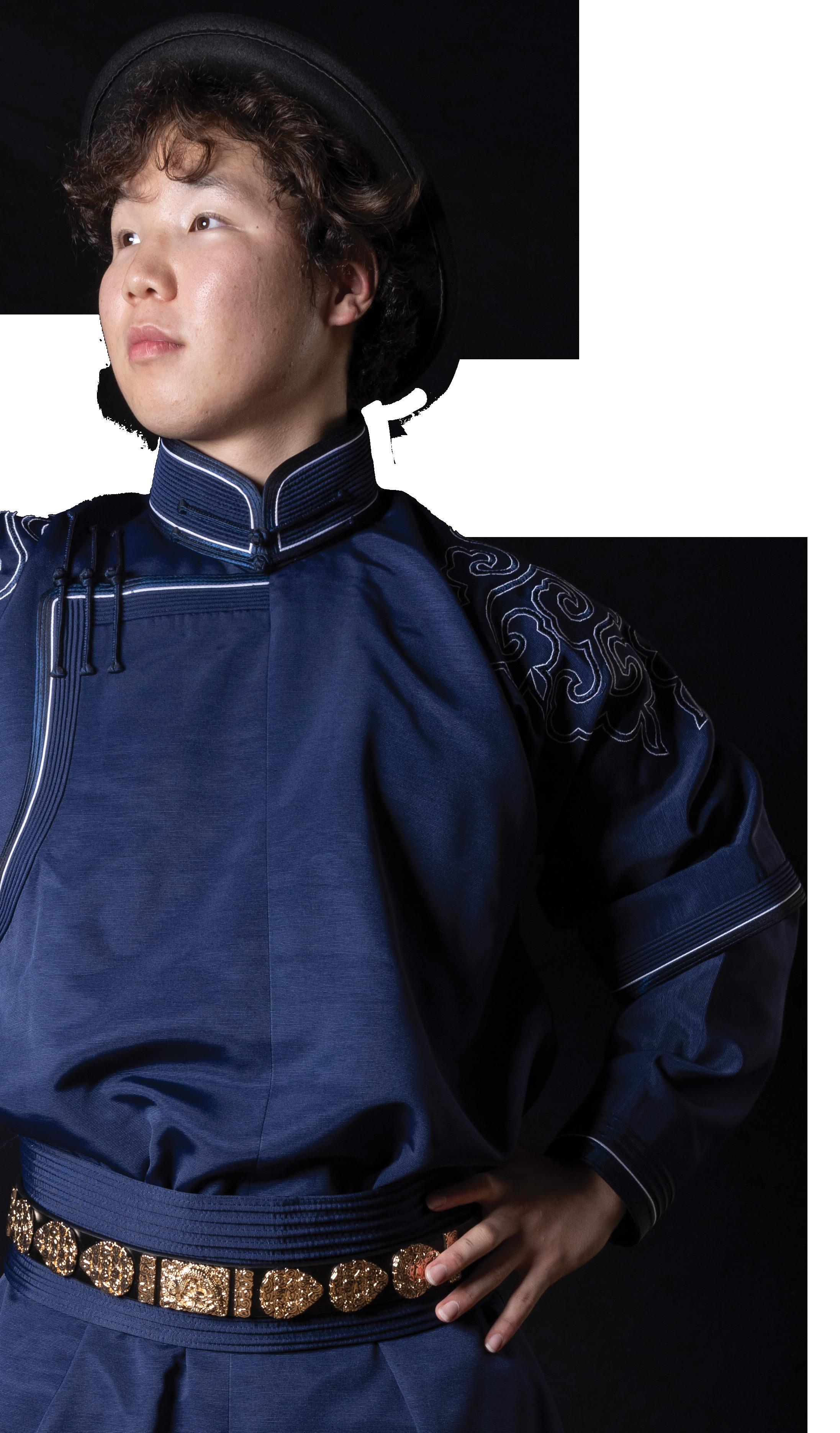
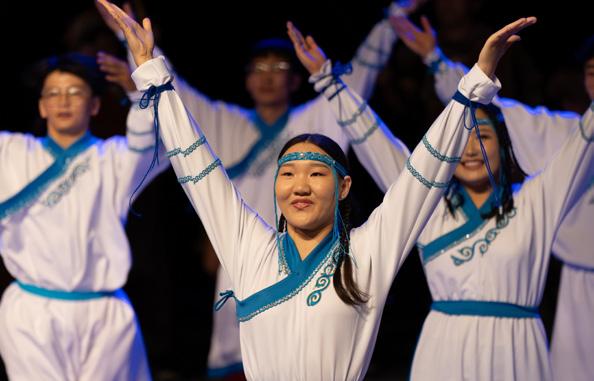
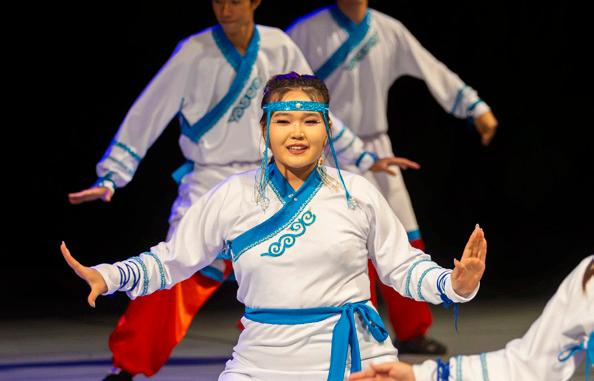
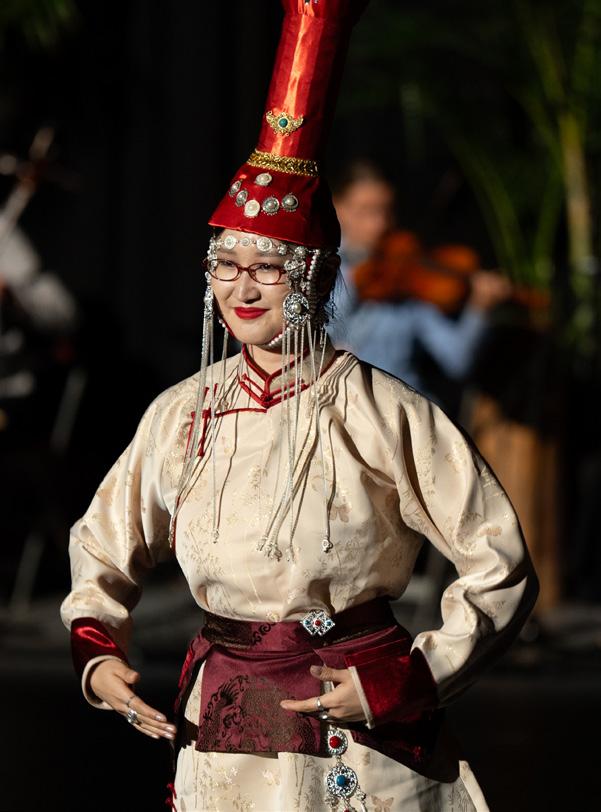
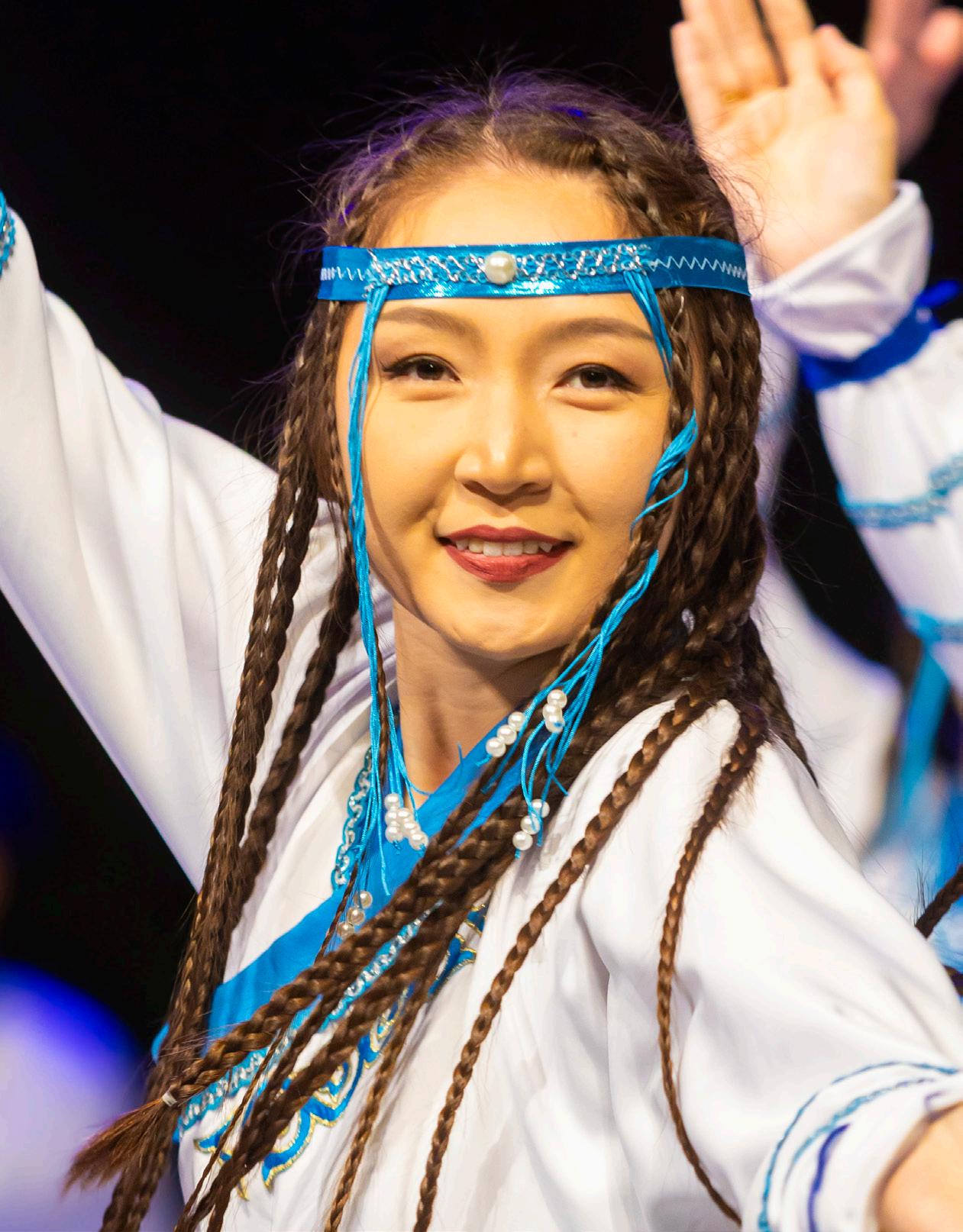
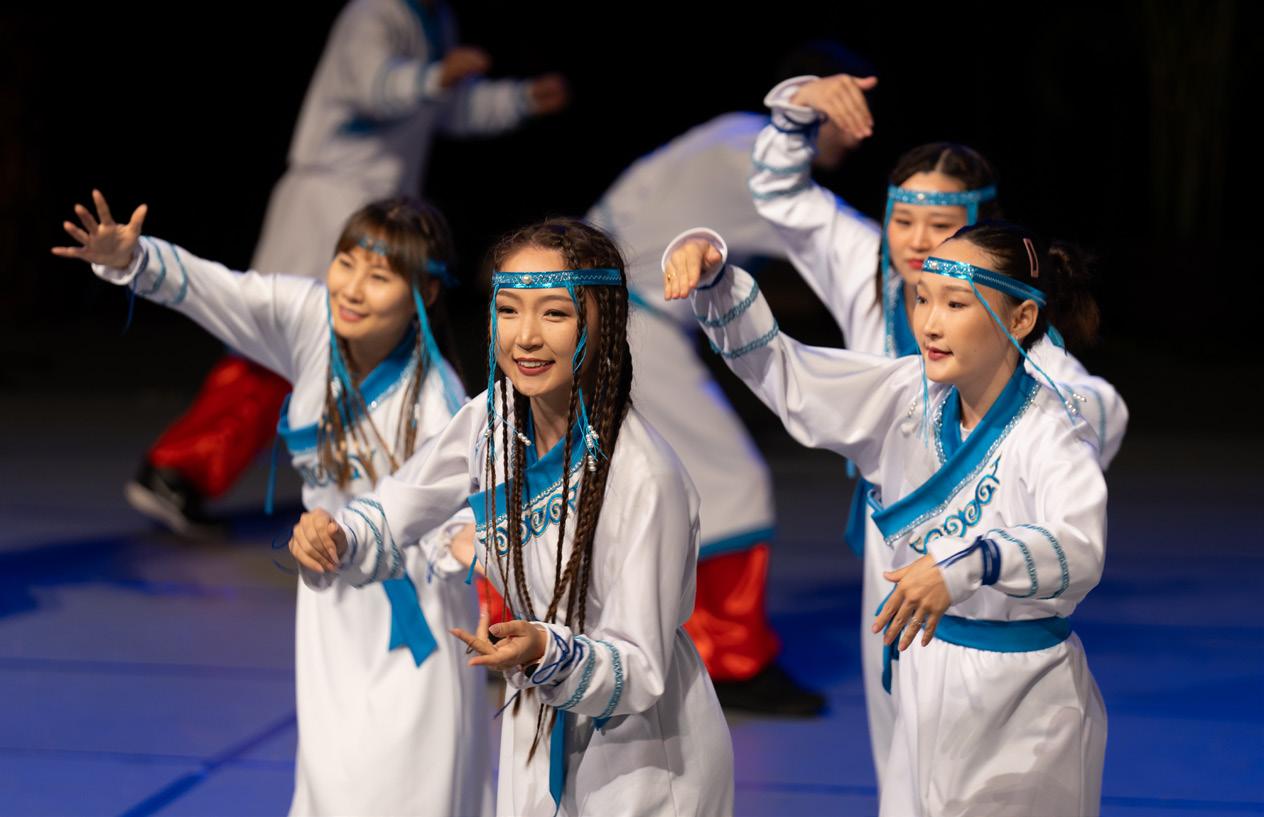
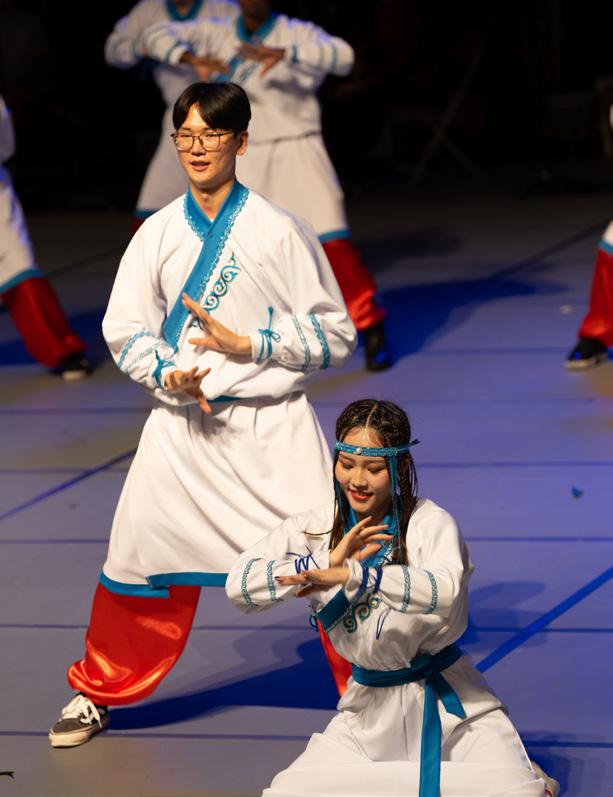
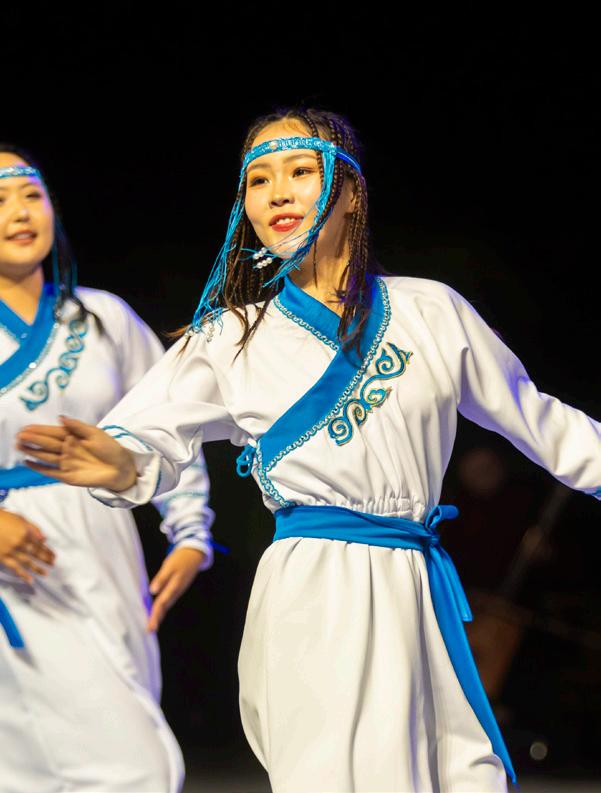
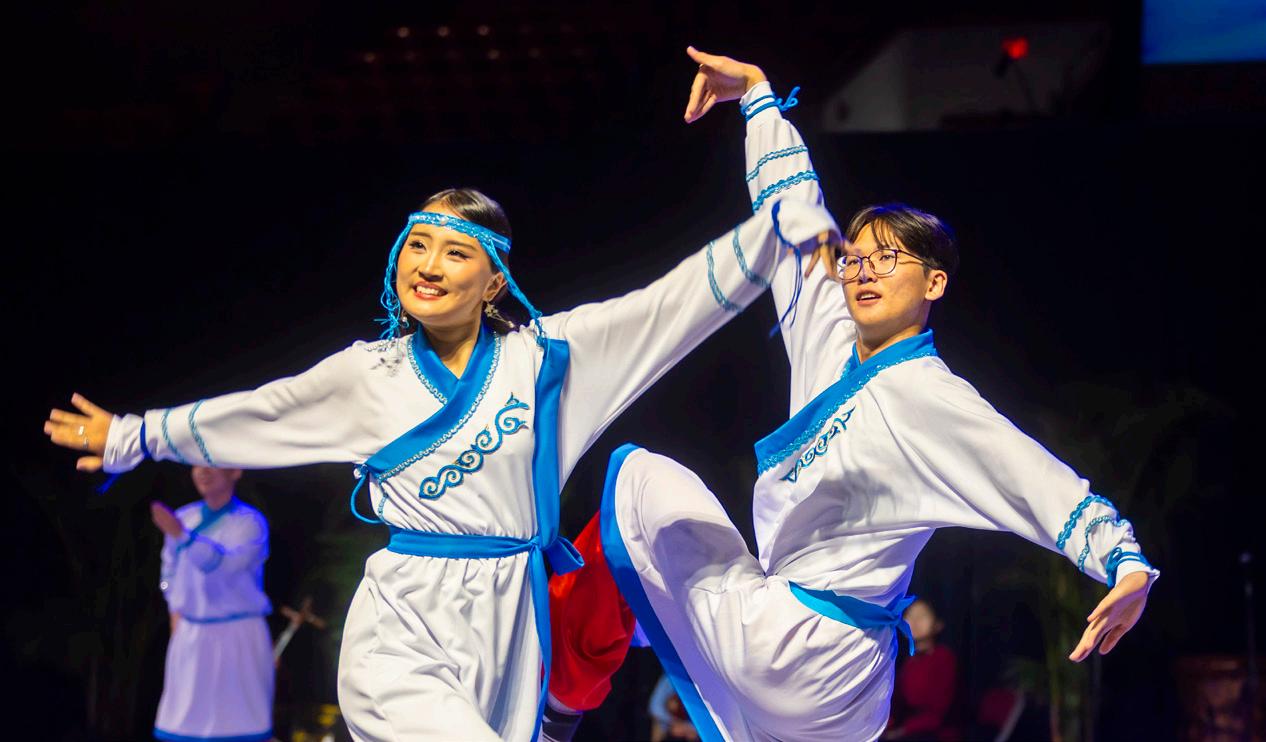
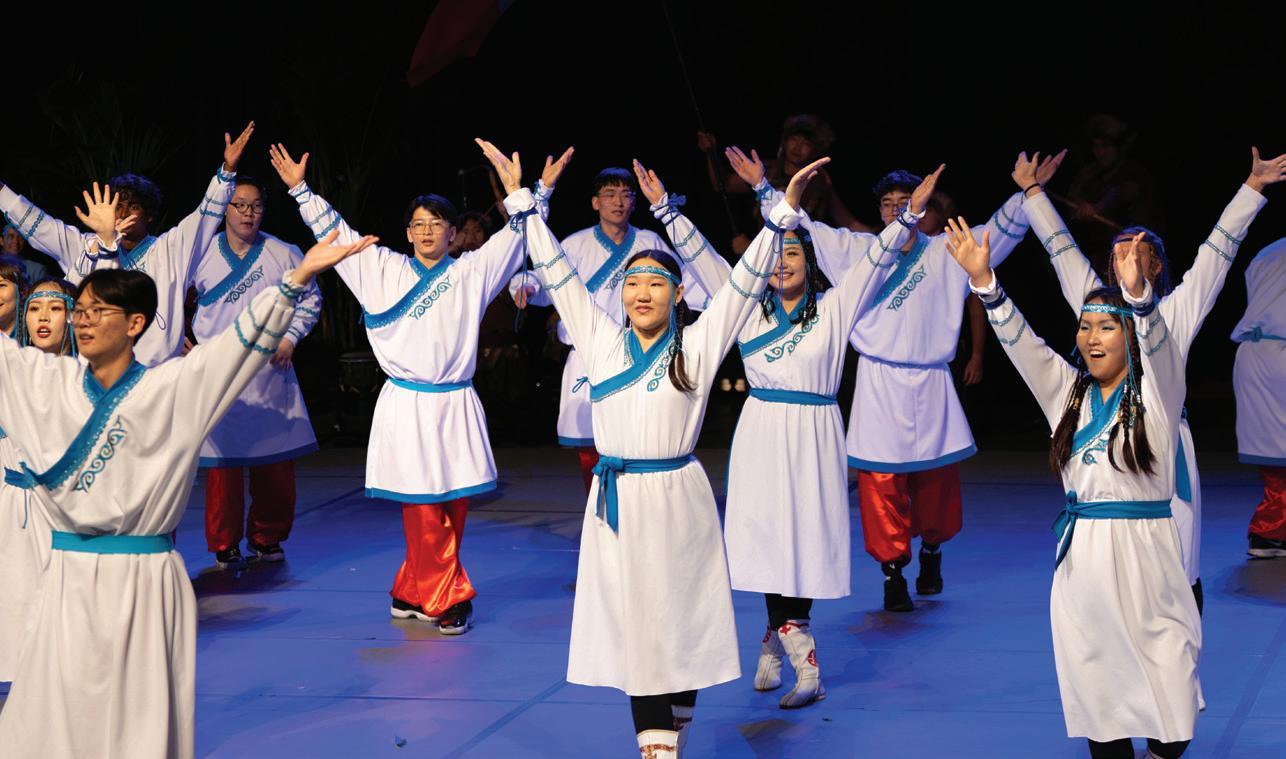
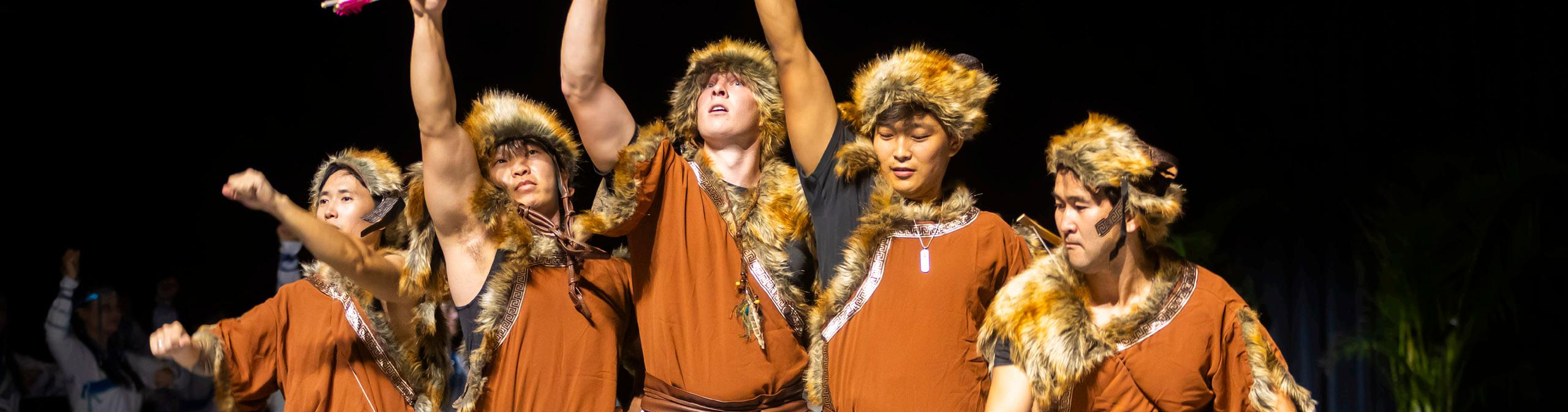
The club’s costume lead Enkhjin Jinn, a sophomore in business, said the team chose to perform Joroon Joroo, a traditional Mongolian folk dance that honors the horse—an animal deeply woven into Mongolian history. “For many centuries, Mongolians used horses in daily life. Even nowadays, in modern life, we still respect horses and treat them like family members,” she explained. Jinn said the white and blue costumes were chosen not simply for aesthetics, but for meaning. White represents purity and respect, while blue symbolizes the “Eternal Blue Sky,” which Mongolians believe protects and guides them. “We believe we communicate with our ancestors through the Eternal Blue Sky or to refresh ourselves when we feel drained,” she said.
Choreographer Anar Rroase, a sophomore in computer science from Mongolia, said costume and choreography were designed to work together. The flowing fabric allows movements to mirror a horse’s gait, while the bells attached to each dancer’s hands symbolize the sound of hooves. “It’s about connecting with nature—feeling the wind as you ride a horse,” she said. “It’s about being part of nature.”
Exel Chrystiawan, a business marketing junior from Indonesia and a performer, said learning the meaning behind the costumes and colors changed how he approached the performance.
“I performed it with more respect and intention,” he said. Chrystiawan added he hopes the audience feels the spirit of Mongolia he felt—the wide open sky, strong teamwork and loyalty—reflected in the galloping choreography.•
ROTUMA
BY ALDEN ETHANAEL PUA
Highlighting Rotuman love and solidarity through song and dance
Adorned in ti leaves, male and female performers took the stage in pairs, moving in steady and coordinated rhythm as they showcased Rotuman culture.
Club choreographer Willie Irava, a senior majoring in business management from Fiji, said the club’s performance this year illustrated the “relationships between men and women.” He said, “The dance moves that the men performed showed strength and power, and the women showed a bit of softness, describing their roles in society.” He added, “The dance doesn’t put men above women, but more so how they complement [each other] in Rotuman Culture.”
Irava mentioned how Rotuman culture is often overlooked compared to Fijian culture. While Rotuma is a part of Fiji, he stated, it has its own unique cultures and practices. Through their performance, he hoped audiences had “a better idea of what Rotuma is and what culture it portrays compared to other cultures [in the Pacific].”
Performer Kevin Merrill Louis, a junior majoring in finance and Hawaiian studies from India, noted the sense of solidarity and support members showed one another throughout their dance practices. “[It] felt like a family connecting together. … Everybody supported each other throughout our practices.” That same sense of family, Louis stated, carried over to the night of the performance. “My partner kept cheering me on throughout the dance, and I did the same,” he continued.
Sharing similar view, performer Holly Burgess, a sophomore in health and human science from Australia, shared her thoughts on the club’s dance and music. Burgess described the club’s performance as playful pursuits between male and female dancers. She said the men and women “pursue” each other until finally coming together to dance. She commented on the dynamic as being “a little bit flirty.”•
BY MYCO MARCAIDA
Cambodia club fuses traditional Khmer dance and modern Western influences to celebrate a culture rooted in resilience and evolving heritage
DCAMBODIA CAMBODIA
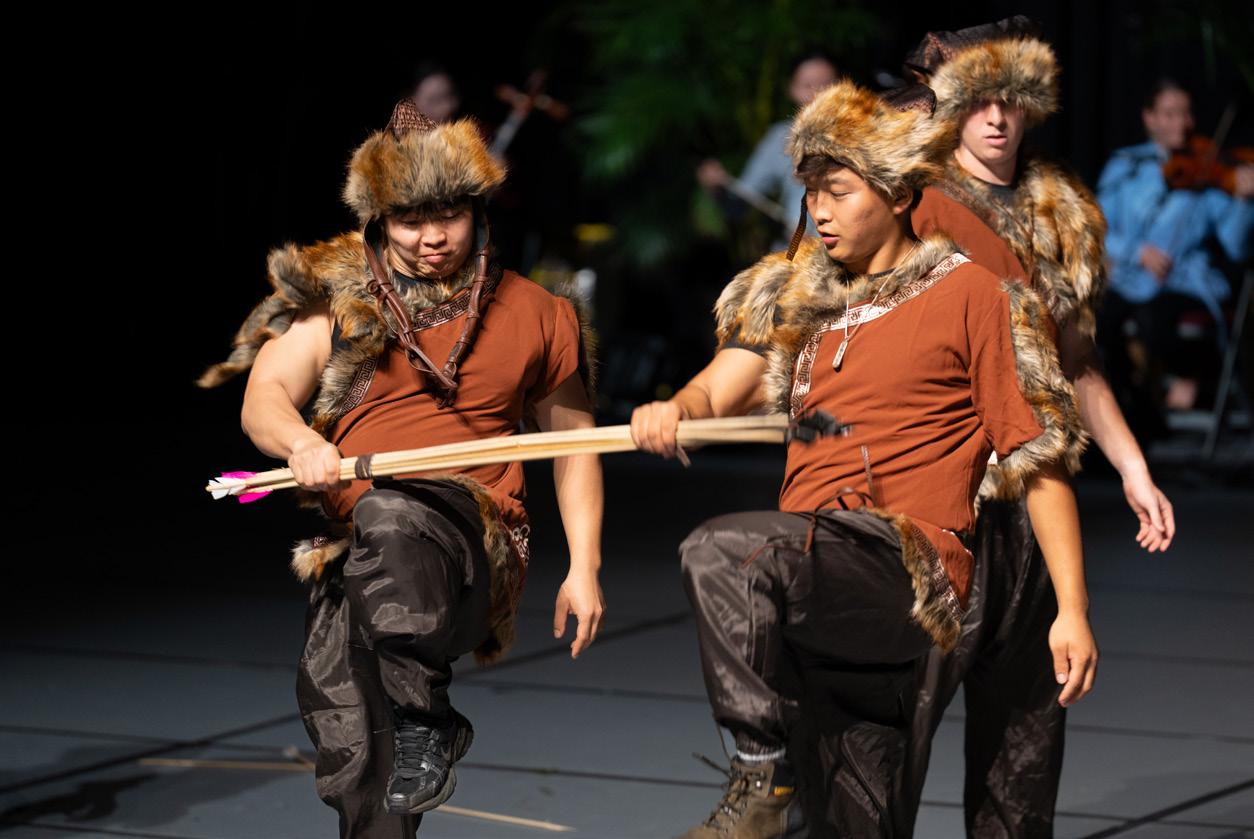
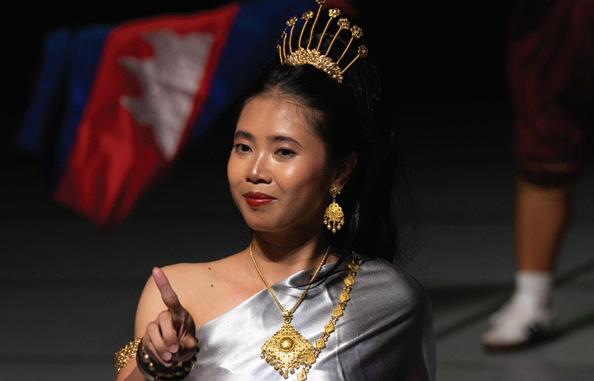
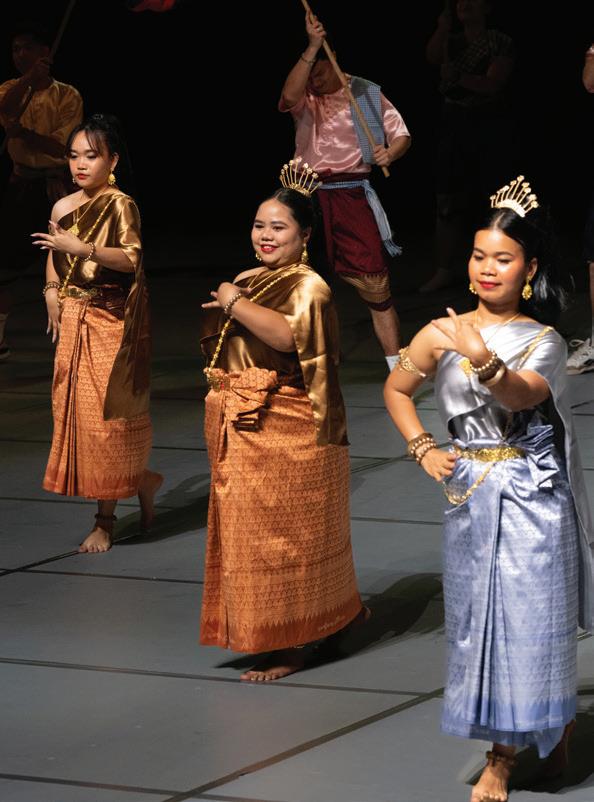
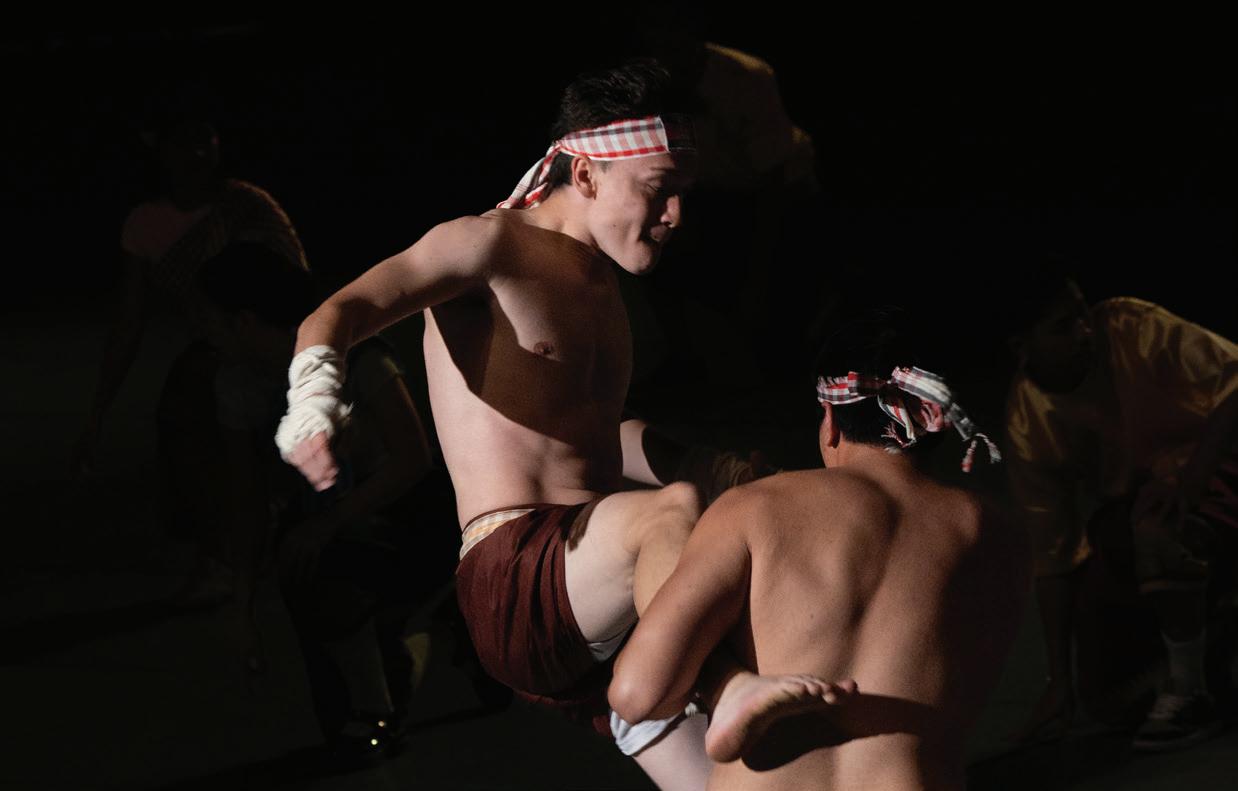
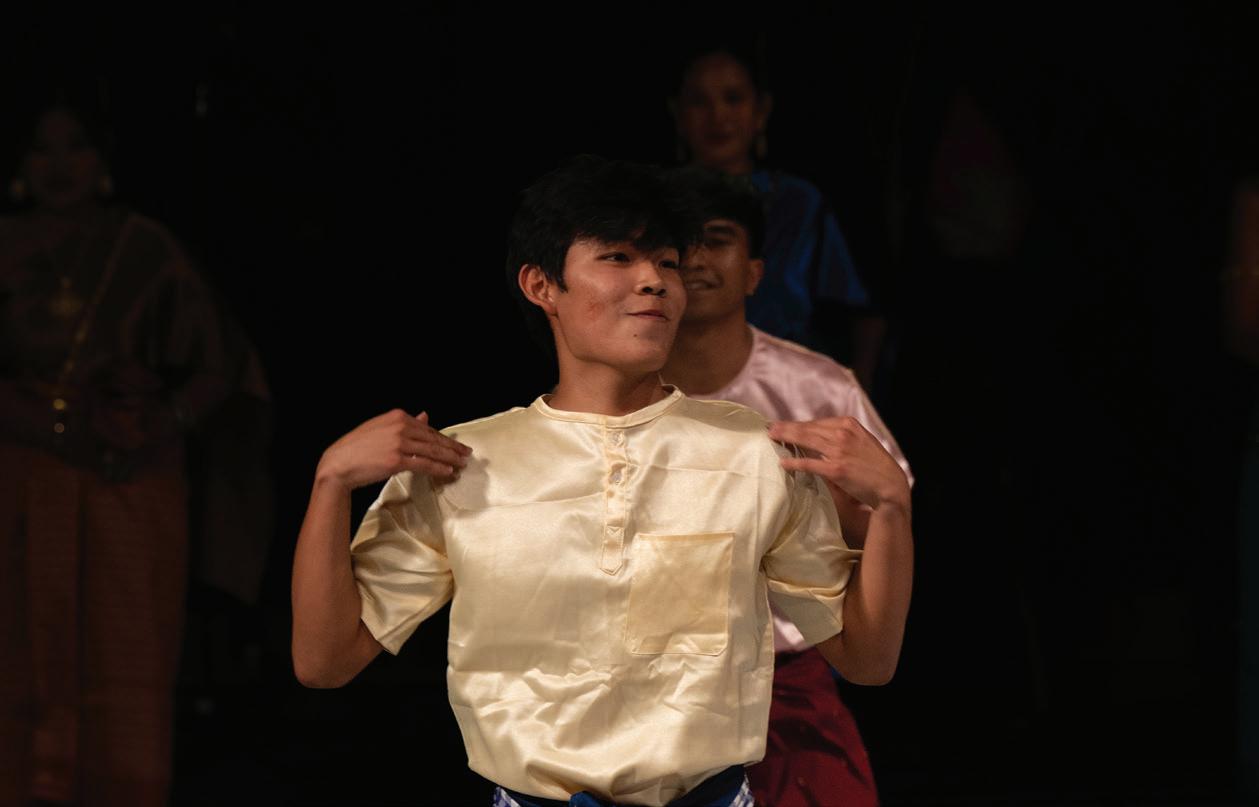
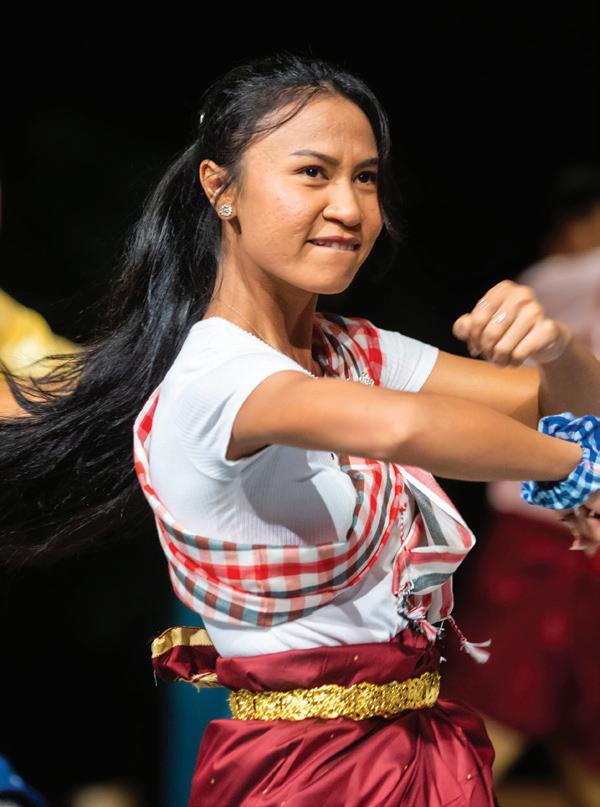
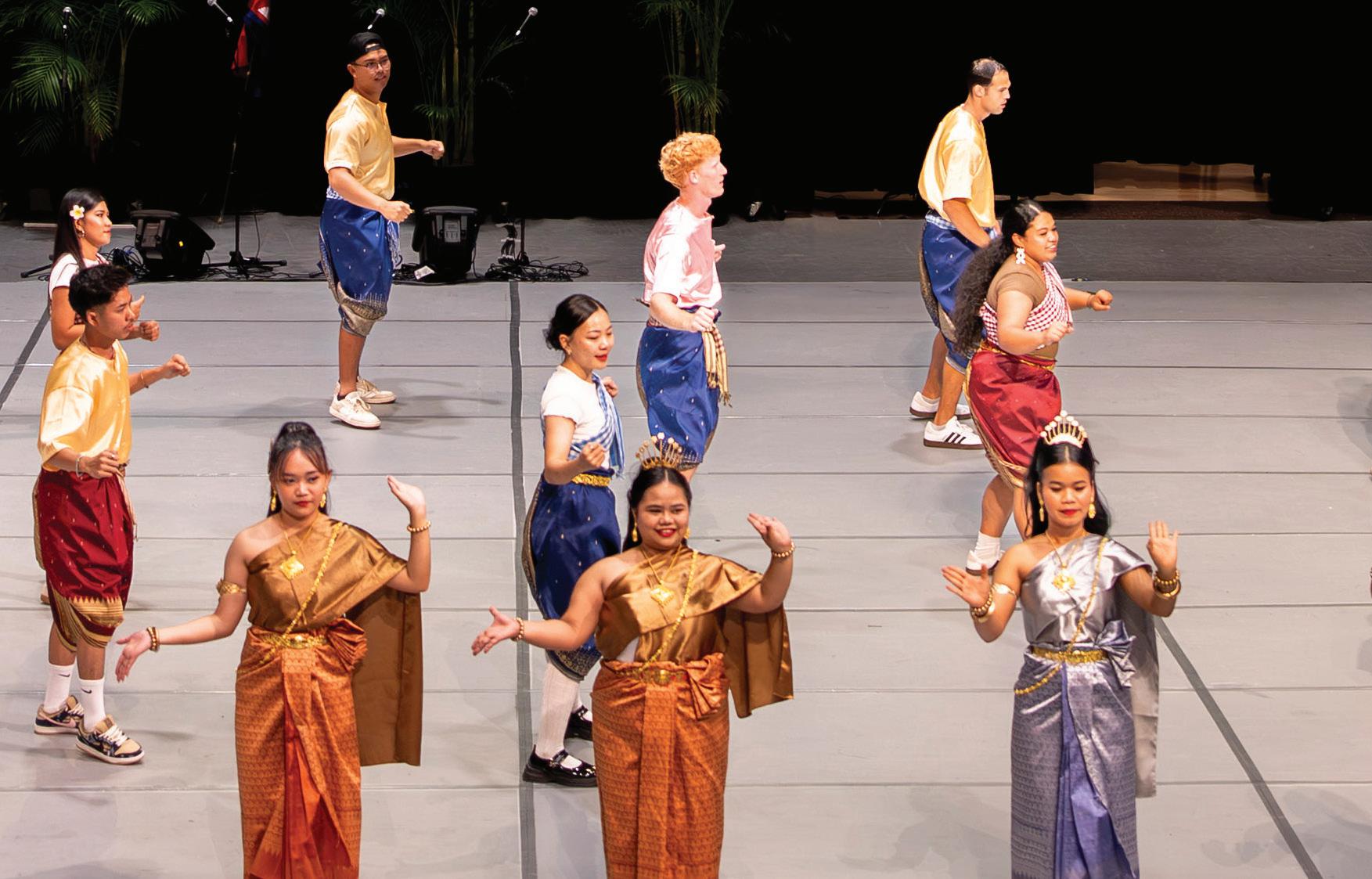
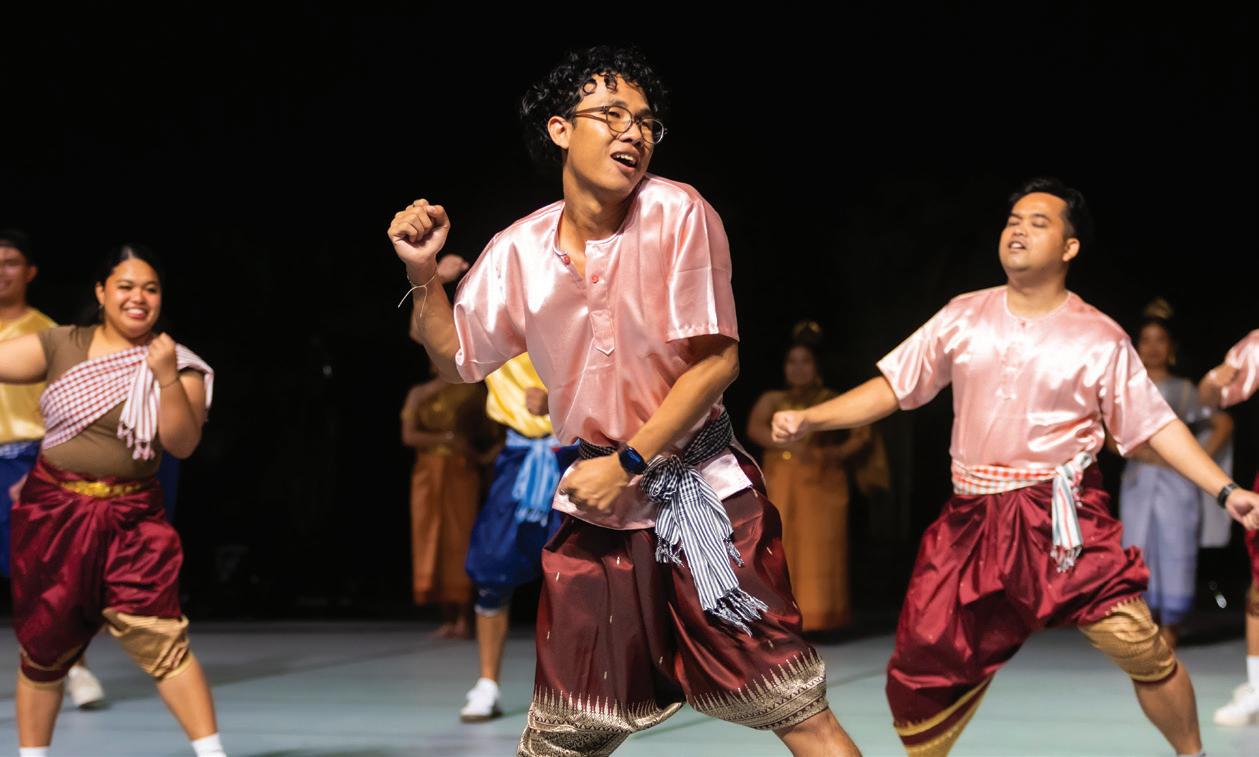
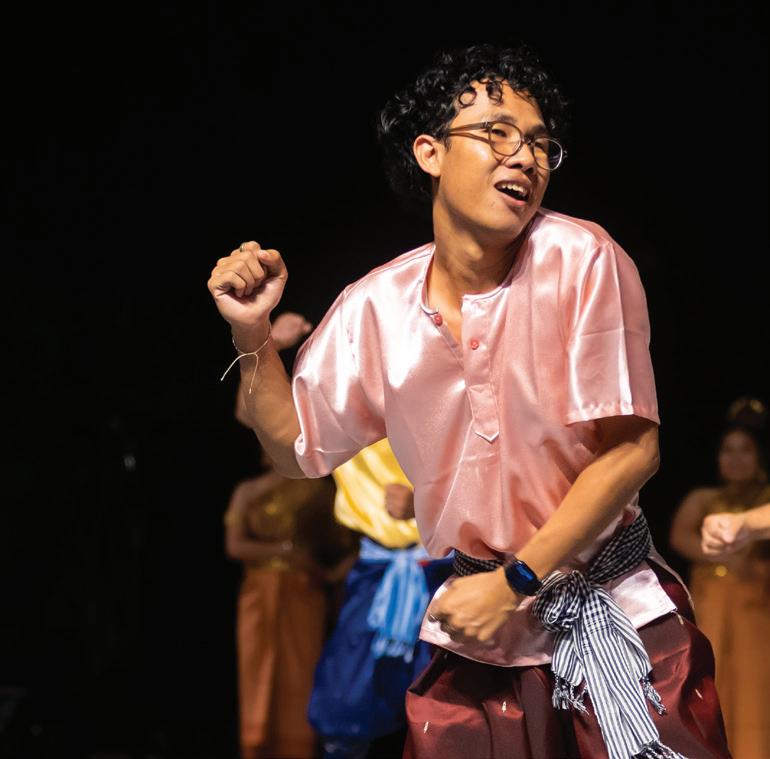
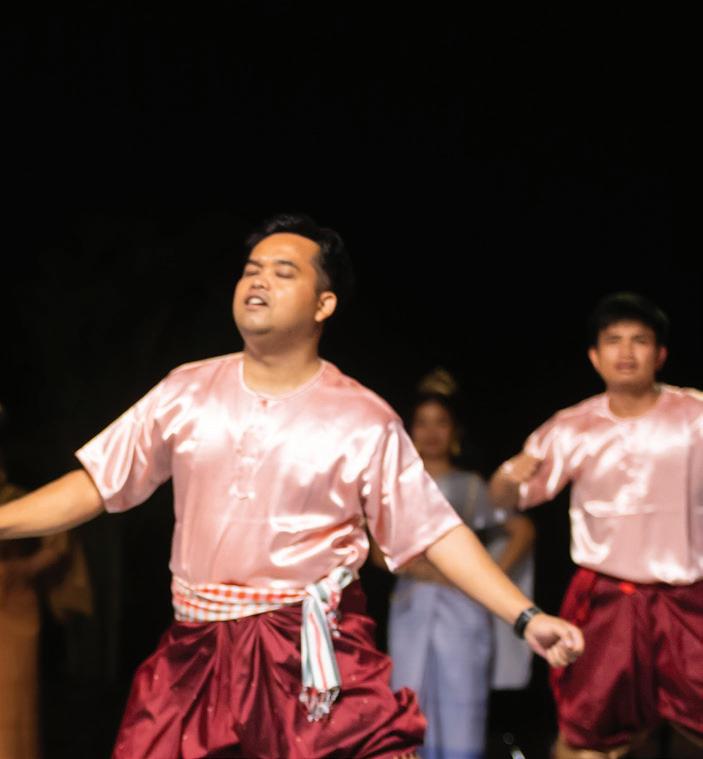
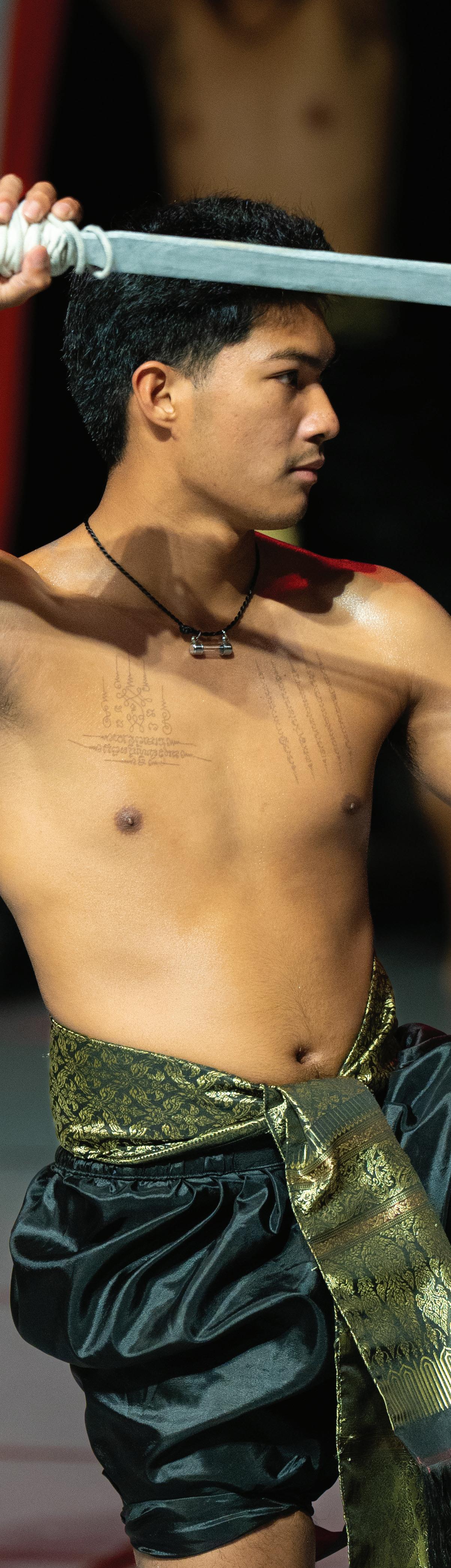
ominant colors of pink, gold, maroon and blue filled the stage as performers from the Cambodia Club presented a three-part cultural performance. The show began with an upbeat group dance featuring lively two-step movements set to energetic music. It then was followed by a graceful segment where women performed delicate hand movements to solemn traditional music while Cambodian flags were waved in the background. The performance concluded with a short martial arts demonstration.
Kasy Thy, a junior from Cambodia majoring in business management and club president, said the whole performance was rooted in preserving and celebrating Cambodian heritage. “The dances represent the beauty, resilience and spirit of Khmer culture,” he added.
Blending traditional Khmer dance with modern Western influences into one short performance was the unique point in the performance, Thy said. “The fusion is showing preservation and evolution: being deeply rooted but also being influenced by modern and western styles,” he said.
Thy said he hopes the members appreciate Khmer culture as timeless, adaptable and a culture to be proud of. “Culture isn’t just history—it’s alive, evolving, and we carry it forward,” he added.
Sokborey Sem, a freshman majoring in business management from Cambodia, said Cambodia club blends modern Khmer traditional dance: Kun Bokator and ChhaiYam for the performance. “Chhai Yam is a traditional drum dance performance.The dance is to bring happy energy and unity to the community,” she explained.
Kun Bokator is an ancient Cambodian martial art, Sokborey continued. She said it is one of the oldest fighting systems in Southeast Asia. “Bokator was used by Khmer warriors during the Angkor Empire where soldiers used it to defend the kingdom during wars,” she explained.
Sokborey explained, “Bokator is no longer for war but has become a national sport and performed in competitions and cultural shows.” She said, “Many Cambodians are learning Bokator to preserve their heritage as it represents strength, courage, discipline and history.”•
SAMOA
SAMOA
BY LINDA LAULU
Powerful movements in unison showcase the collective strength of Samoan culture
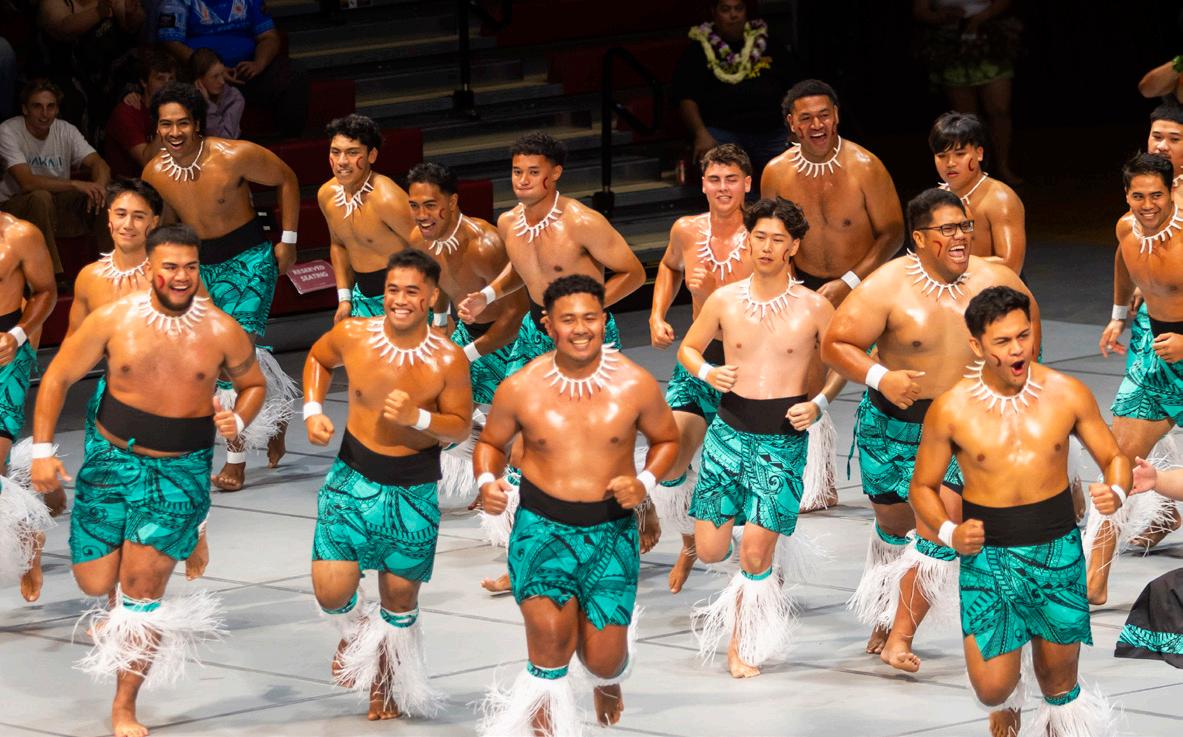
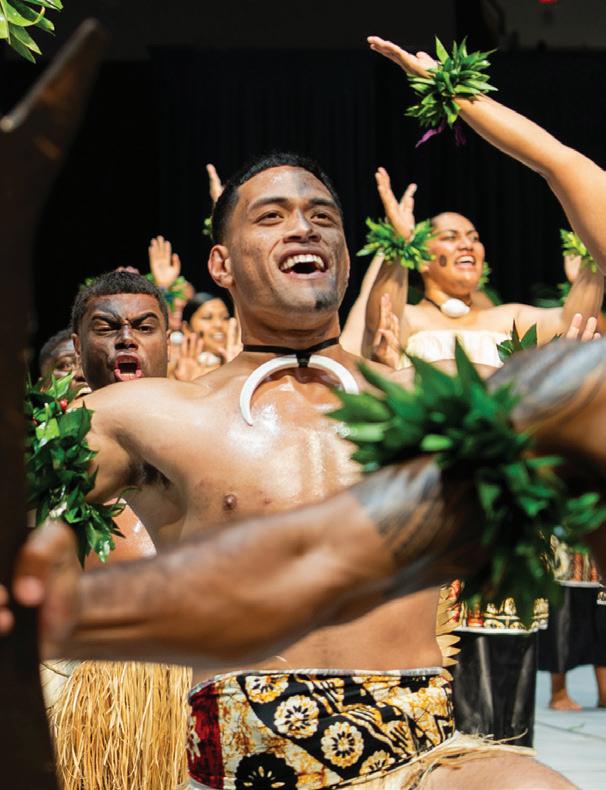
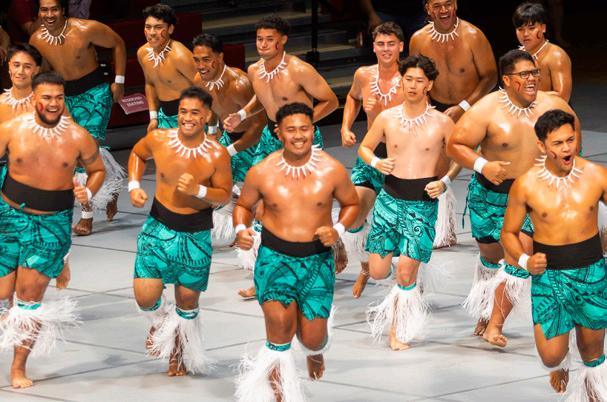
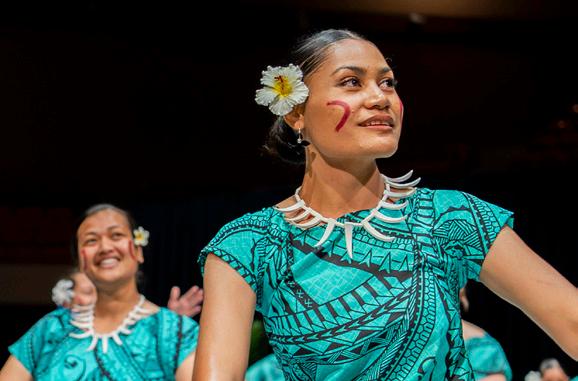
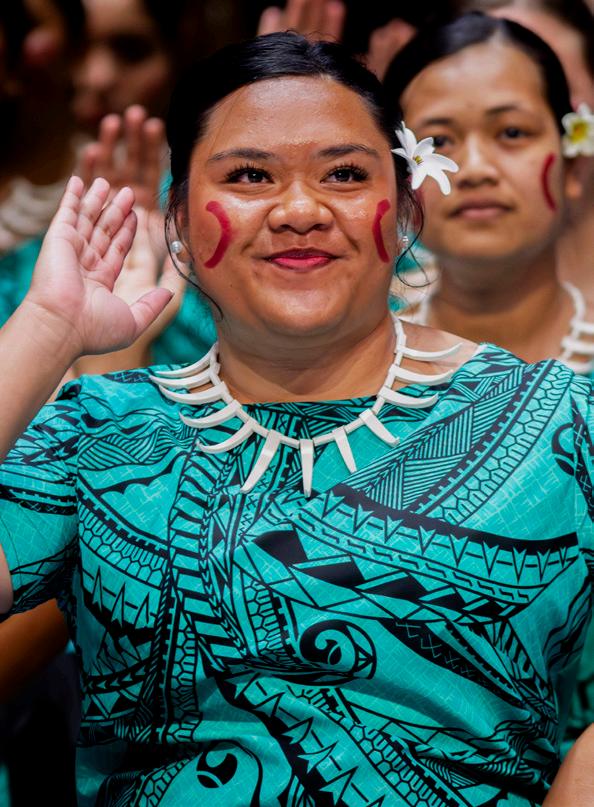
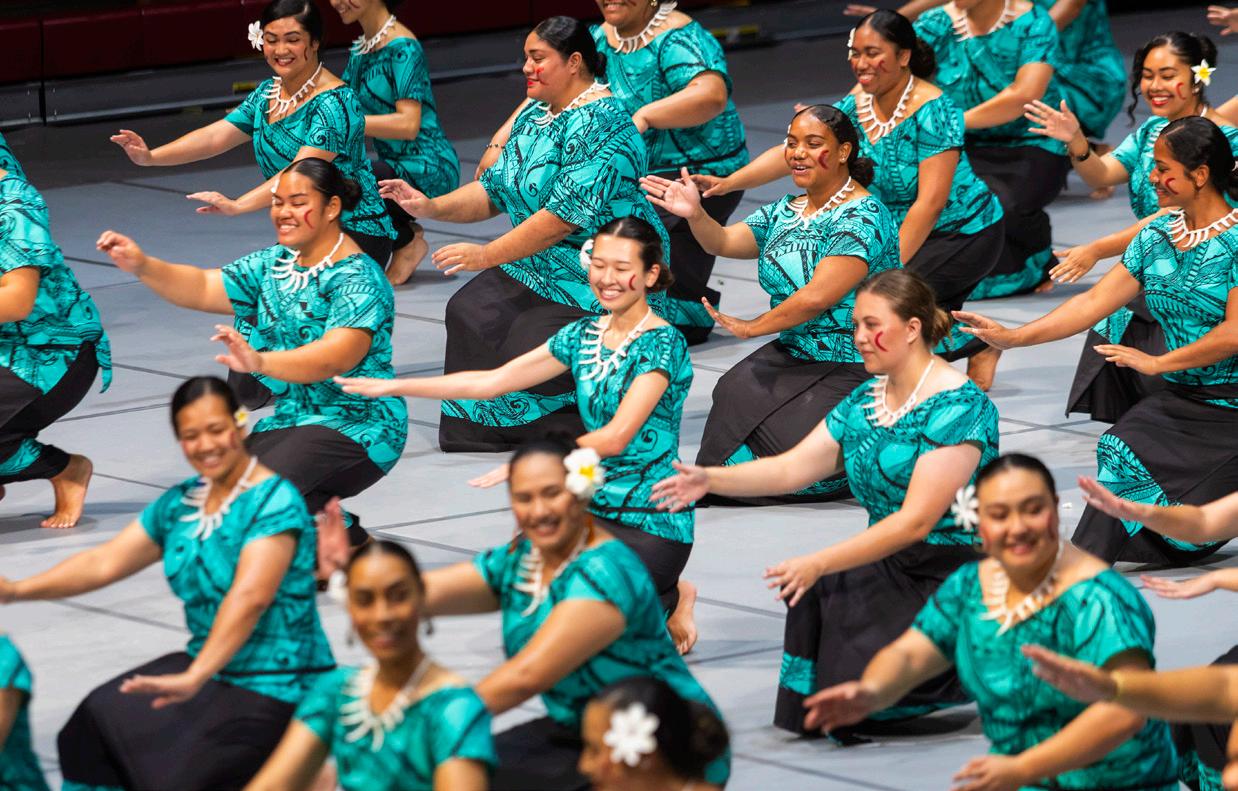
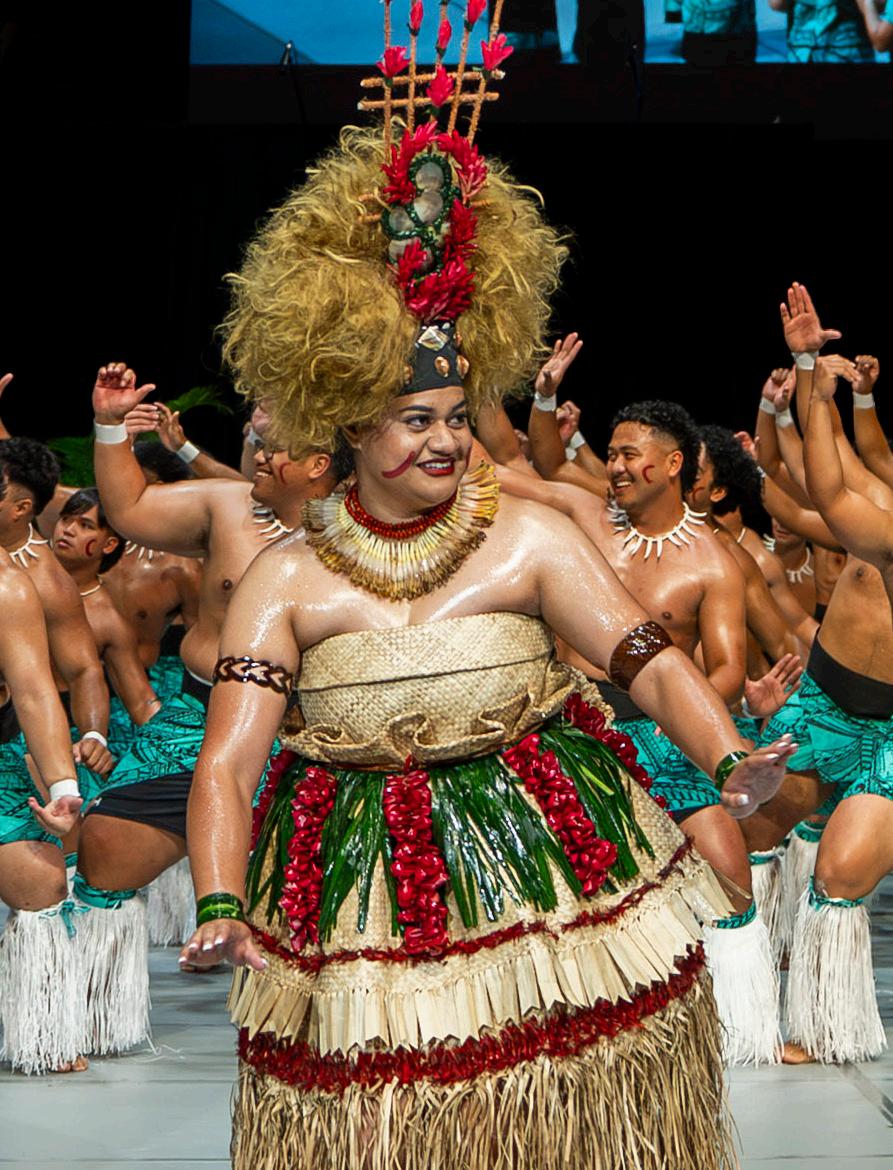
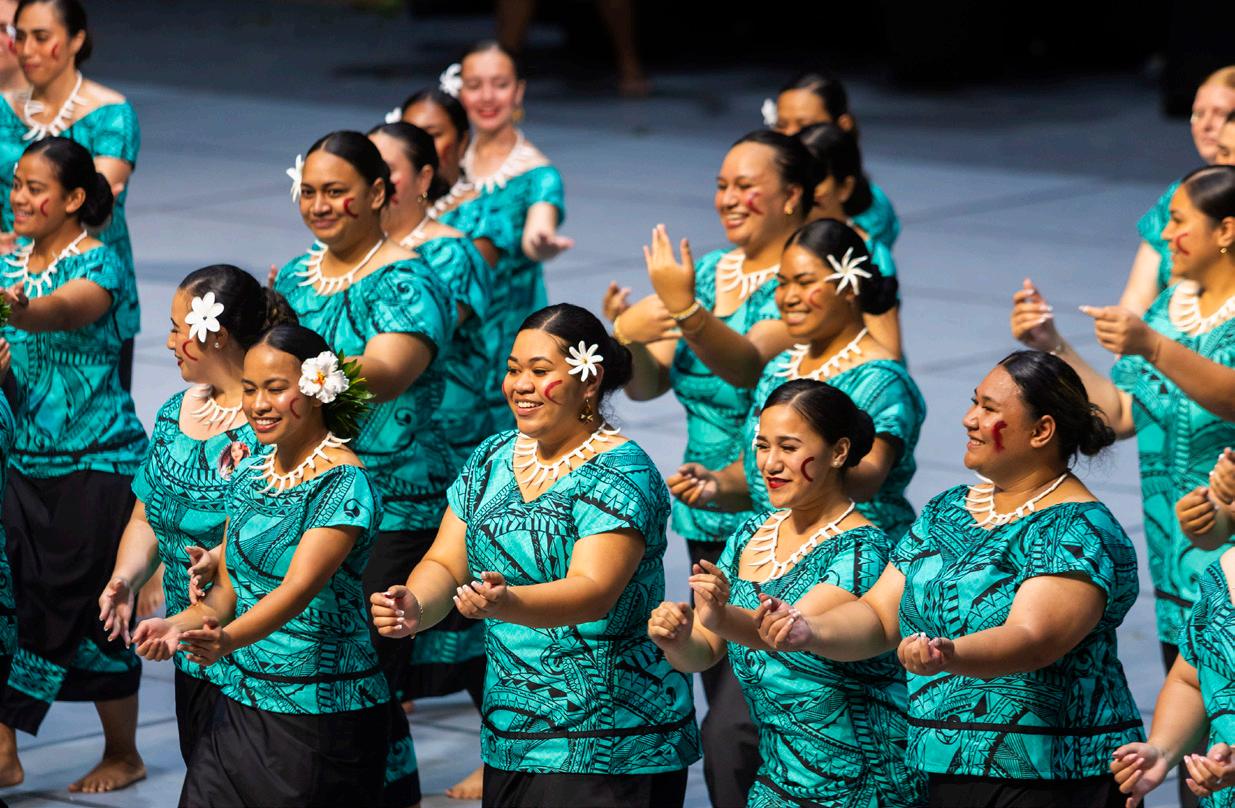
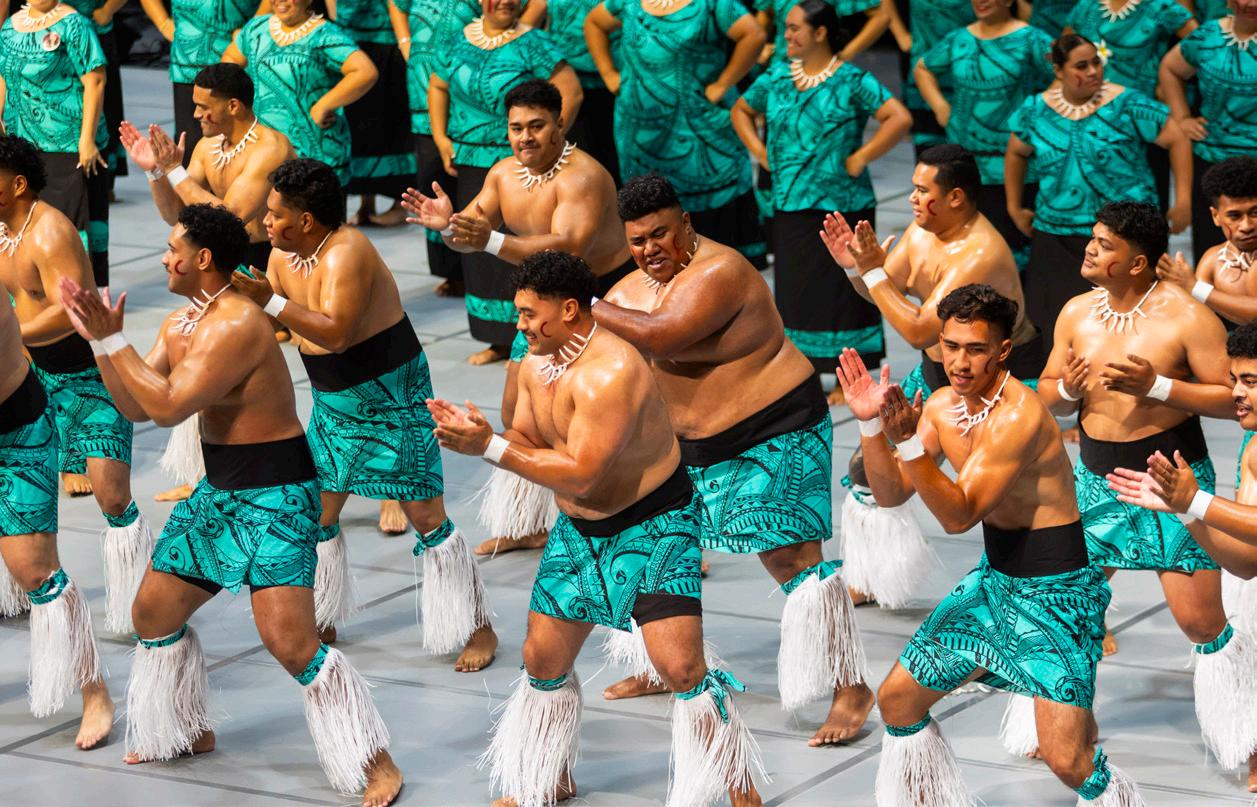
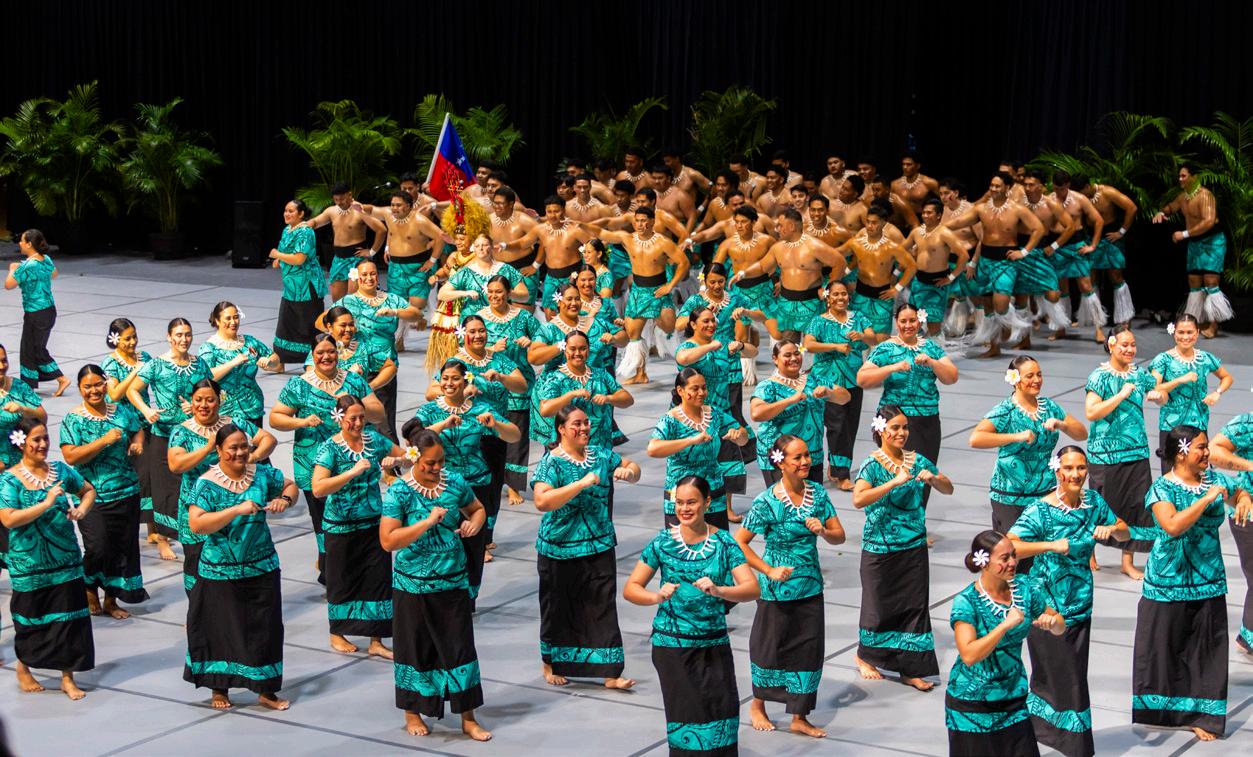
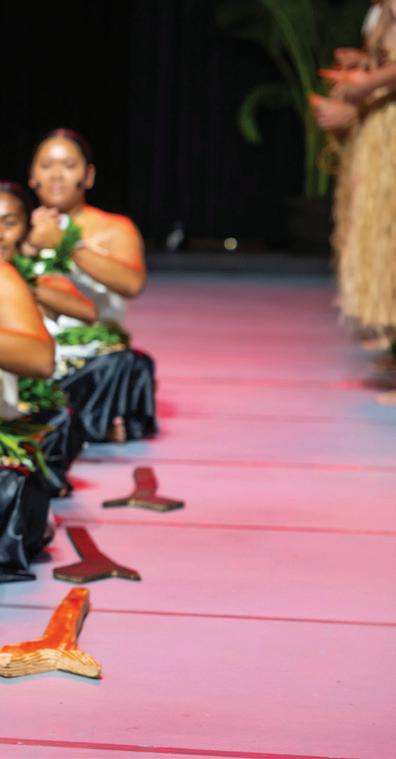
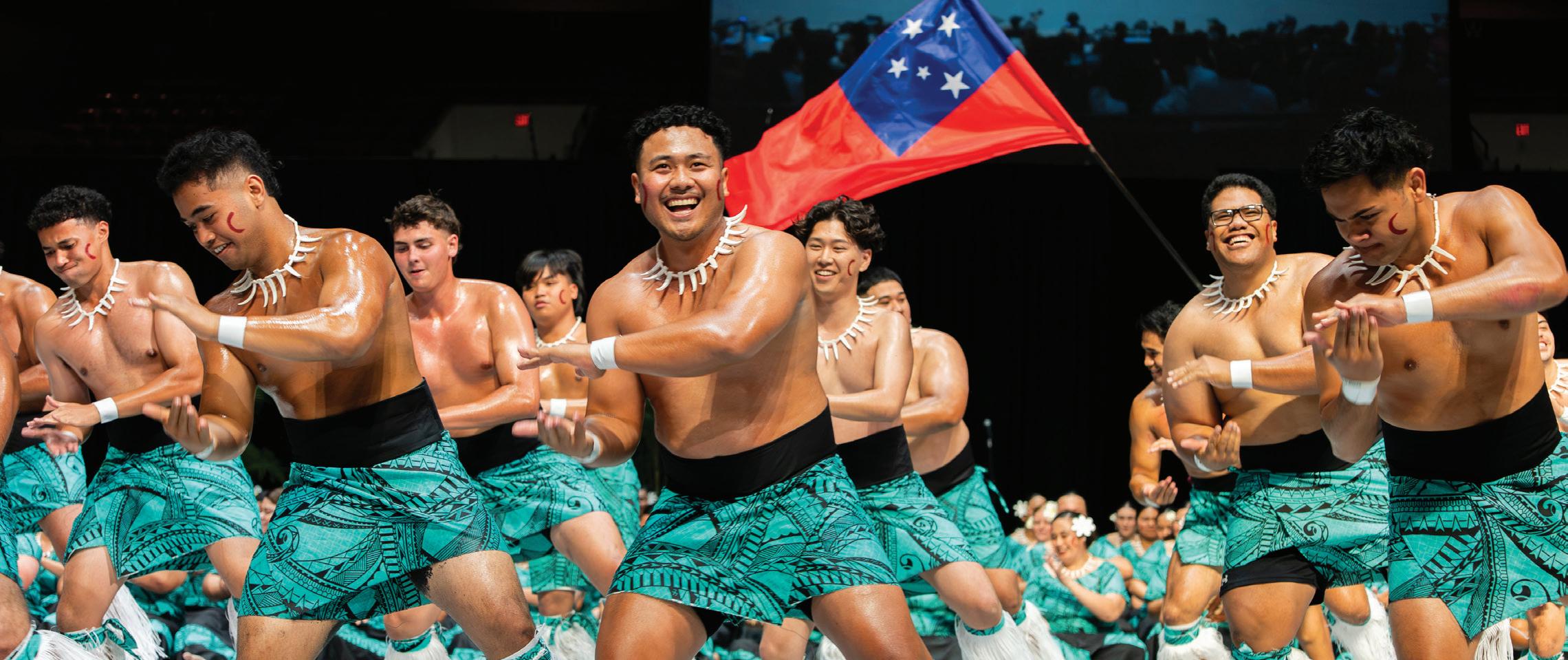
As the light illuminated the stage, more than 200 members of the Samoa Club spread across the stage wearing bright teal and black cultural attire. They began with simple hand movements before the men took the stage and showcased an energetic slap dance using their hands, chest and thighs matching the pace of the music. The women danced gracefully using their hands while also moving their hips from side to side creating a vivid display of motion and teamwork.
“E so’o le fau i le fau,” the theme of this year’s performance, reflects the Samoan idea that strength comes through connection and unity, said club president Jared Auapa‘au, a senior in information technology. The phrase translates to “one hibiscus tree reflects another,” symbolizing how strength is shared— when one stands strong, it reinforces the strength of others.
Building on that theme, Auapa‘au said the boys’ choreography focused on strong, grounded movements to represent power, discipline and unity. Firm stances, powerful arm strikes and synchronized formations highlighted collective strength. “These motions … remind us that strength comes when we are connected and working together.”
For the opening of the Siva Samoa section, choreographer Matauaina Toiva, a sophomore from Samoa studying anthropology, said the women seated movements were inspired by the traditional ʻAva ceremony, reflecting “feiloa’iga”, or the welcoming of guests. “Starting with the ʻAva ceremony honors the audience before the performance begins,” Toiva said.
Many of the dance’s movements responded to the lyrics of the song “Pei o Auma” by Marina Davis, which praises a young woman’s elegance, respect and grace. The choreography mirrored these qualities with soft, flowing gestures. Toiva highlighted the hand and arm movements symbolize elegance, respect and dignity in Samoan siva.
Tyra-Lei Fata, a junior from New Zealand majoring in social work who helped teach the dancers, said women’s movements emphasize grace while also showing inner strength. “In Samoan dance, women’s motions are gentle but powerful. They show … leadership within the family and community.”•
VIETNAM
VIETNAM
BY ALDEN ETHANAEL
PUA
Showing what it means to be Vietnamese
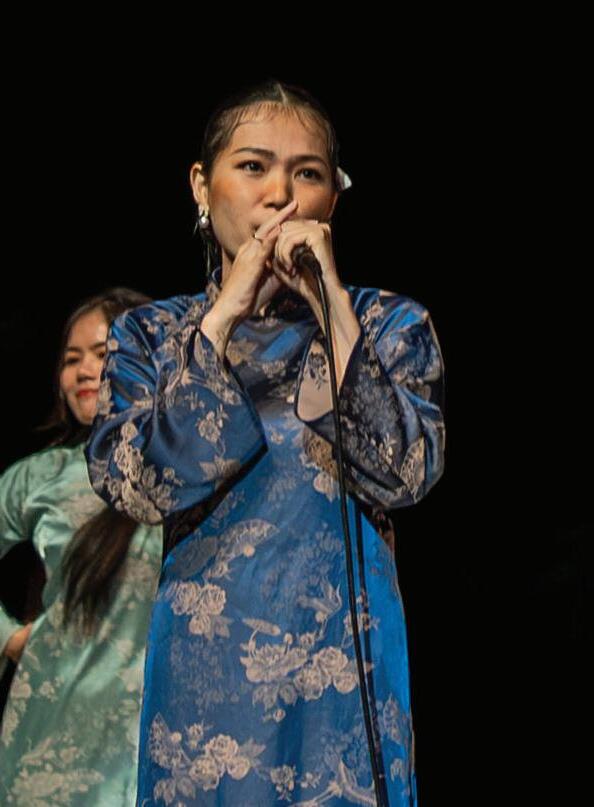
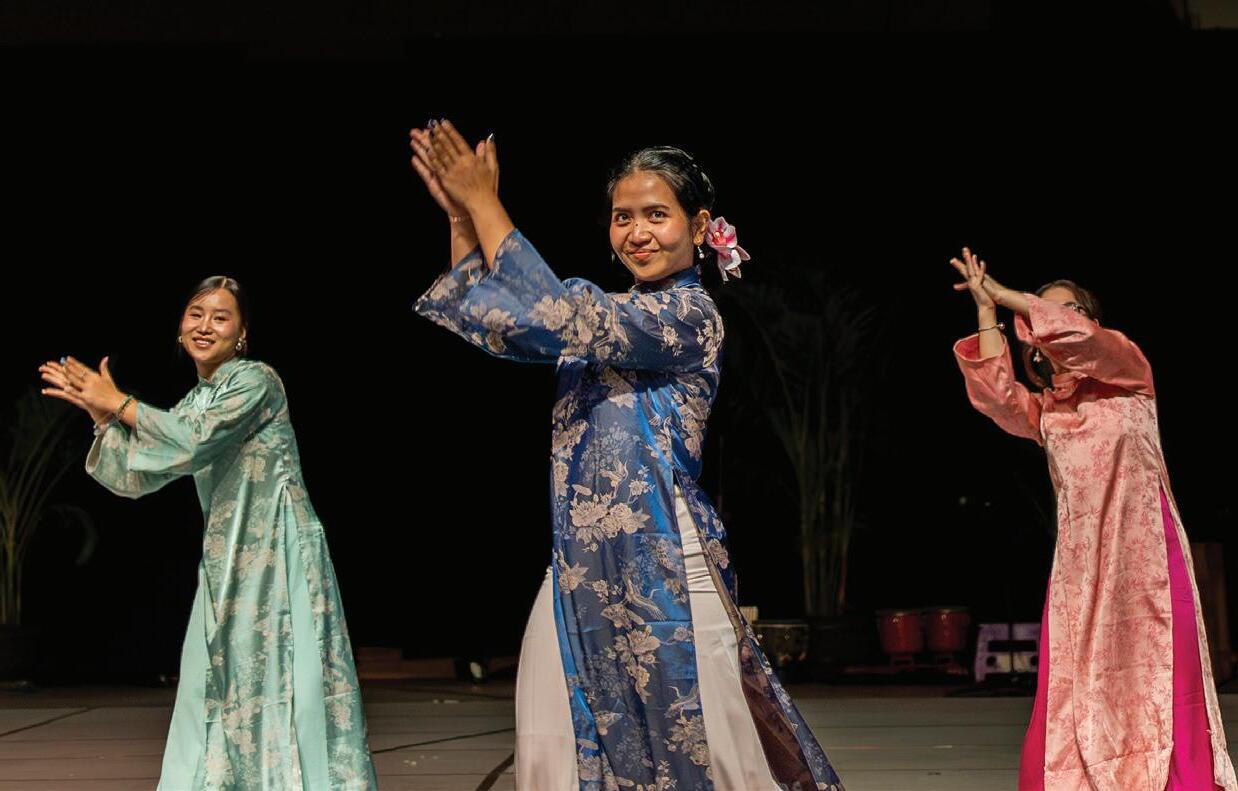
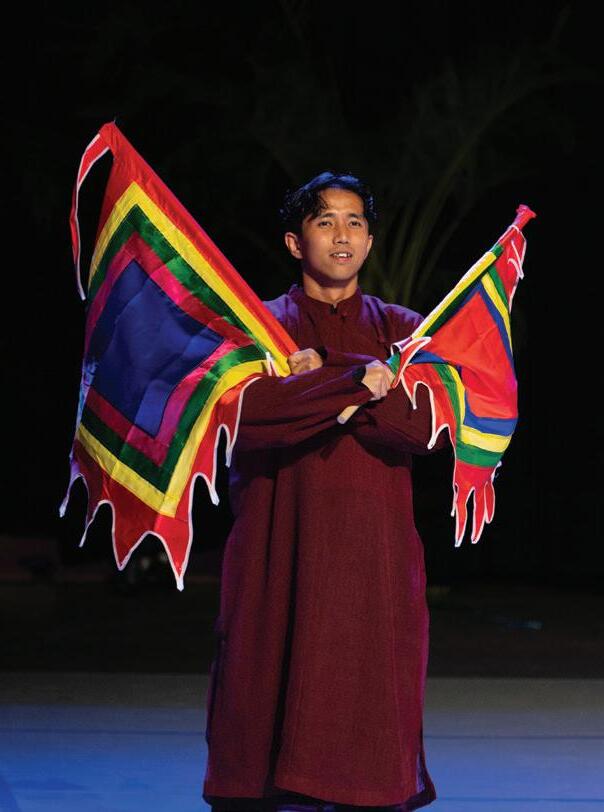
Elegant music and live singing echoed across the Cannon Activities Center, and five-color flags waved as the performers ran accross the stage, showcasing Vietnamese culture.
Club President Minh Ngoc Chu, a sophomore in business management from Vietnam, hoped audiences found the club’s performance entertaining and educational. “I hope [the audience] can learn about Vietnamese culture, and [take away] something new about it.” He also hoped the audience could share the joyous feeling and upbeat energy the performers brought on stage.
The club performed its famous traditional folk song “Trong Com,” a piece named after the traditional percussion instrument, Chu said. He described it as “praise to the Vietnamese culture, the nature and the people.”
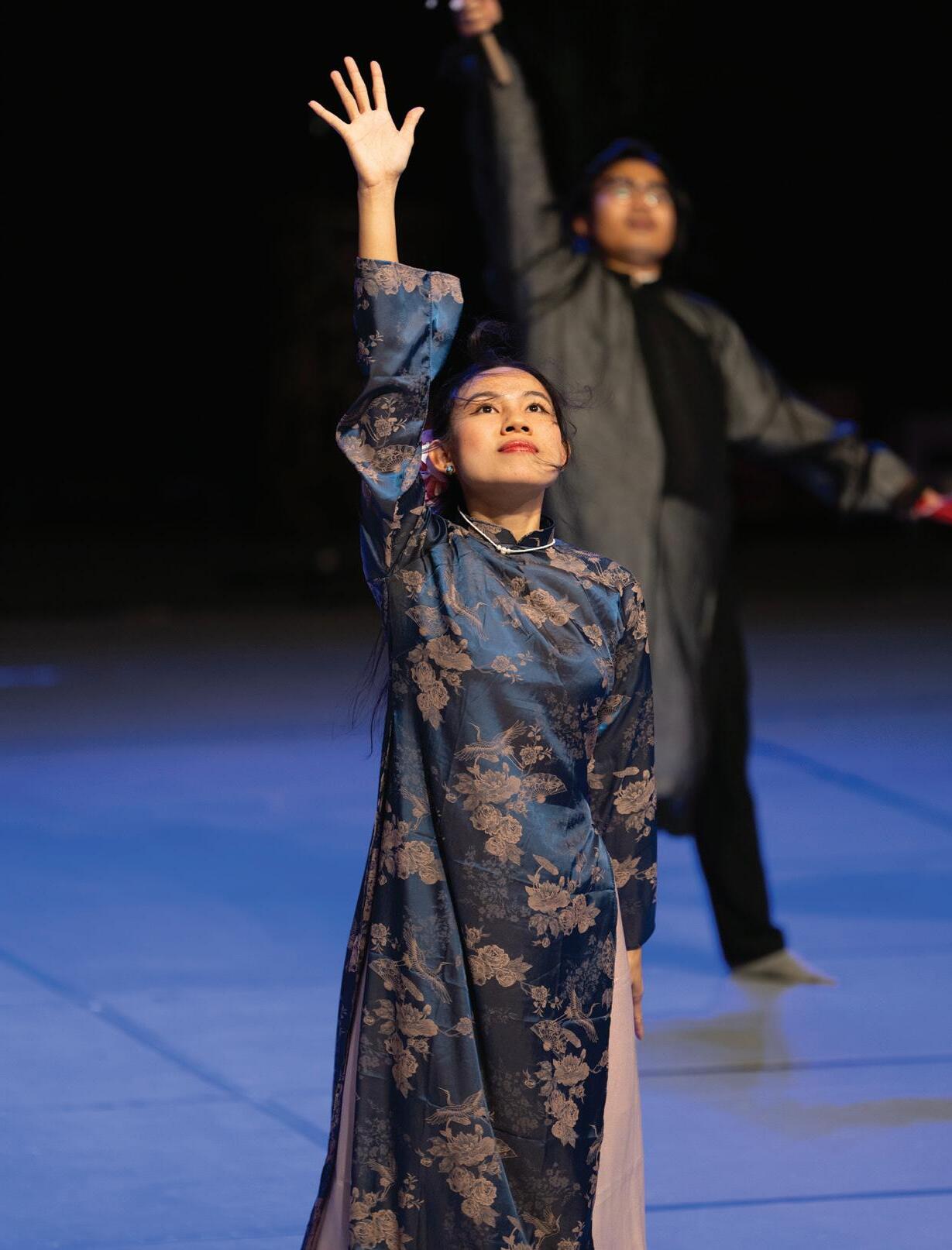
The performers dressed in traditional clothing and cultural artifacts to create a more authentic viewing experience. A notable attire worn by the performers was the “Ao Dai,” a traditional long-sleeved tunic popular in the culture. Five-color flags were also incorporated throughout the choreography. They are traditional artifacts “unique for festivals in Vietnam,” Chu said. The performance then shifted from traditional songs to modern rap. Chu hoped it was a memorable climax, one where audiences “stood up and danced with them,” he shared.
Performer Vuong Nguyen, a 2021 BYU–Hawaii alumni from Vietnam, wished Vietnam club will gain greater recognition following their performance. He said, “Vietnam club is more than just pho. … There are a lot more [cultural] things you can learn.” One such example is the performance. “It represents love, it represents unification between people, and it represents such deep-rooted traditions that we still keep to this day,” he stated.
Club member Melfrank Lugod II, a senior majoring in psychology and accounting from the Philippines, described the Vietnamese as warm and welcoming, and he encouraged others to join the club. “Learn their language, try their food and you’ll know much more about people, … and more of yourself.”•
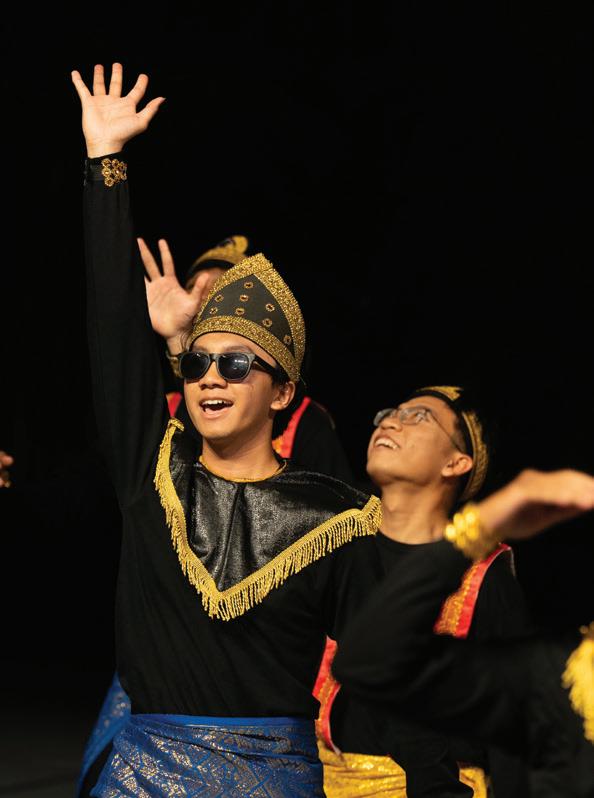
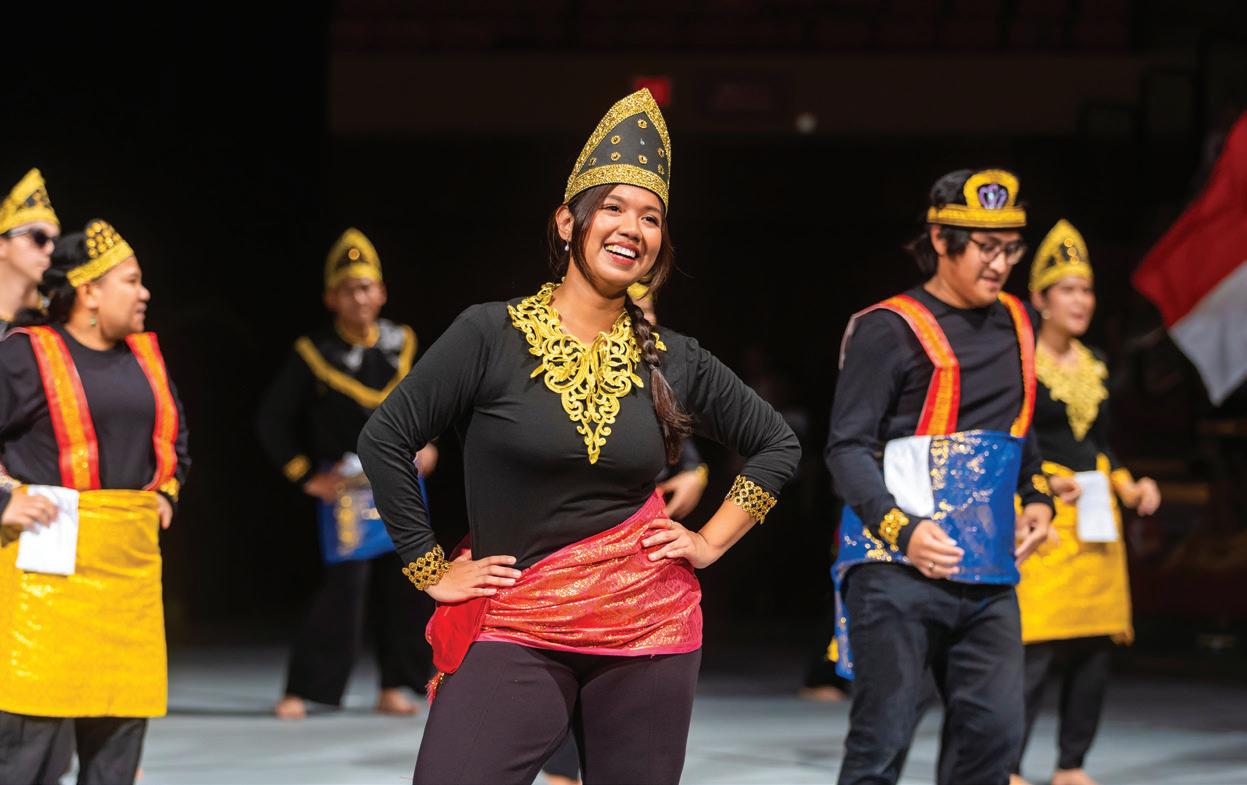
INDONESIA
BY JESSIKA SANTOSO
From mystic tension to collective celebration
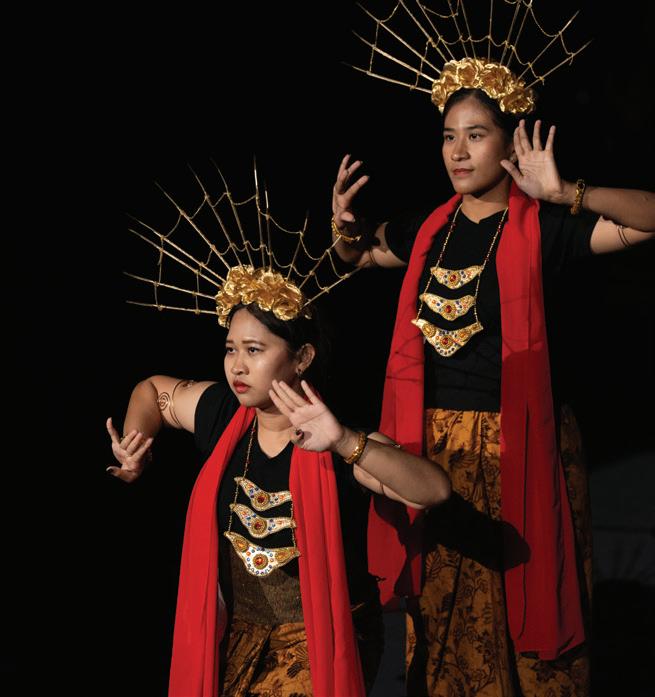
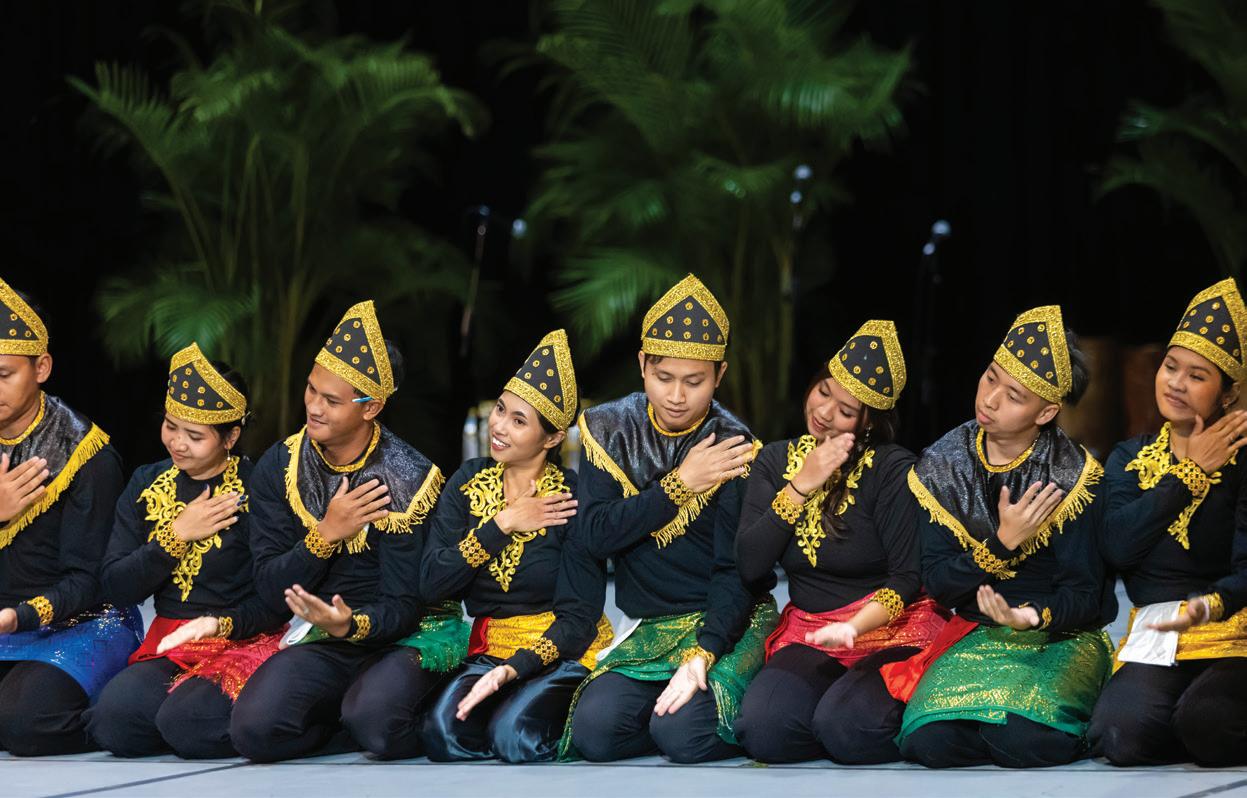
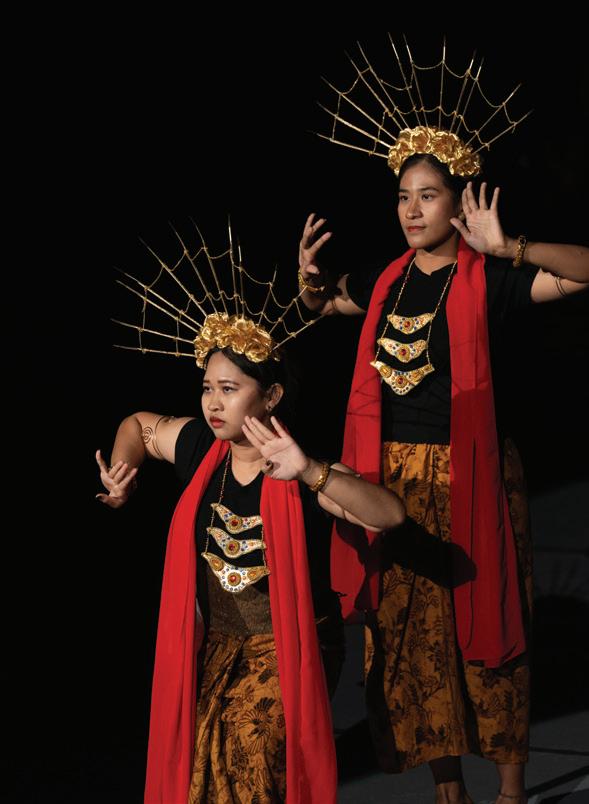
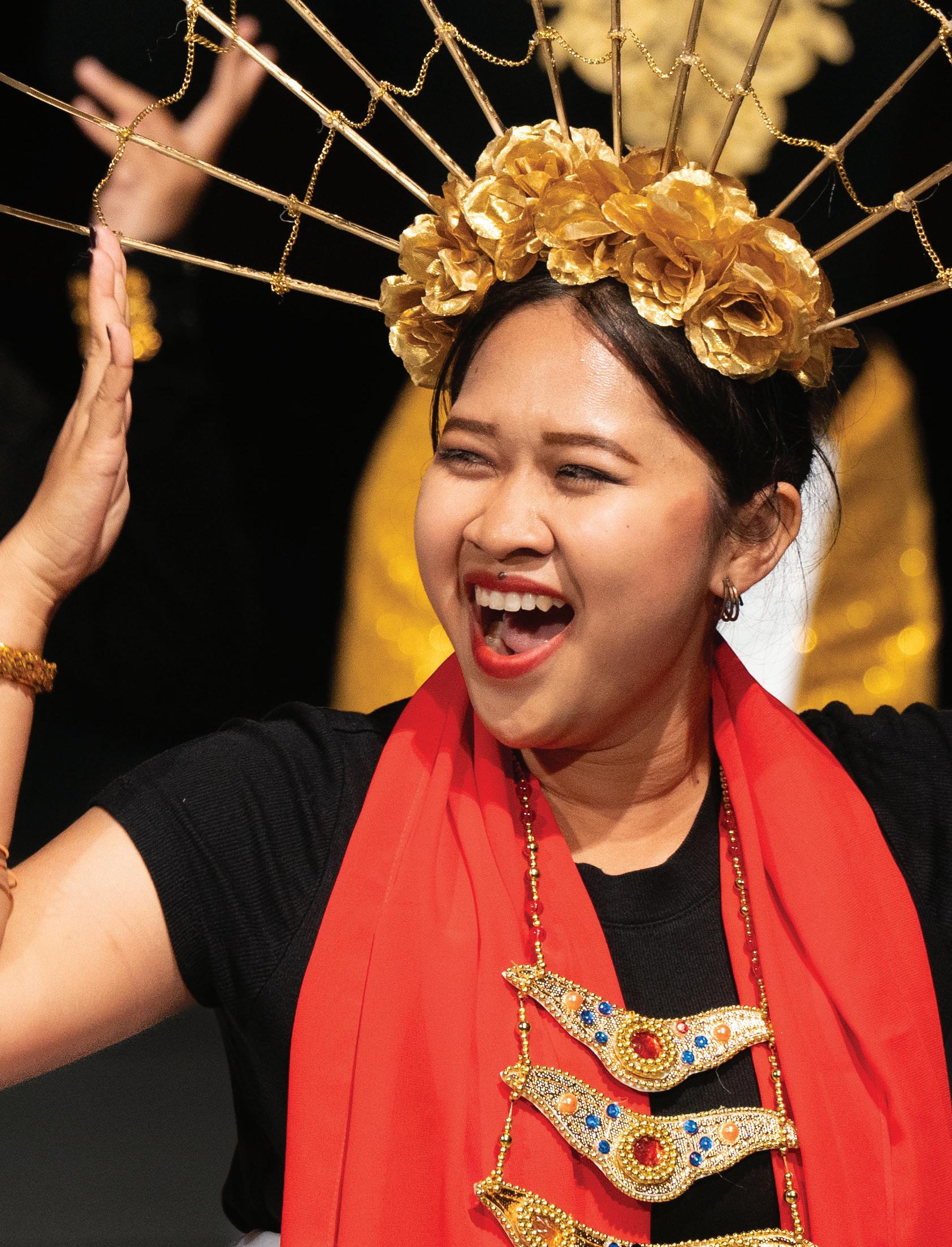
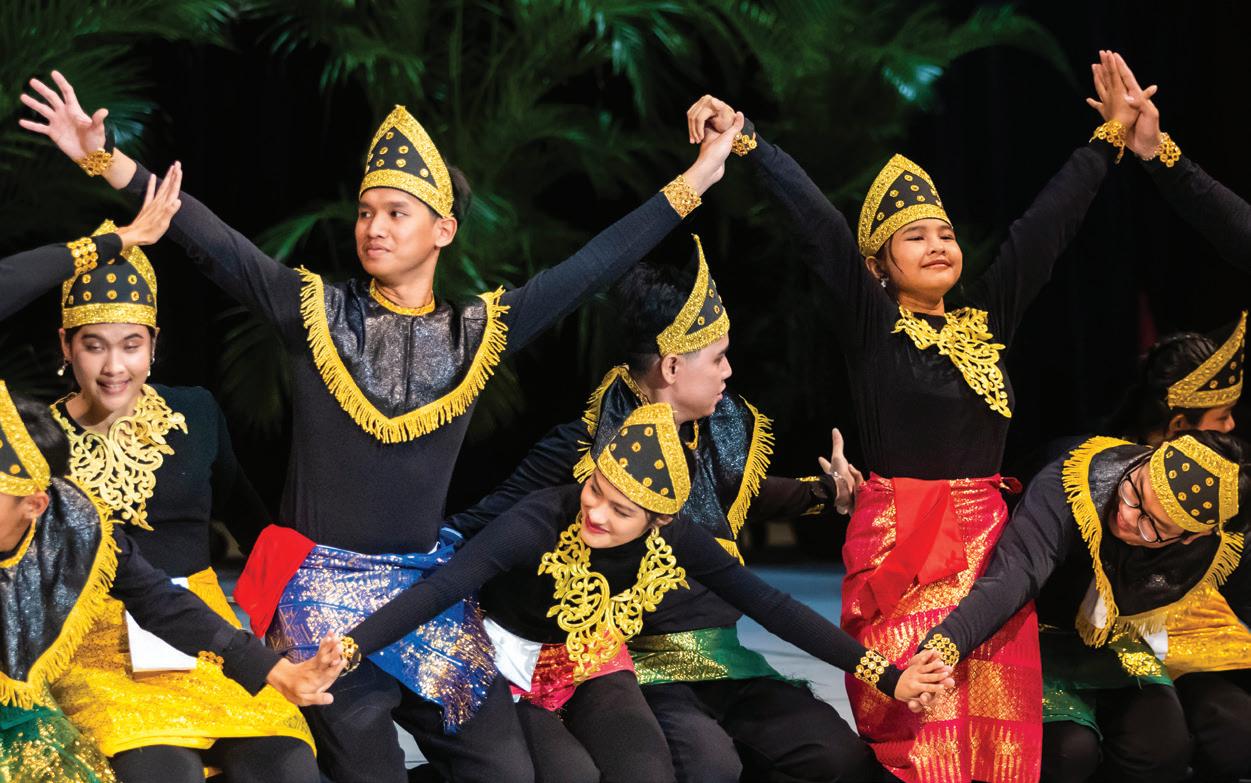
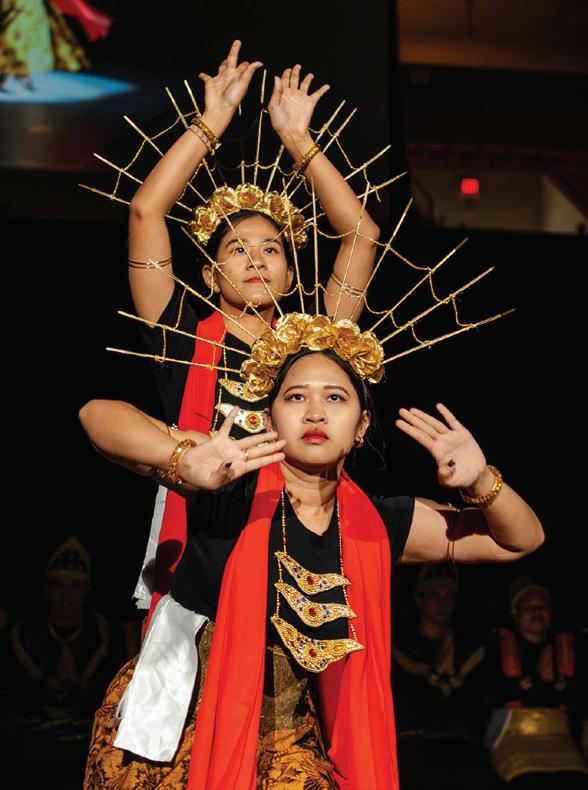
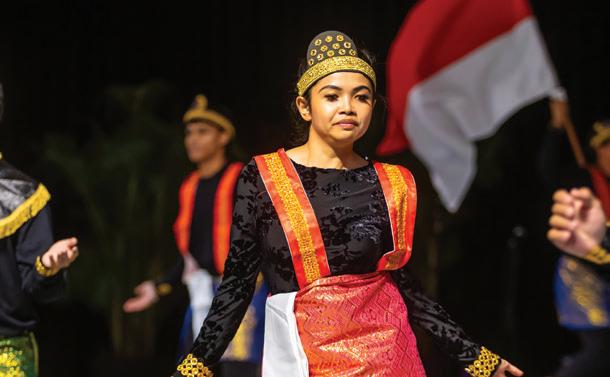
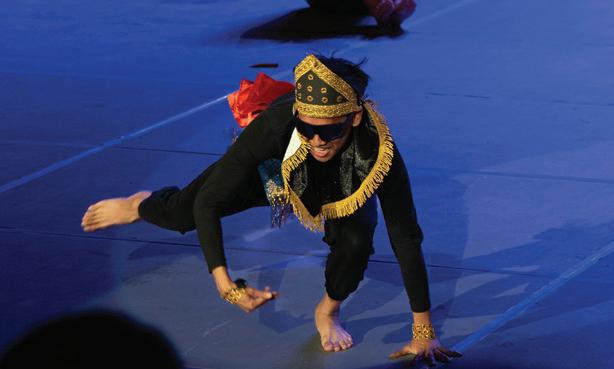
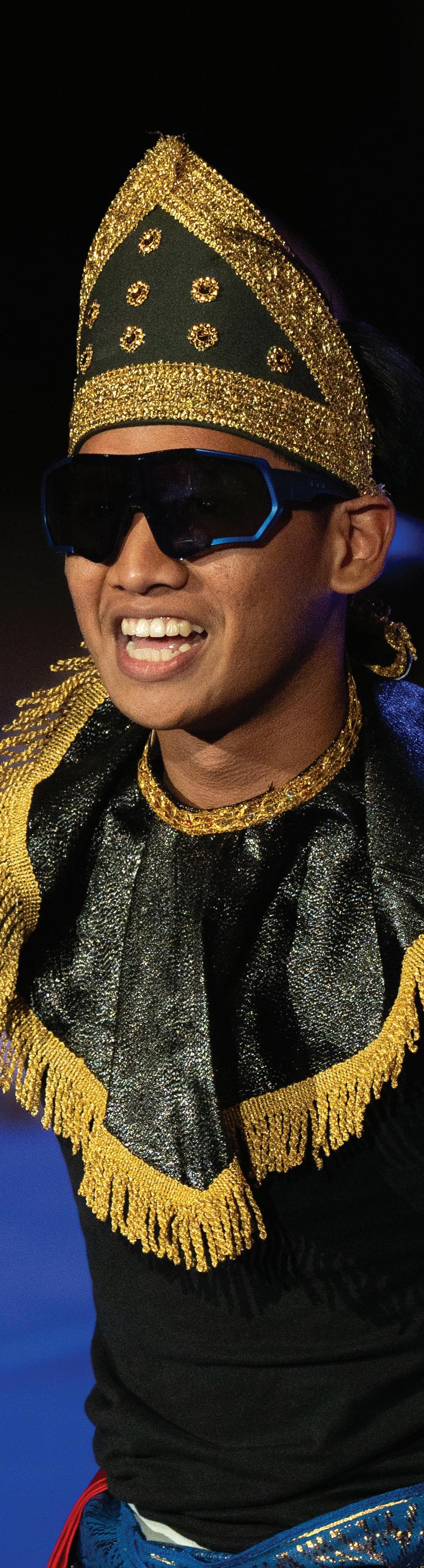
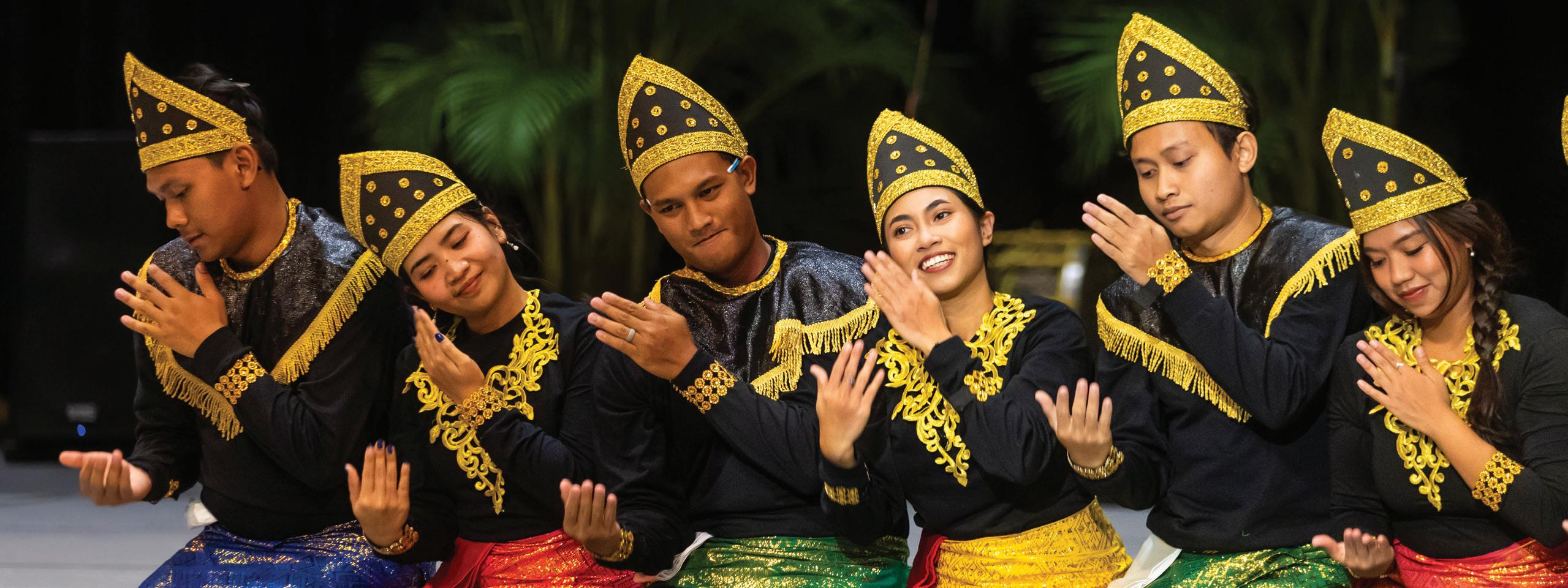
Indonesia Club’s performance unfolded in four distinct movements. It began with the dark, ritual-like tension of “Lathi,” where male dancers carrying mountain-shaped props moved in circles around two female performers. The mood then shifted to collective movement of “Saman”, where dancers knelt in rows and struck their chests and thighs in tightly synchronized rhythms. Next came “Pacu Jalur,” drawing loud cheers from the audience as the song began playing and dancers sat on the floor, rowing their arms in unison like paddlers in a racing boat, before the sequence closed with the lively TikTok viral dance “Tabola Bale.”
The structure was intentionally designed to build emotion from mystic tension to collective celebration, said lead choreographer Gusti Ratu Puspitasari, a sophomore in hospitality and tourism management from Indonesia.
Costume choices followed the choreography, said costume lead Abelia Cinkatari, a senior majoring in business marketing and graphic design. Inspired by traditional attire from different regions, she said the designs were adapted to meet campus dress standards.
In “Lathi,” male dancers carried a modified “gunungan”—a mountain-shaped figure from Javanese puppet shows, Cinkatari said. Though traditionally made from buffalo hide, the club recreated the prop using DIY materials. “Gunungan represents protection and the world, where we’re one family—the essence of the theme ‘Vasudhaiva Kutumbakam,’” she said.
Performers wore long sleeves and pants layered with colorful sarongs, inspired by Aceh, where the Saman dance originates. “All must be covered according to Muslim values,” Cinkatari said.
Belle Hani, a TESOL freshman from Papua New Guinea, said learning the meaning behind Saman changed how she approached the performance. Understanding that movements such as chest slaps symbolized courage and sitting closely represented unity helped her see the choreography as more than coordinated movement. She said she hoped the audience noticed that their synchronized motions reflected unity, not just formation.•
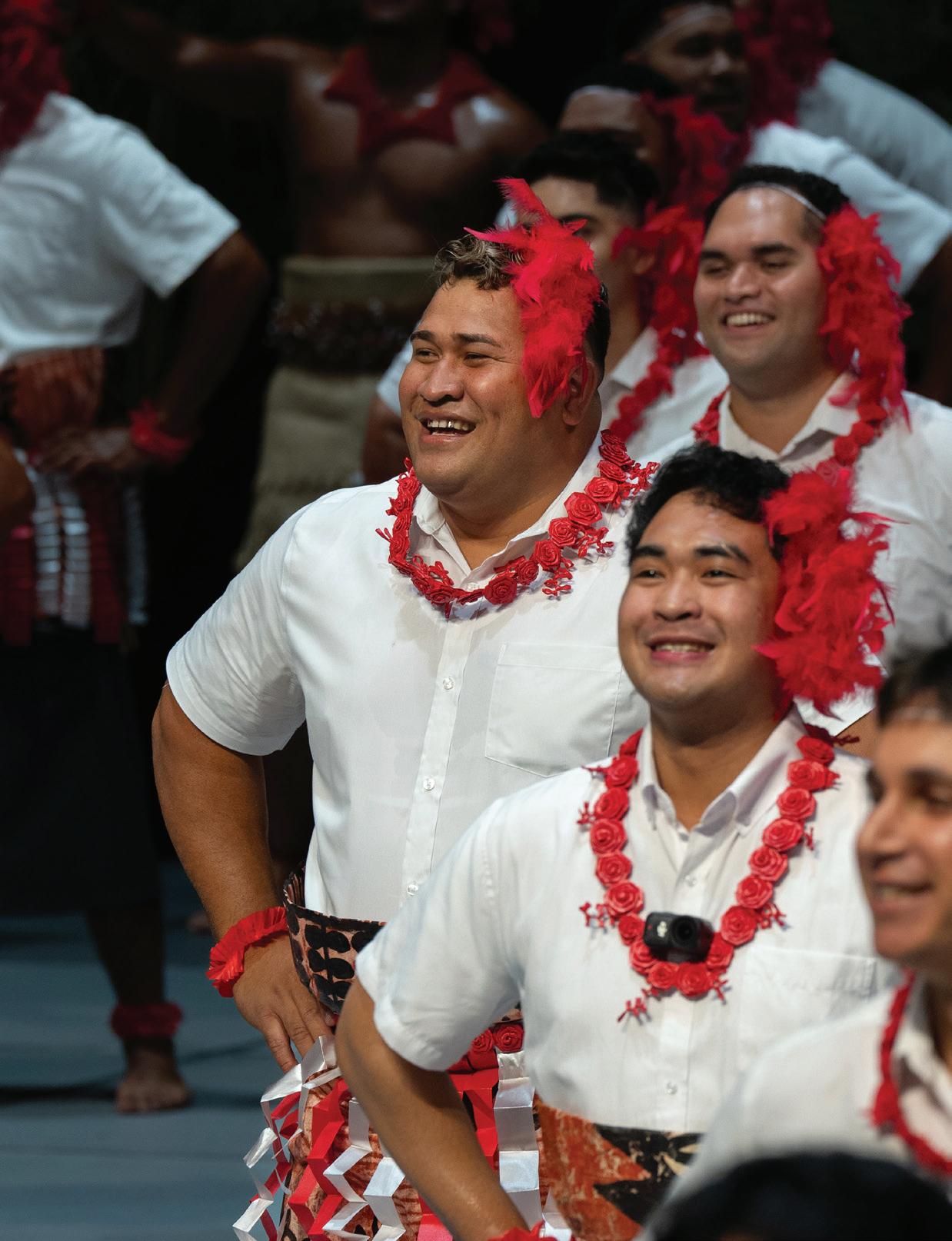
TONGA TONGA
BY JOHN RINCON WATSON
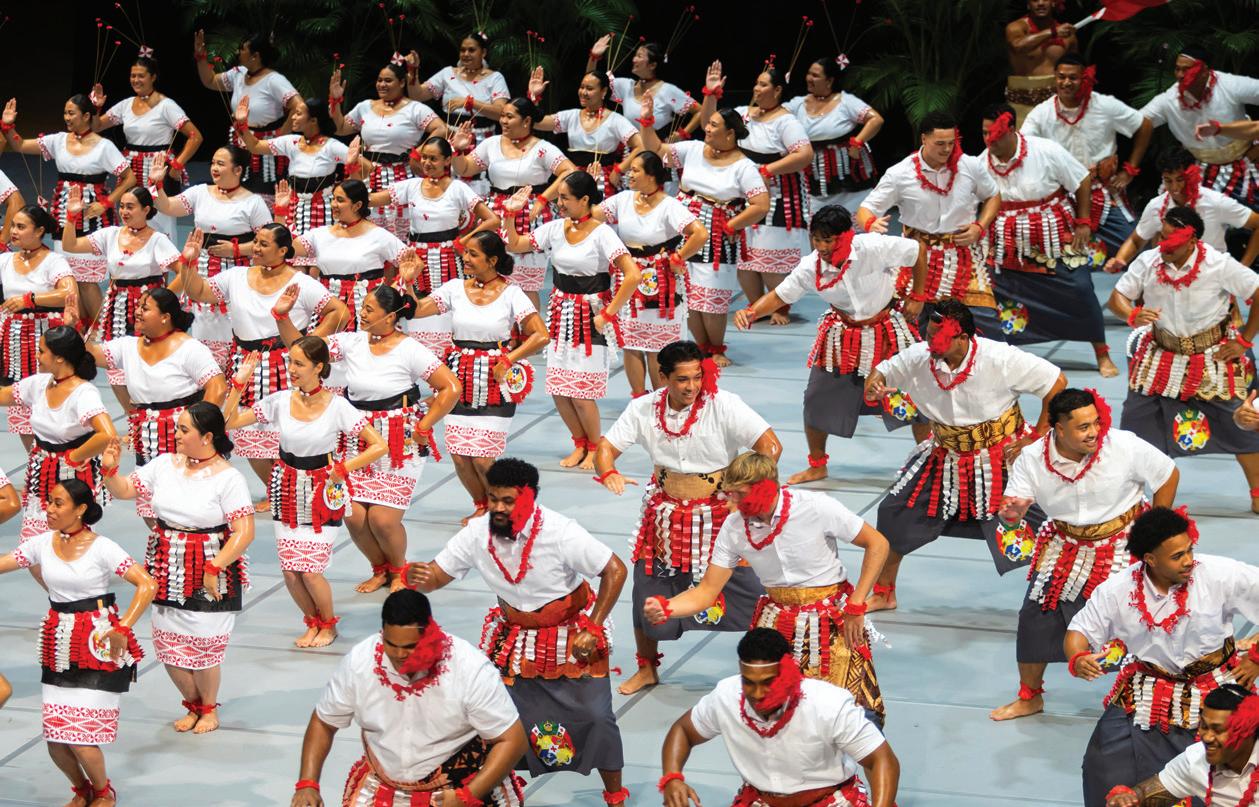
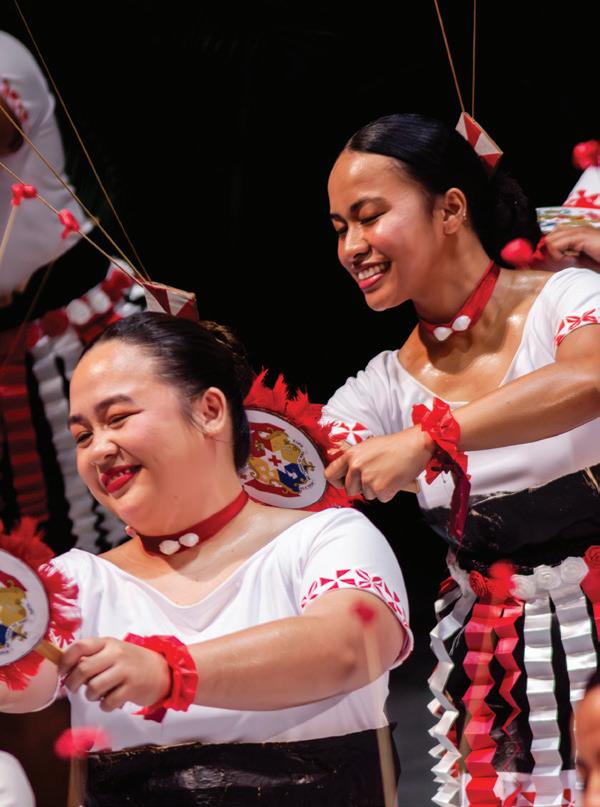
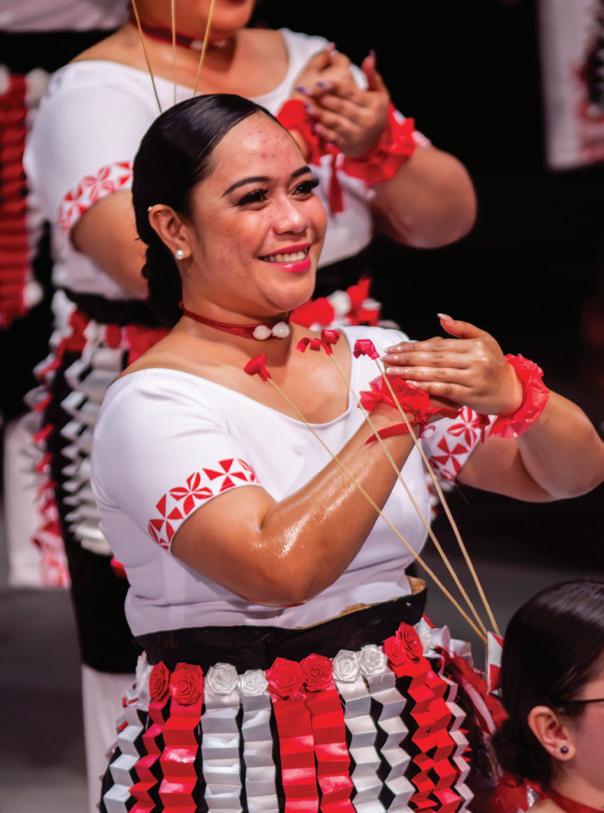
BYU–Hawaii’s Tonga Club unites onlookers across all cultures by telling a story of community and responsibility at Culture Night
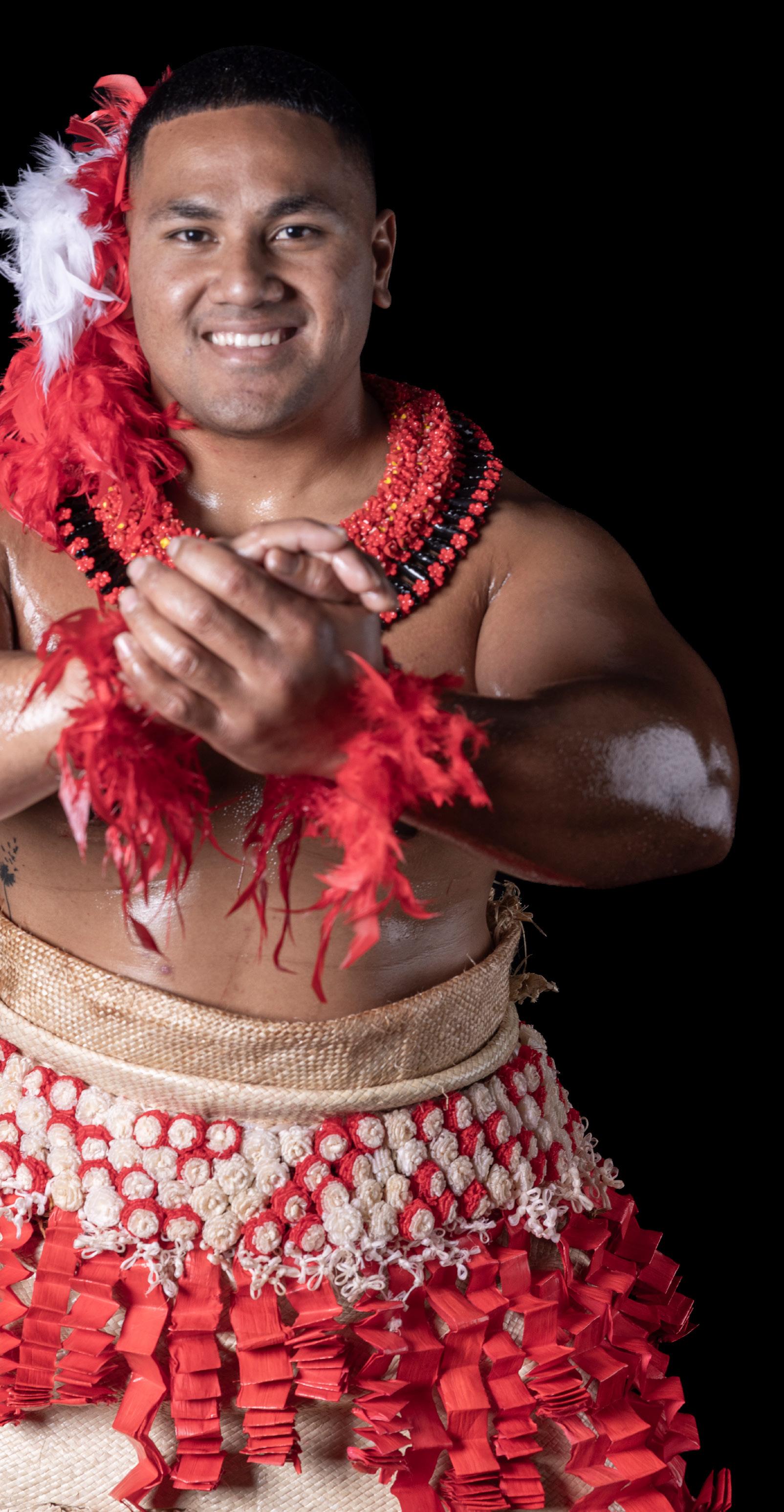
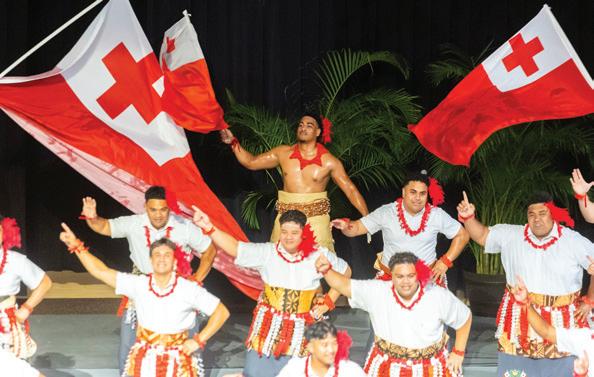
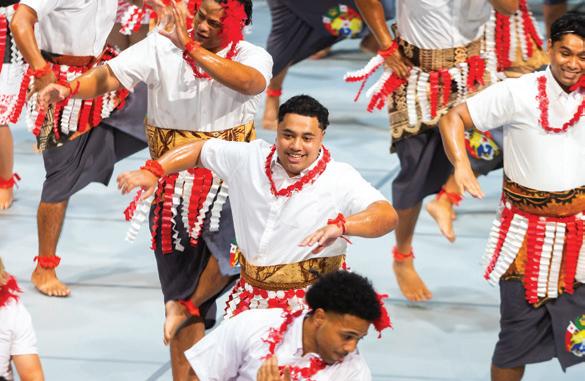
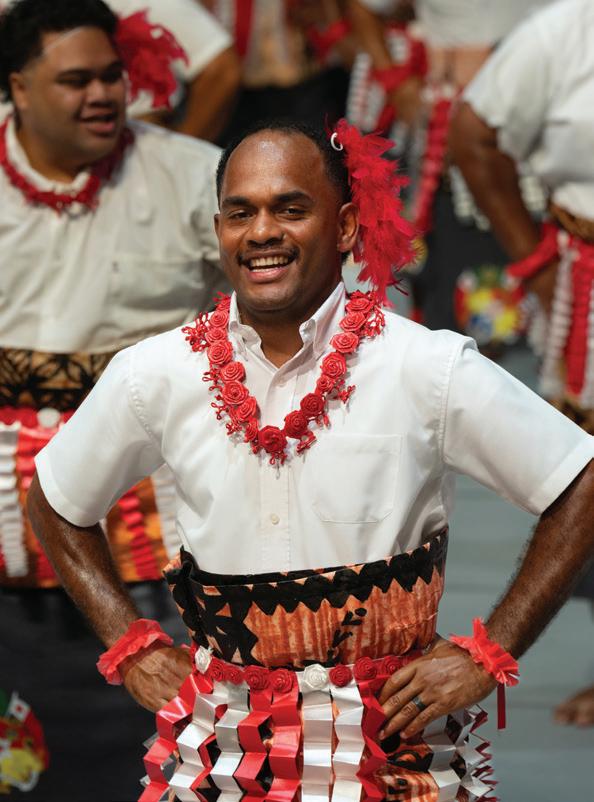
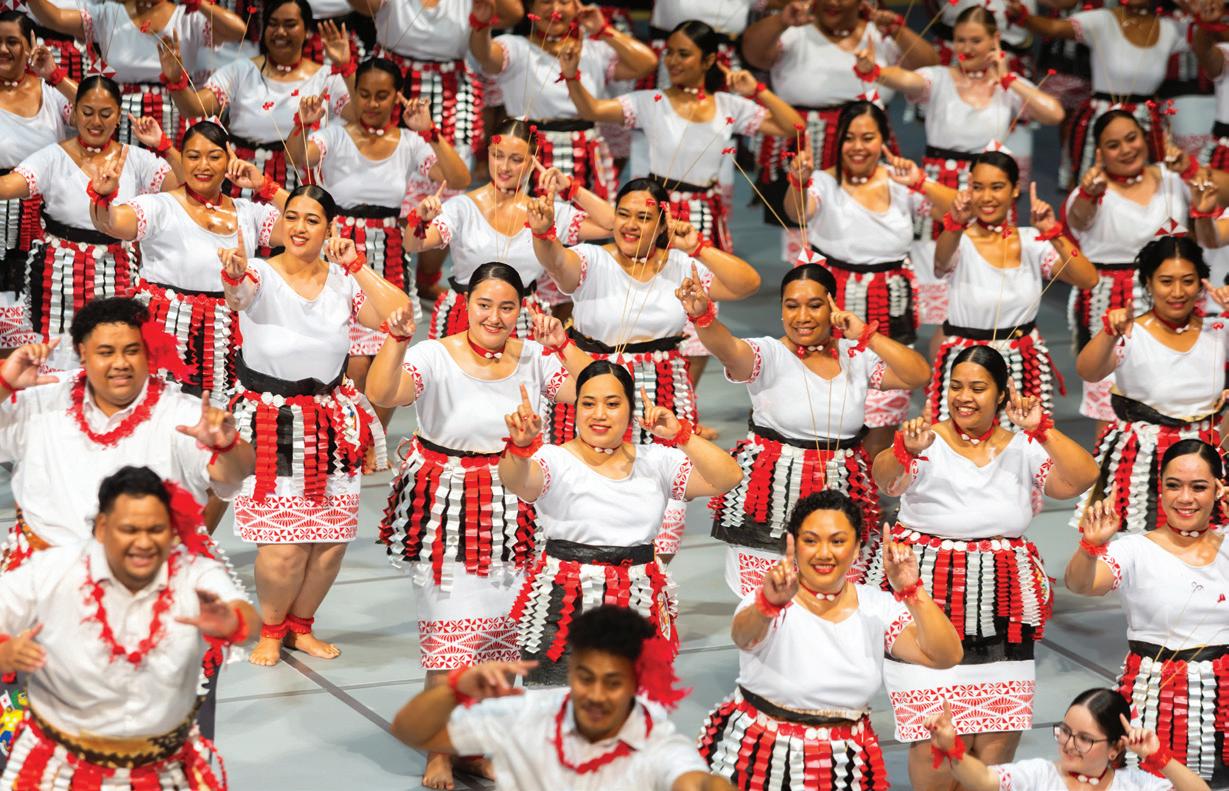
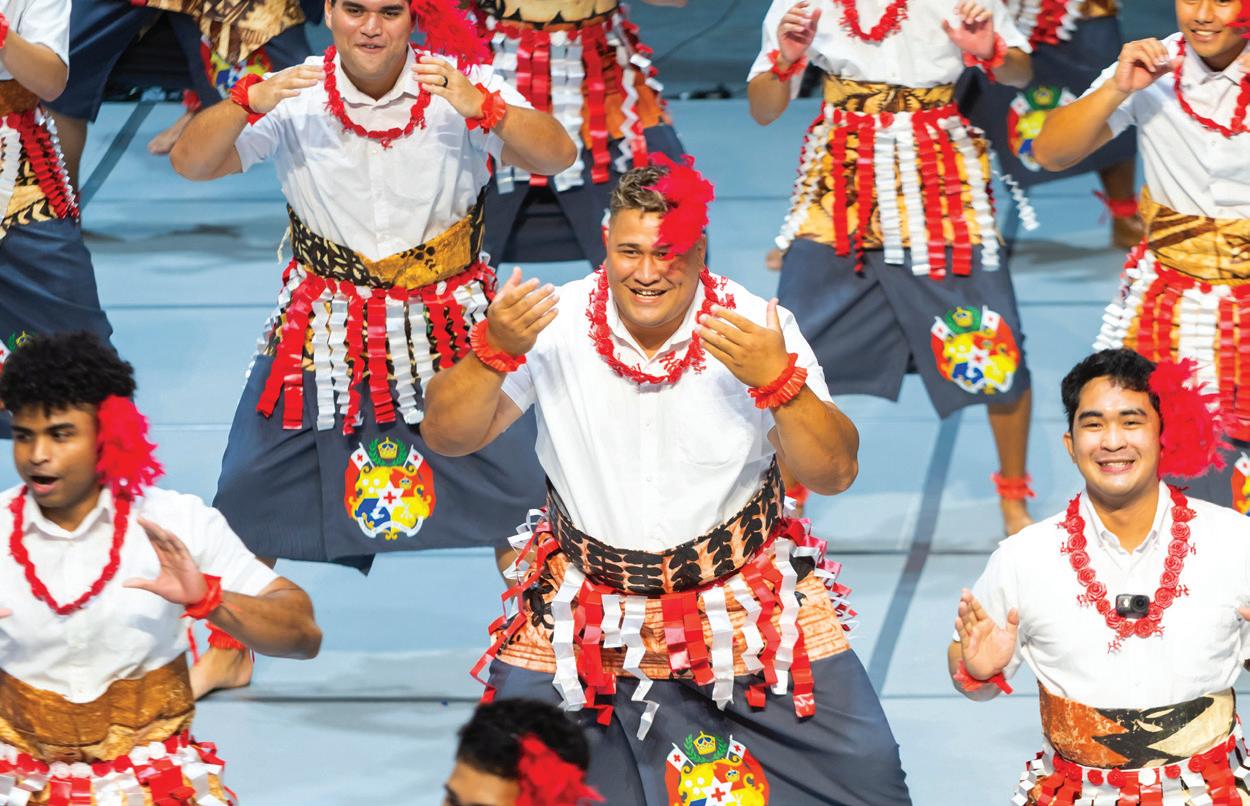
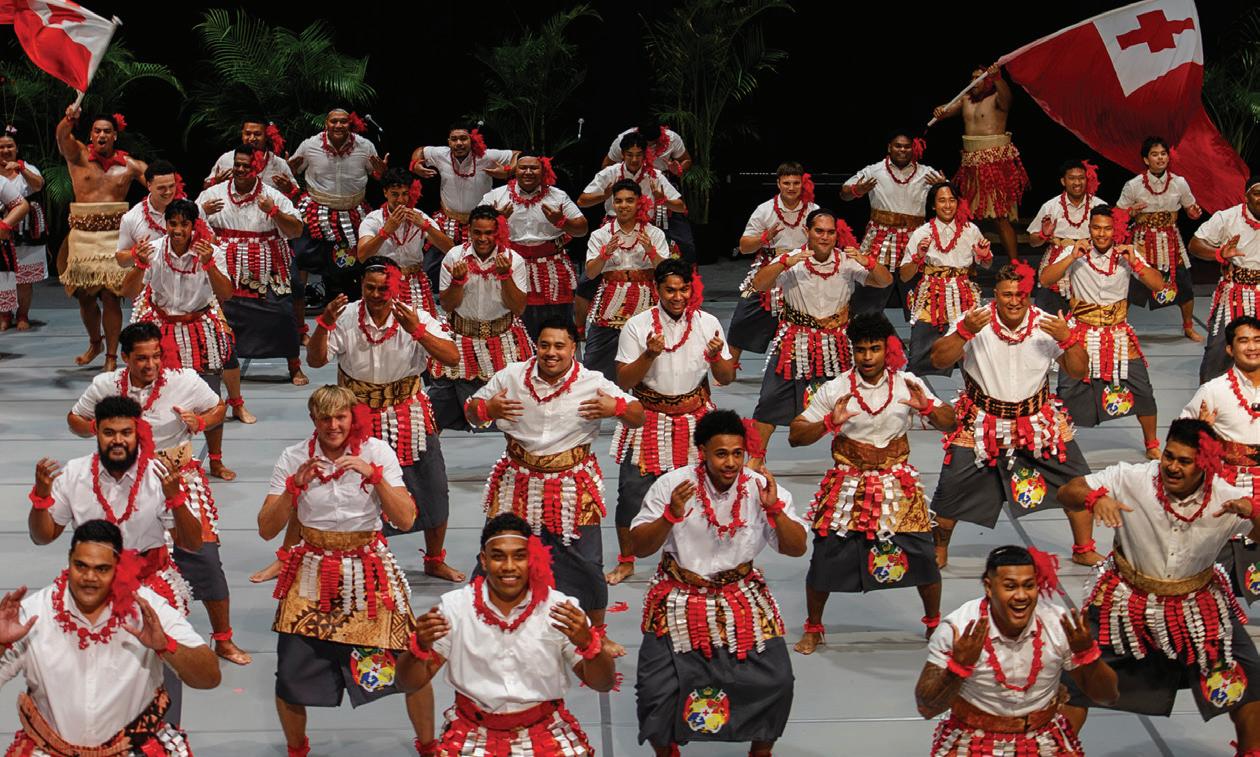
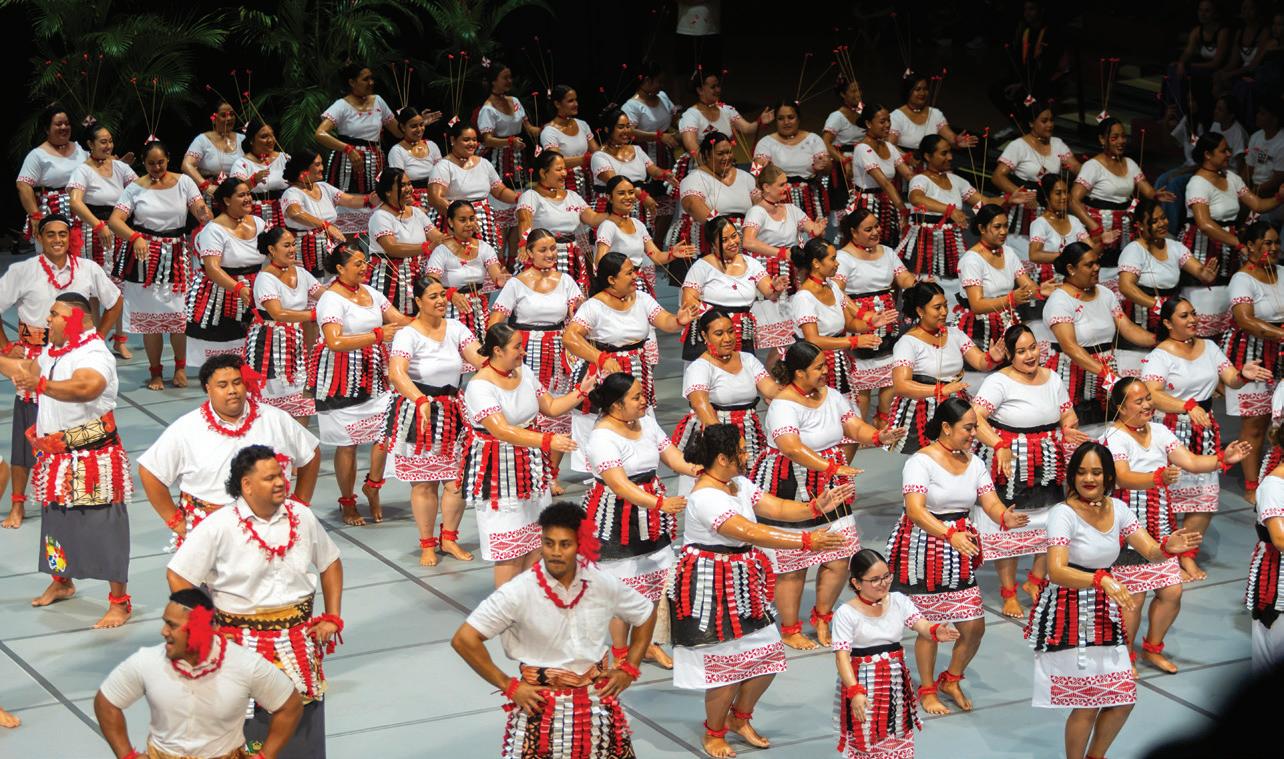
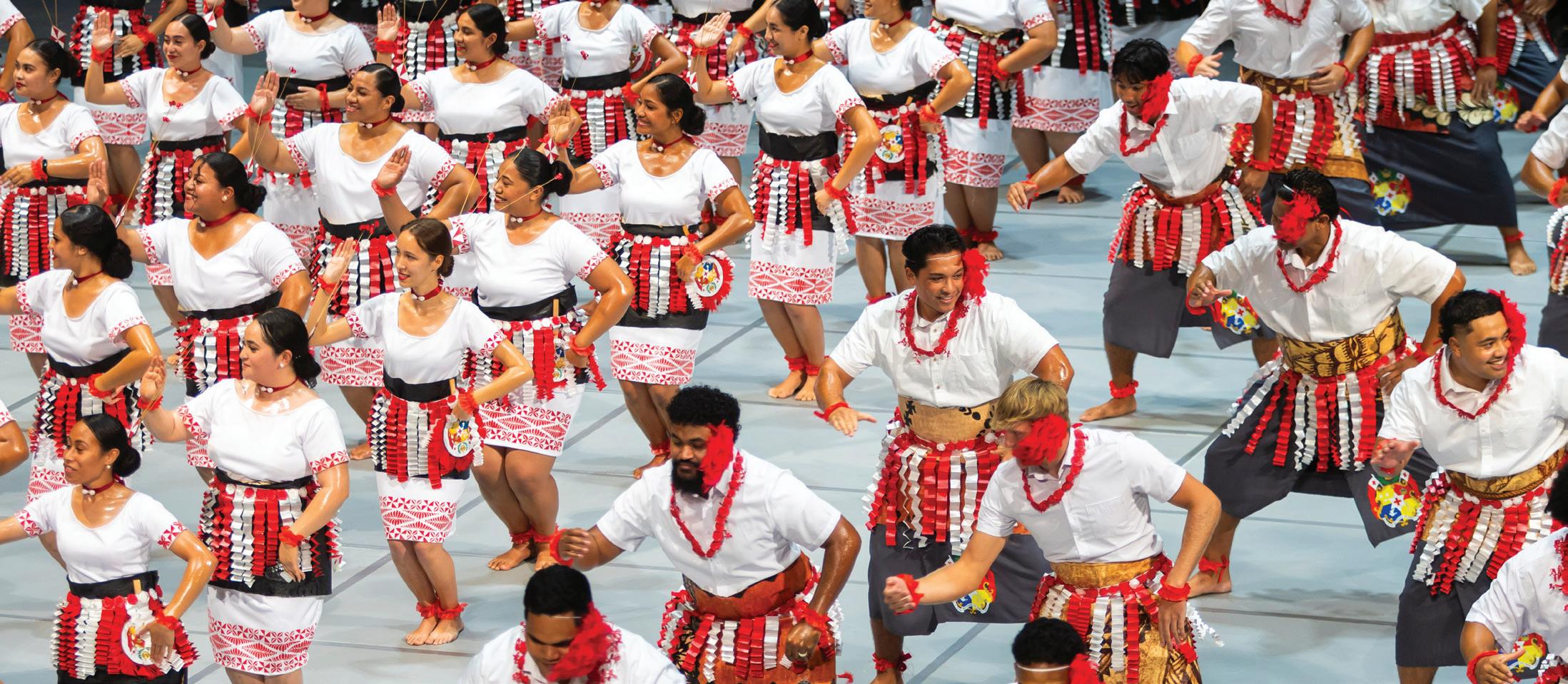
The crowd at the Cannon Activities Center erupted in applause as the Tonga Club, fitted in matching vibrant red, performed their powerful and fast-paced choreography. Tonga Club’s vice president Kailani Tupou said they successfully showcased unity and community, adding that they performed as one family and one home. Performing in unison, the Tonga Club told a story of family identity and responsibility. The dance was split into two distinct parts: the first focused on men and their responsibilities, while the second brought both the men and women together to show how everyone is able to unite and work together. Although the dance relied upon a male dominated first half, the ideas were bigger than man and woman, and were designed to highlight everyone growing closer together, explained Tupou, who with his wife orchestrated the choreography. “We mixed together, men and women, to showcase our unity and our responsibility as men, as a family, as a brother and as a sister–while combining everything together in dance,” he said.
Part of growing united included an underlying reverence and respect for the opportunity to represent Tonga, shared Tupou. “To us it is very important that people focus their minds and their thoughts on our little island where we are from, in order for us to connect together we always have to remember the route where we come from,” he explained.
Tonga Club entered the activities center with one phrase in mind “Si’ipe Kae Ha” or “small but significant,” said Tupou. In the end, they were able to turn their small three minute performance into a significant beacon of togetherness–completing their self-fulfilling prophecy of Si’ipe Kae Ha, he shared.•
PHILIPPINES
PHILIPPINES
BY CJ SHINIHAH NOTARTE-ORR
Celebrating resilience like blossoming flowers
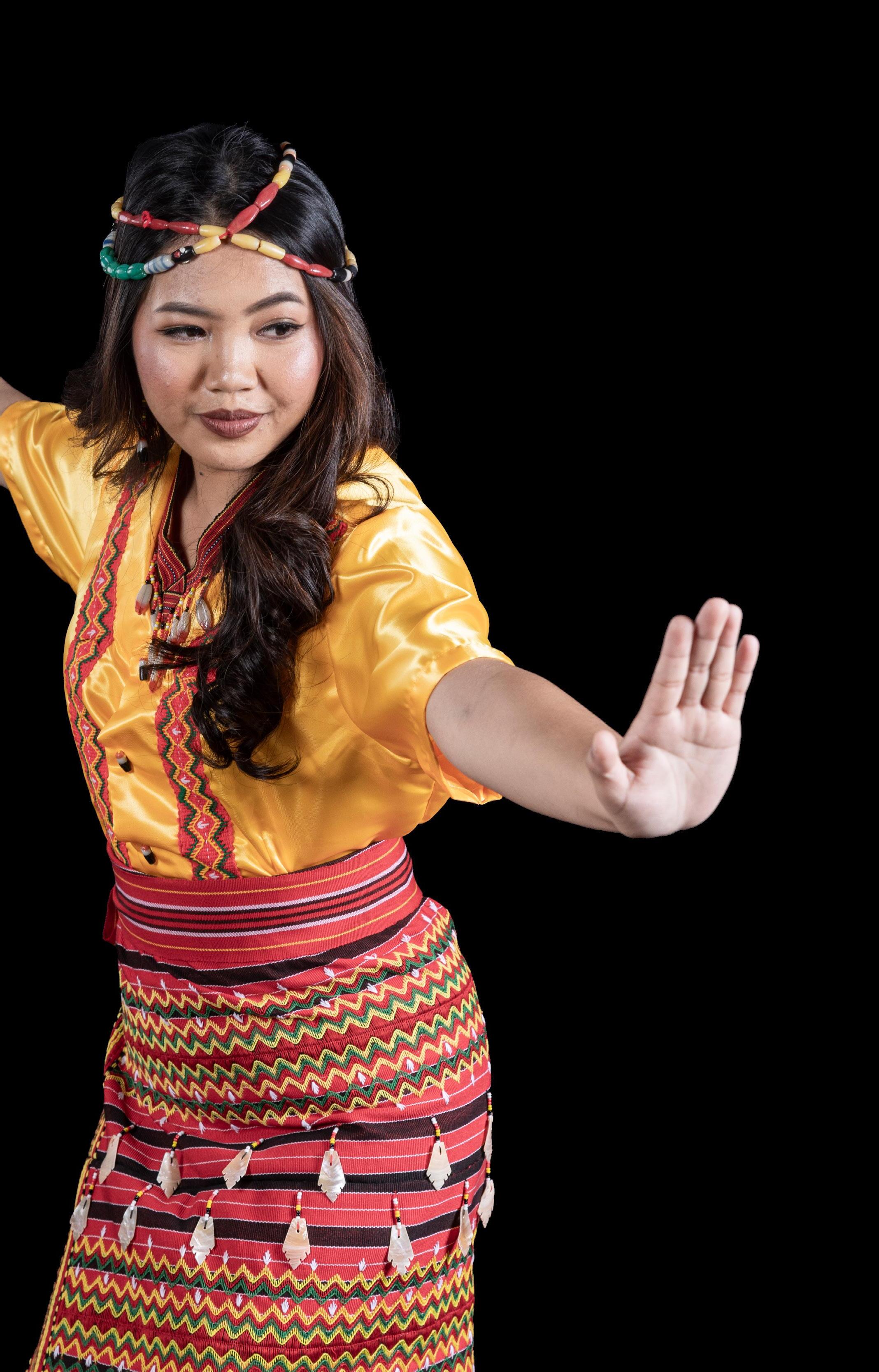
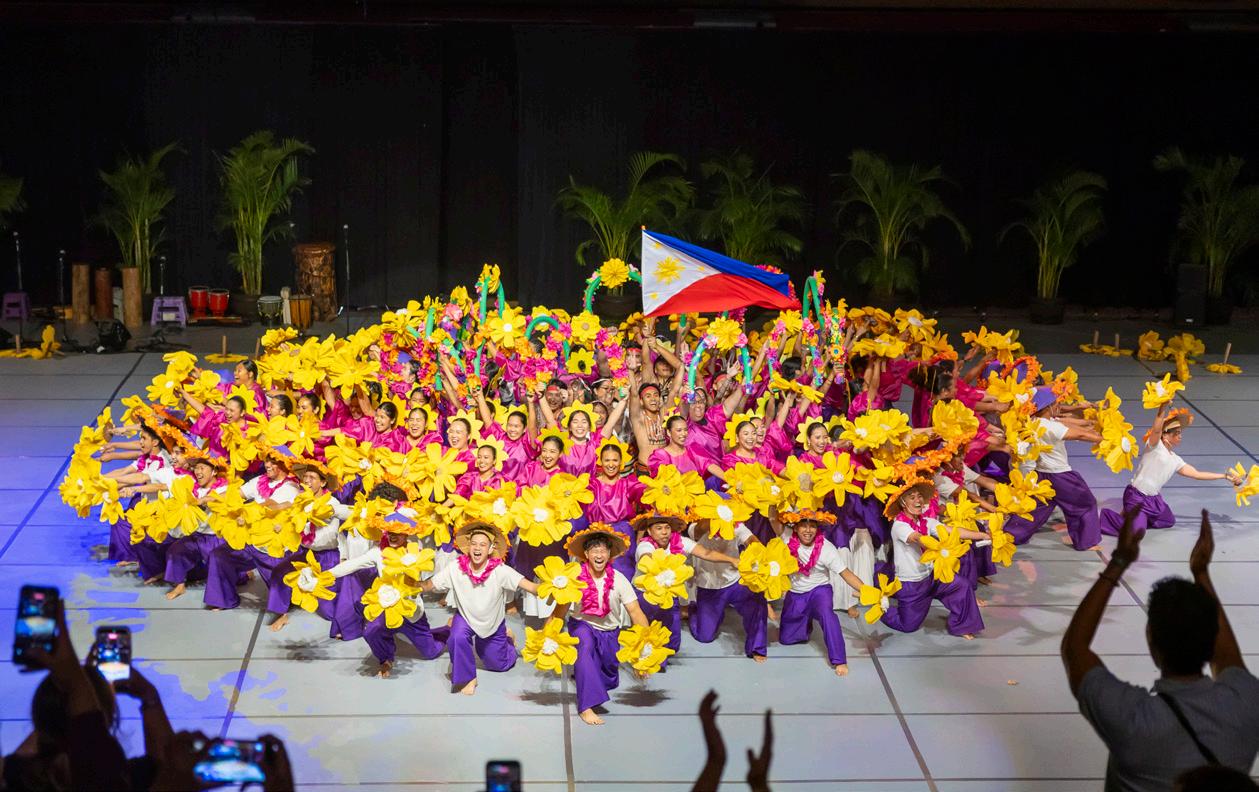
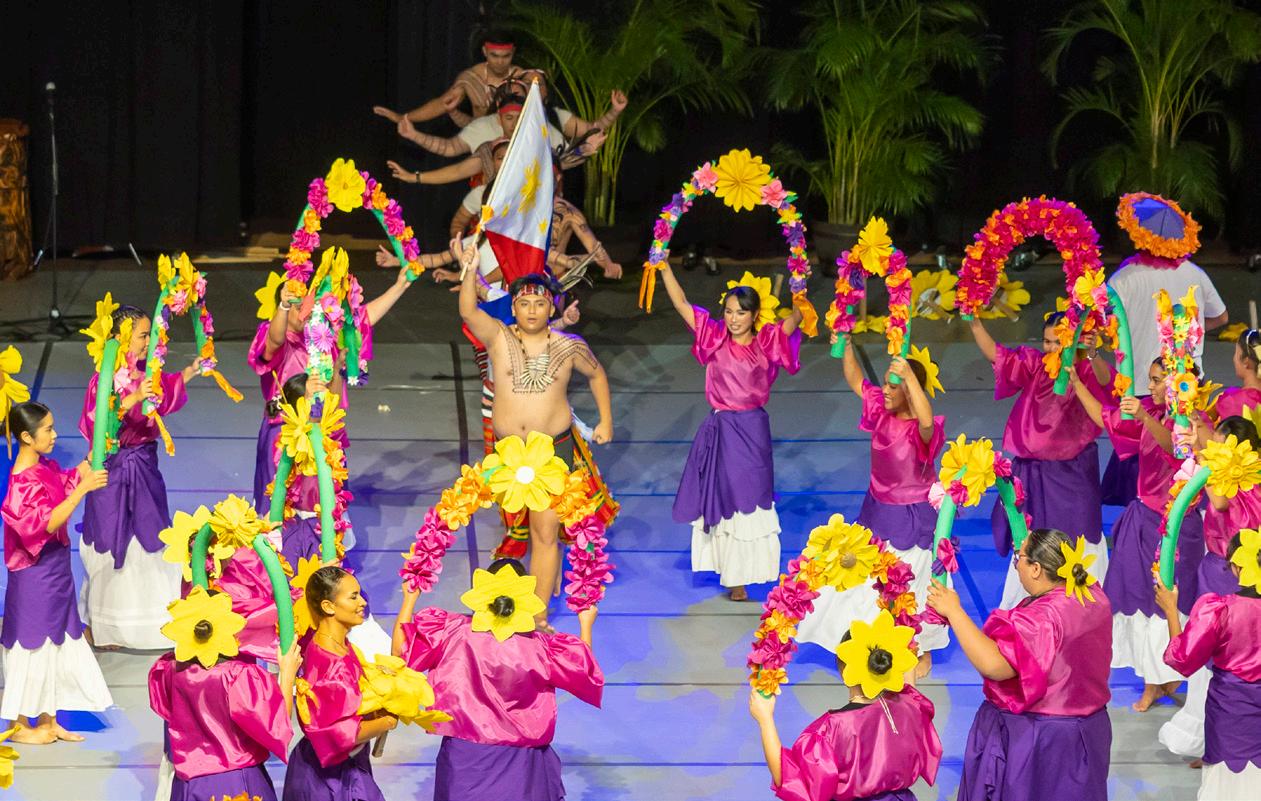
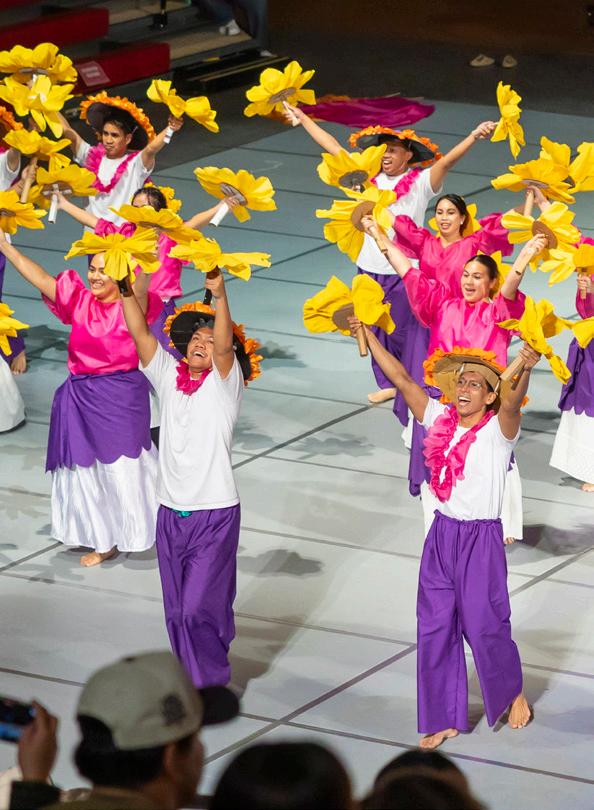
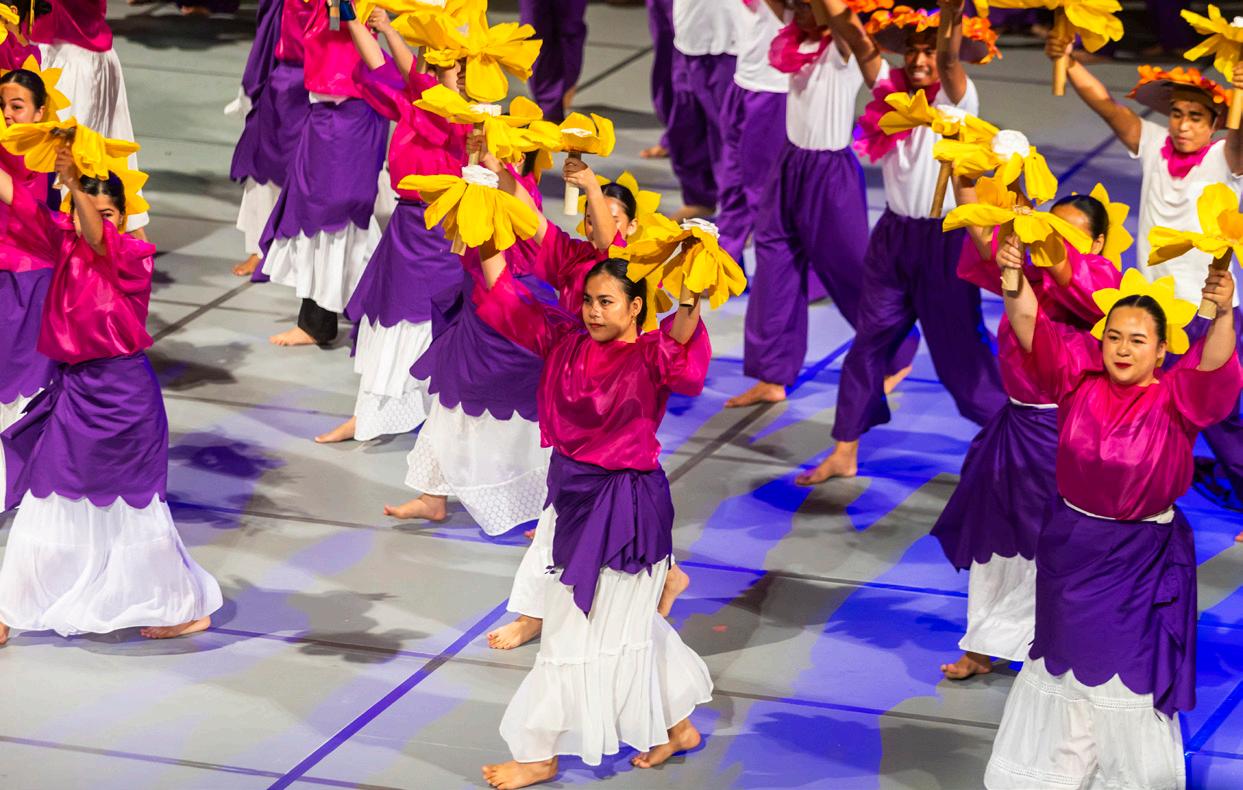
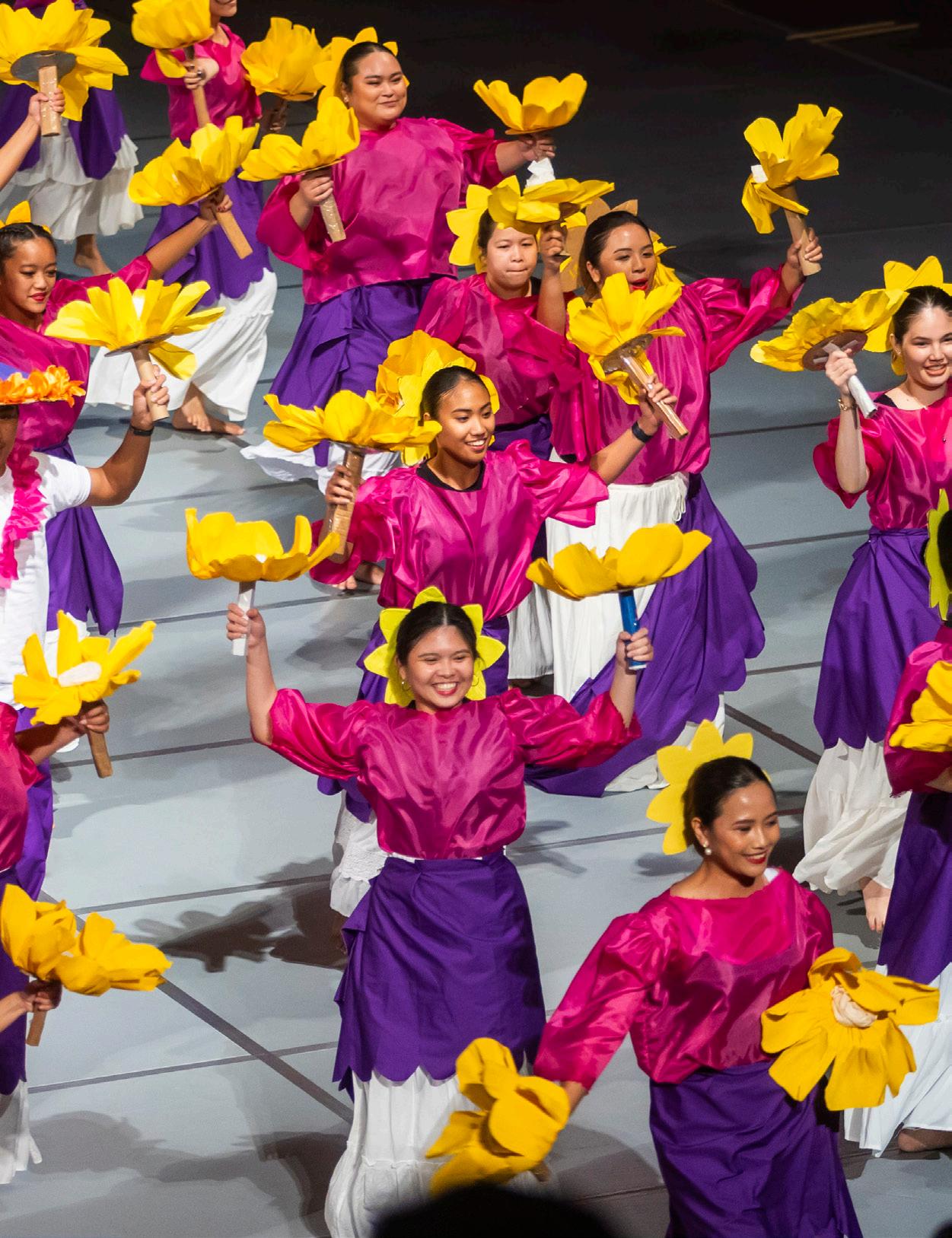
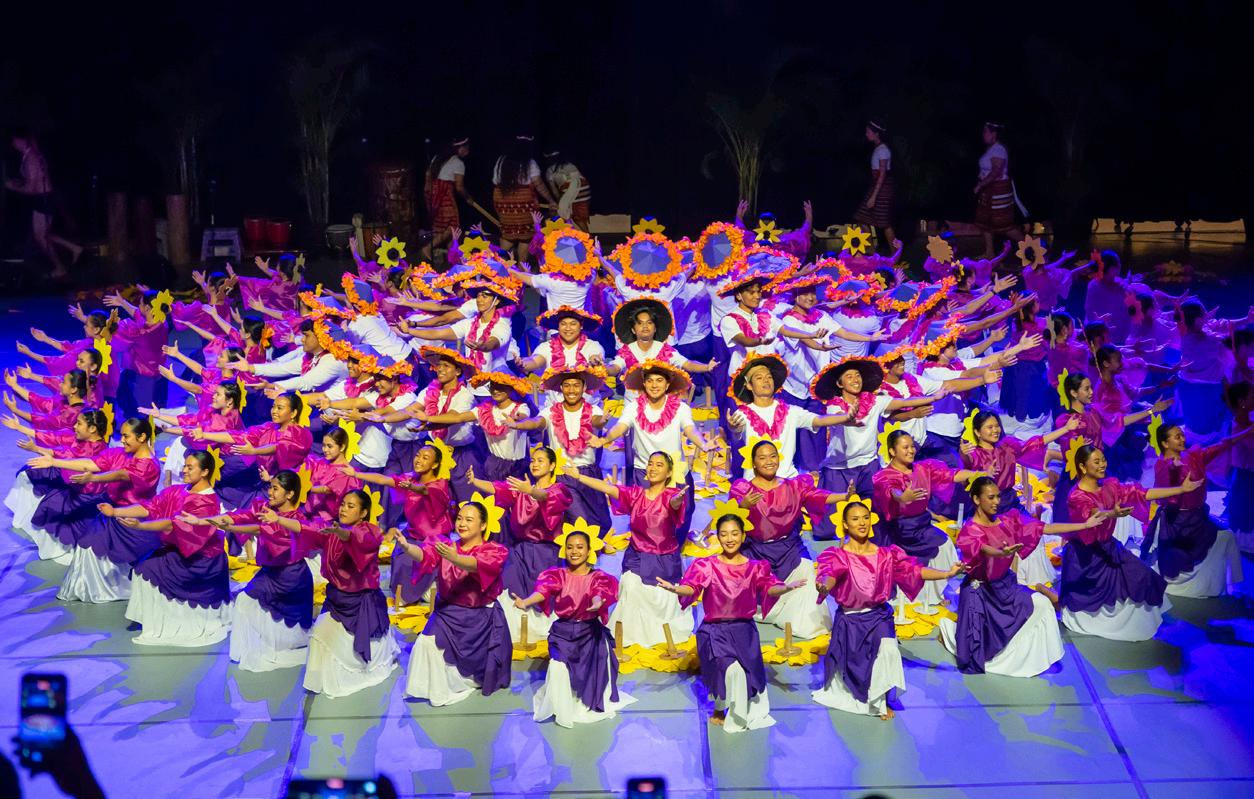
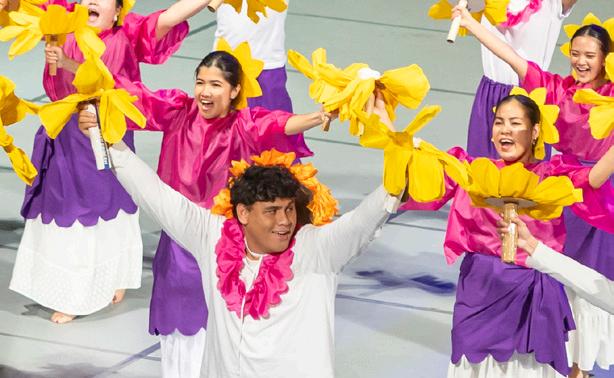
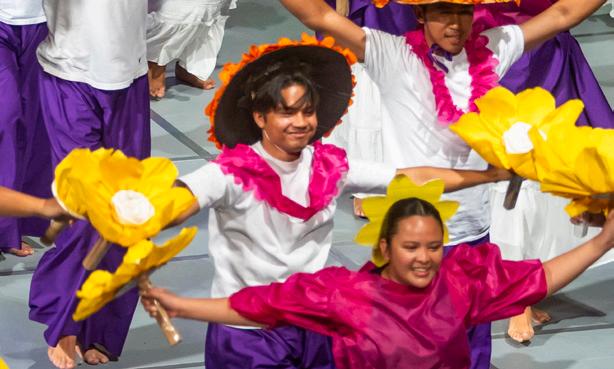
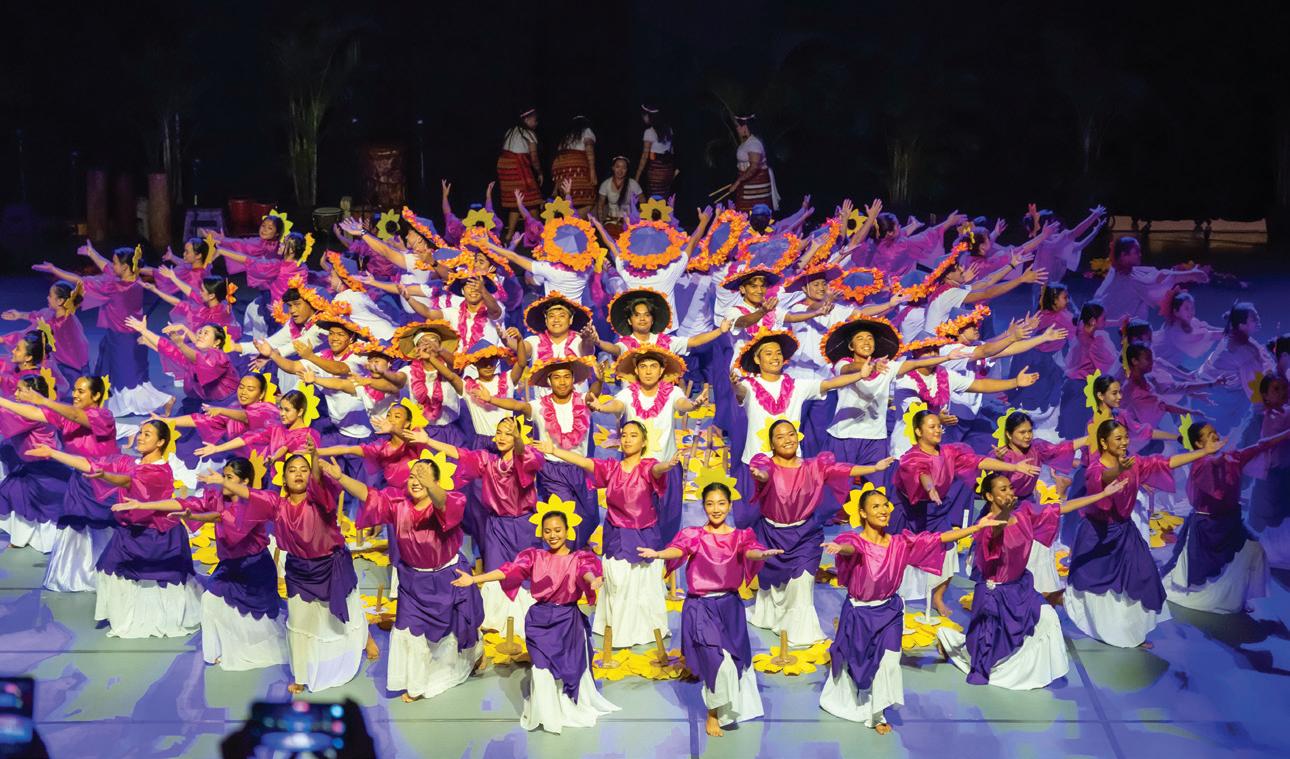
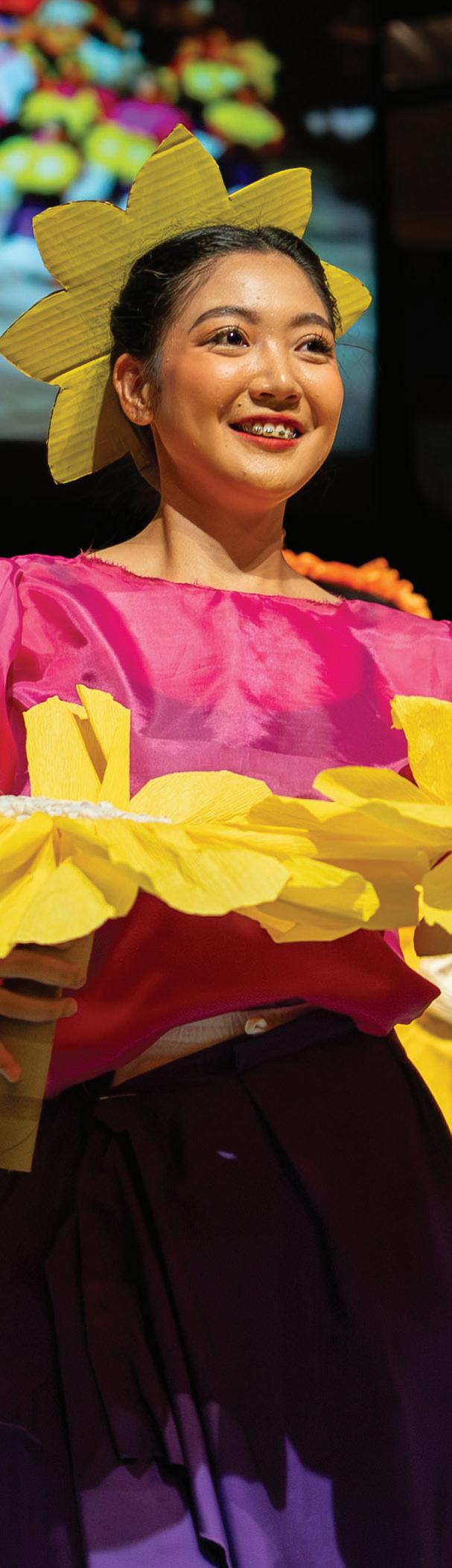
The Cannon Activities Center erupted in excitement as the performers entered the stage. The dancers wore festive colors—pink, purple, orange and white—while holding yellow flowers. The performance began with a cultural dance called sakuting—a folk dance originating from the Ilocos region in the Philippines—performed around a flower bud formation that, at the end, bloomed alive with smiles and cheers from both dancers and the audience.
Filipino Club president Bouford Sifuentes, a senior in hospitality and tourism management from the Philippines, said the club’s performance was inspired by the Panagbenga Festival. The Panagbenga website says, “Panagbenga” is from a Kankanaey term meaning the season of blooming. Sifuentes explained, “It originated in the Cordilleras, specifically in Baguio City, where they celebrate it every year.”
According to a news article from Inquirer, Baguio City experienced a 7.7 magnitude earthquake in 1990, devastating the land and driving tourists away. For the city to recover economically, Sifuentes said, the citizens came up with a festival celebrating the flowers’ bloom. Inquirer says eventually, tourists came, causing the rise of establishments to cater more tourists.
Reilan Abasanta, a senior from the Philippines majoring in business management, shared that although the festival was born out of struggle, “out of that struggle is unity and celebration.”
“The blooming of the flower represents our symbol of hope,” he continued. He said he hopes they were able to translate this message into their performance.
Sifuentes also said, “No matter what happened to the Filipinos, we could always find a way to stand up again. We may come from different cultures and islands, but we have the same goal and purpose—to be one,” he said.•
KOREA
KOREA
BY CJ SHINIHAH NOTARTE
A fusion of the past and the present
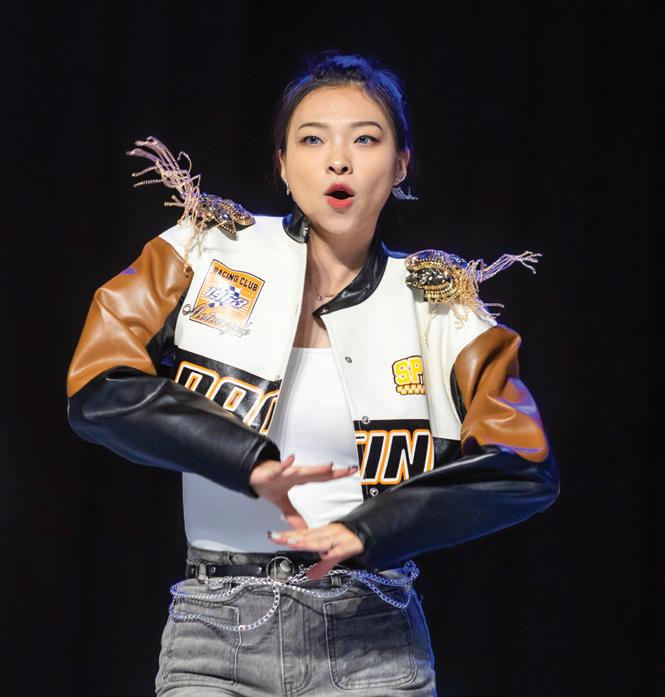
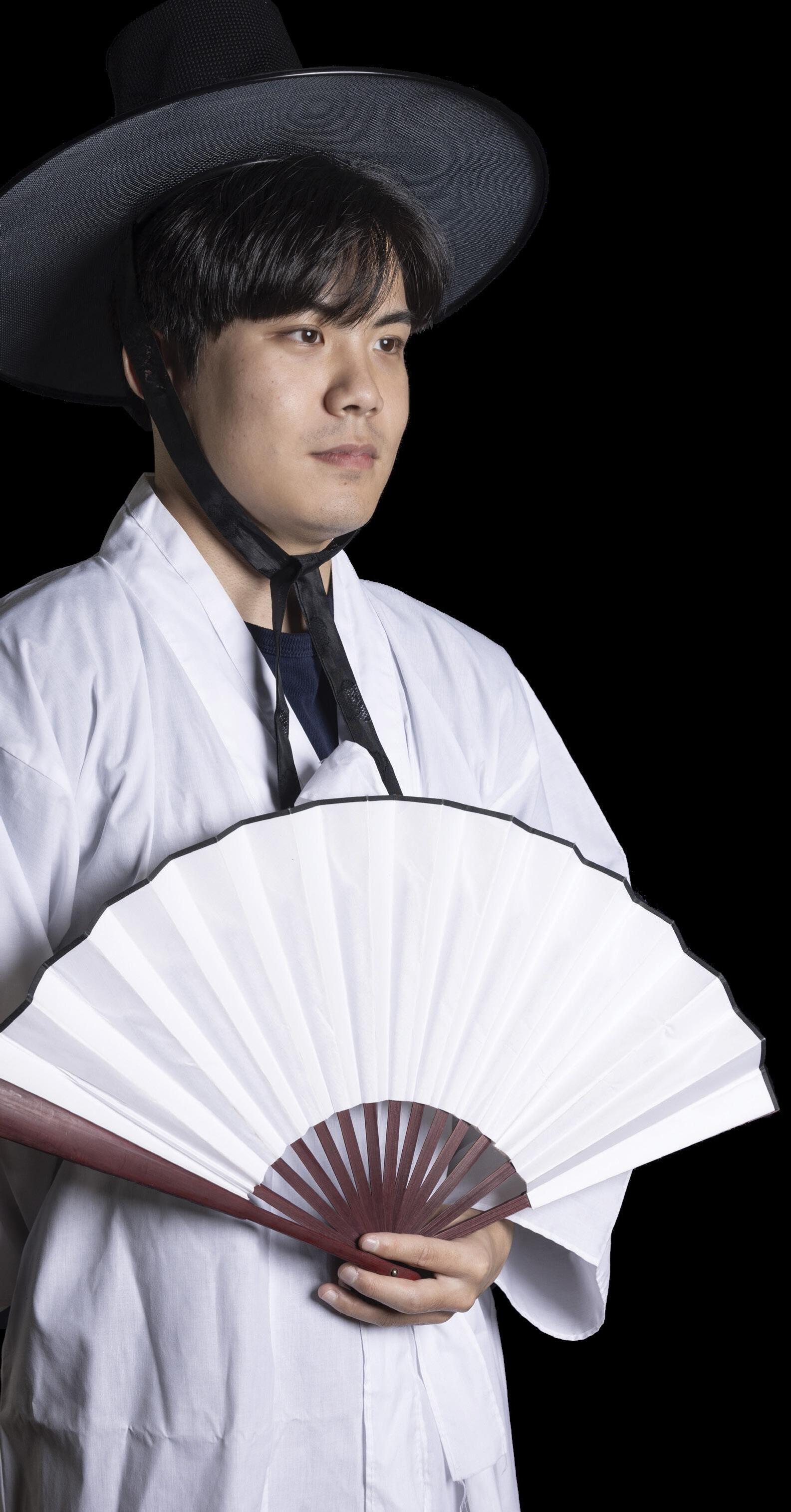
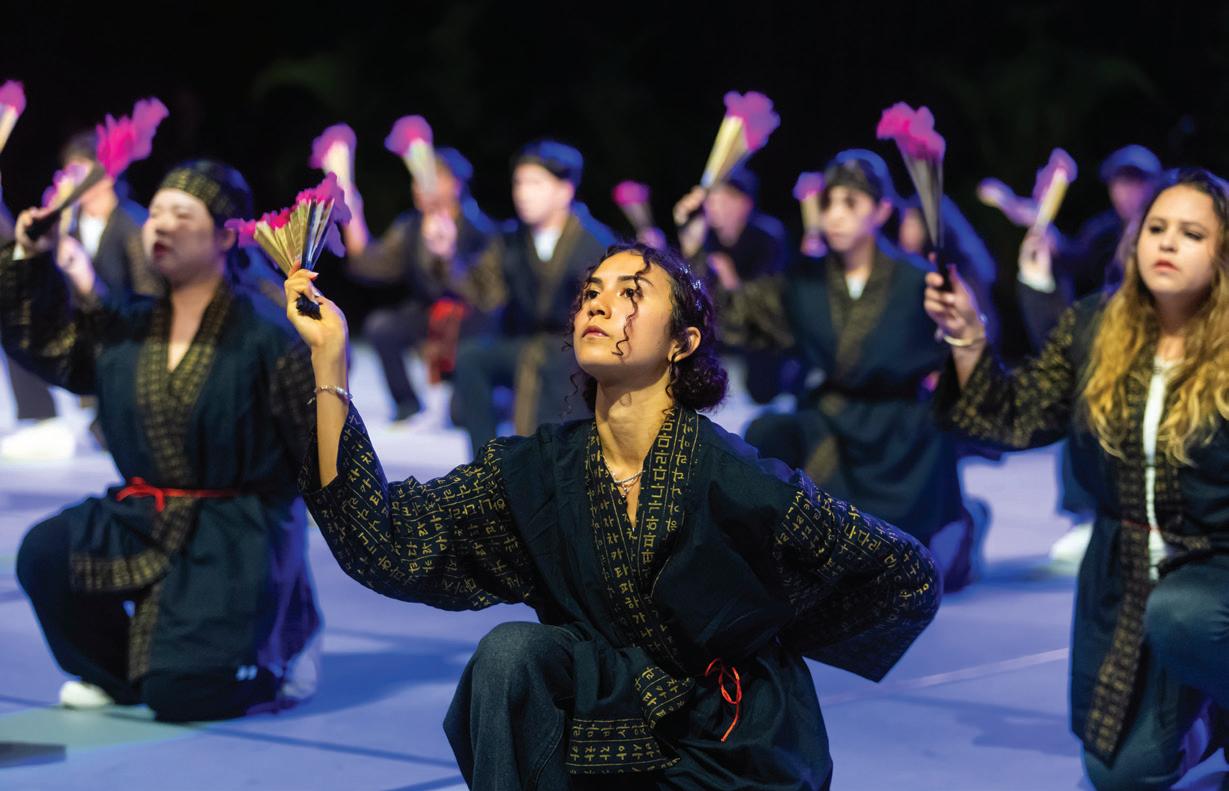
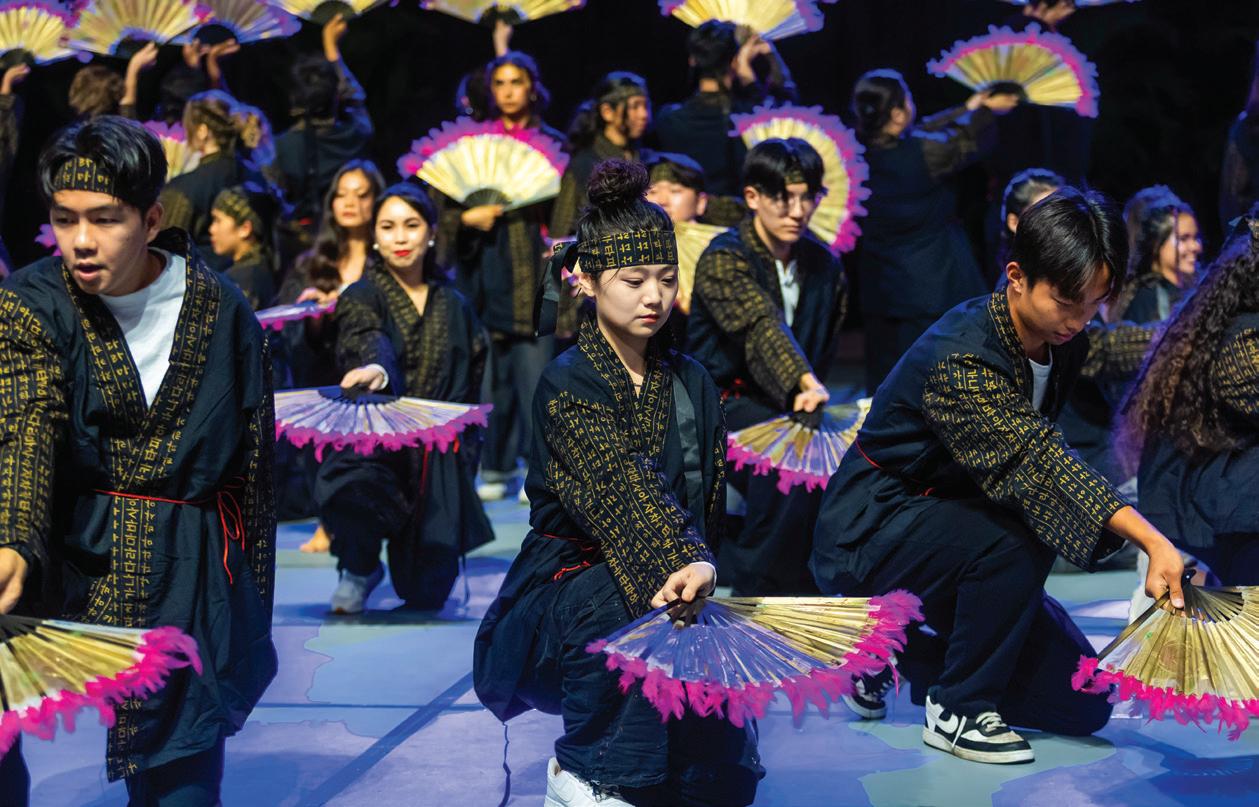
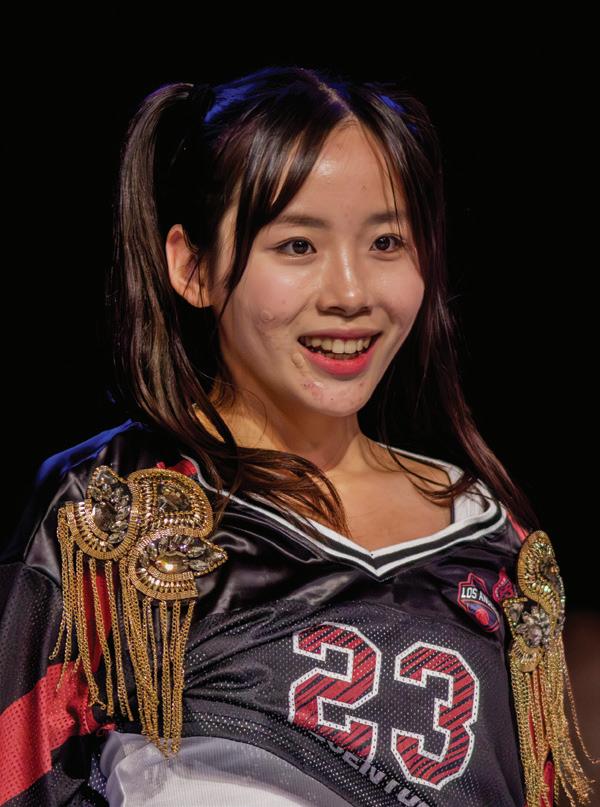
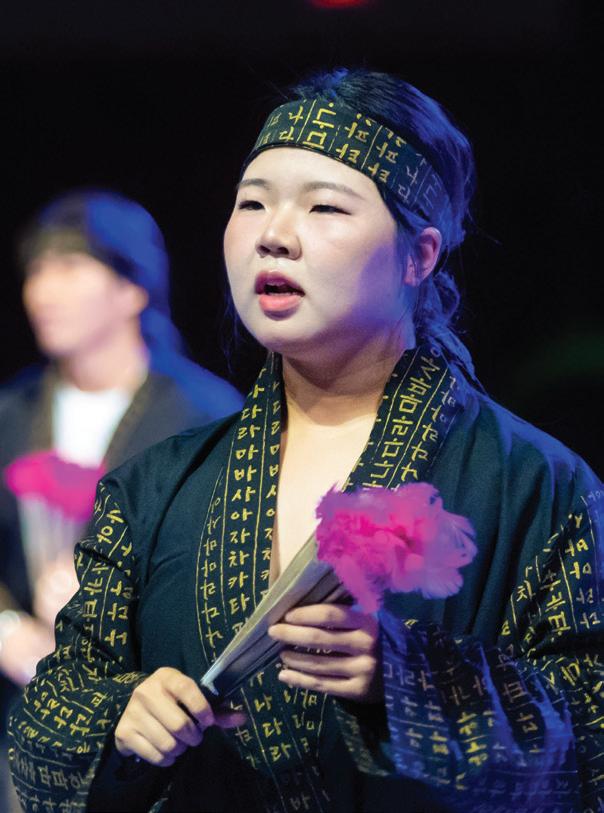
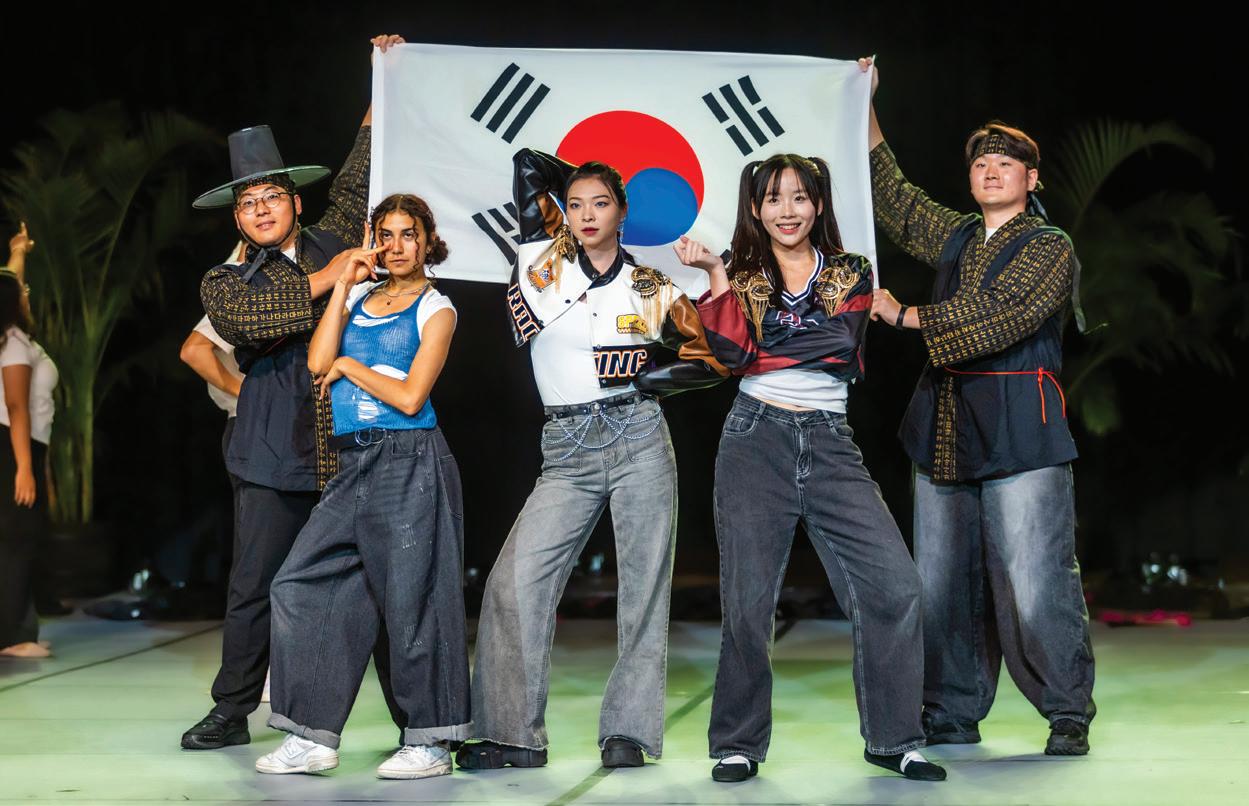
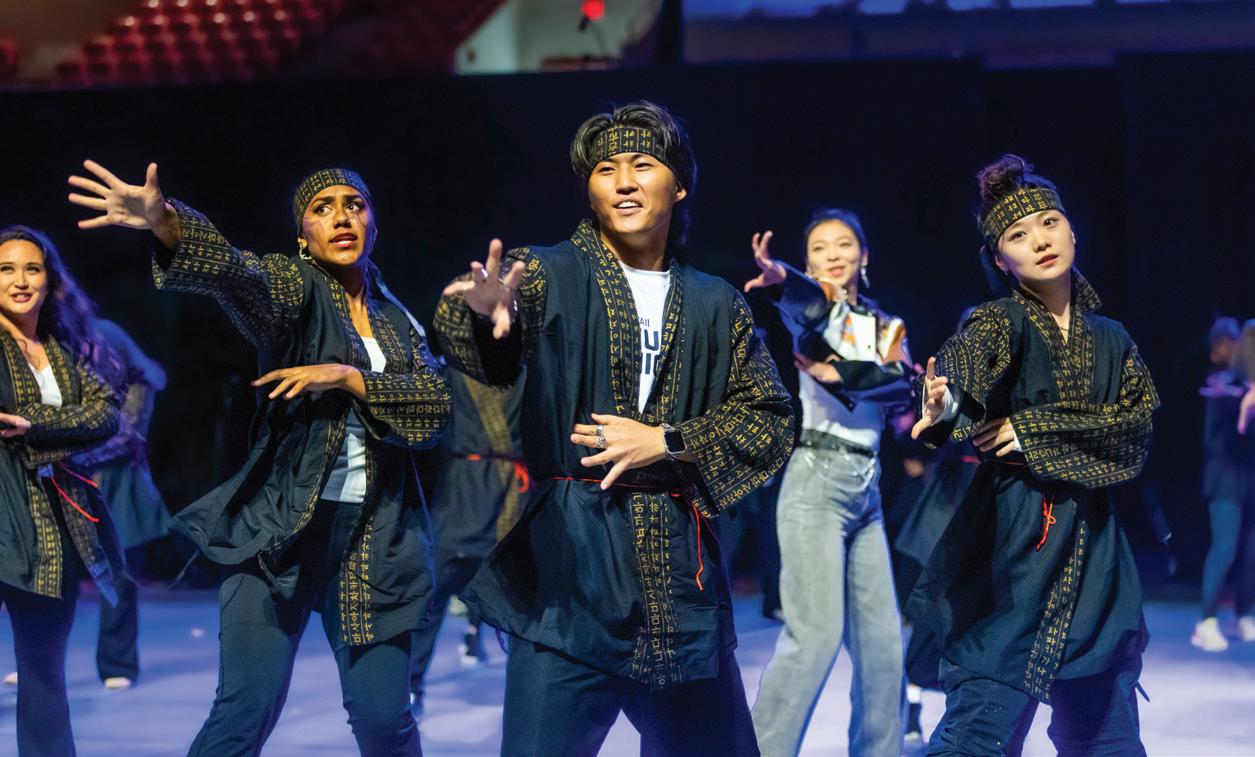
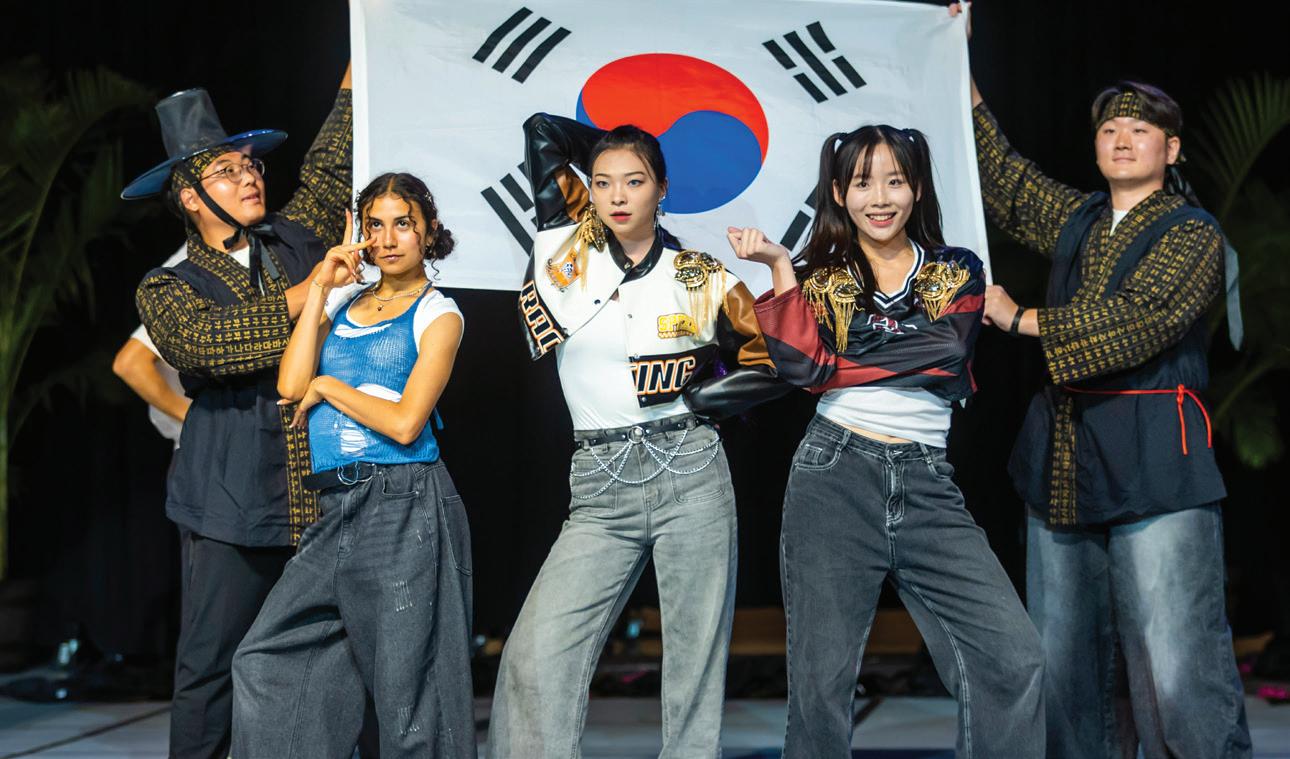
Blue lights flickered and eerie music played as Korea Club performers began dancing. Dancers were wearing “hanbok” and “gat,” while holding a fan and waving it around creating a visually pleasing movement and flow. Lights turned brighter as they transitioned to the second part of their dance highlighting three dancers. The crowd sang along to the music and performers ended their performance showing the South Korea flag.
Kyeongmin “Robin” Kang, a senior from South Korea majoring in supply chain and economics and the head director, said the club wanted to showcase their culture both the past and present. He said they decided to show the past by their costume, integrating it with K-pop songs to show their present.
Kang said they were performing two songs from the movie “K-pop Demon Hunters.” The first song is titled “Your Idol” and the second song is “Golden.” He said the first dance is inspired by a Korean fan dance, signifying unity. “This dance shows the cultural side of our performance. It shows “uri” or in English, us, ourselves or as one,” he explained.
Eunsu Kim, a senior from South Korea majoring in visual arts and the costume manager, said historically, only nobles could wear “gat,” a black cylindrical hat. She continued, “Everyone will wear ‘hanbok’ (traditional Korean clothing)” except the three dancers dancers featured in the second part of the dance performing as Huntrix, the main characters from the movie
Jihyun Park, a sophomore from South Korea majoring in hospitality and tourism management and the choreographer, said she wants the audience to feel uplifted by their performance. She said “Golden” is a you-cando-it song. “That’s why I think everybody loved it.” She also said the message of their performance is a reminder for everyone to embrace their identity as children of God and that doing so will help them overcome the adversary.
Kang said their goal is to make the audience experience Korea “as it is, aside from what’s already famous.” He said their performance is an invitation for everyone to embrace their culture.•
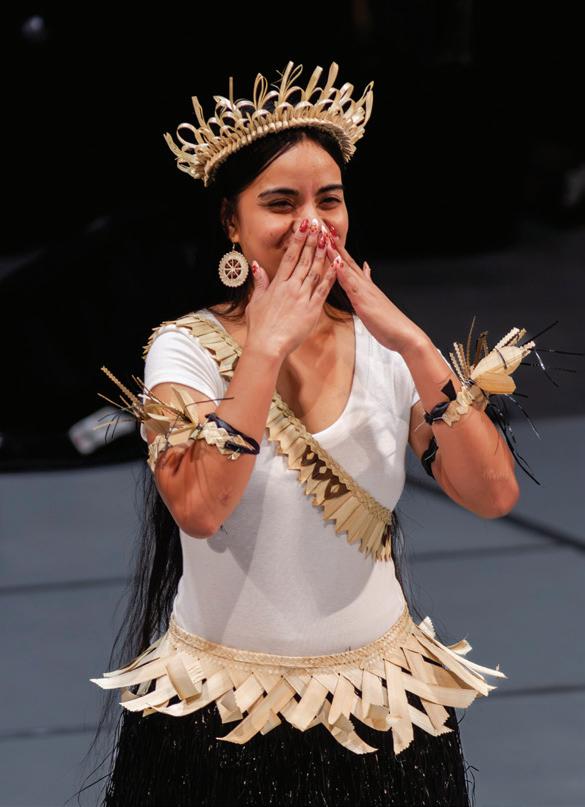
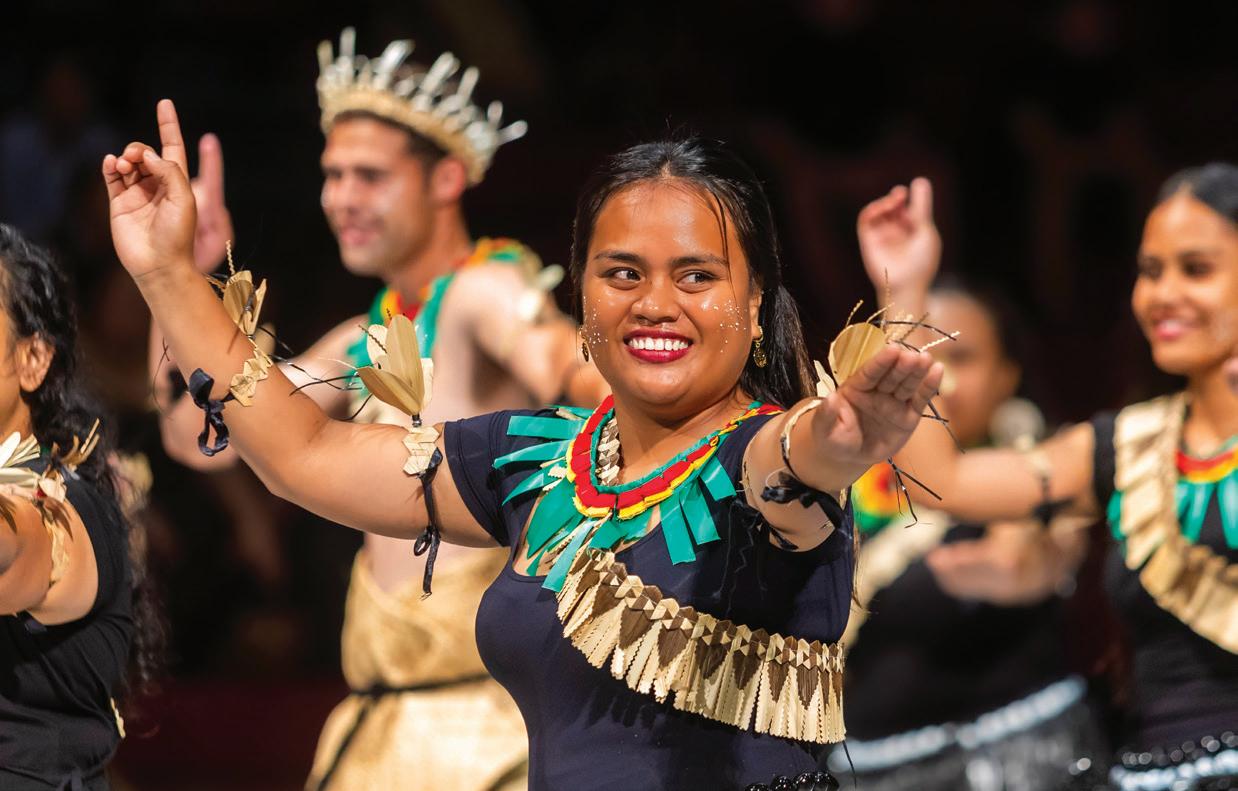
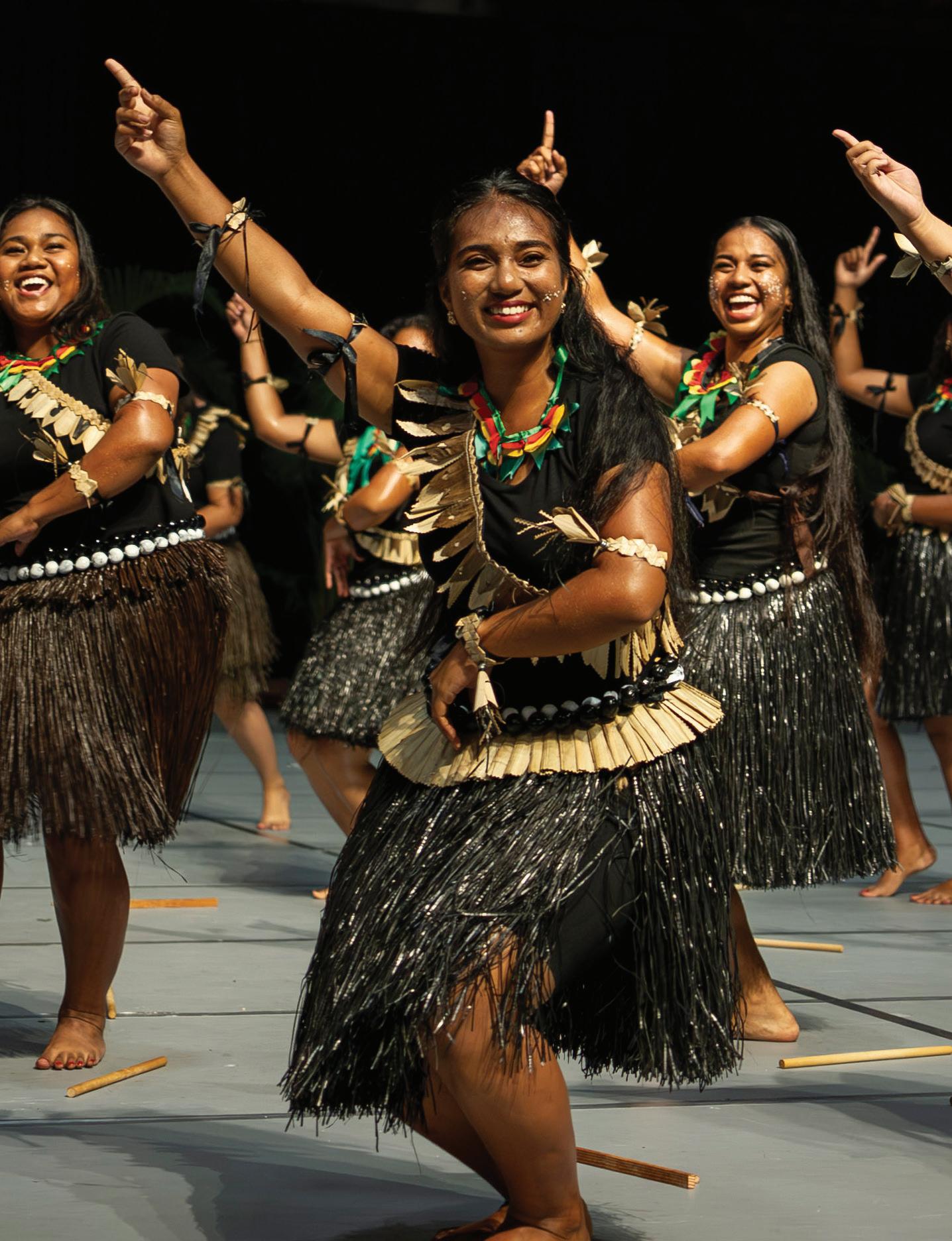
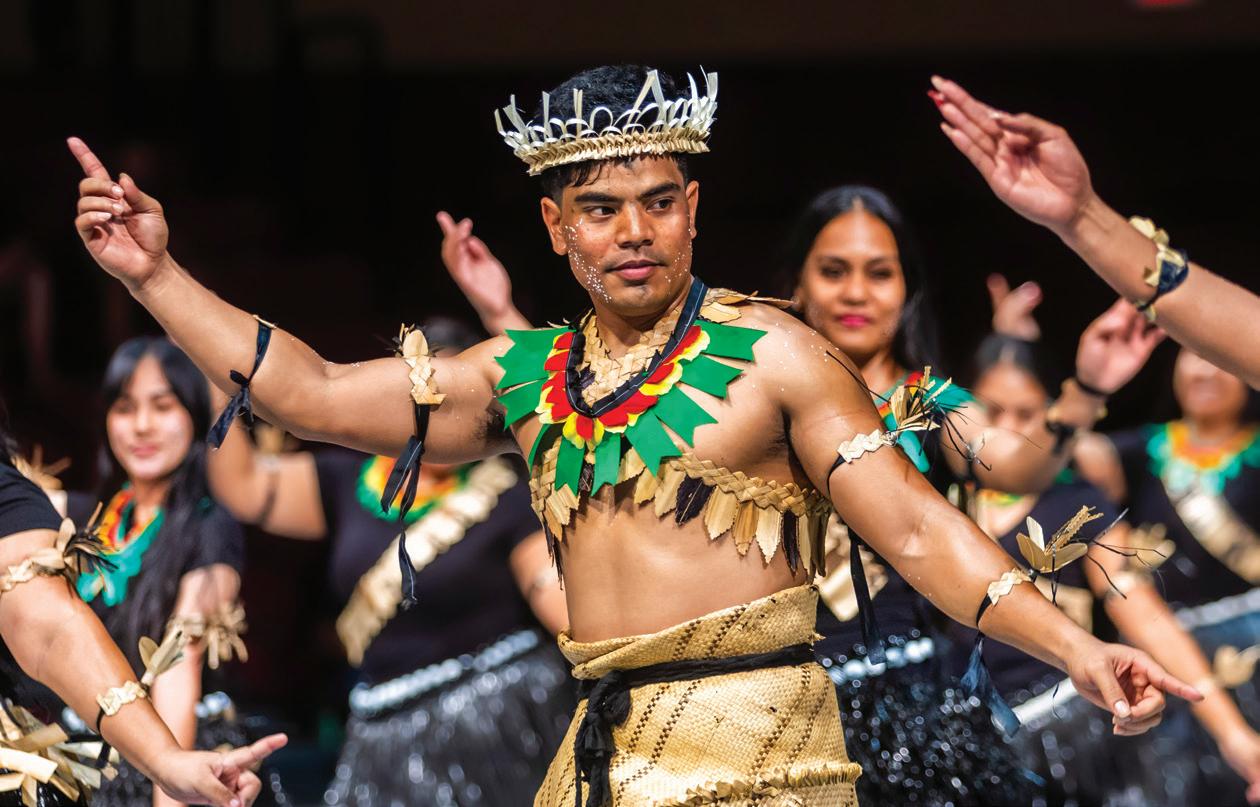
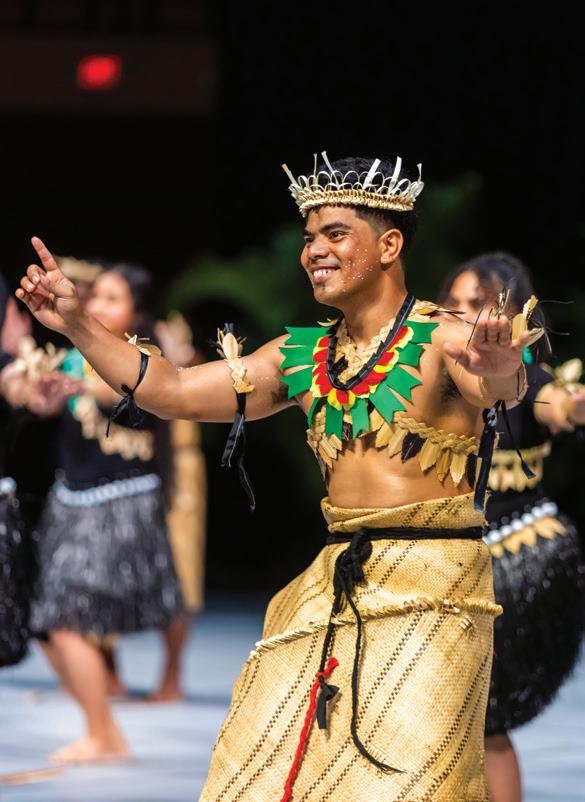
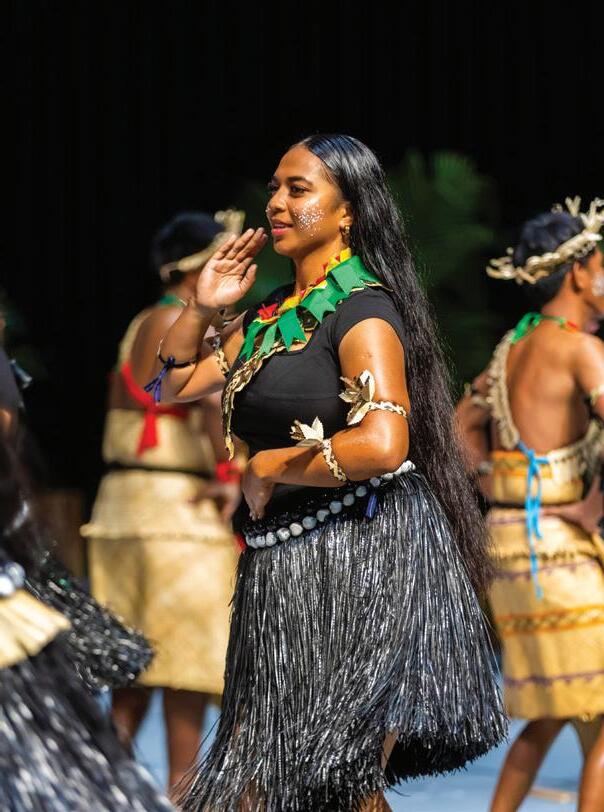
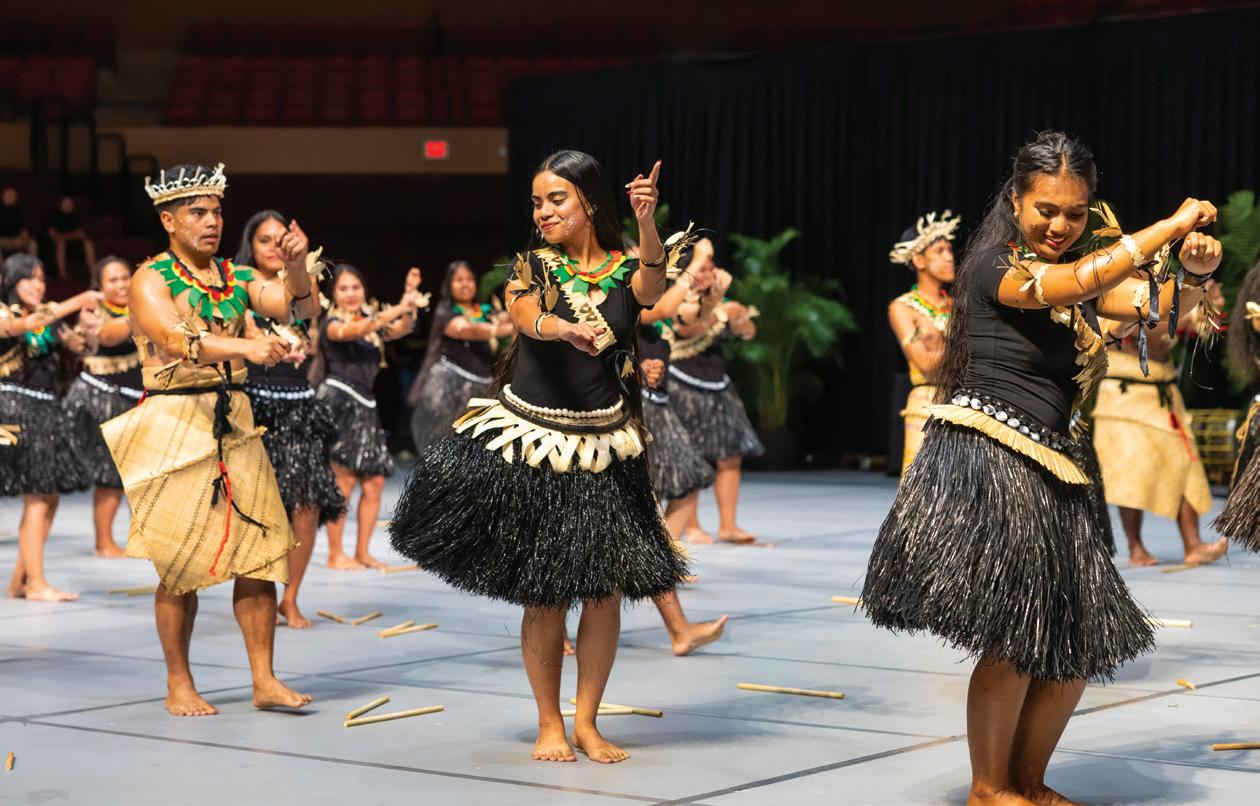
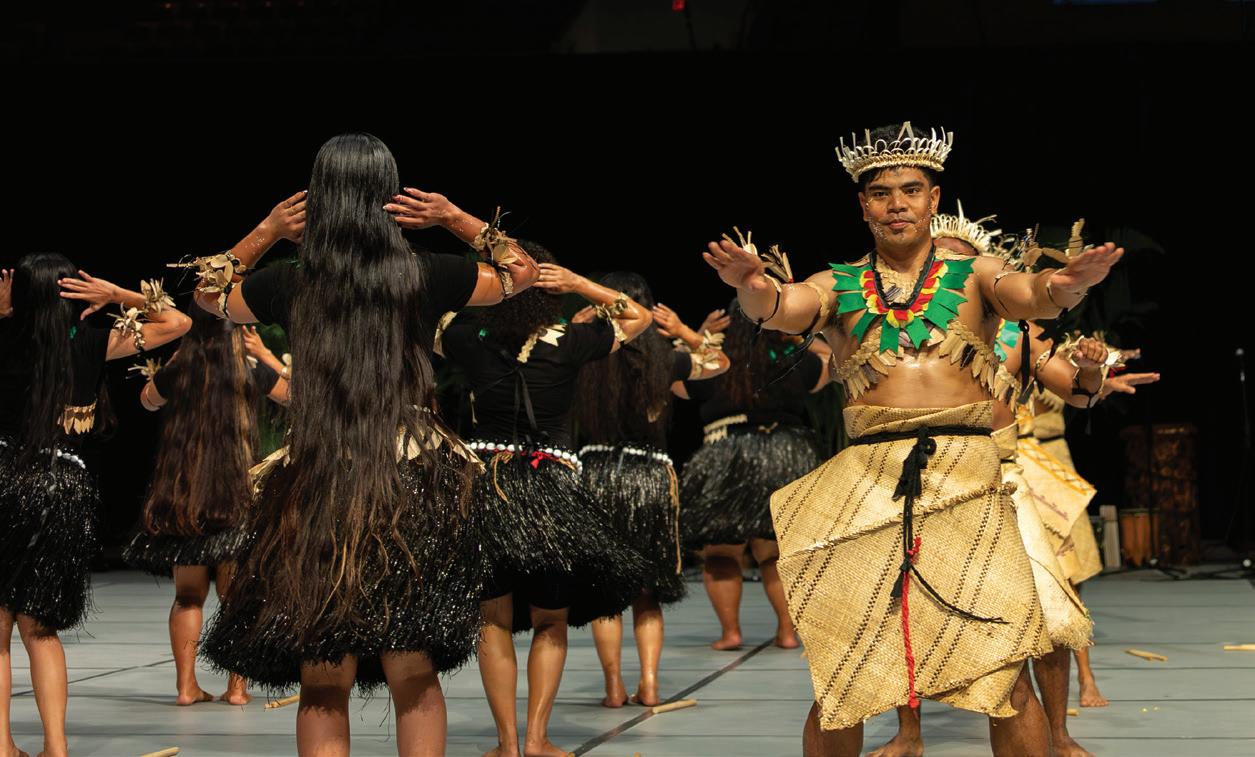
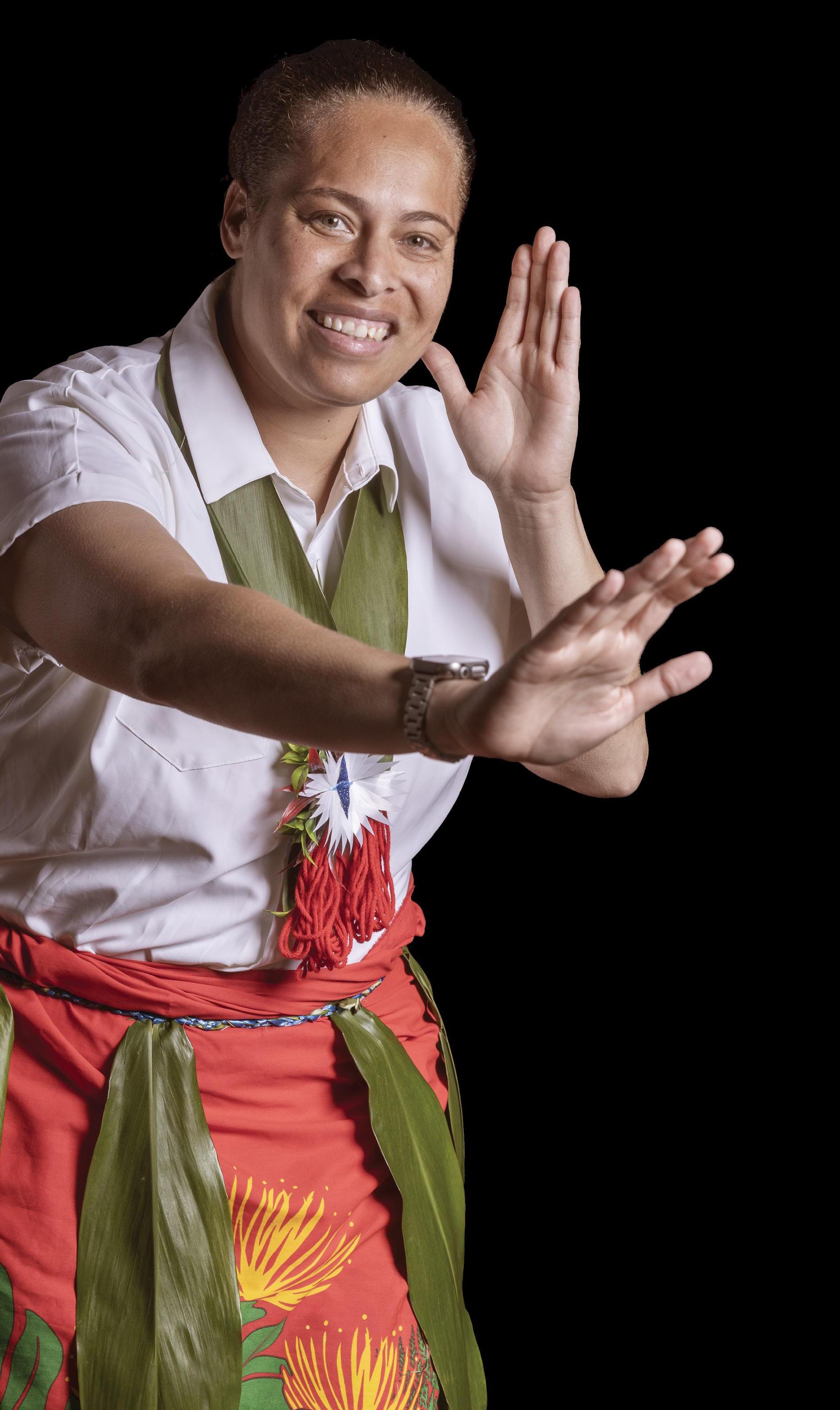
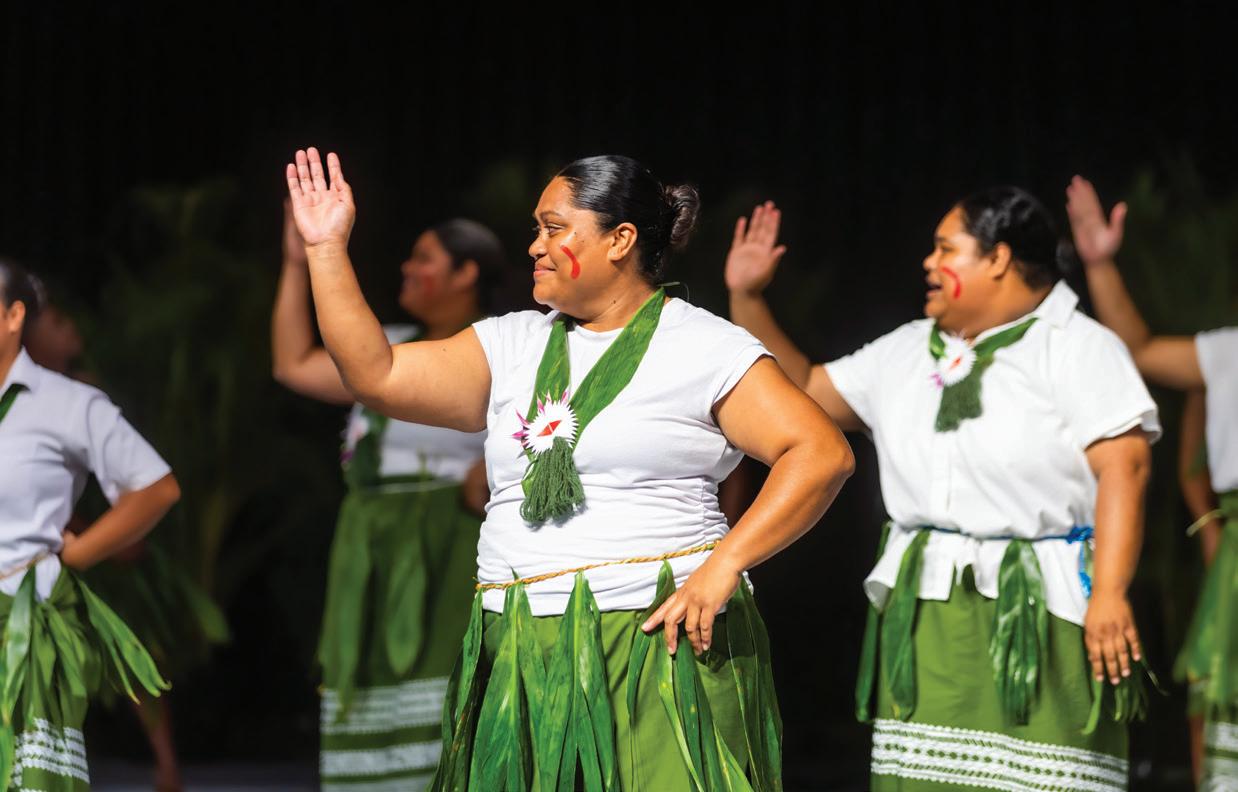
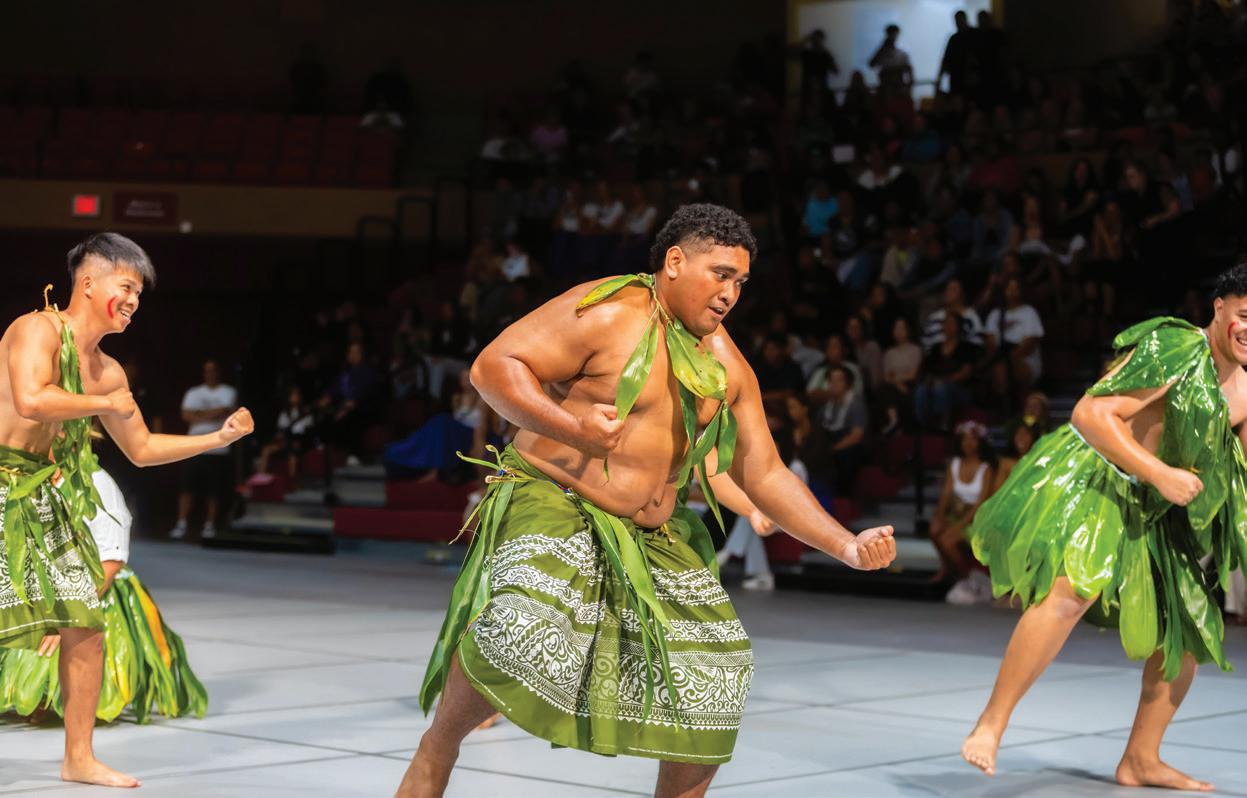
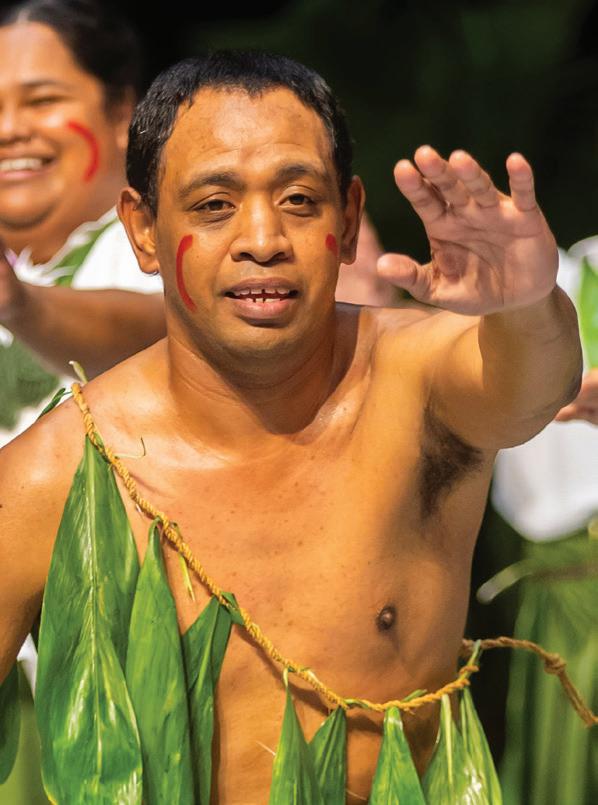
TUVALU TUVALU
BY LINDA LAULU
Songs, dances and gestures bring small islands’ stories to life, showing unity and pride among students
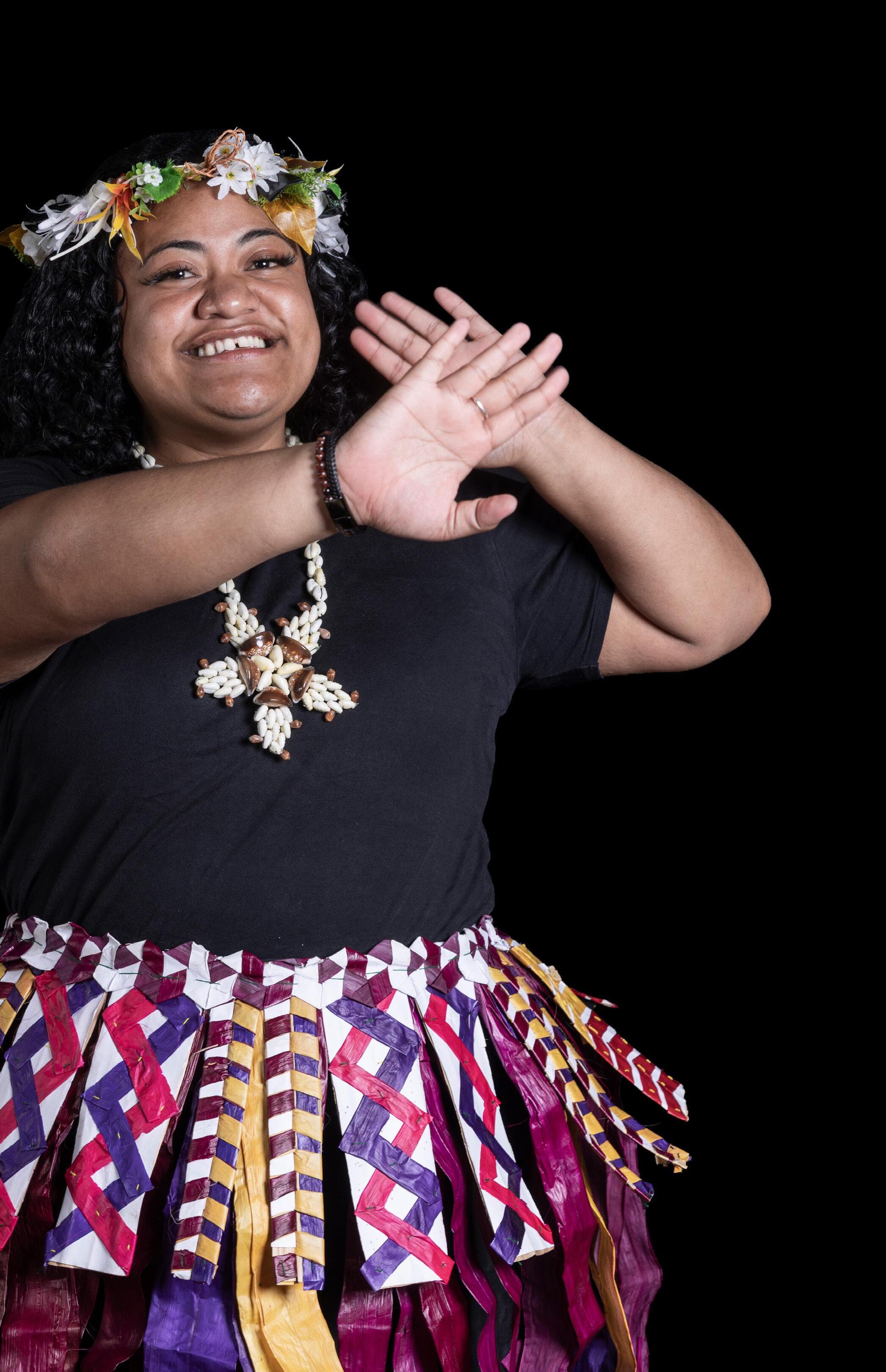
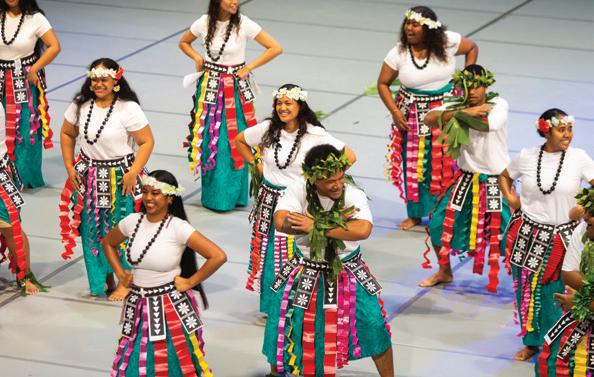
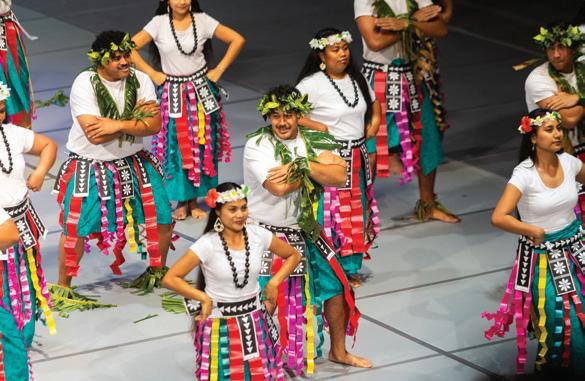
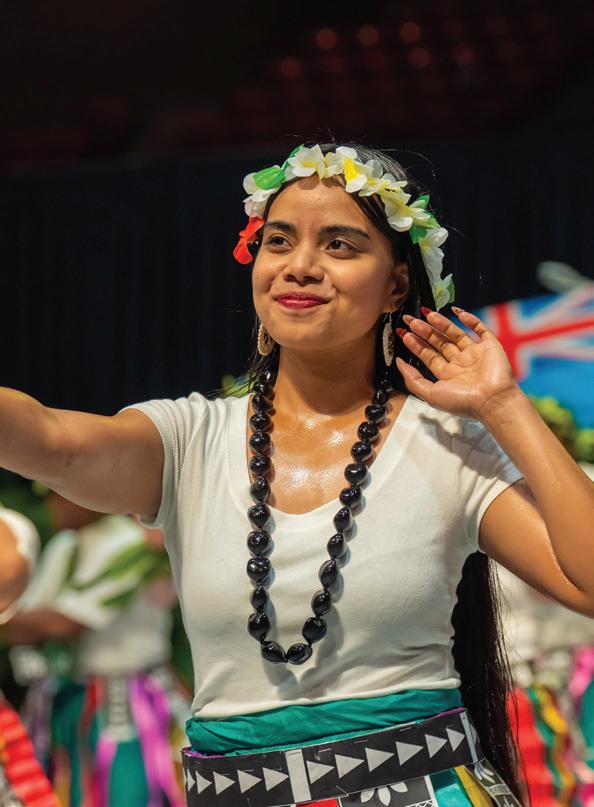
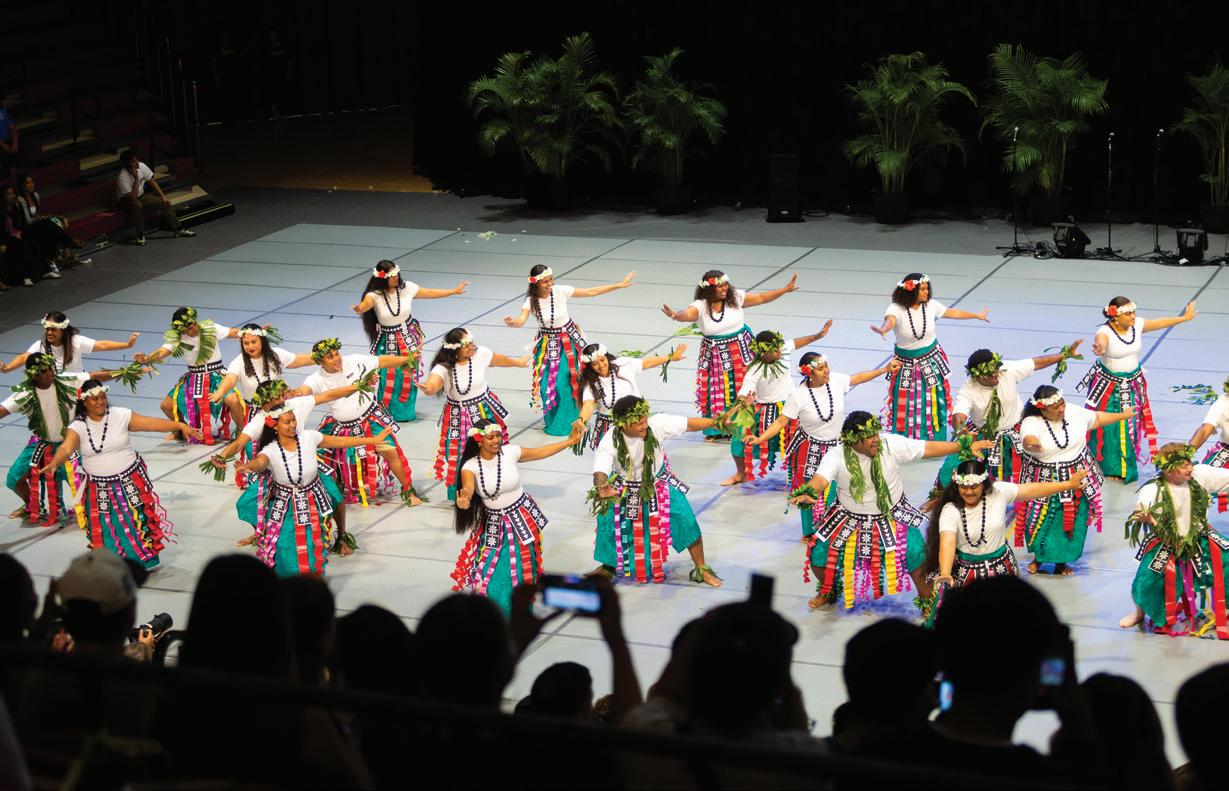
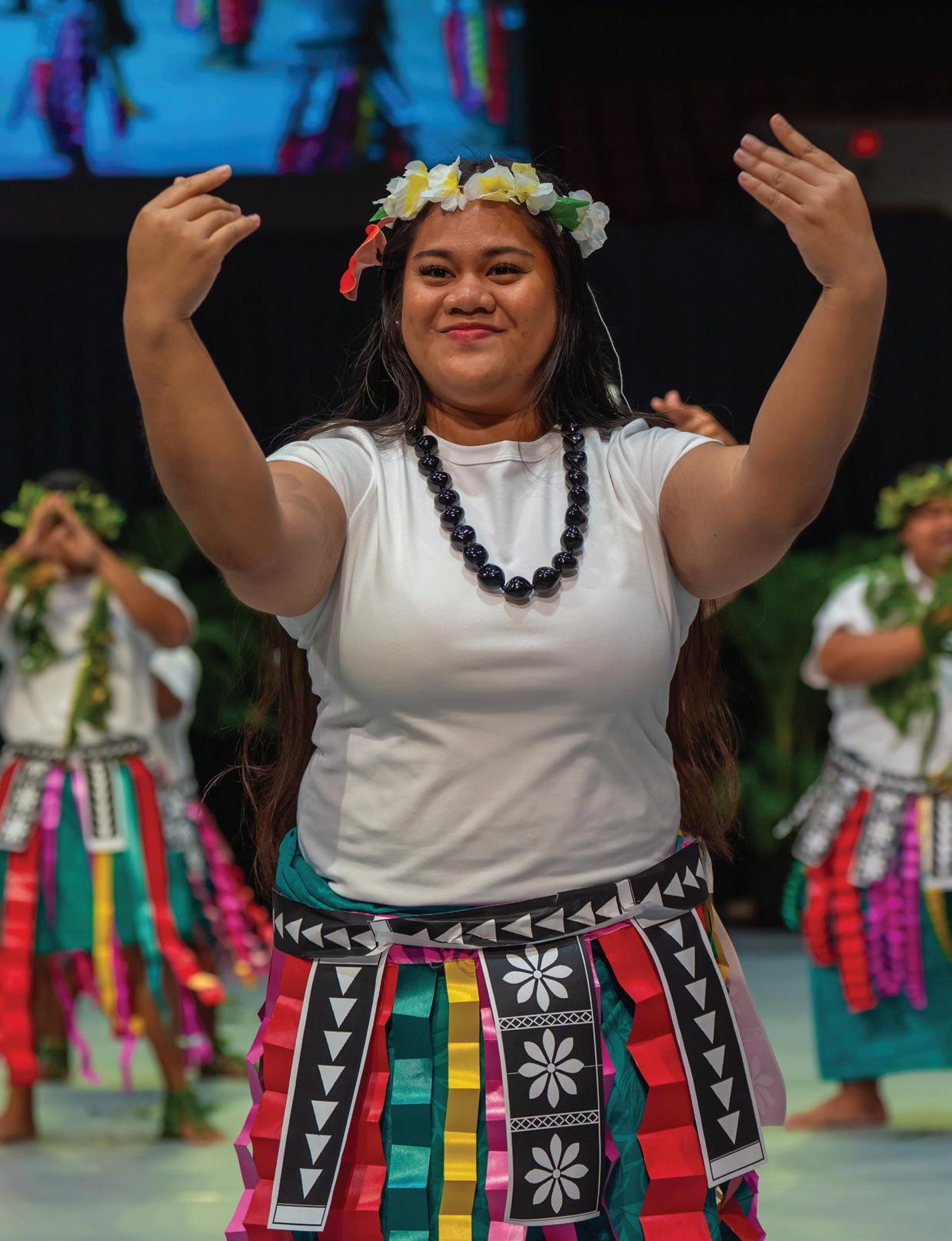
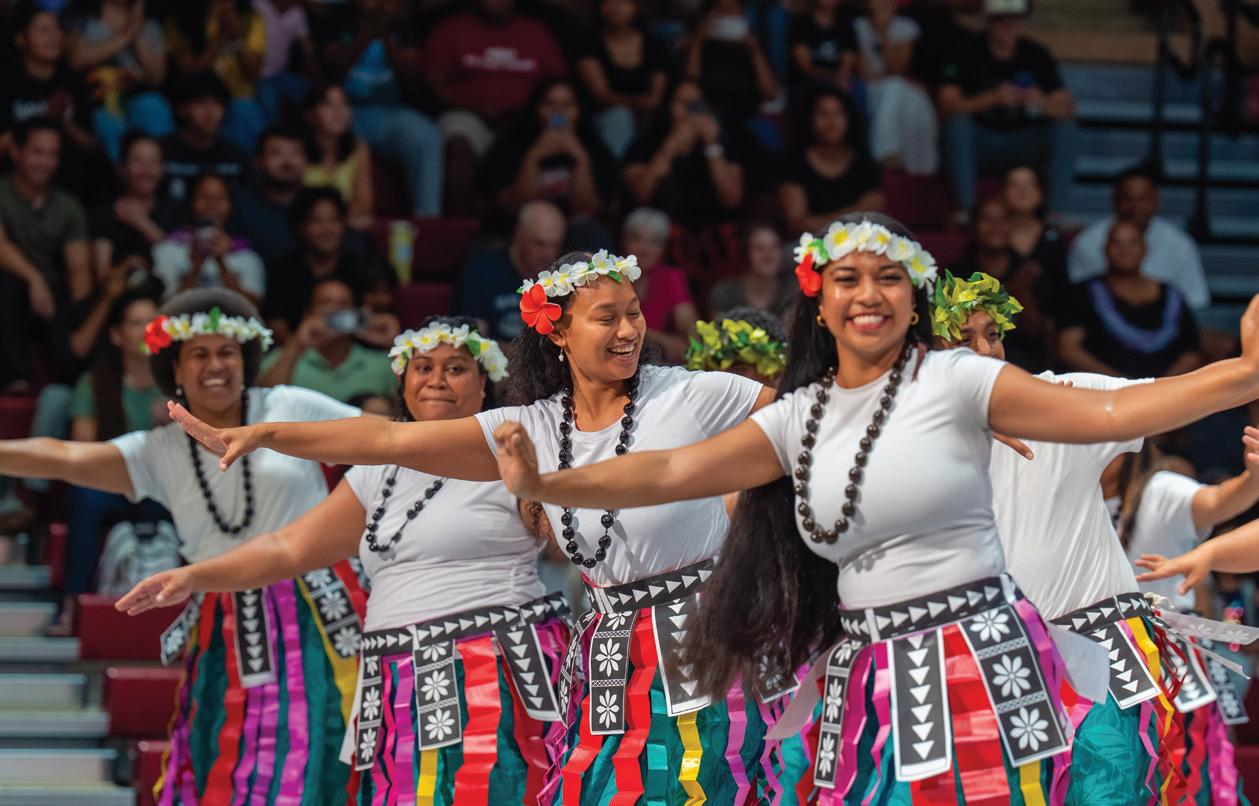
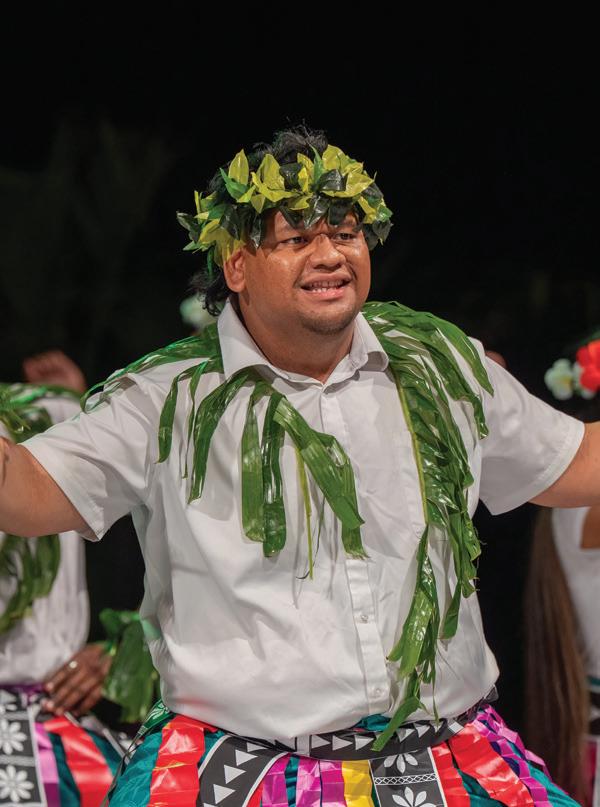
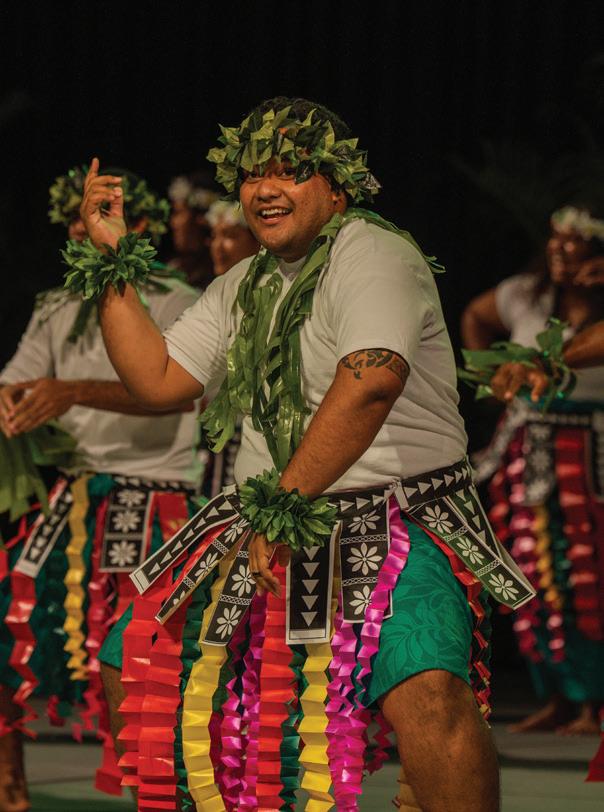
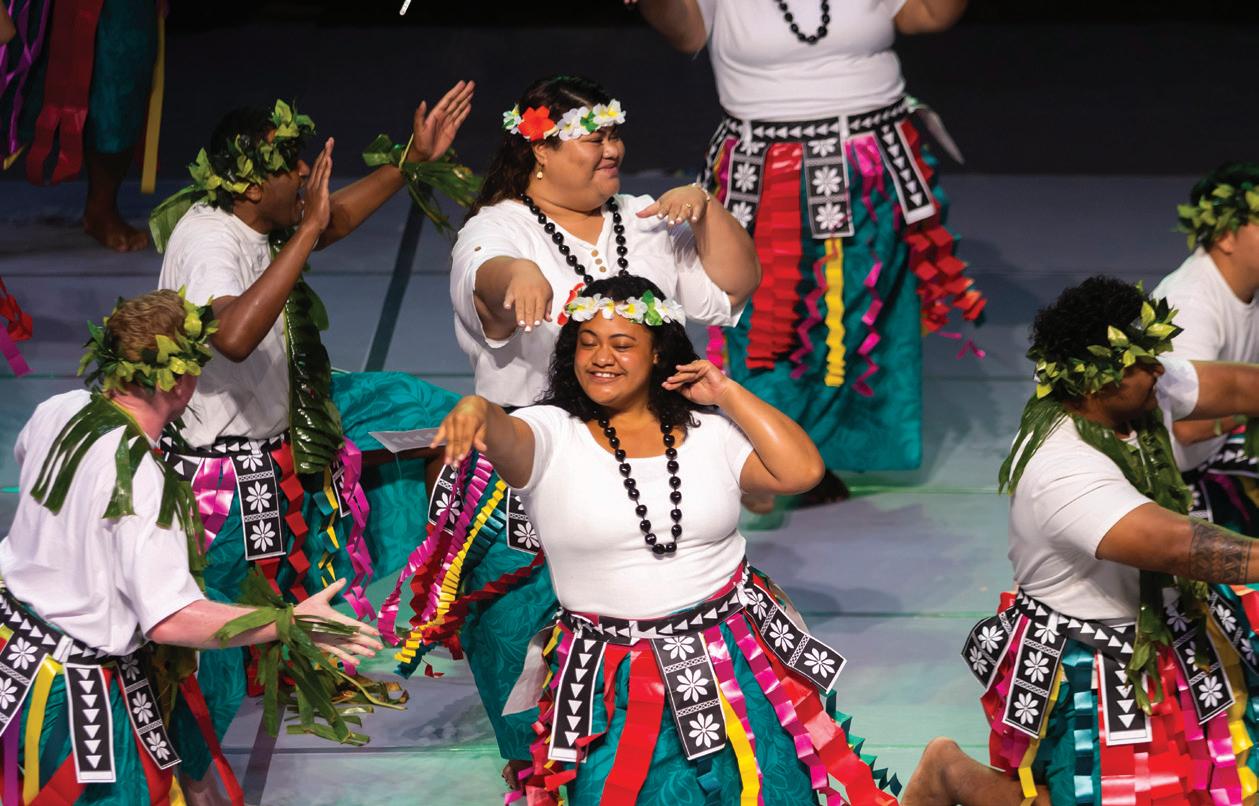
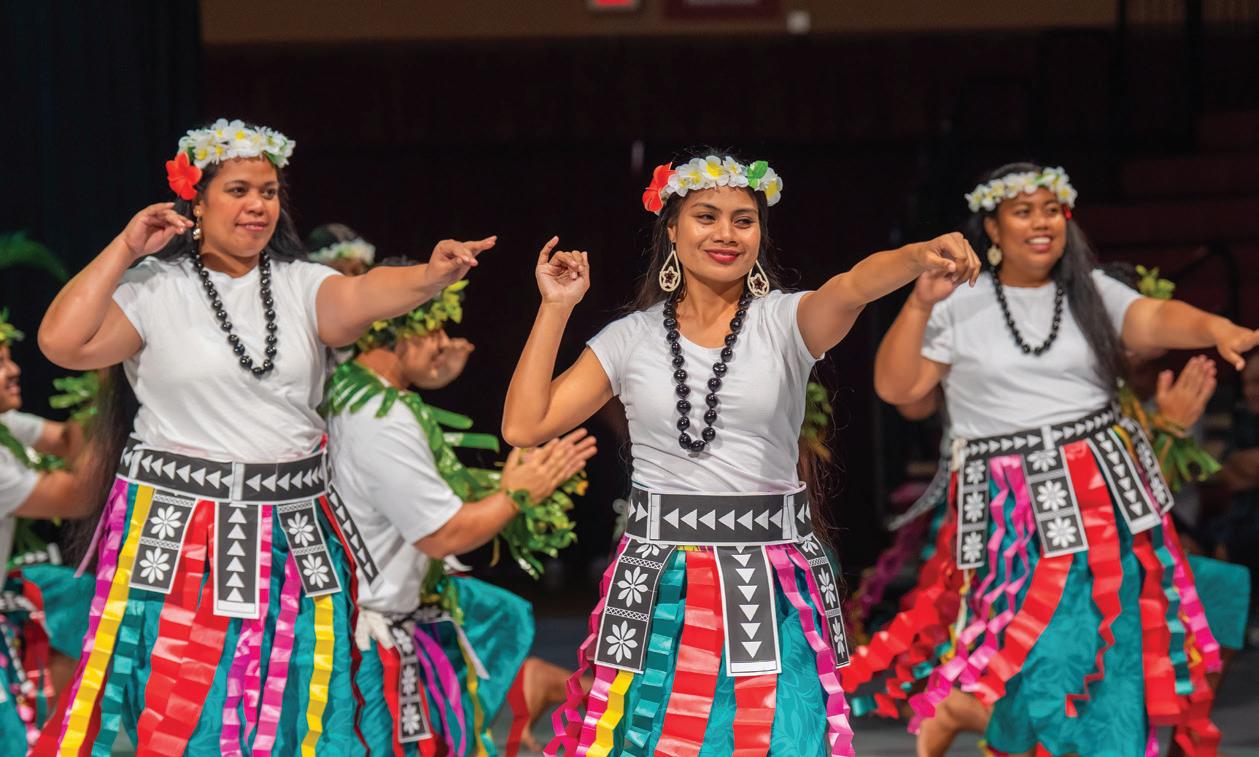
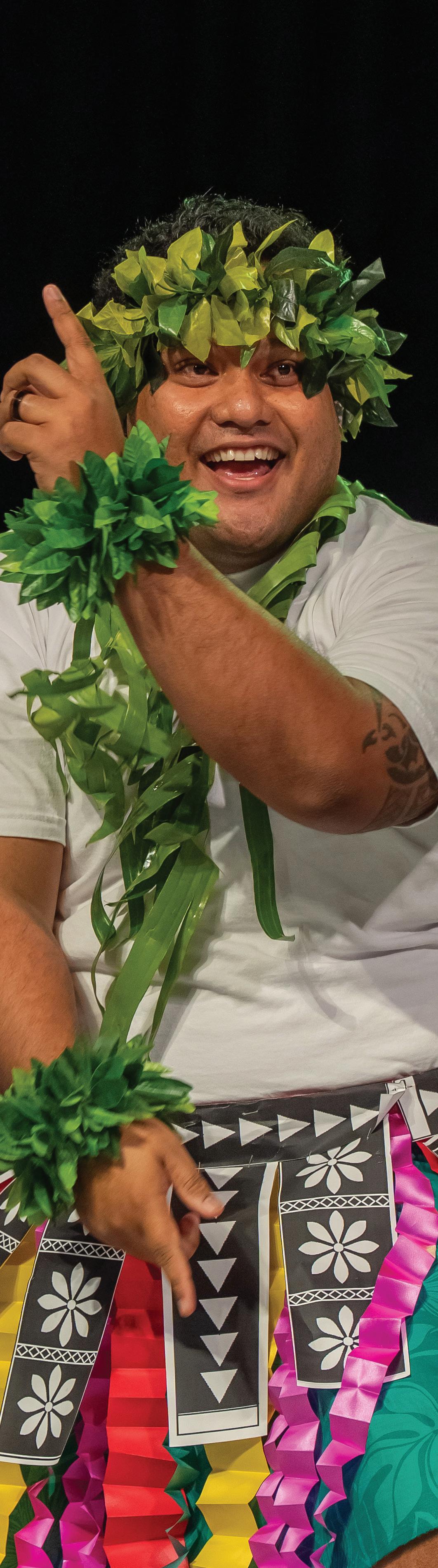
The Tuvalu Club showcased their heritage through traditional dance, wearing floral headbands with a red flower behind the ear and colorful costumes.Their ribbons, in pink, red, yellow and green, featured traditional Tuvalu patterns woven between the colors. Energetic and coordinated, their movements brought to life the spirit of their theme: “Small Islands, Unshaken Hearts.We Rise.”
Logotau Avanitele, a junior from Tuvalu studying information technology and the club president, said the performance featured songs chosen to represent the heart of Tuvalu. “When we sing and dance to ‘Vili Ee,’ ‘Foki ki te Fenua,’ and ‘Lele Manu,’ we feel our island, our people, and our ancestors,” he said. “We wanted the audience to see the real Tuvalu, not just a performance, but our heart.”
Avanitele said the songs convey Tuvaluan values of unity, love and respect. “‘Foki ki te Fenua’ reminds us that our homeland is precious. ‘Vili Ee’ shows how we call each other forward and support one another. ‘Lele Manu’ shows strength and moving together. In Tuvalu, no one stands alone—we stand together,” he said. He added that performing together also helps students feel connected to each other and to their homeland, even when far away.
The choreography brought those songs to life on stage. Susana Eliasia, a freshman majoring in elementary education from Australia choreographing the women, said some movements directly follow the lyrics. “In ‘Lele Manu,’ the song talks about birds flying, so we have a movement where we spread our arms and move like birds flying gracefully in the sky,” she said. She added that performing the dances helped her reconnect to her Tuvaluan heritage. “Dancing for Tuvalu outside of my country makes me feel connected to my people,” Eliasia said.
For the men’s section, freshman Pekekina Manuila, studying information technology choreographed and said movements for “ Tupu Ake Te Tuli” is a song telling the story of the Prophet Jonah and the cultural significance of the tuli birds. “Through the music and lyrics, we want the audience to experience the emotions, struggles and ultimate obedience that Jonah faced,” Manuila said. “It reminds us that when God calls us to serve, we must respond faithfully and with courage.”•