





6 Business Climate Overview
Kansas overhauls approach to economic development with bold, innovative strategies.
8 Statistical Profile
A look at the state’s economy in facts and figures.
14 Governor Interview
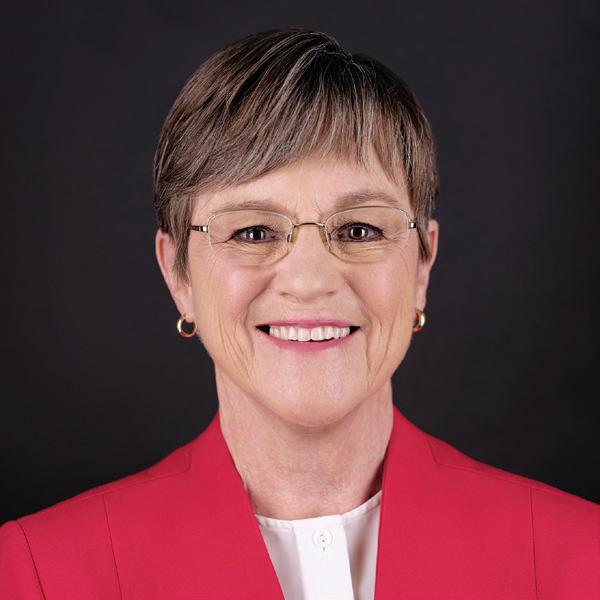
Kansas Governor Laura Kelly shares her approach to economic development in the era of COVID-19.
19 Interview with DOC Leadership
Kansas Lt. Gov. David Toland shares how his organization managed to outperform its corporate facility investment totals from 2019 amid a global pandemic.
22 Investment Profile: City of Russell
Russell’s central position and high quality of life make it an ideal location for businesses to expand and grow.
24 Energy and Utilities
Evergy’s economic development team encourages companies to use renewable energy.
28 Infrastructure
A new $2 billion energy investment will provide western Kansas with low-cost, homegrown clean energy.
30 Entrepreneurship and Innovation
The Smart Factory at Wichita State University is a cutting-edge hub for innovations.
32 Higher Education
Universities across Kansas provide highly skilled talent for the state’s workforce pipeline.
36 Advanced Manufacturing
Wichita offers unique strengths for its advanced manufacturing sector.
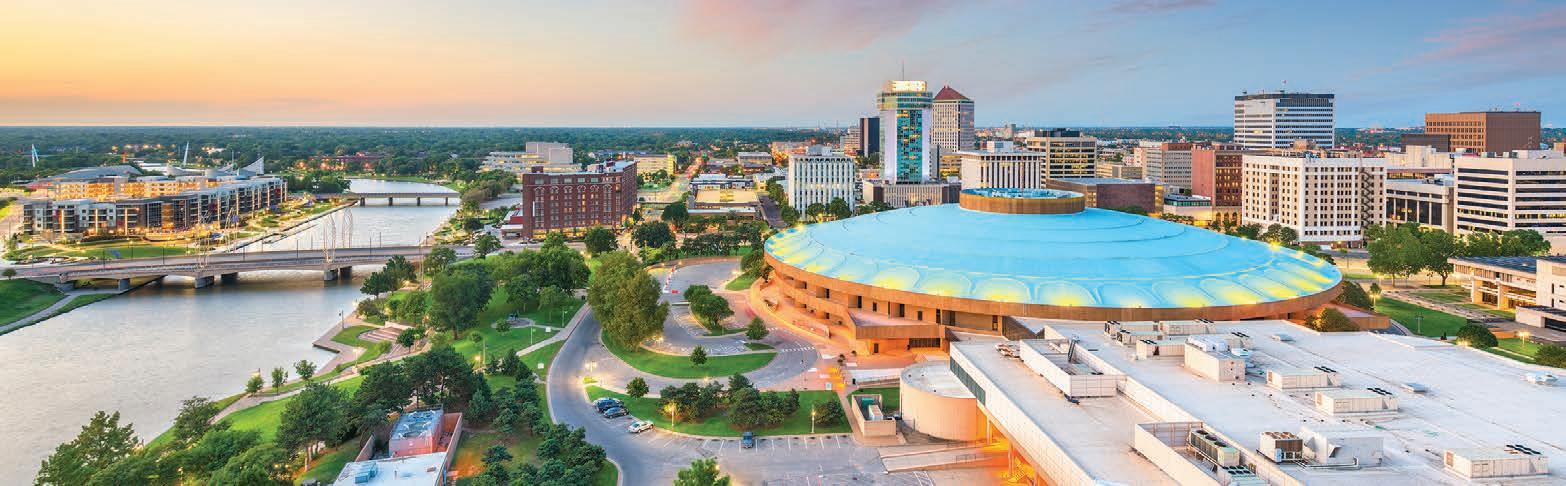
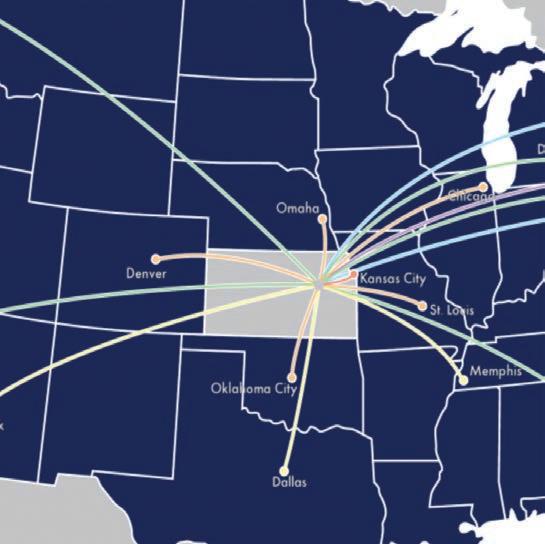
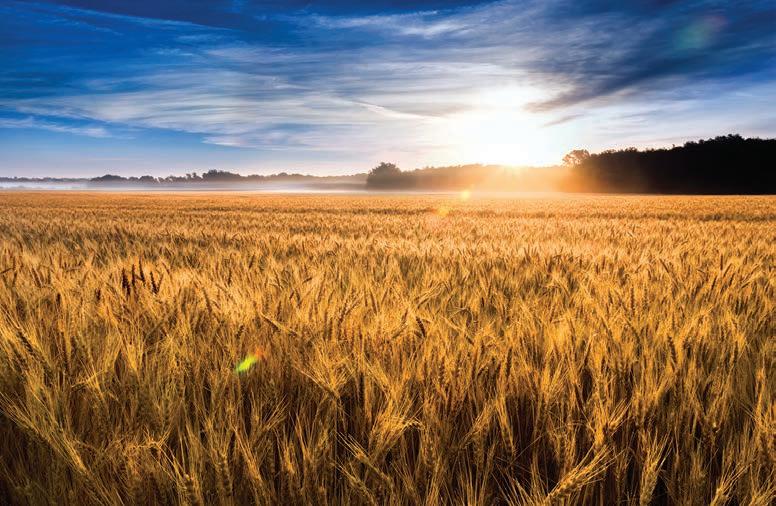
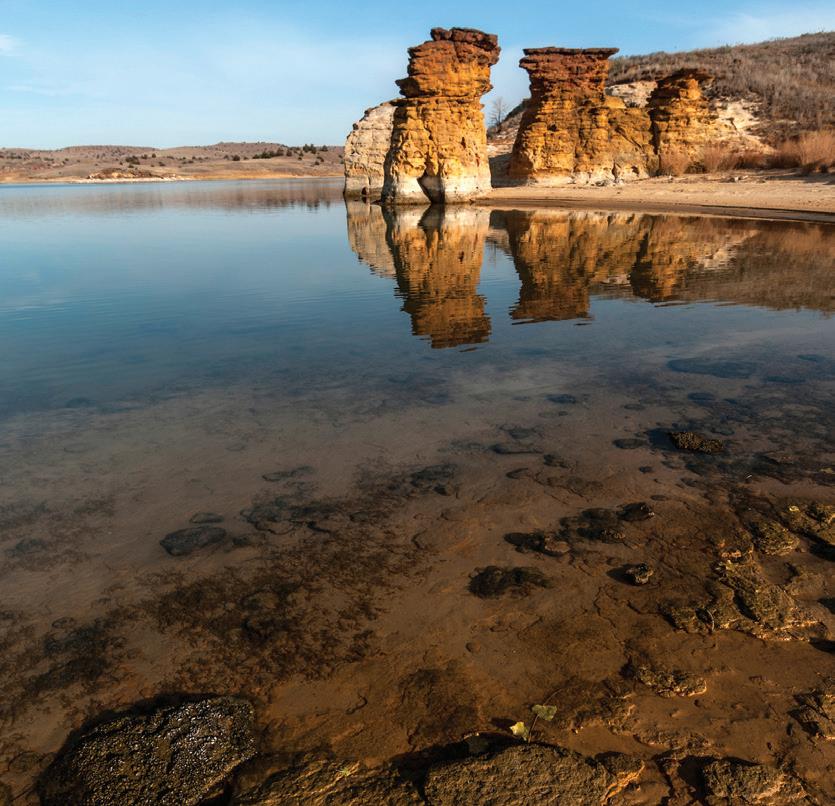
The Sunflower State continues to attract significant corporate site investments across its metro areas. 42 Food
From pretzels to pizza, food producers find efficient transportation and a quality workforce in Kansas City and beyond. 46 Logistics
Kansas is a natural choice for a logistics location, offering companies multiple advantages to reach customers faster and more efficiently. 48 Aerospace
Kansas ranks among the top in the country for aerospace- and defense-sector locations. 50
Merck’s $100-million investment in DeSoto highlights the advantages of locating in the Kansas City Animal Health Corridor.
Key investments in Kansas’ bioscience sector create new opportunities to develop vaccines and prevent the spread of disease. 56
From farm fields to research labs, America’s breadbasket is cooking up new ideas. 58 Energy
As a top state for wind energy production, Kansas’ renewable energy portfolio continues to blow away the competition. 60 Tourism
Kansas’ new tourism tagline “To the Stars” shines a light on the state’s legacy and community-minded spirit. 62
Five reasons to put down roots in America’s heartland.



Read the digital edition on your tablet and phone. Click on links within articles for even more information.
Share the magazine on social media with your friends and community.
Feature the magazine on your blog, website or newsletters with a link or one of our easy-to-use tools.
siteselection.com/cc/kansas
The publishers believe that the information contained in this publication is accurate. However, the information is not warranted, and neither Conway Data, Inc., nor the Kansas Department of Commerce, assumes any liability or responsibility for actual, consequential or incidental damages resulting from inaccurate or erroneous information.
PHONE: (770) 446-6996 • FAX: (770) 263-8825 • TOLL FREE: (800) 554-5686
email: editor@conway.com web: siteselection.com/cc/kansas
Kansas: Punching Above Our Weight is published by Conway Data, Inc. 6625 The Corners Parkway, Suite 200, Peachtree Corners, GA 30092 USA.
PRINTED IN USA. ©2021 Conway Data, Inc.
Publisher/Director LAURA LYNE
Executive Vice President RONALD J. STARNER
VP of Publications & Editor in Chief MARK AREND
Managing Editor of Custom Content SAVANNAH KING
Managing Editor ADAM BRUNS
Senior Editor GARY DAUGHTERS
Art Director SCOTT LARSEN
Production Manager BOB GRAVLEE
Lead Designers SEAN SCANTLAND
RICHARD NENOFF
NEGIN MOMTAZ
Vice President of Sales C HARLES FITZGIBBON
Regional Director Custom Content CATHY M c FARLAND
Regional Director Custom Content KALYN SOENKSEN
Circulation Manager JULIE CLARKE
DIGITAL TECHNOLOGY TEAM
Webmaster BEN YAWN
Director of Programming & Analytics DANIEL BOYER
IT Coordinator MARK BERTRAM



An overhauled agency and a governor’s personal touch bring change to Kansas. by










RON STARNER









When Laura Kelly was sworn into office as the 48th governor of Kansas Jan. 14, 2019, she vowed to overhaul the state’s approach to economic development.
Two years later, it’s safe to say that her plan worked. By early November 2020, Kansas had amassed more than $2 billion in corporate facility expansion projects during calendar year 2020 — a significant jump from the $1.3 billion in capital investment in Kansas in all of 2019.
The fact that Kansas achieved this sharp increase during a global pandemic that wiped out tens of millions of American jobs and placed a virtual shutdown on business expansion for months made the rise even more remarkable.
Kansas Lieutenant Governor and Secretary of Commerce David Toland wrote about this turnaround in a recent op-ed for the Topeka Capital-Journal. “Facing the staggering and unprecedented toll of the virus, businesses worldwide raced to embrace a new normal — and Kansas was ready with strategic opportunities,” he said. “As a result, Gov. Laura Kelly has announced impressive Kansas-based growth plans from firms including Amazon, Merck and Co., Urban Outfitters, Schwan’s, Kubota, Bell Textron and others.”
Combined with other business expansion projects, Kansas has now landed approximately $3.5 billion in new capital investment since Kelly took office two years ago. More than 19,000 new jobs were created in the state because of these investments.
How did this happen? When she took office, Kelly said she planned to create the Kansas Framework for Growth in three phases: assessment and benchmarking recommendations, best practices and implementation planning.
“Economic development in Kansas needs to be modernized, and that means we need a new, thoughtful strategic plan to guide us forward,” she said.
Toland added to that: “Bold, innovative strategies would breathe new life into economic development efforts that help create a better place to live and work now and for future generations.”
Today, Toland calls it “a new way of doing
business.” The Framework for Growth builds on Kansas’ historical strengths: its central location; solid infrastructure; highly educated and highly skilled workforce; great schools; abundant quality-of-life amenities; and a proven track record of hard work.
The Kansas Department of Commerce would also build on its foundation of competitiveness in multiple industries, said Toland. These include manufacturing, bioscience, renewable energy, professional services, and agriculture and agricultural science.
The rapid revamping of DOC produced immediate dividends. Among the bounty were a $403 million investment by Urban Outfitters in Wyandotte County; two new fulfillment centers by Amazon in Park City and Kansas City, Kansas, employing more than 1,000 workers; a $43 million investment by Great Plains Manufacturing in Salina; a $30 million investment by Nor-Am Cold Storage in Dodge City; and a $10.35 million investment by Peerless Products in Iola.
The 86 project wins in 2020 were recorded even as the state continued to invest more resources into K-12 and higher education, transportation infrastructure, rural broadband connectivity and rural economic development. As of 2020, U.S. News & World Report ranked Kansas 15th in education; seventh in infrastructure; 16th in opportunity; and eighth in natural environment.
Education has always been Kansas’ calling card. Some 43% of Kansas adults hold a bachelor’s degree or higher, making the state a compelling draw for technical employers and other firms searching for highly skilled knowledge workers.
Kansas continues to feed the world too. Some $20 billion of its $160 billion annual GDP comes from the farm, as Kansas maintains leadership positions in wheat, beef and grain sorghum production.
Gov. Kelly made a difference in this progress by taking an active role in recruiting companies and meeting personally with CEOs. “Under her leadership, we’re offering the best place in the nation to do business,” said Toland.
From Wichita and Topeka to Dodge City, Hutchinson and every burg in between, this new way of doing business is paying off for Kansas.
2,913,123 Population
$11.6 billion In Exported Goods in 2019
60,800
Jobs Directly Supported by MajorityAffiliatesForeign-Owned
Source: Kansas Department of Commerce


15:1
Student-Teacher Ratio
40 Public Universities & Colleges
Bachelor’s Degree or
Source: Kansas Department of Commerce
INDUSTRY
UNITED STATES INDUSTRY
KANSAS INDUSTRY
UNITED STATES INDUSTRY
Finance, Real Estate & Information Administration & Support, Waste Management & Remedial Services
Source: Kansas Department of Commerce














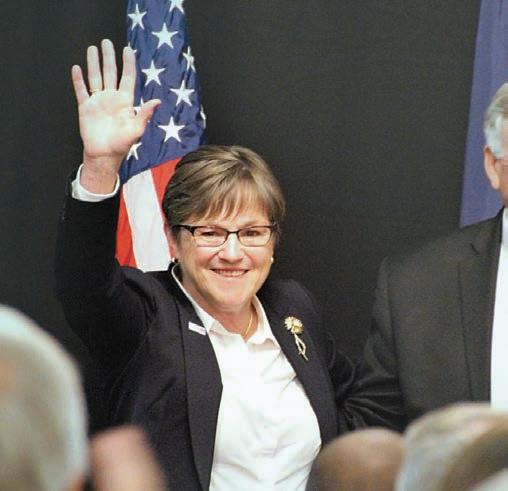


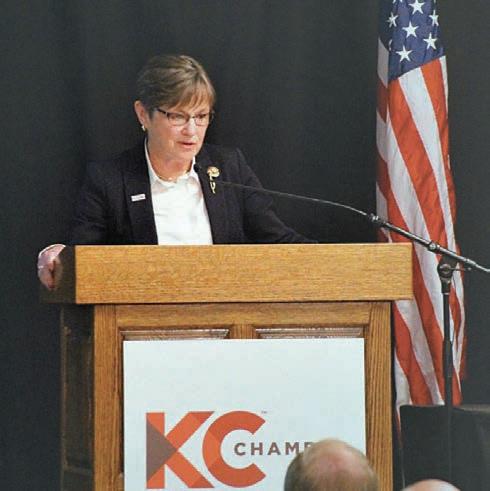
TIn word and deed, Gov. Kelly delivers a pro-business message.
by RON STARNER

o fully understand Gov. Laura Kelly’s approach to economic development, look closely at her words and actions. Among the fi rst things she did upon taking office in January 2019 was revamp the Kansas Department of Commerce, appoint a new economic development leader, and adopt a bold new Framework for Growth.
The results speak for themselves. In less than two years, Kansas has raked in more than $3.5 billion in new capital investment and created more than 19,000 new jobs. The ultimate testament to Kelly’s vision is the fact that Kansas landed more capital investment in 2020 than it did in 2019 – and that came despite a global pandemic and record-breaking recession.
When Kelly issued her call to action, she said, “Economic development in Kansas needs to be modernized, and that means we need a new thoughtful strategic plan to guide us forward.” It’s safe to say that her plan worked. By effectively managing the state’s response to the COVID-19 outbreak and resulting economic slowdown, Kansas has emerged stronger than it was before she took office.
We recently caught up with Gov. Kelly to ask her a few questions about this performance and what she plans to do for an encore.

You were barely in of ce a year when COVID-19 hit. What have been the biggest challenges you’ve faced in managing the State of Kansas through this unprecedented public health crisis and corresponding economic disaster?
GOV. KELLY: COVID-19 changed the landscape of nearly everything we do across state government. It required strong leadership in each agency to innovate and continue providing quality service to the people of Kansas.
Just as we’ve seen in other states, not everything went perfectly, but we continued to learn and adapt in order to meet the mission of the various agencies and programs that reach Kansans. Some of the most challenging times were the early days, when we were all working to understand the scope of the challenge and the ways to keep people in our state safe from this deadly virus. We had to take swift action in many areas of government, in order to provide economic relief and support businesses in their plans to reopen safely. Consumer spending has rebounded significantly since those early months, but the challenge continues, as we all work to bring the virus under control in our state — knowing this is the true path to a sustainable economic recovery.
“ Rebuilding fiscal stability in Kansas state government has been one of my top priorities as governor.
— Governor Laura Kelly
What were the pillars of your COVID-19 response plan and your economic recovery plan?
GOV. KELLY: We moved quickly to roll out several lines of support to Kansas businesses, including an Emergency Disaster Declaration to make resources available through the U.S. Small Business Administration. In terms of state-level resources, I directed my Administration to leave no stone unturned to provide dollars and other resources that could be repurposed or deployed immediately to help the Kansas businesses and communities who needed it most. In addition to a working capital loan program, state government provided individualized support to the thousands of Kansas businesses navigating the various state and federal resources available and seeking guidance on how to reopen safely. Upon passage of the federal CARES Act, I established the Strengthening People and Revitalizing Kansas (SPARK) Taskforce to distribute relief to small businesses and provide targeted, strategic investments that are giving Kansas a needed boost for our ongoing economic recovery. This work is ongoing, as we continue to meet these challenges together as Kansans and make the case for more support businesses and communities need right now.
The hospitality industry in Kansas was one of the first to be hit financially by the COVID-19 crisis. Department of Commerce Secretary David Toland and the teams at Commerce and NetWork Kansas moved swiftly to stand up the HIRE Fund program and process applications in a short period to help us quickly get these critical dollars into the hands of hospitality businesses across the state. The initial response to the HIRE Fund program in
March was overwhelming. More than 1,400 applications for funding were received, with more than 800 submitted within 24 hours of the program being announced. In total, 344 Kansas hospitality businesses received HIRE Fund loans.
Almost a year into this crisis, what are some of the biggest challenges that remain to the Kansas economy and Kansas businesses?
GOV. KELLY: Although most businesses have safely reopened and consumers are beginning to spend at their normal levels, all of this is still at risk as the virus spreads across our state. This is why it’s critical that we all do our part to help stop the spread. Getting the virus under control is necessary to keep people patronizing our businesses and workers on the job. The vaccine’s arrival was a significant development. Still, we must continue to emphasize the need for Kansans to continue to wear facial coverings, physical distance and wash their hands frequently to ensure the overall health of our communities and economy. We’ve partnered with organizations like the Kansas Chamber, Kansas Farm Bureau, the Kansas Hospital Association and the Kansas Leadership Center to embark on a massive public information and engagement effort. The change we need relies on a grassroots approach and local adoption of key public health measures. It’s truly up to all of us to help stop the spread of COVID-19 as a way to keep Kansans safe and healthy, and maintain our economic recovery.
Despite the devastating effects of the pandemic, Kansas managed to record a better 2020 in economic
development than it did in 2019. What made that leap possible?
GOV. KELLY: Since the very beginning of my Administration, rebuilding our economic development engine has been one of my top priorities. We’ve supported sweeping changes and re-staffing efforts at the Kansas Department of Commerce to get that agency back to full strength. This work has continued to bear fruit throughout the past two years. With a talented and engaged team at the Department of Commerce and its focus on new and emerging economic opportunities, Kansas will continue on the road to growth in the years to come.
You’ve made rural economic development one of your administration’s top priorities. What have you been able to accomplish on this front so far, and what work remains?
GOV. KELLY: Strong, healthy and vibrant rural communities are the backbone of Kansas. My administration has been focused on helping these communities improve quality of life and recruit new residents and businesses. The establishment of the Office of Rural Prosperity has helped mobilize critical engagement and fact-finding to move us toward key policy changes needed to enhance the state’s efforts in this area. There is no one-size-fits-all solution to grow our rural communities. Instead, we must focus on providing an array of flexible options that help individual communities address challenges and meet specific needs in their communities. The restoration of the Kansas Main Street program is a great example of this. We need this
program, and more, in our toolbox of support we can offer to communities of all sizes. We must get back to the basics of what makes our communities the great places they are, and this can start on the Main Streets all across Kansas. We’ve also focused our efforts and investments in key infrastructure that supports quality of life in those communities, like child-care and health care. And this work continues across several agencies. Companies look holistically at communities before they put down roots. This means making sure Kansas communities have an educated and healthy workforce in place to fuel new private investment and growth. The Governor’s Executive Order addressed a long overdue need to expand broadband access that was overlooked for years, and especially in rural and vulnerable communities. This development
will improve Kansas communities’ ability to compete economically, and enhance Kansans’ access to healthcare and educational opportunities. This year, the Kelly administration by way of the Governor’s SPARK Taskforce distributed of nearly $50 million in Connectivity Emergency Response Grant (CERG) funds to underserved communities across Kansas; 67 projects were awarded grant funding for broadband infrastructure improvements. Also, the Broadband Acceleration Grant Program to expand broadband access to rural and underserved communities across Kansas will invest $85 million over the next decade in broadband modernization funding through the Kansas Department of Transportation’s 10-year Eisenhower Legacy Transportation Program.
When you talk to CEOs based in other states and in some cases in other countries, what do you find is their typical level of understanding concerning Kansas?
GOV. KELLY: One of the best parts of my job is getting to engage with individual business leaders from across the country — and around the world — to help them learn more about the great opportunities we have in Kansas. Most of these companies have a good understanding of our core economic assets and strengths, but what often sets us apart is our people. I think they are often pleasantly surprised with our approach to building relationships, partnering with private industry and supporting growth of new and existing businesses in Kansas. We’re working to rebuild relationships and get Kansas
“boots on the ground” in key domestic and international markets. This has already led to some great business successes, and we’re nowhere near stopping. We want companies of all sizes to see Kansas, and to know our state as one of the best places in the country to do business.
Are there any lingering misconceptions about Kansas that you would like to clear up?
GOV. KELLY: Despite some challenging years of lean economic development activity, our state is back, and we’re focused on the future. Our new way of doing business is working. Kansas is a welcoming state, and we’re open for business. Just spend some time with Kansans, and you’ll realize why there’s simply no place like Kansas — the best place in the nation to do business.
What’s your approach to foreign direct investment? What’s your administration’s plan for boosting FDI in Kansas in 2021?
GOV. KELLY: Relationships are central to economic development, especially as it relates to navigating the global business environment. One of the fi rst things we did was restore the International Division of the Kansas Department of Commerce, which had suffered massive cuts and led to a reduction in our state’s “salesforce” in key international markets. As a result, we lost strong and successful relationships. We’re now back to doing what works, and gradually ramping up our international engagement through trade missions and other key activities designed to bring more investment to Kansas. Given the supply chain disruptions we’re seeing in many sectors, there is
a renewed focus among companies on shoring up supply chains and putting down roots closer to customers. As a result, many foreign-owned fi rms are looking to elevate their activities in Kansas. Foreign Direct Investment (or FDI) means real jobs for Kansans and real economic impact across our state. Foreign-owned companies like Kubota and C.J. have invested millions and put thousands of Kansans to work, building products that were previously developed offshore. As some of these dollars return to our shores, we must work like never before to put Kansas front and center in those conversations on where to build or expand. With an active international division, focused in on those reshoring activities, we will continue to boost our FDI in Kansas into 2021 and beyond.
As E-commerce swallowed up the global retail scene in 2020, it prompted the unplanned exodus of many mom-and-pop shops from Main Street, USA. What’s your plan to help small businesses survive and thrive in 2021 and beyond?
GOV. KELLY: The first task was to get the virus under control in our state. People need to feel more comfortable going out to shop, dine and explore like they did in the past. As that happens, we’re seeing demand for businesses continue to escalate. Small businesses keep our communities strong and vibrant. It’s my hope that once we’re on the other side of this public health crisis, we’ll see Kansans showing their patronage to these local businesses and returning to the shops, restaurants and event venues they love. I, for one, am longing to get back out there; and I know many Kansans feel the same way. We will continue, as federal funds
become available, to provide resources as we did with Small Business Working Capital that is helping small businesses stay afloat until the economy is back to full steam. Also, in-state business development services will continue through the Department of Commerce, opening the door for new businesses to get started and fostering more small business success across Kansas.
What would you like to see Kansas do to promote innovation and entrepreneurship in your state?
GOV. KELLY: Kansas has historically been known for an outstanding innovation ecosystem, with unique tools to help support entrepreneurs and make sure the future is built right here in Kansas. We must get back to the cutting edge in key sectors like bioscience and technology development. Our outstanding higher education system also plays a key role in our state’s innovation ecosystem. Research institutions can help foster technology transfer that spurs the development of new products or even entirely new industries. And we must provide more support directly to the entrepreneurs, to help them grow their big ideas into successful businesses. By supporting research activities and helping increase access to capital, more Kansas entrepreneurs can thrive in our state. Our state’s new strategic plan, the Kansas Framework for Growth, will lay out several key areas and actionable plans to amplify our state’s investments and support the jobs of today and tomorrow. Through strategic investments and increased publicprivate partnership, we can make Kansas the state for entrepreneurship and innovation — and maintain our standing as the best place in the nation to do business.
by RON STARNER
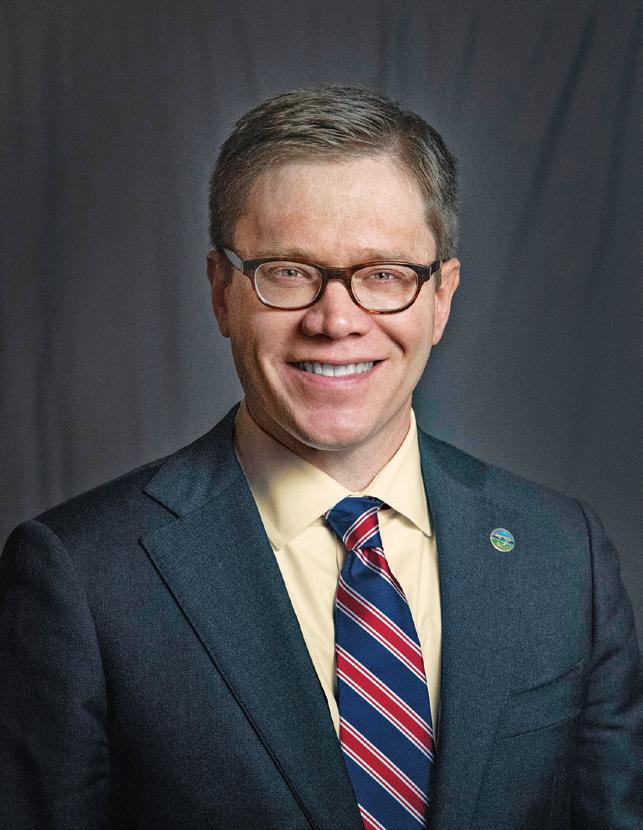
While 2020 was a tumultuous and trying year for everyone, the folks at the Kansas Department of Commerce used the unprecedented circumstances to revamp their approach to economic development, refocus their efforts and retool. What followed was a truly remarkable performance in which DOC outperformed their corporate facility investment totals from 2019. We recently caught up with Kansas Lt. Gov. and Secretary of Commerce David Toland to ask him how this happened, and how the state is planning for the challenges to come in the year ahead.
How was Kansas able to surpass its investment total from 2019 this year?
TOLAND: The steps we’ve taken since the beginning of this Administration to rebuild our economic development engine have gradually delivered outstanding results. We’ve not only exceeded 2019 in the face of the pandemic; we also ended the year on a strong note and
exceeded the previous high in economic development overall in 2017.
What were the factors that directly led to this accomplishment?
TOLAND: In addition to getting back to basic “blocking and tackling” at the Department of Commerce, our exceptionally talented team has been laser-focused on the emerging opportunities we’re seeing across our economy. As a result, companies of all sizes are choosing to put down roots all across our state because of our central location, outstanding infrastructure, talented workforce and low cost of doing business.
You’ve talked about xing the DOC. What happened to change the DOC to enable this success?
TOLAND: In many ways, this success has to do with getting this agency back to its core business and restoring our presence in key domestic and international markets. Through sweeping changes to rebuild our business
recruitment team, expand our international footprint, reestablish our community development division and ramp up our workforce development efforts, Kansas is back on the road to growth.
When COVID-19 hit Kansas and forced the shutdown of many businesses, what did the DOC and the rest of state government do to adapt and respond to the many economic needs created by the crisis?
in many of these key sectors, and we’re not slowing down now. Kansas is “all-in” on growth.
What were your biggest project wins of 2020?
TOLAND: Kansas has landed some huge investments over the past year, with successful expansions from both domestic and international fi rms. Foreign direct investment led to huge expansions from companies like Kubota and Great Plains Manufacturing,
“ Through sweeping changes to rebuild our business recruitment team, expand our international footprint, reestablish our community development division and ramp up our workforce development efforts, Kansas is back on the road to growth.”
— David Toland, Kansas Lt. Gov.
TOLAND: Faced with unprecedented challenges, it was clear that “business as usual” simply wouldn’t cut it. It required our team to innovate and collaborate like never before to provide relief that Kansas businesses and communities needed during these difficult times. We moved quickly to roll out a working capital loan program and a website live chat function to provide individualized support to the thousands of Kansas businesses who were navigating the various state and federal resources available. Upon passage of the federal CARES Act, the state established the Strengthening People and Revitalizing Kansas (SPARK) Taskforce to distribute relief to small businesses and provide targeted, strategic investments that will give Kansas a boost on its economic recovery. This work is ongoing, as we continue to meet these challenges together as Kansans and make the case for more support for businesses and communities that need it right now.
What are your state’s primary target industry sectors?
TOLAND: In Kansas, we’re fortunate to have key economic assets and strengths that align with the new opportunities we’re seeing in the global economy. Our central location makes Kansas ripe for investments in areas like logistics and distribution, food processing, advanced manufacturing, alternative energy and biosciences. We’ve seen rapid growth

Schwan’s and Modern Manufacturing. Several well-known and successful domestic companies also announced significant growth plans in Kansas this year: Amazon, Urban Outfitters, Walmart, Merck and Co. and others.
What are your agency’s top three priorities for 2021?
TOLAND: 1) Seizing still more new opportunities for rapid growth. 2) Setting into motion the Kansas Framework for Growth, a strategic plan to grow Kansas now and in the future. 3) Supporting the Kansas workforce and aligning talent with industry demand to get more Kansans back to work in good-paying jobs.
What is the global brand identity of Kansas? What would you like it to be?
TOLAND: Kansas is home to some of the friendliest and hardest working people around. Across the country and the world, we’re known for our people and for being strong business partners. We want companies of all sizes to take a good look at Kansas. We know they’ll see our strong economic assets, as well as an outstanding quality of life, where you can raise a family or start a business in a strong and supportive community. And our workforce is skilled and ready to get the job done “the Kansas way” — which means only the highest quality and the best service you’ll find anywhere. Guaranteed. Our new way of doing business has further cemented Kansas’ reputation as the best state in the nation to do business.
What is your office doing to promote economic development in your smaller and more rural communities?
TOLAND: In addition to success in the urban areas of our state, our agency is committed to the vitality and prosperity of small and rural communities. By reestablishing our Community Development Division, we’ve provided greater focus on the quality of life across Kansas. Restored programs like Kansas Main Street and the Creative Arts Industries Commission help develop vibrant commercial districts and enrich communities through arts and cultural activities. By supporting investments in critical infrastructure and community amenities, we can continue to make our communities great places to live, work and play. And this is critical to attracting new businesses and residents to these great cities and towns. We’re committed to being a resource to help Kansas communities of all sizes, and in every part of our state, succeed and grow.
The community of Russell offers the perfect blend of industrial opportunity with a high quality of life.
by SAVANNAH KING
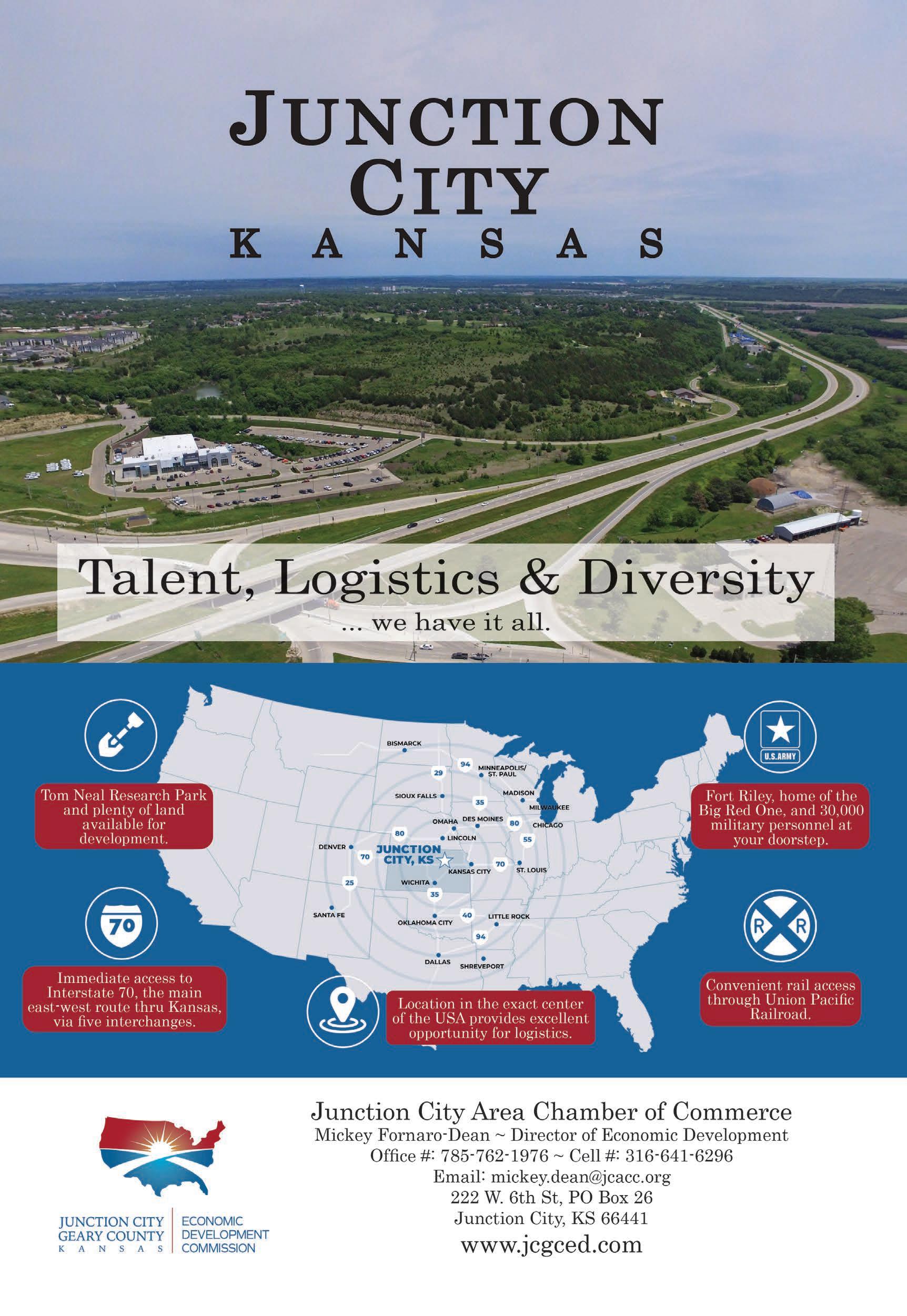
Companies looking for a new location in the middle of everything should look no further than Russell, Kansas. Technically speaking, the United States’ geographic center is 80 miles north of Russell in Lebanon, Kansas, but you get the point. Russell is as centrally positioned as cities come.
Located at the junction of Interstate 70 and Highway 281 — approximately 240 miles west of Kansas City and 360 miles east of Denver — Russell’s strategic position in West Kansas offers easy access to markets across North America.
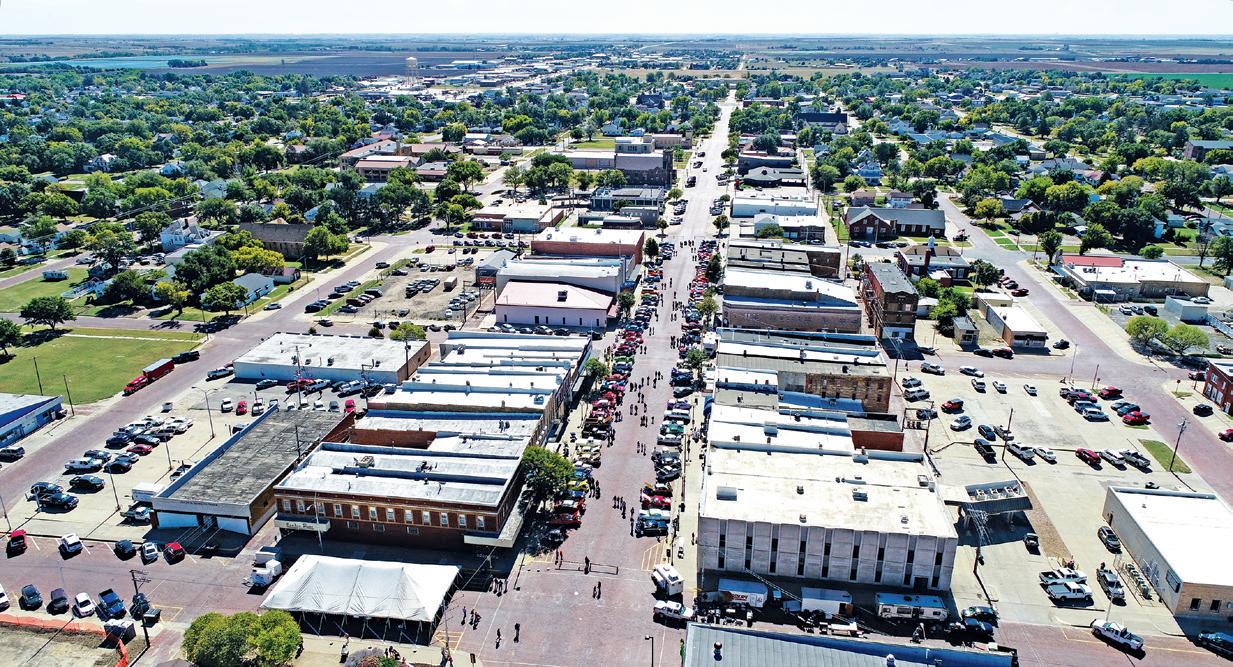
The seat of government for Russell County, Russell is an economic hub for Central Kansas. Russell County also contains the cities of Gorham, Bunker Hill, Lucas, Luray, Paradise, Dorrance and Waldo.
Russell offers a variety of benefits for businesses. With excellent multimodal
transport options, including Union Pacific Railroads rail service and a thriving modern, municipal airport. Additionally, the city owns both the electric and water utilities and offers various economic development incentives to encourage new businesses to locate in the region.
“Russell’s geographic location is a huge advantage for companies doing an interstate business,” said Jon Quinday, City Manager of Russell. “Russell is the center of everywhere at Interstate 70 and US Highway 281, two major highways that run to and from every coast and the Canadian border. Russell has better technology resources than many metropolitan centers in the state, creating an abundance of opportunities for businesses who choose to locate in Russell. Russell provides a very positive environment for companies with diverse financial support and incentives, many that can be layered to create critical gap financing and tax saving options.”
Nearly a century ago, an oil boom paved the way for economic growth at a critical junction in the state. Today, the county is one of the state’s top 5 oil producers. The city is home to a wheat gluten and ethanol manufacturing facility, a feed manufacturing facility and more at its industrial park. The region’s natural resources, logistics infrastructure and stable workforce have created a dynamic cluster of industries
to grow and flourish, with plenty of room to expand.
One such company, PureField Ingredients, operates two state-of-the-art manufacturing facilities in Russell, where it produces food ingredients and co-products. Already the nation’s largest domestic supplier of wheat gluten, the company announced it would expand its production capabilities by 50% in December. The more than $30 million facility expansion is expected to be completed in early 2022.
PureField Ingredients provides a dependable distribution channel that is not subject to international supply chain disruptions. The company sources locally grown grains that can be traced directly back to individual Kansas farms.
Longtime major employer, John O. Farmer, Inc. first opened its oil and gas production company in Russell in 1946. Today, it is one of the state’s top producers, generating approximately 30,000 barrels of oil each month with over 200 leases and 350 wells. Still family-owned and operated, the company’s president, John O. Farmer, IV, noted several benefits related to its location — outside of its plentiful oil reserves.
“The cost of living in Russell is below the state and national averages, so the local dollars will go farther,” Farmer explained. “This translates in that the costs for John O. Farmer, Inc. to operate the leases we own are lower in comparison to other regions of the United States, which keeps us competitive in a lowcost producer market. I believe there is also an advantage in living in rural America, in that we can ‘tune out’ all the noise seen in the big cities. Russell seems to have an advantage in that there are not constant distractions, and we can become better focused as a company without these distractions.”
Additionally, the region’s skilled and dependable workforce has allowed the company to grow over the years. Farmer says several families have worked at the company for generations — three of which have between 150 and 300 net years of combined service between family members.
“People from this area have a great work ethic and believe in a good honest day of work,” Farmer said. “I feel our employees go to work to ‘complete the job for the day,’ regardless of how many hours it may take, instead of ‘getting your eight hours in.’ There
seems to be a lot of loyalty and pride in being from Western Kansas.”
Though the city itself is only home to 4,463 (with approximately 6,933 in Russell County), many people who call it home would not want to live anywhere else. The small-town environment offers its unique lifestyle — with high-quality education, health care and plenty of outdoor recreational attractions to explore.
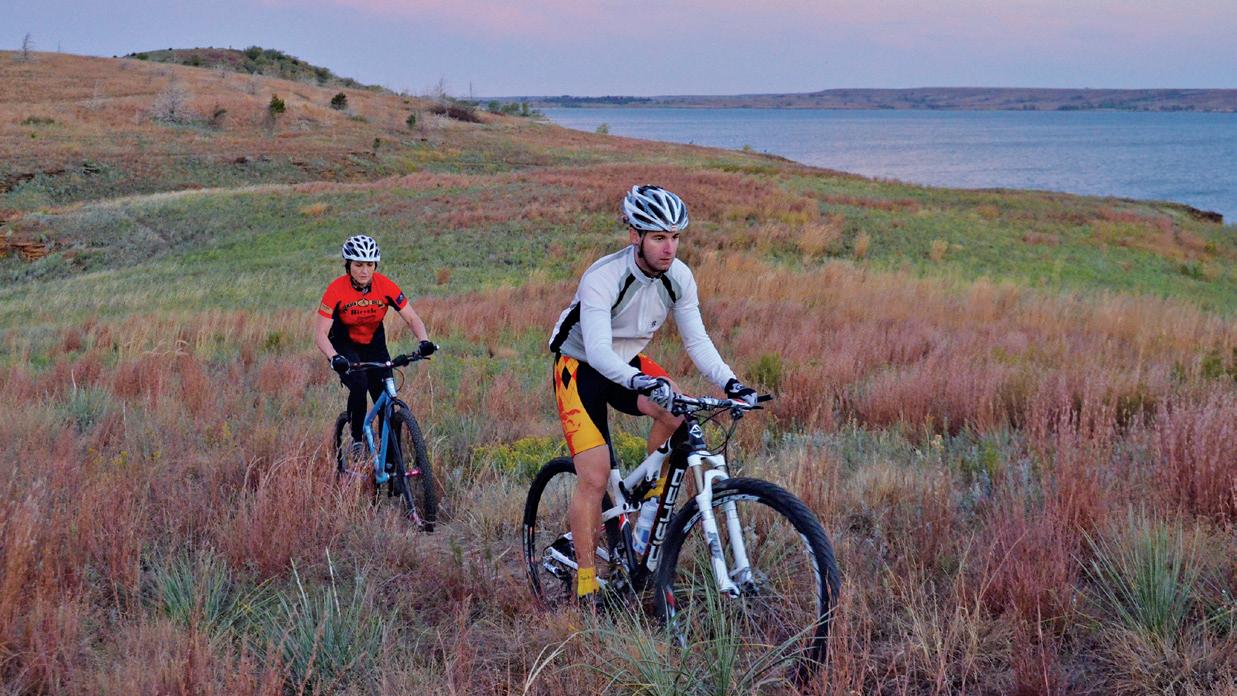
One of the state’s most beautiful attractions can be found at Wilson State Park. Wilson Lake’s rugged shoreline with scenic cliffs provides a stunning backdrop for watersports like boating, jet skiing and fishing. The surrounding Wilson Wildlife Area is a prime location to find deer, pheasant, waterfowl, songbirds and many other wild animals. The popular Switchgrass Bike Trail takes mountain bikers through 25.5 miles of some of nature’s finest views, while hiking trails can be found throughout the area.
The city is also home to several unique landmarks, including the boyhood home of Senator Bob Dole, the Fossil Station Museum, the Garden of Eden, the Log House and the Bowl Plaza.
For Kayla Schneider, Assistant City Manager, the decision to move back to her hometown coincided with her decision to start a family. After her husband’s military career, the couple wanted to provide their children with a safe place to plant their roots.
“We are a community that cares for each other,” Schneider said. “This is a specific advantage for raising a family. Parents look out for each others’ children, and we have the opportunity to watch the same small group of children grow up together. Small class sizes make this possible. Graduating classes are in the 60-80 range, depending on the year. There is the adage that ‘it takes a village,’ Russell provides that village. I couldn’t imagine raising my family anywhere else.”
This investment profile was created under the auspices of the City of Russell. For more information, please contact Jon Quinday at 785-483-6311 or quinday@russellcity.org.



















Wby ADAM BRUNS
hen more than 50 businesses and organizations served by Kansas City–based utility Evergy begin receiving energy from two area wind farms in November as part of its Renewables Direct program that makes affordable, dedicated wind energy available to commercial customers, it was just one more sign of a virtuous circle involving economic development, power provision and a lighter carbon footprint.
“The expansion of wind energy in our area brings economic investment and jobs to communities near wind farms and affordable, clean energy to our customers,” said Terry Bassham, Evergy president and CEO. Power for those 50 customers is coming from NextEra Energy Resources’ Soldier Creek Wind Energy Center, a 300 megawatt wind farm in north central Kansas, and Ponderosa Wind Energy Center, a 200 megawatt wind farm in the Oklahoma panhandle.
“Renewables Direct is a great tool to attract new businesses to our area and to meet the
needs of current customers using our area’s abundant wind energy. It helps customers realize their sustainability goals while providing long-term price stability,” said Jeff Martin, Evergy vice president of community and customer operations.
In 2019, wind fueled 41 percent of electricity production in Kansas, making it No. 2 nationally for wind energy as a share of total electricity generation. According to the American Wind Energy Association, development of wind farms in Kansas has brought more than $11 billion in capital investment and created more than 5,000 jobs in the state. Each year, project-related payments exceeding $60 million are paid to state and local governments and in lease payments.
Evergy, Inc., through its operating subsidiaries Kansas City Power & Light Company (KCP&L) and Westar Energy, Inc., provides energy to 1.6 million customers in Kansas and Missouri. In early 2020, Evergy announced with Kansas Governor Laura Kelly that it will expand its wind energy portfolio by 660 megawatts, and reduce carbon output by 80 percent below 2005 levels by 2050. Electricity from four new wind energy sites will be used to attract and retain large commercial and industrial customers. Combined, the four new wind projects (three of them in western Kansas) bring $180 million economic benefit to the region, including hundreds of construction jobs and dozens of permanent green energy
jobs. They also bring great benefits to the communities through payments to landowners and to the tax base, and are funding school improvements among other projects in those communities.
Evergy is not the only utility getting into renewables. Kansas Electric Cooperatives (KEC) is the Kansas statewide service organization for 27 electric distribution cooperatives and three generation and transmission cooperatives. In November, 12 cooperatives announced the Kansas Cooperative Sun Power Program, a series of solar farms being developed by Today’s Power, Inc. (TPI)’s as part of a 25-year program that will result in attractive long-term prices and the construction of more than 20 MW of solar power at 21 sites spread out across more than 800 miles of the Sunflower State.
In August 2020, Evergy announced its Sustainability Transformation Plan (STP), a five-year strategic plan to deliver increased value for Evergy shareholders and benefit Evergy customers through additional cost reductions, improved grid reliability and security, enhanced customer experience and an accelerated transition to clean energy. Jeff Martin has been leading renewables program development for Evergy (and before the 2018 merger with KCP&L, for Westar) for a number of years. Now the direct renewables participation tariff is in place in every jurisdiction allowing companies such as

Cargill, Textron, Spirit and Tony’s to subscribe directly with a wind farm and take the renewable energy credits as their own.
“From an economic development perspective, that is extremely attractive to a lot of companies already,” Martin says in an interview. “A lot of these companies are international and publicly traded, and their shareholders want them to be carbon-neutral. It’s green in two ways — it’s renewable, but we can give it to them cheaper in terms of their fuel cost.”
“More and more prospects have renewable requirements as part of their RFPs,” says Joe Fangman, Evergy’s senior director of economic development. If they do, says Martin, Evergy’s portfolio already is 50% carbon-free, “so if you have a customer who comes in looking for 50% renewable, we can sign the letter today.”
Battery storage is still in its infancy, but Martin notes that the new Evergy CEO David Campbell’s previous employer in Texas has one of the largest battery storage projects in the nation. “We’ll see more of that going forward,” Martin says, “along with additional solar and less fossil fuel power generation.”
Evergy last May committed $2.2 million to help agencies, communities and customers respond to and recover from the COVID-19
pandemic, bringing its 2020 planned community giving to more than $8 million. That includes the utility’s Hometown Economic Recovery Program, through which Evergy has awarded grants totaling $800,000 in such areas as small business needs, business attraction and retention, and workforce training and development.
Evergy’s economic development department helped to attract more than $335 million in corporate facility investment in 2019 to its territory, creating more than 3,460 jobs. Sustainability and sustaining the business community work hand in hand. Evergy’s team is one of only two utility economic development teams certified as an economic development organization by the International Economic Development Council.
“Our team partners with the communities as a unified force,” says Fangman, which facilitated the attraction of a number of investments in 2020, including Tony’s Pizza in Salina, Spirit Aerosystems and Cargill. “When communities win, we win.”
“In 2020 we got some legislation passed that increases the economic development incentives we can provide to attract bigger companies,” says Martin. “It matches legislation we have in Missouri. Now we can talk to customers regardless of which territory they’re looking at.”
They’re looking at Kansas a lot: 12 of the 16 projects the team worked in 2020 were on the Kansas side of the state line.
“When people ask about COVID-19 and project activity slowing, I tell them it’s been the opposite,” says Lisa Franklin, manager, economic development at Evergy. “We’ve had one of the best years ever. We have the right programs and legislation in place to be competitive. Kansas is doing a good job of landing the deals this year.”
Evergy’s programming also a program called SizeUP whereby small businesses can use a free-of-charge web platform to benchmark their operations as they consider expansion. The economic development team also offers individual investments to area leaders in such areas as business park master planning, labor studies, website development and drone work. “The investments we’ve made this year have been producing a lot of results,” says Franklin, “especially when doing site identification for business parks and master planning those parks,” including for projects in Salina and Leavenworth.
“There’s somewhat of a transformation in Kansas,” says Fangman, with more communities stepping forward with certified sites, for example. “We’re seeing good leadership from Kansas at the state level helping us have good success overall.”
“We are always aware that we don’t have beaches or mountains, but we have great infrastructure,” says Martin, “and programs to help companies meet their renewable goals.”
• At 12.43 cents/kWh, Kansas residential power prices are the 24th lowest in the nation. The state ranks No. 26 in lowest natural gas prices.
• Kansas is one of the top 10 ethanolproducing states, with a combined production capacity of about 539 million gallons a year.
• In 2019, wind energy surpassed coal for the rst time as the largest share of electricity in Kansas. Wind power increased to 41% of generation and coal fell to 33%, giving Kansas the secondhighest share of wind power generation after Iowa.
Source: U.S. Energy Information Administration

by MARK AREND and ADAM BRUNS
The $2 billion Grain Belt Express transmission line, an approximately 800-mile high voltage direct current (HVDC) transmission line being developed by Invenergy Transmission, was announced in September 2020 by Kansas Governor Laura Kelly, Kansas Department of Commerce Deputy Secretary for Business Development Bill Murphy and Invenergy Senior vice president of Regulatory Affairs Kris Zadlo. It will deliver up to 4,000 megawatts (MW) of low-cost, homegrown clean energy from western Kansas to millions of Americans in the Midwest and other regions.
“Kansas is uniquely positioned to be a regional and national leader in the
development and expansion of clean and renewable energy,” said Governor Kelly. “The Grain Belt Express will be instrumental in helping to power Kansas and other states and will bring nearly 1,000 jobs and billions in economic investment and energy savings to our state. My administration is committed to rebuilding our foundation and supporting key investments that will continue to boost economic development, recruit businesses, foster a healthy workforce, and produce sustained growth.”
Chicago-based Invenergy is a privately held, global developer and operator of sustainable energy solutions with a portfolio of 165 projects across four continents representing 24,500 MW of power.
Among its more recent projects are a 160-MW solar farm in Georgia and the Inaniwa wind project in Japan.
The company is also constructing the nation’s largest solar farm, a 1,310MW installation in northeast Texas.
It’s operated the 200-MW Buckeye wind farm in Ellis County, Kansas, since 2015. Many large corporations fulfill their sustainability mandates via purchases of green power from Invenergy projects.
According to an analysis on behalf of the company, the Grain Belt Express will create up to 22,525 jobs supported over the three-year construction period, 968 full-time, permanent operations jobs and $8 billion of total, long-term economic investment in Kansas. Additionally, the project will
save up to $7 billion in electricity costs for Kansas and Missouri consumers (around $50 per year for the average residential customer) through 2045 and produce $3.7 billion in economic output during construction and $235 million in annual economic output once operations begin.
Other benefits for the state include more than $35 million in payments to Kansas landowners; Increased tax and other revenue to each county that hosts the line, benefiting schools, roads and other public services; and broadband infrastructure for rural communities along the line route, which runs from Dodge City in westcentral Kansas up across I-70 near Great Bend and Hoisington, and then across the northeastern quadrant of the state, passing towns such as Beloit, Concordia, Marysville and Seneca.
Grain Belt Express will begin in Spearville, Kansas, and continue through Missouri, Illinois, and Indiana. The project will deliver significant advantages in access to affordable energy, added infrastructure for broadband, and significant capital investment.
“Economic recovery and longterm economic competitiveness in Kansas and Missouri depend on new investment, more jobs and tapping into low-cost, homegrown clean energy, which Grain Belt is moving full speed ahead to deliver,” Zadlo said. “Grain Belt is proud to increase our investment in Kansas and Missouri to rebuild the economy, deliver billions of dollars in energy cost savings, and meet growing renewable energy demand.”
According to grainbeltexpress. com, “With input from thousands of Kansans collected at more than 30 meetings, the Grain Belt Express routing team refined potential routes and ultimately selected a route. In 2011, the Kansas Corporation Commission (KCC) certified Grain Belt Express as a transmissiononly public utility, and in 2013 it
unanimously approved the route and granted Grain Belt Express a permit to construct the approximately 380-mile Kansas portion of the project. The selected route minimizes the impact of the project on the natural and human environment in Kansas.”
Among the not-so-secret ingredients behind the project’s business case is High Voltage Direct Current transmission, or HVDC, designed to safely deliver large amounts of electricity over long distances, efficiently and costeffectively. “HVDC transmission lines can transfer significantly more power with greater efficiency, on a smaller footprint, than comparable alternating current (AC) transmission lines,” says Invenergy, noting that the technology has been around since the late 1800s and the birth of the modern electric industry, and is currently in use in more than 20 HVDC transmission lines in the United States and more than 35 across North America.
But the ultimate energy savings created by Grain Belt result from the transmission line’s direct access to one of the country’s strongest and lowest-cost wind energy resources in western Kansas.
It was Kansas native President Dwight D. Eisenhower who spearheaded the national Interstate Highway System. I-70 has been literally central to that network. So it was only appropriate that Kansas Transportation Secretary Julie Lorenz, in August 2020, celebrated the 50th anniversary of the completion of I-70 in Kansas with a ceremony at the Kanorado weigh station near the Kansas/Colorado state line.
“In the past 20 years, the people of Kansas have invested around $1.2 billion in I-70’s expansion, repair and maintenance,” Secretary Lorenz said. “We will continue to focus on the preservation and maintenance of our state’s interstates. I am proud to say that preservation is specifically called out as a top
priority in the new Eisenhower Legacy Transportation Program.”
On Nov. 14, 1956, Kansas completed the first section of Interstate in the U.S. — an eight-mile section west of Topeka — under the new Federal-Aid Highway Act of 1956. The final section of I-70s 370 miles across the state was opened June 17, 1970. Today, the 875 miles of Interstate in Kansas carry nearly one-fourth of all travel in the state.
The 10-year Eisenhower Legacy Transportation Program (IKE) includes KDOT’s Innovative Technology program and Cost Share program. Secretary Lorenz and Kansas Governor Laura Kelly in November awarded more than $6 million from the two programs to such projects as downtown improvement in Bonner Springs; a smart infrastructure project in Lenexa using embedded sensors that can connect with vehicles to improve traffic flows; and a shared-use path in Lebo that will connect the city’s downtown with a business park.
The two state leaders also recently awarded $5 million to 13 projects as part of KDOT’s new Short Line Rail Fund program for projects such as siding improvements and extensions for Frontier Ag and Skyland Grain, among others.
“KDOT recognizes the important role that rail plays in our state’s economy, and the Short Line Rail Improvement Fund is another opportunity for us to partner with industry to help modernize and make needed improvements,” said Secretary Lorenz.
“The State of Kansas will benefit because of programs like IKE,” said Governor Kelly, “which demonstrates how government can be dynamic, fiscally responsible and implement cutting-edge strategies to produce results for our communities.”
A version of this story first appeared in the November 2020 issue of Site Selection magazine.
Wichita State University plunges ahead in its mission to innovate.
by GARY DAUGHTERS
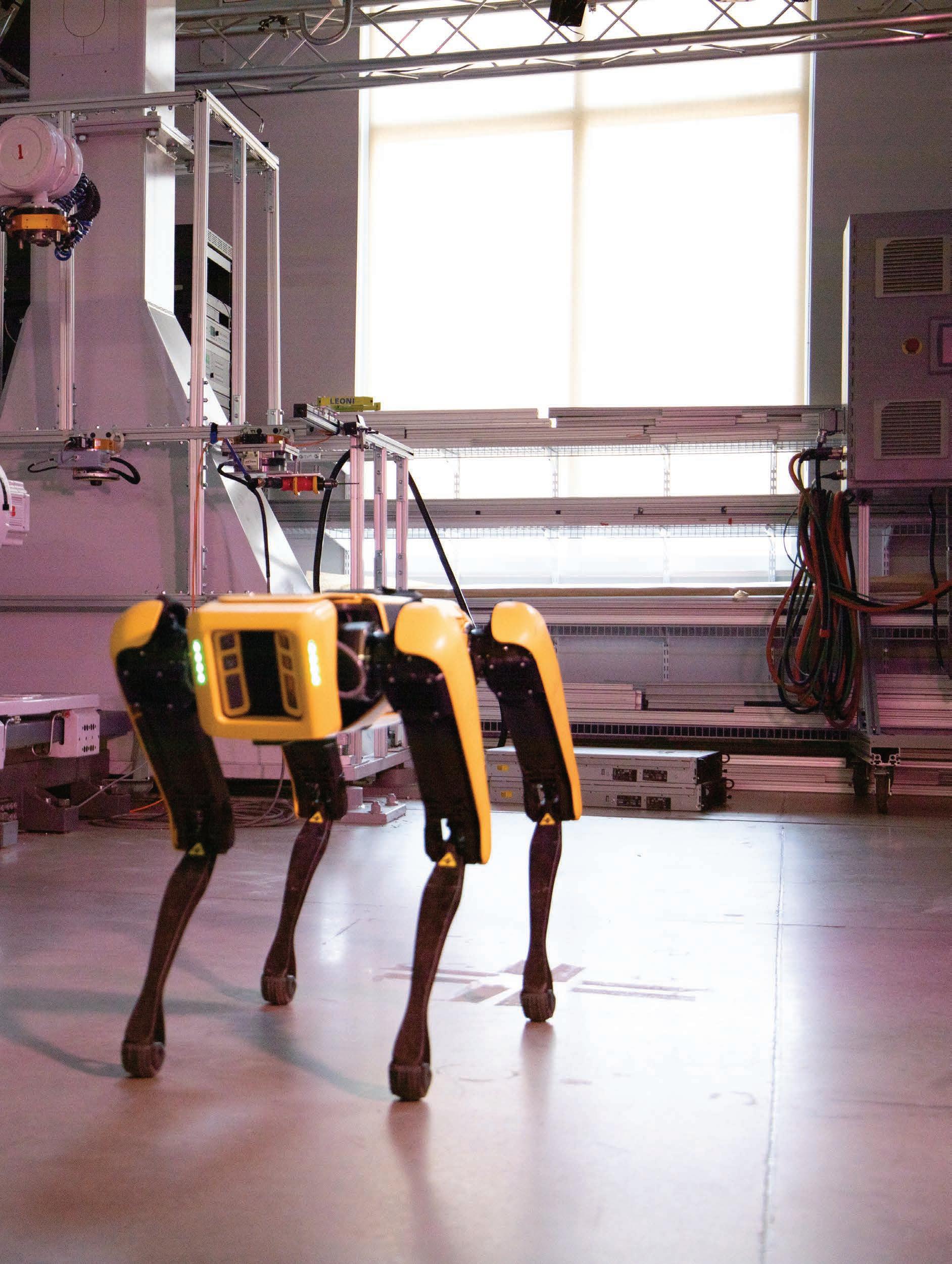
An exciting, new project is nearing realization on the Innovation Campus at Wichita State University. Officially announced in early September 2020, The Smart Factory @ Wichita is envisioned as an experiential learning environment to speed the adoption of futuristic manufacturing inputs such as robotics, artificial intelligence and Internet of Things (IoT).
A collaboration between Wichita State and Deloitte, the global professional services network, The Smart Factory @ Wichita will serve as both a launch pad and demonstration stage for some of the tools and processes that are coalescing to form the backbone of “Industry 4.0.”

“Wichita is a cutting-edge hub for precision manufacturing and technology,” said former Wichita State President Jay Golden. “By collaborating with Deloitte, we will be able to bring together the organization’s experience with our educational, research and innovation capabilities.”
Scheduled to open in mid-2021, the 60,000-sq.-ft. facility will include a full-scale production line, experiential labs exploring smart factory capabilities and dedicated space for industry partners. Infor, a business cloud software company, revealed itself in December as the fi rst such partner to plan a presence at the facility.

“The Smart Factory @ Wichita,” says Ed Allen, Infor executive vice president and GM of manufacturing industries, “will be a showcase for the value that manufacturers can realize from using Industry 4.0 technologies to transform their entire business ecosystem.”


The Wichita facility will be the third such location established by Deloitte and the flagship of the company’s Smart Factory network that also is expanding into Asia from

its original outposts in Duesseldorf, Germany and Sheffield, England. Scouting the U.S. location took two years, says Stephen Laaper, smart factory leader and principal, Deloitte Consulting, LLP. Deloitte, however, had firsthand knowledge of Wichita State through its standing presence at the Innovation Campus’s John Bardo Center.
“Wichita has a long history of all sorts of different types of manufacturing,” says Laaper. “As we studied other opportunities and engaged different entities around the country, what became increasingly clear was the many exciting commitments that Wichita has made to innovation. That was a critical feature in our decision to locate in Wichita, and most specifically on the Innovation Campus.
“Access to talent in the area is critical, as well,” Laaper adds. “It’s critically important because this isn’t something that happens without people. While there may be robotics and advanced solutions, this is going to be a factory that is still going to be about people.”
Yes, a commercial product will roll from the factory’s shipping docks, a component for an as-yet undisclosed robotics company. The advanced tools and processes used in the component’s production are intended to serve as a model.
“I often describe it as half theme park, half manufacturing plant,” says Laaper. “The smart factory is an experience center for our clients to be able to come to experience really what is smart factory. What do those capabilities look like? How do they interact with those capabilities? How do those capabilities drive value in manufacturing?”
Powered by solar panels and wind turbines, The Smart Factory @ Wichita is designed to consume only as much energy as can be produced on site. Smart building materials and smart grid investments will further support the factory’s “net-zero” aspirations. Glass bottles to be recycled from campus will be a key feedstock for the factory’s product.
“This,” says Laaper, “is the future of what manufacturing will look like.”
Home to the National Institute for Aviation Research (NIAR), Wichita State bolsters Wichita’s self-given title of “aviation capital of the world.” Established on campus in 1985, NIAR is home to more than a dozen commercial labs providing research, design, testing certification and training to the aviation industry and government agencies. NIAR’s
“ I often describe it as half theme park, half manufacturing plant.”
— Stephen Laaper, Smart Factory Leader and Principal, Deloitte Consulting, LLP
industry partners include Boeing, Bombardier, Learjet, Cessna, Beechcraft, and Wichita-based Spirit Aerosystems.
The Innovation Campus, launched in 2017 on the grounds of a former golf course, has assembled its own impressive roster of manufacturing innovators, including not only Deloitte, but also Airbus, Hexagon, Boston Consulting Group, Martin Defense Group, FirePoint and Dassault Systemes, the Fortune 50 software developer of 3D product design and other advanced manufacturing systems.
Through a partnership with Dassault, the Innovation Campus has established the 3DEXPERIENCE Center, designed to accelerate innovation through collaboration between university researchers, corporations and research laboratories. The 3DEXPERIENCE enables companies to engage in advanced product development and the development of and manufacturing of next-generation materials and technologies.
Airbus Americas Engineering operates an Engineering Center on the Campus. Its presence there, the company says, provides a support infrastructure that would otherwise be cost prohibitive to duplicate in a stand-alone engineering center. Access to Wichita’s talent serves to sweeten the pot.
“Wichita’s talent pool of aerospace and aviation experts is among the richest in the world,” said John O’Leary, Vice PresidentAirbus Americas Engineering. “The aviation expertise here is recognized within Airbus and around the world. The Innovation Campus is only going to help Wichita’s expertise grow.”
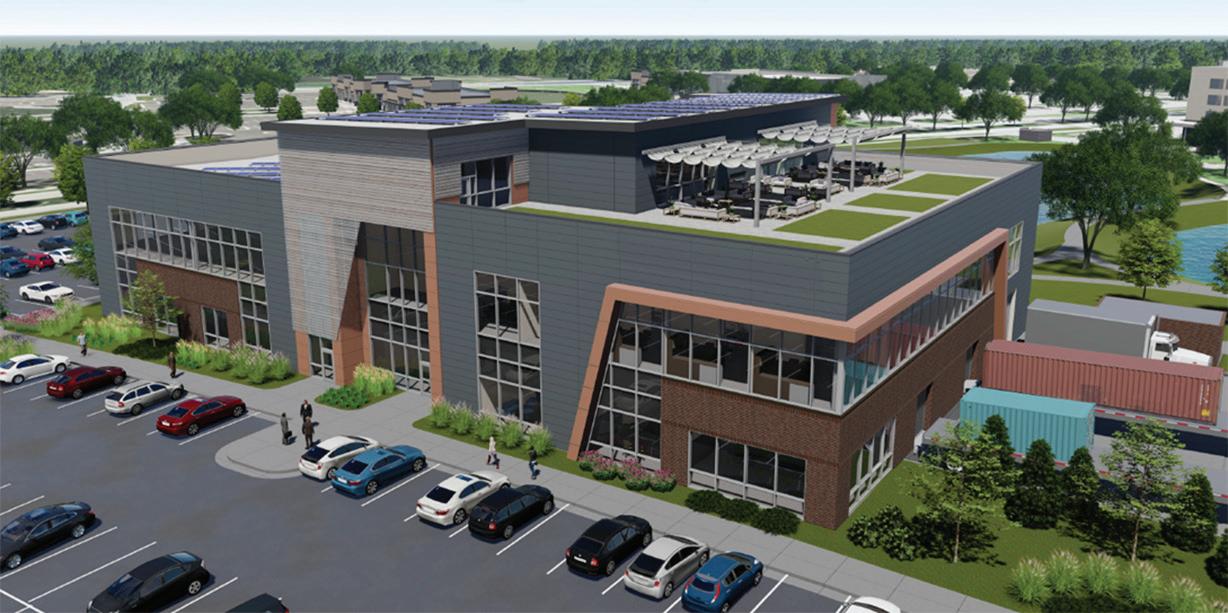
FACING: In September 2020, Deloitte and Wichita State University announced the launch of The Smart Factory @ Wichita.
ABOVE: The Smart Factory @ Wichita is to open its doors in mid-2021.
Images courtesy of Wichita State University
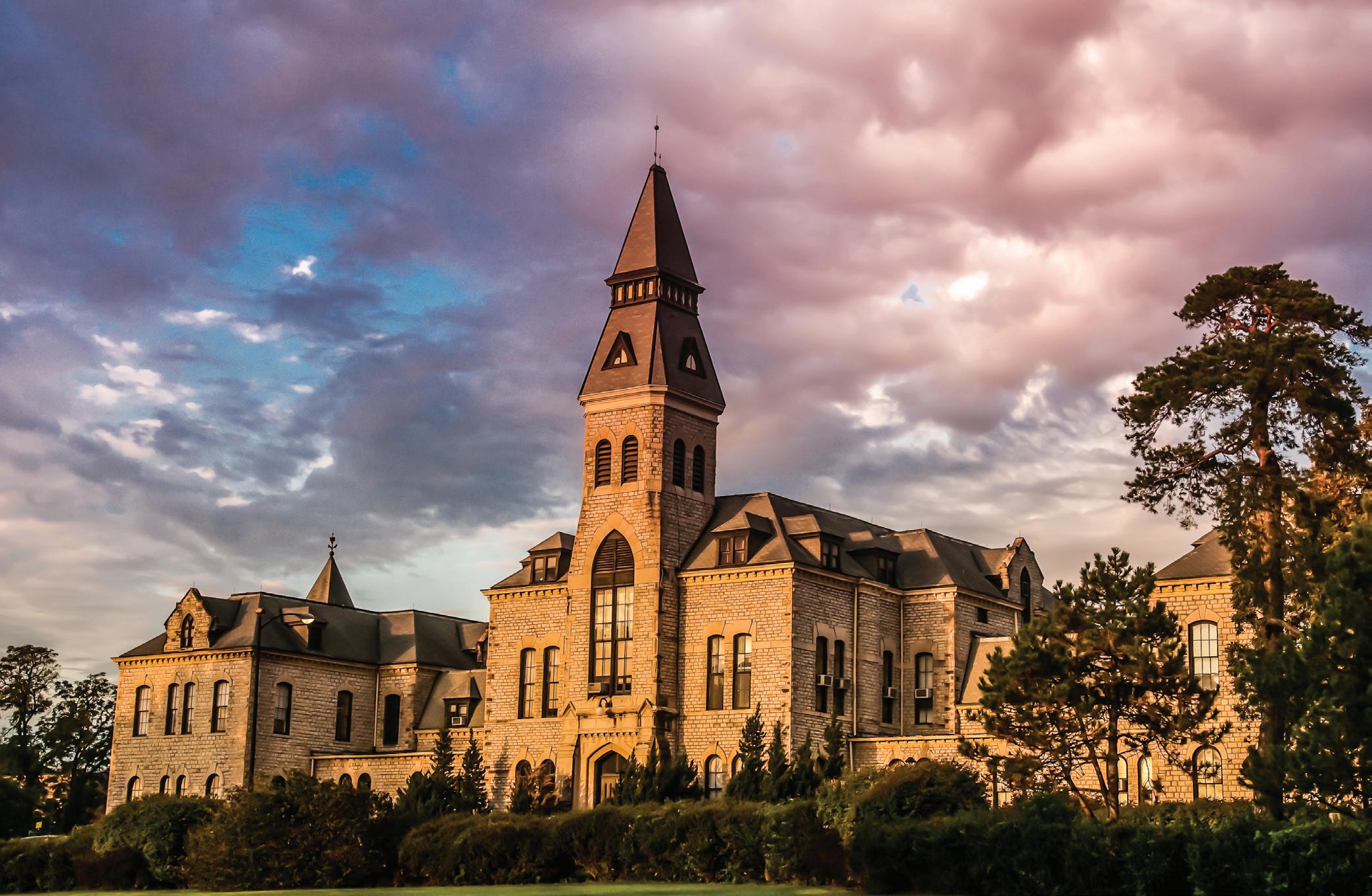
In 2020, 117,469 students en rolled in fall semester classes at Kansas Board of Regent universities and technical colleges across the state.
by SAVANNAH KING
With 32 public higher education institutions (six state universities, one municipal university, 19 community colleges and six technical colleges) across the state, a high-quality and affordable education is easily within reach. The state’s graduation rates highlight its attitude toward education. The high school graduation rate in the U.S. is 87.7%, while Kansas’ rate surpasses the national average at 90.7%. More Kansans hold at least a bachelor’s degree as well, with 32.9% versus the national average of 31.5%.
The following is an overview of the state’s public four-year universities and their unique impacts on the state’s workforce pipeline.
The University of Kansas (KU), the state’s flagship university and a premier research institution, has five campuses and several online offerings. The university is consistently ranked highly for its academics and is one of only 65 i nvited members of the prestigious Association of American Universities (AAU). KU’s total annual enrollment sits at 28,500. Additionally, KU is one of 26 universities in the country that have a National Cancer Institutedesignated cancer center, a National Institute on Agingdesignated Alzheimer’s disease center and a National Institutes of Health Clinical and Translational Science Award.
The main campus in Lawrence is considered one of the country’s most beautiful. KU has an additional campus in Overland Park, with three medical campus
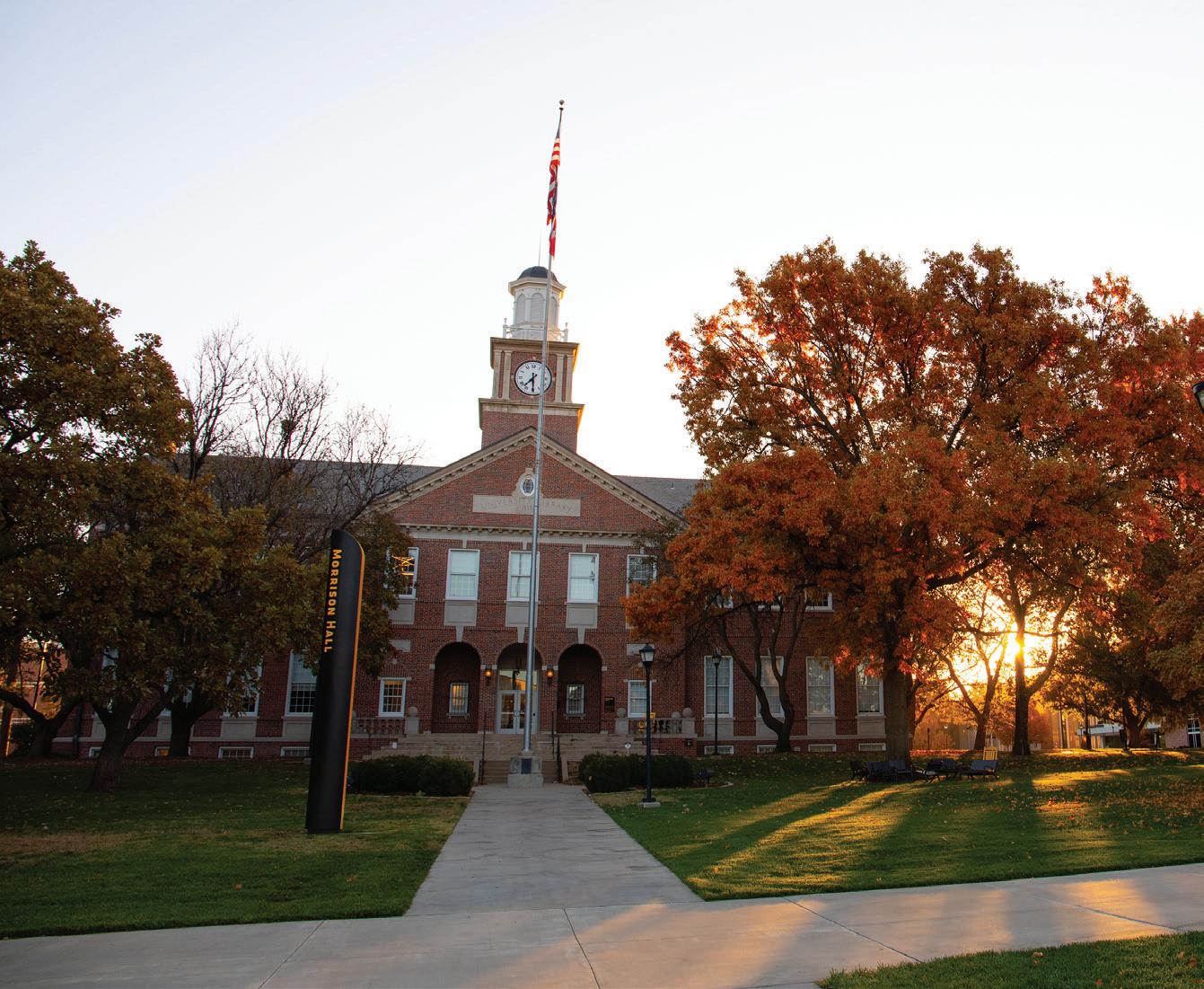
branches in Kansas City, Wichita and Salina.
The University of Kansa Medical Center is the only medical school in the state and includes the School of Medicine, the School of Nursing and the School of Health Professions. Additionally, the University of Kansas Health System in Kansas City is a world-class academic medical center providing care to the region.
Kansas State University (K-State) has earned national recognition over the years for its research capabilities. With more than 22,000 students enrolled in more than 250 academic undergraduate programs and more than 165 graduate degrees and certificate programs, the university is a crucial pipeline for the state’s talent needs.
K-State operates four unique campuses, each with its own specialty and focus. The university’s main campus is in Manhattan, next door to Fort Riley, a large Army installation, and collaborates on many military-focused projects. Additionally, the U.S. Department of Homeland Security’s National Bio and Agro-Defense Facility is currently under construction next to the campus.
The university’s newest campus in Olathe is located within the Kansas Bioscience Park and is known for helping industries in the area develop new technologies. K-State Polytechnic campus in Salina is known for its world-class aviation program. It is one of the first and only
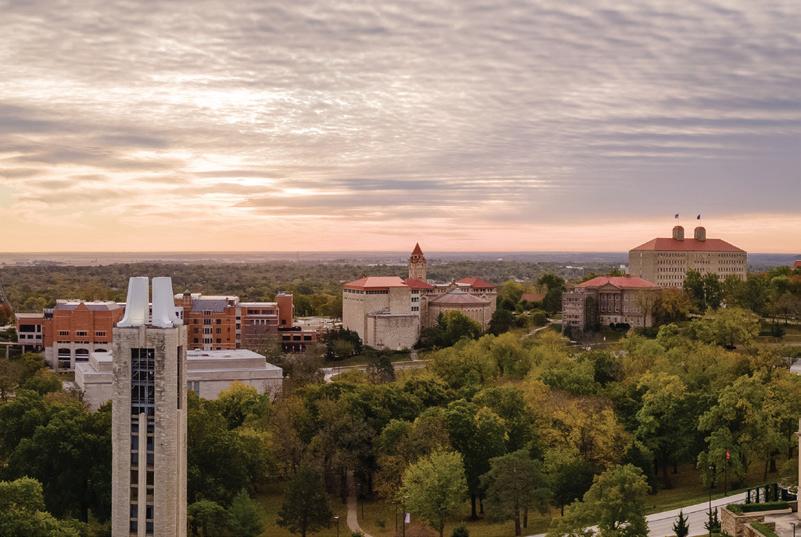
in the country offering a bachelor’s degree in unmanned aircraft systems. K-State Global Campus offers more than 70 online programs and serves students across the country and in more than 40 countries.
With a key focus on innovation and technology, Wichita State University (WSU) aims to provide innovative pathways to career opportunities to students. Wichita State University serves as the Kansas urban-based research university, enrolling more than 20,000 students annually. Located in the largest city in the state with one of the highest concentrations in the country of STEM jobs, WSU provides innovative pathways of applied learning, applied research and career opportunities for students.
Over the last decade, the university has expanded rapidly. With dozens of new buildings and renovation projects, not to mention an ever-growing list of public-private partnerships, the university is continually improving.
The Innovation Campus, part of Wichita State University’s main campus, is one of the nation’s largest and fastest-growing research/ innovation parks, encompassing over 120 acres and home to a number of global companies and organizations. Innovation Campus partner companies include Airbus, Spirit Aerosystems, Deloitte and many others.
Additionally, WSU Tech — an affiliate
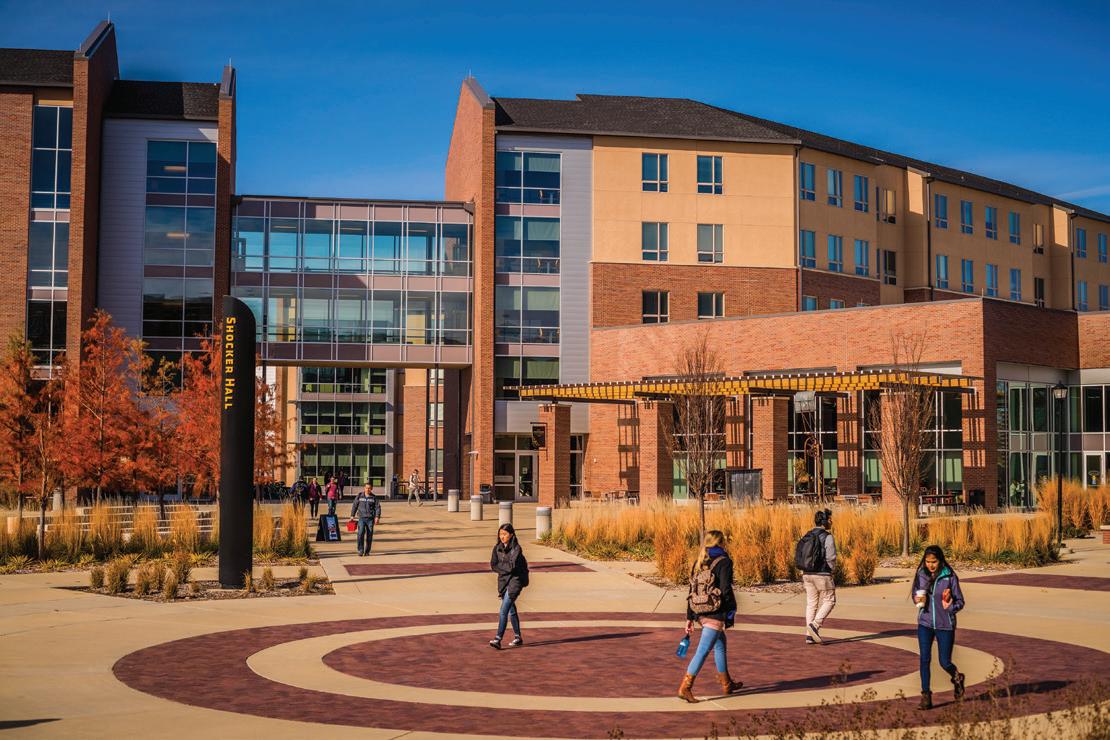

of Wichita State University — is the state’s leader in modern technical education, offering over 100 degree and certificate options in aviation, health care, manufacturing, design, information technology, police science and business. In 2018, WSU Tech was named the second fastest-growing college among two-year colleges by The Chronicle of Higher Education. WSU Tech serves as managing partner of the National Center for Aviation Training (NCAT) in Wichita.
Washburn University, a municipal university in the heart of Topeka, enrolls just under 7,000 students in more than 200 academic programs. The traditional 160-acre campus is home to the university’s prestigious School of Law.
Recently, education technology company EAB recognized Washburn University’s work on behalf of student achievement with its Student Success Collaborative - Technology Pioneer Award. The award recognizes an institution that is consistently on the leading edge in technology and testing new solutions to advance student success.
Washburn Institute of Technology (Washburn Tech) has a unique affiliation with Washburn University that allows students to transfer to the university for advanced degrees after taking technical courses. With programs in advanced manufacturing, business, computer science, health care and more,
Washburn Tech works closely with business and industry to ensure students leave with skills that lead to gainful employment.
With its Flat-Rate Tuition program, students at Pittsburg State University (PSU) pay a single tuition rate, regardless of how many credits are taken. The program allows full-time undergraduate and graduate students to take extra classes — even earn a double major — without spending more. Located in Pittsburg, the university enrolls approximately 6,500 annually.
Fifty years ago, PSU was one of the first in the nation to develop a Plastics Engineering Technology program. The university also boasts a g rowing Polymer Chemistry program unlike anything within hundreds of miles.
The Kansas Polymer Research Center (KPRC) is internationally recognized for chemistry and materials science, with a specialization in bio-based polymer research and development. KPRC works with industry and government to develop and commercialize the university’s intellectual property.
In September, KPRC was awarded a three-year, $2.39 million grant to develop new technologies that will diversify the regional workforce, support business relocations and startups, and result in new career opportunities.
With more than 200 academic programs and 5,800 students enrolled each year, Emporia State University (ESU) offers students a high-quality and affordable education. ESU was ranked the No. 1 university in Kansas for the lowest student debt. In 2019, Kiplinger’s Personal Finance included the university in its Best College Values List. It is also the only public university in Kansas to be named a College of Distinction.
Fort Hays State University (FHSU) in the city of Hays enrolls more than 15,900 students annually. FHSU has the lowest tuition rates in the Kansas Board of Regents system and provides one of the nation’s best educational values. With a 96% job placement rate, the university prepares students for success after graduation. The university’s Center for Entrepreneurship serves as a hub for innovation and is one of its fastest-growing study areas.

Wichita’s Manufacturing Strengths Are in a League of Their Own
by MARK AREND
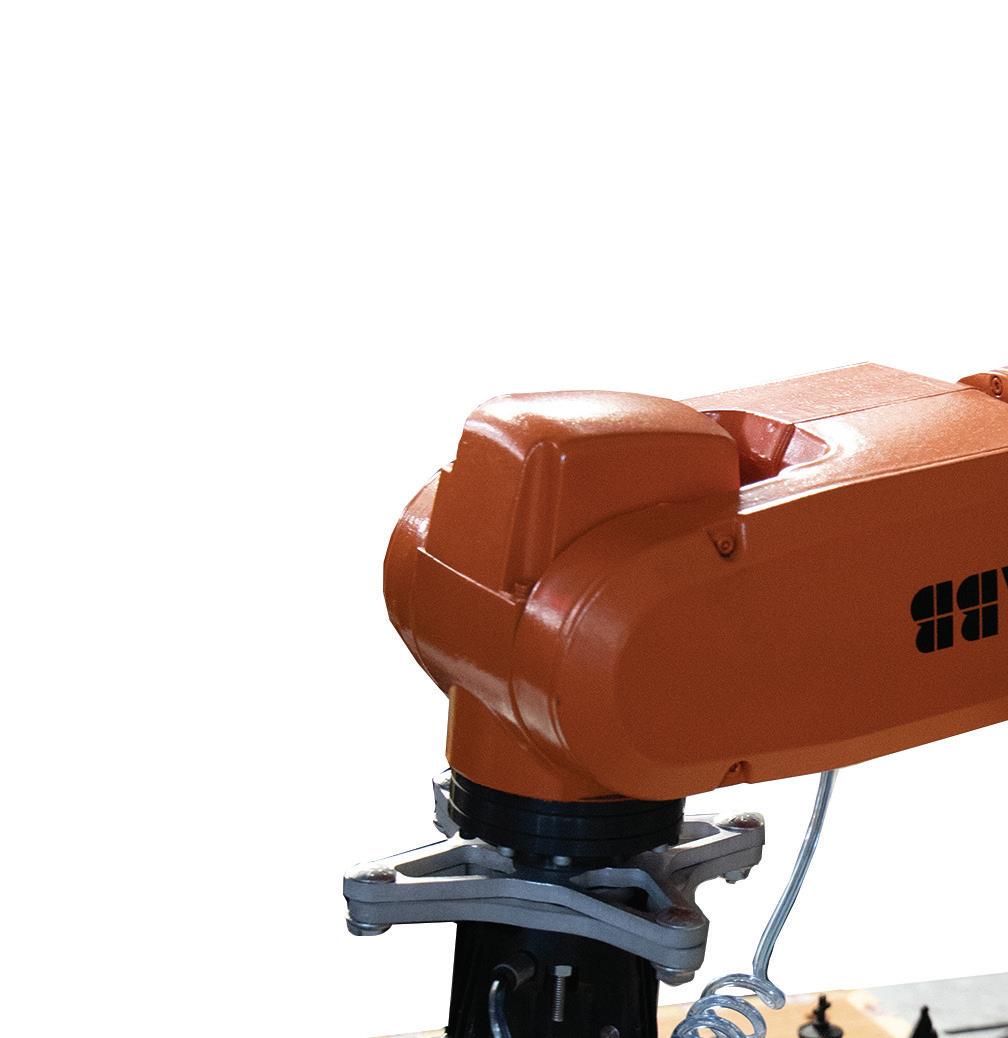

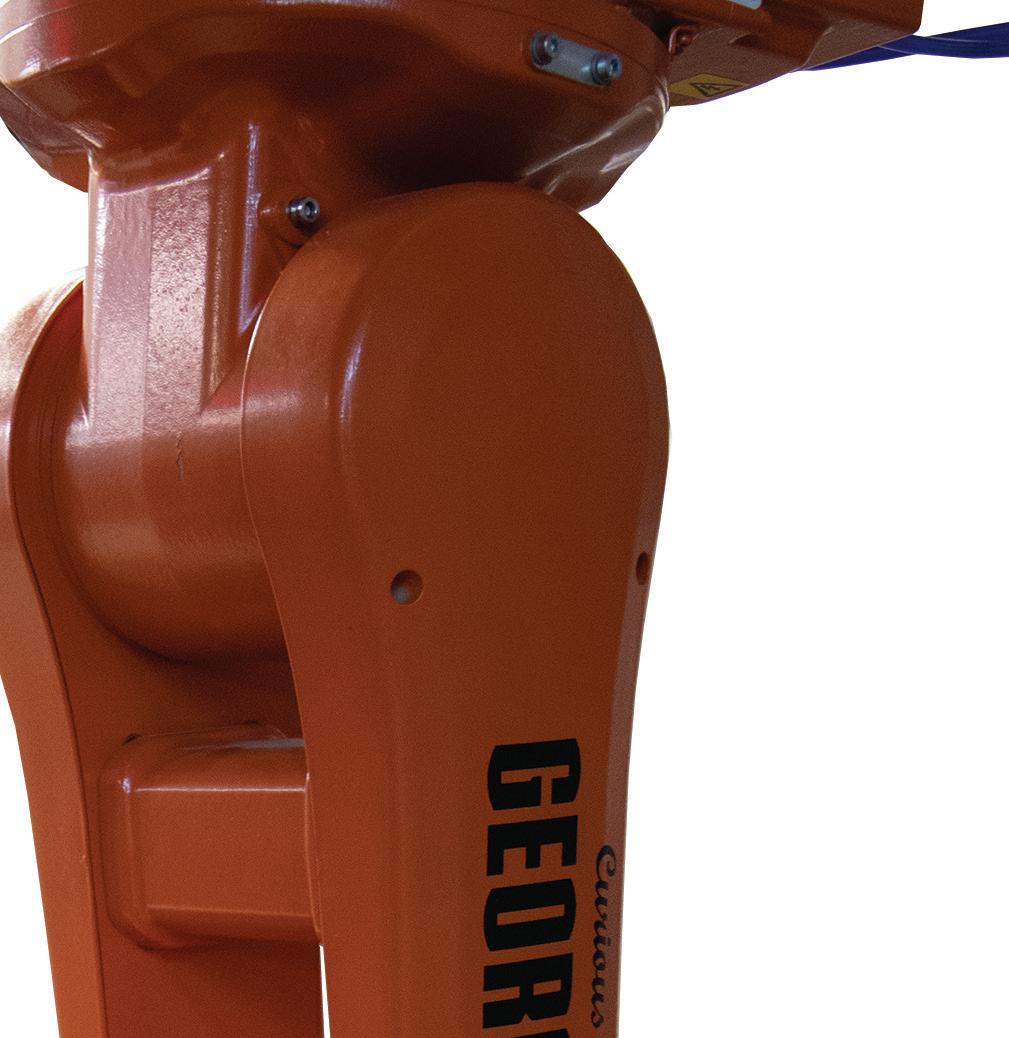
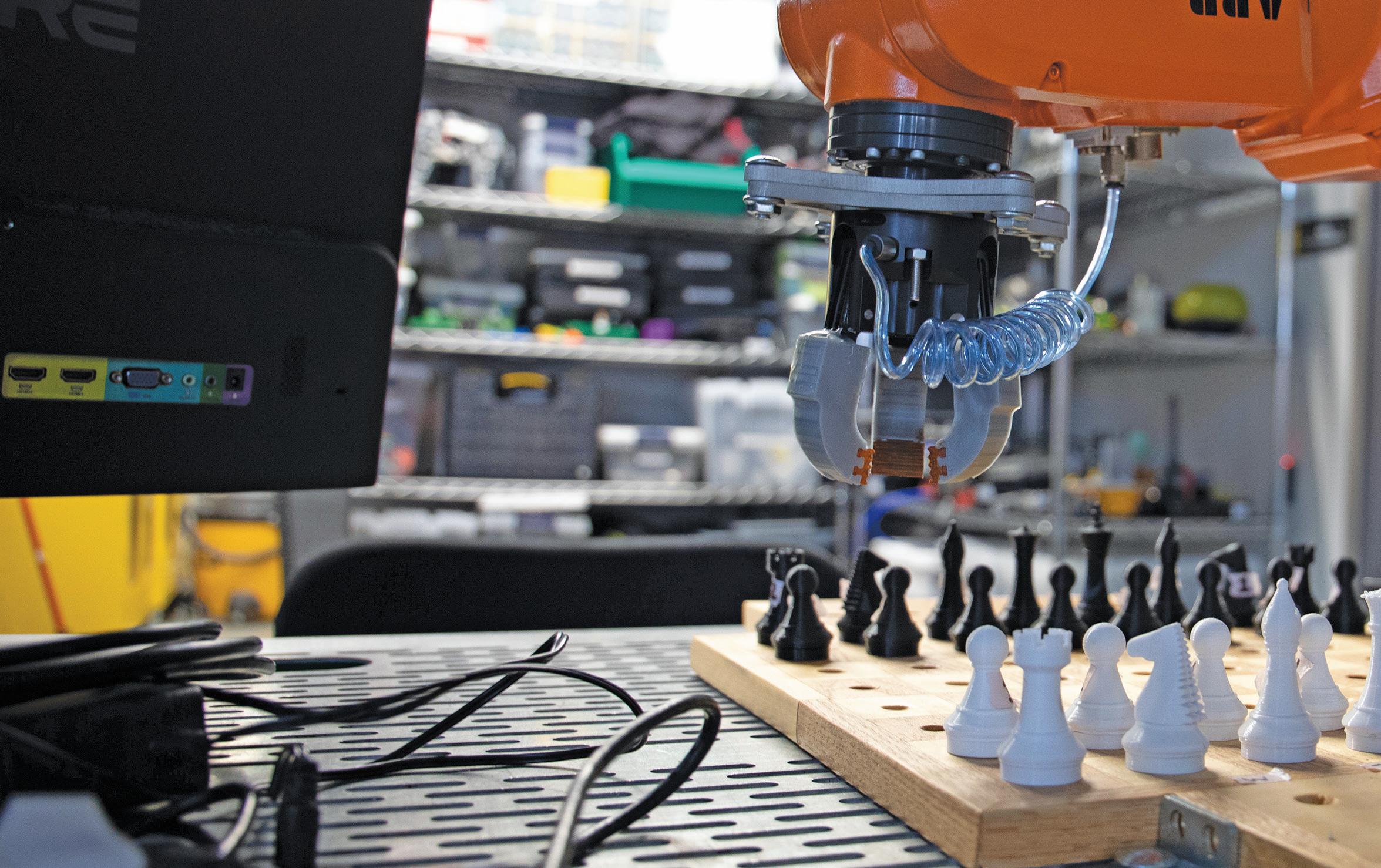
In September 2020, Deloitte and Wichita State University announced the launch of The Smart Factory @ Wichita.


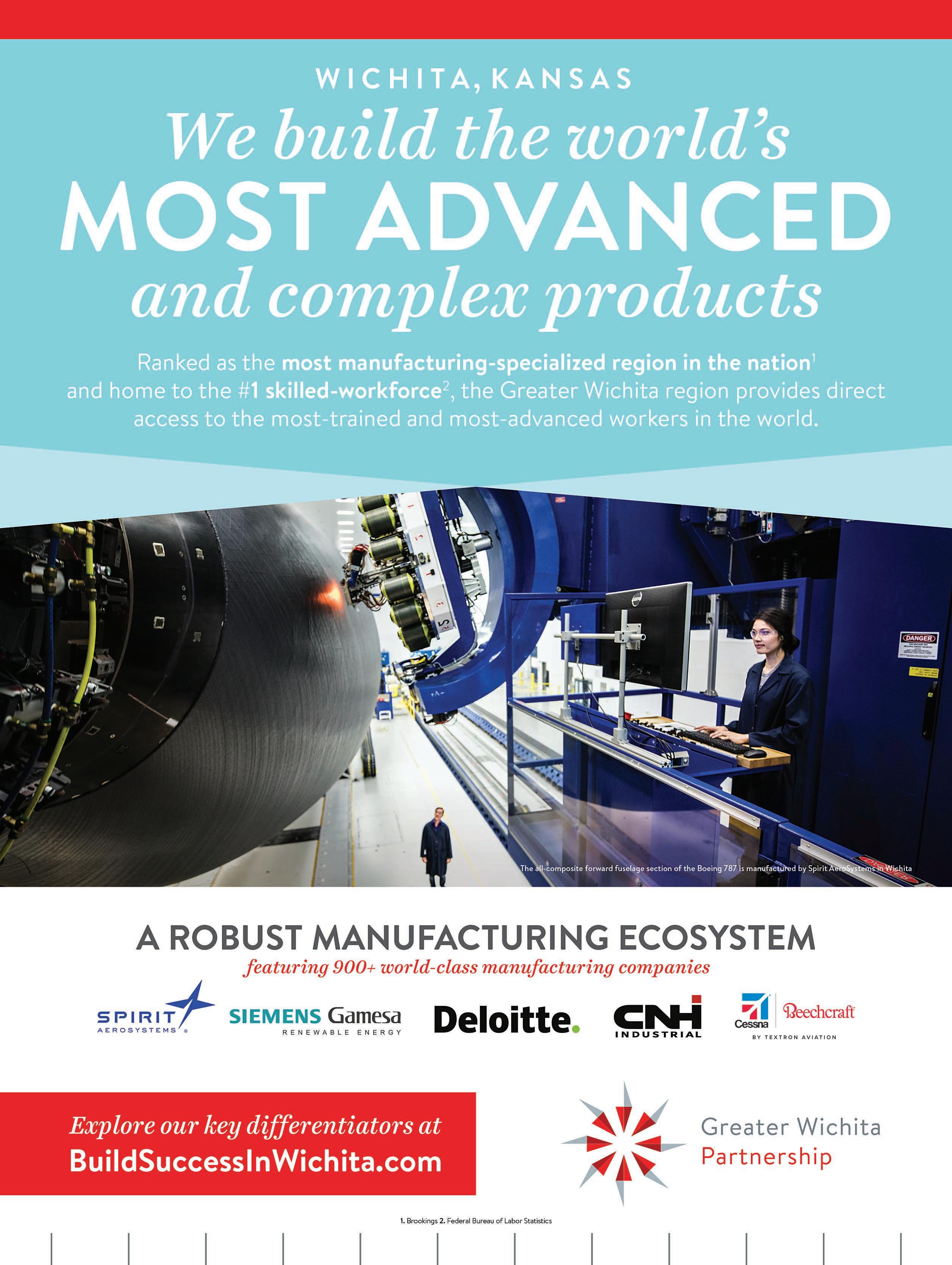
Plenty of cities have more manufacturing jobs than Wichita. But few can match these credentials: 17.9% of employment is in manufacturing; it ranks first among the 100 largest metros in the percentage of workers in manufacturing according to the Brookings Institution, which also ranks Wichita third in very high-tech manufacturing jobs; and it’s the best city in the U.S. for manufacturing jobs.
The latter is according to a recent ranking from Illinois-based Kempler Industries, a buyer and seller of used machinery for more than five decades, which analyzed four weighted-average factors across 236 cities. The criteria are total manufacturing jobs per 100,000 from the Bureau of Labor Statistics (8,386 in Wichita’s case), 2018 to 2019 year over year growth (4.8%), median income for the manufacturing industry ($51,456) and median housing cost.
Nearly 900 manufacturers employ about 54,200. That’s significantly more than comparably sized markets in Kempler’s top 10 best cities for manufacturing. And it means advanced manufacturers considering a central U.S. location will find a well-stocked labor pool for their operation. That’s helping attract manufacturers like Anderson & Forrester, which is relocating from the Denver metro area to Clearwater, southwest of Wichita. The
company makes orifice and conversion fitting needs, supplying parts to original equipment manufacturers in the natural gas and propane industry. President and CEO Michele Nordahl said the location is “a great fit for our company as a manufacturing leader because of the skilled labor and also its competitive advantages related to traffic and cost of living compared to Colorado.”
In January 2020, screw and barrel maker Reiloy USA announced plans to expand its advanced manufacturing capabilities and capacity by investing more than $20 million in a new building and new machinery to grow the German-owned company’s footprint in Maize, on the northwest outskirts of Wichita. With the expansion, the company plans to grow to more than 100 employees in the next few years. Reiloy USA already has a 54,000 square-foot facility at the Maize Industrial Park and employs 68 people. It plans to hire an additional 39 people over the next few years.
“We are excited to expand in Maize in the same industrial park site as our current operations,” said Joe Piccini, Reiloy USA President. “This expansion brings additional sophisticated and proprietary equipment and technology that will benefit customers throughout North and South America.”
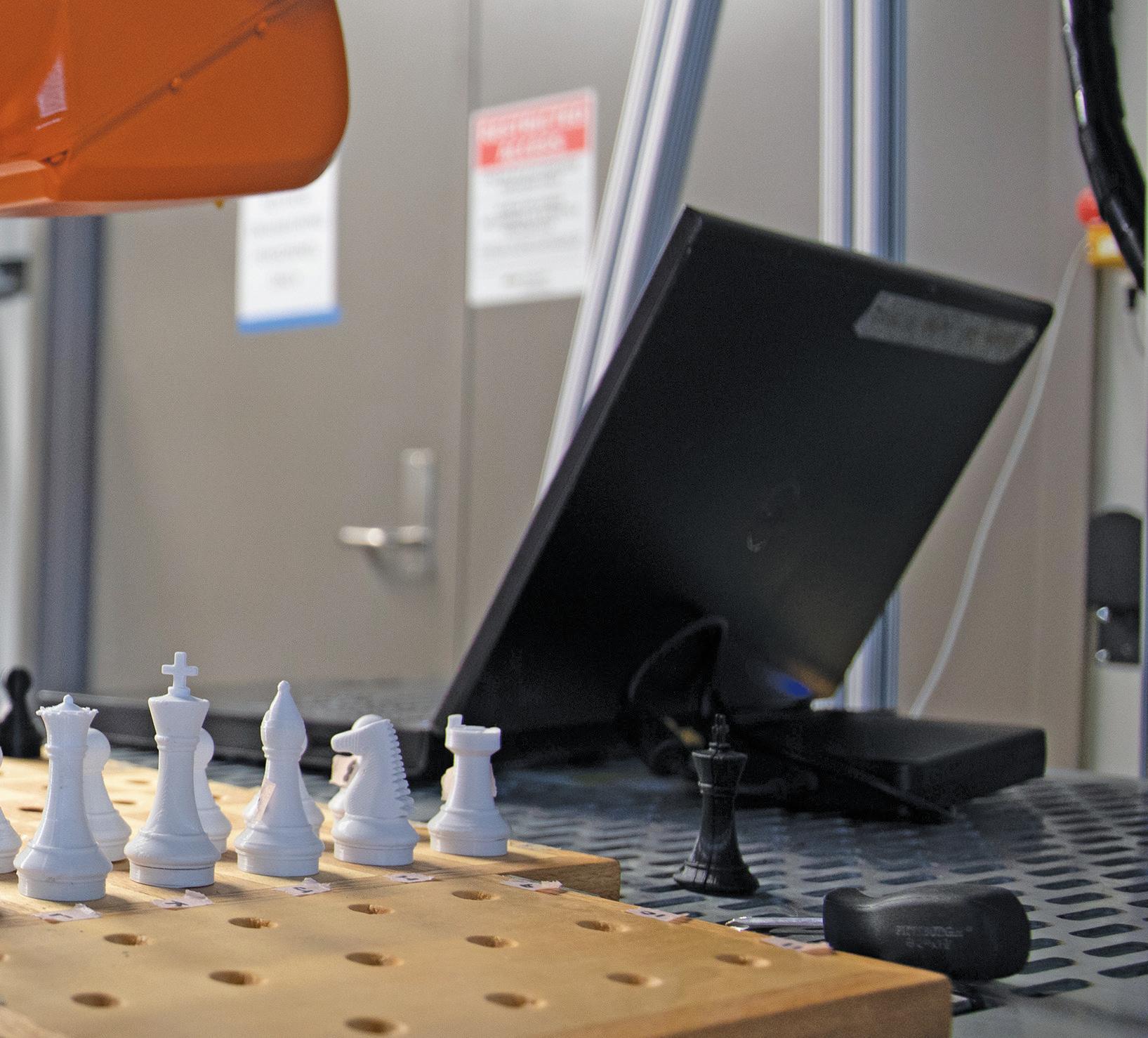
The German company Reifenhauser Group is Reiloy USA’s parent company. Founded in 1911 and a leading provider of innovative technologies and components for plastics extrusion, the Reifenhauser Group enables its customers to produce blown films, cast films, sheets and nonwovens of the highest quality.
In September 2020, Deloitte and Wichita State University announced the launch of T he Smart Factory @ Wichita, a g roundbreaking and immersive experiential learning environment that will accelerate the future of manufacturing as innovation and new technologies continue to reshape operations and the modern enterprise.
Deloitte and Wichita State are constructing the brand-new facility on Wichita State’s Innovation Campus, including a full-scale production line, dedicated space for select ecosystem sponsors and experiential labs exploring smart factory capabilities.
A smart factory is a highly digitized and connected production facility that uses technologies such as artificial intelligence, Internet of Things and robotics to manufacture products. Working alongside humans, smart factories can self-adapt and autonomously optimize manufacturing operations.
The facility is expected to open to clients, industry partners and students in 2021. It is the evolution of Deloitte’s existing experience at Wichita State, which features more than 40 robots, robotic programs and cyber applications, 26 AR/VR assets and high-end data visualizations, ten types of 3D printers, nine reverse engineering machine types, 21 professional engineering software programs and more. It offers a compelling experience in which the digital, physical and experimental come together—for educators, collaborators and clients—providing the opportunity to see how Industry 4.0 can make an impact and spur innovation and smart factory capabilities.
by MARK AREND
electQuote, Inc., a provider of price comparisons from insurance carriers, is adding hundreds of jobs to the 60,000 Kansans already employed in the corporate and professional services sector. That number will likely increase as the state adds more than 7,000 professional services graduates to its labor supply each year. SelectQuote, headquartered in Overland Park, announced in March 2020 that it is opening 1,000 new insurance sales and support associate positions, with a majority coming in the Kansas City Metro area. They will support SelectQuote’s Senior, Life and Auto & Home divisions by providing phone consultations for consumers to match their needs with the right product and carrier.
“During these uncertain times when many Kansas Citians may be faced with sudden loss of employment, we want them to know that SelectQuote is hiring and providing good jobs that offer competitive compensation, benefits and career growth,” said SelectQuote Head of Talent Acquisition and Management Anthony Fasl. “Our associates have a critical role to play in providing customers with fully informed, unbiased consultative services to alleviate the stress of shopping complex insurance plans. We are looking for people from a variety of backgrounds and are working with state authorities to ensure licensing of agents can continue given the COVID-19 closures.”
Also in Overland Park, the Lewer Agency has relocated its business, bringing 52 new jobs and $3.5 million of new capital
investment to the Kansas City suburb. The Lewer Agency is a nationally licensed managing general insurance agency and third-party administrator that assists educational institutions and international student health insurance plans and smallbusiness owners, independent marketers, and corporate executives with employee benefit solutions. Their largest customer is private colleges/universities and community colleges throughout the nation. In 2019, AmeriLife Holdings also relocated its business and expanded its operations in Overland Park. It provides insurance benefits and insurance consulting services.
In February 2019, TrueAccord, the tech platform that transforms the antiquated debt recovery industry, announced next door Lenexa for its new shared services operation. The company is investing $1.34 million to expand to over 150 professionals over the next three years across sales, operations and technology functions. The Kansas City metro is home to a burgeoning FinTech industry.
“We chose the greater Kansas City area after a thorough nationwide search,” said Sheila Monroe, TrueAccord’s CEO. “We reviewed factors such as ease of travel, cost of doing business and the local culture. Ultimately, our decision came down to the ability to attract top talent to meet our growing business needs.”
Headquartered in Silicon Valley, TrueAccord is a data-driven tech platform that uses machine learning, behavioral analytics and a humanistic approach is designed to improve debt recovery rates and reduce compliance risk, while giving customers the best user experience possible.
In Wichita, Advance Catastrophe Technologies, Inc. (ACT) is building a new $2.89 million, 20,000-square-foot corporate headquarters that will include a national training facility. Christian Wiley, ACT President and CEO, said the company started planning the expansion and new headquarters for some time before the COVID-19 pandemic began. The company provides emergency planning, recovery and reconstruction services to more than 6,000 customers nationwide and in Canada.
“For the past couple of years, ACT has been in a significant growth pattern,” he explained. “It became clear we needed to not only invest in top talent and equipment, but a national headquarters with state-of-the-art training facility to support our future growth.” Wiley said. “This is where it all began 19 years ago. We feel there’s something special about not only keeping and growing ACT in Wichita but showcasing this great city to our nationwide clients.
“We were especially pleased to find a location near the airport that could accommodate the travel of so many to our new facility,” Wiley said. “We like showing off Wichita and the vibe the city has going to clients and employees alike. Even though many of our employees live throughout the country, Wichita is ACT’s home.”
by MARK AREND
Most of Kansas’ food processing operations are clustered in the Kansas City metro, thanks to its logistics parks and workforce supply. It’s home to more than 650 food production companies that employ more than 25,000 people. But food and beverage producers can be found in virtually every part of the state, which is centrally located and home to vibrant beef and grain sectors, ingredient making and cold storage. Garden City, the Finney County seat, is closer to Denver than to Kansas City. That’s where empirical Foods is investing $250 million in a new ground beef facility that will create 250 jobs. The new facility will more than double the company’s ground beef production.
“After a long evaluation period to identify the perfect location for our new facility, we were pleased to settle on Garden City and could not have identified a better, more welcoming community,” said Nick Roth, president of empirical Technology, Inc., at the October 2020 groundbreaking. “The State of Kansas, Garden City and the Finney County Economic Development Corporation have been excellent partners to the beef industry and companies like ours.” Construction on the plant is expected to be finished between 2022 and 2023.
“ After a long evaluation period to identify the perfect location for our new facility, we were pleased to settle on Garden City and could not have identified a better, more welcoming community.”
—Nick Roth, president of empirical Technology, Inc.
VenturePark, in Lawrence, is the location of a new, 150,000-sqare-foot pretzel production facility for India-based Pretzels, Inc., the company announced in December. Home to the University of Kansas, Lawrence is just 45 minutes to the West of Kansas City. The new facility will facilitate serving markets to the West and South
“The decision for Pretzels, Inc. to locate its production facility in Lawrence reinforces our region’s position as a top location for food and beverage manufacturing,” said Tim Cowden, president and CEO of the Kansas City Area Development Council. “More than 600 food and beverage companies call the region home, and our KC SmartPort team will continue to elevate Kansas City’s proximity to agriculture markets, advanced logistics infrastructure and industry-specific talent as strategic advantages.”
Frito Lay, Pepsico, Smithfield, and Russell Stover are among the food production companies in the region. A newcomer to the area also happens to make pretzels. Dot’s Pretzels, LLC selected Logistics Park Kansas City (LPKC) in Edgerton for its new
manufacturing facility. The new facility will be the largest manufacturing plant for Dot’s Pretzels. The company is investing $15 million and creating 22 new jobs.
“We are making significant investments in our technology at the new facility to keep the company on an aggressive growth trajectory,” said Randy Johnson, CEO of Dot’s Pretzels. “Not only will we be able to produce more pretzels but do so with greater consistency and ability to expand our product lines.”
LPKS, located 25 miles south of Kansas City, is a master planned distribution and warehouse development with more than 3,000 acres of developable space and 30 million square feet of building capacity. Home to a foreign trade zone, it’s anchored by the 433-acre BNSF Intermodal complex and its state-of-the-art transportation and freight rail services. The park is home to a facility for DeLong Company, a leading Midwest supplier of corn and soybeans, and Hostess Brands.
In Salina, Schwan’s, a leading food producer in the United States, will build a new 400,000-square-foot expansion at its pizzamanufacturing facility that’s been operating for 50 years. The new facility will result in up to
225 new full-time jobs by 2023. The company already employs 1,125 people at its current 500,000-square-foot production facility and distribution center in Salina.
Schwan’s also signaled its dedication to sustainability in the move. The company has committed to purchasing renewable energy from a Kansas wind farm through Evergy. Additional projects are planned for the Salina site over the next several years as Schwan’s pursues continued growth in the company’s pizza business, representing an investment of hundreds of millions of dollars in total.
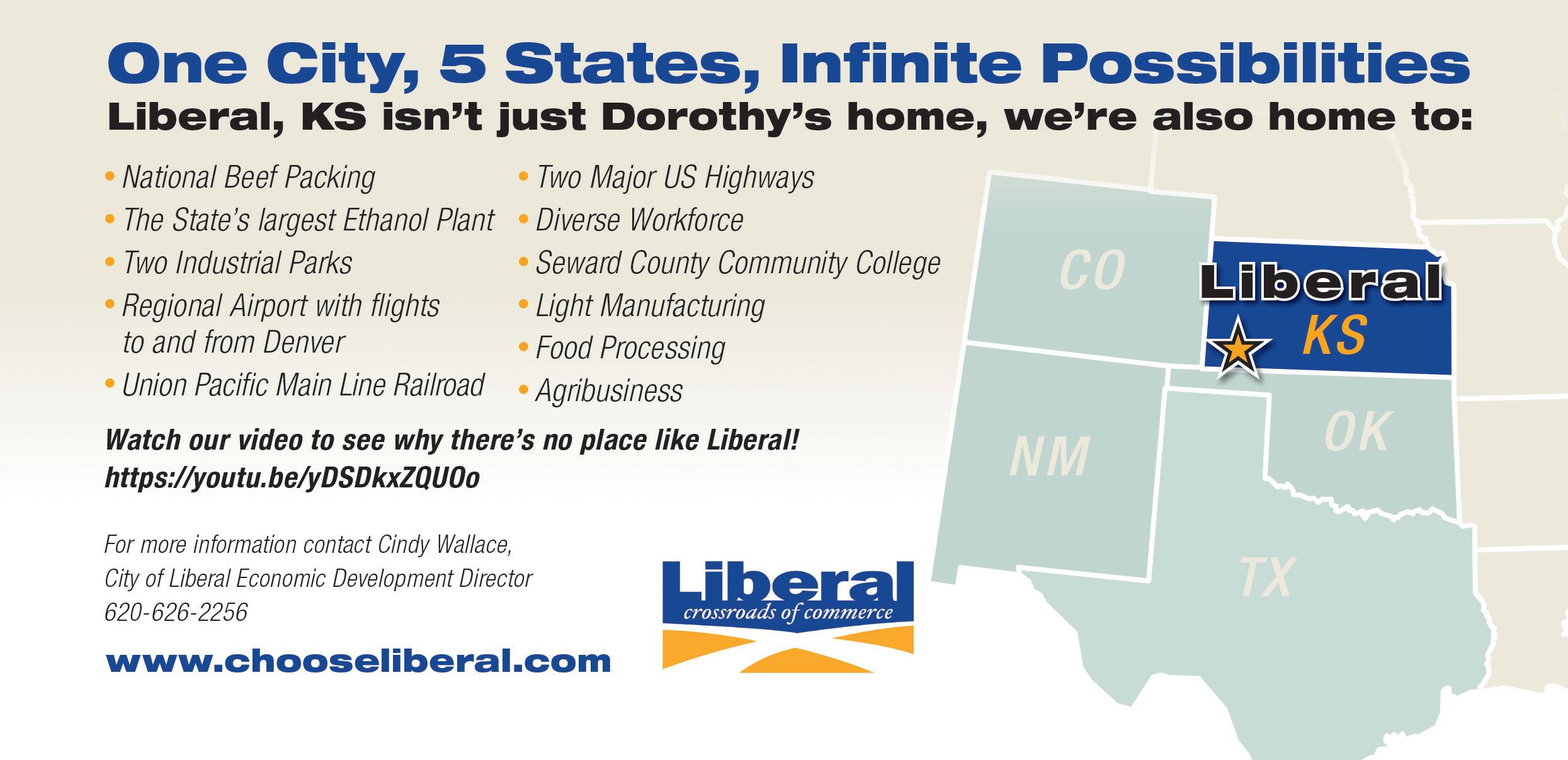
by GARY DAUGHTERS
When NorthPoint Development broke ground in late 2019 on a new distribution center at its massive Logistics Park Kansas City (LPKC) near Edgerton, Kansas, Edgerton Mayor Don Roberts made a bold prediction.
“We fully believe,” Roberts publicly stated, “that this new spec building won’t be vacant for long.”
Encompassing 1.15 million square feet, the new Inland VII represents the largest industrial building ever built on spec in the state of Kansas. And Mayor Roberts was proven correct: it wasn’t on the market very long. Mere months after Inland VII’s completion, PepsiCo announced in December 2020 that had signed a lease for the entire property for a new Gatorade distribution center.
“PepsiCo chose Edgerton and LPKC because they can see the clear advantages of locating at the premier logistics and distribution center in the Midwest,” Roberts proclaimed. PepsiCo’s decision, he said,
“especially during the pandemic, is a welcome boon for the workforce across the region.”
LPKC truly is a standout in the increasingly vital world of logistics and distribution, an industry being propelled at warp speed by Amazon, with its evershrinking delivery times, and the COVIDrelated surge of online commerce. Covering 3,000 acres 40 miles southwest of Kansas City, LPKC is one of the fastest-growing logistics parks in the country.
It’s a facility built for speed, a heartland hub with global reach. Served by an adjacent BNSF intermodal facility, LPKC allows for pre-processing of cargo containers, which means that carriers can skip multiple steps on the export side.
“When a truck driver enters, they get their thumb print scanned optically, so the inspection process takes only about two minutes,” says Patrick Robinson, NorthPoint’s vice president of development. “The total turn is about 26 to 28 minutes, whereas it used
to be at least an hour.”
Since 2013, when it opened, LPKC has generated close to 13,000 jobs and more than 14.4 million square feet of industrial development for more than 20 tenants. They include Amazon, Kubota, J.B. Hunt, UPS, Coldpoint Logistics, Kubota and Spectrum Brands. The park has 30 million square feet of building capacity, lots of room to grow.
Trivia buffs are likely to be aware that Lebanon, Kansas, population 200, is the geographic center of the United States. Lying as it does literally in the heart of the nation, Kansas is a natural as a logistics location, offering companies multiple advantages to reach customers faster and more efficiently.
Kansas ranked as the No. 3 infrastructure state in the country by CNBC in its 2019 Top States for Business Report, which noted that, “Getting around in the Sunflower State is a breeze, with some of the nation’s bestmaintained highways.”
Kansas boasts more than 140,000 miles of public roads, including 3,749 miles of federal highway. The 2020 implementation of the U.S.-Mexico-Canada Agreement bolstered the importance of I-35, which runs directly through Kansas and connects the U.S. to those two of its top three trading partners. At Kansas City, I-35 crosses I-70, which leads to ports on both coasts.
Crucially, Kansas is served by four of the nation’s seven Class I railroads. BNSF, Kansas City Southern, Norfolk Southern Railway and Union Pacific Railroad operate 2,723 miles of Class I track in the state. Those carriers deliver two-day shipping to Denver, Omaha St. Louis and Chicago; three-day shipping to Dallas, Phoenix and Memphis; five-day shipping to Atlanta, Seattle and Los Angeles; and sevenday shipping to New York.
The Kansas City region is served by Kansas City International Airport, which accommodated close to 12 million passengers in 2019. KCI is the primary passenger and cargo service provider for not just Kansas, but for Missouri, Iowa and Nebraska. A new terminal at KCI is to debut in 2023 with 39 new gates.
Access to inland waterways provides another convenient mode of industrial transportation. Kansas has access to 122 miles of the Missouri River along the northeast corner of the state, with commercial terminals at Atchison, Leavenworth, Lansing, White Cloud and Kansas City.
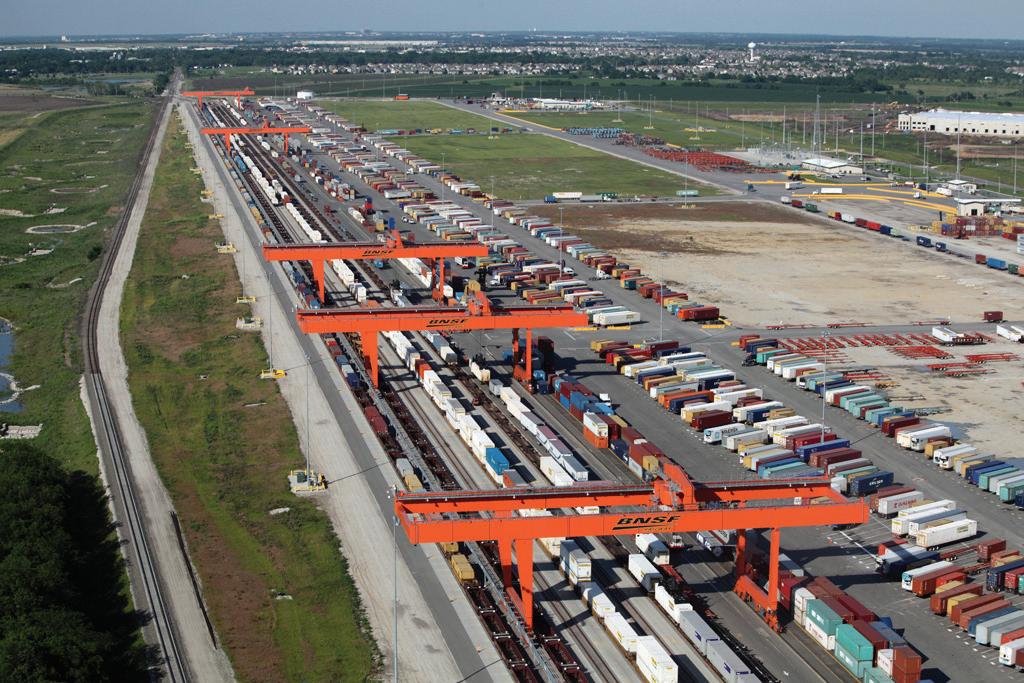
With two fulfillment centers established already, one at LPKC in Edgerton and the other in Kansas City, Amazon announced in October of 2020 that it will essentially double its fulfillment and delivery capacity in Kansas with 1 million- square- foot facilities to open in 2021 in Kansas City and Park City, a northern suburb of Wichita.
“We’re excited to continue our growth and investment across Kansas so we can better serve our customers throughout the state,” said Alicia Boler Davis, Amazon’s vice president of customer fulfillment.
Taken together, the two new fulfillment centers are expected to create 1,000 jobs at wage beginning at $15 an hour. The company also announced plans to open a 140,000square-foot “last mile” delivery station in Wichita.
In October 2020, Kansas Gov. Laura Kelly cut the ribbon at the official opening of a $30 million Nor-Am cold storage facility in Dodge City. The 148,000- square -foot freezer helps support processing and distribution of Kansas beef; the state ranks third in the country for cattle and accounts for more than 10% of total beef production. The Nor-Am facility has a 50,000-square-foot processing area, highdensity racking and semi-automated pallet shuttle technology.
The newly-opened operation is NorCal’s seventh cold storage warehouse in the country and second in Kansas. The company’s 458,000-square-foot facility in Elwood launched in 2018.
“The combined investment in the Dodge City and Elwood operations,” said Gov. Kelly, represent early $60 million dollars of investment a 17 full-time job for Kansans.”


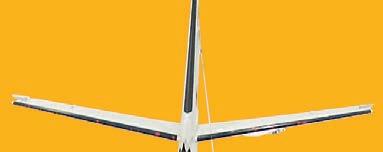
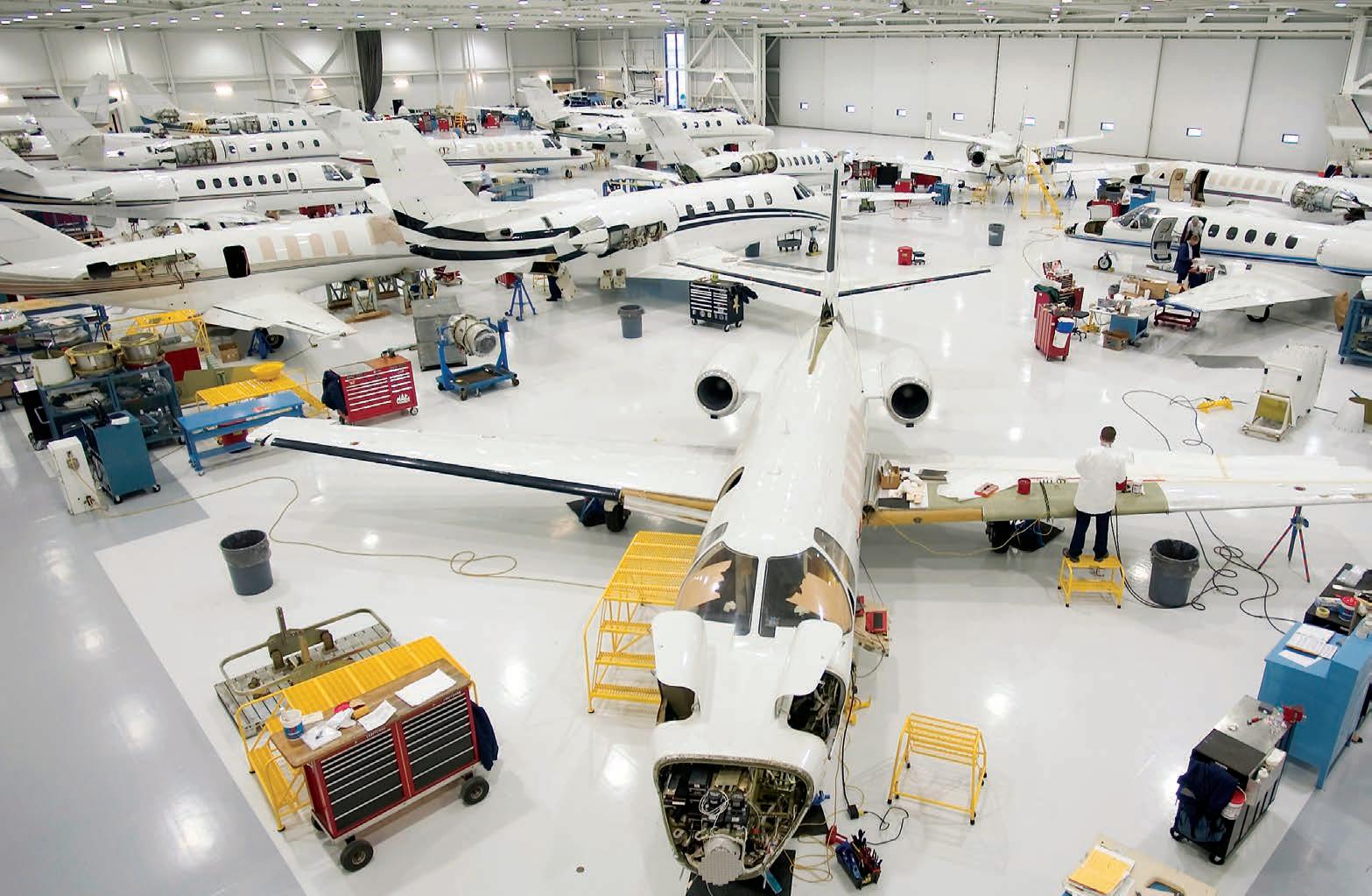
Aerospace and defense contribute $7 billion to Kansas GDP and $2.25 billion in annual aerospace exports.
The state also boasts the No. 3 highest concentration of aviation workers in the nation.
PwC’s 2020 Aerospace Manufacturing Attractiveness report ranks Kansas No. 19 overall, No. 17 in industry presence, No. 13 in labor skills and proficiency and No. 11 in infrastructure.
by ADAM BRUNS
of aerospace manufacturing employment in the nation. Open it up larger to aerospace and defense, and the U.S. Cluster Mapping Project led by the Institute for Strategy and Competitiveness at Harvard Business School finds the Wichita region No. 4 in the nation behind giants Seattle, Los Angeles and Dallas, leading Kansas to No. 5 in the nation at the state level.
The state owes those notable numbers to one primary location: Wichita, where Clyde Cessna moved his factory from a farm in 1916. The Wichita area, home today to the headquarters of Textron Aviation’s Cessna and Beechcraft brands, is why Kansas produces one-third of all general aviation aircraft built in the United States. Bombardier Learjet, Dassault Systemes, Spirit AeroSystems and Airbus are there too, and all are supported by a supplier network consisting of more than 450 aerospace companies.
According to the U.S. Bureau of Labor Statistics, Wichita has the highest concentration
Airbus Americas Engineering Center in Wichita is the company’s largest North American engineering facility. Wichita State University’s Innovation Campus, started in 2015, has seen over $250 million in development from most of the sector’s big names.
It’s not just those big names, but an entire ecosystem in Wichita, including maintenance, repair and overhaul (MRO). And they sometimes invest again before the first project is even finished.
Such is the case with Clemens Aviation, which has invested $4 million in two aircraft hangars on leased land at Colonel James Jabara Airport in Wichita in order to offer its range of charter, maintenance and other aviation
services. Even as the hangars were nearing completion, the company proposed to build two more on adjacent land that the Wichita Airport Authority has been promoting for development for years. Not only will the company fund its own construction costs, it also plans to pay for a taxiway connector and aircraft ramp between hangars, with the taxiway available to serve future aeronautical development.
Jabara is a general aviation reliever airport that features the Embraer Business Jet Service Center and Midwest Corporate Aviation, a full-service fixed-base operator with a Cessna Service Center. The airport is adjacent to the National Center for Aviation Training (NCAT) at WSU Tech, and offers 365 acres of available development space.
In August 2020, Texas-Bell Textron officially opened a new facility to support multiple Bell programs and business areas, including Engineering, Supply Chain, Professional Manufacturing and Corporate Services.
“This amazing development is still more proof of the enormous potential and excellence of the aerospace industry in Wichita,” said David Toland, Lieutenant Governor and Secretary of Commerce, Kansas Department of Commerce.
Earlier in 2020, Bell was selected as a finalist to pursue two critical U.S. Army modernization programs. As a result, the company invested in the new office to support Bell’s future growth plans.
“Bell is well known for its innovation, which makes it a perfect fit for Wichita,” said Andrew Nave, executive vice president of
economic development for the Greater Wichita Partnership. “Wichita is the Air Capital of the World, and with resources like WSU’s National Institute for Aviation Research and our extensive supply chain, our region is leading innovation in design, engineering, testing and manufacturing in aerospace and beyond.”
Earlier in the year, Textron Aviation Inc. (whose global HQ is in Wichita), WSU Tech and the International Association of Machinists and Aerospace Workers (IAMAW) announced a new collaborative apprenticeship program to address long-term production and tooling requirements for the company’s aircraft programs. The two-year program will provide students both factory and classroom training in a wide range of skills needed to help design, build and maintain production tooling, which covers everything from specialized hand-held tools to large jig assemblies supporting aircraft parts and assemblies.
“Textron Aviation has long been committed to building educational and community partnerships that benefit both the company and the region, particularly in developing a well-paid, skilled workforce that maintains our advantage in a very competitive, global market,” said Maggie Topping, senior vice president of HR and Communications at Textron Aviation. “Through the new apprenticeship program with WSU Tech, our students will get the benefit of an advanced curriculum designed specifically for this program, as well as learn on the job from our highly skilled tradespeople.”
An unassuming stretch of geography between Manhattan, Kansas, and Columbia, Missouri, represents the world’s single largest concentration of animal health interests. More than 300 animal health-related companies call the Kansas City Animal Health Corridor home, representing 56% of the globe’s animal health, diagnostic and pet food sales.
With unparalleled advantages in transportation and distribution, the Kansas City Animal Health Corridor offers easy access to major distribution networks from FedEx, UPS and more. Additionally, the region’s central location and multimodal transportation assets allow companies to move goods to market.
by SAVANNAH KING
The Kansas City regions’ workforce pipelines are well supported by world-class educational institutions like America’s two top veterinary schools — Kansas State UniversityCollege of Veterinary Medicine and the University of Missouri College of Veterinary Medicine. Additionally, four of the leading veterinary schools are located within 300 miles of Kansas City. The corridor is also home to many state-of-the-art research and development labs, including MRIGlobal, Stowers Institute
for Medical Research and The National Bio and Agro-Defense Facility (NBAF).
Kansas was recently selected to be the new home for the NBAF, which is currently being constructed adjacent to Kansas State University’s campus in Manhattan by the U.S. Department of Homeland Security. The facility is expected to be fully operational in 2022 or 2023 and will strengthen the country’s ability to conduct research on emerging diseases and vaccinations. The Manhattan location was selected after a three-year site selection process because of the KC Animal Health Corridor’s many advantages.
and increasing our ability to fulfill customer demand for our portfolio of products,” said Pamela Stoops, Executive Director, DeSoto Operations, Merck Animal Health. “Our Merck Animal Health business is making great strides in building our business for the future. That means we need to ensure our place as a leader in animal health with a substantial and sustainable U.S. facility footprint, which includes investment and expansion in our key facilities. As a leader in delivering innovative pharmaceuticals and vaccines to advance animal health and meet customer needs, this investment reflects our commitment in
“ Our investment in DeSoto positions us for strong long-term growth and enables us to remain a valued partner to our loyal customers through reliability and responsiveness to their needs.”
— Scott Bormann, Senior vice president, North America Commercial Operations, Merck Animal Health.
New Jersey-based Merck Animal Health announced that it would invest $100 million in its DeSoto manufacturing facility in June. The investment will include a technological expansion of the vaccine production facility, which came online this year, and an additional investment of $66 million that will provide for added enhancement capabilities to be realized over the coming years.
The DeSoto site develops and manufactures a broad portfolio of vaccines for swine, cattle and equine with key technologies in research and development, manufacturing and quality operations. The site houses largescale fermentation and cell culture, blending and filling operations and packaging, along with monoclonal antibody manufacturing for Companion Animals.
“We are excited about the opportunity to bring capital improvements, expansion in our manufacturing capacity and capabilities and advanced technology to our DeSoto facility, thereby, strengthening our footprint in the state
producing a range of animal health vaccines and pharmaceuticals for animal health diseases.”
Because of the company’s strong growth, broad product portfolio, and enhanced manufacturing capacity and capabilities, Merck Animal Health continues to explore ways in the U.S. and globally to improve existing facilities with upgraded equipment or technology, further expand its facilities with advanced technology platforms and increase capacity and capabilities in manufacturing to meet the rapidly growing demand and flexibility for its vaccine and biologic products.
“We continually seek new ways to improve and enhance our production and manufacturing capacity at our facilities to meet the growing needs of our animal health customers,” said Scott Bormann, Senior vice president, North America Commercial Operations, Merck Animal Health. “Our investment in DeSoto positions us for strong long-term growth and enables us to remain a valued partner to our loyal customers through reliability and responsiveness to their needs.”
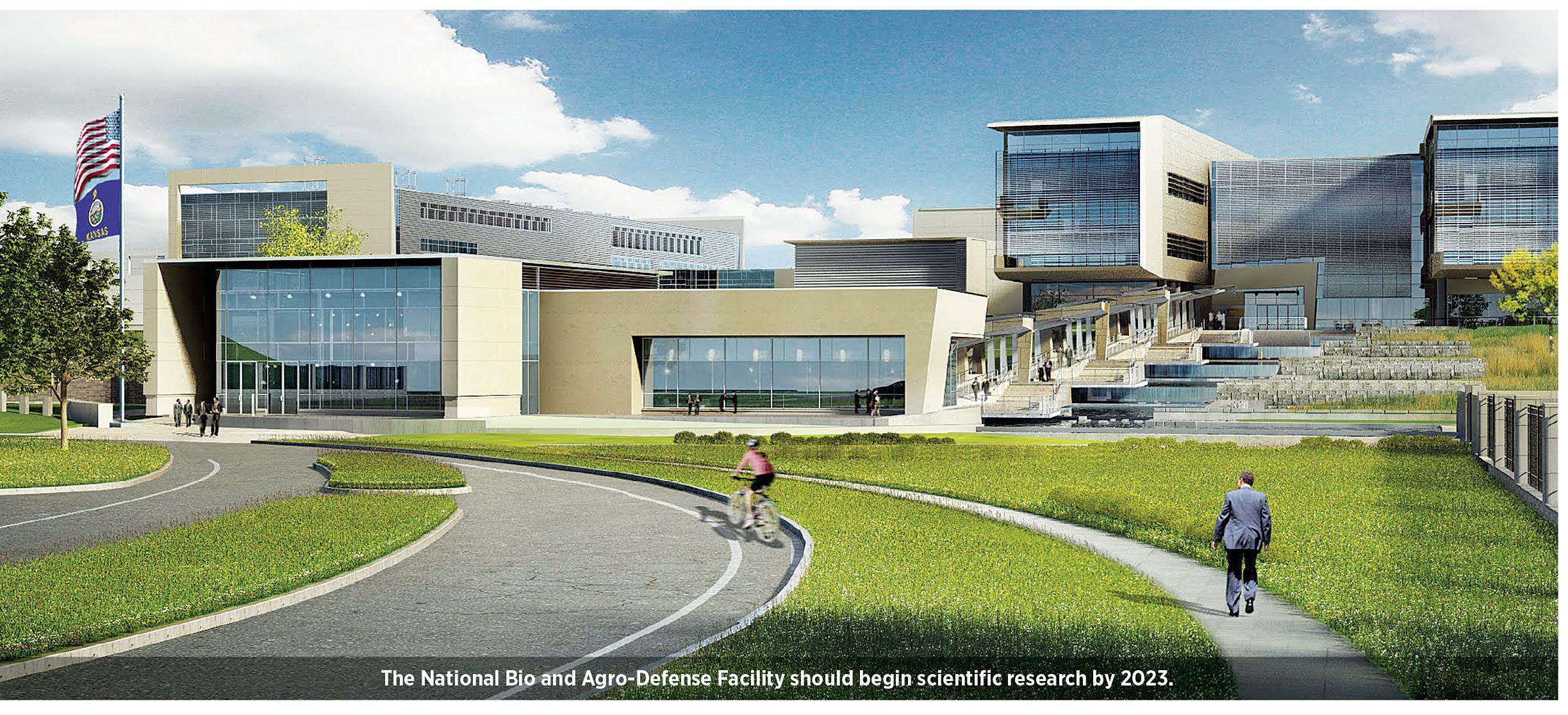
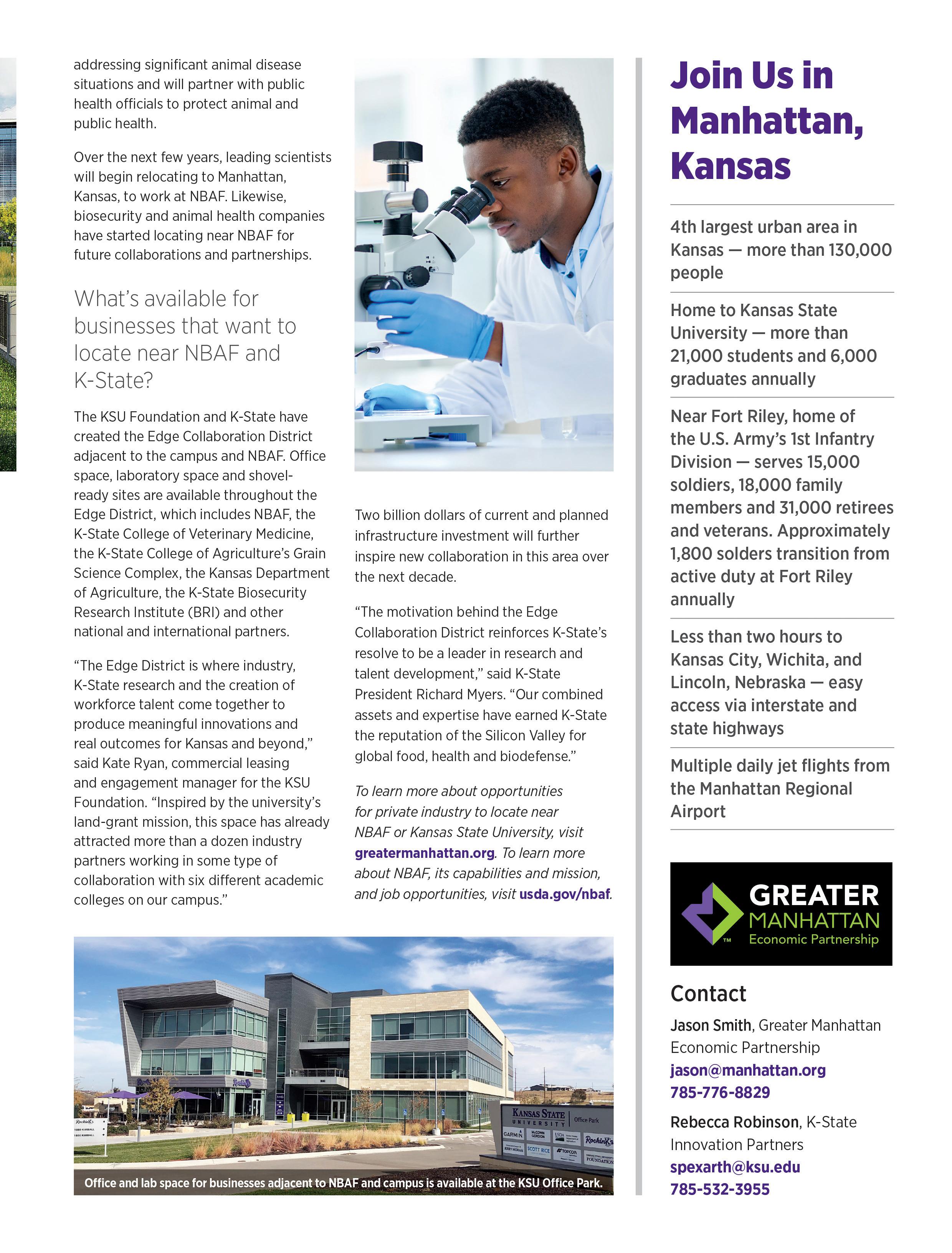

Kansas’s bioscience leaders are at the forefront of pandemic response.

When the COVID-19 pandemic began early last year, Kansas’ bioscience firms immediately sprang into action. The pandemic required an all-handson-deck approach from government, business and individual citizens.
by SAVANNAH KING
Fortunately, Kansas’ robust cluster of bioscience firms were able to quickly turn their attention to fighting the pandemic. With more than 16,000 people working in the bioscience fields, many of the state’s brightest minds were able to help their companies pivot and adapt. Home to the world’s largest concentration of animal health companies and esteemed research universities like the University of Kansas and Kansas State University, Kansas’s bioscience sector is well-supported. Key organizations like BioKansas provide additional resources to the industry as it continues to grow.
In Lenexa, bioscience giant Thermo Fisher Scientific Inc. was able to get its pandemicrelated expansion up and running within six weeks. In August, Thermo Fisher officially cut the ribbon on its new $40 million facility. The site is dedicated to viral transport media (VTM) production and will continue to expand to meet the expected sustained demand for COVID-19 testing. The facility has created more than 300 new full-time jobs and added 120,000 square feet of manufacturing capacity. Thermo Fisher has been producing COVID-19 testing products since the onset of the pandemic.
In early May, Thermo Fisher received a contract from the U.S. government to provide a significant quantity of highly specialized VTM for COVID-19 sample collection. VTM is dispensed into plastic tubes that are used to collect and transport clinical specimens containing viruses safely. This ensures that the sample collected from a COVID-19 nose swab maintains viability while it’s being shipped to a lab for testing. Thermo Fisher responded quickly to meet the increased demand for VTM by ramping up production in Lenexa from 50,000 units per week to now more than 8 million per week since the new facility began production in early July. In addition to supporting America’s pandemic response, the products will be used to collect and sample for flu and other viruses.
“Thermo Fisher is proud to support virtually every aspect of the global COVID-19 response, and our colleagues in Lenexa have played a key role in those efforts, said Gianluca Pettiti, senior vice president and president of the company’s Specialty Diagnostics business. “Thanks to their hard work, Lenexa significantly increased production of VTM units. The team has worked with unrelenting intensity to build out and open a new site in just about six weeks. They understood the urgent national need, accepted the challenge and have delivered for the American people.”
“I want to thank the Thermo Fisher team for its work in protecting our health and safety
and helping Kansas tackle the many challenges brought on by COVID-19,” Governor Kelly said. “By significantly increasing the manufacturing capacity of this facility, Thermo Fisher will not only have a positive impact on public health but will help my administration as we work to rebuild our state’s fiscal foundation and make our economy stronger than it has ever been — not just returning to pre-pandemic conditions.”
In 2019, federal officials selected Manhattan as the site for the National Bio and AgroDefense Facility (NBAF), a state-of-the-art biocontainment lab. The new facility is currently under construction and will be instrumental in the study of diseases that threaten the animal and agricultural industries as well as public health.
The NBAF facility will replace the aging Plum Island Animal Disease Center in New York. The Kansas site strategically places it near the Kansas City Animal Health Corridor — the largest concentration of animal health companies in the world — providing access to important veterinary, agricultural and biosecurity research and expertise. The facility is expected to be operational by December 2022.
The facility will be the only one of its kind in the United States. NBAF will provide scientists unique access to high consequence pathogens that affect large livestock, as well as enhanced diagnostic capabilities that will speed up the response time to threats that harm the nation’s food supply. As the only biosafety level-4 large livestock research and diagnostic laboratory in the country, NBAF seeks to protect the nation’s agriculture and public health by understanding and developing vaccines for zoonotic (animal-to-human) and high consequence foreign animal diseases.
livestock, food and fiber industries in Kansas remain secure.”
The agriculture industry impacts the state’s economy more than any other sector, accounting for more than $63 billion to the Kansas economy each year. In an economy that relies heavily on the agriculture industry, innovative research is imperative for future progress and security.
In October, the University of Kansas began its Phase III expansion of the Bioscience and Technology Business Center (BTBC) and introduced the new KU Innovation Park.
Before the expansion, BTBC established itself as a key sector for bioscience startups in Kansas. Currently, the center houses 50 high-tech and bioscience companies, and has created more than 400 high-wage jobs resulting in more than $22 million in annual payroll. The new development comes as the result of continued efforts by the founders of the BTBC, the KU Endowment Association, the U.S. Economic Development Administration and the Kansas Department of Commerce.
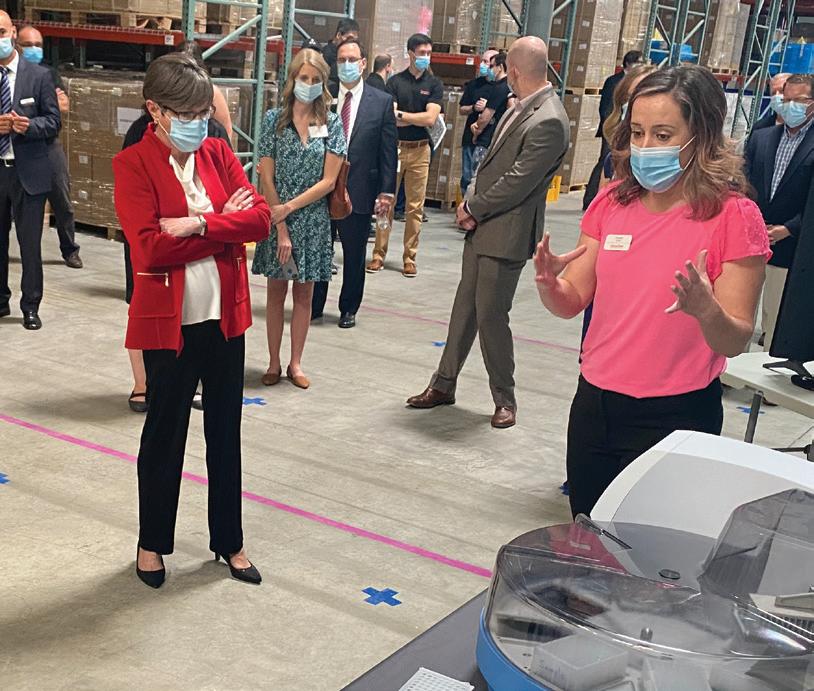
“The Department of Commerce is committed to leveraging the research and talent in our state’s higher education institutions to create new jobs and businesses in Kansas,” said Lieutenant Governor and Secretary of Commerce David Toland. “BTBC is a powerful ally in building a diversified, robust Kansas economy powered by cuttingedge innovation in bioscience and technology. Congratulations to all involved on this historic achievement for KU and for our state.”
“The mission of the Kansas Department of Agriculture includes protecting animal health, promoting public health and safety, and ensuring a safe food supply,” Kansas Secretary of Agriculture Mike Beam said. “NBAF will provide fundamental research ensuring
The Phase III expansion includes a new 70,000-square-foot facility, which will feature fully functional wet labs, offices, and collaborative spaces for its tenant startups. The facility will house 250 new high-tech jobs. Phase III is the first step in KU’s new Innovation Park, which is slated to be a unique blend of startups, private industry, government agencies and research facilities for KU. The park is projected to bring an additional 2,500 high-paying bioscience jobs to Lawrence.




Kansas is home to multiple R&D operations, in uencing everything from farm elds to after-school snacks.





by SAVANNAH KING
In July 2019, the USDA relocated major research agencies from Washington D.C. to the Kansas City region. While the agency is technically located on the Missouri side of the bi-state city, the significance of the site shines a bright spotlight on Kansas’ agricultural prominence.
The USDA’s Economic Research Service and the National Institute of Food and Agriculture announced its plan to relocate to the Kansas City region after a competitive bidding process. The USDA received 136 proposals from 35 different states. Kansas and Missouri submitted a joint proposal to the USDA. The move puts USDA employees closer to farmers and other agricultural interests such as the Kansas City Animal Health Corridor, the single largest concentration of animal health ventures in the world. The move from Washington to a lower-cost site also saves taxpayer dollars.
“Our goal is to directly influence farmer growing practices through science,” said Bartlett, vice president innovation and product development. “In the world of agriculture R&D, the lion’s share of funding has consistently gone toward advanced breeding techniques, developing transgenics and crop protection products. We’re working to compound the gains realized with those innovations by developing similar advances in plant nutrition.”

The National Institute of Food and Agriculture conducts research into food conservation, nutrition, and ways to enhance to the nation’s food supply. The Economic Research Service analyzes the farm economy, food safety and global trade, among other topics.


A diverse staff of chemists, agronomists, soil scientists, engineers, geologists and plant physiologists make up the research team focused on proprietary product development and application processes. With on-site chemistry and formulations expertise, the company is focused on balancing the right combination of business acumen and science to accelerate product realization and speed to market.
In June, one of America’s top snack food makers, Hostess Brands, opened a new Innovation Lab in Lenexa where it employs around 20 researchers, product testers and bakers who will develop new product lines based on consumer tastes.

“This is a significant win for Kansas and Missouri,” Gov. Laura Kelly said.
In December 2019, Compass Minerals Plant Nutrition expanded its R&D capabilities with the opening of a new North American Innovation Center. The 14,000 square foot facility located in the Midwest Bioscience Research Park in Stilwell, features a 3,400 square foot greenhouse, growth chamber and 14 acres of field trials. It is the company’s second innovation center dedicated to support the development of plant nutrition technologies. The fi rst center opened in Brazil in 2017.

“The Hostess Innovation Lab enables product innovation to the highest level of consumer delight, ensuring that the most desired products are going to market with the utmost quality and sustainability,” said Darryl Riley, Hostess’s SVP of Quality, Food Safety and R&D. “The Innovation Lab gives us the testing capabilities, analytics and market research insights we need to support innovation that meets consumer needs and expectations — such as the Hostess Hot Fudge Sundae CupCakes recently conceived and tested for early 2021 production. As the category leader, we take it upon ourselves to make a sustained investment in this consumer-centric area of our business.”







n 2019, wind energy surpassed coal for the fi rst time as Kansas’ largest electricity source.
Kansas currently ranks No. 2 in the nation for wind energy production as a share of total electricity generation, according to the American Wind Energy Association’s (AWEA) Annual Market Report. Wind energy provided 41% of electricity generation in Kansas, the second-largest share for any state.
According to the AWEA, wind farms in Kansas have brought more than $11 billion in capital investment
and created more than 5,000 jobs. Each year, project-related payments exceeding $60 million are paid to state and local governments and in lease payments.
A significant economic driver for the state — from energy production to manufacturing components — Kansas is home to five manufacturing facilities for the wind industry, including wind turbine manufacturer Siemens Gamesa in Hutchinson.
In June, Enel Green Power began construction on a new 199 MW addition to the Cimarron Bend wind farm in Clark County. The 200 MW



expansion alone is estimated to generate an additional $49 million in lease payments to local landowners and over $18 million in new revenue to fund schools and public services over its lifetime. When the addition is complete, Cimarron Bend will generate over 2.7 TWh total per year, equivalent to avoiding 1.5 million tons of CO2 emissions.
The $281.4 million expansion will consist of 74 wind turbines, will be responsible for over 250 temporary jobs and add 5-10 permanent operations and maintenance positions.
“As Kansas’ wind leader, Enel

Green Power is proud to step forward to generate new jobs and economic growth for Kansas during this challenging time,” said Georgios Papadimitriou, Head of Enel Green Power in the U.S. and Canada. “Most importantly, we remain firm in our commitment to protect the health and safety of our workers and host communities as we execute this expansion safely and sustainably.”
The Cimarron Bend expansion will include support for Evergy’s Renewables Direct program and help fuel new wind energy investment in Kansas. The program features
a “green” tariff approved by the Kansas Corporation Commission in 2018 that allows companies, cities, universities and other commercial and industrial customers to offset some or all of their energy usage through a renewable source.
In November, Evergy announced the launch of its Renewables Direct initiative that will provide longterm price stability and competitive pricing for local renewable energy to qualifying businesses, agencies and commercial customers. As new customers enroll in the program, Evergy will expand its renewable energy sources to continue to meet sustainability goals. The company has announced that more than 50 organizations have started receiving energy from two area wind farms this month.
According to Evergy, the wind projects created approximately 450 jobs during the construction phase. The projects promise to provide approximately $74 million in guaranteed payments to the county governments over its projected 30-year operational life and approximately $86 million in payments to local landowners.
Soldier Creek Wind Energy Center, a 300-megawatt wind farm in northcentral Kansas, and Ponderosa Wind Energy Center, a 200-megawatt wind farm in the Oklahoma panhandle, began service in November and provide energy for customers of Evergy’s Renewable Direct program and to McPherson Board of Public Utilities. Soldier Creek Wind Energy Center and Ponderosa Wind Energy Center are subsidiaries of NextEra Energy Resources, LLC.
Commercial and industrial customers who use at least 200 kilowatts (kW) a month and are interested in the program can sign up for offsets in 200 kW increments up to 1 MW. Offsets are purchased in 500
kW increments after that. Participants sign an agreement lasting five, 10, 15 or 20 years, and the cost of the energy produced through the program is expected to be cheaper than power produced by burning fossil fuels.
One of the initiative’s supports is the University of Kansas (KU). In 2019, KU signed a 20-year commitment with Evergy to provide the university with a stable, affordable electricity rate for the Lawrence campus, with expected cost savings of $250,000 to $350,000 annually.
“Renewables Direct furthers the university’s commitment to sustainability by supporting Kansas wind energy,” said KU Center for Sustainability Director Jeff Severin. “Our participation in the program encourages growth of clean energy and shows our support for modernizing how electricity is produced.”
Wind-swept prairies aren’t the state’s only asset when it comes to renewable energy. With an average of 225 sunny days per year, there’s a lot of solar energy available.
Sunflower Electric Power Corporation is constructing the $37-million Johnson Corner Solar Project in southwest Kansas to bridge its renewable energy power needs by providing an optimal energy source when winds are not blowing. The Johnson Corner Solar Project, the largest commercial solar project in the state, will help Sunflower meet electricity demand during peak times like the summer.
“Sunflower is proud to have worked with Lightsource BP and NRCO to bring online the state’s largest solar project to date,” said Stuart Lowry, president and CEO of Sunflower. “The Johnson Corner Solar Project adds yet another renewable fuel source to our diversified generation portfolio, which is designed to protect both the affordability and reliability of the energy we provide to our members.”
A galaxy of discovery awaits those who visit Kansas.
by GARY DAUGHTERS
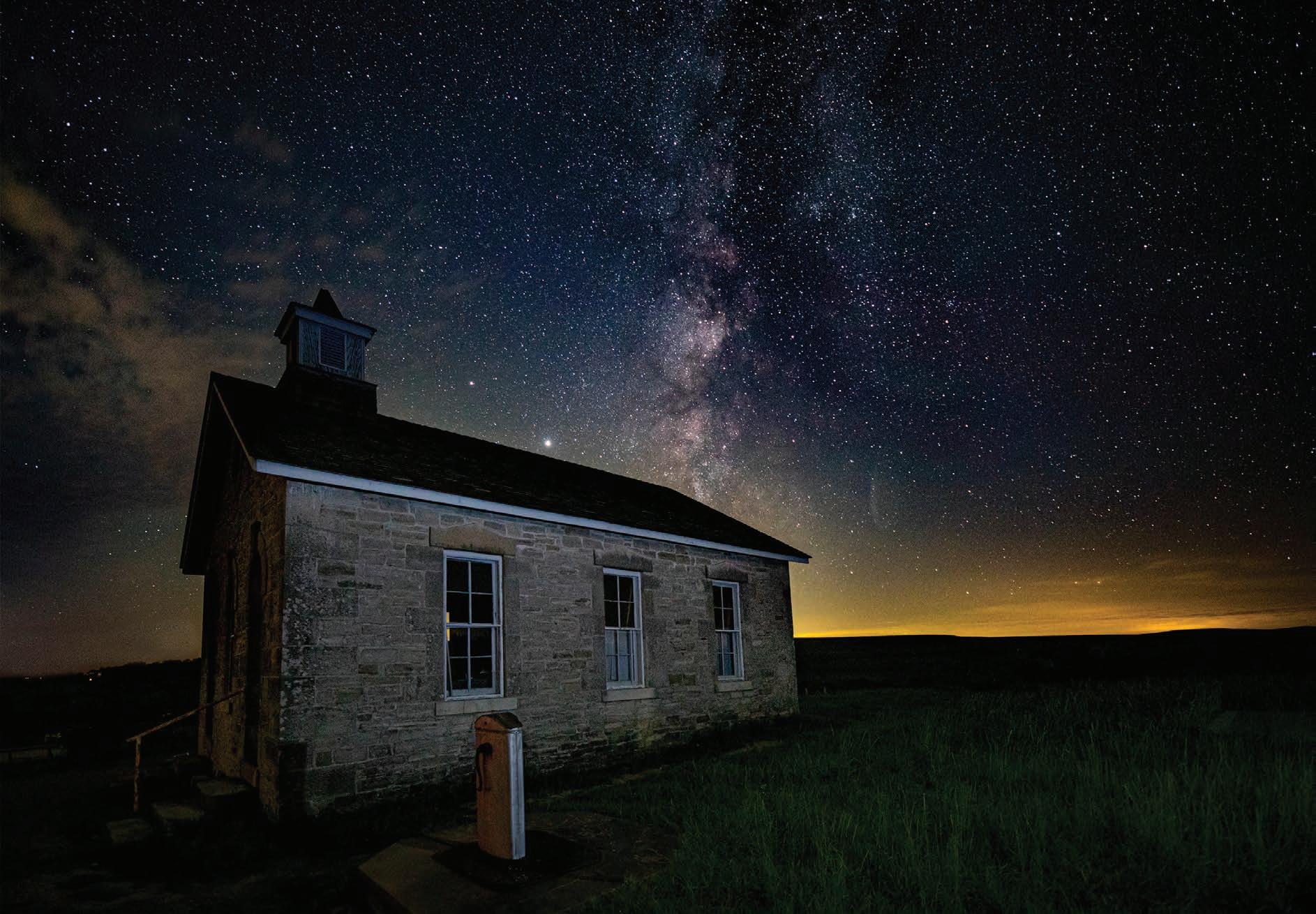
Kansas enjoys a unique state motto. “Ad Astra per Aspera” is Latin for “to the stars through difficulties.” Coined in 1861, it refers to the many hardships Kansans endured before statehood, including bloody wars between pro-slavery and anti-slavery partisans.
So, there’s more than a hint of irony in the fact that Kansas rolled out its new tourism tagline, “To the Stars,” in the midst of a painful pandemic. Meant to honor and build upon “Ad Astra per Aspera,” the marketing theme “happens to be exactly what we need — a celebration of in the face of adversity,” says Bridgette Jobe, director of Tourism with the Kansas Department of Wildlife Parks and Tourism (KDWPT).
Taken collectively, some of the most compelling destinations in Kansas represent a rousing journey through heroic acts of fortitude and hard-earned triumph, including the epic struggle for civil rights. Inaugurated in 2004 as the Brown v. Board of Education National Historic Site, Monroe Elementary School in Topeka was one of four schools for Black children covered under the 1954 Supreme Court case that outlawed segregation in American public schools. Today, the two-story schoolhouse maintains an
auditorium with educational film screenings, photo galleries, information and music kiosks and rotating special exhibits.
The Nicodemus National Historic Site, located in Nicodemus, preserves and protects the only remaining western town established by Black Americans during Reconstruction. It features a restored Township Hall, two churches, a schoolhouse and the former St. Francis Hotel. The Gordon Parks Museum in Fort Scott features works of the iconic Black photographer and filmmaker born in the town in 1912, and best known for chronicling the Black experience for Life Magazine and in the seminal movie Shaft, which he directed, in 1971.
The National Depression Glass Museum in Wellington is its own study in endurance. Featuring more than 18,000 pieces of glassware not only from the Depression but from the late 1800’s all the way to mid-20th century modern, the museum survived the partial collapse of its building in 2019 and re-opened in larger accommodations four months later. Extensive renovations to the Eisenhower Presidential Library, Museum & Boyhood Home in Abilene, completed in the summer of 2019, yielded new
display cases, videos and digital interactive stations pertaining to the Eisenhower presidency and command of Allied forces in World War II.
Nearly leveled in 2007 by an EF5 tornado, the city of Greensburg is a story of survival and renewal. Six years after the twister that destroyed 95% of Greensburg’s buildings, the town had rebuilt itself as one of the world’s greenest communities. Today, Greensburg is entirely powered by renewable energy and boasts more than a half-dozen LEEDplatinum certified buildings, the highest designation offered by Leadership in Energy and Environmental Design.
To those who have the impression that Kansas is flat, it is not. Just ask any bicyclist who has endured the Dirty Kanza, an annual race through the rolling Flint Hills southeast of Wichita. The 2019 running covered 9,600 feet of elevation changes over 200 miles.
Yes, Kansas has plains and prairies. But to venture off the beaten path is to discover a state of enchantingly varied elevations, textures and colors. No greater example exists than Little Jerusalem Badlands State Park, home to spectacular Niobrara Chalk formations that date back some 85 million years. Established only in 2018, the shrine to nature’s tumult, which includes a mile-long stretch of 100-foot-tall spires and cliffs, is named for its resemblance to the walled city of Jerusalem.
Not far from Little Jerusalem, the jagged Monument Rocks jut skyward in other-worldly permutations. Monument Rocks was the first site chosen by the U.S. Department of the Interior as a National Natural Landmark.
More subtle, but stunning in its own right, Tallgrass Prairie National Preserve in the Flint Hills is the largest expanse of tallgrass prairie left in the world. The preserve is home to over 500 species of plants, tallgrasses such as big bluestem, Indian grass and switchgrass, and wildlife that includes deer, bison, amphibians and reptiles.
One of 26 state parks in Kansas, Kanoplis State Park in the rolling bluffs and woods of the Smoky Hills region of central Kansas features towering Dakota sandstone bluffs of rugged beauty, offering stunning vistas. Nestled near the Smoky Hill River toward the northwest portion of the wildlife area is Faris Caves, which were carved by early pioneers and served as milk house, schoolhouse and living quarters.
All but two of the Kansas state parks offer easy access to lakes or the Kansas River, which highlights the proposition that Kansas, while
far from the coasts, offers some of the finest water recreation in the country. The Kansas River has been named a National Water Trail, a title reserved for America’s finest floats. Tuttle Creek State Park, Cross Timbers State Park and Eisenhower State Park all offer canoe and kayak rentals, while KDWPT owns and operates 43 fishing lakes of up to 300 acres.
The vibrant towns and cities that stretch the length and breadth of Kansas offer their own unique attractions, from the classic to the quirky and all points in between.
The Basilica of Saint Fidelis in Victoria, also known as The Cathedral of the Plains, is one of fewer than 100 basilicas in the U.S. At the time of its dedication in 1911, it was the largest church west of the Mississippi River.
One of the 8 Wonders of Kansas, The Kansas Underground Salt Museum in Hutchinson rests 650 feet beneath the earth’s surface in a salt bed formed during the Permian Period, 275 million years ago. Some 300,000 square feet of caverns contain attractions including the Salt Mine Express Train and the new Salt Safari Mine Adventure Hike.
Great Wolf Lodge, Kansas City’s premier indoor waterpark resort, features eight slides, two large whirlpools and a 1,000-gallon tipping bucket. For kids of all ages, Kansas City also offers the Museum at Prairiefire, Mahaffie Stagecoach Stop and Farm Historic Site and the Moon Marble Company.
Topeka’s Kansas Museum of History depicts the Kansas story from the earliest civilizations to the recent past, including early settlement, the Civil War and the development of agriculture. Displays include an 1880 steam locomotive and an airplane built in the early 1900’s.
Old Abilene Town offers another blast from the past. Named the #1 True Western Town by True West Magazine, Old Abilene Town hosts Chisholm Trail Days during Labor Day weekend, featuring gunfights, a live cattle drive, reenactments and live country music.
Wichita’s Sedgwick County Zoo is home to 3,000 animals representing nearly 400 species. Top attractions include Downing Gorilla Forest, Slawson Family Tiger Trek, Cessna Penguin Cove, Giraffe feeding and boat and tram rides.
Craft beer enthusiasts have their choice of more than 60 craft breweries across the state of Kansas, including Tall Grass Tap House in Manhattan, Barrister’s Brewing in Topeka, Hopping Gnome Brewing Company in Wichita and Radius Brewing Company in Emporia.
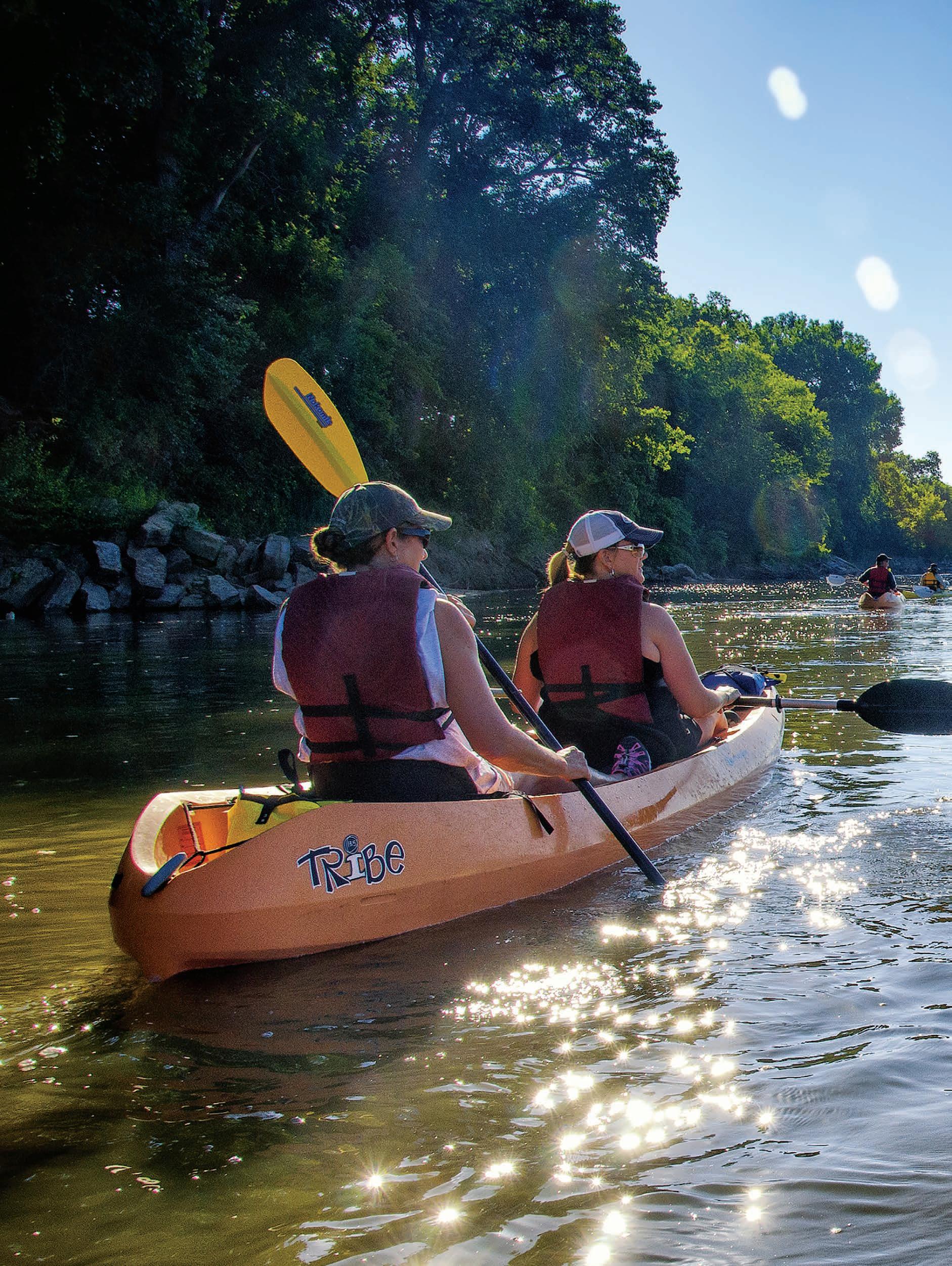

Five reasons to plant roots in The Sun ower State.


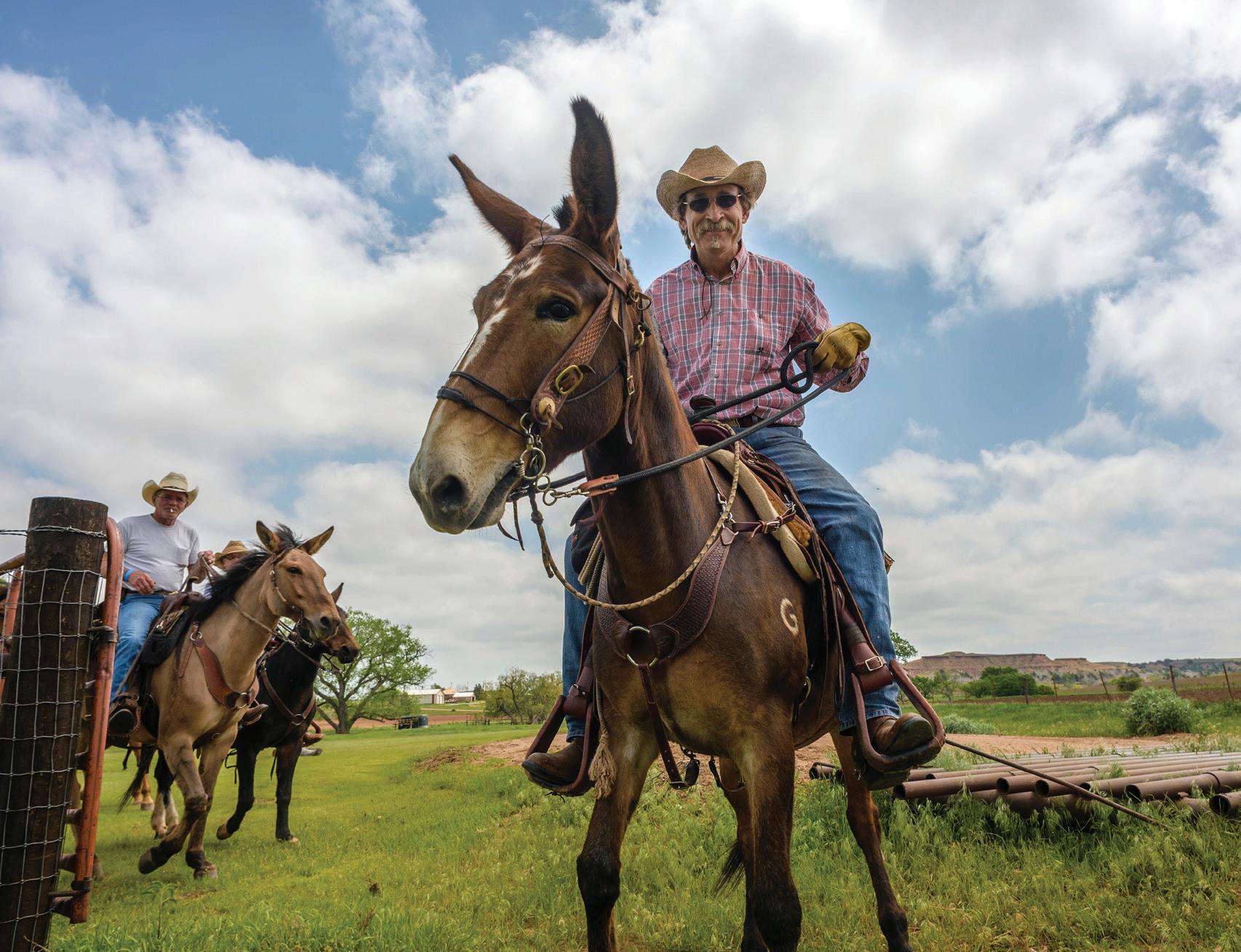
by SAVANNAH KING
The Sunflower State offers an environment for all tastes — from charming rural communities to exhilarating urban centers. Home to 2.7 million people, Kansas provides a quality of life that combines the best of everything. With a low cost of living, quality education, a thriving business climate and natural beauty to boot, there are many reasons to move to Kansas. We’ve narrowed down five of the most compelling reasons to make a home in the heartland.

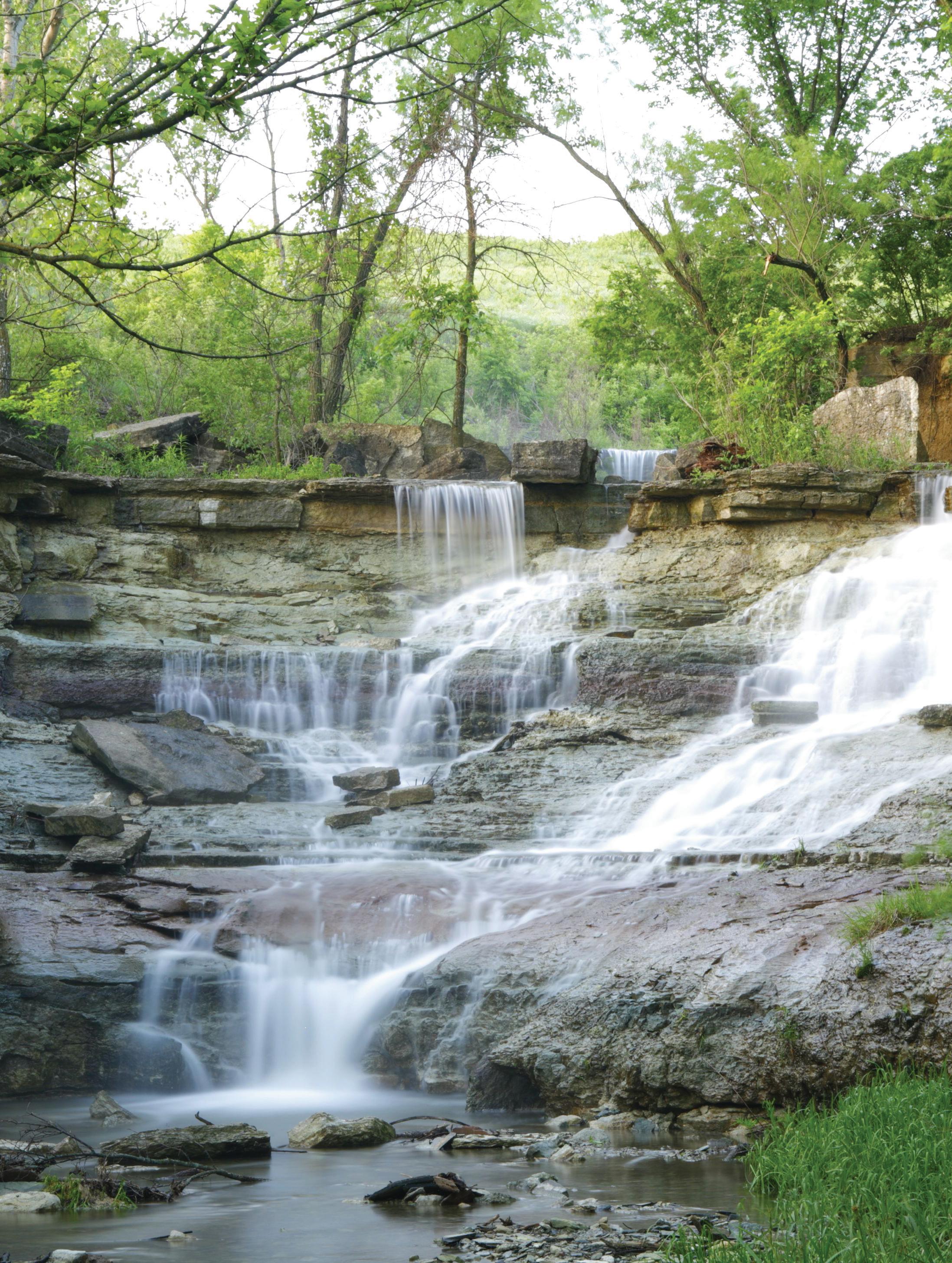
1. Affordable: Kansas offers a cost of living 13.5% below the national average. Ranked No. 9 in U.S. News & World Report’s Affordability Rankings, the state’s affordability directly translates into a higher quality of life. According to Zillow, typical home values in the state are around $150,000. Kansas also offers one of the country’s top individual income tax rates (5.7%).
2. Education: Kansas takes education seriously. In fact, 90.7% of the state’s residents have at least a high school diploma. The state’s K-12 system is ranked No. 15 in the country by U.S. News & World Report, and No. 13 for its higher education system. With 40 public universities and community colleges around the state, opportunities to learn are around every corner.
3. Family friendly: With an average commute of 19 minutes, families can enjoy more of their time together — rather than sitting in traffic. Ranked No. 8 friendliest state, Kansas boasts many unique communities to explore and enjoy. Families in Kansas can enjoy year-round entertainment at the state’s many museums, art galleries, and other attractions. Full of history, the state’s pioneering legacy is front and center with many unique festivals and events.
4. Outdoor recreation: With 225 average sunny days each year, there aren’t many excuses not to get outside and explore. Kansas offers some of the most scenic sights in the world. Kansas’ 28 state parks offer varied views of steep, wooded slopes and idyllic wildflowercovered prairies. With hundreds of miles of hiking and biking trails and ample lakes and rivers, the list of outdoor recreational opportunities is boundless.
5. Culture and Attractions: WalletHub’s 2020 list of Top Cities to Live included Leawood, Topeka and Wichita. But that’s just the start. Across the state, Kansas offers its residents and visitors a taste of Americana. Home to the best barbecue in the world and world-class sporting events, Kansas knows how to enjoy itself. Whether kicking up the dust at a rodeo, enjoying a game of golf at nationally-ranked courses, or attending a Major League Soccer club match at Children’s Mercy Park, the state offers something for all.


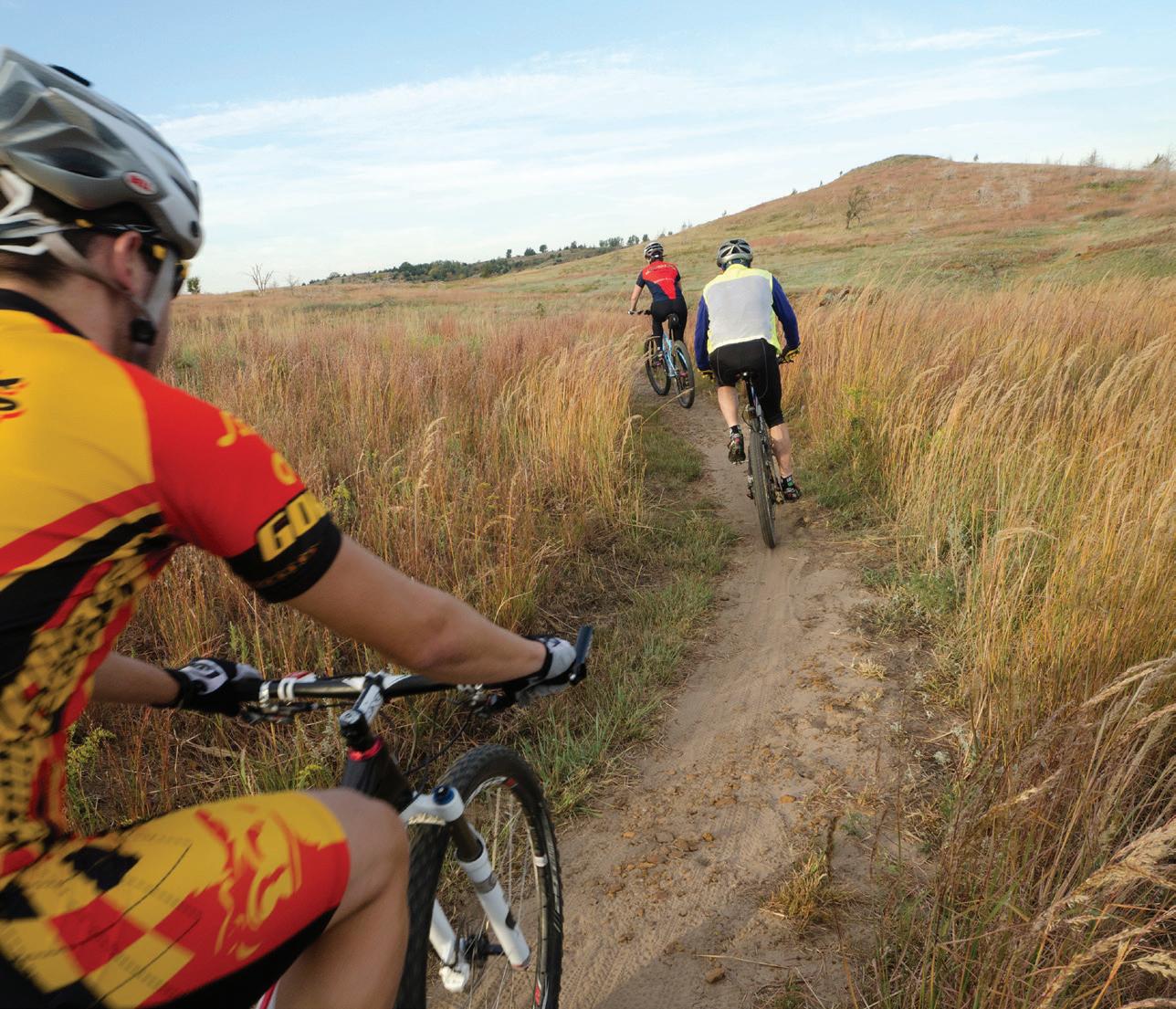
CLOCKWISE FROM RIGHT:
Mountain bikers taking the Arkansas River Off-Road Bike Route.
Courtesy Kansas State Tourism | Doug Stremel
Little Jerusalem Chalk Badlands near Oakley
Courtesy Kansas State Tourism | Doug Stremel
Cosmosphere in Hutchinson
Courtesy Kansas State Tourism
A Flint Hills cottonwood tree at sunset.
Courtesy Kansas State Tourism | Doug Stremel
Paddler and his dog on Deep Creek in Pillsbury Crossing
Courtesy Kansas State Tourism | Andrea LaRayne Etzel

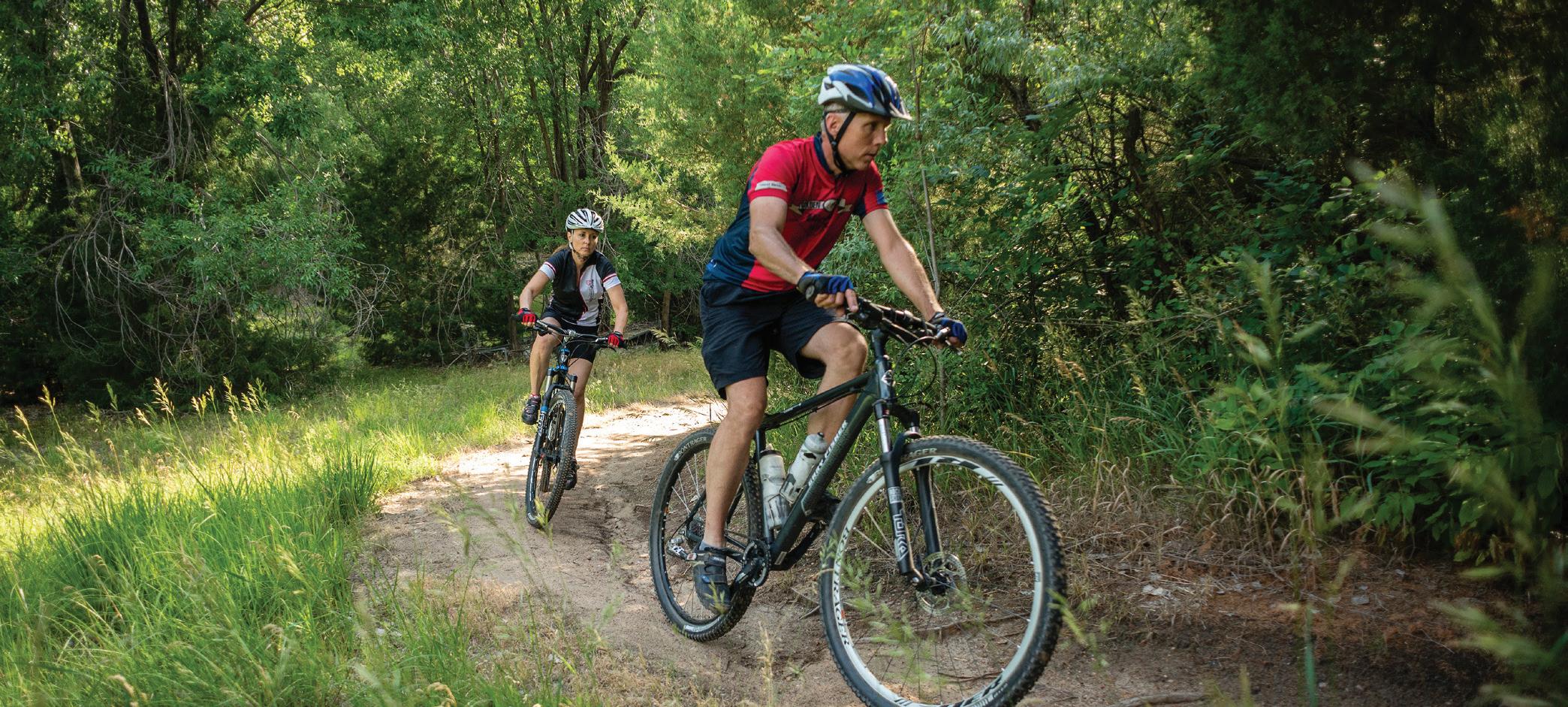
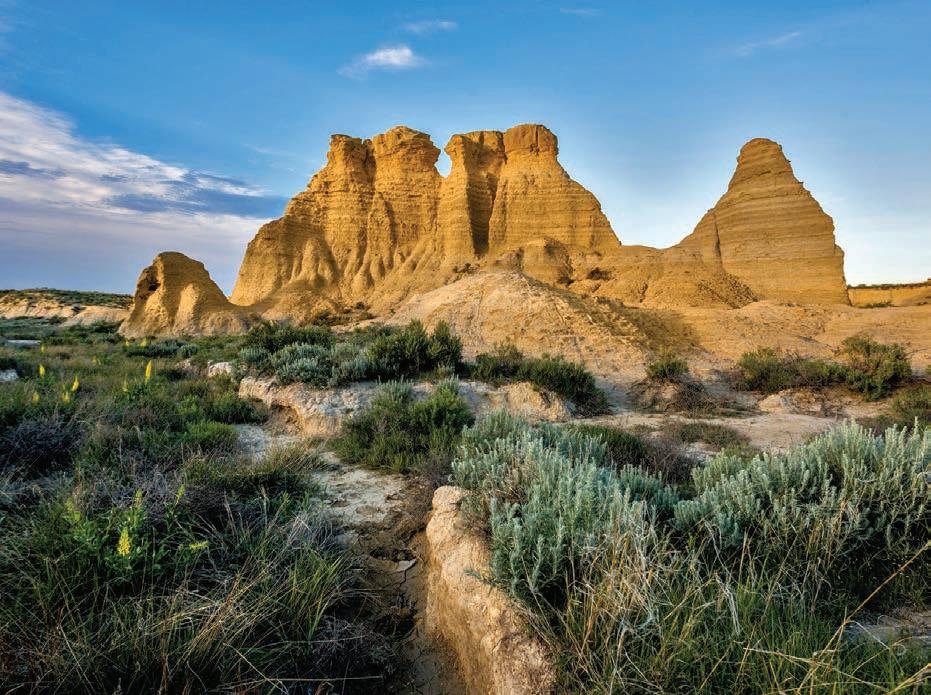

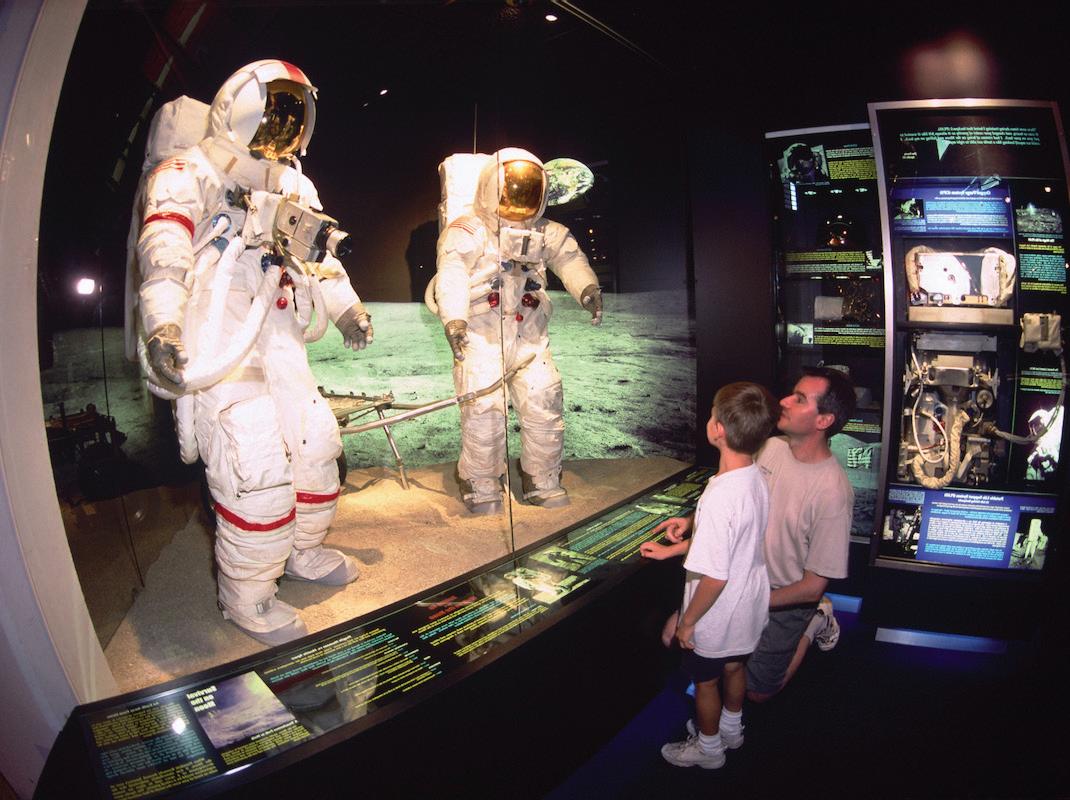
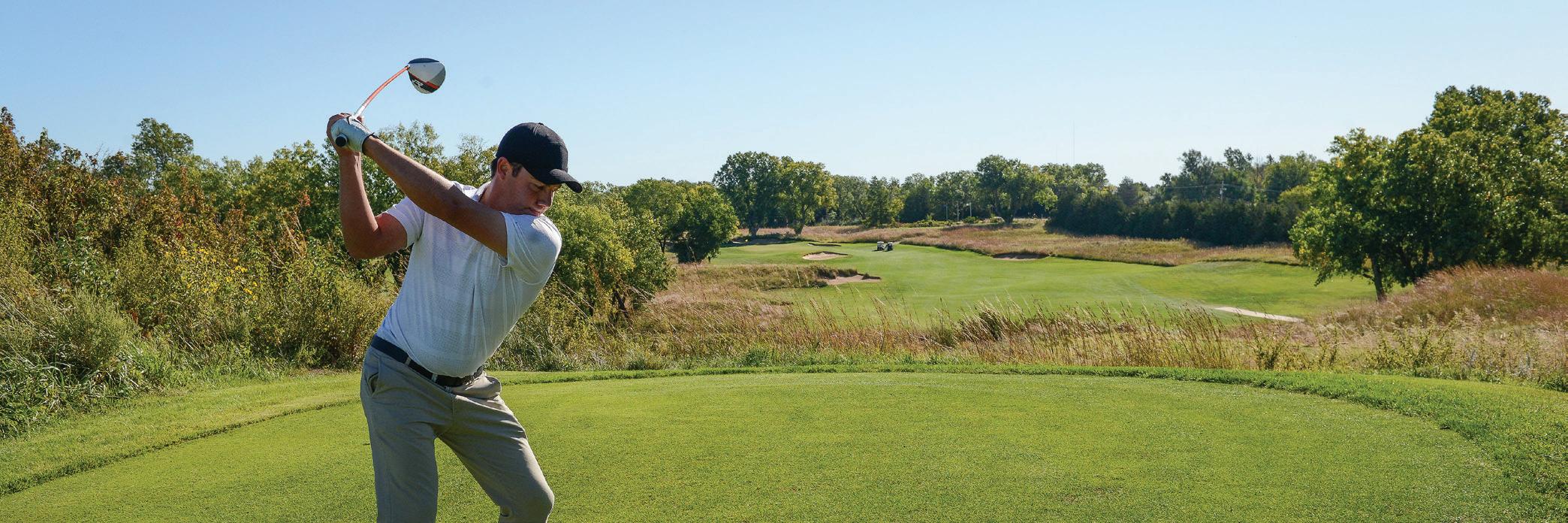
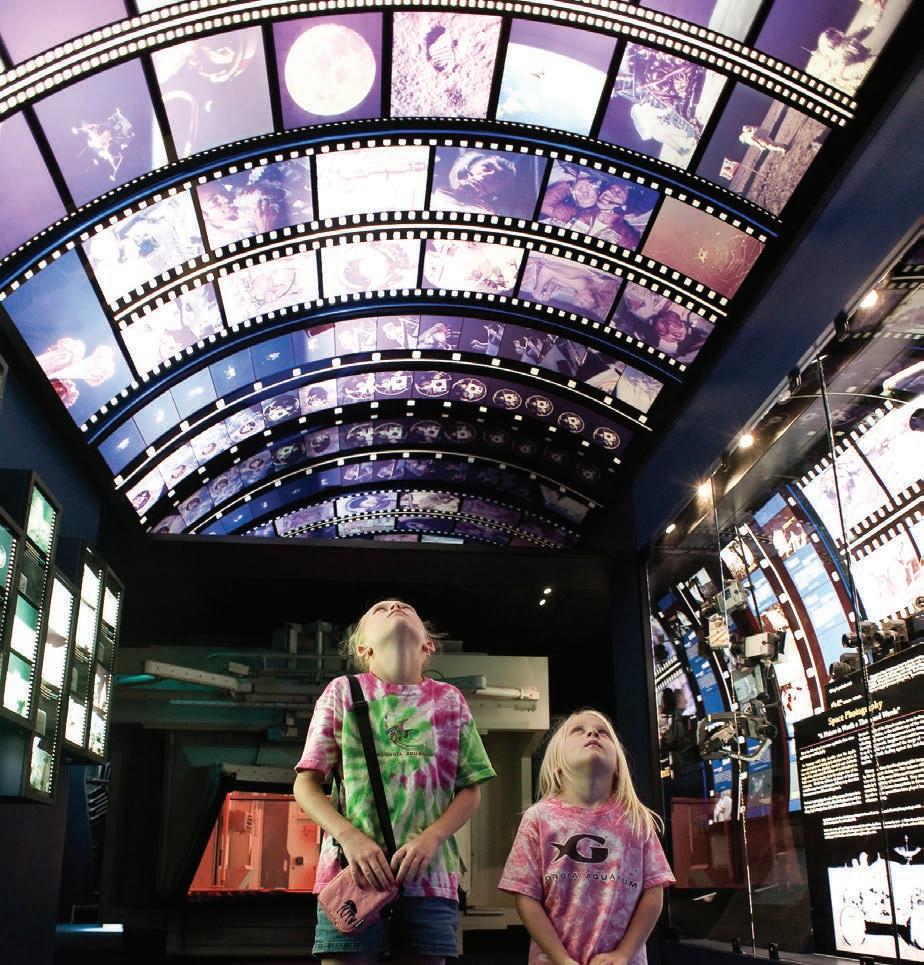
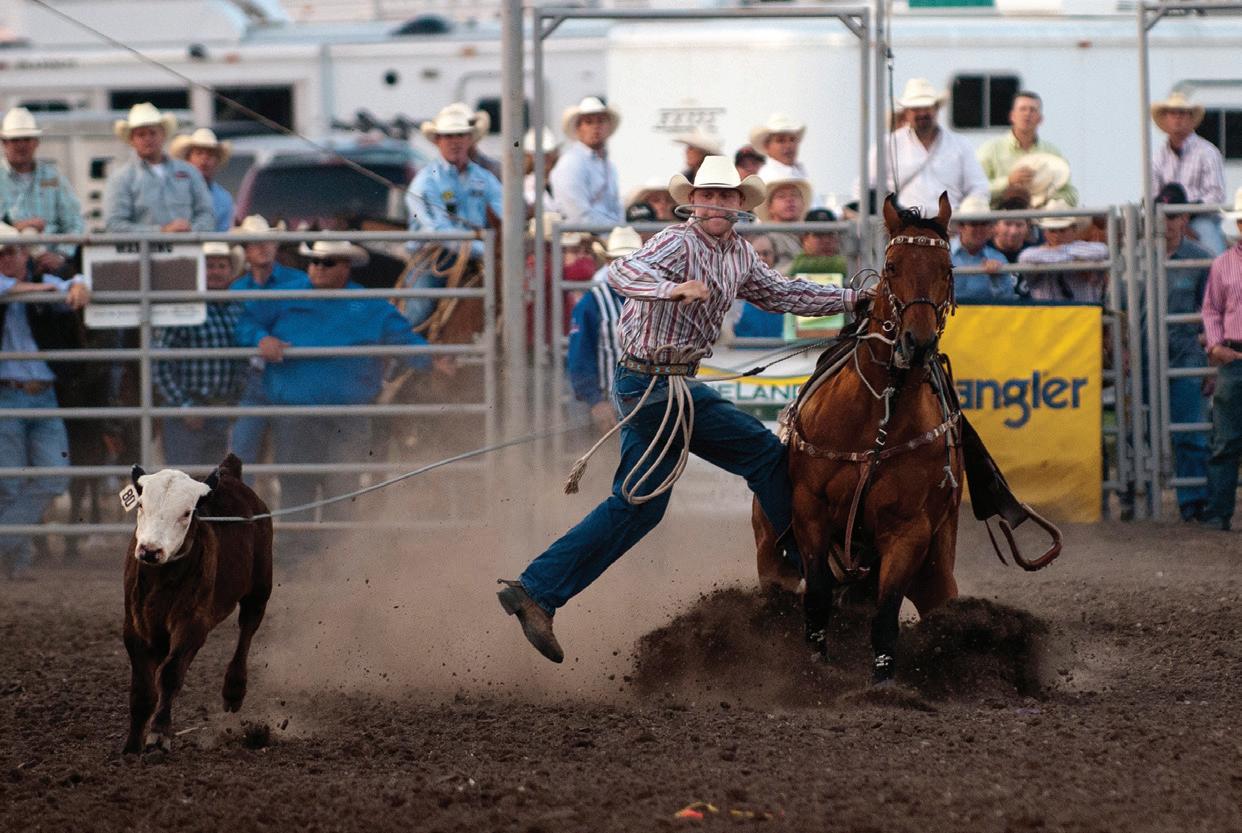
CLOCKWISE FROM RIGHT:
Covered Wagon
Courtesy Kansas State Tourism | Doug Stremel
Historic Route 66 runs through Kansas.
Courtesy Kansas State Tourism | Doug Stremel
Scenic summer views in the Flint Hills.
Courtesy Kansas State Tourism | Harland Schuster
Calf roping at the Flint Hills Rodeo.
Courtesy Kansas State Tourism | Doug Stremel
Tourists at the Kansas Cosmosphere and Space Center
Courtesy Kansas State Tourism | Doug Stremel
Golfer in Hutchinson
Courtesy Kansas State Tourism
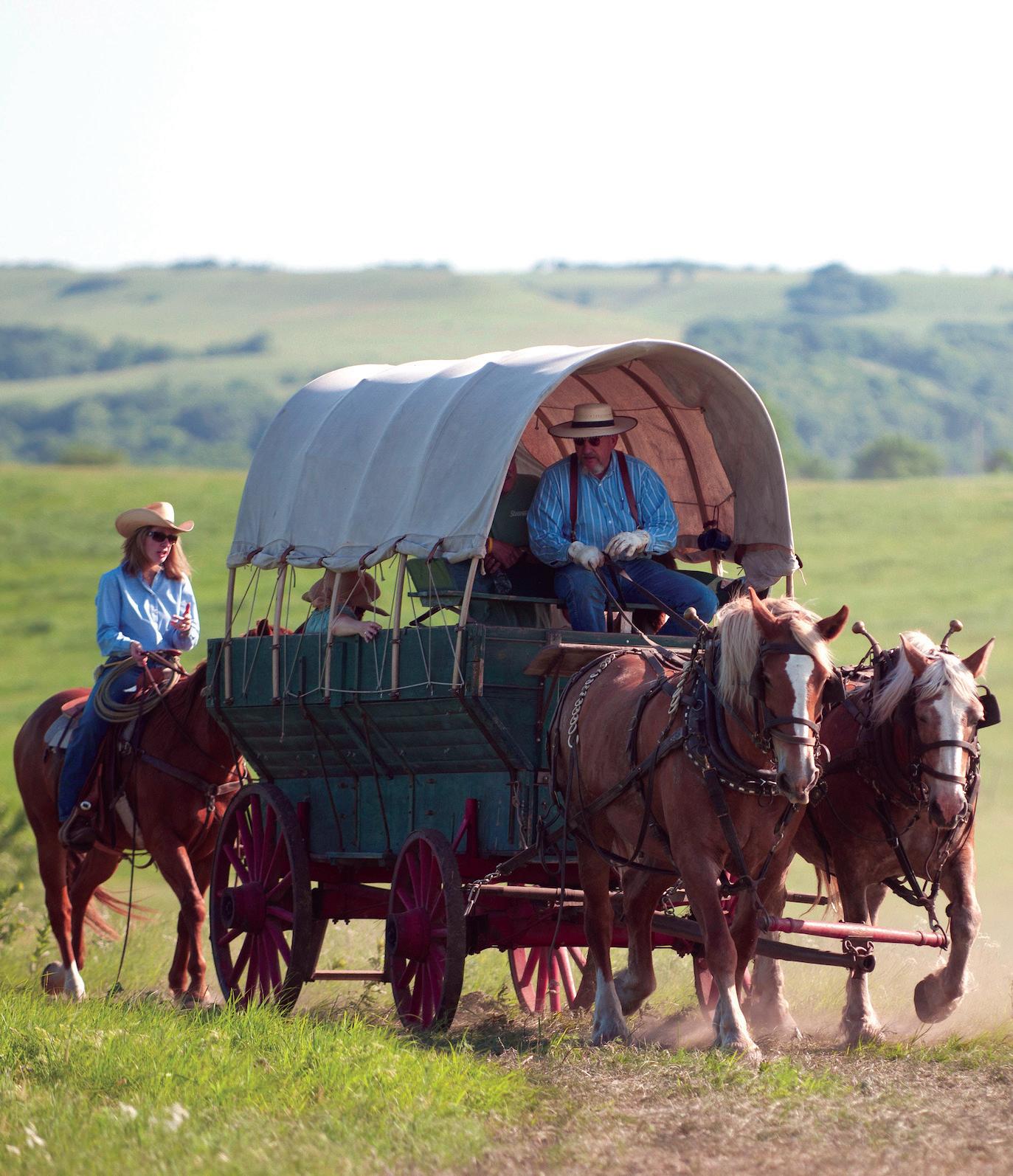

of Russell
www.russellcity.org
www.valleycenterks.org
City/Ford County
www.dodgedev.org
EDC of Lawrence & Douglas County
www.edclawrence.com
www.emporiarda.org Greater Hutch
www.greaterhutch.com
Greater Manhattan Economic Partnership
www.greatermanhattan.org Greater Wichita Partnership
http://buildsuccessinwichita.com
Junction City-Gear y County Economic
www.jcgced.com Kansas City Area Development
www.thinkkc.com
Kansas Department of Commerce
www.kansascommerce.gov
Kansas Department of Wildlife, Parks & Tourism
www.travelks.com
Miami County, Kansas
www.thinkmiamicounty.com Wyandotte Economic Development
www.wyedc.org