KING’S through the decades
With more than 250,000 alumni, King’s is a place that holds special memories for people all over the world. Set against the backdrop of one of the world’s most iconic cities, our students’ experiences are shaped by London’s culture, vibrancy and trends.
Take a trip with us back through memory lane to remember what King’s and London were like from the 1970 s until today.
1970s
King’s in the 70s
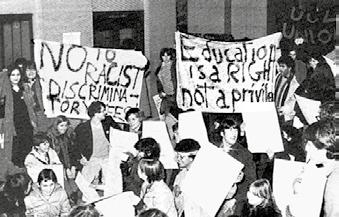
During a politically volatile decade, King’s was a hub of social and political debate. Students engaged passionately with the UK’s entry to the European Economic Community (the precursor to the EU), the war in Vietnam and anti-racism.
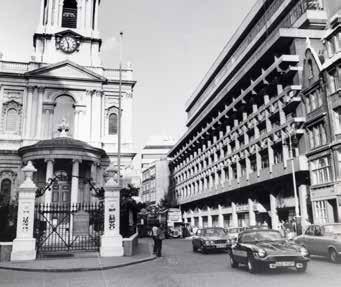
Elsewhere within the University, we saw the opening of the Strand Building which would become a focal point of our Strand Campus. In 1973, another King’s icon was born with the foundation of the King’s student newspaper. Then called Casey L, more recent graduates may know it in its current form as Roar News.
At the end of the decade, King’s also celebrated its 150th anniversary. Celebrations included a Service of Thanksgiving at Westminster Abbey, a performance of music composed at the time of the foundation of the College and the Wellington Ball.
SPIRIT OF THE 70s
SONG ‘MULL OF KINTYRE’, WINGS (1977)
Paul McCartney’s band, Wings, achieved the UK’s best-selling single of the 1970s with Mull of Kintyre. The song’s blend of folk and pop resonated deeply with British audiences, reflecting a nostalgic yearning for rural Scotland.
‘I remember how throngs of hungry students would go to The Lancaster Grill, or “Lankie”, on the approach road to Waterloo Bridge. Between lectures we would all wolf down huge baps, toasted ciabatta and Spanish omelettes – a rare treat in those days.’ Anthony Vickery (Zoology, 1978)
FILM STAR WARS: A NEW HOPE (1977)
The film’s groundbreaking special effects and compelling storytelling captivated UK audiences, leading to widespread cultural influence. Its success paved the way for a new era in science fiction cinema and left an indelible mark on popular culture.
FASHION GLAM ROCK
The 1970s saw the rise of Glam Rock’s flamboyant, androgynous styles that blurred traditional gender lines. Influenced by artists like David Bowie as Ziggy Stardust, the look featured metallic fabrics, platform shoes, glitter, and bold makeup.
Left: A view of the Strand Building after its opening in 1972
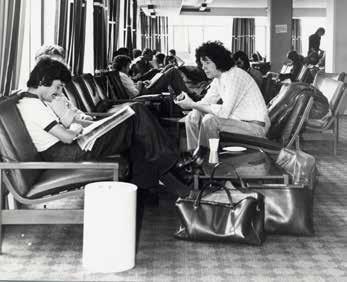
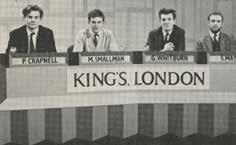
Clockwise: Catching a breather in the Macadam Common Room between lectures in 1975; The University Challenge team that took the second spot for KCL in 1976; Students and staff across London came together to protest against racism.
TV SHOW MORECAMBE AND WISE
Perhaps more one for the parents, comedy duo Morecambe and Wise dominated British television in the 1970s. Their 1977 Christmas show attracted over 20 million viewers, making it one of the most-watched TV programmes in UK history.
SUBCULTURE THE PUNK MOVEMENT
At the start of the decade, the hippy culture of the 1960s remained influential, but was slowly replaced by the Punk movement late in the decade. With its rebellious attitude, distinctive music and fashion, and DIY ethos, the movement had deep roots in 1970s London.

1980s
King’s in the 80s
The 80s was a decade of significant change for King’s, seeing it gain legal independence from the University of London and become fully co-educational.
It was also a time of growth. In 1983, Guy’s Hospital Medical School and St Thomas’s Hospital Medical School re-merged (having previously been united until 1825) to form the United Medical and Dental Schools of Guy’s and St Thomas’ Hospitals.
In the same year the King’s College School of Medicine and Dentistry re-merged with King’s College and two years later, Queen Elizabeth College and Chelsea College of Science and Technology joined the institution.
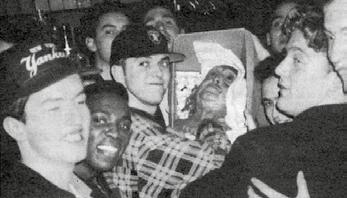
The end of the decade saw the opening of the King’s Business School and, somewhat more frivolously, the infamous theft of the embalmed head of UCL’s auto-icon, Jeremy Bentham, in a display of College rivalry.
SONG
‘DO THEY KNOW IT’S CHRISTMAS?’ BAND AID (1984)
SPIRIT OF THE 80s
Selling 3.5 million copies, Bob Geldof and Midge Ure’s supergroup charity single in aid of famine in Ethiopia, was the biggest song ever at its time. The song has gone on to see three rereleases and become one of the most iconic, albeit controversial, Christmas songs of all time.
‘I remember sitting (in those pre-environmentally aware days) with polystyrene coffee cups, tearing them into spirals and looking out across the Thames at the National Theatre, dreaming about the future. London was my ever-present subliminal tutor with law and commerce all around, from the City to the Royal Courts of Justice to the Houses of Parliament.’ Mark Ellis (Law, 1983)
FILM THE EMPIRE STRIKES BACK (1980)
Although The Empire Strikes Back was released at the start of the decade, it had a profound impact on UK cinema throughout the 80s. The film was a massive box office success and became a cultural touchstone, influencing filmmaking and pop culture in the years that followed.
FASHION POWER DRESSING
The 1980s saw the rise of ‘power dressing’, a fashion trend characterised by bold, structured clothing. Women embraced Dynastystyle oversized shoulder pads, tailored suits, and statement accessories, reflecting the era’s growing emphasis on professional success and gender equality in the workplace.
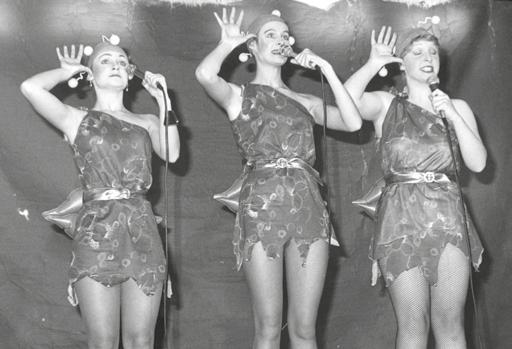
Left: Guy’s students put on a show.
TV SHOW
ONLY FOOLS AND HORSES (1981–2003)
Only Fools and Horses, a British sitcom about the misadventures of the Trotter brothers in Peckham, became a beloved staple of British television. The show garnered high viewership throughout the 1980s.
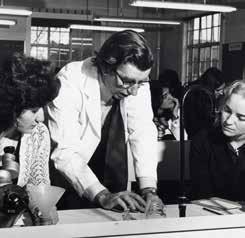
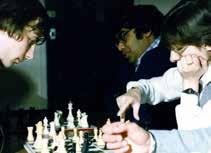
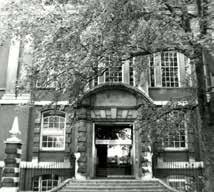
Clockwise: Biological Sciences laboratory; Chelsea College chess club; main entrance at Chelsea College Manresa Road; the infamous theft of the embalmed head of UCL mascot,
SUBCULTURE
NEW ROMANTICISM
The early 1980s saw the rise of the New Romantic movement, led by artists such as Adam and the Ants, Duran Duran, and Visage. New Romantics were known for their flamboyant, androgynous fashion, heavy use of makeup, and elaborate hairstyles.
Jeremy Bentham

1990s
King’s in the 90s
London culture in the 90s was dominated by music. Whether your scene was Britpop, raving or grunge, music became central to student culture, influencing both fashion and attitudes.
In 1997, a merger with the Institute of Psychiatry gave rise to the modern day IOPPN faculty. And having united 15 years earlier, The United Medical and Dental School of Guy’s and St Thomas’ Hospitals merged with King’s to create GKT in 1998. The merger of the Florence Nightingale School of Nursing and King’s Department of Nursing Studies to form the Florence Nightingale’s School of Nursing & Midwifery, followed the next year.
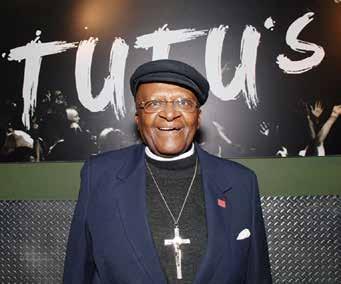
By now, King’s had developed a reputation for hosting some of the biggest names in showbiz, from Ronnie Scott to Taylor Swift, the 90s was no exception. 1992 saw the opening of beloved Students’ Union bar, Tutu’s. The bar would go on to be known for its excellent music bookings including, in 1995, the first UK gig for the Foo Fighters. Elsewhere, the University continued to grow.
SPIRIT OF THE 90s
Elton John’s reimagined version of Candle in the Wind was rereleased in 1997 to honour Princess Diana, following her tragic death. The song sold almost 5 million copies in the UK alone, debuting at number one and staying there for five consecutive weeks.
SONG ‘CANDLE IN THE WIND’ ELTON JOHN (1997)
‘I recall my lecture rooms, the computer labs, library –even the pigeon holes to hand in coursework – were all spread out in different buildings around central London. It
made for good exercise.’ Edwin Chan (Computer Science & Management, 1999)
FILM NOTTING HILL (1999)
Set in London’s famous Notting Hill district and starring Hugh Grant and Julia Roberts, this film became the highest-grossing British film of all time upon its release. It grossed £31 million in the UK and over $116 million in the US, captivating audiences with its heartwarming story and picturesque setting.
FASHION ‘THE RACHEL’
The most iconic look of the 90s didn’t come in the form of clothing, but one haircut. ‘The Rachel’, popularised by Jennifer Aniston’s character on Friends, was characterised by layered, faceframing locks, and remains a defining fashion statement of the decade.
Left: Archbishop Desmond Tutu (Theology, 1965; MTh, 1966) at his namesake Students’ Union bar.
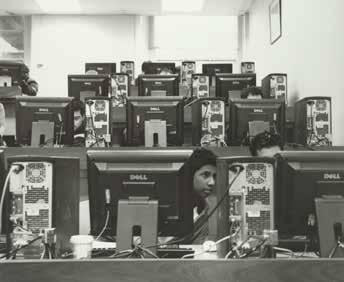
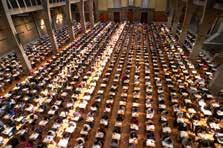
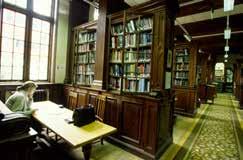
Clockwise: Computer rooms for studying started popping up during the 90s; The Wills Library 1995; exams at the Royal Horticultural Halls in the early 90s
TV SHOW FRIENDS
(1994–2004)
The American sitcom about a group of six friends living in New York City became a cultural phenomenon. Its relatable characters, witty humor, and memorable catchphrases made it a staple of student TV viewing, influencing fashion, language, and social dynamics of the time.
SUBCULTURE GRUNGE
While swathes of the UK were gripped by Britpop, the Grunge movement – with its focus on anti-fashion and angsty music – had a strong influence on UK students. Bands like Nirvana, Pearl Jam, and Soundgarden became central to student culture, influencing both fashion and attitudes.
This was our King’s
‘Meeting the late Queen & Duke of Edinburgh when Her Majest opened the Strand building in 1972 was a high point. I recall her equerry instructing us, before she arrived, to shake her hand properly because she hated limp handshakes!’ Geoffrey Carter (German with French, 1974)
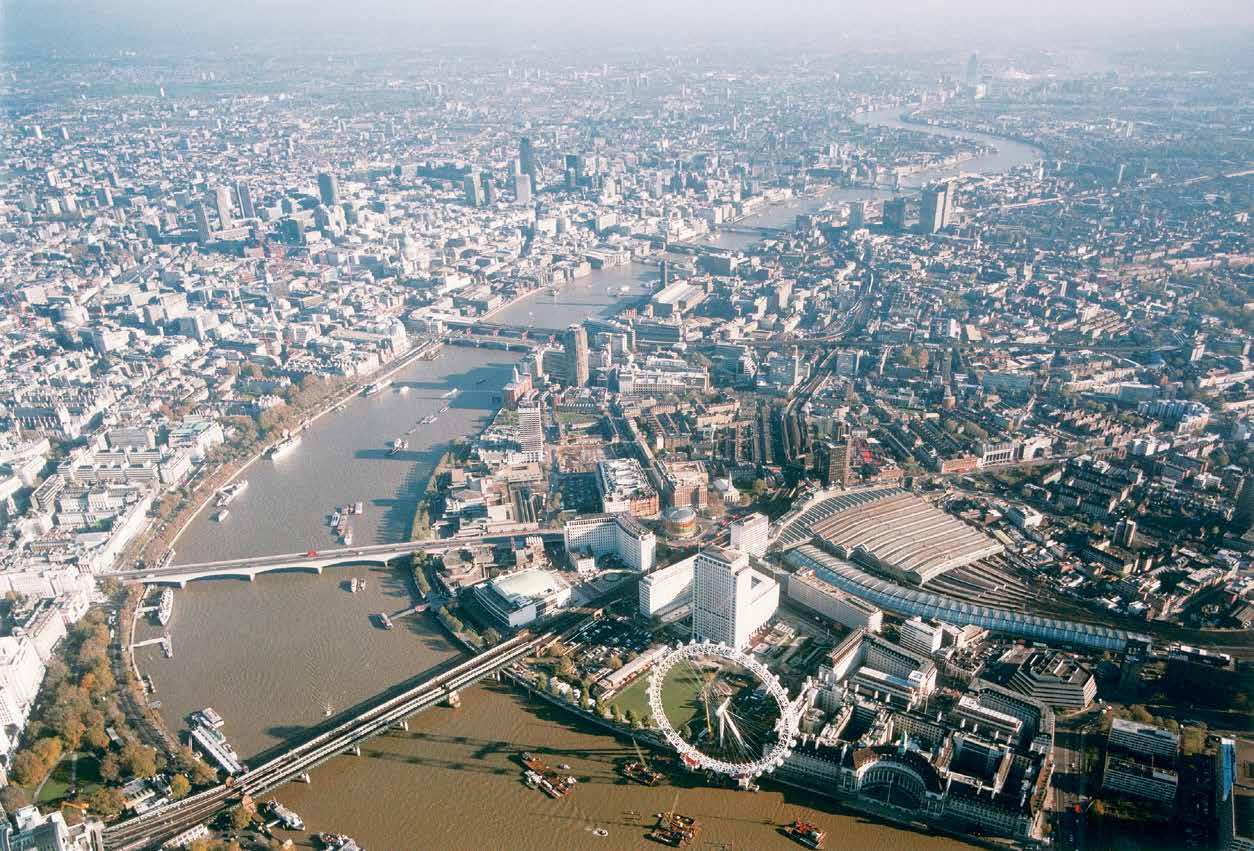
‘I remember bouncing for a Ronnie Scott gig in Macadam building. I was helping to clear their kit at the end and was invited back free of charge to his club for late night show with a few mates.’ Jerry Barnes (Geography, 1982)
‘Outside the Law Library, there used to be a pay phone and I discovered it was broken. You could put 50p into the slot and it would spit it back out again but still connect your call, so you could make unlimited calls. I had family in Canada, so it meant I could stay on the phone with them for hours. I made the mistake of telling people about the phone and, within a week, there was a long queue of people waiting to use it!’ Aarti Holla-Maini (Law, 1992)
‘I still feel very connected to KCL and GKT. I fondly remember the curly fries at Guy’s bar and the crazy dancing at Tutu’s...’ Maryce Moss-Montoya (Human Sciences, 2008)
‘My favourite memories are doing two guitar marathons for Charities Fortnight, during which I persuaded the Radio One DJs Alan Freeman, Pete Murray and Ed Stuart to come in, support me, and help with the fundraising.’ Godfrey Welchman (German with French, 1974)
‘I remember the MathSoc cheese and wine social coincided with the 1981 FA cup final replay. We went to the Maths lecture, which was part of the cheese and wine evening, then piled into the TV room for the football. Don’t know if I was the only Spurs fan there but after the great result, it was back to see if there was any wine left at the event!’ Julia Clark (Mathematics, 1982)
‘A notable memory would be sliding down the stairs that run from the landing outside the chapel to the lobby near the Great Hall on our bottoms, in the middle of the night, well into the post-Advent Carols party for the choir and servers. Thankfully, they were carpeted at the time.’ Bethan Richardson (War Studies, 2003)
‘My standout memory has to be the infamous storm of 1987. My Pharmacy roommate and I slept through it, but our flat mates were up all night after the box under their window blew in and filled their room with pigeon feathers.’ Jerry Barnes (Geography, 1982)
‘My favourite memory is eating curly fries overlooking the River Thames, meeting people who’ve stayed friends for life, bonding over a mutual dislike of Geoffrey Chaucer (sorry) and a love of Renaissance literature, exploring London’s history… There were also the fantastic student discounts that London theatres offered.’ Jessie Acton (English Language & Literature, 2014; MA Shakespeare & Early Modern Theatre Culture, 2017)
‘Paul Weller and The Style Council playing at the Waterfront in 1992 or 1993! Amazing gig. We were all so young then!’ Neil Vargesson (Human Biology, 1994)

2000s
King’s in the 00s
Along with the rest of the world, King’s welcomed in the 21st century, celebrating by opening the Millennium Garden at St Thomas’ Hospital. Meanwhile, the Strand Campus grew, with the opening of the much-loved Maughan Library in 2002. In 2009, the University signed the lease to occupy the East Wing of Somerset House and opened the Museum of Life Sciences.
The 00s held one other significant development for King’s. Despite becoming independent from the University of London in the 80s, it wasn’t until 2008 that King’s would start to award its own degrees. To mark the occasion, new King’s graduation robes were designed by none other than fashion icon, Vivienne Westwood.
In keeping with King’s reputation for attracting top talent, 2008 was also the year a little-known artist by the name of Taylor Swift would play her first UK gig at Tutu’s. The significance of which, she noted during the London leg of her record-breaking Eras tour.
SONG
‘CAN’T GET YOU OUT OF MY HEAD’ KYLIE MINOGUE (2001)
SPIRIT OF THE O0s
The hypnotic beat of Can’t Get You Out of my Head meant this song lived up to its name, earning it the title of the UK’s best-selling single of 2001. Partnered with its innovative music video and Kylie’s futuristic fashion, it became one of the most iconic musical moments of the decade.
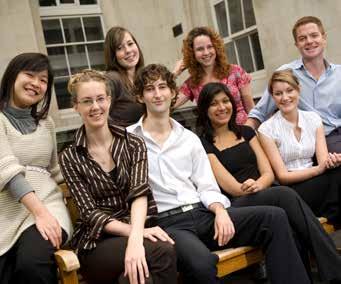
‘On my first day, I stuffed my London A-Z in my bag and prayed I’d find each building I needed without getting lost. I remember many hours spent in the basement of the Macadam Building, putting together the arts section of the student newspaper, Roar. It was a tabloid full of mischief and swagger.’ Sharon Lougher (Geography, 2001)
FILM LOVE ACTUALLY (2003)
Richard Curtis’ romantic comedy followed multiple intertwining love stories. With its cast of superstars, from Hugh Grant and Keira Knightley, to Colin Firth and Emma Thompson, the film was a hit and remains a much-loved Christmas favourite.
FASHION BOHO-CHIC
Flowing clothing, laid-back vintage, and layered accessories dominated the UK fashion scene in the mid-2000s.
Popularised by celebrities like Kate Moss and Sienna Miller, students could be seen in flared jeans and oversized sunglasses, often accessorised with chunky jewellery and jaunty scarves.
Left: Students in 2006
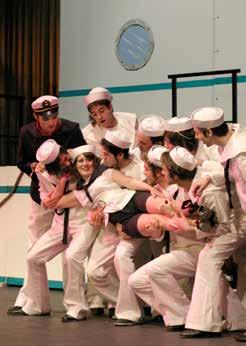
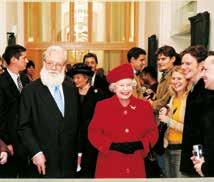
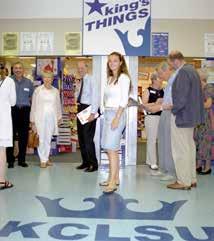
Clockwise: Queen Elizabeth II visits the official opening of the Maughan Library in 2002; The SU in 2003; Students in a 2004 production of Anything Goes.
TV SHOW BIG BROTHER (2000–10)
Big Brother UK became a cultural phenomenon upon its first airing in 2000. The show’s mix of drama, conflict, and fly-on-the-wall appeal made it a staple of British television throughout the decade.
SUBCULTURE INDIE AND EMO
The indie music scene flourished in the 2000s, becoming the soundtrack of many students’ lives. Indie culture was synonymous with alternative fashion, including skinny jeans, Converse and band t-shirts. Elsewhere, Emo culture was defined by darker, more emotional music.
King’s in the 10s
London at the start of the decade was dominated by the 2012 Olympic Games, and King’s was no exception. Students were soaking up the atmosphere around campus and King’s Drug Control Centre acted as the official anti-doping facility for the Games.
Sports-fever continued with the expansion of the annual London Varsity Series between King’s and UCL. Traditionally focused on Rugby, the Varsity Series expanded to include more than 20 student sports clubs and remains a firm fixture in the student calendar today.
This was also the decade where King’s reopened its Chemistry department, became a founding partner of the Crick Institute and officially opened the East Wing of the iconic Somerset House.
SPIRIT OF THE 10s
A breakout star of the 2010s, Ed Sheeran’s 14th single topped the UK Singles Chart for 14 weeks. It became the best-selling song of the decade and also achieved massive streaming success, becoming the most-streamed song on Spotify at the time.
SONG ‘SHAPE OF YOU’ ED SHEERAN (2017)
‘Setting up the King’s Women’s Institute was really fun. I’ll never forget a bunch of women learning burlesque dancing in Tutu’s one week and making jam the next!’
Laura Tyler (Religion in the Contemporary World, 2010; Nursing, 2012; MA Nursing 2016)
FILM
THE KING’S SPEECH (2010)
The King’s Speech, starring Colin Firth as King George VI, was the highestgrossing British film of the decade. The film won four Academy Awards and resonated with audiences and critics alike, making it a standout in British cinema during the 2010s.
FASHION STREETWEAR
In the 2010s, brands like Supreme, Off-White, and Balenciaga brought streetwear into high fashion, while collaborations between luxury brands and sportswear companies became increasingly popular.
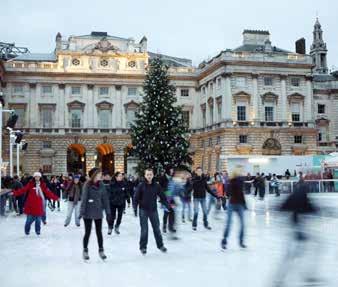
Left: Ice skating at the iconic Somerset House. A Christmas staple for students and staff alike.
TV SHOW DOWNTON ABBEY
(2010–15)
Downton Abbey captivated UK audiences with its portrayal of the aristocratic Crawley family and their servants in the early 20th century. The show received critical acclaim and numerous awards, including a Golden Globe and an Emmy. Its success led to two film adaptations, further cementing its place in British television history.
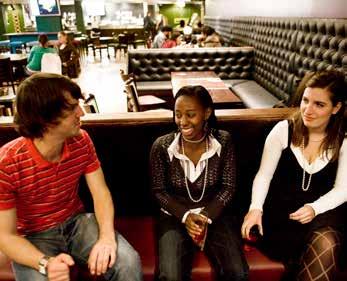
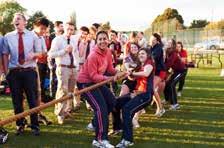
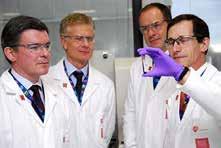
Clockwise: Just some of the many students who have enjoyed drinks at Guy’s Students’ Union Bar; King’s scientists at the Olympic antidoping centre; Tug of war at the KCL Alumni Association games in 2013.
SUBCULTURE GRIME
The ability to record videos and post them to social media created a platform for people who may not have had the chance to share their music through traditional routes. While Grime, characterised by fast rhymes, clever word play and heavy baselines, had been around for some time, it’s popularity in the 2010s grew significantly.
If all of this has left you feeling nostalgic for your time at King’s, there are always opportunities to stay connected. Follow us on social media
We post regular updates on King’s research, activities and events, along with sharing memories from your time at King’s. Follow us now to keep up to date.
Instagram: @kclalumni
Facebook: KCL Alumni
LinkedIn: King’s College London Alumni
Bluesky: @kclalumni
Keep an eye out for our alumni events
We run a year-round programme of alumni events, both on campus and online. Whether you want to hear from our groundbreaking researchers on current issues in the King’s Expert Series, or get career advice at our How to... events, we have it all and more.
Head to kcl.ac.uk/alumni/events to see what’s lined up.
Stay in touch with other alumni on King’s Connect
King’s Connect is an exclusive platform for King’s alumni. On there, you can get access to alumni discounts, connect with mentors and mentees, and hear from alumni around the world. It’s also your access pass if you ever want to come back to visit campus!
Go to kingsconnect.org.uk to register.
Support the future of King’s
Philanthropic support is vital to King’s continued success. It helps us support more students who need it, funds groundbreaking research and helps us establish facilities that reflect the outstanding education King’s offers.
Find out about how you could help support the University either now or in the future, at kcl.ac.uk/ giving/donate.
Organise your own reunion
Interested in organising a reunion with your classmates? Go to kcl.ac.uk/events/reunions to find out how we can help.