travelTaste Buds to Italy
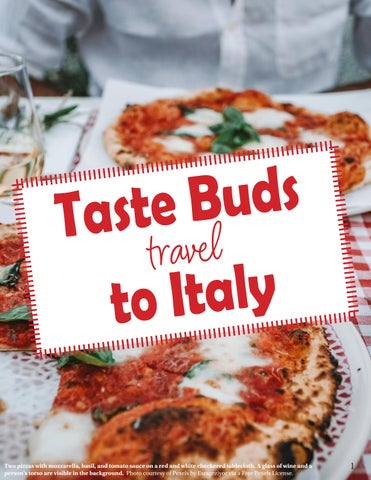
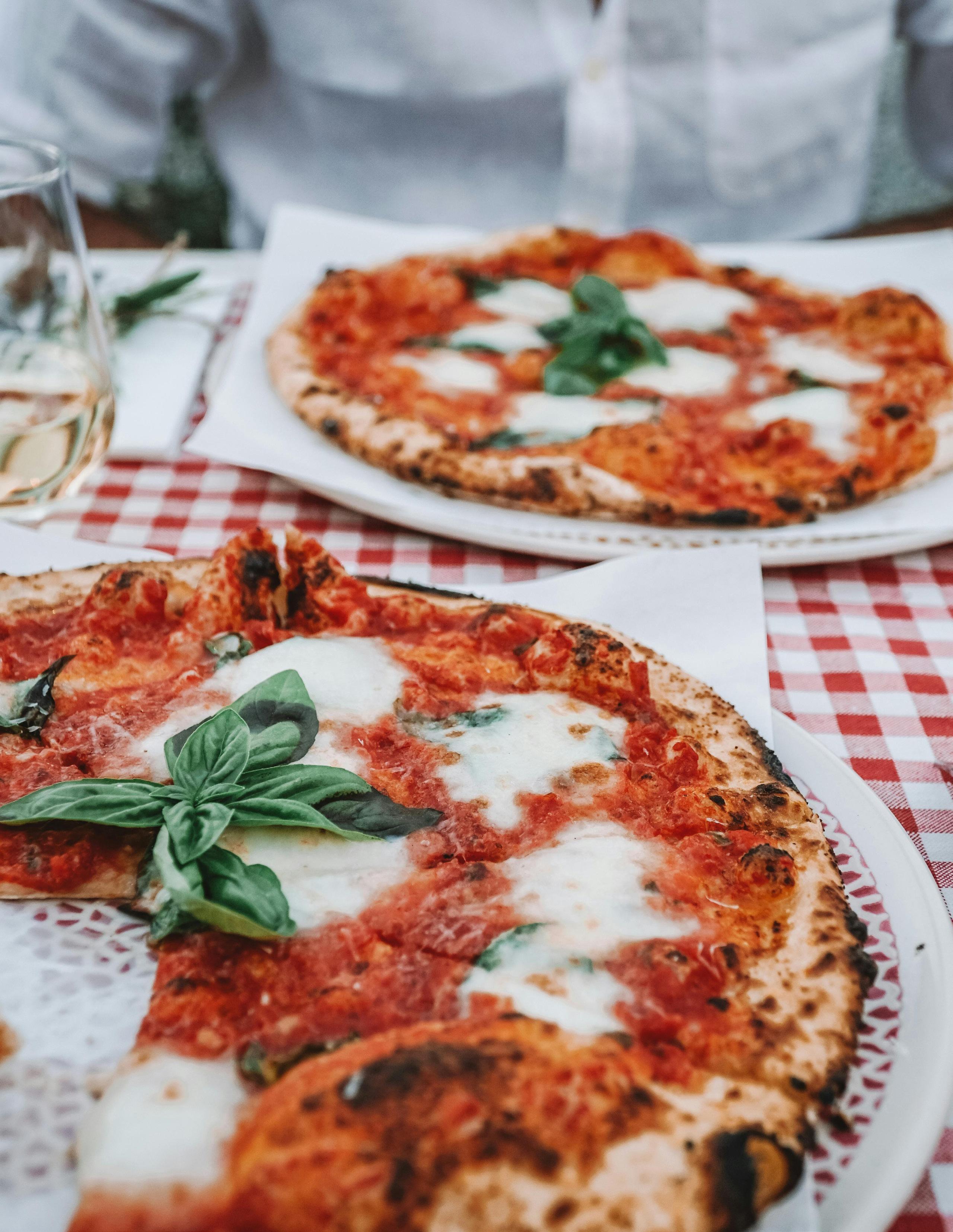
Two pizzas with mozzarella, basil, and tomato sauce on a red and white checkered tablecloth. A glass of wine and a person's torso are visible in the background. Photo courtesy of Pexels by Esrageziyor via a Free Pexels License.
Mediterranean cuisine is the food and methods of preparation used by the people of the Mediterranean basin. The idea of a Mediterranean cuisine originates with the cookery writer Elizabeth David’s A Book of Mediterranean Food (1950), and was amplified by other writers working in English.
Many writers define the three core elements of the cuisine as the olive, wheat, and the grape, yielding olive oil, bread and pasta, and wine; other writers deny that the widely varied foods of the Mediterranean basin constitute a cuisine at all. A common definition of the geographical area covered, proposed by David, follows the distribution of the olive tree.
The region spans a wide variety of cultures with
Take a bite and envision yourself with a view of the Duomo di Milano in Milan, Italy.
The cathedral took nearly six centuries to complete: construction began in 1386, and the final details were completed in 1965. It is the largest church in the Italian Republic—the larger St. Peter’s Basilica is in the State of Vatican City, a sovereign state—and one of the largest in the world.
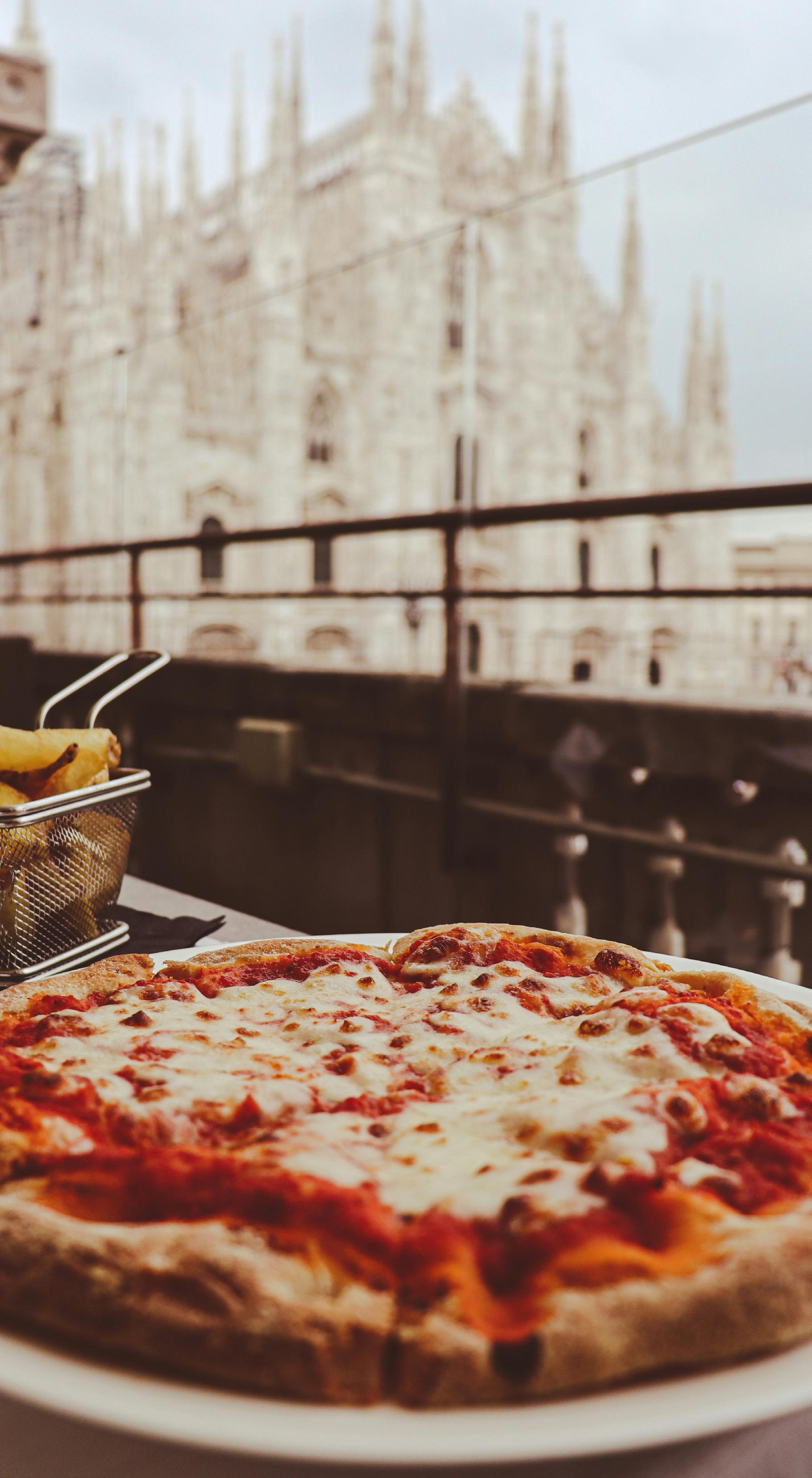
Fresh, cheese covered pizza seen on a balcony looking at the front of the Duomo di Milano in Milan, Italy. Photo courtesy of Pexels by Mark Neal via a Free Pexels License.
distinct cuisines, in particular (going anticlockwise around the region) the Maghrebi, Egyptian, Levantine, Ottoman (Turkish), Greek, Italian, French (Provençal), and Spanish, although some authors include additional cuisines. Portuguese cuisine, in particular, is partly Mediterranean in character.
The historical connections of the region, as well as the impact of the Mediterranean Sea on the region’s climate and economy, mean that these cuisines share dishes beyond the core trio of oil, bread, and wine, such as roast lamb or mutton, meat stews with vegetables and tomato (for example, Spanish andrajos), vegetable stews (Provençal ratatouille, Spanish pisto, Italian ciambotta), and the salted cured fish roe, bottarga, found across the region. Spirits based on anise are drunk in many countries around the Mediterranean.
Italian cuisine is a Mediterranean cuisine consisting of the ingredients, recipes, and cooking
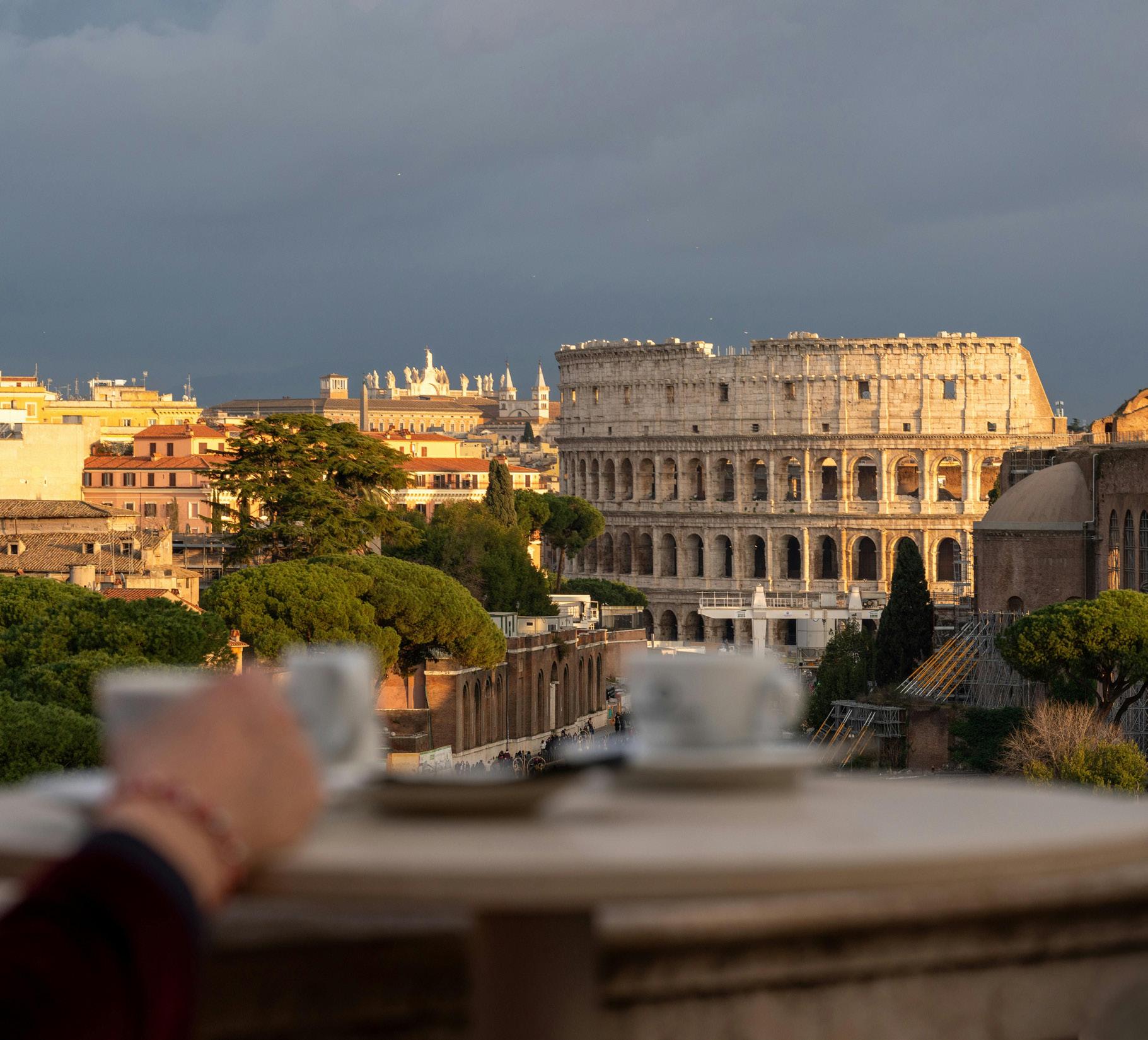
Drink your coffee, close your eyes, and picture a balcony with the Colosseum.
The Colosseum is built of travertine limestone, tuff (volcanic rock), and brick-faced Roman concrete. It could hold an estimated 50,000 to 80,000 spectators at various points. It was used for gladiatorial contests and public spectacles including animal hunts, executions, re-enactments of famous battles, dramas based on Roman mythology, and briefly mock sea battles. The building ceased to be used for entertainment in the early medieval era. It was later reused for such purposes as housing, workshops, quarters for a religious order, a fortress, a quarry, and a Christian shrine.
techniques developed in Italy since Roman times, and later spread around the world together with waves of Italian diaspora. Significant changes occurred with the colonization of the Americas and the consequent introduction of potatoes, tomatoes, capsicums, and maize, as well as sugar beet—the latter introduced in quantity in the 18th century. Italian cuisine is one of the best-known and most widely appreciated worldwide. In 2025, Italian cuisine was listed as intangible cultural heritage by UNESCO.
The cuisine includes deeply rooted traditions common throughout the country, as well as various diverse regional gastronomies, which are in continuous exchange. Many dishes that were once regional have proliferated with variations throughout the country. Italian cuisine is one of
A hand holds a coffee cup looking at the Colosseum during sunset in Rome, Lazio, Italy. Photo courtesy of Pexels by Hernan Berwart via a Free Pexels License.
the most popular and copied around the world. Italian cuisine has left a significant influence on several other cuisines around the world, particularly in East Africa, such as Italian Eritrean cuisine, and in the United States in the form of ItalianAmerican cuisine.
A key characteristic of Italian cuisine is its simplicity, with many dishes made up of few ingredients, and therefore Italian cooks often rely on the quality of the ingredients, rather than the complexity of preparation. Over
The smells, the views, the people. Where will you travel with your taste buds?
Pick your favorite travel destination, find a local recipe, and mimic traveling. Food can transport you and make memories around a table with people together.
ingredients from the region of origin of the dish and preserving its seasonality
the centuries, many popular dishes and recipes have often been created by ordinary people more so than by chefs, which is why many Italian recipes are suitable for home and daily cooking, respecting regional specificities, privileging only raw materials and
The Mediterranean diet forms the basis of Italian cuisine, rich in pasta, fish, fruits, and vegetables. Cheese, cold cuts, and wine are central to Italian cuisine, and, along with pizza and coffee (especially espresso), form part of Italian gastronomic culture. Desserts have a long tradition of merging local flavours such as citrus fruits, pistachio, and almonds with sweet cheeses such as mascarpone and ricotta or exotic tastes as cocoa, vanilla, and cinnamon. Gelato, tiramisu, and cassata are among the most famous examples of Italian desserts, cakes, and patisserie. Italian cuisine relies heavily on traditional products; the country has a large number of traditional specialities protected under EU law.
Pasta Pantry
must have staples
Pasta is a type of food typically made from an unleavened dough of wheat flour mixed with water or eggs, and formed into sheets or other shapes, then cooked by boiling or baking. Pasta was originally only made with durum, although the definition has been expanded to include alternatives for a gluten-free diet, such as rice flour, or legumes such as beans or lentils. Pasta is believed to have developed independently in Italy and is a staple food of Italian cuisine, with evidence of Etruscans making pasta as early as 400 BCE in Italy.
Pastas are divided into two broad categories: dried (Italian: pasta secca) and fresh (Italian: pasta fresca). Most dried pasta is produced commercially via an extrusion process, although it can be produced at home. Fresh pasta is traditionally produced by hand, sometimes with the aid of simple machines. Fresh pastas available in grocery stores are produced commercially by large-scale machines.
In Italian cuisine, fresh and dried pastas are typically prepared in three ways: pasta asciutta, served with a sauce; pasta in brodo, served in soup; and pasta al forno, baked in the oven. While pasta dishes are generally simple, they vary in preparation and portion size. Some are served as light first courses or salads, while others are larger dinner dishes. Sauces also differ in flavor, color, and texture.
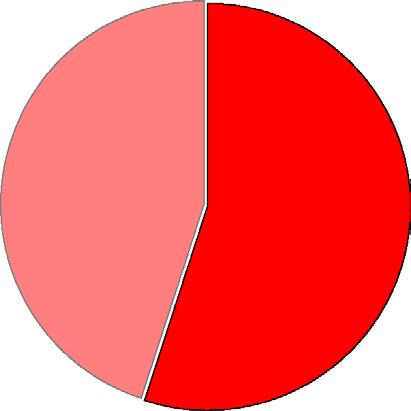
Pasta export locations for EU countries
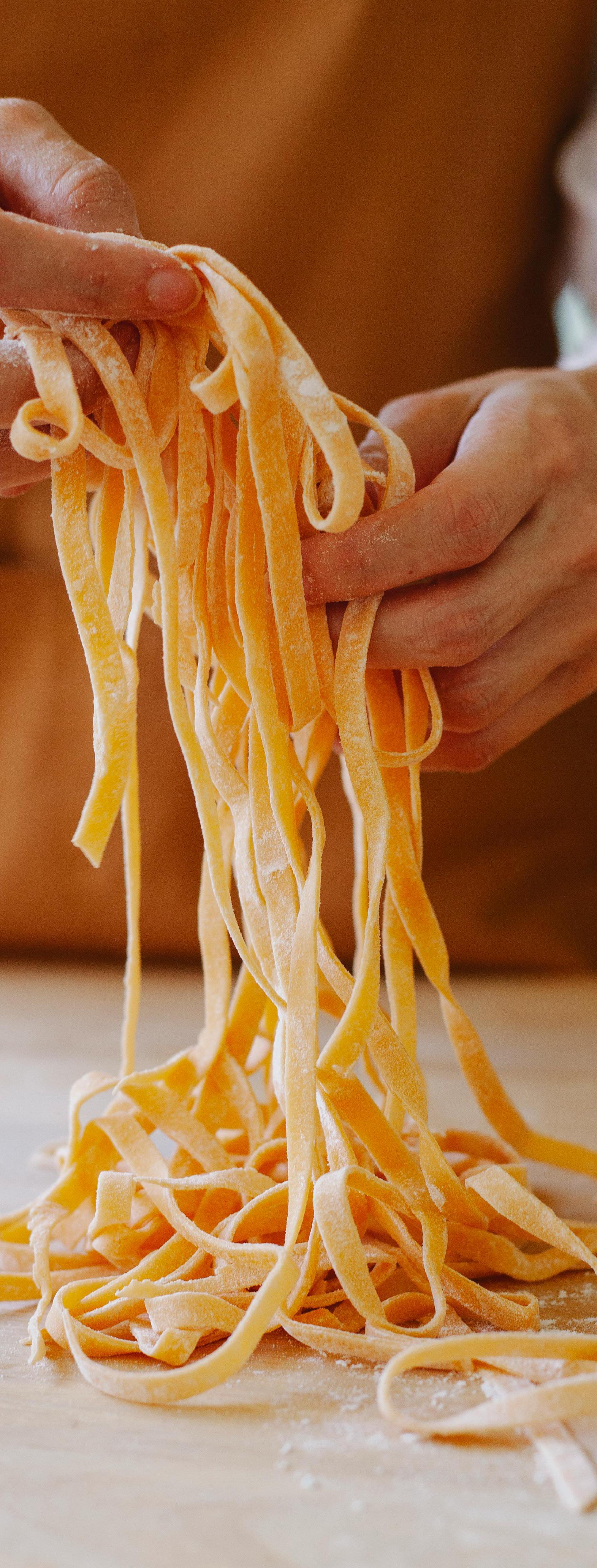
Freshly made pasta is detangled by a chef’s flour covered hands. Photo courtesy of Pexels by Antonius Ferret via a Free Pexels License.
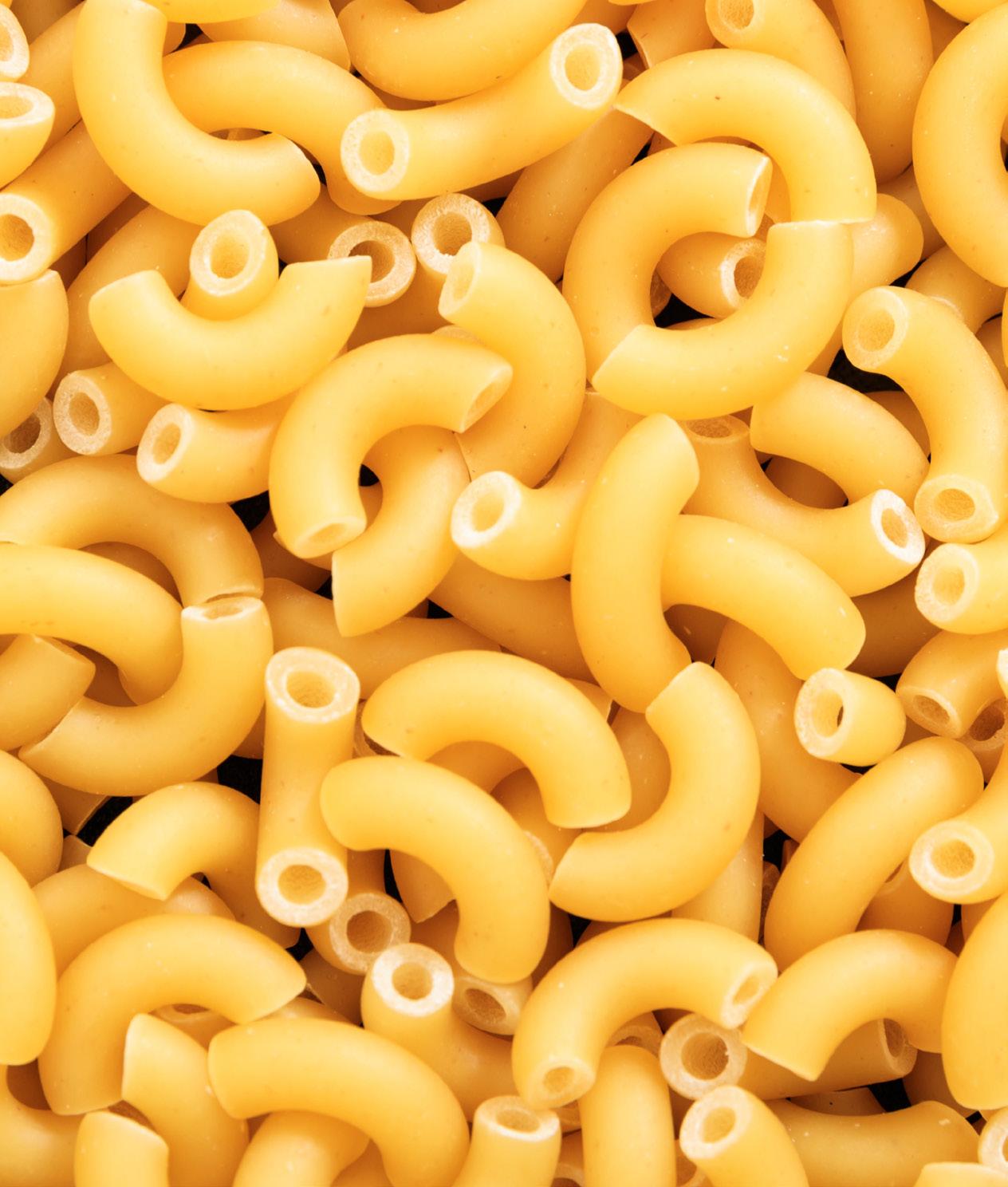
Penne Macaroni
Penne is the plural form of the Italian penna (meaning "feather", but "pen" as well), deriving from Latin penna (meaning "feather" or "quill"), and is a cognate of the English word "pen". When this shape was created, it was intended to imitate the then-ubiquitous steel nib of fountain and dip pens.
Penne are one of the few pasta shapes with a certain date of birth: in 1865, Giovanni Battista Capurro, a pasta maker from San Martino d'Albaro (Genoa), obtained
a patent for a diagonal cutting machine. His invention cut the fresh pasta into a pen shape without crushing it, in a size varying between 3 cm (1 in) mezze penne (lit. 'half pens') and 5 cm (2 in) penne (lit. 'pens').
Penne is traditionally cooked al dente and its shape makes it particularly adapted for sauces, such as pesto, marinara or arrabbiata. The latter has been celebrated several times in Italian films, including featuring in Marco Ferreri's La Grande Bouffe.
Macaroni, known in Italian as maccheroni, is a pasta shaped like narrow tubes. Made with durum wheat, macaroni is commonly cut in short lengths; curved macaroni may be referred to as "elbow macaroni". The common curved shape is created by different speeds of extrusion on opposite sides of the pasta tube as it comes out of the machine.
The word macaroni is often used synonymously with elbow-shaped macaroni, as it is the
variety most often used in macaroni and cheese recipes. In Italy and other countries, the noun maccheroni can refer to straight, tubular, square-ended pasta corta (lit. 'short pasta') or to long pasta dishes, as in maccheroni alla chitarra, which is prepared with long pasta such as spaghetti. In the United States, federal regulations define three shapes of dried pasta (macaroni, spaghetti, and vermicelli) as falling under the label of "macaroni product".
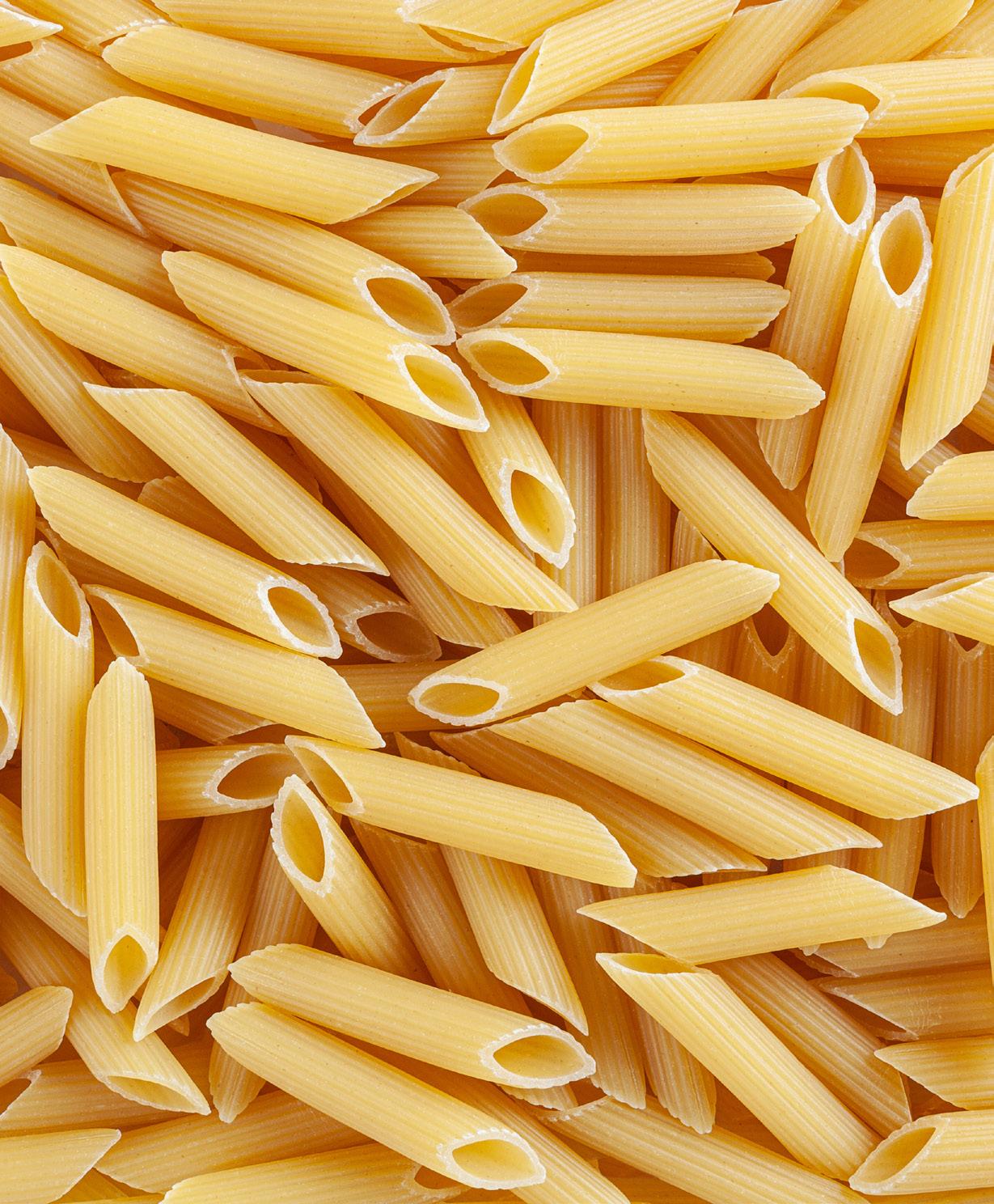
Clustered penne, dialogally cut and small cylindrical pasta. Photo courtesy of Adobe Stock Images by Da-ga via a Education License.
Clustered macaroni, elbow round pasta. Photo courtesy of Adobe Stock Images by Rawf8 via a Education License.
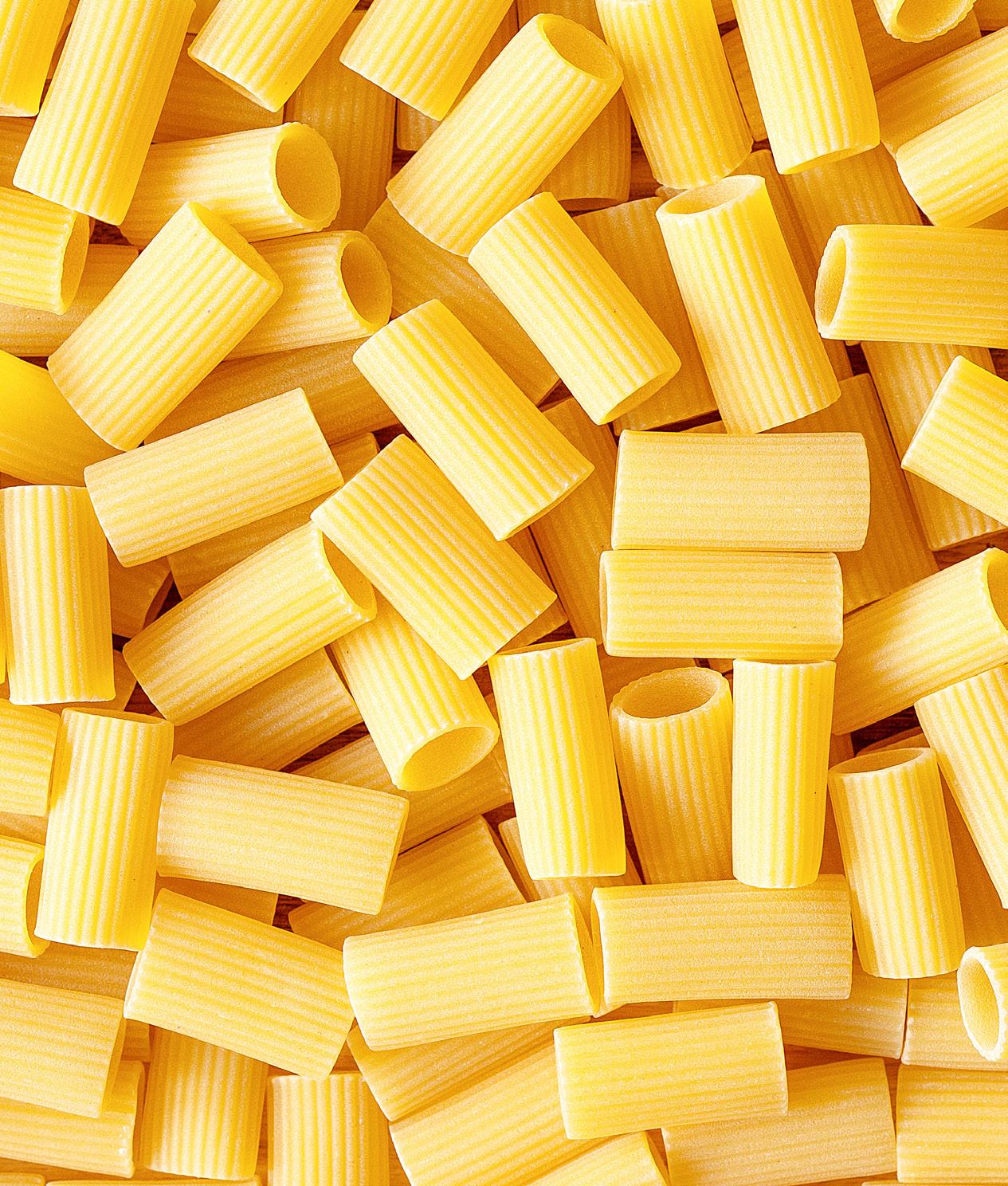
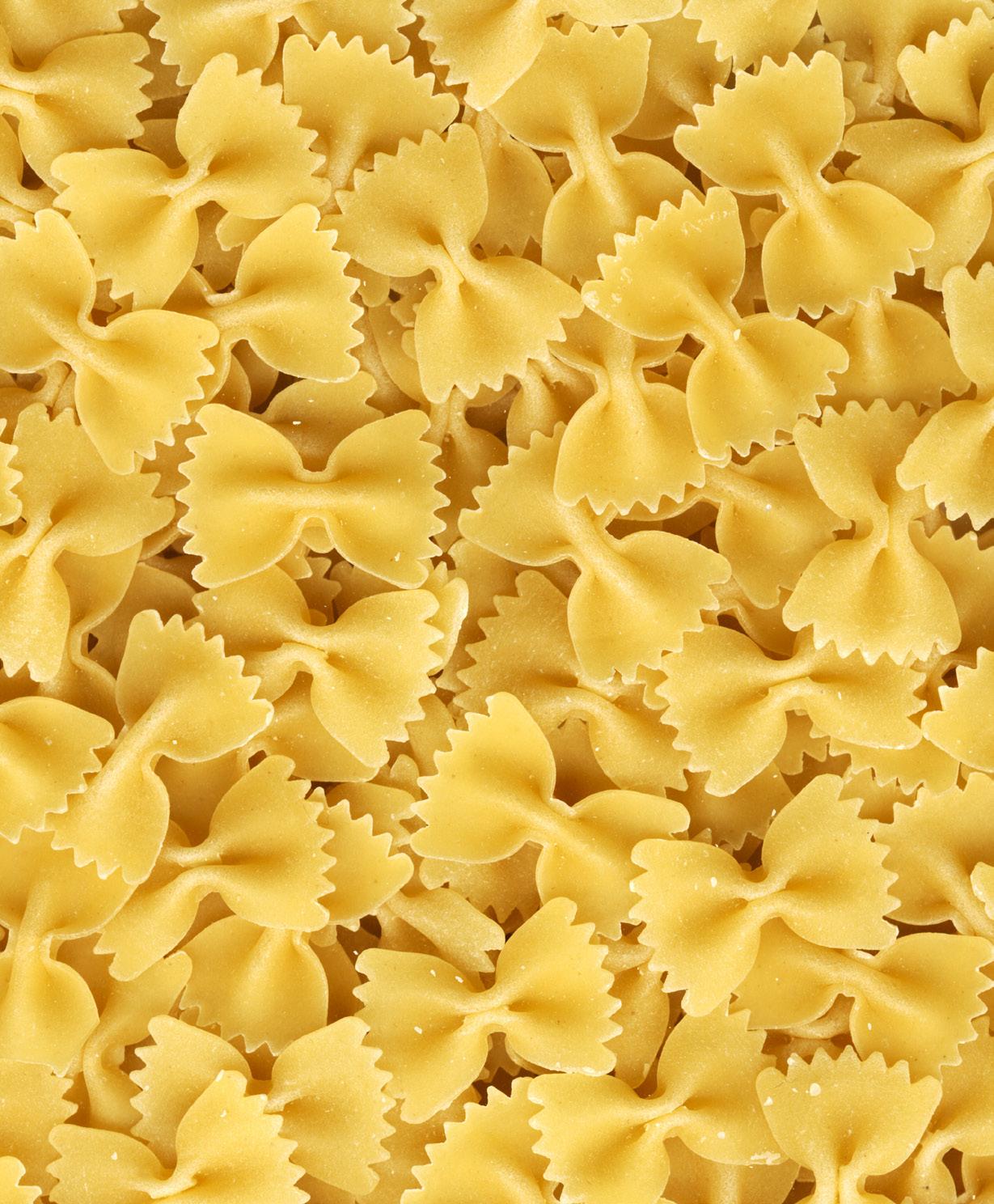
Rigatoni Farfalle
Rigatoni are characterized by ridges along their length, sometimes spiraling around the tube; unlike penne, the ends of rigatoni are cut perpendicular to the tube walls instead of diagonally.
The word rigatoni comes from the Italian word rigato (that stands for 'lined', 'striped', 'ruled', rigatone being the augmentative, and rigatoni the plural form), which means 'ridged' or 'lined', and is associated with the cuisine of
southern and central Italy. Rigatoncini are a smaller version, close to the size of penne. Their name takes on the diminutive suffix -ino (pluralized -ini), denoting their relative size.
Rigatoni is a particularly favoured pasta shape in the south of Italy, especially in Sicily. Its eponymous ridges make better adhesive surfaces for sauces and grated cheese than smoothsided pasta like ziti.
Farfalle are a type of pasta. The name is derived from the Italian word farfalle ('butterflies'). In the Italian region of EmiliaRomagna, farfalle are known as strichetti (a local word for 'bow ties'). A larger variation of farfalle is known as farfalloni, while the miniature version is called farfalline. Farfalle date back to the 16th century in the Lombardy and EmiliaRomagna regions of Italy.
Farfalle come in several sizes, but they all have a distinctive "butterfly" shape. Usually, the farfalle are formed from a rectangle or oval of pasta, with two of the sides trimmed to a ruffled edge and the center pinched together to make the unusual shape of the pasta. A ridged version of the pasta is known as farfalle rigate. In addition to Durum wheat and plain, wholewheat varieties, colors are added by mixing certain ingredients into the dough, which also affects the flavor.
Clustered rigatoni, straight and moderately sized cylindrical pasta. Photo courtesy of Adobe Stock Images by Grafvision via a Education License.
Clustered farfalle, bowtie pasta. Photo courtesy of Adobe Stock Images by putzlowitsch via a Education License.