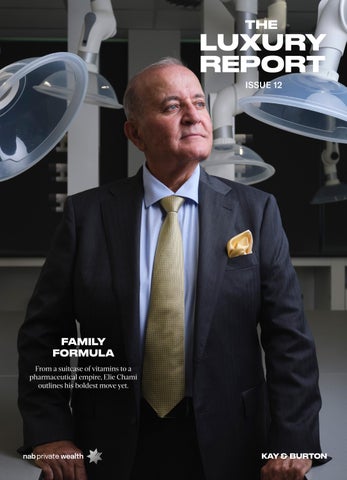
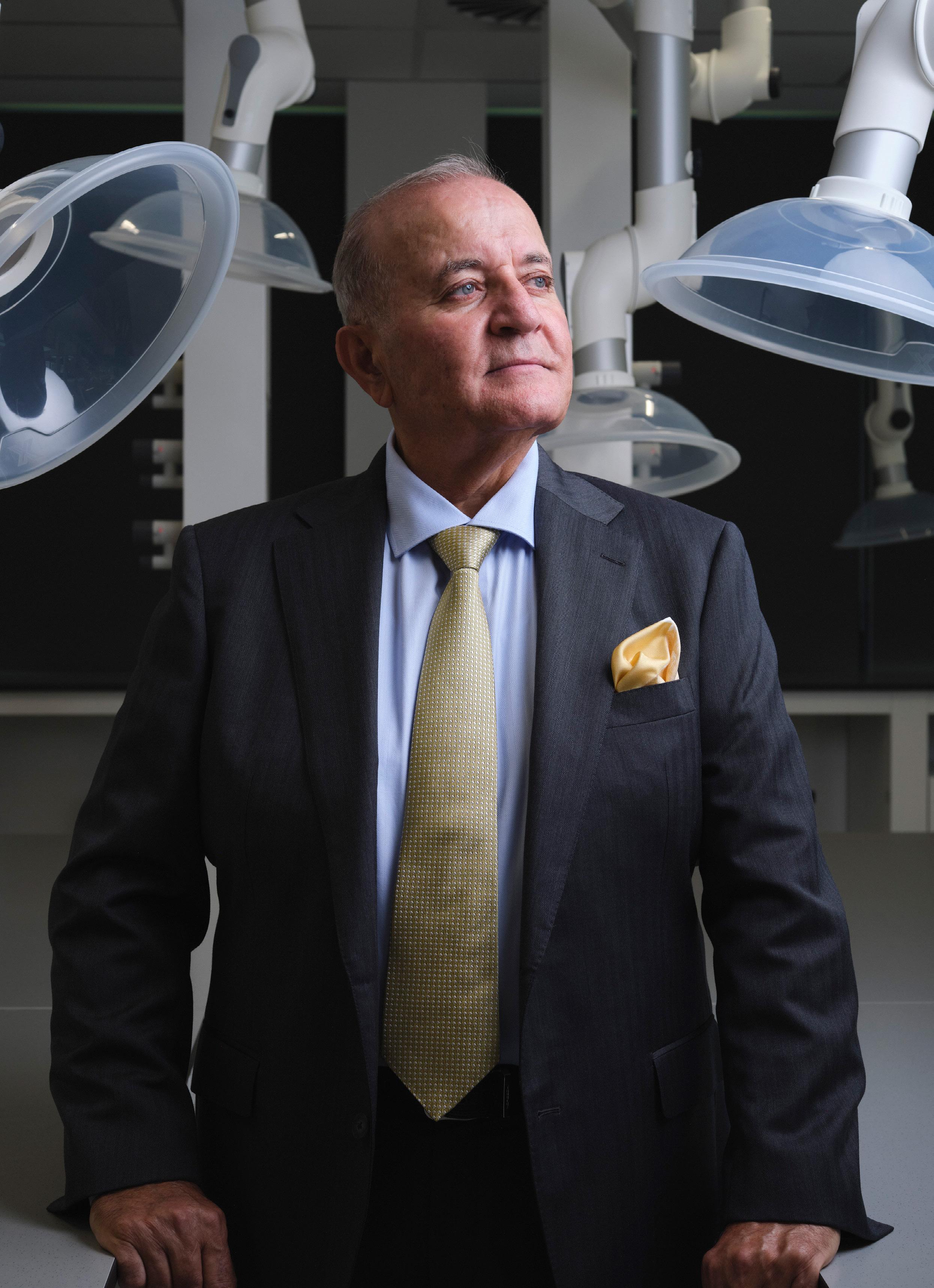
FAMILY FORMULA
From a suitcase of vitamins to a pharmaceutical empire, Elie Chami outlines his boldest move yet.

Legacy Discretion Relationships For decades, these principles have defined how we work and who we are. Through experience, insight and enduring trust, our people carr y this legacy for ward
Scan to watch
Exploration looks different depending on who’s doing it and how—whether leaving homelands, industries or creative territories. This issue, arriving as we move into the cooler months, is full of people doing exactly that, each in their own way.
Our cover story charts the remarkable rise of Vitex Pharmaceuticals (p18), a global success built on grit, family bonds and the quiet strength of Australian manufacturing’s global standing. And from a clan defined by exploration, Peter Hillary—son of the legendary Sir Edmund—joins us to reflect on what pulls certain people toward the most remote places on earth (p40).
We travel to Europe with three Australian winemakers, each having traded home ground for foreign soil to bring antipodean instinct to some of the world’s most storied terroirs (p55). In Barcelona, we visit the Sagrada Família—finally on the threshold of its completion a century after Gaudí’s death (p26). We also trace how Indigenous Australian art is finding new global audiences on its own terms.
Also in this issue: French-Italian sculptor Joris Poggioli speaks to his pursuit of timeless form as he makes his Australian debut (p30); fashion tastemaker Yasmin Sewell shares how her new fragrance label is expanding what scent can express (p50); and Eames Demetrios discusses on stewarding one of design history’s most beloved legacies (p52).
Elsewhere, the wealth managers and economists at NAB Private Wealth examine how families are rethinking the mechanics of intergenerational support (p14), and take a closer look at the fixed income renaissance (p34). And, of course, we offer our regular insights into the prestige property market (p47).
Whether exploring centuries-old craftsmanship or tomorrow’s investment landscape, we hope these stories inspire you to venture beyond the familiar in search of discoveries worth the journey.
CONTRIBUTORS
NAB
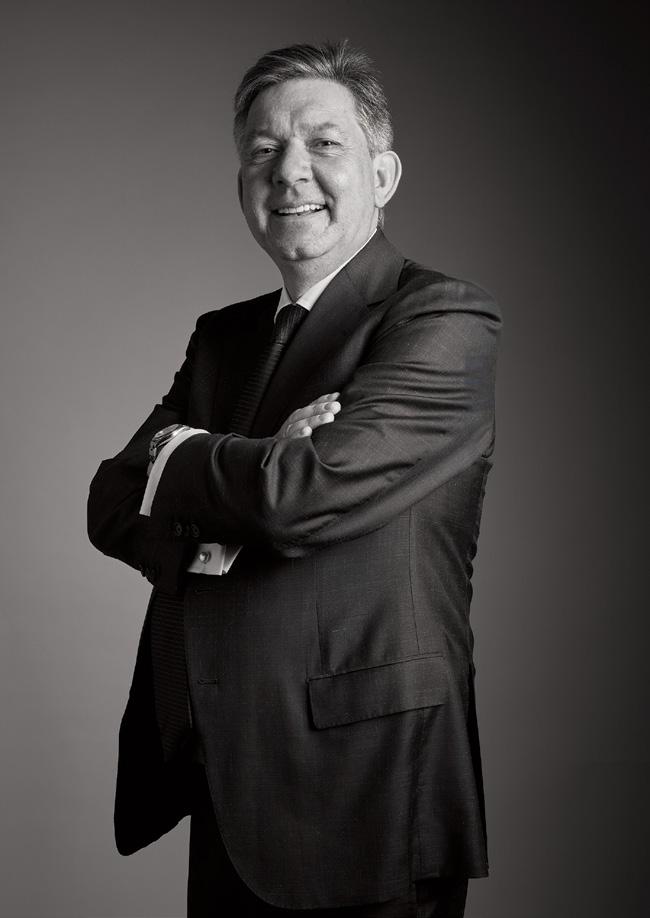
Michael Saadie
Executive of NAB Private Wealth & CEO JBWere
Laurie Conheady
Executive Director and Head of Fixed Income, JBWere
Dean Pearson Head of Behavioural & Industry Economics, NAB
Mark Browning Head of Valuations & Property Advisory
KAY & BURTON
Ross Savas
Managing Director
Peter Kudelka
Executive Director
Gowan Stubbings
Executive Director
Cath Stubbings
Executive Director
Alex Schiavo
Executive Director
Scott Patterson
Executive Director
Tom Barr Smith
Executive Director
Jamie Mi
Partner & Head of International
ADVERTISING
Nick Kenyon
EDITORIAL
Common State
Managing Editors
Luke McKinnon
Nick Kenyon
Editor Leanne Clancey
Writers
Max Allen
Peter Barrett
Rosa Bertoli
Alice Blackwood
Cameron Cooper
Kirsten Craze
Steve Dow
Catherine Gillies
Ed Glenn
Michael Harden
Ruth Lang
Carli Phillips
Glynis Traill-Nash
Carlie Trotter
Louis White
Design and Art Direction
Amber Goedegebuure
Cover
Elie Chami
Image: Peter Tarasiuk
Head of Luxury Strategy, Kay & Burton Telephone +61 3 9825 2554 nkenyon@kayburton.com.au
Level 7, 505 Toorak Road, Toorak, VIC 3142
The Luxury Report is published four times a year. Issue 12—printed April 2026. Copyright © Kay & Burton. Printed by Neo, 5 Dunlop Road, Mulgrave, VIC 3170. The contents of this document (contents) have been prepared and are provided by Kay & Burton (which means and includes Kay & Burton Pty Ltd, its associated entities and its officers, servants, contractors, employees and agents) in good faith. Some of the contents have been provided to Kay & Burton by others. Kay & Burton does not represent or warrant the accuracy of the contents. The contents are provided solely for information purposes and do not constitute any recommendation, advice or direction by Kay & Burton for anyone to use any of the contents to make any decision about anything and in particular, about making any investment or participating in or acquiring, disposing, selling or purchasing anything or entering into any agreement, arrangement or dealing (whether legally binding or not). Kay & Burton recommends that any such decision should only be made following the receipt of advice from an appropriately qualified advisor.

DEFINING LINES
French-Italian designer Joris Poggioli shares the thinking behind his first Australian showcase and how he transforms architectural concepts into collectable furniture.
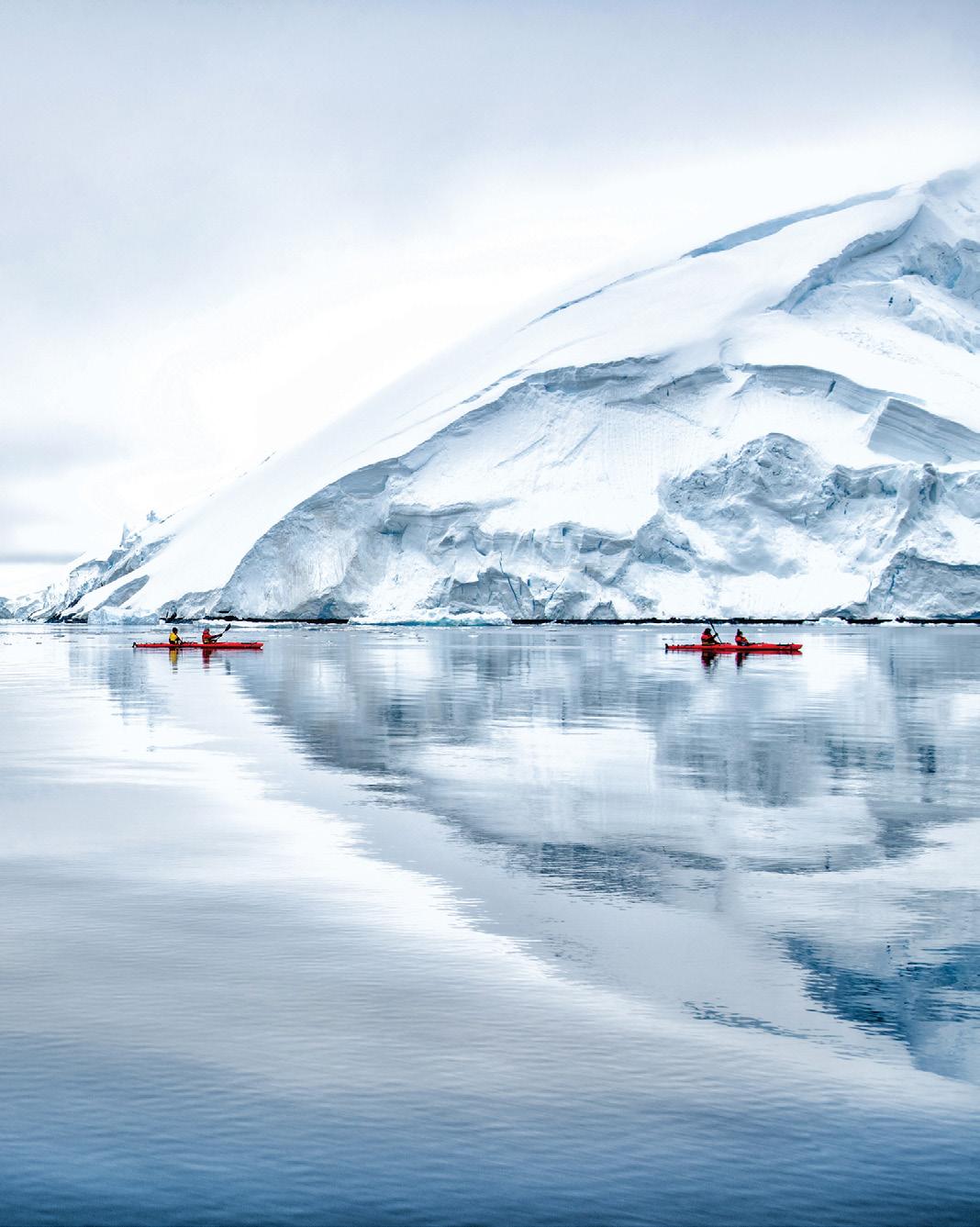
COMFORT IN THE COLD
From Everest summits to polar expeditions, Peter Hillary has pursued the world’s extremes. Soon returning to the arctic, he reflects on modern exploration and the draw of wild places.
ISSUE 12
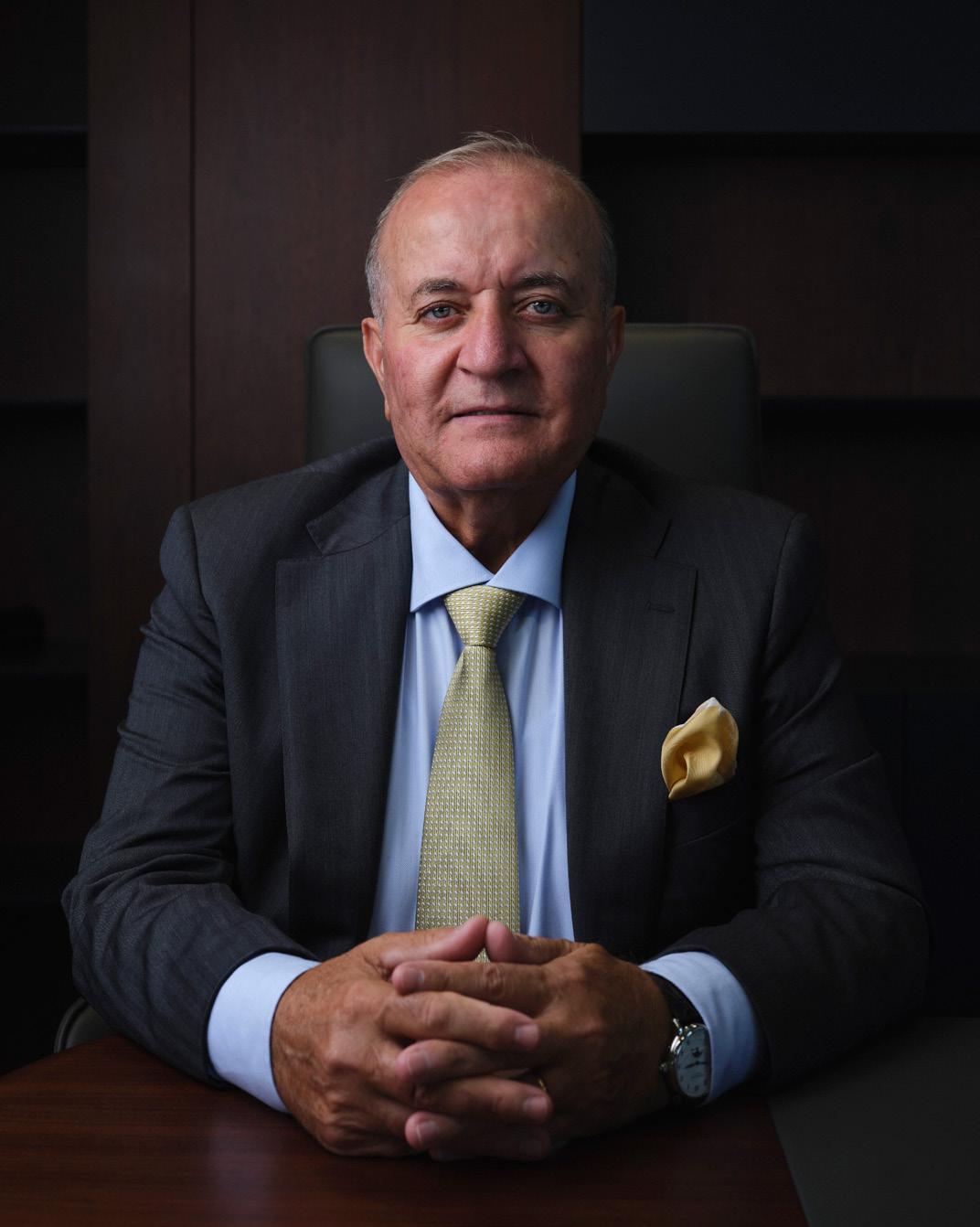
THE COMPOUND EFFECT
Elie Chami and family reveal the conviction and complementary strengths behind Vitex Pharmaceuticals, a wellness industry leader with a worldwide client base.
BORDERS, BEYOND TIME
Read how Indigenous art is taking the world’s most prestigious stages, communicating ancient knowledge with urgent contemporary force.
14 THE REWIRING OF FAMILY WEALTH
We unpack the data showing Australian families are rethinking how wealth moves across generations.
26 DIVINE GEOMETRY
Learn about the devotion, technology and detective work finally completing architecture’s most famous unfinished masterpiece.
34 THE BEAUTY OF BORING
JBWere’s Laurie Conheady explains why bonds are earning fresh respect after years in the shadow of flashier assets.
38 HOLDING THE ROOM
Karen Martini shares what drew her to take over a beloved neighbourhood restaurant and how she is making it her own.
44 LANGUAGE OF THE LOOM
Discover how the craftsmanship behind five defining works has made the Australian Tapestry Workshop a quiet treasure.
47 STRENGTH AT THE TOP
From turnkey appeal to auction records, our suburb experts outline the market insights shaping smart property decisions in 2026.
50 SCENT FOR THE SOUL
Fashion innovator Yasmin Sewell discusses the wellness philosophy disrupting luxury fragrance and attracting major investment.
52 INSPIRATION FROM THE MARGINS
On a rare visit to Australia, the grandson of Charles and Ray Eames reflects on stewardship and keeping one of design’s great inheritances alive.
55 CONTINENTAL CONVERSION
Three Australian winemakers who have earned their place inside Europe’s most hallowed wine regions reveal what it takes to break through centuries of tradition.
58 DESIGN IN DIALOGUE
Interior designer Fiona Lynch takes us inside her recently published material philosophy and high-profile international projects.
62 OUT AND ABOUT
01 The silver-plated Frank Desk from Poggioli’s 2022 Totem collection. Image: Alice Mesguich. 02 Antarctica’s iceberg-filled Lemaire Channel. Image: Clement Louineau.
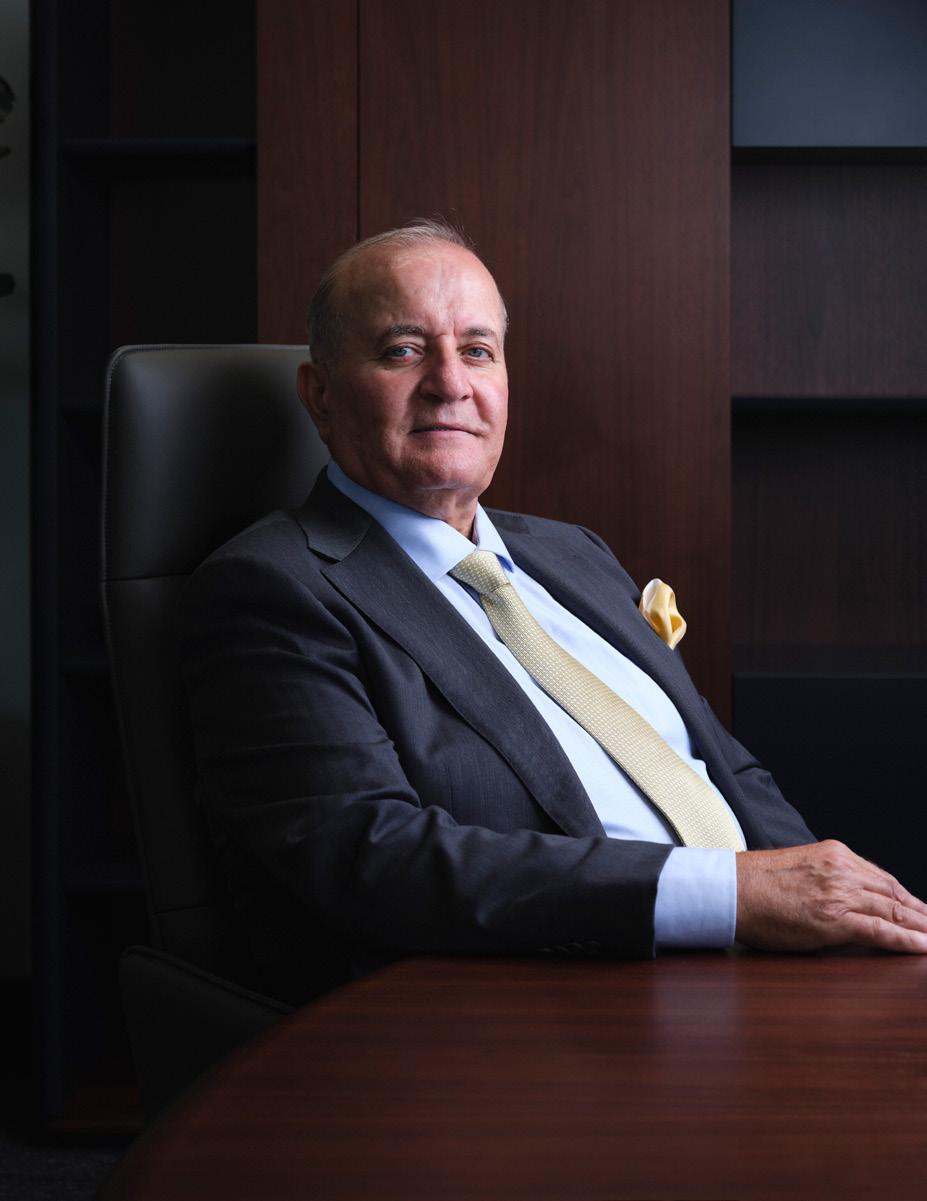
Chami in his office at Vitex’s new HQ. Image: Peter Tarasiuk.
THE SHORTLIST
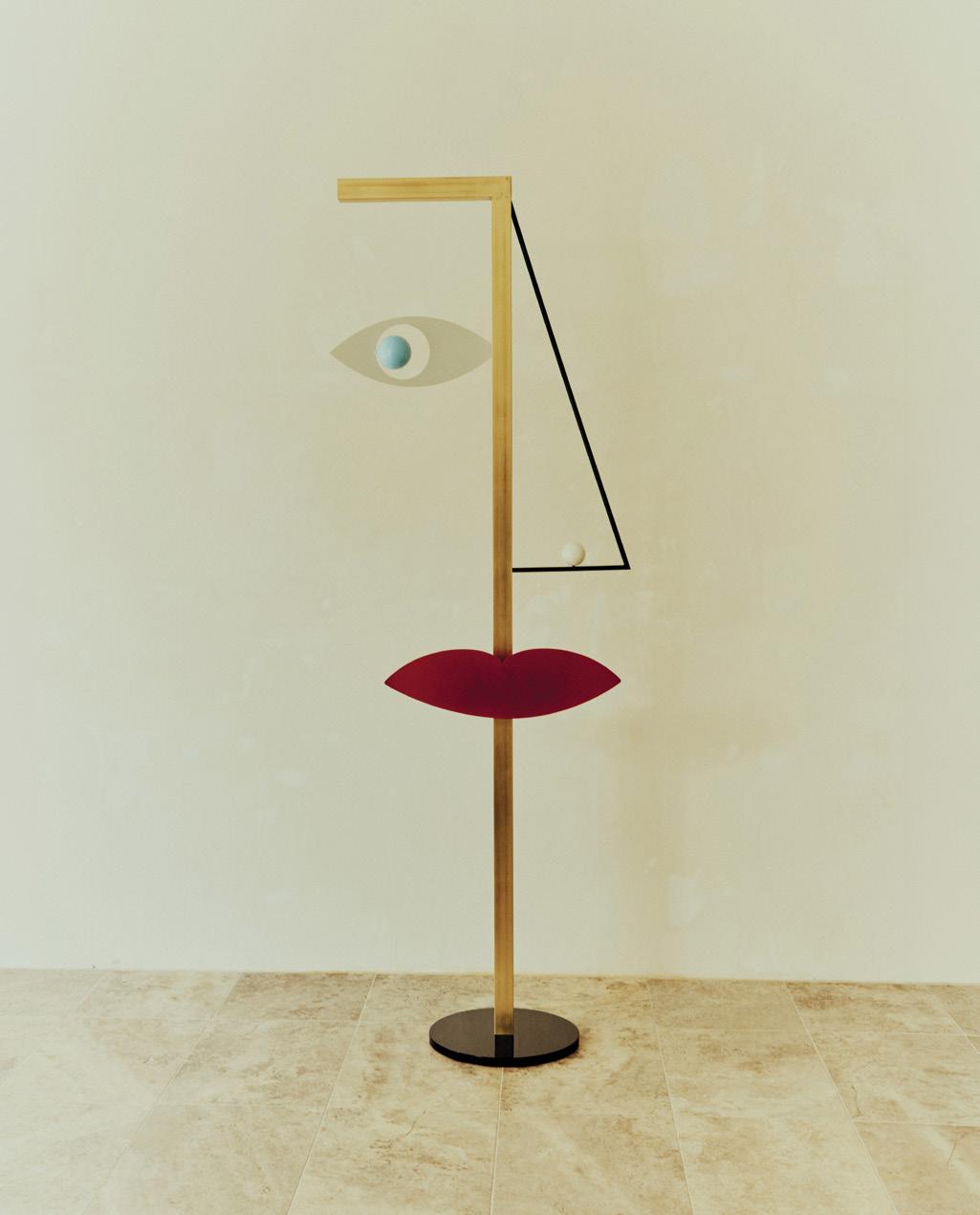
01 Nico brass sculpture by Peter D. Cole Powell & Glenn has a longstanding collaboration with sculptor Peter D. Cole—and for good reason. Peter does what great makers do: listens carefully to what you want, then produces something completely different, unexpected and transcendent. I’ve commissioned pieces for my own home, and they carry a uniquely elemental quality. Nico (2025), part of Peter’s most recent body of work, returns to the modernist visual language of his early steel sculptures—rendered here in brass and powdercoated aluminium at commanding scale. Available by commission. peterdcole.com
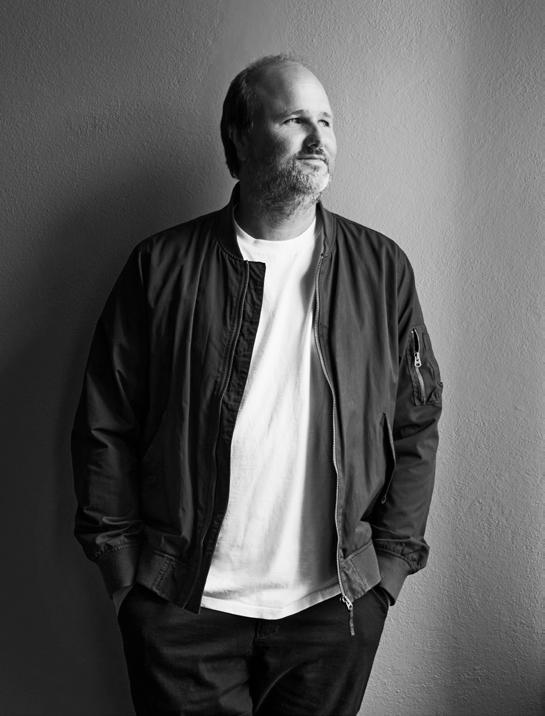
GUEST EDITED BY Ed Glenn (pictured), principal of Melbourne-based multidisciplinary design firm Powell & Glenn, and the award-winning architect behind some of Australia’s most photographed homes.
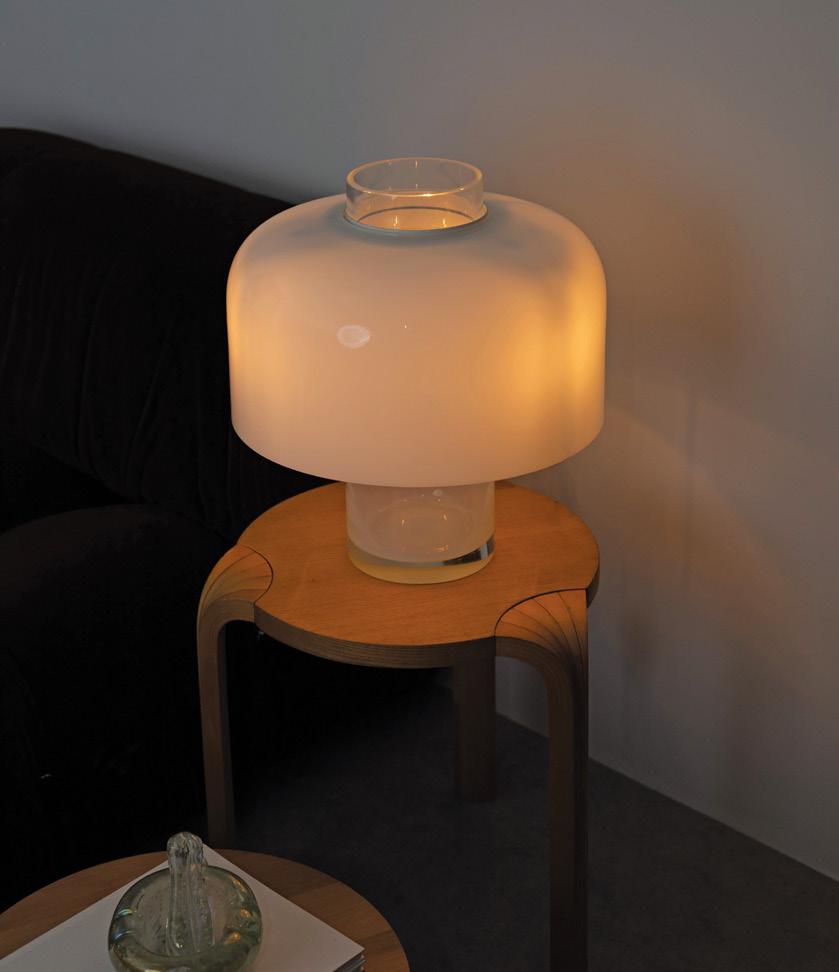
02 Vintage LT226 table lamp by Carlo Nason for Mazzega
Our recent work in Italy has deepened my love for late-1960s modernism and sent me down many rabbit holes in search of pieces like this. Carlo Nason was a master of the era. Born into a Murano glassmaking family, his pieces for Mazzega are now held in MoMA and increasingly impossible to find. He designed this lamp in 1968, crafted from handblown Murano glass in two parts: an opaline glass shade resting over a vase-like leg. The interplay of opaque and transparent elements radiates warmth through material presence, even when switched off. Available through specialist vintage dealers. doublebratus.com
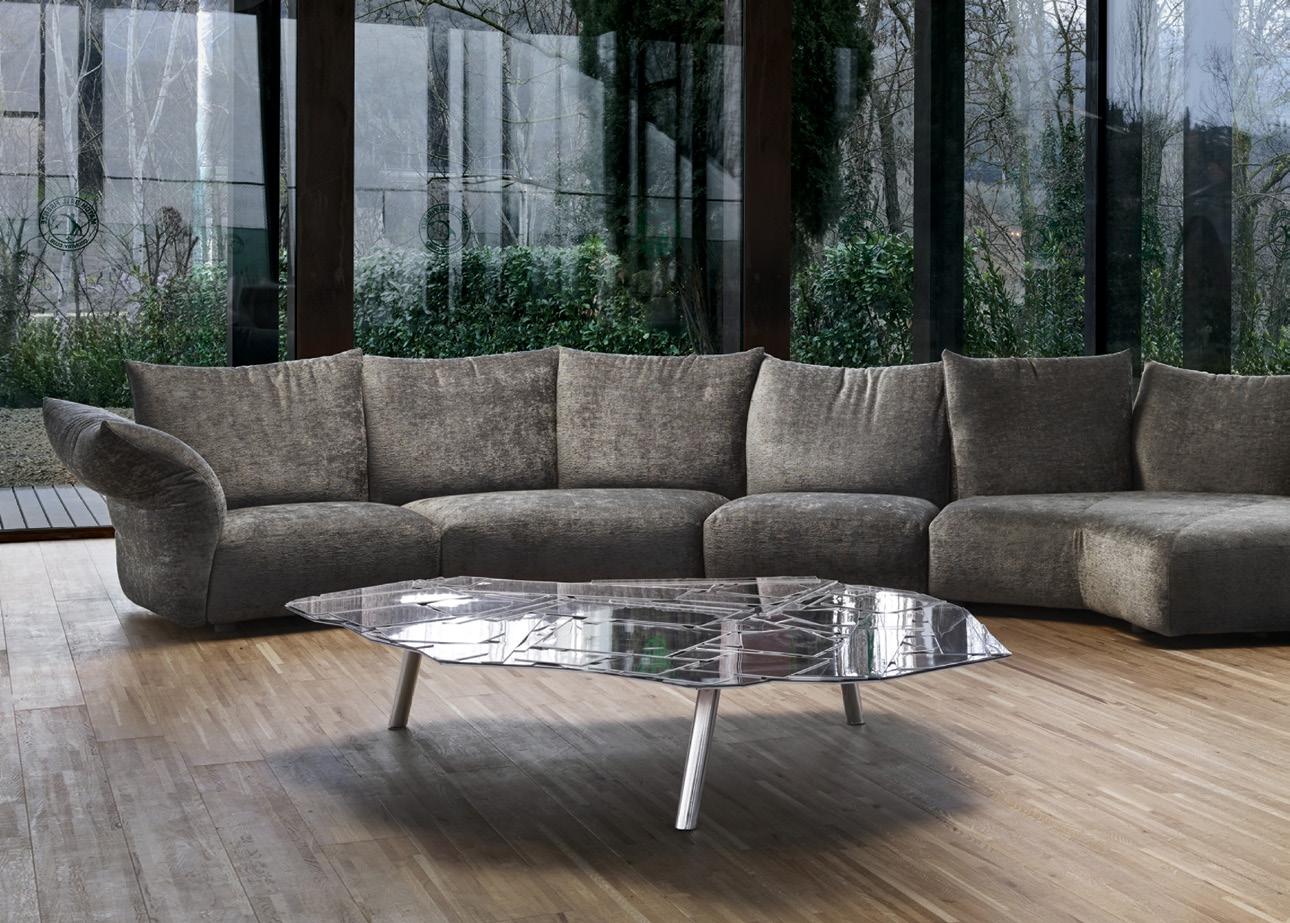
03 Standard Sofa by
Francesco Binfaré for Edra
From celebrated Edra collaborator Francesco Binfaré, this piece is something I find myself returning to again and again in my work: a design that commands large spaces without sacrificing intimacy. We have one in our Melbourne home—in my opinion, it’s a timeless piece of design. Its generous scale, remarkable texture and adaptive form demonstrate Binfaré’s mastery of comfort married with visual sophistication. This is seating that invites both immediate appreciation and long-term devotion. Made to order. spacefurniture.com
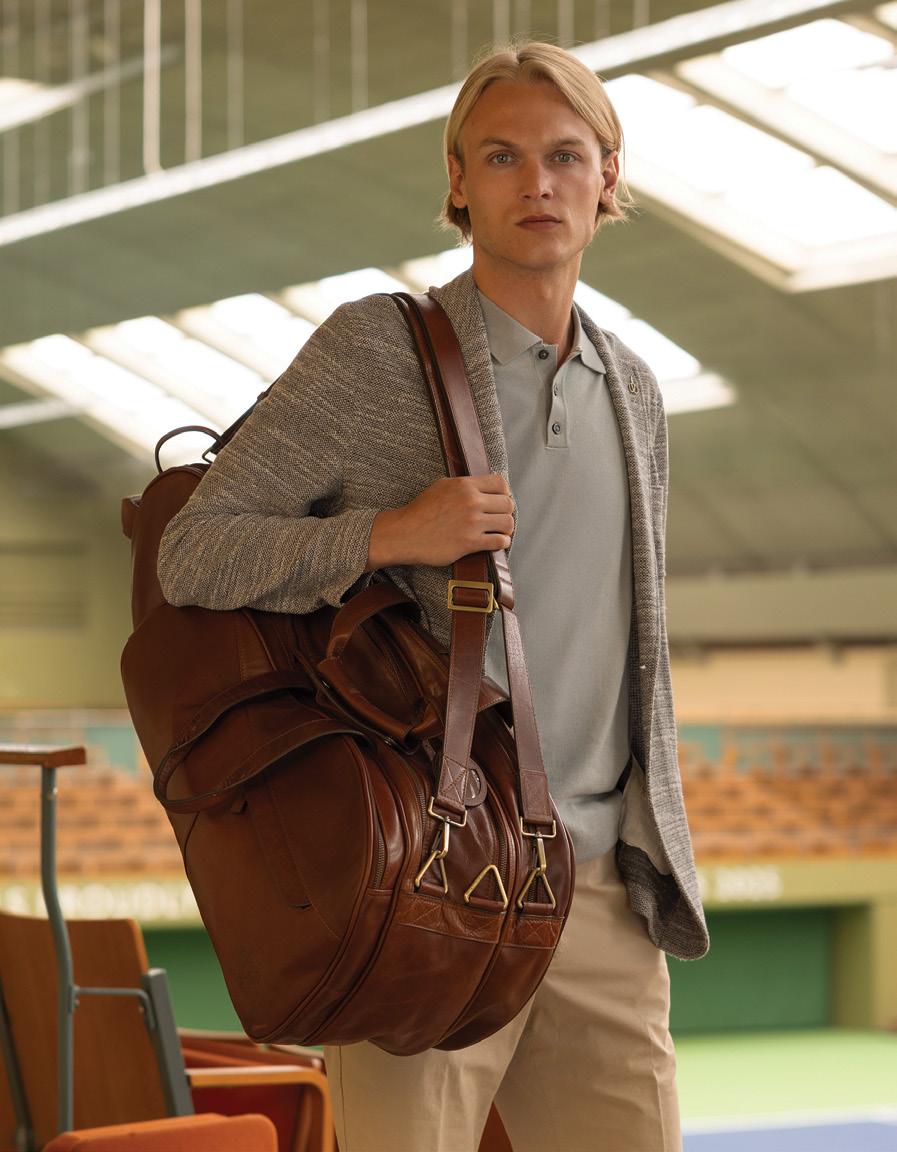
04 Leather tennis racquet bag by
Hildebrand Sweden
I’ve always loved tennis and been drawn to specialised, well-made bags—camera cases, compendiums, anything purposefully crafted. This Stockholm-based brand’s leather racquet bag defies its sporting origins. Constructed from vegetable-tanned full-grain leather in a warm, burnished tan, it’s the kind of object that improves with neglect as much as care. A beautiful marriage of function and craft for anyone who appreciates objects made to last. $1290 Securing one may require stopping by the Stockholm showroom. hildebrandsweden.com
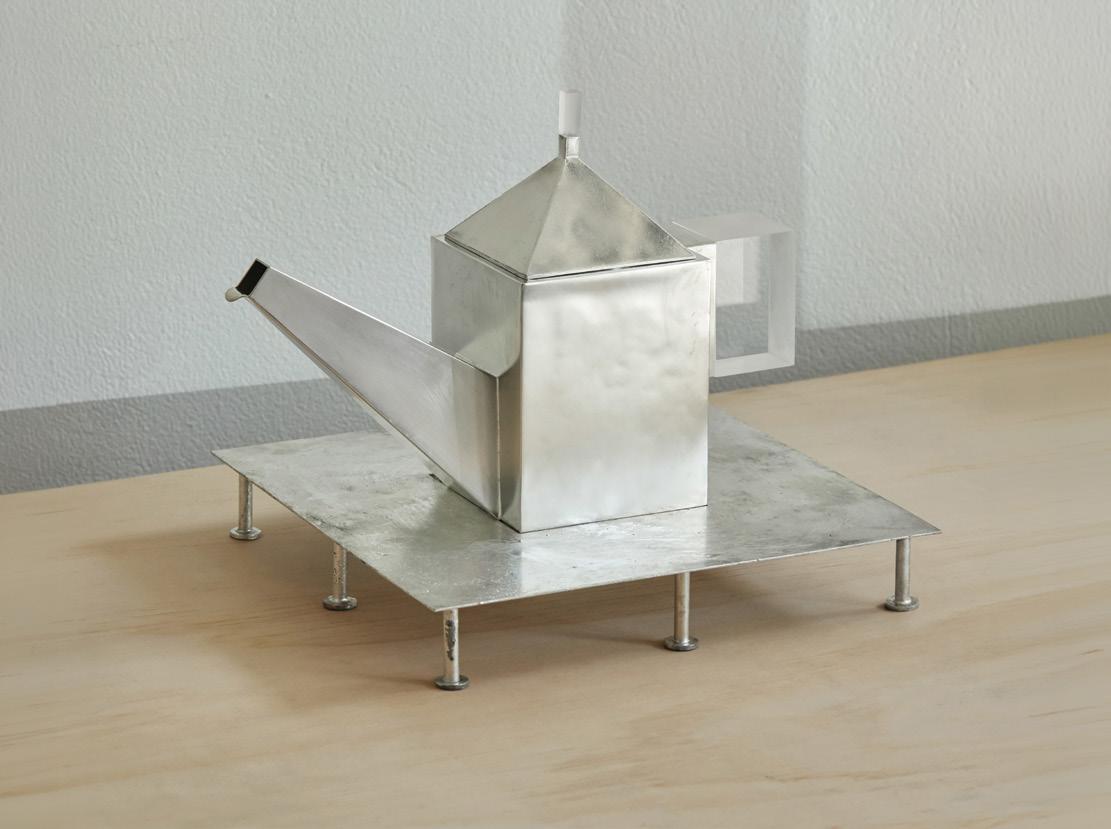
05 Tin-plated copper teapot by Studiokyss
My wife Edwina surprised me with one of Kenny Yong-soo Son’s sterling silver jugs and I’ve been devoted ever since. Seoul-born, Sydneybased and trained in metalcraft under a Korean master, Son transforms everyday vessels into quiet monuments. This hand-fabricated, tin-plated copper teapot is a perfect example: form following function, with its worked surface shifting in mood depending on the light and the hour. Available through select galleries. studiokyss.com
From posthumous acclaim for Emily Kam Kngwarray to Archie Moore’s Golden Lion award win, Indigenous Australian artists are capturing global attention with work that draws on millennia of cultural tradition while speaking to the present—by Steve Dow.
Beyond borders, beyond time
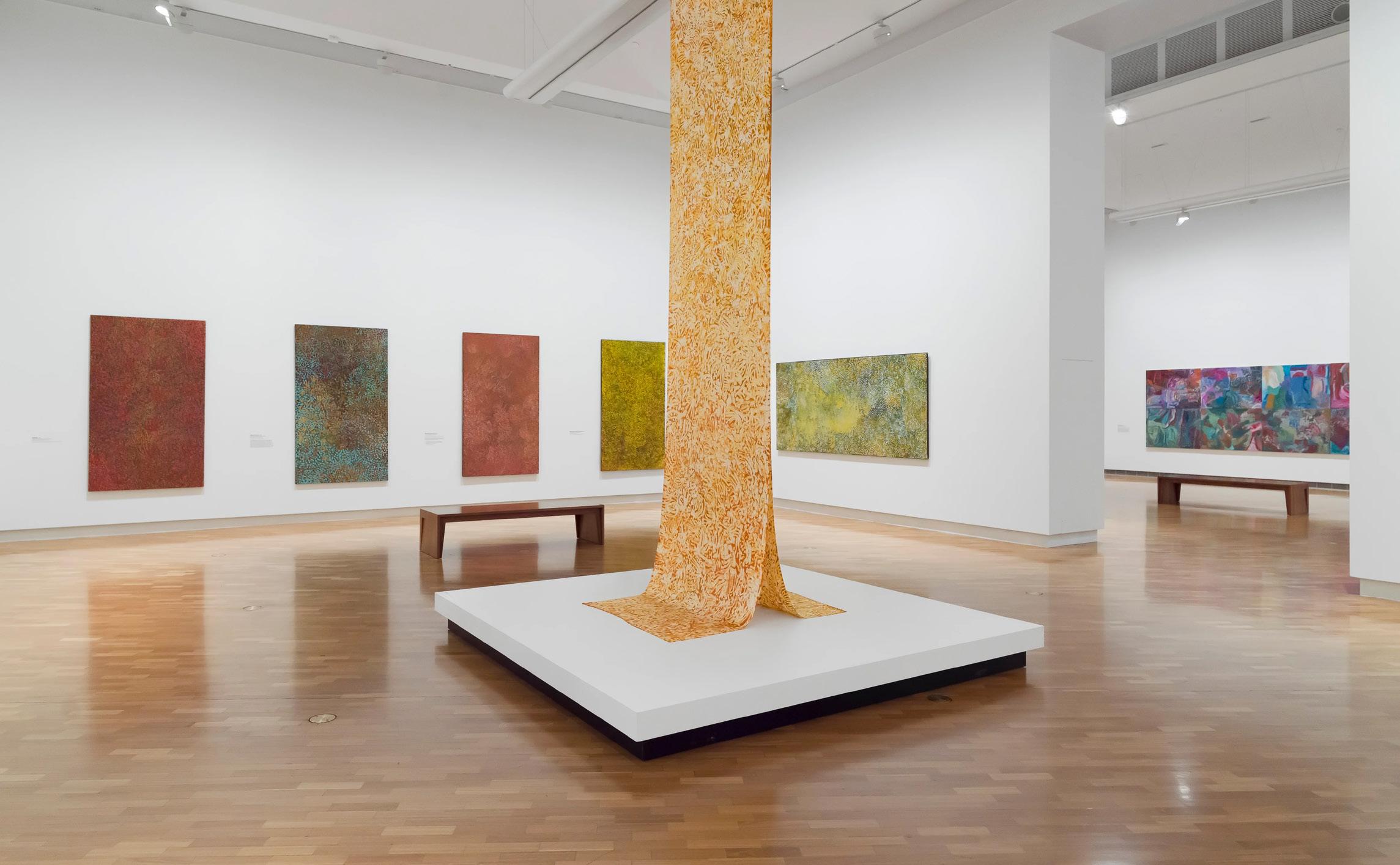
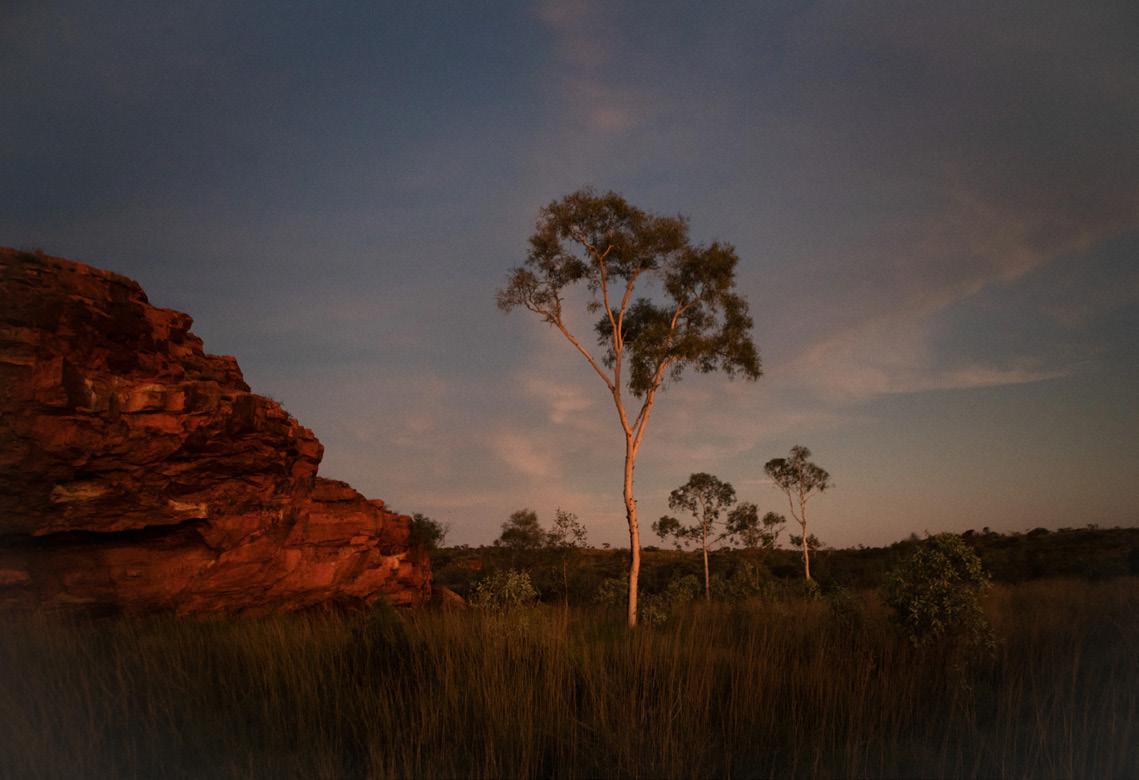
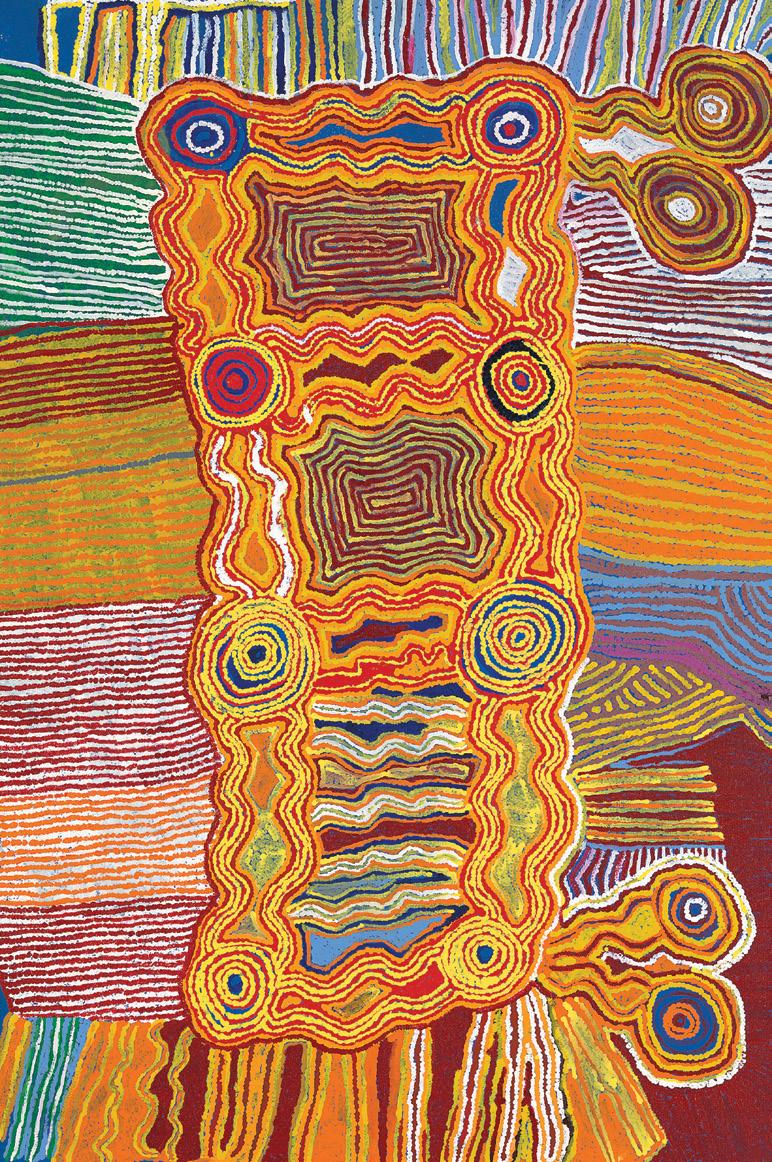
The late Anmatyerr artist Emily Kam Kngwarray captivated the world with her batik prints and large acrylic paintings— produced from her remote desert home of Utopia, north-east of Alice Springs. She went on to represent Australia at the Venice Biennale (posthumously, alongside Yvonne Koolmatrie and Judy Watson), and her work continues to resonate globally, commanding an eponymous solo blockbuster at Tate Modern in London, which ran from mid-2025 into early 2026.
Working with extraordinary intensity in the final years of her life, Kngwarray made upwards of 3000 canvases before
her death in 1996, in her mid-80s. “If you close your eyes and imagine the paintings in your mind’s eye, you will see them move,” she said. “They are real.”
New global terrain
What is now dawning for audiences is a continuum of past, present and future—the “everywhen” foundational to such masterpieces. London critics celebrated Kngwarray’s oeuvre during the Tate retrospective, while across the Atlantic, the NGV’s touring exhibition The Stars We Do Not See represents a further landmark presentation. Featuring more than 200 works by over 130 artists,

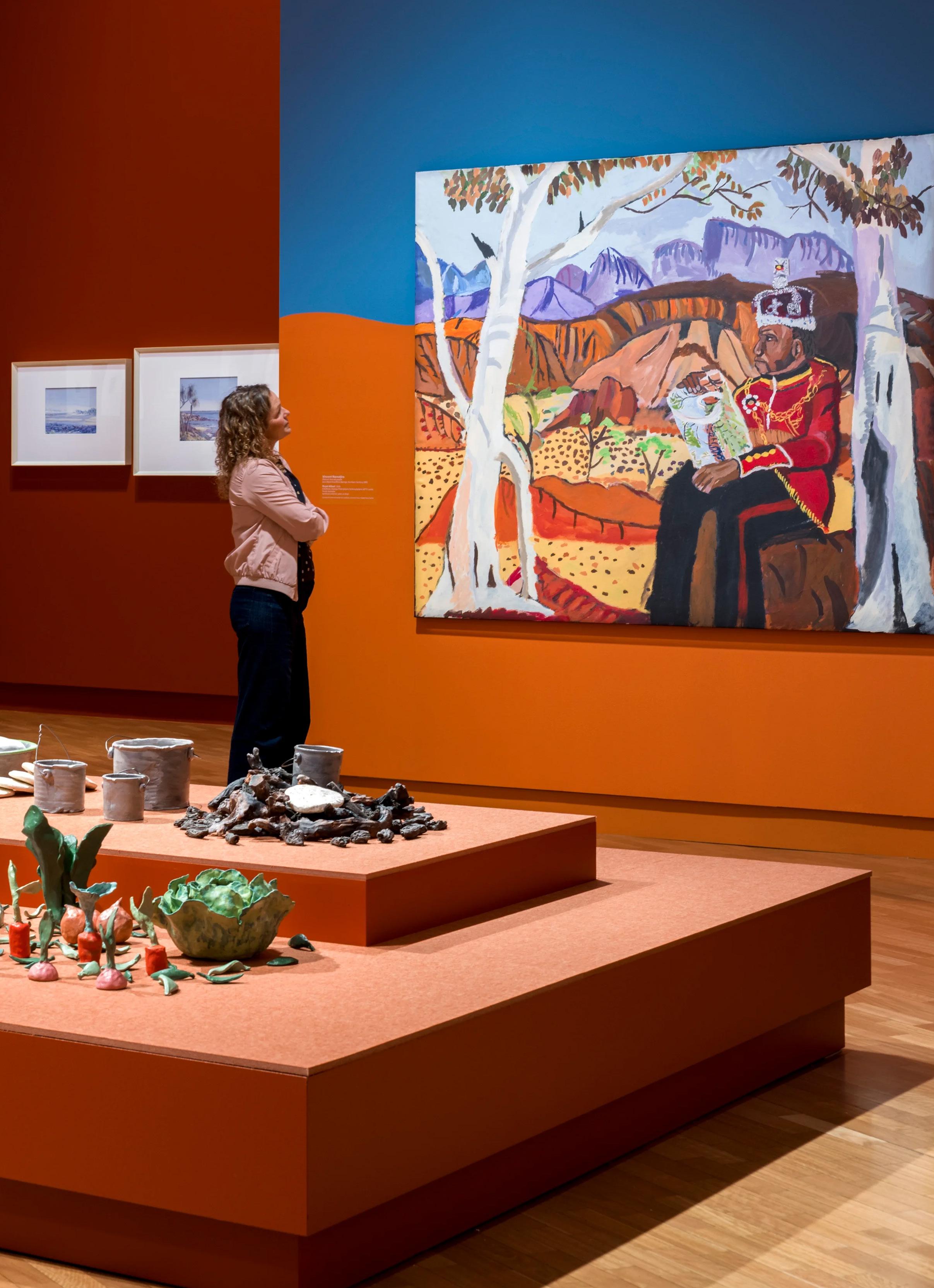
from Kngwarray to contemporary conceptual pieces using neon, photography and video, it has been billed as the largest exhibition of Aboriginal and Torres Strait Islander art ever seen in North America. Opening in Washington DC in late 2025, it is travelling to three further US states over the remainder of its 18-month run.
Indigenous Australian art is experiencing significant global recognition, as audiences come to understand the timeless knowledges and truth-telling embedded in such works—meanings that extend far beyond viewing it as purely abstract or decorative.
“I think there are a few things at play,” says Warumungu/Luritja curator Kelli Cole, who alongside Arrernte/Kalkadoon curator Hetti Perkins assembled the original major 2023-24 Kngwarray exhibition at the National Gallery of Australia in Canberra, upon which the Tate show is based. “Partly it’s our major cultural institutions really pushing First Nations art on to the international stage,” Cole suggests. “Commercial galleries are also reaching further afield showing at fairs like Frieze and Art Basel, and private collectors are really championing these artists.”
Comprehension of Kngwarray’s work at the Tate was enhanced by context, says Cole, including photographs by filmmaker Dylan River of the artist’s ancestral Country and Danielle MacLean’s portrait film Emily: I Am Kam. “Viewers often begin their engagement with [her] paintings through the familiar language of Western abstraction,” she says.
“Her bold, gestural canvases immediately call to mind modernist masters, leading to a purely formal reading of line and colour. Once visitors read the didactics and view the film, they realise her work stems not from Western tradition, but from Anmatyerr law, Country, ceremony and deep embodied knowledge,” Cole continues. Kngwarray’s work, she adds, “simultaneously disarms Western expectations and powerfully broadens the definition of First Nations art for a global audience.”
A golden moment
Indigenous art gained unprecedented global recognition in 2024, when Kamilaroi/Bigambul artist Archie Moore won the Golden Lion for best national participation at the Venice Biennale, for his installation kith and kin—the first time Australia had scored the high honour.
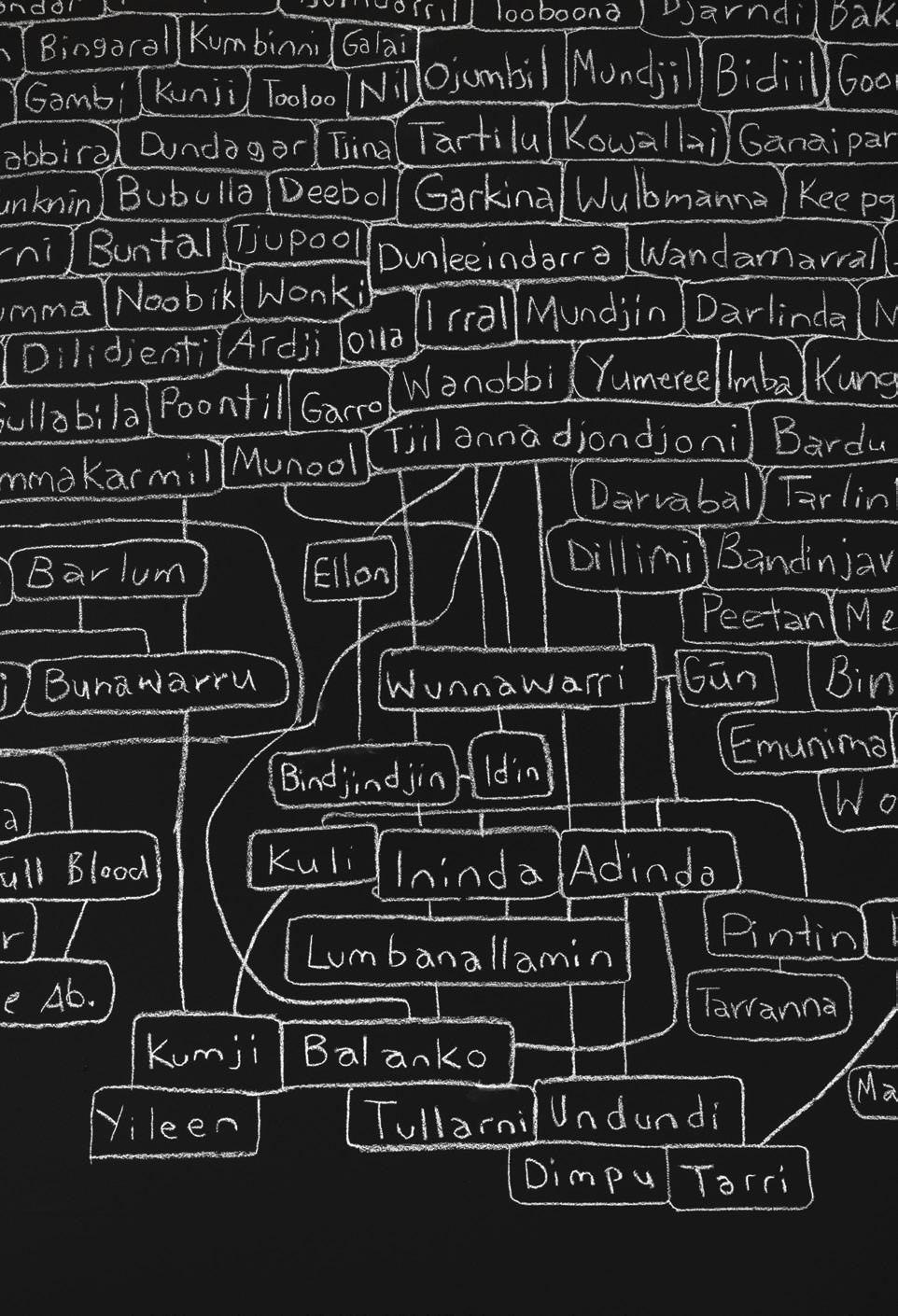
Moore’s sombre work in the Australian pavilion was deeply affecting: his conceptual 65,000-year genealogical chart painstakingly chalked in white on black walls surrounding a large pool, atop which inquiry documents from Indigenous deaths in custody had been placed.
The win thrust the shy but profoundly thoughtful Moore into the spotlight. He once wrote to me that his birth in Toowoomba, Queensland, in 1970 was “still under the White Australia policy in a legal sense”, adding that “others identified me through the usual racist words for Aboriginal while I tried to be invisible”. Before the Biennale, I asked whether Australia had a blind spot, as he was only the second solo Indigenous artist to represent the country, following photographer Tracey Moffatt in 2017. There had also been duo and trio Indigenous shows in 1990 and 1997. “It won’t be the last, I don’t think,” he replied.
Ellie Buttrose, who curated kith and kin, tells me a change of rules at Venice several years
ago enabled Moore’s selection for the Australian pavilion at a time his work was little known overseas. Previously, private collectors were commissioners, but now the national governments—in Australia’s case, funding body Creative Australia—make the choice based on the strength of artist and curator submissions.
“Some people’s reaction to Archie’s getting the gig is that ‘you must have an international profile to get it’,” Buttrose recalls. “I think Archie has proved that, no, you can make your international profile through this.” Moore’s Golden Lion win vindicated that approach—demonstrating that Venice could be a platform for launching international careers, not merely confirming established ones.
Might Moore’s monolithic work be understood as asserting Indigenous sovereignty on a global scale? “Yes, I think in a sense the pavilion kind of becomes this symbolic embassy in a way. People have [also] asked if it’s Australian soil, like in regular embassies—does Australia own it?” she laughs.
Now, Moore is “in the early stages of discussion with people” about international projects, Buttrose confirms. “I think one of the reasons people were surprised is that maybe Archie’s not a big market person in a way, right? He doesn’t produce a lot of work.” Rather, Moore is known for large-scale installations that command gallery spaces, most notably Dwelling, a work he has returned to across multiple iterations, each time recreating his childhood home in a new context.
“Kngwarray’s work stems not from Western tradition, but from Anmatyerr law, Country, ceremony.”
02
03
04
05
Installation view of a batik painting on silk (1988-1989) by Emily Kam Kngwarray at the Tate Modern in 2025. Image: Kathleen Arundell.
Installation view of kith and kin, Archie Moore’s prizewinning white chalk drawings at the 2024 Venice Biennale. Image: Andrea Rossetti (courtesy of The Commercial).
Alhalker Country (2023) photograph by Dylan River. Image courtesy of NGV.
Apanyin (2004) acrylic painting on canvas by Patju Presley featured in The Stars We Do Not See: Australian Indigenous Art touring exhibition. Image courtesy of NGV.
The long arc of recognition
Buttrose says the rise of Indigenous art globally represents a long arc starting in 2002 with the Documenta 11 exhibition in Kassel, Germany. Led by Nigerian-born Okwui Enwezor—the exhibition's first non-European curator—it challenged Western hierarchies and began dismantling the biases embedded in the Venice Biennale and the broader commercial art scene.
Kelli Cole agrees what is happening now is the result of a long, steady build by institutions, art centres and curators supporting Indigenous artists and ensuring their work is presented with cultural integrity. “We’re also seeing some of our leading First Nations artists represented by major international commercial galleries—artists like Vincent Namatjira and Daniel Boyd,” she adds. Namatjira, greatgrandson of Western Arrernte watercolourist Albert Namatjira, was the first Indigenous artist to win the Archibald Prize for portraiture. “That kind of representation gives their work greater reach and visibility in the global art market, and signals a real shift in how the art world values and understands First Nations art practice.”
Boyd paints detailed works of Indigenous leaders and warriors, landscapes and his own family, making links between histories of the spread of colonisation and unacknowledged pasts of slavery, including in Australia. The 43-year-old is of Kudjala, Gangalu, Wangerriburra, Wakka Wakka, Gubbi Gubbi, Kuku Yalanji and Bundjalung descent, with ni-Vanuatu heritage.
When I visited his inner-Sydney studio in 2022, Boyd spoke about what international audiences might appreciate in Australian Indigenous art: “The beauty of art is about sharing experiences and how you relate to different communities,” he said. “We have to understand the beauty in difference and not fall into the trap of homogenous global experience.”
His art implicates all of us across the seas. One of Boyd’s best-known paintings, Treasure Island, correlated the British annexing of Australia as a colony with piracy. “It was a way to transcend authorship of a particular narrative, to give people the tools to think about how we relate to place,” he told me. He carried the theme to his 2021 exhibition in Seoul, where he spoke of Enlightenment and imperialism, and British botanist Sir Joseph Banks’s request to transfer breadfruit from Tahiti to the Caribbean to feed enslaved people.
His work, he says, “is about these global connections that led us to this point: how we represent people through media and cinema or through art, and how we can work towards a better future through that understanding of our responsibility to people that aren’t part of these dominant forces.”
Girramay/Yidinji/Kuku-Yalanji artist Tony Albert, whose work ranges from deconstructing Aboriginal kitsch to his photographic series Brothers, about the discrimination young Aboriginal men face, says the art world is catching up with artistic excellence that has always existed. “All eyes are on us for a very good reason,” says Albert, whose work featured in the NGV’s The Stars We Do Not See. In late 2025 he was awarded the Chevalier de l’Ordre des Arts et des Lettres at a ceremony at the French embassy in Canberra.
“238 years is very small compared to 65,000,” he points out. “It’s compelling not just what is told but what has not been told and for what reasons. I always thought, ‘I’m never going to be a recipient of the Venice Biennale because I don’t belong to one of two galleries in this country’. Look at what happens when we change that; we win the greatest prize.”
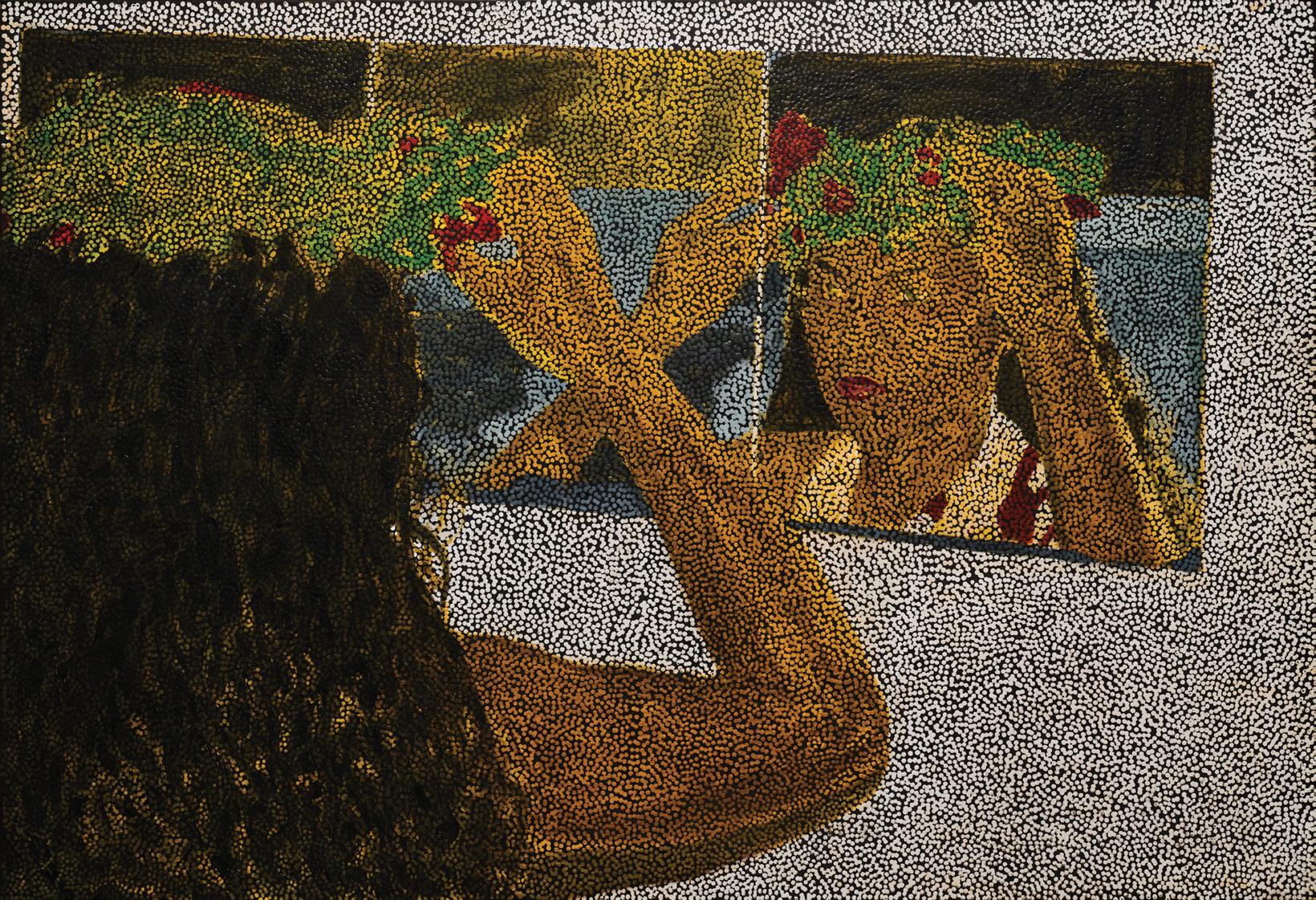
06 Untitled (POMOTB) (2021), a layered painting of oil, acrylic and glue on canvas by Daniel Boyd. Image courtesy of Kukje Gallery.
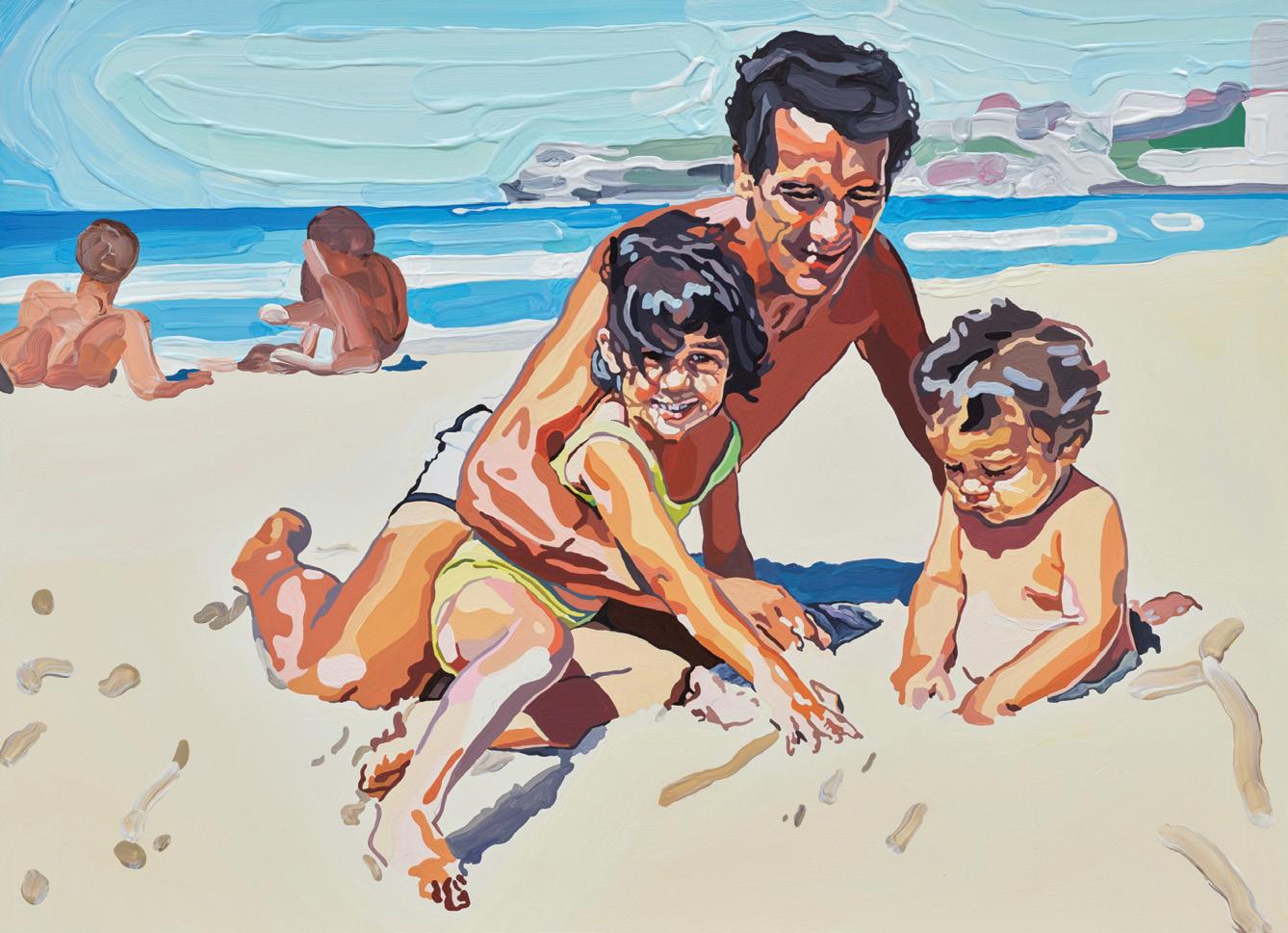
07 Bondi Beach (2023) acrylic painting on board by Thea Anamara Perkins. Image courtesy of AGNSW.
Expanding the frame
Myles Russell-Cook, whose maternal ancestors were born on Wotjobaluk land and who curated The Stars We Do Not See, says the exhibition “reveals more about what we have in common, where two nations have a similar history of navigating colonisation”.
For many visitors, the exhibition was a revelation. “A lot of people in North America maybe don’t know very much about Australia but are genuinely blown away when they realise this whole other world of art that they’ve not been exposed to,” Russell-Cook continues. “It’s not only 65,000 years of history, but also contemporary media, over 250 different language groups … they have probably a very singular image of Indigenous art in mind, and this show explodes that.”
He says inherently political Indigenous Australian works sometimes speak to civil rights movements internationally. Kamilaroi, Kooma, Jiman and Goreng Goreng artist Richard Bell’s work The Truth Hurts includes the text ‘White Lies Matter’, responding to the Black Lives Matter movement and the 2020 murder of George Floyd by a police officer in the United States. “This conversation in Australia was about Aboriginal deaths in custody, so it’s a specific Australian context but very much linked by that movement of protests and people calling for accountability,” Russell-Cook explains.
Another Kamilaroi artist, Warraba Weatherall, whose site-specific sculpture at the Hawai’i Triennial in 2025 examined the violence of mid-nineteenth-century scientific racism, says the work was well received, particularly by the First Nations community there. “They very much understood similar situations to the work,” he says. “There are specifics that are grounded in Kamilaroi Country or Queensland or New South Wales, but they’re also global issues; the British Empire had control of over half of the globe at one point in time.”
Barkandji artist Nici Cumpston OAM, until recently curator of Aboriginal and Torres Strait Islander art at the Art Gallery of South Australia, has taken up the role of director of the Kluge-Ruhe Aboriginal Art Collection in the US. She says scholarship, as well as support and platforms for artists to discuss their work, is critical if the undeniable increase in interest in Indigenous Australian artists is to be sustained. Important exhibitions are being developed by institutions like Kluge-Ruhe, part of the University of Virginia, and Fondation Opale in Switzerland.
“By providing an artist an opportunity to share what they’re creating, that platform is what’s needed, where we get to the crux of what it is. What are these stories?” says Cumpston. “The more that we can have these opportunities, the better it’s going to be, because the commercial world is one thing, but it’s about people understanding and having the opportunity to learn the depth underlying the art. But those opportunities are limited.”
Arrernte/Kalkadoon artist Thea Anamara Perkins, who paints landscapes of her desert Country in Central Australia as well as intimate portraits of her famous family—including her activist grandfather Charles Perkins—welcomes the decentralising of Western narratives.
“There is a total paradigm shift and a questioning of that centralisation and its origins in history and its primacy, which has opened up space [for] listening,” she says.
While Perkins feels “wonderful support” from Australia’s art community and audiences celebrating Aboriginal art, she sees an interesting difference in how her work is received at art fairs in Canada and Tokyo or the Australian embassy in Berlin.
“As we know from the referendum, there is a lot of prejudice, and [First Nations history] is not well taught in the curriculum,” she says. “Once you take it out of an Australian context, there are fewer barriers.” International audiences, she explains, do not carry the same cultural baggage. “Those barriers don’t exist for an international audience. They’re not part of the collective [Australian] psyche.”
Kelli Cole sees confidence in this moment due to the long, strong advocacy by institutions and curators for Australian Indigenous artists. “Globally the art industry is finally seeing the strength, sophistication and power that’s always been present in our First Nations art.” ■
“All eyes are on [Indigenous artists] for a very good reason.”
THE REWIRING OF FAMILY WEALTH
NAB’s latest Wellbeing Survey reveals a quiet revolution in how Australia’s wealthiest families deploy capital across generations. The old model—a lump sum and a handshake—is giving way to something far more intentional.
There was a time when intergenerational wealth transfer followed a reassuringly simple script. Parents accumulated, children waited, and at the appropriate juncture—a wedding, a first home, or the reading of a will—a sum of money changed hands. The transaction was understood to be both generous and finite.
That script is being rewritten. Across Australia’s most affluent households, the mechanics of family financial support are undergoing a structural shift that reflects not merely changing economic conditions but a fundamental rethinking of what wealth is for. The lump sum for a house deposit has not disappeared, but it is no longer the centrepiece. In its place, a more nuanced and ongoing form of capital deployment is taking shape; one that looks less like a gift and more like an investment in the resilience, capability and cohesion of the familial system.
NAB’s Australian Wellbeing Survey, drawing on data from the final quarter of 2025, charts this transition. One in five high-income earners over 50 now provides regular financial assistance to non-dependent children or grandchildren. Among the broader population, the figure is one in seven. What was once exceptional has become normalised, and the nature of that support has evolved.
THE CHANGING CALCULUS
Dean Pearson, NAB’s head of behavioural and industry economics, has tracked the evolution closely. “The most striking finding is the change in purpose,” he says. “Nearly three-quarters of financial assistance
from families now goes toward daily living costs, up from 68 per cent in the prior period. Meanwhile, support for home deposits has fallen to 13 per cent, down from 17. The money is flowing toward stability, not asset accumulation.”
The pattern makes intuitive sense when set against the pressures facing younger Australians. The survey records 18-to-29-year-olds as the most financially stressed demographic in the country, with a composite wellbeing score of just 59.1 out of 100 (spanning life satisfaction, happiness and anxiety), well below the national average of 62.8 and a world away from the 73.0 recorded by over-65s. Family-formation households (aged 30-49) face similar strain.
For wealthy parents observing this from a position of relative security, the equation has changed. In a highuncertainty environment, families are directing capital toward pressures with immediate and visible impact rather than large asset purchases where returns are harder to predict. “The support that is growing fastest addresses tangible, daily expenses such as education, childcare and the financial friction that erodes wellbeing,” Pearson explains.
The data bears this out with support for school fees rising from 33 to 37 per cent of assisting households. One in 10 families now specifically directs support toward servicing a younger member’s third-party debts, recycling capital back into the family structure rather than watching it leak to external interest payments.
FROM RESCUE TO ARCHITECTURE
As the ‘what’ of family wealth transfer is being rethought, so too is the ‘how’. Michael Saadie, executive for NAB Private Wealth and CEO of JBWere, sees a clear movement away from improvised generosity to deliberate structure among the families navigating this terrain.
“The families managing this most effectively have stopped thinking of financial support as something that happens in a crisis,” he says. “They are designing frameworks, not because they distrust their children but because structure benefits everyone. It makes support sustainable for the givers and empowering for the recipients.”
Some families establish formal intra-family lending arrangements with defined terms and interest rates set between what a bank would charge and what a gift would cost, creating accountability without commercial coldness. Others adopt staged inheritance programs, releasing capital at milestones rather than in a single event, such as a proportion at age 25, another at 35 and the balance at 55, with triggers tied to education completion, career establishment or demonstrated financial responsibility.
Saadie notes that capability investment is emerging as a distinct category of family capital allocation. “We are seeing endowments for education that extend through to postgraduate study, business incubation funds that come with mentorship requirements, and structured childcare support that gradually reduces as the younger
generation’s own income rises. The common thread is that the capital comes with a pathway, not just a payment.”
This distinction between structured and unstructured support is not merely administrative. When assistance is uncertain, conditional on negotiation or delivered in moments of crisis, authority is concentrated with the parent while confidence erodes in the child.
“Structure restores the balance,” Saadie says. “When expectations are clear and boundaries are defined, financial support becomes scaffolding rather than rescue. The younger generation retains agency. The older generation feels assured that their support is building something lasting, not subsidising something fragile.”
THE EMOTIONAL DIVIDEND
This is not a costless exercise for the supporting parents. The proportion of supporting households reporting a net negative impact on their own retirement planning or lifestyle has edged up from 13 to 15 per cent. The Household Financial Stress Index rose for a second consecutive quarter and remains above its long-run average. Even among high earners, concern about longterm financial commitments is elevated.
But if the cost is real, so is the return—even if that proves harder to quantify. Pearson is careful to distinguish patterns from conclusions; “Younger Australians report the lowest overall wellbeing of any age group, yet they have also posted the strongest year-on-year gains in feeling like they are regaining control of their lives. That improvement has occurred alongside stronger family support—not necessarily because of it, but the patterns are consistent with international evidence that well-targeted support delivers long-term economic and wellbeing benefits.”
For high-income families, the implication is quietly profound. The capital directed toward their children’s daily stability may be securing something more durable than a property or a share portfolio. It may be restoring agency—the psychological foundation upon which financial resilience, career confidence and eventually independent wealth creation are built.
THE HIGHEST-YIELDING ASSET
Saadie believes private wealth advice will be reframed over the coming decade. “For a long time, the conversation with clients about intergenerational transfer was an important but narrow one about tax and estate planning. What we are seeing now is families approaching it as a strategic question: how do we deploy capital across generations in a way that preserves liquidity, builds capability, maintains family harmony and creates resilient heirs who can manage wealth responsibly?”
It is, he suggests, the difference between leaving wealth to the next generation and investing wealth in them. The former is an event. The latter is an ongoing allocation strategy with measurable outcomes in reduced anxiety, improved life satisfaction and stronger family cohesion.
The Wellbeing Survey offers one further data point that deserves attention. Family life remains one of the highest-rated sources of satisfaction among Australians, scoring 68.8 out of 100, and social connection is identified as a primary driver of wellbeing across every demographic. In financial terms, ultra-high net worth families who are channelling capital into structured, intentional support are not merely preserving wealth. They are investing in the asset class that, by every available measure, delivers the most consistent and enduring returns: a unified, resilient and emotionally secure family.
When wealth moves with intention rather than urgency, it does more than relieve pressure. It restores balance between generations.
For families rethinking how wealth moves between generations, NAB Private Wealth and JBWere provide specialist guidance on intergenerational strategy, family governance and structured capital transfer.
This article has been prepared by National Australia Bank Limited ABN 12 004 044 937 AFSL and Australian Credit Licence 230686 (NAB). The information contained in this article is believed to be reliable as at March 2026 and is intended to be of a general nature only. It has been prepared without taking into account any person’s objectives, financial situation or needs. Before acting on this information, NAB recommends that you consider whether it is appropriate for your circumstances. NAB recommends that you seek independent legal, property, financial and taxation advice before acting on any information in this article. All products and services mentioned in this document are issued by National Australia Bank Limited ABN 12 004 044 937, Australian Credit Licence and AFSL No. 230686, except wealth advice services, which are provided by JBWere Limited ABN 68 137 978 360 AFSL No. 341162 (JBWere), and nabtrade, which is the information, trading and settlement service provided by WealthHub Securities Limited ABN 83 089 718 249 AFSL No. 230704 (WealthHub). WealthHub and JBWere are wholly owned subsidiaries of National Australia Bank Limited (NAB). WealthHub’s and JBWere’s obligations do not represent deposits or other liabilities of NAB. NAB does not guarantee its subsidiaries’ obligations or performance, or the products or
THE COMPOUND EFFECT
Behind some of Australia’s most recognisable supplement brands stands a single family-owned manufacturer with a $220m expansion underway. Here, two generations share how conviction has built Vitex Pharmaceuticals into a global force, and what comes next— by Carlie Trotter and Louis White.
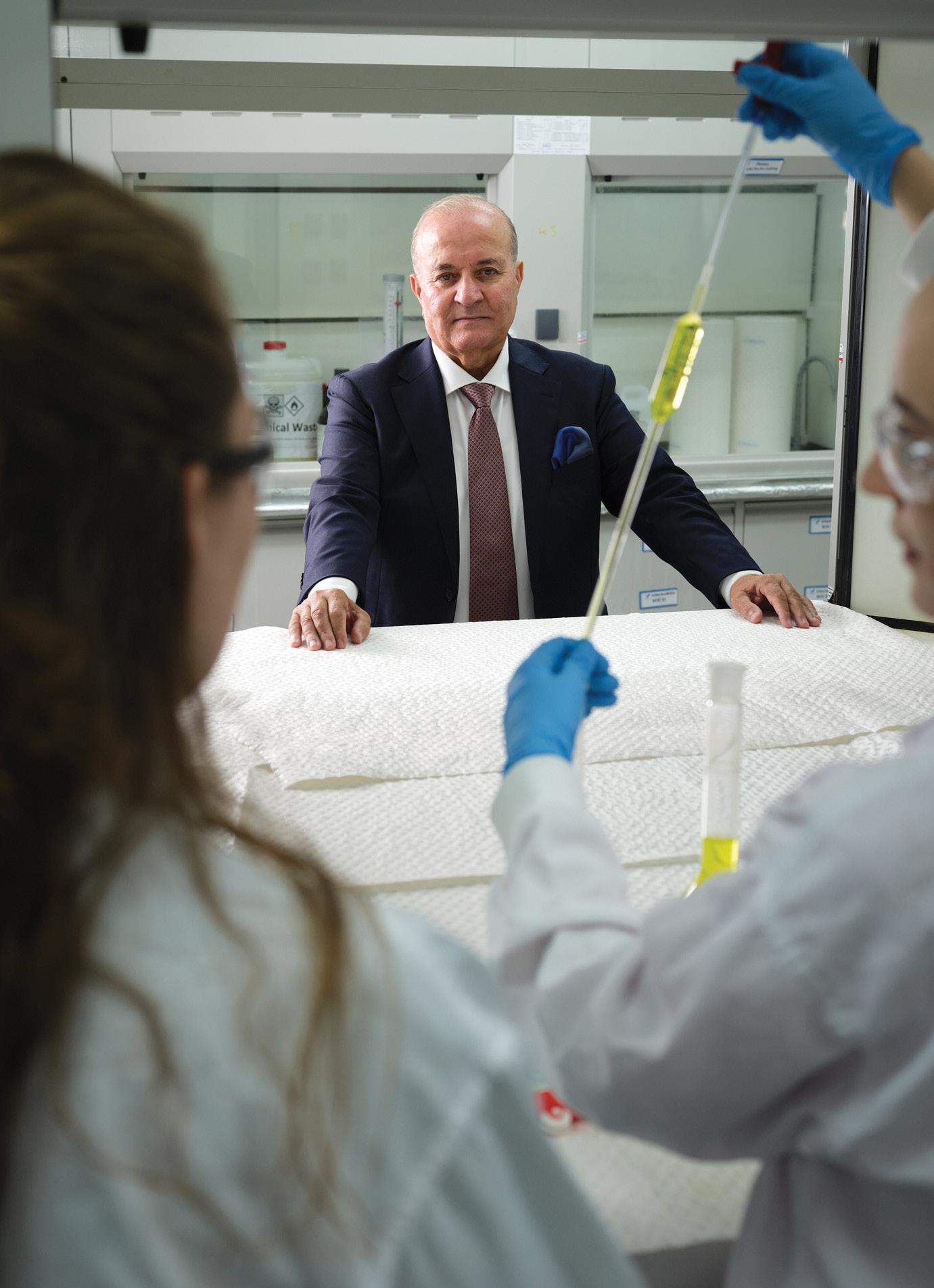
On a stretch of industrial land in Sydney’s west, a $220m pharmaceutical manufacturing facility is nearing completion. The building on Wonderland Drive in Eastern Creek will house state-of-the-art production lines, an analytical laboratory, and the ambitions of a family that has spent nearly four decades testing the limits of what Australian manufacturing can achieve. When it opens later this year, the new factory will nearly treble the capacity of Vitex’s existing Eastern Creek site and take the company’s headcount from around 400 to close to 1200.
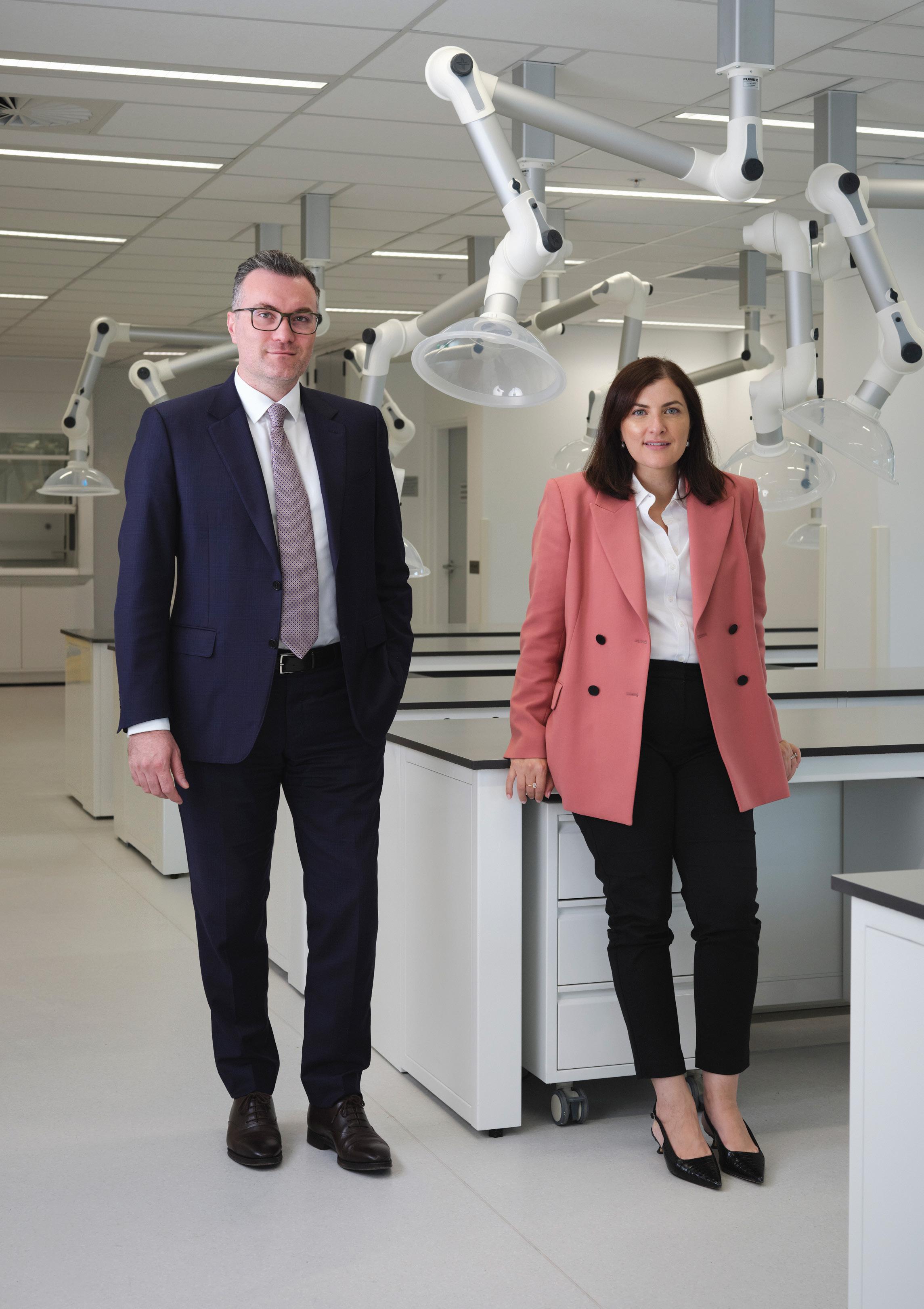
For Aniss Chami, the company’s chief executive, the Wonderland site represents something beyond mere expansion. “It’s not a replacement facility,” he says. “It’s additive. And what excites us most is being able to employ more people from western Sydney for a western Sydney business.”
With the implications for workforce growth and sovereign manufacturing capability, the launch is attracting attention from the highest levels of government.
The scale of the operation can be difficult to grasp.
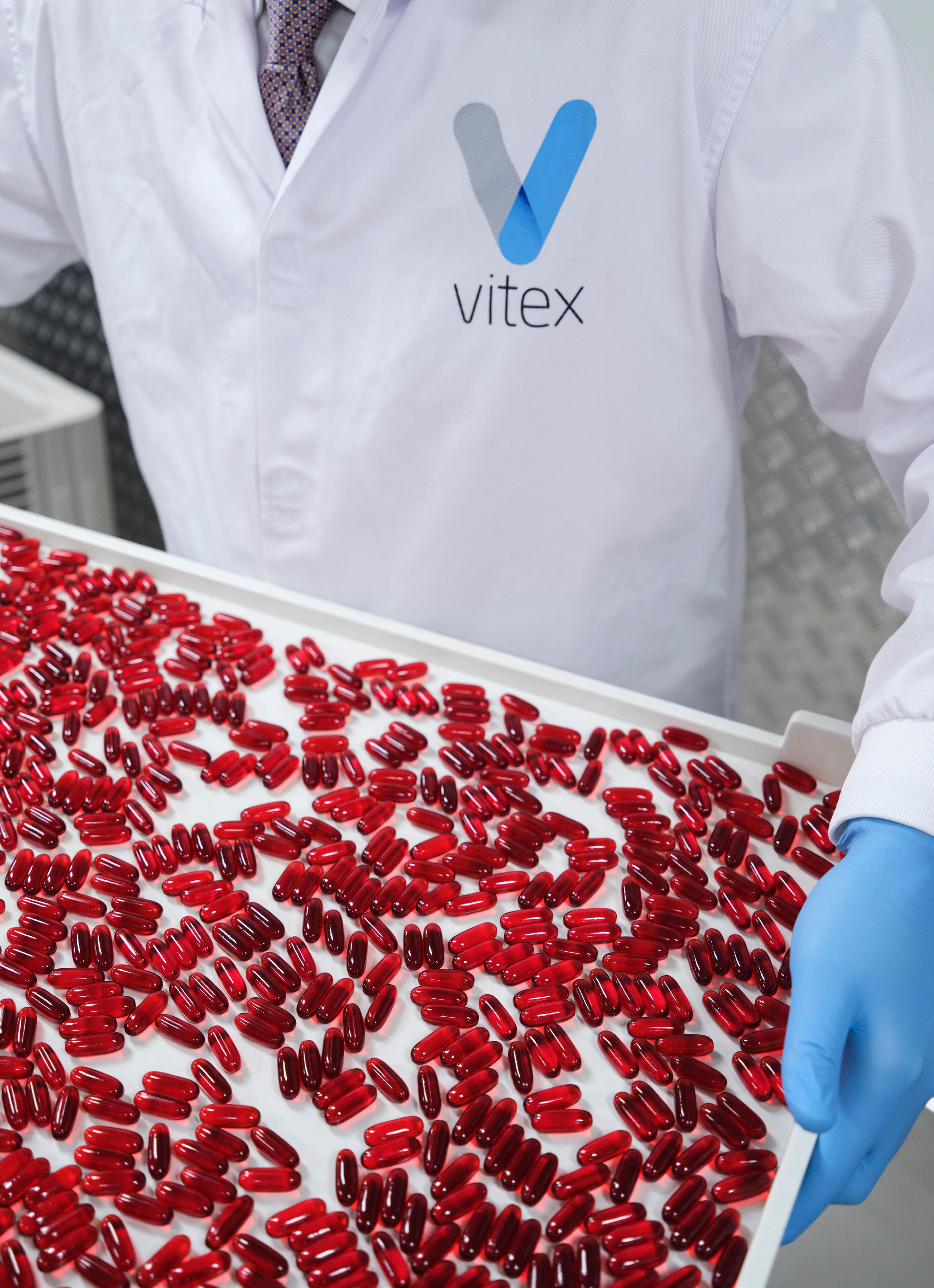
Vitex is a contract manufacturer, the unseen hand behind many of Australia’s most trusted holistic health brands. Walk down the supplement aisle at your local chemist and you are almost certainly looking at their work: millions of units a month across hundreds of product lines. Yet the Chami name appears on none of them. “We are the suit tailor in the middle between the brand and the end user,” is how Lucie Chami, the company’s chief procurement officer, puts it. “Brands come to us with their concepts and we take them from formula to production to shelf.”
Today, Vitex is one of the largest privately held manufacturers in the sector, valued in the hundreds of millions, exporting directly to 26 countries and indirectly to around 80. Its capabilities span formulation, manufacturing, packaging and comprehensive regulatory support. The headquarter’s shelves are lined with products that never saw the light of day, many bearing names you could not imagine working on a local supermarket shelf. The ones that did make it, however, are in medicine cabinets across the globe.
The university of life
The story begins a long way from Sydney. Elie Chami grew up in Haql El Aazimeh, a small mountainous community in northern Lebanon defined more by self-sufficiency than ambition. Families worked the land and traded locally; it was an unlikely birthplace for a manufacturing dynasty.
When he arrived in Sydney in 1975, aged 16, Elie’s family depended on him to contribute immediately. “I was a good student back home,” he reflects, “but English wasn’t taught at school so when I got here I had to start from scratch.”
His early working life was varied: construction sites, delivery runs, even a stint as a driving instructor. Nights were spent at Newtown Technical College learning English.
“They wanted to place me in a grade below my age,” he recalls. “I didn’t have that time. My father needed me.” His favourite slogan, often repeated to his children: “I went to the university of L-I-F-E.”
It was a return trip to Lebanon in 1981 that changed everything, and where he met Robine, who would become his wife. “People couldn’t easily access medicines or vitamins,” he says. “There were gaps. I started bringing vitamins in my suitcase and selling them.” Elie crisscrossed the Middle East —from Kuwait to Iraq to Jordan—up to four times a year, building the kind of market intelligence that can only be gathered on the ground.
The business began as a modest export operation in Sydney’s south-west, with Robine’s support proving indispensable while the children were young. By the late 1990s, the operation had shifted from buying and selling to manufacturing—a leap that Robine initially questioned.
“She said ‘we don’t want to lose the money we’ve made, we don’t know how to manufacture medicine’,” Elie recalls.
“I said ‘we’ll learn, even if we have to throw a couple of batches in the bin, you learn from what you throw away’.” Manufacturing commenced around 2000.
“People couldn’t easily access medicines or vitamins. There were gaps. I started bringing vitamins in my suitcase and selling them.”
Strategic shores, sovereign ambition
The decision to manufacture locally rather than offshore was deliberate and, in the Australian context, relatively rare. While most holistic health brands source production from lower-cost markets, Elie bet early on the premium that ‘Australian-made’ commands internationally.
The regulatory framework is central to that advantage; Australia is one of very few countries that regulates supplements as medicines under the Therapeutic Goods Administration to standards equivalent to prescription drugs. In the United States, by contrast, the same products Vitex manufactures in clinical-grade facilities could legally be made in a kitchen. “People in global markets know that about Australia,” Aniss observes, “and once they start trialling Australian-made medicines, they don’t go anywhere else.”
The timing has vindicated that bet. The global wellness economy reached a record US$6.8tn in 2024, according to the Global Wellness Institute, and is forecast to approach $10tn by 2029. Traditional and complementary medicine is projected as the second fastest-growing segment, expanding at 10.8 per cent annually. A broader cultural shift from reactive healthcare towards proactive wellness—consumers reaching for fish oil, magnesium and vitamin D before problems arise rather than after—has placed contract manufacturers like Vitex at the centre of an enormous structural tailwind.
“The advantage is sustainable,” Aniss suggests, “because other countries cannot easily up-regulate without disrupting their local industries.” In investment terms, it is a genuine moat.
Instinct and instrument
There is a saying in the industry, among those who know father and son well: ‘Elie is the heart, Aniss is the brains’. Aniss smiles at this. “We work in tandem. He has strengths that are not my strengths, and I have strengths that aren’t his. He’s the smartest guy in my books, but he knew when to give me the independence and autonomy to do what I do best.”
Lucie describes her father as “the Phoenician businessman” (the instinctive trader) and Aniss the Australian corporate strategist, the latter having sat on multiple peak bodies and become a conduit between industry and regulator. Yet for all his own credentials, Aniss is most struck by his father’s self-awareness. “I believe my father’s true power is insight into himself,” he says. “He knows where his limits are and he knows how to pass the baton so his vision is realised.”
Aniss’s path to the CEO role was anything but conventional. He was nine when he first started in pick-andpack, filling shippers with medicine alongside his father.
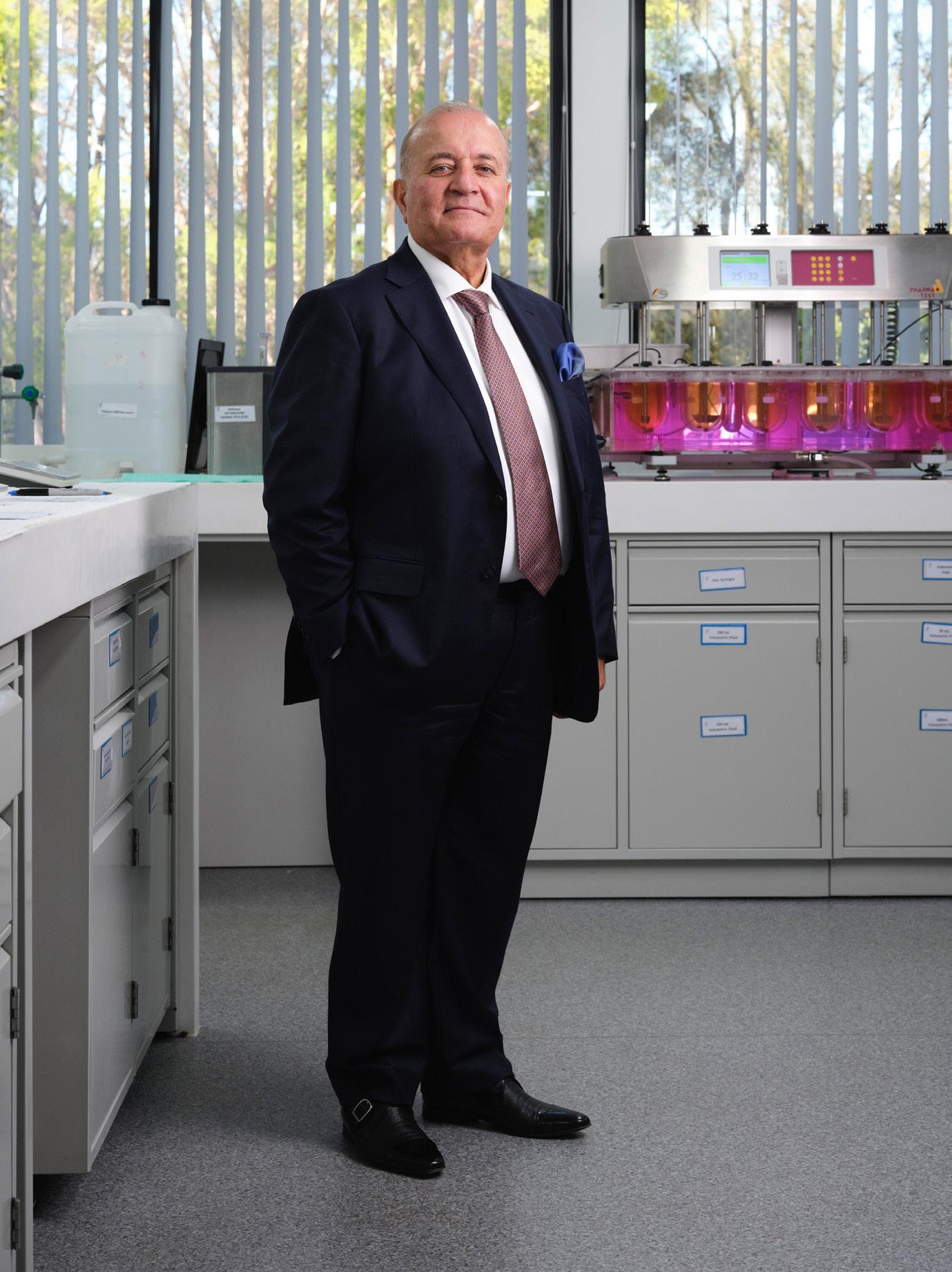
02 Still at the heart of the empire he built, Elie provides counsel while the next generation leads.
Lucie
He went on to train as a pharmacist, then a medical practitioner with a focus on surgery, accumulating seven tertiary qualifications including multiple business degrees. “I trained as a surgeon and loved learning about the intricacies of the human body,” he says. “But my father asked me to help scale Vitex. I realised I could impact thousands at a time. Medicine would still be a part of me, but this was an opportunity to apply those skills differently.”
His medical training has proved remarkably transferable. “A doctor knows how to gather information quickly, make decisions quickly, be empathic, respect diversity,” he says. “And because we’re a contract manufacturer, confidentiality is paramount—we can’t share one client’s ideas with another, even when both products are made on the same machine. Medicine taught me that discipline.”
Elie is characteristically direct about the handover; “I’m at the stage of handing over to them, and they want it. They tell me ‘relax, you’ve done more than we expected’.” Whether he can take that advice is another matter. “I just can’t sit down. Even if the spoon is halfway to your mouth at dinner and something about the business needs discussing, we discuss it.”
The barbecue test
For a family enterprise of this scale, the separation of personal and professional is not merely desirable but essential. All four Chami siblings hold senior operational roles, including Latify as chief operating officer and Anthony as chief of production. All hold MBAs alongside their respective specialisations. “We studied to strengthen our literacy across every facet of the business,” Aniss says. “We needed to speak like accountants to accountants, marketers to marketers, engineers to engineers.”
The governance architecture was shaped in part by external advisors, who delivered a formative piece of counsel when Aniss was first appointed chief executive. “They said, regardless of it being your brother, you respect the seat,” Lucie recalls. “If someone is in that chair, whether you agree with them or not, you respect them as your superior. That really struck a chord. It allowed the family to separate business and family like church and state.”
Aniss applies what he calls the ‘barbecue test’ to every leadership appointment, family or otherwise. “We can have a heated debate, I find that healthy,” he says. “But can we walk out of that room and have a barbecue together, knowing the argument was for the betterment of Vitex and not based on self-interest? That’s the attribute I value most.”
The presence of non-family executives in senior roles is a deliberate counterweight. “Non-family chiefs add a layer of sophistication and cooperation that is critical,” Lucie observes. “It allows us as siblings to walk outside our offices and put our corporate hats back on. This is big business now. It’s family culture in a corporation.”
Beyond her procurement role, Lucie manages the Chami family office, overseeing a substantial portfolio of residential, commercial and industrial properties. “I was put into that role because I share a lot of my father’s characteristics,” she reflects. “He had goals for the family office and I was best placed to fulfil them.” It is a weighty brief, but Lucie frames it as privilege rather than burden. “Dad is very candid about passing this on to future generations. It’s incredible to watch him give so much of his life to pave the way for us, in the hope that we do the same for our children. That’s what drives me, this is his and our legacy.”
Building the frontier
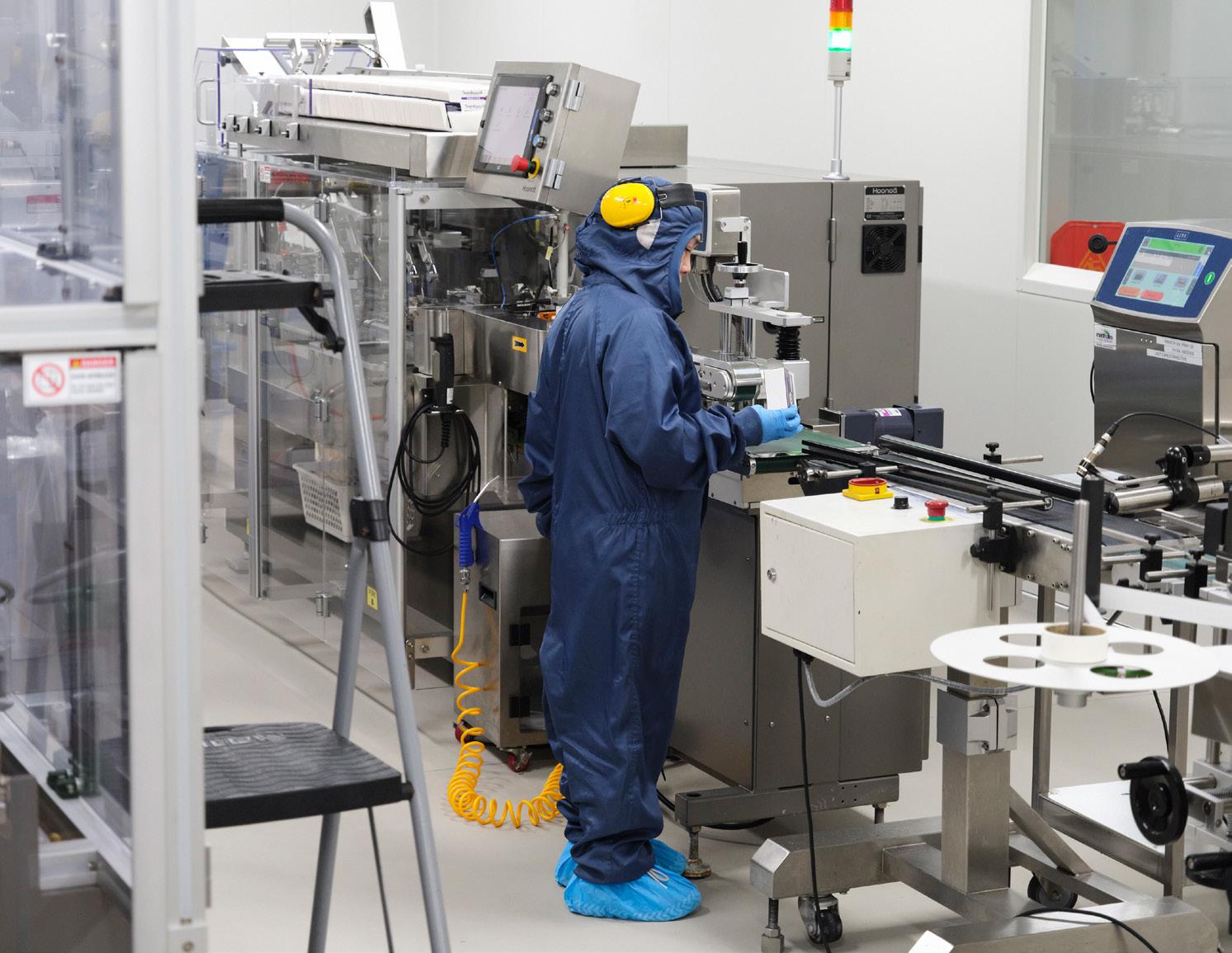
The Wonderland facility extends well beyond additional capacity. It diversifies Vitex’s capabilities into registered medicines—on top of the listed complementary medicines that have been its mainstay—as well as new dosage and packaging formats. The R&D operation employs more than 120 people, testing and refining formulations, ensuring stability across shelf life and developing new delivery systems for overseas markets.
Aniss is nuanced about technology’s role. “For me, technology is a double-edged sword,” he says. “Automation creates phenomenal efficiencies, but it can also replace the traditional processes that make us inimitable. We never use technology to replace what we’re good at—only to make us more efficient, more accurate, more streamlined.” Vitex buys only new-generation equipment for every new site, never second-hand or transferred. “Pharmaceutical equipment is built to last decades,” he notes. “But we’re fortunate that we can always invest in the latest.”
And then there is the fish oil venture. The family holds a stake in AO3 Pty Ltd, which is developing the country’s first commercial-scale fish oil refinery for pharmaceutical-grade
product, entirely Australian-caught and Australian-refined. Elie’s logic was simple: why import fish oil from Norway and China when we have one of the longest coastlines in the world? The startup secured a government catch quota and is expected to come online around the same time as Wonderland. Elie is already eyeing a site in Western Australia for a second refinery. His brain, as those around him observe, is forever ticking over.
Off the clock
Elie spends his downtime mapping out the gardens of the family’s Dural homestead with the same forensic attention he brings to the factory floor. “If the guy doing the hedging misses an area, I’ll say: why? It must be in line,” he says. “If I can see it, you should see it.” Nothing waits until tomorrow. He is a self-described social person who travels widely and delights in his 12 grandchildren, while conceding that full retirement will never come. His life story is now being chronicled in an Arabic-language biography.
Lucie, who juggles her Vitex role, the family office and four children under seven, is candid about the intensity of this particular chapter. “When I leave here I pick up my kids, we do the routine and everything else is on pause,” she says.
“My job is complex and challenging, but it’s highly rewarding. It’s the same principle.”
The satisfaction she draws from each responsibility is immediate and tangible.
Aniss describes 2025 as a milestone year he would rather not repeat. A new baby at home and Wonderland under construction while existing sites ran at record production volumes—none of it possible, he and Lucie both stress, without the siblings who keep the operation turning daily.
“Latify and Anthony: this place does not turn on without them,” says Lucie. “The cogs in the wheel are turned by them every single day.” For Aniss, the resilience required is a family trait. “True success for me is not measured by being able to succeed, it’s being able to overcome a challenge and applying what you learn to better yourself and those around you.”
06 Elie at Eastern Creek, where he can still operate every machine, having built the company’s first manufacturing operation by hand.
07 Formulations for global markets are developed and refined in Vitex’s R&D labs.
08 Aniss on the bottling line, applying the precision of his surgical background to manufacturing at scale.


“You can go to university to be a doctor, a nurse, a pharmacist, but there is nowhere to learn how to make the medicines [at commercial scale]. Every person who has come into Vitex, we’ve trained from scratch. I want to do that for the whole country.”
Beyond the formula
Elie was recently awarded an honorary doctorate by Western Sydney University for his contributions to business and manufacturing. “I was shocked and honoured,” he says. Aniss, meanwhile, received a global leadership award from CEO Today magazine. But this is not a family given to resting on accolades.
The conversation around legacy has already shifted to the generation after next. The Chami siblings are conscious that their children will inherit a very different foundation from the one they themselves were handed. “When we joined the business, it was hard,” Lucie recalls. “Financial pressure. Sinking or swimming. You had to be thick-skinned. But looking at the next generation, the directive is different. It’s about critical thinking. How do they add value? How do they improve upon what’s being given to them?”
Elie’s own vision for legacy is unsurprisingly concrete. He is working with the Western Sydney Aerotropolis innovation precinct to establish a training institute bearing his name focused on the practical craft of manufacturing medicines at scale. There is, he points out, no dedicated training centre in Australia for pharmaceutics and pharmaceutical process engineering. “You can go to university to be a doctor, a nurse, a pharmacist, but there is nowhere to learn how to manufacture the medicines [at commercial scale],” he says. “Every person who has come into Vitex, we’ve trained from scratch. I want to do that for the whole country.”
The long game
The family’s collective ambition is expansive but precise. “We want Vitex to be a top-five global manufacturer in complementary medicines,” Aniss says. “Our products are world-class. We will continue innovating.” The principles guiding that push, he makes clear, are the same ones his father instilled: integrity, quality, and a refusal to cut corners.
It is Lucie who best captures the pull of the family enterprise. “I thought my path after university would be to work for a large conglomerate and sort of work my way up,” she says. “But Dad asked me once: why would you go and build up Coca-Cola when you could be building the family business for yourself and your children? An office was already fitted out, ready for my graduation date. I have never questioned it since.”
From a suitcase of vitamins to a multimillion-dollar operation exporting to 80 countries, Elie Chami has spent his life reading signs that others did not notice. Now with a new factory rising, a refinery taking shape up the road and a training institute on the drawing board, the compound effect of one family’s conviction is becoming difficult to ignore.
DIVINE GEOMETRY
A century after Gaudí’s death, contemporary architects and engineers are using cutting-edge technology to complete what he started, extending the spirit of experimentation that defined his work—by Ruth Lang.
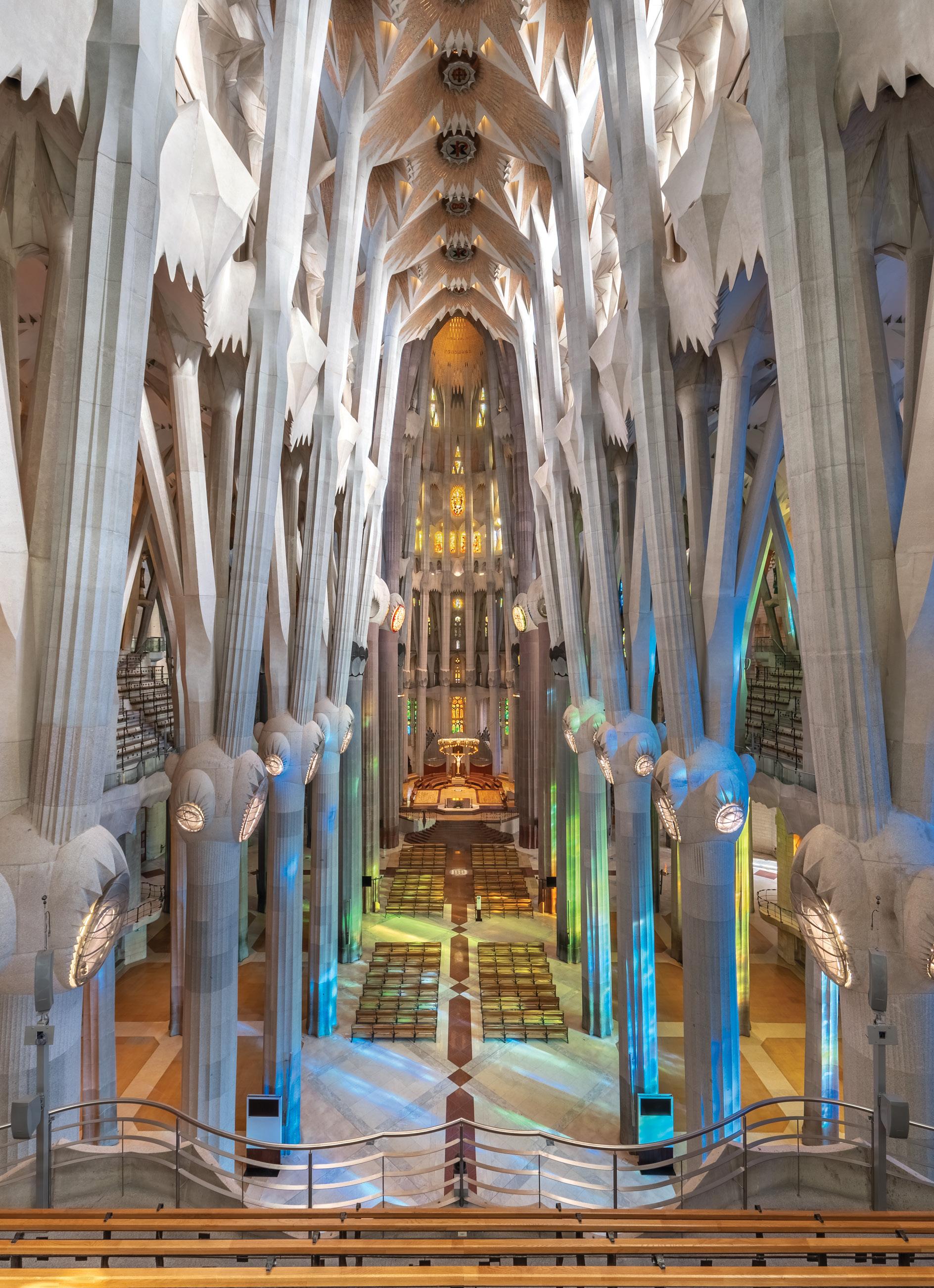
The path to completion for one of the world’s most ambitious architectural projects has not been an easy one. When visionary Catalan architect Antoni Gaudí took over Barcelona’s Sagrada Família in 1883 following his predecessor’s resignation, he undertook a wholesale redesign of the basilica. Gaudí always knew the project would outlast him—a stance he reiterated with the acknowledgement that “my client is not in a hurry”. Yet in the 43 years he worked on it before his death, he completed only around 20 per cent of the overall building.
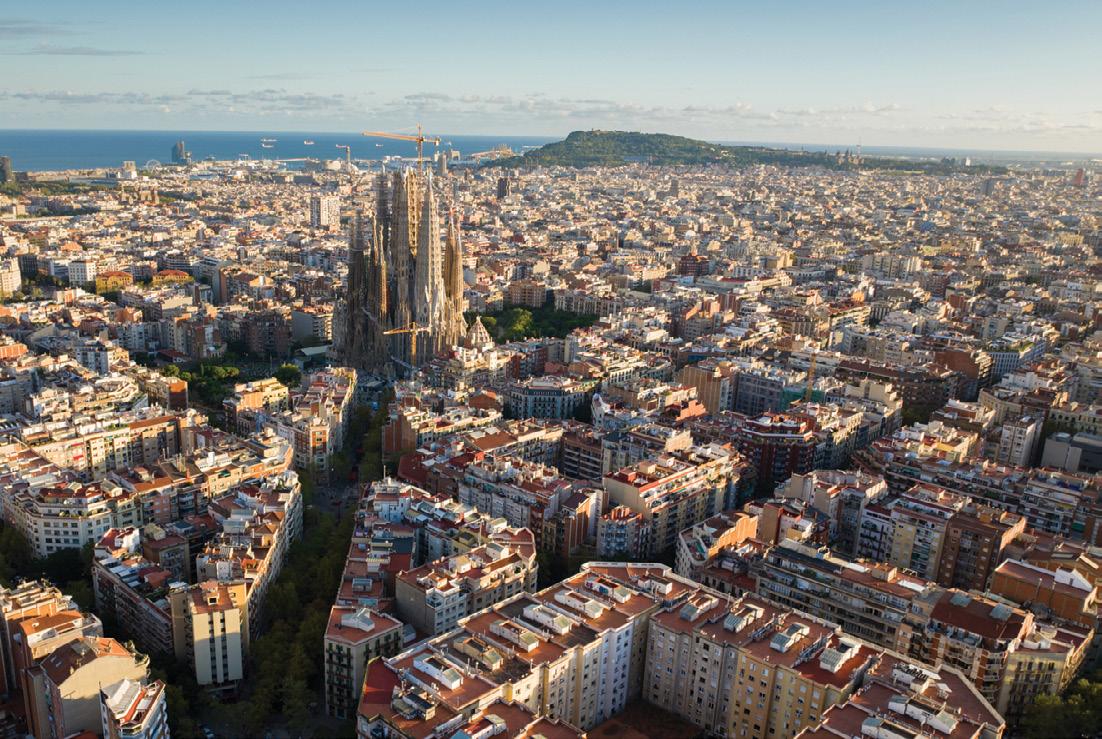
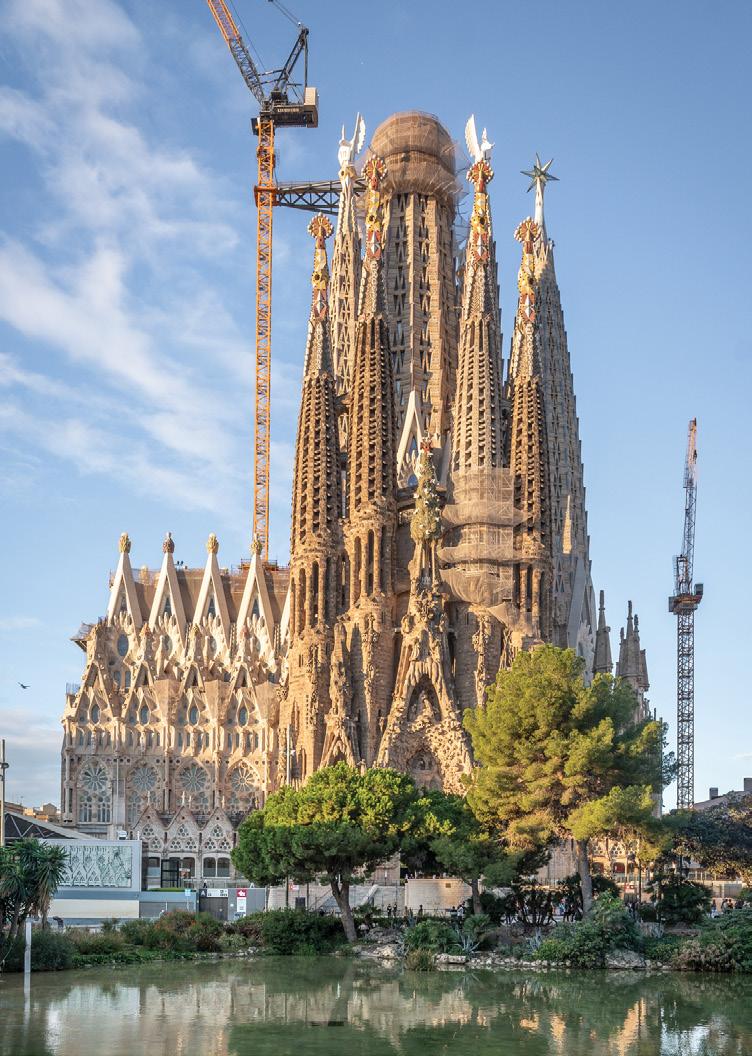
The team who took over initially relied on the detailed plans Gaudí had completed for the remainder of the scheme, yet these were lost to a fire in the basilica’s workshop in July 1936, started by members of the Iberian Anarchist Federation (FAI) who equated the Catholic Church with the Nationalists during the Spanish Civil War. The subsequent realisation has thus always been a combination of careful detective work, calculation and experimentation. Based on the models, drawings, photographs and notes salvaged from the fire, teams of architects, contractors and engineers spent the following decades working to execute the designs in accordance with Gaudí’s original intent. The construction’s height rivals Montjuïc, the hill overlooking Barcelona. But it was deliberately conceived to be one metre shorter, as Gaudí believed human creations should not surpass those of God. This meant it became the world’s tallest church on 30 October 2025. As the project moves towards a significant construction milestone in 2026, the ongoing challenge lies in faithfully interpreting Gaudí’s vision while completing one of the most complex architectural undertakings in history.
01 Each window tracks the sun’s path, turning the nave into a canvas of colour that shifts by the hour.
02 Scaffolding frames Gaudí’s masterpiece as it enters its final chapter.
03 Now the world’s tallest church, the basilica rises high above Barcelona’s Eixample district. Image: Marko Milovanovic.
Professor Mark Burry AO, the founding director of Swinburne University’s Smart Cities Research Institute, has been instrumental in this mission since his initial visit to the basilica in 1977, where by chance he met two of Gaudí’s collaborators. As Burry recalls, he came with two questions: “Where was the authority to complete the building coming from when so little of the building had actually been completed? And how, precisely, were instructions given to the master masons charged with actually building so complex a construction?”
All answers lay in untangling the secrets Gaudí had set out decades before. This act of translation is not merely filling in the gaps left in the wake of the destruction of his plans but a creative act in its own right, which has demanded huge innovations in human, digital and material expertise.
From the 1980s onwards, Burry oversaw researchers and engineers leading this detective work. The challenge is more than merely replicating Gaudí’s characteristic ‘edible architecture’ (his organic, almost melting forms that seem shaped by natural forces rather than human geometry) as the work demands deference to the structural ingenuity of his designs.
The design was born from a strict geometry— akin to the mathematical principles that drive the growth of leaves, snowflakes and other natural forms—which underpins the overall architecture for the basilica. Burry’s team undertook a comprehensive digital transcription of the surviving fragments of the scale models previously created, employing mathematical analysis and structural prototyping to better understand how this could be translated into full-scale construction details through reverse engineering.
In a 2023 ABC News profile on the completion of La Sagrada Família, British-Australian consulting engineer Professor Tristram Carfrae explained that “every surface of the church is what we call technically a ruled surface, it’s a hyperboloid, a hyperbolic paraboloid, a cylinder, a spiral, all of which can be made out of straight lines”. In other words, even the most complex curves in the structure can be built from straight beams or panels.
Burry compares the process of identifying and documenting these geometric forms to cartography rather than architecture, mapping and extrapolating the geometries to understand how the design comes together.
The team moved from analogue tools to computerised software in the 1990s. But only with the advent of parametric design tools commonly used in aeronautical engineering could they work fast enough to meet completion deadlines. Such digital innovation enabled the team to model Gaudí’s intricate geometry, but translating this into buildable reality remained a challenge, as the scheme exceeded the limits of traditional construction.
Purists may find the use of contemporary materials and technologies in the completion of the structure to be a compromise, when in fact this continues a lineage of technical innovation Gaudí embraced in the earlier phases.
Under his instruction, the pinnacles of the bell towers were constructed in the relatively new material of reinforced concrete. The team is comfortable extending that logic: 3D printing is used to prototype design strategies, while computerised numerical control (CNC) has accelerated construction tenfold compared with
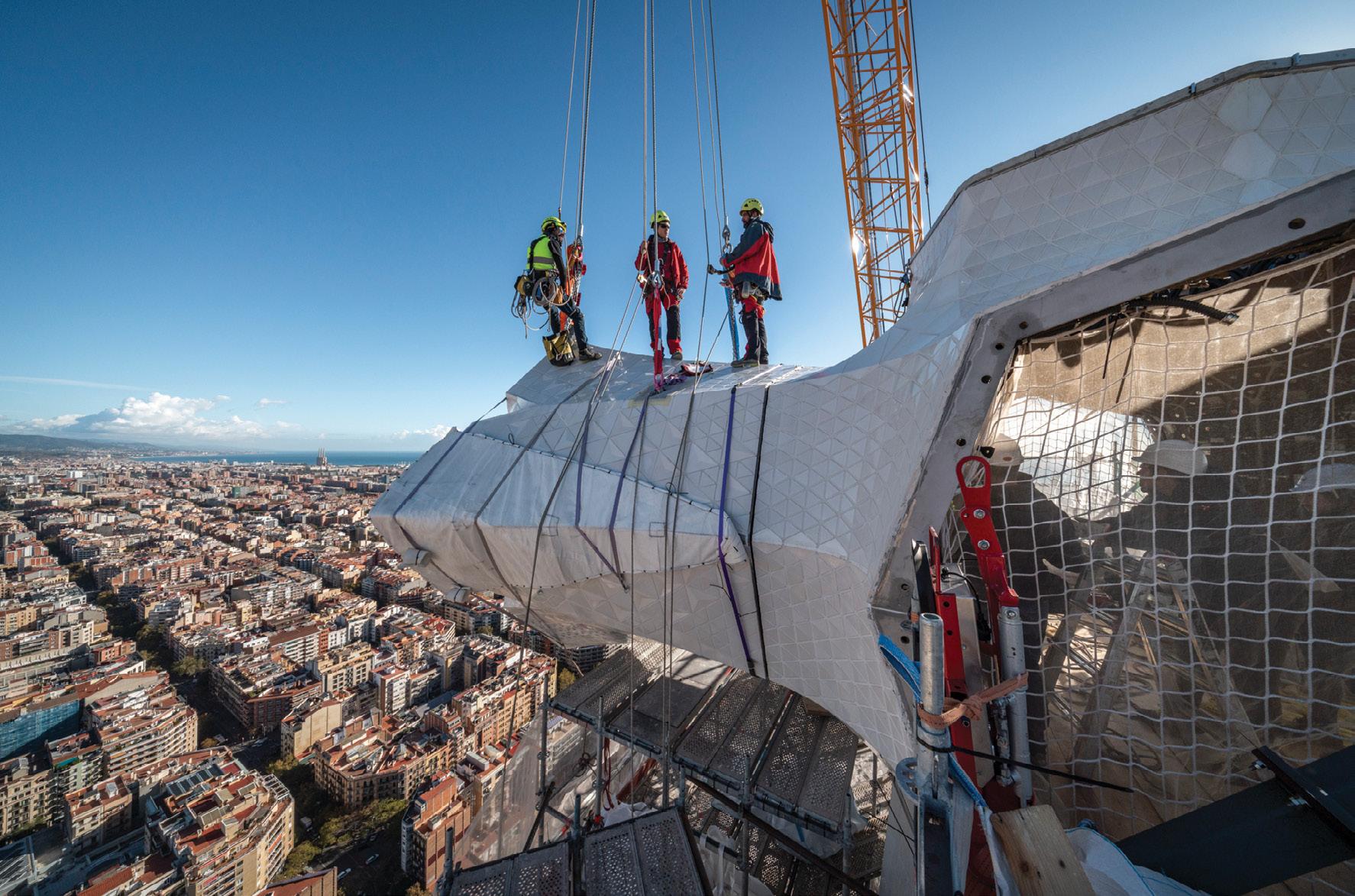
04 In February, workers guided a 12-tonne section into place atop the Tower of Jesus Christ.
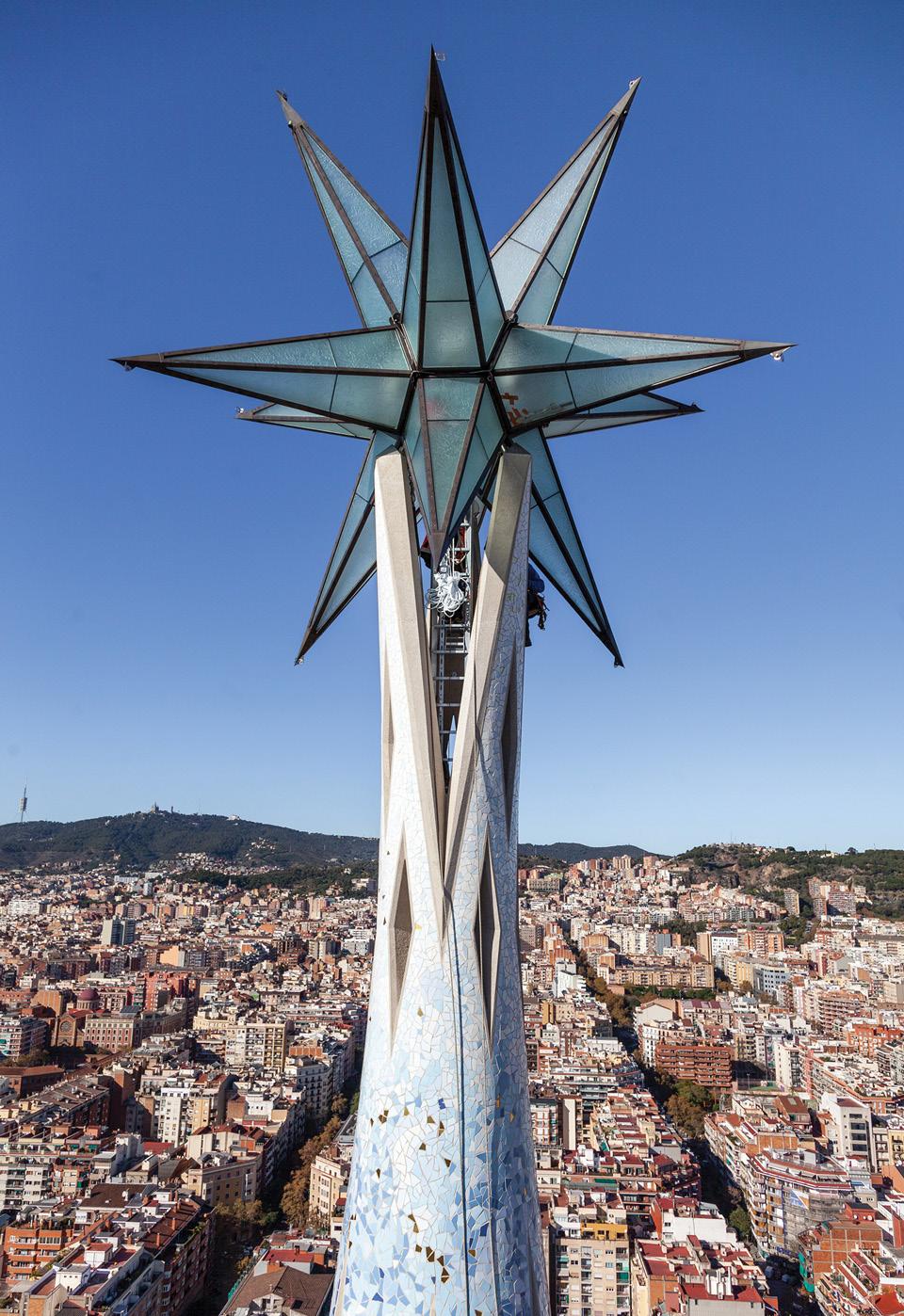
traditional methods. The same technology has enabled them to remove excess materials from the panels, reducing weight without compromising strength—an approach that led naturally to the lightweight fibre-composite units used in constructing the Evangelist towers in 2023.
Rather than using the labour-intensive masonry methods which characterised the lower sections of the basilica, taking up much space on site and demanding skills now dying out in the construction sector, current phases employ robots within fabrication processes that take place remotely, while post-tensioned stone panels are brought to site and assembled like Lego blocks. To withstand earthquakes, conventional construction would require a steel or reinforced concrete structure clad with stone, but the chosen approach halves the weight while achieving the same seismic resilience, enabling the original foundations and crypt to be retained where larger footings would have obliterated them.
True to form, having solved the structural challenge, even this part of the construction has not been a smooth process. The supply of sandstone that marked the initial works from nearby Montjuïc was found to be increasingly fragile, and the quarry was forced to close in the 1970s. Thus, reclamation strategies to locate and salvage similar materials from buildings facing demolition were initiated while a search for a stone of comparable quality, colour and structural capacity was underway. As a result, the stone from which Barcelona’s icon is currently being constructed comes from Brinscall Quarry in Lancashire in the UK.
The more technically progressive aspects are complemented by a team of craftspeople who still employ historical methods for hand-finishing and hand-splitting the face of the stone, lending it a human touch which demands a re-translation of the digital back to the analogue. Alongside them, artisans create the stained glass windows and figurative sculptural details decorating the church, as part of a program which will be ongoing for decades to come.
In the centenary year of Gaudí’s death—and with the basilica’s Tower of Jesus Christ, completed in February 2026, now crowning the Barcelona skyline—the project has clearly demanded innovation from the outset. But it has also required a much more humane practice of listening to craftspeople, understanding natural geometries, and learning from a century-old model hand-built with wire and plaster of Paris. Without these traditional and technically advanced aspects working in tandem, bringing Gaudí’s vision to life would never have been possible.
A team of craftspeople [...] still employ historical methods for hand-finishing and hand-splitting the face of the stone, lending it a human touch which demands a re-translation of the digital back to the analogue.
sagradafamilia2026.org
Images © Fundació Junta Constructora de la Sagrada Família
05 A 12-pointed star crowning the basilica’s second-tallest spire has illuminated the city’s nocturnal skyline since 2021.
Defining
For his Australian debut, French-Italian designer Joris Poggioli explores the concept of horizon, a defining force in his timeless, minimalist furniture collection, now on show at Sydney’s Gallery Twenty Twenty—by Rosa Bertoli.
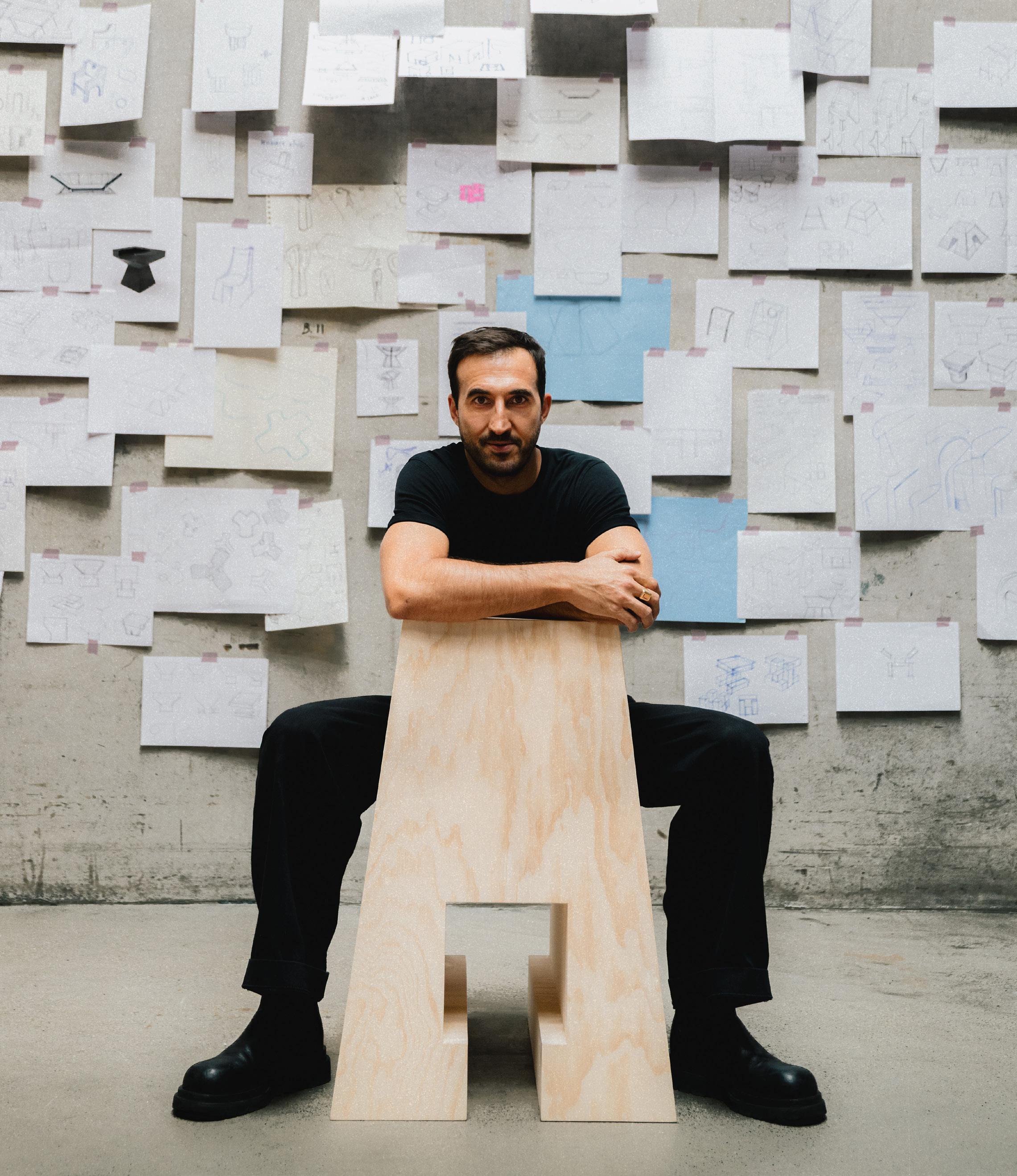
Over the past decade, Joris Poggioli’s work has developed into a portfolio where artistic expression merges with minimalism and functionality, but the horizon holds deeper meaning for him beyond aesthetics. “What fascinates me is that this line is shared by all of us, wherever we are in the world, and yet it is never the same,” says the Paris-based designer. “To change [the] horizon is to change that line, to shift one’s point of view, to accept a new perspective. I am constantly trying to design objects that feel precise and grounded, yet leave room for projection, silence and imagination.”
Fittingly, Horizon is also the title of Poggioli’s latest design endeavour, a collection of furniture pieces created in collaboration with Mobilia. It distils the quiet elegance and precision that define Poggioli’s work, carrying what he describes as “an even greater sense of clarity”, honouring his obsession with line, proportion and balance. “Every piece is reduced to what feels absolutely necessary,” he says. “My [signature aesthetic is] not added on top, but embedded directly into the structure of the objects themselves. The aim
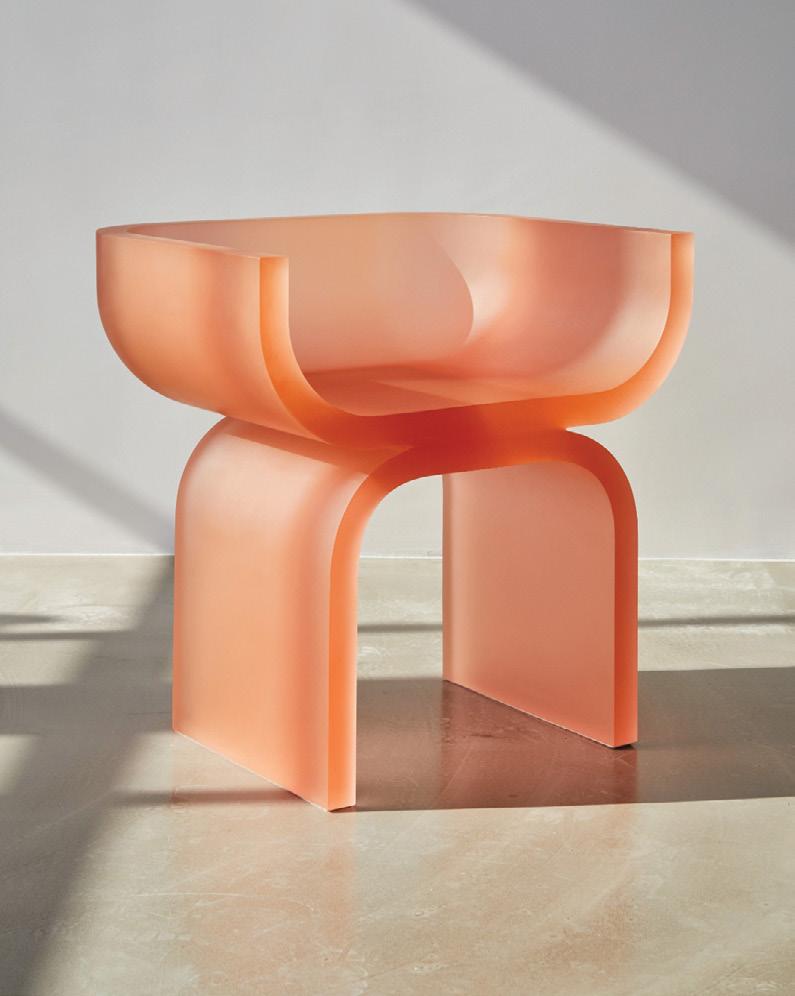
01 With its opaque resin curves, the Rick chair (2020) is among Poggioli’s most recognised works. Image courtesy of Mobilia.
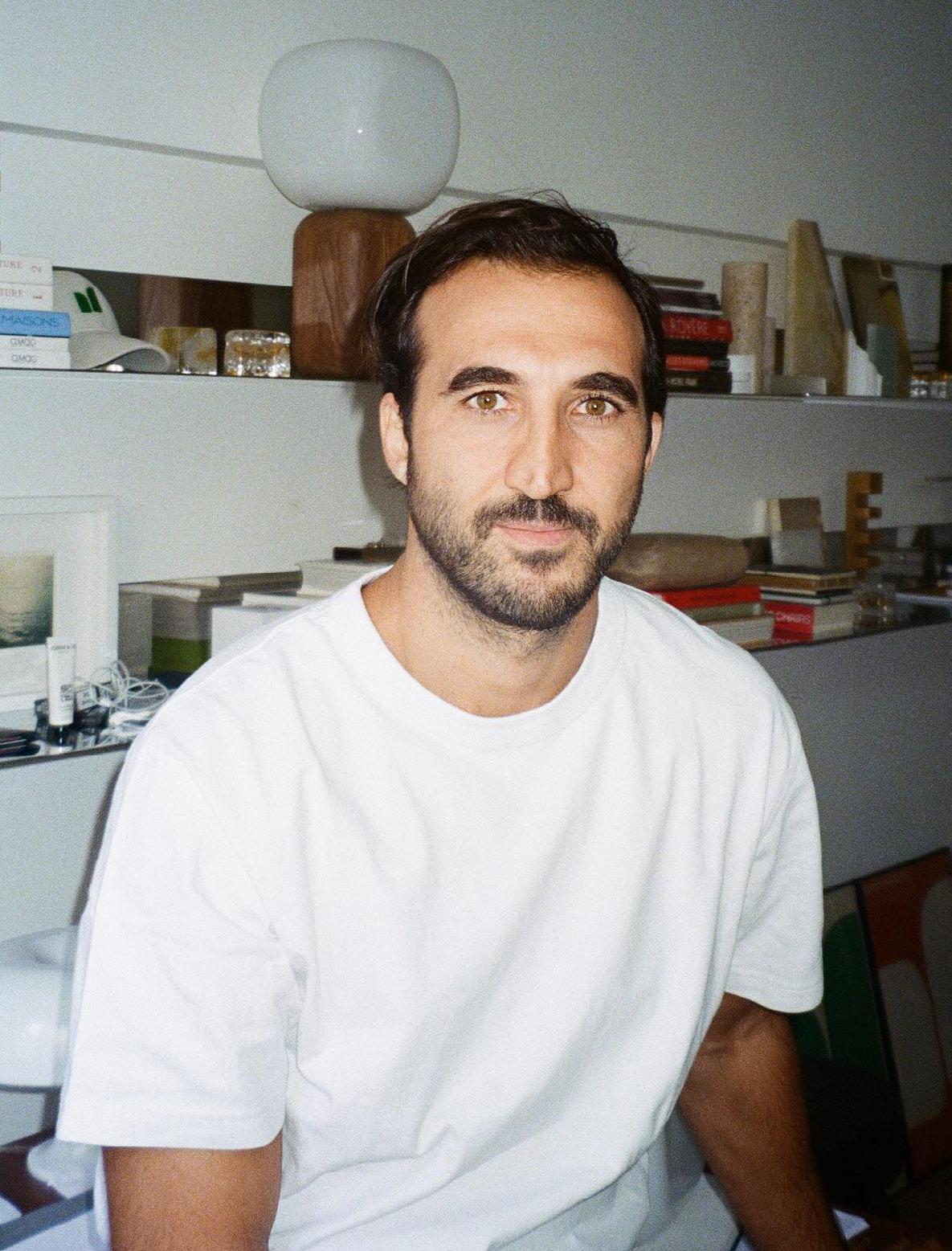
02 Poggioli in his Paris apartment, which was formerly Napoleon’s office. Image: Anouk Marty.
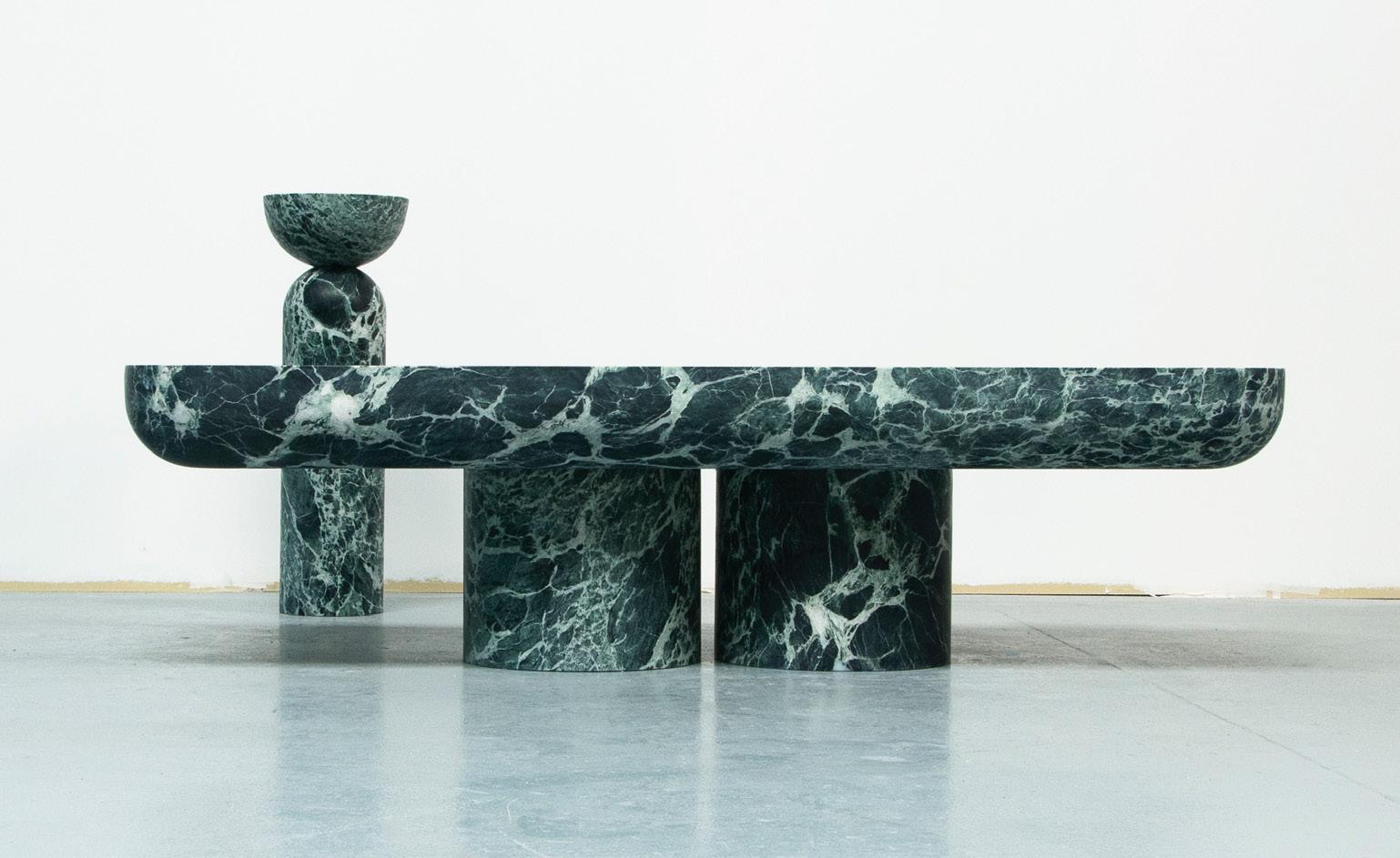
03 The Idia coffee table (here in Verde Alpi marble) is a limited edition of just 12 pieces. Image courtesy of Mobilia.
is not decoration, but inevitability: each form should feel as though it could not be otherwise.”
Established in 2017, Poggioli’s studio creates objects, furniture and interiors that blend elegance with eccentricity, drawing on the designer’s French-Italian heritage. His work reveals traces of his early experiences with sculpture and photography, with a careful balance of form and proportion, and a material palette that is both considered and expressive.
Before founding the studio, his path to design was far from straight. Studying business and on course for a rugby career, it was a personality test that first pointed him toward his creative instincts. Speaking in 2025, he said: “Beauty entered my life like a revelation. Suddenly, something opened inside me: I began taking drawing lessons, reading, listening, watching everything I could find, non-stop. It felt like learning to breathe.” Photography beckoned for a time, but he went on to enrol at Grenoble National Higher School of Architecture. “With architecture, I realised you could draw the contours of your own world. That moved me deeply,” he added.
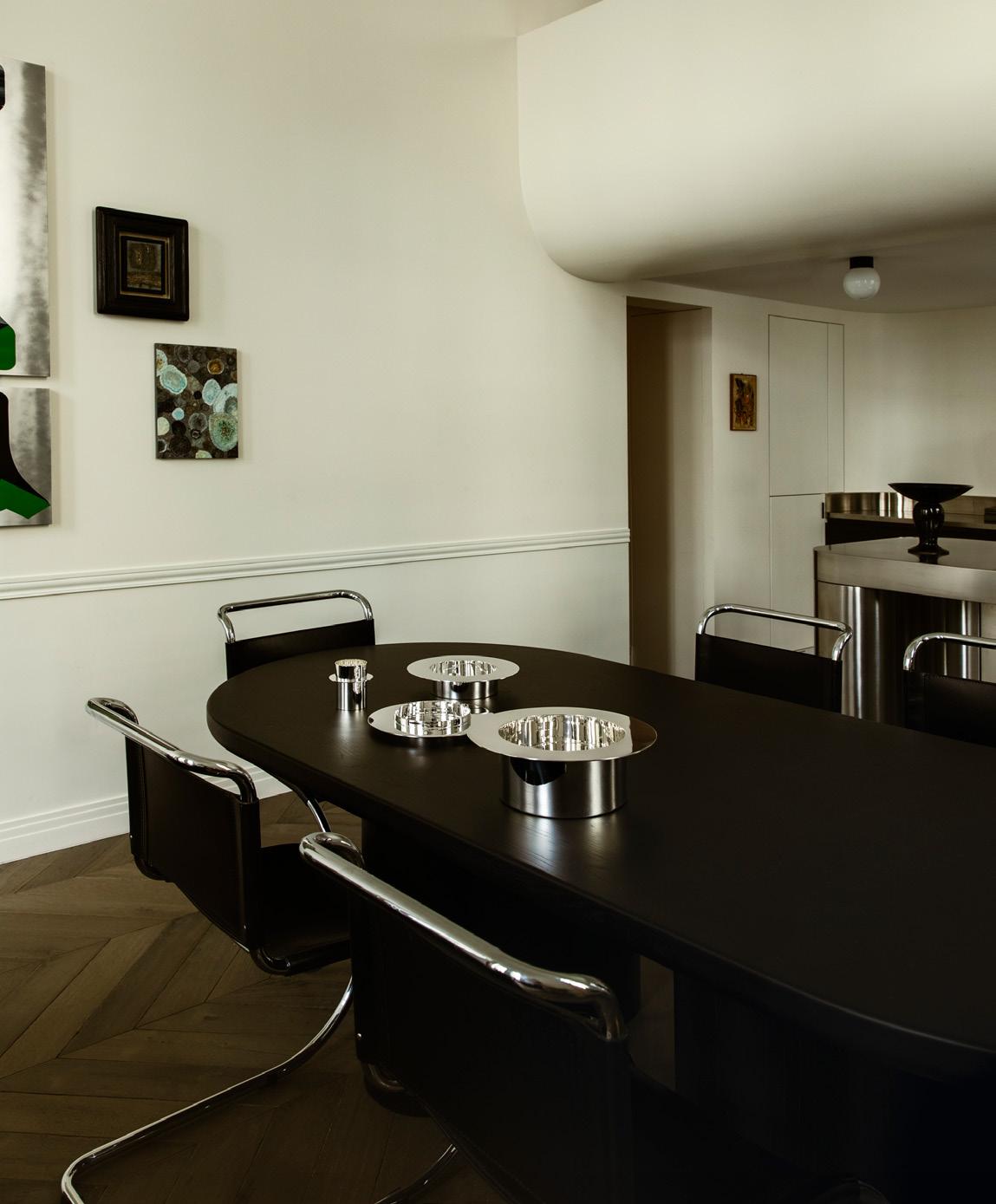
Among his best-known projects, and perhaps one that exemplifies his eclectic approach, is Poggioli’s own apartment, set within a building that once belonged to Napoleon Bonaparte. The 90sqm space was completely redesigned as a contemporary interior that nods to its historical grandeur. It features some of his most celebrated designs, the Ettore bookcase and the Rick chair, alongside vintage pieces and modern art. Texture and materiality come through in the metal surfaces: a custom-designed stainless steel kitchen that is both utilitarian and elegant, and a mezzanine floor that alters the architecture while maximising the apartment’s height.
For Poggioli, Horizon is a reflection of his practice as a whole, built from what he calls “journeys into extraordinary worlds of craftsmanship”, assembled through collaborations with stone carvers, woodworkers, metalworkers and silversmiths. “These are passionate artisans who transmit knowledge often inherited over several generations, and working with them is an infinite privilege,” he has said. “They shape my thinking as much as I shape the objects;
“Without [skilled artisans], I would be nothing—their hands, intuition and rigour give life to my ideas and anchor them in reality.”
without them, I would be nothing—their hands, intuition and rigour give life to my ideas and anchor them in reality.” A sensitivity to materials and craft is evident throughout the collection. Furniture pieces are defined by what Poggioli describes as “a single gesture”, a precise line or seamless volume expressing timeless form and subtle colour.
The collection’s March launch marked Poggioli’s first visit to Australia. Speaking to The Luxury Report from his Paris studio ahead of the trip, he reflected on working with a place from afar: “The distance itself, that vast territory, has already nourished my imagination,” he said. “But there is something powerful about working with a place you have not yet experienced physically—it sharpens intuition and projection.” It was a process of creative projection he saw as only the start. “I feel that this first encounter […] is only the beginning. I am certain that once I experience Australia directly, its landscapes, light and scale will deeply influence my work.”
Gallery Twenty Twenty, a new exhibition space in Alexandria dedicated to the dialogue between art, sculpture and design, provided the debut’s setting. “I have long been intrigued by the captivating, sculptural language of Joris’ work,” says Mobilia founding director and Gallery
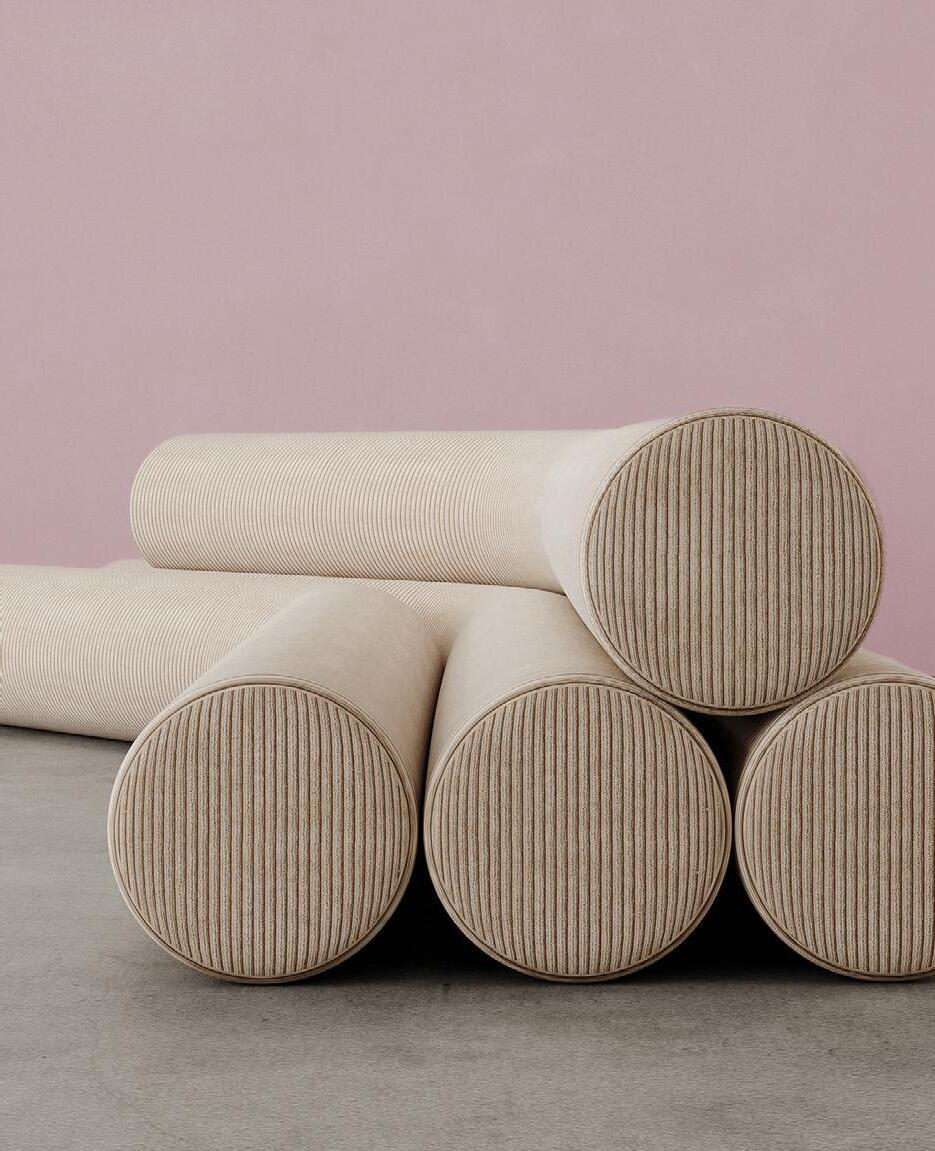
Twenty Twenty director Sam Fazzari. His introduction to Poggioli’s work was the Rose sofa: an exercise in paredback functionality, it essentially features three upholstered tubes that form the seat, with an additional tube for the back. Perfectly proportioned and surprisingly comfortable, its design left a lasting impression on Fazzari. That same quiet instinct runs through Horizon.
“Joris’ designs possess a rare balance of artistry and presence,” Fazzari explains. “He has paired experimentation with a sensitive use of the skills and knowledge of the craftspeople he collaborates with, and the result is a collection defined by simplicity, precision and a quiet sense of luxury and elegance.”
Poggioli returns the sentiment. “Sam is extraordinary— he truly understands artists,” he says. “There is a genuine desire to support, reveal and elevate creative voices. His vision goes far beyond commerce; it is deeply human. I sincerely hope this marks the beginning of a long friendship.”
gallerytwentytwenty.com
04 The designer astride his limited-edition 10.08 chair. Image: Andrea Venturini.
05 Poggioli’s dining area showcases his signature minimal aesthetic with custom black furniture and sculptural pieces. Image: Alice Mesguich.
06 Rose sofa from the Enamorados Collection (2019), handcrafted in Italy with ribbed velvet. Image courtesy of Mobilia.

The beauty of boring
After years in the shadow of flashier asset classes, bonds are commanding fresh respect from Australia’s most sophisticated investors.
JBWere’s Laurie Conheady explains why the least glamorous corner of a portfolio may now be the most important—by Cameron Cooper.
There is a certain type of investment that has never attracted the cult following of cryptocurrency or the cocktail-party cachet of private equity, instead spending much of the past decade being politely overlooked. Government and corporate bonds have long been the wallflowers of the wealth management world—reliable, predictable, quietly compounding in the background while equities and alternatives commanded the spotlight.
But as geopolitical fractures deepen and artificial intelligence reshapes capital markets in ways that remain difficult to price, investors with substantial wealth are rediscovering the strategic value of predictable income. What was once considered mere portfolio ballast is now being recognised as something rather more compelling: a source of stability with genuine return potential.
JBWere, leaning on heritage stretching back more than a century, has been positioning for precisely this shift. In late 2024, it launched two co-branded funds with UBS spanning Australian and international credit for wholesale investors seeking well-managed defensive assets at a time when even the most bullish market participants are hedging their optimism.
FROM THE WINGS TO CENTRE STAGE
Laurie Conheady, executive director and head of fixed income at JBWere, is clear-eyed about the renewed
appetite for fixed income. “Higher interest rates have been a gift to bond investors,” he says. “It is now possible to generate meaningful income without taking on outsized risk—something that simply wasn’t available in the postCOVID zero-rate environment.”
The appeal is not merely cyclical. The Australian credit market has undergone a structural expansion in recent years, with record issuance, new domestic and offshore entrants, and the development of instruments such as subordinated corporate notes creating a more liquid and diverse landscape. Growing interest from superannuation funds, private wealth firms and Asian institutional investors suggests the trend may persist.
Conheady notes that while demand for fixed income often peaks during periods of volatility, the case for maintaining consistent exposure is far more enduring. “This is not about retreating to safety. It is about building portfolios that are genuinely resilient and perform across market cycles, not just in benign conditions.”
JBWere’s commitment to the asset class is not recent. The firm established a dedicated fixed-income research team more than a decade ago, alongside a specialised markets desk. Today, it manages $17.6bn in fixed-income assets, of which $12.7bn is direct wholesale and listed market securities. This scale positions it as a significant participant in domestic credit markets and provides
clients with access to wholesale deals that would otherwise be beyond reach.
THE PERSONAL TOUCH
One of the more notable shifts Conheady has observed is the desire to hold bonds directly rather than exclusively through managed funds. “Investors are seeking greater control and transparency over what they own,” he explains. “An increasing number are allocating capital directly into individual securities and supplementing where appropriate with managed funds and exchange-traded fund exposures.”
This is where the breadth of the JBWere network becomes a distinguishing factor. Conheady describes it as “optionality of exposure” whereby investors who want direct market access can draw on JBWere’s research and execution capabilities, while those who prefer a managed approach can tap into a curated panel of approved fund managers covering domestic and global fixed-income markets, both public and private.
The level of sophistication extends to the analytical tools on offer. JBWere will soon be able to access BlackRock’s Aladdin platform, the institutional-grade risk engine used by many of the world’s leading asset owners, for enhanced insight into fixed-income positions within the overall portfolio.
NAVIGATING THE AI QUESTION
No conversation about credit markets in 2026 can avoid the artificial intelligence question, and for fixedincome investors, the implications are particularly nuanced. Technology giants including Amazon and Oracle are tapping bond markets for well over US$100bn to fund data centres and AI infrastructure, a borrowing spree that has created both opportunity and a note of caution.
“These companies are borrowing heavily to pursue the AI opportunity,” Conheady observes. “The fundamental question is whether their traditional cash-generating businesses can support this scale of capital expenditure. Core operations remain robust for now, but commitments of this magnitude could meaningfully reduce near-term cash availability and debt service capcacity.”
The creditworthiness of these issuers depends on their existing revenue engines continuing to fire even as they pour enormous sums into infrastructure with uncertain returns. It is a space that rewards careful credit analysis, and one where JBWere’s research capabilities come into their own.
BUILDING FOR WHAT COMES NEXT
Conheady acknowledges that inflation remains a live consideration, though he notes that central banks are better equipped to manage it today than they were during the post-pandemic surge, when supply-chain disruptions and unprecedented fiscal stimulus complicated the policy response. Encouragingly for bond investors, recent rises in yields mean that parts of the fixed-income market are now offering yields above current inflation and some measures of expected inflation (as at March). This may help support purchasing power, though outcomes will depend on both the path of inflation and issuer-specific credit risks.
JBWere’s current strategic positioning reflects this environment. “Our approach favours quality credit over government bonds, incorporating a balance of floating-rate and inflation-linked securities alongside fixed-rate assets where appropriate.” Conheady explains. In practical terms, floating-rate instruments adjust their income payments as interest rates move, which can help reduce interest-rate sensitivity if rates rise, while inflation-linked bonds may help shield real returns from rising prices. Meanwhile, the portfolio may have the potential for capital appreciation should inflation moderate and yields subsequently fall. It is a structure intended to pursue performance across multiple scenarios rather than relying on a single outcome.
While JBWere’s equity portfolios maintain exposure to long-term AI-related themes (including semiconductor companies through its International Equities Model Portfolio), the firm’s asset allocation team has recommended a measured tilt toward fixed income for risk-management purposes. It is, Conheady suggests, a prudent response in an environment where the range of possible outcomes remains unusually wide.
THE CASE FOR CONSISTENCY
Conheady’s outlook for the period ahead is characteristically pragmatic, circling back to the quiet appeal that has drawn investors to this asset class throughout its history. Fixed income may never generate the adrenaline of a surging equity market or the allure of an alternative investment, but for portfolios of genuine scale, its role has never been more important or rewarding. “Do not try to time the market but do not ignore what it is telling you either,” Conheady counsels. “Right now, the message is clear: the least glamorous part of a portfolio may well be the most valuable.”
230686 (NAB). NAB does not guarantee its subsidiaries’ obligations or performance or the products or
its
JBWere is not an authorised
and its obligations do not represent deposits or other liabilities of NAB. You are subject to investment risk, including loss of principal invested. JBWere and their respective related entities and each of their respective directors, officers and agents believe that the information contained in this document is correct and that any estimates, opinions or conclusions contained in this document are reasonably held or made as at the time of compilation. However, no warranty is made as to the accuracy or reliability of any estimates, opinions, conclusions or other information contained in this document. Any information contained in the article is intended to be of a general nature only. It has been prepared without having regard to or taking into account the investment objectives, financial situation or particular needs (financial circumstances) of any particular person. Accordingly, before acting on any information contained in this article, you should assess whether the advice is appropriate in light of your own financial circumstances. Past performance is not a reliable indicator of future performance. Any target returns, projections or forward-looking statements are not guaranteed and are subject to change.
01
A REPUTATION built on results
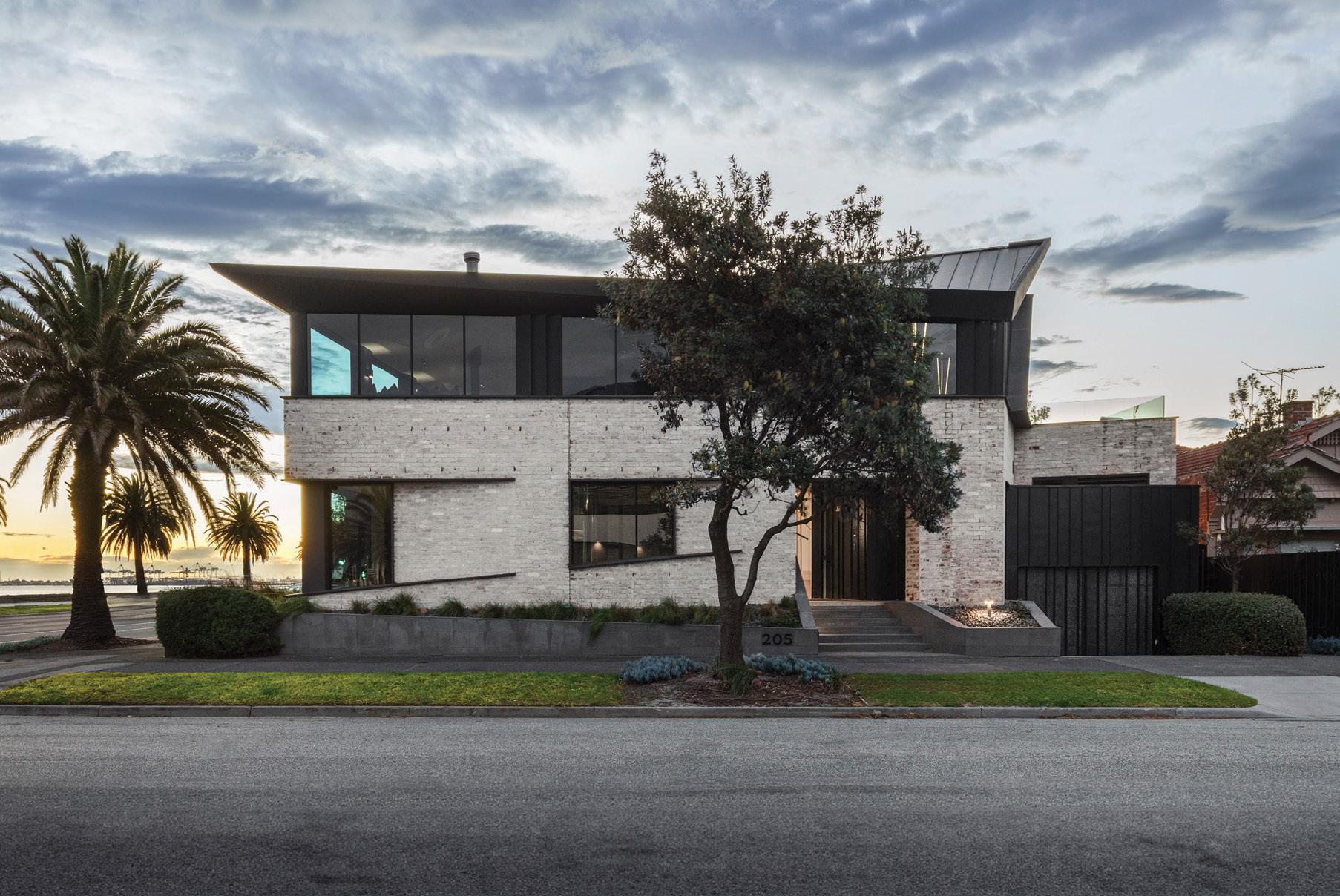
01 205 Beaconsfield Parade, Middle Park
The sale of ‘Panorama House’ stands as one of Melbourne’s most significant beachfront transactions. The tailored campaign achieved exceptional reach through a blend of premium print and digital platforms, cinematic video storytelling, and extensive editorial coverage across The Australian Financial Review, Domain, The Australian, News.com.au and Kanebridge News. Designed by Sally Caroline, ‘Panorama House’ has been celebrated in multiple design publications and received awards for its biophilic approach, masterful materiality and seamless interplay between architecture and environment. The campaign attracted four offers, with the final purchasers—a Melbourne family—drawn to its architectural integrity, craftsmanship and immediate lifestyle appeal. Sold by Andrew Sahhar and Danielle Horne.
02 17 Manning Road, Malvern East
A defining sale of Melbourne’s spring market, ‘Manning’ set a new record within the prestigious Gascoigne Estate. Following an extensive renovation by Cera Stribley Architects, Fortem Projects, and landscape designer Ben Scott, the circa-1907 Queen Anne–style residence re-emerged as a modern classic—honouring its heritage origins while introducing a new benchmark in family living and design. The campaign
drew exceptional engagement, with interest from returning expatriates, interstate buyers and local families. The eventual purchasers lived within 1km of the property and, while passively browsing, discovered it through a print advertisement before arranging a private inspection. Remarkably, it was the only property they viewed before purchasing. Sold by Scott Patterson, Jacqui Bendall and Garrick Lim.
03 2275 Mornington-Flinders Road, Flinders
Poised above the rolling pastures at the gateway to Flinders, the exceptional 32acre* estate united architectural originality, breathtaking panoramas, and equestrian excellence. Designed to withstand time and the elements, its rammed earth and glass form captures cinematic views across Bass Strait, Western Port, and the rugged beauty of the Peninsula’s coastline. Its proximity to Flinders Village and rare combination of design, land and amenity ultimately attracted a Melbourne couple who purchased it as a weekend retreat with plans to make it their future permanent home.Sold by Andrew Hines and Cass Hines.
04 21 Wolseley Grove, Brighton
Strong engagement from three qualified buyers led to a sale exceeding $8 million for this contemporary Brighton residence,
underscoring the continued depth of demand for turnkey, move-in-ready homes. In a market where buyers are increasingly prioritising convenience, quality and immediate lifestyle appeal, the property’s six-year-old build, generous landholding and private pool amplified its desirability. Interest came from both local and offshore purchasers, with the successful international buyer responding to its refined finishes, effortless family layout and close connection to the Brighton foreshore. Sold by Alex Schiavo, James Driver and Shantelle Francis.
05 Penthouse/65 Lansell Road, Toorak
Leased off market on a long-term lease for $8000 per week (rising to $8400 in the second year), this extraordinary penthouse set a new benchmark for Toorak’s prestige rental market. The result reflects both the depth of demand in Melbourne’s luxury leasing sector and the calibre of renters seeking uncompromising quality. The Cera Stribley–designed residence impressed with its private lift access, expansive indoor–outdoor living, and panoramic terrace. Kay & Burton’s strategy delivered a swift, seamless outcome befitting one of Toorak’s finest sky residences. Leased by Evelyne Surja.
*land size approx
Kay & Burton has always been a leader in the premium and luxury real estate markets. Since selling our first home in 1938, our success has been underpinned by the depth of knowledge, experience and relationships we have formed within the markets in which we operate. We are proud to present some of our top results from the past six months.
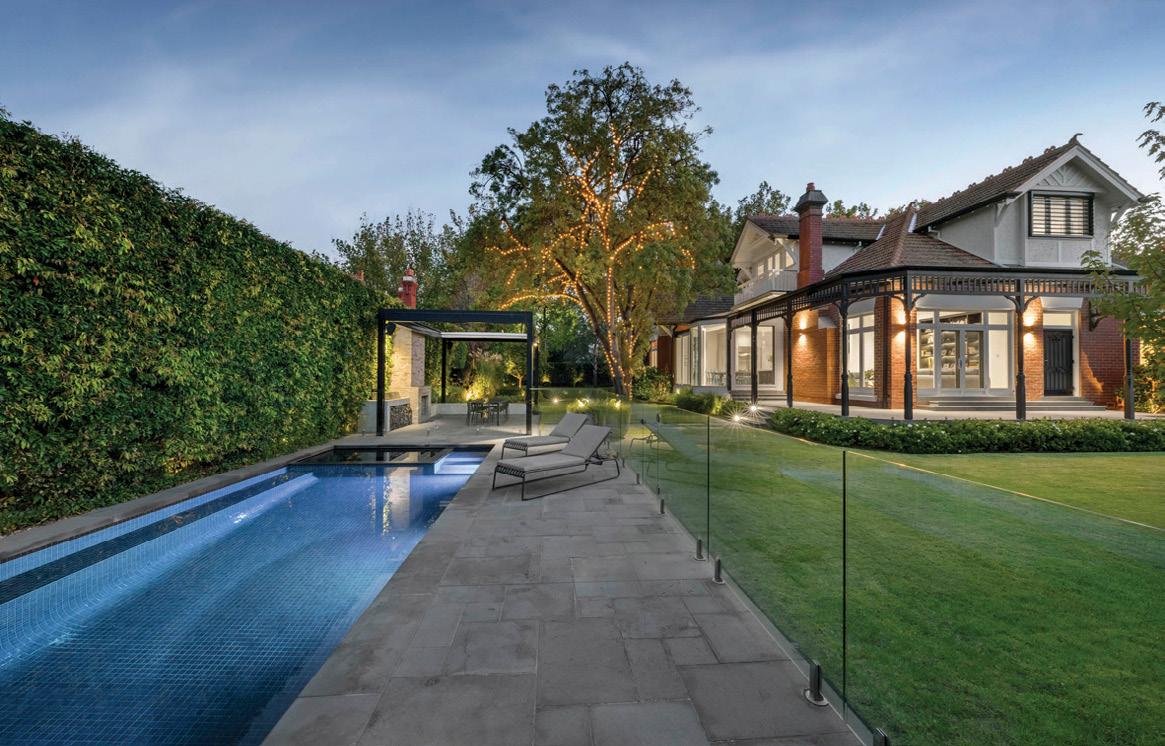
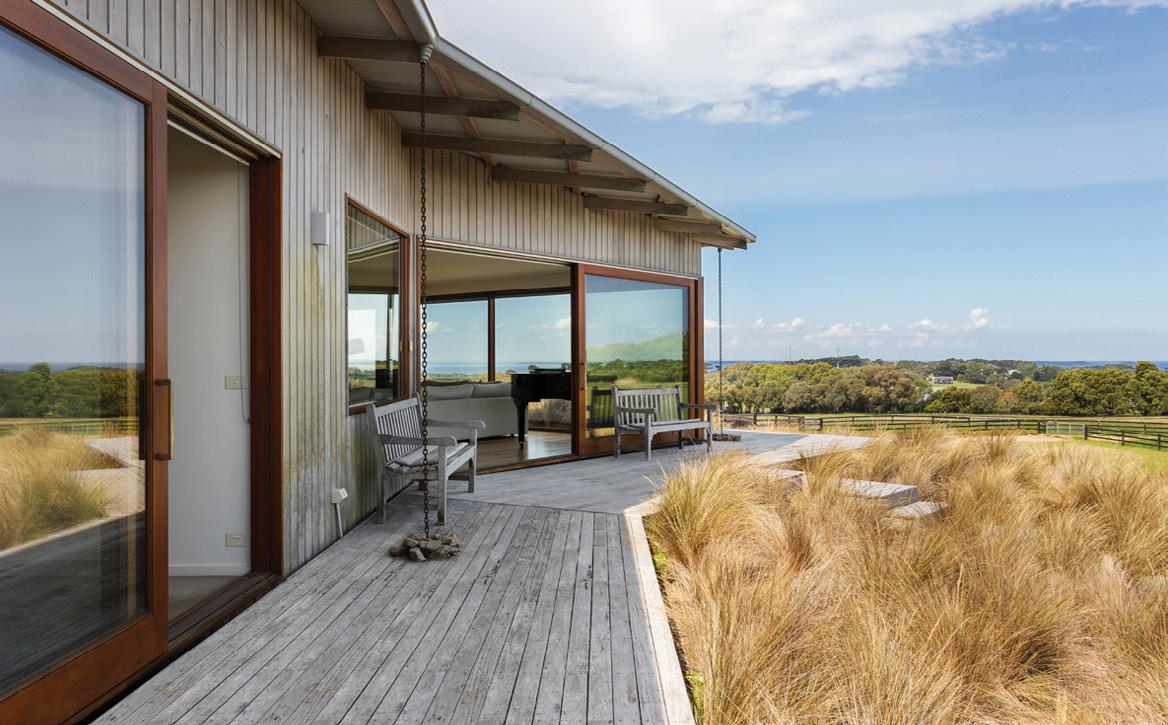
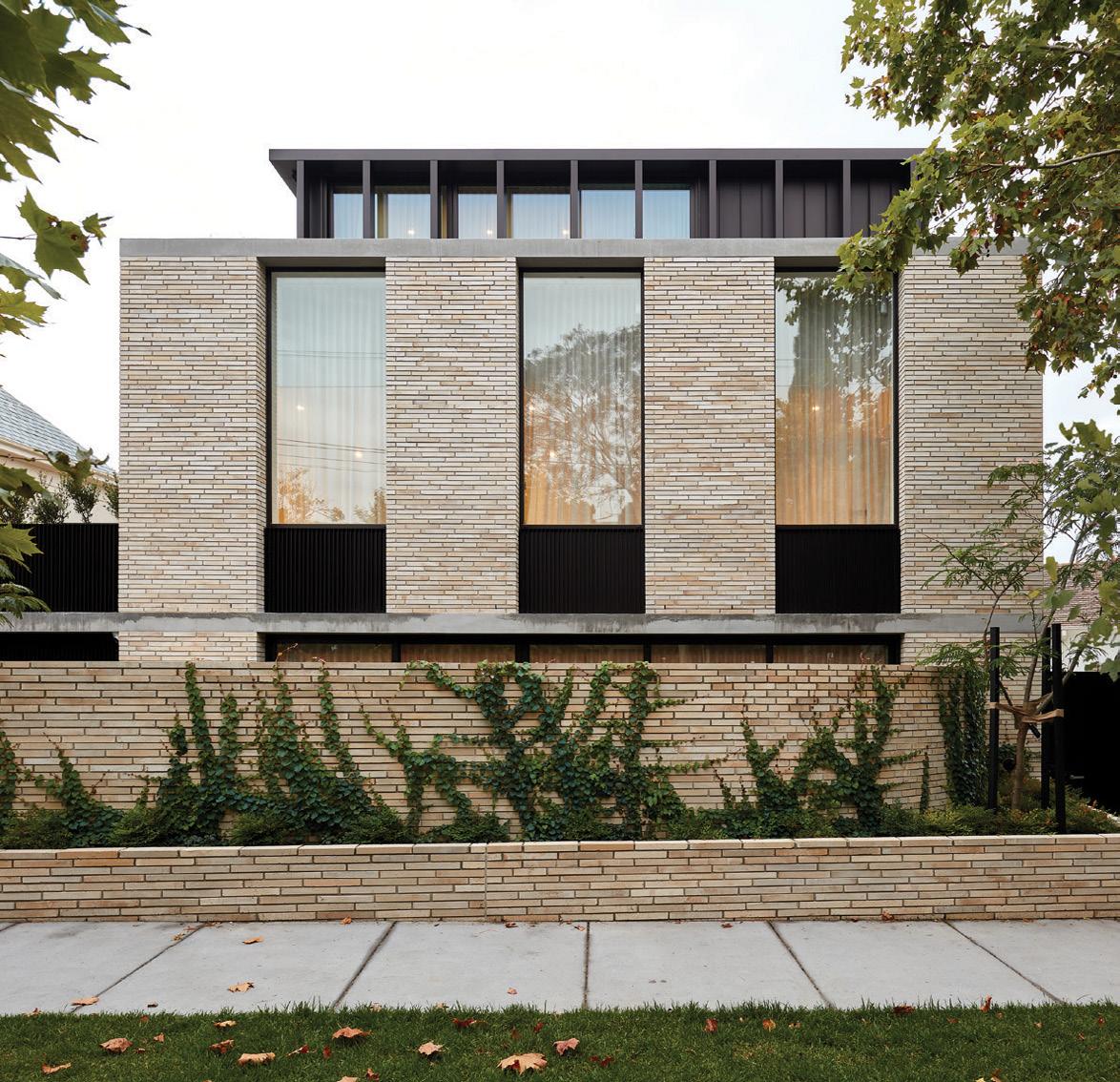
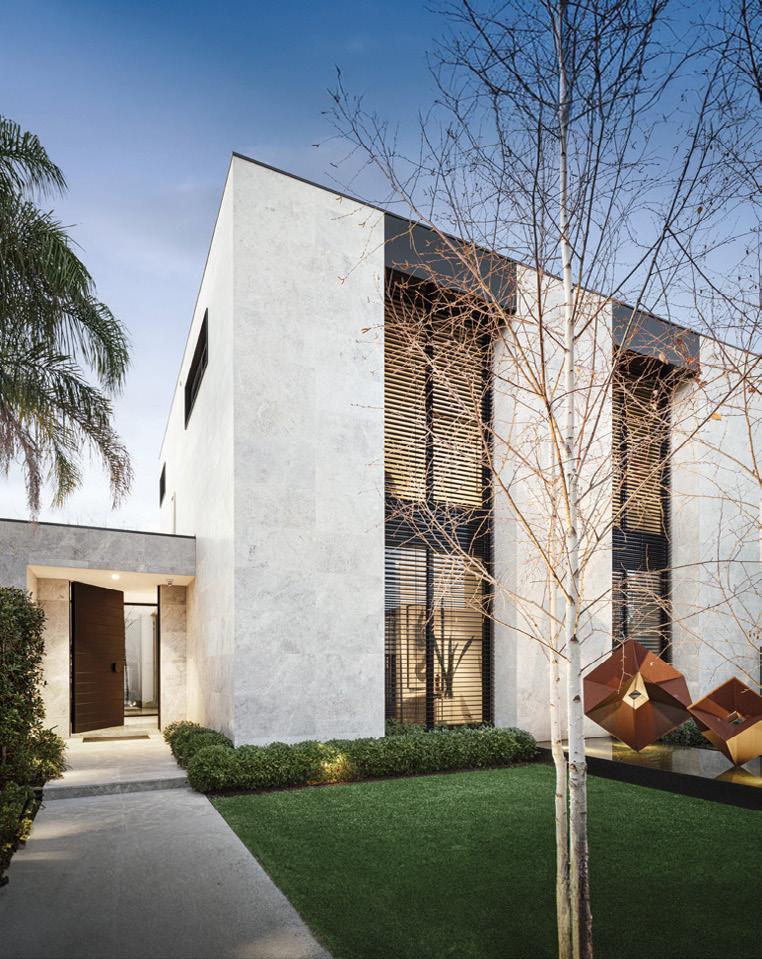
Few chefs sustain both longevity and momentum. Chef, author and broadcaster Karen Martini is one of them, now entering a new chapter with Bar Carolina—by Michael Harden.
Holding the room
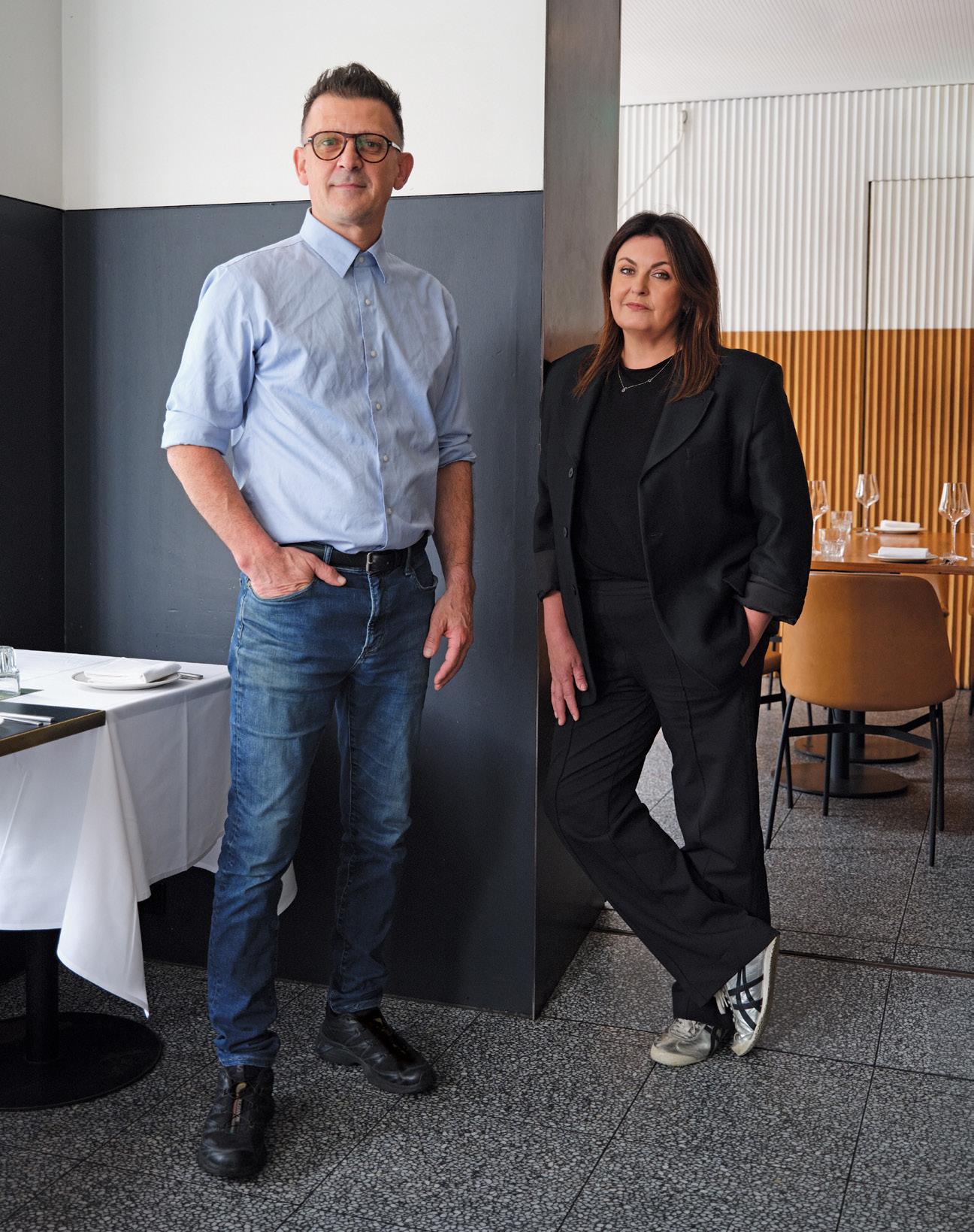
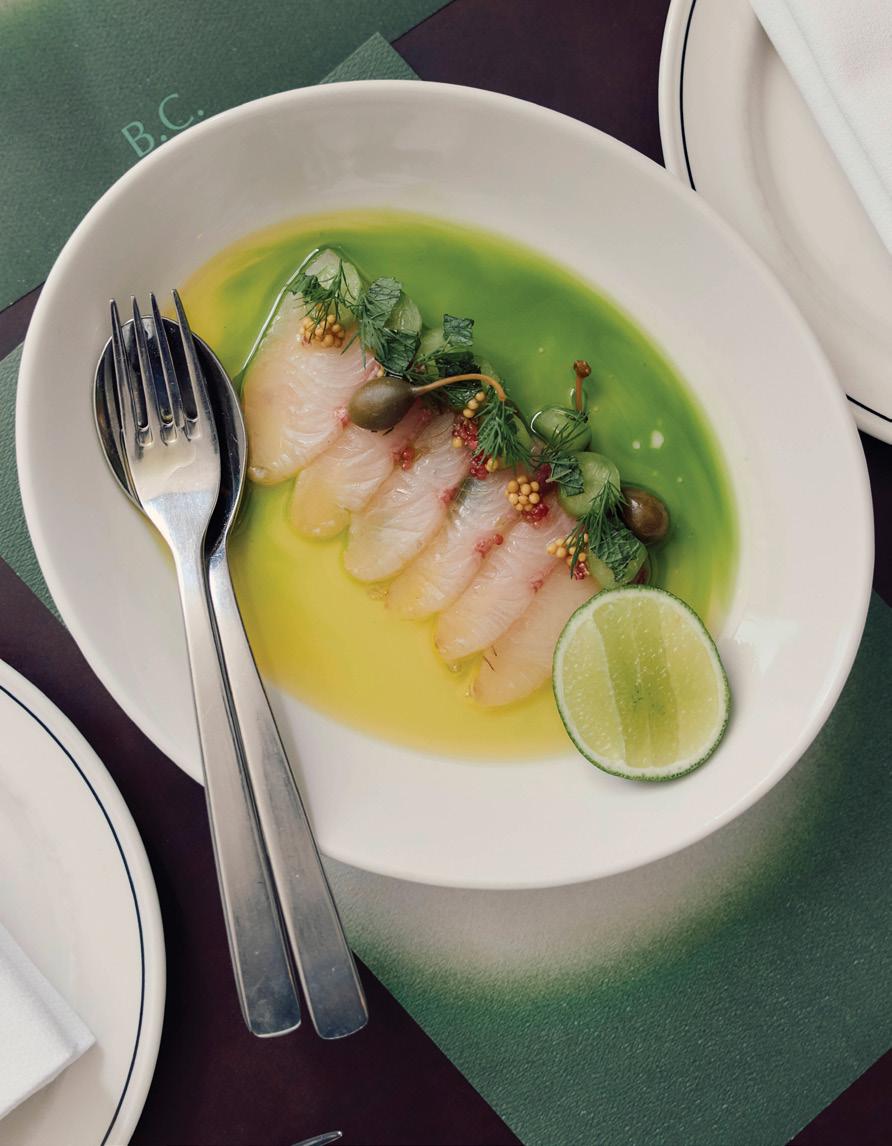
Kingfish crudo with lemon, caperberries, dill and mint.
Image: Chege Mbuthi.
Three decades in, Sapountsis and Martini’s partnership is as potent as ever.
Image: Peter Tarasiuk.
It speaks volumes that, more than 35 years into her career, Karen Martini retains the vision and enthusiasm to try something new. With a CV that emphatically proves the point, Martini, who says she “dreams in flavour”, approaches her work more as calling than profession.
The cooking bug bit at age 15 after work experience at Mietta’s with Jacques Reymond. She worked in a hospital kitchen before landing roles at the groundbreaking Tansy’s and the Kent Hotel (names that defined Melbourne dining in the ’90s) then as head chef at the Melbourne Wine Room and Sydney’s Icebergs, two of the most talked-about rooms of their era. Martini has since become a fixture in Australian food culture as a much-loved TV chef and newspaper columnist; written a series of best-selling cookbooks (her 900-page tome Cook among them); experienced success—and the occasional failure, notably the short-lived Hero at ACMI—with her own restaurants; and consulted for businesses ranging from the Sydney Opera House to Carlton’s King & Godfree.
The latest venture is a takeover of an existing business, South Yarra’s Bar Carolina, with life and work partner Michael Sapountsis and friend Rabih Yanni, owner of the nearby Botanical Hotel.
September with a large all-Martini, all-Italian menu. Two months later, they were awarded a hat.
Three-plus decades of experience cannot be discounted when achieving success in such a short time. Neither can the alchemy of a long-term partnership that is both personal and professional.
“Michael and I had different hospitality experiences to begin with—I’m in the kitchen and he’s front-ofhouse—but one thing we’ve always had in common is a belief that what makes a great restaurant is personality.” It is a philosophy shaped by the greats. Martini cites her time at Tansy’s as particularly formative, describing the approach as “precise and beautiful, but with an appealing looseness that allowed customers to relax”.
Sapountsis, shaped by his own influences, speaks the same language. “We met at the Melbourne Wine Room. We weren’t partners to start with but I think we each recognised a kindred spirit—we both had the same keen curiosity,” Martini recalls. “Michael’s attitude has always been: we don’t need to do it exactly like that, let’s find our own path.”
“It’s never been about making a list or having a fixed idea about the type of restaurant we want to open next. We think about the kind of food we want to eat and
“The Italian expression of hospitality was in the bones of the building and we felt an immediate affinity with that.”
“I think I’m up to my 11th or 12th restaurant launch over a period of 30 years,” says Martini. “But we’ve never taken over an existing business before. We didn’t even change the name because we realised that people would still refer to it as ‘the old Bar Carolina’ because it’s the kind of place that locals really embrace and it seemed right to connect with and continue that legacy.”
It began with a conversation. Restaurateur Joe Mammone, a friend and colleague who opened Bar Carolina in 2017, contacted Martini with the idea of some consulting work “to refresh some ideas”. Over the course of that meeting, Mammone realised Martini’s vision extended well beyond a brief, and they amicably parted ways.
“But as I left, I said to Joe: ‘if you ever think about selling, I absolutely love this site. The brand you’ve built and the legacy of the Italian restaurant on this corner is beautiful’,” she recalls. “The fact that Chris Connell— who designed Melbourne Wine Room, Hero and even our own house—had designed the space meant it was familiar to us and would need minimal changes.”
A few weeks later, Mammone took Martini and Sapountsis up on their offer. After bringing Yanni on board as partner, adding some wood-fired power to the kitchen, giving the dining room a lick of paint and moving some furniture around, they opened in
the space we want to eat it in. Essentially, we make restaurants we want to eat in,” she says. “All good restaurants have an emotional side and that’s what we felt with Bar Carolina. It had oil and pasta baked into the walls and a fierce loyalty among South Yarra locals.”
Bar Carolina can be read as part of the next stage in Martini’s career. She’s stepped back from TV commitments—though she has ideas for a show exploring how maturity “has changed the way I cook and think about food”—and is releasing a new cookbook series this year. Consulting keeps her busy too, with ongoing commitments at Thyme at Alba Thermal Springs & Spa on the Mornington Peninsula and the upcoming multi-venue overhaul of King & Godfree.
“We’re really about old school hospitality where food, service and atmosphere all play equal parts,” she says. “At Bar Carolina, the Italian expression of hospitality was in the bones of the building and we felt an immediate affinity with that. Restaurants are never just a business for me; the heart is there as much as the head. And I remember that there’s always something else to learn.”
barcarolina.com.au
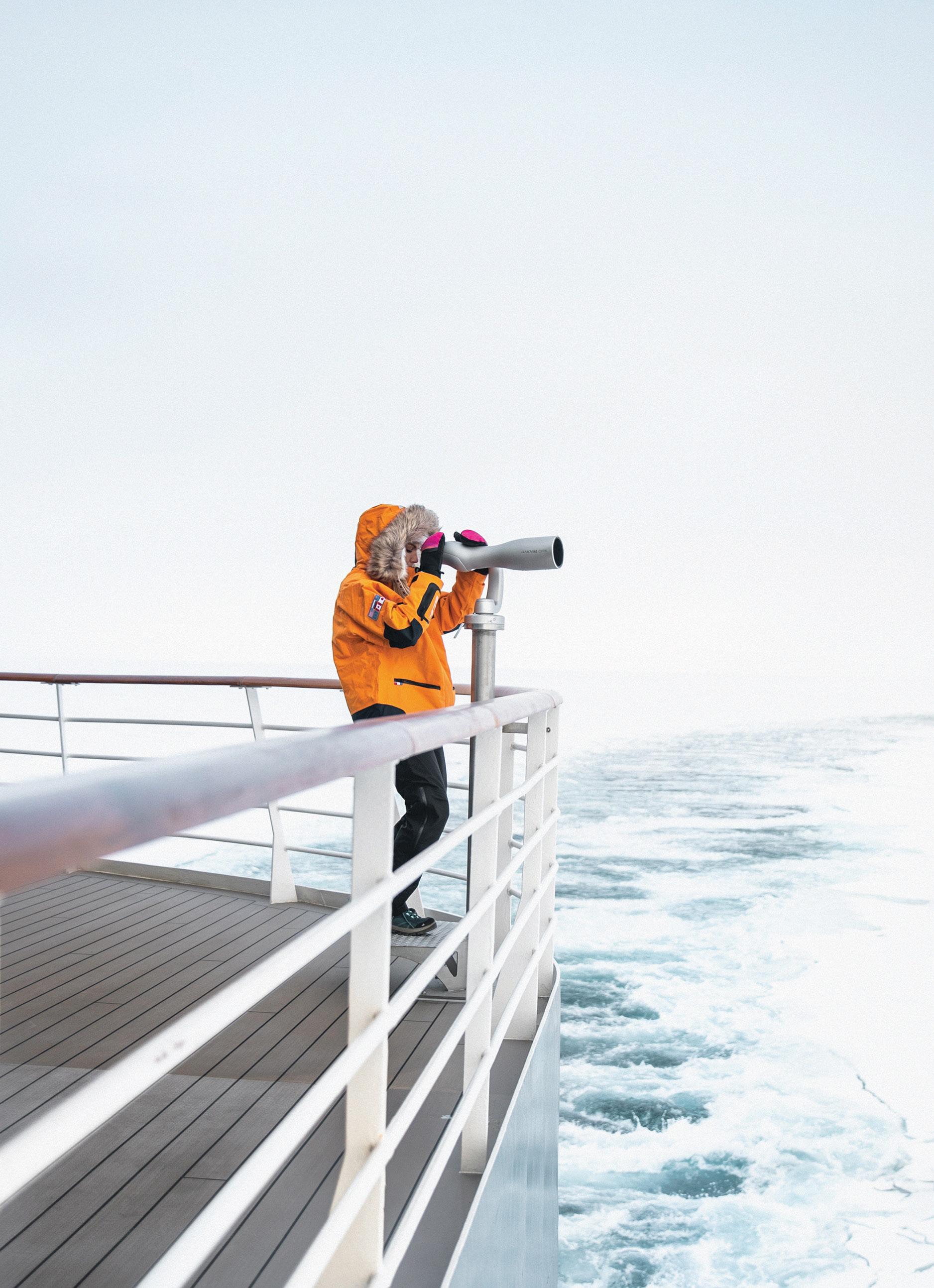
IN THE COLD
From Everest summits to polar expeditions, Peter Hillary has pursued the world’s extremes. Returning to the north pole, he reflects on modern exploration and why connection to wild places matters more than ever—by Peter Barrett.
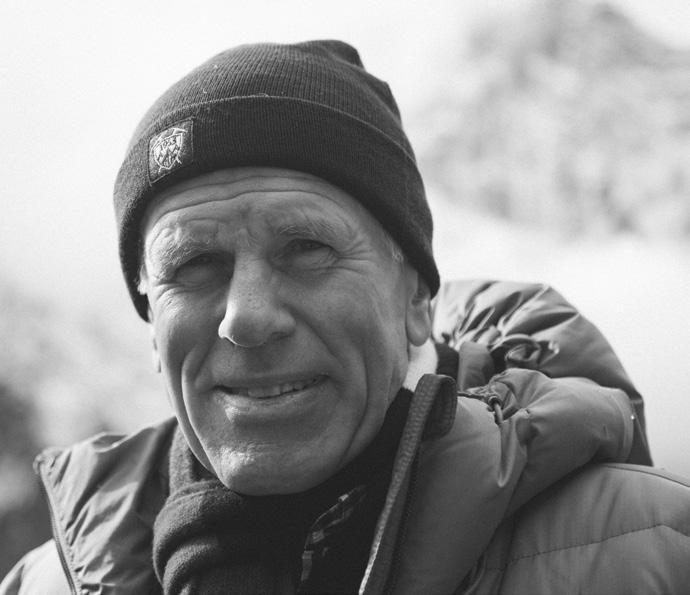
When Peter Hillary (above) stepped on to the Arctic Sea ice at the geographic north pole in 2024, he was confronted by a strange beauty. All around him, the ice floes were covered in brilliant pools of turquoise water. But the sight underpinned an unsettling reality.
“It was just rotten ice,” he says. “It was [sufficiently] hard for us to walk on, but we needed knee-high rubber boots […] because we were splashing around in fresh water that lay on the surface of the pole’s sea ice.”
For Hillary, son of the late Sir Edmund Hillary—the mountaineering icon who, with Tenzing Norgay, made the first ascent of Mount Everest in 1953—the moment sat uncomfortably between wonder and warning. Thanks to technology, the world is now much smaller, and wild frontiers like these are becoming more accessible. At the same time, that very accessibility— and human-induced global warming— is rapidly changing them.
In 2027, Hillary will again climb aboard Le Commandant Charcot, a state-of-the-art hybrid electric/LNGpowered icebreaker, headed to the geographic north pole. This time he
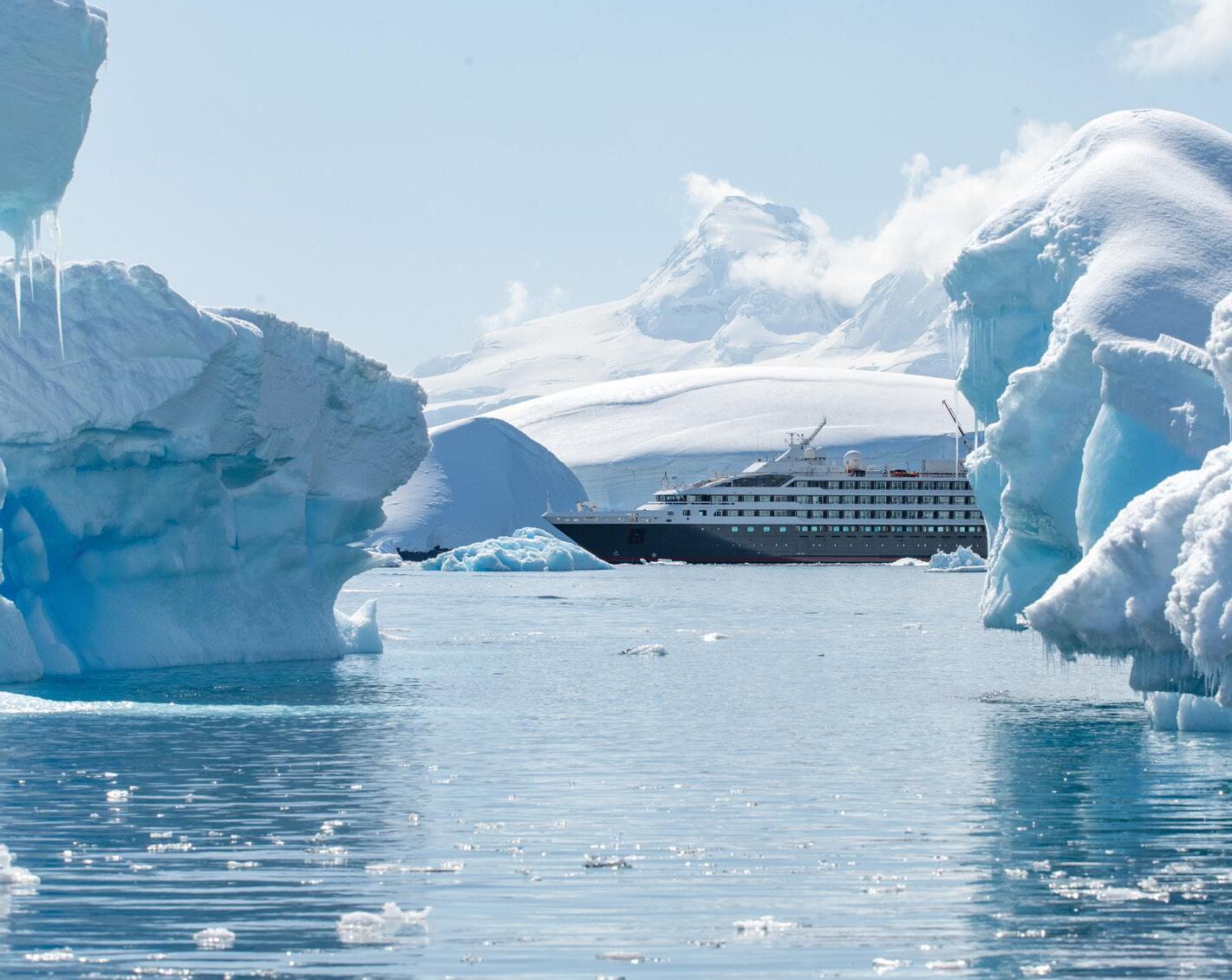
will be joined by more than 200 guests paying upwards of AUD$70,000 a berth for an 18-day cruise, which starts in Iceland, wends its way along the remote east coast of Greenland through pristine ice floes to 90°N, and then sails back home to Norway.
For his part, Hillary will deliver lectures to guests during the voyage. According to Ponant—the French luxury expedition cruise operator owned by Groupe Artémis, the Pinault family’s holding company—passengers can also look forward to seeing polar bears, walking out on the sea ice and visiting Inuit communities along the route. And they will be doing it all in style, with a restaurant designed by Michelin-starred legend Alain Ducasse,
several bars, a cigar lounge, an indoor saltwater pool, sauna, snow room inspired by Nordic spa traditions and fitness centre.
This rarified world seems far removed from the gruelling, dangerous and testing environment Hillary’s father confronted when he made the summit of Mount Everest over 70 years ago. So, what still counts as adventure in Hillary’s eyes?
“Adventure tourism has been going on for around 150 years,” says Hillary over the phone from New Zealand’s Queenstown, fresh from a helicopter trip over Fiordland National Park. “There were wealthy British people going over to the Alps in Europe and it was the beginning of mountaineering:
Le Commandant Charcot in Ushuaia, gateway to Antarctica. Image: Morgane Lanco.
“We live in a very exciting time because a lot of these remote places [...] have become more accessible.”
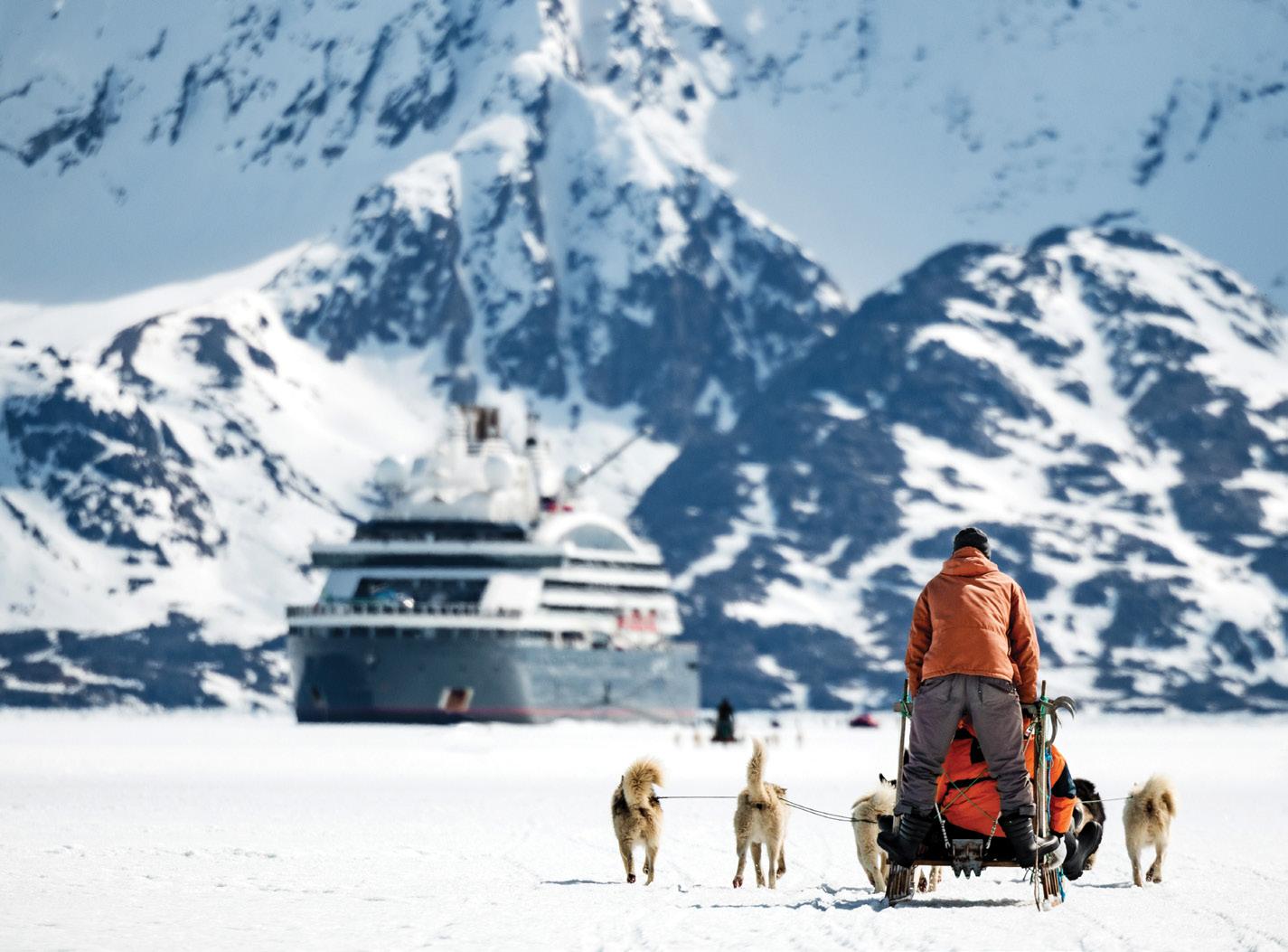
trekking in the Alps, staying in little lodges, that sort of thing,” he explains. “Progressively, there were hardy expeditions going off to all corners of the globe. My father’s and Tenzing’s climb on the British expedition was an example of that, it was pushing the parameters of what was possible.”
Hillary has forged his own path in expedition leadership. Since summiting Everest (twice) and, in 1999, establishing a new overland route to the south pole via the Shackleton Glacier—42 years after his father’s own Antarctic journey—he regularly leads expeditions for paying guests. He is also a public speaker, raises funds for Himalayan foundations, partners with a clothing brand and, with sister Sarah, manages their late father’s intellectual property.
“We live in a very exciting time because a lot of these remote places such as the north pole have become
more accessible,” he says. “It enables a wide variety of people to experience them, in a very controlled fashion, but to actually have that experience and connect with that piece of nature.” That connection becomes ever more crucial as screen culture and urbanisation accelerate, while natural environments degrade.
Technological innovations such as those represented by the Charcot, built in 2021 and equipped with two on-board research laboratories, are one reason the Arctic has become more accessible. But there is another, more troubling factor. The environment itself is changing, with scientists predicting ice-free Arctic summers in the not-toodistant future.
Hillary has witnessed that change firsthand. In April 1985 he joined a north pole expedition organised by Mike Dunn, who assembled an ‘A-team’
of adventurers, including his father and astronaut Neil Armstrong, along with a handful of paying guests.
“Admittedly, we went in April, and it was the springtime, but we landed in these small planes on very hard frozen sea ice,” Hillary recalls. “The temperature was around -40°C—incredibly cold. We went back in July 2025 and the icebreaker was largely following open lanes of seawater, big cracks through the Arctic ice sheet. It was wildly different and, in fact, quite concerning.”
Conditions on that first voyage were basic. For two weeks the participants slept in bunks, ate simple food and traded stories. “The best part of the expedition was the storytelling,” recalls Hillary, who was then in his early 30s. “My father talking about Everest and the schools and hospitals he was building in the Himalayas, and Neil talking about landing on the moon.”
Dogsledding back to the ship at anchor near Qernertivartivit, East Greenland. Image: Violette Vauchelle.
An onboard sauna offers a moment of warmth amid the ice. Image: Gilles Trillard.
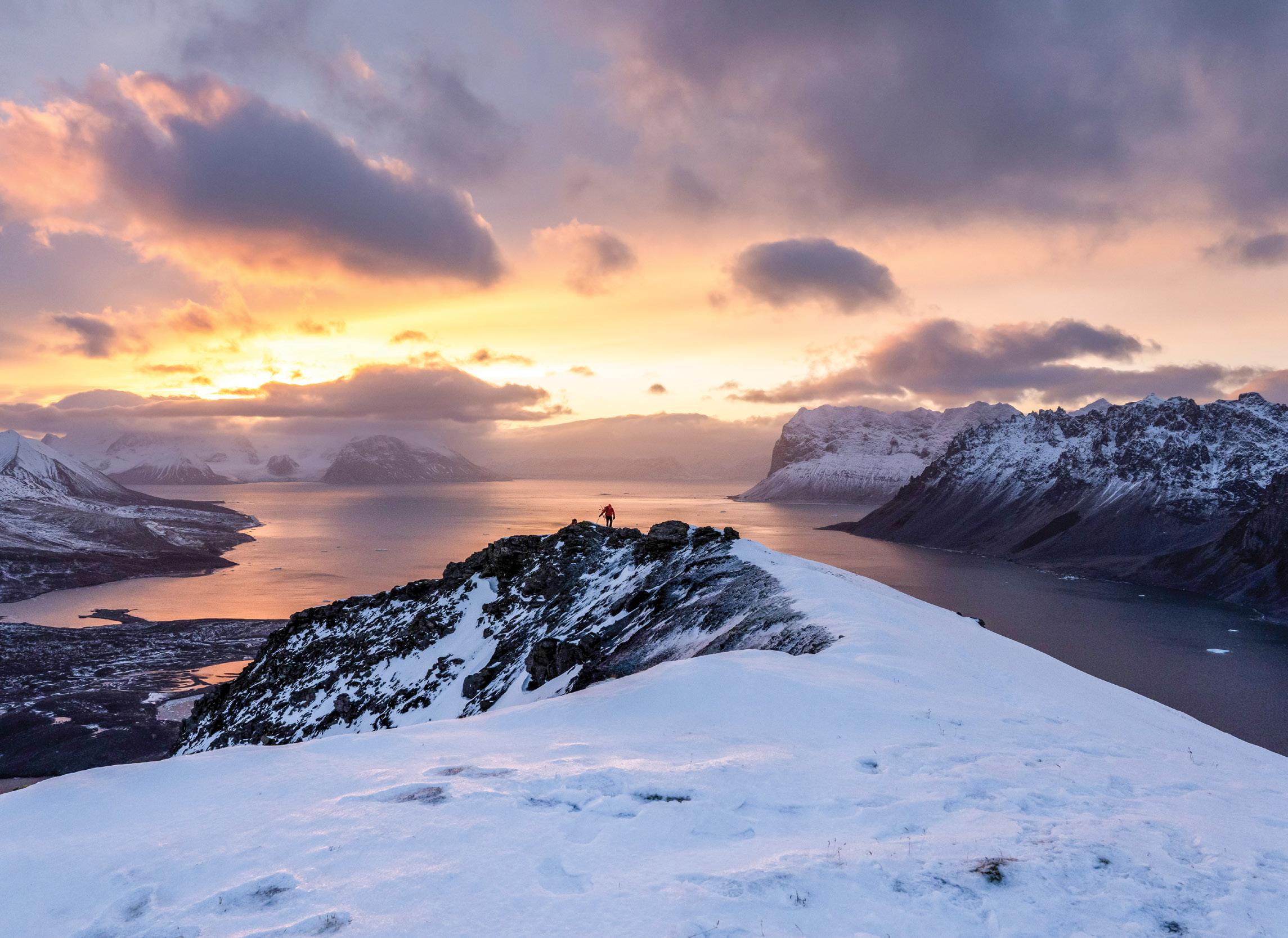
“My father’s and Tenzing’s climb [...] was an example of pushing the parameters of what was possible.”
On that return journey, Hillary travelled to the north pole with Mark Armstrong, Neil’s son, and a documentary crew. While the original voyage had remained largely a secret (at Neil Armstrong’s request), Icelandic filmmakers Orly Orlyson and Rafnar Orri are now bringing the story to life with exclusive original footage in forthcoming documentary North Pole ‘85
For Peter and Mark, it was also a chance to compare notes on parallel childhoods, such as how to react when people ask what it was like growing up in the shadow of your famous father. “My response has always been I felt I grew up in the light of Ed Hillary,” he says.
For the record, Hillary says his dad would certainly have approved of—and appreciated— the chance to sip champagne on the Charcot bound for the north pole in 2027 if he were still around. But what does he hope his fellow voyagers will take away from the adventure? “I hope they leave with a sense of connection and wonder for these amazing places,” Hillary says. “What you can learn from them, what you can learn about yourself […] how privileged we are to be able to go to some of these places.”
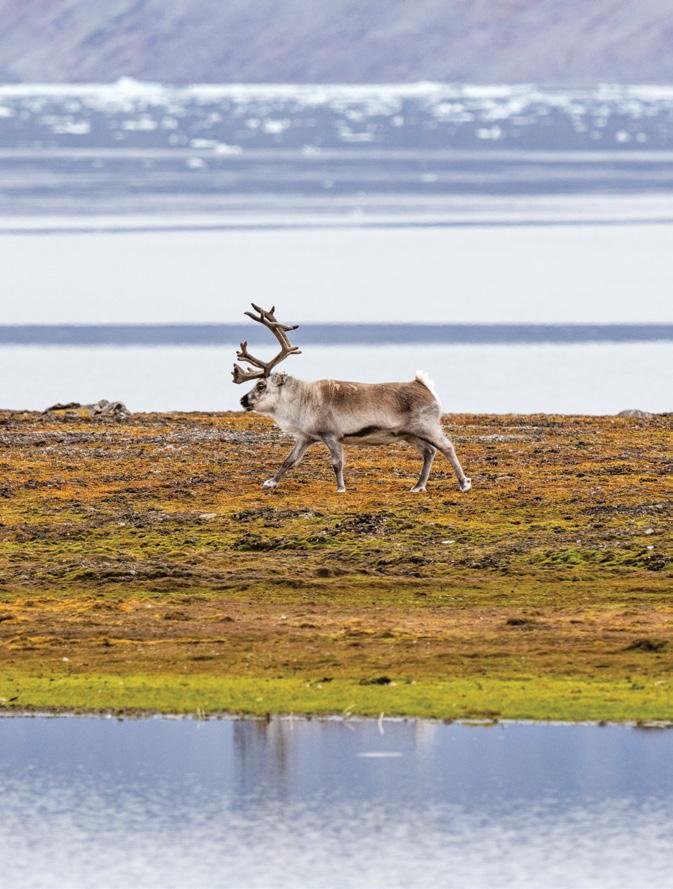
Hornsund, one of the most striking fjords in Norway’s Arctic archipelago. Image: Morgane Lanco.
A reindeer in Svalbard’s fragile landscape. Image: Ophélie Bleunven.
LANGUAGE OF THE LOOM
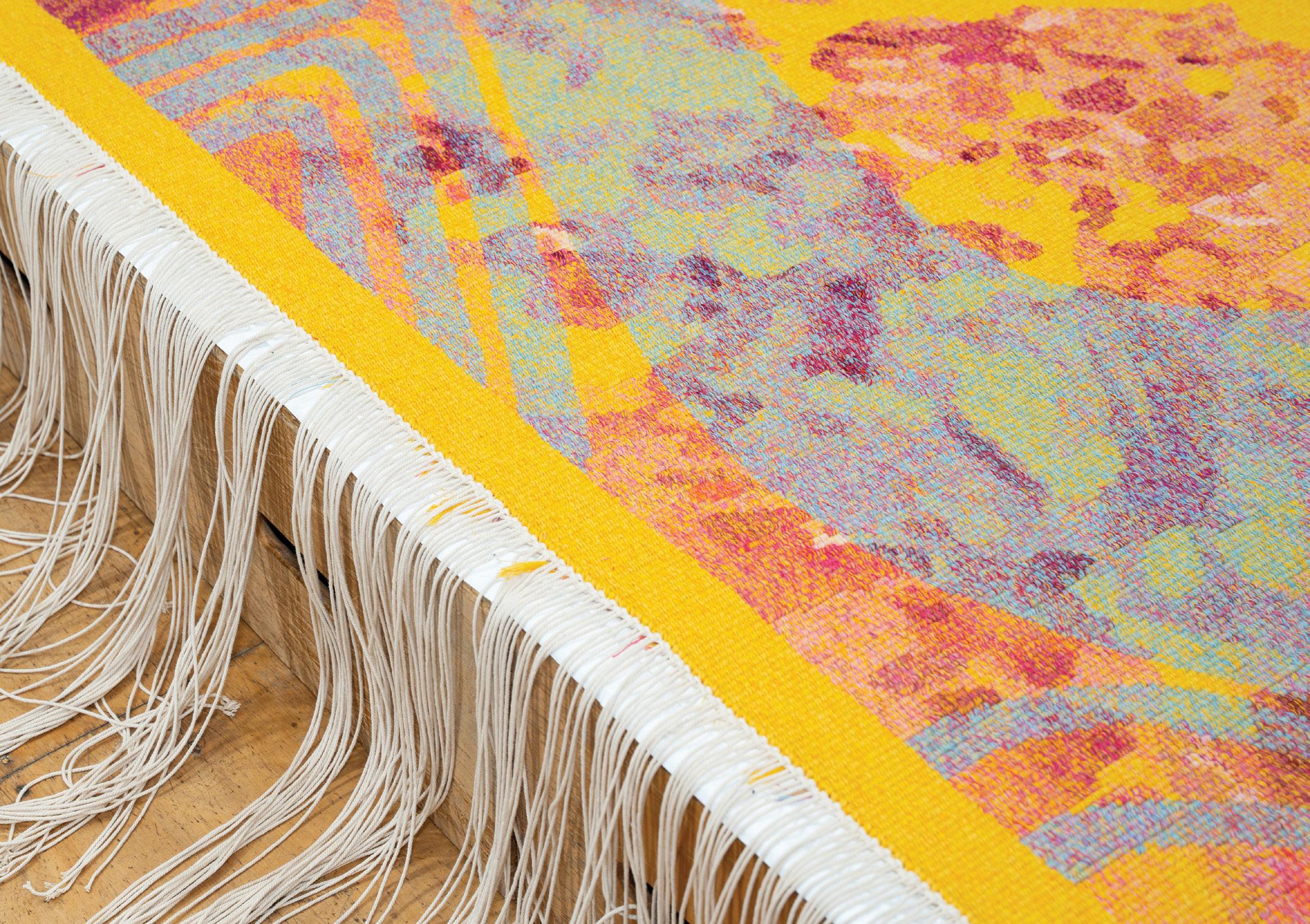
The Australian Tapestry Workshop is one of a handful of its kind worldwide, and the only one in Australia. For the past 50 years, it has ensured this rare decorative art form continues to flourish by Carli Philips.
As traditional craft begins to fade under the pressure of 3D printing, high tech and automation, the importance of preserving rare specialist skills has become increasingly vital. While the centuriesold decorative art of tapestry may have many admirers, it has increasingly fewer artisans, further cementing it as one of the most precious artforms.
This year the Australian Tapestry Workshop (ATW), turns 50. Little-known outside the art world yet internationally respected within it, the South Melbourne workshop, gallery, bespoke dye lab and artist-in-residence space has brought together Australian and international artists and master weavers to create pieces held by leading cultural institutions, civic buildings, embassies and private collections nationally and abroad.
The ATW’s small team of artisans still hand-produce tapestries using the Gobelin technique—a vertical loom method invented in 17th-century France that allows for painterly detail and subtle colour gradations. With no Australian tertiary institution formally teaching weaving, the responsibility for nurturing the next generation of weavers and dyers falls entirely to the ATW—a challenge the workshop is meeting by building apprenticeship and internship pathways. “We have weavers on staff who have been working here for 40 years,” says co-director and CEO Catherine Jones. “It’s an incredibly specialised technique that is important to keep alive.”
It is a mission worth fighting for, as these five masterworks selected by Jones as among the workshop’s most significant commissions demonstrate.
Above: Detail of Maree Clarke and Mitch Mahoney’s monumental tapestry for Footscray Hospital. Image: Astrid Mulder.
FIVE WORKS THAT SHAPED AUSTRALIAN TAPESTRY
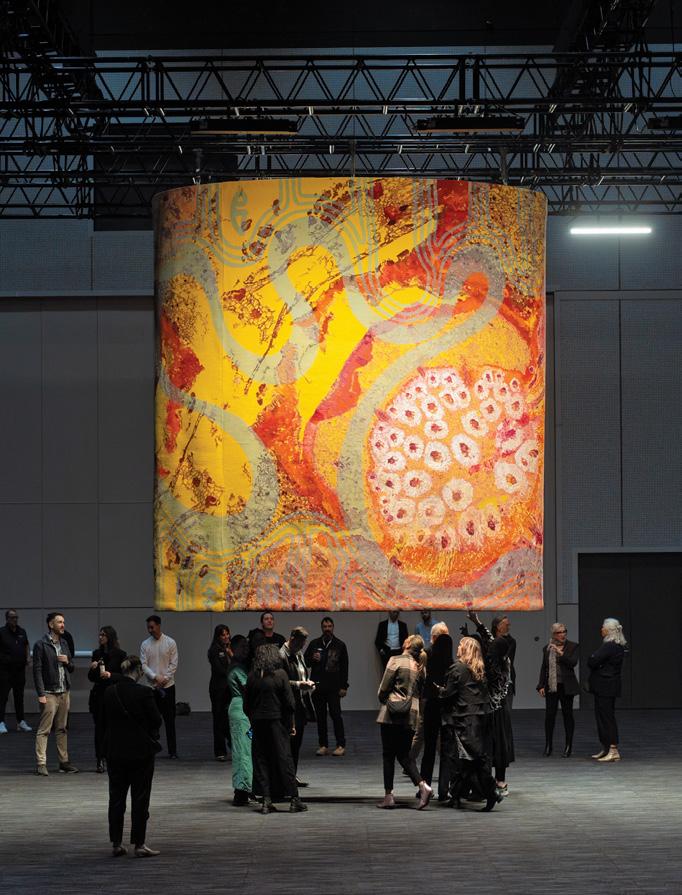
‘WELCOME TO COUNTRY— NOW YOU SEE ME: SEEING THE INVISIBLE’
Maree
Clarke and Mitch Mahoney, 2025
The ATW’s latest commission took a team of 12 weavers over a year to bring to life. Weighing over 135kg, the artwork hangs in a void over two levels in the foyer of Victoria’s new Footscray Hospital. Suspended above an ellipse installation, the design by First Nations artists Maree Clarke and Mitch Mahoney was influenced by microscopic images of river reeds from the nearby Maribyrnong River and skeletal drawings of local native flora and fauna.
Spanning 42sqm, it’s the ATW’s largest ever handwoven, three-dimensional tapestry. “Given the [hospital setting], this had to be a really joyous work,” says Jones. “And it has achieved that in spades, especially when it comes to the colours.”
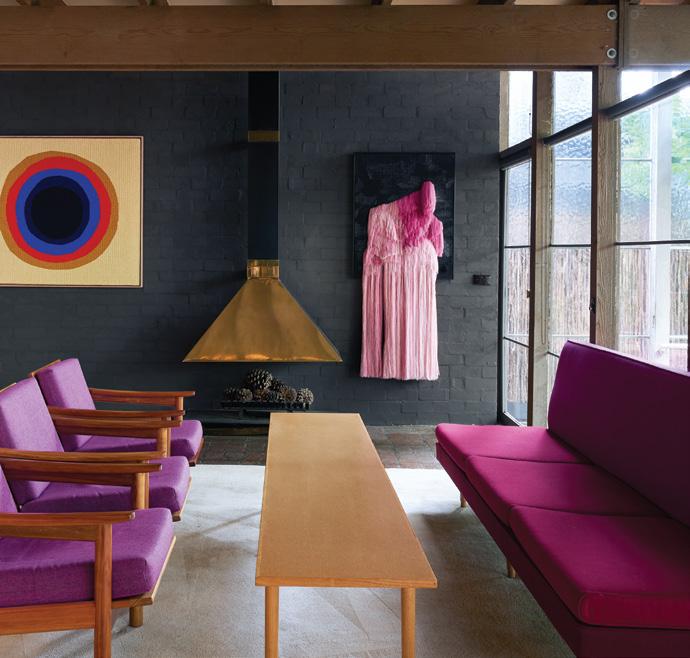
‘LONGING (CAMILLA)’
Troy
Emery and COX Architecture,
2025
Winner of the 2025 Tapestry Design Prize, this intricate work demanded 275 hours from weavers, deploying 6km of wool in 27 different colours, sourced from Australian farms and dyed on-site at the ATW.
The annual prize, celebrating textile art and architecture, is displayed in Robin Boyd's iconic Walsh Street house (1957). Emery and COX Architecture positioned the amorphous piece in the living room, where it channels the Boyd family's former cat, Camilla.
Defying convention, the collaboration reinterprets tapestry in an entirely new form. "[This work is] an extraordinary collaboration between innovation and tradition," says Jones. "It exemplifies the collision of craftsmanship and the digital era, and the reconnection of contemporary design with the tactile and human qualities of the handmade."
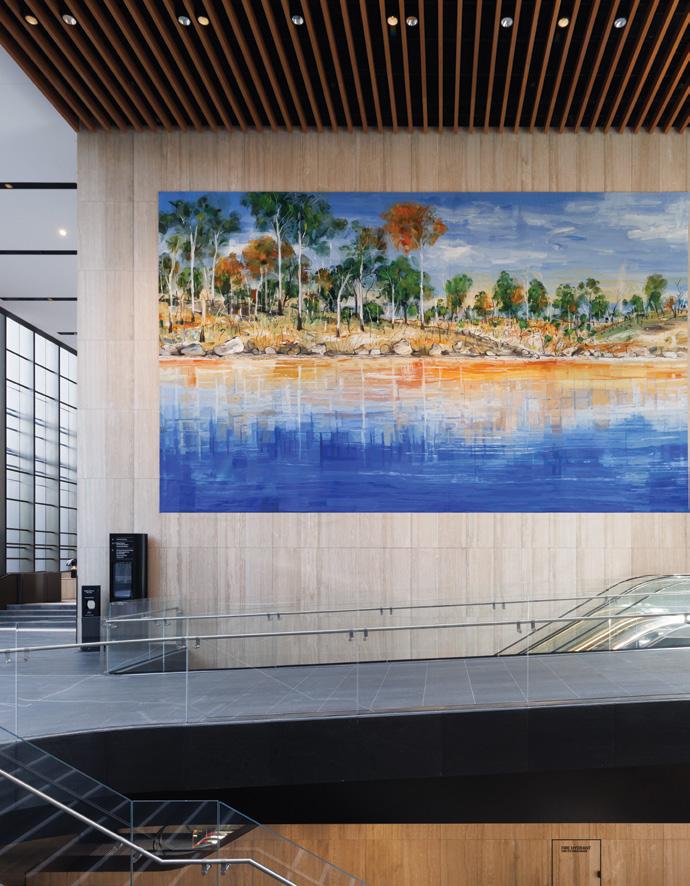
‘PARRAMATTA’
Chris Kenyon, 2021
Hanging in the lobby of a commercial tower in Western Sydney’s major urban renewal precinct, 6 Parramatta Square, this monumental tapestry translates an original painting by New South Walesbased impressionist landscape artist Chris Kenyon at 10 times the scale.
Given the resulting level of high abstraction, the translation allowed for creative licence. To interpret Kenyon’s viewpoint—a vantage from the water to the river shoreline—a 13-person team of weavers navigated the sense of depth between the foreground and the rich colours of the Blue Mountains beyond. Over 18 months, Kenyon’s vision came to life, with luminous yellow and what Jones describes as “golden freshness” blending from the water to the woodlands. Spanning two looms and measuring 11.5m wide and 7m high, it ranks among the ATW’s most technically demanding commissions.
Image: Astrid Mulder.
Image courtesy of the Walker Corporation.
Image: Astrid Mulder.
FIVE WORKS THAT SHAPED AUSTRALIAN TAPESTRY
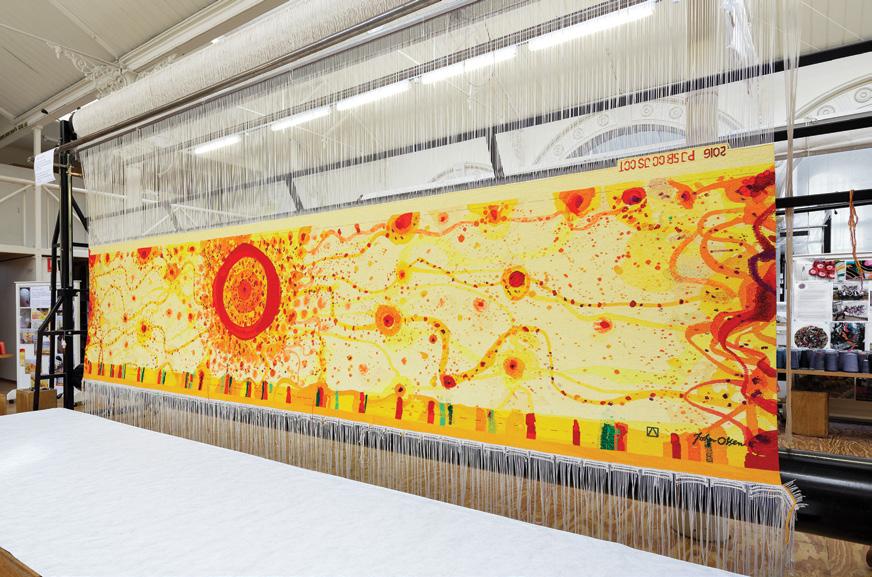
‘LIFE BURST’
John Olsen AO OBE, 2016
One of Australia’s most beloved artists, the late John Olsen (1928–2023) created the design for this wondrous 5m-wide piece for Melbourne’s Peter MacCallum Cancer Centre in 2016, where it remains on permanent display. Designed to echo the architectural rhythms of the atrium in which it has been installed, the work glows in hues of yellow and fiery red, with sculptural tendrils of orange woven across its surface.
At the time Olsen’s ninth commission from the ATW, the artist described the piece as an expression of “optimism and progress”, featuring a sun-like motif synonymous with his body of work. New bespoke shades were created by the ATW’s on-site dye lab, and to achieve the tapestry’s lustrous effect, weavers incorporated a soumak technique (a decorative wrapping method that creates raised, textured patterns) in silk thread, giving it lightness and transparency.
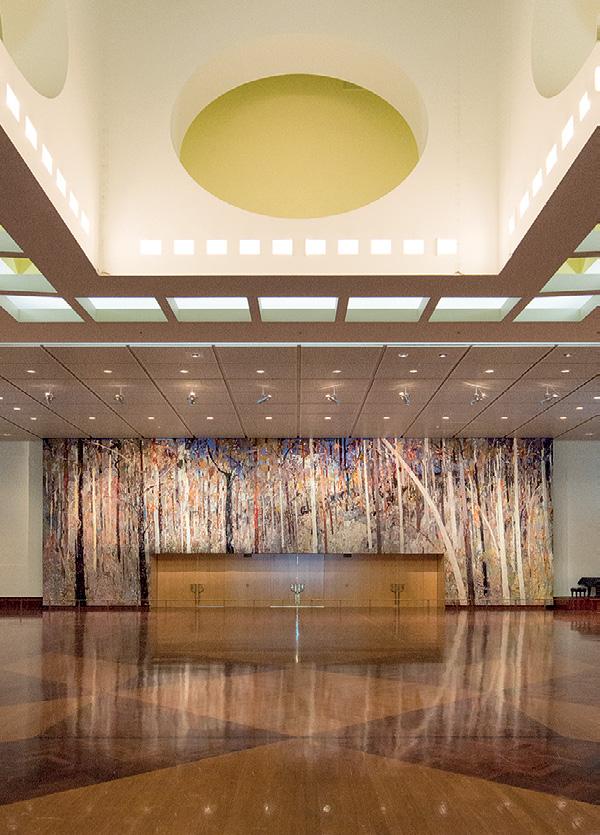
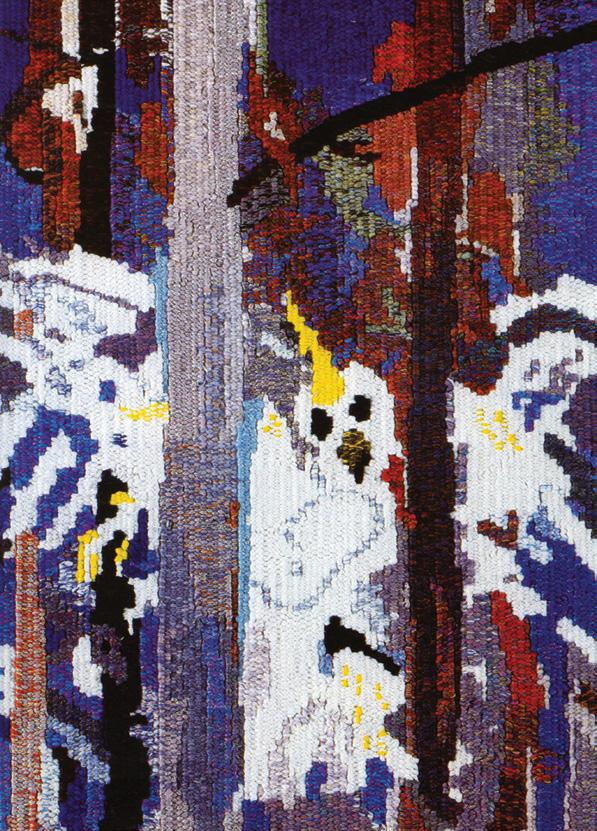
‘GREAT HALL TAPESTRY’
Arthur Boyd, 1988
Hanging in Canberra’s Parliament House, this hypnotic and uniquely Australian piece by Arthur Boyd (1920–1999) was designed to cover almost the entire south wall of the building’s Great Hall.
Drawing on the surrounding environment and the view from Boyd’s rural retreat and studio at Bundanon on the South Coast of New South Wales, the work is an ode to the Australian bush landscape, its life-like proportions of trees designed to cultivate a sensory experience akin to being enveloped in a forest.
A close look reveals astonishing detail: the rough texture of bark and the watchful presence of cockatoos root the work firmly in the natural world.
At the time of completion, it was the second-largest tapestry in the world, soaring 9m high and spanning 20m in width.
The two-year collaboration between Boyd and 13 weavers resulted in a work that is both a testament to their combined technical mastery and, three decades on, an emblem of the ATW’s enduring commitment to an art form that refuses to fade.
Image: Jeremy Weihrauch.
Images: John Gollings.
Strength at the top
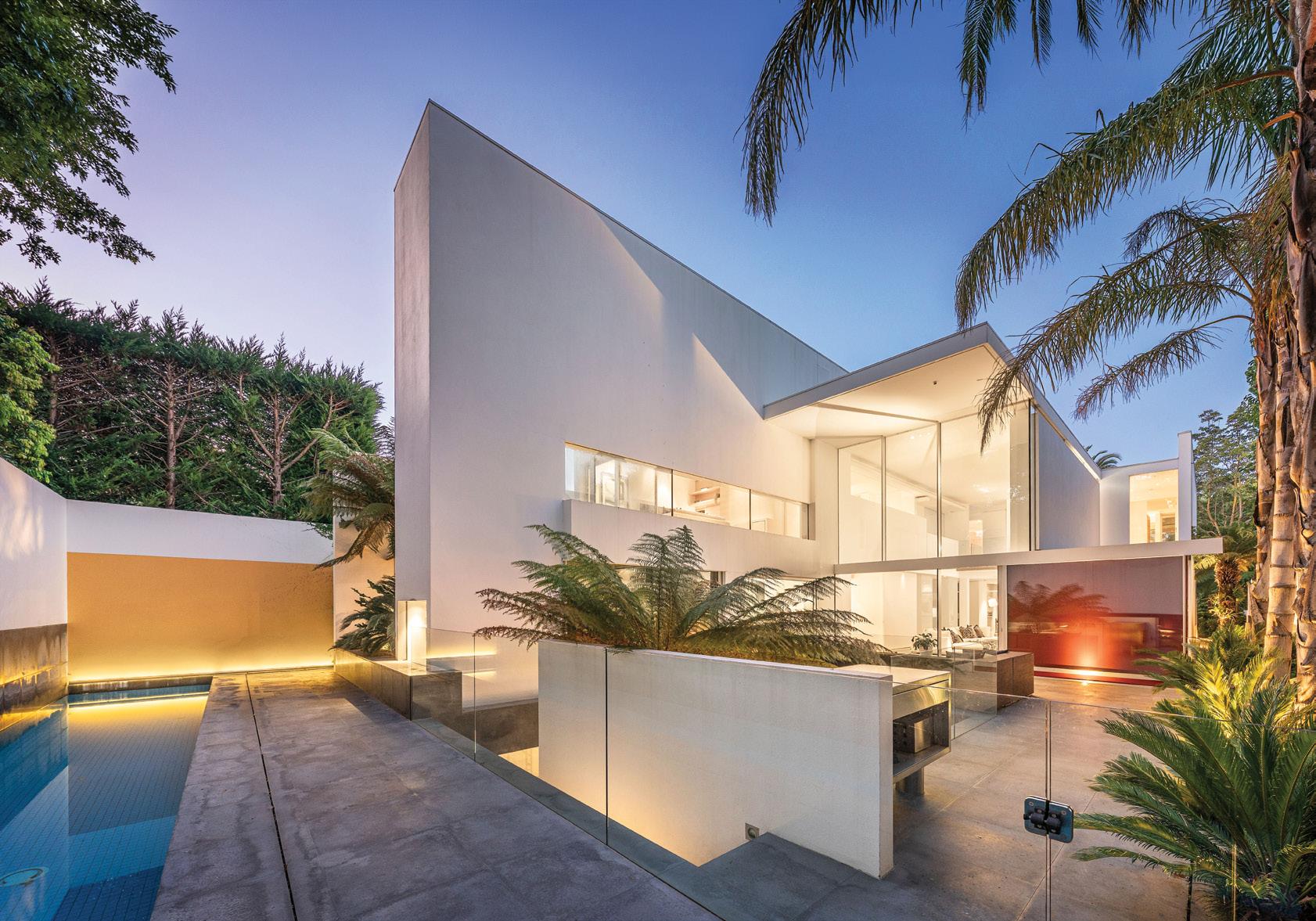
With supply tightening and population growth intensifying competition, the most coveted addresses are only getting harder to secure. For buyers at the top end of the market, 2026 could be a defining year—by Kirsten Craze.
Australia’s prime residential market entered 2026 in a position of quiet strength. After two years shaped by interest rate uncertainty and shifting buyer sentiment, the underlying fundamentals have reasserted themselves—and for those buying at the top of the market, the picture is increasingly compelling.
The market is moving at two speeds. Perth, Brisbane, Adelaide and Hobart are posting clear upward momentum, while Sydney and Melbourne—the traditional anchors of Australian prestige property—are building steadily, with vendor confidence returning. New listings rose 12 per cent in Melbourne and 9.7 per cent in Sydney against the long-term February average, suggesting growing confidence among owners of luxury homes.
Beneath the monthly data sits a structural story. According to recent data from the Centre for Population, Australia’s population is on course to reach 28 million this year, while Melbourne is forecast to become the nation’s most populous city, reaching 9.1 million inhabitants by the 2060s. For buyers thinking on a generational horizon—whether acquiring a principal residence, a considered addition to a portfolio, or a home that will be passed down— these are not incidental figures. They speak to the enduring scarcity of the right address in the right city.
THE ADDRESS ADVANTAGE
Price growth is regaining speed, and doing so most visibly in the markets where lifestyle is the primary currency. Coastal enclaves, established inner suburbs and amenity-rich urban precincts are all recording renewed interest from buyers who know exactly what they want and are prepared to move when it appears.
Mark Browning, head of valuations at NAB says high net worth buyers are active so far this year, seeking out grand family homes. “Once everyone came back from their summer break, we saw continued activity and interest in the $10m-plus and even $20m-plus space,” he says. “For the right property, people are ready to transact and make decisions. Where it does differ is in the $3-$5m bracket; that’s where we’re witnessing a little more caution from buyers.”
Browning says that vigilance is likely related to share market volatility
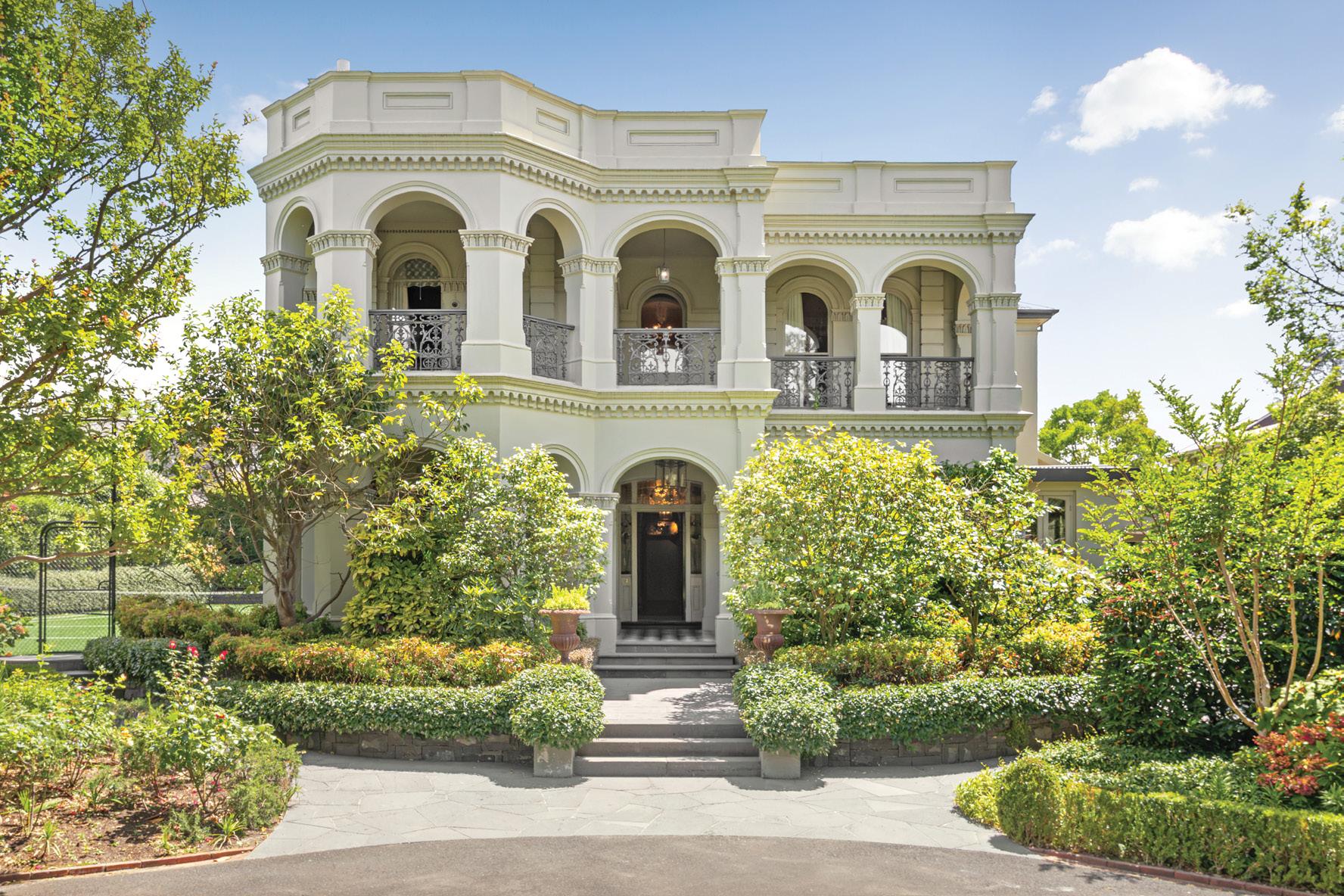
and the current interest rate environment. “The outlook for further rate movements this year will always impact that end of the market.” He continues: “It’s taken a little time for people to digest and think it through, but by now most buyers would have recalibrated their thinking and be preparing to move forward.”
Scott Patterson, executive director at Kay & Burton specialising in the Boroondara area, says the market began the year in full swing after a brief spell of buyer fatigue in late 2025. “For us, it’s business as usual. The marketplace has proven remarkably resilient, underpinned by proximity to private schools, and we’re continuing to see solid activity from Asian buyers looking to purchase in areas like Canterbury,” he says. “There is some price sensitivity, but a property that is correctly priced, well presented and well marketed will always attract strong demand.” Patterson notes that while buyers are proceeding with greater deliberation, vendors are holding firm. “That gap between vendor expectations and buyer appetite is gradually narrowing.”
TURNKEY TREND CONTINUES
In a market shaped by rising construction costs and stretched timelines, the appetite for turnkey homes shows no sign of slowing, with competition for completed properties driving premiums across Melbourne. “Probably the most in-demand segment of the market right now would be brand new, near-new, or homes with quality renovations,” Patterson says.
Gowan Stubbings, executive director at Kay & Burton focusing on Stonnington, agrees that renovated properties command the deepest buyer pool. “Homes that are completely finished have the best following and they’re the ones that will achieve a premium. When they’re presented at their best, buyers fall in love and have that emotional connection,” he explains. “Over recent years, we’ve seen the cost of wages and materials go up considerably, so people are more cautious about unrenovated property.”
In the Bayside market, the picture is slightly different. Alex Schiavo, executive director at Kay & Burton specialising in the area, says demand is more varied. While turnkey family homes attract strong competition, period homes and large land parcels still retain a loyal following. “A contemporary home with a tennis court is incredibly sought after, but period homes are genuinely loved here too. It’s a different sensibility compared to suburbs like Hawthorn, Canterbury and Kew, where the preference for period architecture runs even deeper.”
MELBOURNE’S VALUE PROPOSITION
Once the second most expensive capital in Australia, Melbourne slipped down the median price ladder after the pandemic, compounded by a series of state government policies that had investors turning their attention interstate. Cotality figures for the 12 months to February show that Melbourne now has the sixth highest median dwelling value in the country at $826,132, sitting behind Sydney, Brisbane, Perth, Adelaide and Canberra. For buyers at the top of the market, that position represents enviable value relative to other major cities.
“Everyone’s talking about Melbourne prices having been quite subdued for the last few years, so there really is a perception that there’s good value here,” says Patterson. “For the first time in over 20 years, we’re starting to see buyers coming down from Sydney. The cost of living and investing
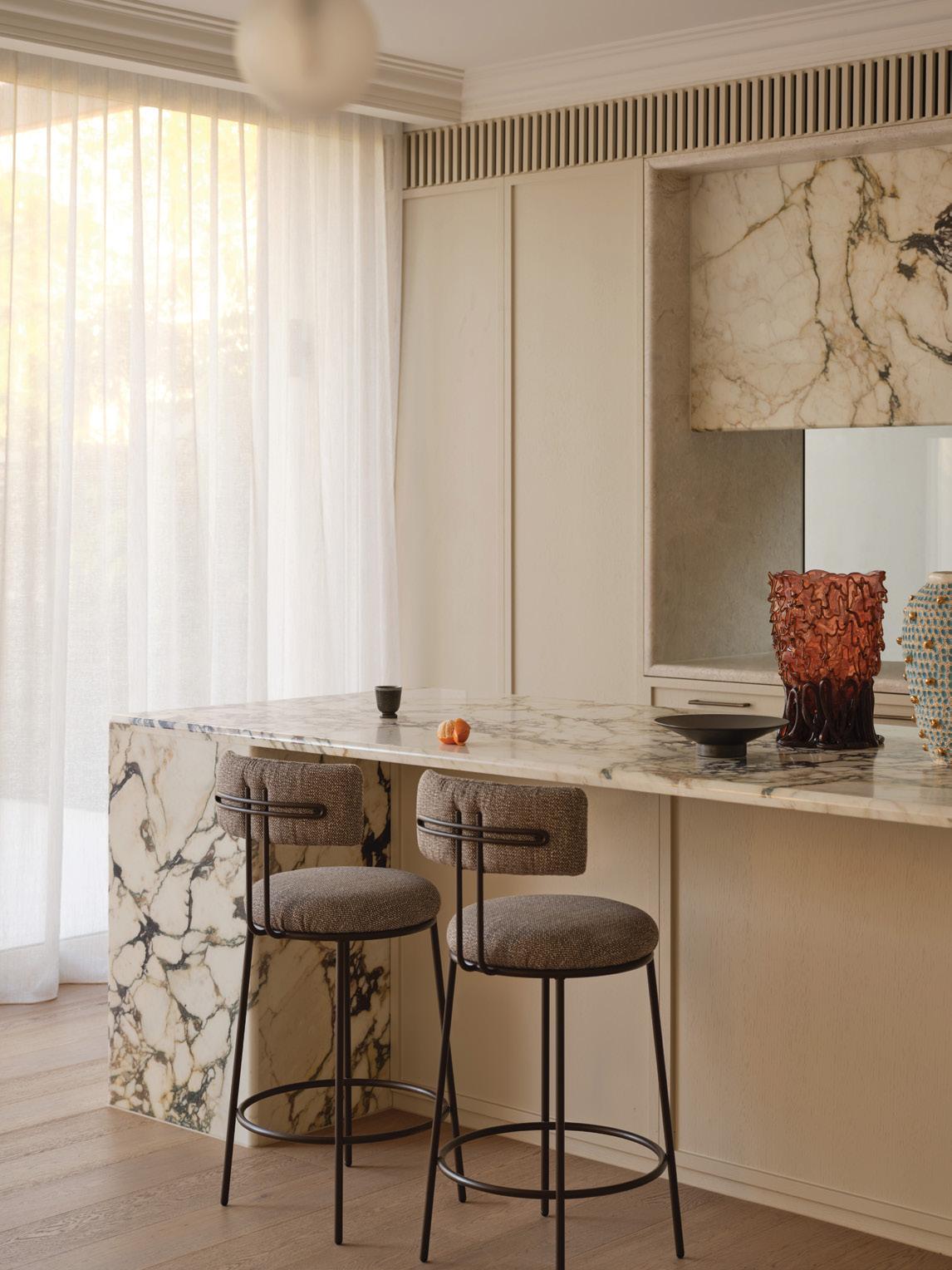
there is becoming difficult, and Melbourne is increasingly being considered as an alternative.”
Schiavo adds that Melbourne prices have plenty of room to grow. “Some pockets of Melbourne are still greatly undervalued, there’s no question about that. If I look at the Bayside area, there’s incredible value compared to some other suburbs or regions. There are still very good opportunities for buyers,” he says.
INTERNATIONAL ATTENTION
While the Australian dollar has strengthened notably since late last year, reducing its favourability for overseas buyers compared to 2025 levels, Melbourne continues to offer compelling value in the global luxury market.
“Returning expats have always been part of the Melbourne luxury market, and it’s still more elevated than it was pre-2020,” says Browning. “The currency exchange rate is not quite as favourable as it was during 2025, but if someone is making that decision from a lifestyle or career perspective, they’ll likely still go ahead.”
A steady flow of returning Australians is coming out of Singapore, though the pool of expats is now widening, according to Schiavo. “You’ve got buyers returning from Singapore, the UK and Europe. That’s certainly been fuelling our market, especially at the top end,” he says.
Stubbings adds that when the Kay & Burton executive team travels internationally, Melbourne is often a talking point. “The expats we’re speaking with are always fascinated by Melbourne, what’s happening in our market, and when’s a good time to buy,” he explains.
Consistently ranked as Australia’s most liveable city (and fourth on the Economist Intelligence Unit’s 2025 Global Liveability Index) Melbourne remains a strong draw for offshore buyers. With perfect scores in healthcare and education, Stubbings says the city’s medical system and universities are frequently cited by international families.
“What Melbourne does really well is restaurants, schools, international community connections and the arts scene—it ticks all the boxes,” he says. “Expats are always toying with the idea of coming home and enjoying the beautiful blue skies of Australia.” In a city forecast to become Australia’s most populous, with liveability credentials that rank it among the world’s best, the window of relative value may not stay open indefinitely.
01 Set in one of Melbourne’s most coveted school catchments, this three-level residence at 22 Rowland Street, Kew sold in January.
02 ‘Lexington’, an Italianate Victorian-era mansion in Hawthorn East, was among the quarter’s most notable sales—a standout example of historic grandeur at the top end of the market.
03 Moments from Como Park and the Yarra River, Kooyong House in Toorak, a sensitively reimagined c1940 home, sold in December for in excess of $10m.
Scent for the
Fashion tastemaker Yasmin Sewell reveals why she traded the runway for a radical new approach to fragrance rooted in energy, emotion and wellness—by Glynis Traill-Nash
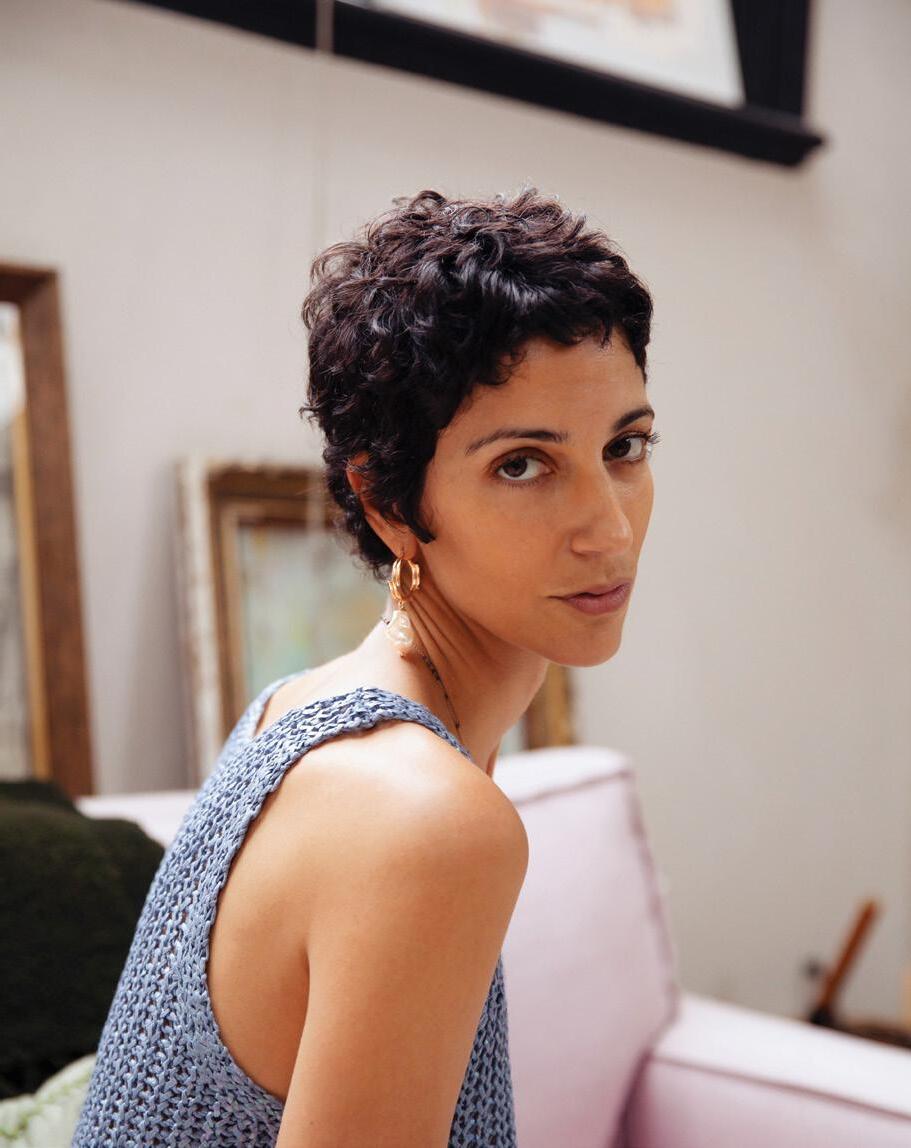
You could say that Yasmin Sewell has always been able to sniff out the next big thing. Now, she has bottled that instinct with her perfume brand Vyrao.
For more than two decades, Sewell was a shining star of the fashion industry, a buyer and creative consultant of global renown, who is credited, among other things, with spotting up-and-comers including Christopher Kane, Roksanda Ilincic and Jonathan Anderson. From her muchlauded London boutique Yasmin Cho in the Cool Britannia 1990s, it was a meteoric rise, working with cutting-edge boutique Browns in the mid 2000s, reinvigorating London’s legacy department store Liberty before pivoting into digital platforms including Farfetch and co-founding It-girl brand Être Cécile along the way. A signature personal style also made her a natural subject for the burgeoning street style photographers of the era.
But despite her successes, something was lacking.
“I spent years in fashion and beauty, surrounded by incredible creativity, but I always felt there was a missing layer—the energetic, emotional side,” Sewell tells The Luxury Report. “What truly moves people comes from how something makes them feel, not just how it looks.”
Vyrao is her way of balancing these two worlds. More than mood-lifting aromatherapy, Sewell’s intention was to create perfumes that shift energy, introducing a wellness element into the luxury perfume realm. In this, she is once again ahead of the curve, pioneering a segment that has since attracted players like Charlotte Tilbury. Her vision earned backing from LVMH’s private equity arm L Catterton in 2024, following earlier seed funding from Estée Lauder Ventures.
Since launching in 2021 with five scents, including the potently named Witchy Woo (designed to promote courage and creativity), Sewell has been building a brand that is intended to do more than make you smell fabulous. “My vision was to create something deeply rooted in energy, emotion and connection. I wanted to build a world that went beyond just beautiful products, something that made people feel aligned, inspired and grounded in themselves.
“Vyrao works from the belief that everything holds energy—scent, emotions, colour, even the way something is made,” Sewell explains. “Each of our scents is designed to channel a specific energetic state, like courage, joy or self-love. What’s fascinating is how this connects to neuroscience. Scent directly stimulates the limbic system, the part of the brain that controls emotion and memory. So through fragrance, we can consciously shift how we feel.”
For Sewell, it is not merely about tapping into current trends towards wellness. In fact, she says that wellness was always at the forefront of her career in fashion. “I used it to help me be more intuitive and to guide all the decisions I made. I trained in reiki and many other
Sewell's style, effortless and deeply instinctive, has long influenced fashion insiders.
soul


and how to curate with emotional intelligence. Etre Cécile taught me the power of community and brand building. All of these experiences shaped how I built Vyrao.”
holistic practices from my early 20s right through until I moved away from fashion and created Vyrao,” she shares. “It wasn’t so much a [career] pivot as a return to something that had always been within me.”
That interest in alternative therapies was sparked from her experiences as a self-described intuitive child growing up in Sydney, where she says she dreamt of things before they happened and even saw spirits. “I was born connected to it. As I got older, I wanted to understand [the unseen] more deeply. That exploration has always run alongside my creative life, and Vyrao is really the merging of those two worlds, energy and expression.”
Having that genuine belief is, she believes, where commerce and creativity can be harmonious bedfellows. “I’ve learned that if the intention is clear and true, they can coexist. It’s only when something is approached purely as a market opportunity that the balance is lost. Our scents are tools designed to help people connect more deeply with themselves, to bring awareness into everyday life. When something is made with integrity, it carries an energy that supports people. That’s where the harmony lies.”
You could say that all roads have led Sewell to this point. “Every chapter taught me something essential. Yasmin Cho taught me to trust my instincts completely. At Browns and Liberty, I learned how to balance creativity with commercial awareness,
Despite Sewell having the world’s best retailers on speed dial, at the beginning of the journey “it definitely took retailers with a pioneering vision” to stock the brand, she says. Today Vyrao is found in around 200 stores across 25 countries, including Mecca in Australia, which was one of those early adopters, along with Liberty.
In October 2025, the brand launched its first physical space, a six-week pop-up in New York’s SoHo, an immersive multi-sensory experience that combined light, sound, movement and architecture to reimagine how fragrance can be experienced. The popup followed the release of the brand’s latest two perfumes, Ludeaux and Ludatrix: the first a milky peach and jasmine scent that Sewell describes as “playful and flirtatious”; the latter its sexier cousin laced with latex and pepper, created to “capture the balance between feeling empowered and irresistibly attractive”.
It is seeing the effect of her perfumes on people that drives Sewell every day. That, and laughing “on an hourly basis”, she says. This is the animating idea behind Vyrao: that fragrance, formulated with intention and backed by neuroscience, can genuinely shift how you feel. ■
Vyrao’s genderless fragrances draw on neuroscience and emotional health research in their development.
The brand’s striking visual language is as deliberate as its scents.
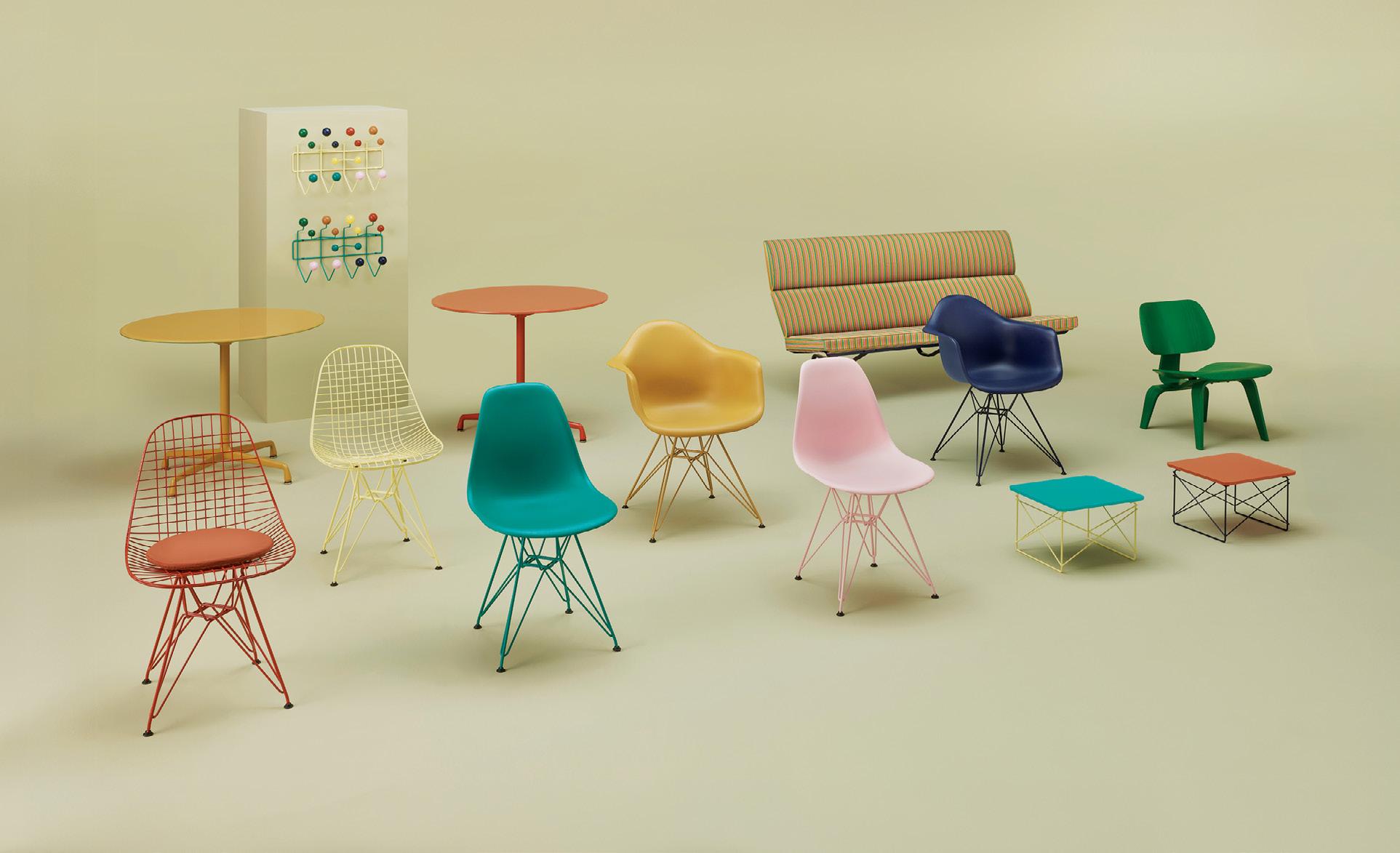
Inspiration from the margins
Eames Demetrios, grandson of legendary designers Ray and Charles Eames, reflects on the philosophy of ‘serious play’ that shaped one of modernism’s most influential legacies—by Alice Blackwood.
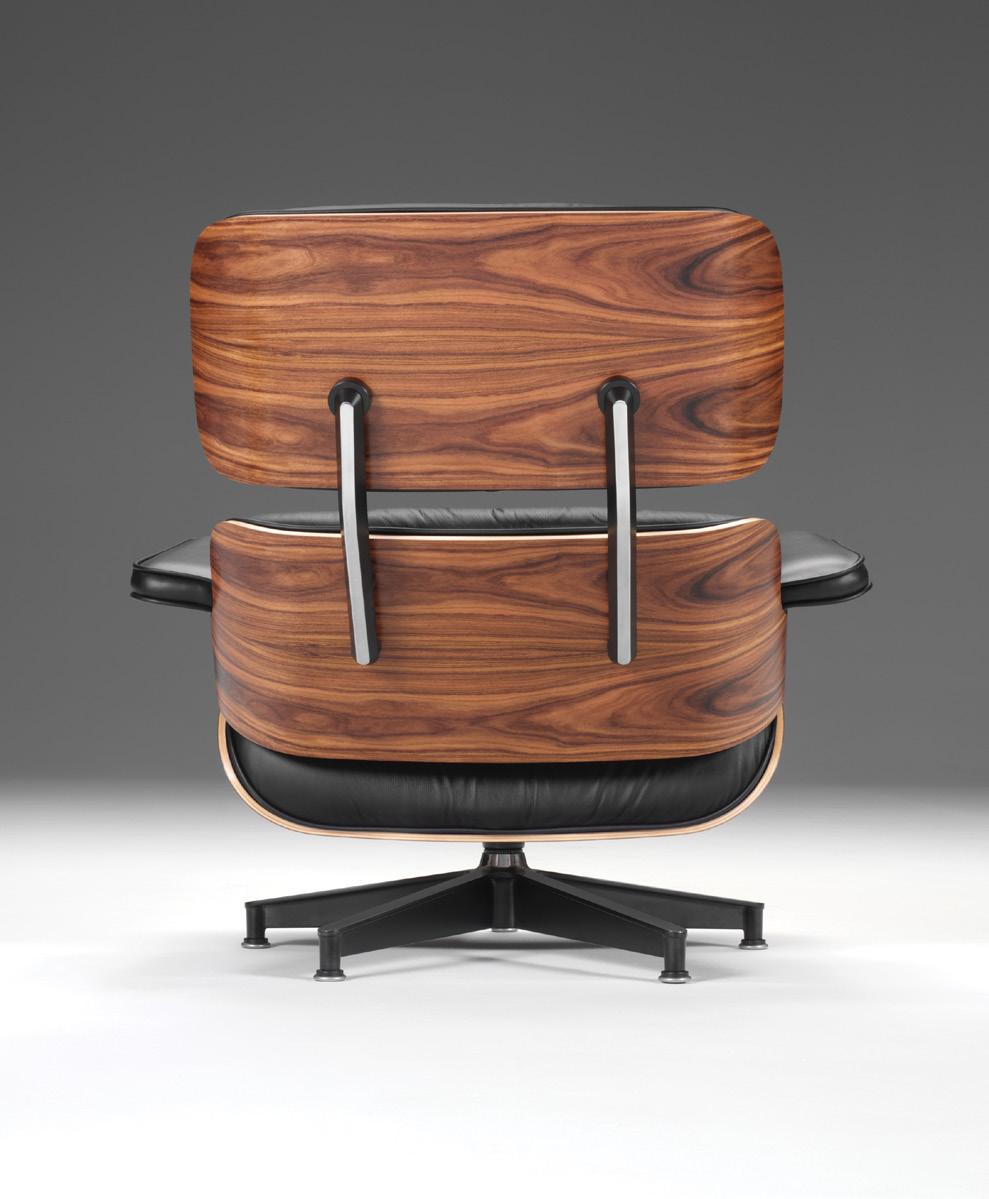
Eames Demetrios would often visit his grandparents at their renowned home in Pacific Palisades, Los Angeles. As one of five grandchildren vying for invitations to visit, being chosen was a privilege that filled him with excitement. “It was a treat to be there, because we would have Ray and Charles all to ourselves,” Demetrios recalls.
Ray (born Bernice but known by her childhood nickname) and husband Charles Eames were no ordinary grandparents, of course. They were the celebrated American mid-century designers whose furniture captivated post-war consumer society and defined an era of modernism. Their home embodied the same ideals as their objects: beautiful, accessible design for everyday life.
“It was a super-fun place to visit [with] breakfast picnics on the patio and special spoons with points that we used to scoop out grapefruits. It was also a beautiful blend… the indoor-outdoor experience was completely blurry,” says Demetrios, recalling the open flow between living areas and studio, connected by a courtyard his grandparents saw as simply a room without a ceiling.
Through the Eames Office—the original design studio founded by his grandparents—and the Eames Foundation, which he established to preserve their archives, Demetrios safeguards a legacy that remains remarkably relevant 75 years later.
The house was originally intended to cantilever across the site’s sprawling meadow but was redesigned to nestle into the landscape instead. Composed of two structures connected by a single retaining wall, Eames House was constructed from prefabricated off-the-shelf components. America had developed expertise in building quickly and efficiently during World War II, and Ray and
01 Eight Eames classics vividly reworked for the 2022 Herman Miller x Hay collection. Image courtesy of Living Edge.
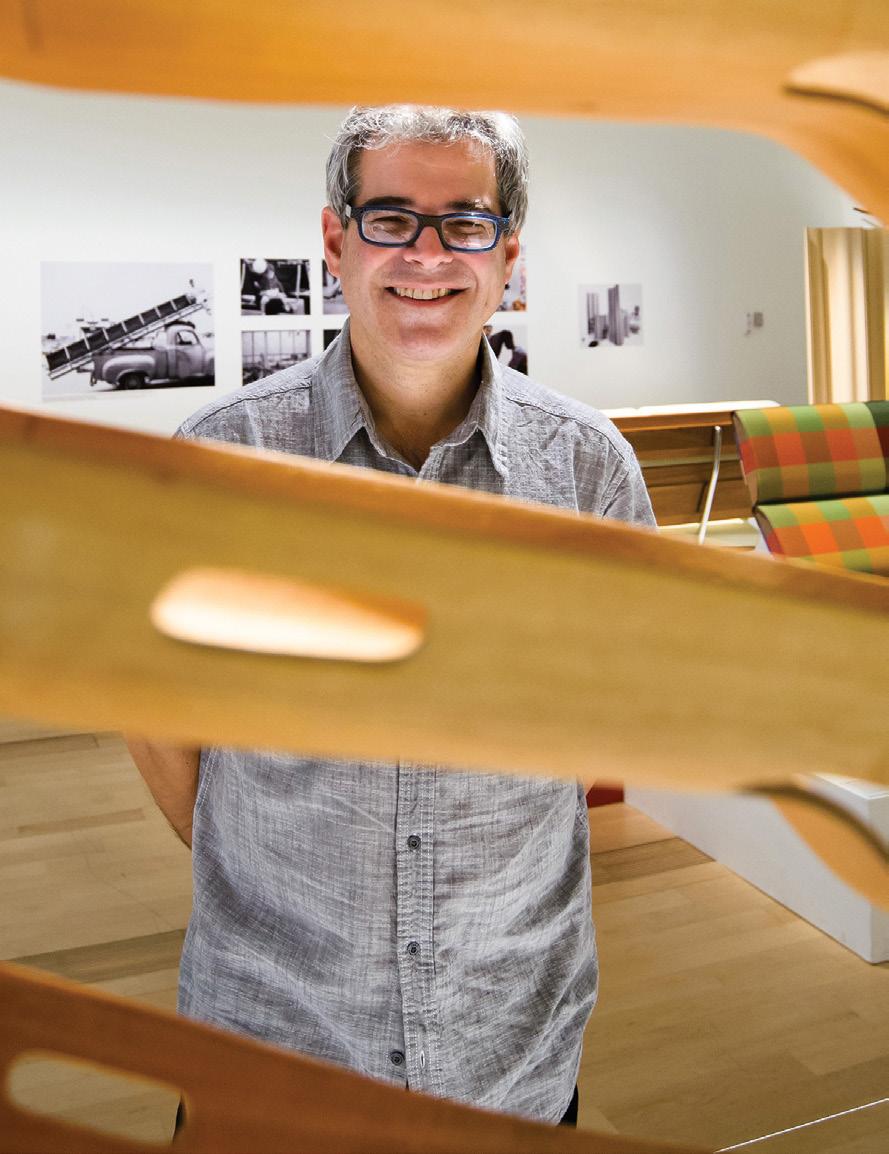
Charles harnessed that knowledge, using mass-produced parts to create a modern, liveable home.
As with so many of Eames endeavours—designing objects, staging exhibitions, filmmaking, architecture—“it was about showing what is possible,” says Demetrios.
Eames House has become a celebrated architectural icon not for radical propositions but for the inventive use of a practical solution. It demonstrates one of the Eames’ core beliefs: we should not innovate for innovation’s sake. Innovation, says Demetrios, should be reserved for when we truly need it, “as a last resort”, ensuring that none of the tiny, important details get lost in our pursuit of the new.
This approach might seem at odds with our technology-driven, AI-powered age, yet there is pragmatic wisdom in it: understand the problem first, consider the available resources, then—only if necessary—innovate beyond. The duo also believed the designer’s role is that of a good host, anticipating guests’ needs. It is a reminder that design is a life skill, an exercise in empathygrounded in understanding those who will use your creations and considering their
comfort and experience.
Demetrios points to the Aluminium Group of chairs (manufactured by Herman Miller from 1958), which originated not as office furniture, but outdoor seating, as well as the landmark Lounge Chair (1956). As the story goes, famed architectdesigners Eero Saarinen and Alexander Girard were designing a home for industrialist J. Irwin Miller. Seeking a set of highquality outdoor seating for the project, they asked Charles and Ray to develop something new.
The couple set out to design a lightweight, durable, comfortable seat that could work in changing environments. They turned to cast aluminium for its weatherresistant strength, supporting a stretched synthetic mesh. That distinct seat-back suspension became a major technical achievement, completely disrupting the traditional typology of bulky solid-shell chairs.
As Demetrios explains, a piece like this could only emerge from a deep understanding of the making process—something Ray and Charles were devoted to. They viewed playful experimentation, or ‘serious play’, as crucial to their creative process, often beginning with quick, handson tests to explore new ideas or materials. The duo excelled at ‘open sourcing’ their ideation, bringing people into the experience through filmmaking, exhibitions, and sharing research behind both completed and conceptual projects.
For the Aluminium Group, the main challenge was understanding how to insert and turn fabric within the frame to maintain tension. This took considerable serious play, often leading to moments of unexpected discovery. “The last thing [Ray and Charles] thought about when they were designing a chair was how it looked,” says Demetrios. “They had to completely visualise the
manufacturing process.” In short, the chair’s beauty—its lean, fluid lines— emerged from functional innovation and engineering. Decades on, the Aluminium Group remains high in demand, celebrated for a humancentred design that adapts effortlessly across contexts and generations.
For Demetrios—himself an artist, designer, filmmaker, author and storyteller—certain lessons from his upbringing, and the custodianship of his grandparents’ prolific legacy, have shaped his own creative outlook. Perhaps most precious of these lessons is the knowledge that “everybody has margins in their lives”—extra time and mental space outside their primary responsibilities. His advice? Use those margins for what matters most, especially for creative pursuits or ideas the world might need but has yet to recognise.
For his grandfather, this margin was a zone for experimentation, play and nurturing new ideas. For Demetrios, it has become the seed for his own long-running global storytelling art project, Kcymaerxthaere. As ‘geographer-at-large’, he has installed plaques and monuments around the world that pretend to be historical sites from a parallel universe, each inscribed with narratives cast in what he calls the ‘wise technology’ of bronze, concrete or stone—materials that endure and age gracefully. Over time, the project has expanded through sustained effort and collaboration with international communities. Both poetic and imaginative, it invites participants to physically seek out these markers and experience each story in its exact location—a moment that fuses time, place and imagination to open the mind to new ways of seeing.
This creative commitment echoes the ethos Demetrios absorbed working with Ray and Charles at the Eames Office. He recalls the “delicious agony” of those years: the demanding nature of their projects, the expectation of total commitment. “The common thread among those who worked there was that it was a truly special moment in time,” Demetrios recalls. “After leaving, people went on to other meaningful work… but the intensity they experienced with Charles and Ray was unique. That environment, the intensity and drive, is a big part of what inspires me today.” ■
02 Eames Lounge Chair in walnut shell with black leather upholstery, seen in films and museum collections worldwide.
03 Director of the Eames Office since 1989, Demetrios steers the next chapter of an enduring design practice.
CONTINENTAL CONVERSION
A small coterie of Australian winemakers have earned their place as old world insiders. Here, three explain what it takes to build a life and a business on hallowed foreign soil—by Max Allen.
In the spring of 2019, winemaker Mark Haisma planted an acre of shiraz vines. Nothing unusual about that: Haisma is Australian, and for many years worked at the celebrated Yarra Yering winery in Victoria’s Yarra Valley, making some of the finest shiraz in the country. What makes his new vineyard remarkable is where it sits—on the other side of the world, in Macon, Burgundy, the spiritual home of pinot noir and chardonnay, where shiraz is not an officially prescribed grape variety.
“Oh, I get lots of comments from the locals, I can tell you,” says Haisma with a mischievous smile. “Things like ‘so you’re the mad [fool] who planted shiraz’, but they all want to taste it.”
Haisma has been making wine in Burgundy since 2009, when he left the Yarra and moved to Europe with his family. He started out buying small parcels of grapes from a couple of growers. Today he owns 6ha of vines across four
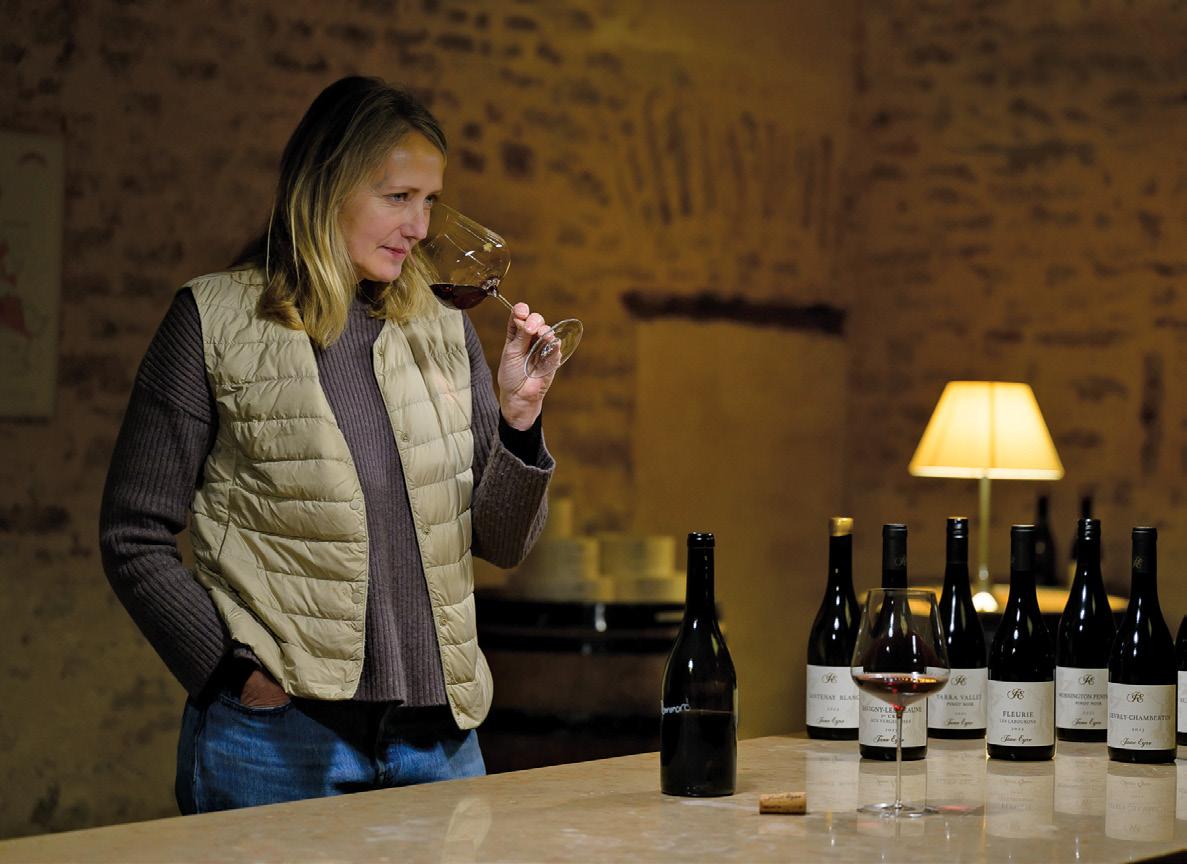
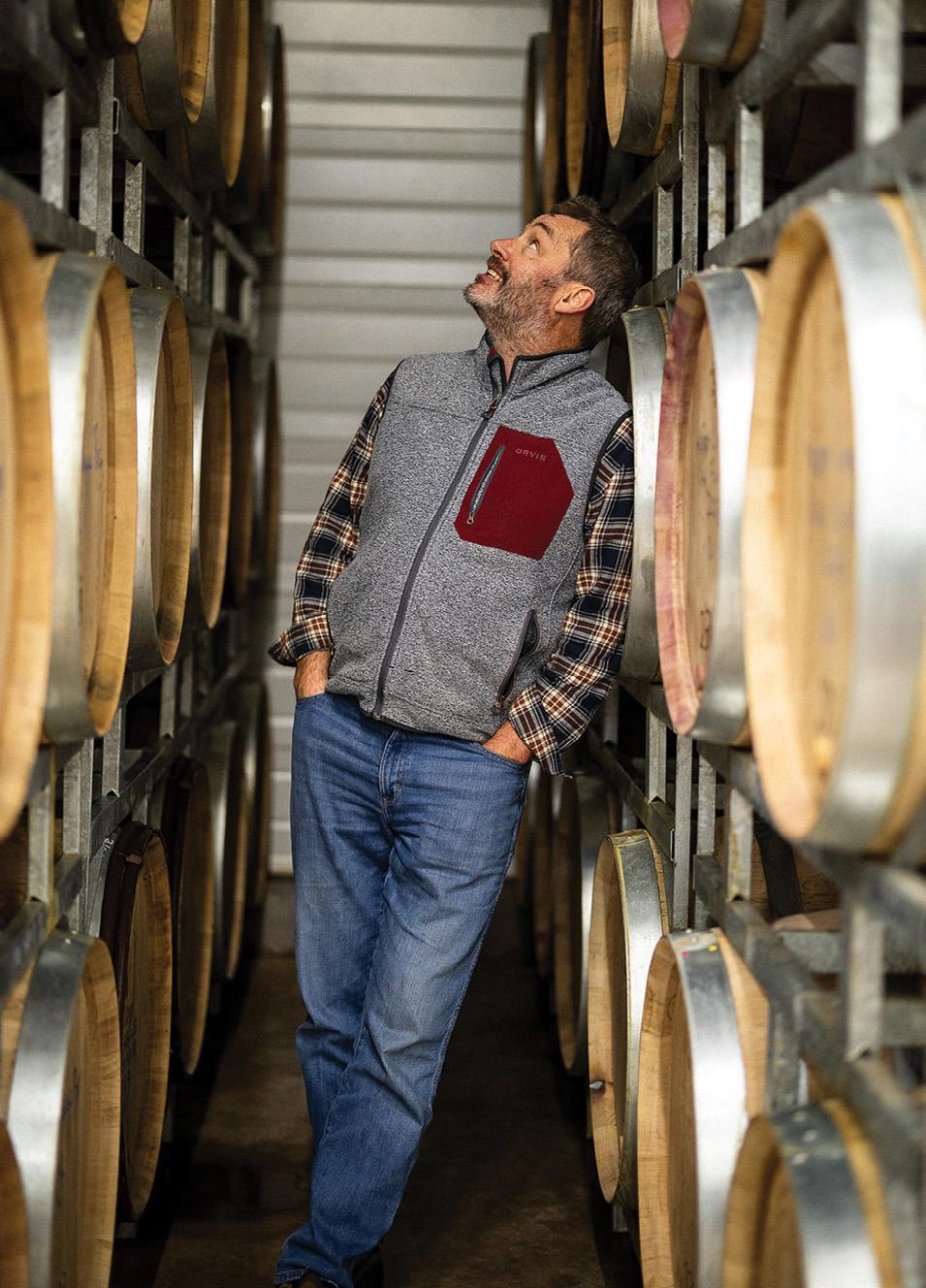
appellations—and makes a cornas from the northern Rhône, where shiraz is very much allowed—and is regarded as one of the region’s leading winemakers.
He is one of a handful of Australian winemakers who have decamped to Europe to live, work and build successful businesses, usually navigating local bureaucracy and cultural resistance before earning their place.
Gippsland-born Jane Eyre worked her first vintage in Burgundy in 1998. She fell so completely in love with the region that she moved there full-time in 2004, and in 2011, encouraged by her French colleagues, decided to make wines under her eponymous label. Like Haisma, she began by buying grapes from local growers and renting space in other people’s wineries.
“To buy grapes in Burgundy you first have to set up as a negociant,” Eyre explains. “So I went into the chamber of commerce and came out with an A4 page covered front to back with the names and numbers of everyone I had to contact just to set up my business. I had no idea where to start.”
The first official she approached threw her out three times. She eventually had to bring a French-speaking winemaker friend just to get the magic approval code. “My boss at the time bought me a new barrel because I didn’t have any money,” she remembers. “And a friend from Australia lent me $5000.”
The struggle paid off. In 2020, just nine years after starting out, Eyre was named Negociant of the Year by prestigious French wine magazine La Revue du vin de France—the first woman to receive the award.
Adelaide-born David Fletcher fell in love with nebbiolo after drinking barolo and barbaresco in Melbourne, and in 2007 flew to Piedmont, north-west Italy, with a dream of working with the variety. He became so taken with the region that he moved there permanently with his young family in 2012, buying the abandoned local train station in Barbaresco and converting it into a fermenting cellar. Along with his wife Eleanor, Fletcher now owns two wineries and 3.6ha of vines. Last year he became an Italian citizen.
“The hardest thing was getting access to vineyards,” Fletcher says. “Good land in Barbaresco can cost around €2m per hectare, but you can get lucky if you live and work here long enough.” He has done both for over a decade now, and patience, it turns out, has its rewards. “We managed to get hold of a piece of the Starderi cru for much less because I happened to mention to my electrician that I was looking for land. He spoke to someone who spoke to someone and… we got lucky.”
Vineyard land is not the only cost that dwarfs anything an Australian winemaker might expect at home. Grape prices from Burgundy’s most prized sites are stratospheric.
“In 2019 I was offered some fruit from Corton, a grand
L-R: Jane Eyre, Mark Haisma, David Fletcher.
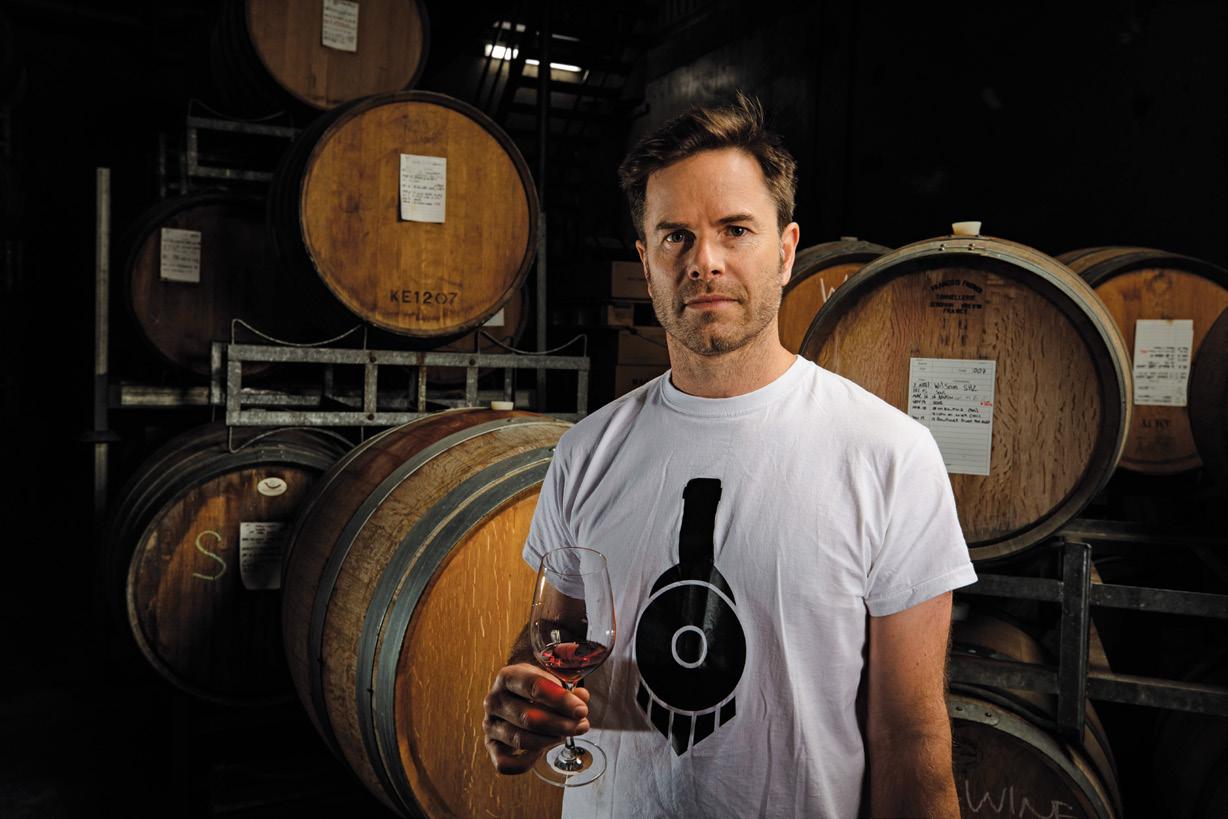
“Good land in Barbaresco can cost around €2m per hectare, but you can get lucky if you live and work here long enough.”
cru,” says Eyre. “It was around €150,000 per tonne—about thirty times what a winemaker in Australia would pay for good pinot noir.” It is also why the 2023 vintage of her Corton Grand Cru costs over AUD$500 a bottle. “It actually breaks my heart as a lover of wine, as a producer of Burgundy, as a buyer of Burgundian grapes,” she says. “Some of these wines have become so unaffordable that people who love wine and want to understand them simply can’t anymore. Because of the small quantities and the huge demand, they’re priced out of most pockets.”
So why persist in Burgundy or Barbaresco, when it would be much easier—and cheaper—to follow a winemaking dream back home?
After 15 years in the region, Haisma is quick to puncture Burgundy’s carefully cultivated bucolic myth. Behind the image of the humble farmer tending his small plot lies a shrewd and well-established business culture. “If you have the right contacts and a certain amount of cash, anyone can come in and get hold of fruit from some really [coveted] vineyards,” he says. “I don’t think there’s another place in the world where you can do that: it’s not like I could ever rock up to Stephen Henschke and ask to buy a couple of tonnes of Hill of Grace shiraz.”
For Fletcher, basing his business in Piedmont makes sense on several levels. The region—northern, well connected, at the crossroads of Italian and European wine
culture—makes equal sense as a strategic business base and an exceptional setting for family life. “It’s a great place to make wine, a historical place, and it’s so easy to reach international markets from here,” he says. “We export to 20 countries, which has been a huge opportunity I don’t think I’d have had if I’d stayed at home.”
All three have now been in their adopted regions long enough to leave a mark on them.
In 2021, Eyre bought her own winery in the village of Cissey, just outside Beaune, the region’s historic capital. “A lot more micro-negociants have started up in Burgundy since I set up my business,” she says. “They realise that the world wants to drink high-quality pinot noir.” As La revue du vin de France noted recently, Eyre’s handcrafted wines are elevating the image of the negociant altogether.
Haisma’s shiraz vineyard was always planted with more than mischief in mind. It was a serious viticultural question posed to one of the world’s most tradition-bound regions: as the climate shifts and Burgundy warms, what does the future of this ancient landscape actually look like? The locals used to laugh. Some of them are now asking the same thing.
“Since I planted, I’ve seen other people putting in different grapes in Burgundy, too,” he says. “Maybe there are a few other questions being asked about the future.”
Not so mad, after all. ■
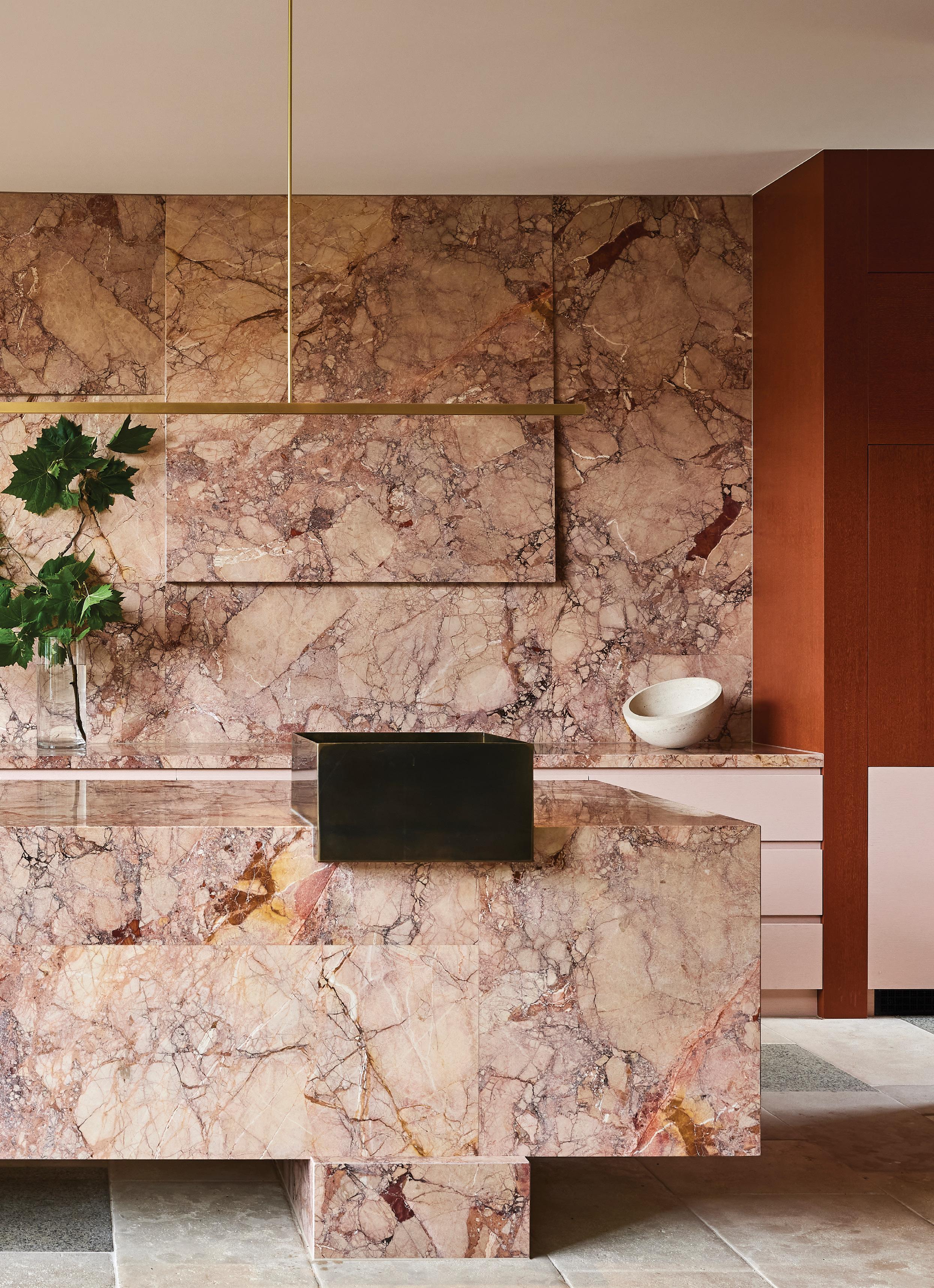
SURFACE AND SUBSTANCE
INTERVIEW BY Alice Blackwood
Fiona Lynch, fresh from being named once again in Vogue Living’s annual top-50 of Australia’s leading interior designers, explains how she uses stone, timber, metals and textiles to shape spaces of quiet intensity.
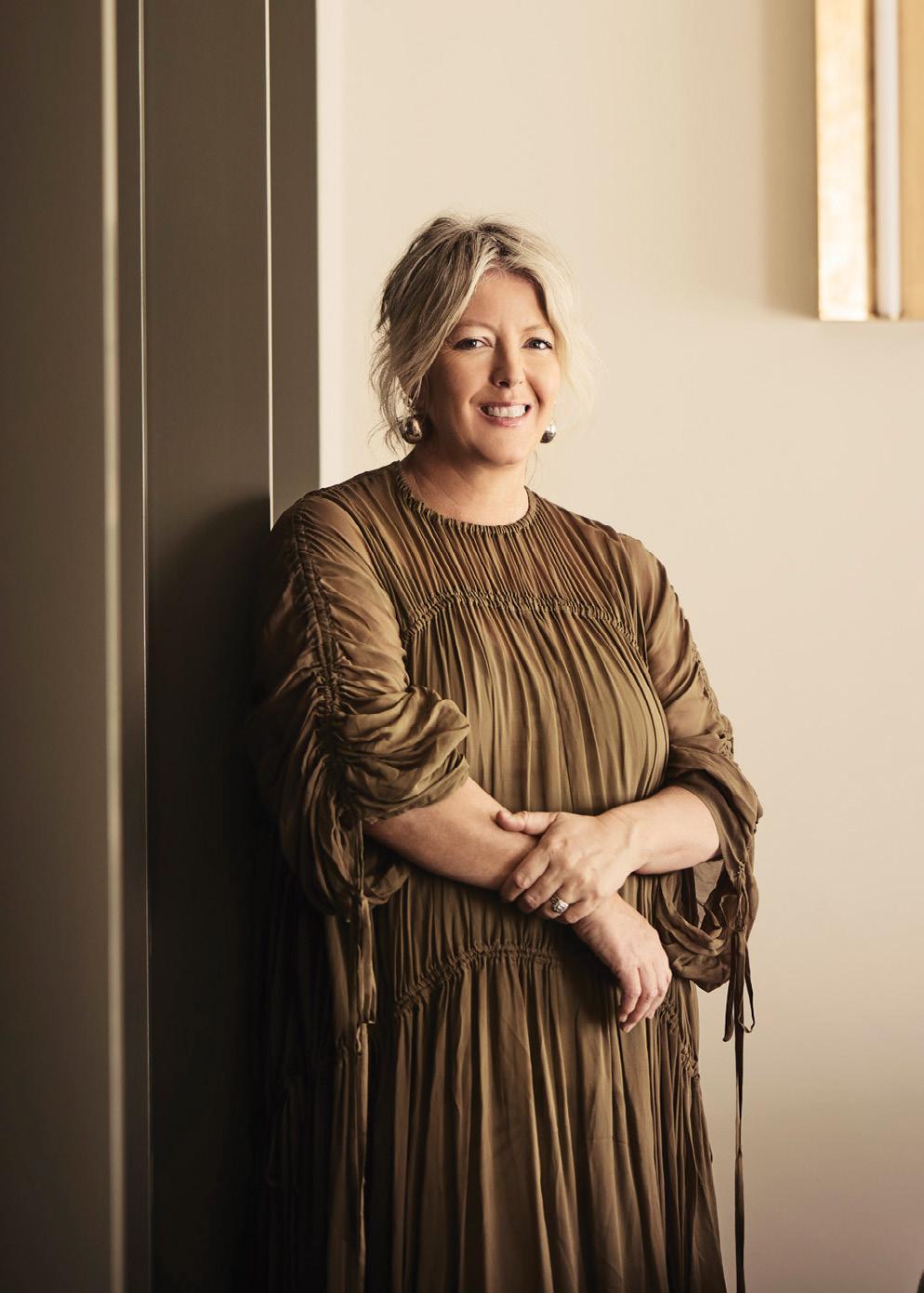
How would you characterise the Fiona Lynch Office approach—what defines the way you and your team think about design?
We endeavour to create interiors that are forwardthinking and drive new ideas about how we live and interact within a space. We really take a unique approach to each project, whether working on a residential or hotel project. Our process is inquisitive and evolving, balancing creative exploration, technical expertise and delivery. We consider how materials and light make us feel. We employ clever planning and problem-solving to make the most of a space and seek opportunities for greater flexibility. Especially with our high-end residential projects, we focus on the longevity of materials as well as joinery detailing. We want our clients to enjoy their homes for a long time, so we design our spaces to adapt and change and transcend changes in fashion.
How do you think about designing for private life versus shared experience?
We view each project as an opportunity to learn and grow our understanding of design. Every client is different and teaches us something new. That genuine collaboration—the exchange that unfolds as we move through the design journey together—ultimately shapes a successful project.
In residential work, we focus on creating spaces that feel deeply personal. We want each home to authentically reflect our clients, to feel lived-in, comfortable and truly their own. Hospitality projects bring a different complexity. We’re designing for a customer experience, aiming for an experience that feels effortless. We’re currently working on a five-star hotel on the Gold Coast in collaboration with our client and Marriott International. Our approach is to create a timeless interior that is sensory, layered and lasting. Understanding materials and how they age over time is essential, so the spaces will still feel beautiful and considered in 100 years’ time.
01 Breccia Pernice marble lines the kitchen of this renovated Melbourne residence. Image: Pablo Veiga.
02 Lynch founded her eponymous Collingwood studio in 2013. Image: Sharyn Cairns.
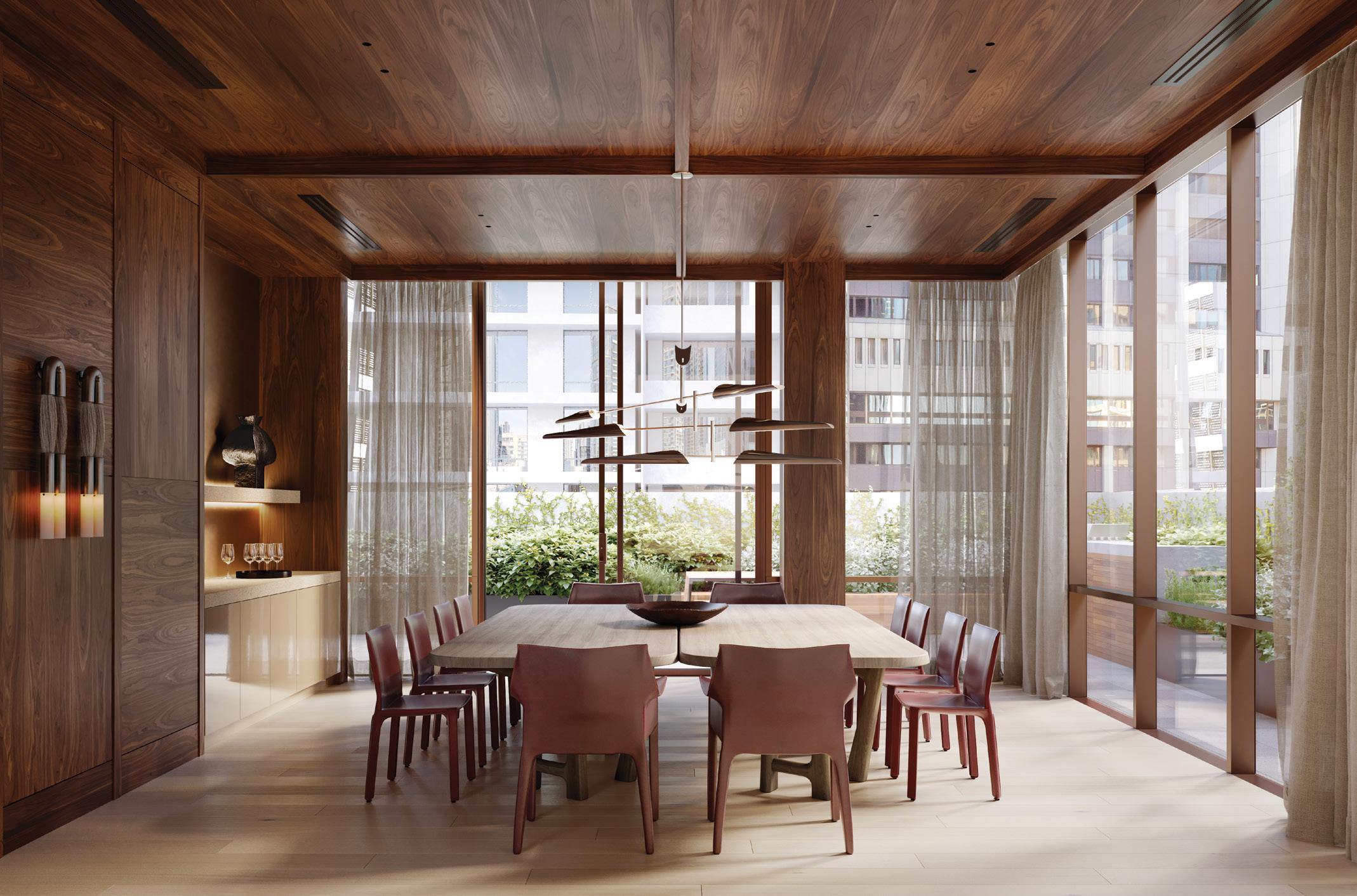
“The tendency is often to design for broad appeal, which can result in something quite minimal and conservative. [...] The market has shifted: buyers want homes with a stronger design.”
What does that ambition for timelessness look like in practice at the Marina Mirage Gold Coast?
In this project—a $500m redevelopment combining hotel accommodation and private residences—we’re exploring understated luxury through beautiful materials and minimal details. Our palette directly reflects the local coastline and hinterland, playing with the reflectivity of water and sun through light-toned materials in cream, sand, bronze and brass. Some surfaces mimic the abrasive texture of fossils and oyster shells, while others are smooth and reflective like the sea. It’s a timeless approach designed to feel relaxed while reflecting south-east Queensland’s beautiful natural environment.
You’re also working closely with the famed Japanese architect Kengo Kuma on a series of apartments in Dubai. How did this collaboration come about?
In Tokyo a few years ago I visited the beautiful Nezu Museum, where Kengo Kuma designed a washi paper-lined teahouse. The simplicity of the building and his exploration of natural materials expressed in a minimal way is exquisite. Working closely with Kengo on his first project in the UAE has been an incredible experience. Kengo loves timber and natural stone—as does our team. We have been challenged to explore different ways of using materials and detailing on this project, and have learned so much! Kengo has been inspired by the desert terrain and designed an architectural form that moves with the cadence of Dubai’s sand dunes. The result is a very organic form which is in stark contrast to Dubai’s modernist towers.
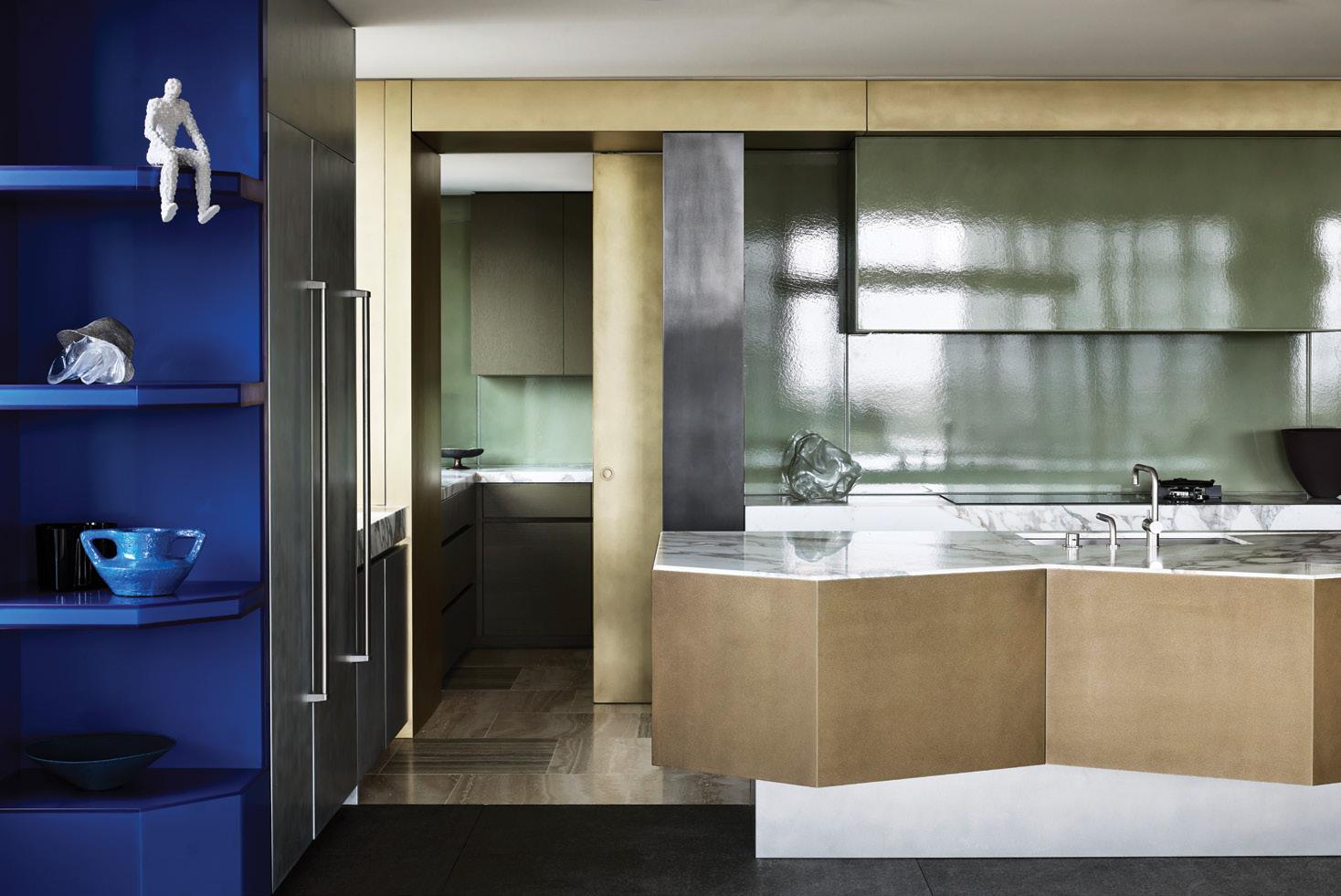
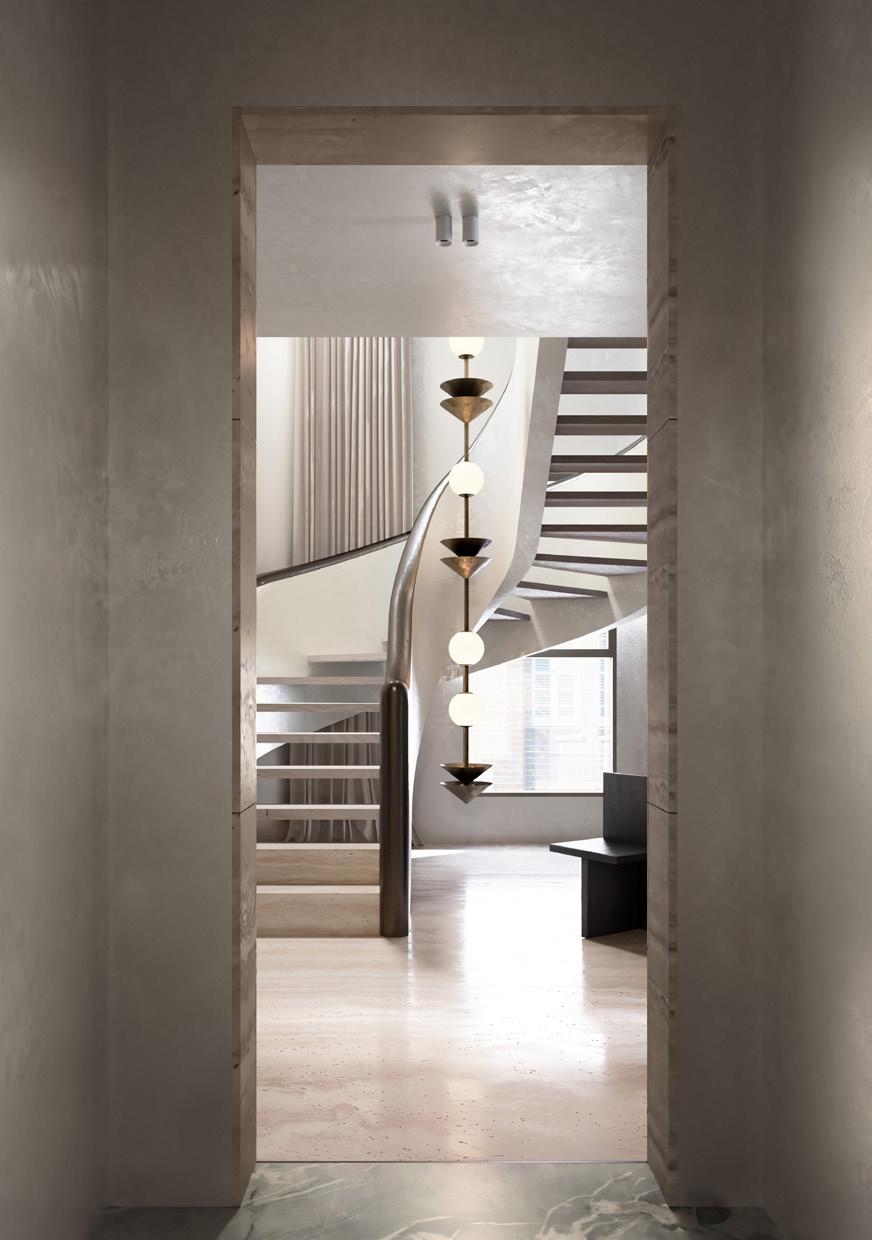
Closer to home, you recently completed the multi-residential development, 623 Collins Street. How did you move beyond convention here?
Our client, Sterling Global, wanted to explore a more layered, hotel-like approach to the interiors. With multi-residential projects, the tendency is often to design for broad appeal, which can result in something quite minimal and conservative. Since Covid, the market has shifted: buyers want homes with a stronger design sensibility, something closer to a hotel experience. For 623 Collins Street, we focused on material depth, proportion and restraint, allowing the building’s history to guide a timeless design language. We balanced soft tactility with architectural precision through bespoke detailing and a muted palette reflecting our commitment to understated sophistication. Stone, timber and metal work together to create a rhythm of texture and tone.
Your monograph, Material Wonder, captures over a decade of work across 20 projects. What does it say about your evolving relationship with materiality?
Material Wonder explores our relationship with stone, timber, metals and textiles. Each project was selected for its exploration of a particular material. We chose these projects—mostly residential—because residential work often gives us the greatest freedom to explore craftsmanship, particularly through interior joinery and considered material choices. The book became a way to reflect on how our material thinking has evolved over time, and how interiors can grow richer and more alive the longer you live within them.
03 Walnut and stone warm a private dining area at 623 Collins, a heritage bank tower converted to apartments.
04 Penthouse kitchen with a splashback in Pyrolave (enamelled volcanic lava stone). Image: Sharyn Cairns.
05 This Potts Point apartment uses Volker Haug lighting and polished plaster to honour the area’s art deco legacy. Image: Gabriel Saunders.
OUT AND ABOUT
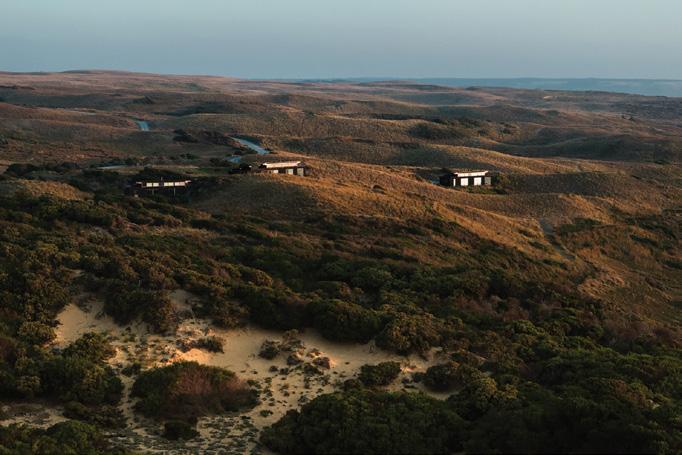
CULINARY ESCAPE AT KITTAWA LODGE
Set across 96 acres of rugged King Island coastline, this award-winning off-grid retreat hosts the fifth year of its smallgroup culinary escapes—welcoming just eight guests at a time. In June and July, seafood chef Jordan Clay (Pipis Kiosk) draws on the island’s exceptional seafood for private dinners and coastal picnics. October brings Darren Purchese (ex-Vue de monde and Bennelong, and founder of Burch & Purchese Sweet Studio) with technique-driven menus to match. Stays encompass wine-matched meals featuring local produce, including a memorable lobster dinner. King Island, Tasmania. kittawalodge.com
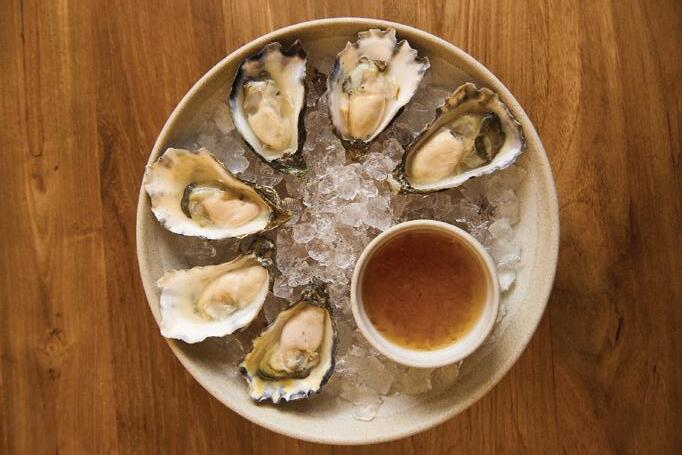
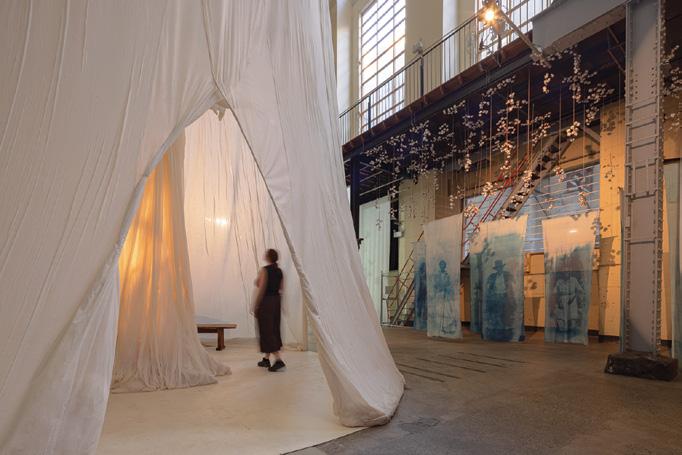
Shannon Bennett has opened a multivenue coastal dining precinct just north of Byron Bay, anchored by fire-driven fine dining restaurant Feu, where every dish is cooked over local yellowbox timber and guests select their own ingredients each course. The team includes group executive chef Cory Campbell (ex-Noma), master sommelier Carlos Simoes Santos, and group pastry chef Rewenka De Buhr (Burnt Ends, Quay). Produce is hyperlocal, including spanner crab caught out front and seasonal vegetables from regenerative farms a stone’s throw away. 33–35 Childe St, Byron Bay, NSW. belongilgroup.com
Nobel laureate Toni Morrison coined ‘rememory’ for the haunting persistence of collective memory and the 25th Biennale of Sydney takes it as both theme and directive. Under inaugural artistic director Hoor Al Qasimi, 83 artists from 37 countries spread across five major venues chart a non-linear passage through remembering and forgetting, reclaiming histories long erased or suppressed. Among the highlights: the extraordinary Ngurrara Canvas II, making its final public appearance before returning permanently to Country. Various venues across Sydney, 14 Mar–14 Jun. biennaleofsydney.art
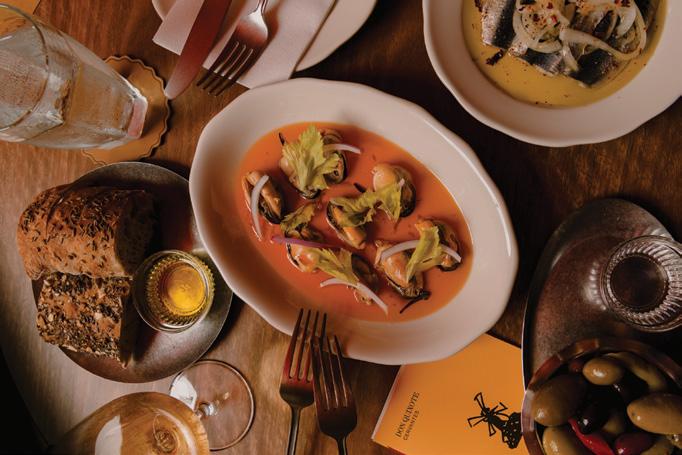
The team behind Sydney’s two-hatted Aalia brings Spanish tapas to Bondi. This 65-seater draws its inspiration from the tightly packed bars of Madrid—dark timbers and circular booths a world away from the suburb’s coastal typically sunlit palette. Executive chef Ibrahim Kasif leads the kitchen alongside head chef Alan Kropman on a shareable menu of considered Spanish plates, raw beef carpaccio with white anchovy and goat’s cheese among them. This is Sydney’s most credentialed entry yet into the Spanish canon, and proof that Bondi’s dining scene has outgrown its casual beachside reputation. 75-79 Hall St, Bondi Beach, NSW. besabondi.com
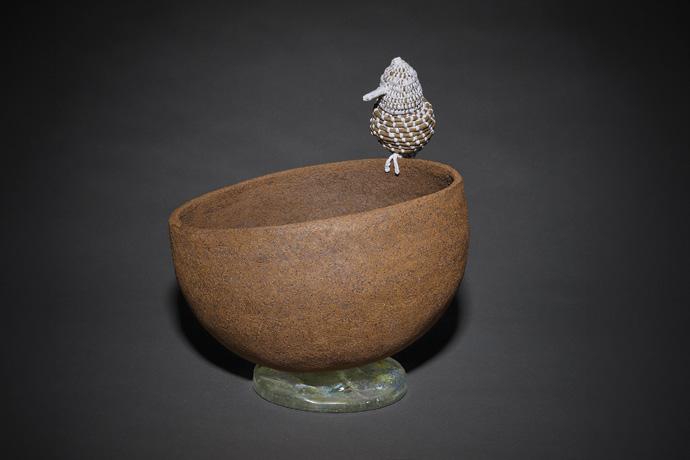
Rosalie Gascoigne spent decades turning discarded materials into some of Australia’s most quietly radical art, and Bundanon—the historic Shoalhaven property gifted to the nation by Arthur and Yvonne Boyd—is a fitting home for this major survey. Drawing on loans from the NGA, NGV, AGNSW and significant private collections, over 20 multimedia pieces evoke the weathered textures and vast skies of rural Australia. Alongside, three First Nations women artists—Lorraine Connelly-Northey, Janet Fieldhouse and Glenda Nicholls—present new site-responsive commissions created in residence. Bundanon, Shoalhaven, NSW, 7 Mar–14 Jun. bundanon.com.au
& Drink
Visual Art
25TH BIENNALE OF SYDNEY: REMEMORY
Food & Drink BESA
Visual Art
ROSALIE GASCOIGNE: SKY, EARTH, WATER
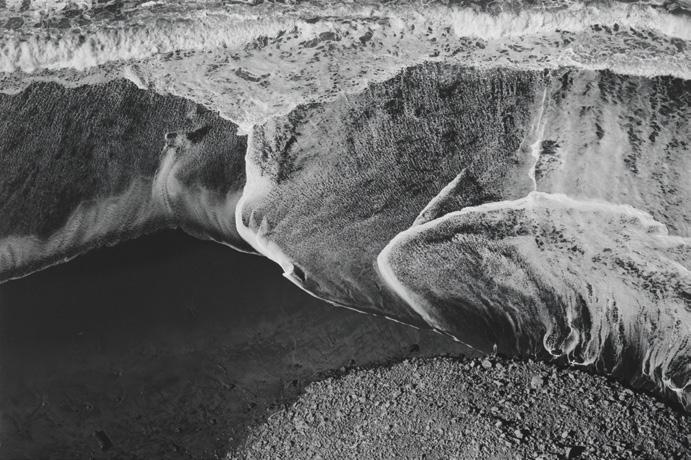
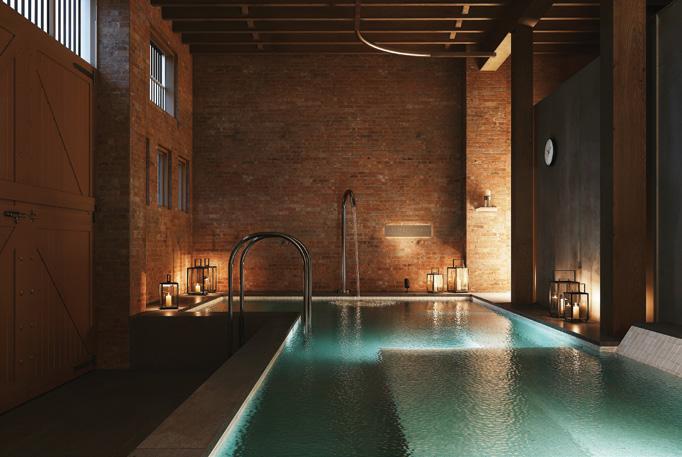

Two giants of 20th-century photography in conversation for the first time: Max Dupain and Ansel Adams, working on opposite sides of the Pacific, shared a devotion to black and white image-making defined by formal clarity, tonal precision and an almost spiritual relationship with light. Dupain’s modernist studies, including his iconic 1938 Sunbaker, meet Adams’ sweeping wilderness landscapes of the American West in this National Gallery touring exhibition, a compelling meditation on how photography shaped two nations’ sense of themselves. Bayside Regional Gallery, Brighton, 20 Jun–30 Aug. nga.gov.au
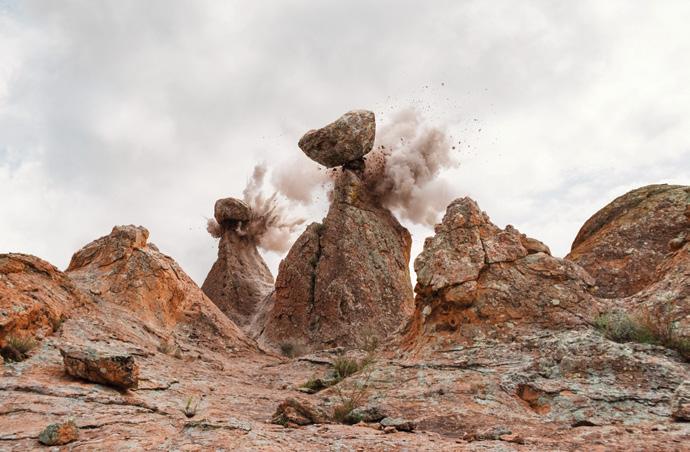
Berlin-based Julius von Bismarck has spent two decades treating the natural world as laboratory, studio and canvas—triggering lightning with rockets, channelling forest fires and hurricanes into kinetic sculpture and video. Represented by Berlin’s boundarypushing Esther Schipper gallery and a fixture at Art Basel, with past solo exhibitions at the Palais de Tokyo and Berlinische Galerie, von Bismarck probes humanity’s drive to classify and control nature. His visceral work resists easy answers through humour, absurdity and spectacle. His first Australian solo exhibition at ACCA spans more than 20 years. Australian Centre for Contemporary Art, 17 Apr–14 Jun. acca.melbourne
Communal bathing has become one of Melbourne’s more compelling wellness additions. Drawing on centuries of ritual— from Roman thermae to Japanese onsen— this heritage-listed Bank Street warehouse has been transformed into a three-level sanctuary of thermal pools, cold plunges, saunas, steam rooms and open-air rooftop pools with city skyline views. Anchoring the experience: signature Aufguss rituals (a German sauna tradition in which essential oils are poured over hot stones by a dedicated sauna master). The first of several planned Australian locations. Bank St, South Melbourne, opening mid-2026. elsebathhouse.com
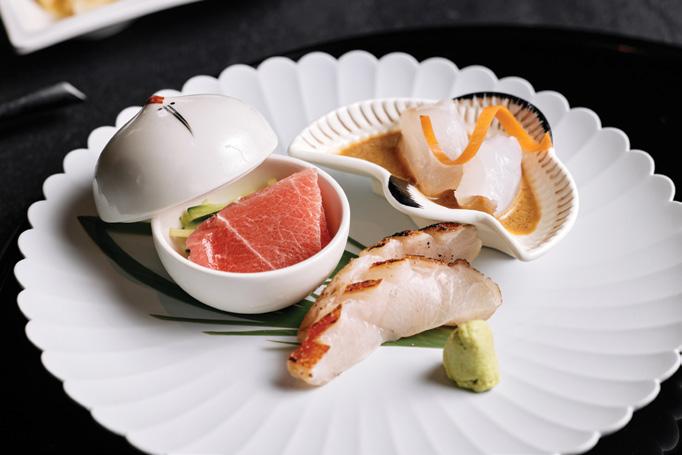
Brisbane’s newest omakase destination seats just 12 and has fast become one of the city’s most coveted bookings, with reservations opening 30 days in advance and disappearing within hours. In a minimal, low-lit setting, Tokyo chef Ikuo Kobayashi (formerly of Michelin-starred Ginza institution Kyubey) delivers an intimate multi-course menu rooted in local microseasons, highlighting exceptional produce and seafood. A sake list 100 bottles strong, rare Japanese whisky, and an adjoining lounge allow the experience to unfold slowly. 259 Montague Rd, West End, QLD. plus81.com.au
Nearly three decades into the creative partnership between The Australian Ballet and Bangarra Dance Theatre, their latest collaboration is proof that Australian dance has never been in better hands. Choreographed by Bangarra artistic director Frances Rings, it draws on creation stories and 65,000 years of cultural storytelling to trace a journey of origin, disruption and renewal through Australia’s native flora. More than 35 artists perform to an original live score by ARIA-winning composer and didgeridoo player William Barton. Sydney Opera House, 7–18 Apr. australianballet.com.au
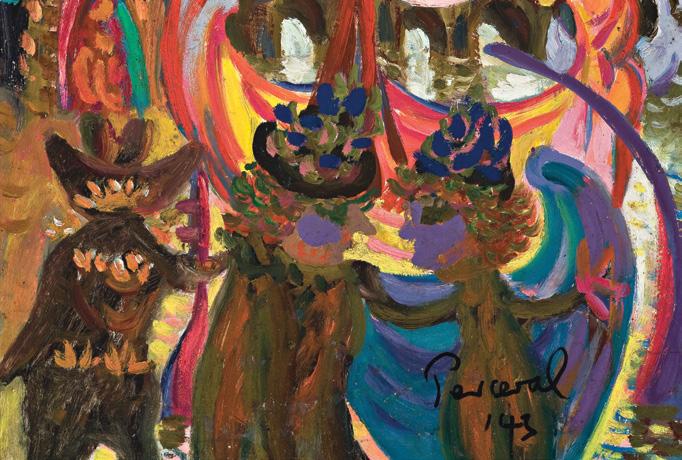
A key figure in the movement that redefined Australian art in the 1940s alongside Nolan, Boyd and Tucker, John Perceval receives his first major survey in over three decades at Heide. More than 100 works map a restless artistic journey: from psychologically charged early paintings and carnivalesque figures, through the celebrated Williamstown harbour series, to his remarkable ceramics. A dedicated gallery unites 25 iconic angel sculptures with a rarely screened 1962 animated film. Heide Museum of Modern Art, 21 Mar–12 Jul. heide.com.au
Visual Art
JOHN PERCEVAL: ALL THAT WE ARE
Visual Art
MAX DUPAIN & ANSEL ADAMS: IN SEARCH OF PERFECTION
Performing Arts FLORA: THE AUSTRALIAN BALLET x BANGARRA DANCE THEATRE
Hotels & Retreats
ELSE BATHHOUSE
Food & Drink
+81 SUSHI KAPPO
Visual Art
JULIUS VON BISMARCK: THIS IS NOT THE STORM