
Local women talk life in retirement
Escape from Ukraine Lunch with Snizhanna Otych
Community wellness: Vital signs overview







Your story is our priority, we’re here for you!

THREE AUDIOLOGISTS TO SERVE ALL YOUR HEARING NEEDS
Hearing Tests & Hearing Aids • Dizzy Assessments & Treatment
Choose from one of our three locations in Lindsay, Bobcaygeon or Bancroft
One of our Audiologists will run you through a series of tests and then discuss options to help you return to better hearing.
CHOOSE YOUR HEARING AID
We’re confident we can find the perfect device to suit your needs.

Grow the creators of tomorrow with expert-led STEAM programs, access to tech & tools, digital skill development and a space to make new friends.
Youth Programming
No-Cost After-School Programs
Saturday Drop-in Days
STEAMcation PA Days
STEAM School
Birthday Parties
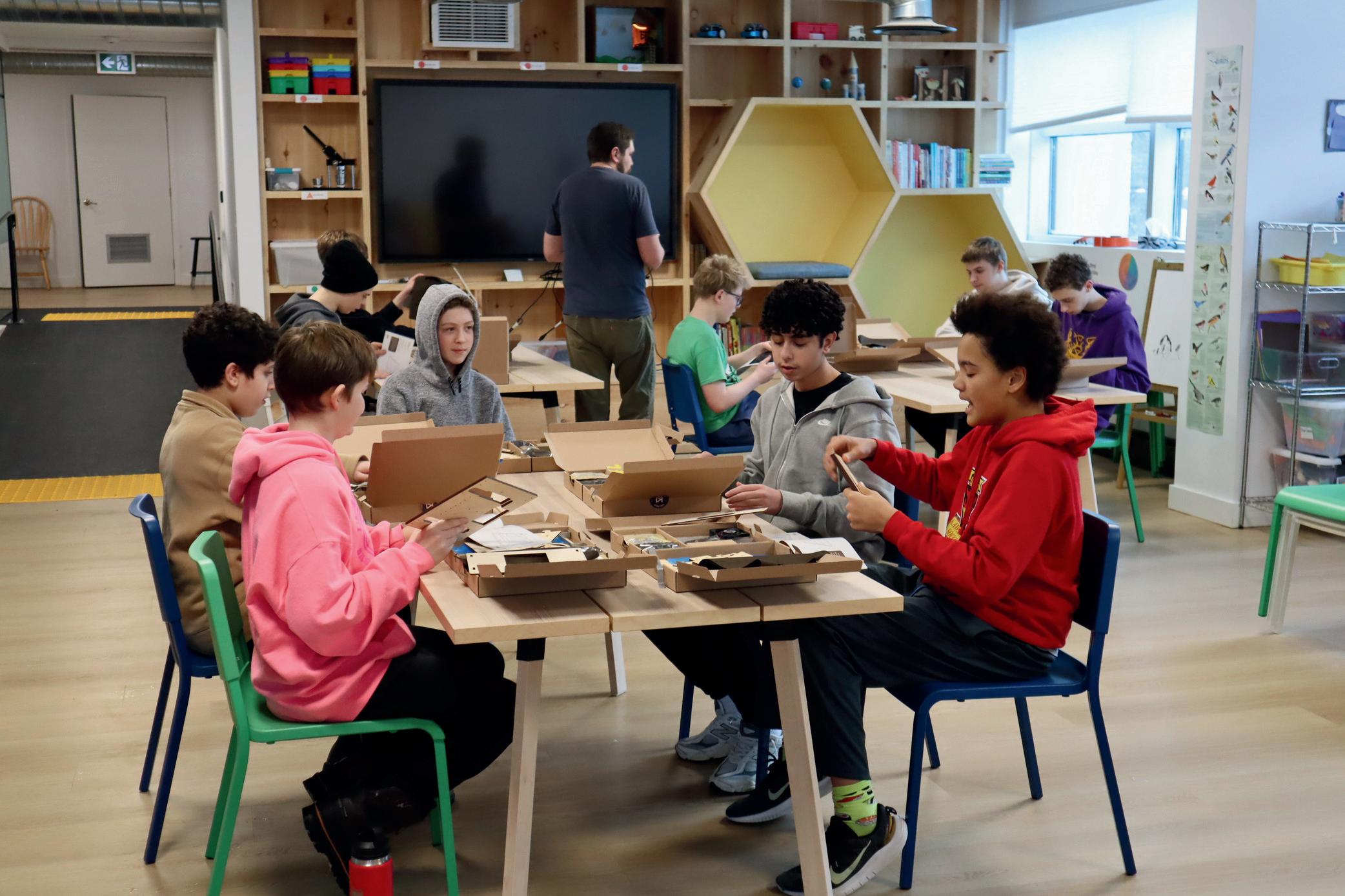
Teen Programming
The Latest Ed-Tech

Game Nights
No-Cost After-School Programs
Digital & AI Skills Workshops
Community Sewing Nights



Cara Baycroft ADVERTISING SALES
Rebekah McCracken EXECUTIVE EDITOR
Robyn Best REPORTER

Hoiting ADVERTISING SALES

Please send editorial inquiries to Roderick Benns at roderick@lindsayadvocate.ca or 705-341-1496.
Please send ad inquiries to Darren Hoiting at 705-991-3188 or darrenhoiting@outlook.com, or to Cara Baycroft at 905-431-4638 or cara.baycroft@gmail.com lindsayadvocate.ca • @lindsay.advocate

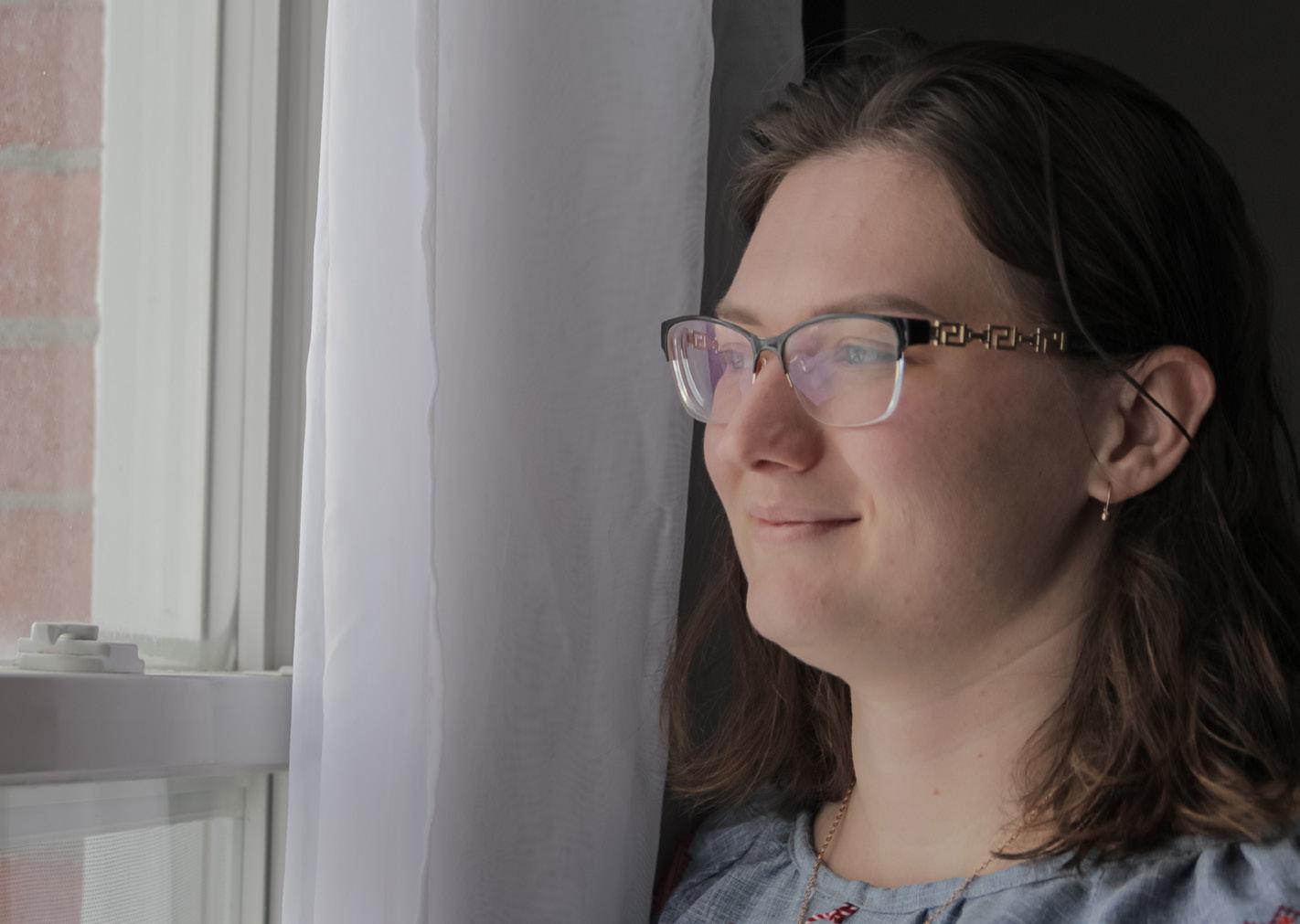
Retirement life for local women a chance to reset.
When the bombs fell: Local woman reflects on Russian invasion of her country. letters to the editor 6 • benns’ belief 9 • business today 30 sarah’s say 34 • KL public library 44 • crossword 45 • cool tips for a hot planet 47 • just in time 48 trevor’s take 50 • the marketplace 52 • newcomer 54
Vital conversations are needed on community health.
our mission
Fireside Publishing House is the premier print media company in Kawartha Lakes through its family of magazines and all-local weekly newspaper. We believe that community-based media can bring people together and change lives for the better through the power of storytelling, reflecting local culture, and creating informed and engaged citizens. Our commitment is to deliver high-quality and relevant content that reflects the diverse voices and experiences of our communities. We believe in the transformative power of local media to inspire, educate, and empower.

From time to time, I come across articles and ads regarding the best choice for the generation of electricity, and in particular electricity generation in Ontario. Cost and the environmental effect should be major considerations.
From the Ontario government’s ads, the current choice for Ontario is nuclear. The ads position it as an efficient, environmentally friendly option. When I learn that many jurisdictions are aggressively increasing renewable energy generation because they see it as the lowest cost option available, plus the best choice for the environment, I seriously question the claims for nuclear, especially when I read that Ontario Power Generation has applied for a 73 per cent increase in what it is paid for the generation of electricity from nuclear sources to cover the costs of building nuclear generating plants.
So how will this effect overall rates? Will the government be subsidizing the building of nuclear plants? What is the true cost to consumers and taxpayers? There is also the question of nuclear waste. How much land will be required, what is the environmental effect and the long-term risk?
The Ontario government needs to answer these questions to justify its claims.
— Bill Steffler, Lindsay
Re: Learning to keep learning: Career advice for the younger generation as technology reshapes the world, Feb. Advocate.)
Great article with important insights! These are things the schools should be teaching, along with how to contribute to the health of your community.
— Diane Engelstad, Fenelon Falls
Reconciliation means coming to grips with the perceived wrongdoings of our ancestors. None of us had any part of what was done by our predecessors; for good or evil. Some years ago, I wrote to the UK government asking that they seek restitution from the Italian government, for the harm done to my Saxon ancestors in the Roman invasion of England. The Romans killed many of my ancient kinfolk. Our brave Queen Boudicca took poison, rather than Roman servitude. They enslaved many of my ancient relatives. The soldiers had their way with the young British maidens.
The very concept of redressing past sins is impossible. We cannot be sin-eaters for our long dead ancestors. We can however learn from history. We can try to be more compassionate to all people. To be more understanding of where they are, and where they came from. This is my kind of reconciliation.
More importantly, council should not be mandating moral strategies; just fill the potholes.
— Peter Weygang, Bobcaygeon
I would like to respond to an article from your February Advocate magazine, “The life of a small-town sex worker.” While I appreciate that writer Denise Waldron wrote the article matter-of-factly, keeping her own opinion from impeding the derived information, I think it also overlooks some very important parts of sex work.
The woman identified as Jade is presented as an entrepreneur who chose to traffic herself in the best way possible. Although I am not suggesting this was not actually the case, I wonder if the way it is presented normalizes the idea of exchanging sexual acts with money – as if being trafficked by another person is the only real “problem” with the exchange of money for sexual service.
I also think that the ending to the article leaves the reader thinking that Jade’s spending her days making $1,500 a day for sex work was a choice she would make again as it ultimately brought her to the life she has today. As a reader, I am left wondering if this is actually the case. Is the suggestion here that struggling women in Lindsay should consider selling their own bodies as a way of survival as long as the choice is their own?
I understand that Waldron has differentiated that there is a distinction between being trafficked and sex work, however, I do believe that oppressively controlling influences present themselves in more forms than one.
— Angela Butcher, Lindsay
Re: The life of a small town sex worker, February Advocate.
Absolutely beautiful how you took control of your life and made best for you and your child. So very brave and strong.
— Nicole Mabee, Kawartha Lakes
So brave! I am so proud of you for sharing your journey. Wishing you light and love always.
— Nikki Higham, Kawartha Lakes
Thoughtful and humanizing insight provided by writer Denise Waldron. You’ve enlightened us to a dark world that most of us never experience. This factual and very direct account gives us a glimpse into the life of a sex worker and how this woman took control of her life to better herself and to provide for her daughter. I enjoyed the article and I was cheering for her from the beginning to the end.
— Sunny Montgomery, Peterborough
Re: Proof that good still shows up, January Advocate.
The piece regarding the new shed was heart warming to say the least. Sharing this kind of story is so important at a time when evil in this world feels overwhelming. Goodness prevails and we need to be reminded of that. Seemingly average people can do great acts.
— Susan Bell, Kawartha Lakes
Love this. In a world that seems to have turned towards darkness, it’s comforting to read that there’s still good, and people still help.
— Melissa Elliott, Toronto
The Advocate welcomes your letters. We do not publish anonymous letters unless it’s a matter of public importance and/or someone risks harm by writing us. We publish under strict guidelines & only if we can verify the person’s identity. Keep your letters to 200 words or less. Simply email roderick@lindsayadvocate.ca.














By Roderick Benns Publisher
While reading Canada’s newspaper of , recently, an analysis by journalist Mack McKinnon put into words the slow dread I had
“When Ukraine’s day of tragedy became tragically normal,” read the headline. And the deck (or subhead) read: “Four years after Russia began its fullscale invasion, the rest of the world is distracted – but the conflict is more violent and devastating than ever.”
Tragically normal. There’s nothing normal about war, from a civilized perspective. At the risk of quoting a Russian novelist, I can’t help but think of Fyodor Dostoevsky’s famous quote in Crime and Punishment: “Man grows used to everything, the scoundrel!”
It’s the ideal scenario right now for a vile despot like Vladmir Putin, to have the world go numb on his plans for Soviet-style domination of his neighbours. The most obvious counter to Russian aggression is a benevolent United States, but that nation no longer exists under its contemptible president, Donald Trump.
On our cover this month is Lindsay’s Snizhanna Otych, who fled Putin’s invasion of her home country the day they first heard the bombs fall. (You can read my interview with her on page 14.)
It’s one thing to read about the invasion of Ukraine in the national and international media. It was quite another to talk with someone who knows of it firsthand. Otych and her family are now safe in Lindsay, thanks to local church sponsorships, but they have relatives and friends who remain in Ukraine. And they have understandable pride of place for their home country. For them, they may one day get used to Canada and small-town life here, but they will never forget the terror Russia imposed upon them.
March is also International Women’s Day. We are proud to put Otych on this cover to recognize not only Ukraine, but as an example of humankind’s indomitable spirit.
On our cover this month is Lindsay’s Snizhanna Otych, who fled Putin’s invasion of her home country the day they first heard the bombs fall.
But not every town has its own story like hers to spark a reason to care. We must keep cultivating that moral space across Canada, so we don’t allow this war to slip into the “tragically normal” category.
If Putin’s strategy relies on the world becoming numb, then one small act of defiance is simply this: refuse that temptation. Remember Ukraine, even when the headlines move on. And yes, there are other awful things going on in the world. And there are challenges to take care of in our own communities. But this is not a zero-sum game.
Donate to vetted relief organizations, support resettlement programs, and pressure elected officials to maintain military and humanitarian aid for Ukraine. At the municipal level, let’s support the Kawartha Lakes & Haliburton Integrated Immigrant Services Association to keep finding ways to welcome newcomers. That includes language classes, employment help, and mental health services.
If we don’t want to succumb to Dostoevsky’s pessimism, then we must embrace Mahatma Gandhi.
“Strength does not come from physical capacity. It comes from an indomitable will.”
May the indomitable will of Ukraine –with the help of its allies – fight on. Slava Ukraini!
By Denise Waldron Retirement
Retirement is often described as a finish line, but for some women, it feels more like a threshold. It’s a new life that may include unpaid work and partner caregiving and hopes about how their retirement years would unfold.
Way before there were thoughts of RRSPs or finances, there were ideas about what their golden years would include: a time to exhale, new choices and perhaps more rest. When speaking with some local women, a more complex picture appears — one where anticipation and practicality reside, where new identities are formed and where financial realities come into play.
Statistics Canada reports that in 2025 the median age for women in Canada to retire is 64.5, with public sector workers slightly younger at 63. For self-employed women, the median age is 67.
Dianne Hall bucked the trend as a nurse with extensive experience in neonatal and pediatric care. Hall retired at age 70, describing her job as “the best job in the world,” which explained her decision to work past traditional retirement age.
Her career began at Kingston General Hospital in the neonatal intensive care unit. She described “falling in love with the field,” during her third-year OB placement.
Her career then took her internationally, including specialized training at Oxford in neonatal care. After that there was St. Joe’s in London, ON, then back to England for two different pediatric cardiac positions at two different hospitals. Later, back in Canada, The Hospital for Sick Children beckoned before she landed a position at Stanford University Hospital in California in their neonatal unit.
Hall then nursed at Women’s College Hospital before pursuing her Honours Bachelor of Science in Nursing degree. Following her degree, she taught clinical nursing at Scarborough Centenary Hospital.
The most significant portion of Hall’s career, though, was her 24-plus years as coordinator of the Infant & Child Development Program at BGC Kawarthas. The program served high-risk families, including those with premature babies, difficult deliveries, medical histories, or children born with medical issues or anomalies. She estimates she worked with hundreds of families during her tenure at the BGC Kawarthas and thousands throughout her entire calling.
After a whirlwind career, there was a change to being home alone in her retirement, but it didn’t take long to find a new focus. “I was fortunate that I had started volunteering with Habitat for Humanity.” She worked on three Lindsay home builds and volunteered in the ReStore. Hall notes it was something she had been interested in. “I felt so strongly about what they were doing, because again, I was working with families.”
Hall acknowledged having financial concerns but was in a favourable position with her mortgage nearly paid off at retirement. She credited having a good investment advisor and the sale of her house with providing financial security.
After a whirlwind career, there was a change to being home
alone in her retirement, but it didn’t take long to find a new focus.
As a certified financial planner for 29 years, Leslie Orr is the owner of Sunlife Financial in Fenelon Falls. She recommends building a trusted advisory team spanning tax, legal, and financial planning expertise in retirement plans. She notes the importance of open family discussions about wants and needs regarding future care requirements and developing Plan B strategies for health deterioration. This comprehensive approach addresses both optimistic retirement visions and realistic contingency planning.
Orr notes some women head into retirement, and not all are financially in a suitable position, whether through divorce, low wages, lack of a pension, or stepping away from work to care for children or family.
In these situations, Orr focuses on ground-level financial planning centred on meeting basic needs. For clients without saving opportunities, pensions or habits, she emphasizes understanding daily living obligations and exploring resource-pooling partnerships with friends or family to avoid isolation and financial strain. This may look like sharing accommodations, or if possible, buying an income-producing home where living in part of it and renting out the other part may help.
Orr
notes some women head into retirement, and not all are financially in a suitable position, whether through divorce, low wages, lack of a pension, or stepping away from work to care for children or family.
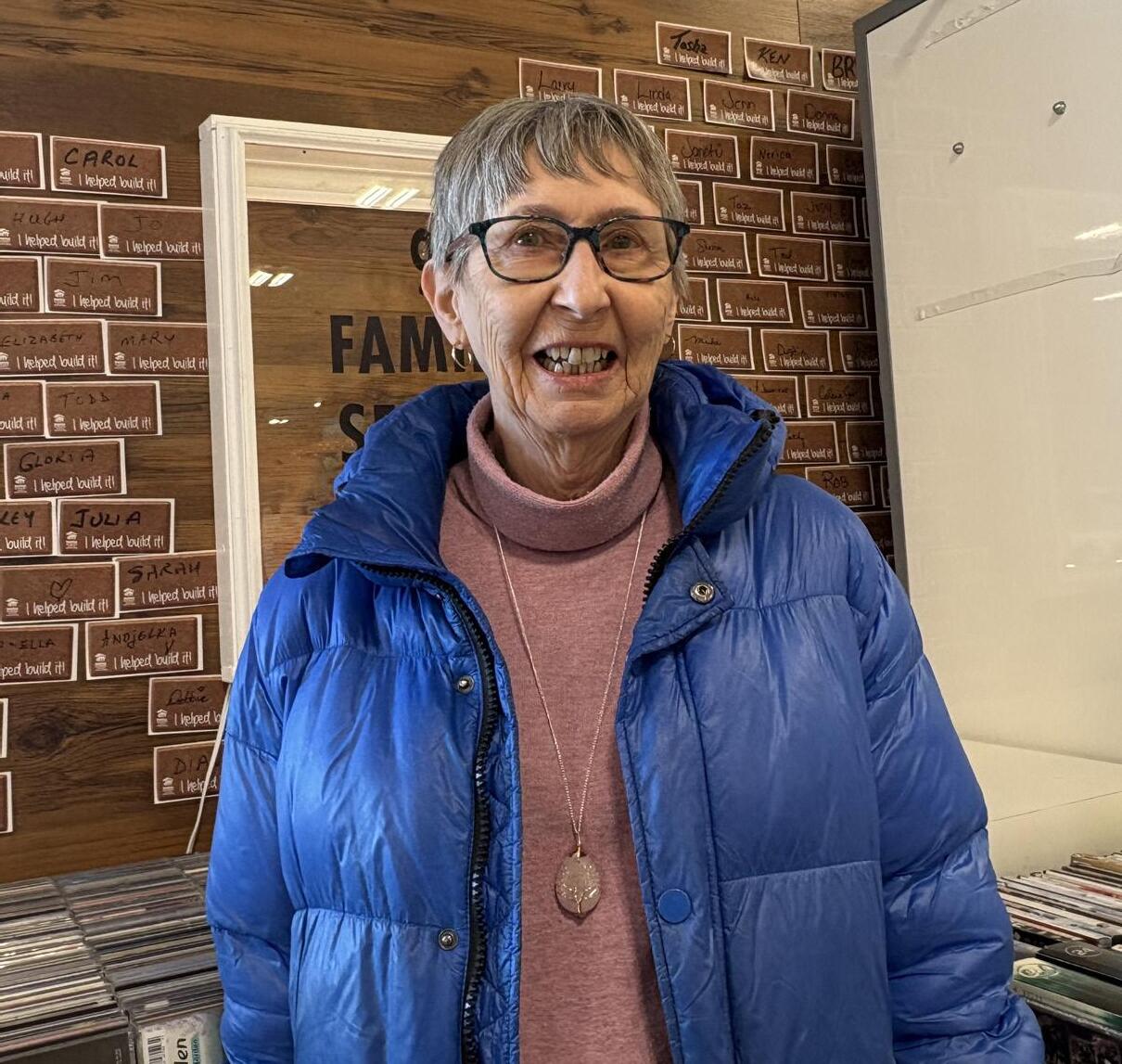
Hall spent her working years as a specialized nurse, but in retirement spent time volunteering at the ReStore for Habitat for Humanity.
For Hall, the house sale enabled her to take her dream trip to England, including a cruise on the Queen Mary, which she couldn’t have afforded otherwise. The upkeep of her older home was also a consideration. After the sale a few years ago, she rented an apartment. The move took her back to London, ON, and dear friends she had nursed with at the beginning of her career.
When asked for advice for women approaching retirement, Hall said having something to look forward to beyond daily routines, whether volunteering, joining organizations like her embroidery guild, or pursuing other interests, rather than aimlessly shopping or watching television. “You don’t have to do it every day, but there’s something to look forward to doing.”
June Kanitz spent her summers in the Fenelon Falls area as a child at her family’s cottage and returned to Kawartha Lakes to retire after living and teaching in the Toronto area. Kanitz describes herself as someone who helped students understand the world around them during her 30-year career. She taught history and civics and maintained long-term relationships with former students while also mentoring younger teachers.
The retirement decision came in 2020 when Kanitz was 56 years old, coinciding with her eligibility for early retirement and the onset of the pandemic. The shift to e-learning and uncertainty about provincial pandemic management influenced her decision, stating she didn’t think she could “wait a good 10 years for the cycle to kind of return back” to pre2019 classroom conditions. Both Kanitz and her husband Justin, retired from the Toronto District School Board, with her husband retiring in 2021 after struggling with e-learning delivery for practical automotive courses.
The couple moved to her elderly mother’s house in Kawartha Lakes in 2020 to care for her, while she was in long-term care. As an only child, this responsibility naturally fell to her.
Regarding retirement’s impact on her life, Kanitz described it as “fantastic” and “night and day,” emphasizing the complete elimination of work-related stress. She noted that teaching was stressful and involved extensive preparation work, often requiring three to five hours on weekends. The freedom to pursue personal interests and spend quality time together has significantly improved their relationship and lifestyle.
The couple purchased a small cottage in New Brunswick in 2022, allowing them to pursue their shared love of outdoor activities and solitude. Kanitz has family in New Brunswick and initially considering retiring there. This additional property provides them with an escape into nature, complementing their already peaceful lifestyle in Kawartha Lakes.
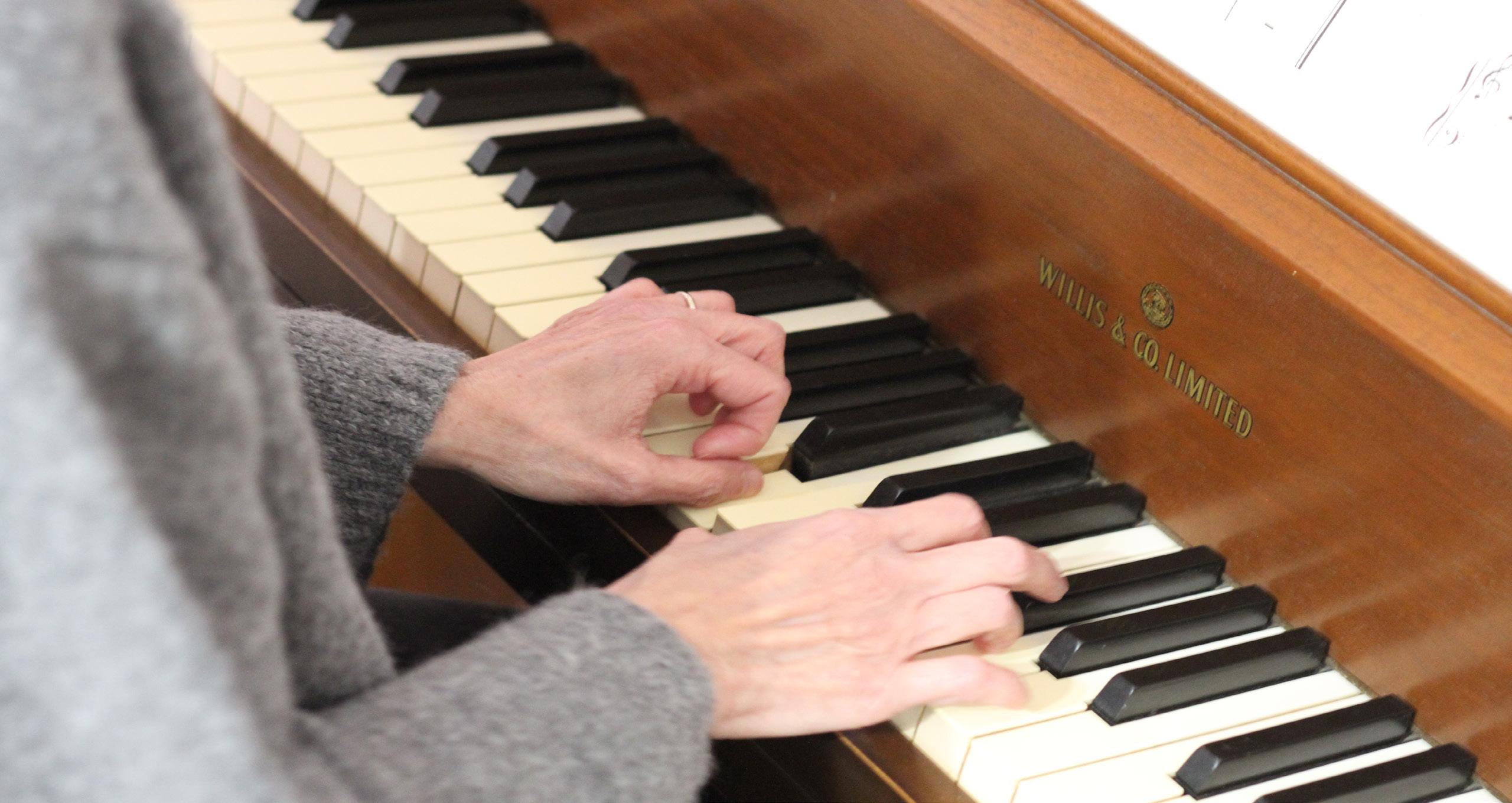
Kanitz has several goals for her retirement, including returning to piano playing — which she had to abandon during her demanding teaching career — and learning guitar. She said it is challenging fitting all her interests into her schedule and finding appropriate learning methods that match her preferences for traditional instruction, rather than AI-assisted learning.
She also wants to become more adept in French, not having used it since Grade 13, given that New Brunswick is officially bilingual.
“The time that I’m spending (there) leaves me kind of puzzled because I can remember some of the vocabulary, but I want to become more proficient.”
Regarding retirement’s impact on her life, Kanitz described it as “fantastic” and “night and day,” emphasizing the complete elimination of workrelated stress.
Some retirees find their identity changes at home after leaving the workplace. Not so for Kanitz. She thinks it might be a good question for her husband.
She feels he’s pretty used to her being very driven and trying to achieve and do lots of things. “I would almost argue for him, I’m driven to a fault, (and) that I need to probably step back and relax a little bit,” in retirement.
She emphasized women considering retirement should not be afraid of the transition, despite it being “probably the biggest change” an individual experiences.
Few people can retire at 30, but Marsha Thomas got an early buy-out and took advantage of the chance to reinvent herself.
Thomas’s career began early at Ontario Hydro, starting the day before her 18th birthday in labour relations, working
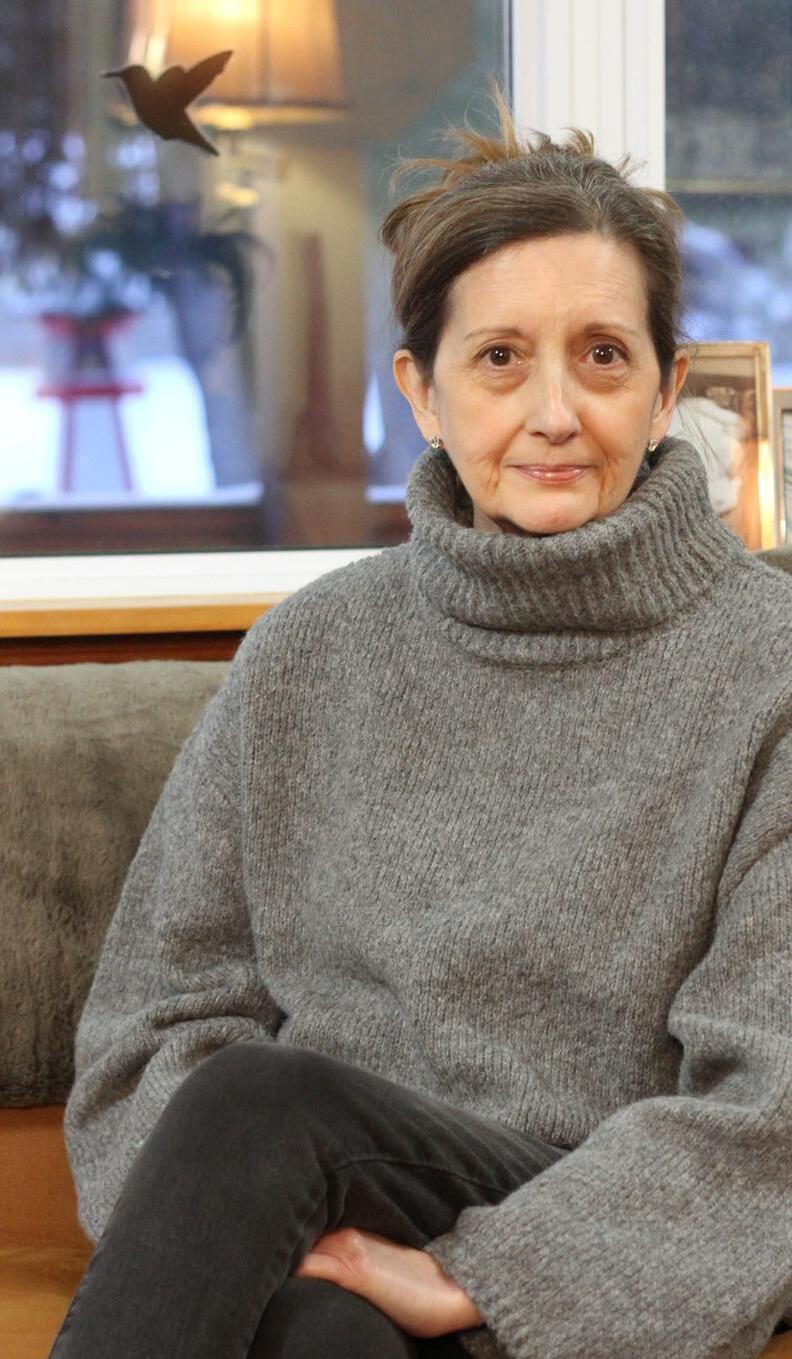
with management and union relations, grievances, and employee rights under human resources. The employer paid for her to attend university while working as well.
Her first retirement came at age 30 when Ontario Hydro offered an attractive retirement package to employees. Despite not planning to retire so young, Thomas seized this opportunity and spent her 30th birthday in Australia, hiking through the outback and using the time for personal reflection about her life direction.
Following her Australian adventure, Thomas relocated from Toronto to Lindsay, drawn by her childhood connection to Fenelon Falls where her family had a summer home from when she was four years old. She found Fenelon Falls too small but knew Lindsay well enough to make it her new home. In Lindsay, Thomas pursued various government and non-profit positions, including work for the city and community care organizations.

Thomas’s second retirement occurred in her mid-50s, aligning with her original career planning from her Ontario Hydro days when she knew she could retire early because of the pension factor. This timing coincided with her husband’s health issues, creating a natural transition point. “When something like that presents itself, you want to make sure you’re available, right?”
Rather than abrupt retirement, Thomas started her own consulting business, helping organizations with information management and privacy — leveraging her career expertise while maintaining flexibility for care giving responsibilities. After running her business for several years, Thomas fully retired about eight years ago. Her older husband, retired 20 years prior, making Thomas’s retirement adjustment a newer experience in their household.
Her first retirement came at age 30 when Ontario Hydro offered an attractive retirement package to employees. Despite not planning to retire so young, Thomas seized this opportunity and spent her 30th birthday in Australia.
Thomas acknowledges her fortunate financial position because of starting work young and accumulating 40 years of employment, enabling extensive retirement planning. She thinks that financial preparation varies significantly based on individual retirement goals, noting that some people prefer working until 70 while others, like herself, prioritize early retirement.
Currently, Thomas has transitioned into a primary caregiving role for her husband, whose health has declined significantly over the past two to three years, essentially becoming her full-time responsibility. While it may not have been in her retirement plan years ago, she says, “I’m crazy about him.”
Thomas’s retirement days includes community engagement and personal fulfilment. She maintains active involvement through volunteering and committee
She thinks that financial preparation varies significantly based on individual retirement goals, noting that some people prefer working until 70 while others, like herself, prioritize early retirement.
participation, adapting to the caregiving constraints by using technology for Zoom meetings and coordinating home care support to enable her participation in community activities.
She stresses that retirement should not mark the end of personal interests and passions but provide opportunity to pursue previously deferred goals and activities.
“It’s obviously different because I don’t have to wake up and go to work every day.” LA

The Mindful Move - with Nicole Naylor
When Holding On Becomes a Burden
People who have downsizing on their mind, often aren’t holding onto things because they want them, they’re holding onto them because they think someone else might.
Items are often saved with love ; a dining set for the kids, furniture kept just in case, boxes tucked away for later. Over time, those good intentions can slowly turn into a burden.
If an item holds real meaning for someone, you’ll usually know. They will ask for it, they’ll express their desire for it and they’ll make space for it. You won’t be left storing it year after year, waiting for a future decision.
Holding onto items for others can keep people stuck. Spare rooms and basements fill up, but so does the mental load. Every item becomes a question mark, and downsizing feels harder when every decision carries the weight of someone else’s future.
One useful way to gain clarity is to ask whether you’re keeping something because it matters to you or out of responsibility?
That answer often brings clarity. Letting go now can actually be an act of kindness. It lightens your space, reduces future decisions for your family, and allows you to move forward without carrying unfinished choices.
If downsizing or a future move is on your mind, remember this; you don’t have to keep everything to honour the people you love.
Mindful Takeaway: Clear decisions today can spare difficult ones later.
Denise Waldron is a local radio reporter and feature writer for the Advocate
*Marsha Thomas does not wish to use her real name to protect her husband’s privacy.

Nicole Naylor REALTOR®
Realty Inc. Brokerage
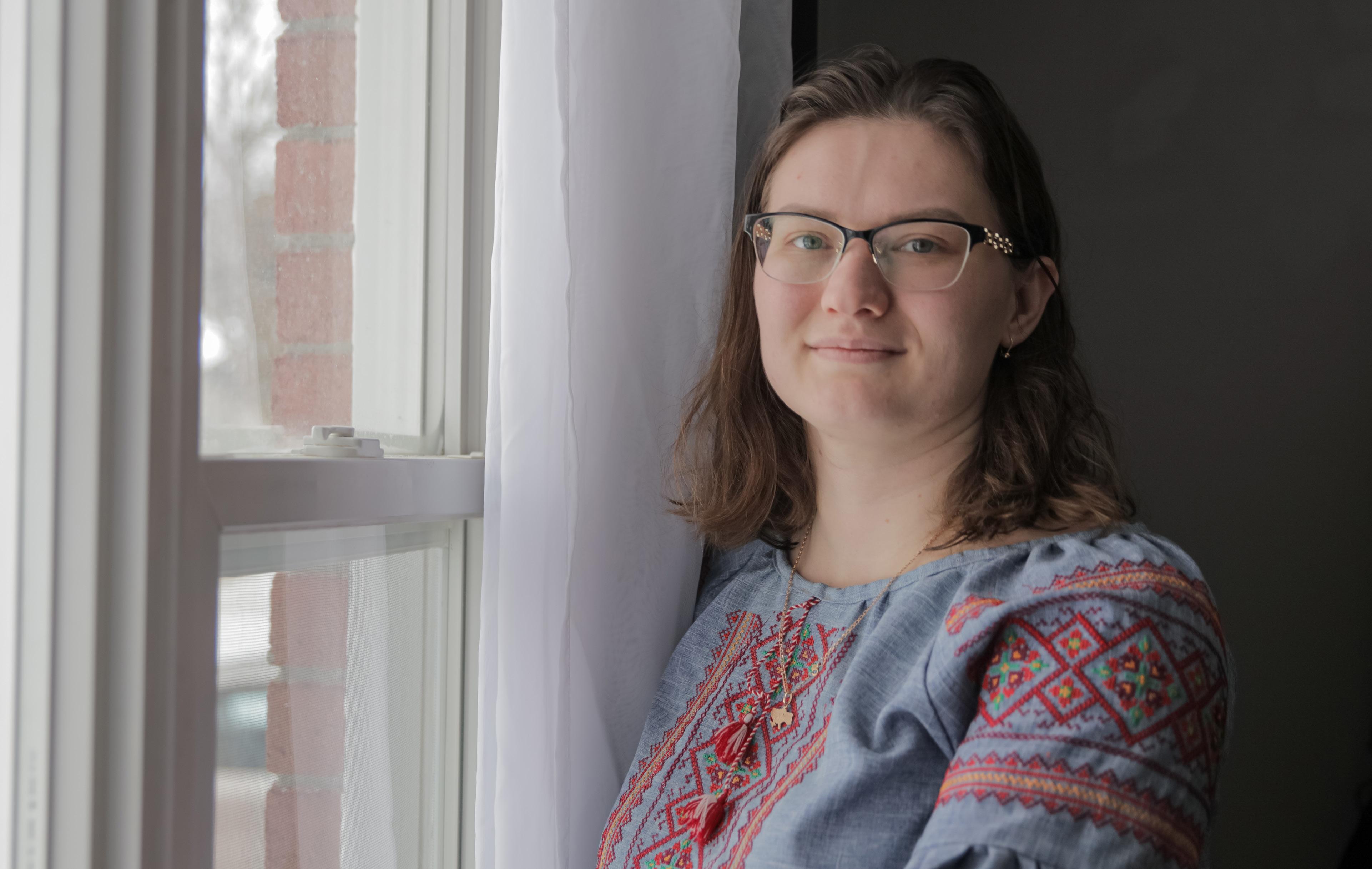
fleeing Ukraine, food from the home country, and enduring the pain of Russia’s war
It’s Feb. 24, 2022, at about 4:30 a.m., when you hear the first bombs fall. You had already made a pact with your partner, knowing this might happen. If Putin’s war arrives on your doorstep in Ukraine, you are both willing to drop everything and flee.
Forget the fact that you had just bought a house in Sumy, in eastern Ukraine, a river city with industries, universities, and 18th-century churches.
Forget that family and friends are nearby, the kind of support system that just makes life easier.
Forget that your careers once mattered or that you love your country. Instead, just remember.
Remember to do whatever is needed to save your four-year-old daughter from the terror and madness of war.
Snizhanna Otych, 29, and I are at The Pie Eyed Monk in Lindsay, reliving the shock of war and the of her new life in Kawartha Lakes.
“We took about 30 minutes to get ready,” when those first bombs fell, she says, taking me back four years ago. “It was our plan that if war would start, we don’t need to be thinking about anything. We just need to go, because our first need is the safety of our child.”
While she was a leading agronomist at the Ukrainian Institute for Plant Variety Examination, her husband, Oleksandr, was a police officer for 13 years in Ukraine. But he had also been thrust into the role of soldier in the past, given Russia’s invasion had already started with its illegal occupation of the eastern Donbas region in 2014. He was sent there to fight that same year, getting an early look at the ugly war the Russian leader foisted upon Ukraine.
They thought about moving to the other side of the city, or even the other side of the country. But ultimately, they were worried Russian forces would one day encircle everything.
With Otych driving and her husband navigating, they headed for Poland like the hundreds in front of them and the hundreds behind.
“We could hear the bombs going off in different places as we drove. So it’s not safe. And everyone is just trying to live, thinking about their own safety. It was every man for himself, every woman for herself.”
Otych reflected on the older relatives they were leaving behind. Older generations, closer to 70, “they don’t want to change any part of their lives. What can they do if you cannot work physically in another country? Yes, you would not survive. My great grandma said ‘it doesn’t matter where I will die, here or there, it doesn’t change anything for me.’”
“When you go to another country, you start from zero. Like everything you left behind, it doesn’t matter, right? You are no one in a new place. You don’t know the language, you don’t know the mentality, you don’t know the traditions.”
In Lviv, in western Ukraine, not far from the Polish border, Oleksandr helped her and their daughter, Ivona, get on a train bound for Poland. There were no seats available, so she stood, sometimes holding her, for more than 18 hours. Oleksandr headed back to eastern Ukraine to continue the fight against Russian aggression.
“We were packed too tight all together, I don’t know how many people were on this one train.”
It was an experience she will never forget, she said, mainly because of the profound sense of feeling like she did not belong.
“When you go to another country, you start from zero. Like everything you left behind, it doesn’t matter, right? You are no one in a new place. You don’t know the language, you don’t know the mentality, you don’t know the traditions.”
She draws a distinction between fleeing to a strange country and choosing to immigrate somewhere. The latter choice means one has time for research and to get personal documents in order.
But arriving in Poland “was just so fast, and here you just don’t know…you don’t know anything.”
While she came to love Poland – “a very nice, beautiful country, good people” –the Polish people were afraid, too. “In that moment, they were worried that war could be started there, too.”
For Otych and her family, Poland was not far enough away from war.
When a friend sent her a message and asked if Otych wanted to go to Canada, she didn’t know anything about this nation, other than that it was friendly, mostly English and was the second biggest country in the world.
But excluding the Arctic closeness, it was far away from Russia.
After spending a half year in Poland, Otych and Ivona arrived in Lindsay in December of 2022, thanks to the sponsorship of Fairview Baptist Church and St. Andrew’s Presbyterian Church. A local couple, Christine and Ron Gilson gave Otych and her daughter a place to stay in their home for about four months. After that, she was able to get her own apartment with the churches continuing to support them by helping with rent, at first.
“I would like to say thank you to them for this opportunity,” said Otych. We are deeply grateful for all the support we received.
Otych knew virtually no English when she arrived. Her husband would not be able to join them in Lindsay until exactly two years later, in December of 2024.
“He remained a soldier until he was able to reunite with us in Canada,” she explains.
Given her agronomist background, Otych worked at Hills Florist for her first job in Lindsay.
“It was amazing that they gave me the chance,” she says.
But she has found the job market in Kawartha Lakes often means knowing people well and speaking English as fluently as possible.
As for their path to staying here, Otych said there is no guaranteed future for them in Canada. They are not refugees, having arrived under a special program that grants them documents quickly but this does not offer a permanent residency path. To stay longer, she will need to find a suitable job, gain enough experience, and then apply for residency.
Just recently, Otych successfully applied for a non-certified secondary occasional teacher position with the Trillium Lakelands District School Board.
And her husband now has a full-time job as a carpenter.
“We’re like many international students, in a similar situation — not refugees, but also without long-term security.”
Ivona, who will turn nine next month, is doing well in school. Fluent in Ukrainian and English, her parents have also enrolled her in French Immersion, too. She also understands Russian, “but we are not speaking in Russian.”
But she has found the job market in Kawartha Lakes often means knowing people well and speaking English as fluently as possible.
“It doesn’t make sense to use that language now. Sometimes when people ask if we speak the Russian language, I say sorry, I can speak Ukrainian or English. I can’t understand you. Not all Ukrainians think this way, but it’s our position,” she said.
Otych says they feel that their daughter “should know the one reason why we are here.”


It’s an easy segue here to talk about the destabilization of the world in many countries. I ask if it’s disappointing to listen to U.S. President Donald Trump, considering they came to North America to escape conflict.
“He’s so stupid,” says Otych, becoming more animated. “He’s a stupid old man. For me, there is nothing different between Putin and him.”
“Russia. It’s not that Canada isn’t a great country. But I want her to know why we left Ukraine.”
Since her husband had to stay in Ukraine for so long, as a solider, they felt it important to communicate honestly with her. “She knows everything, even about weapons and drones. We can talk with her clearly and don’t hide anything.”
“Believe me,” says Otych, “the children who are staying in Ukraine…they know stuff that should not be known.”
The Ukrainian immigrant says she doesn’t understand why people here would follow Donald Trump and rightwing politics in the U.S. “I don’t get it. Like how can you trust him, or believe in what a dictator is saying?”
She worries about her home country being able to resist the illegal Russian invasion, especially when the U.S. is creating so much instability through the words coming out of the mouth of its leader. She wonders if Ukraine’s stand will be forgotten with all the other geopolitical distractions.
Otych believes the lack of military equipment will eventually catch up to Ukraine, despite European and Canadian help. “It’s just not enough, because (our country) looks like it’s fighting the Second World War.”
Drone warfare has changed everything, with Russian drones able to bomb Ukraine every day, hundreds of thousands of times since conflict began, she says. While Ukraine has some drones, too, Russia has more, and they are more sophisticated.

“They have a farm and do not want to leave their animals or their home. Their village is being bombed frequently, but for many people in their 60s it is very difficult to start life over in a new place, so they choose to stay despite the danger,” she says.
Otych’s parents relocated to western Ukraine for safety. They are a foster family and help care for children who, for different reasons, cannot live with their biological parents.
“My mother has also adopted several children who no longer have parents. She is a math teacher and continues teaching online because some schools remain closed in areas where it is not safe enough for students to attend in person.”
But her in-laws still live in a small rural village (Severynivka) in eastern Ukraine.
“They have a farm and do not want to leave their animals or their home. Their village is being bombed frequently, but for many people in their 60s it is very difficult to start life over in a new place, so they choose to stay despite the danger,” she says.
Here in Kawartha Lakes, Otych has worked to bring a little bit of the taste of Ukraine to her new home. She bakes custom cakes such as Napoleon and Medovyk. Napoleon is originally a French-style cake, she says, but has become very popular in Ukraine.
“Medovyk, however, is a truly traditional Ukrainian honey cake with a long history and is known for its rich flavour and delicate layers.”
She focuses on making desserts with reduced sugar, so they are not overly sweet.
“In addition to cakes, I prepare a variety of pastries and Ukrainian baked goods, always trying to share a part of our culture through food.”
One of the most popular items she makes is pyrizhky — soft baked buns made from slightly sweet dough that can be filled with either savoury or sweet fillings. “They are very comforting, homemade-style foods that many people enjoy.”
She also prepares varenyky (perogies) made with a variety of fillings. Otych has found one of the most popular here is potato with cheddar cheese.
Otych also shares her strong feelings about a few recipes and their origins. I learned that perogies, cabbage rolls, and borscht were all Ukrainian, first and foremost, despite variations existing across Europe.
She also prepares varenyky (perogies) made with a variety of fillings. Otych has found one of the most popular here is potato with cheddar cheese.
In 2022, UNESCO officially inscribed the “culture of Ukrainian borscht cooking” on its list of intangible cultural heritage in need of urgent safeguarding.
Ukraine requested an accelerated review because the war was disrupting the transmission of culinary traditions, community gatherings, and even the ability to grow local ingredients. UNESCO agreed and fasttracked the inscription.
Although she did a few pop-up events with her baking at Burn’s Bulk Food in downtown Lindsay, right now she bakes by order and occasionally for community events.
“I have passed the required inspections and follow all regulations. In the future, I hope to work from a dedicated commercial kitchen rather than from home.”
We talk again about the geopolitical situation for the world and for Ukraine. I want to know, does she still have hope for her home country?
“It’s hard to say. I know that it’s not possible to come back to my country. I don’t think it’s possible, because war will not stop.”
She changes the subject to her gratefulness for what they have in Kawartha Lakes.
“I want to really say thank you to both of the churches. I know that without them, we wouldn’t be here.”
After this interview, early in February, you learn your close friend, Anastasia, was struck by a Russian drone. She lived in Sumy, the city you had fled four years earlier.
You learn Anastasia, 31, and a mother of three, drove her father home after he had been released from military service for medical treatment. After safely dropping him off, she was driving back home to her children when a Lancet drone struck her car near a bus stop in the village.
The drone hit the front windshield on the driver’s side, and you find out her car caught fire.
She did not survive.
And you realize that faceless drones do not always distinguish between military and civilian targets, and that ordinary families continue to suffer the consequences of war.
Anastasia was more than your close friend, for you are the godmother to one of her daughters. You are now reliving the war once again. And you are heartbroken with loss.
A cross-section of business and non-profit leaders in Kawartha Lakes

Haley Thurston, Realtor®️
Jenn Straat, Realtor®️
Alexis Trunks, Realtor®️
Janet Di Bello, Broker
We’re probably known for our splashy videos, strong marketing, and constant community presence. And yes, we love showing up. We love creative campaigns! We love being visible and involved. But behind all of that is serious real estate strategy. Our Real Estate Group is known for clarity, consistency, and results. We are prepared, direct, and highly strategic, while still being approachable and human. We don’t overpromise, and we don’t offer one-sizefits-all advice. Every client has different priorities, timelines, and risk tolerance, and we build strategy around that. We are steady and absorb the pressure of a transaction, so our clients don’t have to. Our reputation has been built over time by doing the work properly and telling the truth… even when it’s uncomfortable or not in our favour. We show up when it matters most, often before our clients know they need us.
We help by bringing order to what can feel like chaos. Real estate decisions rarely happen in calm, perfect conditions. They carry weight, both emotionally and financially. Our role is to cut through the noise and reduce unnecessary stress, so decisions are informed, not reactive. No fluff. No pretending the market is something it’s not. Even as it shifts, we know how to adjust strategy and guide our clients through it with
Many of our clients are balancing family needs, long-term financial planning, career demands, and major life transitions. These decisions are significant, and we understand the weight they carry because we have been there, too.
We are calm under pressure, decisive when it counts, and deeply committed to protecting our clients’ outcomes. At the end of the day, our identity is simple: clear direction, disciplined strategy, and smart decisions. No drama, no pressure, no shortcuts. The only BS here is Buying and Selling.
dibellogroup.ca • (833) DIBELLO
Royal LePage Frank Real Estate
My organization is known for helping Canadians achieve financial security through a truly personal approach. For more than 28 years, Mabee & Associates Private Wealth Management has built its reputation on understanding that every client’s financial journey is unique. Rather than offering one-size-fits-all solutions, we take the time to learn about the individual, their family, and their long-term aspirations.
We help by advising clients on how to build and protect their wealth in a way that aligns with their personal goals. Whether that’s retirement, navigating major life changes, or simply looking to strengthen their financial foundation, we focus on creating comprehensive strategies that evolve as their needs evolve.
We want people to know that IG Wealth Management is proudly celebrating 100 years as a Canadian organization this year. That milestone reflects our long-standing commitment to serving communities across the country and supporting Canadians in achieving financial well-being. As we look ahead, we remain dedicated to delivering advice that is personal, holistic, and built for the future.
mabeeandassociatespwm.com • (705) 878-3530 kingswayoptical.ca (705) 738-2020

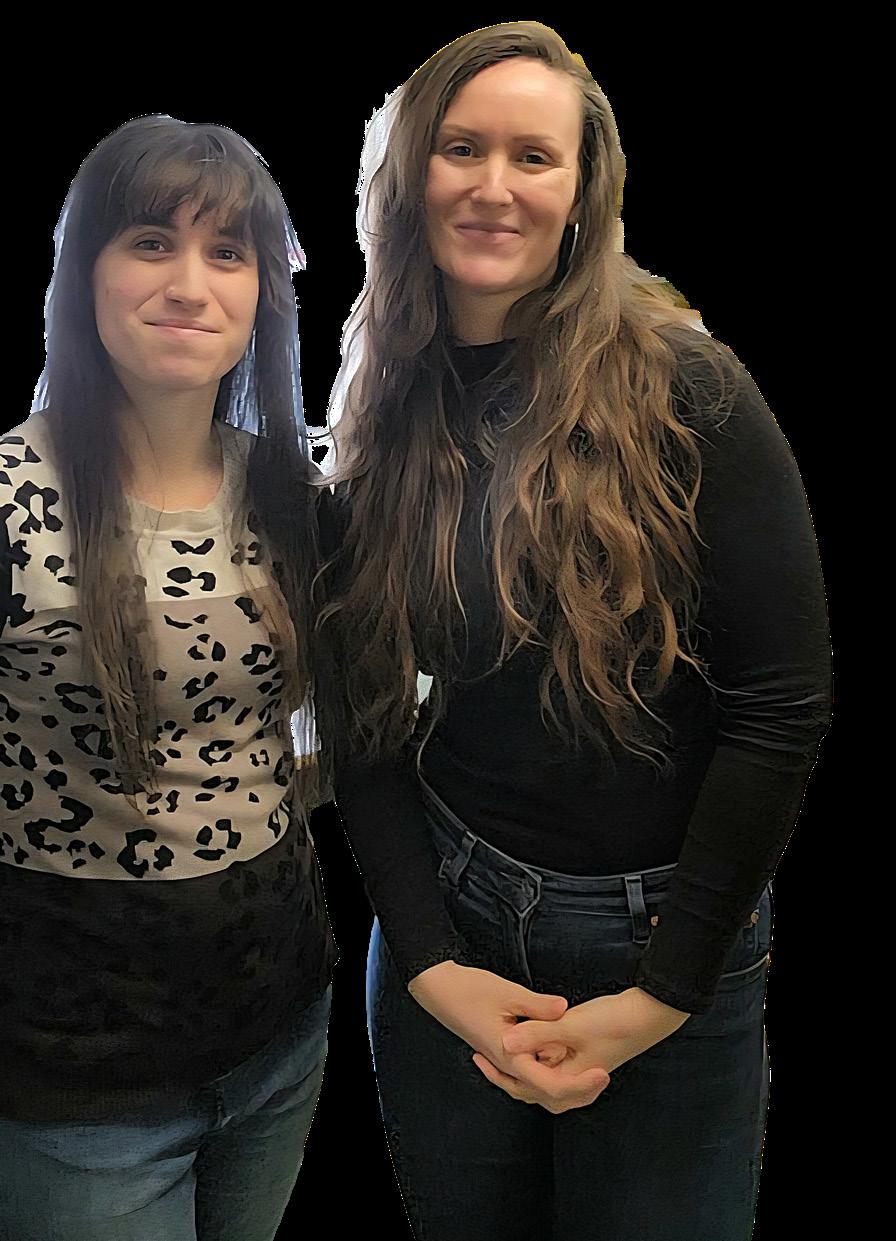
Famous for their frozen yogurt and a wide variety of supplements, bulk food, specialty and health foods, Country Cupboard knows its products well and is able to help customers make informed decisions on their purchases.
The store also has a strong environmental stance offering a discount for bringing in your own reusable container for bulk food and refill purchases, as well as a free jar exchange program.
“We have been serving our community for 45 years and we appreciate your continued support so very much.”
Holly Wreggitt is the owner of Kingsway Optical in Bobcaygeon.
With a large selection of frames, she’s able to help customers pick a style and colour that suit their lifestyle.
Kingsway only sells Essilor lenses, which offers a highly personalized lens for diverse vision needs.
Kingsway aims to make vision care easy by offering a 2-year war ranty on lenses and frames, sub mitting to most insurance pro viders and offering discounts for seniors.
“There is nothing more rewarding to me than seeing a child’s face light up when they can finally see the world clearly with their first pair of glasses.”


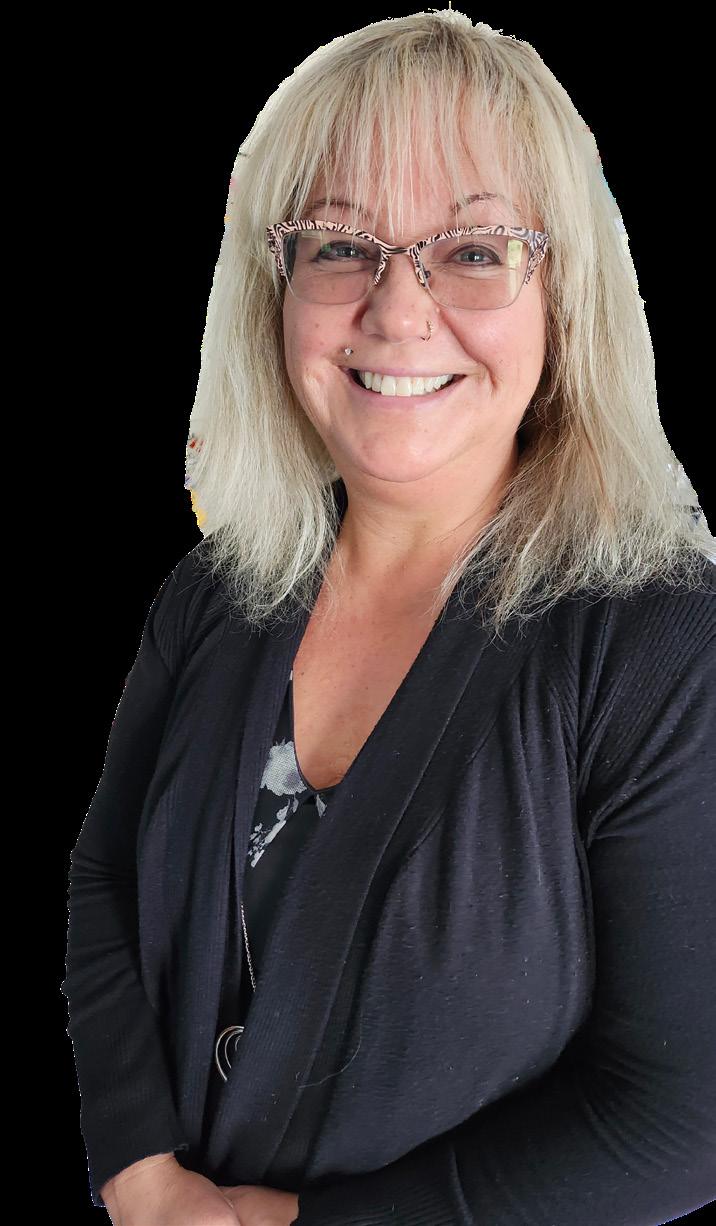
My firm is known for providing quality, cost effective services in Family Law and Divorce (mediation, collaborative process, negotiation, and limited scope retainers) as well as Estate Planning and Estate Administration.
People come to us because we listen to clients and provide them with compassion and understanding. We work effectively and cooperatively to find practical solutions to difficult situations. We’re proud to offer an inclusive and safe environment for individuals and families.
chantellawton.com (705) 878-9949

Nicole Naylor has just under a decade of experience in the real estate business and has been able to offer honesty and patience throughout the moving process
Her goal is to make customers feel supported and not rushed, ensuring that they’re able to receive guidance throughout the transition into their new home. “What I want people to know is that with the right support, moving doesn’t have to feel overwhelming.”
While moving can be a stressful time for many, her clear communication and calm approach help ease the pressure around moving and home decisions, allowing clients to feel ready for their next chapter.
No matter your role or position in life, whether a spouse, exspouse, parent, grandparent, child, sibling, caregiver, employee, or employer, financial planner Leslie and her team have your back when it comes to financial well-being.
A Kawartha Lakes resident since 1993 when her family moved from Toronto to 4 Mile Lake, Leslie said that this “big change” was worth it, gaining close friends she has to this day. Leslie says she takes a personalized and systematic approach to financial planning.

“Hands down, the people I meet and get to work with as we build trust in relationships is so important. The biggest reward for me is guiding a client through a planning process to see their goals reached.”
leslie.orr@sunlife.com • (705) 324-1055
Cathy Garbutt is a Canadian Certified Pedorthist with more than 30 years of experience.
Her role is a vital one, as pedorthists help people living with foot or lower-limb conditions improve their comfort, mobility, and overall quality of life. Many foot related problems can be alleviated with proper fitting footwear, stretching and orthotic therapy.
Cathy also offers a no-charge consultation to help determine what a client’s foot problem is.
“Most of what I do focuses on improving one’s foot or lower limb pain that can limit work and daily life so helping them to resume normal activities without pain is the main goal.”
lindsayorthoticsandfootcare.com (705) 324-6444
Southern Comfort, owned by Jennifer Roberts in Lindsay, blends fireplace installation expertise with a curated selection of Canadian-made furniture. Familyowned and customer-focused, the team listens closely to understand each client’s needs, then applies deep product knowledge to recommend fireplaces, mantels, and furnishings that fit lifestyle and budget. From cozy hearth installations to fullroom furniture selections, Southern Comfort supports projects of every size with practical guidance and creative design ideas. Clients appreciate the hands-on service, local craftsmanship, and commitment to quality. Whether updating a living room or planning a custom fireplace, Southern Comfort makes the process personal, professional, and distinctly Canadian.
As the owner of both Flex First Aid and Aquatic Adventures, Dakota Brasier is a passionate entrepreneur and community leader known for providing high-quality swimming lessons and first aid courses. She prioritizes flexibility and accessibility, offering customized options such as on-site first aid training or private Home Alone courses for sports teams and groups — always working to make the experience seamless for her clients.
Dakota has grown her impact beyond lessons and certifications to offer summer camps, youth courses including the babysitting course and home alone, community clinics, and workshops. Committed to giving back and staying actively involved, she continues to expand programming that builds confidence, leadership, and essential life skills within the community.
flexfirstaid.com aquatic-adventures.ca (705) 879-2717 Southerncomfort.ca (705) 324-2555 8 Callaghans Rd, Lindsay.

Diane Duff runs The Reading School, where one-on-one English and French lessons help students of all ages catch up in reading, spelling, and writing. Diane builds simple, individualized plans so learners — including those with reading disabilities or ADHD — work at their own pace until they master skills. She’s as passionate about supporting teachers as she is about students: her Master’s focused on teacher training based reading instruction, and she shares practical methods that make teaching easier. Since 2004 Diane and her team have partnered with schools, tutors, homeschoolers, and families to turn frustration into confidence and real progress.
thereadingschool.ca (705) 340-5155


Alison Steinsky is president and owner of Mackey Funeral Home, Stoddart Funeral Home, Jardine Funeral Home, and Celebrations Lindsay. Our funeral homes are built on the foundation of Linden Mackey and the Mackey family’s traditions, which have served Lindsay and the surrounding communities for more than 100 years.
We are honoured to provide care to families on what is often their most difficult day, offering independent, 24-hour on-call service — the only funeral home in the area to do so. Since Linden’s passing in May 2025, our dedicated team has worked tirelessly to ensure our community continues to receive compassionate, professional support, often while carrying our own grief.
While I have the privilege of leading, it is our exceptional staff who make our operations possible, including Taya Sharman, Michelle Hurlbutt, Monica Bertrand, Maddy Leaver, Julie Knox, Cassandra Brookfield, Pam Walker, Stefanie Lynch, Debbie Norris, Karyss Handcock-Hore, and Jill Wiltshire. I deeply miss Linden, but I know he would be proud of the team he built and the way we continue to serve Lindsay and the Kawartha Lakes with the utmost respect and dignity. Thank you for allowing us to support the community that supports us.
stoddartfuneralhome.com • (705) 324-3205
Monica Verbosky EMDR Certified RP #11969, CCC and owner of MySolTalk Psychotherapy aims to help clients grow, rediscover hope and find their calm.
Whether you are seeking to address long-held patterns, recover from recent trauma or looking to explore your emotions, Monica endeavors to create a supportive environment. Her work with clients aged 21 and over has been characterized by empathy, respect and a deep understanding of how trauma

“Through evidence-based practices tailored to your needs, I seek to help you rediscover balance, foster growth, and move forward with confidence.”
mysoltalk psychotherapy.ca (249) 501-0858
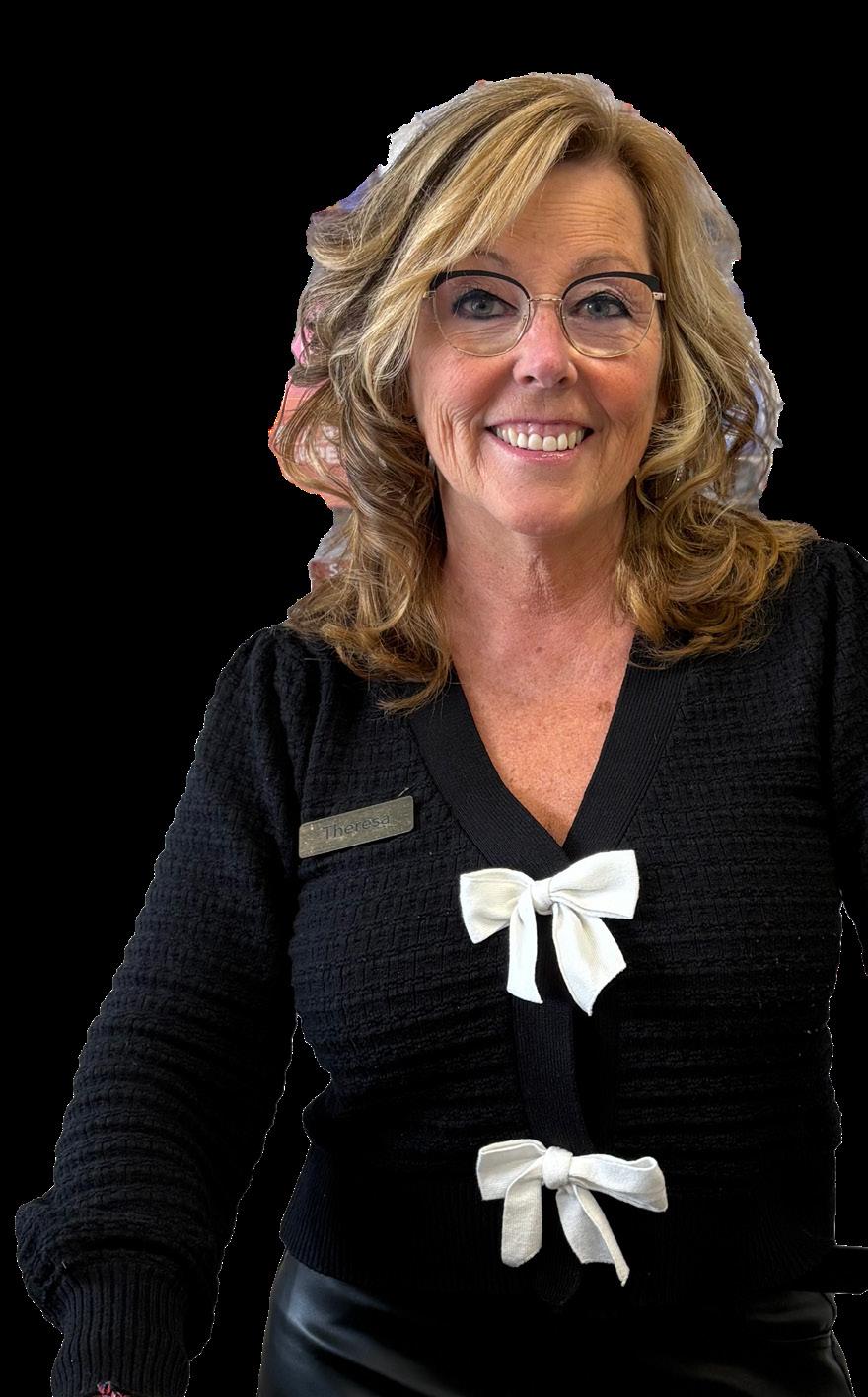
Theresa Henry purchased The Lingerie Loft in 2021 and has added her own personal touch while keeping the products cus tomers have come to love.
The shop offers bras from band sizes 30 to 46G, with larger sizes available by order, and cozy sleepwear from small to 3XL. With more than 20 brands, The Loft provides wireless, strapless, sports, nursing, mastec tomy, and everyday bras. “Wherever you are on your breast cancer jour ney, our products – from recovery care and breast forms to linge rie, swimwear and clothing are available here at the store.”
Visit in person or book an appointment. Open Mon day–Friday 10–5 and Saturday 10–4.
thelingerieloft.ca (705) 328-1829

Ann Scarlett and Beth Rescorl are the mother-daughter duo that run Kent Florist.
Ann has been in the floral industry for many years and purchased Kent Florist in 2015. Together, her and Beth are known for their professional, friendly service and quality fresh flowers. They’re able to offer arrangements for a variety of occasions, including birthdays and weddings.
Customers come to Kent Florist because floral needs can be personal or individual, and staff is ready to assist however they can. They also have a beautiful gift shop with fun and interesting products, including many Canadian made gifts, from chocolate, personal care and jewellery.
With the slogan ‘more than just a flower shop,’ Kent Florist is a one-stop-shop for gifts and home décor including candles, soaps, jewellery, towels, table runners, and more. They also have seasonal items to allow your house to change with the seasons.
By following floral trends, Kent Florist is able to create designs that reflect the wishes of clients.
kentflorist.net • (705) 324-7314
FB: The Kent Florist • IG: @ floristkent
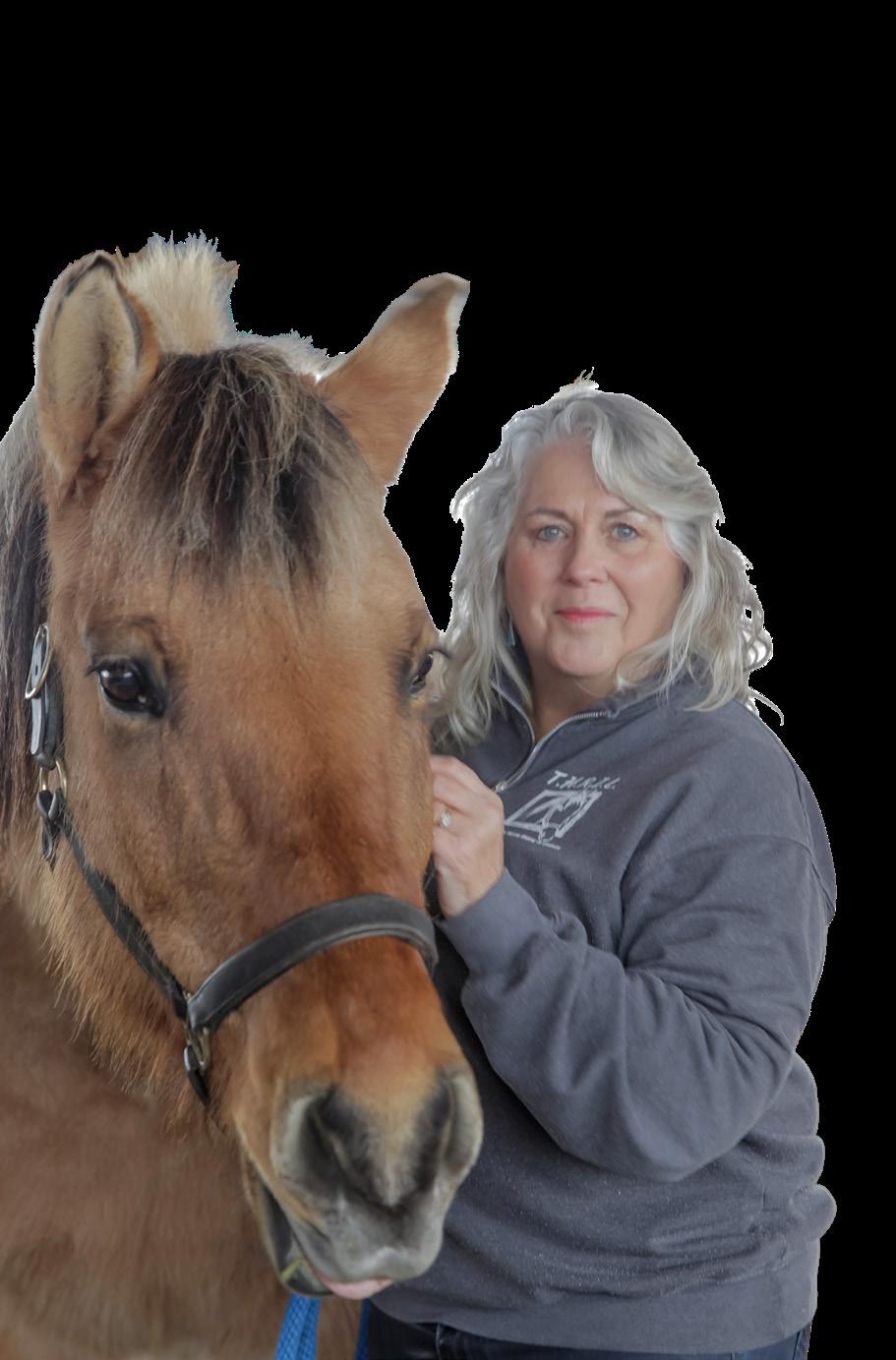

T.H.R.I.L is a volunteer-driven, registered charity, accred ited with the Canadian Therapeutic Riding Association, dedicated to enhancing the emotional, intellectual, and physical well-being of individuals of all ages with diverse abilities — whether neurodivergent, cognitive, developmental, or mobility-related.
Our skilled instructors and passionate volunteers cre ate joyful experiences that connect participants with our horses and help improve physical abilities along side self-esteem, communication, and social skills.
As a small charity, our biggest challenge is getting the word out to reach people who could benefit from our programs, volunteers who want to join us, and businesses interested in sponsoring events like our March 28 Euchre Night or June 10 Swing for THRIL Golf Tournament. We’re grateful for all the support, and the more our community supports us, the more we can give back in return.


Jaclyn Giffen is the owner of Inclusive Law.
We’re known for being a welcoming law firm that puts people first. Clients recognize us for making legal processes feel clear, calm, and approachable, and for creating a space where they feel genuinely heard and supported. At Inclusive Law, we consider the whole plan inclusively. We regularly meet with clients, lawyers, accountants and wealth advisors at one table to look at the whole picture for an all-inclusive approach for better results and representation. Retaining our office ensures you are being inclusively advised to make certain you get the intended results that best serve your legal needs.
Inclusive Advisory is able to help customers by staying closely connected to their needs and making sure they always have direct access to the people who can support them best. Our team works collaboratively, communicates clearly, and focuses on giving clients timely, practical guidance. We offer well-rounded support, whether someone is buying a home, planning their estate, growing a business, or needing notary services.
We believe legal services should feel personal, not overwhelming. At Inclusive Law, you’re not just getting legal expertise; you’re getting an Inclusive team that truly cares. Proudly serving the Kawarthas, Peterborough and Durham Region with three offices located in Omemee, Port Perry and Peterborough.
inclusiveadvisory.ca • (705) 742-6910

Stacey Brown and Candace Webster are the management team for the Days Inn and Suites by Wyndham Lindsay and Best Western Plus Kawartha Lakes Hotel & Suites.
The pair have more than 20 years of combined experience and plan on bringing the same pas sion for Kawartha Lakes hospitality to the new Best Western Plus. They believe great service starts with genuine care — for guests, the team, and the place we call home.
The Days Inn and Suites Lindsay is known for continually being #1 across Canada in guest service, cleanliness and management.
“We create high-quality hospitality for both visitors and the community.”
Since June 2025, I have proudly served as Executive Director of Women’s Resources, with a mission to ensure our services remain relevant, responsive, and accessible. We provide safe, confidential, trauma-informed support for women and children experiencing abuse, centering our work on dignity, empowerment, and healing. Many who come to us need immediate safety and later seek stability to rebuild their lives. We offer counselling, resources, and compassionate care for both women and their children. Abuse can happen to anyone, and no one deserves it. By supporting Women’s Resources, you help break cycles of violence for future generations.

For Kate, design begins quietly.
In a retail landscape often driven by trends and urgen cy, Kate & Co Home & Design Studio offers something different — a sense of calm. The showroom reflects a philosophy rooted in comfort, intention, and Canadian craftsmanship. Nothing feels rushed. Nothing feels excessive.
Kate has built her business around the belief that homes shape how we live. A well-placed chair, a thoughtfully chosen rug, or a layered combination of textures can subtly shift the energy of a space. Design, she believes, should feel approachable — not intimidating.
Rather than encouraging customers to start over, Kate focuses on helping them refine what already exists. Small, meaningful changes often create the greatest im pact. Clarity replaces clutter. Confidence replaces uncertainty.
As spring light returns and routines begin to shift, Kate sees the season as an invita tion — not to overhaul, but to reimagine. A home does not need to be dramatic to be beautiful. It simply needs to feel right.
At Kate & Co, that feeling is always the goal.
katecohome.com • (705) 880-5283


While the Lindsay Downtown BIA often operates behind the scenes, we play a key role in shaping the community’s commercial landscape. Residents and visitors may not realize the coordinated effort driving downtown’s success, yet this year marks a significant mile stone: our organization is celebrating its 50th anniversary.
Through a collaborative structure of Board of Directors, Committees, and Staff, our BIA champions downtown through strategic beautification initiatives, targeted market ing campaigns, and proactive advocacy for 170 member businesses. We are always look ing for ways to ensure Downtown Lindsay is a space that is welcoming to our residents and visitors from all over.
Credit for the downtown’s vitality are the businesses themselves—their innovation, investment, and commitment create the en ergy that defines Lindsay’s commercial core.


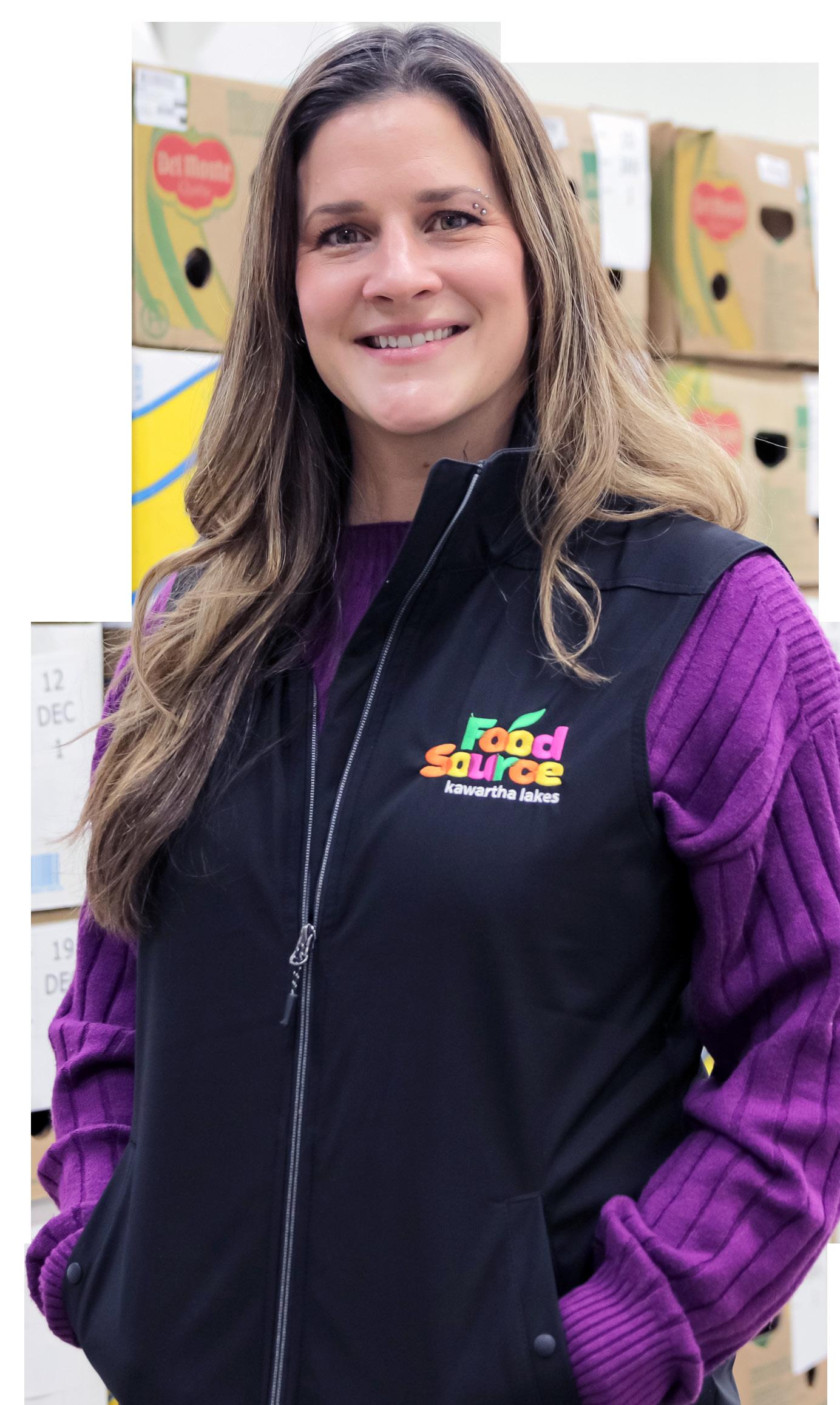
Kawartha Lakes Food Source is a vital resource for our community. We support food banks and programs across Kawartha Lakes, working alongside volun teers, farmers, businesses, and donors who are committed to strengthening our community.
Families access our member food banks during difficult seasons of life — job loss, illness, rising costs — and they know they will be treated with dignity.
I began my journey with Kawartha Lakes Food Source as a distribu tion assistant and quickly fell in love with the community, the ca maraderie, and the shared drive to make a real impact. After time at the Lindsay Community Food Market, where I was honoured by the trust people placed in us, I returned to our warehouse operations in a broader leadership capacity. Having experienced our work at both the frontline and organizational levels, it has helped shape how I lead and advocate for those we serve.
What we want people to know is that meaningful change happens locally. We are working to expand access, build stronger partnerships, and ensure our members are equipped to meet the growing need across Kawartha Lakes.
kawarthalakesfoodsource.com • (705) 324-0707
I grew up having a passion for animals, I believe that shows on my face every time I speak about Pawz and animals. At Pawz, we ensure that each stay with us is special whether it’s just for a play day or an extended visit. Every pet has unique
Our customer service and our state-of-the-art facility set Pawz apart from other like-minded facilities. Pawz has built a strong community connection not only with our valued clients, but within the local business community. I have always felt that supporting local businesses and beyond is important and can create a
After spending 16 plus years in the veterinary industry, it was a natural move for me to create a different type of animal care business. Pet owners 10 years ago had wanted to find a facility built with exceptional imagination, extensive safety protocols, and services delivered with
Pawz has been built from a labour of love and we will celebrate our 10th anniversary on March 1. We continue to be committed to fostering a culture of trust, respect, professionalism, and transparency. It’s a profound and unforgettable privilege making a difference in the lives of clients and their pets.
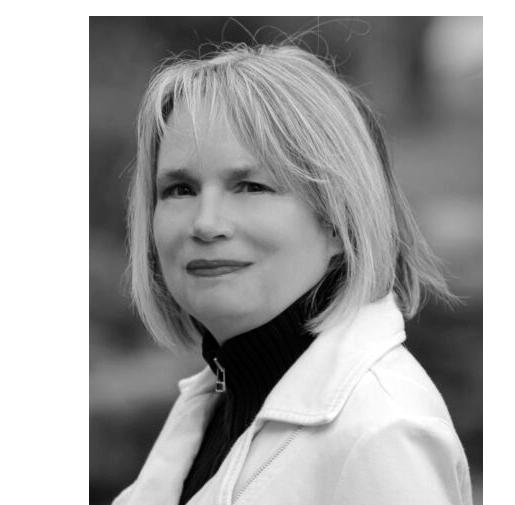
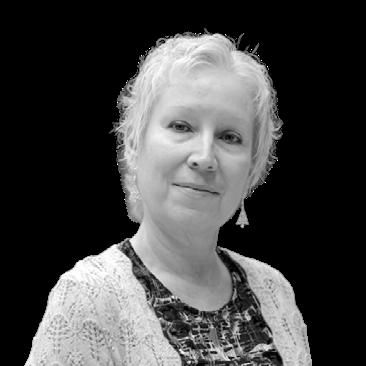
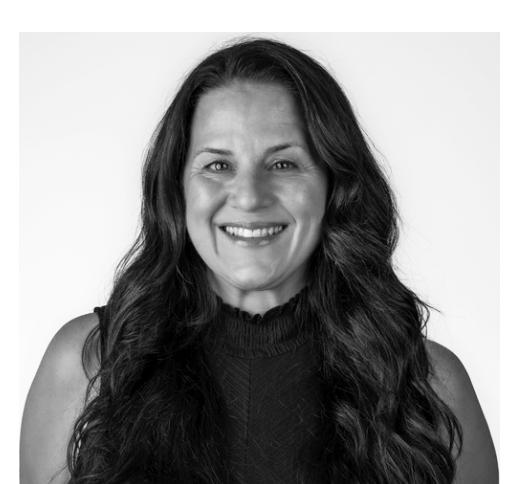
On the month of International Women’s Day, we want to honour all the incredible women who contribute their time, energy, and talents to the Advocate. These women make us better for all our readers.





Doors open at 6:00PM Thursday, March 31st, 2026 6:30PM - 8:30PM
Lakeland Funeral and Cremation Centre 19 Moose Road, Lindsay






By Robyn Best
According to recent data from Statistics Canada, only 30 per cent of goods-producing businesses and 24 per cent of service-producing businesses in Canada survive past the 20 year mark.
In Kawartha Lakes, businesses are surpassing the fiveand ten-year milestone marks, with some reaching 20, 30, or even 100 years in business. For these local business owners, it’s a testament to their ability to adapt to changes when needed and retaining a loyal customer base.
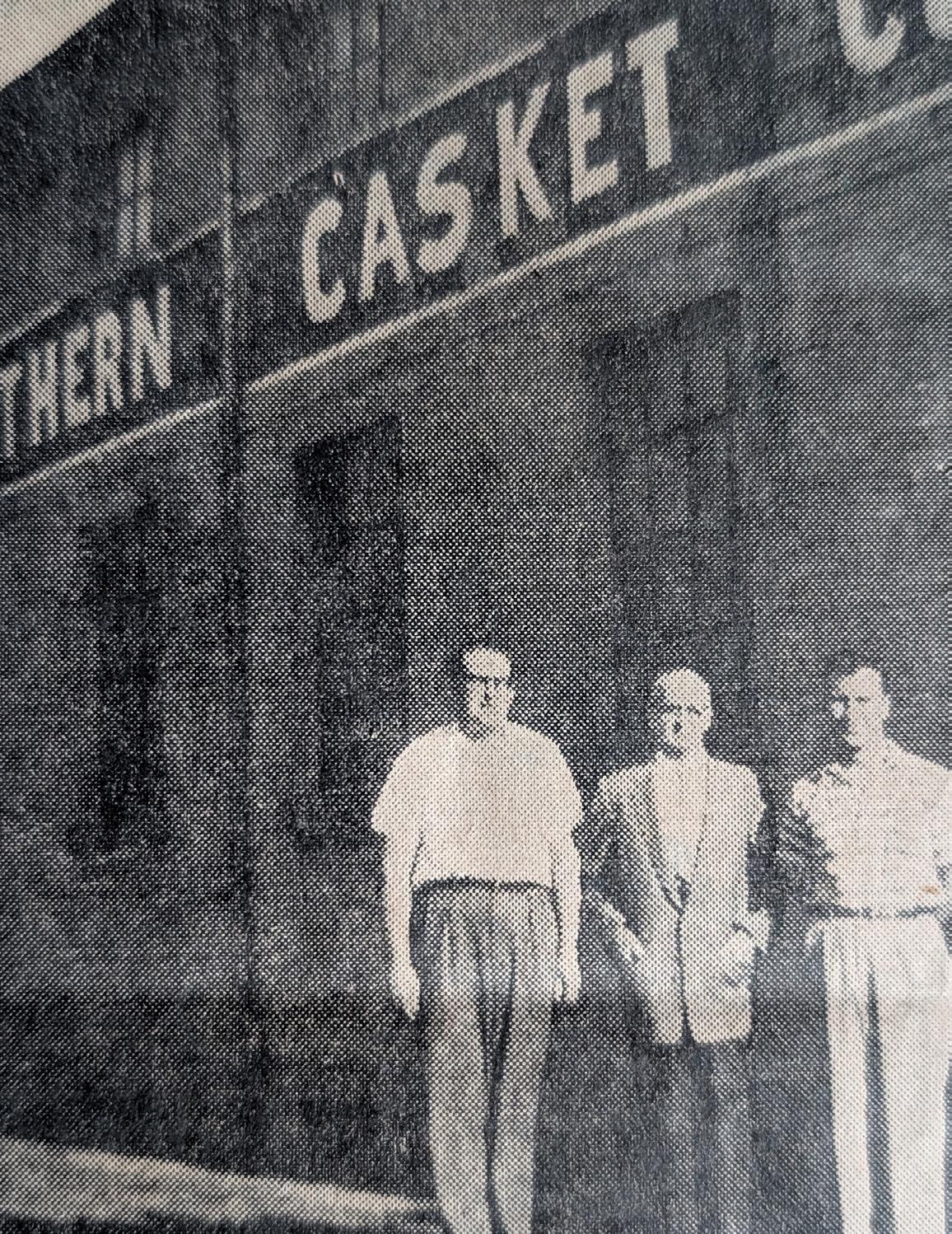
In 1926 Northern Casket opened its first location on William Street. The business was founded by five local businessmen, one of them being Charles Ferguson, who would later buy out the other partners.
Northern Casket has worked hard to introduce new products to the funeral industry. In the 1990s they introduced the Enviro-Casket, a casket that is free from any metals, steels, chemicals, dyes, staples, or harmful glues and it also aligns with the Orthodox Jewish burial requirements.
Charle’s grandson, Gord, also founded North Urn Ltd in 1999. This came as cremation rates started to climb. Gord was able to introduce The Funeral Ark to the company, the world’s first urn carrier.
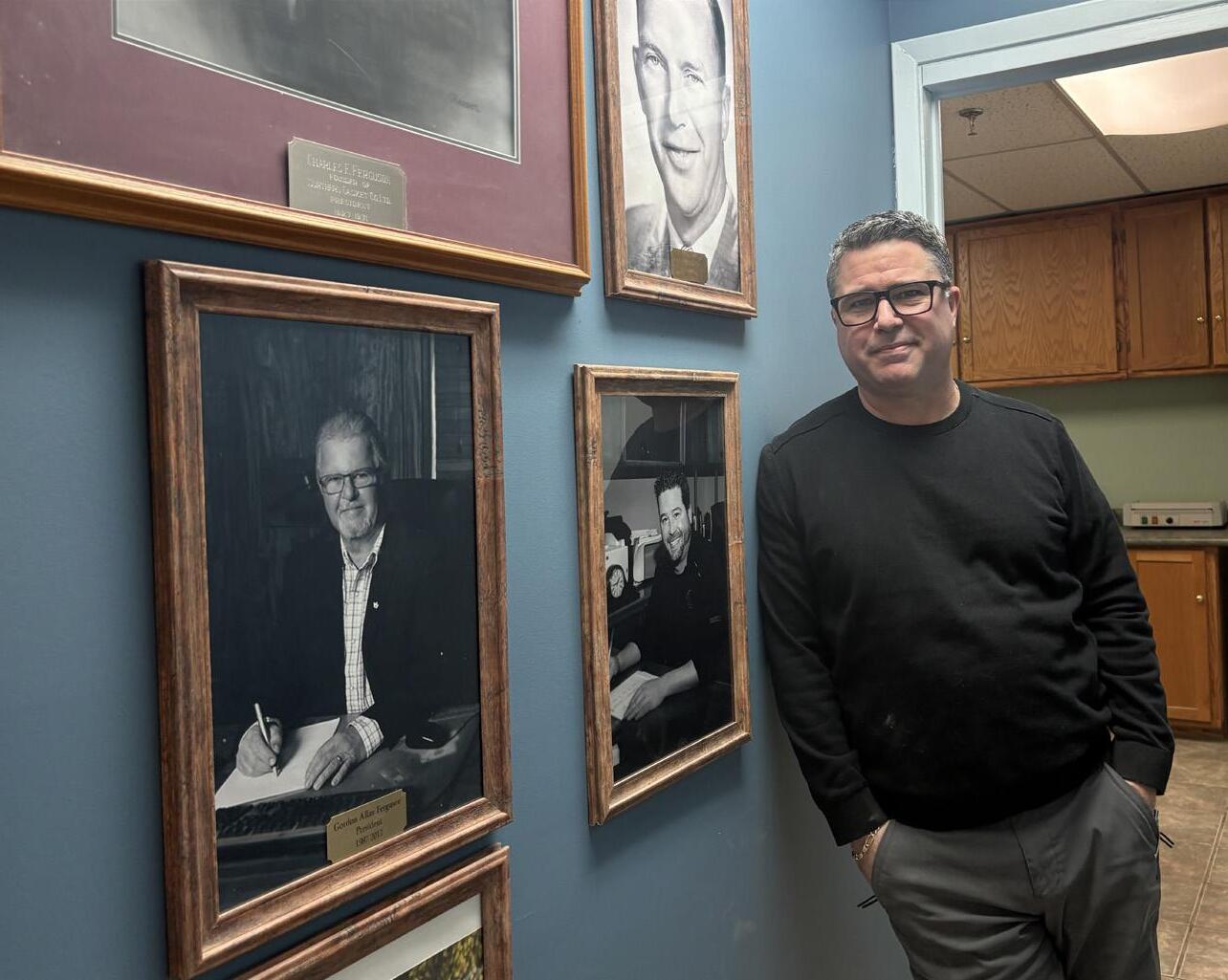
From there, Northern Casket has remained family owned. One hundred years later Charles’ greatgrandson, Caley Ferguson has been the president of Northern Casket since 2017 and has been involved with the business since he was 15.
Ferguson has plans to keep the company evolving. “Spending (a lot of) money on a casket is just becoming less and less popular. That being said, to keep our company strong, you have to pivot. If we’re going to look at (the industry) and only sell caskets, it’s going to be a slow death for this company.”
One hundred years later Charles’ greatgrandson, Caley Ferguson has been the president of Northern Casket since 2017 and has been involved with the business since he was 15.
The local business sells around 20,000 caskets per year, with the majority of sales in Ontario, however they do deliver to Saskatchewan and some sales come from the U.S. Despite being a product not affected by tariffs, before the last presidential election 30 per cent of the company’s business came from the United States; now that number sits at five per cent.
One of Ferguson’s favourite parts of his job is giving tours to funeral directors. The most common reaction he gets is shock at just how much work goes into

making one casket. From gluing pieces of wood together, to putting on a glossy finish, and performing a final inspection, there are about 80 people working to put a casket together.
He understands how pricey a casket can get, but by inviting funeral directors for a tour, it helps put into perspective that a $5,000 casket took dozens of people to build. “It builds so much value in our clients. Until you see it, you don’t think about it,” Ferguson said.
From gluing pieces of wood together, to putting on a glossy finish, and performing a final inspection, there are about 80 people working to put a casket together.
While they do supply a large selection of high-end caskets, they “have everything from rental inserts, all the way up to a solid mahogany casket with gold trim,” said Ferguson. For the business it’s important to be able to meet the price points of all clients.
“The (casket) business is kind of disappearing, sadly. So, it’s a huge feather in our cap to make it as far as we have and still going strong,” said Ferguson. “It’s a lot of pressure trying to carry that on, but more pride than anything else.”
Workers building caskets in the early days of Northern Casket.

When she was 22, Angela Field dropped out of college and took an international trade course where she learned all about importing. “I always loved history, and always had an interest in where things came from and the stories behind things,” she said.
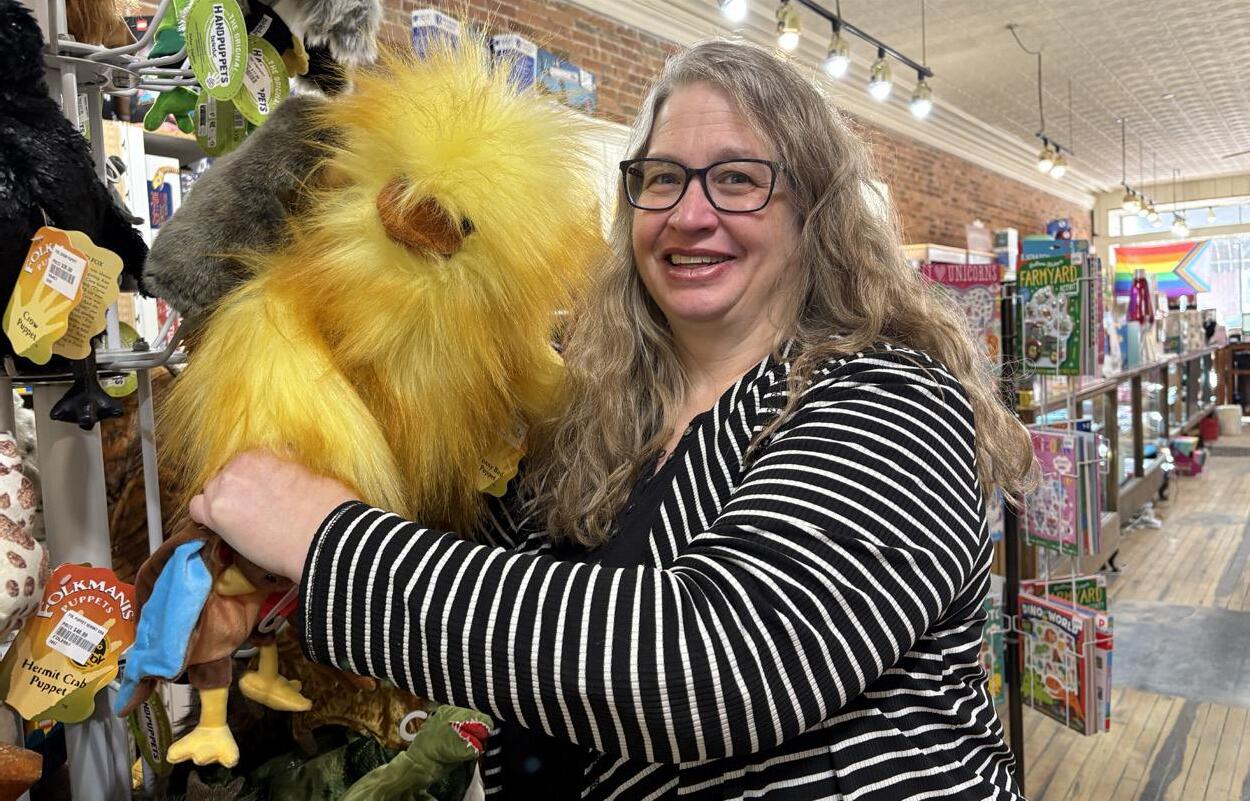
Now, 30 years later, she’s reflecting on her downtown Lindsay store Tradewind Toy and Gifts, formally Tradewind Imports. The shelves are currently lined mainly with games and puzzles, but when it first opened in 1996 it sold items ranging from pottery to chainmail and handmade clothing from Indonesia. She originally received start-up funding through a youth venture loan. “Everything I made for the first couple years, went back into the business, and then we were able to keep growing.”
With the support of her parents and a loyal customer base, she’s been able to keep doing the job she loves. “You need to enjoy what you do, because life is too short to be in a job you don’t like.”
The key to Tradewind’s success has been in its ability to evolve overtime. “The reality is, if you’re not open to change and open to growth then you just won’t survive in a retail environment,” said
Field. When the store first opened a lot of the products Field was carrying were imported from other countries, but now she tries to keep in stock locally made and Canadian goods.
From day one she’s always featured a selection of toys and games, and she’s seen first-hand how the demand for those products has increased over time. “As much as COVID was horrible for so many people, it kind of forced people to sit with families and start to play games again.”
The shelves are currently lined mainly with games and puzzles, but when it first opened in 1996 it sold items ranging from pottery to chainmail and handmade clothing from Indonesia.
Tradewind Toys and Gifts was originally called Tradewind Imports.
Her job also requires being able to make good suggestions for people. While it may seem simple enough to recommend a game, she has to take into consideration the types of games someone typically plays, and how many people will be playing.
Field has also been able to bring products in from companies that make puzzles and games more accessible for those with cognitive impairments, like Alzheimer’s, and for people who are simply getting older.
“As much as COVID was horrible for so many people, it kind of forced people to sit with families and start to play games again.”
For her, it’s important to have options for those customers who need puzzles with fewer pieces to not be forced to buy children’s puzzles.
While she might not be selling items like chainmail anymore, “I still can tell people the story behind pretty much everything in here.”

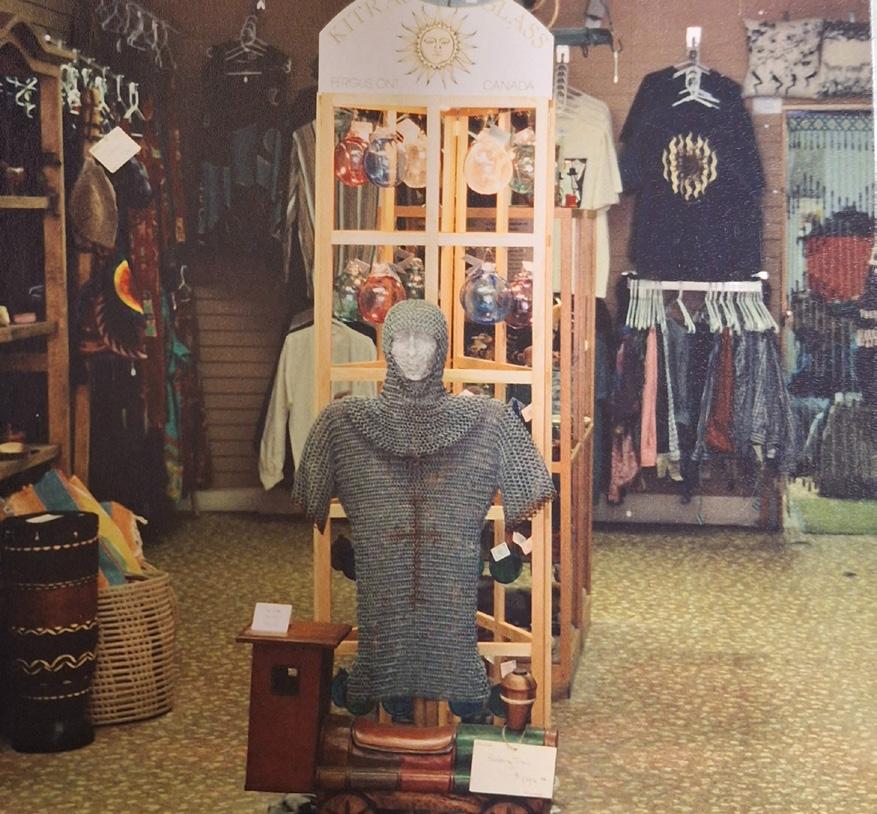
When Tradewind Imports first opened in 1996 it sold items ranging from pottery to chainmail and handmade clothing

A funding program designed to encourage and support economic development in Kawartha Lakes is once again open.
The Million Dollar Makeover program encourages investment in commercial districts and properties in Kawartha Lakes by supporting property and business owners in improving the visual and functional aspects of their commercial, mixed-use commercial/ residential or heritage designated residential buildings. It’s the funding arm to implement the Kawartha Lakes Strategic Community Improvement Plan (CIP).
The program is open across all of Kawartha Lakes for eligible properties. Priority status will be given to projects located within the CIP focus areas.
Program goals
• Downtown main street revitalization and enhancements;
• Heritage districts and building restoration and improvements;
• Derelict building repairs and improvements to functionality;
• Affordable rental housing private space retrofits in mixed-use buildings.
Learn more at kawarthalakes.ca/makeover

By Sarah Fournier Contributor
When Colour and Code started 17 years ago, we worked with an incredible group of local business leaders. People who had built companies from the ground up, sustained family enterprises, and invested deeply in this region. This core business community has been — and remains — a positive influence on the economic landscape of Kawartha Lakes.
Since that time, what I’ve witnessed isn’t a shift away from those leaders, but a broadening of leadership itself. More seats at the table are now filled by women. More businesses are being launched, acquired, or guided by women who are stepping into ownership and executive roles.
It didn’t happen all at once. Like most lasting change, it unfolded gradually as daughters took over family businesses and women launched firms after years of building expertise. It spread across professional services, retail, hospitality, manufacturing, health care, and technology until it became a natural part of our business landscape.
More businesses are being launched, acquired, or guided by women who are stepping into ownership and executive roles.
Many of these leaders bring with them deep institutional knowledge. Some have worked their way through operations, finance, customer service, or management before stepping into top roles. Others come from entirely different industries, shaped by varied career paths and experiences. Many are firsttime entrepreneurs, while others are carrying forward multi-generational
legacies. Together, they contribute to a business community that continues to evolve in depth, perspective, and management style.
What hasn’t changed, however, is the foundation upon which those busi nesses are built. A key aspect of con ducting business in Kawartha Lakes is establishing strong connections with in the community. Companies support local events, partner with neighbour ing organizations, hire locally, and show up when it matters. As more women leaders emerge, they are par ticipating in and contributing to that same tradition.
That community-first mindset also shapes how work gets done. The work in which we’re involved increasingly reflects collaboration, practical prob lem-solving, and a steady focus on long-term stability. There is rarely a single voice driving decisions. Instead, projects are shaped by multiple per spectives, which is part of what makes outcomes strong and sustainable.
From our perspective as a creative team, the growing range of voices at the leadership level has made our work more varied and interesting. Dif ferent experiences lead to different questions, priorities, and ways of ap proaching the same challenges. What existed before hasn’t been displaced — it’s been deepened.
Seventeen years in, the respected leaders who built this business com munity are still guiding it forward. Now, more women stand alongside them launching ventures, continu ing family legacies, and shaping what comes next.








“Surrounded




By Sarah Fournier
For the first time, Kawartha Lakes has a comprehensive “report card” on its wellbeing, thanks to the collaborative efforts of those at Kawartha Community Foundation, in partnership with Kawartha Works Community Co-operative.
The inaugural Kawartha Lakes Vital Signs report draws together census data, health statistics, municipal information and community consultations to measure 11 indicators that shape quality of life here. It’s part of a national program led by Community Foundations of Canada that analyzes available data to align priorities and guide communities toward the biggest opportunities for impact. This isn’t a technical document meant for shelves, but rather a living guide for municipal leaders, organizations, and support services.
As we first covered in last October’s Advocate, the report paints a picture of a community proud of its quality of life and strong sense of belonging. At the same time, it makes clear that Kawartha Lakes is facing real strain when it comes to healthcare, housing, food security, and social systems.
The Advocate takes a closer look at each Vital Sign indicator and what it tells us about Kawartha Lakes in 2026.
The community and how it’s changing
Kawartha Lakes is in the midst of rapid change. The municipality has grown by more than 9,000 people in the last decade, representing 12 per cent growth between 2014 and 2024. That growth follows a previous decade of minimal expansion and signals renewed momentum. While this growth rate is below provincial (18 per cent) and national (17 per cent) levels, it’s faster than the average growth rate of other G7 countries.
But the numbers tell a deeper story.
Kawartha Lakes belongs to the health unit with the largest aging population in Ontario. The local population pyramid shows significant growth among residents over 60, even as many younger residents leave.
For seniors who remain in the region, geography matters. Kawartha Lakes spans more than 3,000 square kilometres, making it the largest municipality in Ontario outside Sudbury. Delivering healthcare, transportation, and social services across such a wide rural landscape is complex and costly. Seniors spoke of limited transportation options, difficulty accessing family doctors, and housing that does not match their needs as they age.
At the same time, another demographic shift is underway. Immigration to Kawartha Lakes has surged to unprecedented levels in the past two years, eclipsing the previous 20 years of net immigration growth. Newcomers are drawn to this location for safety, affordability and natural beauty, but often arrive to limited settlement services, transportation barriers, and challenges in having foreign credentials recognized.
The simultaneous aging and diversification of Kawartha Lakes are not isolated trends; they are foundational shifts that ripple through and shape the other indicators of community wellbeing.
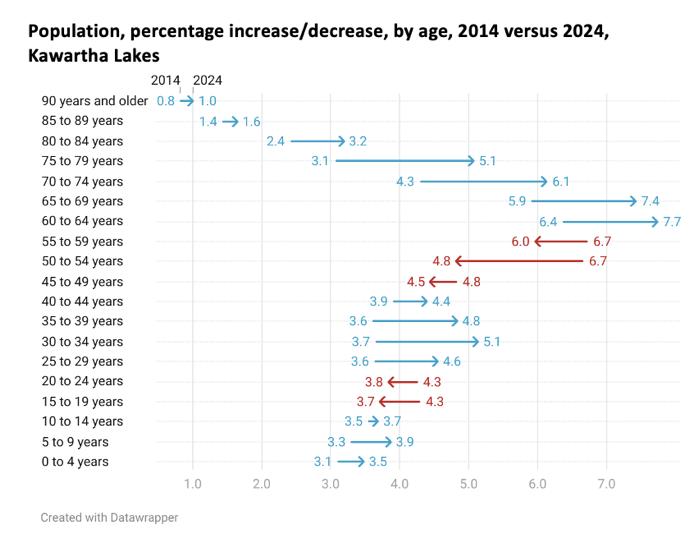
Kawartha Lakes makes a striking population pyramid, showing significant growth among people over the age of 60, as Kawartha Lakes attracts an aging population.
Income levels provide context for much of what follows, as household incomes in Kawartha Lakes are lower than the provincial average across all measures. Average household income is $16,000 lower than Ontario’s. Median income — a better measure of the typical household — is approximately $9,000 lower before tax and $7,000 lower after tax.
The gap widens with age. While younger families (ages 25-34) earn more locally than the provincial average, middle-aged families (ages 35-54) are on par, and households aged 55 and over drop well below provincial benchmarks, reflecting earlier retirement transitions and the reality of living on fixed incomes.
Lower incomes ripple outward, having a direct effect on housing affordability, food security, and the ability to absorb unexpected costs.
Employment in Kawartha Lakes has kept pace with population growth. Jobs grew by nearly eight per cent between 2019 and 2024, with unemployment remaining at about one percentage point lower than the national average.
But growth is concentrated in sectors that serve the population itself: health care and social assistance (up 10 per cent), public administration (up 17 per cent), and education (up nine per cent). While these are essential sectors, the stats signal an economy anchored in service delivery rather than broad industrial diversification.
In 2025, the Ontario Living Wage Network calculated that a living wage in the region is $22.20 per hour. With minimum wage set at $17.60 and about 14 per cent of the labour force employed in occupations where median wages fall below that living wage threshold, many workers continue to face a notable income gap. As the population skews older and working-age adults continue to leave, immigration and youth retention will likely play an increasingly important role in sustaining the local workforce.
On paper, Kawartha Lakes appears more affordable than many Ontario communities. But affordability looks different when income and home prices are compared directly. At the 60th income percentile, which is the reality in this city, an affordable home price would be $355,700. But the MLS median home price in October 2025 was more than $700,000. Typical homes cost roughly twice what many households should be able to afford under standard guidelines.
Almost one in five residents spend more than 30 per cent of their income on shelter costs, and more than 10 per cent of households are in core housing need — both below provincial averages.
Most recent household growth in Kawartha Lakes has come from one- and two-person households, reflecting demand for smaller living arrangements. At the same time, larger households with five or more people are also increasing — growing at twice the national rate locally — likely driven in part by adult children moving back home or families adapting to housing affordability and limited supply.
This limited supply of rental housing has broader economic consequences for Kawartha Lakes. When workers can’t find affordable places to rent, it becomes harder to attract and retain employees, support sectors like tourism and agriculture, and build an economy resilient enough to withstand unexpected shocks.
19% of Kawartha Lakes residents spend more than 30% of their income on shelter costs, well below the provincial average. of households are in core housing need, again lower than provincial rates.
10.4%
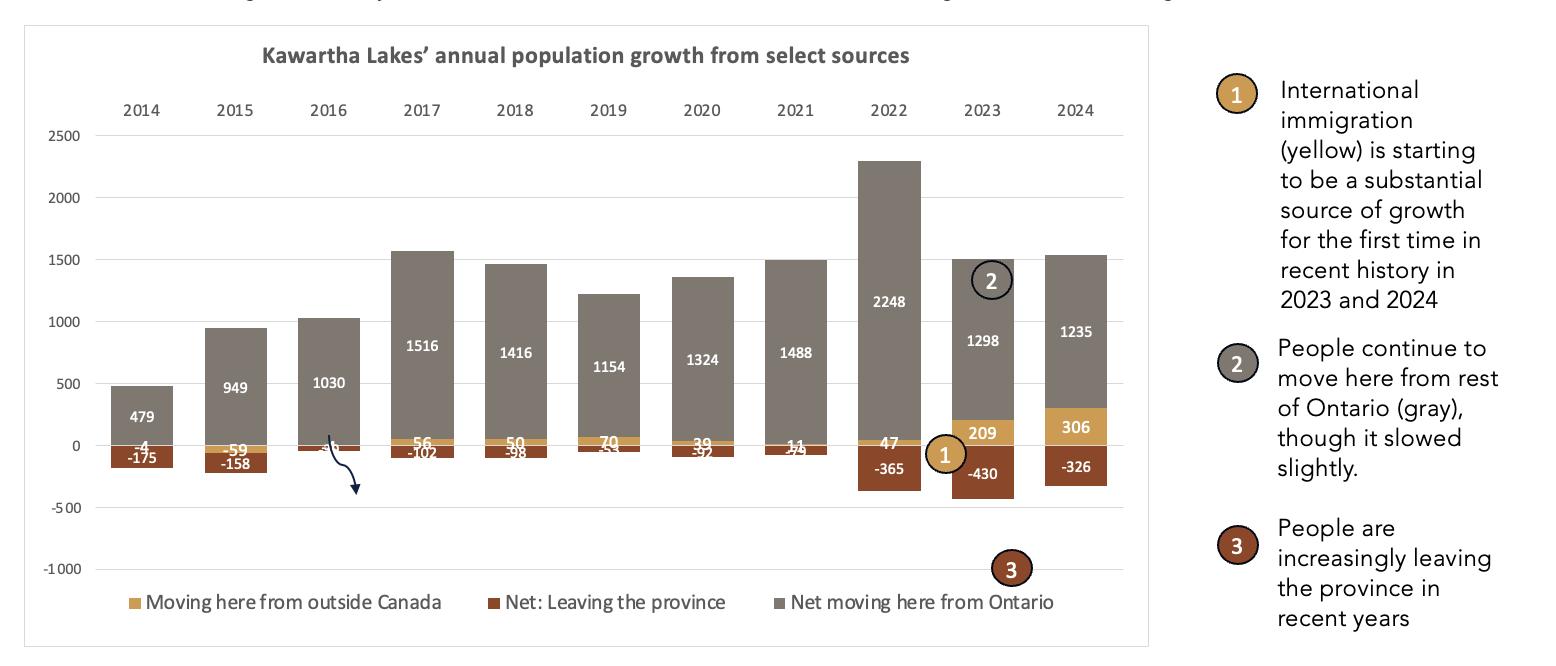
Immigration to Kawartha Lakes has historically been very low but has surged to unprecedented levels in the last two years. The chart shows that the last two years of net immigration growth eclipses prior 20 years.
Unsurprisingly, food insecurity has escalated, with one in five households struggling to access enough food due to financial constraints. Between 2019–2021 and 2021–2023, food insecurity rose by almost three per cent, representing more than 2,000 additional people.
Within the Haliburton Kawartha Pine Ridge District health unit, 18 per cent of the population live in food-insecure households. With most social assistance programs leaving people with no money after paying for food and housing, a single emergency can push people into crisis.
When incomes are lower and housing costs are high, food becomes the variable expense that absorbs the pressure. To help offset the need, Kawartha Lakes Food Source spends approximately $9,000 per month on supplementing protein across member food banks.
Health data delivers one of the clearest warning signs. The report shows Kawartha Lakes has an above-average rate of preventable and treatable deaths. These figures represent lives lost to conditions that could have been avoided or better managed with timely care, a challenge compounded by the region’s severe shortage of family doctors.
Kawartha Lakes belongs to the health unit with the largest aging population in Ontario, with a mortality rate of 1,200 per 100,000 compared to 770 provincially. This is 55 per cent higher than the Ontario average and the fourth highest among health units.
1 in 5 households struggle with food insecurity as rates climb across our region and Ontario. Kawartha Lakes has seen escalating rates of food insecurity, up 2.5% from 2019-2021 to 2021-2023: That represents an increase of more than 2000 food insecure people in Kawartha Lakes from 2019-2021 to 2021 to 2023
1 in 5 households struggle with food insecurity as rates climb across our region and Ontario. Kawartha Lakes has seen escalating rates of food insecurity, up 2.5% from 2019-2021 to 2021-2023: That represents an increase of more than 2000 food insecure people in Kawartha Lakes from 2019-2021 to 2021 to 2023.
Adults aged 20 to 64 in the region experience mortality rates more than 30 per cent higher than provincial averages. These deaths are likely linked in part to substance use, as Kawartha Lakes has heavy drinking rates (23 per cent compared to 16 per cent provincially), higher averages of daily smokers (14 per cent compared to nine per cent), twice the rate of opioid emergency visits as Ontario, and an opioid death rate 68 per cent higher.
Geography also plays a role. With only one hospital (in Lindsay) and a shortage of family physicians, delayed care is common. Specifically for seniors in the towns and villages around the region, transportation barriers compound the challenge.
Yet, despite these numbers, residents report life satisfaction levels and physical activity levels above provincial averages, suggesting a community that values its quality of life even as healthcare systems show strain.
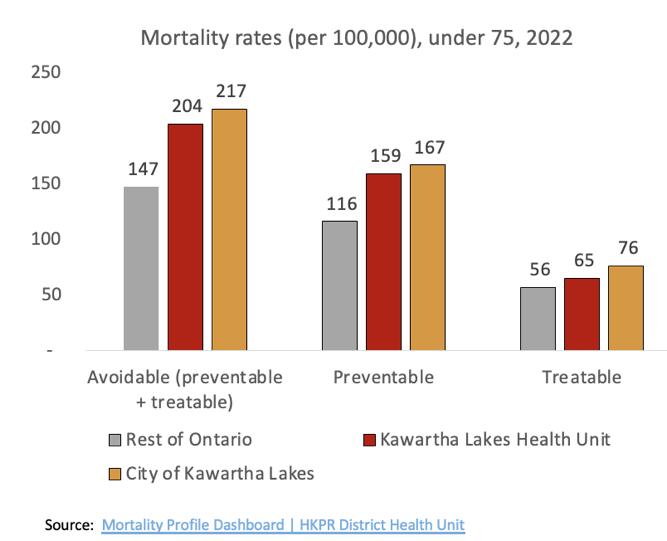
Preventable causes of death are deaths that could be avoided by preventing the onset of disease or injury, through population-level or individual interventions. Examples include vaccination programs, smoking cessation, healthy diet and exercise, or injury prevention strategies.
Preventable causes of death are deaths that could be avoided by preventing the onset of disease or injury, through population-level or individual interventions. Examples include vaccination programs, smoking cessation, healthy diet and exercise, or injury prevention strategies.
Treatable causes of death are a subset of preventable deaths, specifically deaths that could be avoided or delayed through timely medical care, early detection, and appropriate treatment. Examples include deaths from certain cancers with early screening, treatable infections, or manageable chronic conditions.
Treatable causes of death are a subset of preventable deaths, specifically deaths that could be avoided or delayed through timely medical care, early detection, and appropriate treatment. Examples include deaths from certain cancers with early screening, treatable infections, or manageable chronic conditions.
Kawartha Lakes faces an above-average rate of preventable and treatable deaths. These numbers reflect lives cut short by conditions that could have been avoided or better managed with timely care, all of which is likely exacerbated by a severe shortage of family doctors.
Kawartha Lakes faces an aboveaverage rate of preventable and treatable deaths. These numbers reflect lives cut short by conditions that could have been avoided or better managed with timely care, all of which is likely exacerbated by a severe shortage of family doctors.
Kawartha Lakes Health Unit’s mortality rate was 1,197 per 100,000, compared to 772 in Ontario. That’s 55% higher than the provincial average, ranking 4th highest among health units with available data.
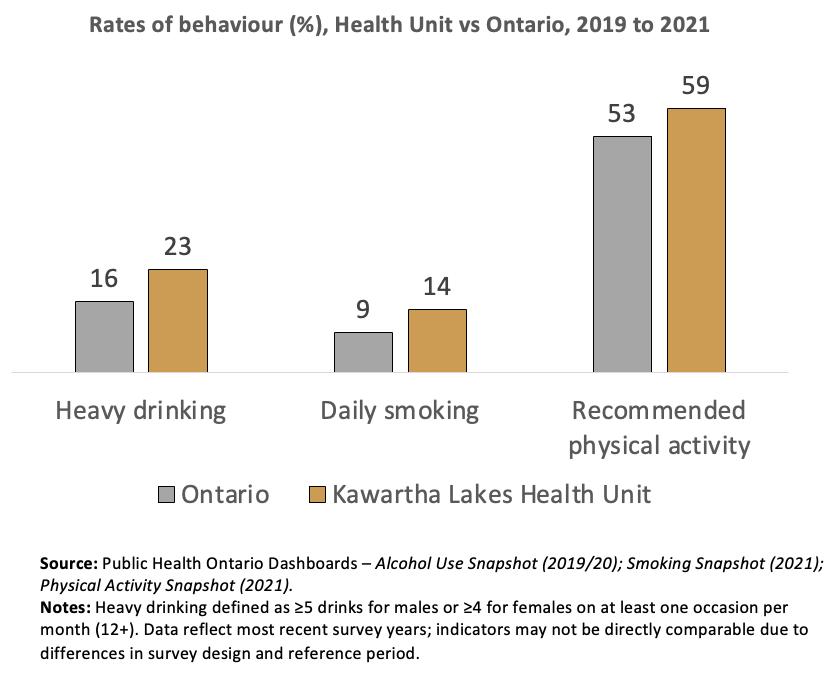
Thankfully, not all Vital Signs indicators signal stress.
Kawartha Lakes shows high substance abuse from smoking to drinking and drugs. But also, high rates of physical activity which holds strong promise towards longevity and quality of life.
In Kawartha Lakes, Kindergarten vulnerability in health and communication improved during the pandemic, with overall results slightly better than the provincial average, where 31 per cent of children were vulnerable in at least one developmental area.
Recent EQAO results show children in Grades 3 and 6 performing above provincial averages, with Grade 9 math improving against earlier gaps. Further, high school graduation rates generally exceed provincial benchmarks, showing local academic resilience.
Youth mental health remains a broader Ontario concern, with 47 per cent of females and 29 per cent of males reporting fair or poor mental health in 2021. In the same year, females were twice as likely to report an unmet need for health support at 55, indicating a gender imbalance in mental health.
Kawartha Lakes is home to a growing and impressive creative economy that includes craft-based studios, performing and visual arts, film and television production, a vision for a cultural centre, and one of the province’s strongest library infrastructures with impressive programming.
Arts, entertainment and recreation is the fastest-growing employment sector in Kawartha Lakes, up 21 per cent in three years. And yet, Canadian Council for the Arts funding sits at 88 cents per capita locally, suggesting room for stronger cultural investment. When compared to funds of $4.88 in Peterborough and $19.69 in Toronto, it is clear more action is required.
The Kawartha Lakes Public Library generates an estimated $13.15 million in economic benefit — $6.21 per capita — demonstrating strong return on investment for a municipality of this size. Kawartha Lakes’ expansive library system stood out as one of the most effective, scalable, and immediately available pathways to improving quality of life.
Crime data, like health data, reflects broader pressures.
Kawartha Lakes is served by two different policing forces: Kawartha Lakes Police Service (KLPS) and Ontario Provincial Police (OPP). When these policing data are combined, overall crime frequency aligns with Ontario averages.
When evaluating the data separately, KLPS sees a strikingly high rate of crime when compared to rural Kawartha Lakes and Ontario. For instance, Lindsay’s crime rate — excluding data from the local correctional centre — has increased 70 per cent since 2016, largely driven by economic and property-related offences. This may be a result of denser neighbourhoods where service-dependent and vulnerable populations are more likely to live or access help.
Impaired driving is among the crimes elevated in both Lindsay and rural Kawartha lakes, with occurrences once every three days. While rural OPP areas report lower crime rates overall, impaired driving is the notable exception, up almost 20 per cent in 2024.
Police respond to about 40,000 calls annually — a significant increase from 16,700 calls in 2024 — many of which are tied not to violent crime but to social issues, mental health crises, housing instability, and system strain.

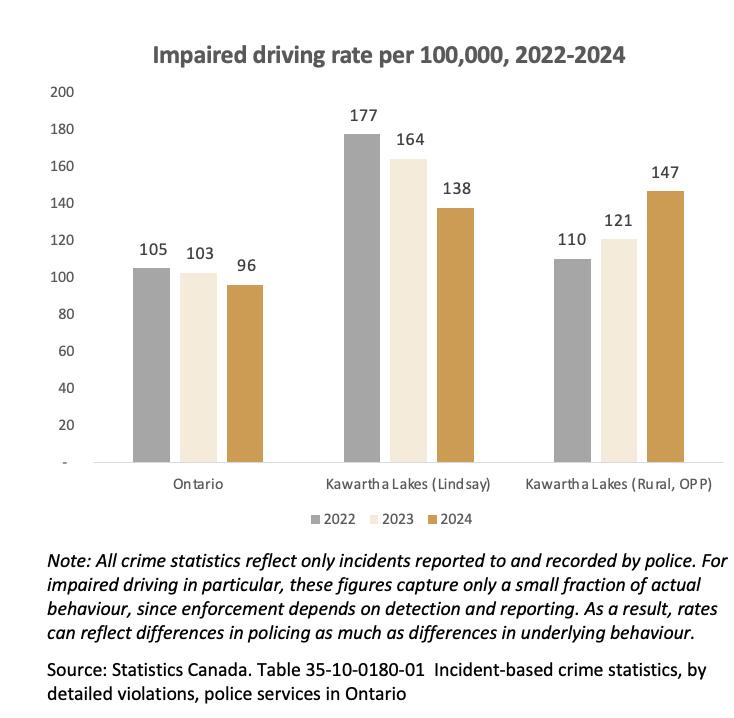
While there is work being done within policing, questions remain about how the community can address this issue.
The environment tells its own story of transition. The 2025 drought was the worst on record, winter 2024–2025 brought above-average snowpack, contributing to localized flooding, and the March 2025 ice storm caused widespread damage with 97 per cent of residents without power.
High-humidex days are forecast to rise from 15 per year to more than 28, and the growing season may lengthen by 30 days. This means longer growing seasons and shorter winters, impacting agriculture, forestry, and related industries.
Thirteen per cent of Kawartha Lakes land is protected — slightly above provincial averages — helping safeguard ecosystems as weather patterns shift.
Crime reflects Lindsay’s role as a regional service hub.
As the primary centre for social, health, and housing supports in Kawartha Lakes, Lindsay naturally attracts residents from across the region who are seeking assistance. This concentration creates denser neighbourhoods where service-dependent and vulnerable populations are more likely to live or access help.
As a result, social pressures, service demands, and reported incidents, including policing interactions and property crimes, tend to be higher in Lindsay than in the surrounding rural areas. The higher incident rates are consistent with hub effects: more people in need, more interactions with services and police, and a higher concentration of risk factors that can increase both reported and actual incidents.
Lindsay’s higher rates are largely driven by economic crime such as property and other violations.
Kawartha Lakes stands out for strong belonging and social connection scores, yet charitable giving has declined sharply. Since 2012, the share of residents who donate has fallen from 25 per cent to fewer than 16 per cent. With these rates below provincial and national averages, it’s possible that local giving has not yet caught up with local wealth.
Vital Conversations revealed that residents’ needs are more complex, with people facing a combination of issues related to housing instability, mental health challenges, addictions, transportation barriers, and food insecurity. As service demand grows, sustaining community capacity becomes increasingly important.
The first Kawartha Lakes Vital Signs report does not tell a story of decline, nor does it paint a picture of complacency. It shows a community that values its quality of life, is aging and diversifying, economically steady (but narrow) and facing considerable strain in healthcare, housing, food security and system capacity. Most importantly, it provides something Kawartha Lakes has not had before – an important place to start. This shared baseline means that future Vital Signs reports will track whether these pressures ease, intensify, or transform. For now, the data offers clarity for the vital conversations ahead. LA
The story of local government in what we now call Kawartha Lakes did not begin with council chambers or bylaws. It began with the land. Long before municipal boundaries were drawn, this region was defined by its lakes, rivers, forests, and wetlands: lands that sustained Indigenous peoples for generations and continue to shape life here today.
In the late 1700s, following the American Revolution, Loyalist refugees arrived in British territory seeking stability and opportunity. Surveyors went ahead of the settlers, marking out lots, concessions, and townships as early as 1783. Lines were drawn through forests and along waterways, transforming these vast interconnected ecosystem lands into measured parcels.
When Upper Canada was created in 1791, governance took shape through geographically large and appointed districts. One of these, the Newcastle District, established in 1802, encompassed most of what is now Kawartha Lakes. Decisions for local communities were made in distant hubs such as Cobourg, by officials whom
By Laura Love
residents did not elect and probably never met. The distance between decision-makers and the people they governed was not only physical; at this time there was also a significant gap in lived experience. Most administrators were not farmers, they were aristocrats. Yet, the seeds of change were already taking root.
Long before municipal boundaries were drawn, this region was defined by its lakes, rivers, forests, and wetlands.
The expansion of settlement came at a profound cost to Indigenous peoples. In 1818, the Mississaugas of Rice Lake entered into what became known as the Rice Lake Treaty, transferring more than 4,000 square kilometres of land to the British Crown in exchange for modest annual payments. The fairness of this agreement has long been questioned, and its impacts continue to be felt today. For many, this treaty represents a reminder of the loss of land,
autonomy, and tradition. In 2018, a partial settlement acknowledged these unresolved truths, reminding us that history is not finished; it is still being lived and understood.
As European settlement increased, so too did the desire for local voice and accountability. People wanted a say in how their communities were managed, how roads were built, how services were delivered, and how their daily lives were shaped. The reform movements of the 1830s, led by Louis-Joseph Papineau representing Lower Canada (modern day Quebec and parts of Labrador) and Upper Canada (Ontario) represented by William Lyon Mackenzie, sought to change the undemocratic colonial governments of the time. Though marked by immense conflict, these reformations helped shape a new understanding of governance, one rooted in representation. The rebellions of 1837 insisted that the government should answer to the people it governed, and though it may have failed on the battlefield, it became the cornerstone that led to a more modern and local democracy.
In 1849, the Baldwin Act replaced the large appointed district councils with elected municipal governments. For the first time, residents had the power to choose their leaders and to shape the direction of their communities. In the Kawartha region, governance evolved through the United Counties of Peterborough and Victoria, and later through the County of Victoria, established in 1861. These early municipalities were more than political structures, they were communities working together to build and shape a shared future.
Over the following decades, these local councils built roads and bridges, managed water systems, supported schools, organized fire protection, and nurtured the institutions that formed the backbone of civic life. By the turn of the twentieth century, municipal government in Victoria County was stable, familiar, and deeply connected to its residents. Local councils were not abstract entities, they were neighbours working with neighbours.
The 20th century brought new challenges that tested the strength of this system. Economic hardship during the Great Depression strained municipal resources and demanded creative solutions. The post-war boom brought rapid growth, changing demographics, and increasing need for services. Municipalities were pushed to their limits; the province saw this and responded. By the latter half of the century, conversations turned toward restructuring and consolidation. Changes in the 1970s, including the addition of Manvers Township to Victoria County, set the stage for a transformative reform.
In the 1990s, Ontario embarked on sweeping municipal reorganization under the so-called Common Sense Revolution under Premier Mike Harris. The province’s agenda was to streamline government, reduce costs, and create more efficient service delivery. The Victorian structures and limits of the old municipalities were struggling to adapt to modern demands, expectations, and costs of services. Through amendments to the Municipal Act, the map of Ontario was redrawn. More than 400 municipalities were merged into larger, single-tier structures.
As Kawartha Lakes entered the 2020s, it did so with clarity and purpose. Investments in infrastructure improved roads, bridges, water systems, and community facilities.
asked residents to see themselves not only as part of their own community, but as part of a broader whole.
The early years of amalgamation were challenging. Sixteen fire departments had to learn how to operate as one. More than 40 sets of bylaws were reviewed and merged. Budgets were aligned, and systems rebuilt.
In 2003, a referendum revealed strong public support for de-amalgamation. When the province declined to reverse its decision, it became clear that the task ahead was not to look back, but to move forward, together.
Eventually, shared services strengthened connections across communities and brought new opportunities. A city-wide library system linked residents through learning and culture, ensuring that knowledge and resources were available to everyone, regardless of distance. Thoughtful planning frameworks balanced growth with environmental stewardship, protecting sensitive areas such as the Carden Plain. The concept of Kawartha Lakes as a “community of communities” began to take hold as lived experience, not simply a slogan. Governance continued to evolve. In 2017, council reduced its size to better reflect the needs of a modern municipality. The change, implemented in 2018, reflected a growing confidence in how the city governed itself.
The 20th century brought new challenges that tested the strength of this system. Economic hardship during the Great Depression strained municipal resources and demanded creative solutions.
As Kawartha Lakes entered the 2020s, it did so with clarity and purpose. Investments in infrastructure improved roads, bridges, water systems, and community facilities. Strategic plans set priorities around sustainability, economic opportunity, and housing. This includes a commitment to support the creation of 6,500 new homes by 2031, recognizing that growth, when guided thoughtfully, can strengthen communities.
This reorganization came to Victoria County in January 2001 with the merging of 18 townships to form a single-tier municipality: the City of Kawartha Lakes, now often just referred to as Kawartha Lakes. The change was significant, not simply administrative, but deeply personal for many residents. Not only did the government structure change, so did the name. Kawartha, derived from Anishinaabe words meaning “shining waters,” honoured the land and its enduring presence. The word “City” sparked debate. For many, it felt out of place in a region defined by farms, villages, and shorelines. Yet it reflected a governance model rather than urban form, signalling a centralized approach designed to serve a large and diverse region. It was a new identity, built on legacy, and one that
The city’s leadership also recognizes that progress must be balanced with preservation. Growth is embraced, but not at the expense of heritage. Rural character is protected, while modernization moves forward. Cultural initiatives, environmental stewardship, and public engagement continues to shape a shared civic identity, one rooted not in uniformity, but in respect for diversity.
Today, Kawartha Lakes stands at a meaningful milestone. The first 25 years of this new municipal structure have proven that change, even when difficult, can lead to something stronger. Looking toward 2050, the vision is ambitious and hopeful: connected and resilient communities, smart infrastructure, vibrant downtowns and rural villages, strong public services, and natural landscapes preserved for generations to come.
“Kawartha Lakes stands on a solid foundation shaped over the last 25 years,” said Mayor Doug Elmslie. “As a community of communities, we are well positioned for a future that strengthens what we’ve built together.”
“The future of Kawartha Lakes is rooted in the strength built over the last 25 years,” he continued. “Our community of communities has laid the groundwork for continued growth, connection, and opportunity.” LA
As we mark the first 25 years of the City of Kawartha Lakes, we honour the past, acknowledge the complexities that shaped us, and look ahead with confidence.
Stay tuned to Kawartha Lakes’ social media and website (kawarthalakes.ca/anniversary) as plans unfold to commemorate the 25th anniversary milestone of Kawartha Lakes.
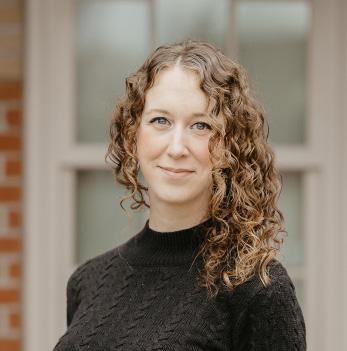
Laura Love serves as the economic development officer overseeing Curatorial Services for Kawartha Lakes. She is dedicated to uncovering and celebrating the stories that too often go unrecorded.

Kawartha Lake’s only compounding pharmacy, specializing in medications to suit your needs.
Transferring your medication is simple - we’ll do it for you!







Town









Looking for something fun to do this March Break? Kawartha Lakes Library is offering free, hands-on programs for school-age children at branches across the community.
Activities include:
• Beaded Wind Chime – Design and create a handmade wind chime.
• DIY Puzzle – Turn your own drawings, patterns, or messages into a custom puzzle.
• Glow Jar Lantern – Create a magical glow-in-the-dark jar.
• Model Magic Magnet – Sculpt a one-of-a-kind magnet using Model Magic clay.
• Painted Bag – Paint and personalize a tote bag, perfect for carrying your favourite library books.
• Recycled Rag Pets – Craft a unique pet using “yarn” made from recycled t-shirts.
• Melting Snowman Cookie – Decorate (and enjoy) an adorable melting snowman cookie.
Join us at the Kinmount branch on Tuesday, March 17, 2026, from 11:00am to 12:30pm for a guest appearance by Balloon Twister Matthew. Watch as balloons are transformed into animals and flowers. Fun for the whole family.
Enjoy creative programs like knitting groups, scrapbook drop-in, Craft & Connect, and Bad Art Workshops. Visit our website or speak with branch staff to learn more.
Lore Talks returns on Friday, March 20, 2026, from 2:30pm to 3:30pm at the Lindsay branch, exploring the stories and history of Kawartha Lakes.
For a complete list of programs and events, visit kawarthalakeslibrary.ca.
ACROSS
1. Flower in Chinese embroidery
6. Result of mixing bleu et jaune
10. ___ Lisa, famous painting
14. Opposite of oblivious
15. Solemnly declare
16. Mimicker
17. Go from on-ramp to highway
18. Chauffeur-driven car
19. Steak or chops
20. Opposite of liability
21. * Circus animals
23. Leg bone
25. They're between Cancers and Virgos
26. Pesky little critter
29. “. . and all the rest”: Abbr.
30. Canada's sports channel
31. Faucet
34. Opera solo
36. “Old MacDonald Had a Farm” refrain
38. Opposite of comedy
40. * Circus which ran for 146 years from 1871 to 2017. And re-opened in 2023 but without animals.
44. TV host DeGeneres
45. ___ Maria, coffee liqueur
46. DNA unit
47. Sound of sizzling bacon
48. A ways away
51. Sneaky like a fox
53. Compass point
54. ___ dish (fries or coleslaw)
55. Pekoe and Earl Grey
57. * Circus person who performs with big cats
61. Populous Asian country
65. Coat-of-arms border
66. Made a donation
67. Sharpened a knife
68. Emery board, e.g.
69. Barely scratches out a living
70. Carried in a bag
71. Russian ruler of old
72. Ottawa hockey players
73. Comes to a red light
by Joan Corrigan
By Joan Corrigan, Fun & Done
1. Tibetan guru
2. Has unpaid bills
3. Fills potholes
4. Strong impulses
5. Boil inside with anger
6. Spanish city and a variety of orange
7. Profoundly wicked
8. Thaw, freeze, thaw again
9. Overused themes
10. Mothers, affectionately
11. Store sign
12. Tidy
13. Painting, sculpting, theatre
22. Maker of the Civic and the Accord
24. Single entry on a grocery list
26. Newborns
27. Russian mountains
28. Young women
31. Stories
32. Prayer endings
33. Who the cheque is made out to
35. One, in Scotland
37. Canadian province, for short
39. Long haul truck
41. Out of shape, physically
42. Desperation
43. Bundle of hay
49. Wise old sayings
50. Do-over
52. Sailboats
54. Smile evilly
56. Use a rifle
57. Storage space for hay
58. Flower that shares a name with part of the eye
59. Stew pot
60. Flat and smooth
62. Vanish ___ thin air
63. Turnip
64. Sums up










While 2026 marks the 40th anniversary of Chernobyl, those disasters seem to be fading from our collective memories. However, they did help put the brakes on global nuclear power growth in recent years.
In Ontario, that is rapidly changing. Maybe it’s because our reactors are largely lauded as safe.
The Ford government is full steam ahead on nuclear expansion, arguing we need the power to meet spiralling demand and our climate targets.
Plans in the works include:
• Refurbished reactors at Darlington and Bruce nuclear power stations.
• Planned refurbishment of very old reactors in Pickering.
• Building one of the world’s largest nuclear stations just east of Port Hope, where radioactive contamination is still being cleaned up.
• Building four small modular reactors (SMRs).
The total bill is somewhat hazy, but a York University professor who studies nuclear projects estimates it could be as high as $400 billion. History shows these systems are notorious for costing at least double, with construction taking an average six years longer than scheduled.
I’ve supported keeping existing nuclear in our energy mix. It’s considered a reliable and clean alternative to fossil fuels. The International Energy Agency projects nuclear power will need to provide about 10 per cent of our power by 2050 on the road to net-zero emissions. The remaining 90 per cent would mainly come from renewables like wind, solar and hydro power.
Ontario’s plans for nuclear would mean our reliance would go from half our grid right now, to more than 70 per cent with natural gas as back-up. That locks us into years of escalating emissions.
And time is of the essence. We need to cut our pollution as much as possible now to help curb run-away climate disruption. Ontario’s projects are not expected to power up until the 2030s to late 2040s - if they finish on schedule. Meanwhile, new renewables could be up and running in as little as two years or less.
Want lower electricity bills? Don’t hold your breath. The cost of all that nuclear development is already hitting us in the wallet. In November Ontario Power Generation received a 29 per cent increase in the price it gets for power, partly because of nuclear spending. And it just applied for an additional 73 per cent increase for nuclear power, to cover the costs of projects at Pickering and Darlington. We may not see that directly on our power bills. The province is likely to bury it in our taxes. Either way, we pay. And pay. And pay.
Meanwhile they’re ignoring the energy that could save us money –renewables like wind and solar with storage. Costs have plummeted – 88 per cent for solar since 2009, and 74 per cent for wind. The world has taken note. Last year 90 per cent of new energy builds were renewable.
What about reliability? In September, Ontario’s Independent Energy System Operator released a report showing we could meet most of our energy needs with renewables and batteries.
Last April, Spain confirmed it will wind down its nuclear power production because wind and sun can produce “three to four times more power with the same amount of investment.”
Australia has announced it will be giving away free power for three hours a day, starting this summer, because of all that sunshine.
Maybe it’s time we started relying more on that big nuclear reactor in the sky.
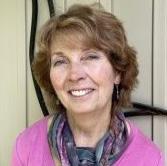
Ginny Colling was passionate about the environment before retiring from teaching college communications students. After retiring she trained with Al Gore’s Climate Reality Project. She has presented to numerous groups about the climate crisis.


Emergency room nurses at the Ross Memorial Hospital are accustomed to the steady stream of ambulances arriving, the cries of those in distress, and the cacophony of sounds emitting from a bewildering array of life-saving medical equipment. While many patients will be restored to health, the grim countenance of death lingers ominously at the bedside of others. The ER can be a frightening place of tears, of pain, of uncertainty – and yet the consummate professionals who staff it continue to do their duty day in and day out, in often trying circumstances.
Katherine McKinnon would have understood. She lived it, working in the very different and challenging field of military nursing during the First World War. Surrounded on all sides by the anguished, frightened faces of young men who had been gassed, shelled, shot, and left in mud on the slaughtering fields of France, Katherine and her colleagues sought to let light shine out of darkness.
Now 140 years after her birth – on International Women’s Day – her story continues to inspire.
Katherine Eva McKinnon came into the world on March 8, 1886. Her father, John McKinnon, was a Sonya-area farmer who allegedly once worked for Sir Sam Hughes, Victoria County’s crusty member of parliament and minister of defence when war was declared in 1914.
In her late 20s, Katherine ventured into Lindsay to enrol in Ross Memorial Hospital’s school of nursing. Here she met other young women who, like herself, would within a few years find themselves on active service in crowded hospitals staffed by members of the Canadian Army Medical Corps (C.A.M.C.). Some of these women, like Peniel’s Winnifred Hardy, were only a few years behind Katherine in age; others, like Lindsay’s Olive Williamson, were considerably younger.
On June 9, 1916, Katherine, Winnifred, Olive, and five other nurses were presented with their diplomas during a moving ceremony at the Academy Theatre. Each of them no doubt knew that careers in civilian nursing would have to wait; a worsening war across the sea beckoned them to don the famous blue uniform of the C.A.M.C. and “do their bit.” Katherine herself was appointed as a nursing sister on Nov. 16, 1916. She was 30 years old and, in Canada’s military nursing hierarchy, automatically held officer status with the rank of lieutenant.
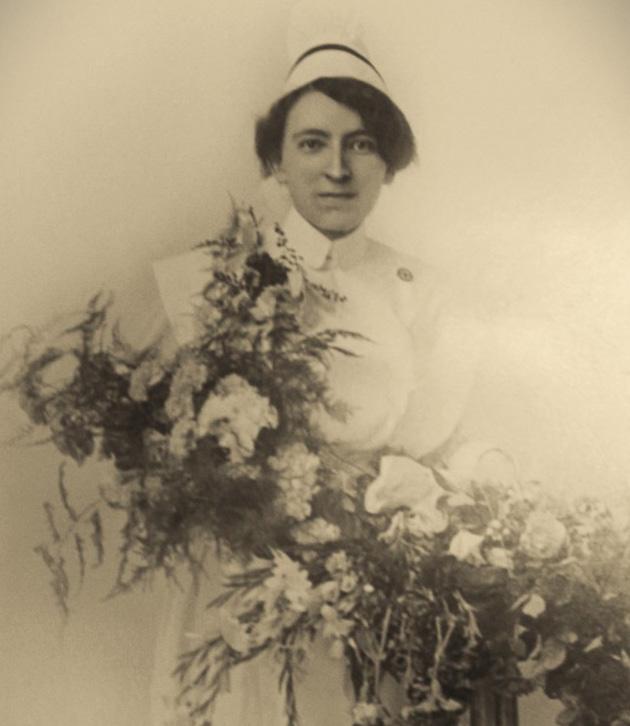
Katherine McKinnon, pictured here in 1916 on the occasion of her graduation from Ross Memorial Hospital’s nursing program, went on to enjoy a distinguished career as a military nursing sister in France and England, and later worked as a home care nurse in Lindsay. Ross Memorial Hospital Collection.
Katherine and her fellow trainee nurses lived in this nurses’ home, located just behind the RMH. Maryboro Lodge Collection.
Within a month, Katherine was in England, working in the Moore Barracks Hospital at Shorncliffe. Between looking after the primary care needs of her patients and ensuring that her ward ran efficiently, Katherine was kept very busy. When she did find the time, she might have had tea with her fellow nurses or written detailed epistles to family and friends in Mariposa Township.
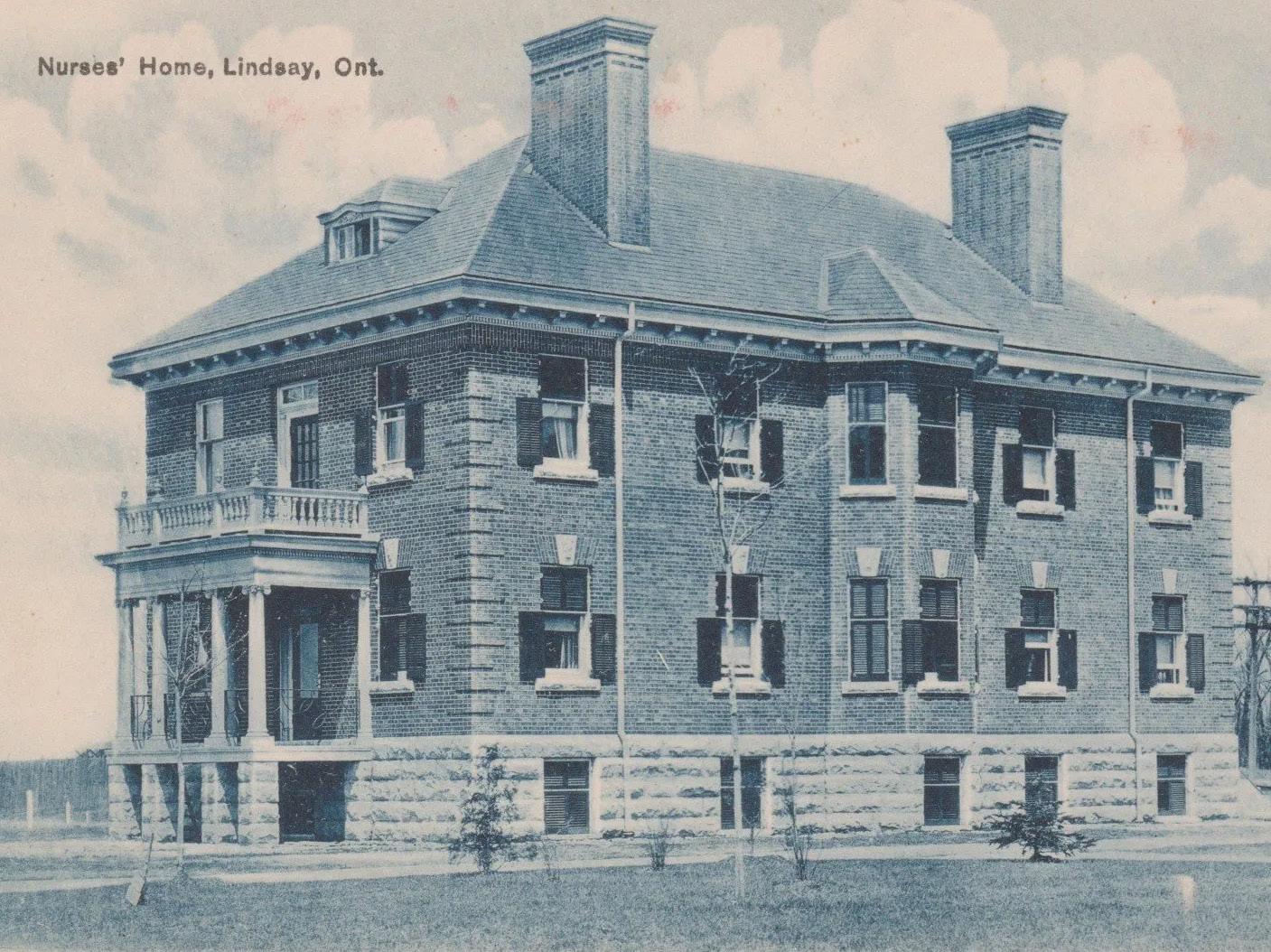
Each of them no doubt knew that careers in civilian nursing would have to wait; a worsening war across the sea beckoned them to don the famous blue uniform of the C.A.M.C. and “do their bit.”
These letters, published in The Lindsay Daily Post, offer us some of the most heart-wrenching insights into her work as a nursing sister. “The tales of the trenches are terrible to relate,” Katherine explained in a letter dated Dec. 30, 1916. “Sometime I will tell you more of what the boys have told me. One poor lad told me that he prayed for death in the trenches. He said to me, ‘Sister, why did you ever leave your happy home in Canada to come to this awful place?’ I told him it was to try and cheer a poor lonely heart like his.” Another letter, dated May 12, 1917, speaks poignantly to the impoverished conditions Katherine witnessed while visiting London. “As I saw those poor, wee dirty kiddies of London streets,” she wrote, “my mind went back to my childhood days, when I used to hide my crusts at the side of my plate so my mother would not see them and daddy would come to my rescue and eat them for me, and mother would say, ‘some poor little kiddies were hungry while I was wasting.’”
Katherine remained on the C.A.M.C. payroll until 1919, when she was struck off and returned to civilian life. She married George Allen in 1922, gave birth to a son a year later, and relocated to Lindsay around 1927, when her husband took a job as manager of the Lindsay Fairgrounds.
By the 1930s, the Allens were living in the shadows of Lindsay’s water tower at 8 Henry St., and Katherine was employed as a home care nurse. Margaret Robertson’s family were neighbours of the Allens during this time, and she recalls when “Aunt Katie and Uncle George” would come over for a visit. In the late 1950s, Margaret’s mother underwent an operation and Katherine was hired as a private nurse. Margaret remembered her mother saying that “she knew things were going to be okay when ‘Aunt Katie’ stepped through the front door.”
A cradle Presbyterian, Katherine worshipped at St. Andrew’s Church, where she would have rubbed shoulders with her old RMH nursing classmate, Olive Williamson. Surviving nursing sisters of the Great War in the Lindsay area – like them – were dwindling in number, and their presence at reunions of local veterans was always duly noted. Katherine outlived many of her comrades and died on Sept. 17, 1977, aged 91. She was buried in Riverside Cemetery beneath a granite monument that read “resting till the resurrection morn” – fitting words of hope for someone who brought hope to so many.

LA Ian McKechnie is a freelance writer, local historian, and researcher who has compiled and edited three books.
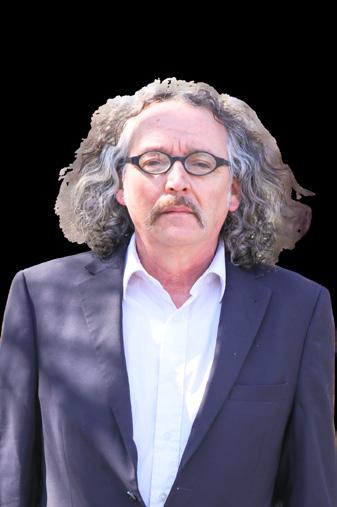
By Trevor Hutchinson Contributing Editor
Sometimes I miss the era of not having the sum of all knowledge at my fingertips. I miss not being able to Google or ChatGPT every random question I have on my cell phone.
Now, I’m not one of those ‘things were so much better back then’ people. I don’t suffer from what sociologists describe as golden age fallacy syndrome. Fun fact: nostalgia was actually classified as a disease from the 17th-19th centuries. (Somehow I have a feeling that MAGA and the Take Back Canada folks will ‘Make Nostalgia a Psychiatric Disease Again.’)
Whether I like it or not, life is change. Newton’s second law of thermodynamics states that disorder and randomness in the universe always irrevocably increases over time. So my pining for the old days is akin to tilting at windmills. All of us — and our universe — are headed for entropy and decay. That’s just science.
‘Reflective nostalgia’ can serve as a good coping tool in stressful times, though. Like remembering that music will never be as good as it was from 1970 to 1982. That’s just more science, albeit back-inthe-day science; a science that caresses like a 40-year old hoodie.
I ended up down this philosophical rabbit hole innocently enough. I was checking the forecast and saw yet another winter storm coming. The thought of another storm just made me tired — and possibly seasonally affected, from a lack of sunshine. Then the mere thought of March and spring cheered me up. I should have left it at that, but I didn’t. I googled “what are average weather conditions for March in Kawartha Lakes?”
This did not have the effect I was hoping for. I found no instant reprieve in the data: daily temperatures range from -5 C to 4 C; much variability; breezy conditions with average wind speeds of 26 kph; a 26 per cent chance of precipitation on any given day; average relative humidity of 82 per cent.
‘Reflective nostalgia’ can serve as a good coping tool in stressful times, though. Like remembering that music will never be as good as it was from 1970 to 1982.
Ever a sucker for punishment, I then asked GPT to frame this data positively. The AI machine reminded me of the return of migratory birds which is nice. But the flowery descriptions of ‘brisk fresh air’ and enjoying the seasonal contrast of snowy mornings and ‘snow melt-driven’ afternoons did not provide the mental escape I was craving.
Now I have experienced more than enough springs that I don’t need a computer (or a phone in this case) to describe it to me. But at that moment, I was experiencing what psychologists call ‘rosy retrospection.’ I was remembering some random day from some random March when I wore a t-shirt outside and not the thousands of times I was freezing and underdressed. I was not remembering the truth.
That’s why basing anything — be it a political opinion or something more benign like weather — on our personal memory alone can be a fool’s errand.
But it won’t stop me searching for spring, even in my inaccurate memories.




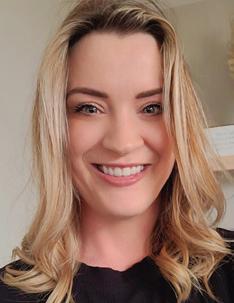


TAKE NOTICE that the Annual and Special General Meeting of the Members of The Commonwell Mutual Insurance Group will be held on the 31st day of March 2026 at the hour of 9:00 a.m. for the purposes of:
1. To receive and approve the Annual Financial Statements and Auditors’ Report for the year ended December 31, 2025.
2. To appoint auditors for 2026.
3. To consider and, if thought fit, to adopt such amendments to By-Law No. 1 - 2024 passed by the Board of Directors on February 24 2026, which amends By-Law No. 1 – 2024, Article 10, Nomination, Election and Removal of Directors, Section 10.01 of the Corporation. The proposed amendments are intended to simplify the process for recommending new director candidates, only. The existing nomination framework for incumbent directors, including timelines and safeguards, is not changing. Board approval remains required in all cases. The amendments are intended to improve clarity and efficiency, while preserving appropriate oversight and governance discipline. The proposed amendments clarify that:
• the Corporate Governance Committee continues to review and recommend Incumbent Directors seeking re-election;
• where a Nominating & Governance Committee is struck to recruit new directors (or where the Corporate Governance Committee is designated to act in that role), its recommendations for new candidates may proceed directly to the Board for approval; and
• to adopt By-Law No. 1 – 2026, being By-Law No. 1 – 2024, as amended.
4. To elect three (3) Directors for a three (3) year term.
5. Directors Gerard McDonald and Nicole Brouillard, whose current terms are set to expire, are both eligible for re-election for a three (3) year term. The Corporate Governance Committee has reviewed and recommended both for re-election at the Annual & Special General Meeting on March 31, 2026.

6. Director Cheryl Craven will retire from the Board of Directors effective March 31, 2026. On the recommendations of the Nominating & Governance Committee and the Board of Directors, Hilary Anderson has been confirmed and is eligible to stand for election to the Board of Directors for a three (3) year term at the Annual and Special General Meeting on March 31, 2026.
7. To transact any other business which may rightly come before this meeting.
The Annual & Special General Meeting will be conducted electronically, enabling all Members who wish to attend and vote to participate virtually. Members can connect to the meeting through a communications link that will be established specifically for this purpose. To join the meeting electronically, Members are required to pre-register no later than March 15, 2026. Pre-registration may be completed by sending an email to agm@thecommonwell.ca or by calling (705) 324-2146, extension 1004. Once membership has been verified, Members will receive further instructions and the necessary details to access and participate in the virtual meeting.
The Annual Financial Statement will be available for viewing on our website after March 1, 2026. Members are encouraged to visit www.thecommonwell.ca to access the document online. A Member may obtain a copy on written request to The Commonwell Mutual Insurance Group, 336 Angeline Street South, Lindsay, Ontario at least 14 days prior to the Annual & Special General Meeting.

The Annual Members communications pre-register or by telephone will be provided
The Annual after March Member Group, and Special
ON BEHALF OF THE BOARD OF DIRECTORS
Tim Shauf, B.A., CIP President and Chief Executive Officer
thecommonwell.ca Lindsay 336 Angeline Lindsay, Tel: 705-324-2146
Two bedroom main floor unit for rent.
Collector Car & Truck Appraisals
MTO Appraisals & Vehicle, VIN/Ownership Corrections. Call Ron @ 705-878-2372
Please visit RJVintageGarage.com. Available - Lindsay & Area
Feel at home in this modern and updated house. Kitchen has ample cupboard/drawer storage and fridge/stove/microwave. Full bathtub/shower. Master bedroom with walk in closet. Pressure treated deck with sliding glass doors access from open concept living space. Shared use of the backyard and private storage shed. Located in a desirable, quiet area on dead end street and across from a large park and river. Close to bus stops, schools and parks. Driveway parking space for one car. Private laundry on site (coin operated). Air conditioning.
Better Bins
Reliable Moving Solutions to take the Stress out of Packing. Plastic Moving Bins We Deliver 705-879-2569
betterbinrentals @outlook com
Looking for: tidy, clean tenants who appreciate a clean living environment. Quiet respectful tenants who take pride in where they live; no smoking, no pets. Required first and last month’s rent. Willing to sign a one-year lease; references; credit check; tenant insurance. $2,200. Rent inclusive of heat, hydro, water, available April 2026.
Fences, Gates, Railings & Verandas
New wooden fence installation
Wooden fence repairs & staining
Perfect post holes
Great quality, pricing & reliability
Stephen 647-927-1580
Please contact 705-879-1235 or dickhelleman@gmail.com for application & showing.

Wanted Antiques
LUXURY TRAVEL WITH ROBERT ALTMAN
Private Travel Planner in Kawartha Lakes
Furniture, signs, jewellery, watches, coins, china, military items, paintings, records, books, old metal toys, wood decoys, snow shoes, paddles & more
Leave winter in your wake –
Plan your escape now
Tailored journeys by land and sea. Private, Group, or Corporate Retreat.
Bob Carruth 705-887-1672
robert.altman@ traveledge.com 647-966-8985
We Buy Vintage... Vinyl Records, Comics, Jewellery, Glass, China, Pottery, Toys, Sports & Collectibles We Make House Calls. Cash Paid. Robert & Penny. 705-324-2699 howlingdog rocks
Silversea • Explora • Viking
• Silversea * Quark Four Seasons • Accor • Marriott • Hilton * IHG

Classic & Vintage Cars & Trucks Call Mark 613-360-2699
We Buy Vintage... Vinyl Records, Comics, Jewellery, Glass, China, Pottery, Toys, Sports & Collectibles. We Make House Calls. Cash Paid.
Robert & Penny. 705-324-2699 howlingdog.rocks

Wanted Antiques
Furniture, signs, jewellery, watches, coins, china, military items, paintings, records, books, old metal toys, wood secoys, snow shoes, paddles & more.
For Rent - 1 and 2 bed units from $1,800 & up Heat, hydro & water is included Adult building in Lindsay Call 705-324-9381.
Bob Carruth
705-887-1672

Burns’ Snow Removal & Lawn Care Ltd. Grass cutting, fertilizing, trimming, organic topsoil & fall cleanup. Snow contracts available Commercial & Residential Fully insured Call David E Burns 705-324-8154
Burns’ Snow Removal & Lawn Care Ltd.
McKenzie’s offers all aspects of outdoor maintenance interlock lift and re level fencing gutter cleaning lawncare snow removal
Lanes, lots, sidewalks, sanding & salting.
Commercial & Residential Fully insured.
705-934-4333
Call David E. Burns 705-324-8154
Free estimates

McKenzie’s offers all aspects of outdoor maintenance
• interlock
• lift and re level
fencing
gutter cleaning
lawncare
snow removal

705-934-4333
Free estimates.
Ads starting at just $25!
If you’re reading this, you know we can get your ‘business card’ into the community where it belongs!
Contact Rebekah at rebekah@ lindsayadvocate.ca




To advertise in the Advocate contact:
Darren at 705-991-3188 or Cara at 905-431-4638
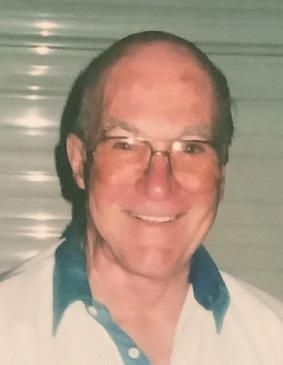
August 5, 1937 - February 3, 2026
Peacefully at Ross Memorial Hospital in his 89th year, Bruce has joined his beloved wife Dorothy (2025). Predeceased by his eldest son Larry(2025)(Dawn,2024). Bruce will be forever loved and missed by his daughter Laurie (Wayne) Brakeboer and his sons David (Sandra) and William (Tara). He was cherished by his grandchildren Greg (Niki) Brakeboer, Anna Raison, Brent (Alanna) Brakeboer, Wyatt (Shelby) Brakeboer, Bradley (Alyssa), Ryan, Sara (Brandon) Svendson, James (Jesica). He has a special place in the hearts of his 11 great grandchildren. Bruce was born in Port Colborne to Valorous and Kathleen Robinson. He is fondly remembered by his sister in law Carol Robinson, his cousins Faye and Joan (Bruce) and many nieces and nephews. Predeceased by his brother Grant (1993) and his sister in law Patricia (2003)(Allan,2007) Decker.
Bruce apprenticed as a mechanic at the age of 15 in Toronto, and went on to become the owner of Amesbury Auto Centre on Lawrence Ave. W. until the early 1970’s. After many years as a cottage owner he and Dot had the family relocate to the Kawarthas. There, they established and operated Robinson Marine in Cameron for over 40 years. Always surrounded by family and numerous life long friends, many of the customers, dealers and suppliers they met throughout the years became long time friends as well. Bruce became involved in local politics in 1980 as a Fenelon Township Councillor and followed that in the role of Deputy Reeve on Victoria County council, representing Fenelon Township until 1991. Bruce loved life! He was the life of the party and loved entertaining. He enjoyed travelling and the time spent at his home in Florida during his later years. He will be greatly missed by all the family and friends he spent time with throughout his life. Thank you to the staff of the Bloom Residence for their care during his short stay. The family would also like to recognize and thank the amazing staff at Ross Memorial Hospital. The care he and his family received was extraordinary. A special thanks to the nursing staff in the Palliative Care unit, as well as, Dr’s Syed and Seaton.
A visitation will take place at the Stoddart Funeral Home, 24 Mill Street, Lindsay on Sunday March 1, 2026 from 2:00 - 5:00 p.m., and again on Monday March 2, 2026 at Celebrations Lindsay, 35 Lindsay Street North from 10:00 am with a Celebration of Life at 12:00 p.m.
In lieu of flowers, donations to Ross Memorial Hospital or the Alzheimer’s Society of Peterborough, Kawartha Lakes, Northumberland and Haliburton, would be greatly appreciated.

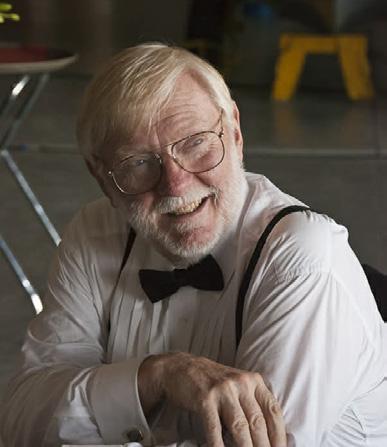
Clifford Daniel Berry (b. July 1941) passed away peacefully at home from cancer on January 25, 2026.
Cliff is survived by his partner, Gloria Moyer; his sons Craig Berry (m. Lora, dec.) and Alan Berry (m. Victoria); and his stepchildren LeeAnne McCallum, Leslie McCallum (m. Bruce), and David McCallum (m. Natalie). He is also survived by his brother Howard (m. Heather), and is preceded in death by his beloved late wife Joanne McCallum (d. 2011). He is also survived by his ex-wife, Patricia Berry.
Cliff was the treasured grandfather of Mackenzie, Chloe, Spencer, Sydney, Devin, Olivia, Daniel, Erika, Anna, and Nathan.
The family wishes to recognize with gratitude the love and support of Gloria’s family – daughters Corrie (m. William) and Shannon (m. Matthew), and their children Carly-James, Finley, and Fia.
His spirit, his conversation, and his quiet, steady love will be deeply missed by all who knew him.
Celebration of Life at Mount Pleasant Funeral Centre –375 Mount Pleasant Road, Toronto, On Saturday, March 14 th from 1 pm to 3 pm.
In lieu of flowers, the family asks for donations to be made to Royal Victoria Regional Health Centre - Cancer Program.
For online service details, please visit www.etouch.ca


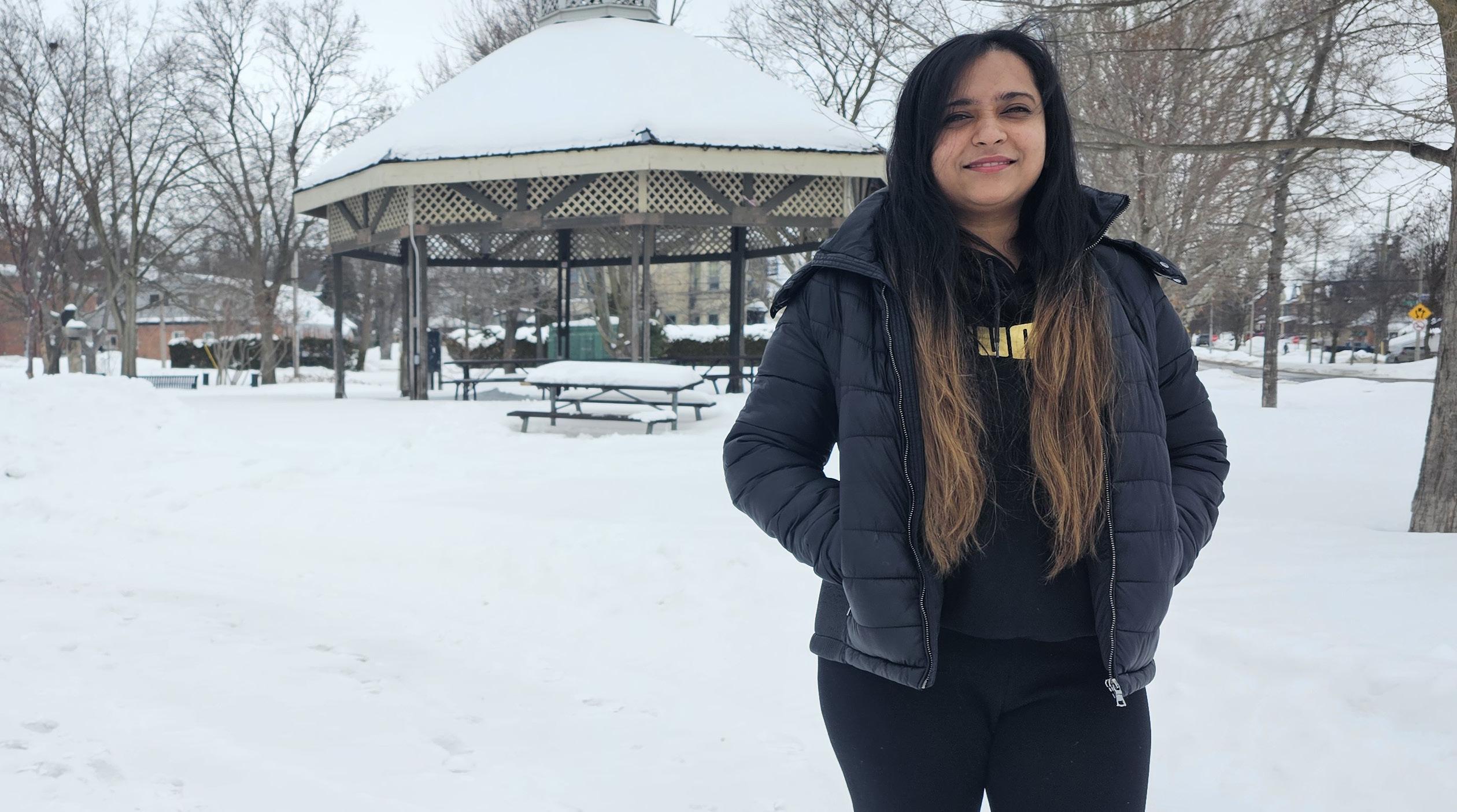
CHELSI CHAUDHARY moved to Lindsay from India in 2023.
Lindsay Advocate: Why did you choose to move here?
CHELSI: I chose to move here because I wanted to build a better future for myself and work toward achieving my dreams. Coming to Canada was an important step in my life, both personally and academically. I was excited about the opportunity to experience a new environment, gain a quality education, and grow as an individual. When I first arrived, I began my studies at Fleming. That experience helped me adjust to a new country, meet new people, and develop important skills for my future. Over time, I became more comfortable and confident living here. I decided to stay because I truly enjoy this city and the lifestyle it offers. The community is welcoming, and the people are kind and supportive.
Lindsay Advocate: What is your favourite thing about Kawartha Lakes so far?
CHELSI: One of my favourite things about Kawartha Lakes so far is the peaceful environment. I really appreciate how calm and quiet the area is compared to larger cities. It is less crowded, which makes life feel more relaxed. I also enjoy the natural beauty here, which helps me feel less stressed and more focused on my goals. People here are kind, welcoming, and always ready to help. That supportive atmosphere makes it easier to feel at home.
Are you new in town? If you moved to Kawartha Lakes within the past two years and want to be featured here, email us at info@lindsayadvocate.ca.
Lindsay Advocate: What are your favourite local restaurants or shops?
CHELSI: My favourite place to shop in Lindsay is Giant Tiger because it is clean, well organized, and budget-friendly. One of the nice spots in town is Gusto Grande, where you can enjoy a good meal with friends or family. I appreciate that there are both affordable shopping options and quality restaurants in the area.
Lindsay Advocate: What do you think is missing from Kawartha Lakes?
CHELSI: A greater variety of Indian food options and Indian grocery stores.
Lindsay Advocate: How were you involved in your previous community and how might you like to get involved in Kawartha Lakes?
CHELSI: In my previous community, I was involved in community service activities that focused on helping others and supporting those in need. Although community service looks different here compared to my home country, the spirit behind it feels the same. People would come together to support families during difficult times, organize local events, and help those who needed assistance. In Kawartha Lakes, I would like to get involved in local volunteer opportunities where I can connect with people and contribute to the community, as well as help make newcomers feel welcome.