Vital Signs: Our changing community
The search for happiness
Time to lift the veil of secrecy at local jail

Vital Signs: Our changing community
The search for happiness
Time to lift the veil of secrecy at local jail
At Lindsay Ear Clinic, our goal is to provide comprehensive audiological assessments. From the results of these assessments, we will educate, and inform our patients so they can make an informed decision about their hearing needs.
Your story is our priority, we’re here for you!

THREE AUDIOLOGISTS TO SERVE ALL YOUR HEARING NEEDS
Hearing Tests & Hearing Aids • Dizzy Assessments & Treatment
• Tinnitus Management • Wax Removal

CHOOSE A
Choose from one of our three locations in
Choose from one of our three locations in Lindsay, Bobcaygeon or Bancroft
BOOK A HEARING TEST
One
One of our Audiologists will run you through a series of tests and then discuss options
CHOOSE YOUR HEARING AID
We’re confident we can find the perfect device to suit your needs. BETTER HEARING IN THREE EASY STEPS
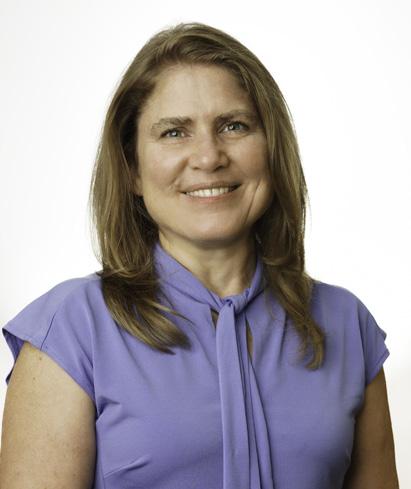










Roderick Benns Denise Waldron WRITER-AT-LARGE


Rebekah McCracken EXECUTIVE EDITOR



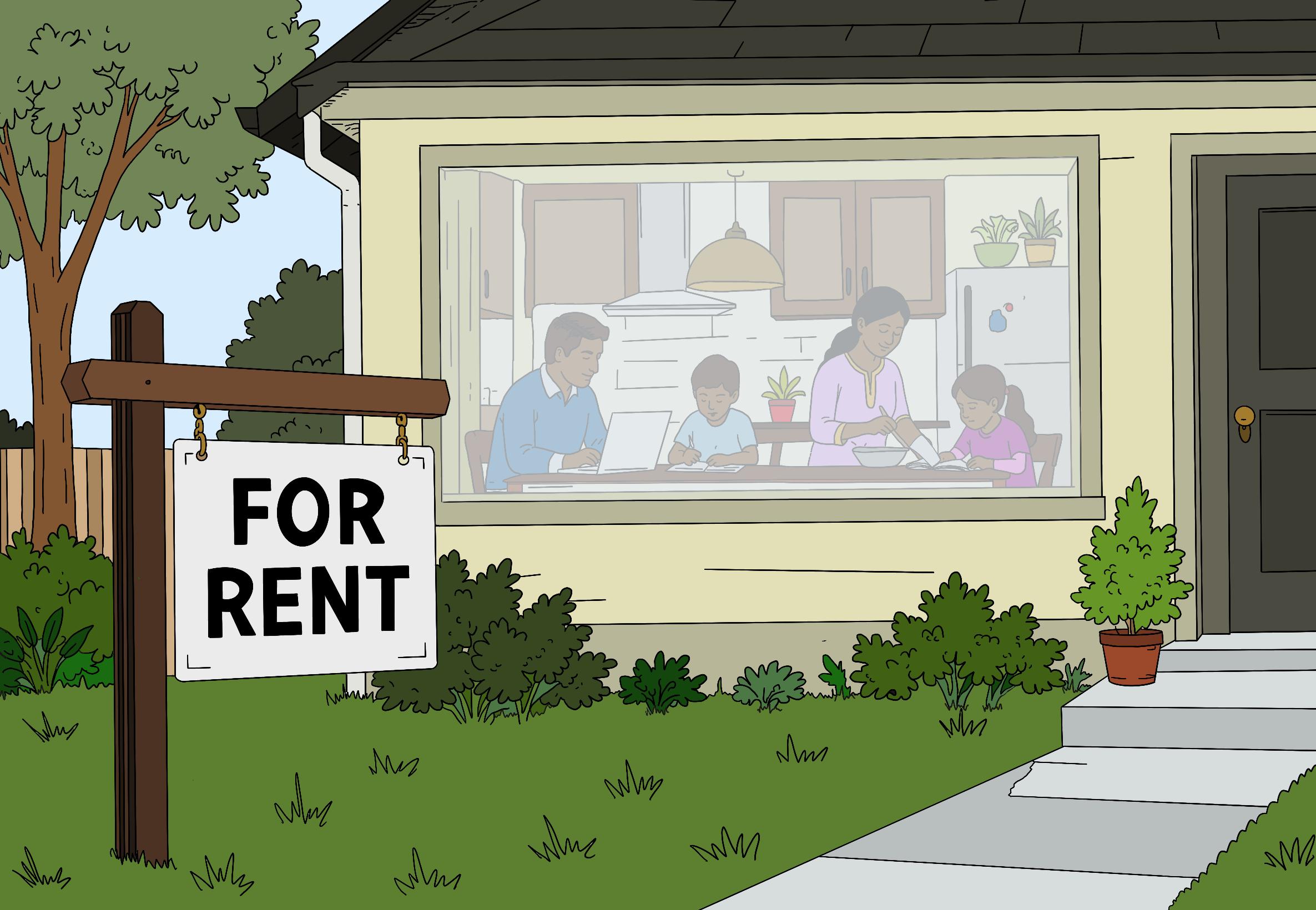
The correctional centre needs a community oversight body. Why haven’t we demanded one? Illustration: Ruth Kelly-Koebel.
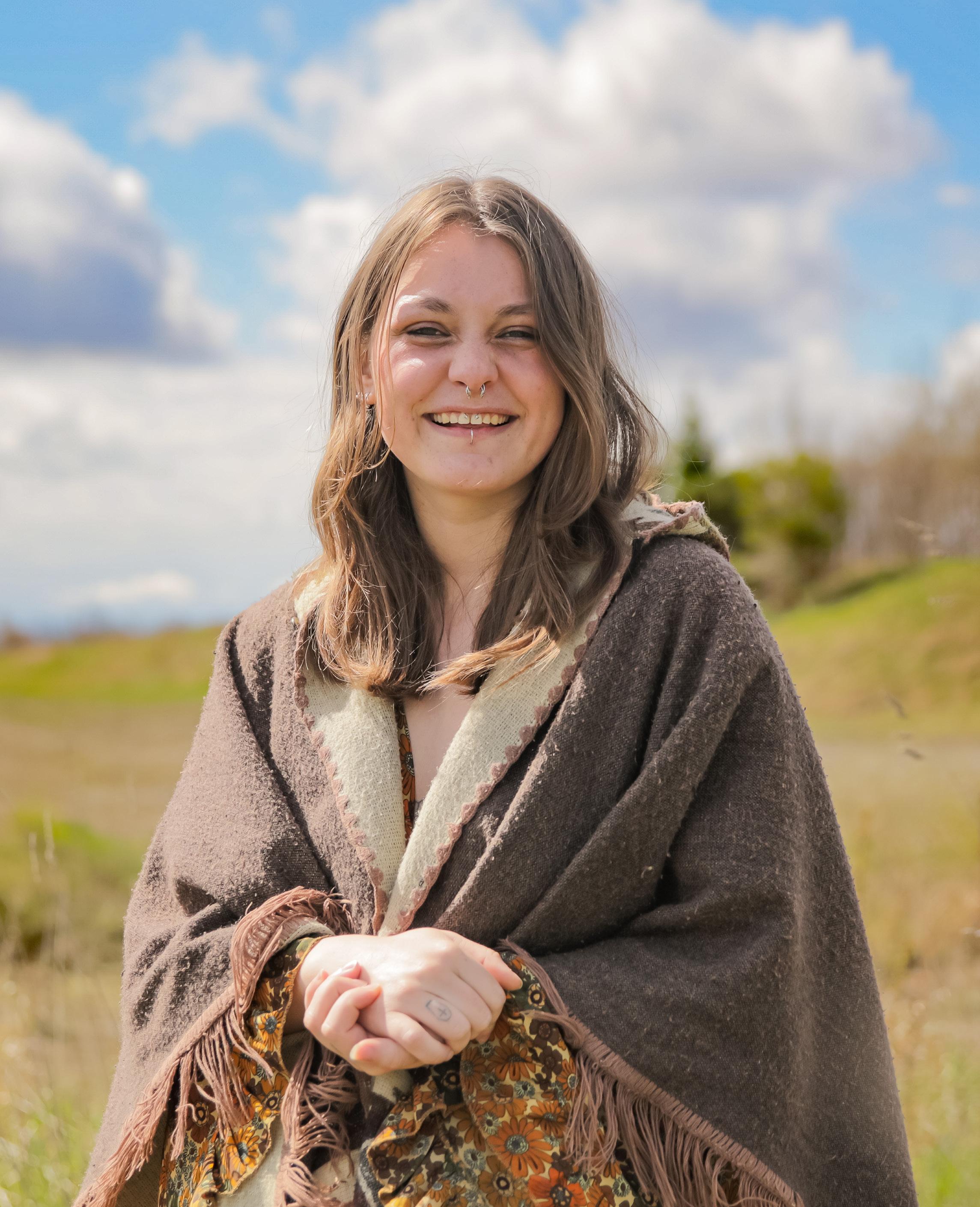
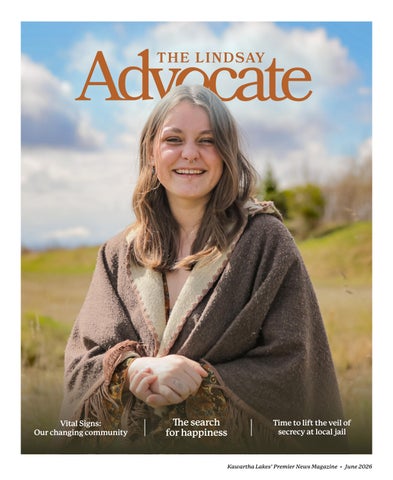
Printed By: Cofax Printing Cover Photo: Bayley Hayward says nature equals contentment. Photo: Sienna Frost.

Please send editorial inquiries to Roderick Benns at roderick@lindsayadvocate.ca or 705-341-1496.
Please send ad inquiries to Darren Hoiting at 705-991-3188 or darrenhoiting@outlook.com, or to Cara Baycroft at 905-431-4638 or cara.baycroft@gmail.com
lindsayadvocate.ca • @lindsay.advocate Robyn Best REPORTER Cara Baycroft ADVERTISING SALES Mike Puffer WRITER-AT-LARGE Darren Hoiting ADVERTISING SALES

Explore how our communities are changing with Vital Signs research.
The path to contentment has many entry points. letters to the editor 6 • benns’ belief 9 • business today 26 sarah’s say 32 • KL public library 38 • crossword 39 • cool tips for a hot planet 41 • just in time 42 trevor’s take 44 • the marketplace 45
every issue
Central East Correctional Centre shrouded in secrecy. 17
Fireside Publishing House is the premier print media company in Kawartha Lakes through its family of magazines and all-local weekly newspaper. We believe that community-based media can bring people together and change lives for the better through the power of storytelling, reflecting local culture, and creating informed and engaged citizens. Our commitment is to deliver high-quality and relevant content that reflects the diverse voices and experiences of our communities. We believe in the transformative power of local media to inspire, educate, and empower.

After 25 years, I was let go from my company.
At 56 years old, you immediately start asking yourself, “What am I going to do now?” The emotional impact hits you quickly. Sadness, anger, uncertainty, and then the internal debate about your own confidence and self-worth begins.
In hard times, it can be difficult to find optimism. Confidence can disappear quickly when rejection, uncertainty, and fear start creeping into your thoughts. But I learned something important during this experience: if you continue believing in your abilities, it actually works out. Good people can and will find a way.
I made the decision not to give up. I stayed active, stayed connected to people in the industry, and reminded myself that 25 years of hard work and experience still had value. Slowly, the doubt started being replaced by opportunity.
Today, I am fortunate to have two amazing companies interested in bringing me on board. That did not happen because I sat still feeling sorry for myself. It happened because I kept moving forward.
Every visit to the gas station or grocery store becomes another reminder of how challenging things have become. It is easy to feel worn down.
But there are still bright lights out there.
There are still good companies, good people, and communities willing to support each other. Sometimes adversity reminds us who we really are. Sometimes it forces us to rediscover confidence we forgot we had.
So to anyone going through difficult times right now, keep your chin up. Believe in yourself even when it feels difficult. Your experience matters. Your work matters. And your next opportunity may be closer than you think.
Sometimes the door closing behind you is simply pushing you toward the right one ahead.
— Darren Woolsey, Bobcaygeon
The recently released 2026 Kawartha Lakes Vital Signs report is a masterclass in community self-reflection. The Kawartha Community Foundation and partners have provided our city with a vital report card that highlights exactly where we stand. It is an amazing piece of work that offers the data-driven foundation we need to move from conversation to action.
One of the most glaring gaps identified by the report is transportation. For many of us, the solution feels clear: we must bridge the gap between Lindsay Transit and our regional neighbours — Peterborough Transit and Durham Region Transit.
Imagine the transformation if a resident could board a bus in Lindsay and seamlessly connect to the Durham Region Transit network, the Metrolinx corridor into the GTA, or the Peterborough Transit hub, connecting our four routes to Peterborough’s 13 routes? Such a connection would be life-changing for seniors accessing specialized healthcare, students reaching campus, and newcomers seeking employment.
While it is true that a Lindsay-centric regional hub does not solve the immense transit challenges faced by much of rural Kawartha Lakes, it would create a massive anchor for the city in Lindsay. By making Lindsay a regional gateway, we enhance the value and utility of our existing local transit, making every stop within the city more relevant to the world outside it.
As a telecommunications and internet engineering manager, I see this through the lens of a principle we learn early in our careers: The Network Effect.
In the world of technology, the Network Effect describes a phenomenon where a service becomes more valuable as more nodes are added to the system. Think of Alexander Graham Bell’s first telephone: it was useless until a second person got one.
The same logic applies to our city. A transit system that only moves people within Lindsay, constrained by the political geography of Kawartha Lakes, has a finite value. But the moment you connect that node to the Durham or Peterborough networks, the value of our local system multiplies.
The Vital Signs report has given us the diagnostic and the business case; now it is time for the infrastructure. And there is a funding solution. The Ontario Transit Investment Fund (OTIF) was recently doubled to $30 million to help rural communities like ours start or expand transit.
Selwyn Township’s “The Link” is a rural public transit service, established in 2021, and serves as a real-world example. Selwyn partnered with Peterborough to operate two bus routes connecting Bridgenorth, Lakefield and Curve Lake First Nations to the larger Peterborough Transit network. With a population of 20,000 and every bit as rural as Kawartha Lakes, it just extended the contract with Peterborough Transit to continue the service to April 2027. Let’s add Kawartha Lakes to the list of OTIF grant recipients, connect our nodes, and get on the bus.
— Randy Neals, Kawartha Lakes
I was shocked and quite distressed to learn that several healthy, mature, trees have been taken down at the Lindsay library, and on the site of the new paramedic facility on Angeline Street South.
This seems like a cavalier and disrespectful action unless all alternatives were considered first.
I would really like to know — given what we have learned by now about the importance of trees as the lungs of the planet, not to mention the countless ways they serve up well-being to people and creatures — what decision-making process was put in motion to determine that those trees had to come down?
It couldn’t have been in keeping with the city’s climate change strategy, which I suspect involves adding more trees (which will take many decades to mature to their full potential), not taking mature trees down. Our need for shade on public land during our increasingly hot summers is indisputable. How do we adequately compensate the loss of trees that have outlived much of the population, but could have decades of life left?
Many municipalities in Ontario and around the world have strict bylaws for the preservation of trees. I hope the public will be given an explanation, now that the deed is already done.
— Diane Engelstad, Fenelon Falls
We reported on this in an April 24 online article. According to the city, 11 trees in front of the Lindsay branch of the Kawartha Lakes Public Library were felled. Staff said 16 more will be planted in late June. The tree removals and replacements are part of the Queen’s Square landscaping redevelopment project.
— The Advocate
The Advocate welcomes your letters. We do not publish anonymous letters unless it’s a matter of public importance and/or someone risks harm by writing us. We publish under strict guidelines & only if we can verify the person’s identity. Keep your letters to 200 words or less. Simply email roderick@lindsayadvocate.ca.




you join our supporter’s list?
The Advocate and Kawartha Lakes Weekly are your 100% local print media choices based in Kawartha Lakes. Visit our website and choose Support Us, or contact 705-341-1496 or roderick@ lindsayadvocate.ca. We thank the following people for their support:
Al Kingdon, Anne Melanson, April Scott, Audrey Burrows, Barb Taylor, Bill & Heather Peter, Bob & Carol Barkwell, Bruce & Debbie Peck, Cam Finley, Carol Bryans, Carol & Brian Kelsey, Catherine Hennings, Chris Yourkin, Christine Wilson, Colleen Newson, Cordula Winkelaar, D Ann Ostafichuk, Dale Urekar, David & Margaret Robertson, David Holloway, David MacMillan, Deborah Smith, Doreen Amos, Don Sangster, Donna Gushue & Jim Buchanan, Drew Davison, Edith Wood, Edna Calhoun, Elaine Heyes, Elizabeth Anne Patterson, Elke Danziger, Ellen Roberts, Gail Motzok, Garth & Marian Mackay, George Meyer, Glenda Morris, Grace King, Hannah Marnoch, Heather Muir, Hilary Grice, Jack Kyle, Jamie Anderson, Jane Walling, Janet Smith, Jean Wood, Jim Buchanan, Jim & Bonnie Hancock, Joan Shippel, Joanne Young, John & Elizabeth Gundy, John & Pauline Hunter, Joyce Dunning, Kevlyn Given, Laurie Jones, Lauren Drew, Lee Steeves, Leslie King, Linda Friend, Lorna Green, Lynda Palmer, Marci Stainton, Margaret Anthony, Maria Bennett, Marie Geelen, Marie-France Leclerc, Marnie Nelles, Mary Auld, Maureen Kalmykow, Maurice & Marie Jackson, Mehran Qaaboos, Mike & Cathy Puffer, Nanci Byer, Neil Campbell, Nelson Gingrich, Nora Steffler, Norman & Molly Feldman-Swan, Patricia Apac, Pamela Burtt, Paul Skipworth, Peter & Kathy Anderson, Peter & Sandra MacArthur, Ray & Lorna Smith, Richard Mason, Ron & Claudie Chartrand, Ross & Susan Beattie, Sandra Scott, Sandee & Stephan Willshaw, Sharon Tracy, Shirley Harnden, Susan Ferguson, Susan Stitt, Tegan Osmond, Vickie Schuett, Wanda Percival, Wayne & Cathy Alldred, William Steffler, Wayne & Wendy Brumwell,






It’s been a month since Coun. Tracy Richardson stunned the Kawartha Lakes community by announcing she would not be running again for council.
Online and in-person harassment, violent threats, intimidation, and general discourtesy by so-called fellow citizens of this city drove her from public service. We are worse off for it, not only for the absence of this person, but for the message it conveys to other women who may have pondered running for election.

I miss the days when average people didn’t have a voice. I know that sounds elitist. But I specifically mean an online voice. Gen Z and younger can’t conceive of such a world, but yes Virginia there was a time when you didn’t get to call yourself CharmingSquirrel70 on a message board and spew your hateful vitriol to the world at large.
In the old days, the repugnant and asinine didn’t get a megaphone. They maybe had a few friends who shared their unsavoury views at a backyard barbecue or the local bar. But that was where the chain link was broken.
So what to do about this toxicity, especially vis-à-vis attracting good political candidates?
Just a couple years ago, RCMP commissioner Mike Duheme made a few suggestions to the federal government, including:
Platform moderation: Social-media companies must put more effort to find, limit, remove, or down-rank abusive content.
Legal protections: Many threats fall below current criminal thresholds, so targeted legal reforms to raise the cost of harassment.
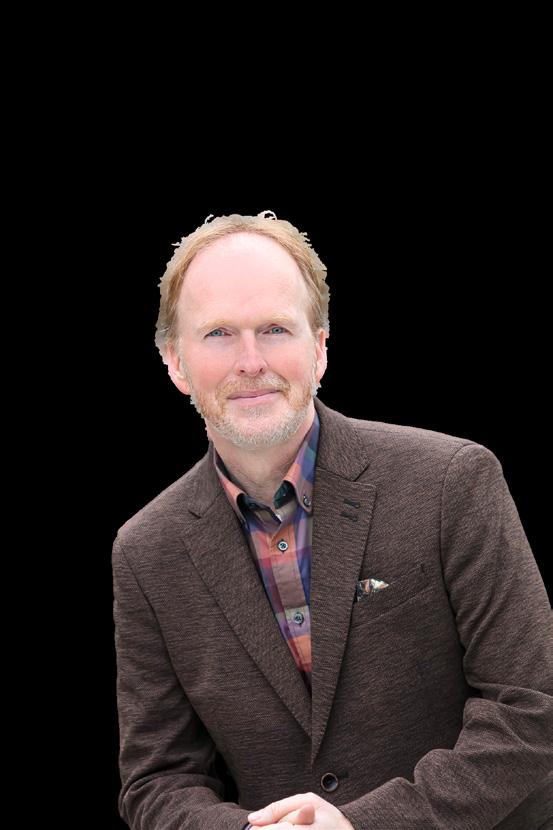
By Roderick Benns Publisher
Party-level support: When political parties provide security, rapid response, and public backing, women are more likely to run and stay.
Quotas and proportional representation: Structural reforms change a lot. Quotas and PR increase the number of women elected and normalizes female officeholding, which has positive effects over time.
More than 130 nations in the world have some form of quota system. In many cases, it’s the political parties themselves doing this voluntarily, like alternating male and female candidates. And in other nations, there are outright quotas in law for their electoral systems. For example, in France, Spain and Belgium, the parity law for genders at the national level also applies to municipal councils in cities above 1,000 people.
More than 130 nations in the world have some form of quota system. In many cases, it’s the political parties themselves doing this voluntarily
In Iceland and Denmark, seven of the last 10 years were governed by a female prime minister. Over in Norway, eight years. This is common in Scandinavia, to see this level of female participation in politics, because political parties have made it normal to alternate between male and female candidates.
Research from BMJ Global Health shows women leaders are associated with improvements in health outcomes and attention to social policies. When women get the chance to be leaders, we all win.
The only question that remains is whether parties – or governments –will ever step up and take action.
By Mike Puffer
by Ruth Kelly-Koebel
Most of us have seen the reports, and are aware of the predicted future growth for our community:
“Population jump of 35,800 forecasted for Kawartha Lakes by 2051.”
“Kawartha Lakes is experiencing significant growth, with the population projected to rise from roughly 83,000–86,000 residents in 2023-2024 to approximately 117,000–130,000 by 2051.”
“Kawartha Lakes is predicted to double in population over the next decade.”

Opportunities and challenges abound. How our community responds to both will shape the future for one and all.
City studies and the recently-completed Vital Signs report conducted by the Kawartha Community Foundation and the Kawartha Works Community Cooperative indicate that if the predicted increase in population over the next few years comes to fruition, growth will be primarily from two sources of the population – seniors and immigrants.
For close to two years, Vital Signs officials drew on publicly available data, local administrative sources, and community insights to offer a balanced, nonpartisan scan of wellbeing across Kawartha Lakes. The completed report was presented earlier this year to city council. The report was positively received, and city officials have given indication of using Vital Signs as a tool for future strategic planning and decisionmaking.
The report is comprised of 11 major indicators of community wellbeing. The initial indicator, “The Community and How It Is Changing,” addresses current and future challenges that a growing population entails.
Overall Kawartha Lakes’ population growth rate was 12 per cent from 2014 to 2024.
“Population growth has been driven by more people moving here, mostly from the Greater Toronto Area (GTA), where real estate and often cost of living is greater than it may be here,” according to Vital Signs. “Indications are that the people who are coming are mostly mid-career age with established and growing families, and older adults looking to retire here. There also has been some significant immigration in recent years.” While those demographics may be increasing, the number of middle-aged residents is waning, though. The report points out that, “Unfortunately, we also see an outward migration among key workforce aged populations, with people ages 15 – 24 and 45 – 60 who migrate outside of Kawartha Lakes.”
“Indications are that the people who are coming are mostly mid-career age with established and growing families, and older adults looking to retire here. There also has been some significant immigration in recent years.”
In Kawartha Lakes, 28 per cent of residents are age 65 and older. Ontario’s average is less than 19 per cent. Despite a senior population that is 50 per cent greater than the provincial average, our municipality does not have official “Age-Friendly Community” status. Endorsed by the province, Age-Friendly Community (AFC) status is designed to create more accessible environments for people of all ages, abilities and backgrounds. Similar initiatives have been undertaken by local service providers over the years in recognition of our heavy senior population, yet no local organization or collective has to date attempted to bring all the players together for what would be a challenging, intensive exercise.
“Unfortunately, we also see an outward migration among key workforce aged populations, with people ages 15 – 24 and 45 – 60 who migrate outside of Kawartha Lakes.”
Earlier this year, the Southwestern Ontario Public Health Unit (St. Thomas-Woodstock region) achieved AFC status following several years of working toward the goal.
“It’s a real commitment of all of the service providing partners in the community,” says Meagan Lichti, public health nurse with the Southwestern Public Health Unit and one of the leads on the St. Thomas-Woodstock team. “It needs the commitment of all sorts of organizations, with the city’s support as well, of course. It takes a lot of mental energy to do the needs assessment and other work involved.”
What would be the benefits of achieving AFC status?
“It offers advantages to participating organizations in the sense that if you have a current needs assessment and strategy when it comes to applying for funding from different granting sources, it could very well move the application to the top of the consideration list,” Lichti said.
Vital Signs identified that another issue seniors face is lack of affordable and appropriate housing.
“What’s missing is a range of centralized, small-format housing options designed to meet seniors’ unique needs. Unlike other demographic groups, seniors often prioritize safety, security, quiet, and accessibility. This stage of life calls for housing that supports stability and comfort – not necessarily multi-use or mixed-age developments that can overlook these essential considerations,” the report states.
Despite a senior population that is 50 per cent greater than the provincial average, our municipality does not have official “Age-Friendly Community” status.
Housing is not just an issue unique to the senior demographic. In the last couple of years, statistics show that there have been more immigrants to Kawartha Lakes than in the last 20 years combined. While two decades ago there were not any official “settlement services” to assist immigrant newcomers in acclimating to the community and finding employment and housing, the New Canadian Centre in Peterborough and Kawartha Lakes & Haliburton Integrated Immigrant Services Association (KLHIISA) are working hard to fill that void.
Geraldine Silva is a member of the executive team at KLHIISA. Like many immigrants who have chosen to come to our community from larger metropolitan regions, she has experienced the challenges of finding affordable housing here.
“Immigrants who are coming here to Kawartha Lakes are doing so for the ‘human needs’ – connections, safety, affordability. They seem to be fairly successful in finding employment, but housing is so expensive here,” Silva says. Many who have accessed KLHIISA services work locally but live somewhere else due to the lack of affordable housing in Kawartha Lakes. Silva speaks of the “isolation of immigrants – they may indeed be surrounded by people, but they are still
Silva has appeared before Kawartha Lakes Council to describe the challenges that newcomers to the community can face and to appeal for financial consideration. To date, nothing has come to fruition, however.
“We need money from all levels of government – municipal, provincial, federal – to be more proactive.”
Challenges for newcomers to get properly settled in Kawartha Lakes are seen on a regular basis at VCCS Employment Services in Lindsay. Brenda Roxburgh, VCCS executive director, says finding and establishing strong social

In the last couple of years, statistics show that there have been more immigrants to Kawartha Lakes than in the last 20 years combined.
“What brings people here? Partly the lifestyle, as it’s not as congested as the GTA. People come to Kawartha Lakes by choice, not by chance. But unfortunately, by the time they discover that some services are lacking or not available, it’s too late,” Roxburgh says. “There are indeed positives to our community. We have the ability to be a strong destination for people, but we need the things to draw them here, such as industry and good jobs.”
Adequate transportation services for people of all ages also continues to be a challenge for our geographically large municipality. Despite some past attempts to connect communities throughout the city with regular public transit service, no regular service exists beyond Lindsay’s borders.
Shortfall of transportation services is “one of the biggest barriers to employment in our community,” according to Roxburgh.
Traditionally thought of as an organization providing services that assist seniors to live comfortably at home as long as possible, Community Care City of Kawartha Lakes (CCCKL) has expanded its services tremendously in the last couple of decades.
“With an aging population, Community Care is well positioned to have available services, but we need to continue working with funding partners and all government levels, and to advocate for increased funding,” says Ryan Alexander, CCCKL executive director. “Now, with an increasing immigrant population, Community Care’s current strategic plan calls out that we have to support everyone who experiences barriers to care.”
Those barriers can be income, minorities, mental health challenges, and more. That’s why CCCKL has methodically added services over the last 20 years that provide services to all ages and walks of life – a dental clinic, the Community Health Centre, hospice services – as a way of prioritising helping those with increasing needs in the community, regardless of age.
“People come to Kawartha Lakes by choice, not by chance. But unfortunately, by the time they discover that some services are lacking or not available, it’s too late.”
“I think the community’s going to have to evolve to support all people,” Alexander concludes.
As for the Kawartha Community Foundation’s role in meeting challenges that current and future growth brings, the foundation’s executive director Eric Smeaton prefers to look positively on the matter.
“The growth in our senior and immigrant populations is exactly where the foundation’s ‘constellation’ strategy comes to life,” Smeaton says. “For us, the benefit isn’t just about attracting new residents; it’s about the influx of social, intellectual, and financial capital. Our ‘new seniors’ often arrive with a lifetime of professional expertise, while our new neighbours bring global perspectives and entrepreneurial energy. The foundation’s role is to act as the connective tissue, ensuring these groups aren’t just moving to the community, but are woven into it.”
The coming population growth “is also a massive opportunity to diversify our investor base,” Smeaton adds. “Many of these newcomers arrive with a desire to plant deep roots and give back to the place they now call home. By becoming ‘Friend of the Foundation,’ they aren’t just donating – they are fast-tracking their civic integration.”
The foundation continues to conduct research for the evolving Vital Signs initiative, and to conduct a series of community presentations and conversations about the challenges and opportunities that are in store for Kawartha Lakes.
LA
Next month: an examination of Vital Signs’ Health and Wellbeing indicator.
just

Mike Puffer has lived and worked in Lindsay all of his adult life. Retired since 2022, he is heavily involved in the community as a volunteer with many local organizations, and enjoys golfing,



With exciting growth plans on the horizon, The Lindsay Advocate welcomes Brittany Taylor and Sue Allen to the media company’s team.
Brittany Taylor is a prominent, award-winning Indigenous educator, advocate, and cultural guide based in the Kawartha Lakes region. A member of the Curve Lake First Nation (Michi Saagiig Nishnaabeg territory), she is recognized for her work in preserving Indigenous knowledge and fostering cultural connections within schools and the broader community.
She is also a seasoned digital media manager and has already begun applying her skills and knowledge on behalf of the Advocate.
“Storytelling has always been at the heart of strong communities,” says Taylor, “especially within Indigenous traditions where stories carry knowledge, history and connection across generations.”
“I’m honoured to contribute to a platform that uplifts local voices and reflects the richness of Kawartha Lakes,” she said.
While The Lindsay Advocate continues to be a much-loved monthly print magazine, Fireside Publishing House is investing in its digital media presence, too.
Part of that investment means a brand-new Advocate website, courtesy of Colour & Code, and an online editor to coordinate much more editorial content than the media company has ever before produced.
That’s where Sue Allen, the new Advocate Online editor, will strongly contribute. Allen moved to Lindsay in 2000, completing her last two years at I.E. Weldon S.S. For seven years, Allen owned and operated her own wedding and events planning company in Toronto. In 2021, she opened a boutique event space in Kawartha Lakes called The Lindsay Lounge.
With her extensive background in business and marketing she is excited to use her coordination skills to work with columnists, writers, and creating new features for readers.
Allen says she is looking forward to “listening, learning, and connecting” with local people whose stories shape the heart of the community.
Both Allen and Taylor will also be monthly columnists for Advocate Online. Taylor will write a column called “Bridges to Understanding,” reflecting on Indigenous issues, and Allen’s column will be called “The Other Side,” reflecting on learning to love life in middle age.
Publisher Roderick Benns says Taylor and Allen joining the team is a game changer for the all-local media company, which has been around for close to a decade.

“We’re well-known for our quality print publications – and certainly the Advocate has had a very loyal following since its inception,” said Benns.
“Now it’s time for us to up our digital media game, and Sue and Brittany are a big part of this,” he added. He is glad the Advocate print magazine “continues to be loved,” but says now is the time to do even better online.
“We want to give more, continuously improve, and meet the needs of our community when it comes to journalism excellence,” Benns says.
Rebekah McCracken, executive editor of Fireside’s publications, says she’s excited for what’s to come.
“It’s all about our readers in the end. If we serve them well, they’ll return repeatedly for our content. And that really helps our advertisers,” she explains.
McCracken said the all-new website is a complete refresh for the much-loved Advocate brand.
“I think our readers are going to be pleased with what they see,” she said. “Eye-catching design and more content than ever is what they will find.”
The monthly Advocate magazine, Play Stay Live: An Insider’s Guide to Loving Life in Kawartha Lakes, and Kawartha Lakes Weekly newspaper, are all under the Fireside Publishing House umbrella. Fireside is a fully independent media outlet based in Kawartha Lakes.
More announcements to come as the Advocate digital rebrand continues.
Municipal elections may not always get the same attention as provincial or federal elections, but they have a big impact on everyday life right here in Kawartha Lakes
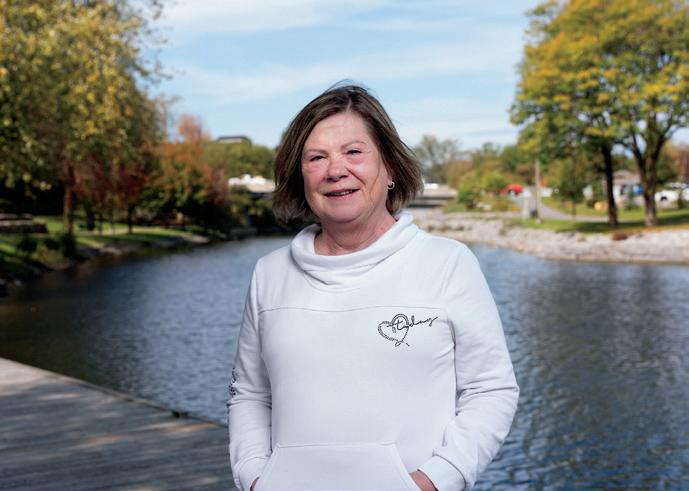
Cathie Ritchie, City Clerk
The people elected this fall will help make decisions about roads, parks, recreation programs, libraries, emergency services, housing, growth and many of the services residents rely on every day.
Not sure if you’re on the voters’ list? Quickly check or update your information online at www.registertovoteon.ca
With internet and telephone voting, you can cast your ballot from the comfort of home, the cottage, or wherever you may be during the voting period Visit our website for in-person voting assistance locations
Voting will open at 9am on October 16 and close at 8pm on October 26, 2026. All you need to vote is your voting PIN letter, which you will receive by mail.
Did you know that you may be eligible to vote in more than one municipal election?

Rules around voter eligibility can vary depending on your situation, so we encourage residents and seasonal or cottage property owners to learn more before voting begins
Every vote really does matter. Municipal government is the closest level of government to our daily lives, and local decisions help shape the future of our communities for years to come.

The Mindful Move - with Nicole Naylor
The Life You Want Might Require Less
Summer has a way of showing us what we truly enjoy about home.
It’s rarely the extra rooms or overflowing storage spaces that matter most.
It’s the quiet morning coffee outside. The evenings spent with family. The freedom to leave for the weekend without worrying about endless maintenance waiting back at home.
For many, there comes a time where “more house” no longer means more happiness.
What once felt exciting can slowly begin to feel heavy. More cleaning. More upkeep. More things to organize, repair, and manage.
Perhaps at this point you begin to crave smaller. Not smaller for the sake of smaller, but simpler; easier, lighter.
Downsizing is often misunderstood as giving something up, when in reality, many people gain far more than they expected: more time, more flexibility, less stress, and a home that better supports the life they’re living now.
The truth is, our needs change through different seasons of life. And sometimes creating more room for living starts by needing less space to manage.
Mindful Takeaway: Living well doesn’t always mean living large.











By Jason Ward | Illustrations by Ruth Kelly-Koebel

Few public institutions in Kawartha Lakes are larger, more consequential or more expensive than Central East Correctional Centre. There are none we know less about. It sits on Crown land east of Lindsay on Highway 36 — integrated pods, almost windowless, the size of a shopping mall. Most of us drive past it without looking twice. That is not because we are inattentive. The building gives us nothing to look at, and the institution inside gives us nothing more.
CECC is, in every dimension, a public institution. Its land, its building, its budget, its mandate, its staffing, its oversight — all public, all paid for in our name. Nothing about it, at the level of its constitution, is private.
CECC has a rated capacity of 1,184, though like most Ontario jails it has long held more. It has been one of the largest correctional institutions in Ontario since opening in the early 2000s. Its correctional officers number in the hundreds. With medical, administrative, programming and support staff, they make CECC a major regional employer. A city within a city, set back from the highway behind a tree-lined berm.
And yet the community that hosts it has almost no recurring way of knowing what happens inside. Hospitals publish outcomes. School boards hold trustee meetings. Long-term care homes are inspected and the inspections posted online. CECC had a Community Advisory Board that toured the facility and filed an annual report to the minister. Under the Ministry’s terms, that report could be made public only with the minister’s approval. The last CAB report published on the ministry’s own website is from 2016. The province quietly disbanded all 10 provincial CABs in June 2021.
Most of what the community knows about CECC, it has learned the long way around -through inquest verdicts, union interviews, Ombudsman tallies and the insistence of families who lost someone inside. Here is the record, pieced together. The population in Ontario’s provincial jails is, by the province’s own data, heavily concentrated with mental illness.
In 2019–20, 27 per cent of men and 43 per cent of women in provincial custody had an active mental-health alert on file; of inmates placed in segregation, 42 per cent did. Advocacy groups have estimated that roughly four in 10 Ontario prisoners will experience at least one severe mental-health problem during their incarceration. Most enter without community psychiatric care, and most leave having received none inside.
Most inmates at CECC, like most in Ontario’s provincial system, are not sentenced at all. They are held on remand — legally innocent, awaiting trials held elsewhere. In 2021, a local police official stated that only about five per cent of CECC inmates were, at that time, from Kawartha Lakes. No more recent figure has been publicly released. In 2019, approximately one-quarter of correctional officers at CECC — from a complement of 253 full-time and 170 part-time — were on stress-related leave. More than a hundred CECC employees were on WSIB stress leave at the same time: enough people to nearly fill a local, public-school gymnasium, all from the same building, all unable to go back to work. Those 100-plus employees alone accounted for about 10 per cent of all such leaves across Ontario’s entire corrections system. By October, the facility had been locked down 69 times due to staff shortages. The pressure has not eased. Across Ontario’s jails, according to OPSEU, provincial spending on temporary agency nurses has climbed from roughly $14 million in 2020-21 to more than $51 million in 2024-25. Registered practical nurses in provincial jails earn several dollars an hour less than their counterparts in Ontario hospitals; psychologists earn markedly less than in forensic hospitals. The nursing shortage the 2022 joint inquest heard about — CECC operating with half the nurses it was authorized to employ — has not been closed by filling the complement. It has been papered over by paying premium rates for temporary workers the province struggles to retain.
The people inside have noticed. Ontario’s Ombudsman has kept a long file on Central East. The office’s 2024-25 report, released last June, recorded 6,870 complaints and inquiries about Ontario’s correctional facilities in a single year, a 55 per cent increase over the year before. At CECC specifically, 366 inmates submitted a single group complaint about deteriorating living conditions. For several years in the late 2010s, the Ombudsman’s office confirmed that CECC was the single most-complained-about correctional facility in the province.
And there are the inquests. Since 2022, five coroner’s inquests have been held or called into deaths at CECC, considering 14 people in total and producing, in the verdicts so far, well over 100 recommendations to the province.
A 2022 joint inquest looked at three men found in their cells after hanging between 2014 and 2019. Arun Kumar Rajendiran, 25, had never been flagged as a suicide risk
and had never seen a psychiatrist during his time at the facility. Darrel Tavernier, 42, had a scheduled psychiatrist appointment that never took place. Stephen Kelly, 62, died in the facility and his original healthcare file was missing when staff became aware of his death. Jurors heard that CECC was operating with half its authorized nursing complement. The jury issued 38 recommendations.

A second inquest, held later that year, examined five more deaths at the facility from drug toxicity between 2018 and 2019: Steven Frenette, Daniel Foreman, David Bullen, Jonathan McConnell and Susan Borja.
The 2023 inquest into the death of Abdurahman Hassan issued 53 recommendations. Hassan was a Somali refugee with schizophrenia and bipolar disorder, held at CECC for three years under a Canada Border Services Agency detention order. He died at Peterborough Regional Health Centre after a transfer from the facility by way of Lindsay’s Ross Memorial Hospital. The inquest’s first recommendation was that Ontario end the practice of housing immigration detainees in its provincial jails. Two and a half years later, it did.
The December 2023 inquest into Soleiman Faqiri is the one most Kawartha Lakes residents now recognize. Faqiri, a 30-year-old former University of Waterloo engineering student who lived
with schizoaffective disorder, died in a segregation cell at CECC on his 11th day in custody. The jury ruled his death a homicide and issued 57 recommendations. The homicide finding goes to manner of death, not criminal guilt. An inquest jury answers five questions: who, when, where, how and by what means. It does not assign blame.
Faqiri’s family asserts that none of the 57 recommendations have been implemented. The family publicly asserted that CECC was responsible for his death. In 2019, they filed a $14.3-million civil suit against the government, the superintendant and, notably, seven individual correctional staff. Among other things, the family alleged there was a physical attack and excessive force by the staff. The suit was settled in 2022 on confidential terms. Settlement carries no admission of liability. The OPP declined to lay charges three times.
A fifth inquest, which began in March 2024, examined the drug-toxicity deaths of four more inmates at CECC between 2020 and 2022: Adam Wood, Stanley Saunders, Thomas Neumann and Abdelaziz Ibrahim. So far, no verdict has been publicly reported. And in July of 2024, the most recent publicly reported death. Andre Taillefer, 58, was found with serious injuries in his cell and died in hospital days later. Two fellow inmates have been charged with first-degree murder. The case is before the courts.
Running a jail is hard. Running one that holds more than 1,000 people, many mentally ill, many in active addiction, many awaiting trials that have not yet begun, is harder still. The staff at CECC work inside a building whose pressures are real and whose resources, the record suggests, have not been matched to them.
This is not a criticism of the people who do that job, play by the rules and discharge their duties humanely under pressures they did not create. This statement reflects on the extent of information provided to the public — who fund this institution and whose standards it is intended to uphold — regarding its operations. That means is thin. The Ministry’s own Community Advisory Board never published its findings without min-
isterial approval, stopped publishing them in 2016, and was disbanded in 2021. Nothing has replaced it. There is no independent Ontario prison inspectorate, though Howard Sapers’ 2017 independent review of the provincial system recommended one and the 2023 Faqiri inquest recommended one again. Communications about CECC are centralized in Toronto; there is no local spokesperson. When the superintendent of the institution changed last year, there was no public announcement. The position turned over the way it has here before — quietly, internally and noticed only by those who already knew to look.
The province has been moving, in its way. In 2021, Ontario amended its correctional regulations to prohibit segregation for inmates with serious mental illness. Institutional Security Teams were announced at CECC in 2022, aimed at contraband and trafficking rather than at the mental health and restraint issues raised by the inquests. A multiphase capital plan will add roughly 6,000 correctional beds across Ontario by 2050 — jailing is on the rise. Whether those measures answer what the inquests recommended is still untested. Many of the recommendations remain, on the public record, unimplemented.
Central East is a public institution in every respect the word carries. It is ours, in every legal and civic sense. And yet almost everything we know about it, we have learned because somebody inside it died, or was struck, or sued, or spoke to a reporter anonymously because they could not speak on the record. The gap between what this institution is and what it tells us about itself is not accidental. It is the settled practice of a provincial architecture that has not been required to do otherwise.
A public institution cannot, in any meaningful civic sense, remain public if the public is not given the ordinary means of knowing it. That is not a partisan point. It is a democratic one. The answers do not require a revolution: an independent Ontario prison inspectorate, as recommended a decade ago and recommended again by the Faqiri inquest; a community oversight body whose reports reach the public without a minister’s permission; a CECC spokesperson the community can actually reach. Some of it once existed, and was dismantled. None of it has been rebuilt.
These questions remain on the community’s desk, where they have lain too long. The building sits in plain sight. What goes on inside it does not. Our jail is ours. The rest is a choice.
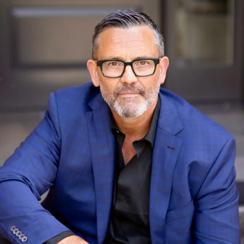
Jason Ward is a retired lawyer and longtime
resident. He writes on issues of public accountability, community safety and justice system performance.

Get happy
By Denise Waldron
What is happiness? It is certainly not just the absence of negative emotions, but perhaps a balance of experiencing positive feelings while finding purpose. Some say it’s a state of well-being paired with contentment, joy, and a sense that one’s life is meaningful, satisfying, and worthwhile.
It seems the Finns have figured it out. For eight years in a row, Finland has ranked number one in the World Happiness Report. The publication is the world’s foremost publication on global wellbeing and how to improve it. It contains data from more than 140 countries with analysis by researchers from a wide range of academic disciplines. The report scores countries based on GDP per capita, social support, life expectancy, freedom, generosity, and low corruption.
Canada has experienced a steady slide in the World Happiness Report rankings, falling from 11th in 2020 to 18th in 2025 and then to 25th in the most recent 2026 edition. The report attributes much of this decline to worsening life evaluations among younger Canadians, who now rank among the least satisfied in the OECD.
Canada still performs strongly on measures like social support and institutional trust, but the long-term downward trend signals deeper structural pressures on quality of life.
What makes Finnish happiness unique is that it isn’t built on fleeting satisfaction —it’s methodical. Finland invests heavily in education, research and development, and environmental sustainability. The Finns value responsibility, foresight, and collaboration. Even simple pleasures—like fresh, clean air, proximity to nature, and the national tradition of sauna — contribute to a healthier, happier, more grounded society. Sauna is a symbol of trust and equality, as everyone who enters is stripped down to their bare minimum — literally. The Finns seem to embrace the idea that nakedness is a great equalizer. Ninety per cent of Finns use a sauna weekly to socialize, make business deals and to relax. This includes with strangers.
Canada has experienced a steady slide in the World Happiness Report rankings, falling from 11th in 2020 to 18th in 2025 and then to 25th in the most recent 2026 edition.
Bayley Hayward, 23, spends a lot of time on the ice as a technician at the Lindsay Curling Club, where she scrapes ice layers and creates pebbled surfaces for optimal curling conditions.
Hayward doesn’t actively strive for happiness but finds herself happy most of the time by focusing on small, everyday wonders rather than major accomplishments. She emphasizes finding peace and contentment through observing nature, such as watching flowers bloom or
icicles form on trees in winter, and other small daily wonders that can “stack up,” unlike infrequent personal accomplishments. “I think that was the main path to happiness for me was learning to appreciate the way that nature continues to thrive around me, regardless of what I’m doing.”
(Maybe she’s a budding Finn, with her nature focus.)
When she was 19 or 20, the ice tech struggled with selfworth issues. Naturally pessimistic and forced to confront her own identity issues, she previously had a “bleak outlook on life.” She felt trapped by societal expectations of working desk jobs until retirement. The turning point came when she learned to see herself as part of a larger ecosystem and community rather than trying to be an individual achiever.
A significant theme emerged in her early 20s around rejecting societal expectations and embracing what she calls “being a loser.” Not in a negative sense, but as letting go of the pressure to achieve greatness and instead focusing on personal contentment. She noted this philosophy helped her relationship with her father, who initially had high expectations for a university education and career success but eventually became proud of her chosen path.
Before her present state of happiness, Hayward said she experienced both chronic and situational depression. She said taking medication and therapy helped significantly but emphasized the importance of personal work alongside treatment. This included forcing herself to complete small daily tasks like brushing teeth and consciously redirecting negative thoughts to positive ones, following advice from a friend at age 15 about “training the brain like a muscle.”
These days Hayward says her greatest happiness comes from home-cooked meals, sunsets, spring flowers, gardens and cookies. Her job imbues her life with happiness as well.
The
turning point came when she learned to see herself as part of a larger ecosystem and community rather than trying to be an individual achiever.
Happiness from working in certain job callings is not a surprise to career researchers at Career.io. Experts say occupations make people happy when they provide a sense of purpose, autonomy, and opportunities for mastery, rather than just a paycheque. They analyzed data from more than 750,000 workers in the United States (likely similar results in Canada) and found that some occupations led in the happiness department. They used government statistics and Glassdoor.com reviews for each job and ranked the roles by average rating.
The top five happiest roles in reverse order included fitness instructors, designers, software developers, with carpenters being second happiest in their vocations — and coming out on top, real estate agents.
Ask 38-year-old Lindsay realtor Janet DiBello why realtors rank the highest on the happiness scale and she won’t hesitate with an answer. After nearly five years in the business, she says real estate is both exciting and incredibly rewarding.
“Helping people through some of their biggest moments of their lives and the flexibility is wonderful.” With family commitments, she can make them work with the help of her team and support system to maintain balance in her life.
The top five happiest roles in reverse order included fitness instructors, designers, software developers, with carpenters being second happiest in their vocations — and coming out on top, real estate agents.
Summer McMillan is a therapist at Lock 33 Counseling in Lindsay and explained that happiness has multiple meanings and interpretations, distinguishing between fleeting emotional states and deeper contentment or fulfillment. “It’s actually a big topic. It’s hard to nail down because when we talk about happiness, we’re not all necessarily meaning the same thing.”
McMillan explained that being gentle, encouraging, and compassionate with oneself leads to greater contentment. She also notes that the converse is true: the harsher and more demanding we are with ourselves, particularly under the unrealistic expectations society often promotes, the more difficult it can be to feel happy.

“It’s actually a big topic. It’s hard to nail down because when we talk about happiness, we’re not all necessarily meaning the same thing.”
McMillan provided practical advice for improving happiness, emphasizing the importance of introspection to identify personal wants, needs, and values.
She warned against seeking self-worth through external validation, material possessions, or others’ approval, describing this as an unwinnable game where the bar constantly moves. “Just when we have accomplished this, or this person likes us or we’ve acquired this possession, oftentimes there can be a temporary kind of pseudo-sense of feeling good or feeling important.”
She notes we are then kind of back to being with ourselves and how we feel about ourselves. “Like, oh, it hasn’t changed.” Instead, she advocates for internal motivation based on personal values rather than external approval for happiness.
McMillan elaborated on the exhausting nature of seeking approval from others and how it doesn’t lead to deep satisfaction or purpose. “We end up kind of looking for our worst in the outside world in things like wealth or status or appearance.”
For practical happiness enhancement, McMillan recommends focusing on personal values to guide life decisions, maintaining physical activity, spending time in nature, and following healthy lifestyle practices. “Connection is huge.”
She notes that building connections with caring and safe people impacts happiness. “COVID was an example of how that isolation ended up negatively impacting people’s mental health, (for) people feeling good, feeling happy.”
She contrasted this with motivation based on personal values, which provides healthier and more sustainable sources of fulfillment and meaning.
They say money doesn’t buy happiness. In the case of alleviating pain — perhaps it buys contentment? Someone suffering from severe dental pain without the means to see a dentist is unlikely to be happy. In that case, comfort would buy happiness, the therapist noted.
Tichina Stoutt of Dunsford says her happiness stems from living with purpose and being content with who she has become. In her teenage years, she suffered from depression while growing up in the British Virgin Islands, specifically on Tortola. The depression wasn’t necessarily situational or chemical; she simply experienced unexplained sadness for days at a time. Family members recognized it as depression, though she was never formally diagnosed due to limited mental health resources on the island.
The 36-year-old insurance agent and financial coach said her happiness transformation began when she met her now-husband in high school. When she was 17, he invited her to a non-denominational church where she encountered teachings about “fake peace versus real peace” and “fake joy versus real joy.” What she calls a spiritual awakening continued after she married at 18 and moved to Canada in 2011, where she attended a church in Lindsay.
Living as a minority in Lindsay, she faced racism but found that her newfound peace and understanding of her identity as a Christian helped her respond with grace rather than anger.
Islands Caribbean food or mixed cuisines. She learned that inviting strangers over for dinner isn’t culturally acceptable in Canada, unlike her Caribbean background where such hospitality is normal. “I had to learn very quickly that you can’t just invite strangers over, because that’s weird.”
Stoutt believes people are not born with set levels of contentment. She believes happiness requires daily work and looking to something higher than themselves. She maintains a gratitude list that she reads daily and emphasizes the importance of setting goals and taking steps toward them to create a sense of progress and accomplishment.

She said she knows who she is, which helps anchor her happiness. “I recognize who I am right now. It’s daily and I wake up every morning, and I remember who I am. I repeat it to myself.”
Along with her faith, Stoutt finds service in others provides her with joy. “I love my community. I love my family. I love to serve people. I love that it’s not only giving me peace and joy, but it’s a very big reason for why I can honestly say that I’m happy with who I am and who I’ve become.”
Her commitment to service manifests in multiple ways. She serves as the chairperson for Lindsay Canada Day in her first year in this role, volunteers in her children’s schools and at various events, and hosts weekly Sunday dinners featuring Virgin
Experts say social media can be detrimental to happiness because it encourages constant comparison. Users tend to post curated highlights of their lives, which can make others feel inadequate or unsuccessful by comparison.
She believes happiness requires daily work and looking to something higher than themselves.
Countries including Australia, Indonesia, and Turkey have banned or restricted social media use for children 16 and under, and Canada is considering such a move, too.
For Lindsay’s Jackie Toplak, social media brings happiness into her life. She posts measured photos of her family and friends, usually enjoying themselves. The 44-year-old office administrator finds joy in her posts. “I love having a record of our adventures, because it’s fun to look back years later and reminisce about the things we did, and to see how much the kids are growing and changing.”
Toplak says she had the same friend group for many years and feels fortunate to have such a special “tribe” in her life.
Social media “likes” boost dopamine by hijacking the brain’s natural reward and social validation systems. When you receive a like, your brain’s reward registers this as a surge of social approval and connection. For Toplak, this connection brings her happiness as well.
Maybe Finland’s real lesson isn’t that happiness can be imported, but that it can be cultivated — through connection, purpose, nature, and simple daily rituals. We may never adopt sauna culture, but the Finnish example suggests happiness grows best when we make room for what truly sustains us.

Writer Denise Waldron cultivates happiness by starting each day declaring, “It’s going to be a great day.” While it does not stop bad things from happening, most days are joyful in her life.





By Robyn Best
When Percy Hill was a child he had polio, so his father built him a greenhouse so he had something to do. From there, the love of growing flowers blossomed in the family.
That zest for gardening led to him and his wife, Madeline, opening Hill’s Florist in 1946. Now, 80 years later the business is still run by family and has no signs of slowing down.
The business was originally based in Aurora, but after moving to Lindsay, Hill’s Florist was located in the lobby of the Academy Theatre for a few years. Finally, in 1951 the florists planted the shop’s roots in its current location on Lindsay Street.
At the time the couple also lived on the property. They had to build the greenhouses, and they turned their one car garage into the flower shop.
After Percy died, his son Roger stepped in to help out as Madeline couldn’t run the business by herself. Roger had graduated university with a degree in biochemistry, something that he said many wouldn’t realize is important to running a flower business. While Roger became more involved in the business, his future wife, Debbie, applied and ended up getting a job at the store.
Now, Roger and Debbie’s daughter, Sarah Oldale is the manager of purchases and sales at the store. “It’s always taken two people. When my grandfather was still alive, he managed the greenhouses, and my grandmother managed the flower shop,” she said. Now Oldale runs the store side of things and, at 75, Roger is still managing the greenhouses.
The business was originally based in Aurora, but after moving to Lindsay, Hill’s Florist was located in the lobby of the Academy Theatre for a few years.
Oldale is also the one who helps with events, like weddings. “The things I enjoy doing are the big events. That’s where I get to be a lot more creative.” For her, flowers serve an array of purposes, and that’s what makes them special. “Flowers are about beauty. They’re about love. They’re about grief.”
While Roger has been known to be the personality behind the business, both he and Oldale agree without Debbie, the business would not be what it is today. “I would credit my mom with the longevity of this business. We would not be
here 80 years were it not for my mom’s 45-year contribution to this place. She’s really the business mind behind it, and the workforce behind it,” Oldale said. Throughout the years there have been a lot of changes in the flower industry. “The biggest thing we face is the box stores. Flowers are ubiquitous now, they’re absolutely everywhere,” Oldale said.
Alongside flowers, Hill’s also grows some vegetables and herbs in the greenhouses. They also are responsible for the planter boxes that appear along Kent Steet in the summer. Roger has to customize the plants so they’re suitable for the fluctuating sun and shade that happens during the day.
Throughout the years, they’ve found that a lot of people don’t realize how much time and effort has to go into maintaining a garden. “People just do not have the time to garden. We saw a resurgence of it during COVID because people were not spending their money or time elsewhere, they were investing back in their backyards,” said Oldale.
“We would not be here 80 years were it not for my mom’s 45-year contribution to this place. She’s really the business
mind behind it, and the workforce behind it.”
Now they’re next focus is on this summer. With many choosing not to go away to the U.S. during the summer like in previous years, Oldale thinks there may be another boost in people looking to garden this summer. She’s also found that people have the misconception that working in a flower shop is something people do when they retire. However, it’s actually a very physical job with lots of heavy lifting and bending over. Oldale had to have carpal tunnel surgery a few years ago as her hands became almost unusable after years of gardening.
Being a small business, family members have had to make big sacrifices to ensure the shop can stay open. When Oldale’s older brother died, it was during the Christmas season. “I was here running this flower shop, making sure that Christmas happened for all these other families, while my parents and brother were around his hospital bed in Ottawa with him when he died.”
“People go about the rest of their lives, and you’ll never know what someone is sacrificing in their own personal life,” Oldale said.
Oldale hopes the community knows that they appreciate all the support the business has received for the last 80 years. “For the people who keep coming out every year and who recognize that we’re different and that they see the difference in what we do and what we grow and how knowledgeable we are, I appreciate that so much. That has kept us going.”

Wards Lawyers has announced the launch of its refreshed brand, a rebrand that reflects both the firm’s evolution and the values that have guided it from the beginning.
The new Wards Lawyers brand is built around a clear and compelling promise, according to a media release: bigfirm outcomes, boutique-level care. It reflects the firm’s commitment to delivering clear, strategic legal advice for individuals, families, businesses, and non-profits; with the kind of plain-language guidance, thoughtful preparation, and steady counsel clients can trust.
“This rebrand is about expressing more clearly who we are today as a firm,” said Melissa Wemyss, chief executive officer. “Our team delivers sophisticated legal work, but how we deliver it matters just as much. We want clients to feel the clarity, confidence, and care behind every interaction - and we want our brand to reflect that.”
“When we started Wards Lawyers, the goal was to create a practice that combined strong legal expertise with a more personal, grounded experience for clients,” said Karissa Ward, principal lawyer and co-founder. “This new brand stays true to that foundation while reflecting the depth of the team we’ve built and the future of the firm. It feels like the right next chapter.”

By Lindsey Schoenmakers
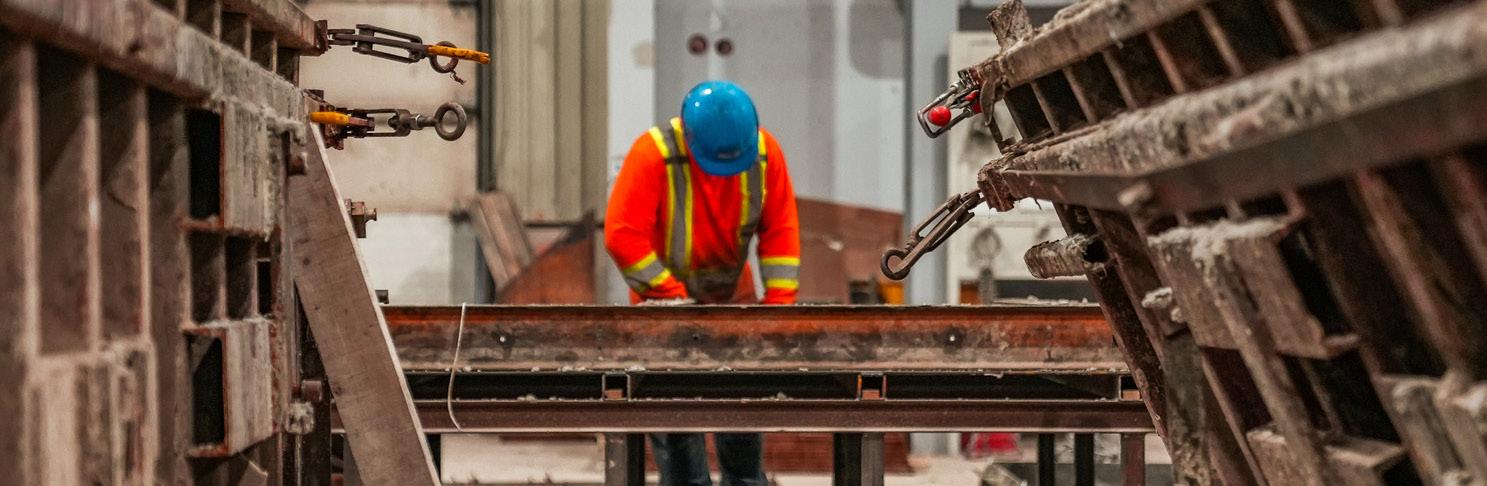
Manufacturers in Kawartha Lakes continue to demonstrate remarkable resilience and global competitiveness. In my work with local industry, I see firsthand how exporting, diversification, and strategic investment are driving growth; even in the face of tariffs, supply chain pressures, and shifting global markets.
What stands out most is the level of global engagement among our manufacturers. Many are exporting not just to the United States, but also into markets such as Europe, Asia-Pacific, Latin America, and the Middle East. This global market activity reflects the strength, specialization, and adaptability of the products made here.
Just as importantly, many local companies aim to diversify even further, by deepening their presence in the U.S., expanding into Europe, and exploring more opportunities. This diversification reduces risk and positions Kawartha Lakes manufacturers to compete in markets where demand for high-quality, niche, and customized products continues to grow. It’s a smart strategy, and it’s working, by helping local companies stabilize their sales and exports.
Local businesses are also leveraging a wide range of provincial and federal funding programs that help them scale and modernize as they become export ready. I see manufacturers drawing on supports such as the National Research Council Canada Industrial Research Assistance Program, the Ontario Centre of Innovation, FedDev Ontario, the Ministry of Economic Development, Job Creation and Trade, and other programs that support workforce development. These investments allow companies to adopt new technologies, expand production capacity, and pursue international market development with greater confidence.
Workforce development is the final piece that helps businesses access global markets. In Kawartha Lakes, we benefit from strong partnerships with Fleming College, Trent University, local training providers, and our secondary schools. They all play an important role in raising awareness of the manufacturing sector and the variety of professions within it. Together, we’re helping students and jobseekers understand pathways in engineering, skilled trades, logistics, quality control, and advanced technology. These connections, along with apprenticeships and upskilling programs, give our manufacturers a meaningful advantage. Every day in Kawartha Lakes, I see how manufacturers are thriving in global markets. Expanding exports, leveraging funding programs, and investing in people are driving their continued success.
Lindsay Schoenmakers is the economic development officer, business development at the City of Kawartha Lakes.

By Robyn Best
Located in Coboconk, macFAB aims to help customers keep their homes and cabins feel welcoming and lets customers have a café dining experience.
MacFAB’s was originally established in 1955 as a dress maker’s supply store in Toronto. Dale Sonier bought the company 24 years ago from the original owners where he helped introduce offerings of many different types and style of fabrics. Most recently, Sonier and his partner Patick Kennedy brought a version of the business to Kawartha Lakes. “The whole concept we are trying to create is that people who are inheriting or buying cottages, they renovate, and then they sell, and they need somewhere to shop,” said Sonier.
The store sells unique furniture, carpets, mirrors, a wide variety of wallpapers, and more. They also offer upholstery services. “This is what you find in Europe. Not so much here and we travel to Europe all the time. We love it, and so we’re bringing back that sort of European feeling,” said Sonier.
Three years ago, they introduced macFABkitchen, something they felt was missing from the area. The café offers baked goods, including certified gluten free options.
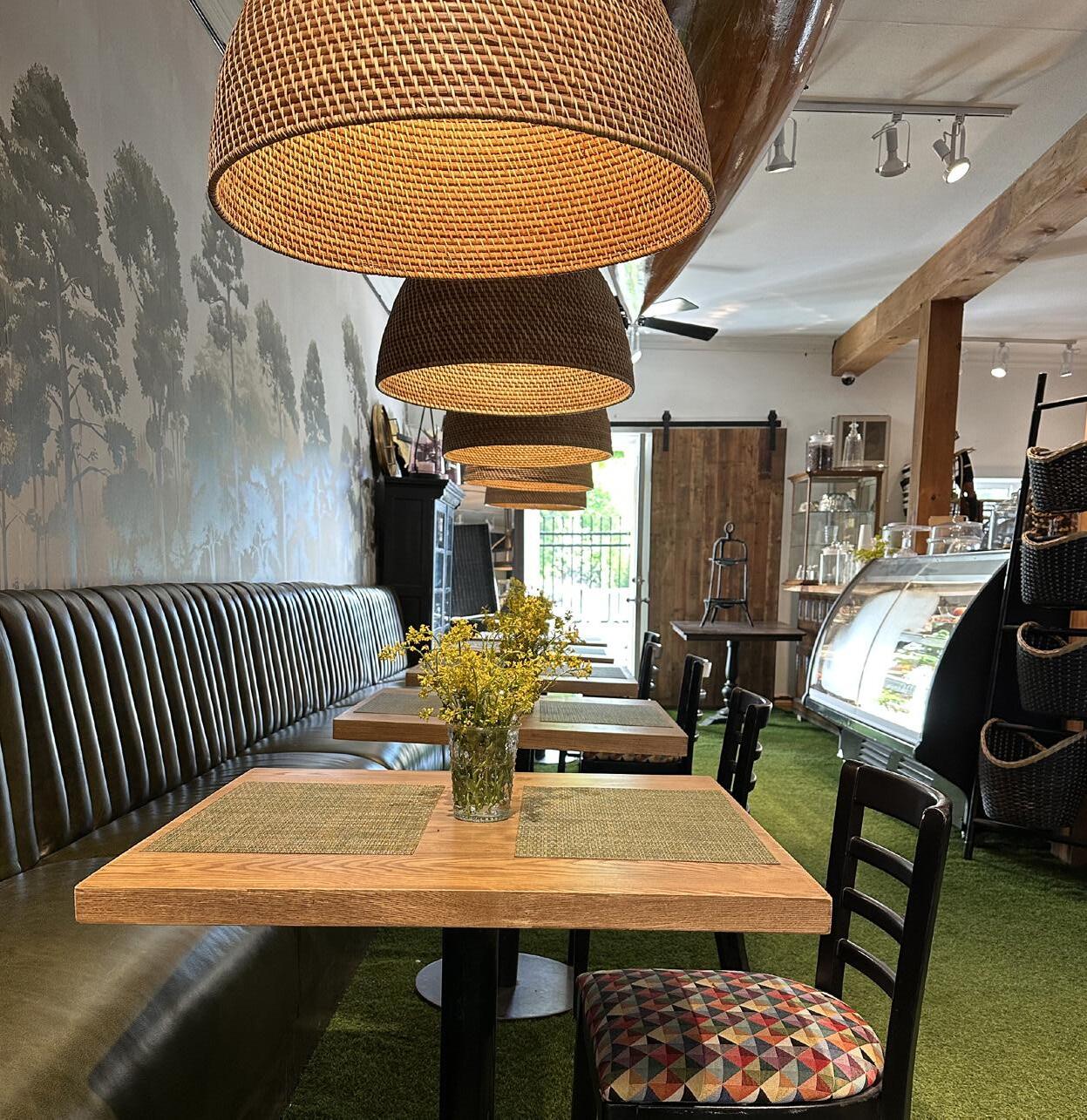
macFAB offers a unique blend of welcoming decor fused with a small cafe.
Photos: Robyn Best.
On top of that and coffee, the café also offers artisanal pizza and offers pre-made frozen meals made by Kennedy. These meals include vegan and vegetarian food. For some cottagers, Kennedy has found they enjoy the comfort of not having to cook all their meals. “Also, a lot of people of a certain age don’t cook anymore,” Kennedy said.
“When you walk in,” Kennedy says of their café space, “it looks like a home kitchen.” The café also has outdoor seating that sits on the Trent Severn Waterway, allowing shoppers to have a nice view while eating.
The goal of combining retail with food, is to give those in Coboconk a unique shopping experience. “It’s bring your designer, sit and have lunch in the cafe. Choose your fabrics, choose your accessories. It’s one stop shopping,” Sonier said. It’s not only the cottagers whose needs they try to meet. “A lot of people also dock their boat here and they go from little town to the next town,” said Sonier, noting that many boaters will spend the entire day in Coboconk before moving on.
As well, with growth being seen across Kawartha Lakes, they’ve noticed that residents are opting to go on road trips to nearby places. “With Lindsay growing exponentially it’s making everything north of Lindsay drivable. If you want to get out, you can just get in the car,” said Kennedy.
Now open for the season, Kenney and Sonier look forward to welcoming guests into the store this summer.

By Eric Smeaton

It never ceases to amaze me how many people will happily exchange hardearned currency for a beautiful plate of food. Me included. To experience exquisite taste, we perform laborious tasks. We are children in our big-people bodies playing in our “culinary sandbox”.
Humans will pay large sums for a painting that reminds them of the feel of soil under their feet when they were young, even if it is just three perfectly placed, emotionally triggering dots.
We never ask, “If you were stranded on a desert island, what math would you bring?” We ask, “Which album?” We ask what your favourite memory smells like, or what it sounds like. For me, it’s The Cars playing “Just What I Needed” while falling in love for the first time at a roller rink.
The human experience is measured by pleasure. It is the one truth never argued between a money-hungry entrepreneur, a tirelessly dedicated charity, a crop farmer, or a starving musician.
The Brain in the Shell
I used to tell my students: “Make two fists. Now put them together, knuckles touching. That is a decent approximation of the size of your brain. That is who you are, encased in a shell.”
That brain has one goal: to seek pleasure. And it will find it. If you don’t give it to the brain naturally, it will look elsewhere — narcotics, caffeine, alcohol, nicotine. The brain is going to “get happy.”
Our phones are currently giving our youth those hits on a regular basis. Why aren’t we giving those screens some healthy competition?
On this principle alone, we must champion the outlets that feed the brain naturally. The arts, for instance, exist entirely to please the brain aesthetically through sound, sight, touch, and taste. Jazz, classical, hip-hop, Stravinsky, Wyeth, Bordain, Rodin, Mingus, Metheny…the arts give us endless opportunities to evaluate, synthesize, and interpret.
When we balance our lives with creativity and movement, we build the ultimate first line of defense against the mental health struggles and isolation facing our youth today. The arts naturally oil the synapses, releasing endorphins, serotonin, and dopamine. Every time.
Fuelling Purpose and Empowerment Locally
But the brain doesn’t just crave aesthetic beauty; it thrives on purpose, connection, and empowerment. There is no greater feel-good hit than breaking down a barrier, finding your calling, or lifting someone else up.
As the executive director of the Kawartha Community Foundation, I look at our region through this exact lens. How do we keep our community healthy, inspired, and safe from harmful, false pleasure-seeking?
We do it by investing in the local people and culture that give us true, lasting fulfillment.
Through the Kawartha Community Foundation, local donors can direct their passion exactly where it matters. For instance, our arts, culture, education and community related funds ensure that local theatre, graduating students, horticulture, and community galleries always have the permanent financial backing to thrive.
Simultaneously, initiatives like our Women Changemakers Fund work tirelessly to empower and uplift women, fund mentorship, remove barriers, and host vital youth initiatives like our recent inSTEAM event, proving that when we inspire the next generation to see exactly who they can become, we create a wave of positive energy that lifts the whole community.
When you invest in a fund with your local Community Foundation, your dollars stay right here in your backyard.
So go use that shell to give your brain some art, some purpose, and some community connection today. You owe it to the teachers, parents, and mentors in your life who cared.
To learn more about the Kawartha Community Foundation, contact Eric Smeaton at eric@kawarthafoundation.ca
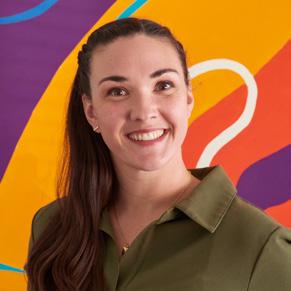
A few weeks ago, I sat down with my laptop with a level of determination usually reserved for university applications. Summer camp registration season had arrived.
I had researched themes, compared schedules, mapped out drop-off locations, calculated costs, coordinated weeks around work commitments and family plans, and somehow managed to get every kid into my first-choice camps. It was a miracle and a relief to see my perfectly colour-coded calendar showing the location of all three kids, just as I had meticulously planned it. For one brief moment, I had mastered the summer schedule.
Until days later, when someone casually mentioned that Labour Day falls late this year. Meaning there’s an extra week I had somehow failed to account for.
It was a miracle and a relief to see my perfectly colour-coded calendar showing the location of all three kids, just as I had meticulously planned it.
I must have misunderstood. Surely a person who spent this much time planning couldn’t have forgotten an entire week of childcare. And yet, as I swiped my calendar from August to September, there it was: that empty last week of summer.
The funny thing about summer camp registration is that by the time you actually secure the spots, you feel like you’ve survived some sort of administrative endurance sport. The registration process is anxiety-inducing. Some camps fill in minutes, making registration season feel like stepping into the Hunger Games.
By Sarah Fournier Contributor
But isn’t summer meant to be the ultimate carefree season? How did I end up here in late-spring, hunched over my laptop with white-knuckled intensity, frantically refreshing registration portals?
And who knew I could get so emotionally wrapped up in the camp themes? I suddenly developed very intense feelings about the merits of “Creative Cove” over “Lakeside Legends,” even though I know my kids would be just as thrilled digging holes in the dirt with a sturdy stick.
So after all that planning, one overlooked week completely dismantled my illusion of having summer under control. No amount of calendar syncs, back-up camps, or research saved me from this mistake. But at this point, there isn’t much left to do except laugh.
The extra week exists. My kiddos still need supervision. And apparently, no amount of planning fully conquers summer.
So instead of going back to the drawing board and scrambling to patch together another camp option, I’ve decided to take the week off.
Will it be relaxing? Probably not. Will my patience be tested trying to make special memories with the kids? Absolutely. But at this point, leaning into chaos feels easier than trying to out-organize it. And maybe this unexpected week off will end up being the best one of the summer.
So, if you think you nailed your summer childcare plans already, this is your friendly reminder to count the weeks one more time.

By Laura Love
Every summer, families gather across Kawartha Lakes to share stories, laughter, and the simple joy of being together. For the Worsley family, however, this tradition carries a remarkable sense of history. This year marks the 90th family reunion, a milestone that celebrates not only the strength of family ties, but also a legacy that stretches back generations in Kawartha Lakes.
That story begins with Joseph and Ann (nee Hodgkinson) Worsley, whose arrival and early life here laid the foundation for a family that would grow, settle, and weave itself deeply into the fabric of the Fenelon area. Like many early families in the area, their lives were shaped by hard work, perseverance, and a commitment to building a future for the generations that would follow.
I was first approached by Jenna Stephens, a member of the Worsley family, to examine an ornate necklace passed down through generations. What began as a research project soon became a journey into the family’s history, exploring stories, newspaper clippings, photographs, and personal accounts. My research deepened further through conversations with Nancy Webster, one of the many family historians, and her cousins, who had a great deal to share.
Joseph Worsley’s story began in Cheshire, England, as the youngest of six children, born 1807. On the family farm, he learned how to work the land with his father, James Worsley. His mother, Charlotte, passed away in 1845, leaving a deep void in the family. Yet the steady cadence of farm life continued, with James guiding Joseph and his siblings through the seasons until his own death in 1852.
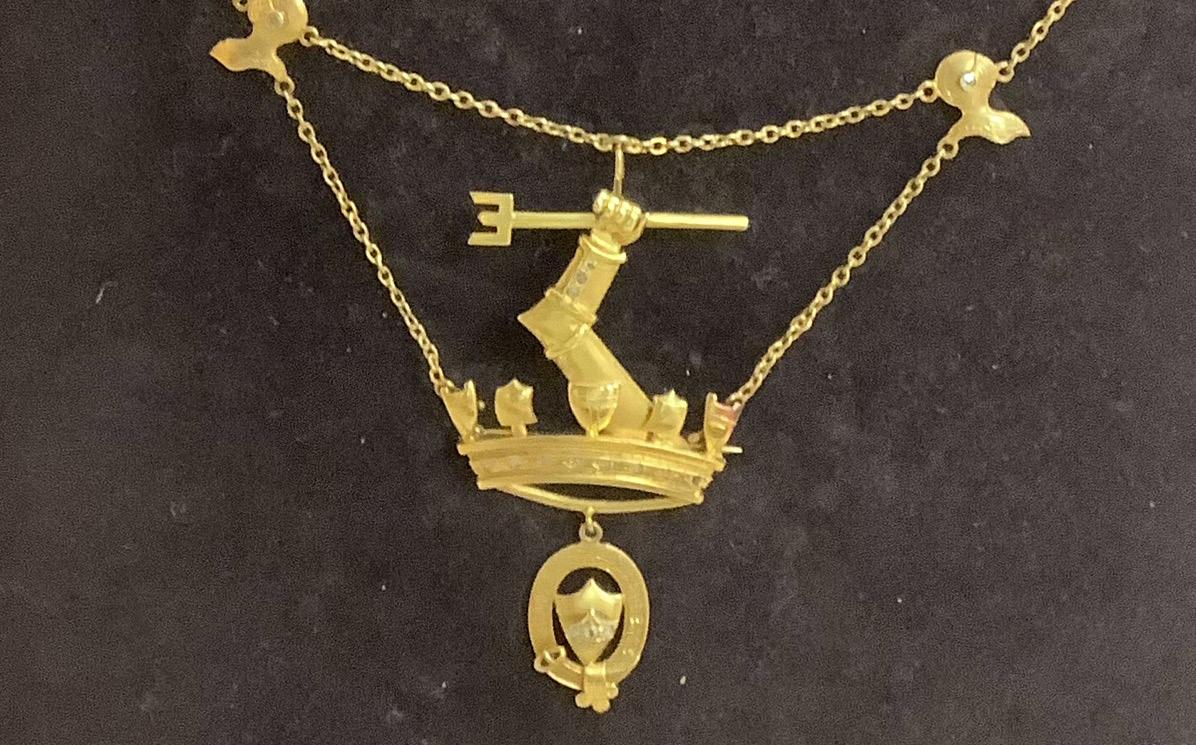
Necklace passed down through generations.
Joseph married Ann Hodgkinson in 1831 at St. Mary’s Church in Cheadle. In 1857, following the emigration of their oldest son Edwin and his family (in 1857), Joseph and two children, Job and Lois, sailed to New York aboard the City of Washington. A year later, Ann and six more of their children, including sevenyear-old Lott, followed on the Jeremiah Thompson. After arriving in New York, they passed through Castle Garden (the precursor to Ellis Island), onto Rochester, then into Canada, reaching Lindsay via Port Hope to reunite with their family. The entire family (of 12 children) had reunited in Ontario by 1888, as the other four children and their families had emigrated to Ontario by then.
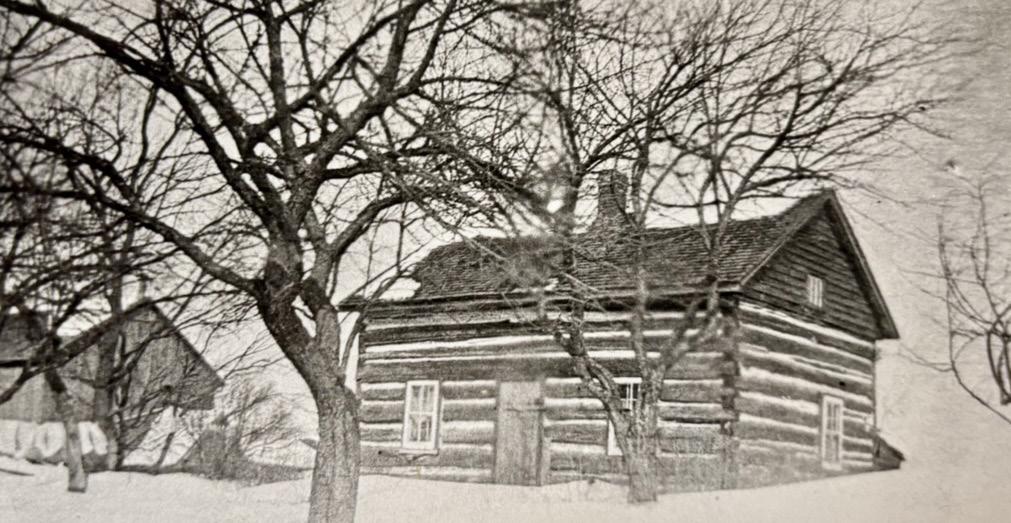
After two years in Mariposa Township near Oakwood, the family moved to Grasshill for a year and eventually found home in 1864 on Lot 16, Concession 4, in the community of Zion - Fenelon in Fenelon Township. A copy of a handwritten account shared by Larry Bell, a great, great-grandson of Joseph and Ann, based on his cousin Carman Byrnell’s recollections, states that the family lived in a one-room log cabin until their deaths (Joseph in 1890, Anne in 1898). The cabin was demolished in the 1970s.
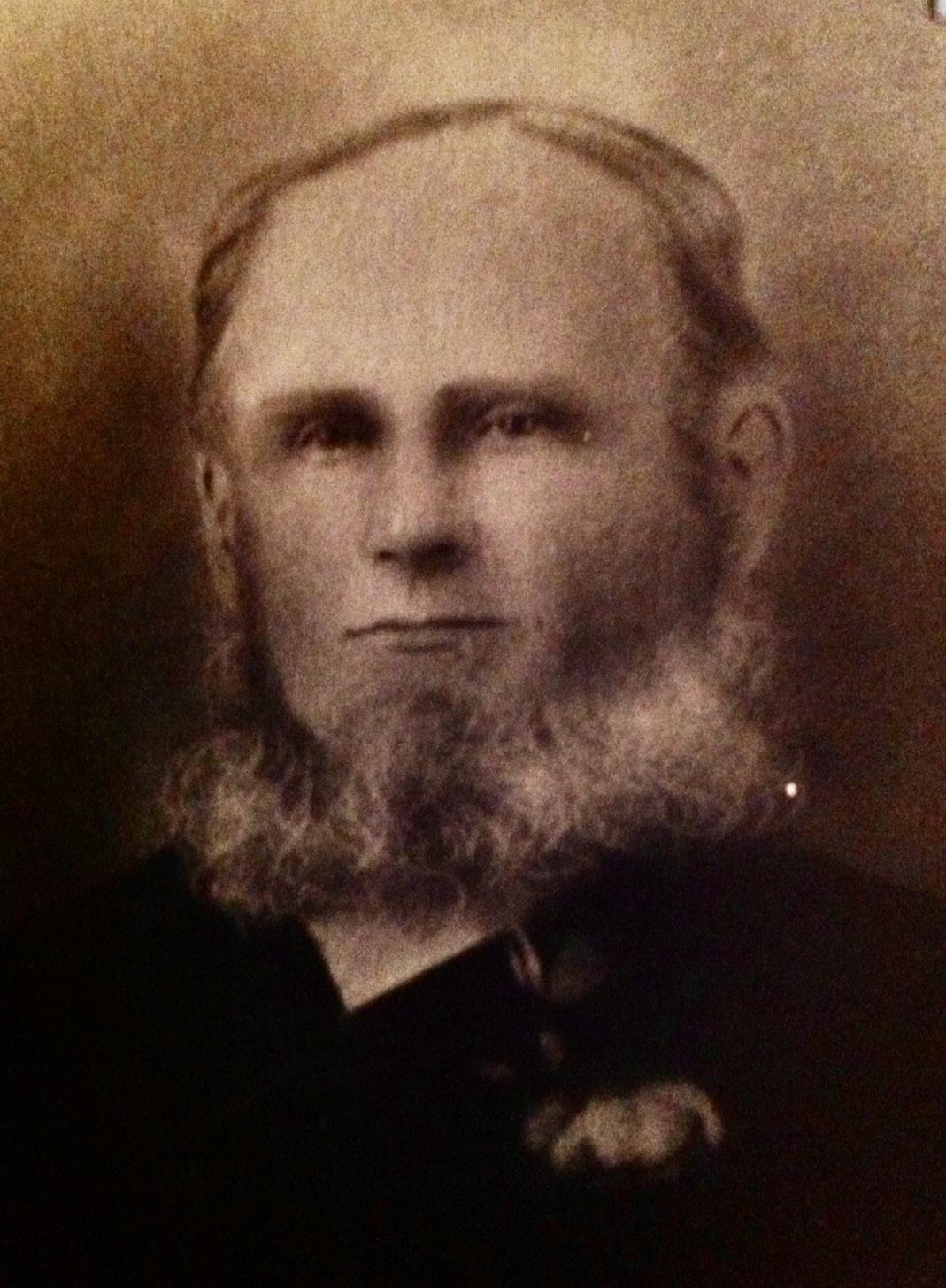
Joseph Worlsey (1807-1890).
Today, the descendants of Joseph and Ann Worsley have found a creative way to navigate their ever-expanding family tree. With 12 children at its foundation and more than 35 grandchildren spanning four major branches, the family has adopted a colour-coded system to distinguish each line.
Nancy and her cousins Larry, Judy Stephens (Bell), and Cindy Barrett (Worsley), descendants of the Lott Worsley “Red Line” and Tracy Carney and Lynda Lawson, descendants of the Edwin Worsley “Blue Line,” shared stories that have been told many times before, though they never seem to grow old. Laughter came easily as they recalled the traditions that shaped their family gatherings.
With the “Red Line” branch descending from Lott Worsley (youngest of the 12), and his wife, Jane Smithson, family history has been carefully preserved. In 1877, Lott and his father built a log cabin for his family across the road from his father’s home, on Lot 16, Concession 5. Lott’s youngest son, Walter ‘Cecil,’ inherited the family farm in the late 1930s, while Lott and Jane moved to Queen Street, Fenelon Falls around 1940. Their six other children settled nearby. Lott’s original home was later owned by Larry’s grandparents. It was sold after 1969 and moved in 1971 to the S.S. No. 5 Fenelon School property, where its still attached to the building. Larry attended the school years before the move, unaware of the future connection. “If it hadn’t been moved, it would have decayed,” he reflected, adding, “At least I can say my mother was born in that house.”
With 12 children at its foundation and more than 35 grandchildren spanning four major branches, the family has adopted a colourcoded system to distinguish each line.
Reflecting on her work, Nancy described years of research, gathering photographs, letters, and personal memories passed down through generations.
“It started with a box of old photos,” she explained. “But once you begin, you realize how much there is to uncover, and how important it is not to lose it.” Her efforts have culminated in a detailed family history book, preserving names and dates with the stories that bring them to life.
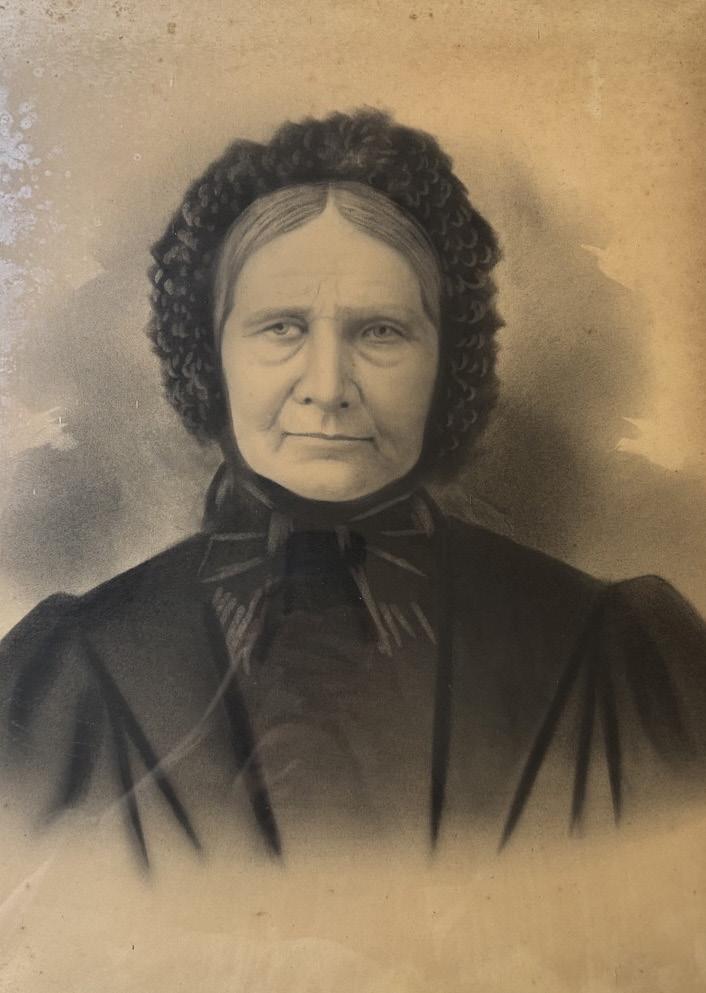
Nancy remembers her grandparents, Wilbert and Mary Louise ‘Louie’ Wood of Cambray, “My grandfather was a tall man, nearly six feet, with a somewhat stern demeanour. My ‘moregranny,’ the name my sister Bonnie and I gave her, was just four feet tall, wore size two shoes, and was always smiling. I remember her glasses perched on the tip of her nose.” Nancy also remembers her More Granny, saying “Do good to as many persons as possible.” Fitting, as the Worsley family motto is Quam Plurimis Prodesse (How to Benefit Many).
“It started with a box of old photos, but once you begin, you realize how much there is to uncover, and how important it is not to lose it.”
For some members of the ‘Blue Line,’ descendants of the oldest Worsley child, Edwin, the connection to this vast and interesting family has only recently come to light. Lynda, another keen family historian, said her grandfather Gordon (great- grandson of Edwin) was adopted into a neighbouring family. Through tidbits of information gathering, the link into the Worsley line was made around 2018. “The most wonderful thing was finding who we look like…and we look like Worsleys!” says Lynda with a big smile.
In the family history book, it is joked that Eunice Conner (Worsley), the Reunion treasurer for 50 years, would say, the “federal government may recognize holidays like New Year’s Day, Christmas, and Thanksgiving, their family calendar would have a few more. Zion Decoration Day and the Worsley Reunion, would surely be listed right alongside the national holidays.”
The Worsley family treats reunions as an important tradition, meeting regularly and contributing through volunteer roles and to a family newsletter. Since the first reunion on Sept. 6, 1937, the tradition has continued almost every year, with changing locations and attendance but a consistent spirit throughout. That first reunion was held at Birch Point, where 161 people came together for the occasion, including 115 direct descendants of Joseph and Ann Worsley. For the 50th anniversary of the reunion in 1986, a commemorative plate was designed and made for everyone in attendance! These efforts help keep gatherings organized and maintain strong connections by sharing updates on new and departed family members.
Tracey, of the “Blue Line” branch, didn’t grow up attending the family reunions as some of her relatives did. However, she has embraced the Blue Line with a desire to learn as much of the family’s history as possible and has attended the reunions for “about five years.” As Tracey explains, “It’s who we are. For me, we didn’t know our history, so I want to be a sponge and learn everything there is to learn.”
It was Tracey’s two daughters who first sparked her deeper interest in the family’s history, eventually leading her to connect with Lynda, who was able to share more information about the Worsleys.
The reunion has had its share of interruptions. The COVID-19 pandemic forced the family to pause their gathering for a couple of years. Even that interruption could not diminish the importance of the event, and when the family gatherings returned, it was with renewed appreciation for the simple joy of being together. The importance of the reunion lives on for Larry.
Since the first reunion on Sept. 6, 1937, the tradition has continued almost every year, with changing locations and attendance but a consistent spirit throughout.
“You get to meet people, relatives, you haven’t seen in a long time, see old acquaintances…a lot of the older ones are gone.”
Now, as the Worsley family prepares to celebrate their 90th reunion on Aug.15, the tradition continues with the same warmth that brought the family together nine decades ago. This year’s gathering will take place at the Oakwood Lions Mariposa Community Hall, where family and friends will meet from 10:30 a.m. to 6:30 p.m. for a day of amazing food, games, conversation, and shared memories. The afternoon of Sunday, Aug. 16 will include a visit to Zion Fenelon Cemetery and Church (including the Worsley Cemetery), on land donated by Harold Worsley, on the east side of Mark Road. The Decoration Service will be at 2 p.m., a quiet and meaningful moment to remember the generations who came before.
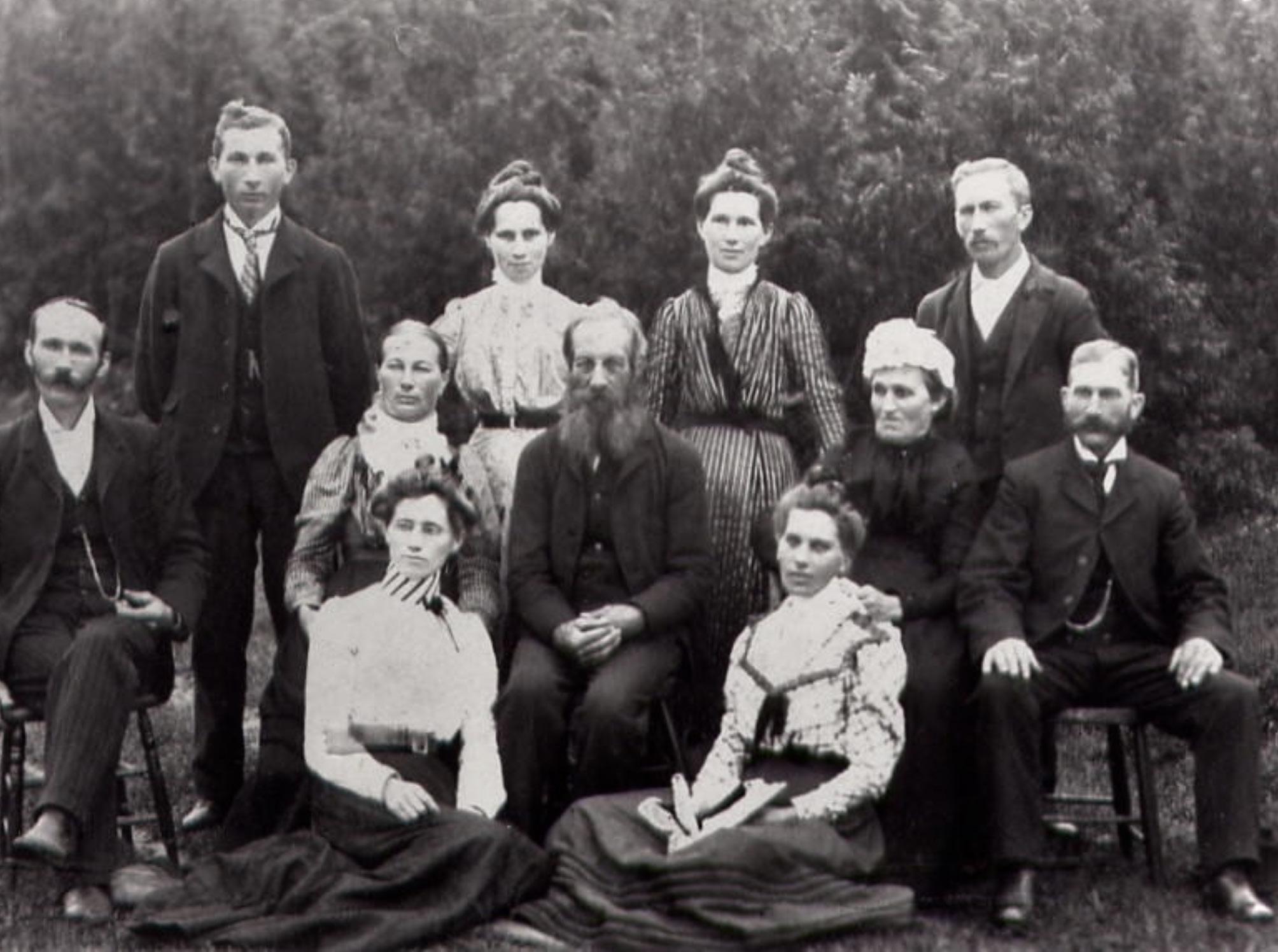
“It’s a place to share connections and memories, part of history, and it shows how much you belong to the area,” said Cindy. Judy added, “It’s important for future generations of Worsleys to attend reunions to strengthen connections and discover new ones.”
The reunion honours the descendants of the Worsley family and celebrates something larger: the enduring legacy of the early settling families who shaped the Fenelon area. Each year, as laughter echoes through the hall and familiar names are spoken once more, it serves as a reminder that history is not only found in books or records. Sometimes it lives most vividly in the simple act of family coming together, year after year, to remember where they came from and the bonds that continue to hold them together.
“For me, the reunions are a chance to celebrate life’s successes and milestones, share stories that keep the memories of our lost loved ones alive, strengthen our bonds between generations, and deepen our sense of belonging,” said Jenna Stephens.
With thanks to everyone who contributed to the Worsley Family article. The Moments and Memories project records, shares and celebrates the intangible stories of our communities. For more information about this story, any other story, or to share your own, contact Laura Love at llove@kawarthalakes.ca or visit www.kawarthalakes.ca/yourstories






“Surrounded

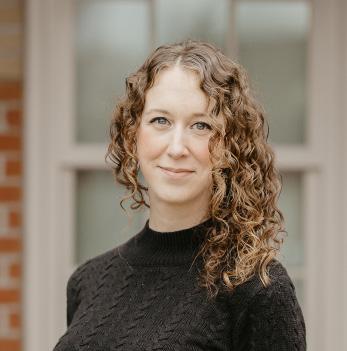
Laura Love serves as the economic development officer overseeing Curatorial Services for Kawartha Lakes. She is dedicated to uncovering and celebrating the stories that too often go unrecorded.

Laura Love serves as the economic development officer overseeing Curatorial Services for Kawartha Lakes. She is dedicated to uncovering and celebrating the stories that often go unrecorded.

















Summer fun is making a splash at Kawartha Lakes Public Library with the return of our Summer Reading Club 2026! Children and teens can register starting June 20 at any library branch, or preregister online starting June 15 to kick off a summer full of reading, prizes, and adventure.
Readers are challenged to read at least 15 minutes a day and track their progress in a fun passport. Along the way, participants will earn stickers, tassels, charms, keychains, and other fun collectibles as they build a personalized keepsake to show off their reading achievements.















This year’s summer program lineup is inspired by the beautiful lakes of Kawartha Lakes, featuring handson activities such as the Pigeon Lake Propelled Boat, Balsam Lake Bent Wire Fish, Sturgeon Lake Salt Painting, and much more.
Families can also enjoy themed Storytimes, PopUp Storytimes in local parks, StoryWalks across Kawartha Lakes, and exciting special events, including Touch a Truck, interactive guest visitors, conservation programs, and returning favourites like The Turtle Guardians.
Want to stay in the loop? Sign up for our new library newsletters to get the latest program updates, events, and library news delivered right to your inbox.
Visit our website kawarthalakeslibrary.ca to register, browse summer events, and subscribe.
ACROSS
1. Shuts a door angrily
6. Glob
10. Perimeter
14. Fortuneteller's card
15. Puerto ___, Caribbean island
16. Dental photo
17. About sheep
18. Picnic pests
19. Break, as a wild horse
20. * Very polite, marmaladeloving bear
22. Deli bread
23. Bambi's cartoon aunt
24. Leaning tower town in Italy
26. Orange potato
29. Distinct, exceptional
32. Canada's neighbour
35. ___ and alack! (old-timey exclamation)
37. Corn spike
38. Comic strip hillbilly, Li'l
40. * Grizzly family teaching gentle life lessons to young readers
44. Pickling water
45. Animals on display
46. Therefore
47. Had lunch
48. Poison in classic whodunits
52. “12 Angry ___” (1957 film)
53. Popular Nabisco cookie
54. South African Airways: Init.
56. Blue Jays player wears one
58. * Ursine character who says “Only YOU can prevent forest fires”
64. Hurriedly
65. WW1 dancer and spy, Mata ___
66. ___-feuille (French pastry)
67. Great Lake
68. Stew pot
69. Off-the-cuff remark: Hyph.
70. Item strung on a necklace
71. Laces, as a shoe
72. Birds' homes
by Joan Corrigan
By Joan Corrigan, Fun &
1. Come to a halt
2. Volcanic flow
3. Dry as a desert
4. Tout le ___ (all the world)
5. Oktoberfest mugs
6. Boast
7. Clothes-dryer fluff
8. Sea creatures with eight arms
9. Balkan country, capital Sarajevo
10. Something additional
11. Horse-pulled cart
12. Sporting match
13. Where beauty is, to the beholder
21. Scruffs of necks
25. Thick, flat piece of concrete
26. Fred Flintstone's “__ dabba doo”
27. Warn of impending danger
28. Singers Donny and ___ Osmond
30. “It's a dog-___-dog world”
31. Widespread fad or fashion
32. Lay down the weapons
33. Legendary NHL player Savard; sturdy textile for soldier and RCMP uniforms
34. Illegally set fire
36. Ottawa hockey player
39. Hive dweller
41. Close at hand
42. Charged atom
43. Loud clamour
49. Took a photo again
50. Horn of Africa native
51. Grand ___ (Caribbean island known for offshore banking)
53. Made a choice
55. ___ by the rules (don't cheat)
56. Be concerned
57. Continent with most of the world's people
59. Coat-of-arms decorative border
60. Sorento and Sportage car models
61. 90-degree plumbing joints
62. Landed like a bird
63. U.S. Confederate soldiers
64. Second month, for short






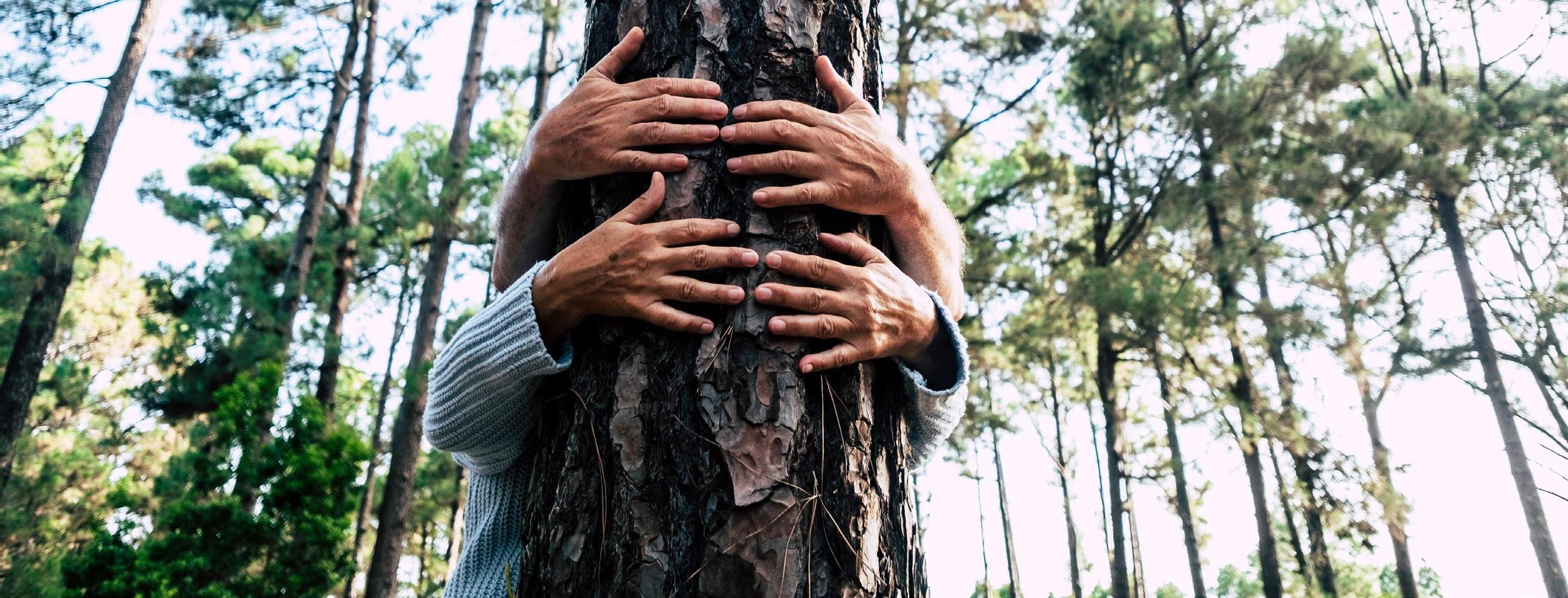

Almost 10 years ago my 96-year-old mother watched the sequel to Al Gore’s Oscar-winning documentary, An Inconvenient Truth. Alarmed, she immediately wondered what she could do to leave the world a better place. At her age she wasn’t going to pick up a poster and march for climate justice. Since then, the population of seniors in Canada has ballooned, and with it, concerns about their environmental legacy.
Some groups, like 4RG (For our Grandchildren) in Peterborough, have been acting on climate for over a decade. The Raging Grannies launched in Canada almost 40 years ago, billing themselves as “making good trouble through humour and song.”
More recently, we’ve seen new groups spring up. SCAN! –Seniors for Climate Action Now, started in 2020 with 40 members in the Toronto area. Their numbers have grown to 800, with nine Ontario chapters, including Kawartha Lakes. Three years later, Seniors for Climate formed as a coalition of climate groups, including SCAN!, Suzuki Elders, 4RG, and Grandmothers Act to Save the Planet (GASP). Organizers were inspired by the Third Act, a group spearheaded by American climate author and activist Bill McKibben. They’ve been known to park in rocking chairs outside major banks to protest how they’re financing global heating with loans to big oil and gas. All that heat is hitting us hard.
In 2022 a derecho blew through Kawartha Lakes. In 2023, I attended the germination of SCAN!’s Kawartha chapter at a backyard potluck in Lindsay, in the shadow of a greenhouse that had just lost its roof to a major storm. Destructive storms have happened in the past, but with climate change they’re more frequent, and more intense. Early last year we saw a major ice storm, spring flooding, then record-breaking extreme heat, drought, and Kawartha Lake’s first wildfires. Projections show these impacts will keep escalating until we stop adding fossil fuels to the fire.
Seniors’ groups are joining with young people and Indigenous communities to not only raise the alarm, but outline a path toward a better future. The Seniors for Climate coalition bills itself as the fastest growing climate movement in Canada. It launched its first major action on Oct. 1, 2024. Almost 80 communities participated with rallies, letter-writing, art exhibits, and more.
SCAN! Kawartha’s rally included high school students, musicians and a surprise visit by Ontario Green Party Leader Mike Schreiner. Members across the organization work to support well-placed renewable energy projects, preserve forests and wetlands, and push for more transit.
Many people are doing what they can to help: choosing eco-friendly products, shifting to green investments, eating less meat, installing solar panels and heat pumps, walking, biking, taking transit, driving electric, planting native gardens.
One of the most important actions we can take is to talk about our concerns. Studies show that three quarters of Canadians admit they worry about climate change, but many think others aren’t as concerned. If we don’t talk about it, politicians think there’s little support for climate action.
June 1-7 is Environment Week. Seniors for Climate is urging everyone to “Break through the Climate Silence.” Find little ways to bring up those climate impacts and solutions. Regularly build them into conversations.
As Bill McKibben has said, for young people “their lives are on the line. For those of us who are older, it’s our legacy.”
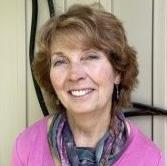
Ginny Colling was passionate about the environment before retiring from teaching college communications students. After retiring she trained with Al Gore’s Climate Reality Project. She has presented to numerous groups about the climate crisis.


Fear and fortitude
For more than 40 years now, locals have gathered at the southwest corner of Kent Street and Victoria Avenue to buy coffee, doughnuts, bagels, and Timbits at Lindsay’s first Tim Hortons franchise. And over those staples of Canada’s beloved culinary brand, they have no doubt exchanged opinions about the future of their nation –particularly over the course of the last year and a half, when threats of annexation have echoed from across the American border.
Close to 160 years ago, local citizens assembled on this very site to prepare themselves militarily in the event of an armed invasion from the Fenian Brotherhood – a group of Irish-American republican revolutionaries that threatened the sovereignty of a soon-to-be-born Dominion of Canada. These citizens, many of whom would go on to be prominent members of the community, dutifully gathered in a wooden drill shed that had been built at the southwest corner of Kent and Victoria, not long before Confederation, in response to the persistent worry of “Fenianism” in the spring of 1866.
At its core, the Fenian movement sought to achieve independence for the Emerald Isle through violence. Like-minded supporters of this cause in the United States – which was only then emerging from a bitter Civil War – believed that they could effectively hold British colonies (especially what is now Quebec and Ontario) hostage and ultimately intimidate the United Kingdom into backing out of Ireland’s affairs. With the rebellions of 1837 still fresh in the memories of many living in Upper and Lower Canada, respectively, any hint of republican ferocity was met with opposition from those who believed that the future of British North America lay in being just that: British, not American.
Here in what is now Kawartha Lakes, rumours of Fenian sympathizers began to swirl in the early winter of 1865. One report, printed in a New York newspaper and no doubt exaggerated, suggested that there were 400 sympathizers and some 277 enrolled members of the movement living in Lindsay, while Fenelon Falls supposedly could claim more than 330 sympathizers and enrolled members combined. Such claims were seen as an affront to the character of the community. “We need scarcely tell our readers that the whole article, from which the above figures are extracted, is a tissue of the most barefaced falsehoods, without a single truth to give an air of honesty and respectability to the wild ravings of the worthless writer,” thundered a defensive editor of the Canadian Post.
At its core, the Fenian movement sought to achieve independence for the Emerald Isle through violence.
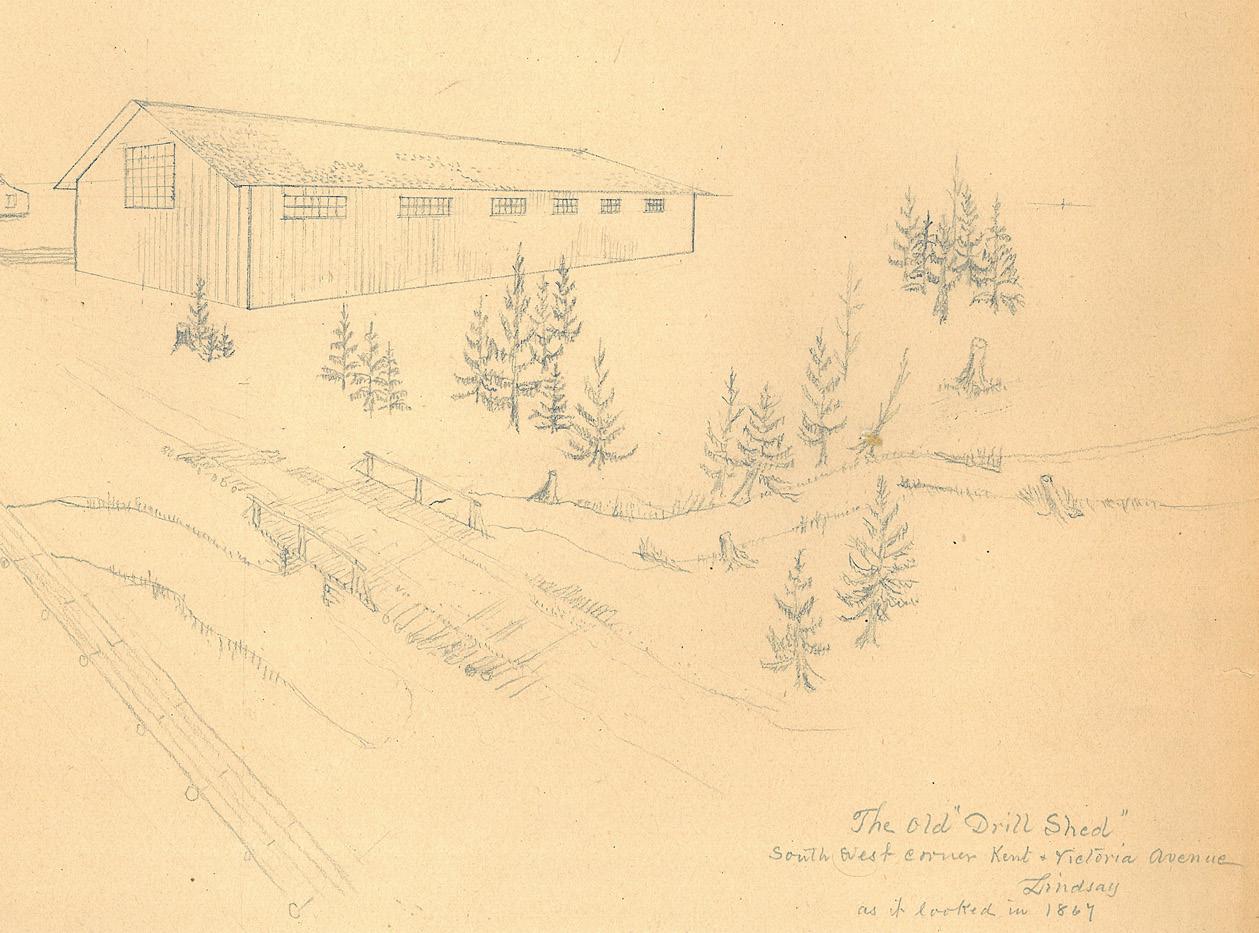
Lindsay’s drill shed was constructed in 1866 in response to the Fenian raids. It was subsequently replaced by the Victoria Park Armoury in 1913. Drawing by George Washington Beall. Kawartha Lakes Museum & Archives collection.
No doubt riled up by an agitated press, people grew more concerned about the possibility of a Fenian invasion. On March 22, 1866, a large and enthusiastic public meeting was organized in the Lindsay Town Hall (now home to the Economic Development office), at which the question of forming a company of volunteers – in other words, a militia – was discussed. Samuel Casey Wood, the county treasurer, moved that “the people of this town should not only organize volunteer companies, but hold themselves in readiness to march to the front, and shoulder to shoulder with our brothers in arms, resist all piratical aggression, and hurl back the invaders of our soil.”
This motion was met with widespread approval, and close to 70 local men signed up to serve. They included such figures as George Matthews, a prominent pork-packer; Adam Hudspeth, a lawyer; George Hughes Hale, who would go on to start the Orillia Packet newspaper; and William Alfred Goodwin, an itinerant painter and decorator. The latter recalled in 1921 that the newly-formed militia had to train in a hall on the third floor of the Union Grammar School, since a dedicated drill hall was still a few months away from being constructed in downtown Lindsay. “We frequently amused ourselves sliding on the frost-bound floor to the great discredit of its leaky roof,” Goodwin remembered of that space. He also recalled that one member of the local militia was accidentally shot and killed while target practice was taking place in a wooded location west of Kent Street. “It is with no regret that the Lindsay company did not have to go to the seat of war nor resume its anti-Christian practice of preparing for war,” concluded Goodwin (who, by 1921, was a staunch pacifist).
Indeed, much of the worry over widespread war was a mite overblown. The 45th East Durham Provisional Battalion, based in nearby Millbrook, was summoned to help quell violence in the vicinity of Fort Erie when the Fenians invaded in what was called the Battle of Ridgeway on June 2, 1866 – but the hostilities had ceased before they arrived. Nor did the volunteer company from Lindsay see action.
No doubt riled up by an agitated press, people grew more concerned about the possibility of a Fenian invasion.
Some residents questioned the necessity of it all. Joseph Staples, Warden of Victoria County, said that while he would happily offer his life in defence of his country, he didn’t think it was prudent “for every man in the county to throw up his business, leave his farm unsown, and give up the various industrial pursuits of our fair County because a few hundred Fenians have crossed the line.”
Still, as one contemporary editorial put it in 1866, the Fenians “have elicited a triumphant display of loyalty and courage of the two Canadas, who have sprung to arms to defend their country with a promptitude and energy probably never surpassed.”
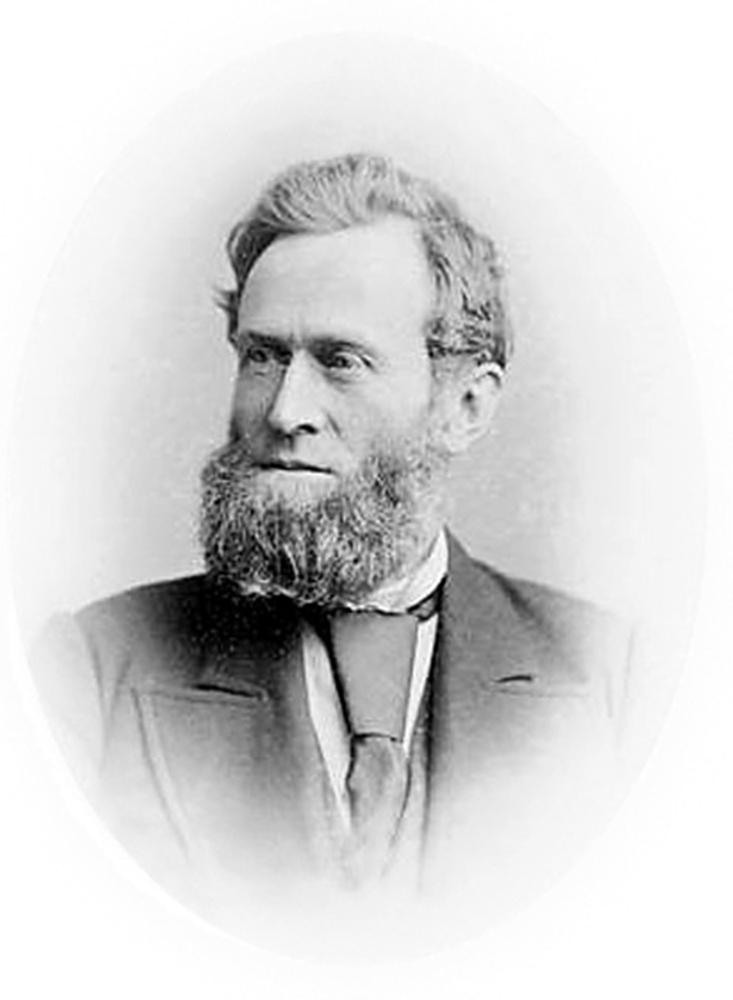
Samuel Casey Wood, treasurer of Victoria County, urged local residents to form volunteer militia companies during the Fenian scare of 1866.

The Fenian raids could have a negative impact on small businesses, as this advertisement implies.

Ian McKechnie is a freelance writer, local historian, and researcher who has compiled and edited three books.
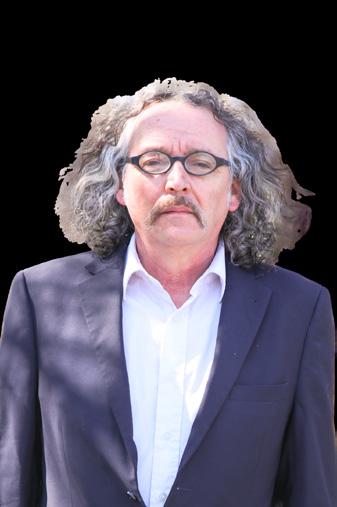
I hoped it wouldn’t come to this. But in anticipation of not liking the results of November’s municipal election, I have made the painful decision to form a “Walters Street Freedom Now” party and will be officially separating from the municipality of Kawartha Lakes.
Well, not all of Walters Street, of course. Just the five houses on my bend of the street. The fact that four of the five houses are against my proposal is irrelevant. This is all about me, baby.
I’m not one to brag, but an insane leader of a world superpower has offered to fund my campaign as another attempt to divide the country. Well, there is a good chance, at least, after my donation is accepted.
I have been in contact with my freedumb friends, too. I don’t like to threaten, but there are possibly two people with beatup, sticker-covered pickups adorned with torn Canadian flags ready to wear out their horns in protest. We belong to the same Facebook group, and let me tell you, we are angry. We have done our research. And we have the receipts.
Yes, I take solace in the fact that the first mayoral candidate out of the gate supports oil pipelines, but I fear he is just not going to make this a priority in his campaign. He’s all about helping the developers (and guaranteeing higher municipal costs in the future). And the developers don’t want me creating a mini oil refinery in my backyard. There’s an F-word for this. I won’t say it, because I don’t want to go to Facebook jail. Again.
So, my plan is to scream my freaking lungs out about how there is no democracy while I refuse to accept the results of a democratic process. If you don’t un-
By Trevor Hutchinson Contributing Editor
derstand this, I’m afraid the Deep State has gotten to you, and you may be beyond help.
And yes, I’m going to demand more municipal services while I await my referendum. Because that is my right as a taxpayer. And all of my taxes should support only me. And no, I have zero plans to repay or buy the infrastructure that will become part of my republic.
I don’t like to threaten, but there are possibly two people with beatup, sticker-covered pickups adorned with torn Canadian flags ready to wear out their horns in protest.
Sadly, I will have to resist my hypergraphia, lest my message be confused with another local protester. But it’s not like he invented the bullhorn or spray paint, for that matter.
And anyone who is opposed to the pipeline I am planning to build from my backyard, through historic downtown Lindsay and other “generational properties,” is against progress and probably a communist. I will not be using any Liberal rail corridor either, because I do not need any facts or analysis to know that it is corrupt, and my opinion is irrefutable on this.
I will blame that entire manifesto on a severe case of sleep-writing and offer my sincere apologies, but before I wake up, let me wish you all a wonderful end to spring and a beautiful beginning to summer!




LUXURY TRAVEL WITH ROBERT ALTMAN
Collector Car & Truck Appraisals
Private Travel Planner in Kawartha Lakes
MTO Appraisals & Vehicle, VIN/Ownership Corrections
Leave winter in your wake
–
Plan your escape now
Call Ron @ 705-878-2372. Please visit
RJVintageGarage com
Available - Lindsay & Area.
Tailored journeys by land and sea. Private, Group, or Corporate Retreat.
robert.altman@ traveledge.com 647-966-8985
Better Bins
Silversea • Explora • Viking • Silversea * Quark
Reliable Moving Solutions to take the Stress out of Packing.
Four Seasons • Accor • Marriott • Hilton * IHG
McKenzie’s offers all aspects of outdoor maintenance
We Buy Vintage...
Vinyl Records, Comics, Jewellery, Glass, China, Pottery, Toys, Sports & Collectibles. We Make House Calls. Cash Paid.
Furniture, signs, jewellery, watches, coins, china, military items, paintings, records, books, old metal toys, wood decoys, snow shoes, paddles & more.
Robert & Penny. 705-324-2699 howlingdog.rocks
Bob Carruth 705-887-1672

• interlock
For Rent - 1 and 2 bed units from $1,800 & up Heat, hydro & water is included. Adult building in Lindsay Call 705-324-9381.
Valentia Church & Community Centre
• lift and re level
• fencing
• gutter cleaning
• lawncare
• snow removal
705-934-4333
Strawberry, Ham & Salad Supper
Wednesday, June 24th, 2026, Sittings at 4:30 p.m. and 6:00 p.m.
Free estimates.
Plastic Mov We De
705-87

betterbinrentals @outlook com
We Buy V Vinyl Record Jewellery, Glass, China, Pottery, Toys, Sports & Collectibles We Make House Calls. Cash Paid. Robert & Penny 705-324-2699. howlingdog rocks
Classic & Vintage Cars & Trucks
Burns’ Snow Removal & Lawn Care Ltd. Grass cutting, fertilizing, organic topsoil & f up. Snow cont available Comm Residential Fully Call David E. Burns 705-324-8154

Fences, Gates, Railings & Verandas
Furniture; jewellery boxes, costume, silver or gold jewellery; old watches; silver items; china; military items; silver & gold coins; books; records; old toys; decoys, collectibles, etc.
New wooden fence installation Wooden fence repair Perfe

Great g & reliability
Burns’ Snow Removal & Lawn Care Ltd.
Call Mark 613-360-2699
Grass cutting, fertilizing, trimming, organic topsoil & spring clean-up.
Commercial & Residential Fully insured.
Call David E. Burns 705-324-8154
McKenzie’s offers all aspects of outdoor maintenance interlock lift and re level fencing gutter cleaning lawncare snow removal
FENCES
Fences, Gates, Railings and Decks New wooden fence installation Wooden fence repairs
705-934-4333 Free estimates
“PERFECT POST HOLES”
Great quality, pricing and reliability
Lindsay Resident
BOOK EARLY FOR
Adults $20.00, Children 6 to 12 years $10.00, Preschool up to 5 years are free.
Advance Tickets Only. Call Barb at 705-786-2107

FOR SALE
Sunrise 770S hot tub. 110 volt plug in, suitable for 2-3 people. 4 years old in good condition.
705 324 0645 asking $2000.00, near Janetville.

Stephen 647-927-1580
Bob Carruth
705-887-1672


The Gowans of Lindsay want to express our appreciation for the condolences bestowed upon us for the loss of our son Miles Gowan.
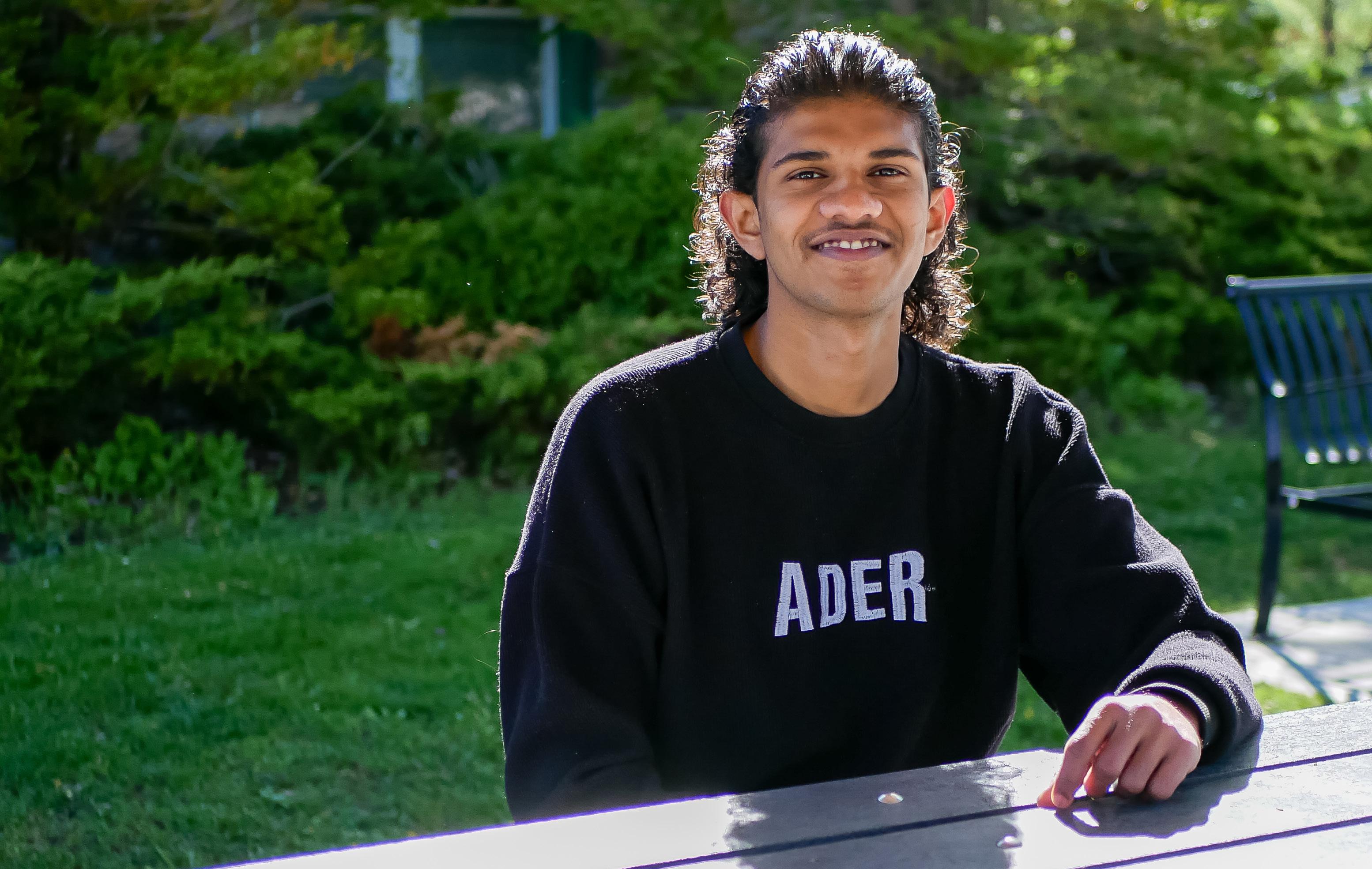
SIDHARTH KAYANADANI moved to Lindsay from Kerala, India in January 2025.
Lindsay Advocate: Why did you choose to move here?
SIDHARTH: I moved to Kawartha Lakes to study Resource Drilling at Fleming College and I appreciate the quieter environment while building a career in the drilling and mining industry in Canada.
Lindsay Advocate: What is your favourite thing about Kawartha Lakes so far?
SIDHARTH: One of my favourite things is how peaceful and welcoming the community feels. I also enjoy the natural surroundings and the slower pace compared to larger cities.
Lindsay Advocate: What are your favourite local restaurants or shops?
SIDHARTH: I don’t go out that much, so I don’t really have any specific places in mind.
Lindsay Advocate: What do you think is missing from Kawartha Lakes?
SIDHARTH: I think better public transportation options to other cities would be very helpful, especially for newcomers and international students who want to travel, explore, or stay connected with different communities.
Lindsay Advocate: How were you involved in your previous community and how might you like to get involved in Kawartha Lakes?
SIDHARTH: Back home, I stayed connected with friends, took part in local activities, and helped people in my community whenever needed. In Kawartha Lakes, I hope to get more involved by attending community events, meeting new people, and building connections.
Are you new in town? If you moved to Kawartha Lakes within the past two years and want to be featured here, email us at info@lindsayadvocate.ca.