Journey of a small town sex worker

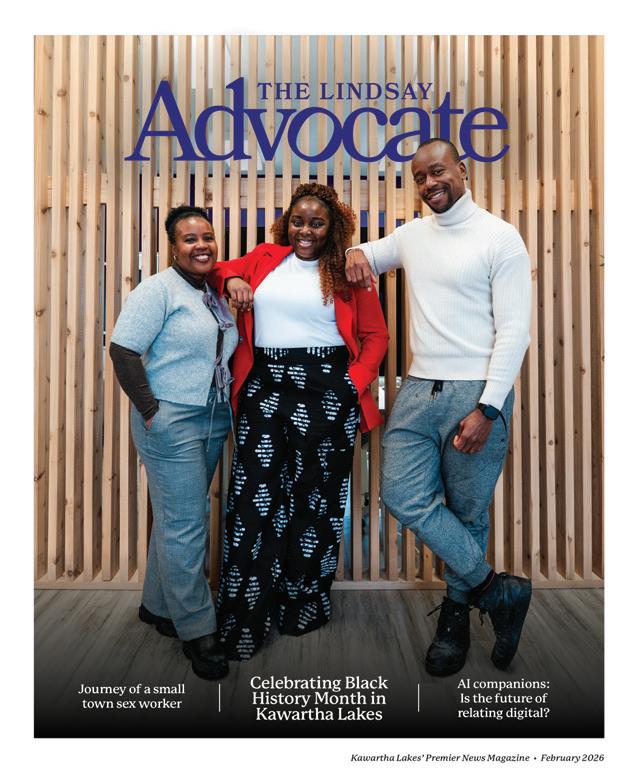
Celebrating Black History Month in Kawartha Lakes
AI companions: Is the future of relating digital?



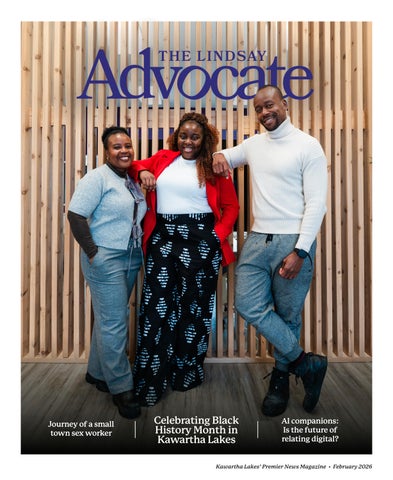
Journey of a small town sex worker
Celebrating Black History Month in Kawartha Lakes
AI companions: Is the future of relating digital?

Your story is our priority, we’re here for you!

THREE AUDIOLOGISTS TO SERVE ALL YOUR HEARING NEEDS
Hearing Tests & Hearing Aids • Dizzy Assessments & Treatment
Choose from one of our three locations in Lindsay, Bobcaygeon or Bancroft
One of our Audiologists will run you through a series of tests and then discuss options to help you return to better hearing.
CHOOSE YOUR HEARING AID
We’re confident we can find the perfect device to suit your needs.



Magazines are read and re-read and trustedand 78% of readers also trust the advertisers who appear inside - (Magazines Canada)


All adult age groups, including millennials, favour paper-based reading, particularly magazines. This matter to advertisers. You want to know if your target audience saw it, paid attention to it, understood it and will remember it. All of those things are elevated with magazine reading.















Rebekah McCracken EXECUTIVE EDITOR

Robyn Best REPORTER

Cara Baycroft ADVERTISING SALES Darren Hoiting ADVERTISING SALES

Please send editorial inquiries to Roderick Benns at roderick@lindsayadvocate.ca or 705-341-1496.
Please send ad inquiries to Darren Hoiting at 705-991-3188 or darrenhoiting@outlook.com, or to Cara Baycroft at 905-431-4638 or cara.baycroft@gmail.com lindsayadvocate.ca • @lindsay.advocate


Writer Denise Waldron on local woman’s path to sex work.
Black History Month this year will include a community celebration.
Digital relationships with your AI companion.
letters to the editor 6 • benns’ belief 9 • business today 26 sarah’s say 30 • KL public library 38 • crossword 39 • cool tips for a hot planet 41 • just in time 42 trevor’s take 44 • the marketplace 45 • newcomer 46
our mission
Fireside Publishing House is the premier print media company in Kawartha Lakes through its family of magazines and all-local weekly newspaper. We believe that community-based media can bring people together and change lives for the better through the power of storytelling, reflecting local culture, and creating informed and engaged citizens. Our commitment is to deliver high-quality and relevant content that reflects the diverse voices and experiences of our communities. We believe in the transformative power of local media to inspire, educate, and empower.

Congratulations on producing the Advocate, a fine magazine. I have lived in Peterborough for 50 years and have always wished we had a similar magazine for Peterborough and this side of the Kawarthas.
There have been numerous free magazines, largely devoted to advertising or food but with little real content. I am sure you have your hands full, but it would be great if you could publish a magazine like the Advocate for Peterborough.
— John Marsh, Peterborough
I was shocked to read Kimberly Perry’s letter on MP Jamie Schmale’s attendance at the Minden Parade in the Dec. Advocate, volunteering alongside other members of the community who were dressed as clowns.
Jamie Schmale is one of the hardest working MPs, not only attending to his duties but participating in community events, hosting a weekly podcast to keep us informed of issues and running two community offices. If one must call his office the response and support is phenomenal.
Call me old school but when you are part of community events, that is the best way to get to know the people who live there and what is important them.
— Candice Bridgman, Woodville
I moved to Kawartha Lakes in 2025 (I’ve worked here for multiple years) and recently started reading the Advocate. I really enjoy your attention towards all the community-driven initiatives and appreciate how well you highlight our little slice of Ontario.
I was recently made aware of your Roses and Thorns list and noticed an inconsistency between the last two years’ Thorns related to driving. In 2024, the first two points seemed to take a jab at overly cautious or slow drivers, while the 2025
point focused on aggressive drivers who are driving too fast, including those “ignoring urban speed limits.”
I completely understand that these things aren’t mutually exclusive: both ends of the extreme are dangerous in their own way. But when “bad driving” shifts from being an issue because people are too slow one year to too fast the next, it starts to feel less like a consistent safety message.
I’d also like to point out that neither year mentions what feels like one of the biggest driving issues today: distracted driving due to cell phone use. I regularly see near-miss fender-benders, because they are looking down at their phones.
If the goal of the list is to advocate for the community and reduce issues like driving stress, I think greater consistency (and particular attention to distracted driving) would strengthen your message.
— Ben Leggo, Kawartha Lakes
I am writing to you in response to Trevor Hutchinson’s recent column (Finding my way in 2026, January Advocate).
Generally, I enjoy Hutchinson’s position on current events, but I found this article disjointed and, consequently, lacking in point and clarity. When he says that “History is and shall forever be static.” and then goes on to reference local examples like the hamlet, Hardscrabble, changing its name to Glenarm, it would seem contrary to his stated position that history is static.
If irony is his point here, to my mind he fails to succeed. In any event, one does not have to go to major historical trends like the Enlightenment to see the fluidity of history; one need only go to recent events globally and internationally to see, sadly, that history is anything but static, as recent events in Venezuela, for instance, make us aware.
— Richard Mason, Kawartha Lakes
Thank you for publishing my letter, from Community Care, which made reference to our Walk in the Halls program. Many people have asked about the location and times of the program. It runs at LCVI on Tuesday and Thursday evenings from 6-7 p.m. For more information visit ccckl.ca.
— Cindy Williams, Community Care
The Advocate welcomes your letters. We do not publish anonymous letters unless it’s a matter of public importance and/or someone risks harm by writing us. We publish under strict guidelines & only if we can verify the person’s identity. Keep your letters to 200 words or less. Simply email roderick@lindsayadvocate.ca.

Mansur Gonsalves

Wed, March 4


You've seen her in CBC's Sort Of and Saint Pierre. She also appears in The Copenhagen Test with Simu Liu.
The Advocate is pleased to host this dynamic speaker for International Women's Day at the Flato Academy Theatre.
Dessert, coffee, tea provided. Cash bar available. 6:30-8PM
Desserts catered by The Sweet Kitchen.

Actor. Speaker. Don't miss her!
Lead Sponsor

Won’t you join our supporter’s list?
The Advocate and Kawartha Lakes Weekly are your 100% local print media choices based in Kawartha Lakes. Visit our website and choose Support Us, or contact 705-341-1496 or roderick@ lindsayadvocate.ca. We thank the following people for their support:
Al Kingdon, Anne Melanson, April Scott, Audrey Burrows, Barb Taylor, Bill & Heather Peter, Bob & Carol Barkwell, Bruce & Debbie Peck, Cam Finley, Carol Bryans, Carol & Brian Kelsey, Catherine Hennings, Chris Yourkin, Christine Wilson, Colleen Newson, Cordula Winkelaar, D Ann Ostafichuk, Dale Urekar, David & Margaret Robertson, David Holloway, David MacMillan, Deborah Smith, Doreen Amos, Don Sangster, Donna Gushue & Jim Buchanan, Drew Davison, Edith Wood, Edna Calhoun, Elaine Heyes, Elizabeth Anne Patterson, Elke Danziger, Ellen Roberts, Gail Motzok, Garth & Marian Mackay, George Meyer, Glenda Morris, Grace King, Hannah Marnoch, Heather Muir, Hilary Grice, Jack Kyle, Jamie Anderson, Jane Walling, Janet Smith, Jean Wood, Jim Buchanan, Jim & Bonnie Hancock, Joan Shippel, Joanne Young, John & Elizabeth Gundy, John & Pauline Hunter, Joyce Dunning, Kevlyn Given, Laurie Jones, Lauren Drew, Lee Steeves, Leslie King, Linda Friend, Lorna Green, Lynda Palmer, Marci Stainton, Margaret Anthony, Maria Bennett, Marie Geelen, Marie-France Leclerc, Marnie Nelles, Mary Auld, Maureen Kalmykow, Maurice & Marie Jackson, Mehran Qaaboos, Mike & Cathy Puffer, Nanci Byer, Neil Campbell, Nelson Gingrich, Nora Steffler, Norman & Molly Feldman-Swan, Patricia Apac, Pamela Burtt, Paul Skipworth, Peter & Kathy Anderson, Peter & Sandra MacArthur, Ray & Lorna Smith, Richard Mason, Ron & Claudie Chartrand, Ross & Susan Beattie, Sandra Scott, Sharon Tracy, Shirley Harnden, Susan Ferguson, Susan Gleeson, Susan Stitt, Tegan Osmond, Vickie Schuett, Wanda Percival, Wayne & Cathy Alldred, William Steffler, Wayne & Wendy Brumwell, Zita Devan






Like most of us, I am preoccupied with current global events right now.
Russia chips away at the edges of Ukraine. China is relentless in its attempted assimilation of Tibet and now antagonizes Taiwan. But among the great powers, never did I think the U.S. would be perhaps the greatest risk of all.
As I write this in late January, it’s clear the American president should be removed from office. Pick a reason; they’re all related to him being unmoored from reality.
Donald Trump asks Vladmir Putin and other despots to join his “board of peace” while he uses economic coercion and verbal intimidation on Canada and Greenland. He just has so many imbecilic thoughts that no one can keep up.
But when the rules don’t make sense anymore at the top there’s only one thing we can do here in our own community – work to strengthen local democratic and social resilience. Because the only levers still in our control are municipal and community-level ones.
Research on community resilience and democracy shows that communities with dense social networks, good local organizing, and shared information recover better from crises and cope better psychologically. When national rules fray, local institutions become the safety net that keeps ordinary life intact, such as our schools, our volunteer services, our neighbourhoods, our small businesses, our municipal government.
Strengthening those things isn’t glamorous, but it works. Dense social networks — neighbours who know one another, groups that meet regularly, churches and clubs that share resources — are our first line of defence against the idiocy of Trumpism and the like. Practical action like voting, joining municipal committees, taking part in food drives,
By Roderick Benns Publisher
and keeping pressure on council, local MPPs, and MPs all matter.
Fortifying local journalism is also important. That might just mean reading local news – not just the headlines –and sending us more letters to the editor. You can also monetarily support our efforts and visit the advertisers who choose our local magazine and newspaper.
Dense social networks — neighbours who know one another, groups that meet regularly, churches and clubs that share resources — are our first line of defence against the idiocy of Trumpism and the like.
None of the above is a substitute for national accountability.
Former Prime Minister Brian Mulroney, probably the most important Canadian leader since Lester Pearson when it came to foreign affairs, said: “The fundamental goal of government is to make a better world — a world that is safe from war and safe for democracy, a world that is free from deprivation and free from degradation.”
Trump doesn’t know what that means, nor does he care.
So now, in the absence of great power leadership, it is up to the rest of us. It is the practical, stubborn work that preserves democracy right where we live. It also protects our mental health; people who feel connected and useful weather shocks far better than those who feel isolated and helpless.
For now, despite all the chaos, we have places to visit, people to love, and lives to live. Because democracy isn’t only a ballot once every few years — it’s the daily practice of looking out for one another.


























One local woman’s journey

By Denise Waldron
Advocate writer Denise Waldron spent eight months looking for a local, self-employed sex worker who would speak to us for this story. Waldron even joined a Lindsay fetish group and spent time at local watering holes. Ultimately, it was a Facebook post that helped her find a well-spoken, articulate sex worker. She conducted five separate interviews in short increments, in case there was trauma to be re-lived.
Jennifer Jade’s morning consisted of the chores woven into daily life while she raised her daughter and ran her own business. Brushing teeth and hair. Breakfast sizzling. A load of laundry. Packing her child’s school bag. The mundane stuff. Routine tasks that anchored her life, even as her work existed far outside the typical nine-to-five job. She was the mom you’d see at the local playgroup. Or nursing her exclusively breast-fed baby at a La Leche League meeting. You might have seen her cheering for her daughter at a sports event. Perhaps at the school auditorium she sat
beside you beaming, as her daughter received honours and won academic awards.
Eloquent and well-spoken, Jade —not her real name — is 5’ 6” with long hair, and wears very little make-up — the natural beauty of the girl next door, really.
Most mornings after domestic chores, Jade was on her computer and checking her messages — not for romance, but for work. Her business was pleasure, but her story is about power.
Jade is a Renaissance woman. Over the years, she has poured herself into a wide range of jobs: pumping gas at 12, caring for the vulnerable, supporting at-risk teens, and earning a license in a male-dominated trade. Still, no role matched the longevity or earning power of the one she kept mostly quiet — her work in the sex trade in Kawartha Lakes.
In some ways, her Kawartha Lakes childhood was unremarkable. Church. Chores. Playing with her farm animals. Swimming at Emily Provincial Park. Rural fairs. Attending one of the faithbased schools in Kawartha Lakes — a tight little rural bubble.
Jade said she always felt different. She attended church and school with the
same children and was not really part of the wider community. She describes herself as a free-spirited child who was often told she was “too much” — loud, excited, and expressing herself through bright, different clothes.
Growing up, Jade said sex was always a part of her life, “like brushing your teeth.” She started being sexually

abused by two male relatives around the age of eight or nine. One of them lived in her house — both were religious. Early sexual experiences left her numb to the facts. “Almost like the cliche sex is love, and how it’s okay if I give all these boys attention — then they’ll love me and I’ll feel love,” she tells the Advocate.
No role matched the longevity or earning power of the one she kept mostly quiet — her work in the sex trade in Kawartha Lakes.
Despite this trauma, she describes her childhood as pretty happy overall, with a mother who was involved as much as she could be, though Jade admits she didn’t feel truly loved or supported.
While her father was an alcoholic and she knew to stay out of his way, she insists on the nuance that he was not one of her abusers.
At age 12, Jade had a teacher who she described as a “positive ray of sunshine and very approachable.” She confided to the teacher about her abuse at the hands of the two men. The police picked Jade up and took her to the station over the lunch hour. She was set up in an interrogation room with one officer and a video camera. Her mother was livid at not having been notified.
The abusive male relative who lived in Jade’s home then spent two years in a government facility. The other male relative took the secret to his grave.
While the therapy she received didn’t help the tween understand what had happened, it was a bright spot in her week. She was able to miss school, have alone time with her mom and get a treat. “I don’t think I had the full understanding of the long-term trauma that could come from that.”

In high school, Jade was sexually active and became pregnant at 14. The baby’s father was a family friend (also in high school) and her first boyfriend. He was unable to help raise their baby or provide for them financially. “He’s kind of a Lindsay low life,” Jade said as he struggled with substance abuse, while she wasn’t one to use drugs.
The community stepped up. Her teachers and school counsellors were understanding and helped Jade navigate her pregnancy and the birth of baby Elizabeth. She received help from a pregnancy centre and a breastfeeding group. “They were very supportive, making sure I had the resources that I needed to be prepared for when she came.”
Bleary-eyed and tired with her infant, 15-year-old Jade packed her backpack and a diaper bag onto the school bus three months later.
Her teachers and school counsellors were understanding and helped Jade navigate her pregnancy and the birth of baby Elizabeth.
A quick milk nuzzle if needed, and Jade was off to classes, aware that her baby was well-taken care of at the childcare centre at I.E. Weldon Secondary School. Lunches were spent nursing and cuddling Elizabeth. Jade provided her with the love she herself felt she missed as a child. She was not an anomaly there — other teen moms were navigating evening feedings and classes too.
Despite her young pregnancy, Jade graduated high school.
As sex was a background noise of her childhood, Jade was in survival mode with no real space to imagine a future — until she moved in with a relative in a small Ontario city and attended college. “I really didn’t have much ambition or goals in life to dream of.”
In college, she imagined herself in a crisp suit working a nine-to-five corporate job. But distance from her “extremely religious” family gave her something she’d never had growing up in Kawartha Lakes: anonymity and room to explore. There were new friends, late nights, and a social world she’d skipped while raising a baby. The rush of reclaimed adolescence was too much to balance with school, and eventually she left college.
Jade, 18 at the time, needed money to survive and raise her toddler. She answered an ad in the back of the local newspaper for a “call girl” and was hired by a couple. They safely arranged clients and provided a driver to take her to and from clients — mostly at night. She was never trafficked by the couple.
Her first call was empowering, exciting, and well paid. She said she was skillful in sex work. “It was easy. I was never scared.”
Jade said she enjoyed the unknown. “Who are we going to meet today (and) what’s going to happen?”
“I had repeat clients and it was nice to feel wanted.” People were calling requesting her, and Jade quickly had a waiting list. She said it was an early sense of being, “wanted and valued.”
Jade soon went on her own, using the internet to connect with clients, and while it was not the corporate position she had imagined for herself, it was sex as agency and income, in contrast to sex as childhood trauma.
She answered an ad in the back of the local newspaper for a “call girl” and was hired by a couple. They safely arranged clients and provided a driver to take her to and from clients — mostly at night.
Alisha Fisher is the community services manager at Women’s Resources of Kawartha Lakes. She said the agency supports clients who engage in sex work by focusing on safety and empowerment rather than judgment.
Fisher outlined safety concerns for sex workers, particularly regarding online work. She emphasized the importance of digital safety measures such as using VPNs, turning off location sharing on social media platforms and photos, and being cautious about information sharing. For in-person work, she discussed harm reduction strategies, including safer sex practices, STI testing, and location sharing with trusted contacts.

Jade’s childhood sexual abuse normalized sex, blurred boundaries and may have shaped her later choices around sex work, but she can’t say it was causation in her case. “The power to be in control of my own body and choices, along with financial freedom, and to not be dependent on others was a key factor.”
Jade took a page out of the film, Pretty Woman, and started a relationship with a client. Her boyfriend was definitely not Richard Gere’s character, Edward Lewis, in the film. His drug use doomed the relationship.
Jade moved back to Kawartha Lakes around 2010 and continued sex work. With a smaller community, running into a client was always a possibility. She was pragmatic about it, noting if she saw a client in a store, there might be a nod, a quick hello or they would ignore each other, noting she never made it awkward.
She partnered with a local woman to work in Toronto a few times a week as well. Jade said by sheer volume, they could each make $1,500 ($2,300 in 2026) a day in 2010 due to a larger population. They rented a hotel room and took turns with men, with one in the room and the other waiting in the lobby before switching places.

Night work was off the table as that’s when the rowdier or intoxicated clients showed up. She started work at 5 a.m., for the business crowd before work. The next group showed up at lunch. Jade also set prices high enough to filter out riskier clients.
Jade said by sheer volume, they could each make $1,500 ($2,300 in 2026) a day in 2010 due to a larger population.
Jade only felt vulnerable once, in Toronto. She had a client who didn’t want to pay but still wanted services. Jade said no, and he moved towards her. “I quickly put him in a choke hold.” Fortuitously, her partner came in, and the client took off. Her elementary school kickboxing lessons paid off.
Jade’s work existed on the higher and safer end of a very uneven spectrum. Working from hotel rooms with pre-arranged clients gave her a level of control that women on the streets — or those living in encampments, where men may arrive intoxicated or offering drugs — often don’t have.
Fisher said within the sex worker world, their internal status is described as a whorearchy — a portmanteau of whore and hierarchy, or the whore ladder. It’s a phrase that was coined in 1990 by sex workers themselves, as an internal class system.
The system of perceived ranking is based on the service provided, the setting, or the worker’s characteristics. This reflects that some types of sex work are more acceptable or better than others.
Working from hotel rooms with pre-arranged clients gave her a level of control that women on the streets — or those living in encampments, where men may arrive intoxicated or offering drugs — often don’t have.
Fisher said the hierarchy is used to kind of create further discussions around stigma, due to things like “racism, homophobia, transphobia, ableism, fat phobia, as well as other types of prejudices that kind of come up with that.”
“Sex worker” is the term most workers prefer, although prostitute is still used in our legal system according to Fisher.
Some sex workers bill from their ala carte menu, but Jade charged by time. If someone paid for a 15-minute session for oral sex and it only took five minutes, they would usually just chat afterwards.
Her clients ran the gamut — businessmen, young men, older men — each wanting something different. For some, it was purely physical. For others, it was companionship, conversation, or a safe place to unload the stresses of their lives. “Some were just lonely.” she said. “I was like pretty therapy.”
One client always brought wine and cheese and gave Jade a back massage. She especially enjoyed older businessmen; they were her favourite “because they’re very intellectually smart and open to sharing information.” Some clients wanted to give her pleasure rather than have their own needs met. “They wanted to treat me and make sure I felt good, which was nice.”
Jade’s boundaries included no kissing, always using condoms and barrier methods of birth control, and clients showering first. She would not entertain very weird requests. One man liked to brush her long, chestnut hair and give it a little trim. She was okay with that request. While not exactly the duality of the Madonna/whore complex, Jade did have clients who were married, and admitted they just wanted something different.
Is there an upper age for sex work? Jade does not think so. She said some want older women, “the cougars” and others want the 19-year-old-look ing college girls. “Everybody’s got a preference. There’s a niche for every body in the industry.”
Jade’s advice for women who fear their partner may stray with a sex worker? “Just worry about you.” She adds if your guy wants to cheat, he will. “If you’re having to change who you are, to please somebody else — that’s a red flag right there. And you already are doomed.”
Today, Jade is in her mid-30s and can be found in her garden alongside her long-term partner and her thriving, young adult daughter in Kawar tha Lakes. While her partner did not know about her previous life at first, Jade eventually told him. He was “surprised” but accepting.
The generational trauma is in the past. She is highly thought of in her public service job, having left sex work about six years ago. “Life is good.”
And Jade’s current relationship with God? She’s anti-religion. “Why would God put me through this traumatic childhood that I went through?”
Jade probably would agree with the Victorian-era social thinker John Ruskin, then, that “morality does not depend on religion.”
Herbal medicines and nature fill her spare time now.
“Being out in the forest is very therapeutic.”
“The earth is very healing.”
While Jennifer Jade worked for herself and was never trafficked, many women are. It involves the exploitation of a woman through force, fraud, or coercion for the purpose of commercial sex. Women’s Resources Kawartha Lakes is available to help those who’ve been trafficked to escape and build new lives of dignity and self-sufficiency.
Call 1-800-565-5350









“Surrounded by natural beauty & interesting people” - Sienna

(705) 341 7444











All photos by Matt Nixon unless otherwise indicated.
There are many who ask why we need Black History Month, celebrated each February. I would welcome the day when we do not need a reminder of the key roles, contributions and sacrifices that people in general, and Black people specifically, have made throughout history.
For Black people, it is a time to celebrate diversity, equity and inclusion and to keep alive the many stories of bravery, fortitude and resilience of individuals of African descent. But, while we have, and continue to make many strides, we have not yet reached the mountaintop.
Opinions converge on the notion that learning Black history helps us understand Canadian history and who we are as a country. It has the potential to promote unity and our goal of becoming a truly inclusive society. It highlights the achievements of Black people – their struggles, ambitions, and successes, whether as scientists, inventors, politicians, teachers, artists, business or trades people.
Criticism about Black History Month still exists. It promotes discomfort and feelings of guilt, some say. Or it makes white children feel uncomfortable and guilty about their identities, say others. Some lawmakers in the U.S. (and some politicians here) are unleashing attacks on Black history under the guise of protecting white children from “discomfort.” Some states are banning the teaching of critical race theory.

– Dr. Avis Glaze is a former director of education for the Kawartha Pine Ridge District School Board. She was Ontario’s Education Commissioner and has worked with educators in over 50 jurisdictions worldwide.
Many want to cancel discussions on uncomfortable histories such as the Holocaust and offensive campaigns against Indigenous peoples. Some don’t want teachers to have discussions on these topics for fear the subject matter is too sensitive. And yet those are exactly the kinds of discussions we need to have.
As an educator, my concerns are for the children in our schools. Will the lessons learned in school about diversity, equity and inclusion become enduring and lifelong goals? Will they develop the empathy that is the essence of positive interpersonal relationships? Will they be motivated to promote and defend for all, the rights so many Canadians cherish?
I have great faith in our teachers who work to prepare our students to become citizens who think critically and analytically, who feel deeply and empathically and who act wisely and ethically. This is so important when fake news and misinformation are rampant.
The following professionals in the Advocate are excellent examples of hardworking immigrants in Kawartha Lakes. Some have been here for a long time; others have recently arrived.
Our rural Canadian communities are becoming more diverse, and this is an incredible opportunity. With diverse viewpoints and backgrounds, our society becomes more resilient.
Diversity increases economic opportunities, social trust, and even creativity. Welcoming people of different backgrounds can boost local businesses, improve public health, and deepen civic participation.
Participating in Black History Month is one small way we can acknowledge our changing communities – and get to know one another a little better.


I am a Zambian who has lived in Lindsay for 22 years. I have worked at the Ross Memorial as a registered nurse for the last 15 years and have raised three kids in Lindsay alongside my husband who is a medical specialist in the community.
As we were amongst the first few Black and African families within Lindsay, there was very little diversity. And so, we found ourselves seeking culture and diversity elsewhere, such as in food markets, access to Black hair salons and more.
However, the community of Kawartha Lakes was very welcoming to my family. We quickly settled in and involved ourselves in various community activities, making it easy for my children to participate in local sports and the arts.
Fairview Baptist Church played a big part in increasing my family’s community involvement as newcomers, as well as neighbours and friends who became extended family.
Now that we are seeing more diversity in Kawartha Lakes, we now have access to diverse foods, with the opening of the African store on Kent Street. There are also black hairdressers and barbers.




As an African immigrant, I realize my personal experience and family history differs from those of first and second generation Black Canadians. However, I appreciate Black History Month for the mere fact our presence and contributions are recognized and honoured despite historical and ongoing systemic racism. It matters to me that my children are able to identify and resonate with accomplished Black figures who overcame hardship and achieved greatness in spite of the many hurdles in their way.
Black History Month being recognized in Lindsay shows me that our Kawartha Lakes community sees us, especially with our growing presence. We also feel more supported, whether as Black business owners, professionals, and our children in the school system.
As we observe and celebrate Black History Month together as a community, let us pay homage to those who left their imprint on this great country of ours.




I am an educator, child and youth care worker, Personal Support Worker, real estate agent and a mentor. Most importantly though, I am a mother of two amazing young men. I work closely with and support individuals with autism and special needs from differentbackgrounds and cultures, as well as their families. People with disabilities hold a special place in my heart. I was born in St. Ann, Jamaica and the eighth of nine children.
Growing up in Jamaica, Black History was always a part of me and my family. There was no need for a specific month to celebrate or acknowledge the culture. Upon immigrating to Canada in 1990, I experienced a culture shock. I soon realized that I had to navigate many identities to find my place in Canadian culture. I pushed past the “discriminatory pain” to acquire personal growth, success and achievements. My recent move to Lindsay one year ago has been a great experience so far.
To me, Black History Month lends itself as a platform to inspire, educate, celebrate and bring awareness to the contributions and achievements of Black people throughout history. It plays a very significant part in Canadian society and the local community at large, as it allows people the opportunity to be more open minded, to explore and learn about Black culture, and to embrace and appreciate the contributions and achievements by Black Canadians. It also draws recognition to the strength, courage and resilience Black people possessed as they navigate difficult and painful pathways.
Being Caribbean Canadian, Black History Month means celebrating all the sweetness and joy we experienced growing up, through music, food, cultural dances and folk songs. Canada being such a diverse country, it means connecting and sharing all these experiences with all Canadians, as well as the many other cultures that make Canada a beautiful human garden.
Working with children and youths of different abilities and cultures for the past 25 years, I was able to engage them in several Black cultural activities and sampling of cultural foods, which they enjoyed. As we include everyone, we strive to break down the barriers that set us apart and look forward to standing together as one. We must be mind ful though, that all the recognitions, inclu sions and celebrations should not only be in February. The spirit of Black History Month should be everyday and always.

I am a bachelor in his early 30s, with a career in finance, helping young professionals and families.
My parents were in Canada pursuing their education and career when I was born and we moved back to Dominica when I was only seven months. That’s where I grew up, a small Caribbean island between Guadeloupe and Martinique, and moved back to Canada to pursue my bachelor’s degree in accounting at age 19. I have three younger siblings whom I cherish, and a beautiful daughter who’s almost five.
I’m very adventurous and love undertaking mind stimulating challenges. I spend a lot of free time journaling, reading and exploring nature in Canada and abroad. Travelling to new places is therefore a passion of mine. Health is of great importance, so I often go to the gym and make it a priority, along with a diet of healthy whole foods.
Growing up in Dominica, we didn’t have a Black History Month, so it was new to me when migrating to Canada. I’ve attended some of the related events in the Durham Region before. I think it’s a great way for the Black community to come together in support of one another so we can strengthen each other. Building relationships is an important part of life and it’s just easier to form relationships with people we have more in common with.
Black History Month can broaden Canadians’ awareness of our diverse cultures. We can live more in harmony with each other simply by knowing more about each other.

Lindsay is very quiet to me which was what I was accustomed to when I lived in Dominica. For a significant part of my life, our family lived in the countryside where there were only three houses near each other – and all were close family members.
I find the people of Lindsay to be very friendly. I lived in the Durham Region before moving here and I can say that there’s a greater sense of community in Lindsay. I say that because here people greet each other and have real conversations more often than I experienced living in Durham. I can see Lindsay is a growing place, but I hope it doesn’t lose its community spirit.
Overall, my experience living in Canada has been great. I’ve had my ups and downs like everyone else, but I love it here. I’m truly grateful for the opportunities at my disposal, overall safety and the healthcare system to name a few. For the most part, the only things I could complain about are the extremely cold weather and taxes.



I’m mostly known as Kenny and was born and raised in Nigeria with an identical twin sibling. My profession is human resources. I’m also an ambivert, enjoying singing, cooking, entertaining, and meeting people. I relocated to Canada from Nigeria in January 2020. I’m a mom to two handsome boys and a wife to an amazing man. We moved to Lindsay in June 2024.

When I moved to Canada and heard of Black History Month, I immediately thought it was just a month dedicated to teaching about Black people’s history, and achievements. As I have settled into the system, I’ll say Black History month for me means awareness, learning to embrace a people and culture that maybe are different from the familiar. Lindsay has been kind to us – we have met lovely people here since we moved. I was worried for my kids initially not knowing what to expect at school or in the neighbourhood because it wasn’t diverse but so far it’s been a positive experience. I have met and interacted with many lovely people.





The year-round planning that keeps local businesses going
By Robyn Best
At Murphy’s Lockside Pub & Patio in Fenelon Falls, co-owners Heather Storey and Jason Lynn knew going in that the winter months were going to be quiet.
“We were pretty aware, from being cottagers, that the winter seasons are pretty slow, so we went into it with our eyes open, knowing that winters were going to be difficult at the best of times,” said Storey.
From Thanksgiving to the May long weekend, there is a noticeable downturn in business. However, they continue to stay open all year long. Part of the reason is the expense of having to retrain staff each year. The other factor is for those that are full time, the owners wanted to ensure they could maintain these hours for staff no matter the time of the year.
“When we keep people year-round, summer starts with a team that already knows the systems, the menu, and the regulars…it just makes everything smoother,” Storey explained.
While they recognize that they will be operating at a bit of a loss in the winter seasons, but it’s something they plan for. “We know there are many months where we’ll lose money, and we build that into our yearly plan instead of panicking when January hits. We look at the business over 12 months, not just July and August,” said Storey.
Similarly, for those in the agriculture business, it also comes down to planning for the worst-case scenario of every season to ensure they’re properly prepared. “You plan for the worst, and you hope for the best,” said Kelly Maloney, economic development officer of agriculture for the city.
“We know there are many months where we’ll lose money, and we build that into our yearly plan instead of panicking when January hits.”
Those in agriculture are able to keep going by ensuring they have other accommodations – like an alternative water source – if something goes wrong. Many of them also invest in insurance for their crops or livestock. That way, even if there’s bad crops they won’t be at a total loss for the season.
On top of this, Maloney said that many farmers produce up to five different crops. This helps ensure that even if the weather isn’t suitable for one type, the season won’t be a total loss. “By diversifying their production, then they prepare for those potential (weather) fluctuations between crops,” she said.
As the busy season winds down for both of these industries, new tasks keep them busy in the winter.
“When it comes to the wintertime, we do a lot of side duties,” said Storey. Staff will do deep cleans and maintenance, such as painting the walls. Storey said that while customers might not directly notice these changes, they can feel it. The deep cleans not only help to keep staff busy, but it gives the team pride in the space.
While the bulk of their work on farms is done in the warmer months, winter isn’t a time for resting. “As soon as the crop is harvested in the fall or early winter, they’re working on equipment, and they’re ordering supplies for the following year,” said Maloney.
Farmers also participate in training and learning opportunities.
Winter is also referred to as the “meeting season” in agriculture. “There’s one for every commodity of agriculture,” said Maloney. These meetings are a chance to hear what has been going on in the industry, what is upcoming and what did, or didn’t, work for different farms that season.
Marketing in this industry is different from others. While some businesses are able to put up billboards or build a following on social media, agriculture is about showing up at the markets and gaining sales through word of mouth.
Winter is also referred to as the “meeting season” in agriculture.
For grain producers, they spend crop season growing their products, “then they’re spending the winter marketing,” those crops said Maloney.
There are bigger grain businesses that farmers will sell directly to as soon as product is harvested, but “many farmers have on-farm grain storage so then they can choose when they market the product,” said Maloney.
For businesses that rely on the seasons, staying afloat comes down to preparation, adaptation, and the understanding that survival is built long before summer arrives. LA
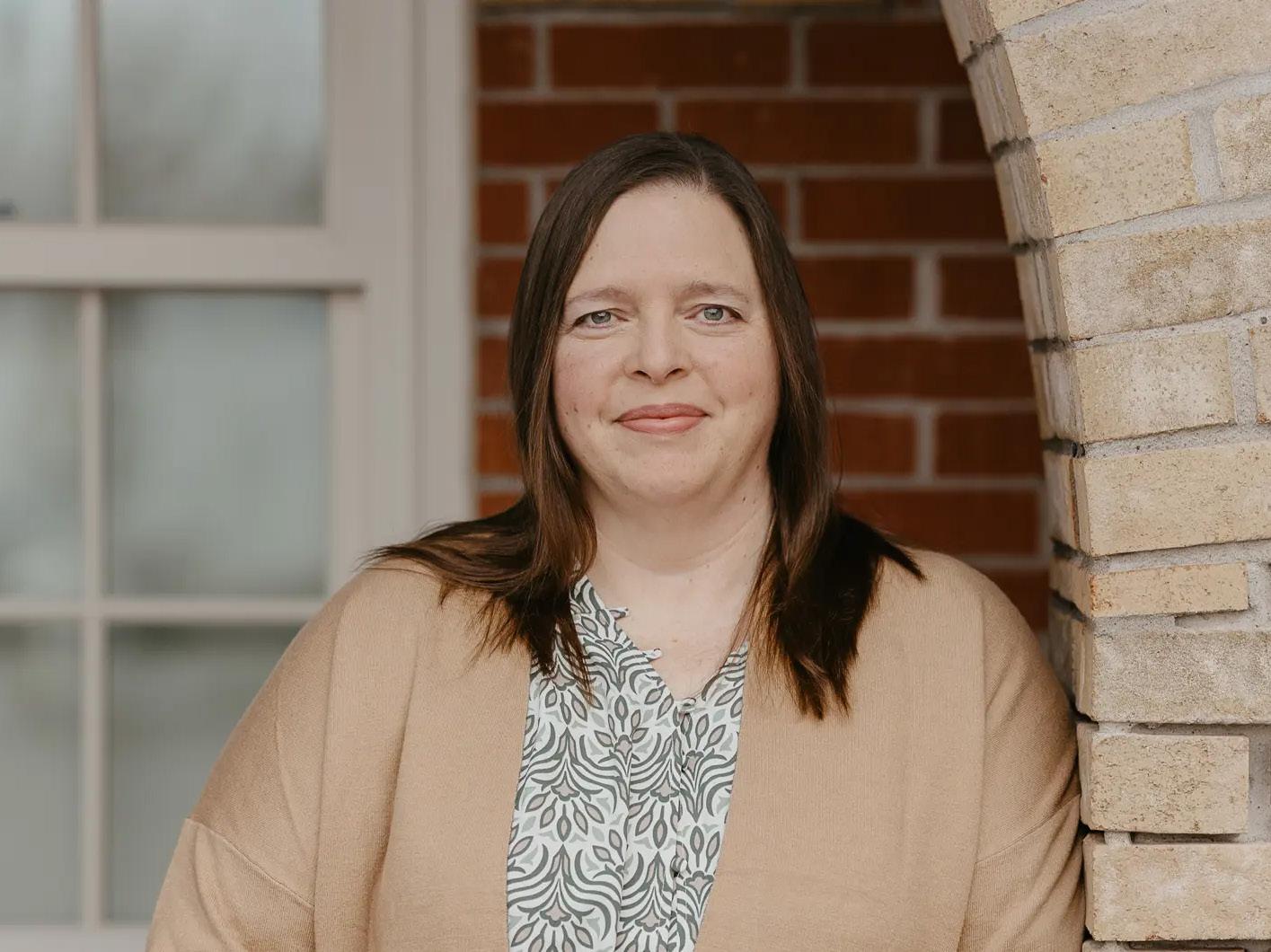

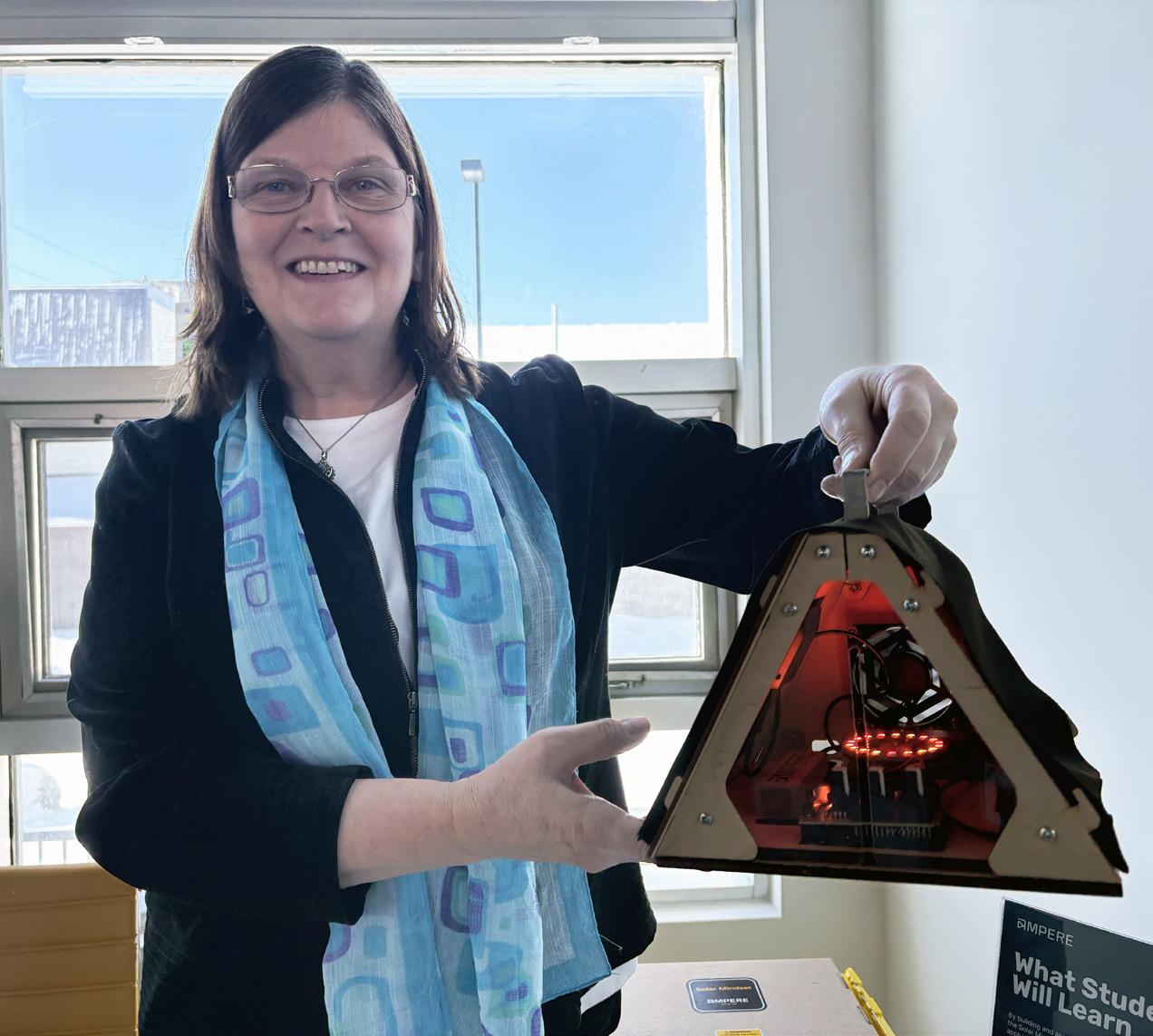
The Solar MindSet is an educational solar power kit for youth.
By Robyn Best
In September, Ampere released the Solar MindSet, a solar power kit that encourages youth to understand the power of renewable energy in a fun and practical way, and now the kit is being sold at MIT.
The product is the first in Ampere’s social enterprise product line. The idea came from Jane M.E. Darling, director of social enterprise at Ampere who thought a solar powered lamp would be a good product.
Along with a solar panel the kit also comes with a light box that can act as a flashlight or a tool for tracing, fan, and inside the hardware are various components that
youth can code. On average it takes 90 minutes to build, and then users can spend 12 hours exploring and completing activities.
[The] solar power kit... encourages youth to understand the power of renewable energy in a fun and practical way.
“All these components come apart, so you can actually play with them and explore them independently. But as a system, what it allows you to do is experimentation and explore energy production,” said Darling.
The kit is geared towards youth in Grade 5 and up and can be used individually or in a classroom setting. The educator kit comes with a guide on how the MindSet can be used to teach in line with the curriculum taught in schools in STEAM classes.
The kit charges in the sun, and even in lower lit areas, it will still charge just at a slower pace. After it’s charged, devices like cell phones can be plugged directly into the panel where it will charge.
“The idea is that you start getting used to charging and understand how long it takes to generate enough power to charge your cell phone on a regular basis,” said Darling.
With the MindSet, everything can be seen clearly giving users a better understanding of how the system actually functions. “It’s demystifying the process that you would see in a closed unit,” said Darling.
Darling had the opportunity to visit MIT and one of their museums that shows some of the early solar panel prototypes. The MindSet is now being sold at a gift shop in the museum, and it will also be used in their maker lab at the museum, which is similar to Ampere’s makerspace in Lindsay.
“These are resources specifically designed to support STEAM education, and we try and make them accessible with our grant funding to communities that otherwise wouldn’t be able to afford them or access them,” said Darling.
So far, more than 800 kits have been distributed to youth and educators in the Northwest Territories, Yukon, Ontario, Labrador and Nunavut through funding by Canada Service Corps.
The Solar MindSet can be purchased at Tradewind Toys in Lindsay or online at store.amp.ca for $150. All proceeds go directly back into Ampere’s programming mission of delivering STEAM education to rural, remote and Indigenous communities. LA



By Sarah Fournier Contributor
February has a way of putting relationships under the spotlight. Valentine’s Day arrives with its roses and prix-fixe menus, and suddenly, connection becomes something you either have or you don’t.
But most of the relationships that shape our lives don’t begin with grand gestures or carefully worded messages. They begin quietly, slowly, and often unintentionally.
In this digital-first world, we have fewer natural spaces to connect with others. People are working remotely, students attend school online, and social interactions are increasingly filtered through screens. The rooms where relationships used to form — classrooms, offices, shared routines — have thinned out.
It’s no surprise, then, that we’re seeing new forms of connection emerge. This issue of the Advocate explores the rise of AI companions, and while that conversation is complex, it points to something very human: people are looking for connection, wherever and however they can find it. When traditional pathways feel out of reach, alternatives step in.
I got married before dating apps were the default, but I’ve noticed that while these can introduce people, they struggle to replace the experience of meeting someone organically with no pressure of defining anything. And even though so much of modern connection relies on them, they can’t replace familiarity, shared context, or the comfort that builds when you see the same faces week after week.
That same dynamic applies to friend ships. Adult relationships rarely come from trying to “make friends.” They come from proximity and repetition. From doing something alongside oth ers and letting connection emerge naturally.
I was reminded of this when I finally joined a Masters swim team. I hesitat ed for months, convinced I wouldn’t belong or wouldn’t be good enough. But once I showed up, it was clear from the start that these were my people. Everyone was there for the same reason: our love of swimming. We weren’t trying to impress one an other; we were simply sharing the same space and the same passion at the same time.
Adult relationships rarely come from trying to “make friends.” They come from proximity and repetition.
That’s how many meaningful relation ships start, romantic or otherwise. Not through optimization or perfor mance, but through shared experi ence. Sports teams, art classes, book clubs, or any place where people gath er around something they care about can be an opportunity for meaningful connection.
Sure, technology can help us feel less alone. But it can’t replace something that grows when the conditions are right. When people are present, the phones are put away, and the connec tion is allowed to unfold naturally.
Find Sarah at colourandcode.ca
The most anticipated Advocate magazine of the year!
Want to be featured in our annual
Contact Roderick at 705-341-1496 or roderick@lindsayadvocate.ca










- with Nicole Naylor
By February, the urgency of January has softened. The pressure to set big goals fades, and what remains is a quieter awareness of what feels heavy; in our homes and in our lives.
When people think about downsizing, they often focus on square footage or storage. In reality, the hardest part isn’t the logistics, it’s the emotional weight of holding on. We keep things out of habit, responsibility, or the feeling that letting go somehow diminishes the past. It’s about the memories attached to it and the life it represents. That’s why downsizing can feel emotional, even when it makes sense.
But letting go doesn’t erase memories. It allows them to take their proper place, without taking up more space than they need.
Before you begin with a downsizing checklist, you need to begin with permission. Permission to allow yourself to release what no longer fits the life you’re living, and to stop carrying things “just in case.” When those decisions are made gently and without urgency, space opens up naturally.
Clarity often comes when we ask ourselves: What no longer fits the life I’m living now? How will it feel if I let it go?
Less upkeep. Fewer obligations. More time for what matters most.
If downsizing or a future move is on your mind, I’d be happy to have that first, no-pressure conversation.
Mindful Takeaway:
The value of a memory isn’t measured by what you keep.

Nicole Naylor REALTOR® REVEL Realty Inc. Brokerage 705-341-2458
With the recent rollout of the new Blue Box Recycling Program, residents have had questions. Here are answers to some of the most common ones we’ve heard:
Doug Elmslie, Mayor
Why did our recycling program change and who do I contact for support?
The Province changed how recycling is managed across Ontario. Circular Materials now oversees the program, and a new contractor, Emterra, collects residential recycling.
Emterra is your first point of contact for questions, missed collection reports, or service concerns. Contact information and program details are available at the bottom of this message.
Are there any changes to how I recycle?
At this time, collection dates remain the same. Some accepted materials have been added, and you will see changes in how certain items are sorted.
You will also see a different truck collecting recycling on your regular collection day. This might be at a different time than your waste pickup. Make sure to have your recycling out on time, by 7am. Full sorting details are available at the link below.
Who takes my alcoholic beverage containers now?
Alcoholic beverage containers are no longer collected at the curb and should be returned through existing deposit-return programs.
For the newest information, service updates, or future changes, scan the QR code or visit the website shown below.




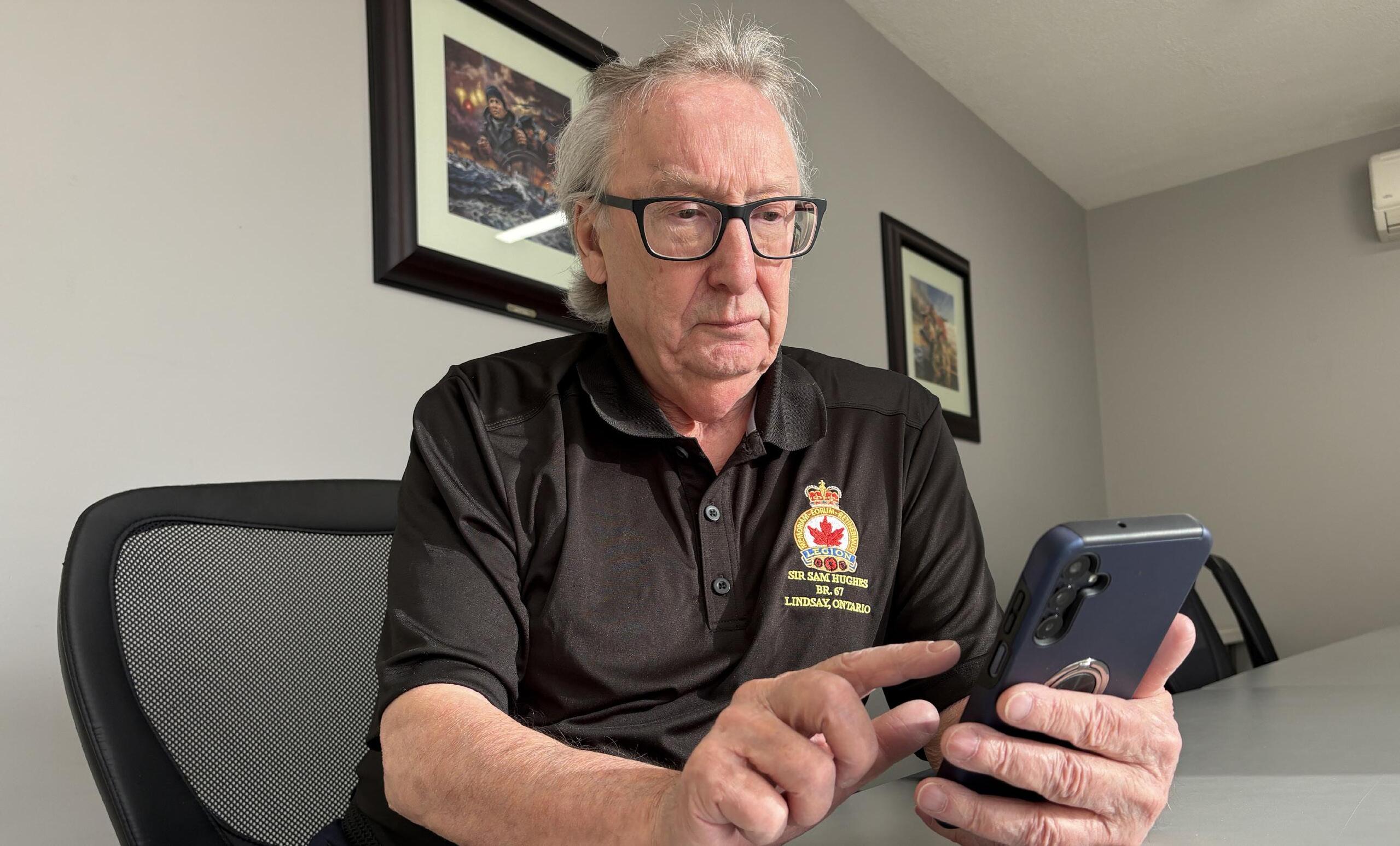
Are new tools helping or hindering our personal relations?
‘I didn’t find it helpful or appropriate to have the app call me beautiful or ask when we were going out for coffee.’
By Lisa Hart
“Honestly, it’s just another tool in my mental health toolbox,” says Amanda Braniff of the app known as ChatGPT Plus. “It’s a safe place to land when my brain gets loud,” says the Lindsay resident.
Rapidly emerging technology is pushing artificial intelligence (AI) beyond its use as a research tool or business assistant, and into areas of our personal life which were traditionally filled by other humans.
Online chatbots are emerging with the ability to not only remember but to learn from what users share with them and simulate human conversation. Depending on the user’s needs or desires, these AI companions can project a pretty fair approximation of communication with a friend, romantic partner or mental health supporter. Some highend apps are even designed to allow for highly customizable, role-playing avatars if you have the knowledge and patience for that kind of thing.
Just like the dating apps, some of these companion apps offer a free limited trial experience with a range of monthly subscription rates from $20 for Abby AI Therapy to $85 for apps like Copymind AI Twin. It may be worth noting that the creators of these AI powered friends are businesses and therefore may be inclined to prioritize user engagement and subscriptions over a safe user experience. Not all companion apps provide crisis contact information or are able to recognize crisis triggers within a conversation.
Lindsay’s Jenni Caron’s first experience with an AI companion was an app called Replika which appears prominently in Google searches. Founded by Eugenia Kuyda after the tragic loss of a close friend, the website states she created the app to help users express themselves by offering helpful conversation.
“It crossed into a dating-style dynamic,” says Caron. “I didn’t find it helpful or appropriate to have the app call me beautiful or ask when we were going out for coffee.” In fact, Caron described it as creepy the way technology can make computer generated comments appear on the screen like messages from another person. “The experience left me hesitant about AI companions in general.”
Despite her initial misgivings, Caron continued her adventure into the world of AI companions and discovered her own safe place to land with an app called Copymind AI Twin. AI Twin claims to enhance self-awareness and improve decision-making skills.
Caron explains that she finds the questions generated by the app encourage her to explore her feelings, helping her to uncover deeper issues. She feels the gently suggested alternative perspectives help her to navigate through some of life’s challenges.
“AI Twin helps me to step back and see the bigger picture, giving me space to reflect rather than react,” says Caron. “The personality insights and quizzes are also helpful.”
She feels the gently suggested alternative perspectives help her to navigate through some of life’s challenges.
Braniff finds similar benefits from the use of ChatGPT Plus, “It helps me breathe first…then show up calmer, clearer and more myself for the people I care about.” But she clarifies that AI is not something she uses to replace real people but something she uses so she can show up better for them.
Dave Francis, also local to Kawartha Lakes, is no stranger to chatbots, having communicated with an extremely primitive one named Eliza in the late 1960s. He was surprised by his initial impressions of a modern AI companion called Abby AI Therapy and found the experience quite positive, despite the limitations of the free version.

“The sign-up was a bit uphill,” says Francis. “And the app expects the user to know a little about therapy during the process.” Abby is promoted by its creators as “therapy in your pocket.”
“Responses were reasonably human-seeming, and it did quite an acceptable job of understanding what I was trying to convey,” continues Francis. “Its suggestions and prompts to continue made conversation-style interactions seem almost human…even when its responses were a little too robotically understanding.”

Abby is one AI companion that is programmed to at least try to pick up on possible crisis comments during conversation. It provides warnings that the app is not a therapist and suggests users should seek human help if needed. Abby also has an easy to find tab in the app that provides crisis contact information.
True to its AI roots, Abby has a personal assistant side too. If you are finding yourself overwhelmed by a task Abby will offer to help you break it down into manageable steps. If you copy and paste a suspicious email into Abby, the app can scan the email and provide you with a list of any red flags that might suggest the email is a scam.
What does Abby have to say about the benefits or drawbacks of using AI Companions such as herself? “Ultimately, you might find me helpful as a supplement – someone to talk to when it feels like others are too busy, or as a safe place to sort out feelings until you can connect with others in your life.”
While Morgan McConnell, a grief counsellor working with Hospice Services Kawartha Lakes, admits she does not have personal experience with AI companions, she does have concerns about the technology’s use. An artificial companion whose only focus is the user and who is always available to talk could create unrealistic expectations
‘Its suggestions and prompts to continue made conversationstyle interactions seem almost human…even when its responses were a little too robotically understanding.’
for a normal relationship. “Human interactions just don’t work that way.”
It is a concern that is echoed by James Donaldson of Kaxo, a Lindsay-based technology company focused on the intersection of human expertise and artificial intelligence. Donaldson describes AI as a powerful productivity maximizing tool but cautions that it is not anything close to a companion.
“Not only do AI companions not exist in our physical space, they have strict instructions to follow which are usually boiled down to: Be a helpful assistant. Do not cause harm. This creates a


ironic, given Copilot is the name of Microsoft’s AI.) She adds the disclaimer that AI is not a replacement for real humans or real support.
Donaldson takes a hard line against the use of AI companions. When asked for his opinion, his suggestion is simple – don’t.
“There is a human out there waiting for you. Go find them instead, and let the engineers and developers fix the technology. Humans are meant to interact together. AI is a tool…for now.”


















There is always something new to experience at Kawartha Lakes Public Library. This month, we invite you to slow down, get creative, and take advantage of the many free opportunities available with your library card.
Share a little kindness this Valentine’s season by creating handmade cards for yourself, loved ones, or local seniors living in care homes across the Kawartha Lakes. This creative, drop-in activity is especially geared toward teens, though participants of all ages are welcome.
The card-making station will be available from Monday, February 2 to Saturday, February 7, during Lindsay Branch open hours in the Programs Department. No registration is required. All supplies are provided.
Celebrate Family Day with a creative activity the whole family can enjoy. Design a keychain that is uniquely yours by choosing your colours and adding your name or initials to create a personalized accessory to use or gift.
This workshop will be available at all library branches during regular operating hours on Saturday, February 14, 2026, in celebration of Family Day, as branches will be closed on the holiday Monday. Please note that the program begins 30 minutes after opening and ends 30 minutes before closing to allow for setup and cleanup. Check your local branch hours on our website before visiting.
Please note that all library branches will be closed on Monday, February 16, 2026.
There is always more to discover at your library. Visit kawarthalakeslibrary.ca to explore everything your library card offers.
HOLEY MOLEY! by Joan Corrigan
ACROSS
1. Son of Adam and Eve
5. Pubs
9. Used car disclaimer : 2 wds.
13. Aesop character who lost a race
14. Wooden shoe
15. Bouquet flower
16. Radiate, as heat
17. Smell of fresh coffee
18. Stubborn beast
19. Letters learned in kindergarten
20. * Schoolkid's 3-hole looseleaf: 2 wds.
22. Two-way conversation
24. Scottish boy
25. Nuclear particle
26. * Was it one large gaping hole, or actually a series of thin scrapes and thumb-width punctures, which famously sank this ship in 1912?
30. Perfume bottle with stopper
33. Sense of humour
34. Kerfuffle
35. High-end wristwatch
36. The start of maple syrup
37. Heats, as water for pasta
39. Euro precursor
40. Half a dozen
41. Birdseed
42. * Donut holes
45. Swimming hole
46. Numero ___ (the boss)
47. Peacocks' layers of feathers
51. * Holey Emmental: 2 wds.
55. Driver's ID, for short
56. Clothes-dryer fluff
57. Sequences of training exercises in karate
58. Travel by horseback
59. Poker stake
60. Use a pencil's rubbery end
61. Biblical garden
62. Secure a boat by rope or anchor
63. Provoke to anger
64. Father, in Quebec
By Joan Corrigan, Fun & Done Crosswords
1. Out in front
2. Disney baby deer
3. Shrub of the heather family / Girl's name
4. Allow
5. ___ & Bailey Circus ("The Greatest Show on Earth")
6. House, dwelling
7. Julius Caesar's city
8. Full of night-sky lights
9. Fleet of ships
10. Chicken noodle, for one
11. "Emerald ___" (Poetic name for the land of leprechauns)
12. Fortune teller
14. Former capital of S. Vietnam
20. Wrinkle-reducing injection
21. Wheel of Fortune host Sajak
23. Trim on a bridal veil
26. Waiter's 18%, perhaps
27. Hammer's partner
28. Lounge about; do nothing
29. Price paid
30. Ridge on a guitar fingerboard
31. Plural of locus
32. College grad, informally
33. Candle material
36. Bro's sibling
37. Ecological zone such as tundra, desert or forest
38. Stew pot
40. One who puts goods on shelves
41. Hair conditioner
43. 1920s comedian, ___ Keaton
44. ___ and outs
45. The magic word
47. Piece of a flower
48. Fly on the wind
49. Duck; duvet
50. Movie clip
51. Shut a door angrily
52. Grape-loving sot
53. Vanish ___ thin air
54. Mata ___, WW1 dancer and spy
58. Sales agent














I have to admit it. Researching this monthly column can make me anxious, with headlines like:
“The Hot Summer of 2025 could be the Coolest for the Rest of Our Lives” (Union of Concerned Scientists)
“2024 was the hottest year on record” (Reuters)
“Ocean temperatures hit record highs in 2024, study finds” (Phys.org)
“World’s Coral Reefs in almost irreversible die-off, scientists say” (CBC)
“Fires drove record loss of world’s forests last year, data shows” (The Guardian)
“Arctic sea ice reaches record low” (NASA)
The climate has changed. Our global home is hotter than it’s been in more than 125,000 years. All that excess heat from burning fossil fuels intensifies extreme droughts, fires, floods, storms and invasive insects across Canada and here at home. It affects air quality, crop production, insurance costs, and our health.
When I’m feeling most anxious, I have to push away from my computer, look out the window, go for a crosscountry ski, or a paddle, or a hike in the woods. Even a walk down a country road with our dogs. Getting out into nature is a healing balm: Listening to bird song, rustling leaves, crunching snow. Smelling the pines. Feeling the cool breeze on my face. Noticing the sunlit diamonds on a rippling creek. It all whispers “relax.”
Research shows that time spent in the natural world can lower blood pressure, heart rate, improve mood, reduce depression and strengthen immunity. In the 1980s the Japanese coined the term Shinrin Yoku, loosely translated as forest bathing, and the health benefits are widely recognized there. Two hours a week communing with nature can boost health and wellbeing, and research shows that as little as 20 minutes at a time can reduce
stress hormones. Trees and plants emit aromatic phytoncides, which account for some of that stress reduction.
While going to a conservation area or park is ideal, a stroll down a treed lane is also healing. So is digging in the garden. A microbe common in wet soils has been shown to affect neurotransmitters and reduce anxiety.
With all those therapeutic benefits, some health professionals have begun writing prescriptions for time in nature through PaRx – a national nature-prescription program. In addition to encouraging time outdoors, the prescription comes with benefits like 25 per cent off an annual Kawartha Conservation parking pass, free admission to the Canadian Museum of Nature in Ottawa, 50 per cent off admission to the Toronto Zoo and a Parks Canada Discovery Pass. That pass brings free admission to more than 80 Parks Canada sites for a year.
To tap into these perks, ask your health professional if they issue PaRx prescriptions, or would consider signing up for the process.
And this summer Parks Canada is again offering the Canada Strong Pass, providing free admission from June 19-Sept. 7 to all its historic sites, parks, and free lockage on its canals, including the Trent. It also includes a discount on camping fees. No physical pass needed. You just need to show up.
We can all benefit by preserving our natural areas, including those under our Conservation Authorities. The province is now looking at amalgamating Ontario’s CAs from 36 to seven. Some fear that could lead to conserved greenspace being opened up for development.
And that increases my stress, and my need to immerse myself in nature’s spa. After writing to my MPP.

Ginny Colling was passionate about the environment before retiring from teaching college communications students. After retiring she trained with Al Gore’s Climate Reality Project. She has presented to numerous groups about the climate crisis.


‘Her wayward life of vice’
Lindsay’s William Street, in 1911, was supposed to be a thoroughfare of progress and respectability. At its foot was the Grand Trunk Railway’s imposing station, while a short walk north brought one to the towering edifice of St. Andrew’s Presbyterian Church. And a few blocks beyond that were the factories and opulent residences of those who ran them. These spaces represented all that was good about the little town: a thriving economy connected to the wider world, a place where a church-going populace was kept on the straight and narrow through righteousness and hard work.
But when viewed through the lens of social history, each of these spaces also play an indirect role in conversations surrounding the local sex trade. Industry and affluence in cities and towns across the country brought about economic disparities that forced many Canadian women into prostitution. The cultural clout of mainline churches had a widespread influence on discourse about what was sometimes called “the white slave trade.” And it was from the platform of the local railway station that many sex workers entered and left communities throughout Canada.
Sarah McDonald was one of them – and 115 years ago, she found herself looking for clientele on William Street. Little known today, her story has much to tell us about local attitudes towards those engaged in the provision and procurement of sexual services.
Industry and affluence in cities and towns across the country brought about economic disparities that forced many Canadian women into prostitution.
Reportage in the Jan. 21, 1911, edition of the Lindsay Daily Post revealed that Sarah and her sister, Flora, were natives of Orillia. They probably found their way to town by train and were staying at a house occupied by James Goslin in Lindsay’s south ward. Goslin, identified as a horseman in contemporary voters’ lists, lived at 63 Russell St. E. Although it was unassuming in appearance, the neighbours apparently knew that there was something suspicious afoot. “Reports, it is understood, had reached the police that this place was of questionable repute,” the Post revealed, “and it is alleged that one of the frequenters was an unfortunate female from Orillia.”

At 12:00 a.m. on Friday Jan. 20, Police Chief Ralph Vincent, accompanied by a Constable Short and High County Constable Thornbury, conducted a raid on this house. Goslin was found to be asleep; Sarah wasn’t there but would be arrested the following morning – likely on vagrancy charges.
More lurid details of the case were brought to light at a meeting of local aldermen on March 2, 1911. Chief Vincent’s testimony at this council meeting reveals that “the girl was a prostitute, and the men referred to coaxed her away with liquor and then ravished her.”
And almost immediately, Sarah McDonald’s credibility as a victim of sexual assault was called into question. “She was an unreliable character and untruthful and claimed she could not identify the men who were with her,” the Post informed its readers matter-of-factly, quoting from police witnesses. Sarah McDonald never got any justice. After being released from a short stay in the Ross Memorial Hospital, she was unceremoniously “shipped out of town on the advice of the authorities.”
Although by no means the first instance of prostitution in Lindsay, the McDonald story was perhaps the most widely disseminated in the pages of the local press. Residents who were accustomed to reading about “houses of ill repute” in
distant American cities or on the Canadian prairies were now reading about someone who, “in her wayward life of vice, drifted to Lindsay and became the victim of the lusts of men who so far forgot all sense of decency, as well as the respect and honour due their wives and sisters, as to drag her down deeper in the mire.”
The Post’s editorial staff walked a fine line in their coverage of the story; simultaneously othering the victim by publicly calling out “her wayward life of vice” while also taking aim at those who sought to take advantage of her. Indeed, in its reporting of the McDonald affair, the Post waffled between being sympathetic, if not more than a little patronizing, and casting blame.
Sarah McDonald’s credibility as a victim of sexual assault was called into question.
First, it was strongly insinuated that Sarah McDonald’s “life of vice” was simply the collateral damage of a bad upbringing. Second, the Post insisted that the churches needed to step up their efforts in instilling in men and women a “sense of duty to their Creator and themselves.” Better parenting and better preaching, the Post implied, was the solution to curbing prostitution.
While it might have been partially right, nothing at all was said about the sort of economic injustices that may well have forced Sarah McDonald and her sister into sex work. The Post, though, was equally adamant that laws needed to change: “What appeals to the average person as most unjust and regrettable is that a girl should be sent to a house of correction while her traducers – the men who damned her and smiled over her shame – are allowed to go free and to associate with other girls and women of chastity and grace,” railed its editorial.
Despite the progressive appeals of the Post and other advocates, the number of women convicted of prostitution-related offences in Canada continued to outnumber those of men. Sarah McDonald might have faded into history, but her story has, tragically, been repeated across space and time.

Ian McKechnie is a freelance writer, local historian, and researcher who has compiled and edited three books.
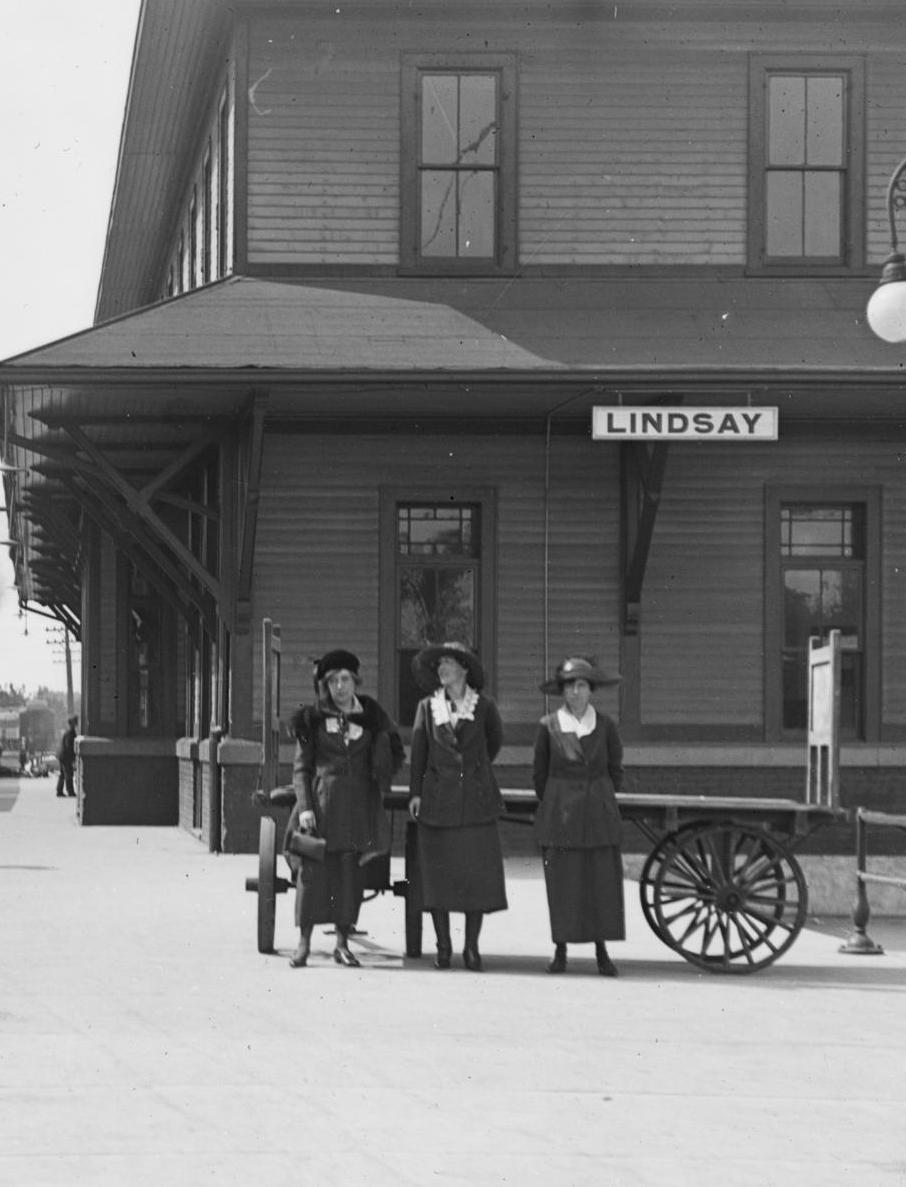
The railway station in Lindsay as it appeared in 1921, though it hadn’t really changed much in appearance since 1911. It is likely that Sarah McDonald and her sister would have passed over this platform upon their arrival in town. Historically, brothels were almost always located steps away from railway stations.
Source: Public Domain, Toronto Public Library Digital Archive.

By Trevor Hutchinson Contributing Editor
It’s been fun following the various community social media groups for real-time reaction to the new recycling system in the city.
There’s a lot of vitriol directed at the city, and that’s misdirected. The recycling program is the result of a new provincial approach that attempts to shift the cost of recycling from the end user, or consumer, to the producer of that material. This was done through amending regulations within the provincial Resource Recovery and Circular Economy Act (2016).
The program was developed to meet these new regulations by the national not-for-profit Circular Materials, who offer a variety of services towards their mission of “advancing the circular economy.” In turn, the city has retained Emterra Group to pick up recycling from residents.
There’s a lot of vitriol directed at the city, and that’s misdirected.
Not unlike ordering takeout from a brand-new restaurant, there have been glitches in the rollout. Combine this with some really dodgy weather and you’ve got a Facebook meltdown.
What I find most troublesome about this change is the definition of ‘consumer’ and ‘resident.’ The new system does not apply to businesses or not-for profits. So these organizations have had to source and pay a private provider to pick up their recycling.
And here’s where the ‘making producers and not the consumers pay’ starts to go off the rails a bit. If a small busi-
ness has to pay, say $2,000 a year in a new expense, that cost is going to end up going to the consumer eventually. It’s kinda how capitalism works. So the aspirational circular economy initiative might involve a wee bit of circular logic.
It is in all our interest to have a robust recycling program. Of course, a portion of our recycled material ends up in landfills, usually due to contamination. And a decent percentage of blue box material is not recycled but diverted from the landfill by being exported or incinerated. Neither of these outcomes are necessarily ideal. In general, we are better at paper than plastic. Although you can use any colour of box to recycle as long as it’s not an organics container. Gone are my days of feeling like a rebel using a green box on a blue box day.
Also gone is the conspicuous consumption of recycling alcohol containers. Alas, you can no longer pretend you’re a millionaire anymore by recycling an empty six pack.
In response to the initial public reaction, the city listed steps of escalating a recycling problem: Emterra, to Circular Materials, to the Resource Productivity and Recovery Authority, to the Ministry of the Environment, to our MPP. It’s almost like the city was expecting problems with something beyond their control.
But if you’re somehow still happy but looking for a way to get the February blues, launch a 5 tier complaint about your blue(s) box, all the while watching German recycling videos on YouTube. It’ll work.




Wanted Antiques
LUXURY TRAVEL WITH ROBERT ALTMAN
Collector Car & Truck Appraisals
MTO Appraisals & Vehicle, VIN/Ownership
Private Travel Planner in Kawartha Lakes
Corrections
Call Ron @ 705-878-2372
Leave winter in your wake –
Please visit
Plan your escape now
RJVintageGarage com Available - Lindsay & Area.
Tailored journeys by land and sea. Private, Group, or Corporate Retreat.
robert.altman@ traveledge.com 647-966-8985
Better Bins
Furniture, signs, jewellery, watches, coins, china, military items, paintings, records, books, old metal toys, wood decoys, snow shoes, paddles & more.
We Buy Vintage...
Vinyl Records, Comics, Jewellery, Glass, China, Pottery, Toys, Sports & Collectibles. We Make House Calls. Cash Paid.
Bob Carruth 705-887-1672
Robert & Penny. 705-324-2699 howlingdog.rocks
For Rent - 1 and 2 bed units from $1,800 & up Heat, hydro & water is included. Adult building in Lindsay Call 705-324-9381.
Burns’ Snow Removal & Lawn Care Ltd.
Lanes, lots, sidewalks, sanding & salting.
Commercial & Residential Fully insured.
Burns’ Snow Removal & Lawn Care Ltd. Grass cutting, fertilizing, trimming, organic topsoil & fall cleanup. Snow contracts available Commercial & Residential Fully insured. Call David E Burns 705-324-8154
Call David E. Burns 705-324-8154
Silversea • Explora • Viking
• Silversea * Quark Four Seasons • Accor • Marriott • Hilton * IHG
Reliable Moving Solutions to take the Stress out of Packing Plastic Moving Bins We Deliver. 705-879-2569 betterbinrentals @outlook com
TRUSTED HANDYMAN In Lindsay
We Buy Vintage... Vinyl Records, Comics, Jewellery, Glass, China, Pottery, Toys, Sports & Collectibles We Make House Calls Cash Paid Robert & Penny. 705-324-2699 howlingdog.rocks
Classic & Vintage Cars & Trucks
Classic & Vintage Cars & Trucks Call Mark 613-360-2699
Call Mark 613-360-2699 For Rent
McKenzie’s offers all aspects of outdoor maintenance
• interlock
1 and 2 bed units available March 1/26. $1600 and up. Heat, hydro & water included. Private home in Lindsay. Call - 705-878-1235

McKenzie’s offers all aspects of outdoor maintenance interlock lift and re level fencing gutter cleaning lawncare snow removal 705-934-4333 Free estimates
• lift and re level
• fencing
• gutter cleaning
• lawncare
• snow removal
705-934-4333 Free estimates.
Fences, Gates, Railings & Verandas
Home projects, Painting, Small repairs, Remodeling
New wooden fence installation
Coming soon Fences, Gates and Railings
Wooden fence repairs & staining
Perfect Post Holes
Perfect post holes
Great quality, pricing & reliability
Stephen 647-927-1580
Great Quality, pricing and reliability Seniors discount
Stephen 647 927 1580

If
reading
Contact Rebekah at rebekah@lindsayadvocate.ca

KELLY MAW moved to Cameron in August 2024.
Lindsay Advocate: Why did you choose to move here?
KELLY MAW: I was very excited to move to Kawartha Lakes. I grew up in Brooklin, and this has felt like a beautiful reconnection with family and friends. It has also been a wonderful opportunity to expand my art business. I love my location in Cameron and the feeling of rediscovering my roots.
Lindsay Advocate: What is your favourite thing about Kawartha Lakes so far?
KELLY MAW: I have been so happy with how welcome I have felt. I have the most fabulous neighbours and new art students. The events I’ve been attending like shows and concerts have been terrific. Kawartha Lakes has so much to get involved with and I look forward to my continued immersion in the arts world here.
Lindsay Advocate: What are your favourite local restaurants or shops?
KELLY MAW:: I have enjoyed One Eyed Jack’s (Lindsay) and The Cow & The Sow (Fenelon Falls), so far. I’m a big fan of the Lindsay Recreation Complex, the Flato Academy Theatre, and as a thrifter, I love the Fenelon Falls Salvation Army.
Lindsay Advocate: What do you think is missing from Kawartha Lakes?
KELLY MAW: As an artist, I’d be remiss if I didn’t say that having a Michaels would be awesome. As a newcomer it seems like a lot of houses are going up but where are the businesses to help feed and support this growth?
Lindsay Advocate: How were you involved in your previous community and how might you like to get involved in Kawartha Lakes?
KELLY MAW: I am still involved with my previous community of Owen Sound with paint classes, art sales, ukulele playing and family and friends. I have immersed myself in my community here and feel like I have the very best of both worlds as I fill my painting classes with beautiful people and join groups here such as KLAC, activities at the rec centre, and The Ukulele Dukes in Port Perry. I like to think that my community involvement is to provide a cheerful, creative environment for people to have a great place to explore and learn about art for self healing and care.
Are you new in town? If you moved to Kawartha Lakes within the past two years and want to be featured here, email us at info@lindsayadvocate.ca.

During the giving season, Kawartha Lakes donors showed us WHAT MATTERS MOST to you.
Your donations will grow our community’s Emergency Department, enhance mental health crisis care, and support more critical projects that are not covered by government funding.
On behalf of the RMH Foundation, the Ross Team and our community of patients, THANK YOU!
We all count on Ross Memorial Hospital to help us when we need care. With you, we are ensuring our hospital grows with our population, providing the best care possible. Together, WE ARE THE ROSS.
WHAT MATTERS MOST
wearetheross.ca