Growth Plan, 2019 A Place to Grow: Growth Plan for the Greater Golden Horseshoe, 2019
Growth Plan, 2020 A Place to Grow: Growth Plan for the Greater Golden Horseshoe (Office Consolidation), 2020
G.T.H.A. Greater Toronto and Hamilton Area
I.M.F. International Monetary Fund
L.N.A. Land Needs Assessment
L.Q. Location Quotients
M.C.R. Municipal Comprehensive Review
M.O.F. Ministry of Finance
M.Z.O. Minister’s Zoning Order
N.F.P.O.W. No fixed place of work
O.P. Official Plan
O.P.A. Official Plan Amendment
P.M.I. Purchasing Managers’ Index
P.P.S., 2020 Provincial Policy Statement, 2020
P.P.S., 2024 Provincial Planning Statement, 2024
P.P.U. Persons per unit
List of Acronyms and Abbreviations (Cont’d)
P.R.E. Population-related employment
S.A.B.E. Settlement Area boundary expansion
SMT Senior Management Team
TAT Technical Advisory Team
U.S. United States
Executive Summary
Introduction
Watson & Associates Economists Ltd. (Watson) and Dillon Consulting Ltd. (Dillon) were retained by the City of Kawartha Lakes to develop a Growth Management Strategy (G.M.S.) for the City to the year 2051. This new G.M.S. represents a foundational study to the forthcoming update of the City’s Official Plan (O.P.). This new G.M.S. will replace the City’s 2011 G.M.S. in light of evolving local/regional demographic, socio-economic, and economic trends, as well as updated provincial planning legislation. The City of Kawartha Lakes G.M.S. is a forward-looking document, designed to proactively plan for growth and accommodate change over the next several decades. Given uncertainties over the long-term planning horizon, these documents are to be comprehensively updated at a minimum of every 10 years.
The technical analysis for the G.M.S. was conducted throughout 2022 to 2024 under the provisions of the Growth Plan 2019, and Provincial Policy Statement (P.P.S.), 2020. On August 19, 2024, the Province released a new Provincial Planning Statement (P.P.S., 2024), which replaces the P.P.S., 2020 and the Growth Plan, 2019 as one integrated document The P P S , 2024 came into force in October 2024. Based on our assessment of the revised policies, it is noted that the findings of the G.M.S. are consistent with the P.P.S., 2024.
Planning for Population and Employment Growth in the City of Kawartha Lakes within the Context of the Broader Economic Region
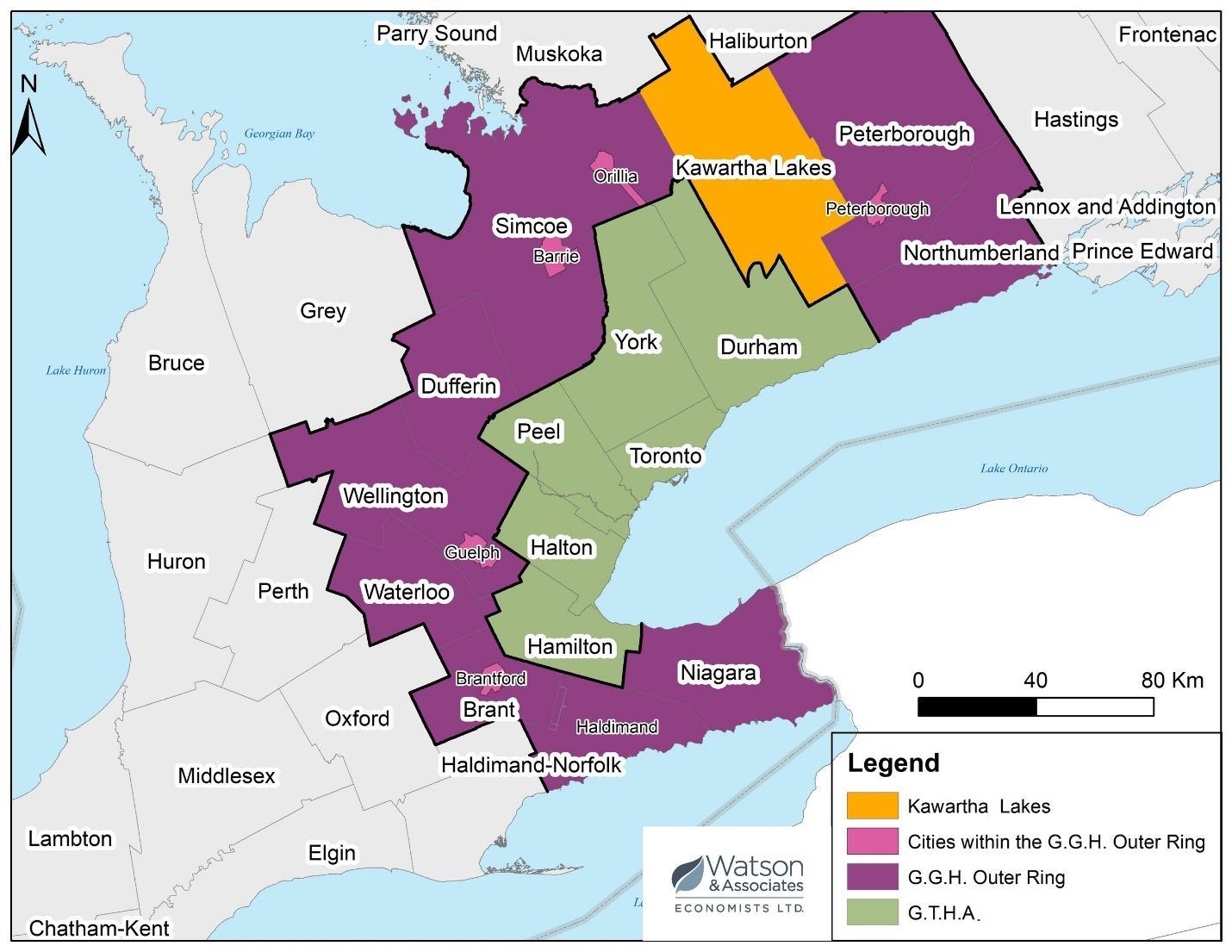
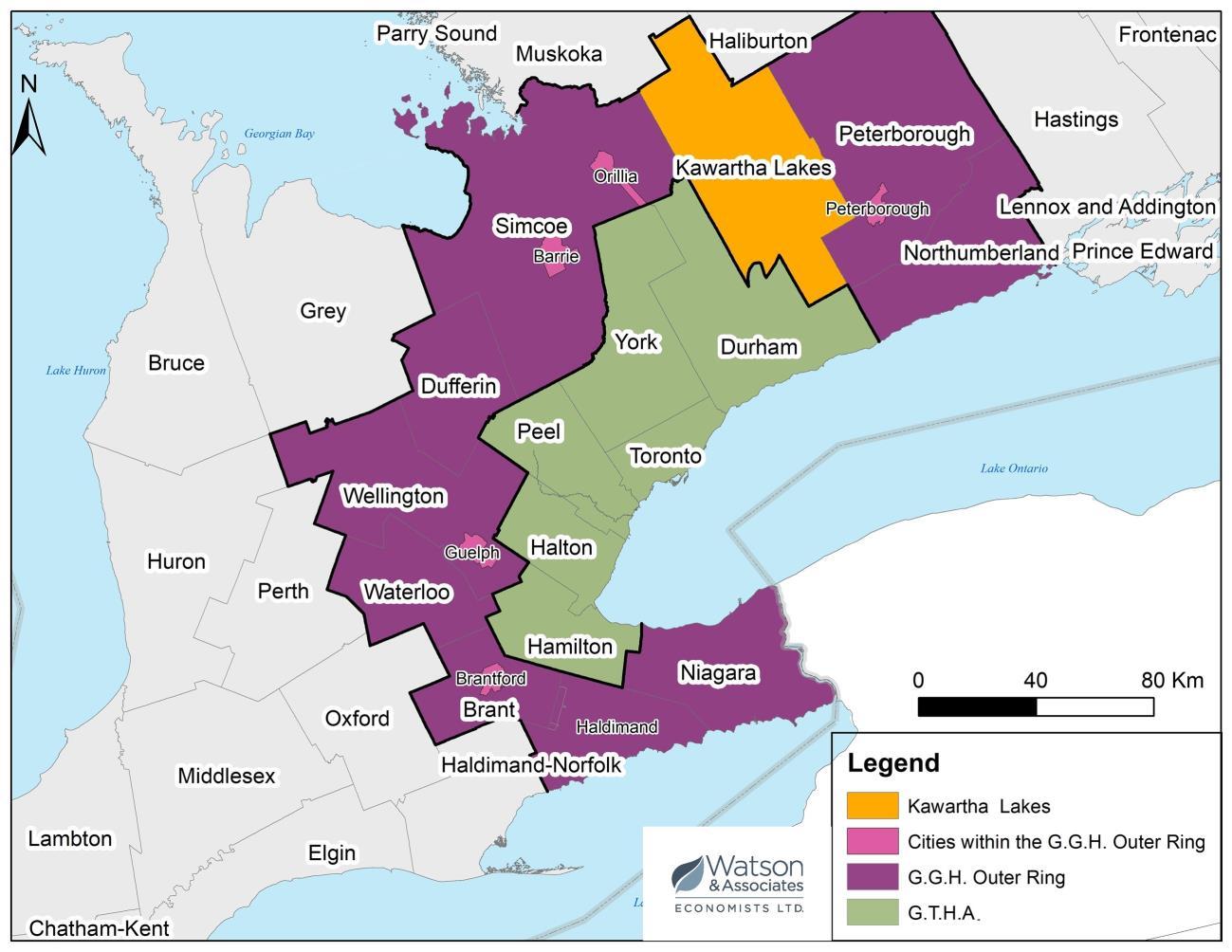
As discussed in Chapters 3 and 4, herein, the City of Kawartha Lakes is well positioned to continue to attract and accommodate steady population and employment growth over the next three decades. A key driver of this long-term population and employment growth potential is the City’s geographic proximity to the Greater Toronto Hamilton Area (G.T.H.A.). The G.T.H.A. and surrounding municipalities within the Greater Golden Horseshoe (G.G.H.) Outer Ring represents a key center of economic activity in Ontario as well as in Canada (refer to Figure ES-1). This broad region of Ontario also represents a large portion of the commuter-shed for the City of Kawartha Lakes. Potential employment opportunities within the City and its surrounding commuter-shed are a key factor driving net migration and housing growth in the City and the broader region
Over the 2001 to 2021 time period, the population of the City of Kawartha Lakes increased from 72,000 in 2001 to 81,200 in 2021; an increase of approximately 9,200 people, or an annual increase rate of approximately 0.6%. The City of Kawartha Lakes population has shown considerable growth between 2016 and 2021, primarily driven by increased outward growth pressures from the larger urban centres of the G.G.H. During this time period, the City’s employment also increased modestly, however, at a slower pace than the population growth.
With the onset of the COVID-19 pandemic, housing demand accelerated in the City of Kawartha Lakes and more broadly across the G.G.H. Outer Ring, Southwestern and Eastern Ontario. This increase in housing demand has been led by eroding housing affordability in the G.T.H.A., changing work patterns (namely increased opportunities for hybrid/remote work), and employment growth more broadly across Southern Ontario following a gradual recovery from the 2008/2009 global economic downturn.
Historically, residential development activity within City of Kawartha Lakes has been heavily concentrated in low-density housing forms (i.e., singles and semi-detached). In
Figure ES-1
City of Kawartha Lakes within the Context of the Greater Golden Horseshoe
recent years, particularly 2022 and 2023, the City has experienced a gradual shift toward a higher share of medium-density and high-density housing forms, which have accounted for approximately 26% of all new residential construction. While steady future housing demand is forecast across a broad range of grade-related housing forms (i.e. single-detached and townhome units), an increase in the share of medium- and high-density housing forms is anticipated, largely driven by the housing needs associated with the 65+ age group, continued upward pressure on local housing prices, and declining housing affordability.
The population base of City of Kawartha Lakes is older on average and aging at a slightly faster rate than the Province as a whole. The City is also highly attractive to empty nesters and retirees within the 55+ age group, given the opportunities that the City provides associated with both urban and rural living within its vibrant Urban Areas, Hamlets, Villages and remaining Rural Areas. This aging trend places increasing demands on net migration as a source for population growth in the City, due to declining population growth from natural increase, i.e., births less deaths. The aging of the City’s population is also anticipated to generate increasing needs for seniors’ housing and other housing options to accommodate a growing share of older residents. Furthermore, an older population base can also place downward pressure on the labour force participation rate, which can potentially constrain long-term economic growth within the local and regional economy.[1]
Access to recreation associated with the City’s numerous lakes and waterbodies, natural heritage, rural countryside also represents a key draw to this area. The City’s urban and rural landscapes form a large part of the foundation that creates the “quality of place” that continues to increasingly attract new residents, “cottagers,” and visitors to this area, and contributes to the growth and sustainability of the region’s tourism sector [2] Looking forward, it is imperative that a balanced approach is taken to weigh the economic development benefits of urban and rural development against the sustainability of the natural heritage system which underlies the key success of the City and the surrounding region.
[1]Labour force participation rate is the percentage of the working-age population that is either employed or actively seeking employment. It provides an indication of the active portion of the population that is either working or looking for work.
[2] Our Kawartha Lakes, Integrated Community Sustainability Plan & Local Action Plan, City of Kawartha Lakes, 2014.
A fundamental planning policy objective at the Provincial and local level is to plan for complete communities which offer a broad range of housing options as well a diverse mix of local employment opportunities. This is important because it is recognized that the City has a role to play in attracting, growing and retaining local businesses by providing local housing options to a growing regional labour force base. Accordingly, there will continue to be a growing need to attract and accommodate new and existing residents within City across all ages at all income groups, including young adults, new families, growing families with children, empty nesters and seniors. To achieve this objective, the City and its stakeholders will be required to provide a broad range of ownership and rental housing products across all housing types, including, but not limited to, grade-related ownership housing (i.e., single-detached, townhomes), condominium apartments, purpose built rental housing, seniors’ housing and secondary units). Resident attraction efforts must be linked to not only housing accommodation but also infrastructure, community services, urban amenities, and quality of life attributes that appeal to the younger mobile population, while not detracting from the City’s attractiveness to older population segments.
City of Kawartha Lakes Population and Housing Growth Outlook to 2051
Figure ES-2 summarizes three long-term population forecast scenarios for City of Kawartha Lakes over the 2021 to 2051 forecast period relative to historical population between 2001 and 2021. Based on a comprehensive assessment of local, regional and Provincial demographic and economic trends, it is recommended the High Growth Scenario be used as the long-term growth forecast for the City for the purposes of the G.M.S. The high scenario represents the upper limit to long-term population growth potential for the City. Consistent with Provincial planning policy direction, this scenario has been identified as the recommended long-term growth forecast for the City as it represents a reasonable forecast considering increased opportunities for population growth to the City, largely due to continued outward growth pressure from G.T.H.A. municipalities and increased local urban housing supply opportunities. This trend is also confirmed through an assessment of recent building permit activity, as well as increased residential supply opportunities in the City.
Under the recommended scenario, by 2051, the total permanent population base for the City of Kawartha Lakes is forecast to grow to approximately 130,000 persons. This represents an increase of approximately 48,800 residents between 2021 and 2051, or an average annual population growth rate of 1.6% during this period.
Figure ES-2
City of Kawartha Lakes Long-term Forecast Population Scenarios, 2021 to 2051
Source: 2001 - 2021 derived from Statistics Canada Census data, and 2021 - 2051 by Watson & Associates Economists Ltd.
Accommodating forecast population growth across the City to the year 2051 will require approximately 21,640 new households, or about 720 new households annually (refer to Figure ES-3). For historical context, the City averaged approximately 300 new households annually between 2001 and 2021. As previously noted, new residential development within City of Kawartha Lakes is anticipated to gradually shift away from low-density housing forms, largely driven by declining housing affordability associated with low-density housing options, as well as the increased demand for high-density housing associated with City’s growing seniors’ population.
This shift in the share of medium and high-density housing forms is anticipated to be more pronounced in the City’s Urban Settlement Areas associated with the stronger market demand and available infrastructure to support residential intensification and higher density housing forms in these areas. From 2021 to 2051, new housing is forecast to comprise 51% low-density (singles and semi-detached), 15% mediumdensity (townhouses) and 35% high-density (apartments) units.
Figure ES-3
City of Kawartha Lakes
Annual Household Forecast – 2001 - 2051
Notes:
- Low density includes single and semi-detached units.
- Medium density includes townhouses and apartments in duplexes.
- High density Includes bachelor, 1-bedroom, and 2-bedroom+ apartments
- Housing by type has been inferred based on Statistics Canada’s classification of dwellings by structural type.
Source: 2001 to 2021 from Statistics Canada Census 2001-2021. Forecast by Watson & Associates Economists Ltd.
The City is also anticipated to accommodate continued demand for new seasonal dwellings. The City’s proximity to larger urban centres in the G.G.H. continues to be a major driver of population growth residing within seasonal dwellings. Figure ES-4 summarizes the total second home dwelling forecast for the City of Kawartha Lakes over the 2021 to 2051 forecast period. Over the next 30 years, approximately 47 net
new seasonal dwelling units are forecast to be developed annually, totaling just over 1,420 new second home dwelling units across the City.
Figure ES-4
City of Kawartha Lakes Seasonal Unit Forecast, 2021 to 2051
Source: 2006 to 2021 from Statistics Canada; Forecast by Watson & Associates Economists Ltd., 2024.
City of Kawartha Lakes Employment Growth Outlook to 2051
As previously noted, future population and employment growth within City of Kawartha Lakes strongly correlated with the growth outlook and competitiveness of the broader G.G.H., specifically the surrounding municipalities which fall within the City’s commutershed. Figure ES-5 summarizes three long-term employment forecast scenarios for City of Kawartha Lakes over the 2021 to 2051 forecast period relative to historical employment trends between 2001 and 2021. By 2051, the City of Kawartha Lakes employment base is forecast to grow to between approximately 20,200 and 24,100. This represents an increase of approximately 4,800 to 8,700 jobs between 2021 and 2051.
Figure ES-5
City of Kawartha Lakes
Long-Term Total Employment Forecast Scenarios, 2021 to 2051
Note: Figures have been rounded. Activity rate uses population including the net Census undercount.
Source: 2001 to 2016 derived from Statistics Canada Census data, 2021 and 2023 derived from Statistics Canada Census and EMSI data; scenarios by Watson & Associates Economists Ltd.
By the year 2051, the total employment base for the City of Kawartha Lakes is forecast to steadily increase to approximately 40,600 jobs.[3] This represents an increase of approximately 16,900 new jobs between 2021 and 2051, or an average annual employment growth rate of 1.6% during this time period. This is primarily attributed to stronger population growth potential, which will in turn requires increased commercial and institutional jobs to support the future population. The employment activity rate
[3] According to Growth Plan for the G.G.H. a target of 39,000 jobs has been identified for the City of Kawartha Lakes to 2051. Further details on the employment forecast scenarios will be provided in the G.M.S. report.
(ratio of jobs to total population) is forecast to increase slightly from 29% in 2021 to 31% in 2051.
Over the planning horizon, job growth within population-related employment sectors (including work at home employment) such as retail; accommodation and food; professional, scientific and technical services; education; and health care is anticipated, largely fueled by steady population growth across the City’s Urban Settlement Areas. Employment growth is also anticipated across a variety of export-based employment sectors (e.g., transportation and logistics, wholesale trade, construction, and manufacturing).
Population and Employment Growth Allocations by Urban Settlement Area and Remaining Rural Areas
Between 2021 and 2051, the Settlement Area of Lindsay is anticipated to accommodate the largest share (approximately 77%) of the City’s population growth over the 2021 to 2051 forecast horizon. This is consistent with historical population and housing trends observed. Fenelon Falls is anticipated to experience the highest rate of population growth over the 2021 to 2051 planning period, followed by Bobcaygeon and Lindsay. The Rural Settlement Areas and remaining Rural Areas in the City comprise the majority of the City’s population as of 2021. Over the forecast period, the population base share in the Urban Settlement Areas is estimated to increase from 40% to 59%.
Figure ES-6 summarizes the population growth in the City of Kawartha Lakes by Settlement Area between 2021 and 2051.
Figure ES-6
City of Kawartha Lakes
Long-Term Total Population Growth by Settlement Area, 2021 to 2051
Source: 2021 derived from Statistics Canada Census data, and 2021 - 2051 by Watson & Associates Economists Ltd.
Note: Population figures include undercount and have been rounded.
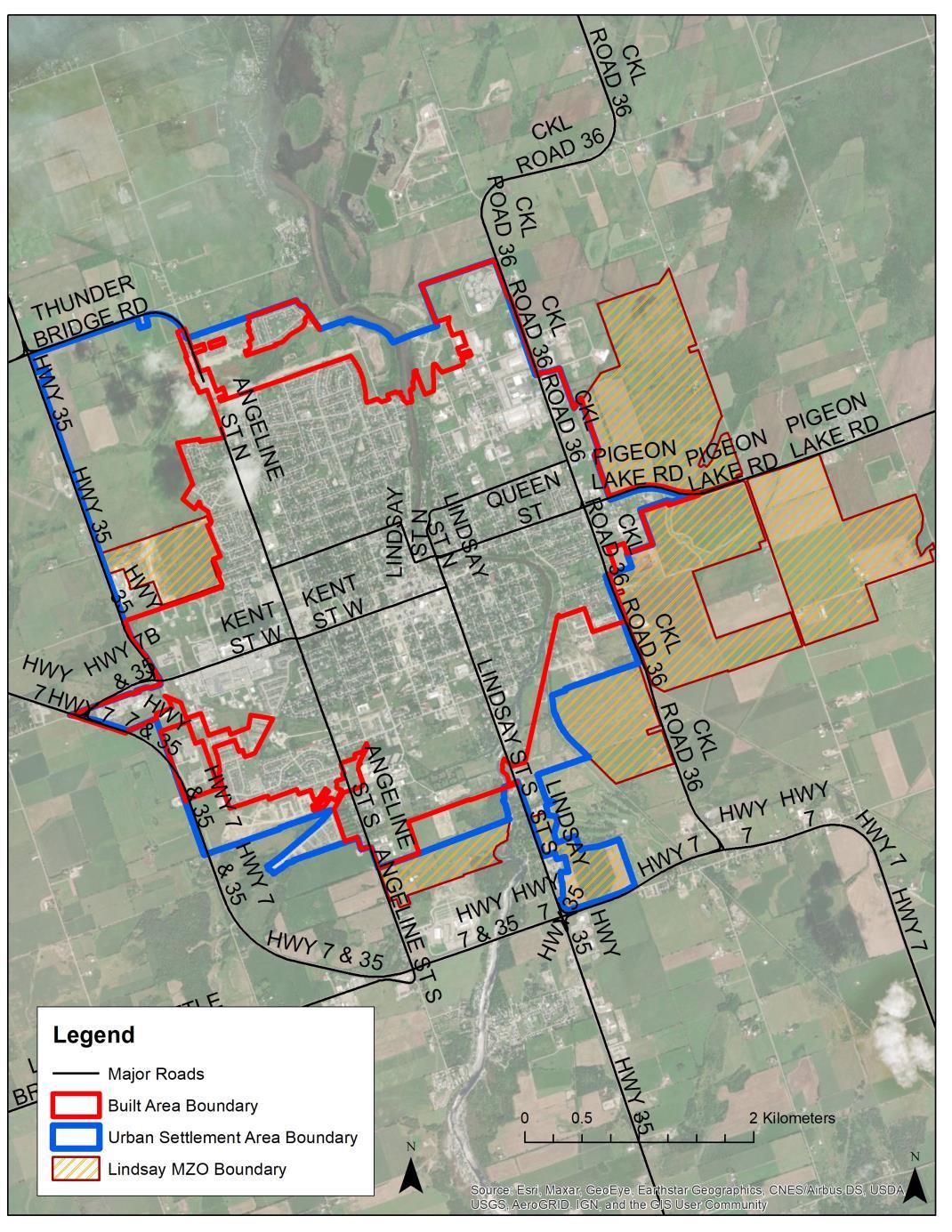
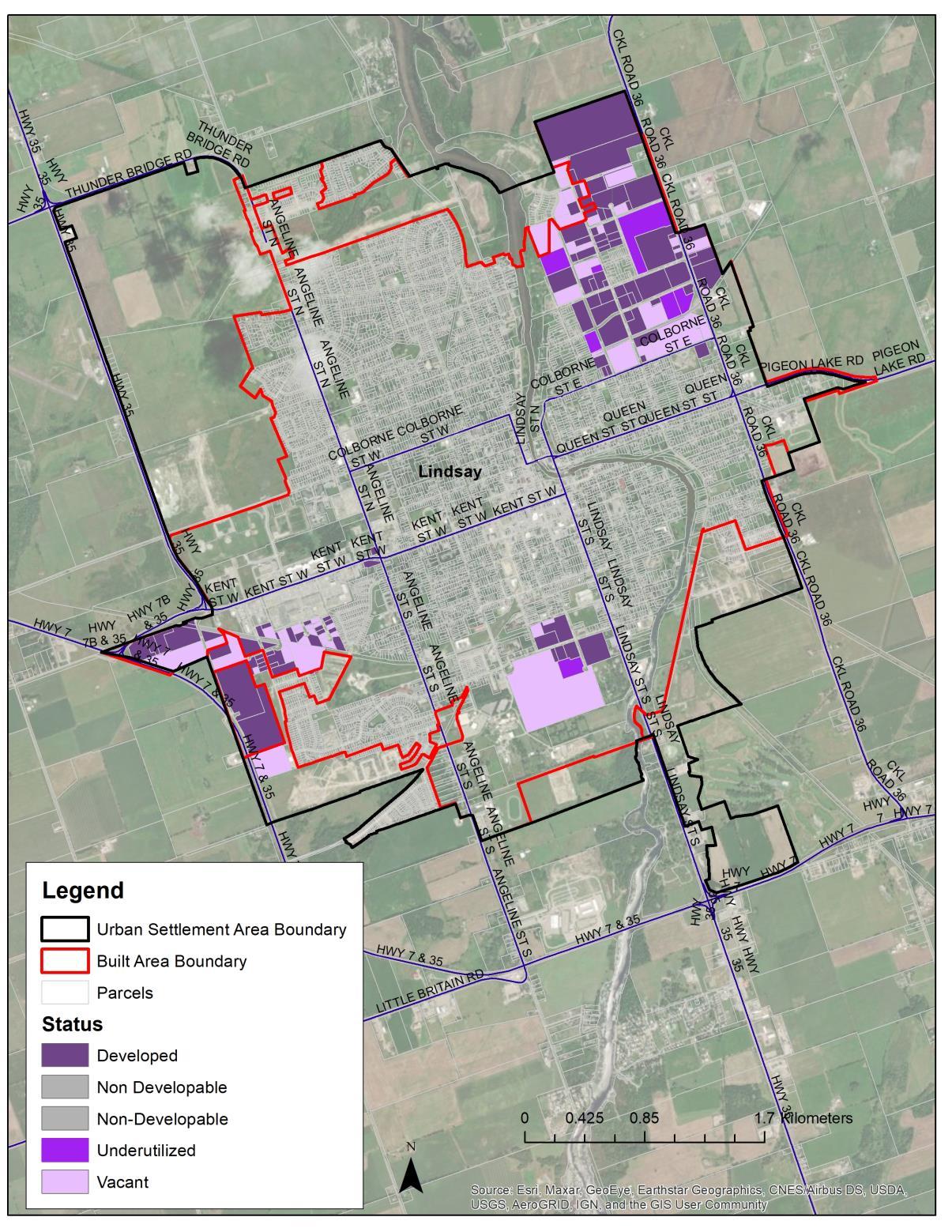
A large share of urban growth has been allocated to existing and future designated growth areas (D.G.A.s), including lands in Lindsay where two Minister’s Zoning Orders (M.Z.O.s) have been approved by City Council. Over the 30-year forecast period, 20% of housing growth is forecast through intensification within the B.U.A., while a majority of growth (about 74%) has been allocated to D.G.A. lands and future urban expansion areas. The remaining 6% of total housing growth has been allocated to Rural Areas.
Lindsay is also expected to experience steady to strong employment growth over the horizon of this G.M.S. Between 2023 and 2051, Lindsay is forecast to accommodate about 76% of overall City-wide employment growth which will be largely comprised of population-related employment categories (commercial, institutional, work at home and off-site employment). Employment growth in industrial sectors related to manufacturing, logistics, construction, utilities and energy and other industrial uses is also anticipated in Lindsay over the long-term. Following Lindsay, the employment growth share is expected to be highest in Fenelon Falls (8%), Bobcaygeon (6%) and the Rural Areas (12%). Omemee is forecast to accommodate about 1% of the overall employment growth over the long-term planning horizon. Employment within the Rural Areas is anticipated to be driven to largely by population-related employment as well as by “dry” industrial uses, and other rural employment sectors.
Urban Land Needs Assessment to 2051
Community Area Land Needs Assessment
As a part of the G.M.S., population, housing and employment growth has been allocated to the Urban Settlement Areas of Lindsay, Bobcaygeon, Fenelon Falls and Omemee and remaining Rural Areas (including hamlets and other Rural Areas in the City). Residential intensification and D.G.A. density targets adopted as a part of the G.M.S. are summarized below:
• Based on an assessment of demand and supply factors which are anticipated to influence future urban development patterns in the City, it is recommended that the long-term residential intensification target for the City be reduced to 20%.
• Following an assessment of existing D.G.A. density and densities being achieved in recent development applications and Council approved M.Z.O.s, it has been recommended that the minimum density target for the City be increased to 45 people and jobs/hectare (ha).
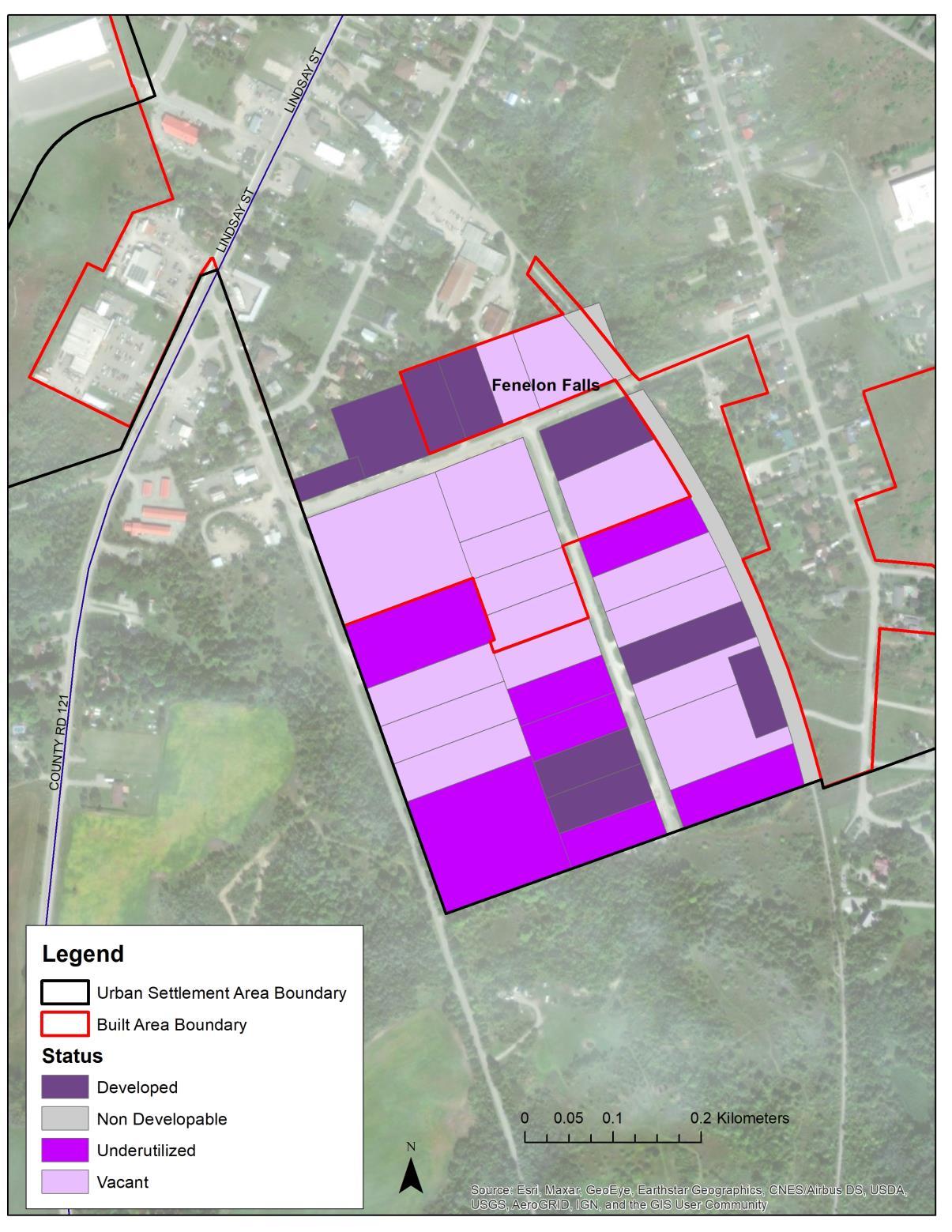
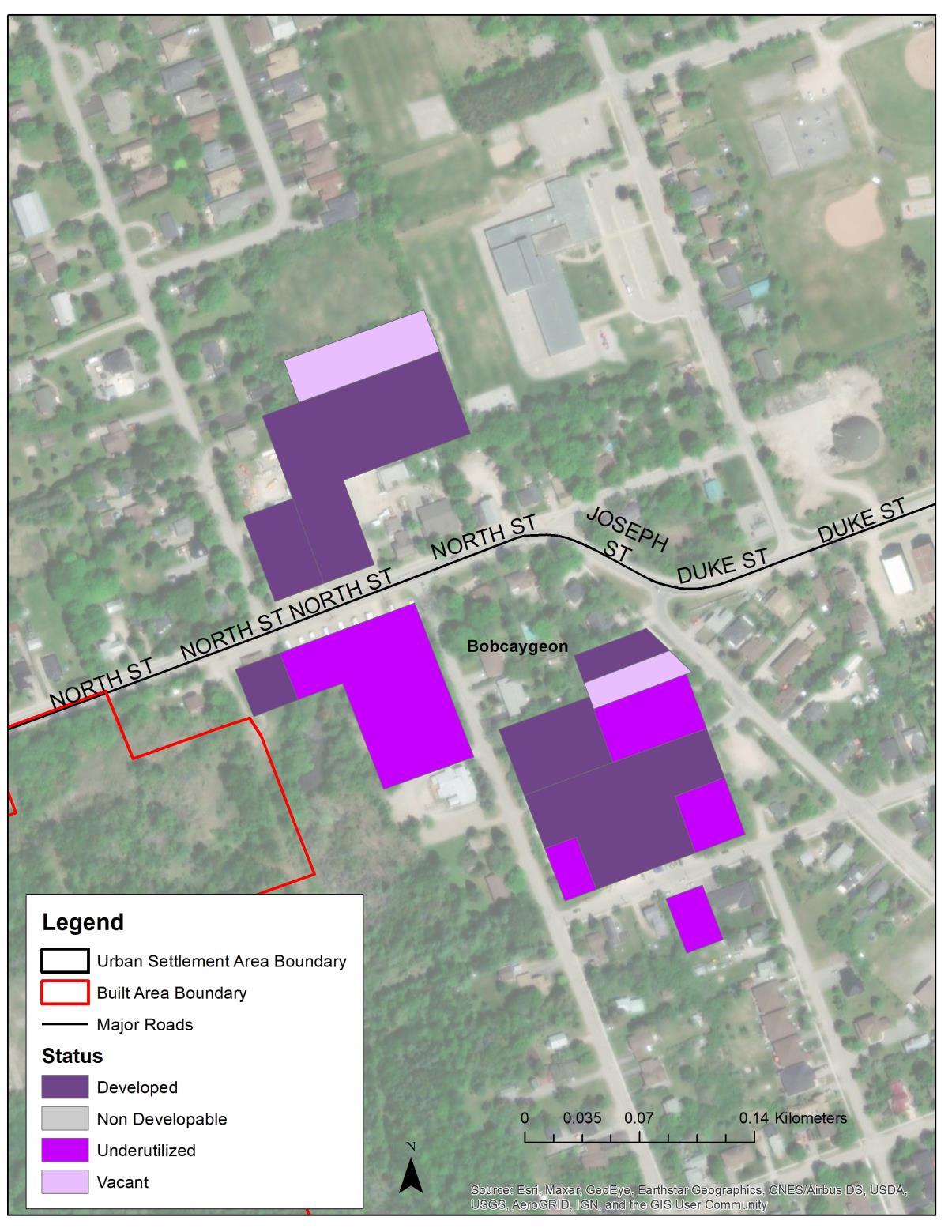
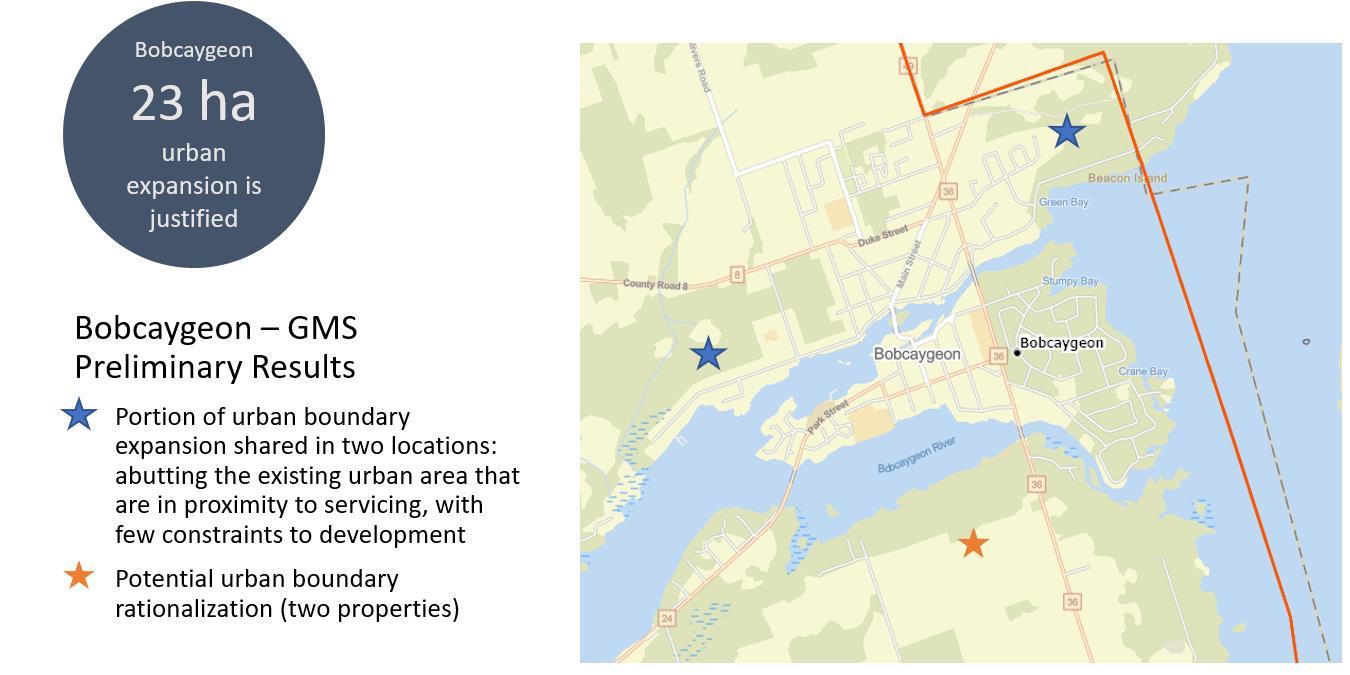
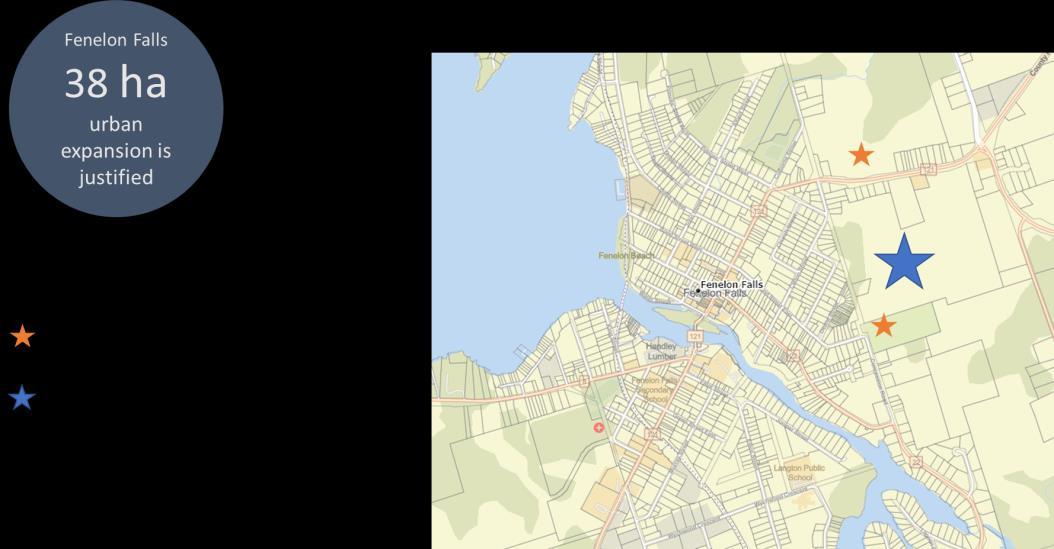
In accordance with the City-wide population and employment growth forecast as well as the residential intensification and D.G.A. density targets identified above, it is estimated that the City will have a surplus of 318 ha of D.G.A. Community Area lands (lands which accommodate residential development and population-related employment) by 2051. The forecast City-wide surplus of Community Area lands is anticipated to be largely concentrated in Lindsay (estimated at 329 ha by 2051), and to some extent in the Settlement Area of Omemee This Community Area land surplus within Lindsay is due to the lands added under approved M.Z.O.s. Despite the City-wide surplus, it is forecast that localized Community Area land deficits will exist in Fenelon Falls and Bobcaygeon of 38 ha and 23 ha, respectively, to the year 2051 (refer to Figure ES-7).
Figure ES-7
City of Kawartha Lakes
D.G.A. Community Area Land Needs by Settlement Area at 2051
It is recognized that the City’s Hamlets and Rural Areas have an important role to play in accommodating future development subject to available land supply, supporting infrastructure and scale of development. Notwithstanding this role of the City’s Rural Areas, the land needs analysis provided herein focuses on the City’s Urban Settlement Areas under the context of Provincial and local policy direction. A review of Rural Settlement Area boundaries has not been undertaken as a part of the G.M.S. exercise and further review of Rural Settlement Area boundaries may be undertaken through the City's O.P. review process or through an amendment to the City’s O.P.
Lindsay Fenelon Falls Bobcaygeon Omemee Overall City of Kawartha Lakes
Employment Area Land Needs Assessment
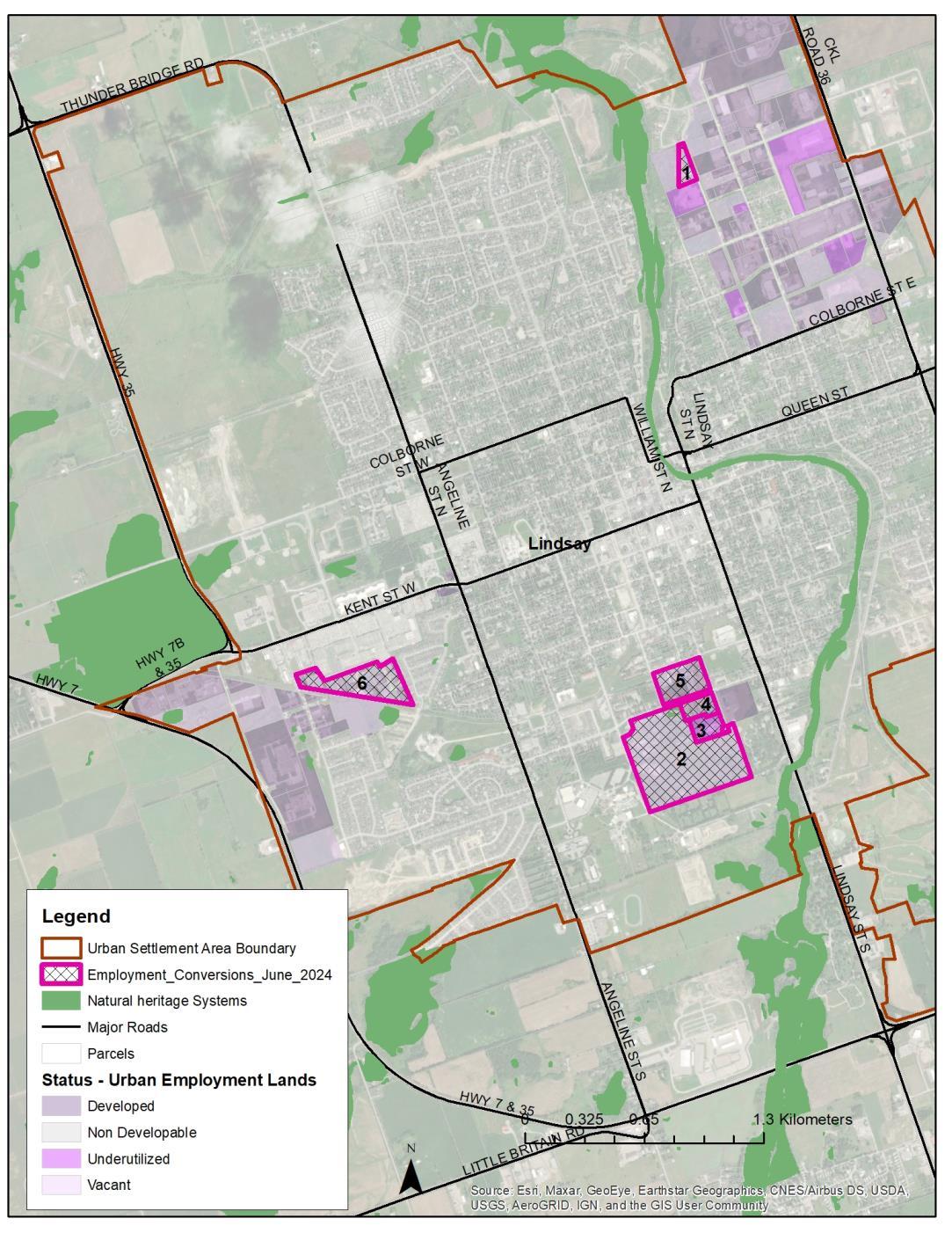
Based on an assessment of forecast employment growth on urban Employment Area lands in the City, and the available supply, it is estimated that by 2051 the City will have a small deficit of Employment Area lands. Furthermore, based on discussions with City Staff, a total of six sites have been identified for potential removal from a current Employment Area land use designation to Community Area, totaling approximately 32 hectares. In accordance with the detailed assessment of these sites as part of this G.M.S. against provincial and local criteria for Employment Area removals, approximately 28 ha of currently vacant Employment Area land is recommended to be removed from the City’s Employment Area inventory and converted to non-employment uses.[4] When factoring in these removals, Lindsay is anticipated to need just over 40 gross ha of urban Employment Area lands over the long-term planning horizon. It is noted that under the P.P.S., 2024, municipalities are permitted to plan for Employment Areas beyond a 30-year planning horizon.
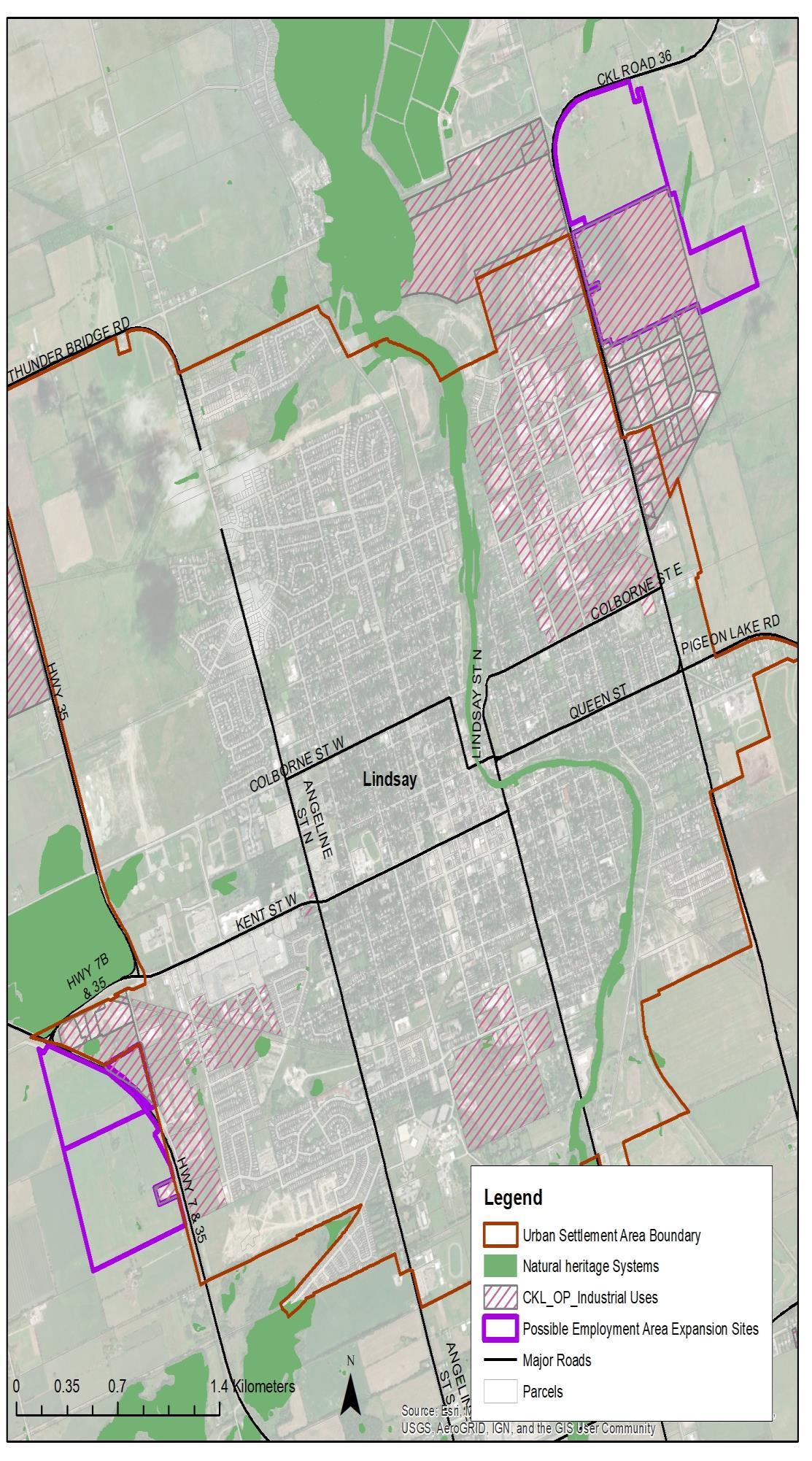
As determined through a set of evaluation criteria development as part of this G.M.S., two prospective areas for a new Employment Area in Lindsay have been identified and recommended for further assessment. These sites include areas located east of the CKL Road 36 in the Northeastern end of the settlement area, and lands west of Highway 7 and 35 (south of Kent Street).
While it is estimated that Fenelon Falls and Bobcaygeon will have a small deficit of Employment Area lands by 2051, a need for expansion of Employment Area lands in these settlement areas has not been identified. It is recommended, however, that the City continues to regularly monitor the absorption and supply of Employment Area lands within all of its Settlement Areas.
[4] It is noted that the sites identified for removal here-in are not based on an extensive assessment of Employment Area removals within the City of Kawartha Lakes. Consistent with the P.P.S., 2024, the City may undertake further analysis on a site-bysite basis to identify further cluster of areas that qualify for removal from the Employment Area designation.
Long-Term Employment Area Land Needs by Settlement Area
Employment Area Land
Employment Area Land Need, Including Removals (gross hectares) - 41
Phasing of Residential Development in Designated Growth Areas in Lindsay
As previously noted, based on the findings of G.M.S. Lindsay is anticipated to have a surplus of Community Area lands of approximately 329 ha to 2051. In consideration of forecast urban land need under the High Growth Scenario, it has been determined that the Settlement Area of Lindsay will reach buildout of its D.G.A. Community Area lands (including all M.Z.O. lands) after the planned 2051 horizon of this G.M.S.
While it is expected that most of the landowners in Lindsay will want to see their lands develop immediately, this is simply not possible given the scale of development proposed. Accordingly, a proposed phasing plan for the Lindsay D.G.A has been prepared to provide direction with respect to the timing of residential development for the new urban limit of the Lindsay Settlement Area.
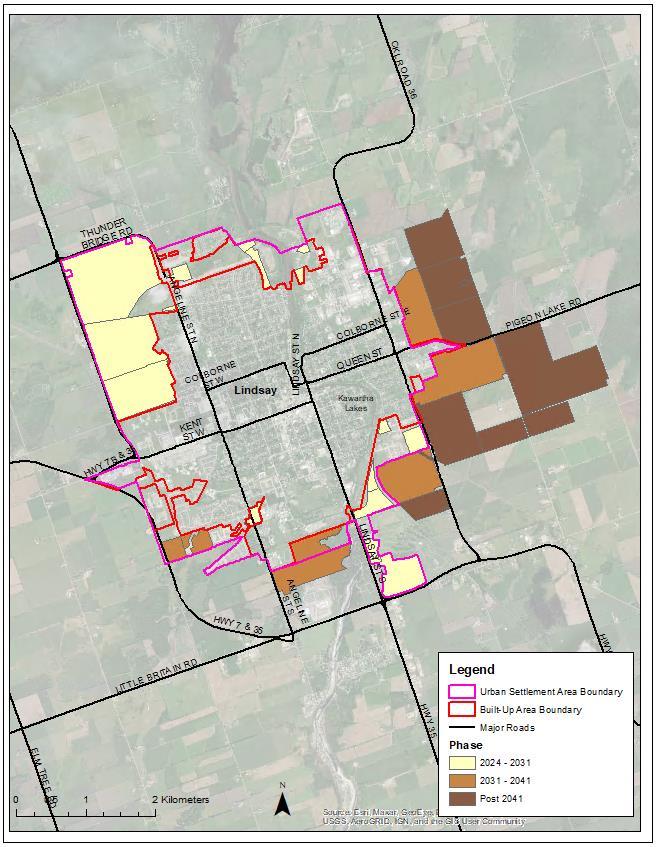
Figure ES-8
City of Kawartha Lakes
Lindsay Fenelon Falls Bobcaygeon Omemee
Kawartha
This phasing plan has been prepared as a guideline to ensure that development is planned in accordance with sustainable growth principles a set out under the context of Provincial and local planning policy and that urban development is coordinated with the delivery of infrastructure and municipal services. This phasing plan has been designed to ensure that the City’s urban expansion areas are planned as complete and livable communities over the long-term.
The phasing plan has been developed based on a set of planning principles and criteria, including site location, status of development approvals on D.G.A. lands, servicing status, existing access to commercial and community infrastructure, etc. Based on the established criteria, the phasing plan for Lindsay categorizes the D.G.A. lands into the following three groups or phases:
• Phase 1 or short term (2024 to 2031) – Community Area D.G.A. lands that have active development applications and are municipally serviced with water/wastewater. Phase 1 also represents D.G.A. lands that are directly adjacent the B.U.A. and/or active development applications (on more than one side) and municipal services can be readily extended.
• Phase 2 or medium term (2031 to 2041) – Remaining, currently inactive designated residential lands, including approved M.Z.O. lands which are located within the existing urban boundary of Lindsay.
• Phase 3 or long term (2041 to Buildout) – Remaining approved M.Z.O. lands located outside of the Urban Settlement Area boundary of Lindsay.
Moving forward, it is important for the City to regularly monitor growth and land development in alignment with the recommended phasing plan. This plan has been created to guide the long-term growth of Lindsay's D.G.A., and it is recommended that the City continue to track residential development activity and land absorption relative to the phasing plan, taking into account factors such as housing market demand and landowner readiness for development It is further noted that this recommended phasing plan may require adjustments in the future if significant delays occur in the timing of servicing and development associated with the subject lands.
Location Options for Urban Expansion
As part of the G.M.S. process landowners were given the opportunity to submit requests for consideration into the settlement area boundary expansions in Lindsay, Bobcaygeon
and Fenelon Falls, either through the online survey available on the City’s Jump In page or through a direct request to City staff.
In total, requests for consideration of over 50 parcels / properties were received through this process for lands in the City’s Rural Areas located in proximity to the Urban Settlement Areas of Lindsay, Bobcaygeon and Fenelon Falls. As previously mentioned, since the focus of the G.M.S. pertains to long-term land needs within Urban Settlement Areas, lands in proximity to these existing Urban Settlement Area boundaries were reviewed as part of this analysis.
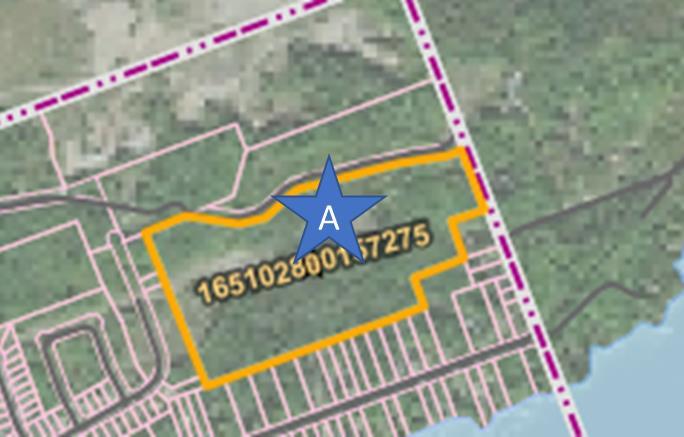
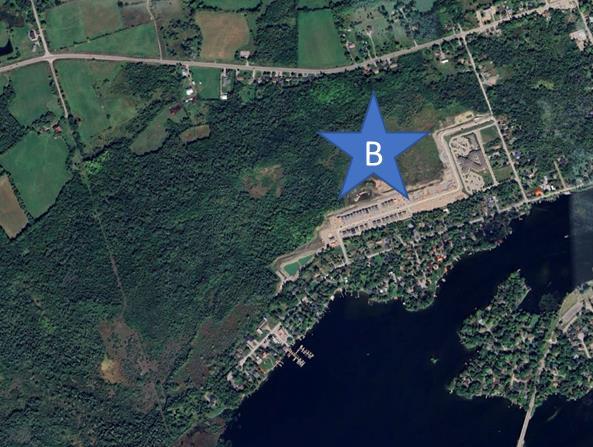
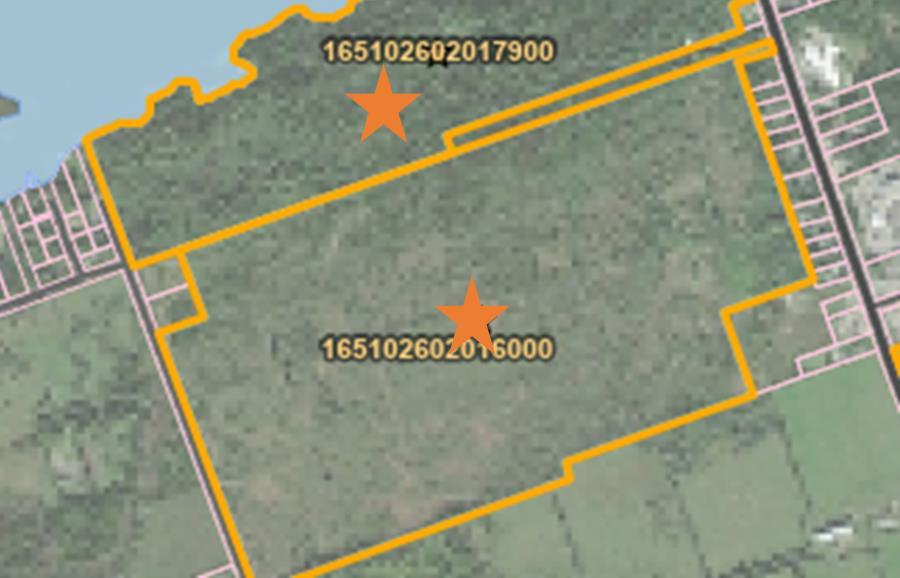
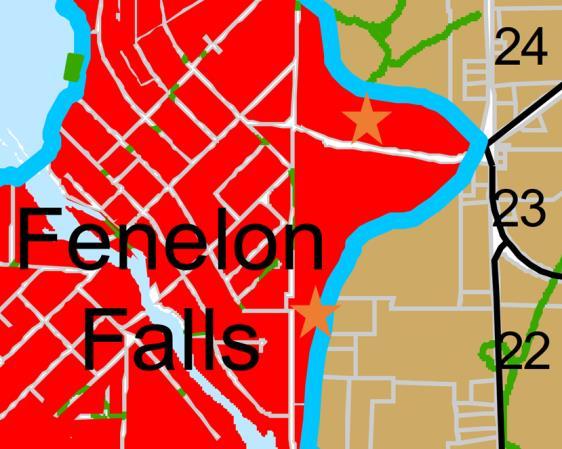
Through this analysis, two possible urban expansion sites have been identified for Bobcaygeon and Fenelon Falls. In addition to these sites, the configuration of Urban Settlement Area boundaries have been identified for re-shaping or rationalization, in some cases, to follow more identifiable features such as property parcel boundary or physical features including roads, lakes, etc.
Policy Recommendations
Based on the results of the G.M.S., the following planning policy updates are recommended for the City of Kawartha Lakes O.P. to guide future growth in the City of Kawartha Lakes to the year 2051. These recommendations are discussed in detail in Chapter 11 of this G.M.S.
Residential Policy Recommendations
• Update Long-term Population, Housing, and Employment Growth Projections and Density Targets
• Revise the City’s Minimum Residential Intensification Target and Monitor Regularly
• Proactively Plan for Community Area Expansion within Lindsay, Bobcaygeon and Fenelon Falls
• Proactively Plan for and Phase Residential Development within the Lindsay D.G.A.
• Regularly Monitor and Benchmark the Development of the City’s Community Areas
• Plan for Development in Rural Settlement Areas and Remaining Rural Areas within the Context of Provincial and Local Planning Policy
• Continue to Advance the City’s Climate Change Policies Related to Mitigation and Adaptation
Non-Residential Policy Recommendations
• Continue to Plan for the development of existing and new Employment Areas
• Review Industrial Designation Policies in the O.P. to align with the Provincial Planning Definition for Employment Areas
• Develop Proactive Approaches to Support Economic Development and the Protection of Employment Areas
• Encourage the Development and Intensification of Underutilized Employment Areas
• Encourage Innovative Solutions Which Support Eco-Industrial Development in Employment Areas
1. Introduction
1.1 Terms of Reference
Watson & Associates Economists Ltd. and Dillon Consulting Ltd. (Dillon) were retained by the City of Kawartha Lakes to develop a Growth Management Strategy (G.M.S.) for the City to the year 2051. This new G.M.S. represents a foundational study to the forthcoming update of the City’s Official Plan (O.P.). This new G.M.S. will replace the City’s 2011 G.M.S. in light of evolving local/regional demographic, socio-economic, and economic trends, a review of best practices regarding growth management within the Greater Golden Horseshoe (G.G.H.) and Ontario and updated provincial planning legislation.
The City of Kawartha Lakes G.M.S. is a forward-looking document, designed to proactively plan for and accommodate change over the next several decades. Given uncertainties over the long-term planning horizon, these documents are to be comprehensively updated at a minimum of every 10 years. Within these comprehensive updates, O.P. amendments may also be required.
1.2 Provincial Policy Context
1.2.1
Growth Plan for the Greater Golden Horseshoe
A Place to Grow: The Growth Plan for the Greater Golden Horseshoe (the Growth Plan, 2019), which was created under the Places to Grow Act, 2005, was updated in May 2019 and amended in August 2020. It sets out where and how growth will occur across the Greater Golden Horseshoe (G.G.H.) to 2051 and that all planning decisions shall conform to it. The Growth Plan, 2019 provides growth forecasts for single- and uppertier municipalities and provides policy direction on a range of matters including land use, infrastructure, and transportation.
While the technical analysis for this G.M.S. was completed throughout 2023 and 2024, at the time of finalization of this report, Growth Plan, 2019 policies are no longer
applicable.[5] Although the policies of the Growth Plan, 2019 are no longer in force, in certain cases terminology created under the Growth Plan, 2019 and corresponding guidance documents still form the foundation to the technical analysis carried out as part of this G.M.S. for the City of Kawartha Lakes, as it relates to the urban land needs assessment (L.N.A.). Based on our review, the technical analysis conducted as part of this study, as it relates to the urban L.N.A., while not explicitly required, remains appropriate and consistent with the policies of the Provincial Planning Statement (P.P.S.), 2024 (refer to subsection 1.2.4).
Relevant policies of the Growth Plan, 2019 and supporting guidance documents are provided below, largely to provide context regarding planning terminology and background with respect to broad planning targets related to residential intensification and density in greenfield areas. The corresponding policy targets of the Growth Plan, 2019 have been assessed and updated as part of this G.M.S. update (refer to Chapter 8).
Managing and Directing Growth
• Growth will be directed to Settlement Areas and within Settlement Areas in areas with existing or planned public services facilities.
• Municipalities should develop as complete communities with a diverse mix of land uses, including employment and residential with convenient access to local stores, services, and public service facilities.
• Municipalities should plan for a diverse range and mix of housing options, including second units and affordable housing, to accommodate people at all stages of life, and to accommodate the needs of all household sizes and incomes.
• Population and employment growth are to be accommodated by reducing dependence on the automobile through the development of mixed-use, pedestrian-friendly urban environments.
• Municipalities should preserve lands within Settlement Areas in the vicinity of major highway interchanges, ports, rail yards, and airports for manufacturing and associated retail, office, and ancillary facilities where appropriate.
[5] The Provincial Policy Statement, 2020 and Growth Plan, 2019 policies will continue to apply where the Greenbelt Plan refers to them to maintain existing protections for the Greenbelt.
Minimum Intensification Targets
[6]
• New minimum intensification targets, the minimum percentage of all residential development occurring annually within the delineated built-up area (B.U.A.),[7] have been created for upper-tier and single-tier municipalities in the G.G.H. There are two geographic groups for intensification targets. The City of Kawartha Lakes is in the lower intensification target group, which requires that by the time the next Municipal Comprehensive Review (M.C.R.)[8] is approved and in effect, and for each year thereafter, the City maintain or improve upon the minimum intensification target contained in the O.P.
• It is important to note that, under the Growth Plan, 2019, all upper-tier and singletier municipalities within the G.G.H. can apply for alternative intensification targets. In accordance with the current O.P., the minimum intensification target is 30%. Further discussion on historical trends in intensification and proposed targets has been presented in Chapter 8.
Minimum Greenfield Density Targets
[9]
• Minimum density targets have been created for the horizon of the Growth Plan, 2019 for G.G.H. upper-tier and single-tier municipalities and include two geographic groups. It is important to note that the greenfield density targets established in the Growth Plan, 2019 do not include employment lands.[10] The City of Kawartha Lakes is in the lower density target group, which is required to
[6] A Place to Grow: Growth Plan for the Greater Golden Horseshoe, 2019, subsection 2.2.2.
[7] The B.U.A. was delineated for all urban settlements within the G.G.H. by the Province in 2006 based on the portion of the urban settlement that was primarily developed as of 2006.
[8] A Municipal Comprehensive Review is defined under the Growth Plan, 2019 as, “A new official plan, or an official plan amendment, initiated by an upper-or single-tier municipality under section 26 of the Planning Act that comprehensively applies the policies and schedules of this Plan.” The terms Municipal Comprehensive Review or Comprehensive Review are no longer used under the Provincial Planning Statement, 2024.
[9] A Place to Grow: Growth Plan for the Greater Golden Horseshoe, 2019, subsection 2.2.4.
[10] Ibid., subsection 2.2.7.
plan to achieve, within the horizon of this Plan, a minimum density target that is not less than 40 residents and jobs combined per hectare.
• All upper-tier and single-tier municipalities can apply for alternative designated greenfield area (D.G.A.) density targets.[11]
Employment[12]
• According to the Growth Plan, 2019, upper- and single-tier municipalities, in consultation with lower-tier municipalities, will each establish minimum density targets for all Employment Areas within the Settlement Area. The density targets are to reflect the current and anticipated type and scale of employment that characterizes the Employment Area to which the target applies. Furthermore, the minimum employment density target reflects opportunities for the intensification of Employment Areas on sites that support active transportation and are served by existing or planned transit.[13]
• As part of the Growth Plan, 2019, the Province allows for employment land conversions outside of an M.C.R., while ensuring protections are in place to safeguard key Employment Areas as needed.
• The conversion of employment lands to a designation that permits nonemployment is allowed outside of an M.C.R., provided that:
o there is a need;
o a significant number of jobs are maintained on those lands through the establishment of development criteria;
o there are no adverse effects on the viability of an Employment Area or achievement of minimum intensification targets; and
o there are existing or planned services in place.[14]
[11] The D.G.A. includes lands within settlement areas (not including rural settlements) but outside delineated B.U.A.s that have been designated in an O.P. for development and are required to accommodate forecast growth to the horizon of this Plan. It is noted that D.G.A. in the Provincial Planning Statement, 2024 refers to designated growth area.
[12] A Place to Grow: Growth Plan for the Greater Golden Horseshoe, 2019, subsection 2.2.4.
[13] Ibid., subsection 2.2.5.
[14] Ibid., subsection 2.2.5.10.
Settlement Area Boundary Adjustments and Expansions[15]
• The Growth Plan, 2019 places emphasis on a more outcome-focused approach to urban boundary expansions, rather than specifying types of studies required to justify the feasibility and location of expansions.
• Municipalities are allowed to undertake Settlement Area boundary expansions that are no larger than 40 hectares (approximately 99 acres) outside of the M.C.R. process, subject to criteria.
• Settlement Area boundary adjustments are also permitted outside of an M.C.R. provided that there is no net increase in land within Settlement Areas, subject to criteria.
• If applicable, municipalities within the G.G.H. Outer Ring are required to identify excess lands and prohibit development on such lands to the horizon of this Plan.
It is noted that many of the policies of the Growth Plan, 2019, as highlighted above, have not been carried forward under the provincial planning framework under the P.P.S., 2024. Refer to subsection 1.2.4 for an overview of the P.P.S., 2024.
1.2.2 Provincial Land Needs Assessment Methodology
The Minister of Municipal Affairs and Housing formally issued the L.N.A. methodology on August 28, 2020, in accordance with policy 5.2.2.1 c) of the Growth Plan, 2019.[16]
The revised methodology focuses on a more simplified and outcome-based approach to assessing urban land requirements for G.G.H. municipalities. Regional-tier and singletier municipalities in the G.G.H. were required to use the methodology in combination with the policies of the Growth Plan, 2019, to assess the quantity of urban land required to accommodate forecast growth.
In accordance with the L.N.A. methodology, urban land needs are assessed across two different areas including Community Areas and Employment Areas, as defined below:
“Community Areas: Areas where most of the housing required to accommodate the forecasted population will be located, as well as most
[15] A Place to Grow: Growth Plan for the Greater Golden Horseshoe, 2019, subsection 2.2.8.
[16] A Place to Grow: Growth Plan for the Greater Golden Horseshoe. Land Needs Assessment Methodology for the Greater Golden Horseshoe (2020). Ontario. August 28, 2020.
population-related jobs, most office jobs, and some employment land employment jobs. Community areas include delineated built-up areas and designated greenfield areas
Employment Areas: Areas where most of the employment land employment jobs are (i.e., employment in industrial-type buildings), as well as some office jobs and some population-related jobs, particularly those providing services to the Employment Area. Employment Areas may be located in both delineated built-up areas and designated greenfield areas.”[17]
The L.N.A. methodology prescribes the key steps to establishing Community Area and Employment Area land needs. The key steps for Community Area land needs are found in section 2 of the L.N.A. and in section 3 for Employment Area land needs.[18] It is noted that this document is no longer in effect as of October 20, 2024. With this change to provincial planning policy, urban L.N.A.s are to be informed by provincial guidance materials, guidelines, and technical criteria (as needed), by the Ministry of Ministry of Municipal Affairs and Housing.
Based on an assessment of the policy framework under the P.P.S., 2024, the approach undertaken herein regarding the City’s long-term growth analysis and urban L.N.A. is consistent with the P.P.S., 2024.
1.2.3 Bill 23: More Homes Built Faster Act, 2022 – Housing Targets
On October 25, 2022, the Ontario government introduced the More Homes Built Faster Act, 2022 (Bill 23). Following Bill 108 and Bill 109, Bill 23 is part of a long-term strategy to address the Province’s housing crisis by facilitating the construction of 1.5 million homes over the next 10 years. The identified need for additional housing relates to demand associated with both existing Ontario residents and newcomers to the Province through immigration.
Bill 23 received Royal Assent by the provincial legislature on November 28, 2022. The Bill is intended to increase the housing supply and provide a mix of ownership and rental housing types for Ontarians. Some of the Bill’s changes to the Development Charges Act, the Planning Act, and the Conservation Authorities Act intend to reduce
[17] A Place to Grow: Growth Plan for the Greater Golden Horseshoe. Land Needs Assessment Methodology for the Greater Golden Horseshoe (2020), pp. 6 and 7. [18] Ibid., pp. 8 to 14 and 15 to 18.
and exempt fees to spur new home construction and reduce the cost of housing. This includes ensuring affordable residential units, select attainable residential units, inclusionary zoning housing units, and non-profit housing developments will be exempt from payment of municipal development charges, community benefits charges, and the parkland dedication provision.
To support this provincial commitment to getting 1.5 million homes built over the next 10 years, there are a number of sweeping and substantive changes to a range of legislation, as well as through updates to regulations and consultations on various provincial plans and policies. One of the changes includes implementation of an updated “additional residential unit” framework which can allow up to three units per lot in many existing residential areas.[19]
The 10-year housing target for the City of Kawartha Lakes has been set at 6,500 additional units. The housing targets associated with Bill 23 have been adapted from Ontario’s Need for 1.5 Million More Homes report, prepared by Smart Prosperity Institute, dated August 2022.[20] The report indicates that a large portion of the Province’s 1.5 million housing unit need is driven by an undersupply of housing required to adequately accommodate existing Ontario residents and is not linked to additional population growth.
It is important to emphasize that perceived housing demand established through the More Homes Built Faster Act does not represent a prescribed minimum forecast that municipalities are required to achieve. Rather, it establishes housing targets that represent the desired state, expressed as a policy objective. Housing targets, such as those set out through Bill 23, differ from growth forecasts, which incorporate reasoned assumptions on the potential effects of policy, as well as broader and local events. Forecast assumptions for population, housing, and employment growth include, but are not limited to, expected changes in where people live in relation to their place of work, expected changes in immigration policy, the changing age structure of the local and regional population, the impact of changes in the local, regional, and provincial economy on future population and housing growth, and significant improvements in infrastructure. As such, the provincial housing pledge for the City of Kawartha Lakes is
[19] https://www.ontario.ca/laws/statute/90p13
[20] Ontario’s Need for 1.5 Million More Homes. August 2022. Smart Prosperity Institute.
not intended to impact or replace adopted municipal population or employment projections established through an Official Plan review.
1.2.4 Provincial Planning Statement, 2024
This study was largely prepared under the purview of the Provincial Policy Statement, 2020 (P.P.S., 2020) and the Growth Plan, 2019. On August 19, 2024, the Province released a new Provincial Planning Statement (P.P.S., 2024), which replaces the P.P.S., 2020 and the Growth Plan, 2019 as one integrated document. It is important to note that the P.P.S., 2024 came into effect on October 20, 2024, and the provisions of the Growth Plan, 2019 no longer apply (refer to subsection 1.2.2 for further details related to relevant Growth Plan, 2019 policies to this G.M.S. update).
A key focus of the P.P.S., 2024 is that it recognizes that the approach to delivering housing needs and Employment Area land need requirements will vary by municipality and, as such, it moves away from a prescriptive guideline-based approach. The following summarizes key highlights of the P.P.S., 2024.
Planning for Growth
• Compared to the P.P.S., 2020, the P.P.S., 2024 presents a more flexible horizon for planning for growth by providing a planning horizon with a minimum of 20 years and a maximum of 30 years. Additionally, it allows for the planning of infrastructure, public service facilities, strategic growth areas, and Employment Areas to extend beyond this time horizon.[21] As such, this suggests that municipalities are to designate land to accommodate growth for at least 20 years, but not more than 30 years, with the opportunity to designate additional land beyond the 30-year time horizon for Employment Areas, strategic growth areas, and planning for infrastructure.[22]
• The P.P.S., 2024 requires municipalities to consider population and employment growth forecasts prepared using Ministry of Finance (M.O.F.) projections and allows municipalities to modify these forecasts as appropriate.[23] The use of the M.O.F. forecasts is not meant to replace long-term forecasting by municipalities. Rather, the M.O.F. forecasts are to be used as a starting place in establishing
[21] Provincial Planning Statement, 2024, policy 2.1.3, p. 6
[22] Ibid.
[23] Ibid.
forecasts and testing the reasonableness of alternative regional forecasts and area municipal growth allocations. This approach was carried out for this study.
• According to the P.P.S., 2024, Minister’s Zoning Orders (M.Z.O.s) are to be treated as “in addition to projected needs” over the planning horizon. In planning for M.Z.O. lands, the P.P.S., 2024 states that these lands must be incorporated into the O.P. and related infrastructure plans.[24]
• Since M.Z.O. lands are not tied to an assessment of need, it is understood that when planning for these lands, the timing of their buildout is not held to a targeted minimum or maximum planning horizon. As such, it is recognized that full development of M.Z.O. lands may or may not extend beyond the 30-year maximum planning horizon set out in the P.P.S., 2024, subject to anticipated economic growth and real-estate market demand within the municipality and the broader economic region over the horizon of the plan. In view of this, it is recommended that the timing of development regarding approved M.Z.O.s should be established through provincial and local phasing policies, municipal servicing plans, and reviewed through regular monitoring.
• The P.P.S., 2024 introduces the concept of “large and fast-growing municipalities,” which are listed in Schedule 1 of the P.P.S., 2024. These municipalities are encouraged to plan for a target of 50 residents and jobs per gross hectare in designated growth areas.[25] This density target represents a minimum, and municipalities are encouraged to go beyond these minimum targets, where appropriate.[26] Furthermore, large and fast-growing municipalities are to consider watershed planning when devising storm, sewage, and water servicing.[27] It is noted that the City of Kawartha Lakes is not included in the list of large and fast growing Municipalities.
• The P.P.S., 2024 provides direction in planning for complete communities. This direction has been refined from the P.P.S., 2020 and requires that municipalities plan for an appropriate range and mix of land uses, housing options, transportation options with multimodal access, employment, public service facilities, and other institutional uses (including schools and associated childcare
[24] Provincial Planning Statement, 2024, policy 2.1.3, p. 6.
[25] Ibid., policy 2.3.1.5, p. 8.
[26] Ibid., policy 6.1.13, p. 33.
[27] Ibid., policy 4.2, p. 22.
facilities, long-term care facilities, places of worship, and cemeteries), recreation, parks and open space, and other uses to meet long-term needs.
Planning for Housing
• Generally unchanged from the P.P.S., 2020, the P.P.S., 2024 still requires planning authorities to maintain at all times the ability to accommodate residential growth for a minimum of 15 years through lands that are designated and available for residential development within the regional market area.[28] It is noted, however, that the emphasis on intensification and redevelopment in this regard has been removed. Planning authorities are also required to maintain at all times, where new development is to occur, land with sufficient servicing capacity to provide at least a three-year supply of residential units, available through lands suitably zoned, including units in draft approved or registered plans within the regional market area.[29]
• The P.P.S., 2024 requires municipalities to establish and maintain minimum targets for intensification and redevelopment within B.U.A.s, based on local conditions.[30] Furthermore, municipalities are required to keep their zoning bylaws up to date by establishing minimum densities, heights, and other standards to accommodate growth and development.[31]
Settlement Area Boundary Expansions
• According to the P.P.S., 2024, a Settlement Area boundary expansion (S.A.B.E.) is allowed at any time and without the requirement of a Comprehensive Review, provided that the S.A.B.E. meets the criteria established in policy 2.3.2.1. The criteria include establishing the need to designate and plan for additional land to meet an appropriate range and mix of land uses, supported by infrastructure and public facilities, while limiting the impact on agricultural areas. Furthermore, the S.A.B.E. is to support a phased progression of urban development. Overall, the
[28] Provincial Planning Statement, 2024, policy 2.1.4, p. 6.
[29] According to the Provincial Planning Statement, 2024, the upper- or single-tier municipality, or planning area, will normally serve as the regional market area
[30] Provincial Planning Statement, 2024, policy 2.3.1.4, p. 8.
[31] Ibid., policy 6.1.6, p. 32.
policies allow for a simplified and flexible approach for municipalities to undertake an S.A.B.E.[32]
Planning for Employment
• Unchanged from the P.P.S., 2020, major office and major institutional development should be directed to major transit station areas or other strategic growth areas where frequent transit service is available, according to the P.P.S., 2024.[33]
• The P.P.S., 2024 includes an updated definition of Employment Area based on the amendment of the Planning Act on June 8, 2023. The Planning Act was amended under subsection 1 (1) to include a new definition of “area of employment.” This definition of Employment Area has been scoped to include only industrial-type employment as a primary use. The amendment to the Planning Act received Royal Assent as part of Bill 97 on June 8, 2023. The definition change in the Planning Act came into effect on October 20, 2024,in concert with the P.P.S., 2024.
• According to the P.P.S., 2024, municipalities are to assess and update Employment Areas identified in O.P.s to ensure that this designation is appropriate to the planned function of Employment Areas.[34]
• The P.P.S., 2024 requires that municipalities designate, protect, and plan for all Employment Areas in Settlement Areas by:
o planning for the long-term needs of Employment Area uses;
o prohibiting residential uses, commercial uses, public service facilities, other institutional uses, and retail and office uses not associated with the primary employment use; and
o providing an appropriate transition to adjacent non-Employment Areas to ensure land use compatibility and economic viability.[35]
• Under the P.P.S., 2024, municipalities are provided with greater control over Employment Area conversions (now referred to as Employment Area removals) with the ability to remove lands from Employment Areas at any time. Previously, under the P.P.S., 2020 and the Growth Plan, 2019, municipalities were required
[32] Provincial Planning Statement, 2024, policy 2.3.2, p. 9.
[33] Ibid., policy 2.8 1.4, p. 13
[34] Provincial Planning Statement, 2024, policy 2.8.2.4, p. 14.
[35] Ibid., policy 2.8.2.3, p. 14.
to review changes to designated Employment Areas during an M.C.R. Under the P.P.S., 2024, municipalities are required to demonstrate that there is an identified need for the removal and that the land is not required for Employment Area uses over the long term. Furthermore, municipalities need to demonstrate that the proposed change from Employment Area to a non-Employment Area use does not undermine the overall viability of the Employment Area.[36]
• The P.P.S., 2024 requires that all development within 300 metres of Employment Areas shall avoid or mitigate potential impacts on the “long-term economic viability” of employment uses.[37] This means that when planning for Employment Areas or other uses in proximity to Employment Areas, municipalities must ensure there is an appropriate transition between the Employment Areas and sensitive uses like residential uses where necessary.
• While the P.P.S., 2024 requires an appropriate separation between Employment Area uses and sensitive uses, it also provides the opportunity for manufacturing, small-scale warehousing, and other industrial uses to be accommodated outside Employment Areas where there are no adverse effects to being located near a sensitive use. It notes that, if there is an opportunity, these uses are to be encouraged in strategic growth areas and other mixed-use areas where frequent transit service is available.[38]
Planning for Growth in Rural Areas
• Generally unchanged from the P.P.S., 2020, the P.P.S., 2024 indicates that Rural Settlement Areas shall be the focus of growth and development and their vitality and regeneration shall be promoted.[39] Furthermore, when directing development in Rural Settlement Areas, municipalities are to give consideration to locally appropriate rural characteristics, the scale of the development, and the provision of appropriate service levels.[40]
• In prime agricultural areas, permitted uses and activities include agricultural uses, agriculture-related uses, and on-farm diversified uses based on provincial
[36] Provincial Planning Statement, 2024, policy 2.8.2.5, p. 15.
[37] Ibid., policy 2.8.1.3, p. 13.
[38] Ibid. policy 2.8 1.2, p. 13
[39] Ibid., policy 2.5.2, p. 11.
[40] Ibid., policy 2.5.3, p. 11.
guidance, according to the P.P.S., 2024.[41] Compared to the P.P.S., 2020, this policy has been modified in the P.P.S., 2024 and adds provincial guidance.
In accordance with our review of the P.P.S., 2024 policies, the technical analysis carried out as part of this G.M.S. update is consistent with the P.P.S., 2024.
1.3 Current Official Plan – City of Kawartha Lakes
The City of Kawartha Lakes prepared a new O.P. that received Ministerial approval in 2012, which was subsequently amended through O.P. Amendment 13. Section 4.1 of the O.P. contains the City’s growth management principles. While this section remains under appeal and not in force, including the amendments made to it through O.P. Amendment 13, the principles are presented below since they do indicate some degree of Council’s intent on the matter of managing growth:
a) “directing a significant portion of new growth to the built-up areas of the community through intensification;
b) focusing intensification in intensification areas;
c) building compact, transit-supportive communities in designated greenfield areas and within the built-up area;
d) reducing dependence on the automobile through the development of mixed-use, transit-supportive, pedestrian-friendly urban environment;
e) providing convenient access to intra- and inter-city transit;
f) ensuring the availability of sufficient land for employment to accommodate forecasted growth to support the City’s economic competitiveness;
g) planning and investing for a balance of jobs and housing in communities across the City to reduce the need for long distance commuting and to increase the modal share for transit, walking and cycling;
h) encouraging development of a complete community with a diverse mix of land uses, a range and mix of employment and housing
[41] Provincial Planning Statement, 2024, policy 4.3.2, p. 23.
types, high quality public open space and easy access to local stores and services;
i) directing development to settlement areas, except where necessary for development related to the management or use of resources, resource-based recreational activities, and rural land uses that cannot be located in settlement areas;
j) directing new multi lots and units for residential development which constitutes the creation of more than three units or lots through either a plan of subdivision, consent or plan of condominium to settlement areas, and may be allowed outside of settlements areas in Rural Areas in site-specific locations with approved zoning or designation that permits this type of development as June 16, 2006;
k) directing major growth to settlement areas that offer municipal water and wastewater systems and limiting growth in settlement areas that are serviced by other forms of water and wastewater services;
l) prohibiting the establishment of new settlement areas;
m) preventing urban development in inappropriate areas, thus contributing to the conservation of resources, such as provincially significant wetlands, aggregate resource areas, cultural heritage resource areas, prime agricultural lands and the linked natural heritage system;
n) directing new seasonal residential development to vacant lots in existing waterfront developments, where possible, and directing new seasonal residential multi-lot developments to designated waterfront areas or in designated hamlet or Urban Settlement Areas.”[42]
1.4 Kawartha Lakes Urban Structure
The City of Kawartha Lakes includes a blend of urban and rural communities. Provided herein is an overview of the structural components of the City’s Urban and Rural System. As previously noted, the P.P.S. 2024 requires development to be directed to the Urban System, comprising fully serviced (water/wastewater servicing) Settlement
[42] City of Kawartha Lakes Official Plan, 2012, pp. 43-44, and Official Plan Amendment No. 013, June 30, 2015, p. GA10.
Areas.[43] In addition to an Urban System, the City of Kawartha Lakes has a large Rural System, comprising a substantial geographical area of the municipality. The Rural System also includes a large portion of the City’s population within Rural Settlement Areas and several vibrant Employment Areas. The structural components of the Rural System are different than the Urban System with respect to function, role, and scale.
1.5 Urban System
The Urban System includes Urban Settlement Areas that are to accommodate most of the future residential and non-residential development. A key objective of the Urban System is to direct growth, where there is planned and existing infrastructure, in a manner that supports development of complete communities. Complete communities include a diverse mix of land uses that provide opportunities to live, shop, and work in the same community.
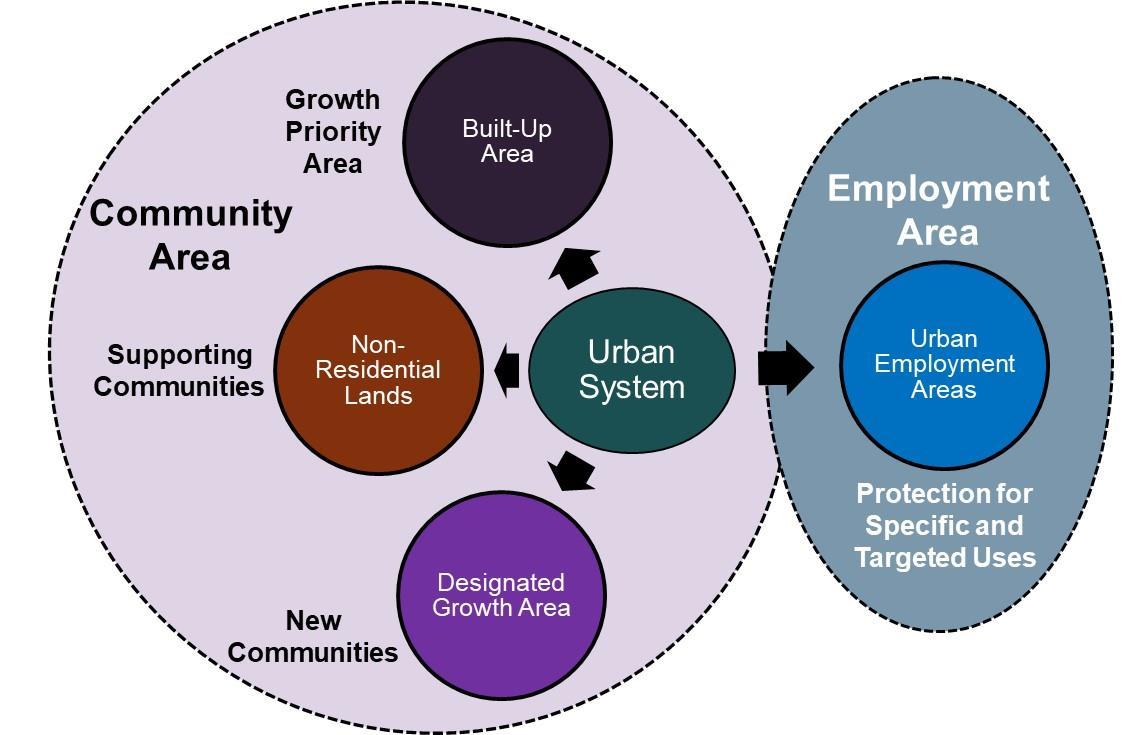
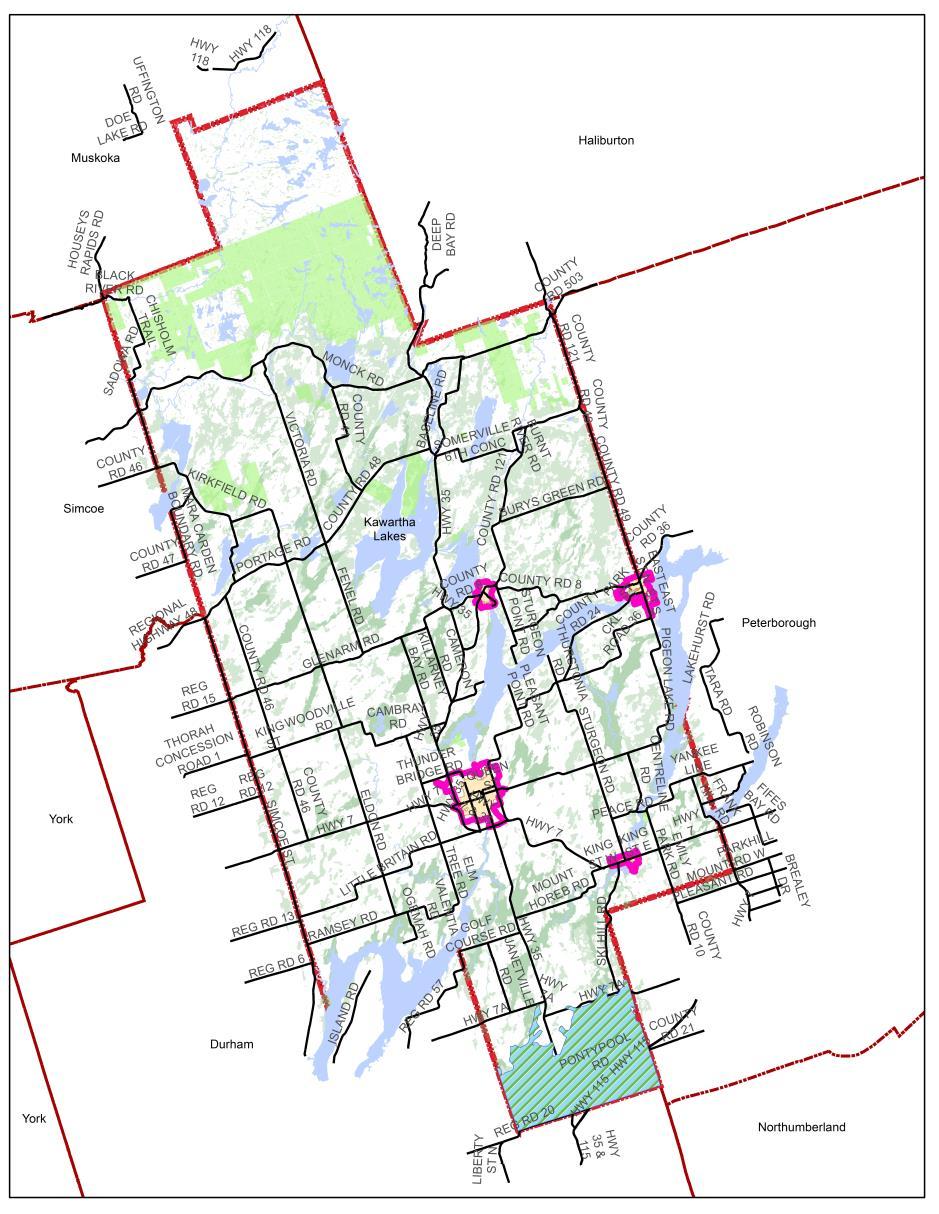
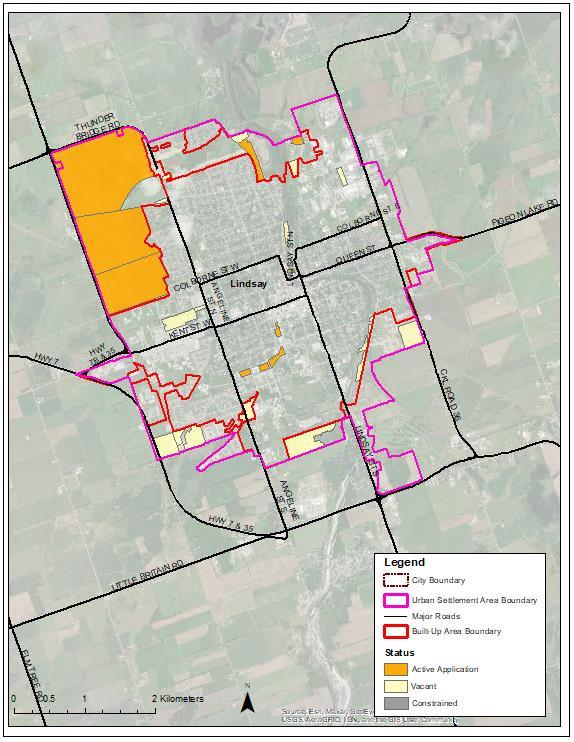
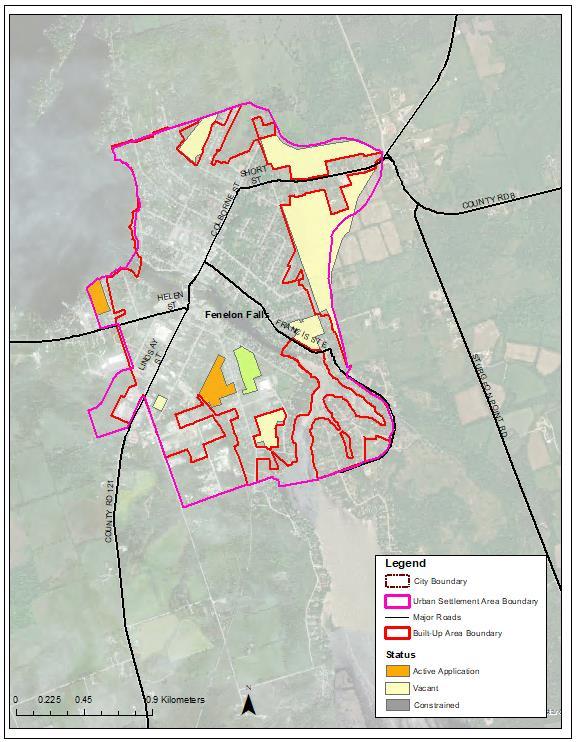
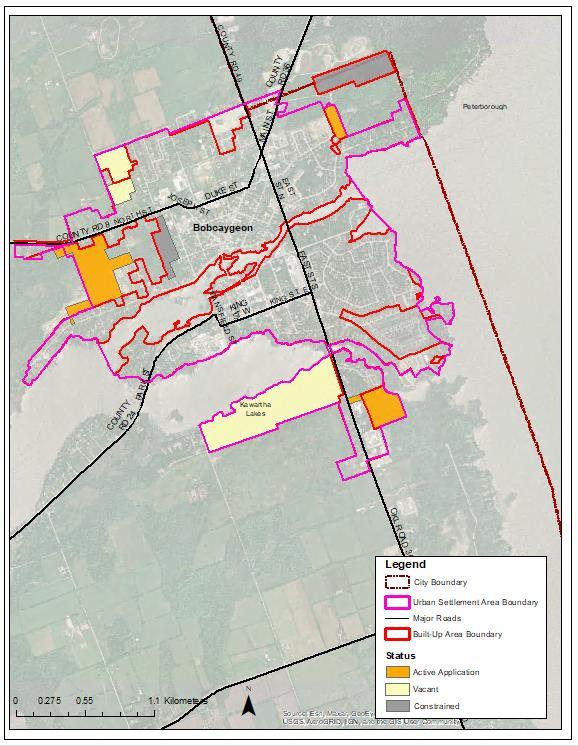
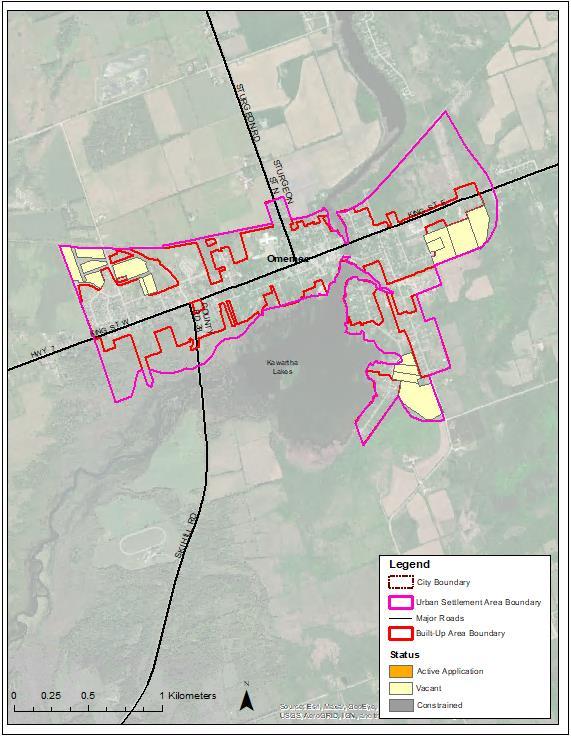
Within the Urban System, growth is to be supported within the B.U.A. As previously noted, the B.U.A. includes an area within a settlement that is municipally serviced (water and wastewater) and was delineated by the Province to represent the approximate area developed as of 2006. The City of Kawartha Lakes has four serviced settlements with a delineated B.U.A., including Lindsay, Fenelon Falls, Bobcaygeon, and Omemee. Figure 1-1 and Figure 1-2 illustrate the urban communities in the City.
1.5.1 Structural Components of the Urban System
The following is a summary of the key structural components of the Urban System:
• Built-Up Area (B.U.A.) – priority areas to accommodate urban growth.
• Designated Growth Area (D.G.A.) – developing areas to accommodate the remaining urban growth not accommodated in the B.U.A.
• Community Areas – areas that accommodate residential and employment outside of Employment Areas, including major retail
• Employment Areas – areas that are protected from sensitive uses and accommodate export-based or industrial employment.
[43] It is noted that this policy provision remains similar in the Provincial Planning Statement, 2024.
City of
Lakes Components of the Urban System
Source: Provincial and local planning policy documents presented by Watson & Associates Economists Ltd., 2024.
Figure 1-1
Kawartha
Source: Data provided by City of Kawartha Lakes, presented by Watson & Associates Economists Ltd., 2024.
1.6 Rural System
The Rural System includes lands that are protected from large-scale urban development. A key objective of the Rural System is to protect agriculture land,
Figure 1-2
City of Kawartha Lakes Urban System
resources, and the natural environment, while encouraging economic and cultural activities that support the health and prosperity of rural communities. The City’s Rural Settlement Areas represent service centres to the surrounding Rural Area and provide clusters of business operations that are essential to the City’s overall future economic growth. As such, infilling and minor rounding out of existing development within Rural Settlement Areas is important to ensure that these areas remain vibrant, sustainable, and complete communities. It is noted that as a part of this G.M.S., a growth analysis has been conducted for the Urban Settlement Areas of Lindsay, Bobcaygeon, Fenelon Falls, and Omemee, and the remaining Rural Areas (including hamlets and other Rural Areas in the City). An urban L.N.A., however, and the corresponding S.A.B.E. analysis (where applicable) have been limited to the Urban Settlement Areas only. Development requests in the Rural Area can still be considered by the City through the O.P. review process on a case-by-case basis through the submission of a development application.
1.6.1 Structural Components of the Rural System
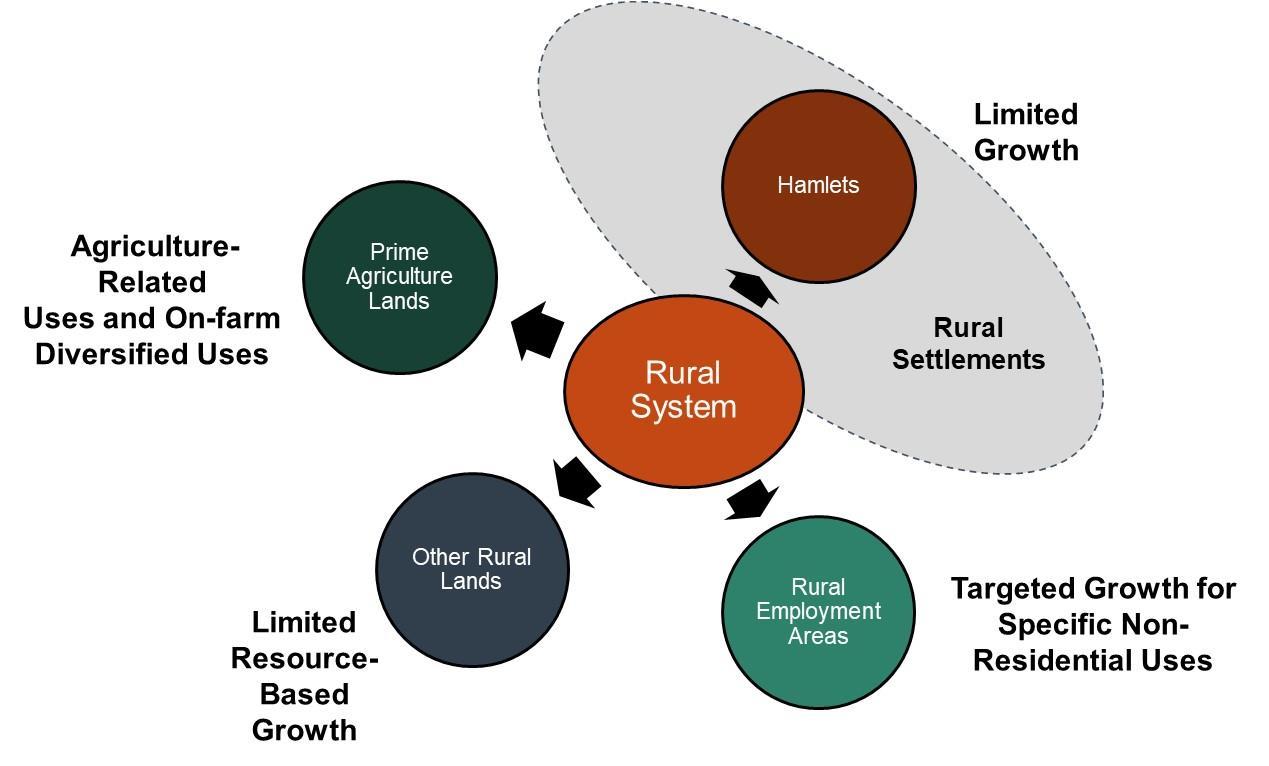
The following is a summary of the key structural components of the Rural System:
• Rural Settlement Areas – hamlets and small-scale settlements that are to accommodate a limited amount of growth on land with private or partial servicing. The P.P.S., 2024 identifies that in Rural Areas, Rural Settlement Areas shall be the focus of growth and development, with consideration to locally appropriate rural characteristics, the scale of development, and the provision of appropriate service levels.[44] There are 40 hamlets/Rural Settlement Areas across the City of Kawartha Lakes.
• Prime Agriculture Areas – lands identified by the Ontario Ministry of Agriculture, Food and Rural Affairs where agricultural uses predominate. These lands are to be protected; however, diversification of on-farm uses (uses that are compatible and secondary to the principal agricultural use of the property) are encouraged.
• Rural Employment Areas – clusters of industrial activities outside Settlement Areas on non-serviced lands. Rural Employment Areas are to accommodate limited growth which is primarily agriculture or resource based, such as agriculture, forestry / wood products, renewable energy, etc. These lands complement and support the City’s economic base by providing employment opportunities that cannot be easily accommodated within an urban setting (e.g.,
due to site requirements and land costs), as well as by supporting a diversified rural economy. Rural Employment Areas are identified as “industrial” in the City’s O.P.
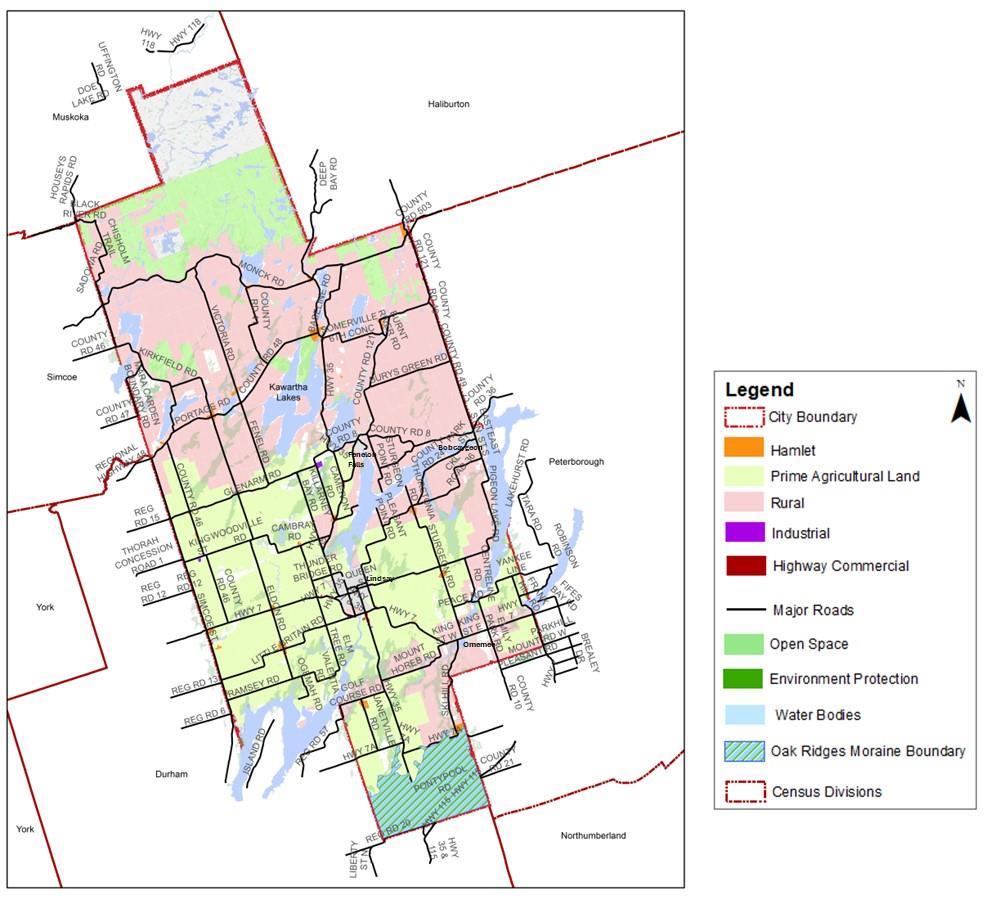
• Other Rural Lands – all other non-serviced lands. These lands are to accommodate a limited amount of growth. Growth on these lands is primarily limited to resource development, recreational-based, and other economic activities. The key components and the City of Kawartha Lakes’ existing rural structure are provided in Figure 1-3 and Figure 1-4.
Source: Provincial and local policy documents presented by Watson & Associates Economists Ltd., 2024.
Figure 1-3
City of Kawartha Lakes Components of Rural System
Source: Data provided by the City of Kawartha Lakes; presented by Watson & Associates Economists Ltd., 2024.
Figure 1-4
City of Kawartha Lakes Rural System
2. City of Kawartha Lakes Consultation Strategy and Process
2.1 Consultation Strategy for the Growth Management Strategy
At the outset of the project, a consultation strategy was prepared to describe the process by which communications and outreach on the project will occur. The consultation strategy is intended to be a “living document” with opportunities to review and pivot to address emerging issues, should they arise.
The consultation strategy identified the key stakeholders, along with the various tools and tactics to be used to inform, involve, and collaborate with the identified groups, as appropriate. A summary of the stakeholders, the process, and activities is provided in the following subsections. It is important to note that, as a result of changes to Ontario’s land use planning system through the P.P.S. 2024 and other legislation, the project was put on pause in May 2023, and then not re-initiated until December 2023; this has resulted in gaps with project engagement that may appear in the summary below.
2.2 Key Stakeholders
The following key stakeholders were identified as part of the consultation strategy:
• Landowners with development interests;
• City of Kawartha Lakes elected officials;
• City of Kawartha Lakes Technical Advisory Team (TAT), composed of City technical staff;
• City of Kawartha Lakes Senior Management Team (SMT), composed of City senior leaders;
• Ministry of Municipal Affairs and Housing staff;
• Other provincial staff (as required);
• Members of the G.M.S. Task Force; and
• Residents.
2.3 Consultation Process, Activities, and Key Findings
2.3.1 Project Web Page
Based on the highly technical nature of the work and the understanding that the outcomes and policy recommendations associated with the G.M.S. project would guide an O.P. update, it was determined that the appropriate time for more extensive consultation is through the O.P. update process, which will commence following the completion of the G.M.S. On this basis, information to residents regarding the G.M.S. primarily occurred through updates and presentations to Council and on the project’s web page. Upon launch of the project’s web page, the following advertisement mechanisms were utilized:
• An e-mail notification was sent out to the City’s stakeholder list and interested parties list (100+ individuals);
• E-blasts were sent directly to Task Force members, the planning division, and Council to advise that the page was live;
• The Planning and Development web page was updated to link to the project web page;
• Recurring notices were advertised through Facebook and X (formerly Twitter) channels;
• News releases were made through City Newsroom (website update), and media exposure through the Peterborough Examiner; and
• A notice was included in the Jump In Newsletter.
Updates were posted to the project’s web page, as summarized below:
• What is Growth Management? (April 12, 2022);
• Who is the G.M.S. Project Team? (April 12, 2022);
• What are the opportunities and challenges related to growth management in Kawartha Lakes? (April 12, 2022);
• How will the G.M.S. inform the City’s O.P. and M.C.R. process? (April 12, 2022);
• What is the process for completing the project and what are the next steps? (April 12, 2022);
• Project Update January 2023 (January 20, 2023);
• Project Update May 2023 (May 19, 2023);
• Project Update June 2023 (June 9, 2023);
• 2023 Year-end Update (December 23, 2023); and
• 2024 Fall Update – City of Kawartha Lakes – Phase 1 Growth Management Strategy Summary of Key Findings.
At the outset of the project, an online survey was developed and added to the project’s web page, which had a number of prompting images and questions to understand growth preferences of residents. Based on feedback obtained through the survey, the following general themes emerged:
• Concerns with traffic, congestion on roads, and impacts of growth on existing infrastructure;
• Concerns with current levels of service (hospitals, groceries) and impacts of growth on those services;
• Questions about understanding the development planning process better; and
• Questions about how this project is linked with other projects (e.g., Active Transportation Master Plan).
As it relates to the G.M.S. project, it is important to note that not all these themes can be directly addressed through the highly technical G.M.S. exercise. A number of policy recommendations, outputs, and future studies, however, will address many of the thematic areas identified above (some of these are further identified in Chapter 11 of this report).
2.3.2 Growth Management Strategy Task Force
A Task Force, consisting of a group of residents to meet with the Consultant Team throughout the project to provide input and represent the broader community interests, was formed at the project’s outset. In accordance with the Terms of Reference established for the Task Force, the intention is that this group be a resource to the Project Team and a review body that provides advice and recommendations to Council and staff on population growth, housing, and employment needs in coordination with infrastructure investments to the year 2051.
The following represent the general activities of the Task Force:
• To make recommendations to staff, the Planning Advisory Committee, and Council on strategy, policies, public consultation, and various issues to achieve Council’s strategic priorities relating to the G.M.S.;
• To provide direct input to the Project Team and be involved in project meetings throughout the project; and
• Other – as recommended and approved by Council.
Below is a summary of the meeting dates and topics of discussion (minutes from these meetings are hyperlinked below. They are also available through the City’s website (https://www.kawarthalakes.ca) and may be accessed on the website by going to the website, hovering your cursor over “Municipal Services,” clicking on “Agendas and Minutes,” and selecting the date of the meeting to open the documents:
1 October 14, 2021 Introduction and project background Meeting minutes
2 November 30, 2021 Follow-up on key issues/questions Meeting minutes
3 February 14, 2022 Presentation of Discussion Paper Meeting minutes
4 April 22, 2022 Discussion of work plan Meeting minutes
5 April 29, 2022
6 February 3, 2023
7 February 17, 2023
8 March 24, 2023
9 January 29, 2024
10 June 19, 2024
11 January 9, 2025
Additional meeting to discuss project (held without Consultant Team) Meeting minutes
Growth forecast scenarios and options
Growth forecast and options follow-up
Growth forecast and options follow-up and questions
Employment Area conversions/ removals and location options for Urban Community and Employment Area expansion Meeting Minutes
Review of Draft G.M.S. – Stakeholder inputs and draft policy recommendations Meeting Minutes
2.3.3 Landowners with Development Interest
In addition, there was a targeted outreach period for interested landowners and developers to provide input for consideration related to specific expansion requests or consideration for future growth potential. A Growth Proposals Request Form was utilized to obtain these submissions, which remained open through September 30, 2022. The Consultant Team utilized these requests as part of the urban expansion analysis evaluation contained in Chapter 9 of this report.
2.3.4 Ministry of Municipal Affairs and Housing
As part of the L.N.A. and G.M.S. process, provincial legislation and policy requires that meetings with the Ministry of Municipal Affairs and Housing occur to confirm the approach to the work meets the provincial standards and requirements related to the prescribed methodology. A meeting was held with the Ministry on April 14, 2022, to discuss and confirm the approach to be undertaken for the G.M.S.
2.3.5 City of Kawartha Lakes Staff
Below is a summary of the touchpoints with the City’s internal staff teams and the general topic area for input:
• September 28, 2022 SMT Meeting: Project introduction and draft forecast/L.N.A. (Growth Plan Reference Scenario).
• November 23, 2022 TAT Meeting: Project introduction and draft forecast/L.N.A. (Growth Plan Reference Scenario).
• October 2, 2023 Engineering Services Meeting: Draft growth scenarios and L.N.A.
• January 19, 2024 Engineering Services Meeting: Project reboot and draft Phase 2 analysis.
2.3.6 City of Kawartha Lakes Council
Below is a summary of the touchpoints with Council related to the consultant work for the G.M.S.:
• January 10, 2023 Committee of the Whole: Project introduction and draft forecast (Growth Plan Reference Scenario).
• May 21, 2024 Committee of the Whole: Project update and forecast scenarios and L.N.A. (high/recommended scenario).
• November 5, 2024 – Committee of the Whole: Project Update and Summary of Technical Findings.
• February 4, 2025 – Committee of the Whole: Project Update and Summary of Technical Recommendations
2.4 Observations
Consultation and engagement have been integral components to the development of the G.M.S., ensuring that a broad range of stakeholders, including the Task Force, community members, local businesses, and City departments, are actively involved in the study process. In addition to community surveys conducted to receive growth requests and feedback, regular updates have been provided to the public through the City’s jump-in platform. It is anticipated that consultation and engagement will also form a key element of the O.P. review process.
3.
Broad Factors Influencing Long-Term
Population and Employment Growth Potential in the City of Kawartha Lakes
This chapter summarizes the national, provincial, and regional economic trends that are anticipated to continue to influence the population and employment growth outlook for Ontario, including the City of Kawartha Lakes and the surrounding economic region over the next three decades.
3.1 Global Economic Trends
In its latest World Economic Outlook, the International Monetary Fund (I.M.F.) is forecasting global economic growth will remain relatively stable from 3.3% in 2023 to 3.2% in 2024 and 2025. For advanced economies, the projected economic growth of 1.8% in 2024 is slightly higher than the I.M.F. forecast of 1.5% from its January 2024 projections. Looking forward, the outlook has slightly improved from I.M.F.’s January 2024 projections, with forecast growth of 1.8% in 2024 and 1.8% in 2025. Forecast economic growth for advanced economies, however, is little over half what was achieved in 2022, with 90% of advanced economies projected to experience a sharp slowdown due to higher unemployment. Growth prospects for emerging markets and developing economies are much more varied, but overall have strengthened from the I.M.F.’s January 2024 outlook and are noticeably stronger relative to advanced economies with economic growth projections of 4.2% in both 2024 and 2025.[45]
Within the United States (U.S.), real gross domestic product (G.D.P.) grew by 2.9% in 2023; and in 2024 U.S. economic growth is projected to remain relatively stable at 2.8% before decreasing to 2.2% in 2025. This outlook is due to several factors, including, but not limited to, rising government and household debt, high interest rates, a tightening in financial conditions, and a slowdown in global trade. These trends in global economic conditions are important to monitor, particularly in the U.S., as they have direct influence on macro-economic conditions in Canada.
[45] International Monetary Fund, World Economic Outlook, October 2024: Policy Pivot Rising Threats.
3.2 Evolving Macro-Economic Trends Following COVID-19
Since the outbreak of coronavirus disease (COVID-19) was declared a pandemic on March 12, 2020, its economic effects have been substantial. Employment sectors, including travel, tourism, hospitality, manufacturing, and energy were hit relatively hard by social distancing measures. In contrast, knowledge-based sectors adapted well to remote and hybrid work, often thriving. Changes in social behaviour, including physical distancing, and increased remote work have led to ongoing economic disruptions, particularly in how work is done. Additionally, rising trade tensions and geopolitical unrest continue to highlight vulnerabilities in globalization and supply chains, which were severely disrupted during the peak of the pandemic.
Following a sharp national economic recovery in 2020 due to COVID-19 policy measures, federal economic support, fiscal stimulus, and vaccine rollouts, the Canadian economy experienced significant economic growth in 2021 and 2022. Despite this recovery, there are growing macro-economic headwinds and increased volatility influencing the economy at national, provincial, and regional levels. Persistently high global and national inflation levels following the pandemic required an aggressive response by central banks, leading to sharp increases in interest rates and quantitative tightening measures.[46] As of October 2024, both the Bank of Canada and the U.S. Federal Reserve have begun reducing interest rates in response to declining inflation rates and slowing economic growth. The Bank of Canada has cut its policy rate multiple times this year, reducing it to 3.75% as of October 2024. Similarly, the U.S. Federal Reserve has also implemented interest rate cuts to support economic growth. As of October 2024, Canada’s inflation rate was at 2.0%, down from its peak of 8.1% in June 2022.
While most recent trends in inflation and interest rates are comparably more favourable to Canadian residents, businesses, and investors (relative to the previous two years) their effects often lag and vary considerably. Furthermore, when considering these more favourable recent conditions, wage and earnings growth have not kept with the pace of rising costs for goods and services over the past several years, with housing and food costs representing key stressors for most Canadian families. It is also important to recognize that ongoing trade disruptions, geopolitical conflicts, U.S.
[46] Quantitative tightening is a process whereby a central bank reduces the supply of money circulating in the economy by selling financial assets, mainly government bonds.
protectionist policies, and relatively tight labour conditions in some sectors continue to exacerbate global supply shortages for certain goods and services and may continue to limit the effectiveness of monetary policy in both easing and controlling inflationary pressures.
As of 2024, rising public sector and household debt in Canada remains a key economic concern, largely due to pandemic response measures, alongside increasing household debt levels, largely driven by significant housing price appreciation in Canada’s major urban centers. Since peaking in February 2022, the national housing market has shown signs of cooling, with notable declines in both sales and price growth in recent years driven by higher mortgage rates relative to pandemic conditions. It is noted, however, that trends vary widely by region, and housing affordability (both ownership and rental) has been steadily eroded for the past decade across most Canadian regions. It is also important to note that recent trends towards lower interest rates are likely to have a limited impact on improving housing affordability, as lower borrowing costs are anticipated to be offset by rising housing prices.
While these immediate concerns highlight potential setbacks to the Country’s economic recovery, the longer-term outlook for Canada’s economy and housing market remains positive. Continued investments in infrastructure and technology, along with a resilient labour market, are anticipated to drive national economic growth. Policymakers will need to navigate these complexities carefully to foster stability and support recovery in the coming years.
3.2.1 COVID-19 and the Changing Nature of Work
In addition to its broader impacts on the economy, COVID-19 is also accelerating changes in work and commerce as a result of technological disruptions which were already taking place prior to the pandemic. Businesses are increasingly required to rethink the way they conduct business with an increased emphasis on remote work enabled by technologies such as virtual private networks, virtual meetings, cloud technology, artificial intelligence, and other remote work collaboration tools. These disruptive forces continue to broadly impact the nature of employment by place of work and sector, and have a direct influence on commercial, institutional, and industrial realestate space needs.
As of 2016, it was estimated that approximately 13% of the City of Kawartha Lakes’ workforce was working from home on a full-time basis. This estimate increased to 16%
in 2023, excluding hybrid workers, who are captured as residents with a usual place of work. From a municipal planning and urban development perspective, it is important to consider the impact of hybrid workers when assessing non-residential space needs, particularly in the office sector.
In addition to work at home employment, there are workers within the City of Kawartha Lakes who have no fixed place of work (N.F.P.O.W.).[47] The percentage of workers within the City who reported as N.F.P.O.W. was approximately 14% in 2016 and about 17% in 2021.[48] It is anticipated that the percentage of people who work from home on a full-time and part-time basis, as well as those who do not have a fixed place of work, will remain relatively high across the City of Kawartha Lakes over the long term, driven by continued growth in knowledge-based employment sectors and technological advancement.
3.3 Provincial Economic Outlook within the Broader Canadian and Global Context
3.3.1 Ontario Population Growth Outlook within the Canadian Context
Canada's population is experiencing significant growth. In 2023, the population increased by 3.2%, adding 1,271,000 individuals. With population growth outpacing output G.D.P. growth, the G.D.P. per capita has trended lower and is now well below pre-pandemic levels.[49] The challenges facing growth in the G.D.P. per capita in
[47] Statistics Canada defines N.F.P.O.W. employees as “persons who do not go from home to the same workplace location at the beginning of each shift. Such persons include building and landscape contractors, travelling salespersons, independent truck drivers, etc.”
[48] Work at home and N F P O W employment derived from 2016 and 2021 Statistics Canada Census data. It is noted that the 2021 Census data may not be reliable due to timing of enumeration coinciding with COVID-19.
[49] Statistics Canada, Economic and Social Reports, Canada’s Gross Domestic Product Per Capita Perspectives on the Return to the Trend report by Carter McCormack and Weimin Wang, April 24, 2024.
Canada include labour productivity and a rising unemployment rate for recent immigrants which has increased from 9.5% to 12.6% over the past five years.[50]
The most recent 2024 M.O.F. projections show a decrease in the growth outlook for Ontario to 20.9 million by 2046, largely driven by the recent federal government announcement to reduce the percentage of non-permanent residents (N.P.R.) from 7.3% of the national population to 5.0%.[51],[52] Since the release of the 2024 M.O.F. projections, the federal government announced an additional reduction in the number of new permanent residents it will accept, lowering the 2025 and 2026 targets of 500,000 to 395,000 in 2025, 380,000 in 2026, and 365,000 in 2027. These changes are anticipated to have a further downward impact on future population growth in Canada, including Ontario (refer to subsection 3.3.2).[53]
When examining forecast immigration levels required over the long term to achieve the 2024 M.O.F. projections for Ontario, these revised projections appear slightly ambitious. The 2024 M.O.F. population forecast continues to project a higher long-term population growth rate for the Province compared to historical trends experienced over the past 20 years, with an annual growth rate of 1.3% between 2021 and 2051. This translates into an annual population increase of 242,600 people. Comparatively, the level of annual population growth forecast for Ontario under the 2023 M.O.F. forecast is 65% higher than the level of population growth achieved between 2001 and 2021.
Similar to the broader Canadian economy, the economic base of Ontario, as measured by G.D.P. output, has shifted from the goods-producing sector (i.e., manufacturing and primary resources) to the services-producing sector over the past several decades. This shift has largely been driven by G.D.P. declines in the manufacturing sector, which were accelerated prior to and following the 2008/2009 global economic downturn. It is noted, however, that these G.D.P. declines in the manufacturing sector have started to
[50] TD Economic Reports, Canadian Employment (July 2024), Canada’s job market softens further in July, published August 9, 2024.
[51] N.P.R. share as of Q3 2024 derived from Statistics Canada Tables 17-10-0009-01 and 17-10-0121-01. There are 3,002,090 N.P.R. out of 41,288,599 residents
[52] N.P.R. national population target of 5% from the Government of Canada 2025-2027 Immigration Levels Plan.
[53] Government of Canada News Release, October 24, 2024. https://www.canada.ca/en/immigration-refugees-citizenship/news/2024/10/governmentof-canada-reduces-immigration.html
show signs of stabilization, both prior to the COVID-19 pandemic and through the more recent economic recovery.
As illustrated in Figure 2, the Ontario economy contracted by 5.1% in 2020 before rebounding by 4.6% in 2021. BMO Capital Markets has forecast that the Ontario economy will continue to soften throughout 2024, growing by 1.0%, while the overall Canadian economy is expected to strengthen to an average annual G.D.P. rate of 2.0% in 2025. Economic growth in Ontario is forecast to increase at a slightly higher rate than the overall Canadian economy.[54]
Figure 2
Province of Ontario and Canada
Annual Real Gross Domestic Product (G.D.P.) Growth, Historical (2006 to 2023), and Forecast (2024 to 2025)
Note: 2021 (Ontario), 2024, and 2025 are forecast by BMO Capital Markets Economics. Source: Derived from BMO Capital Markets Economics, Provincial Economic Outlook, June 7, 2024, by Watson & Associates Economists Ltd.
3.3.2 Canadian Immigration Targets
During the recovery period from COVID-19, immigration targets were raised in Canada primarily in response to labour force demands faced by the country. Immigration accounts for almost 100% of Canada’s labour force growth and nearly 80% of its [54] BMO Capital Markets Economics, Provincial Economic Outlook, June 7, 2024.
population growth. As a result of the increased targets, Canada welcomed 471,800 and 485,000 new permanent residents in 2023 and 2024, respectively.
More recent targets issued by the federal government in October 2024 show previous targets have been decreased by about 21%. The federal government has also announced it will reduce the percentage of N.P.R.s from 7.3% of the national population to 5.0% by the end of 2026.[55],[56] These amendments address the changing needs of the country to ease pressures on housing, infrastructure, and social services. Figure 3-1 shows annual admissions to Canada and Ontario since 2015. In 2020, national and provincial immigration levels sharply declined due to COVID-19. Immigration in 2021 rebounded strongly, resulting in 405,000 permanent residents admitted to Canada in 2021, of which roughly half were accommodated in the Province of Ontario that year. Based on 2024 data and looking forward through 2025 and beyond, despite the target reductions noted above, immigration levels to Canada and Ontario are anticipated to remain strong, exceeding pre-pandemic averages between 2015 and 2019.
[55] N.P.R. share as of Q3 2024 derived from Statistics Canada Tables 17-10-0009-01 and 17-10-0121-01. There are 3,002,090 N.P.R. out of 41,288,599 residents in Canada.
[56] N.P.R. national population target of 5% from the Government of Canada 2025-2027 Immigration Levels Plan.
Figure 3-1
Admission of Permanent Residents in Ontario and Canada Historical (2015 to 2023) and Forecast (2024 to 2027)
Ontario Rest of Canada
Source: 2015 to 2023 derived from Immigration, Refugees, and Citizenship Canada (I.R.C.C.) April 30, 2024 data. 2024 to 2027 federal targets from Government of Canada's ImmigrationLevels Plan for2024 to2026 and 2025 to 2027, and Ontario target estimatedbased on historicalshare of about 45% of theCanadian Permanent Residents Admissions from 2018 to2023, by Watson& Associates Economists Ltd.
3.3.3 Outlook for National and Provincial Manufacturing Sector
The Purchasing Managers’ Index (P.M.I.) is a prevailing economic indicator for economic trends in the manufacturing and services sectors. It is based on the purchasing managers’ market condition outlook and serves as a key measure of the direction of the manufacturing sector on a monthly basis. The P.M.I. is a number that ranges between 1 and 100. A P.M.I. value greater than 50 represents an expansion relative to the previous month, while a P.M.I. value less than 50 represents a contraction. Figure 3-2 summarizes the P.M.I. for Canada between 2013 (October) and 2024 (June). As illustrated, the P.M.I. largely indicated moderate to strong expansion between 2013 and 2021, with the exception of 2015, 2019, and 2020 for which the index showed sustained monthly contractions. The P.M.I. shows steep contractions in manufacturing at the beginning of March 2020 due to the negative effects of COVID-19 on the global economy, international trade, and the general demand for goods and services. These conditions worsened into April 2020; however, they showed signs of a strong rebound by July 2020, before moderating by July 2022. For the remainder of 2022 and up to June of 2024, the index showed sustained contractions in most months.
Figure 3-2
Purchasing Managers’ Index for Canada, October 2013 to January 2024
Note: Above 50.0 indicates growth from the previous month, 50.0 indicates no change from the previous month, and values below 50.0 indicate a decline from the previous month.
Source: HIS Markit Canada, Canada P.M.I. Index, October 2013 to October 2023 summarized by Watson & Associates Economists Ltd.
While manufacturing remains vitally important to the provincial and regional economy with respect to jobs and economic output, this sector has not represented an employment growth sector at the provincial or regional level over the past several decades. Notwithstanding these recent trends, within the Muskoka-Kawarthas Economic Region the manufacturing sector has experienced a relatively strong recovery over the past decade (refer to section 3.4).
While there will continue to be a manufacturing focus in Ontario, the nature of industrial processes is rapidly shifting, becoming more capital/technology intensive and automated, with lower labour requirements. The highly competitive nature of the manufacturing sector will require production to be increasingly cost effective and valueadded oriented, which bodes well for firms that are specialized and capital/technology intensive. As a result of increased technological efficiencies in the manufacturing sector, provincial G.D.P. levels related to the manufacturing sector are expected to outpace labour force growth over the next decade, indicating increasing G.D.P. output per employee.
As summarized in Figure 3-3, from 2004 to 2009, the labour force and G.D.P. of Ontario’s manufacturing sector decreased significantly. Between 2009 and 2019,
Manufacturing P.M.I. (Purchasing Managers' Index)
however, provincial labour force levels stabilized in this sector, while G.D.P. output steadily increased. Since stabilizing in 2010, labour force levels in the manufacturing sector have remained relatively steady except for the mid-2020 decline and sharp recovery following the onset of COVID-19.
Figure 3-3
Manufacturing Labour Force Trends in Ontario 2001 to April 2024
Source: Annual labour force data from Statistics Canada Labour Force Survey, Table 2820125, monthly data from Table 14-10-0091-01, and 2021 to 2023 monthly data from Table 14-10-0388-01. Annual gross domestic product (G.D.P.) data from Statistics Canada Table 36-10-0402-01, by Watson & Associates Economists Ltd.
3.4 Regional Economic Trends, 2001 to 2024
Figure 3-4 illustrates total labour force and unemployment rate trends for the MuskokaKawarthas Economic Region.[57] Labour force data represents the number of residents who live within the Economic Region and are within the labour force, regardless of where they work. This consists of residents who live and work within the Muskoka-
[57] The Muskoka-Kawarthas Economic Region includes Northumberland County, Peterborough County, City of Kawartha Lakes, District Municipality of Muskoka, and HaliburtonCounty.
Kawarthas Economic Region, including those who work from home, and those who commute outside the region for work.
Key observations include the following:
• Total employed labour force growth within the Muskoka-Kawarthas Economic Region decreased from 182,100 to 169,100 between 2006 and 2016.
• During the post-2016 period, the labour force experienced modest growth, increasing from 169,100 in 2016 to 175,700 in 2019.
• The Muskoka-Kawarthas Economic Region has a higher employed labour force during the summer months which is characteristic of the increase in tourism activities during these months.
• The unemployment rate in the Muskoka-Kawarthas Economic Region rose to 8.2% in 2009, coinciding with the 2008 global economic recession, and subsequently fell to 6.6% in 2019.
• The Muskoka-Kawarthas Economic Region experienced the lowest unemployment rate in over two decades in 2018, prior to peaking in April 2020 to 10.3% as a result of COVID-19. The unemployment rate in the Economic Region was lower than the provincial average during these peak economic contraction periods.
• Since peaking in mid-2020, the unemployment rate in the broader MuskokaKawarthas Economic Region has trended downward, reaching a historical low in January 2024. Over the last year, regional employment has decreased from an all-time high of 206,100 as of July 2023, to 188,500 in July 2024. Despite the recent contraction, regional employment remains slightly higher than pre-COVID levels and the region’s unemployment rate remains well below the provincial average.
• To ensure that economic growth is not constrained by future labour shortages, continued effort will be required by municipalities within the Muskoka-Kawarthas Economic Region, including the City of Kawartha Lakes, to continue exploring ways to attract and accommodate new skilled and unskilled working residents to the region within a broad range of housing options.
Figure 3-4
Muskoka-Kawarthas Economic Region Labour Force Trends, 2006 to July 2024
Note: Statistics Canada Labour Force Survey and Census labour force statistics may differ.
Source: Muskoka-Kawarthas Economic Region employed labour force from Statistics Canada Table 14-10-0096-01. Province of Ontario unemployment rate from Statistics Canada Table 14-10-0090-01, by Watson & Associates Economists Ltd., 2024.
Over the past several decades, the provincial economy has steadily shifted away from goods-producing sectors and towards services-producing and knowledge-based jobs
As a result of these continued structural changes occurring in the macro-economy, it is important to recognize that the above-mentioned trends will generate both positive and disruptive economic impacts related to employment growth, local business investment, and labour force demand. These disruptive forces are also anticipated to have longterm impacts on industrial, commercial, and retail space requirements and long-term employment land needs, which must be considered and monitored on an on-going basis when planning for non-residential development within the City of Kawartha Lakes.
The long-term economic growth outlook for the City of Kawartha Lakes and the surrounding area has strengthened relative to the previous population and employment projections, which were prepared for the City in 2011.[58] This relative strength is anticipated to be driven by local and regional economic opportunities, which are supporting higher net migration rates (increased intra-provincial migration to the City and region).
The regional and local employment base is mainly concentrated in employment sectors related towards services-producing sectors (i.e., retail, education, and health care) and goods-producing/export-based sectors (i.e., manufacturing, transportation, and warehousing) These sectors and other emerging knowledge-based industries are anticipated to represent the fastest growing segments in the City of Kawartha Lakes and the surrounding regional economy. As the employment base continues to grow within the City of Kawartha Lakes and the surrounding commuter-shed, the economy is also anticipated to diversify, generating a range of new live/work and commuting opportunities. Accordingly, the City of Kawartha Lakes will continue to be a desirable location for workers to live, leading to steady population growth throughout the City. Over the next 30 years, the City’s local employment base is also anticipated to benefit from the regional economic expansion anticipated within neighbouring municipalities. As such, raising the economic profile of the region by leveraging the economic opportunities and strengths of the broader regional economy should represent a key long-term growth and economic development strategy for the City of Kawartha Lakes.
[58] City of Kawartha Lakes Growth Management Strategy, May 2011, MHBC Planning Ltd. and Watson & Associates Economists Ltd.
4. Kawartha Lakes Community Profile and Growth Trends
4.1 Population Trends
Figure 4-1 summarizes historical permanent population trends for the City of Kawartha Lakes over a 20-year period from 2001 to 2021. During this period, the City of Kawartha Lakes’ population increased from 72,000 in 2001 to 81,200 in 2021, an increase of approximately 9,200 people or an annual increase rate of approximately 0.6%. Comparatively, the population base for the Province of Ontario grew at an average rate of 1.1% annually during the same time period.
Figure 4-1
City of Kawartha Lakes Historical Total Population, 2001 to 2021
Note: Population figures include a net Census undercount of approximately 2.5%.
Population figures have been rounded.
Source: Derived from Statistics Canada Demography Division by Watson & Associates Economists Ltd., 2023.
4.2 Housing Growth Trends
Figure 4-2 summarizes trends in historical residential building permit activity (new units only) for the City of Kawartha Lakes during the 2014 to 2023 period. Over this 10-year period, Kawartha Lakes averaged 232 new residential units annually. Between 2014
and 2018, annual building permits averaged 195 units, while in the following period between 2019 and 2023, annual building permits associated with new dwellings increased to 262. This increase was mostly due to the high number of permits issued for new dwellings in 2022.
Of the total permits issued between 2015 and 2021, most were issued in Lindsay (80% of the total permits), followed by the combined rural and hamlet areas with about 10% of the total permits. Bobcaygeon, Fenelon Falls, and Omemee, together, accounted for about 10% of the building permit activity (refer to Figure 4-3).
City of Kawartha Lakes
Historical Building Permit Activity by Structure Type, 2014 to 2023
Source: Derived from Statistics Canada by Watson & Associates Economists Ltd., 2023.
Figure 4-2
Figure 4-3
City of Kawartha Lakes
Historical Building Permit Activity by Structure Type, 2015 to 2021
Source: Building permit data (2015 to 2021) provided by the City of Kawartha Lakes, 2022.
4.2.1 Housing Occupancy Trends
Figure 4-4 summarizes the average number of persons per unit (P.P.U.) in the Province of Ontario and the City of Kawartha Lakes during the 2001 to 2021 historical period. Key observations are as follows:
• The average P.P.U. for the Province of Ontario has moderately declined over the past 20 years.
• The City of Kawartha Lakes’ P.P.U. experienced a sharp decrease in average housing occupancy between 2001 and 2016. During the 2016 and 2021 Census periods, the average P.P.U. in the City remained relatively steady. This can be partially attributed to the higher household occupancy levels experienced during the COVID-19 pandemic.
Figure 4-4
Ontario and the City of Kawartha Lakes Persons Per Unit Trends, 2001 to 2021
Note: Population excludes net Census undercount.
Source: Historical data derived from Statistics Canada Census Profiles for the City of Kawartha Lakes and the Province of Ontario; presented by Watson & Associates Economists Ltd., 2024.
4.2.2 Headship Rates
A household headship rate is defined as the ratio of primary household maintainers, or heads of households, by major population age group (i.e., cohort). Between 2006 and 2021, the City of Kawartha Lakes’ total headship rate increased slightly from 38% to 40%. An understanding of historical headship rate trends is important because this information provides insights into household formation trends associated with population growth by age, family type, and family structure. While major fluctuations in headship rates by age group are not common over time, the ratio of household maintainers per capita varies by population age group. For example, a municipality with a higher percentage of seniors will typically have a higher household maintainer ratio per capita (i.e., headship rate) compared to a municipality with a younger population. This is because households occupied by seniors typically have fewer children than households occupied by adults under 65 years of age. Accordingly, forecast trends in population age structure provide important insights into future headship rates and average P.P.U.
Province of Ontario City of Kawartha Lakes
trends for the City. It is important to note that headship rates by major age group are expected to remain relatively stable over the long-term forecast period.
4.2.3 Seasonal Growth Trends and Opportunities
Due to the attractiveness of Kawartha Lakes as a year-round recreational destination, the City accommodates a significant seasonal population base. Market demand for seasonal housing has been largely driven by residents from the Greater Toronto and Hamilton Area (G.T.H.A.) and, to a lesser extent, other larger urban centres within Southern Ontario located within a two- to three-hour drive from the City.
In 2016, approximately 19% of total residential dwellings in the City of Kawartha Lakes (7,340 of 38,400) were not occupied by usual residents, of which most can be considered seasonal dwellings. This seasonal component of the population is important to recognize as it generates potential impacts on the City’s infrastructure and municipal services. It also increases pressure on natural and environmental resources, primarily during the peak summer months.
New seasonal development is expected to generate both economic development and long-term housing demand across the City, primarily within the Rural Areas. With seasonal housing demand in Kawartha Lakes expected to continue over the long term, there is also potential for the conversion of dwellings occupied by seasonal residents to permanent households. In accordance with Statistics Canada Census data, the share of seasonal dwellings to total dwellings has decreased from 22% in 2006 to 19% in 2016. Ultimately, seasonal housing conversions are placing further upward pressure on the City’s permanent population growth rate.
Looking forward, it is important to recognize the impact generated by the seasonal segment of the population on future housing demand, infrastructure needs, economic development, and municipal services. Another issue that accompanies growth in seasonal population is an increase in seasonal workers who are employed primarily in the service sector. As such, it is imperative that affordable and attainable housing options be considered for such seasonal workers.
4.3 Employment and Non-Residential Growth Trends
The City of Kawartha Lakes has experienced positive employment growth in almost all major sectors of employment between 2011 and 2021, most notably in sectors related to health care, administration, construction, transportation and warehousing, retail trade and manufacturing (refer to Figure 4-5).
Figure 4-5
City of Kawartha Lakes Change in Employment, 2001 to 2022
Source: Derived from EMSI data by Watson & Associates Economists Ltd., 2023.
The City’s Economic Development Strategy identifies five established or emerging clusters that are anticipated to be the focus of economic development programs. These include agriculture and food, tourism, specialized manufacturing, culture, and engineering products and related services.[59]
[59] A cluster is a geographic concentration of businesses and associated institutions that strengthen each other because they are located in close proximity.
JobGrowth(2011-2021)
Figure 4-6 illustrates the strength of the employment sectors in Kawartha Lakes, relative to Ontario, using Location Quotients (L.Q.),[60] which demonstrate the relative concentration of local employment by sector relative to the provincial average. As shown, Kawartha Lakes has a relatively higher, or comparable, employment concentration in sectors such as arts, entertainment and recreation; agriculture, forestry, fishing and hunting; real estate and rental and leasing; construction; information and cultural industries; professional, scientific and technical services; and other services. In contrast, the City has a relatively lower concentration of employment in all remaining sectors.
City of Kawartha Lakes Location Quotient, 2022
Source: Derived from EMSI data by Watson & Associates Economists Ltd., 2023.
[60] An L.Q. of 1.0 identifies that the concentration of employment by sector is consistent with the broader employment base average. An L.Q. of greater than 1.0 identifies that the concentration of employment in a given employment sector is higher than the broader base average, which suggests a relatively high concentration of a particular employment sector or “cluster.”
Figure 4-6
Location Quotient - Concentration of Jobs Relative to Ontario
Lands designated as Employment Areas in the O.P. are intended to be used for clusters of business and economic activities, including manufacturing, warehousing, and associated retail and ancillary facilities.
Recognizing the recent structural changes in the provincial and regional economy, there is a need for the City to ensure that the amount, type, and location of its established and planned Employment Areas are well aligned with the anticipated market demand. It is also important that the City’s Employment Areas are planned and designed to accommodate a broad range of established and emerging industrial uses, including manufacturing, goods movement, construction, and utilities. Employment Areas should also offer competitive attributes and supportive infrastructure, promote employee quality of life, and synergies to attract the growing knowledge-based sector.
Many of the growing sub-sectors in advanced manufacturing, such as energy, automotive, technology, and clean tech, require integrated operations on larger sites in a “industrial campus” setting, composed of multiple buildings. These integrated facilities often accommodate a combination of office, research and development, warehousing and logistics, and on-site manufacturing.
To address the broad needs of industry, a range of Employment Areas by site size, access, designation/zoning, and surrounding land use are required that will provide significant land area to accommodate mid- to large-scale uses with opportunities for surface parking and future expansion potential. On average, employment density levels for integrated office/distribution and training facilities are much lower than standalone major office developments. Given the unique operational requirements of these facilities, such uses often cannot be accommodated in downtown or mixed-use office settings. In industrial/business parks, higher-order industrial uses are often positioned at gateway locations (i.e., at major highway interchanges) with direct highway access/ exposure and good connectivity to arterial roads.
Continued growth in e-commerce continues to drive demand for increasingly larger, more land-extensive warehousing facilities, generally in greenfield Employment Areas. Across North America, the Goods Movement industry is continuously evolving at a rapid pace, responding to growing consumer demand and increased expectations with respect to speed of delivery. E-commerce and technological improvements represent the biggest drivers of change in the Goods Movement industry, powered by the rapid growth of mobile technology.
Recognizing that structural changes in the global economy will continue to be accelerated by technological advancements and innovation, municipalities must be increasingly responsive and adaptive to changing industry needs and disruptive forces. Looking forward over the next several decades, the City’s land use planning and economic development policies must monitor, anticipate, and reflect the evolving needs of businesses across a diverse range of industry sectors and sizes. These policies must also offer a degree of flexibility and nimbleness that allows for relatively rapid responses to unforeseen changes, which can be a critical advantage relative to competitive markets.
4.4 Observations
A broad range of considerations related to demographics, economics, and socioeconomics are anticipated to impact employment and population growth trends in the City of Kawartha Lakes over the coming decades. These factors will not only affect the rate and magnitude of growth but will also influence the built-form, density, and location of non-residential development and the need for employment lands over the long term.
The City is characterized by a blend of expansive rural lands and vibrant urban areas. Kawartha Lakes’ urban and rural landscapes form a large part of the foundation that creates the “quality of place” that continues to increasingly attract new residents, “cottagers,” and visitors to this area, and contributes to the growth and sustainability of the region’s tourism sector [61] Looking forward, it is imperative that a balanced approach is taken to weigh the economic development benefits of urban and rural development against the sustainability of the natural heritage system which underlies the key success of the City and the surrounding region.
Partially owing to the City’s proximity to the G.T.H.A., the permanent population and employment base of Kawartha Lakes and the surrounding commuter-shed is anticipated to continue to grow and diversify, generating a range of new live/work and commuting opportunities. Accordingly, Kawartha Lakes will continue to be a desirable location for workers to live, leading to steady population growth and a growing need for a broad range of ownership and rental housing options.
[61] Our Kawartha Lakes, Integrated Community Sustainability Plan & Local Action Plan, City of Kawartha Lakes, 2014.
5. Opportunities to Accommodate Housing and Employment Growth in the City of Kawartha Lakes
The following chapter summarizes the City’s potential to accommodate future housing and employment growth within the Urban Settlement Areas of the City of Kawartha Lakes. With respect to the City’s designated urban residential areas, residential development opportunities are summarized by active development applications, vacant greenfield lands, and intensification opportunities. Consideration has also been given to the City’s ability to accommodate future non-residential growth on commercial and employment lands.
5.1 Housing Supply Potential
To determine the City’s capacity to accommodate future housing growth, a residential supply inventory was prepared. This inventory includes vacant residential units in the form of registered subdivisions (remaining to be built), subdivisions that are draft approved, and applications currently undergoing review. The City also has vacant designated residential lands not currently active in development plans (i.e., greenfield lands) that can accommodate future housing growth.
5.1.1 Residential Supply by Status
Figure 5-1 summarizes the City’s potential housing supply by development status. Key observations include the following:
• As of mid-2022, approximately 7,140 units were identified within the development approvals process (registered unbuilt, draft approved, and currently under review) across the City. Of these, most (86%) are in the City’s urban area, i.e., the D.G.A. and the B.U.A., and the remaining 14% of units in the approvals process are within the remaining Rural Areas.
• Kawartha Lakes’ active housing supply potential (proposed housing in active applications) is geared towards low-density housing, accounting for 83% of the overall supply, while medium-density units account for 14%, and high-density units account for 3% of the total housing supply in the active approvals process.
Figure 5-1
City of Kawartha Lakes Residential Supply in Approvals Process
[1] Includes single and semi-detached units.
[2] Includes townhouses and apartments in duplexes.
[3] Includes bachelor, 1-bedroom, and 2-bedroom+ apartments.
Source: Data as of June 2022 from the City of Kawartha Lakes by Watson & Associates Economists Ltd., 2024.
Figure 5-2
City of Kawartha Lakes Residential Supply in Approvals Process
Note: Built-up Area (B.U.A.); Designated Growth Area (D.G.A.)
Source: Data as of June 2022 from the City of Kawartha Lakes by Watson & Associates Economists Ltd., 2024.
The remaining vacant designated residential land supply outside of active development applications (inside the urban boundary) totals approximately 190 gross hectares and has an expected development yield of 4,820 units. Of these, about 1,700 units (32%) are in the B.U.A., while the remaining units are within the D.G.A. Figure 5-3 shows the distribution of vacant lands by Settlement Area. As shown in the figure, over half the total vacant land supply is in Lindsay, followed by Fenelon Falls and Bobcaygeon. Omemee has about 6% of the overall vacant land supply potential.
Figure 5-3
City of Kawartha Lakes
Urban Residential Supply on Vacant Lands
Omemee, 286, 6%
Fenelon Falls, 951, 20%
Lindsay, 2694, 56%
Bobcaygeon, 892, 18%
Source: Data as of June 2022 from the City of Kawartha Lakes by Watson & Associates Economists Ltd., 2024.
Note: The above map represents active application data as of 2022, and does not show lands under active approvals process included within M.Z.O.
Kawartha
Vacant Designated Residential Lands –
Figure 5-5
City of Kawartha Lakes
Fenelon Falls
City
Vacant Designated Residential Lands – Bobcaygeon
Figure 5-6
of Kawartha Lakes
Vacant Designated Residential Lands –
Figure 5-7
City of Kawartha Lakes
Omemee
5.2 Minister’s Zoning Orders and Potential Urban Expansion Areas
Section 47 of the Planning Act allows the Ministry of Municipal Affairs and Housing to make M.Z.O.s, to govern land uses within areas subject to the order. An M.Z.O. prevails over any other zoning by-law in effect in the area, giving the Minister complete authority to regulate land use on specific lands. The City of Kawartha Lakes has received two M.Z.O.s which are located both within and outside the Settlement Area of Lindsay (refer to Figure 5-9), including:
• Bromont Homes Inc. and Melody Garden Inc. for development of approximately 2,200 housing units covering an area of roughly 130 hectares towards the southern end of the Settlement Area of Lindsay; and
• Flato Developments for development of approximately 3,400 housing units covering an area of roughly 180 hectares located east of the Settlement Area boundary of Lindsay.
The approval of these M.Z.O.s has an impact on the nature of growth and land needs within the City, particularly around the Settlement Area of Lindsay. Further details of growth and phasing of the M.Z.O.s has been provided in Chapter 9 of this report.
Figure 5-8
City of Kawartha Lakes
Proposed Area and Units Under Minister’s Zoning Order (M.Z.O.)
Source: Data as of April 2023 from the City of Kawartha Lakes by Watson & Associates Economists Ltd., 2024.
Figure 5-9
City of Kawartha Lakes Extent of Lands Under Minister’s Zoning Order (M.Z.O.)
Source: Data as of April 2023 from the City of Kawartha Lakes by Watson & Associates Economists Ltd., 2024.
5.3 Employment Lands Supply
The City of Kawartha Lakes’ vacant employment land inventory was developed using geographic information system (G.I.S.) based mapping software with various mapping overlays, including O.P. designation layers and orthophotos. Vacant designated employment lands were identified as those that fall under the O.P. designation of employment.
Figure 5-10 summarizes the total gross and net vacant designated employment lands in Kawartha Lakes, while Figure 5-11 to Figure 5-13 geographically illustrate the City’s vacant designated employment lands. As illustrated, Kawartha Lakes has a total of 96 gross hectares (237 gross acres) of vacant designated employment land. The gross land area reflects reductions for environmental features identified as the Environmental Constraint Area in the City’s O.P.
In determining the net employment lands, larger vacant parcels (i.e., 4 hectares or greater) that are not subdivided were subject to an additional downward adjustment to reflect internal infrastructure (i.e., roads, stormwater ponds, easements, etc.) with a net to gross adjustment of 75%. In accordance with these adjustments for internal infrastructure, designated vacant employment lands in the City of Kawartha Lakes are estimated at 88 net hectares (217 net acres).
Long-term land vacancy (i.e., vacant industrial parcels) is a common characteristic which is experienced in mature industrial parks throughout Ontario, including those within the City of Kawartha Lakes. Typically, as employment lands are brought to market, the more marketable and developable sites absorb first. Often, the remaining less-marketable sites are fragmented throughout the Employment Area, which can limit their potential for larger-scale development. Invariably, many of these sites remain vacant over the longer term, due to their limited market choice for end users. While these observations largely apply to more mature Employment Areas, over time, it is foreseeable that the City’s newer Employment Areas will also begin to exhibit these characteristics. Accordingly, additional reductions to the net developable vacant employment land supply have been made to account for long-term land vacancy. This adjustment accounts for sites that are unlikely to develop over the long term due to odd/ small lot sizes and poor configuration, unfavorable site conditions (e.g., low-lying areas prone to flooding), underutilized employment sites, and site inactivity/land banking, which may tie up potentially vacant and developable lands.
For this analysis, an estimate of approximately 15% long-term land vacancy has been used (i.e., total net vacant land area multiplied by 15%). Adjusted for land vacancy, Kawartha Lakes’ net developable vacant employment land supply is approximately 74 net hectares (183 net acres).
Figure 5-10 City of Kawartha Lakes Vacant Designated Employment Lands (hectares), 2023
[1] Downward adjustment of 25% of the gross area (after environmental take-outs) has been applied to account for internal infrastructure on parcels greater than 4 hectares.
The City of Kawartha Lakes has a significant supply of housing units in active applications and vacant designated residential greenfield lands, as well as additional future housing potential associated with the M.Z.O.s. Housing supply potential is relatively concentrated in the Settlement Area of Lindsay. With respect to urban Employment Areas, the vacant land supply is largely concentrated in Lindsay with the remaining areas having a smaller share of vacant employment lands.
As discussed previously, residential and non-residential supply opportunities presented in this section are primarily focused on the Urban Settlement Areas within the City. It is noted that in addition to urban residential and Employment Areas, there is also an opportunity to accommodate new development across the City’s Rural Areas, working within the framework of provincial and local planning policy.
6. Kawartha Lakes Growth Outlook and Forecast
6.1 Introduction
This chapter provides a summary of three long-term employment and population growth forecasts for the City of Kawartha Lakes, including a Low, Medium, and High Growth Scenario. Each of these long-range growth scenarios is premised on varying economic and demographic assumptions for the Province, the broader G.G.H., and the City, which are briefly discussed below. It is important to note that the long-term growth forecast for the City is not a limit to growth, but rather a projection intended to guide and phase urban development over the next thirty years.
6.2
Approach to Long-Term Growth Scenarios
In developing the recommended long-term growth scenarios for the City, the Consultant Team has undertaken a comprehensive assessment of the long-term population growth outlook for the Province of Ontario, the G.G.H, and the G.G.H. Outer Ring. Consideration has been given to existing population forecasts that have been developed at these broader levels of geography.
Figure 6-1 illustrates how the population for the Province of Ontario has changed over the past 20 years and how it is forecast to grow over the long-term, to the years 2046 and 2051, in accordance with recent M.O.F. population projections since 2019. Key observations are as follows:
• Historically, the Province of Ontario grew at a rate of 1.1% between 2001 and 2021, averaging approximately 147,300 people per year;
• From the 2020 to 2023 M.O.F. projections, the population for Ontario was anticipated to steadily increase with each year. The 2024 projections show a decrease in the Province’s population growth primarily due to recent reductions in federal immigration targets for permanent residents and N.P.R.s, as previously discussed.
• M.O.F. 2023 projections indicate that Ontario’s population is expected to grow at an annual rate of 1.6% per year between 2021 and 2046, which is approximately 274,300 per year. By 2046, the Province of Ontario is forecast to reach a
population of 21.7 million. Under the 2024 M.O.F. forecast, this estimate for 2046 was lowered by 836,000 people.
• Under the most recent 2024 M.O.F. forecast, by 2051, Ontario is expected to reach 22.1 million people. Under this most recent forecast, the Province is expected to grow at an annual rate of 1.3%, or 242,600 people per year.
Figure 6-1
Province of Ontario
Ministry of Finance Projections, 2019 to 2024
Population (000s)
Historical
MinistryofFinance2022
MinistryofFinance2019
MinistryofFinance2023
MinistryofFinance2020
MinistryofFinance2024
MinistryofFinance2021
Note: Population includes net Census undercount. Figures have been rounded. Source: Historical data from Statistics Canada Census, 2001 to 2021 and Ministry of Finance projections from Summer 2019 to Fall 2024 releases derived by Watson & Associates Economists Ltd.
Future population and employment growth within Kawartha Lakes is strongly correlated with the growth outlook and competitiveness of the G.G.H. regional economy. The municipalities that comprise the G.G.H. are illustrated in Figure 6-2
Currently, the G.G.H. is one of the fastest growing larger City/Regions in North America. The G.G.H. represents the economic powerhouse of Ontario and is the source of a large portion of the economic activity in Canada. The G.G.H. is economically diverse, with most of the top 20 traded industry clusters throughout North America having a strong presence in this region. Within the G.G.H., the G.T.H.A. industrial and office
commercial real-estate markets are significant, having the third and sixth largest inventories, respectively, in North America. Economic opportunities within the G.G.H. represent a key draw for international migration, as well as migration from other areas of the Country and Province. In accordance with the Growth Plan, 2019 and the M.O.F. projections, the long-term outlook for the G.G.H. is very positive, characterized by strong population growth fueled by economic expansion, which continues to be largely concentrated in the urban center of this region.
Figure 6-2
City of Kawartha Lakes within the Context of the Greater Golden Horseshoe
Note: G.G.H. means Greater Golden Horseshoe; G.T.H.A. means Greater Toronto and Hamilton Area.
Over the past several decades, the G.T.H.A. and the Greater Ottawa Region have experienced the highest annual rate of population growth within the Province of Ontario.
Since 2011, however, and more notably during the latest Statistics Canada Census period (2016 to 2021), the share of Ontario’s population growth has been increasingly concentrated outside the G.T.H.A., in the G.G.H. Outer Ring, Eastern Ontario, and Southwestern Ontario. These growth patterns experienced between 2016 and 2021 are anticipated to continue over the forecast period and are reflected in the M.O.F. 2024 Reference Scenario. Figure 6-3 presents the 2024 reference forecast from M.O.F. for the G.G.H. Outer Ring. Key highlights include the following:
• Historically, the G.G.H. Outer Ring has grown at an annual average rate of 1.1%, which is comparable to growth in the Province as a whole.
• Similar to the Province of Ontario, with the exception of the M.O.F. 2020 projections, the M.O.F. projections for the region steadily increased between 2020 to 2023. Growth in the most recent 2024 M.O.F. forecast, however, has decreased.
• In accordance with the M.O.F. 2024 projections, between 2021 and 2051, the G.G.H. Outer Ring is projected to grow at an annual rate of 1.5%, reaching a population of approximately 4.1 million by 2051.
• Comparatively, the Growth Plan, 2019 forecast for the G.G.H. projects that the region is expected to grow at an annual rate of 1.3%, reaching 3.7 million people by 2051, which is approximately 360,000 less than the 2024 M.O.F. forecast.
• While it is recognized that the 2024 M.O.F. projections for the G.G.H. are ambitious, recent population and economic growth trends, combined with nearterm provincial immigration levels, suggest that the long-term population forecast for the G.G.H. has the potential to exceed the Growth Plan, 2019 forecast.
Note: Population includes net Census undercount. Figures have been rounded. Source: Historical data from Statistics Canada Census, 2001 to 2021, and M.O.F. projections from Summer 2019 to Fall 2024 releases derived by Watson & Associates Economists Ltd., 2024.
A review of the M.O.F. population growth trends for the Kawartha Lakes Census Division was also undertaken. Figure 6-4 highlights the change in the population growth outlook anticipated by the M.O.F. between 2018 and the most recent 2024 projections. As shown in Figure 6-4, the 2046 population, as per the Summer 2023 projections for Kawartha Lakes, is higher by 21,000 people than reported in the 2018 M.O.F. projections. The 2023 M.O.F. projections represent an annual population growth rate of 1.3%, which is an increase from 0.6% annually in the 2018 M.O.F. projections. The 2024 M.O.F. projections estimate a slightly lower growth potential in the City, with the 2046 forecast population of about 108,000 (similar to the 2022 projections).
Figure 6-4
Kawartha Lakes Census Division Ministry of Finance Population Projections, 2021 to 2046
Kawartha Lakes M.O.F. Spring 2018
Kawartha Lakes M.O.F. Summer 2022
Kawartha Lakes M.O.F. Fall 2024
Source: Derived from
Kawartha Lakes M.O.F. Summer 2020
Kawartha Lakes M.O.F. Summer 2023
Source: Derived from Ministry of Finance (M.O.F.) Ontario Population Projections by Watson & Associates Economists Ltd., 2024.
The magnitude and distribution of growth throughout the G.G.H. is of key significance to the City of Kawartha Lakes. More specifically, as the remaining greenfield lands within the more mature areas of the eastern G.T.H.A. gradually build out, increasing outward growth pressure will be placed on the outlying municipalities of the G.G.H. Outer Ring, and beyond. For the City of Kawartha Lakes, this outward growth pressure is anticipated to be most heavily felt in the City’s Urban Settlement Areas.
It is anticipated that most of the new adult residents migrating to the City of Kawartha Lakes will be within the 25 to 64 age group, most notably the 35 to 44 age group; A proportion of new migrants, however, is also expected in the 65 to 74 age group, given the City’s attractiveness as a retirement destination. In turn, population growth across these broad demographic groups will also continue to drive growth in population-related employment sectors, including retail, personal services, business services, and health and social services.
Ministry of Finance Ontario Population Projections by Watson& AssociatesEconomistsLtd., 2024.
Particularly in 2021 and 2022, the COVID-19 pandemic acted as a near-term driver of housing demand, led by increased opportunities for remote work, lowering of interest rates by the Bank of Canada, and the reconsideration by some Ontario residents to trade “city lifestyles” for “smaller town living.” Residential building permits issued in the City between 2023 and 2024 for new dwellings remain higher when compared with recent historical averages prior to 2020. Over the long term, demand for housing is expected to increase relative to historical trends experienced over the past two decades, largely driven by demand from new families and retirees currently residing within the G.T.H.A.
Strong net migration levels over the long term are anticipated to drive housing growth across the City with demand across a broad range of housing typologies. The bulk of new adult residents coming to the City of Kawartha Lakes who are in the 25 to 64 age category will ultimately seek competitively priced, ground-oriented housing forms (i.e., single detached, semi-detached, and townhouses) to accommodate existing and/or future families. While housing affordability has been steadily eroded across the City of Kawartha Lakes over the past decade, relative to the municipalities in the G.T.H.A., average non-waterfront housing prices in the City are lower and more affordable relative to local income. As housing prices continue to steadily rise across the City, it is foreseeable that an increasing proportion of the population will be accommodated in various forms of medium- and high-density housing (i.e., traditional townhouses, backto-back and stacked townhouses, walk-up apartments, triplexes, and other low-rise apartments). It is anticipated that a share of existing and new residents in the 65+ age group will also be seeking high-density housing within urban areas that offer access to urban amenities and health care services. This will generate an increasing need to accommodate a growing number of seniors in housing forms that offer a variety of services, ranging from independent living geared towards active lifestyles and recreation to assisted living and full-time care.
6.3 Growth Forecast to 2051
6.3.1
Population and Housing Forecast
Building on the key growth assumptions identified in sections 6.1 and 6.2, three longterm permanent population forecasts have been prepared for the City of Kawartha Lakes. Figure 6-5 summarizes the three long-term City-wide population growth
scenarios to the year 2051, including a Low, Medium, and High Population Growth Scenario.
Low Population Growth Scenario
Under the Low Population Growth Scenario, the City of Kawartha Lakes’ permanent population base is forecast to grow at an average annual rate of 0.8% per year. The population is forecast to increase moderately between 2021 and 2051, from 81,200 to 101,800, respectively, representing an increase of 20,600 people.
Medium Population Growth Scenario
The City of Kawartha Lakes’ permanent population is forecast to grow at an annual rate of approximately 1.2% under the Medium Population Growth Scenario. This represents an average annual growth rate that is above the recent historical growth rate of 1.0% achieved from 2016 to 2021. The population is expected to reach 117,000 by 2051, representing an increase of approximately 35,800 from 2021 to 2051. Under this scenario, as well as the other two scenarios, the rate of forecast population growth is anticipated to slow marginally in the latter half of the forecast period, due to the aging of the City’s population base. The Medium Population Growth Scenario is consistent with the reference forecast presented in the Growth Plan, 2019 for the City of Kawartha Lakes. In comparison to the City of Kawartha Lakes O.P. population forecast, the Medium Population Growth Scenario is approximately 8,000 people less by the year 2031.
High Population Growth Scenario
Under the High Population Growth Scenario, the City of Kawartha Lakes’ permanent population base is forecast to grow at an average annual rate of 1.6% per year. Under this scenario, the population is anticipated to grow by approximately 48,800, increasing from 81,200 people in 2021 to 130,000 in 2051.
Figure 6-5
City of Kawartha Lakes Long-Term Population Growth Scenarios, 2021 to 2051
Source: 2001 to 2021 historical data derived from Statistics Canada Census; 2021 to 2051 forecast by Watson & Associates Economists Ltd.
6.4 City-Wide Reference Permanent Population Forecast, 2021 to 2051
Based on our review, the High Population Growth Scenario is the “recommended” growth forecast scenario for the City of Kawartha Lakes for the following reasons:
1. The level of population growth in the 15 to 64 population age group is reasonable and appropriate given forecast job growth in the local and regional economy.
2. Forecast net migration levels are higher, but appropriate, relative to historical trends experienced over the past 20 years, particularly during the post-2016 period. Forecast net migration trends are reflective of steady growth anticipated in the local and regional economy, forecast work at home opportunities, and the attractiveness of the City to a broad range of demographic groups, including young adults, families, empty nesters, and seniors.
3. The forecast level of permanent annual housing growth required to accommodate the Reference Population Growth Scenario is reasonable in relation to historical trends observed regarding residential building permit data and Statistics Canada Census data.
4. The High Population Growth Scenario represents a suitable share of population relative to the surrounding municipalities in comparison to historical and forecast growth trends.
Figure 6-6 summarizes the Reference Population Growth Scenario for the City of Kawartha Lakes from 2021 to 2051 in five-year increments. Additional details regarding population growth in increments from 2021 to 2051 are provided in Appendix A. As noted previously, the long-term growth forecast for the City is not intended to serve as a limit, but rather as a projection to guide and phase urban development over the next three decades.
Figure 6-6
City of Kawartha Lakes Recommended Growth Scenario, 2001 to 2051
Note: Population includes net Census undercount and has been rounded. O.P. means Official Plan; G.M.S. means Growth Management Strategy.
Source: 2001 to 2021 historical data derived from Statistics Canada Census; 2021 to 2051 forecast by Watson & Associates Economists Ltd.
6.5 City-Wide Reference Population Forecast by Age Group, 2021 to 2051
Figure 6-7 summarizes the population growth forecast by major age group over the 2021 to 2051 period for the City of Kawartha Lakes. Key observations are as follows:
• The percentage of the population in the 0 to 24 age cohort is forecast to gradually decline from 23% in 2021 to 22% in 2051.
• The population share associated with the 25 to 54 age group is forecast to decline from 32% in 2021 to 30% in 2051.
Historical Kawartha LakesCurrent O.P.
• The 55 to 74 age group (empty nesters/younger seniors) is forecast to steadily decline from 33% in 2021 to 26% in 2051.
• The percentage of the population in the 75+ age group (older seniors) is forecast to significantly increase from 12% in 2021 to 22% in 2051. As previously mentioned, this is anticipated to place increasing demand on the need for seniors’ housing, affordable housing, and community and social services geared to older seniors. It will also place downward pressure on the rate of population and labour force growth within the City, similar to the Province as a whole, resulting in more reliance on net migration as a source of population growth.
Figure 6-7
City of Kawartha Lakes
Forecast Population by Age Structure, Recommended Scenario, 2021 to 2051
6.6 Forecast Persons Per Housing Unit
Figure 6-8 summarizes anticipated trends in long-term housing occupancy, or average P.P.U., for the City of Kawartha Lakes from 2021 to 2051 under the High Growth Scenario. Key observations include the following:
• Between 2006 and 2021, the average P.P.U. for the City of Kawartha Lakes declined from 2.60 to 2.48. The average P.P.U. stabilized during the 2016 to 2021 period. This trend was observed across many Ontario municipalities as a result of the COVID-19 economic downturn and government-imposed lockdowns which occurred during this time period.
• Over the forecast period, the average P.P.U. for the City of Kawartha Lakes is anticipated to continue to gradually decline from 2.48 in 2021 to 2.39 in 2051, largely as a result of the aging of the City’s population combined with a gradual shift towards medium- and high-density forms of housing.
Figure 6-8
City of Kawartha Lakes
Forecast Population Per Unit (Recommended Scenario), 2021 to 2051
Note: Population used to calculate persons per unit includes the net Census undercount.
Source: 2001 to 2021 historical data derived from Statistics Canada Census; 2021 to 2051 forecast by Watson & Associates Economists Ltd.
Figure 6-9 summarizes the City’s total permanent housing forecast and the City-wide annual incremental housing forecast from 2021 to 2051 by structure type. Housing trends between 2001 and 2021 are also provided for historical context. Key observations are as follows:
• As previously discussed, while there is potential for the housing market to “cool” slightly in the near term (i.e., next 12 months), continued growth in the local and regional economy is anticipated to generate stronger demand for housing over the long-term within the City of Kawartha Lakes.
• Average annual new housing construction activity over the next three decades is anticipated to remain well above historical levels experienced over the past 20 years. Over the 2021 to 2051 period, permanent households are expected to increase from 21,380 to 26,600, growing at a rate of 0.7% annually. Housing growth is forecast to average 720 units annually, which is approximately two and a half times above the historical average of 300 housing units annually achieved over the past 20 years.
• As outlined in subsection 1.2.1, the housing target for the City of Kawartha Lakes has been set at 6,500 additional units between 2023 and 2031, in accordance with Bill 23. In comparison, the housing forecast for the City over the same period is 5,900 units, which is relatively close to the housing target. It is important to note that the housing targets associated with Bill 23 are required to address both the current housing shortage in the City and additional housing needs associated with population growth, while the growth projections presented in the G.M.S. are based on new population growth only.
• From 2021 to 2051, new housing is forecast to comprise 51% low-density (singles and semi-detached), 15% medium-density (townhouses), and 35% highdensity (apartments) units. A steady increase in the share of medium- and highdensity housing forms is anticipated, largely driven by the housing needs associated with the 65+ age group (including seniors’ housing), continued upward pressure on local housing prices, and declining housing affordability.
Figure 6-9
City of Kawartha Lakes Permanent Annual Households Forecast (Recommended Scenario), 2021 to 2051
Source: 2001 to 2021 historical data derived from Statistics Canada Census; 2021 to 2051 forecast by Watson & Associates Economists Ltd.
6.8 City of Kawartha Lakes’ Seasonal Housing Growth
According to Census data, seasonal dwellings represent approximately 16% (6,200) of total dwelling units as of 2021. As previously discussed, the City’s proximity to larger urban centres in the G.T.H.A. continues to be a major driver of seasonal population growth, largely across the City’s waterfront areas.
Notwithstanding the relatively strong demand for new seasonal dwelling construction over the next 30 years, the City’s seasonal dwelling and population base is anticipated to increase moderately, due to the conversion of existing second-home dwelling units to permanent dwellings. This trend is consistent with recent trends experienced in the City and other municipalities in Ontario’s “cottage country.”
Figure 6-10 summarizes the total second-home dwelling forecast for the City of Kawartha Lakes over the 2021 to 2051 forecast period. Over the next 30 years, approximately 47 net new seasonal dwelling units are forecast to be developed annually, totaling just over 1,420 new second-home dwelling units across the City (refer to Figure 6-10). In total, the City is anticipated to construct, on average, 70 new
seasonal dwelling units annually over the 30-year forecast period; however, during this time approximately 23 dwellings are expected to be converted each year from seasonal to permanent occupancy.
Figure 6-10 City of Kawartha Lakes Seasonal Dwelling Unit Forecast, 2021 to 2051
Source: 2006 to 2021 from Statistics Canada; forecast by Watson & Associates Economists Ltd., 2022.
6.9 Employment Forecast
Building on the key growth assumptions identified in sections 6.1 and 6.2, three longterm employment growth scenarios from 2021 to 2051 have been developed for the City of Kawartha Lakes, including a Low, Medium, and High (recommended) Employment Growth Scenario, as summarized in Figure 6-11 [62]
[62] Statistics Canada 2021 Census place of work employment data has been reviewed. The 2021 Census employment results have not been utilized for the purposes of growth forecast calculations, due to a significant increase in work at home employment captured due to Census enumeration occurring during the provincial COVID-19 lockdown from April 1, 2021, to June 14, 2021. Due to this, a 2023 employment base has been estimated by Watson and utilized for purposes of growth forecasting and reporting.
Low Employment Growth Scenario
The Low Employment Growth Scenario projects that employment in the City of Kawartha Lakes will grow at an average annual rate of 1.2% per year. Under the Low Scenario, the City of Kawartha Lakes’ employment base is forecast to increase steadily between 2023 and 2051 by approximately 9,300 jobs, from 24,500 to 33,800.
Medium Employment Growth Scenario
The Medium Employment Growth Scenario assumes an annual growth rate of approximately 1.7% for the City of Kawartha Lakes between 2023 and 2051. Under the Medium Scenario, the City’s employment base is expected to increase by approximately 14,500 jobs by 2051, increasing from 24,500 in 2023 to 39,000 by 2051.
High Employment Growth Scenario
Under the High Employment Growth Scenario, the City of Kawartha Lakes’ employment base is forecast to grow at an average annual rate of roughly 1.9% per year. Under the High Scenario, the City is forecast to add approximately 16,100 jobs, increasing from 24,500 in 2023 to 40,600 by 2051.
Figure 6-11
City of Kawartha Lakes Employment Forecast, 2021 to 2051
Note: Figures have been rounded.
Source: 2001 to 2021 derived from Statistics Canada Census data; 2023 derived from Statistics Canada Census and EMSI data; scenarios by Watson & Associates Economists Ltd.
6.9.1 City-Wide Reference Employment Forecast, 2023 to 2051
In accordance with historical employment trends, the key macro and regional economic trends identified in section 4.1, and the key growth assumption in section 4.2, the High Employment Growth Scenario represents the “recommended” (Reference) long-term employment growth scenario for the City of Kawartha Lakes. Figure 6-12 summarizes the City of Kawartha Lakes’ Reference Employment Growth Scenario and employment
activity rate forecast (ratio of jobs to population) from 2023 to 2051. Key observations include the following:
• The City of Kawartha Lakes’ employment base is forecast to reach 40,600 jobs by 2051. This represents an increase of approximately 16,500 jobs between 2023 and 2051, representing an average annual growth rate of 1.9%.
• The City of Kawartha Lakes’ employment activity rate (ratio of jobs to population) declined from 33% in 2006 to 29% in 2021. This decline in the City’s employment activity rate can be largely attributed to structural changes in the macro-economy resulting in wide-spread provincial job losses in the manufacturing sector. It is noted that the global financial crisis of 2008/2009 further accelerated these job losses between 2010 and 2015. In 2021, the decrease in employment and the employment activity rate was largely caused by temporary job losses during the COVID-19 pandemic.
• Over the 2021 to 2051 forecast period, the City’s employment activity rate is forecast to gradually increase from 29% to 31% by 2051.
• The increase to the City’s employment activity rate is anticipated to be driven mainly by population-related employment (including retail, accommodation and food services, and a range of knowledge-based sectors). Local employment opportunities associated with the City’s export-based employment sectors (e.g., transportation and warehousing, wholesale trade, construction, and manufacturing) are also expected to experience moderate to steady growth. A sizeable percentage of forecast job growth is anticipated to be accommodated through home occupations, home-based businesses, and off-site employment.
Figure 6-12
City of Kawartha Lakes
Permanent Employment Forecast Reference Scenario, 2021 to 2051
Notes: Figures have been rounded. Activity rate uses population including the net Census undercount. Statistics Canada 2021 Census place of work employment data has been reviewed. The 2021 Census employment results have not been utilized due to a significant increase in work at home employment captured due to Census enumeration occurring during the provincial COVID-19 lockdown from April 1, 2021, to June 14, 2021. Source: 2006 to 2021 derived from Statistics Canada Census data; 2022 derived from Statistics Canada Census and EMSI data; forecast by Watson & Associates Economists Ltd.
6.9.2 Reference Forecast Employment by Major Sector, 2023 to 2051
Employment growth within the City of Kawartha Lakes is expected across a range of sectors, driven by the continued development of the regional and local economic base combined with job demands associated with local population growth. Figure 6-13 summarizes the 2023 to 2051 employment growth forecast by major employment sector for the City of Kawartha Lakes. To summarize, most of the employment growth in the City is anticipated in population-related employment (commercial and institutional) sectors. These two sectors are expected to account for about 55% of job growth between 2021 and 2051, followed by work at home employment with 17% of job growth, N.F.P.O.W. with 15%, industrial employment with about 11%, and employment in
primary sectors with about 2% of overall employment growth.[63] Additional details regarding employment growth in increments from 2023 to 2051 are provided in Appendix B.
The following observations have been made regarding forecast job growth by sector across the City:
Primary Employment – Primary industries (i.e., agriculture and other resourcebased employment) comprised an estimated 2% of the City’s employment base (i.e., jobs) as of 2023. This employment sector is anticipated to experience a small net employment increase over the 2023 to 2051 forecast period. It is important to note that primary employment is also captured in the work at home and N.F.P.O.W. categories.
Industrial Employment – It is forecast that industrial employment will increase by about 1,800 jobs between 2023 and 2051, accounting for 11% of total City-wide employment growth. Industrial employment growth is anticipated to be concentrated in sectors related to warehousing and distribution, utilities, small/medium- and largescale manufacturing, construction, wholesale trade, and other industrial sectors.
Commercial Employment – Commercial/population-related employment is forecast to increase by just under 4,600 jobs over the 2023 to 2051 period, accounting for about 29% of total employment growth. This sector is largely driven by demand generated from the local and surrounding regional population base. Kawartha Lakes is a growing regional retail centre with a large trade area providing a wide mix of retail establishments, including large-format retail stores, which strengthens its regional draw. A large portion of this employment growth will be directly related to population-related job sectors, including retail and accommodation and food services, to meet the demands of the growing local and regional population base. The City is also expected to see a steady increase in the business services sector (i.e., real estate, finance and insurance, and professional, scientific and technical services).
[63] Work from home employment reflects people who work from home on a full-time basis. This does not include people with a physical place of work outside their home who partially work from home in a hybrid working environment.
Institutional Employment – Kawartha Lakes is anticipated to add just over 4,200 jobs to its institutional employment sector over the 2023 to 2051 forecast period, representing 30% of total employment growth. This includes employment growth in education, health and social services, and other institutional facilities (i.e., cultural, religious). The health sector will experience expansion as the aging population will place increased demands on these services and provide expanded employment opportunities. The City is expected to see an increase in seniors’ health facilities/ services, including retirement homes and assisted living facilities. The City is also expected to experience an increase in demand for schools and training centres, public administration, social services, and other institutional-related development due to a growing, diversifying, and aging population base.
Work at Home – As of 2023, work at home employment is estimated to account for approximately 16% of all jobs within the City of Kawartha Lakes. Looking forward, continued advances in technology and telecommunications are anticipated to further enable remote work patterns and ultimately increase the relative share of at home and/or off-site employment over the long term. As previously mentioned, demographics and socio-economics also play a role in the future demand for off-site and work at home employment within an increasingly knowledge- and technologydriven economy. It is anticipated that many working residents in Kawartha Lakes will utilize technology to provide or supplement their income in more flexible ways in contrast to traditional work patterns. It is also likely that an increased number of working and semi-retired residents will be seeking lifestyles that will allow them to work from home on a full-time or part-time basis within Kawartha Lakes as they transition from the workforce to retirement. Over the forecast period, work at home employment in the City is expected to expand by approximately 2,700 (17%), largely driven by forecast employment growth related to knowledge-based occupations and the continued expansion of the gig economy.[64]
No Fixed Place of Work – Off-site employment accounted for an estimated 15% of jobs in 2023. This employment category is expected to continue to steadily grow within the City over the long term, largely driven by labour force demands in the construction and transportation, warehousing, and business service sectors. Over
[64] The gig economy is characterized by flexible, temporary, or freelance jobs, often involving connecting with clients or customers through an online platform.
the forecast period, N.F.P.O.W. employment is expected to expand by approximately 2,300 jobs or 15% of the City’s total employment forecast.
Figure 6-13
City of Kawartha Lakes Share of Employment Growth by Sector, 2023 to 2051
By 2051, the City of Kawartha Lakes’ total population base is forecast to grow to approximately 130,000 persons. This represents an increase of approximately 48,800 residents between 2021 and 2051, or an average annual population growth rate of 1.6% during this time period. Comparatively, the population of the Province as a whole is forecast to increase at a slightly lower rate over the 2021 to 2051 period.[65]
It is important to recognize that while the City’s population base is growing, it is also getting older. Between 2021 and 2051, the 75+ age group is forecast to represent the fastest growing population age group with an average annual population growth rate of
[65] Ministry of Finance Summer 2024 Population Projections, Reference Scenario for the Province of Ontario.
3.3%. With an aging population, the City will be more reliant on net migration as a source of population as opposed to natural increase. With respect to future housing needs, strong population growth in the 75+ age group is anticipated to place increasing demand on medium- and high-density forms, including seniors’ housing and affordable housing options. The City is also anticipated to accommodate a growing share of young adults and new families seeking competitively priced home ownership and rental opportunities. Population growth associated with young adults is anticipated to be primarily driven by net migration.
Accommodating anticipated population growth across the City of Kawartha Lakes will require approximately 21,700 new households between 2021 and 2051, or approximately 720 new households annually. For historical context, the City averaged approximately 300 new households annually between 2001 and 2021. To adequately accommodate future housing demand across a diverse selection of demographic and socio-economic groups, a range of new housing typologies will be required with respect to built form, location, and affordability across the City.
The City’s total employment base is forecast to steadily increase to approximately 40,600 jobs by the year 2051. This represents an increase of just under 17,000 new jobs between 2023 and 2051, or an average annual employment growth rate of 1.9% during this time period. Job growth potential within population-related employment sectors such as retail, accommodation and food, professional, scientific and technical services, health care, and education is anticipated to drive near-term employment growth fueled by steady population growth. Employment growth is also anticipated across a variety of export-based employment sectors (e.g., transportation and logistics, wholesale trade, construction, manufacturing, and agri-business).
Looking ahead over the next five to 10 years and beyond, housing demand in the City is expected to remain robust, continuing at levels similar to recent trends. This demand will be primarily driven by ongoing opportunities and growth pressures from surrounding G.T.H.A. municipalities and sustained local employment growth.
7. Growth Allocation by Settlement Area
This chapter provides a summary of the forecast population and housing allocations by Urban System and Rural System within the City of Kawartha Lakes. Detailed tables on population and housing growth allocations are provided in Appendix C.
7.1 Allocation Review
The population and housing allocations by Urban Settlement Area and the remaining Rural Areas were developed based on a detailed review of the following local supply and demand factors:
Local Supply Factors
• Supply of potential future housing stock (including approved M.Z.O. in the Settlement Area of Lindsay) in the development process by housing structure type and approval status;
• Housing intensification opportunities;
• Current inventory of net vacant designated urban “greenfield” lands not currently in the development approvals process;
• Water and wastewater servicing capacity and potential solutions to overcome constraints (where identified); and
• Provincial policy direction regarding forecast residential growth by urban system versus rural system.
Demand Factors
• Historical population and housing activity by structure type based on Statistics Canada (Census) data by Urban Settlement Area and Rural Settlement (Hamlets) and the remaining areas in the Rural System;
• A review of recent historical residential building permit activity (new units only) by structure type by Urban Settlement Area and the Rural System;
• The influence of population and employment growth within the surrounding market areas on the geographic distribution of growth and settlement patterns across the City;
• Market demand for housing intensification; and
• Appeal to families and empty nesters/seniors.
7.2 Population Growth Allocation
7.2.1 City of Kawartha Lakes’ Population by Settlement Area, 2021
In 2021, the City of Kawartha Lakes had a permanent population of approximately 81,200. Of the City’s 2021 population base, approximately 42% was located within the Urban Settlement Areas of Lindsay, Fenelon Falls, Bobcaygeon, and Omemee, as illustrated in Figure 7-1. In terms of population, Lindsay is the largest Urban Settlement Area with a 2021 population base of 24,200. The City’s Rural System accommodated a population of approximately 47,400, representing 58% of the City’s permanent population base.
Figure 7-2 to Figure 7-7 provide a summary of the population and housing forecast to 2051 by Settlement Area and Rural Area. As identified above, various factors were considered in allocating population and housing growth by Urban Settlement Area and the remaining Rural Areas. In addition to the above considerations, a number of assumptions were made with respect to the residential growth potential of each area,
based on discussions with City staff. Key observations regarding the housing and population growth allocations are provided below.
• Forecast annual housing growth is higher for each Settlement Area, compared to historical housing development activity based on building permit data between 2015 and 2020.
• Lindsay is anticipated to accommodate the largest share (approximately 77%) of the City’s population growth over the 2021 to 2051 forecast horizon. This is consistent with historical population and housing trends observed.
• Fenelon Falls is anticipated to experience the highest rate of population growth over the 2021 to 2051 period, followed by Bobcaygeon and Lindsay.
• The Rural Settlement Areas and the remaining Rural Areas in the City comprise most of the City’s population base as of 2021. Over the forecast period, the population base share in the Urban Settlement Areas is estimated to increase from 40% to 59%.
• A large share of urban growth has been allocated to existing and future D.G.A.s, including lands in Lindsay where M.Z.O.s have been approved by City Council. Over the 30-year forecast period, 20% of housing growth is forecast through intensification within the B.U.A., while most of the growth (about 74%) has been allocated to designated D.G.A. lands and future urban expansion areas. The remaining 6% of total housing growth has been allocated to Rural Areas. Further details on intensification and greenfield growth in the City have been discussed in Chapter 8.
City of Kawartha Lakes Population Growth Allocation, 2021 to 2051 By Urban Settlement Area and the Remaining Rural Areas
Note: Population includes undercount and have been rounded. Source: 2021 derived from Statistics Canada Census data, and 2021 - 2051 by Watson & Associates Economists Ltd.
Figure 7-5
City of Kawartha Lakes
Annual Population Growth Rate, 2021 to 2051 By Urban Settlement Area and the Remaining Rural Areas
The employment growth forecast by Urban Settlement Area and the remaining Rural Areas has been prepared based on a review of the following:
Local Supply Factors
• A survey of vacant and occupied employment lands;
• The availability and marketability (i.e., location, proximity to major highways, market character, etc.) of designated vacant, serviced or serviceable Employment Area land supply; and
• Possible infill and intensification opportunities in the Employment Areas.
Local Demand Factors
• A review of historical and forecast employment growth rates within the City of Kawartha Lakes’ commuter-shed;
• Impacts of local population growth by Urban Settlement Area;
• Recent non-residential building permit data by industrial, commercial, and institutional sector; and
• Forecast employment growth potential by major sector, by Urban Settlement Area and the remaining Rural Areas, within the context of long-term City-wide employment growth potential.
7.4 Existing Employment Base by Settlement Area, 2021
7.4.1
Existing Employment Base
As of 2021, the City of Kawartha Lakes’ employment base was estimated at 23,700 jobs. As summarized in Figure 7-8, most of the employment base is concentrated within the Settlement Area of Lindsay (67%). Most of employment base in Lindsay is composed of population-related employment (P.R.E.) sectors, which include commercial and institutional employment. Part of the employment base in the Settlement Area of Lindsay consists of industrial employment.
A portion of the employment base is within the Rural System, at 14%. The Rural System comprises a diverse range of employment, including resource development, agriculture, Employment Areas, and a small component of P.R.E.
The Urban Settlement Areas of Bobcaygeon, Fenelon Falls, and Omemee collectively represent 19% of the City’s employment base. The prevalent employment sectors within these Settlement Areas are commercial, with some institutional employment. There is also limited industrial employment within the existing base in the Urban Settlement Areas.
Figure 7-8
City of Kawartha Lakes Share of 2023 Employment Estimate by Settlement Area
Source: Estimated by Watson & Associates Economists Ltd., 2024.
7.5 Employment Forecast by Settlement Area, 2023 to 2051
Figure 7-9 and Figure 7-10 summarize the employment forecast to 2051 by Urban Settlement Area and remaining Rural Areas. Further details on employment growth by Settlement Area are provided in Appendix D. Key attributes with respect to long-term employment trends within the City are as follows:
• As discussed in Chapter 6, future employment growth potential within the City is anticipated to comprise a diverse range of employment sectors.
• Lindsay is expected to experience steady to strong employment growth over the long-term forecast period. Employment growth in Lindsay will be driven primarily by P.R.E. (commercial, institutional, work at home, and off-site employment) and some E.L.E. As previously discussed, in accordance with recent changes to the Planning Act, employment growth associated with employment land employment is generally synonymous with the industrial sector. M.Z.O. lands in Lindsay are also expected to support P.R.E. growth driven by population increases.
• Following Lindsay, the employment growth share is expected to be highest in Fenelon Falls (7%), Bobcaygeon (6%), and the remaining Rural Areas (12%).
Omemee is forecast to accommodate about 2% of the overall employment growth over the 2023 to 2051 horizon.
• Employment within the Rural Areas is driven largely by P.R.E., and to some extent by rural or dry industrial uses, and other rural employment sectors.
Figure 7-9
City of Kawartha Lakes
Share of 2023 to 2051 Employment by Settlement Areas
Note: Settlement Area of Lindsay includes Minister’s Zoning Orders.
City of Kawartha Lakes 2023 to 2051 Employment Estimate by Settlement Areas
Note: Settlement Area of Lindsay includes Minister’s Zoning Orders. P.R.E. means population-related employment; E.L.E. means employment lands employment.
Market demand for future housing within the City’s Settlement Areas varies considerably given the various demand and supply factors discussed throughout this report. In preparing the growth allocations for the City of Kawartha Lakes, most of the growth has been directed toward fully serviced Urban Settlement Areas, in accordance with provincial and local planning policy direction. It is also important to acknowledge that the City’s Hamlets and Rural Areas will also play a key role in accommodating future development, subject to land availability, supporting infrastructure, and the proposed scale of development relative to existing conditions.
Lindsay Bobcaygeon FenelonFalls Omemee Rural
8. Urban Land Needs Analysis
This chapter summarizes the City’s Community Area D.G.A. and urban Employment Area L.N.A. specifically for the Urban Settlement Areas of Lindsay, Bobcaygeon, Fenelon Falls, and Omemee. As previously mentioned, it is important to note that while the technical analysis for this G.M.S. was completed throughout 2023 and 2024, at the time of finalization of this report the Growth Plan, 2019 policies are no longer applicable.[66] Although the policies of the Growth Plan, 2019 are no longer in force, in certain cases the terminology created under the Growth Plan and corresponding guidance documents still form a foundation to the technical analysis carried out as part of this G.M.S. for the City of Kawartha Lakes, as it relates to the urban L.N.A.
8.1 Growth Assumptions and Analysis – Intensification
8.1.1 Defining Residential Intensification
According to the P.P.S., 2024, intensification is defined as:
“the development of a property, site or area at a higher density than currently exists through:
a) redevelopment, including the reuse of brownfield sites and underutilized shopping malls and plazas;
b) the development of vacant and/or underutilized lots within previously developed areas;
c) infill development; and
d) the expansion or conversion of existing buildings.”[67]
In addition, second units (or Additional Residential Units) also represent a potential form of residential intensification.
The P.P.S., 2024 requires municipalities to set and maintain minimum targets for intensification and redevelopment within B.U A.s, tailored to local conditions. The
[66] Provincial Policy Statement, 2020 and Growth Plan policies will continue to apply where the Greenbelt Plan refers to them, to maintain existing protections for the Greenbelt.
[67] Provincial Planning Statement, 2024, section 8. Definitions, p. 45.
recommended intensification target represents the share of total City-wide housing growth over the 2021 to 2051 planning horizon allocated to the B.U.A. The City of Kawartha Lakes’ existing intensification target, as set out in its O.P., is 30%. As part of this G.M.S., multiple intensification scenarios were assessed, which included an assessment of intensification potential ranging from 20% to 30% within the City of Kawartha Lakes from 2021 to 2051. Based upon our review of City-wide, long-term, housing-growth potential, recent residential development activity, and the anticipated long-term market demand and supply for residential intensification, a 30% intensification target is not considered achievable for the City. An alternative intensification target of 20% is recommended. The following sections provide further details regarding historical trends and market demand and supply for residential intensification in the City of Kawartha Lakes.
8.1.2 Recent Housing Intensification Trends
Since 2015, a sizable portion of housing growth that has occurred through intensification (within the City’s B.U.A.) has consisted of at-grade housing (singles, semi-detached, and townhouses). This includes the completion of subdivision plans that were built after the delineation of the B.U.A. in 2006. Over the long-term planning horizon, it is anticipated these opportunities will steadily diminish. Over the 2015 to 2020 period, approximately 19% of the City’s housing development occurred within the B.U.A., representing approximately 45 housing units annually.
As summarized in Figure 8-1, residential housing growth over most of the 2015 to 2020 historical period included a large portion of at-grade housing (primarily subdivisions completed during this time period). Between 2016 and 2018, building permits for apartment units were issued, which increased the share of high-density housing during this historical period. Looking forward, as the City’s existing subdivisions within the B.U.A. continue to build out, the share of new low-density units constructed in intensification areas is expected to sharply decrease (refer to Figure 8-2).
Figure 8-1
City of Kawartha Lakes
New Housing Unit Activity within the B.U.A., 2015 to 2020
Source: Historical building permit data from the City of Kawartha Lakes.
Figure 8-2
City of Kawartha Lakes
Historical vs. Proposed Housing Unit Activity within the B.U.A
Source: Historical building permit data (2015 to 2020) from the City of Kawartha Lakes; forecast by Watson & Associates Economists Ltd., 2024.
8.2 Real Estate Market Drivers of Residential Intensification
As mentioned in Chapter 3, there are three main drivers of high-density housing forms in the City of Kawartha Lakes, which are briefly summarized below:
• With an aging population in the City of Kawartha Lakes, some residents may wish to downsize their current housing accommodations and/or relocate from a Rural Area to a more urban setting. This is anticipated to generate demand for additional forms of high-density housing, including seniors’ housing, to be located within proximity to urban amenities.
• Increasing housing prices within the City and the broader market area has eroded housing affordability over the past decade and is placing increasing emphasis on smaller, compact homes that are located within urban environments. Based on Canadian Real Estate Association data, between 2013 and 2023, housing prices of single detached units increased by approximately 180% within the City of Kawartha Lakes.[68]
• Lifestyle preferences also play an important role in the type of housing that is provided and are a key determinant in residential development location decisions, particularly as lifestyle preferences relate to younger demographic groups within urban settings. Mixed-used environments that integrate residential and commercial uses with other community uses and public open spaces represent opportunities to attract younger working-age residents over traditional suburban environments. This underscores the concept of “place making” as an increasingly recognized and important planning approach to creating diverse and vibrant neighbourhoods and workplaces which, in turn, can help attract local population and job growth, provided that other necessary infrastructure requirements are met.
8.2.1 Summary of Future Housing Intensification Opportunities and Constraints
The City of Kawartha Lakes has identified a total supply potential of approximately 2,300 housing units through intensification, including active development applications,
[68] Source: Canadian Real Estate Association MLS Tool accessed on November 10, 2024.
and potential vacant land sites. As summarized in Figure 8-3, most of the intensification potential for the City is located in the Urban Settlement Area of Lindsay, comprising 79% of the overall intensification opportunities within the City. Bobcaygeon accounts for about 18% of the intensification supply, followed by Fenelon Falls and Omemee which account for a limited share of residential intensification supply within the City of Kawartha Lakes. It is estimated that additional residential intensification can be accommodated through redevelopment of underutilized lands, the removal of Employment Area lands to residential uses (where appropriate), and through secondary units. In accordance with our review of recent historical trends and an assessment of the long-term market demand outlook for secondary units, it is estimated that about 600 permits will be issued for secondary units over the 2021 to 2051 planning horizon (i.e., 4% of the grade-related housing increase).
Share of Residential Intensification Potential by Settlement Area
Note: Figures may not add precisely due to rounding.
8.2.1.1 Intensification Target and Housing Forecast
As shown in Figure 8-4, Lindsay provides the greatest opportunity to accommodate a wide range of housing options (low, medium, and high density) through intensification.
Figure 8-3
City of Kawartha Lakes
Lindsay, 1,845 , 79%
Bobcaygeon, 168 , 7%
FenelonFalls, 284 , 12%
Omemee, 30 , 2%
Market demand for residential intensification is considered to be relatively modest throughout the City’s remaining Urban Areas.
Figure 8-4
City of Kawartha Lakes Residential Housing Forecast by Policy Area, 2021 to 2051
Note: Figures may not add precisely due to rounding.
As noted previously, the L.N.A. for this study was undertaken in accordance with the provincial L.N.A. methodology and the Growth Plan, 2019 While it is noted that the P.P.S., 2024 no longer requires an M.C.R. for undertaking an urban boundary expansion, the consideration towards establishing a need for expansion remains a part of the current policy framework (based on subsection 2.3.2.1a of the P.P.S., 2024).
Based on our review of the policies of the P.P.S., 2024, the general urban land needs methodology adopted herein is consistent with the P.P.S., 2024.
The first step in calculating the D.G.A. land supply is to identify the total gross developable land within the Community Area D.G.A., as well as lands that support the function of this area, including non-residential lands (e.g., lands that accommodate P.R.E.), local roads, parks/trails, recreational lands/facilities, and other local infrastructure (e.g., stormwater ponds). Environmental features identified as Natural Heritage System in Schedule B of the City’s O.P. are excluded from the land supply. Other exclusions include the land area accommodating highways, utility corridors, and cemeteries, as these land features support the broader area. The City’s G.I.S. data was utilized to calculate the D.G.A. land supply.
It is important to recognize that the D.G.A. land supply includes developed and vacant lands and, therefore, requires an analysis to determine the total amount of population and employment the D.G.A. can accommodate relative to forecast land demand by the year 2051. The people and jobs density is a key component in determining the yield of population and employment the D.G.A. can ultimately accommodate over the planning horizon.
8.3.2 Designated Growth Area Community Areas – Existing Conditions (2021)
As of 2021, the City has a total designated D.G.A. land supply of 780 gross hectares It is estimated that approximately 24% of D.G.A. lands are developed, totaling approximately 180 gross hectares. Approximately 21% of the overall D.G.A. is under active applications, with the remaining area either vacant or not developable (refer to Figure 8-5). Most of the D.G.A. land is within Lindsay, followed by Bobcaygeon, Omemee, and Fenelon Falls. Figure 8-6 presents the share of D.G.A. Community Area land within the Settlement Areas of the City. It is noted that the D.G.A. land presented for Lindsay does not include M.Z.O.s.
As previously mentioned, roughly 24% of the D.G.A. lands within the City are developed. As of 2021, it is estimated that the Community Area D.G.A. accommodates approximately 5,950 people and jobs, generating an average D.G.A. density of 33 people and jobs per hectare (refer to Figure 8-7). It is important to recognize that the City’s current D.G.A. density has been achieved with a housing mix largely oriented towards low-density, ground-oriented housing (singles and semi-detached), representing 85% of total housing currently developed.
Based on an assessment of recent development applications and Council-approved M.Z.O.s, the estimated density of lands under active applications within the City of Kawartha Lakes is about 37 people and jobs per hectare. Similar to intensification targets, multiple scenarios were assessed with respect to proposed D.G.A. density, ranging from 40 people and jobs per hectare to 45 people and jobs per hectare. When considering historical trends and the review of development applications in the urban areas of the City, it is observed that the City has experienced a continuous increase in average D.G.A. density. Looking forward, it is anticipated that the share of mediumdensity and high-density units within D.G.A. lands across the City will increase. It is also anticipated that the density of all housing types will increase (e.g., increased share of smaller lot, single detached housing, denser townhouses, and the increased share of mid-rise apartments regarding high-density housing forms). In accordance with these trends, it is recommended that the proposed density of D.G.A. Community Area lands is targeted at 45 people and jobs per hectare by 2051.
8.3.4 Community Area – Population and Jobs to 2051 and Land Needs
Figure 8-8 and Figure 8-9 summarize the Community Area land needs in the City of Kawartha Lakes. Key observations are as follows:
• As previously noted, the City is forecast to accommodate a population base in the D.G.A. of 42,000, plus approximately 4,300 jobs (total of 46,300 people and jobs), by 2051.
• The City is anticipated to achieve a density of 45 people and jobs per gross hectare by 2051, based on a review of existing development, approved development applications, and anticipated long-term development trends on vacant D.G.A. lands.
• The D.G.A. has a supply of 1,349 gross hectares of developable land (including M.Z.O.s), which is greater than the land requirement of 1,030 gross hectares to accommodate 46,300 people and jobs. As a result, the City is estimated to have a surplus of Community Area land of approximately 318 gross hectares by 2051.
• The Settlement Area of Lindsay (including approved M.Z.O.s) and Omemee have a Community Area surplus of about 329 hectares and 50 hectares respectively to 2051. As previously noted, it is recognized that the urban land supply surplus in Lindsay is driven largely by the approved M.Z.O.s, which have been included in the urban lands inventory (refer to Figure 8-9).
• While the City has a sufficient supply of D G A lands at an aggregate level, localized Community Area land supply deficits exist in Fenelon Falls and Bobcaygeon of 38 hectares and 23 hectares, respectively, by the year 2051.
Figure 8-8 City of Kawartha Lakes Community
Area Land Needs to 2051
- Lindsay Fenelon Falls Bobcaygeon Omemee
City of Kawartha Lakes
Land Demand to Achieve 45 People and Jobs
Note: Figures have been rounded and may not add up precisely. D.G.A. means Designated Growth Area; M.Z.O. means Minister’s Zoning Order.
In accordance with the City-wide growth forecast and the residential intensification and D.G.A. density targets identified above, it is estimated that the City will have a surplus of 318 hectares of D.G.A. Community Area lands by 2051. The forecast City-wide surplus of Community Area lands is anticipated to be largely concentrated in Lindsay (estimated at 329 hectares by 2051). As previously noted, this land area surplus in Lindsay is primarily due to the lands added under the Council-approved M.Z.O.s. Despite the Citywide surplus, there are localized Community Area deficits in Fenelon Falls and Bobcaygeon of 38 hectares and 23 hectares, respectively.
8.4 Employment Lands Review
According to the P.P.S., 2024, Employment Areas are defined as areas designated in an O.P. for clusters of business and economic activities, including manufacturing,
research and development in connection with manufacturing, warehousing, Goods Movement, retail and office associated, and ancillary facilities. This definition excludes institutional and commercial uses, including retail and office not associated with the primary employment use (i.e., manufacturing and warehousing).
Employment lands are an integral part of the economic development potential in the City of Kawartha Lakes, and they accommodate a significant share of the City’s businesses and employment. One of the most critical aspects related to the economic competitiveness of Kawartha Lakes is the marketability and availability of its employment land base. Accordingly, it is critical that the City continue to plan for employment uses with consideration given to market demand and trends.
One key purpose in developing a G.M.S. for the City of Kawartha Lakes is to create a long-term vision and plan for the City’s established and future Employment Areas, in keeping with the provincial policy direction provided under the P.P.S., 2024. A key objective of this study is to analyze the adequacy of the existing Employment Area land supply within the City and determine the need to designate new Employment Areas to accommodate potential industrial employment growth over the long term.
8.4.1 Employment Lands Profile
Urban Employment Areas in the City of Kawartha Lakes are strategically located along or in proximity to regional transportation corridors and major arterial roads, and have the potential for various goods producing sectors and ancillary commercial uses. The City’s existing urban Employment Area land base totals approximately 289 gross hectares (714 acres) of developed land accommodating approximately 18% of the City’s total employment in 2021.[69] Employment Area lands within the City accommodate a broad range of industrial uses, including, but not limited to, manufacturing, construction, transportation, and warehousing uses.
8.5 Employment Area Removal Analysis
Changes to the designation of a site identified as “Industrial” or “Employment” in the Kawartha Lakes O.P. and the O.P. for Urban Settlement Areas, to allow for uses not
[69] Estimated based on EMSI employment data by Watson & Associates Economists Ltd., 2021.
permitted for that designation, including residential, mixed-use, and specific commercial uses, is considered an Employment Area land removal.
Employment Areas primarily accommodate industries that require adequate separation from sensitive land uses (e.g., residential uses, education, health care facilities, and day care centres). As noted previously, the definition of Employment Areas has been updated to exclude office and retail uses that are not ancillary to the primary industrial use. This change removes protection from lands that do not meet the revised definition of an Employment Area. It further provides more flexibility and control over Employment Area removals, with the ability to remove lands from Employment Areas at any time.
It is recognized that it is important to protect designated Employment Areas over the long term, because they provide the opportunity to accommodate employment uses that cannot be easily accommodated in other areas of the City. Notwithstanding their importance, protecting Employment Areas in a municipality can be challenging without adequate consideration regarding the requirements that support their success. For this reason, it is important to consider the local conditions that support their function and marketability as Employment Areas within the broader context of local and provincial protection policies.
If not carefully evaluated, the removal of Employment Area lands to non-employment uses can potentially lead to negative impacts on the City’s economy in several ways. Firstly, inappropriate Employment Area removals can reduce employment opportunities, particularly in export-based sectors, creating local imbalances between population and employment. Secondly, employment removals can potentially erode the City’s Employment Area land supply and lead to further removal/re-designation pressure as a result of encroachment of non-employment uses within or adjacent to Employment Areas. Finally, inappropriate Employment Area removals can potentially fragment existing Employment Areas and/or reduce their size (i.e., critical mass), undermining their functionality and competitive position. Ultimately, inappropriate Employment Area removals may reduce the City’s ability to attract and accommodate certain industries.
Given the potential negative impacts resulting from the inappropriate removals of Employment Areas, it is recognized that there is a need to preserve such designated lands within Kawartha Lakes for employment uses. It is also recognized that under some circumstances an Employment Area removal may be justified for planning and
economic reasons, provided such decisions are made using a systematic approach and methodology, as set out herein.
Figure 8-10 summarizes the Employment Area removal requests, which total 32 hectares (79 acres). As part of this urban land needs update, Employment Area removal requests have been reviewed and evaluated in accordance with provincial and local criteria, as provided in Figure 8-12 The map in Figure 8-11 illustrates the location of the Employment Area removal sites. Appendix E in this report provides a summary of the Employment Area removal analysis. Figure 8-10
Southern part of the site is recommended for removal / re-designation (delineation of recommended area is subject to Ministry of the Environment remediation)*
*Although the exact removal / re-designation area is not clear, for the purposes of the employment L.N.A. and further analysis presented in this report, the entire site area is considered to be converted.
Source: Data provided by the City of Kawartha Lakes; presented by Watson & Associates Economists Ltd., 2024.
8-11
City of Kawartha Lakes Employment Area Land Removal Requests
Source: Employment Area removal sites identified in consultation with City of Kawartha Lakes Staff, presented by Watson & Associates Economists Ltd., 2024.
Figure
Figure 8-12
City of Kawartha Lakes
Removal Criteria
1A
P.P.S., 2024/ Planning Act Definition
1B
P.P.S., 2024
Employment Area includes lands designated in an Official Plan for clusters of business and economic activities, including manufacturing, research and development in connection with manufacturing, warehousing, Goods Movement, associated retail and office, and ancillary facilities.
Uses that are excluded from Employment Areas are institutional and commercial, including retail and office not associated with the primary employment use.
Establishing an identified need for the removal and the land is not required for Employment Area uses over the long term.
Consideration that the proposed uses would not negatively impact the overall viability of the Employment Area by:
1. avoiding, or where avoidance is not possible, minimizing and mitigating potential impacts to existing or planned employment area uses;
2. maintaining access to major Goods Movement facilities and corridors 1D
Consideration whether existing or planned infrastructure and public service facilities are available to accommodate the proposed uses 1E
Confirmation if the municipality has sufficient employment lands to accommodate projected employment growth to the horizon of the approved Official Plan.
The proposed removal to non-employment uses is compatible within surrounding land uses and/or could be mitigated from potential land use conflicts.
The site is not located in proximity to major transportation corridors (e.g., highways, Goods Movement network, cross-jurisdictional connections) and Goods Movement infrastructure (e.g., airports, intermodal yards, and rail).
4 Access
5 Employment Area Configuration
The site does not offer direct access to major transportation corridors (e.g., highways, Goods Movement network, cross-jurisdictional connections) and Goods Movement infrastructure (e.g., airports, intermodal yards, and rail).
The site is located outside or on the fringe of an assembly of Employment Areas.
6 Site Configuration The site offers limited market supply potential for Employment Area development due to size, configuration, access, physical conditions, servicing constraints, etc.
7 Supply
8 Supply
9 Municipal Interests and Policy
Newly designated or developing Employment Areas are generally not considered for removal requests because they are still establishing their marketability, viability, and/or presence.
The removal of the proposed site to non-employment uses would not compromise the City’s overall supply of large employment land sites.
The removal request is supporting the long-term prosperity of the City through the redevelopment of a brownfield site that is no longer viable for Employment Area purposes but is viable for other uses. This site will retain the employment and job potential of the Employment Area, including proximity to public service facilities, location along a major arterial and the opportunity to support a range of housing options.
The removal request is supported by local Council and the removal / re-designation of the site to a non-employment use would not conflict with municipal interests and policies.
The removal of the site would not present adverse cross-jurisdiction impacts.
The removal request demonstrates total job yield of the site can be maintained or improved.
City of Kawartha Lakes
Recommendation
Recommended for removal - land use designation to be updated in line with present function of the site
Figure 8-13
8.6 Urban Employment Land Needs to 2051
This section summarizes forecast Employment Area land needs within the City of Kawartha Lakes to the year 2051. This forecast is based on the Employment Area demand and supply analysis provided in Chapters 6 and 7 of this report. The approach used and the key findings of the Employment Area land needs analysis are summarized below.
8.6.1 Employment Area Land Demand, 2021 to 2051
Demand for Employment Area lands within the City of Kawartha Lakes is ultimately driven by the amount and type of future E.L.E. growth. A broad range of factors and industry sector prospects and trends are anticipated to drive future employment growth and land needs within the City’s Employment Areas through 2051 (as discussed in Chapter 6).
Employment Areas are expected to accommodate approximately 1,640 jobs over the 2021 to 2051 period, representing 10% of the City’s total employment growth over that period. Approximately 5% of this employment growth (approximately 80 jobs) on Employment Area lands is anticipated to be accommodated through intensification, including the expansion of existing business facilities and the redevelopment of Employment Area lands. It is assumed that the City will continue to experience limited growth through intensification of existing industrial areas.
8.6.2 Employment Area Density
Based on an assessment of the existing employment base and developed lands in the City, the current Employment Area density in the City’s Employment Areas is estimated at 17 jobs per net hectare. Over the past decade, the average employment density on recently absorbed parcels has generally been higher than the existing average. This can be largely attributed to employment developments for less land-extensive uses, such as manufacturing, utilities, construction, and commercial uses within Employment Areas
Looking forward, it is estimated that forecast employment density in urban Employment Areas will average approximately 20 jobs per net hectare for the City. It is recognized that average Employment Area densities will vary by Settlement Area and Employment Area densities may vary widely at the site-specific level.
8.6.3 Employment Land Needs
As summarized in Figure 8-14, in accordance with the supply of vacant designated developable urban Employment Area lands compared against long-term demand, a small deficit of 2 net hectares or 3 gross hectares has been identified in Lindsay to 2051. It is estimated that by the buildout of existing D.G.A. lands, including all approved M.Z.O.s. in Lindsay (discussed further in Chapter 10), this deficit will increase to approximately 13 gross hectares. In accordance with the Employment Area removals analysis discussed in the previous section, approximately 28 hectares of currently vacant Employment Area land are recommended to be removed and redesignated to non-employment uses, resulting in a total Employment Area land need for Lindsay of approximately 41 gross hectares.
It is estimated that Fenelon Falls and Bobcaygeon will have a small deficit of Employment Area lands; however, a need for the expansion of Employment Area lands in these Settlement Areas has not been identified. It is recommended, however, that the City continue to regularly monitor the absorption and supply of Employment Area lands going forward.
City of
Figure 8-14
Lakes Long-Term Employment Land Needs
Note: Numbers may not add due to rounding. Source: Watson & Associates Economists Ltd., 2024.
8.7 Observations
In accordance with the existing supply of designated developable urban employment lands, identified long-term demand, and an assessment of Employment Area removals, it is estimated that the Settlement Area of Lindsay will have an Employment Area land supply deficit of approximately 41 gross hectares by buildout of its D.G.A. lands, therefore requiring expansion of the designated Employment Area land supply. Options for possible sites for Employment Area expansion are presented in Chapter 9. Fenelon Falls and Bobcaygeon are estimated to have a small deficit of Employment Area lands of approximately 6 net hectares combined. Designating additional Employment Area lands is not recommended in these Settlement Areas at this time. It is further
Kawartha
Lindsay Fenelon Falls Bobcaygeon Omemee
recommended that the City continue to monitor the absorption of its employment lands on a regular basis.
In order to remain competitive, continued efforts should be made by the City to ensure availability of development-ready or shovel-ready land across a variety of parcel sizes to accommodate a range of industrial employment uses over the planning horizon.
9. Location Options for Urban Expansion
9.1 Introduction
As part of the G.M.S. process, landowners were given the opportunity to submit requests for consideration regarding Urban Settlement Area boundary expansions in Lindsay, Bobcaygeon, and Fenelon Falls, either through an online survey available on the City’s Jump In page or through a direct request to City staff.
In total, requests for consideration of over 50 parcels/properties were received through this process, across the City’s Rural Areas, including rural lands located in proximity to the urban areas of Lindsay, Bobcaygeon, and Fenelon Falls. As previously mentioned, since the focus of the G.M.S. pertains to long-term land needs of Urban Settlement Areas, lands in proximity to these existing Urban Settlement Area boundaries were reviewed as part of this analysis.
As previously stated, the G.M.S. identifies an urban land need of 23 hectares in Bobcaygeon and 38 hectares in Fenelon Falls. As also discussed, a large Community Area surplus of 329 hectares was identified in Lindsay, when including the lands associated with an approved M.Z.O. As a part of the G.M.S., a detailed technical analysis was conducted to identify preferred candidate expansion areas for inclusion within the City of Kawartha Lakes Urban Settlement Area boundaries of Lindsay, Bobcaygeon, and Fenelon Falls.
As previously mentioned, the City’s L.N.A. and the approach to determining location options for urban expansion were identified within the context of both the previous and current provincial policy frameworks. Criteria for evaluating urban expansion sites was ultimately developed and tested against the policies set out in policy 2.3.2.1 of the P.P.S., 2024 and the City of Kawartha Lakes O.P.
9.2 Criteria for Identifying Location Options
In order to frame the growth management study for the City of Kawartha Lakes, it is critical to understand the current planning framework that provides municipalities with guidance on identifying and directing growth.
The candidate expansion areas were reviewed against various criteria in the provincial planning framework to determine the viability of inclusion within the urban boundary area. The characteristics reviewed included the size and contiguousness of the candidate expansion areas, the abutting and adjacent land, natural heritage or natural hazard features, proximity to parks and open spaces, transportation network, existing servicing capacity, emergency servicing capability, frontage, impacts on fragmentation of agricultural uses, location to existing communities and employment uses, among others. The candidate expansion areas were analyzed using various methods of review, including O.P. schedules, aerial imagery, and the Kawartha Conservation Public Property Mapping Tool. The guiding planning framework documents reviewed for this analysis are described below.
9.2.1 Provincial Planning Statement, 2024
As mentioned in Chapter 1, according to the P.P.S., 2024, boundary expansion is allowed at any time and without the requirement of an M.C.R. process, provided that the criteria established in policy 2.3.2.1 are met. According to the applicable policy, the following lists the conditions for an S.A.B.E.:
• Ensure the need to designate and plan for additional land to accommodate an appropriate range and mix of land uses;
• Consider if there is sufficient capacity in existing or planned infrastructure and public service facilities;
• Assess whether the applicable lands comprise specialty crop areas; and evaluate alternative locations that avoid prime agricultural areas;
• Analyze whether the new or expanded settlement area complies with the minimum distance separation formulae;
• Consider whether impacts on the agricultural system are avoided, or where avoidance is not possible, minimized and mitigated to the extent feasible as determined through an agricultural impact assessment or equivalent analysis, based on provincial guidance; and
• Ensure that the new or expanded settlement area provides for the phased progression of urban development.
Policy 2.3.2.2 of the P.P.S., 2024 further emphasizes that planning authorities may identify a new settlement area only where it has been demonstrated that the
infrastructure and public service facilities to support development are planned or available.
9.2.2 A Place to Grow: Growth Plan for the Greater Golden Horseshoe (2020 Consolidation)
The Growth Plan was created with the objective of planning for growth and development in a way that supports economic prosperity, protects the environment, and helps communities achieve a high quality of life. Subsection 2.2.8 of the Growth Plan, 2019 provides guidance for how settlement boundary expansions may occur, how they are justified, and the criteria that must be considered in determining the most appropriate locations. As noted previously, as of October 2024, the provisions of the Growth Plan, 2019 are no longer applicable. This analysis, however, was conducted during 2023 and 2024 when the Growth Plan, 2019 was in force. As such, it has formed an important guiding document toward the creation of the S.A.B.E. criteria. Furthermore, when comparing the criteria set out in the P.P.S., 2024 and the Growth Plan, 2019, key considerations such as ensuring availability of existing and planned infrastructure services, and the protection of prime agricultural areas, are still carried forward and remain consistent with the P.P.S., 2024.
9.2.3 Other Applicable Documents such as the Greenbelt Plan and the Source Protection Plan
As per subsection 2.2.8.3 j) of the Growth Plan, 2019, the candidate expansion areas must be analyzed against any requirements of other applicable documents, such as the Greenbelt Plan, the Source Protection Plan, etc. According to Amendment 4 of the Greenbelt Plan, the P.P.S., 2020 will continue to apply where it refers to maintaining existing protections for the Greenbelt following the revocation of this document and adoption of the P.P.S., 2024.
A review of these documents and Kawartha Conservation mapping further informed this G.M.S. update. None of the candidate expansion areas are located within the Greenbelt Area. Some candidate sites are located within the Kawartha Conservation Authority Regulated Area Boundary and the Intake Protection or Wellhead Protection Areas, as identified in the Kawartha Conservation Public Property Mapping Tool.
Through the analysis, it was determined that some candidate expansion areas would require additional studies to confirm certain criteria related to the mitigation of impacts
on agricultural operation and compliance with minimum distance separation formulae Furthermore, any future development will be required to consider the potential for cultural heritage and archaeology and would be required to complete an Archaeological Assessment.
9.2.4 City of Kawartha Lakes Official Plan (Fall 2023 Consolidation)
The City of Kawartha Lakes O.P. was approved by the Ministry of Municipal Affairs and Housing on January 11, 2012. The urban expansion analysis carried out as part of this G.M.S. update was informed by the “A series” schedules for land use designations, the “B series” schedules for natural heritage features, and the “C series” schedules for wellhead protection zones. Schedule H for bedrock resource constraint overlay of the O.P. was also reviewed to identify any known mineral resources.
9.3 Recommended Expansion Sites
9.3.1
Bobcaygeon
The figure below shows the general locations of the preferred area for the expansion in Bobcaygeon (identified as blue stars) and the general area for a potential urban boundary rationalization (identified as an orange star).
Preliminary Preferred Bobcaygeon Site A
Based on our review and analysis, at approximately 8.75 gross hectares, Site A should be added to the boundary as it has access to existing water and wastewater connections in immediate proximity, is contiguous to the existing urban boundary, would pose limited impacts to the agricultural system, and would support a logical extension of the existing surrounding community.
Preliminary Preferred Bobcaygeon Site B
Based on our review and analysis, Site B meets the evaluation criteria established, as it has access to existing water and wastewater connections in immediate proximity, is contiguous to the existing urban boundary, would pose limited impacts to the agricultural system, and would support a logical extension of the existing surrounding community.
The total area of Site B is approximately 47 gross hectares. As the land need in Bobcaygeon is for 23 hectares, and roughly 9 hectares will be absorbed by adding Site A to the urban boundary, approximately 14 hectares of land can be added. The exact delineation of Bobcaygeon’s new boundary in the general location of Site B should be confirmed through the O.P. review process and in discussion with the landowner who has draft approval on the abutting lands.
Potential Future Boundary Rationalization in Bobcaygeon
The north parcel, shown adjacent to the waterfront, is currently in the urban boundary and has a lapsed subdivision application. The parcel located to the south is currently outside the urban boundary; however, the landowner has expressed development interest. Our analysis identifies that the south parcel has constraints associated with both servicing and access. Servicing constraints also exist for the site to the north although it is currently in the urban boundary. Through the O.P. review process, there is an opportunity for the City to work with both landowners to rationalize the current and future urban boundary in this location such that a portion of the urban designation from the north parcel is transferred to a portion of the south parcel, as long as there is no net increase in new urban lands. In order to do this, there would need to be facilitated discussions and consensus between the City and both landowners.
This boundary rationalization would facilitate development on two properties, which is viewed as beneficial from a local real estate market perspective, rather than having a very substantial amount of potential development rights tied up in one constrained property.
9.3.2 Fenelon Falls
The figure below shows the general location of the preferred expansion in Fenelon Falls (identified as a blue star) and the location for an urban boundary rationalization (identified as orange stars).
Fenelon Falls Boundary Rationalization
As a first step in the urban boundary expansion process for Fenelon Falls, a rationalization of the existing boundary must occur. The existing urban boundary for Fenelon Falls was established by a decision of the Ontario Land Tribunal and is a curvilinear/irregular shape that does not align with existing property boundaries.
Through the O.P. review process, the City will need to reshape the boundary to generally align with existing property boundaries and reflect a logical shape of development and ultimately create a new logical baseline for planning urban growth. There should be no net increase in urban lands added at this step.
To begin this re-shaping, it is suggested that the urban boundary on the north side of CKL Road 121 be squared off against existing properties fronting on CKL Road 121. These properties have lot depths of approximately 70 to 85 metres, and the squaring off would thereby result in approximately 2.7 hectares of greenfield urban designated land remaining in this area. There would then be approximately 8.7 hectares of urban designated land to reassign to the south side of CKL Road 121.
To also achieve this re-shaping, it is suggested that the urban boundary on the east side of Concession Road be pulled back to align with property boundaries. This would
result in approximately 5.1 hectares of greenfield urban designated land being available for reassignment. Together with the approximate 8.7 hectares made available from the north side of CKL Road 121, the total land now available for re-assignment would be approximately 13.8 hectares.
To finally achieve the reshaping, the approximate 13.8 hectares in the greenfield urban designation could be assigned to the lands legally described as Concession 11 West Part Lot 23 (Township of Fenelon) to create a logical shape that would facilitate development of a future subdivision (see discussion below on the preliminary preferred site in Fenelon Falls).
Preliminary Preferred Site in Fenelon Falls
Based on the draft G.M.S. analysis, this site meets the objectives of the established evaluation criteria, as there are water and wastewater connections in relatively immediate proximity, the site is contiguous to the existing urban boundary, its development would pose limited impacts to the agricultural system, and it would support a logical extension of the existing surrounding community. Furthermore, a portion of these lands are already within the Fenelon Falls urban boundary.
The total area of this site is approximately 35 gross hectares (including land already in the urban boundary). It is understood that the landowner’s area of interest is larger than the parcel shown here and that application materials are already on file at the City. Following the Fenelon Falls boundary rationalization exercise noted above, most of the urban expansion should be accommodated in this area. The map above identifies possible directions where the urban boundary could be expanded. However, the exact delineation of Fenelon Falls’ new boundary and the general location of the preferred site should be confirmed through further discussions with the applicant as a part of the O.P. review process and reconciled with the overall urban land requirement of 38 hectares
9.4 Lindsay Employment Area Expansion Options
As discussed in previous sections of this report, based on the results of the urban land needs analysis, the City requires approximately 41 hectares of Urban Employment Area lands (exclusive of environmental features) by buildout of the Lindsay D.G.A. Identification of a new Employment Area is required in order to ensure the City can accommodate the anticipated Employment Area land demand over the long-term planning horizon. Accordingly, two prospective areas for a new Employment Area were identified within the City and were reviewed utilizing a set of evaluation criteria presented in Figure 9-1. This evaluation comprises a set of primary principles and localized criteria, which have been organized to address the policy requirements of the P.P.S., 2024, as well as the Growth Plan, 2019.
For the expansion of Employment Areas, two broad locations have been considered. This includes areas located east of the CKL Road 36 in the Northeastern end of the Settlement Area, and lands west of Highway 7 and 35 (south of Kent Street). These areas have been identified as Expansion Options 1 and 2 in Figure 9-2
These two potential Employment Area expansion locations have been recommended for further assessment and study due to the reasons mentioned below:
• The proposed parcels have proximity and connection to major transportation corridors. Most of the parcels also have good visibility from these corridors (Highway 7/35 and CKL Road 36).
• The proposed lands are contiguous with existing designated employment lands in the City’s O.P., which supports a new Employment Area with a critical mass.
• The identified areas are close to the existing B.U.A. boundary of the City and would potentially provide efficiencies regarding the extension of services to these areas.
• The areas (particularly sites along Highway 7) also offer proximity to commercial uses.
• The proposed sites are made up of large contiguous parcels, which ensures opportunities to develop a range of employment uses.
• There are opportunities for these lands to be comprehensively developed in a manner that is respectful of the existing businesses and surrounding areas.
• It is noted that part of the site at CKL Road 36 and Walsh Road (Option 1) is already designated rural employment. This site is identified as a possible area that would transition into an urban Employment Area over time.
Figure 9-1
City of Kawartha Lakes
Criteria for Identification of Employment Area Expansion Site
Subject
Municipal Servicing and Impacts
Environmental Protection and Protection of Resources
Agriculture & Agri-Food Network
Market Analysis
Growth Management/ Land Use Planning
Criteria
How easily can water/wastewater servicing and connection be made available to the lands?
How much of the site area includes proposed lands that are not located within the Greenbelt Area and/or Niagara Escarpment Plan Area or Natural Heritage System?
What is the impact on the broader Agri-Food Network if the lands are developed as urban employment? (i.e., Is the site currently used for growing crops? Is the site designated Prime Agriculture?)
Are there constraints on the site area that would negatively impact the feasibility of the development of the site and site configuration (e.g., topography, specific requirements for site plan approval)?
Is the expansion area in an area with the highest demand for Employment Area growth?
Does the site area offer the opportunity to expand an existing Employment Area (critical mass)?
How well can the site area (or parcel) access a major transportation corridor such as a provincial highway?
Is the proposed site capable of meeting the shortfall discussed in the G.M.S. report?
What are the impacts of developing the site area as an Employment Area on nearby or adjacent uses?
How well does the site area contain “urban growth” and provide for a contiguous urban structure? (e.g., Is there a natural buffer that separates the site area with surrounding rural uses, creating a discernible urban edge?)
Figure 9-2
City of Kawartha Lakes Draft Options for Urban Employment Area Expansion
Expansion Option 2
Expansion Option 1
Source: Base mapping data from the City of Kawartha Lakes; location options presented by Watson & Associates Economists Ltd., 2024.
10. Phasing of Lindsay’s Designated Growth Area
10.1 Introduction
As discussed in the previous sections, the Lindsay Settlement Area has a Community Area surplus of approximately 329 hectares to 2051. In consideration of forecast urban land need under the High Growth Scenario, the Lindsay Settlement Area is expected to reach buildout of its D.G.A. Community Area lands (including all M.Z.O. lands) after the planned 2051 horizon of this G.M.S. For this buildout scenario, a phasing plan for the Lindsay D.G.A. has been prepared to provide direction on timing of residential and nonresidential growth for the new urban limit of the Settlement Area, to ensure the orderly development of a complete community.
This analysis has been based on a set of planning principles and criteria, including site location, status of development approvals on D.G.A. lands, servicing status, existing access to commercial and community infrastructure, etc., which are discussed in this chapter.
10.2 Overview of Lindsay Buildout Scenario
The Lindsay Settlement Area is estimated to reach a population of approximately 74,000 people by buildout of its D.G.A. lands, accommodating about 32,300 housing units (refer to Figure 10-1). Based on the average growth rate between 2046 and 2051, it is estimated that the current D.G.A. land in Lindsay will build out sometime after 2061. At buildout, it is estimated that the Lindsay Settlement Area will accommodate approximately 35,700 jobs, with a similar ratio of jobs to population (i.e., employment activity rate) as forecast for the year 2051. The following sections discuss the recommended approach to phasing residential development in the Lindsay D.G.A. between 2021 and 2051.
Figure 10-1
Note: Population figures presented here include census undercount. Numbers may not add due to rounding.
In establishing these priority areas, we have reviewed a number of relevant provincial policies and, in summary, they indicate the following:
• Development in D.G.A.s should be planned, designated, and zoned in a manner that supports the achievement of complete communities, supports active transportation, and encourages the integration and sustained viability of transit services;
• Development should be prioritized in areas with existing or planned higher residential or employment densities to optimize return on investment and the efficiency and viability of existing and planned transit service levels;
• New development taking place in D.G.A.s should occur adjacent to the existing B.U.A. and should have a compact form, mix of uses, and densities that allow for the efficient use of land, infrastructure, and public service facilities;
• Sufficient employment lands in appropriate locations should be available for employment growth in the planning period; and
• Existing infrastructure (sewer, water, and roads) should be optimized wherever possible.
On the basis of the above guidance, the following criteria have been used to inform our recommendations on where urban greenfield development in the Lindsay Settlement Area should be prioritized. The phasing plan has been created in collaboration with City staff, including the Planning and Engineering Teams. It is important to continue to ensure consistency and synergies with the City’s draft Water/Wastewater Master Plan and the Transportation Master Plan It is recognized that this phasing criteria provides broad guidance only, which is to be further supported by an examination of municipal infrastructure requirements.
1. Is the development area a logical extension to the current B.U.A.?
In the context of this criterion, logical means land adjacent to already developed lands. This criterion is important because sewer and water infrastructure already exists within existing urban areas and can be immediately utilized in most cases. In addition, the length of time and the distance travelled to existing urban areas would be less, which supports climate change objectives and enables healthy outcomes.
2. Will the selection of the development area provide for the completion of an existing urban area in the Settlement Area?
According to the P.P.S., 2024, complete communities include places such as mixed-use neighbourhoods or other areas that offer and support opportunities for equitable access to many necessities for daily living for people of all ages and abilities. This includes an appropriate mix of jobs, a full range of housing, transportation options, public service facilities, local stores and services. Complete communities are inclusive and may take different shapes and forms appropriate to their contexts to meet the diverse needs of their populations. Development of complete communities has been a long-standing planning principle and this criterion is based on the idea of optimizing existing City of Kawartha Lakes public service facilities and infrastructure.
3. Will the selection of the development area make the most efficient use of existing and planned water and wastewater infrastructure and transportation links?
There are significant costs associated with extending municipal infrastructure and it is important to make sure that this is done in an efficient and optimal manner. Factors to consider in establishing priority areas for urban development include the complexity and cost of the water and sewer infrastructure upgrades, the potential opportunity the development would provide in supporting the long-term servicing of other adjacent growth areas, the opportunities that may exist to benefit or enhance service levels in the existing service areas, and the financial impact to the City.
Similar to the above, this criterion is important because of the significant costs associated with improving the City’s transportation network and the time it takes to carry out these improvements. Factors to consider in establishing priority areas for development include the capacity of the existing road network, the planned capacity improvements, and the timing of upgrades.
4. Does the location of the expansion area minimize impacts on active agriculture?
The City of Kawartha Lakes contains a large rural base, with agriculture being one of the major sectors of the local economy. According to the City’s O.P. Schedule B, most of the lands located adjacent to the Lindsay Settlement Areas are designated Prime Agriculture. Prolonging agricultural uses as long as possible is in the public’s best interest. The lands that are designated for urban uses are therefore phased for development prior to lands that have existing agriculture uses.
10.4 Phasing of Lindsay’s Designated Growth Area
Based on the established criteria noted above, a phasing plan for Lindsay’s D.G.A. has been created. This proposed phasing plan provides a broad framework for guiding the timing of development associated with lands in Lindsay’s D.G.A. Moving forward, it is important for the City to regularly monitor growth and land development in alignment with the recommended phasing plan. It is further noted that the proposed phasing plan may require adjustments in the future if significant delays occur in the timing of servicing and development associated with the subject lands. Such amendments could also
include a review and evaluation of rural lands located immediately outside the Lindsay Settlement Area boundary, but currently not included in the proposed phasing plan for urban expansion. This plan has been created to guide the long-term growth of Lindsay's D.G.A., and it is recommended that the City continue to track land absorption relative to the phasing plan, taking into account factors such as housing market demand and landowner readiness for development
The phasing plan for Lindsay categorizes the D.G.A. lands into the following three groups or phases:
• Phase 1 or short term (2023 to 2031) – Community Area D.G.A. lands that have active development applications and have municipally serviced water and wastewater. Phase 1 also represents D.G.A. lands that are located directly adjacent to the B.U.A and/or are in active development applications (on more than one side) and municipal services can be readily extended. Most of these lands comprise developments under the approvals process toward the northern and north-western end of the Lindsay Settlement Area.
• Phase 2 or medium term (2031 to 2041) – Remaining, currently inactive designated residential lands, including approved M.Z.O. lands that are located within Lindsay’s existing urban boundary.
• Phase 3 or long term (2041 to Buildout) – Remaining approved M.Z.O. lands located outside Lindsay’s Urban Settlement Area boundary.
Figure 10-2 and Figure 10-3 provide a draft phasing plan identifying the timeframe for development of most of the lands under each phase.
Figure 10-2
Lindsay – Designated Growth Area Draft Phasing Plan
The Lindsay D.G.A., including the M.Z.O., is forecast to accommodate a significant share of the City’s forecast housing growth to 2051. The phasing of lands is important to consider for a number of different reasons related to broad community planning goals and objectives, consideration of market demand, infrastructure planning, and municipal fiscal impacts. It is important that the development of lands supports the efficient use of urban land and sustainable growth patterns. This proposed phasing plan provides a broad framework for guiding the timing of development associated with lands in Lindsay’s D.G.A. Going forward, it is important that the City regularly monitor growth and land development in accordance with the recommended phasing plan identified herein. It is further noted that the proposed phasing plan may require adjustments in the future if significant delays occur in the timing of servicing and development associated with the subject lands.
Figure
City of Kawartha Lakes
Lindsay – Designated Growth Area Draft Phasing Plan
11. Policy and Strategic Recommendations
This study has highlighted key themes related to growth and change agents that have implications for the future of land use planning as well as the phasing of hard and soft infrastructure for the City of Kawartha Lakes over the next three decades. A number of broader strategic recommendations are provided below which relate to the long-term management of growth, as well as urban and rural development within the City of Kawartha Lakes. These recommendations are intended to inform the City’s O.P. review and on-going efforts with respect to growth monitoring and growth management. These strategic recommendations are provided within the context of an evolving provincial and local planning policy framework.
11.1Strategic Policy Recommendations – Community Areas
11.1.1 Long-term Population, Housing, and Employment Forecasts
Policy Context: The City is projected to experience strong population and housing growth over the long-term planning horizon. The in-effect O.P. establishes specific policy direction regarding housing projections by structure type over the long-term planning horizon. The current in-force P.P.S., 2024 require planning authorities to provide for an appropriate range and mix of housing options and densities to meet projected housing needs, including affordable housing needs.
Recommended Actions: Update Long-term Population, Housing, and Employment Growth Projections and Density Targets
• Update growth management policies in section 4 of the City of Kawartha Lakes O.P., which establishes the City’s goals with respect to population, employment, and housing growth and residential density, to be consistent with the recommended growth projections as established through this G.M.S. update. More specifically, it is recommended that the City plan for a permanent population of 130,000 and a total employment base of 40,600 by 2051. It is recommended that the City plan to accommodate approximately 21,600 new permanent households between 2021 and 2051. Furthermore, it is recommended that the City plan for a minimum density target of 45 people and jobs per ha within its D.G.A., including Community Area expansion lands. As
noted in Figure 8-8, the estimated density targets vary by Urban Settlement Area, with the City-wide average density amounting to 45 people and jobs/ha
• Develop a refined policy framework, through the review of the in-effect City of Kawartha Lakes O.P., to provide continued direction that encourages a range of housing types and densities by tenure (i.e., ownership and rental) in consideration of the updated housing projections to the year 2051.
11.1.2 Revise Residential Intensification Target
Policy Context: Measured residential intensification contributes to building complete communities, often makes more efficient use of existing infrastructure and public services and minimizes adverse impacts to the natural environment and agricultural land. The P.P.S., 2024 identifies that planning authorities shall establish and implement minimum targets for intensification and redevelopment within B.U.A.s, based on local conditions. [70]
Subsection 18.4.1 of the City of Kawartha Lakes O.P. states that by the year 2015 and for each year thereafter, a minimum of 30% of all residential development occurring annually within the City will be within the B.U.A. Based on an assessment of the intensification opportunities, the City has opportunities in the form of vacant residential lands and infill sites, and to a limited extent through redevelopment, to meet a broad range of future housing needs through residential intensification within developed areas. Notwithstanding these opportunities, it is recognized that market demand for residential intensification within the City’s Urban Settlement Areas is limited in comparison to larger, more established urban centres in the G.G.H., which are supported by transit.
[70] As discussed previously, the technical analysis for this study was conducted over 2022 – 2023, when the provisions of Growth Plan were still applicable. Within the context of this study, B.U.A. is consistent with the boundary delineated by the Province in 2006 as identified in the Growth Plan. The boundary delineation is recommended to be carried forward since the City does not have any delineated Strategic Growth Areas, and it is estimated that most of the intensification will take place within the area falling under the existing delineated B.U.A., most notably within downtown core areas as well as other nodes and corridors throughout the City’s Urban Settlement Areas. Keeping the boundary consistent will also help monitor the past trends in intensification against the targets.
Recommended Action: Revise the City’s Minimum Intensification Target and Monitor Regularly
• The current O.P. of the City of Kawartha Lakes identifies an intensification target as 30%. Based on an assessment of demand and supply factors, it is recommended that the intensification target between 2021 and 2051 for the City be reduced to 20%. Considering that the preferred forecast for the City is a high growth scenario, the reduced share of housing to be accommodated in the City’s B.U.A. will be noticeably higher in absolute terms than what the City has been achieving historically under a reduced residential intensification target of 20%.
• Intensification in this context remains defined as housing development achieved within the City’s existing B.U.A.
• Monitor residential intensification activity on an annual basis against the O.P. target.
11.1.3 Planning for Urban Expansion Lands in Fenelon Falls and Bobcaygeon
Policy Context: Based on an assessment of urban residential land needs to the year 2051 undertaken as a part of this study, it is observed that the City will require additional Community Area lands for accommodating population and employment in the Settlement Areas of Bobcaygeon and Fenelon Falls.
Recommended Action: Proactively Plan for Community Area Expansion
• The City should plan for the development of the Community Area Expansion lands in the communities of Fenelon Falls and Bobcaygeon as referenced in Chapter 8.4 of this report.
11.1.4 Phasing of D.G.A. and Urban Expansion Lands in Lindsay
Policy Context: Based on the Community Area urban land need analysis presented in Chapter 8, there is a surplus of Community Area lands within the Urban Settlement Area of Lindsay over the 2051 plan horizon, including approved M.Z.O. lands. As a result, a key deliverable of this study is the identification of areas that are best suited to proceed with development earlier versus later over the next three decades. In doing so, the City of Kawartha Lakes can achieve numerous policy objectives that best support the development of complete communities.
D.G.A. lands in Lindsay, including approved M.Z.O. lands, are forecast to accommodate a significant share of the City’s forecast housing growth to 2051. Phasing of lands is important to consider for a number of different reasons related to broad community planning goals and objectives, consideration of market demand, infrastructure planning, and municipal fiscal impacts. Phasing is also important to ensure development supports the efficient use of urban land and sustainable growth patterns.
Recommended Action: Proactively Plan for Phasing of Lindsay D.G.A.
• Plan for the fully phased development of the Community Area lands (including approved M.Z.O.s) referenced in Figure 10-2 by 2051 and beyond, in accordance with the proposed phasing of these lands as broadly identified in Chapter 10 of this report.
• This proposed phasing plan provides a broad framework for guiding the timing of development associated with lands in Lindsay’s D.G.A. Going forward, it is important that the City regularly monitor growth and land development in accordance with the recommended phasing plan identified herein. Specific areas have been prioritized for urban development because they best support the continuing evolution of the City as a complete and sustainable community.
• In case of unreasonable delays, the proposed phasing plan can be amended at the City’s discretion. Such amendments could also include a review and evaluation of rural lands located immediately outside of the Lindsay Settlement Boundary, but currently not included in the proposed phasing plan, for urban expansion.
• In no case should one owner or group of owners be permitted to unreasonably delay the normal progression of development contemplated by G.M.S. and ultimately the City’s O.P.
• Update growth management policies in the City of Kawartha Lakes O.P. (under section 34.8), which establish the City’s goals with the phasing and supply of urban land from 2021 to buildout of the Settlement Areas.
• Ensure consistency with the proposed P.P.S., 2024 regarding the minimum supply of land available for residential development. Consider establishing further principles and criteria to inform recommendations on where and when development should be prioritized.
• Public infrastructure such as roads, parks, fire halls, schools and servicing facilities may proceed at any time in the New Community Areas and New
Employment Areas, subject to the availability of servicing infrastructure and other requirements of the City.
11.1.5 Plan Monitoring
Policy Context: The City’s O.P. provides direction with respect to regular monitoring, review, and amendment of the O.P. In this regard, the study provides critical input to long-range planning by identifying any future growth, land supply, and land demand which ultimately informs a comprehensive policy framework to manage change over the planning horizon. Policies providing direction on plan monitoring and evaluation are required to regularly evaluate the forecasts presented in this study (inclusive of housing and land supply) as implemented through the City’s O.P.
Relevant policies should establish direction to undertake a regular review and update of the growth forecasts to ensure the City is providing direction for growth and change in a manner that is consistent with the P.P.S., 2024, including land use planning and growth management practices that are sustainable over the long-term planning horizon. Policies establishing direction for regular plan monitoring and evaluation may include a robust framework that enables the City to modify growth objectives based on actual supply and demand data, while contemplating a range of planning policy, demographic, and economic factors that influence growth and change over the long-term planning horizon.
Recommended Action: Regularly Monitor and Benchmark the Development of the City’s Community Areas
• Incorporate a framework to monitor housing supply and intensification targets at regular intervals in coordination with concerned Departments within the City for the provision of hard services and servicing allocation.
• Consider various tools for monitoring housing growth, including comprehensive and interactive growth tracking/growth management models to monitor population, housing, and employment growth, intensification, urban land needs as well as other performance measures and benchmarking at the planning policy area and neighbourhood level on an annual basis.
As a starting point, a growth monitoring system would be designed to answer the following questions for the City of Kawartha Lakes:
• Where is development happening in the City? How is residential and nonresidential development tracking to planned growth within the City?
• What are the recent trends regarding the built form of housing (i.e., single detached, semi-detached (low density), townhouses (medium density) and apartments (high density), and non-residential development by sector and how do these trends differ by geographic area?
• What has been the rate of recent population, housing, and employment growth in the City of Kawartha Lakes? How has this changed over different time periods?
11.1.6 Rural Settlement Areas and Rural Lands
Policy Framework: As previously mentioned, according to the P.P.S. 2024, the City's Rural Settlement Areas are to be the focus of growth and development within the Rural Area. These Rural Settlement Areas serve as service hubs for the surrounding rural regions and host clusters of businesses that are crucial to the City's long-term economic growth. While the L.N.A. primarily focuses on urban areas, it is acknowledged that the City's Rural Settlement Areas also play a role in supporting future development, provided there is sufficient land supply, supporting infrastructure, and appropriate scale of development.
Recommended Actions: Development in Rural Settlement Areas and Rural Areas should be reviewed in accordance with applicable policies of the P.P.S., 2024 and the City of Kawartha Lakes O.P., including, but not limited to, the following:
• Development that can be sustained by rural service levels shall be promoted;
• Availability of infrastructure and public service facilities, avoiding the need for uneconomical expansion of infrastructure;
• Consideration of locally appropriate rural characteristics as well as scale and type of proposed development;
• Compliance with the minimum distance separation formulae;
• Support of a diversified rural economy by protecting agricultural and other resource-related uses and directing development to areas to minimize constraints to such uses; and
• Providing opportunities for economic development in Rural Areas.
Requests for expansion of Rural Settlement Area boundaries are to be reviewed within the framework of subsections 2.3, 2.5, and 2.6 of the P.P.S., 2024 as well as relevant policies of the City of Kawartha Lakes O.P. Furthermore, for development applications within an existing Rural Settlement Area and/or development application requiring the expansion of an existing Rural Settlement Area Boundary, it is recommended that the City require the applicant to prepare a rural development impact analysis if the proposed development application would result in a substantial increase in the pace of development in the Rural Settlement Area relative to recent trends (i.e., past decade). This analysis would be required to, at minimum, assess impacts related to municipal service levels and infrastructure needs, municipal fiscal impacts, as well relevant land use planning matters
11.1.7 Develop and Strengthen Policies for Climate Change Adaptation
Policy Context: This G.M.S. establishes a long-term vision for the City. Planning policies aimed at influencing how and where growth or change occurs are key to the implementation of a successful G.M.S. Such planning policies are required to ensure that, as the City continues to mature and evolve, this process occurs in a financially, environmentally, and socio-economically sustainable manner.
As the City of Kawartha Lakes continues to rapidly grow and develop, it is important to take measures to limit local climate change impacts resulting from human activities. Foremost among these activities is the emission of greenhouse gasses when energy is generated from fossil fuels, which is predicted to have significant negative impacts on human health, the natural environment, and the economy. Addressing climate change requires two complementary sets of strategies: mitigation and adaptation. Mitigation involves actions to reduce greenhouse gas emissions and actions to reduce or delay climate change. Adaptation involves actions to minimize vulnerabilities to the impacts of a changing climate and includes planning and strategic decisions important to infrastructure planning and long-range growth management.
Recommended Actions: Continue to Advance the City’s Climate Change Policies Related to Mitigation and Adaptation
Protecting the environment is a key strategic direction in the City’s O.P. and the City should continue to build on the Healthy Environment Plan and follow an environment first principle. Accordingly, the key recommendations include the following:
• Prepare for the impacts of climate change to increase community resiliency to climate change.
• Work with partners in the community and other levels of government to prepare a comprehensive climate change adaptation and mitigation strategy.
• Continue to manage urban growth by promoting intensification and development that optimizes infrastructure and public service facilities, increases efficiency in transit, and implements practices that support sustainability and climate change mitigation and adaptation.
• Encourage sustainable design principles and development sustainable urban design guidelines and standards and maximize energy efficiency in development.
11.2 Strategic Policy Recommendations – Employment Areas
11.2.1 Plan for Future Employment Area Lands Development and Strategically Plan New Employment Areas
Policy Context: Employment Areas form a vital component of the City’s land use structure and are an integral part of the local economic development potential of the City. Through development of its Employment Area land base, the City of Kawartha Lakes is better positioned to build more balanced, complete, and competitive communities. Thus, a healthy balance between residential and non-residential development is considered an important policy objective for the City. It is critical that Employment Areas and other urban non-residential lands are planned in a manner that aims to promote economic competitiveness, attract employment growth, and maximize employment density and land utilization, where appropriate.
Recommended Actions: Continue to Plan for the Phased Development of the Kawartha Lakes’s Designated Employment Area and Future Employment Area Expansion Lands
• Continue to plan for the development of the City’s designated urban Employment Areas; and
• Plan for the development of the Employment Area Expansion lands within the Lindsay Settlement Area, as referenced in Chapter 8 of this report.
11.2.2 Plan for Employment Uses Under a New Provincial Policy Framework
Policy Context: Under the new definition of Employment Area as per the P.P.S., 2024, municipalities are required to plan for, and protect, industrial uses based on a more narrowly scoped definition of Employment Area and are limited to these uses that are primarily industrial in nature or other uses associated or ancillary to the primary use. Lands that do not meet the Employment Area definition would not be subject to provincial Employment Area protection policies and would allow for opportunities for residential and other non-employment uses.[71]
In light of the definition change of Employment Area, a key concern for municipalities will be their ability to provide an urban structure that will support employment uses outside of Employment Areas, particularly non-retail commercial and institutional uses (e.g., office uses, training and education, entertainment, wholesale trade, and service repair centres). Traditionally, Employment Areas have been regarded as areas protected for key targeted employment sectors, especially those in the export-based sectors.
It is important to recognize that the definition change may result in already developed Employment Area lands not meeting the definition. Based on the emphasis found in the P.P.S., 2024 for supporting mixed uses, going forward, municipalities will need to assess whether existing Employment Areas meet the new provincial definition and identify areas that should transition into mixed-use areas.
Based on the current City of Kawartha Lakes O.P., a wide range of uses including offices and business services uses, are permitted within Employment (Industrial) Areas.
[71]P.P.S., 2024, definitions, p. 34.
Furthermore, the Settlement Area of Lindsay Secondary Plans also includes commercial and institutional uses as permissible uses within Employment Areas. For the purposes of policy consistency, Employment Areas within the City that do not meet the updated provincial definition of Employment Area should be redesignated accordingly.
Recommended Policy Direction: Review Industrial Designation Policies in the O.P. to align with the Provincial Planning Definition
• That the City of Kawartha Lakes revise the definition of Employment Area in the O.P. to align with the definition provided in the P.P.S., 2024. This alignment will ensure consistency and clarity in the interpretation and application of Employment Area policies.
• As part of updating the O.P., the City of Kawartha Lakes review existing development in the established designations of “Urban Employment / Industrial” and “Rural Industrial” that meet the Employment Area definition in the P.P.S., 2024.
To maintain the functionality, competitiveness, and appeal of established and planned Employment Areas, the following actions are recommended:
Protect Employment Areas in Accordance with Revised Provincial Policy
• Define Permitted Uses: Determine allowable uses in Employment Areas under the updated Planning Act definition for both existing and planned areas. Consideration can also be given to dry Employment Areas.
• Address Non-Conforming Uses: Establish policies to permit the continuation of lawfully established uses such as stand-alone retail, office, and institutional operations.
• Safeguard Employment Lands: Protect both occupied and vacant Employment Areas, including underutilized sites, to prevent erosion of their planned function and ensure long-term competitiveness.
• Develop Removal Criteria: Introduce localized criteria for Employment Area removal in addition to P.P.S. subsection 2.8.2.5 criteria. These criteria should address site size, physical constraints, access, connectivity, land use compatibility, economic viability, infrastructure, and municipal interests. A key emphasis should be on the quality of lands, allowing for removal if a site is deemed unfeasible for long-term industrial development.
Enhance Functionality and Support Primary Employment Uses
• Identify Supportive Locations: Determine areas adjacent to Employment Areas suitable for employment-supportive uses, such as retail and personal services, while recognizing that stand-alone retail uses are not permitted within Employment Areas under the revised definition.
• Focus on Employee Needs: Ensure supportive uses serve businesses and employees within Employment Areas by clustering amenities like restaurants, daycares, fitness centers, and hotels near gateways and accessible locations.
• Define Policy Direction: Include detailed policies in the O.P. outlining the goals and objectives for employment-supportive uses, including their type, scale, and location.
• Promote Accessibility: Design Employment Areas to be pedestrian-, bicycle-, and transit-friendly, facilitating access to services and reducing reliance on private vehicles.
• Enhance Physical Environment: Prioritize physical improvements such as open spaces, lighting, trails, transit access, and branding to make Employment Areas more attractive workplaces.
• Support Market Readiness: Work with landowners to expedite servicing and address barriers to making Employment Area lands market-ready. Establish a minimum five-year supply of serviced Employment Area lands to meet market needs.
Accommodate Demand for Non-Industrial Uses
• Create Transitional Designations: Develop a new land use designation for transitional lands adjacent to Employment Areas. This designation could accommodate uses such as small-scale retail, daycares, recreational facilities, self-storage, and auto repair, which are not permitted under the provincial Employment Area definition.
• Buffer Sensitive Uses: Locate transitional uses on the periphery of Employment Areas, on major roads, to serve as buffers between industrial and residential zones. These uses should support both employees and the broader community without compromising Employment Area integrity.
• Learn from Other Jurisdictions: A similar approach is taken in the City of Calgary Land Use By-Law to provide policies regarding the “Industrial Edge District.” The City of London O.P. also includes a Commercial Industrial
designation to accommodate commercial uses that do not fit well within the context of the City’s commercial designations. These commercial uses generally include commercial recreation, places of assembly, and uses referred to as “quasi-industrial” whereby they have some elements of industrial uses (e.g., outdoor storage for equipment sales). These uses would generally pose lesser conflicts with residential areas and will have greater flexibility within the planning policies to allow for transition to residential uses.
By implementing these strategies, City of Kawartha Lakes can strengthen the functionality and appeal of its Employment Areas while aligning with updated provincial policies and addressing local needs effectively.
11.2.3 Protect Employment Areas
Policy Context: It is recognized that the City’s Employment Areas are an integral part of the City of Kawartha Lakes economic growth potential. For the City to achieve its long-term economic development goals, Employment Areas need to continue to offer opportunities for growth and development. This includes accommodating a large share of the City’s employment growth, across a broad range of industry sectors.
Given the potential negative impacts resulting from the inappropriate removal of Employment Areas, it is recognized that there is a need to preserve such designated lands within Kawartha Lakes for employment uses. It is also recognized that under some circumstances, an Employment Area removal may be justified for planning and economic reasons, provided such decisions are made using a systematic approach and methodology, as set out herein.
Under the P.P.S., 2024, municipalities are provided with greater control over Employment Area conversions (now referred to as Employment Area removals) with the ability to remove lands from Employment Areas at any time. Previously, under the P.P.S., 2020, municipalities were required to review changes to designated Employment Areas during a M.C.R. Under the P.P.S., 2024, there is a requirement to demonstrate that there is an identified need for the removal and the land is not required for Employment Area uses over the long term. Furthermore, Employment Area removal requires consideration of the impact of the proposed use on the function of the
Employment Area and whether existing infrastructure and public facilities can accommodate the proposed use.[72]
Recommended Policy Direction: Development of Proactive Approaches to Support Economic Development and the Protection of Employment Areas
• That the City of Kawartha Lakes maintain the criteria provided as a part of this G.M.S. Report (section 8.6) for evaluating removal requests for the redesignation of Employment Area lands. The land needs assessment conducted for the G.M.S. emphasized the importance of preserving Employment Areas for future job growth and the need to carefully manage the conversion / removal of Employment Area lands to other uses.
• Maintaining the existing criteria for evaluating removal requests for the redesignation of Employment Area lands will ensure that any proposed removals are thoroughly assessed and justified, protecting the City's Employment Area land supply.
• While the City has policies in place in the current O.P. that protect Employment Areas, the City should consider establishing a local evaluation framework to complement the P.P.S., 2024 policy 2.8.2.5, Employment Area removal. This local evaluation framework has been designed to address the local site characteristics of Employment Areas within Kawartha Lakes with respect to site size, physical constraints, access, connectivity and configuration, land-use compatibility issues, economic viability, and local municipal interests. A key emphasis of the localized criteria relates to the quality of Employment Area lands. This approach recognizes that in certain circumstances an Employment Area removal may be recommended if determined that the local site attributes of the subject lands do not support a feasible long-term outcome for industrial-type development. Figure 8-13 provides a list of local criteria to assist the City in evaluating Employment Area removals.
• Additionally, the City should implement measures to actively ensure development of these lands and protect them from conversion to non-employment uses. These measures may include investor outreach, enabling incentives for development, enabling public – private partnerships in development of industrial lands, etc. This proactive approach will safeguard the City’s capacity to meet long-term Employment Area land needs and support future job growth.
[72] Proposed P.P.S., 2024, policy 2.8.2.4, p. 12.
• Protect the City’s Employment Areas to ensure that the lands in such areas are not eroded and the planned function of these areas is not undermined, in order to remain competitive over the long term. Both occupied and vacant Employment Area land supply, including underutilized lands, play a role in the City competitiveness and should be protected.
• Continue to explore opportunities to expedite the servicing of designated Employment Areas through infrastructure projects.
• Establish a target which sets out that a minimum five-year supply of serviced Employment Areas is maintained and available at all times to meet market needs.
• Develop a proactive approach to work with landowners to increase the number of sites that are “market ready.” Market-ready sites are lands that are not only vacant and serviced but have landowner intent to progress the lands for entry into the market. There are a number of reasons why lands may not be market ready; for example, the landowner may not be willing or ready to sell the land or may be holding on to the land for future development/expansion. The City of Kawartha Lakes is encouraged to consult with landowners to understand the opportunities and limitations of market-ready lands and identify strategies to address potential barriers to investment.
• Identify and prioritize opportunities for “quality of life enhancements” to strengthen the competitiveness and attractiveness of Employment Areas. In addition to promoting a range of employment-supportive uses in Employment Areas, the City of Kawartha Lakes is encouraged to develop priorities for making physical improvements to existing Employment Areas, where the need for such enhancements are identified. This could include opportunities to add or enhance existing elements, where applicable, such as open space/public realm improvements, lighting, wayfinding/branding, trails, active transportation connections, transit access, and other types of hard infrastructure which help to make Employment Areas attractive places to work. Opportunities identified through this process could be incorporated into updated urban design policies for the City’s Employment Areas.
• While residential uses are already prohibited in Employment Areas, that the City of Kawartha Lakes add specific policy language to ensure comprehensive clarity. This includes defining “residential” uses to encompass dwellings, live/work units, retirement homes, and long-term care facilities. This will prevent any potential
ambiguity and ensure consistent enforcement of the prohibition on residential uses in employment zones.
11.2.4 Explore Opportunities for Intensification of Employment Lands
Policy Context: Future redevelopment, expansion, and infill opportunities will continue to exist as the City’s Employment Areas mature and evolve. Intensification potential on occupied and underutilized employment lands is not well understood given uncertainties regarding the future intentions of existing landowners. Subsection 2.8.1 (d) of the P.P.S., 2024 encourages intensification of employment uses and compatible, compact, mixed-use development to support the achievement of complete communities.
Recommended Actions: Encourage the Development and Intensification of Underutilized Employment Areas
• Promote and facilitate intensification/infill opportunities in existing Employment Areas.
• Explore opportunities for infill and redevelopment in mature industrial areas.
• Work with landowners of large infill or redevelopment sites to assess interest in developing the lands and assess the feasibility of development.
• Explore redevelopment opportunities on brownfield industrial sites.
11.2.5 Encourage Eco-Industrial
Development Approaches to Employment Lands Development and Strengthen Policies for Climate Change Adaptation
Policy Context: As the City of Kawartha Lakes continues to grow and develop, it is important to take measures to limit local climate change impacts. Sustainability and climate change impact have been identified as key priorities for the City. Across North America there are numerous examples where municipalities have developed ecoindustrial development approaches or sustainable economic development initiatives in Employment Areas. Industrial development that follows eco-industrial principles generally is based on reducing the environmental impact footprint through urban design and sustainable design principles and/or embraces a triple bottom line profit business model for development.
Recommended Actions: Encourage Innovative Solutions Which Support EcoIndustrial Development in Employment Areas
• Continue to support innovative and sustainable buildings that incorporate green building design standards such as LEED and include sustainable building features such as green roofs and solar panels.
• Consider including policies for eco-business zones in the City’s O.P. update. Eco-business zones are areas of employment and/or industrial activity that promote environmental quality, economic vitality, and social benefits through the continuum of planning, design, construction, long-term operations, and deconstruction. There is an opportunity to explore this concept with ecobusiness principles.
• Explore opportunities to attract investment in renewable energy systems (e.g., geothermal, district energy) in Employment Areas.
11.2.6 Identifying Employment Opportunities in the Rural Area
According to the O.P., industrial designated lands outside of Settlement Area boundaries are identified as rural industrial. It is recognized that the City’s Rural Area is an important asset for the City. The P.P.S., 2024 identifies that development within Rural Areas needs to be assessed within the rural context in terms of the scale of servicing and character.[73] No further direction is provided with respect to development within existing or new rural Employment Areas.
Recommended Policy Direction:
• It is recommended that the City of Kawartha Lakes develop a strategy to encourage development of Rural Industrial Clusters. This strategy should include the development of locational criteria to guide the establishment and growth of these clusters, in preferred areas, for examples lands with access to Highway 7 and County Road 36. The criteria should focus on enhancing the diversification of industrial activities, promoting shared infrastructure such as access roads and utility services among clustered parcels, and ensuring servicing efficiency.
[73] Provincial Planning Statement, 2024, policy 2.5.2, p. 10.
• That the City of Kawartha Lakes include and identify within the O.P. a range of permitted industrial uses to include resource extraction and processing, light manufacturing, logistics, agribusiness services, and renewable energy production.
11.2.7 Identifying Employment Opportunities for Dry Industrial Uses
Dry industrial lands include lands that do not function as fully serviced sites but can accommodate a variety of employment land uses that do not require municipal wastewater infrastructure. Location requirements of industry can vary considerably depending on the nature of the employment sector/use.
In the event of a lack of dry employment lands, there is the risk that industries with low employment yields (such as truck parking or lay-down yards) locate within rural areas or absorb urban employment land, which should ideally accommodate industries that require services and generate greater employment yields.
Recommended Policy Direction
• It is important that the City and its area municipalities continue to identify and provide opportunities for operations to be located on dry employment lands through appropriate zoning. Locations where clusters of dry industrial development already exist should be prioritized for expansion over the establishment of new areas.
• Further to the above, the City should be mindful to not encourage dry industrial, potentially leading to unwanted road utilization and traffic. Consideration should be given to locations with proximity to interchanges, reducing the flow of traffic on local roads.
• By directing dry industrial uses to appropriate locations through zoning, the municipality can optimize land use, protect rural areas, and ensure the efficient use of municipal infrastructure.
Appendices
Appendix A
City of Kawartha Lakes
Population and Housing Growth
Appendix A: City of Kawartha Lakes Population and Housing Growth
Mid 2026
Mid 2031
Mid 2036
Mid 2041
Mid 2046
Mid 2051
Mid2011-Mid2016
Mid2016-Mid2021
Mid2021-Mid2031
Mid2021-Mid2036
Mid2021-Mid2041
Mid2021-Mid2046
[1] Census undercount estimated at approximately 102.5%.
[2] Includes townhouses and apartments in duplexes.
[3] Includes bachelor, 1-bedroom, and 2-bedroom+ apartments.
Source: Historical Growth from Statistics Canada Census data; forecast by Watson & Associates Economists Ltd., 2024.
Appendix B
City of Kawartha Employment
Appendix B1: City of Kawartha Employment Growth Forecast by Sector
[1] N.F.P.O.W. refers to jobs where employees do not have a specific, permanent work location or office. Instead, they may work at various locations or move between different sites depending on the nature of their work. Examples include delivery drivers, salespeople, field workers, etc.
Source: Historical Growth from Statistics Canada Census data; forecast by Watson & Associates Economists Ltd., 2024.
Appendix B2: City of Kawartha Employment
Growth Forecast by Land Use
P.R.E. means Population Related Employment and includes commercial, institutional, work at home, and off-site employment
E.L.E. means Employment Land Employment and includes primarily industrial employment
Source: Historical Growth from Statistics Canada Census data; forecast by Watson & Associates Economists Ltd., 2024.
Appendix C
Population and Housing
Appendix C: Population and Housing
Fenelon Falls
Bobcaygeon
City of Kawartha Lakes
[1] Includes townhouses and apartments in duplexes.
[2] Includes bachelor, 1-bedroom, and 2-bedroom+ apartments. Population increase excludes Census undercount
Source: Historical Growth from Statistics Canada Census data; forecast by Watson & Associates Economists Ltd., 2024.
Employment Area includes lands designated in an O.P. for clusters of business and economic activities including manufacturing, research and development in connection with manufacturing, warehousing, goods movement, associated retail and office, and ancillary facilities.
Uses that are excluded from employment areas are institutional and commercial, including retail and office not associated with the primary employment use.
Site has an abandoned structure. Site is not functioning as a non employment use. Criteria does not apply.
Site is vacant and criteria does not apply
Site is vacant and criteria does not apply
1B P.P.S. 2024 Criteria
1C
Establishing an identified need for the removal and the land is not required for employment area uses over the long term
Consideration that the proposed uses would not negatively impact the overall viability of the employment area by:
1. avoiding, or where avoidance is not possible, minimizing and mitigating potential impacts to existing or planned employment area uses
2. maintaining access to major goods movement facilities and corridors;
The Site is identified as developed / under utilized and not contribute to the vacant land inventory. There is a need for additional intensification opportunities in the City to achieve the 20% target.
The Site is contributing to the vacant land inventory. However, the site is in a location which transitioning to commercial / institutional uses and is not required for industrial type uses over the long term. Additionally, there is a need for additional intensification opportunities in the City to achieve the 20% target.
The Site is contributing to the vacant land inventory. However, the site is in a location which transitioning to commercial / institutional uses and is not required for industrial type uses over the long term. Additionally, there is a need for additional intensification opportunities in the City to achieve the 20% target.
Site has a developed plaza with a mix of service commercial, institutional use and functioning as a nonemployment use according to the revised definition.
Site has a developed plaza with a mix of service commercial, institutional use, and functioning as a nonemployment use according to the revised definition.
Site is developed with a mix of service commercial, and light industrial uses (primarily electrical suppliers). Secondary Plan identifies the site as service commercial use.
1D
Consideration to whether existing or planned infrastructure and public service facilities are available to accommodate the proposed uses; and
Site is a part of broader Employment Area and removal may create pressure of surrounding sites to convert as well
Site is a part of an area that is designated employment, but has been developed as service commercial.
Redesignation to service commercial in line with surrounding uses will not have a negative impact on the planned / surrounding uses.
Site is a part of an area that is designated employment, but has been developed as service commercial. Redesignation to service commercial in line with surrounding uses will not have a negative impact on the planned / surrounding uses.
The Site is identified as developed and not contribute to the vacant land inventory.
The Site is identified as developed and not contribute to the vacant land inventory.
A majority of site is developed, and does not contribute to the vacant land inventory.
The site is within the urban boundary and is serviced. However, availability of adequate services is subject to review of detailed proposal for the site and further assessment by Engineering Team
The site is within the urban boundary and is serviced. However, availability of adequate services is subject to review of detailed proposal for the site and further assessment by Engineering Team
The site is within the urban boundary and is serviced. However, availability of adequate services is subject to review of detailed proposal for the site and further assessment by Engineering Team
Site is a part of an area that is designated employment, but has been developed as service commercial.
Redesignation to service commercial in line with surrounding uses will not have a negative impact on the planned / surrounding uses.
The site is within the urban boundary and is serviced. However, availability of adequate services is subject to review of detailed proposal for the site and further assessment by Engineering Team
Site is a part of an area that is designated employment, but has been developed as service commercial.
Redesignation to service commercial in line with surrounding uses will not have a negative impact on the planned / surrounding uses.
The site is within the urban boundary and is serviced. However, availability of adequate services is subject to review of detailed proposal for the site and further assessment by Engineering Team
Site is a part of an area that is designated employment, but has been developed as service commercial.
Redesignation to service commercial in line with surrounding uses will not have a negative impact on the planned / surrounding uses.
The site is within the urban boundary and is serviced. However, availability of adequate services is subject to review of detailed proposal for the site and further assessment by Engineering Team
& James St Commerce
(South of Lindsay Mall)
1E
2 Land Use
Confirmation if the municipality has sufficient employment lands to accommodate projected employment growth to the horizon of the approved official plan.
3 Location
The proposed removal to nonemployment uses is compatible within surrounding land uses and/or could be mitigated from potential land use conflicts.
There is a small deficit of Employment Area lands in Lindsay.
There is a small deficit of Employment Area lands in Lindsay.
There is a small deficit of Employment Area lands in Lindsay.
The site is developed and proposed use is not going to change the function of the site. The criteria does not apply
4 Access
The site is not located in proximity to major transportation corridors (e.g. highways, goods movement network, cross-jurisdictional connections) and goods movement infrastructure (e.g. airports, intermodal yards, and rail).
The site does not offer direct access to major transportation corridors (e.g. highways, goods movement network, cross-jurisdictional connections) and goods movement infrastructure (e.g. airports, intermodal yards, and rail).
5 Employment Area Configuration
The site is located outside or on the fringe of an assembly of Employment Areas.
Site is part of the broader Employment Area
Lands are within in built up area, and are broader area functioning as a commercial, institutional use area. Based on the current O.P. of the City and Settlement Area, such uses are permissible in Employment designation. Proposed residential use will be compatible with surrounding residential / commercial / institutional uses.
Lands are within in built up area, and are broader area functioning as a commercial, institutional use area.
Based on the current O.P. of the City and Settlement Area, such uses are permissible in Employment designation. Proposed residential use will be compatible with surrounding residential / commercial / institutional uses.
Lands are within in built up area, and are broader area functioning as a commercial, institutional use area.
Based on the current O.P. of the City and Settlement Area, such uses are permissible in Employment designation. Proposed residential use will be compatible with surrounding residential / commercial / institutional uses.
The site is developed, and the criteria does not apply
Lands are within in built up area, and are broader area functioning as a commercial, institutional use area.
Based on the current O.P. of the City and Settlement Area, such uses are permissible in Employment designation. Proposed residential use will be compatible with surrounding residential / commercial / institutional uses.
The site is developed, and the criteria does not apply
6 Site Configuration
The site offers limited market supply potential for Employment Areas development due to size, configuration, access, physical conditions, servicing constraints, etc.
Site is located in proximity to Highway 36
Site is located in proximity to Highway 7
Site is located in proximity to Highway 7
Site is located in proximity to Highway 7
Lands are within in built up area, and are functioning as service industrial uses. Based on the current O.P. of the City and Settlement Area, such uses are permissible in Employment designation.
Site is located in proximity to Highway 7
Site is located in proximity to Highway 7
Access from Highway 36 through Needham Street and St. Peter Street. No Direct access from the Highway.
Site is not on the fringe and part of the broader Employment Area
Site is not large and narrows on one end. May not be suitable configuration for certain employment uses.
Access from Highway 7 through Lindsay Street S. No Direct access from Highway.
Site is not on the fringe and however, the entire cluster of Employment Area (except the Crayola site) is under consideration for removal
Access from Highway 7 through Lindsay Street S. No Direct access from Highway.
Access from Highway 7 through Lindsay Street S. No Direct access from Highway.
Access from Highway 7 through Lindsay Street S. No Direct access from Highway.
Site has direct access from Highway 7 through Kent Street
Site is not on the fringe and however, the entire cluster of Employment Area (except the Crayola site) is under consideration for removal
Site is not on the fringe and however, the entire cluster of Employment Area (except the Crayola site) is under consideration for removal
Site is large with good configuration for employment type uses.
Site is large with good configuration for employment type uses.
Site is large with good configuration for employment type uses.
Site is not on the fringe and however, the entire cluster of Employment Area (except the Crayola site) is under consideration for removal
Site is large with good configuration for employment type uses.
Site is on the fringe and separated from the remaining Employment uses
Site is large with good configuration for employment type uses.
No. Theme Criteria
197 St. Peter St. 100 Albert St. S 45 James St. S 55 Mary St Mary St & James St Commerce Rd (South of Lindsay Mall)
Localized Criteria
7 Supply
8 Supply
Newly designated or developing Employment Areas are generally not considered for removal requests because they’re still establishing their marketability, viability, and/or presence.
The removal of the proposed site to nonemployment uses would not compromise the City’s overall supply of large employment land sites.
The site is in an older Employment Area. This criterion will not apply to the site.
The site is in an older Employment Area. This criterion will not apply to the site.
Removal will not compromise the availability of large sites. The site is small and has an abandoned building and a house Removal will compromise the availability of large sites. However, the site is in a location that is transitioning from industrial uses to commercial / institutional uses.
The site is in an older Employment Area. This criterion will not apply to the site.
The Site is identified as developed and does not contribute to the vacant land inventory. Removal will not compromise the availability of large EA sites.
The site is in an older Employment Area. This criterion will not apply to the site.
The Site is identified as developed and does not contribute to the vacant land inventory. Removal will not compromise the availability of large EA sites.
The site is in an older Employment Area. This criterion will not apply to the site.
The Site is identified as developed and does not contribute to the vacant land inventory. Removal will not compromise the availability of large EA sites.
The site is in an older Employment Area. This criterion will not apply to the site.
A majority of the site is identified as developed and does not contribute to the vacant land inventory. Removal will not compromise the availability of large EA sites.
9 Municipal Interests and Policy
The removal request is supporting the long-term prosperity of the City through the redevelopment of a brownfield site that is no longer is viable for Employment Area purposes but is viable for other uses. This site will retain the employment and job potential of the Employment Area, including proximity to public service facilities, location along a major arterial and the opportunity to support a range of housing options.
10 Municipal Interests and Policy
11 Municipal Interests and Policy
The removal request is supported by Local Council and the removal of the site to a non-employment use would not conflict with municipal interests and policies.
The removal of the site would not present negative cross-jurisdiction impacts that could not be overcome.
12 Jobs
The site is viable for industrial uses.
The site is identified for redevelopment by the City and will help in achieving intensification targets in the City.
The site is identified for redevelopment by the City and will help in achieving intensification targets in the City.
Based on the discussion with the City, the land use of the site in secondary plan is service commercial. The current uses on the site will remain and the designation is proposed to be revised.
Based on the discussion with the City, the land use of the site in secondary plan is service commercial. The current uses on the site will remain and the designation is proposed to be revised.
Based on the discussion with the City, the land use of the site in secondary plan is service commercial. The current uses on the site will remain and the designation is proposed to be revised.
Removal Application is being reviewed by City Staff.
Removal will not present cross-jurisdiction impacts
The removal request demonstrates total job yield of the site can be maintained or improved.
Recommendation
Removal Application is being reviewed by City Staff.
Removal will not present cross-jurisdiction impacts
The proposed removal / redesignation is to residential and job numbers will not be maintained
The proposed removal / redesignation is to residential and job numbers will not be maintained
Removal Application is being reviewed by City Staff.
Removal will not present cross-jurisdiction impacts
The proposed removal / re-designation is to residential and job numbers will not be maintained
Removal Application is being reviewed by City Staff.
Removal will not present cross-jurisdiction impacts
The proposed removal / re-designation is for commercial useNumber of jobs will be maintained
Removal Application is being reviewed by City Staff.
Removal will not present crossjurisdiction impacts
The proposed removal / redesignation is for commercial useNumber of jobs will be maintained
Staff have identified the site and support the removal to maintain planned structure.
Removal will not present cross-jurisdiction impacts
The proposed removal / re-designation is for commercial useNumber of jobs will be maintained
Not Recommended for removal Recommended for removal Recommended for removal
Recommended for removal / redesignation - land use designation to be updated in line with present function of the site
Recommended for removal / redesignation - land use designation to be updated in line with present function of the site
Recommended for removal / redesignation - land use designation to be updated in line with present function of the site
No. Theme Criteria
197 St. Peter St. 100 Albert St. S 45 James St. S 55 Mary St Mary St & James St Commerce Rd (South of Lindsay Mall)