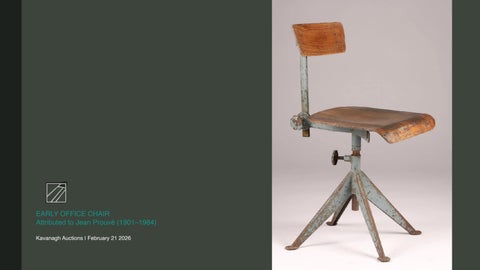

EARLY OFFICE CHAIR
Attributed to Jean Prouvé (1901–1984)
Kavanagh Auctions | February 21 2026
ENGINEERING THE MODERN OFFICE
Early Office Chair
Attributed to Jean Prouvé (1901–1984)
Nancy, France, circa 1925
An exceptionally early and rare office chair attributed to Jean Prouvé, reflecting his
formative Nancy-period experimentation with folded steel, modular construction, and mechanically adjustable seating.

A RARE EARLY NANCY-PERIOD DESIGN
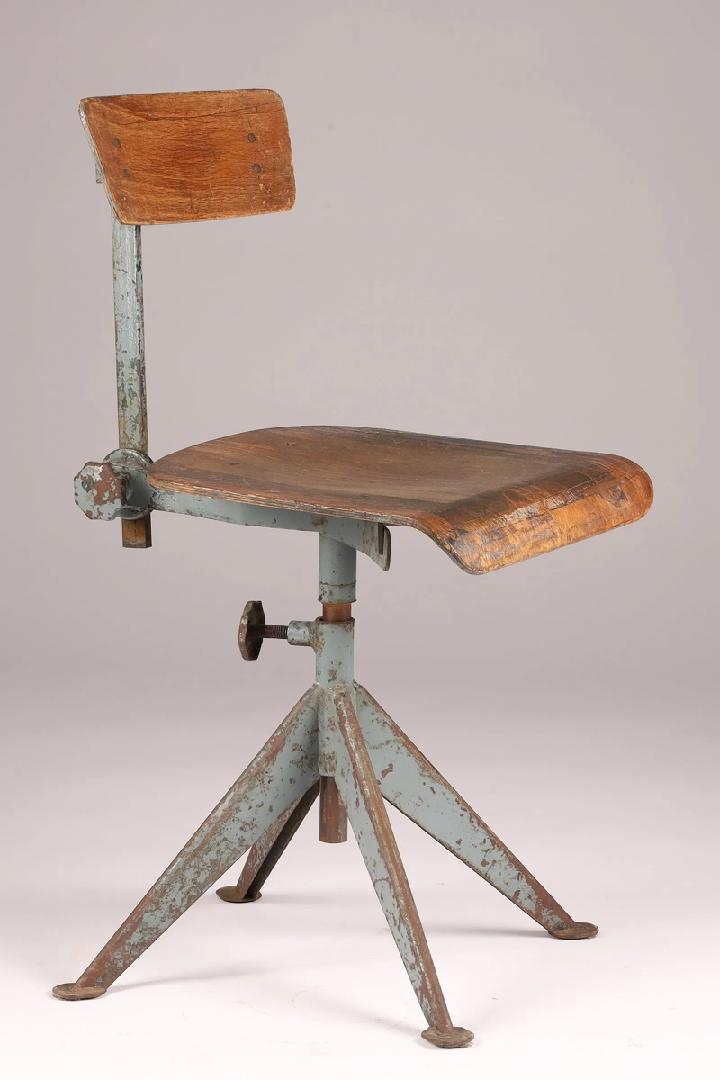
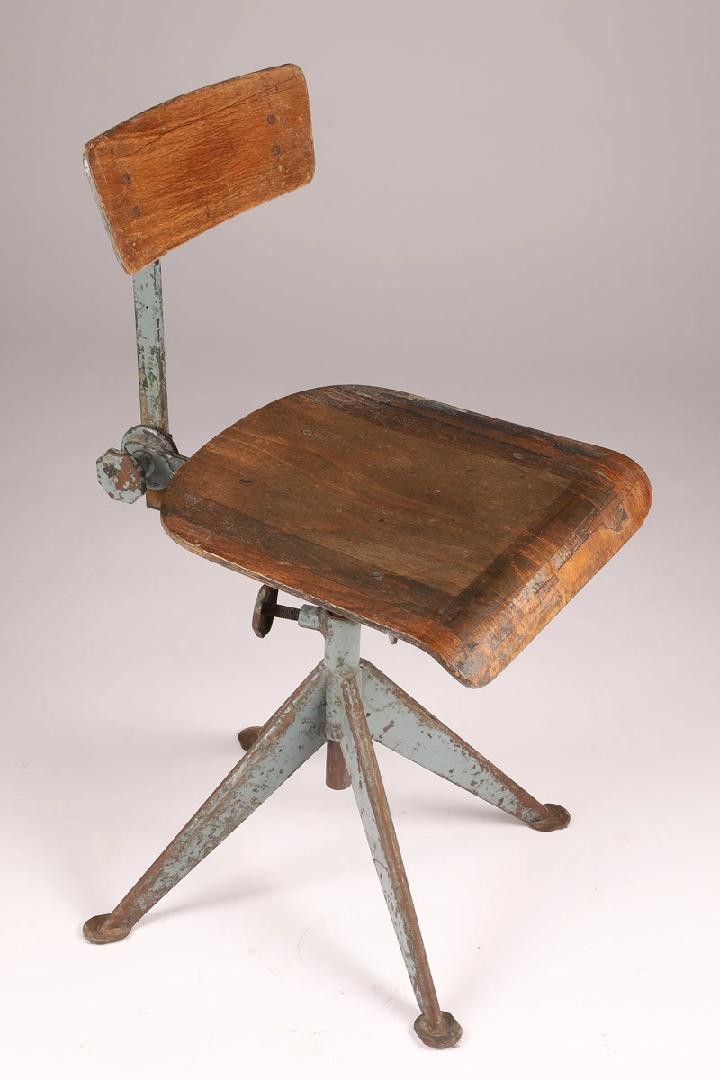
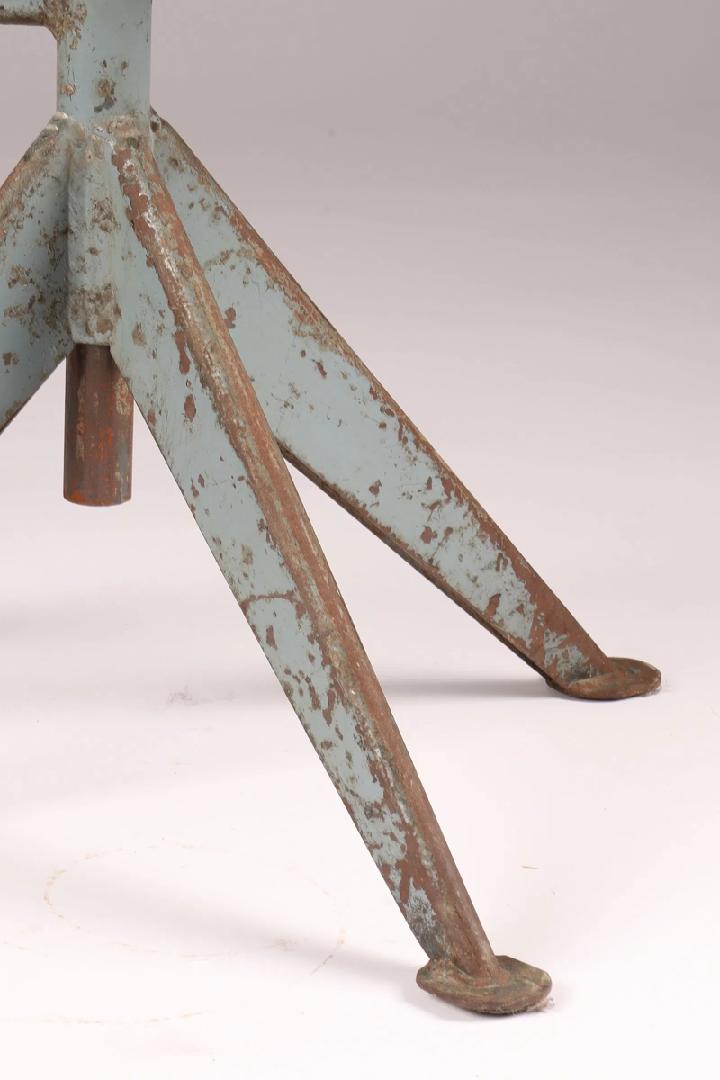
This early office chair, attributed to Jean Prouvé and produced in Nancy circa 1925, represents a formative moment in the development of one of the most influential designer-engineers of the 20th century. Combining a folded steel base with moulded plywood seating elements, the chair demonstrates Prouvé’s emerging philosophy of rational construction and industrial logic applied to everyday furniture. The chair features four splayed steel legs, a fixed (non-swivelling) adjustable central column, and mechanically adjustable seat height and backrest—hallmarks of early functional office seating developed before widespread standardization.
FORMATIVE YEARS AND EXPERIMENTAL PRODUCTION
During the early 1920s, Jean Prouvé was working in Nancy as a metalworker and designer, producing furniture and architectural components in small numbers. This period predates his later industrial-scale production and is characterized by experimentation, custom fabrication, and pragmatic engineering solutions.
Rather than decorative refinement, Prouvé focused on structure, efficiency, and honesty of materials. Office furniture from this period was conceived as a tool— adaptable, robust, and repairable—anticipating principles that would later define modernist design.
Objects from this early Nancy phase are rare and highly sought after due to their limited production and direct connection to Prouvé’s foundational thinking.
STRUCTURE OVER ONAMENT
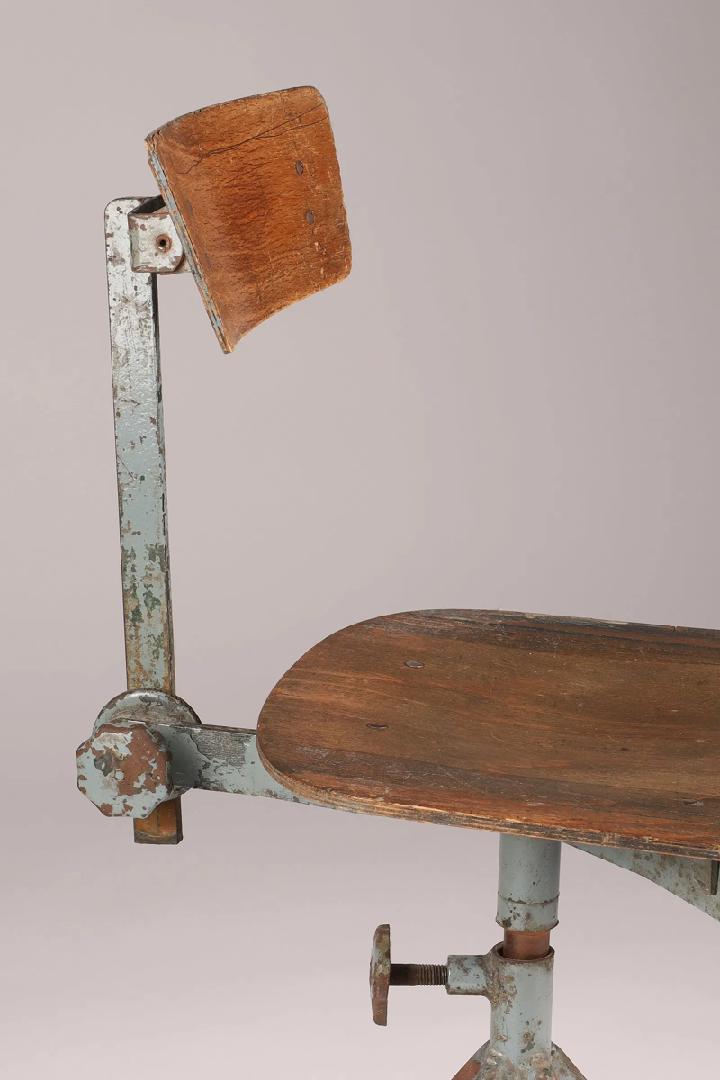
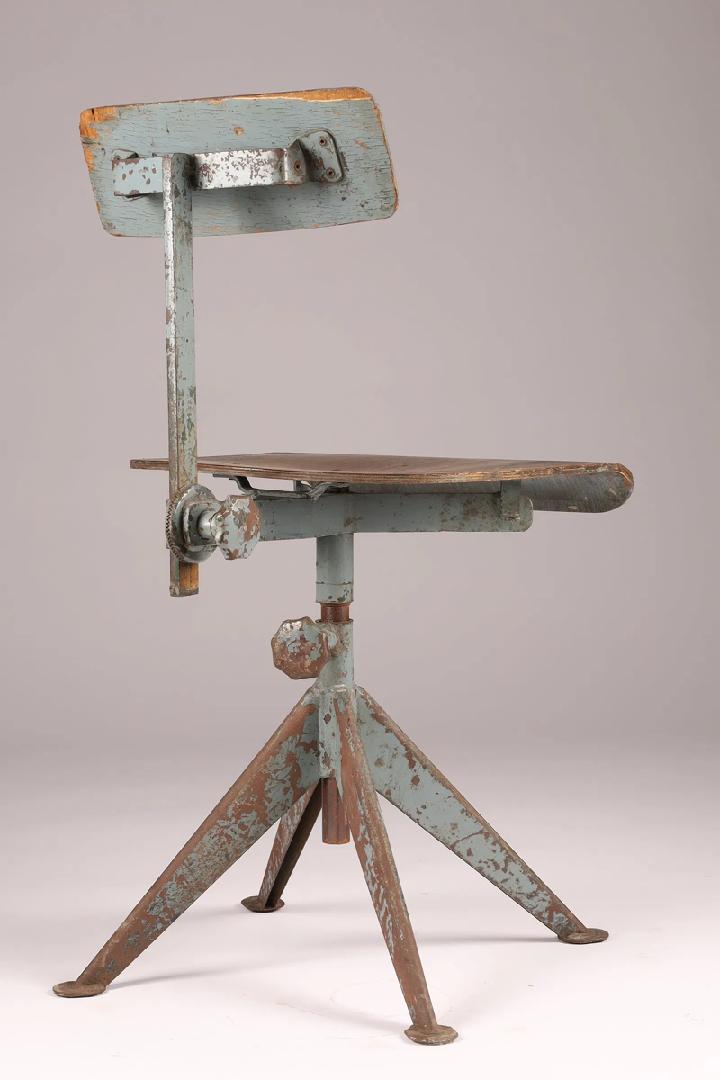
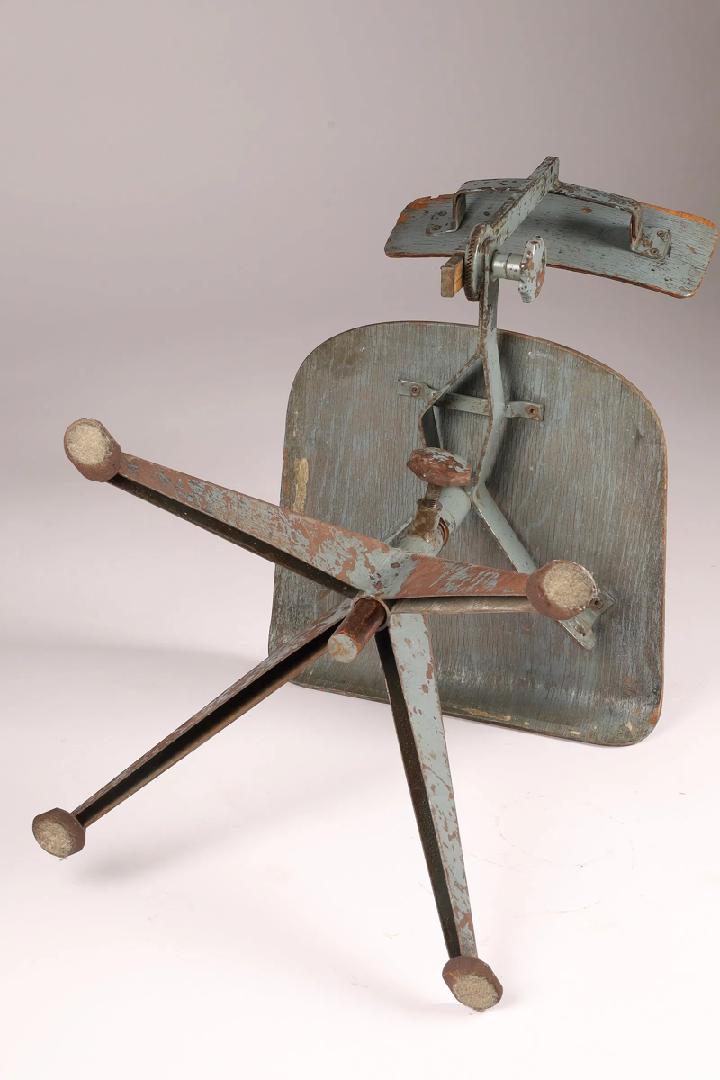
The chair is constructed around a folded steel base with four outward-splayed legs, providing stability without unnecessary mass. The central column allows for mechanical adjustment of seat height, while the backrest is independently adjustable— features that prioritize ergonomics and user adaptability.
The moulded plywood seat and backrest introduce warmth and comfort while remaining subordinate to the structural logic of the steel framework. Notably, the chair does not swivel, reinforcing its early date and functional intent.
Surface wear, oxidation, and patina are consistent with original materials and prolonged use, and no evidence of later modification is observed.
EARLY INDUSTRIAL THINKING
Folded steel: Employed not as decoration, but as a structural solution offering strength with minimal material
Moulded plywood: Early adoption of bent and shaped wood components for ergonomic seating
Mechanical adjustability: Emphasizing function and adaptability over stylistic uniformity
These elements reflect Prouvé’s belief that furniture should be engineered like architecture—assembled logically, repaired easily, and produced efficiently.
DOCUMENTED PARALLELS
Documented Parallels
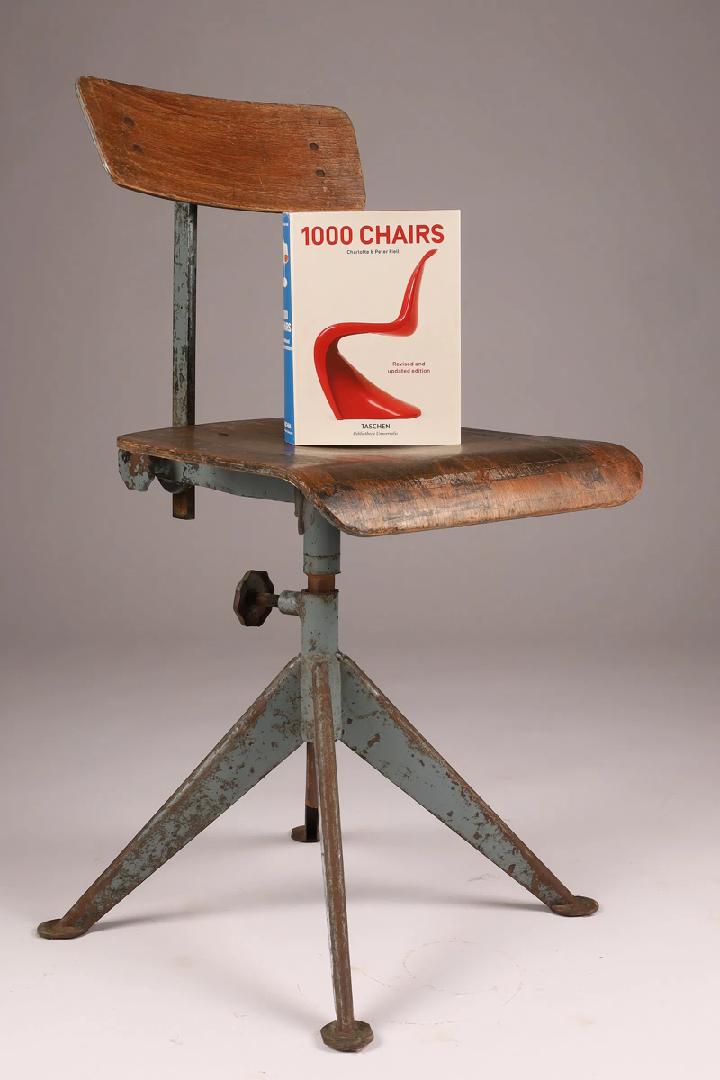
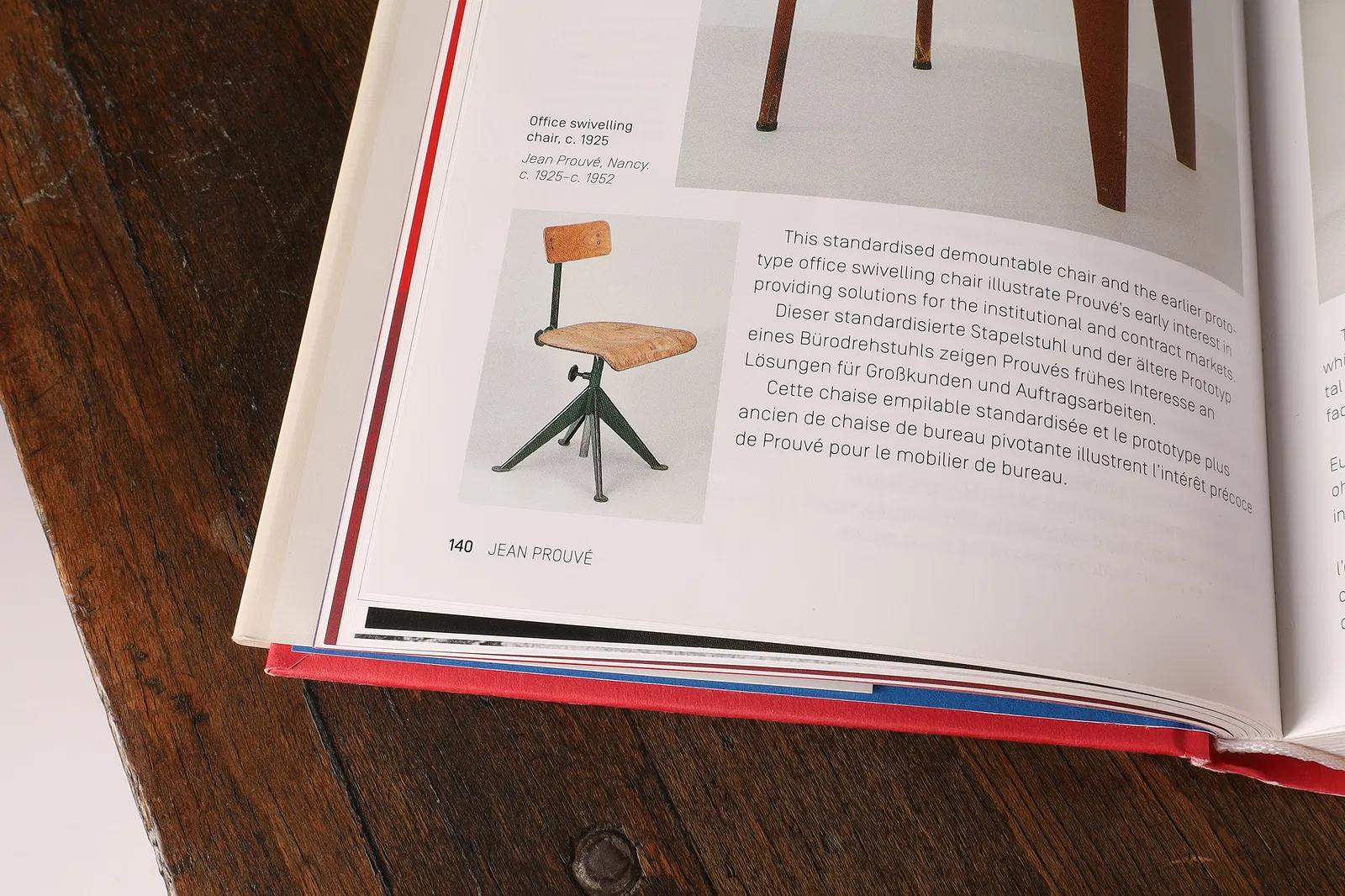
The construction and configuration of the present chair correspond closely to early office seating designs illustrated in 1000 Chairs by Charlotte & Peter Fiell (Taschen, revised edition, p. 140), which documents early Prouvé chairs produced in Nancy during the mid-1920s.
Comparable examples share:
Fixed, non-swivelling bases
Splayed steel legs
Central mechanical adjustment
Plywood seating elements
While unsigned—as is typical for early Prouvé furniture—the design vocabulary, materials, and engineering logic strongly support an attribution to Jean Prouvé’s Nancy workshop.
TECHNICAL DETAILS
Designer: Attributed to Jean Prouvé (French, 1901–1984)
Object: Early office chair
Date / Period: Circa 1925
Origin: Nancy, France
Materials: Folded steel, moulded plywood
Function: Adjustable seat height and backrest; non-swivelling
Condition: Original, with age-related wear, oxidation, and patina
Literature: Charlotte & Peter Fiell, 1000 Chairs, Taschen, revised edition, p. 140
Comparative Context
Early office chairs by Prouvé are represented in institutional collections such as the Centre Pompidou and the Vitra Design Museum, where Nancy-period works are recognized as precursors to his later standardized designs.
Examples from this period are notably scarcer than his post-war furniture and remain underrepresented on the market.
Kavanagh Auctions | February 21, 2026