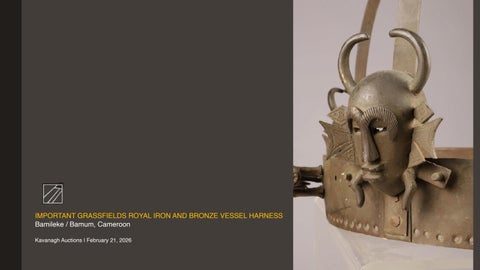

IMPORTANT GRASSFIELDS ROYAL IRON AND BRONZE VESSEL HARNESS
Bamileke / Bamum, Cameroon
Kavanagh Auctions | February 21, 2026
POWER, AUTHORITY
AND
CEREMONY
IN THE CAMEROON GRASSFIELDS
Royal Vessel Harness
Forged iron with cast bronze appliqués
Grassfields region, Cameroon
Early–Mid 20th century
A monumental ceremonial vessel support from the royal courts of the Grassfields region, distinguished by its powerful sculptural presence, symbolic bronze ornament, and exceptional metalworking.
A MONUMENTAL COURT OBJECT
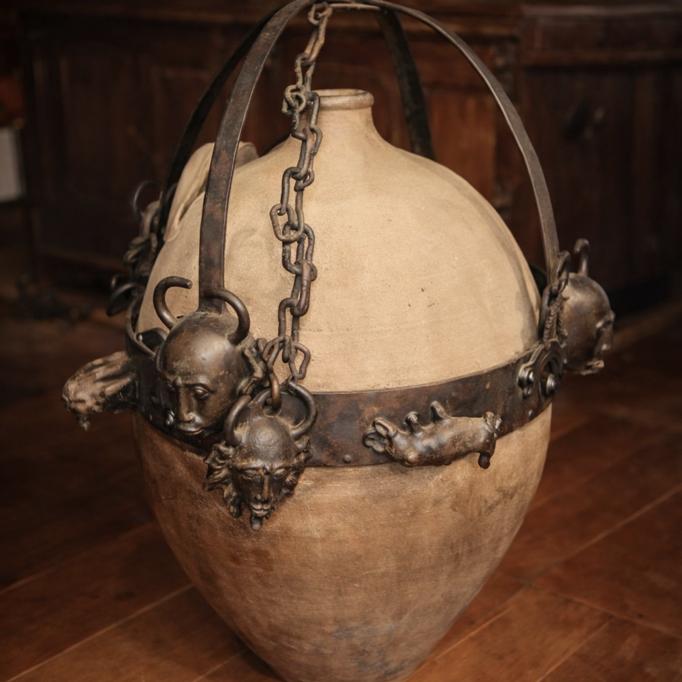
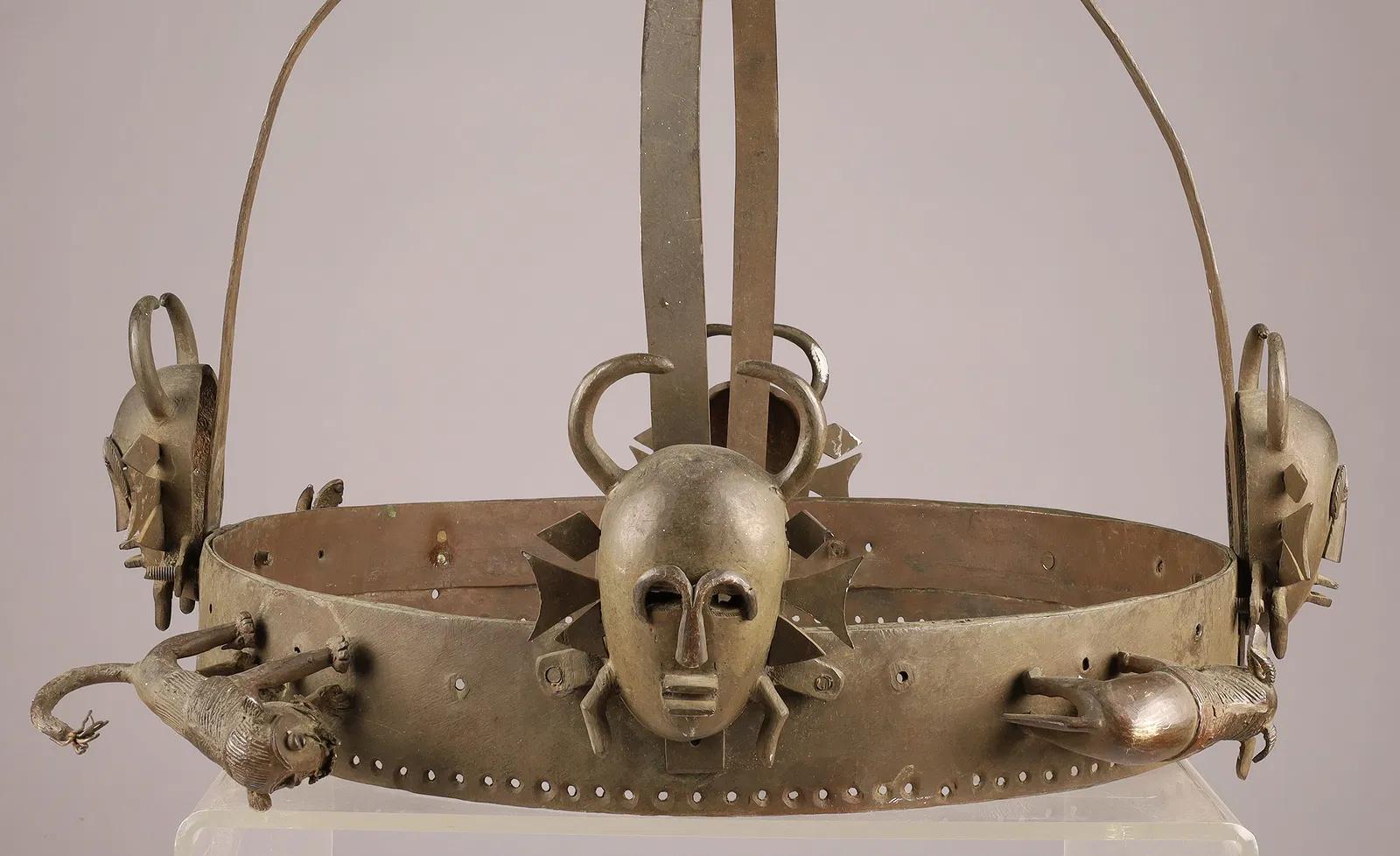
This large-scale vessel harness originates from the royal and elite ceremonial traditions of the Cameroon Grassfields region, an area renowned for its sophisticated court cultures and mastery of metal arts. Designed to support monumental ceramic vessels, the harness elevates the container both physically and symbolically, transforming it into a focal point of ritual and authority.
Forged in iron and richly adorned with cast bronze appliqués, the object exemplifies the intersection of utility, symbolism, and political power that defines Grassfields royal material culture.
BAMILEKE AND BAMUM ROYAL TRADITIONS
elds region is home to complex hierarchical societies, most notably the Bamileke and Bamum courts. Kings (fon or mfon) ruled through elaborate systems of ritual display, where objects played a central rming lineage, legitimacy, and ancestral
Metal objects—especially those combining iron and bronze—were closely associated with royal authority. Their production was controlled by court specialists, and their use restricted to palace settings, title societies, and high-ranking individuals.
CEREMONIAL VESSELS AND COURTLY DISPLAY
Ceramic vessels supported by harnesses of this type were used for the storage and presentation of palm wine, ritual substances, and prestige goods during court ceremonies, feasts, and ancestral rites. Elevated on iron frameworks, the vessels became visual and symbolic anchors within palace spaces.
The harness ensured stability while also framing the vessel as a royal object, separating it from ordinary domestic wares. Its height and sculptural presence reinforced hierarchy and commanded attention during communal gatherings.
IRON AND BRONZE MASTERY
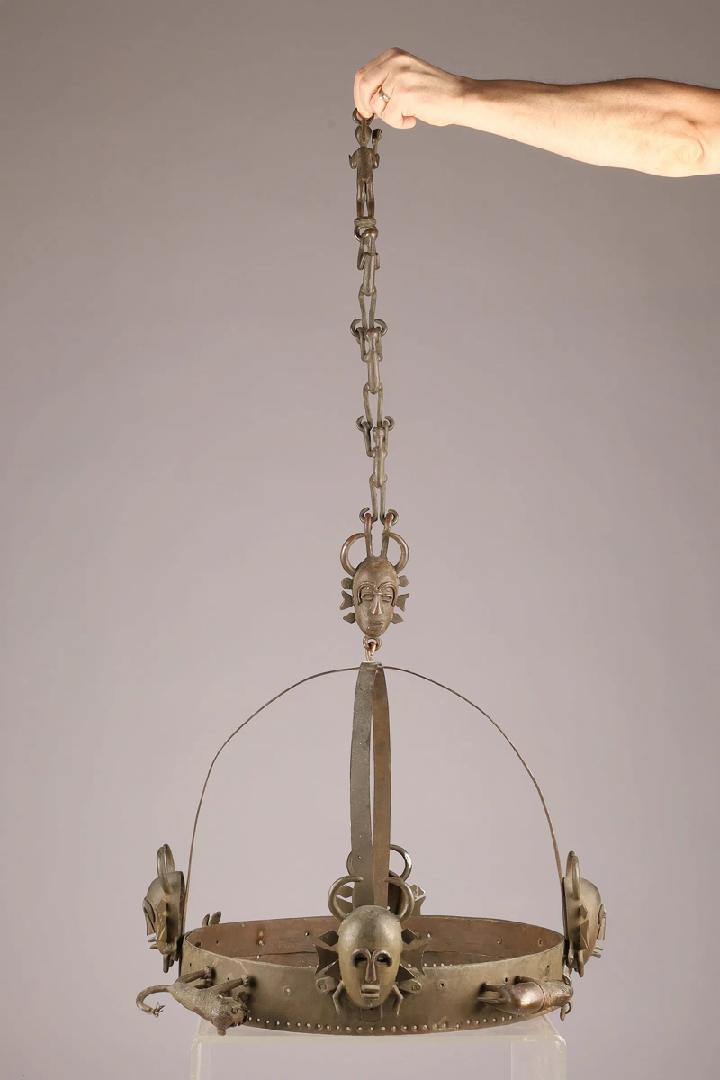
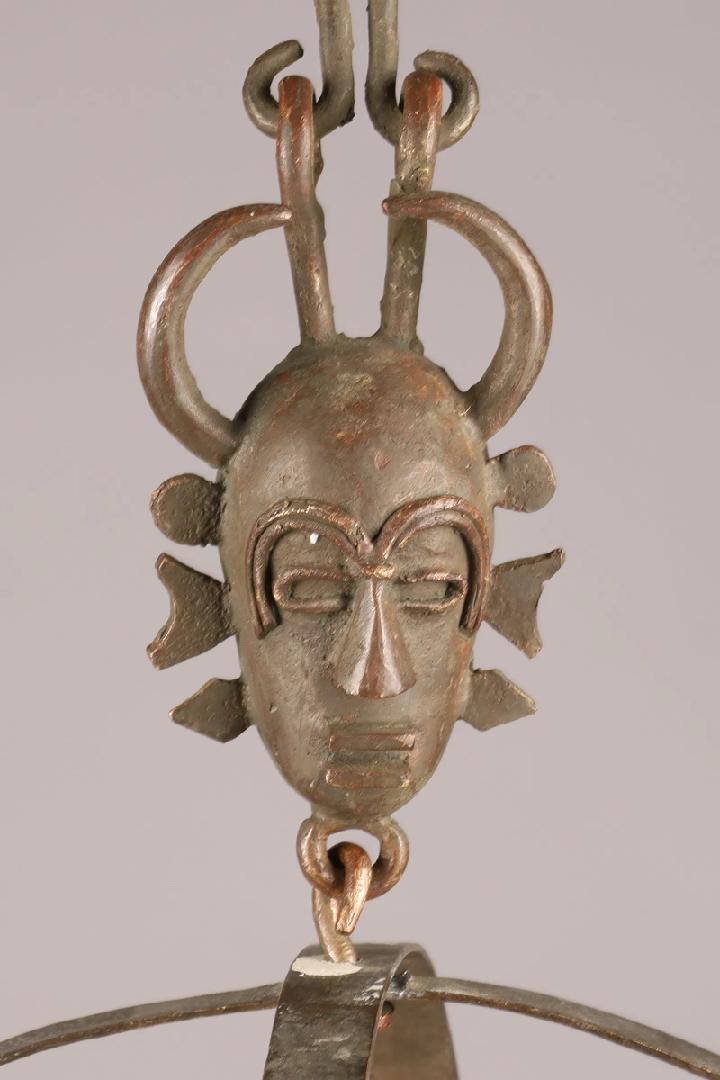
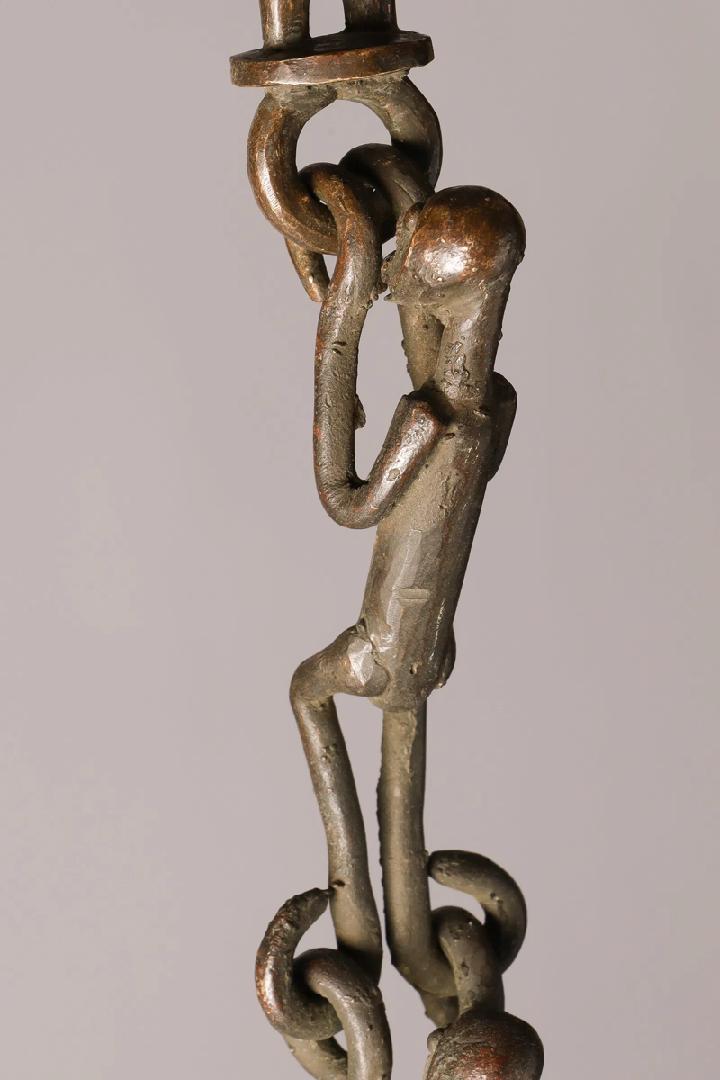
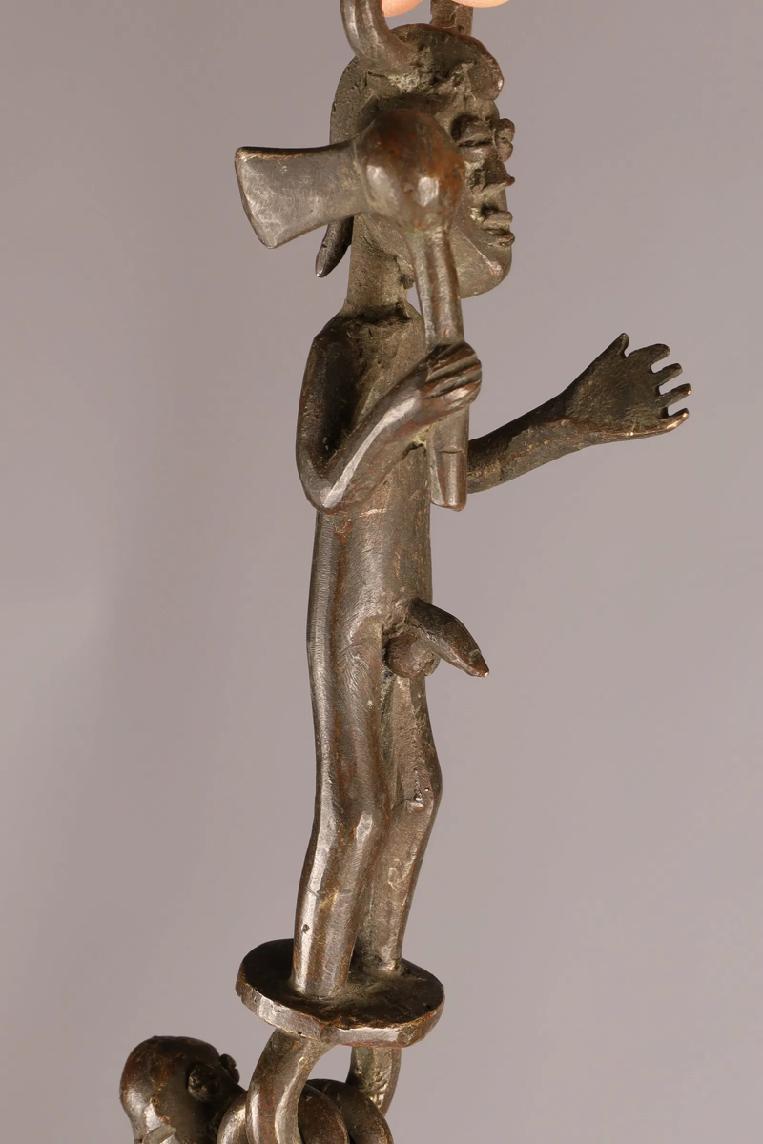
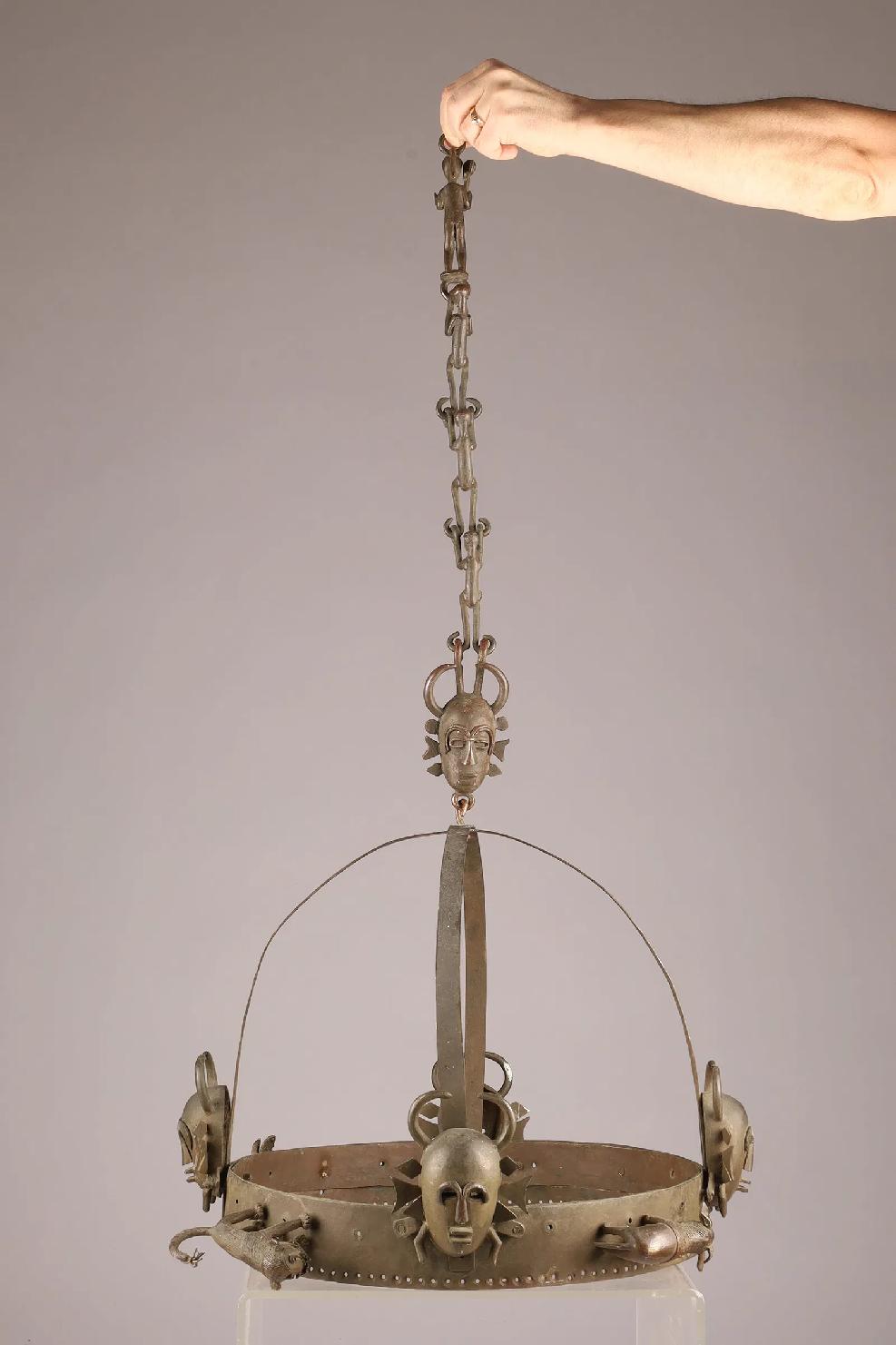
The structure consists of a circular forged iron support ring fitted with four vertical suspension bands, joined by a handforged chain assembly. The iron exhibits confident hammer work and balanced proportions, demonstrating both functional engineering and aesthetic control.
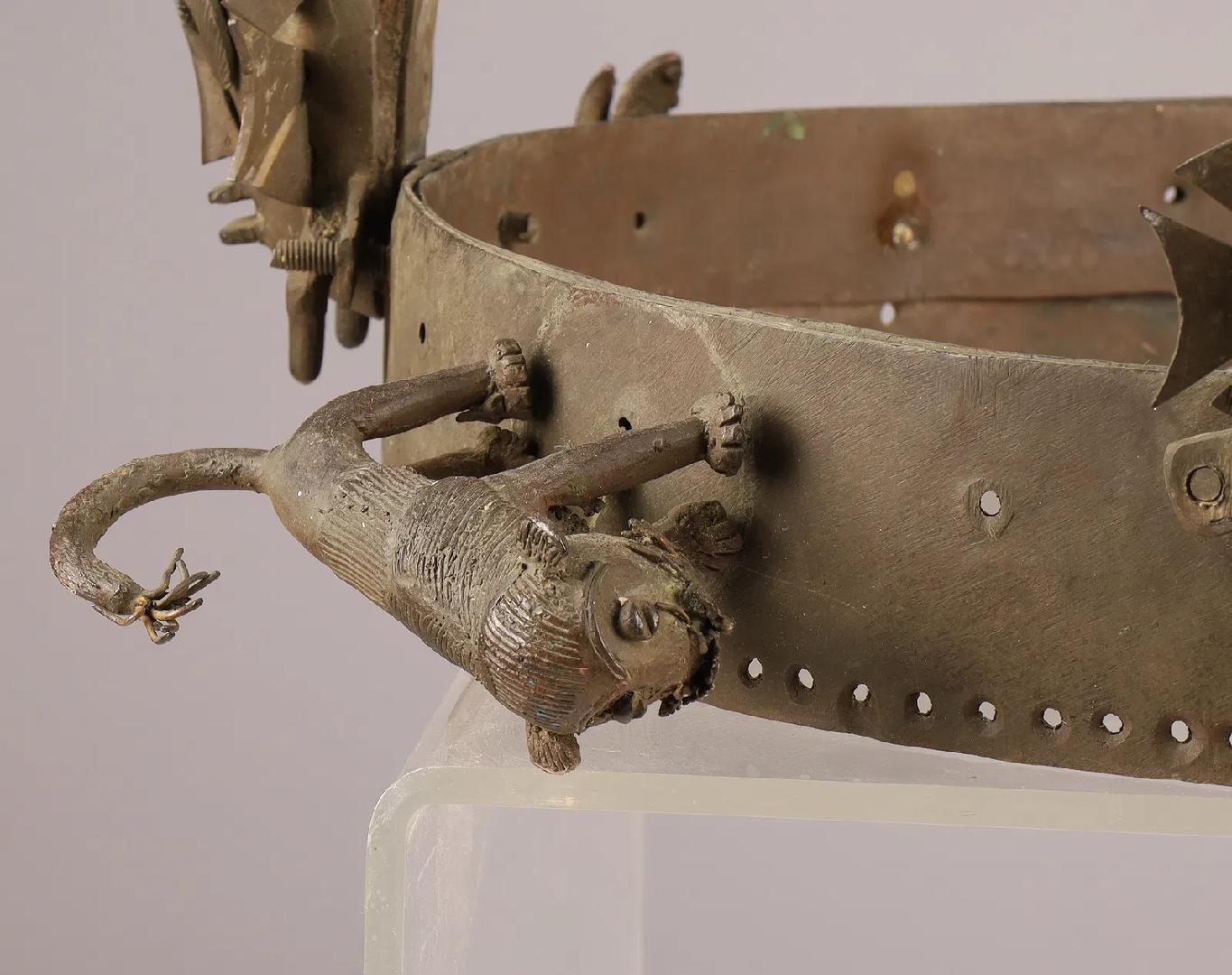
Cast bronze appliqués are riveted directly onto the iron framework, integrating sculptural elements with structural components. This combination of forged and cast techniques reflects advanced metallurgical knowledge and workshop specialization within Grassfields royal centers.
MASKS, LIONS, AND GUARDIAN FIGURES
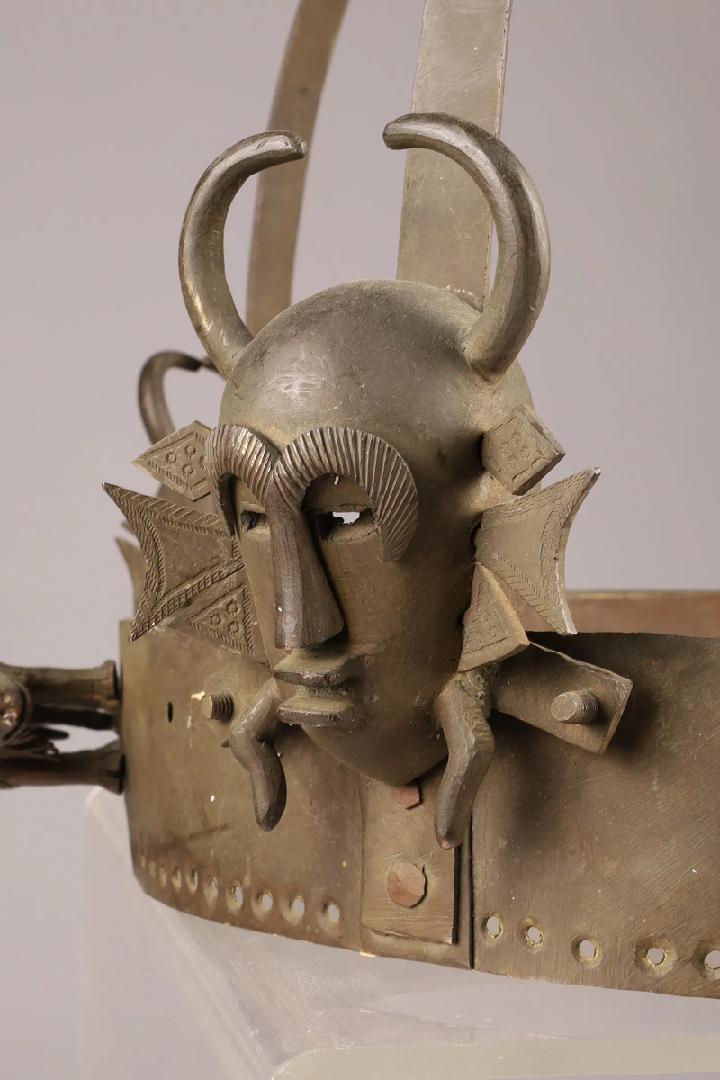
The bronze appliqués depict stylized human masks, lions, and zoomorphic guardian figures—imagery deeply embedded in Grassfields royal symbolism.
Human masks evoke ancestry, lineage, and the presence of royal forebears
Lions signify strength, kingship, and martial authority.
Zoomorphic guardians function as protective intermediaries between the spiritual and physical realms.
Bronze, a material reserved for elite contexts, further reinforces the object’s royal status and ceremonial importance.
TECHNICAL DETAILS
Region / Culture: Cameroon, Grassfields (Bamileke / Bamum)
Object: Royal vessel support / harness
Date / Period: Early–Mid 20th century
Materials: Forged iron with cast bronze appliqués
Construction: Circular iron ring with four vertical suspension bands and chain assembly
Decoration: Human masks, lions, and zoomorphic guardian figures
Dimensions: Height 44 cm × Width 38 cm
Condition: Structurally intact; deep, stable patina; wear consistent with ceremonial use
COMPARATIVE EXAMPLES:
Related vessel harnesses and iron-and-bronze ceremonial supports are preserved in major institutional collections, including the Musée du quai Branly – Jacques Chirac and the Metropolitan Museum of Art, where Grassfields metalwork is recognized for its technical sophistication and symbolic depth.
Kavanagh Auctions | February 21, 2026