PORTFOLIO
KATE LENNON
Kansas State University |College of APDesign
Undergraduate Interior Design
Selected Works 2024 - 2025

Kansas State University |College of APDesign
Undergraduate Interior Design
Selected Works 2024 - 2025
I am passionate about people and creating sustainable, equitable, and accessible spaces that support all users. At its core, good design grows from an understanding of lived experience and the ability to translate those insights into meaningful and impactful solutions.
I believe every good design challenge is like a puzzle waiting to be solved. Through creative iteration, strategic brainstorming, and critical thinking, design has the power to impact the well-being, mental health, and lives of people.
Grounded in a person-centered lens, my work is driven by curiosity, empathy, and the deep-rooted belief that thoughtful design can shape a more inclusive and compassionate world.

Kansas State University
4th Year Interior Design

kate@katelennon.com
katejlennon
IIDA & ASID Student Member
Certifications
NCIDQ In-Progress
IDFX Passed Oct. 2025
Clifton Strengths
Learner
Developer
Input
Strategic Intellection
Technical Skills


Bachelor of Science in Interior Design (CIDA) College of APDesign
Kansas State University | Manhattan, KS
Expected May 2026 | Cumulative GPA 3.86
Dean’s List
Minor in Leadership Studies
Staley School of Leadership
Kansas State University | Manhattan, KS
Expected May 2026 | Minor GPA 4.00
International Study Experience
Three week study tour to United Kingdom
Interior Design Program | Summer 2025
Undergraduate Research Assistant
August 2024 - May 2025
Working alongside faculty on an interdisciplinary team in the historical restoration of the Marlatt Homestead.
Dwellings Summer Design Intern
May 2024 - August 2025
Assisting the Madison, WI community in redesigning and reimagining their spaces via custom upholstered furniture and design solutions. Developing and modeling new retail construction electrical and schematic plans.
Undergraduate Teaching Assistant
August 2024 - Present
Providing in-class educational support and instruction to undergraduate Interior Design majors at Kansas State University.
iDesign Co President
August 2025 - Present
Planning and working with other executive members to engage Interior Design students in extracurricular activities.
IIDA Campus Chapter Secretary
August 2025 - Present
Coordinating and organizing with other leadership members to create beneficial events and provide efficient communication to other club members and the student body.




References available upon request
DIM Team Department Representative
August 2024 - Present
Representing the Department in Digital Information and Media meetings and advocating for the amplification of the department in APDesign social media.
IAID Student Council Leadership Team
September 2024 - Present
Engaging in dialogue with other student leaders alongside the department head regarding department events, happenings, and future plans.
Staley School Recruitment Officer
January 2024 - Present
Providing information to prospective students and their families regarding the benefits of Staley School programs and activities.
Kansas State University | Fall 2025 Thesis Project
Individual Work | 4th Year, 1st Semester
Duration: 2 months
Program Summary
After selecting a built-environment setting and defined user group, students conduct a comprehensive research process, including reviewing databases, evaluating existing studies, and synthesizing findings. Then, students develop a prototypical evidence-based design solution rooted in the selected thesis topic.
Project Statement
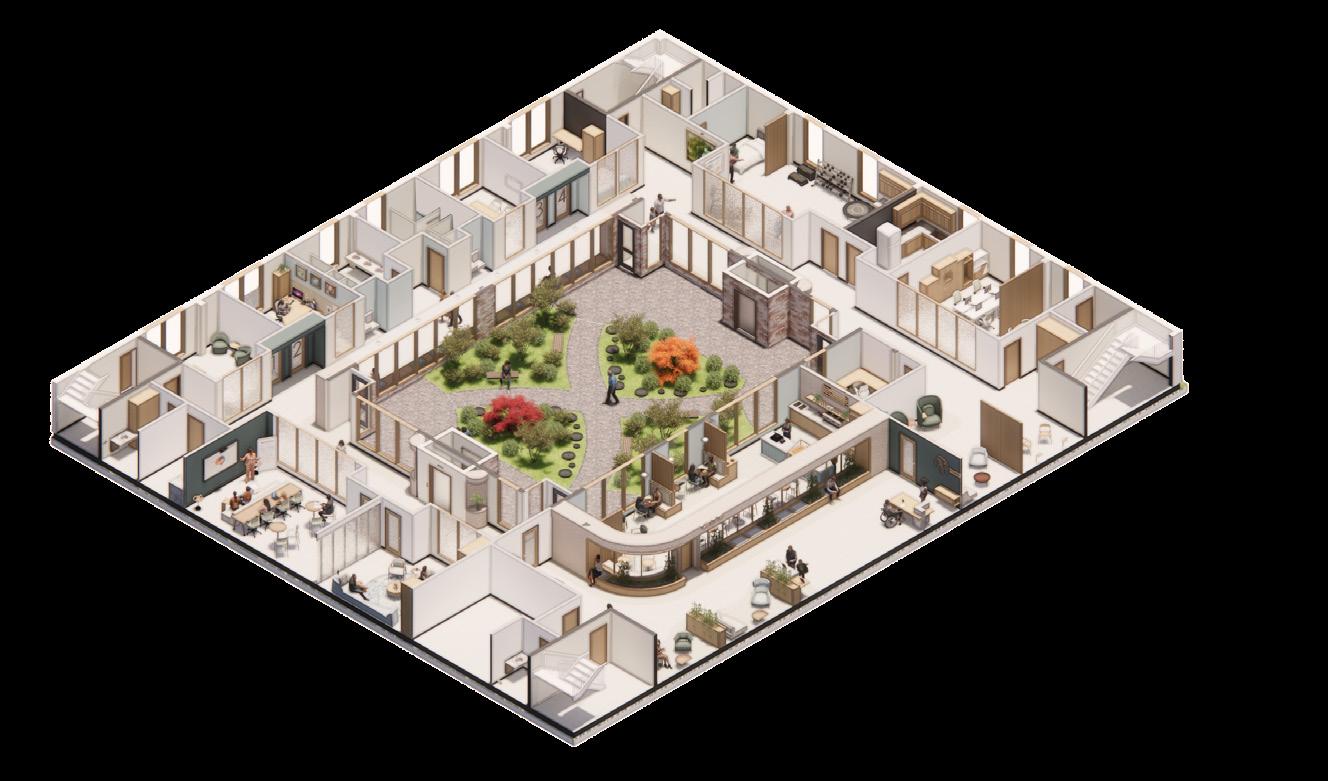
After a traumatic brain injury, patients experience a wide variety of symptoms including auditory, visual, and mobility sensitivities. Utilizing biophilic elements, person-centered design, and restoration theory, the Willow Rehabilitation Center provides interdisciplinary care and independent living opportunities for users navigating the transition between hospital care and home living.
Skills Used: Revit, AutoCAD, Enscape, Photoshop, InDesign, Illustrator, Research Skills
Drivers: Recovery and Restoration Theory, Person-Centered Design, Biophilia
Traumatic Brain Injury (TBI) is one of the leading causes of chronic disability worldwide, resulting in long-term sensory, cognitive, and physical impairments that influence emotional well-being, functional independence, and quality of life. In the US alone, over 2.8 million people are experiencing post-TBI symptoms that require ongoing rehabilitation, often for months or years after the initial injury. Despite the interdisciplinary nature of TBI recovery, the built environment, particularly in rehabilitation design, fails to align with patients’ diverse needs, resulting in additional sensory and cognitive burdens that hinder a smooth, effective recovery. As a result, the design of rehabilitation environments can either reinforce a sense of safety, control, and autonomy or contribute to disorientation and emotional distress. This research emphasizes the physical environment as a central factor in recovery and examines how sensory-supportive, patient-centered design strategies can enhance rehabilitation outcomes for users with TBI. A framework grounded in recovery and restoration theory, biophilic design principles, universal design, and cognitive rehabilitation therapy demonstrates how targeted environmental strategies can support emotional regulation and neurological healing. By re-framing rehabilitation environments as active components of healing rather than passive background conditions, patient well-being, agency, and independence become central priorities within the recovery journey.
My interest in this project is rooted in lived experience. Both of my parents recovered from traumatic brain injuries, and I witnessed firsthand how various sensory sensitivities shaped their everyday life. Years later, with the toolkit of a designer, I sought to explore how the built environment can better support users navigating similar challenges.
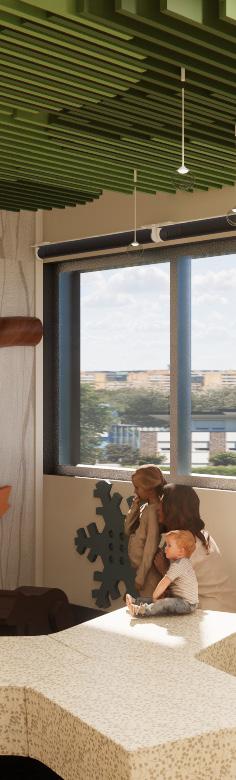
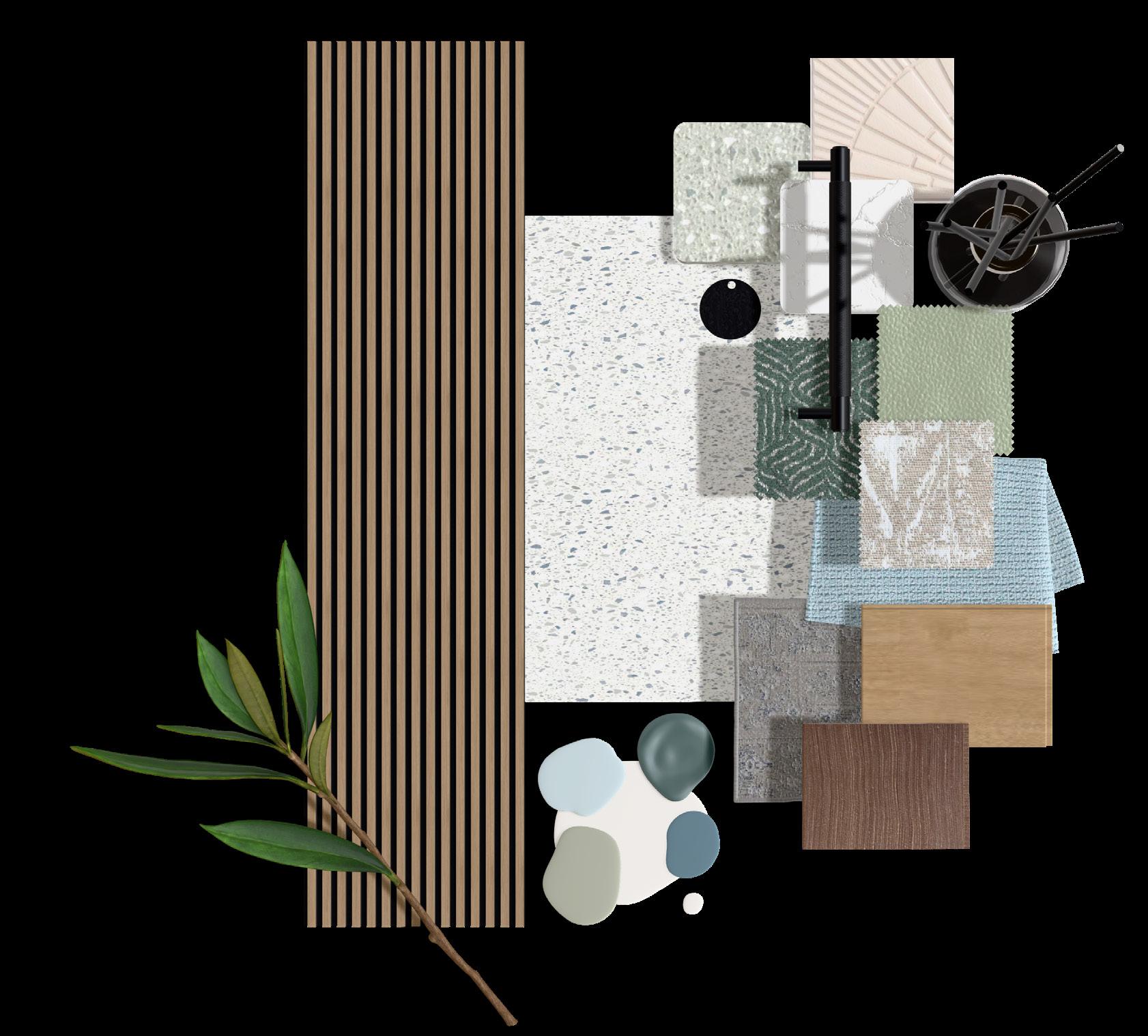
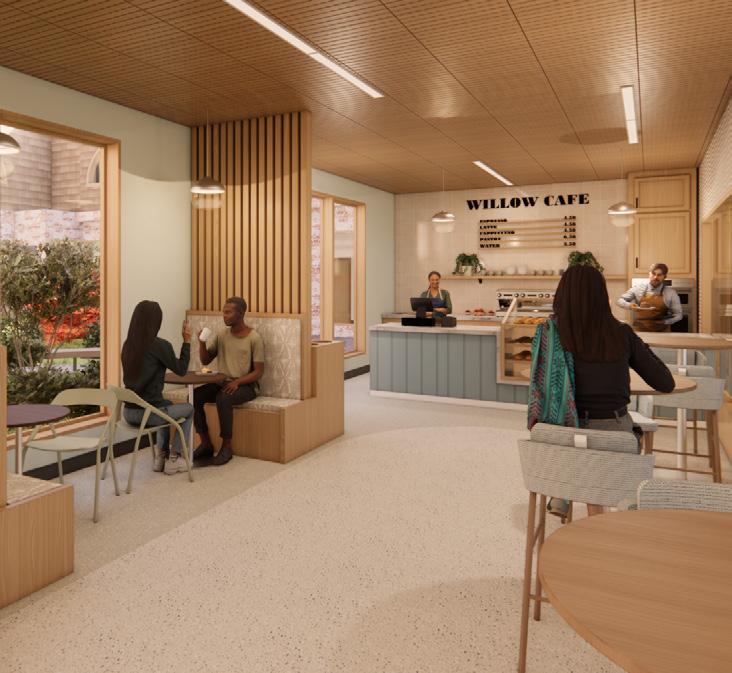
Low stimuli hues, like soft blues and greens, provide visual interest without overstimulating TBI patients. Textiles incorporate simple, easy-to-process patterns and textures that support comfort and clarity. Light wood elements ground the space in a subtle connection to nature, reinforcing a calming restorative atmosphere.

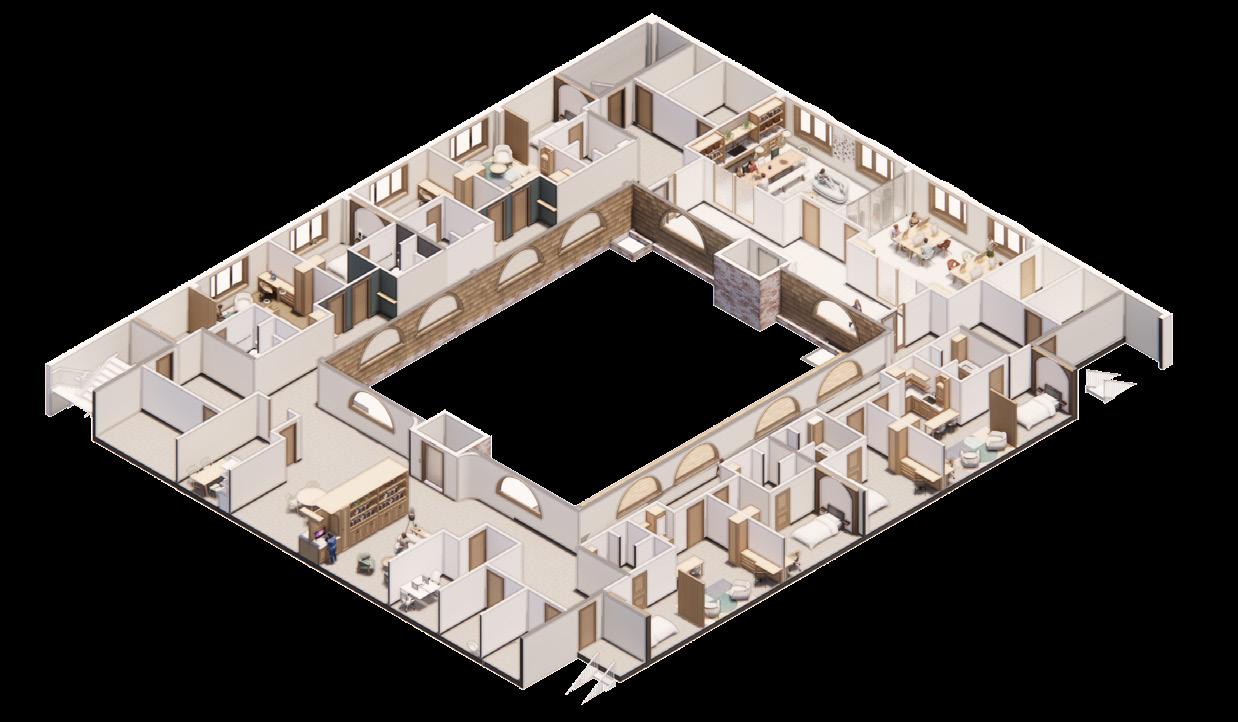
RECEPTION + DIGITAL CHECK-IN
BUSINESS OFFICE
CAFE
CAFE KITCHEN (NOT IN SCOPE)
WAITING AREA PODS
GROUP THERAPY
CLASSROOM
THERAPY GARDEN
STAFF TOILET
LAUNDRY ROOM
PRIVATE OFFICE
COMMUNITY ROOM
ART STUDIO
UTILITY SPACE
LARGE INDEPENDENT LIVING APT
SMALL INDEPENDENT LIVING APT
JANITOR CLOSET
STAFF SUPPORT SPACE
EVENT ROOM
MEDICAL STORAGE
LAUNDRY
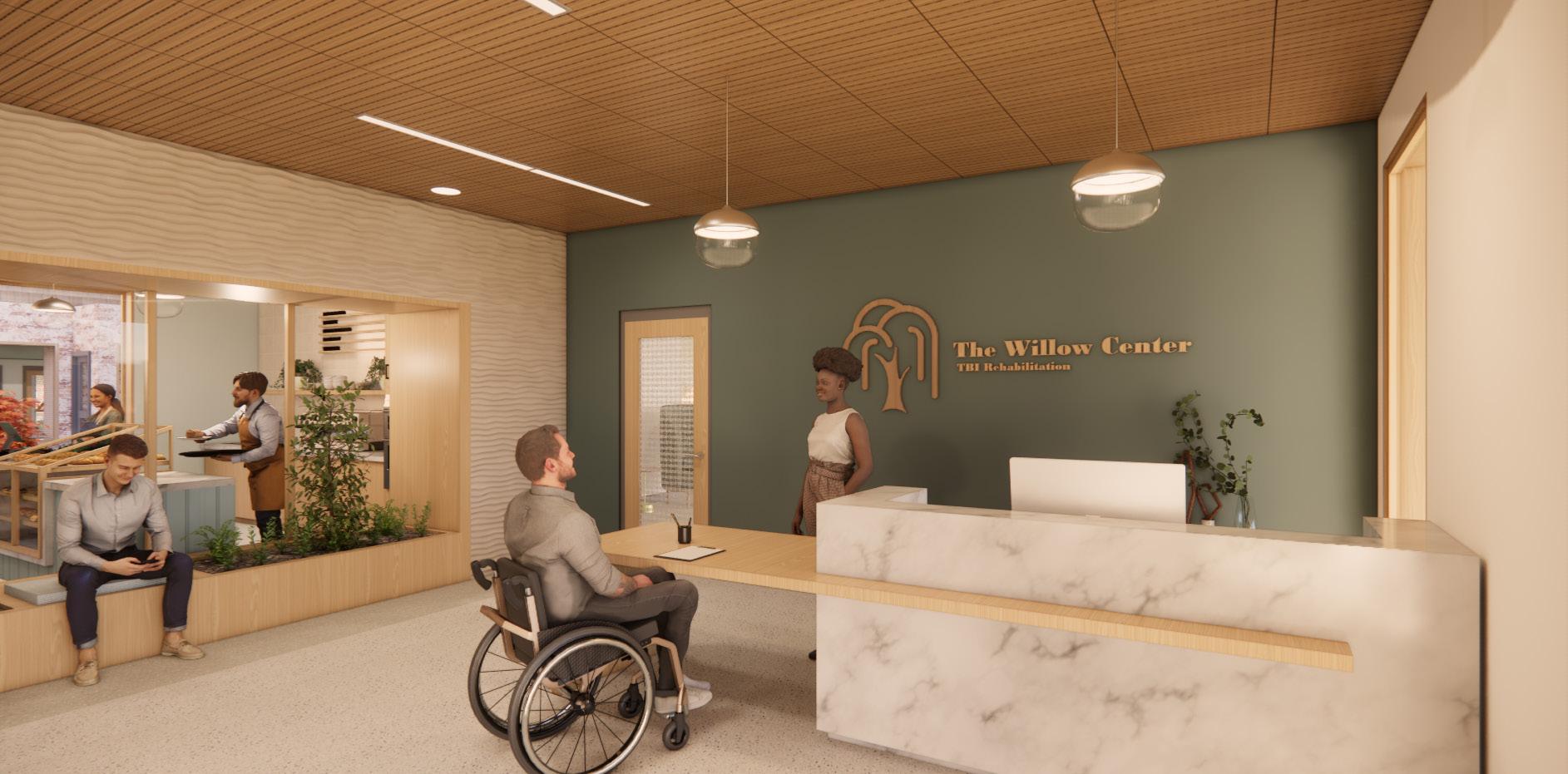
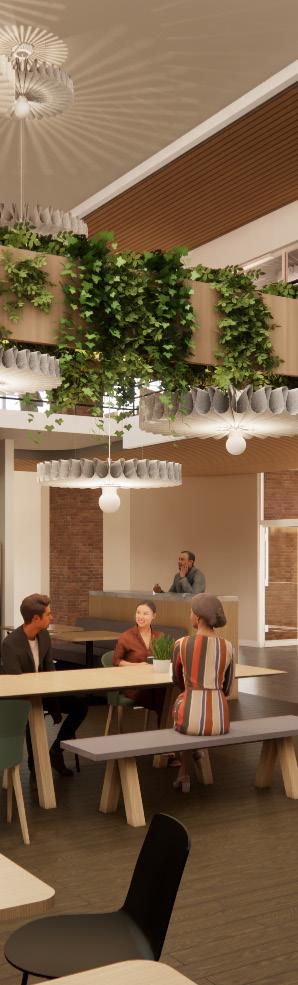
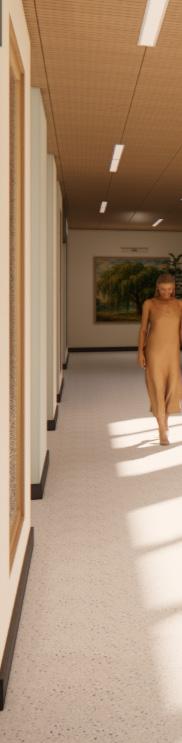
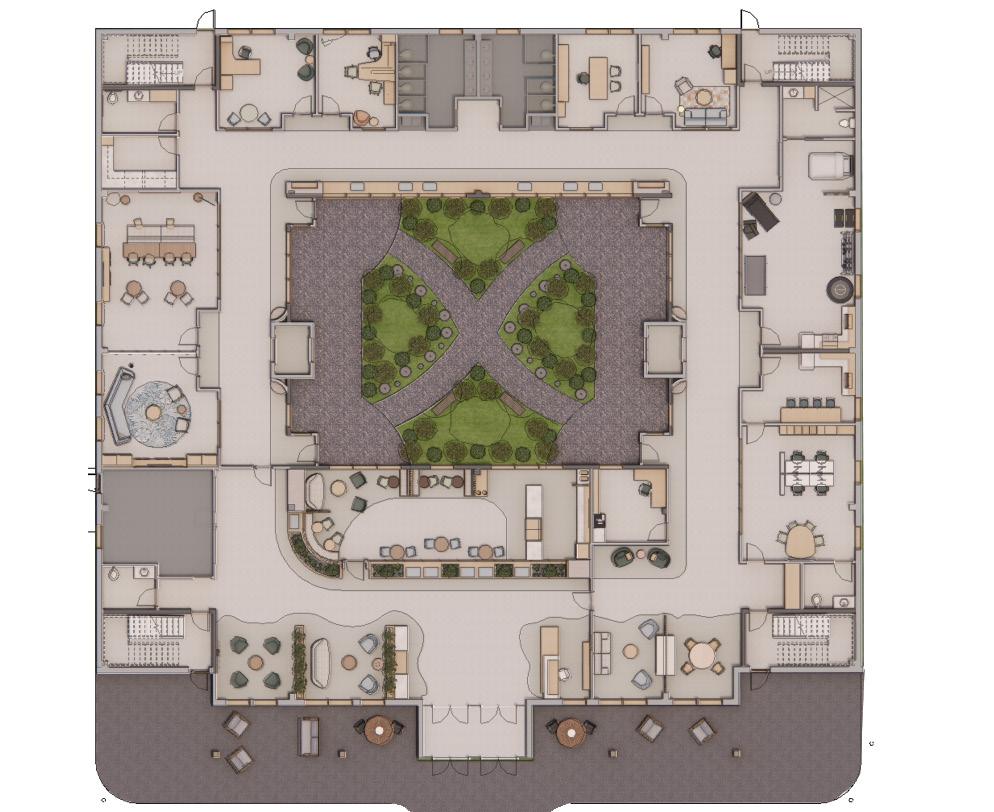
The entry creates an immediate sense of clarity and refuge, offering intuitive access to either digital checkin or the reception desk. Wood acoustic ceiling panels support sensory modulation by reducing auditory overstimulation, while a neutral palette and sociopetal arrangements reinforce comfort and safety.

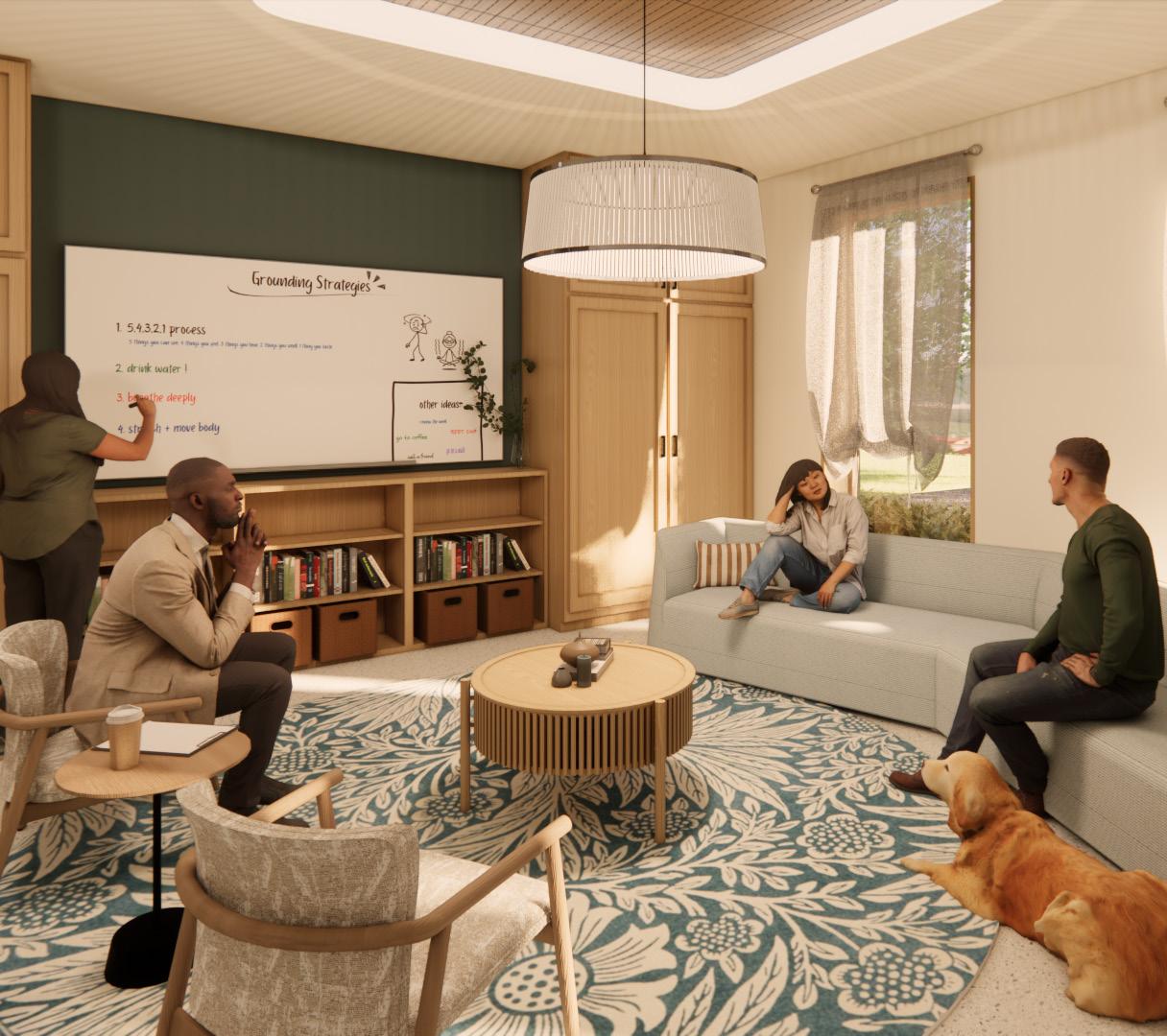
The group therapy room uses soft, sociopetal seating to encourage comfortable dialogue and peer connection. A neutral, low stimulus palette supports calmness and emotional regulation, while varied textures add gentle visual interest without overwhelming users. Soft window treatments and adjustable lighting provide sensory modulation and allow for user choice and adaptability, accommodating a wide range of sensory needs.
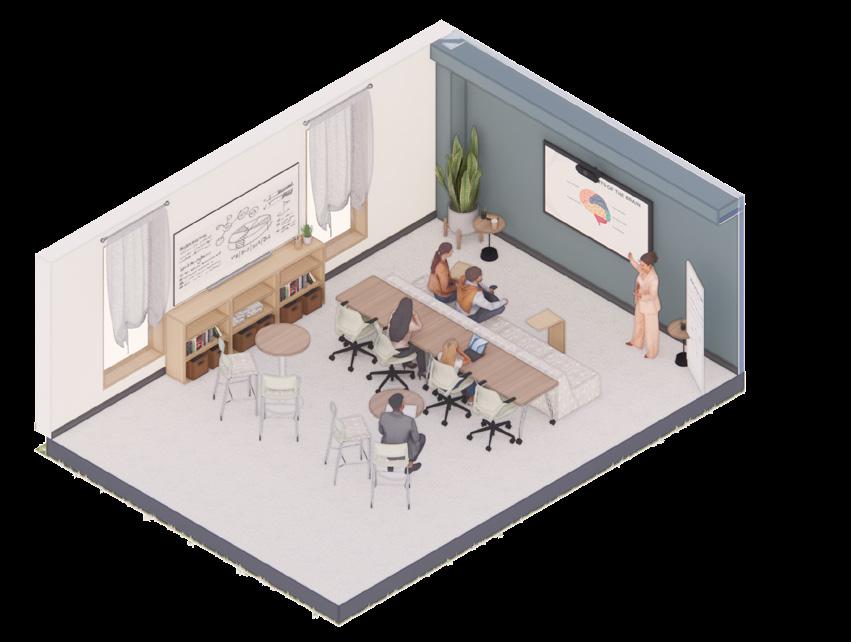

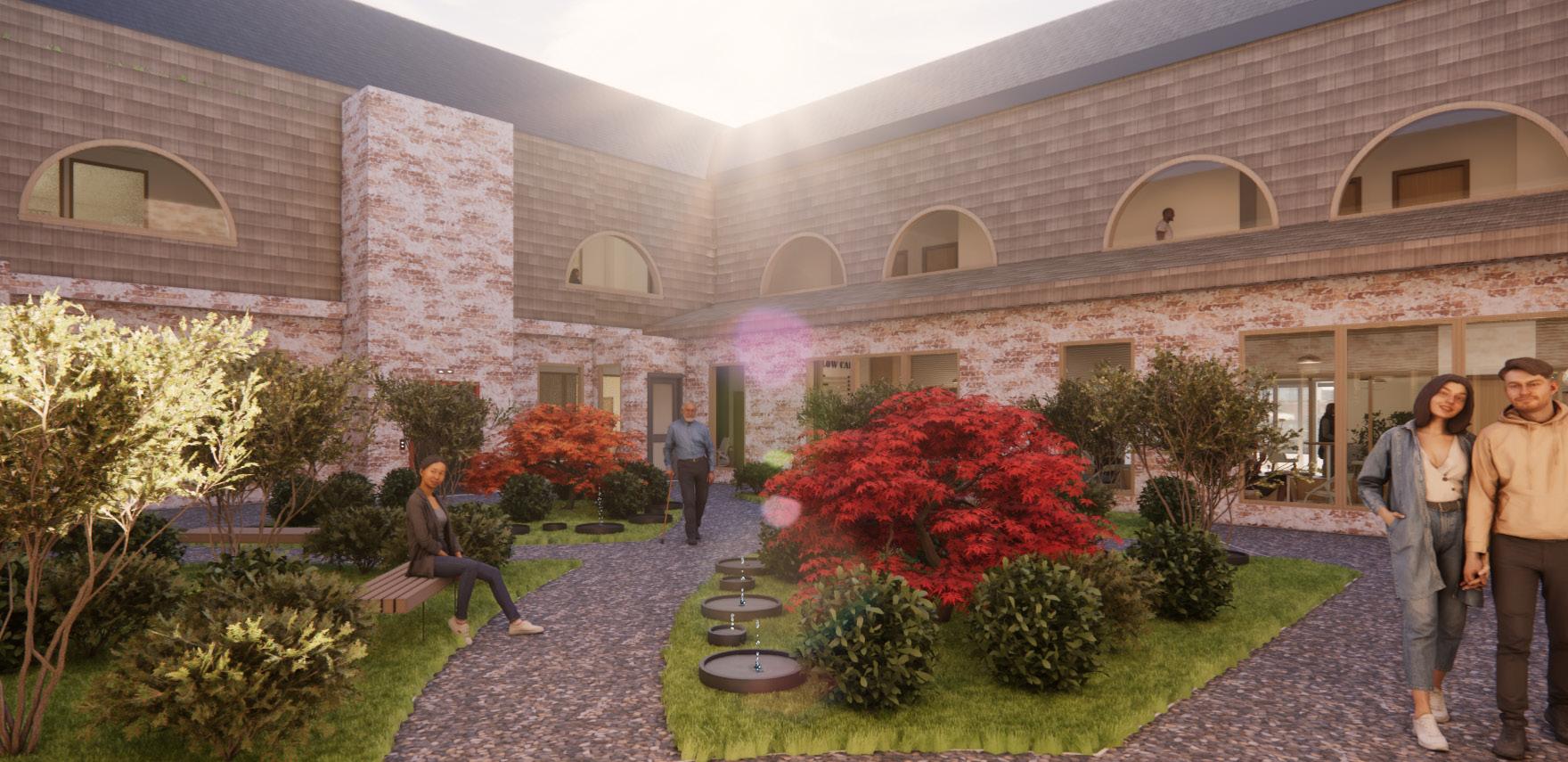
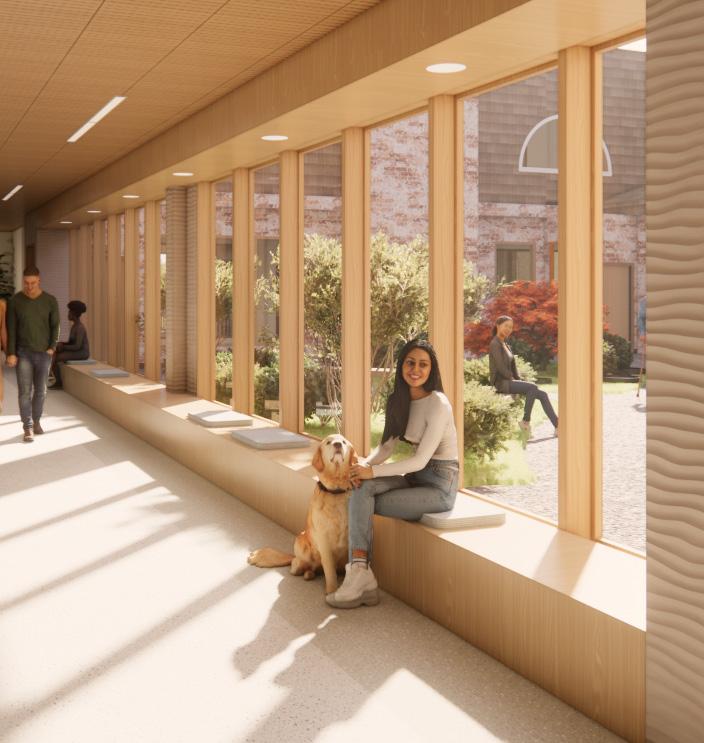
The centralized therapy garden serves as a calming refuge, intentionally designed to engage and regulate the five senses. A gentle, rhythmic plop-plop water feature restores auditory balance, while the pebble pathways provide both tactile and subtle auditory feedback with each step. Varied vegetation introduces visual richness through color, texture, and organic form strengthening a deep connection to nature. The therapy garden becomes the epicenter of sensory recharge that supports sensory modulation and emotional regulation.
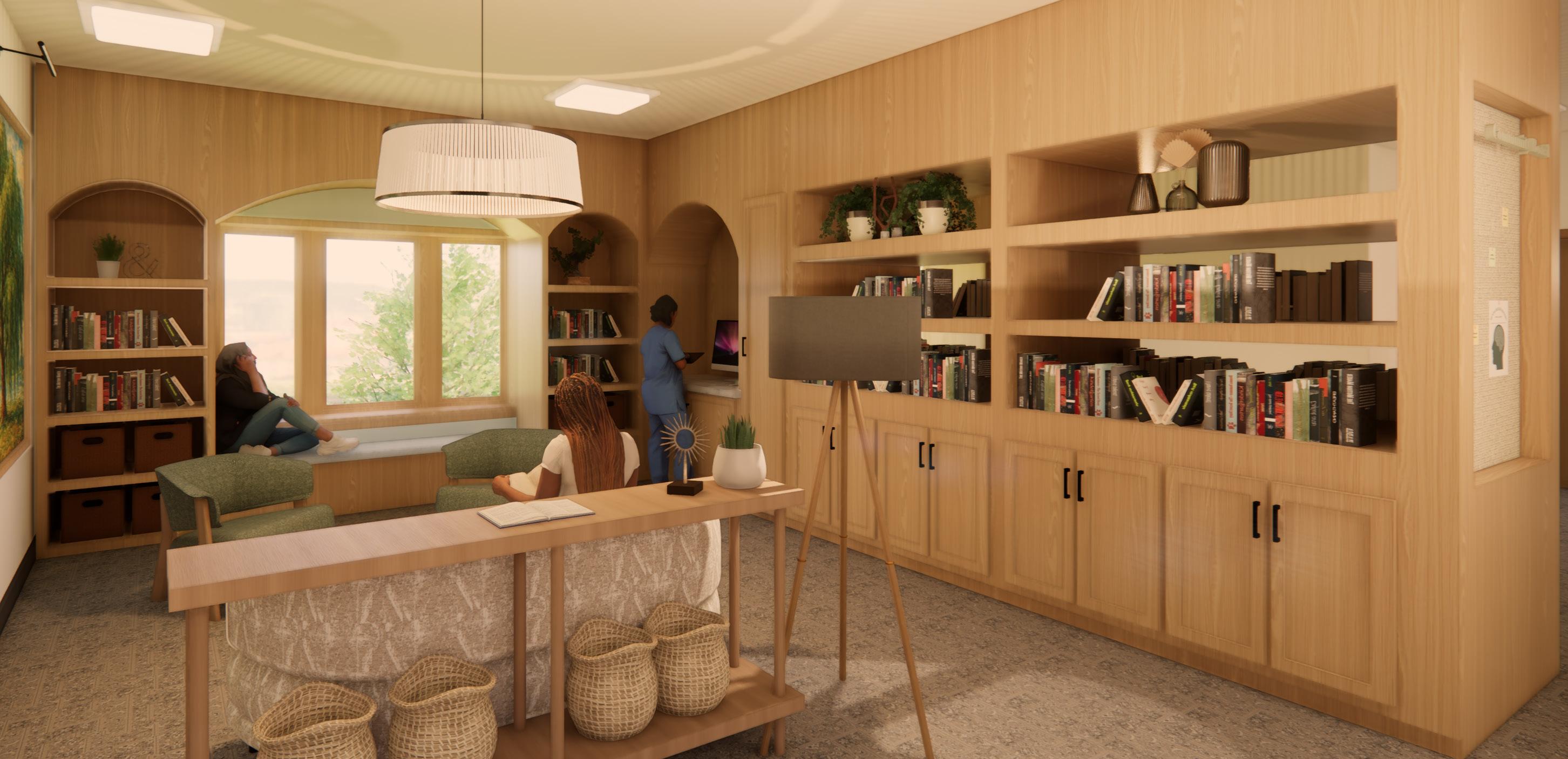
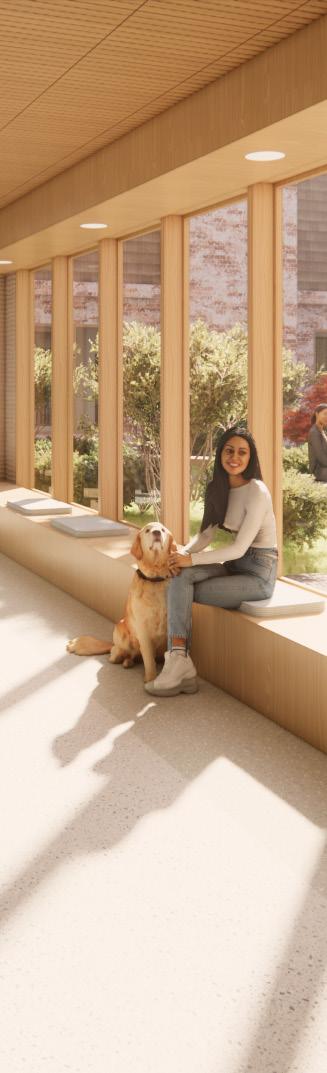
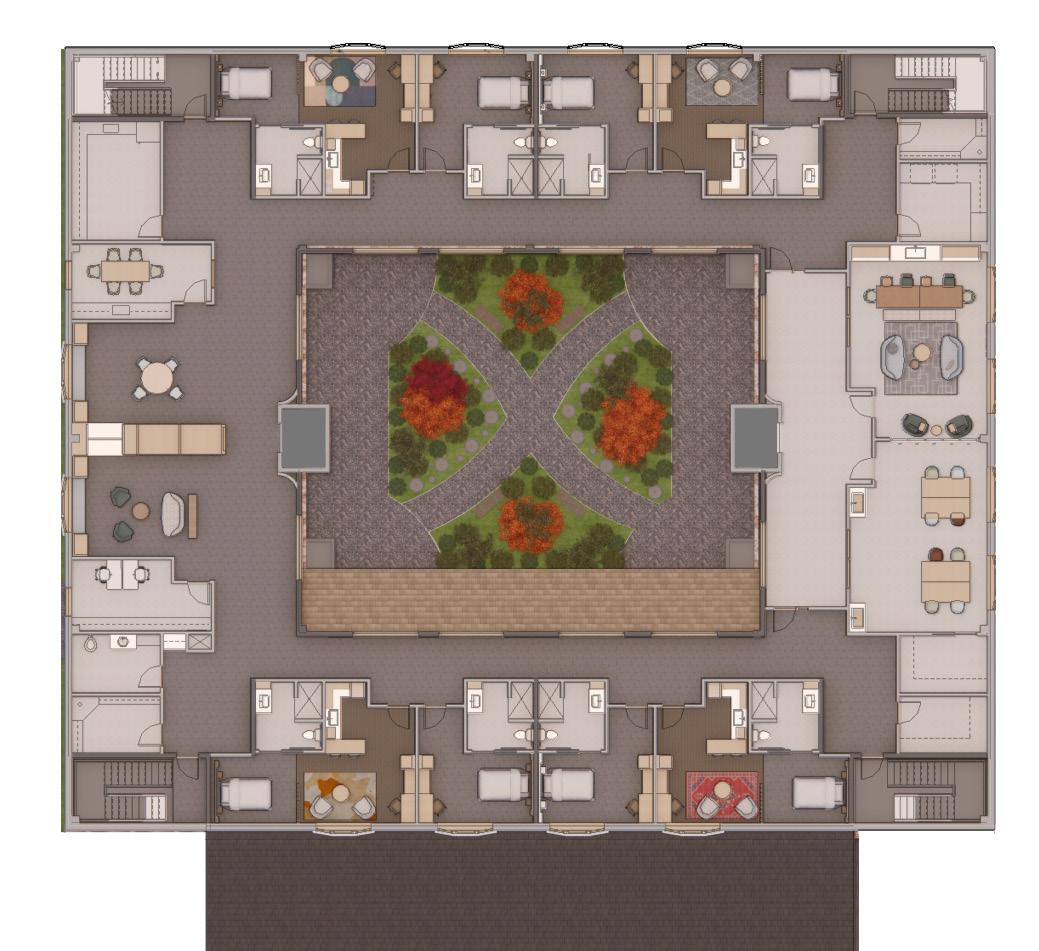
The Nurse’s library blends essential clinical functions with a warm, residential atmosphere to reduce stress and promote social inclusion. Varied seating, from soft, living room arrangements, to hard-surface tables supports adaptable social interactions. Built-in window niches offer a place of refuge and sensory recharge for patients and guests.
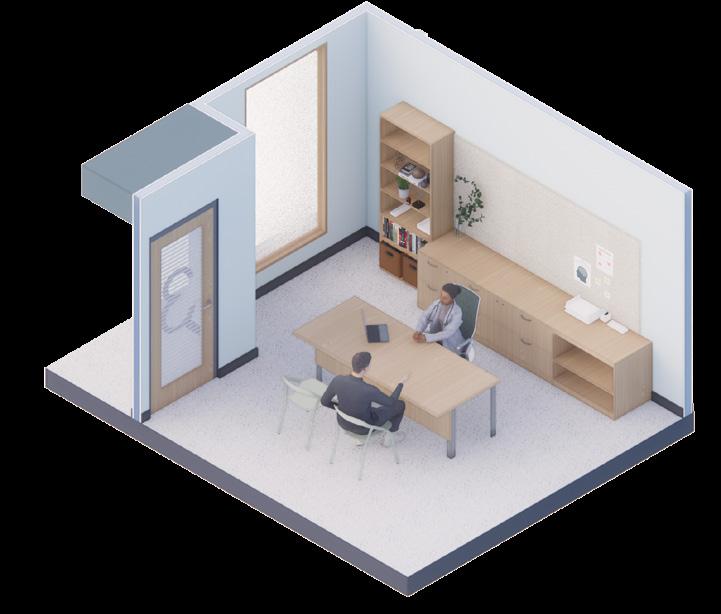

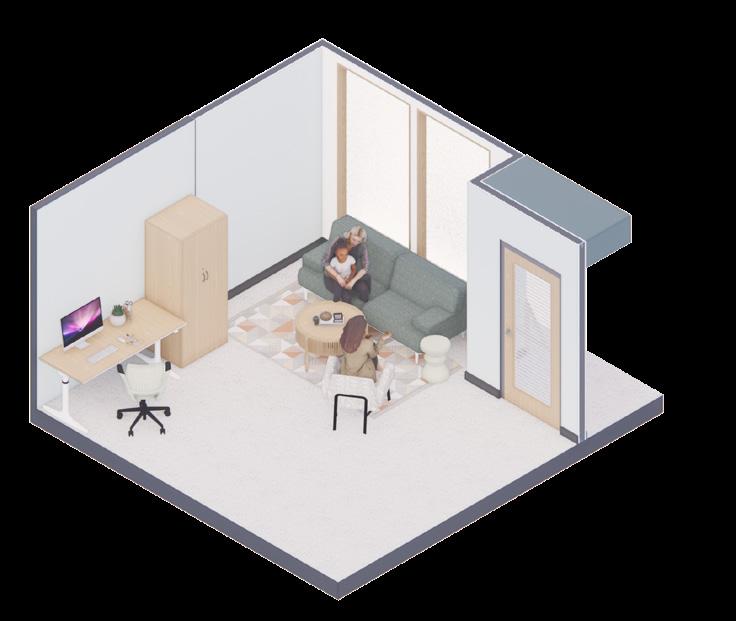
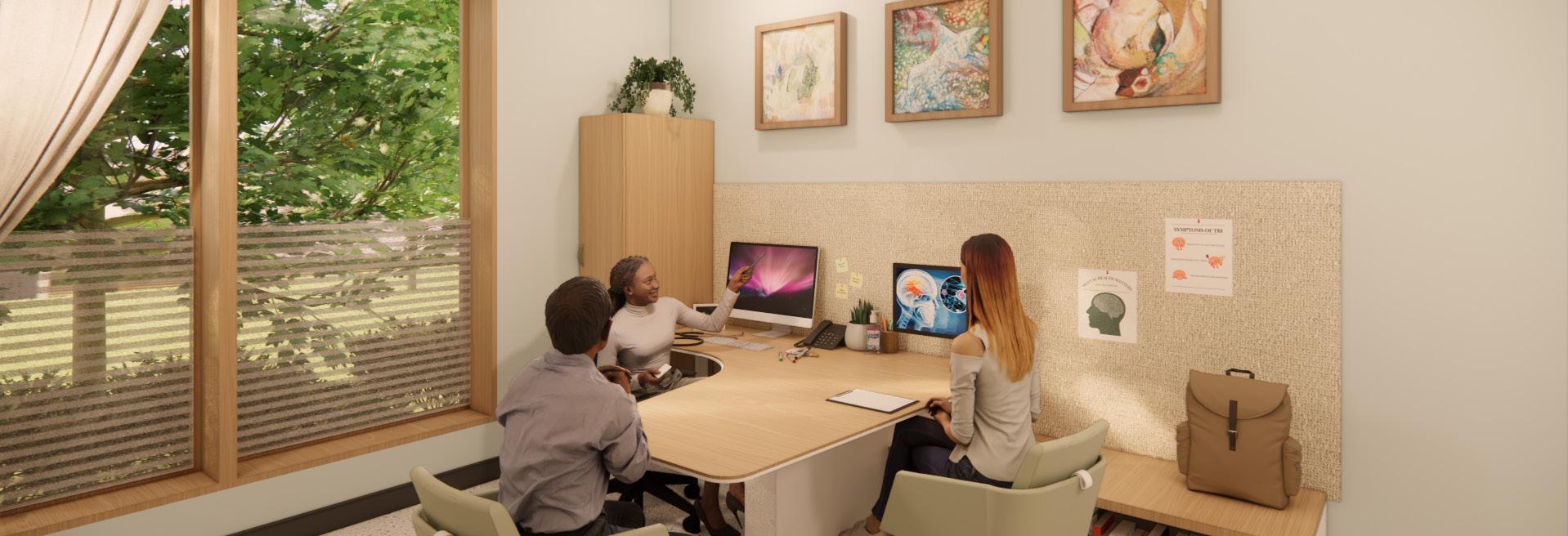
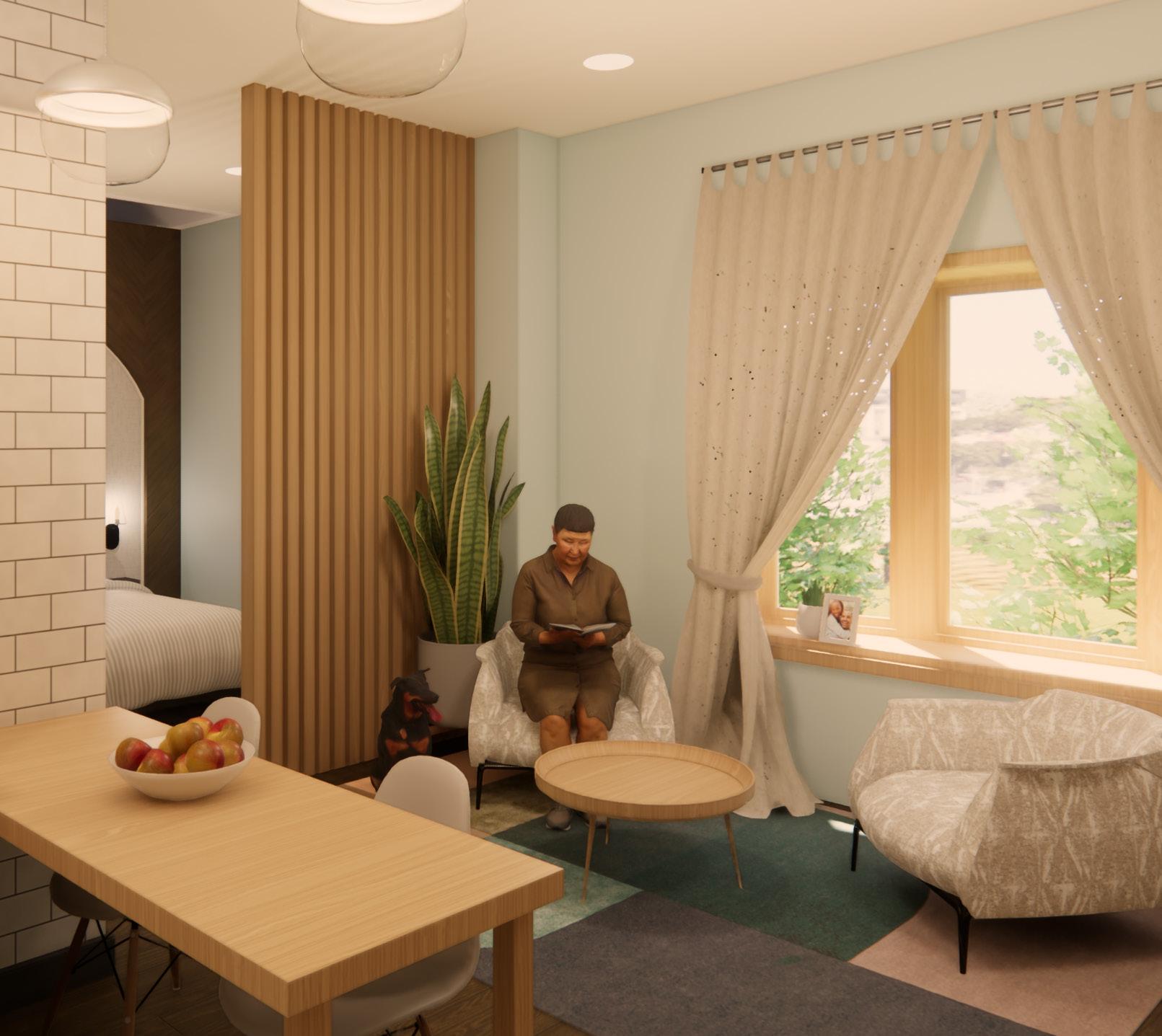
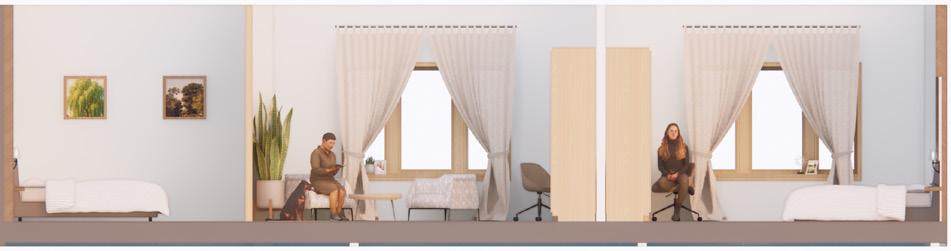
Independent living apartments offer a supportive step between the transition of fulltime care and community reintegration. Two unit sizes promote adaptability and a clear, simple layout supports ease of navigation Soft, adaptable lighting and textiles create a sensory supportive independent space to enhance dignity and life skills while still having access to skilled professionals if necessary.
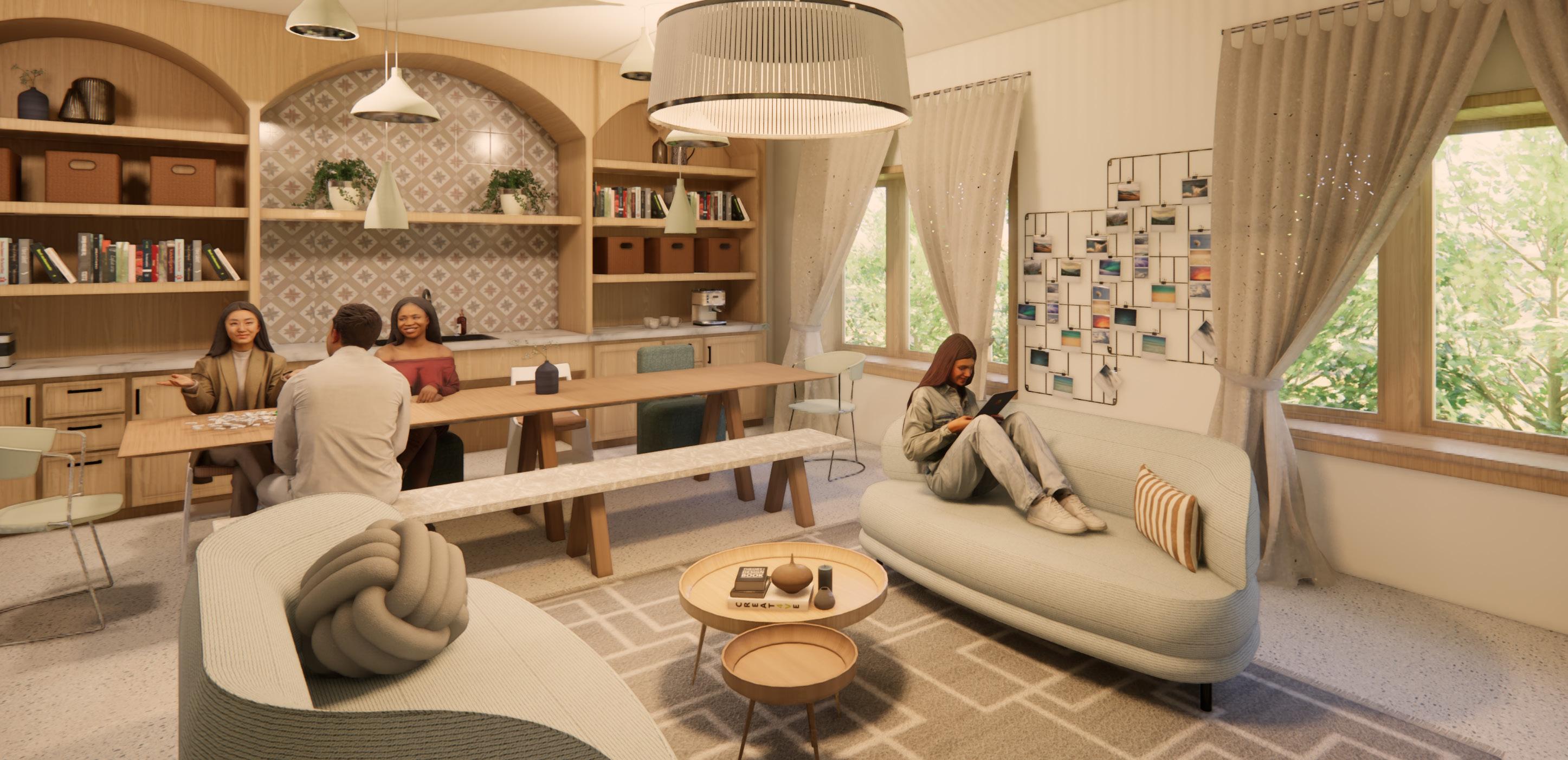
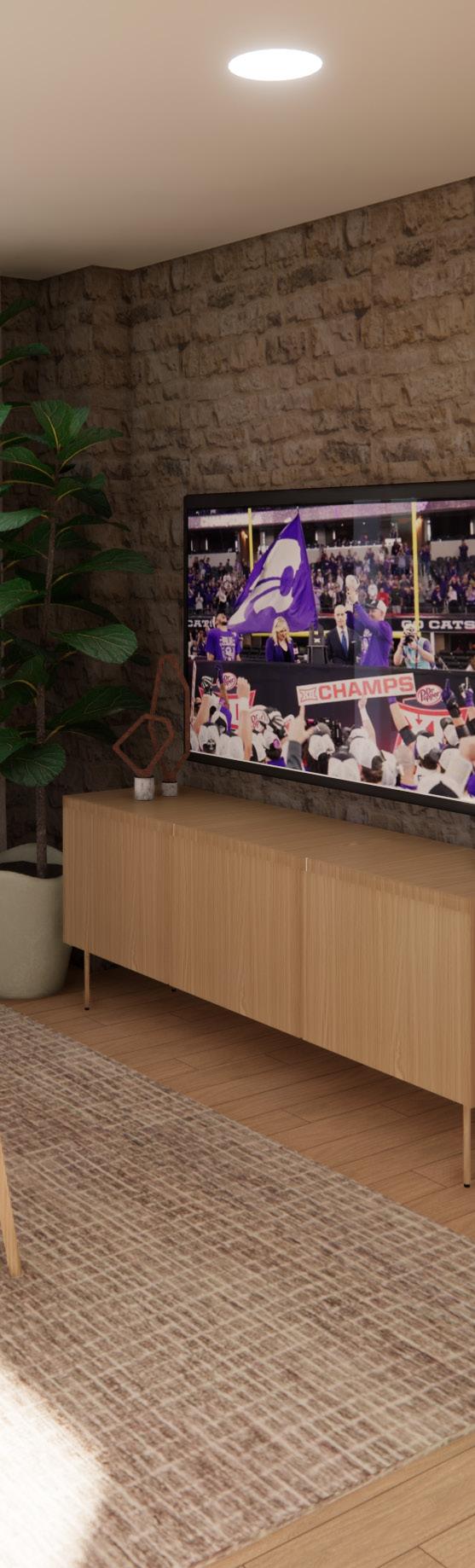
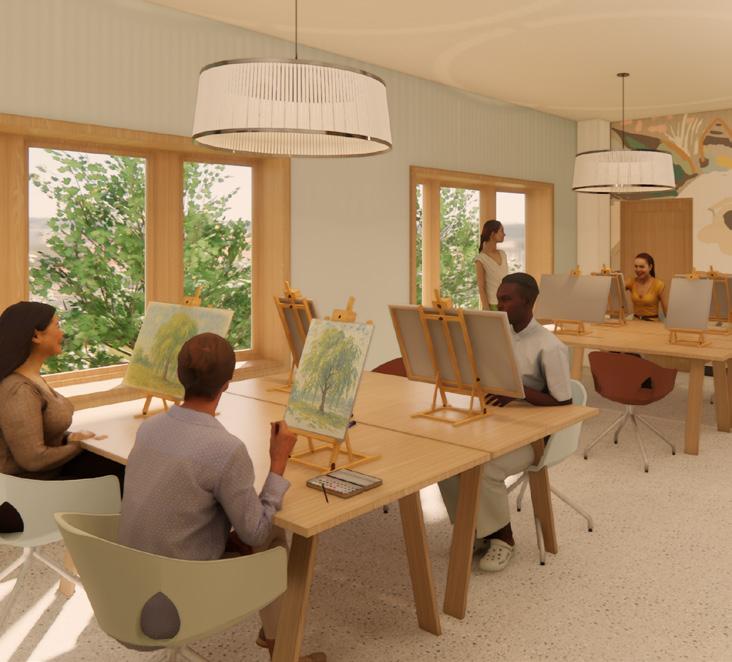
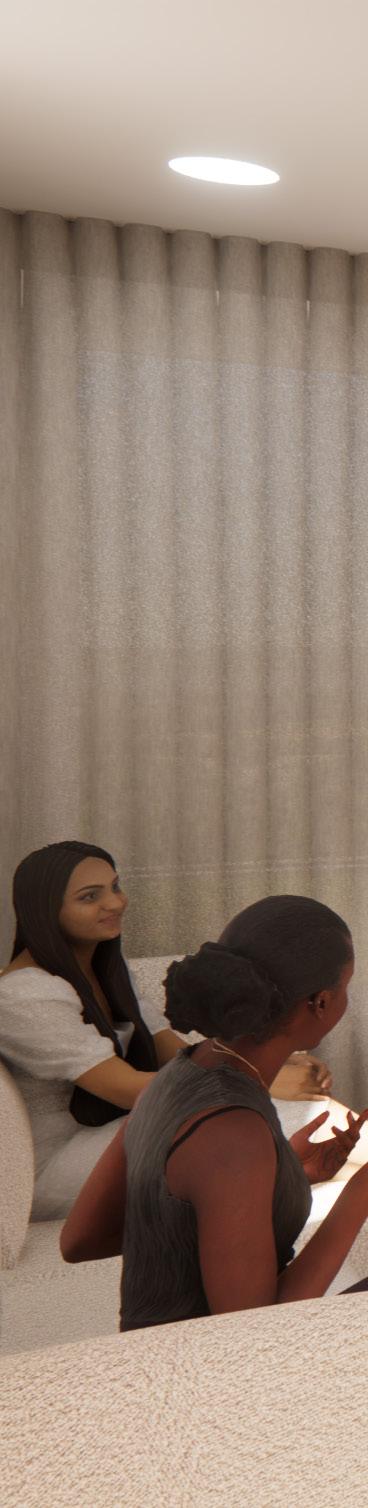
The community room provides a dedicated space for residents to build relationships and strengthen social connections. A neutral, low-stimulus palette supports sensory modulation, keeping the primary focus on interaction, rather than environmental distractions. Varied seating create an adaptable setting for group activities or casual gatherings while adjustable lighting and window treatments accommodate visual comfort.
Kansas State University | Fall 2024 - Spring 2025
Undergraduate Research | 3rd year
Duration: 1 year
Under direction of and in collaboration with Kristianna Johnson, AIA
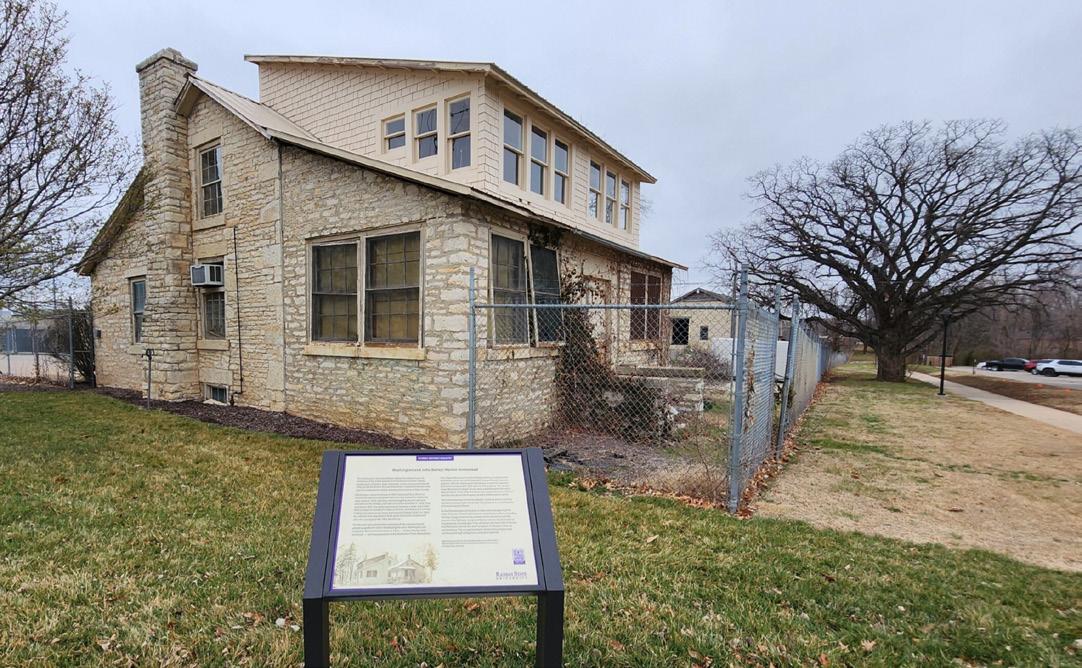
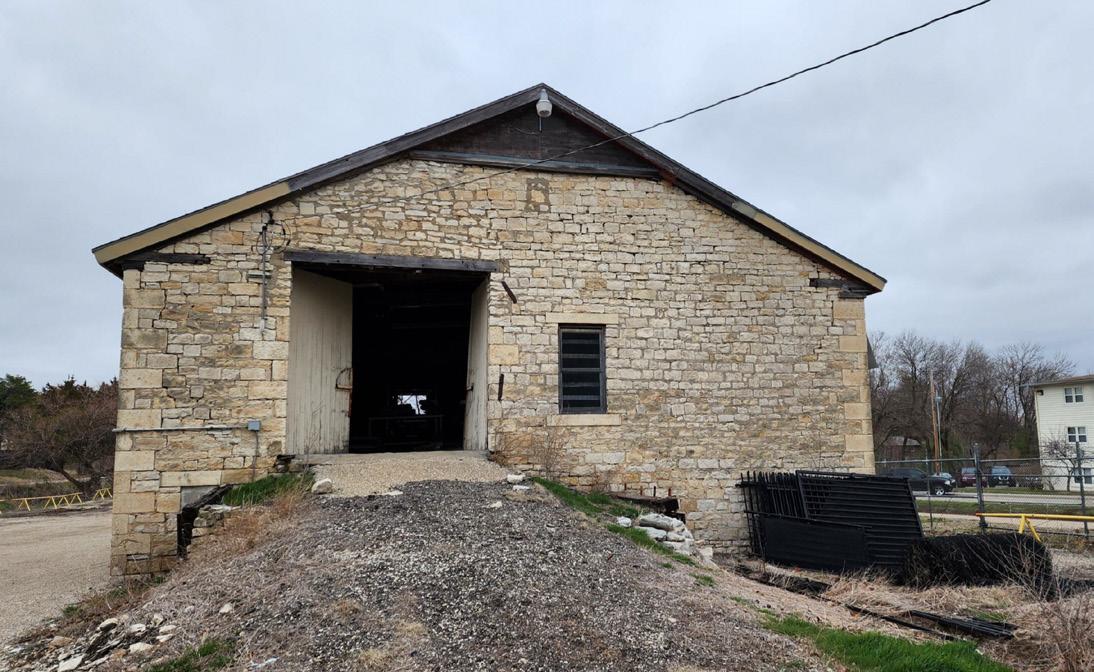
Listed on The State Register of Historic Kansas Places, the Marlatt Homestead was home to one of the most influential people in Kansas State history-- Washington Marlatt. The home, built in three distinct eras, was constructed with a direct viewline to Bluemont College, which would soon become Kansas State. Years later, the Bluemont College wood trusses were reused in the Marlatt barn highlighting the physical evolution of the rich history of Kansas State.
A team of Masters of Landscape Architecture candidates, student architectural engineers, and one interior design student was formed by the Marlatt Homestead task force in the Fall of 2024. Partnered with faculty, the team assessed existing conditions and is working to propose improvements in the coming semester.
Skills Used: Revit, AutoCAD, Enscape, Photoshop, InDesign, NAVIS
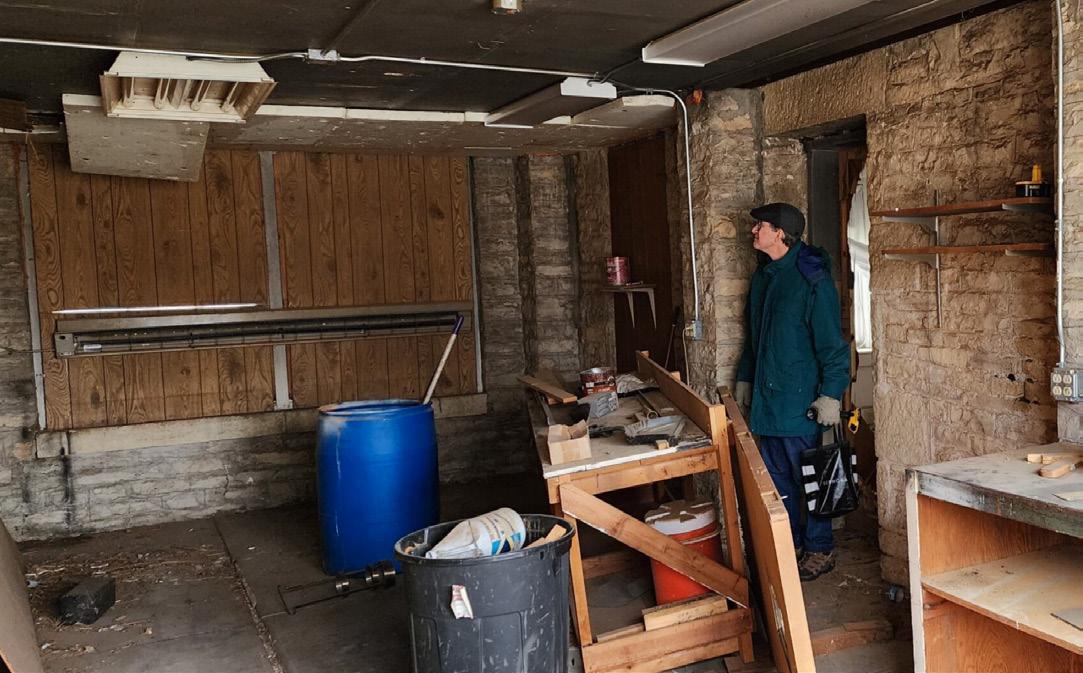
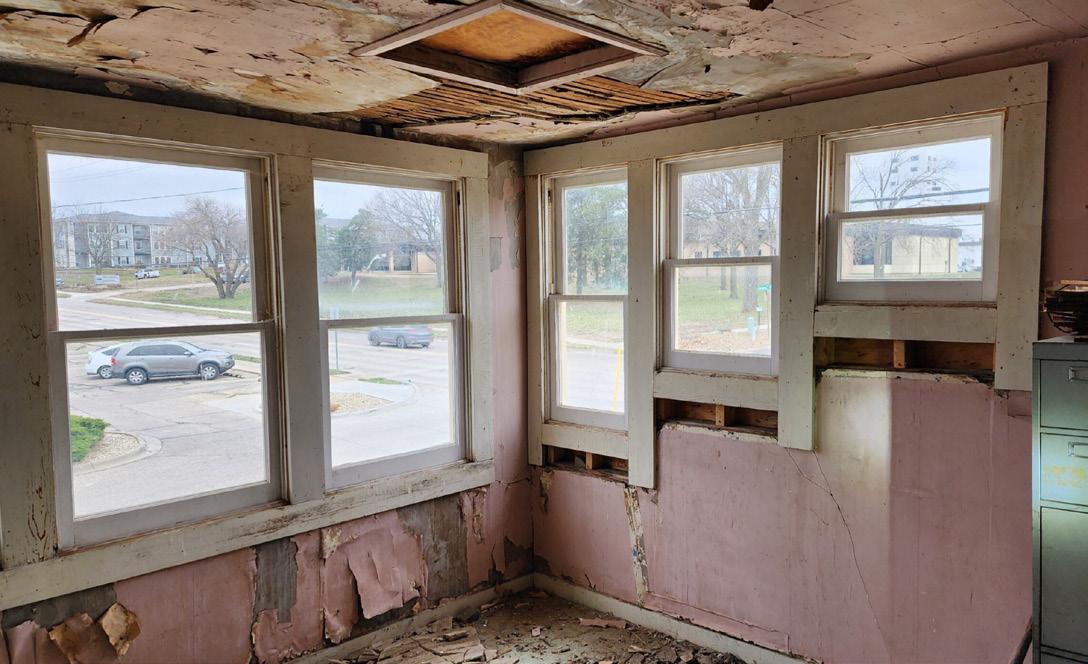
After years of disrepair, the historic site has fallen into neglect, with structural deterioration and limited functionality. An interdisciplinary team came together to assess existing conditions and explore strategies for revitalization. Through collaboration and multiple stakeholder presentations, the team’s proposal was recognized and added to the campus master plan as a recommended improvement site.
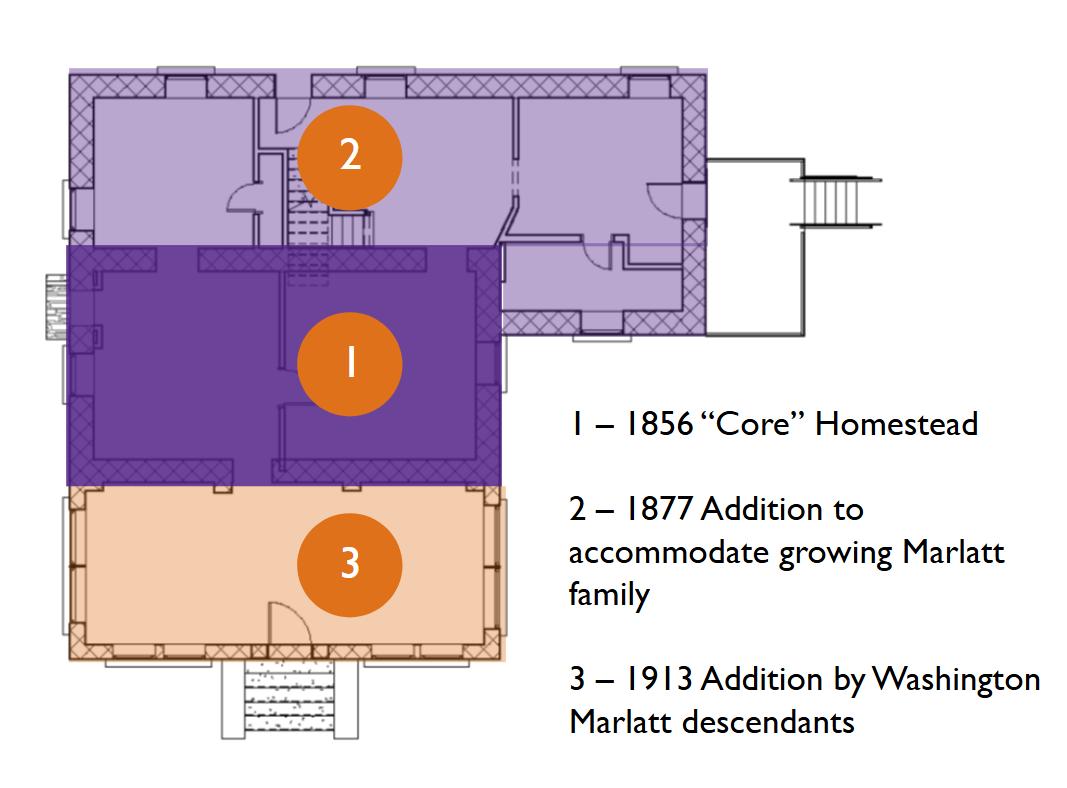
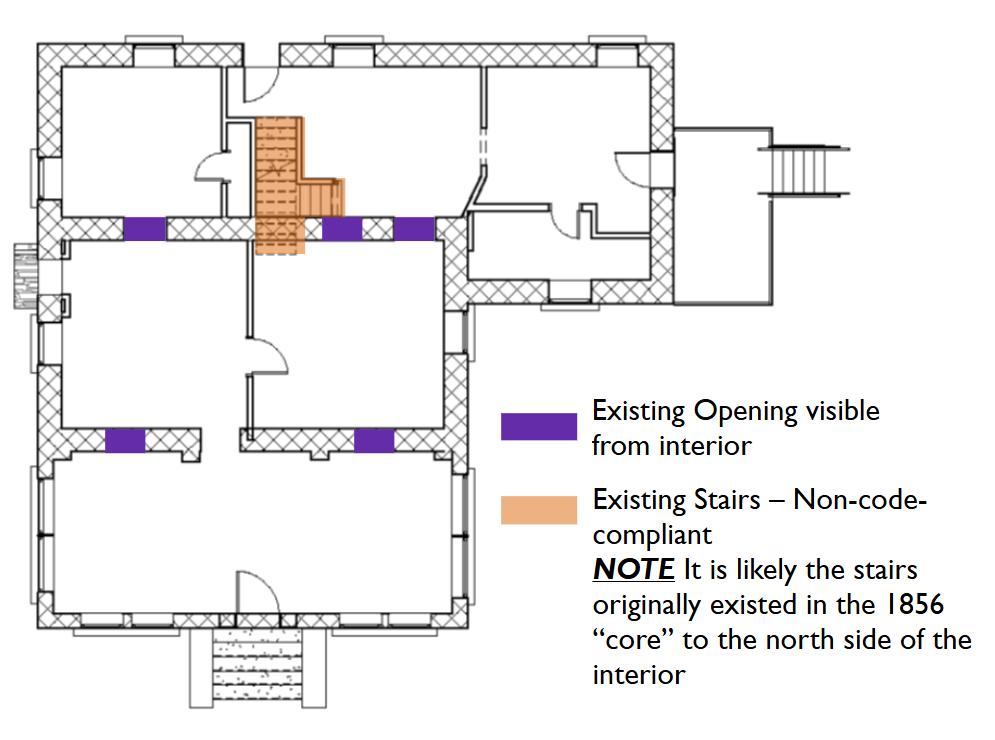
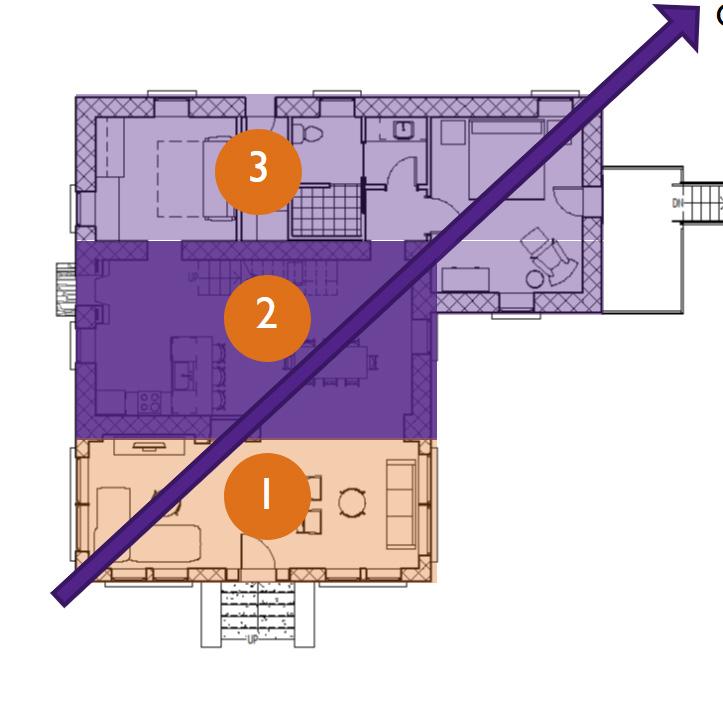
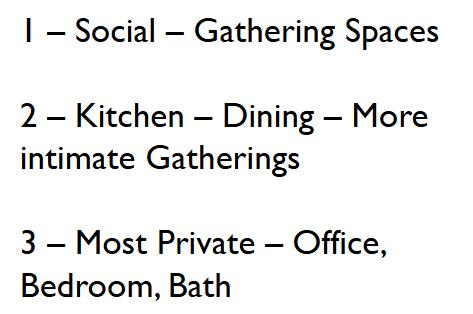
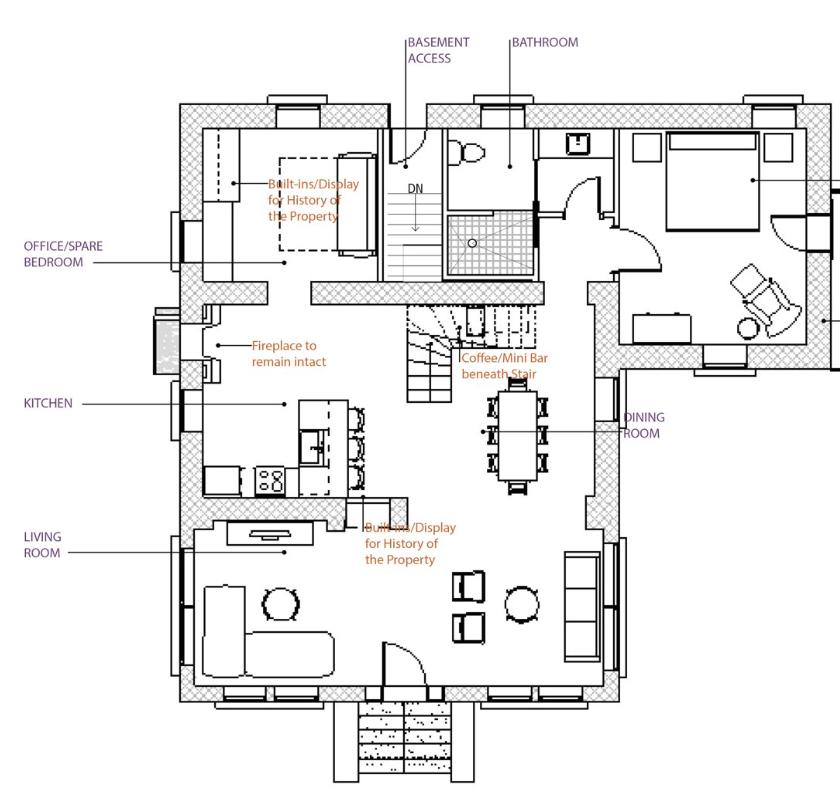
The space plan was guided by the construction eras of the home. Due to its location on the corner of two busy streets, the home was designed with a privacy gradient with the most public areas being on the exposed corners of the home. Designed with the user in mind, each bedroom has its own living area zone.
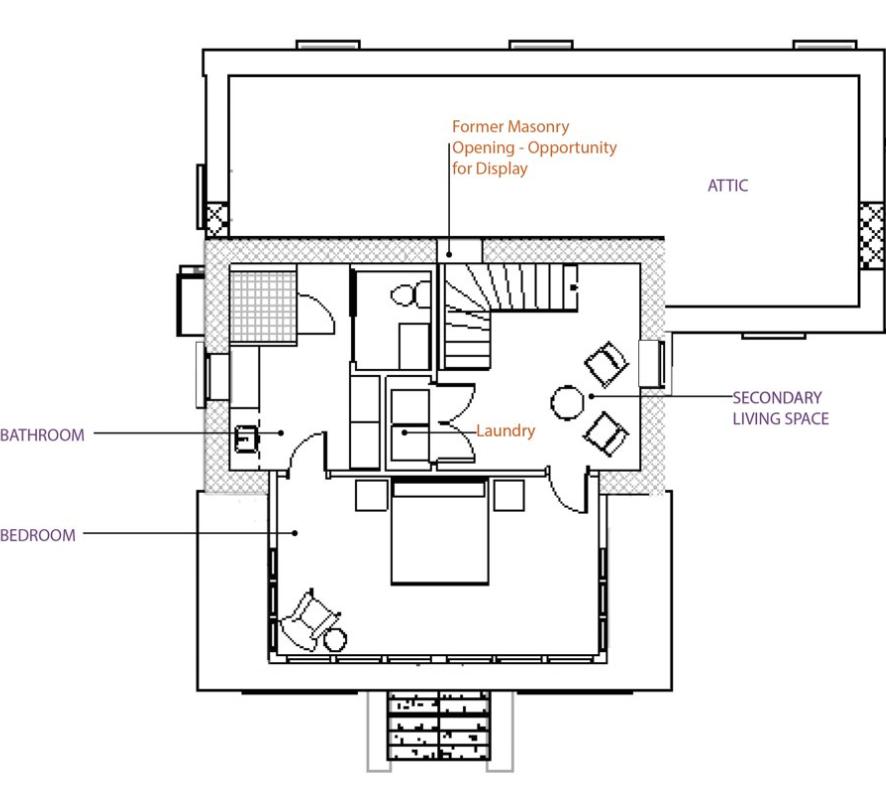
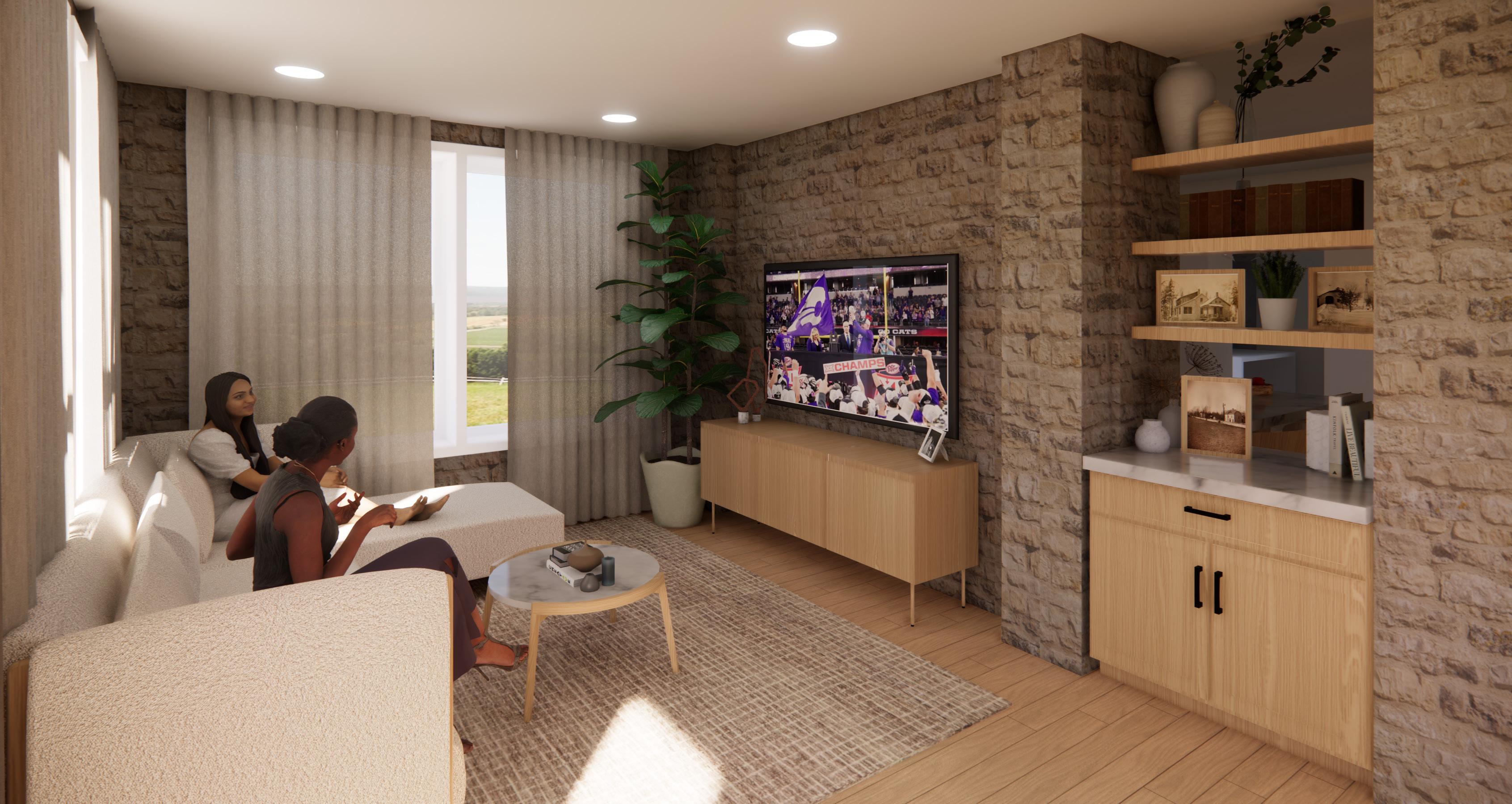
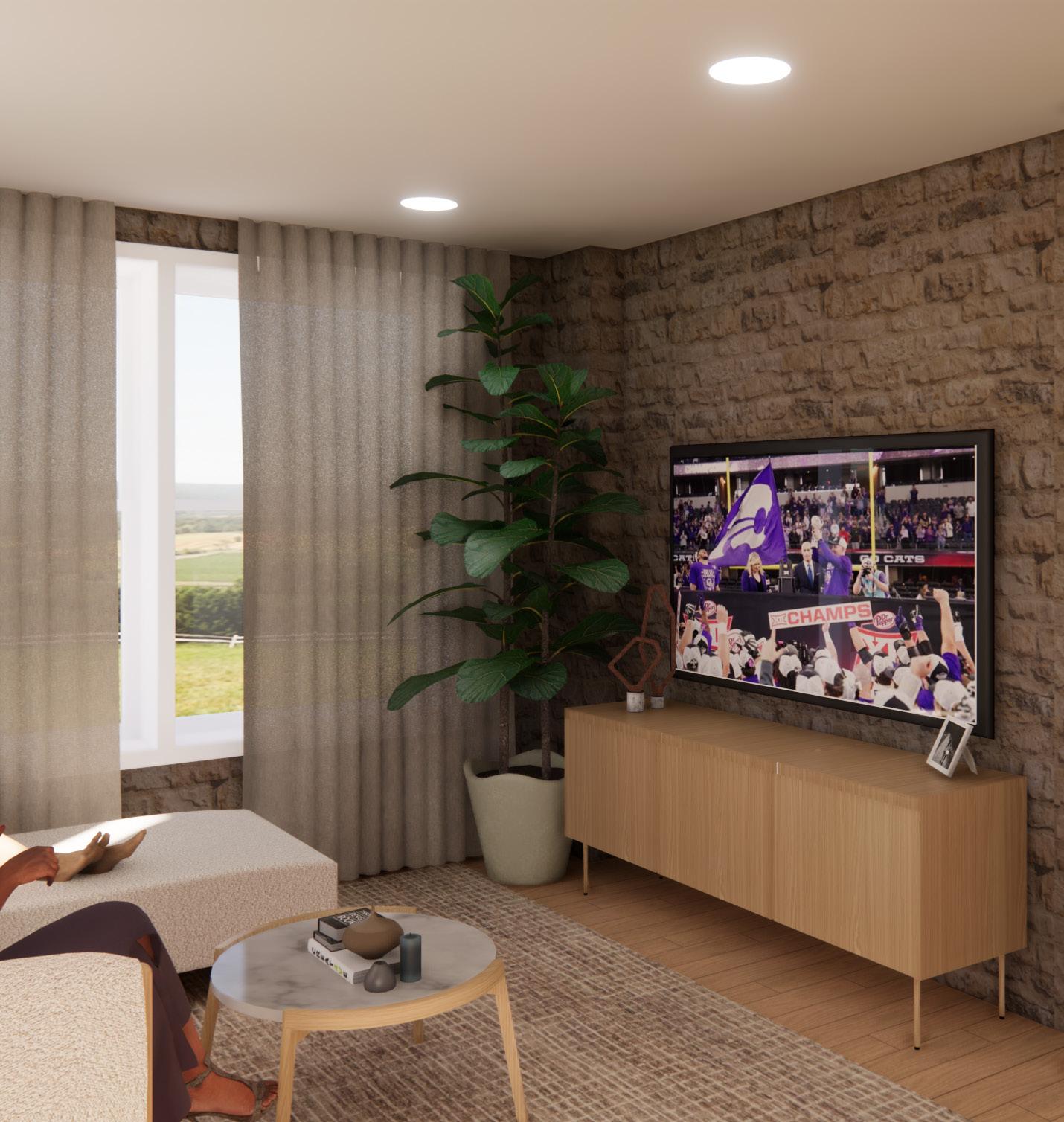
The informal living area is located to the left of the entry allowing for casual conversation and sport watching. A custom built-in greets house guests displaying the historical significance of the home with photos, artifacts, and documents sharing the story of the Marlatt family and the rich history of K-State.
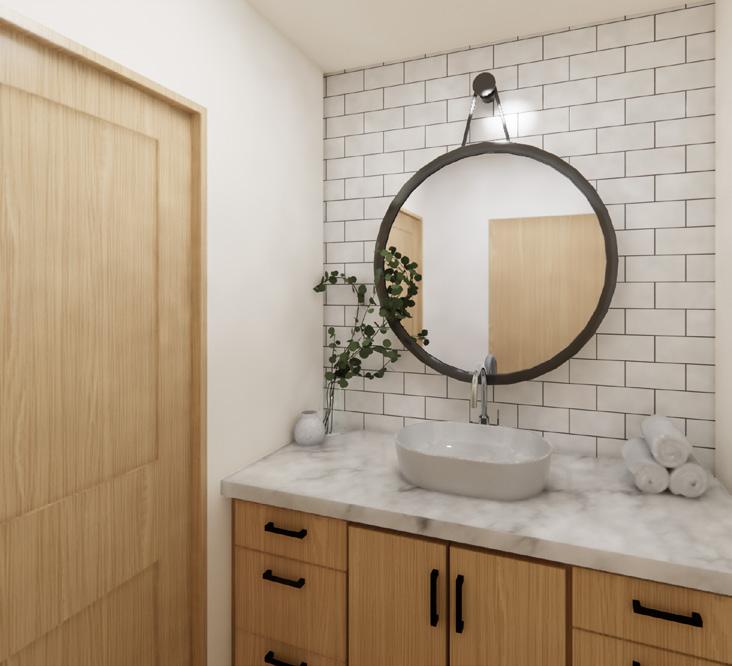
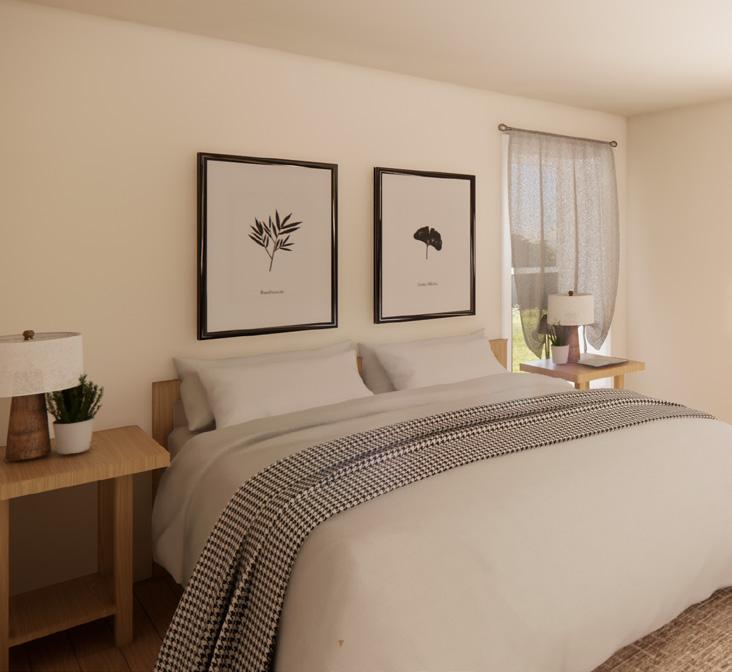
Secondary spaces are designed to support professional functions such as office work and formal meetings with donors, student recruits, and distinguished visitors.
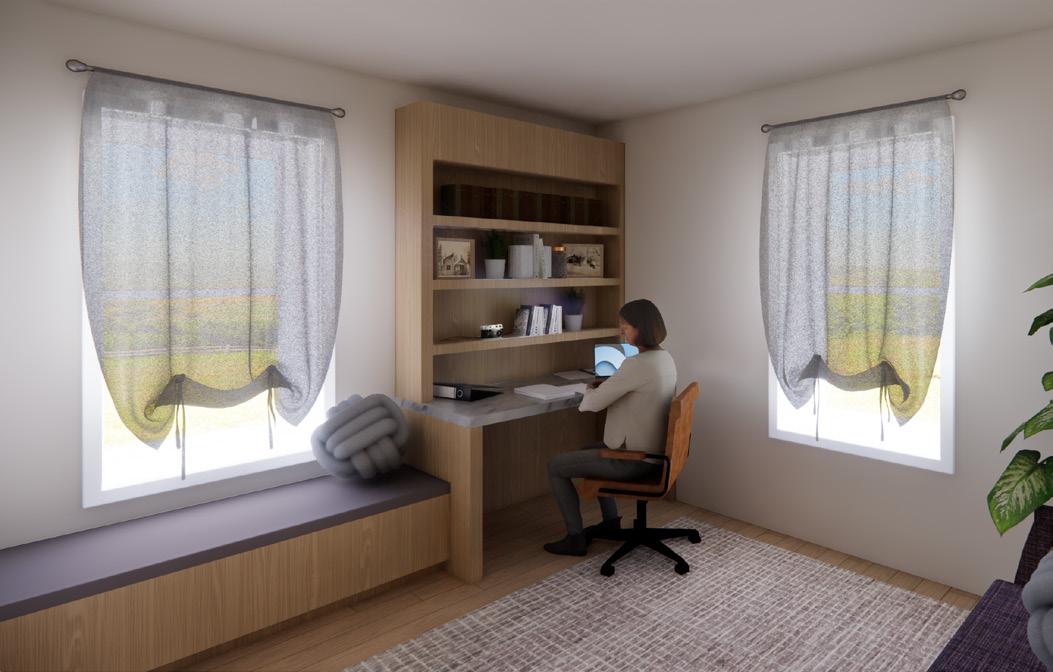
The interior materials follow a neutral color palette, highlighting the original limestone as the home’s defining feature.
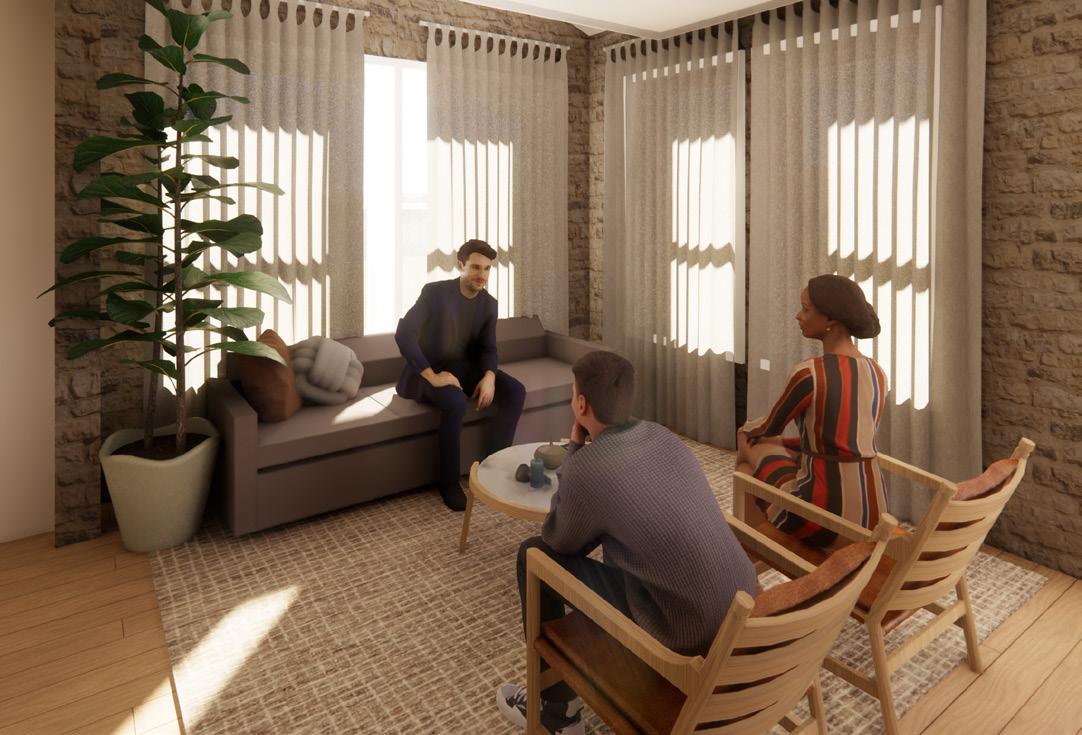
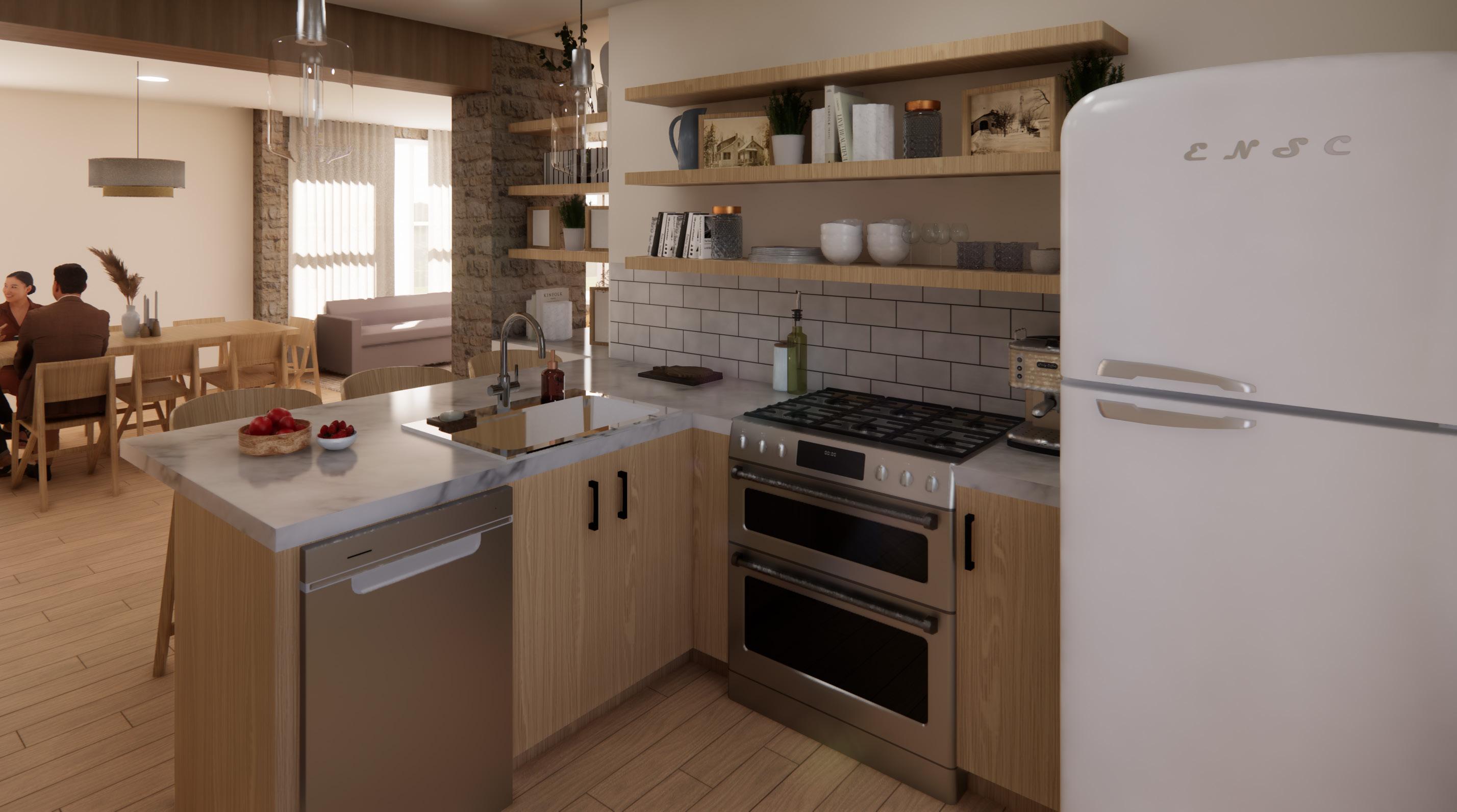
Relocating the kitchen and dining spaces back to the original 1865 ‘core’ of the home encourages collaboration and connection -- two things that the Marlatt family valued. Due to its B&B function, only a small kitchen is needed as extra storage and large appliances are unnecessary for short stays.
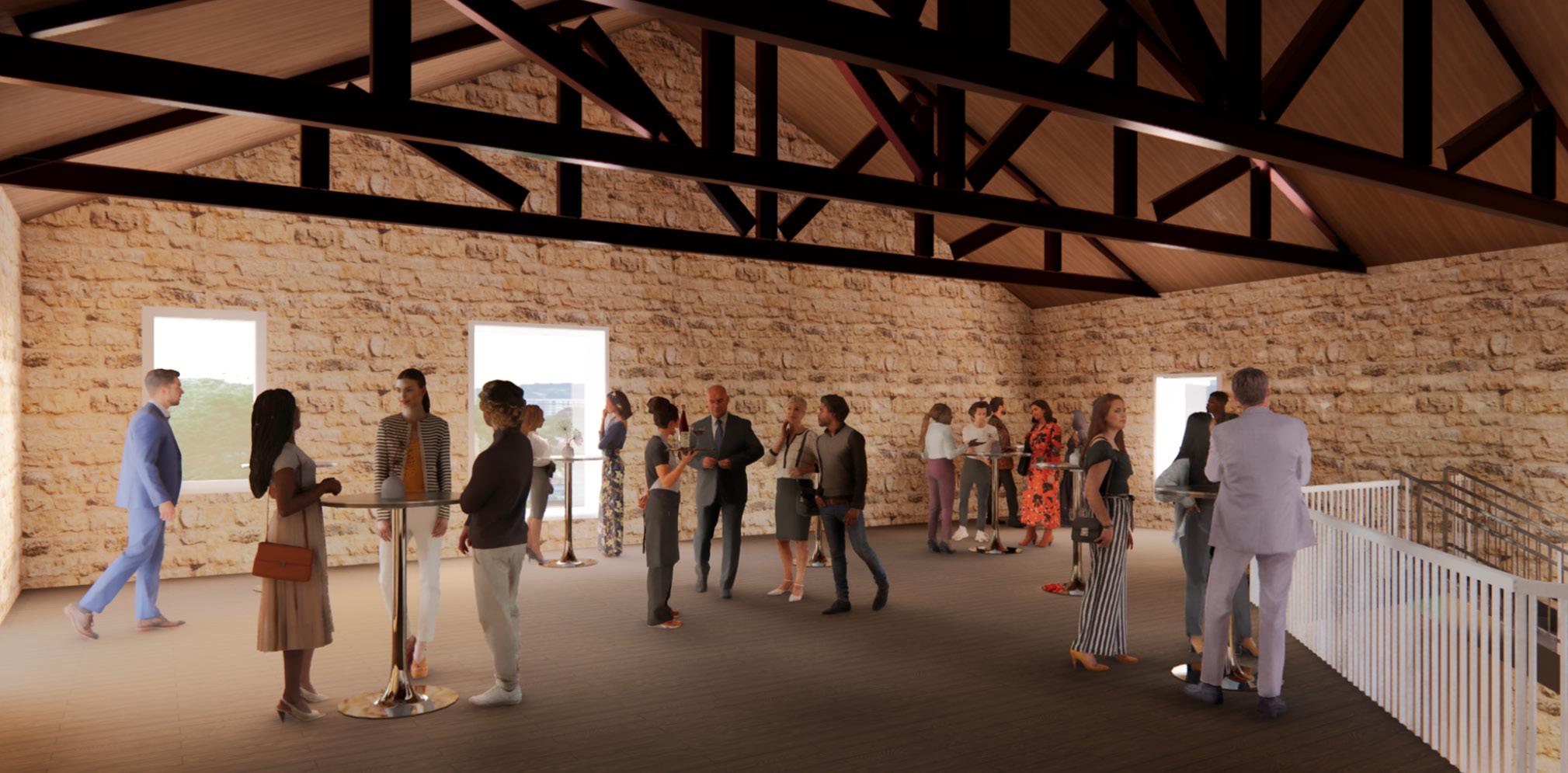
Serving as a symbol of Kansas State University’s heritage, the Marlatt Homestead barn was constructed using trusses and beams from the original Bluemont College. Its dimensions mirror those of K-State’s first school building, preserving a tangible connection to the university’s beginnings.
Kansas State University | Fall 2024
Individual Work | 3rd Year, 1st Semester
Duration: 3 months
Program Summary
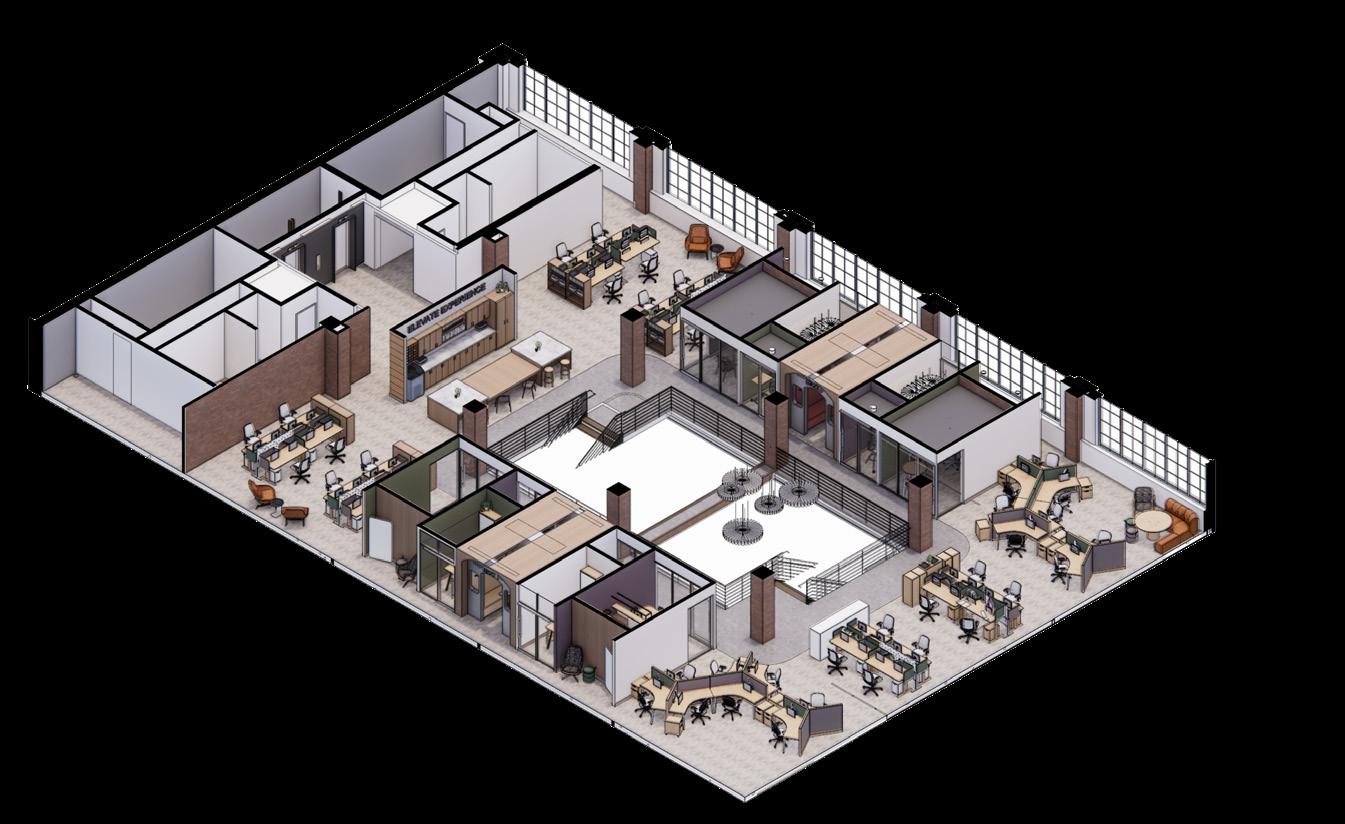
Hosted by Steelcase, NEXT is a national competition challenging students to create a fictitious company office space. Located in Chicago, this 16,000 sqft advertising agency is the hub of innovation and creation.
Project Statement
Through a lens for inclusivity, creativity, and belonging, NEXT is a digital advertising agency aimed at creating comprehensive experiences that elicit emotion in the market. Driven by the concept of ‘be more human’, the NEXT office is a place of judgment-free innovation and out-ofthe-box thinking.
Skills Used: Revit, AutoCAD, Enscape, Photoshop, InDesign
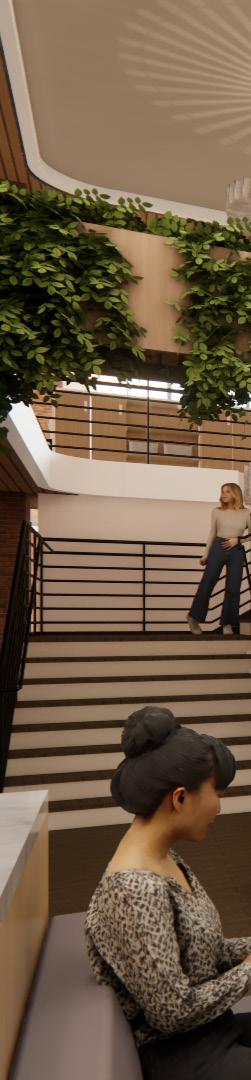
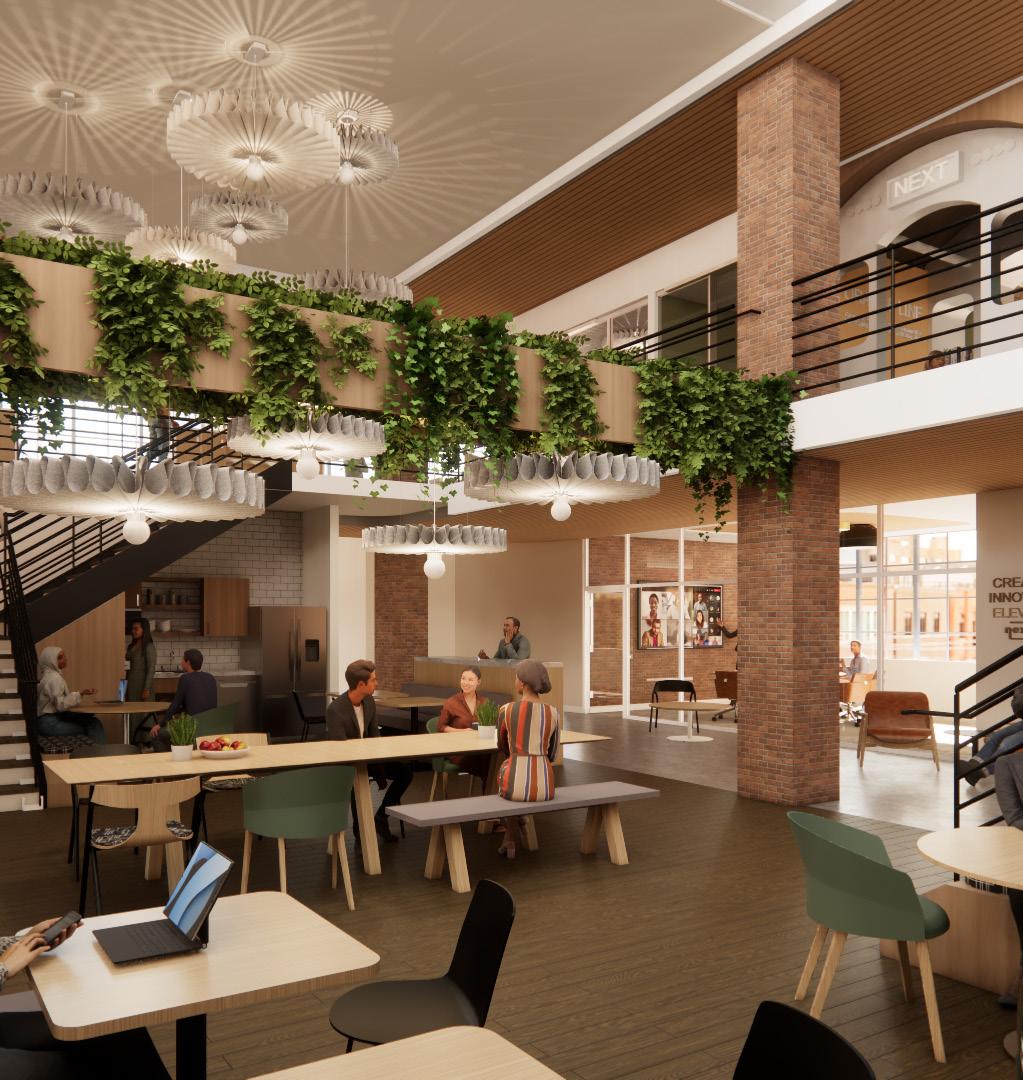
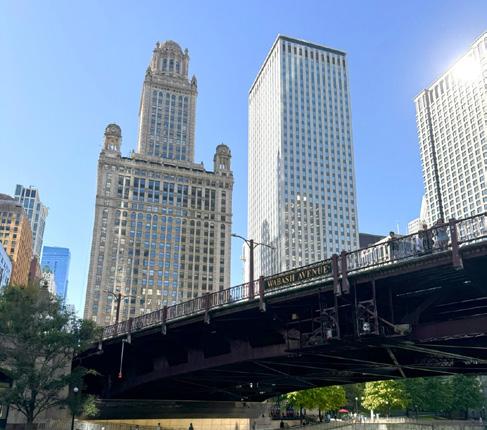
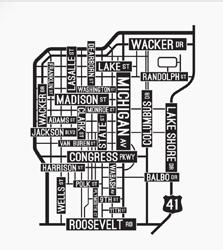
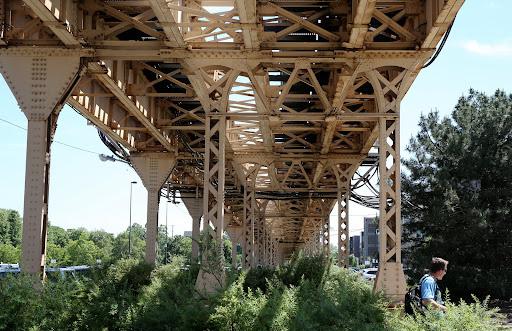
Extending from The Loop surrounding downtown Chicago, eight lines make up the CTA system. Each line has a unique story providing a glimpse into the rich history of the mid-west city.
The city of Chicago is enveloped in motion and forward momentum. The ‘L’ represents an elevated foundation of Chicago’s innovative and creative roots.

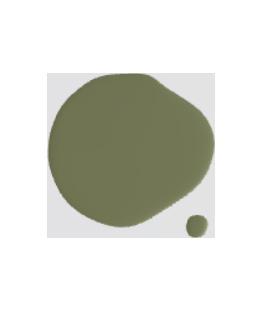
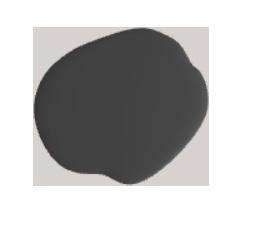
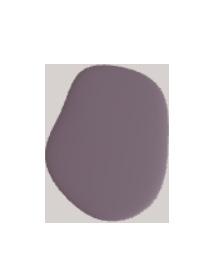
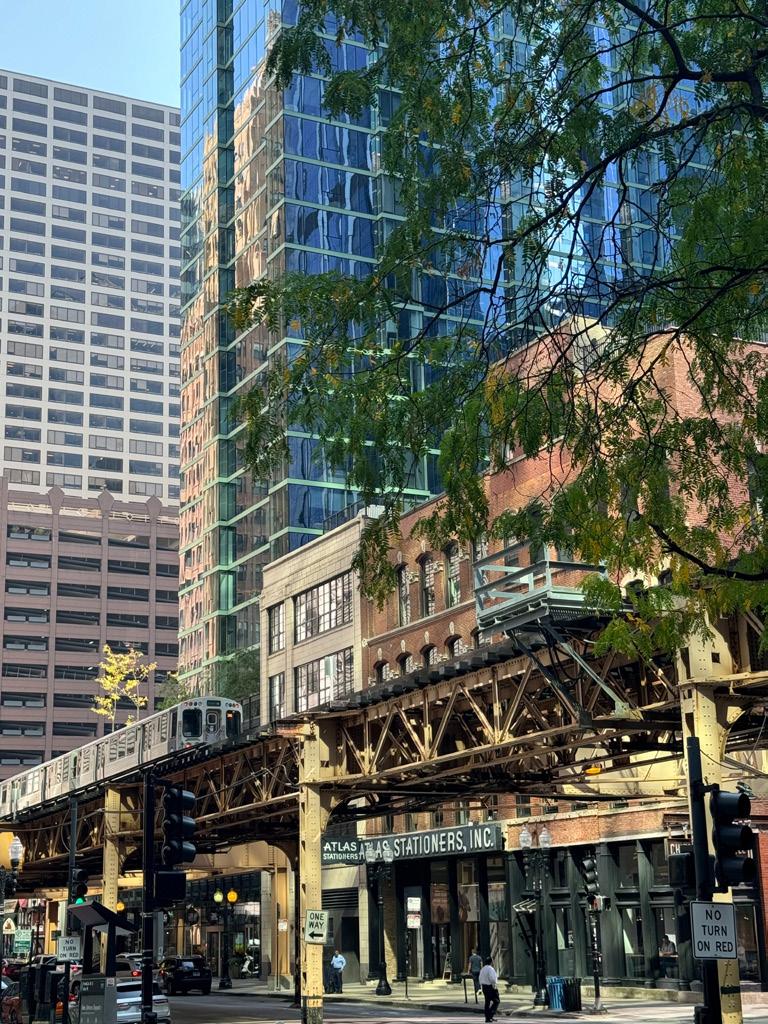
Chicago has one of the most innovative, creative, and accessible forms of public transportation in the country. Elevated above bustling streets, the ‘L’ serves as a point of connection for Chicagoans.
Each ‘L’ line represents an influential, individualized part of the Chicago story. All lines come together in The Loop-- the harmonious epicenter of connection, collaboration, and community


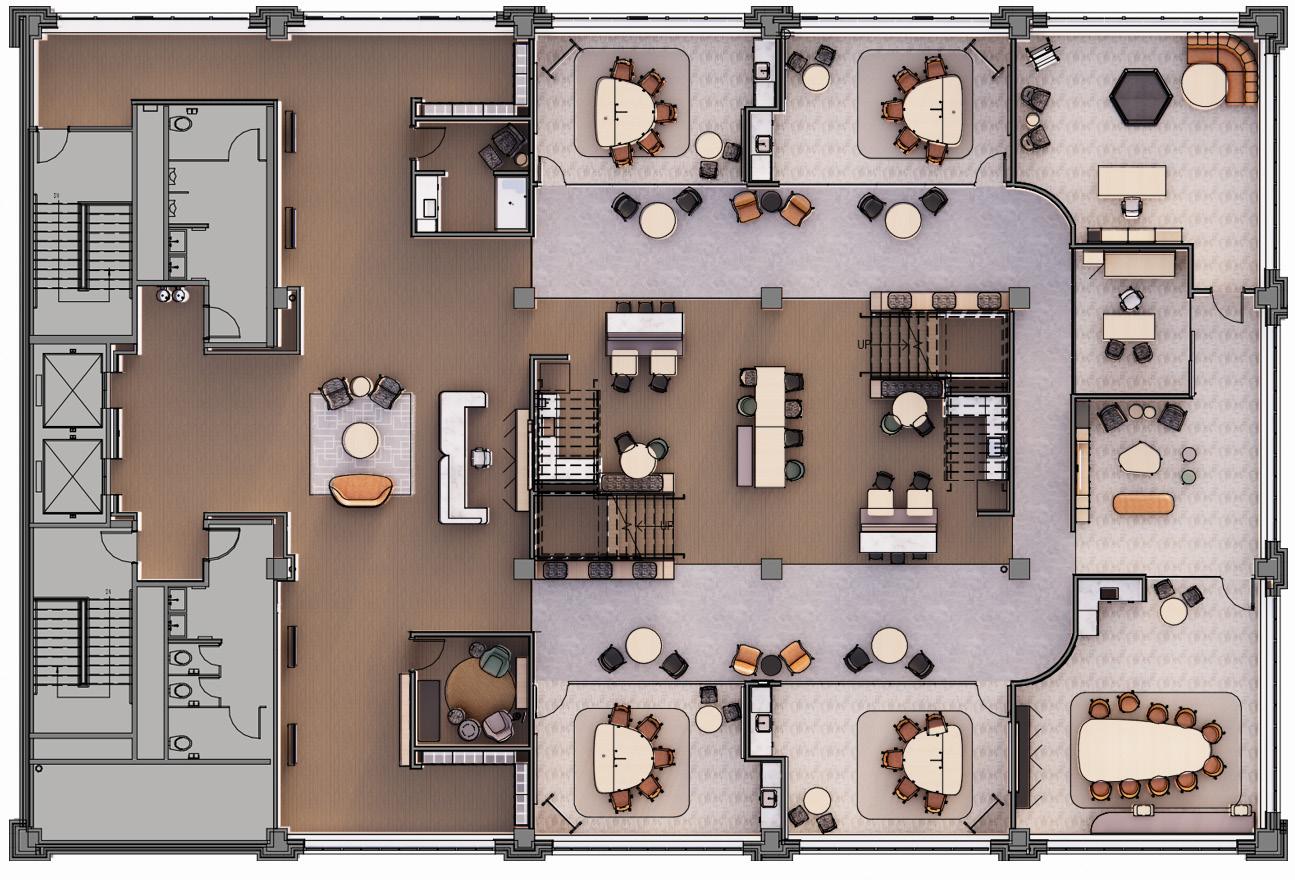

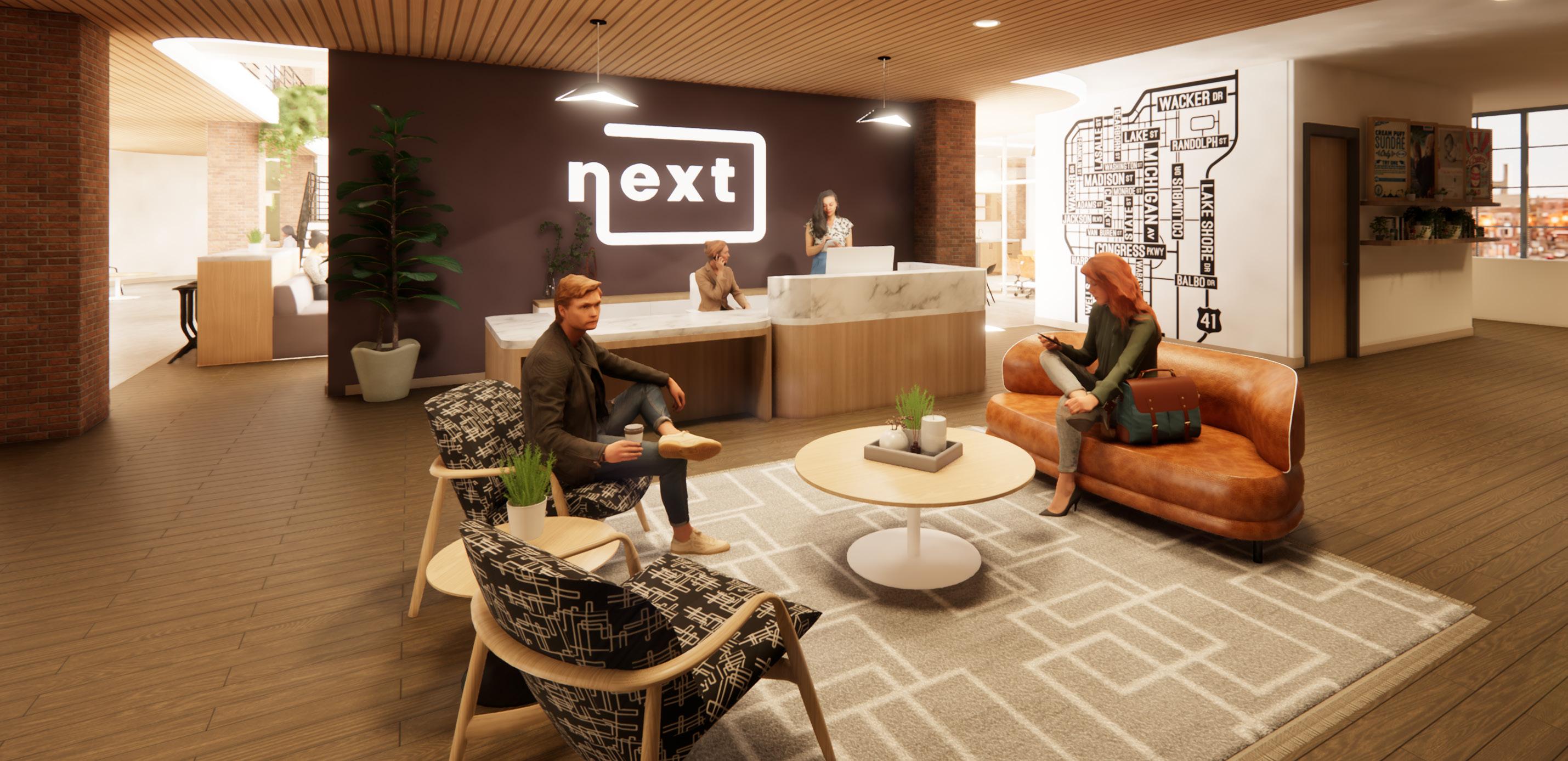
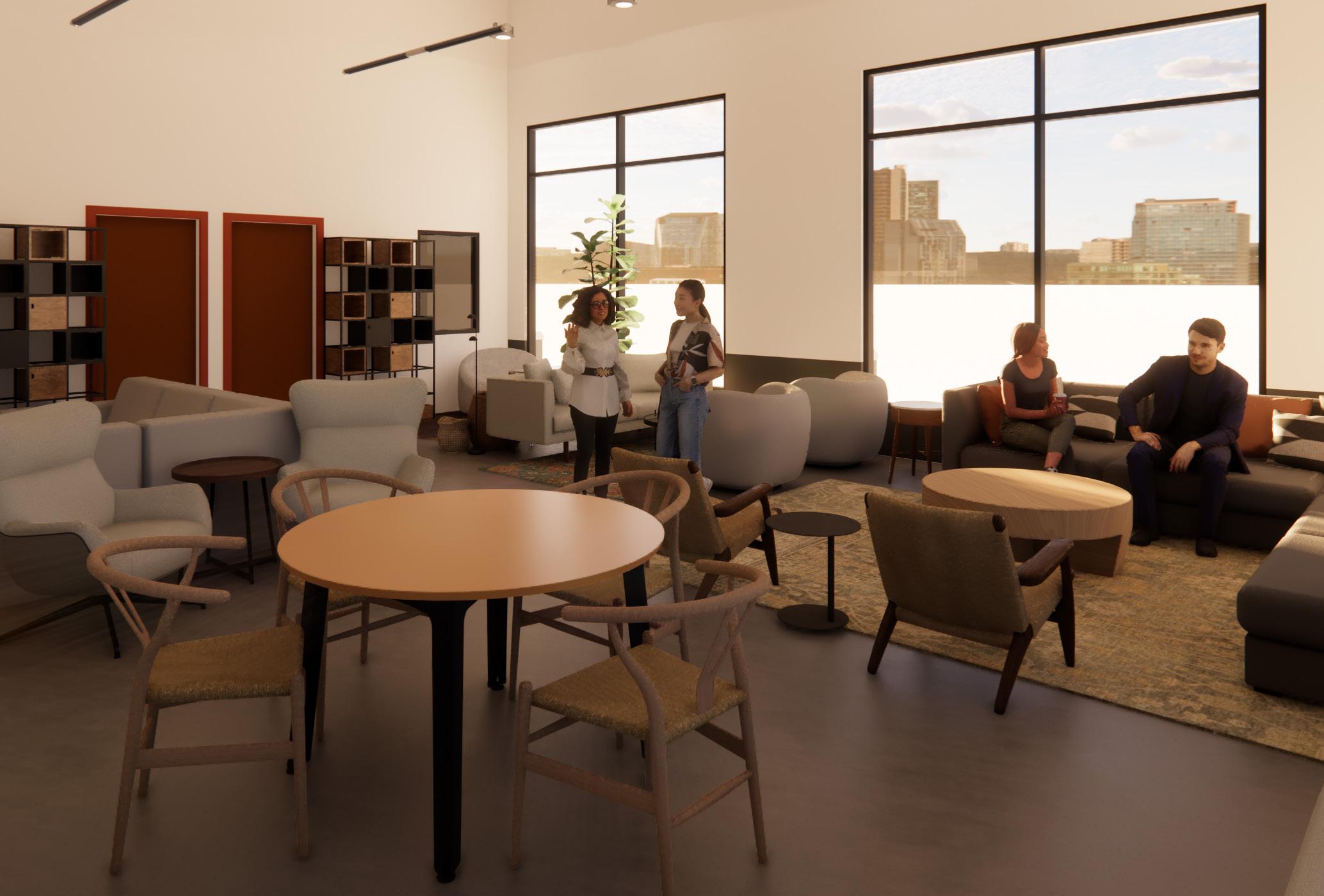
The reception area serves as a welcoming first impression for clients. Incorporating a wooden, acoustical wood dropped ceiling creates a sense of security and defines the space. Informal, sociopetal lounge seating provides a place of refuge for clients while displaying past work from the firm.
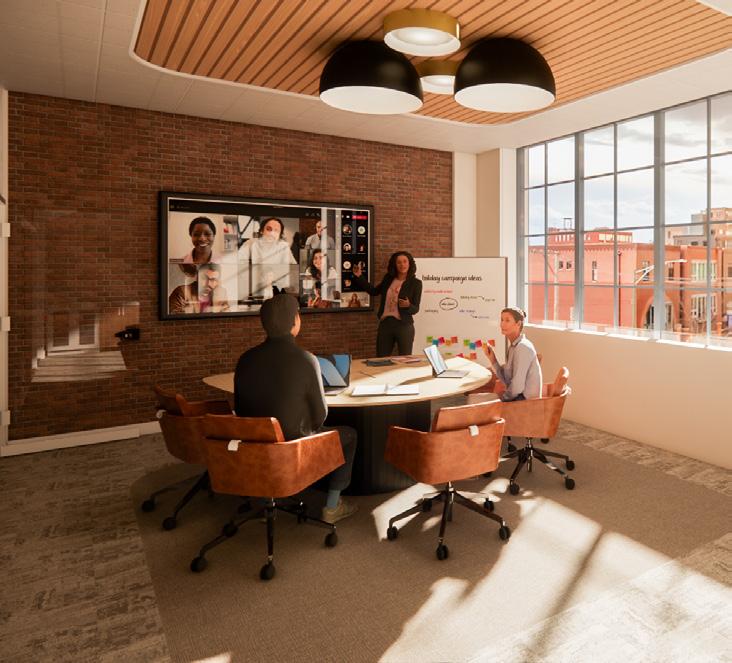
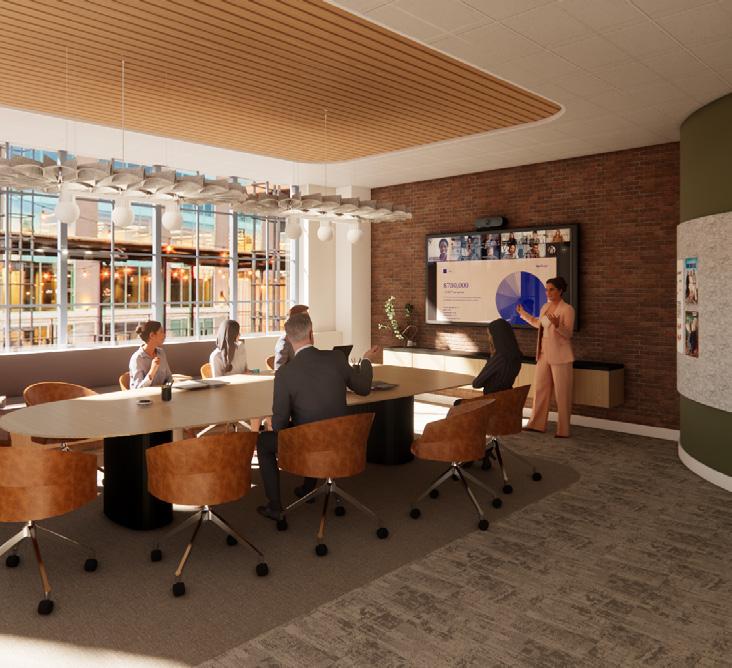
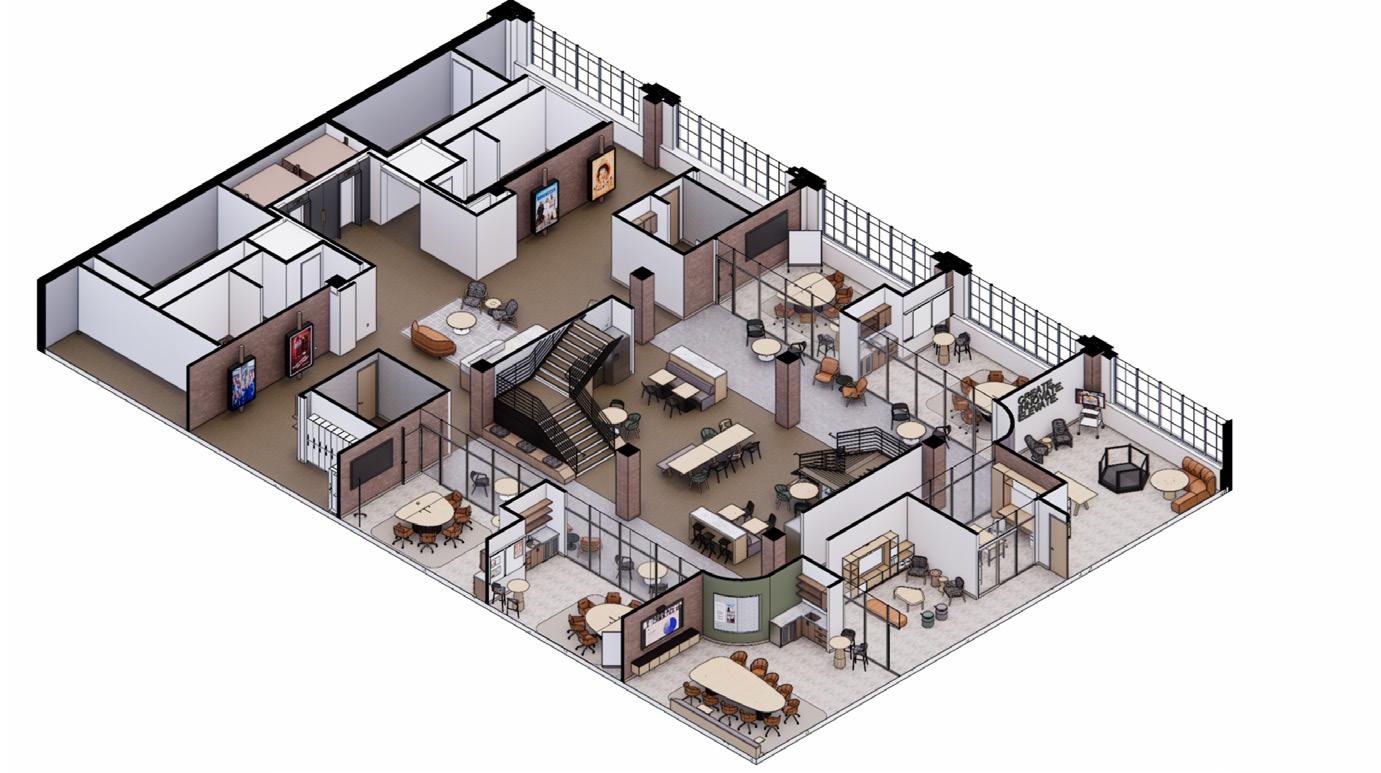

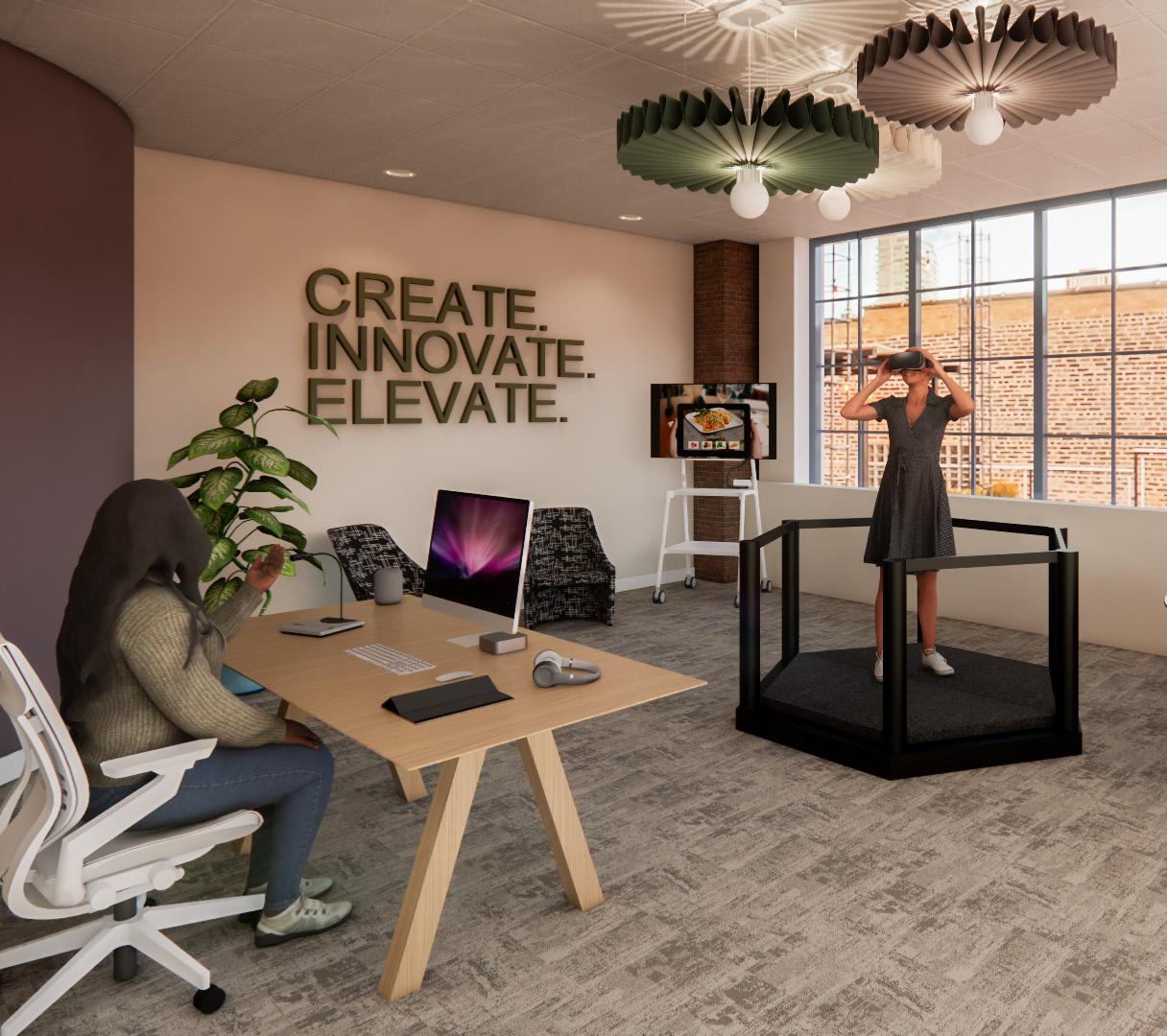
A virtual reality room allows clients to see future products in full scale, before they physically exists. Both employees and clients alike can utilize this space to enhance overall experience. The virtual reality space embodies technology objectives at the forefront of the values of NEXT.



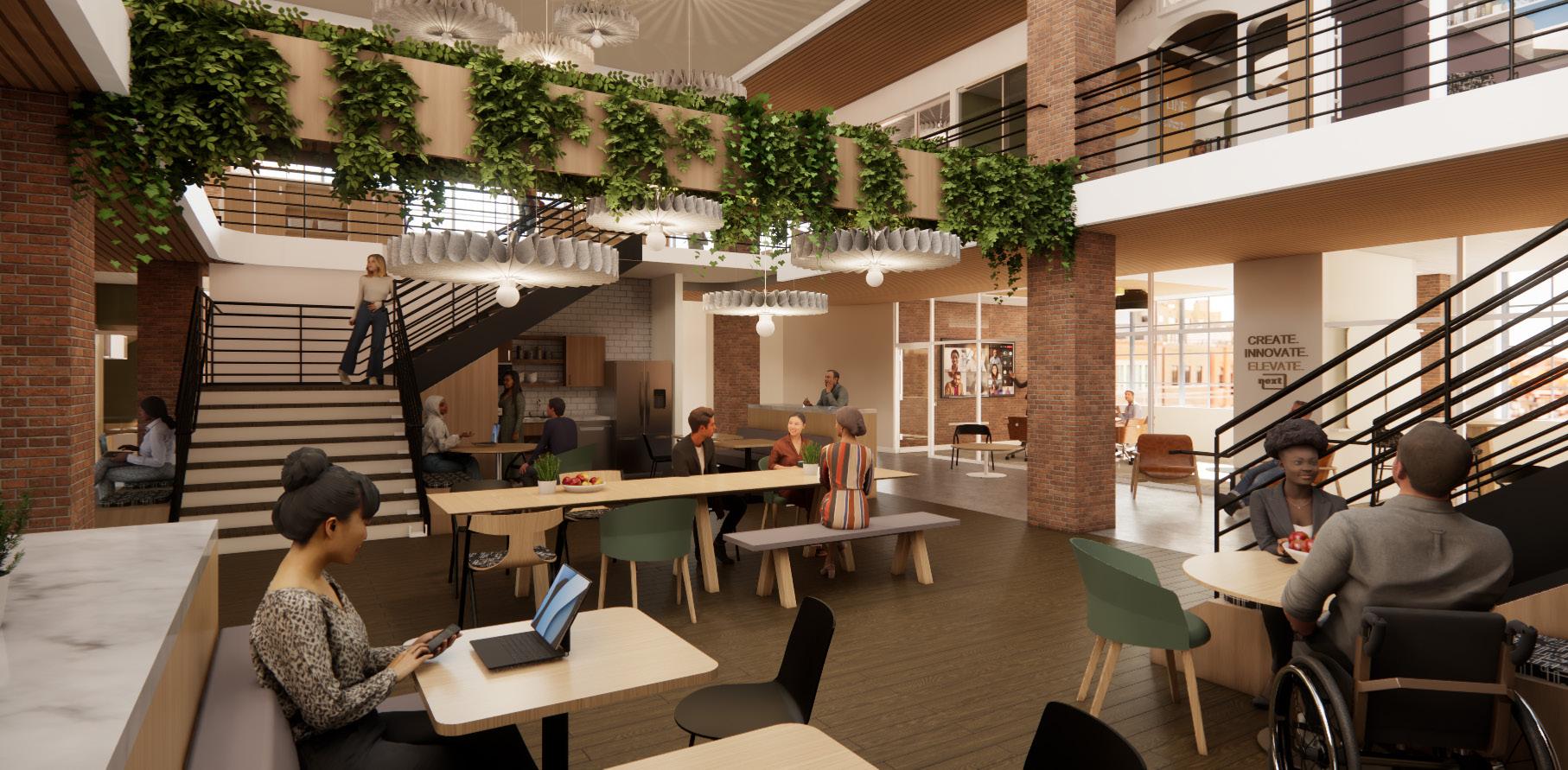
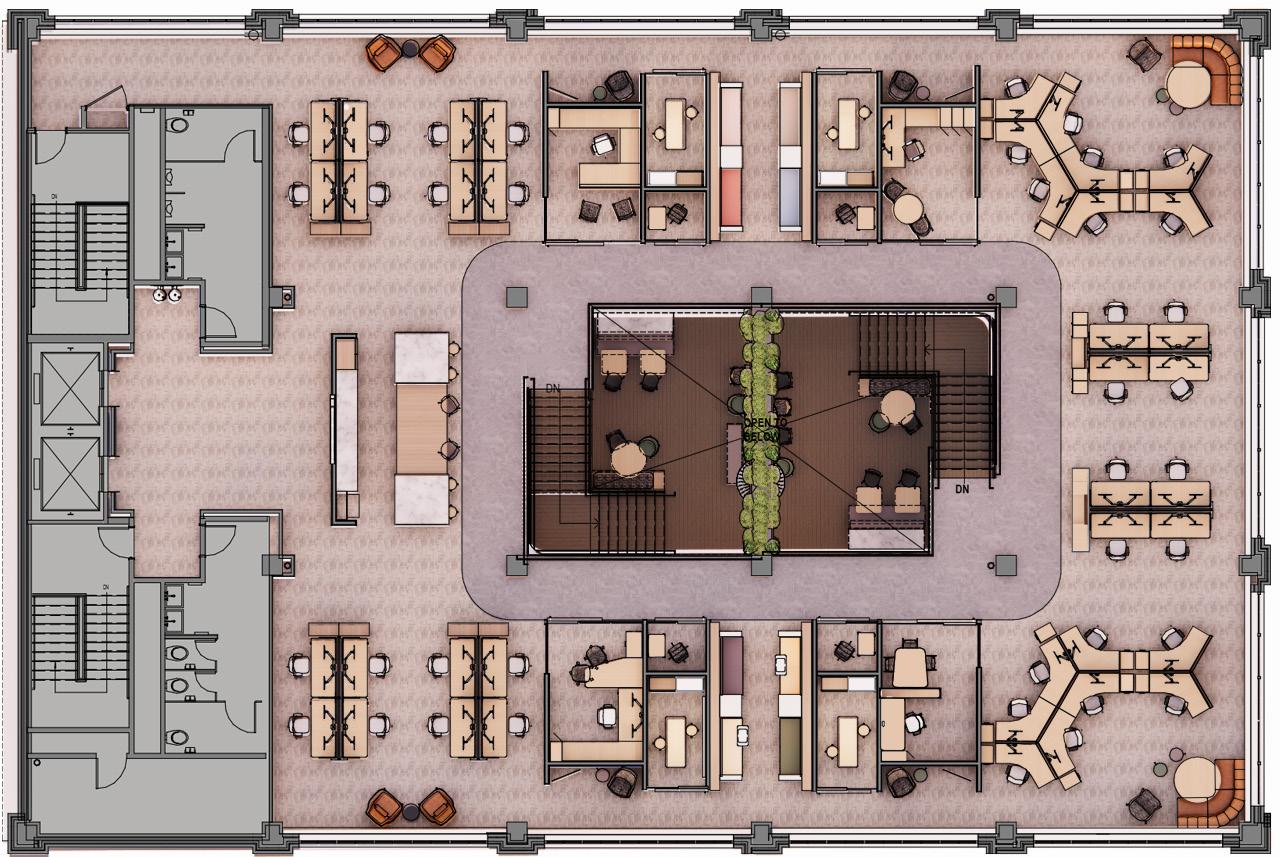
The work cafe is a place for individual or social time. A variety of seating styles promotes choice in users. Grounded by the double volume and skylight, this space serves as the center of the loop-- a place where all individual lines and employees intersect.
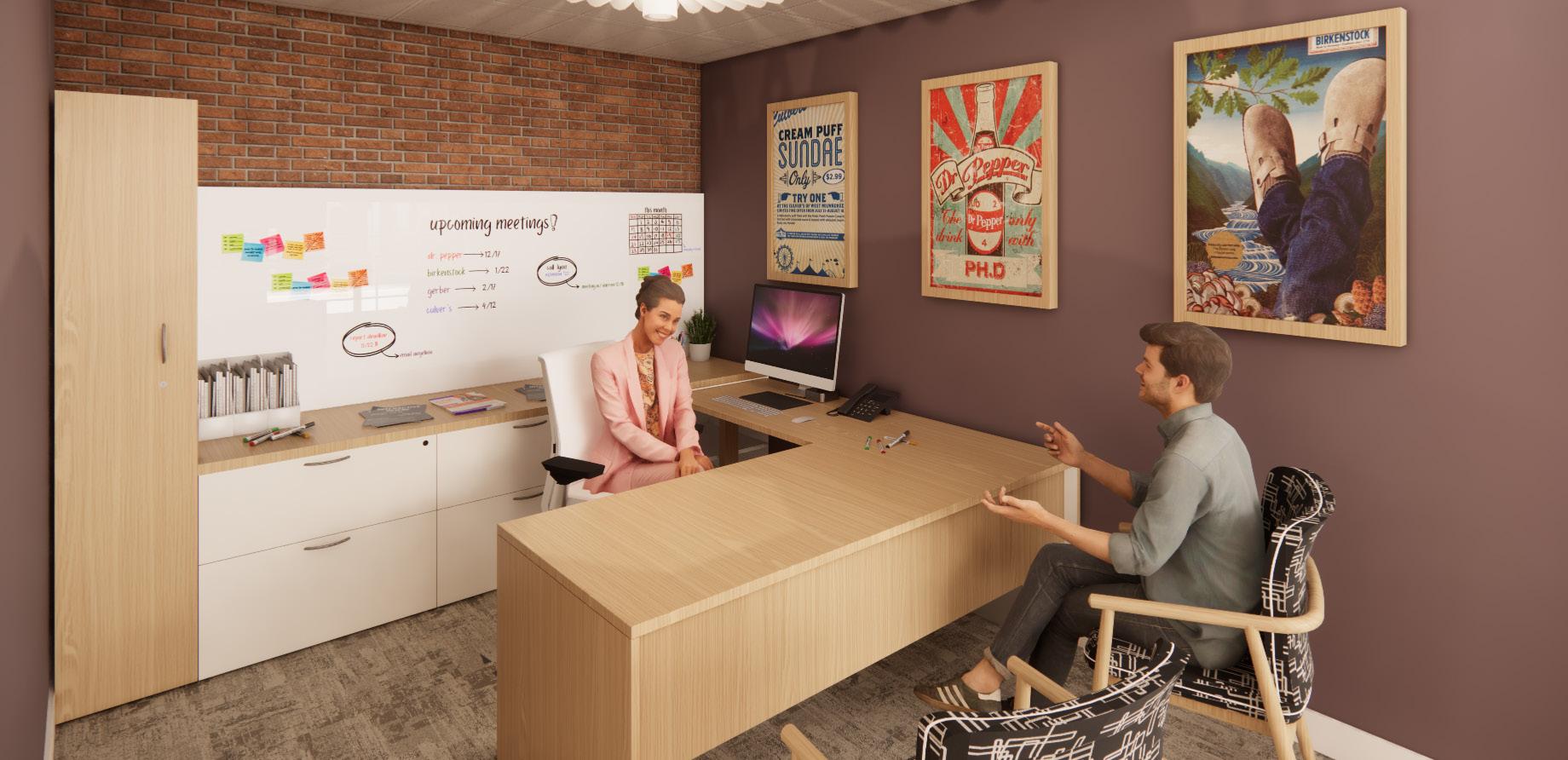
Private offices provide a space for individual work for team leads. Each office has ample workspace for large projects plus guest seating for private meetings. Height adjustable desks promote well-being. Open glass on two adjacent walls connects the office to the respective team.

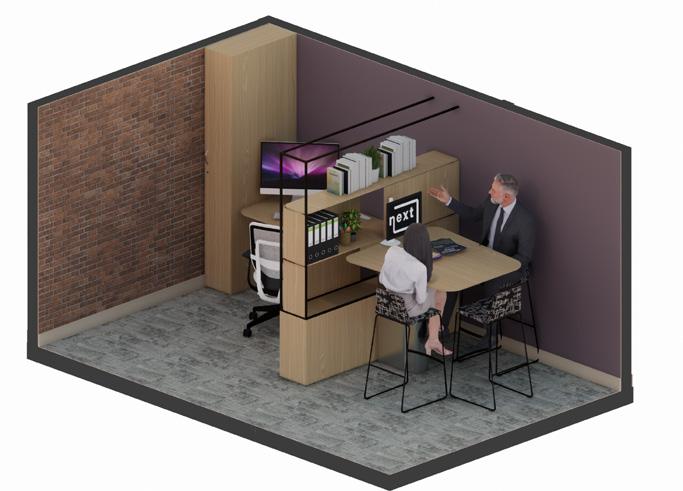
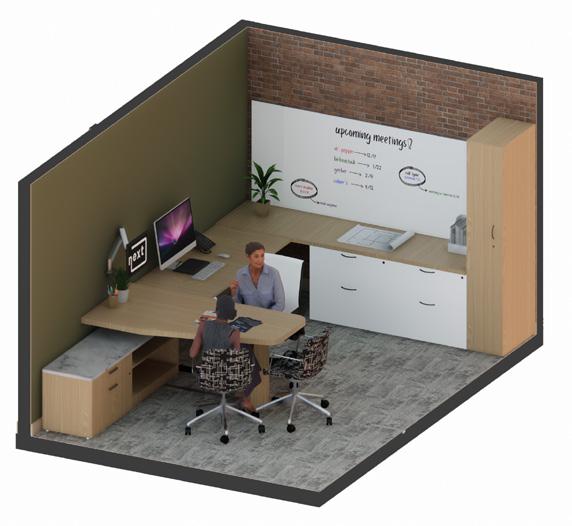

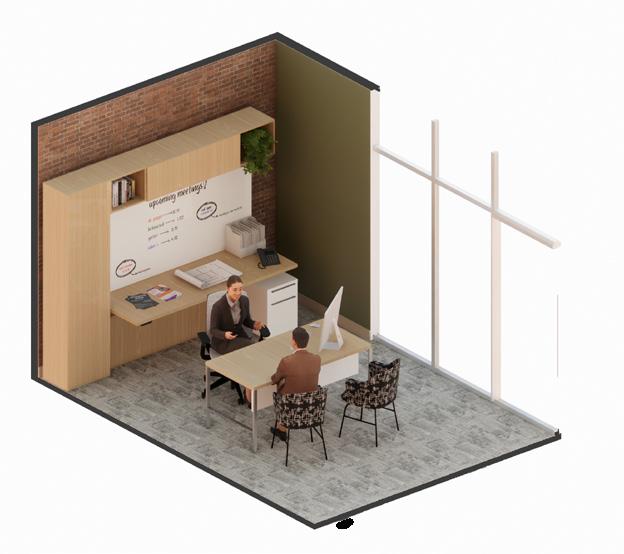

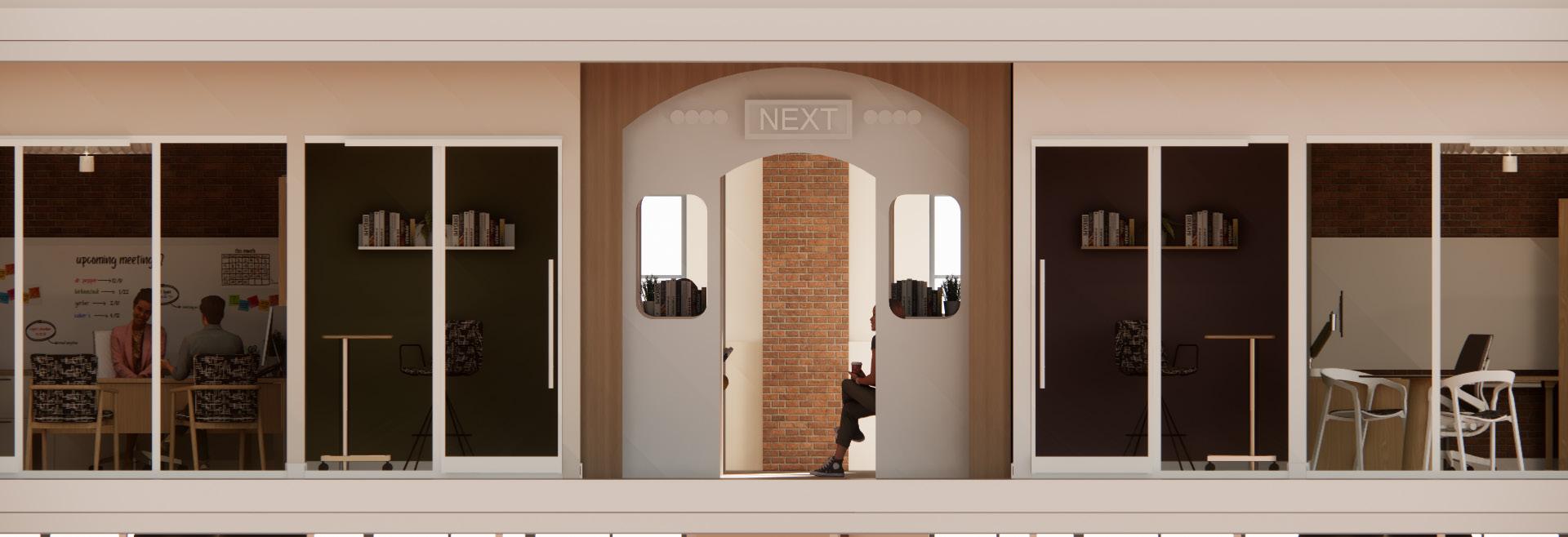
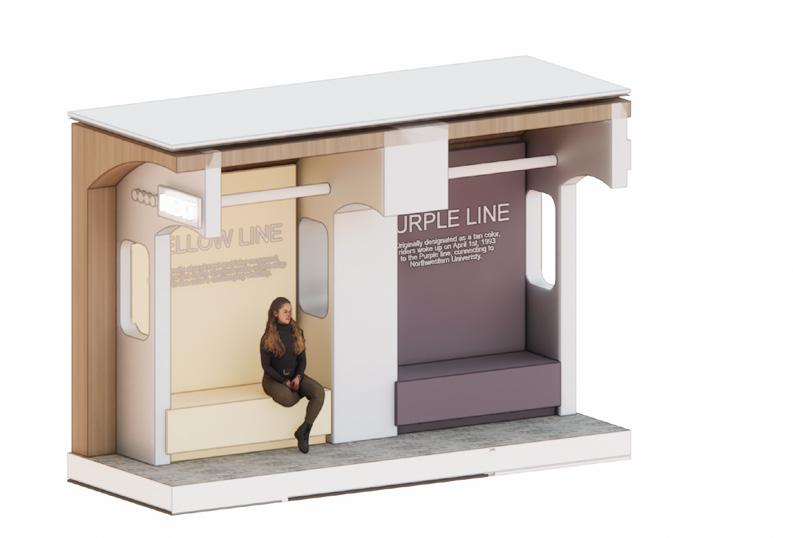
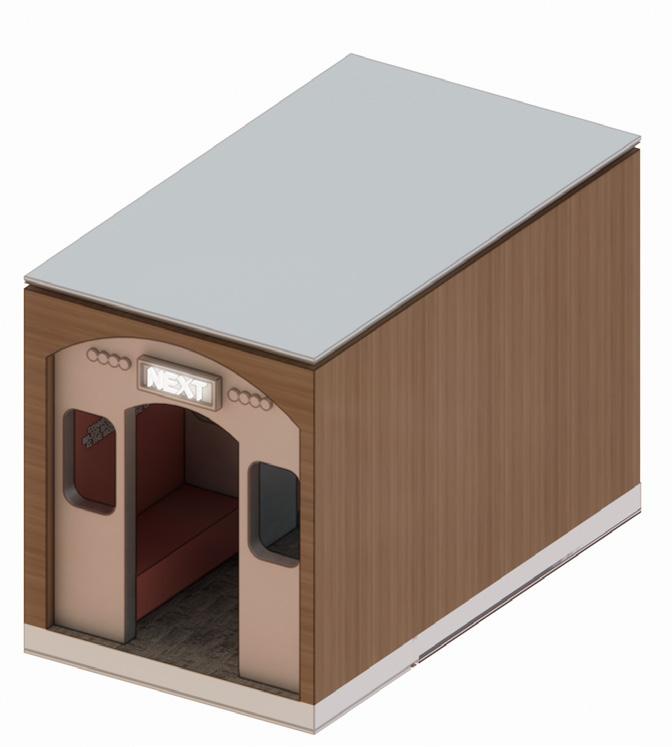
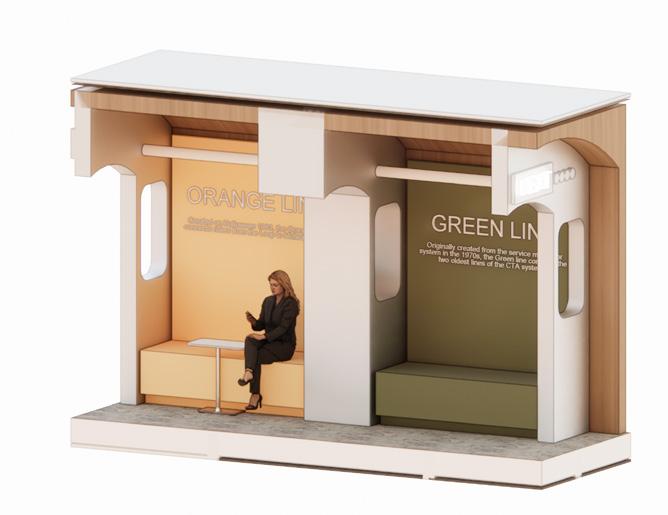
Each of the eight bays shares the origin story of the respective line. These benches promote choice in users for either individual time or collaboration. Each story highlights the innovation and creativity in the development of new ideas.
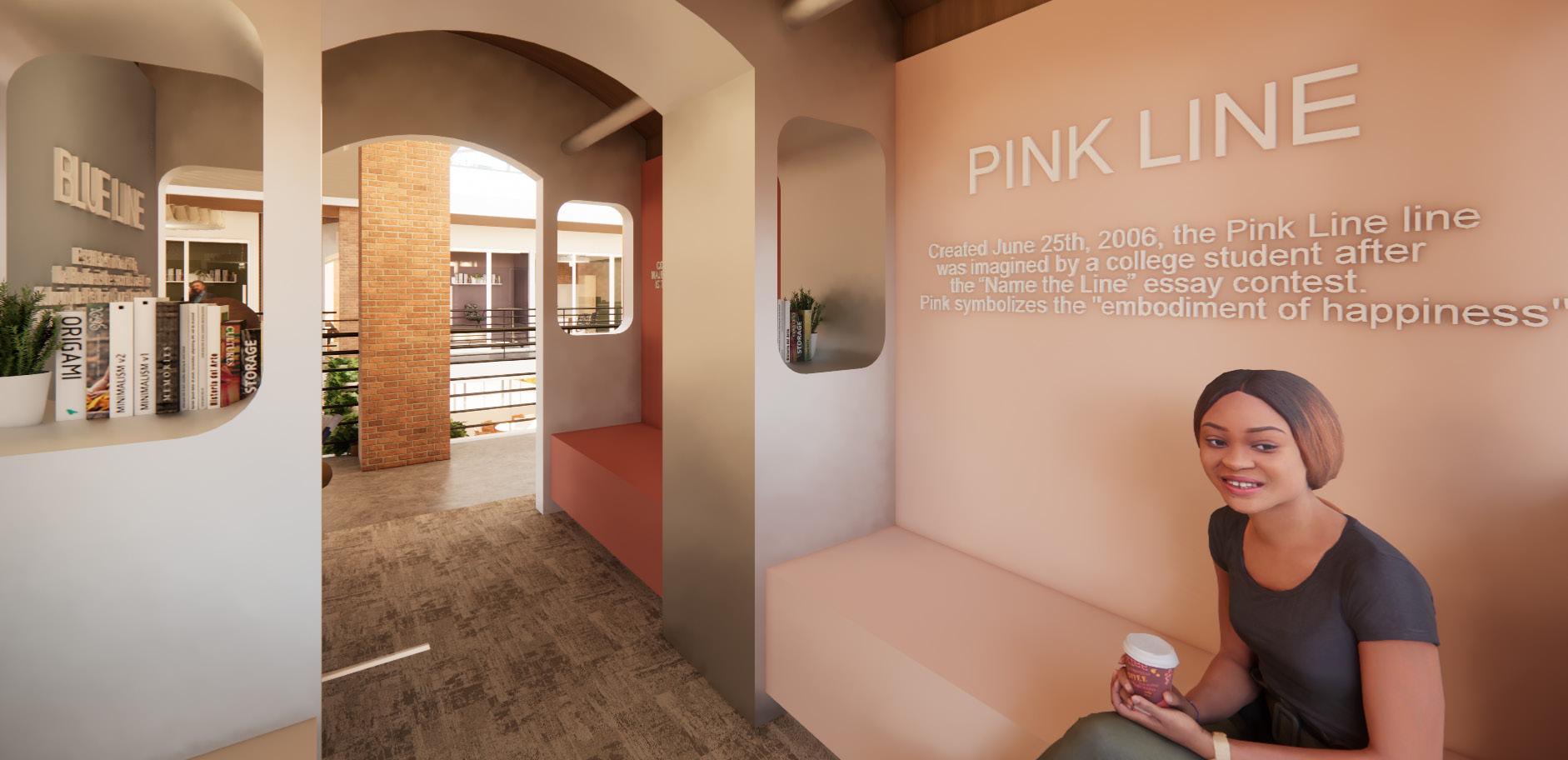
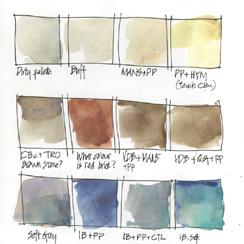
Custom bench ‘L’ seating is directly inspired by the form and shape of an ‘L’ train. Each built-in bench is color coded to match a color of the CTA system. Each line has a different story and development-- similar to the various departments at NEXT. This custom structure shares the history of such an influential part of the Chicago ecosystem.
Kansas State University + Inje University | Fall 2025
Group Work | 4th Year, 1st Semester
Duration: 1 month
Collaborators: Madison Cynova, Jasey Downing, Kiley Fobes
Program Summary
Collaborating with students from Inje University in Gimhae, South Korea, teams explored opportunities to improve campus spaces through evidence-based design solutions. Every decision was rooted in enhancing student well-being and mental health.
Project Statement
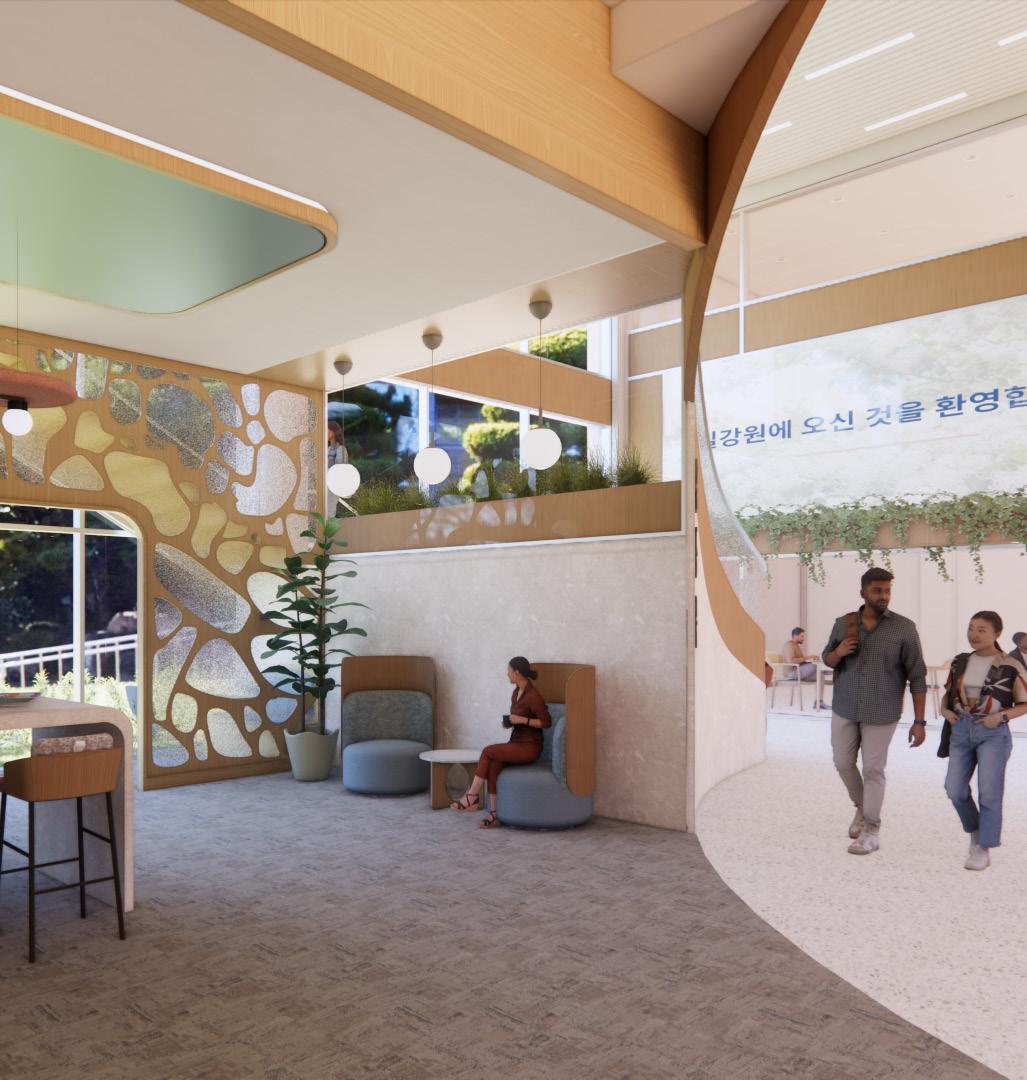
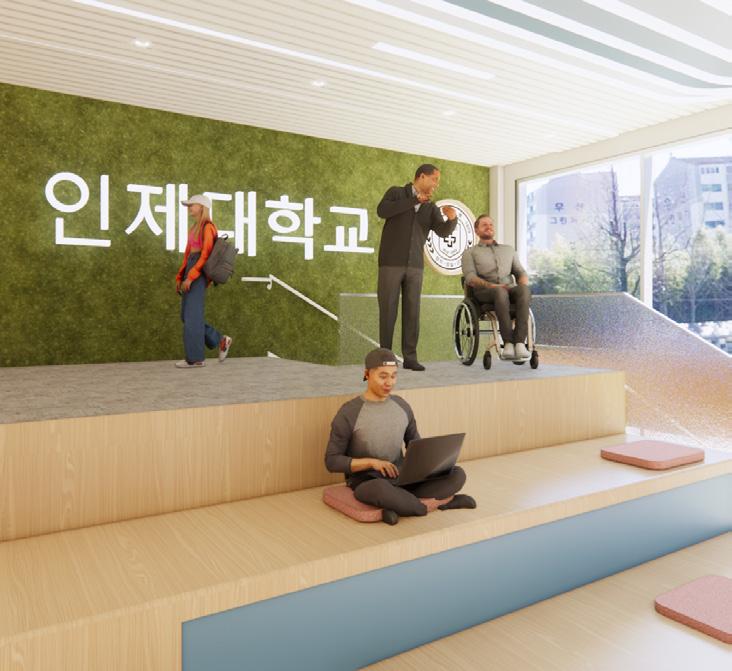
Illgangwon, a campus building in the College of Engineering, is transformed into a dynamic environment that supports both community interaction and quiet individual retreat. By incorporating biophilia, user-choice strategies, and thoughtful technology integration, the lobby transforms into an active and engaging hub for students and faculty.
Skills Used: Revit, AutoCAD, Enscape, SketchUp, Photoshop, InDesign
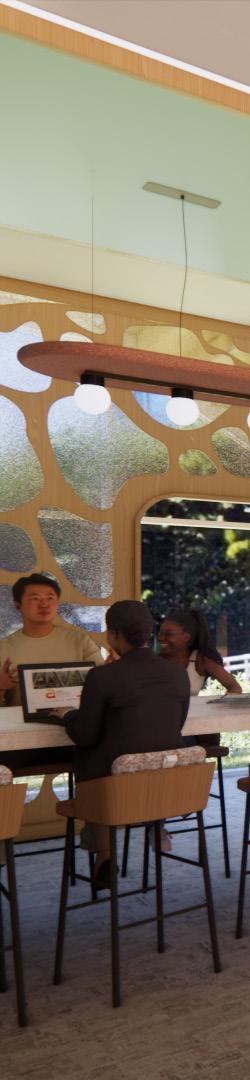
Inje University’s mascot-- the polar bear-- is a symbol of resilience, solitude, and adaptability. The paw print of the polar bear is a metaphor for the lasting imprint of strength and evolution.
By integrating sociopetal and sociofugal design strategies, biophilic elements, and innovative technology, Illgangwon becomes a space that promotes mental health, supports well-being, and empowers students to create their own unique “imprint” on campus life.
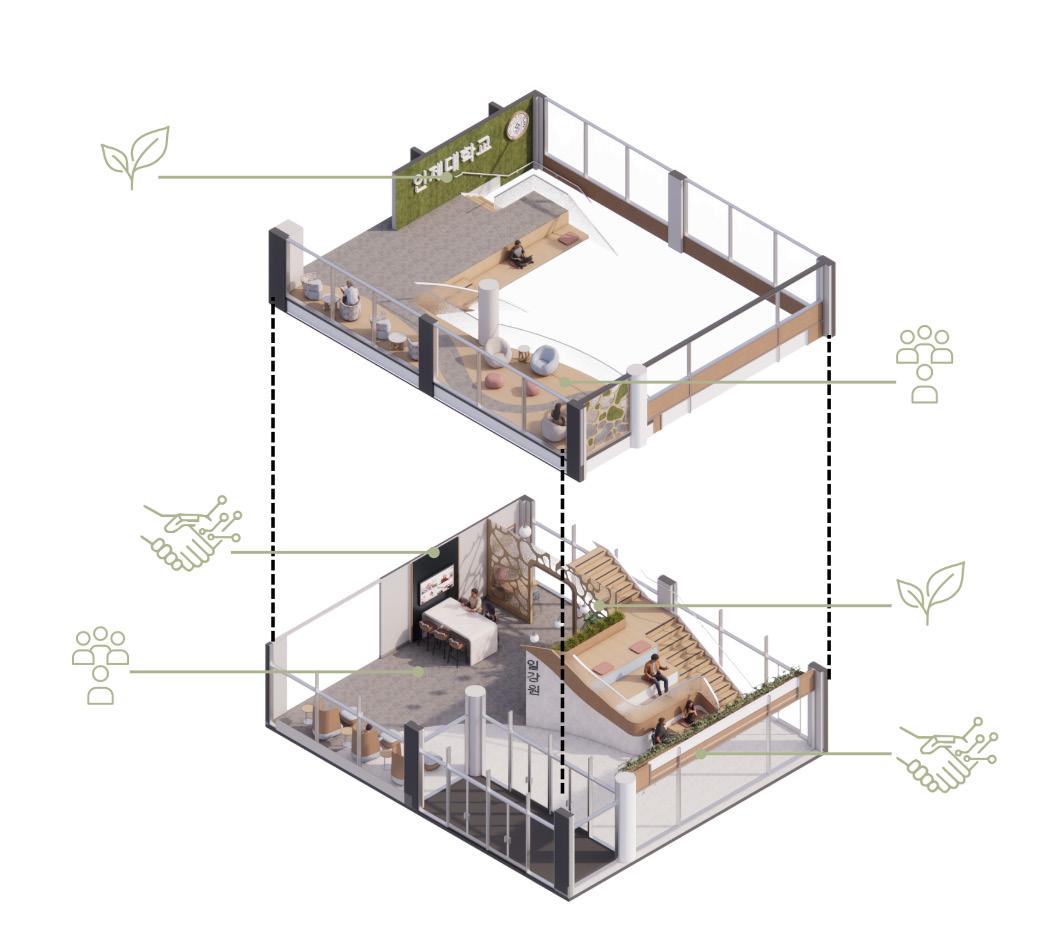
Utilizing evidence-based design strategies, three main categories were integrated into the foundation of the design in order to enhance student mental health and well-being.

Biophilia

Sociopetal vs Sociofugal

Technoligical Integration
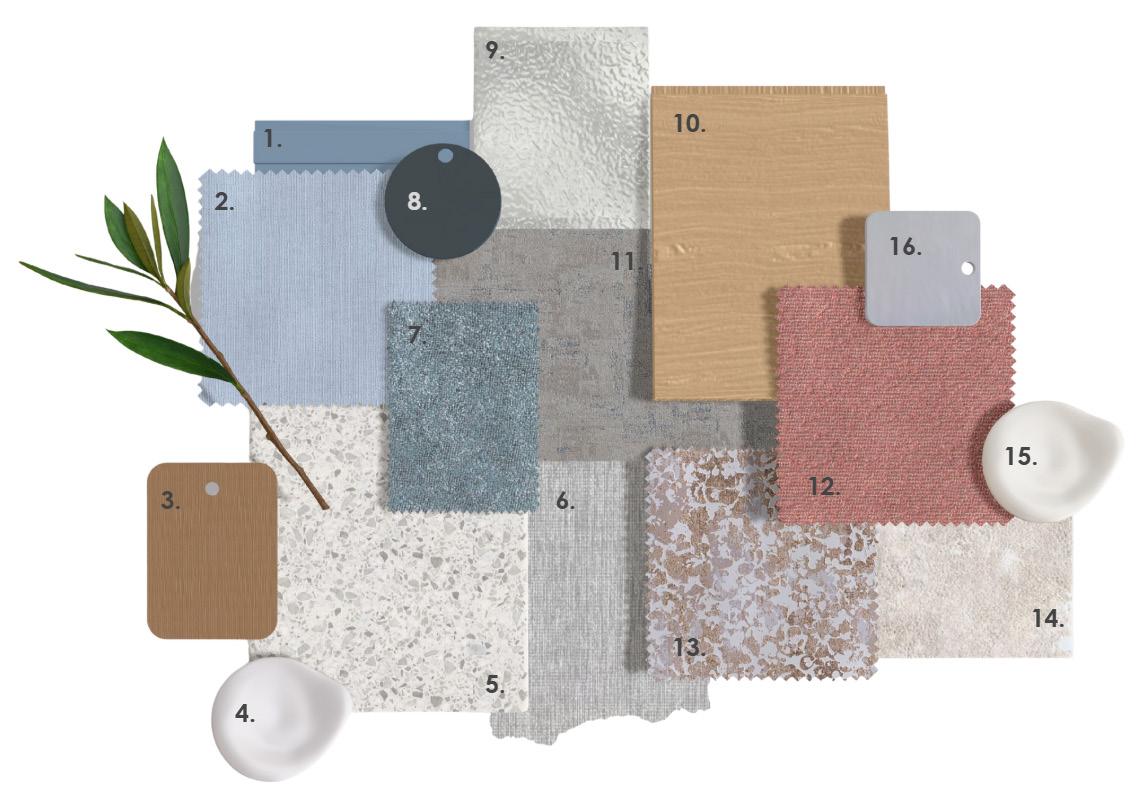
Inspired by the transparent nature of a polar bear’s fur, the material palette further emphasizes the concept of a polar bear’s imprint on its environment. Integrating muted hues of Inje University’s school colors promotes a sense of school pride and brand identity.
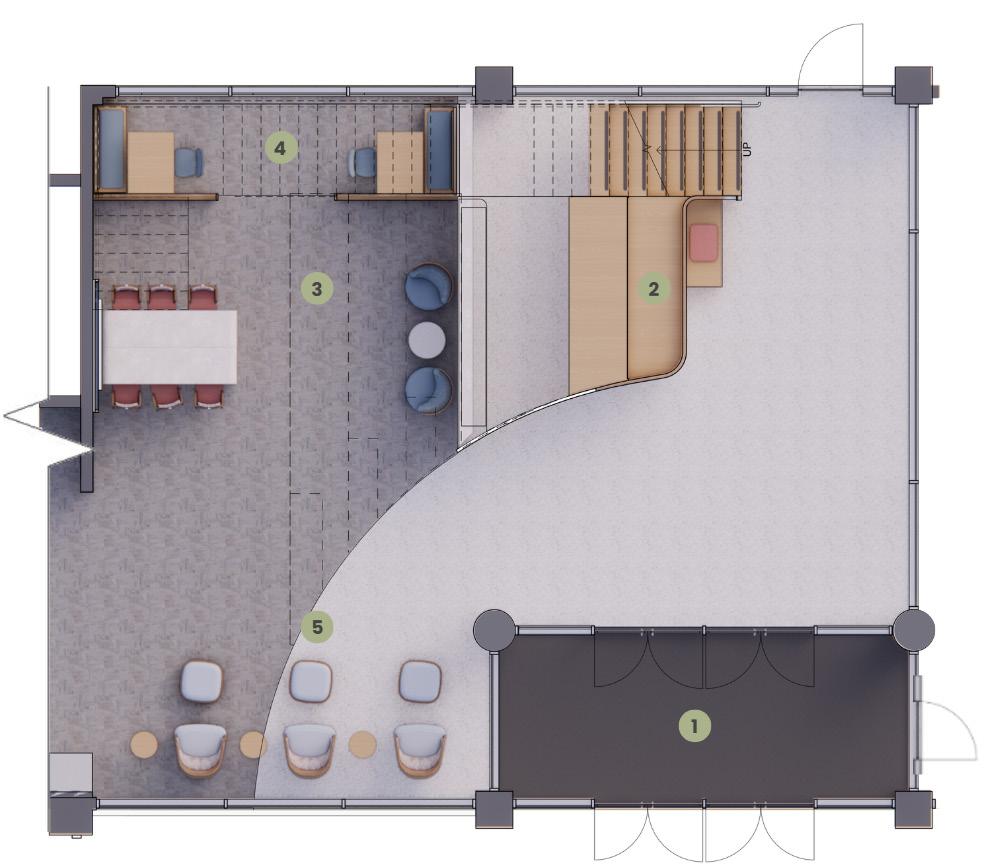
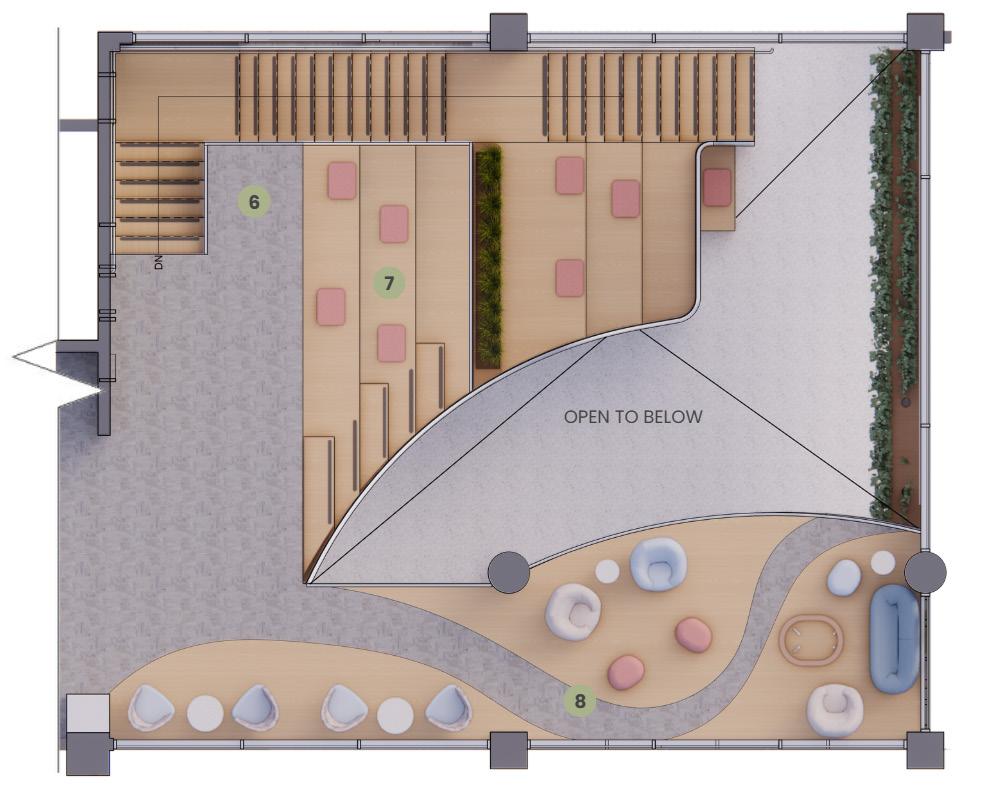
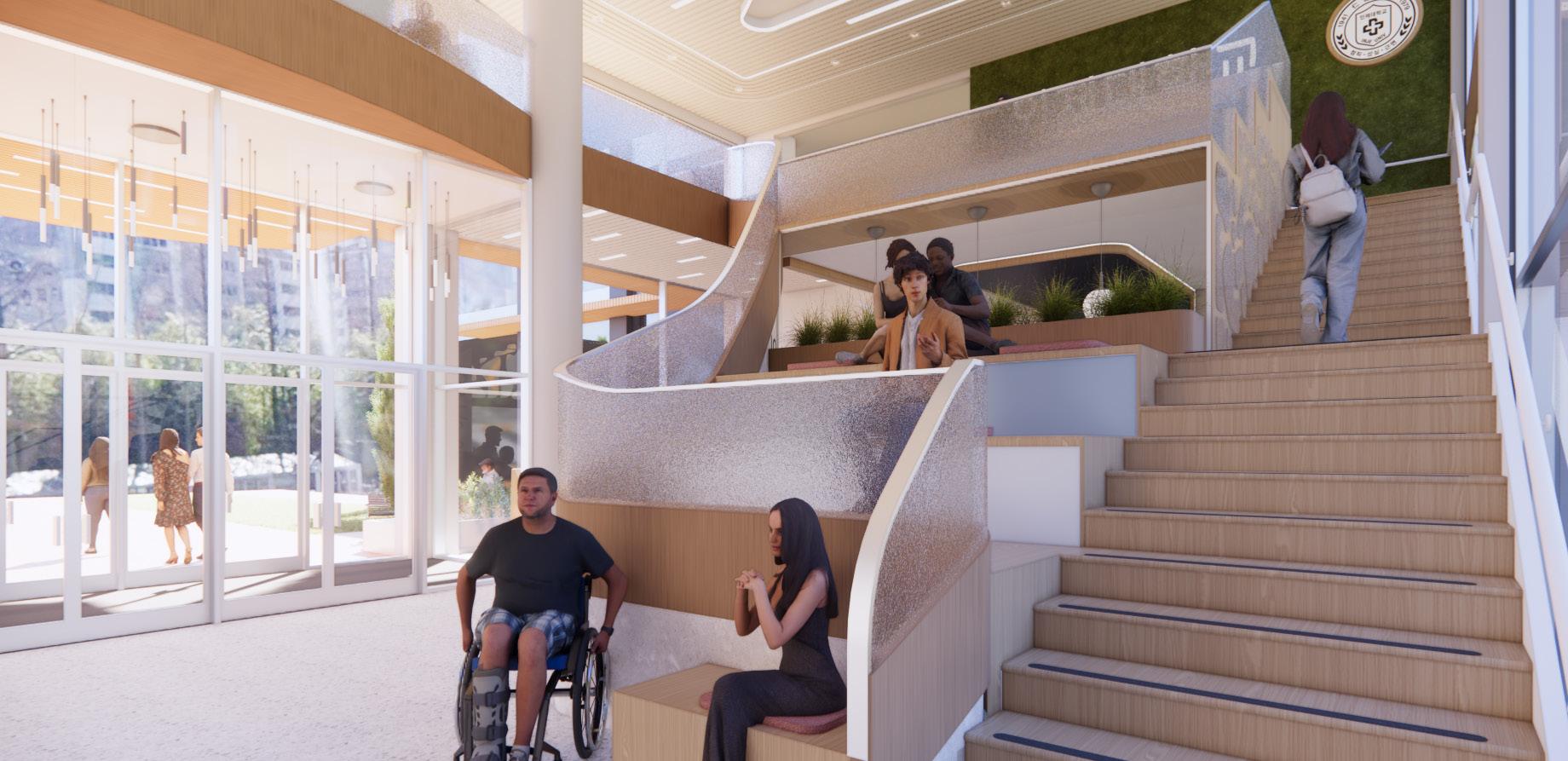
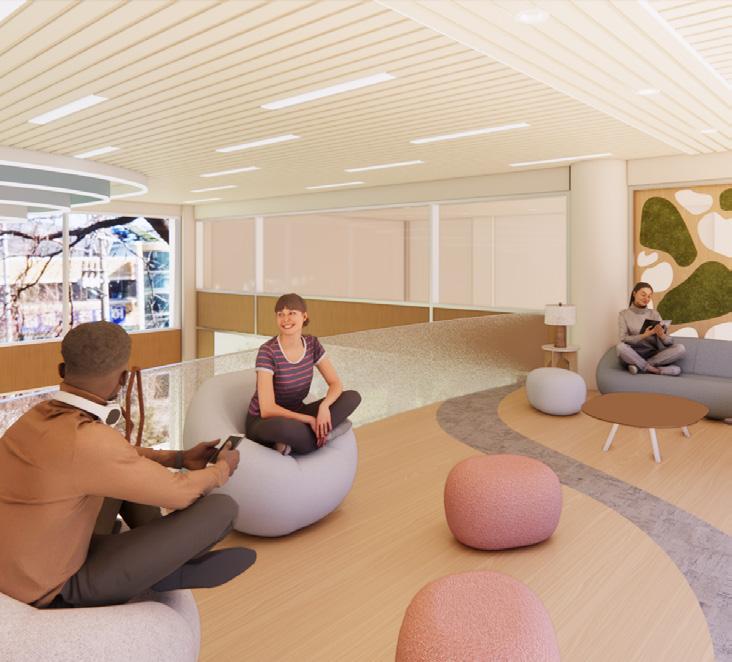
As a central design feature, the learning stair serves as a dynamic hub for collaboration and community. Supporting large and small group gatherings, it plays a key role in enhancing creativity and innovation.

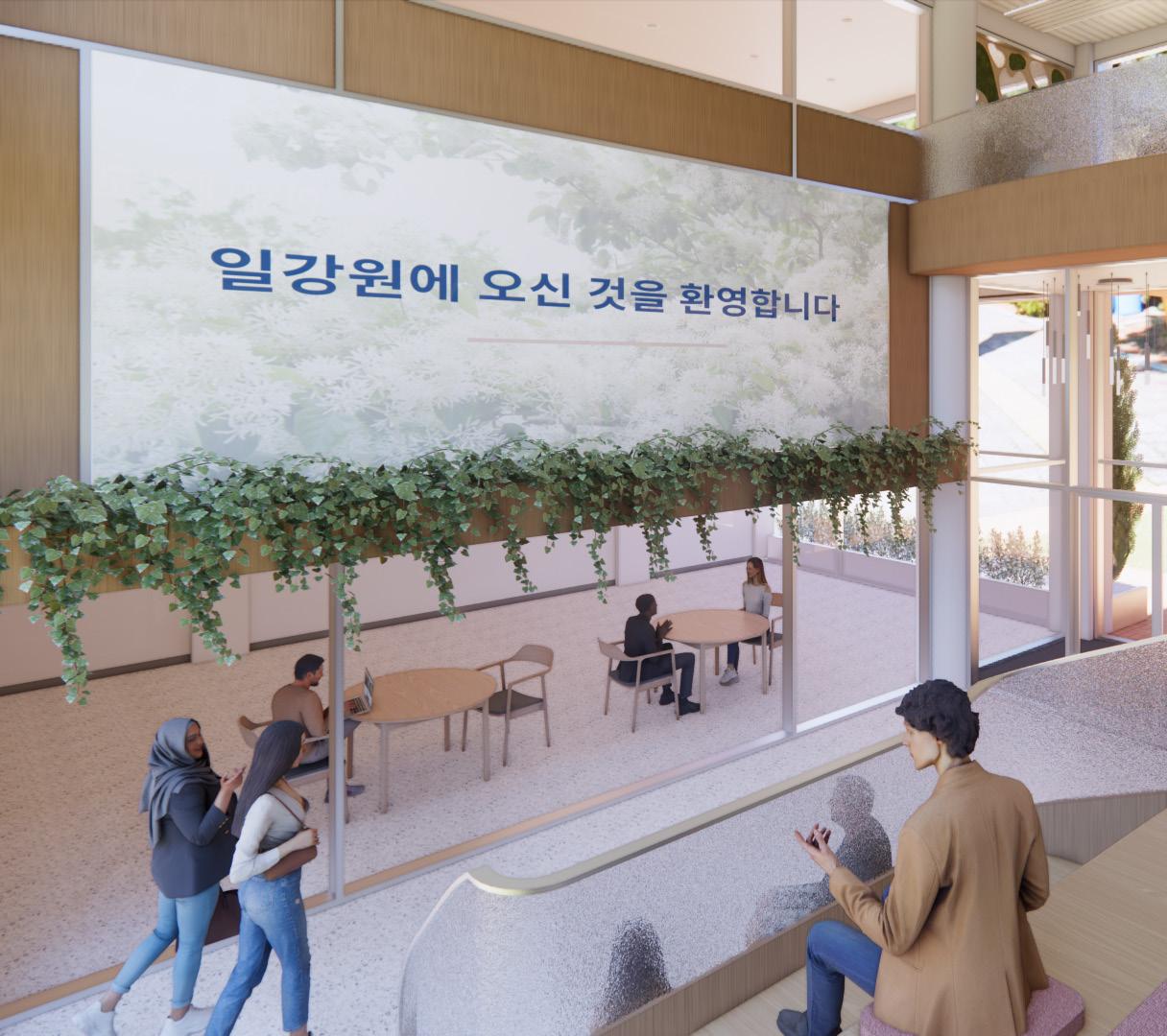
The digital wall serves as an interactive focal point, seamlessly integrating technology into the spatial experience. Technology fosters a sense of forward thinking and encourages innovation throughout the building. 디지털
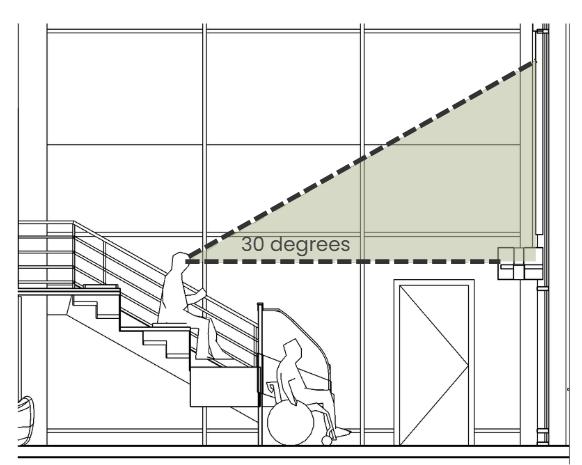
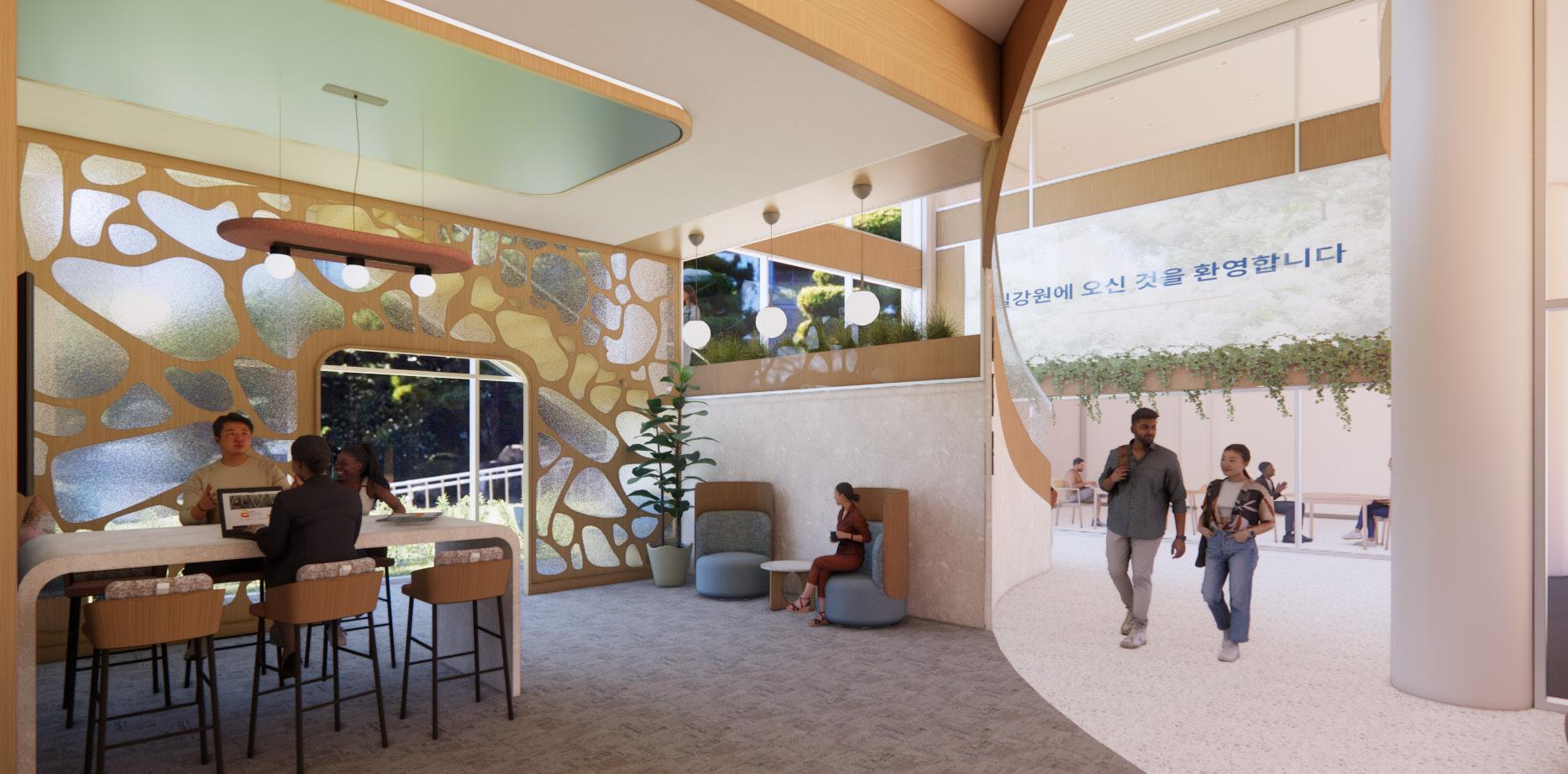
Integrating technology enhances flexibility and fosters a sense of innovation among users. A variety of seating options promotes choice in user interaction and collaboration
Kansas State University | Spring 2024
Individual Work | 2nd Year, 2nd Semester
Duration: 2 months
Program Summary
Healthcare offices are often a place of concern and stress-- especially for the younger generation. Guided by design principles and color theory, Lymelight Pediatrics creates a safe and calming space for Lyme Disease patients and families.
Project Statement
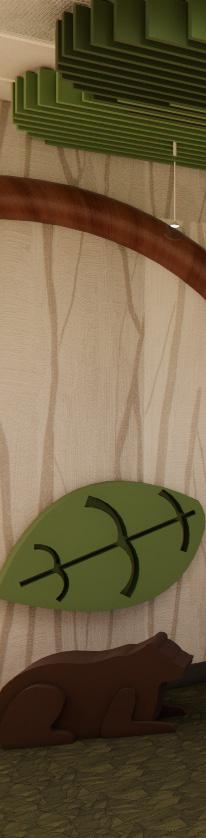
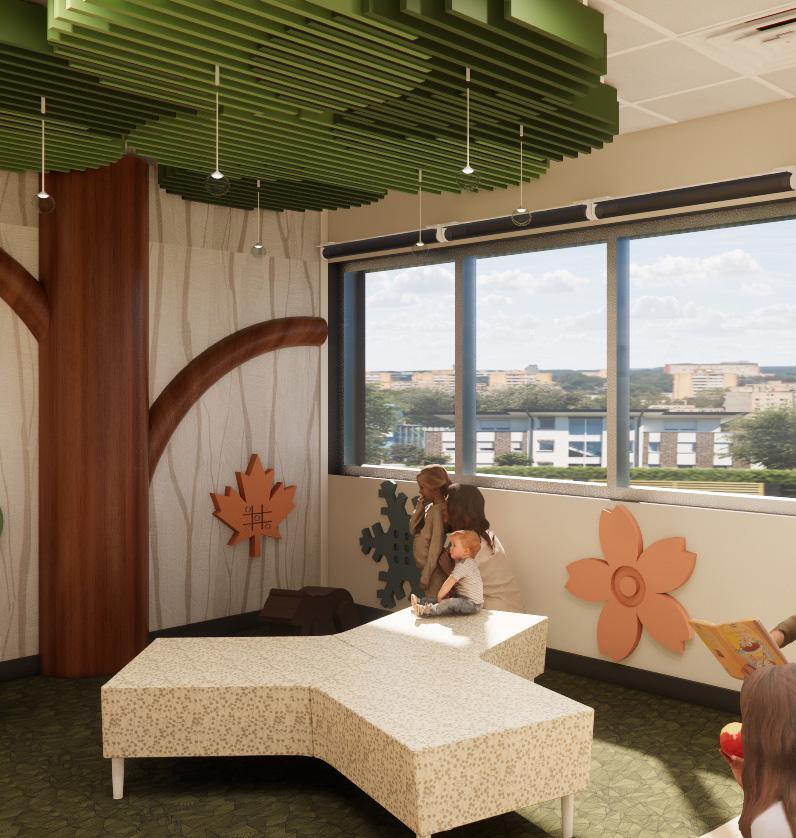
Lymelight utilizes nature motifs and the progression of colors during seasons to evoke feelings of calmness and security. Each clinic exam room is associated with a color of a season, creating a sense of playfulness and whimsy while representing the evolution of healthcare.
Skills Used: Revit, AutoCAD, Enscape, SketchUp, Photoshop, InDesign
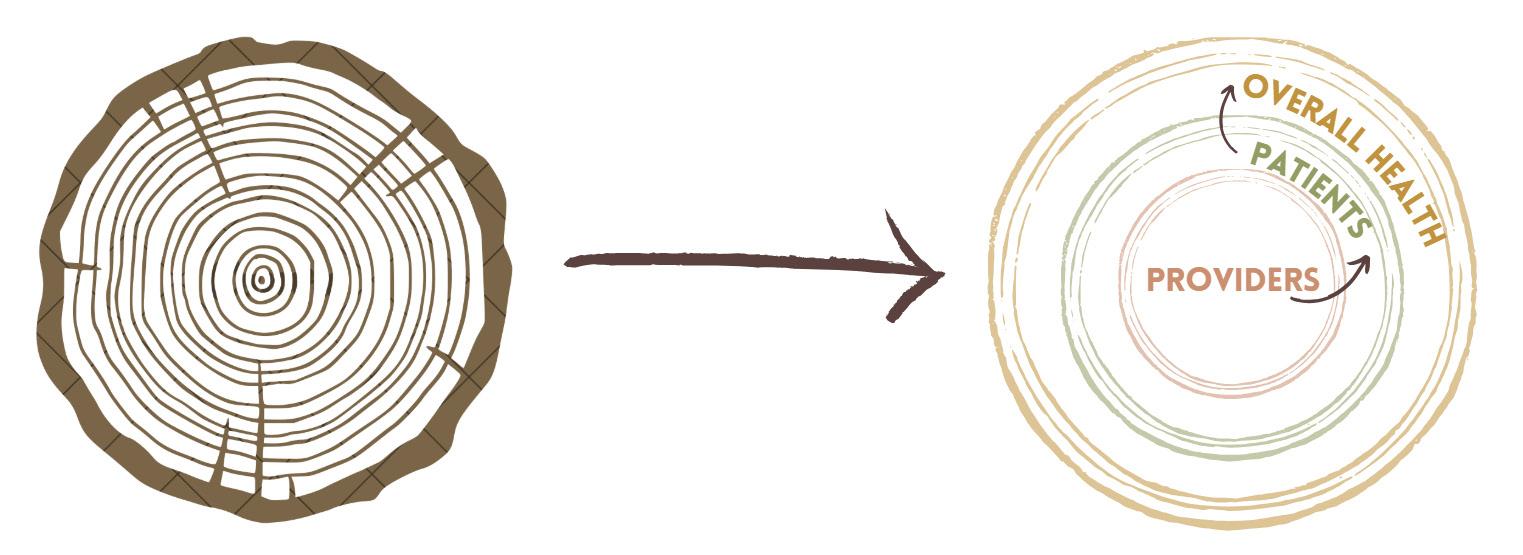
A physical snapshot of a life story. Without the initial, all subsequent rings would not be formed; without the center ring of care providers, patients would not be able to reach their health goals.
Inspired by the key colors of the seasons, each room is themed to mimic the time of year. Bright colors in treatment rooms aid in both wayfinding and engaging child interest. Public spaces use a simplistic, neutral palette with green accents representing the growth of trees.
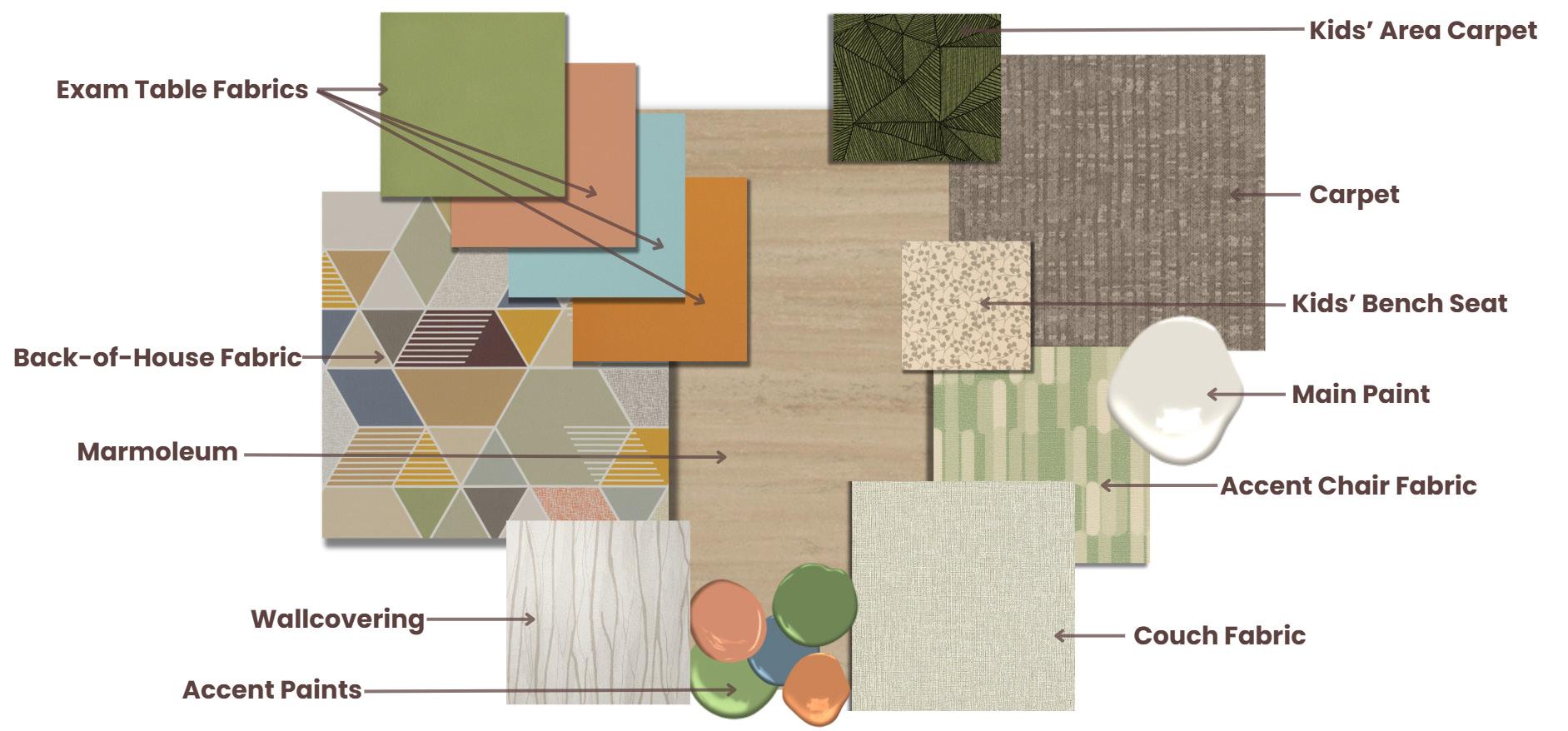
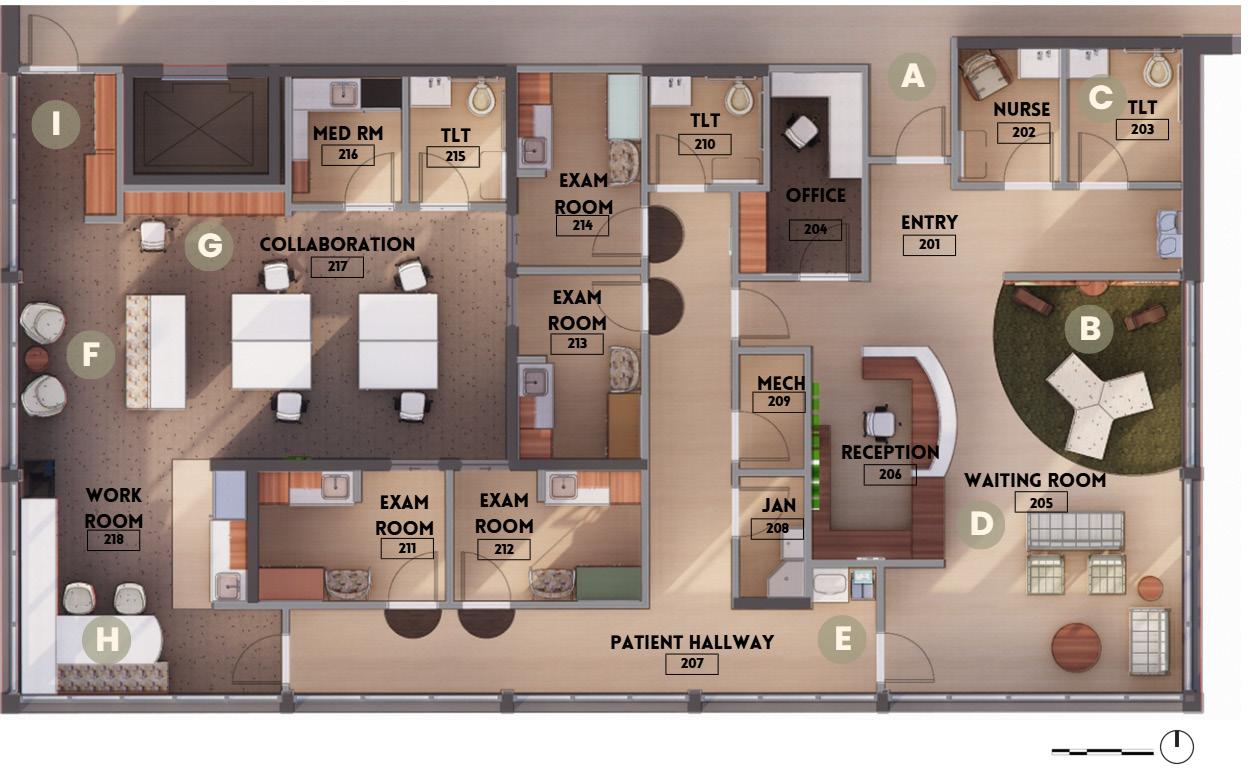
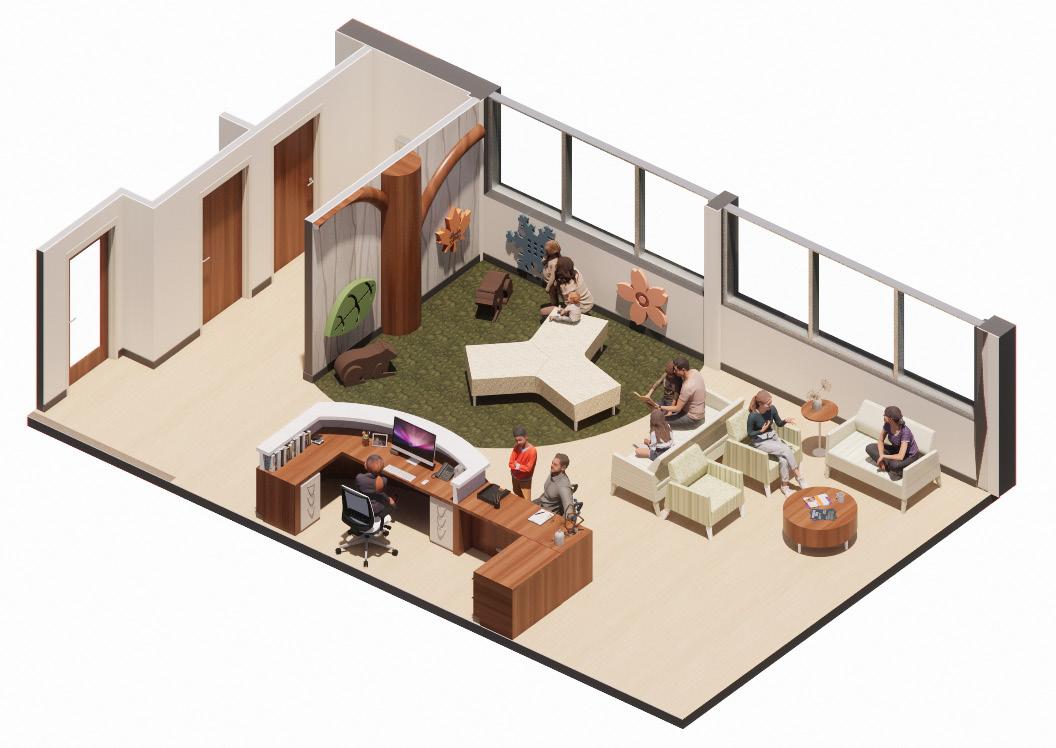
Organized around the on-stage / off-stage model, Lymelight provides efficient circulation for both patients and providers. The L-shape exam room formation surrounds the collaboration space -- limiting large circulation paths for providers, ultimately reducing the chance of work-related injury.
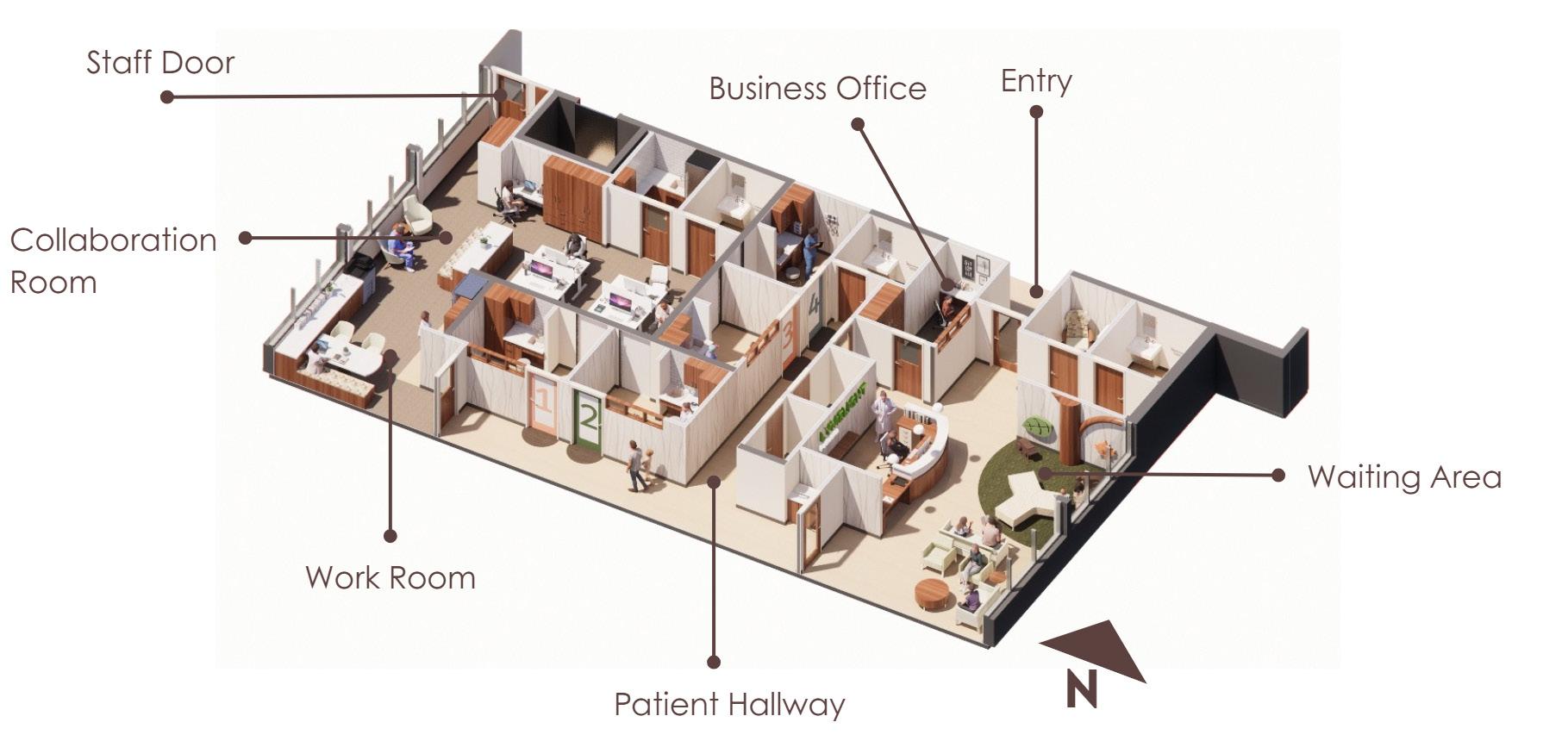
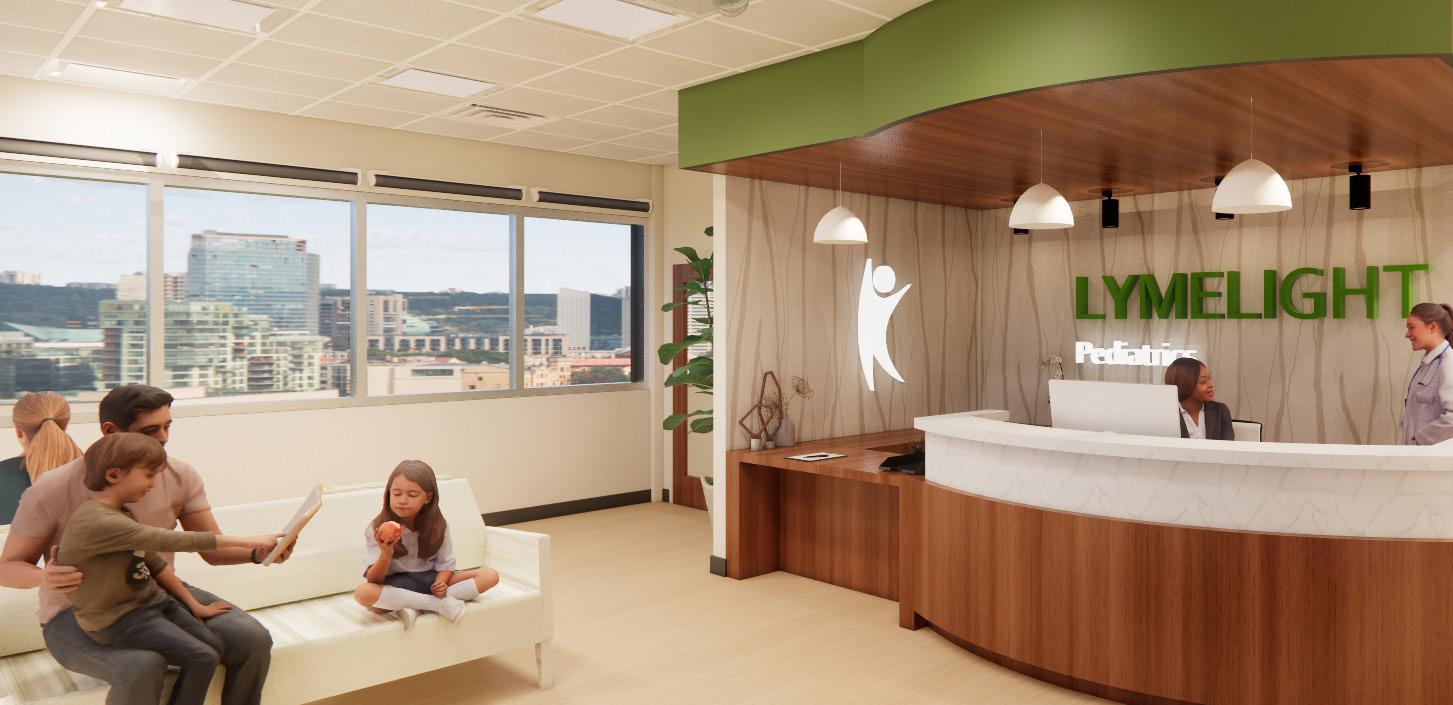
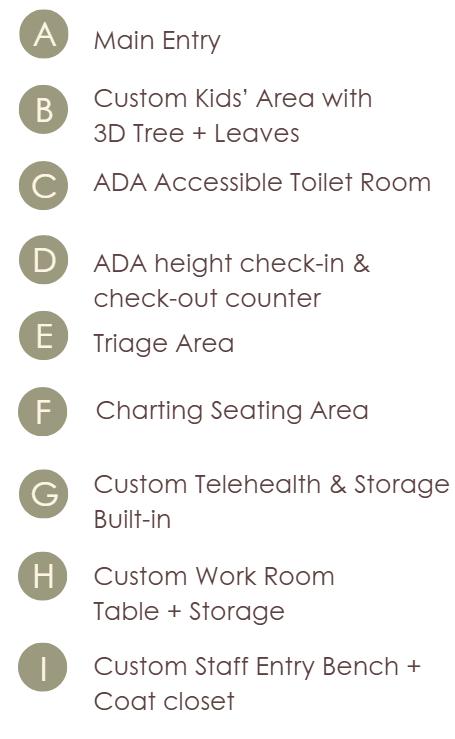
The reception desk is the first impression of the clinic. Ample file storage is provided for paperwork and other storage needs. Both standing height and ADA height desk and countertop area is available to promote accessibility to all users.
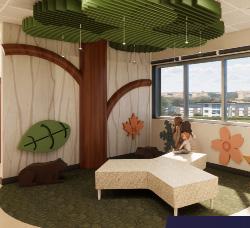
The kids’ area is a space for patients to engage their imagination during the waiting period. Oftentimes, medical facilities are stressful and triggering places for children. Lymelight is designed to cater to the needs of the patients -children.
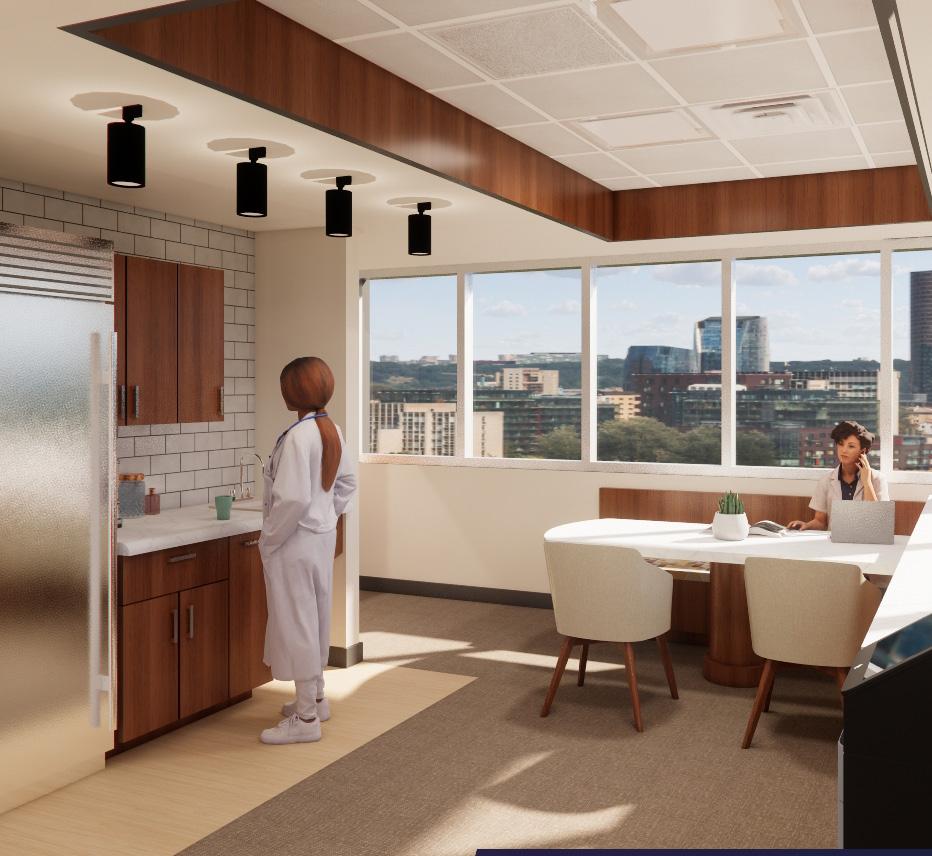
The workroom provides ample counter and table space for providers to eat, recharge, or work in a separate location. A half kitchen with a fridge, sink, and microwave promotes a sense of well-being in employees.
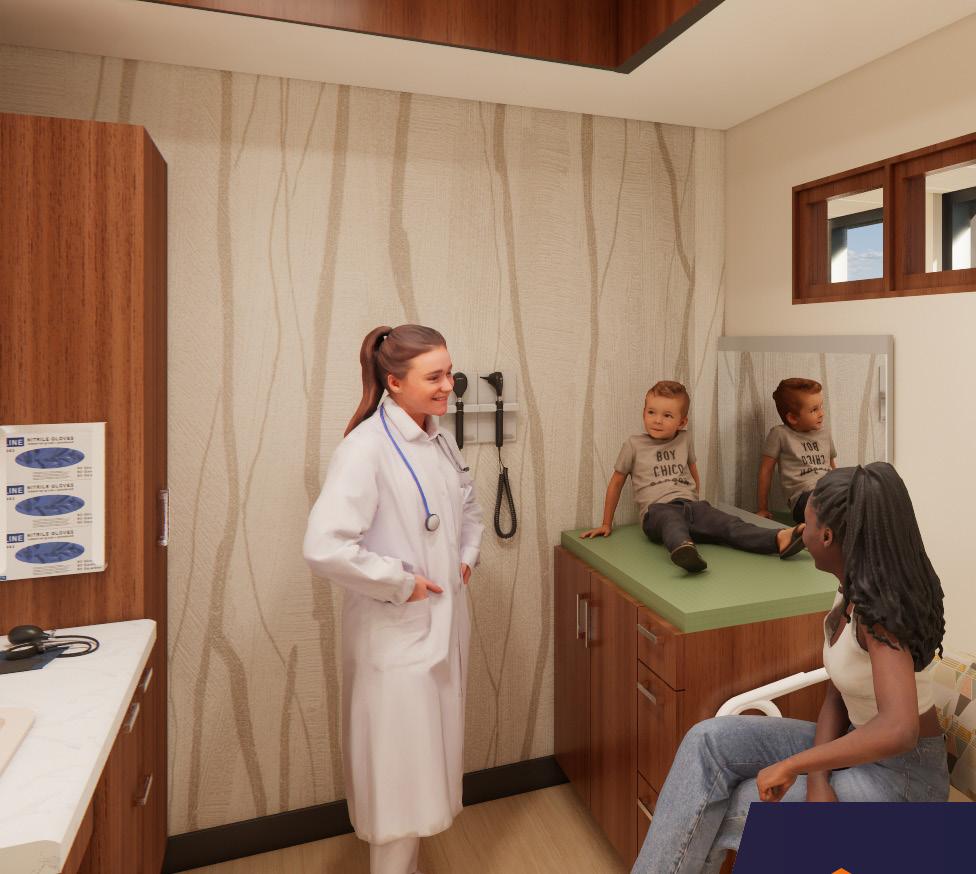
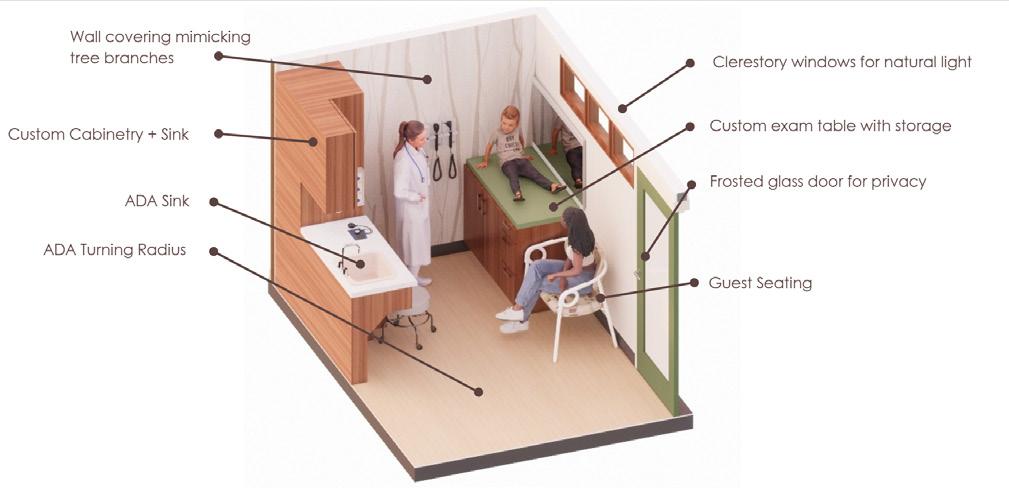
Each patient room is grounded by a recessed wood soffit -- mimicking the rings of a tree. Custom cabinetry and exam tables allow for increased function for the activities necessary. All rooms are ADA accessible with an ADA sink and turning radius.
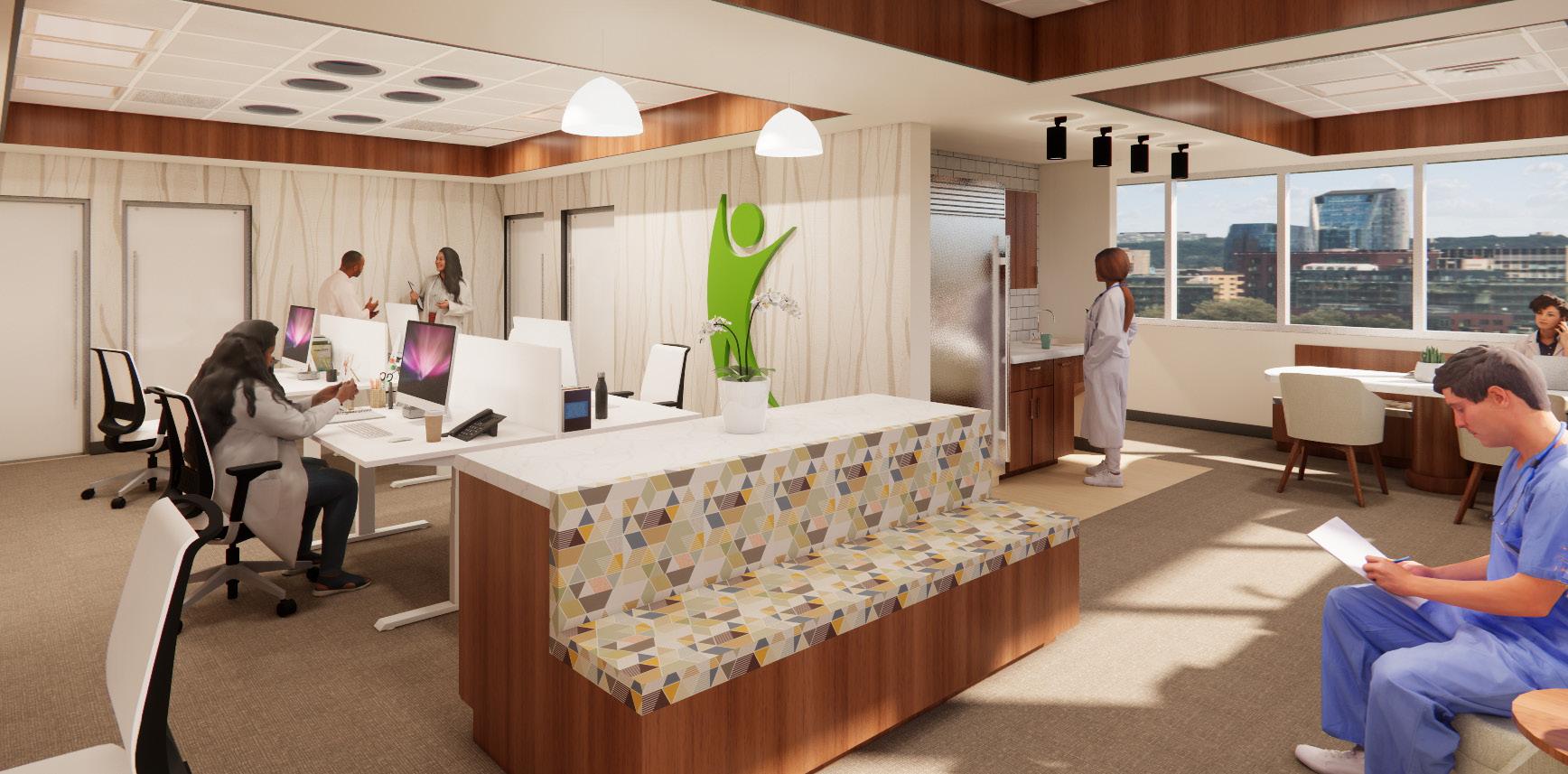
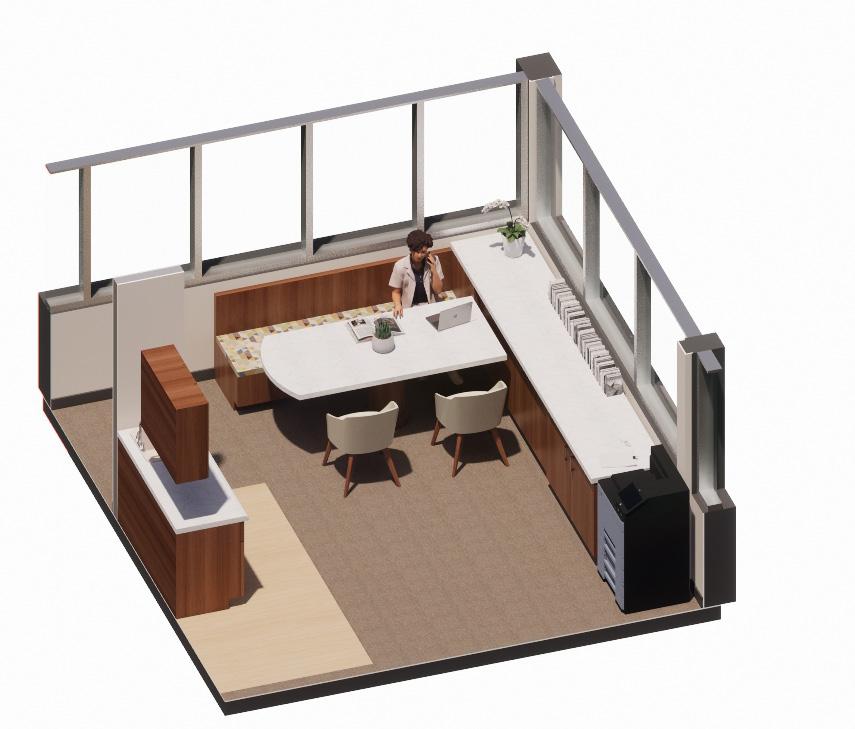
The collaboration room provides a space for providers to focus and work with fellow care workers. Direct access to natural light, height adjustable desks, sociopetal seating arrangements, and lounge seating promote well-being in employees. Further, an efficient staff movement path reduces work-related injury.
Dwellings Inc|Summer 2024 & 2025
Design Internship| Madison, WI
Duration: 3 months
Experience Summary
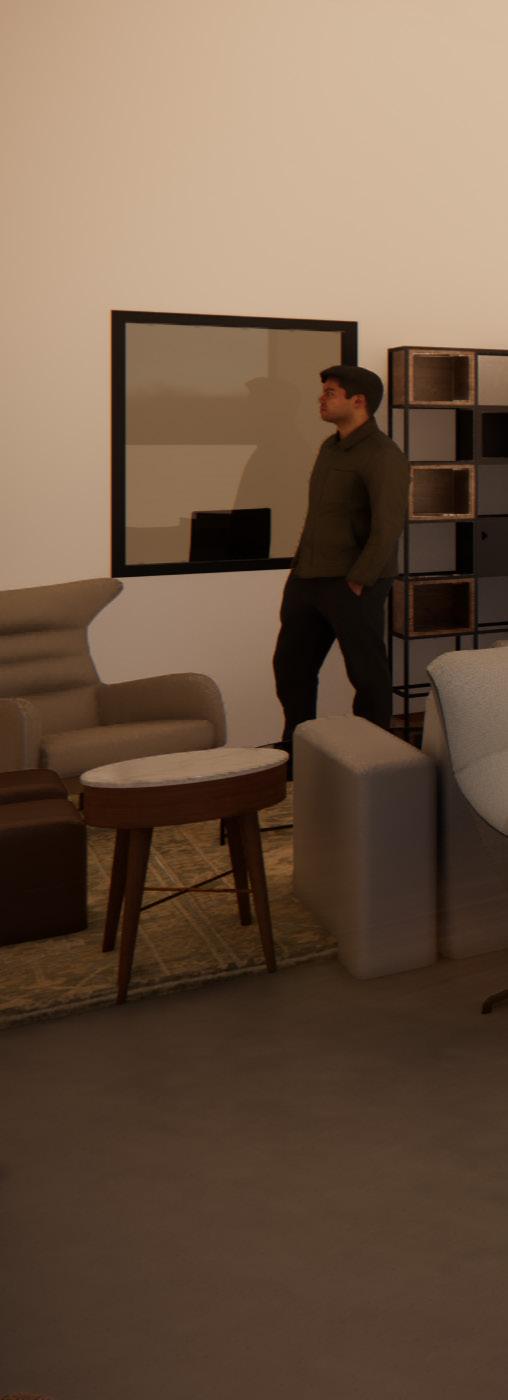
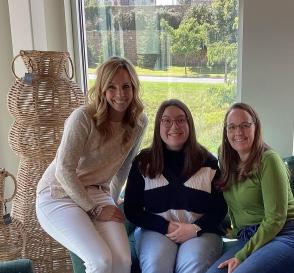
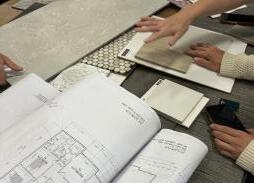
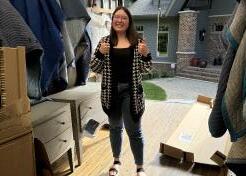
Over the last two summers, I had the opportunity to intern with Dwellings Interior Design and Home Furnishings in Madison, Wisconsin. Working directly with the two owners, Jenny Haley and Julie Umhoefer, I had the unique ability to gain firsthand insight into the intricacies of owning and operating a small design business.
Project Overview
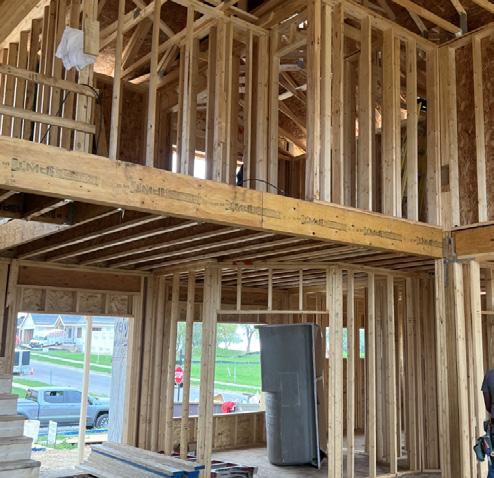
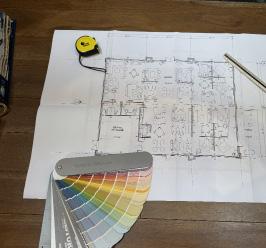
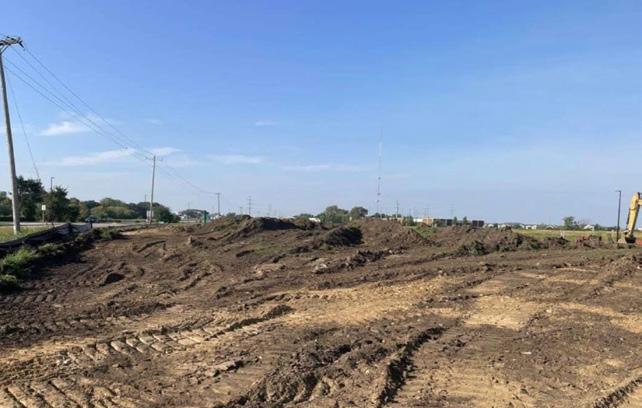
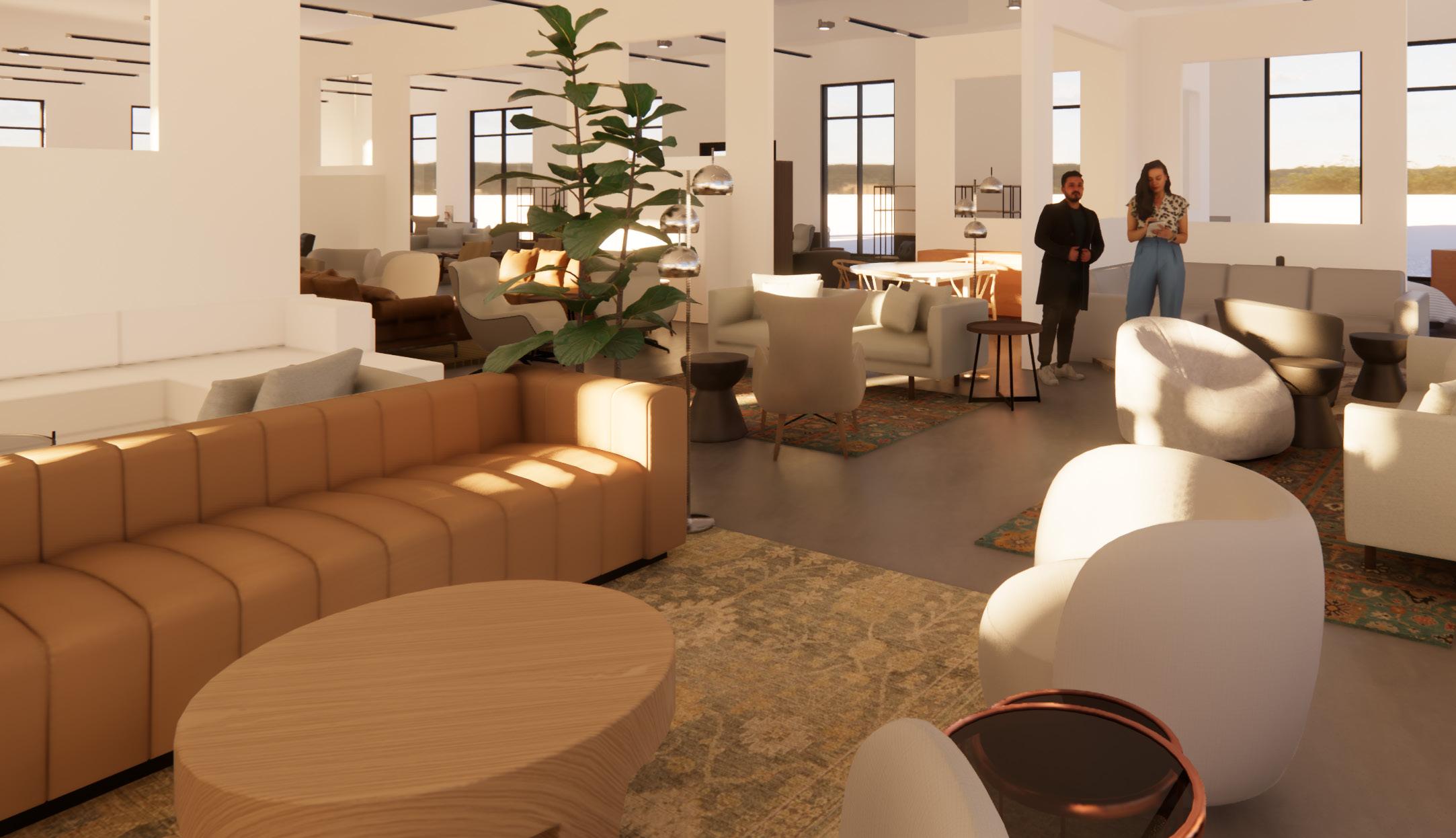
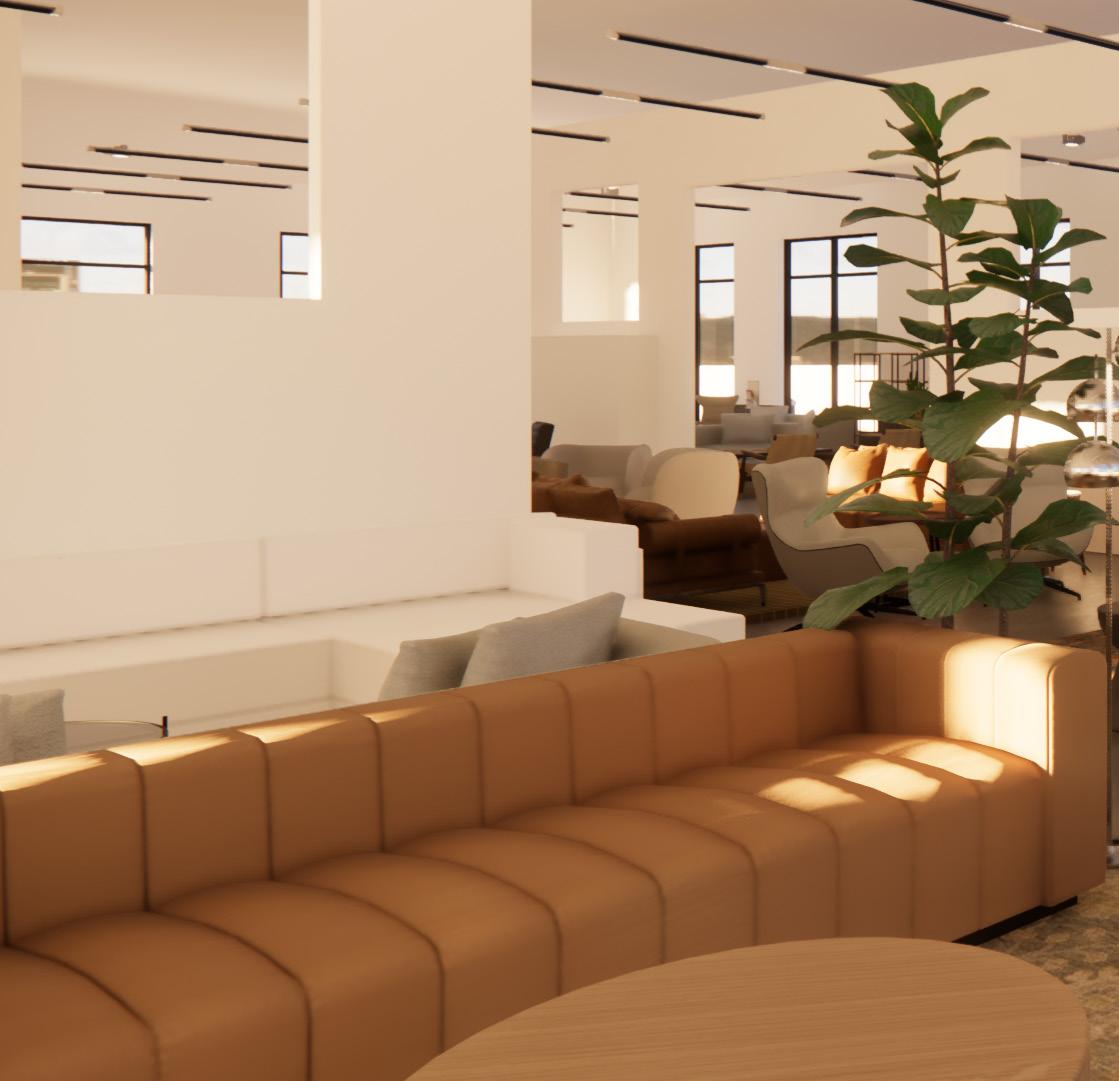
In addition to working with clients on custom furniture and redesign projects, I spent time with Dwellings’ sister company, Bungalow 5, a custom home building firm. I contributed to material selections, cabinet design, and overall space planning on two custom spec homes. This past summer, I had the opportunity to be the lead designer for Dwellings new showroom construction. Working directly with local developers, architects, electricians and other stakeholders, I space-planned the retail footprint and developed electrical and lighting plans.
Skills Used: Revit, AutoCAD, Photoshop, InDesign, Hand Drawing