ANDREA BRANZI: GENETIC METROPOLIS
PROJECTS 1979-2019
“The distance between the natural world and the artificial world no longer exists today, because the latter has become second nature.” —Andrea Branzi
In 1966 Andrea Branzi and three of his colleagues founded Archizoom Associati, a research collective dedicated to radical speculation on design. Over the eight years of its existence, the group charted a future that looks astonishingly like our present. Though Archizoom did make objects—among them, some of the era’s most enduring radical designs—their principle focus was on urban space, which they conceived in radically integrative terms. Projects like “No-Stop City” (1970) postulated an ever-expanding domain in which conventional oppositions (public/private, industrial/residential) are completely dissolved. Branzi pointedly compared it to a supermarket or factory. In contrast to those sites of consumption and production, however, it was conceived as a radically free space. In NoStop City, individual identities would take on new, previously unimaginable shapes. Its continuous grid, potentially endless structure, and infinite flexibility made it a prescient forecast of the internet. Archizoom foresaw the liberating potential of future technology, and its tendency to surface the dark side of human nature. In 1967, the group wrote in Domus magazine, “we want to let in everything that stays outside the door: carefully constructed banality, deliberate vulgarity, urban fittings, dogs that bite.” Given what Branzi was able to see coming fifty years ago, what might he be able to tell us today?
Before attempting an answer to that question, a brief overview of this extraordinary thinker and creator’s career is in order. Branzi was born in 1938, in Florence, and like most of his colleagues in the world of radical design, studied architecture. It has been argued that his generation’s turn towards speculative practice was a response to national crisis; Italy was going through difficult times, economically and politically, and little of ambition could be built. Better simply to imagine an entirely different set of conditions. But Branzi’s impetus was more positively framed, and international in its inspirations. His early paintings, such as the 1965 neo-cubist work Madri, attest to his fluency with broader European currents in fine art, including the work of Jean Dubuffet and the CoBrA group. He’d had a revelatory experience with the avant-garde Living Theater company, based in New York; and was highly attuned to Pop Art developments in America and Britain (in fact, the name Archizoom was half-tribute to the London-based group Archigram).
The ensuing decade would see Branzi form associations with several further radical groups, both as a practical contributor and a sort of in-house theoretician. Even before Archizoom formally dissolved, Branzi had started an involvement in Global Tools, founded in 1973 in the offices of the design magazine Casabella. Alongside other luminaries such as Riccardo Dalisi, Alessandro Mendini, Ugo la Pietra, and Ettore Sottsass, Global Tools rejected capitalist technocracy in favor of craft-based social revolution: a “technical back-to-zero,” as Branzi put it. Workshops were envisioned in which familiar everyday objects would be deconstructed and then built back up into new, more individualistic arrays. The group was inspired, as Beatriz Colomina has pointed out, by the American counterculture bible The Whole Earth Catalogue, with its subtitle “Access to Tools,” and aimed at a comparable democratization of material culture.
If Global Tools sought a utopian de-professionalization of design, then Studio Alchimia, the next radical group to command Branzi’s attention, aimed at an even more thorough dismantling of the discipline, under the strategic leadership of Mendini—a playful nihilist with an editorial turn of mind. Branzi created some of Alchimia’s explicitly postmodern object-provocations, including colorful and disjunctive parodies of functionalism in the collections bau. haus and bau. haus II (1979-80). He conceived a “Gallery of Copyism,” populated by straight swipes of historical avant garde works by El Lissitzky, Mondrian, and Kandinsky, rendering them into mere furnishings— which is to say, underlining their status as commodities. Branzi also participated in the project
Mobile Infinito (“infinite furniture”), designed along the lines of a Surrealist exquisite corpse, cobbled together from separately devised elements. These gestures make for a fascinating parallel with activities then unfolding in New York City, as in the appropriation-based work of Cindy Sherman and Sherrie Levine. But the Italian design context was different. Branzi and his allies did not intend to stage a “death of the author,” but on the contrary, sought to move past their earlier utopian radicalism into a more sophisticated engagement with the “flotsam and jetsam” of past styles, in explicit confrontation with new “languages of mass communication.” In the process, as he later noted, “we were already discussing the end of the historical avant-garde.” This was the intellectual quarry from which the shining superficialities of postmodernism would soon be mined.

Second Nature: The World of Andrea Branzi
Glenn Adamson
Andrea Branzi, Madri, 1965
The sheer extremity of Alchimia’s provocations, which seemed to enact an endgame for design authorship, inevitably raised the question: what next? For many observers, the answer to that question was Memphis, the Milan-based design collective founded in 1981 under the leadership of Ettore Sottsass. Adapting aesthetic solutions that had been trialed within Alchimia, it retained a degree of the earlier group’s acid satire, but was pitched to a broader marketplace. Its impact was, briefly, seismic. Branzi did contribute his own designs to the group’s collections, most memorably his 1981 Gritti Bookcase, whose open-shelving system and floating geometric components presaged later work. But his involvement with Memphis was comparatively slight. At the time, he was primarily engaged as founding cultural director of Domus Academy (founded in 1982 as an outgrowth of Domus Magazine). He was also at the height of his powers as a writer. In Hot House published in 1984 – arguably the decade’s most essential design book—Branzi glossed the whole history of Italian radical movements. He followed it up with the more programmatic Learning from Milan (1988; the title is a riposte to Venturi and Scott Brown’s 1972 Learning from Las Vegas). In both texts, he provided a dense theoretical framework almost unknown in design writing, emphasizing the concept of a “second modernity” dictated by flows of capital, mediation, and information. This required a comparable reorientation in the designed object. If modernism had channeled the energy of the industrial revolution in its materials and manufacture, there would now have to be a language appropriate to the post-industrial condition.
Branzi materialized this theory in a highly unexpected way, turning away from the extreme artificiality of Memphis and other postmodern design to embrace a style he called “neoprimitivism.” The key expression of his new direction was Animali Domestici (“Domestic Animals”), designed in collaboration with his wife Nicoletta Morozzi. The series featured rectilinear modern forms impaled by unfinished logs, sticks, and wood offcuts, upholstered with loose pelts. It was a surprising, but extraordinarily insightful. Branzi realized that it would only be possible to contend with the catastrophic aspects of “post-industrialism” by moving outside of the human perspective; and that this, in turn, required a shift from the architectural to the archetypal. Domesticated pets and livestock were a useful metaphor: the “extraordinary alliance” that humans and animals have forged through history constituted a relationship to which living environments, too, might aspire. Each of the works in the Animali Domestici series accordingly presented a hybrid, in which the artificial and natural were brought into equilibrium—a tactic also seen in Branzi’s Foglie (“Leaf”) lights (1988), which again confirmed Branzi’s anomalous position with respect to contemporaneous design. Thus, in the latter half of the 1980s, his work embodied the complete antithesis of the slick, postmodern luxury goods that dominated the scene. As so often, he was looking ahead, anticipating the characterful objets trouvés of Droog
In recent years, Branzi has continued to use archetypes, which he defines as “very simple languages that however express a great universal communicative strength.” In the series Trees & Stones (201011), austere compositions of flat metal seem to conform themselves around natural specimens. In use, as Branzi eloquently puts it, “books and images find their place next to the strange presence of branches and trunks, like in the reality of the world.” Beyond this explicit opposition between industrial and organic form, held in equilibrium, the works have more nuanced conceptual undertones: a compositional reference back to the gridded abstractions of De Stijl (and, by extension, Branzi’s own earlier appropriations of that source); and still more subtly, the way that they complicate the logic of the limited edition, the mechanism by which much contemporary design is fabricated and sold. The introduction of natural elements into a repetitious framework ensures that each work is unique, but only partly so: “a naturally diversified series,” as he puts it. This thoughtfully-calibrated, median position between serial production and organicism can also be seen in Branzi’s lamps employing Japanese rice paper (2014). In Italy, lighting is big business, a mainstay of the design economy. The shades, monumental in scale (and hence implicitly sculptural), secure an autonomous presence by virtue of their artisanal facture and inherent fragility.
Branzi’s archetypal language reached a high refinement in the Walls collection (2013), poetic and pictorial works possessed of a somber gravitas. Executed in the delicate medium of chalk on canvas, and featuring domestically scaled still-life vignettes, they recall the metaphysical style of Giorgio de Chirico, but also the frescoes of Pompeii, or trecento Florence. There is a riddling, rebus-like quality to the arrangements. Despite the evident precision of placement, it is as if they could be manipulated at will, like shelved walls in an actual domestic space. In their temperament, the Walls are as close as Branzi has come to the melancholic historicism that defined much postmodern practice—born of a collapse of faith in the modernist myth of progress. That ideal was replaced by a perpetual motion that is also a form of stasis, as in ancient civilizations—in his words, “a return to circular time, that is, a time when everything changes, however without development.”
Branzi’s most recent cabinet works, the Plank series (2014-15), again feature natural wood elements, but also sport vibrant color, like sculptural brushstrokes. The works present a physical metaphor for the artistic condition, with the moments of painterly liberty literally “framed” within a rigid order. These works retroactively rescript their own references. After seeing them, you are likely to dwell on the restrictive rectangularity of Abstract Expressionist canvases by Mark Rothko or Franz Kline. At the same time, the Plank series also speaks to 21st century life. They are, after all, for storage; they metaphorically evoke for the containment of individuality within rigid systems, like a personal account in a hard drive. The somewhat intuitive and elusive logic by which each cabinet is arranged, too, speaks to our associative, hyper-textual environment.
Paralleling his continuing investigations into objecthood, Branzi has continued his activities as a theorist of the large-scale. Urbanism remains at the core of his thinking. He has circled back time and again to the paradox that Archizoom isolated in the late 1960s: a utopia of total freedom would be nothing at all, just a yawning vacancy where culture might otherwise have been. As the world has caught up with him—has actually produced, in virtual space, a “territory criss-crossed by the free flow of information and human paths, without meaning, without memory, without a destiny”—he has continued to launch speculative forays into the question of how hyperfluid spaces could be inhabited more humanistically.
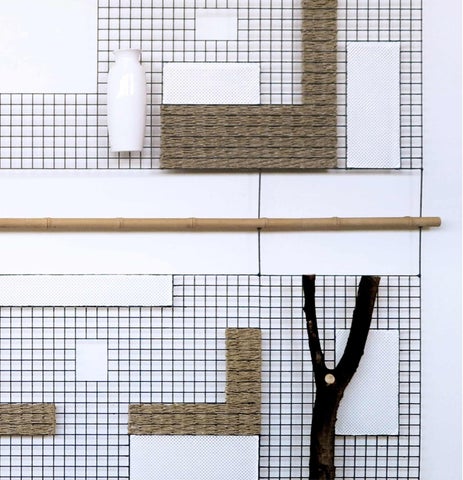
These have taken many formats, including full-scale fragments (as in the recent Arazzo series, 2017) of a possible infinite architecture—another idea adapted from De Stijl. The most important, however, is his sprawling, ambitious ongoing series Territories, Branzi’s continued meditation on the metropolis. Physically, these are more or less the same: mirrored dioramas which extend into phantasmagoria. The intellectual reach of the project is vast, however, the logical deductions of fifty years of speculation. Each Territory is its own discrete research project, often exploring the interaction of biotechnology, agriculture, manufacture, and residential life. A summary of these investigations is far beyond the scope of the present essay, but one idea (put forward in Branzi’s Genetic Metropolis project, 1988-2006) leaps out as representative: if the modernist city was a set of boxes, his vision is of a space akin to a textile, which can be folded in different configurations so that its various surfaces touch. The city is a fabric, which can give a little when put under pressure. It’s a revelatory conception, one that we might bear in mind when we feel that contemporary life threatens to carry us away from one another, on drifting tides.

The Royal Swedish Academy of Sciences, in awarding Branzi the prestigious Rolf Schock Prize for Visual Arts in 2018, noted that the implications of “No-Stop City” and anti-design were “today perhaps even more [relevant] than when they were originally formulated.” This brings us back, at last, to the question of his lasting legacy. Given that so many of Branzi’s theories have now become reality (or rather, hyper-reality), what wisdom does this great radical figure have for us today? Certainly, he remains an insightful observer of our contemporary culture, as thoughtful in matters of ethics as aesthetics. “Perhaps this is one of the fundamental achievements of the 21st Century,” he says: “accepting the existence of problems that cannot be solved.”
And, “I talk a lot about uselessness in a positive sense, as a quality that represents an overflowing of energy, an overflowing of generosity… music, poetry, art, enjoyable things. That is what has enabled civilizations to develop.”
But perhaps the most important thing to notice is that Branzi has never been only a critic, only a teacher, only a historian, only an urbanist, only a designer. He has occupied all those roles simultaneously. In this respect, he personally embodies his own synthetic vision. The virtual and the physical, the industrial and the natural, the organic and inorganic, the idea and its manifestation: all these things find equilibrium in his work, and more importantly, they converge. Perhaps the greatest lesson he imparts to us is this: it’s not by setting up oppositions that true insight happens, but in the elastic space between.
Utopia Bookcase, 1978-80
“Utopia” from the bau. haus II collection for Alchimia, is part of ‘Nuovo Design Italiano,’ the innovative design movement originated in Milan during the 1970s as a post-radical trend. At the core of the movement was the search for a new expressive energy of objects, through new forms, colors, ironic quotations. —Andrea Branzi

Utopia Bookcase, 1978-80
Laminated wood, lacquered metal, and glass
98.5 x 107 x 9.75 inches
250 x 272 x 25 cm
Collection
The Museum of Fine Arts, Houston, TX
1979
“Adalberto Libera” is one of the early Alchimia prototypes and the name refers to a great Italian architect of the 1940s and 50s: a very stern, essential, uncompromising architect. These prototypes were not intended for mass industrial markets, but rather for collectors, galleries and museums. They are therefore characterized by an experimental, innovative design, aimed at small post-industrial markets. —Andrea Branzi
Adalberto Libera Bookcase, 1979
Painted metal and glass
71.25 x 68.75 x 11.75 inches
181 x 174.5 x 30 cm

Adalberto Libera Bookcase,
Gallery of Copyism, 1980
For the Gallery of Copyism from the bau. haus collection, fine art was transformed into furnishings. By rendering famous paintings by Piet Mondrian, El Lissitzky, Wassily Kandinsky, not as “fakes,” but as hand-painted panels in slightly different sizes, they became domestic objects. And so these were identical to the original, but much less expensive. The desecration of these masterpieces, and also the dissemination, was not meant to be a slight, but instead an intention to cement their legacies as holy icons of our history. —Andrea Branzi
From left to right:

34.75 x 45.25 inches
88 x 115 cm
El Lissitzky Painting, from the bau. haus collection, 1980
Oil on canvas
35.5 x 27.5 inches
90 x 70 cm
Mondrian Painting, from the bau. haus collection, 1980
Oil on canvas
15 x 13.75 inches
38 x 35 cm


Kandinsky Painting, from the bau. haus collection, 1980 Oil on canvas

Animali Domestici, 1985-1986
The title “Animali Domestici” should be understood as a sort of metaphor of the relationship that links man to a number of animal (but also technical) presences within his home. Just as animals can be a positive presence in our habitat, so too technological inventions can be “domesticated”, that is, rendered suitable for sharing man’s most private space. For too many years now appliances and furniture have been entering the home as extraneous presences, out of step with man’s cultural outlook, technical instruments devoid of grace and valued only for their utility.
One lesson that can be learned from Animali Domestici is simply that while animals come from a different world from ours, they still love man and keep him company. They have established an extraordinary alliance with him based on the diversity of their species, yet with profound ties to the habitats and habits of man. So the moral of the fable of these domestic beasts is that hybrid love between different creatures is possible. It is the parable of technology in this century, and it is no coincidence that more that any other it is a century that has produced images of animals that talk, wear clothes and look like human beings. It might almost be said that through them we have tried to exorcise a world different from our own, using performing animals as a last resort, in an almost utopian hope of being able to live with them, turning them into our doubles, clones of the human race.
In fact this idea has produced a generation of robots, which are just trained animals, fruit of a logic by which the animal must be subjugated to man. The difference between a domestic animal and a trained (or tamed) one lies in the fact that the latter is the outcome of an unnatural and violent attitude, while the domestic animal establishes the dream of a loving relationship with man. —Andrea Branzi
Edition of 9

Animali Domestici Bench, 1985
Lacquered wood, birch
32.75 x 55 x 25.75 inches
83.2 x 139.7 x 65.4 cm
Edition of 3

Animali Domestici ‘Cucus’ Chair, 1985
Painted MDF and tree branches
42.75 x 19.75 x 23 inches
108.6 x 50.2 x 58.4 cm
35.5 x 19.75 x 21.25 inches
90 x 50 x 54 cm
Edition of 3

Animali Domestici Chair, 1985
Wood and plywood
Birch and aluminum
74 x 11 inches
188 x 28 cm
Edition of 8
Collection

Animali Domestici Light, 1985
Centre Georges Pompidou, Paris, France

Installation view: Open Enclosures, Fondation Cartier, Paris, 2008

Installation view: Open Enclosures, Fondation Cartier, Paris, 2008
Lampe Foglia, 1988
Only a few of these very experimental prototypes were created as the electrical circuit was extremely fragile. The visual language is completely foreign to the formal “codes” of Memphis. This series referenced and was born out of the “animism” of nature and objects. Made of “electro-luminescent” material, the lamps diffused a soft and vibrant light, and lit up as if it were alive, magical, mysterious. —Andrea Branzi
Lampe Foglia, 1988
Acrylic glass, electroluminescent sheet each: 10 x 17.75 inches
25 x 45 cm
Edition of 24
Collection
Centre Georges Pompidou, Paris, France


The Grandi Legni originate from the impossibility of distinguishing the post from the present; from the discontinuity of memories and from the new dimension of our mental geography. Contemporary objects are born antique and the antiques belong to our contemporaneity. They are the protective, kindly presences which, like the household gods of ancient Rome, watch over our cold hearth. The Grandi Legni are like archetypal structures on which other languages rest, because one language alone cannot represent everything. As in a crucible where everything is merged together, as if to create a new alloy. I have often thought of Ezra Pound’s “Cantos Pisani”, where the history of ancient Chinese empires is mixed with the Dolce Stil Novo, without pursuing any narrative connection, but succumbing to the power of poetry. Or to the music of Jimi Hendrix, which like a sacred flame burns all and regenerates all.
These wooden, catatonic and mysterious installations are not elements of furniture because they presuppose around them an empty, indifferent space, available to any activity. Instead of organising the environment, they empty it. They are situated halfway between architecture and design; by superseding both that “noble feeling of indifference” of architecture towards its own interiors, and by going beyond the object-limits of design.
The Grandi Legni do not belong to the art world, because they are freely usable structures whose foundation is entirely domestic. They are autonomous presences, which in their autonomy find their meaning: neither design nor architecture, but in part design and in part architecture. This intermediate dimension is situated in that empty and unexplored space that is the gap between the object and the architecture containing it; an empty space open to the biodiversity of the dead but also of canaries, similar to the Cumaean Sybil’s cave which instead of solving the enigmas of history creates others. —Andrea Branzi
Grand Legni, 2009
with three-door metal frame and basis with beams being rough-hewn by hand and burnt; Inside four cabinets burnt massive larch reproducing paintings on silk on the door
80.75 x 102.5 x 23.75 inches
205 x 260 x 60 cm

Grandi Legni GL 13, 2009
Cage
Movable frame on wheels, made of ancient beams with hand-made cuts and joints; On the structure, four cabinets in thick cardboard with serigraphs on the doors
94.5 x 94.5 x 19 inches
240 x 240 x 48 cm

Grandi Legni GL 19, 2009
Trees, 2010-2011
When birch tree forests are culled or agricultural cultivations of fruit trees are pruned, their branches and trunks are dispersed or burned. I have always been fascinated by these segments of nature, which continue to release a great expressive force, even more powerful when they are combined with modern, perfect and industrial materials; they become mysterious, always diverse, unique, unrepeatable and somewhat sacred presences.

Trees, trunks and branches are part of our ancient lore but also of present-day culture, because in the age of globalization, design seeks to reclaim recognizable ‘anthropological’ platforms. The Trees series consists of simple household objects, in which books, and images find their place next to the strange presence of branches and trunks, like in the reality of the world. —Andrea Branzi

Tree 1, 2010

Birch and patinated aluminum
39.5 x 47.25 x 10.75 inches
100 x 120 x 27 cm
Edition of 12
Collection
Israel Museum, Jerusalem, Israel


68 x 150 x 23.5 inches
172.7 x 381 x 59.7 cm
Edition of 12
Tree 1B, 2011
Birch and patinated aluminum
Edition of 12

Tree 2, 2010
Birch and patinated aluminum
39.5 x 47.25 x 10.75 inches
100 x 120 x 27 cm

31.5 x 65 x 10.75 inches
80 x 165 x 27 cm
Edition of 12
Tree 3, 2010
Birch and patinated aluminum


Edition of 12
Tree 4, 2010
Birch and patinated aluminum
43.25 x 98.5 x 10.75 inches
110 x 250 x 27 cm
Collection
Israel Museum, Jerusalem, Israel

Tree 5, 2010
Birch and polished aluminum
118 x 78.75 x 10.75 inches
300 x 200 x 27 cm
Edition of 12
Collection
The Museum of Fine Arts, Houston, TX (Prototype)
118 x 78.75 x 10.75 inches
300 x 200 x 27 cm
Edition of 12

Tree 5, 2010
Birch and patinated aluminum
Collection
Centre Georges Pompidou, Paris, France


Edition of 12
Tree 6, 2010
Wood and polished aluminum
78.75 x 78.75 x 10.75 inches
200 x 200 x 27 cm


53.25 x 118 x 15.75 inches
135 x 300 x 40 cm
Edition of 12
Tree 6B, 2011
Birch and patinated aluminum


Edition of 12
Tree 7, 2010
Wood and polished aluminum
78.75 x 78.75 x 10.75 inches
200 x 200 x 27 cm

80.75 x 55 x 13.75 inches
205 x 140 x 35 cm
Edition of 12

Tree 8, 2010
Birch and patinated aluminum

99.25 x 55 x 13.75 inches
252 x 140 x 35 cm
Edition of 12

Tree 9, 2010
Birch and patinated aluminum


65 x 142 x 15.75 inches
165.1 x 360.7 x 40 cm
Edition of 12
Tree 9B, 2011
Birch and patinated aluminum


Stones is a collection of unique pieces, consisting of bases and volumes in black metal incorporating logs of raw wood that support stones. The idea was to bring design closer to art, sculpture, and archetypal, primordial symbols. Testifying to the neo-primitive condition of contemporary man. —Andrea Branzi


47.25 x 55 x 10.75 inches
120 x 140 x 27 cm
Edition of 12
Stones 2A, 2011
Stones and patinated aluminum


Stones and patinated aluminum
88 x 118 x 15.75 inches
223.5 x 299.7 x 40 cm
Edition of 12
Stones 7A, 2011
Collection
Centre Georges Pompidou, Paris, France

Installation view: Trees & Stones, Friedman Benda, New York, NY, 2012


Walls is a series of large panels, representing Pompeian walls frescoed with mysterious, conceptual, theoretical and literary perspectives. The complex and poetic relationship of man with his domestic habitat is here represented with considerable psychoanalytic clarity and great beauty. —Andrea Branzi
Walls, 2013

Wall 1, 2013
Chalk on printed canvas and wood
86.75 x 86.75 x 21.75 inches
220 x 220 x 55 cm

Wall 2, 2013
Chalk on printed canvas, burned wood and skull
94.5 x 78.75 x 21.75 inches
240 x 200 x 55 cm

Wall 3, 2013
Chalk on printed canvas and glass shelves
94.5 x 116.25 x 21.75 inches
240 x 295 x 55 cm

Wall 4, 2013
Chalk on printed canvas and wood
94.5 x 78.75 x 26.75 inches
240 x 200 x 68 cm

Wall 5, 2013
Chalk on printed canvas and glass shelves
94.5 x 63 x 21.75 inches
240 x 160 x 55 cm

Installation view: La Metropoli Latina, Assab One, Milan, Itally, 2019

Installation view: La Metropoli Latina, Assab One, Milan, Itally, 2019


Plank, 2014-2015
The Animali Domestici series was the starting point for an investigation into new archetypes, which means very simple languages that however express a great universal communicative strength. Throughout the twentieth century, the neoplastic code, based on prisms, spheres, straight lines and planes, constituted a kind of archetypal repertoire applied to industrial prototypes. Once that code, born in the age of mechanics and early machines, ceased to be considered valid, the 21st century ushered in the hypothesis of elaborating linguistic codes based on new logics, yet endowed with the same capacity for recognition.
The Plank series also stems from that idea, coupling natural elements like raw wood branches and industrial grade metal carpentry. The objects thus created are hybrid products, balancing contrasting concepts like technique and nature, and spontaneously forming a diversified series, that is to say, objects that are partly mass-produced, therefore serially identical, and partly completely different, because in nature things never form identically among themselves, thus making the tree branches a naturally diversified series.
Consequently, nature, technique, animals, physiology, archetypes, all coexist in a kind of integrated condition, which Pierre Restany called neo primitive because similar to the condition in which the Indigenous Amazonians live, in which nature, magic, medicine, hunting, religion and technology belong to a single sphere of integrated reality experience.
—Andrea Branzi


160
Plank Cabinet 1, 2014
Patinated and polished aluminum, wood and spray paint
63 x 110.25 x 13.75 inches
x 280 x 35 cm
Edition of 12
Collection
The Museum of Fine Arts, Houston, TX


180 x 240 x 35 cm
Edition of 12
Plank Cabinet 2, 2014
Patinated and polished aluminum, wood and spray paint
70.75 x 94.5 x 13.75 inches


180 x 220 x 35 cm
Edition of 12
Plank Cabinet 3, 2014
Patinated and polished aluminum, wood and spray paint
70.75 x 86.5 x 13.75 inches


67 x 94.5 x 13.75 inches
170 x 240 x 35 cm
Edition of 12
Plank Cabinet 4, 2014
Patinated and polished aluminum, wood and spray paint


63.25 x 110.25 x 13.75
161 x 280 x 35 cm
Edition of 12
Plank Cabinet 5, 2014
Patinated and polished aluminum, patinated bronze, wood and spray paint
inches


160 x 240 x 45 cm
Edition of 12
Plank Cabinet 6, 2015
Patinated and polished aluminum, wood and spray paint
63 x 94.5 x 17.75 inches


160
Edition of 12
Plank Cabinet 7, 2014
Patinated and polished aluminum, polished bronze, wood and spray paint
63 x 110.5 x 17.75 inches
x 280 x 45 cm
Collection
The Pizzuti Collection, Columbus, OH


161 x 280 x 50 cm
Edition of 12
Plank Cabinet 8, 2014
Patinated and polished aluminum, wood and spray paint
63.25 x 110.25 x 19.75 inches

Patinated aluminum, wood and spray paint
19.75 x 39.25 x 13.75 inches
50 x 100 x 35 cm
Edition of 12
Patinated aluminum, wood and spray paint
19.75 x 78.75 x 13.75 inches
50 x 200 x 35 cm
Edition of 12
Patinated aluminum, wood and spray paint
19.75 x 59 x 13.75 inches
50 x 150 x 35 cm
Edition of 12


Plank Cabinet 12A, 2014
Plank Cabinet 12C, 2014
Plank Cabinet 12B, 2014

Installation view: Interiors, Friedman Benda, New York, NY, 2016

Installation view: Interiors, Friedman Benda, New York, NY, 2016

The Lamps series was produced by Friedman Benda in 2014. This collection aims to expand the light source outside of industrial technologies, using fragile materials such as transparent colored paper, typical of the Japanese craft tradition. —Andrea Branzi
Lamps, 2014
Edition of 12

Lamp, 2014
Japanese rice paper, bamboo, Belgian Bluestone
104.5 x 24 x 24 inches
265.5 x 61 x 61 cm
of 12

Lamp, 2014
Japanese rice paper, aluminum
104.5 x 24 x 24 inches
265.5 x 61 x 61 cm
Edition
Edition of 12

Lamp, 2014
Japanese rice paper, bamboo, Belgian Bluestone
84 x 49 x 49 inches
213.5 x 124.5 x 124.5 cm
Edition of 12

Lamp, 2014
Japanese rice paper, aluminum
88 x 29.75 x 29.75 inches
223.5 x 75.5 x 75.5 cm


The Arazzo are like celluloid strips of an “empty” space, along whose perimeter float—like chrysalises—flowers, books, masks, small sculptures, openings, passages… The Arazzo establish an “architecture” in line with the project’s extreme dematerialization, though without sacrificing its essential alphabet: fragmented, transparent, ballasted or weighed down with objects that flatten its dangling surfaces. A theoretic architecture that lacks a third dimension, just as we often lack awareness of the depth of our actions. Images defining a thing that isn’t there. —Andrea Branzi

106.25
270
Arazzo 1, 2017
Wire mesh, rope, glass shelves, earthenware vases, stones
x 112.75 inches
x 286 cm
Collection
Centre Georges Pompidou, Paris, France

Arazzo 2, 2017
Wire mesh, rope, glass shelves, earthenware vases, stones
106.25 x 106.25 inches
270 x 270 cm
Collection
Centre Georges Pompidou, Paris, France

Arazzo 3, 2017
Wire mesh, rope, glass shelves, earthenware vases, stones
102.75 x 106.25 inches
261 x 270 cm
Collection
Centre Georges Pompidou, Paris, France

Arazzo 4, 2017
Wire mesh, rope, glass shelves, earthenware vases, stones
106.25 x 106.25 inches
270 x 270 cm
Collection
Centre Georges Pompidou, Paris, France
Architecture has always been interpreted as a fortification system, a kind of art of construction for all eternity, as if it bore witness to the definitive values and perennial functions.
The contemporary city, on the other hand, presents itself as an urban system where all functions are subject to be changed, altered, abandoned; whether working at home, living in the office, or making schools in factories, galleries in warehouses, banks in churches, shops in monuments. None of the intended uses that were defined only ten years ago are now respected: the city has profoundly changed its system of use, the way of generating economies, and therefore, the relationships between people, and between people and architecture have changed. —Andrea Branzi
Cromlech, 2019


79.5
202 x 221 x 40 cm
Edit on of 12
Cromlech, 2019
Foam, concrete, alum num
x 87 x 15.75 inches
The vibrations lamp, which consists of the sum of plexiglass discs, stemmed from an idea I had in the late nineties to overlap and combine luminous discs. This project began at the CIRVA laboratory in Marseille and subsequently evolved into a prototype with an innovative use of space. These luminous and vibrant columns create a unique and theoretically infinite form. —Andrea Branzi
Vibrazioni

79.5 x 27.5 x 19.75 inches
202 x 70 x 50 cm
Edition of 12

Vibrazioni, 2019
Optical acrylic, aluminum
TERRITORIES
Genetic Metropolis, 1988-2006
The Genetic Metropolis represents the most advanced level of human aggregation and the maximum market of genome exchanges and interwoven family relationships; its constructed form is not significant, as present-day society can no longer be represented through the functional succession of forms and places. Current society is more and more like a textile civilization formed by weft and warp, creating a flexible and transparent fabric, able to resist the shocks of internal transformations and the impact with innovation pressing in from the outside.
Therefore, when we speak of Genetic Metropolis we indicate a theoretical model of interweaving where the vital energies and Eros coincide with the very form of the city, through a reversible and crossable building system. A biotechnological environment corresponding to a structure that is not necessarily chaotic, but rather, expansive, close to the methods of management of agricultural systems, linked to menstrual and/or seasonal cycles, meteorology, and the reversibility of crops. The Genetic Metropolis is therefore more like a high-tech favela than one the big, rational American city. More similar to the outskirts of Mumbai, where for three centuries 700,000 people have lived in an integrated and fluid system of temporary huts, than to the rigid, fragile and untouchable European city centers. —Andrea Branzi

Genetic Metropolis, 1988-2006
17.25 x 21.25 x 21.25 inches
44 x 54 x 54 cm
Steel, wood, mirror, paper, ceramic paste
The Visore Interior Garden works on the theme of the traditionally rigid and definitive perimeter of architecture, which separates interior from exterior space; in this case the walls are the result of interweaving the two components agricultural and architectural thus creating a hybrid perimeter, a nuanced borderline, which simultaneously belongs to the two opposing realities.
Interweaving is a technology that is not used in architecture, based as it is on the collaboration of weak structural components, which, while remaining autonomous and separate, create an elastic, dismountable surface with characteristics of particular lightness and penetrability. —Andrea Branzi

aluminium, iron, wood, mirror, polyplat, plexiglass, neon lamp
29.25 x 63.5 x 24 inches
74 x 161 x 61 cm
Visore Giardino Interno, 2004
Glass,
Visore Giardino Interno, 2004

This project is part of a research that has had several titles over the years, from weak urbanization to “abstract” architecture, in the sense that it is aimed at identifying “functionoids”, i.e., organisms that do not have a specific function or a clear perimeter; more like a territory than a building, they offer discontinuous protection.
This type of anti-compositional and anti-typological architecture, displaying a low level of identity and specialization, corresponds to an age in which the difference between internal and external spaces has disappeared; where functions change over time and the city is no longer a set of architectural boxes, but an experiential territory, where the qualities of space no longer depend on the shape of the buildings, but on immaterial experiences, the goods that are purchased therein, the relationships that can be established and the information circulating in it.
This type of research is not intended for immediate realization, but generates theorems that, like in theoretical physics, require extended timeframes but will ultimately renew the iconographic repertoire on which contemporary architecture is based. Abstract architecture is not an abstract project, it is a gesture of realism compared to a world that is already abstract today, i.e., devoid of a recognizable form and a representable function. —Andrea Branzi
Pineta di Architettura, 2006

Pineta di Architettura, 2006
Mixed media
21.75 x 37.5 x 37.5 inches
55 x 95 x 95 cm
Territorio Enzimatico, 2006
Consider the “Metropolis” as an infinite concave space, micro-climatized, reversible and flexible, crossable, where the perimeters extend and contract and nothing is definitive. A territory criss-crossed by the free flow of information and human paths. Without meaning, without memory, without a destiny. —Andrea Branzi

Territorio Enzimatico, 2006
Painted wood, glass, iron, plexiglass, mirror, flat screen tv, dvd player
30.5 x 55 x 43.5 inches
77.5 x 139.5 x 110.5 cm
Agricoltura Residenziale, 2007
The model of “weak urbanization” is based on the experimentation of reversible territorial logics, which change over time, follow the seasons and enable the coexistence of different cultures and agricultures, the agrarian and the urban. The model represents a territory where agricultural activities and advanced tertiary sector activities are integrated; therefore a hybrid, integrated, flexible, established system. It is however a mix of highly advanced technologies, such as the natural know-how of agricultural production (typical of the countryside), and the electronic technology of computer science (typical of the city).
The result is a semi-agricultural and semi-urban territory, where traditional architecture is transformed into an open, crossable, horizontal landscape, devoid of a defined perimeter and where (by changing the computer software) many different functions can be performed. Therefore a non-figurative architecture, as it is post-compositional and post-typological. At the same time, it is a territory where even agricultural systems are interpreted as horizontal reservoirs with high natural technology, and having a theoretically unlimited perimeter, where reversible production programs are implemented, responsive to weather conditions and to the energetic balance of the soil.
It is therefore the proposal for a weak and intermediate connective system, meant for large agricultural plains where diffuse urbanization systems are already in place. A discontinuous connective system, new when compared to the old tradition that sees the city as a self-contained whole, formed by architectural boxes, and the countryside as an exclusive system reserved for agro-food production.
I think that one of the possible futures lies in the attempt to find non-rigid, porous systems, with a low level of identity and specialization; and just for this reason bound to change over time according to the flows of a changing society and economy. —Andrea Branzi

Agricoltura Residenziale, 2007
Mixed media
40 x 38 x 38 inches
101.5 x 96.5 x 96.5 cm
In the Merchandise Metropolis, architecture has the function of supporting promotional messages and reproductions of packaging for industrial products. Today architecture represents only itself, devoid of values and anthropological meanings. The Merchandise Metropolis evidences the self-representation process of the logic of neo-capitalism, without mediations or positive metaphors. —Andrea Branzi

Wood, mirror, plexiglass, PVC, cardboard
29.5 x 31.5 x 19.75 inches
75 x 80 x 50 cm
Città Degli Oggetti, Theoretical model of product civilization, 2010
Città Degli Oggetti, 2010
For the Continuous Interior, the metropolis is intended as an unlimited interior space: microclimatized and artificially lit, where humans, animals, tribal aggregates, the living and the dead, live together freely side by side. This is a cosmic metropolis where racial separations and permanent social structures no longer exist. —Andrea Branzi

Interno Continuo, Theoretical model of planet biodiversity, 2010
Wood, mirror, PVC, synthetic resin
29.5 x 31.5 x 19.75 inches
75 x 80 x 50 cm
Interno Continuo, 2010
The urban fabric is represented here as a boundless carpet where the only visible presences are the geographical references and the only mobile presences are constituted by the relational flows of human society; all the rest is the constant presence of sky and territory. A tartan-like grid of traces and clusters that do not together constitute an architectural texture, but a huge and inexpressive reservoir consisting of relations and exchange of information. —Andrea Branzi

31.5 x 55.25 x 31.5 inches
80 x 140 x 80 cm
Cielo e Terra, Theoretical model of human territory, 2010
Wood, mirror, PVC, plexiglass, stones, monitor
Cielo e Terra, 2010
The 21st century has revealed the crisis of the city, and consequently, the crisis of the project which was meant to be the instrument of order, progress and beauty. It is from this new historical context that the tendency to go against the current of the majority emerges, which was against the wave of optimism for urbanization projects that marked the last century. A fundamental tendency that originated in the roots of the first seminal political and societal movements, and has sunk like an underground river, disappearing and reappearing, in all of this tragic history and loss of humanity that has been totally ignored by industrial design.
In contrary to this development of which I speak is that which, in its search of profound archetypes, went back to the “animal condition” of Man. And so, interpreting Darwin’s law as a reversible process: if man descends from the monkey, the man can recoup this lineage by returning to his primordial animal state. This should not be thought of as a “regression,” but instead as a symbol of extreme freedom and modernity. —Andrea Branzi

Visore Pietre e Sassi, 2012
Wood, neon light, mirror, glass
35.5 x 39.5 x 23.75 inches
90 x 100 x 60 cm
Visore Pietre e Sassi, 2012

Installation view: Design Miami/Basel, Design at Large, Basel, Switzerland, 2019

Installation view: Design Miami/Basel, Design at Large, Basel, Switzerland, 2019

A “new prehistory” means cohabiting with a new anthropology, a new dramaturgy retracing the dark paths of a restless world that cannot find peace, but only brilliant, generous, luminous thrusts within a territory whose borders we do not perceive, and each time re-launching the idea of an infinite progress to which however the keys to understanding are missing and violence coexists (and sometimes coincides) with the miracles of Science. Street Art and Cave Art coincide as the need to leave a mark.
The uncertainty, fears, and vital energy of Prehistory return to leave their mark on our route towards a temporary future, within a multi-ethnic society made up of seven billion people, where each individual represents an exception, a potentiality but also an enigma that cannot be solved. Perhaps this is one of the fundamental achievements of the 21st century: accepting the existence of problems that cannot be solved. —Andrea Branzi

Evolution 1, 2018
43.75 x 20 x 27.25 inches
111 x 51 x 69 cm
Gesso, polystyrene, stones, wood, plexiglass, PVC
2, 2018
28 x 20 x 27.25 inches
71 x 51 x 69 cm

Evolution
Gesso, stones, DAS, wood, plexiglass
Evolution 3, 2018

35.75 x 20 x 27.25 inches
91 x 51 x 69 cm
Gesso, stones, DAS, polystyrene, wood, plexiglass
4, 2018
35.75 x 20 x 27.25 inches
91 x 51 x 69 cm

Evolution
Gesso, stones, DAS, wood, plexiglass
Evolution 5, 2018
22 x 20 x 27.25 inches
56 x 51 x 69 cm

Gesso, DAS, wood, plexiglass, hemp fiber

ANDREA BRANZI
Present Lives and works in Milan, Italy
Professor of industrial design at the Politecnico di Milano University, Milan, Italy
2018 Awarded Rolf Schock Prize in Visual Arts, Stockholm, Sweden
2008 Named an Honorary Royal Designer in the United Kingdom
1996 Director of Italian design exhibition at Milan Triennial, Italy
1991-1995 Guest professor at universities of Palermo and Milan, Italy
1988 Awarded first prize, International Competition for Development of the Berlin Wall Area
1987 Awarded Compasso d’Oro for his career as a designer and theorist
1983 Co-founded Domus Academy, Milan, Italy
1982 Opens his own studio in Milan, Italy
1979 Awarded first Compasso d’Oro
1977 Co-founded Studio Alchimia, Milan, Italy
1974 Archizoom Associati disbands
1973 Relocates to Milan, Italy
1966 Co-founded Archizoom Associati, Florence, Italy
Graduates from Florence School of Architecture, Florence, Italy
Starts working in the fields of industrial and research design
1938 Born, Florence, Italy
SELECT SOLO EXHIBITIONS
2019 La Metropoli Latina, Assab One, Milan, Italy
Glass-Oriented Design, Center for Innovation and Design at Grand-Hornu, Hornu, Belgium
2017 Inauguration of a Private Space, Centre Georges Pompidou, Paris, France
2016 Andrea Branzi: Interiors, Friedman Benda, New York, NY
2014-2015 Andrea Branzi: Pleased to meet you. 50 ans de création, Musée des Arts Décoratifs, Bordeaux, France
2013 Oggeti, Territori, Volatili, Isabella Bortolozzi, Berlin, Germany
2012 Andrea Branzi: Trees & Stones, Friedman Benda, New York, NY
The Ceramics of Andrea Branzi, Trienniale Design Café, Milan, Italy
Objects and Territories. deSingel International Arts Campus and Vlaams Architectuurinstituut, Antwerp, Belgium
Andrea Branzi: Trees, Carpenters Workshop Gallery, Paris, France
2009-2010 Grandi Legni, Azzedine Alaia Gallery, Paris, France
2008 Open Enclosures, Fondation Cartier, Paris, France
2000 Objects and Territories, Cultural Center Scharpoord, Knokke; Architecture Society of Brussels, Belgium
Età del Bronzo, Design Gallery Milan, Italy
1999 Centro per l’arte contemporanea in Ceramica, Modena, Italy
1998 Passaggi, Design Gallery Milano, Milan, Italy
Silver and Gold, Argentaurum Gallery, Museum of Arts and Crafts, Ghent, Belgium
1997 Fuzzy Design, Design Gallery Milano, Milan, Italy
Wood & Stones, Argentaurum Gallery at Galleria Seno, Milan, Italy
1996 Wireless, Design Gallery Milano, Milan, Italy
Wood & Stones, Argentaurum Gallery, Knokke, Belgium
Galleria Niccoli, Parma, Italy
Showroom Erregi, Parma, Italy
1992
Luoghi Design Gallery Milano, Milan, Italy
1991 Musée des Arts Décoratifs, Montreal, Canada
Amnesie Design Gallery Milan, Italy
Gallery Objecte Munich, Germany
1989 Fort Asperen, Holland
1988 Centre Cayc, Buenos Aires, Argentina
Musée des Arts Dècoratifs, Paris, France
Tokyo Design Agency, Tokyo, Japan
1986 Il grande tappeto ibrido, Installation, Musée Saint Pierre, Lyon, France
Case a Pianta Centrale, Documenta, Kassel, Germany
1985 Exhibition products designed for Memphis at Seibu Department Store, Tokyo, Japan
1982 Mussolini’s Bathroom Installation at Centro Domus, Milan, Italy
1978 Interno urbanistico, Palazzo dei Diamanti, Ferrara, Italy
1 Museo d’Arte Moderna di Modena, Italy
1972 Come e fatto il cappotto di Gogol, film, with Archizoom Associati. Italy
1969 RAI Stand, with Archizoom Associati. Fiera dell’Elettronica, Rome, Italy
Vestirsi e facile film, with Archizoom Associati, Italy
1968 Gazebo e stance vuote, with Archizoom Associati. Mana Art Market Gallery, Rome, Italy
1967 Superarchitettura, with Archizoom Associati. Galleria Comunale, Modena, Italy
Centro di cospirazione eclettica, with Archizoom Associati. Installation at Poltronova, Pistoia, and 14th Triennale di Milano, Milan, Italy
1966 Superarchitettura, with Archizoom Associati. Galleria Jolly, Pistoia, Italy
Musée des Arts Dècoratifs, Paris, France
Tokyo Design Agency, Tokyo, Japan
1986 Il grande tappeto ibrido, Installation, Musée Saint Pierre, Lyon, France
Case a Pianta Centrale, Documenta, Kassel, Germany
1985
Exhibition products designed for Memphis at Seibu Department Store, Tokyo, Japan
1982 Mussolini’s Bathroom Installation at Centro Domus, Milan, Italy
1978 Interno urbanistico, Palazzo dei Diamanti, Ferrara, Italy
Assenza-Presenza nell’architettura moderna, Museo d’Arte Moderna di Modena, Italy
1972 Come e fatto il cappotto di Gogol, film, with Archizoom Associati. Italy
1969 RAI Stand, with Archizoom Associati. Fiera dell’Elettronica, Rome, Italy
Vestirsi e facile film, with Archizoom Associati. Italy
1968 Gazebo e stance vuote, with Archizoom Associati. Mana Art Market Gallery, Rome, Italy
1967 Superarchitettura, with Archizoom Associati. Galleria Comunale, Modena, Italy
Centro di cospirazione eclettica with Archizoom Associati. Installation at Poltronova, Pistoia, and 14th Triennale di Milano, Milan, Italy
1966 Superarchitettura, with Archizoom Associati. Galleria Jolly, Pistoia, Italy
SELECT GROUP EXHIBITIONS
2018-2019 Design et Merveilleux, Musée d’art modern, Saint-Priest-en-Jarez, France
2017 Space Oddities: Bowie | Sottsass | Memphis, Modernism Museum of Mount Dora, FL
2012 Mutatis Mutandis, The Secession, Vienna, Austria
2010 People Meet in Architecture, 12th International Architecture Biennale, Venice, Italy
2003 Blossoming the Gap, with Ronan and Erwan Bouroullec. Studio Rendl & Spitz, Cologne, Germany
2001 Italia Giappone: Design come stile di vita, 2001 Italia in Giappone, Yokohama and Kobe, Japan
1997 No-Stop-City Documenta X, Kassel, Germany
1996 Il Design Italiano dal 1964 al 1972, Electa, Triennale di Milano, Milan, Italy
1995 Abitare il Tempo, Verona, Italy
6th Bienal Internacional de Arquitectura de Buenos Aires, Argentina
Oro d’Autore, Arezzo, Italy
Italian Metamorphosis Guggenheim Museum, New York, NY
1993 Citizen Office, Vitra Museum, Weil am Rhein, Germany
1992 18th Triennale di Milano, Milan, Italy
1991 Camere con vista, Abitare il tempo, Verona, Italy
Il Dolce Stil Novo della Casa, Palazzo Strozzi, Florence, Italy
Il Design Italiano, At Mitsubishi co., Tokyo, Japan
1990 Les Capitales Europèennes du Nouveau Design: Barcelone, Düsseldorf, Milan, Paris. Centre
Georges Pompidou, Paris, France; and Kunstmuseum, Düsseldorf, Germany
1989 Yatai, International Expo, Nagoya, Japan
1986 La Casa Telecomandata, 17th Triennale di Milano, Milan, Italy
1984 Biennale di Venezia, Magazzini del Sale, Venice, Italy
1980 Record e Paradiso, San Lorenzo Church, Biennale di Venezia, Venice, Italy
1979 16th Triennale di Milano, Milan, Italy
In mostra, Galleria Zen Italiana, Naples, Italy
1978 Biennale di Venezia, Venice, Italy
Global Eye ‘78, 7 new design towers, Tokyo, Japan
1977 Il Design italiano degli anni ‘50, Centrokappa in Noviglio, Milan, Italy
1975 Decorattivo, Fiera di Milano, Milan, Italy
A proposito del Mulino Stucky, Biennale di Venezia, Venice, Italy
1973 L’invenzione della superficie neutra, Abet Print, Archizoom Associati, Florence, Italy
1972 Come è fatto il cappotto di Gogol, Film. 14th Triennale di Milano, Milan, Italy
Italy: The New Domestic Landscape, Museum of Modern Art, New York, NY
1971 Biennale dei Giovani, Paris, France
1970 Eurodomus, Turin, Italy
AWARDS
2018 Rolf Schock Prize in Visual Arts (Sweden)
2008 Laurea Honoris Causa in Design, Sapienza University of Rome (Italy)
1997 First Prize, Pirelli Energy Competition (Italy)
1996 First Prize, IF of Hannover Fair (Germany)
1995 Compasso d’Oro Award (Italy)
1994 Special Mention of European Design Prize (Greece)
1991 Baden Württemberg Award (Germany)
1989 Robert Maxwell Prize at Royal College of Art (UK)
1987 Compasso d’Oro Award for his career as a designer and theorist (Italy)
1983 International Award at First Biennial of Design (Argentina)
Honorable mention at Compasso d’Oro (Italy)
1979 Compasso d’Oro Award (Italy)
1969 Silver medal, Yamagiwa competition for light design (Japan)
SELECT PUBLIC COLLECTIONS
Brooklyn Museum, New York, NY
Centre Georges Pompidou, Paris, France
Centro Studi e Archivio della Comunicazione dell’Università di Parma, Parma, Italy
Cooper Hewitt, Smithsonian Design Museum, New York, NY
Design Museum Gent, Gent, Belgium
Denver Museum of Art, Denver, CO
Fondation Cartier pour l’art contemporain, Paris, France
Groninger Museum, Groningen, The Netherlands
Le Fonds Régional d’art contemporain, Orleans, France
Indianapolis Museum of Art, Indianapolis, IN
Israel Museum, Jerusalem, Israel
The Metropolitan Museum of Art, New York, NY
Modernism Museum, Mount Dora, FL
Museum of Applied Arts and Sciences, Ultimo, Australia
Museum Boijmans Van Beuningen, Rotterdam, The Netherlands
The Museum of Fine Arts Houston, Houston, TX
Museum of Modern Art, New York, NY
Musée des Beaux-Arts, Montreal, Canada
Musée des Arts Décoratifs, Paris, France
Museo del Design Italiano, Triennale di Milano, Milan, Italy
The Pizzuti Collection, Columbus, OH
Stedelijk Museum, Amsterdam, The Netherlands
Victoria & Albert Museum, London, UK
Vitra Design Museum, Weil-am-Rhein, Germany

Installation view: Andrea Branzi: Pleased to meet you. 50 ans de création, Musée des arts décoratifs, Bordeaux, France, 2014-2015
ANDREA BRANZI: GENETIC METROPOLIS PROJECTS 1979-2019
Design: Olivia Swider
Photography: Erik and Petra Hemerg, Daniel Kukla, Adrien Millot, Jon Lam, and Adam Reich
Page 15: Photography by Jean-Claude Planchet. Musee National d’Art Moderne, Centre Georges Pompidou, Paris, France.. RMN-Grand Palais / Art Resource, NY
Page 87-93: Photography by ©Giovanni Hänninen, Courtsey of ASSAB ONE
Printing: Puritan Press
Published by
Friedman Benda
515 West 26th Street
New York, NY 10001
Tel. + 1 212 239 8700
www.friedmanbenda.com
Content copyright of Friedman Benda and the artist.