
April 30
No. 47
Newsletter
2
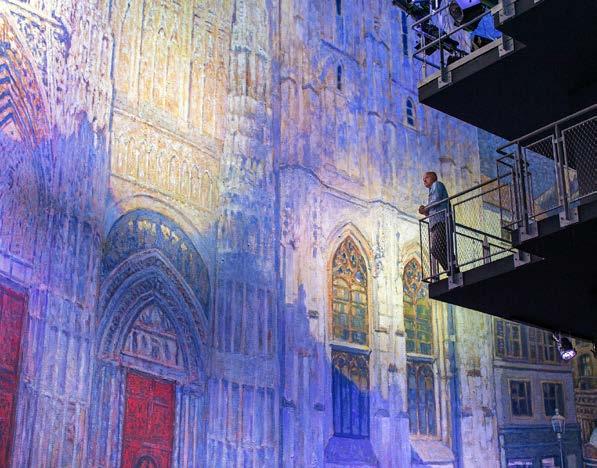
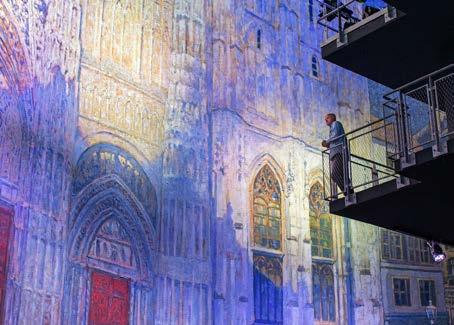
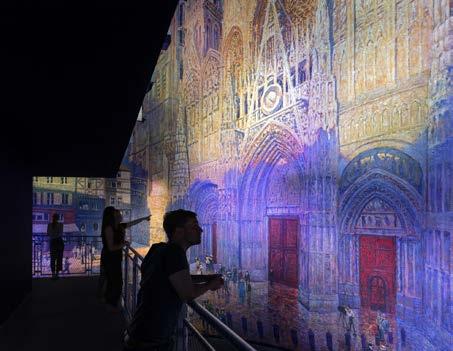
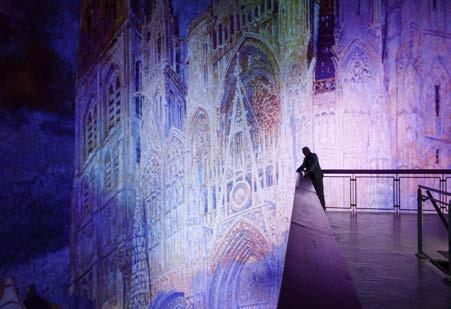
Visitors on the the visitor tower inside the panorama installation. © asisi
Visitor on top of the visitor tower inside the panorama installation. © asisi
April 30
No. 47
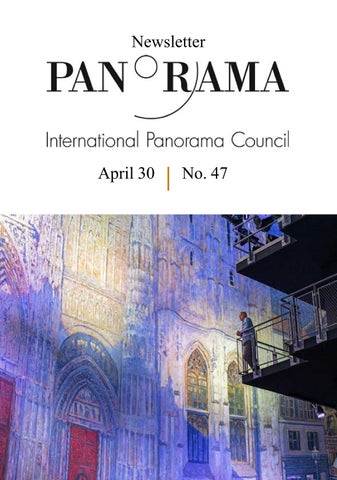
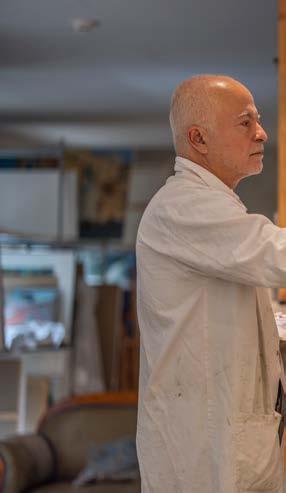
German premiere for Yadegar Asisi’s panorama “THE CATHEDRAL OF MONET — Freedom of Painting”: With this work, Yadegar Asisi has created a 360° painting of colour and light in the style of Impressionism. He thus dedicates himself to one of the most important art epochs of our time and provides an insight into his own 30-year period of painterly creativity. The panorama has been on display at the Panometer in Leipzig since 16 March 2024.
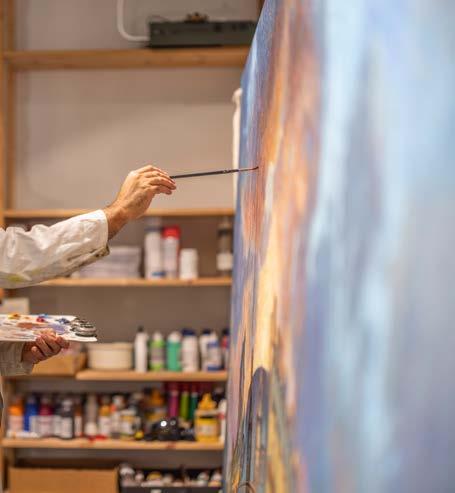
Yadegar Asisi is breaking new artistic ground: for the first time, a panorama has been painted entirely in oil on canvas before being digitally enlarged and printed on fabric. The work, which was then staged on a 3,500 square metre scale, takes us back to the end of the 19th century in the northern French city of Rouen. From several levels of the 15-metre-high visitor tower, visitors are immersed in an experience of vivid brushstrokes and a unique interplay of colour and light.
The scenery opens up as if you were standing on Rouen’s cathedral square in 1894: the evening sun almost completely illuminates the façade of Notre–Dame de Rouen Cathedral in the center, casting a warm orange–red light on the forecourt and the houses already in the shade. A multifaceted interplay of extraordinary colour nuances, shades and incidences of light pervades the entire surroundings. Asisi immortalises famous painters and contemporaries such as Vincent van Gogh, Auguste Renoir and Claude Monet on the forecourt of the cathedral.
The starting point for the work is a 6 x 2 metre canvas on which Yadegar Asisi has painterly reconstructed the cathedral with its surrounding square and houses. The basis was a famous series of paintings by Claude Monet from 1892 – 1894, who captured the cathedral in Rouen several times under a wide variety of lighting conditions. The mood of the complex lighting situations inspired Asisi to depict this place and the most important players in the art world of the time.
Panoramas by Yadegar Asisi have been on display in the historic gasometer since 2003. This is where the renaissance of panoramas began. In addition to Leipzig, the artist’s panoramas can also be seen in Berlin, Dresden, Lutherstadt Wittenberg and Pforzheim. Further locations in Vienna and Constance are planned.
Yadegar Asisi was born in Vienna in 1955, studied architecture at the Technical University of Dresden and painting at the Hochschule der Künste in Berlin, where he graduated as a master student of Klaus Fußmann. Since 2003, the Berlin artist has been creating monumental 360° panoramas measuring up to 3,500 square metres in circular buildings the height of a house. In addition to his own buildings in Leipzig and Berlin, the artist’s panoramas are also shown at other partner locations in Dresden, Pforzheim and Lutherstadt Wittenberg. Yadegar Asisi is particularly interested in inaccessible natural spaces, city views with their insights into structures and societies as well as moments in contemporary history. With the help of his team of architects and digital artists for 3D and image processing, Asisi creates his panoramic works in years of detailed work as high-resolution digital paintings, which are created from thousands and thousands of photographs, drawings, sketches and paintings. During photo shoots with extras, scene images are created which Asisi incorporates into his panoramic work. The panorama is then printed on over 30 metres of fabric and installed in the panorama buildings.
In the accompanying exhibition with numerous works by Asisi, the artist explores the tension between painting, craftsmanship and digitalisation, but above all his experience of the senses and the world. He reflects on the interplay between art and technology in the context of social progress: just as Impressionism marked the beginning of an era that Asisi describes as the “liberation of painting”, developments today are leading to the “freedom of painting”. The completely free development of motifs, themes,
painting techniques and technologies such as artificial intelligence are expanding the spectrum and expressive possibilities of visual artists right up to the present day.
The first digital collection by Yadegar Asisi, which is dedicated to the pioneers of modern painting, will also be published as part of the exhibition. To mark the 150th anniversary of the first Impressionist exhibition, seven artists from this era will be immortalised as NFTs in the form of six digital works based on the original painting by Yadegar Asisi.
Yadegar
“Panorama
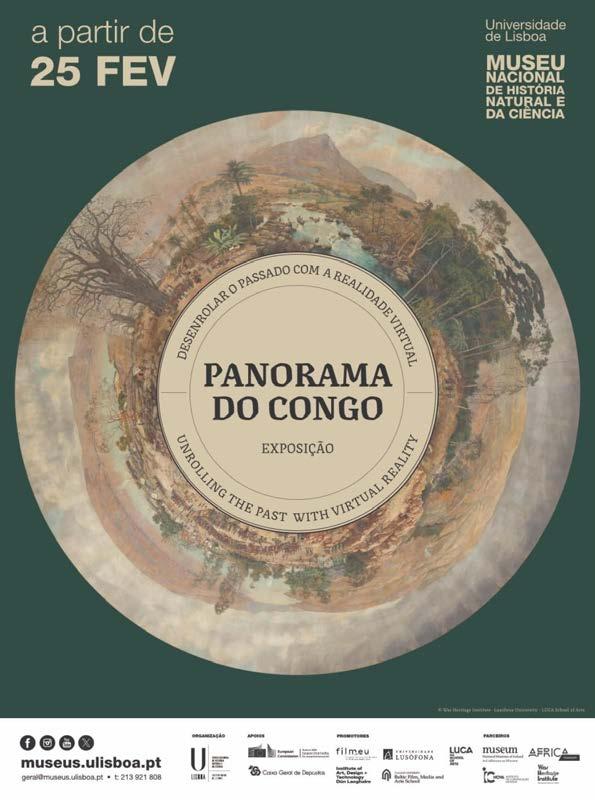
The exhibition “Panorama of Congo: Unrolling the Past with Virtual Reality” opened on February 24 at the National Museum of Natural History and Science in Lisbon. This exhibition stems from the research project CONGO VR (FilmEU RIT ) coordinated by Victor Flores (Lusófona University) and Leen Engelen (LUCA School of Arts) and focused on the 1913 Panorama of Congo by Alfred Bastien and Paul Mathieu, currently owned by the War Heritage Institute in Belgium.
The exhibition begins by immersing the visitor in a Congolese forest of shadows that will lead them to an installation with a photographic reproduction of the Panorama of Congo and a disquieting soundscape that questions the propagandistic nature of this image. Secondly, the exhibition offers a reinterpretation of this monumental painting (1610 m2) through two Virtual Reality experiences. The first experience recalls the historical context of this colonial propaganda and the preservation issues of such colonial heritage. The second experience showcases artistic interventions in the Panorama by the Congolese artists Deogracias Kihalu, Castélie Yalombo, Eléonor Hellio and Michel Ekeba (Kongo Astronauts), Hadassa Ngamba and Lukah Katangila. The visit concludes with a screening of
a short documentary film by Érica Faleiro Rodrigues on the decolonial issues raised by this research project.
The exhibition will be on show in Lisbon until 16 June 2024.
The CONGO VR project has been presented at the IPC Conference from its outset (Luxembourg, 2022; Iowa, 2023) and has benefitted from the valuable expertise and suggestions provided by its members. Such interaction and knowledge transfer will also be the goal of the upcoming FilmEU DOCTUS seminar (Lusófona University, March 21–22) where some Panorama researchers, such as Gabriele Koller, as well as artists such as Yadegar Asisi and Christl Lidl will present their work to the PhD students of eight European high education institutions. This seminar, titled ‘Media Arts: Back & Forth’, also includes a guided tour of the Panorama of Congo exhibition.
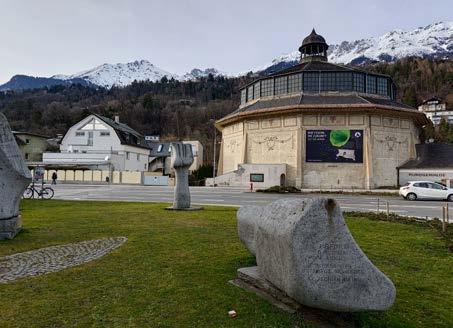
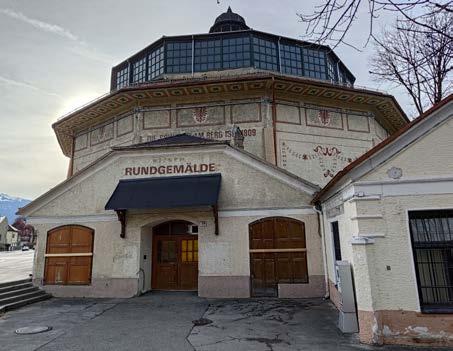
In Innsbruck, Austria, the Tirol panorama painting of the 1809 Begisel battle was separated from its original rotunda in 2010 (under protest from IPC and preservationists). The Tirol panorama reopened in its new location on Bergisel hill overlooking the city in 2011. Although proposals for the reuse of the rotunda were collected at that time, progress stalled and the rotunda remained empty for a decade.
At the end of last December, the State of Tirol finally approached the city of Innsbruck in order to gift the rotunda to the city. Without clarifying the financial impact of such a transfer in ownership, the city did not accept the gift yet. After
Innsbruck’s municipal elections in April 2024, it is likely that the involved parties come to a positive agreement about the rotunda’s future use.
Painted Panoramas recognition by UNESCO programme “Memory of the World” (project 2023-2026).
The IPC pursue the valorization of the painted panoramas heritage as one of its mission and purpose. The organization regroups heritage panorama owners or custodians worldwide and therefore is entitled to apply for the recognition of the panoramas as a documentary heritage by the UNESCO programme Memory of the
World. The MoW Programme was established in 1992 with the aim of facilitating the preservation of the world’s past, present and future documentary heritage, assisting universal access to documentary heritage, and increasing awareness worldwide of the existence and significance of documentary heritage and thereby foster dialogue and mutual understanding between people and cultures.
The application preparation is a bottom-up process which takes time, commitment, and resources. A project for the application has been presented at the IPC General Assembly in 2023, which named a commission to steer the project.
2023 Presentation of the project
2024 IPC member and non-member survey
2024 IPC conference with scientific exchange on the topic
2024 constitution of national groups based
on eligibility criteria
2025 Preparation of national applications
2026 Submission of the application.
The operational committee of this IPC commission is composed by Prof. Sarah Kenderdine (Laboratory for Experimental Museology, EPFL), Dominique Hanson (IPC Treasurer, former Director of the Army Museum of Brussels), and Dr. Daniel Jaquet (Laboratory for Experimental Museology, EPFL and Council member of the Foundation for the Panorama of the Battle of Murten).
Updates based on the annual reports presented at the IPC General Assemblies will be published on this page (next: October 2024).
at Asia Society in New York, February 13–August 11, 2024
Described as “an immersive photography and video exhibition that brings together the work of over 30 photographers and artists from around the world to visualize the causes and consequences of the climate crisis and foreground creative solutions,” this exhibition at Asia Society in New York City aims to raise awareness of climate change by visualizing the human consequences. First presented in Beijing in 2011, the exhibition has traveled across China, and has been shown in Paris, San Francisco, and Washington, D.C. Displayed on two floors of Asia Society, the immersive effect of Coal + Ice is created mostly by projecting video on to large screens.
“Submerged Portraits,” includes large photographs and several large screens showing video of people from many countries wading or boating through floodwaters (often with some of their belongings), or simply immersed in high water, with day changing to night and back again.
Another area holds photographs showing the effects of cyclones: one shows what appear to be parts of buildings flying over a house with a “Beware of Dog” sign on its fence; the “dog” would seem to be a lesser threat than a cyclone. Video of an actual cyclone, taken for television news, is projected.
Coal and Ice share a large area: archival silent film footage of a coal-mining town is juxtaposed with video showing huge machinery extracting coal, and coal being transported by rail and ship. Portraits of coal miners in China are displayed next to photographs showing their working conditions.
Ice dominates the other half of this area, with time-lapse video showing the melting of glaciers in the Himalayas, and an island gradually disappearing, being destroyed by rising sea levels.
According to the Asia House brochure, the exhibition “aims not to scare, but to mobilize.” Related programs include discussions, films, book talks, and concerts.
Painted circular panoramas of battles immersed the viewer in the scene, gave the sense of “being there.” COAL + ICE immerses the viewer in other ways, and in another battle this one for the planet we all occupy and reminds us that we must take action, for we do not want to be part of the “there” represented in many of the images displayed.
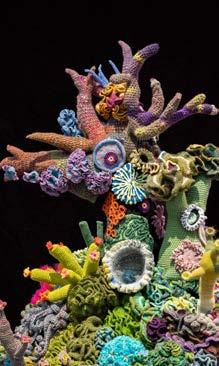
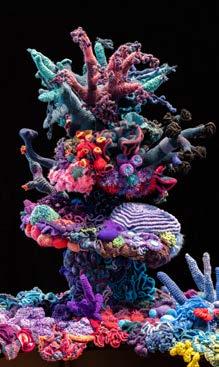
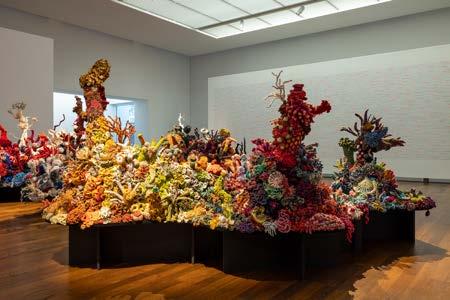
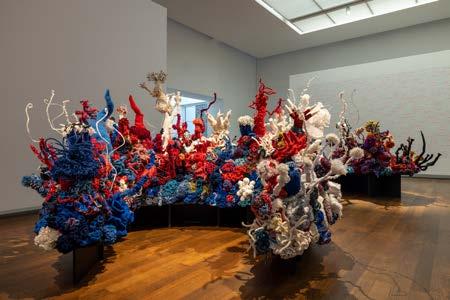
The exhibition Thalassa, Thalassa! The Imagery of the Sea will be on view at the Cantonal Museum of Fine Arts Lausanne, from 4.10/2024–12.1.2025. The opening reception is scheduled for October 3, 2024, 6:00p.m., aligning with the IPC conference in Lausanne, October 2–4, 2024. The exhibition will include a major work, The Baden Baden Satellite Reef from the Crochet Coral Reef project by Margaret Wertheim and Christine Wertheim. This vast immersive wooly environment is what the sisters call “the Sistine Chapel crochet reefs” and is the largest of more than 50 community-made crochet reefs that have been created around the world. Comprising over 40,000 coral pieces by 4,000 contributors across the German speaking world, the Baden Baden Satellite Reef was produced in conjunction with a project retrospective at Museum Frieder Burda. “At once a monumental work of feminine fiber art and a mathematically generated synthetic ecology,” the Crochet Reef endeavor marshals citizen-creativity to produce astonishing visual, conceptual and panoramic seascapes out of yarn and other fibers. This will be a special treat for IPC conference attendees while in Lausanne.
IPC is the international organization of panorama specialists which is committed to supporting the heritage and conservation of the few existing heritage panoramas dating from the 19th and early 20th century, and the promotion of knowledge and awareness of the panorama phenomenon, including its current relevance and development.
The interest of IPC comprises the panorama phenomenon in a wider context, both nineteenth-century derivatives of the panorama, such as the moving panorama, and modern panorama art forms such as panorama photography, gaming and 3D film, all closely related to the surrounding panorama experience.
The International Panorama Council is a non-government and not-for-profit association, subject to Swiss law.
The practices of IPC are based on honesty, fairness and mutual respect, as well as service to the international panorama community.
