Featuring special guest, Vocalis Camerata from Guatemala

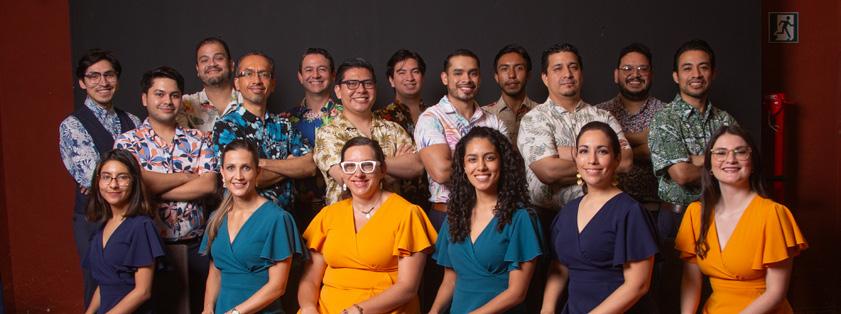

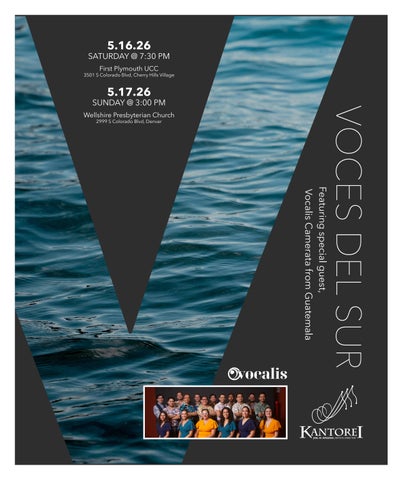
Featuring special guest, Vocalis Camerata from Guatemala
Versa Est in Luctum SPAIN/MEXICO
Cum Iucunditate MEXICO
Salve Regina SPAIN/GUATEMALA
Fernando Castillo, Jeffrey Ortega, Seth O’Kegley, Matthew Eschliman
Un Lorito de Verapáz GUATEMALA
Fernando Díaz & Anette Pérez, percussion
Chichicastenango GUATEMALA
Alicia Rigsby, piano; Fernando Díaz & Anette Pérez, percussion
Morir de amor GUATEMALA
Luna de Xelajú GUATEMALA
Alicia Rigsby, piano
El Guayaboso CUBA
INTERMISSION
Wangol HAITI
Karin Bruns, Alcira Rodríguez, Ricardo García, Emily Alexander, Sara Michael, Ben Corwyn
Fernando Díaz & Anette Pérez, percussion
Peze Kafé HAITI
Fernando Díaz & Anette Pérez, percussion
Luna y Sol GUATEMALA (U.S. PREMIERE PERFORMANCE)
Alicia Rigsby, piano
I. Luna
II. Sol
Cantos de Quisqueya DOMINICAN REPUBLIC
Fernando Díaz & Anette Pérez, percussion
Capullito de Alelí PUERTO RICO
Lágrimas Negras DOMINICAN REPUBLIC
Ricardo García, tenor
Tipitín MEXICO
Karin Bruns, soprano
Juan Gutiérrez de Padilla (1590-1664)
Francisco López de Capillas (1608-1674)
Pedro Bermúdez (1558-1605)
Antonio Elías Vidal Figueroa (1923-2000)
Francisco “Paco” Pérez Muñoz (1917arr. Felipe de Jesús Ortega 1951)
Paulo Alvarado (b. 1960)
Francisco “Paco” Pérez Muñoz arr. Felipe de Jesús Ortega
Guido López-Gavilán (b. 1944)
arr. Sten Källman
arr. Sten Källman
Pahola Miranda (b. 1991) arr. Juan Tony Guzmán
arr. Rubén Colón Tarrats
Miguel Matamoros (1894-1971) arr. Conrado Monier
María Grever (1894–1951) arr. Raúl Domínguez
This concert sponsored in part by


To elevate the human experience through choral excellence
Our Mission:
Kantorei is an inclusive community of volunteer singers that brings the richness of choral music to life with joy and excellence. We nurture the broader choral community, advance the art form by commissioning new work, and perform the full diversity of modern choral composition alongside treasured works of the traditional canon.
Our Values:
MUSICAL EXCELLENCE – We maintain the highest possible standards. We hold ourselves and each other accountable for putting in the necessary effort. We take on artistic challenges that many choirs cannot. We provide our audiences with unique musical experiences performed with professionalism, accuracy, passion, and finesse. We are a volunteer choir with world-class aspirations and achievements.
INCLUSION – We strive to create a singer community where individuals from all backgrounds and experiences can be their best. We celebrate and perform composers that have been underrepresented in the choral tradition alongside those who have historically enjoyed the spotlight. We amplify voices that should be heard, and seek to bring our voices to new places. We connect diverse audiences through the power of music.
JOY – We make music because it brings us joy and we are passionate about sharing that joy with others. Audiences feel our connection to each other and the music; through our work they experience intellectual and emotional expansion. Sharing this joy with each other and our audiences is a privilege.
COMMUNITY – We provide an opportunity for singers, artists, students, and audiences from many different backgrounds and identities to share in musical experiences that allow us to transcend the world we live in. Our singers show up for each other, both musically and personally. We are in community with the composers who partner with us. We create nurturing relationships with other choirs so we can collectively thrive. We show young and emerging artists what their musical future can look like.
EVOLUTION – We are an ever-evolving organization, committed to growth in artistry, perspective, and impact. We steward our resources with intention—investing in programming, recordings, performances, and partnerships that educate, delight, and challenge. By championing living composers and underrepresented voices alongside the treasured canon, we expand the choral landscape and help shape its future.

Land acknowledgement
Kantorei honors and acknowledges the Tséstho’e (Cheyenne), hinono’eino’ biito’owu’ (Arapaho), Núu-aghatʉvʉ-pʉ̱ (Ute), and Očhéthi Šakówiŋ (Sioux) Tribes, and all of the original Indigenous peoples of the land upon which we rehearse and perform.
When Spanish missionaries established cathedrals across New Spain and Central America, they brought with them the full machinery of European sacred music: trained singers, organs, polyphonic manuscripts, and maestros de capilla (chapel masters) whose role was to compose, train, and lead music worthy of the Church's grandeur. What grew from that transplanted tradition was something remarkable: music deeply rooted in the European Renaissance and early Baroque, yet alive to the sounds, peoples, and cultures of the new world in which it took root. Over the centuries, that encounter deepened. Indigenous rhythms, African voices, and local traditions wove themselves into the fabric of the music until something genuinely new emerged: a living tradition that is neither wholly European nor wholly Central American, but unmistakably both. This is music born of encounter, resilience, and beauty, from the soaring cathedral naves of colonial Puebla and Guatemala City to the marimba halls of Quetzaltenango and the rhythmic streets of Matanzas and Port-au-Prince.
Juan Gutiérrez de Padilla was born in Málaga, Spain; he served as maestro de capilla in Jerez de la Frontera and Cádiz before emigrating to New Spain, where his 1629 appointment as maestro de capilla of Puebla Cathedral launched a tenure that produced over 700 surviving works and established him as the most prolific and important composer in colonial Spanish America.
Versa est in luctum is drawn from the Book of Job and belongs to the Office of the Dead, a prayer cycle said for the repose of the soul of a decedent. Padilla's setting is one of his smaller, more inward works: a five-voice motet showcasing Padilla's restrained, intimate side through closely woven counterpoint in the stile antico, a quiet counterpoint to the polychoral grandeur for which he is better known.
Francisco López de Capillas holds a special place in Mexican musical history as the first native-born criollo (American-born person of Spanish descent) to achieve
lasting significance as a composer. Born in Mexico City, he studied under the Augustinian masters at the cathedral there and later traveled to Puebla, where from 1641 to 1648 he worked as organist and bassoon player under none other than Juan Gutiérrez de Padilla. In 1654 he was appointed maestro de capilla and principal organist of the Mexico City Cathedral, a post he held until his death. His music was so highly regarded that volumes of his compositions were sent back to Spain and widely disseminated there, a striking reversal of the usual cultural flow.
Cum iucunditate is a Marian antiphon, one of López de Capillas's sacred motets. His style here is polished and elegant, combining the Renaissance tradition of singlechoir writing with subtle Baroque colorings. Where Padilla tends toward bold drama and rich harmonic contrasts, López de Capillas favors a clear, fresh lyricism – a personal voice shaped equally by his European training and the vibrant New World he inhabited.
Pedro Bermúdez, trained at Granada's Royal Chapel, had an extraordinary career that took him from Spain to Peru to Guatemala, where he served at the Cathedral of Santiago and composed the bulk of his surviving sacred works before dying in 1605 shortly after accepting a maestro de capilla post in Puebla.
Bermúdez composed exclusively sacred music in Latin, including multiple settings of the Salve Regina, a prayer addressed to Mary as "Queen of Mercy," invoked by those in exile and suffering. Bermúdez's polyphonic settings, of which several survive in the cathedral choir books, demonstrate a mastery of sixteenth-century counterpoint on par with the finest European institutions of his time.
Antonio Elías Vidal Figueroa was born in Esquipulas, Chiquimula in 1923. He studied at the Conservatorio Nacional de Música in Guatemala City and went on to become one of the country's most dedicated music educators, founding several choral organizations, including the Coro Guatemala and the Coro Internormal. He served as director of the Conservatorio Nacional
and was honored with Guatemala's Order of Francisco Marroquín for his contributions to national cultural life.
Un Lorito de Verapáz is an endearing children's song that Vidal Figueroa composed to celebrate Guatemala's Alta and Baja Verapaz regions, a lush, cloud-forested highland area home to the Q'eqchi' and Poqomchi' Maya and renowned for its spectacular birdlife. The song tells the story of a little parrot who falls in love with a cotorrita (a small parrot). With its gentle humor and lyrical melody, it captures something of the warmth and natural beauty of the Verapaz landscape.
Francisco "Paco" Pérez Muñoz was born on April 25, 1916, in Huehuetenango, Guatemala, and moved with his family to Quetzaltenango in 1927. There he came of age as a singer, guitarist, and composer, and became one of the most beloved popular musicians in Guatemalan history before his untimely death in a plane crash on October 27, 1951 at the age of thirty-five.
Chichicastenango, the highland Maya K'iche' town famous for its colorful Thursday and Sunday markets and its syncretic Catholic-Maya religious rituals at the Church of Santo Tomás, inspired Pérez to compose this atmospheric piece, which celebrates the town's character and cultural traditions. This arrangement is by Felipe de Jesús Ortega (1936-2024), a Guatemalan polymath who excelled as a composer, choral conductor, poet, and arranger while also holding a medical degree and a master's in psychology. He directed the National Choir of Guatemala across multiple decades and was honored as a Messenger of Peace for his lifelong contributions to music and his community.
Paulo Alvarado was born in Guatemala City in 1960 and studied architecture at Universidad Rafael Landívar before leaving in 1983 to pursue music full-time as a founding member of Alux Nahual, the groundbreaking Guatemalan rock band that became one of the most significant in Central American music history. Beyond his rock career, Alvarado has worked extensively as a composer, cellist, and producer, contributing to recordings that document
Program Notes compiled by Sara Michael
both contemporary Guatemalan popular music and the country's historical choral and classical repertoire.
Morir de amor belongs to the lyrical, romantic vein of Guatemalan popular song. It has been performed by Guatemala's National Choir and stands as one of Alvarado's most celebrated vocal compositions, showcasing his gift for melody within a distinctly Guatemalan popular idiom.
This is Paco Pérez's masterpiece, arguably the most beloved song in Guatemalan history. Composed in 1944, Luna de Xelajú is a waltz-song written for the K'iche' Maya name of Quetzaltenango (known affectionately as Xela or Xelajú), the city where Pérez spent his formative years. The song was reportedly inspired by a heartbreak from a love affair whose end the composer could not accept, and its lyrics evoke the moonlit streets and bittersweet longing of a man calling out to the city and its night sky. Xelajú is derived from the K'iche' name Xela Juj, and the word itself adds a depth of indigenous identity to what is ostensibly a romantic bolero-waltz.
The song has become so deeply embedded in Guatemalan national identity that it is often called "Guatemala's second national anthem." It has been performed by Guatemalan singers of every generation. Once again, we have an arrangement from our favorite Renaissance man, Felipe de Jesús Ortega.
Guido López-Gavilán was born in Matanzas, Cuba, a city with one of the most richly layered Afro-Cuban cultural and musical traditions in the island. He began his studies in choral conducting at Havana's Conservatorio Amadeo Roldán, and went on to pursue advanced orchestral conducting studies at the Tchaikovsky Conservatory in Moscow. He has since become one of Cuba's most celebrated composers and conductors, winner of the Cuban National Music Prize (2016), the UNESCO Medal (Chile, 2005), and a key figure in the development of Cuba's youth orchestra movement. His compositions are distinguished by their seamless fusion of Afro-Cuban rhythmic complexity, polytonality, and expressive lyricism.
El Guayaboso, composed in 1967, is one of LópezGavilán's early works and it became instantly famous in Cuba. Described as an Afro-Cuban rhythmic puzzle, the piece deploys the voices as percussion instruments, building layers of interlocking rhythm and text in the manner of a guaguancó, a genre of Afro-Cuban sacred and secular music rooted in the traditions brought by enslaved Yoruba and Bantu peoples. The text is a mosaic of humorous, surreal, and exaggerated vignettes, while the rhythmic structure demands that singers think and move like drummers. It is one of the great showpieces of Cuban choral music.
These two arrangements of traditional Haitian folk melodies are the work of Sten Källman, widely recognized as Sweden's foremost expert on Haitian music and culture. Over more than four decades, Källman has collected, arranged, and disseminated Haitian folk songs through choral arrangements that have become popular with choirs worldwide, bringing the music of Haiti, a culture of extraordinary depth and resilience, to concert stages far beyond the Caribbean.
Wangol is a Haitian folk melody that carries a message of hope for change, a theme that resonates deeply in Haiti's complex and resilient history. The piece begins with a two-part solo texture before expanding into a full choral statement, driven by characteristic Haitian polyrhythm and percussion.
Peze Kafé is a vivid, rhythmically infectious piece that tells the story of a young boy who loses the coffee he was supposed to sell at the market, much to his mother's dismay. Haiti has historically been a major coffee-producing nation, and this lighthearted song connects daily agricultural and market life to the world of children's games and stories. The arrangement is built on layered rhythms, vocal percussion, and a steady, irresistible groove.
Both Peze Kafé and Wangol are sung in Haitian Creole, the language spoken by the Haitian people as their primary tongue (distinct from French, with roots in West African grammar and vocabulary). Haiti occupies the western third of the island of Hispaniola, a land with deep Caribbean, African, Taíno, and French colonial histories, and its music carries all of that complexity.
Luna y Sol is a lyrical composition by Pahola Miranda that brings together the contrasting imagery and energies of darkness and light, the celestial and the earthly. It is a composition inspired by the two great celestial bodies, each with its own colors, sounds, and textures.
The Moon appears mysterious, discreet, and solitary, revealing its cycle with shyness, illuminating the darkness with subtlety. Its essence unfolds as weaving, interlaced voices, with a smooth, calm, and delicate sonority.
In contrast, the Sun bursts forth with a radiant and leading presence, dazzling with warmth, infusing joy through rhythmic and powerful sounds – a lively samba that invites singing and dancing.
Both pieces evoke a deep love for choral music: its versatility, its possibilities, and the magic of voices singing as one.
"Quisqueya," from the Taíno language, meaning "mother of all lands," is the ancient indigenous name for the island of Hispaniola, which today is divided between the Dominican Republic and Haiti. The name is a profound symbol of pre-Columbian heritage and national identity for Dominicans, appearing in the country's national anthem and in countless cultural expressions. This arrangement by Juan Tony Guzmán draws on the musical traditions of the Dominican Republic, a culture shaped by the encounter of Spanish colonialism, West African enslaved peoples, Taíno indigenous heritage, and centuries of Caribbean exchange. Dominican music encompasses a remarkable range – merengue, bachata, salve, mangulina, and many other genres – and these Cantos celebrate that diversity through a choral lens.
Rafael Hernández Marín is one of the towering figures of Puerto Rican and Latin American popular music. Born in Aguadilla, Puerto Rico, on October 24, 1892, he grew up in poverty but from a young age demonstrated extraordinary musical gifts, studying multiple instruments as a child. His professional career began in 1917 when he joined the famous Harlem Hellfighters military band during World War I. After the war he settled in New York City; he later spent years in Cuba, Mexico, and across Latin America,
composing music for film and theater before returning to Puerto Rico in 1947. Hernández composed more than 3,000 works and was nicknamed "El Jibarito" for his deep connection to Puerto Rican rural identity. President John F. Kennedy called him "Mr. Cumbanchero" after his most internationally famous composition.
Capullito de Alelí was composed in 1925 and was one of Hernández's earliest successes, earning honorable mention at the Cuban Song Day competition that year. It is a tender bolero-canción, a love song in which the speaker compares his beloved to a flower bud, pleading for her affection and expressing that without her love, life has no meaning. With its graceful melody and romantic imagery, it became a standard of Latin American popular music, recorded by generations of singers across the hemisphere.
The choral arrangement is by Rubén Colón Tarrats (b. 1940), a Puerto Rican composer, conductor, and educator from Ponce who has spent a lifetime championing Puerto Rican choral traditions. Colón Tarrats studied at Temple University and the Universidad Interamericana de Puerto Rico and has composed or arranged nearly 200 choral works, with a particular focus on Puerto Rican folklore and the songs of Rafael Hernández. He is the co-artistic director of the Discover Puerto Rico Choral Festival and has been honored by both the Instituto de Cultura Puertorriqueña and the Municipality of Ponce for his contributions to music.
Miguel Matamoros was a Cuban musician, singer, and composer central to the development of Cuban son, a rhythm rooted in the rural areas of eastern Cuba. Born in Santiago de Cuba, he founded the Trío Matamoros in 1925 alongside guitarist Rafael Cueto and percussionist Siro Rodríguez. Santiago, the cultural capital of Cuba's eastern Oriente province, was a crucible where African rhythmic traditions and Spanish melodic sensibilities had long been fusing, and it was from this environment that Matamoros drew his musical identity.
Lágrimas Negras was composed in 1930 during a stay in Santo Domingo, after Matamoros overheard a woman weeping over her husband's departure from an adjacent room in his lodgings. Widely regarded as the piece that established the bolero-son as a genre, it bridges the
rural son traditions of Oriente with the urban bolero of Havana; a song that moves the body and breaks the heart simultaneously. This arrangement is by Conrado Monier (b. 1955), composer, arranger, orchestrator, and performer across concert and popular music formats, as well as a professor of saxophone and harmony, and a member of the National Union of Writers and Artists of Cuba.
María Grever was the first female Mexican composer to achieve international acclaim. Born in León, Guanajuato, to a Spanish father and Mexican mother, she studied in France under Claude Debussy and Franz Lenhard before eventually settling in New York City in 1916, where she spent her career bridging Mexican musical tradition and the American popular music industry. She also became the first Mexican songwriter admitted to ASCAP, and Cole Porter personally sought her out to write the Spanish lyrics for Begin the Beguine.
Tipitín has one of the more remarkable origin stories in the Latin songbook. In 1938, Grever underwent a dental procedure that left a fragment of a needle in her jaw, which eventually migrated toward her optic nerve and caused her to go blind. During the frightening experience of losing her sight, a persistent melody lodged itself in her mind. After being given a sedative, she told her doctor, "I'm tipping!" and she turned that tune into Tipitín. Her publisher rejected it for not matching her usual style, so she published it herself. When Raymond Leveen added English lyrics and big band leader Horace Heidt debuted his version in the USA, it became a number one hit. In 1957, the Andrews Sisters released a cover of that version but added a beat, changing it from 3/4 to 4/4 meter, thereby negating the Mexican waltz.
This arrangement by Raúl Dominguez restores both the original Spanish text and that lilting triple meter. Dominguez is the Assistant Professor of Choral Studies at Pacific Lutheran University. Prior to PLU, he served as the Director of Choral Activities at Regis University, in Denver, CO, where he conducted the Regis University Singers and taught a Fine Arts course, Mexican Music: Purpose & Identity. He also coached Kantorei with Spanish pronunciation in preparation for the performance of Jake Runestad’s El Último Hílo, the first joint concert with Vocalis in 2022.
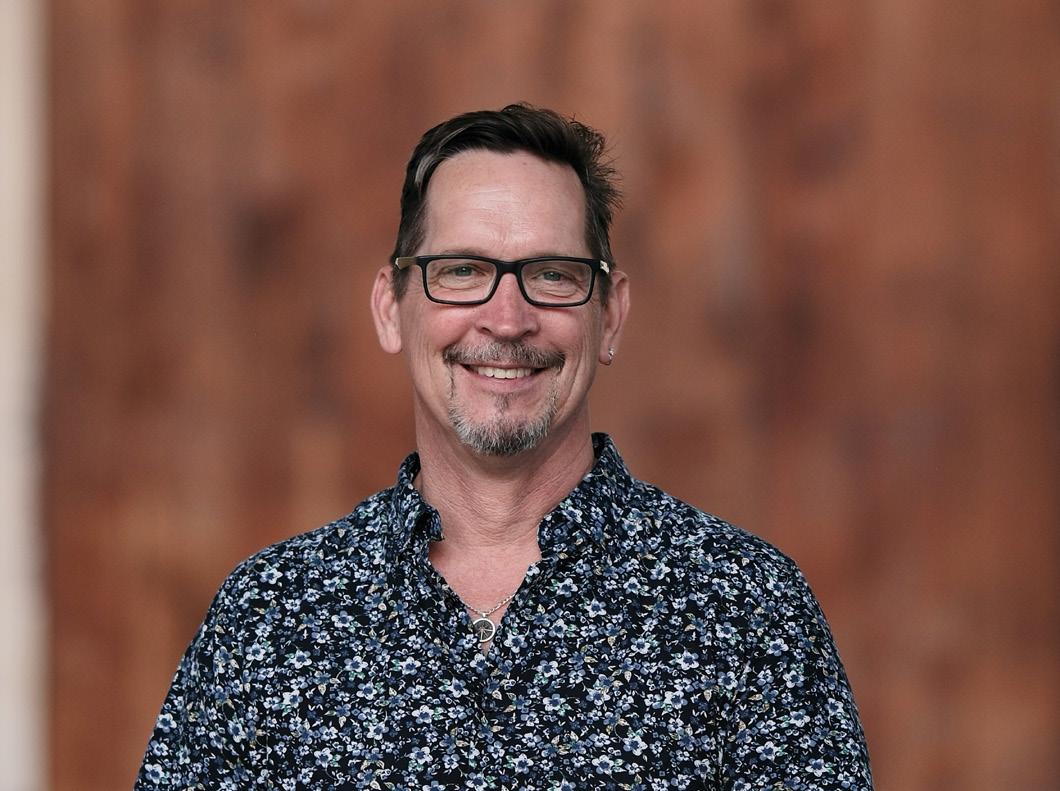
Joel M. Rinsema joined Kantorei in 2014, becoming the second conductor in its history. During his tenure, Kantorei has experienced tremendous audience growth, nearly tripled its budget, and launched an ambitious recording strategy. A frequent collaborator and champion of new works for chorus, Joel has commissioned and premiered works by many of today’s leading composers, including Kim André Arnesen, Mason Bates, René Clausen, Jean Belmont Ford, Ola Gjeilo, Jocelyn Hagen, Mark Hayes, Cecilia McDowall, Sarah Quartel, Jake Runestad, Christopher Tin, and Eric Whitacre.
In the summer of 2022, Joel conducted the Central American premiere of Jake Runestad’s El Último Hilo (The Last Thread) in Guatemala City and Antigua, Guatemala with Kantorei and the Guatemalan choir Vocalis. He returned in May of 2023 to conduct Eric Whitacre’s The Sacred Veil and serves as Artistic Advisor and Principal Guest Conductor of Vocalis.
Under Joel’s direction, Kantorei has released two recordings on the Naxos label. Sing, Wearing the Sky: Choral Music of Jake Runestad (2020) was the #3 best-selling classical album on iTunes, reached #4 on the Traditional Classical Billboard Charts, and was in the top ten in both the best-selling classical album and new classical release categories on Amazon. Infinity: Choral Works of Kim André Arnesen (2018) climbed to the #2 bestselling classical album on iTunes, #6 on the Traditional Classical Billboard Charts, and #19 on the overall Classical Billboard charts. The third recording, Song Offerings: Choral Music of Christopher Tin, was released on November 7, 2025, this time on the Decca Gold label. Santa Barbara Music Publishing, Inc. publishes the Joel Rinsema / Kantorei Choral series.
Joel led Kantorei in performances at the 2019 National Convention of the American Choral Directors Association and has prepared Kantorei as the primary chorus for the Aspen Music Festival, with Maestro Robert Spano conducting, in the summers of 2021, 2022, and 2025. More recently,
he conducted Kantorei along with the Canadian Brass in December of 2022, and commissioned and prepared Kantorei for the world premiere of the string orchestra version of Eric Whitacre’s The Sacred Veil, conducted by the composer, and guest conducted The Sacred Veil with the Washington (DC) Choral Arts Society in May of 2023.
A passionate advocate for the choral art form, Joel frequently consults with choral arts organizations around the country. Because of his leadership in his field, he received the Louis Botto Award for “Innovative Action and Entrepreneurial Zeal” from Chorus America, the industry’s advocacy, research, and leadership development organization for choruses, choral leaders, and singers.
Joel is an accomplished conductor of major works for choir and orchestra and was one of eighteen conductors chosen nationally through audition to participate in master classes and workshops presented by the Chicago Symphony Orchestra Association and Chorus America. As a tenor soloist, Joel performed across the United States as well as in Germany, Austria, and the Czech Republic.
Joel also serves as Director of Music and Technology in Worship at First Plymouth Congregational Church in Cherry Hills Village, Colorado. He was also the North American Choral Promotion Manager for Oxford University Press based in Oxford, England from 2017 to 2020, a tenure during which he worked closely with and represented roster composers John Rutter, Mack Wilberg, Bob Chilcott, Sarah Quartel, Cecilia McDowall, Gabriel Jackson, and Will Todd among others.
He holds music degrees from Arizona State University and Whitworth University and is a member of the Academy of Recording Arts and Sciences (Grammys), and the American Choral Directors Association (ACDA).
Joel came to Kantorei from the Grammy Award-winning Phoenix Chorale. Throughout his 23-year tenure with the Phoenix Chorale, he served in nearly every capacity with the organization, including his last 15 years as President & CEO and Assistant Conductor. He negotiated an ongoing recording contract with the prestigious U.K.-based Chandos Records, and Phoenix Chorale recordings received a total of eight Grammy nominations and two Grammy awards during his tenure. Joel appears on all Phoenix Chorale recordings and was a soloist on the Grammy Award-winning “Spotless Rose: Hymn to the Virgin Mary.” In addition to his work with the Phoenix Chorale, Joel served as the Director of Music at Church of the Beatitudes United Church of Christ in Phoenix for 15 years, and he was the founding chorus master of the Arizona Musicfest Chorus.
He and his wife Sarah Branton (Choir Director at Cherry Creek High School) and stepson Simon Harrison live in Highlands Ranch, Colorado along with their miniature Dachshund Lucia. They enjoy all that Colorado has to offer outdoors, including camping, fishing, golfing, and snow skiing.
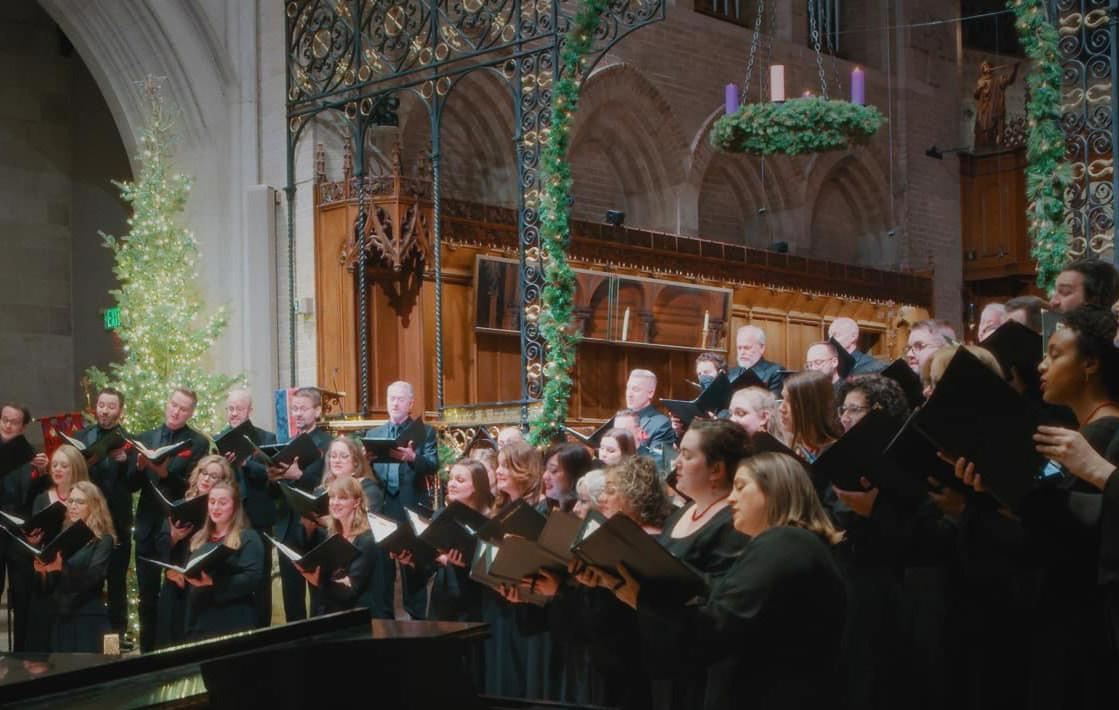
Kantorei is a Denver-based, choral ensemble comprised of volunteer singers under the direction of Artistic Director Joel M. Rinsema.
Formed in 1997 under the leadership of six friends and the artistic direction of Richard Larson (Conductor Emeritus), Kantorei has established itself as one of the nation’s premier choral ensembles. Our choral artists have studied at schools with strong music programs across the United States such as Indiana University, St. Olaf College, Wartburg College, Luther College, Concordia College, and Westminster Choir College. Kantorei’s singers reside throughout the greater Denver area. Some serve as choral music educators, church choir conductors, and vocal instructors. Others are doctors, social workers, optometrists, counselors, clinical psychologists, accountants, realtors – all brought together in weekly rehearsals for shared artistic excellence and community.
Kantorei has performed for major choral conventions across the U.S. and with The Aspen Music Festival, toured the world, and has commissioned and premiered new choral works from such renowned composers as Kim André Arnesen, Eric William Barnum, Abbie Betinis, René
Clausen, Ola Gjeilo, Jocelyn Hagen, M. Roger Holland, II, Sarah Quartel, Jake Runestad, Christopher Tin, and Eric Whitacre. In the summer of 2022, Kantorei performed the Central American premiere of Jake Runestad’s “El Último Hilo” in Guatemala City and Antigua, Guatemala, along with Guatemalan choir Vocalis.
Kantorei has released two recordings on the Naxos label. “Sing, Wearing the Sky” (2020) choral music of Jake Runestad reached the #3 best-selling classical album on iTunes, #4 on the Traditional Classical Billboard Charts, and the top ten in both the best-selling classical album and new classical release categories on Amazon. “Infinity: Choral Works of Kim André Arnesen” (2018) climbed to the #2 best-selling classical album on iTunes, #6 on the Traditional Classical Billboard Charts and #19 on the overall Classical Billboard charts. Santa Barbara Music Publishing Inc. publishes the Kantorei Choral series. In early winter 2025, Kantorei once again joined forces with Grammy-winning producers Soundmirror to record choral works of Grammy-winning composer Christopher Tin, which was released on November 7, 2025, this time on the Decca Gold label.

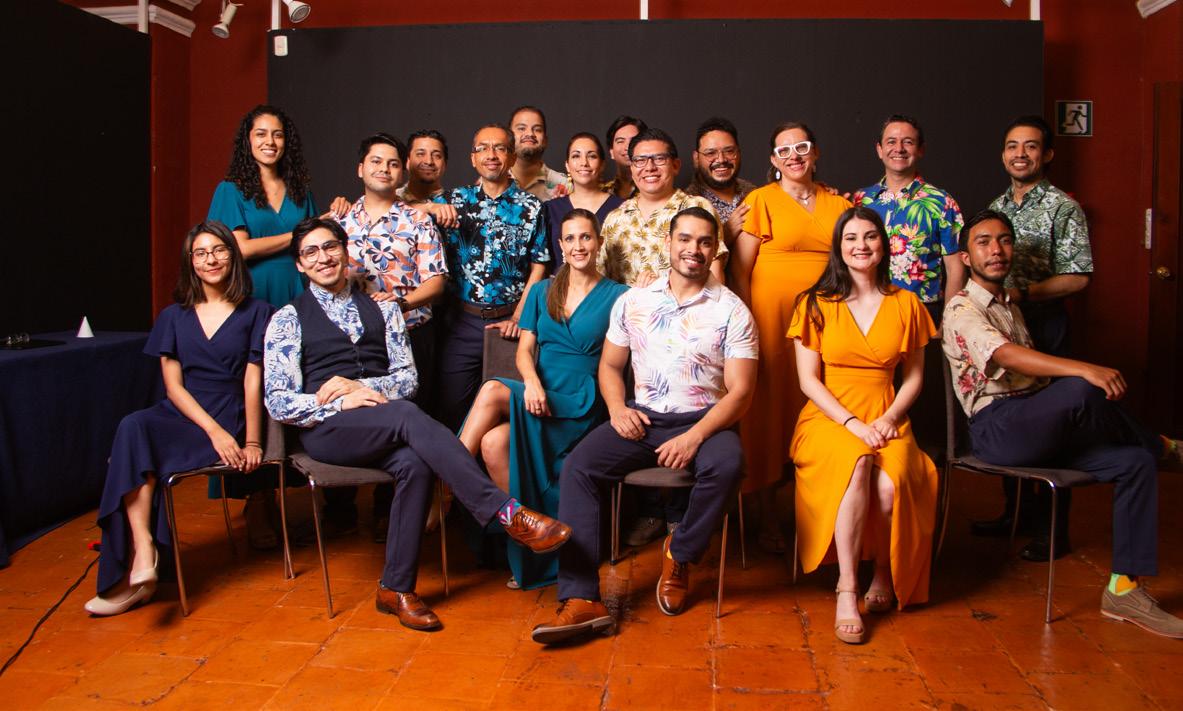
Vocalis is a choral organization based in Guatemala City, with satellite choirs in multiple venues, including the Vocalis Music Center and Vocalis Antigua in Antigua Guatemala. It is dedicated to artistic excellence, community engagement, and accessible music education, bringing together children, youth, and adults in a dynamic and inclusive environment.
Through its ensembles—Vocalis Kids, Vocalis Studio, Vocalis Chorus, Vocalis Antigua, and Vocalis Camerata—Vocalis supports singers at different stages of development, from foundational training to advanced performance. Each group is designed to build vocal technique, musicianship, and artistic identity while fostering a strong sense of community.
Jeffrey Ortega is a Guatemalan singer, dancer, and choir director. He serves as Artistic Director of Vocalis in Guatemala, where he leads chamber, community, and youth choirs, creating spaces for singers of different levels to experience ensemble music.
His work centers on sharing a deep love for choral sound, both through conducting and through his own music. As a singersongwriter, he writes for voice and guitar, drawing inspiration from the sensation of singing within a choir and seeking to recreate that sense of connection in a more intimate setting.
Jeffrey has collaborated with artists across Central America and spent nine years as a dancer with the Dance and Movement Investigation Center at Universidad Rafael Landívar. His artistic development has been shaped by mentors including Joel Rinsema and Jake Runestad, with whom he has also collaborated in performance.
In his recent collaboration with Kantorei, he continues to explore music as a shared experience – one that brings people together through voice, presence, and expression.
Vocalis is recognized for its high artistic standards, thoughtful programming, and meaningful collaborations. Its work extends beyond performance, creating opportunities for cultural exchange and positioning Guatemala within an international choral context.
Since its founding, Vocalis has experienced steady growth, expanding from a single ensemble into a multi-ensemble organization with a presence in Guatemala City and Antigua Guatemala. Its trajectory has been marked by consistent artistic development, increasing audience reach, and the establishment of collaborations with local and international partners.
Among its artistic landmarks are the Latin American premieres of "The Sacred Veil" by Eric Whitacre—presented with the visit and consultation of poet Charles Anthony Silvestri—and "El Último Hilo" by Jake Runestad, with text by Guatemalan poet Humberto Ak’abal. Vocalis has also collaborated with Guatemalan artists and guest conductors, including José Azurdia, Fernando Archila, and Magda Angélica. In recognition of its work, Vocalis was awarded Artist of the Year 2022 (Outstanding Achievement in Performance), and its Musical Director, Jeffrey Ortega, received Artist of the Year 2024 (Outstanding Achievement in Choral Music). The launch of the Vocalis Music Center represents a significant step in consolidating its educational and community impact.




* Section Leader ◊ Collaborative Pianist
Mo Bailey
Victoria Bailey
Beryl Fanslow Wilson
Riley Jayne Gallivan
Chrissie Graham
Heather Gunnerson
Stacie Hanson *
Emma Hartmann
Shannon Lemmon-Elrod
Sara Michael *
Leah Porter-Tracy
Martina Richardson
Alicia Rigsby ◊
Becca Schjodt
Christianna Sullins
Betsy Thurley
Safia Ahmed
Emily Alexander
Lindsey Aquilina
Lyn Berry-Helmlinger
Sarah Branton *
Desiree Deliz-Morales
Erin Greenfield
Chelsea Kendall
Madison Martindale
Tegan Masoero-Palmer
Melissa Menter
Jennifer Moore
Allison Pasternak *
Kaleigh Sutula
Jane Wright
Courtney Huffman, Executive Director
Joel M. Rinsema, Artistic Director
Sara Michael, Business Manager
Sarah Branton, Assistant Conductor
Josh Corwyn, President
John Bartley, Vice President
Desiree Deliz Morales, Treasurer
Melissa Menter, Secretary
Emily Alexander
Kai Berry-Helmlinger *
Ben Corwyn
Joshua Corwyn
Matthew Eschliman
Keith Ferguson
Mason France
Keith Harrison
Bryce Kennedy
Severin Lier
Samuel Low
Alex Menter
Chad Nelsen
Seth O'Kegley *
Jonathan Von Stroh
Christopher Wolfrom
John Wright
John Bartley
Max Bixby
Michael Bizzaro *
Michael Boender
Adam Cave
Garth Criswell
Caleb Heaton
Scott Horowitz
Brad Larson
John Ludwig
Maxwell McKee
John Schaak
Kirk Schjodt *
Griffin Sutherland
Matt Weissenbuehler
Ximena Wheeler, House Manager
Alicia Rigsby, Accompanist & Collaborative Pianist
Richard Larson, Artistic Director & Conductor Emeritus
Mark Aquilina
Judy Bloomberg Schenkein
Matthew Eschliman
Scott Horowitz
Daniel Paredes
SOPRANO ALTO TENOR BASS
Karin Bruns
Luz Montoya
Khrista Torres
Karin Bruns,Executive Director
Jenniffer Amado
Amanda Harding
Adriana López
Mariayín Quevedo
Alcira Rodríguez
Jeffrey Ortega, Musical Director
Pahola Miranda, Conductor, Vocalis Kids
Luz Montoya, Administrative Director
Jerson Flores, Marketing Specialist & Director, Vocalis Music Center
Ricardo García Gaborit, Director of Impact & Vision
Oscar Barrios
Ricardo García
Ricardo Montoya
Andoni Cóbar
Fernando Castillo
Jafeth López
Rubén Vergara
Daniel Cardona, Accompanist
Sergio Valle, Accompanist
Fernando Díaz, Percussionist
Annette Pérez, Percussionist
Khrista Torres, Bookkeeper
Oscar Barrios, Production Manager




Jennifer Allen & Katherine Justus
Daniel Belonick
Margrit Benton & Mark Nelson
Philip Besancon
Robert Blauvelt & Michael Corrigan
Judy Bloomberg-Schenkein & Ed Schenkein
Leslie & Erin Britton
Rebecca Caldwell
Jim & Joanie Calhoun
Nancy Calkins
Tom Carlock & Richard Schirrmacher
David & Bonnie Carlson
William & Lisa Chumley
James & Jean Clark
Susan Clasen
Edwin Deliz Rivera
Dwayne Dickerson
Elizabeth & Pete Duke
Burna & David Dunn
Kaye Edwards
Paul & Debbie Edwards
Sharon Erlacher
Paul & Dedra Eschliman
Lynn Falcón
Beverly & Bruce Fest
Eleanor Finlay
Sara Fischer & John T. Cannon
Judy Fredericksen
Pamela Grange
Carol Greenwald
Even Griffiths
Patricia Gunckel
Sandra Gust
David & Mary Hammond
Lynn Hardcastle
Jennifer Heglin
Marjorie Hofer
Doug Horst
Ian Hoyman
Carolyn & Lanny Hunter
Deanna Johnson
Eric & Karen Johnson
Carol Lanaghen
Susan Lewkow
Jack & Jean Lindsey
Terri Link
Ann Ludwig
Pamela Mahonchak
Chris & Liz Mascitelli
Boyd Mauldin & Alysia Gallagher
Justin Mauldin
Barbara McLenon
Suzanne McPherson
Paul Meissner
Elaine Menter
Teresa Morgan
Lise Nelson & Nancy Walker
Peggy O'Connell
Michelle Oliveira
Valorie Ottenbreit
D. R. Palmer
Mark & Linda Pasternak
Ruth Peterson
Fred Pittroff
Sydney Purfield & Jackie Morales
J Scott & Jenifer Pusey
Ann Rosewall & Steve Slotter
Carol Ruckel
Sarah Schenkein
Sue Seiler
Shelly Smith
Kathryn Stewart
Barbara Stone
Chris & Tim Sullivan
Sharyl Sullivan
S Patrice Von Stroh
Theresa Wallace
Justin Whitley
Clara Winter
Carol Wood &
Kelley Southerland

Versa est in Luctum
Job 30:31, Job 7:16
Versa est in luctum cithara mea, et organum meum in vocem flentium.
Parce mihi, Domine, nihil enim sunt dies mei
Gregorian Vespers
Cum iucunditate nativitatem beatae Mariae Virginis celebremus, ut ipsa pro nobis intercedat ad Dominum Jesum Christum.
Attr. Hermann of Reichenau, 11th century
Salve, Regina, Mater misericordiae; Vita, dulcedo et spes nostra, salve.
Ad te clamamus, exsules filii Evae. Ad te suspiramus, gementes et flentes, in hac lacrimarum valle.
Eia ergo, advocata nostra, illos tuos misericordes oculos ad nos converte.
Et Jesum, benedictum fructum ventris tui. Nobis post hoc exsilium ostende.
O clemens, o pia, o dulcis Virgo Maria.
Antonio Elías Vidal Figueroa
Un lorito de Verapaz un buen día se enamoró de una linda cotorrita y la pobre se desmayó.
“¡Ay, lorita de mi alma!” le decía el lorito.
“¡Quiéreme un poquito que me muero de amor!
¡Delgadito me pongo si tu amor no me das!
Si te vas con otro, ¡ya verás, ya verás!”
My harp is turned into mourning, and my organ into the voice of weeping.
Spare me, O Lord, for my days are nothing.
Let us celebrate with joy the birth of the Blessed Virgin Mary, that she may intercede for us before the Lord Jesus Christ.
Hail, Holy Queen, Mother of mercy; our life, our sweetness, and our hope, hail.
To you we cry, the poor banished children of Eve; To you we send up our sighs, mourning and weeping in this valley of tears.
Turn then, most gracious advocate, your eyes of mercy toward us.
And after this our exile, show unto us Jesus, the blessed fruit of your womb.
O gentle, o loving, o sweet Virgin Mary.
A little parrot from Verapaz fell in love one sunny day, with a lovely little parakeet who fainted right away!
"Oh, little parrot, darling of my soul!" said the parrot, full of care. "Love me just a little bit, or this love I cannot bear!
I’ll grow thin and tiny if your love is not for me.
If you choose another's love, oh, you’ll see, you’ll see!"
Francisco Paco Pérez Muñoz
Hay una chica requete bonita en Chichicastenango, que cuando beso su boca chiquita en Chichicastenango siento que el alma se me está quemando, en Chichicastenango.
Hay en su boca dulzura de fruta madura que invita a pecar. Besa con tal sabrosura que es una locura su boca besar.
Ay, chiquita, ven hacia mí, que tu boca quiero besar.
Solamente las estrellas indiscretas nos habrán de alumbrar.
Mas celosas, al ver nuestro amor, poco a poco se habrán de apagar, y el romance solamente tus ojazos lo habrán de alumbrar.
¡Chichicastenango, Chichicastenango!
Paulo Alvarado
¿Porqué no podemos morir de amor, porqué siempre tiene que haber otra razón?
Si somos expertos ya en el dolor, ¿quién necesita sufrir si no es del corazón?
No sé porqué aquí siempre es de noche, y nadie parece notarlo siquiera.
¿Será que nos gusta callar, o aprendimos a la fuerza?
Cuando alguno levanta cabeza otro más vil le levanta la mano.
¿Será que no alcanza a entender lo estéril de su daño?
Pero todo se queda siempre allí, y el destino se antoja infeliz para quien prefiere morir de amor y no de miedo.
There’s a lovely girl, so very pretty, in Chichicastenango, and when I kiss her little lips so sweet, in Chichicastenango, I feel my very soul begin to burn in Chichicastenango. Her lips hold all the sweetness of ripened fruit that tempts the heart to fall. She kisses with such passion it’s madness to kiss her at all.
Oh, my darling, come to me, for your lips I long to kiss. Only the shameless stars will light on us.
Yet, jealous as they see our love, they’ll slowly fade from sight, and only your deep, beautiful eyes will light our love tonight.
Chichicastenango, Chichicastenango!
Why can’t we die of love?
Why must there always be some other cause?
If we are already experts in pain, who needs to suffer, if not from the heart?
I don’t know why it’s always night here, and no one even seems to notice.
Is it that we choose silence, or were we forced to learn it?
When someone dares to raise their head, someone more cruel strikes them down. Is it that they cannot see how pointless their harm is?
But everything remains just as it is, and fate feels bitter for those who would rather die of love and not of fear.
¿Porqué no podemos morir de amor, porqué siempre tiene que haber otra razón?
Si somos expertos ya en el dolor, ¿quién necesita sufrir del corazón?
¿Desde hace cuánto venimos oyendo que esta vez sí se acabó el peligro, que ahora podremos vivir o morirnos de cariño
Mas la historia repite su canción, pero pocos aceptan la noción que al fin sigue siendo el amor esa única respuesta.
¿Porqué no podemos morir de amor, porqué siempre tiene que haber otra razón?
Si somos expertos ya en el dolor, ¿quién necesita sufrir?
¡Es raro este lugar!
El trabajador hace como que trabaja, y el patrón hace como que paga, y yo ya no sé qué hacer si la vida vale nada.
Y, aunque ya no pretendo explicación, yo no voy a ceder en mi intención de ser como el corazón, que se muere palpitando.
¡Palpitando, palpitando!
¿Porqué no podemos morir de amor, porqué siempre tiene que haber otra razón?
¡No hay otra razón mejor!
Luna de Xelajú
Francisco "Paco" Pérez Muñoz
Luna, gardenia de plata, que en mi serenata te vuelves canción, tú que me viste cantando, me ves hoy llorando mi desilusión.
Calles bañadas de luna que fueron la cuna de mi juventud. Vengo a cantarle a mi amada, la luna plateada de mi Xelajú.
Why can’t we die of love?
Why must there always be some other cause? If we are already experts in pain, who needs to suffer from the heart?
How long has it been that we’ve been told that now, at last, the danger is overthat we might finally live or die of tenderness?
Yet history repeats its song again, and so few accept the truth that love remains, in the end, the only answer.
Why can’t we die of love?
Why must there always be some other cause?
If we are already experts in pain, who needs to suffer?
What a strange place this is!
The worker pretends to work, the master pretends to pay, and I no longer know what to do if life is worth nothing.
And though I no longer seek explanations, I will not abandon my desire to be like the heart that dies still beating.
Still beating, still beating!
Why can’t we simply die of love?
Why must there always be some other cause? There is no better reason!
Moon of Xelaju
Moon, silver gardenia, that in my serenade turns into a song, you who saw me singing, now you see me crying over my heartbreak.
Streets bathed in moonlight, the cradle of my youth. I come to sing to my beloved, the silver moon of my Xelajú.
¡Luna de Xelajú, que supiste alumbrar en mis noches de pena por una morena de dulce mirar, luna de Xelajú, me diste inspiración! La canción que te canto, regada con llanto de mi corazón.
¡En mi vida no habrá más cariño que tú, mi amor, porque no eres ingrata, mi luna de plata, Luna de Xelajú!
¡Luna que me alumbró en mis noches de amor! Y hoy consuelas mi pena, por una morena que me abandonó.
Traditional Cuban
Yo vi bailar un danzón en el filo de un cuchillo, un mosquito en calzoncillos, y una mosca en camisón.
Yo vi un cangrejo arando, un cochino tocando un pito, y una vieja regañando, sentada en una butaca.
A una ternerita flaca, que de risa estaba muerta, al ver una chiva tuerta remendar una alpargata.
Yo vi bailar un danzón, lo vi bailar, ¡lo vi!
Moon of Xelajú, you knew how to shine through my nights of sorrow for a brown-skinned girl whose gaze was sweet, Moon of Xelajú, you gave me inspiration! The song I sing to you flows with tears from my heart.
In my life there will be no love greater than you, my darling, for you are not ungrateful, my silver moon, Moon of Xelajú!
Moon that lit my nights of love! And now you soothe my sorrow for the dark-skinned beauty who abandoned me.
I saw a “danzón” [the official genre and dance of Cuba] danced on the blade of a knife, a mosquito in his underpants, and a fly in a nightgown.
I saw a crab plowing, a pig playing a whistle, and an old woman scolding while seated in an armchair.
I saw a scrawny little calf, who was dead with laughter at the sight of a one-eyed nanny goat mending an espadrille.
I saw a danzón danced— I saw it danced! I saw it!
Traditional Haitian
Wangol oh w ale.
Ki lè w a vini wè m anko w ale?
Peyia chanje.
Ki lè w a vini wè m anko w ale?
Traditional Haitian
Manman m voye peze kafé. O an arivan mwen sou potay, men youn jandam arete m.
Woy sa ma di lakay lè m arive mezanmi?
Pahola Miranda
La luna, dueña de la noche, tan sola como un suspiro, reflejo de un viejo giro, que ya no marca su anhelo.
Luna, la luna llena de la noche, sin rumbo, sin luz, sin reproche.
Vigila el dolor del día en su pálida armonía.
Luna, la dueña de la noche.
Brilla, brilla, brilla y calienta el sol. Brilla, brilla el sol.
¡Canta alegría a una voz!
¡Canta alegría, canta alegría!
Nos da calor con gran color. Brilla el mundo con su luz, del cielo viene su esplendor.
¡Brilla el sol, brilla el sol!
¡Brilla, brilla el sol!
¡Canta alegría a una voz!
Wangol, you are leaving. When will I see you again? The country is changing! When will I see you again?
Mother sends me to the market to sell coffee. Oh, when I got to the gate, the police stopped me. Oh no! What will I say when I get home, my friends?
The moon, the mistress of the night, as lonely as a sigh, reflection of an old cycle, which no longer sets the yearning. Moon, full moon of the night, with no path, no light, no rebuke. Watching the pain of the day on her pale harmony. Moon, the mistress of the night.
Shining and warming, the sun. Shining, shining, sun. Sing joy all together in one voice!
Sing joy, sing joy!
Warmth it gives us with great color. The world shines with its light, from heaven comes its splendour. The sun is shining!
Shining, the sun is shining! Sing joy all together in one voice!
Cantos de Quisqueya
Traditional, Dominican Republic
A volai’ la paloma, ¡eh! Eres chiquita y bonita, eres como yo te quiero.
A volai’ la paloma, ¡eh! Y pareces campanita en la mano de un platero. A volai’ la paloma, ¡eh!
Por ahí María se va. Yo vide un mo’quito tuei’to peleando con un barraco, se fuen a lo navajazo’ y el mo’quito mató ai’ puei’co.
Por ahí María se va, pa’ la loma.
Chivo, chivo, chivo, chivo de la loma.
¿Quién ha visto un chivo haciendo maroma?
Tengo una semana tapando el boquete y el mai’dito chivo vuei’ve y se me mete.
Chivo, chivo, chivo de la loma.
¿Quién ha visto un chivo haciendo maroma?
¡Ombe!
¡Ay, chivo de la loma!
¡Ombe!
Tan buen piquero, como era yo, y ahora no puedo subir la voz.
Dolores, no llores.
Dolorita mía, ¡Ombe! ¡pa la loma!
¡Vamo’ a sonai’ lo’ palo’! Palo, palo, palo, palo bonito, palo, ¡eh! ¡Eh!, ¡Eh!, ¡Ah!
Songs of Quisqueya
Tr. Juan Tony Guzmán
Let the dove fly, eh! You are cute and beautiful, you are the way I like you. Let the dove fly, eh!
And you look like a little bell in the hand of a silversmith.
Let the dove fly, eh!
There Maria goes. I saw a one-eyed mosquito having a fight with a hog, they fought with knives and the mosquito killed the pig. María leaves and goes to the hill.
Goat, goat, goat, goat from the hill. Who has ever seen a goat tumbling?
I spent a week Mending the hole (in the fence), and that darn goat comes back and gets in (the pen).
Goat, goat, goat goat from the hill. Who has seen a goat tumbling? Man!
Oh, goat from the hill! Man!
Such a good “singer,” I used to be, and now I can’t sing high.
Dolores, don’t cry. My Dolorita, Hey! To the hill!
Let’s play palos [sticks] ! Palo, palo, palo, Beautiful palo, palo,eh! Eh!, Eh!, Ah!
Palo bonito, palo ¡eh!
Tengo a San Antonio puesto de cabeza, y no lo enderezo hasta que consiga novio.
Palo, palo, palo, palo bonito, palo, ¡eh! ¡Eh!, ¡Eh!, ¡Ah!
Palo bonito, palo ¡eh!
Capullito de Alelí
Rafael Hernández Marín
¡Lindo capullito de alelí!
Lindo capullo de alelí, si tú supieras mi dolor, correspondieras a mi amor, y calmaras mi sufrir.
Porque tú sabes que sin tí la vida es nada para mí.
Tú bien lo sabes, capullito de alelí.
No hay en el mundo para mí otro capullo de alelí que yo le brinde mi pasión, y que le dé mi corazón.
Tú, sólo, eres la mujer a quien he dado mi querer y te brindé, lindo alelí, fidelidad hasta morir.
Por eso yo te canto a ti, mi capullo de alelí.
Dame tu aroma seductor, y un poquito de tu amor.
Porque tú sabes que sin tí la vida es nada para mí.
Tú bien lo sabes, capullito de alelí.
Beautiful palo, palo,eh!
I have Saint Anthony Turned on his head, and I won't straighten him until I find a boyfriend.
Palo, palo, palo, Beautiful palo, palo,eh!
Eh!, Eh!, Ah!
Beautiful palo, palo,eh!
Lovely little gillyflower bud!
Lovely little gillyflower bud, if only you knew my pain, you would return my love, and soothe my suffering.
For you know that without you, life is nothing to me.
You know it well, little gillyflower bud.
There is no other in this world for me no other gillyflower bud to whom I would offer my passion, or give my heart.
You, and you alone, are the woman to whom I have given my love; and to you, lovely gillyflower, I pledged my faithfulness until death.
That is why I sing to you, my gillyflower bud.
Grant me your seductive fragrance, and just a little of your love.
For you know that without you, life is nothing to me.
You know it well, little gillyflower bud.
Lágrimas Negras
Miguel Matamoros
Tú me quieres dejar, yo no quiero sufrir. Un dolor profundo llevo en mi alma, con lágrimas de amor.
Aunque tú me has echado en el abandono, aunque ya se han muerto todas mis ilusiones solo para ti, en vez de maldecirte con justo encono, mi amor, en mis sueños te colmo de bendiciones. Sufro la inmensa pena de tu extravío, la inmensa pena de nuestro amor. Y siento el dolor profundo de tu partida de mi corazón, y lloro sin que sepas que el llanto mío tiene lágrimas negras. Mi amor tiene lágrimas negras, como mi vida.
Tú no me quieres.
Tú me quieres dejar, yo no quiero sufrir.
Contigo me voy mi santa, aunque me cueste morir. Yo me voy.
Un jardinero de amor siembra una flor y se va. Otro viene y la cultiva, ¿de cuál de los dos será?
El día que tú naciste, nacieron tres cosas bellas: nació el sol, nació la luna, y nacieron las estrellas.
Tipitín
María
Grever
Me llaman ladrón de amores por haberme llevado tu cariño, como si fuera un juguete que a un niño se le antoja pasar.
Con él me robé tus besos y un rizo de tus cabellos,
You want to leave me, I don’t want to suffer. A deep pain I carry in my soul, with tears of love.
Although you have abandoned me, Although all my illusions toward you have died, instead of cursing you with fair reason, my love, in my dreams I shower you with blessings. I suffer the immense grief of your absence, the great grief of our love. And I can feel the deep pain of your departure from my heart, and I cry without you knowing that my crying has black tears. My love has black tears, just as my life does. You don’t care about me. You want to leave me, and I don’t want to suffer. I will go with you, my Saint, even if it takes my life. I am leaving.
A gardener of love plants a flower, and leaves. Another one comes and cultivates it, Which of the two owns it?
On the day you were born three beautiful things were also born: the sun was born, the moon was born, and the stars were born.
Tipitín
Tr. Raymond Leveen & Horace Heidt
They call me a thief of love, For having stolen your love, Like a toy a child fancies when walking by it.
With it, I stole your kisses and a lock of your hair;
pero me he enredado en ellos, y no puedo escapar.
Tipitipitín, tipitín, tipitipitón, tipitón, todas las mañanas bajo tu Ventana canto esta canción.
Tipitipitín, tipitín, tipitipitón, tipitón, Y es solo el Sonido del fuerte latido de mi corazón.
Con mi guitarra en la mano, y en ella un ramo de flores, por las mañanas temprano voy cantando mis amores.
Y en mi cantar voy diciendo que nunca te he de olvidar, que aunque la vida me cueste el cantar no he de dejar.
But now I’m tangled in it, and I can’t set myself free.
Tipitipitín, tipitín, tipitipitón, tipitón, Every morning below your window, I sing this song.
Tipitipitín, tipitín, tipitipitón, tipitón, This is the sound of the strong beating of my heart.
With my guitar in my hand, and in it a bouquet of flowers, I go out every morning, singing about my love.
And in my song, I keep saying that I will never forget you, Even if I die, I will never stop singing.
DIAMOND BATON
$50,000 - $99,999
Keith* & Sue Ferguson
SCFD - Arapahoe County
PLATINUM BATON
$25,000 - $49,999
Anonymous
GOLD BATON
$15,000 - $24,999
Lynn Hardcastle
Olson-Vander Heyden Foundation
SILVER BATON
$10,000 - $14,999
Judy Fredericksen
Fred & Rosemary Pittroff
BRONZE BATON
$7,500 - $9,999
Ann Ludwig
SCFD - Adams County
Virginia Hill Foundation
DIRECTOR'S CIRCLE
$5,000 - $7,499
Anonymous
Joel Rinsema^ & Sarah
Branton*^
Colorado Creative Industries
Susan Lewkow~
VIRTUOSO'S CIRCLE
$2,500 - $4,999
Michael* & Donna Boender
H. M. Family Fund
C. Stephen & Gracie Hooper
Donors who contributed $100 or more between Apr. 1, 2025 and Mar. 31, 2026 are recognized in this program. * Singers ^ Board & Staff ~ Volunteers
Intuitive Foundation
Brad Larson*
Samuel Low*
Pamela Mahonchak
Laurie Miyauchi
David~ & Jennifer* Moore
David & Kirsten Morgan
Osaic Foundation
Kathy Osvog
Spencer's Produce, Lawn & Garden Centers, Inc.
Barbara & Erik Stone
The Bailey Family Charitable Fund
Vanguard Charitable
Rev. Dr. S. Patrice Von Stroh
Jennifer & Jonathan* Von Stroh
Theresa Wallace
Jane* & John* Wright
ARIA
$500 - $999
Jennifer Allen
Jason Anderson
Mo Bailey* & Maxwell McKee*
John Bartley*^
Kai* & Lyn* Berry-Helmlinger
Dr. Judy Bloomberg
Schenkein^~ & Ed Schenkein
John Cannon & Sara Fischer
Don & Lil Filegar
Peter Fogg
Gary Philanthropy
Patricia Gunckel
Carol Hainsey
Alan & Shirley Horowitz
Chelsea Kendall* & Andrew Quinlan
Marcia Jory & Ray Kennedy
King Soopers Community
$200 - $499
Margaret Aarestad
Safia Ahmed*
Georgia & Jorge Arribau
David Austin
Lizabeth Barnett & Brian Porzel
Jill & Robin Beemer
Boyd & Sharon Berry
Max Bixby*
Gordon & Terry Bloomberg
Kathy Bollhoefer
Judy Bowman
Constance Branton
Jeremy Butkovich
Rebecca Caldwell
Jim & Joanie Calhoun
Tom Carlock & Richard Schirrmacher
Matthew Church
Landon Covington
Janet Crouch
Denver Municipal Band
Julie Durst
Eide Bailly LLP
Scott Elrod~ &
Shannon Lemmon-Elrod*
Rebecca Farris
Deb & Don Felio
Beverly & Bruce Fest
Debbie & Rob Ford
Mary Beth & Roger France
Mason France* &
Samantha Garrett
Christina Graham*
Larry Graham
Pamela & James Grange
Annette & Jim Gunnerson
Sarah Hampton
Keith* & Julie Harrison
Lindsey Family Charitable Fund
Alex* & Melissa*^ Menter
Ann Rosewall & Steve Slotter
SOLOIST'S CIRCLE
$1,000 - $2,499
Lindsey* & Mark^ Aquilina
Leslie & Eric Britton
James & Jean Clark
Colorado Gives Foundation
Linda & Kees Corssmit
Garth Criswell* & Mark Kraft
Desiree Deliz Morales*^
Matthew Eschliman*^ & Tessa Powell
Genentech
Heather* & Kevin Gunnerson
Jason & Stacie* Hanson
Rewards
Duane Launder
Renee McClaugherty & John Schaak*
Elaine Menter
Paul Millman
Jenifer & J Scott Pusey
Mary Rollar
Terry Schlenker
Keith & Deb Small
Donald Branton & David Smith
U.S. Bank Foundation
Christina Von Stroh
Andrea Ware-Medina~
Deborah & Larry Weinberg
Pam & Stan Whitaker
Justin Whitley
Rebecca Hershey
Marjorie & Preston Hofer
Scott Horowitz* & Leah Weinberg
Courtney Huffman^
Brad Jackson & Mark Jennison
Debora Jerome
Bryce Kennedy* & Joshua Larson
Edi King
Mark Leichthammer
Anker Lerret
R Patrice Lier
Michele Lier
Albert & Terri Link
Laura Love
John Ludwig*
Betsy & Tad Lyle
Eric & Sharon Martin
Anthony Martini
Lisa Medina
Paul Meissner
Nancy Mergler
Erin Meyerhoff*
Sara Michael*^
Chad Nelsen* & Sara Swenson
Donald & Sharron Neufeld
Randy Nicholas
D R & Katie Palmer
Allison* & Timothy Pasternak
Erin Pettitt
Pearl Rutherford
Patricia Salazar
Dean Schramm
Paul & Cass Seely
Lois Siegel~
Phyllis Small
Jeffrey Snyder
Kelley Southerland
Christianna* & Jeff Sullins
Mary Sutula
Anu Tate
Marjory Ulm
Stephen Van Hooser
Vicki Vande Voort
Matt* & Annell Weissenbuehler
John Wilson
Joan Winstein
Karen & Scott Yarberry
Martin/Martin
$100 - $199
Diana Aberchah
Emily*^ & Zach Alexander
Emily Anderson
Nancy Atkinson
Patricia Austin
David & Lori Bailey
Brenda Bailey-Hainer & Eugene Hainer
Barker Investments
Carol Bartley & Meredith Peters
Brian & Elizabeth Bauer
Daniel Belonick
Amira Bixby
Audrey Bixby
Kelly Bixby
Mary Bixby
Steve Bixby
Carly & Jordan Black
Melissa Borkosky
Clint Bounds
Rob Brecht
Sarah Broughton
Evanne Browne
Craig Bruse & Lauri Skoge Bruse
Carl Burgchardt
Sharon Butz
Allison Caggiano
Rebecca Cantwell
Doug & Jane Carlson
Adam* & Emily Cave
Linda & Randall Chilcote
George Chrest
Lisa & William Chumley
Susan Clasen
Melissa* & Yves Clouzet
Clayton & Nancy Cole
Benjamin* & Joshua*^ Corwyn
Kate Criswell
John Culshaw & Michael Marucs
Marilyn Dana
Jeanette Davidson
Renaldo De Luna
Edwin Deliz & Nancy Morales
Ivy Deliz
Dwayne Dickerson
Mary Dooley
Steve & Vicki Doty
EOG Resources, Inc.
Laura Epstein Scully
Debra & Paul Eschliman
Steve & Kris Eschliman
Mary Ann Evancheck
Byron Ferguson
Katy Fink-Johnson
Tami Fischer
Karen & William Fisher
Lani & Richard Fletcher
Teresa Friess
Karen & Bill Gallivan
Nancy Gallivan
Elaine & Michael Gardner
Raquel Geraldino
Kristin Gildersleeve
Diane Goodwin
Erin Greenfield* & Alex Shestik
Michael Greenfield
Carol Greenwald
Sarah Griffin
Pam Griffiths
David & Mary Hammond
Mark Hardcastle
Ed & Jeanie Hardey
Emma Hartmann*
George Haskins
Carole Hedrick
Suzanne & Will Helmlinger
Holly Hendrickson
Donald & Margaret Hinchey
Edward Holloway
Brent & Connie Holtzen
Lara Lee Hullinghorst
Allan Hurst
Scaled Agile Inc
Elizabeth Jones
Shelley & Dan Kauffman
Traci & Steve Kegley
Kevin Kelly
Greg & Rebecca Kendall
Tyler Kendall
Brett & Tami Krichiver
Kelli Kubala
Annie Layden
Basil LeBlanc
Anne Leichthammer
Cheryle A Lemmon
Lawrence Lemmon
Severin Lier*
Flannery Lier
Paul Low
Jon Luellen
Charlie & Kathe Lujan
Jim Martens
William Martinez
Carol & Jerry Mayer
Laura McCleary
Pat Moore
Kent Mueller
Paul Munsch
Eugene & Lori Naes
Denise Nelsen
Juliet Nilprabhassorn
Sarah Noyes
Ladean Nuanes
Elizabeth & Theodore Obenchain
Anne Oleksy
Michelle Oliveira
Adaline & Daniel Paredes
Jo Alyson Parker
Roberta Pepper
Mike & Patricia Petraglia
Ann & Gary Polumbus
Leah Porter Tracy*
Sydney Purfield
Cindy & George Quinlan
Monica Ramakrishnan
Sandra Rhodes
Alicia*^ & David Rigsby
Judd & Linda Rinsema
Alice & Dan Robinson
Jerry Roemer
Michael Rogers
David Romness
Jake Runestad
Lynne Scholfield
Paula Schriefer
Michael Clohesy & Oliver Scofield
Roger Kleckner & Lynn Selby
Chris & Keri Sexton
Kathleen Singh
Shelly Smith
Amy Smith
Debbie Smith
Susanne Smith
David Souther
David Spear
Susan Spencer
Mike Spencer
Noble Spencer
Lyle Stewart
Michelle Stitt
Rose Martinez &
Melvin D Stolzenburg
Teresa Bacon &
Peter Sutherland
Jeff & Lisa Swenson
Betsy Thurley*
Amanda Torp
Ted & Tatia Totorica
Tom Trenney
Amy Turner
James Vardas
Nicole Versaw
Randi Ellefson
Valerie Watkins
Andrea Weidemann
Tom Westbrook
Bruce & Julien Wiley
LeeAnn Williams
Karen Witt
Tammy Wright
Mindi Wright
Frieda Yueh
ALISON N ROMAN MEMORIAL SCHOLARSHIP
Anonymous
Brett Kellum
Brad Larson*
ELEVATE CLASSROOM GRANT
Anonymous
Erin Meyerhoff*
Daniel Paredes^
Fred & Rosie Pittroff
Matthew Eschliman*^
Michelle Weinraub
IN KIND
Mark^ & Lindsey* Aquilina
Kai Berry-Helmlinger*
Cherry Creek High School
Band & Choir
ChoLon Modern Asian
Convivio Café
Desiree Deliz-Morales*^
Keith* & Sue Ferguson
First Plymouth UCC
Grace United
Methodist Church
Kevin Gunnerson
Andrew Halladay
Susan Lewkow~
Alex* & Melissa*^ Menter
Seth O'Kegley
John Schaak*
Terry Schlenker
Steinway & Sons
Ta-Co Mucho Bueno
LEGACY GIVING SOCIETY
Lynn Hardcastle
Bryce Kennedy* & Josh Larson
John Ludwig*
Alicia Rigsby*^
Joel Rinsema^
Judd & Linda Rinsema
Terry Schlenker
Andrea Ware-Medina
Thank you to ALL of our donors! While we can’t name everyone individually, please know that your generous contributions mean the world to us. We truly appreciate your support!
Donors who contributed $100 or more between Apr. 1, 2025 and Mar. 31, 2026 are recognized in this program. * Singers ^ Board & Staff ~ Volunteers
Anna Branton, in honor of Sarah Branton
Dustin & Stephanie Carr, in honor of Jennifer Moore
Emily Crile, in honor of Victoria Bailey
Katy Fink-Johnson, in honor of Tegan Masoero-Palmer
Eleanor Finlay, in honor of Emily Alexander
Judy Fredericksen, in honor of Alex & Melissa Menter
Elaine & Michael Gardner, in honor of Alicia Rigsby
Carol Greenwald, in honor of Jennifer Moore
Carol Heinz, in honor of Chrissie Graham
Elizabeth & Gordon Johnson, in honor of Kai & Lyn BerryHelmlinger
Katherine Keener, in honor of Victoria Bailey
Kelly Maxwell, in honor of Victoria Bailey
Samantha McMorris, in honor of Sam Low
Donald & Sharron Neufeld, in honor of Judy Fredericksen
Linda & Mark Pasternak, in honor of Allison Pasternak
Frank & Roxanna Penn, in honor of Lyn Berry-Helmlinger
Jerry Roemer, in honor of John Ludwig
Keith & Deb Small, in honor of Alicia Rigsby
Patrick & Elizabeth Sendden, in honor of Riley Gallivan
Julie Tipton, in honor of Seth O'Kegley
Amy Turner, in honor of Jean Pitman Turner
Stephen Van Hooser, in honor of Jane Van Hooser
Christina Von Stroh, in honor of Jonathan Von Stroh
Elizabeth Von Stroh~, in honor of Jonathan Von Stroh
Rev. Dr. S. Patrice Von Stroh, in honor of Jonathan Von Stroh
Pam & Stan Whitaker, in honor of Lindsey Aquilina
IN MEMORY
Allison Caggiano, in memory of Edna & Harold Graham
Liz and Dmitri Calvert, in memory of Mike Ludwig
Tami Fischer, in memory of Sam Aden
Andrew & Rachel Halladay, in memory of Giovanni Pierluigi da Palestrina
Shelley & Dan Kauffman, in memory of Al & Grace Martin
Laura Love, in memory of Sam Aden
Mary Rollar, in memory of Brian Nelsen
Patricia Salazar, in memory of German Clouzet
Cindy Gordon & Larry Simpson, in memory of Mike Ludwig
Phyllis Small, in memory Theodore Small


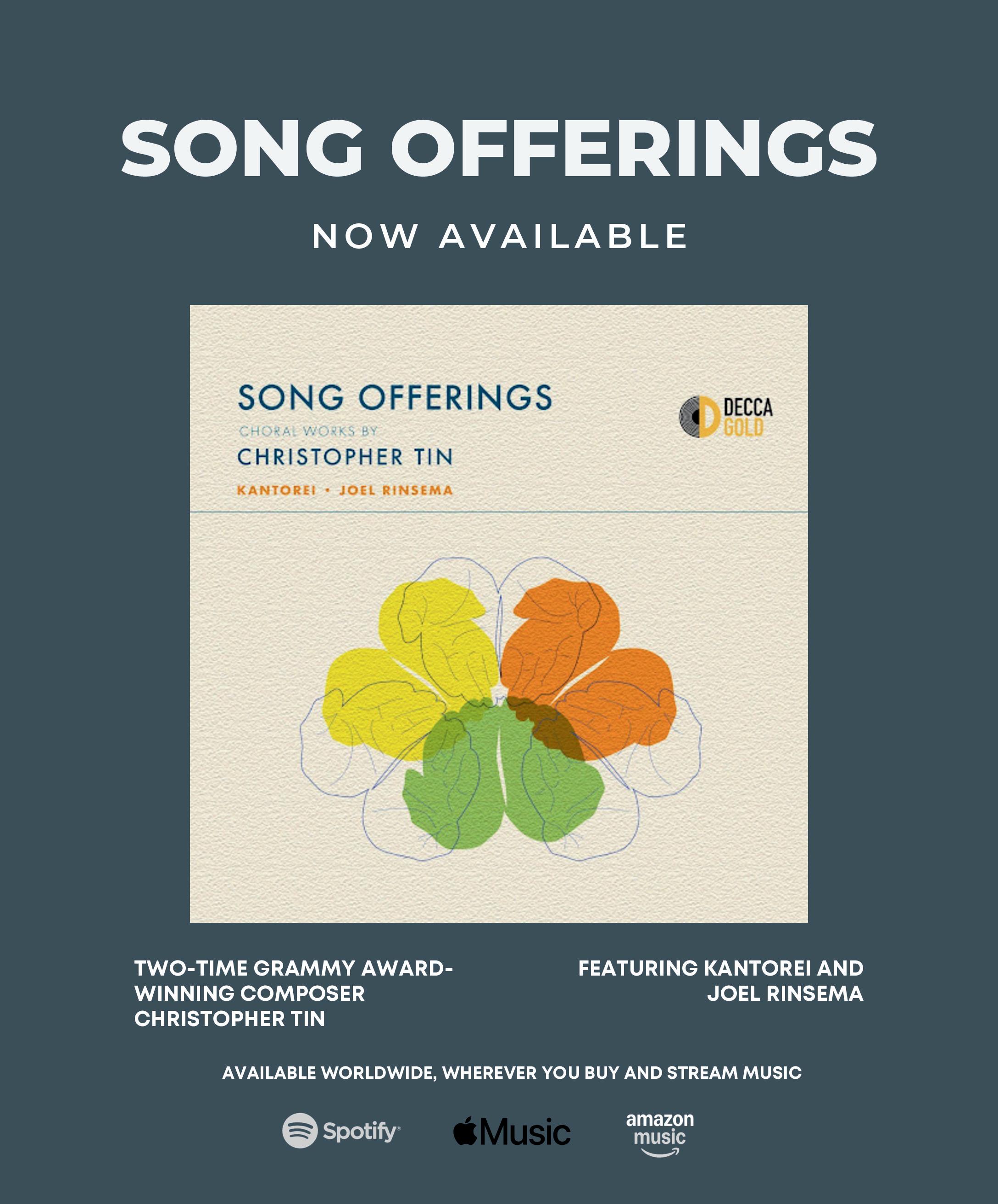

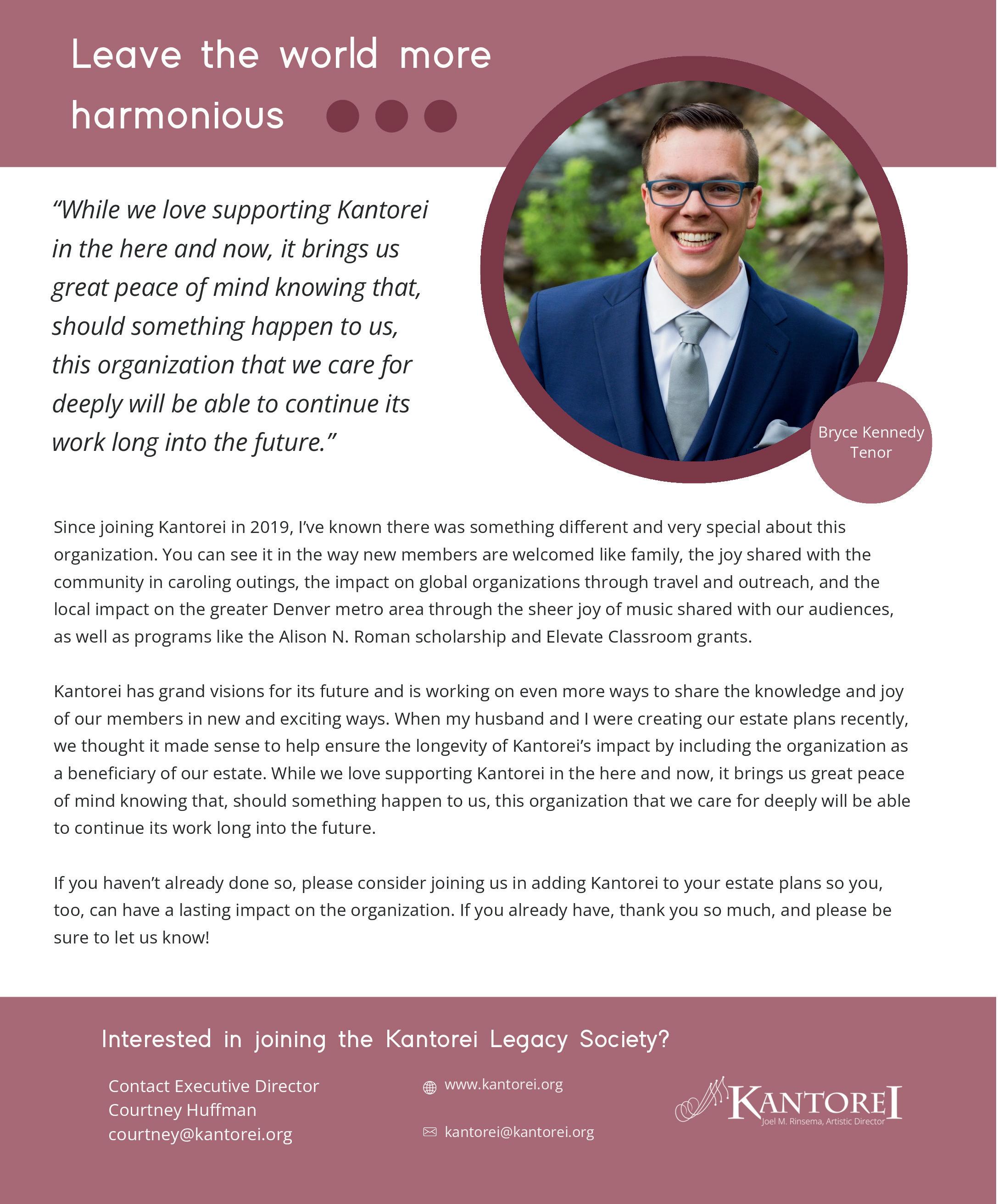







KANTOREI 2025-26 CONCERT SEASON
Saturday, 5/30: Central Presbyterian Church
DETAILS AND TICKETS AT WWW.KANTOREI.ORG
Sunday, 7/5: Nixon in China, John Adams
Saturday, 8/5: The Wealth of Nations, David Lang
Friday, 8/21: Die Zauberflöte, Wolfgang Amadeus Mozart
Sunday, 8/23: Chichester Psalms, Leonard Bernstein & Symphony No. 9, Ludwig van Beethoven
DETAILS AND TICKETS AT WWW.ASPENMUSICFESTIVAL.COM



Kantorei would like to thank our sponsors for your generous and ongoing support!