DevOps_ Bridging Development and Operations for Faster Software Delivery
DevOps: Bridging Development and Operations for Faster Software Delivery
Out here where tech moves at full speed, companies depend on apps that work well, stay safe, upside-down. Old-school ways of building software? They left devs and ops talking past each other, which sparked holdups, glitches, mess-ups during rollouts. Fixing that clutter became a mission - so teams brought in DevOps.
Working together smoothly - this way of making software links building and running systems hand in hand. Teams move quicker when tools handle tasks automatically instead of waiting around. Speed comes from syncing up steps that used to stay separate too long. Better results show up when everyone shares responsibility equally. Progress happens faster because feedback flows without delays piling up.
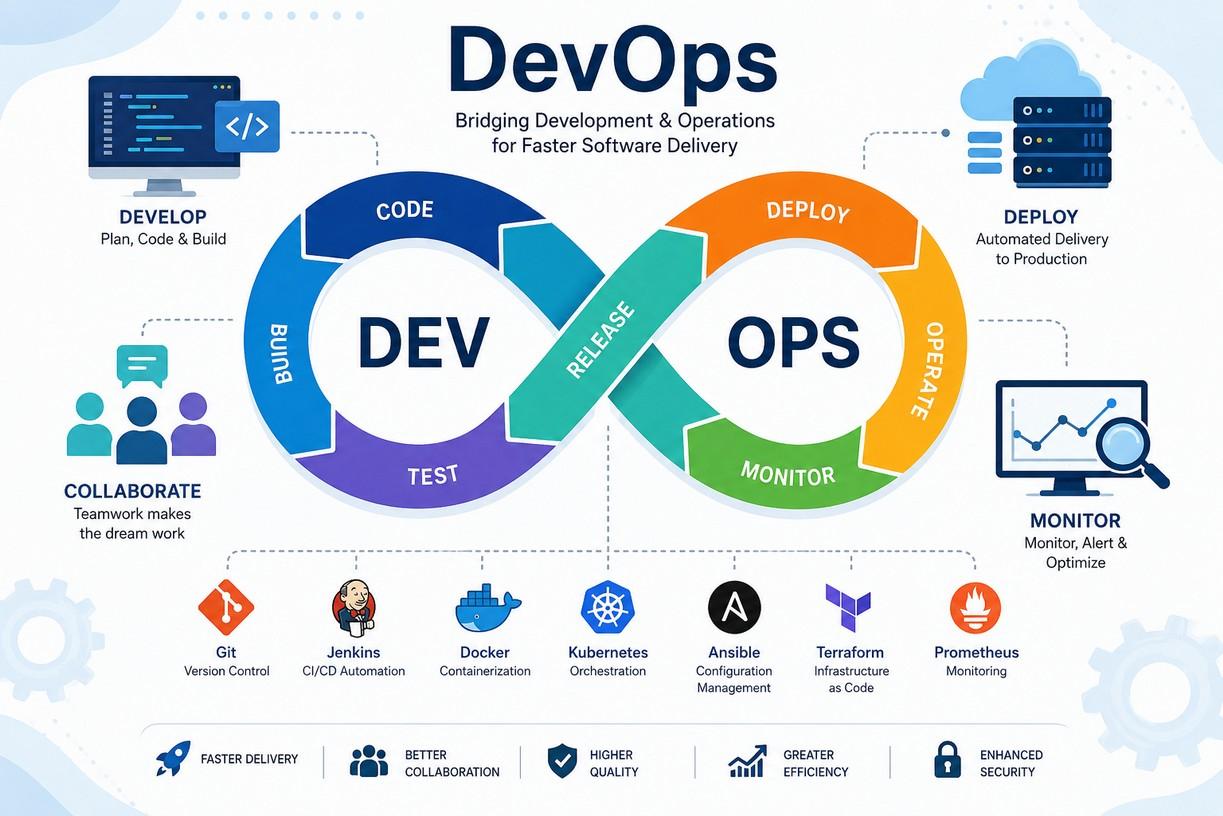
Development meets operations in the word DevOps
● Development
● Operations
Software moves faster when teams build together every day. Tools run tasks without waiting. Updates go out smoothly because checks happen all the time. Machines watch performance so problems show up early. People work close, sharing fixes and feedback often. Nowadays, small tech firms along with big global corporations rely on DevOps - so do cloud platforms and internal IT teams - to make building software smoother while also meeting user needs better.
What is DevOps?
Working together better - this approach links coders and tech operators through shared tools. Tools handle tasks automatically while checks run nonstop during updates. Efficiency comes from steady feedback plus live tracking of changes. Smooth releases happen when steps repeat without delays.
Speeding up how fast software gets built sits at the heart of DevOps, yet never skips careful checks along the way. Quality stays firm even when timelines shrink rapidly behind it.
DevOps includes:
● Continuous integration
● Continuous deployment
● Automation
● Infrastructure management
● Monitoring and security
● Collaboration between teams
Because teams work closer together, building software takes less time. Better flow between steps means tasks get done faster. When changes roll out smoothly, people using the product notice the difference right away.
Importance of DevOps
Faster Software Delivery
Faster releases come when machines handle repetitive work in software building. Teams move quicker because manual steps get replaced by smart workflows.
Improved Collaboration
Teams building software join forces with those running it, so messages do not get lost along the way.
Better Software Quality
Fixing problems fast begins with regular checks along the way. Spotting hiccups sooner means they get resolved before growing larger. Each round of review adds clarity to what works, what does not. Watching closely throughout keeps everything moving smoother than waiting till the end.
Increased Efficiency
Work gets done faster when machines take over repetitive tasks. Efficiency rises without needing extra effort from people.
Faster Problem Resolution
Machines that watch now help groups spot problems fast - fixing follows close behind. Enhanced Customer Satisfaction
Staying on top of changes, apps tend to feel smoother over time. When fixes roll out often, people notice things work better.
DevOps Lifecycle
Planning
Starting out, teams sketch what they aim to achieve alongside needed steps and how work will flow. Goals take shape early, while tasks get outlined through shared understanding instead of rigid checklists.
Activities include:
● Requirement analysis
● Task management
● Project planning
Popular tools:
● Jira
● Trello
● Asana
Development
developers working on application code. Common programming languages:
● Python
● Java
● JavaScript
● Go
Most people rely on tools such as Git to track changes over time.
Continuous Integration
Most of the time, developers add their updated code often to one central place. This practice keeps everything aligned without long delays. Working this way means small chunks go in regularly instead of big batches. The main idea is constant updates that fit together smoothly. Team members avoid major conflicts by sharing progress early and multiple times each day.
Benefits of CI:
● Faster bug detection
● Improved code quality
● Reduced integration issues
Popular CI tools:
● Jenkins
● GitHub Actions
● GitLab CI/CD
Testing
automated testing checks software works correctly. Types of testing:
● Unit testing
● Integration testing
● Performance testing
● Security testing
When bugs get caught early, systems tend to run more smoothly later on. A solid checkup now often means fewer breakdowns down the road.
Deployment
Deploying Applications to Production. Deployment strategies:
● Blue-green deployment
● Rolling deployment
● Canary deployment automation speeds up deployments while reducing errors.
Monitoring
From the start, keeping an eye on apps shows how well they run. Security stays checked through constant observation. System condition becomes clear when watched over time. Monitoring helps in:
● Detecting errors
● Improving performance
● Preventing downtime Popular monitoring tools:
● Prometheus
● Grafana
● Nagios
Feedback
When users share what they see, teams can adjust apps bit by bit. Monitoring shows how things run day to day. Insights from real usage guide each update. Little changes add up through steady learning.
DevOps Core Principles
Automation
Machines handle repeated work so people don’t have to. Efficiency rises when routine steps run on their own.
Automated tasks include:
● Testing
● Deployment
● Monitoring
● Infrastructure management
Collaboration
Folks who build software start talking more often with those handling its daily running. Teamwork grows stronger when both sides share ideas regularly.
Continuous Improvement
Faster fixes come through constant tweaks to how teams build and ship software. Routines evolve as tools adapt, step by step. Changes roll out smoothly when feedback shapes each phase. Work flows better because old steps get replaced without delay.
Monitoring and Logging
Keeping an eye on things nonstop keeps apps running smoothly without hiccups. What matters is how steady they perform when watched all the time.
Security Integration
Security shows up early, stays through every step of modern DevOps work. That whole idea? People call it DevSecOps.
DevOps Tools
devops uses tools to streamline development tasks.
Git
Tracking code changes happens through Git, which serves as a version control tool. A system like this helps manage updates over time. Updates get recorded so past versions stay available. What you save today can be reviewed tomorrow. Every change fits into a timeline built by the process.
Benefits:
● Collaboration
● Code management
● Backup and recovery
Jenkins
Out there among tools that handle automated workflows, Jenkins stands tall when it comes to building and shipping software. While many options exist, this server finds its niche by piecing together development steps smoothly. Step after step, code moves forward thanks to its ability to trigger actions without manual help. From testing changes to rolling out updates, it plays a quiet but steady role behind the scenes.
Docker
Wrapped around code and its tools, Docker builds running units. These pieces travel easily between systems. Each bundle works the same everywhere it lands.
Advantages:
● Portability
● Faster deployment
● Consistent environments
Kubernetes
Running on its own, Kubernetes handles apps packed in containers while adjusting resources up or down. Containers grow as demand shifts without manual checks across systems.
Features:
● Auto-scaling
● Load balancing
● Self-healing containers
Ansible
Ansible simplifies setup and rollout tasks.
Terraform
Terraform Manages Infrastructure With Code.
Benefits:
● Cloud infrastructure automation
● Faster provisioning
● Consistent configurations
DevOps and cloud computing
Cloud computing and DevOps work closely together.
Cloud Based DevOps Advantages
● Faster scalability
● Cost efficiency
● Improved flexibility
● Better resource management
Popular cloud platforms:
● AWS
● Microsoft Azure
● Google Cloud Platform
With cloud services, doing DevOps gets simpler, yet smoother each step. Efficiency shows up quietly when teams work faster without extra setup.
Benefits of DevOps
Faster Time to Market
Faster releases come when teams push out products. Updates follow close behind, slipping into place without delay. What matters shows up early, arriving through steady tweaks. Change moves smooth, not stuck in waiting
Improved Productivity
By cutting down on repeat tasks, automation boosts how fast things get done. Efficiency rises when machines handle what people used to do over and over.
Better Collaboration
Teams communicate and work together more effectively.
Development workflows include built-in security steps. While coding happens, safeguards take shape early. As teams build features, protection measures go along. During planning phases, safety checks appear naturally. With each update, defenses strengthen automatically.
DevOps Across Sectors
DevOps is used across multiple industries.
IT and software companies
Improve software delivery speed and reliability.
Banking
and Finance
Enhance security and transaction processing.
Healthcare
Manage healthcare applications and patient systems efficiently.
E-Commerce
Managing big online stores involves constant live changes, along with organizing software into isolated packages.
DevOps Skills Needed
A DevOps professional requires both technical and communication skills.
Technical Skills
● Linux administration
● Cloud computing
● Scripting
● Networking
● Containerization
● CI/CD pipelines
Soft Skills
● Team collaboration
● Communication
● Problem-solving
● Time management
Career Opportunities in DevOps
A wave of new jobs rises where development meets operations. Speed drives demand in tech roles today.
Popular Job Roles
DevOps Engineer
Running tasks that handle setup and release. One step handles what follows next across systems
Site Reliability Engineer
Keeps things running smoothly while holding up under pressure. What matters most shows up in steady results over time.
Cloud Engineer
Running cloud systems along with their support features. Takes care of remote computing setups together with operational tools. Handles online platforms plus backend operations smoothly.
Automation Engineer
Creates automated workflows and pipelines.
Security Engineer
Focuses on DevSecOps and infrastructure security.
Future Scope of DevOps
Change moves fast, so companies now build tech workflows into daily operations. Tomorrow's DevOps grows stronger because tools evolve alongside real needs.
Emerging Trends
AI tools used in software development and IT operations
Machines learn patterns, so tasks run smoother over time. When systems spot issues early, fixes happen before trouble grows.
GitOps
Git-based infrastructure management is becoming popular.
DevOps will support applications running closer to users.
Enhanced Security Automation
Security checks done by machines are set to matter more over time.
FAQs About DevOps
1. What is DevOps?
Working together across building and running systems shapes how DevOps speeds up software release cycles.
2. DevOps Career Prospects?
Fine paychecks come with DevOps work, while paths forward in careers stay wide open.
3. Tools Used in DevOps?
Among widely used options are Git, Jenkins, Docker, then there's Kubernetes, alongside Terraform, also Ansible.
4. DevOps and Coding Connection?
Finding your way around code makes things easier. Knowing a bit about scripts helps out sometimes. A little programming sense goes a long way here. Some experience with writing simple programs? That works too.
5. Understanding CI CD in DevOps?
Certain tools help teams merge code changes often. One after another, updates move into shared spaces. Each addition gets tested automatically. Moving forward, software heads toward release spots.
6. Understanding Docker in DevOps?
Wrapped around code like a shell, Docker bundles apps along with their tools. Containers hold everything needed so software runs the same everywhere. Each piece travels togetherno missing parts when moved.
Conclusion
Out of nowhere, teams started working closer together because of DevOps. Automation kicked in, smoothing out how code moves from creation to live systems. Efficiency took a leap when building and checking apps became routine rather than rare. Deployment stopped being chaotic once steady processes settled in. Quality stayed strong even as speed increased across departments. Security wasn’t an afterthought anymore - it rode alongside each step. Managing software felt less like firefighting, more like steering. Continuous delivery made updates predictable instead of stressful. Organizations adapted quickly without sacrificing control. The whole cycle evolved quietly but completely.
Software moves quicker when teams blend automation with containers, along with steady updates through pipeline systems and online infrastructure. Docker shows up alongside Kubernetes, while Jenkins works together with Terraform and Git - each playing a role in how things get built and shipped.
Right now, more companies are shifting online - which means folks who know DevOps are suddenly in high demand. Picture landing work that ties into cloud systems, automated workflows, even building tech foundations, simply by picking up these skills. Because tech keeps changing fast, thanks to smarter machines, remote systems, plus automated tools, DevOps sticks around as a key player in shaping what comes next. Though some trends fade, this part of tech holds steady. Its role grows without loud announcements or flashy promises. Behind the scenes, it quietly powers progress.