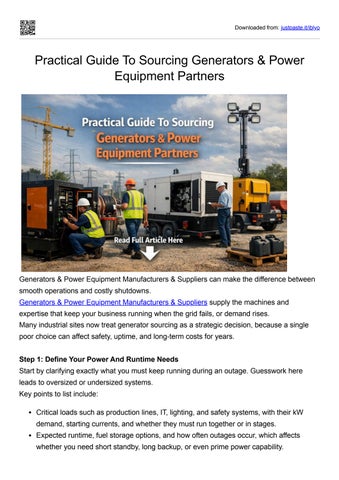
Practical GuideTo Sourcing Generators & Power Equipment Partners
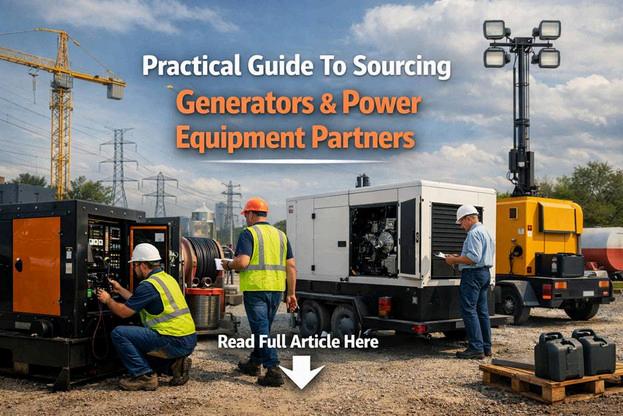
Generators & Power Equipment Manufacturers & Suppliers can make the difference between smooth operations and costly shutdowns.
Generators & Power Equipment
Manufacturers & Suppliers supply the machines and expertise that keep your business running when the grid fails, or demand rises. Many industrial sites now treat generator sourcing as a strategic decision, because a single poor choice can affect safety, uptime, and long-term costs for years.
Step 1: DefineYour PowerAnd Runtime Needs
Start by clarifying exactly what you must keep running during an outage Guesswork here leads to oversized or undersized systems
Key points to list include:
Critical loads such as production lines, IT, lighting, and safety systems, with their kW demand, starting currents, and whether they must run together or in stages
Expected runtime, fuel storage options, and how often outages occur, which affects whether you need short standby, long backup, or even prime power capability
This load profile becomes the base document for all talks with suppliers
Step 2: Shortlist Qualified ManufacturersAnd Suppliers
Next, identify Generators & Power Equipment Manufacturers & Suppliers with strong experience in your type of facility. Reputation and service network matter as much as brand. When shortlisting, check:
Track record in similar projects, including references from manufacturing plants, hospitals, or data centres where continuous power is critical. Scope of supply, such as whether they can provide generators, controls, switchgear, and installation support, instead of only the bare machine.
Aim for a manageable list of three to five serious candidates.
Step 3: Get SizingAnd Fuel Choices Right
Correct sizing and fuel selection are key to performance and costs Oversized sets waste fuel, while undersized sets trip or wear out faster
With your shortlisted partners, compare proposals that address:
Generator rating and expected loading, usually planned so the set runs near 60 to 80 percent of its rated capacity during normal use to allow for starting loads and future growth.
Fuel type, understanding that diesel generators are typically 20 to 40 percent more efficient than natural gas units for many industrial applications, though gas can be attractive where fuel is cheaper or cleaner.
Suppliers should clearly explain their sizing method and assumptions.
Step 4: Evaluate Products, FeaturesAnd Examples
At this stage, look more closely at the actual equipment being offered. Pay attention to engines, alternators, controls, and enclosures.
Strong Generators & Power Equipment Manufacturers & Suppliers will show:
Recognized engine and alternator brands, sound levels, control panel features, and protection devices suited to your environment and regulations
Real product examples in the power range you need, such as an Industrial Commercial Power Generator ElectroGen Engine Backup Supply, which helps you compare rating, fuel, starting system, and control options with your own requirements
Use these details to ask targeted questions about performance and maintenance.
Step 5: Compare Service, Lifecycle CostAnd Contracts
Generators protect you only if they start reliably when needed Service quality and lifecycle cost should therefore drive the final decision
When reviewing offers, examine:
Maintenance plans, response times, spare parts availability, and remote monitoring services, which all affect long term reliability and downtime risk.
Total cost over at least ten years, including fuel, service, parts, and testing, not just purchase price, because more efficient and reliable sets usually save money over time.
Choose partners who are transparent about these numbers and responsibilities.
Step 6: Final ChecksAnd Implementation Plan
Before signing, verify references and confirm project steps Clear expectations reduce surprises later
Agree with your chosen supplier on:
Milestones for design approval, delivery, installation, testing, and training, plus how acceptance will be measured on site
Periodic testing routines, fuel management, and handover documents, so your team can operate and maintain the system confidently from day one
This completes the move from specification to a working, reliable power solution.
Take The Next Step To Secure Power
Following these steps helps you select Generators & Power Equipment Manufacturers & Suppliers who protect your business from outages and control long-term costs.To explore detailed generator offers, connect with trusted vendors, and manage sourcing online, join Pepagora now!