Changes of address/ subscription cancellations: customer.data@kaeser.com
The editorial office cannot accept liability for any unsolicited manuscripts and photographs. Reproduction, including excerpts, only with written authorisation.
VAT ID no.: DE 132460321
of companies: Coburg, HRB 5382
Your personal data will be used and stored by us for marketing purposes. For detailed information, see www.kaeser.com/int-en/privacy-marketing.aspx. You can refuse the use and storage of your data for marketing purposes at any time at: customer.data@kaeser.com.
Clean water – quality of life for the world
Clean drinking water is far more than a resource: it is the foundation of civilization, a driver of economic development and a defining measure of global quality of life. Yet it remains one of the great paradoxes of the 21st century–although more than 70 percent of our planet is covered by water, an estimated 2.2 billion people worldwide still lack reliable access to safe, clean drinking water. This stark imbalance confronts the engineering and technical community with what may be the most urgent moral and technological challenge of our time.
Securing clean water today requires far more than conventional sand filtration and chlorination. We are confronting an entirely new class of contaminants. Microplastics, pharmaceutical residues and persistent organic pollutants are finding their way even into deep groundwater reserves, placing unprecedented demands on analytical methods and separation technologies.
Compounding the challenge are major infrastructure deficits. In many industrialized nations, aging pipeline networks lead to substantial water losses, while in developing regions the energy required for decentralized systems or desalination is often prohibitively high. It is clear that we must move beyond linear, centralized supply models and transition towards resilient, circular water systems. In these systems, resource conservation and reuse are no longer optional add-ons, but core priorities.
The encouraging news is that technology is advancing at a remarkable pace. Innovative, highly efficient membrane systems – from ultrafiltration to reverse osmosis – now make it possible to remove contaminants at a molecular level while significantly reducing energy consumption. In these processes, compressors, rotary lobe blowers, rotary screw blowers and turbo blowers play a pivotal role in ensuring that treatment systems operate safely and economically. At the same time, digitalization and artificial intelligence (AI) are opening up entirely new dimensions in water management. Real-time monitoring with IoT sensors enables early detection of leaks and deviations in water quality. Intelligent
control systems optimize flocculation processes for precise chemical dosing, while predictive models anticipate bacterial loads, allowing disinfection to be carried out proactively. Even energy-intensive processes such as sewage sludge treatment can be optimized by accurately determining oxygen demand and adjusting aeration accordingly. The decisive factor, however, is interdisciplinary collaboration. Engineers, chemists, data scientists and microbiologists must work hand in hand to develop solutions that are not only technically achievable, but also economically viable and socially acceptable on a global scale.
As stakeholders in the technical sector, we carry a particular global responsibility. It is not enough to develop advanced technologies solely for markets with the greatest purchasing power. We must actively promote technology transfer to regions facing acute water scarcity and develop robust, low-maintenance solutions suited to decentralized water supply systems. Many of these forward-looking solutions, concepts and technologies will be showcased at IFAT 2026 in Munich from the 4th to the 7th of May. Our expert application engineers will be on hand to provide in-depth advice and discuss practical implementation strategies.
Clean water is not a luxury – it is a fundamental human right and the foundation of education, health and prosperity worldwide. Investing in water technology means investing in global stability and in the future of our children. Let us push the boundaries of what is possible in water treatment and apply our expertise to ensure that this essential resource – the foundation of quality of life – is accessible to everyone on this planet. The time to act is now.
Mr. Frank Mueller, President of Kaeser Compressors, Inc.
IFAT 2026: Compressed air innovations for the water industry
Innovative solutions for a responsible future
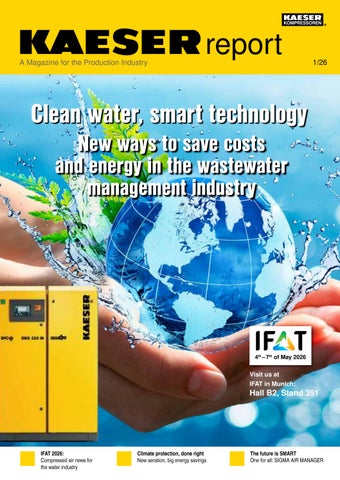
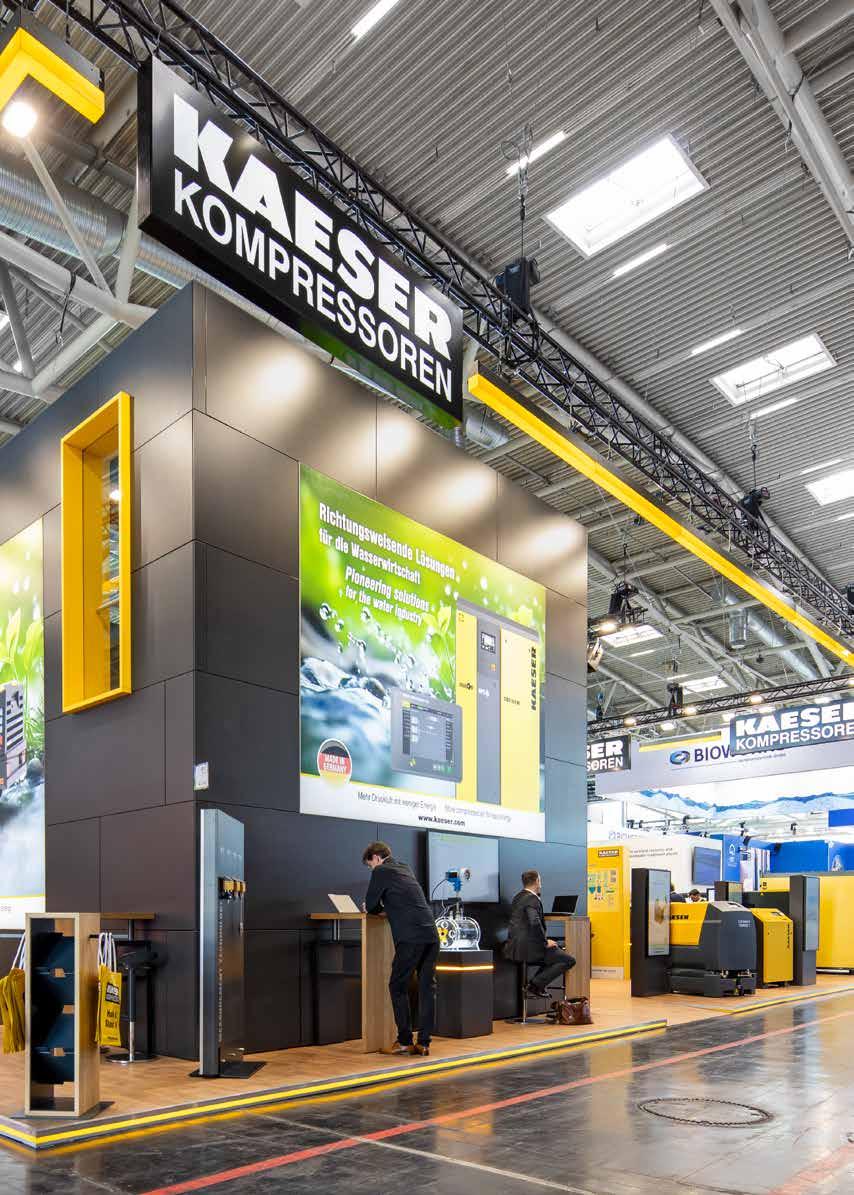
IFAT in Munich is the leading global meeting place for the environmental technology sector and the centerpiece of the world’s largest international platform for environmental solutions. In May 2026, more than 3,000 exhibitors from over 60 countries will showcase their latest strategies and innovations. KAESER KOMPRESSOREN, the Coburg-based compressed air systems provider, will be presenting a wide range of innovative solutions.
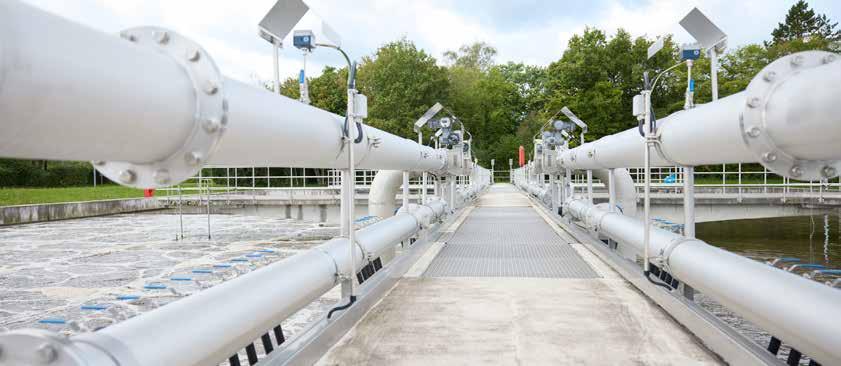
From wastewater treatment plants to water body protection, KAESER provides reliable and energy-efficient compressed air solutions for a wide range of applications in the water industry. As a full-service Industrie 4.0 partner for compressed air and blower system solutions, KAESER helps optimize energy consumption and process efficiency, making a tangible contribution to sustainable water management.
KAESER’s philosophy goes far beyond the supply of machinery and control technology. It begins with expert planning: whether designing a new compressor or blower station, or optimizing an existing installation, KAESER supports customers throughout the entire process. This includes everything from initial system analysis using computeraided Air Demand Analysis (ADA) to complete station planning, installation, programming, and ongoing maintenance.
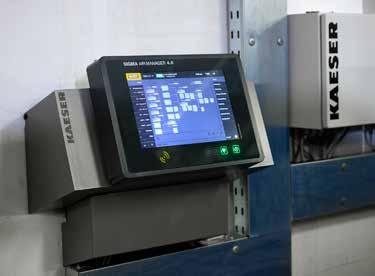
KAESER was a pioneer in developing “plug-and-play” complete blower solutions with integrated control systems. Combining exceptional efficiency with forward-looking design and technology, KAESER blowers integrate seamlessly into networked systems. When operating multiple blowers, the SIGMA AIR MANAGER 4.0 master controller plays a central role as a key Industrie 4.0 technology. With demand-based automation and comprehensive system monitoring, the SIGMA AIR MANAGER 4.0 not only ensures optimum utilization of each individual blower, but also maximum overall efficiency throughout the entire network.
Visit us at IFAT in Munich: Hall B2, Stand 351 4th – 7th of May 2026
Typical compressed air applications in the water industry
• Sewer systems
• Grit removal
• Aeration for biological wastewater treatment
• Filtration
• Pneumatic control
• Workshop air
There’s so much to explore – and we’d be delighted to show you how our latest technologies can enhance your business. We warmly welcome you to visit the KAESER exhibition stand in Munich.
Innovative turbo blowers and control systems It’s definitely well worth a visit!
Learn more about KAESER KOMPRESSOREN’s future-oriented compressed air solutions at IFAT in Munich from the 4th to 7th of May 2026, in Hall B2, Stand 351.
Climate protection, done right
Forchheim wastewater treatment plant has recently completed a comprehensive modernization and optimization project, achieving a significant reduction in overall energy consumption. The project received funding from the Federal Ministry for Economic Affairs and Climate Action through its National Climate Initiative, as well as from the Bavarian State Ministry for the Environment and Consumer Protection.
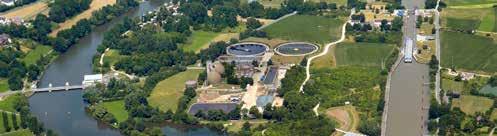
Commissioned in 1971, the Forchheim wastewater treatment plant on the Schleuseninsel (Lock Island) operates continuously, 24 hours a day, seven days a week, ensuring that treated wastewater and storm water can be safely returned to the natural water cycle. To maintain reliable operation over the long term, however, regular investment in modernization is essential. The latest upgrade focused on aeration of the activated sludge tanks – an area known for particularly high energy consumption and therefore offering substantial potential for savings.
A dedicated potential study confirmed that replacing the existing tube diffusers with energy-efficient disc diffusers, and swapping aging rotary lobe blowers for modern rotary screw blowers, would cut the plant’s total electricity consumption by around 15 per cent. At the same time, annual CO2 emissions would fall by approximately 121 metric tons.
For a future-oriented water cycle
The activated sludge tank forms the core of the biological treatment stage. Here, billions of bacteria and microorganisms convert dissolved wastewater constituents such as carbon, nitrogen and phosphorus compounds into biomass, known as activated sludge. Aeration supplies these microorganisms with the oxygen they need to survive, while the airflow also ensures thorough mixing of the tank contents. This continuous circulation brings the microorganisms into close contact with pollutants, enabling them to break them down more efficiently.
At Forchheim wastewater treatment plant, the nitrification tanks had previously been equipped with tube diffusers featuring membranes made from EPDM, a synthetic rubber. As part of the modernization program, these were replaced with highly efficient disc diffusers fitted with PU membranes, significantly improving oxygen transfer efficiency. Fine-bubble aeration in the activated sludge
tanks had until then been supplied by three older rotary lobe blowers that no longer met current efficiency standards. The study clearly demonstrated that replacing them with modern rotary screw blowers would result in a substantial reduction in energy consumption. During the subsequent tendering process, bids were requested from several manufacturers. Florian Utz, Operations Manager at the plant, explains: “KAESER’s proposal offered the most energy-efficient, environmentally friendly and cost-effective solution.” The activated sludge tanks, with a depth of 13 feet, require a working pressure of between 6.5 and 7 psi. This demand is met perfectly by the new, future-oriented blower station with a total installed power of 400 hp. The system comprises two large variable-speed rotary screw blowers from the GBS 1050 L SFC series, each rated at 125 hp, and three smaller variable-speed EBS 410 CL SFC
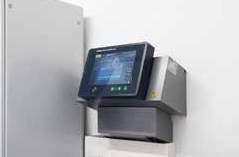
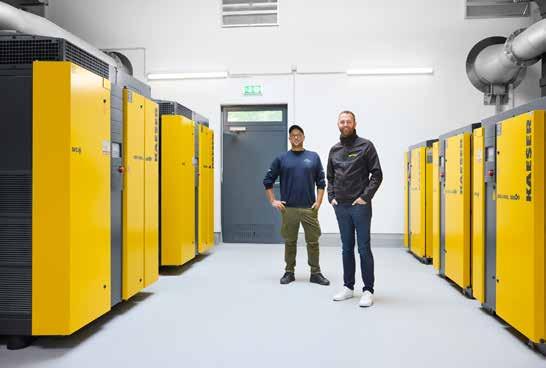
Image above: The SIGMA AIR MANAGER 4.0 operates in perfect coordination with the process control system. Image right: Five variable-speed KAESER rotary screw blowers supply air to the activated sludge tanks. To front: Florian Utz (Operations Manager, Forchheim wastewater treatment plant) and Matthias Sienerth (Sales Engineer, KAESER).
rotary screw blowers, each with an output of 50 hp. In these rotary screw blowers, drive power is transmitted from the motor to the blower airend via a loss-free, maintenance-free gear transmission – a solution that offers outstanding efficiency, reliability and service life. What makes the Forchheim blower station particularly stand out is the use of a SIGMA AIR MANAGER 4.0 master controller, which is fully integrated into the plant’s process control system.
Why a master controller?
The use of a master controller delivers an additional reduction in energy consumption, particularly in wastewater treatment plants that operate blowers of different sizes. Intelligent, demand-driven airflow control ensures that the total air supply matches the actual oxygen demand at any given time. Rather than operating each blower independently, the control system coordinates all units within the station. Each blower achieves its highest efficiency at a specific speed and flow rate. The SIGMA AIR MANAGER 4.0 automatically selects those blowers which, in combination, provide the required airflow with the lowest possible power consumption.
Through modernization of the aeration system, we have drastically reduced energy consumption while significantly increasing operational reliability.
This results in maximum energy efficiency. Following completion of the aeration and blower upgrades in the biological treatment stage, the Forchheim wastewater treatment plant is now operating with the latest equipment and control technology. But have the forecasts made in the initial study been borne out in practice? Florian Utz offers a clear verdict: “Today, we achieve significantly better treatment results, with improved discharge values, greater operational reliability
and, of course, substantial energy savings compared with the previous aeration system. The original study projected savings of around 15 per cent; our actual figures now show savings of between 20 and 25 percent”.
Image: Stadtwerke Forchheim municipal enterprises
Refurbishment of the AcegasApsAmga wastewater treatment plant in Servola
Energy efficiency and
A comprehensive refurbishment programme was implemented at the AcegasApsAmga wastewater treatment plant in Servola (a district of Trieste), in order to reduce energy consumption and improve the stability of biological processes. The new KAESER rotary screw blowers and the master controller played a key role in achieving these objectives.
The extensive modernization and expansion of the Servola wastewater treatment plant, including the blower system for the biological treatment stage, dates back to 2018. At a recent follow-up meeting with the three project managers, there was an opportunity to review the project’s requirements, objectives and results. Participants included Lucio Blasi, Head of the Electrical Systems and Installations Department; Eng. Federico Guercio, responsible for maintenance and cross-functional activities; and Eng. Federico Orsini, responsible for investment in new systems.
The Servola facility treats wastewater from the city of Trieste, with the exception of part of the surrounding suburbs and two neighboring municipalities. It is currently designed for a capacity of approximately 200,000 population equivalents. Wastewater is conveyed to the plant via two main collectors serving the lower and upper parts of the city respectively. Following treatment, the water is discharged into the sea via a 4.5 mi underwater steel pipeline, which divides into two branches and releases the treated effluent through 600 outlet points. This distribution system helps spread the load and supports natural biological processes. Wastewater treatment at Servola is also based on biological processes, combining sedimentation, nitrification and denitrification with biofiltration, using patented technologies such as Biostyr and Biofor.
Environmental protection in focus
Installation of the new KAESER systems forms part of AcegasApsAmga’s broader strategy to continuously improve environmental performance under its EMAS certification. EMAS is a voluntary en-
vironmental management scheme, and key elements of the plant’s ecological sustainability include higher energy efficiency, optimization across multiple process areas and reduced consumption of chemical reagents. The project also anticipated the objectives of the revised European Urban Wastewater Treatment Directive, which sets ambitious targets for the energy neutrality of wastewater treatment plants.
From the outset of the modernization project, it was clear that the turbo blowers supplied by the previous manufacturer were oversized for the actual process requirements and no longer met current energyefficiency standards. To ensure a robust, data-driven approach, the plant operators decided, together with KAESER COMPRESSORI Italia, to carry out a detailed technical study to identify the machine type best suited to the plant’s operating conditions. The key requirements were the reliable provision of a stable working pressure of around 13 psi combined with the ability to adjust airflow continuously and with a high degree of flexibility to match real-time process demand. The study showed that KAESER’s varia-
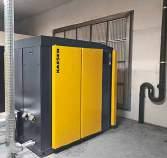
KAESER FBS 720 M SFC 150 hp variable-speed rotary screw blowers (flow rate 2525 cfm differential pressure: pressure up to 15 psi, vacuum up to 8 psi) are ideally suited to meet these requirements.
process optimization
ble-speed FBS 720 M SFC 150 hp rotary screw blowers were ideally suited to meet these requirements. The machines deliver a flow rate of 2525 cfm with differential pressures of up to 16 psi in pressure mode and 8 psi in vacuum mode. To maximize operational reliability, two identical rotary screw blowers were installed.
Demand analysis and energy savings
A key component of the project was the introduction of the SIGMA AIR MANAGER 4.0 master controller, which enables intelligent blower control and seamless integration with the plant’s process control system. This advanced controller automatically manages blower start-up and shutdown, optimizes efficiency, regulates pressure, flow rate and
operating priorities in real time, and transmits operating data and alarms directly to the plant’s SCADA system (Supervisory Control and Data Acquisition). As a result, customized control algorithms were no longer required, and system integration was significantly simplified.
At the start of the project, annual energy savings of between €30,000 and €50,000 were forecast. However, a comparison between historical energy consumption and figures from the first year of operation with the new equipment revealed even greater savings, amounting to approximately €117,000 per year. As a result, the investment was fully amortized in less than two years.
In addition to the impressive energy savings, the new blower technology delivered further benefits: the new machines are no-
ticeably quieter than their predecessors and keep noise levels within the legally required limits, making special ear protection unnecessary. Moreover, the ambient temperature in the machine room is now much more pleasant, even during the summer months.
The new rotary screw blowers are noticeably quieter and the ambient temperature in the machine room is now much more pleasant, even during the summer months.
The modernization project has taught us how to drive innovation while protecting what matters most: the environment and the future of the region.
Francesco Scutiero, Head of Technical Development
La Regina di San Marzano, a leading Italian agricultural and food producer, was confronted with a growing challenge: rising production volumes brought with them a sharp increase in the amount of wastewater requiring treatment. The existing wastewater treatment plant was no longer able to handle the increased load. This marked the starting point for a comprehensive modernization program centered on the introduction of a biological treatment system capable of removing dissolved pollutants more efficiently while meeting significantly higher environmental standards.
La Regina di San Marzano di Antonio Romano S.p.A is a leading player in Italy’s agricultural and food sector, specializing in the production of premium peeled tomatoes and high-quality ready-made sauces.
Founded back in 1972 in San Pietro di Scafati, in the southern Italian province of Salerno, by agricultural entrepreneur Antonio Romano, the company has grown from a local family business into a modern, market-leading enterprise. Now in its third generation of family ownership, La Regina di San Marzano achieved revenues of over €366 million in 2024 and employs more than 600 people. Today, it stands as a flagship company within the canned food industry, combining tradition and quality with a strong international outlook.
In recent years, the company has made substantial investments in innovation and sustainability. Key initiatives have included the expansion of the production site, the
installation of a state-of-the-art photovoltaic system, and modernization of the wastewater treatment plant.
Through these measures, management has sent a clear signal of its commitment to energy efficiency and environmental protection.
Francesco Scutiero, Head of Technical Development at La Regina di San Marzano, explains the starting point: “Before the modernization project, wastewater was treated using a chemical-physical process. As the company has grown steadily in recent years, rising volumes could only be handled by switching to a biological treatment process. To accommodate the new, larger wastewater treatment plant, we even acquired an adjacent plot of land specifically for this purpose.”
From need to solution: Engineering and operational flexibility
To implement the modernization project, the canned food producer appointed De. Wa.Co. s.r.l., a specialist with more than twenty years of experience in the planning, treatment and disposal of industrial and municipal wastewater. The company offers integrated consulting, planning and construction services for water treatment plants, developing customized industrial solutions tailored to specific operational requirements.
Plant design engineer Pasquale Russo of De.Wa.Co. emphasises that flexibility and adaptability were key design priorities for the new system. As a result, the plant can easily cope with the pronounced seasonal peaks in tomato processing that typically occur between July and September. “We have implemented a system that allows operators to respond immediately to both qualitative and quantitative changes in production,” explains Russo. “The system monitors all key parameters in real time and initiates a targeted technical response whenever deviations occur.”
At the heart of the new biological treatment process is the aeration system, which plays a critical role in sustaining the biomass. As Francesco Scutiero notes: “Once the decision had been made to adopt the new technology, we selected one of the most respected companies in the industry –KAESER KOMPRESSOREN.”
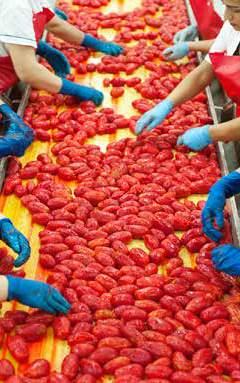
La Regina di San Marzano specialises in the production of high-quality peeled tomatoes and premium ready-made sauces.
KAESER’s blower specialists, working together with the local KAESER branch in Campania, developed a solution tailored precisely to the plant’s requirements. Pasquale Russo highlights the key advantages: “KAESER FBS rotary screw blowers are equipped with Ultra Premium Efficiency IE5 motors, delivering exceptional efficiency and significant energy-saving potential. This is complemented by the highly efficient IES2 drive system, flow-optimized SIGMA PROFILE rotors and a virtually constant specific power over a wide control range under variable-speed operation, ensur-
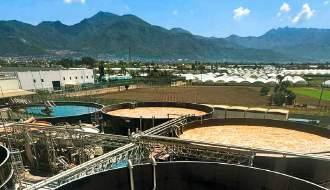
The adjacent plot of land was acquired for the expansion and refurbishment of the wastewater treatment plant.
ing outstanding energy efficiency at every operating point.” The new system configuration, comprising six variable-speed FBS rotary screw blowers with flow rates ranging from 600 to 2542 cf and differential pressures between 4.5 and 16 psi now enables suspended biomass concentrations of up to 1.9 lb/cubic foot to be handled, which not only improves treatment
efficiency, but also ensures greater stability during peak operating periods. Francesco Scutiero is extremely satisfied with the performance of the new biological treatment process and the reliability and energy efficiency of the KAESER rotary screw blowers: “Today, we operate with significantly higher suspended biomass concentrations
than before and have achieved a marked improvement in treatment performance. This modernization project has taught us how to drive innovation while protecting what matters most: the environment and the future of the region.”
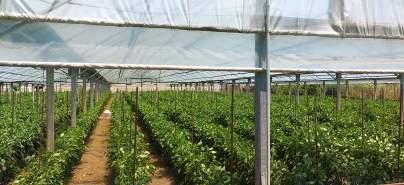
Tomato cultivation near the company.
KAESER FBS rotary screw blowers are equipped with Ultra Premium Efficiency IE5 motors and a SIGMA PROFILE optimised specifically for blower applications, delivering significantly enhanced efficiency.
All images: KAESER COMPRESSORI Italia
Compressed air for every workstation
Stronger together
GW St. Pölten in Lower Austria is one of eight Integrative Enterprises across Austria. Together, Integrative Enterprises Austria provide outstanding conditions for the working lives of around 3,400 employees and 400 apprentices. Stable employment relationships combined with fair pay enable people with and without disabilities to participate fully in social and professional life. Across a wide range of sectors, Integrative Enterprises Austria delivers high-quality professional services, consistently meeting customer requirements in full.
GW St. Pölten Integrative Betriebe GmbH is a modern, innovative industrial company and the largest Integrative Enterprise in Austria, offering a broad portfolio of products and services across five distinct business areas. These range from metalworking, electrical engineering, textiles, and advertising technology to service-based activities such as building cleaning, refurbishment and green space maintenance. This versatility makes GW St. Pölten a strong and dependable partner for industrial, private-, and social-sector clients. In addition
to its core offerings, GW St. Pölten provides a range of supplementary services that create genuine added value for partners and customers. In the field of logistics, the company places strong emphasis on flexibility, reliable freight-forwarding partners, and personalized service – factors which make it particularly effective at meeting the needs of mid-sized customers. Through its collaboration with internationally oriented major clients, GW St. Pölten also demonstrates its expertise in providing efficient and reliable support for complex supply chains.
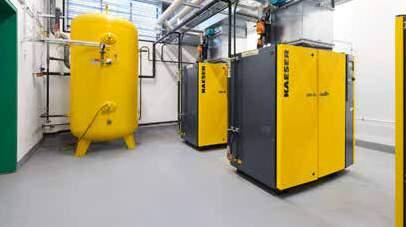
The goal of achieving maximum energy efficiency was accomplished through the selection of three ASD 35 rotary
screw compressors with heat recovery.
Shaping the future
As a modern industrial company, GW St. Pölten is certified, among other standards, in accordance with ISO 50001 for energy management. Environmental protection, sustainability, and energy efficiency are key priorities – an approach that also applies to the company’s compressed air supply. Franz Vogl, Head of Facility Services, describes the initial situation: “In 2023, we launched a major project to develop an entirely new energy concept for the company. Among other things, this included a photovoltaic system, a heating solution based on heat pump technology, and new building insulation. Whenever energy efficiency is discussed, compressed air is inevitably part of the conversation. For this reason, when modernizing our compressed air station, we placed particular emphasis on achieving maximum energy efficiency. This was accomplished through careful selection of the right components and the use of heat recovery.”
For expert advice and implementation, GW St. Pölten Integrative Betriebe GmbH turned to the KAESER branch in Linz. The project began with a detailed analysis of existing compressed air demand using an ADA measurement (Air Demand Analysis). Based on the results, an optimized station configuration was developed to meet the plant’s requirements as efficiently as possible. The production facilities cover an area of 3.7 acres, with compressed air used as both a working and control medium at almost every workstation across all areas of the business. The required pressure level is 100 - 125 psig with a flow rate of approximately 113 cfm.
Compressed air at almost every workstation
The goal of achieving maximum energy efficiency was achieved through careful selection of custom-matched components. Three highly efficient ASD 35 rotary screw compressors feature state-ofthe-art synchronous reluctance motors, which combine the benefits of asynchronous and synchronous motors in a single drive unit to deliver optimum energy performance. Energy efficiency was also a priority when it came to compressed air treatment, leading to the selection of two SECOTEC TE 142 energy-saving refrigeration dryers. An AQUAMAT oil-water separator and a variety of filters completed the package. Further energy savings are achieved with the SIGMA AIR MANAGER 4.0 master controller, which predictively evaluates multiple operating scenarios and consistently selects the most energy-efficient option. In this way, it continuously adjusts the compressors’ output and energy consumption to match current compressed air demand. The request to utilize heat recovery was fulfilled through the use of plate-type heat exchangers integrated into the compressors. Up
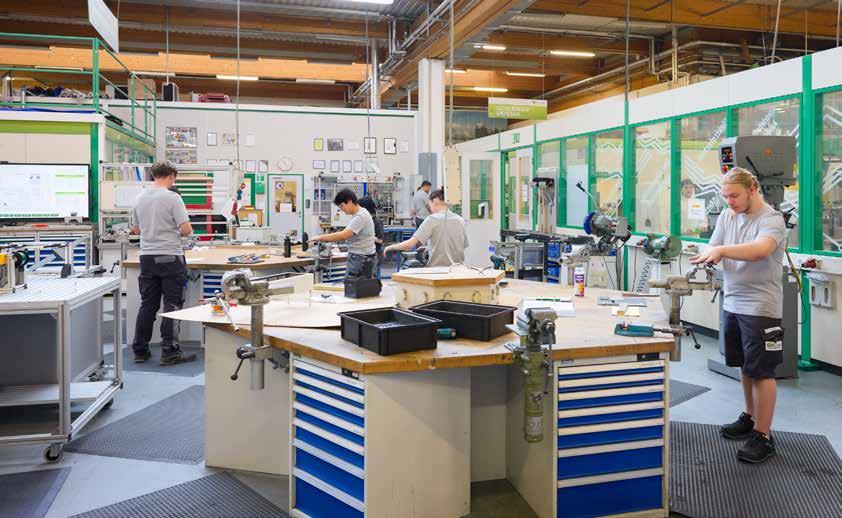
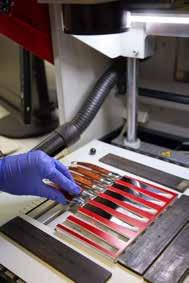
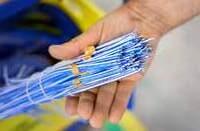
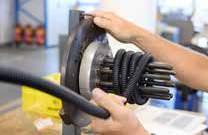
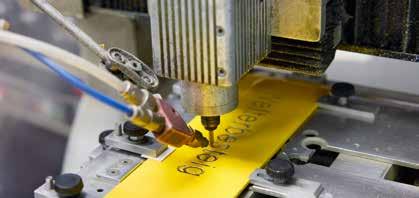
Compressed air is used at almost every production workstation: Laser-etching of table knives, cable manufacture, hose cutting, engraving (advertising technology).
Franz Vogl, Head of Facility Services
to 96 percent of the electrical energy consumed can therefore be recovered as heat and fed into GW St. Pölten’s heating system via the buffer storage.
Asked whether the new compressed air station has met expectations, Franz Vogl is unequivocal: “We’re extremely satisfied with KAESER’s overall concept. The new compressors have reduced our electricity costs by around 40 percent and every requirement defined within our new energy concept has been fully achieved.”
Craftsmanship meets high-tech
A photo lab like no other
With over 20,000 customers from the professional photography sector, four flagship stores in Düsseldorf, Hamburg, Munich and Berlin, and shop-in-shop presences in LUMAS galleries in New York, Miami, Zurich and Vienna, WhiteWall ranks among the world’s leading companies in its field. The brand’s award-winning gallery quality is built on premium substrate materials, high-end mounting solutions and handcrafted frames produced in its own workshop, combining traditional craftsmanship with cutting-edge production technology.
Artistic photography deserves nothing but the very best. That is why WhiteWall combines the latest technologies with traditional development processes. Founded in 2007 by Alexander Nieswandt, the company now draws on more than 18 years of expertise in the photo-finishing market and has established itself as one of the world’s leading premium photo labs. From the very beginning, WhiteWall set out to make gallery-quality photo products accessible not only to professional photographers, but also to private customers. This uncompromising ambition ultimately led to the development of WhiteWall as an independent brand with a clear focus on quality, craftsmanship and innovation.
Craftsmanship meets high-tech
WhiteWall relies on a proprietary production system developed specifically for its own requirements. Seamlessly connected to both the company website and SAP, this system fully automates and controls a wide range of processes – from procurement and warehousing through to every stage of production, from order capture and processing to final dispatch. Developed and refined over many years in parallel with the company’s growth, the system enables exceptionally efficient and flexible production. It supports bespoke formats, customized material selection, precise package calculation and intelligent logistics control. As a result, WhiteWall is able to handle everything from individual custom orders to complex large-scale projects quickly, reliably and to the very highest quality standards.
The concept behind this premium photo lab in Frechen near Cologne has proven so successful that the original production area has already been expanded twice and now spans a total of 2.5 acres. From day one, the facility has relied on a KAESER compressed air station – a solution with which Norman Mertscheit, Product Manager at WhiteWall, is highly satisfied. “Compressed air is as impor-
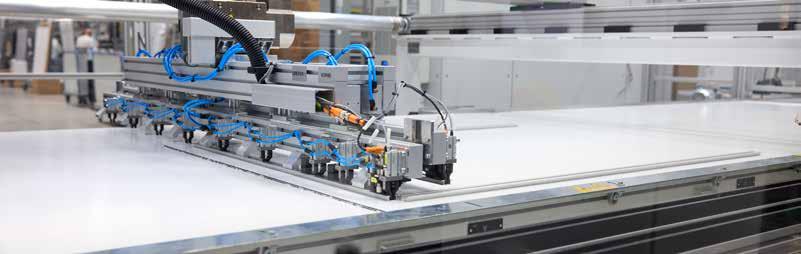
tant to us as electricity,” he explains. “It is essential for a wide range of functions at virtually every workstation, which is why a reliable compressed air supply is absolutely critical.” One of its most common applications is cleaning: at almost every stage of production, compressed air is used to blow off products, removing dust and contaminants and ensuring consistently impeccable quality. At the UV flatbed printer, a compressed air gun is used not only for cleaning, but also to neutralize static electricity, as nitrogen and oxygen molecules in the airflow are split into positive and negative ions. In the laminating department, compressed air is used to apply the silicone that permanently bonds the photo to the acrylic sheet. In the mounting machine – a custom-built WhiteWall unit – it controls the grippers and conveys the adhesive. It is also an indispensable component in frame production, final inspection, and the packaging department.
As part of the company’s continued development and upscaling of production, the compressed air station was comprehensively modernized and expanded this year. It was also relocated to a dedicated plant room, specifically created in close proximity to the heating system. The upgraded compressed air station comprises two variable-speed ASD 35 T SFC rotary screw compressors from KAESER KOMPRESSOREN, each delivering a pressure of 125
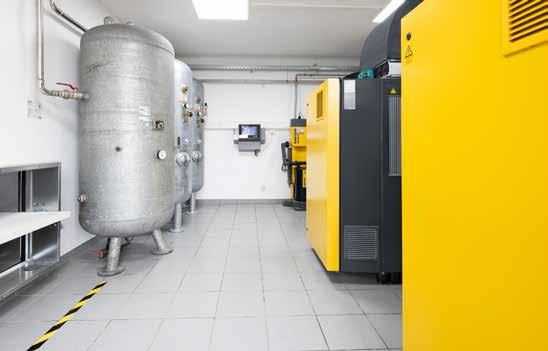
psi and a flow rate of 60 cfm with add-on dryers. The system is completed by the SIGMA AIR MANAGER 4.0 master controller, an AQUAMAT oil-water separator, and three compressed air receivers with a capacity of 237 gallons each.
Energy efficiency was a key focus of the modernization project. Verena Gorny, Sustainability Officer at WhiteWall, explains: “Sustainability, and therefore the responsible use of energy, plays a central role in our company.” True to the KAESER motto of “More compressed air for less energy”, all KAESER products are designed with maximum efficiency in mind. This philosophy is clearly reflected in the systems installed in Frechen. The highly efficient ASD rotary screw compressors, equipped with Super Premium Efficiency IE4 drive motors, deliver multiple energy-saving benefits. The integrated refrigeration dryer in the ASD T systems also contributes to efficiency, thanks to its energy-saving control concept. A further efficiency gain comes from the recovery of compression heat. Up to 96 percent of the electrical energy consumed can be recovered as usable heat. This option reduces energy consumption by roughly the annual standard consumption of two family homes. Verena Gorny is particularly pleased with this added benefit, achieved at virtually no extra cost: “With this recovered energy, our office spaces can quite literally be heated for free.”
Sustainability, and therefore the responsible use of energy, plays a central role in our company.
Verena Gorny, Sustainability Officer
Sustainability played an important role when selecting the components for the compressed air station.
The original production area has already been expanded twice and now spans a total of 2.5 acres.
Small private brewery in Upper Franconia puts its trust in KAESER
Beer – brewed as it was 150 years ago
Brewing beer in its most authentic form – that’s the mission of a small, privately owned brewery in Gräfenberg, Upper Franconia, located north of Nuremberg. Master brewer and owner Barbara Friedmann, driven by tradition and passion, continues a family business whose roots stretch back to 1875. In producing its traditionally brewed beers, the young head of the company has placed her trust in KAESER compressors for many years.
Senior owner Sigi Friedmann always placed great importance on the quality and natural purity of her raw ingredients, as well as on brewing the specialist beers produced here with the maximum care possible. “In accordance with the German Purity Law of 1516, we use only four ingredients in our beer: malt, hops, water and yeast,” she explains. “We deliberately avoid filtration aids such as stabilizers, as they would strip the beer of its natural character.” Preserving this authenticity is what matters most to the brewing expert from Gräfenberg. Known to everyone at the brewery simply as Sigi, she is a true pioneer in the world of brewing. When she took over management of the company from her father in 1982 after graduating from the Doemens Academy near Munich, she was initially met with skepticism on all sides and had to earn her place in what was then a male-dominated industry. From the very beginning, her aim was to preserve the traditional craft of brewing that had long defined the family business, while steadily modernizing the brewery step by step. In 2016, the brewery passed to the next generation when Sigi’s daughter, junior owner Barbara Friedmann, took over the reins. A master brewer trained at the historical Weihenstephan brewery in Bavaria and a business economist, Barbara now runs the family business in its fifth generation, upholding the brewery’s values and traditions. She is supported in this by her husband Martin, who brings technical expertise from a background in mechanical engineering and embraced the brewing trade out of commitment to his wife. As Barbara explains, “We essentially brew as we did 150 years ago – but using the very latest technology.”
Modern technology for beer brewed as it was 150 years ago
An essential part of this modern approach is the compressed air supply, provided throughout the brewery by oil-free reciprocating compressors from KAESER. In the brewhouse – the heart of the brewery – the raw ingredients of malt, water and hops are processed into what is known as wort. Here, compressed air is used to actuate the pneu-
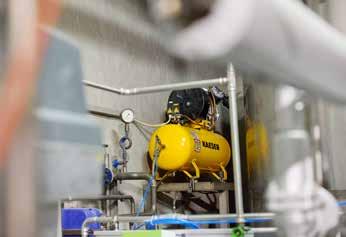
The Friedmann brewery has relied on compressed air from KAESER reciprocating compressors for many years.
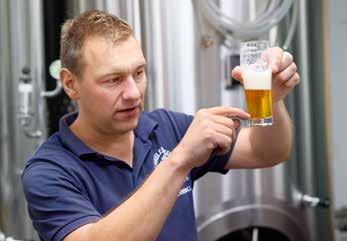
Martin Fritzsche (Barbara’s husband) at the beer sampling.
matically controlled valves that regulate the brewing process.
Compressed air performs a similarly important role in the fermentation cellar. After being cooled and aerated, the wort is converted into beer by the addition of yeast. Unlike large-scale breweries, Barbara Friedmann relies on open fermentation. This traditional method allows undesirable bitter compounds and tannins to be skimmed off daily and removed from the beer, preserving its natural character. The compressed air required in both the brewhouse and the
ilization processes, ensuring consistently high quality at every stage of production. The final step in the brewing process is filling the beer into bottles and kegs. “Once a week, things really kick up a gear around here when we fill the beer into the receptacles,” Barbara explains. “That’s our most demanding day: from half past four in the morning, all machines have to be up and running – and every single one has to perform flawlessly.” To ensure the highest possible quality standards in the bottling plant, a fully automated bottle inspection system
fermentation cellar is supplied by an industrial-grade KCT 420-100 reciprocating compressor, delivering a maximum pressure of 100 psi and a flow rate of 9 cfm at 90 psi. In the storage cellar, the young beer enters the stage of secondary fermentation and bunging – a decisive phase in which it develops its final character, clarity and the desired carbon dioxide content. Here too, compressed air plays a vital role. Supplied by a second KCT 420-100 reciprocating compressor, it controls valves and fittings and supports a range of cleaning and ster-
was installed last year. This high-end “bottle inspector” checks every bottle for damage and contamination. The new system significantly increased compressed air demand in the bottling area, thereby creating the need for additional capacity. The solution came in the form of the KAESER i.Comp 9 Tower. Delivering pressures of up to 160 psi and a flow rate of 20 cfm, the Tower T version features an add-on refrigeration dryer, two 10 gallon compressed air receivers and the intuitive SIGMA
My mother Sigi always placed her trust in the quality of KAESER reciprocating compressors.
Barbara Friedmann-Merkel, Owner
CONTROL 2 controller. As a complete reciprocating compressor station, it now meets the brewery’s increased compressed air demand reliably, quietly and efficiently. Thanks to the various modernization measures of recent years and targeted investments in advanced technology, the traditional brewery in Gräfenberg is ideally positioned for the future – ensuring that “beer, brewed as it was 150 years ago” can continue to be produced here for generations to come.
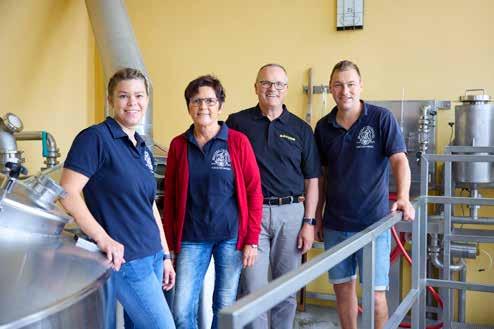
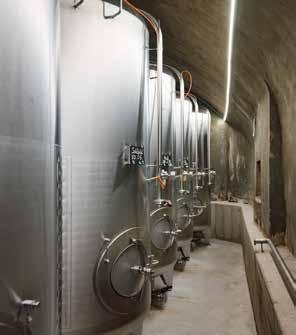
Image left: The Friedmann family takes pride in its traditional beer-brewing recipe. Second from right: Matthias Wittmann (KAESER). Image right: The underground storage cellar provides ideal conditions for the young beer to mature.
Westermann Group in Braunschweig, publisher of the Diercke World Atlas
In the service of education
Generations of students have turned to the Diercke World Atlas to explore continents and countries, research natural resources, study climate zones and prepare for geography exams. First published in 1883, it has since become the most widely used educational atlas in the German-speaking world. Beyond this flagship title, the Westermann Group offers a broad and diverse portfolio of educational media.
The publisher of the Diercke World Atlas can look back on almost 190 years of history. The story began in 1838, when bookseller George Westermann opened a publishing bookshop in Braunschweig. Initially, the company focused primarily on dictionaries
and fiction, while atlases also formed part of the program from an early stage. In 1845, Westermann established its first in-house printing works, followed in 1853 by the publication of its first school atlas. The first Diercke school atlas was published in 1883.
In 1912, Westermann moved into a newly constructed publishing building on the outskirts of Braunschweig, which has remained the group’s headquarters ever since.
Today, the
Westermann Group ranks among Germany’s leading providers of educational media and is one of the largest publishing houses in the German-speaking world. The Braunschweig site also houses the Westermann Druck brand. In addition to printing books and brochures using a wide range of finishing processes, Westermann Druck specializes in the production of high-quality magazines and catalogs. Digital printing is playing an increasingly important role within the company’s service portfolio. Following printing, pages can be further processed on site into booklets, perfect-bound brochures and books, with all key production steps carried out under one roof.
Compressed air: A must-have in the printworks
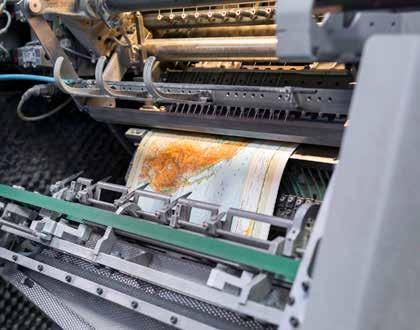
A tour of the printworks at the company’s headquarters quickly reveals just how vital compressed air is to operations. It is one of the most important energy sources for running modern printing and finishing equipment, primarily serving to control a wide range of pneumatic processes. In paper transport alone, compressed air ensures that individual sheets are guided precisely through the machines. Special suction cups and air nozzles separate the sheets, lift them, and feed them accurately into the printing units. Numerous mechanical components within the presses – including cylinders, valves and rollers – are also pneumatically actuated. In addition, compressed air is used to remove dust and paper fibres. “Without compressed air, there is no book,” explains Martin Lauke, Head of Operations Engineering. “That’s why reliable compressed air supply is absolutely essential. Our old compressed air station had reached the end of its service life: fre-
quent repairs and spare parts issues reduced reliability, while rising energy costs and declining efficiency made operation increasingly expensive. We therefore set out to find a supplier who could provide a compressed air station that was not only dependable, but also as energy-efficient as possible. KAESER didn’t simply sell us a system – right from the outset, they thought outside the box. One of the biggest challenges was getting the new components through an opening only a few centimetres wider than the compressors – but everything went smoothly.”
Since 2014, Martin Lauke has also been responsible for energy management in accordance with ISO 50001. Consequently, he paid particular attention to the energy efficiency of the new machines and to convenient and detailed monitoring of the system, made possible by the master controller. The compressed air station comprises three energy-efficient CSD series rotary screw compressors, one of which is equipped with variable speed control to ensure efficient coverage of peak demand. From an energy-efficiency standpoint, compressed air drying is also state of the art, with two SECOTEC TE 340 energy-saving refrigeration dryers in operation. Further efficiency gains across the entire compressed air station are achieved with the SIGMA AIR MANAGER 4.0 master controller. This advanced compressed air management system intelligently coordinates and optimizes the operation of multiple compressors, as well as dryers and filters, delivering exceptional cost effectiveness. The overall energy balance is further enhanced by integrated heat recovery, which reduces hot water generation costs by around 15 percent. What particu-
larly impresses the Head of Operations Engineering, however, is the KAESER Full Service Contract, which reliably ensures system availability, operational security, cost efficiency and longterm value retention. Martin Lauke explains: “We recently experienced a complete power outage in Braunschweig, and the technicians from the KAESER Service team contacted us immediately to offer guidance and support. With this level of service, we feel extremely well looked after.”
The Full Service Contract with KAESER has saved me a great deal of work.
Compressed air is one of the most important energy sources for running modern printing and finishing equipment.
Martin Lauke, Head of Operations Engineering
Known to young and old alike, the Diercke World Atlas is printed at Westermann Verlag’s Braunschweig site.
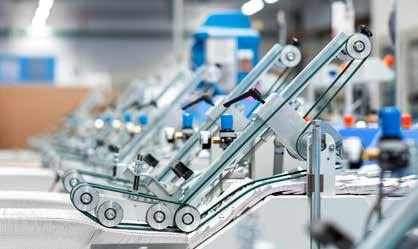
Compressed air plays a key role in controlling a wide range of pneumatic processes.
All images: Nils Hendrik Müller
One for all: The SIGMA AIR MANAGER 4.0
The future is SMART
The future is defined by connectivity – not only between individual devices, but also across buildings and entire districts. Open ecosystems are set to become the norm, while artificial intelligence will emerge as a key driver of user convenience and operational efficiency. One company actively shaping this smart future is Busch-Jaeger, the innovative market leader for electrical installation technology and smart home solutions based in Lüdenscheid, Germany.
Busch-Jaeger has always been ahead of its time – a quality that was evident right from the very beginning of the company’s history some 145 years ago. In 1881, HansCurt Jaeger, founder of the Heinrich Jaeger turned-parts factory, met the then still relatively unknown inventor of the incandescent light bulb, Thomas Edison, at the Paris World Fair. Jaeger, whose company had already specialized in electrical engineering products, immediately recognized the revolutionary potential of this invention. He went on to develop the so-called SWAN lamp holders for Edison lamps – a decisive step that set the company firmly on its path of continuous innovation.
Today, Busch-Jaeger, a brand of ABB AG, is an innovative market leader in electrical
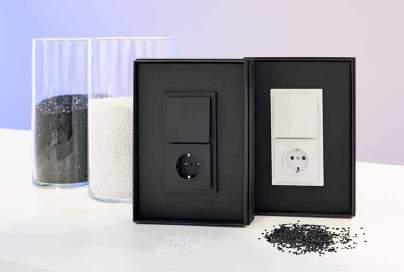
installation technology and building automation, and has been one of Germany’s strong brands for more than 140 years. Resource conservation and energy efficiency lie at the heart of the company’s activities. Many of its switch ranges carry sustainability certifications such as Cradle to Cradle, which represents a genuine circular economy approach free from waste and harmful substances. Busch-Jaeger also sets benchmarks in materials usage: thanks to ISCC certification, some of the plastics used are derived from sustainable biomass or bio-circular sources.
“Mission to Zero”
In 2019, the Busch-Jaeger site in Lüdenscheid launched the “Mission to Zero” pilot
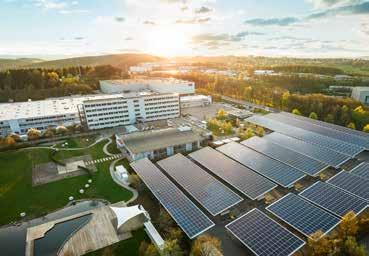
project, becoming the first carbon-neutral production facility within the ABB Group. Since then, more than 20 ABB sites worldwide have joined the initiative. With Mission to Zero, ABB is pursuing the goal of achieving carbon neutrality by 2050. In Lüdenscheid, this ambition is underpinned by a comprehensive energy concept. Key elements include an 2 acre photovoltaic installation generating around 1,100 MWh of electricity per year, a combined heat and power plant with roughly twice the energy efficiency of a coal-fired power station, and an intelligent energy
Digitalization of the compressed air station is important to us. With the SIGMA AIR MANAGER
4.0, we were able to put this requirement into practice.
Operational Sustainability Specialist
management system that digitally networks and controls all components.
Compressed air is an integral part of a company’s energy concept. For this reason, Operational Sustainability Specialist Mr Bigalke keeps a constant eye on optimizing the compressed air supply. When two compressors from other manufacturers failed, suitable replacements had to be sourced. “KAESER rotary screw compressors offer outstanding energy efficiency, and the master controller unlocks additional energy savings potential,” Bigalke explains. “Equally important for us are digitalization and full data transparency within the compressed air station.” As the site also operates compressors from other manufacturers, it was essential that both new and existing systems could be fully networked and centrally controlled. “That only became possible with the new compressed air management system,” Bigalke adds. At the time, the compressed air station comprised two fixed-speed KAESER rotary screw compressors (DS 171 and CSD 122), alongside two compressors from other brands. To replace the two failed units, a new variable-speed CSDX 175 SFC rotary screw compressor from KAESER was installed, featuring an IE5 efficiency class motor and meeting the IES2 system efficiency level in
accordance with IEC 61800-9. To further enhance the cost effectiveness of the compressed air station as a whole, the SIGMA AIR MANAGER 4.0 compressed air management system was deployed to monitor and coordinate both the existing and newly installed compressors and compressed air dryers, independent of manufacturer. But there’s more, as a particular feature of this compressed air station takes the SIGMA AIR MANAGER 4.0’s control functions to the next level: due to space constraints, no outside air supply is available, and the exhaust heat generated by the compressors cannot be dissipated via air cooling. The solution lies in cooling via a dedicated cooling-water system. The exhaust heat generated by the compressors is first fed into the building’s heating system using heat recovery. If this heat can no longer be utilized – for example during the summer months – the cooling water circuit takes over. Mr Bigalke placed particular emphasis on ensuring that the controller’s functions, especially visualization, monitoring, and fault management, also extend to the cooling water circuit. This, too, is handled effortlessly by SIGMA AIR MANAGER 4.0. The modernized compressed air station, equipped with the new master controller, integrates seamlessly into the
company’s intelligent energy management system, which digitally networks and controls all components. Since installation of the variable-speed rotary screw compressor and the SIGMA AIR MANAGER 4.0, energy efficiency has improved measurably and can be clearly demonstrated with comparative data. Annual energy savings amount to around 180,000 kWh. At the same time, specific power has been significantly reduced, from 11.4 kWh/cfm to 9.7 kWh/cfm – an improvement of 14.7 percent. Busch-Jaeger’s sustainability specialist Mr Bigalke is delighted that all objectives and requirements defined at the outset of the project have been met in full.
Image left: The new variable-speed CSDX 175 SFC rotary screw compressor meets the IES2 system efficiency level.
Image right: The new photovoltaic system supplies around 1,100 MWh of carbon-neutral electricity per year.
Tel.: 540-898-5500
us.kaeser.com – E-mail: info.usa@kaeser.com.
Service and Extended Warranty Plans
KAESER ProTect
• Available on existing equipment within 5 years from start-up