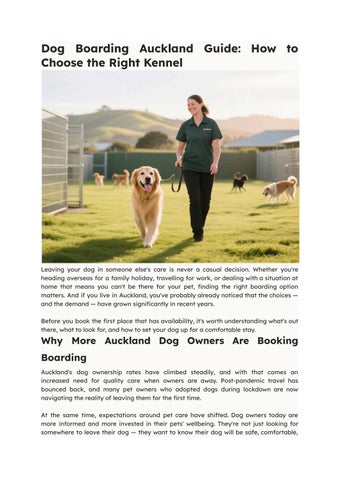
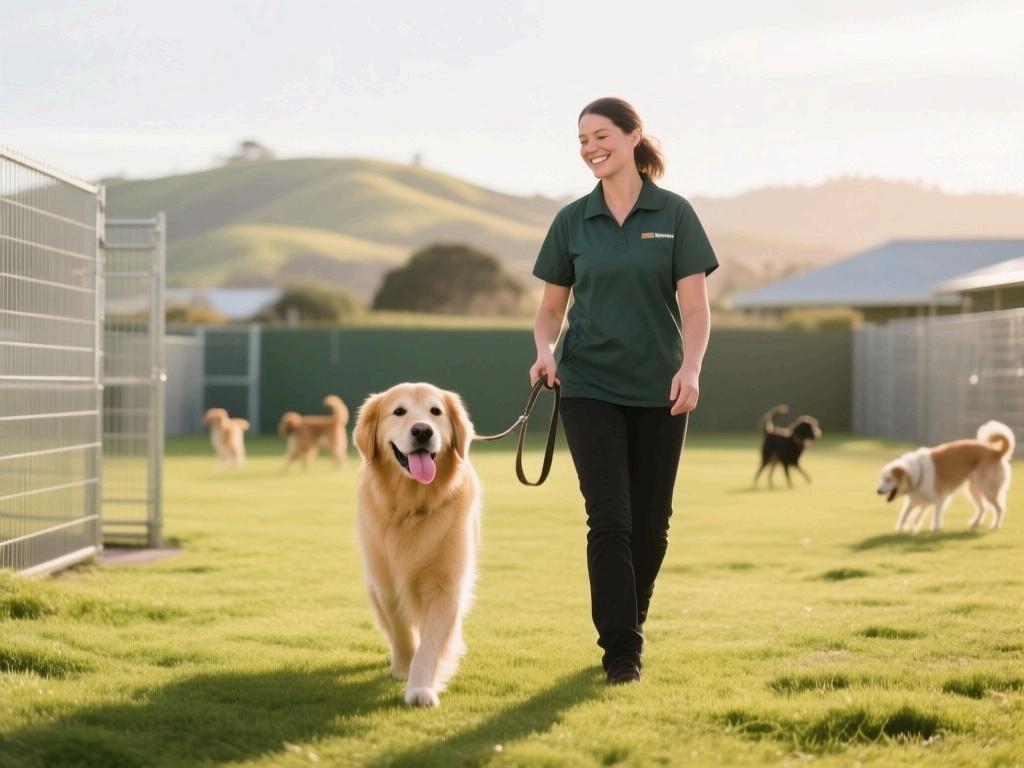
Dog Boarding Auckland Guide: How to Choose the Right Kennel
Leaving your dog in someone else's care is never a casual decision. Whether you're heading overseas for a family holiday, travelling for work, or dealing with a situation at home that means you can't be there for your pet, finding the right boarding option matters. And if you live in Auckland, you've probably already noticed that the choices — and the demand — have grown significantly in recent years.
Before you book the first place that has availability, it's worth understanding what's out there, what to look for, and how to set your dog up for a comfortable stay
Why More Auckland Dog Owners Are Booking
Boarding
Auckland's dog ownership rates have climbed steadily, and with that comes an increased need for quality care when owners are away. Post-pandemic travel has bounced back, and many pet owners who adopted dogs during lockdown are now navigating the reality of leaving them for the first time.
At the same time, expectations around pet care have shifted. Dog owners today are more informed and more invested in their pets' wellbeing. They're not just looking for somewhere to leave their dog they want to know their dog will be safe, comfortable,
and genuinely looked after. That shift in expectations has driven growth in the boarding industry across Auckland, from the North Shore to South Auckland and out west.
Understanding Your Options: Kennels, Boutique
Boarding, and Home-Style Care
Not all boarding is the same, and the right fit depends on your dog's temperament, needs, and what you're comfortable with.
Traditional kennels are the most established option. Dogs are housed in individual runs or enclosures, usually in a purpose-built facility. Good kennels maintain strict hygiene standards and structured routines. They tend to suit dogs who are independent and don't get overly stressed in a kennel environment.
Boutique boarding facilities sit somewhere between kennels and home environments They often offer smaller group sizes, more personalised attention, indoor-outdoor play areas, and additional enrichment. Some provide webcam access or daily photo updates. These options have become increasingly popular in Auckland, especially among owners of smaller or more anxious dogs.
Home-style boarding involves your dog staying in a carer's home, often through platforms that connect pet owners with vetted hosts. This can work well for dogs who thrive on human companionship and do better in a domestic setting. However, the quality of care varies, and there's generally less oversight compared to licensed facilities.
Each model has its strengths. The important thing is matching the environment to your dog, not just your budget
What to Look For When Visiting a Facility
Always visit in person before booking. A website can tell you a lot, but it can't replace seeing the space with your own eyes and watching how staff interact with the animals. Cleanliness is non-negotiable. The facility should smell clean without relying on heavy chemical fragrances to mask odours Runs, bedding, water bowls, and play areas should be well-maintained
Staff experience matters more than most people realise. Ask how long the team has been working with dogs. Are they trained in canine first aid? Do they know how to read body language and manage group dynamics? A well-meaning but inexperienced handler can miss early signs of stress or conflict.
Exercise and enrichment routines should be clearly defined. How often are dogs taken out? Is there off-leash play? Are dogs grouped by size and temperament? A facility that simply houses your dog without meaningful activity isn't providing real care.
Safety measures are another area to pay close attention to. Fencing should be secure, with double-gate entry systems to prevent escapes There should be clear protocols for emergencies, including after-hours veterinary access
Facilities like K9 Heaven, based in Auckland, are a good example of what a well-run boarding operation looks like purpose-built spaces, experienced handlers, structured daily routines, and transparent communication with owners. It's worth using places like this as a benchmark when evaluating your options.
Questions You Should Ask Before Booking
Don't be afraid to ask detailed questions. A reputable facility will welcome them. Here are a few worth raising:
● What's the daily routine for boarded dogs?
● How do you handle dogs with anxiety or behavioural issues?
● What's your policy if my dog becomes unwell during their stay?
● Are dogs supervised during group play?
● What vaccinations do you require, and do you verify them?
● Can I bring my dog's own food, bedding, or a comfort item from home?
● What's your cancellation policy?
If a facility seems evasive or dismissive when you ask these questions, that's a red flag
How to Prepare Your Dog for Their First Stay
A little preparation goes a long way, especially for dogs who haven't been boarded before.
Start by making sure vaccinations are up to date Most reputable facilities require proof of vaccination for kennel cough, parvovirus, and distemper at a minimum.
If your dog isn't used to being around other dogs or spending time away from you, consider a trial overnight stay before a longer booking. This gives your dog a chance to adjust and gives you a sense of how they cope.
Pack familiar items a favourite blanket, a toy that smells like home, their regular food. These small comforts can make a big difference for a dog in an unfamiliar environment. Be honest with the facility about your dog's behaviour. If they're reactive on-leash, prone to resource guarding, or have separation anxiety, say so. This isn't something to be embarrassed about — it's information the team needs to keep your dog and others safe.
And when you drop your dog off, keep your goodbye brief Long, emotional farewells can heighten your dog's anxiety. A calm, confident exit signals to your dog that everything is fine.
Common Mistakes Pet Owners Make
One of the most common mistakes is booking based on price alone. The cheapest option isn't always the worst, and the most expensive isn't always the best — but cost-cutting in boarding often means fewer staff, less supervision, and lower standards of care.
Another mistake is waiting until the last minute. Auckland's best boarding facilities fill up quickly during school holidays and long weekends If you know you'll need care, book early
Some owners also skip the visit entirely, relying on photos and reviews alone. Online reviews are helpful, but they don't give you the full picture. A personal visit lets you assess the environment, meet the staff, and trust your instincts.
Finally, don't assume your dog will be fine just because they're friendly. Even sociable dogs can find boarding stressful the first time. Preparation and the right environment make all the difference.
Making the Right Choice for Your Dog
Choosing where to board your dog is a personal decision, and there's no single right answer. What works brilliantly for one dog might not suit another. The goal is to find a place where your dog is safe, comfortable, and cared for by people who genuinely understand animals.
Take the time to research, visit, and ask questions. Pay attention to how a facility makes you feel and how your dog responds when you walk through the door. Trust matters here, and it's something that's earned, not assumed
When you find the right fit, you'll know. And you'll travel with far more peace of mind knowing your dog is in good hands.