













e views expressed in the articles of this Magazine are solely of their writers. It is not mandatory or complusary for the Publisher and/or the Editor of this publication to be in agreement with these views. e whole matter in this magazine has been taken from approved and accepted sources, and while publishing the same, every care has been taken, but even in case there is any aw or error, the Publisher and/or the Editor will not be responsible for it. e readers are advised to get all information from the sources directly and not through this magazine. Any reproduction of this magazine, editorial content, images or advertisement
or

in any form, without prior written permission from the Publisher.

BY DR. DEVINDER PAL SINGH
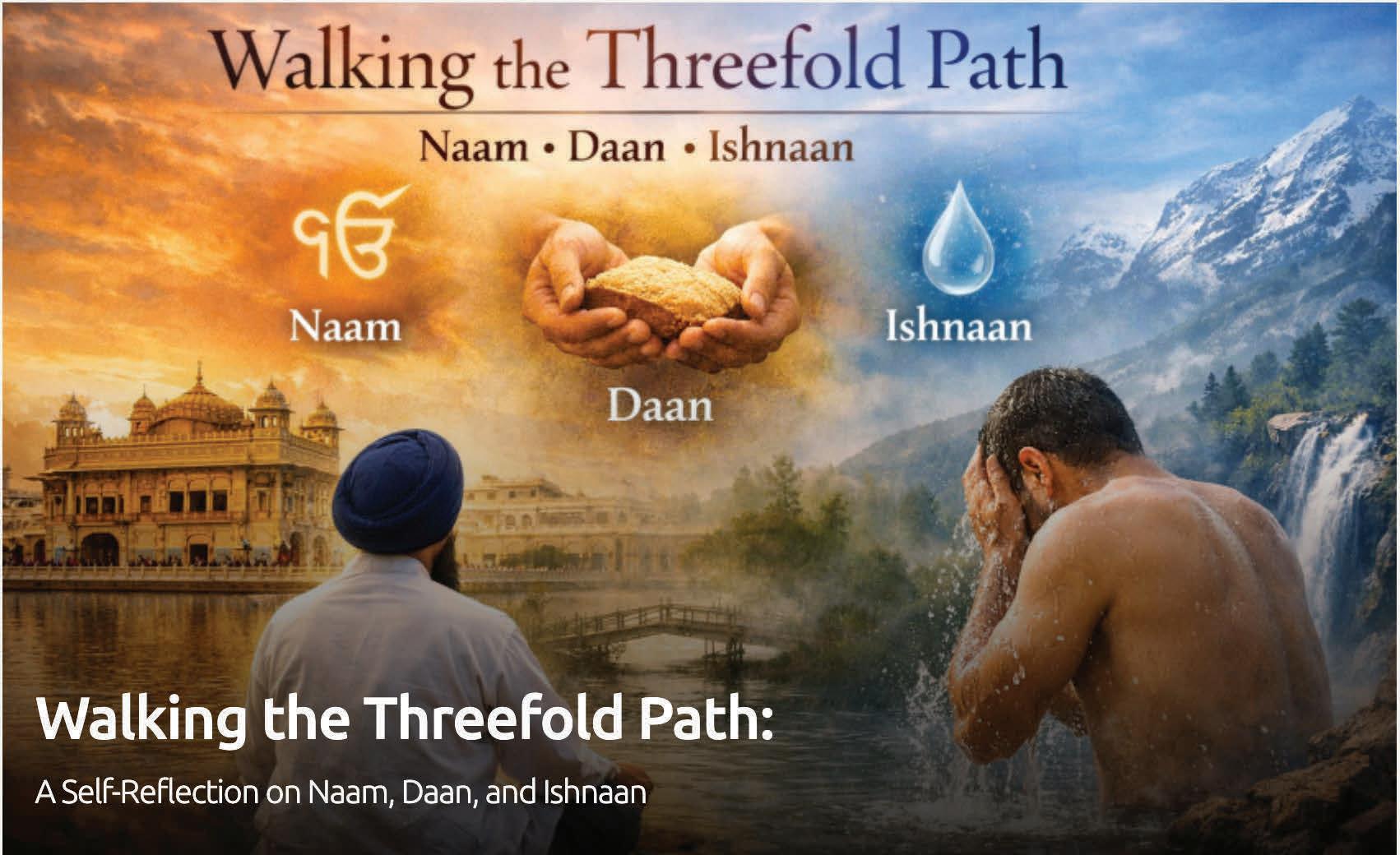
My journey in Sikhi has not been a straight road marked by certainty, but a slow awakening, layer by layer, through remembrance, responsibility, and renewal. e Gurmat path does not demand escape from the world; instead, it insists on immersion within it, transformed by awareness.
Over time, I have come to understand that Naam, Daan, and Ishnaan are not three separate practices but a single rhythm of living, a breath that ows inward, outward, and again inward, aligning the soul with the Divine Hukam.
Naam: Learning to Remember What Was
Over time, I realized that Naam without Daan becomes selfabsorption, Daan without Naam becomes egoistic charity, and Ishnaan without both becomes hollow ritual.
My earliest understanding of Naam was simplistic; repetition of the Divine Name, a verbal act con ned to prayer hours. Yet life, with its trials and distractions, slowly taught me that Naam is not something I do; it is something I return to. Naam is remembrance,
but also recognition: the quiet realization that the Divine Presence was never absent, only unattended.
In moments of anxiety, ambition, or loss, Naam became my anchor. e Gurus remind us that Naam is the lifeline in the ocean of existence, and I have found this to be profoundly true. When the mind scattered itself across worries of future and regrets of past, Naam gathered it back into the present. It so ened my ego’s sharp edges and reminded me that I am not the center of existence, but a participant within a vast, compassionate order.
Gradually, Naam moved beyond the tongue into consciousness. It appeared in silence, in ethical hesitation, in awe before nature, and in the humility of admitting my own limitations. Remembering the Divine in this way reshaped my understanding of success and failure. Achievements lost their intoxicating power; setbacks lost their cruelty. Naam did not remove su ering,
but it gave su ering meaning and direction. rough Naam, I began to sense that the Divine is not distant or abstract but immanent—present in breath, in labour, and in relationships. is remembrance cultivated gratitude and dissolved the illusion of isolation. I was no longer alone in my striving; I was held within a greater rhythm.
ination of ownership itself.
Initially, my acts of giving were transactional, even self-a rming. I gave because it felt virtuous, because I could a ord to, because it reinforced an image of myself as “good.” Over time, Sikhi challenged this subtle ego. Gurbani
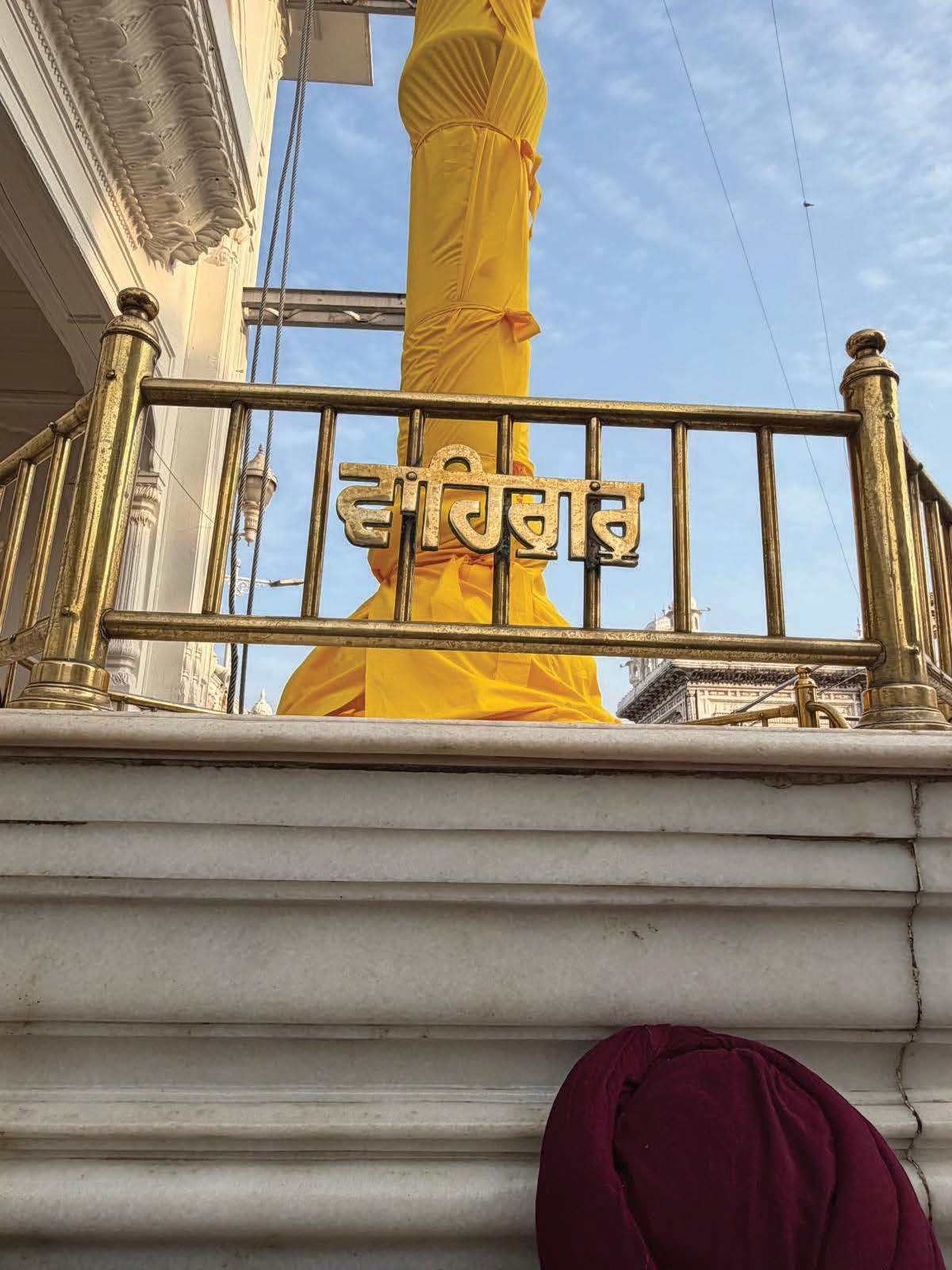
does not glorify renunciation but sancti es honest earning (kirat) and generous sharing (vand chhakna). Yet practicing Daan demanded more than occasional charity, it demanded a re-exam-
an act of justice. Sharing with the needy was no longer benevolence owing downward, but balance being restored. I began to see inequality not merely as social failure but as spiritual imbalance. To eat while
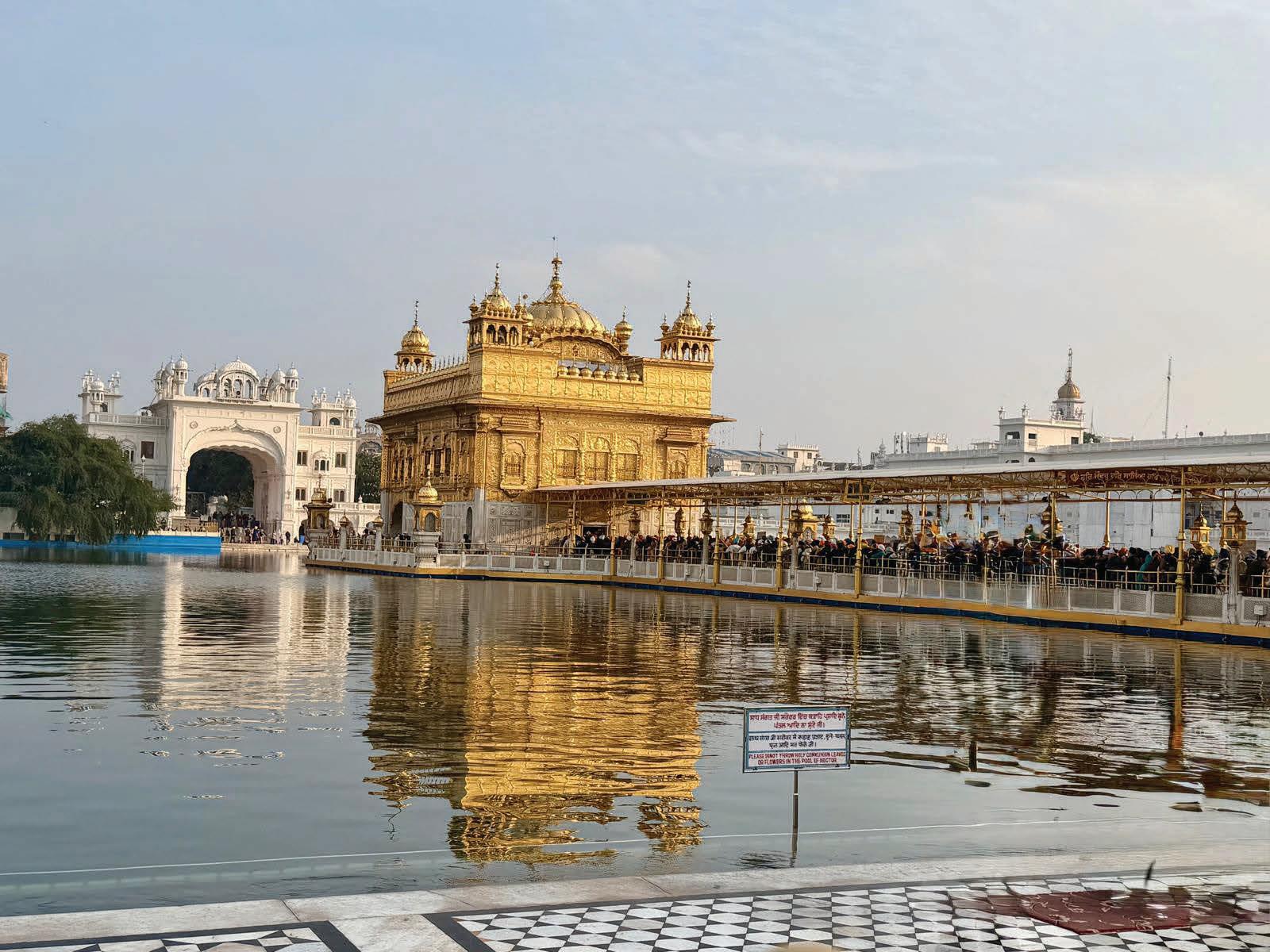
another starves, to accumulate while others lack dignity, is to forget Naam in action.
Daan also extended beyond material wealth. Listening without judgment, o ering time, mentoring without expectation, standing with the marginalized—these forms of giving demanded more courage than writing a cheque. ey required vulnerability and presence. In giving myself, I encountered my own discomfort, impatience, and hidden prejudices.
Yet paradoxically, Daan enriched me. It loosened the grip of fear—the fear of scarcity, insigni cance, and loss. In giving, I experienced abundance
not as accumulation, but as circulation. What owed out returned as contentment, humility, and a deeper connection to humanity.
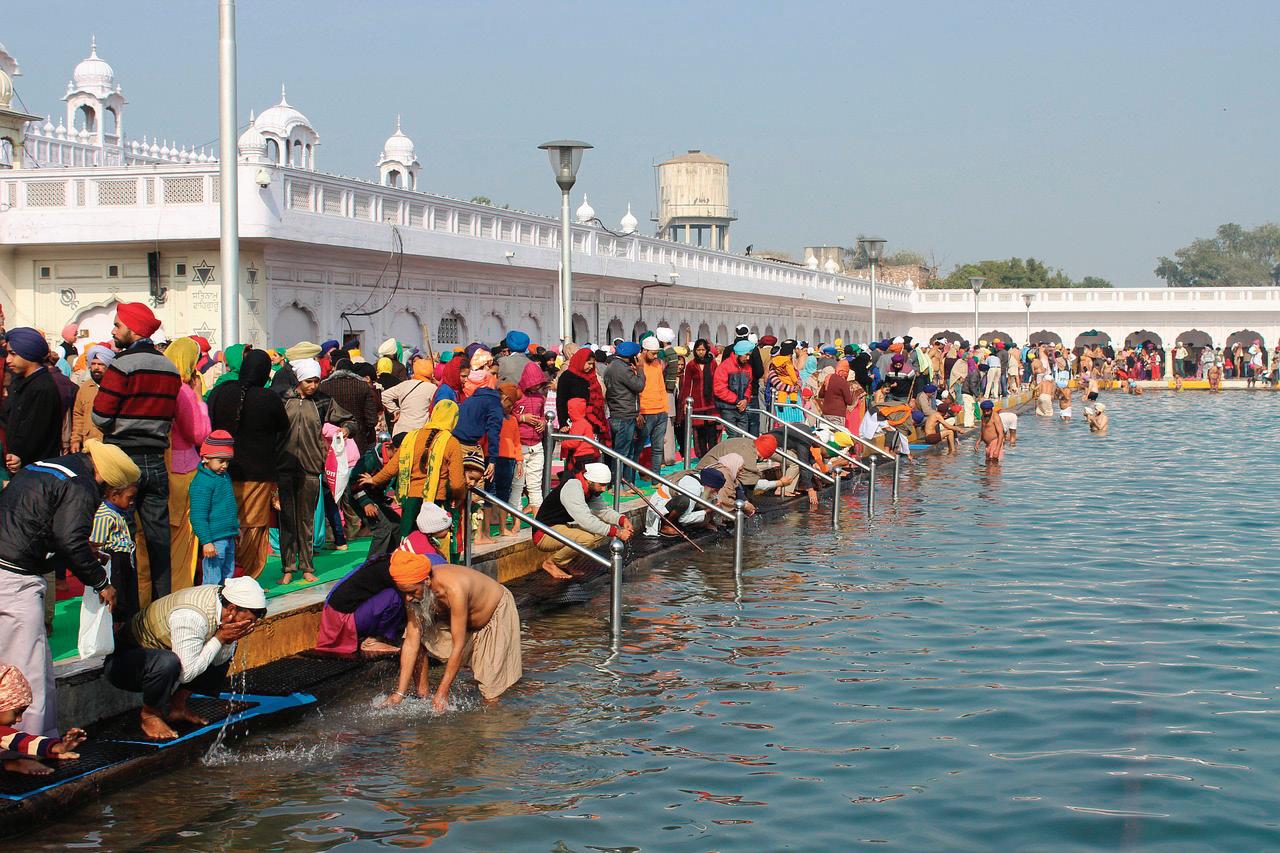
Of the three, Ishnaan took the longest for me to understand. For years, I associated it primarily with physical cleanliness or ritual bathing. But Sikhi, uncompromising in its rejection of empty ritualism, compelled me to look deeper. True Ishnaan, I learned, is not about washing the body alone, but about cleansing consciousness. Physical cleanliness remains important—it re ects discipline, respect for the body, and mindfulness. Yet
the Gurus insist that one can bathe endlessly and still remain internally polluted by ego, lust, anger, greed, attachment, and pride. My real struggle lay there.
Mental Ishnaan demanded honesty. It required me to confront my intentions, question my motivations, and recognize how o en ego disguised itself as righteousness. Prejudice, resentment, and self-deception are harder to wash away than dirt. is cleansing was uncomfortable; it stripped away comforting narratives about who I thought I was. Naam became the water of this inner Ishnaan. rough remembrance, the mind
slowly released its toxins.
rough Daan, sel sh impulses were weakened. rough re ection and repentance (pashchatap), clarity emerged. I learned that cleansing is not a one-time act but a daily discipline, much like tending a garden where weeds continuously return.
Ishnaan also involved ethical hygiene, what I consumed intellectually and emotionally. News, conversations, digital spaces, and ambitions all le residues. Learning when to withdraw, when to speak, and when to remain silent became acts of puri cation.
Over time, I realized that Naam without Daan becomes self-absorption, Daan without Naam becomes egoistic charity, and Ishnaan without both becomes hollow
ritual. e genius of the Sikh worldview lies in this integration. Spirituality is not divorced from economics, nor ethics from remembrance, nor inner purity from social responsibility.
Walking this path has not made me awless, but it has made me aware. I stumble, forget, and falter—but I now recognize the direction. Naam re-centers me, Daan grounds me, and Ishnaan renews me.
In a world obsessed with speed, consumption, and self-promotion, this threefold discipline o ers quiet resistance. It teaches me to live attentively, share responsibly, and cleanse continuously. My journey is un nished, but it is anchored. I walk not toward personal salvation alone, but toward a life aligned
with Sarbat da Bhala, the well-being of all.
And in that alignment, I glimpse the purpose of human life as envisioned by Sikhi: to remember the Divine, serve creation, and remain inwardly pure while standing rmly in the world.
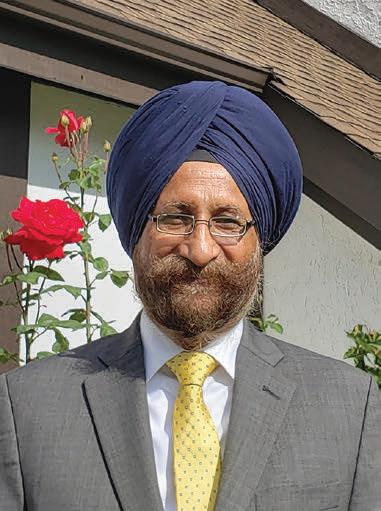
Dr Devinder Pal Singh, Center for Understanding Sikhism, Mississauga, Ontario, Canada, has published about 100 articles on various aspects of Sikhism in several newspapers and magazines of English, Punjabi and Hindi.




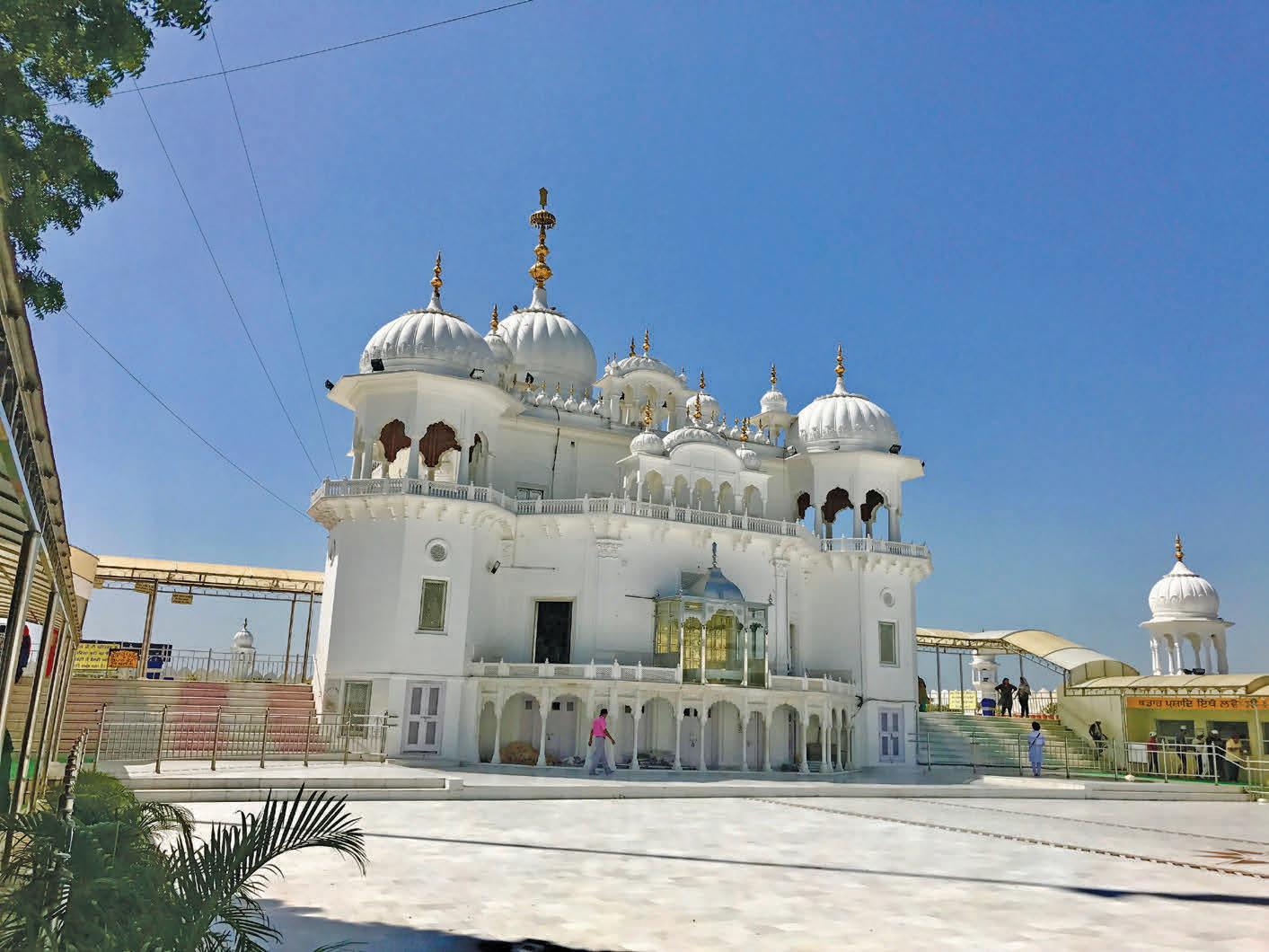
When spring arrives in Punjab, it does not just paint the elds with blossoms; it awakens the spirit of valor, faith, and devotion among the people. is is the festival of Hola Mohalla, a celebration that fuses spirituality,
BY JASMINE KAUR KOCHHAR
martial skill, and communal harmony.
Founded by Guru Gobind Singh Ji in the early 1700s, Hola Mohalla embodies the Sikh ideal of the saint-soldier— one who is rooted in spiritual devotion yet fearless in
the face of danger. e name Hola Mohalla literally translates to “mock ght,” re ecting its martial character. Unlike Holi, the Hindu festival of colors that precedes it by a day, Hola Mohalla is not celebrated with powders and water.
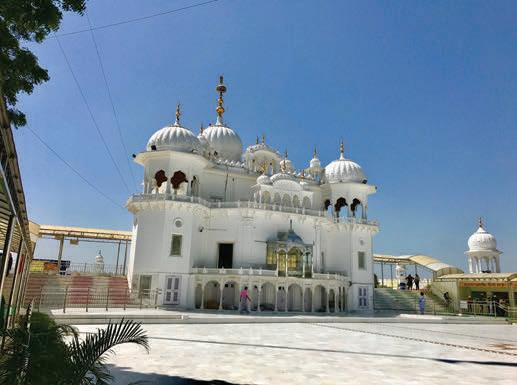
Gurus, Guru Tegh Bahadur Ji and Guru Gobind Singh Ji, and the birthplace of the Khalsa Panth in 1699. e city houses Takht Sri Keshgarh Sahib, the third of the ve Takhts in Sikhism, and several historical forts (Qilas)
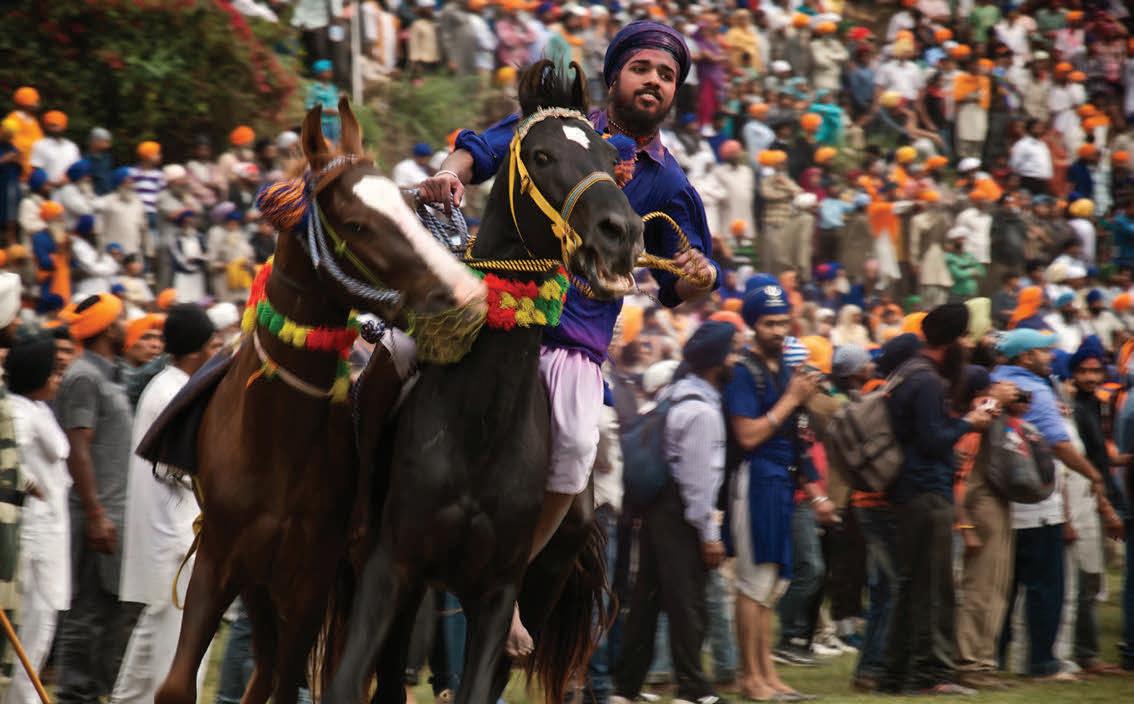
Instead, it is a vibrant demonstration of courage, discipline, and readiness, where Sikhs showcase their martial skills (Gatka), strategy, and physical prowess. Guru Gobind Singh Ji designed the festival not only to celebrate bravery but also to train Sikhs for defense and self-protection during turbulent times in Punjab.
A Sacred City: Anandpur Sahib, the “Holy City of Bliss,” serves as the spiritual and historical epicenter of Hola Mohalla. Situated on the banks of the Sutlej River in Punjab’s Rupnagar district, Anandpur Sahib has witnessed some of Sikhism’s most de ning moments. It was the home of the last two Sikh
built by Guru Gobind Singh Ji, including Qila Anandgarh, Qila Holgarh, Qila Lohgarh, Qila Fatehgarh, and Qila Taragarh. Qila Holgarh, in particular, remains the central site for Hola Mohalla’s martial exercises and mock battles.
During the festival, Anandpur Sahib transforms into a vibrant spectacle of devotion, learning, and valor. ousands of devotees
from across India and the world gather to witness a living celebration of history. ree days of festivities include Kirtan (devotional singing), Paath (scripture recitation), and Langar (community kitchens), all performed as acts of Seva (sel ess service).
ese practices remind participants and visitors alike of the spiritual core of Sikhism: humility, devotion, and service to humanity.
e Martial Spirit of Hola Mohalla
Central to Hola Mohalla is Gatka, the traditional Sikh martial art, performed in mock battles that re ect the historical drills of the Khalsa warriors. e festival includes horse riding, strategic formations, and choreographed combat demonstrations, allowing Sikhs to combine skill, discipline, and agility. ese exercises were originally designed by Guru Gobind Singh Ji to prepare his followers for real battle, instilling both physical tness and
mental fortitude.
e festival’s martial displays are not just for show; they embody Sikh principles of courage, justice, and self-defense. Every sword maneuver, horse-riding drill, and tactical demonstration recalls the historical struggles of Sikhs against invading forces, particularly during the Mughal era and battles with regional hill kings. e combination of devotion and martial skill makes Hola Mohalla unique, blending the spiritual and temporal aspects of Sikh life in a seamless tradition.
e Panj Pyare: Heart of the Celebration
e Panj Pyare, or “Five Beloved Ones,” play a central role in Hola Mohalla. ese ve men
were the original initiates of the Khalsa, baptized by Guru Gobind Singh Ji in 1699.
ey not only fought alongside the Guru in historical battles like the Battle of Chamkaur but also symbolize the core Sikh values of courage, equality, and collective leadership.
During the festival’s nal day, a grand procession is led by the Panj Pyare, passing through historic Gurdwaras such as Qila Anandgarh, Lohgarh Sahib, Mata Jitoji, and ending at Keshgarh Sahib. e procession features Nihangs— traditional Sikh warriors, dressed in elaborate armor and carrying
spears, accompanied by the rhythmic beats of drums. eir presence re ects courage, sacri ce, and unwavering spiritual devotion, serving as a visual and symbolic reminder of the Khalsa’s enduring values.
Hola Mohalla is not only a festival of martial skill; it is a living celebration of Sikh history and devotion. rough the combination of rituals, hymns, and mock battles, the festival recreates the atmosphere of Guru Gobind Singh Ji’s time, allowing devotees to connect with the past. e city’s forts, galloping horses, and ceremonial assemblies preserve centuries-old traditions
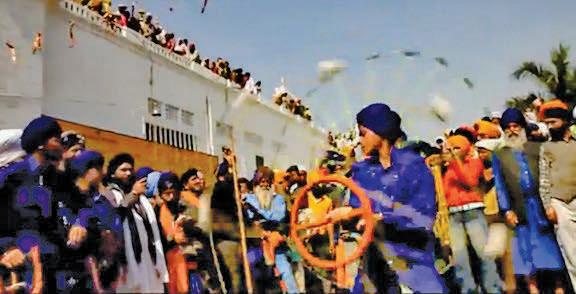
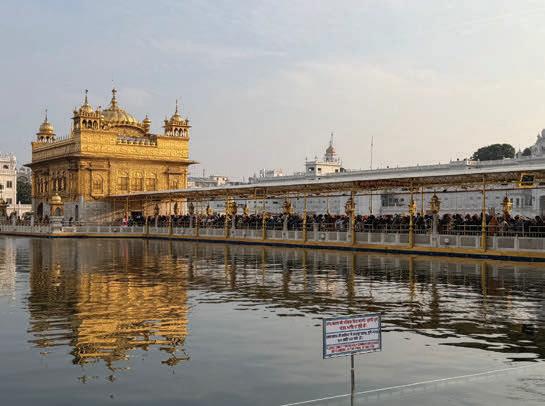
By Sanjay Maggo, CC BY 3.0,
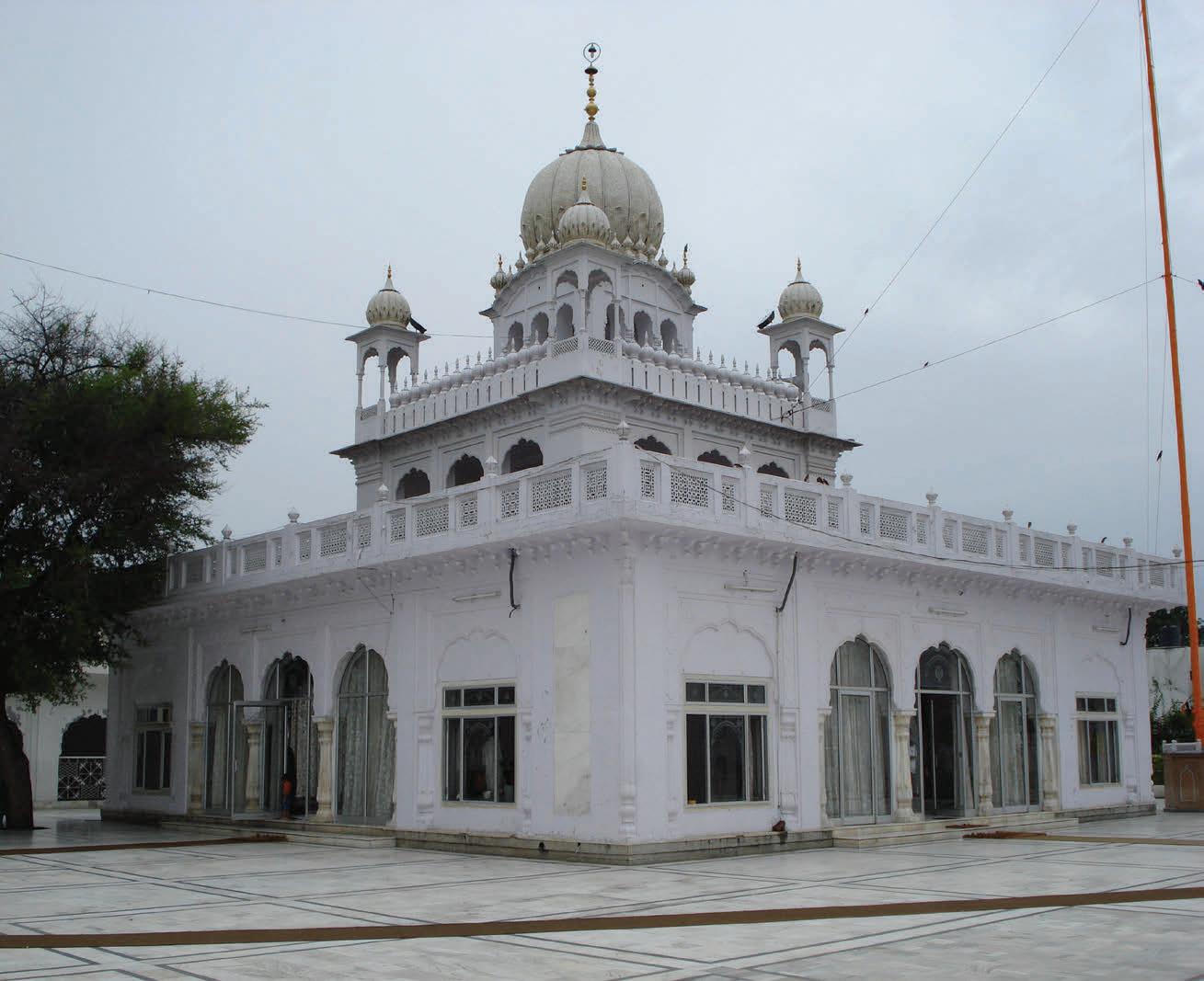
while encouraging new generations to understand the discipline, bravery, and spiritual focus of the Khalsa.
e festival also emphasizes community and service. Langar provides free meals to all, embodying the Sikh principle of equality and sel ess service. Religious discourses, called Diwaans, o er teachings from the Guru Granth Sahib Ji, reinforcing moral and spiritual guidance. Every act, whether martial or devotional, is an expression of courage, faith, and collective responsibility.
Over three centuries since its inception, Hola Mohalla continues to inspire Sikhs and visitors alike. While the ways of celebrating have evolved with time, the essence of the festival: valor, spirituality, and service, remains unchanged. It reminds participants of the importance of courage in the face of adversity, devotion to God, and the moral duty to protect righteousness. Hola Mohalla is, in essence, Punjab in motion: a festival where history, faith, and martial prowess converge. It is a celebration of the Khalsa
spirit, a living reminder of the sacri ces of Guru Gobind Singh Ji and the Panj Pyare, and a call to generations to uphold courage, discipline, and devotion in their lives.
From the vibrant processions to the resounding hymns, from galloping horses to acts of sel ess service, Hola Mohalla embodies the timeless values that continue to de ne Sikhism and inspire all who witness it.



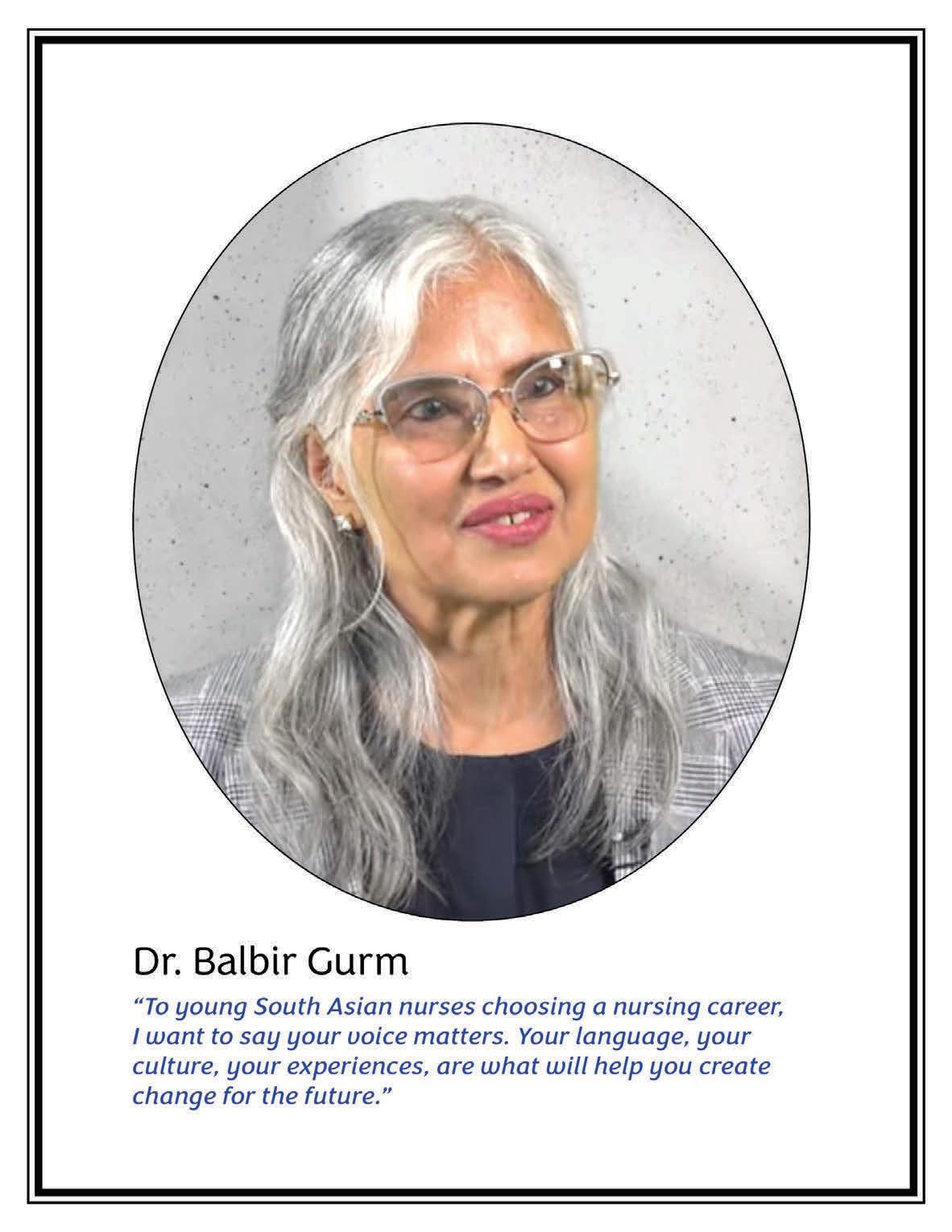
Seva, when paired with vision and perseverance, can transform entire systems.”
by J.M. LEE
Vaisakhi is a time to re ect on renewal, courage, and our shared responsibility to upli others. Across British Columbia, one of the most powerful
examples of seva—sel ess service—is the work of Dr. Balbir Kaur Gurm, Founder and Executive Director of the Network to Eliminate Violence in Relationships (NEVR).
What began “o the side of her desk” as a volunteer e ort to address relationship violence has grown, 15 years later, into a province-wide movement grounded in collaboration,
What began as a volunteer effort has grown into a province-wide movement grounded in collaboration, education, and community empowerment.” education, and community empowerment.


Dr. Gurm co-founded NEVR in 2011 as an act of seva for the community. She recognized that relationship violence could not be addressed by any one sector alone. Guided by Sikh principles of justice, compassion, and collective responsibility, she brought together partners from health,
education, social services, law enforcement, government, and community organizations. Her leadership has consistently embodied Sarbat da Bhala—working for the welfare of all.
Over the years, NEVR has produced conferences, toolkits, community resources, and policy discussions that strengthen coordinated responses to
violence across the lifespan. One of its most signi cant contributions is the open-access book Making Sense of a Global Pandemic: Relationship Violence & Working Together Towards a Violence-Free Society, which brings together critical ideas, research, and community wisdom. All NEVR materials— including multiple toolkits

—are freely available at www.nevr.org, ensuring that knowledge remains accessible to all.
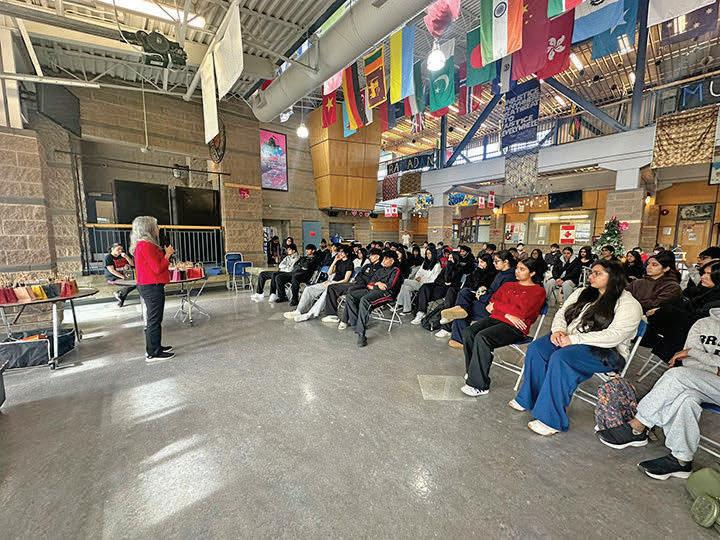
Each year, Dr. Gurm chairs the NEVR Conference Committee, curating national, international, and local speakers who share their work and learn from one another. is year’s conference features remarkable Sikh speakers, including Dr. Wendy Aujla, Dr. Harjit Kaur, Meena Dhillon, Gurpreet Kaur, Manjot Kaur, and Manpreet Dhillon—leaders whose scholarship and advocacy strengthen the collective e ort to build safer communities. eir participation re ects the depth of Sikh contributions to social justice, equity, and community well-being.
is year’s NEVR Conference, Putting Policy into Practice: A Pathway to Prevention,
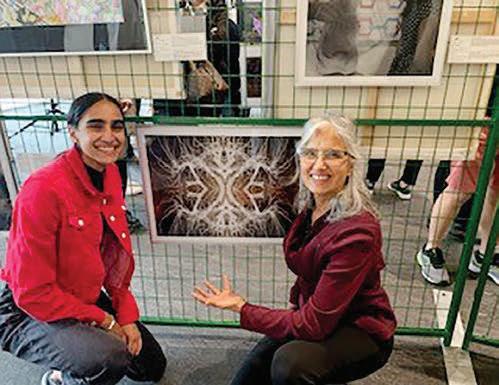
Relationship violence cannot be addressed by any one sector alone— it requires collective action across communities.”
held at Kwantlen Polytechnic University, signalled a renewed commitment to turning knowledge into action. It re ects Dr. Gurm’s long-standing belief that research must be translated into practical tools that communities can use immediately.
Dr. Gurm shared updates on NEVR’s accomplishments and facilitated a workshop on the Elder Abuse Awareness and Prevention Social Media Campaign. is campaign, rooted in NEVR’s Elder Abuse Awareness & Prevention Toolkit, provides free, ready-to-use digital resources that organizations can adapt and brand. rough coordinated messaging and cross-sector participation, the campaign aims to expand public understanding of elder abuse, connect seniors to support services, and promote dignity, safety, and respect for older adults across British Columbia.
To be part of the campaign and help raise awareness to prevent elder abuse, follow NEVR’s social media channels: Facebook and Instagram (@NEVRCampaign), X (@ViolenceNEVR), and LinkedIn ( e Network to Eliminate Violence in Relationships), and repost content. Organizations interested in becoming partners and co-branding posts with their logo can email admin@nevr.org.

As we celebrate Vaisakhi, Dr. Balbir Kaur Gurm’s journey reminds us that seva, when paired with vision and persever ance, can transform entire systems. Her leadership continues to inspire collective action, protect the vulnerable, and build a more just and compas sionate society for all.
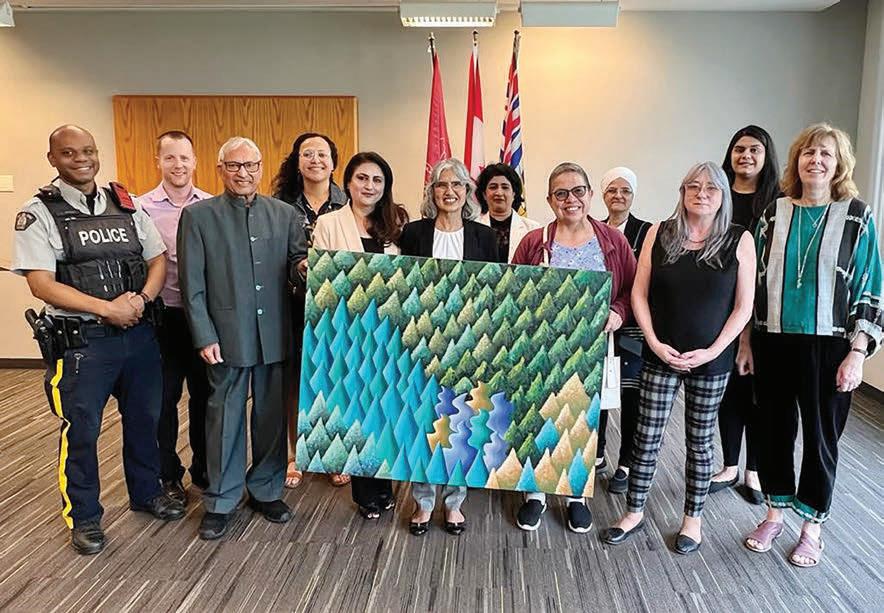
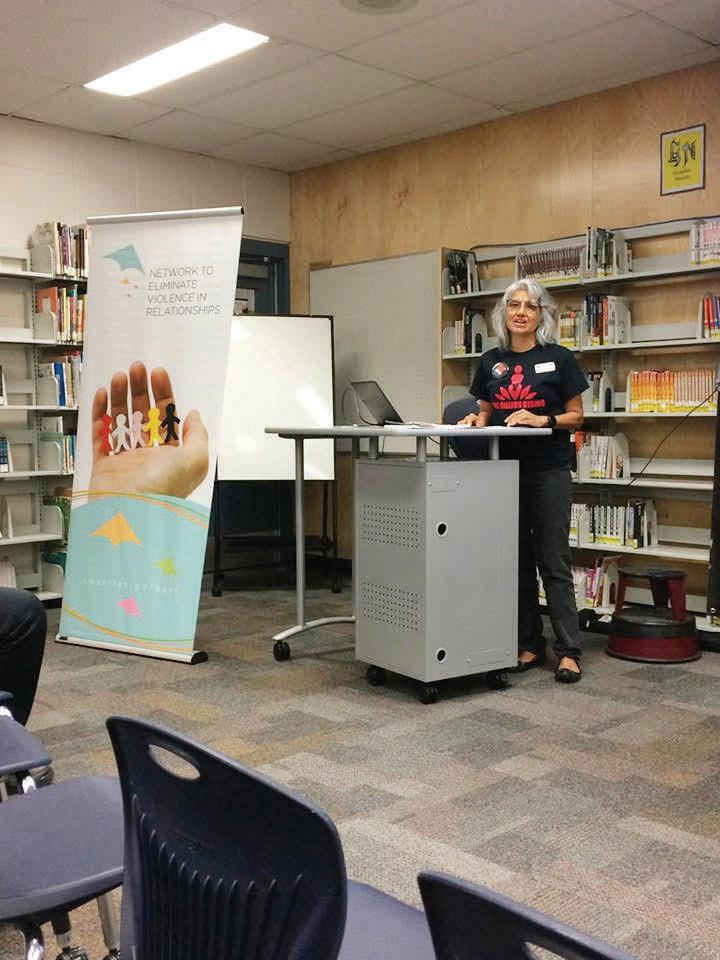
Dr. Balbir Gurm, Founder & Executive Director, NEVR, and Conference Co-Chair Dr. Balbir Gurm is an award-winning nursing leader, a Fellow of the Canadian Academy of Nursing, and a retired Kwantlen Polytechnic University nursing professor. She is the co-founder of the Network to Eliminate Violence in Relationships (NEVR).
A nationally recognized leader in equity-focused, community-driven violence prevention, she
building cross-sector coalitions that translate research into practical tools for public education and systemic change. Dr. Gurm is known for creating accessible, culturally grounded resources—including provincial toolkits, campaigns, and openaccess publications—that empower communities to prevent violence across the lifespan. Her work continues to advance safety, dignity, and collective action through collaborative
partnerships and evidence-informed advocacy. Dr. Gurm led the development of the free e-book Making Sense of a Global Pandemic: Relationship Violence & Working Together Towards a ViolenceFree Society, bringing academic knowledge into communities.
Her contributions to education, advocacy, and public health have earned numerous honours, including two Teaching Excellence Awards, the BC Achievement Community Award, and two YWCA Women of Distinction Awards. She has also been recognized by her community through awards from Darpan, Drishti, Times of Canada, and Shakti.
Dr. Gurm believes that academics are in privileged positions and have a responsibility to use that privilege to improve communities.



NEVR’s 2026 conference brings together leading scholars, practitioners, and community advocates who are shaping the future of violence prevention across Canada. NEVR's annual conference highlights several Sikh women whose contributions bridge academia, frontline practice, digital advocacy, and community rooted innovation.
From Dr. Wendy Aujla’s research on South Asian survivor experiences to the survivor led digital activism of The Kaur and Singh Movement, and from interdisciplinary scholars like Dr. Harjit Kaur to legal and technological leaders such as Manpreet Dhillon and Meena Dhillon, these presenters exemplify ‘Sarbat da Bhalla’ with the depth and diversity of Female Sikh leadership advancing safety, equity, and systemic change.
Wendy Aujla
Dr. Wendy Aujla is an Assistant Professor of Criminal Justice at Athabasca University whose research focuses on domestic and family violence, honour-based abuse, forced marriage, and immigrant and South Asian survivor experiences. Her work examines how formal and informal systems respond to survivors, informing policy and practice. She has published widely, co-authored the Canada chapter in the Routledge International Handbook of Femicide and Feminicide, and serves on national expert advisory panels. A committed advocate, she leads longstanding community initiatives
supporting families eeing abuse and is a recipient of the Alberta Inspiration Award and Peace in Families Award.
Topic: Beyond the Dyadic Model: Reframing Help-Seeking, Community Initiatives, and Policy for Immigrant Women Experiencing Gender-Based Violence
Abstract: Responses to gender-based violence (GBV) in racialized immigrant communities o en remain reactive and overlook complex factors such as immigration status, coercive control, community stigma, and extended family dynamics.
Drawing on Dr. Aujla’s research, this keynote explores how help-seeking among immigrant women is o en non-linear and constrained, with disclosures sometimes met by culturally misaligned responses that can lead to revictimization. e presentation also highlights community initiatives such as PARIVAAR and an empowerment-focused gi card campaign, demonstrating how community-led approaches can strengthen support systems, inform policy, and o er practical models for improving responses to GBV.

Gurpreet Kaur & Manjot Kaur,
Founders, The Kaur Movement
e Kaur and Singh Movement is a survivor-informed advocacy organization focused on preventing domestic and sexual violence. Founded by Gurpreet Kaur, a survivor and advocate, in 2019, It supports victims and survivors by providing accessible information, connecting them to resources, and helping them navigate their options. Its survivor-centred approach emphasizes informed choice, autonomy, and culturally responsive support while complementing formal services. It is focused particularly on Sikh and Punjabi women.
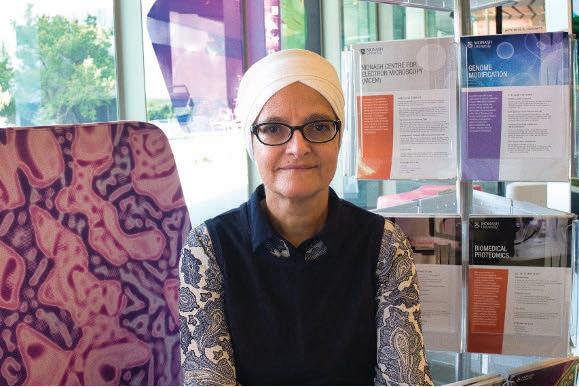
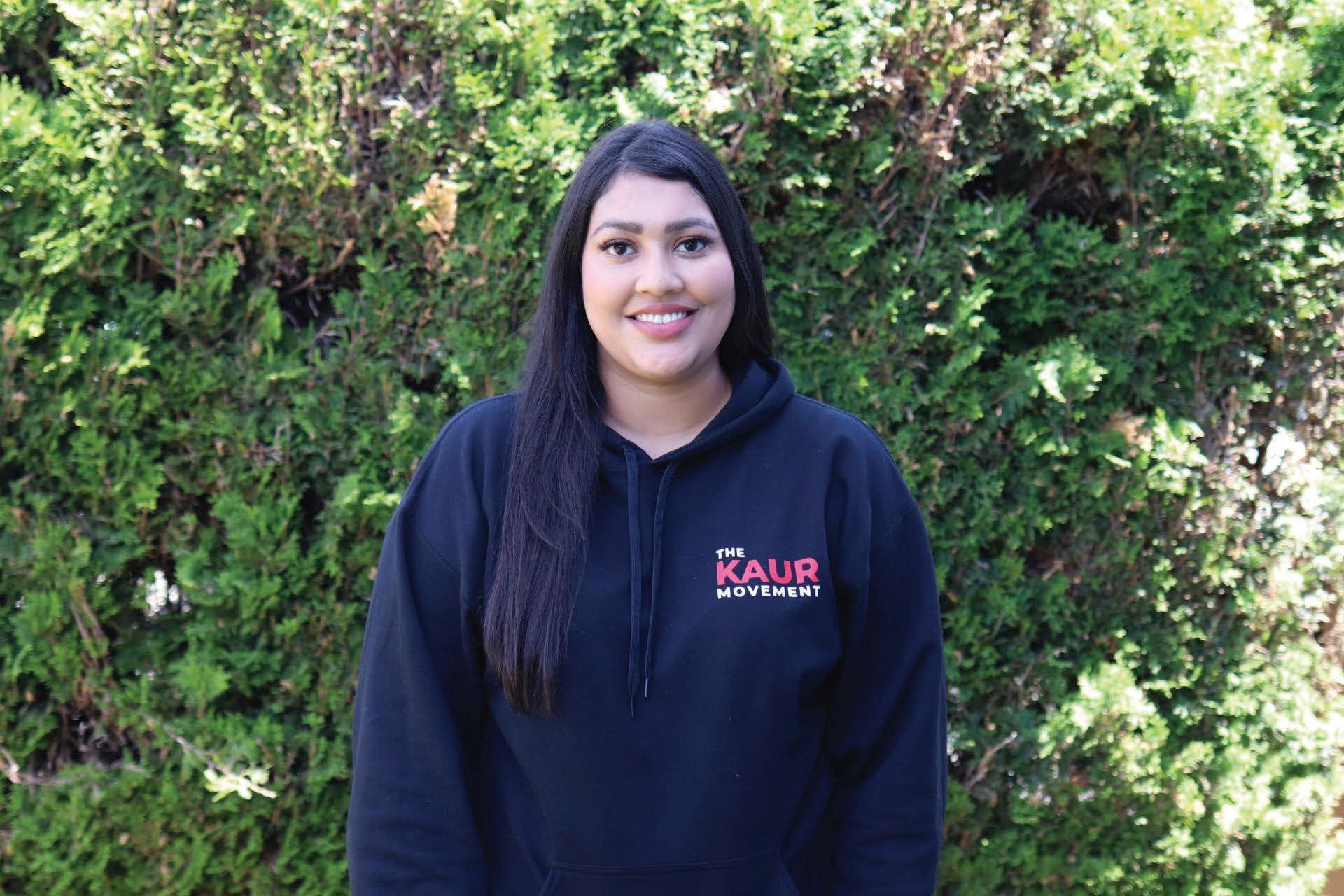
Abstract: is presentation explores how e Kaur and Singh Movement translates policy into real-world prevention by reaching communities that formal systems may not always access. rough social media education and awareness campaigns, the organization supports prevention by challenging harmful relationship dynamics and serving as an early point of disclosure for survivors. e session also highlights how survivor-led digital advocacy can strengthen prevention e orts, improve access for marginalized communities, and help bridge the gap between policy and lived experience.
Dr. Harjit Kaur is a Registered Clinical Counsellor and Approved Clinical Supervisor with over 30 years of frontline experience in the social services sector. Her work focuses on collaboration, equity, and knowledge sharing to support families and communities. Her community-based research addresses inequities a ecting racialized immigrant children and families, emphasizing the importance of intersectional policies and practices in creating safer, violence-free communities.
Dr. Novia Shih-Shan Chen holds a PhD in Gender, Sexuality, and Women’s Studies from Simon Fraser University and an MFA in Film Production from Ohio University. Her research focuses on feminist lm theory, documentary
studies, and transpaci c cultural studies. She has taught at the post-secondary level and worked in the antiviolence sector as a Domestic Violence Outreach Worker and Sexual Assault Services Coordinator, grounding her work in intersectionality, critical race theory, and feminist perspectives.
Session Title: Enhancing Wellness and Crime Prevention in the Pandemic among Immigrant Youth and Women Survivors of Violence: Development of an Interactive Mentoring Application (APP).
Session Abstract: Enhancing Wellness – M4Y, led by the Vancouver and Lower Mainland Multicultural Family Support Services Society (VLMFSS), is a ve-year research initiative examining the experiences of immigrant women and youth who faced violence during the COVID-19 pandemic in British Columbia. e project explores how the pandemic intensi ed existing barriers to support and access to culturally responsive, trauma-informed services. Using an intersectional mixed-methods approach, the research aims to inform the development of a secure and accessible web app designed to support safety,
well-being, and empowerment for immigrant women and youth, while strengthening community responses to relationship violence.
approach in technology facilitated gender based violence.
rough her Strong Daughter Institute, Manpreet coaches women of color in holistic leadership, drawing on her background in gender mainstreaming and technology facilitated gender based violence. Ranked #15 on the 2020 EmPower Ethnic Minority Future Leaders list and a King's Coronation Medal recipient, Manpreet is also a contributing author to Chicken Soup for the Soul and Forbes.

Manpreet Dhillon is Director of Business Operations at Chayn and Founder & Principal Inclusion O cer at Veza Global, a Canadian consultancy helping governments, tech rms, UN bodies, and international NGOs build equitable, inclusive cultures. With over 25 years in EDI, HR, leadership coaching, and internal audits, she takes a systemic, human-centered approach to organizational change—grounded in her work across higher education, technology, and the international NGO sector. With her work at Chayn, the work is focused on trauma informed
Session Title: From tech harm to tech to heal - how Chayn harnesses the power of technology to support survivors.
Session Abstract: Digital spaces can be sites of control, surveillance, and abuse, especially as technology and AI evolve. At Chayn, however, technology is also being used to support survivors of gender-based violence through Bloom, an award-winning online platform that provides free, self-paced courses designed to support healing.
Grounded in trauma-informed principles and co-created with survivors and practitioners, Bloom combines education on trauma and gender-based
violence with practical tools for safety, recovery, and empowerment. is session explores lessons learned in building survivor-centered technology and how digital platforms can support healing, dignity, and resilience.

Meena Dhillon
Session Title: One Child, ree Courts: Coordinating Child Protection Across Family and Criminal Jurisdictions.
Facilitator: Meena Dhillon & Monisha Sebastion
Meena Dhillon (she/her): is a lawyer called to the bar in 2009 with experience in both the public and private sectors. Her practice focuses on child protection, children’s law, and family
law, and she also works as a parenting coordinator and mediator. Meena is a co-founder of the South Asian Legal Clinic of BC and currently serves as a Sessional Instructor at the University of the Fraser Valley. She holds a BA from Simon Fraser University and BSW and LLB degrees from the University of British Columbia. 25
Monisha Sebastian is Director’s Counsel with orpe and Company Lawyer’s assisting MCFD social workers in the Langley and Surrey area as well as Metis Family Services Social Workers. Monisha completed her undergraduate degree at UBC before heading to opposite coast to complete her JD at Dalhousie University in Halifax. Monisha was called to the bar in August 2018 and has been practicing primarily in the area of child protection since then. Monisha has appeared before both the BC Provincial and Supreme Courts. When not working you can nd Monisha drinking way too much co ee, baking, reading, and enjoying walks with her dog.
Session Abstract: One Child, ree Courts explores how families involved in child protection may simultaneously navigate child protection, family, and criminal court processes. e presentation outlines the key legal frameworks under the Child, Family and Community Service Act, family law, and criminal law, and examines how these systems intersect in practice. e session highlights strategies for coordination, communication, and collaboration across jurisdictions to reduce duplication and better support children and families. Practical insights are provided for professionals working in child welfare and related sectors, with a focus on promoting child safety, stability, and well-being.
The shimmering light that suddenly illuminates the black cell and the man with a crown of thorns and wounds on his hand ...
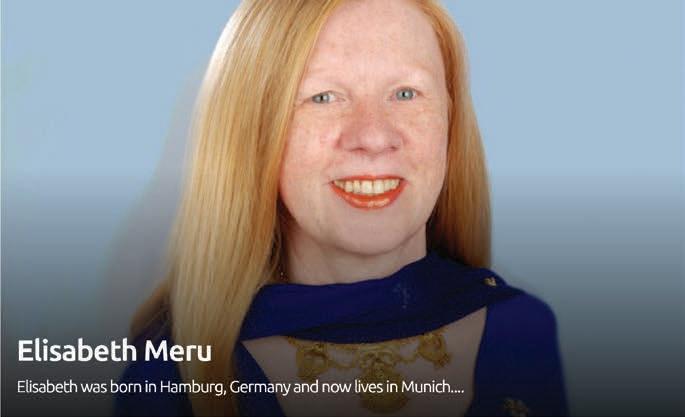
BY ELISABETH MERU
Bhai Maharaj Singh was born into a Grewal Sikh family in Rabbon in the district of Ludhiana and was given the name Nihal. Nihal soon stood out due to his deep piety which led him into Bhai Bir Singh's dera in Naurangabad when he was still very young. Bhai Bir Singh had the most eminent student of Baba Bhag Singh of Pothohar, who had wanted to return to the Gurus' original statements of the Sikh faith, and Nihal in turn adopted this attitude.
Nihal spent many years of untiring seva in the dera, always reciting the name of God. Every
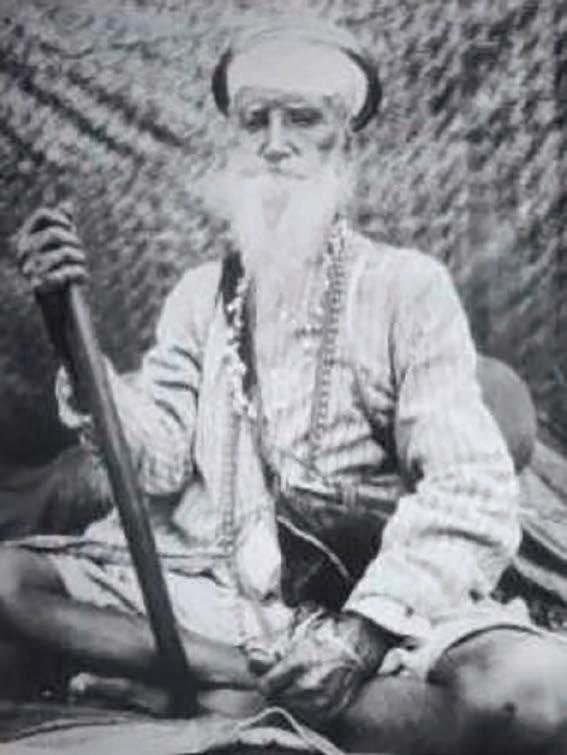
morning at three o'clock Nihal Singh brought Bhai Bir Singh fresh water to honour him. e day came when he received Amrit and his new name Bhagwan Singh from him. Bhai Bir Singh's dera was a military base which comprised about twelve hundred warriors and three hundred horsemen. It was a centre of the resistance against the Dogras' rule, o ering refuge to all those persecuted by them. Among those, in 1844, were General Atar Singh Sandhawalia and Prince Kashmira Singh, whose extradition Hira Singh Dogra, supreme minister
of the Punjab, kept demanding in vain. Finally Hira Singh Dogra launched an attack with about two thousand soldiers and y guns. Hundreds of Sikhs fell in the ensuing carnage as well as General Atar Singh Sandhawalia, Prince Kashmira Singh and Bhai Bir Singh.
A er the enemies' retreat Bhagwan Singh was appointed to be his teacher's successor, but only shortly a erwards he handed over the dera to a Sikh who was also called Bir Singh and went to Amritsar to create a new dera there. Following the First Anglo-Afghan War(Auckland's Folly, 1839 to 1842),
Bhagwan Singh stayed in Jalandhar Doab to arouse the people there against the British.
In 1847 tensions arose between Maharani Jindan Kaur and the Brits, who wanted to deprive her of her power. is resulted in the so-called Prema plot which envisaged the murder of Henry Lawrence, the British envoy. But the plot, and Bhagwan Singh's role in it, were uncovered and the British had his property con scated and declared him an outlaw. e British governor, General Lord Dalhousie, put a bounty of ten thousand rupees on his head.
Bhagwan Singh went underground together with about six hundred of his followers, who called him Bhai Maharaj Singh as he became a holy warrior due to his resistance against the British. During this time Bhai Maharaj Singh also contacted Diwan Mul Raj, Nazim of Multan, to drive the British from the Kingdom of Lahore together with him. But in 1848 there arose an irreconcilable dispute between them, and Maharaj Singh le Multan and went to Hazara.
In November 1848
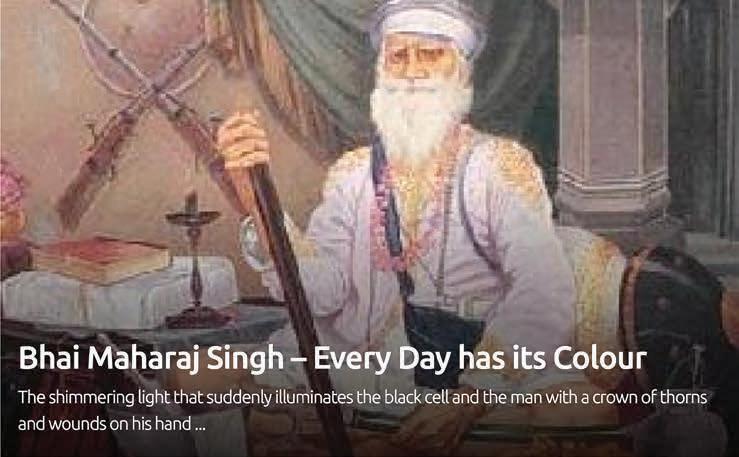
Bhai Maharaj Singh joined Raja Sher Singh's forces in the vicinity of Ramnagar. e records tell us that Bhai Maharaj Singh sat on a black horse and, at the risk of his own life, kept cheering the Sikh warriors on in their ght against the British. He also steadfastly remained at Raja Sher Singh's side during the engagement at Chillianwala, but he dissociated himself from Raja Sher Singh when he surrendered to the British a er his defeat in the battle of Rawalpindi on March 14, 1849. Bhai Maharaj Singh managed to escape to Jammu, where he made Dev Batala his new base.
Henry Lawrence, the British envoy at Lahore, said this about Bhai
"Bhai Maharaj Singh is a Sikh priest of great saintliness and great in uence who in 1848 was the rst to carry the ags of rebellion outside the
borders of Multan, and he is the only important leader who did not lay down his arms to Sir Walter Gilbert in Rawalpindi."
Bhai Maharaj Singh wanted to free Maharaja Dalip Singh from his captivity in the Fort of Lahore at the hands of the British, but his plans were uncovered and Dalip Singh was transferred to a safer fort. Again the British tried to capture Bhai Maharaj Singh, but they did not succeed. e people of Punjab stood behind him and helped him without inching. e British started calling him Karniwala – worker of wonders – to explain their failure to catch him.
Bhai Maharaj Singh's most ardent wish was to see all India free from British rule, and he therefore sought the help of the Maharaja of Bikaner, Dost Muhammad Khan of Afghanistan
and Maharaja Gulab Singh of Jammu and Kashmir. But again, he was doomed to failure.
e second Anglo Afghan war, which began in 1848, led to the Punjab being annexed on March 29, 1849.
Many in uential people in the district of Hoshiarpur supported Bhai Maharaj Singh, and in November of 1849 he was able to nish his preparations for attacking areas in the Jalandhar Doaba. At a public gathering at Sham Chaurasi he proclaimed the twentieth day of Poh (January 3, 1850) as an auspicious date for the uprising. But again, fate failed him and on December 28, 1849, the British arrested him near Adampur. He was accompanied by twenty one of his companions, all of whom were unarmed.
Henry Vansittart, the Deputy Commissioner of Jalandhar, who had arrested Bhai Maharaj Singh, wrote about him: " e Guru is no ordinary man. He is to the natives what Jesus was to the most zealous of Christians. His miracles were seen by tens of thousands, and are more implicitly believed than those worked by the
ancient prophets."
Henry Vansittart was so deeply impressed with Bhai Maharaj Singh that he personally contacted the British government to plead for preferential treatment for him, but his e orts fell on deaf ears. As the British were afraid of popular outrage and did not want to take any risks, they deported Bhai Maharaj Singh and his steadfast companion Kharak Singh to Singapore. ey arrived there on July 9, 1850 onboard the Mahomed Shaw and were taken to the Outram Road prison. On this day Bhai Maharaj Singh's inconceivable martyrdom began.
As the cell door thunks shut behind Bhai Maharaj Singh, his eyes see with a shiver what his mind cannot grasp yet - that he has been condemned to solitary con nement in darkness. What he does not know is that the windows of his tiny cell have been bricked up especially for this purpose. From now on eternal night without even ittering shadows will be around him. All of his days and nights, tomorrow as well as yesterday, will be one. Time has ceased to exist. Feeling his way like a blind man, Bhai Maharaj Singh
moves around the pitch black cell. His feet feel old rubbish underfoot - even he is not worthy of this. Bhai Maharaj Singh will never again have any companion save for eas and cockroaches and perhaps a rat. e life le to him is his own living death. e black night around him starts to feed on Bhai Maharaj Singh. A er three years in this hell hole, he is as good as blind. When the civilian physician advises the representatives of the British government to at least allow Bhai Maharaj Singh to take a walk in the sunlight now and then, they refuse - forgetting that the Christian Bible says …HE causes his sun to rise on the evil and on the good, and sends rain on the just and on the unjust… (Mathew 5:45)
In addition to Bhai Maharaj Singh's blindness, his feet and ankles start swelling with rheumatism. e last outcry of his soul is a cancer of the tongue. But all this does not move the Brits, who imagine themselves to be the representatives of law and justice. ey are blind and diseased with hatred for this man who dared demand freedom for his country and whose


sentence is out of all proportion to his crimes. And Bhai Maharaj Singh's martyrdom is to drag on for a further three endless years.
VAHIGURU JI, how long does eternity last?
About two months before his soul can leave his body, Bhai Maharaj Singh's throat and tongue are so swollen he can hardly swallow.
VAHIGURU JI, have mercy.
Every day has its colour. July 5, 1856 is the last day that came into Bhai Maharaj Singh's downtrodden life, horri ed at seeing a fatally ill man, covered in lth and emaciated, hearing his rattling breath and his groaning with pain. But maybe July 5, 1856 then also saw this: e shimmering light that suddenly illuminates the black cell and the man with a crown of thorns and wounds on his hand and feet, who sits down next to Bhai Maharaj Singh and compassionately and puts him on his lap, like his mother Mary once put him on her lap, and then his tortured cry:
"FATHER, forgive them, for they do not know what they are doing." (Luke 23:34)
Blood ows from Christ's wounds, which have been torn open again, and he is nailed to the cross once more.
A er that, July 5, 1856 sees the woman with the sad eyes who kneels down next to Bhai Maharaj Singh and gently strokes his feverish forehead. Before she can say anything, stammering words come from his cancer ridden mouth:
"M…M…Mother," for the mother's gentle hand is never forgotten.
"My poor child, what have they done to you…" "M…M…Mother."
"I am here, my dear son. I will take you to a star where all your su ering has ended and where the sun always shines so bright, so bright, and bathes blossoming meadows in glowing tales of spring. And the birds sing their gentle tunes."
"M…Mother, o yes, dear…dear mother…", and seeing with the inner eye, suddenly the mother's eternal child cries out in a clear voice:
all this in its heart in awe. Bhai Maharaj Singh was cremated on a plot of land outside the Outram Road prison, probably by Kharak Singh, who also died in this prison later. e local people, mainly Tamils, began to revere the spot of his cremation, erecting a small wall of stones around it and o ering owers. Muslims and Sikhs joined in, with the Sikhs later on building a small Gurdwara called Silat Road Temple in honour of Bhai Maharaj Singh, one of the rst freedom ghters against the British. In 1966, the Sri Guru Granth Sahib Ji was installed there.
"Mother…Mother… look, look…Guru Nanak…"
July 5, 1856 sees Bhai Maharaj Singh entering obediently into VAHIGURU JI's aureole and retains
Elisabeth was born in Hamburg, Germany and now lives in Munich. She writes short stories, journalistic pieces and poetry.

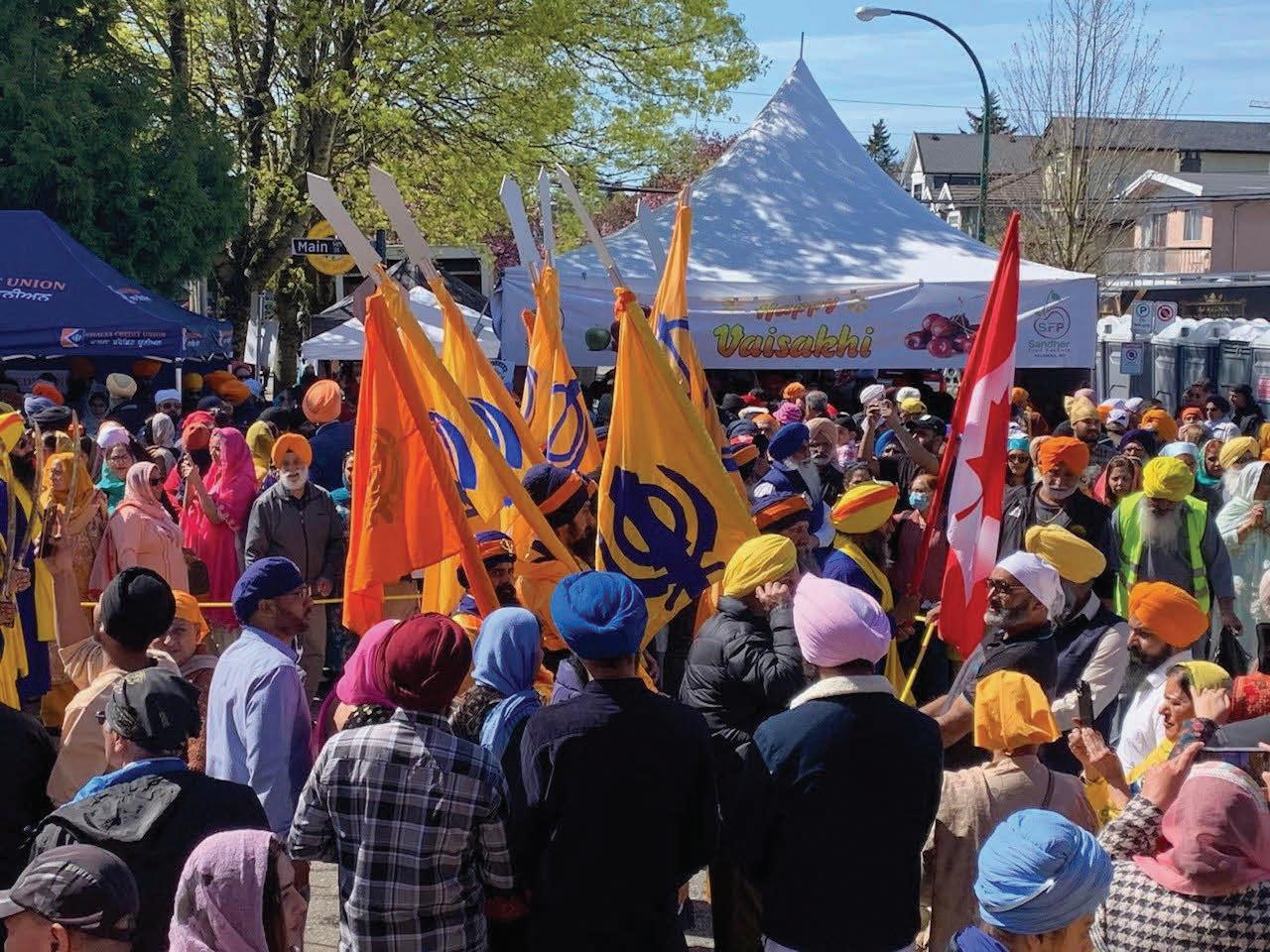
Every spring, as the chill of winter fades and cherry blossoms begin to bloom across British Columbia, the Sikh community, and increasingly, the broader public, comes together to celebrate one of the most vibrant and meaningful festivals of the year: Vaisakhi. In cities like Surrey and Vancouver, Vaisakhi is not just a religious observance; it is a powerful expression of
BY DAVINDER BIR-BHATTI
identity, community, and shared humanity that draws hundreds of thousands of people to the streets.
Vaisakhi, traditionally celebrated on April 13 or 14, marks the Sikh New Year and commemorates a de ning moment in Sikh history: the founding of the Khalsa in 1699 by Guru Gobind Singh Ji. On that historic day in Anandpur Sahib, Guru Gobind Singh Ji called upon Sikhs to embody
courage, equality, and devotion. e Khalsa was established as a collective of initiated Sikhs committed to justice, service, and spiritual discipline.
For Sikhs, Vaisakhi is deeply spiritual. It is a time to re ect on faith, renew commitments, and engage in seva (sel ess service). Gurdwaras (Sikh temples) are lled with prayer, kirtan (devotional singing), and langar, free meals served to all, regardless of background.
Surrey’s Vaisakhi Parade: e Largest Outside India
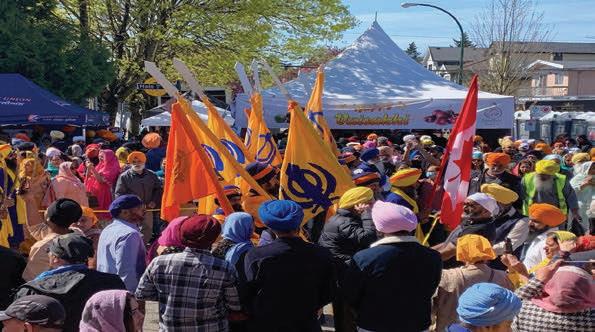
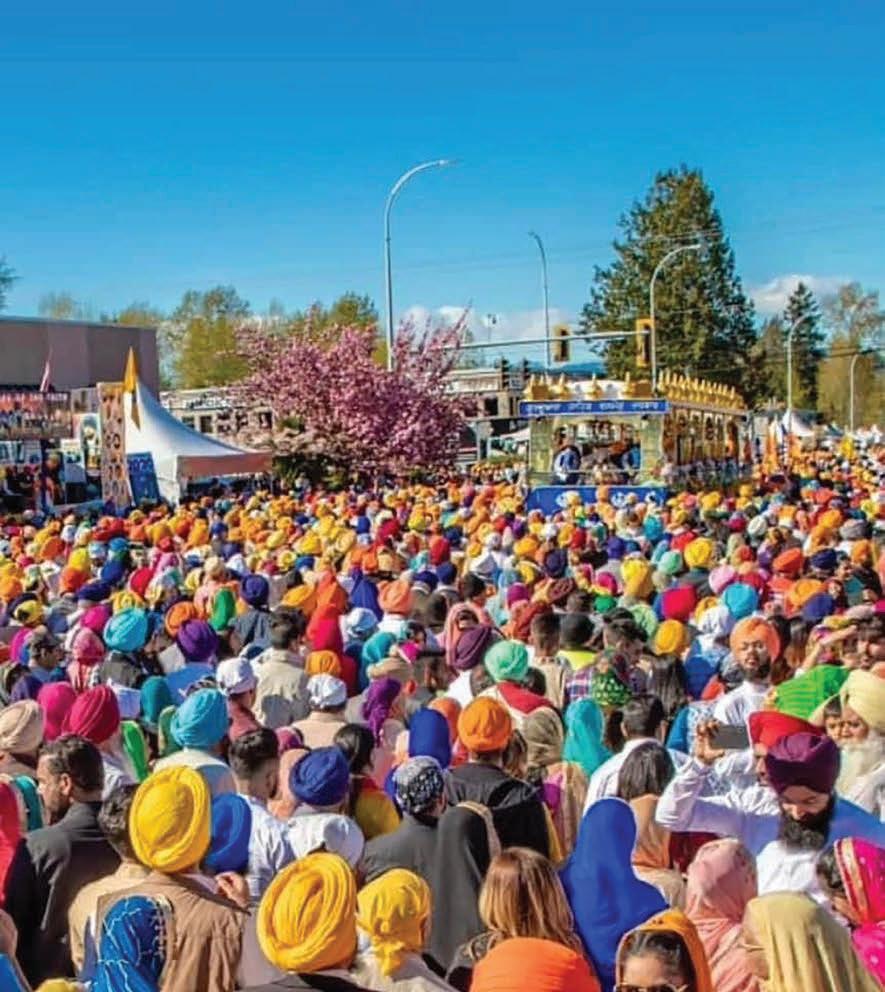
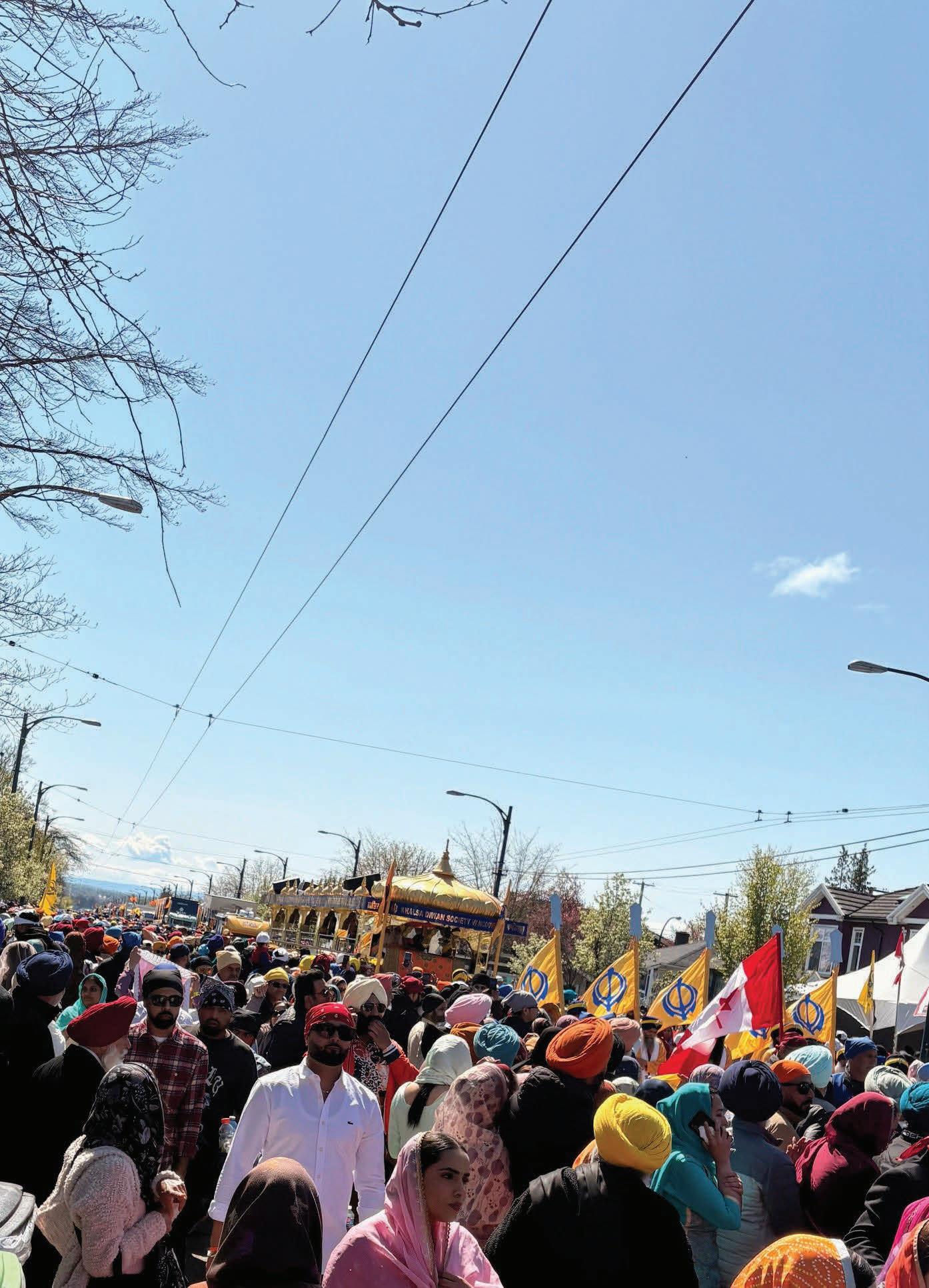
Surrey hosts one of the largest Vaisakhi celebrations in the world, o en attracting over 500,000 attendees. e Surrey Nagar Kirtan, organized primarily by local gurdwaras, transforms the streets into a moving festival of faith and culture.
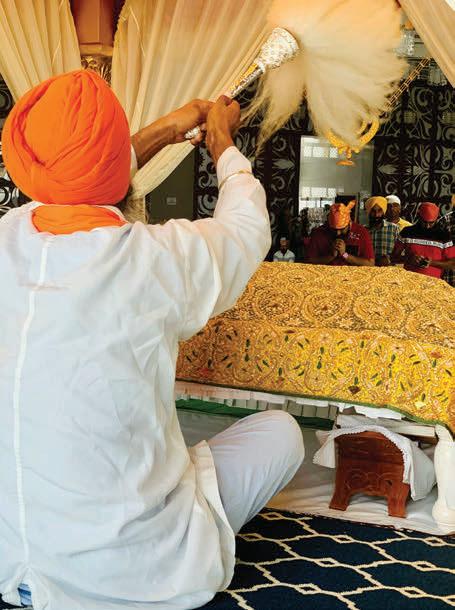
e parade begins with the Guru Granth Sahib (the Sikh holy scripture) carried on a beautifully decorated oat, followed by Panj Pyare (the Five Beloved Ones) dressed in traditional attire. Behind them, a procession of
community groups, schools, and organizations walk together, singing hymns and sharing messages of unity.
What truly sets Surrey’s Vaisakhi apart is the overwhelming sense of generosity. Along the parade route, families and local businesses set up stalls o ering free food: everything from traditional Punjabi dishes like chole bhature and jalebi to pizza, smoothies, and even vegetarian sushi. is practice of langar extends beyond the walls of the gurdwara and into the streets, symbolizing equality
and hospitality. For many attendees, Sikh or not, the experience is unforgettable. It’s not just a parade, it’s a living demonstration of community care.
Vancouver’s Vaisakhi Celebration: A Cultural Mosaic
While slightly smaller in scale, Vancouver’s Vaisakhi parade carries its own unique charm. Held typically around Main Street, the event re ects the city’s multicultural fabric. e celebration blends traditional Sikh elements with broader cultural participation, making it especially welcoming to diverse communities.

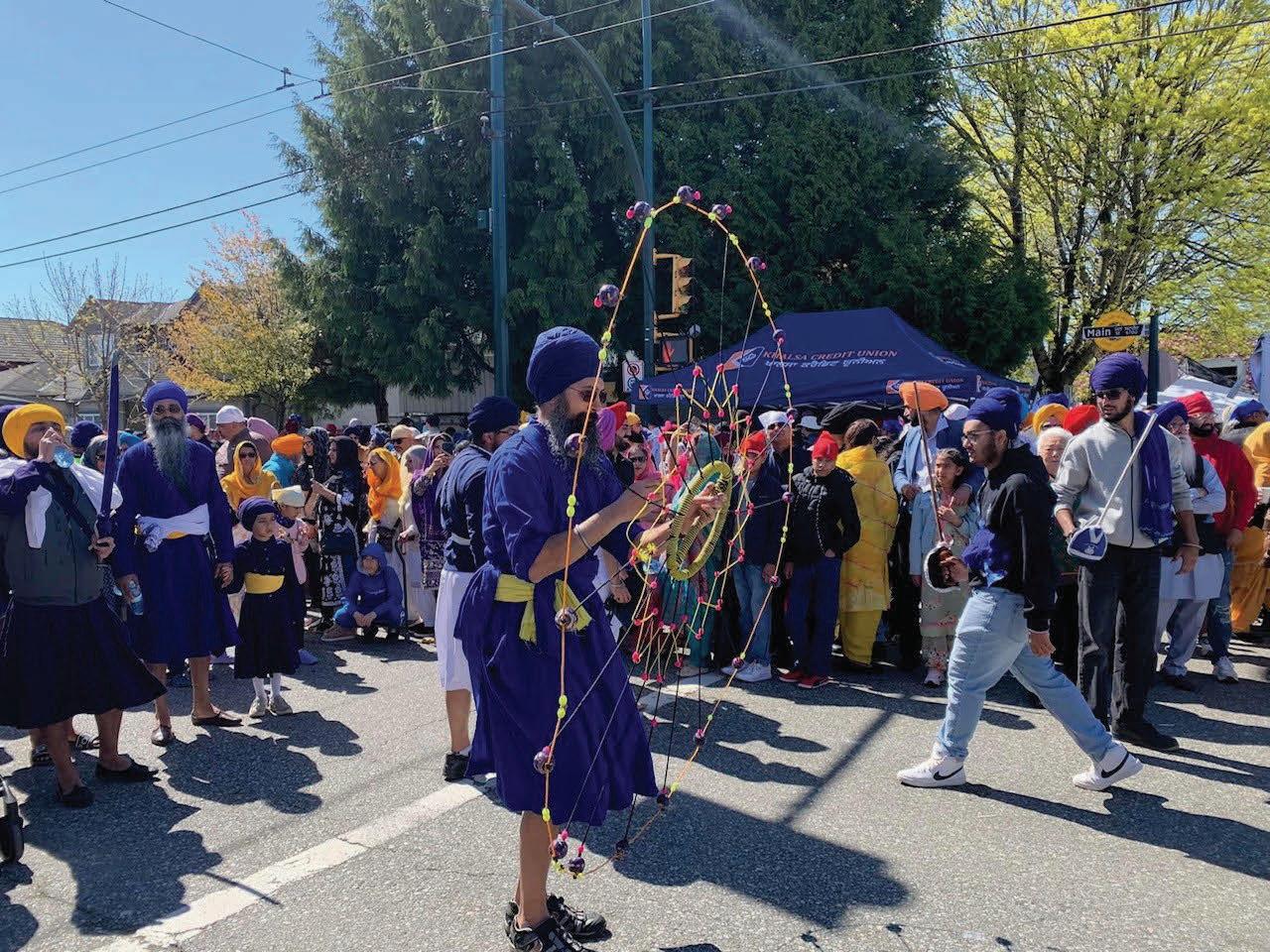
Visitors can expect live performances, Gatka (traditional Sikh martial arts demonstrations), music, and community booths. e atmosphere is festive yet grounded in respect and awareness. Many attendees take the opportunity to learn about Sikh history, values, and contributions to Canadian society. Vancouver’s Vaisakhi also highlights how traditions evolve in diaspora. While rooted in Punjab, the celebration here re ects the lived experiences of Canadian Sikhs; balancing heritage with modern identity.
At its core, Vaisakhi carries a message that resonates far beyond the Sikh community. e principles of equality,
service, and standing up for justice are universal. In a time when divisions o en dominate headlines, Vaisakhi o ers a refresh-
of the community. Vaisakhi in Surrey and Vancouver is as much about inclusion as it is about tradition.
Over the years, Vaisakhi has become one of the most anticipated cultural events in British Columbia. It re ects not only the strength of the Sikh community but also the province’s broader commitment to multi-
Vaisakhi
If you’ve never attended a Vaisakhi parade, Surrey and Vancouver o er the perfect introduction. Wear comfortable clothes, come with an open mind, and be ready to eat—because you will be o ered food, o en insistently and
community that continues to inspire millions around the world.
Vaisakhi in Surrey and Vancouver is more than an event; it’s an experience that brings people together in a way few celebrations can. It bridges generations,
how tradition and inclusivity can coexist beautifully. Whether you attend for the rst time or return year a er year, one thing is certain: you will leave with a full heart; and likely, a full plate.


Innovation in healthcare isn’t optional anymore—it’s our lifeline. If we don’t build better systems today, we won’t be able to sustain care tomorrow.”
BY J.M. LEE
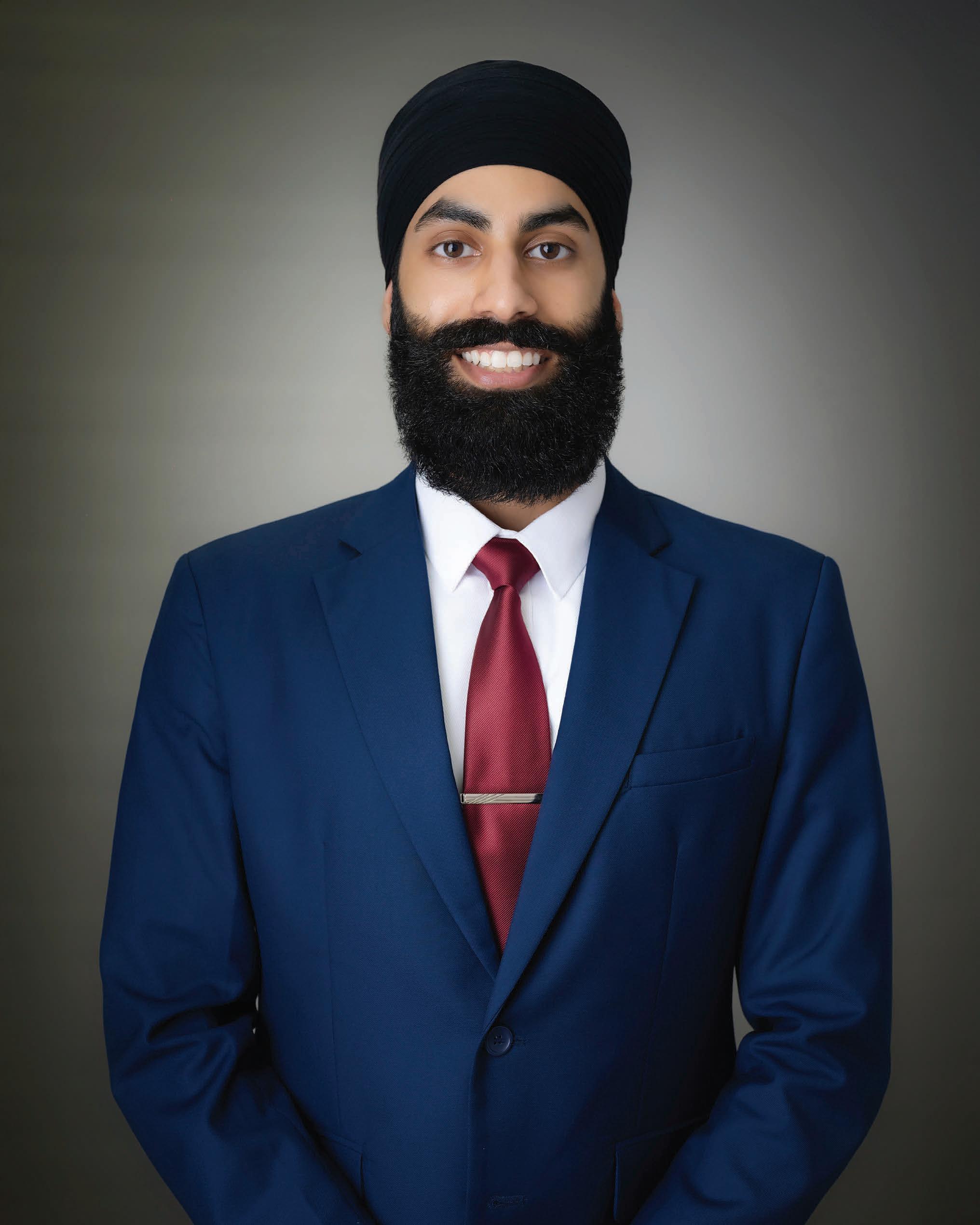
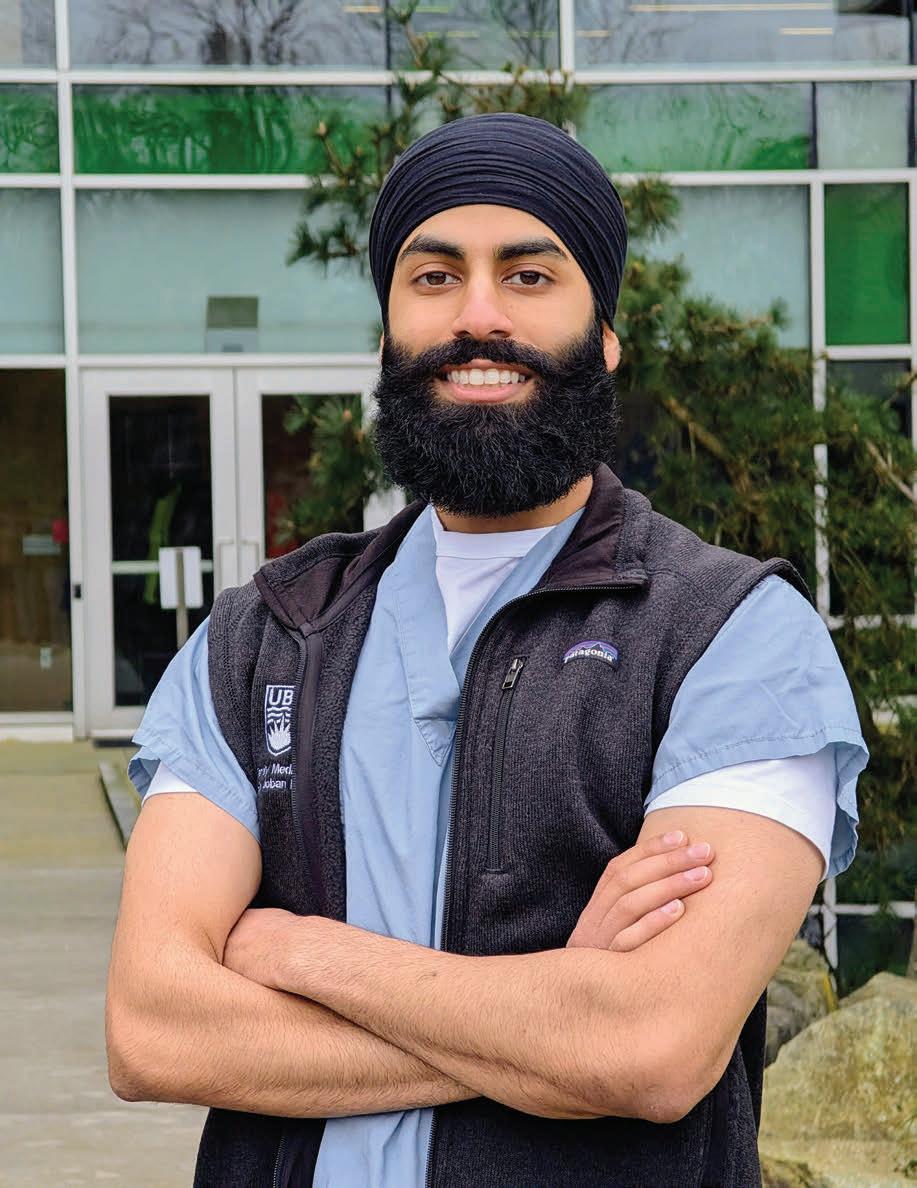
In the bustling heart of British Columbia, where the rapid pulse of growth meets a rich tapestry of cultural diversity, a new kind of medical leadership is taking ight. At the center of this movement is Dr. Joban Singh Bal, a physician whose journey is as much about the community that raised him as it is about the
healthcare innovation and clinical expertise he now provides. Recently named one of BC Business’s 30 Under 30, a recipient of the BC College of Family Physicians’ Resident Award, and the newest healthcare leader in the National Health Fellows executive program—with a full-ride scholarship awarded by the Canadian Medical Association—
Joban is quickly becoming a foundational gure in the future of Canada’s healthcare landscape. To understand the doctor, one must rst understand the navigator. Long before he donned a white coat, Joban was the bridge between his family and a complex medical system. Growing up in an immigrant household, he frequently served as a
“While Joban’s academic credentials are extensive— having completed his medical degree at UBC as a Wesbrook Scholar, an honor reserved for only 20 out of more than 53,000 students—his heart has always remained rmly rooted in Surrey. Choosing the UBC Surrey –South Fraser residency site was a deliberate decision, a homecoming of Healthcare doesn’t begin in the hospital— it begins in the community. If people can’t access or understand the system, then we haven’t built it well enough.”
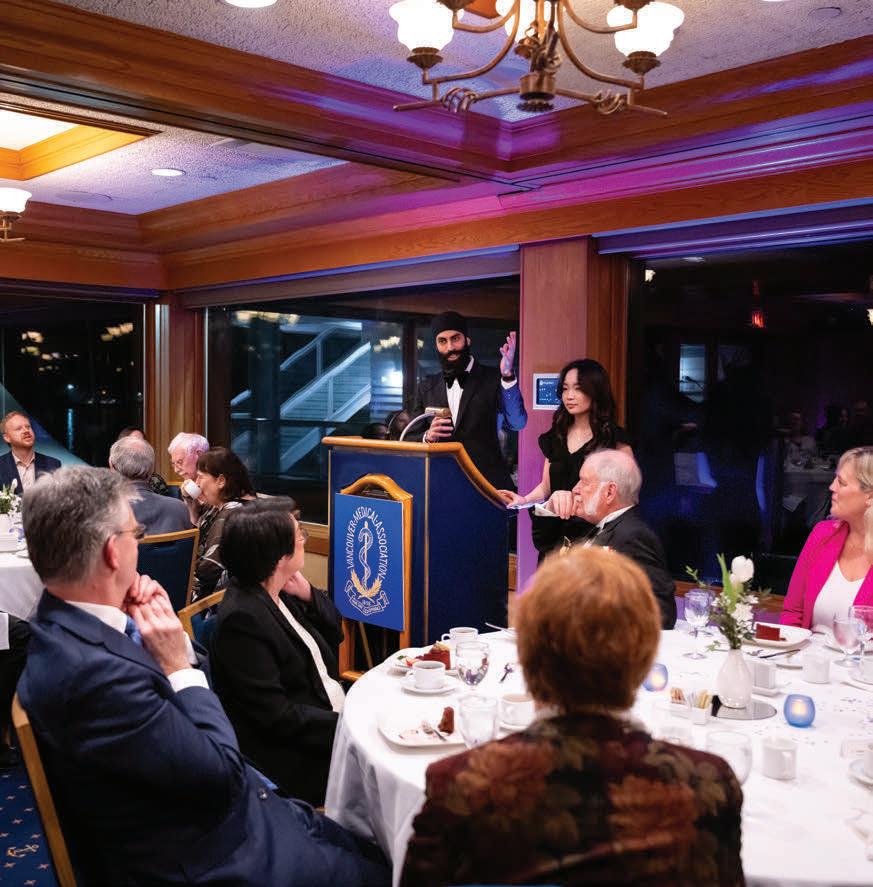
healthcare navigator for his parents and grandparents, helping them maneuver through a system that o en felt inaccessible. ese early experiences—translating medical jargon and advocating for his elders’ needs—planted the seeds of a career dedicated to excellence at the forefront of healthcare and giving back to his community.

sorts. He views his work as a direct contribution to the neighborhoods he grew up in. In many ways, it has been a full-circle moment.
During his residency, Dr. Bal has helped mothers deliver their babies at Surrey Memorial Hospital’s maternity ward—the very same place where he was born a few decades earlier. He sees the immense growth of the region, but also the signi cant infrastructure gaps that need to be lled. His ultimate goal is to bring world-class healthcare to
our backyard, ensuring that the best talent, models of care, and technologies are available to the people of British Columbia, with Surrey at its core. e catalyst for Joban’s broader advocacy began over thirteen years ago at Tamanawis Secondary. It wasn’t a single person’s illness that triggered his urgency, but rather his observation of profound gaps within his own community. He noticed that while the community was incredibly giving, many people had simply
Growing up, I wasn’t just a kid in the waiting room. I had to become the advocate and bridge between my family and a complex healthcare system. Those moments shaped how I see medicine today. To me, healthcare isn’t just about treating illness; it’s about building reliable systems that earn a patient’s trust through consistency, innovation, and a commitment to high-caliber care they can rely on.”


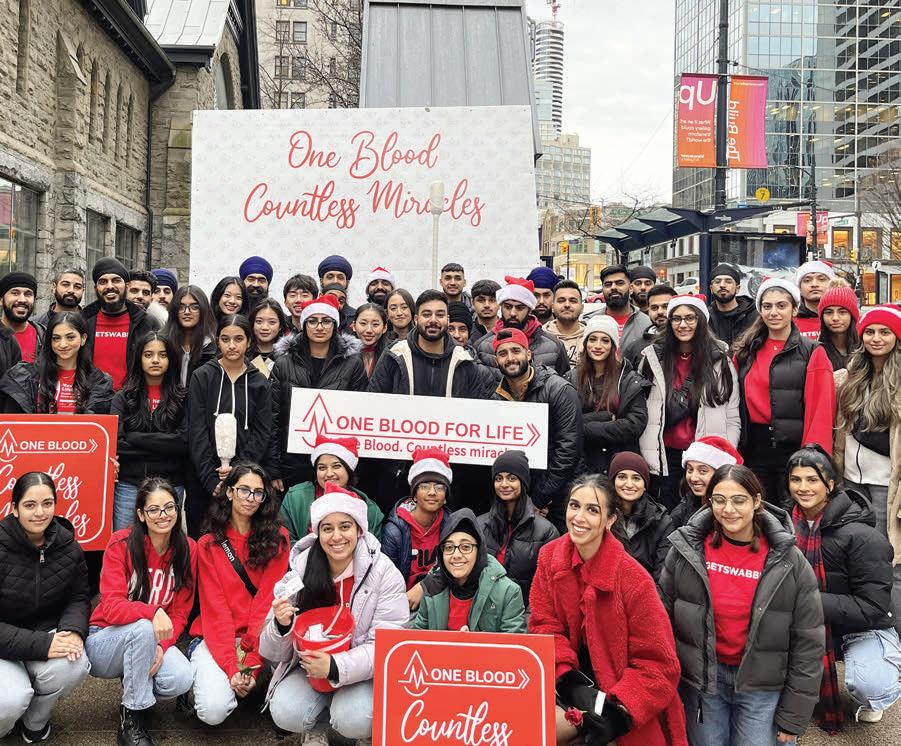
never been asked to donate blood or register as stem cell donors. Joban’s key message was simple: when we are healthy and able, we should be grateful and look for ways to give back that gi of life to those facing hardship. is realization led to years of grassroots blood and stem cell initiatives before the founding of the One Blood for Life Foundation (One Blood), a movement that has since expanded into a national powerhouse of advocacy. Today, Joban leads more
than 570 volunteers, largely in British Columbia. e movement he spearheaded has successfully recruited over 4,550 blood donors and 2,740 stem cell registrants, with a speci c focus on increasing ethnic diversity within registries. Much of this success stems from Joban’s mastery of cultural uency. He recognized early on that language and cultural barriers were signi cant hurdles to donor participation. By setting up booths at gurdwaras and community events—and
ensuring volunteers spoke multiple languages—the foundation was able to address misconceptions and fears directly. He o en draws on Sikh principles such as Seva (sel ess service) to connect with the community’s inherent desire to give back. Behind any initial hesitancy was o en a genuine willingness to contribute; Joban simply provided the pathway. He has become a trusted physician voice in the community, conducting more than 45 bilingual media interviews

“When I watch a unit of blood flow into a patient, I’m reminded that behind every donation is a stranger who chose to save a life. That’s the most powerful form of medicine we have.”
to bridge communication gaps and educate thousands on important healthcare topics.
One of the most high-pro le vehicles for this advocacy has been a partnership with the Vancouver Whitecaps FC. e “Bloodlines” campaign, which featured a specially designed jersey for the season, helped
amplify the message of blood donation to audiences in the hundreds of thousands. For Joban, this was a powerful validation of his grassroots work—using sport as a unique, non-clinical platform for health advocacy. He notes that the Whitecaps were improving community health while giving back in meaningful ways. Today, he continues to serve as an advisor for the organization, helping guide its South Asian community and business initiatives to better resonate with a growing and diverse fan base. is role re ects his broader belief that health leadership involves bridging sectors —sports, technology, and community—to create a uni ed sense of “community care.”
Despite the grueling demands of medical school, residency, and the high-pressure environment of healthcare, Joban’s energy remains unwavering. When asked how he avoids the burnout that plagues many in his profession, his answer is rooted in passion: “When you love what you do, it’s not really work.” He is driven by a determination to build a better future for both healthcare and community—a goal that motivates him each morning. is sentiment is echoed by colleagues at Canadian Blood Services, who have praised Joban for over a decade of service that is neither episodic nor performative, but deeply values-driven. is dedication came full circle when Joban cared for a patient diagnosed with leukemia. e patient relied entirely on blood transfusions while awaiting a potential stem cell transplant. For Joban, watching a unit of blood ow is always a profound experience. “I get to see the pint of blood ow its way down an IV line to a patient. at simple donation—a noble act—is a literal lifeline. Despite all our technological advancements, it’s something we still cannot
replicate.” It serves as a visceral reminder of why he has spent thirteen years championing this cause: those very units of blood are life-saving measures that, in many cases, have saved his patients’ lives.
Joban’s in uence now extends across health policy and education. He advises the new SFU School of Medicine and sits on the UBC Provincial Family Medicine Resident Selection Committee, helping shape the next
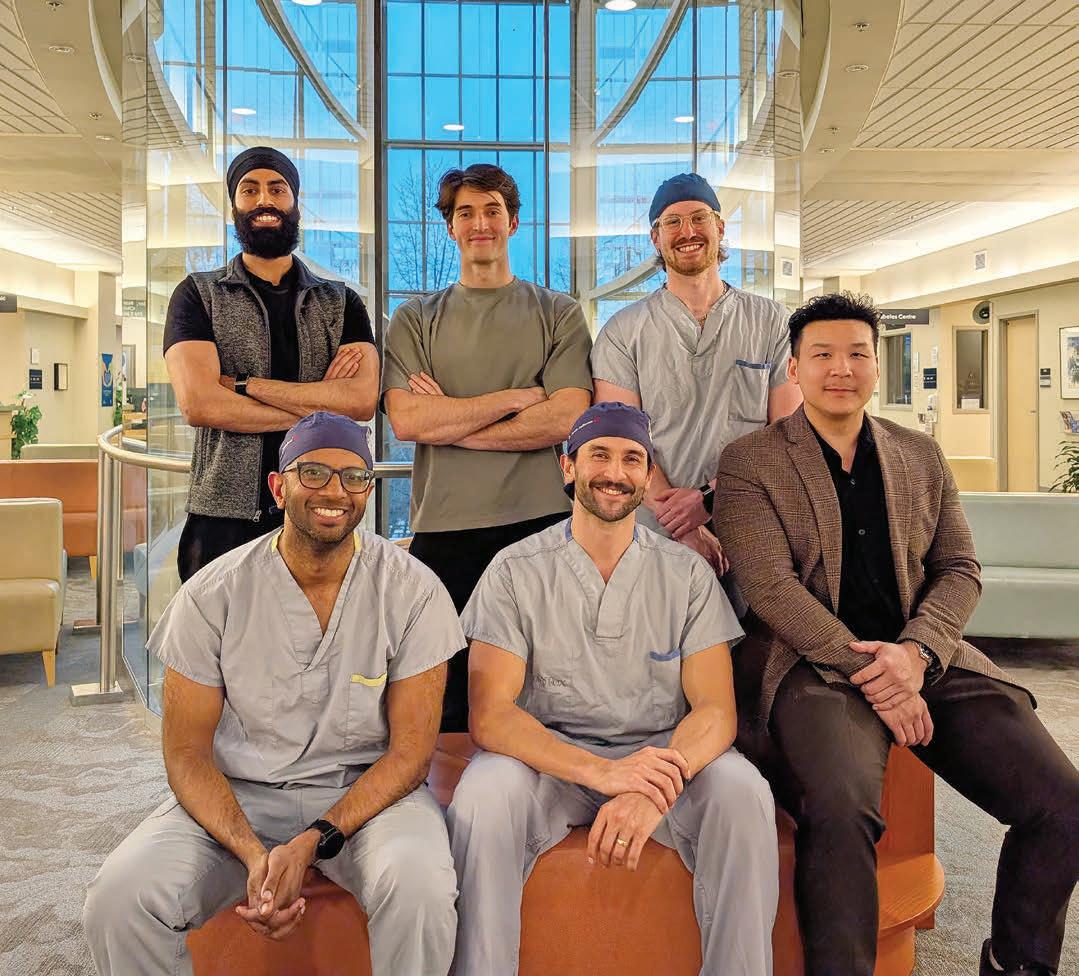
I’ve always believed that the best physicians aren’t just clinicians they’re advocates, builders, and deeply connected to the communities they serve.”
When reviewing thousands of applicants, he advocates for a system that recognizes passion and purpose. He values individuals who are willing to go above and beyond—those who “rise to the call for action.” In his view, the ideal physician is not only a clinician, but also an innovator,
entrepreneur, and active community member.
With an aging population and rising healthcare costs, Joban is adamant: “Innovation is our lifeline.” Beyond the clinic, he contributes as a trusted digital health advisor and consultant for numerous startups and organizations, helping
integrate technology into frontline care. He has delivered guest lectures for MBA courses at the University of Calgary’s Haskayne School of Business, judged startup pitch competitions awarding over $100,000 to emerging health
technology companies, and delivered dozens of keynotes as a health futurist and entrepreneur.
He recently welcomed over 1,000 graduating Canadian medical students as the host of UBC Family Medicine’s o cial CaRMS welcome video. He has also taken his advocacy to the national stage, presenting a comprehensive report on health system improvement directly to Prime Minister Justin Trudeau. Achieving this level of impact while still in residency re ects a
kind of leadership many believe is essential for the future of healthcare.
Beyond the accolades, Joban remains deeply committed to the human side of medicine. He dedicates signi cant time to mentoring medical students and pre-medical trainees, fostering a sense of psychological safety and belonging— particularly for those from underrepresented backgrounds.
At the heart of everything he does is the spirit of Chardi Kala—a concept of relentless,
eternal optimism. In a healthcare system o en described as overwhelmed and resource-strained, this mindset o ers a powerful prescription for the mind, body, and soul. It is a call to move forward with hope and to actively build solutions for the future.
As he looks ahead, Dr. Bal remains focused on bringing the best healthcare technologies and models from around the world to our own backyard. He envisions a Surrey that stands as a pinnacle of healthcare excellence, powered by top talent and cutting-edge diagnostics. Whether leading national initiatives, launching startups, or caring for patients, Joban continues to lead with purpose.
His journey is a testament to the power of grassroots movements and the impact of a physician who never forgot what it meant to be a navigator. In the story of British Columbia’s healthcare future, Joban is not just a participant—he is one of its most vital and optimistic architects.


&






THURSDAY
e Vancouver International Auto Show began with an opening night celebration honoring dealers and sales professionals who are driving the adoption of clean-energy vehicles and providing outstanding service to customers across the province. eir leadership is shaping the future of transportation in British Columbia.
“It’s exciting to welcome the industry back to Vancouver and kick o the Auto Show by recognizing the leadership shaping its future,” said Blair Qualey, President and CEO of
BC. “Our dealers and sales professionals continue to raise the bar by embracing innovation, advancing clean energy adoption, and o ering real choices to consumers. We’re

e Green Star Award recipients for Battery Electric Vehicle Sales (BEV) and Plug-in Electric Hybrid Sales (PHEV) for 2025 sales
making signi cant progress across the province.”
e Green Star Awards honor the New Car Dealer selling the cleanest, energy -eligible vehicles
annually across all brands and regions, including the most improved dealership in the Lower Mainland, Vancouver Island, Interior, and Northern BC.
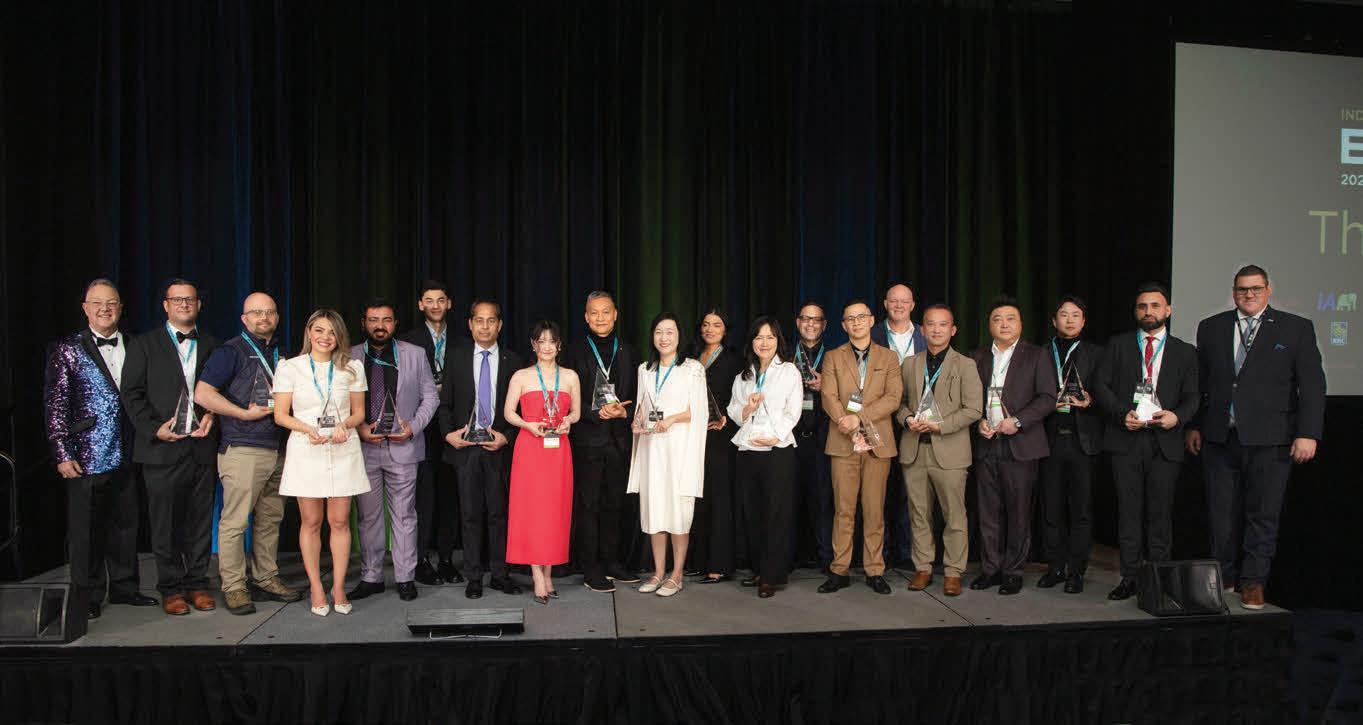
Presented by EBlock, the Salesperson of the Year Award recognizes outstanding dealer-member salespeople across all classes who excel in front-line sales roles.





Date: June 7, 2026
Registration Time: 10:00 a.m.
Start Time: 11:00 a.m.
Location: Tynehead Park, 168 St, Surrey



The Vancouver International Auto Show (VIAS) is Western Canada’s premier automotive showcase and British Columbia’s largest-attended consumer event
e 2026 Vancouver International Auto Show (VIAS) has set a new attendance record for the third consecutive yearreinforcing its position as one of North America’s premier automotive events.
A total of 139,991 attendees lled the Vancouver Convention Centre between March 25-29, surpassing previous records (138,773 in 2025 and 129,033 in 2024) and marking a milestone 102nd edition of the show. is year also saw record-setting single-day attendance, including 20,071 visitors on opening day and 30,188 attendees on closing day.
Spanning nearly 300,000 square feet and featuring more than 30 global automotive brands, the sold-out event delivered a dynamic, hands-on experience for consumers, industry professionals, and
enthusiasts alike. From cutting-edge electric vehicles to high-performance and luxury models, the show re ected both the rapid evolution of the automotive sector and the growing appetite for real-world, side-by-side comparison.
e return of major brands, expanded exhibits, and a high-pro le appearance by Fast & Furious star Sung Kang, contributed to the event’s success. Several Canadian and Western Canadian debuts drew strong crowds, including Chevrolet’s Corvette CX Concept and CX.R Vision race concept, the Audi R26 F1 display car, Oilstainlab’s HF-11 and HAF-11, and the 2026 Jeep Cherokee.
A standout feature was the EV and PHEV Test Drive Experience presented by RBC, where 3,030 attendees got behind the wheel

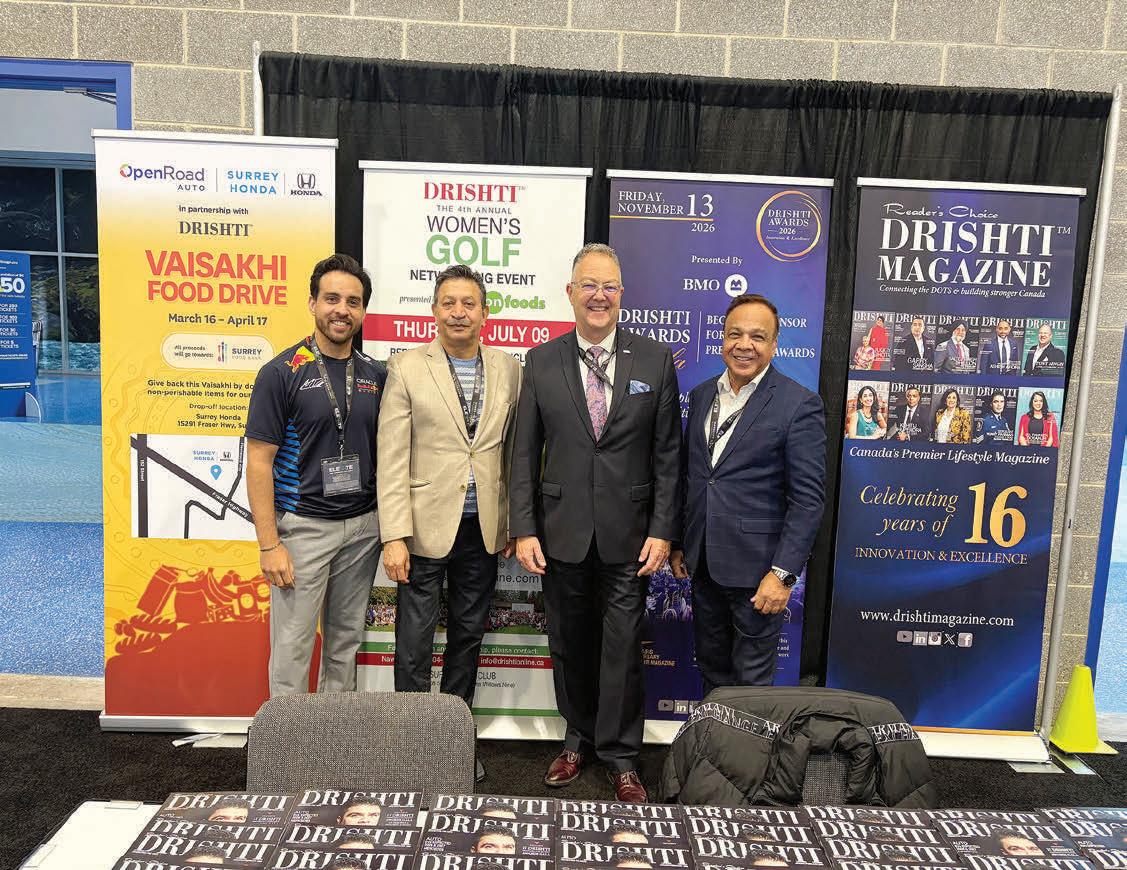



49 vehicles from 17 manufacturersunderscoring continued consumer interest in electri cation when paired with hands-on experience.

From interactive displays to exclusive showcases, these features have brought the event to life, created unforgettable moments for car enthusiasts and families
alike. ey’re designed to inspire, educate, and entertain, making the Vancouver Auto Show more than just a display—it’s an elevated experience!
Planning is already underway for the 2027 Vancouver International Auto Show, returning to the Vancouver Convention Centre West from March 31 to April 4.






































It is with deep sadness that we share the passing of Dr. Abraham Albert “Al” Yuzpe, a true pioneer in reproductive medicine, a past President of CFAS (1983), and a recipient of both the CFAS Award of Excellence in Reproductive Medicine and the CFAS Lifetime Achievement Award (2022).
Dr. Yuzpe was widely regarded as Canada’s most senior reproductive endocrinologist, with a remarkable career that spanned more than six decades. His contributions shaped the eld of fertility care in Canada and around the world.
• Over the course of his career, he received numerous honours, including:
• CFAS Award of Excellence in Reproductive Medicine.
• Society of Obstetricians and Gynecologists of Canada President’s Award, recognizing his distinguished career and dedication to women’s health.
• Royal College of Physicians and Surgeons
Speaker’s Award
As co-founder and co-director of Olive Fertility Centre, Dr. Yuzpe played an integral role in IVF in Canada for more
than 30 years and dedicated over 40 years to supporting individuals and families facing infertility.
His impact on patients, colleagues, and the broader medical community is immeasurable.
He will be remembered with profound respect, gratitude, and admiration.
“In all the years I have been a reproduction specialist, the thing that gives me the most satisfaction is being there for my patients through all the ups and downs. Supporting them is the real reward.” Dr. Al Yuzpe MD, FRCSC.










21 - April19)
April and May bring a phase of self-re ection and recalibration. You may feel a strong urge to rede ne your goals, especially in career matters. Financially, cautious planning is advised as unexpected expenses may arise. Relationships require is period brings gains through networking and social connections. Opportunities may arise through friends or professional circles, so remain open to collaboration. Financial growth is indicated, but avoid overindulgence in luxury

patience, as misunderstandings can arise from impulsive speech. is is a good time to focus on health and discipline, especially in terms of routine and diet. Professionally, slow but steady progress is indicated rather than quick gains. Avoid
(April 20 - May 20)
spending. Relationships improve, and you may nd yourself strengthening emotional bonds.
Career-wise, recognition for past e orts may begin to surface. However, balance work and personal life carefully to avoid burnout. Travel or short

GEMINI (May 21 - June 20)
April and May highlight career and public image. You may experience increased responsibilities or a shi in professional direction. Hard work will be noticed, but results may come with a slight delay. Financial matters require

careful planning, especially when it comes to investments. Relationships may feel strained due to time constraints or mental stress. Avoid overthinking and trust your instincts. is is a good time to enhance your skills or take
(June 21 - July 22)
is period encourages expansion, learning, and new perspectives. You may feel inclined toward spiritual or philosophical pursuits. Traveling, especially long- distance travel, can be bene cial or even transformative. Career
advancement is likely, especially if you're willing to step outside your comfort zone. Financial stability exists, but avoid risky ventures. Relationships o er support, particularly from mentors or elders. It's an ideal time for higher
taking major risks or making rushed decisions. Spiritual practices or time in solitude will bring clarity. By late May, momentum improves, and you begin to feel more in control. Trust the process and stay grounded.
journeys could be bene cial. Health remains stable but requires consistency in habits. By May, a sense of satisfaction and emotional stability sets in. Stay focused on long-term goals rather than short-term pleasures.
up learning opportunities. Health may require attention, particularly related to stress or sleep. By the end of May, clarity improves, and you regain con dence. Stay patient and avoid unnecessary con icts.
education or earning new certi cations. Health remains steady, though mental clarity improves with meditation or mindfulness. By May, opportunities become clearer and more rewarding. Trust your intuition and welcome growth.

- August 22)

April and May bring a deep, transformative phase. You might deal with hidden issues, nancial changes, or emotional intensity. It’s important to stay calm and avoid unnecessary con icts. Focus on managing debts or shared Relationships take center stage during this period. Whether personal or professional, partnerships need attention and balance. You might face situations that test your patience and communication

resources wisely. Relationships may feel intense, requiring honesty and emotional maturity. is is a time for inner healing and releasing past baggage. Career progress may seem slow, but the groundwork is being
(Aug 23 - Sept 22)
skills. Careerwise, collaborating will be more helpful than working alone. Financially, you’re stable, but steer clear of unnecessary spending. Resolve past con icts and strengthen connections. Health stays
(Sept 23 - Oct 22)
April and May focus on work, routine, and health. You might nd yourself busy with responsibilities and daily chores. is is a good time to organize your life and boost e ciency. Career growth remains

steady, though it may feel demanding. Financially, stability is likely, but avoid impulsive lending. Relationships require e ort, especially in maintaining a balance between work and personal life. Prioritize
(Oct 23 - Nov 21)
Creativity and self-expression are emphasized during April and May. is is an ideal time to pursue passions or creative projects. Relationships, especially romantic ones, bring excitement and emotional
depth. Financial gains are possible, but steer clear of speculative risks. Career growth is steady, with chances to showcase your talents. It's also a good time to plan future endeavors. Health remains stable, but avoid
laid. Avoid taking risks or making impulsive commitments. Health needs attention, especially stress management. By late May, a sense of renewal begins to surface. Embrace transformation with patience.
steady, but mental peace should be a priority. Avoid overanalyzing to prevent confusion. By May, harmony begins to return, and clarity improves. Focus on mutual understanding and compromise.
health by focusing on diet and physical activity. Avoid stress and overexertion. By the end of May, you'll start to see the results of your e orts. Discipline will be your strongest asset during this time.
overindulgence. Children or younger individuals may play a signi cant role during this period. By May, con dence and clarity grow. Embrace joy and allow yourself to express freely.

(Nov 22 - Dec 20)

Home, family, and emotional stability become key themes. You may focus on domestic matters or propertyrelated decisions. is is a good time to strengthen family bonds and create a peaceful environment. Your Communication, travel, and learning are highlighted during this time. You might nd yourself involved in discussions, negotiations, or short trips. Career opportunities could emerge through network-

career might require you to balance personal responsibilities. Financially, stability exists, but avoid large investments without proper planning. Emotional sensitivity may increase, so practice patience when communicating.
(Dec 21 - Jan 19)
Health remains stable, but emotional balance is needed. is is a favorable time for introspection and personal growth. By May, a sense of comfort and grounding develops. Focus on nurturing both your inner and outer worlds.
ing or communication e orts. Financial gains are possible, but careful planning is essential. Relationships improve through honest and clear communication. is is a good period to acquire new skills or deepen your knowledge. Health remains steady, but avoid mental overexertion. By May, your con dence in decisions grows. Stay focused and avoid distractions. Your e orts will lead to gradual, steady progress.
AQUARIUS (Jan 20 - Feb 18)
Financial matters take priority during April and May. You may focus on saving, investing, or restructuring your nances. Opportunities to increase income exist but require careful decision-making. Your

career remains steady with gradual progress. Relationships provide support, but try to stay connected rather than detached. is is a good time to build security and plan for the future. Health stays stable, but
PISCES (Feb 19 - March 20)
is is a signicant period for personal growth and self-expression. You may feel more con dent and motivated to take control of your life. Career opportunities appear but need focused
e ort and discipline. Financially, improvements are likely, but careful planning is recommended. Relationships o er both support and lessons, fostering emotional maturity. is is a great
watch your diet. Avoid unnecessary expenses or risky ventures. By May, your nancial clarity improves, and your con dence grows. Focus on stability and long- term growth.
time to start new ventures or take initiative. Health remains steady, but avoid overexerting yourself. By May, clarity and direction improve greatly. Trust yourself and move forward con dently.






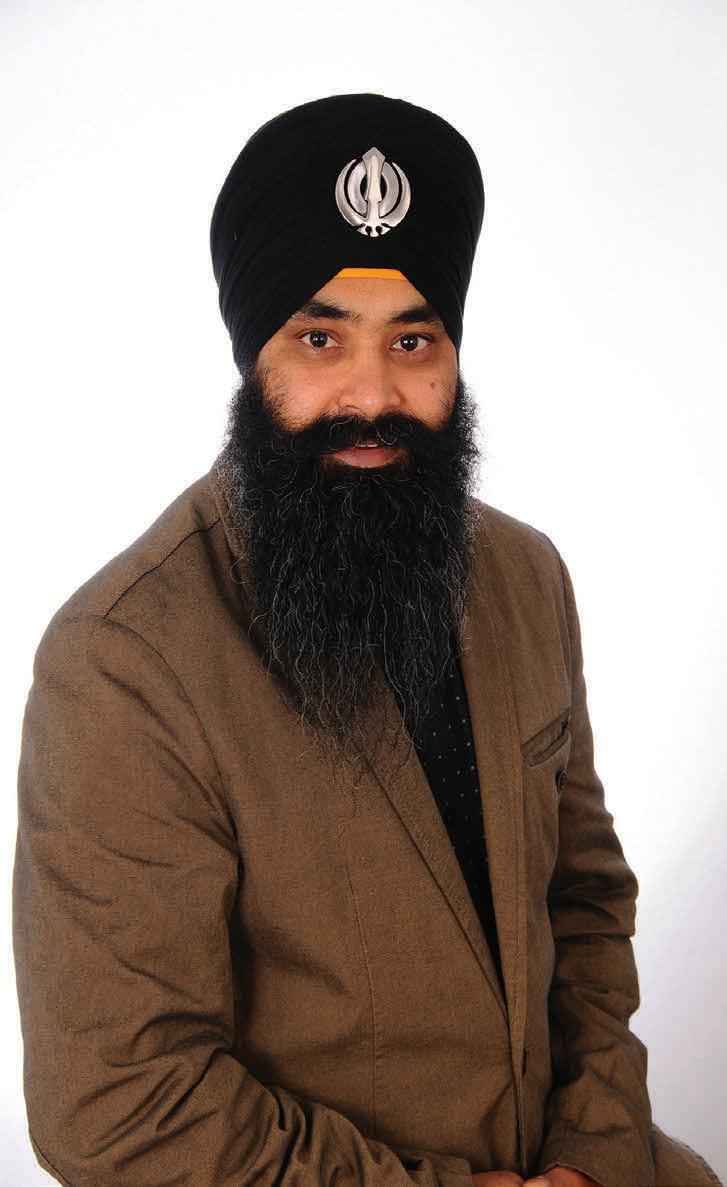





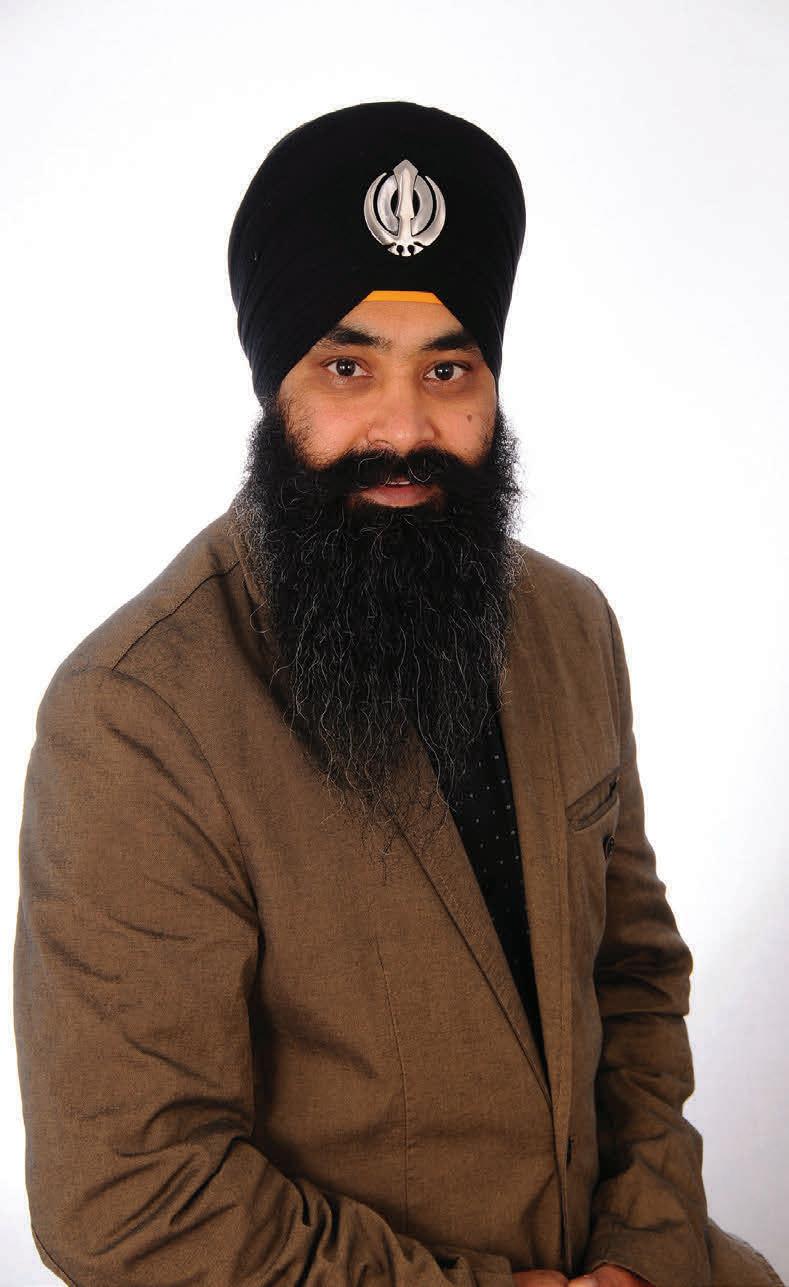


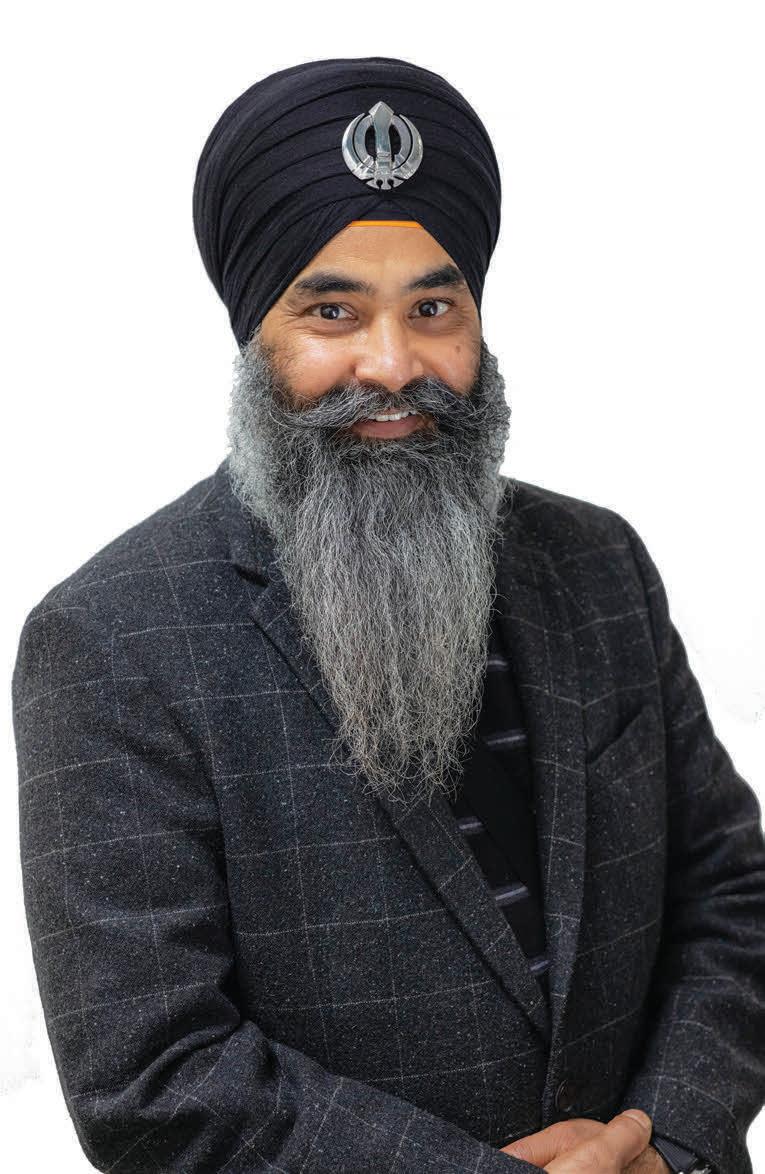



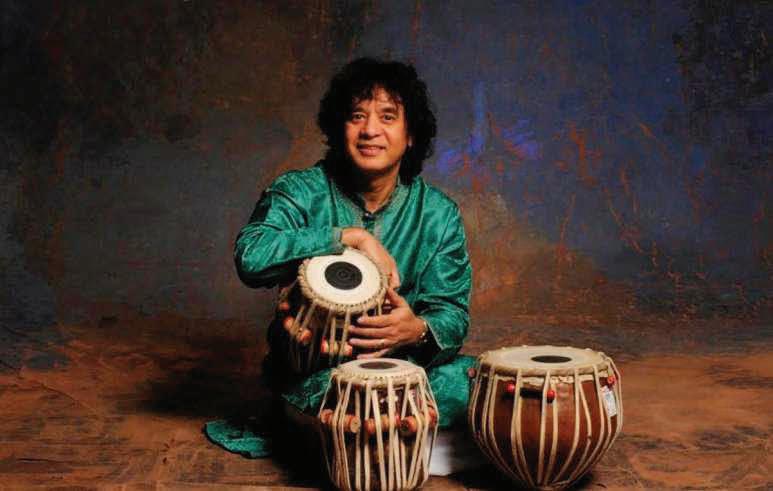













BY HARINDER SINGH
This essay locates and contextualizes the hawk in foundational Sikh texts, history, and lifestyle. It also connects how Baj in Khalsa tradition a ects the Sikh psyche when the people see it.
Baj or Baz (also bāj/baaj or bāz/baaz) refers to a hawk. Baj is o en referred to as a falcon too. But according to ornithologists, Baj is a northern (earlier eastern) goshawk. Its scienti c name in Latin is Accipiter gentilis. Accipiter is the genus for a hawk from “accipere,” which means “to grasp.” Gentilis is the species that means “noble” or “gentle.” Goshawk is o en considered a "true hawk.”
Consequently, Baz is a hawk.
In the Guru Granth Sahib, Baj is referred to by Guru Nanak Sahib, Guru Arjan Sahib, and Bhagat Farid. In fact, Guru Nanak Sahib and Guru Arjan Sahib refer to particular kinds called Sichana Baj and Bas(h)a Baj, respectively.
In Krishna Avtar of the “Dasam Granth,” several Baj types are named: Besare, Kuhi, Behri, Lagra, Charak, and Shikra.
Bhai Gurdas references Baj three times in Varan; they are quite instructive: Seeing the Baj, the birds do not stay nearby; they run so fast and still cannot nd a place to hide. (Pauri 12, Var 5)¹
If a y happens to enter the spider's mouth, how can it be Baj? (Pauri 17, Var 36)²
Seeing Baj, all the birds in
the forest leave their spaces and start running away. (Pauri 5, Var 40)³
Bhai Nand Lal Goya (1633-1713) in Tankhahnama (also known as Nasihanama; verses 56-62) references Baj when Guru Gobind Singh Sahib proclaims: Nand Lal, listen to this truth: I will establish the Raj (Sovereignty). e four categories will become one category, I will recite Vahiguru (Awe-Wisdom) recitation.
[ ey will] mount horses and y Bajs (hawks), e Turks (empire) will ee seeing them.
I will make one ght a hundred and twenty- ve thousand. I will free those Singhs (warriors) who ascend (die). e spears will wave, and the elephants will
be caparisoned, e nineinstruments will resound from gate to gate. When a hundred and twenty- ve thousand guns will discharge, en the Khalsa will be victorious from wherever the sun shines and sets. e Khalsa will rule and no one will be a dissenter, All will unite a er exhaustion, those who take refuge will survive.4
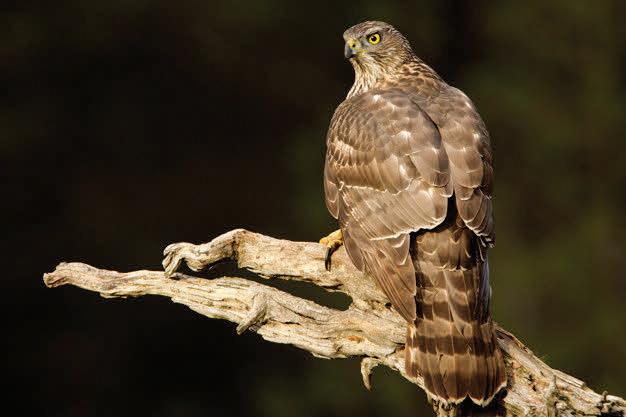
Goya captures the Guru’s open declaration of freedom from anything that binds people, from tyranny of the old religions to the political orders of the time. Towards that end, the Guru transformed people, disrupted systems, and established sovereignty. And Baj was part of that Raj! In Sikh History
In South Asia and the Middle East, kings and emperors kept hawks as a sign of prestige and aristocracy. In the Mughal period, goshawk – Baj – was the most prized hawk. e Goshawk was considered noble and its prowess in falconry highly-esteemed. Its name also pertains to an era when only the nobility could y this species. Reckless in pursuit, it focusses on its quarry regardless of natural or
man-made obstacles. It is this feature that has made it a favourite among falconers. e powerful female was traditionally trained in the Punjab to take large prey such as hare, Macqueen's bustard, crows, owls, herons, ducks, geese, even cranes and large game birds such as partridges, junglefowl, pheasants, in Sind even gazelles.5
Falconry refers to the hunting of wild animals by a trained bird of prey. It is an art; it requires dedication, devotion, nesse, subtlety, and skill.
On Vaisakhi day of 1634, a battle between Guru Harigobind Sahib and Mukhis Khan took place in Amritsar. Why? A Sikh hunting party set their Baj upon a royal Baj of the Mughals and brought it
down. When not give the royal Baj back, the altercation led to blows. Emperor Shah Jahan (1592-1666) from Lahore sent 7,000 soldiers under Mukhlis Khan to attack. e Guru’s house was plundered on the rst day which was under preparation for his daughter Bibi Viro’s wedding. e second day of the battle saw erce ghting on the grounds where Khalsa College, Amritsar is now located. e Guru delivered justice to Mukhis Khan on the second day. e rst battle of Sikh history was fought and won over a Baj; it was about where do the imperial rights end and the people’s right begin.
At least four of the ten Guru Sahibs kept Baj, namely: Guru Harigobind Sahib (NVI), Guru Hairirai Sahib (NVII),
Guru Teg Bahadar Sahib (NIX), and Guru Gobind Singh Sahib (NX).
In Sikh culture, Guru Gobind Singh Sahib is also lovingly called Bajanvala, the one with the hawk! Sometimes Chittian Bajavala, the one with the white hawk. Guru Gobind Singh Sahib’s Baj was no ordinary hawk; two names cited are Rustam (free) or Kafuri (white). Baj are of many kinds, but the best ones are white, also called Shah-Baj (royal), and are very rare.6
ere are many accounts that reference the Guru and the Baj. Once the Guru’s Baj killed an animal for its food during a hunting expedition. It echoes ecological balance: “Beings eat beings, that is their food.” (Guru Granth Sahib 955)7
As per Sikh oral tradition, on Vaisakhi day of 1699, droplets of Amrit (immortal nectar) were partaken by sparrows who then turned into hawks, Bajs. Even if this is merely symbolic, famous poetic lines from thence onward are part of Sikh memory:
When I make sparrows ght hawks, When I make lions out of sheep, when I empower
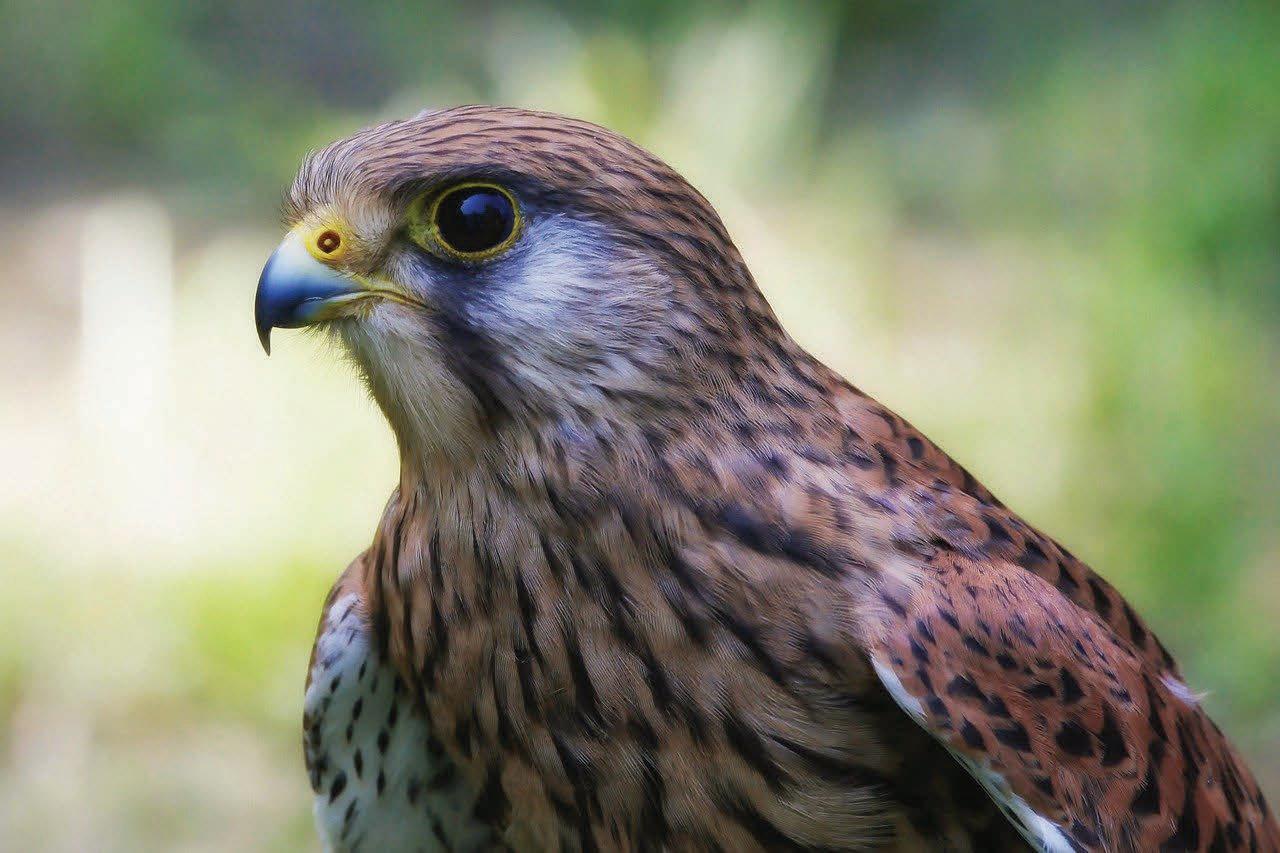
the oppressed, when I give one the strength to combat 125,000 …
en my name is to be called Gobind Singh. ere are at least four versions of this in Sikh memory.8
Sardar Kapur Singh (1909-1986) in Parasaraprasna describes “the [Sikh] mind’s gaze within” when elaborating “How a Sikh is Knighted a Singh”: en, all the ve o ciants should visualize in their minds the archetypal form of Guru Gobind Singh, tall, erect, dark blue clad, wearing an aigrette of pure dazzling gems on His steel-discus-laced peaky turban, with a white hawk on his le hand and a pure steel lance in his right, "fully armed", with a dark blue steed as his mount or vehicle. e Khalsa is Baj-like, carries the same traits. As the Guru Khalsa Panth, the Sovereign Sikh collective, also historically kept Baj and several
continue the tradition.
In Sikh Lifestyle
e hawk has certain characteristics which are unique. e Khalsa demonstrates those same Baj-like qualities in the eld. e Sikh chisels those values in preparation. Freedom: e hawk cannot be caged; it will break it or die. e Khalsa cannot be enslaved, spiritually or physically. e Sikh vision does not accept slavery and repression; it will always struggle for freedom and honor. Courage: e hawk is courage, strength, and agility with its claws-weapon. e Khalsa is never afraid; the Guru’s gi of Kirpan, the sword to protect the honor, as its ally borne from the Wisdom-Sword of Guru Nanak Sahib. Kirpan is to accompany the forces for “good” to protect the weak and to destroy the tyrant. Carefree: e hawk soars the skies in the opposite

direction, spots its prey on the ground and has no permanent home; it is ever ready to y and explore.
e Khalsa takes spiritual ights, practices justice on the earth. e Khalsa’s end goal is to be in love with 1Force and be an instrument of 1Ness everywhere.
e Sikh petition seeks elevated thoughtfulness and humble grounding.
e Sikh adage for those who exhibit “goodness” and “badness” is opposite of what the world says. As per Guru Nanak Sahib’s dictum: displacement for those who are “good” to spread it everywhere, and prosperity for those who are “bad” to contain it by staying put locally.
Self-Reliance: e hawk hunts its own food, catches its own prey in midair. e Khalsa does not take any handouts, gives gi s of food and rights. e Sikh institution of Langar (food) and Shahadat (martyrdom) is a testament since its Guru-period era. Noble: e hawk, both male and female, commands the sky with its presence; it is royal. e very presence of the Khalsa, crowned by the Guru, organically commands the situation or the event. e Sikh culture upholds Nam-Identity that
embodies all virtues of nobility for all, regardless of gender or racial identity, and economic or social strata. Kaur and Singh are noble for they live with integrity and generosity, for Panth-ki-Jit (victorious Sikh collective) and Sarbat-da-Bhala (welfare of humanity) fearlessly. e hawk for the Sikhs is heightened spiritualpolitical awareness, the ebb and ow of the Guru’s vision. e Baj for the Khalsa is the Guru’s blessing of strength and courage; it says the Khalsa is protected and must pursue freedom.
From 1699 to time immemorial, Baj remains etched in the Sikh memory. In history and folklore during political or tense times, sighting Baj is deemed a sign of the Guru’s presence. Seeing the Baj at historical gurduaras (Sikh places of learning and worship) or where the history was unfolding, the Sikhs related it to the Baj of Guru Gobind Singh Sahib witnessing their plight. at raised their morale to keep marching!
From the establishment of the Khalsa Raj in 1710 to the 1984
Ghallughara, Baj of the Guru accompanied the Sikhs. ere were few incidents of Baj sightings in 1984 and since then.
In 1984, Baj was seen by the Sikhs in the Panjab and in Delhi multiple times in multiple locations; they were comforted by it for that meant the Guru is with them.
In Sep 1984, police sub-inspectors Balbir Singh and Beant Singh’s conversation recorded in the petitioner Kehar Singh’s case in the Supreme Court of India also referenced Baj: In the rst week of September 1984, when a falcon (Baaz) happens to sit on a tree near the main Reception of the Prime Minister's House at about 1:30 P.M. Balbir Singh spotted the falcon called Beant Singh there and pointed out the falcon. Both of them agreed that it had brought a message of the Tenth Guru of the Sikhs and that they should do something by way of revenge of the "Operation Blue Star". erefore, both of them performed `Ardas' then and there.


… Assuming that falcon did appear and sat on a tree in the PM's house and that Beant Singh and Balbir Singh did o er 'Ardas' on the occasion, there is "nothing unusual or abnormal about the incident." e sanctity of the falcon as associated with the Tenth Guru is not denied.9
In 1989, Indian state of Panjab named Baj its state bird. Today, there is no goshawk Baj in Panjab’s aviary, sanctuary, or zoo. Since the mid-1990s, the people or the conservators have not seen Baj in the Panjab.¹0
In 2017, a hawk recited “Vahiguru, Vahiguru” (Awe-Wisdom, Awe-Wisdom) at Takht Sachkhand Sri Hazur Abchalnagar Sahib in Nanded, Maharashtra.¹¹ is is the last place where Guru Gobind Singh Sahib rested in 1708. Baj's presence remains very common here.
On 26 Jan 2021, Baj appeared at the Red Fort in Delhi when the Nishan Sahib, the Sikh ag, was hoisted.¹²
Baj Forever e hawk scans its environment from high above the ground, looking for potential threats. e hawk uses intuition and vision to make important
decisions. e hawk uses laser focus and precision to get things done.
Baj may be vanishing; nonetheless, its rarity will remain a reminder for the Sikhs to continue their march towards the Guru’s ideals!
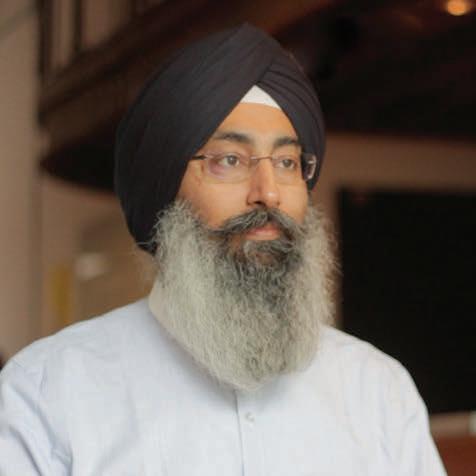
SINGH Senior Fellow, Research & Policy
Harinder Singh is the Senior Fellow at the Sikh Research Institute. He holds a BS in Aerospace Engineering from Wichita State University, an MS in Engineering Management from the University of Kansas, and an MPhil from Punjab University in the linguistics of the Guru Granth Sahib. He co-founded the Sikh Research Institute and the Panjab Digital Library, envisioned the Kaur and Singh Academy, and organized the Free Akal Takht campaign. He appears on radio and television programs and speaks at universities, parliaments, museums, conferences, and civic institutions. He has authored several books
and numerous articles integrating the political and the spiritual. He consults on curriculums, exhibitions, and lms and is featured in many documentaries on the Sikhs, the Panjab, and South Asian matters. His current focus is on developing critical thinking for Sikh institutions via the State of the Panth report series and developing open-source decoding of Guru Granth Sahib in contemporary Panjabi and English for a global audience. He has served on the National Conference on Community and Justice boards, e Fellowship of Activists to Embrace Humanity, e Nanakshahi Trust, among others. He looks for culturally-speci c things to experience and a light roast pour-over co ee to sip during travels, reads and binge-watches to stay in touch with what the world is up to, and listens to sabads, poetry, Hir, jazz, and political rap. Harinder Singh resides with his family in the United States.
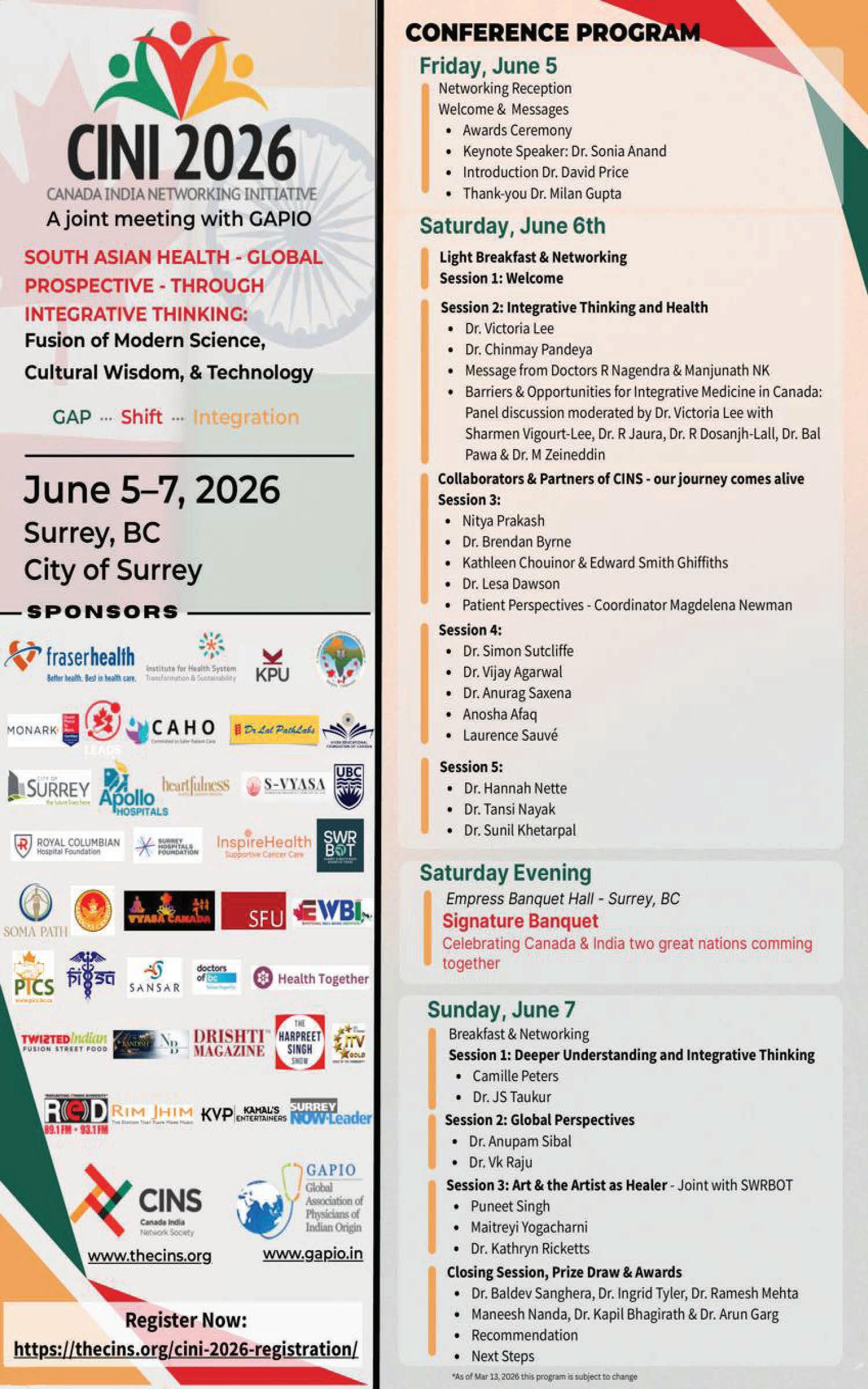






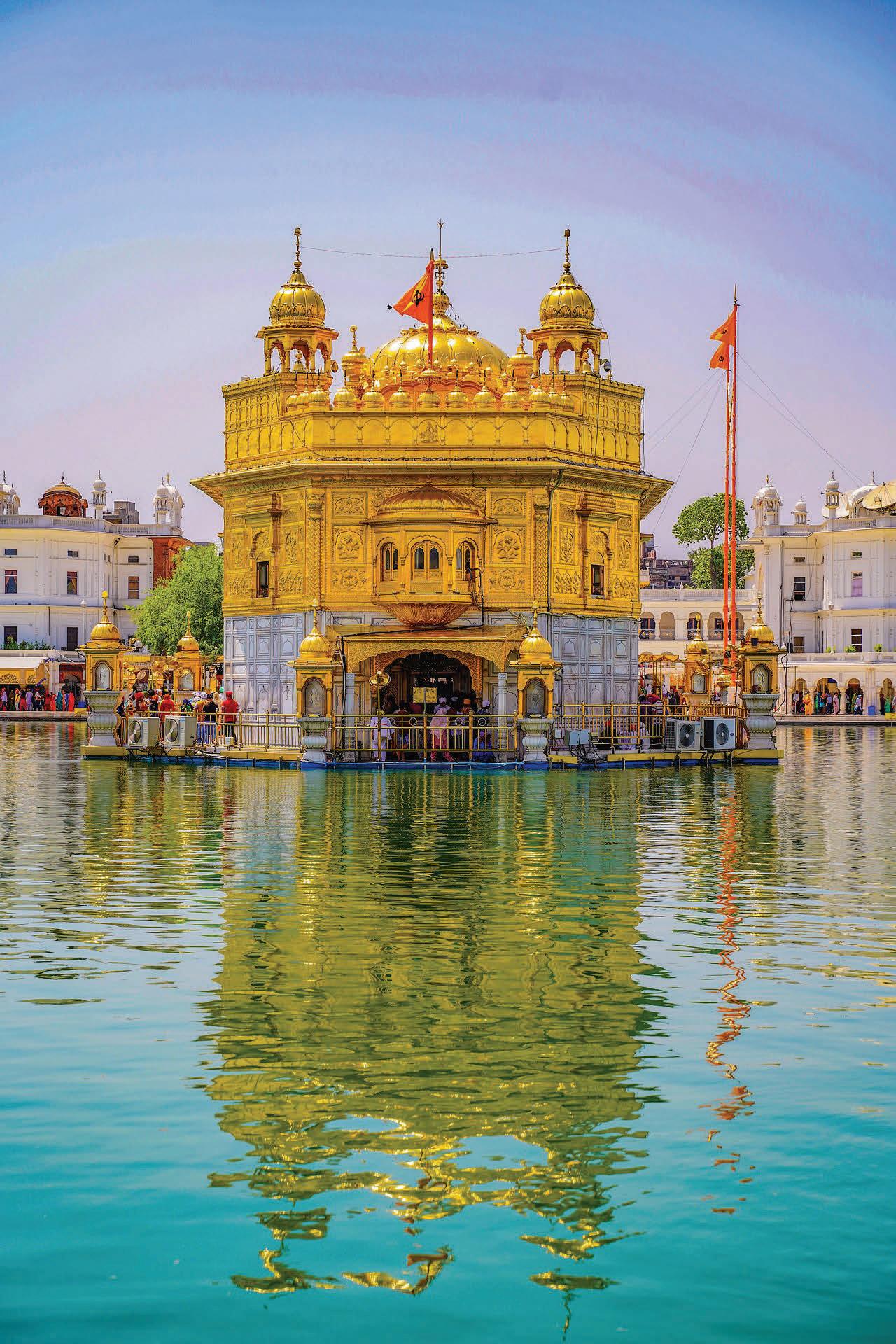
Vaisakhi, on April 13th or 14th every year, is a day of immense signi cance to Sikhs and Punjabis worldwide. It is not only the harvest festival of Punjab, but also one of the historical turning points in Sikhism—the creation of the Khalsa by Guru Gobind Singh Ji in 1699.
Let us explore the history, culture, and religiosity of the birth of Khalsa on Vaisakhi.
e Historical Signicance of e Birth of the Khalsa
Guru Gobind Singh Ji, the tenth Sikh Guru, called
BY KARAMJYOT KAUR
not the same.
A huge crowd, tens of thousands, gathered before a large tent. In the middle stood Guru Gobind Singh
murmurs broke out. e Guru called out again, and a er a silence, one man came forward.
Bhai Daya Ram of
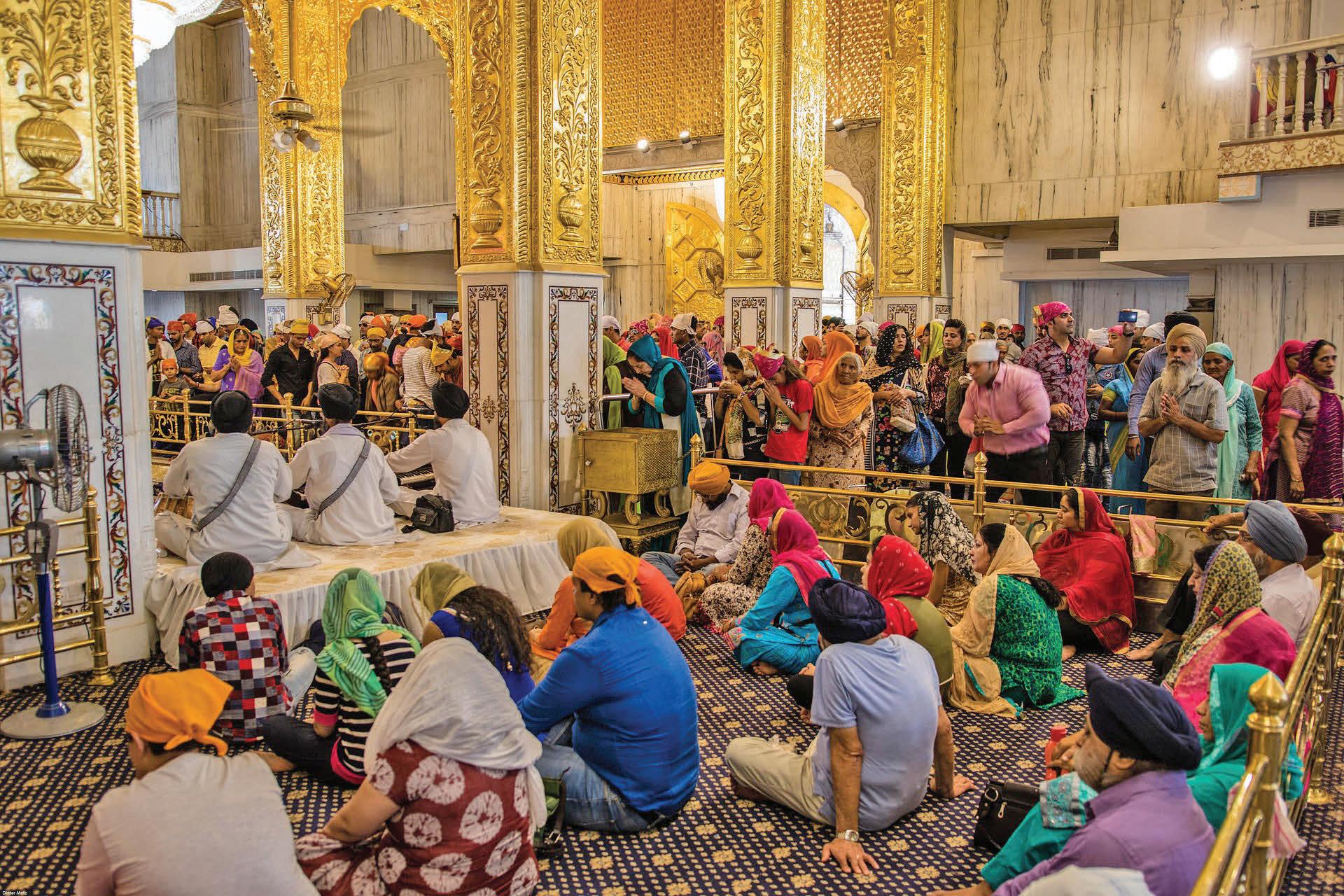
Vaisakhi day. Farmers celebrated the harvest, and crowds ocked to Sri Anandpur Sahib, anticipating a grand celebration.
But this Vaisakhi was
sword and the steel shining in the sunlight—“Who among you is ready to o er your head for the faith?” e audience was still.
Confused and fearful
Guru came out, his sword splattered with what looked like blood. e crowd gasped in horror. Once more, the Guru requested another head.
One a er the other, Bhai Dharam Das, Bhai Himmat Rai, Bhai Mohkam Chand, and Bhai Sahib Chand volunteered—each walking into the tent and never to be seen again.
Gobind Singh Ji from Gobind Rai.
“From this day forward,” he declared, “the Khalsa will be bold, obedient, and true. ey will resist tyranny, defend the oppressed, and bow to none save the Lord.”
Gobind Singh Ji on Vaisakhi Day in 1699 at Sri Anandpur Sahib, more precisely at the Keshgarh Sahib Gurdwara, which is currently one of the Takhts (seats of power) in Sikhism.
e mob was getting agitated about worst-case scenarios playing in their their faces shining with an unwavering spirit.
e Guru named them the Panj Pyare—the Five Beloved Ones—the pillars of the Khalsa. He made Amrit—sweet water agitated with a doubleedged sword—and baptized them, naming them Singh (“Lion”).
And in a move which astonished everyone, the Guru bowed to them and requested that they baptize him, becoming Guru
Men and women came.
is ancient Gurdwara, now named Takht Sri Keshgarh Sahib is the place
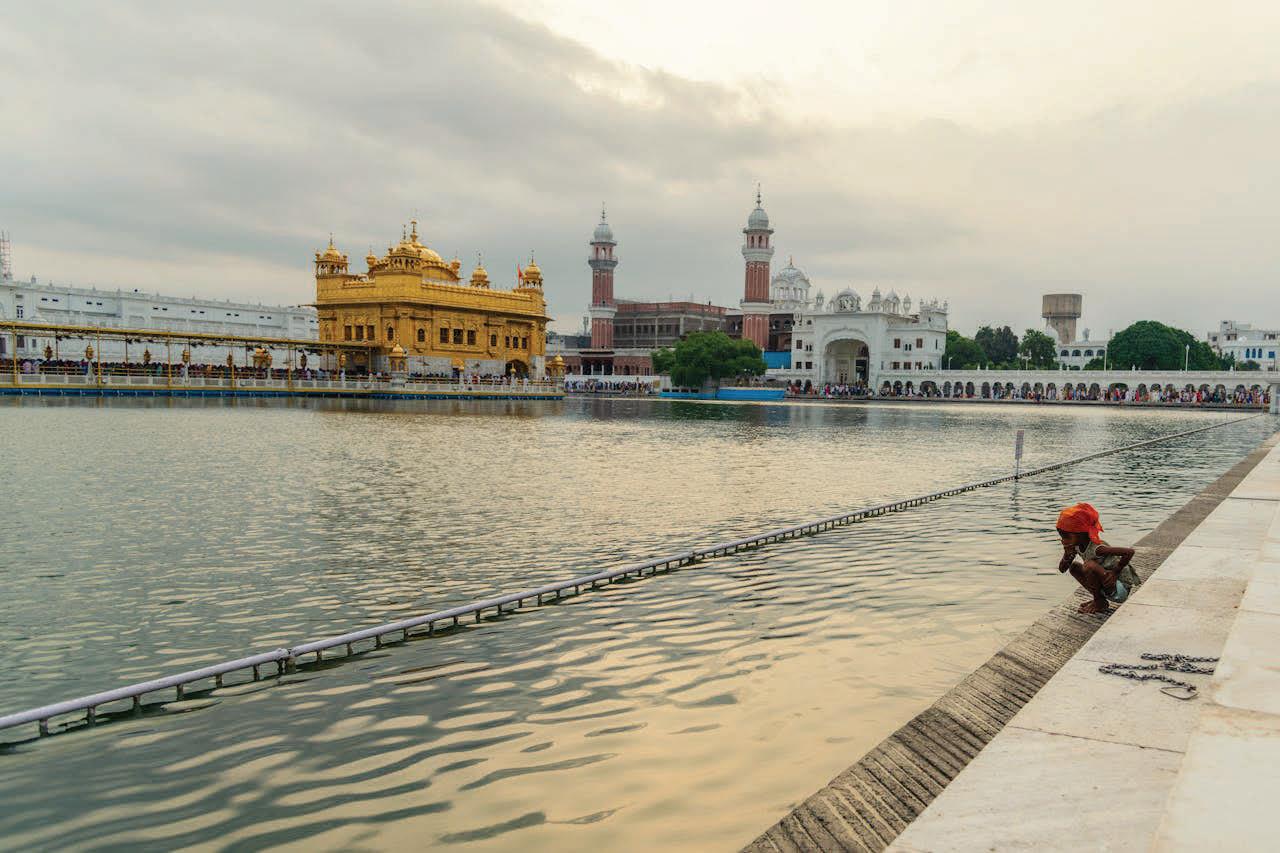
Vaisakhi was now more than a harvest festival—it was an emblem of rebirth and revolution.
Sri Guru Gobind Singh ji then took Amrit himself, becoming Guru Gobind Singh from Guru Gobind Rai and showing equality between the Guru and his followers.
e khalsa panth by Guru Gobind Singh Ji
e Khalsa Panth was established by Guru
Singh, Mohkam Singh, and Sahib Singh—and founded the Khalsa (which means “Pure”). Guru Ji performed the rst Amrit Sanchar (baptism ceremony with sweetened water and a double-edged sword stirrer) and laid down the Khalsa rules, including the 5 Ks (Kesh, Kangha, Kara, Kachera, Kirpan). It is named a er “Vaisakh,” the second month of the solar Nanakshahi calendar— equivalent to April-May in
the Gregorian calendar. e day marks the solar new year in Punjab and other parts of India and represents the beginning of the harvest season. But what are e Core Values of the Khalsa?
e Khalsa was formed to represent spiritual discipline and warrior valor, opposing tyranny and injustice. Guru Gobind Singh Ji bestowed the 5 Ks— ve articles of faith that are still symbols of Sikh identity and devotion:
1. Kesh (unshorn hair)Representing acceptance of God’s will.
4. Kachera (cotton undergarments)Representing modesty and self-control.
5. Kirpan (sword)Symbolizing the responsibility to defend truth and the innocent.
e Guru also ended the caste system among the Sikhs assigning each the surname Singh (Lion) for males and Kaur (Princess) for females —rooting out inequality and giving dignity.
e Modern Day Festival Vaisakhi is still a vital celebration in Sikh religion.
Gurdwaras are adorned
(sel ess service), and spread messages of peace and harmony.
e philanthropic spirit is in full force—free food and water stalls are organized in line with the Sikh tradition of Langar—feeding all, irrespective of faith or background.
In Punjab, individuals wear colorful attire, listen to celebratory music, and attend Baisakhi Melas (fairs) featuring performances, tournaments, and cultural displays.
us, for Sikhs, Vaisakhi is not a mere festival; it’s a rea rmation of vows—a
A reminder of cleanliness and order.
3. Kara (iron bracelet)Representing the unbreakakable bond with God.
beautifully, and Nagar Kirtans (street processions) are organized, during which devotees recite hymns, render seva
promise to live according to the Khalsa values of honesty, courage, humility, and service to humankind.
Sri Guru Granth Sahib Ji:
When Guru Gobind Singh Ji su ered the wounds which would cause his martyrdom, all Sikhs awaited the naming of the eleventh Sikh Guru who would pass on the qualities of equality, spirituality, and generosity that all the Sikh Gurus had thus far embraced. Rather than naming a human, Guru Gobind Singh Ji
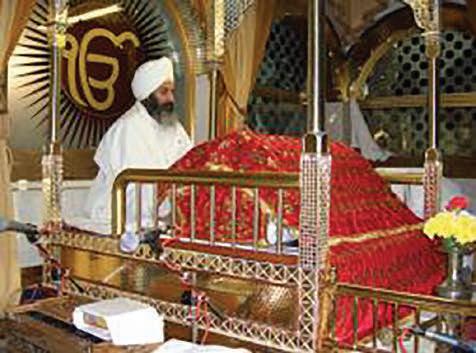
declared that the eleventh and in nite Guru to be looked upon for guidance and support would not come in the shape of a human but within the Sri Guru Granth Sahib Ji. is compilation had its beginnings with the rst Guru, Guru Nanak Dev Ji in the 15th century. ough in the time of the earlier Gurus the Sri Granth Sahib Ji was called Adi Granth, the title of Sri Guru Granth Sahib Ji had symbolic meaning as the
form of all the Gurus would be contained within one book.
Although in its completion the Sri Guru Granth Sahib Ji contains 1430 pages, each divided into thirty nine chapters, its earliest beginnings were started through the e orts of the second Sikh Guru, Guru Angad Dev Ji as he compiled all the teachings and hymns of the rst Sikh Guru, Guru Nanak Dev Ji. Guru Arjan Dev Ji began the process of making the hymns and scriptures more o cial, just as Sikhism was becoming more known and growing as a religion. If there is one aspect of the Sri Guru Granth Sahib Ji which embraces and re ects on the most important tenet that all Sikhs must follow-it is the Sikh belief that all humans are equal under the eye of God, and that there should be no barriers between one another, whether they may be of caste, religion, sex or creed. us, one of the most noble and amazing aspects of the Sri Guru Granth Sahib Ji is that in addition to the works of all
ten Sikh Guru’s it also incorporates the hymns, poems, writings, and teachings of Hindu saints, Muslim Su s, Hindu peoples representing all castes, both high and low, court poets, as well as gures throughout India, writing in their own vernaculars of Punjabi, Sindhi, Sanskrit, Persian, Gujrati, Marathi and Hindi. As for the incorporation of other non-Sikh works, the h Sikh Guru, Guru Arjan Dev Ji, also included the works of some een saints from the Bhakti movement including: Kabir, Ravidas, Trilochan, Farid and Namdev. For Sikhs all around the world, the Sri Guru Granth Sahib Ji not only represents their religious history based on the words and teachings of all ten Gurus and those whom the Gurus revered themselves, but the Sri Guru Granth Sahib Ji is representative of the physical living presence of the Sikh Guru, to whom always provides guidance and peace.
Dasam Granth:
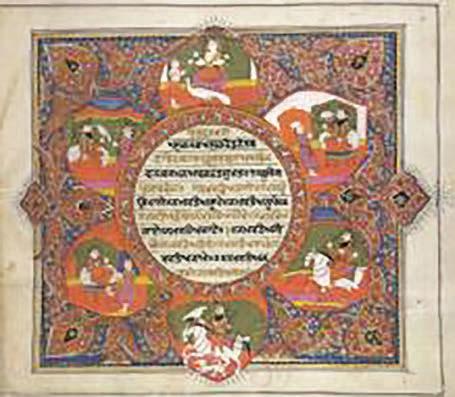
Literally translating to “scripture of the tenth Guru,” the Dasam Granth is just that, the second holy book of the Sikhs based on the compilations and collections of the tenth Guru, Guru Gobind Singh Ji. e Dasam Granth was compiled by Bhai Mani Singh, a companion of the Guru and the head priest of the Harimandir Sahib. e compilation was created three years a er the Guru’s death from his battle wounds. us, it was completed by 1711. Contained within its 1,428 pages in languages ranging from Braj, Hindi, Panjabi, and Persian, the Dasam Granth begins with Jap, a recitation for meditation. Following the meditation, the Dasam Granth contains an autobiography of Guru Gobind Singh Ji, praises for God, recitations for Hindu gods and goddesses such as Durga, Shiva, and Visnu, individual shabads, the Guru’s praises for his Khalsa as well as a detailed description on the weapons used by the Khalsa, writings on the nature of women, individual stories, as well as a letter addressed to the then Mughal Emperor, Aurangzeb.
Even in its religiosity, the Dasam Granth
contains many historical elements as it also includes detailed descriptions on the contemporary lifestyles during Guru Gobind Singh Ji’s time, as well as descriptions of the battles and key players which the Guru and his Khalsa engaged with.

Comprised from the two words in Persian “hukm,” meaning order and “namah,” meaning letter, the Hukamnama’s are a set of letters sent by each of the Sikh Guru’s throughout their respective periods of in uence, and sent throughout parts of India to all those a part of the Sikh sangat or congregation. In contemporary times, the Hukamnama’s have been utilized in dual parts: on the one hand, the letters have been incorporated to be spoken during the ardas, the concluding prayers spoken in any Sikh gurdwara; and on the other hand, the
Hukamnamas have become a part of the edicts which are released on a regular basis by the ve Sikh takhts (holy thrones of authority) of the Akal Takht at Amritsar, Takht Sri Kesgarh Sahib in Anandpur, Takht Harimandhir Sahib in Patna, Takht Sachkhand Sri Hazur Sahib in Nanded and the Takht Damdama Sahib in Talvandi Sabo. In addition to letters written by each of the Sikh Guru’s, other key Sikh gures are featured in the Hukamnamas, including Baba Gurditta, the elder son of Guru Hargobind Singh Ji, Mata Sundari and Mata Sahib Devi, the two widows of Guru Gobind Singh Ji, and the warrior Banda Singh Bahadur. Once again, much like the Dasam Granth, the Hukamnamas also have great historical merit. For example, one such Hukamnama is a letter sent by Guru Hargobind Singh Ji to the Sikh sangats in Patna, Bihar, etc., of which he lists many Sikh historical gures in the areas. e Hukamnama’s also helped to place Sikh history within a chronological framework. Redits: South Asian Studies Institute, University of the Fraser Valley







HAPPY VAISAKHI TO ALL!

Commercial real estate agent, located in Surrey, BC — operating globally.