Organic Roots Winter 2026

Page 1


A Publication of North Country School & Camp Treetops

Editorial Director

Stanzi Bliss

Editor

Ken Aaron

Layout & Design

Kelly Hofschneider

Cover Photo

Nancie Battaglia

Contributors

Stanzi Bliss

Reiley Burwell

Emily Bustrum

Reed Curry

Hannah Edwards

Emily Eisman

Emily Elder

Amy Ludlow

Rebecca Northrup

Todd Ormiston

Hayden Redelman

Dr. Ashley Waldorf

Photographers

Erika Bailey

Nancie Battaglia

Lisa Beck

John Bernhardt

Stanzi Bliss

Reiley Burwell

Liz Casey

Garth Cilley

Lilly Clechenko

Brian Eng

Rebecca Northrup

Kim Smart

Illustrations

Gavi Mallory

Masthead

Gail Brill Designs

Printing

Print Management

Pittsburgh, PA

Contact: communications@ncstreetops.org northcountryschool.org camptreetops.org

WINTER WONDERLAND

Winter is a magical season at NCS, and our students make the most of every snowy day. On the cover, Alina Jiang (NCS 23–25) participates in a "Glee Ski to Camp Santanoni" led by houseparent Liz Zanar. The Saturday trip took the group on a cross-country ski to the historic Adirondack Great Camp Santanoni in Newcomb, NY, last February, where they skied miles of wooded trails and ended the day with hot chocolate by the fire in the camp's Artist’s Studio.

Whether exploring the Adirondacks or staying closer to home, our students embrace the season in countless ways. From Whiteface Days (pictured left), when the entire school heads off campus to ski and snowboard, to cross-country skiing or snowshoeing along our own trails (back cover), ice climbing, and more, winter at NCS is a time to revel in the beauty of our mountain home.

“What do you love about Camp and School?” When people—friends, family, even strangers—ask me that question, I never run out of answers. This place gives me endless reasons to feel both professionally fulfilled and personally grounded.

There’s just so much to love: the children; my colleagues; the incredible learning that happens every single day; the farm and garden; the way we teach children to love and respect nature; our plays, productions, and artistic creations; traditions that stretch from Chicken Harvest to hiking and canoeing overnights. I love the warmth of family-style meals in the dining room, the joy of working at the Ski Hill, and, most of all, listening to children’s voices as they take charge of their own learning.

Every day, our community serves as a reminder of what can happen when we believe in our children— when we believe they are capable and independent. So, too, is it clear that the joyful celebration of childhood is alive and well here.

LIVING A LIFE OF ME ANI NG

ers, students, families, and alumni share are what make this place truly special.

But the beauty of my work isn’t only in watching these moments unfold—it’s also in hearing the stories that come back to us. The transformations that camp-

At our recent summer and fall board meetings, we invited a handful of campers and students to tell us about their experiences. They talked about what this place means to them, how it’s changed their lives, and what we could do better. Here are a few takeaways from their experiences at Camp and School that resonated with me:

• “Be a leader, but not abuse power … take everyone’s opinions and have better conversations.”

• “It’s a much-needed break … not having our phones here keeps us young.”

• “Double trips are the best. I’ve done three—all hiking—and each one left me with major life lessons and lifelong friendships. You’re so vulnerable with the people you’re with, because you’re all in it together. When you’re in the woods for two nights, exhausted, you lean on each other, and that connection is incredible.”

Our campers and students are wise beyond their years. They celebrate childhood, while also acknowledging that strength comes through effort and a shared sense of purpose.

Not long ago, I had dinner with two Camp parents, one of whom was a Treetops alum and former counselor. Our conversation covered many topics, but kept circling back to two ideas: the appreciation of challenge, and the responsibility to serve. They couldn’t name just one defining program or moment; instead, they spoke of a shared purpose that extends far beyond campus. In a place that cares for animals, the earth, and each other, our children are learning

not just skills, but a way of being connected, compassionate, and purposeful.

As we develop our portrait of a graduate—a vision of what we hope our graduates will become—we're hearing similar sentiments from NCS families. This is a key effort of our strategic plan, Growing Evergreen, and our commitment to our program. Not once has “doctor” or “lawyer” been mentioned. Instead, families have talked about wanting their students to be kind, grounded, and curious. To know who they are and still push themselves. To live with flexibility, purpose, and meaning.

When I step back and look at these three perspectives—past, present, and future—I see the same thread running through all of them. The true value of a Camp and School experience isn’t measured by college acceptances, income, or job titles. It’s measured by character—by the kind of people our children become, the way they seek joy, and the positive impact they leave on the world.

So when I see children cleaning compost buckets, packing for trips, or making friendship bracelets, I know those small moments are anything but fleeting. They shape who they are, and also who they will become. These moments last forever

ReadyWhat’sforNext

INTRODUCING COMPETENCY-BASED MASTERY LEARNING

With a history that stretches as far back as ours, we can share countless examples of how our alumni shape the world. They are costume designers and mechanical engineers, farmers and restaurateurs, and their influence spans continents and touches communities and families alike.

Yet as varied as our alumni are, the telltale sign of their North Country School experience rests in their character.

That’s exactly as our founders, Walter and Leo Clark, envisioned. They built our school as an offshoot of Camp Treetops, guided by the progressive education ideals of John Dewey—experiential, hands-on, student-centered learning—while also instilling a sense of community, character, and responsibility in young children.

Today, we carry on their legacy by continuing to prepare students with the character and tools they need to thrive in the face of ambiguity and instill within them a resourceful and resilient spirit.

That sense of agency we have and continue to foster in our students will never change.

At the same time, it’s also our responsibility to look to the future and ask ourselves: what will our world need in thirty years? How do we prepare students to be active contributors and compassionate citizens of that distant future?

Today, our world is one filled with volatility, uncertainty, complexity, and ambiguity—or VUCA, for short. Multiple factors are driving cultural and economic

change, including the impact of artificial intelligence on automation, the rapid pace of innovation and information sharing, and a growing demand to deliver faster and in ways that feel increasingly less human. If we want our children to be active contributors in a future they will inherit, they will increasingly need a firmer grasp of academic core concepts, mastery of future-ready skills, and experience with authentic and meaningful projects (see specific examples on page 8). We’ve always prepared students with the strength of spirit to navigate uncharted territory. We also need to prepare students’ minds to be active contributors to a world that is becoming increasingly complex, with problems we can’t yet fathom.

So what are we doing to carry on our strong tradition while evolving for the future?

• We are putting a competency-based mastery learning framework in place that accounts for and celebrates all of our learning—from what happens at barn chores to what happens in math class.

• We are creating structures for personalized learning and growth, beginning with Upper School math classes (read more on page 8).

• We are creating our portrait of a graduate to define the skills, qualities, and habits of mind that we strive to ensure all students develop while here. At the same time, we are also plotting the path on which students can develop these characteristics.

We have long instilled a sense of agency in our students (see examples of how faculty member Larry Robjent has done so on page 6). What’s shifting now is the intentional structure behind that agency.

As we continue to evolve our tradition of progres-

sive education, we want students not only to lean into their passions, but to clearly understand what they are working toward and how it connects to something bigger. With defined competencies and personalized pathways, students will have a clearer sense of expectations and the many ways in which they can meet them—ultimately taking on increased ownership of their learning over time.

Our students already do this in extraordinary ways. For example, in an art class, when a student says they want to create something, be it a fiber arts display, a puppet, or an end table for a family member, their vision is met with respect and encouragement from their teacher, who supports and coaches them as they bring their vision to life through iterative design and channeling their creativity.

Going forward, that same student will also have the tools, structure, and support to reflect on the process that led to that success in art, and they will be able to apply it to other parts of their learning and life at NCS. With a clear framework of competencies, students can see their growth over time, set specific goals to strive toward, and recognize the transferable skills they are building. Experiencing growth in this way leads students to build confidence and deeper self-awareness—and this, in turn, leads to agency.

Decades from now, when we open the Organic Roots archives, today’s students will be out in the world—leading, innovating, and creating change. The choices we make now are helping them build not just on NCS’s legacy, but on their own power to shape the future.

Above: Ninth grader Mirabelle poses atop Indian Head in nearby Keene Valley during faculty member Josh Briggeman’s annual “silly photo hike.” This year’s theme, “Study Hall,” invited students to bring along textbooks or binders for a tongue-in-cheek summit photo shoot. Instead, students proposed a more modern twist for their props: retired, nonworking Chromebooks. With faculty support, the idea turned the photo shoot into a classic NCS moment fueled by equal parts humor and agency. Left: Fifth grader Finn reads to Sterling the horse during a recent Barnyard Book Club.

Don’t stop now

Lessons from 25 Years with Larry Robjent

This past year marked Larry Robjent’s 25th anniversary at North Country School. Whether dreaming up a new storyline for the epic Wilderness Action Role Play (WARP) that descends upon campus in the fall, or teaching students how to construct roof trusses for a chicken coop, Larry’s brand of ingenuity, wit, and wisdom is legendary in our community.

A man of many talents, Larry can filibuster endlessly, recounting tales of flying over Guatemalan jungles in a helicopter, and rig up just about anything in his shops, including Smaug the dragon for an audience flyover during an all-school production of The Hobbit in 2023. After twenty-five years, the thing that keeps Larry coming back with a seemingly bottomless well of enthusiasm each fall is simple.

“It’s the looks on kids’ faces when they try new things,” he said. “The beauty of middle school is that these kids are just starting to figure out who they are, but they haven’t done anything yet.”

After taking a few of Larry’s classes, however, his former students recount plenty of experiences, stories, and lessons to reflect on after their time at NCS.

year. Near the end of the climb, Val says he paused for a moment to take in the view.

“Larry saw me and said, ‘Don’t stop now, there’s still more to do,’” Val said. “Every time I think of that moment, I remember that no matter where I am, there is always a chance to work more and get to a better place, to leave a job done right so that the next person to do it has a good place to start from.”

“He introduced me to carpentry and woodworking in woodshop, and today I have a shop full of tools because of that start.

He wasn’t just a teacher—he owned his responsibility to shape lives with care, consistency, and integrity.”

— Evan Johnson (NCS 01–03)

“Teacher is too simple a word to describe Larry,” says Val Parker (NCS 22–25). “But everywhere he goes, he finds a way to teach.”

Val recalls a climbing trip to Chapel Pond that he and a classmate went on with Larry during their senior

It’s not just the quiet professionalism or the timely words of encouragement that Larry’s former students remember, though. It’s an unshakable belief that they can do anything, as long as they keep trying.

“He makes you feel like the hard things are possible,” said Ashlee Virtue (NCS 00–06). “He has this rare ability to challenge you to learn and grow, but in a way that actually resonates—his approach always sparked curiosity, not pressure.”

For Evan Johnson (NCS 01–03), it’s Larry’s ability to remember even the smallest details that has made the biggest impact on him. He recalls Larry remembering a comment he made as a student, twenty years later, during a Friends’ Weekend gathering.

“If you were to scoop up the spirit and culture of North Country School with two great hands and mold it into a person, that person would be Larry,” Evan said. “He is the embodiment of what NCS is: a heart for students, a heart for adventure, creativity, hard work, and commitment.”

Over the past quarter-century, Larry has pioneered our stagecraft and metal shop classes; raised a family with his “favorite human,” wife and fellow faculty member Jess Wegrzyn; served as a primary houseparent; climbed just about every route in the Adirondacks; and created most of the reclaimed metal sculptures on campus. Larry’s brand of teaching, driven by the core learning-by-doing tenet that is a cornerstone of NCS, is as much about mastery as it is about artistry.

By the time students leave NCS, they’ve done plenty, often with Larry right beside them, cheering them on as they earn a Pink Piton, battle in the WARP, make mistakes, fail, and try again. For many of his former students, Larry represents the unbridled enthusiasm we all wish to have in our corner. The person cheering us on, holding us accountable to our goals, and, often, picking us up when we fall and urging us to try again.

“Larry showed me that it’s okay to dream big and fail,” says Gus Posner (NCS 04–08). “You learn by doing, and that’s what’s important.”

For Asia McLawhorn (NCS 00–03, staff 23–present), a student in Larry’s early years at NCS who continues to work in the kitchens at Camp and School, Larry is something far greater than any one memory, any single lesson.

“Larry means home,” Asia said.

Guided by a Pāli saying embroidered on his sleeve—“Diṭṭhadhammasukhavihārī,” meaning “dwelling happily in the present moment,” a favorite of Vietnamese Buddhist monk Thích Nhất Hạnh—Larry brings joy and presence to all he does. From sharing early Performing Arts Center designs with students (middle) to enjoying snowy days on and off campus (lower left), he follows in the footsteps of his mentor Don Rand (NCS staff 59–17, CTT staff 54–59), pictured at top with Larry’s children Peter and Ella, and so many others who have shaped the fabric of our community.

Solving for X

PROVIDING AGENCY AND STRUCTURE INSIDE THE MATH CLASSROOM

For decades, North Country School has created learning environments where students gain confidence, take ownership, and learn by doing. Our faculty has modeled this tradition for generations—meeting students where they are, helping them dream big, and showing them that curiosity, persistence, and iteration will help them reach their goals. This year, we’re taking a first step toward evolving our teaching and learning philosophy toward one that integrates competency-based mastery learning (CBML), through a pilot program in Upper School (grades 7–9) math. This pairs our personalized, place-based, and experiential approach with a framework to help students understand how they learn, not just what they learn, and why it matters.

HOW THE MATH PILOT WORKS

To bring CBML into the classroom, our Upper School math team focused on three goals: deepening understanding, personalizing learning, and fostering confidence.

Math teacher Dr. Meg Briggeman said teachers spent a lot of time thinking about what success looks like before launching the pilot.

“We had a conversation about what we want a math student to be able to do when they leave NCS, and none of those things are ‘factor a polynomial,’” she said. “What we want is for them to appreciate that math is a tool you can use in your life.”

HERE’S WHAT IT LOOKS LIKE

Two-week learning rotations

Students work in small cohorts of about six students that shift every two weeks, moving forward—and circling back if needed—based on their own levels of readiness. Each rotation focuses on a specific concept ranging from algebraic reasoning and geometry foundations to other prerequisite skills needed for more advanced topics.

“We’re able to better meet the students where they are in real time. These curricular shifts allow students who are ready for the next challenge to move ahead, while giving others the time and support they need to build confidence.”

Learning in diverse, mixed-readiness classrooms

Students with different skill levels, strengths, and learning styles are learning side by side, something that research supports and our teachers are already seeing the impacts of.

“Diverse thinking in the math classroom is powerful. Some kids don’t have gaps and are already really strong math students, but they still benefit from connecting, reflecting, and communicating with students at other ability levels.”

A team-taught approach

Every student is taught by the entire Upper School math team. This means students benefit from the expertise of the entire team, and teachers collaborate daily to plan units, monitor progress, and adjust instruction. This increased collaboration means teachers are also functioning along a strengthened, shared teaching continuum.

“Everyone is learning. It’s not just about what you know or what you’ve done, but the process.”

Portfolio-based demonstration of learning

Students gather evidence of their understanding—problem breakdowns, written explanations, projects, and reflections—into a portfolio that demonstrates their learning and math competencies.

“The portfolios standardize that process across the Upper School. It creates a central place for students to store the learning they have constructed. When done right, the portfolio is not just something the student can be proud of, but a math textbook that they created themselves.”

Alongside the rest of the Upper School math team, teachers Max Goldberg (above) and Dr. Meg Briggeman (left) are piloting a competency-based mastery learning (CBML) approach that helps students see math not just as a subject to master, but as a tool they can use for life.

Clarity students can see, agency they can feel

Students reflect on their learning each rotation, set goals, and reflect on their progress in their portfolios. This turns learning into something transparent, purposeful, and personalized.

“What is most exciting about this pilot is not what we have built so far and what we are doing now, it is what this first year will teach us so that we can continue to tweak, adjust, and grow this into something that serves our students even better.”

LOOKING AHEAD

As Director of School Dr. Ashley Waldorf notes in her letter on page 4, this math pilot in the Upper School is exactly what it sounds like: a beginning.

“At its core, this work is about honoring who we’ve always been," she said." Learning by doing has been part of NCS since our founding, and competency-based mastery learning simply gives us a shared structure to support it more intentionally.”

In the future, this CBML framework will be expanded and adapted across other areas of student learning. Stay tuned for student perspectives and more as this work unfolds.

THIS WEEK AT NCS

It’s nearly impossible to capture everything that happens on campus throughout the academic year. But This Week at NCS is a window into our world, following the seasonal shifts and rhythms of our campus and community. Here are some highlights from the first few months of the school year. Interested in receiving This Week at NCS via email? Reach out to comms@northcountryschool.org.

Range in a Day I Oct. 3

The annual Range in a Day trip was a resounding success. This year’s route covered the Lower Great Range, including Lower and Upper Wolfjaw, Armstrong, and Gothics. For several students working toward their Adirondack 46er status, the day was particularly meaningful as they completed four additional High Peaks, the mountains in New York State topping out at over 4,000 feet high. Others simply experienced the joy of being outdoors on a beautiful fall day. The hike itself was challenging for students, featuring numerous rock scrambles and difficult terrain. A highlight was reaching the summit of Gothics, where the group was treated to sweeping views before the clouds rolled in. The descent offered its own excitement, with students laughing as they carefully slid down the slick rock slabs. The group departed campus early and returned in time to enjoy dinner and the much-loved Saturday night ice cream tradition together, a fitting end to a rewarding and memorable adventure.

A Seasonally Sweet Surprise I Sept. 19

Edible Schoolyard programming kicked off the year for our fourth and fifth graders with a hands-on adventure in the Teaching and Learning Kitchen (TLK) and a seasonally sweet surprise. Across campus, the harvest is in full swing, with vegetables, berries, herbs, and apples ripening. Students split into small groups and set off to gather apples for a special cider-making lesson. Edible Schoolyard teacher Emily Elder guided them through the art of choosing the perfect cider apple, reminding them to leave some behind for the wild animals who we share our farm with. With buckets brimming, students scrambled up trees, shook branches, and picked apples by hand before taking turns grinding the fruit into cider. Their hardearned reward? A crisp, refreshing drink that made the perfect toast to their very first TLK session of the term.

Into the Woods to WARP I Oct. 10

This week, students split into factions and embarked on a magical good-versus-evil quest in the woods around campus as part of our annual Wilderness Action Role Play (WARP). Led by stagecraft and industrial arts teacher Larry Robjent, students roamed, battled with large foam “swoords,” made alliances, solved riddles, and banded together to fight evil and save the day. WARP offers a whimsical day filled with imagination and discovery, underlining the sense of play that is central to how NCS students learn.

“It was incredible to see how this community-wide, super game captures the imaginations of so many of our students,” said Ashley Waldorf, director of school. “The type of play that is built into NCS, from weekly routines like out-time to one-off events with guided play, such as WARP, fosters creativity, empathy, motivation, self-awareness, and confidence. Play also cultivates the skill of not taking ourselves too seriously, of giving ourselves and others grace, and of being just as gentle with ourselves as we are with others. It’s a valuable life lesson for our students, particularly in the formative middle years.”

Coordinates and Cartography I Oct. 24

In a math class taught by Max Goldberg, students are charting new territory—literally—through the study of algebraic equations. These intrepid math explorers are learning how variables function within equations and how to both solve and create their own. Max has taken this foundational skill to a new level by adding elements of discovery and adventure. This week, students designed maps, ranging from detailed renderings of Manhattan to paths through video game worlds and other entirely imaginary landscapes, and then created sets of equations to navigate them. Students designed their equations to be as challenging as they wished, with the highest resulting number representing the safest path to follow. Once complete, they exchanged maps and equations with classmates to see if others could successfully solve their way to safety.

Trustee Updates

WE ARE PLEASED TO WELCOME FOUR NEW MEMBERS TO THE BOARD OF TRUSTEES

. Their terms started in October 2025. Each brings a wealth of experience and a deep commitment to the programs and values of Camp and School.

Additionally, we bid a grateful farewell to Ed Biddle (CTT parent 01–08, 10–12) and Manny Weintraub (CTT 73–81, staff 85–87, parent 11–25). During Ed's five years on the board, he cochaired the Investment Committee and contributed his expertise and thoughtful perspective to many important conversations and decisions. Manny, who served for more than 23 years, shared both his financial insight and his deep love of Treetops. As board treasurer and Investment Committee co-chair in recent years, his wise counsel and calm, steady presence have been invaluable and will be greatly missed.

Sarah Davidson (CTT 96–99, staff 05) and her family have long been involved with NCS and Treetops, beginning with her great-grandparents who played a role in starting the institution. Since then her grandmother (Joan Davidson), father (Matt Davidson), siblings (Ellie and Ben Davidson), and a slew of other relatives and cousins have all been part of the NCS and Treetops fabric, serving as teachers, trustees, campers, counselors, and general enthusiasts for this special place that to each of them feels like home. She is married to Spencer (a Mainer and Lake Placid enthusiast) and is mother of future campers Alice, Olivia, and Huxley.

Diana Oehrli (CTT 83–84, parent 15–18) is a writer, former journalist, International Coaching Federation-certified coach, and facilitator who specializes in longevity and wellness. She studies the habits of people in the world's five longest-living places, to help people live healthier, longer lives. Diana has a black belt in karate and graduated from Barnard College.

Diana’s son Oliver Kiker was also a camper, con-

tinuing the family’s connection to North Country School & Camp Treetops. She runs the Gruben Charitable Foundation, which started a scholarship program for Camp Treetops. Her great-great-uncle was philosopher Charles Sanders Peirce, which sparked her love of learning and teaching.

Diana has certifications in lifestyle medicine from Harvard and other wellness programs. She writes on Substack and hosts a podcast about healthy living. She splits her time between Manhattan, Newport, and the Swiss Alps. In her practice, she works with individuals and families who want to stay healthy and connected across generations. She's excited to bring her passion for wellness and lifelong learning to the Board of Trustees.

Matthew Tuck (Trustee 00–06, 19–23, NCS 75–78, Balanced Rocks Circle member) graduated from Connecticut College in 1987 with a BA in history and received a master’s in international history and economics from The London School

of Economics in 1991. He joined Credit Suisse in 1992 and retired from the firm in 2023.

Matthew attended NCS from sixth to eighth grade, a stint that continues to be the gift of a lifetime. He renews his service after two previous terms on the board. He and his wife, Courtney, have three children: Spencer (24), Caroline (24), and Graeme (21).

Adam Yarinsky (CTT parent 08–14) and his wife, Amy Weisser, are parents of former campers Anna (CTT 09–14) and Will (CTT 08–11, staff 14). Adam grew up near Albany, NY, and has fond memories of skiing and camping in the Adirondacks. He holds an under-

graduate degree in architecture from the University of Virginia and a master of architecture from Princeton. He is a principal and co-founder of Architecture Research Office, a New York City firm that designs architecture to inspire people, further institutional missions, advance social equity, and promote ecological resilience. Over more than three decades of practice, Adam has led educational, cultural, public, commercial, and residential projects throughout the United States. He has also taught, written, and lectured widely. Adam is excited to contribute his knowledge and experience to bringing Growing Evergreen to fruition.

Clockwise from top left: Sarah Davidson, Diana Oehrli, Matthew Tuck, Adam Yarinsky

FRIENDS’ WEEKEND 2025

1. Nothing beats catching critters at the Frog Pond on a beautiful day. 2. L–R: Sara Levine (CTT 83–87), Sara Waisanen (CTT friend), Ted Kalmus (CTT 82–86, staff 90–98), Danikka Moses (CTT 81–85, parent 21–present), Lisa Miller-Samber (CTT 82–86, parent 21–23) 3. A big thank you to our Friends’ Weekend staff for helping put together an amazing weekend! 4. L–R: Sean Rau (CTT 16–23), Ollie Sloane (CTT 19–25), and Alex Sloane (CTT 18–24) 5. Bill Localio (CTT 55–59, staff 64–19, parent 91–98, former Trustee, Balanced Rocks Circle member) autographs Alexander Whitaker’s (CTT 62–67) copy of More Than 46 Stories About Camp Treetops: A Reminiscence by Jim Pugh (CTT 62, 64, staff 69–73, 75–81). 6. Bill Localio leads the memorial for former Camp Co-Director Dick Wilde. 7. Flora Goodman (CTT 16–23) and Leyla Kramarsky (CTT 12–16, staff 21–23) enjoy making flower crowns. 8. Friday night square dancing is a tradition that’s fun for all friends.

IN AUGUST WE WERE THRILLED TO WELCOME MORE THAN 220 FOLKS FOR FRIENDS’ WEEKEND. Alumni, families, and friends gathered for cocktails and delicious meals, hiked Cascade and Porter, swam and paddled in Round Lake, and spent time in the barn and gardens. Friends’ Weekend attendees had the opportunity to learn about the ongoing work of our strategic plan, Growing Evergreen, during an evening presentation (scan the QR code to watch the recording of that conversation), as well as a campus tour. On Saturday, we gathered to share stories and celebrate the life and legacy of former Camp Co-Director Dick Wilde, who passed away in October 2024.

FRIENDS’ WEEKEND 2025

NCS CLASS REUNIONS 1. L–R: Cali Brooks (NCS 81–85, staff 90–94, CTT staff 94, Balanced Rocks Circle member), Matthew Hoffman (NCS 83–85, CTT 81–82, parent 14–19, Balanced Rocks Circle member), and Margarita Delgado Ayau (NCS 84–85, parent 12, 14, 17–18) gather for their 40th reunion. 2. Dale Console (CTT 62, staff 70–75, 77–83, parent 98-04, NCS 63–66) and Nick Flanders (NCS 63–66), co-chairs of next year's NCS 60(ish) reunion for the classes of 1965–67.* 3. Andrew Curwen (NCS 06–10) points out costumes from the NCS production of Alice in Wonderland to David “Hock” Hochschartner and Anthony Fernandez (NCS 06–10, CTT 05–10, staff 14–15). 4. NCS alumni gather in the PAC to open their class time capsules. L–R: Ella Robjent (CTT 16–17, 19, staff 25, NCS 18–21), Hock, Grady Allen (CTT 10–15, NCS 14–16), Anthony Fernandez, Sydney Rangel (NCS 06–11), Andrew Curwen, Larry Robjent, Anabell Corwin, Marcos Fernandez (NCS 08–12, staff 20–21, CTT 05–08, staff 15, 17), Jamie Chao (NCS 13–16), and Toby Nadell (NCS 13–15).

*Dale and Nick invite members of the classes of 1965–67 to join them for their 60(ish) reunion next year! Contact alumni@ncstreetops.org for information.

HONORING MIMI MURAY-LEVITT

We will gather during Alta Friends’ to celebrate the life of Mimi Muray-Levitt, NCS alumna and longtime owner of Alta Lodge, who passed away in July. The Salt Lake Tribune , in a remembrance of Mimi, said:

“Levitt’s presence can be felt throughout the Town of Alta and, verily, the entire Little Cottonwood Canyon. In addition to being the face of the Alta Lodge—the town’s oldest inn — she volunteered as a member of the Alta Fire Department and served on the advisory committee for the arts nonprofit Alta Community Enrichment. Most notably, she helped found the conservation group Friends of Alta, which for decades has fought against large-scale development in the picturesque canyon and to protect the Salt Lake Valley watershed.”

Her commitment to community and environmental stewardship reflects the values she embraced during her time at NCS. Join us as we honor Mimi’s life and the lasting impact she made on both the environment and her community.

FRIENDS’ WEEKEND AT ALTA LODGE

Thursday, April 9–Monday, April 13, 2026

Let’s hit the slopes! You are invited to spend a long weekend with North Country School & Camp Treetops alumni, families, and friends at Alta Lodge, a classic Utah ski resort with easy access to Alta Ski Area. Discounted rates of at least 20 percent on lodging, breakfast, and dinner are extended to our NCS & CTT community.

For lodging reservations, please call 1.800.707.ALTA (2582) or visit altalodge.com

For more information: alumni@ncstreetops.org or 518.523.9329

THE CUSHMAN & DEXTER FAMILIES’ ENDURING COMMITMENT TO PROTECT ROUND LAKE Land Legacy

For more than a century, the Cushmans and Dexters have been more than neighbors to North Country School & Camp Treetops—they have been steadfast partners in caring for Round Lake and its surrounding land.

This fall, that commitment took on new meaning when the Cushman family gifted twenty-one acres of undeveloped land on the lake’s northern shore, from the waterfront to the inlet, expanding our campus to 333 acres. At the same time, the Dexter family renewed Camp and School’s lease of Dexter

Pasture, the working farmland where we grow food crops and graze our animals, for another twenty years.

Both families also granted right of first refusal to Camp and School—the Cushmans for their remaining properties, the Dexters for the leased land—ensuring that we’ll have the first chance to purchase these lands if they ever come up for sale.

Together, these commitments ensure the future of Round Lake. The renewed Dexter Pasture lease preserves our tradition of sustainable farming and experiential learning, while the newly gifted parcel opens doors for future camper and student experiences.

“The trust the Cushman and Dexter families have placed in us is remarkable,” said Executive Director Todd Ormiston. “Their generosity protects the future of Round Lake and ensures we can steward this place for generations to come.”

For both families, these decisions honor a legacy tracing back to two matriarchs, Louise and Katharine Weston, who first purchased property on Round Lake in 1916. Each generation since has remained devoted to caring for the lake and its land.

In 2015, Louise’s grandson Sam Cushman sold RockE House to Camp and School, where we continue to host alumni and like-minded organizations for reunions and retreats. Sam's brothers, Jim and Syd, have carried on the family tradition through the recent gift of land and right of first refusal, and their cousin Will Dexter, Katharine’s grandson, has been instrumental in guiding his family’s trust to protect Dexter Pasture.

“My mother had an absolute commitment to seeing the land remain whole and undeveloped. She was a forever-wild person before that was even a term,” Will said of his mother, Helen Taylor Dexter, who established the Dexter Family Trust. “We’re invested in protecting the land, keeping it whole, and ensuring Round Lake remains the extraordinary place our families have cherished for generations.”

For Jim, the heart of it is simple: “As long as the lake can be protected, that’s my main concern. And if Round Lake is going to stay the way it is for another hundred years, North Country School & Camp Treetops is the partner that will protect it best.”

Learning for Life Itself

At North Country School & Camp Treetops, children experience their education, apply new skills and knowledge, create with their hands, hearts, and minds, and revel in the simple joys of childhood. For generations, this has been where children become their true, authentic selves.

PROGRAM

Farm, Garden, and Food: Fresh promise, served daily

Since the earliest days of North Country School & Camp Treetops, the Farm and Garden program has been a thread connecting generations of students and campers. The Haskells and Clarks, who shaped Camp and founded NCS, respectively, always meant the program to be a cornerstone experience; they believed that through work and connection to the land and animals, children develop empathy, confidence, responsibility, and an understanding of food and environmental sustainability.

Today, we carry on that legacy. As we do, our strategic plan, Growing Evergreen, compels us to ask: are we delivering the program as effectively as we can?

This summer, we asked current campers and recent alums to share their perspectives. These are some of the responses we received:

• “If we didn’t have this program, people might grow up thinking food comes from factories.” (Junior Camper)

• “I took care of the chickens this year right before Chicken Harvest. It all just really makes you appreciate the food you’re eating and the work that goes into raising it—this is an actual chicken, not just food that shows up on your plate.” (Senior Camper)

• “There was this sense of communal trust and accountability—you were part of a team helping to take care of something real and alive. That responsibility taught me a lot about work and community.” (NCS alum)

Whether by caring for animals at barn chores; harvesting lettuce, carrots, or rhubarb from the gardens; gathering for family-style meals; or learning cooking techniques in the Teaching and Learning Kitchen or Camper Kitchen, the impact is clear. The time students and campers spend in these spaces is both foundational and enduring.

That’s gratifying, but Growing Evergreen asks us to dive deeper. As a part of this, we’re examining all of our signature experiences across the outdoors, farm and garden, and the arts. We’re asking: what elements of the program should we strengthen to increase our impact? Are there areas we might evolve or refine? Do we have the tools, resources, and facilities needed to support these outcomes? And how can we best align our investments and partnerships to sustain and grow this work?

This process includes you, our community. Over the summer, we hosted focus groups with campers, surveyed Camp staff, and gathered reflections from alumni during Friends’ Weekend. This winter, we’ll expand the conversation through broader surveys and discussions with alumni, students, families, and faculty.

As we continue this reflection and evaluation, we invite you to take part by sharing your own memories, completing a survey, or joining future discussions. Your insight and experience will help us strengthen this program and ensure it continues to grow, nourish, and inspire future generations.

To learn more, contact Emily Eisman, interim director of advancement/director of strategic initiatives, at eeisman@ncstreetops.org or 518.837.5450.

Woods House has been a primary anchor of our campus since 1942. As the first residence located outside the Main Building, Woods sparked the eventual creation of the Hill Houses and influenced residential life as we know it. Now, Woods is once again creating space, literally and figuratively, for future generations of students and campers, faculty, counselors, and staff: we’re moving it to a new site near Clark House, lifting Woods clear off its foundation and easing it onto a new one 200 feet away.

"Our strategic plan, Growing Evergreen, and campus master plan identified opportunities to expand faculty housing, improve student spaces, and clear the way for new programmatic spaces," Executive Director Todd Ormiston said. "Moving and renovating Woods House is the first step in making these things a reality."

Why Are We Moving Woods House?

Honoring the Past & Our Community

After conversations with community members young and old, the move emerged as an opportunity to preserve and

enhance one of our most historic buildings. The move will allow for improvements to and expansion of the existing Woods House, as well as the creation of new faculty apartments.

Environmentally and Economically Sound

We weighed the pros and cons of moving Woods House versus building a new structure. Relocating, renovating, and expanding the existing structure proved to be the most cost-effective and environmentally sustainable solution.

Future Enhancements

The original site of Woods House will serve as the site for a future building that will house a new Hike House, Arts, & Environment Center. The new Woods House location will also create a shared outdoor residential commons connected with Clark House.

Where Are We & What’s Next?

Over the summer, power and water lines were disconnected, interior spaces were demolished, and preparatory foundation work began. Meanwhile, Clark Field was excavated to create space for the new site.

Next, concrete will be poured for the new foundation, and steel beams will be placed beneath the existing Woods House structure. On moving day, hydraulic jacks will lift Woods House onto a temporary cribbing system before it is transported and lowered into place—a process expected to take less than half a day.

Interior renovations will begin immediately after the move, followed by construction of two new faculty apartments. We anticipate students and faculty to move back in at the start of the academic year.

In many ways, this work reflects how our campus continues to change with reverence—honoring the past and making room for what’s next.

Visit growingevergreen.org for ongoing updates on the move of Woods House and other campus enhancements.

Drawing on the Past Doug Haskell’s “symphony” unfolds in his archives

Growing Evergreen’s commitment to our people ensures that we invest in and empower the individuals who guide and support our children. The following reflections from NCS faculty member Emily Elder and former Teaching Fellow Hayden Redelman are the result of research supported by expanded professional development funding for faculty, counselors, and staff.

This June, we visited the Avery Architectural Library at Columbia University, where the Douglas Haskell papers are archived. During his tenure as Camp Treetops Co-Director with his wife Helen (1929–1969), Haskell designed several of our most distinctive campus buildings. As our strategic plan, Growing Evergreen, calls for changes to our built environment, and the excavators are poised outside Woods House, it seemed like a good time to do some digging of our own and connect our work to the history of our shared place.

In the midst of developing the Camp experience we know and love, Haskell was also establishing himself as a leading authority on the built environment and urban design. He was a critic for the Architectural Record, a leading publication at the time, before authoring one of the first mainstream columns on architecture in The Nation.

As we sifted through the collection, we recognized a deep commitment to the values at the core of our institution. His work highlighted a dedication to living close to the land, rejection of rampant commercialism, and unplugging from a hyperconnected world in favor of nurturing community.

Tucked among editorial memos and old copies of the Record were glimpses of the familiar: a photograph of the floating stairs in the east end of the Main Building, a hand-

drawn sketch of the Glass House floor plan, and a letter to an architect concerning specifications for the campus fireplaces.

Frequent correspondence between Haskell and preeminent American architect Frank Lloyd Wright revealed deep mutual respect and admiration. Wright sought guidance from Doug and Helen in establishing his Taliesin Fellowship, an apprenticeship that (perhaps uncoincidentally) included shared locally grown meals, an emphasis on art every day, and weekly chores. In a 1931 letter we unearthed (pictured right), Wright stated: “[Haskell] is a competent critic of architecture and life. His mind is worth knowing.”

We unearthed a copy of Haskell’s 1967 Thanksgiving address, which included a recognition of several then-newly completed campus additions: Bramwell House, Cascade House, and the Main Building’s Dining Room extension. After expressing thanks to all involved in bringing the new buildings to fruition, Haskell reminds his audience that it is really ourselves we must dedicate to “the task remaining.”

In the words of Walter and Leo Clark from the early days of NCS, the task—or “central theme”—was: “We want a school which will bring children back to the country, where they can be close to the source of things, in a form which is not confused by a lot of silly complications, and in a place where they can see life being born and growing, and can even have a hand in helping it.”

The Clarks’ intention was for this theme to unfold musically, inscribed on every inch of our campus. Haskell describes this as a “symphony to the sources of life and knowledge” developing along the entrance route, marked by a series of “tree-screens,” each introducing a new movement. The highway gives way to the lilac hedge, which then reveals the barn—a source of life. Soon after the barn comes the brook, from which the Main Building—where students study subjects including math and language, sources of order and communication—is visible through another window in the trees. Finally, come the gardens, the source of food, and the residential houses, the source of community. Our campus architecture has always been an expression of our values. When Haskell and the Clarks designed the Main Building with slides adjacent to staircases, they ensured that generations of children would play as they learned. The fireplace in the Dining Room allowed cold students returning from barn chores to warm up before breakfast, and to learn from Leo Clark the art of making a fire with three logs and one match. Though we no longer

Clockwise from top right: The Main Building's whimsical floating staircase; an early sketch of Glass House by Haskell; a letter from architect Frank Lloyd Wright; the Quonset; and a photo of a young Doug Haskell. (Top right, middle right, and bottom photo courtesy of Columbia University’s Avery Architectural and Fine Arts Library’s collection of Douglas Putnam Haskell papers, 1949–1964.)

house students in the Main Building, the integration of residential and academic spaces fulfilled the vision for a unified, connected life. I can almost hear the spirit of former Head of School Roger Loud (Trustee 94–22, CTT 42–48, parent 71–95, staff 54–63, 70–80, NCS parent 80–96, staff 70–92) whispering through the paper-thin walls that separate my apartment from the student side of the house: “You have to live your work here, and work your life.”

As we all do our best to dig deep and dedicate ourselves to the task remaining, perhaps it is wise to consider the source. The warmth of our fireplaces, our winding dirt paths, and the playful charm of the floating stairs are all an ever-evolving symphony played on all types of instruments by all types of “architects,” variations on a central theme at the heart of our mountain home.

Today, Doug Haskell’s approach to intentional design continues to guide us as we “change with reverence” and evolve our campus for current and future generations of our community. Learn more at growingevergreen.org.

Finding Belonging at Camp Treetops

“No one leaves home unless home is the mouth of a shark.” FROM “HOME,” BY WARSAN SHIRE

For ten-year-old Aylar, a summer at Camp Treetops opened a world of possibilities after years of struggle. In 2021, she fled the Taliban’s takeover of Kabul; this summer, she made new friends, learned to ride a horse, and tackled challenges like the famed “Idiot Trip.”

Aylar arrived at Camp with her older brother, Murtaza, 18, who worked in the Senior Camp kitchen at his first real job. The siblings quickly found community, friendship, and a sense of belonging.

In early 2021, Aylar and Murtaza were just two kids attending school and playing with their friends. By that August, international troops began to withdraw from Afghanistan after two decades of occupation, and the Taliban seized power almost overnight. Girls were no longer permitted an education. For Aylar and Murtaza’s family, it was a time of great fear and uncertainty.

members flee to the U.S., Aylar and Murtaza stayed behind with their parents under Taliban rule.

Eventually, in 2024, Sediqa learned that the rest of her family had been approved to come to the U.S. Among the first people to welcome them was Nazanin “Naz” Ash (CTT parent 22–25), a colleague of Sediqa’s at Welcome.US, the organization Naz helped found to welcome refugees to the United States. Naz also happens to be the parent of two former campers, Aila (CTT 23–25) and Kian (CTT 22–24).

At the time, Aylar and Murtaza’s eldest sister, Sediqa, worked for an international aid organization. While she was able to help some family

It didn’t take long for Naz’s kids to share their love of Camp Treetops, and they encouraged both Aylar and Murtaza to come to Lake Placid for the summer.

Thanks to the availability of financial aid, Aylar enrolled for seven weeks as a Junior Camper, while Murtaza applied to work in the Senior Camp kitchen.

The siblings arrived wide-eyed, a little shy, and hopeful after so many years of living in fear. Within days, they discovered a simple joy that generations of campers have found among the mountains and towering pines of the Adirondacks: the space and time to simply be a kid at Camp.

“It feels really exciting and wonderful,” Aylar said

of all the new friendships she made at Treetops this summer. “I’ll always remember swimming in the lake with my friends.”

Moving to a new country has been a big change for Aylar and Murtaza, and both say the hardest part of adjusting to life in the U.S. has been leaving their friends behind in Afghanistan. The new friendships they made during their summer at Camp have made the transition that much easier. They had fled the mouth of a shark—but, steadily, surely, began swimming in easier waters.

“I’ve never experienced freedom like this before,” said Murtaza. As he began to learn the routines of Camp and experience the heady thrill of diving into a summer at Treetops, he was surprised by how quickly everyone welcomed him into the community.

“I wasn’t expecting the depth of emotion,” he said about the connections he made with staff and counselors. “It’s really genuine and good.”

Like countless generations of campers before them, Aylar and Murtaza found a place of freedom—a place to belong.

One of the commitments of our strategic plan, Growing Evergreen, is to our purpose: to expand our reach, increase our impact, and welcome more students and campers into our incredible community. Offering need-based financial aid is one way we do this, thanks to combined support from our Annual Fund and endowment. This year, we were able to offer financial aid to nearly a third of our campers and half of our students.

Visit growingevergreen.com for ongoing updates on how we’re expanding access to Camp and School. To read more about Aylar, Murtaza, and Sediqa’s incredible story, visit welcome.us.

Indelible Ink

For many, Camp and School have left an indelible mark—an invisible arrow that guides how we live our lives and see the world. Some have even made that mark literal, honoring the places most sacred to them through tattoos. We asked a few from our community to share the stories behind their Camp and School–inspired ink. What we heard was moving and inspiring, and reminded us that sometimes, that invisible arrow points toward coordinates for the bathroom with the best view on campus.

Ava Perl says this china pattern holds layers of meaning for those who recognize it.

“The plates, cups, and bowls represent so much more than just eating. Mealtime is a moment of reflection, connection, and gratitude. I always appreciated how intimate the six-person tables were. I love that the plates have been passed down through generations. It speaks to the timelessness of Camp, an aspect that I know remains comforting to so many who call Treetops home. Every summer here fills me with joy, challenge, and a sense of belonging. Camp really is my happy place, and I carry that with me always.”

Henry Bernstein’s tattoo is a recognizable Camp and School landmark. To him, it symbolizes a deeper connection to the lessons he learned as a camper and student. “When I was a camper, my close friends were in the best swim class, which meant that they would swim across the lake sometimes. They would tell me about how cool the RockE Boathouse was, and it made me so jealous for years and years. Finally, as a Super, I had the opportunity to swim across the lake and see it for myself, and I was totally unimpressed. I thought that I would feel way different and my life would change after seeing it up close, but it's really just a building. The whole thing taught me a lesson about expectations and comparing myself to others. As I have gotten older, I appreciate how special it is to have a place that consists of people who value the same things that I do. I really feel like Camp is where I am my most authentic self, and that is a wicked good feeling.”

–Ava Perl (CTT 12–16, staff 23–present)

–Henry Bernstein (CTT 12–15, 17–18, staff 22–present, NCS 13–15, staff 25–present)

Nick Waddington’s first tattoo was the original Organic Roots logo, which he had inked onto his calf just after turning 18. It was a nod to not only this place but how far his legs had carried him during his time as a student and camper. He also sports a set of coordinates marking his favorite spot on campus, a certain bathroom with an incredible view of Cascade Mountain.

“Because the Roots tattoo is on the back of my right calf, I almost never see it. Now and then, I catch a glimpse and remember, yes, it’s still there. And I think that’s actually perfect. Camp and School leave their marks on us in much the same way. They shape us in ways we don’t always notice day to day, but that reveal themselves in quiet moments. They stay with us, even when we forget to look.”

–Nick Waddington (NCS 10–13, staff 19–20, CTT 09–12, staff 18–19, 22–present)

To Julia Acevedo Corona, Camp Treetops is synonymous with connection, community, and fulfillment.

“It’s more than just a job or a place. Camp, both as a place and a community, has had such a transformative impact on my life. The memorable image of Balanced Rocks, the horse pasture, and Cascade is so characteristic of Camp and reminds me of walking or driving by and never not being absolutely speechless at how lucky I feel to live there for almost three months every year.”

–Julia Acevedo Corona (CTT 16–18, staff 23–present)

Niamh Armstrong has a tattoo of a Camp tent accompanied by the coordinates of a place that has shaped much of who she is: the barn.

“It’s filled with laughter, hard work, and a deep sense of belonging. Camp has always felt like my second home, teaching me lessons I’ll carry forever, like being grateful for the food we eat and grow. More than anything, it’s the people and connections that make it unforgettable, and I know the friendships and memories I’ve made there will stay with me for life.”

–Niamh Armstrong (CTT staff 19, 22, 25–present)

A Garden Feast

My name is Emily, but at Camp everyone calls me Em. I grew up with a love for visiting farmers’ markets around Los Angeles, tending to the plants in my backyard, watching as much Food Network as I could, cooking and baking with my mom, and experimenting in the kitchen with my dad. I attended NYU’s Gallatin School of Individualized Study, a liberal arts program where every student designs and completes a unique path of interdisciplinary coursework.

As I explored environmental studies, urbanism, and education, I couldn’t shake my fascination with food. Every class I took opened up new and exciting intersections: from exploring policies governing street vending to developing materials for experiential science lessons, food was the center of my universe. Naturally, when I found a job listing for Summer Farm Intern at Camp Treetops, I raced to apply. Little did I know, I had discovered my new favorite place.

I learned more from my first summer at Camp Treetops than I could have ever predicted. I was thrilled by the connections I made to concepts I’d previously only encountered in classrooms, felt incredibly fulfilled by the gratifying work of caring for plants and animals, and was lovingly mentored as I became a more confident farmer, educator, and person.

The food systems we all participate in are vast and opaque. Most foods are presented to us without context. It’s up to us

to learn about the production and transportation processes needed to bring those to our table, and the resulting impacts to people, economies, and the Earth.

Treetops campers have a remarkably different perspective. At Camp, the whole process is right in front of us. The opportunity to slow down and pay attention to the work that goes into fulfilling one of our most basic needs is a rare gift.

CHILDREN’S GARDEN

A Treetops Tea Party Picnic

This summer, Em and a group of campers counselors put their gift of time and farm-fresh abundance to good use when they spent a glorious morning preparing a lunchtime tea party at the Teaching and Learning Kitchen (TLK). Their menu was ambitious, but everyone was excited to jump in to help, encouraged by the reminder that “many hands make light work.”

The menu included cucumber sandwiches, garden salad, deviled eggs, quiche, and myriad sides and drinks. Campers picked salad greens, measured and mixed bread dough, washed and cut the petite carrots from the recently thinned beds, and chopped fresh herbs and garlic scapes to whip into cream cheese. Junior campers harvested red currants, mint leaves, and the first few raspberries of the summer for a garden tea that turned a lovely pale pink.

1 batch of pie crust (homemade is best)

3 leeks, thinly sliced and washed (white and light green parts only)

1 tablespoon olive oil

1 cup spinach or chard, chopped 1/2 cup romaine and green leaf lettuce, chopped

4 large eggs

1 cup heavy cream

“When the meal was finally ready, the TLK buzzed with anticipation,” Em said. “We set the table with plates and forks, and added a jar of flowers.”

Each person shared one standout moment or expression of gratitude. And then, they feasted.

Enjoy this recipe from their farm-to-table tea party picnic feast.

1 cup grated cheddar cheese

Salt and pepper to taste

1. Preheat oven to 375°F (190°C).

2. Roll out the pie crust and lay it into a cast-iron skillet. Prick the bottom with a fork. Pre-bake the crust for about 10 minutes until slightly golden.

3. In a separate pan, heat the olive oil over medium heat. Add the leeks and cook until they are soft and translucent, about 5–7 minutes. Let them cool slightly.

4. In a large bowl, whisk together the eggs, heavy cream, salt, and pepper. Stir in the cooked leeks, chopped spinach, romaine, green leaf lettuce, and grated cheese.

5. Pour the egg mixture into the pre-baked pie crust.

6. Bake for 35 to 45 minutes, or until the quiche is set and the top is golden brown.

7. Let the quiche cool slightly before serving.

2024 2025 ImpactCommunity Report

Dear Friends,

I am delighted to share with you our annual Community Impact Report.

Here at Camp and School, we have always believed in the power of learning, the value of curiosity and hard work, and the responsible stewardship of the environment to create a positive and lasting impact. Whether through hands-on learning on our farm or in our art spaces, or the immersive experience of a day in the Adirondack wilderness, we remain committed to fostering resilience, compassion, and a sense of wonder in the young people entrusted to our care.

This report not only highlights the achievements of the past year but also reflects our deep commitment to the values that guide us. Within its pages, you will find financial information, charts, and numbers. You’ll also find stories of powerful and personal acts of philanthropy, and of the generosity that ensures we can continue creating a connected and compassionate learning experience at Camp and School.

I want to express my heartfelt gratitude to each of you—our parents, alumni, faculty, staff, counselors, donors, and friends—for your unwavering support and belief in what happens here. Your dedication ensures that we can continue to provide an inclusive, enriching, and life-changing experience for every student and camper who arrives on our campus.

I invite you to celebrate the impact we have made together. I hope it fills you with pride and inspires you to remain engaged with our wonderful community, especially as we continue to implement and invest in the priorities of our strategic plan, Growing Evergreen. We are making a difference in the lives of countless children, in our alumni, and in the world. I am confident that with your continued support, we will achieve even greater things in the year ahead.

With appreciation,

CTT 69–72, parent 03–07, NCS parent 09–11, Balanced Rocks Circle member

2024–25 Fundraising Highlights

More than 1,000 individuals, families, foundations, and businesses made a gift to the Annual Fund. Together, Annual Fund gifts provide nearly a quarter of the resources needed to operate Camp and School. Our largest philanthropic effort every year, the Annual Fund supports needbased financial aid, provides resources for training and development opportunities for our staff, helps fuel our programs, and allows us to invest in our infrastructure.

In November 2024, 137 donors made a gift to our Giving Tuesday campaign, The Chickens Take Over Social Media. For the fifth year in a row, we donated a dozen of our farm eggs to the Lake Placid Ecumenical Food Pantry for every gift made on that day—1,644 eggs in all.

More than 315 donors contributed to our tapestry of generosity for Weaving Together: Community Giving Week in March 2025. Our collective contributions strengthened our community and unlocked a $50,000 challenge gift.

We added eleven members to the Balanced Rocks Circle, our legacy giving society. Two bequests were realized from generous, longtime community members who chose to support Camp and School through their estate plans.

Community members and businesses made several in-kind donations, including a horse and some lambs, tools and equipment for the barnyard, and outdoor gear for our Access Wild Places program, as well as the gift of time and knowledge.

ENDOWMENT BY YEAR (IN MILLIONS)

The North Country School & Camp Treetops endowment is an important source of financial aid and provides enduring support for all program areas (learn more on page 43).

Contributor Demographics

Alumni

Former Families

Current and Former Staff

Friends of Camp and School

Current Families

Current and Former Trustees

Foundations

Business and Matching Gifts

BOARD OF TRUSTEES AS OF AUGUST 31, 2025

Barkley Stuart Chair

Mara Frankel Wallace Vice-Chair

Peter Brest

Secretary

Emanuel Weintraub

Treasurer

Lisa Beck

Ed Biddle

Thatcher Brown

Ahrielle Cook

Nick Hewitt

Dorsey Barnett Horowitz

Tori Hunt

Carla von Trapp Hunter

Greg Marchildon

Stefan Nowicki

Robert Parker

Pamela Rosenthal

Allyson Shames

David Stewart

Bill Waddington

Tim Wennrich

Will Whitney

Yuemei (Gisele) Zhang

TRUSTEES EMERITI

J. Matthew Davidson

David Kenney

Rose Kean Lansbury

Sandra Gray Nowicki

Sumner Parker

ADMINISTRATION

Todd Ormiston Executive Director

Catherine Bemis Director of Admissions

Stanzi Bliss Director of Communications

Hannah Edwards Camp Treetops Director

Emily Eisman Interim Director of Advancement/Director of Strategic Initiatives

Chris Moore Director of Facilities

Keith Rosser Chief Financial Officer

Ashley Waldorf Director of School

42 states and 13 countries

433 people who gave $100 or less first-time donors

10 gifts matched by companies or businesses

1,026 donors

11 in-kind gifts

2 legacy gifts realized

357 people with 5+ years of giving gifts in memory of loved ones

29 gifts honorinof others

32 endowment gifts

A Start That Sparks What

Keeps These Young Alumni Connected to Camp & School

Giving back and staying connected—that’s important to Grady Allen (CTT 10–15, NCS 14–16), Jamie Chao (NCS 13–16), and Isaac Newcomb (NCS 13–16), who have each gone far but credit NCS and Treetops for shaping their paths. Grady recently graduated from Landmark College in Vermont and is about to embark on a NOLS course in New Zealand; Isaac, who graduated from Cornell, works at Arts Center Lake Placid and writes and performs music; and Jamie, a UNC Asheville grad, teaches preschool and hopes to become a licensed clinical social worker.

We asked these recent college grads what they remember most about their time here, and what still guides them.

Are there specific memories that come to mind when you think of NCS and Treetops?

Isaac: The oddest things happened in Larry’s shop. We would forget a measurement, cut a board, and find that it somehow lined up. We would search for a certain part, see something shiny, and realize it solved our problem more elegantly. We named the phenomenon Spontaneous Perfection. It was a reminder to let ideas flow, to break out of cycles of perfectionism, because the next idea could make it all click into place.

Jamie: I remember being told I was going to warp an eight-harness loom in fiber arts and thinking, “No way can I do this.” But Noni believed in me, and I did it. That’s such an NCS thing: kids can do hard things, and we can be proud of them.

How has School and Camp impacted your life?

Grady: Camp and School gave me the chance to try

so many things: skiing, boating, farm work. Those experiences taught cooperation and responsibility. Getting up early for barn chores built rhythm and discipline, and you saw how your effort mattered to the community.

Isaac: NCS is where I wrote my first song. It’s where I first improvised music with friends. And it's also where, building animal sculptures with Larry, I first embraced engineering as an artistic tool. That blend of creativity and craft still defines my work today.

Jamie: The adults at NCS cared so much. People like

WEEKEND AUGUST 19–23, 2026 Open your time capsule, spend time with friends, and reconnect with classmates and teachers!

From left: Jamie Chao, Isaac Newcomb, and Grady Allen at Friends’ Weekend 2025.

Katie Weaver, who I still write letters to. I try to bring that same warmth and community into my classroom. I even run a garden program at the preschool where I teach. The kids love it! My connection to growing food started at NCS.

You’ve all chosen to stay connected to School and Camp. Why is that important to you?

Grady: NCS and Camp are where I spent some of my happiest childhood years. I stay connected because those experiences still mean so much to me.

Jamie: My mom went to NCS, so we’ve always been connected. I grew up coming for Friends’ Weekends before I was even a student. Now she still reminds me every year, “Did you donate yet?” It’s a family thing. I hope the place will continue far into the future because I believe that Camp and School does important and meaningful work.

Isaac: I’ve made so many lifelong friends, and coming to Friends’ Weekend keeps those ties strong. When I returned to the Adirondacks last year after being away, it wasn’t until I stepped onto campus that I felt truly home.

Any message for your classmates on the eve of your ten-year reunion?

Jamie: There’s something special about being together in person again at this place where we had such formative experiences. I love seeing the people, the places and even the animals. Brownie the horse is still here!

Isaac: Come back! It’s worth it. You’ll be surprised by how quickly the memories come rushing back, and how much it still feels like home.

Grady: I’m excited to see everyone, reminisce, and have fun. In-person connection is always meaningful. Stay connected, reminisce, and celebrate the unique experiences we shared. This place will matter in ways you might not realize yet.

Left to right: Grady, Isaac, and Jamie (in green, blue, and pink, respectively), building ice boats to sail on Round Lake during an NCS Intersession.

Finding a Happy Place Giving Back to Sustain

NCS’s Life-Changing Experiences

A year and a half ago, we knew nothing about North Country School & Camp Treetops, and honestly, it's a shame we didn't discover it sooner.

The incredible people at School and Camp have changed our daughter Maddie's life because of their commitment to creating a kind, safe, and expansive learning environment for all children.

What makes this place so special is how it transforms children's lives through independence, connection with nature, creativity, holistic learning, and responsibility. But sustaining this kind of transformative education requires all of us—as a community—to give back so that more children can experience the enduring power of Camp and School.

Maddie always has a smile on her face. However, life hasn't been easy for her, especially at school. She's struggled with communication since nursery school.

Maddie has a processing disorder. We sought out every possible opportunity for her, but the educators in her life tried to place her in restrictive school environments designed for children with behavioral problems. We knew that was not the right place for our kind, caring daughter, and we could not accept it.

In June 2024, everything changed. Maddie is a twin, and her sister is a nationally ranked competitive figure skater who needed to move to Lake Placid to train for her Olympic goals. We've always supported our kids' dreams, so we moved from New York City to Lake Placid.

Then we met the team at North Country & Camp Treetops. Some people come into your life for a reason, and it's rare to find people as passionate, understanding, and helpful as those we met in our initial conversations with NCS, who went on to single-handedly change Maddie's life. They saw her for who she was and gave her a chance.

Maddie spent the summer at Camp Treetops and is now in her second year at NCS. Her growth has been astounding. Before coming here she was a little adrift and struggling to find her place.

Now? This is the Maddie we always knew was in there—she just needed a chance, and the community at NCS and Treetops gave her that. Here, you build skills for life with multiple partners. Whether it's during barn chores or outdoor education, she and her classmates rely on each other to get things done. They learn that we all have a role to play. Last May, she wrote me a Mother's Day card and thanked me for putting her in her "happy place."

Why do we give back to NCS and Treetops through the Annual Fund? So that more children can find their happy place here and have their lives changed forever, too.

—Jackie and Derek Bauer, current parents

Maddie harvesting flowers from the gardens on a sunny fall day.

Growing Up Treetops

Passing the Lessons of Camp to the Next Generation

For nine years, Sophie Kasimow (CTT 91–96, staff 02–04) spent her summers at Camp Treetops—the same place her mother had gone as a child. What she found there was extraordinary: a kind of independence that stays with you. Campers navigated the property on their own, managed their own schedules, and treated the entire Camp as “a classroom, a playground, a home.”

Those summers, first as a camper and later as a counselor, shaped her in ways that have lasted a lifetime.

Now a parent herself, Sophie has found an unexpected way to incorporate Treetops values into her family's life—not at Camp, but through a two-acre persimmon orchard outside Washington, D.C., that she and her husband, Seth, purchased.

The way Sophie and Seth manage the orchard mirrors the defining elements of the Camp Treetops philosophy: community work, stewardship, and collective accomplishment. By keeping the land productive, they help preserve precious mid-Atlantic greenspace. For most of the year, the orchard requires little attention—the ideal weekend project for a young family. But during the six-week fall harvest, everything changes. Sophie and Seth invite dozens of friends, including friends from Treetops, to help pick fruit, creating a rhythm of gathering and shared purpose.

For Sophie, the connection is clear. The stewardship of land, the joy of working together outdoors, the commitment to preserving beautiful places— inspired by those summers at Camp Treetops.

Sophie says she and her family give to the Annual Fund “so that more children experience the beauty and wonder of a summer in the Adirondacks.”

Sophie Kasimow
Sophie Kasimow, her husband Seth Shames, and their two children.

Building Trust Through Commitment

A Conversation with Matt Ackerman (NCS 92)

This fall, Reed Curry spoke with Matt Ackerman (NCS 92, Balanced Rocks Circle member) about his decision to designate North Country School & Camp Treetops as a partial beneficiary of his life insurance policy.

How did North Country School influence your life?

At NCS, I discovered what it means to join a community that lives by genuine ideals and commits to them in practice. I didn't experience that anywhere else. Here, people work hard because they truly care, and that creates an authentic community more than anything else.

Are there specific memories that capture your NCS experience?

One brutally cold January morning, I had barn chores and dropped my coffee can into the water trough. I asked a teacher what I should do. She looked at me and said, "You're going to reach your hand in, pull that can out, and finish barn chores." When I pulled my arm out of the water, the sleeve of my jacket froze. I was miserable. I thought everyone was so mean. Years later, I understand: it would have been easier for her to do it herself. Instead, she taught me something essential— you do what needs to be done, even when it's hard.

You've mentioned that NCS shaped your approach to community. Can you elaborate?

As an adult, I joined an Orthodox Jewish community—a lifestyle with rigorous requirements. We keep kosher, observe Shabbat, and live within walking distance of our synagogue. From the outside, the rules can seem harsh. But Orthodox Judaism fosters the same deep authenticity I first experienced at NCS. Both understand that creating meaningful community requires structure, commitment, and the courage to uphold boundaries. I'm deeply involved in my shul and community life. It frames everything I do, and it feels authentic in the same way NCS did.

What inspired you to join the Balanced Rocks Circle?

At Friends' Weekend, I learned how simple it is to designate a percentage of your life insurance policy to North Country School. After discussing it with my wife, I

Then and now: Matt carries the sense of community he found at NCS into his life today—returning with his family and giving back to the place that shaped him.

made the change. It took about 45 seconds on my insurance provider's website. I'm grateful to give back to a place that gave me so much, not just skills or knowledge, but an understanding of what it means to be part of a deeply loving community.

Joining the Balanced Rocks Circle by making a gift to North Country School & Camp Treetops through your will can expand your capacity to give, and reduce your tax obligations. To learn more, contact Reed Curry, director of strategic donor engagement, at 518.837.5407 or rcurry@ncstreetops.org.

This interview has been edited and condensed for clarity.

Lasting Impact

By the Numbers: North Country School & Camp Treetops Endowment

$18.3 million total value (as of August 31, 2025)

61 total funds

52 named in honor or memory of individuals and families

$600,000 distributed annually supporting financial aid, operations, the farm and garden, the outdoor program, faculty and staff salaries, and more

24 named endowment funds support financial aid for campers and students

4% spent each year, 96% remains invested, ensuring long-term growth and sustainability

What is an endowment?

You can think of the endowment as a long-term savings and investment account for our future. Thanks to the generosity of community members like you, the funds that make up the endowment are pooled and invested to ensure Camp and School are supported in perpetuity.

Why do we have an endowment?

Gifts to the endowment are invested, and the interest they generate supports an annual draw. This steady, reliable source of funding supports everything from financial aid and faculty and staff salaries to our farm and garden, outdoor program, and other core experiences that define life at Camp and School. Year after year, it helps ensure that today’s students and campers can enjoy the same transformative experiences as the generations who came before them.

To learn more about creating an endowment fund, contact Emily Eisman at eeisman@ncstreetops.org or 518.837.5450.

From Nest Egg to the Next Generation

How One Donor’s IRA Supports Students and Campers

For Marcia Mason McClellan (CTT 49–54, staff 60–63, parent 85–87), Camp Treetops was more than just a summer escape—it was home. She first arrived in 1948 as a homesick junior camper, but soon discovered the joy of hiking, the bonds of lifelong friendships, and the beauty of the Adirondacks.

“Camp was the best part of my life,” Marcia said. “It gave me confidence, taught me to love the outdoors, and connected me to people who remain my closest friends.”

Marcia has carried that gratitude into her philanthropy. She supports North Country School & Camp Treetops each year, most recently by making gifts through her individual retirement account (IRA).

“I always believed in giving back to the schools and communities that shaped me,” she said. “Now that I’m over 70½, giving directly through my IRA is the smartest way to do it. It saves on taxes, makes the process simple, and ensures my money goes further to support this place I love.”

While Marcia was initially unsure how to give through her IRA, she found the process straightforward.

“Once I knew what to do, it was simple,” she said. “I just told my broker the amount, and they handled everything. The check went directly to Camp and School, and I didn’t have to worry about the taxes or complicated paperwork. It was smooth, and now it’s something I can repeat every year with ease.”

For Marcia, the decision is clear: “There are many places I could give, but changing the trajectory of a child’s life means so much to me,” she said. “Look at what’s happening here—it’s fabulous.”

“There are many places I could give, but changing the trajectory of a child’s life means so much to me.”

If you’re 70½ years old or older, you can give up to $108,000 this year directly from your IRA to a qualified charity such as North Country School & Camp Treetops without having to pay income taxes on the amount. For individuals age 73 or older, a gift from your IRA will satisfy your annual required minimum distribution (up to $108,000). This popular gift option is commonly called a qualified charitable distribution, or QCD.

Ready to make your gift, or want to learn more? Contact Reed Curry, director of strategic donor engagement, at 518.837.5407 or rcurry@ncstreetops.org.

SAVE THE DATE: MARCH 26, 2026

Community Giving Week is now Community Giving Day! Join us for one meaningful day of giving back to Camp and School.

This year, we’re celebrating our tradition of making maple syrup. There’s nothing sweeter than when our community comes together for good—join us on Thursday, March 26!

Help shape the future of Organic Roots.

As we look ahead, we’re reflecting on the stories we tell, the voices we lift, and how we share them. Your perspective will help us understand what resonates— and how we can honor Organic Roots’ long history as we shape future issues with care for people, place, and planet.

Scan the QR code to complete a brief survey and enter to win a gallon of maple syrup from North Country School & Camp Treetops!

Turn static files into dynamic content formats.
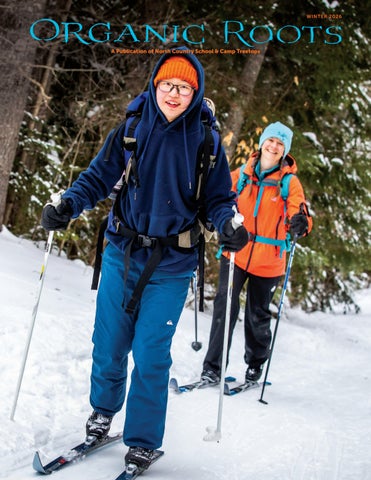
Create a flipbook
Issuu converts static files into: digital portfolios, online yearbooks, online catalogs, digital photo albums and more. Sign up and create your flipbook.