
EDITOR’S NOTE
Dear Readers,
As we navigate the complexities of an ever-evolving business landscape, the April/May issue of DR Insight offers timely reflections on the role of legal frameworks in protecting your business interests during unprecedented challenges. The COVID-19 pandemic, in particular, has highlighted the importance of understanding contractual obligations, force majeure clauses and the principles of supervening impossibility.
In this issue, we explore key legal developments as businesses continue to face disruptions. The articles focus on how force majeure clauses can relieve parties from obligations under their contracts, the common law perspective on impossibility of performance, and how businesses can manage risk when unexpected events like COVID-19 occur. Drawing from case law and expert opinions, we offer guidance on navigating these legal complexities, ensuring you are better equipped to make informed decisions in safeguarding your contracts.
At Dinana Reid Inc., we remain committed to providing our clients and readers with insights that are not only relevant to today’s legal challenges but also position you for future success. As we delve into the intricacies of force majeure, we encourage you to review your contracts and consider the need for precise, clear wording to mitigate risks in uncertain times.
We hope this issue provides clarity and support as we collectively navigate the pandemic’s ripple effects on our business and legal environments.
Sincerely,
Dinana Reid
Editor, DR Insight


COVID-19 AND THE PROTECTION OF PERSONAL INFORMATION?
Data Privacy During the Lockdown?
There is no doubt that we are navigating uncharted territory as we face the existential threat of COVID-19. The pandemic presents new challenges – not only for global health but for humanity. We are each finding our way through this journey without precedent and with few guideposts.
That said, this period also presents the perfect opportunity for some ‘business’ housekeeping. Business owners must use this time to implement sufficient systems, processes, and measures to ensure compliance with POPIA. Once fully effective, POPIA will place specific obligations on businesses to process personal information within its provisions.
Cybercrime has also surged during the pandemic, with many businesses continuing or being forced to operate
electronically, even with severely limited operations. This situation comes with both advantages and disadvantages. The pro is business continuity. The con is increased cyber risk.
Caroline Edey-van Wyk, Digital Content Specialist at Investec, states, “Remote working has led to unprecedented digital dependency, and this has resulted in an increase in cyber fraud, with South Africa seeing a surge in digital attacks. Criminals are preying on our vulnerability during the COVID-19 crisis.”
Still, even in these uncertain times, there are ways to ensure you protect your business and your customers. Get ahead of the issue and don’t let your business become a statistic. COVID-19 is one of the greatest challenges we’ve faced, and we will be defined as a generation by how we respond to it. While you may not be able to control the global pandemic, your business can put measures in place to ensure it continues to operate in a manner that protects its assets.

So, What Can You Do Right Now?
You can contact us for a personal consultation on how to ensure you are POPIA-ready.
DINANA REID INC can help your business with four key services to safeguard it now – and in the future. Here’s what you can do:
1. Carry out a risk and impact assessment. POPIA (2013) and the POPIA Regulations (2018) require a comprehensive evaluation of the risk of non-compliance and a privacy impact assessment. We have extensive experience conducting these assessments, which are crucial steps toward preparing your business for POPIA compliance.
2. Ensure that your legal and compliance obligations are covered. This includes having bulletproof privacy policies and terms and conditions for your website to protect your business interests, as well as the rights of your website visitors and customers. With years of cyber law practice behind us, our team is an expert in these policies and can provide you with specialized guidance.
3. Improve your knowledge by taking an online POPI Act course.
The compulsory nationwide lockdown may have given you some extra time on your hands, so take advantage of it and sign up for our selfservice online training program, “POPI Works,” in partnership with Media Works and IACT-Africa. The program consists of multiple modules, including a knowledge assessment and a certificate of completion. It’s easy to use, easy to remember, and available on mobile devices, tablets, and PCs. We can also deliver online webinars. Once we reach an appropriate lockdown level, we will reinstate our face-to-face classes, with safety measures in line with COVID-19 regulations.
4. Don’t forget PAIA
The Promotion of Access to Information Act 2 of 2000 (PAIA) is the counterpart to POPIA. PAIA requires entities (public or private) to have a manual in place that outlines how to request information and records held by such entities. If your manual was prepared before September 2013, it must be reviewed and updated in line with POPIA. PAIA is everyone’s responsibility and is not limited to a certain level or job description. Therefore, anyone in your organization who deals with or has access to personal information must be trained in both PAIA and POPIA. You and your employees should fully understand how to collect data, where to store it, and who can access it under specific conditions.
Remember, business and life will continue after the pandemic, and eventually, POPIA will be in full effect. If your business does not comply, whether intentionally or accidentally, you could face severe penalties. POPIA provides for fines of up to R10 million and jail sentences of up to 10 years, depending on the seriousness of the breach.
In these interesting and unique times, it’s imperative to remain in control of what’s within your hands. While you cannot control COVID-19, you can control how you safeguard your business against it.
IS COVID -19 AN ACT OF GOD OR AN ACT OF STATE? WHAT DOES YOUR CONTRACT SAY?

On 11 March 2020, the World Health Organization (WHO) declared the Coronavirus (COVID-19) a pandemic.
Following the outbreak of COVID-19, South African President Cyril Ramaphosa declared a National State of Disaster on 15 March 2020, issuing several regulations under the Disaster Management Act, 2002 (Act No. 57 of 2002). The country was subsequently placed under lockdown, making it, in some cases, impossible to fulfill obligations under contracts. This situation is deemed an “Act of State” and falls under the common law understanding of force majeure, as established in the case of Nuclear Fuels Corporation of South Africa v Orda [1996] (4) SA 1190 (SCA), where an Act of State was recognized as an event of vis major (force majeure).
COVID-19 has complicated the fulfillment of contractual obligations. While some parties have force majeure clauses in their contracts, others do not. The court in Airports Company of SA Limited v BP Southern Africa
(Pty) Limited and Others [2015] JOL 34127 (GJ) confirmed that where a force majeure clause exists in a contract, the stipulations of that clause will take precedence over common law provisions. Therefore, the presence of a force majeure clause allows the parties to rely on the contract to relieve them from performing their obligations, making it an allocation-of-risk tool.
The test for force majeure is objective in nature. Where a contract defines force majeure, the parties are limited to that definition, applying the expressio unius est exclusio alterius rule of construction. As a result, references to “any other” in the force majeure clause would limit its application to specified items, and courts may infer the intention to exclude anything not listed. UK courts follow a similar approach, as seen in Sucden Middle-East v Yagci Denizcilik ve Ticaret Ltd Sirketi (The ‘Muammer Yagci’) [2020] 1 Lloyd’s Rep. 107, where the court noted that the list within the force majeure clause informs the meaning of the phrase, not the other way around. South African courts would likely adopt the same approach, requiring that a force majeure clause specify or elaborate on what constitutes force majeure.
Common Law Position
Under common law, if the performance of a contract becomes impossible due to unforeseen events (not caused by the parties), the parties are excused from fulfilling their contractual obligations. However, impossibility must be absolute and objective, not relative or subjective. As mentioned in Unibank Savings & Loans Ltd (formerly Community Bank) v Absa Bank Ltd [2000] (4) SA 191 (W), the nature of the contract, the relationship between the parties, the circumstances of the case, and

the nature of the impossibility must all be considered when applying the rule.
The rule will not protect a defendant if the impossibility is self-created or the result of their own fault. Except in cases where specific performance is sought, the burden of proving impossibility lies with the defendant. This was highlighted in Liebenberg v Neville and Another (120/88) [1988] ZASCA 121 (29 September 1988), where it was stated that impossibility of performance could discharge contractual obligations, but the party relying on this defense bears the burden of proof. Additionally, the parties must not have reasonably foreseen the event causing the impossibility at the time the contract was concluded, as explained in Nuclear Fuels Corporation of SA (Pty) Ltd v Orda AG [1996] (4) SA 1190 (A).
Supervening Impossibility
A party may rely on the principle of supervening impossibility when it is impossible to fulfill contractual obligations due to the COVID-19 lockdown. However, the party must meet specific requirements before successfully invoking this principle. The court in Glencore Grain Africa (Pty) Ltd v Du Plessis NO & others [2007] JOL 21043 (O) listed the following requirements:
• The impossibility must be objective and not due to the subjective actions of the party relying on it.
• It must be absolutely impossible, not just improbable.
• It must not be attributable to either party’s fault.
• The impossibility must be unavoidable by a reasonable person.
• The mere foreseeability of an event does not necessarily mean it ought to have been foreseen or could have been avoided by a reasonable person.
We agree with Justine Krige that a force majeure clause must be triggered before declaring one to the other party. Declaring force majeure without justification could lead to a breach of contract, or if it appears the party no longer intends to perform, it could lead to repudiation of the contract.
Where no provision for force majeure exists in a contract, reliance must be placed on the common law principle of supervening impossibility.
Numerous articles have been written by legal practitioners to guide companies on how to address the COVID-19 pandemic concerning contracts. In general, there is consensus that:
• Force majeure refers to events beyond the parties’ control, such as Acts of God, government actions, regulatory changes, chemical contamination, transportation failures, changes in law, and war.
• Force majeure provisions typically list events agreed upon by the parties that render performance impossible, catering to situations where non-performance is caused by factors beyond the parties’ control. If the clause does not specify these events, the parties must rely on the common law.
• The force majeure provision suspends the usual consequences of a breach, including specific performance or damages, when performance becomes impossible.

Benefits of a Force Majeure Clause
The benefits of having a force majeure clause in a contract include:
• It relaxes obligations and limits strict liability when certain circumstances prevent or hinder performance.
• It protects a party from being liable for damages resulting from a breach, provided the circumstances fall within the definition of force majeure.
• It suspends contractual obligations between parties for a period of time.
If a force majeure clause cannot be classified, South African law applies presumptions of interpretation to determine the meaning of contract terms when the intent is unclear. The court presumes that words are used precisely, with no superfluous terms included.
Now is the time to review the wording of force majeure clauses in your existing contracts to ensure they are clear and comprehensive. If you do not have a contract, it’s advisable to enter into one.
POPI – GETTING YOUR ‘ACT’ TOGETHER

The POPI Act came into effect in 2018 and it affects all businesses. It dictates how you obtain, keep, share, and do away with personal information and data. Additionally, there are legal repercussions for those who do not comply.
This is where we come in. To take the burden away and help you to identify, review, and implement all the essential policies.
Dinana Reid Inc. is a boutique legal and advisory law firm that is well-versed in The Protection of Personal Information (POPI Act) – as well as the European Union General Data Protection Regulation (EU GDPR). We will ensure that your company adheres to all the POPI Act requirements – and we will do this holistically.
From helping you to draft a privacy policy to revisiting contracts with operators and suppliers. We will assist you with reviewing and amending business processes and documentation; while also ensuring that your IT systems and procedures are aligned to support such adjustments.
For a more detailed view of our POPI products, services, and training offerings, contact Dinana Reid Inc. for expert legal advice. Our team is ready to assist you in navigating these crucial regulations, ensuring your business remains compliant and protected.
LEGAL CUPPA: SIMPLIFYING LEGAL ADVICE WITH A PERSONAL TOUCH
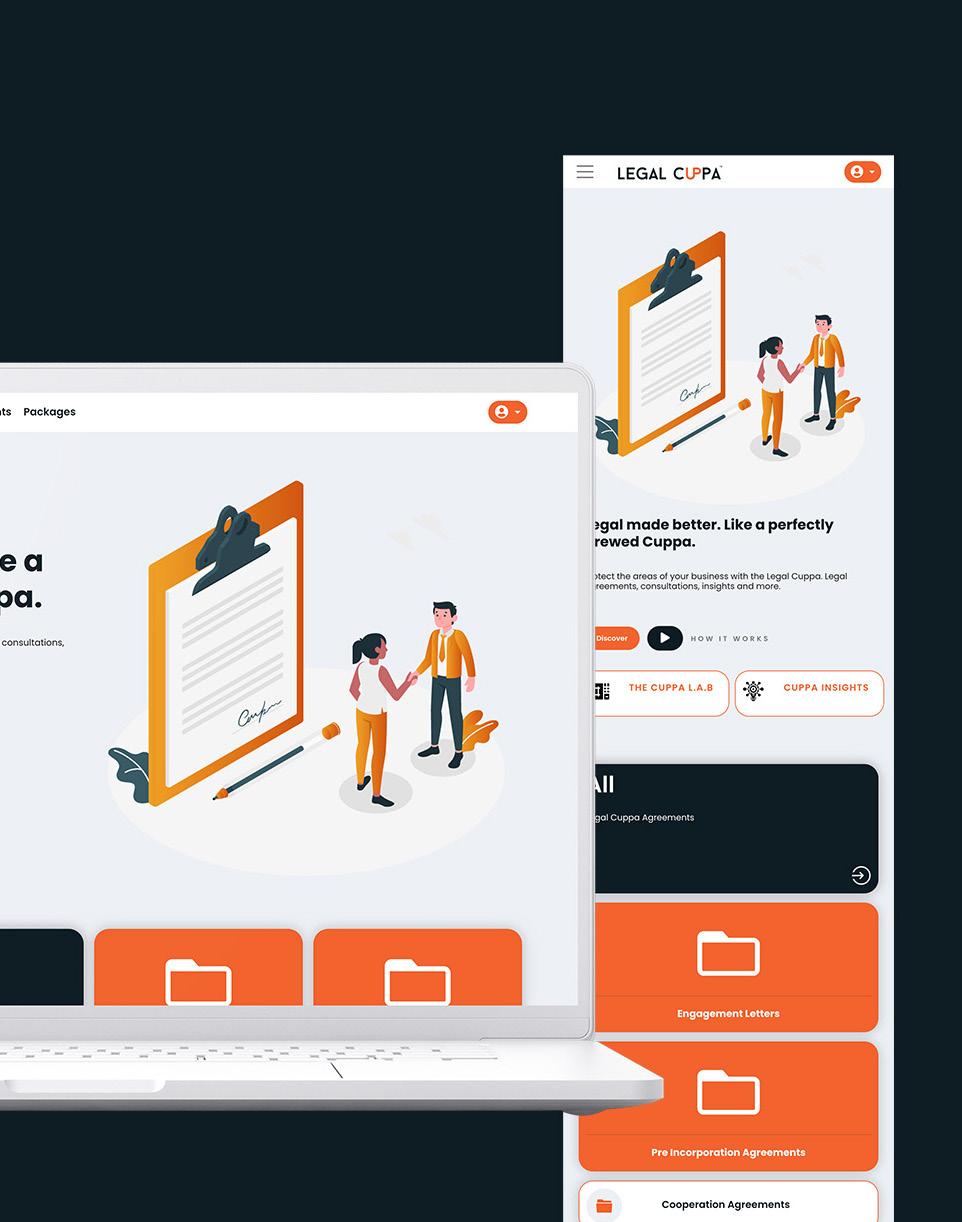
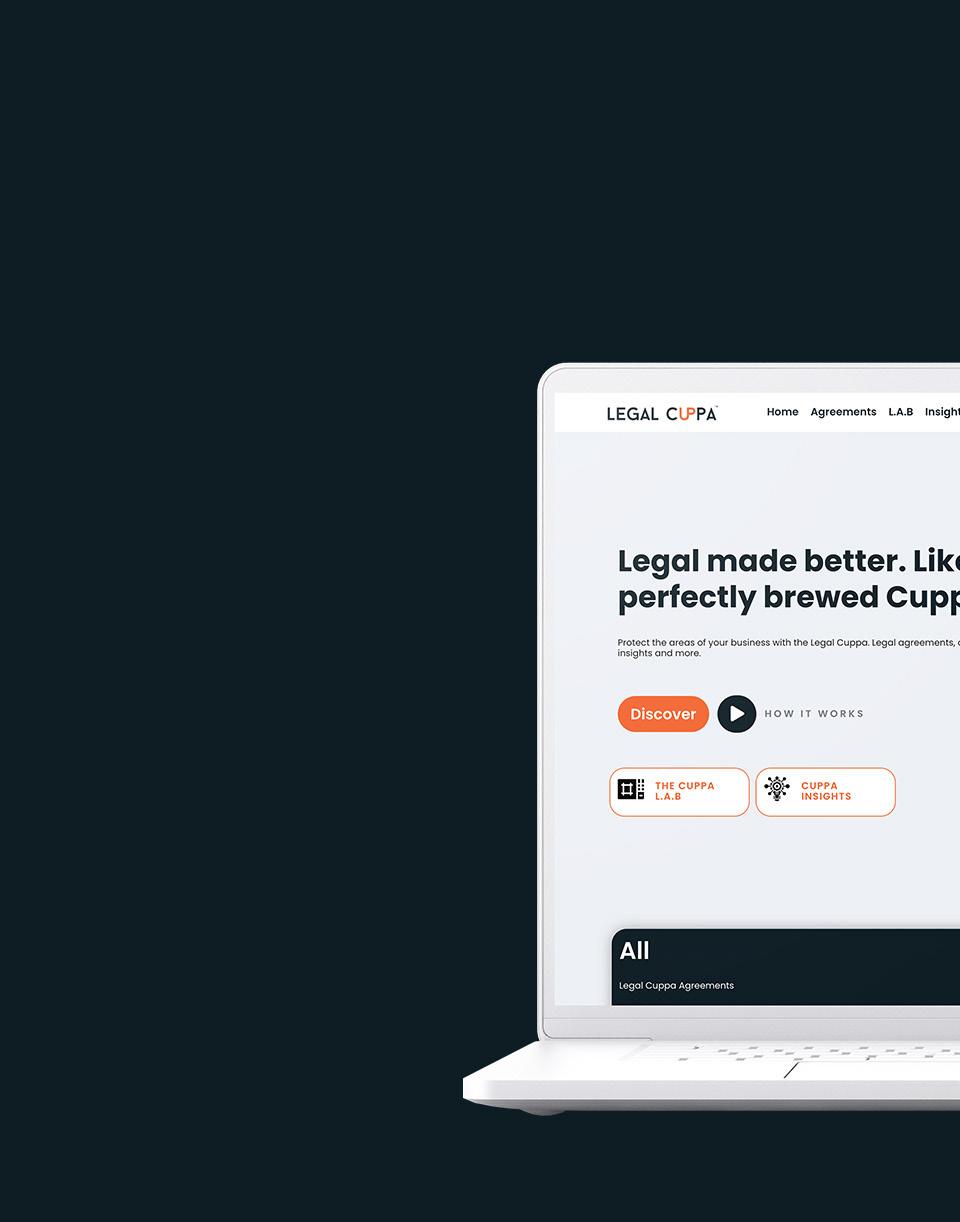
LegalCuppa, a South African-based service, is your go-to platform for accessible and personalized legal advice. Designed to demystify the complexities of the law, LegalCuppa connects individuals and small businesses with qualified attorneys. Whether you're dealing with contract issues, business setups, or personal legal challenges, this service offers a simple and affordable way to get professional guidance.
With just a few clicks, you can book a virtual consultation, ensuring you receive expert legal advice without the hassle of visiting a law office. This innovative approach not only saves time but also makes legal assistance more accessible to everyday people and small businesses who might otherwise be intimidated by the legal process.
LegalCuppa takes pride in offering a comfortable, professional environment for clients to engage with experienced lawyers, all at an affordable rate. It's perfect for those who need quick, reliable answers or ongoing legal support. Whether it's for contracts, compliance, or general legal queries, LegalCuppa ensures you'll never be far from the advice you need.
For more information or to book a consultation, visit their website at www.legalcuppa.co.za and get your legal matters sorted over a virtual cuppa!