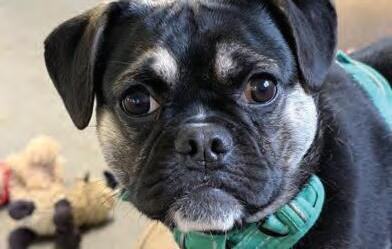
Hypoallergenic Dogs: Truth, Trend, or Clever Marketing?









Hypoallergenic Dogs: Truth, Trend, or Clever Marketing?
I am so glad we are heading towards the first day of spring! I have found the past two months have been depressing with so much rain and mostly grey skies. Although yesterday the sun shone all day and it was a great day for walking my pup! The daffodils have sprung to life in my garden and I feel there’s a spring in my step too! Thank you as always for reading your free copy of Rescue and Animal Care!
Here are a few articles you’ll find inside our latest issue
n Meet Billy! Billy didn't settle in well at doggy daycare and an hour with a dog walker just wasn't enough for the exercise and socialisation he needed. So, with a little persuasion, Billy inspired his pawrent Laura, to leave her job and create something special for him - Billy's Bus.
n Dog walking injuries quadruple – is the retractable lead to blame? Retractable dog leads could be behind an increase in dog walking injuries, and these leads are of particular danger to hands and fingers.
n Baroness Hayman backs support for abuse survivors and pets Government Minister Baroness Hayman has visited Cats Protection’s South London Cat Centre, where she met staff and volunteers delivering the charity’s Lifeline service – a specialist cat fostering programme for people escaping domestic abuse.
n Long-suffering stray now enjoying home comforts thanks to volunteers A senior cat whose life as a stray in Axminster left him struggling with a cancerous eye and relying on the kindness of strangers for food is thriving in his new home.
I hope you enjoy reading these articles and the others inside Rescue and Animal Care Magazine.












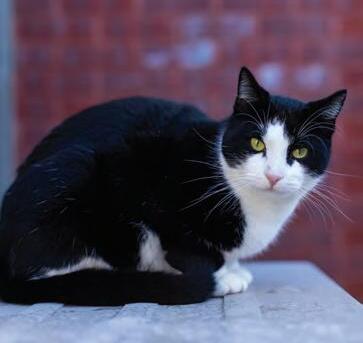



PLEASE READ ALL THE INFORMATION ON HOW DO I ADOPT PAGE BEFORE CONTACTING US - Thank you. YOU WILL NEED TO TRAVEL TO OUR CENTRE WHICH IS BASED IN STAFFORDSHIRE

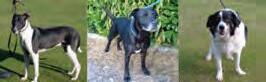
Roger is a 4 year old entire collie. He spent 5 months in a council pound before being transferred to our care so we don't know his background.
He has been friendly towards all the staff here and should be fine living with children over 8 years old. He is a unsure how to interact around other dogs and does tend to work/herd them from a distance but if introduced correctly interacts well.

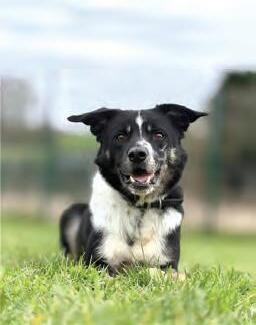

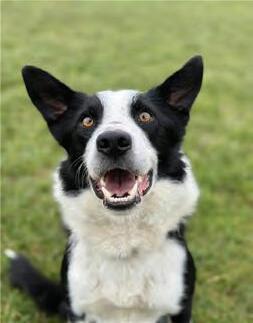


Hello, I’m Bobby! I’m a 5-year-old tri-coloured collie with a smooth coat.
I came into care because my previous owner couldn’t give me enough time due to work. I had a 7-week stay with another family, but it didn’t quite work out as I got a bit defensive with the lady of the house when she tried to correct me but when dad was around i felt much happier around her
I’m a friendly guy when meeting people, I am housetrained, happy to be left alone for a few hours, and I travel well. I can be a little unsure around other dogs at first, but once I know them, I’m fine. I do have a bit of a chase instinct when it comes to cats.
I’m looking for a patient and understanding family who can help me feel confident and loved.
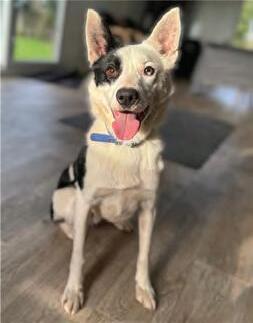
Hugo is a 2 year old short coated black and white entire collie cross. He was handed in from his own home due to his owner suffering with mental health issues and also physical problems resulting in Hugo spending most of his time shut in a crate.
He is house trained but has on odd occasions soiled in the house when left alone for long hours. Whilst he hasn't lived with children he has met children over 8 years old and interacted well with them.
He is very focused on other dogs and will snap in close contact so best as an only dog. He does chase traffic when out walking and is not really used to travelling in a car.





a 5
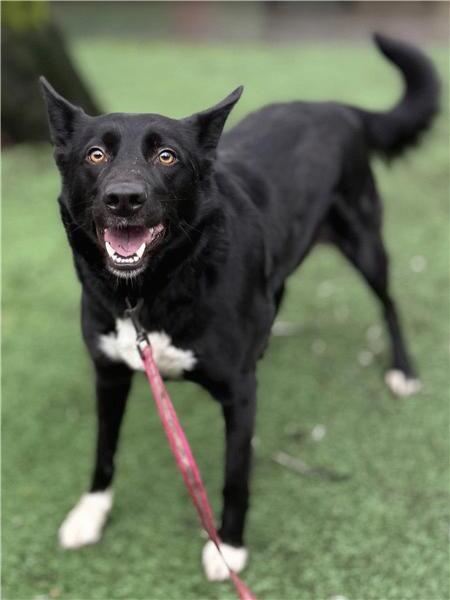
Asta is a 3 year old entire black and white short coated Collie Cross Kelpi.
She came into our care as her owner had to relocate and was living in a flat and working full time meaning Asta was being left alone all day.
Asta can be worried meeting new people and being closely handled. She will need an owner who is willing to be hands off in the early days and give her time to trust someone. Asta is house trained, is good when left alone, loves to play ball, responds to basic commands, travels well and is good meeting other dogs. She would be better suited to a home without children
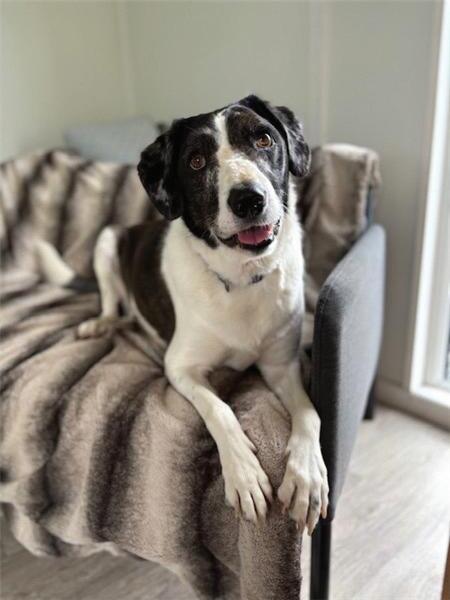
He originally came into our care from his own home due to his owners declining health. He then spent 7 days in a other home but was returned as he snapped at an adult visitor when she walked through the door and leant over to greet him.
Bayley is a little unsure when meeting new people so will require an owner that is willing to be hands off in the early days and give him the time and space he requires to gain trust in people. He would benefit from a quiet home without young children or lots of visitors.
Bayley is housetrained, responds to basic commands, plays with toys, travels well, and is calm and settled overnight.
He tends to avoid other dogs but can react to them if they react first. He is worried by traffic and loud noises.


CLICK ON THE LINK TO LISTEN TO THE NEW DOGCAST “TAILS & TALES” https://youtu.be/7ubzD107kng
Young pups should be introduced to the washing experience to get them used to this and the warm, clean, bonding experience. Later on, when they're a bit bigger, they can happily go to a local groomer. They will not be so afraid of new interactions, smells or surrounding. It's so important for the dog and it's coat to look and feel in tip top condition. Regular grooms help the coat stay in great condition, with no matting, no skin conditions and can also help pick up on any lumps or bumps.
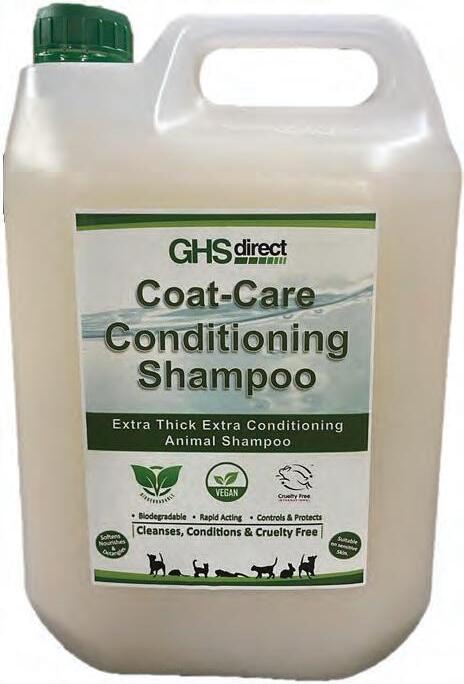
Keep dogs clean, fresh and looking great at all times. A good dog shampoo will NOT create a thick sudsy lather, as this is too constricting / astringent. Our Shampoos are specially formulated for dogs’ and their senstive skin. Our formula’s are pH balanced and cleanse with a gentle action and extra emollients. After washing, always rinse off thoroughly with clean luke warm water. Never use cold water. Dry with a

Start with a damp coat - wet your dog all over. Apply a small amount to your hands and distribute by rubbing all over from the neck down. OR you can place approximately 25ml to 50ml of product - that's 1 to 2 full pump depressions, directly into a measuring jug (usually 1ltr size), top-up with warm water, mix well and pour slowly whilst rubbing into the dog's coat, again start from the neck down. Rub all over, adding further shampoo and water if needed - as does depend on say mud or even those happy rolling moments in say cow pats! Work into a lather distributing the product on all desired areas to be cleaned. It is advisable to use more product if the level of soiling is heavy. To achieve maximum activity, leave the shampoo on the coat / fur for at least 2 – 3 minutes before thoroughly
rinsing off all the suds. As with all shampoos, take care around the eye area! Should the product get into eyes, rinse thoroughly with clean running water. Use a super absorbent towel and towel dry your dog without ruffing up the fur too much as this causes matting. Your dog is now clean and fresh and ready for a low-heat dryer.
highly-absorbent towel for an easier and quicker process and try not to rub the coat as this causes matting. Keep hairdryers / blowers on cool to low settings and never point them directly in the dog’s face! Shiny, clean, fresh coats every time. Healthy pets are happy pets! Our well loved, tried, tested, trusted Animal Shampoos are available in 500ml bottles (12x500ml per case, can be mixed) and 5ltr bottles. Fantastic prices with speedy delivery to all of the UK.
Fragrance or Fragrance-Free? We know a shampoo that smells amazing sounds great, but many artificial fragrances can
irritate your dog’s skin. Hypoallergenic shampoos either skip scent completely or use natural, mild ones like lavender or chamomile.We always recommend going with unscented if your dog has a history of allergies. A light natural scent is okay, but anything too strong might be a red flag. It’s better to have a clean dog that doesn’t itch than one that smells like a flower but scratches all day.
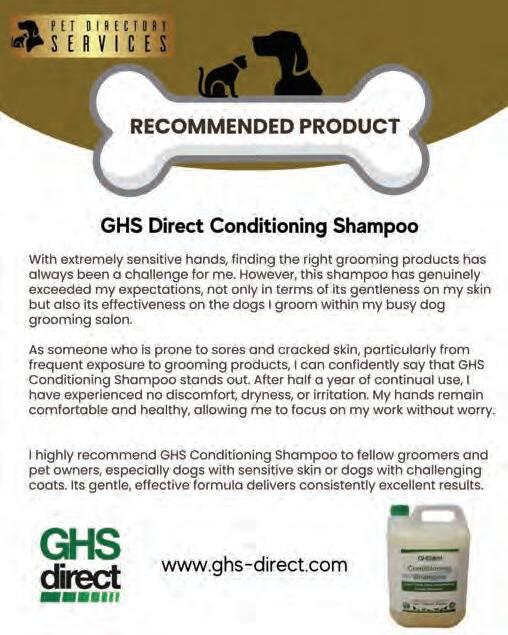
Our shampoos are suitable on sensitive skin and are pH balanced.
Biodegradable, Vegan Friendly and Leaping Bunny Approved with Cruelty Free International.
n For more information visit www.ghs-direct.com
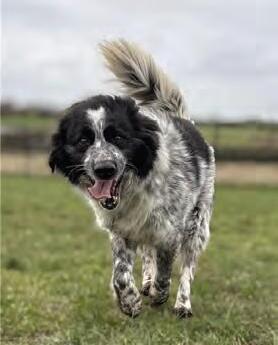
Charlie is a 2 year old neutered collie cross
Before coming to us he spent his life living on a small holding in a secluded setting amongst several other dogs Charlie has no real life experience of the world outside of where he lived and has only recently just started to go out for walks on a lead around our site. It took us several weeks to gain his trust enabling us to then gently handle him, since then he has made good progress and now happily greets and interacts well with certain members of staff. He requires a quiet home environment and an owner that understands his needs and is willing to give him all the time and patience he requires. He will require a few visits and if possible these need to be close together


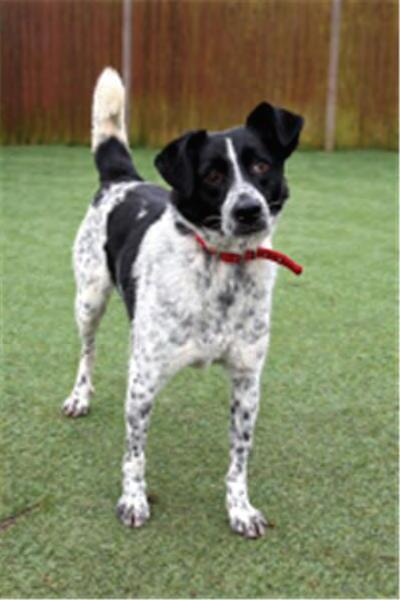


Domino is a large built dog and has been aged as 3 years old by a vet but does look slightly older
He has been neutered. He came into our care after being rescued from a high kill shelter he then spent over a year with a lady that fosters but due to the amount of dogs she helps they are kept in outdoor enclosures.
He is a boisterous dog and does have a tendency to jump up at people so would be better suited to a home without young children. Whilst in our care he has been settled and clean in kennels and has interacted well with other dogs

I first came into care because my previous owner couldn’t give me enough time with work and a little one at home. I have had a few short stays in a couple of other homes but they didn't work out and unfortunately in the last one the man took a bag out of my mouth that had treats in it and because i got frustrated i snapped at him, but maybe a little too hard as my tooth punctured his skin.
I can be a little shy when meeting new people, but give me a moment and I soon warm up. I’m housetrained, happy to be left alone, and I travel well. I love playing ball and get along with other dogs. When I’m out walking, I can get a bit excited around traffic, but I’m learning! I’m looking for a patient, loving home where I can feel safe and enjoy lots of fuss, fun and games.
PLEASE READ ALL THE INFORMATION ON HOW DO I ADOPT PAGE BEFORE CONTACTING US - Thank you. YOU WILL NEED TO TRAVEL TO OUR CENTRE WHICH IS BASED IN STAFFORDSHIRE
Then please complete the Online Application To Adopt Form. This is the first step in the process https://www.emailmeform.com/builder/form/5e4l42c00df
The Application Forms are reviewed regularly by our Adoptions Team who will contact anyone they wish to discuss further with but please understand that we can't contact everyone who completes the form. That doesn't mean we don't want you to adopt but there can only be one new owner for each dog.



Do keep an eye on the website, and if you see another dog, at any time, that you would be interested in adopting then simply email adoption@bordercollietrustgb.org.uk with your name, post code and the dogs name you are interested in. We will then consider you for that dog.
Unfortunately we cannot make an appointment until The Adoptions Team contact you.
n If you still have some questions do take a look at the FAQ section or feel free to contact us on 01889 577058 (Monday to Friday 9am to 3pm) or of course email us. Tel: 01889 577058 www.bordercollietrustgb.org.uk









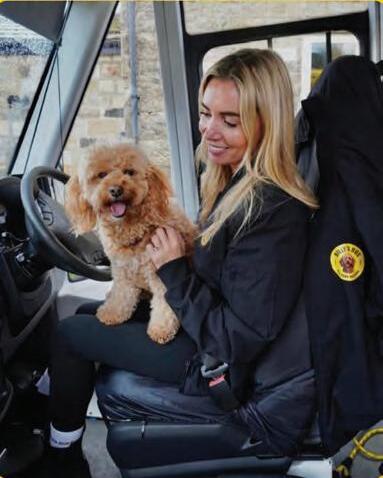
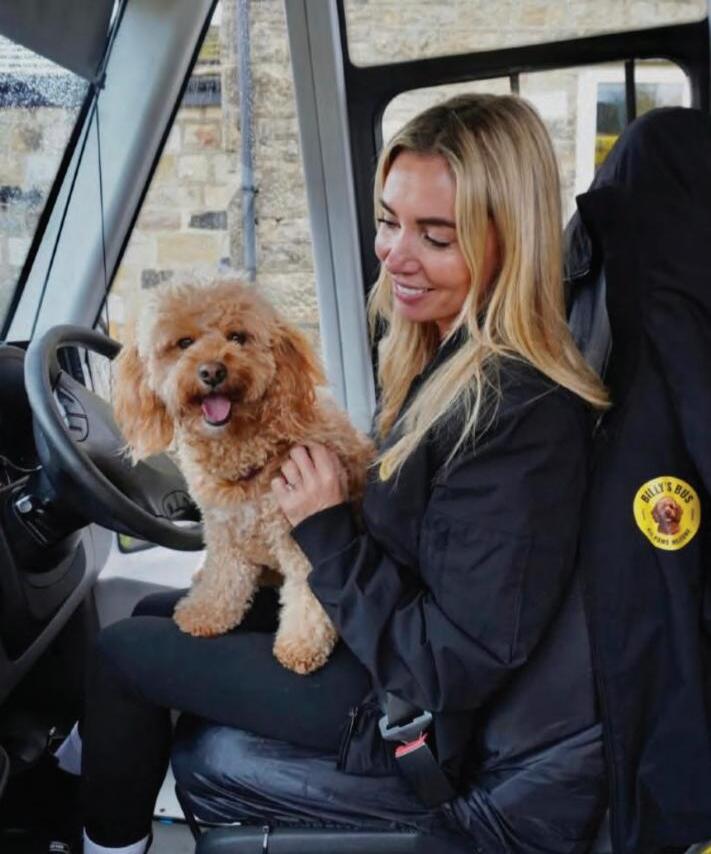
Meet Billy! Billy didn't settle in well at doggy daycare and an hour with a dog walker just wasn't enough for the exercise and socialisation he needed. So, with a little persuasion, Billy inspired his pawrent Laura, to leave her job and create something special for him - Billy's Bus.

Now every day is a wonderful new adventure for Billy & Laura. We provide a unique service that gives your beloved dogs a minimum of three hours of fun,
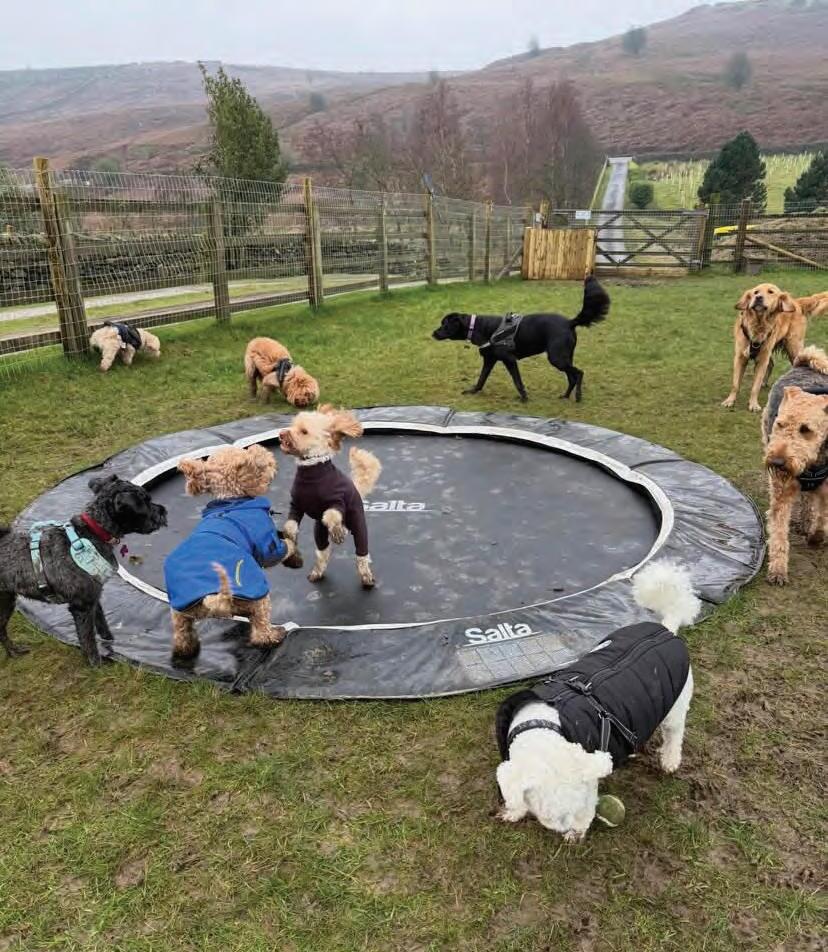
exercise and socialisation in a safe and caring environment. Our specially adapted school bus collects Billy's friends before heading to our secure Bark Park set in the beautiful Cow and Calf moors of Ilkley – where tails wag, paws run free, and friendships grow.
Why are we different?
We bridge the gap between one hour dog walks and full day boarding. For some dogs, one hour just isn't enough to release all their energy and a full day
of dog boarding is sometimes too much for them. So, we offer a mid-day service of a minimum 3 hours and up to 4 hours depending on how much fun we are having at the bark park. This gives
pawrents peace of mind their dog has had a great day out whilst they are at work, or just busy with life and don't have the time for big walks and/or don't want the added pressure of picking up
and dropping off at daycare every day.
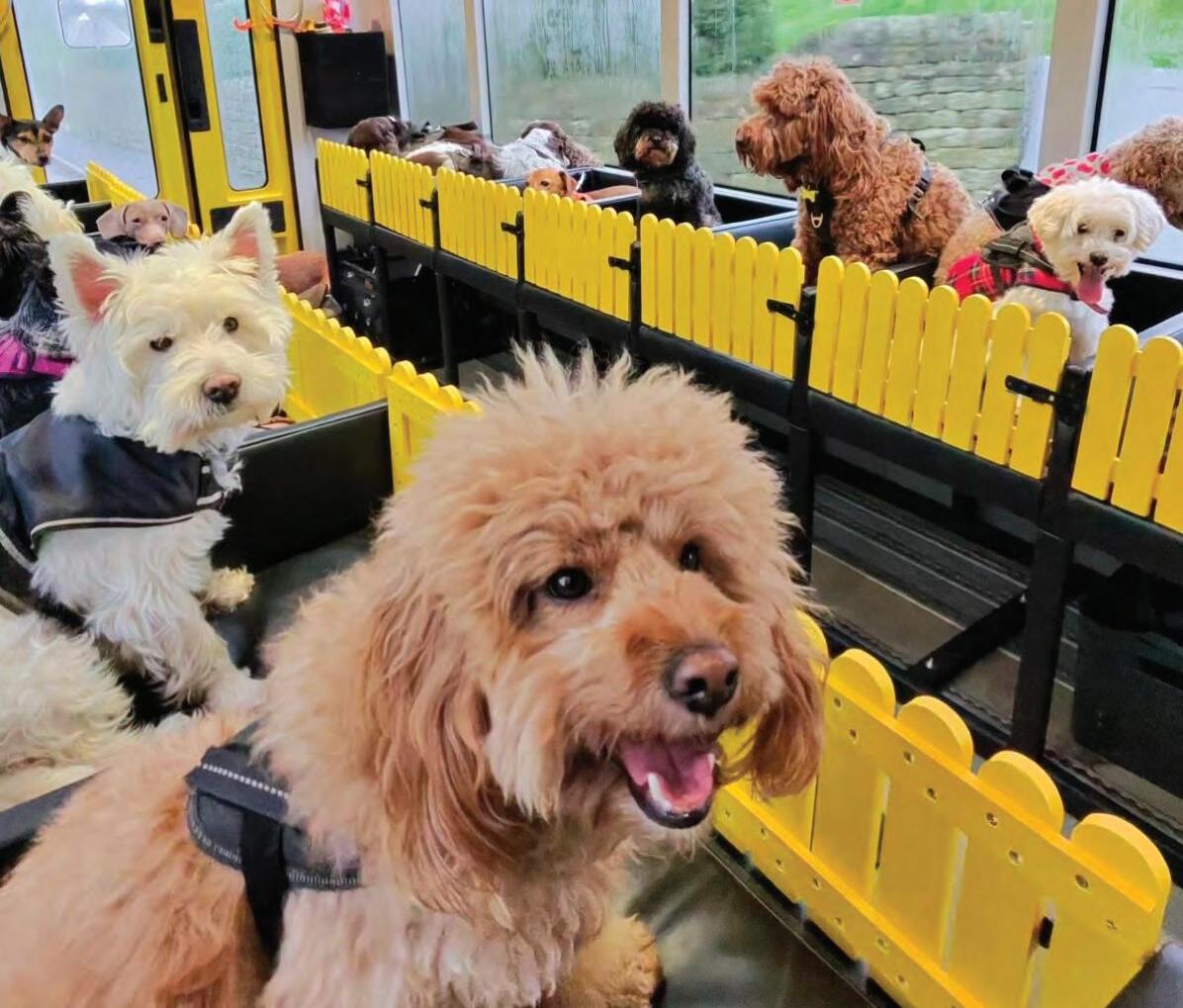
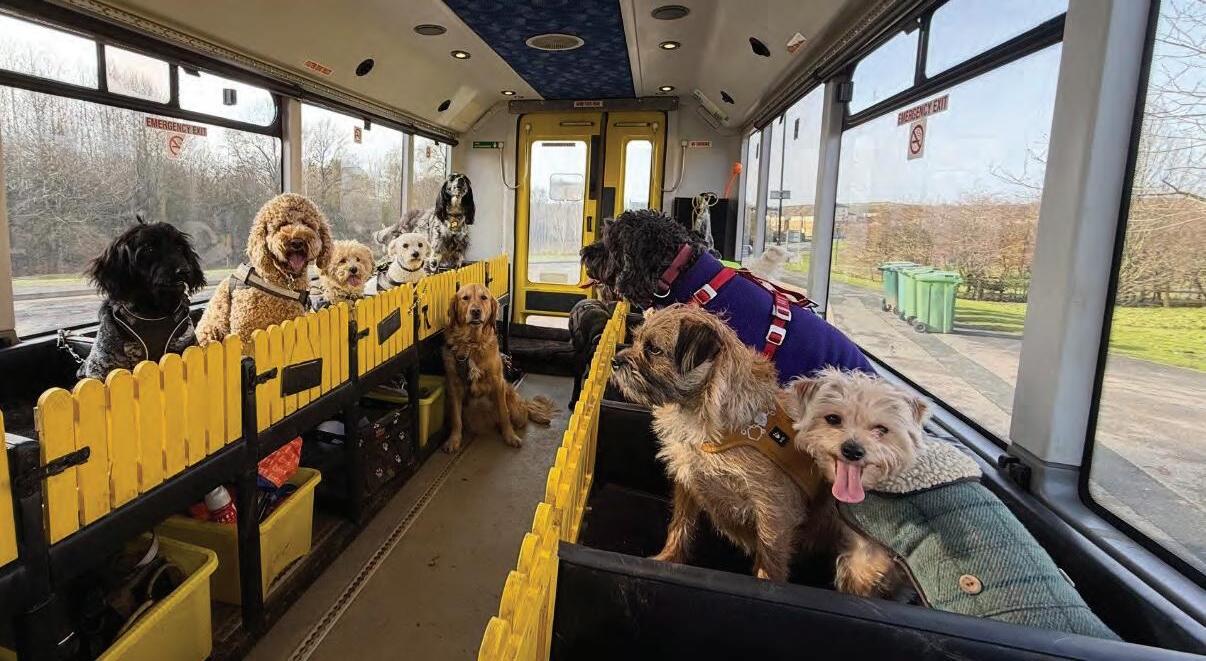
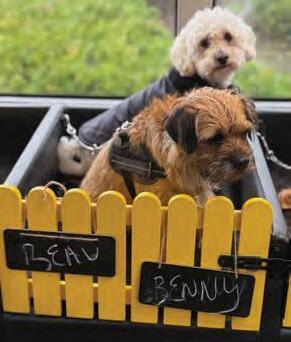
We are the first Dog Bus in the UK! We don't and NEVER will, use crates to transport your dogs. Each dog has their own bus seat, securely harnessed, warm, cozy and with plenty of other dogs to chat with.
Our trips are a minimum of 3 hours.
l Live video feed of dogs on the bus
l Safety harnesses as standard
l Private dog park with swings, trampolines & agility equipment
l Puppychino and treats on board
l Air conditioned and heated bus
We pick up and drop off from home where possible or designated Billy Bus Stops in your area.
We provide a live video feed, on board treats, snacks and water, plus regular photos of your dog living their best lives! Our buses have air conditioning, heating, safety harnesses, dog boxes for smaller

customers and even an electric ramp for less agile dogs.
Billys Bus is expanding across the UK and we will be coming to your area very soon –please enrol at www.billysbus.co.uk
This March, something quietly powerful is happening in the grounds of Cliveden House.
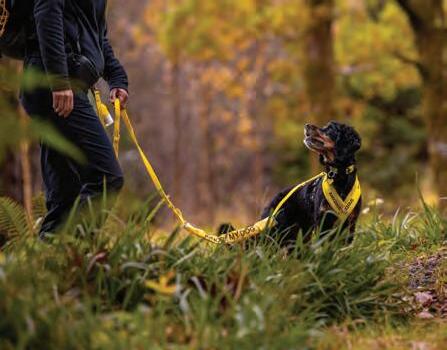
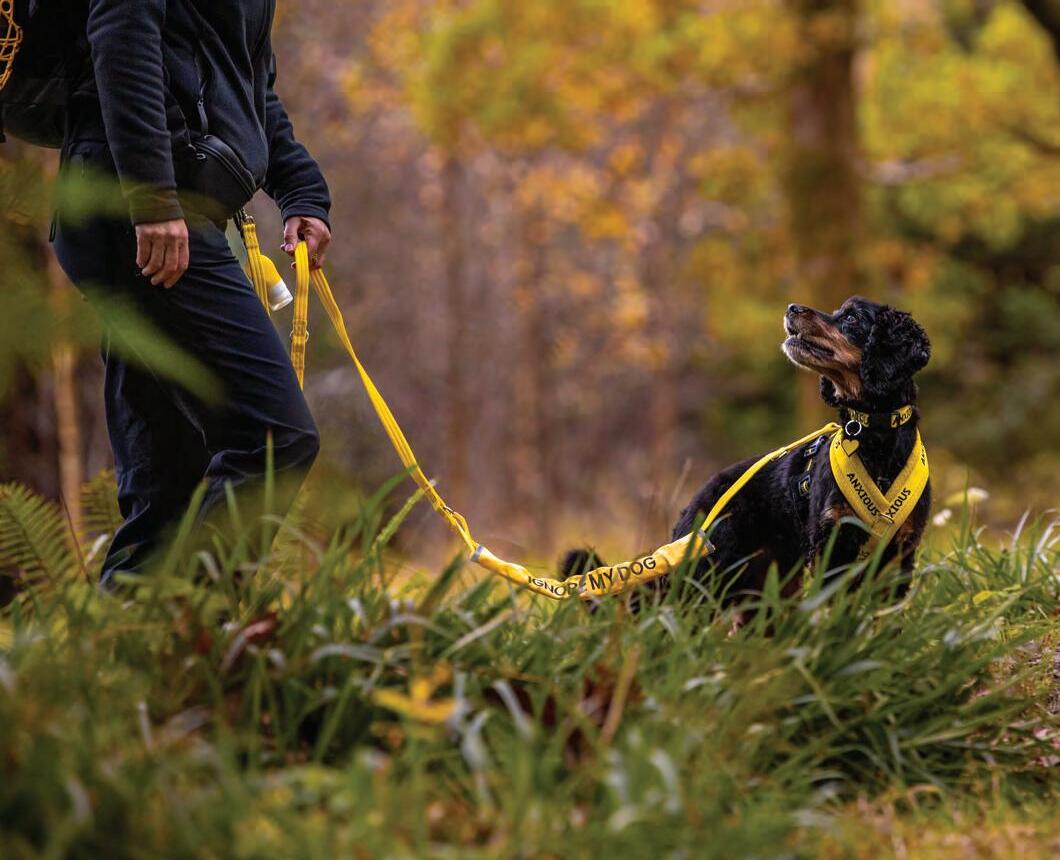
On 20 March, in collaboration with the National Trust and supported by their partner Forthglade, My Anxious Dog founder Sarah Jones will host her very first #DogsInYellow Awareness Walk, a calm, self-guided experience created specifically for dogs who wear yellow space-awareness gear and their devoted owners who walk beside them.
Unlike traditional dog meet-ups, this is not a mass group walk or busy gathering. There is no set-off time and no pressure to socialise. Instead, attendees are invited to arrive anytime between 11am and 3pm, walk at their own pace, and experience the beauty of Cliveden’s grounds in a way that feels safe and supportive for sensitive dogs.
For many owners of anxious, fearful, elderly dogs or dogs recovering from injury, visiting iconic public spaces can feel overwhelming. The unpredictability, off-lead dogs running over, and wellmeaning strangers approaching too quickly can make what should be a peaceful outing feel stressful. As a result, many simply stop going.
Sarah understands this deeply. Her own Cocker Spaniel, Bella, became anxious after early trauma and dog attacks. Yellow became a way to quietly communicate Bella’s need for distance and ultimately inspired the national #DogsInYellow movement, which raises awareness that a dog wearing yellow needs space.
“This day is about changing the emotional experience of places like this,” says Sarah. “It’s about showing that yellow is a language of kindness, a visible way of saying, ‘My dog needs space,’ without having to constantly explain.”
Throughout the day, a dedicated #DogsInYellow gazebo will act as both a welcome point and an education hub within the estate. Visitors will be able to collect awareness leaflets, learn more
about what yellow means, and understand how small changes in behaviour can make a significant difference to sensitive dogs. Alongside this, a calm Yellow Space Zone will be available, incorporating ACE Free Work principles to help dogs settle and decompress if needed. The space will be supported by qualified professionals, including ACE Free Work instructor Niki French, helping ensure dogs and their owners feel safe and guided throughout the experience.
Importantly, the walk is self-guided. Some may choose to walk alone. Some may walk with a trusted friend. Both are equally encouraged. The intention is shared understanding, not shared pace.
For those new to yellow a limited number of borrow bags with yellow leads and lead slips will be available on the day. The vision is to create a gentle “sea of yellow” across the estate, a visual reminder that some dogs need space, patience and understanding.
A limited number of early sign-ups will receive small awareness goodie bags designed to support both dog and owner.
For many owners, walking a dog who needs space can feel isolating. There can be judgement, misunderstanding and the constant feeling of being on edge. Yellow changes that conversation.
This awareness walk is about visibility. About normalising space. About creating a day where anxious dogs and their owners feel not just accommodated but welcomed.
It is Sarah’s first #DogsInYellow Awareness Walk with hopes that it will pave the way for similar events across the country.
“Beautiful places should feel accessible to everyone,” Sarah adds. “With a little awareness and a little distance, they can be.”
#DogsinYellow awareness walk with the National Trust – My Anxious Dog https://myanxiousdog.co.uk/pages/dog sinyellow-awareness-walk-with-the-national-trust

As households start to think about preparing their gardens for warmer weather, many dogs are at risk of falling ill, not from walking on treated grass, but from eating fertiliser granules before they’ve dissolved
According to outdoor specialists, the real risk isn’t dogs walking or playing on treated lawns, it’s direct ingestion before products have been properly watered in and absorbed.
“People often think fertilised grass itself is toxic for days, which isn’t really
the issue,” Alex Essex, specialist at Patio Black Spot Removal Company explained. “The main danger is when dogs sniff out or eat the granules straight off the surface before they’ve been watered in. That’s when you can see upset stomachs or worse.
“Once it’s properly applied, watered in
and the lawn is dry, it’s generally safe for normal family use, including pets and kids. However, it is always important to double check products as some that are iron based require up to two weeks to avoid irritation and staining.”
Alex, who works with domestic gardens
year-round, says safety myths and outdated advice are causing unnecessary worry for families. He believes understanding the reality around fertilising makes lawn feeding compatible with everyday dog needs, and the garden.
5 lawn fertiliser myths every dog owner should know:
Myth 1: Dogs can’t go on the lawn after fertilising
“Most household fertilisers are absorbed quickly. After watering, and once the surface is dry, typically within 24-48 hours, lawns can usually be used as normal, but it is always good to clean paws after making contact to avoid residue,” said Alex.
Myth 2: ‘Natural’ or organic fertilisers are safer for pets
“Some organic products contain bone meal or blood meal, which can actually attract dogs and make them more likely to eat the product, increasing the risk of digestive problems.” Alex continued: “it’s important to check the labels before purchasing the fertiliser to take extra precautions.”
Myth 3: Any fertiliser harms wildlife
“Problems tend to come from overuse or run-off, not normal domestic application. Targeted use and sticking to recommended amounts keep gardens both family and wildlife friendly.”
Myth 4: Using extra fertiliser makes lawns greener and is harmless
“Applying more than recommended doesn’t improve results and can leave excess granules sitting on the surface, increasing the chance pets will sniff out or ingest them,” Alex shared. “Sticking strictly to label amounts is both safer and more effective.”
Myth 5: Rain will wash fertiliser away safely
“Heavy rain soon after application can move fertiliser into puddles, borders or patios where pets may drink or lick
residues. It can also cause run-off into drains.” Alex said: “I recommend applying the product in dry weather and watering in lightly rather than relying on rainfall entirely.”
Alex continued: “The reality is, you don’t need to choose between a healthy lawn and a safe garden. It’s just about simple precautions. Water it, let it dry, and clear up any loose granules. Most problems happen when those steps are skipped.”
Vets advise owners to keep an eye on their pets if they suspect fertiliser has been eaten. Mild symptoms can include vomiting, diarrhoea, drooling or lethargy, while repeated vomiting, tremors or unusual behaviour may signal something more serious and should be checked by a professional. If ingestion is suspected, contacting a vet promptly is recommended to treat the issue as soon as possible.
n https://patioblackspotremoval.com

Last month, a tiny kitten found abandoned on the 8.25am ScotRail train from Helensburgh to Edinburgh captured hearts across the nation.
The kitten, Annie, who has since been cared for by Cats Protection Glasgow Branch, found a loving home just in time for Valentine’s Day with a kind-hearted ScotRail team member, Marie Fox.
Cats Protection Glasgow Branch Coordinator, Elaine Brennan, said: “Annie has spent the last month with one of our fantastic fosterers, where she has completely flourished.
“We have been overwhelmed by the love that’s poured in for Annie. We set up a JustGiving for her and were blown away when it completely smashed our target and raised nearly £5,000. We’re so grateful to everyone who took the time to donate and share, the money raised will go a long way for the cats and kittens in our care.
“We had so many offers to rehome Annie, but we truly believe we've found the perfect home with Marie
“Marie is one of the original team members who brought Annie to safety and looked after her at Dalmuir Station until we arrived. It really is one of those wonderful full-circle moments. While we have given Annie all the love and care possible, nothing compares to a loving, permanent home. We can’t wait to see her thrive with Marie and her family.”
After receiving veterinary checks and necessary vaccinations, six-month-old Annie was adopted by Marie on Wednesday 11 February, just in time to feel the love this Valentine’s Day.
Marie Fox, ScotRail Ticket Examiner, said: “When we first found Annie on the train, I never imagined she’d end up coming home with me.
“Seeing how small and vulnerable she was that morning really stayed with me, so to now be able to give her a safe and loving home feels incredibly special.
“We’ve renamed her Daisy because it feels like a fresh start. I lost my own cat
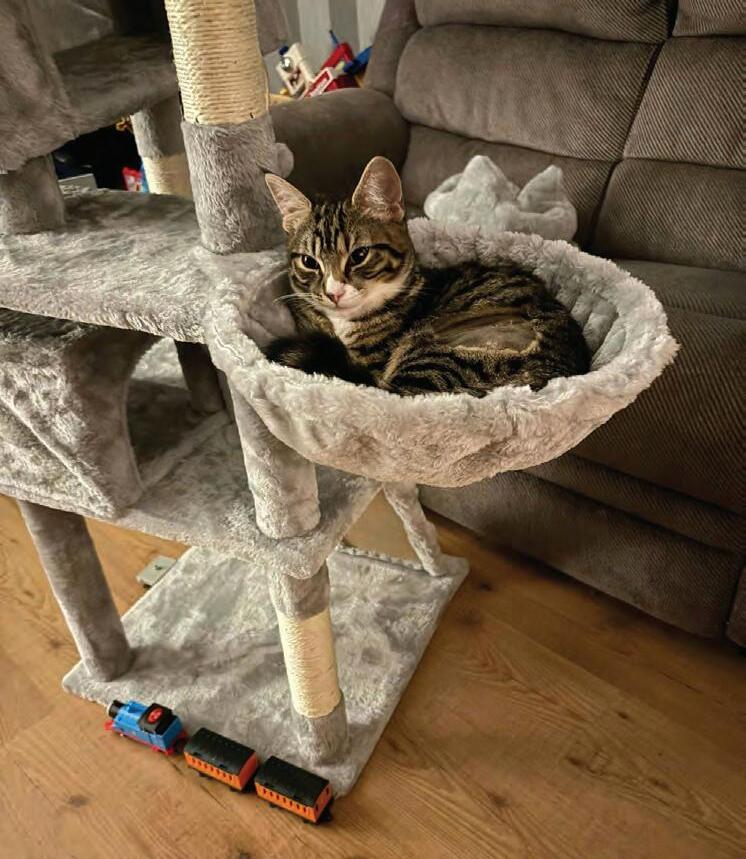
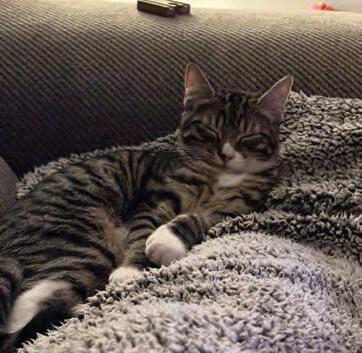
last August, so adopting Daisy feels like perfect timing. She’s already brought so much joy into our house, and I’m looking forward to watching her grow and thrive.
“I’m so grateful to Cats Protection for the care they’ve given her and to everyone who supported Annie’s story. She’s had quite the journey already, but this is just the beginning.”
n Visit www.cats.org.uk/glasgow to find out more about the Branch and meet the cats in their care ready to find a new home.

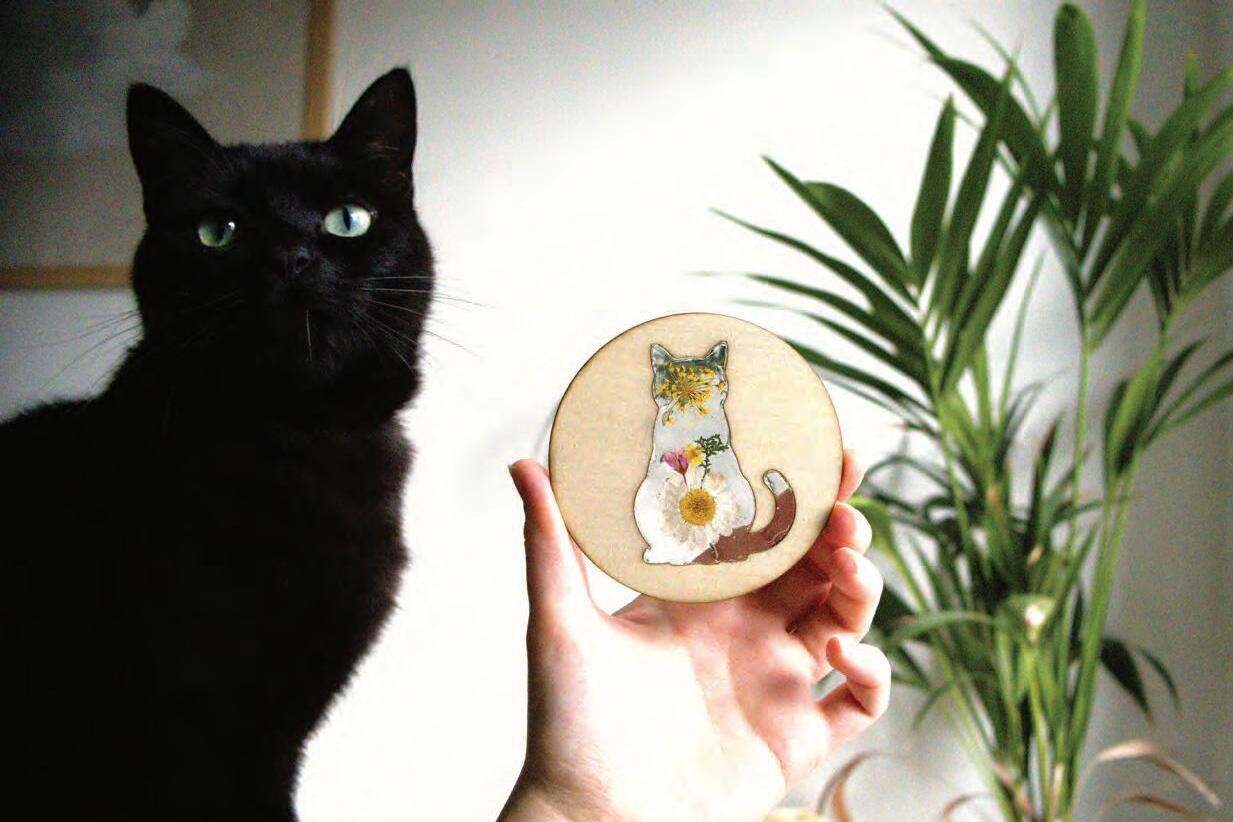
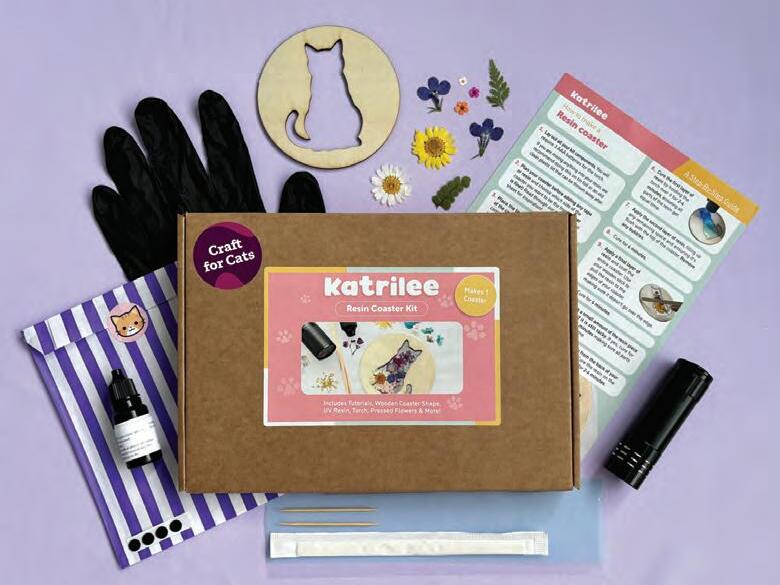
Cats Protection has launched its latest craftalong event that brings with it a floral resin kit, evoking feelings of the brighter days ahead.
The resin kit comes with a wooden coaster to fill with resin and pressed flowers to make a colourful cat design to lay your mug on. It comes with a selection of flowers but also gives you instructions on how to press your own so you can add a sentimental touch to your design. Like all craftalongs, the live event on 18 April is recorded and available to watch back on demand. More information at cats.org.uk/resin-craft from 23 February. The craft partner is Katrilee and the kit costs £22 - a minimum of £10 from each kit goes to support unwanted cats.
Key dates:
Launch 23 February
Live craftalong – Sat 18 April
Deadline to sign up and receive kit in time for craftalong -10pm Sun 12 April Resin coaster making kits available from Cats Protection website until Sun 3 May
Is my cat lonely without another cat?
We’ve just posted a blog post here: https://www.cats.org.uk/cats-blog/ismy-cat-lonely-without-another-cat

A senior cat whose life as a stray in Axminster left him struggling with a cancerous eye and relying on the kindness of strangers for food is thriving in his new home.
Volunteers from the newly-named Cats Protection Honiton & Axe Valley branch were alerted to black and white Archer’s situation when a kind couple who had been feeding him for around two months got in touch, concerned for his health.
Archer’s left eye was fully black in appearance unlike his right eye which was a typical pale yellow, and he was very thirsty. Archer was taken straight to the vet where he was found to be microchipped, 15-years-old, and once a beloved pet. Sadly, his original owner had moved to Scotland 10 years ago and was now unable to take him back. It was therefore agreed that Archer would stay with Cats Protection and receive treatment.
Bob Carter, Branch Coordinator, explains: “Archer’s eye was causing him extreme pain and showed very high pressure which was starting to cause it to enlarge. We knew there was a strong chance it could be cancerous and needed urgent surgery to remove it, but Archer's constant thirst meant we had to check his kidney function before proceeding. Thankfully, although he does have kidney disease as is common
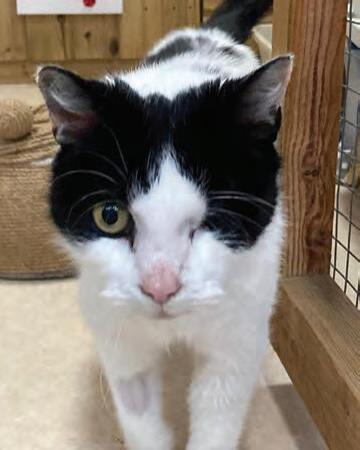
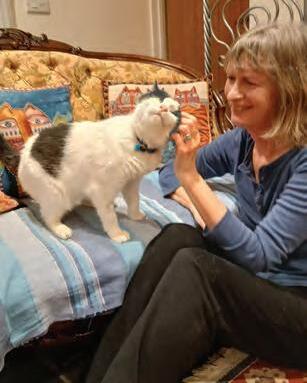
Archer standing - after operation. Photo credit: Cats Protection
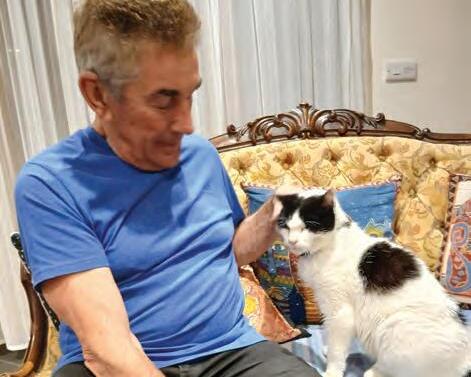
in cats as they get older, his is the lowest grade and the vets were able to continue with surgery, while taking supportive measures to safeguard his kidneys.”
Archer’s eye removal surgery was a success with the tumour affecting it being removed before it had spread. He was able to heal, put on weight and enjoy being off the streets while in the care of his fosterer, and was soon found a home of his own with John and Jenny Pearce Riddy.
John says: “We saw Archer on the Cats Protection website and had been looking for an older boy cat to keep our small female cat company as she loves other cats. We went and met him and realised what a lovely natured cat he is, and we are very much enjoying having him join us in our home.
Jenny adds: “Archer's very cuddly and will do anything for Felix treats! He runs around madly each morning and evening when he's feeling a bit like having a game. The rest of the time he sleeps and snores. He is slowly getting used to the house and we're hoping to introduce him to the great outdoors next weekend. We had great help and support from both Bob and Heidi at Cats Protection and from the vets who took time to talk us through his health needs.”
Archer’s eye operation, diagnostics, kidney scans and post-operative care cost the volunteer-run branch nearly £2,000. As a result they have created a JustGiving appeal for anyone who would like to contribute towards the costs, with anything raised above the target going to benefit other cats in the branch’s care: www.justgiving.com/page/honiton-catsprotection-archer
Bob explains: “We fundraise to cover all our costs – from vet care to cat foodand any donation, small or large, allows us to continue helping cats when they need us most. We are currently in the process of expanding from covering the EX14 postcode to also taking on EX12 Seaton, EX13 Axminster, EX24 Colyton and DT7 Lyme Regis, we will therefore have many more cats needing our help. As a result, we would very much like to hear from anybody interested in volunteering, whether in a cat care capacity or supporting the day-to-day running of the branch. We give full training and all expenses are covered. If you have skills and enthusiasm to share, we’d love to hear from you.”
n Anybody wishing to find out about other cats in need of homes and how to volunteer should visit www.cats.org.uk/honiton

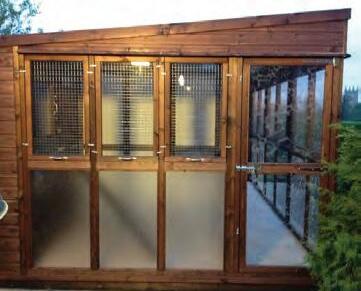
The standard unit you will need for your licenced cattery, also used and approved by leading rescue groups throughout the UK.
The fully lined and insulated walk-in sleeping quarter measures 4ft wide x 4ft deep x 6ft high and has a vinyl floor for easy cleaning.
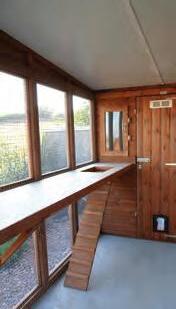
Two removable UPVC shelves, a fully adjustable air vent, lockable cat flap and a fully opening window leading to a sunning shelf and ladder, make this a firm favourite with customers and cats alike!
A 6ft long exercise area gives your cats plenty of space to explore and relax. A second sunning shelf provides another area to watch the world go by as it is near the front of the pen.

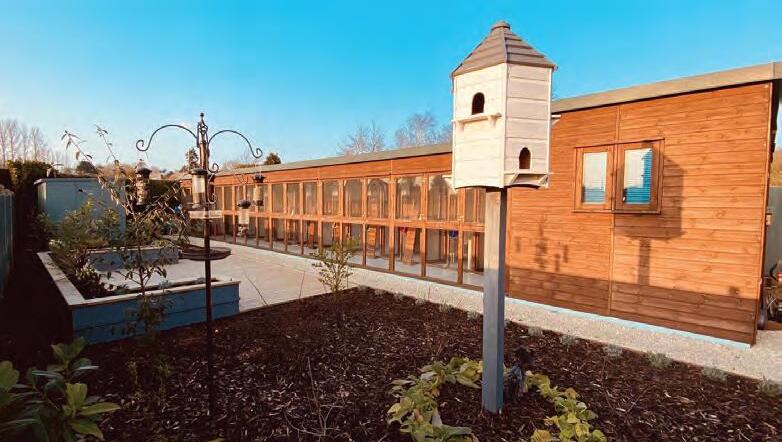
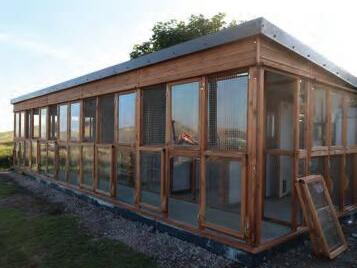
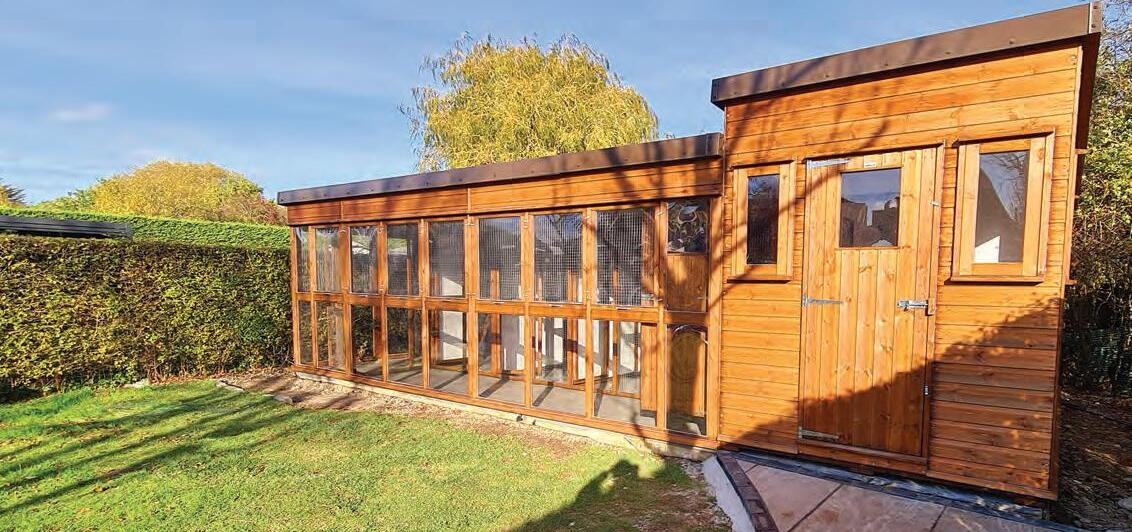
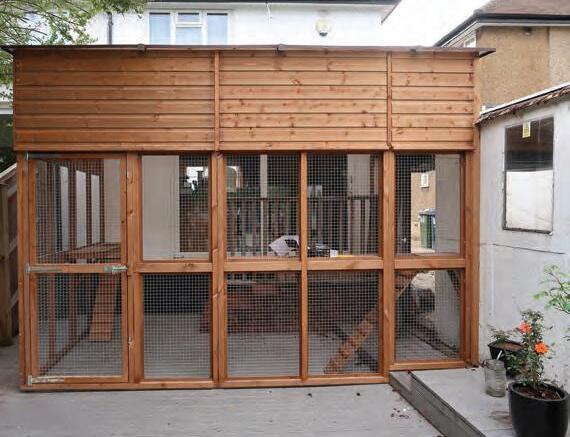
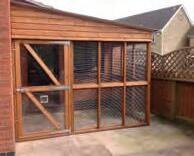
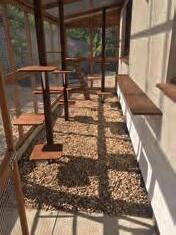
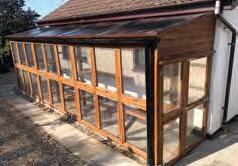
Handmade, bespoke cat runs are a lovely addition to a property, allowing a safe and secure outside space, for your indoor cats. They can be designed with lift out shutters, to have at the time of installation or added at a later date, which provide weather protection from the elements, making it an area that can be used year-round.
We are able to supply extras, to provide activity and viewing point for your cats, such as ladders, posts and sunning shelves. The addition of a Deluxe Cat Cabin can also provide a small hideaway, for cosying up and having a cat-nap.
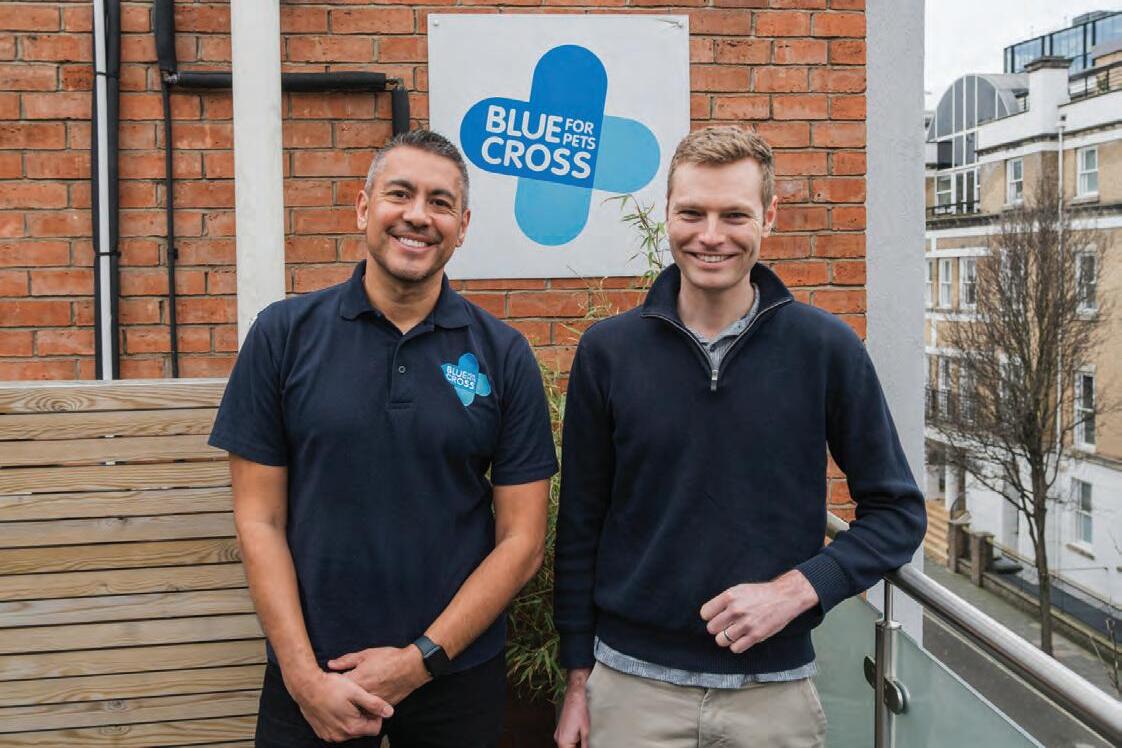
Blue Cross pet charity has announced that Dr Ben Simpson-Vernon, known on social media as ‘Ben the Vet’, is the latest Blue Cross Ambassador to promote the charity’s work and best practice pet welfare
Ben visited Blue Cross Victoria animal hospital in central London to see first-hand how the charity is working to keep pets and their owners together during times of financial hardship. The hospital provides subsidised veterinary treatment to pet owners on low incomes, ensuring their beloved companions can access vital care that would otherwise be unaffordable.
Ben said: “I am delighted to become a Blue Cross Ambassador. I've been a supporter of the charity's work for a number of years, and I'm looking forward to championing the vital work they do in helping pets and their people every single day.”
Dr Paul Manktelow, Chief Vet at Blue Cross, said: “We're delighted to welcome Ben as our latest Ambassador. His experience as a vet means he sees firsthand the struggles many pet owners face and understands the importance of affordable veterinary care. Ben will be a powerful advocate for the work we do –from finding homeless pets their forever homes, to helping to keep pets and their people together.”
Ben joins fellow Blue Cross Ambassadors Chris Packham, Pam Ferris and Mary King.
Dr Ben Simpson-Vernon (‘Ben the Vet’) MA VetMB MRCVS graduated from Cambridge University in 2015. He is a practising vet in Essex/East London (Goddard Veterinary Group).
He has built up a large social media following by sharing his matter-of-fact videos on pet welfare and health topics, many of which focus on inherited health problems in pedigree dog and cat breeds.
With the increasing pressures faced by pets and pet owners, we are facing a hidden pet welfare crisis and Blue Cross needs the support of animal lovers to continue its work helping pets and their people, in any way they can. Whether that’s by donating to keep rehoming and veterinary services going through these tough times, fundraising for Blue Cross, providing foster care for pets while loving new homes are found, volunteering at pet food banks, or signing up to support Blue Cross campaigns for better pet welfare. www.bluecross.org.uk

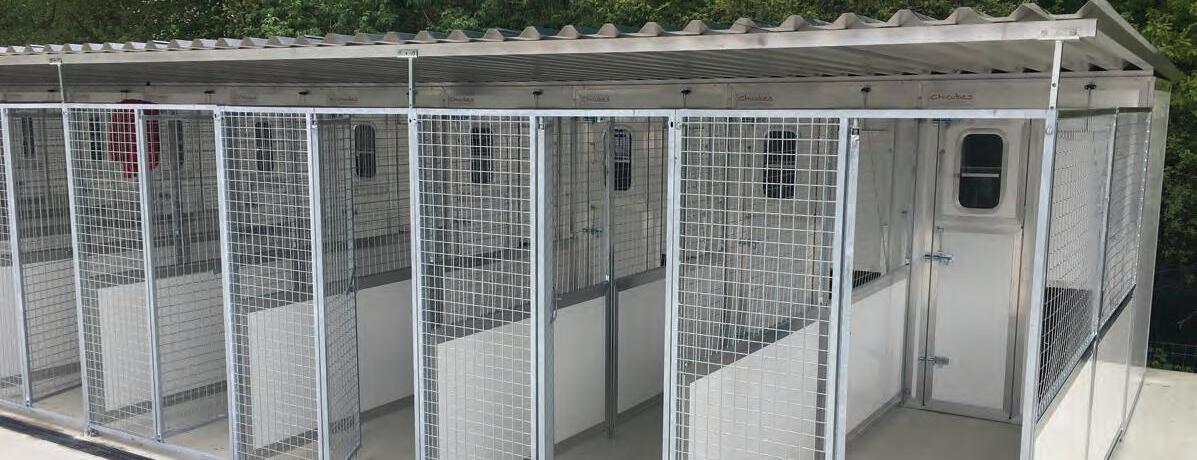
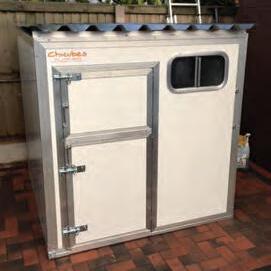
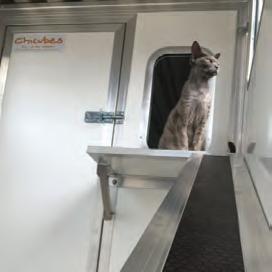
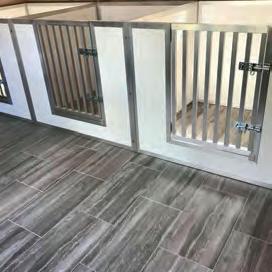
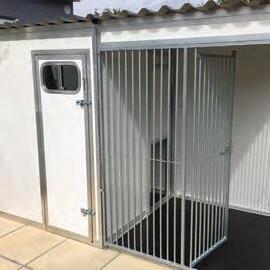
n 4 standard sizes
n Perfect for any size dog
n Secure locks and door hooks
n PVC insulated walls and ceilings
n Solid or mesh run panels
n Multi level internal raised platforms
n Boarding or domestic use
n Standard and bespoke sizes and designs
n Optional integrated and removable whelping areas
n Easy to assemble
n Durable and easy to clean
n Quality and durability n Bespoke design service
n Fully thermally insulated n Easy cleaning and hygenic
n PVC insulated walls and ceilings
n Standard and bespoke sizes to meet breeding, boarding and GBGB specifications
n Multiple run sizes and designs
n Secure, robust and easy to clean
Plastic insulated walk in dog kennels and catteries for breeding, boarding and domestic use. Chicubes offers a wide range of products designed and built in the UK. Chicubes animal housing for dogs and cats and other small animals brings the full package, quality and durability, value for money and helpful customer service. Chicubes offer standard and bespoke design services, so finding the rights system for you when setting up or renewing your establishment couldn’t be easier. Built to last and meet current regulations for boarding, breeding and GBGB licensing. Delivery and fitting nation wide.

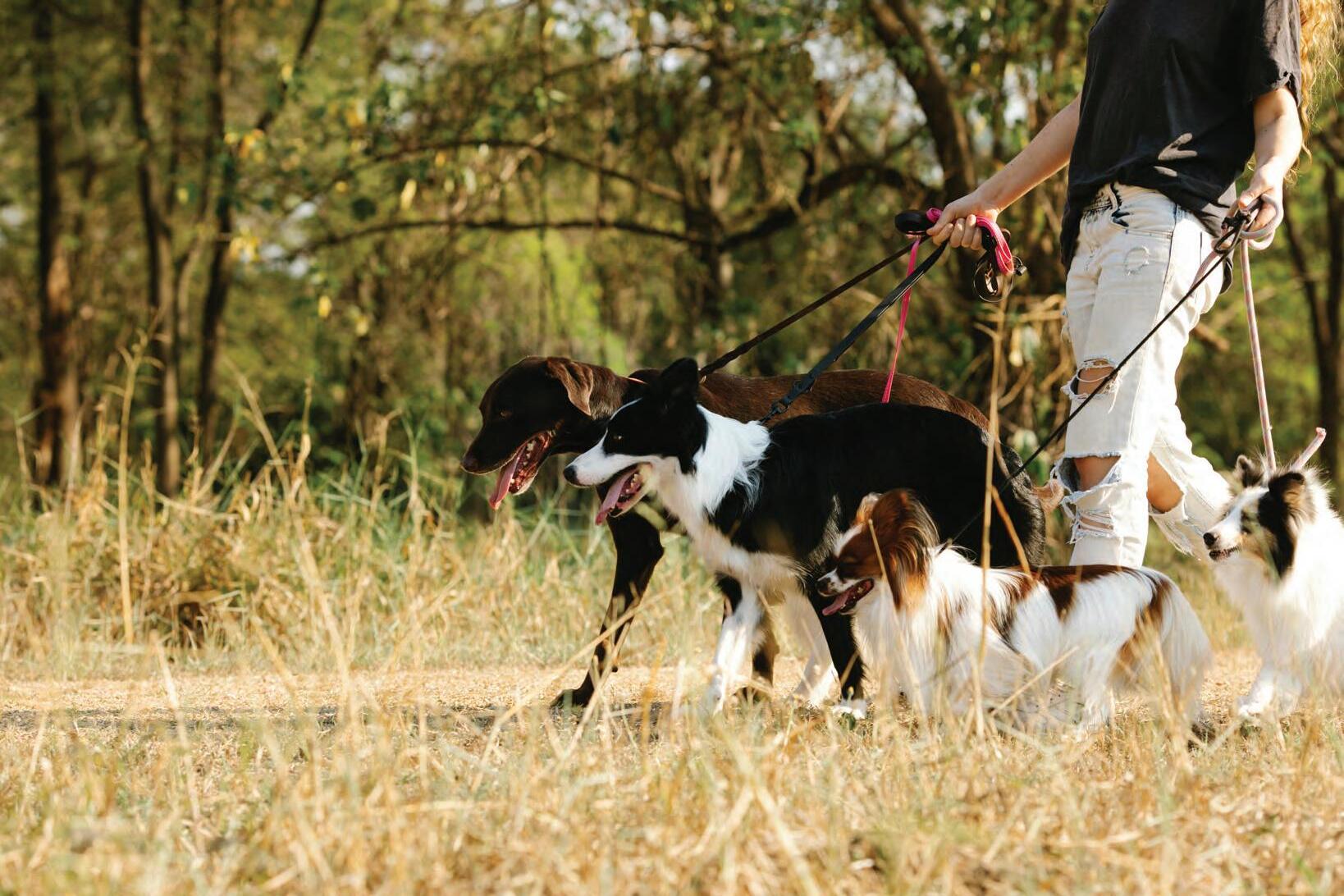
Dog owners across the UK are being reminded that from 1 March through to 31 July, dogs should be kept on a lead in many outdoor spaces to protect wildlife during the peak breeding season.
The guidance, set out in the Countryside Code and backed by access law, is designed to protect ground-nesting birds and young animals, which are especially vulnerable in spring and early summer.
During this period, dogs must be kept on a short lead (no more than 2 metres) on open access land, such as moorland, heathland and coastal paths.
Failing to comply can carry serious consequences. Under countryside access legislation, ignoring seasonal
restrictions can result in fines of up to £1,000, while dogs worrying livestock can lead to unlimited fines and, in extreme cases, further legal action.
“This isn’t about bad dog owners, it’s about timing”
Michael Nelson, canine expert from leading outdoor kennel provider, Kennel Store, says the seasonal rule often catches people out because it clashes with longer days and more outdoor walks.
“Most owners are doing exactly what they do all year round, heading out for a walk and letting their dog enjoy a run. The problem is that from March onwards, the countryside is effectively a nursery.”
“Dogs don’t need to make contact to cause harm. A dog running through long grass can destroy nests, separate mothers from young, or cause birds to abandon eggs entirely.”
Nelson stresses that even dogs with
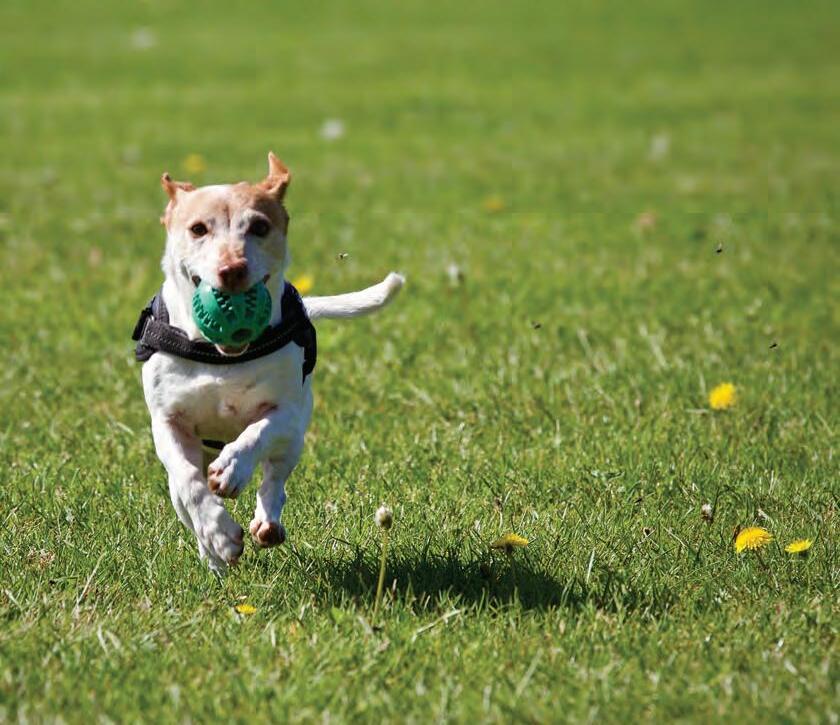
excellent recall instincts can unintentionally trigger problems.
on access land are enforceable, and landowners also have the right to restrict dogs during lambing and nesting periods. Local councils can additionally issue £100 fixed penalty notices under Public Space Protection Orders in certain areas.
“People are often shocked when they hear the potential fines. But enforcement usually happens after something has already gone wrong, livestock chased, nests destroyed, or a complaint made.”
Nelson says keeping dogs on a lead for a few months is a simple adjustment that protects wildlife, avoids conflict with farmers, and prevents owners from facing unexpected penalties.
“This isn’t about stopping dogs from enjoying walks. It’s about being mindful for a short part of the year.”
“A lead doesn’t ruin a walk, but ignoring the rules absolutely can, especially if it ends with a fine or a confrontation.”
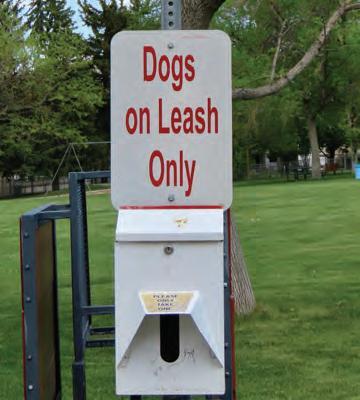
“You can have the best-trained dog in the world, but instincts kick in. A sudden movement, a scent, or a bird taking off is all it takes. That’s why the lead rule exists during these months.”
Ground-nesting birds such as lapwings, skylarks and curlews lay their eggs directly on the ground, often in areas that look like empty fields or open countryside. Many young mammals are also hidden in long grass during spring.
“To us, it looks like an open field. To wildlife, it’s a maternity ward. Once a nest is disturbed, the damage is often irreversible.”
While the Countryside Code itself is guidance, seasonal lead requirements
• Keep dogs on a short lead on open access land
• Always keep dogs on a lead near livestock
• Watch for local signage indicating additional restrictions
Remember that fines can reach £1,000, even for unintentional breaches
n https://www.kennelstore.co.uk/collections/wooden-dog-kennel

For millions of dog lovers, allergies present a heartbreaking dilemma. The companionship, comfort, and emotional wellbeing dogs provide are undeniable, yet so too are the sneezing, itching eyes, and breathing difficulties that can follow. In response, certain breeds such as Poodles, Bichon Frise, Schnauzers, Maltese, and Portuguese Water Dogs are frequently promoted as “hypoallergenic,” offering hope to allergy sufferers who dream of owning a dog without the symptoms. But how much of this promise is supported by science and how much is simply clever marketing?
The Truth Most People Aren’t Told
One of the biggest misconceptions surrounding pet allergies is the belief that fur is the primary cause.
In reality, pet allergies are triggered by specific protein allergens produced naturally by the animal. These microscopic proteins are found in:
• Saliva
• Skin cells (commonly known as dander)
• Urine
• Sweat glands
When dogs groom themselves, these allergen proteins transfer onto their coat. From there, they spread easily throughout the home, settling into soft furnishings, clothing, carpets, and even circulating in the air.
This means that while some breeds may shed less hair, they still produce the same allergens. Less shedding may reduce the spread slightly, but it does not eliminate the root cause.
In other words, no dog is truly allergen-free.
Is “Hypoallergenic” a Scientific Term?
Surprisingly, there is no formal scientific or medical definition of a hypoallergenic dog.
The term itself simply suggests that something is less likely to cause an allergic reaction, not that it won’t cause one at all.
Scientific studies have shown that allergen levels can vary significantly between individual dogs, even within the same breed. This means that choosing
a “hypoallergenic” breed offers no guarantee of symptom relief.
For many families, this can lead to disappointment. After investing emotionally and financially in a dog believed to be allergy-friendly, symptoms may still persist.
For many people, it’s not simply the presence of a dog that causes symptoms — it’s the gradual build-up of allergens within the home over time.
These microscopic proteins settle into the spaces we use every day, often without us realising:
• Sofas and soft furnishings
• Bedding and mattresses
• Clothing and blankets
• Carpets and rugs
• The air circulating around your home
As part of normal daily life, allergen levels can quietly build, increasing the likelihood of reactions.
This is why focusing on reducing allergen load, rather than relying on

breed labels alone can make such a meaningful difference in helping people live more comfortably with their dogs.
Modern allergy management has moved beyond simply avoiding triggers. Today, the focus is on reducing allergens at their source — helping people live more comfortably alongside the things they love.
At Bio-Life International, this thinking is at the heart of everything we do. Our range is proudly Allergy UK Approved, giving reassurance to families looking for trusted, science-led support.
PetAlCleanse® is a gentle weekly lotion applied directly to your dog’s coat, helping remove the allergen proteins left behind through normal grooming and
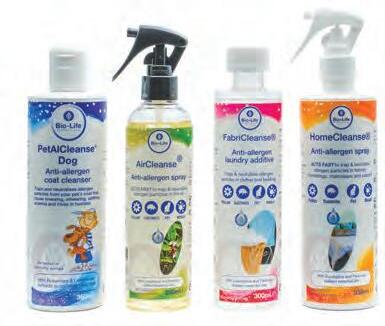
daily life, before they have the chance to spread around the home.
FabriCleanse® works within clothing, blankets, and pet bedding, helping lift away allergens that would otherwise remain trapped in fabrics and continually re-exposed.
HomeCleanse® helps care for the spaces where we relax most — sofas, mattresses, carpets, and soft furnishings, reducing the build-up of allergens over time.
AirCleanse® supports a cleaner indoor environment by helping reduce airborne allergens, including pet allergens, pollen, mould, and dust mites.
Together, these small, simple steps can make a meaningful difference. Because managing allergies isn’t about giving up the companionship of a dog, it’s about creating a home where both of you can breathe more easily.
For many allergy sufferers, giving up the idea of owning a dog feels like giving up a part of life itself. Dogs provide companionship, emotional wellbeing, and measurable mental health benefits.
The encouraging reality is that allergy sufferers do not always need to choose between their health and their love of animals.
With proper allergen management, many people can live far more comfortably alongside their pets.
The key lies not in chasing the promise of a “hypoallergenic” breed, but in understanding the science and taking proactive steps to reduce allergen exposure.
The concept of hypoallergenic dogs may offer hope, but it should not be mistaken for a guaranteed solution. All dogs produce allergens. What makes the real difference is how those allergens are managed within the home. By focusing on treating the cause, not just the symptoms, allergy sufferers can take back control and continue enjoying the companionship of their dogs with greater comfort and confidence.
Because when science leads the way, better living follows.
Bio-Life International — Treating the cause, not the symptoms.
n For further information, visit www.biolife-international.co.uk

Retractable dog leads could be behind an increase in dog walking injuries, and these leads are of particular danger to hands and fingers.
Retractable leads are thought to be the ideal way to give your dog a sense of freedom, while still having the security of being on a lead. But injuries to yourself, other walkers and your dog are a real threat. And the experts at TopDog are on a mission to educate the public on the dangers.
Johns Hopkins University researchers reported that injuries related to walking a dog on a lead in the US between 2001 and 2020 quadrupled. Analysis of data from the Consumer Product Safety Commission (CPSC) specifically highlights the danger to hands and fingers, a hallmark of injuries from the thin cords of retractable leads, with fingers accounting for 23% of injuries in their sample year.
“The cords of retractable leads can be really nasty if they come into contact with skin and dog behaviourists don't recommend them”, says TopDog co-owner, John Skinner.
“It’s instinctive to want to grab the extending lead if something goes wrong. But the speed at which these cord retracts can cause painful injury. It can also easily get tangled around you or your dog. The unexpected jolt backwards when your dog reaches the end of its lead when running is also dangerous, potentially causing back and neck injuries.”
Having your dog on a fully extended lead also makes it difficult to avoid cyclists, pedestrians, other dogs, or hazards like broken glass.
Pet charities agree. Both PDSA and Battersea do not recommend extendable leads, particularly when training dogs for lead walking.
John continues: “The safest way for everyone is a traditional fixed-length lead, which provides a consistent and predictable connection between you and
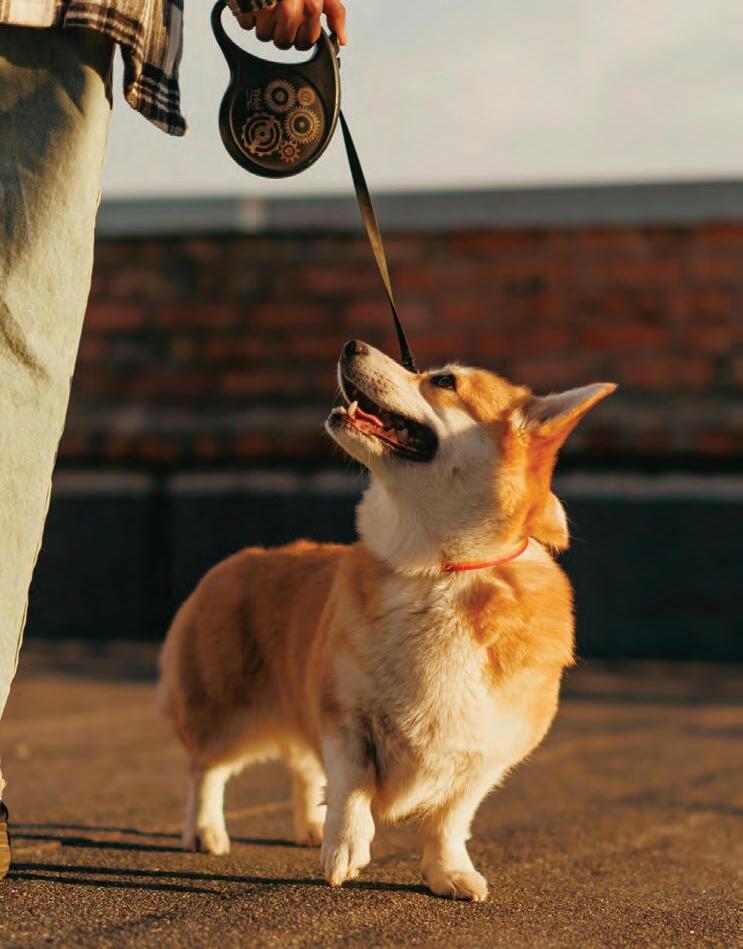
your dog, which is fundamental for control, training, and safety.
“Combined with a well-fitted harness, a fixed-length lead removes pressure from your dog's neck area and avoids the risk of accident and injury.”
Top Dog’s range of rope leads and stylish design collections of matching leads and harnesses are the safest combination for pet parents and their dogs. The leads are available in a range of lengths, and all harnesses are
available in multiple sizes, for the best fit for your dog.
n For more information on why dog owners should ditch retractable leads, head to TopDog’s advice blog here https://topdogharnesses.co.uk/blogs/n ews/why-you-should-ditch-the-retractable-lead




• More than half of pet owners (52%) wouldn’t know what to do if their pet was choking, according to new research.
• Almost one in three (29%) would be unsure how to act if they suspected their pet had heatstroke.
• Data also shows everyday food risks are still being missed, with a quarter of owners unaware that raw bread dough (27%) or cooked bones (24%) can be dangerous for pets.
New research1 reveals a knowledge gap among British pet owners when it comes to common pet emergencies like choking, heatstroke, bleeding, toxic foods, and allergic reactions to stings.
In fact, the study by Agria Pet Insurance shows more than half (52%) of pet owners are unsure what they
should do if their pet is choking, and one in three (29%) are uncertain about what action to take if they suspect their pet is suffering from heatstroke.
Dr Charlie Astle, also known as Charlie the Vet, is an Agria ambassador, vet and pet first aid expert. She says understanding the signs of common pet first aid emergencies can make all the
difference, and shares her tips to help pet owners:
Just four in 10 pet owners (41%) could correctly identify all key warning signs of choking. While most owners recognised gagging and retching (94%) and
breathing difficulties (84%), awareness dropped for pawing at the mouth (66%), and one in six (17%) could only identify a single sign.
Charlie the Vet’s tip: Stay calm and call your vet immediately. Carefully open the mouth, pull the tongue forward and check for a visible object - only remove it if you can do so safely without pushing it further down. If not, perform the Heimlich manoeuvre and get to the vet urgently. Even if resolved, your pet should still be checked.
Almost one in three (29%) pet owners were unsure of what action to take if they suspected their pet was suffering from heatstroke.
Charlie the Vet’s tip: If you suspect heatstroke, cool them first, then get to your vet. Move your pet somewhere cool and start active cooling immediately. Cold water is safe. Young, healthy pets can be fully immersed (keep their face above water). For older or unwell pets, use a fan and pour cold water over them. Keep cooling on the way to the vet. Offer water - ice water and ice cubes are safe.
The survey also showed a fifth (19%) of pet owners wouldn’t know what to do if a pet was bleeding heavily. One in 10 (9%) even admitted they don’t even know the difference between heavy and light bleeding.
Charlie the Vet’s tip: If your pet is bleeding, apply gentle but firm pressure with a clean cloth or towel. Keep them calm and still, and head to the vet as soon as possible, especially if the bleeding won’t stop.
Signs of an allergic reaction are wide ranging: difficulty breathing, swelling of the head, hives, vomiting, excessive drooling, pale or blue gums, and lethargy. Yet two thirds of pet owners (65%) couldn’t identify all seven signs.
Charlie the Vet’s tip: If your pet is stung and their head or tongue begins to swell, they start vomiting or acting unwell, contact a vet immediately. Mild stings can be soothed with a cold compress, but serious reactions need urgent treatment.
Many common household foods are toxic for pets. While 99% of those surveyed knew chocolate is toxic for dogs, a quarter didn’t recognise that raw bread dough (27%) or cooked bones are dangerous (24%) too. One in six (17%) didn’t realise that caffeine is toxic to dogs.
Charlie the Vet’s tip: Call your vet immediately - don’t wait for symptoms. Take the packaging with you, identify any plants involved, and stop your pet licking toxins from their coat. Fast action can save lives.
With the world-famous international dog show, Crufts, returning to Birmingham from 5-8th March, the nation’s dog lovers will be celebrating our four-legged friends. But while many owners can spot perfect heelwork or impeccable recall, far fewer feel confident handling a first aid emergency.
Charlie the Vet will be appearing at the Agria stand at Crufts. She says: “Pets are brilliant at getting themselves into trouble, usually when we least expect it.
Whether it’s an allergic reaction to a bee sting in the garden or overheating on a walk, knowing what to do in those first moments really matters. A little first aid knowledge goes a long way. It can buy you time and protect your dog until you reach a vet.”
As a proud major sponsor of Crufts, Agria will be attending the four-day event to shine a spotlight on pet first aid, responsible ownership, and the importance of understanding your animal and being prepared when emergencies happen. Charlie the Vet will be at the Agria stand, performing demos on bleeding and bandaging, choking, and pet CPR.
Additionally, Agria offers free online pet first aid training for new and existing policyholders via the Agria Rewards platform.
Visitors to the Agria stand at Crufts 2026 can expect:
• A free pet first aid course and kit for new policyholders
• An on-stand first aid quiz to test pet care knowledge
• Bespoke caricatures from Dave’s Caricatures
• Pet portraits, with free digital and printed keepsakes
• Agria’s Carbon Calculator and sustainability initiatives
• The Agria Sustainability Award, in partnership with Crufts
• A dedicated Breeder Hub for tailored support and advice
• A final call for dog registrations for Rescue a Rescue, open on stand.
n Visit the Agria website for more information about Cruf ts, sponsored by Agria Pet Insurance: https://www.agriapet.co.uk/crufts/



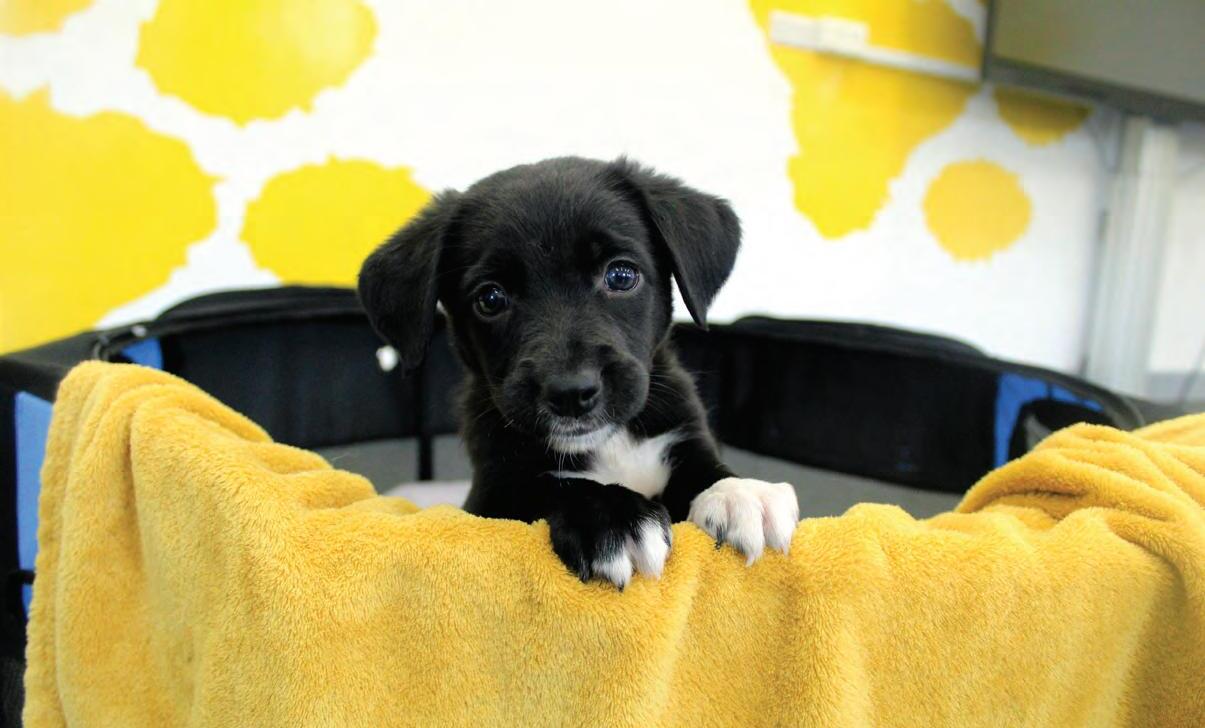
The rehoming centre, which currently has 76 dogs in kennels awaiting their forever homes, is in urgent need of clean blankets, towels and dog bedding. Supplies are being used up quickly as the team works hard to keep kennels warm and dry in the recent stretch of cold, wet weather. The charity is asking members of the public to check their cupboards for any spare items that could help.
The specific items the rehoming centre is appealing for include:
• Soft bedding (no feather duvets please)
• Blankets
• Towels
• Sheets and duvet covers
• Toys (hard plastic and soft plushies)
Dogs Trust asks that all donated items
are clean and in good condition.
Donations can be dropped off directly at the rehoming centre on Harvil Road, in the storage containers outside the front of the reception area.
Alternatively, if supporters would prefer a simple way to donate gifts or treats to the dogs in the charity’s care, please visit Dogs Trust Harefield’s Amazon Wish List. There, supporters will find a selection of items much loved by the centre’s dogs, which can be ordered and delivered directly to their kennels.
Richard Moore, Manager at Dogs Trust Harefield said, “The recent cold and wet weather means we are going through blankets and bedding faster than usual. Keeping our dogs warm and dry is essential for their health and wellbeing, but our supplies are running low.”
“We’re asking the community to help if
they can. As a charity, we rely on the generosity of our supporters and are always incredibly grateful for the support of the public.”
Every contribution will help to ensure the dogs stay warm and comfortable while they wait for their forever homes.
Dogs Trust Harefield is open to the public five days a week. You don't need an appointment to visit, see the dogs looking for homes, get advice or apply to adopt. As every dog is unique, finding the perfect match can take some time, several months in some cases.
Applications to adopt last three months, and the team will do everything they can to find the right dog for you, however long it takes. For more information about the work Dogs Trust Harefield do, please visit www.dogstrust.org.uk/harefield
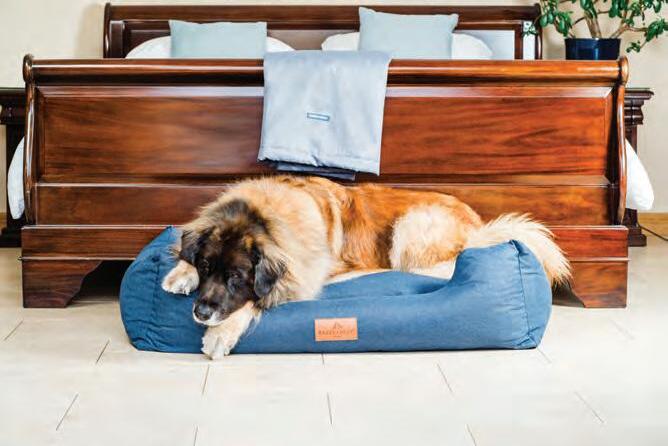
Make your dog super comfortable in our NAVY ULTIMATE - available in 4 sizes from XS to XL.
In our assortment we have 9 lifestyle colours. The beds contain five core elements. Namely the 4 x side bolsters and the central mattress. Central mattress is human grade memory foam pieces so they mould around the individual dogs needs. (Cheap beds use a slab that ends up like a damp sponge as there is zero airflow). The sides are a blend of memory and cotton to deliver long lasting comfort and support. Our beds will never lose shape or support.
The covers are both washing machine and tumble dryer safe. All colours are interchangeable so you may buy the navy bed today and down the line only need buy the spare covers in any colour to completely change the appearance of the bed if desired. What's not to like!
Our beds have won the Telegraph Best Buy for the past three years. Our customer reviews are 4.98/5. Our beds are handmade in Europe using sustainable materials. View it here https://www.bakerandbray.com/products/eco-luxe-orthopaedic-luxury-dog-bed-navy-blue
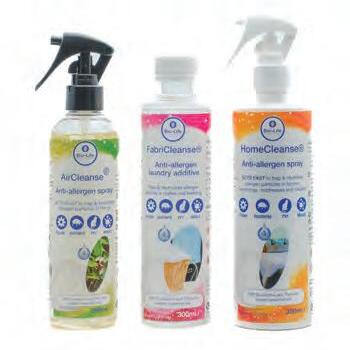
HomeCleanse® spray, used once per month gets rid of the mites and their residues from any soft furnishing you cannot wash. FabriCleanse® laundry and carpet cleaning additive gets rid of the mites from laundry and floor coverings. AirCleanse® room spray cleans the air that you breathe. £37.95 www.biolife-international.co.uk

A durable and adorable long-lasting dog toy. Built-In Squeaker. Made with different textures for a more stimulating playtime. Perfect for Puppies- The soft outer fabric makes this big octopus a great cuddle toy for puppies. £14.99 https://www.petscorner.co.uk/
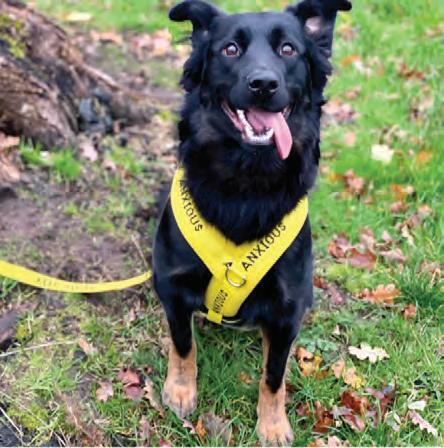
Walking an anxious dog can be a challenge — but the right gear makes all the difference. That’s why we’re so excited to introduce our brand-new Y-Shaped Harness, thoughtfully designed to help you and your sensitive dog enjoy calmer, more comfortable walks. Our harness is designed to evenly distribute their force when pulling or lunging. Perfect for walking, hiking, great for running and jogging. From £29.99 https://myanxiousdog.co.uk
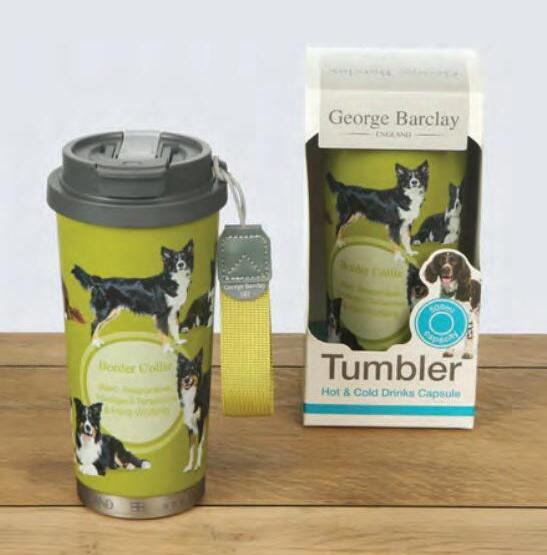
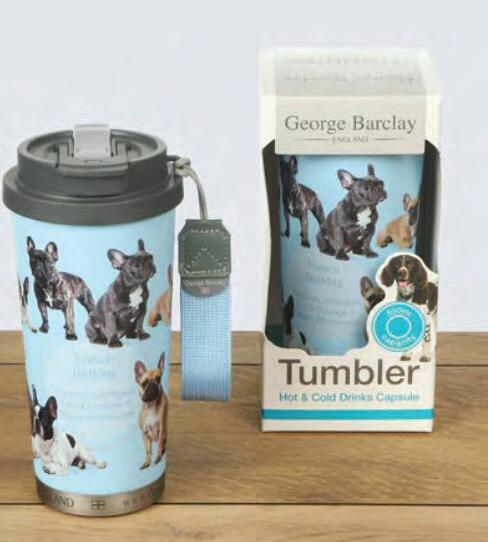
Designed for 'Life on the Go', the George Barclay Insulated Tumbler keeps your beverage just the way you like it; warm when you need comfort, cool when you need refreshment.
It’s the perfect companion for: Morning dog walks, Weekend adventures, Park outings, Everyday travel. Comes in different dog breeds and colourways. £19.99 www.georgebarclay.co.uk
The perfect way to give your cat a calming and relaxing massage. Kit contains: Soft massage brush with 20 Calming wipes. £16.00 www.petremedy.co.uk
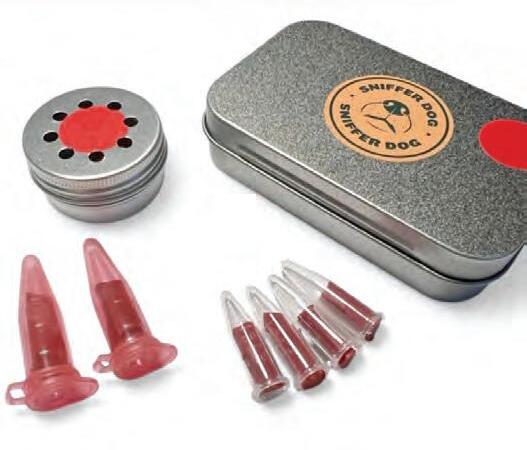
The original portable Dog training scent kit with Kong Consists of x 4 0.5ml plastic vials with KONG, and one 15ml vented magnetic tin with a 1cm piece of RED KONG all contained in a handy pocket sized tin (3.75 x 2.36 x 0.86 inches) Perfect size for taking on walks, or as a trainer fabulous kits for your clients to take home and practice! £6.70 www.thesniffershop.co.uk

Perfect for playing fetch and catch, easy to throw and for your dog to pick up. Ideal for all Ages. The perfect fetch toy for beach days and picnics. £5.99
https://www.petscorner.co.uk/

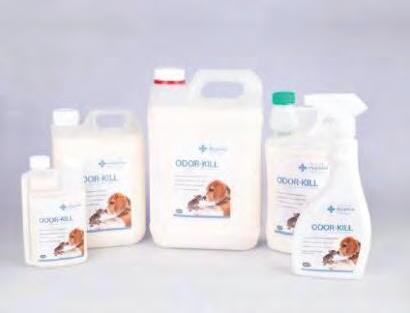
The Bubblegum-Scented Deodoriser That Destroys Smells. This highly versatile concentrate is not just for pet beds. It is a total home hygiene solution. From £10.00 www.animal-health.co.uk

A lovable range of cat, dog and animal eye glass holders, affectionately sculpted to bring a smile to storing glasses safely and keeping them where they can easily be found. 12cm high. Glasses not included. £19.99 www.bordercollietrustgbshop.org.uk
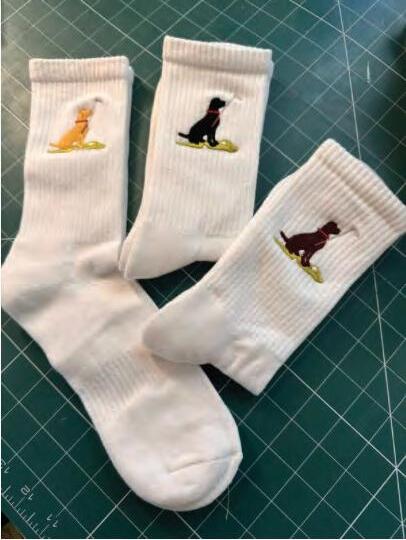
Who doesn’t love a sock?! Dad’s, brother’s, son’s, mum’s, sister’s, daughter’s Christmas stockings, Mother’s and Father’s Day, birthdays and “just because”!!!!!
Men’s sports socks in white 6-11 or 12-15. £9.50
Includes post and pack. PLEASE STATE DESIGN (See Gallery) SIZE,COLOUR OF DOG ON NOTES ON YOUR ORDER AND WE WILL DO THE REST. www.labrador-lifeline.com
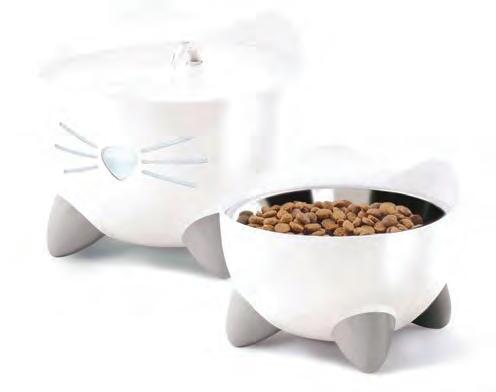
Hydration and dining, perfectly paired. The Catit PIXI Combo Kit blends adorable design with smart function — keeping your cat happy, healthy, and stylishly cared for. www.catit.co.uk
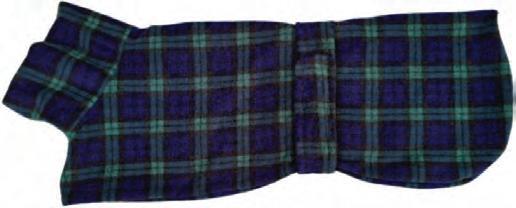
A Double-thick Fleece with Velcro fastening designed to keep your sighthound warm on chilly days. Made from soft Polyester fleece with a snood collar, it is ideal for wearing out on cold, dry days or for cosy evenings indoors.
Please note that this is not a waterproof coat. Designs available: Red Tartan or Black Watch Available in sizes: 26″, 28″ and 30″. £28.00 www.greyhoundsinneed.co.uk


The BetterBone dog chew helps to relieve stress and care for their teeth. It's made from two food-safe ingredients for healthy and safe chewing. Available in three stengths; soft, medium, and hard. Made with cellulose and vegetable oil and is free from nylon and rawhide. £10.99
https://www.petscorner.co.uk/
Members of the Senedd are being urged not to forget cats, or leave Wales lagging behind other nations, in a charity’s new manifesto which highlights the need to place felines front and centre.
With one in four Welsh households (24%) owning a cat, Cats Protection is using its Cat Manifesto Wales to call on MSs to make cats a priority during policymaking.
The charity also highlights areas where Wales falls behind the rest of the UK. This includes cat breeding and the regulation of animal welfare establishments which are already licensed in Scotland; compulsory microchipping which is required by law in England and pet theft which is a specific offence in England and Northern Ireland.
Alice Palombo, Cats Protection Advocacy and Government Relations Manager, explains: “Our manifesto gives voice to cats, who cannot speak for themselves, and provides a framework by which cats across Wales could be safeguarded from becoming victims of cruelty, neglect or poor welfare and ultimately enjoy better lives.”
The manifesto advocates for five key focus areas through which MSs could improve the welfare and wellbeing of the 480,000 owned cats in Wales. They could:
• Give cats their best life – as a result of regulating cat breeding, animal welfare establishments and ending or regulating activities involving cats. This would include a total ban on the breeding of cats with extreme characteristics which cause debilitating pain or ongoing health
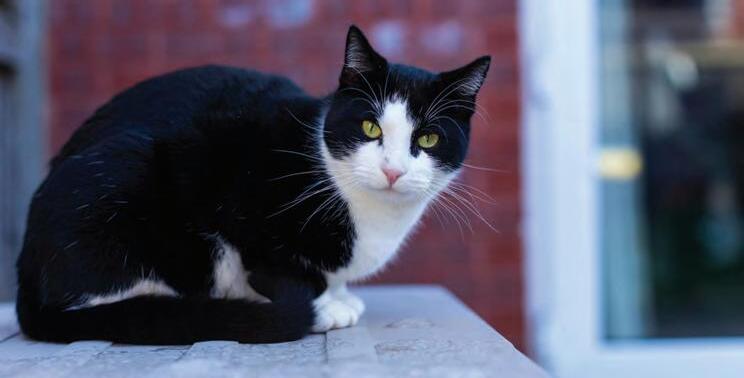
conditions such as Scottish Folds; extremely flat-faced Persians; Munchkins and ‘Dwelf’ or ‘XL Bully’ cats and an end to activities such as cat cafes which negatively affect the welfare of the cats on-site.
• End cruelty to cats – by creating specific offences relating to dogs attacking, injuring or killing cats, in which owners can be prosecuted, as well as cat theft whereby cat sentience is fully recognised. The charity also calls for a ban on the sale and use of cruel training devices, strengthening the existing ban on shock collars with which Wales leads the way.
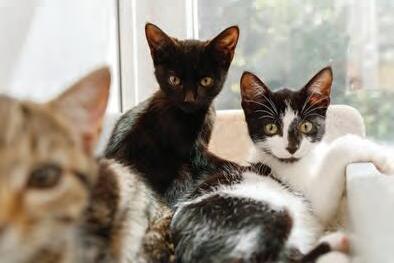
• Protect cats in the digital world –through the tightening of rules around selling cats online; encouraging social media companies to take harmful cat content seriously and calling on advertisers and the media to show responsible depictions of cats. This would prevent breeds with known health conditions or behaviour that is harmful to cats being shown and normalised.
• Recognise cats are family – by introducing compulsory microchipping of pet cats and a single point of search for microchip databases; encouraging pet-friendly rented housing; including animal welfare in the curriculum;
acknowledging the benefits of cats to people’s wellbeing as well as raising awareness of the welfare issues of cat hoarding and multi-cat households.
• Keep cats safe and secure – by promoting better labelling of products like lilies which are toxic to cats and which 51% of Welsh cat owners did not know posed a danger. Cats Protection also suggests restricting the use of fireworks to keep cats safe from their negative effects.
Alice adds: “Wales loves cats, with 94% of owners considering them to be family, but our laws and policies haven’t kept pace. From unregulated breeding and so-called ‘designer’ cats to sentience being overlooked so that cat theft is treated like phone theft - too many cats are suffering needlessly. However, by implementing the changes suggested in our manifesto, the Senedd can lead the way by championing cat welfare and enabling us all to live better lives with cats.”
Read the Cat Manifesto Wales featuring the full breakdown of each proposal at www.cats.org.uk/what-we-do/campaigning/manifesto/manifesto-wales n To find out more about the work of Cats Protection visit www.cats.org.uk
The Chartered Institute of Environmental Health (CIEH) will host its Animal Welfare Conference next week bringing together leading experts, regulators, and practitioners for a programme addressing some of the most pressing issues in the sector.
The half-day programme will include case studies of animal welfare cases sharing good practice, as well as regulatory and legislative updates impacting the work of environmental health professionals in this area.
The event kicks off with a session delivered by Sharon Edwards, Consultant Animal Health Inspector at the City of London Corporation, in which she will cover policy and regulatory updates for local authorities, including the Animal Welfare Act and recent changes to primate legislation.
The next session will look at the new jointly developed responsible dog ownership policy framework by the RSPCA and the Dogs Trust, with speakers Lee Gingell, Public Affairs Manager at the RSPCA and Ruairidh Nichols, Public Affairs Manager at the Dogs Trust.
A first of two case studies at the conference will be delivered by Andy Newnham and Georgia O’Brien from the London Borough of Hounslow who will give insights on an illegal dog breeding case in their area.
There will then be a presentation on the Innate Health Assessment tool for local authorities with speakers including Dr Daniel O’Neill, Senior Lecturer in Companion Animal Epidemiology at the Royal Veterinary College.
The programme rounds off with a second case study session on how Colchester City Council is working collaboratively with the ‘Paws on the Doors’ scheme to drive higher animal welfare standards.
Nikki Pearson, Head of Membership Services at CIEH, said:
“Our Animal Welfare Conference brings together the leading voices working at the frontline of animal protection. By combining policy updates, sector

insights and real-world case studies, we’re equipping professionals with the knowledge they need to drive higher standards and tackle emerging challenges.
“Join us for a packed programme showcasing the innovation and collaboration happening across the
sector which will be hugely valuable and insightful for both members and nonmembers interested in this subject.”
n For more information and to book a place, visit: https://www.cieh.org/events/2026/feb ruary/cieh-animal-welfare-conference/
“Magical”, “Mystical”, “Serene” – these words spring to mind whenever I visit this amazing hospice/sanctuary.
By Olive Armstrong
The Maggie Fleming Animal Hospice and The Karass Sanctuary is based at Ringliggate, a smallholding just outside of Kirkcudbright in SW Scotland.
It’s set in 4.5acres of beautiful countryside and is home to 200 cockerels, 15 hens, 23 sheep, 9 pigs, a goose, a duck, 5 cats and 29 dogs. Many of the animals have come from abusive situations, some were abandoned/unwanted and a few came from good, loving homes where sadly the owners could no longer care for their beloved animals.
The hospice and sanctuary were founded by Alexis Fleming who had spent many years helping animals in various ways, but when she lost her beautiful Maggie, she knew she had to do something more.
Maggie cost Alexis £100; in a car park in York, on a dark, mid-winter night Alexis exchanged £100 cash for an unwanted dog – a skinny bullmastiff in bad condition looking terrified, a dog advertised on-line and no longer wanted as a breeding bitch as 10 of her 12 puppies died and was “no use to me”. The only thought Alexis had was to save this poor dog. The fact that her landlord didn’t allow pets and that her husband didn’t know what she was doing didn’t really matter – all that mattered was this unwanted, abused dog whose name she didn’t know. I guess a new life deserves a new name and so Alexis called her Maggie.
Over time other dogs came and went but it wasn’t until the awful night that Maggie left that Alexis decided a hospice was needed and started making plans for it. The reason behind this was because Alexis wasn’t with Maggie when she passed. Maggie had been in surgery to remove a tumour at a specialist vet 100 miles away. All went well and she was recovering, however, very sadly she lost her fight. A phone call in the early evening told Alexis that Maggie was deteriorating and there was nothing they could do. There was no way she could get there in time to help Maggie on her final journey. From that moment Alexis decided no other animal
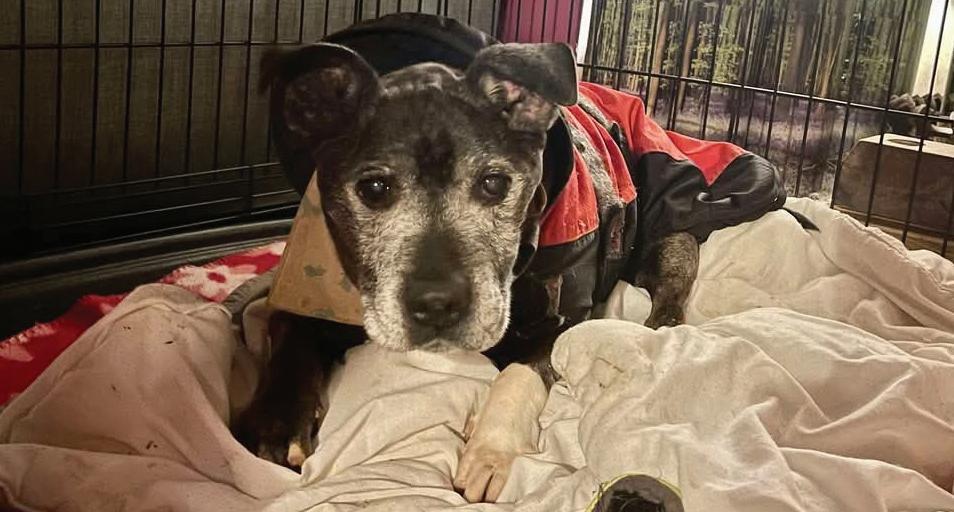
should die alone if it was humanly possible for her to be there. Despite her grief, Alexis knew there was “a better way” and so the idea of a hospice was formed.
A few years since that awful night and Ringliggate is now home to almost 300 animals – “the weans”. They all have their own areas; the “auldies” (dogs) live as a family in the house, where they get specialist palliative and hospice care, while the sheep and pigs have fields to run in / laze about in, and shelters when they need it. The cockerels have two Batchelor Villages which are predator and escape-proof and they are free to do whatever they want all day long – food is plentiful, and they receive supplements and vitamins to keep them healthy and in good condition. I had never previously thought of hens and cockerels as being beautiful, but they are, and each of them has their own individual characteristics. They have their own “houses” and plenty of room.
The cats – Black Cat, Josh and Archiehave a huge catio with all the home comforts – including a sofa, armchair and a double bed! - and plenty of room to do what they please.
As for the dogs, well, they all have their own needs too. There are 2 Spanish Mastins Barney and Bugs, who have their own large cabin for warmth and shelter, and they even have a purpose built “Mastin Mountain” where they spend their days doing what they’re meant to – looking out over the sheep and guarding their home.
Tiny chihuahuas, Lola and Mini, spend their days in the warmth of the kitchen
with their old Romanian friend Bambi who came from an abuser and is living the life she deserves. All manner of other breeds are there, each of them living the way they need to, whether that’s in amongst the others, or in their own quiet spaces.
Somehow, all of this was built despite Alexis suffering severely from Crohns disease and at one point being given 6 weeks to live! Alexis is an amazing, determined lady.
The Maggie Fleming Animal Hospice and Karass Sanctuary is funded purely by donations and fund-raising and run entirely by volunteers. There are 2 volunteers on site 24/7 and various other part time volunteers helping with whatever needs to be done.
I could tell you so much more about this wonderful, amazing place but you can find out yourself by following them: Facebook: The Maggie Fleming Animal Hospice and The Karass Sanctuary Instagram: www.instagram.com/themaggiefleminganimalhospice
You Tube: www.youtube.com/thegoodshipringliggate
Visitors are very welcome by prior arrangement.
Also, if you’d like to read more about it there’s a lovely book “No Life Too Small” which you can order from Alexis – just contact her.
I hope this gives you an idea of how magical and mystical this place is. It’s a place of healing and hope but above all, love. It’s everywhere you look.
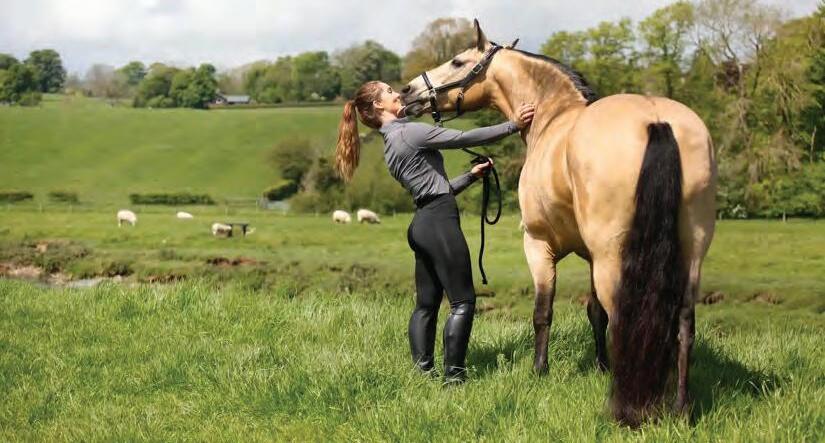
Redwings is pleased to announce it has been named Harry Hall’s Charity of the Year for 2026.
The one-stop shop for all things equine chooses a charity to support every year, based on votes from its customer community.
It means Redwings will get a donation every time someone signs up to their One Club, which aims to make the cost of horse ownership more affordable, takes out a new insurance policy or shops at harryhall.com.
An additional £10 donation will be made for anyone using Redwings’ special One Club referral link here.
A £10 donation to Redwings will buy 10 hay nets which would feed three small ponies for a day.
There will also be the option for shoppers to make an additional donation to Redwings at the checkout, and ad hoc product donations to the charity’s sanctuary sites and horse hospital as opportunities arise.
Lewis Wilkinson, Digital & Ecommerce Director at Harry Hall said: “At Harry Hall, giving back is part of who we are. Every year, we invite our community to help us choose an equine charity to
suppor t, because the causes that matter to them matter to us.
“Redwings got an incredible 48% of the votes to become this year’s Charity of the Year and will be the focus of our fundraising for 2026.
“This partnership reflects our shared passion for horses and commitment to making a difference. Together, we’ll help rescue, rehabilitate and care for equines in need, turning every membership, insurance policy and purchase into positive impact.”
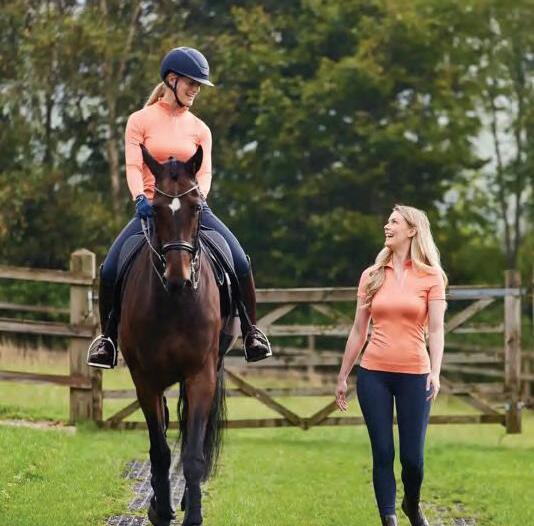
Nicola Knight, Redwings Head of Communications and Campaigns, said: “We’re very excited to be working with Harry Hall this year.
“Thank you to everyone who voted for Redwings. Harry Hall is an important heritage brand in the equine world and we’re so glad to have been chosen by their customers.
“It’s more difficult than ever for charities in the current climate and partnerships like this really help us to continue to rescue and care for horses, ponies, donkeys and mules who need us.
“If you aren’t yet a member and want to join the One Club, please click on our special referral link gifting an extra £10 donation to Redwings with no additional cost to yourself. And if you are shopping at Harry Hall, and can do so, please consider rounding up your purchase. Every additional donation makes a huge difference.”
n To find out more, visit www.redwings.org.uk
Government Minister Baroness Hayman has visited Cats Protection’s South London Cat Centre, where she met staff and volunteers delivering the charity’s Lifeline service – a specialist cat fostering programme for people escaping domestic abuse.
The visit comes following the publication of the government’s strategy on Violence Against Women and Girls (VAWG), which includes acknowledgement of the vital role services such as Lifeline play in helping victim-survivors of domestic abuse.
Cats Protection’s Lifeline service provides free and confidential temporary cat fostering for victim-survivors of domestic abuse, recognising that the inability to take pets into most refuges and emergency accommodation can be a significant barrier to fleeing harm.
“We were delighted to welcome Baroness Hayman to our centre,” said Amy Hyde from Cats Protection. “Her visit was a powerful recognition of the vital role services like Lifeline play in helping victim-survivors reach safety. Cats are more than pets – they’re family – and for many people experiencing domestic abuse, knowing their cat will be cared for can be the difference between staying and fleeing. We’re delighted that the Government’s new strategy reflects the importance of including animals within safety and response plans, ensuring the most effective support for both people and their animals in its approach to tackling domestic abuse.”
Cats Protection’s own research shows that 78% of domestic abuse professionals have supported cases where cats were physically harmed by perpetrators as a form of coercive control. In 2024 alone, Lifeline fostered 755 cats, enabling 350 people to escape abuse knowing their beloved pets were safe.
“It’s been incredibly moving to see the work Cats Protection is doing through its Lifeline service,” said Baroness Hayman. “Speaking with the Lifeline team I’ve seen first hand how this programme is helping people escape
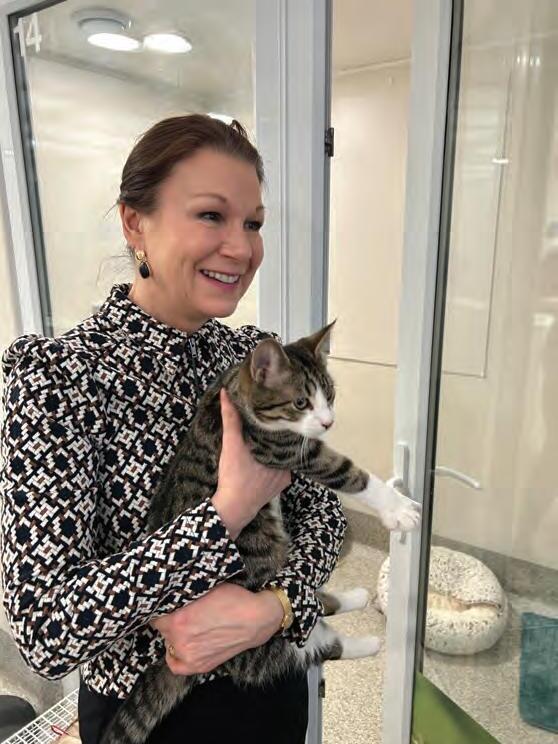
domestic abuse without having to leave behind a beloved pet. The Government’s strategy on Violence Against Women and Girls recognises the importance of holistic support, and services like Lifeline are a vital part of that. I’m grateful to Cats Protection and their partners for the compassion and care they offer to both people and animals in crisis.”
The charity’s service currently operates across the South East, East Anglia, Yorkshire, the Midlands, Wales and Scotland, and works in close partnership with Refuge4Pets, Endeavour, Dogs Trust Freedom – all accredited under the Links Group.
In order to support more people and their cats experiencing domestic abuse,
the charity is urgently seeking more foster carers.
“Fostering is a rewarding opportunity to help both cats and their families and is also a great opportunity for someone who would benefit from the company of a cat but without the long-term commitment,” said Amy Hyde who manages the scheme. “All costs are covered by us and foster carers remain anonymous but will provide regular updates and photos that we share with the cat’s owner, helping maintain a sense of connection during a difficult time.”
n Those interested in learning more can visit www.cats.org.uk/lifeline
Horse and yard owners are being encouraged to get involved with this year’s Strangles Awareness Week (SAW), by signing up as Ambassadors and promoting the campaign’s important BEST practice messaging to help prevent spread of the disease.
The acronym, which stands for ‘Boost immunity with Strangles vaccination’; ‘Engage with trusted information’; ‘Separate unfamiliar horses’ and ‘Temp check routinely’, is at the centre of the campaign.
SAW 2026 takes place at the beginning of May (4th – 10th) and aims to get everyone in the horse world working together to minimise the scale and impact of a Strangles outbreak, which can be financially and emotionally costly.
Last year saw a 77% increase in the number of lab-reported cases of Strangles with 477 being logged by the Surveillance of Equine Strangles scheme in 2025 compared to 270 in 2024*
The contagious respiratory illness is the most diagnosed equine disease worldwide. Signs vary, but can include a high fever, laboured breathing, difficulty eating, depression, thick nasal discharge and painful abscesses. In severe cases Strangles can pose a risk to horses’ lives.
Helen Whitelegg, Campaigns and Policy Manager at Redwings Horse Sanctuary, the charity co-ordinating the SAW collaboration, said: “The increase in lab-reported cases is very concerning, and we know that many more go unrecorded. There have been 64 diagnoses recorded already this year (to 19th February).
“We are better placed than ever before to reduce the risk and number of cases seen each year but a recent Dechra survey** found nearly half of respondents were not aware of the vaccine and a third did not have quarantine protocols for new arrivals, despite 87% reporting that they were concerned about the risk of infectious disease like Strangles.
“Furthermore, a recent report***
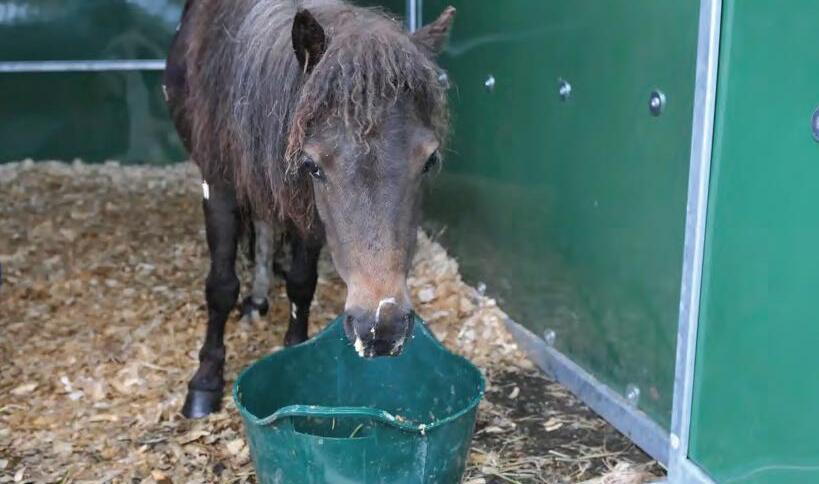
based on the use of the vaccine during an outbreak on a yard in Sweden suggests encouraging levels of protection even in the face of confirmed Strangles cases on the property.
Although two of the three unvaccinated horses with Strangles died from their infection, all 17 horses that were vaccinated remained healthy.”
Ambassadors will be sent a suite of social media assets ready to download and share during SAW, their own digital Ambassador badge and updates about the campaign.
SAW messages are developed from the very latest research and advice from world-leading experts, crafted into practical, accessible resources for horse owners and yard managers.
Since its inception in 2020, SAW has achieved international recognition, bringing together leading equine welfare charities, educational institutions and research organisations.
Several well-known riders and equestrian influencers have lent their names to the campaign since it began, including eventers William Fox-Pitt,
Lucinda Green and Piggy March, dressage rider Richard Davison and equestrian influencer Riding with Rhi.
Helen said: “The SAW collaborators have created so much content to inform and inspire people to protect horses from Strangles, and we’re encouraging horse and yard owners to create some of their own, with our support.
“If we all used BEST practice, we could make a real difference to how this disease impacts our horses, and us.
“There is a comprehensive SAW web page and we’re on Facebook, Instagram, TikTok and LinkedIn, and would love people to share from these and tag us.
“We must all work together to tackle this disease, everyone involved in the sector has a part to play.”
n To sign up and join more than 900 existing Ambassadors who helped the campaign reach more than five million people in 2025, please visit www.redwings.org.uk/strangles/strangles-awareness-week or go to the SAW Facebook page.
The Scottish SPCA’s National Wildlife Rescue Centre is managing its busiest period for grey seal rescue and rehabilitation, following a large number of harbour seals last year
The charity is appealing to the public for help as its National Wildlife Rescue Centre in Fishcross, Alloa, works through peak grey seal admissions, with as many as 50 pups in its care at one time. Each seal requires round the clock care, with some also requiring veterinary treatment and medication.
Last May, the centre saw 25 harbour seal pups arrive at once, many of which were orphaned, and that number continued to grow until their release later in the year. Admissions also began a month earlier than usual, with harbour seal season typically starting in June. Triggered by earlier, warmer weather, this cluster pushed the team to respond faster and at a bigger scale than ever before – with more harbour seals being released last year than ever before.
Staff at the centre, after consistent perseverance and determination, have since developed an effective bottlefeeding technique with a balanced seal specific milk formula. While still in the early stages, this method has already transformed early-stage care for premature and vulnerable pups, providing a more positive and lower stress feeding experience.
Following that busy harbour seal season, the team have now moved straight into its busiest period for grey seals with human interference driving increasing admissions to the centre. Well-meaning members of the public may approach if they think a seal pup

has been abandoned, however, the mum is generally nearby and won’t return if people are there. Disturbing a pregnant seal can also trigger early birth and abandonment, and dog attacks are also a growing issue.
One grey seal who is currently receiving treatment is Zelda, who arrived at the centre weighing just 14.3kg. From her head to her flipper, she was covered with infected wounds and abscesses –but that didn’t stop her from being full of attitude. Zelda was almost certainly the victim of an attack – most likely a bull seal or an unleashed dog. She was started on a course of intensive treatment, pain relief and meticulous care. Once she was ready, Zelda started to spend more time outside adjusting to
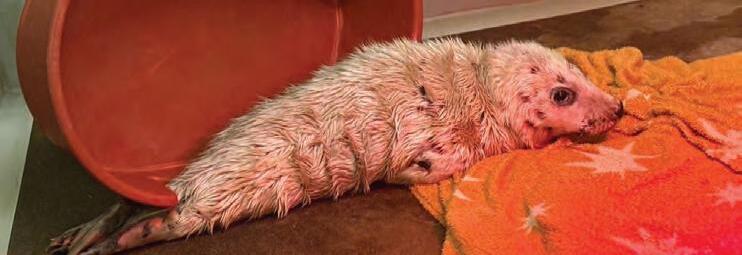
the natural world and was matched with a companion seal called Ducky.
The two are navigating their life in recovery together as they build confidence. They are making amazing progress – but the work isn’t done just yet. Centre staff will continue to care for them, amongst the other seals, until they are ready for release.
Scotland is home to around 90% of the UK’s seal population – and the Scottish SPCA plays a critical role in safeguarding their future. Harbour seals are already vulnerable, with their population on the west coast declining by around 20% in recent years.
On average, seals can be at the centre for around 64 days. Every donation helps fund emergency care, rescue and rehabilitation and will enable the centre to keep providing seals the best possible care.
n You can donate to the seal appeal here: https://www.scottishspca.org/sossave-our-seals/
To report any act of cruelty, visit our Contact Us page https://www.scottishspca.org/contact/
Dogs Trust Shoreham is looking for a loving home for an ex-racing Greyhound who has never had the chance to enjoy home comforts and now needs a family to help him adjust to life as a much-loved pet
Percy arrived in the care of Dogs Trust Shoreham in July 2025 and has quickly become a firm favourite with the team looking after him. While staff describe him as having the loveliest personality, Percy is a nervous boy, something the charity believes is due to his never having lived in a home environment before. As a result, he lacks confidence and can find the world quite overwhelming, including walking on roads and getting into a car.
Like many racing Greyhounds, before arriving at Dogs Trust Shoreham, Percy had not experienced the sounds and activities of a normal home, as racing dogs are typically kennelled for much of the day. However, the charity has placed Percy in a foster home, and he is now thriving, doing really well with his housetraining and daily routine. This progress shows that, with a calm, understanding new family who can slowly open his world, Percy would make a wonderful companion.
Dogs Trust Shoreham is now looking for a patient family who can help build Percy’s confidence and gently introduce him to life beyond racing.
Beth Madgwick, Welfare Manager at Dogs Trust Shoreham, says:
“Despite being four years old, Percy hasn’t yet experienced all the wonderful aspects of dog life. His past as a racing Greyhound means it may take him a little while to adjust to a home environment as involvement in racing can leave both physical and emotional scars. But we’re certain that once he finally gets to experience the comforts he deserves, he’ll appreciate every moment.
“Once Percy settles in, he is bound to make a wonderful companion who will enjoy quiet afternoons relaxing on the
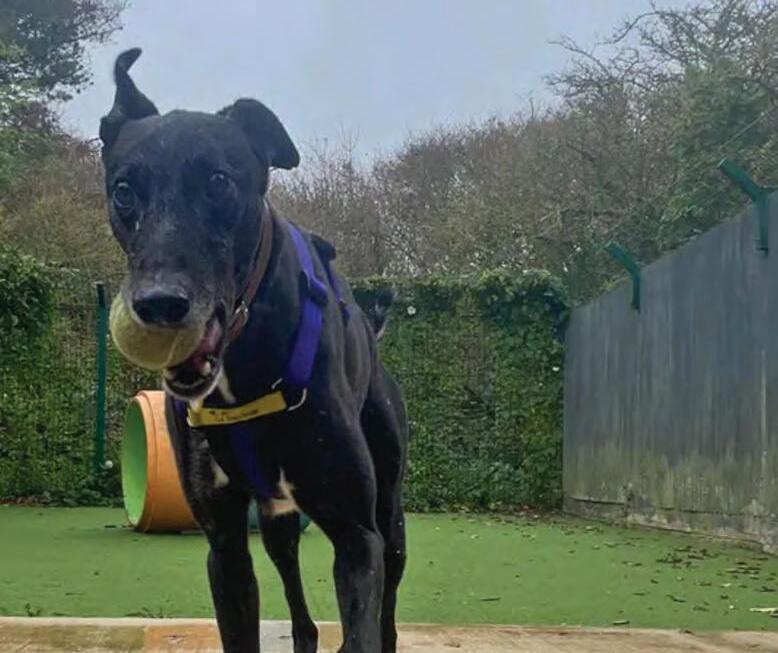
sofa, solo playtime in the garden, and soaking up plenty of fuss and attention from his humans.”
n For more information about Percy and the dogs available for rehoming at Dogs Trust Shoreham, visit www.dogstrust.org.uk/shoreham
Dogs Trust is calling for greyhound racing to come to an end across the UK, as the sport has been shown to pose serious welfare risks to dogs. Running at high speed around tight oval tracks can result in injury and, in many cases, fatal accidents. Each year, hundreds of dogs die or are seriously injured due to their involvement in greyhound racing.
The most recent data from the Greyhound Board of Great Britain (GBGB), the organisation responsible for licensing greyhound tracks in the UK, shows that in 2024, 346 racing greyhounds died or were put to sleep, and 3,809 injuries were recorded. Beyond deaths and injuries on the track, there are ongoing concerns about the welfare of racing greyhounds at every stage of their lives. These include inadequate standards in kennelling and transportation, with some dogs kept in poor, barren conditions, given little to no enrichment, and fed substandard diets. There are also wider concerns about the overall health and wellbeing of dogs involved in the racing industry.
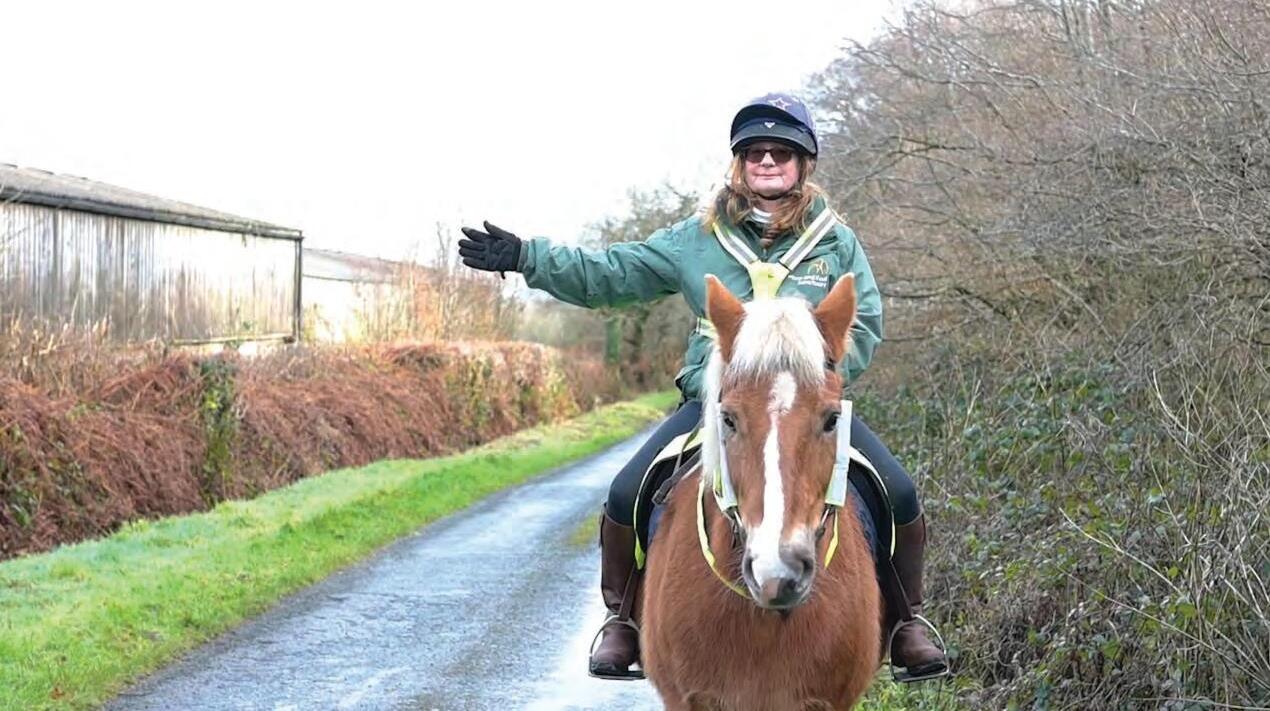
Following a parliamentary debate on the issue last month, the police and two leading equine welfare charities have joined forces to help cut collisions and near-misses involving horses on rural roads. A collection of short, practical films shot in the South West explain exactly how riders, handlers and drivers can share the roads safely and what the Highway Code really means for equine road users.
Key safety messages shared by Devon & Cornwall Police’s Rural Affairs team and British Horse Society (BHS) are featured in the new series of bite-sized horse road safety films produced by The Mare and Foal Sanctuary. The films are designed for sharing across rural and equine communities on social media and the internet.
Filmed at The Mare and Foal Sanctuary’s Upcott Park Rehoming Yard near Holsworthy, North Devon, the videos give clear, easy-to-follow guidance for riders and people leading horses on the roads, as well as vital reminders for drivers passing horses. The content focuses on road etiquette, clear hand signals, safe passing distance and speed, visibility in all weather and light conditions and recording and reporting
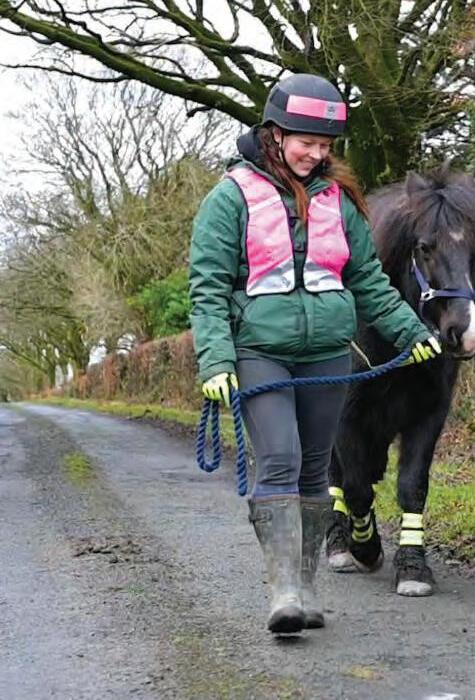
incidents.
The films feature PC Lucy Wyatt from Devon & Cornwall Police’s Rural Affairs team and Lisa Supple, Development Officer for BHS, with horses and handlers from The Mare and Foal Sanctuary demonstrating best practice. High-visibility clothing and equipment were supplied by Redpost Equestrian based at Littlehempston near Totnes.
Recent discussions in Westminster have underlined just how urgent this awareness work is. In a Parliamentary debate on horse and rider safety last month (in January 2026) MPs from across the country called for stricter road safety requirements to protect equine road users. Citing British Horse Society figures showing 3,118 road incidents involving horses in 2024 with 58 horses killed, MPs highlighted that equine road
safety is not a “niche issue” but a growing national concern.
The South West’s particular challenges were brought into focus, with discussion of regular deaths and injuries of semiferal Dartmoor ponies in road collisions and calls for more localised speed limits on routes used by riding schools. MPs stressed that bigger, faster cars and low driver awareness are putting riders, handlers and horses at risk on rural roads. MPs acknowledged that “more action is needed” and committed to working with stakeholders to improve safety, reinforcing the importance of collaborative, practical initiatives.
Jenna Goldby, Head of Welfare and Rehoming at The Mare and Foal Sanctuary, believes all riders and handlers should regularly review and refresh their knowledge of road safety.
“Every ride or walk on the road carries risk, and we all need to treat road safety as seriously as we do our horse’s health and keep up to date with changes and new advice. Keeping yourself and your horse safe are top priorities, and a small amount of knowledge and planning can make a massive difference. Be seen, be courteous and stay safe. As a charity we work closely with other organisations
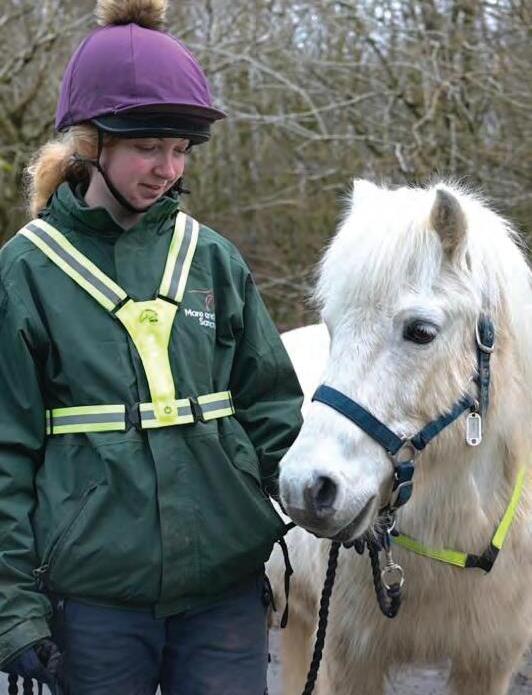
and, in partnership, we’re proud to be part of sharing these vital messages and championing equine welfare and safety on the roads for all users.”
Rural Affairs Officer PC Lucy Wyatt is the lead for Equine Crime at Devon & Cornwall Police. She said: “I grew up riding horses and have experienced, first-hand, how dangerous it can be when motorists pass too fast or too close. When approaching horses and
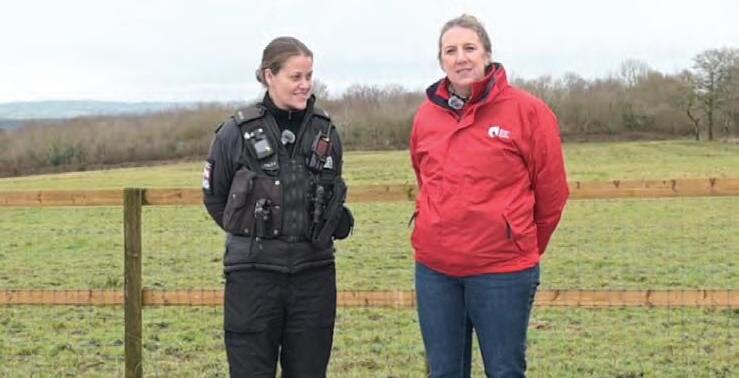
riders on the road, drivers should slow down to no more than ten miles per hour, avoid revving their engine or honking their horn and then pass slowly when safe to do so, allowing least two metres of space between the horse and vehicle.”
Anyone with dash-cam or helmet-cam footage of vehicles passing too close or too fast can submit it for police review via Operation Snap: https://roadsafety.devon-cornwall.police.uk/operations/operation-snap/
Lucy added: “We are committed to reducing the number of people and animals killed or seriously injured on our roads and will continue to work with partner organisations to educate motorists about the importance of passing horses wide and slow. Everyone has a right to use the road. Let's look out for one another and make sure everyone gets home safely.”
Alan Hiscox, Director of Safety at BHS adds: “It’s been great to partner with Devon and Cornwall Police and The Mare and Foal Sanctuary to produce these informative videos. Our key priority is the safety of the horse, rider or carriage driver, and it’s incredibly important that we continue to work collectively together to share the Dead Slow behavioural messages with all road users. Secondly, encouraging more equestrians to record every incident they witness, or are involved in, will be essential when it comes to driving further legislative change. It’s simple to do - all we ask is that you download the Horse i app and record any encounters you may experience. Let’s keep working together to champion equestrian safety.”
Two safety films are now available on The Mare and Foal Sanctuary’s YouTube channel here: https://www.youtube.com/c/mareandfoalsanctuary
• Safety First: Stay Seen, Stay Safe
• Essential Etiquette: Follow the Road Code
These films are designed to be easily shared by local community groups, parish councils, livery yards, riding clubs, schools and rural businesses across the South West and beyond.
A bite-sized series of films is also being shared across The Mare and Foal Sanctuary’s social media platforms.
A cat who is thought to have hitched a ride under a car bonnet from Barnsley to Wakefield emerged from the ordeal with just minor burns to her paws.
Now Cats Protection Leeds Cat Centre is hoping to unravel the mystery of how she came to make the hazardous 15-mile journey, and hopefully reunite her with an owner.
The black-and-white cat is believed to have climbed into the bonnet of a lady’s car when it was parked at her place of work at Barnsley College’s Honeywell site. The car owner only discovered the unexpected passenger the following day when her dog was going crazy around the vehicle.
On opening the bonnet, she found the cowering black-and-white moggy and took it to the Cats Protection centre in Gildersome for assistance.
Estimated to be around five years old, Matilda, as she has been named, has shown herself to be a friendly little cat but in dire need of some TLC.
Elizabeth Day, Deputy Centre Manager, said: “Matilda’s suffered minor burns on her paws from the heat of the car engine, but these have healed very quickly. She isn’t in the best condition, with runny eyes that need bathing and needing extensive dental treatment, which we were able to provide to alleviate her discomfort.
“We would love to get Matilda home but as she isn’t microchipped, and she has travelled so far, it is proving difficult to locate an owner. Anyone who thinks this may be their cat, or recognises her from around the college area, should get in touch and we can hopefully solve the
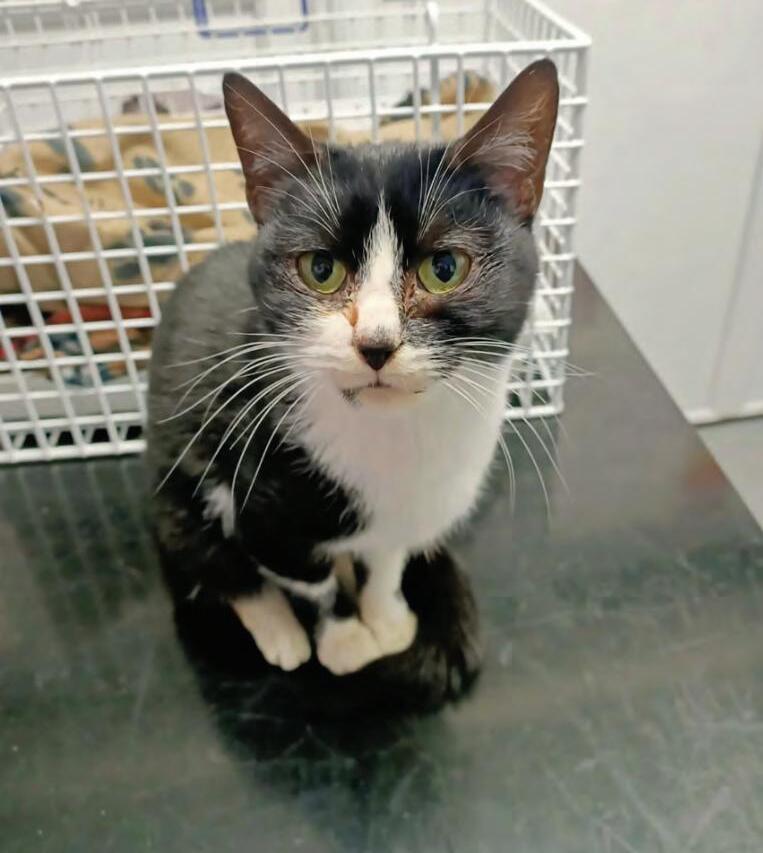
mystery. If it turns out she is a stray, we will continue to care for her while she recovers before finding her a loving new home.”
n To contact the centre about this cat email enquiries@gildersome.cats.org.uk or call 0300 012 1505. Proof of ownership will be required.
Even for students of equine medicine it can be a surprise to learn about how different donkeys and mules are from horses, as one group of visitors recently found out during a day at The Donkey Sanctuary in East Devon.
The first port of call for the students from the Bristol Equine Veterinary Society (BEVS) was the charity’s dedicated donkey hospital near Honiton. Here they met Head Nurse Emily Buckley and Lead Veterinary Surgeon Vicky Grove, and were given a tour of the facilities, including the clinical building and the main operating theatre.
The hospital treats donkeys and mules from inside and outside of the sanctuary, as well as training vets from all over the world. Its surgical facilities include a diode laser for sarcoid surgery, a DR x-ray system, and mobile and hospitalbased ultrasound machines.
Emily Buckley RVN, Head Nurse at The Donkey Sanctuary, said: “It was lovely to meet the students from BEVS, they were all very interested in the differences of donkeys and what we do at the veterinary department. So much so that one of the students has asked to come and do her EMS (Extra-Mural Studies) two week placement next year with us.”
The students then visited the main sanctuary site just a few miles away at Sidmouth, where the were given the opportunity to meet and interact with the Donkey Assisted Activity (DAA) herd. At first, they spent time observing the donkeys, discussing behaviour and pair bonding. They also learned the history of the service and why donkeys are so suited to supporting people through these ground-based activities.
The group then had time to interact and get to know the donkeys. The small herd were very receptive to their attention and enjoyed receiving scratches as much as the students were enjoying giving them. There was also the opportunity to ask any questions they had regarding donkey management and donkey behaviour.
Many of the visitors had never been in
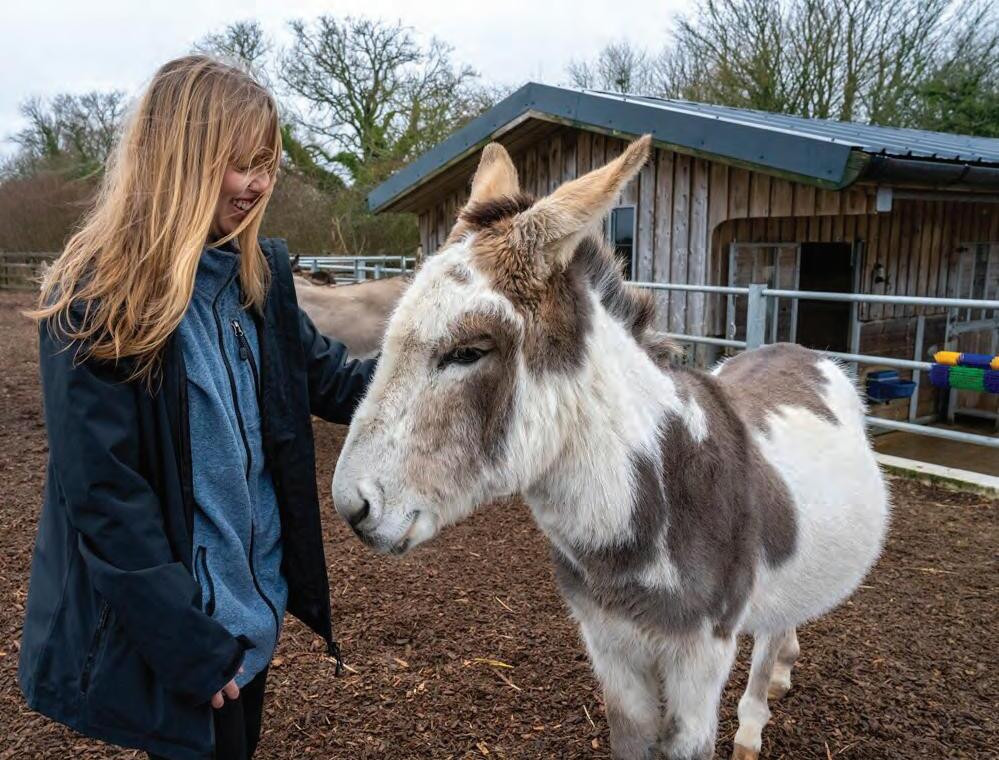
and around donkeys before, with many showing surprise to hear of the bond that donkeys form, and at the connections they felt they were making.
Student Jessica Kuawa, said: “I felt a connection with donkeys Rupert and Wizard who are unsurprisingly a bonded pair. Rupert especially spent a lot of time with me holding his head in my arms whilst I was stroking him and scratching his ears.
“Wizard did the same while also being inquisitive investigating my coat. Rupert moved towards me and nuzzled into me when I stepped away choosing to be in my presence. I easily fell in love with them both!”
BEVS is a University of Bristol society, and was set up in 2013 to give students the opportunity to learn more about equine medicine. They offer a wide range of lectures, practical, trips and
to Bristol veterinary and veterinary nurse students
Stephy Studley, DAA Equine Assistant and Centre Support, said: “We enjoyed welcoming the veterinary students into DAA, and to see them learn about our donkeys. They asked some great questions, enjoyed mutually beneficial interactions, and came away with new knowledge that they could apply in future, such as discovering the importance of pair bonds to overall health and wellbeing when providing veterinary care.”
“My initial perception of donkeys was that they were loud and difficult to handle,” added student Shuai Jin. “After coming to The Donkey Sanctuary it changed massively. They are calm, friendly and intelligent.”
n www.thedonkeysanctuary.org.uk
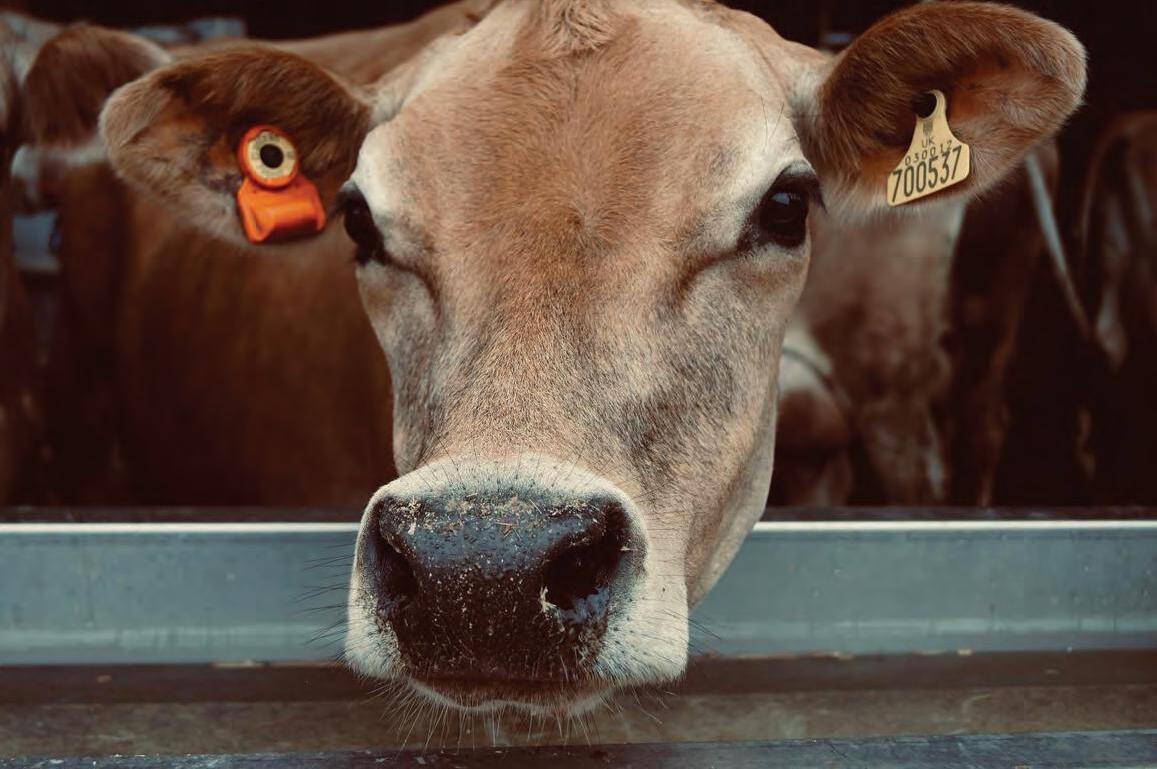
Animal rights charity, Animal Justice Project (AJP), has offered to pay the rehoming costs for 51 Jersey cows from the historic Blanc Pignon Dairy Farm, as controversy escalates across the island about the herd’s fate.
With the eight-decade-old dairy set to close, campaigners have secured sanctuary placement for the entire herd at Hillside Animal Sanctuary in Norfolk www.hillside.org.uk — and are now working to remove financial barriers that could prevent their release.
AJP says it is willing to fund the entire
cost of transporting and settling the cows at an animal sanctuary in the UK, following confirmation that the 80-yearold dairy farm is due to close.
Campaigners have secured sanctuary placement for the entire herd at Hillside Animal Sanctuary in Norfolk. More than £7,000 has already been raised, with further fundraising under way.
Whilst more than 12,000 people have signed AJP’s petition https://act.animaljusticeproject.com/page/186061/p etition/1 advocating for the cows to go to sanctuary, the campaign has ignited fierce debate within Jersey’s tight-knit farming community and among local residents, with opinion sharply split
between tradition and transition.
Some locals criticised the sanctuary plan on the Bailiwick Express
Facebook page: https://www.facebook.com/BailiwickExpress
“They would be far better going to a dairy farm, where farmers know how to look after them properly. Not some silly do-gooders.”
Others voiced strong support for retirement at sanctuary:
“They get to live their little lives in peace — isn’t that a good thing? Who cares about blood lines.”
Questions have also been raised about why the cows cannot remain on the island:
“Why can’t they stay on the island? This is supposed to be our iconic breed?”
To which another resident responded: “It is a very small island.”
Another local added:
“Hopefully they will be sent to the sanctuary to live out their lives, rather than another farm to be exploited and then slaughtered by the time they are six.”
The farmer may face significant logistical challenges rehoming the herd locally. Jersey — measuring just nine by five miles — is home to only 11 other dairy farms, farming approximately 4,500 Jersey cows in total. Around 2,500 are “in milk” at any one time, calving yearround to supply the farmer-owned cooperative, Jersey Dairy.
Campaigners argue the island’s limited capacity makes sanctuary relocation a practical — as well as ethical — solution.
Animal Justice Project says the debate
has also shone a spotlight on the realities of Jersey’s dairy system.
A Freedom of Information request to the Government of Jersey, https://www.gov.je/government/freedomofinformation/pages/foi.aspx?ReportID=8146 published in 2025, revealed that around 1,500 calves were slaughtered on Jersey farms in 2024 — animals campaigners describe as the “waste product” of milk production.
The same data showed the average slaughter age of cows was just 5.5 years — a fraction of their natural lifespan. At sanctuary, cows can live up to 25 years.
Campaigners warn that without intervention, the cows risk being redistributed within the dairy industry — and ultimately sent to slaughter.
They add that while Jersey promotes high welfare standards and Red Tractor certification, multiple UK investigations have shown that certification does not guarantee humane treatment.
AJP, joined by TV celebrity Peter Egan, has secured a confirmed sanctuary placement for all 51 cows at Hillside Animal Sanctuary.
The development follows news that Blanc Pignon Dairy Farm will close after 80 years of operation.
Farm Director Alice Le Cras has indicated the cows may be rehomed to other dairies — a move that would keep them within the production system and ultimately see them sent for slaughter.
Le Cras told ITV News:
“Dairy cows are also very hard working and, you know, farmers love their animals – you want to have the best facilities.”
Campaigners are now urging the farm to
demonstrate that care by allowing the cows to retire.
Peter Egan, veteran British actor known for roles including Downton Abbey, said:
“I am delighted that Hillside Animal Sanctuary has offered lifelong sanctuary to these cows. It will be an immense relief for them to leave behind the hardships and inherent cruelty of dairy farming. To know they could live out their days in peace, cared for and free from harm, is truly heartening.”
Wendy Valentine, Founder of Hillside Animal Sanctuary, said:
“Hillside Animal Sanctuary would gladly offer a home to these beautiful Jersey cows where they will be able to live out their natural lives. Please make the compassionate choice.”
Hillside already provides lifelong care to more than 750 rescued cows and has previously rehomed large herds, including 73 cows surrendered by a farmer in 2017.
Ayrton Cooper, Campaigns Director at Animal Justice Project, said:
“We want to see these cows given the chance to go to a forever home — not be passed from farm to farm before ultimately facing slaughter. A full sanctuary placement has been secured, and we are willing to cover the logistics costs in full to make this transition possible.”

• Nearly half (45%) of pet owners are diligent about preventative care, never missing annual check-ups and vaccinations
• Almost a third (30%) of pet owners say they are more likely to take their pet to the vet than visit the doctor themselves
• However, fewer than one in three (31%) uninsured pet owners have set aside money instead of paying for pet insurance
UK pet owners are deeply committed to their pet’s health, but many may struggle to cover the cost of unexpected veterinary treatment, according to new research1 from specialist pet insurance provider Insure Your Paws.
The Opinium survey of 1,000 UK dog and cat owners finds that nearly half (45%) of pet owners are diligent about preventative care, never missing annual check-ups and vaccinations, and more than one in five (22%) visit the vet at least once a year outside of routine appointments. Almost a third (30%) say they are more likely to take their pet to the vet than book a GP appointment for themselves.
Owners are equally committed at home. More than a third (35%) buy the best-quality food they can for their pet and more than one in ten (12%) often cook meals for them. 16% also clean their pet’s teeth as often as possible (20% of dog owners vs. 10% of cat owners). Almost one in five (18%) pet owners also researched breed-specific health risks before choosing their pet (24% of dog owners v 9% of cat owners). However, despite this commitment to their pets’ wellbeing, fewer than one in three (31%) uninsured pet owners have set aside money instead of paying for pet insurance, and if faced with an unexpected vet bill of £1,000 or more, only 16% of uninsured pet owners would be able to pay for it with money specifically set aside for vet fees. Even relatively common treatments such as blood tests, X-rays or overnight stays can cost several hundred pounds, while surgery or long-term conditions
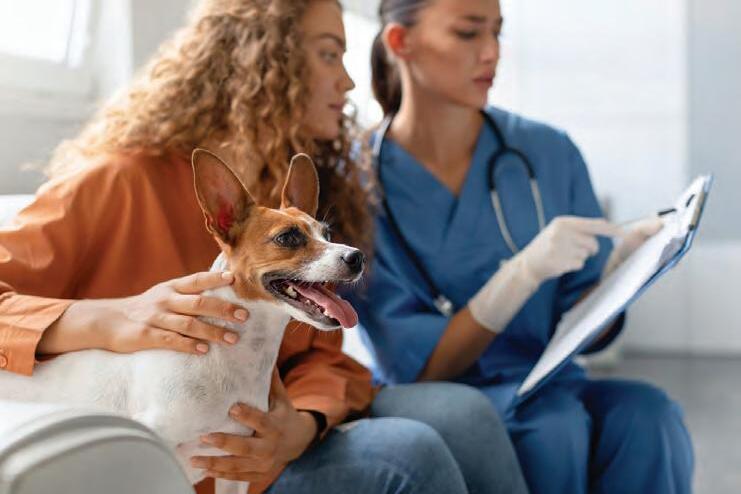
can quickly push bills well beyond £1,0002.
When asked how they would cope with a vet bill of more than £1,000, more than half (56%) of uninsured owners said they would rely on their general savings. Others said they would put the cost on a credit card (20%) or seek support from veterinary charities (15%).
Andrew Simpson, Head of Pet at Insure Your Paws, said the findings reflect how emotionally invested owners are, even when finances are stretched. “Pet owners in the UK go to great lengths to keep their animals healthy and happy, and this research really brings that to life. From routine check-ups to premium food and daily care, people want the best for their pets.’’
“But even with the best care, health problems can come out of the blue. Vet
costs can escalate quickly, and many households simply are not prepared for a large, unplanned expense. Pet insurance can help bridge that gap and give owners peace of mind that cost will not stand in the way of treatment when their pet needs it most.”
Insure Your Paws offers flexible lifetime pet insurance for cats and dogs from eight weeks old, with £0 excess and 0% bill share policies available. All customers also have access to the Assist Your Paws 24/7 careline, providing advice, simple treatment recommendations, behavioural support, or a referral to a nearby veterinary clinic for the more serious issues.
n www.insureyourpaws.co.uk
Dearest gentle reader - love is in the air at Dogs Trust Salisbury, where the most eligible litter of puppies and their mother have been causing quite a stir since arriving in the charity's care last week. In a tale worthy of Lady Whistledown’s society papers, these adorable pups are quickly becoming ‘diamonds of the season’ while waiting to meet their suitable match in the
The four puppies and their mum came into Dogs Trust Salisbury’s care last Friday after being handed over from a local dog pound. With little known about their backstory, the Dogs Trust team has given them a fresh start, fittingly naming them after the main characters from Netflix’s hit series Bridgerton. They are believed to be eight-week-old Staffordshire Bull Terrier x Labrador crossbreeds.
The puppies' mum, Violet, is now proudly caring for her pups, Daphne, Eloise, Penelope and Hyacinth. Since arriving at the centre, the puppies have been thriving under the dedicated care of the Dogs Trust team. While they are not yet ready to go to their forever homes, there are already many hopeful adopters waiting patiently on the charity’s puppy waiting list.
Abigail Tate, Rehoming Centre Manager at Dogs Trust Salisbury, said: “Violet and
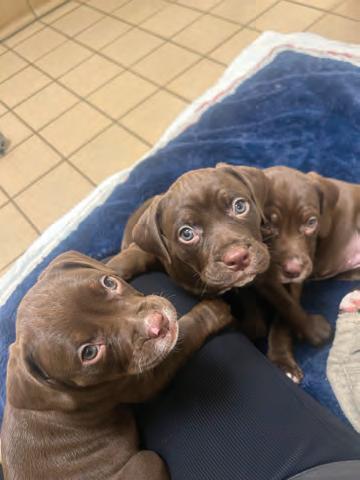
ton.
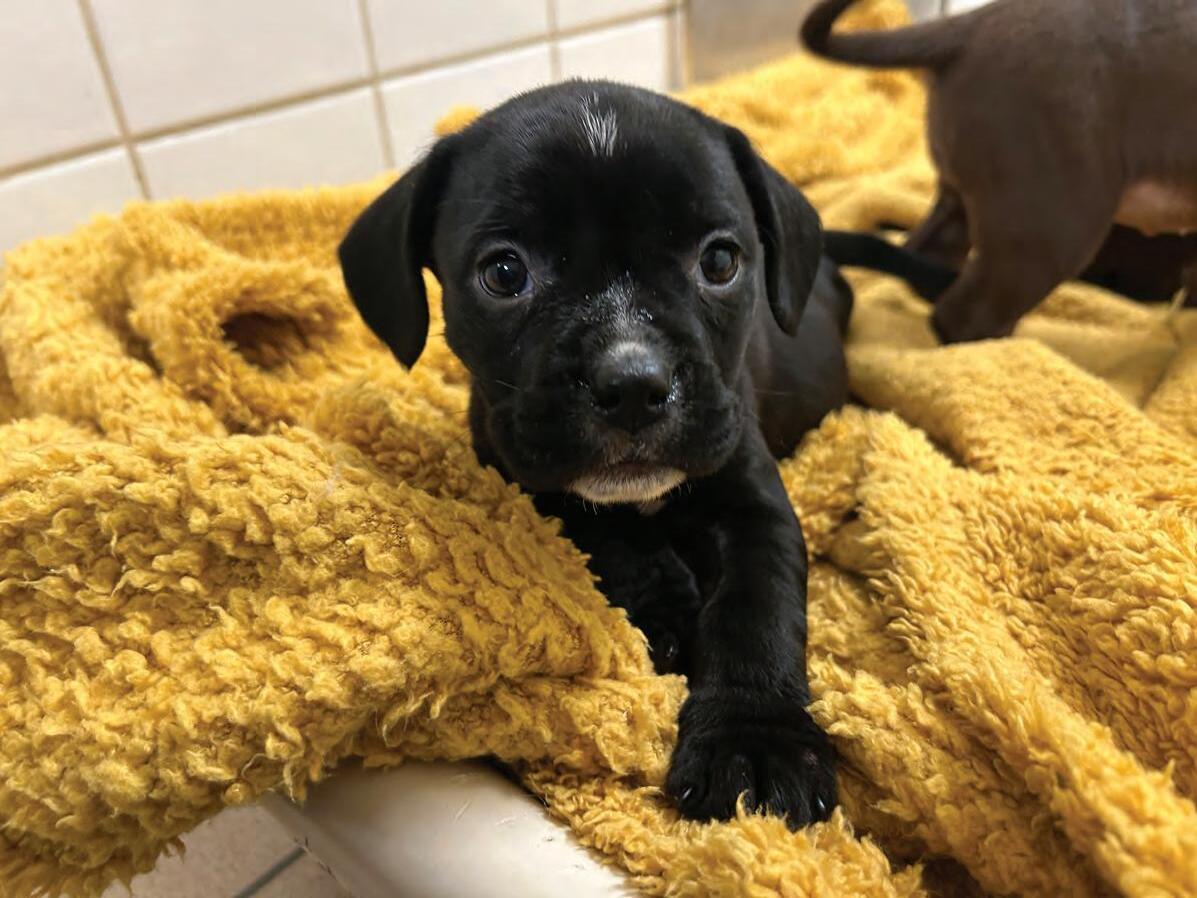
her puppies have completely stolen our hearts since arriving with us. Despite their uncertain start in life, they are all doing incredibly well and growing in confidence every day.
“We look forward to matching each puppy with the perfect home when the time is right, and we can’t wait for their happily-ever-after to begin.”
Dogs Trust Salisbury is open to the public five days a week. You don't need an appointment to visit, see the dogs looking for homes, get advice or apply to adopt. As every dog is unique, finding the perfect match can take some time, several months in some cases. Applications to adopt last three months, and the team will do everything they can to find the right dog for you, however long it takes.
n For more information, please visit www.dogstrust.org.uk/salisbur y

Male 12 years
Looking for his forever person. An incredibly affectionate boy who loves attention and company. Good on the lead and enjoys going for short strolls and meeting new people. Loves cuddles!
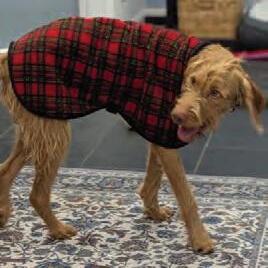
Male 1 year
Has brain damage and may not see properly in one eye, he is not 100% stable on his feet and his view of the world is different from other dogs. He can find training stressful. But he does love a run.
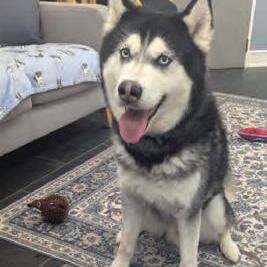
Male 7 years
He loves his walks and can walk for miles if given the opportunity. He does pull on the lead but soon calms down. A happy boy who loves attention and is always up for playing. He loves to give kisses.
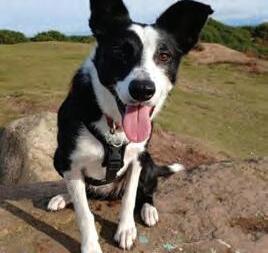
Female 4 years
She is anxious of loud noises for example fireworks, household drills etc. She has a good recall when in an open area with no distractions. Skye loves playing ‘find the toy’ if you hide a toy, knows her toys by name.
Male 10 years
A total delight –
and
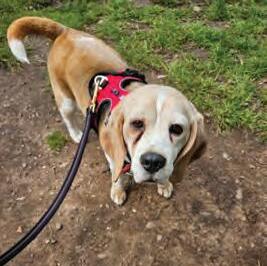

Female 10 years
in the
She is bomb proof and just adorable too! She has a temperament to die for. Good in the house, good on lead, travels brilliantly, good with other dogs, good with children – the list goes on!
Male 3 years
A cracking little dog who is such a happy, friendly boy who is good with other dogs and great with children. He is a fun boy who enjoys his walks and loves zooming around the garden with his human friend.
Female 7 years
A delight – good in the house, good on lead, she has been fine with other dogs she has met when out, she just loves people, travels well in the car. Fine being left for a few hours. She loves cuddles and snuggles on the sofa.
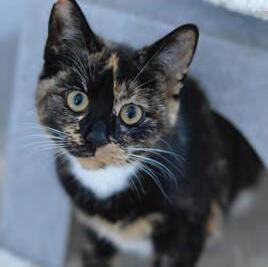
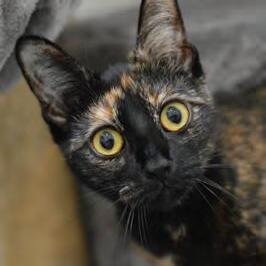
Males 18 months
This gorgeous boar pair adore one another and have a wonderful bond. Both are very timid and clearly not used to handling so will need understanding.
The Potteries Guinea Pig Rescue www.thepotteriesguineapigrescue.co.uk
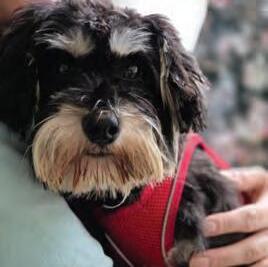
Male 3 years & M1
They are a beautiful bonded boar pair. Mylo is the boss and Otis is happy with that. Ideal for all ages in the family.
The Potteries Guinea Pig Rescue www.thepotteriesguineapigrescue.co.uk
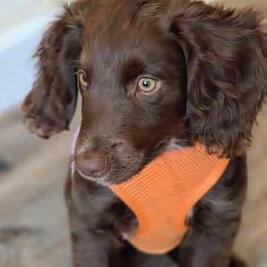
Female 6 months
Being young and playful she has a cheeky side. She loves chasing springs and pouncing on wand toys.
Animals in Distress UK www.animalsindistressuk.com
Female 1 year
A loving, playful cat with the sweetest most gentle nature. She has happily lived with children before
Animals in Distress UK www.animalsindistressuk.com
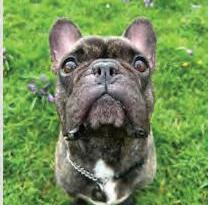
Female 2 years
She is a very sweet little soul. We are still getting to know her personality, likes and quirks.
Starfish Dog Rescue www.starfishdogrescue.co.uk
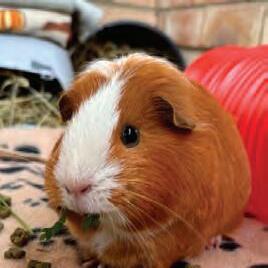
Male 4 months
Chutney was born on site and is now looking for a friend to spend his days with.
RSPCA Suffolk Central www.rspca-suffolkcentral.org.uk
Male 11 months
Her story hasn’t had the easiest start at 7 weeks old his family were told he had a heart murmur. However he is the most lovely, outgoing, naughty puppy.
Starfish Dog Rescue www.starfishdogrescue.co.uk
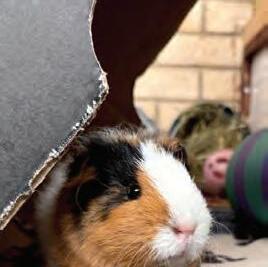
Male 2 months
Has recently found his little voice and will now make happy little squeaks to greet you in the morning.
RSPCA Suffolk Central www.rspca-suffolkcentral.org.uk
Male 5 years
Wally has so much love to give –he just needs the right home to help him feel safe and understood.
Colchester K9 Rescue www.colchesterk9rescue.co.uk
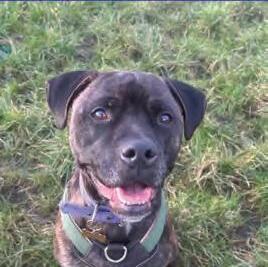
Male 2 years 4 months
An active boy who would like a family to go on lots of adventures with. Loves going on walks.
RSPCA Lancashire East www.rspca-lancseast.org.uk
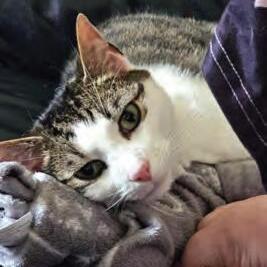
Male 3 years 11 months
Would be best if his new owner lived in a quieter home without young children or other pets. Likes a fuss.
St Giles Animal Welfare www.stgilesanimalwelfare.co.uk
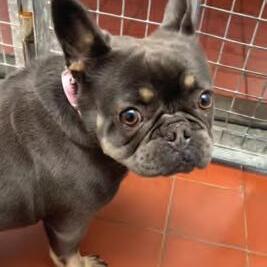
Female 2 years 5 months
Loves to play with her toys, short walks. Cosy nights in. Snuggling up on the couch watching TV.
RSPCA Lancashire East www.rspca-lancseast.org.uk
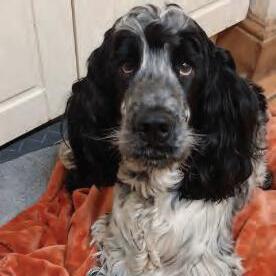

Male 1 year
A typical active, playful, lively young spaniel, he is well socialised with other dogs. Would love to live with another playful dog.
Wonky Pet Rescue www.wonkypetrescue.com
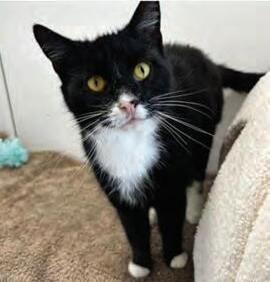
Male 13 years
He loves a fuss and will happily snuggle and chill out all day on a comfy bed or sofa. He is not the biggest fan of dogs.
National Animal Welfare Trust www.nawt.org.uk
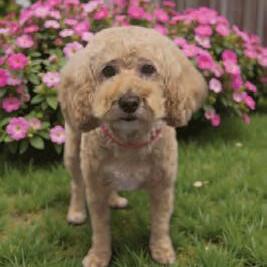
Female 4 years
A super sweet and friendly girl. She is confident, loving and affectionate and loves to snuggle up with you.
Wonky Pet Rescue www.wonkypetrescue.com
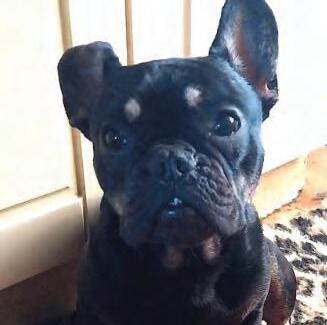
Male 2 years
An absolute sweetheart he is loving, friendly, playful and just loves to have a snuggle with you.
Wonky Pet Rescue www.wonkypetrescue.com
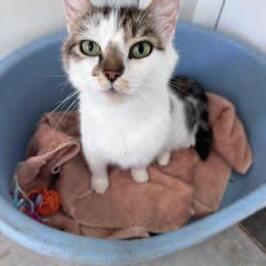
Female 2 years 11 months
I adore head rubs, a soft fuss and a cosy spot where I can curl up and feel safe. I am a gentle, quiet soul with a big heart.
National Animal Welfare Trust www.nawt.org.uk
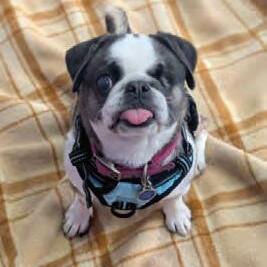
Female 4 years 6 months
She absolutely loves being with her people, receiving attention and snuggling up on their lap.
Mayhew www.themayhew.org
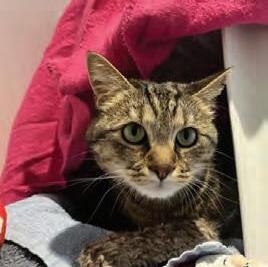
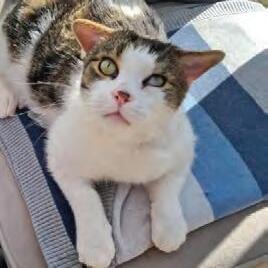
Male 2 years
Would love a home with both indoor and outdoor access into a secure garden. She has never been outdoors.
Woodgreen www.woodgreen.org.uk
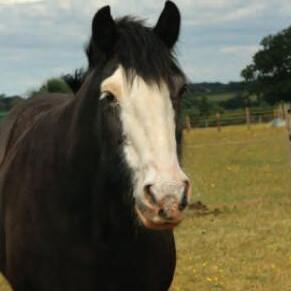
Male 26 years
Although Jake is friendly around other horses he can be protective over his food and likes his own space to eat.
World Horse Welfare www.worldhorsewelfare.org

Female 10 months
Looking for experienced owners who will have the time and patience to continue with her training and socialisation. Mayhew www.themayhew.org
Male 9 years 6 months
He is not used to busy traffic and is deaf so will need access via a safe back garden away from the road in a low traffic area.
Woodgreen www.woodgreen.org.uk
Female 14 years
Meggy is looking for a small, quiet yard with a regular routine and slow pace of life. Meggy is very good to handle and will try her best to please.
World Horse Welfare www.worldhorsewelfare.org
Female 13 years 4 months
A special girl, who needs a special someone to treat you with the love and respect you deserve.
Mayhew www.themayhew.org