Revealed:
By The Sniffer Shop




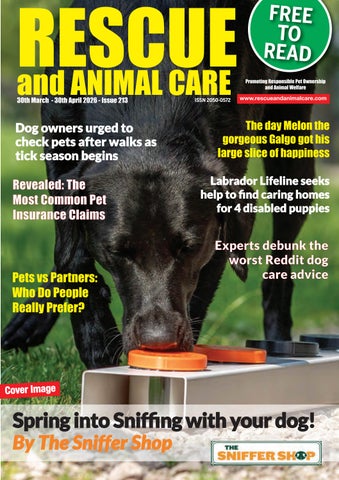
Revealed:
By The Sniffer Shop
British Summer time is very welcome and I’m sure you will all agree ! I had forgotten the clocks changed last weekend-until it was mentioned to me by a passer by whilst walking my dog Lottie, about the forthcoming lighter evenings!
A very big thank you for opening your latest free issue of Rescue and Animal Care Magazine containing as usual lots of articles and news. Without further ado
Here are just a few of the items inside!
n Lewis: The Dog Who Knew Best. From unexpected match to perfect companion, one adopter shares how Lewis turned every day into an adventure—and proved that sometimes the right dog finds you.
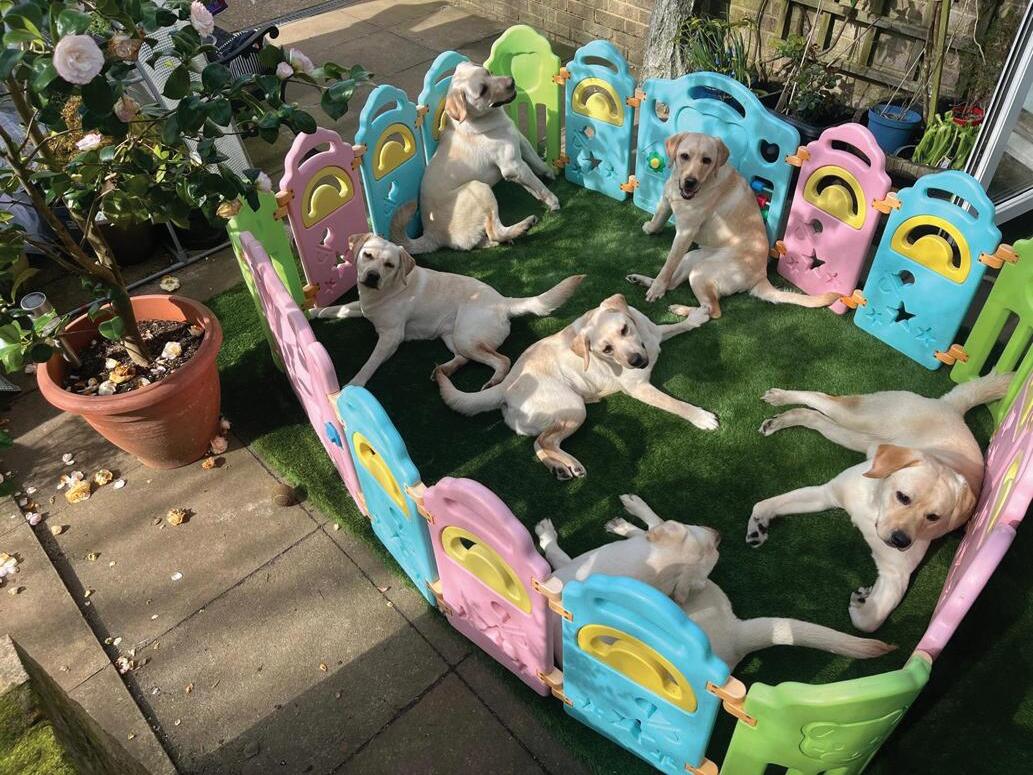
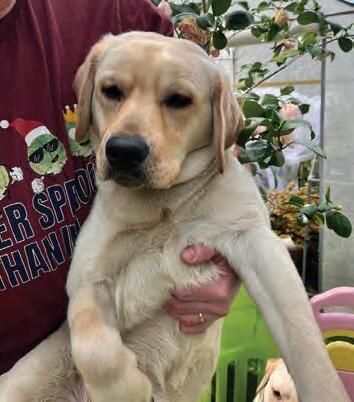
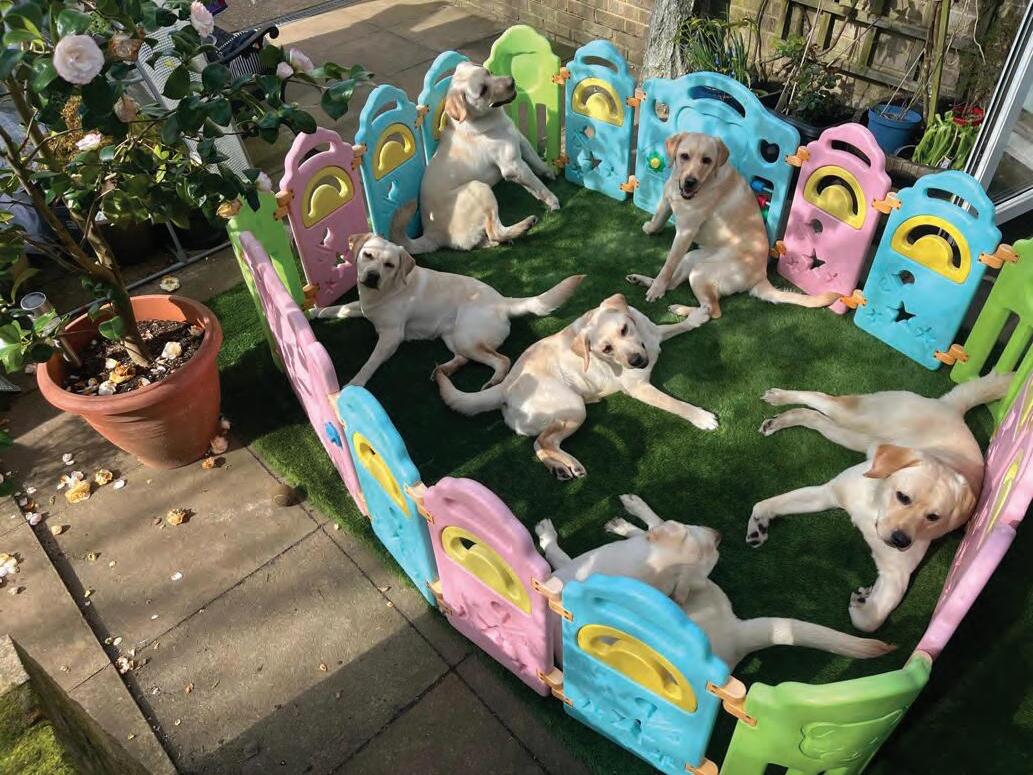
n Labrador Lifeline seeks help to find caring homes for 4 disabled Puppies. In March last year the Trust were approached by a vet seeking help with a litter of 6 pure bred Labrador puppies who had been taken to the surgery to be euthased. The puppies had been diagnosed with Neosporosis.
n Dog owners warned cleaning products could be ‘fatal’ without this 2 hour rule. Spring cleaning is a popular bank holiday activity for many households, with a survey last year revealing that about 1 in 3 people use the bank holiday to clean. Worryingly, 29% of pet owners don’t buy pet-safe cleaning products, putting pets at high risk.
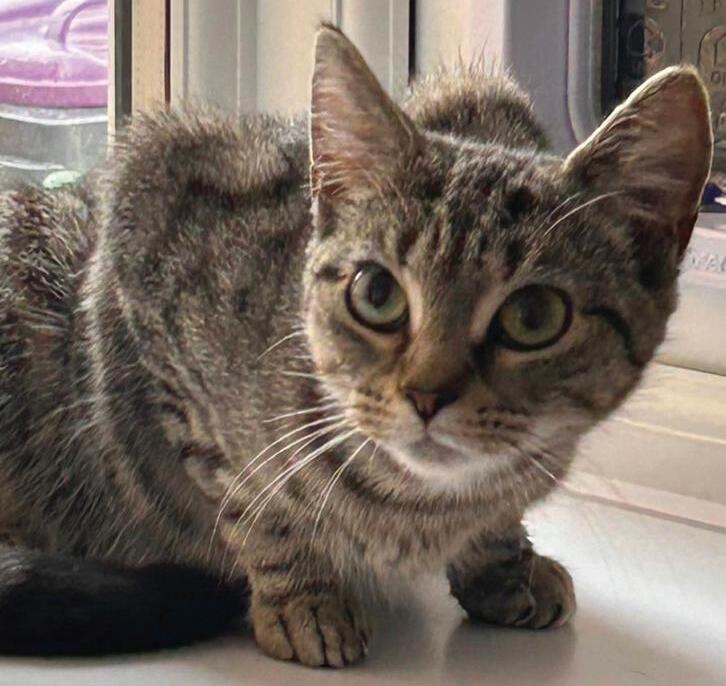
n A tabby kitten was found abandoned in her carrier on a Newport street discarded like rubbish, with no access to water and minimal food. Volunteers from Cats Protection Gwent were called to help when the young cat was spotted by a kind-hearted dog walker. Sally, as the cat has been named in honour of the lady who found her, was spotted locked in a plastic carrier.












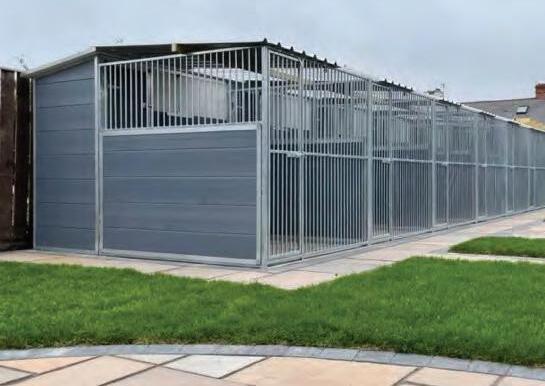
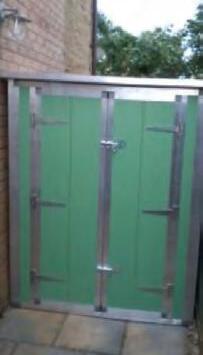
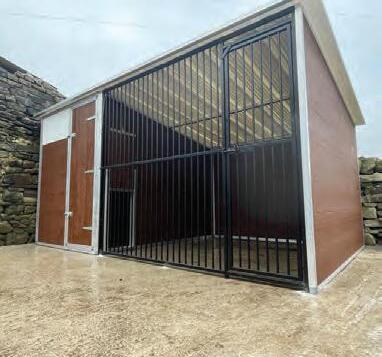
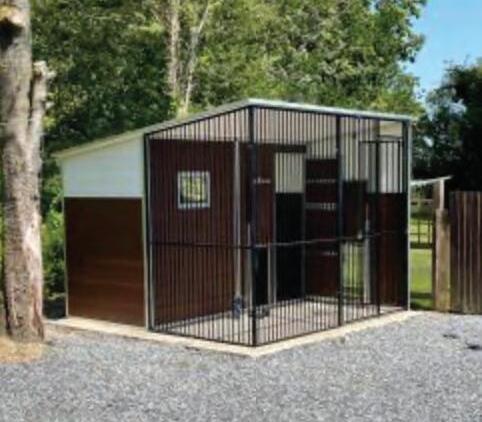
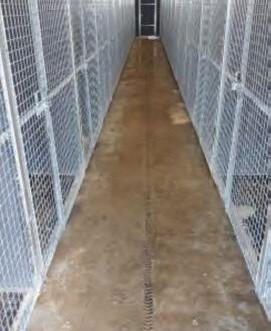
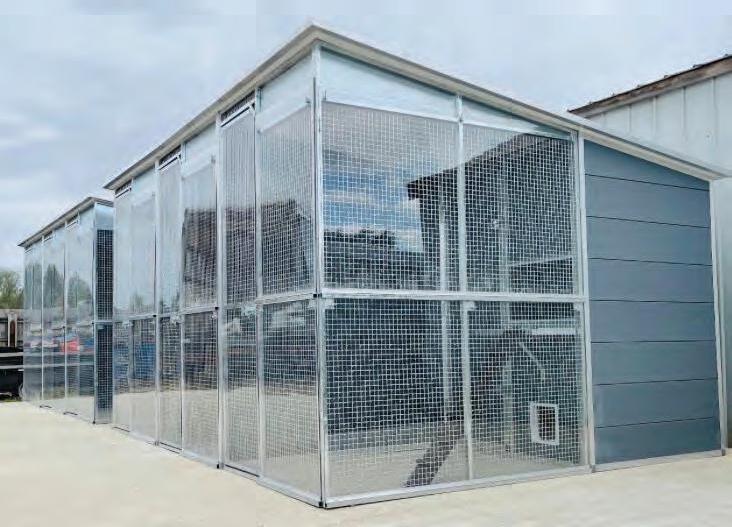
We specialise in Boarding Kennels and Rescues and Catteries. Our ranges are from standard, combination and corridor kennels to catteries, whelping boxes, field shelters, storage sheds and fully custom bespoke builds prioritising durability, easy cleaning, low maintenance and longevity.



From fragile beginnings to ruling her “estate,” one rescue dog shares a year of comfort, confidence, and quiet devotion in a loving home.
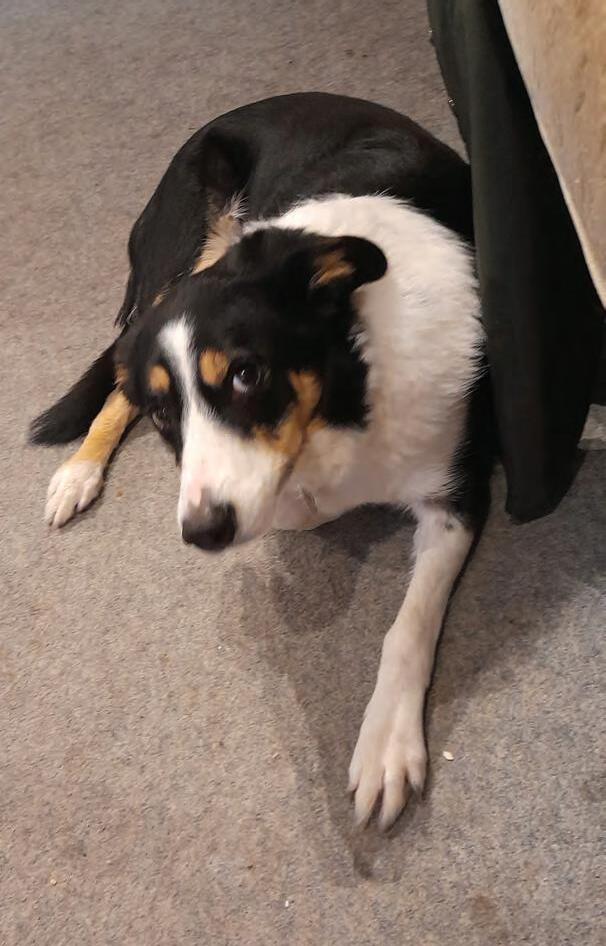


It is Rosie here, thanking you for my lovely first-year anniversary card. It has been a very good year, and I have settled in well. I have my new human companion trained as to when and what to feed me, and I am no longer the skin & bone dog I was. I went to visit a very nice lady at a veterinary practice, shortly after I arrived here, and they cut away some bits. I think they called it neutering or something like that. It wasn't very nice, and I had to wear a silly collar for some days afterwards, but that is all over and done with now.
I have quite a large estate I have to go to and patrol, my human friend calls it a garden. I used to shout at the dogs on either side of my estate, but now I do not bother with them much. I prefer to go out after dark and watch for the foxes, they live a couple of doors away under a shed, I think there are four of them in their family. My human friend says they may have bought me the ball I found on my estate but I do not know that for sure. I do have two indoors to play with. These I chose out of the thirty or more my predecessor had found and left for me.
I am very happy here, and I have an armchair to rest on during the day, and I sleep with my human friend on his bed. I am not sure he likes me doing that but I have to look after him and make sure no harm comes to him during the night.
Thank you very much for finding me my forever home, Rosie xx

Please contact us or visit our website for more information.
Heathway, Colton, Rugeley, Staffs WS15 3LY Tel: 01889 577058 www.bordercollietrustgb.org.uk
Reg Charity No1053585
From unexpected match to perfect companion, one adopter shares how Lewis turned every day into an adventure—and proved that sometimes the right dog finds you.
Hi, I thought you may like an update on Lewis and how his adoption is going.
As I’m sure you know, he is wonderful! Every day he amazes me and makes me laugh! After just 4 weeks, he has settled in with me as if we have always known each other and exceeds my expectations all the time!
We have already been on lots of adventures and experiences, including dog school, fun visits to the vet, being polite in restaurants, meeting other dogs, horses and sheep as well as loads of people who love him, and the feeling is mutual!
We walk and train every day. Yesterday was an 8.7 mile walk to the source of the River Severn and he loved it.
All in all, he is perfect for me, (even though I was looking for a small, smooth haired border collie. Luck sometimes knows better than we do)!
Many thanks for letting me adopt Lewis, my Very Good Boy!"
If you are interested in adopting then simply email adoption@bordercollietrustgb.org.uk with your name, post code and the dogs name you are interested in. www.bordercollietrustgb.org.uk



By
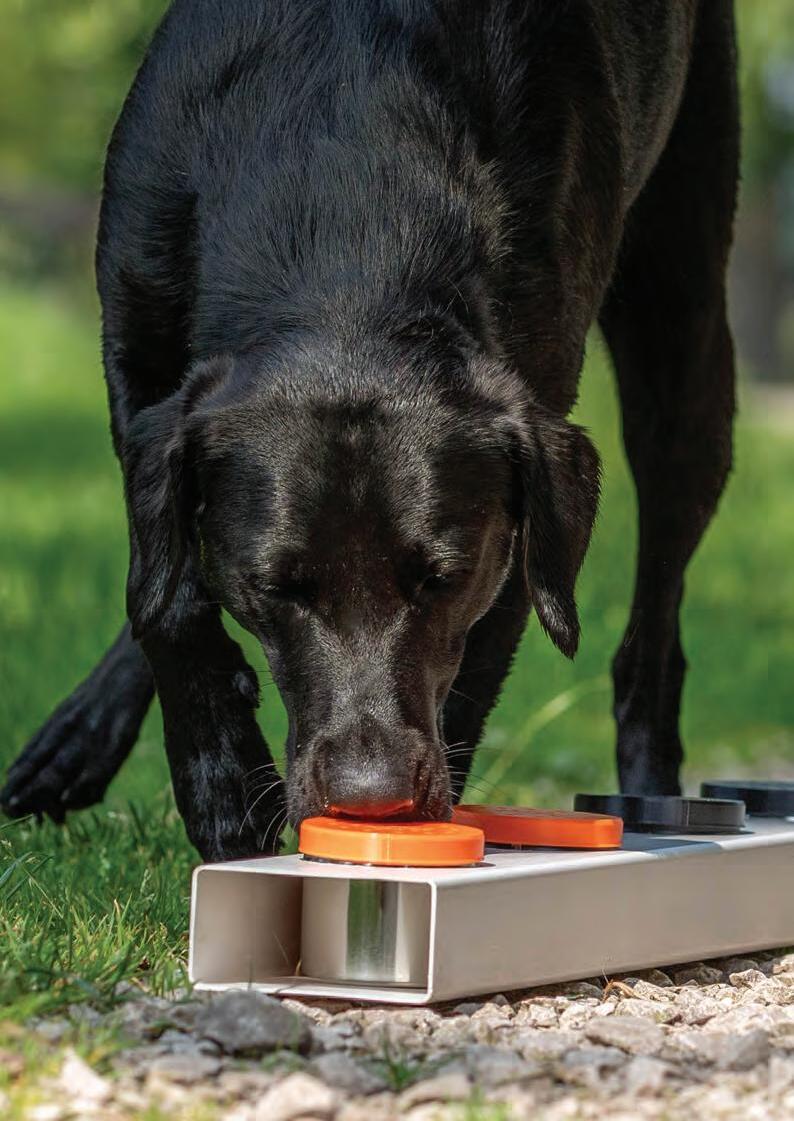
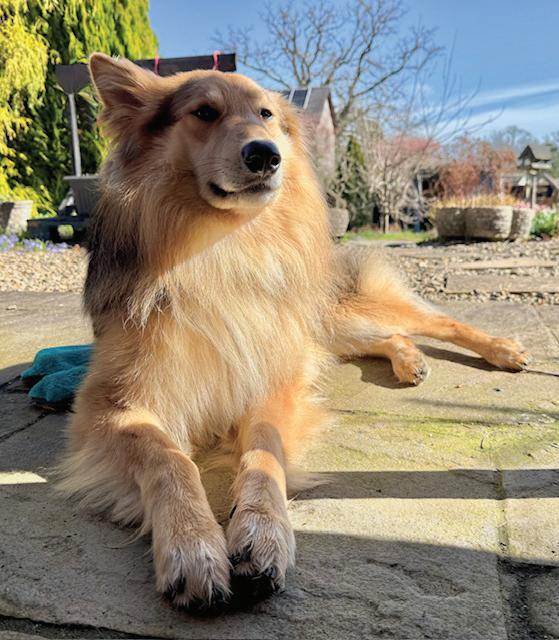
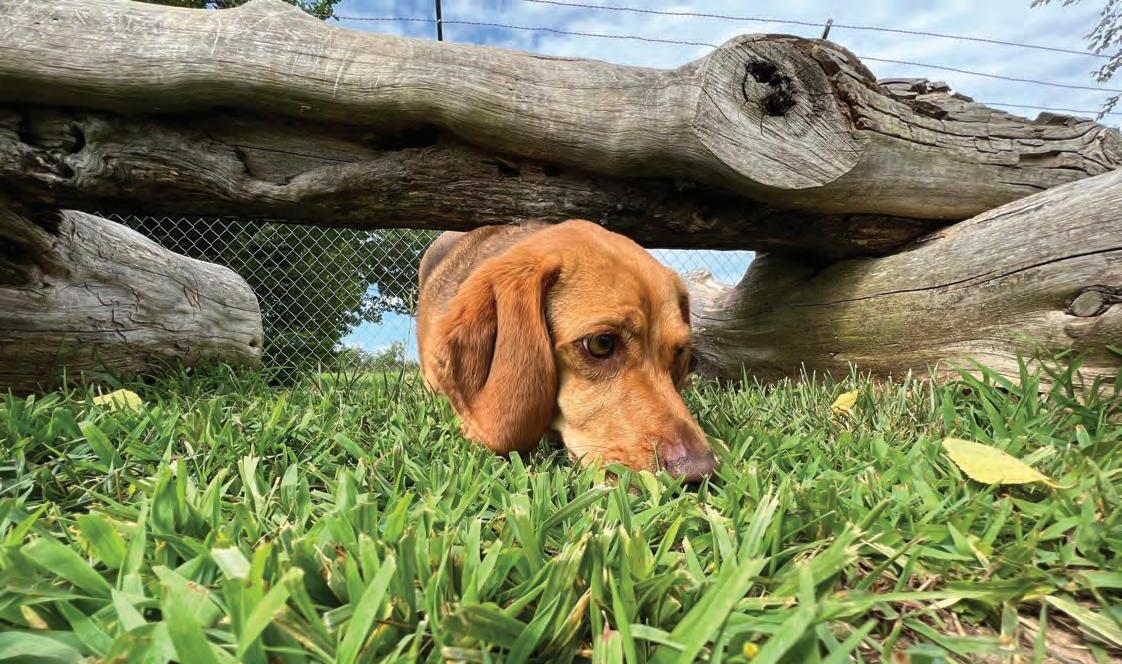
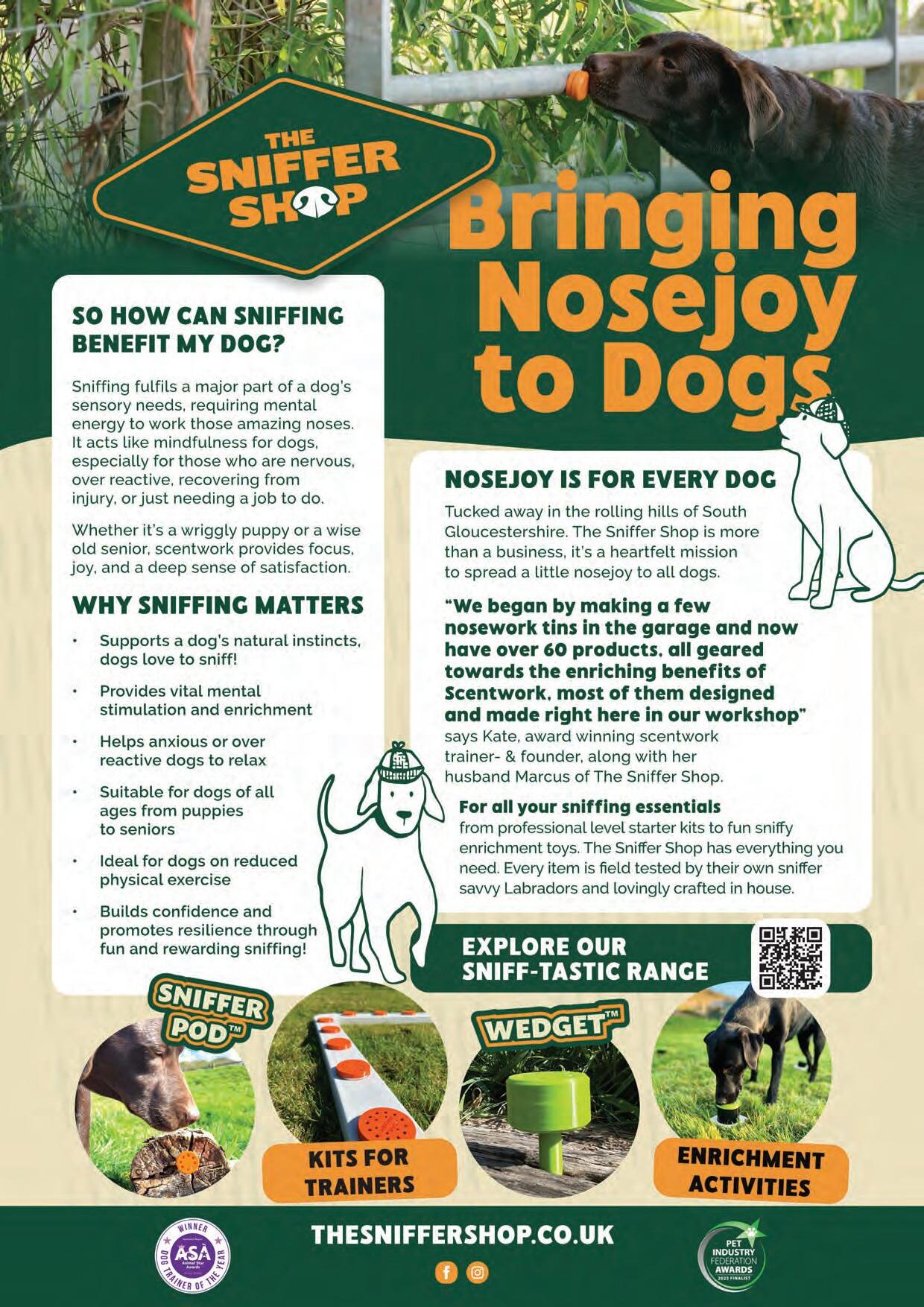
The clocks have sprung forward, the evenings are stretching out, and somewhere in your garden the dog is already nose-deep in something (probably) unspeakable. Spring has arrived, and with it, the perfect excuse to lean into one of the most underrated activities you can do with your dog: scentwork
We know what you're thinking. "Scentwork? That sounds like hard work." It really isn't. At its heart, scentwork is simply giving your dog permission to do what their nose was built for, and watching them absolutely light up because of it.
Here's the thing about those longer evenings: you don't need more time, you need better time. Even a 20-minute sniff-focused walk can leave most dogs feeling more grounded and content than an hour of lead-pulling chaos. The dog who has truly used their nose comes home settled, satisfied - the canine equivalent of a long walk in good company rather than a sprint to the finish.
On your next walk, resist the urge to march from A to B. Slow down, lengthen the lead, and let your dog stop to read the pee-mail. Every sniff is a conversation - who's been past, the local
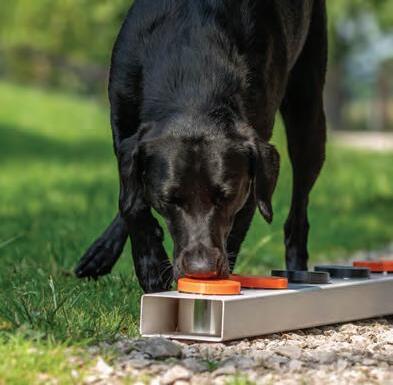
canine gossip, the labrador across the road and his questionable habits. Think of it as their version of catching up with friends over a good gossip - and spring brings a whole new round of news to catch up on. Give them the time to enjoy it. And honestly? Slowing down is good for us too.
Easy game to try today - The Scatter Search: Grab a small handful of kibble or favourite treats and find a patch of long, tussocky grass. The longer the betterthe idea is to let the nose do the work rather than the eyes. Scatter the treats widely and let your dog watch you do it. Say "find it!" and step back. Watch what happens to that nose.
Once they're sniffing happily through the grass it's time to level up. While your dog isn't looking, tuck a few treats into the grass rather than on top. Give your cue - just the once - then stand back and stay quiet. Trust the nose. They'll find every single one!
Spring is the season of new beginnings. Make this one the year your dog's nose gets the spotlight it loves!
Kate Hart - The Sniffer Shop
n www.thesniffershop.co.uk
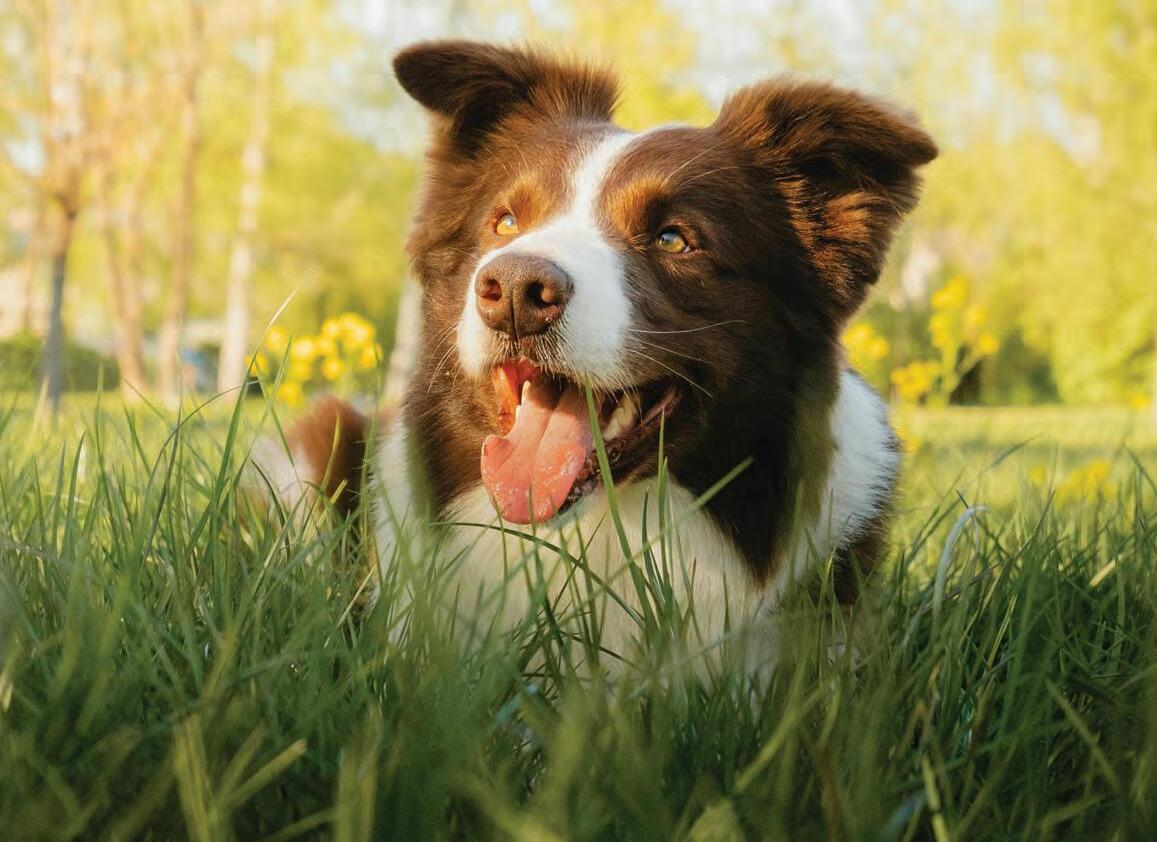
As the UK heads into warmer weather, dog owners are warned to prepare for ‘spring fever’, a seasonal spike in impulsive behaviour that sees a dramatic rise in dogs escaping from homes and bolting on walks.
With new smells, allergens and outdoor distractions all hitting at once alongside seasonal hazards, this means the consequences of that behaviour can be far more serious than many expect.
Chris Maxted, director of front door safety gate Dog-G8 www.dog-g8.com shares what spring fever means for your dog and how you can help keep them protected over the next few months.
spring
“Spring fever in dogs isn’t about a change in energy levels, it’s a response to a sudden increase in environmental stimulation, with new smells, pollen and wildlife all appearing at once, which can overwhelm their senses and override even the best dog’s recall.
“That surge in stimulation can lead to dogs becoming more impulsive, so
behaviours like ignoring recall, pulling on the lead or trying to bolt through open doors become much more common at this time of year.”
When everyday moments become high risk
“What makes this challenging is that it often happens in routine situations, such as stepping out for a walk or opening the front door, where owners don’t expect their dog to suddenly react or try to run.”
Key dangers
“With more dogs running off or becoming distracted, there is a higher chance of them ending up in unsafe situations, whether that’s moving traffic, chasing livestock or picking up something harmful while out exploring.
“Livestock worrying is a serious widespread issue at the moment which
can lead to dogs being impounded and unlimited fines for owners, so it’s important to keep an extra eye on your pets.”
Hidden seasonal hazards many owners miss
“Spring also brings a rise in issues like grass seeds getting lodged in paws, ears or eyes, alongside parasites such as ticks and fleas, which become more common as dogs spend more time in long grass and woodland.”
What owners can do to help
“Putting simple controls in place, whether that’s reinforcing training, checking for hazards after walks, keeping your dog on leash more often, or managing entry points at home, can make a noticeable difference in keeping dogs safe.”









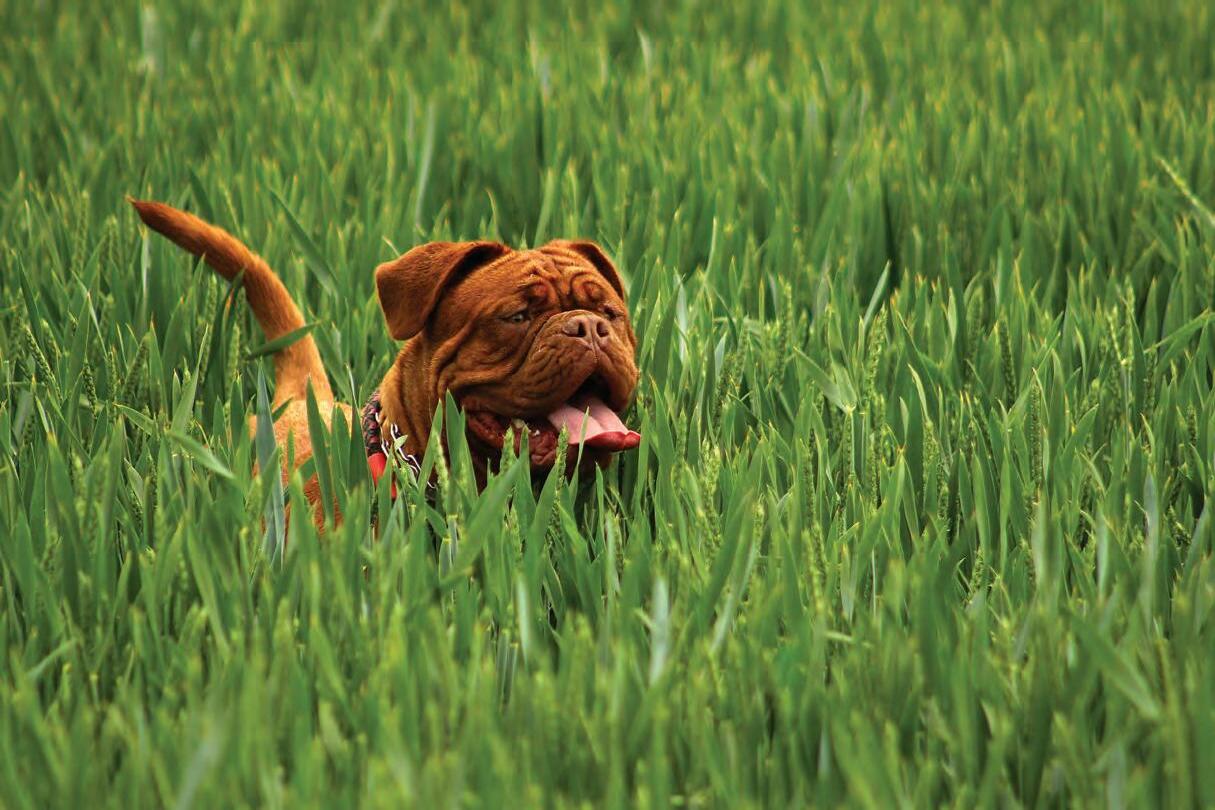
Dog owners are being urged to check their pets carefully after walks as experts warn that tick season is now underway across the UK, with activity increasing as temperatures rise in early spring.
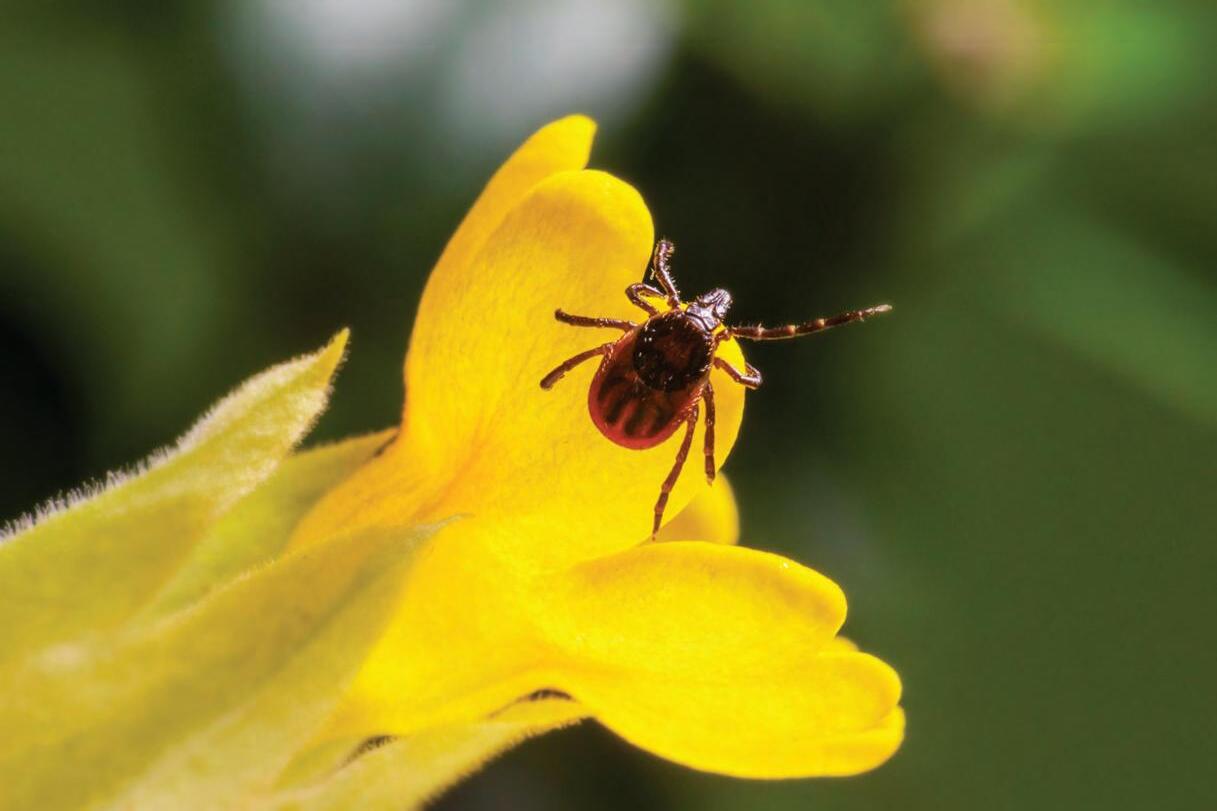
Ticks are small parasites that feed on blood and are commonly found in long grass, woodland, parks and countryside paths. While they can be present year-round, they become far more active between March and October.
Experts say this time of year often brings a spike in cases, as dogs begin spending longer periods running through grass, hedgerows and woodland areas where ticks are waiting on vegetation to latch onto passing animals.
Michael Nelson, canine expert at leading outdoor kennel provider, Kennel Store, says many dog owners are unaware just how easily ticks can attach to pets during an everyday walk.
"Ticks don’t jump or fly onto dogs. They wait on tall grass or plants and simply grab onto a dog as it brushes past. If your dog is exploring through long grass or woodland, it can happen very quickly."
Once attached, ticks burrow their mouths into the skin and begin feeding on blood. Because they start off extremely small, they can be easy to miss at first.
"When a tick first attaches it can be tiny, sometimes no bigger than a pinhead."
"But as it feeds it swells quite noticeably, sometimes growing to the
size of a small pea if it goes undetected for several days."
Why ticks can pose a risk to dogs
Aside from causing irritation where they bite, ticks can also carry bacteria capable of spreading disease.
One of the most well-known is Lyme disease, which can cause symptoms in dogs including lethargy, fever, loss of appetite and swollen joints if infection develops.
While not every tick carries disease, Nelson says the longer they remain attached, the greater the potential risk.
"The biggest issue is when a tick stays
on a dog for a long time without being noticed. The longer it feeds, the greater the chance bacteria can be transmitted."
Studies carried out by veterinary groups have previously found that around one in three dogs checked at UK veterinary clinics had ticks present, highlighting just how common the parasites can be.
Because ticks crawl through fur to find skin, they often settle in warm or hidden parts of a dog’s body where owners may not think to check.
Nelson says a quick inspection after walks can help catch them early.
"The most common places we tend to find ticks are around the ears, under the collar, between the toes, under the front legs and along the belly."
"These are all areas where ticks can attach without being immediately noticed, especially on dogs with thicker coats."
He recommends owners take a minute to run their hands through their dog’s coat when returning home.
"A quick check after walks is one of the simplest things owners can do. You’re feeling for small bumps on the skin that weren’t there before."
"If you find one early, it’s much easier to remove safely before it has time to fully embed."
While ticks are a natural part of the outdoor environment, experts say a few simple habits can reduce the likelihood of dogs bringing them home.
Nelson advises owners to:
• Check dogs after countryside walks or time spent in long grass
• Run hands through their coat to feel for small lumps
• Pay close attention to ears, belly, neck and between toes
• Speak to a vet about tick prevention treatments where appropriate
• Stick to clearer paths where possible during peak tick months
With spring walks becoming more common as the weather improves, Nelson says awareness is key.
"Most dogs love exploring woodland paths, fields and parks, and owners shouldn’t feel they have to avoid those places entirely."
“But getting into the habit of checking your dog after a walk can make a big difference. It’s a simple step that can help spot ticks quickly and keep dogs comfortable and healthy.”
n https://www.kennelstore.co.uk/collections/wooden-dogkennel
Melon arrived in the UK in early May 2024, part of a group of 10 Spanish Galgos rescued by Galgos del Sol and brought to the UK for homing by Greyhounds in Need. Melon was actually the first of this group to be adopted and it was a lovely home with one of our previous adopters and there was even another galgo in residence so we were all confident that all would be well.
I’m happy to say that nearly all of the time all does go well and our galgos settle very well in their new homes. Now and again, sometimes for reasons that are not always obvious a galgo may not be happy and unfortunately this was the case for Melon. He had become very anxious and reactive when meeting other dogs and the adopter was struggling. We are always happy to provide continuing support for every adopter but despite a visit and assessment by our trustee Sam who is a qualified dog trainer and behaviourist, Melon didn’t improve and after some discussion it was agreed that he should return to us. We were of course quite concerned about how he would cope in kennels as he’d been in his home for nearly 9 months. Well the day came for his return and instead of being scared and worried he stepped out of the van and trotted into the kennels as calm as you please! I must just say that the kennels we use have some wonderful staff who really love looking after the galgos whilst they are waiting to be adopted and I think Melon must have remembered as he seemed to be at home almost straight away.
Dogs love a routine and the one thing about kennels is there is definitely a set routine every day so the dogs know what’s coming. I think this helped Melon relax and we gave him plenty of time to do so. He showed no reactivity to any of the other dogs so we were a bit surprised but happy to see this. With no immediate offers of a new home we started to take him out to a local park to assess how he reacted to being away from the kennels and to see how he was coping with meeting other dogs. He jumped into the back of my car happily every time and each time we went he grew more confident. We saw that he was comfortable with other dogs as long
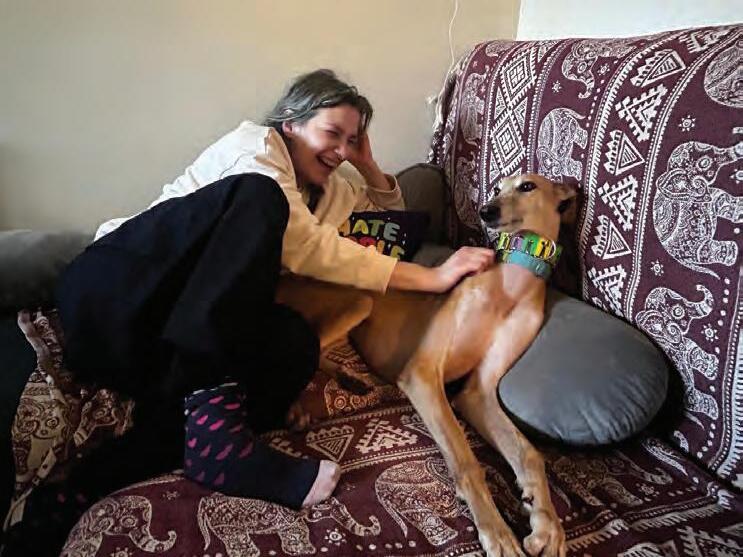
as he had space and gradually he grew confident enough to not react when another polite dog wanted to say hello.
OK we thought he’s ready to try again so we duly started to promote his need for a new home and a shortly after we received an application from a local lady, living on her own, no other dogs and interestingly she was also Spanish!
She had seen his photo and read about him when she applied so was already very keen to offer him a home but we wanted to make sure it was the right place for him. After a home visit we arranged their first meet up and it went so well we set up a home visit so Melon could visit her at home and sure enough after a walk out and a few minutes exploring he was settled on the sofa. She was confident and of course by this point completely smitten and I was happy to see him relaxed so we agreed it could work and a date was set for his adoption.
That special day came and although normally adopters will come to the kennels to take their dog home I decided that I would take Melon myself just to make sure he was OK. I was a little concerned he would have a wobble when his safety blanket, i.e. me, would leave to come away so as a distraction I suggested we go for a walk then I would slip away quietly. Well I needn’t have worried, we walked a few yards, I turned to go…and smiled to myself as he trotted along beside her…not even a backward glance….success!
Sue, GIN Homing officer

Monday the 9th of March 2026 is a date marked in my heart forever, the day Melon moved in with me.
It’s been such a journey, that I can only describe as a continuous learning process which has brought huge gratification.
Melon’s sweetness and intelligence has made the process very easy, I just need to pay attention to the signals.
On the first day even though everything was new to him he showed that he was willing to get to know me and to show me how to help him adapt.
He likes and appreciates cuddles so on the first two nights I noticed that he was having nightmares that I calmed down with hugs and soft loving words. I can tell that it worked as he quickly started coming out of his shell.
On one of our first walks together, we crossed paths with a man walking a husky and Melon’s reaction was to hide behind me as soon as he noticed his presence. However, two days later, nearly on the same spot, we crossed paths again with them. As I noticed them before Melon, I lead him out of the path into the grass and to my surprise when they were passing by Melon jumped ready to stand his ground … You may think that’s bad but to me it showed that he was winning back his confidence.
He’s still scared of unknown men (though he’s becoming confident around both my partner and my friends, men and women) and he still gets scared by sudden noises or movements. But just today, after over a week of trying to stop
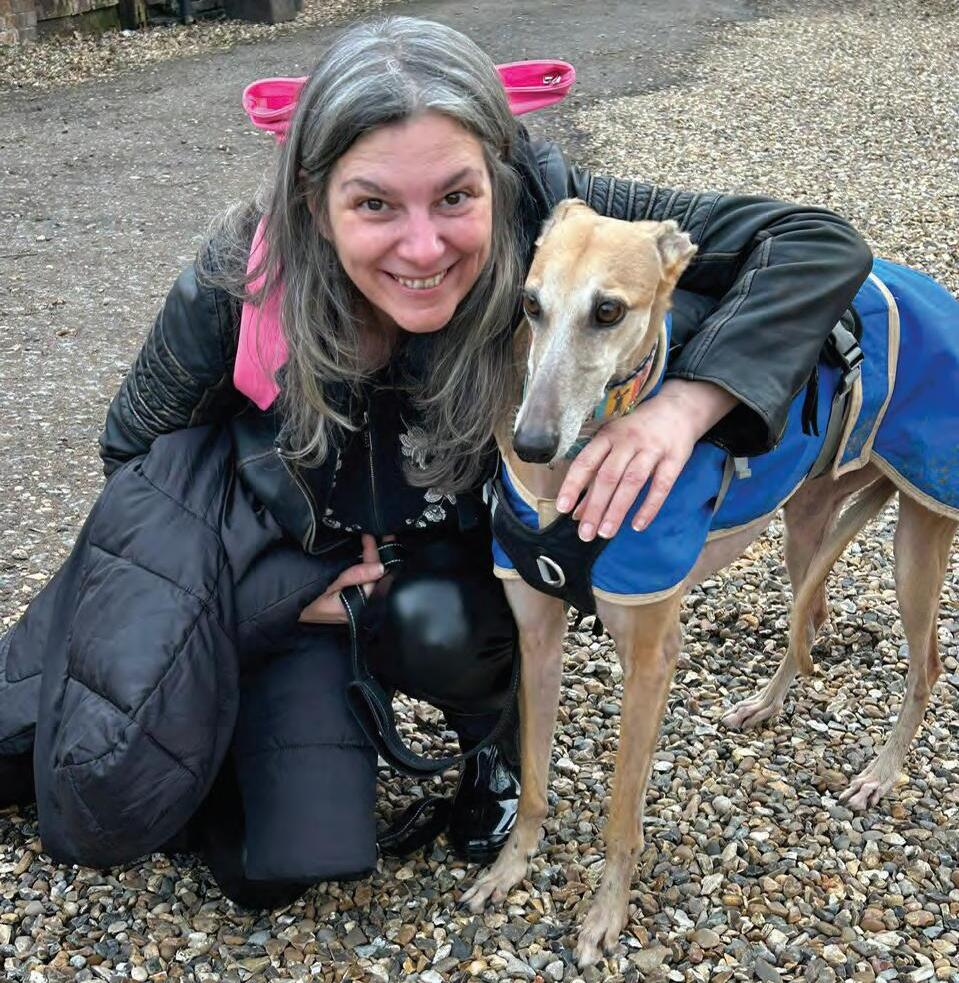
him from eating whatever is left on the street (poo, bread, …) I saw him trying to eat something and I said “No!” he dropped it straight away and kept walking like nothing had happened, when only 4 days ago, he got upset with
If you are interested in offering a home to a galgo contact us on 01784 483206 to ask for a homing pack, please complete and send the questionnaire in the pack to us at Greyhounds in Need, 5A, 80 High Street, Egham, Surrey, TW20 9HE, or email it to info@greyhoundsinneed.co.uk
The questionnaire is also available on our website to complete
Greyhounds in Need CIO
Registered charity in England and Wales No. 1174351
Registered UK Office: 5A, 80 High Street, Egham, Surrey, TW20 9HE, UK
Tel: 00 44 (0) 1784 483206 Email: info@greyhoundsinneed.co.uk
Website: www.greyhoundsinneed.co.uk
https://greyhoundsinneed.co.uk/shop/ www.facebook.com/greyhoundsinneed
https://twitter.com/@galgos_GIN
http://www.youtube.com/user/GIN1069438
https://www.instagram.com/greyhoundsinneed.uk
https://education.greyhoundsinneed.co.uk
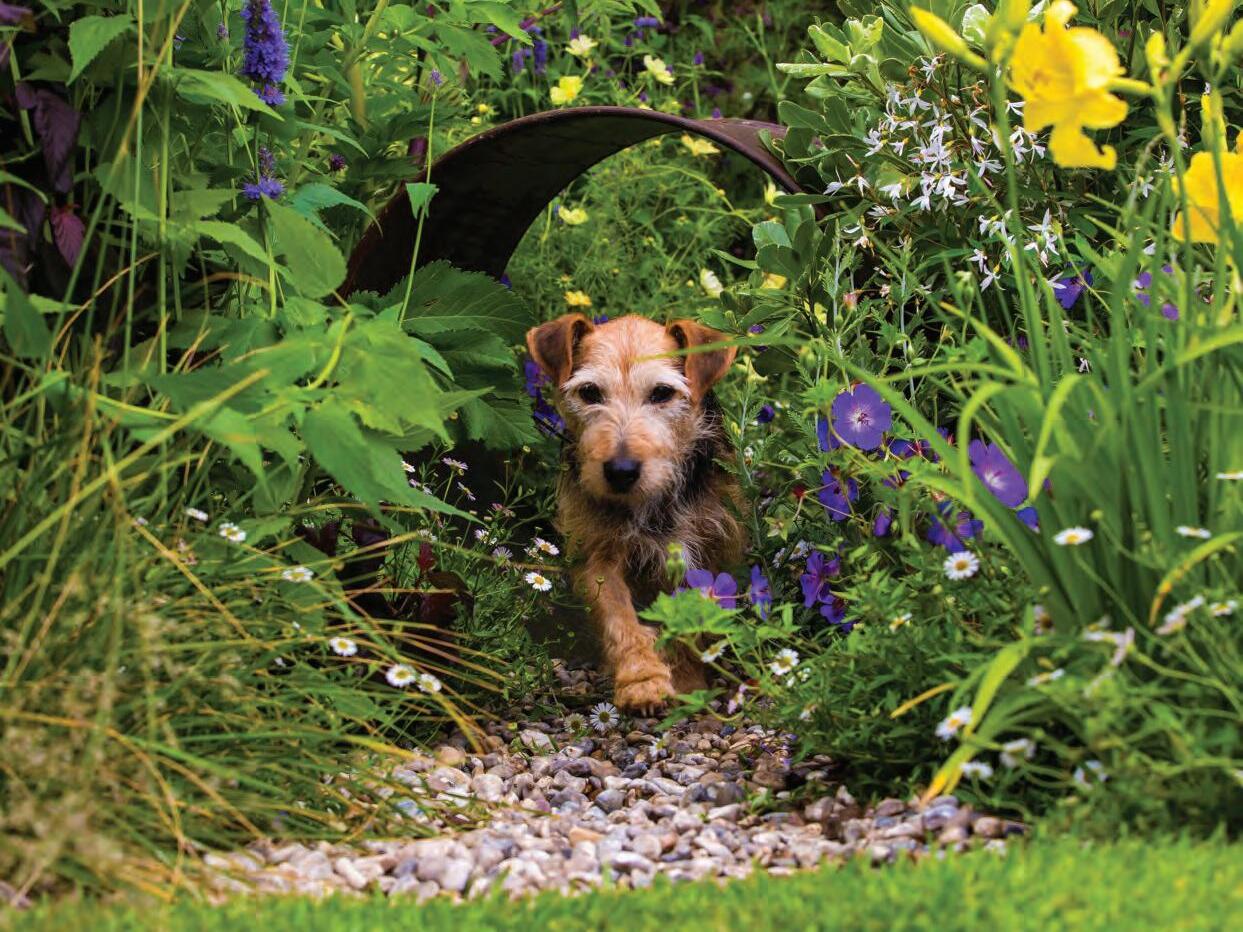
Ideal Home Show set to unveil a stylish, dog-friendly garden created with Dogs Trust and the Style Makers to celebrate National Pet Month
LONDON, UK: Ahead of National Pet Month this April, the Ideal Home Show is revealing five expert tips to help owners create a beautiful, dogfriendly garden – as it launches The Bark Yard, a brand-new feature for 2026 created in collaboration with Dogs Trust and the Style Makers.
Created as a design-led outdoor space, The Bark Yard shows how gardens can be both stylish and enriching for dogs, supporting their wellbeing, safety and natural behaviours.
Surrounding a life-sized ‘Ideal Home’, it forms one of this year’s showcase garden features, highlighting practical ways to make outdoor spaces work for every member of the family – including those with four legs and wagging tails.
Developed in collaboration with Dogs Trust’s canine wellbeing experts and acclaimed designers the Style Makers, the feature demonstrates how simple, thoughtful design choices can help dogs live happier, healthier lives at home.
Designed with a bright and bold Miami
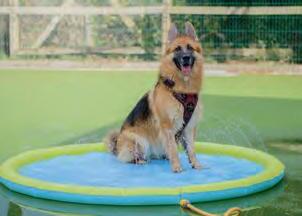
summer colour palette, it aims to boost furry friends’ mood with a ‘yappy hour’ self-serve drinking bowl station, a ‘ball of fame’ toy display and a ‘pawformance area’ with a splash pool.
Drawing directly on Dogs Trust’s expert advice, The Bark Yard brings the top tips to life - from choosing safe, nontoxic plants and creating sensory zones, to adding playful climbing features, providing safe water play, and ensuring shaded rest areas. The space gives visitors clear, practical inspiration
for creating gardens that look beautiful while meeting the needs of four-legged family members.
While furry friends won’t be padding through the show themselves, visitors to The Bark Yard will discover plenty of practical, design-led ideas to take home, from smart layout and planting considerations to simple features that encourage play, rest and enrichment.
Giles Perry, Director of the Ideal Home Show, said: “The Bark Yard is a brilliant example of what the Ideal Home Show does best, bringing together expert advice and inspiring design to reflect how people really live today. Pets are a beloved part of the family, and this new feature shows how gardens can be designed to support dogs’ wellbeing without losing out on style”.
Hannah Harris, Behaviour Expert at Dogs Trust said: “A well-designed garden can make a huge difference to a dog’s quality of life. By working with the Ideal Home Show on The Bark Yard, we’re helping to highlight simple, thoughtful design choices that support dogs’ natural behaviours while keeping them safe at home”.
Hannah Harris, Behaviour Expert at Dogs Trust’s top 5 tips on making your garden homefriendly, in collaboration with Ideal Home Show:
1. Choose safe, non-toxic plants: Opt for dog-friendly herbs and flowers such as
rosemary, sage, calendula, cornflower and sunflower, which provide scent, colour and interest without posing a health risk. While safe, any plant can cause issues if eaten in large quantities.
2. Create sensory enrichment zones: Give dogs space to explore naturally by planting herbs at dif ferent heights, offering varied textures (like grass, sand or woodchip), and encouraging sniffing and foraging behaviours through hidden treats or toys.
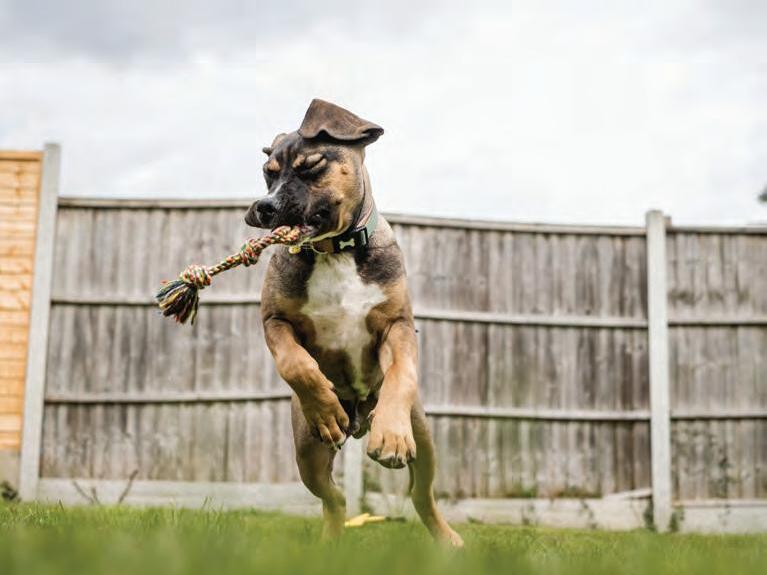
3. Add features for fun and stimulation: Incorporate small climbing elements such as railway sleepers to let dogs explore different levels, helping to keep them mentally and physically engaged.
4. Provide safe water play: A shallow paddling pool can be a great way for dogs to cool down in summer, just ensure constant supervision, easy exits and that the pool is drained when not in use.
5. Include a shaded rest area: Designate a quiet spot with shade, shelter and fresh drinking water where your dog can relax, especially during warmer months.
The Style Makers said: “Our aim with The Bark Yard is to show that dogfriendly design can still be beautiful. By combining considered materials, smart layouts, and Dogs Trust’s expertise, we’ve created a space that feels aspirational, practical and achievable for homeowners”.
The Bark Yard will debut at the Ideal Home Show, returning to Olympia London from 10-19 April 2026, alongside a host of new and re-imagined gardens, interiors and lifestyle features. Visitors can also expect headline experiences spanning cutting-edge smart home innovation, design inspiration for keen home chefs, a thriving edible garden for those keen to live more sustainably, live DIY demonstrations, a BBQ Academy, and al fresco cooking.
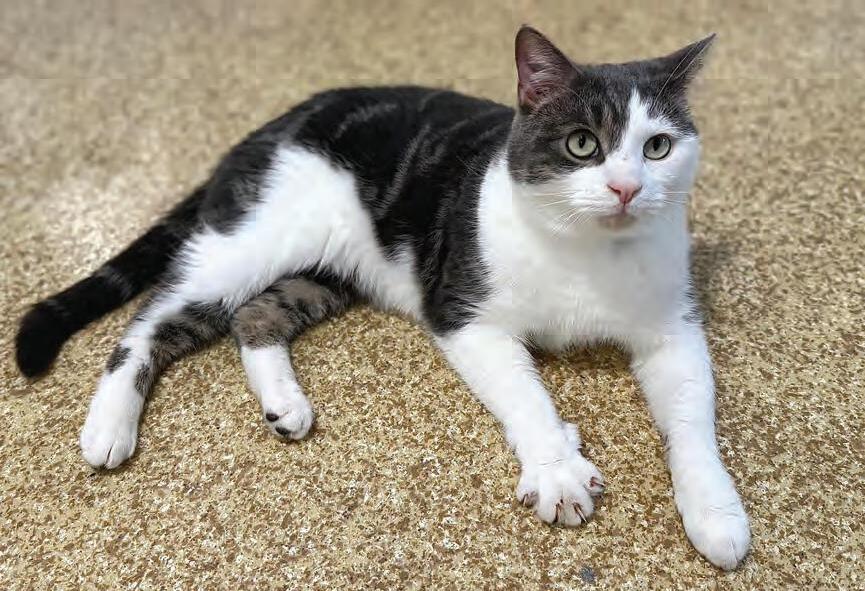
A cat with an independent personality is seeking a different kind of home where he can come and go as he pleases while being watched over by a caring owner.
Ladder was admitted to Cats Protection Leeds Cat Centre in Gildersome after the sad death of his owner, but he has been struggling with the upheaval and finding life in an adoption centre tricky.
While a friendly and confident cat, the eight-year-old moggy can sometimes be unpredictable. Because of this, his carers think he would be best suited to a home where he can have unrestricted outdoor access without any expectation of him being a traditional pet cat.
Centre manager Laura Clews said: “Ladder is a really special cat who certainly knows his own mind. While he is generally fine around humans, he very
much wants attention on his terms, so needs an experienced owner who can understand his cues.
“Cats Protection has had great success rehoming ‘inbetweener’ catsthose who thrive with outdoor freedom, a safe shelter, and regular feeding, such as on a stable yard, farm, or smallholding. Many eventually bond with their carers while still preferring limited physical contact and we are hopeful we can find Ladder just the right environment to cater for his needs.”
Ladder is on daily mediation for arthritis but he is happy to take this mixed in with his food. He needs to be
the only cat in the household and an adult-only home is a must.
Laura added: “It may be that over time Ladder grows more comfortable being indoors but any potential adopter needs to understand this may not be the case and he may prefer to retain his independence. We will fully brief his owners on managing his post-adoption transition, and will be on hand to offer guidance and support.”
n To enquire about adopting Ladder or to see other cats available at Leeds Cat Centre visit www.cats.org.uk/leeds or call 0300 012 1505.

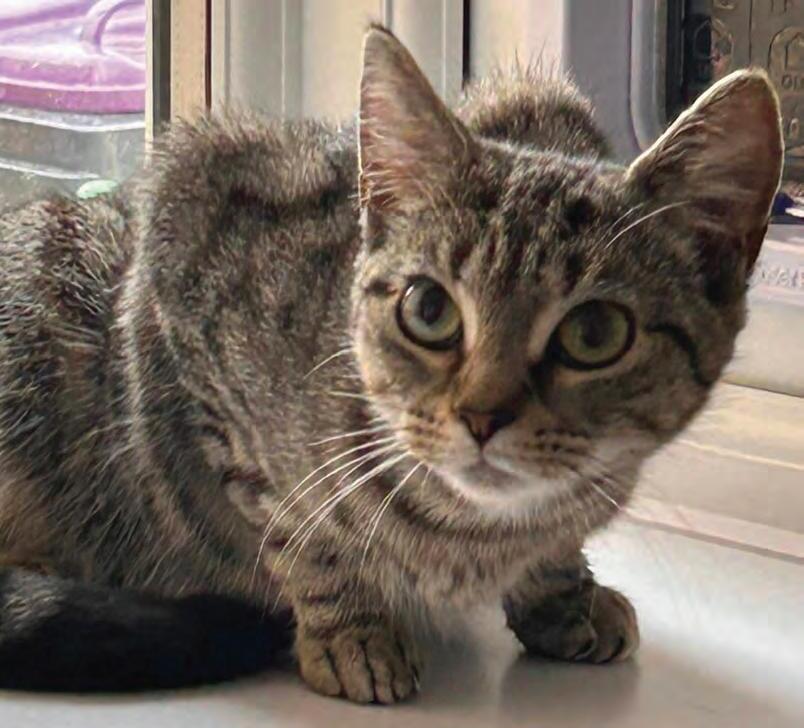
A tabby kitten was found abandoned in her carrier on a Newport street discarded like rubbish, with no access to water and minimal food.
Volunteers from Cats Protection
Gwent were called to help when the young cat was spotted by a kind-hearted dog walker. Sally, as the cat has been named in honour of the lady who found her, was spotted locked in a plastic carrier on London Street in Maindee on Thursday, 5 March around 7am.
Sally, who is believed to be around six months old, had been left by the side of the road with a plastic bag of her remaining food supplies on the pavement beside the carrier. She had no water and a single sachet of food had been left inside with her.
Glynis Davies, Branch Coordinator for Cats Protection Gwent, says: “We fear that little Sally was dumped on the street intentionally as household waste and recycling are collected the day before she was found. There is a therefore a chance she had been there all night after being put out with the bins but thankfully not collected.”
Although understandably nervous after her ordeal, Sally, who was not
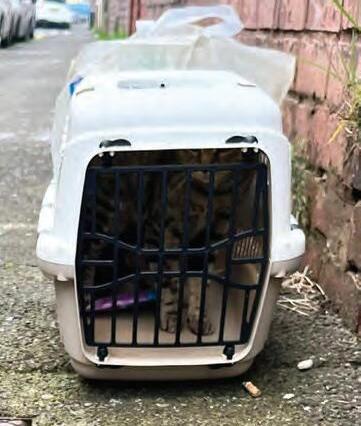
microchipped, has been checked over by a vet and has been given a clean bill of health.
Glynis explains: “Although there is never any excuse for dumping a cat in this way, we understand that sometimes situations feel overwhelming. We suspect Sally’s owner cared enough to leave a supply of food with her, perhaps hoping she would be found. Sally was lucky that she was spotted but the outcome could have been very different.
“We would like to encourage anyone who is thinking of giving away or abandoning their cat to think twice and contact us, another rescue organisation
or vet for help. We all know that circumstances change and even if we cannot take a cat in straight away, we will always do our best to support you in the interim and work out the best solution for you and your cat.”
Sally will soon be ready for a new home, at which time her details will be posted on the branch’s website www.cats.org.uk/gwent
If anybody would like to send a gift for Sally, the branch has a wishlist to help the cats in its care: www.amazon.co.uk/hz/wishlist/ls/2BV O7MGA5CIV6

We wanted to let you know about our petition. It is as a result of our
own,
as well as 230,000 other cats, each year being hit by cars.
PetPlan figures reveal that 25% of hits are fatal. This means that 75% can be saved if help is given straight away. And this is all we want.
We want to minimise suffering and preserve life. Our petition is gaining around 400 signatures a day and is likely at 20k by the time you open this email. If not gone beyond. We fully aim to hit the 100k mark by June and hand this into Downing Street and see it be debated in Parliament.
Petition link; Legislate to require drivers to report collisions with cats - Petitions https://petition.parliament.uk/petitions/750612
As of early 2026, there are approximately 12.5 million owned cats in the UK, with around 29% of households owning at least one cat. All the vast majority of those people want is to know their cat was helped should the worst happen and they are hit by a car. They want their cat helped, if at all possible, and also to be notified so they can either help their cat, or say goodbye to them. It is not right that people search the streets for weeks, or even months, searching for their cat in vain, and it is certainly not fair that the law allows these cats to be left suffering by the roadside. Labour put reportable road accidents involving cats in their 2018 manifesto - the only party to ever have committed to such a law, ever, so we are asking they finish this and introduce the law once and for all. How many more hugely successful petitions do Governments want producing to them before the act?
We are an animal loving nation and now have to microchip our cats by law. The progression from this would be to have those microchips scanned by vets who can helps cats that have been involved in road accidents. Cats in the UK need road protections, such as mandatory reporting of accidents, because traffic is now the leading cause of death and injury, with roughly 4% of
veterinary appointments linked to road traffic accidents (RTAs). Under the current 1988 Road Traffic Act, drivers are not legally required to stop and report hitting a cat, unlike with dogs or horses.
Road traffic is the biggest threat to outdoor cats, with many accidents happening at night or in low light. A study noted over 50% of cat RTAs occur in the dark, and 75% are fatal. Crrent law mandates reporting for dogs, horses, and cattle, leaving cats as one of the few popular pets unprotected by mandatory reporting laws. A change in the law would compel drivers to stop and seek veterinary help, reducing the chance of cats dying alone or in pain and will
automatically improve driver vigilance. We strongly argue that, as loved family members, cats deserve the same legal status and protection in accidents as dogs and we demand the Government take steps to investigate potential laws surrounding their protections. It is not just ourselves who are saying this, we have a huge number of other UK based animal welfare organisations standing with us in our letter to the Government demanding change; Advocating for Feline Road Safety and Better Protections for Cats on Roads https://www.catsmatter.org/singlepost/advocating-for-feline-road-safetyand-better-protections-for-cats-on-roads
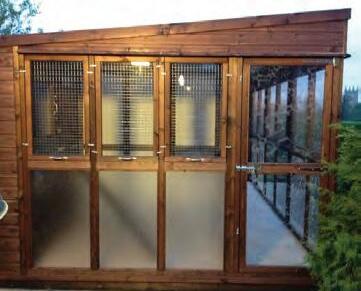
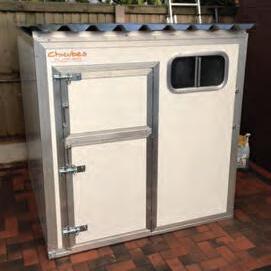
The standard unit you will need for your licenced cattery, also used and approved by leading rescue groups throughout the UK.
The fully lined and insulated walk-in sleeping quarter measures 4ft wide x 4ft deep x 6ft high and has a vinyl floor for easy cleaning.
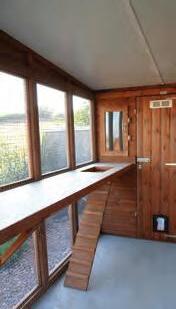
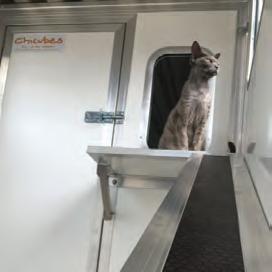
Two removable UPVC shelves, a fully adjustable air vent, lockable cat flap and a fully opening window leading to a sunning shelf and ladder, make this a firm favourite with customers and cats alike!
A 6ft long exercise area gives your cats plenty of space to explore and relax. A second sunning shelf provides another area to watch the world go by as it is near the front of the pen.

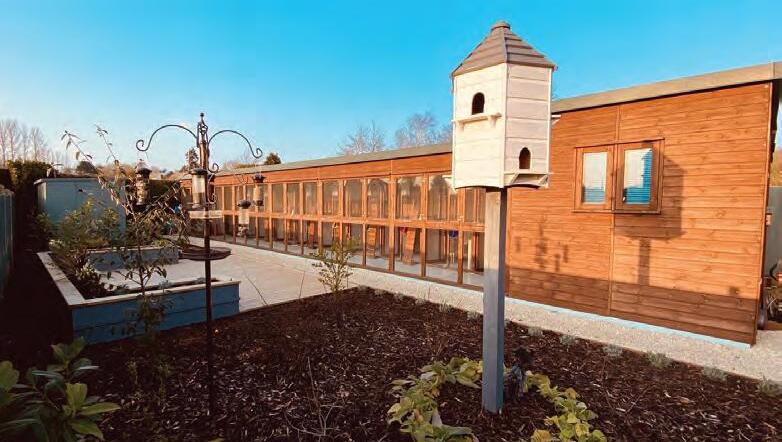
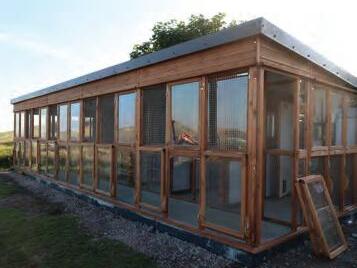
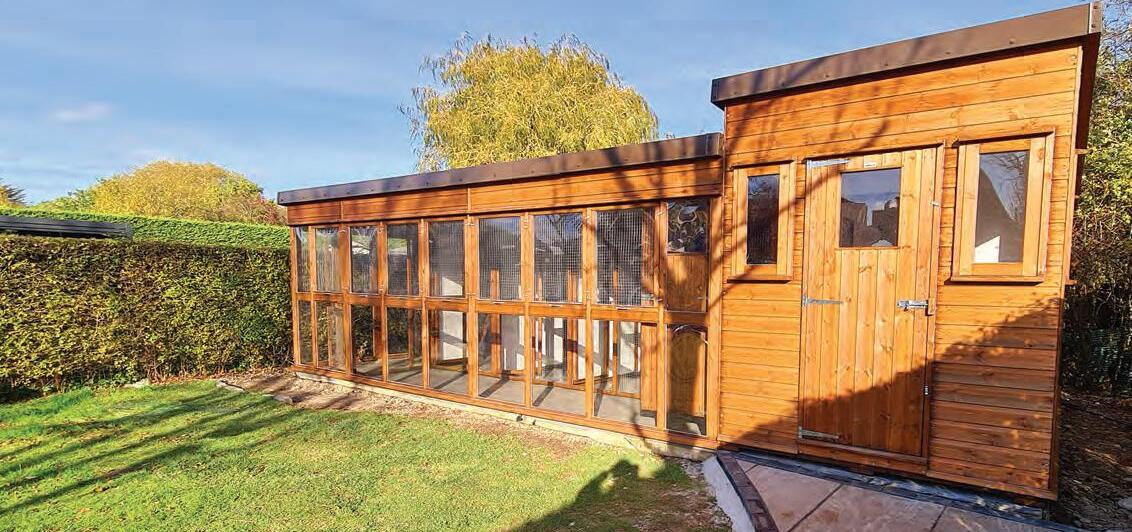
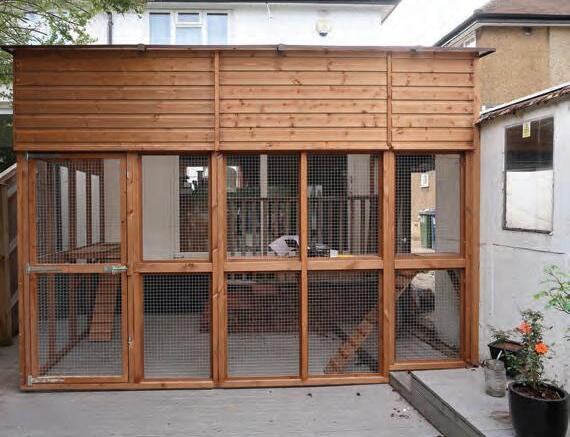
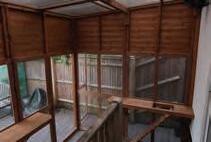
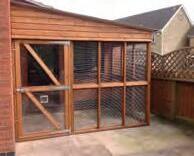
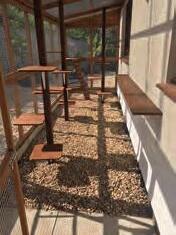
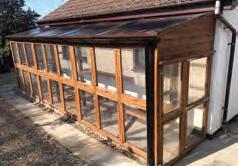
Handmade, bespoke cat runs are a lovely addition to a property, allowing a safe and secure outside space, for your indoor cats. They can be designed with lift out shutters, to have at the time of installation or added at a later date, which provide weather protection from the elements, making it an area that can be used year-round.
We are able to supply extras, to provide activity and viewing point for your cats, such as ladders, posts and sunning shelves. The addition of a Deluxe Cat Cabin can also provide a small hideaway, for cosying up and having a cat-nap.
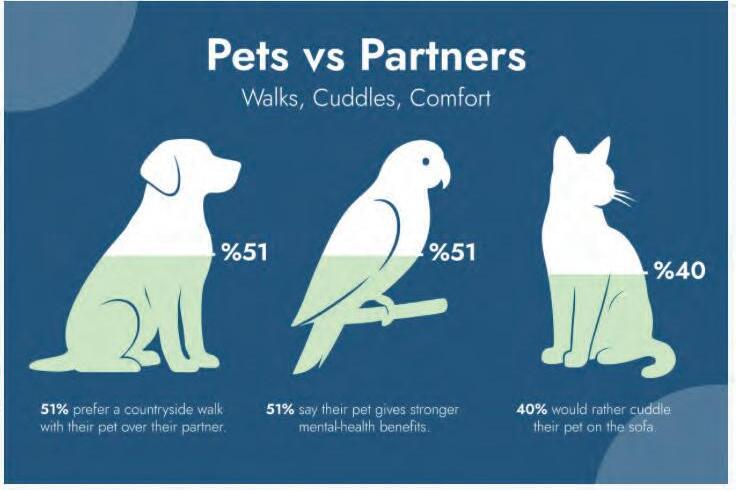
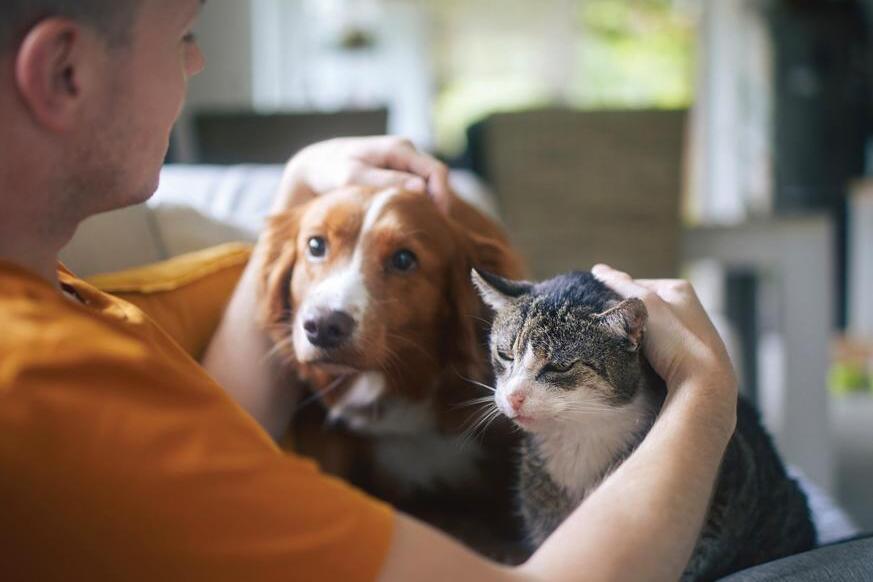
New survey reveals more people turn to pets than partners for walks, cuddles, and emotional support.
New research from ePaws finds that for many in relationships, pets, not partners, are their preferred companions for everyday joy, comfort, and connection.
A nationwide survey of UK adults in relationships who own at least one pet reveals just how deep that bond runs:
• 51% said they’d rather take their pet for a countryside walk than their partner.
• 40% preferred cuddling on the sofa with their furry friend instead of their other half.
• 51% believe pets provide better mental health benefits than partners.
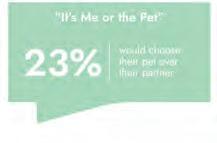
• 23% admit that if faced with the ultimatum “it’s me or the pet,” they’d choose the pet.
Women, in particular, are showing
stronger loyalty to their four-legged companions:
• 62% of women say they’re more lenient with their pet than their partner (compared to 52% of men).
• 57% of women believe pets boost mental wellbeing more than partners do (compared to 45% men).1
• 61% prefer taking their pets for a walk in the park instead of going with their partner (compared to 47% men).
It’s not just walks and cuddles; pets now play a central role in how people manage stress, joy, and self-care. More than half of those surveyed (51%) said pets have a stronger impact on emotional well-being than partners1, while a third (33%) confessed their pets make them happier than their significant other. 1
The research also highlights differences between pet owners:
• Dog lovers are the most devoted,
65% prefer walking in the park with their dog than their partner, and 63% would choose a countryside stroll with their dog over their significant other.
• Cat owners may be more divided, 33% prefer watching TV with their cat rather than their partner, and 38% said they simply couldn’t choose between the two when thinking about who they would rather live without.
“Pets aren’t just companions; they’ve become emotional anchors in many people’s lives,” said Simon Joseph, CEO of ePaws. “From cuddles to mental health support, they’re proving to be Britain’s most loyal partners.”
The full report and supporting data are available at:
https://epaws.co.uk/blogs/news/petsvs-partners-who-do-people-really-prefer
• Dogs Trust Snetterton has issued an urgent appeal for bedding and longlasting toys for the larger dogs in its care.
• The charity is calling for donations as it looks to rehome the over 70 dogs currently awaiting their forever homes.
• Donations can be dropped off directly at the rehoming centre or can be ordered from the charity’s Amazon Wishlist.
Dogs Trust Snetterton has issued an urgent appeal for toys and bedding to help keep the dogs in its care cosy, active and stimulated.
The rehoming centre, which currently has over 70 dogs in kennels, is in urgent need of the everyday items that can help keep dogs warm, stimulated and comfortable as they wait to find their forever homes. Supplies are being used up quickly as the team works to keep kennels warm and dry after a soggy winter and heading into spring. The charity is asking members of the public to check their cupboards for any spare items that could help.
The specific items the rehoming centre is appealing for include:
• Toys
• Dog beds
• Soft bedding (no duvets please)
• Blankets
• Towels
• Long-lasting toys (such as hard plastic, large rope or Nylabones)
Dogs Trust asks that all donated items be clean and in good condition. Donations can be dropped off directly at the rehoming centre's reception on North End Road, Snetterton.
Alternatively, if supporters would prefer a simple way to donate gifts or treats to the dogs in the charity's care, please visit Dogs Trust Snetterton's Amazon Wishlist https://www.amazon.co.uk/registry/wis hlist/1J78QL4J9L8KO There, supporters will find a selection of items much loved by the rehoming centre's dogs, which
Mash at Dogs Trust Snetterton, enjoying her cosy bedding
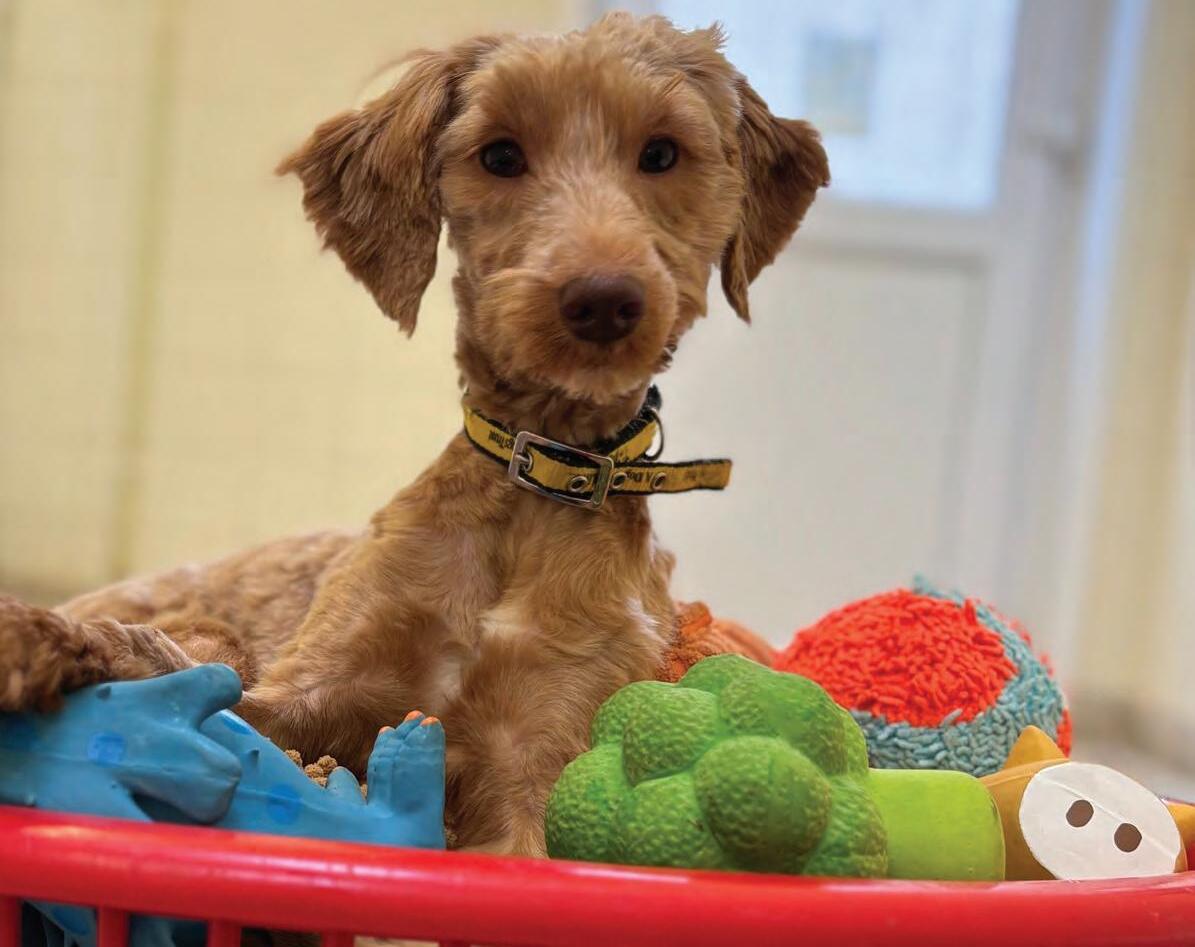
can be ordered and delivered directly to their kennels.
Kelly Smith, Manager at Dogs Trust Snetterton, said, "The recent weather means we are getting through our bedding much faster than usual, and with the changing seasons, we also need more toys to keep our dogs stimulated both mentally and physically.
"Keeping our dogs warm, dry and entertained is essential for their health and well-being, but our supplies are running low. We're asking the community to help if they can. As a
charity, we rely on the generosity of our supporters and are always incredibly grateful for the support of the public."
Every contribution will help to ensure the dogs stay warm and comfortable while they wait for their forever homes.
n Dogs Trust Snetterton is open to the public five days a week. You don't need an appointment to visit, see the dogs looking for homes, get advice or apply to adopt. For more information about the work Dogs Trust Snetterton does, please visit www.dogstrust.org.uk/snetterton
In March last year the Trust were approached by a vet seeking help with a litter of 6 pure bred Labrador puppies who had been taken to the surgery to be euthanased. The puppies had been diagnosed with Neosporosis.
Neosporosis is a serious parasitic disease in dogs caused by Neospora caninum, primarily affecting the nervous and muscular systems, particularly in puppies under 6 months. It causes symptoms like hindlimb paralysis, muscle rigidity, and swallowing difficulties, often transmitted via raw meat or mother-to-pup.
The Trust agreed to give these pups every chance of life and one of their Trustees took all six puppies into foster. Weeks of treatment took place and they all grew steadily. Their mobility did not improve and none of them could stand unaided. Hours of physiotherapy, hydrotherapy, acupuncture, most offered free of charge by local experts and complete devotion by this Trustee and his wife has given them a good quality of life. Every waking moment is taken up with their care and enrichment of life.
The Trust engaged with more experts in the field and it was discovered that the pups had been misdiagnosed and had never in fact been tested for Neospora. Once they were tested by our own consultant the results came back clear. Two of the pups were then taken to the Royal College Veterinary Hospital
and seen by one of the top neurologists in the country.
The devastating news has now been revealed that these puppies have a condition called Cerebellar hypoplasia (CH). This is a non-progressive neurological condition where the cerebellum—responsible for motor control and balance—is underdeveloped at birth. Common in cats (“wobbly cat syndrome”) and rare in humans, it causes ataxia, tremors, and uncoordinated movement. While incurable, it is non-painful, and affected individuals often adapt and live full, happy lives.
The Trust now have four puppies who are now 12 months old seeking new foster/permanent homes. Mobility carts are being sought to give them more mobility but these have to be tailored to each dog as they are all different sizes. Obviously these are extremely expensive and donations are being sought as the
Trust has invested a lot of money in their future.
If you think you can give one of these pups a forever home then the Trust will help as much as possible and advice will always be on hand to safeguard their future welfare. In order to do this the Trust have set up a sponsor scheme whereby for a monthly donation you can sponsor your chosen puppy. Updates and pictures will be sent at regular intervals keeping you up to date with their progress. To obtain further details on this and adopting/fostering please contact info@labrador-lifeline.com
Anne Carter
Labrador Lifeline Trust www.labrador-lifeline.com
Labrador Lifeline Trust Reg Charity 1076061



From swallowed socks to lifethreatening illness, specialist pet insurance provider Insure Your Paws has analysed its claims data¹ to reveal the most common pet insurance claims.
Among dogs, stomach upsets such as gastroenteritis are the most common illnesses. They are followed by knee problems, including cruciate ligament damage, as well as pancreatitis, slipped discs and cases where dogs have eaten something they should not.
Cats, meanwhile, are most commonly treated for urinary tract infection and injuries caused by road accidents, followed by pancreatitis, inflammation of the bile ducts and inflammatory bowel disease.
Recent research2 finds that the average cost of treating common pet conditions is £3,142 for cruciate ligament damage, £1,321 for foreign body ingestion, £1,168 for gastroenteritis, £704 for a urinary tract infection and £635 for an accidental injury.
The average cost of treating other common conditions is £1,181 for tumours, £1,024 for heart disease,
£934 for a heart murmur and £791 for wounds.
Despite the cost of vet care, research from Opinium3, commissioned by Insure Your Paws reveals that almost one in five (18%) pet owners would struggle to afford an unexpected vet bill of over £500, and many claims are significantly more than this.
Dogs - Most Claimed for Conditions
1. Gastroenteritis conditions
2. Knee problems i.e., cruciate ligament damage & disease
3. Pancreatitis (inflammation of the pancreas)
4. Slipped disc
5. Foreign body (i.e., any object ingested or introduced into an animal's body that is not part of their normal diet or tissue)
6. Deep skin cuts i.e., wound lacerations
7. Mast cell tumours (skin cancer)
8. Lipoma (fatty tumours or lumps)
9. Hepatopathy (liver disease)
10. Pyometra (bacterial infection)
Cats - Most Claimed for Conditions
1. Urinary disease / obstruction
2. Road accident
3. Pancreatitis (inflammation of the pancreas)
4. Cholangitis (inflammation of the bile ducts)
5. Inflammatory bowel disease
6. Heart murmur
7. Cardiomyopathy (heart condition)
8. Kidney disease
9. Cat bite
10. Traumatic injury
Andrew Simpson Head of Pet at Insure Your Paws said: “Behind each of these claims is a pet who is or was unwell, and an owner who simply wants the best for them. We’re lucky in the UK to have highly skilled vets who provide excellent care. However, treatment costs can quickly add up. Insurance is now as essential as any other part of responsible pet ownership, and we encourage people to consider taking out a policy as soon as they welcome a fourlegged friend into their home, so they have financial support in place if the unexpected happens.”
New pet ownership legislation that comes into effect today means dog walkers could face unlimited fines or have their dog seized – and there’s a type of dog lead which increases the risk.
As of Wednesday 18 March 2026, pet owners whose dogs induce stress or fear in livestock could see their dog detained until an investigation has been carried out. The law applies to cattle, sheep, goats, swine, horses, camelids, ostriches, farmed deer, enclosed game birds or poultry.
Previously, the fine for “livestock worrying” was £1,000, but unlimited fines could now be handed out due to the law change.
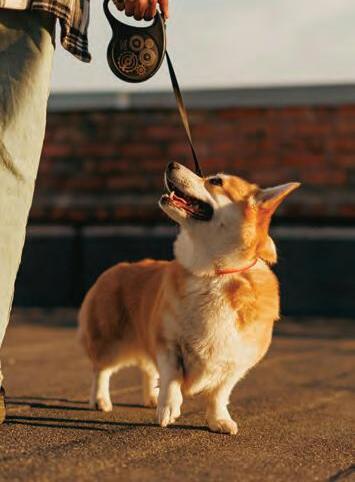
The experts at TopDog https://topdogharnesses.co.uk are warning dog owners that retractable leads, regarded as a useful tool for dog training, could put you at greater risk of breaking this updated law.
Ditch the retractable lead
Walking on a retractable lead is thought to be the ideal way to give your dog a sense of freedom, while still having the security of being on a lead. However, these leads can be up to ten feet long when fully extended, meaning that your dog may scare livestock before you’re even aware.
The sheer length of the lead means livestock could easily become entangled, causing serious injury.
New law can be broken without dog making physical contact
Additionally, a dog does not need to make physical contact with the livestock to commit an offence under the new law. Simply chasing or disturbing them can cause injuries and induce miscarriage in pregnant female animals.
Both PDSA and Battersea do not recommend extendable leads, particularly when training dogs for lead walking.
“Simply put, having your dog on a fully extended retractable lead can make it more difficult to avoid livestock and keep your dog under control,” says TopDog co-owner, John Skinner.
“Not only can this cause serious harm to the animals, but dog owners could be landed with unlimited fines or even see their dog detained.”
Retractable leads are also known for harming humans. Analysis of data from the Consumer Product Safety
Commission (CPSC) specifically highlights the danger to hands and fingers, and a hallmark of injuries from the thin cords of retractable leads, with fingers accounting for 23% of injuries in their sample year.
John continues: “The safest way for all dogs is a traditional fixed-length lead, which provides a consistent and predictable connection between you and your dog, which is fundamental for control, training, and safety.
“Combined with a well-fitted harness, a fixed-length lead removes pressure from your dog's neck area and avoids the risk of accident and injury.”
n For more information on why dog owners should ditch retractable leads, head to TopDog’s advice blog here https://topdogharnesses.co.uk/blogs/ news/why-you-should-ditch-the-retractable-lead
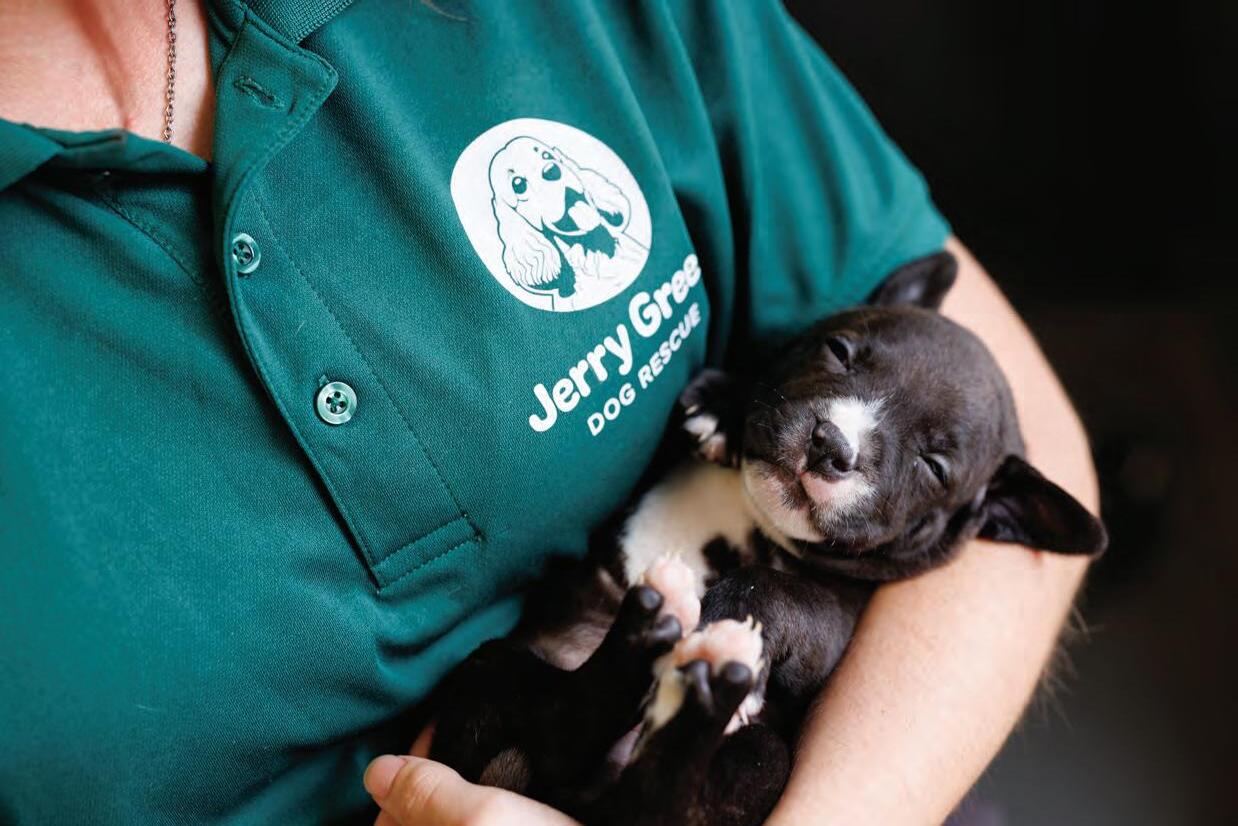
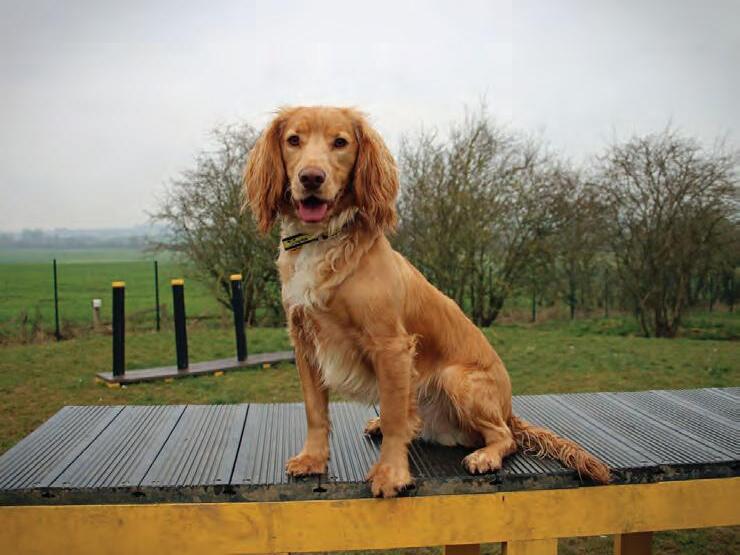
Jerry Green Dog Rescue is set to support more dogs and owners than ever before in 2026, following the continued success of its innovative Home from Home® rehoming scheme. In 2025, Jerry Green Dog Rescue successfully rehomed 528 dogs. Of these, 31% were rehomed via the Home from Home® scheme, exceeding the organisation’s ambition of 26% for the year.
While the charity has offered Home from Home® rehoming for several years, a pilot project at the end of 2024 aimed at expanding the service marked a significant step forward. Following the pilot’s success, Jerry Green Dog Rescue
formally adopted a blended rehoming approach in 2025, combining traditional centre-based rehoming with an enhanced Home from Home® model. Under this blended approach, some dogs continue to come into one of the charity’s rehoming centres and stay in
kennels until a suitable new home is found, while others are supported through Home from Home®. This service allows dogs on the scheme to remain in their current home environment whilst Jerry Green Dog Rescue’s expert team carries out behavioural assessments,
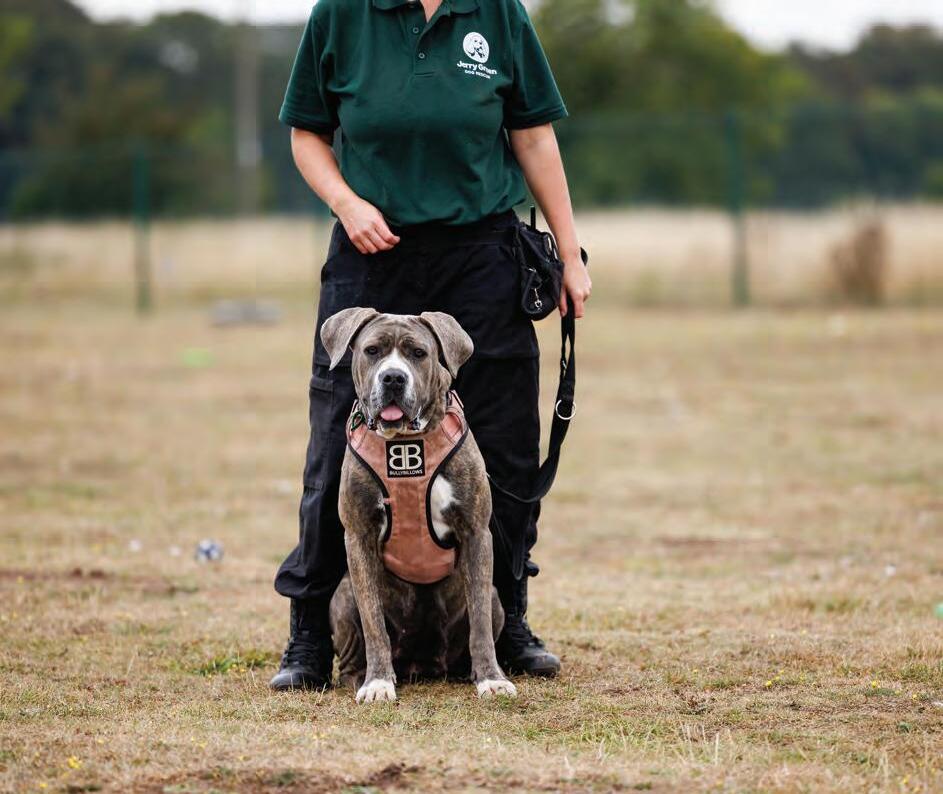
creates a detailed rehoming profile and actively markets the dog to suitable adopters. The team carefully screens enquiries, manages the matching process, and supports introductions to help ensure a smooth and successful transition into a new home. By keeping dogs in a familiar environment where appropriate, the service can reduce stress and provide valuable insight into a dog’s behaviour in a home setting. This dual approach means more dogs can be supported each year, while also providing crucial help to owners facing difficult or crisis situations. Exceptional dog welfare remains at the forefront of Jerry Green Dog Rescue’s priorities and this service is only offered where it is in the best interest of the individual dog.
One dog who benefited from this approach was Millie, a six-year-old Cocker Spaniel enrolled onto the Home from Home® scheme in late 2025 after her owners were faced with the heartbreaking decision to rehome her through
no fault of theirs or Millie’s. A loving and affectionate dog who enjoys cuddles, toys and long walks, Millie thrives in a calm environment and was looking for an adult-only home with a steady routine. Through Home from Home®, she was able to remain with her owners while the Jerry Green Dog Rescue team worked to find the right match, ensuring her needs were fully understood. Millie was successfully rehomed within just a couple of weeks, even over the Christmas period. Following the process, her former owners praised the charity’s “fantastic communication” and said the team were “diligent and understanding,” adding that nothing felt rushed while still being handled speedily from start to finish.
Home from Home® can be particularly valuable for owners experiencing unexpected or challenging life changes. This may include housing issues such as moving to accommodation where pets are not permitted, relationship
breakdowns, changes in health, or work commitments that significantly impact their ability to provide care. It can also benefit dogs who may find kennel life especially stressful, such as older dogs, those with medical needs, or dogs who struggle in unfamiliar environments. By allowing dogs to remain in their original home during the rehoming process, the charity can provide stability while working towards a safe and suitable long-term solution.
The service is typically offered within an hour of the charity’s rehoming centres in North Lincolnshire (DN20 0BJ), South Lincolnshire (PE20 2BB), and Nottinghamshire (NG21 0PG), in addition to the base for the charity’s community support initiatives in East Yorkshire (HU15 2EA).
Christina Marriott, Chief Executive of Jerry Green Dog Rescue, said: “Home from Home® has transformed the way we are able to support dogs and their owners. By adopting a blended rehoming model, we can be more flexible and responsive, particularly for owners facing challenging circumstances. It allows us to prioritise each dog’s welfare while also increasing the number of dogs we can help each year. We are incredibly proud that in 2025 we exceeded our ambition for Home from Home® rehoming, and in 2026 we hope to support more dogs and owners than ever before.”
Looking ahead to 2026, the charity aims to continue growing this blended model, enabling more dogs to find safe, loving homes and ensuring owners receive compassionate, practical support when they need it most.
n For more information about Home from Home® rehoming, please visit https://www.jerrygreendogs.org.uk/rehome/home-from-home/ or contact your local Jerry Green Dog Rescue rehoming centre.
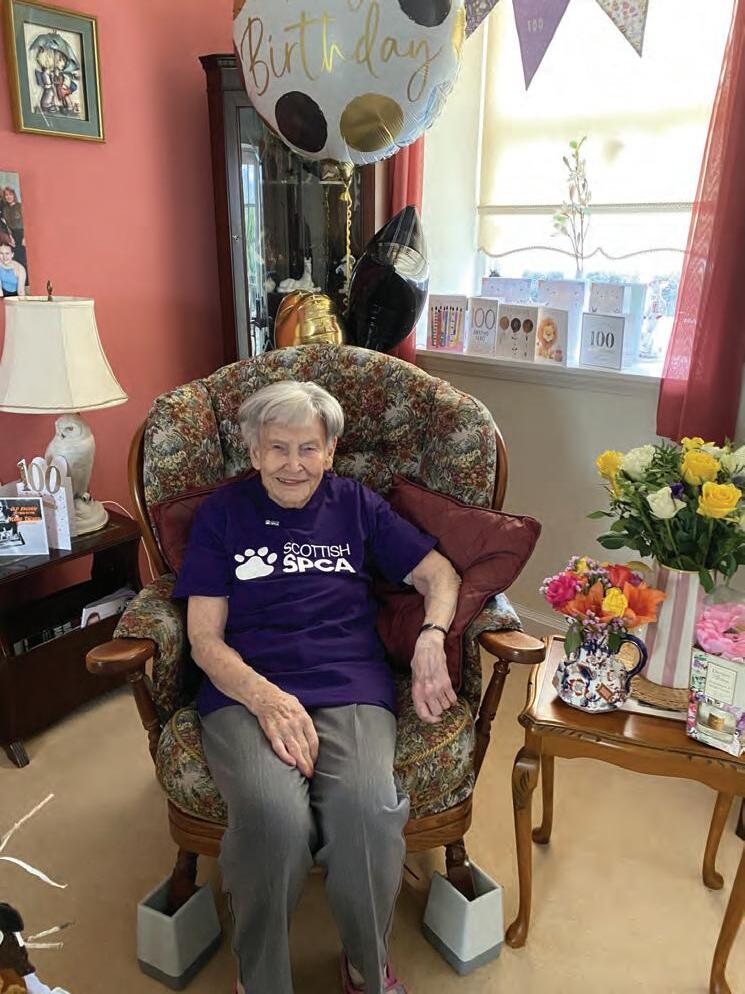
A remarkable Scottish SPCA supporter marked her centennial birthday by asking for a donation to the Scottish SPCA instead of buying her gifts
Gladys Jones turned 100 on March 8, also International Women’s Day, with a party surrounded by loved ones, choosing to use the occasion to support animals in need across Scotland. Gladys asked all those who were attending to donate to the Scottish SPCA rather than buy her a gift. Originally born in the East End of London in 1926, Gladys served in the Land Army during the Second World War. She moved to the Bridge of Weir, Renfrewshire, in 2003 after her husband died in 2002 – which allowed her to be close to her daughter and wider family who all reside in the area. Now a proud mother, grandmother and great-grandmother, Gladys has supported the Scottish SPCA since she moved to Scotland and has always had a lifelong love of animals – having had dogs for most of her life.
Speaking about her ongoing support for the organisation, Gladys said: “I support the Scottish SPCA because they do magnificent work preventing and alleviating the suffering of animals. It’s so good to know they are there for all animals in need in Scotland.”
Touched by her support, a Scottish SPCA spokesperson said: “We’re honoured that Gladys chose to support the Scottish SPCA on such a special birthday. As a charity completely reliant on generous donations, support like this helps us continue rescuing, rehabilitating and rehoming more animals across Scotland than any other charity, while also investigating cruelty and protecting animals from harm.”
The Scottish SPCA’s key mission is to safeguard the welfare of all of Scotland’s animals, and we are tirelessly working to also make this a top priority for
parliamentarians. Our recently published Manifesto outlines four key asks which will help ensure Scotland is at the forefront of animal welfare. Delivering on these asks is crucial to prevent future harm and tackle repeat offending, which will help achieve our mission to make Scotland the best place for an animal to
Gladys Jones celebrating her 100th Birthday.
Photo credit Scottish SPCA
call home. Read our full Manifesto and sign our petition to show your support https://www.scottishspca.org/what-wedo/our-manifesto/
n To report any act of cruelty, visit our Contact Us page https://www.scottishspca.org/contact/

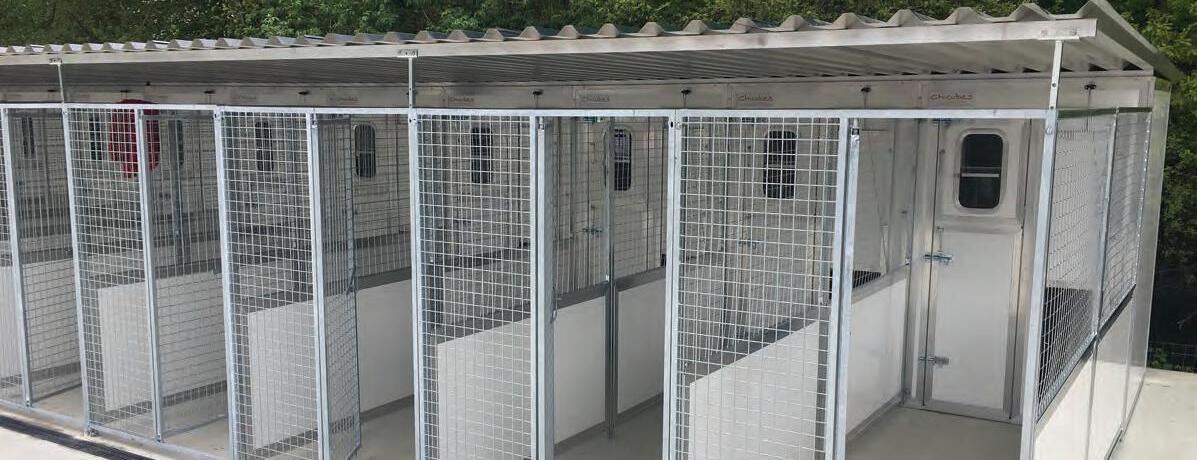
n 4 standard sizes
n Perfect for any size dog
n Secure locks and door hooks
n PVC insulated walls and ceilings
n Solid or mesh run panels
n Multi level internal raised platforms
n Boarding or domestic use
n Standard and bespoke sizes and designs
n Optional integrated and removable whelping areas
n Easy to assemble
n Durable and easy to clean
n Quality and durability n Bespoke design service
n Fully thermally insulated n Easy cleaning and hygenic
n PVC insulated walls and ceilings
n Standard and bespoke sizes to meet breeding, boarding and GBGB specifications
n Multiple run sizes and designs
n Secure, robust and easy to clean
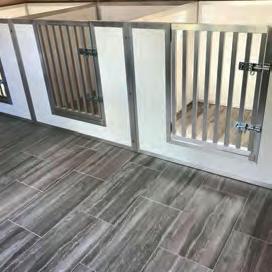
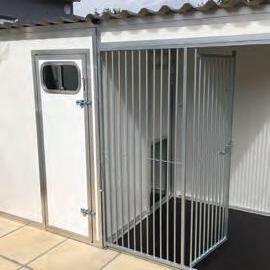
Plastic insulated walk in dog kennels and catteries for breeding, boarding and domestic use. Chicubes offers a wide range of products designed and built in the UK. Chicubes animal housing for dogs and cats and other small animals brings the full package, quality and durability, value for money and helpful customer service. Chicubes offer standard and bespoke design services, so finding the rights system for you when setting up or renewing your establishment couldn’t be easier. Built to last and meet current regulations for boarding, breeding and GBGB licensing. Delivery and fitting nation wide.

PLEASE READ ALL THE INFORMATION ON HOW DO I ADOPT PAGE BEFORE CONTACTING US - Thank you. YOU WILL NEED TO TRAVEL TO OUR CENTRE WHICH IS BASED IN STAFFORDSHIRE
Before coming to us he spent his life living on a small holding in a secluded setting amongst several other dogs.
Charlie has no real life experience of the world outside of where he lived and had never been on a lead. It took us several weeks to gain his trust enabling us to then gently handle him, since then he has made good progress and now happily greets and interacts well with staff. He will happily go out for walk and spends time playing with dogs that he has built a relationship with.
He requires a quiet home environment and an owner that understands his needs and is willing to give him all the time and patience he requires.
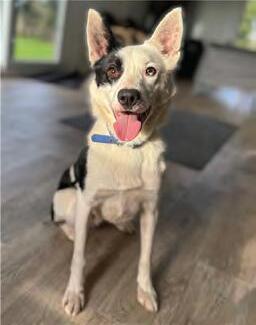


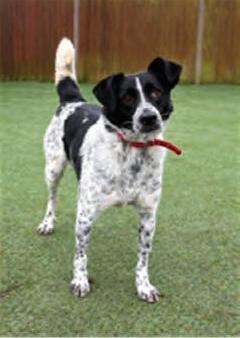
He was originally handed in from his own home due to his owner suffering with mental health issues and also physical problems resulting in Hugo spending most of his time shut in a crate. He then went to another home for 10 days but struggled living with one of the children aged 7 years. On occasions he had a fixed stare on her and would run quickly towards her, attempting to jump at/on her.
Hugo would be better suited to a quiet household without young children. He is housetrained, responds well to basic commands, loves to play and travels well.
He does lunge at traffic when out walking and his behaviour around other dogs is variable so he requires a work in both these areas.
I first came into care because my previous owner couldn’t give me enough time with work and a little one at home.
I can be a little shy when meeting new people, but give me a moment and I soon warm up. I’m housetrained, happy to be left alone, and I travel well. I love playing ball and get along with other dogs. When I’m out walking, I can get a bit excited around traffic, but I’m learning!
I’m looking for a patient, loving home where I can feel safe and enjoy lots of fuss, fun and games.

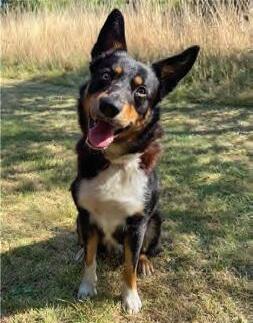
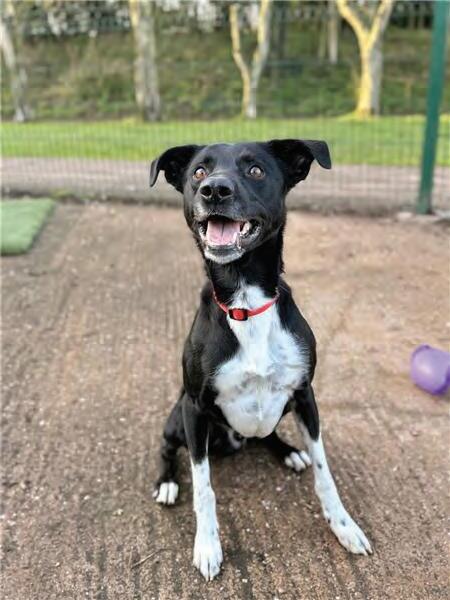

Trevor,
Hi there my name is Pongo i have just celebrated my 3rd birthday. I spent my early days in a home with my mum after I was purchased as a gift for her, life was great until one day she told me she felt she was too old to care for me and thought I'd be better with a family. I was devastated the day she left me at the kennels and said goodbye.
After a few weeks a young couple came and said they would like to take me home, I was so excited. At last I felt happy again. I was a good boy when they went out and left me alone, I travelled well in their car and loved playing ball out in the fields. I did sometimes "stalk" other dogs out on a walk but then I suppose I do have some collie traits. My only down fall was that i shared my home with a cat and it didn't matter how hard I tried i just couldn't help but chase her and because of this my mum said i needed a home without other pets so again I have found myself at another kennels awaiting a home only this time all my friends are proper border collies so nobody seems to want me as I don't look like they do. Please just give me a chance as I have so much love to give to someone.
I came into care after being found as a stray, and I’m now looking for a family of my own.
I did spend 4 days in a home and whilst I loved the 8 year old girl I did struggle with the 14 year old boy and did growl at him. I was clean in the home but found it a little difficult to fully relax as there were several different sounds I'd never heard before so i will take a little time to adapt.
I enjoy meeting other dogs and generally get along well, although I can be a little overexcited at first, so I might be too much for some. I’m full of energy, curiosity, and affection, and I can’t wait to find a family who will give me love, guidance, and plenty of fun adventures.
I’m looking for someone who will appreciate my playful, outgoing personality and help me grow into the best companion I can be!
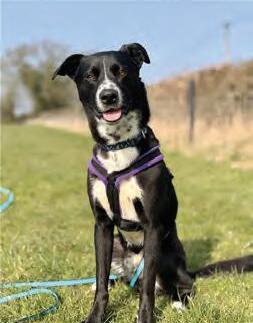

Collie Rehoming continued on page 34

She originally came into our care via another rescue. She had lived in a home in a remote area of Ireland but due to a change in circumstances her owners returned her to the rescue they had her from when she was a pup.
Jessie then spent 2 months in another home but due to a sudden change in circumstances just 5 days after having her she was exposed to many new experiences and environments in a very short space of time which she struggled with and as a result snapped at different people out in the street and also at visitors to the home.
She has lived a sheltered life and isn't used to being around traffic, other dogs or people so requires a quiet home with someone that can give her the time she requires to adapt to a new life Jessie can get worried when first meeting people especially when people reach their hands out. She is also worried when meeting other dogs so would struggle in a home with others.

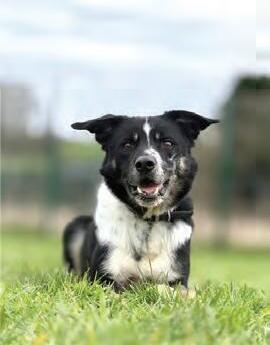
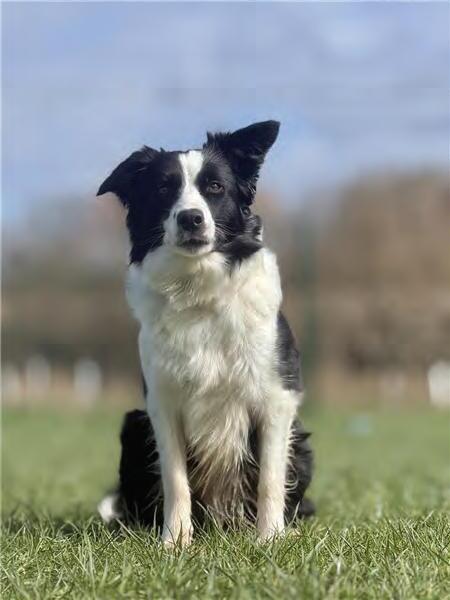

I came into care because my previous owner couldn’t give me enough time due to work. I had a 7week stay with another family, but it didn’t quite work out as I got a bit defensive with the lady of the house when she tried to correct me but when dad was around i felt much happier around her I’m a friendly guy when meeting people, I am housetrained, happy to be left alone for a few hours, and I travel well. I can be a little unsure around other dogs at first, but once I know them, I’m fine. I do have a bit of a chase instinct when it comes to cats.
I’m looking for a patient and understanding family who can help me feel confident and loved.
I was found tied to a fence, and since then I’ve been enjoying life and gaining confidence with all the lovely humans here!
I’m friendly with everyone and, even though I can be a little shy at the vet, I’ve been a very good girl. I’d be happiest in a home with kids over 8 who can give me gentle pats and lots of love. I’m clean, I travel well in the car, and I love exploring new places.
I do have a little “chase-the-cat” streak, and i do tend to "stalk" other dogs and sometimes have been know to give a quick snap.
Could you be the one to let me join your adventures and share lots of cuddles?
PLEASE READ ALL THE INFORMATION ON HOW DO I ADOPT PAGE BEFORE CONTACTING US - Thank you. YOU WILL NEED TO TRAVEL TO OUR CENTRE WHICH IS BASED IN STAFFORDSHIRE
Then please complete the Online Application To Adopt Form. This is the first step in the process https://www.emailmeform.com/builder/form/5e4l42c00df
The Application Forms are reviewed regularly by our Adoptions Team who will contact anyone they wish to discuss further with but please understand that we can't contact everyone who completes the form. That doesn't mean we don't want you to adopt but there can only be one new owner for each dog.

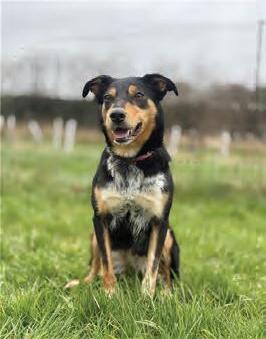
Do keep an eye on the website, and if you see another dog, at any time, that you would be interested in adopting then simply email adoption@bordercollietrustgb.org.uk with your name, post code and the dogs name you are interested in. We will then consider you for that dog.
Unfortunately we cannot make an appointment until The Adoptions Team contact you.
n If you still have some questions do take a look at the FAQ section or feel free to contact us on 01889 577058 (Monday to Friday 9am to 3pm) or of course email us. Tel: 01889 577058 www.bordercollietrustgb.org.uk

“The Sniffer Capsule” perfect for novice scent detectives!
The Sniffer Capsule has landed, and it’s ready to go! With dual venting, a secure click-close design, and a built-in magnet slot for flexible placement, it brings a smart, portable approach to scentwork training - from fun, early scentwork games through to more advanced search work. www.thesniffershop.co.uk
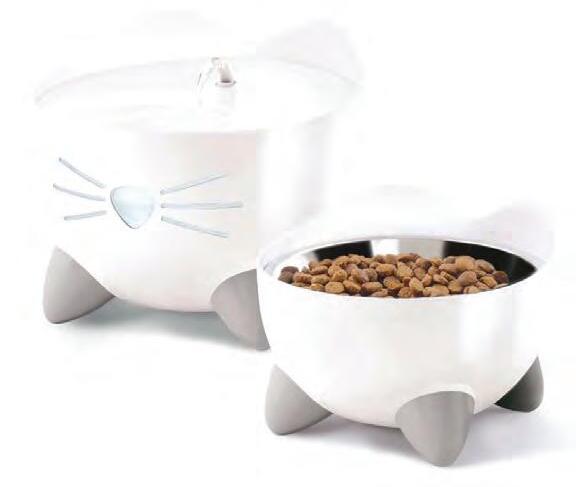
Hydration and dining, perfectly paired. The Catit PIXI Combo Kit blends adorable design with smart function — keeping your cat happy, healthy, and stylishly cared for. www.catit.co.uk
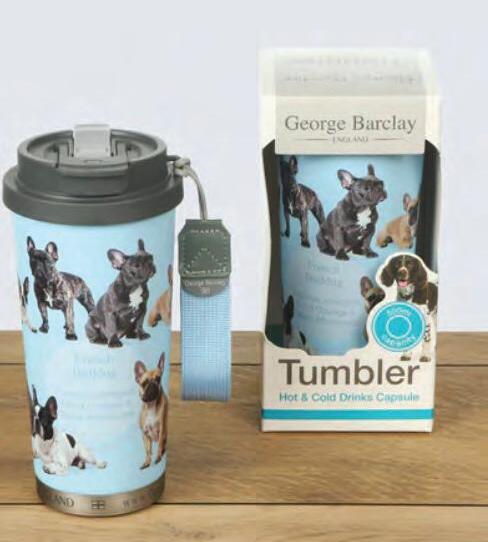
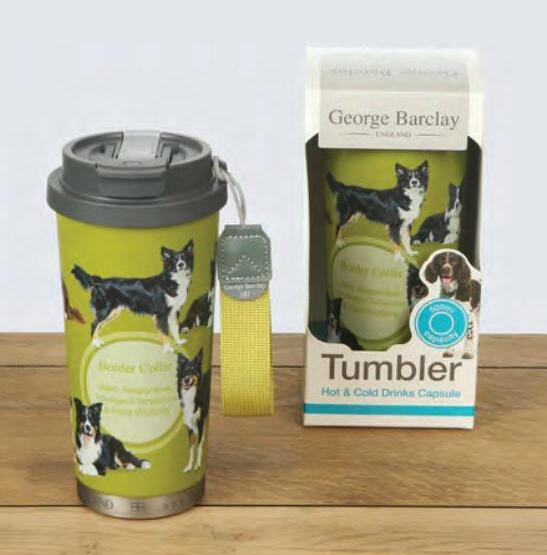
Designed for 'Life on the Go', the George Barclay Insulated Tumbler keeps your beverage just the way you like it; warm when you need comfort, cool when you need refreshment.
It’s the perfect companion for: Morning dog walks, Weekend adventures, Park outings, Everyday travel. Comes in different dog breeds and colourways. £19.99 https://www.georgebarclay.co.uk/collections/george-barclay-hot-coldthermal-drinks-tumbler

The Chuckit! EcoFetch Ball is an eco-friendly fetch toy made from 40% recycled rubber, and no two balls are the same. It's durable to ensure long-lasting play, while the bright colours enhance visibility during fetch sessions. Eco-friendly material. Bright colours for visibility. Compatible with medium Chuckit! launchers. £6.99 www.petscorner.co.uk
Black Waistpack printed with GIN Logo, 100% recycled 600D polyester, Water repellent fabric, Minimalist styling, Adjustable waistband. Main zip compartment with two-way zip. Self colour PU zip pulls. Rear zip pocket. Internal slip pocket.Capacity 1 litre Size approx. 16 x 25 cms. £17.00 www.greyhoundsinneed.co.uk

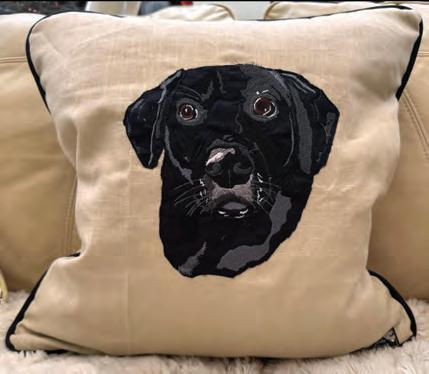
Sarah Cee is now making wonderful personalised cushions. These are raw edge applique style. All colours of Labrador are available and the cushion measures 20″ square. Choice of feather or man-made fibre available. These make lovely presents and are individually made to order. £35.00 www.labrador-lifeline.com

Specially created to support your puppy helping them feel calm, safe and reassured in their new world. £28.00 www.petremedy.co.uk

Treat your feline to a new farmyard friend with the Great & Small Horsey Dangler. Cute Dangler - This sweet horse dangler is attached to a wooden rod and features fabric strips as a tail. Inner Crinkly Material - Made with exciting crinkly material to enhance every playtime with your cat. Contains Catnip - The added catnip helps to encourage playful behaviour in your cat. Ideal for Easter - An adorable horse toy that is perfect for the Spring season. £4.99 www.petscorner.co.uk

Completely customisable and fashionable accessory for your pets ID Tag. £11.99
www.petscorner.co.uk


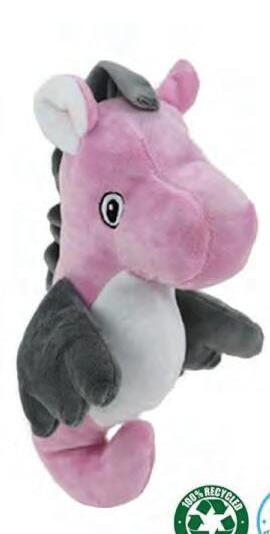
This cute and cuddly sea horse toy is great for playing fetch and encouraging exercise, or perhaps your dog will want to just snuggle up to it after a hard day’s play! Perfect for comforting and cuddling with a squeak for interest. Measures 28cm long. A completely recycled toy, with 100% recycled filling and outer materials
Please note that this toy is not indestructible. It is designed for cuddling and comfort only. For safety reasons dogs should be supervised when playing with toys. £7.49 www.bordercollietrustgbshop.org.uk
Spring bike rides with your dog should begin with this simple safety hack – and it’s not to be sniffed at.
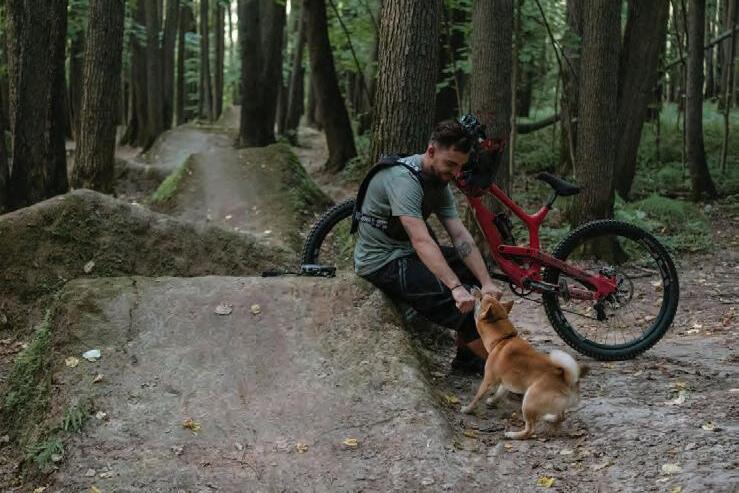
For doggies hitting the cycling trails for the first time, owners can boost their dog’s confidence by introducing a pre-ride ‘sniff check’. This involves introducing your dog to your bike whilst it's stationary, giving them time to become accustomed to the bike and how to behave around it.
The lead and harness experts at TopDog https://topdogharnesses.co.uk want pet parents who are also keen cyclists to let their dog get close to the bike, sniffing and investigating. Reward them with treats for calm behaviour around the bike to build positive associations, leading to a calmer and more enjoyable experience once you're out on the bike.
“It’s a well known fact that dogs perceive the world through scent, depending on it to help them interpret the world around them. So it makes perfect sense, when
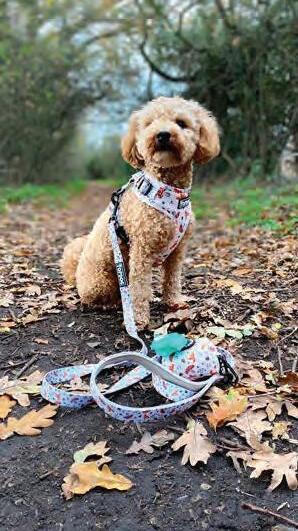
introducing an exciting and unfamiliar new experience like cycling, to let your dog have a good sniff around the kit” says John Skinner, TopDog co-owner.
Once your pooch has sniffed around the bike, another useful pre-ride safety check is to allow your dog to get comfortable with the bike outside. Running alongside the bike could take some time, so begin by walking the bike with your dog on a lead on the opposite side of you. This will help them get used to the idea of ‘walking to heel’ with the bike.
If this goes well, you can progress to a short ride in a quiet park or traffic-free area. Then, gradually increase the distance and pace. Be aware of signs of fatigue and learn your dog’s limits.
And because you’ve invested the time in familiarising your dog with the bike before heading out on a ride, they’ll soon be used to their new routine on four legs and two wheels!
Choosing the right harness for your dog cycle ride
Like choosing a suitable bike for the kind
of rides you’re into, a properly fitted harness is a must-have if you’re planning on bringing your dog along.
"A harness for an active dog is like a good pair of running shoes for a person,” continues John. “For a dynamic activity like cycling, you need a secure, ergonomic design that moves with the dog, providing comfort over distance and ensuring you have reliable control in any situation.”
A harness is an ideal choice because it distributes pressure across your dog’s chest and shoulders, rather than their neck, which is crucial if you need to brake suddenly.
A D-ring on the back of the harness is key to keep the lead away from your dog's legs and prevents it from getting tangled in the bike's wheels.
n TopDog has produced a handy size guide to get the per fect fit for your dog https://topdogharnesses.co.uk/pages/ harness-sizing
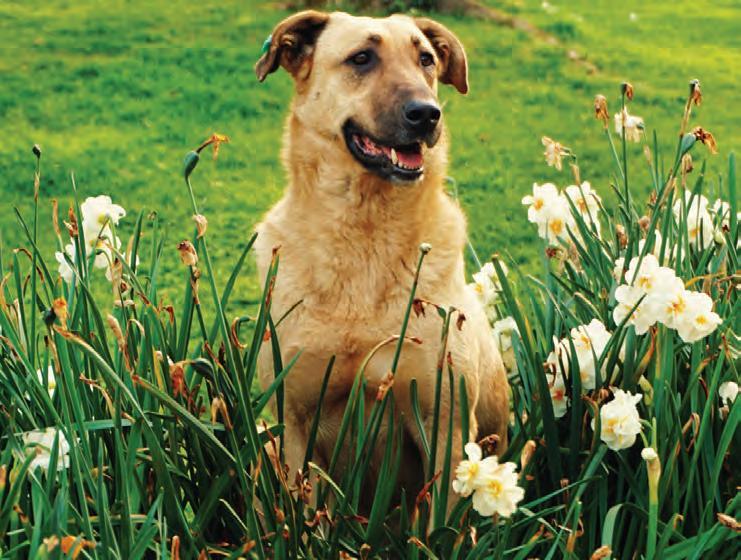
As daffodils burst into colour across parks, gardens and pavements this March, canine experts are urging dog owners to be aware of a surprising, but serious, seasonal risk. These cheerful flowers, a classic sign of spring, contain toxins that can make dogs very unwell if they are chewed or eaten.
“All parts of a daffodil plant are poisonous to dogs, especially the bulbs buried in soil,” says Michael Nelson, canine expert at leading outdoor dog kennel provider, Kennel Store. “The toxin lycorine can cause vomiting, diarrhoea, excessive drooling and abdominal pain if ingested. And in serious cases, larger amounts can lead to tremors, difficulty breathing and even life-threatening symptoms.”
Even though dogs may find daffodils bitter, many still chew at plants while exploring outdoors or digging in gardens, and they can be exposed to toxic bulbs hidden beneath the soil months after planting.
Plant poisonings can be stressful for owners both emotionally and financially. Emergency veterinary treatment for plant toxicity, including induced vomiting, fluids, medication and monitoring, can quickly add up. Estimates for similar plant poisonings suggest treatment can cost hundreds of pounds, with typical bills in the UK often reaching £500 or more, depending on severity and care required.
“Even if a dog just nibbles some petals or water from a vase containing daffodils, it’s essential to call a vet. A prompt response can improve outcomes and reduce the overall cost of treatment.”
Owners should contact a vet immediately if their dog shows any of the
following after possible exposure to daffodils:
• Vomiting or persistent sickness
• Diarrhoea
• Excessive salivation
• Lethargy or weakness
• Trembling or unsteady gait
“In many cases, early veterinary care prevents minor cases from becoming major problems. If you’re unsure whether your dog has eaten something harmful, err on the side of caution and seek professional advice right away.”
• Keep dogs on leads in daffodil-rich
areas during walks.
• Remove daffodil bulbs and plants from gardens where pets roam.
• Place cut daffodils in vases out of pets’ reach.
• Supervise dogs closely around flower beds and seasonal displays.
“With gardens full of colourful spring blooms, it’s easy to forget that what looks pretty can also be dangerous. Dogs explore the world with their mouths, and that’s exactly why owners need to be vigilant right now.”
n https://www.kennelstore.co.uk/collections/wooden-dog-kennel
Redwings Horse Sanctuary has today announced the closure of two of its visitor centres, Redwings Mountains in Forfar, Angus, and Redwings Oxhill in Warwickshire, following a staff consultation
Thirty-three staff have been made redundant, 12 at Mountains and 21 at Oxhill, and the centres are closed to visitors with immediate effect. Redwings’ remaining visitor centres in Norfolk and Essex are operating as normal.
All the resident horses and donkeys will be relocated to Redwings’ sites in Norfolk, and this includes the charity’s Adoption Stars. Anyone who supports Redwings by sponsoring a horse or donkey at one of these centres will receive further information about this in due course.
Chief Executive Lynn Cutress said: “This is an incredibly sad day for the charity. All the affected staff have been offered wellbeing support and help to find alternative employment wherever possible. I would like to personally thank them all most sincerely for their hard work and dedication to Redwings.
“Neither of these centres took in rescue cases directly and so the closure of these sites does not affect our ability to rescue horses from anywhere in the country, as we have always done. Redwings will continue to help horses in need, wherever and whenever we can. However, closing the centres will save vital and significant operating costs long-term, allowing us to secure the future of the 1000+ rescued horses in our Sanctuary care who rely on us every day.
“Businesses and charities across the country are struggling severely –Redwings is certainly not alone. Costs have risen exponentially over the last few years, and we have needed to use our savings, known as reserves, for the past four years to fill the gap between our income and expenditure, which is something we knew was not sustainable in the long term.
“We have been in a period of financial
review for nearly two years, including seeking specialist external advice, and although we always hoped it would not be necessary to make such major changes, with the economic climate as it is and fluctuating almost daily, our Board of Trustees simply had no choice.
“Although these closures will make a significant difference, we continue to need your support, and anything you can give at this time would be greatly appreciated. We would like to say a huge thank you to everyone who has already donated or offered their support at this incredibly painful time. We have been overwhelmed by your kind messages and donations and are so very grateful.”
Redwings Oxhill has been operating as a visitor centre for almost twenty years and Redwings Mountains became part of the Redwings family following a merger in 2015. Due to the age, nature and location of these two centres, they are the charity’s most expensive and challenging to run. Redwings is one of the largest equine welfare charities in the UK with more than 1000 rescued horses, ponies and donkeys in its Sanctuary care and over 700 more living out in Guardian homes. The charity began in Norfolk, where it has its head office, several large sanctuary sites and two visitor centres, with one more near Harlow in Essex.
A
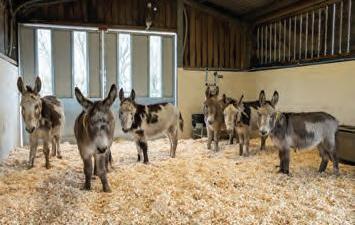
small group of donkeys rescued from sodden ground, surrounded by flood water, have been moved to safety thanks to The Donkey Sanctuary.
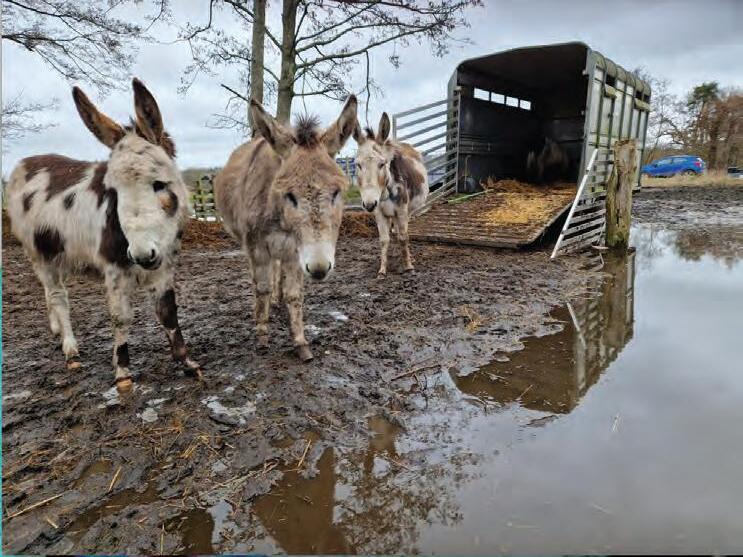
The donkeys, named Mimi, Martha, Mabel, Aida, Pippin and Lily-Mae were unable to avoid the cascade of water flowing into their smallholding due to an adjacent river bursting its banks, following Storm Chandra, which battered the UK at the end of January.
The donkeys were brought to the charity’s attention after their owner contacted Somerset County Council for assistance.
When Senior Donkey Welfare Adviser Sarah Kenward arrived at their site in Somerset in February, the six donkeys were in a desperate situation, huddled on a small clearing that hadn’t yet become submerged.
Sarah recalls: “In my 14 years working within the animal welfare sector, I hadn’t seen flooding like it. I would estimate that the site was 95 percent underwater.
“It was heartbreaking to witness the animals surrounded by water, with no means of escaping their situation.
“The constant rain had caused the donkeys’ stable area to flood; their bedding was floating on top of the water, and the only hardstanding the donkeys could access was near one trailer, with the stormy conditions bringing a tree down on another trailer.”
Donkeys originate from dry, arid climates and are not well adapted to the weather conditions here in Britain. They need access to shelter, high-fibre forage and hard standing areas at all times of the year, but with extremes of weather
becoming more common there are additional challenges for owners to consider.
More frequent storms can cause damage to shelter and fences, whilst wetter winters and hot, dry summers can impact on land health, grass growth and availability of essential supplies such as straw.
Sarah continues: “Understanding the risks and developing a contingency plan based on your own circumstances will help in times when urgent action is needed. Our Donkey Advice Centre and regionally based Donkey Welfare Advisers are able to provide friendly, practical advice and guidance to owners throughout Great Britain.”
Alongside Lead Veterinary Surgeon –Welfare, Jamie Forrest, Sarah navigated the testing conditions to assess the donkeys and help facilitate their safe movement from the smallholding.
To compensate for the loss of grazing land, forage had been provided but the donkeys had continued to lose weight, making them vulnerable to the cold wet weather conditions.
Sadly, one of the older donkeys, April, was in poor condition and all agreed that
euthanasia was in her best interests.
With more wet weather forecast and a fuller understanding of the longer-term needs of the donkeys, it was agreed for the group to come into the care of The Donkey Sanctuary. Once they been deemed fit to travel by Jamie, the donkeys were loaded onto transporter vehicles and driven to The Donkey Sanctuary’s New Arrivals Unit in Sidmouth, Devon.
Since arriving at the sanctuary, the donkeys have gone from strength to strength. They’ve had their hooves trimmed and have been wormed. In the coming weeks they will have dental treatment and vaccinations.
The donkeys have also been introduced to straw feed and have a comprehensive balancer to ensure they have the vitamins and minerals they need to improve their condition.
Sarah added: “The whole situation was incredibly sad but thanks to our amazing teams, it was so rewarding to bring the donkeys to the sanctuary, to safety, and help them on their journey to find new forever homes.”
n www.thedonkeysanctuary.org.uk
The Scottish SPCA is warning the public not to underestimate the scale of the low-welfare puppy trade, following the sentencing of various prolific puppy dealers.
In recent months, the charity’s animal helpline has seen a spike in reports from concerned owners who believe their puppies may be linked to a recently convicted puppy dealer(s) already known to the Scottish SPCA. These puppies often display concerning health issues costing owners thousands in vet bills or even resulting in the puppy’s death.
The low-welfare puppy trade operates through organised criminal networks involving multiple breeders, dealers and transporters, many of whom are still trying to sell these often very unwell puppies to unsuspecting families. Scottish SPCA Inspectors are working tirelessly to tackle the issue, but public demand for easily accessible puppies is fuelling this harmful trade.
The society is aware that social media groups have been set up, by members of the public, to raise awareness of recently sentenced dealers. While the Scottish SPCA welcomes the public’s engagement, it is urging people to understand that the problem extends far beyond a small number of convicted individuals, highlighting the need for ongoing vigilance and encouraging the public to report any suspicious activity.
Anyone purchasing a puppy should ask for the appropriate documentation, including microchipping documentation, vaccination cards, evidence of flea and worming treatments, and insurance details. If a puppy has been bred or sold illegally, this information can be crucial when launching an investigation.
A Scottish SPCA Special Investigations Unit Inspector said: “The recent cases have understandably raised concerns among puppy owners, but it is important for the public to understand that the low-welfare puppy trade does not begin and end with one individual.
“This is a highly profitable criminal activity that often involves networks of
breeders and dealers working together. While awareness is growing, many of these puppy dealers are still operating today, which is why public vigilance is so important in helping us tackle the issue.”
The Scottish SPCA leads the Pet Trade Taskforce, a multi-agency enforcement group, which is dedicated to disrupting the low-welfare puppy trade and continuously urges the public to play their part.
Over the past five years, the Scottish SPCA has received 2,143 calls to its confidential animal helpline relating to suspected low-welfare breeding operations. Over the past two years, they have attended 351 jobs related to the low-welfare puppy trade.
Thousands of pounds are funnelled into organised criminal activity each year through the sale of puppies bred and kept in incredibly poor conditions. Some designer breeds can sell for as much as £3,000, making the trade highly profitable for those willing to put profit over animal welfare.
People looking to buy should thoroughly research a potential breeder before purchasing a puppy online. Under no circumstances should a seller bring a puppy out to you. Even if you are met outside a property or at an alternative location, you should enter the premises and personally observe the mother with the litter. Make sure to check the environment is clean and suitable, and that the puppy looks alert, is active and healthy.
If something doesn’t feel right or you can’t verify where the puppy is coming from, walk away and do not purchase the animal. The charity cautions that even well-intentioned attempts to ‘rescue’ the puppy from a suspicious seller can unintentionally fuel the trade. If you notice behaviour that could relate to serious and organised animal

welfare crimes in your area, please submit a report to the charity’s Special Investigations Unit https://www.scottishspca.org/what-we-do/special-investigations-unit/
The Scottish SPCA’s key mission is to safeguard the welfare of all of Scotland’s animals, and we are tirelessly working to also make this a top priority for parliamentarians. Our recently published Manifesto outlines four key asks which will help ensure Scotland is at the forefront of animal welfare. Delivering on these asks is crucial to prevent future harm and tackle repeat offending, which will help achieve our mission to make Scotland the best place in the world for an animal to call home. Read our full Manifesto and sign our petition to show your support https://www.scottishspca.org/what-we-do/our-manifesto/
Please read further information https://www.scottishspca.org/advice/b uying-a-puppy/ on buying responsibly and protecting animal welfare.
n To report any act of cruelty, visit Repor t a Concern page https://www.scottishspca.org/contact/
Redwings has given a home for life to ten horses after their owner was prosecuted for animal welfare offences.
Four thoroughbreds came into Redwings’ care in March last year. The mares, one of whom was amongst the most emaciated charity staff had ever seen, were the subject of an RSPCA court case.
Watch their story on Redwings’ Tube here https://youtu.be/fqlTdfEzuP0?si=Kec0t YajeVtt03kD
Redwings took in a further six last month (February) after the defendant was ordered to rehome them as part of his sentence. The man, from Suffolk, was given a suspended prison term and banned from keeping animals for life.
Chloe Jefferd, one of Redwings’ welfare vets overseeing their care, said: “Harmonia appeared to be in the worst condition. She was severely emaciated and very weak as a result. She was one of the thinnest horses our staff had ever seen and very poorly. Severe worm damage meant she needed a plasma transfusion and intensive care.
“The other three were all in foal and in very poor condition.
“Very sadly we lost Solo to severe parasitic worm disease shortly after her arrival.
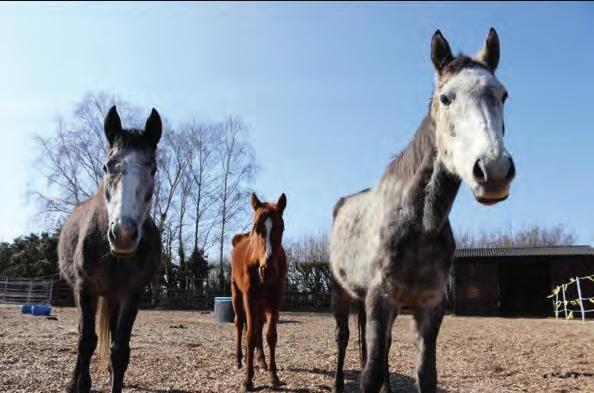
Calypso Harmonia and Sol Photo credit: Redwings Horse Sanctuary
“Calypso was a wonderful mum but after a tumultuous weekend of roundthe-clock care, her foal, who was born with several health issues, tragically died.
“Happily, Electra gave birth to a healthy colt, Echo, who is doing well so far.”
It took five months of TLC before the mares and foal were ready to leave the charity’s quarantine centre. Now, one year on, Harmonia and her friends are
Electra one year on Photo credit: Redwings Horse Sanctuary
settled into Sanctuary life and working with Redwings’ behaviour team who are preparing them for their futures, whether that be inside or outside of Sanctuary care.
And now, there are ten!
A stallion, mare, her filly foal, a twoyear-old colt, a three-year-old colt and a gelding from the same location are now also in Redwings’ care.
Chloe said: “Sadly, the stallion also needed a plasma transfusion because of his parasitic worm burden. All have needed treatment for worms and the stallion and colts will need castrating.
“Whilst this is what we’re here to do, it’s becoming more and more difficult.
“Times are very tough and we need our supporters’ help more than ever to continue to be ready to rescue horses, ponies, donkeys and mules like these, when they need us most.”
n If you’re able to make a donation so that Redwings can be Ready to Rescue in cases like this, please go to www.redwings.org.uk/support-us/donate
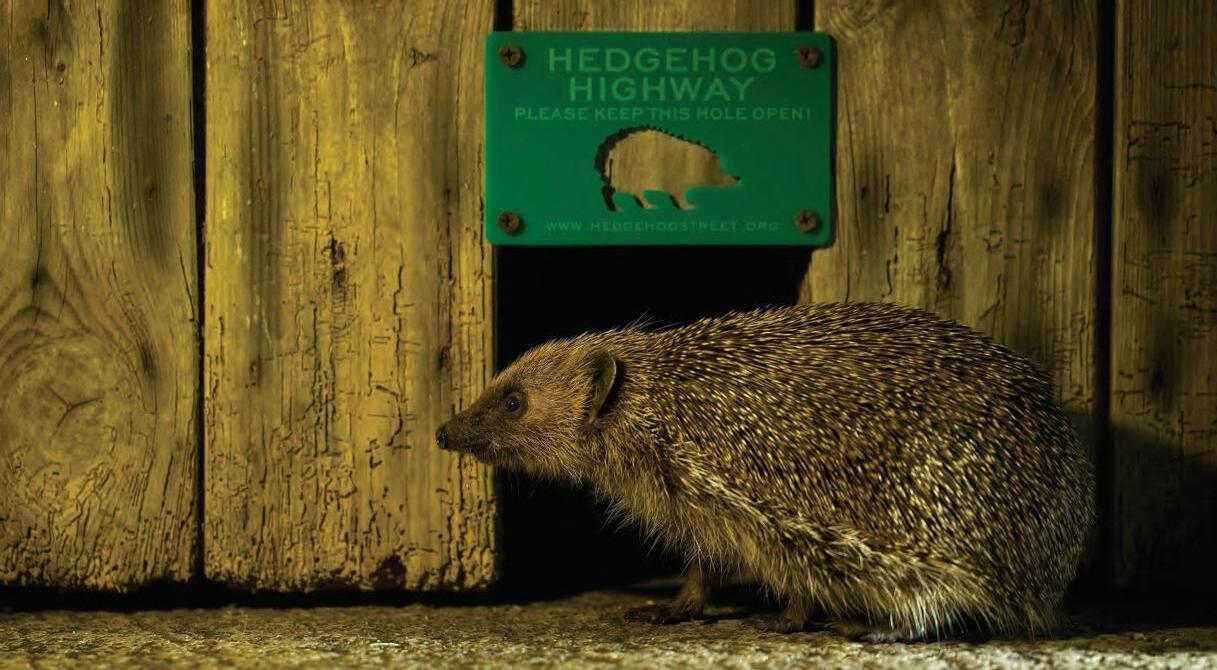
The British Hedgehog Preservation Society (BHPS) is pleased to announce that Hedgehog Awareness Week is running 3rd – 9th May 2026 – and this year, you’re invited to take The Hedgehog Pledge!
Fay Vass, Chief Executive for BHPS, said: “Hedgehog Week highlights the problems hedgehogs face in the UK – so we’ve created The Hedgehog Pledge with seven practical options to inspire everyone to act with hedgehogs in mind.
“Sign up & take the pledge – pick just one or do one every day of #HedgehogWeek!” https://www.britishhedgehogs.org.uk/take-the-hedgehogpledge-this-hedgehog-awareness-week/
Help hedgehogs and pledge to…:
l Add more Hedgehog Highways! 13cm x 13cm square gaps in boundary walls and fences ensure hedgehogs can access to vital habitat! Create more - talk to neighbours first! Once made, log them at www.bighedgehogmap.org
l Create, improve or protect a wild space
Log piles, leaf heaps and wild edges attract natural food and offer shelter for hedgehogs.
l Always check for hedgehogs before strimming, mowing or hedge cutting
Many hedgehogs are harmed or killed by garden machinery every year –simple checks before you start can save lives.
l Go totally organic in the garden or allotment
Pesticides and chemicals can harm wildlife and destroy the food chain. Embrace the wild instead!
l Be net savvy
Netting can become tangled in hedgehog spines: make sure sports nets are put away and garden netting is raised 30cm off the ground so hedgehogs can safely pass underneath.
l Provide water for wildlife all year round!
Make it part of your routine to check, clean & refill water sources for hedgehogs in your garden or outside your workplace. Add a few pebbles so bees and butterflies can perch and safely drink too.
l Become an NHMP volunteer spotter! In partnership with People's Trust for Endangered Species, BHPS leads the National Hedgehog Monitoring
Programme, surveying hedgehogs across the UK.
Help classify images taken on specialist trail cameras from the comfort of home!
Visit www.nhmp.co.uk to become a ‘spotter’!
Find out more & log your pledge at www.britishhedgehogs.org.uk/news/
Fay added: “Hedgehogs are an important indicator species – they don’t need an awful lot to survive, so if they aren’t coping well, it means the habitat is deficient and that should ring alarm bells for other species, including humans.
“Taking the Hedgehog Pledge during #HedgehogWeek and beyond can really make a difference. We can’t wait to see how many people are ready to take the Pledge!
“On top of the Pledge, you could also share our leaflets and posters from our website and socials, or donate to our Hedgehog Awareness Week appeal at www.justgiving.com/campaign/haw26”
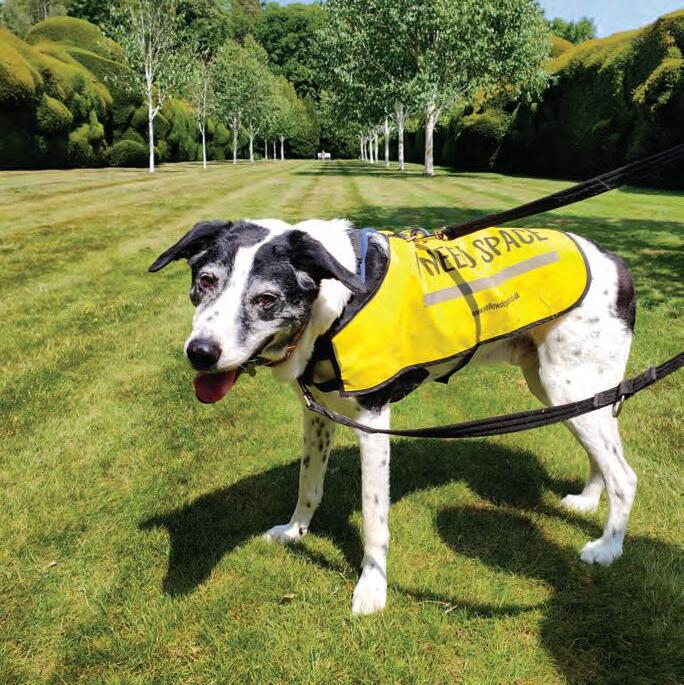
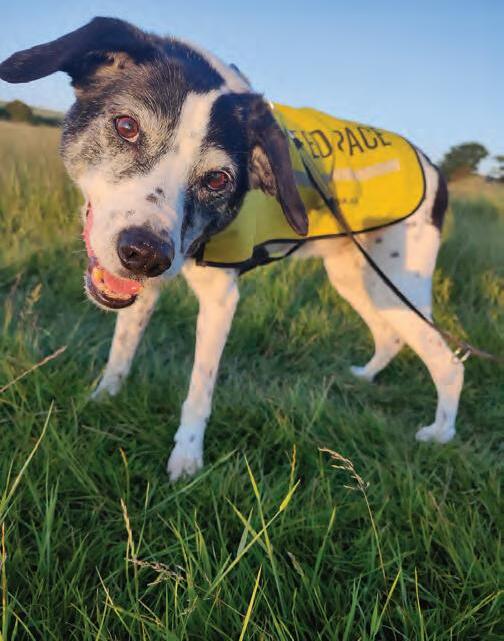

‘In 2019 we welcomed a long legged loon into our lives. A dog who had been picked up as a stray, spent three years at a rescue centre and who had been rehomed and returned for resource guarding and "snapping" over food.
Monty was the "best" counter surfer ever. In his first couple of weeks with us he stole a block of brie off the kitchen counter which came out of the other end fully wrapped! He also stole a bag of hotdog sausages out of a bum bag (that I was actually wearing!) and ate all the sausages and half the bag. We couldn't even carry our dinner plates across the room without him leaping in the air and trying to knock them out of our hands (frozen Kongs soon became our friends).
He had arthritis and was reactive to strangers and dogs. And birds, bees, flies, noises and sofas dumped in fields. Yep. Pretty much everything! All in all, he was an anxious mess - and a bit of a nightmare. But he was ours!
Luckily, we like a challenge, and agreed that a challenge which came with the most beautiful conker brown eyes and soft black ears was worth persisting with.
It wasn't long before Monty became our slightly wild but much loved family member and we set about trying to help him overcome his big feelings. Dogs Trust gave us brilliant advice for his resource guarding and by swapping items which he stole (socks, books, fat balls for the birds, part of the coffee machine...) and by leaving him alone whilst he was eating, the resource guarding was never really an issue.
His reactivity was the biggest problem, as he'd be barking and lunging regularly at dogs and men, sometimes at a distance as far as the width of a field. We don't know Monty's background but he was also very scared of us picking up brooms, mops and hangers when we first got him and sometimes cowered if we suddenly reached towards him, so we suspect he was badly treated in his early days.
We then discovered Yellow Dog UK https://yellowdoguk.co.uk/ they raise awareness that some dogs need space. Dogs might need space for lots of reasons. Dogs like Monty might be in training or may have had bad experiences with people or previously been attacked by another dog. They might be in pain or recovering from an
operation or they might be old and not want bouncy dogs around them.
If you see a dog wearing yellow, it means that they need space. We bought Monty a yellow vest with "I need space" printed on it and I also wear a tabard with "My dog needs space". You can purchase both of these (and other products!) from Yellow Dog UK. People are generally helpful if they see these or if you ask them to give you a bit of space. You could be making someone's day, just by popping your dog on a lead for a couple of minutes.
Knowing what we know now, we’d still adopt Monty if we went back in time. Monty might not be everyone’s idea of a “perfect” dog – but he is ours!’
If you would also like to talk to Helen about any commissions to paint your dog please do email us on info@yellowdoguk.co.uk .
So if you are thinking of adopting a rescue dog or indeed have a dog that you feel Yellow Dog UK https://yellowdoguk.co.uk/ could help, please do get in touch.
n www.quitegreat.co.uk
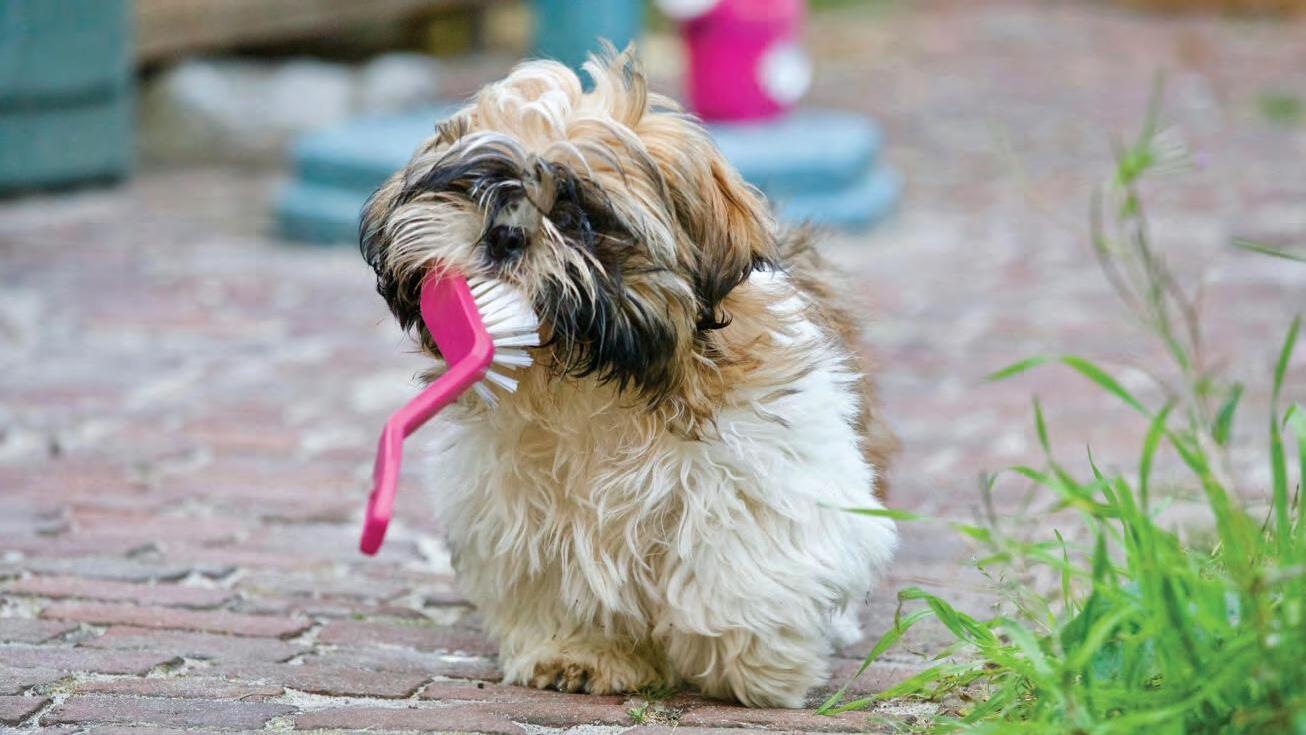
Spring cleaning is a popular bank holiday activity for many households, with a survey last year revealing that about 1 in 3 people use the bank holiday to clean. Worryingly, 29% of pet owners don’t buy pet-safe cleaning products, putting pets at high risk.
With some products capable of causing severe reactions, Chris Maxted, director of dog safety gate Dog-G8 www.dog-g8.com shares how owners can tackle this job while keeping their pet safe.
Dangers of cleaning product for pets
“Something as simple as walking across a freshly mopped floor and then licking their paws can expose dogs to chemical residues.
“Bleach, drain cleaners and even products marketed as natural can still be harmful to dogs as it can contain irritants, artificial fragrances and essential oils, or toxic scents like lemons and citrus which are all unsafe to inhale and could be fatal.”
The ‘2 hour rule’ pet owners are being urged to follow
“After using strong cleaning products, dogs should be kept away from treated areas for at least two hours to allow surfaces to fully dry and fumes to disperse, as contact too soon can lead to ingestion or irritation through their paws and skin.”
How do you clean with your pet around?
“One of the simplest ways to reduce risk is to keep dogs out of the home while cleaning is underway, whether that’s taking them out for a longer walk or spending time in the garden so surfaces have time to dry.
“If taking your dog out isn’t possible, setting up a dedicated space away from cleaning activity with their bed, toys or a
crate can help keep them settled and prevent them from coming into contact with harmful products.”
Watch out for toilets and mop buckets
“Many cases of exposure come from dogs drinking from recently cleaned toilets or accessing mop buckets that still contain diluted chemicals.”
Keep products where dogs can’t access them
“Dogs are often drawn to brightly coloured bottles or unusual packaging and if they’re able to get into cleaning cupboards, they may chew items.
“Small discarded items during decluttering can be especially dangerous as they are easy for dogs to pick up and swallow.”
Giving a dog an entire cabbage to shred and playing “wait and see” after a dog has eaten chocolate are just some of the terrible advice given out by Reddit users, according to vets and dog behaviour experts.
The community site’s r/DogAdvice and r/DogTrainingTips/ subreddits, amongst some measured and sensible responses, are hives of bad pet advice. And harness and lead specialist TopDog has invited the experts to set the record straight.
Searching for dog advice online is an increasingly common way of seeking reassurance. r/DogAdvice has 929,000 weekly visitors and 13,000 weekly contributions.
TopDog asked a panel of veterinarians and dog behaviourists their opinion on Reddit’s so-called animal experts and how they would tackle the pet parents’ problems.
Problem 1: My dog has eaten chocolate
Reddit says: “Do nothing and save some money”
Experts say: If you wait, it may be too late Here’s the scenario. The owner of a twoyear-old miniature poodle is panicking after finding their pooch eating from a
box of chocolates. The pet parent suspects that the dog has ingested around five chocolates.
A confident Redditor scolded other commenters for being “ridiculously frantic”, advising the owner to “do nothing and save yourself a ridiculous vet bill for them to do absolutely nothing.”
They continue: “Monitor closely, take her to an emergency vet only if she starts with symptoms. and she’ll be fine. Try and get her to drink water. Please update after she’s fine so everyone knows I was right.”
Dr. Sabrina Kong, a DVM at WeLoveDoodles and a veterinarian based in Tracy, California, warns against playing the waiting game when it comes to dogs and chocolate.
“So chocolate contains theobromine and caffeine, both toxic to dogs. The problem with "waiting for symptoms" is that by the time clinical signs appear (vomiting, diarrhea, restlessness, racing heart rate, tremors, or seizures), the toxins have already been absorbed and
are causing significant internal damage. Treatment at this stage is far more difficult, costly, and has a poorer prognosis. The most effective intervention (inducing vomiting to prevent absorption) must occur within 1-2 hours of ingestion, ideally under veterinary supervision.
“Never "wait and see" with chocolate ingestion! Time is the most critical factor in a successful outcome. An emergency visit based on a calculation is always preferable to a crisis based on a seizure at 3 AM. Responsible pet owners should treat any chocolate ingestion as a potential emergency and seek professional advice immediately.”
Problem 2: My dog won’t stop pulling on the lead
Reddit says: “Use a prong collar”
Experts say: You can’t resolve this with discomfort
The parent of a six-month-old excitable Australian Cattle Dog finds that the
pulling whilst on a walk is non-stop. They have ordered a harness, and want some advice from other dog owners. One commenter suggests a prong collar, claiming that “a harness will only encourage pulling.”
Prong collars are controversial training tools that use metal prongs on a collar to reduce or stop a dog from pulling on their lead. When a dog pulls, the metal prongs pinch the skin around the dog’s neck. The RSPCA describes them as “painful and unethical”.
Amanda VanTassel, Owner of No Hassle Dog Training specialises in leash walking skills and does not recommend prong collars to stop leash pulling. She says: “I don't recommend them because of the damage they can cause in general but especially when used incorrectly. It is much safer (and more comfortable) for the dog to wear a properly fitted harness.
“In addition, I have found that calm walks have more to do with building connection and focus with your dog so that they respond to leash walking cues and can be relaxed in a variety of environments. I don't believe you need special tools for that, just practice and consistency.”
Rather than a harness encouraging pulling, as the Reddit commenter suggests, a well-fitting harness can actually help the situation, when paired with training. Unlike traditional collars, which put pressure on the windpipe and neck, harnesses are designed to distribute pressure across the chest and shoulders, so the dog is comfortable and secure.
Problem 3: Shredding cardboard is my dog’s favourite gamemake it stop!
Reddit says: “Try giving them a whole cabbage” Experts say: Your dog needs alternative stimulation
This Reddit user is looking for safe items for their dog to shred, after developing a penchant for chewing cardboard and eating it.
Another Dr Reddit chips in with the suggestion of giving the dog “a whole cabbage”. Dr. Holly Merker of Orange Grove Animal Hospital explains why this is a bad idea:
“The root cause isn't destructive intent; it's boredom from either a lack of stimulation (the dog is seeking an outlet for pent-up energy) or a need for work where shredding provides a physical and mental release that they aren't getting elsewhere.
“To offset the cardboard shredding,
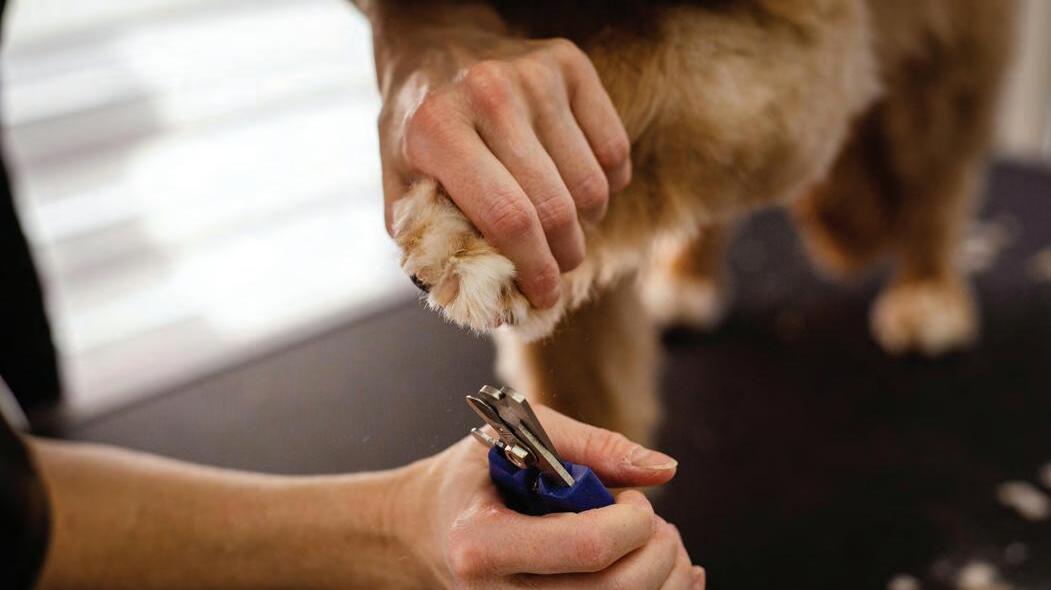
the goal is to introduce nose work and interactive feeding. This engages their brain so they don't feel the need to shred. Snuffle mats and puzzle feeders are excellent, fun, and interactive tools that can really help here.
“While you might be tempted to swap cardboard for something degradable like cabbage, it shouldn't be strictly "offlimits," but giving a dog a whole cabbage to shred/eat can lead to severe gas and possibly digestive discomfort.”
4: My dog hates having their claws trimmed
Reddit says: “Try CBD”
Experts say: Work on desensitisation
Many dogs hate having their nails trimmed, and this Reddit user reports that their dog is anxious and afraid of even the sight of nail clippers. One commenter recommends CBD for nail trimming anxiety. Noting that they “tried the recommended dose” which did “nothing”. So they doubled it, which “did the trick.”
This one is a little less clear cut. Studies show that CBD can help with pain management in many dogs and its use in treating epilepsy in dogs is ongoing. In terms of anxiety, Cornell University conducted a study where dogs were given CBD chews prior to a stressful event, and 83% showed a decrease in anxiety-related behaviours.
However, as it’s not FDA-approved for use with animals, very little is known about dosage and some over-thecounter products contain inaccurate cannabinoid levels and even contaminants.
Dr. Kathryn Dench (MA VetMB), Chief Scientific Advisor at Paw Origins notes: “Emerging research suggests CBD can reduce anxiety-related behaviours in certain contexts, and in my clinical experience, some mildly anxious dogs appear calmer with appropriate CBD
supplementation, especially when it is part of a broader anxiety-management plan.
“However, dogs with severe nail-trim phobia rarely improve with CBD alone. For them, behaviour modification and desensitisation are far more impactful long term.”
Dr. Kathryn also warns against varying the dose without clinical advice: “CBD doesn’t function like a volume dial where turning it up guarantees greater impact. In fact, increasing the dose may simply increase the likelihood of side effects such as sedation or gastrointestinal upset, without meaningfully improving anxiety control.
“Timing is also crucial. If a dog is already showing signs of anxiety - for example, trembling, resisting, or in full fight-or-flight mode - any calming aid is far less effective. Once adrenaline is circulating, we’re working against the body’s stress physiology. In my experience, this is where owners are most tempted to increase the dose, but pharmacologically that’s rarely the solution.”
TopDog says:avoid crowd-sourced advice when it comes to your dog’s safety
As useful as our online communities are, health and safety matters are best left to the experts when it comes to our animals. TopDog co-owner John Skinner says it’s safer to seek out the opinion of an expert and leave social media for funny memes and cute dog pics.
He says: “It’s appealing to head online to ask for help when you need dog care advice, particularly if you’re panicking in the moment. However, contacting your local vet or dog behaviourist before trying any sketchy home remedies is the safest way.”
n https://topdogharnesses.co.uk
The Scottish SPCA welcomes the much-awaited passing of the Greyhound Racing (Offences) (Scotland) Bill after years of campaigning.
This legislation will bring an end to greyhound racing on oval tracks in Scotland by ensuring no existing tracks can resume racing and preventing any new tracks from opening. It is a significant milestone in reinforcing the principle that animals should not be treated as commodities, highlighting that animal welfare must always take priority over profit.
The legislation addresses the inherent safety risks associated with this inhumane sport, putting an end to the avoidable harm it inflicts on dogs. Importantly, it will also bring Scotland in line with modern expectations on animal welfare - only seven countries now allow this heartless industry to go on.
Gilly Mendes Ferreira, Scottish SPCA’s Director of Strategic Communications & Partnership Engagement: “We welcome the passing of the Greyhound Racing (Offences) (Scotland) Bill. This lives up to the reputation that Scotland is a nation that cares about animal welfare, and we are looking forward to seeing the end of this cruel sport that has seen so many dogs get injured and die unnecessarily.”
Greyhound racing was once a prevalent industry in Scotland, with more than 30 venues in operation. However, cultural changes and shifts in public attitude towards dogs have led to a sharp decline in this cruel industry, with only two tracks left in Scotland. These are the regulated Shawfield Stadium and Thornton, which is an unlicensed ‘flapper’ track.
Between 2017 and 2020, there were 15 deaths and 197 injuries to greyhounds at Shawfield. Meanwhile, Thornton’s own figures shared with the Scottish Animal Welfare Commission showed it hosted 569 runs in 2021, resulting in two serious injuries and one fatality.

The risk of serious injuries, in some cases can also result in euthanasia, meaning that a dog’s life is often cut short unnecessarily. These risks are exacerbated by the nature of the sport, with high-speed racing around curved tracks increasing the likelihood of collisions and stress damage injuries, particularly at the first bend in the track.
Regulation alone would not have removed the core welfare risks linked to this archaic sport. Evidence from jurisdictions shows that injuries and fatalities still occur even where the sport is regulated.
A total of 70 MSPs voted for the Bill at Stage 3, showing widespread recognition in Parliament that the industry is outdated and cruel. The passing of the Bill also recognises public sentiment on the sport – 86% of respondents supported a ban at the consultation stage. This marks a victory not only for greyhounds but for Scotland as a whole.
Mark Ruskell MSP, who introduced the Bill, said: “Licensed greyhounds racing is licensed animal cruelty.”
The Scottish SPCA will now focus on supporting the next stages of the legislation as it awaits Royal Assent, including working to ensure the safe rehoming of dogs discarded by the industry.
The society’s recently published Manifesto listed banning greyhound racing as one of its key campaign priorities. The passing of the Bill shows our commitment to ensuring Parliament recognises animal welfare as a top priority. We will continue to work tirelessly to deliver on our manifesto’s four key asks – all crucial steps to make Scotland the best place in the world for an animal to call home. Read our full Manifesto and sign our petition to show your support https://www.scottishspca.org/what-we-do/our-manifesto/
n To report any act of cruelty, visit our Contact Us page https://www.scottishspca.org/contact/
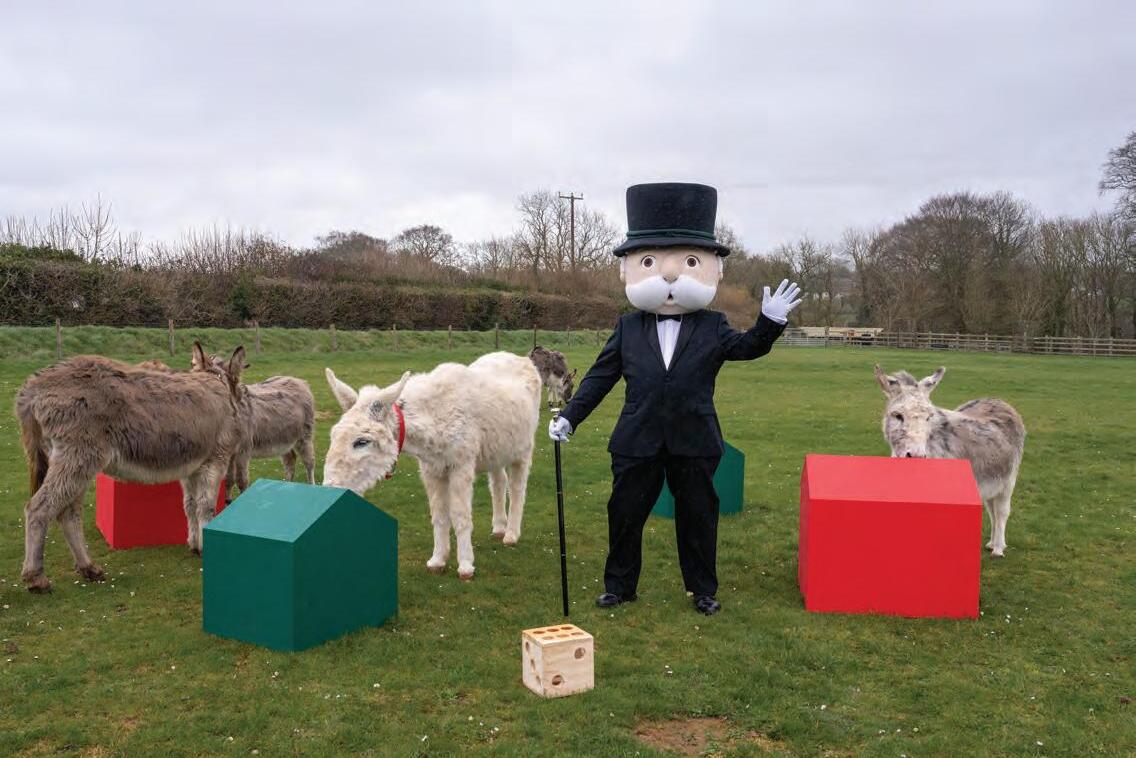
The Donkey Sanctuary has revealed a new eco-friendly version of the world’s most loved board game: MONOPOLY.
This special collector’s edition, made with zero plastic, celebrates the international animal welfare charity’s vital work to create a better world for donkeys and mules, and for the people who depend on them.
To celebrate the launch this week, Emma Grattan, Retail Manager in the sanctuary’s Gift Shop, created giant MONOPOLY style game pieces, in which enrichment treats were hidden for the donkeys to discover.
On their first introduction, the resident donkeys wasted no time in exploring the new wooden sculptures in their field, eager to unearth what they contained.
Enrichment is very important for the resident donkeys as it provides them
with greater opportunities to interact with their environment, make choices and to be more physically and mentally active.
The Donkey Sanctuary Monopoly features exclusive game components, including a custom game board, delightful donkey-shaped metal player pieces and themed Title Deed cards.
As players make their way around the board, they’ll meet familiar faces from the sanctuary and learn how The Donkey Sanctuary helps transform lives across the globe - from providing lifelong care for rescued donkeys in the UK to improving welfare standards worldwide.
Every move tells part of the charity’s story, and through the game cards
people will discover the positive actions that help donkeys here in the UK and across the world.
Players advance around the board by contributing to the charity’s mission, such as by helping to rehome a pair of donkeys, assisting research into the effects of plastic pollution on donkeys and livestock in Kenya, and getting donkeys vaccinated.
n The game is available on-site and online from the sanctuar y’s Gift Shop, and every purchase directly supports the charity’s vital work toward creating a better world for donkeys and mules.
Visit www.thedonkeysanctuary.org.uk
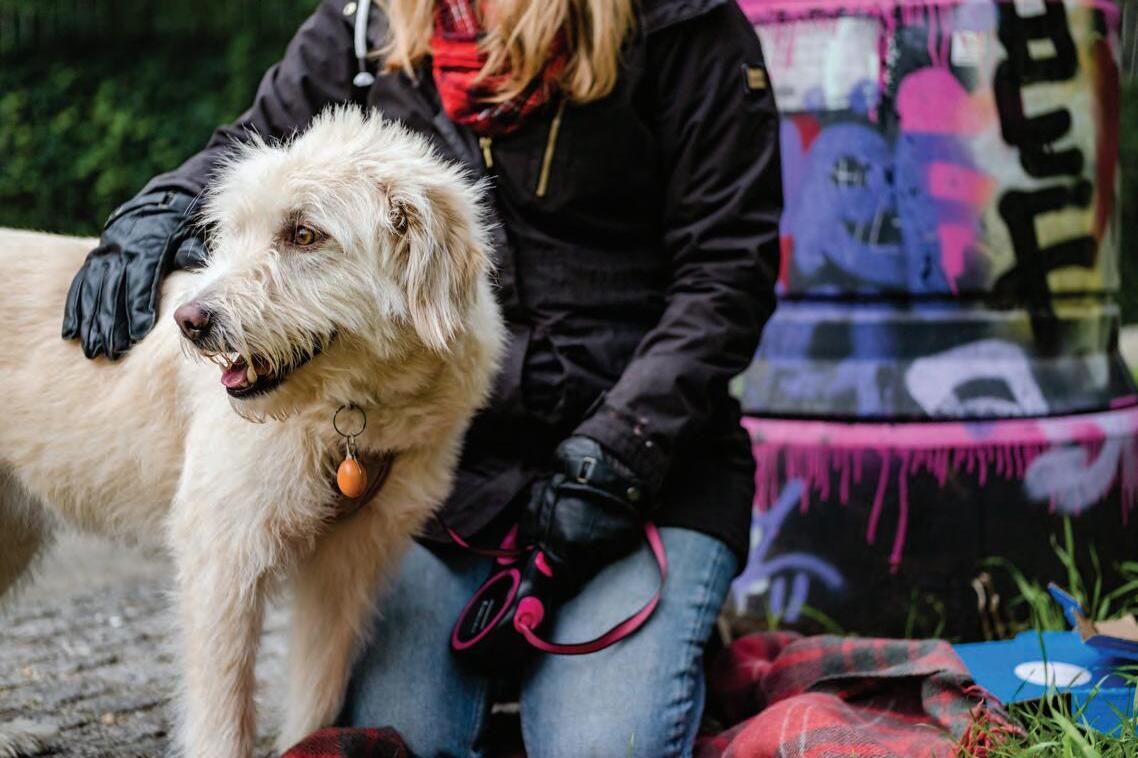
• ALABARÉ and Salisbury Trust for the Homeless, two homelessness support services in Wiltshire, have been endorsed by Dogs Trust as dog-friendly.
• Dogs Trust’s Together Through Homelessness service provides free, in-depth support and advice to homelessness services, helping keep people and their pets together.
• In a survey of professionals supporting those experiencing homelessness, 70% told Dogs Trust that their clients had experienced barriers to accessing homelessness services because they have a dog.
ALABARÉ and Salisbury Trust for the Homeless, two Wiltshirebased homelessness support charities, have been endorsed as 'dog friendly' by Dogs Trust's Together Through Homelessness service.
Both ALABARÉ, which supports people across Wiltshire, the South West, and Wales, and Salisbury Trust for the Homeless, which works within Wiltshire and with people who have a local Wiltshire connection, provide safe and
supportive places for those experiencing homelessness. Now, alongside supporting people, these organisations also offer a safe place for their clients’ pets. Since the end of 2025, both ALABARÉ and Salisbury Trust for the Homeless have partnered with Dogs Trust to become pet-friendly services. To support these changes, Dogs Trust has provided bespoke support and ongoing advice on everything from dog-friendly
policies to behaviour resources.
Thanks to the steps taken by both charities, they have now been endorsed by the Dogs Trust Together Through Homelessness service. These steps include ensuring staff have access to Dogs Trust’s training and resources, installing clear signage to show the service is dog-friendly, and adapting each space to ensure both people and their dogs feel safe and welcome.
These special endorsements provided
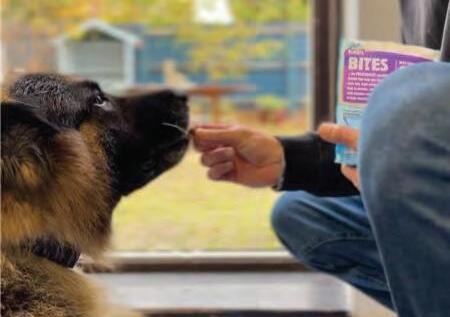
by Dogs Trust, the UK's largest canine welfare charity, are given to homelessness services that go above and beyond to help people and their dogs stay together. These endorsements celebrate the brilliant work of services like ALABARÉ and Salisbury Trust for the Homeless, recognising their commitment to removing barriers to dog owners seeking a safe place to stay.
Dogs Trust believes no one should be forced to choose between their dog and a safe place to sleep. However, many people experiencing homelessness are faced with that decision, as many homelessness services are not petfriendly. In fact, research by Dogs Trust found 70% of professionals supporting
those experiencing homelessness said their clients had experienced barriers to accessing homelessness services because they have a dog.
Abigail Owens, Senior Regional Engagement Officer at Dogs Trust, said, “I've really enjoyed visiting both ALABARÉ and Salisbury Trust for the Homeless as part of this endorsement process.
"Both services are unique in many ways but are united in their goal to make a difference for people experiencing homelessness and their dogs across Wiltshire. They are both great examples of how dog-friendly temporary accommodation can be provided successfully and with compassion.”
Ross Foster-Manning, Service Manager for Salisbury Trust for the Homeless, said, “Accepting pets is something that sets us apart from many other homelessness services. Often, when people are offered temporary accommodation, they cannot take their pet with them, making it a difficult choice whether to accept the accommodation or remain homeless.
“Our tenants do appreciate this, and, with the framework from Dogs Trust, it reinforces the fact that we do not just support the person but also the pet. Our dog policy briefly reminds tenants on how to be responsible owners, and, if they adhere to the policy, they get the benefit of free veterinary care for most essential matters. This helps tenants who have limited incomes and are reliant on benefits.”
Naomi Webb, Director of Care and Support at ALABARÉ, said, “We're really pleased that ALABARÉ has been recognised by Dogs Trust as a petfriendly setting that keeps people experiencing homelessness together with their dogs at a time of crisis. That commitment means they don't have to choose between getting the help they need and the care of their beloved pet.
“One resident, Warren, moved into our services with his dog, George, and describes him as being like a son to him. He says George is his comfort blanket and heartbeat, his incentive to get up in the morning, and where he goes, his dog goes.
“We have seen the huge difference it can make to clients when they're able to have their dog beside them while accessing our supported living accommodation. It often leads to them becoming more engaged with services, gives them a sense of purpose, boosts their mental health, and ultimately helps towards breaking the cycle of homelessness.
“Partnering with Dogs Trust is fantastic for ALABARÉ, as it's a strong endorsement that the charities are doing the best they can for people and their pets.”
n To find out more about Together Through Homelessness and the suppor t available to dog owners experiencing or at risk of homelessness, please visit www.dogstrusthopeproject.org.uk

Male 6 years 2 months
A lot of people think I need lots of exercise and they think I will be too energetic for them, that is not the case, all I want is a comfy bed, some food and a lot of love. If you want to go for a long walk I would love that, but if you just want to snuggle on the sofa and have a gentle short walk.
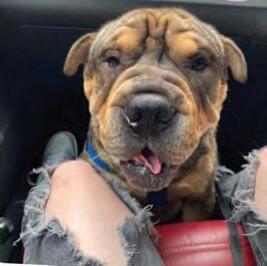
Male 4 year 2 months
I really do love my walks so I would love a family that are happy to take me on lots of adventures. I can be a little strong on the lead as there are just far too many sniffs to take in, but I am a clever boy and I promise I will my best to walk nicely.
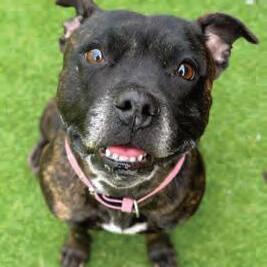
Female 8 years
Cookie is a little ‘pocket rocket’ and is still very fit and well. She needs her exercise, and is not at all slowing down – on her walks she’ll find the biggest stick she can to carry – typical Staffy!
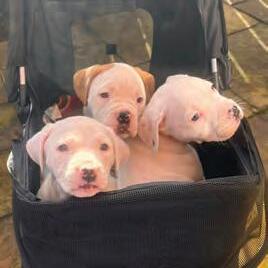
Male & Female 7 weeks
They will all need committed, patient homes who can ensure they all get the training, socialisation, stability and care that a puppy needs.
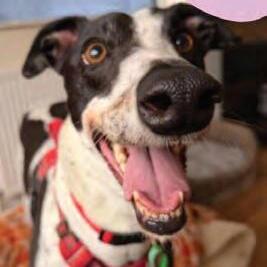
Female 4 years
Now, every cowgirl’s got a story… and mine is that I’ve never lived in a home before. Kennel life is all I’ve known, so the big wide world of sofas, TVs, and hoovers will be brand new territory for me.
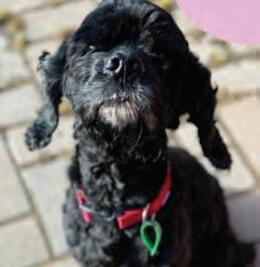
Male 7 years 8 months
I’m a very handsome 7-year-old American Cocker Spaniel, with a soft nature, a big heart, and about 10kg of lovable, slightly drooly charm! I’m now in a lovely foster home, busy making myself right at home—and I’m so ready to find a family of my own.
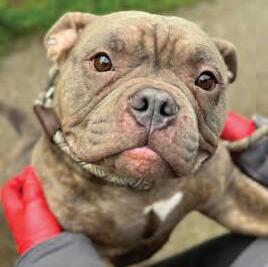
Female 2 years 6 months
Polly is a happy, giddy little girl who needs a home who love a dog with a bit of a cheeky, sassy, stubborn personality – she’s a typical bull breed!
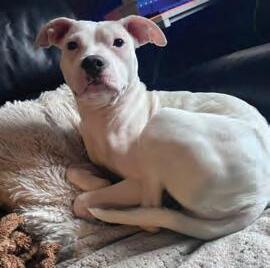
Female 1 years
She is still so young and she still has lots to learn, but is super trainable and will be a fantastic girl when she finds the right home environment and people to help her thrive.
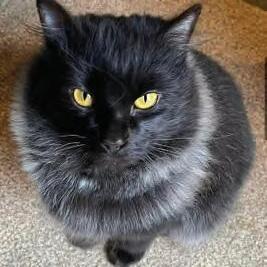
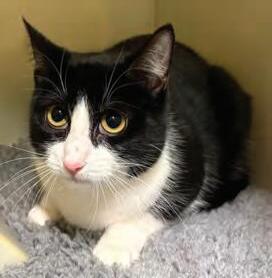
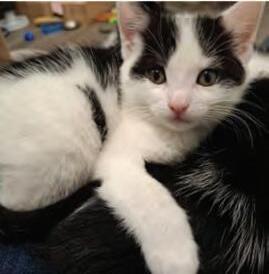
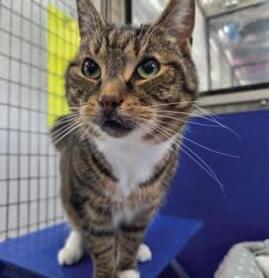
Male 2 years
Has cattitude when he’s had enough fuss. He purrs like a motorbike especially at dinner time. He loves his food and is very playful with his toys.
Pussycat Lodge www.pussycatlodge.co.uk
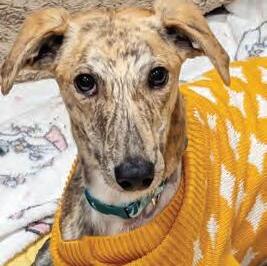

Male 5 months
An absolute lovebug who might be a bit shy at first, but he warms up quickly and enjoys nothing more than snuggling up for a cuddle.
Danaher Animal Home www.danaheranimalhome.org.uk
Male 3 years
He has an incredible gentle and loving temperament. To be homed with his friend Loki.
Foal Farm Animal Rescue www.foalfarm.org.uk
Female 18 months
She is friendly but timid and will need a quiet home as an only pet. She plays at night but is still scared in rescue.
Pussycat Lodge www.pussycatlodge.co.uk
Male 8 months
Loves getting out and exploring the world on his walks, taking everything in at his own pace. Alongside his gentle soul, he has a funny and playful side.
Danaher Animal Home www.danaheranimalhome.org.uk
Male 2 years
He is a vocal little guy who enjoys lots of attention. He seeks assurance from Zeus. To be homed with Zeus. Foal Farm Animal Rescue www.foalfarm.org.uk
Female 2 months
I am a sweet little girl with a big heart, looking for a forever home of my own, ideally with a feline friend to keep me company.
National Animal Welfare Trust www.nawt.org.uk
1 year
Has so much to offer the right person — energy, fun, and a truly shining personality. With patience, understanding, and love.
Danaher Animal Home www.danaheranimalhome.org.uk
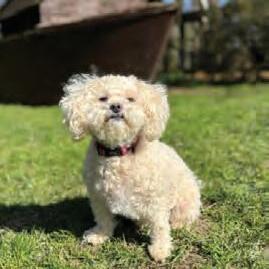
Female 8 years
She wants nothing more than a lap to snuggle up on, she will make the
Female 9 years
I love to run about and play with my toys so it would be really nice to have the option to go outside in my new home.
National Animal Welfare Trust www.nawt.org.uk
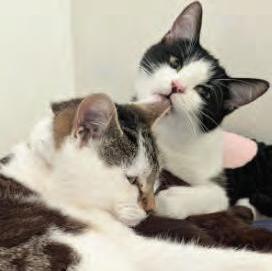
Male 6-7 months
Life in the cattery can be overwhelming for them, so they need a calm, patient home where they can build confidence at their own pace.
Danaher Animal Home www.danaheranimalhome.org.uk
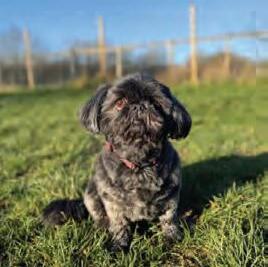
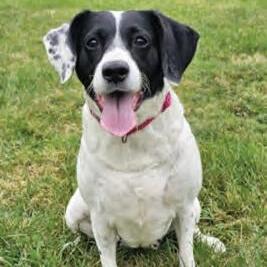

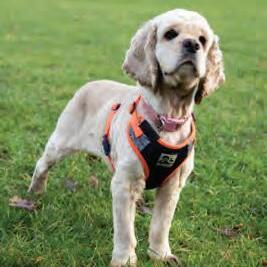
Female 4 years
She would love to be the only pet in the household so she gets all the attention. Full of energy and looking for an active home.
Pact Sanctuary www.pactsanctuary.org
Female 2 years
A darling girl who was described as a monster! She was hormonal and frightened. Olive adores head strokes and will actively seek more and more fuss!
Croydon Animal Samaritans www.croydonanimalsamaritans.co.uk
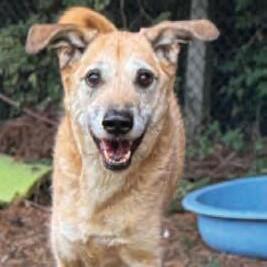
Male 8 years
He is a good boy in the house and is very affectionate. He is halti trained for his walks.
Mutts in Distress www.mutts-in-distress.org.uk
Female 5 years
Will benefit from regular grooming to keep her coat in good condition. She enjoys her walks and loves a sniff.
Pact Sanctuary www.pactsanctuary.org
Elsie & Mabel
Female 1 years
Elsie is a little more nervous to start with but the first to explore and try to escape. Mabel is more laid back and likes to play with toys.
Croydon Animal Samaritans www.croydonanimalsamaritans.co.uk
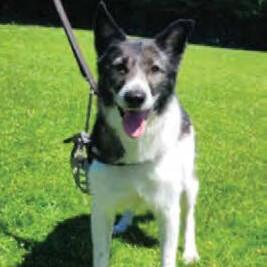
Male 12 years
Very affectionate who has a lot of love to give. Looking for a home with no other animals.
Mutts in Distress www.mutts-in-distress.org.uk
Female 5 years 8 months
She has a cheeky yet gentle personality. To be homed with another guinea pig to show her the ropes of popcorning.
Woodgreen www.woodgreen.org.uk
Male 8 years
Cruz adores attention and loves to come in for a good groom and to see everyone on the yard. He is well behaved for the vet and farrier, but as he is still young.
World Horse Welfare www.worldhorsewelfare.org
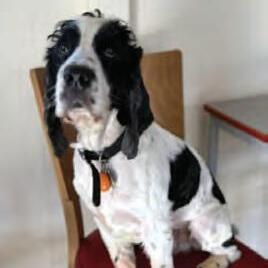
Male 7 years
Looking for someone who has experience of Spaniel breeds. He is food motivated and is a very quick learner. Mutts in Distress www.mutts-in-distress.org.uk
Female 7 months
She is a very sweet girly, who with a little bit of time and trust building who is going to blossom into a lovely companion.
Woodgreen www.woodgreen.org.uk
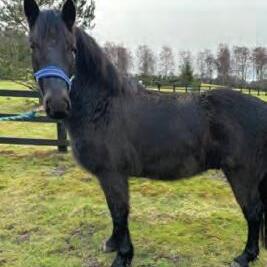
Male 5 years
Dexter does not like to be left alone, so he will be looking for a home where he always has at least one equine friend for company.
World Horse Welfare www.worldhorsewelfare.org
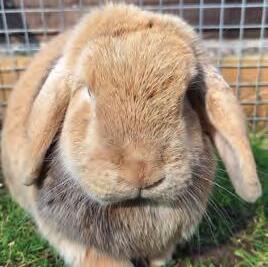
Female 6 years
Would love a home with another bun for company. She would be happy as an indoor or outdoor rabbit.
Fat Fluffs www.fatfluffs.com