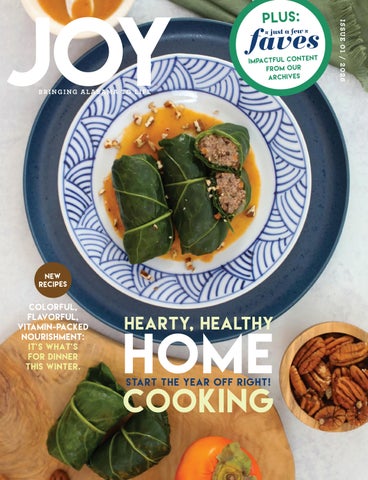
JOY Magazine--Winter 2026

Page 1


Breast Health Excellence backed by

Early detection matters. So does expert care before, during, and after your diagnosis.

At Baptist Health, we deliver the highest standard of care at every stage of your breast health journey. From initial mammograms and advanced imaging to surgical breast oncology and ongoing treatment, our patients benefit from a full continuum of expertise, backed by Central Alabama’s most trusted healthcare system. That care extends through our partnerships with the UAB Medicine Breast Health Clinic, offering specialized breast care by fellowship-trained providers right here at home, and the Montgomery Cancer Center, where patients receive advanced, coordinated cancer treatment in a supportive, patient-focused environment.

While a physician referral is required for mammograms, Baptist Health offers multiple convenient imaging locations throughout the River Region, so once you’re ready, care is close by. And should you need additional services following your mammogram, we’ll be with you every step of the way.

+ MONTGOMERY BREAST CENTER & DRIVING HOPE MOBILE HEALTH CLINIC 334.387.1120

+ BAPTIST BREAST HEALTH CENTER 334.747.4490

+ PRATTVILLE IMAGING CENTER 334.358.6282

+ UAB MEDICINE BREAST HEALTH CLINIC 334.747.7440

+ MONTGOMERY CANCER CENTER 334.273.7000

FOR MORE INFORMATION, VISIT BAPTISTFIRST.ORG.

Hi, everyone.

JOY magazine has stood the test of time, with Jennifer Kornegay, Erika Tracy, and Nancy Fields and a slew of freelance writers and photographers delivering an outstanding publication that has delighted readers across the River Region, the state of Alabama and beyond since 2013.

As our team prepared for this winter issue, we decided to showcase some of our favorite features from the last 13 years. I was thrilled to revisit some of our most popular articles for this edition.

In our past pages, we've featured many brave and deeply personal breast cancer stories. Some of my favorites appeared in the fall issue of 2017. The women highlighted in The Body Art Project continued to choose joy despite diagnosis, treatment and struggle. JOY magazine thought “outside the box,” using body art to honor each survivor’s beautiful and unique journey. I am truly thrilled that you can revisit this powerful article today.

I have lived with lymphedema for almost 30 years. It is a challenging side effect of breast cancer surgery, and I believe all cancer patients and

physicians should educate themselves about this condition. This is why we have chosen to reprint this important piece. I hope it offers support, insight and encouragement to anyone experiencing lymphedema.

As we move into 2026, our teams at the Joy to Life Foundation and JOY magazine wish you a year filled with health, happiness and joyful reading. Thank you for being part of our community—and for bringing joy to life.

Here’s to health, happiness and joy to life!

JOY

BRINGING ALABAMA TO LIFE

PUBLISHER

JTL Publishing

EDITOR Joy Blondheim

MANAGING EDITOR

Jennifer Stewart Kornegay

ART DIRECTOR

Erika Rowe Tracy

DIGITAL MEDIA PRODUCERS

Big Dreamz Creative

CONTRIBUTING WRITERS

Deanne Allegro, MS, RDN

Jennifer Stewart Kornegay

Cheyenne Martin

Melissa Tate Witt

COPY EDITOR

Jenny Stubbs

CONTRIBUTING PHOTOGRAPHERS

Big Dreamz Creative

COVER CREATIVE & PHOTOGRAPHY

Nancy Fields/Big Dreamz Creative

COVER DESIGN

Erika Rowe Tracy

Joy is published four times per year by JTL Publishing. © 2026 All rights reserved. Reproduction in whole or part is prohibited without permission from the publisher. Joy reserves the right to determine the suitability of all materials submitted for publication and to edit all submitted materials for clarity and space. Joy is not responsible for damage, loss or any other injury to unsolicited manuscripts and/or unsolicited artwork. This includes, but is not limited to, drawings, photography, transparencies or any other unsolicited material. Joy does not knowingly accept false or misleading advertising or editorial. The publishers do not assume responsibility should such advertising or editorial appear. Joy is a news magazine with information on health, leisure activities and a healthy lifestyle. Readers are advised to consult their physicians before participating in any sport or fitness activity or starting any exercise, dietary or nutritional program published in Joy

RECIPES

COMFORT FOODS

DON’T

HAVE TO BE BIG ON BUTTER OR SMOTHERED IN CHEESE TO PROVIDE ALL THE COZY, HOMEY FEELS.

When the winter sets in, we crave cozy, comforting dishes to banish some of the seasonal blues that can come with colder weather and shorter days. And the good news is, you can achieve the mood boost you’re after without filling up on calorie-and-sugar-laden foods. Plenty of nutrient-dense, healthful dishes bring on the warm and fuzzies too.

Deanne Allegro, owner of Montgomery’s Perennial restaurant and Clinical Associate Professor of Nutrition at Auburn University at Montgomery shares recipes for three flavorful delights — including a sweet treat that’s extremely un-sinful but so satisfying—filled with hearty, vitamin-rich veggies, bold spices and crunchy proteinpacked nuts you’ll be making on repeat until spring.

Creamy Eggplant Dip + persimmon sauce

INGREDIENTS:

2 large eggplants, halved

3 garlic cloves, minced

1/4 cup olive oil

1 tsp salt

1/2 cup fresh parsley

DIRECTIONS:

Adjust an oven rack to the middle position. Turn the broiler on high. Pierce the eggplants several times with a fork and place them on the baking sheet. Broil for 2 minutes on each side until the skin darkens and smells smoky. Turn the broiler off, then heat the oven to 375°F.

Bake for 30 minutes or until the flesh is a soft, pudding like texture. Let cool, then scrape insides into a bowl and discard the charred skin.

Add the garlic and oil, blending the mixture until it is creamy and smooth (this can also be done in a blender).

Season with salt and top with fresh parsley.

Serve with veggies, bread, olives, etc.

Deanne Allegro MS, RDN, is an Associate Clinical Professor of Nutrition at Auburn University at Montgomery and the owner of Montgomery’s freshfocused restaurant, Perennial. She has more than 20 years of experience in the fields of food and nutrition.

Registered Dietitian Nutritionist

SERVES

4-6

DIRECTIONS:

Prepare the leaves:

Wash collards and remove stems. If leaves are extra large, slice in half.

Boil water in a large pot. Add 1 collard leaf at a time to the simmering water, holding the leaf down gently with tongs so that leaf is totally submerged in water.

Simmer each leaf 30-60 seconds. Don’t go any longer or the leaf will become flimsy and will tend to rip.

Submerge leaves for 15 seconds in an ice bath. Set leaves aside until ready to prep dolmas. (They can live in the fridge for 3-5 days once they’ve been blanched.)

Sauce:

Cook the onion in a medium saucepan until translucent.

Add persimmon, tomato paste, and beef bouillon. Simmer until persimmon is soft.

Blend for a smooth sauce.

Dolmas:

Place ground lamb, rice, 1/4 cups olive oil, pecans, persimmon, salt, pepper, cumin, cinnamon and egg in a bowl. Mix together.

Place collard leaves on work surface with smooth side down (ribs of leaves up). Place a rounded tablespoon of lamb-rice filling near bottom-center of the leaf. Fold bottom sections of leaf over mixture, fold over sides, and roll toward the top of the leaf into a firm cylinder. Don’t roll too tightly or leaves may burst when rice cooks.

Drizzle olive oil in bottom of dutch oven. Place dolmas in dutch oven by arranging them along the sides, then working toward the center to cover the bottom. Leave enough space between dolmas to allow for expansion, but close enough to hold their shapes when cooking. If necessary, stack another layer on top of the first so they all fit.

Pour in sauce. Bring to a simmer, uncovered, over medium-high heat. As soon as liquid is heated through and starting to bubble (2 to 4 minutes), reduce heat to low, cover the pot, and cook 35 minutes. Dolmas should look a bit puffed up, and a fork should pierce them easily. If not quite done, continue cooking and simmer until rice is tender.

Southern Dolmas + persimmon sauce

INGREDIENTS:

10-12 collard leaves, depending on size

1 lb ground meat (beef or lamb)

1 cup brown rice

1/4 cup chopped pecans

1 persimmon, seeded and chopped

1 egg

1/4 cup plus 2 tbsp olive oil

1 tsp salt

1/2 tsp ground black pepper

1 tsp cumin

1/2 tsp cinnamon

SAUCE:

2 tbsp tomato paste

1 white onion, finely chopped

1-2 persimmon, seeded and chopped

3 cups beef bouillon

THIS SEASON IS GOING TO BE TASTY.

A GREAT REASON TO EAT DESSERT FIRST.

Sweet Potato Sorbet + cream and nut topping

INGREDIENTS:

3 medium sweet potatoes (1 1/2 pounds)

1 1/2 cup water

1 cup brown sugar

1 tsp cinnamon

1/2 tsp ginger

1/4 tsp cardamom

Optional toppings: whipped cream chopped pecans mint leaves, for garnish

DIRECTIONS:

SERVES 4-6

Preheat oven to 375 degrees.

Wash sweet potatoes and pierce several times with a fork.

Bake sweet potatoes for 55 minutes until tender.*

* this can also be made with leftover baked sweet potatoes

Let sweet potatoes cool and peel.

Place water and sugar in a medium pot. Stir well.

Cook over medium heat until mixture comes to a full boil, stirring occasionally.

Remove from heat and let cool.

Place sweet potatoes, sugar mixture and spices into blender; blend until smooth.

Pour mixture into a 9-inch square baking pan. Cover tightly and freeze until firm, about 2-3 hours.

When ready to serve, scoop into dessert cup and top with desired toppings. SERVES 4-6

A DISCUSSION WITH JANNAH BAILEY

+

CHECK IN ON JANNAH'S JOURNEY ON PAGE 21.

When she received her breast cancer diagnosis, Montgomery native Jannah Bailey took a normal knee-jerk reaction to the news and turned it on its head, finding the strength to fight. But she wasn’t alone. An army of friends and family stood beside her to help.

Tell us about your cancer diagnosis and treatment. I had noticed a “dimple” on the underside of my right breast that was slowly getting bigger.  I thought it was like cellulite, just another sign of getting old! I heard Joy [Blondheim, co-founder of the Joy to Life Foundation] speak, and she talked about the different signs of breast cancer. One was dimpling in the breast.  It, of course, caused me concern. During this same time, our group of six longtime friends had gone on a girls’ trip, and one of those ladies had a lump she was telling she was concerned about. Shortly after the trip, she was getting her diagnosis, and I went with her. Sitting with her in the doctor’s office and hearing them tell her she had breast cancer, I realized that I probably did too. I decided to go and have my dimple looked at. My GYN was pretty sure it was cancer with just a look at my breast, so I went immediately to the Breast Cancer Center where I got an ultrasound and biopsy.  I was diagnosed with Stage One Invasive Ductal Carcinoma. I had surgery on March 26, 2015, and 42 radiation treatments.

What was your first thought when you heard the diagnosis?

My initial reaction was anger. After working so long at Child Protect and seeing the results of what some pretty awful people did to kids, I didn’t understand why my family and I had to go through this. I did good in the world, so why me?  It really sucked! But after crying and shouting in the car by myself, I then asked, why not me? How can I use this experience to encourage and support others with this same disease? That tiny change in my own attitude gave me the strength to fight and make sure cancer didn’t win.

Through the treatment process and after, what did you want and need from your friends and family?

I could not have made it through the initial surgery and follow-up treatments without my family, friends and even people I barely knew, but it was really after all that when I needed and relied on them the most. The fear of the cancer coming back is always in the back of my mind, and to be able to pick up the phone and call or text or meet for lunch just to express that helped give me the courage to stay positive.

What forms of help and support really stood out?

The cards and calls that came when I really needed them. The push to stay positive while ensuring me that I needed to acknowledge my feelings of anger and sadness. One of my friends, Laurie Weil, dropped off a blanket and the sweetest note to my office right after I started radiation. That blanket still means so much to me. It continues to give me hugs, and now when I know of someone else who has been diagnosed, I too gift them with a blanket. I also received a piece of art from Kay Sasser Jacoby the day before my surgery that I have hanging today in my house where I see it every single day. “With each new day comes new strength and new thoughts.” – Eleanor Roosevelt

HEAR FROM SURVIVORS, COMPANIONS AND CAREGIVERS IN OUR Real

Life SECTION

In March of 2022 , Jannah Bailey accepted the position of President/CEO of the River Region United Way, becoming the organization’s first female in this position in its almost 100-year history. Prior to this role, she served at Child Protect, Children’s Advocacy Center as its executive director for 21 years.

What one thing that you did for yourself (exercise, mediation, prayer, some other habit, etc.) most helped you cope?

My family was my No. 1 reason for never ever giving up. Making future plans, no matter how big or small, also has helped me. Having something to look forward to gives you an excitement and anticipation of the future that you don’t want to miss out on. Hiking, one of my favorite hobbies, became even more important to me. It is where I can be quiet and disconnected, away from all of the stress and noise. I love the mountains, and that is where I feel the closest to God.

What advice would you give others on how to approach and help their loved one going through cancer treatment?

To me, the most important thing is to allow your family member/friend/whoever you know who is going through cancer to feel their feelings. Don’t discount their anger or sadness but just let them go through it and listen. Love and support them through it all. Send a card randomly. I promise those cards, calls or texts came at the exact time that I needed them. Let them talk about it. And don’t hesitate in telling them about stuff you have going on in your own life. I still wanted to hear about my friends’ and family members’ struggles and challenges, so I could be there for them, too. That gave me something else to focus on that wasn’t just me and my cancer.

“ ” WITH EACH NEW DAY COMES NEW STRENGTH AND NEW THOUGHTS. – Eleanor Roosevelt

THE FEELINGS

+CHECK IN ON JAVACIA'S JOURNEY ON PAGE 20.

A CONVERSATION WITH JAVACIA HARRIS BOWSER

You’re young. Just starting a new, uncertain career. A global pandemic is raging. And you’re diagnosed with breast cancer. What do you do? If you’re type -A, go-getter, freelance writer extraordinaire Javacia Harris Bowser, you stay calm and carry on. But you also recognize and soak up the support of a loving husband and the small ways good friends can make big impressions.

Tell us about your cancer diagnosis and treatment and current status.

On January 24, 2020, I was diagnosed with stage II invasive lobular carcinoma. For treatment, I had a lumpectomy, 16 rounds of chemotherapy and 36 rounds of radiation. The cancer was ER and PR positive, so I am currently taking Tamoxifen. I am currently NED (no evidence of disease).

What was your first thought when you heard the diagnosis? To be honest, I wasn’t scared or even sad. I am VERY type A, so I instantly just wanted a game plan. I wanted to know what I had to do next. But I was worried about how the diagnosis would affect my ability to work. In fact, the first question I asked the doctor who diagnosed me was, “Can I still work?” I had just left my job as a teacher in May of 2019 to be a full-time freelance writer. So, I needed to continue to work through my treatment. Fortunately, I was able to do so.

Photography by Melissa Newton of J&M Photography and Design

Through the treatment process (and after), what did you want and need from your friends and family?  I went through treatment during the pandemic, so friends and family couldn’t visit me. Instead, they showed love with small gifts—blankets for the cold chemo room, ginger chews and peppermint tea for nausea, graphic tees with inspirational messages, journals and adult coloring books. My husband was my rock. Because of the pandemic, it was just the two of us. He had to handle caregiving all by himself and he was amazing.

What forms of help and support really stood out? My cousin, who’s my best friend and like a sister, not only sent me gifts but also did little things that kept me from feeling alone despite the isolation that the pandemic mandated. She’d text me while I was in the chemo chair. She constantly sent me funny memes. Best of all, she didn’t treat me like a sick person. She gave me a sense of normalcy that I needed.

I was also blown away by the love and support from the women of See Jane Write, the community for women writers that I organize. Because of them, there was a small gift on my doorstep every single day during treatment, so I always knew someone was thinking of me. One member even had a T-shirt made that read #SeeJavaciaBeatCancer.

What are some things friends and family should NOT say or do? Don’t tell your friend who’s just been diagnosed that your aunt or grandmother died from breast cancer. That’s not what she needs to hear right now. If you know someone alive and thriving after a diagnosis, tell her about that person instead. Don’t silence her with “Good Vibes Only” toxic positivity. If she needs to cry or vent, let her. Don’t tell her about some special diet you read about that you think

she should try during chemo. Chances are, rice and apple sauce will be the only things she can keep down. As my treatment progressed, I couldn’t even stomach the scent of meat. So, this is definitely not the time to tell her to try keto!

What one thing that you’ve done and/ or are doing for yourself has most helped you cope? Walking and writing got me through treatment. In 2020, I walked for at least 30 minutes every single day, even the day of my lumpectomy and even after chemo infusions. My oncologist believed that the walking helped my body tolerate and bounce back from chemo as well as it did. But honestly, I walked because it helped with my mental wellness. When you’re being poked and prodded by doctors constantly, you start to detach from your body. Walking helped me feel more grounded and more like myself. And I’ll tell anyone willing to listen that I wrote my way through breast cancer. Not only was my work a good distraction, but I journaled constantly, sometimes when I was sitting in the chemo chair. But what helped me even more was when I started journaling out loud—when I started sharing my story on social media, on blogs and in essays for both print and digital publications. Seeing my story’s positive impact on others helped me find a purpose for my pain.

What advice would you give others on how to approach and help their loved one going through cancer treatment? Just be present. Check on your loved one often, but remember that it's okay to talk to her about things other than cancer. Sometimes you won’t know what to say. And you’ll probably say something you shouldn’t. But that’s better than saying nothing at all. Your loved one needs you now more than ever. So be there.

FIRST-HAND ADVICE AND INSIGHT

Javacia Harris

Bowser was first interviewed for this profile in JOY ’s spring 2024 issue. A few months ago, JOY magazine caught back up with Bowser to see how she’s doing and if she had any new insights into her cancer journey to share. We love her thoughts on self-care!

Have there been any changes in your cancer journey since our initial Real Life interview? Fortunately, I am still NED (no evidence of disease). I’m still taking Tamoxifen and will continue on this medication for the next five years.

Now that more time has passed, do you have additional thoughts or insights on how your cancer journey affected and still affects you?  The biggest revelation I’ve had is that after a cancer diagnosis, you will never be the same again. You need to allow yourself time to grieve your old self. Give yourself as much time as you need. Don’t rush this. But after you’ve done that, focus on the new you and all the things you love about her—how strong she is, how she understands what matters most in life, how she knows tomorrow is not promised and therefore acts accordingly.

How has your cancer journey influenced your work as a writer and the way you choose to balance your work and your personal life? Cancer has influenced my work in unexpected ways. A lot of fellow breast cancer

ENJOY UPDATES FROM SURVIVORS

PREVIOUSLY INTERVIEWED IN OUR Real Life SECTION

FRESH TAKE:

“I have gotten so much better at resting when I need to and not treating rest like it’s a reward that I only deserve if I’ve run myself ragged.”

survivors who also love to write joined my writing community, See Jane Write. I had the opportunity to write an article for ELLE magazine about breast cancer. My volunteer work was also impacted. I’m currently president of the board for Forge Breast Cancer Survivor Center. As for work/life balance, I’m still not sure if that actually exists, but I have gotten so much better at resting when I need to and not treating rest like it’s a reward that I only deserve if I’ve run myself ragged. I’m much better at setting boundaries and saying “NO”—full stop!

was first interviewed for this profile in JOY ’s Fall 2022 issue. We recently caught back up with Bailey to learn more about her cancer story and find out how she’s currently faring. While she’s been cancer free for more than 10 years now, more recent decisions have brought her even better health.

Have there been any changes or updates in your cancer journey since our initial Real Life interview?  I am still cancer free and thankful every day for that.  When I see someone in a Pink Ribbon shirt or bracelet or I may overhear a conversation about someone having breast cancer, I briefly share my story, hug them and encourage them to continue to “fight like a girl.” I have noticed more and more people are being diagnosed at a younger age, and cards and texts, I hope, give them the hug and prayer they may need at that moment.

Have you had any new thoughts or insights on how your cancer journey affected you? Every day, month, year as I get farther from my initial cancer diagnosis, surgery and treatment (March 2015), the memory of hearing the doctor confirm, “you have breast cancer” seems more recent than 10 and a half years ago. Each time I have my six-month mammogram and six-month MRI, I have thoughts that the cancer has returned. I think that will be for the rest of my life. Being a breast cancer survivor and getting older, I don’t take life for granted. Family and friends are my priority and spending quality time with them is what matters more than anything. It has taught me to understand that just being there for someone, in good and bad times, is so important. I try to be a good friend with love and acceptance.

“After cancer, I listen more intently to hear what my body and soul are telling me—when it is time to rest and get away.”

Can you share how your cancer journey has influenced your work at United Way and your approach to balancing your work and personal life?  I believe having cancer has made me more committed to my work in nonprofit. Working and serving people who are in need and hurting has come more naturally, and I now have no doubt in my heart and mind that I am doing what I was purposed for. I think I am more empathic and understanding to our neighbors who reach out for help. At some point, we are all going to need a hand to help us get through a situation, and I am fortunate enough to work every day with a great team, and together, we can help the least of these. I also know that in order to serve, I must stay healthy myself. After cancer, I listen more intently to hear what my body and soul are telling me—when it is time to rest and get away. Hiking in the mountains is still my happy place and where I go to totally get disconnected and recharged. I have been sober since July 2, 2023, and this additional journey has given me a deeper faith in Christ, as well as clarity on how to try and be a better person and live a healthier life.

ALL OUT PINK IN OCTOBER

FREE COMMUNITY EVENTS THROUGHOUT OCTOBER FOLLOWED BY A NIGHT OF JOY WITH RUBEN STUDDARD MADE FOR A GREAT BREAST CANCER AWARENESS MONTH.

Photography by Big Dreamz Creative

ALL OUT FUN

JOY WAS IN THE AIR THIS OCTOBER AS JOY TO LIFE CELEBRATED AROUND THE RIVER REGION WITH POP-UP EVENTS INCLUDING COMMUNITY WALKS, KID ACTIVITIES AND EVEN A LASER LIGHT SHOW!

A NIGHT OF JOY

ALABAMA NATIVE RUBEN STUDDARD TOOK TO THE STAGE TO ENTERTAIN WITH BACK UP FROM THE BELOVED TRUE DIVINE CHIOR.

WE COULDN'T DO IT WITHOUT you !

The Joy to Life Foundation depends on the many individuals, organizations and businesses who donate time, money and talent to help us continue our life-saving work across Alabama. Thank you all!

THE ALABAMA POWER SERVICE ORGANIZATION (SOUTHERN DIVISION CHAPTER) stopped by our Joy to Life offices and brought a check with them! We are very appreciative, not only for the donation, but for all the help they provided to us at our Pink Popup Party in Prattville! Thanks APSO!

THANK YOU to the community members, businesses and organizations that support Joy to Life.

BIG THANKS TO THE CITY OF WETUMPKA, ALABAMA GOVERNMENT FIRE DEPARTMENT for raising funds for Joy to Life by selling their super stylish "Bridging the Gap" t-shirts! We were overjoyed to stop by yesterday and receive a check for over $3,000! Do these guys care about the community or what? It's a wonderful example of #liveheregivehere!

ASE CREDIT UNION provided generous support for Joy to Life's concert with Ruben Studdard at Montgomery Performing Arts Center.
Photography by Big Dreamz Creative

ST. MARK MISSIONARY CHURCH'S PINK CHARI-TEA raised $500 for Joy to Life. Felicia Hawkins visited the office to deliver the donation.

VINTAGE HOSPITALITY GROUP

was twice as nice to Joy to Life this year, serving up TWO delicious and super sippable Pink Drinks during Breast Cancer Awareness Month. The drinks were made available and enjoyed by diners at VHG’s fabulous Montgomery eateries including Vintage Cafe, Vintage Year, Frenchie’s and Ravello Ristorante. Proceeds will benefit our fight against breast cancer. Thanks, y’all!

Photography by Big Dreamz Creative
"FROM THE BEGINNING, THE JOY TO LIFE CAR TAG HAS BEEN A REMINDER OF THE IMPORTANCE OF SCHEDULING A MAMMOGRAM. IF WE CAN REACH WOMEN EARLY ENOUGH, WE BELIEVE LIVES CAN BE SAVED."
- DICKIE BLONDHEIM, JOY TO LIFE CO-FOUNDER

THE HISTORY OF THE JOY TO LIFE PINK CAR TAG

FUNDING MAMMOGRAMS IN EVERY COUNTY

APRIL 2008

PETITION OF SUPPORT FOR BREAST CANCER AWARENESS CAR TAG

The Joy to Life pink car tag has become one of Alabama’s most popular and recognizable symbols of breast cancer awareness, but its story began humbly at the 2008 Walk of Life. During the event, supporters stopped by a Joy to Life Foundation tent to sign a petition, pledging that they would purchase a pink specialty tag if it ever became available. The overwhelming response proved that Alabamians were ready to show their support for breast cancer awareness in a bold and meaningful way.

DECEMBER 2008

PINK TAG OFFICIALY ON SALE

In December 2008, the pink tag officially went on sale. Since then, it has grown from an idea on a clipboard to a statewide movement and has become the fourth most popular tag in the state. Over the years, the tag has seen several design updates, but its purpose has never wavered: to spread awareness and help fund lifesaving breast health services.

FOR MORE THAN 10 YEARS

JOY TO LIFE CAR TAG FUNDS FREE BREAST HEALTH SERVICES IN ALL 67 COUNTIES IN ALABAMA

The Joy to Life tag has become one of the foundation’s primary funding sources, allowing the organization to provide free breast-health services in all 67 counties in Alabama. Each tag sold helps ensure that individuals—regardless of income or location—can access the care they need.

One of the most beloved features of the pink tag is its free personalization option. Drivers have used their tags to honor loved ones, celebrate survivorship, spread awareness or simply express creativity. The tag’s popularity has even expanded beyond cars—it’s now available for trucks, motorcycles and boats as well.

From its beginnings as a hopeful idea at the Walk of Life to becoming a statewide emblem of strength and compassion, the Joy to Life pink car tag continues to drive Alabama forward in the fight against breast cancer—one vehicle at a time.

DID YOU KNOW?

PINK TAGS ARE AVAILABLE FOR CARS AND MORE!

DRIVERS USE THE PERSONALIZATION OPTION TO SPREAD AWARENESS IN CREATIVE WAYS.

EARLY DETECTION SAVES LIVES!

When breast cancer is detected early, the 5-year relative survival rate is 99 percent.

STAGE 1 BREAST CANCER is considered an early stage, localized cancer and is highly treatable and survivable.

PNKTAG CHKURS FIGHTN

SINCE 2008, THE JOY TO LIFE CAR TAG HAS INCLUDED 3 DIFFERENT DESIGNS, EACH UPDATED TO REFLECT JOY TO LIFE'S ON-GOING MISSION.

MEET THE MEDICAL PROFESSIONALS

MAKING OUR AREA A HEALTHIER, HAPPIER PLACE TO LIVE .

FOR DR. JOHN MARK VERMILLION, BAPTIST HEALTH’S LEAD TRAUMA SURGEON

and medical director of trauma, operating on those critically injured in a car wreck, a shooting or a tragic accident extends beyond the definition of “job.” He sees his work as a “God-given opportunity,” and it’s work he’s been doing in Montgomery for more than 20 years. Here, he shares his patient-care approach, how he handles job stress and why he gives back by serving with a medical missions group.

Q: A:

When did you know you wanted to be a doctor?

Dr. Vermillion: I grew up in small town in West Texas, and my grandfather was a surgeon. Both my uncles and my dad are doctors too, so I grew up with it. It just felt like the natural thing to do; I didn’t know anything any different.

How did you make your way to Montgomery and Baptist Health?

After college and medical school at Baylor University, I trained at Scott & White Hospital in Temple, Texas, and then did a fellowship at the University of Maryland trauma center. I was recruited back to Scott & White to be the trauma director there in 2004, but in 2005, I was recruited to start the trauma program at Baptist Health. When I came to Baptist, there were no trauma centers, and I was only the trauma surgeon at that time, but the need for trauma surgery and a trauma department has continued to increase, and now we have three fulltime trauma surgeons and one part-time, plus a team of eight nurses and physicians assistants that work in trauma service with us. This year, we’re forecast to have more than 3,300 trauma cases.

Define “trauma cases” and what you and the trauma team do.

Our definition of trauma surgery is surgery to address car wrecks, shootings, stabbings and

industrial accidents and falls.

But our trauma surgeons also do acute-care surgery, anything you’d go to the ER for, like bowel obstructions, appendicitis, etc.

What is the most challenging aspect of your work?

What the public doesn’t realize is the cost and planning and management that go into making and keeping our system to be trauma-ready. We have to be ready to roll with a big issue, like a shooting with multiple victims, all the time. So much goes into it; so many levels have to be ready when the trauma happens, and since we never know, we always have to be ready. That is challenging in a city like Montgomery with no university support. So, figuring out the right way to manage all that, including the business and funding side of it, can be challenging.

What are some of the ways you cope with the stresses of your job?

I go to work, and do the best I can,

and make the best decisions I can in every situation, and then I leave it at that. I truly leave work at work, and that has really lessened my stress.

What is the most rewarding part of what you do?

Watching the service line develop as much as it has over the 20 years I have been here and seeing the level of trauma and critical evolve and improve so much. The quality compared to 20 years ago is astounding. And that’s not about just me. The commitment and support from Baptist’s administration, from our nursing team has been consistent through it all.

What is your approach to patient care?

I think the most significant thing is to be humble. I see the job as a God-given opportunity. And I get that from growing up around it. I never saw doctors as more important than any other person. So, I don’t treat patients like numbers. Everyone is just a person trying to do the best they can. I saw that so clearly in

the way my grandad approached everyone, and I’ve carried that with me.

Why do you give of your time to work with medical missions?

I began doing some missions in India, but I wasn’t doing surgery there. I then got connected with a local group, the Chikondi Health Foundation, where I could do more surgery-specific work in Malawi, Africa. Our surgical group goes twice a year, and I try to at least once a year. I’ve now gone seven or eight times, and there is a hospital there that we support 24/7. We do a lot of OB care and general medicine, but there are fully functional operating rooms there too, and on our last trip, we did 50 operations over five days. The people are so gracious and appreciative of anything we do. And that’s just incredibly rewarding. It takes me back to the reason I got into surgery – worrying about nothing but helping people.

SURGEON

DR. JOHN MARK VERMILLION

PREVENT DEFENSE

LESSONS LEARNED

“My grandfather was the surgeon in town when I was growing up, and he didn’t have any assistants, so when I was about 14, he’d come grab me in the evenings to help him in the operating room. I fell in love with surgery from those experiences. And I know he needed the help, but I also think he wanted to expose me to it. It was great.”

Dr. John Mark Vermillion notes that never seeing a trauma surgeon is best, but if you do end up in his or his team’s care, if you’ve been proactive about your health, you’re likely to see better outcomes. “If you are seeing a trauma surgeon, we are picking up pieces after a disaster has happened. So, if you can prevent the gun violence, prevent the car wreck or prevent massive injuries from a wreck by wearing your seatbelt, that’s the best thing,” Vermillion says.

Plus, the healthier you are in general, the better you come through trauma. “This is clearly documented in all trauma literature, giving us just one more reason to pursue and maintain a healthy lifestyle.”

The Joy to Life Foundation has been publishing a magazine for 13 years, and in that time, we’ve put out articles covering an array of healthy lifestyle topics. From highlighting amazing outdoor spots for active travel around Alabama and sharing wholesome, nutritious recipes to offering advice for achieving physical and mental wellness and presenting moving profiles of cancer survivors, JOY magazine brings you informative, engaging content to help you live life to the fullest! In 2026 and beyond, we’ll keep delivering more of what you love, but to celebrate the new year, we’re showcasing a few favorite past articles. We hope you’ll enjoy this look back at the best of JOY.

JENNIFER STEWART KORNEGAY

RECORD-SETTING COLLECTIONS

Named the “World’s Largest Motorcycle Museum” by the Guinness Book of World Records, Barber Motorsports Vintage Museum houses more than 1,600 vintage and contemporary motorcycles.

YOU DON’T HAVE TO BE A MOTORHEAD

to enjoy a daytrip to Barber Motorsports Park (but if you are, it’s your nirvana). This multi-purpose racing facility and vintage motorcycle museum right outside of Birmingham has enough excitement and interest to quicken any pulse and satisfy any need for speed.

Encompassing 880 acres in Leeds, the Park is the culmination of the vision and determination of milk mogul George Barber, former owner of Barber Dairies until it was sold to Dean Foods in 1988. The Birmingham native was once an amateur racecar driver, and he never lost his passion for fast cars and motorcycles. It fueled an idea that began as a motorcycle test track before ballooning into the massive attraction and destination it is today, a spot that draws hundreds of thousands each year.

// FAST TRACK

Its 17-turn, 2.38-mile road course racetrack at the heart of the Park is consistently recognized as one of the best in the country, and it brings a slew of drivers and their cars who compete in a full schedule of both professional and amateur races each year, including lightening-fast Indy Car events, and many of which are open to spectators.

GET BEHIND THE WHEEL

You don’t have to own a racecar (or even a fast car) to let your inner speed demon loose at the Park, home of the Porsche Driving Experience (PDE).

Porsche selected the Barber track as a PDE site since its state-of-the-art circuit design makes it a perfect match for the nimble sports cars. The PDE puts you behind the wheel of a Porsche Carerra 911 with a racing pro riding shotgun to guide your every move.

Car fans won’t be disappointed either. The museum also has a substantial collection of Lotus and other racecars as well as racing memorabilia.

SPEED UP

// FINISHING FIRST

Even when the track is empty, the Park is packed with action, thanks to the Barber Motorsports Vintage Museum. Officially designated the “World’s Largest Motorcycle Museum” by the Guinness Book of World Records, it houses more than 1,600 vintage and contemporary motorcycles — some quite rare, all quite valuable — spanning more than 100 years of production, making it a motorcycle enthusiast’s dream come true. And, 99 percent of the bikes are still able to run. Car fans won’t be disappointed either. The museum also has a substantial collection of Lotus and other racecars as well as racing memorabilia.

// TWO WHEELS FOR THE WIN

But it’s the motorcycles that take center stage. Barber himself has always seen motorcycles as much more than impressive transportation machines and feats of engineering; he appreciates their visual design, and feels they are true works of art. The creative ways the motorcycles are displayed in the museum’s five stories of concrete and glass highlight this view and make it worth a visit even for folks who aren’t die-hard bike or racing fans.

Grab tickets now for the Barber Vintage Festival on October 5-7. It’s a celebration of all things motorcycle and has been hailed as one of the most welcoming and well-run events of its kind in the world.

About 90 PERCENT OF WOMEN who will develop lymphedema do so within three years of breast cancer treatment. It occurs in about 20 PERCENT OF WOMEN who undergo axillary lymph node dissection.

Living with

WITH MORE TREATMENT OPTIONS THAN EVER BEFORE, CANCER IS NOT THE HOPELESS DIAGNOSIS IT ONCE WAS. BUT EVEN CUTTING-EDGE TREATMENTS ARE NOT RISK FREE. MANY PATIENTS FIGHTING CANCER ALSO FIND THEMSELVES CONTENDING WITH LYMPHEDEMA. IT IS OFTEN ASSOCIATED WITH BREAST CANCER, BUT FOR THOSE FACING PROSTATE CANCER OR GYNECOLOGICAL CANCERS, LYMPHOMA OR MELANOMA CAN BE AT RISK TOO.

a risk for cancer survivors

What is lymphedema?

Lymphedema, as the name suggests, affects the body’s lymphatic system. It happens when excessive lymphatic fluid settles into the interstitial tissue (the solution that surrounds tissue cells) and causes excessive swelling in the arms and legs, and sometimes in the chest and breast. Lymphedema can develop after an infection or trauma but when cancer patients are diagnosed, it is likely brought on by the cancer itself or any accompanying treatment (such as radiation or surgery). If a high number of lymph nodes are removed, the risk for lymphedema increases.

How is it treated?

Lymphedema can be treated, but early detection is important. Symptoms can include swelling, limited function of extremities, a breakdown in the skin and infection. It isn’t (always) particularly painful, but it can be uncomfortable

with a tight, stiff feeling. Non-surgical treatments include massage, lymph drainage, exercises to improve range of motion and other therapies that stimulate the lymphatic system. Compression bandages and clothing can help with swelling and medications may also help treat inflammation and infections or prevent blood clots.

Mild lymphedema can be reversed, but it leaves you susceptible to lymphedema in the future. In that sense, lymphedema can’t be “cured,” but it is far from being terminal. If you have been diagnosed with cancer and are undergoing treatment, talk to your health care provider about your risks of lymphedema and what you can do to prevent and treat it.

RESOURCES: www.breastcancer.org and Cancer Treatment Centers of America

THROWBACK TO 2017

survivor:from a

“LYMPHEDEMA IS A SERIOUS AND DIFFICULT PROBLEM.

Those that have it should educate themselves on how to manage it to avoid infection. I have suffered through six infections in 20 years, and this bypass surgery could mean no more life-threatening infections.”

FOUNDER OF THE JOY TO LIFE FOUNDATION AND BREAST CANCER SURVIVOR

GOOD NEWS

Getting your best strength: a groundbreaking surgery

Typically, an exercise plan for anyone at risk for or diagnosed with lymphedema includes some combination of:

• flexibility and stretching exercises

• strength training

• aerobic exercise that uses the upper body, helping with weight loss and encouraging deep breathing, which in turn helps lymph move along

It is recommended to work with a professional who specializes in lymphedema management and breast cancer rehabilitation.

Joy to Life Foundation founder Joy Blondheim has struggled with lymphedema since her breast cancer diagnosis 20 years ago. Recently, Dr. Fred Ames, Joy’s surgeon at MD Anderson Cancer Center, suggested she make an appointment with Mark Schaverien, Ph.D., to discuss her issues with lymphedema. Schaverien has been working with MD Anderson on a groundbreaking surgery for the condition since 2005.

Schaverien explains the procedure known as lymphovenous bypass surgery was “initially considered to be experimental,” but “has now been accepted as the gold standard for treatment and over the last two to three years [we have] experienced a steep increase in the number of patients we are treating.”

Lymphovenous bypass surgery is a procedure which involves removing a patient’s lymph nodes and relocating them to other lymphedema-affected areas in the body.

During Joy’s meeting with Dr. Schaverien, he said, “We cannot determine if Joy is a candidate for this procedure until she has a few more simple tests. But if we determine she is a candidate for this surgery, then it would mean she should never have another infection in her affected arm again.”

“Because of the seriousness of lymphatic infections, it was an aha moment. I realized I could go through this elective surgery and never have to experience an infection again,” Joy recounts. “That’s a game-changer!”

Schaverien pointed out, “For patients with advanced chronic lymphedema, such ‘physiological’ surgeries are no longer possible. However, liposuction debulking (which reduces the size of the limb) improves function and reduces the risk of future infections. However, the patient will need to wear a compression sleeve to prevent it from recurring.”

TO LEARN MORE ABOUT LYMPHEDEMA AND THE LYMPHOVENOUS BYPASS SURGERY, VISIT MDANDERSON.ORG.

to about Cancer Talking kids

After receiving a cancer diagnosis, one of the first concerns many parents have is how to discuss this news with their children. Although this task can seem daunting, being the first to communicate this news to your kids can go a long way in helping them cope.

The way this conversation happens depends on many things: the age of your children, the details of your diagnosis and the dynamics of your family. There is no wrong way to have this conversation! You know best how to approach it, but here are a few things to keep in mind.

Make a plan

Before you share the news, be sure you are ready to do so. Being ready doesn’t mean emotions won’t be present. In fact, they are welcome and necessary to express. Just take a little time to prepare for what you wish to cover.

When’s the best time to have this conversation? Some want to share this information immediately, and others would rather wait to know more details about the prognosis and treatment plan. Consider a time and place that is easy to talk and also easy to decompress. You don’t want to feel rushed, but you also don’t want to be so isolated it’s hard to resume a “normal life” upon them receiving the news.

Think about who should be involved in the conversation. One parent or two? Several of the children at once, or each one differently?

Again, there is no wrong way.

Spend time thinking through what feels best for you and your family.

Hit the important stuff

Beforehand, outline the details you wish to cover, as they may be different depending on the ages of your children. Regardless of their ages, be as honest as possible and use real terms to avoid confusion and fear. It is also perfectly okay to not have the answers for all of their questions. Let them know that you don’t know but will try to find the answer for them.

Remember this is the initial conversation—not the only one. The goal here is to lay out the situation, set expectations for upcoming changes to the current household lifestyle, and establish a secure place for emotions and open dialogue within the family. Additional discussion can follow based on the needs of your family and changes that come along the way.

Don’t be surprised if their reaction is different than you expected.

Be patient

Allow time for your children to process this information and don’t be surprised if their reaction is different than you expected. Many children won’t react at all to the news or mostly be worried about how any changes will impact them.

Above everything else, be patient. Don’t feel like your conversation will go according to a script. As things get started, allow questions to happen and be ready to experience various emotions from everyone—it is expected and healthy.

The Dana-Farber Cancer Institute has an excellent outline of items to consider, including your initial conversation. Visit dana-farber.org.

Tell them mom (or dad) has a disease called cancer.

Explain cancer is a general name for many different diseases in which cells that are not normal divide more rapidly than usual. These abnormal, quickly growing cells often develop into a tumor. Cancer can also spread to other parts of the body, but it is not contagious: Your children cannot “catch” cancer from you.

Talk about the causes of cancer. Ask how they think cancer gets started. You might mention some of the known behaviors that seem to increase a person’s chances of getting cancer, such as smoking or spending lots of time in the sun. Mention that although all the causes of cancer aren’t known, experts are studying this question and coming up with more answers all the time.

Let your kids know where the cancer is in your body, along with how you will be treated. Tell them if you will be in the hospital or away from home for extended periods of time. It is important to discuss how treatment may affect you temporarily but is helping to make you better in the long run. That is often hard to understand.

Depending on their ages, you might also ask your children how they would like to respond when others ask them questions about your health. Who can they talk to and what all can they share? This discussion also gives you a chance to check on how much your sons and daughters understand about your illness as well as what issues you may need to clarify for them.

Explain to older kids and teens that your illness will probably affect the family’s daily routines and responsibilities, and you will keep them posted as these changes occur.

Answer the Toughest Question of All:

Are you going to die?

This is, of course, the most dreaded question a parent faces, but again, trying to be honest with your child is the best approach.

Share with them that you are not dying, but are taking strong medicine and/or having surgery to get rid of the cancer. Reassure your children that specialized doctors are doing everything they can to help. Perhaps you can share positive information about new advances in treatment or a promising prognosis.

Reiterate the fact that although people do die from cancer, lots of people don’t. It might be good to talk about others you know who are cancer survivors—your kids may not even know about it!

Source: http://www.dana-farber.org/Adult-Care/Treatment-and-Support/Patient-and-Family-Support/Family-Connections/Talking-withKids-about-Cancer.aspx

Great care begins with a great workplace.

For six consecutive years, Baptist Health has been named to the Forbes list of America’s Best-In-State Employers—a recognition that celebrates workplaces where people feel valued, supported and empowered. This honor belongs to our incredible team members whose compassion, dedication and expertise make Baptist Health a place where both employees and patients thrive. Because when our people are at their best, so is the care we provide.

AN ART EXPERIENCE TO CONTINUE A JOURNEY.

THEAR T OF

AR T P R O J E C T

ABODY

The Joy to Life Foundation is anything but ordinary. For 17 years, Joy to Life has funded millions of dollars for mammograms and other life-saving screenings for underinsured Alabamians throughout the state, already providing $200,000 of funds for screenings this year alone.

Bel i

Participants share words and stories that give us all a reason to see life in a new light.

But behind every statistic, there’s a unique story about a person affected by breast cancer and the life chosen to continue despite the diagnosis, treatment and struggle. Once again, Joy to Life looked “outside the box” to find a few of these stories and is using body art to capture each survivor’s beautiful, unique journey.

A PIECE OF OUR HEART.

Co-founder and breast cancer survivor

Joy Blondheim explains, “My hope for these fabulous women is that the body art experience will make each feel more empowered and even more beautiful! I am certain this unique opportunity adds another dimension to their already life-changing journey.”

Karren H op

Karren Pell is a musician, songwriter, author and animal lover. And in 1999, she added cancer survivor to her list of accomplishments. “After a failed lumpectomy, I had a complete mastectomy with complete reconstruction,” she recalls. “I did a full round of chemo and had a lot of problems. I have also sustained some serious health issues from treatment. I got through it all with help from my friends, my hero hubby, Tim Henderson, and Joy and Dickie [Blondheim].”

Karren says that she is most inspired by her friends and the animals that she loves to rescue and care for. “I love animals and for the last two years have rescued kittens,” she says. “I currently have eight who are getting healthy and will be looking for puurfect homes.” Karren is also inspired by what she refers to as her muses. “They help me write both songs and books,” she says. Karren has written five books on the history of Montgomery and its surrounding areas. She is considered to be a modern troubadour and is a Nashville singer-songwriter who has been published and recorded internationally. Her musical compositions range from commercial songs to theatrical works, to the historical ballads of Alabama Troubadour, her first book. Her talents are also periodically on display when she performs with her friends of the Old Alabama Town Revue Crue in Montgomery.

When asked how she felt about being a part of the body art project, Karren replied, “I am proud and honored to be a part of anything Joy and Dickie Blondheim are a part of; if I can help others that is even better. I hope [people] will understand that breast cancer treatment is, like a lot of other treatments—the more successful the earlier detected. I hope [they] understand the importance of JTL’s mission of providing mammograms. Treatment is difficult and expensive and therefore, women in treatment need support.”

Jeanette

Jeanette Crook describes herself as “full of life,” and she’s right on the mark. As an active mother of two and grandmother of four, she hasn’t let cancer slow her down. Jeanette was diagnosed with stage 4 breast cancer in 2003, then five years later little spots began to show up on her bones, causing her to continue regular chemo treatments indefinitely. Despite trouble with her knees and a recent hernia operation, for which she astonishingly only missed one day of work, she keeps on going. “I absolutely love it,” she proclaims when referring to her work at Baptist South gift shop. “Even with my legs like they are, I get up and go to work every day. I love to stay busy. I’m kind of hyper like that, I guess!”

Even in the little things like ironing every piece of clothing she puts on, Jeanette takes pride and care in all that she does. “My words are live, fight and hope,” she says, “because that’s what I’ve been doing every day since 2003. It takes a lot to get me down.”

Jeanette has been a regular participant in the JTL Foundation's Walk of Life over the years but had to bow out this year because of problems with her knees. But it’s clearly Jeanette’s love for life and her humor that get her through her struggles, and she hopes people can learn a little something from what she’s been through. “I hope people will get it that you never give up. I could have given up a long time ago, but I’ll go down fighting. You can bet on that,” she declares. “I love life. I mean I love life. I want people to know just because you have cancer, that’s not the end of the world, and it doesn’t have to be the end of your life.”

2026 UPDATE: In 2021, Jeanette passed away, but her joyful spirit lives on, as her daughter Brandi Madderra explains.

“My mom was truly one of a kind—strong, graceful, and full of life, even in the face of the toughest battles. She lived with breast cancer for nearly 20 years, and throughout it all, she never let it define her. Instead, she defined it—with courage, humor, and an unwavering faith that inspired everyone around her especially me.

When my mom first told me about the body paint project, my initial reaction was, ‘You’re crazy—you’re my mother and a grandmother, you can’t do that!’ But once she explained the process

and the meaning, I could see the pure joy on her face. It wasn’t just about art or photography—it was about celebrating survival, beauty and strength. It gave her a chance to embrace her story, her body and her journey in such an empowering way.

Even though she passed, her presence is still everywhere—in the way I see the world, in the lessons she taught me and in the love she left behind. Honoring her means continuing to live with the same kindness, strength and authenticity that she showed every single day, no matter what life brings. I try to do as she did: finding beauty in small moments, helping others whenever I can, never losing hope and keeping my focus on God.”

Fi gh t

Kim

Kim Scharf has been a registered nurse for 21 years and works in the cardiac step down unit at East Alabama Medical Center in Opelika. She admits that when she first started her treatments for breast cancer in 2013, she was scared and worried about a lot of things, “as many of us are,” she says. “But I had a breast cancer survivor tell me one day that ‘there's life after this.’ It made me see my treatments in a whole other way.  I had a better attitude about treatment and life, in general.  Many people would comment about how great I handled chemo and that I never seemed to let it get me down. I have used my testimony as a survivor many times in caring for my patients to help them know that they can get through whatever tough situations they are going through, if they have the right attitude.”

The 43-year-old wife and mother of two was diagnosed with breast cancer on July 15, 2013 at the age of 39.  “I had a double mastectomy and did chemo every other week for four months.  My breast cancer was estrogen positive and HER2 positive so besides chemo, I also had to get a Herceptin infusion once a month for a year.” Kim credits her appreciation for life and the gain of a long-term perspective for being able to count this as her fourth year as a survivor.

When asked about participating in the body art project, she describes it as a unique experience. “It took a lot of patience and time.  The artists were very talented and fun to work with.  Everyone involved in the project was wonderful and pleasant,” she says. “What I took from it was that this project took bodies that cancer had scarred and changed and made them beautiful pieces of art.  I hope that readers will gain a positive attitude and understand that to achieve something, you have to fight for it.”

Carrie

Carrie Nelson Hale is a 27-year breast cancer survivor as well as founder and CEO of SISTAs CanSurvive Coalition, Inc.

“We are dedicated to promoting health and wellness cancer survivorship practices to increase the quality of life of cancer survivors through positive lifestyle changes,” she says. “I am also a retired Army veteran and the owner and licensed counselor of HAVEN Integrative Therapy Center, LLC, with specialties in the treatment of survivors of cancer, chronic illness and trauma.”

Diagnosed with breast cancer in March 1990 at the age of 37, Carrie discovered a lump on her own through a routine selfbreast examination and followed up with mammography. “My breast cancer was detected early, and I was treated surgically, undergoing a left modified radical mastectomy,” she recalls. “My decision to forego reconstruction served to allow me to embrace my scar as a symbol of my survivorship.”

Carrie is married and has three adult sons and a family dog named Rusty. “I have only one sister, Mari, who is an ovarian cancer survivor and two first cousins who are breast cancer survivors,” she says. “Because of this familial history in my family, I decided to take the breast cancer (BRCA) genetic test which identifies me as having an inherited mutation to the BRCA 1 gene. The significance of this finding is that it has empowered me to educate my family and others about the importance of genetic testing.”

Carrie says the body art project left her with the thought of how powerful and strong the messages of faith, hope, believing and courage can be. “My take away from this experience is: Without a spoken word, yet through art, the message is that we CanSurvive and we do survive!”

Adrienne Li ve

Like all of these ladies, Adrienne Griffin leads a full and busy life. She’s married and has five kids. She holds two degrees from AUM, and has served as the Treasurer of Beautifully Bald Montgomery.

“We are an organization promoting the beauty of brave souls in our community fighting illnesses fashionably one day at a time,” she says proudly. She’s also a volleyball coach.

Adrienne is celebrating four years as a breast cancer survivor. “My battle with cancer was truly an emotional and physical struggle,” she relates. “Four days off a great family vacation and 37 years of age, I received a followup phone call from a breast biopsy done two days before with the news I have breast cancer. A month later, I was undergoing a mastectomy and breast reconstruction at the same time. I had a very difficult time after surgery and especially with the reconstruction procedure. Six weeks after surgery, it was discovered my body was rejecting the tissue expander placed on my chest wall. Two days later, I was back on the operating table, removing the expander because I had a severe infection.”

After recovery and therapy, she was asked what she wanted to gain at the end of her sessions. Her response?

To hit a volleyball again. Four years later, Adrienne is proud and not ashamed of having one breast. “I do not wear my prosthetic because I have so much nerve and muscle damage from the tissue expander. Every day I have constant pain. I block it out of my mind a great part of the day and keep moving. I always tell myself , ‘It could have been a lot worse, so get over it and deal with it. You are still here.’”

the rtistsA

MANY THANKS TO THE ARTISTS OF Femme Fatale Quatra Body Art. MORE ABOUT THEM:

“We had the most fantastic experience creating works of art on these beautiful, living canvases,” says lead artist Amanda Stiffler. “They have enormous heart, and tremendous courage! They've survived such incredible triumphs, and we are blessed to be included in their stories.”

The artists of Femme Fatale Quatra Body Art have been providing face painting and body art for a collective 60+ years. They work as a team at events throughout the nation, mainly focusing on face painting and variety entertainment. Amanda Stiffler has been working with Joy To Life for the last seven years, providing entertainment for the Walk of Life each year. “This project has been in the works for a long time,” says Amanda. “We are very excited to see it come to life, with the help of this talented team of artists, photographers and the support system at Joy To Life.”

AMANDA STIFFLER is the artist and visionary director of these pieces of living art. Amanda has been in the entertainment industry all of her life. She started out singing in churches at the age of four. Later in life, her love of

the stage and all that she learned made her into the variety artist that she is today.  She now owns one of the largest variety entertainment companies in the Southeast, called Amanda S Productions.  Her days are very colorful and are filled with face painting, body art, costuming, balloon art, magicians, stilt walkers, specialty entertainers and variety shows.

LINDA ADAMS is the owner of a small but fabulous sign shop in downtown Clayton, North Carolina, which feeds her need to create. She has been in the face and body art industry for more than 10 years and has been an integral member of Femme Fatale Quatra Body Art from the beginning.

SHANNON O'TOOLE is a lifelong visual and performance artist, with a background in elementary education. She has been a face and body painter and has served as assistant to Amanda Stiffler for the last seven years.

ELAINE TINDILL ROHR has been an experienced face and body paint artist for more than 20 years and competed in the World Body Painting Festival in Austria in 2014. She is the team “techy” and a valuable part of the group.

FOR MORE INFORMATION ON FEMME FATALE QUATRA BODY ART, CALL OR VISIT: amandasproductions.wordpress.com facebook.com/femmefatalebodyart/  facebook.com/AmandaSProductions/

Left to right: Shannon O’Toole, Elaine Tindill Rohr, Jeanette Crook, Karren Pell, Linda Adams and Amanda Stiffler.

lines smile LEAVING YOU WITH A LITTLE JOY

FUN from the start.

In Summer 2014, we took our cover shoot to a new level— live chickens on location.

urban farming

For this cover concept back in 2014, we asked the proverbial question, “Why did the chicken cross the road?” The answer? To win multiple magazine and design awards for out-of-the box thinking. Working with a live chicken proved a little challenging, but our team got the perfect shot and a fantastic, engaging cover. We thought it only fitting to revisit it as part of our look back at this magazine’s consistent creativity. It always makes us smile, and we hope it brings you a little JOY too!

MELON MANIA COOKING WITH KIDDOS FOLLOW THAT TRUCK!

CAN Together, We

Turn static files into dynamic content formats.

Create a flipbook
Issuu converts static files into: digital portfolios, online yearbooks, online catalogs, digital photo albums and more. Sign up and create your flipbook.