Publication requests should be sent in Word format at servir@forces.gc.ca. The manager reserves the right to reject or modify any editorial or advertising content.
ISSN 0384-0417
Servir is an authorized unofficial publication, published bimonthly with permission of the 2nd Canadian Division Support Group Commander. The opinions and points of views expressed are not necessarily those of DND, CAF and CFMWS/NPFs Personnel. The articles published in this newspaper are the property of Servir and cannot be published, used or reproduced without the authorization of the manager or author.
Documenting the big and small stories of the CAF
Photographers working within the military community have the opportunity to capture different aspects of the military profession as well as the events that mark the history of the Canadian Armed Forces.
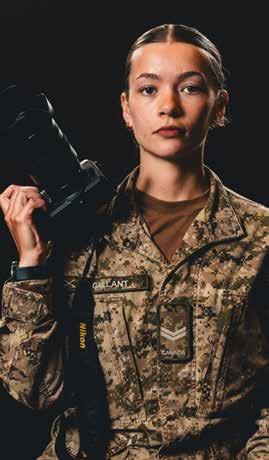
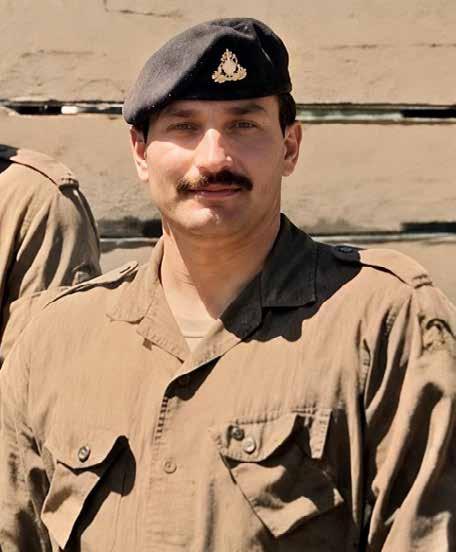
Corporal Marie-Anne Gallant is an imaging technician with the 2nd Canadian Division Support Group Operation Services at Saint-Jean Garrison. A graduate of the Borden School in 2026, she was driven by her passion for photography to choose this occupation, combining creativity with personal challenge and achievement.
Each challenge she takes on during an assignment helps her grow, both professionally and personally. “What I enjoy most about my job is capturing unique moments in demanding environments and taking on new challenges. The clients’ satisfaction when they see the final result is my greatest reward!”
Photo:
Pte
Tanya Langelier
Saint-Jean Imaging
Corporal Marie-Anne Gallant
Print : digital edition only
Forward, together!
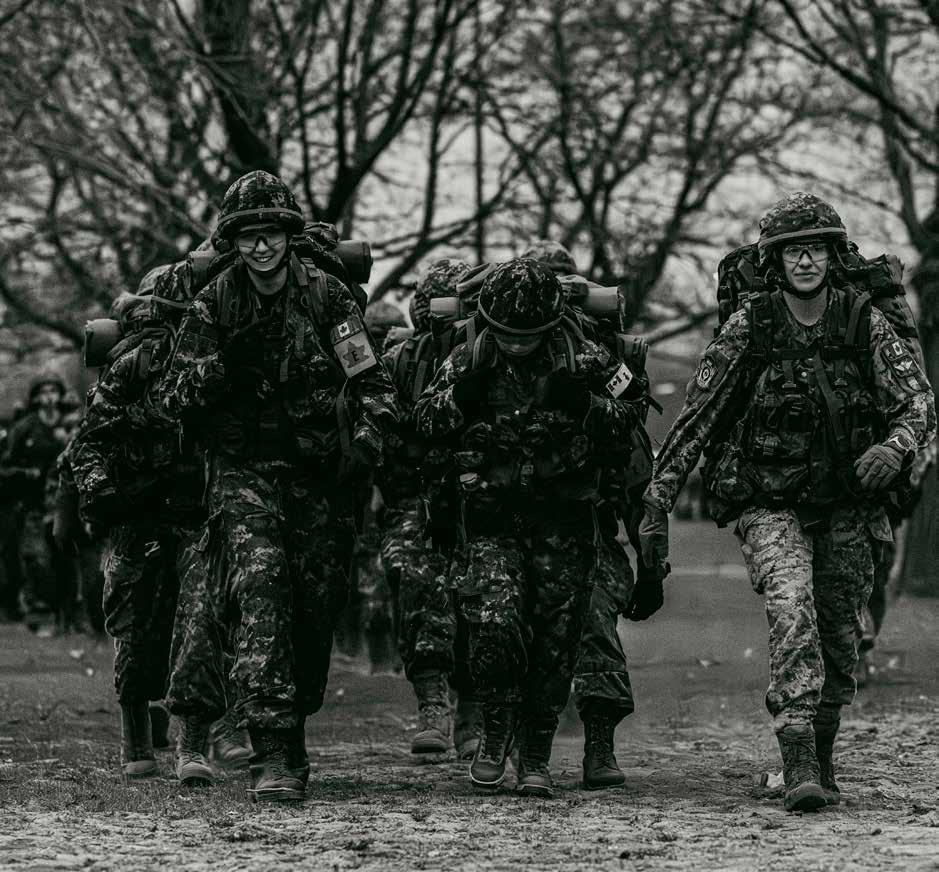
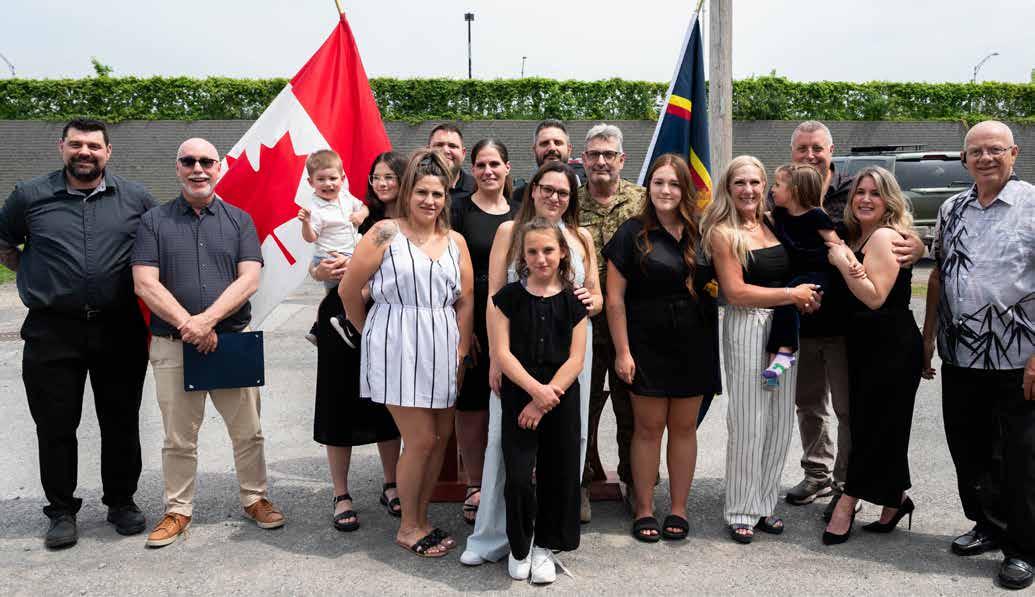
Photo taken during Corporal Marie-Anne Gallant’s very first official imaging
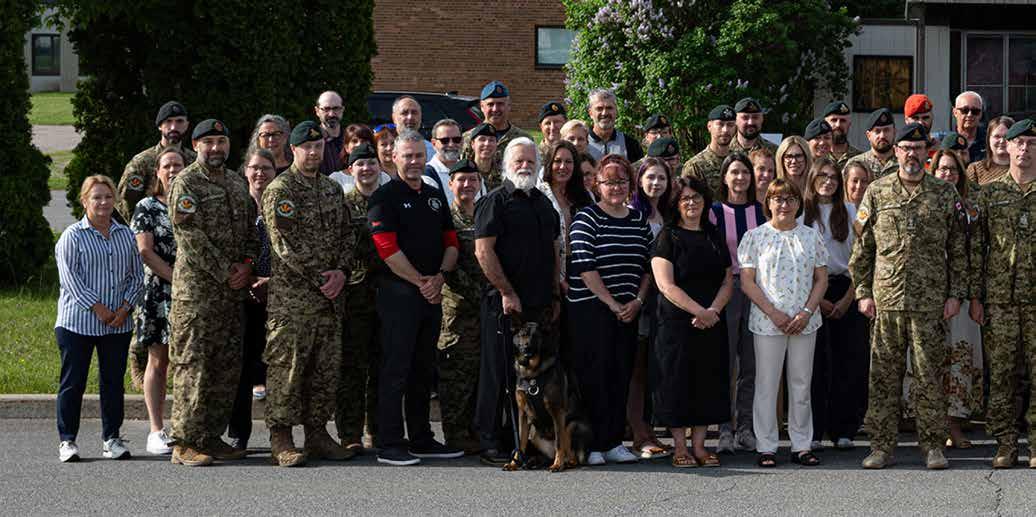
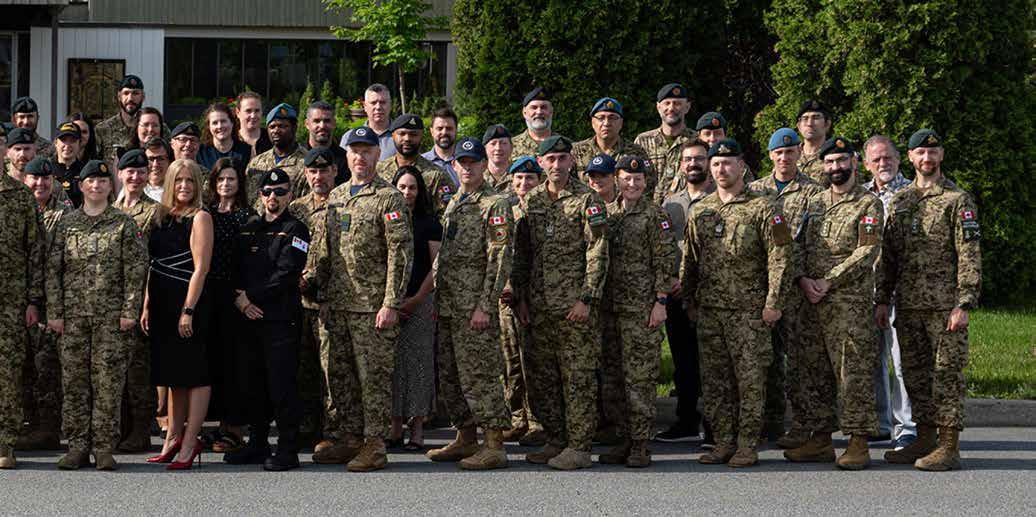
“This image highlights the group’s strength and resilience,” she explains.
Photo: Cpl Marie-Anne Gallant –Saint-Jean Imaging
Changes of command
34 Canadian Brigade Group Battle School
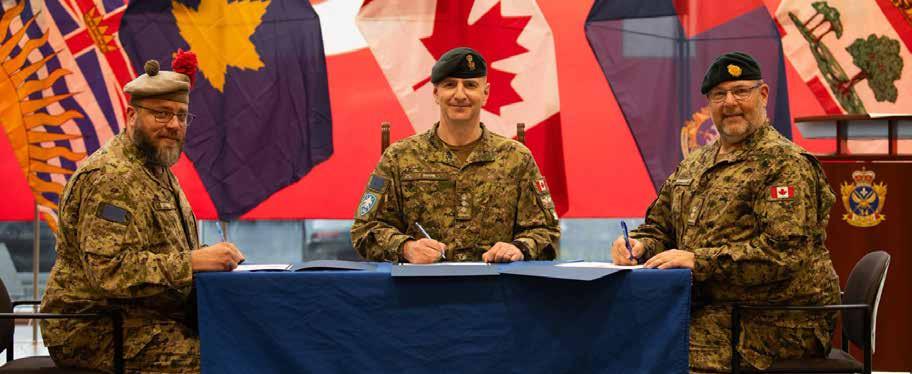
On June 8, 2026, the 34 Canadian Brigade Group Battle School marked an important transition with the change of command between LieutenantColonel David Serapins and Lieutenant-Colonel Lance-Richard Gosselin. The ceremony took place at the Saint-Hubert site in the presence of Colonel David Shane, commander of 34 Canadian Brigade Group.
His Majesty’s Canadian Ship Donnacona
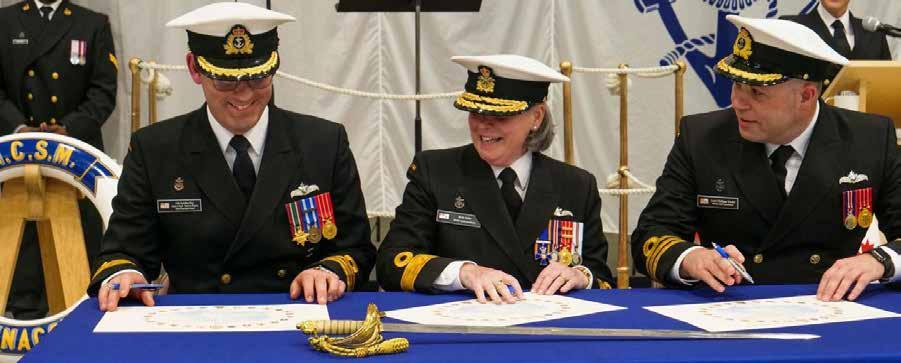
On June 18, Commander Louis-Philippe Trudel transferred command of
Lieutenant-Colonel David Serapins, outgoing commanding officer, Colonel David Shane, and Lieutenant-Colonel Lance-Richard Gosselin, designated commanding officer.
His Majesty’s Canadian Ship Donnacona to Commander Gordon Roy. The ceremony was presided over by Commodore Beth Vallis, Naval Reserve Commander.
Commander Gordon Roy, designated commanding officer, Commodore Beth Vallis, and Commander Louis-Philippe Trudel, outgoing commanding officer.
Information Technology Services
| 2 CDSG IT Svcs
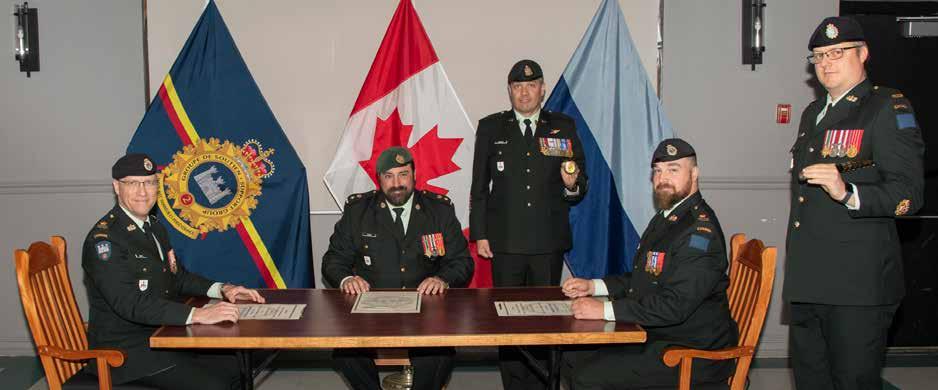
The 2 nd Canadian Division Support Group (2 CDSG) Information Technology Services (IT Svcs) marked an important milestone in its history during a change of command ceremony, marking the departure of Major David Dubois and the arrival of Major Jean-Sébastien Vallée as commanding officer of the unit.
This change of command takes place in a context of operational continuity and organizational transformation. IT Svcs provides institutional support and force generation support in the field of information technology by delivering IT services and non-tactical communications systems to the 2nd Canadian Division / Joint Task Force (East), as well as to units supported by the Information Technology Service Management Centre (IT SMC) – Quebec.
During Major Dubois’s tenure, IT Svcs continued its progress as a modern, service-oriented organization capable of supporting a complex operational environment. These efforts demonstrate the essential role IT Svcs plays in maintaining the operational readiness of the supported formations and units.
Under his command, the unit also continued to strengthen its service delivery processes. In 2025, IT Svcs processed more than 31,000 service requests and 15,850 incidents while achieving an incident resolution rate of 89% in accordance with service standards. Client satisfaction also remained high, reaching 88% for incidents and ranging from 85% to 91% for requests, depending on the month. These results demonstrate the ongoing commitment of the unit’s civilian and military personnel to service excellence and client support.
IT Svcs also continued its efforts in modernization, knowledge management, automation, and equipment lifecycle management. In 2025, the knowledge base contained 1,236 articles, generated more than 144,400 views, included 165 new articles, 646 articles updated at users’ request, and 119 archived articles. These efforts helped preserve organizational expertise, improve technician efficiency, and provide better support to users.
The ceremony provided an opportunity to recognize Major Dubois’s leadership and his contribution to strengthening a culture of service, innovation, and collaboration within IT Svcs. His tenure as commanding officer was marked by the continued advancement of digital transformation, improvements to internal processes, steadfast support to operations, and a strong focus on the development of the organization’s members.
Major Jean-Sébastien Vallée now assumes command of IT Svcs at a pivotal time for both the unit and the Canadian Army. As part of Army modernization, organizational structures are evolving to better meet current and future operational requirements. According to publicly available information, this transformation includes the evolution of the 2nd Canadian Division into a division focused on the defence of Canada, while the 4th Canadian Division will become a support division responsible for providing infrastructure and foundational services for domestic and expeditionary missions.
In this new environment, IT Svcs will continue to serve clients throughout the Quebec region and play an essential role in ensuring the continuity of digital services, systems management, information protection, and institutional support. Major Vallée’s arrival therefore comes during a period of continuity, but also adaptation. He assumes command of a committed, professional unit that is well positioned to contribute to the modernization of the Canadian Army.
The personnel of IT Svcs sincerely thank Major Dubois for his leadership, commitment, and dedication to the unit. They also wish Major Vallée every success in his new duties as he leads IT Svcs through this new stage of its evolution.
Best wishes to Major Dubois in his future endeavours, and best wishes to Major Vallée in command.
Major David Dubois; Lieutenant-Colonel Julien Simard and Chief Warrant
Officer Michel Hudon, respectively acting commander and sergeant major of the 2 nd Canadian Division Support Group; Major Jean-Sébastien Vallée; and Chief Warrant Officer James Macdonald, sergeant major of Information Technology Services, 2 nd Canadian Division Support Group.
Saint-Jean Garrison Six buildings to accommodate recruits
| Yves Bélanger, Servir
Saint-Jean Garrison is undertaking a major infrastructure project to meet the growing demand from the Department of National Defence for the training of new military personnel. At the heart of this initiative is the construction of six new buildings designed to house candidates upon their arrival at the Canadian Forces Leadership and Recruit School (CFLRS).
Ali Charba, Project Manager at the Real Property Operations Unit (Quebec) – Saint-Jean Detachment (RPOU Quebec – Saint-Jean Detachment), explains that “these facilities will gradually replace the tents currently installed on the former H-104 hangar site.”
As is currently the case with the tents, CFLRS candidates will stay in these new buildings for approximately one week, while platoons complete their training and space becomes available in the Megastructure dormitories.
Construction is expected to begin in the coming weeks. The first buildings are scheduled for delivery in the spring of 2027. “The first two buildings should be ready by early March.” All six buildings could be completed by the end of July 2027, with overall project completion anticipated by late summer 2027.
Each of the six buildings will accommodate up to 64 candidates. Designed to meet immediate needs, they will offer complete and functional facilities, including dormitories, classrooms, instructors’ offices, and sanitary facilities with showers, washrooms and laundry rooms. “Everything required for the daily lives of new candidates has been planned.”
A permanent solution with evolving uses
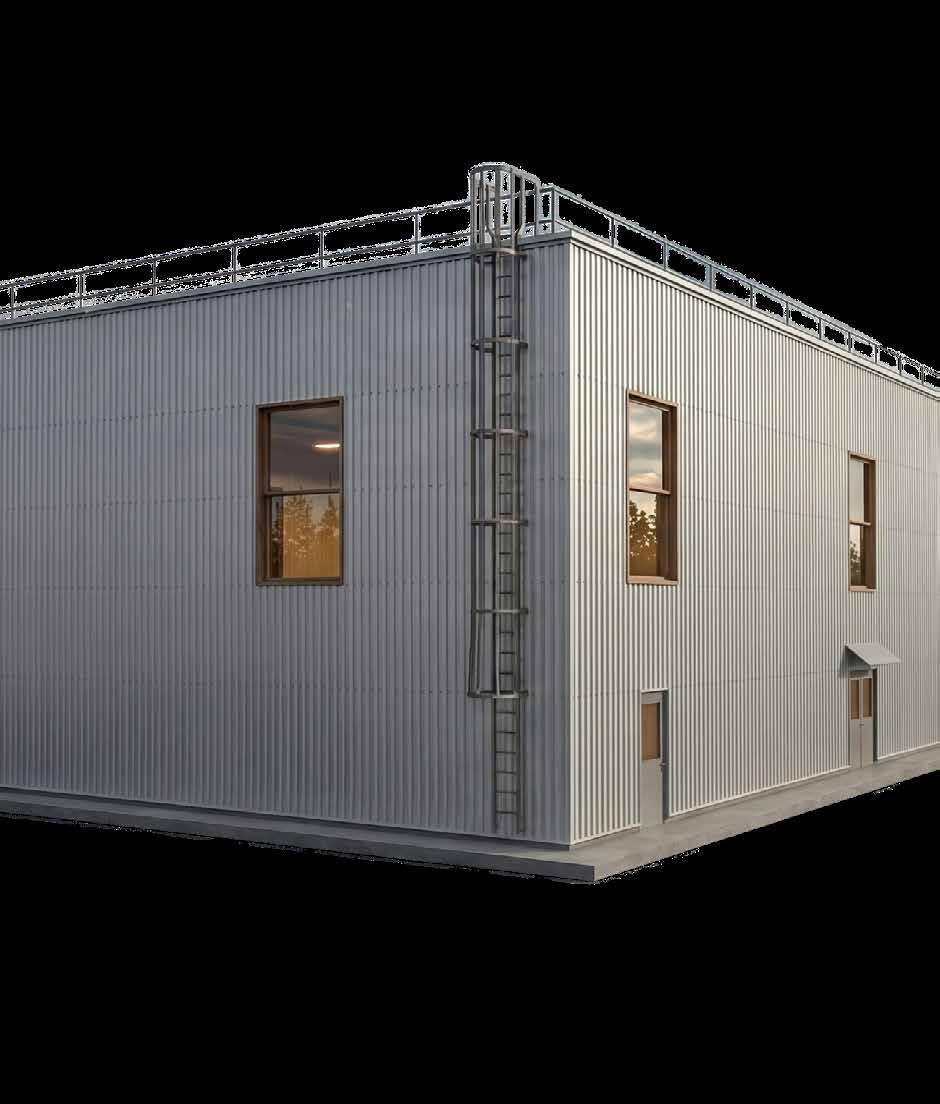
The structures will be designed for easy conversion to other purposes, ensuring their long-term relevance. Their function could evolve once recruitment objectives have been achieved. “These are permanent buildings, but their role could change. They could be converted into warehouses, offices or spaces for other activities. This flexibility is part of a long-term vision that will allow infrastructure to be adapted to the future needs of the garrison,” says Mr. Charba. He adds that each building will be approximately seven metres high.
With the commissioning of the new buildings, reliance on tents is expected to decrease, although their complete removal will depend on several organizational factors.
A structured and ambitious project
The six buildings will be constructed near the site of the former HD-4 building and will be arranged side by side. The project will be carried out in two phases. “First, the structures will be prefabricated in a factory. A general contractor will work in collaboration with us.”
Several tenders have already been issued and others are currently underway. External firms are participating in the design phase, while additional contractors will handle construction. “Close coordination among all partners is planned to ensure project timelines are met.”
Unlike some large-scale projects managed remotely, this initiative is being led locally in Saint-Jean. “The project is being managed by the RPOU Quebec - Saint-Jean Detachment, with strong collaboration from the Canadian Forces Leadership and Recruit School, Énergir and HydroQuébec, given the urgency of constructing these buildings. We will receive support from the Ottawa team if the need arises.”
Once the buildings are completed, responsibility will gradually be transferred to the Garrison’s Construction Engineering (CE) personnel, who are responsible for maintenance and technical support of the facilities, as well as to the garrison’s maintenance services, particularly for the upkeep of the installations. “This transition will help ensure the efficient and sustainable use of these new infrastructures.”
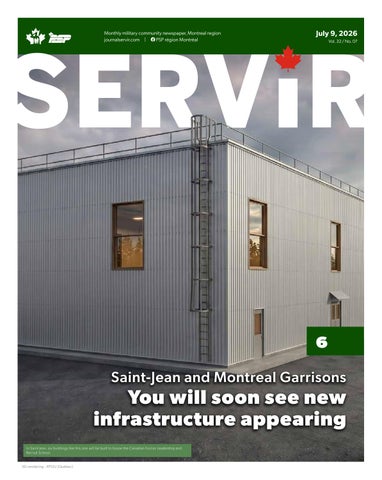
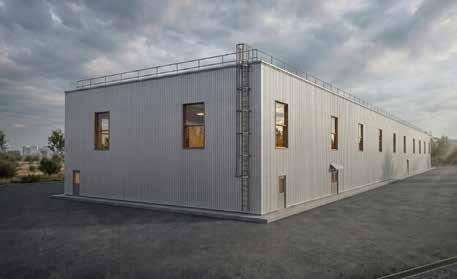
At Saint-Jean Garrison, six buildings like this one will be constructed on the site of the former HD-4 hangar to house candidates attending the Canadian Forces Leadership and Recruit School.
3D rendering : RPOU (Québec)
Montreal Garrison A year of transition and modernization
| Yves Bélanger, Servir
Montreal Garrison is preparing to reach a significant milestone in its evolution. Over the coming years, several modernization, redevelopment and infrastructure renewal projects will be undertaken to improve facilities and meet the evolving operational requirements of the Canadian Armed Forces.
According to Guillaume Noiseux-Lauzé, engineering officer at the Real Property Operations Unit (Quebec) – Montreal Section, these investments are part of a long-term vision aimed at modernizing the real property portfolio while optimizing the use of existing space.
“We are preparing today the infrastructure that will support tomorrow’s operational requirements. The goal is to provide facilities that are more functional, more resilient and better suited to the evolving missions of the Canadian Armed Forces,” he explains.
Headquarters modernization
The most advanced project currently underway is the redevelopment of the second floor of building L-193, which houses the headquarters of the 2nd Canadian Division Support Group.
The work is intended to optimize the use of space and modernize the facilities in accordance with the principles of the Government of Canada Workplace. The new layout will include collaborative workspaces, modern meeting rooms and common areas adapted to new ways of working.
Thanks to this reorganization, approximately 30 additional workstations have been added while improving the overall functionality of the premises. “We have succeeded in increasing capacity while providing spaces better suited to the current needs of users,” notes Mr. NoiseuxLauzé.
Project completion is scheduled for the summer of 2026.
A new life for building L-42
Another major project will reach an important milestone this year with the launch of the tender process for the complete rehabilitation of building L-42.
Constructed in the early 1940s, this building occupies an important place within the garrison. “The project calls for a complete modernization of the interior spaces to meet the current needs of occupants and provide a modern, functional and efficient work environment.”
The work will also support the ongoing efforts to rationalize and optimize space that have been undertaken at Montreal Garrison in recent years.
“The construction tender was issued in June, and the work is expected to extend over several years.”
Strengthening facility security
Montreal Garrison will also benefit from significant investments aimed at modernizing its security infrastructure. “This work will include improvements to access control systems, upgrades to surveillance equipment and the implementation of new measures to strengthen the protection of military facilities.”
The work is expected to begin in 2027.
Reorganization of health services
Medical facilities will also undergo several improvements.
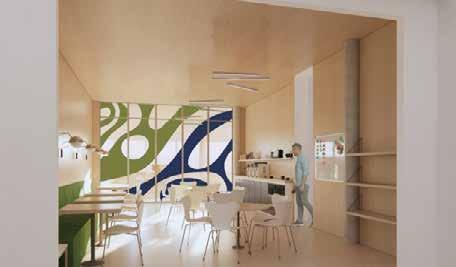
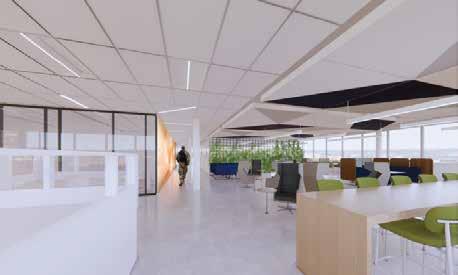
Future layout of the 2 nd Canadian Division Headquarters second floor. Please note that this is a conceptual rendering and that some changes may be made to the plans before completion of the project.
The dental clinic will be relocated to the first floor of building L-193 as part of a complete redevelopment of its facilities. “This will allow for better space organization and improved service delivery.”
At the medical clinic, modernization work is also planned to refresh existing facilities and improve functionality. “Over the longer term, discussions continue regarding the overall optimization of health services within the garrison to meet the evolving needs of the military community.”
A new thermal plant for the future
One of the most significant projects in the modernization plan remains the replacement of the current thermal plant.
Scheduled for 2028–2029, this project will replace infrastructure that has reached the end of its useful life and modernize the energy distribution network serving the garrison.
The new system will be designed to incorporate higher-performing technologies compatible with the Department of National Defence’s greenhouse gas reduction objectives. “It will also provide greater operational flexibility and improved resilience during peak periods or major weather events.”
This new plant will serve as a key piece of infrastructure for the coming decades. “It will enable us to provide more reliable service while preparing the transition to more sustainable energy sources,” concludes Mr. NoiseuxLauzé.
Design work is already well underway, and construction is currently planned between 2028 and 2029.
The new thermal plant will be located in the southern sector of Montreal Garrison, immediately adjacent to the current facility.
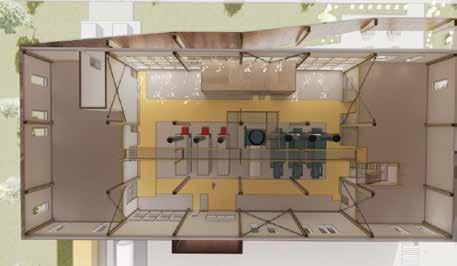
Interior plans of the future energy plant.
The clothing issue parade at Montreal Garrison A defining step in the integration of reservists
The 2 nd Canadian Division Support Group (2 CDSG) Technical Services (Tech Svcs) Supply Platoon (Sup Pl) held two clothing issue parades at Montreal Garrison last May. On May 16, approximately 54 new reservists from the Montreal area left with their military equipment and a much stronger sense of belonging.
This second parade of the month took place in the context of the ongoing modernization of military equipment within the Canadian Armed Forces. The gradual introduction of higher-performing items better adapted to contemporary operational realities not only helps improve military preparedness, but also enhances the appeal of the profession. These modernization efforts are contributing to recent recruiting successes, as an increasing number of Canadians choose to join the Forces.
The clothing issue parade marks a foundational step in the integration of new members. On this occasion, recruits receive their first official
issue of military equipment. Uniforms, boots and authorized personal kit are assigned through a structured and rigorous process that is essential to preparing them for basic training and future operational duties. Beyond their practical purpose, these items symbolize their formal entry into the military profession and strengthen their sense of institutional belonging.
The success of this operation relies on the expertise and commitment of the civilian and military personnel of the 2 CDSG Tech Svcs Supply Platoon.
What the reservists think
For recruits, this stage remains highly significant. “Receiving our equipment for the first time makes our commitment feel more real. That is when you truly begin to feel like a soldier,” one recruit noted. This statement illustrates the importance of this moment at the beginning of a military career.
The participation of recruits from different units also helped strengthen connections from the very start of their journey, fostering cohesion and esprit de corps.
The Montreal clothing store, as a central element of regional logistical support, once again demonstrated its essential role in force generation. Through methodical organization and sustained attention to detail, its personnel provide consistently high-quality service that is indispensable to operational effectiveness.
The holding of this second clothing issue parade in May highlighted the importance of logistical support in developing military capabilities, in a context where equipment modernization actively contributes to attracting and retaining personnel.
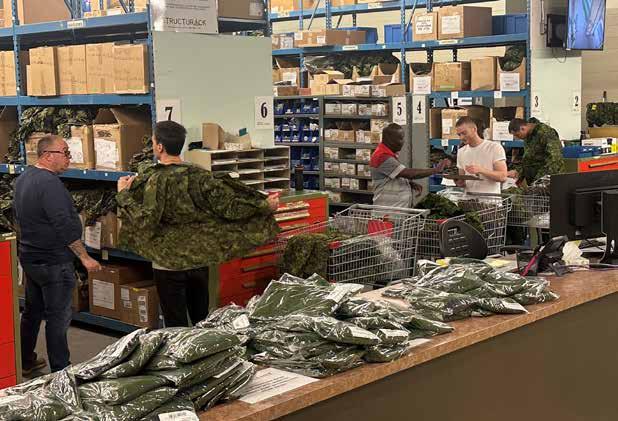
Personnel from the 2 CDSG Tech Svcs Supply Platoon in action to ensure that each new reservist receives the appropriate equipment.
Jean-Claude Brutus, from the Supply Platoon, assisting a recruit.
From Saguenay to Egypt
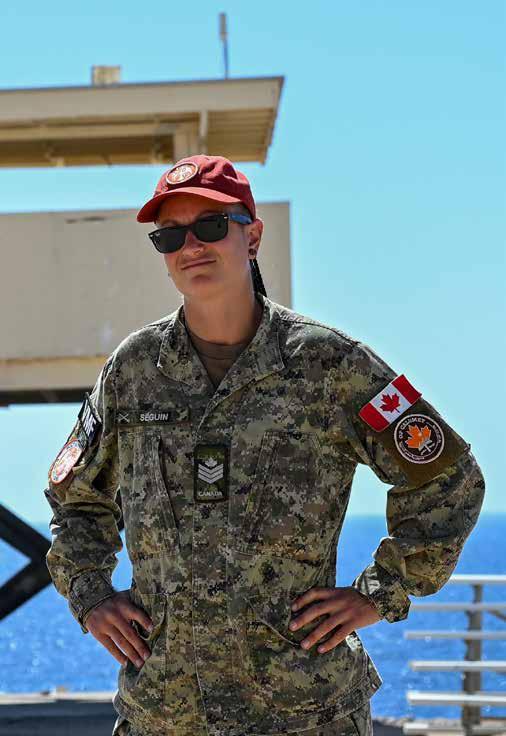
A commitment that takes on new meaning for Sergeant Laurence Séguin
| Yves Bélanger, Servir
From January to July, Sergeant Laurence Séguin is experiencing her first overseas deployment as part of Operation CALUMET in Egypt. A member of Le Régiment du Saguenay and awaiting a transfer to the Regular Force, she is serving abroad as a Vehicle Fleet Management Advisor.
This deployment marks an important milestone for Sgt Séguin, who joined the Canadian Armed Forces (CAF) on February 16, 2017. “For me, this is a life-changing experience focused on service, learning and commitment to others.”
Sgt Séguin explains that her commitment stems from a deep desire to make a positive contribution to society. “I joined the CAF because I wanted to be able to make a difference in my own way. After seeing Roméo Dallaire’s film Shake Hands with the Devil, I realized that being a soldier is not about violence, but rather about justice.”
This conviction motivated her to undertake her first deployment and to serve in an international environment.
Rigorous preparation before departure
As with any mission, the deployment was preceded by an intensive preparation phase. Military personnel must complete various qualifications and training courses to meet operational requirements. “These included standard medical training and another course on tactical combat aspects,” she says, noting that this training ensures personnel are properly prepared for the demands of the field.
An essential role in support of operations
On Op CALUMET, Sgt Séguin is responsible for managing the vehicle fleet. She describes her role in practical terms. “The vehicle fleet is comparable to a civilian car rental company. We have to make sure the right vehicles are available based on the mission’s needs.” Her duties include overseeing equipment conditions, coordinating maintenance and acting as a liaison between maintenance and operations. She also advises the chain of command to help optimize the use of resources.
This role differs from her responsibilities within her unit in Canada. “For me, it is an exciting professional challenge.”
This deployment in Egypt is Sergeant Laurence Séguin’s first experience abroad.
A rewarding international experience
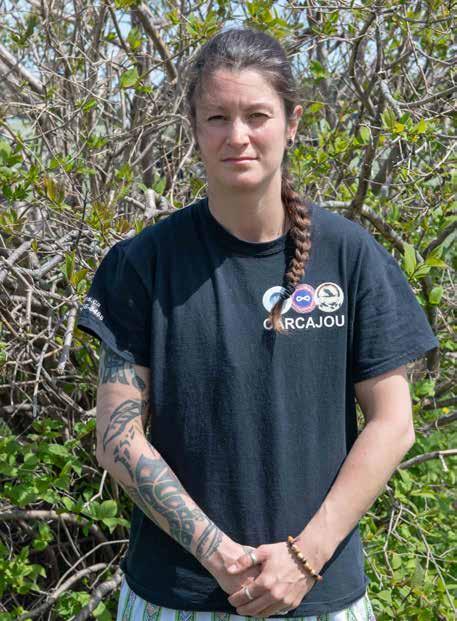
Before this deployment, a significant part of Sgt Séguin’s career was devoted to the Carcajou Program, which she co-founded in 2018. The program focuses on recruiting and training First Nations, Métis and Inuit members. “I invested myself fully in this mission, which represented a true sense of purpose and a way for me to give back.”
In 2025, she broadened her scope of work by participating in the training of Canadian Army Reserve recruits as well as recruits from the Canadian Forces Leadership and Recruit School.
She explains that this deployment, which will end in a few weeks, has enabled her to work alongside military personnel from several nations as well as Egyptian civilians. “Egyptian culture is rich in history and its people are very welcoming.”
She believes these interactions foster continuous learning and personal growth. “I sincerely believe that personal development comes through listening to and being open to other cultures.”
Support, mutual assistance and personal initiatives
Beyond her operational duties, Sgt Séguin, who is a member of the Sentinel Program, is actively involved in supporting the well-being of personnel on deployment. It should be noted that this program is a peer-based initial support network within the Canadian Armed Forces.
She also took the initiative to create a workshop for women serving on the mission. “We get together to share our daily experiences in a safe and private environment.” This initiative promotes mutual support and assistance, contributing to a positive atmosphere. “Every day that I realize I have been able to help someone, my sense of positivity grows.”
The challenges of deployment
Despite an overall very positive experience, Sgt Séguin acknowledges that her deployment comes with certain challenges. She notes that the main difficulty lies in managing administrative and family matters from a distance, particularly because of the time difference.
Upon her return, Sgt Séguin plans to join the Regular Force, continuing her professional journey in a different context. “This deployment is allowing me to develop essential skills that will serve me throughout the rest of my career. When you choose to focus on the positive and on solutions, you can only grow,” she concludes.
Sergeant Laurence Séguin while working for the Carcajou Program.
Photo : archives
Military members and veterans A free family day by the river
| Yves Bélanger, Servir
On saturday July 25, the outdoor centre L’Estacade, located in Saint-Paul-de-l’Île-aux-Noix, will host the PSP Family Outdoor Day organized by the Saint-Jean Garrison Recreation Department. Free for military members, veterans and their families, the event can accommodate up to 300 participants.
The objective is simple: to offer a friendly, accessible day where both young and old can enjoy a variety of outdoor activities. Cynthia Leclerc, from the Community Recreation Department, explains that everything has been planned to create a complete and dynamic experience. “We are offering activities on the water, on land and in the air,” she says, adding that the event will focus on simplicity and shared enjoyment in a natural setting conducive to relaxation and discovery.
Lunch, water bottle and folding chairs
Participants are invited to bring their own picnic lunch. Cynthia Leclerc, Acting Administrative Assistant with the Recreation Department, reminds them that they should also bring folding chairs and a water bottle. “To reduce plastic bottle waste, we will be setting up water stations throughout the site. So don’t forget your water bottle!”
You must register
L’Estacade can accommodate 300 people. Military members and veterans must register their families to ensure a spot. Do not delay in contacting Recreation!
What if the weather is uncertain?
No matter what Mother Nature has in store for Saturday, you will know what to expect the day before! On Friday, July 24, at 2 p.m., the Recreation team will send an email to all registered participants to indicate whether the PSP Family Outdoor Day will take place or not.
A program for all tastes
Located along the Richelieu River, the Estacade facilities allow for a wide range of activities. Thanks to the Gouvernement du Québec’s Circonflexe “prêt-pour-bouger” program, the Recreation team will provide a large amount of equipment.
Please note that for certain activities, you will need to register on site upon arrival, and that spots will be allocated on a first-come, first-served basis.
On the water
• paddleboard
• kayak
• rabaska
• open water swimming
On land
• archery
• Zumba
• yoga
• introduction to Kin-ball
• volleyball
• trampoline
• line dancing
In the air
• obstacle course
• zip line
• tethered hot air balloon ride
Especially for children
• treasure hunt (morning and afternoon)
• face painting (morning)
• kite flying (afternoon)
• inflatable structure
… And plenty of outdoor games!
The Loisir et Sport Montérégie Sports Caravan will also be on site with a variety of outdoor games for the whole family: pétanque, croquet, slackline and more!
A breath of fresh air in the messes!
a few weeks to ensure a smooth transition of responsibilities,” explained Mr. Beaudoin.
excited to unveil the finished result to our members!”
| Yves Bélanger, Servir
Things are changing at the messes in the Montreal area: a new manager, new employees and a facelift for the facilities.
Marco Beaudoin is the new manager of the Montreal-area messes. He brings 32 years of experience in the food service industry. “Throughout my career, I have had the opportunity to work for a catering company as well as in five-star restaurants.”
He says he is very familiar with the military environment. “I have several friends who are members of the Canadian Armed Forces. In addition, I was a cadet during my teenage years. I therefore have a good understanding of the military hierarchy and chains of command.”
There have also been changes among the administrative assistants. Roxanne Cassista, who is beginning maternity leave, has been replaced by Saliha Bikri. “We also had Lisette Trépanier, who has just left us to enjoy her retirement once again. We are currently in the hiring process to fill her position.”
Mr. Beaudoin joined the mess team at the beginning of April to replace manager Mario Pronovost, who officially retired on May 28. “We had the opportunity to work together for
At the Patriote Mess
The new manager explained that the work is progressing as planned. “Based on the information we have, we should be able to take possession of the renovated facilities at the beginning of September.”
It should be noted that, since the start of the renovations, the Patriote Mess has been temporarily relocated to a section of the O’Mega Mess. The co-location of the two establishments has gone smoothly. “It has been fairly quiet, since we are not renting out our halls during the renovations. We have hosted small events such as mug-outs and depart with dignity ceremonies, but the space was sufficient to accommodate all participants.”
Painting work has now been completed, and contractors are currently refurbishing the flooring. “Once this stage is completed, the designers will take over to finalize the décor.”
Among the planned changes, the Quebecois Hall will feature a more modern look, with an all-white bar topped with a concrete-finish countertop. The Hebert Hall, meanwhile, will have a more rustic appearance, with a bar covered in ceramic mosaic tile. “We are very
At the Kolok and Excalibur Messes
At Montreal Garrison, minor renovations have been completed at the Kolok and Excalibur messes, including refreshing the paint. We will be renovating the exterior façade of the Kolok Mess, but since the construction of new messes is expected to begin soon, we prefer to limit expenditures related to infrastructure.”
The new messes will be located near the sports centre. “The current messes will remain in operation until the new facilities are available to us,” concluded Mr. Beaudoin.
Renovation
Mario Beaudoin and Saliha Bikri, manager and acting administrative assistant, respectively, for the Montreal-area messes.
Final stitches for the patrol pack refurbishment project
| Servir
After several months of sustained effort, the patrol pack refurbishment project has now been officially completed by the 2 Canadian Division Support Group (CDSG) Technical Services (Tech Svcs) team. Launched last August, this initiative made it possible to complete two major repair waves totalling 1,117 patrol packs, including 669 during the first phase and 448 during the second.
This project directly supported the objectives of Op RECONSTITUTION, the Canadian Armed Forces’ strategic effort to stabilize, rebuild and modernize the institution in order to address current personnel-related challenges.
Thanks to the hard work of the 2 CDSG Tech Svcs technicians in Saint-Hubert, a large number of the packs received by the workshop were repaired and returned to the supply system, ready to serve a new generation of military members.
The success of the project was due in large part to the expertise and dedication of Mr. Alain Beaulieu, a civilian employee who played a key role throughout the effort. His experience enabled several team members to be trained in the specialized repair techniques required to restore the equipment.
Recognizing the expertise of technicians
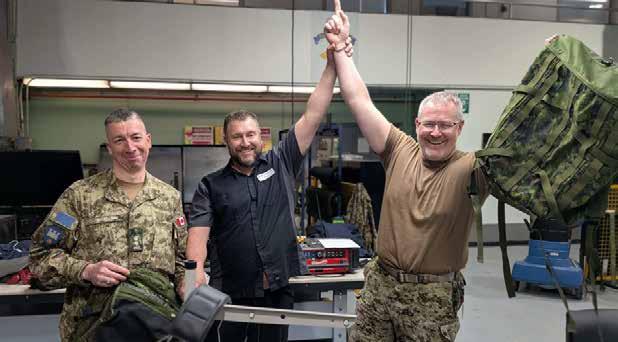
To mark the completion of the project, a friendly competition was held between the regimental sergeant major, Chief Warrant Officer François Savard-Damphousse, and the commanding officer of Technical Services, Lieutenant-Colonel Olivier Boulianne.
After receiving accelerated training from Mr. Beaulieu, both participants took on the challenge of repairing a patrol pack themselves.
Despite having recently undergone wrist surgery, CWO Savard-Damphousse emerged victorious with a time of approximately fifteen minutes, finishing ahead of the commanding officer. Their performances served as a reminder of the difference between apprentice sewers and seasoned professionals.
The activity went far beyond a simple friendly competition. LCol Boulianne and CWO SavardDamphousse took the time to visit the SaintHubert Technical Services workshop to meet the members who contributed to the project and speak directly with them about the challenges encountered over the past several months.
By carrying out a repair themselves under Mr. Beaulieu’s supervision, the two leaders gained a first-hand appreciation for the
precision, patience and expertise required for this specialized work. Their presence on site also provided an opportunity to recognize the efforts of the technicians who helped restore more than 1,100 patrol packs in support of Op RECONSTITUTION.
A pack for every task!
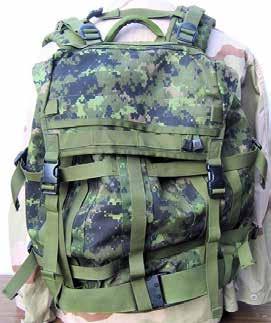
The patrol pack is one of the most commonly used military backpacks within the Canadian Armed Forces. Designed to carry the personal equipment required for training and operations, it accompanies military members throughout their careers, from basic training to deployments.
This pack is used to carry spare clothing, rations, water, personal protective equipment, communication systems and various items of equipment essential to operational tasks.
Lieutenant-Colonel Olivier Boulianne, commanding officer, Alain Beaulieu, materials technician, and Chief Warrant Officer François Savard-Damphousse, Technical Services sergeant major.
Major Jean-Claude Senecal
An exceptional 44-year military career comes to a fitting close
| Yves Bélanger, Servir
After 44 and a half years of military service, Major Jean-Claude Senecal officially turned in his uniform on July 6, bringing to an end a career marked by passion, perseverance and a wealth of experiences both in Canada and abroad.
Maj Senecal decided to enrol in the Canadian Armed Forces (CAF) in 1982. At the time, he never imagined he would one day become an officer.
“I wanted to be in the artillery. I thought I would work my way up to sergeant, but that was as far as I saw myself going!”
After serving as an artilleryman for eight years (1982–2004), he was promoted to Chief Warrant Officer and posted to Special Operations (2004–2015). In 2015, he received his officer’s commission. As a Captain, he was posted to Montreal Garrison.
Passion as a driving force
Looking back, Maj Senecal considers his career a significant personal achievement, built through hard work and determination. Over the years, he was posted numerous times, completing nearly 14 postings. “Despite the demanding pace, I have always maintained the same enthusiasm for my profession,” he explains.
From the beginning of his career, he showed a willingness to seize opportunities, notably by repeatedly requesting an overseas deployment. “After constantly saying I wanted a deployment, they finally told me, ‘The next one is available—you’re going!’”
His career provided him with unique experiences, particularly with special operations forces and on overseas deployments. Among other achievements, he served in Bosnia after coming from the Artillery School, a rare opportunity for a non-commissioned member.
Witnessing the evolution of the Canadian Armed Forces
Throughout his career, Maj Senecal witnessed major changes within the CAF, and the work-life balance is a good example. “It’s very different from what I experienced at the beginning of my career. If you wanted to advance, your career had to come first.”
He acknowledges that these demands affected his personal life, particularly his family life. He explains that technologies such as the Internet have made it easier for military members to stay connected with their loved ones while deployed overseas. “When I first joined, staying in touch with family members was a significant challenge whenever I was
deployed,” he notes.
During his deployment to Afghanistan in 2011, the situation had already changed considerably. “Advances in telecommunications allowed me to stay connected with my children much more easily.”
The stimulating challenge of Montreal Garrison’s Operations Centre
Maj Senecal concluded his military career as commanding officer of the Montreal Garrison’s Operations Centre (CENOPS), a role he particularly enjoyed despite his initial reluctance to work in a headquarters environment. “I’m not a desk guy. I was worried I wouldn’t find it stimulating enough,” he says.
However, the dynamic nature of the position quickly won him over. “At Montreal Garrison, every day is different. There are always situations that require our attention. I absolutely loved this job.”
He contributed to the modernization and organization of infrastructure, including the establishment of security zones and the planning of major redevelopment projects. Some are already underway, while others will be carried out over the coming years.
A thoughtful transition to civilian life
As retirement approached, a health scare reminded him of the importance of slowing down. A cardiac alert, which ultimately proved to be nonserious, nevertheless kept him in hospital for a week. “Fortunately, it caused more fear than harm!” he says.
However, the experience prompted him to reflect on his future. “When I returned, I gradually transferred responsibilities to members of my team to prepare the next generation.”
Although he had initially considered full retirement, he ultimately accepted a four-day-per-week position with the Real Property Operations Unit (Quebec) – Montreal Section.
“I’m happy because it will allow me to continue working on the projects I have initiated over the past few years.”
Maj Senecal now plans to devote more time to his loved ones. The father of three and grandfather of four hopes to make the most of this new stage of life. “My intention is really to spend time with my grandchildren while I’m still in good health,” he says.
He is also considering a future move to the Lévis area to be closer to his family.
A distinguished military career
• 44 years of service (January 12, 1982, to July 6, 2026)
• 13 postings, including an extended tour in Germany
• 3 major deployments: Israel, Bosnia and Afghanistan
Distinctions
• Member of the Order of Military Merit
• Bronze Star Medal (United States)
• Chief of the Defence Staff Commendation
Photo: Courtesy Photo: Courtesy
To mark his retirement, Major Jean-Claude Senecal (center, in uniform) was given one final ride aboard an Armoured Combat Support Vehicle (ACSV).
Major Jean-Claude Senecal in 1995 when he was a Sergeant.
Phoenix Érudit 2026
Strengthening skills and cohesion at the heart of the mission
This structure ensured alignment between professional development and the operational realities of transition centres.
| Captain Tommy Champagne, UT FAC QC
From June 9 to 11, 2026, staff from the Montreal, Saint-Jean, Valcartier, and Bagotville Transition Centres (TCs), along with personnel from the Canadian Armed Forces Transition Unit –Quebec (CAF TU QC) headquarters, gathered at Base Valcartier. The professional development (PD) Phoenix Érudit 2026 aimed to strengthen skills, team cohesion, and organizational effectiveness.
The deployment of the PD began on June 9 with the arrival of participants in Valcartier, followed by opening remarks from the commanding officer and the regimental sergeant major, officially launching the activity.
The program offered a balanced approach combining:
• specialized presentations
• section-based group work
• administrative activities
• networking and exchange periods
A significant contribution in human relations management
One of the highlights of the PD was the participation of psychologist and facilitator Claude Michel Gagnon, who delivered several training sessions on Wednesday, June 10.
His presentations addressed key concepts directly applicable in the workplace, including:
• the Karpman Drama Triangle, highlighting the roles of victims, persecutors, and rescuers in interpersonal dynamics;
• conflict management styles, explored through practical exercises highly appreciated by participants;
• concrete and operational intervention approaches, including the management of disciplinary situations.
These training sessions enabled participants to better understand
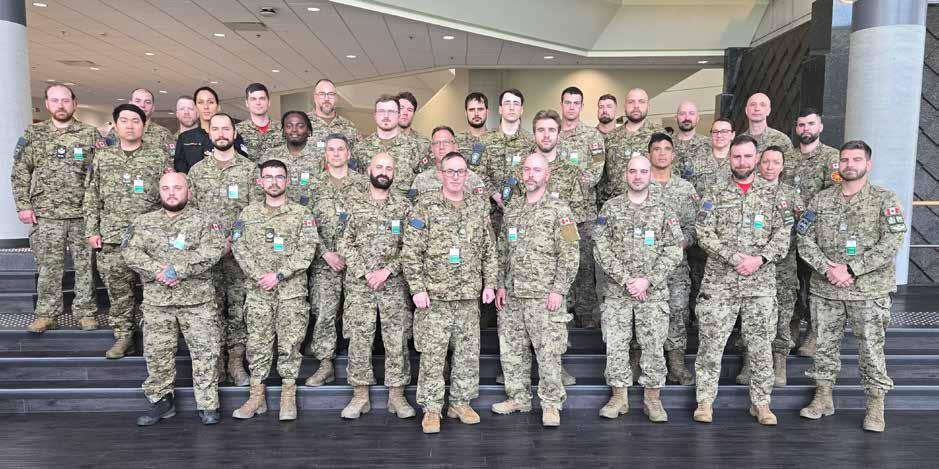
The training participants.
workplace dynamics and acquire practical tools to effectively handle complex situations, thereby contributing to a healthy and professional organizational climate.
Strengthening cohesion through action
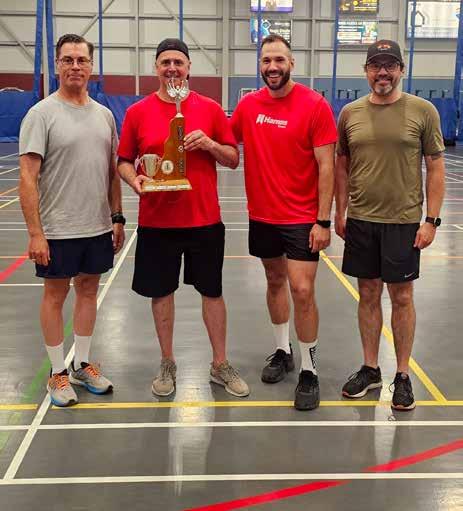
Complementing the professional component, a pickleball tournament held at the Valcartier sports centre fostered team cohesion and esprit de corps. There was highly successful and well received by participants.
Sergeant Pascal Poulin and Corporal won the tournament. Their performance highlighted the importance of commitment, collaboration, and personal excellence, even in a non-operational setting.
A meaningful moment of gathering
The program also included a regimental cohesion dinner, providing a valuable opportunity to engage in informal exchanges and strengthen connections between the different centres.
Such moments directly contribute to building a strong and lasting organizational culture.
An investment in leadership and organizational effectiveness
PD Phoenix Érudit 2026 reflects CAF TU QC’s commitment to the development of its personnel. By combining specialized training, recognition of achievements and cohesion-building activities, the event reinforced the foundations of leadership adapted to the challenges associated with supporting Canadian Armed Forces members.
Lieutenant-Colonel Martin Voyer, CAF TU QC commanding officer, emphasized that: “This type of activity allows us not only to strengthen
our professional competencies, but also to reinforce our cohesion and our ability to face complex human realities.”
At the conclusion of the three-day event, participants leave with:
• practical tools
• a shared vision
• a strengthened network
All essential elements to continue delivering professional, compassionate, and effective service within CAF TU QC.
Chief Warrant Officer Mathieu Cloutier, Sergeant Pascal Poulin, Corporal Jonathan Riopel and Lieutenant-Colonel Martin Voyer at the end of the pickleball tournament.
Photos:
2nd Canadian Division
NCMs visit Carling and CANSEC
| Master Warrant Officer Luc-Alexandre Vendette, 2 Cdn Div HQ, Montreal Garrison
Warrant Officer Pierre-Luc Hains, 5 Service Battalion, CFB Valcartier
Last May, the 2 nd Canadian Division (2 Cdn Div) provided approximately 40 non-commissioned members (NCMs) with an opportunity to participate in a professional development activity. Participants enhanced their knowledge of emerging technologies and shared their experiences in order to develop recommendations based on their specific areas of expertise.
On May 26 and 27, the group had the opportunity to take part in a Leadership Development Plan activity during the annual CANSEC 2026 trade show at the Cohere Centre in Ottawa. They also attended presentations by the Land Requirements Directorate at the National Defence Headquarters (Carling
Campus). The activity took place in the context of the modernization of the Canadian Army, which is currently undergoing significant transformation at all levels.
Upon arriving at NDHQ (Carling), participants attended a presentation by the Soldier Systems group – Director Land Requirements (DLR 5) of the Canadian Army. Delivered by LieutenantColonel Olivier Sylvain, Major Christian Doucet and Captain Ryan Drake, the presentation allowed them to learn about the progress of various equipment projects. They then had an opportunity to handle and examine future soldier systems, including new patrol packs, rain jackets, combat shirts and trousers, tactical vests, helmets and much more.
They also attended a presentation on the development of upcoming combat and support vehicles, including the new version of the tactical armoured patrol vehicle, the armoured combat support vehicle and the future main battle tank, under the direction of DLR 3
– Armoured Vehicle Systems. The presentation was delivered by Major Phillip Gartner and Captain Brian Cobby.
During dinner, Chief Warrant Officer Robert McCann, Canadian Armed Forces (CAF) Chief Warrant Officer, addressed the group to discuss upcoming technological and strategic changes and to engage participants in an informal setting. Several topics were covered, including the employment of the Primary Reserve, the procurement system, the acquisition of new equipment and much more.
CANSEC
The following day, participants attended the CANSEC trade show to exchange ideas and gather information on available and emerging technologies. More than 300 exhibitors showcased leading-edge technologies across a wide range of fields.
activity at the Carling Campus.
Photo: Maj Phillip Gartner
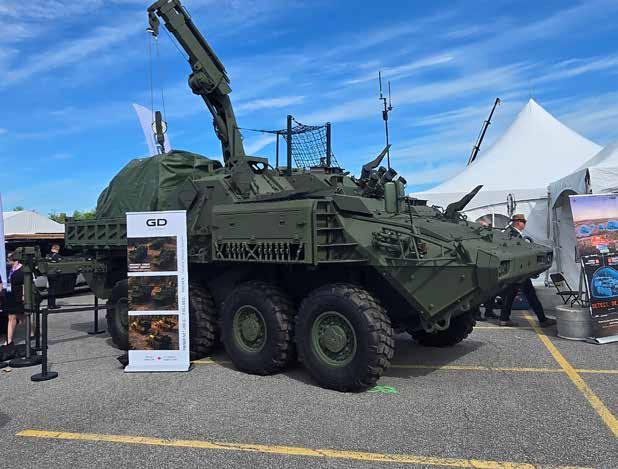
They were able to observe weapon systems, sighting systems, vehicles, soldier equipment, surveillance software and new technologies powered by artificial intelligence. The NCMs also had the opportunity to handle the new C25 service rifle, the new Carl Gustaf M4, and the RBS 70 NG short-range air defence system.
The visit inspired more than 40 recommendations, highlighting the need to strengthen command and control capabilities in contested electromagnetic environments, accelerate the integration of autonomous systems, modernize soldier equipment, improve energy autonomy in the field, and leverage digital technologies for maintenance and training support.
The Régiment de Maisonneuve
A Montreal military tradition
| Servir
The Régiment de Maisonneuve is a Reserve Force infantry unit based in Montreal. It holds an important place in Canadian military history, particularly within Quebec’s French-speaking military tradition.
Its history is deeply intertwined with that of Canada and Quebec, while also reflecting the evolution of the Canadian Armed Forces. The regiment takes its name from Paul de Chomedey de Maisonneuve, the founder of Montreal, demonstrating its historical and symbolic roots in the city.
The early years
The regiment was officially formed in 1880 as the 85th Battalion of Infantry. At the time, it was part of the Canadian Militia, composed of part-time soldiers. These citizen soldiers played an essential role in the defence of the country, training regularly while maintaining civilian lives. This structure characterized Canada’s
military forces during the late nineteenth century.
First World War
At the beginning of the twentieth century, the regiment contributed to the war effort during the First World War. Although it was not deployed overseas as a distinct unit under its original name, its members helped form and reinforce battalions of the Canadian Expeditionary Force (CEF). The regiment notably perpetuated the heritage of the 41st Battalion, CEF, which served in Europe.
In 1920, as part of a reorganization of the Canadian Militia, the unit officially adopted the name Régiment de Maisonneuve. This change marked an important milestone in its identity, strengthening its connection to Montreal’s history.
General Dynamics Land Systems–Canada presented the mobile repair team variant of the armoured combat support vehicle, which is scheduled to begin delivery at the end of 2027.
Photo: MWO Luc-Alexandre Vendette
Photo: Archives
The Régiment de Maisonneuve Armoury is located at 691 Cathcart Street in Montreal. The Regiment also maintains a detachment in Saint-Hubert, within the 34 Canadian Brigade Group building.
Second World War
During the Second World War, the regiment was mobilized for active service. It was deployed overseas and took part in operations on European soil. The Régiment de Maisonneuve fought in Italy, where Canadian forces were engaged in a difficult campaign against German defensive positions.
The regiment later participated in operations in northwestern Europe, helping liberate occupied territories. Landing in France in July 1944, it fought south of Caen before taking part in major offensives.
Among other actions, it participated in Operations TOTALIZE and TRACTABLE in France, which helped break through German lines and liberate Falaise. In Belgium, it contributed to operations during the Battle of the Scheldt, assisting in the liberation of several areas.
The Régiment de Maisonneuve also helped liberate Dutch territories from German occupation, notably during the campaign to liberate the northeastern provinces and the province of Groningen. It was also present in Germany during the final offensive of the Rhineland campaign.
From 1945 to today
After the war, the regiment resumed its role within the Reserve Force. It continued training its members and maintaining military traditions. Like other Reserve units, it has provided personnel for various missions, both in Canada and abroad, when required. The main overseas operations in which it has participated took place
in Afghanistan.
In Canada, members of the Régiment de Maisonneuve took part in operations during the Ice Storm of 1998, the floods in the Greater Montreal Area (2014 and 2017), and the COVID19 pandemic (2020–2022).
The Régiment de Maisonneuve plays an active role in the community. In addition to its military mission, it participates in ceremonial and commemorative activities, helping preserve the memory of the sacrifices made by Canadian soldiers. It is notably present at Remembrance Day ceremonies and other significant events.
Today, the regiment remains a modern infantry unit integrated into the structure of the Canadian Army. Its members receive training that enables them to meet contemporary requirements, whether during domestic operations, such as supporting civil authorities during disasters, or on international missions.
Editor’s note: This article was composed largely from information published on the Régiment de Maisonneuve website.
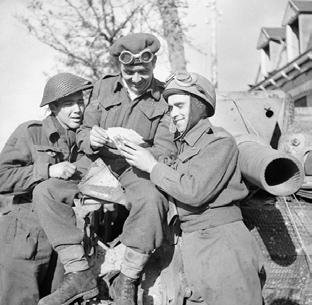
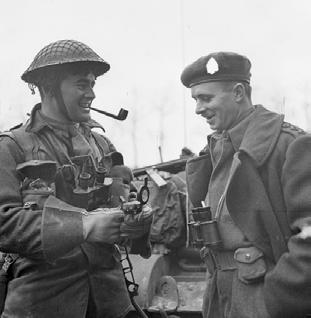
On the Beveland Causeway in the Netherlands in 1944, Private A. Bourgouin, Sergeant A.E. Mercier and Corporal C. Robichaud, all from the Régiment de Maisonneuve, look at photographs from home while sitting on a destroyed German 105-mm self-propelled gun.
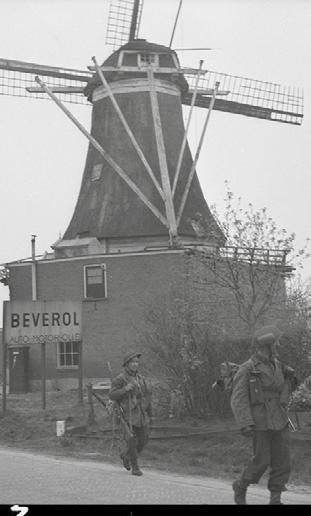
Infantrymen of the Régiment de Maisonneuve pass through Holten, the Netherlands, on their way to Rijssen in April 1945.
Near Nijmegen, the Netherlands, February 1945. Officers from the Régiment de Maisonneuve with a Universal Carrier.
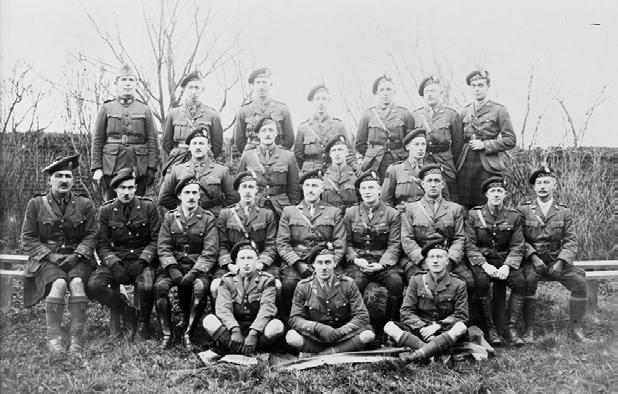
Officers of the 85 th Battalion of Infantry, January 1919.
Photo:
Ken Bell
Photo:
Photo: Lt Michael M. Dean / Library
Photo:
Visit the Régiment de Maisonneuve website (in French only)
A tree in memory of Emil Dan Jurca
| 2 CDSG Tech Svcs
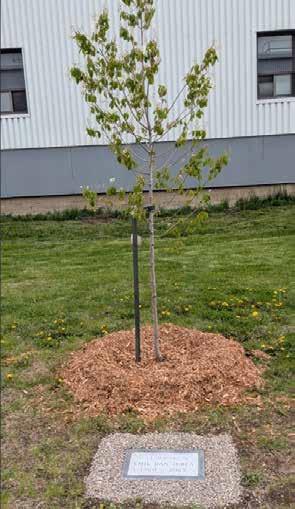
On June 16, members of the 2 Canadian Division Support Group (2 CDSG) Technical Services (Tech Svcs) gathered at the Montreal Garrison to pay tribute to the late Emil Dan Jurca. The commemorative ceremony was held to unveil a plaque installed at the base of a young tree planted in his memory.
This initiative aims to preserve the memory of a valued colleague and recognize his contribution to the Department of National Defence. “Over the years, the tree will grow alongside the commemorative plaque, becoming a lasting symbol of the legacy Mr. Jurca left within the organization,” said Lieutenant Alexandre Pruneau from the 2 CDSG Tech Svcs.
Mr. Jurca joined the Department of National Defence in January 2009 as a driver and devoted more than fifteen years to supporting the operational and institutional activities of the Canadian Armed Forces. He provided logistical transportation services between several military sites across the country, including Trenton, Petawawa, Ottawa and Saint-Jean Garrison.
Beginning in 2013, he also took part in regional medical and mail transportation, working with the 41 Canadian Forces Health Services Centre and the 2 CDSG Tech Svcs in the Montreal area. His professionalism, reliability and dedication earned him the respect of his colleagues throughout his career.
Mr. Jurca passed away on February 8, 2025, and is remembered as a generous, devoted man who was deeply committed to his work and to those around him. “His time with the 2 CDSG Tech Svcs in Montreal left a lasting impression on many people, both through his professional qualities and his warm personality.”
Through this ceremony, members of the unit wished to highlight the importance of remembering those who have contributed to the mission and the life of the organization. “The tree and commemorative plaque will now serve as a permanent reminder of the positive impact Emil Dan Jurca had on his colleagues and on the Defence community.”
Photo:
Local training strengthens the 35 CBG’s capabilities
| Major Joey Thibault, Public Affairs Officer, Les Fusiliers de Sherbrooke
Summer 2026 marks the return of the 35 Canadian Brigade Group Battle School (35 CBG) Decentralized Summer Training Company (Trg Coy). Operated from the temporary Woodward site in Sherbrooke, this organization coordinates the delivery of several military courses across different regions of Quebec to train the next generation of Canadian Army Reservists.
A total of nearly 350 students and 120 instructors and support staff are taking part in training activities offered in Sherbrooke, Quebec City, Shawinigan, Saguenay, Beauceville, Rimouski and Lévis.
The courses include seven Basic Military Qualification (BMQ) serials, one Canadian Armed Forces Primary Leadership Qualification (CAF PLQ), two Infantry Soldier Development Period 1 (DP1 Infantry Soldier) courses, one Signal Operator Development Period 1 (DP1 Signal Operator) course, and one Standard Military Pattern Wheeled Vehicle Driver (SMP Driver Wheeled) course.
In Sherbrooke, two training streams are offered throughout the summer. The first includes a BMQ and a DP1 Infantry Soldier course, while the second combines a CAF PLQ and another BMQ. Approximately 38 instructors and support staff supervise and support the students.
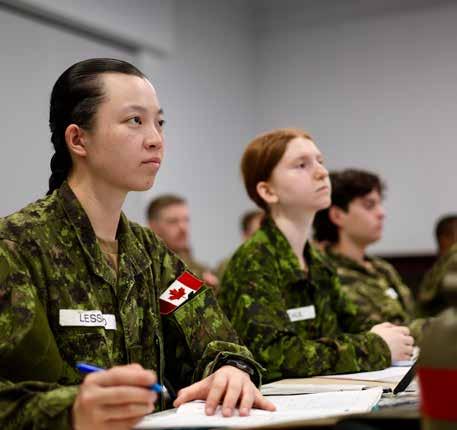
Among the students is Second Lieutenant Amélie Lessard, an infantry officer with Les Fusiliers de Sherbrooke. For her, decentralized training is a significant advantage for new military members. “Candidates can develop their skills in an environment that is more familiar to them while still
benefiting from high-quality supervision. This promotes their integration and confidence from the very beginning of their military career,” she explains.
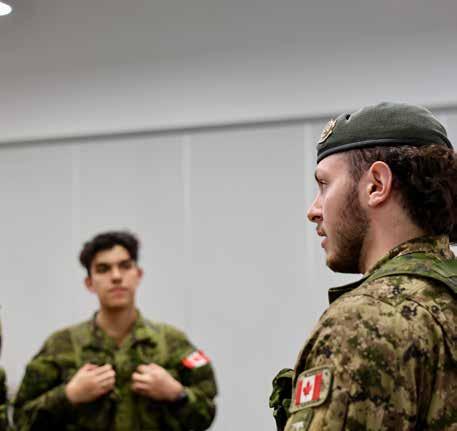
Lieutenant Émile Martel, commanding officer of BMQ 26034, also believes that this approach offers several advantages. “I think we improve retention by allowing students to take the course in their own region. I believe more people apply, and more of them stay here.” According to him, this model also helps improve the effectiveness of Reserve units by further developing local training capabilities.
Decentralization nonetheless presents certain challenges. In Sherbrooke, several courses are conducted simultaneously in the same facilities. “The main challenge for us is coordinating activities when several courses are being held within the same building. But it’s a challenge that can be overcome through planning and coordination,” adds Lt Martel.
Sergeant Jordan Favreau, a section commander on BMQ 26034, has observed the tangible benefits for recruits. “For those who live in Sherbrooke, it’s much easier. They can stay closer to their families and return home on weekends.” However, he notes that this proximity can sometimes reduce full immersion in the military environment.
By bringing training closer to the communities they serve, 35 CBG units demonstrate their ability to deliver high-quality instruction throughout their area of responsibility while contributing to the recruitment and retention of the next generation of Reservists.
Second Lieutenant Amélie Lessard.
Sergeant Jordan Favreau.
Photos:
Sgt Dorian Binggeli.
In a nutshell
Montreal and Saint-Jean Garrison’s sports centres
Military members must wear their uniform or present their ID
As part of enhanced security measures at Montreal and Saint-Jean Garrisons, both garrisons’ Operations Centres and Personnel Support Programs remind military members that:
• Verbal identification is not sufficient to access the sports facilities.
• Military members in civilian attire must present their military ID card (NDI 20) to front desk staff to access the facilities free of charge.
• Military members without an ID card have the following options:
• Pay the entry fee
• Go to the identification office (“the Commissionaires”) to obtain or replace their card
Thank you all for your cooperation!
Saint-Jean Garrison: Take part in Indigenous ceremonies
In July and August, members of Indigenous communities are inviting the military community to participate in a series of ceremonies led by Elder Jean Stevenson. These gatherings are intended to provide an -opportunity for people to come together and share Indigenous culture in a respectful and inclusive environment.
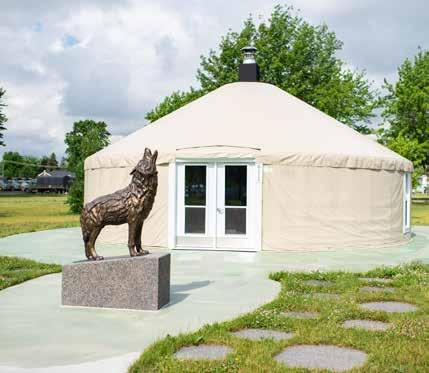
The ceremonies will take place at the Peace Haven (Skennen Kowa), Building B-215, located across from the wolf statue at Saint-Jean Garrison. Recognized for its peaceful atmosphere, the site fosters dialogue, sharing and reflection.
These ceremonies provide a valuable opportunity to strengthen relationships with Indigenous communities and gain a better understanding of their traditions in a spirit of openness and respect.
The ceremonies will be held at 6:00 p.m. on the following dates:
• July 15, 22 and 29
• August 5, 12, 19 and 26
Information : 450 358-7099 # 668-7420
Pride Parade
Join the Defence Team
The 2nd Canadian Division is preparing to take part in the Montréal Pride Festival in August. Members of the Defence 2SLGBTQI+ community and their allies are welcome!
Members of the Defence Team, in partnership with the Public Service Commission of Canada, will host a booth on Sainte-Catherine Street East, in the heart of Montréal’s Village, during the Community Fair on Friday and Saturday, August 7 and 8. Public servants and military members will be on site to discuss employment opportunities within the Government of Canada and the Canadian Armed Forces, demonstrate their commitment to diversity in the workplace, and answer questions from the public.
On Sunday, August 9, military members, veterans, public and nonpublic funds personnel, and military families are invited to take part in the traditional parade.
For any questions: QG2DivCAFOIEEquipeD@forces.gc.ca
To take part in community days or the Pride parade
Join us for the Sunday celebrations
The Chaplaincy Service of the 2nd Canadian Division Support Group invites members of the Defence Team and their families to participate in spiritual celebrations held every Sunday at the Saint-Jean Garrison.
Each week, more than 200 people gather for a moment of reflection, prayer, and fellowship. Services are led by chaplains, accompanied by the Chœur des Nations choir or inspiring songs by Ms. Audrey Cousineau. These gatherings provide an opportunity to the military community members to recharge and strengthen their bonds.
Information: 450 358-7099 # 7420.
Catholic celebration: Sunday at 8:30 a.m. (Holy Spirit Chapel)
Protestant service: Sunday at 10:00 a.m. (MEGA Chapel)
September 10: Walk for hope
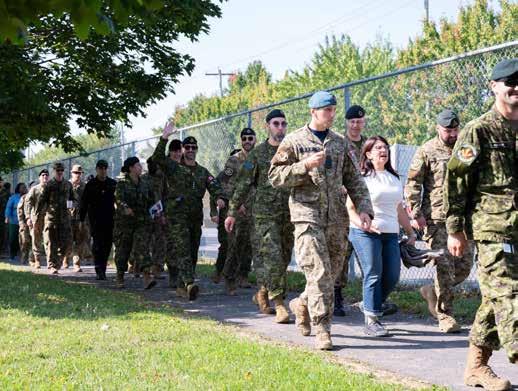
Here is an important event to add to your calendar: on the morning of Thursday, September 10, take part in this traditional walk aimed at fostering hope within our community and reducing the burden of psychological distress and suicide.
This year, walks will be organized at Montreal Garrison and Saint-Jean Garrison. More details regarding the starting locations for these events will be published in the August edition of Servir.
A summer full of activities for military children
| MFRC Montreal Region
With the arrival of warm weather and the school holidays, the Military Family Resource Centre (MFRC) – Montreal Region wishes members of the military community a wonderful summer vacation. Its team has organized a wide range of activities to entertain children aged 5 to 12 throughout the summer.
First, the Youth Community Integration Centre (YCIC), located at 40 Vérendrye Street in Saint-Hubert, invites children to enjoy a summer filled with stimulating activities. Open Tuesday through Thursday each week, it offers themed half-days, in the morning or afternoon, designed to spark the curiosity and creativity of young participants.
Registration is done on a weekly basis, starting on the Wednesday prior to the activity week, through the MFRC’s online portal.
The themes offered this summer have been carefully designed to entertain and educate:
• July 13 to 16 - Superheroes
• July 20 to 23 - Space
• July 27 to 29 - Inventions and science
Each day is divided into two sessions, from 8:30 a.m. to 12 p.m. and from 1 p.m. to 4 p.m.
These activities are offered free of charge.
The little runners’ big race
On Saturday, July 11, in the residential housing units in Saint-Hubert, the MFRC will hold the first edition of The little runners’ big race! This sporting event is intended as a fun activity for children and aims to foster cohesion among residents and the wider military family community.
The activity will take the form of a friendly race. Two routes will be offered: a 500-metre route and a 1,000-metre route. Activities and entertainment will be available throughout the event to keep children and adults entertained.
Date: Saturday, July 11
Time: 10 a.m. to 2 p.m.
Location: Splash pad park, Salaberry Street, residential housing units, Saint-Hubert
Have a great summer vacation! We are already looking forward to seeing you again on Saturday, September 12, at Saint-Jean Garrison, for the Welcome Party!
Registration
CAF members: Help improve child care services in your community
| DND
Canadian Armed Forces (CAF) members with children aged 12 and under have an opportunity to help inform child care services in their local communities. By completing the Child Care Needs Assessment, you can share your experience and help identify gaps in access to reliable, quality child care for CAF families.
Your input will inform future planning, improvements, and investment decisions so that services better reflect the needs of CAF families. Supporting CAF families remains important to operational readiness and overall well-being.
This survey is your opportunity to share your views on topics such as:
• your use of child care services and any challenges experienced
• your satisfaction with available options , including quality, access, and reliability
• how child care affects your work, career, readiness, and work-life balance
• the types of services you would like to see in the future
The survey has been sent to Regular Force and Primary Reserve members with children aged 12 and under. If you received a survey
Family fun
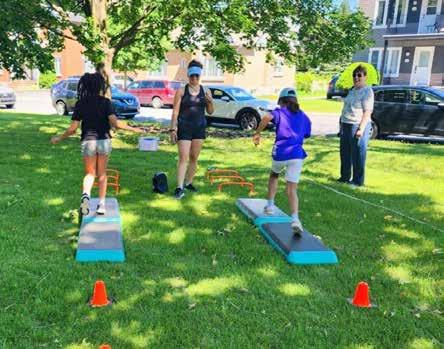
On Saturday, June 13, family activities were held at J.-Paul-Beaulieu park in Saint-Jean-sur-Richelieu to mark the end of the season for the Assistance and Referral Centre (ARC). Organized by ARC volunteers in collaboration with the Recreation Department of Saint-Jean Garrison, the event featured soap bubbles, sidewalk chalk, crafts, various games, as well as yoga and Zumba.
The ARC supports, assists, and equips English-speaking individuals of all ages by helping them access health and social services, information and resources, as well as programs and activities offered in English to promote their well-being. Many military community families benefit from these services.
link, we encourage you to complete it by 31 July. If you believe you should have received a link but did not, please contact: ChildCareServicesDeGarde@forces.gc.ca
This research is being conducted by the Director General Military Personnel Research and Analysis (DGMPRA) on behalf of the CAF. It has been approved by the Department of National Defence/Canadian Armed Forces Social Science Research Review Board (SSRRB), in accordance with DAOD 5062-0 and DAOD 5062-1. The SSRRB approval number is 2289/25N.
The Personnel Support Programs team in the Montreal region offers a wide range of services to members of the military community and citizens. Enjoy!
Climbing to build confidence
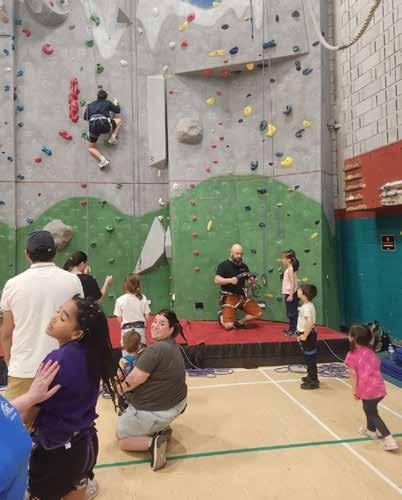
The specialized climbing instructors from the Community Recreation Department of Saint-Jean Garrison welcomed a group from the Assistance and Referral Centre (ARC) on May 23. This free activity for Montérégie residents was organized in collaboration with the Circonflexe Prêt-pourbouger program.
During this dynamic and engaging activity, parents and children had the opportunity to take on the challenge of the climbing wall. While having fun, they were able to build self-confidence and push their limits.
Free introductory climbing sessions
Starting June 29, thanks to the Circonflexe Prêt-pour-bouger program, free introductory climbing sessions will be offered at the Saint-Jean Garrison palestra on Tuesday evenings from 5:00 p.m. to 8:30 p.m.
View the summer program of the Community Recreation Department.
A memorable fishing day in the heart of Montérégie
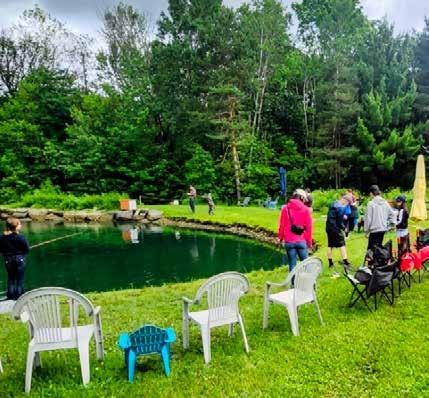
Thanks to the Circonflexe Prêt-pour-bouger program, Montérégie residents enjoyed a free fishing day at the Centre Éco/Pêche, located in Mont-Saint-Grégoire on June 6. This community-oriented activity was organized by the Community Recreation Department of SaintJean Garrison.
Experienced anglers and newcomers alike were welcome. Everyone had the opportunity to fully enjoy the activity, discover the pleasures of fishing and take in the beauty of the surrounding scenery. Known for its peaceful atmosphere and environmentally friendly approach, the site provided the perfect setting to reconnect with nature. Another outing is scheduled for Sunday August 9!
View the Community Recreation program for full details.
Running: A training camp adapted to all levels!
Members of the Regular Force and the Reserve Force are invited to take part in a running camp that will take place from June 9 to October 8 at Saint-Jean Garrison.
Two one-hour sessions per week will be offered:
• Tuesday at 7 a.m.
• Thursday at 11:30 a.m.
The camp will offer:
• Customized training planning
• Supervised interval sessions
• Strengthening program
Information : marie-josee.dessureault@forces. gc.ca Registration
PSP prenatal and postpartum program
Female members of the Canadian Armed Forces who wish to maintain good physical fitness during and after pregnancy have access to training sessions specifically tailored to their needs. This program is offered at Saint-Jean Garrison by reconditioning specialists, in collaboration with two Health Promotion specialists.
This program promotes better childbirth and good physical recovery. It also provides a social space where women can break isolation and take part in group activities, with or without their baby.
Tell us which classes you’d like to take this fall!
The Saint-Jean Garrison Recreation Department is already preparing its fall program. The team would like to know which classes and activities interest the military community members and which schedules work best for them.
Now is the time to share your needs!
To share your interests and preferences
Information and registration
Outdoor morning yoga classes at Saint-Jean Garrison
Starting July 20, Jennifer Morse, outdoor recreation specialist with Community Recreation, will offer morning yoga sessions every Wednesday at 7:00 a.m. The activity will take place in front of the outdoor running track and, in the event of rain, will be moved to Room M-211.
This class is open to all fitness levels and is designed to improve flexibility, balance, muscular strength, and overall well-being in a welcoming and revitalizing outdoor setting. Start your day with energy, serenity, and focus!
Information : 450 358-7099 # 668-7262
Military members: Join the Patriots mixed curling team
Montreal Region Military Sports is currently seeking military members, both men and women, who are interested in curling. Training sessions will be offered to allow participants to learn the sport in a structured environment.
In addition to joining the Patriots team, participants will have the opportunity to continue their experience by joining a civilian league.
Fill
Plein Soleil day camp is underway!
Since June 25 and continuing until August 21, the Plein Soleil day camp has been in operation at Saint-Jean Garrison. On average, nearly 75 children enjoy a variety of artistic and sports activities there each day under the supervision of an enthusiastic team of counsellors.
The Plein Soleil day camp counsellors are trained and qualified, the environment is safe and well supervised, the facilities are unique, and the weekly themes are engaging. The camp is bilingual, and spaces are still available for certain age groups.
Have a great summer!
Inscription : 450 358-7099 # 668-7262
From Majorca to Barcelona by bicycle
The story of an unforgettable adventure
| Yves Bélanger, Servir
For their vacation, Vanessa Mc Alpine, Military Sports Coordinator, and Michael Maillet, Fitness and Sports Instructor at Saint-Jean Garrison, wanted to set off on an adventure and discover the world from a different perspective. In May, they flew to Spain, where, over the course of ten days, they cycled 740 kilometres.
“There are different ways to practise a sport without always focusing on performance. You simply have to find what makes you feel good,” explains Vanessa. She adds that travelling by bicycle allowed her and her spouse to feel free and connect with nature. “We had time to slow down and observe the world around us, to live in the present moment. On top of that, it gave us the opportunity to discover places that would have been impossible to reach by car.”
Preparing for the journey
Planning an athletic trip of this scale requires time and discipline. The couple began thinking about it as early as December. “We started looking at destinations and decided on Spain,” says Michael.
Practical planning began in March with the purchase of airline tickets, the creation of the itinerary, and the booking of accommodations. A structured physical preparation program was also essential to ensure the success of the trip. “We were cycling 200 to 300 kilometres per week. At one point, we even spent six hours riding indoors,” explains Michael, adding that this level of rigour is similar to what is required in the military environment, where discipline and consistency make all the difference.
Vanessa explains that choosing the destination came naturally. “Majorca, Girona and Barcelona are well known in the cycling world. These destinations are highly regarded for the quality of their roads and their scenery.”
She adds that May was selected for strategic reasons. “The climate at that time of year is ideal for cycling. The lower tourist traffic,
the respect shown by motorists, and the easy access between villages also played an important role in choosing the dates for our trip.”
Travelling with their bicycles
The two travellers decided to experience the adventure on their own bicycles. Michael says transporting the equipment was quite a challenge. “We had to dismantle them and pack them into boxes obtained from a specialty shop. Once we landed in Barcelona, we unpacked the boxes right at the airport and reassembled the bicycles to begin our journey.”
For the return trip, the couple had to purchase new boxes. “We packed the bicycles inside and protected them with clothing. Despite one box being damaged, the equipment remained intact,” recalls Michael.
A demanding but spectacular route
The scenery encountered throughout the trip left a lasting impression on the couple. “Between the mountains, the sea and the villages, every stage offered a different setting. There were moments when we were left speechless by the beauty around us,” says Michael.
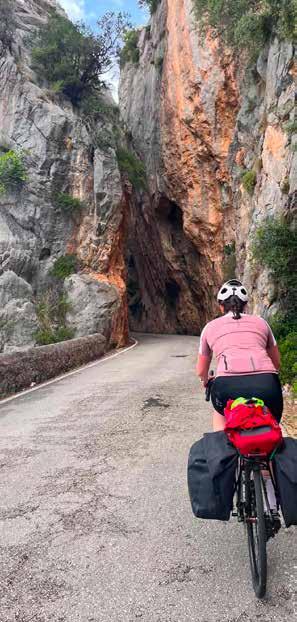
The cyclists’ journey began in Barcelona. They travelled to the island of Majorca by ferry. Vanessa says the experience was memorable from the very first hours. The famous Sa Calobra road made a strong impression with its winding switchbacks and breathtaking views of the sea. “Cap de Formentor also became one of the highlights of our trip. Climbing it in the early morning was one of our favourite moments,” she adds.
These first stages combined significant elevation gains with powerful emotions. “From Palma to Sóller, we cycled 88 kilometres on a route with 1,768 metres of elevation gain.
Afterwards, we faced another climb with 2,047 metres of elevation gain over a distance of 87 kilometres to reach Port de Pollença. At times, I couldn’t believe I was experiencing something so incredible. The scenery was majestic,” says the cyclist.
After leaving Majorca, the couple headed for Girona, considered the true cycling capital. “It is the ultimate cycling destination in the Catalonia region,” notes Michael.
He goes on to explain that the final leg to Barcelona covered 133 kilometres. “We followed the Costa Brava. It was amazing to ride alongside the cliffs.”
Photos: courtesy
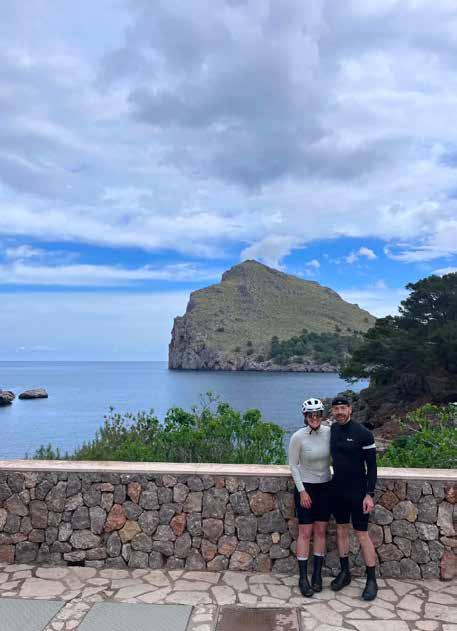
Throughout their journey, the travellers were treated to breathtaking scenery.
Nutrition and recovery
Each member of the duo had to deal with their own challenges. Vanessa speaks about managing energy levels. “With the luggage, things were more difficult at times.” Michael highlights the technical risks of the route. “You had to be careful on descent. The narrow, winding roads required vigilance and control.”
Nutrition was also a key factor in their success. “We were constantly looking for carbohydrates. Bread, jam, protein bars, candy and pastries were part of our daily routine. As for dinner, the meals were more substantial to support the effort required the next day,” explains Vanessa.
When it came to accommodations, travellers alternated between hotels and home exchanges. “That helped reduce the overall cost of the trip considerably,” says Michael.
Next challenge
Back in Quebec for several weeks now, the duo already has new projects in mind. The first is taking part in the Race Across Québec, a cycling event that will take place in August. “We chose the 300-kilometre route, which is actually closer to 350 kilometres and includes more than 3,500 metres of elevation gain. It is another ambitious challenge in a different environment, but with the same spirit of commitment,” concludes Vanessa.
Trip highlights
• 740 km travelled on Spain’s roads
• 9,055 m of elevation gain
• An average of 6 hours of cycling per day
• A constant physical challenge requiring endurance and adaptability
Vanessa Mc Alpine and Michael Maillet taking a short break.
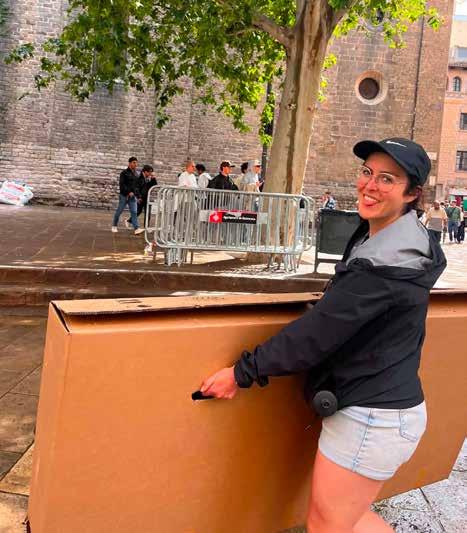
Vanessa Mc Alpine carrying one of the boxes used to transport the bicycles on the aircraft.
A magnificent landscape captured by the two cyclists.
Accessible training for everyone with CAF Fitness
| Yves Bélanger, Servir
For the past several years, members of the military community across Canada have had access to virtual fitness sessions through the CAF Fitness page on sbmfc.ca.
Saul Brown, national coordinator of virtual fitness for CAF Fitness, explains that the platform was created in 2020. “During the COVID-19 pandemic lockdown, all bases, wings and garrisons became empty. We saw the need for online initiatives and fitness classes. That’s when we came up with the idea of offering online workouts.”
Even after sports facilities reopened, the CAF Fitness program was maintained to meet a very real need, particularly among Reserve Force members. “Our primary goal was to continue providing services to members who do not necessarily have access to in-person Personnel Support Programs services in their region,” explains Mr. Brown.
To arrive at CFLRS fully prepared
CAF Fitness also helps prepare citizens who are enrolling in the Canadian Armed Forces and getting ready to begin training at the Canadian Forces Leadership and Recruit School (CFLRS) located at Saint-Jean Garrison. A specific program, the Pre-Basic Military Training (BMT), was designed for that purpose. “It’s a program of at least six weeks that prepares candidates for the basic training that awaits them,” he says.
Beyond physical training, the program helps participants better understand their fitness level. “It allows them to assess where they stand physically and identify what they need to improve before arriving at CFLRS if they want to succeed and avoid injuries,” adds Saul Brown.
An accessible and flexible platform
Saul Brown notes that sessions are offered every week to help participants stay engaged and motivated. “I host three live sessions each week. They are all recorded and made available to everyone. Join me!” he concludes.
Photo: Yves
Access CAF Fitness
Chief Warrant Officer (Retired) Roger Shaver, CAF Fitness ambassador, Jennifer Hevey, CAF Fitness and wellness manager, Saul Brown, national coordinator of virtual fitness for CAF Fitness, Céleste Lalonde, CAF Fitness marketing coordinator at Personnel Support Programs Headquarters, and Corporal Jo-Hésed Fils-Aimé, CAF Fitness ambassador.
Beyond the Finish Line
| RMC Saint-Jean
After four days of sustained effort, the Royal Military College Saint-Jean (RMC Saint-Jean) team successfully completed the 2026 Grand défi Pierre Lavoie. By completing the event's 1,000-kilometre course, the five team members rose to an extraordinary challenge.
Made up of Lieutenant-Colonel Mark Noël, Major David Simpkin, Lieutenant(Navy) Kary-Anne Poirier, Officer Cadet Yannick Alexandre Warren and Luc Morin, head coach at RMC Saint-Jean, the team rode in continuous relay, day and night, to complete all 13 stages of the course.
For the five members of the RMC Saint-Jean team, the experience was an opportunity to test their limits while embodying the values of sport, resilience and teamwork that define the College. This year's participation held special significance, as RMC Saint-Jean also hosted the Grand défi Pierre Lavoie headquarters at Fort Saint-Jean.
Photo : RMC Saint-Jean
The team from the Military College Saint-Jean consists of Major David Simpkin, chief instructor, Lieutenant-Colonel Mark Noel, director of the Officer Cadet Wing, Officer Cadet Yannick Alexandre Warren, Luc Morin, head coach of the university cross country, athletics and triathlon programs, and Lieutenant(Navy) Kary-Anne Poirier, public affairs officer.