There are some things that take a high amount of activation energy to get started, but this doesn’t always have to be the case. Here are 10 things you can do right now that won’t take weeks of advance planning.
KNOW YOUR STAFF
Really get to know your staff and make sure they know one another. Have a show-and-tell (they aren’t just for 5th graders). Have staff members bring in items that describe themselves. Be sure to participate.
SET GOALS
Set both staff and individual goals. Try wearing goal bracelets to serve as reminders (search “goal bracelets” in the Digital Classroom). Different color beads can represent goals. Fill out your goal posters from your yearbook kit and hang them.
FINISH YOUR LADDER
Plan a complete ladder that includes the content description, responsible staff member and plant deadline for every page.
ORGANIZE DEADLINES
Create a save-the-date reminder that lists all the deadlines for the year. Post it in a visible place, email it to parents and provide digital and printed copies to your staff members.
STUDENT LIST
6
SEND IN YOUR CD
Send your portrait CD to the plant as soon as you get it. They can quickly upload the contents to Portrait Editor. Once the portraits are there, you can print a proof sheet for each grade to make sure every name is spelled correctly and that there are no duplicates.
7
9 10 1 2 3 4 5
Secure a student list for coverage tracking and marketing. Make your school’s secretary your friend.
HAVE A PHOTO EDITOR
Be sure to choose a photography editor. This can be your lead photographer or someone else with an eye for great photography. Let your editor sort through the 500+ photos that your staff take. Upload only the best 10–20 percent.
8
INVITE AN EXPERT
Ask a local photographer or camera store to teach a workshop with your students. Ask a local graphic artist to teach a lesson to your class. Have a salesperson give a presentation on knowing one’s target audience. Relieve yourself from the pressure of being the source of all knowledge.
OWN SOCIAL MEDIA
If possible, choose a social media manager and have them create social media accounts for your program. Use the accounts to show previews of spreads, run contests, and announce school news. This is a great way to bring awareness to your program and your staff’s hard work.
DISPLAY YOUR WORK
Find a secure place in the school to put past yearbooks on display (trophy case, media center, etc.). Let past work be visible to remind people of the longevity of yearbooks.
BUILDING A BETTER YEARBOOK PROGRAM
“The biggest thing I did to grow our program and the quality of our yearbook was recruit staffers.”
There’s no magic formula for building a better yearbook program, but setting high expectations for staffers is essential. So is taking unconventional approaches to promote the book.
Five years ago when Matthew Rickard took over as the yearbook adviser for the Buccaneer at Page High School in Greensboro, NC, the program had 23 staff members. Now, he teaches 48 students in two yearbook journalism classes.
“The biggest thing I did to grow our program and the quality of our yearbook was recruit staffers,” Rickard said. “I go door-to-door visiting freshman classes right before class registration, and I talk to the students for a few minutes about our program and my standards. I also pass out applications as I do this and, as long as I fill my seat requirements, I am allowed to select which kids can join the yearbook program. I also got an honors credit added to our program, which helped encourage upper-level students to take yearbook — and stay in yearbook.”
In a school with 2,000 students, casting a wide coverage net is very important.
When Rickard took over, staffers were primarily covering themselves and their friends.
“I instituted a few new rules to help stem that problem. First, yearbook staff can only appear on the pages they have to be on. For example, if you play basketball, you can be on
that spread once, but I should not see you on the TWERP Dance spread, because you don’t have to be on that spread. Second, we use the coverage report to figure out which kids can’t be in the book anymore. After a student has appeared in the book five times, he/she is persona non grata.”
The staff notifies students if they’re in the book three or more times.
“The most important thing you can do is let kids know they are in the book,” he said. “Why would you buy a book if you aren’t in it? We send letters, make phone calls and deliver ‘you’re in the book’ slips to them in class.”
They also put up seasonal posters in the hallways — and, unconventionally, on the floors.
Yes, the floors.
“Kids are always looking down at their phones,” he explained. “Last year we printed out 600 photos and hung them down the hallways from the ceiling for kids to take. Purchasing information is on the back of the photos. We also used glass pens to advertise on school windows. We do individual text messages, and sometimes we will even tweet an amazing picture.”
In December, his students dress up as Christmas presents and hand out flyers in the car rider line.
They also maintain several social media accounts: Facebook, Twitter, Instagram and Snapchat.
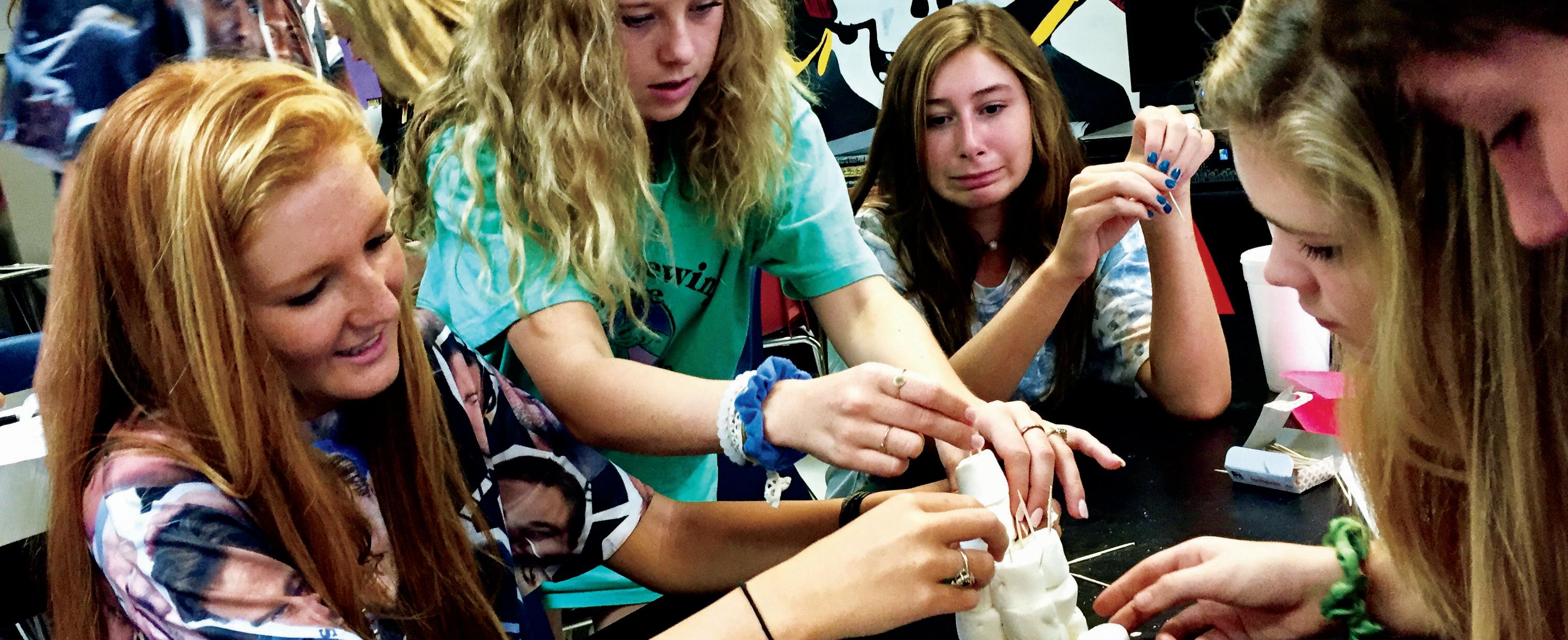
FUN AND GAMES Buccaneer staff members Maggie Hild, Maggie Harrill, Lizzie Barnhardt and Rachel Walker break the ice with a marshmallow tower challenge.
Photo by Matthew Rickard
“We are slowly building trust among the students. Trust that they will be in the book, and trust that the yearbook will be worth buying.”
To build a strong yearbook culture in the classroom, Rickard had two mottos painted on the walls: “Non ministrari sed ministrare,” which means not to be served, but to serve, and “It’s because of us, not about us.”
“Getting kids to go the extra mile and step outside their comfort zone is really about culture and expectations,” he said, “and mine are very high.”
Rickard takes measures to inspire his staff’s creativity.
“Design is not my strong suit. So I try to find as many well-designed books as possible, and we try to emulate them. When I took over the program, our room was filled with sample yearbooks from the other schools in our county. I threw them all away. If you’re going to emulate someone, why emulate the school down the street? Emulate the best.”
He emailed yearbook advisers that had won Pacemaker Awards and Gold Crowns and asked them to send samples of their books. Rickard and his staff used them as examples.
“The Look Book is a valuable tool as well,” he said. “We also attend a local summer yearbook workshop, which is something our program never did before I became the adviser. These workshops are amazing and invaluable.”
Rickard’s program has an annual budget of $75,000, but his staff generates close to $90,000 every year.
“We do it by selling ADS! ADS! ADS!,” he said. “I am completely transparent with my students about the yearbook budget. We talk about how much we need, and what we want to spend our money on. They know how important ads are, and they have completely bought in on selling them.”
To secure more funding, he also writes grants in January.
“I call it grant season, and I write 10 to 15 every year. Most of them are rejected, but if I only get one or two, that is a big deal. If I can use grant money to buy equipment (cameras, computers, etc.), then the rest of our money can go back into the yearbook.”
They use innovative approaches to sell books.
“Kids only seem to notice what is different or personal,” he said. “So while homemade posters are cool, and we do those, they are not different or personal. Kids tend to notice them once, and that’s it. When we hung pictures from the ceiling our students took pictures of them, tweeted them/ snapped them all on their own. Kids were talking about it
for a week afterwards. I want to incorporate more guerrilla style advertising in the future.”
Their efforts have translated into increased book sales.
“When I took over, we were selling around 450 to 475 yearbooks. Now we’re selling around 700. None of this happened overnight. We are slowly building trust among the students. Trust that they will be in the book, and trust that the yearbook will be worth buying.”
Ad sales are an integral part of every yearbook program. Last year, they sold $20,000 in senior ads.
“They are easier to sell at our school,” he said. “Our parents are pretty involved. Still, it is important to get all the relevant information out there. We block off a day or two. We role-play making phone calls, then we divide up the phone numbers for the senior class, and we call every single parent, and document that contact.”
They also generated $18,000 in business ad sales.
Rickard requires each of his students to try to sell 10 business ads; it’s part of their grade. With 48 staffers, that’s 480 attempted ad sales. If each staffer only succeeds once out of every 10 tries, that’s still 48 ads.
“Most staffers can sell two ads, and a few of them can sell eight or nine,” he said. “We look for businesses that are close by or are affiliated with our school or community.”
They approach typical businesses, like restaurants down the street. But his staff also tries to sell ads to car dealerships, dental offices, even the store where their school buys furniture.
“I tell my kids to just keep asking. It is okay to be told no. I joke that it’s like finding a prom date. Keep asking, eventually someone will say yes.”
Rickard walks his talk: “I sell ads also. I would not ask them to do something I would not do.”
He incentivizes his staffers. If they sell $500 in business ads, they get half off the price of their yearbook. If they sell $1,000 in ads, their yearbook is free.
He sets an ad sales goal. If the staff collectively hits it, they buy an upgrade for the yearbook room. So far they’ve bought a Keurig, a flat screen TV, a refrigerator and some expensive camera accessories.
“The yearbook room is their home,” he said. “We want it to be as nice as possible.”
CREATING a culture of fun
An inspiring mentor who makes yearbook fun can change a person’s life.
Just ask Pedro Cabrera, yearbook adviser, Judson High School in Converse, TX.
As a student at Holmes High School in San Antonio, TX, Cabrera signed up for the journalism class because he wanted to have the same elective as his friend.
“I was a part of a very well run program headed by Martha Singleton, who I regard as one of the greatest people that I’ve ever met,” he said. “It turned out to be my saving grace because I ended up joining my school newspaper, which ended up being my high school career, which ended up being the greatest time I had in high school, which ended up leading to me studying communication, which ended up with me eventually taking over a journalism program.”
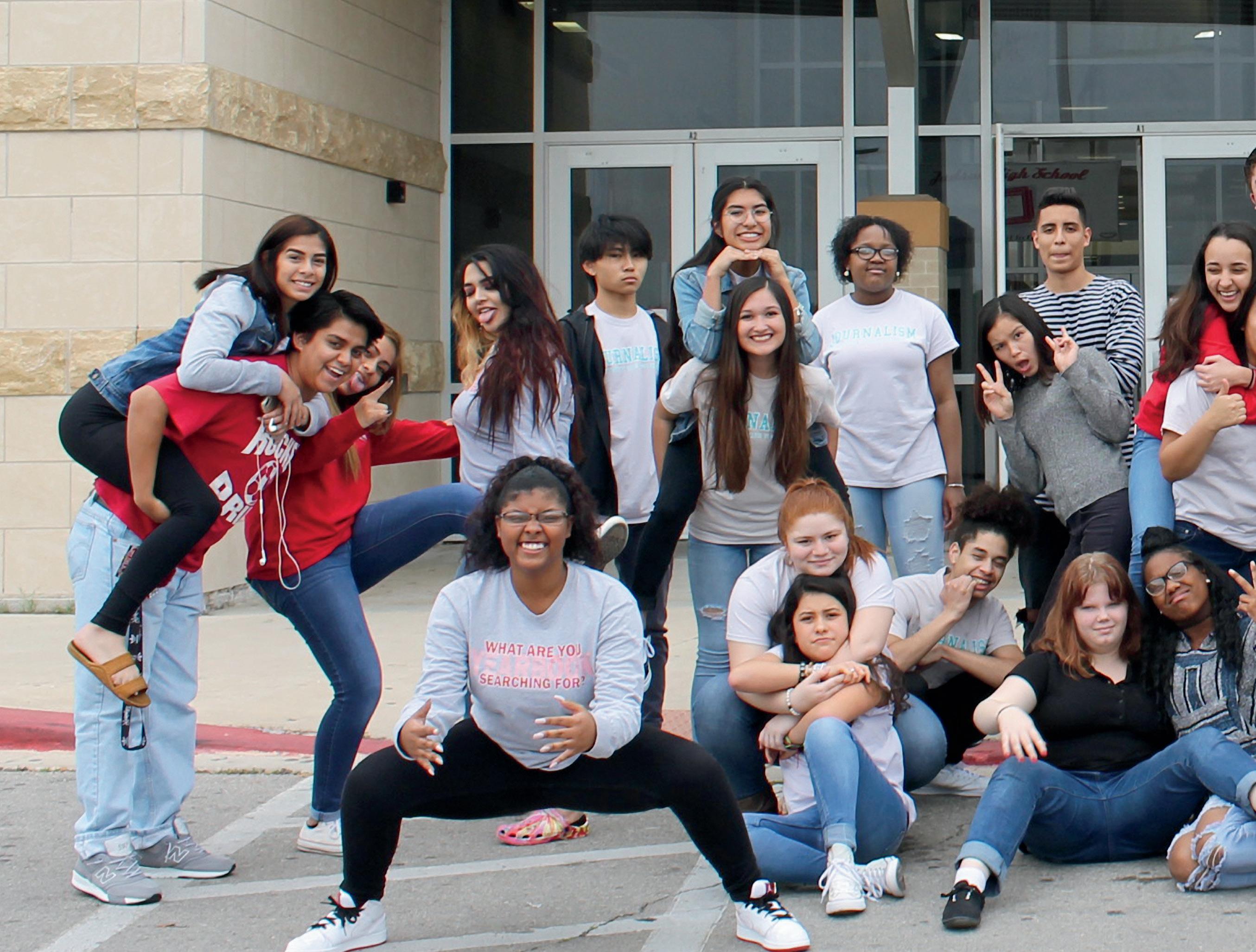
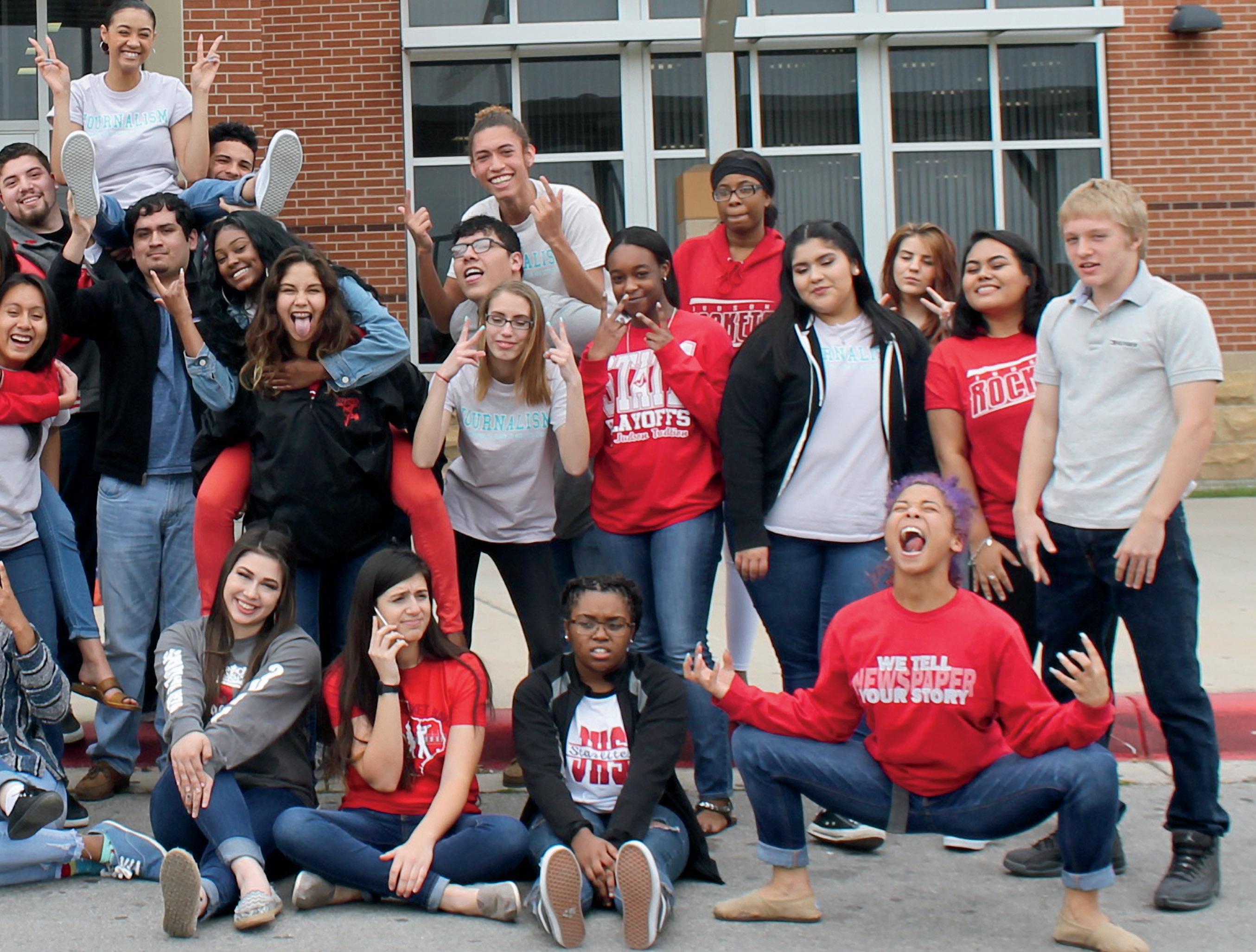
Photo by Pedro Cabrera
“I knew that I wanted to do for students what Ms. Singleton had done for me. And have a blast.”
Fast-forward a few years. Cabrera’s tenure as the yearbook adviser at Judson began with the 2014-2015 school year. When he stepped in, the program wasn’t living up to its potential.
“It was the dumping ground elective,” he said, “with a series of really bad books, no newspaper and a debt that was growing year after year.”
Cabrera’s principal knew he had a journalism background, so when the previous adviser quit, he asked Cabrera to step in.
Undaunted, he started the newspaper, The Fuel, and revived The Rocket, the school’s waning yearbook program.
“I knew that I wanted to do for students what Ms. Singleton had done for me. And have a blast.”
He rolled up his sleeves and got to work.
“I had to get students out of the program who didn’t want to be there and train the students who did want to be there. I set up an introductory journalism course, and then they had to choose the newspaper path or the yearbook path, which is how it should be done.”
He developed a campus newspaper and tapped into social media platforms. He chose a new yearbook company, Jostens, and he created expectations for his students.
And, he created a culture that nurtures his students and inspires them to create quality publications and stay in the program.
“Just like every other workplace, if you have a high turnover rate or employees who don’t want to be there, then the quality of the product decreases. And I can’t have that.”
Now the campus has a successful online newspaper with nearly 3,000 followers on three social media platforms, and it publishes three to four newspapers each year. The second yearbook produced under his tutelage was recognized by the Interscholastic League Press Conference (ILPC), the state journalism association in Texas.
Today, twice as many students have enrolled in his Introductory Journalism class, either as an elective credit or just because they’re curious about the program and want to join it. And, graduating students have gone on to major in journalism or mass communication in college.
A thriving journalism culture is rooted in loyalty.
“Students need to feel they are valued,” he said. “And I want them to know that their loyalty to my program is valued.”
His might be one of the few programs in the country where staff members earn a letterman’s jacket.
“I was told about a local vendor that creates letterman’s jackets at a very reasonable price,” he said. “So, typically, in their junior year, students enrolled in Yearbook Production 2 or Newspaper Production 2 receive a letterman’s jacket, paid for by the program. If they take Yearbook Production 3 or Newspaper Production 3, they earn patches for their jackets.”
When his staff meets deadline, they celebrate by playing board games or by enjoying a down day to give them some well-earned time off.
He also honors them with a year-end party.
“The party has contingencies though: their behavior throughout the school year is vital, their ability to hit deadlines is vital, and the sales of the yearbook need to be to the point
that we make a profit. If all of those are met, then the party occurs. And they want that party!”
Cabrera selects the best of the year, and then the staff votes on them. At the party, he hands out awards for Best Story (newspaper-specific), Best Spread (yearbook-specific), and Best Photo (both staffs).
He also honors students who are selected to join the yearbook staff.
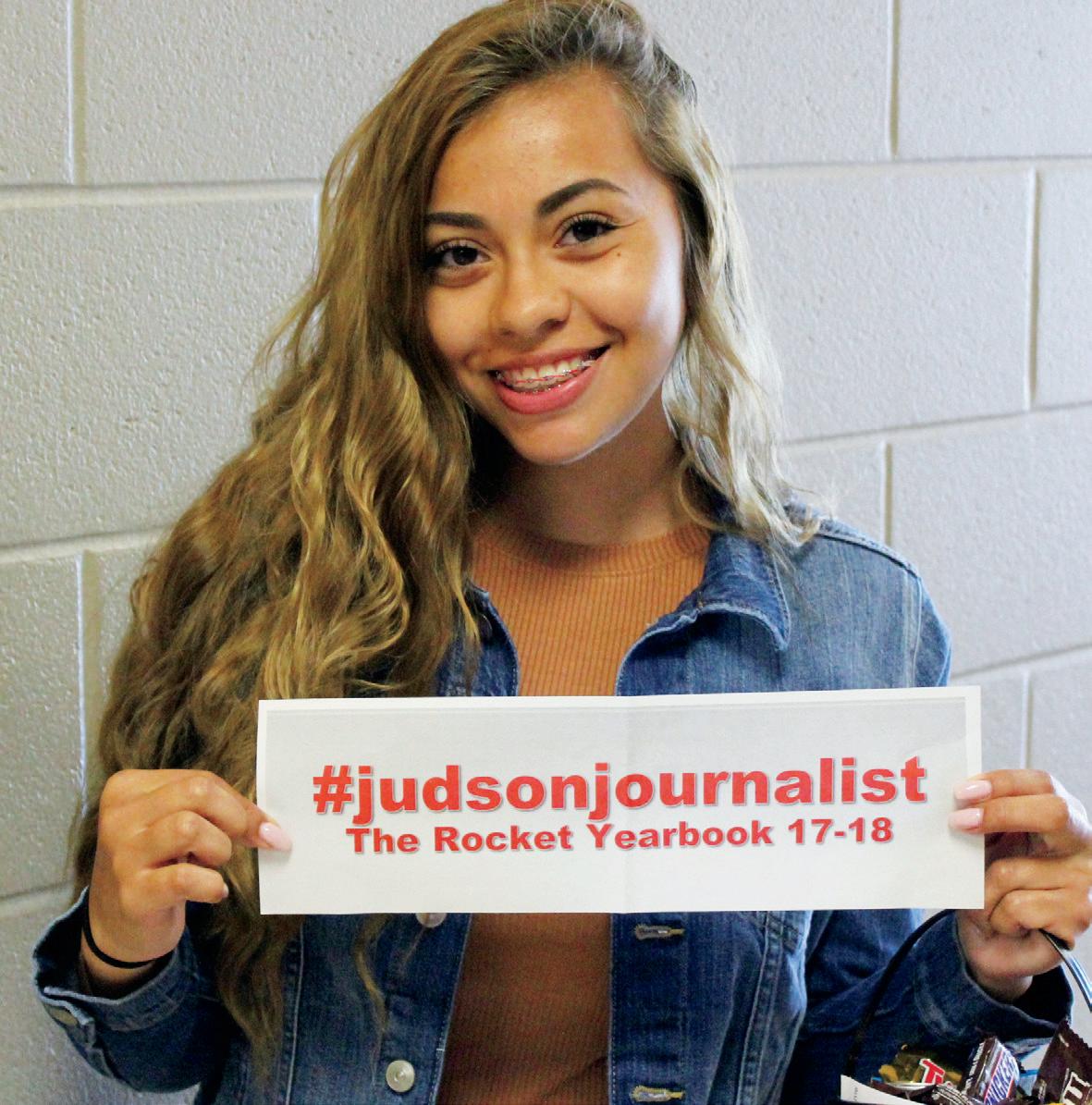
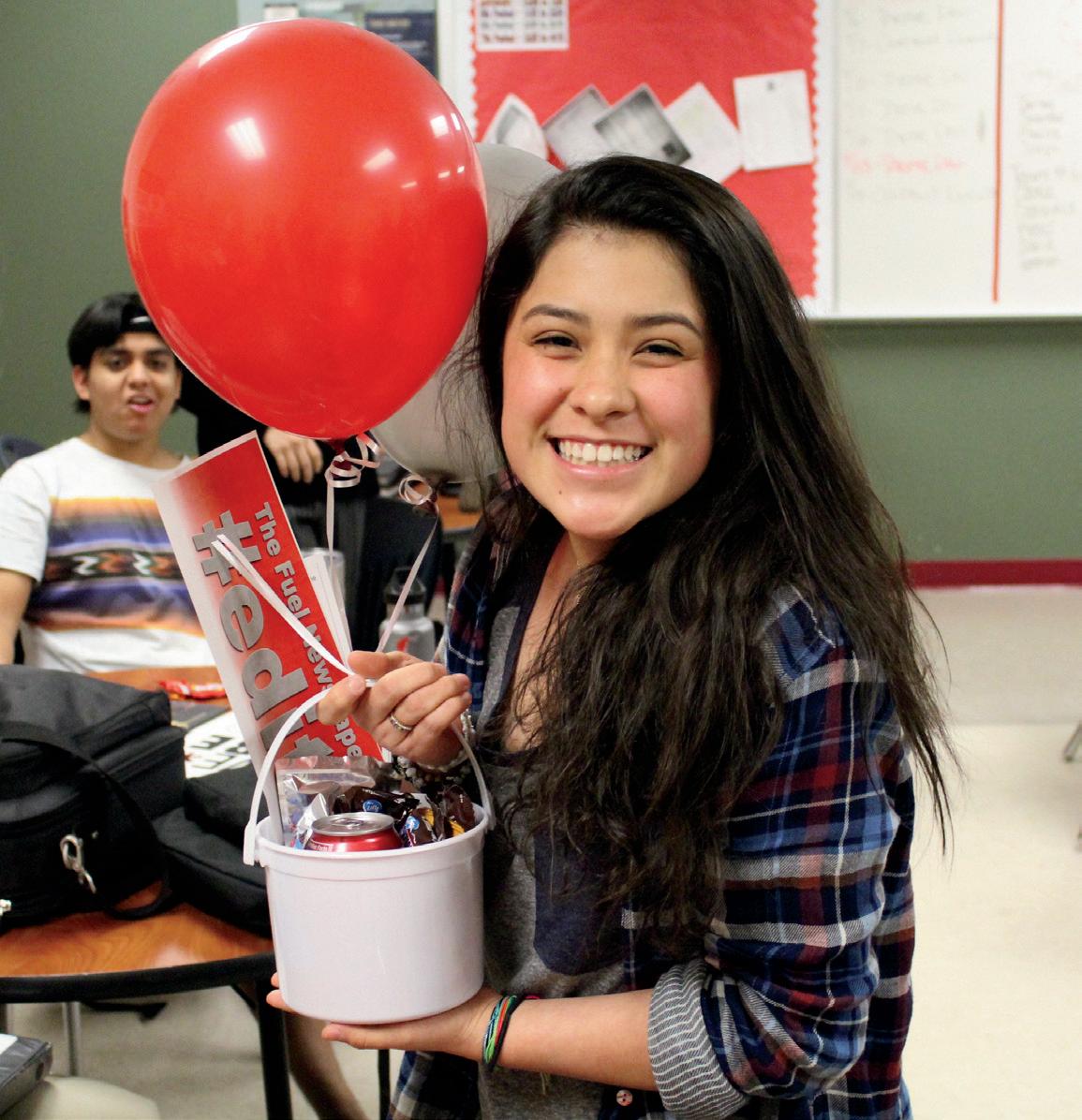
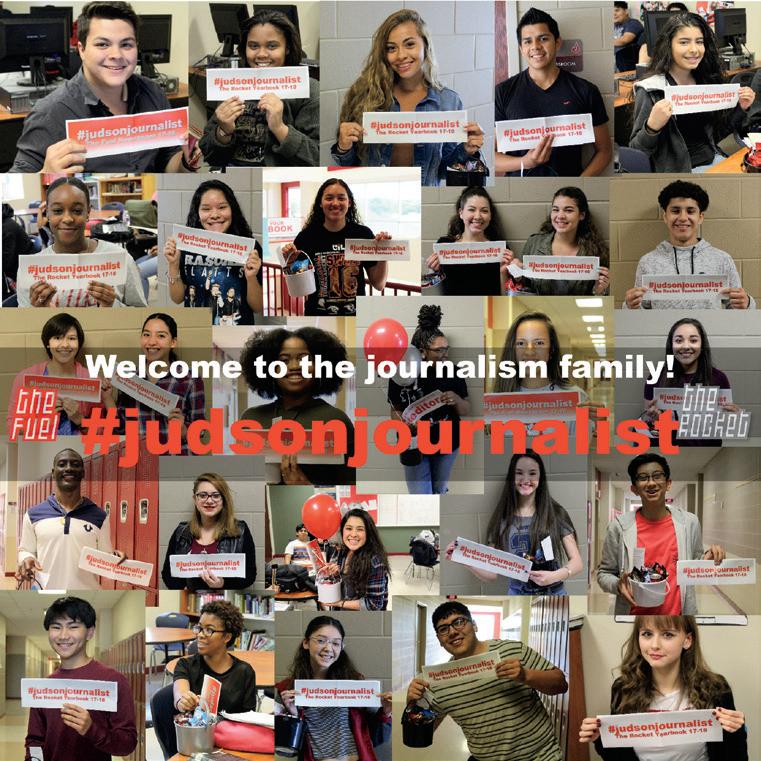
“The current staff’s seniors go around school, handing out gifts to the new staff members,” he said. “They also announce who I have chosen to be the next year’s editors, and that is when those people find out that they’ve been chosen.”
To promote the school’s publications, he created Facebook, Twitter, and Instagram accounts.
“I knew I was going to have to brand the product somehow in order to spread the word,” he said. “I asked our graphic design teacher to create an assignment for his students, to create a logo for us. With Facebook and Twitter, whenever I post a story, I link it to our online newspaper. Whenever I post a yearbook photo, I watermark it with the logo that the graphic design students created.”
They use hashtags as often as they can, and he asks his students to retweet, reblog or share the posts.
“I am very adamant about my students getting recognized for their work. So every time a story is posted, their byline is on it. Every time one of their pictures is posted, it’s attributed. If kids know their name is online, they will share it, and then their friends will share it, and so forth. Before you know it, tons of people have seen what we posted.”
Thanks to Cabrera, student journalism at Judson High School has never been more fun.
Photo by Carley Rudolfo
Photo by Carley Rudolfo
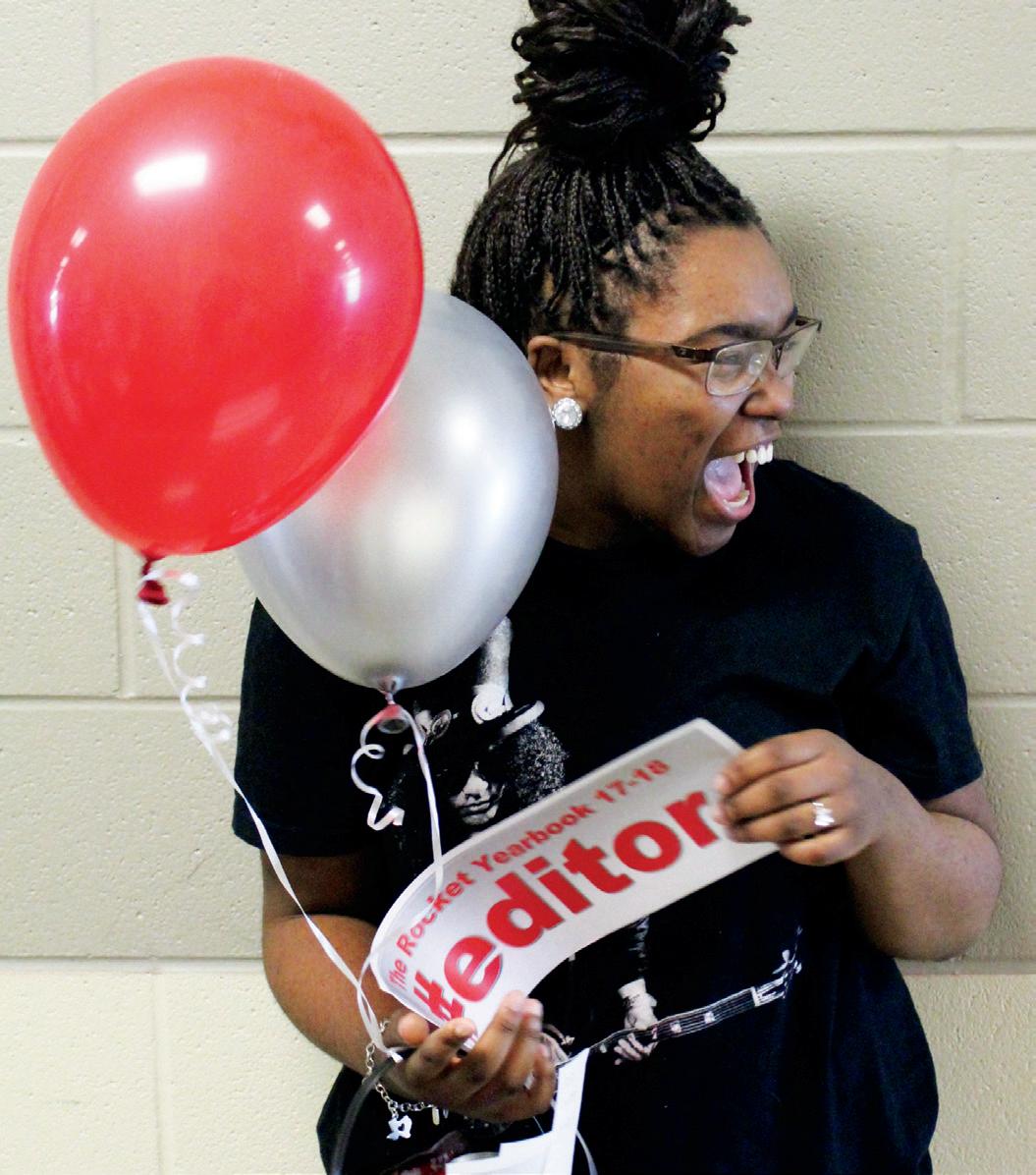
LEFT: Senior Qiara Luckett discovers she has been named editor of The Rocket.
MIDDLE: Senior Serena Rodriguez is proud to be selected as part of the yearbook staff.
RIGHT: Junior Izabella De La Garza receives a bucket of goodies along with the title of assistant newspaper editor.
BELOW: Jose Veliz, Nathan Folwer and Gus Rivera serve as The Fuel’s sports team.
“Students need to feel they are valued. And I want them to know that their loyalty to my program is valued.”
Back to Basics
1
Create a fun environment for students; this makes classroom management ten times easier.
2
Join in the fun. During the school year deadline parties, I don’t sit behind my desk. I play cards and board games with them. At our end-of-the-year staff party, I am out there bowling with them, playing laser tag, eating pizza, playing arcade games.
3 MR. CABRERA’S TIPS FOR RECOGNIZING STAFF EXCELLENCE
Celebrate their achievements. Journalism is not a normal class. Students won’t work hard for you just to earn a grade. They will work hard to create a book, so celebrate them in fun ways that they will look forward to.
Photo by Jennifer Gutierrez
Photo by Pedro Cabrera
IN THE KNOW
by Mandy Mahan*
KNOW YOUR STAFF (MANUAL)
KNOW YOUR TERMS
A staff manual outlines processes and procedures so that a pre-existing standard operating procedure exists if questions arise. We recommend that every manual include the following:
CONTENT POLICY
PORTRAIT SUBMISSION POLICY
BOOK DISTRIBUTION POLICY
OBITUARY POLICY
ATTENDANCE REQUIREMENTS
MULTIMEDIA POLICY
CONDUCT POLICY
STAFF SELECTION & DISMISSAL
STAFF ROLE DESCRIPTIONS
GRADING POLICY
Visit the Digital Classroom to download an editable staff manual. It includes all the basics, which can be edited to suit your needs.
Student journalism has its own jargon. Here are a few yearbook terms you should know to make your life easier.
COVERAGE
A yearbook should celebrate every person and event in the school, so including every student is important. What is considered good coverage? Shoot for each student being in the book at least three times (portrait, quote, a team or club photo and a candid).
DEADLINES
The number and timing of deadlines is determined by the number of pages in your yearbook and when it is shipped to your school. Meeting deadlines ensures that your book delivers on time.
POINT SIZE
Typography is measured in points from the top of an ascender to the bottom of the descender. There are 72 points to an inch.
PICA
A pica is 1/6th of an inch, a unit of measurement used by graphic designers. The grid you see on the Jostens Page Designer and InDesign is a 1-pica grid.
SIGNATURE
A grouping of pages that are printed on the same press sheet and folded into a 16-page mini-booklet; signatures are bound to make a complete book.
WHITE SPACE
An unoccupied part of a design; so named because the white background is visible. All white space should be planned and includes margins, interior spacing and rails.
* Mandy Mahan is the publications adviser and foreign language department head at d’Iberville High School [MS].